Boom-bust. Starting with the Gold Rush in 1849, the Bay Area has experienced dramatic up-and-down cycles that generate tremendous new wealth for some and trouble for others. Exhibit A is the current tech boom.
KQED’s “Boomtown” series seeks to identify not only what is happening in real time in this boom but drawing out the causes and possible solutions to the conflicts and pressures between the old and the new.
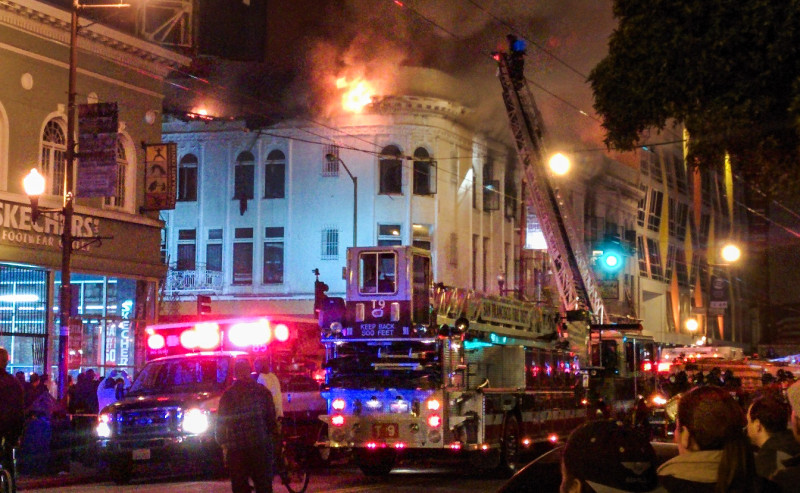
After Fatal Fires, San Francisco Looks at Sprinkler Systems for Older Buildings
Without New Lease, More Than 70 Mission Dist. Artists Face Displacement
A Museum Show That Uncovers the Many Identities of Oakland
Uprooted: Artists Respond to San Francisco’s Black Exodus
Bay Area Is Almost Rock-Bottom in U.S. for Housing Creation
Long Commute to Silicon Valley Increasingly the Norm for Many
Boomtown Video: From the Gold Rush to Today in Just 217 Seconds
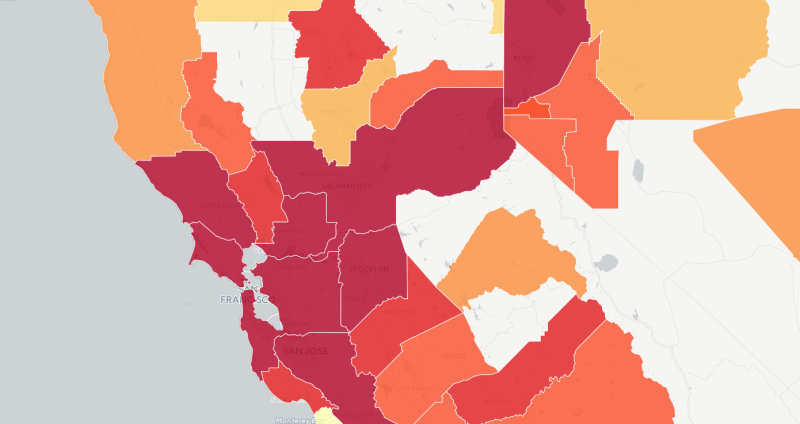
You're Not Crazy: The Bay Area Is Getting Way More Crowded
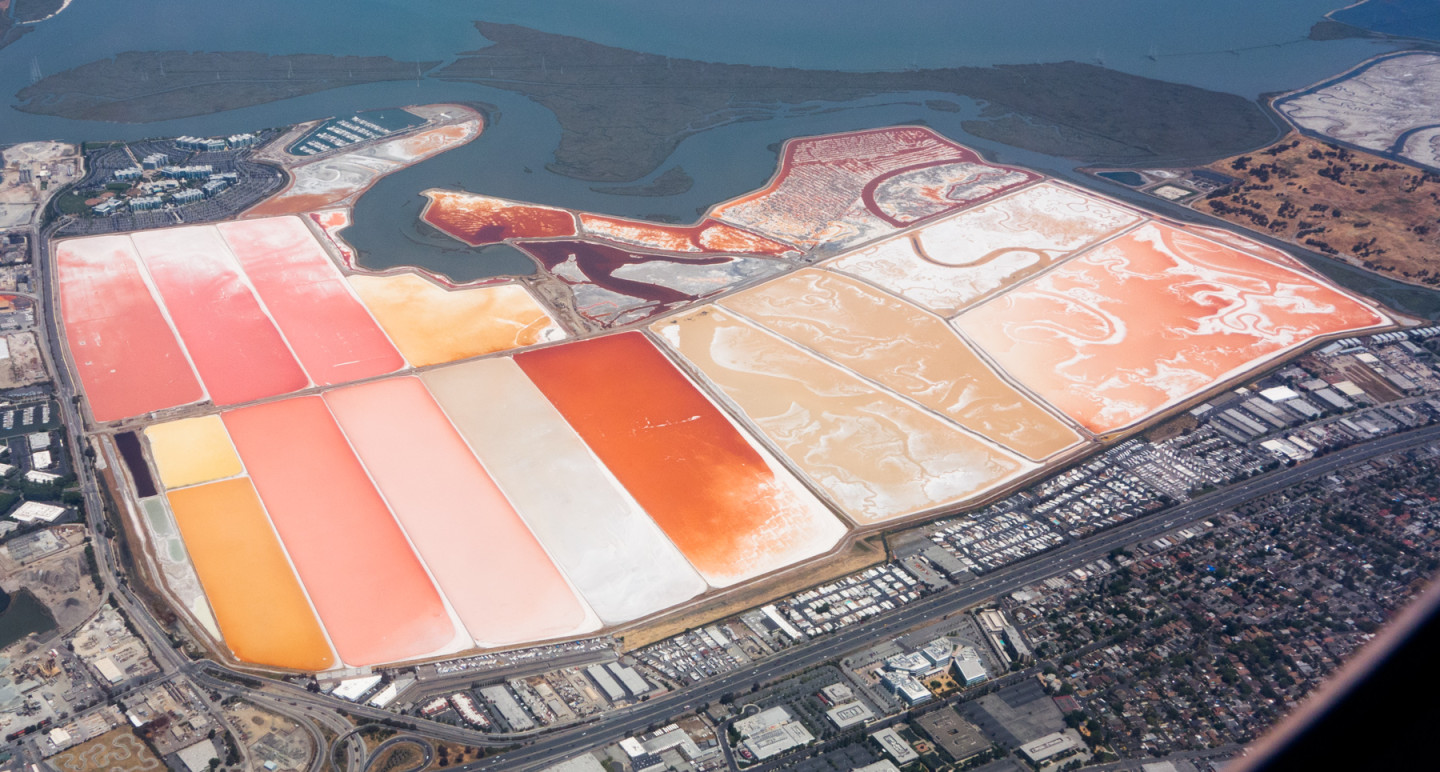
EPA Steps Into Redwood City's Salt Pond Development Battle
How Much the Middle Class Makes -- in the Bay Area and 28 U.S. Cities
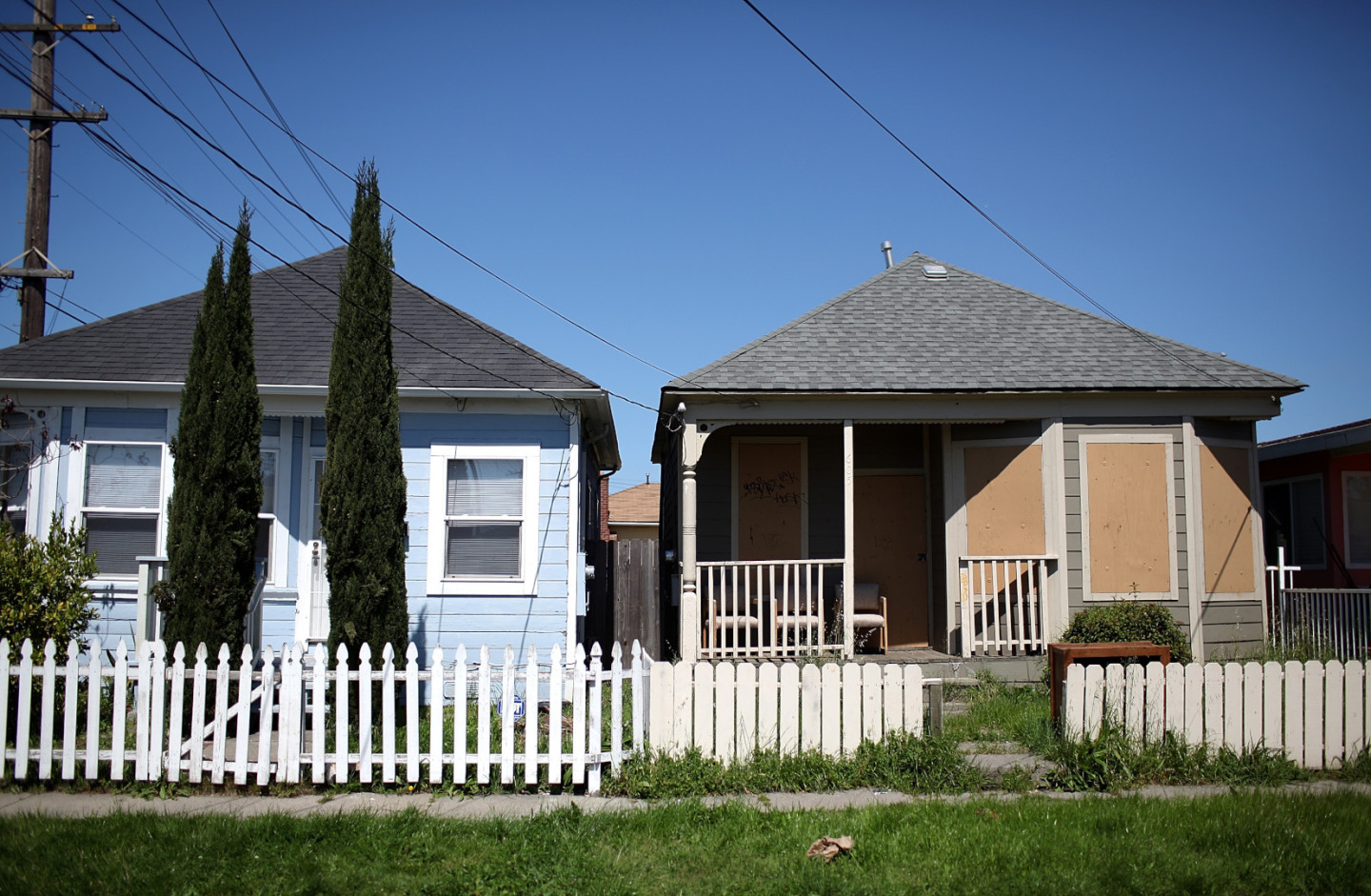
S.F. Backs New Strategy for Preventing Foreclosure in Low-Income Neighborhoods
For Mission Bakery, Gentrification Is Baked Into the Business Plan
window.__IS_SSR__=true
window.__INITIAL_STATE__={
"attachmentsReducer": {
"audio_0": {
"type": "attachments",
"id": "audio_0",
"imgSizes": {
"kqedFullSize": {
"file": "https://ww2.kqed.org/news/wp-content/themes/KQED-unified/img/audio_bgs/background0.jpg"
}
}
},
"audio_1": {
"type": "attachments",
"id": "audio_1",
"imgSizes": {
"kqedFullSize": {
"file": "https://ww2.kqed.org/news/wp-content/themes/KQED-unified/img/audio_bgs/background1.jpg"
}
}
},
"audio_2": {
"type": "attachments",
"id": "audio_2",
"imgSizes": {
"kqedFullSize": {
"file": "https://ww2.kqed.org/news/wp-content/themes/KQED-unified/img/audio_bgs/background2.jpg"
}
}
},
"audio_3": {
"type": "attachments",
"id": "audio_3",
"imgSizes": {
"kqedFullSize": {
"file": "https://ww2.kqed.org/news/wp-content/themes/KQED-unified/img/audio_bgs/background3.jpg"
}
}
},
"audio_4": {
"type": "attachments",
"id": "audio_4",
"imgSizes": {
"kqedFullSize": {
"file": "https://ww2.kqed.org/news/wp-content/themes/KQED-unified/img/audio_bgs/background4.jpg"
}
}
},
"placeholder": {
"type": "attachments",
"id": "placeholder",
"imgSizes": {
"thumbnail": {
"file": "https://cdn.kqed.org/wp-content/uploads/2024/12/KQED-Default-Image-816638274-2000x1333-1-160x107.jpg",
"width": 160,
"height": 107,
"mimeType": "image/jpeg"
},
"medium": {
"file": "https://cdn.kqed.org/wp-content/uploads/2024/12/KQED-Default-Image-816638274-2000x1333-1-800x533.jpg",
"width": 800,
"height": 533,
"mimeType": "image/jpeg"
},
"medium_large": {
"file": "https://cdn.kqed.org/wp-content/uploads/2024/12/KQED-Default-Image-816638274-2000x1333-1-768x512.jpg",
"width": 768,
"height": 512,
"mimeType": "image/jpeg"
},
"large": {
"file": "https://cdn.kqed.org/wp-content/uploads/2024/12/KQED-Default-Image-816638274-2000x1333-1-1020x680.jpg",
"width": 1020,
"height": 680,
"mimeType": "image/jpeg"
},
"1536x1536": {
"file": "https://cdn.kqed.org/wp-content/uploads/2024/12/KQED-Default-Image-816638274-2000x1333-1-1536x1024.jpg",
"width": 1536,
"height": 1024,
"mimeType": "image/jpeg"
},
"fd-lrg": {
"file": "https://cdn.kqed.org/wp-content/uploads/2024/12/KQED-Default-Image-816638274-2000x1333-1-1536x1024.jpg",
"width": 1536,
"height": 1024,
"mimeType": "image/jpeg"
},
"fd-med": {
"file": "https://cdn.kqed.org/wp-content/uploads/2024/12/KQED-Default-Image-816638274-2000x1333-1-1020x680.jpg",
"width": 1020,
"height": 680,
"mimeType": "image/jpeg"
},
"fd-sm": {
"file": "https://cdn.kqed.org/wp-content/uploads/2024/12/KQED-Default-Image-816638274-2000x1333-1-800x533.jpg",
"width": 800,
"height": 533,
"mimeType": "image/jpeg"
},
"post-thumbnail": {
"file": "https://cdn.kqed.org/wp-content/uploads/2024/12/KQED-Default-Image-816638274-2000x1333-1-672x372.jpg",
"width": 672,
"height": 372,
"mimeType": "image/jpeg"
},
"twentyfourteen-full-width": {
"file": "https://cdn.kqed.org/wp-content/uploads/2024/12/KQED-Default-Image-816638274-2000x1333-1-1038x576.jpg",
"width": 1038,
"height": 576,
"mimeType": "image/jpeg"
},
"xxsmall": {
"file": "https://cdn.kqed.org/wp-content/uploads/2024/12/KQED-Default-Image-816638274-2000x1333-1-160x107.jpg",
"width": 160,
"height": 107,
"mimeType": "image/jpeg"
},
"xsmall": {
"file": "https://cdn.kqed.org/wp-content/uploads/2024/12/KQED-Default-Image-816638274-2000x1333-1-672x372.jpg",
"width": 672,
"height": 372,
"mimeType": "image/jpeg"
},
"small": {
"file": "https://cdn.kqed.org/wp-content/uploads/2024/12/KQED-Default-Image-816638274-2000x1333-1-672x372.jpg",
"width": 672,
"height": 372,
"mimeType": "image/jpeg"
},
"xlarge": {
"file": "https://cdn.kqed.org/wp-content/uploads/2024/12/KQED-Default-Image-816638274-2000x1333-1-1020x680.jpg",
"width": 1020,
"height": 680,
"mimeType": "image/jpeg"
},
"full-width": {
"file": "https://cdn.kqed.org/wp-content/uploads/2024/12/KQED-Default-Image-816638274-2000x1333-1-1920x1280.jpg",
"width": 1920,
"height": 1280,
"mimeType": "image/jpeg"
},
"guest-author-32": {
"file": "https://cdn.kqed.org/wp-content/uploads/2025/01/KQED-Default-Image-816638274-1333x1333-1-160x160.jpg",
"width": 32,
"height": 32,
"mimeType": "image/jpeg"
},
"guest-author-50": {
"file": "https://cdn.kqed.org/wp-content/uploads/2025/01/KQED-Default-Image-816638274-1333x1333-1-160x160.jpg",
"width": 50,
"height": 50,
"mimeType": "image/jpeg"
},
"guest-author-64": {
"file": "https://cdn.kqed.org/wp-content/uploads/2025/01/KQED-Default-Image-816638274-1333x1333-1-160x160.jpg",
"width": 64,
"height": 64,
"mimeType": "image/jpeg"
},
"guest-author-96": {
"file": "https://cdn.kqed.org/wp-content/uploads/2025/01/KQED-Default-Image-816638274-1333x1333-1-160x160.jpg",
"width": 96,
"height": 96,
"mimeType": "image/jpeg"
},
"guest-author-128": {
"file": "https://cdn.kqed.org/wp-content/uploads/2025/01/KQED-Default-Image-816638274-1333x1333-1-160x160.jpg",
"width": 128,
"height": 128,
"mimeType": "image/jpeg"
},
"detail": {
"file": "https://cdn.kqed.org/wp-content/uploads/2025/01/KQED-Default-Image-816638274-1333x1333-1-160x160.jpg",
"width": 160,
"height": 160,
"mimeType": "image/jpeg"
},
"kqedFullSize": {
"file": "https://cdn.kqed.org/wp-content/uploads/2024/12/KQED-Default-Image-816638274-2000x1333-1.jpg",
"width": 2000,
"height": 1333
}
}
},
"news_10425162": {
"type": "attachments",
"id": "news_10425162",
"meta": {
"index": "attachments_1716263798",
"site": "news",
"id": "10425162",
"found": true
},
"parent": 10424749,
"imgSizes": {
"twentyfourteen-full-width": {
"file": "https://ww2.kqed.org/app/uploads/sites/10/2015/02/missionfire-1038x576.jpg",
"width": 1038,
"mimeType": "image/jpeg",
"height": 576
},
"thumbnail": {
"file": "https://ww2.kqed.org/app/uploads/sites/10/2015/02/missionfire-400x247.jpg",
"width": 400,
"mimeType": "image/jpeg",
"height": 247
},
"post-thumbnail": {
"file": "https://ww2.kqed.org/app/uploads/sites/10/2015/02/missionfire-672x372.jpg",
"width": 672,
"mimeType": "image/jpeg",
"height": 372
},
"kqedFullSize": {
"file": "https://ww2.kqed.org/app/uploads/sites/10/2015/02/missionfire.jpg",
"width": 1344,
"height": 829
},
"guest-author-96": {
"file": "https://ww2.kqed.org/app/uploads/sites/10/2015/02/missionfire-96x96.jpg",
"width": 96,
"mimeType": "image/jpeg",
"height": 96
},
"medium": {
"file": "https://ww2.kqed.org/app/uploads/sites/10/2015/02/missionfire-800x493.jpg",
"width": 800,
"mimeType": "image/jpeg",
"height": 493
},
"guest-author-64": {
"file": "https://ww2.kqed.org/app/uploads/sites/10/2015/02/missionfire-64x64.jpg",
"width": 64,
"mimeType": "image/jpeg",
"height": 64
},
"detail": {
"file": "https://ww2.kqed.org/app/uploads/sites/10/2015/02/missionfire-75x75.jpg",
"width": 75,
"mimeType": "image/jpeg",
"height": 75
},
"guest-author-32": {
"file": "https://ww2.kqed.org/app/uploads/sites/10/2015/02/missionfire-32x32.jpg",
"width": 32,
"mimeType": "image/jpeg",
"height": 32
},
"guest-author-128": {
"file": "https://ww2.kqed.org/app/uploads/sites/10/2015/02/missionfire-128x128.jpg",
"width": 128,
"mimeType": "image/jpeg",
"height": 128
}
},
"publishDate": 1423156853,
"modified": 1461770601,
"caption": "San Francisco firefighters battle a four-alarm blaze in a mixed residential and commercial building at 22nd and Mission streets on Jan. 28, 2015. One person died and more than 60 others were displaced by the fire. ",
"description": "San Francisco firefighters battle a four-alarm blaze in a building at 22nd and Mission streets on Jan. 28, 2015.",
"title": "Mission District-Fire",
"credit": "Rebecca Bowe/KQED",
"status": "inherit",
"isLoading": false,
"fetchFailed": false
},
"arts_10567055": {
"type": "attachments",
"id": "arts_10567055",
"meta": {
"index": "attachments_1716263798",
"site": "arts",
"id": "10567055",
"found": true
},
"parent": 10567053,
"imgSizes": {
"twentyfourteen-full-width": {
"file": "https://ww2.kqed.org/app/uploads/sites/2/2015/04/Redlick-1038x576.jpg",
"width": 1038,
"mimeType": "image/jpeg",
"height": 576
},
"thumbnail": {
"file": "https://ww2.kqed.org/app/uploads/sites/2/2015/04/Redlick-400x225.jpg",
"width": 400,
"mimeType": "image/jpeg",
"height": 225
},
"fd-sm": {
"file": "https://ww2.kqed.org/app/uploads/sites/2/2015/04/Redlick-320x180.jpg",
"width": 320,
"mimeType": "image/jpeg",
"height": 180
},
"post-thumbnail": {
"file": "https://ww2.kqed.org/app/uploads/sites/2/2015/04/Redlick-672x372.jpg",
"width": 672,
"mimeType": "image/jpeg",
"height": 372
},
"kqedFullSize": {
"file": "https://ww2.kqed.org/app/uploads/sites/2/2015/04/Redlick.jpg",
"width": 1920,
"height": 1080
},
"large": {
"file": "https://ww2.kqed.org/app/uploads/sites/2/2015/04/Redlick-1180x664.jpg",
"width": 1180,
"mimeType": "image/jpeg",
"height": 664
},
"guest-author-96": {
"file": "https://ww2.kqed.org/app/uploads/sites/2/2015/04/Redlick-96x96.jpg",
"width": 96,
"mimeType": "image/jpeg",
"height": 96
},
"medium": {
"file": "https://ww2.kqed.org/app/uploads/sites/2/2015/04/Redlick-800x450.jpg",
"width": 800,
"mimeType": "image/jpeg",
"height": 450
},
"guest-author-64": {
"file": "https://ww2.kqed.org/app/uploads/sites/2/2015/04/Redlick-64x64.jpg",
"width": 64,
"mimeType": "image/jpeg",
"height": 64
},
"guest-author-32": {
"file": "https://ww2.kqed.org/app/uploads/sites/2/2015/04/Redlick-32x32.jpg",
"width": 32,
"mimeType": "image/jpeg",
"height": 32
},
"fd-lrg": {
"file": "https://ww2.kqed.org/app/uploads/sites/2/2015/04/Redlick-1180x664.jpg",
"width": 1180,
"mimeType": "image/jpeg",
"height": 664
},
"fd-med": {
"file": "https://ww2.kqed.org/app/uploads/sites/2/2015/04/Redlick-768x432.jpg",
"width": 768,
"mimeType": "image/jpeg",
"height": 432
},
"detail": {
"file": "https://ww2.kqed.org/app/uploads/sites/2/2015/04/Redlick-75x75.jpg",
"width": 75,
"mimeType": "image/jpeg",
"height": 75
},
"guest-author-128": {
"file": "https://ww2.kqed.org/app/uploads/sites/2/2015/04/Redlick-128x128.jpg",
"width": 128,
"mimeType": "image/jpeg",
"height": 128
}
},
"publishDate": 1429260356,
"modified": 1429260367,
"caption": "The Redlick Building at 17th and Capp. (Courtesy of Studio 17)",
"description": null,
"title": "Redlick",
"credit": null,
"status": "inherit",
"isLoading": false,
"fetchFailed": false
},
"news_10492896": {
"type": "attachments",
"id": "news_10492896",
"meta": {
"index": "attachments_1716263798",
"site": "news",
"id": "10492896",
"found": true
},
"parent": 10492895,
"imgSizes": {
"twentyfourteen-full-width": {
"file": "https://ww2.kqed.org/app/uploads/sites/10/2015/04/Artist-Favianna-Rodriguez-1038x576.jpg",
"width": 1038,
"mimeType": "image/jpeg",
"height": 576
},
"thumbnail": {
"file": "https://ww2.kqed.org/app/uploads/sites/10/2015/04/Artist-Favianna-Rodriguez-400x300.jpg",
"width": 400,
"mimeType": "image/jpeg",
"height": 300
},
"fd-sm": {
"file": "https://ww2.kqed.org/app/uploads/sites/10/2015/04/Artist-Favianna-Rodriguez-320x240.jpg",
"width": 320,
"mimeType": "image/jpeg",
"height": 240
},
"post-thumbnail": {
"file": "https://ww2.kqed.org/app/uploads/sites/10/2015/04/Artist-Favianna-Rodriguez-672x372.jpg",
"width": 672,
"mimeType": "image/jpeg",
"height": 372
},
"kqedFullSize": {
"file": "https://ww2.kqed.org/app/uploads/sites/10/2015/04/Artist-Favianna-Rodriguez.jpg",
"width": 3264,
"height": 2448
},
"large": {
"file": "https://ww2.kqed.org/app/uploads/sites/10/2015/04/Artist-Favianna-Rodriguez-1440x1080.jpg",
"width": 1440,
"mimeType": "image/jpeg",
"height": 1080
},
"guest-author-96": {
"file": "https://ww2.kqed.org/app/uploads/sites/10/2015/04/Artist-Favianna-Rodriguez-96x96.jpg",
"width": 96,
"mimeType": "image/jpeg",
"height": 96
},
"medium": {
"file": "https://ww2.kqed.org/app/uploads/sites/10/2015/04/Artist-Favianna-Rodriguez-800x600.jpg",
"width": 800,
"mimeType": "image/jpeg",
"height": 600
},
"guest-author-64": {
"file": "https://ww2.kqed.org/app/uploads/sites/10/2015/04/Artist-Favianna-Rodriguez-64x64.jpg",
"width": 64,
"mimeType": "image/jpeg",
"height": 64
},
"guest-author-32": {
"file": "https://ww2.kqed.org/app/uploads/sites/10/2015/04/Artist-Favianna-Rodriguez-32x32.jpg",
"width": 32,
"mimeType": "image/jpeg",
"height": 32
},
"fd-lrg": {
"file": "https://ww2.kqed.org/app/uploads/sites/10/2015/04/Artist-Favianna-Rodriguez-1180x885.jpg",
"width": 1180,
"mimeType": "image/jpeg",
"height": 885
},
"fd-med": {
"file": "https://ww2.kqed.org/app/uploads/sites/10/2015/04/Artist-Favianna-Rodriguez-768x576.jpg",
"width": 768,
"mimeType": "image/jpeg",
"height": 576
},
"detail": {
"file": "https://ww2.kqed.org/app/uploads/sites/10/2015/04/Artist-Favianna-Rodriguez-75x75.jpg",
"width": 75,
"mimeType": "image/jpeg",
"height": 75
},
"guest-author-128": {
"file": "https://ww2.kqed.org/app/uploads/sites/10/2015/04/Artist-Favianna-Rodriguez-128x128.jpg",
"width": 128,
"mimeType": "image/jpeg",
"height": 128
}
},
"publishDate": 1429233950,
"modified": 1429233999,
"caption": "Artist Favianna Rodriguez",
"description": null,
"title": "Artist Favianna Rodriguez",
"credit": "Cy Musiker",
"status": "inherit",
"isLoading": false,
"fetchFailed": false
},
"arts_10527453": {
"type": "attachments",
"id": "arts_10527453",
"meta": {
"index": "attachments_1716263798",
"site": "arts",
"id": "10527453",
"found": true
},
"parent": 10523872,
"imgSizes": {
"thumbnail": {
"file": "https://ww2.kqed.org/app/uploads/sites/2/2015/04/NancyArt-sm-400x225.jpg",
"width": 400,
"mimeType": "image/jpeg",
"height": 225
},
"fd-sm": {
"file": "https://ww2.kqed.org/app/uploads/sites/2/2015/04/NancyArt-sm-320x180.jpg",
"width": 320,
"mimeType": "image/jpeg",
"height": 180
},
"post-thumbnail": {
"file": "https://ww2.kqed.org/app/uploads/sites/2/2015/04/NancyArt-sm-672x372.jpg",
"width": 672,
"mimeType": "image/jpeg",
"height": 372
},
"kqedFullSize": {
"file": "https://ww2.kqed.org/app/uploads/sites/2/2015/04/NancyArt-sm.jpg",
"width": 800,
"height": 450
},
"fd-med": {
"file": "https://ww2.kqed.org/app/uploads/sites/2/2015/04/NancyArt-sm-768x432.jpg",
"width": 768,
"mimeType": "image/jpeg",
"height": 432
},
"guest-author-96": {
"file": "https://ww2.kqed.org/app/uploads/sites/2/2015/04/NancyArt-sm-96x96.jpg",
"width": 96,
"mimeType": "image/jpeg",
"height": 96
},
"medium": {
"file": "https://ww2.kqed.org/app/uploads/sites/2/2015/04/NancyArt-sm-800x450.jpg",
"width": 800,
"mimeType": "image/jpeg",
"height": 450
},
"guest-author-64": {
"file": "https://ww2.kqed.org/app/uploads/sites/2/2015/04/NancyArt-sm-64x64.jpg",
"width": 64,
"mimeType": "image/jpeg",
"height": 64
},
"detail": {
"file": "https://ww2.kqed.org/app/uploads/sites/2/2015/04/NancyArt-sm-75x75.jpg",
"width": 75,
"mimeType": "image/jpeg",
"height": 75
},
"guest-author-32": {
"file": "https://ww2.kqed.org/app/uploads/sites/2/2015/04/NancyArt-sm-32x32.jpg",
"width": 32,
"mimeType": "image/jpeg",
"height": 32
},
"guest-author-128": {
"file": "https://ww2.kqed.org/app/uploads/sites/2/2015/04/NancyArt-sm-128x128.jpg",
"width": 128,
"mimeType": "image/jpeg",
"height": 128
}
},
"publishDate": 1428033282,
"modified": 1428033282,
"caption": null,
"description": null,
"title": "NancyArt-sm",
"credit": null,
"status": "inherit",
"isLoading": false,
"fetchFailed": false
},
"news_10473959": {
"type": "attachments",
"id": "news_10473959",
"meta": {
"index": "attachments_1716263798",
"site": "news",
"id": "10473959",
"found": true
},
"parent": 10473663,
"imgSizes": {
"twentyfourteen-full-width": {
"file": "https://ww2.kqed.org/app/uploads/sites/10/2015/04/452284496-1038x576.jpg",
"width": 1038,
"mimeType": "image/jpeg",
"height": 576
},
"thumbnail": {
"file": "https://ww2.kqed.org/app/uploads/sites/10/2015/04/452284496-400x267.jpg",
"width": 400,
"mimeType": "image/jpeg",
"height": 267
},
"fd-sm": {
"file": "https://ww2.kqed.org/app/uploads/sites/10/2015/04/452284496-320x213.jpg",
"width": 320,
"mimeType": "image/jpeg",
"height": 213
},
"post-thumbnail": {
"file": "https://ww2.kqed.org/app/uploads/sites/10/2015/04/452284496-672x372.jpg",
"width": 672,
"mimeType": "image/jpeg",
"height": 372
},
"kqedFullSize": {
"file": "https://ww2.kqed.org/app/uploads/sites/10/2015/04/452284496-e1427922340918.jpg",
"width": 1920,
"height": 1281
},
"large": {
"file": "https://ww2.kqed.org/app/uploads/sites/10/2015/04/452284496-1440x960.jpg",
"width": 1440,
"mimeType": "image/jpeg",
"height": 960
},
"guest-author-96": {
"file": "https://ww2.kqed.org/app/uploads/sites/10/2015/04/452284496-96x96.jpg",
"width": 96,
"mimeType": "image/jpeg",
"height": 96
},
"medium": {
"file": "https://ww2.kqed.org/app/uploads/sites/10/2015/04/452284496-800x534.jpg",
"width": 800,
"mimeType": "image/jpeg",
"height": 534
},
"guest-author-64": {
"file": "https://ww2.kqed.org/app/uploads/sites/10/2015/04/452284496-64x64.jpg",
"width": 64,
"mimeType": "image/jpeg",
"height": 64
},
"guest-author-32": {
"file": "https://ww2.kqed.org/app/uploads/sites/10/2015/04/452284496-32x32.jpg",
"width": 32,
"mimeType": "image/jpeg",
"height": 32
},
"fd-lrg": {
"file": "https://ww2.kqed.org/app/uploads/sites/10/2015/04/452284496-1180x787.jpg",
"width": 1180,
"mimeType": "image/jpeg",
"height": 787
},
"fd-med": {
"file": "https://ww2.kqed.org/app/uploads/sites/10/2015/04/452284496-768x512.jpg",
"width": 768,
"mimeType": "image/jpeg",
"height": 512
},
"detail": {
"file": "https://ww2.kqed.org/app/uploads/sites/10/2015/04/452284496-75x75.jpg",
"width": 75,
"mimeType": "image/jpeg",
"height": 75
},
"guest-author-128": {
"file": "https://ww2.kqed.org/app/uploads/sites/10/2015/04/452284496-128x128.jpg",
"width": 128,
"mimeType": "image/jpeg",
"height": 128
}
},
"publishDate": 1427922265,
"modified": 1427922463,
"caption": "Rent affordability is the worst it's ever been in San Francisco, according to new research from Zillow.",
"description": "Rent affordability is the worst it's ever been in San Francisco, according to new research from Zillow.",
"title": "Median Prices Of San Francisco Homes Reach Million Dollar Mark",
"credit": "Justin Sullivan/Getty Images",
"status": "inherit",
"isLoading": false,
"fetchFailed": false
},
"news_10467047": {
"type": "attachments",
"id": "news_10467047",
"meta": {
"index": "attachments_1716263798",
"site": "news",
"id": "10467047",
"found": true
},
"parent": 10467044,
"imgSizes": {
"twentyfourteen-full-width": {
"file": "https://ww2.kqed.org/app/uploads/sites/10/2015/03/Ronnie-Thomas-1038x576.jpg",
"width": 1038,
"mimeType": "image/jpeg",
"height": 576
},
"thumbnail": {
"file": "https://ww2.kqed.org/app/uploads/sites/10/2015/03/Ronnie-Thomas-400x300.jpg",
"width": 400,
"mimeType": "image/jpeg",
"height": 300
},
"fd-sm": {
"file": "https://ww2.kqed.org/app/uploads/sites/10/2015/03/Ronnie-Thomas-320x240.jpg",
"width": 320,
"mimeType": "image/jpeg",
"height": 240
},
"post-thumbnail": {
"file": "https://ww2.kqed.org/app/uploads/sites/10/2015/03/Ronnie-Thomas-672x372.jpg",
"width": 672,
"mimeType": "image/jpeg",
"height": 372
},
"kqedFullSize": {
"file": "https://ww2.kqed.org/app/uploads/sites/10/2015/03/Ronnie-Thomas.jpg",
"width": 3264,
"height": 2448
},
"large": {
"file": "https://ww2.kqed.org/app/uploads/sites/10/2015/03/Ronnie-Thomas-1440x1080.jpg",
"width": 1440,
"mimeType": "image/jpeg",
"height": 1080
},
"guest-author-96": {
"file": "https://ww2.kqed.org/app/uploads/sites/10/2015/03/Ronnie-Thomas-96x96.jpg",
"width": 96,
"mimeType": "image/jpeg",
"height": 96
},
"medium": {
"file": "https://ww2.kqed.org/app/uploads/sites/10/2015/03/Ronnie-Thomas-800x600.jpg",
"width": 800,
"mimeType": "image/jpeg",
"height": 600
},
"guest-author-64": {
"file": "https://ww2.kqed.org/app/uploads/sites/10/2015/03/Ronnie-Thomas-64x64.jpg",
"width": 64,
"mimeType": "image/jpeg",
"height": 64
},
"guest-author-32": {
"file": "https://ww2.kqed.org/app/uploads/sites/10/2015/03/Ronnie-Thomas-32x32.jpg",
"width": 32,
"mimeType": "image/jpeg",
"height": 32
},
"fd-lrg": {
"file": "https://ww2.kqed.org/app/uploads/sites/10/2015/03/Ronnie-Thomas-1180x885.jpg",
"width": 1180,
"mimeType": "image/jpeg",
"height": 885
},
"fd-med": {
"file": "https://ww2.kqed.org/app/uploads/sites/10/2015/03/Ronnie-Thomas-768x576.jpg",
"width": 768,
"mimeType": "image/jpeg",
"height": 576
},
"detail": {
"file": "https://ww2.kqed.org/app/uploads/sites/10/2015/03/Ronnie-Thomas-75x75.jpg",
"width": 75,
"mimeType": "image/jpeg",
"height": 75
},
"guest-author-128": {
"file": "https://ww2.kqed.org/app/uploads/sites/10/2015/03/Ronnie-Thomas-128x128.jpg",
"width": 128,
"mimeType": "image/jpeg",
"height": 128
}
},
"publishDate": 1427406320,
"modified": 1427406447,
"caption": "Ronnie Thomas works for Stanford University Dining, a six-hour round trip commute on bus, bike and train from his home in Stockton.",
"description": null,
"title": "Ronnie Thomas",
"credit": "Sabrina Greenway/Peninsula Press",
"status": "inherit",
"isLoading": false,
"fetchFailed": false
},
"news_10467140": {
"type": "attachments",
"id": "news_10467140",
"meta": {
"index": "attachments_1716263798",
"site": "news",
"id": "10467140",
"found": true
},
"parent": 10467124,
"imgSizes": {
"twentyfourteen-full-width": {
"file": "https://ww2.kqed.org/app/uploads/sites/10/2015/03/bay-area-60s-1038x576.jpg",
"width": 1038,
"mimeType": "image/jpeg",
"height": 576
},
"thumbnail": {
"file": "https://ww2.kqed.org/app/uploads/sites/10/2015/03/bay-area-60s-400x225.jpg",
"width": 400,
"mimeType": "image/jpeg",
"height": 225
},
"fd-sm": {
"file": "https://ww2.kqed.org/app/uploads/sites/10/2015/03/bay-area-60s-320x180.jpg",
"width": 320,
"mimeType": "image/jpeg",
"height": 180
},
"post-thumbnail": {
"file": "https://ww2.kqed.org/app/uploads/sites/10/2015/03/bay-area-60s-672x372.jpg",
"width": 672,
"mimeType": "image/jpeg",
"height": 372
},
"kqedFullSize": {
"file": "https://ww2.kqed.org/app/uploads/sites/10/2015/03/bay-area-60s.jpg",
"width": 2560,
"height": 1440
},
"large": {
"file": "https://ww2.kqed.org/app/uploads/sites/10/2015/03/bay-area-60s-1440x810.jpg",
"width": 1440,
"mimeType": "image/jpeg",
"height": 810
},
"guest-author-96": {
"file": "https://ww2.kqed.org/app/uploads/sites/10/2015/03/bay-area-60s-96x96.jpg",
"width": 96,
"mimeType": "image/jpeg",
"height": 96
},
"medium": {
"file": "https://ww2.kqed.org/app/uploads/sites/10/2015/03/bay-area-60s-800x450.jpg",
"width": 800,
"mimeType": "image/jpeg",
"height": 450
},
"guest-author-64": {
"file": "https://ww2.kqed.org/app/uploads/sites/10/2015/03/bay-area-60s-64x64.jpg",
"width": 64,
"mimeType": "image/jpeg",
"height": 64
},
"guest-author-32": {
"file": "https://ww2.kqed.org/app/uploads/sites/10/2015/03/bay-area-60s-32x32.jpg",
"width": 32,
"mimeType": "image/jpeg",
"height": 32
},
"fd-lrg": {
"file": "https://ww2.kqed.org/app/uploads/sites/10/2015/03/bay-area-60s-1180x664.jpg",
"width": 1180,
"mimeType": "image/jpeg",
"height": 664
},
"fd-med": {
"file": "https://ww2.kqed.org/app/uploads/sites/10/2015/03/bay-area-60s-768x432.jpg",
"width": 768,
"mimeType": "image/jpeg",
"height": 432
},
"detail": {
"file": "https://ww2.kqed.org/app/uploads/sites/10/2015/03/bay-area-60s-75x75.jpg",
"width": 75,
"mimeType": "image/jpeg",
"height": 75
},
"guest-author-128": {
"file": "https://ww2.kqed.org/app/uploads/sites/10/2015/03/bay-area-60s-128x128.jpg",
"width": 128,
"mimeType": "image/jpeg",
"height": 128
}
},
"publishDate": 1427410526,
"modified": 1427410566,
"caption": "The San Francisco Bay Area is now home to more than 7 and a half million people. (Adam Grossberg/KQED)",
"description": null,
"title": "bay-area-60s",
"credit": null,
"status": "inherit",
"isLoading": false,
"fetchFailed": false
},
"news_10466836": {
"type": "attachments",
"id": "news_10466836",
"meta": {
"index": "attachments_1716263798",
"site": "news",
"id": "10466836",
"found": true
},
"parent": 10466190,
"imgSizes": {
"twentyfourteen-full-width": {
"file": "https://ww2.kqed.org/app/uploads/sites/10/2015/03/Screen-Shot-2015-03-26-at-10.25.04-AM-1038x576.png",
"width": 1038,
"mimeType": "image/png",
"height": 576
},
"thumbnail": {
"file": "https://ww2.kqed.org/app/uploads/sites/10/2015/03/Screen-Shot-2015-03-26-at-10.25.04-AM-400x212.png",
"width": 400,
"mimeType": "image/png",
"height": 212
},
"fd-sm": {
"file": "https://ww2.kqed.org/app/uploads/sites/10/2015/03/Screen-Shot-2015-03-26-at-10.25.04-AM-320x170.png",
"width": 320,
"mimeType": "image/png",
"height": 170
},
"post-thumbnail": {
"file": "https://ww2.kqed.org/app/uploads/sites/10/2015/03/Screen-Shot-2015-03-26-at-10.25.04-AM-672x372.png",
"width": 672,
"mimeType": "image/png",
"height": 372
},
"kqedFullSize": {
"file": "https://ww2.kqed.org/app/uploads/sites/10/2015/03/Screen-Shot-2015-03-26-at-10.25.04-AM.png",
"width": 1390,
"height": 737
},
"guest-author-96": {
"file": "https://ww2.kqed.org/app/uploads/sites/10/2015/03/Screen-Shot-2015-03-26-at-10.25.04-AM-96x96.png",
"width": 96,
"mimeType": "image/png",
"height": 96
},
"medium": {
"file": "https://ww2.kqed.org/app/uploads/sites/10/2015/03/Screen-Shot-2015-03-26-at-10.25.04-AM-800x424.png",
"width": 800,
"mimeType": "image/png",
"height": 424
},
"guest-author-64": {
"file": "https://ww2.kqed.org/app/uploads/sites/10/2015/03/Screen-Shot-2015-03-26-at-10.25.04-AM-64x64.png",
"width": 64,
"mimeType": "image/png",
"height": 64
},
"guest-author-32": {
"file": "https://ww2.kqed.org/app/uploads/sites/10/2015/03/Screen-Shot-2015-03-26-at-10.25.04-AM-32x32.png",
"width": 32,
"mimeType": "image/png",
"height": 32
},
"fd-lrg": {
"file": "https://ww2.kqed.org/app/uploads/sites/10/2015/03/Screen-Shot-2015-03-26-at-10.25.04-AM-1180x626.png",
"width": 1180,
"mimeType": "image/png",
"height": 626
},
"fd-med": {
"file": "https://ww2.kqed.org/app/uploads/sites/10/2015/03/Screen-Shot-2015-03-26-at-10.25.04-AM-768x407.png",
"width": 768,
"mimeType": "image/png",
"height": 407
},
"detail": {
"file": "https://ww2.kqed.org/app/uploads/sites/10/2015/03/Screen-Shot-2015-03-26-at-10.25.04-AM-75x75.png",
"width": 75,
"mimeType": "image/png",
"height": 75
},
"guest-author-128": {
"file": "https://ww2.kqed.org/app/uploads/sites/10/2015/03/Screen-Shot-2015-03-26-at-10.25.04-AM-128x128.png",
"width": 128,
"mimeType": "image/png",
"height": 128
}
},
"publishDate": 1427390728,
"modified": 1427390748,
"caption": "Migration to the Bay Area in the last year.",
"description": null,
"title": "Screen Shot 2015-03-26 at 10.25.04 AM",
"credit": null,
"status": "inherit",
"isLoading": false,
"fetchFailed": false
},
"news_10461455": {
"type": "attachments",
"id": "news_10461455",
"meta": {
"index": "attachments_1716263798",
"site": "news",
"id": "10461455",
"found": true
},
"parent": 10461187,
"imgSizes": {
"twentyfourteen-full-width": {
"file": "https://ww2.kqed.org/app/uploads/sites/10/2015/03/8771779894_48c019fbc8_o-1038x576.jpg",
"width": 1038,
"mimeType": "image/jpeg",
"height": 576
},
"thumbnail": {
"file": "https://ww2.kqed.org/app/uploads/sites/10/2015/03/8771779894_48c019fbc8_o-400x214.jpg",
"width": 400,
"mimeType": "image/jpeg",
"height": 214
},
"fd-sm": {
"file": "https://ww2.kqed.org/app/uploads/sites/10/2015/03/8771779894_48c019fbc8_o-320x172.jpg",
"width": 320,
"mimeType": "image/jpeg",
"height": 172
},
"post-thumbnail": {
"file": "https://ww2.kqed.org/app/uploads/sites/10/2015/03/8771779894_48c019fbc8_o-672x372.jpg",
"width": 672,
"mimeType": "image/jpeg",
"height": 372
},
"kqedFullSize": {
"file": "https://ww2.kqed.org/app/uploads/sites/10/2015/03/8771779894_48c019fbc8_o.jpg",
"width": 1800,
"height": 965
},
"large": {
"file": "https://ww2.kqed.org/app/uploads/sites/10/2015/03/8771779894_48c019fbc8_o-1440x772.jpg",
"width": 1440,
"mimeType": "image/jpeg",
"height": 772
},
"guest-author-96": {
"file": "https://ww2.kqed.org/app/uploads/sites/10/2015/03/8771779894_48c019fbc8_o-96x96.jpg",
"width": 96,
"mimeType": "image/jpeg",
"height": 96
},
"medium": {
"file": "https://ww2.kqed.org/app/uploads/sites/10/2015/03/8771779894_48c019fbc8_o-800x429.jpg",
"width": 800,
"mimeType": "image/jpeg",
"height": 429
},
"guest-author-64": {
"file": "https://ww2.kqed.org/app/uploads/sites/10/2015/03/8771779894_48c019fbc8_o-64x64.jpg",
"width": 64,
"mimeType": "image/jpeg",
"height": 64
},
"guest-author-32": {
"file": "https://ww2.kqed.org/app/uploads/sites/10/2015/03/8771779894_48c019fbc8_o-32x32.jpg",
"width": 32,
"mimeType": "image/jpeg",
"height": 32
},
"fd-lrg": {
"file": "https://ww2.kqed.org/app/uploads/sites/10/2015/03/8771779894_48c019fbc8_o-1180x633.jpg",
"width": 1180,
"mimeType": "image/jpeg",
"height": 633
},
"fd-med": {
"file": "https://ww2.kqed.org/app/uploads/sites/10/2015/03/8771779894_48c019fbc8_o-768x412.jpg",
"width": 768,
"mimeType": "image/jpeg",
"height": 412
},
"detail": {
"file": "https://ww2.kqed.org/app/uploads/sites/10/2015/03/8771779894_48c019fbc8_o-75x75.jpg",
"width": 75,
"mimeType": "image/jpeg",
"height": 75
},
"guest-author-128": {
"file": "https://ww2.kqed.org/app/uploads/sites/10/2015/03/8771779894_48c019fbc8_o-128x128.jpg",
"width": 128,
"mimeType": "image/jpeg",
"height": 128
}
},
"publishDate": 1426889376,
"modified": 1426889648,
"caption": "The Cargill Salt property in Redwood City that the company and its developer hope to develop as housing. ",
"description": "http://wikimapia.org/1414309/Cargill-Salt-Flats",
"title": "Cargill Salt Flats",
"credit": "\u003ca href=\"https://flic.kr/p/en8Eyo\" target=\"_blank\">Kenneth Lu\u003c/a>/Flickr.",
"status": "inherit",
"isLoading": false,
"fetchFailed": false
},
"news_10461446": {
"type": "attachments",
"id": "news_10461446",
"meta": {
"index": "attachments_1716263798",
"site": "news",
"id": "10461446",
"found": true
},
"parent": 10461291,
"imgSizes": {
"twentyfourteen-full-width": {
"file": "https://ww2.kqed.org/app/uploads/sites/10/2015/03/iStock_000000877137_Large-1038x576.jpg",
"width": 1038,
"mimeType": "image/jpeg",
"height": 576
},
"thumbnail": {
"file": "https://ww2.kqed.org/app/uploads/sites/10/2015/03/iStock_000000877137_Large-400x300.jpg",
"width": 400,
"mimeType": "image/jpeg",
"height": 300
},
"fd-sm": {
"file": "https://ww2.kqed.org/app/uploads/sites/10/2015/03/iStock_000000877137_Large-320x240.jpg",
"width": 320,
"mimeType": "image/jpeg",
"height": 240
},
"post-thumbnail": {
"file": "https://ww2.kqed.org/app/uploads/sites/10/2015/03/iStock_000000877137_Large-672x372.jpg",
"width": 672,
"mimeType": "image/jpeg",
"height": 372
},
"kqedFullSize": {
"file": "https://ww2.kqed.org/app/uploads/sites/10/2015/03/iStock_000000877137_Large.jpg",
"width": 2592,
"height": 1944
},
"large": {
"file": "https://ww2.kqed.org/app/uploads/sites/10/2015/03/iStock_000000877137_Large-1440x1080.jpg",
"width": 1440,
"mimeType": "image/jpeg",
"height": 1080
},
"guest-author-96": {
"file": "https://ww2.kqed.org/app/uploads/sites/10/2015/03/iStock_000000877137_Large-96x96.jpg",
"width": 96,
"mimeType": "image/jpeg",
"height": 96
},
"medium": {
"file": "https://ww2.kqed.org/app/uploads/sites/10/2015/03/iStock_000000877137_Large-800x600.jpg",
"width": 800,
"mimeType": "image/jpeg",
"height": 600
},
"guest-author-64": {
"file": "https://ww2.kqed.org/app/uploads/sites/10/2015/03/iStock_000000877137_Large-64x64.jpg",
"width": 64,
"mimeType": "image/jpeg",
"height": 64
},
"guest-author-32": {
"file": "https://ww2.kqed.org/app/uploads/sites/10/2015/03/iStock_000000877137_Large-32x32.jpg",
"width": 32,
"mimeType": "image/jpeg",
"height": 32
},
"fd-lrg": {
"file": "https://ww2.kqed.org/app/uploads/sites/10/2015/03/iStock_000000877137_Large-1180x885.jpg",
"width": 1180,
"mimeType": "image/jpeg",
"height": 885
},
"fd-med": {
"file": "https://ww2.kqed.org/app/uploads/sites/10/2015/03/iStock_000000877137_Large-768x576.jpg",
"width": 768,
"mimeType": "image/jpeg",
"height": 576
},
"detail": {
"file": "https://ww2.kqed.org/app/uploads/sites/10/2015/03/iStock_000000877137_Large-75x75.jpg",
"width": 75,
"mimeType": "image/jpeg",
"height": 75
},
"guest-author-128": {
"file": "https://ww2.kqed.org/app/uploads/sites/10/2015/03/iStock_000000877137_Large-128x128.jpg",
"width": 128,
"mimeType": "image/jpeg",
"height": 128
}
},
"publishDate": 1426887076,
"modified": 1426887076,
"caption": null,
"description": null,
"title": "iStock_000000877137_Large",
"credit": null,
"status": "inherit",
"isLoading": false,
"fetchFailed": false
},
"news_10459441": {
"type": "attachments",
"id": "news_10459441",
"meta": {
"index": "attachments_1716263798",
"site": "news",
"id": "10459441",
"found": true
},
"parent": 10459400,
"imgSizes": {
"twentyfourteen-full-width": {
"file": "https://ww2.kqed.org/app/uploads/sites/10/2015/03/612_transform-1038x576.jpg",
"width": 1038,
"mimeType": "image/jpeg",
"height": 576
},
"thumbnail": {
"file": "https://ww2.kqed.org/app/uploads/sites/10/2015/03/612_transform-400x261.jpg",
"width": 400,
"mimeType": "image/jpeg",
"height": 261
},
"fd-sm": {
"file": "https://ww2.kqed.org/app/uploads/sites/10/2015/03/612_transform-320x209.jpg",
"width": 320,
"mimeType": "image/jpeg",
"height": 209
},
"post-thumbnail": {
"file": "https://ww2.kqed.org/app/uploads/sites/10/2015/03/612_transform-672x372.jpg",
"width": 672,
"mimeType": "image/jpeg",
"height": 372
},
"kqedFullSize": {
"file": "https://ww2.kqed.org/app/uploads/sites/10/2015/03/612_transform.jpg",
"width": 1653,
"height": 1080
},
"large": {
"file": "https://ww2.kqed.org/app/uploads/sites/10/2015/03/612_transform-1440x941.jpg",
"width": 1440,
"mimeType": "image/jpeg",
"height": 941
},
"guest-author-96": {
"file": "https://ww2.kqed.org/app/uploads/sites/10/2015/03/612_transform-96x96.jpg",
"width": 96,
"mimeType": "image/jpeg",
"height": 96
},
"medium": {
"file": "https://ww2.kqed.org/app/uploads/sites/10/2015/03/612_transform-800x523.jpg",
"width": 800,
"mimeType": "image/jpeg",
"height": 523
},
"guest-author-64": {
"file": "https://ww2.kqed.org/app/uploads/sites/10/2015/03/612_transform-64x64.jpg",
"width": 64,
"mimeType": "image/jpeg",
"height": 64
},
"guest-author-32": {
"file": "https://ww2.kqed.org/app/uploads/sites/10/2015/03/612_transform-32x32.jpg",
"width": 32,
"mimeType": "image/jpeg",
"height": 32
},
"fd-lrg": {
"file": "https://ww2.kqed.org/app/uploads/sites/10/2015/03/612_transform-1180x771.jpg",
"width": 1180,
"mimeType": "image/jpeg",
"height": 771
},
"fd-med": {
"file": "https://ww2.kqed.org/app/uploads/sites/10/2015/03/612_transform-768x502.jpg",
"width": 768,
"mimeType": "image/jpeg",
"height": 502
},
"detail": {
"file": "https://ww2.kqed.org/app/uploads/sites/10/2015/03/612_transform-75x75.jpg",
"width": 75,
"mimeType": "image/jpeg",
"height": 75
},
"guest-author-128": {
"file": "https://ww2.kqed.org/app/uploads/sites/10/2015/03/612_transform-128x128.jpg",
"width": 128,
"mimeType": "image/jpeg",
"height": 128
}
},
"publishDate": 1426705119,
"modified": 1426725051,
"caption": "A boarded-up home is seen on April 6, 2011, in Richmond, California. ",
"description": "A boarded-up home is seen on April 6, 2011, in Richmond, California. ",
"title": "California To Broaden Foreclosure Assist Program",
"credit": "Justin Sullivan/Getty Images",
"status": "inherit",
"isLoading": false,
"fetchFailed": false
},
"news_10459914": {
"type": "attachments",
"id": "news_10459914",
"meta": {
"index": "attachments_1716263798",
"site": "news",
"id": "10459914",
"found": true
},
"parent": 10459359,
"imgSizes": {
"twentyfourteen-full-width": {
"file": "https://ww2.kqed.org/app/uploads/sites/10/2015/03/BTMission_JaimeMaldonado_2660-1038x576.jpg",
"width": 1038,
"mimeType": "image/jpeg",
"height": 576
},
"thumbnail": {
"file": "https://ww2.kqed.org/app/uploads/sites/10/2015/03/BTMission_JaimeMaldonado_2660-400x267.jpg",
"width": 400,
"mimeType": "image/jpeg",
"height": 267
},
"fd-sm": {
"file": "https://ww2.kqed.org/app/uploads/sites/10/2015/03/BTMission_JaimeMaldonado_2660-320x213.jpg",
"width": 320,
"mimeType": "image/jpeg",
"height": 213
},
"post-thumbnail": {
"file": "https://ww2.kqed.org/app/uploads/sites/10/2015/03/BTMission_JaimeMaldonado_2660-672x372.jpg",
"width": 672,
"mimeType": "image/jpeg",
"height": 372
},
"kqedFullSize": {
"file": "https://ww2.kqed.org/app/uploads/sites/10/2015/03/BTMission_JaimeMaldonado_2660.jpg",
"width": 3648,
"height": 2432
},
"large": {
"file": "https://ww2.kqed.org/app/uploads/sites/10/2015/03/BTMission_JaimeMaldonado_2660-1440x960.jpg",
"width": 1440,
"mimeType": "image/jpeg",
"height": 960
},
"guest-author-96": {
"file": "https://ww2.kqed.org/app/uploads/sites/10/2015/03/BTMission_JaimeMaldonado_2660-96x96.jpg",
"width": 96,
"mimeType": "image/jpeg",
"height": 96
},
"medium": {
"file": "https://ww2.kqed.org/app/uploads/sites/10/2015/03/BTMission_JaimeMaldonado_2660-800x533.jpg",
"width": 800,
"mimeType": "image/jpeg",
"height": 533
},
"guest-author-64": {
"file": "https://ww2.kqed.org/app/uploads/sites/10/2015/03/BTMission_JaimeMaldonado_2660-64x64.jpg",
"width": 64,
"mimeType": "image/jpeg",
"height": 64
},
"guest-author-32": {
"file": "https://ww2.kqed.org/app/uploads/sites/10/2015/03/BTMission_JaimeMaldonado_2660-32x32.jpg",
"width": 32,
"mimeType": "image/jpeg",
"height": 32
},
"fd-lrg": {
"file": "https://ww2.kqed.org/app/uploads/sites/10/2015/03/BTMission_JaimeMaldonado_2660-1180x787.jpg",
"width": 1180,
"mimeType": "image/jpeg",
"height": 787
},
"fd-med": {
"file": "https://ww2.kqed.org/app/uploads/sites/10/2015/03/BTMission_JaimeMaldonado_2660-768x512.jpg",
"width": 768,
"mimeType": "image/jpeg",
"height": 512
},
"detail": {
"file": "https://ww2.kqed.org/app/uploads/sites/10/2015/03/BTMission_JaimeMaldonado_2660-75x75.jpg",
"width": 75,
"mimeType": "image/jpeg",
"height": 75
},
"guest-author-128": {
"file": "https://ww2.kqed.org/app/uploads/sites/10/2015/03/BTMission_JaimeMaldonado_2660-128x128.jpg",
"width": 128,
"mimeType": "image/jpeg",
"height": 128
}
},
"publishDate": 1426747164,
"modified": 1426747225,
"caption": "Jaime Maldonado has made some changes to the bakery since he took over from his dad in 1992. (Joanne Elgart Jennings/KQED)",
"description": "Jaime Maldonado has made some changes to the bakery since he took over from his dad in 1992. (Joanne Elgart Jennings/KQED)",
"title": "BTMission_JaimeMaldonado_2660",
"credit": null,
"status": "inherit",
"isLoading": false,
"fetchFailed": false
}
},
"audioPlayerReducer": {
"postId": "stream_live",
"isPaused": true,
"isPlaying": false,
"pfsActive": false,
"pledgeModalIsOpen": true,
"playerDrawerIsOpen": false,
"liveAudioPlayStartedAt": 0,
"liveAudioPlayContext": ""
},
"authorsReducer": {
"byline_news_10467044": {
"type": "authors",
"id": "byline_news_10467044",
"meta": {
"override": true
},
"slug": "byline_news_10467044",
"name": "Sabrina Greenway\u003cbr>Peninsula Press",
"isLoading": false
},
"byline_news_10461291": {
"type": "authors",
"id": "byline_news_10461291",
"meta": {
"override": true
},
"slug": "byline_news_10461291",
"name": "\u003cstrong>\u003ca href=\"http://www.npr.org/people/363792462/quoctrung-bui\" target=\"_blank\">Quoctrung Bui\u003c/a>\u003cbr />NPR's Planet Money\u003c/strong>",
"isLoading": false
},
"byline_news_10459359": {
"type": "authors",
"id": "byline_news_10459359",
"meta": {
"override": true
},
"slug": "byline_news_10459359",
"name": "\u003cstrong>Joanne Elgart Jennings\u003c/strong>\u003cbr />KQED News",
"isLoading": false
},
"cmusiker": {
"type": "authors",
"id": "32",
"meta": {
"index": "authors_1716337520",
"id": "32",
"found": true
},
"name": "Cy Musiker",
"firstName": "Cy",
"lastName": "Musiker",
"slug": "cmusiker",
"email": "cmusiker@kqed.org",
"display_author_email": false,
"staff_mastheads": [],
"title": "KQED Contributor",
"bio": "Cy Musiker is a former co-host of The Do List and a former reporter covering the arts for KQED News and The California Report. He loves live performance, especially great theater, jazz, roots music, anything by Mahler. Cy has an MJ from UC Berkeley's School of Journalism, and got his BA from Hampshire College. His work has been recognized by the Society for Professional Journalists with their Sigma Delta Chi Award for Public Service in Journalism. When he can, Cy likes to swim in Tomales Bay, run with his dog in the East Bay Hills, and hike the Sierra.",
"avatar": "https://secure.gravatar.com/avatar/05eaba5c5696ce8f062e4ea2df428a43?s=600&d=blank&r=g",
"twitter": null,
"facebook": null,
"instagram": null,
"linkedin": null,
"sites": [
{
"site": "arts",
"roles": [
"Contributor",
"subscriber"
]
},
{
"site": "news",
"roles": [
"author"
]
},
{
"site": "bayareabites",
"roles": [
"contributor"
]
}
],
"headData": {
"title": "Cy Musiker | KQED",
"description": "KQED Contributor",
"ogImgSrc": "https://secure.gravatar.com/avatar/05eaba5c5696ce8f062e4ea2df428a43?s=600&d=blank&r=g",
"twImgSrc": "https://secure.gravatar.com/avatar/05eaba5c5696ce8f062e4ea2df428a43?s=600&d=blank&r=g"
},
"isLoading": false,
"link": "/author/cmusiker"
},
"shotchkiss": {
"type": "authors",
"id": "61",
"meta": {
"index": "authors_1716337520",
"id": "61",
"found": true
},
"name": "Sarah Hotchkiss",
"firstName": "Sarah",
"lastName": "Hotchkiss",
"slug": "shotchkiss",
"email": "shotchkiss@kqed.org",
"display_author_email": true,
"staff_mastheads": [
"arts"
],
"title": "Senior Editor",
"bio": "Sarah Hotchkiss is a San Francisco \u003ca href=\"http://www.sarahhotchkiss.com\">artist\u003c/a> and arts writer. In 2019, she received the Dorothea & Leo Rabkin Foundation grant for visual art journalism and in 2020 she received a Society of Professional Journalists, Northern California award for excellence in arts and culture reporting.",
"avatar": "https://secure.gravatar.com/avatar/bc662df144b3d27fd8b1b6f1c2a420d34e91e53154d411bb7ad353cc8b6cea8d?s=600&d=blank&r=g",
"twitter": null,
"bluesky": null,
"facebook": null,
"instagram": null,
"linkedin": null,
"sites": [
{
"site": "",
"roles": [
"editor"
]
},
{
"site": "arts",
"roles": [
"Contributor",
"administrator"
]
},
{
"site": "artschool",
"roles": [
"administrator"
]
},
{
"site": "news",
"roles": [
"editor"
]
},
{
"site": "pop",
"roles": [
"administrator"
]
},
{
"site": "bayareabites",
"roles": [
"editor"
]
},
{
"site": "spark",
"roles": [
"editor"
]
},
{
"site": "checkplease",
"roles": [
"editor"
]
}
],
"headData": {
"title": "Sarah Hotchkiss | KQED",
"description": "Senior Editor",
"ogImgSrc": "https://secure.gravatar.com/avatar/bc662df144b3d27fd8b1b6f1c2a420d34e91e53154d411bb7ad353cc8b6cea8d?s=600&d=blank&r=g",
"twImgSrc": "https://secure.gravatar.com/avatar/bc662df144b3d27fd8b1b6f1c2a420d34e91e53154d411bb7ad353cc8b6cea8d?s=600&d=blank&r=g"
},
"isLoading": false,
"link": "/author/shotchkiss"
},
"agrossberg": {
"type": "authors",
"id": "188",
"meta": {
"index": "authors_1716337520",
"id": "188",
"found": true
},
"name": "Adam Grossberg",
"firstName": "Adam",
"lastName": "Grossberg",
"slug": "agrossberg",
"email": "agrossberg@KQED.org",
"display_author_email": false,
"staff_mastheads": [],
"title": "KQED Contributor",
"bio": "Adam Grossberg is a former video producer at KQED News. Prior to coming to KQED, he produced videos for PBS, The New York Times, Current TV and The Center for Investigative Reporting. His work has received an Excellence in Journalism award from the Society of Professional Journalists, a regional Murrow award and two Northern California Emmy awards. He is a graduate of the UC Berkeley Graduate School of Journalism.",
"avatar": "https://secure.gravatar.com/avatar/8e96dbdaaf98f5959a2c778289e0f9b5?s=600&d=blank&r=g",
"twitter": null,
"facebook": null,
"instagram": null,
"linkedin": null,
"sites": [
{
"site": "arts",
"roles": [
"contributor"
]
},
{
"site": "news",
"roles": [
"subscriber"
]
},
{
"site": "stateofhealth",
"roles": [
"editor"
]
},
{
"site": "science",
"roles": [
"editor"
]
}
],
"headData": {
"title": "Adam Grossberg | KQED",
"description": "KQED Contributor",
"ogImgSrc": "https://secure.gravatar.com/avatar/8e96dbdaaf98f5959a2c778289e0f9b5?s=600&d=blank&r=g",
"twImgSrc": "https://secure.gravatar.com/avatar/8e96dbdaaf98f5959a2c778289e0f9b5?s=600&d=blank&r=g"
},
"isLoading": false,
"link": "/author/agrossberg"
},
"lisapickoffwhite-2": {
"type": "authors",
"id": "199",
"meta": {
"index": "authors_1716337520",
"id": "199",
"found": true
},
"name": "Lisa Pickoff-White",
"firstName": "Lisa",
"lastName": "Pickoff-White",
"slug": "lisapickoffwhite-2",
"email": "lpickoffwhite@kqed.org",
"display_author_email": false,
"staff_mastheads": [
"news"
],
"title": "Data Journalist, Senior Producer",
"bio": "Lisa Pickoff-White is KQED's data reporter. Lisa specializes in simplifying complex topics and bringing them to life through compelling visuals, including photography and data visualizations. She previously has worked at the Center for Investigative Reporting and other national outlets. Her work has been honored with awards from the Online News Association, Investigative Reporters and Editors, the Society of Professional Journalists and SXSW Interactive. \u003cstrong> \u003c/strong>",
"avatar": "https://secure.gravatar.com/avatar/5513c5f3967df792aa65bee2501e84d6?s=600&d=blank&r=g",
"twitter": "pickoffwhite",
"facebook": null,
"instagram": null,
"linkedin": null,
"sites": [
{
"site": "",
"roles": [
"editor"
]
},
{
"site": "arts",
"roles": []
},
{
"site": "news",
"roles": [
"administrator"
]
},
{
"site": "about",
"roles": [
"editor"
]
},
{
"site": "stateofhealth",
"roles": [
"administrator"
]
},
{
"site": "science",
"roles": [
"editor"
]
},
{
"site": "quest",
"roles": [
"editor"
]
},
{
"site": "forum",
"roles": [
"editor"
]
}
],
"headData": {
"title": "Lisa Pickoff-White | KQED",
"description": "Data Journalist, Senior Producer",
"ogImgSrc": "https://secure.gravatar.com/avatar/5513c5f3967df792aa65bee2501e84d6?s=600&d=blank&r=g",
"twImgSrc": "https://secure.gravatar.com/avatar/5513c5f3967df792aa65bee2501e84d6?s=600&d=blank&r=g"
},
"isLoading": false,
"link": "/author/lisapickoffwhite-2"
},
"danbrekke": {
"type": "authors",
"id": "222",
"meta": {
"index": "authors_1716337520",
"id": "222",
"found": true
},
"name": "Dan Brekke",
"firstName": "Dan",
"lastName": "Brekke",
"slug": "danbrekke",
"email": "dbrekke@kqed.org",
"display_author_email": true,
"staff_mastheads": [
"news",
"science"
],
"title": "KQED Editor and Reporter",
"bio": "Dan Brekke is a reporter and editor for KQED News, responsible for coverage of topics ranging from California water issues to the Bay Area's transportation challenges. In a newsroom career that began in Chicago in 1972, Dan has worked for \u003cem>The San Francisco Examiner,\u003c/em> Wired and TechTV and has been published in The New York Times, The New York Times Magazine, Business 2.0, Salon and elsewhere.\r\n\r\nSince joining KQED in 2007, Dan has reported, edited and produced both radio and online features and breaking news pieces. He has shared as both editor and reporter in four Society of Professional Journalists Norcal Excellence in Journalism awards and one Edward R. Murrow regional award. He was chosen for a spring 2017 residency at the Mesa Refuge to advance his research on California salmon.\r\n\r\nEmail Dan at: \u003ca href=\"mailto:dbrekke@kqed.org\">dbrekke@kqed.org\u003c/a>\r\n\r\n\u003cstrong>Twitter:\u003c/strong> \u003ca href=\"https://twitter.com/danbrekke\" rel=\"noopener noreferrer\">twitter.com/danbrekke\u003c/a>\r\n\u003cstrong>Facebook:\u003c/strong> \u003ca href=\"https://www.facebook.com/danbrekke\" rel=\"noopener noreferrer\">www.facebook.com/danbrekke\u003c/a>\r\n\u003cstrong>LinkedIn:\u003c/strong> \u003ca href=\"https://www.linkedin.com/in/danbrekke\" rel=\"noopener noreferrer\">www.linkedin.com/in/danbrekke\u003c/a>",
"avatar": "https://secure.gravatar.com/avatar/8f1f0d2a978fb3b23426c922c7e2af558fa36905b49c4ce76a97dc3c72d27226?s=600&d=mm&r=g",
"twitter": "danbrekke",
"bluesky": null,
"facebook": null,
"instagram": "https://www.instagram.com/dan.brekke/",
"linkedin": "https://www.linkedin.com/in/danbrekke/",
"sites": [
{
"site": "news",
"roles": [
"administrator",
"create_posts"
]
},
{
"site": "stateofhealth",
"roles": [
"editor"
]
},
{
"site": "science",
"roles": [
"editor"
]
},
{
"site": "quest",
"roles": [
"contributor"
]
},
{
"site": "food",
"roles": [
"contributor"
]
},
{
"site": "forum",
"roles": [
"contributor"
]
},
{
"site": "elections",
"roles": [
"editor"
]
},
{
"site": "liveblog",
"roles": [
"editor"
]
}
],
"headData": {
"title": "Dan Brekke | KQED",
"description": "KQED Editor and Reporter",
"ogImgSrc": "https://secure.gravatar.com/avatar/8f1f0d2a978fb3b23426c922c7e2af558fa36905b49c4ce76a97dc3c72d27226?s=600&d=mm&r=g",
"twImgSrc": "https://secure.gravatar.com/avatar/8f1f0d2a978fb3b23426c922c7e2af558fa36905b49c4ce76a97dc3c72d27226?s=600&d=mm&r=g"
},
"isLoading": false,
"link": "/author/danbrekke"
},
"patyollin": {
"type": "authors",
"id": "247",
"meta": {
"index": "authors_1716337520",
"id": "247",
"found": true
},
"name": "Patricia Yollin",
"firstName": "Patricia",
"lastName": "Yollin",
"slug": "patyollin",
"email": "pyollin@kqed.org",
"display_author_email": false,
"staff_mastheads": [],
"title": "KQED Contributor",
"bio": "Pat Yollin has written about lots of stuff, including organ transplants, wayward penguins at the San Francisco Zoo, the comeback of the cream puff, New York on the fifth anniversary of 9/11, a Slow Food gathering in Italy, and the microcredit movement in Northern California. Among her favorite stories: an interview with George Lucas at Skywalker Ranch that broke the story about his plan to build a cultural museum, and a pirate Trader Joe's operation in Vancouver that prompted the grocery chain to sue -- and lose. She joined KQED in 2013 and was previously a reporter and editor at the San Francisco Chronicle, the Hearst-owned San Francisco Examiner and the Hayward Daily Review.",
"avatar": "https://secure.gravatar.com/avatar/0a18ac41a263665c04b25b2c7d6b817c?s=600&d=blank&r=g",
"twitter": null,
"facebook": null,
"instagram": null,
"linkedin": null,
"sites": [
{
"site": "arts",
"roles": [
"subscriber"
]
},
{
"site": "news",
"roles": [
"subscriber"
]
},
{
"site": "futureofyou",
"roles": [
"editor"
]
},
{
"site": "lowdown",
"roles": [
"editor"
]
},
{
"site": "stateofhealth",
"roles": [
"editor"
]
}
],
"headData": {
"title": "Patricia Yollin | KQED",
"description": "KQED Contributor",
"ogImgSrc": "https://secure.gravatar.com/avatar/0a18ac41a263665c04b25b2c7d6b817c?s=600&d=blank&r=g",
"twImgSrc": "https://secure.gravatar.com/avatar/0a18ac41a263665c04b25b2c7d6b817c?s=600&d=blank&r=g"
},
"isLoading": false,
"link": "/author/patyollin"
},
"rachael-myrow": {
"type": "authors",
"id": "251",
"meta": {
"index": "authors_1716337520",
"id": "251",
"found": true
},
"name": "Rachael Myrow",
"firstName": "Rachael",
"lastName": "Myrow",
"slug": "rachael-myrow",
"email": "rmyrow@kqed.org",
"display_author_email": true,
"staff_mastheads": [
"news"
],
"title": "Senior Editor of KQED's Silicon Valley News Desk",
"bio": "• I write and edit stories about how Silicon Valley power and policies shape everyday life in California. I’m also passionate about making Bay Area history and culture more accessible to a broad public. • I’ve been a journalist for most of my life, starting in high school with The Franklin Press in Los Angeles, where I grew up. While earning my first degree in English at UC Berkeley, I got my start in public radio at KALX-FM. After completing a second degree in journalism at Cal, I landed my first professional job at Marketplace, then moved on to KPCC (now LAist), and then KQED, where I hosted The California Report for more than seven years. • My reporting has appeared on NPR, The World, WBUR’s \u003ci>Here & Now\u003c/i>, and the BBC. I also guest host for KQED’s \u003ci>Forum\u003c/i>, as well as the Commonwealth Club in San Francisco. • I speak periodically on media, democracy and technology issues, and do voiceover work for documentaries and educational video projects. • Outside of the studio, you'll find me hiking Bay Area trails and whipping up Insta-ready meals in my kitchen. • I do not accept gifts, money, or favors from anyone connected to my reporting, I don't pay people for information, and I do not support or donate to political causes. • I strive to treat the people I report on with fairness, honesty, and respect. I also recognize there are often multiple sides to a story and work to verify information through multiple sources and documentation. If I get something wrong, I correct it.",
"avatar": "https://secure.gravatar.com/avatar/3ed8a3c5f26025e4a805ba634cda8cd764906b97438a6d9ce216b044e340da4e?s=600&d=blank&r=g",
"twitter": "rachaelmyrow",
"bluesky": null,
"facebook": null,
"instagram": null,
"linkedin": "https://www.linkedin.com/in/rachaelmyrow/",
"sites": [
{
"site": "arts",
"roles": [
"administrator"
]
},
{
"site": "news",
"roles": [
"edit_others_posts",
"editor"
]
},
{
"site": "futureofyou",
"roles": [
"editor"
]
},
{
"site": "bayareabites",
"roles": [
"editor"
]
},
{
"site": "stateofhealth",
"roles": [
"editor"
]
},
{
"site": "science",
"roles": [
"editor"
]
},
{
"site": "food",
"roles": [
"editor"
]
},
{
"site": "forum",
"roles": [
"editor"
]
},
{
"site": "liveblog",
"roles": [
"author"
]
}
],
"headData": {
"title": "Rachael Myrow | KQED",
"description": "Senior Editor of KQED's Silicon Valley News Desk",
"ogImgSrc": "https://secure.gravatar.com/avatar/3ed8a3c5f26025e4a805ba634cda8cd764906b97438a6d9ce216b044e340da4e?s=600&d=blank&r=g",
"twImgSrc": "https://secure.gravatar.com/avatar/3ed8a3c5f26025e4a805ba634cda8cd764906b97438a6d9ce216b044e340da4e?s=600&d=blank&r=g"
},
"isLoading": false,
"link": "/author/rachael-myrow"
},
"tgoldberg": {
"type": "authors",
"id": "258",
"meta": {
"index": "authors_1716337520",
"id": "258",
"found": true
},
"name": "Ted Goldberg",
"firstName": "Ted",
"lastName": "Goldberg",
"slug": "tgoldberg",
"email": "tgoldberg@kqed.org",
"display_author_email": true,
"staff_mastheads": [
"news"
],
"title": "KQED Managing Editor, News and Newscasts",
"bio": "Ted Goldberg is Managing Editor of News and Newscasts at KQED. His main reporting beat is the Bay Area's oil refining industry.\r\n\r\nPrior to joining KQED in 2014, Ted worked at CBS News and WCBS AM in New York and Bay City News and KCBS Radio in San Francisco. He graduated from Oberlin College in Ohio in 1998.",
"avatar": "https://secure.gravatar.com/avatar/30ce2e4fe89135e104f89be2394d16225b9d36c121b5b3cb7651ce642978b96f?s=600&d=blank&r=g",
"twitter": "TedrickG",
"bluesky": null,
"facebook": null,
"instagram": null,
"linkedin": null,
"sites": [
{
"site": "news",
"roles": [
"editor"
]
},
{
"site": "science",
"roles": [
"editor"
]
}
],
"headData": {
"title": "Ted Goldberg | KQED",
"description": "KQED Managing Editor, News and Newscasts",
"ogImgSrc": "https://secure.gravatar.com/avatar/30ce2e4fe89135e104f89be2394d16225b9d36c121b5b3cb7651ce642978b96f?s=600&d=blank&r=g",
"twImgSrc": "https://secure.gravatar.com/avatar/30ce2e4fe89135e104f89be2394d16225b9d36c121b5b3cb7651ce642978b96f?s=600&d=blank&r=g"
},
"isLoading": false,
"link": "/author/tgoldberg"
},
"rbowe": {
"type": "authors",
"id": "3231",
"meta": {
"index": "authors_1716337520",
"id": "3231",
"found": true
},
"name": "Rebecca Bowe",
"firstName": "Rebecca",
"lastName": "Bowe",
"slug": "rbowe",
"email": "rbowe@kqed.org",
"display_author_email": false,
"staff_mastheads": [],
"title": null,
"bio": "Rebecca Bowe is a journalist based in San Francisco. She's covered Bay Area news since 2009, and previously served as News Editor of the San Francisco Bay Guardian. Follow her on Twitter @ByRebeccaBowe.",
"avatar": "https://secure.gravatar.com/avatar/50e1da0639521639108e89c123a76c9c?s=600&d=blank&r=g",
"twitter": null,
"facebook": null,
"instagram": null,
"linkedin": null,
"sites": [
{
"site": "news",
"roles": [
"subscriber"
]
},
{
"site": "science",
"roles": [
"editor"
]
}
],
"headData": {
"title": "Rebecca Bowe | KQED",
"description": null,
"ogImgSrc": "https://secure.gravatar.com/avatar/50e1da0639521639108e89c123a76c9c?s=600&d=blank&r=g",
"twImgSrc": "https://secure.gravatar.com/avatar/50e1da0639521639108e89c123a76c9c?s=600&d=blank&r=g"
},
"isLoading": false,
"link": "/author/rbowe"
},
"asingh": {
"type": "authors",
"id": "7235",
"meta": {
"index": "authors_1716337520",
"id": "7235",
"found": true
},
"name": "Abhi Singh",
"firstName": "Abhi",
"lastName": "Singh",
"slug": "asingh",
"email": "asingh@KQED.org",
"display_author_email": false,
"staff_mastheads": [],
"title": null,
"bio": null,
"avatar": "https://secure.gravatar.com/avatar/0a221f8ba680e55e147ee49e20fb590e?s=600&d=blank&r=g",
"twitter": null,
"facebook": null,
"instagram": null,
"linkedin": null,
"sites": [
{
"site": "arts",
"roles": [
"contributor"
]
}
],
"headData": {
"title": "Abhi Singh | KQED",
"description": null,
"ogImgSrc": "https://secure.gravatar.com/avatar/0a221f8ba680e55e147ee49e20fb590e?s=600&d=blank&r=g",
"twImgSrc": "https://secure.gravatar.com/avatar/0a221f8ba680e55e147ee49e20fb590e?s=600&d=blank&r=g"
},
"isLoading": false,
"link": "/author/asingh"
}
},
"pagesReducer": {
"news_series_boomtown": {
"type": "terms",
"id": "news_17411",
"meta": {
"index": "terms_1716263798",
"site": "news",
"id": "17411",
"score": 14.9019375
},
"featImg": "https://ww2.kqed.org/app/uploads/sites/10/2014/12/boomtown-logo-series.jpg",
"name": "Boomtown",
"description": "Boom-bust. Starting with the Gold Rush in 1849, the Bay Area has experienced dramatic up-and-down cycles that generate tremendous new wealth for some and trouble for others. Exhibit A is the current tech boom.\r\n\r\nKQED’s “Boomtown” series seeks to identify not only what is happening in real time in this boom but drawing out the causes and possible solutions to the conflicts and pressures between the old and the new.",
"taxonomy": "series",
"headData": {
"twImgId": null,
"twTitle": null,
"ogTitle": null,
"ogImgId": null,
"twDescription": null,
"description": "Boom-bust. Starting with the Gold Rush in 1849, the Bay Area has experienced dramatic up-and-down cycles that generate tremendous new wealth for some and trouble for others. Exhibit A is the current tech boom. KQED’s “Boomtown” series seeks to identify not only what is happening in real time in this boom but drawing out the causes and possible solutions to the conflicts and pressures between the old and the new.",
"title": "Boomtown Archives | KQED News",
"ogDescription": null
},
"ttid": 17444,
"slug": "boomtown",
"isLoading": false,
"title": "Boomtown",
"pageMeta": {
"site": "news",
"WpPageTemplate": "page-topic-editorial",
"currentPage": 6
},
"blocks": [
{
"blockName": "kqed/company-paragraph",
"content": "Boom-bust. Starting with the Gold Rush in 1849, the Bay Area has experienced dramatic up-and-down cycles that generate tremendous new wealth for some and trouble for others. Exhibit A is the current tech boom.\r\n\r\nKQED’s “Boomtown” series seeks to identify not only what is happening in real time in this boom but drawing out the causes and possible solutions to the conflicts and pressures between the old and the new."
},
{
"blockName": "kqed/post-list",
"attrs": {
"layout": "cardArticle2",
"query": "posts/news?series=boomtown",
"seeMore": false,
"paginated": true,
"page": 6
}
},
{
"blockName": "kqed/ad"
}
]
}
},
"pfsSessionReducer": {},
"postsReducer": {
"stream_live": {
"type": "live",
"id": "stream_live",
"audioUrl": "https://streams.kqed.org/kqedradio",
"title": "Live Stream",
"excerpt": "Live Stream information currently unavailable.",
"link": "/radio",
"featImg": "",
"label": {
"name": "KQED Live",
"link": "/"
}
},
"stream_kqedNewscast": {
"type": "posts",
"id": "stream_kqedNewscast",
"audioUrl": "https://www.kqed.org/.stream/anon/radio/RDnews/newscast.mp3?_=1",
"title": "KQED Newscast",
"featImg": "",
"label": {
"name": "88.5 FM",
"link": "/"
}
},
"news_10493361": {
"type": "posts",
"id": "news_10493361",
"meta": {
"index": "posts_1716263798",
"site": "news",
"id": "10493361",
"score": null,
"sort": [
1429538459000
]
},
"parent": 0,
"labelTerm": {
"site": "news",
"term": 6944
},
"blocks": [],
"publishDate": 1429538459,
"format": "standard",
"disqusTitle": "After Fatal Fires, San Francisco Looks at Sprinkler Systems for Older Buildings",
"title": "After Fatal Fires, San Francisco Looks at Sprinkler Systems for Older Buildings",
"headTitle": "Boomtown | News Fix | KQED News",
"content": "\u003cp>\u003cem>\u003cstrong>Updated\u003c/strong> to include San Francisco Fire Department statistics on residential and commercial fires in San Francisco. \u003c/em>\u003c/p>\n\u003cp>A series of fatal fires in San Francisco has prompted a Board of Supervisors committee hearing Monday, aimed at finding ways to install sprinklers in more of the city's older apartment buildings.\u003c/p>\n\u003cp>Both property owners and city officials acknowledge retrofitting older structures with sprinklers is likely to be difficult and costly, setting up a political battle over housing at a moment when the city is in the midst of a real estate crunch and increasingly focused on fire safety.\u003c/p>\n\u003cp>Since the beginning of the year, more than half a dozen blazes have killed four people throughout the city. Fire officials have said that at least \u003ca href=\"http://ww2.kqed.org/news/2015/02/13/source-exits-blocked-in-fatal-mission-district-fire\" target=\"_blank\">one of the buildings involved in those fires\u003c/a> did not have a sprinkler system on floors where residents lived.\u003c/p>\n\u003cp>A five-alarm fire last September \u003ca href=\"http://ww2.kqed.org/news/2015/04/02/mission-big-house-fire-building-had-no-smoke-alarms-or-sprinklers\" target=\"_blank\">destroyed a Mission Street dollar store\u003c/a> -- a building that lacked sprinklers in the middle of a crowded shopping district.\u003c/p>\n\u003caside class=\"alignright\">\u003cstrong>Fires and sprinklers\u003cbr>\nin San Francisco\u003c/strong>\n\u003cp>San Francisco fire officials say there have been 434 residential fires and 204 commercial property fires in the city since the beginning of 2010 -- 638 in all. \u003c/p>\n\u003cp>Of that total, sprinkler systems were confirmed to exist at 106 fire locations. That means five out of six buildings damaged by fire in the past five years, or 83 percent, had no sprinkler systems. \u003c/p>\n\u003cp>City statistics suggest a reduced level of property damage when sprinklers are present: \u003c/p>\n\u003cul>\n\u003cli>The average property loss in the 434 residential fires in the past five years is about $292,000.\u003c/li>\n\u003cli> For commercial fires, the average loss is about $382,000.\u003c/li>\n\u003cli> The average loss in fires where sprinkler systems were present is about $57,000. \u003c/li>\n\u003c/ul>\n\u003cp>\u003cem>-- Ted Goldberg\u003c/em>\u003cbr>\n\u003c/p>\u003c/aside>\n\u003cp>Supervisor Jane Kim's district covers the Tenderloin, the neighborhood where one of this year's major blazes took place. She called for Monday's hearing of the Land Use Transportation Committee and is crafting an ordinance aimed at increasing the number of sprinklers in the city's older building stock.\u003c/p>\n\u003cp>[ad fullwidth]\u003c/p>\n\u003cp>\"The data shows that sprinklers absolutely save lives,\" Kim says.\u003c/p>\n\u003cp>She adds she's been talking with building owners about ways to require some older apartments to have sprinklers in their common areas.\u003c/p>\n\u003cp>\"What's been tough is that it is a political issue,\" Kim says. \"It's not cheap. This is a requirement and mandate that we would be putting on property owners on top of many mandates the city has already put in place.\"\u003c/p>\n\u003cp>Janan New, executive director of the San Francisco Apartment Association, says requiring installation of sprinklers would worsen the city's already difficult housing situation.\u003c/p>\n\u003cp>\"A fire sprinkler system is going to displace tenants out of their units,\" New says. \"I don't know that's something that we want to do as a city during this housing shortage.\"\u003c/p>\n\u003cp>And she says there are other problems.\u003c/p>\n\u003cp>Installing sprinklers requires owners to put in a pump at the curb in front of their buildings, bring in water pipes and break walls in old structures, leading to risk of lead and asbestos exposure, New says.\u003c/p>\n\u003cp>The installation would include \"the ripping up of the street, ripping up of the sidewalk, ripping up of the ground floor, ripping up of the wall and then going into the ceilings and displacing people in the building while that construction work is going on,\" New says.\u003c/p>\n\u003cp>\"Of course you can't question life safety, but we believe that there's a better way to go about this,\" New says.\u003c/p>\n\u003cp>She said the fires have prompted the association to educate residential managers and tenants on how to operate a fire escape and where buildings' fire extinguishers are.\u003c/p>\n\u003cp>Tenant advocates don't buy the association's argument.\u003c/p>\n\u003cp>\"We know sprinklers work,\" says Tommi Avicolli Mecca, counseling director for the Housing Rights Committee of San Francisco. \"We know they help save lives when there's fires. I think it's a no-brainer.\"\u003c/p>\n\u003cp>Mecca emphasizes that many of the people living in San Francisco's older apartment buildings are low income.\u003c/p>\n\u003cp>\"These older buildings that are seeing these fires are rent controlled,\" Mecca says. \"The reality is there are a lot of people living in these apartments who could not afford to live in the city otherwise, who could not afford the market rents.\"\u003c/p>\n\u003cp>A building owner in San Francisco who wants to equip a structure with a sprinkler system must pay for the installation, then work with the city to connect the system with its water mains. Utility workers conduct a \u003ca href=\"http://www.sfwater.org/index.aspx?page=875\" target=\"_blank\">hydraulic analysis\u003c/a> to make sure any new sprinklers have enough water pressure.\u003c/p>\n\u003cp>\u003c/p>\n\u003cp>The hearing marks the second examination of fire safety at City Hall in recent months. The supervisors' Public Safety and Neighborhood Services Committee held a \u003ca href=\"http://missionlocal.org/2015/03/hearing-demands-how-can-we-prevent-these-fires/\" target=\"_blank\">hearing in March\u003c/a> to focus on how fire and building inspectors enforce the city's fire code.\u003c/p>\n\n",
"disqusIdentifier": "10493361 http://ww2.kqed.org/news/?p=10493361",
"disqusUrl": "https://ww2.kqed.org/news/2015/04/20/fires-prompt-sf-city-hall-to-consider-ways-to-increase-sprinklers-in-older-buildings/",
"stats": {
"hasVideo": false,
"hasChartOrMap": false,
"hasAudio": false,
"hasPolis": false,
"wordCount": 817,
"hasGoogleForm": false,
"hasGallery": false,
"hasHearkenModule": false,
"iframeSrcs": [],
"paragraphCount": 28
},
"modified": 1429564580,
"excerpt": "Debate pits push for fire safety against cost and difficulty of installing sprinkler systems. ",
"headData": {
"twImgId": "",
"twTitle": "",
"ogTitle": "",
"ogImgId": "",
"twDescription": "",
"description": "Debate pits push for fire safety against cost and difficulty of installing sprinkler systems. ",
"title": "After Fatal Fires, San Francisco Looks at Sprinkler Systems for Older Buildings | KQED",
"ogDescription": "",
"schema": {
"@context": "https://schema.org",
"@type": "NewsArticle",
"headline": "After Fatal Fires, San Francisco Looks at Sprinkler Systems for Older Buildings",
"datePublished": "2015-04-20T07:00:59-07:00",
"dateModified": "2015-04-20T14:16:20-07:00",
"image": "https://cdn.kqed.org/wp-content/uploads/2020/02/KQED-OG-Image@1x.png",
"isAccessibleForFree": "True",
"publisher": {
"@type": "NewsMediaOrganization",
"@id": "https://www.kqed.org/#organization",
"name": "KQED",
"logo": "https://cdn.kqed.org/wp-content/uploads/2020/02/KQED-OG-Image@1x.png",
"url": "https://www.kqed.org",
"sameAs": [
"https://www.facebook.com/KQED",
"https://twitter.com/KQED",
"https://www.instagram.com/kqed/",
"https://www.tiktok.com/@kqedofficial",
"https://www.linkedin.com/company/kqed",
"https://www.youtube.com/channel/UCeC0IOo7i1P_61zVUWbJ4nw"
]
}
}
},
"guestAuthors": [],
"slug": "fires-prompt-sf-city-hall-to-consider-ways-to-increase-sprinklers-in-older-buildings",
"status": "publish",
"path": "/news/10493361/fires-prompt-sf-city-hall-to-consider-ways-to-increase-sprinklers-in-older-buildings",
"audioTrackLength": null,
"parsedContent": [
{
"type": "contentString",
"content": "\u003cdiv class=\"post-body\">\u003cp>\u003cp>\u003cem>\u003cstrong>Updated\u003c/strong> to include San Francisco Fire Department statistics on residential and commercial fires in San Francisco. \u003c/em>\u003c/p>\n\u003cp>A series of fatal fires in San Francisco has prompted a Board of Supervisors committee hearing Monday, aimed at finding ways to install sprinklers in more of the city's older apartment buildings.\u003c/p>\n\u003cp>Both property owners and city officials acknowledge retrofitting older structures with sprinklers is likely to be difficult and costly, setting up a political battle over housing at a moment when the city is in the midst of a real estate crunch and increasingly focused on fire safety.\u003c/p>\n\u003cp>Since the beginning of the year, more than half a dozen blazes have killed four people throughout the city. Fire officials have said that at least \u003ca href=\"http://ww2.kqed.org/news/2015/02/13/source-exits-blocked-in-fatal-mission-district-fire\" target=\"_blank\">one of the buildings involved in those fires\u003c/a> did not have a sprinkler system on floors where residents lived.\u003c/p>\n\u003cp>A five-alarm fire last September \u003ca href=\"http://ww2.kqed.org/news/2015/04/02/mission-big-house-fire-building-had-no-smoke-alarms-or-sprinklers\" target=\"_blank\">destroyed a Mission Street dollar store\u003c/a> -- a building that lacked sprinklers in the middle of a crowded shopping district.\u003c/p>\n\u003caside class=\"alignright\">\u003cstrong>Fires and sprinklers\u003cbr>\nin San Francisco\u003c/strong>\n\u003cp>San Francisco fire officials say there have been 434 residential fires and 204 commercial property fires in the city since the beginning of 2010 -- 638 in all. \u003c/p>\n\u003cp>Of that total, sprinkler systems were confirmed to exist at 106 fire locations. That means five out of six buildings damaged by fire in the past five years, or 83 percent, had no sprinkler systems. \u003c/p>\n\u003cp>City statistics suggest a reduced level of property damage when sprinklers are present: \u003c/p>\n\u003cul>\n\u003cli>The average property loss in the 434 residential fires in the past five years is about $292,000.\u003c/li>\n\u003cli> For commercial fires, the average loss is about $382,000.\u003c/li>\n\u003cli> The average loss in fires where sprinkler systems were present is about $57,000. \u003c/li>\n\u003c/ul>\n\u003cp>\u003cem>-- Ted Goldberg\u003c/em>\u003cbr>\n\u003c/p>\u003c/aside>\n\u003cp>Supervisor Jane Kim's district covers the Tenderloin, the neighborhood where one of this year's major blazes took place. She called for Monday's hearing of the Land Use Transportation Committee and is crafting an ordinance aimed at increasing the number of sprinklers in the city's older building stock.\u003c/p>\n\u003cp>\u003c/p>\u003c/div>",
"attributes": {
"named": {},
"numeric": []
}
},
{
"type": "component",
"content": "",
"name": "ad",
"attributes": {
"named": {
"label": "fullwidth"
},
"numeric": [
"fullwidth"
]
}
},
{
"type": "contentString",
"content": "\u003cdiv class=\"post-body\">\u003cp>\u003c/p>\n\u003cp>\"The data shows that sprinklers absolutely save lives,\" Kim says.\u003c/p>\n\u003cp>She adds she's been talking with building owners about ways to require some older apartments to have sprinklers in their common areas.\u003c/p>\n\u003cp>\"What's been tough is that it is a political issue,\" Kim says. \"It's not cheap. This is a requirement and mandate that we would be putting on property owners on top of many mandates the city has already put in place.\"\u003c/p>\n\u003cp>Janan New, executive director of the San Francisco Apartment Association, says requiring installation of sprinklers would worsen the city's already difficult housing situation.\u003c/p>\n\u003cp>\"A fire sprinkler system is going to displace tenants out of their units,\" New says. \"I don't know that's something that we want to do as a city during this housing shortage.\"\u003c/p>\n\u003cp>And she says there are other problems.\u003c/p>\n\u003cp>Installing sprinklers requires owners to put in a pump at the curb in front of their buildings, bring in water pipes and break walls in old structures, leading to risk of lead and asbestos exposure, New says.\u003c/p>\n\u003cp>The installation would include \"the ripping up of the street, ripping up of the sidewalk, ripping up of the ground floor, ripping up of the wall and then going into the ceilings and displacing people in the building while that construction work is going on,\" New says.\u003c/p>\n\u003cp>\"Of course you can't question life safety, but we believe that there's a better way to go about this,\" New says.\u003c/p>\n\u003cp>She said the fires have prompted the association to educate residential managers and tenants on how to operate a fire escape and where buildings' fire extinguishers are.\u003c/p>\n\u003cp>Tenant advocates don't buy the association's argument.\u003c/p>\n\u003cp>\"We know sprinklers work,\" says Tommi Avicolli Mecca, counseling director for the Housing Rights Committee of San Francisco. \"We know they help save lives when there's fires. I think it's a no-brainer.\"\u003c/p>\n\u003cp>Mecca emphasizes that many of the people living in San Francisco's older apartment buildings are low income.\u003c/p>\n\u003cp>\"These older buildings that are seeing these fires are rent controlled,\" Mecca says. \"The reality is there are a lot of people living in these apartments who could not afford to live in the city otherwise, who could not afford the market rents.\"\u003c/p>\n\u003cp>A building owner in San Francisco who wants to equip a structure with a sprinkler system must pay for the installation, then work with the city to connect the system with its water mains. Utility workers conduct a \u003ca href=\"http://www.sfwater.org/index.aspx?page=875\" target=\"_blank\">hydraulic analysis\u003c/a> to make sure any new sprinklers have enough water pressure.\u003c/p>\n\u003cp>\u003c/p>\n\u003cp>The hearing marks the second examination of fire safety at City Hall in recent months. The supervisors' Public Safety and Neighborhood Services Committee held a \u003ca href=\"http://missionlocal.org/2015/03/hearing-demands-how-can-we-prevent-these-fires/\" target=\"_blank\">hearing in March\u003c/a> to focus on how fire and building inspectors enforce the city's fire code.\u003c/p>\n\n\u003c/div>\u003c/p>",
"attributes": {
"named": {},
"numeric": []
}
}
],
"link": "/news/10493361/fires-prompt-sf-city-hall-to-consider-ways-to-increase-sprinklers-in-older-buildings",
"authors": [
"258"
],
"programs": [
"news_6944"
],
"series": [
"news_17411"
],
"categories": [
"news_6266",
"news_13"
],
"tags": [
"news_4462",
"news_5270",
"news_38"
],
"featImg": "news_10425162",
"label": "news_6944"
},
"arts_10567053": {
"type": "posts",
"id": "arts_10567053",
"meta": {
"index": "posts_1716263798",
"site": "arts",
"id": "10567053",
"score": null,
"sort": [
1429294538000
]
},
"parent": 0,
"labelTerm": {
"site": "arts"
},
"blocks": [],
"publishDate": 1429294538,
"format": "standard",
"title": "Without New Lease, More Than 70 Mission Dist. Artists Face Displacement",
"headTitle": "Without New Lease, More Than 70 Mission Dist. Artists Face Displacement | KQED",
"content": "\u003cp>\u003ca href=\"http://www.studio17artists.com\" target=\"_blank\" rel=\"noopener\">Studio 17\u003c/a>, a group of over 70 artists in San Francisco’s historic Redlick Building, is facing displacement because their landlord is currently not taking any steps to allow them to renew their lease.\u003c/p>\n\u003cp>This is a different story than the eviction tale we’re used to, a bit quieter than an invocation of the Ellis Act or suddenly quadrupled rents. The story of Studio 17 involves a lease’s looming end without explicit discussions of renewal. Artists who have worked in the building for years must now choose between leaving for new spaces (if they can find them), or counting down the days till June 30 and facing a sudden – and potentially final – exit from the premises.\u003c/p>\n\u003cp>The Redlick Building at the corner of 17th and Mission, which houses Thrift Town, Fabric Outlet and a number of small businesses in addition to artist studios, was purchased by Rick Holman, Managing Partner of Asher Insights, Inc., in 2013. Initial fears that the building (once known for its enigmatic “17 Reasons Why!” sign) would turn into condos or evict its tenants were temporarily assuaged by \u003ca href=\"//www.missionmission.org/2013/05/02/owner-of-the-redlick-building-responds/\" target=\"_blank\" rel=\"noopener\">an open letter from Holman\u003c/a> in May 2013.\u003c/p>\n\u003cp>“We have no intention to tear down the building, convert the building to lofts or condos, or otherwise change its fundamental character or use,” he wrote. He pointed to the building’s seismic issues and his desire to make the building safe for its tenants.\u003c/p>\n\u003cfigure id=\"attachment_10567056\" class=\"wp-caption alignright\" style=\"max-width: 640px\">\u003cimg loading=\"lazy\" decoding=\"async\" class=\"size-full wp-image-10567056\" src=\"http://ww2.kqed.org/arts/wp-content/uploads/sites/2/2015/04/People_at_Open_Studio-063.jpg\" alt=\"Visitors during an open studios event at Studio 17. (Courtesy of Studio 17)\" width=\"640\" height=\"427\" srcset=\"https://cdn.kqed.org/wp-content/uploads/sites/2/2015/04/People_at_Open_Studio-063.jpg 640w, https://cdn.kqed.org/wp-content/uploads/sites/2/2015/04/People_at_Open_Studio-063-400x267.jpg 400w, https://cdn.kqed.org/wp-content/uploads/sites/2/2015/04/People_at_Open_Studio-063-320x214.jpg 320w\" sizes=\"(max-width: 640px) 100vw, 640px\">\u003cfigcaption class=\"wp-caption-text\">Visitors during an open studios event at Studio 17. (Courtesy of Studio 17)\u003c/figcaption>\u003c/figure>\n\u003cp>On April 15, Studio 17, which occupies most of the building’s fourth floor and some of the third, issued a press release to publicize \u003ca href=\"http://www.studio17artists.com/#!displacement/ck0q\" target=\"_blank\" rel=\"noopener\">their state of limbo\u003c/a>. “With no word of a lease renewal and no word of our fate in the existing space, I am assuming that we will be displaced at the expiration of our lease,” says artist and Studio 17 member Truong Tran.\u003c/p>\n\u003cp>[ad fullwidth]\u003c/p>\n\u003cp>Other leases within the building have been renewed, leaving questions as to why Studio 17 is different.\u003c/p>\n\u003cp>Holman asserts his plans for the building have not changed. “We continue to be committed to provide substantial space to artists in the Mission at a discount to the going market rates. We have recently renewed leases with existing artists in ~6,000 square feet at a substantial discount to market spaces. In May, we plan to meet with and directly negotiate additional new leases with artists for a total of ~20,000 square feet in the building.”\u003c/p>\n\u003cp>Prominent local photographer Jim Goldberg, one of the “existing artists” with a renewed lease on his Redlick Building studio, says he feels the stress of the Studio 17 situation “all around me.” He also says the changing atmosphere is also palpable: while the top floors of the building were always artists, “everything around them and below them has changed,” he recalls, even down to the smells. Instead of homemade Chinese food in sewing factories, there is now the scent of neighbors’ catered lunches.\u003c/p>\n\u003cp>Since his initial lease, Goldberg’s rent has increased over 250 percent.\u003c/p>\n\u003cp>“We can’t afford to move or slow down,” he says, acknowledging he has more space and stability than most of the artists in the building. “I feel lucky for that… but I don’t know how long I can afford to hold out as the rents go up. I am grateful to be able to stay, at least for now. I think about it every day.”\u003c/p>\n\u003cp>The situation is complicated by differing claims with regards to zoning issues. An original 2003 Conditional Use Authorization allowed “trade shop” use of 10,000 square feet of the building’s top floor, the San Francisco Planning Department’s designation for “art activities.”\u003c/p>\n\u003cfigure id=\"attachment_10567057\" class=\"wp-caption alignright\" style=\"max-width: 640px\">\u003cimg loading=\"lazy\" decoding=\"async\" class=\"size-full wp-image-10567057\" src=\"http://ww2.kqed.org/arts/wp-content/uploads/sites/2/2015/04/STUDIO17_artists-2.jpg\" alt=\"Members of Studio 17. (Courtesy of Studio 17)\" width=\"640\" height=\"353\" srcset=\"https://cdn.kqed.org/wp-content/uploads/sites/2/2015/04/STUDIO17_artists-2.jpg 640w, https://cdn.kqed.org/wp-content/uploads/sites/2/2015/04/STUDIO17_artists-2-400x221.jpg 400w, https://cdn.kqed.org/wp-content/uploads/sites/2/2015/04/STUDIO17_artists-2-320x177.jpg 320w\" sizes=\"(max-width: 640px) 100vw, 640px\">\u003cfigcaption class=\"wp-caption-text\">Members of Studio 17. (Courtesy of Studio 17)\u003c/figcaption>\u003c/figure>\n\u003cp>Studio 17 currently occupies approximately 21,000 square feet of the Redlick Building. According to Gina Simi, the Planning Department’s Communications Manager, Studio 17 is now part of an active Conditional Use case “to legalize the expansion of the trade shop and also add an Administrative Services Use to this tenant space, as well as the others.”\u003c/p>\n\u003cp>Administrative Services use is defined as “a non-retail use which provides executive, management, administrative, clerical and other services exclusively to the business community and not to the general public.” This designation would allow greater flexibility for uses within the space beyond art studios.\u003c/p>\n\u003cp>Holman points out that Robert Donald, master leaseholder of the Studio 17 spaces, already rents some of his space to “not only to artists, but also entrepreneurs, tech firms and other office uses.”\u003c/p>\n\u003cp>Donald, in turn, has levied a zoning violation claim against Holman that the Planning Department is now investigating. The Homeless Children’s Network (a nonprofit that did not respond to a request for a comment), once occupied a fourth floor space within the Redlick Building that is now rented to PlanGrid, a blueprint app for contractors and architects, bringing the pejorative “tech” into the conversation.\u003c/p>\n\u003cp>“We became aware of the Plangrid.com lease yesterday,” says Simi, “and are pursuing further enforcement action, as it would have required Planning Department review and approval.”\u003c/p>\n\u003cp>The Redlick Building is located in the Mission Street Neighborhood Commercial Transit Zoning District, which encourages neighborhood-serving commercial development at street level, allowing “offices and general retail sales at the second story, and in some cases at the third floor and above,” explains Simi.\u003c/p>\n\u003cp>To compound matters further, the 99-year-old building is due for a major seismic upgrade, which Holman confirmed is “moving forward.” Donald and the other members of Studio 17 are unsure as to whether such upgrades will necessitate their evacuation from the building. A general confusion and lack of definitive dates or answers drives their frustration.\u003c/p>\n\u003cp>“I would like to know what Mr. Holman’s intentions are as it pertains to the existing studio space,” Tran says. “Will it stay as artists’ studio spaces upon completion of the seismic retrofits? Or will it become high end office spaces?”\u003c/p>\n\u003cp>Based on the math in his plans for the building’s future, it appears Holman will sign leases for 14,000 square feet of studio space in the coming month. The question of what discounted market rates really look like and just how affordable they are remains. If the members of Studio 17 are able to stay, their space will be cut by one third, their unified lease will likely dissolve and their location within the building may change altogether.\u003c/p>\n\u003cp>“We are doing our best,” Holman writes, “but understand we cannot satisfy everyone.”\u003c/p>\n\u003cp>Some members of the studio have already moved out. Those who remain are organizing to make their situation as visible as possible, enlisting the help of Rahel Marsie-Hazen, a PR professional. “Too many artist studios, small businesses, working class people are being ousted from this city and they are leaving silently,” Marsie-Hazen wrote in an email. “In order for the community and policy makers to realize this is an issue, they need to be aware of it.”\u003c/p>\n\u003cp>Nearly 20 members of Studio 17 will participate in \u003ca href=\"//www.missionartistsunited.org/open_studios%E2%80%9D\" target=\"_blank\" rel=\"noopener\">Mission Artists United’s Spring Open Studios\u003c/a> on Apr. 18 and 19 in what they are already saying “could be the last opportunity” for the public to visit their collective spaces.\u003c/p>\n\u003cp>[ad floatright]\u003c/p>\n\u003cp>“Many of us came to San Francisco to be part of a community, a community that was open to ideas and diverse ways of thinking,” says Tran. For him, the open studios is a rallying cry and an opportunity for others to show their support: “Support the community and the culture that makes this city so unique and welcoming.”\u003c/p>\n\n",
"stats": {
"hasVideo": false,
"hasChartOrMap": false,
"hasAudio": false,
"hasPolis": false,
"wordCount": 1353,
"hasGoogleForm": false,
"hasGallery": false,
"hasHearkenModule": false,
"iframeSrcs": [],
"paragraphCount": 26
},
"modified": 1705047268,
"excerpt": "Some San Francisco artists pack up and others remain as the lack of a new lease or even plans for renewal make Studio 17's future uncertain.",
"headData": {
"twImgId": "",
"twTitle": "",
"ogTitle": "",
"ogImgId": "",
"twDescription": "",
"description": "Some San Francisco artists pack up and others remain as the lack of a new lease or even plans for renewal make Studio 17's future uncertain.",
"title": "Without New Lease, More Than 70 Mission Dist. Artists Face Displacement | KQED",
"ogDescription": "",
"schema": {
"@context": "https://schema.org",
"@type": "Article",
"headline": "Without New Lease, More Than 70 Mission Dist. Artists Face Displacement",
"datePublished": "2015-04-17T11:15:38-07:00",
"dateModified": "2024-01-12T00:14:28-08:00",
"image": "https://cdn.kqed.org/wp-content/uploads/2020/02/KQED-OG-Image@1x.png"
}
},
"guestAuthors": [],
"slug": "without-a-renewed-lease-studio-17-artists-face-unsure-future-in-redlick-building",
"status": "publish",
"sticky": false,
"path": "/arts/10567053/without-a-renewed-lease-studio-17-artists-face-unsure-future-in-redlick-building",
"audioTrackLength": null,
"parsedContent": [
{
"type": "contentString",
"content": "\u003cdiv class=\"post-body\">\u003cp>\u003cp>\u003ca href=\"http://www.studio17artists.com\" target=\"_blank\" rel=\"noopener\">Studio 17\u003c/a>, a group of over 70 artists in San Francisco’s historic Redlick Building, is facing displacement because their landlord is currently not taking any steps to allow them to renew their lease.\u003c/p>\n\u003cp>This is a different story than the eviction tale we’re used to, a bit quieter than an invocation of the Ellis Act or suddenly quadrupled rents. The story of Studio 17 involves a lease’s looming end without explicit discussions of renewal. Artists who have worked in the building for years must now choose between leaving for new spaces (if they can find them), or counting down the days till June 30 and facing a sudden – and potentially final – exit from the premises.\u003c/p>\n\u003cp>The Redlick Building at the corner of 17th and Mission, which houses Thrift Town, Fabric Outlet and a number of small businesses in addition to artist studios, was purchased by Rick Holman, Managing Partner of Asher Insights, Inc., in 2013. Initial fears that the building (once known for its enigmatic “17 Reasons Why!” sign) would turn into condos or evict its tenants were temporarily assuaged by \u003ca href=\"//www.missionmission.org/2013/05/02/owner-of-the-redlick-building-responds/\" target=\"_blank\" rel=\"noopener\">an open letter from Holman\u003c/a> in May 2013.\u003c/p>\n\u003cp>“We have no intention to tear down the building, convert the building to lofts or condos, or otherwise change its fundamental character or use,” he wrote. He pointed to the building’s seismic issues and his desire to make the building safe for its tenants.\u003c/p>\n\u003cfigure id=\"attachment_10567056\" class=\"wp-caption alignright\" style=\"max-width: 640px\">\u003cimg loading=\"lazy\" decoding=\"async\" class=\"size-full wp-image-10567056\" src=\"http://ww2.kqed.org/arts/wp-content/uploads/sites/2/2015/04/People_at_Open_Studio-063.jpg\" alt=\"Visitors during an open studios event at Studio 17. (Courtesy of Studio 17)\" width=\"640\" height=\"427\" srcset=\"https://cdn.kqed.org/wp-content/uploads/sites/2/2015/04/People_at_Open_Studio-063.jpg 640w, https://cdn.kqed.org/wp-content/uploads/sites/2/2015/04/People_at_Open_Studio-063-400x267.jpg 400w, https://cdn.kqed.org/wp-content/uploads/sites/2/2015/04/People_at_Open_Studio-063-320x214.jpg 320w\" sizes=\"(max-width: 640px) 100vw, 640px\">\u003cfigcaption class=\"wp-caption-text\">Visitors during an open studios event at Studio 17. (Courtesy of Studio 17)\u003c/figcaption>\u003c/figure>\n\u003cp>On April 15, Studio 17, which occupies most of the building’s fourth floor and some of the third, issued a press release to publicize \u003ca href=\"http://www.studio17artists.com/#!displacement/ck0q\" target=\"_blank\" rel=\"noopener\">their state of limbo\u003c/a>. “With no word of a lease renewal and no word of our fate in the existing space, I am assuming that we will be displaced at the expiration of our lease,” says artist and Studio 17 member Truong Tran.\u003c/p>\n\u003cp>\u003c/p>\u003c/div>",
"attributes": {
"named": {},
"numeric": []
}
},
{
"type": "component",
"content": "",
"name": "ad",
"attributes": {
"named": {
"label": "fullwidth"
},
"numeric": [
"fullwidth"
]
}
},
{
"type": "contentString",
"content": "\u003cdiv class=\"post-body\">\u003cp>\u003c/p>\n\u003cp>Other leases within the building have been renewed, leaving questions as to why Studio 17 is different.\u003c/p>\n\u003cp>Holman asserts his plans for the building have not changed. “We continue to be committed to provide substantial space to artists in the Mission at a discount to the going market rates. We have recently renewed leases with existing artists in ~6,000 square feet at a substantial discount to market spaces. In May, we plan to meet with and directly negotiate additional new leases with artists for a total of ~20,000 square feet in the building.”\u003c/p>\n\u003cp>Prominent local photographer Jim Goldberg, one of the “existing artists” with a renewed lease on his Redlick Building studio, says he feels the stress of the Studio 17 situation “all around me.” He also says the changing atmosphere is also palpable: while the top floors of the building were always artists, “everything around them and below them has changed,” he recalls, even down to the smells. Instead of homemade Chinese food in sewing factories, there is now the scent of neighbors’ catered lunches.\u003c/p>\n\u003cp>Since his initial lease, Goldberg’s rent has increased over 250 percent.\u003c/p>\n\u003cp>“We can’t afford to move or slow down,” he says, acknowledging he has more space and stability than most of the artists in the building. “I feel lucky for that… but I don’t know how long I can afford to hold out as the rents go up. I am grateful to be able to stay, at least for now. I think about it every day.”\u003c/p>\n\u003cp>The situation is complicated by differing claims with regards to zoning issues. An original 2003 Conditional Use Authorization allowed “trade shop” use of 10,000 square feet of the building’s top floor, the San Francisco Planning Department’s designation for “art activities.”\u003c/p>\n\u003cfigure id=\"attachment_10567057\" class=\"wp-caption alignright\" style=\"max-width: 640px\">\u003cimg loading=\"lazy\" decoding=\"async\" class=\"size-full wp-image-10567057\" src=\"http://ww2.kqed.org/arts/wp-content/uploads/sites/2/2015/04/STUDIO17_artists-2.jpg\" alt=\"Members of Studio 17. (Courtesy of Studio 17)\" width=\"640\" height=\"353\" srcset=\"https://cdn.kqed.org/wp-content/uploads/sites/2/2015/04/STUDIO17_artists-2.jpg 640w, https://cdn.kqed.org/wp-content/uploads/sites/2/2015/04/STUDIO17_artists-2-400x221.jpg 400w, https://cdn.kqed.org/wp-content/uploads/sites/2/2015/04/STUDIO17_artists-2-320x177.jpg 320w\" sizes=\"(max-width: 640px) 100vw, 640px\">\u003cfigcaption class=\"wp-caption-text\">Members of Studio 17. (Courtesy of Studio 17)\u003c/figcaption>\u003c/figure>\n\u003cp>Studio 17 currently occupies approximately 21,000 square feet of the Redlick Building. According to Gina Simi, the Planning Department’s Communications Manager, Studio 17 is now part of an active Conditional Use case “to legalize the expansion of the trade shop and also add an Administrative Services Use to this tenant space, as well as the others.”\u003c/p>\n\u003cp>Administrative Services use is defined as “a non-retail use which provides executive, management, administrative, clerical and other services exclusively to the business community and not to the general public.” This designation would allow greater flexibility for uses within the space beyond art studios.\u003c/p>\n\u003cp>Holman points out that Robert Donald, master leaseholder of the Studio 17 spaces, already rents some of his space to “not only to artists, but also entrepreneurs, tech firms and other office uses.”\u003c/p>\n\u003cp>Donald, in turn, has levied a zoning violation claim against Holman that the Planning Department is now investigating. The Homeless Children’s Network (a nonprofit that did not respond to a request for a comment), once occupied a fourth floor space within the Redlick Building that is now rented to PlanGrid, a blueprint app for contractors and architects, bringing the pejorative “tech” into the conversation.\u003c/p>\n\u003cp>“We became aware of the Plangrid.com lease yesterday,” says Simi, “and are pursuing further enforcement action, as it would have required Planning Department review and approval.”\u003c/p>\n\u003cp>The Redlick Building is located in the Mission Street Neighborhood Commercial Transit Zoning District, which encourages neighborhood-serving commercial development at street level, allowing “offices and general retail sales at the second story, and in some cases at the third floor and above,” explains Simi.\u003c/p>\n\u003cp>To compound matters further, the 99-year-old building is due for a major seismic upgrade, which Holman confirmed is “moving forward.” Donald and the other members of Studio 17 are unsure as to whether such upgrades will necessitate their evacuation from the building. A general confusion and lack of definitive dates or answers drives their frustration.\u003c/p>\n\u003cp>“I would like to know what Mr. Holman’s intentions are as it pertains to the existing studio space,” Tran says. “Will it stay as artists’ studio spaces upon completion of the seismic retrofits? Or will it become high end office spaces?”\u003c/p>\n\u003cp>Based on the math in his plans for the building’s future, it appears Holman will sign leases for 14,000 square feet of studio space in the coming month. The question of what discounted market rates really look like and just how affordable they are remains. If the members of Studio 17 are able to stay, their space will be cut by one third, their unified lease will likely dissolve and their location within the building may change altogether.\u003c/p>\n\u003cp>“We are doing our best,” Holman writes, “but understand we cannot satisfy everyone.”\u003c/p>\n\u003cp>Some members of the studio have already moved out. Those who remain are organizing to make their situation as visible as possible, enlisting the help of Rahel Marsie-Hazen, a PR professional. “Too many artist studios, small businesses, working class people are being ousted from this city and they are leaving silently,” Marsie-Hazen wrote in an email. “In order for the community and policy makers to realize this is an issue, they need to be aware of it.”\u003c/p>\n\u003cp>Nearly 20 members of Studio 17 will participate in \u003ca href=\"//www.missionartistsunited.org/open_studios%E2%80%9D\" target=\"_blank\" rel=\"noopener\">Mission Artists United’s Spring Open Studios\u003c/a> on Apr. 18 and 19 in what they are already saying “could be the last opportunity” for the public to visit their collective spaces.\u003c/p>\n\u003cp>\u003c/p>\u003c/div>",
"attributes": {
"named": {},
"numeric": []
}
},
{
"type": "component",
"content": "",
"name": "ad",
"attributes": {
"named": {
"label": "floatright"
},
"numeric": [
"floatright"
]
}
},
{
"type": "contentString",
"content": "\u003cdiv class=\"post-body\">\u003cp>\u003c/p>\n\u003cp>“Many of us came to San Francisco to be part of a community, a community that was open to ideas and diverse ways of thinking,” says Tran. For him, the open studios is a rallying cry and an opportunity for others to show their support: “Support the community and the culture that makes this city so unique and welcoming.”\u003c/p>\n\n\u003c/div>\u003c/p>",
"attributes": {
"named": {},
"numeric": []
}
}
],
"link": "/arts/10567053/without-a-renewed-lease-studio-17-artists-face-unsure-future-in-redlick-building",
"authors": [
"61"
],
"categories": [
"arts_235",
"arts_70"
],
"tags": [
"arts_596"
],
"featImg": "arts_10567055",
"label": "arts"
},
"news_10492895": {
"type": "posts",
"id": "news_10492895",
"meta": {
"index": "posts_1716263798",
"site": "news",
"id": "10492895",
"score": null,
"sort": [
1429292956000
]
},
"parent": 0,
"labelTerm": {
"site": "news",
"term": 6944
},
"blocks": [],
"publishDate": 1429292956,
"format": "standard",
"disqusTitle": "A Museum Show That Uncovers the Many Identities of Oakland",
"title": "A Museum Show That Uncovers the Many Identities of Oakland",
"headTitle": "Boomtown | News Fix | KQED News",
"content": "\u003cp>Who is Oakland?\u003c/p>\n\u003cp>That’s the question the \u003ca href=\"http://museumca.org/exhibit/who-is-oakland\" target=\"_blank\">Oakland Museum of California\u003c/a> put to 10 artists, all residents of the city.\u003c/p>\n\u003cp>And their answers, including portraits of residents and neighborhoods from the hills to the flatlands are the basis for a new show called \"Who is Oakland?\" that opened last weekend.\u003c/p>\n\u003cp>\u003ca href=\"http://www.chrisjohnsonphotographer.com/\" target=\"_blank\">Christopher Johnson\u003c/a> is the show's co-curator and lead artist. He says the museum came to him last fall with the idea for the exhibit and a short timetable.\u003c/p>\n\u003cp>“I thought it was a little crazy, because we know that a show of this magnitude would usually take a year,\" Johnson says. \"But they said they wanted it to be an experiment in how responsive the museum could be to the issues that are really on the street in Oakland.”\u003c/p>\n\u003cp>[ad fullwidth]\u003c/p>\n\u003cp>So Johnson, a long time Oakland resident and professor of photography at the \u003ca href=\"https://www.cca.edu/\" target=\"_blank\">California College of the Arts,\u003c/a> turned to his colleagues and former students to fill the gallery.\u003c/p>\n\u003cp>“It’s not so hard,” he says, “if you’re basing the project on the lived experiences of real people.”\u003c/p>\n\u003cp>[soundcloud url=\"https://api.soundcloud.com/tracks/201288315\" params=\"color=ff5500&auto_play=false&hide_related=false&show_comments=true&show_user=true&show_reposts=false\" width=\"100%\" height=\"166\" iframe=\"true\" /]\u003c/p>\n\u003cp>For instance \u003ca href=\"http://adiamillett.com/\" target=\"_blank\">Adia Millet\u003c/a> scattered a murder of crows around the gallery as a metaphor for gentrification.\u003c/p>\n\u003cp>Crows thrive in a disrupted and changing environment -- a situation that’s tough, Johnson says, on the artists themselves.\u003c/p>\n\u003cp>“My students really struggle to find a way to like continue living here,\" Johnson says. \"On the other hand it’s such a vibrant place, there’s so much going on.”\u003c/p>\n\u003cp>Gentrification is also on the mind of artist \u003ca href=\"http://www.favianna.com/\" target=\"_blank\">Favianna Rodriguez\u003c/a>, whose work often focuses on social justice and immigration.\u003c/p>\n\u003cp>“There’s a lot of pain,” Rodriguez says. “There’s a lot of anger because of the rising housing costs, because of how people are being displaced.”\u003c/p>\n\u003cp>Still Rodriguez' \"Who is Oakland?\" piece focuses not on the city’s problems but on the survival of what’s here.\u003c/p>\n\u003cp>“For example, people think that the \u003ca href=\"http://en.wikipedia.org/wiki/San_Antonio,_Oakland,_California\" target=\"_blank\">San Antonio\u003c/a> is an Asian community,” she says. “Well there’s Cambodians, there’s Filipinos, there’s Chinese. There’s now Jamaicans. There's newcomers every single year, and that’s a beautiful complexity.”\u003c/p>\n\u003cp>Rodriguez shopped corner groceries in San Antonio and its neighbor, the mostly Latino Fruitvale district, to assemble her own tiny international grocery, featuring items like a can of Café Bustelo, Hup Seng cream crackers and bags of rice.\u003c/p>\n\u003cp>“And the chicken bouillon there,” she says, pointing to the packets, “you see it in three different languages. It was not uncommon to go into the supermarket and see the same exact item marketed to three different constituents.”\u003c/p>\n\u003cp>Rodriguez also visited a piñata maker to see how cultures blend.\u003c/p>\n\u003cp>“Here we have a Japanese icon,” said Rodriguez, “Hello Kitty, created in a piñata and sold in East Oakland. Culture does not recognize borders.”\u003c/p>\n\u003cp>Immigration is also a theme for \u003ca href=\"http://susanfelterart.com/\" target=\"_blank\">Susan Felter\u003c/a>.\u003c/p>\n\u003cp>She’s created three huge photo collages depicting Oakland’s natural environment, an aspect of the city she says \"that we often maybe don’t think about too much. But we actually share this environment with a lot of creatures.\"\u003c/p>\n\u003cp>Felter’s depiction of \u003ca href=\"http://www.lakemerritt.org/\" target=\"_blank\">Lake Merritt\u003c/a> is populated by California gulls, pelicans, mallards, a dragon kite and Canada geese. Another collage pairs raccoons and taco trucks in her neighborhood near \u003ca href=\"http://www.mills.edu/\" target=\"_blank\">Mills College\u003c/a>.\u003c/p>\n\u003cp>Much of the work in the show is a counternarrative to the stereotypes so many people have about Oakland as a dangerous and gritty city.\u003c/p>\n\u003cp>That's true for Christopher Johnson's piece, “The Best Way to Find a Hero.”\u003c/p>\n\u003cp>Johnson cut up a map of the city and taped together what he calls “all the bad neighborhoods. All the places that are in the so-called kill zone.”\u003c/p>\n\u003cp>And then he threw darts at the map, visited the homes his darts chose for him, and videotaped interviews with the “heroes” who lived there.\u003c/p>\n\u003cp>“I live in the Eastmont hills, above East Oakland,\" Johnson says. \"So my wife and I hear gunshots just about every day and sirens. But when you drive through, you see properties that are beautifully maintained and when you knock on the doors, you see people who are raising their families, and proud to have lived and survived.”\u003c/p>\n\u003cp>With the touch of a button on a kiosk, you can watch Johnson’s interview with Michael Nelson and his wife Chestine.\u003c/p>\n\u003cp>“This block here is cool,\" Michael Nelson says of his East Oakland neighborood. \"I cut the neighbors grass, we go out and pick up trash. We all know one another and look out for each other and stuff.”\u003c/p>\n\u003cp>“That’s what we got to get back to,” Chestine Nelson interrupts. Michael picks up without a pause, “And you got to go from this block to that block to that block. That’s how we get our neighborhoods back.”\u003c/p>\n\u003cp>Don’t visit \"Who is Oakland?\" if you’re expecting a definitive answer to that question. But here’s Favianna Rodriguez's take.\u003c/p>\n\u003cp>“Oakland is the past and the present,\" she says. \"It’s the collision of cultures. It’s what emerges when migrants come together to form a new reality, to form a new community.\"\u003c/p>\n\u003cp>\"Who is Oakland?\" continues through July 12.\u003c/p>\n\u003cp>\u003c/p>\n\u003cp>\u003cem>\u003ca href=\"http://www.kqed.org/radio/programs/forum/\" target=\"_blank\">KQED's Forum\u003c/a> will do a remote broadcast next Wednesday, April 22, from the Oakland Museum of California and feature some of the artists in the \"Who is Oakland?\" show.\u003c/em>\u003c/p>\n\n",
"disqusIdentifier": "10492895 http://ww2.kqed.org/news/?p=10492895",
"disqusUrl": "https://ww2.kqed.org/news/2015/04/17/a-museum-show-that-uncovers-the-many-identities-of-oakland/",
"stats": {
"hasVideo": false,
"hasChartOrMap": false,
"hasAudio": false,
"hasPolis": false,
"wordCount": 996,
"hasGoogleForm": false,
"hasGallery": false,
"hasHearkenModule": false,
"iframeSrcs": [],
"paragraphCount": 36
},
"modified": 1429298699,
"excerpt": "Oakland Museum of California show features an artistic exploration of communities that make up the city.",
"headData": {
"twImgId": "",
"twTitle": "",
"ogTitle": "",
"ogImgId": "",
"twDescription": "",
"description": "Oakland Museum of California show features an artistic exploration of communities that make up the city.",
"title": "A Museum Show That Uncovers the Many Identities of Oakland | KQED",
"ogDescription": "",
"schema": {
"@context": "https://schema.org",
"@type": "NewsArticle",
"headline": "A Museum Show That Uncovers the Many Identities of Oakland",
"datePublished": "2015-04-17T10:49:16-07:00",
"dateModified": "2015-04-17T12:24:59-07:00",
"image": "https://cdn.kqed.org/wp-content/uploads/2020/02/KQED-OG-Image@1x.png",
"isAccessibleForFree": "True",
"publisher": {
"@type": "NewsMediaOrganization",
"@id": "https://www.kqed.org/#organization",
"name": "KQED",
"logo": "https://cdn.kqed.org/wp-content/uploads/2020/02/KQED-OG-Image@1x.png",
"url": "https://www.kqed.org",
"sameAs": [
"https://www.facebook.com/KQED",
"https://twitter.com/KQED",
"https://www.instagram.com/kqed/",
"https://www.tiktok.com/@kqedofficial",
"https://www.linkedin.com/company/kqed",
"https://www.youtube.com/channel/UCeC0IOo7i1P_61zVUWbJ4nw"
]
}
}
},
"guestAuthors": [],
"slug": "a-museum-show-that-uncovers-the-many-identities-of-oakland",
"status": "publish",
"path": "/news/10492895/a-museum-show-that-uncovers-the-many-identities-of-oakland",
"audioTrackLength": null,
"parsedContent": [
{
"type": "contentString",
"content": "\u003cdiv class=\"post-body\">\u003cp>\u003cp>Who is Oakland?\u003c/p>\n\u003cp>That’s the question the \u003ca href=\"http://museumca.org/exhibit/who-is-oakland\" target=\"_blank\">Oakland Museum of California\u003c/a> put to 10 artists, all residents of the city.\u003c/p>\n\u003cp>And their answers, including portraits of residents and neighborhoods from the hills to the flatlands are the basis for a new show called \"Who is Oakland?\" that opened last weekend.\u003c/p>\n\u003cp>\u003ca href=\"http://www.chrisjohnsonphotographer.com/\" target=\"_blank\">Christopher Johnson\u003c/a> is the show's co-curator and lead artist. He says the museum came to him last fall with the idea for the exhibit and a short timetable.\u003c/p>\n\u003cp>“I thought it was a little crazy, because we know that a show of this magnitude would usually take a year,\" Johnson says. \"But they said they wanted it to be an experiment in how responsive the museum could be to the issues that are really on the street in Oakland.”\u003c/p>\n\u003cp>\u003c/p>\u003c/div>",
"attributes": {
"named": {},
"numeric": []
}
},
{
"type": "component",
"content": "",
"name": "ad",
"attributes": {
"named": {
"label": "fullwidth"
},
"numeric": [
"fullwidth"
]
}
},
{
"type": "contentString",
"content": "\u003cdiv class=\"post-body\">\u003cp>\u003c/p>\n\u003cp>So Johnson, a long time Oakland resident and professor of photography at the \u003ca href=\"https://www.cca.edu/\" target=\"_blank\">California College of the Arts,\u003c/a> turned to his colleagues and former students to fill the gallery.\u003c/p>\n\u003cp>“It’s not so hard,” he says, “if you’re basing the project on the lived experiences of real people.”\u003c/p>\n\u003cp>\u003c/p>\u003cp>\u003cdiv class='utils-parseShortcode-shortcodes-__shortcodes__shortcodeWrapper'>\n \u003ciframe width='100%' height='166'\n scrolling='no' frameborder='no'\n src='https://w.soundcloud.com/player/?url=https://api.soundcloud.com/tracks/201288315&visual=true&color=ff5500&auto_play=false&hide_related=false&show_comments=true&show_user=true&show_reposts=false'\n title='https://api.soundcloud.com/tracks/201288315'>\n \u003c/iframe>\n \u003c/div>\u003c/p>\u003cp>\u003c/p>\n\u003cp>For instance \u003ca href=\"http://adiamillett.com/\" target=\"_blank\">Adia Millet\u003c/a> scattered a murder of crows around the gallery as a metaphor for gentrification.\u003c/p>\n\u003cp>Crows thrive in a disrupted and changing environment -- a situation that’s tough, Johnson says, on the artists themselves.\u003c/p>\n\u003cp>“My students really struggle to find a way to like continue living here,\" Johnson says. \"On the other hand it’s such a vibrant place, there’s so much going on.”\u003c/p>\n\u003cp>Gentrification is also on the mind of artist \u003ca href=\"http://www.favianna.com/\" target=\"_blank\">Favianna Rodriguez\u003c/a>, whose work often focuses on social justice and immigration.\u003c/p>\n\u003cp>“There’s a lot of pain,” Rodriguez says. “There’s a lot of anger because of the rising housing costs, because of how people are being displaced.”\u003c/p>\n\u003cp>Still Rodriguez' \"Who is Oakland?\" piece focuses not on the city’s problems but on the survival of what’s here.\u003c/p>\n\u003cp>“For example, people think that the \u003ca href=\"http://en.wikipedia.org/wiki/San_Antonio,_Oakland,_California\" target=\"_blank\">San Antonio\u003c/a> is an Asian community,” she says. “Well there’s Cambodians, there’s Filipinos, there’s Chinese. There’s now Jamaicans. There's newcomers every single year, and that’s a beautiful complexity.”\u003c/p>\n\u003cp>Rodriguez shopped corner groceries in San Antonio and its neighbor, the mostly Latino Fruitvale district, to assemble her own tiny international grocery, featuring items like a can of Café Bustelo, Hup Seng cream crackers and bags of rice.\u003c/p>\n\u003cp>“And the chicken bouillon there,” she says, pointing to the packets, “you see it in three different languages. It was not uncommon to go into the supermarket and see the same exact item marketed to three different constituents.”\u003c/p>\n\u003cp>Rodriguez also visited a piñata maker to see how cultures blend.\u003c/p>\n\u003cp>“Here we have a Japanese icon,” said Rodriguez, “Hello Kitty, created in a piñata and sold in East Oakland. Culture does not recognize borders.”\u003c/p>\n\u003cp>Immigration is also a theme for \u003ca href=\"http://susanfelterart.com/\" target=\"_blank\">Susan Felter\u003c/a>.\u003c/p>\n\u003cp>She’s created three huge photo collages depicting Oakland’s natural environment, an aspect of the city she says \"that we often maybe don’t think about too much. But we actually share this environment with a lot of creatures.\"\u003c/p>\n\u003cp>Felter’s depiction of \u003ca href=\"http://www.lakemerritt.org/\" target=\"_blank\">Lake Merritt\u003c/a> is populated by California gulls, pelicans, mallards, a dragon kite and Canada geese. Another collage pairs raccoons and taco trucks in her neighborhood near \u003ca href=\"http://www.mills.edu/\" target=\"_blank\">Mills College\u003c/a>.\u003c/p>\n\u003cp>Much of the work in the show is a counternarrative to the stereotypes so many people have about Oakland as a dangerous and gritty city.\u003c/p>\n\u003cp>That's true for Christopher Johnson's piece, “The Best Way to Find a Hero.”\u003c/p>\n\u003cp>Johnson cut up a map of the city and taped together what he calls “all the bad neighborhoods. All the places that are in the so-called kill zone.”\u003c/p>\n\u003cp>And then he threw darts at the map, visited the homes his darts chose for him, and videotaped interviews with the “heroes” who lived there.\u003c/p>\n\u003cp>“I live in the Eastmont hills, above East Oakland,\" Johnson says. \"So my wife and I hear gunshots just about every day and sirens. But when you drive through, you see properties that are beautifully maintained and when you knock on the doors, you see people who are raising their families, and proud to have lived and survived.”\u003c/p>\n\u003cp>With the touch of a button on a kiosk, you can watch Johnson’s interview with Michael Nelson and his wife Chestine.\u003c/p>\n\u003cp>“This block here is cool,\" Michael Nelson says of his East Oakland neighborood. \"I cut the neighbors grass, we go out and pick up trash. We all know one another and look out for each other and stuff.”\u003c/p>\n\u003cp>“That’s what we got to get back to,” Chestine Nelson interrupts. Michael picks up without a pause, “And you got to go from this block to that block to that block. That’s how we get our neighborhoods back.”\u003c/p>\n\u003cp>Don’t visit \"Who is Oakland?\" if you’re expecting a definitive answer to that question. But here’s Favianna Rodriguez's take.\u003c/p>\n\u003cp>“Oakland is the past and the present,\" she says. \"It’s the collision of cultures. It’s what emerges when migrants come together to form a new reality, to form a new community.\"\u003c/p>\n\u003cp>\"Who is Oakland?\" continues through July 12.\u003c/p>\n\u003cp>\u003c/p>\n\u003cp>\u003cem>\u003ca href=\"http://www.kqed.org/radio/programs/forum/\" target=\"_blank\">KQED's Forum\u003c/a> will do a remote broadcast next Wednesday, April 22, from the Oakland Museum of California and feature some of the artists in the \"Who is Oakland?\" show.\u003c/em>\u003c/p>\n\n\u003c/div>\u003c/p>",
"attributes": {
"named": {},
"numeric": []
}
}
],
"link": "/news/10492895/a-museum-show-that-uncovers-the-many-identities-of-oakland",
"authors": [
"32"
],
"programs": [
"news_6944"
],
"series": [
"news_17411"
],
"categories": [
"news_223"
],
"tags": [
"news_18"
],
"featImg": "news_10492896",
"label": "news_6944"
},
"arts_10523872": {
"type": "posts",
"id": "arts_10523872",
"meta": {
"index": "posts_1716263798",
"site": "arts",
"id": "10523872",
"score": null,
"sort": [
1428012033000
]
},
"guestAuthors": [],
"slug": "uprooted-artists-respond-to-san-franciscos-black-exodus",
"title": "Uprooted: Artists Respond to San Francisco’s Black Exodus",
"publishDate": 1428012033,
"format": "video",
"headTitle": "Uprooted: Artists Respond to San Francisco’s Black Exodus | KQED",
"labelTerm": {
"site": "arts"
},
"content": "\u003cp>San Francisco’s Fillmore district was once a vibrant African American community, known as “the Harlem of the West.” But in recent decades the Fillmore — like San Francisco as a whole — has witnessed a startling black exodus. A group of artists known as the 3.9 Art Collective are responding with work that both reminds us of San Francisco’s more diverse past and expresses their resistance to present trends. Their name comes from the percentage of African Americans that some predict will remain in the city by the time the next census takes place, in 2020.\u003c/p>\n\u003cp>The 3.9 Collective’s exhibition,\u003cem> Hiraeth: the 3.9 Collective Searches for Home\u003c/em> at the University of San Francisco’s Thacher Gallery, runs until April 21, 2015. The Welsh word \u003cem>Hiraeth\u003c/em> roughly translates to a longing for a far-off home — one that may not even exist or has been changed by time or idealized by memory.\u003c/p>\n\u003cp>[ad fullwidth]\u003c/p>\u003cp>\u003c/p>\n",
"blocks": [],
"excerpt": "Artists in the 3.9 Collective are responding to San Francisco's dramatic loss of African American citizens with work that both reminds us of the city's vibrantly diverse past and expresses resistance to present trends. ",
"status": "publish",
"parent": 0,
"modified": 1726700353,
"stats": {
"hasAudio": false,
"hasVideo": false,
"hasChartOrMap": false,
"iframeSrcs": [],
"hasGoogleForm": false,
"hasGallery": false,
"hasHearkenModule": false,
"hasPolis": false,
"paragraphCount": 4,
"wordCount": 170
},
"headData": {
"title": "Uprooted: Artists Respond to San Francisco’s Black Exodus | KQED",
"description": "Artists in the 3.9 Collective are responding to San Francisco's dramatic loss of African American citizens with work that both reminds us of the city's vibrantly diverse past and expresses resistance to present trends. ",
"ogTitle": "",
"ogDescription": "",
"ogImgId": "",
"twTitle": "",
"twDescription": "",
"twImgId": "",
"schema": {
"@context": "https://schema.org",
"@type": "Article",
"headline": "Uprooted: Artists Respond to San Francisco’s Black Exodus",
"datePublished": "2015-04-02T15:00:33-07:00",
"dateModified": "2024-09-18T15:59:13-07:00",
"image": "https://cdn.kqed.org/wp-content/uploads/2020/02/KQED-OG-Image@1x.png"
}
},
"videoEmbed": "https://youtu.be/nqbNqfeKh50",
"sticky": false,
"path": "/arts/10523872/uprooted-artists-respond-to-san-franciscos-black-exodus",
"audioTrackLength": null,
"parsedContent": [
{
"type": "contentString",
"content": "\u003cdiv class=\"post-body\">\u003cp>\u003cp>San Francisco’s Fillmore district was once a vibrant African American community, known as “the Harlem of the West.” But in recent decades the Fillmore — like San Francisco as a whole — has witnessed a startling black exodus. A group of artists known as the 3.9 Art Collective are responding with work that both reminds us of San Francisco’s more diverse past and expresses their resistance to present trends. Their name comes from the percentage of African Americans that some predict will remain in the city by the time the next census takes place, in 2020.\u003c/p>\n\u003cp>The 3.9 Collective’s exhibition,\u003cem> Hiraeth: the 3.9 Collective Searches for Home\u003c/em> at the University of San Francisco’s Thacher Gallery, runs until April 21, 2015. The Welsh word \u003cem>Hiraeth\u003c/em> roughly translates to a longing for a far-off home — one that may not even exist or has been changed by time or idealized by memory.\u003c/p>\n\u003cp>\u003c/p>\u003c/div>",
"attributes": {
"named": {},
"numeric": []
}
},
{
"type": "component",
"content": "",
"name": "ad",
"attributes": {
"named": {
"label": "fullwidth"
},
"numeric": [
"fullwidth"
]
}
},
{
"type": "contentString",
"content": "\u003cdiv class=\"post-body\">\u003cp>\u003c/p>\u003cp>\u003c/p>\n\u003c/div>\u003c/p>",
"attributes": {
"named": {},
"numeric": []
}
}
],
"link": "/arts/10523872/uprooted-artists-respond-to-san-franciscos-black-exodus",
"authors": [
"7235"
],
"categories": [
"arts_235",
"arts_70"
],
"tags": [
"arts_596"
],
"featImg": "arts_10527453",
"label": "arts"
},
"news_10473663": {
"type": "posts",
"id": "news_10473663",
"meta": {
"index": "posts_1716263798",
"site": "news",
"id": "10473663",
"score": null,
"sort": [
1427925735000
]
},
"parent": 0,
"labelTerm": {
"site": "news",
"term": 6944
},
"blocks": [],
"publishDate": 1427925735,
"format": "standard",
"disqusTitle": "Bay Area Is Almost Rock-Bottom in U.S. for Housing Creation",
"title": "Bay Area Is Almost Rock-Bottom in U.S. for Housing Creation",
"headTitle": "Boomtown | News Fix | KQED News",
"content": "\u003cp>The latest confirmation that the housing supply in the Bay Area can't possibly meet demand comes from Zillow. In fact, the region lags behind only Los Angeles in its ability to provide newcomers with a place to live.\u003c/p>\n\u003cp>But if you're willing to move to Detroit or Pittsburgh or St. Louis, finding shelter won't be an issue. And it will be much easier to pay for, given that affordability is compromised when the housing supply is low.\u003c/p>\n\u003cp>\"There's a real mismatch between where homes are located and where people want to live,\" said Svenja Gudell, Zillow's director of economic research, during a phone interview.\u003c/p>\n\u003cp>New \u003ca href=\"http://zillow.mediaroom.com/2015-03-27-Low-Housing-Supply-Squeezes-Affordability\" target=\"_blank\">research\u003c/a> from the real estate service, which is based in Seattle, found that only 193 housing permits were issued for every 1,000 new residents in the Bay Area, making the region second-worst in the country -- and just as unaffordable as it seems.\u003c/p>\n\u003cp>Zillow's survey analyzed population growth for 2013 and 2014, and housing permits from 2012 and 2013. Nationally, the average was 384 permits per 1,000 new residents. If things get much worse in the Bay Area, the region could surpass Los Angeles County, which issued a mere 187 permits per 1,000 new residents.\u003c/p>\n\u003cp>[ad fullwidth]\u003c/p>\n\u003cp>Zillow's analysis said Bay Area residents can expect to pay a whopping 44 percent of their income on rent or 39 percent of their income on their monthly mortgage payment.\u003c/p>\n\u003cp>\"For-sale affordability is starting to look not so great, and for-rent affordability -- it's by far the worst it's ever been in San Francisco,\" Gudell said. \"It kind of makes me wonder where that leaves people. Those are your two choices in terms of living, if you ignore your parents' basement for a moment.\"\u003c/p>\n\u003cp>She added, \"San Francisco is an extremely unique case.\"\u003c/p>\n\u003cp>Zillow looked at the 35 largest metro areas in the United States. The most affordable places are areas like Detroit, where the population is growing slowly, or regions such as Chicago, where housing construction is keeping pace with growth and 906 permits were issued per 1,000 new residents.\u003c/p>\n\u003cp>Pittsburgh was at the other end of the spectrum from L.A. and the Bay Area -- 42,258 permits were issued per 1,000 new residents, despite the fact that people aren't exactly flocking there.\u003c/p>\n\u003cp>Cities like San Francisco and San Diego are drawing people partly because of tech jobs and intrinsic appeal. But regions with warmer climates, such as Las Vegas, Phoenix and Miami, are growing, too, Gudell said, and are especially attractive to foreign investors, snowbirds and retirees.\u003c/p>\n\u003cp>\"In San Francisco you have a great job market, and it's booming,\" Gudell said. \"So you're attracting a lot of new people. But you have growing pains because you're not able to keep up on the housing side of things. That's a real challenge right now.\"\u003c/p>\n\u003cp>The permit data pertain to housing units, Gudell said. So, a 50-unit apartment building, for example, would count as 50 permits.\u003c/p>\n\u003cp>The Bay Area was tops in the country, at $715,800, in Zillow's February calculations for its home value index -- the median of estimates of what homes are worth. In this category, Los Angeles ranked second, coming in at $533,700. Detroit, at the other extreme, was $114,400. And the U.S. median was $178,700.\u003c/p>\n\u003cp>Meanwhile, Zumper, a website that lists and analyzes rentals, has just released its \u003ca href=\"http://blog.zumper.com/2015/04/zumper-national-rent-report-march-2015/\" target=\"_blank\">national rent report\u003c/a> for March, which found that San Francisco is still the most expensive city in the United States -- although rents dropped by 1.7 percent to a median of $3,400.\u003c/p>\n\u003cp>Oakland is now No. 4 in the country, with a median rent of $2,000. It's tied with Washington, D.C., and trails New York and Boston.\u003c/p>\n\u003cp>\u003c/p>\n\u003cp>\u003cem>Curious about the boom/bust cycle that is reshaping the Bay Area? Check out our \u003ca href=\"http://kqed.org/boomtown\" target=\"_blank\">Boomtown series.\u003c/a>\u003c/em>\u003c/p>\n\n",
"disqusIdentifier": "10473663 http://ww2.kqed.org/news/?p=10473663",
"disqusUrl": "https://ww2.kqed.org/news/2015/04/01/bay-area-is-almost-rock-bottom-in-u-s-for-housing-creation/",
"stats": {
"hasVideo": false,
"hasChartOrMap": false,
"hasAudio": false,
"hasPolis": false,
"wordCount": 663,
"hasGoogleForm": false,
"hasGallery": false,
"hasHearkenModule": false,
"iframeSrcs": [],
"paragraphCount": 19
},
"modified": 1427990830,
"excerpt": "'There's a real mismatch between where homes are located and where people want to live.'",
"headData": {
"twImgId": "",
"twTitle": "",
"ogTitle": "",
"ogImgId": "",
"twDescription": "",
"description": "'There's a real mismatch between where homes are located and where people want to live.'",
"title": "Bay Area Is Almost Rock-Bottom in U.S. for Housing Creation | KQED",
"ogDescription": "",
"schema": {
"@context": "https://schema.org",
"@type": "NewsArticle",
"headline": "Bay Area Is Almost Rock-Bottom in U.S. for Housing Creation",
"datePublished": "2015-04-01T15:02:15-07:00",
"dateModified": "2015-04-02T09:07:10-07:00",
"image": "https://cdn.kqed.org/wp-content/uploads/2020/02/KQED-OG-Image@1x.png",
"isAccessibleForFree": "True",
"publisher": {
"@type": "NewsMediaOrganization",
"@id": "https://www.kqed.org/#organization",
"name": "KQED",
"logo": "https://cdn.kqed.org/wp-content/uploads/2020/02/KQED-OG-Image@1x.png",
"url": "https://www.kqed.org",
"sameAs": [
"https://www.facebook.com/KQED",
"https://twitter.com/KQED",
"https://www.instagram.com/kqed/",
"https://www.tiktok.com/@kqedofficial",
"https://www.linkedin.com/company/kqed",
"https://www.youtube.com/channel/UCeC0IOo7i1P_61zVUWbJ4nw"
]
}
}
},
"guestAuthors": [],
"slug": "bay-area-is-almost-rock-bottom-in-u-s-for-housing-creation",
"status": "publish",
"path": "/news/10473663/bay-area-is-almost-rock-bottom-in-u-s-for-housing-creation",
"audioTrackLength": null,
"parsedContent": [
{
"type": "contentString",
"content": "\u003cdiv class=\"post-body\">\u003cp>\u003cp>The latest confirmation that the housing supply in the Bay Area can't possibly meet demand comes from Zillow. In fact, the region lags behind only Los Angeles in its ability to provide newcomers with a place to live.\u003c/p>\n\u003cp>But if you're willing to move to Detroit or Pittsburgh or St. Louis, finding shelter won't be an issue. And it will be much easier to pay for, given that affordability is compromised when the housing supply is low.\u003c/p>\n\u003cp>\"There's a real mismatch between where homes are located and where people want to live,\" said Svenja Gudell, Zillow's director of economic research, during a phone interview.\u003c/p>\n\u003cp>New \u003ca href=\"http://zillow.mediaroom.com/2015-03-27-Low-Housing-Supply-Squeezes-Affordability\" target=\"_blank\">research\u003c/a> from the real estate service, which is based in Seattle, found that only 193 housing permits were issued for every 1,000 new residents in the Bay Area, making the region second-worst in the country -- and just as unaffordable as it seems.\u003c/p>\n\u003cp>Zillow's survey analyzed population growth for 2013 and 2014, and housing permits from 2012 and 2013. Nationally, the average was 384 permits per 1,000 new residents. If things get much worse in the Bay Area, the region could surpass Los Angeles County, which issued a mere 187 permits per 1,000 new residents.\u003c/p>\n\u003cp>\u003c/p>\u003c/div>",
"attributes": {
"named": {},
"numeric": []
}
},
{
"type": "component",
"content": "",
"name": "ad",
"attributes": {
"named": {
"label": "fullwidth"
},
"numeric": [
"fullwidth"
]
}
},
{
"type": "contentString",
"content": "\u003cdiv class=\"post-body\">\u003cp>\u003c/p>\n\u003cp>Zillow's analysis said Bay Area residents can expect to pay a whopping 44 percent of their income on rent or 39 percent of their income on their monthly mortgage payment.\u003c/p>\n\u003cp>\"For-sale affordability is starting to look not so great, and for-rent affordability -- it's by far the worst it's ever been in San Francisco,\" Gudell said. \"It kind of makes me wonder where that leaves people. Those are your two choices in terms of living, if you ignore your parents' basement for a moment.\"\u003c/p>\n\u003cp>She added, \"San Francisco is an extremely unique case.\"\u003c/p>\n\u003cp>Zillow looked at the 35 largest metro areas in the United States. The most affordable places are areas like Detroit, where the population is growing slowly, or regions such as Chicago, where housing construction is keeping pace with growth and 906 permits were issued per 1,000 new residents.\u003c/p>\n\u003cp>Pittsburgh was at the other end of the spectrum from L.A. and the Bay Area -- 42,258 permits were issued per 1,000 new residents, despite the fact that people aren't exactly flocking there.\u003c/p>\n\u003cp>Cities like San Francisco and San Diego are drawing people partly because of tech jobs and intrinsic appeal. But regions with warmer climates, such as Las Vegas, Phoenix and Miami, are growing, too, Gudell said, and are especially attractive to foreign investors, snowbirds and retirees.\u003c/p>\n\u003cp>\"In San Francisco you have a great job market, and it's booming,\" Gudell said. \"So you're attracting a lot of new people. But you have growing pains because you're not able to keep up on the housing side of things. That's a real challenge right now.\"\u003c/p>\n\u003cp>The permit data pertain to housing units, Gudell said. So, a 50-unit apartment building, for example, would count as 50 permits.\u003c/p>\n\u003cp>The Bay Area was tops in the country, at $715,800, in Zillow's February calculations for its home value index -- the median of estimates of what homes are worth. In this category, Los Angeles ranked second, coming in at $533,700. Detroit, at the other extreme, was $114,400. And the U.S. median was $178,700.\u003c/p>\n\u003cp>Meanwhile, Zumper, a website that lists and analyzes rentals, has just released its \u003ca href=\"http://blog.zumper.com/2015/04/zumper-national-rent-report-march-2015/\" target=\"_blank\">national rent report\u003c/a> for March, which found that San Francisco is still the most expensive city in the United States -- although rents dropped by 1.7 percent to a median of $3,400.\u003c/p>\n\u003cp>Oakland is now No. 4 in the country, with a median rent of $2,000. It's tied with Washington, D.C., and trails New York and Boston.\u003c/p>\n\u003cp>\u003c/p>\n\u003cp>\u003cem>Curious about the boom/bust cycle that is reshaping the Bay Area? Check out our \u003ca href=\"http://kqed.org/boomtown\" target=\"_blank\">Boomtown series.\u003c/a>\u003c/em>\u003c/p>\n\n\u003c/div>\u003c/p>",
"attributes": {
"named": {},
"numeric": []
}
}
],
"link": "/news/10473663/bay-area-is-almost-rock-bottom-in-u-s-for-housing-creation",
"authors": [
"247"
],
"programs": [
"news_6944"
],
"series": [
"news_17411"
],
"categories": [
"news_1758",
"news_6266",
"news_8"
],
"tags": [
"news_1775"
],
"featImg": "news_10473959",
"label": "news_6944"
},
"news_10467044": {
"type": "posts",
"id": "news_10467044",
"meta": {
"index": "posts_1716263798",
"site": "news",
"id": "10467044",
"score": null,
"sort": [
1427551205000
]
},
"guestAuthors": [],
"slug": "long-commute-to-silicon-valley-increasingly-the-norm-for-many",
"title": "Long Commute to Silicon Valley Increasingly the Norm for Many",
"publishDate": 1427551205,
"format": "standard",
"headTitle": "Long Commute to Silicon Valley Increasingly the Norm for Many | KQED",
"labelTerm": {
"term": 6944,
"site": "news"
},
"content": "\u003cp>It is 3:10 a.m. when Ronnie Thomas rolls out of bed in his Stockton apartment. He brushes his teeth, takes his vitamins, throws on a bright orange reflective jacket, kisses his sleeping wife and 6-month-old son and hops on his bike. This is the beginning of Thomas’s 80-mile commute to Stanford University.\u003c/p>\n\u003cp>Thomas, 55, is a Stanford University Dining employee. To get to and from Stanford, Thomas has to take a bike, a train and a bus. Monday through Friday, Thomas spends 16 hours away from home and treks a total commute of nearly six hours.\u003c/p>\n\u003cp>Every weekday, Thomas rides his bike for 30 minutes and 5 miles to the Stockton train station. He lifts his bike onto the train and sits in the same seat of the same car on the 4:20 a.m. Altamont Commuter Express. Thomas keeps himself awake in fear of missing his stop at the Fremont station at 6:00 a.m.\u003c/p>\n\u003caside class=\"pullquote alignright\">‘I do what I have to do, I have a family to take care of. It is my responsibility to take care of them. If that means sacrificing a few spare hours a day to give them a better life, I’ll do it.’\u003ccite>Ronnie Thomas, Stanford University employee\u003c/cite>\u003c/aside>\n\u003cp>From the train station, Thomas grabs his bike and rushes to catch the 6:04 a.m. AC Transit U-Line bus, a line created to accommodate Stanford commuters.\u003c/p>\n\u003cp>The sun has just started to peak over the horizon as Thomas arrives at Stanford’s campus at 6:40 a.m., just in time for him to clock in at 6:45 a.m.\u003c/p>\n\u003cp>[ad fullwidth]\u003c/p>\n\u003cp>Every commute is mentally and physically draining for Thomas and requires a great sense of humor and patience. That he is able to do it is a testament to his commitment to provide for his family, his respect for his supervisors and his fondness of his co-workers.\u003c/p>\n\u003cp>“I do what I have to do, I have a family to take care of. It is my responsibility to take care of them. If that means sacrificing a few spare hours a day to give them a better life, I’ll do it,” Thomas said.\u003c/p>\n\u003cp>Thomas’s exceptionally long commute isn’t unique.\u003c/p>\n\u003cp>“In regards to my commute, it’s not like I am isolated,” he said. “I am not doing anything special. There are hundreds and hundreds of other people doing the same thing I do, every day.”\u003c/p>\n\u003cp>Thomas’ commute is representative of the challenges a growing number of low-income workers face in the Bay Area as rents rise and affordable housing options continue to vanish, especially in Silicon Valley where the bulk of the employment opportunities are.\u003c/p>\n\u003cp>\u003c!-- iframe plugin v.4.3 wordpress.org/plugins/iframe/ -->\u003cbr>\n\u003ciframe loading=\"lazy\" width=\"640\" height=\"360\" src=\"https://www.youtube.com/embed/tQzoNTC1DOw\" frameborder=\"0\" scrolling=\"yes\" class=\"iframe-class\">\u003c/iframe>\u003c/p>\n\u003cp>In 2014, the San Francisco Bay Area and San Jose held the number one and two spots on a list of the highest rent increases in the United States, according to the real estate website Zillow.\u003c/p>\n\u003cp>“It is as bad as I have ever remembered it,” said Joe Simitian, former California state senator and current Santa Clara County supervisor, about the rental prices in the Palo Alto area.\u003c/p>\n\u003cp>Silicon Valley’s tech boom has increased employment opportunities for low-income service workers even more than for programmers in San Mateo and Santa Clara counties, compounding an already punishing shortage of affordable housing in the area.\u003c/p>\n\u003cp>[contextly_sidebar id=”uXRffK2XQ83esYKyaxCIiqe5KlHuROs1″]\u003c/p>\n\u003cp>“One tech job creates approximately five service jobs,” said Candace Gonzalez, executive director of the Palo Alto Housing Corp. “The pace of jobs has outpaced housing.”\u003c/p>\n\u003cp>The Palo Alto Housing Corp.’s 20 properties of affordable housing units have thousands of people on the waitlist.\u003c/p>\n\u003cp>“Our waitlist will take five years or more to get off it, and by the time the people get off the waitlist, they have already moved out of town,” Gonzalez said.\u003c/p>\n\u003cp>Thomas moved from one of the Bay Area’s last havens for affordable housing — East Palo Alto — to Stockton last year, increasing his square footage and reducing his rent by $1,039 a month. On a $43,000 yearly salary, this option was attractive.\u003c/p>\n\u003cp>The trend of workers moving further away from Stanford is growing. Last year, Thomas told his friend and co-worker, Henry Jackson, about the monetary benefits of moving to Stockton. By Thanksgiving, Jackson decided to pack his bags, save some money and move there.\u003c/p>\n\u003cfigure id=\"attachment_10467113\" class=\"wp-caption alignleft\" style=\"max-width: 1900px\">\u003ca href=\"http://ww2.kqed.org/news/wp-content/uploads/sites/10/2015/03/Thomas2.jpg\">\u003cimg loading=\"lazy\" decoding=\"async\" class=\"size-full wp-image-10467113\" src=\"http://ww2.kqed.org/news/wp-content/uploads/sites/10/2015/03/Thomas2.jpg\" alt=\"Thomas waits for the Stanford commuter bus at Fremont train station.\" width=\"1900\" height=\"1620\" srcset=\"https://cdn.kqed.org/wp-content/uploads/sites/10/2015/03/Thomas2.jpg 1900w, https://cdn.kqed.org/wp-content/uploads/sites/10/2015/03/Thomas2-400x341.jpg 400w, https://cdn.kqed.org/wp-content/uploads/sites/10/2015/03/Thomas2-800x682.jpg 800w, https://cdn.kqed.org/wp-content/uploads/sites/10/2015/03/Thomas2-1440x1228.jpg 1440w, https://cdn.kqed.org/wp-content/uploads/sites/10/2015/03/Thomas2-1180x1006.jpg 1180w, https://cdn.kqed.org/wp-content/uploads/sites/10/2015/03/Thomas2-768x655.jpg 768w, https://cdn.kqed.org/wp-content/uploads/sites/10/2015/03/Thomas2-320x273.jpg 320w\" sizes=\"(max-width: 1900px) 100vw, 1900px\">\u003c/a>\u003cfigcaption class=\"wp-caption-text\">Thomas waits for the Stanford commuter bus at Fremont train station. \u003ccite>(Sabrina Greenway)\u003c/cite>\u003c/figcaption>\u003c/figure>\n\u003cp>“A lot of the workers who live near Stanford are struggling, living from paycheck to paycheck. After paying the rent and the rest of their bills, they are broke. Living in Stockton is a lot better. I can save money, spend it on other things and even look forward to buying a house,” Jackson said.\u003c/p>\n\u003cp>Low-income workers used to be able to afford housing near Palo Alto in low-income areas such as East Palo Alto. But in recent years, East Palo Alto’s rents have risen.\u003c/p>\n\u003cp>“There is no other place in the Peninsula where rents are cheaper than EPA. But now we have seen huge increases in rent, as tenants are moving out of the area. So lower-income workers will no longer be able to afford housing nearby,” said Victor Ramirez, EPA rent control administrator.\u003c/p>\n\u003cp>Thomas explained that one of the most difficult parts of his commute is the risk of train or bus delays that can make him late for work or arrive at home at an unreasonable time.\u003c/p>\n\u003cp>After a long day at work and commuting, he can use the rest. Thomas’ job as a storekeeper requires an immense amount of physical labor. He lifts anywhere from 1,500 to 3,000 pounds per day, sorting all the produce, proteins and canned goods that supply Stanford’s dining halls.\u003c/p>\n\u003cp>Stanford works to provide housing for thousands of students and offers housing assistance to faculty it tries to recruit in the form of rental assistance, specialized loans and a cash allowance, according to Jan Thompson, the Faculty Staff Housing director at Stanford.\u003c/p>\n\u003cp>But, the low-income workers — those that serve food, clean up after residents, maintain grounds and make Stanford’s campus work — are often forced to move far away, to cities like Manteca, Tracy and San Jose.\u003c/p>\n\u003cp>“We need more housing opportunities and we need people to be more supportive of it,” Gonzalez said.\u003c/p>\n\u003cp>Building more affordable housing has been a tough sell in Palo Alto.\u003c/p>\n\u003cp>“The community has openly resisted high-density development,” said Simitian, in reference to the Palo Alto area. “An indicator of this was the community’s rejection of building a senior affordable housing project in Maybell.” In November 2013, over 56 percent of Santa Clara County voters voted against the building of a 60-unit apartment complex on Maybell Avenue for seniors who make less than the area median income.\u003c/p>\n\u003cp>Gonzalez warns: “There needs to be a focus on mixed-income housing or else we will lose all diversity (social, economical and cultural). Palo Alto will be completely homogenous and that is not good for the character or vitality of a community.”\u003c/p>\n\u003cp>Even with the bleak affordable housing picture, Thomas’ positive attitude on life shines bright.\u003c/p>\n\u003cp>[ad floatright]\u003c/p>\n\u003cp>“I can’t complain,” he said. “I’m happy with my apartment. My family’s taken care of. I’m simple. As long as they are taken care of, I’m happy. I don’t need a whole lot.”\u003c/p>\n\n",
"blocks": [],
"excerpt": "It's a six-hour round trip from Stockton to Stanford, but that's where the jobs are.",
"status": "publish",
"parent": 0,
"modified": 1729029734,
"stats": {
"hasAudio": false,
"hasVideo": true,
"hasChartOrMap": false,
"iframeSrcs": [],
"hasGoogleForm": false,
"hasGallery": false,
"hasHearkenModule": false,
"hasPolis": false,
"paragraphCount": 35,
"wordCount": 1302
},
"headData": {
"title": "Long Commute to Silicon Valley Increasingly the Norm for Many | KQED",
"description": "It's a six-hour round trip from Stockton to Stanford, but that's where the jobs are.",
"ogTitle": "",
"ogDescription": "",
"ogImgId": "",
"twTitle": "",
"twDescription": "",
"twImgId": "",
"schema": {
"@context": "https://schema.org",
"@type": "NewsArticle",
"headline": "Long Commute to Silicon Valley Increasingly the Norm for Many",
"datePublished": "2015-03-28T07:00:05-07:00",
"dateModified": "2024-10-15T15:02:14-07:00",
"image": "https://cdn.kqed.org/wp-content/uploads/2020/02/KQED-OG-Image@1x.png",
"isAccessibleForFree": "True",
"publisher": {
"@type": "NewsMediaOrganization",
"@id": "https://www.kqed.org/#organization",
"name": "KQED",
"logo": "https://cdn.kqed.org/wp-content/uploads/2020/02/KQED-OG-Image@1x.png",
"url": "https://www.kqed.org",
"sameAs": [
"https://www.facebook.com/KQED",
"https://twitter.com/KQED",
"https://www.instagram.com/kqed/",
"https://www.tiktok.com/@kqedofficial",
"https://www.linkedin.com/company/kqed",
"https://www.youtube.com/channel/UCeC0IOo7i1P_61zVUWbJ4nw"
]
}
}
},
"sticky": false,
"customPermalink": "2015/03/28/long-commute-to-silicon-valley-increasingly-the-norm-for-many/",
"nprByline": "Sabrina Greenway\u003cbr>Peninsula Press",
"path": "/news/10467044/long-commute-to-silicon-valley-increasingly-the-norm-for-many",
"audioTrackLength": null,
"parsedContent": [
{
"type": "contentString",
"content": "\u003cdiv class=\"post-body\">\u003cp>\u003cp>It is 3:10 a.m. when Ronnie Thomas rolls out of bed in his Stockton apartment. He brushes his teeth, takes his vitamins, throws on a bright orange reflective jacket, kisses his sleeping wife and 6-month-old son and hops on his bike. This is the beginning of Thomas’s 80-mile commute to Stanford University.\u003c/p>\n\u003cp>Thomas, 55, is a Stanford University Dining employee. To get to and from Stanford, Thomas has to take a bike, a train and a bus. Monday through Friday, Thomas spends 16 hours away from home and treks a total commute of nearly six hours.\u003c/p>\n\u003cp>Every weekday, Thomas rides his bike for 30 minutes and 5 miles to the Stockton train station. He lifts his bike onto the train and sits in the same seat of the same car on the 4:20 a.m. Altamont Commuter Express. Thomas keeps himself awake in fear of missing his stop at the Fremont station at 6:00 a.m.\u003c/p>\n\u003caside class=\"pullquote alignright\">‘I do what I have to do, I have a family to take care of. It is my responsibility to take care of them. If that means sacrificing a few spare hours a day to give them a better life, I’ll do it.’\u003ccite>Ronnie Thomas, Stanford University employee\u003c/cite>\u003c/aside>\n\u003cp>From the train station, Thomas grabs his bike and rushes to catch the 6:04 a.m. AC Transit U-Line bus, a line created to accommodate Stanford commuters.\u003c/p>\n\u003cp>The sun has just started to peak over the horizon as Thomas arrives at Stanford’s campus at 6:40 a.m., just in time for him to clock in at 6:45 a.m.\u003c/p>\n\u003cp>\u003c/p>\u003c/div>",
"attributes": {
"named": {},
"numeric": []
}
},
{
"type": "component",
"content": "",
"name": "ad",
"attributes": {
"named": {
"label": "fullwidth"
},
"numeric": [
"fullwidth"
]
}
},
{
"type": "contentString",
"content": "\u003cdiv class=\"post-body\">\u003cp>\u003c/p>\n\u003cp>Every commute is mentally and physically draining for Thomas and requires a great sense of humor and patience. That he is able to do it is a testament to his commitment to provide for his family, his respect for his supervisors and his fondness of his co-workers.\u003c/p>\n\u003cp>“I do what I have to do, I have a family to take care of. It is my responsibility to take care of them. If that means sacrificing a few spare hours a day to give them a better life, I’ll do it,” Thomas said.\u003c/p>\n\u003cp>Thomas’s exceptionally long commute isn’t unique.\u003c/p>\n\u003cp>“In regards to my commute, it’s not like I am isolated,” he said. “I am not doing anything special. There are hundreds and hundreds of other people doing the same thing I do, every day.”\u003c/p>\n\u003cp>Thomas’ commute is representative of the challenges a growing number of low-income workers face in the Bay Area as rents rise and affordable housing options continue to vanish, especially in Silicon Valley where the bulk of the employment opportunities are.\u003c/p>\n\u003cp>\u003c!-- iframe plugin v.4.3 wordpress.org/plugins/iframe/ -->\u003cbr>\n\u003ciframe loading=\"lazy\" width=\"640\" height=\"360\" src=\"https://www.youtube.com/embed/tQzoNTC1DOw\" frameborder=\"0\" scrolling=\"yes\" class=\"iframe-class\">\u003c/iframe>\u003c/p>\n\u003cp>In 2014, the San Francisco Bay Area and San Jose held the number one and two spots on a list of the highest rent increases in the United States, according to the real estate website Zillow.\u003c/p>\n\u003cp>“It is as bad as I have ever remembered it,” said Joe Simitian, former California state senator and current Santa Clara County supervisor, about the rental prices in the Palo Alto area.\u003c/p>\n\u003cp>Silicon Valley’s tech boom has increased employment opportunities for low-income service workers even more than for programmers in San Mateo and Santa Clara counties, compounding an already punishing shortage of affordable housing in the area.\u003c/p>\n\u003cp>\u003c/p>\u003cp>\u003c/p>\u003cp>\u003c/p>\n\u003cp>“One tech job creates approximately five service jobs,” said Candace Gonzalez, executive director of the Palo Alto Housing Corp. “The pace of jobs has outpaced housing.”\u003c/p>\n\u003cp>The Palo Alto Housing Corp.’s 20 properties of affordable housing units have thousands of people on the waitlist.\u003c/p>\n\u003cp>“Our waitlist will take five years or more to get off it, and by the time the people get off the waitlist, they have already moved out of town,” Gonzalez said.\u003c/p>\n\u003cp>Thomas moved from one of the Bay Area’s last havens for affordable housing — East Palo Alto — to Stockton last year, increasing his square footage and reducing his rent by $1,039 a month. On a $43,000 yearly salary, this option was attractive.\u003c/p>\n\u003cp>The trend of workers moving further away from Stanford is growing. Last year, Thomas told his friend and co-worker, Henry Jackson, about the monetary benefits of moving to Stockton. By Thanksgiving, Jackson decided to pack his bags, save some money and move there.\u003c/p>\n\u003cfigure id=\"attachment_10467113\" class=\"wp-caption alignleft\" style=\"max-width: 1900px\">\u003ca href=\"http://ww2.kqed.org/news/wp-content/uploads/sites/10/2015/03/Thomas2.jpg\">\u003cimg loading=\"lazy\" decoding=\"async\" class=\"size-full wp-image-10467113\" src=\"http://ww2.kqed.org/news/wp-content/uploads/sites/10/2015/03/Thomas2.jpg\" alt=\"Thomas waits for the Stanford commuter bus at Fremont train station.\" width=\"1900\" height=\"1620\" srcset=\"https://cdn.kqed.org/wp-content/uploads/sites/10/2015/03/Thomas2.jpg 1900w, https://cdn.kqed.org/wp-content/uploads/sites/10/2015/03/Thomas2-400x341.jpg 400w, https://cdn.kqed.org/wp-content/uploads/sites/10/2015/03/Thomas2-800x682.jpg 800w, https://cdn.kqed.org/wp-content/uploads/sites/10/2015/03/Thomas2-1440x1228.jpg 1440w, https://cdn.kqed.org/wp-content/uploads/sites/10/2015/03/Thomas2-1180x1006.jpg 1180w, https://cdn.kqed.org/wp-content/uploads/sites/10/2015/03/Thomas2-768x655.jpg 768w, https://cdn.kqed.org/wp-content/uploads/sites/10/2015/03/Thomas2-320x273.jpg 320w\" sizes=\"(max-width: 1900px) 100vw, 1900px\">\u003c/a>\u003cfigcaption class=\"wp-caption-text\">Thomas waits for the Stanford commuter bus at Fremont train station. \u003ccite>(Sabrina Greenway)\u003c/cite>\u003c/figcaption>\u003c/figure>\n\u003cp>“A lot of the workers who live near Stanford are struggling, living from paycheck to paycheck. After paying the rent and the rest of their bills, they are broke. Living in Stockton is a lot better. I can save money, spend it on other things and even look forward to buying a house,” Jackson said.\u003c/p>\n\u003cp>Low-income workers used to be able to afford housing near Palo Alto in low-income areas such as East Palo Alto. But in recent years, East Palo Alto’s rents have risen.\u003c/p>\n\u003cp>“There is no other place in the Peninsula where rents are cheaper than EPA. But now we have seen huge increases in rent, as tenants are moving out of the area. So lower-income workers will no longer be able to afford housing nearby,” said Victor Ramirez, EPA rent control administrator.\u003c/p>\n\u003cp>Thomas explained that one of the most difficult parts of his commute is the risk of train or bus delays that can make him late for work or arrive at home at an unreasonable time.\u003c/p>\n\u003cp>After a long day at work and commuting, he can use the rest. Thomas’ job as a storekeeper requires an immense amount of physical labor. He lifts anywhere from 1,500 to 3,000 pounds per day, sorting all the produce, proteins and canned goods that supply Stanford’s dining halls.\u003c/p>\n\u003cp>Stanford works to provide housing for thousands of students and offers housing assistance to faculty it tries to recruit in the form of rental assistance, specialized loans and a cash allowance, according to Jan Thompson, the Faculty Staff Housing director at Stanford.\u003c/p>\n\u003cp>But, the low-income workers — those that serve food, clean up after residents, maintain grounds and make Stanford’s campus work — are often forced to move far away, to cities like Manteca, Tracy and San Jose.\u003c/p>\n\u003cp>“We need more housing opportunities and we need people to be more supportive of it,” Gonzalez said.\u003c/p>\n\u003cp>Building more affordable housing has been a tough sell in Palo Alto.\u003c/p>\n\u003cp>“The community has openly resisted high-density development,” said Simitian, in reference to the Palo Alto area. “An indicator of this was the community’s rejection of building a senior affordable housing project in Maybell.” In November 2013, over 56 percent of Santa Clara County voters voted against the building of a 60-unit apartment complex on Maybell Avenue for seniors who make less than the area median income.\u003c/p>\n\u003cp>Gonzalez warns: “There needs to be a focus on mixed-income housing or else we will lose all diversity (social, economical and cultural). Palo Alto will be completely homogenous and that is not good for the character or vitality of a community.”\u003c/p>\n\u003cp>Even with the bleak affordable housing picture, Thomas’ positive attitude on life shines bright.\u003c/p>\n\u003cp>\u003c/p>\u003c/div>",
"attributes": {
"named": {},
"numeric": []
}
},
{
"type": "component",
"content": "",
"name": "ad",
"attributes": {
"named": {
"label": "floatright"
},
"numeric": [
"floatright"
]
}
},
{
"type": "contentString",
"content": "\u003cdiv class=\"post-body\">\u003cp>\u003c/p>\n\u003cp>“I can’t complain,” he said. “I’m happy with my apartment. My family’s taken care of. I’m simple. As long as they are taken care of, I’m happy. I don’t need a whole lot.”\u003c/p>\n\n\u003c/div>\u003c/p>",
"attributes": {
"named": {},
"numeric": []
}
}
],
"link": "/news/10467044/long-commute-to-silicon-valley-increasingly-the-norm-for-many",
"authors": [
"byline_news_10467044"
],
"programs": [
"news_6944"
],
"series": [
"news_17411"
],
"categories": [
"news_1758",
"news_6266",
"news_248"
],
"tags": [
"news_17768",
"news_1631"
],
"affiliates": [
"news_5933"
],
"featImg": "news_10467047",
"label": "news_6944"
},
"news_10467124": {
"type": "posts",
"id": "news_10467124",
"meta": {
"index": "posts_1716263798",
"site": "news",
"id": "10467124",
"score": null,
"sort": [
1427464811000
]
},
"parent": 0,
"labelTerm": {
"site": "news",
"term": 6944
},
"blocks": [],
"publishDate": 1427464811,
"format": "video",
"disqusTitle": "Boomtown Video: From the Gold Rush to Today in Just 217 Seconds",
"title": "Boomtown Video: From the Gold Rush to Today in Just 217 Seconds",
"headTitle": "Boomtown | News Fix | KQED News",
"content": "\u003cp>Perhaps the single most daunting thing about trying to distill the history of the Bay Area into a few blog posts is the sheer volume of stuff out there -- first-person accounts, histories, documentaries, websites -- detailing the region's past.\u003c/p>\n\u003cp>And when we say \"stuff,\" that's not meant in a pejorative way. For the most part, the material we've been wandering through the past few months -- and will continue perusing for future posts -- seethes with life and color. The challenge is to try to assimilate a meaningful portion of it and do it justice in the retelling.\u003c/p>\n\u003cp>And, with some master storytellers working the same local history ground -- one thinks of Gary Kamiya, David Talbot, Rebecca Solnit and Chris Carlsson, for instance, and web projects like \u003ca href=\"http://burritojustice.com/\" target=\"_blank\">Burrito Justice\u003c/a> and the Virtual Museum of the City of San Francisco -- we're a little self-conscious about getting the story right.\u003c/p>\n\u003cp>A big part of that story, of course, is how quickly a landscape we can scarcely imagine today was remade into the metropolis. And In the video here -- Adam Grossberg's work -- we attempt to give a glimpse of that process, from the earliest days of the Gold Rush to this morning's stop-and-go traffic on the 101.\u003c/p>\n\u003cp>[ad fullwidth]\u003c/p>\u003cp>\u003c/p>\n",
"disqusIdentifier": "10467124 http://ww2.kqed.org/news/?p=10467124",
"disqusUrl": "https://ww2.kqed.org/news/2015/03/27/boomtown-video-from-the-gold-rush-to-today-in-217-seconds/",
"stats": {
"hasVideo": false,
"hasChartOrMap": false,
"hasAudio": false,
"hasPolis": false,
"wordCount": 213,
"hasGoogleForm": false,
"hasGallery": false,
"hasHearkenModule": false,
"iframeSrcs": [],
"paragraphCount": 6
},
"modified": 1427500889,
"excerpt": "A quick trip from the lonely harbor of the 1840s to this morning's endless traffic tie-up. ",
"headData": {
"twImgId": "",
"twTitle": "",
"ogTitle": "",
"ogImgId": "",
"twDescription": "",
"description": "A quick trip from the lonely harbor of the 1840s to this morning's endless traffic tie-up. ",
"title": "Boomtown Video: From the Gold Rush to Today in Just 217 Seconds | KQED",
"ogDescription": "",
"schema": {
"@context": "https://schema.org",
"@type": "NewsArticle",
"headline": "Boomtown Video: From the Gold Rush to Today in Just 217 Seconds",
"datePublished": "2015-03-27T07:00:11-07:00",
"dateModified": "2015-03-27T17:01:29-07:00",
"image": "https://cdn.kqed.org/wp-content/uploads/2020/02/KQED-OG-Image@1x.png",
"isAccessibleForFree": "True",
"publisher": {
"@type": "NewsMediaOrganization",
"@id": "https://www.kqed.org/#organization",
"name": "KQED",
"logo": "https://cdn.kqed.org/wp-content/uploads/2020/02/KQED-OG-Image@1x.png",
"url": "https://www.kqed.org",
"sameAs": [
"https://www.facebook.com/KQED",
"https://twitter.com/KQED",
"https://www.instagram.com/kqed/",
"https://www.tiktok.com/@kqedofficial",
"https://www.linkedin.com/company/kqed",
"https://www.youtube.com/channel/UCeC0IOo7i1P_61zVUWbJ4nw"
]
}
}
},
"guestAuthors": [],
"slug": "boomtown-video-from-the-gold-rush-to-today-in-217-seconds",
"status": "publish",
"videoEmbed": "https://vimeo.com/123151988",
"path": "/news/10467124/boomtown-video-from-the-gold-rush-to-today-in-217-seconds",
"audioTrackLength": null,
"parsedContent": [
{
"type": "contentString",
"content": "\u003cdiv class=\"post-body\">\u003cp>\u003cp>Perhaps the single most daunting thing about trying to distill the history of the Bay Area into a few blog posts is the sheer volume of stuff out there -- first-person accounts, histories, documentaries, websites -- detailing the region's past.\u003c/p>\n\u003cp>And when we say \"stuff,\" that's not meant in a pejorative way. For the most part, the material we've been wandering through the past few months -- and will continue perusing for future posts -- seethes with life and color. The challenge is to try to assimilate a meaningful portion of it and do it justice in the retelling.\u003c/p>\n\u003cp>And, with some master storytellers working the same local history ground -- one thinks of Gary Kamiya, David Talbot, Rebecca Solnit and Chris Carlsson, for instance, and web projects like \u003ca href=\"http://burritojustice.com/\" target=\"_blank\">Burrito Justice\u003c/a> and the Virtual Museum of the City of San Francisco -- we're a little self-conscious about getting the story right.\u003c/p>\n\u003cp>A big part of that story, of course, is how quickly a landscape we can scarcely imagine today was remade into the metropolis. And In the video here -- Adam Grossberg's work -- we attempt to give a glimpse of that process, from the earliest days of the Gold Rush to this morning's stop-and-go traffic on the 101.\u003c/p>\n\u003cp>\u003c/p>\u003c/div>",
"attributes": {
"named": {},
"numeric": []
}
},
{
"type": "component",
"content": "",
"name": "ad",
"attributes": {
"named": {
"label": "fullwidth"
},
"numeric": [
"fullwidth"
]
}
},
{
"type": "contentString",
"content": "\u003cdiv class=\"post-body\">\u003cp>\u003c/p>\u003cp>\u003c/p>\n\u003c/div>\u003c/p>",
"attributes": {
"named": {},
"numeric": []
}
}
],
"link": "/news/10467124/boomtown-video-from-the-gold-rush-to-today-in-217-seconds",
"authors": [
"188",
"222"
],
"programs": [
"news_6944"
],
"series": [
"news_17411"
],
"categories": [
"news_19906",
"news_248"
],
"tags": [
"news_38",
"news_150"
],
"featImg": "news_10467140",
"label": "news_6944"
},
"news_10466190": {
"type": "posts",
"id": "news_10466190",
"meta": {
"index": "posts_1716263798",
"site": "news",
"id": "10466190",
"score": null,
"sort": [
1427390771000
]
},
"parent": 0,
"labelTerm": {
"site": "news",
"term": 6944
},
"blocks": [],
"publishDate": 1427390771,
"format": "aside",
"title": "You're Not Crazy: The Bay Area Is Getting Way More Crowded",
"headTitle": "You’re Not Crazy: The Bay Area Is Getting Way More Crowded | KQED",
"content": "\u003ch2>U.S. Domestic Migrations From 2013 to 2014\u003c/h2>\n\u003cp>You’ve been thinking for a while that it’s getting crowded around these parts — a lot more crowded. On the freeways. On BART. Even at your hot yoga/vegan sushi takeout place.\u003c/p>\n\u003cp>And now, the U.S. Census Bureau confirms you’re not crazy — the Bay Area’s population is growing rapidly, largely driven by people flocking here from all over the United States.\u003c/p>\n\u003cp>The agency published new population numbers today that show the estimated population of our nine-county region increasing by about 100,000 between July 1, 2013, and July 1, 2014, from 7,461,992 to 7,561,755 — or about 1.3 percent.\u003c/p>\n\u003cp>The fastest-growing Bay Area county, in both absolute numbers and percentage? Alameda, which saw a gain of more than 27,000 people, or about 1.75 percent. The two slowest-growing counties were Napa and Marin, with gains under 1 percent.\u003c/p>\n\u003cp>San Francisco, whose population continues to break its previous highs, increased from 841,138 to 852,469, or about 1.2 percent.\u003c/p>\n\u003cp>[ad fullwidth]\u003c/p>\n\u003cp>The Census Bureau’s report also shows that especially in the central Bay Area — the Metropolitan Statistical Area (or MSA) consisting of Marin, San Francisco, San Mateo, Contra Costa and Alameda counties — a steady influx of new migrants from across California and the United States is driving the population growth. The population increased by about 43,000 people. About two-thirds of that growth was due to new arrivals between mid-2013 and mid-2014.\u003c/p>\n\u003cp>In fact, the San Francisco-Oakland-Hayward MSA had a higher net domestic in-migration — the difference between people arriving in the area and those moving away — than any other metro area in the state and one of the highest in the nation.\u003c/p>\n\u003cp>\u003c/p>\n\u003cp>The South Bay — an MSA defined as Santa Clara and San Benito counties — saw a net domestic in-migration of more than 10,000 new arrivals. The North Bay MSAs, Santa Rosa and Vallejo-Fairfield, reported about 3,600 and 3,800 respectively.\u003c/p>\n\n",
"stats": {
"hasVideo": false,
"hasChartOrMap": false,
"hasAudio": false,
"hasPolis": false,
"wordCount": 357,
"hasGoogleForm": false,
"hasGallery": false,
"hasHearkenModule": false,
"iframeSrcs": [],
"paragraphCount": 10
},
"modified": 1687369842,
"excerpt": "New data show region's population increased 100,000 in 12 months. Fastest-growing: Alameda County.",
"headData": {
"twImgId": "",
"twTitle": "",
"ogTitle": "",
"ogImgId": "",
"twDescription": "",
"description": "New data show region's population increased 100,000 in 12 months. Fastest-growing: Alameda County.",
"title": "You're Not Crazy: The Bay Area Is Getting Way More Crowded | KQED",
"ogDescription": "",
"schema": {
"@context": "https://schema.org",
"@type": "NewsArticle",
"headline": "You're Not Crazy: The Bay Area Is Getting Way More Crowded",
"datePublished": "2015-03-26T10:26:11-07:00",
"dateModified": "2023-06-21T10:50:42-07:00",
"image": "https://cdn.kqed.org/wp-content/uploads/2020/02/KQED-OG-Image@1x.png",
"isAccessibleForFree": "True",
"publisher": {
"@type": "NewsMediaOrganization",
"@id": "https://www.kqed.org/#organization",
"name": "KQED",
"logo": "https://cdn.kqed.org/wp-content/uploads/2020/02/KQED-OG-Image@1x.png",
"url": "https://www.kqed.org",
"sameAs": [
"https://www.facebook.com/KQED",
"https://twitter.com/KQED",
"https://www.instagram.com/kqed/",
"https://www.tiktok.com/@kqedofficial",
"https://www.linkedin.com/company/kqed",
"https://www.youtube.com/channel/UCeC0IOo7i1P_61zVUWbJ4nw"
]
}
}
},
"guestAuthors": [],
"slug": "youre-not-crazy-the-bay-area-is-getting-way-more-crowded",
"status": "publish",
"excludeFromSiteSearch": "Include",
"articleAge": "0",
"path": "/news/10466190/youre-not-crazy-the-bay-area-is-getting-way-more-crowded",
"audioTrackLength": null,
"parsedContent": [
{
"type": "contentString",
"content": "\u003cdiv class=\"post-body\">\u003cp>\u003ch2>U.S. Domestic Migrations From 2013 to 2014\u003c/h2>\n\u003cp>You’ve been thinking for a while that it’s getting crowded around these parts — a lot more crowded. On the freeways. On BART. Even at your hot yoga/vegan sushi takeout place.\u003c/p>\n\u003cp>And now, the U.S. Census Bureau confirms you’re not crazy — the Bay Area’s population is growing rapidly, largely driven by people flocking here from all over the United States.\u003c/p>\n\u003cp>The agency published new population numbers today that show the estimated population of our nine-county region increasing by about 100,000 between July 1, 2013, and July 1, 2014, from 7,461,992 to 7,561,755 — or about 1.3 percent.\u003c/p>\n\u003cp>The fastest-growing Bay Area county, in both absolute numbers and percentage? Alameda, which saw a gain of more than 27,000 people, or about 1.75 percent. The two slowest-growing counties were Napa and Marin, with gains under 1 percent.\u003c/p>\n\u003cp>San Francisco, whose population continues to break its previous highs, increased from 841,138 to 852,469, or about 1.2 percent.\u003c/p>\n\u003cp>\u003c/p>\u003c/div>",
"attributes": {
"named": {},
"numeric": []
}
},
{
"type": "component",
"content": "",
"name": "ad",
"attributes": {
"named": {
"label": "fullwidth"
},
"numeric": [
"fullwidth"
]
}
},
{
"type": "contentString",
"content": "\u003cdiv class=\"post-body\">\u003cp>\u003c/p>\n\u003cp>The Census Bureau’s report also shows that especially in the central Bay Area — the Metropolitan Statistical Area (or MSA) consisting of Marin, San Francisco, San Mateo, Contra Costa and Alameda counties — a steady influx of new migrants from across California and the United States is driving the population growth. The population increased by about 43,000 people. About two-thirds of that growth was due to new arrivals between mid-2013 and mid-2014.\u003c/p>\n\u003cp>In fact, the San Francisco-Oakland-Hayward MSA had a higher net domestic in-migration — the difference between people arriving in the area and those moving away — than any other metro area in the state and one of the highest in the nation.\u003c/p>\n\u003cp>\u003c/p>\n\u003cp>The South Bay — an MSA defined as Santa Clara and San Benito counties — saw a net domestic in-migration of more than 10,000 new arrivals. The North Bay MSAs, Santa Rosa and Vallejo-Fairfield, reported about 3,600 and 3,800 respectively.\u003c/p>\n\n\u003c/div>\u003c/p>",
"attributes": {
"named": {},
"numeric": []
}
}
],
"link": "/news/10466190/youre-not-crazy-the-bay-area-is-getting-way-more-crowded",
"authors": [
"199",
"222"
],
"programs": [
"news_6944"
],
"series": [
"news_17411"
],
"categories": [
"news_1758",
"news_6266",
"news_8",
"news_1397"
],
"tags": [
"news_5758",
"news_4341"
],
"featImg": "news_10466836",
"label": "news_6944"
},
"news_10461187": {
"type": "posts",
"id": "news_10461187",
"meta": {
"index": "posts_1716263798",
"site": "news",
"id": "10461187",
"score": null,
"sort": [
1426890646000
]
},
"parent": 0,
"labelTerm": {
"site": "news",
"term": 6944
},
"blocks": [],
"publishDate": 1426890646,
"format": "image",
"disqusTitle": "EPA Steps Into Redwood City's Salt Pond Development Battle",
"title": "EPA Steps Into Redwood City's Salt Pond Development Battle",
"headTitle": "Boomtown | News Fix | KQED News",
"content": "\u003cp>The U.S. Environmental Protection Agency has stepped into one of the most contentious development battles along the San Francisco Bay shoreline. The \u003ca href=\"http://www.mercurynews.com/drought/ci_27747719/san-francisco-bay-huge-development-project-redwood-city\" target=\"_blank\">San Jose Mercury News\u003c/a> reports the agency has asserted its authority to review a major bayfront development in Redwood City under terms of the federal \u003ca href=\"http://www2.epa.gov/laws-regulations/summary-clean-water-act\" target=\"_blank\">Clean Water Act\u003c/a>.\u003c/p>\n\u003cp>Since 2009, Arizona-based developer DMB has been seeking permission to \u003ca href=\"http://www.rcsaltworks.com/\" target=\"_blank\">develop 1,478 acres\u003c/a> with up to 12,000 homes on a site owned by food and agricultural products company Cargill. There’s a long history of salt ponds in San Francisco Bay, stemming back to the 19th century, but in recent decades the EPA and state and local agencies have been engaged in a multimillion-dollar \u003ca href=\"http://www.southbayrestoration.org/\" target=\"_blank\">effort to restore\u003c/a> the ponds to their previous incarnation: tidal wetlands.\u003c/p>\n\u003cp>\u003c!-- iframe plugin v.4.3 wordpress.org/plugins/iframe/ -->\u003cbr>\n\u003ciframe width=\"512\" height=\"376\" src=\"http://video.pbs.org/viralplayer/2365343054\" frameborder=\"0\" marginwidth=\"0\" marginheight=\"0\" scrolling=\"no\" class=\"iframe-class\">\u003c/iframe>\u003c/p>\n\u003cp>In 2003, Cargill \u003ca href=\"http://www.sfgate.com/bayarea/article/Salt-ponds-on-way-to-becoming-wetlands-Cargill-2816609.php\" target=\"_blank\">sold 16,500 acres\u003c/a> of its salt ponds to the public for $100 million, but the company still has substantial holdings in the bay.\u003c/p>\n\u003cp>Last year, the Army Corps of Engineers determined the property was not subject to the Clean Water Act. But 11 members of the Bay Area's congressional delegation protested, and California Sen. Dianne Feinstein, who brokered the original 2003 deal, also expressed concern.\u003c/p>\n\u003cp>[ad fullwidth]\u003c/p>\n\u003cp>Jared Blumenfeld, the local regional EPA administrator, says his office has been working with the Corps from the beginning. He says his office will launch \"an extensive investigation,\" and should reach a decision by early next year.\u003c/p>\n\u003cfigure id=\"attachment_10461557\" class=\"wp-caption alignright\" style=\"max-width: 400px\">\u003ca href=\"http://ww2.kqed.org/news/wp-content/uploads/sites/10/2015/03/RS14555_Saltworks2-qut.jpg\">\u003cimg class=\"size-thumbnail wp-image-10461557\" src=\"http://ww2.kqed.org/news/wp-content/uploads/sites/10/2015/03/RS14555_Saltworks2-qut-400x271.jpg\" alt=\"Cargill and the developer DMB want to develop 1,478 acres of salt ponds along the waterfront of Redwood City. In a region starved for housing, some welcome the prospect, but environmentalists and a number of locals worry about the potential impacts.\" width=\"400\" height=\"271\" srcset=\"https://ww2.kqed.org/app/uploads/sites/10/2015/03/RS14555_Saltworks2-qut-400x271.jpg 400w, https://ww2.kqed.org/app/uploads/sites/10/2015/03/RS14555_Saltworks2-qut-800x543.jpg 800w, https://ww2.kqed.org/app/uploads/sites/10/2015/03/RS14555_Saltworks2-qut-1440x977.jpg 1440w, https://ww2.kqed.org/app/uploads/sites/10/2015/03/RS14555_Saltworks2-qut-1180x800.jpg 1180w, https://ww2.kqed.org/app/uploads/sites/10/2015/03/RS14555_Saltworks2-qut-768x521.jpg 768w, https://ww2.kqed.org/app/uploads/sites/10/2015/03/RS14555_Saltworks2-qut-320x217.jpg 320w, https://ww2.kqed.org/app/uploads/sites/10/2015/03/RS14555_Saltworks2-qut.jpg 1920w\" sizes=\"(max-width: 400px) 100vw, 400px\">\u003c/a>\u003cfigcaption class=\"wp-caption-text\">Cargill and the developer DMB want to develop 1,478 acres of salt ponds along the waterfront of Redwood City. In a region starved for housing, some welcome the prospect, but environmentalists and a number of locals worry about the potential impacts. \u003ccite>(Matt Leddy)\u003c/cite>\u003c/figcaption>\u003c/figure>\n\u003cp>Blumenfeld says, \"Really, the question before us today is: Should it be afforded Clean Water Act protection or not?\"\u003c/p>\n\u003cp>Why is the EPA considering this question now?\u003c/p>\n\u003cp>\"It took a long time for us to work out exactly what was happening in terms of the jurisdictional determination,\" Blumenfeld says, \"and whether it would indeed benefit from additional scrutiny and oversight by the EPA.\"\u003c/p>\n\u003cp>That's not to say EPA is moving to stop development, but rather, to determine how much if any of the property falls under the protection of the Clean Water Act. If so, and if the development involves fill or dredged material in those areas, Cargill would have to apply to the Army Corps of Engineers for a special permit.\u003c/p>\n\u003cp>The company has not yet responded to requests for comment.\u003c/p>\n\u003cp>Oakland attorney David Smith, who has been representing the project, said he is \u003cspan class=\"st\">\"disappointed and confused.\"\u003c/span>\u003c/p>\n\u003cp>\"EPA has been involved with this since Day One. As far back as eight years ago, we had sit-down meetings with them asking for their engagement,\" Smith says.\u003c/p>\n\u003cp>He says developers asked the EPA to resolve the jurisdiction question three years ago, but the agency declined.\u003c/p>\n\u003cp>\"They've done nothing but sit on the sidelines,\" Smith adds. \"We just want an answer.\"\u003c/p>\n\u003cfigure id=\"attachment_10461559\" class=\"wp-caption alignleft\" style=\"max-width: 400px\">\u003ca href=\"http://ww2.kqed.org/news/wp-content/uploads/sites/10/2015/03/RS14554_Harvest.Cargill_RWC_1204-008-qut.jpg\">\u003cimg class=\"size-thumbnail wp-image-10461559\" src=\"http://ww2.kqed.org/news/wp-content/uploads/sites/10/2015/03/RS14554_Harvest.Cargill_RWC_1204-008-qut-400x261.jpg\" alt='Cargill and the developer DMB want to develop 1,478 acres of salt ponds along the waterfront of Redwood City. The US EPA claims jurisdiction under the Clean Water Act, but a representative for the developer argues the land \"has been completely severed from the bay and any tidal interaction since 1940.\"' width=\"400\" height=\"261\" srcset=\"https://ww2.kqed.org/app/uploads/sites/10/2015/03/RS14554_Harvest.Cargill_RWC_1204-008-qut-400x261.jpg 400w, https://ww2.kqed.org/app/uploads/sites/10/2015/03/RS14554_Harvest.Cargill_RWC_1204-008-qut-800x521.jpg 800w, https://ww2.kqed.org/app/uploads/sites/10/2015/03/RS14554_Harvest.Cargill_RWC_1204-008-qut-1440x938.jpg 1440w, https://ww2.kqed.org/app/uploads/sites/10/2015/03/RS14554_Harvest.Cargill_RWC_1204-008-qut-1180x769.jpg 1180w, https://ww2.kqed.org/app/uploads/sites/10/2015/03/RS14554_Harvest.Cargill_RWC_1204-008-qut-768x500.jpg 768w, https://ww2.kqed.org/app/uploads/sites/10/2015/03/RS14554_Harvest.Cargill_RWC_1204-008-qut-320x209.jpg 320w, https://ww2.kqed.org/app/uploads/sites/10/2015/03/RS14554_Harvest.Cargill_RWC_1204-008-qut.jpg 1920w\" sizes=\"(max-width: 400px) 100vw, 400px\">\u003c/a>\u003cfigcaption class=\"wp-caption-text\">Cargill and the developer DMB want to develop 1,478 acres of salt ponds along the waterfront of Redwood City. The US EPA claims jurisdiction under the Clean Water Act, but a representative for the developer argues the land \"has been completely severed from the bay and any tidal interaction since 1940.\" \u003ccite>(Cargill, Inc.)\u003c/cite>\u003c/figcaption>\u003c/figure>\n\u003cp>The website for \u003ca href=\"http://www.rcsaltworks.com/\" target=\"_blank\">Redwood City Saltworks\u003c/a>, as the project is known, notes the plan has been adjusted to reflect feedback from the community so far:\u003c/p>\n\u003cblockquote>\u003cp>Our revised approach will confine development to less than half the acreage of the earlier “50/50 Balanced Plan” and focus on areas where industrial uses have long occurred and where the land is already highly engineered and has been subject to the greatest industrial use and historic disturbance.\u003c/p>\u003c/blockquote>\n\u003cp>Proponents of the plan see property strategically located near Facebook and Oracle in a region hungry for housing.\u003c/p>\n\u003cp>Others see an area better suited to wetland restoration.\u003c/p>\n\u003cp>\"Save the Bay couldn't be happier\" with the EPA's latest move, said the group's communications director, Cyril Manning.\u003c/p>\n\u003cp>\"The EPA has taken a good step in asserting its authority in the case. Ultimately, that site should be part of the national refuge,\" Manning says, referring to the \u003ca href=\"http://www.fws.gov/refuge/don_edwards_san_francisco_bay/\" target=\"_blank\">Don Edwards San Francisco Bay National Wildlife Refuge\u003c/a>.\u003c/p>\n\u003cp>According to the \u003ca href=\"http://www.sfei.org/sites/default/files/sfbaygoals031799.pdf\" target=\"_blank\">San Francisco Estuary Institute\u003c/a>, there used to be 190,000 acres of tidal marsh around the bay. Currently, there are 40,000 acres of restored and historic tidal marsh, and 31,000 acres more slated for restoration.\u003c/p>\n\u003cp>Manning adds, \"There are plenty of places to develop housing that are appropriate. Developing on the bay is something we did in the past that we don't intend to do anymore.\"\u003c/p>\n\u003cp>Concern over the proposal extends beyond environmental groups.\u003c/p>\n\u003cp>Dan Ponti, president of \u003ca href=\"http://www.rcnu.org/\" target=\"_blank\">Redwood City Neighbors United\u003c/a> said Friday, \"Our group has maintained that this is really a dumb place to build, and a really dumb place to put people.\"\u003c/p>\n\u003cp>He notes the site would need levees to protect it from flooding, both from storms in the short term and rising sea levels in the long terms. Limited access points for traffic would increase congestion, he says.\u003c/p>\n\u003cp>\u003c/p>\n\u003cp>The city, Ponti says, has a growth plan in place that is attempting to concentrate development around transit corridors. \"And what this (Cargill/DMB) plan represents is really the antithesis of that vision.\"\u003c/p>\n\n",
"disqusIdentifier": "10461187 http://ww2.kqed.org/news/?p=10461187",
"disqusUrl": "https://ww2.kqed.org/news/2015/03/20/epa-steps-into-redwood-citys-salt-pond-development-battle/",
"stats": {
"hasVideo": false,
"hasChartOrMap": false,
"hasAudio": false,
"hasPolis": false,
"wordCount": 893,
"hasGoogleForm": false,
"hasGallery": false,
"hasHearkenModule": false,
"iframeSrcs": [],
"paragraphCount": 29
},
"modified": 1426903071,
"excerpt": "Federal agency's review of plans could derail big project slated for Cargill Salt property. ",
"headData": {
"twImgId": "",
"twTitle": "",
"ogTitle": "",
"ogImgId": "",
"twDescription": "",
"description": "Federal agency's review of plans could derail big project slated for Cargill Salt property. ",
"title": "EPA Steps Into Redwood City's Salt Pond Development Battle | KQED",
"ogDescription": "",
"schema": {
"@context": "https://schema.org",
"@type": "NewsArticle",
"headline": "EPA Steps Into Redwood City's Salt Pond Development Battle",
"datePublished": "2015-03-20T15:30:46-07:00",
"dateModified": "2015-03-20T18:57:51-07:00",
"image": "https://cdn.kqed.org/wp-content/uploads/2020/02/KQED-OG-Image@1x.png",
"isAccessibleForFree": "True",
"publisher": {
"@type": "NewsMediaOrganization",
"@id": "https://www.kqed.org/#organization",
"name": "KQED",
"logo": "https://cdn.kqed.org/wp-content/uploads/2020/02/KQED-OG-Image@1x.png",
"url": "https://www.kqed.org",
"sameAs": [
"https://www.facebook.com/KQED",
"https://twitter.com/KQED",
"https://www.instagram.com/kqed/",
"https://www.tiktok.com/@kqedofficial",
"https://www.linkedin.com/company/kqed",
"https://www.youtube.com/channel/UCeC0IOo7i1P_61zVUWbJ4nw"
]
}
}
},
"guestAuthors": [],
"slug": "epa-steps-into-redwood-citys-salt-pond-development-battle",
"status": "publish",
"path": "/news/10461187/epa-steps-into-redwood-citys-salt-pond-development-battle",
"audioTrackLength": null,
"parsedContent": [
{
"type": "contentString",
"content": "\u003cdiv class=\"post-body\">\u003cp>\u003cp>The U.S. Environmental Protection Agency has stepped into one of the most contentious development battles along the San Francisco Bay shoreline. The \u003ca href=\"http://www.mercurynews.com/drought/ci_27747719/san-francisco-bay-huge-development-project-redwood-city\" target=\"_blank\">San Jose Mercury News\u003c/a> reports the agency has asserted its authority to review a major bayfront development in Redwood City under terms of the federal \u003ca href=\"http://www2.epa.gov/laws-regulations/summary-clean-water-act\" target=\"_blank\">Clean Water Act\u003c/a>.\u003c/p>\n\u003cp>Since 2009, Arizona-based developer DMB has been seeking permission to \u003ca href=\"http://www.rcsaltworks.com/\" target=\"_blank\">develop 1,478 acres\u003c/a> with up to 12,000 homes on a site owned by food and agricultural products company Cargill. There’s a long history of salt ponds in San Francisco Bay, stemming back to the 19th century, but in recent decades the EPA and state and local agencies have been engaged in a multimillion-dollar \u003ca href=\"http://www.southbayrestoration.org/\" target=\"_blank\">effort to restore\u003c/a> the ponds to their previous incarnation: tidal wetlands.\u003c/p>\n\u003cp>\u003c!-- iframe plugin v.4.3 wordpress.org/plugins/iframe/ -->\u003cbr>\n\u003ciframe width=\"512\" height=\"376\" src=\"http://video.pbs.org/viralplayer/2365343054\" frameborder=\"0\" marginwidth=\"0\" marginheight=\"0\" scrolling=\"no\" class=\"iframe-class\">\u003c/iframe>\u003c/p>\n\u003cp>In 2003, Cargill \u003ca href=\"http://www.sfgate.com/bayarea/article/Salt-ponds-on-way-to-becoming-wetlands-Cargill-2816609.php\" target=\"_blank\">sold 16,500 acres\u003c/a> of its salt ponds to the public for $100 million, but the company still has substantial holdings in the bay.\u003c/p>\n\u003cp>Last year, the Army Corps of Engineers determined the property was not subject to the Clean Water Act. But 11 members of the Bay Area's congressional delegation protested, and California Sen. Dianne Feinstein, who brokered the original 2003 deal, also expressed concern.\u003c/p>\n\u003cp>\u003c/p>\u003c/div>",
"attributes": {
"named": {},
"numeric": []
}
},
{
"type": "component",
"content": "",
"name": "ad",
"attributes": {
"named": {
"label": "fullwidth"
},
"numeric": [
"fullwidth"
]
}
},
{
"type": "contentString",
"content": "\u003cdiv class=\"post-body\">\u003cp>\u003c/p>\n\u003cp>Jared Blumenfeld, the local regional EPA administrator, says his office has been working with the Corps from the beginning. He says his office will launch \"an extensive investigation,\" and should reach a decision by early next year.\u003c/p>\n\u003cfigure id=\"attachment_10461557\" class=\"wp-caption alignright\" style=\"max-width: 400px\">\u003ca href=\"http://ww2.kqed.org/news/wp-content/uploads/sites/10/2015/03/RS14555_Saltworks2-qut.jpg\">\u003cimg class=\"size-thumbnail wp-image-10461557\" src=\"http://ww2.kqed.org/news/wp-content/uploads/sites/10/2015/03/RS14555_Saltworks2-qut-400x271.jpg\" alt=\"Cargill and the developer DMB want to develop 1,478 acres of salt ponds along the waterfront of Redwood City. In a region starved for housing, some welcome the prospect, but environmentalists and a number of locals worry about the potential impacts.\" width=\"400\" height=\"271\" srcset=\"https://ww2.kqed.org/app/uploads/sites/10/2015/03/RS14555_Saltworks2-qut-400x271.jpg 400w, https://ww2.kqed.org/app/uploads/sites/10/2015/03/RS14555_Saltworks2-qut-800x543.jpg 800w, https://ww2.kqed.org/app/uploads/sites/10/2015/03/RS14555_Saltworks2-qut-1440x977.jpg 1440w, https://ww2.kqed.org/app/uploads/sites/10/2015/03/RS14555_Saltworks2-qut-1180x800.jpg 1180w, https://ww2.kqed.org/app/uploads/sites/10/2015/03/RS14555_Saltworks2-qut-768x521.jpg 768w, https://ww2.kqed.org/app/uploads/sites/10/2015/03/RS14555_Saltworks2-qut-320x217.jpg 320w, https://ww2.kqed.org/app/uploads/sites/10/2015/03/RS14555_Saltworks2-qut.jpg 1920w\" sizes=\"(max-width: 400px) 100vw, 400px\">\u003c/a>\u003cfigcaption class=\"wp-caption-text\">Cargill and the developer DMB want to develop 1,478 acres of salt ponds along the waterfront of Redwood City. In a region starved for housing, some welcome the prospect, but environmentalists and a number of locals worry about the potential impacts. \u003ccite>(Matt Leddy)\u003c/cite>\u003c/figcaption>\u003c/figure>\n\u003cp>Blumenfeld says, \"Really, the question before us today is: Should it be afforded Clean Water Act protection or not?\"\u003c/p>\n\u003cp>Why is the EPA considering this question now?\u003c/p>\n\u003cp>\"It took a long time for us to work out exactly what was happening in terms of the jurisdictional determination,\" Blumenfeld says, \"and whether it would indeed benefit from additional scrutiny and oversight by the EPA.\"\u003c/p>\n\u003cp>That's not to say EPA is moving to stop development, but rather, to determine how much if any of the property falls under the protection of the Clean Water Act. If so, and if the development involves fill or dredged material in those areas, Cargill would have to apply to the Army Corps of Engineers for a special permit.\u003c/p>\n\u003cp>The company has not yet responded to requests for comment.\u003c/p>\n\u003cp>Oakland attorney David Smith, who has been representing the project, said he is \u003cspan class=\"st\">\"disappointed and confused.\"\u003c/span>\u003c/p>\n\u003cp>\"EPA has been involved with this since Day One. As far back as eight years ago, we had sit-down meetings with them asking for their engagement,\" Smith says.\u003c/p>\n\u003cp>He says developers asked the EPA to resolve the jurisdiction question three years ago, but the agency declined.\u003c/p>\n\u003cp>\"They've done nothing but sit on the sidelines,\" Smith adds. \"We just want an answer.\"\u003c/p>\n\u003cfigure id=\"attachment_10461559\" class=\"wp-caption alignleft\" style=\"max-width: 400px\">\u003ca href=\"http://ww2.kqed.org/news/wp-content/uploads/sites/10/2015/03/RS14554_Harvest.Cargill_RWC_1204-008-qut.jpg\">\u003cimg class=\"size-thumbnail wp-image-10461559\" src=\"http://ww2.kqed.org/news/wp-content/uploads/sites/10/2015/03/RS14554_Harvest.Cargill_RWC_1204-008-qut-400x261.jpg\" alt='Cargill and the developer DMB want to develop 1,478 acres of salt ponds along the waterfront of Redwood City. The US EPA claims jurisdiction under the Clean Water Act, but a representative for the developer argues the land \"has been completely severed from the bay and any tidal interaction since 1940.\"' width=\"400\" height=\"261\" srcset=\"https://ww2.kqed.org/app/uploads/sites/10/2015/03/RS14554_Harvest.Cargill_RWC_1204-008-qut-400x261.jpg 400w, https://ww2.kqed.org/app/uploads/sites/10/2015/03/RS14554_Harvest.Cargill_RWC_1204-008-qut-800x521.jpg 800w, https://ww2.kqed.org/app/uploads/sites/10/2015/03/RS14554_Harvest.Cargill_RWC_1204-008-qut-1440x938.jpg 1440w, https://ww2.kqed.org/app/uploads/sites/10/2015/03/RS14554_Harvest.Cargill_RWC_1204-008-qut-1180x769.jpg 1180w, https://ww2.kqed.org/app/uploads/sites/10/2015/03/RS14554_Harvest.Cargill_RWC_1204-008-qut-768x500.jpg 768w, https://ww2.kqed.org/app/uploads/sites/10/2015/03/RS14554_Harvest.Cargill_RWC_1204-008-qut-320x209.jpg 320w, https://ww2.kqed.org/app/uploads/sites/10/2015/03/RS14554_Harvest.Cargill_RWC_1204-008-qut.jpg 1920w\" sizes=\"(max-width: 400px) 100vw, 400px\">\u003c/a>\u003cfigcaption class=\"wp-caption-text\">Cargill and the developer DMB want to develop 1,478 acres of salt ponds along the waterfront of Redwood City. The US EPA claims jurisdiction under the Clean Water Act, but a representative for the developer argues the land \"has been completely severed from the bay and any tidal interaction since 1940.\" \u003ccite>(Cargill, Inc.)\u003c/cite>\u003c/figcaption>\u003c/figure>\n\u003cp>The website for \u003ca href=\"http://www.rcsaltworks.com/\" target=\"_blank\">Redwood City Saltworks\u003c/a>, as the project is known, notes the plan has been adjusted to reflect feedback from the community so far:\u003c/p>\n\u003cblockquote>\u003cp>Our revised approach will confine development to less than half the acreage of the earlier “50/50 Balanced Plan” and focus on areas where industrial uses have long occurred and where the land is already highly engineered and has been subject to the greatest industrial use and historic disturbance.\u003c/p>\u003c/blockquote>\n\u003cp>Proponents of the plan see property strategically located near Facebook and Oracle in a region hungry for housing.\u003c/p>\n\u003cp>Others see an area better suited to wetland restoration.\u003c/p>\n\u003cp>\"Save the Bay couldn't be happier\" with the EPA's latest move, said the group's communications director, Cyril Manning.\u003c/p>\n\u003cp>\"The EPA has taken a good step in asserting its authority in the case. Ultimately, that site should be part of the national refuge,\" Manning says, referring to the \u003ca href=\"http://www.fws.gov/refuge/don_edwards_san_francisco_bay/\" target=\"_blank\">Don Edwards San Francisco Bay National Wildlife Refuge\u003c/a>.\u003c/p>\n\u003cp>According to the \u003ca href=\"http://www.sfei.org/sites/default/files/sfbaygoals031799.pdf\" target=\"_blank\">San Francisco Estuary Institute\u003c/a>, there used to be 190,000 acres of tidal marsh around the bay. Currently, there are 40,000 acres of restored and historic tidal marsh, and 31,000 acres more slated for restoration.\u003c/p>\n\u003cp>Manning adds, \"There are plenty of places to develop housing that are appropriate. Developing on the bay is something we did in the past that we don't intend to do anymore.\"\u003c/p>\n\u003cp>Concern over the proposal extends beyond environmental groups.\u003c/p>\n\u003cp>Dan Ponti, president of \u003ca href=\"http://www.rcnu.org/\" target=\"_blank\">Redwood City Neighbors United\u003c/a> said Friday, \"Our group has maintained that this is really a dumb place to build, and a really dumb place to put people.\"\u003c/p>\n\u003cp>He notes the site would need levees to protect it from flooding, both from storms in the short term and rising sea levels in the long terms. Limited access points for traffic would increase congestion, he says.\u003c/p>\n\u003cp>\u003c/p>\n\u003cp>The city, Ponti says, has a growth plan in place that is attempting to concentrate development around transit corridors. \"And what this (Cargill/DMB) plan represents is really the antithesis of that vision.\"\u003c/p>\n\n\u003c/div>\u003c/p>",
"attributes": {
"named": {},
"numeric": []
}
}
],
"link": "/news/10461187/epa-steps-into-redwood-citys-salt-pond-development-battle",
"authors": [
"251"
],
"programs": [
"news_6944"
],
"series": [
"news_17411"
],
"categories": [
"news_19906",
"news_6266",
"news_13"
],
"tags": [
"news_17867",
"news_1861"
],
"featImg": "news_10461455",
"label": "news_6944"
},
"news_10461291": {
"type": "posts",
"id": "news_10461291",
"meta": {
"index": "posts_1716263798",
"site": "news",
"id": "10461291",
"score": null,
"sort": [
1426880226000
]
},
"parent": 0,
"labelTerm": {
"site": "news",
"term": 6944
},
"blocks": [],
"publishDate": 1426880226,
"format": "aside",
"disqusTitle": "How Much the Middle Class Makes -- in the Bay Area and 28 U.S. Cities",
"title": "How Much the Middle Class Makes -- in the Bay Area and 28 U.S. Cities",
"headTitle": "Boomtown | News Fix | KQED News",
"content": "\u003cp>\"My family's household income is $250,000 a year, but I promise you I am middle class.\"\u003c/p>\n\u003cp>That's from a recent \u003ca href=\"http://www.michigandaily.com/opinion/02jesse-klein-relative-wealth16\">article in a college newspaper\u003c/a> by a student who grew up in Silicon Valley. And it's the kind of thing you hear pretty often from people who live in expensive parts of the country.\u003c/p>\n\u003cp>That got us thinking: What do families in the middle of the income distribution actually make in cities around the United States?\u003c/p>\n\u003cp>\u003c!-- iframe plugin v.4.3 wordpress.org/plugins/iframe/ -->\u003cbr>\n\u003ciframe src=\"http://apps.npr.org/dailygraphics/graphics/city-distribution-test/child.html\" height=\"1000\" width=\"100%\" scrolling=\"yes\" class=\"iframe-class\" frameborder=\"0\">\u003c/iframe>\u003c/p>\n\u003cp>About the data: We used the family income data from the 2013 American Community Survey. This counts only families, which the government defines as households with two or more people related by birth, marriage or adoption.\u003c/p>\n\u003cp>[ad fullwidth]\u003c/p>\n\u003cp>The graph focuses on families living in the country's 30 most populous cities. For the most part, it doesn't include those living in suburbs and rural areas. That's why the national median is higher than the median incomes in almost all of the cities on the graph.\u003c/p>\n\u003cp>\u003c/p>\n\u003cp>One final note: In the area around San Jose, 13 percent of families have annual incomes of $250,000 or more.\u003c/p>\n\u003cdiv class=\"fullattribution\">Copyright 2015 NPR. To see more, visit http://www.npr.org/.\u003cimg src=\"http://www.google-analytics.com/__utm.gif?utmac=UA-5828686-4&utmdt=How+Much+%28Or+Little%29+The+Middle+Class+Makes%2C+In+30+U.S.+Cities&utme=8(APIKey)9(MDAxOTAwOTE4MDEyMTkxMDAzNjczZDljZA004)\" alt=\"\">\u003c/div>\n\n",
"disqusIdentifier": "10461291 http://ww2.kqed.org/news/?p=10461291",
"disqusUrl": "https://ww2.kqed.org/news/2015/03/20/how-much-the-middle-class-makes-in-the-bay-area-and-28-u-s-cities/",
"stats": {
"hasVideo": false,
"hasChartOrMap": false,
"hasAudio": false,
"hasPolis": false,
"wordCount": 200,
"hasGoogleForm": false,
"hasGallery": false,
"hasHearkenModule": false,
"iframeSrcs": [],
"paragraphCount": 9
},
"modified": 1426891676,
"excerpt": "The households that are truly 'middle income'? How much money do they really have coming in?",
"headData": {
"twImgId": "",
"twTitle": "",
"ogTitle": "",
"ogImgId": "",
"twDescription": "",
"description": "The households that are truly 'middle income'? How much money do they really have coming in?",
"title": "How Much the Middle Class Makes -- in the Bay Area and 28 U.S. Cities | KQED",
"ogDescription": "",
"schema": {
"@context": "https://schema.org",
"@type": "NewsArticle",
"headline": "How Much the Middle Class Makes -- in the Bay Area and 28 U.S. Cities",
"datePublished": "2015-03-20T12:37:06-07:00",
"dateModified": "2015-03-20T15:47:56-07:00",
"image": "https://cdn.kqed.org/wp-content/uploads/2020/02/KQED-OG-Image@1x.png",
"isAccessibleForFree": "True",
"publisher": {
"@type": "NewsMediaOrganization",
"@id": "https://www.kqed.org/#organization",
"name": "KQED",
"logo": "https://cdn.kqed.org/wp-content/uploads/2020/02/KQED-OG-Image@1x.png",
"url": "https://www.kqed.org",
"sameAs": [
"https://www.facebook.com/KQED",
"https://twitter.com/KQED",
"https://www.instagram.com/kqed/",
"https://www.tiktok.com/@kqedofficial",
"https://www.linkedin.com/company/kqed",
"https://www.youtube.com/channel/UCeC0IOo7i1P_61zVUWbJ4nw"
]
}
}
},
"guestAuthors": [],
"slug": "how-much-the-middle-class-makes-in-the-bay-area-and-28-u-s-cities",
"status": "publish",
"nprApiLink": "http://api.npr.org/query?id=394057221&apiKey=MDAxOTAwOTE4MDEyMTkxMDAzNjczZDljZA004",
"nprByline": "\u003cstrong>\u003ca href=\"http://www.npr.org/people/363792462/quoctrung-bui\" target=\"_blank\">Quoctrung Bui\u003c/a>\u003cbr />NPR's Planet Money\u003c/strong>",
"nprStoryDate": "Thu, 19 Mar 2015 16:30:00 -0400",
"nprLastModifiedDate": "Fri, 20 Mar 2015 09:07:07 -0400",
"nprHtmlLink": "http://www.npr.org/blogs/money/2015/03/19/394057221/how-much-or-little-the-middle-class-makes-in-30-u-s-cities?ft=nprml&f=394057221",
"nprStoryId": "394057221",
"nprRetrievedStory": "1",
"nprPubDate": "Fri, 20 Mar 2015 09:07:00 -0400",
"path": "/news/10461291/how-much-the-middle-class-makes-in-the-bay-area-and-28-u-s-cities",
"audioTrackLength": null,
"parsedContent": [
{
"type": "contentString",
"content": "\u003cdiv class=\"post-body\">\u003cp>\u003cp>\"My family's household income is $250,000 a year, but I promise you I am middle class.\"\u003c/p>\n\u003cp>That's from a recent \u003ca href=\"http://www.michigandaily.com/opinion/02jesse-klein-relative-wealth16\">article in a college newspaper\u003c/a> by a student who grew up in Silicon Valley. And it's the kind of thing you hear pretty often from people who live in expensive parts of the country.\u003c/p>\n\u003cp>That got us thinking: What do families in the middle of the income distribution actually make in cities around the United States?\u003c/p>\n\u003cp>\u003c!-- iframe plugin v.4.3 wordpress.org/plugins/iframe/ -->\u003cbr>\n\u003ciframe src=\"http://apps.npr.org/dailygraphics/graphics/city-distribution-test/child.html\" height=\"1000\" width=\"100%\" scrolling=\"yes\" class=\"iframe-class\" frameborder=\"0\">\u003c/iframe>\u003c/p>\n\u003cp>About the data: We used the family income data from the 2013 American Community Survey. This counts only families, which the government defines as households with two or more people related by birth, marriage or adoption.\u003c/p>\n\u003cp>\u003c/p>\u003c/div>",
"attributes": {
"named": {},
"numeric": []
}
},
{
"type": "component",
"content": "",
"name": "ad",
"attributes": {
"named": {
"label": "fullwidth"
},
"numeric": [
"fullwidth"
]
}
},
{
"type": "contentString",
"content": "\u003cdiv class=\"post-body\">\u003cp>\u003c/p>\n\u003cp>The graph focuses on families living in the country's 30 most populous cities. For the most part, it doesn't include those living in suburbs and rural areas. That's why the national median is higher than the median incomes in almost all of the cities on the graph.\u003c/p>\n\u003cp>\u003c/p>\n\u003cp>One final note: In the area around San Jose, 13 percent of families have annual incomes of $250,000 or more.\u003c/p>\n\u003cdiv class=\"fullattribution\">Copyright 2015 NPR. To see more, visit http://www.npr.org/.\u003cimg src=\"http://www.google-analytics.com/__utm.gif?utmac=UA-5828686-4&utmdt=How+Much+%28Or+Little%29+The+Middle+Class+Makes%2C+In+30+U.S.+Cities&utme=8(APIKey)9(MDAxOTAwOTE4MDEyMTkxMDAzNjczZDljZA004)\" alt=\"\">\u003c/div>\n\n\u003c/div>\u003c/p>",
"attributes": {
"named": {},
"numeric": []
}
}
],
"link": "/news/10461291/how-much-the-middle-class-makes-in-the-bay-area-and-28-u-s-cities",
"authors": [
"byline_news_10461291"
],
"programs": [
"news_72",
"news_6944"
],
"series": [
"news_17411"
],
"categories": [
"news_1758"
],
"affiliates": [
"news_253"
],
"featImg": "news_10461446",
"label": "news_6944"
},
"news_10459400": {
"type": "posts",
"id": "news_10459400",
"meta": {
"index": "posts_1716263798",
"site": "news",
"id": "10459400",
"score": null,
"sort": [
1426777240000
]
},
"parent": 0,
"labelTerm": {
"site": "news",
"term": 6944
},
"blocks": [],
"publishDate": 1426777240,
"format": "standard",
"disqusTitle": "S.F. Backs New Strategy for Preventing Foreclosure in Low-Income Neighborhoods",
"title": "S.F. Backs New Strategy for Preventing Foreclosure in Low-Income Neighborhoods",
"headTitle": "Boomtown | News Fix | KQED News",
"content": "\u003cp>San Francisco's foreclosure rate is very low relative to the rest of the nation, and has dropped considerably since the height of the mortgage default crisis. But foreclosure rates in the city's southern and southeastern neighborhoods remain higher than the citywide average, according to a report issued by the San Francisco Controller's Office in February.\u003c/p>\n\u003cp>On Tuesday, the Board of Supervisors unanimously approved a \u003ca href=\"https://sfgov.legistar.com/View.ashx?M=F&ID=3662608&GUID=5ECCE7E6-D3BB-4216-B014-D01378C549C3\">resolution\u003c/a> in support of an innovative strategy for stabilizing neighborhoods where homeowners face a higher risk of foreclosure. Typically, pools of delinquent mortgages are sold off to private equity firms and hedge funds.\u003c/p>\n\u003cp>The resolution calls for joining with other cities to encourage owners of at-risk mortgages, such as Fannie Mae and Freddie Mac, to sell off the distressed mortgages to nonprofits and community development financial institutions (CDFIs) instead.\u003c/p>\n\u003caside class=\"pullquote alignright\">Bayview-Hunters Point has a foreclosure rate over four times the citywide average.\u003c/aside>\n\u003cp>These national organizations, such as \u003ca href=\"http://www.nationalcommunitycapital.org\">National Community Capital\u003c/a> and \u003ca href=\"http://hogarhispanoinc.org\">Hogar Hispano\u003c/a>, aim to acquire the at-risk mortgages for the purpose of preventing foreclosure and stabilizing low-income neighborhoods.\u003c/p>\n\u003cp>“When mortgages are in trouble ... the speculators swoop in,” said Amy Schur, campaign director at the Alliance of Californians for Community Empowerment, who worked with Supervisor John Avalos to draft the San Francisco resolution. \"We need to get these troubled mortgages into the hands of of what we call 'good actors,' ” she added.\u003c/p>\n\u003cp>[ad fullwidth]\u003c/p>\n\u003cp>The nonprofits and CDFIs have raised private capital to purchase pooled distressed mortgages at fair-market value, and hope to leverage unspent federal funding allocated to California under the Troubled Asset Relief Program (TARP) to reduce the loan principals and prevent foreclosure.\u003c/p>\n\u003cp>“There’s money sitting there that’s meant for housing assistance,” Schur explained.\u003c/p>\n\u003cp>\u003c!-- iframe plugin v.4.3 wordpress.org/plugins/iframe/ -->\u003cbr>\n\u003ciframe class=\"scribd_iframe_embed\" src=\"https://www.scribd.com/embeds/259192213/content?start_page=28&view_mode=scroll&access_key=key-6lYxavrXhQ7jUnIBz25h&show_recommendations=false\" data-auto-height=\"false\" data-aspect-ratio=\"1.3323485967503692\" scrolling=\"no\" id=\"doc_5921\" width=\"100%\" height=\"600\" frameborder=\"0\">\u003c/iframe>\u003c/p>\n\u003cp>David Sobel, executive director of the San Francisco Housing Development Corp., said Bayview-Hunter’s Point, where his office is based, has a higher rate of owner-occupied units than most San Francisco neighborhoods.\u003c/p>\n\u003cp>But it's also a comparatively low-income area, and people can easily become vulnerable to foreclosure: “If somebody’s hours are cut on their job, if they lose their job … if there’s a disability,” it's easy to fall behind on payments, he said.\u003c/p>\n\u003cp>\u003cstrong>Partnership With Other Cities\u003c/strong>\u003c/p>\n\u003cp>Avalos noted that San Francisco is joining with the cities of Newark, New Jersey, and \u003ca href=\"http://www.kqed.org/a/forum/R201308080900\">Richmond\u003c/a> in the East Bay in the bid to encourage major lenders to sell off at-risk loans to nonprofits and CDFIs.\u003c/p>\n\u003cp>Mayor Ed Lee indicated to Avalos' office that he's \"generally supportive” of the concept, according to Jeremy Pollock, Avalos' legislative aide.\u003c/p>\n\u003cp>Yet Avalos acknowledged that even with a group of municipal leaders on board, there’s still no guarantee that the strategy will actually work, since it’s entirely up to the lenders to decide who to sell the distressed mortgages to.\u003c/p>\n\u003cp>“A lot of investors,\" he said, \"are just out there for the bottom line.\"\u003c/p>\n\u003cp>The controller's report noted that foreclosure rates still remain comparatively high in certain low-income neighborhoods. \"Bayview-Hunters Point has a foreclosure rate over four times the citywide average,\" it said.\u003c/p>\n\u003cp>The report found that 3,002 loans in San Francisco are currently \u003ca href=\"http://ww2.kqed.org/news/uc-berkeley-report-calls-for-action-on-underwater-homes\">underwater or nearly underwater\u003c/a>, with almost half concentrated in Ingleside-Excelsior/Crocker-Amazon, Bayview-Hunters Point and Visitacion Valley/Sunnydale.\u003c/p>\n\u003cp>\u003c/p>\n\u003cp>“The 94124 and 94134 Zip codes, which represent Bayview-Hunters Point and Visitacion Valley/Sunnydale, make up the highest proportion of the at-risk borrowers, each with 17 percent of the at-risk population,” the report noted.\u003c/p>\n\n",
"disqusIdentifier": "10459400 http://ww2.kqed.org/news/?p=10459400",
"disqusUrl": "https://ww2.kqed.org/news/2015/03/19/s-f-backs-new-strategy-for-preventing-foreclosure-in-low-income-neighborhoods/",
"stats": {
"hasVideo": false,
"hasChartOrMap": false,
"hasAudio": false,
"hasPolis": false,
"wordCount": 618,
"hasGoogleForm": false,
"hasGallery": false,
"hasHearkenModule": false,
"iframeSrcs": [],
"paragraphCount": 20
},
"modified": 1426726588,
"excerpt": "In San Francisco, more homeowners are at risk of foreclosure in the city's southeastern neighborhoods.",
"headData": {
"twImgId": "",
"twTitle": "",
"ogTitle": "",
"ogImgId": "",
"twDescription": "",
"description": "In San Francisco, more homeowners are at risk of foreclosure in the city's southeastern neighborhoods.",
"title": "S.F. Backs New Strategy for Preventing Foreclosure in Low-Income Neighborhoods | KQED",
"ogDescription": "",
"schema": {
"@context": "https://schema.org",
"@type": "NewsArticle",
"headline": "S.F. Backs New Strategy for Preventing Foreclosure in Low-Income Neighborhoods",
"datePublished": "2015-03-19T08:00:40-07:00",
"dateModified": "2015-03-18T17:56:28-07:00",
"image": "https://cdn.kqed.org/wp-content/uploads/2020/02/KQED-OG-Image@1x.png",
"isAccessibleForFree": "True",
"publisher": {
"@type": "NewsMediaOrganization",
"@id": "https://www.kqed.org/#organization",
"name": "KQED",
"logo": "https://cdn.kqed.org/wp-content/uploads/2020/02/KQED-OG-Image@1x.png",
"url": "https://www.kqed.org",
"sameAs": [
"https://www.facebook.com/KQED",
"https://twitter.com/KQED",
"https://www.instagram.com/kqed/",
"https://www.tiktok.com/@kqedofficial",
"https://www.linkedin.com/company/kqed",
"https://www.youtube.com/channel/UCeC0IOo7i1P_61zVUWbJ4nw"
]
}
}
},
"guestAuthors": [],
"slug": "s-f-backs-new-strategy-for-preventing-foreclosure-in-low-income-neighborhoods",
"status": "publish",
"customPermalink": "2015/03/19/sf-backs-new-strategy-for-preventing-foreclosure-in-low-income-neighborhoods/",
"path": "/news/10459400/s-f-backs-new-strategy-for-preventing-foreclosure-in-low-income-neighborhoods",
"audioTrackLength": null,
"parsedContent": [
{
"type": "contentString",
"content": "\u003cdiv class=\"post-body\">\u003cp>\u003cp>San Francisco's foreclosure rate is very low relative to the rest of the nation, and has dropped considerably since the height of the mortgage default crisis. But foreclosure rates in the city's southern and southeastern neighborhoods remain higher than the citywide average, according to a report issued by the San Francisco Controller's Office in February.\u003c/p>\n\u003cp>On Tuesday, the Board of Supervisors unanimously approved a \u003ca href=\"https://sfgov.legistar.com/View.ashx?M=F&ID=3662608&GUID=5ECCE7E6-D3BB-4216-B014-D01378C549C3\">resolution\u003c/a> in support of an innovative strategy for stabilizing neighborhoods where homeowners face a higher risk of foreclosure. Typically, pools of delinquent mortgages are sold off to private equity firms and hedge funds.\u003c/p>\n\u003cp>The resolution calls for joining with other cities to encourage owners of at-risk mortgages, such as Fannie Mae and Freddie Mac, to sell off the distressed mortgages to nonprofits and community development financial institutions (CDFIs) instead.\u003c/p>\n\u003caside class=\"pullquote alignright\">Bayview-Hunters Point has a foreclosure rate over four times the citywide average.\u003c/aside>\n\u003cp>These national organizations, such as \u003ca href=\"http://www.nationalcommunitycapital.org\">National Community Capital\u003c/a> and \u003ca href=\"http://hogarhispanoinc.org\">Hogar Hispano\u003c/a>, aim to acquire the at-risk mortgages for the purpose of preventing foreclosure and stabilizing low-income neighborhoods.\u003c/p>\n\u003cp>“When mortgages are in trouble ... the speculators swoop in,” said Amy Schur, campaign director at the Alliance of Californians for Community Empowerment, who worked with Supervisor John Avalos to draft the San Francisco resolution. \"We need to get these troubled mortgages into the hands of of what we call 'good actors,' ” she added.\u003c/p>\n\u003cp>\u003c/p>\u003c/div>",
"attributes": {
"named": {},
"numeric": []
}
},
{
"type": "component",
"content": "",
"name": "ad",
"attributes": {
"named": {
"label": "fullwidth"
},
"numeric": [
"fullwidth"
]
}
},
{
"type": "contentString",
"content": "\u003cdiv class=\"post-body\">\u003cp>\u003c/p>\n\u003cp>The nonprofits and CDFIs have raised private capital to purchase pooled distressed mortgages at fair-market value, and hope to leverage unspent federal funding allocated to California under the Troubled Asset Relief Program (TARP) to reduce the loan principals and prevent foreclosure.\u003c/p>\n\u003cp>“There’s money sitting there that’s meant for housing assistance,” Schur explained.\u003c/p>\n\u003cp>\u003c!-- iframe plugin v.4.3 wordpress.org/plugins/iframe/ -->\u003cbr>\n\u003ciframe class=\"scribd_iframe_embed\" src=\"https://www.scribd.com/embeds/259192213/content?start_page=28&view_mode=scroll&access_key=key-6lYxavrXhQ7jUnIBz25h&show_recommendations=false\" data-auto-height=\"false\" data-aspect-ratio=\"1.3323485967503692\" scrolling=\"no\" id=\"doc_5921\" width=\"100%\" height=\"600\" frameborder=\"0\">\u003c/iframe>\u003c/p>\n\u003cp>David Sobel, executive director of the San Francisco Housing Development Corp., said Bayview-Hunter’s Point, where his office is based, has a higher rate of owner-occupied units than most San Francisco neighborhoods.\u003c/p>\n\u003cp>But it's also a comparatively low-income area, and people can easily become vulnerable to foreclosure: “If somebody’s hours are cut on their job, if they lose their job … if there’s a disability,” it's easy to fall behind on payments, he said.\u003c/p>\n\u003cp>\u003cstrong>Partnership With Other Cities\u003c/strong>\u003c/p>\n\u003cp>Avalos noted that San Francisco is joining with the cities of Newark, New Jersey, and \u003ca href=\"http://www.kqed.org/a/forum/R201308080900\">Richmond\u003c/a> in the East Bay in the bid to encourage major lenders to sell off at-risk loans to nonprofits and CDFIs.\u003c/p>\n\u003cp>Mayor Ed Lee indicated to Avalos' office that he's \"generally supportive” of the concept, according to Jeremy Pollock, Avalos' legislative aide.\u003c/p>\n\u003cp>Yet Avalos acknowledged that even with a group of municipal leaders on board, there’s still no guarantee that the strategy will actually work, since it’s entirely up to the lenders to decide who to sell the distressed mortgages to.\u003c/p>\n\u003cp>“A lot of investors,\" he said, \"are just out there for the bottom line.\"\u003c/p>\n\u003cp>The controller's report noted that foreclosure rates still remain comparatively high in certain low-income neighborhoods. \"Bayview-Hunters Point has a foreclosure rate over four times the citywide average,\" it said.\u003c/p>\n\u003cp>The report found that 3,002 loans in San Francisco are currently \u003ca href=\"http://ww2.kqed.org/news/uc-berkeley-report-calls-for-action-on-underwater-homes\">underwater or nearly underwater\u003c/a>, with almost half concentrated in Ingleside-Excelsior/Crocker-Amazon, Bayview-Hunters Point and Visitacion Valley/Sunnydale.\u003c/p>\n\u003cp>\u003c/p>\n\u003cp>“The 94124 and 94134 Zip codes, which represent Bayview-Hunters Point and Visitacion Valley/Sunnydale, make up the highest proportion of the at-risk borrowers, each with 17 percent of the at-risk population,” the report noted.\u003c/p>\n\n\u003c/div>\u003c/p>",
"attributes": {
"named": {},
"numeric": []
}
}
],
"link": "/news/10459400/s-f-backs-new-strategy-for-preventing-foreclosure-in-low-income-neighborhoods",
"authors": [
"3231"
],
"programs": [
"news_6944"
],
"series": [
"news_17411"
],
"categories": [
"news_6266",
"news_8"
],
"tags": [
"news_1776",
"news_1775",
"news_533"
],
"featImg": "news_10459441",
"label": "news_6944"
},
"news_10459359": {
"type": "posts",
"id": "news_10459359",
"meta": {
"index": "posts_1716263798",
"site": "news",
"id": "10459359",
"score": null,
"sort": [
1426770032000
]
},
"parent": 0,
"labelTerm": {
"site": "news",
"term": 6944
},
"blocks": [],
"publishDate": 1426770032,
"format": "standard",
"disqusTitle": "For Mission Bakery, Gentrification Is Baked Into the Business Plan",
"title": "For Mission Bakery, Gentrification Is Baked Into the Business Plan",
"headTitle": "Boomtown | News Fix | KQED News",
"content": "\u003cp>I’ve lived in San Francisco’s Mission District for 15 years. So, while I’m still a relative newcomer, I’ve also witnessed massive change.\u003c/p>\n\u003cp>When a video of a group of tech workers sparring with Latino youths over the use of a public soccer field went viral last fall, it hit close to home -- literally a block away. I remember the old concrete yard that preceded it. My kids learned to ride their bikes on it. Now, with a fresh layer of AstroTurf, the field is in hot demand.\u003c/p>\n\u003cp>https://www.youtube.com/watch?v=awPVY1DcupE\u003c/p>\n\u003cp>We’ve been inundated with stories about battles over gentrification. A mounting list of people and businesses being priced out of the neighborhood has left many Mission residents lamenting the dizzying pace of change, while tech workers -- many of whom were drawn to the neighborhood for its multicultural and creative spirit -- often feel unfairly blamed.\u003c/p>\n\u003cp>I wanted to learn about the survivors -- those longtime residents who have managed to thrive through the Mission’s many boom-and-bust cycles. To find out, I headed to the 24th Street corridor, generally regarded as the heart of the Mission.\u003c/p>\n\u003cfigure id=\"attachment_10459913\" class=\"wp-caption alignleft\" style=\"max-width: 400px\">\u003ca href=\"http://ww2.kqed.org/news/wp-content/uploads/sites/10/2015/03/BTMission_LaVictoriaBakery_WS_2671.jpg\">\u003cimg class=\"size-thumbnail wp-image-10459913\" src=\"http://ww2.kqed.org/news/wp-content/uploads/sites/10/2015/03/BTMission_LaVictoriaBakery_WS_2671-400x267.jpg\" alt=\"La Victoria Bakery has thrived by catering to the diverse tastes of residents in the neighborhood. (Joanne Elgart Jennings/KQED)\" width=\"400\" height=\"267\" srcset=\"https://ww2.kqed.org/app/uploads/sites/10/2015/03/BTMission_LaVictoriaBakery_WS_2671-400x267.jpg 400w, https://ww2.kqed.org/app/uploads/sites/10/2015/03/BTMission_LaVictoriaBakery_WS_2671-800x533.jpg 800w, https://ww2.kqed.org/app/uploads/sites/10/2015/03/BTMission_LaVictoriaBakery_WS_2671-1440x960.jpg 1440w, https://ww2.kqed.org/app/uploads/sites/10/2015/03/BTMission_LaVictoriaBakery_WS_2671-1180x787.jpg 1180w, https://ww2.kqed.org/app/uploads/sites/10/2015/03/BTMission_LaVictoriaBakery_WS_2671-768x512.jpg 768w, https://ww2.kqed.org/app/uploads/sites/10/2015/03/BTMission_LaVictoriaBakery_WS_2671-320x213.jpg 320w\" sizes=\"(max-width: 400px) 100vw, 400px\">\u003c/a>\u003cfigcaption class=\"wp-caption-text\">La Victoria Bakery has thrived by catering to the diverse tastes of residents in the neighborhood. (Joanne Elgart Jennings/KQED)\u003c/figcaption>\u003c/figure>\n\u003cp>If you stand at the corner of 24th and Alabama streets, you’ll see two Mexican bakeries. Dominguez is shuttered, closed for more than a year. La Victoria, across the street, remains open after 64 years in business. Step inside and you’ll immediately be drawn in by the scent of fresh-baked pan dulce. But this is not your typical panaderia. Here, you’ll find vegan cookies and organic coffee next to the more standard fare, like conchas.\u003c/p>\n\u003cp>[ad fullwidth]\u003c/p>\n\u003cp>When Gabriel Maldonado opened La Victoria in 1951, it was the first Latino-owned business on 24th Street. The Mission was predominantly Irish and Italian at the time. Jaime Maldonado, who took the reins from his dad in 1992, refers to his father as“the original gentrifier.”\u003c/p>\n\u003cp>“I've always said that tongue-in-cheek, meaning that there was space, people didn't want to be here. All those damn Mexicans were moving in, so who wants to be around them?”\u003c/p>\n\u003cp>[soundcloud url=\"https://api.soundcloud.com/tracks/196664501\" params=\"color=ff5500&auto_play=false&hide_related=false&show_comments=true&show_user=true&show_reposts=false\" width=\"100%\" height=\"166\" iframe=\"true\" /]\u003c/p>\n\u003cp>The younger Maldonado has taken a lot of flak for some of the changes he’s made to La Victoria since he took charge.\u003c/p>\n\u003cp>“We were the first shop on the strip to have an espresso machine, and my dad nearly bit my head off,” he tells me over a frothy and delicious double latte. “I told him flat-out, right then and there, ‘You just don't understand the nature of the people that are living here.’ ”\u003c/p>\n\u003cfigure id=\"attachment_10460212\" class=\"wp-caption aligncenter\" style=\"max-width: 640px\">\u003ca href=\"http://ww2.kqed.org/news/wp-content/uploads/sites/10/2015/03/BTMission_Marcos_Angel_Jinosa2.jpg\">\u003cimg class=\"size-large wp-image-10460212\" src=\"http://ww2.kqed.org/news/wp-content/uploads/sites/10/2015/03/BTMission_Marcos_Angel_Jinosa2-1440x810.jpg\" alt=\"Inside La Victoria, vibrant decor and freshly made pastries await for customers. (Joanne Elgart Jennings/KQED)\" width=\"640\" height=\"360\" srcset=\"https://ww2.kqed.org/app/uploads/sites/10/2015/03/BTMission_Marcos_Angel_Jinosa2-1440x810.jpg 1440w, https://ww2.kqed.org/app/uploads/sites/10/2015/03/BTMission_Marcos_Angel_Jinosa2-400x225.jpg 400w, https://ww2.kqed.org/app/uploads/sites/10/2015/03/BTMission_Marcos_Angel_Jinosa2-800x450.jpg 800w, https://ww2.kqed.org/app/uploads/sites/10/2015/03/BTMission_Marcos_Angel_Jinosa2-1180x664.jpg 1180w, https://ww2.kqed.org/app/uploads/sites/10/2015/03/BTMission_Marcos_Angel_Jinosa2-768x432.jpg 768w, https://ww2.kqed.org/app/uploads/sites/10/2015/03/BTMission_Marcos_Angel_Jinosa2-320x180.jpg 320w\" sizes=\"(max-width: 640px) 100vw, 640px\">\u003c/a>\u003cfigcaption class=\"wp-caption-text\">Inside La Victoria, vibrant decor and freshly made pastries await for customers. (Joanne Elgart Jennings/KQED)\u003c/figcaption>\u003c/figure>\n\u003cp>Jaime Maldonado has tried to keep his finger on the pulse of the people living here as pivotal moments in history have left their mark on the Mission. Take, for example: the influx of refugees fleeing war in Central America and financial instability in South America; gang turf wars; the economic fallout from 9/11; the first dot.com bust; and now, the tech boom.\u003c/p>\n\u003cp>\u003cspan style=\"line-height: 1.5\">“My business model was changing every four to five years, depending on who was here,” Maldonado explains. “So, we had to retool, re-recipe, redo whatever we needed to do, in order to get this going.”\u003c/span>\u003c/p>\n\u003cp>These days, Maldonado is catering to newcomers, including “lipsters” or “Latin hipsters,” a label he affectionately gives his own daughter, whom he credits with helping him transform his menu to meet the changing tastes of the neighborhood.\u003c/p>\n\u003cp>“I’d have to explain to her, ‘Well that's stuff that Grandpa really liked to eat, and all of the neighbors around Grandpa ate.’ She looked at me in the eye and she said, ‘Oh, so you're making stuff for dead people?’ I'm like, ‘I kind of am.’ \"\u003c/p>\n\u003cp>So, he and his pastry chef came up with new recipes like dulce de leche croissants, beignets with a Mexican twist and rompopa scones.\u003c/p>\n\u003caside class=\"alignright\">\n\u003ca href=\"http://ww2.kqed.org/news/wp-content/uploads/sites/10/2015/03/pastrychallenge1.jpg\">\u003cimg src=\"http://ww2.kqed.org/news/wp-content/uploads/sites/10/2015/03/pastrychallenge1.jpg\" alt=\"pastrychallenge\" width=\"350\" height=\"106\" class=\"alignleft size-full wp-image-10460252\" srcset=\"https://ww2.kqed.org/app/uploads/sites/10/2015/03/pastrychallenge1.jpg 350w, https://ww2.kqed.org/app/uploads/sites/10/2015/03/pastrychallenge1-320x97.jpg 320w\" sizes=\"(max-width: 350px) 100vw, 350px\">\u003c/a>\u003cbr>\nCan you match the pastry with its most-likely customer? Take the \u003ca href=\"#quiz\">quiz!\u003c/a>\n\u003c/aside>\n\u003cp>In the old days, La Victoria used to bake and sell tens of thousands of traditional Latin pastries.\u003c/p>\n\u003cp>“Twenty-five-cent buns were wonderful when we were selling 30-40,000 of them, but when you're only selling a few hundred of them, what do you do then?\" Maldonado asks rhetorically. \"I think that's the change that most of the Mission didn't really understand.”\u003c/p>\n\u003cp>But now, he says, the equation is flipped with the specialized pastries bringing in the majority of his income. “It's hard to believe that 10 percent of your product can drive 80 percent of your income, but it did. But, on the flip side, it created 90 percent anger.”\u003c/p>\n\u003cp>The anger emanated from other Latinos determined to hold onto traditions they see as endangered -- and who also resent price increases that range from 30 percent to 300 percent.\u003c/p>\n\u003cfigure id=\"attachment_10459915\" class=\"wp-caption aligncenter\" style=\"max-width: 640px\">\u003ca href=\"http://ww2.kqed.org/news/wp-content/uploads/sites/10/2015/03/BTMission_LaVictoria_Pastries_2666.jpg\">\u003cimg class=\"size-large wp-image-10459915\" src=\"http://ww2.kqed.org/news/wp-content/uploads/sites/10/2015/03/BTMission_LaVictoria_Pastries_2666-1440x960.jpg\" alt=\"Some customers have been upset over price increases, but they've been necessary to keep the business going, says Maldonado. (Joanne Elgart Jennings/KQED)\" width=\"640\" height=\"427\" srcset=\"https://ww2.kqed.org/app/uploads/sites/10/2015/03/BTMission_LaVictoria_Pastries_2666-1440x960.jpg 1440w, https://ww2.kqed.org/app/uploads/sites/10/2015/03/BTMission_LaVictoria_Pastries_2666-400x267.jpg 400w, https://ww2.kqed.org/app/uploads/sites/10/2015/03/BTMission_LaVictoria_Pastries_2666-800x533.jpg 800w, https://ww2.kqed.org/app/uploads/sites/10/2015/03/BTMission_LaVictoria_Pastries_2666-1180x787.jpg 1180w, https://ww2.kqed.org/app/uploads/sites/10/2015/03/BTMission_LaVictoria_Pastries_2666-768x512.jpg 768w, https://ww2.kqed.org/app/uploads/sites/10/2015/03/BTMission_LaVictoria_Pastries_2666-320x213.jpg 320w\" sizes=\"(max-width: 640px) 100vw, 640px\">\u003c/a>\u003cfigcaption class=\"wp-caption-text\">Some customers have been upset over price increases, but they've been necessary to keep the business going, says Maldonado. (Joanne Elgart Jennings/KQED)\u003c/figcaption>\u003c/figure>\n\u003cp>One reviewer on Yelp complained, “Their pan for the money I paid isn’t worth any of it.”\u003c/p>\n\u003cp>Marcos Hinojosa sees things differently. As he’s filling a tray with conchas, morajas and empanadas, he says that coming to La Victoria “touches his heart.”\u003c/p>\n\u003cp>“It brings back memories of my childhood growing up and hanging out in the Mission in the daytime, where my grandma would go to St. Peter's for English classes and I'd hang out with grandpa.”\u003c/p>\n\u003cp>Jaime Maldonado says it’s a delicate balancing act. “No matter what culture you're in, no matter what you are doing, it's all going to change.” And he says, “You have to figure out: Are you going to be the instrument of change or are you not?”\u003c/p>\n\u003cp>Another change Maldonado has made is in the kitchen. With fewer pastries to bake, there’s plenty of extra room, so he rents it out to small businesses who cannot afford to maintain their own industrial kitchens.\u003c/p>\n\u003cp>The day I visited, there were bakers from Sour Flour and Salty Sweet, along with Phil Stefani from Cosmic American’s Voodoo Van.\u003cbr>\nAs Stefani prepares a batch of \"JuJu Balls\" (fried mashed potato croquettes), he tells me how the Mission’s Latino culture is what drew him to the neighborhood.\u003c/p>\n\u003cfigure id=\"attachment_10459916\" class=\"wp-caption aligncenter\" style=\"max-width: 640px\">\u003ca href=\"http://ww2.kqed.org/news/wp-content/uploads/sites/10/2015/03/BTMission_SourFlourBakery_2652.jpg\">\u003cimg class=\"size-large wp-image-10459916\" src=\"http://ww2.kqed.org/news/wp-content/uploads/sites/10/2015/03/BTMission_SourFlourBakery_2652-1440x960.jpg\" alt=\"Maldonado brings in additional revenue by renting kitchen space to other bakers, (Joanne Elgart Jennings/KQED)\" width=\"640\" height=\"427\" srcset=\"https://ww2.kqed.org/app/uploads/sites/10/2015/03/BTMission_SourFlourBakery_2652-1440x960.jpg 1440w, https://ww2.kqed.org/app/uploads/sites/10/2015/03/BTMission_SourFlourBakery_2652-400x267.jpg 400w, https://ww2.kqed.org/app/uploads/sites/10/2015/03/BTMission_SourFlourBakery_2652-800x533.jpg 800w, https://ww2.kqed.org/app/uploads/sites/10/2015/03/BTMission_SourFlourBakery_2652-1180x787.jpg 1180w, https://ww2.kqed.org/app/uploads/sites/10/2015/03/BTMission_SourFlourBakery_2652-768x512.jpg 768w, https://ww2.kqed.org/app/uploads/sites/10/2015/03/BTMission_SourFlourBakery_2652-320x213.jpg 320w\" sizes=\"(max-width: 640px) 100vw, 640px\">\u003c/a>\u003cfigcaption class=\"wp-caption-text\">Maldonado brings in additional revenue by renting kitchen space to other bakers, (Joanne Elgart Jennings/KQED)\u003c/figcaption>\u003c/figure>\n\u003cp>“It’s almost like I wake up in the morning and I take a little vacation to, like northern Mexico, or something,\" he says. \"Nobody around here speaks English. It's really cool and it's all traditional and you walk into the grocery stores and there's piñatas everywhere.”\u003c/p>\n\u003cp>As he’s talking, Jaime Maldonado is standing by, shaking his head.\u003c/p>\n\u003cp>He chimes in, “I think the culture that he's living, the culture that he loves, is for the most part extinct. Now the Mission is a museum of itself and it's a caricature of itself almost. And, you know, things evolve. Things change.”\u003c/p>\n\u003cp>So, we’re back where we started, with the word “change.” Is La Victoria a part of this museum Maldonado describes? Or is it simply a survivor keeping up with the times while still being true to its roots?\u003c/p>\n\u003cp id=\"quiz\">In keeping with the theme of change, construction will begin soon for La Victoria’s next iteration: a full-service Latin bistro.\u003c/p>\n\u003cp>\u003cstrong>Jaime Maldonado says he creates different pastries for the different types of Mission residents he serves in his shop. Can you match the pastry with its intended customer?\u003c/strong>\u003c/p>\n\u003cp>[ad floatright]\u003c/p>\n\u003cp>[gallery columns=\"4\" ids=\"10459396,10459395,10459393,10459742\" orderby=\"rand\"]\u003cbr>\n[polldaddy type=\"iframe\" survey=\"454226A07304209A\" height=\"auto\" domain=\"kqed\" id=\"bakery-quiz\" align=\"left\"]\u003c/p>\n\n",
"disqusIdentifier": "10459359 http://ww2.kqed.org/news/?p=10459359",
"disqusUrl": "https://ww2.kqed.org/news/2015/03/19/for-mission-bakery-gentrification-is-baked-into-the-business-plan/",
"stats": {
"hasVideo": true,
"hasChartOrMap": false,
"hasAudio": false,
"hasPolis": false,
"wordCount": 1426,
"hasGoogleForm": false,
"hasGallery": true,
"hasHearkenModule": false,
"iframeSrcs": [],
"paragraphCount": 33
},
"modified": 1426803563,
"excerpt": "As the tastes of Mission residents has changed over the years, one bakery has kept up with the times. ",
"headData": {
"twImgId": "",
"twTitle": "",
"ogTitle": "",
"ogImgId": "",
"twDescription": "",
"description": "As the tastes of Mission residents has changed over the years, one bakery has kept up with the times. ",
"title": "For Mission Bakery, Gentrification Is Baked Into the Business Plan | KQED",
"ogDescription": "",
"schema": {
"@context": "https://schema.org",
"@type": "NewsArticle",
"headline": "For Mission Bakery, Gentrification Is Baked Into the Business Plan",
"datePublished": "2015-03-19T06:00:32-07:00",
"dateModified": "2015-03-19T15:19:23-07:00",
"image": "https://cdn.kqed.org/wp-content/uploads/2020/02/KQED-OG-Image@1x.png",
"isAccessibleForFree": "True",
"publisher": {
"@type": "NewsMediaOrganization",
"@id": "https://www.kqed.org/#organization",
"name": "KQED",
"logo": "https://cdn.kqed.org/wp-content/uploads/2020/02/KQED-OG-Image@1x.png",
"url": "https://www.kqed.org",
"sameAs": [
"https://www.facebook.com/KQED",
"https://twitter.com/KQED",
"https://www.instagram.com/kqed/",
"https://www.tiktok.com/@kqedofficial",
"https://www.linkedin.com/company/kqed",
"https://www.youtube.com/channel/UCeC0IOo7i1P_61zVUWbJ4nw"
]
}
}
},
"guestAuthors": [],
"slug": "for-mission-bakery-gentrification-is-baked-into-the-business-plan",
"status": "publish",
"nprByline": "\u003cstrong>Joanne Elgart Jennings\u003c/strong>\u003cbr />KQED News",
"path": "/news/10459359/for-mission-bakery-gentrification-is-baked-into-the-business-plan",
"audioTrackLength": null,
"parsedContent": [
{
"type": "contentString",
"content": "\u003cdiv class=\"post-body\">\u003cp>\u003cp>I’ve lived in San Francisco’s Mission District for 15 years. So, while I’m still a relative newcomer, I’ve also witnessed massive change.\u003c/p>\n\u003cp>When a video of a group of tech workers sparring with Latino youths over the use of a public soccer field went viral last fall, it hit close to home -- literally a block away. I remember the old concrete yard that preceded it. My kids learned to ride their bikes on it. Now, with a fresh layer of AstroTurf, the field is in hot demand.\u003c/p>\u003c/p>\u003cp>\u003cspan class='utils-parseShortcode-shortcodes-__youtubeShortcode__embedYoutube'>\n \u003cspan class='utils-parseShortcode-shortcodes-__youtubeShortcode__embedYoutubeInside'>\n \u003ciframe\n loading='lazy'\n class='utils-parseShortcode-shortcodes-__youtubeShortcode__youtubePlayer'\n type='text/html'\n src='//www.youtube.com/embed/awPVY1DcupE'\n title='//www.youtube.com/embed/awPVY1DcupE'\n allowfullscreen='true'\n style='border:0;'>\u003c/iframe>\n \u003c/span>\n \u003c/span>\u003c/p>\u003cp>\u003cp>We’ve been inundated with stories about battles over gentrification. A mounting list of people and businesses being priced out of the neighborhood has left many Mission residents lamenting the dizzying pace of change, while tech workers -- many of whom were drawn to the neighborhood for its multicultural and creative spirit -- often feel unfairly blamed.\u003c/p>\n\u003cp>I wanted to learn about the survivors -- those longtime residents who have managed to thrive through the Mission’s many boom-and-bust cycles. To find out, I headed to the 24th Street corridor, generally regarded as the heart of the Mission.\u003c/p>\n\u003cfigure id=\"attachment_10459913\" class=\"wp-caption alignleft\" style=\"max-width: 400px\">\u003ca href=\"http://ww2.kqed.org/news/wp-content/uploads/sites/10/2015/03/BTMission_LaVictoriaBakery_WS_2671.jpg\">\u003cimg class=\"size-thumbnail wp-image-10459913\" src=\"http://ww2.kqed.org/news/wp-content/uploads/sites/10/2015/03/BTMission_LaVictoriaBakery_WS_2671-400x267.jpg\" alt=\"La Victoria Bakery has thrived by catering to the diverse tastes of residents in the neighborhood. (Joanne Elgart Jennings/KQED)\" width=\"400\" height=\"267\" srcset=\"https://ww2.kqed.org/app/uploads/sites/10/2015/03/BTMission_LaVictoriaBakery_WS_2671-400x267.jpg 400w, https://ww2.kqed.org/app/uploads/sites/10/2015/03/BTMission_LaVictoriaBakery_WS_2671-800x533.jpg 800w, https://ww2.kqed.org/app/uploads/sites/10/2015/03/BTMission_LaVictoriaBakery_WS_2671-1440x960.jpg 1440w, https://ww2.kqed.org/app/uploads/sites/10/2015/03/BTMission_LaVictoriaBakery_WS_2671-1180x787.jpg 1180w, https://ww2.kqed.org/app/uploads/sites/10/2015/03/BTMission_LaVictoriaBakery_WS_2671-768x512.jpg 768w, https://ww2.kqed.org/app/uploads/sites/10/2015/03/BTMission_LaVictoriaBakery_WS_2671-320x213.jpg 320w\" sizes=\"(max-width: 400px) 100vw, 400px\">\u003c/a>\u003cfigcaption class=\"wp-caption-text\">La Victoria Bakery has thrived by catering to the diverse tastes of residents in the neighborhood. (Joanne Elgart Jennings/KQED)\u003c/figcaption>\u003c/figure>\n\u003cp>If you stand at the corner of 24th and Alabama streets, you’ll see two Mexican bakeries. Dominguez is shuttered, closed for more than a year. La Victoria, across the street, remains open after 64 years in business. Step inside and you’ll immediately be drawn in by the scent of fresh-baked pan dulce. But this is not your typical panaderia. Here, you’ll find vegan cookies and organic coffee next to the more standard fare, like conchas.\u003c/p>\n\u003cp>\u003c/p>\u003c/div>",
"attributes": {
"named": {},
"numeric": []
}
},
{
"type": "component",
"content": "",
"name": "ad",
"attributes": {
"named": {
"label": "fullwidth"
},
"numeric": [
"fullwidth"
]
}
},
{
"type": "contentString",
"content": "\u003cdiv class=\"post-body\">\u003cp>\u003c/p>\n\u003cp>When Gabriel Maldonado opened La Victoria in 1951, it was the first Latino-owned business on 24th Street. The Mission was predominantly Irish and Italian at the time. Jaime Maldonado, who took the reins from his dad in 1992, refers to his father as“the original gentrifier.”\u003c/p>\n\u003cp>“I've always said that tongue-in-cheek, meaning that there was space, people didn't want to be here. All those damn Mexicans were moving in, so who wants to be around them?”\u003c/p>\n\u003cp>\u003c/p>\u003cp>\u003cdiv class='utils-parseShortcode-shortcodes-__shortcodes__shortcodeWrapper'>\n \u003ciframe width='100%' height='166'\n scrolling='no' frameborder='no'\n src='https://w.soundcloud.com/player/?url=https://api.soundcloud.com/tracks/196664501&visual=true&color=ff5500&auto_play=false&hide_related=false&show_comments=true&show_user=true&show_reposts=false'\n title='https://api.soundcloud.com/tracks/196664501'>\n \u003c/iframe>\n \u003c/div>\u003c/p>\u003cp>\u003c/p>\n\u003cp>The younger Maldonado has taken a lot of flak for some of the changes he’s made to La Victoria since he took charge.\u003c/p>\n\u003cp>“We were the first shop on the strip to have an espresso machine, and my dad nearly bit my head off,” he tells me over a frothy and delicious double latte. “I told him flat-out, right then and there, ‘You just don't understand the nature of the people that are living here.’ ”\u003c/p>\n\u003cfigure id=\"attachment_10460212\" class=\"wp-caption aligncenter\" style=\"max-width: 640px\">\u003ca href=\"http://ww2.kqed.org/news/wp-content/uploads/sites/10/2015/03/BTMission_Marcos_Angel_Jinosa2.jpg\">\u003cimg class=\"size-large wp-image-10460212\" src=\"http://ww2.kqed.org/news/wp-content/uploads/sites/10/2015/03/BTMission_Marcos_Angel_Jinosa2-1440x810.jpg\" alt=\"Inside La Victoria, vibrant decor and freshly made pastries await for customers. (Joanne Elgart Jennings/KQED)\" width=\"640\" height=\"360\" srcset=\"https://ww2.kqed.org/app/uploads/sites/10/2015/03/BTMission_Marcos_Angel_Jinosa2-1440x810.jpg 1440w, https://ww2.kqed.org/app/uploads/sites/10/2015/03/BTMission_Marcos_Angel_Jinosa2-400x225.jpg 400w, https://ww2.kqed.org/app/uploads/sites/10/2015/03/BTMission_Marcos_Angel_Jinosa2-800x450.jpg 800w, https://ww2.kqed.org/app/uploads/sites/10/2015/03/BTMission_Marcos_Angel_Jinosa2-1180x664.jpg 1180w, https://ww2.kqed.org/app/uploads/sites/10/2015/03/BTMission_Marcos_Angel_Jinosa2-768x432.jpg 768w, https://ww2.kqed.org/app/uploads/sites/10/2015/03/BTMission_Marcos_Angel_Jinosa2-320x180.jpg 320w\" sizes=\"(max-width: 640px) 100vw, 640px\">\u003c/a>\u003cfigcaption class=\"wp-caption-text\">Inside La Victoria, vibrant decor and freshly made pastries await for customers. (Joanne Elgart Jennings/KQED)\u003c/figcaption>\u003c/figure>\n\u003cp>Jaime Maldonado has tried to keep his finger on the pulse of the people living here as pivotal moments in history have left their mark on the Mission. Take, for example: the influx of refugees fleeing war in Central America and financial instability in South America; gang turf wars; the economic fallout from 9/11; the first dot.com bust; and now, the tech boom.\u003c/p>\n\u003cp>\u003cspan style=\"line-height: 1.5\">“My business model was changing every four to five years, depending on who was here,” Maldonado explains. “So, we had to retool, re-recipe, redo whatever we needed to do, in order to get this going.”\u003c/span>\u003c/p>\n\u003cp>These days, Maldonado is catering to newcomers, including “lipsters” or “Latin hipsters,” a label he affectionately gives his own daughter, whom he credits with helping him transform his menu to meet the changing tastes of the neighborhood.\u003c/p>\n\u003cp>“I’d have to explain to her, ‘Well that's stuff that Grandpa really liked to eat, and all of the neighbors around Grandpa ate.’ She looked at me in the eye and she said, ‘Oh, so you're making stuff for dead people?’ I'm like, ‘I kind of am.’ \"\u003c/p>\n\u003cp>So, he and his pastry chef came up with new recipes like dulce de leche croissants, beignets with a Mexican twist and rompopa scones.\u003c/p>\n\u003caside class=\"alignright\">\n\u003ca href=\"http://ww2.kqed.org/news/wp-content/uploads/sites/10/2015/03/pastrychallenge1.jpg\">\u003cimg src=\"http://ww2.kqed.org/news/wp-content/uploads/sites/10/2015/03/pastrychallenge1.jpg\" alt=\"pastrychallenge\" width=\"350\" height=\"106\" class=\"alignleft size-full wp-image-10460252\" srcset=\"https://ww2.kqed.org/app/uploads/sites/10/2015/03/pastrychallenge1.jpg 350w, https://ww2.kqed.org/app/uploads/sites/10/2015/03/pastrychallenge1-320x97.jpg 320w\" sizes=\"(max-width: 350px) 100vw, 350px\">\u003c/a>\u003cbr>\nCan you match the pastry with its most-likely customer? Take the \u003ca href=\"#quiz\">quiz!\u003c/a>\n\u003c/aside>\n\u003cp>In the old days, La Victoria used to bake and sell tens of thousands of traditional Latin pastries.\u003c/p>\n\u003cp>“Twenty-five-cent buns were wonderful when we were selling 30-40,000 of them, but when you're only selling a few hundred of them, what do you do then?\" Maldonado asks rhetorically. \"I think that's the change that most of the Mission didn't really understand.”\u003c/p>\n\u003cp>But now, he says, the equation is flipped with the specialized pastries bringing in the majority of his income. “It's hard to believe that 10 percent of your product can drive 80 percent of your income, but it did. But, on the flip side, it created 90 percent anger.”\u003c/p>\n\u003cp>The anger emanated from other Latinos determined to hold onto traditions they see as endangered -- and who also resent price increases that range from 30 percent to 300 percent.\u003c/p>\n\u003cfigure id=\"attachment_10459915\" class=\"wp-caption aligncenter\" style=\"max-width: 640px\">\u003ca href=\"http://ww2.kqed.org/news/wp-content/uploads/sites/10/2015/03/BTMission_LaVictoria_Pastries_2666.jpg\">\u003cimg class=\"size-large wp-image-10459915\" src=\"http://ww2.kqed.org/news/wp-content/uploads/sites/10/2015/03/BTMission_LaVictoria_Pastries_2666-1440x960.jpg\" alt=\"Some customers have been upset over price increases, but they've been necessary to keep the business going, says Maldonado. (Joanne Elgart Jennings/KQED)\" width=\"640\" height=\"427\" srcset=\"https://ww2.kqed.org/app/uploads/sites/10/2015/03/BTMission_LaVictoria_Pastries_2666-1440x960.jpg 1440w, https://ww2.kqed.org/app/uploads/sites/10/2015/03/BTMission_LaVictoria_Pastries_2666-400x267.jpg 400w, https://ww2.kqed.org/app/uploads/sites/10/2015/03/BTMission_LaVictoria_Pastries_2666-800x533.jpg 800w, https://ww2.kqed.org/app/uploads/sites/10/2015/03/BTMission_LaVictoria_Pastries_2666-1180x787.jpg 1180w, https://ww2.kqed.org/app/uploads/sites/10/2015/03/BTMission_LaVictoria_Pastries_2666-768x512.jpg 768w, https://ww2.kqed.org/app/uploads/sites/10/2015/03/BTMission_LaVictoria_Pastries_2666-320x213.jpg 320w\" sizes=\"(max-width: 640px) 100vw, 640px\">\u003c/a>\u003cfigcaption class=\"wp-caption-text\">Some customers have been upset over price increases, but they've been necessary to keep the business going, says Maldonado. (Joanne Elgart Jennings/KQED)\u003c/figcaption>\u003c/figure>\n\u003cp>One reviewer on Yelp complained, “Their pan for the money I paid isn’t worth any of it.”\u003c/p>\n\u003cp>Marcos Hinojosa sees things differently. As he’s filling a tray with conchas, morajas and empanadas, he says that coming to La Victoria “touches his heart.”\u003c/p>\n\u003cp>“It brings back memories of my childhood growing up and hanging out in the Mission in the daytime, where my grandma would go to St. Peter's for English classes and I'd hang out with grandpa.”\u003c/p>\n\u003cp>Jaime Maldonado says it’s a delicate balancing act. “No matter what culture you're in, no matter what you are doing, it's all going to change.” And he says, “You have to figure out: Are you going to be the instrument of change or are you not?”\u003c/p>\n\u003cp>Another change Maldonado has made is in the kitchen. With fewer pastries to bake, there’s plenty of extra room, so he rents it out to small businesses who cannot afford to maintain their own industrial kitchens.\u003c/p>\n\u003cp>The day I visited, there were bakers from Sour Flour and Salty Sweet, along with Phil Stefani from Cosmic American’s Voodoo Van.\u003cbr>\nAs Stefani prepares a batch of \"JuJu Balls\" (fried mashed potato croquettes), he tells me how the Mission’s Latino culture is what drew him to the neighborhood.\u003c/p>\n\u003cfigure id=\"attachment_10459916\" class=\"wp-caption aligncenter\" style=\"max-width: 640px\">\u003ca href=\"http://ww2.kqed.org/news/wp-content/uploads/sites/10/2015/03/BTMission_SourFlourBakery_2652.jpg\">\u003cimg class=\"size-large wp-image-10459916\" src=\"http://ww2.kqed.org/news/wp-content/uploads/sites/10/2015/03/BTMission_SourFlourBakery_2652-1440x960.jpg\" alt=\"Maldonado brings in additional revenue by renting kitchen space to other bakers, (Joanne Elgart Jennings/KQED)\" width=\"640\" height=\"427\" srcset=\"https://ww2.kqed.org/app/uploads/sites/10/2015/03/BTMission_SourFlourBakery_2652-1440x960.jpg 1440w, https://ww2.kqed.org/app/uploads/sites/10/2015/03/BTMission_SourFlourBakery_2652-400x267.jpg 400w, https://ww2.kqed.org/app/uploads/sites/10/2015/03/BTMission_SourFlourBakery_2652-800x533.jpg 800w, https://ww2.kqed.org/app/uploads/sites/10/2015/03/BTMission_SourFlourBakery_2652-1180x787.jpg 1180w, https://ww2.kqed.org/app/uploads/sites/10/2015/03/BTMission_SourFlourBakery_2652-768x512.jpg 768w, https://ww2.kqed.org/app/uploads/sites/10/2015/03/BTMission_SourFlourBakery_2652-320x213.jpg 320w\" sizes=\"(max-width: 640px) 100vw, 640px\">\u003c/a>\u003cfigcaption class=\"wp-caption-text\">Maldonado brings in additional revenue by renting kitchen space to other bakers, (Joanne Elgart Jennings/KQED)\u003c/figcaption>\u003c/figure>\n\u003cp>“It’s almost like I wake up in the morning and I take a little vacation to, like northern Mexico, or something,\" he says. \"Nobody around here speaks English. It's really cool and it's all traditional and you walk into the grocery stores and there's piñatas everywhere.”\u003c/p>\n\u003cp>As he’s talking, Jaime Maldonado is standing by, shaking his head.\u003c/p>\n\u003cp>He chimes in, “I think the culture that he's living, the culture that he loves, is for the most part extinct. Now the Mission is a museum of itself and it's a caricature of itself almost. And, you know, things evolve. Things change.”\u003c/p>\n\u003cp>So, we’re back where we started, with the word “change.” Is La Victoria a part of this museum Maldonado describes? Or is it simply a survivor keeping up with the times while still being true to its roots?\u003c/p>\n\u003cp id=\"quiz\">In keeping with the theme of change, construction will begin soon for La Victoria’s next iteration: a full-service Latin bistro.\u003c/p>\n\u003cp>\u003cstrong>Jaime Maldonado says he creates different pastries for the different types of Mission residents he serves in his shop. Can you match the pastry with its intended customer?\u003c/strong>\u003c/p>\n\u003cp>\u003c/p>\u003c/div>",
"attributes": {
"named": {},
"numeric": []
}
},
{
"type": "component",
"content": "",
"name": "ad",
"attributes": {
"named": {
"label": "floatright"
},
"numeric": [
"floatright"
]
}
},
{
"type": "contentString",
"content": "\u003cdiv class=\"post-body\">\u003cp>\u003c/p>\n\u003cp>\u003c/p>\u003c/div>",
"attributes": {
"named": {},
"numeric": []
}
},
{
"type": "component",
"content": "",
"name": "gallery",
"attributes": {
"named": {
"columns": "4",
"ids": "10459396,10459395,10459393,10459742",
"orderby": "rand",
"label": ""
},
"numeric": []
}
},
{
"type": "contentString",
"content": "\u003cdiv class=\"post-body\">\u003cp>\u003cbr>\n[polldaddy type=\"iframe\" survey=\"454226A07304209A\" height=\"auto\" domain=\"kqed\" id=\"bakery-quiz\" align=\"left\"]\u003c/p>\n\n\u003c/div>\u003c/p>",
"attributes": {
"named": {},
"numeric": []
}
}
],
"link": "/news/10459359/for-mission-bakery-gentrification-is-baked-into-the-business-plan",
"authors": [
"byline_news_10459359"
],
"programs": [
"news_6944"
],
"series": [
"news_17411"
],
"categories": [
"news_8"
],
"tags": [
"news_4613",
"news_5270"
],
"featImg": "news_10459914",
"label": "news_6944"
}
},
"podcastsReducer": {
"isFetching": false,
"fetchFailed": false,
"hasFetched": false,
"podcasts": {}
},
"radioProgramsReducer": {
"isFetching": false,
"fetchFailed": false,
"hasFetched": false,
"radioPrograms": {}
},
"radioSearchSegmentsReducer": {},
"programsReducer": {
"all-things-considered": {
"id": "all-things-considered",
"title": "All Things Considered",
"info": "Every weekday, \u003cem>All Things Considered\u003c/em> hosts Robert Siegel, Audie Cornish, Ari Shapiro, and Kelly McEvers present the program's trademark mix of news, interviews, commentaries, reviews, and offbeat features. Michel Martin hosts on the weekends.",
"airtime": "MON-FRI 1pm-2pm, 4:30pm-6:30pm\u003cbr />SAT-SUN 5pm-6pm",
"imageSrc": "https://cdn.kqed.org/wp-content/uploads/2024/04/All-Things-Considered-Podcast-Tile-360x360-1.jpg",
"officialWebsiteLink": "https://www.npr.org/programs/all-things-considered/",
"meta": {
"site": "news",
"source": "npr"
},
"link": "/radio/program/all-things-considered"
},
"american-suburb-podcast": {
"id": "american-suburb-podcast",
"title": "American Suburb: The Podcast",
"tagline": "The flip side of gentrification, told through one town",
"info": "Gentrification is changing cities across America, forcing people from neighborhoods they have long called home. Call them the displaced. Now those priced out of the Bay Area are looking for a better life in an unlikely place. American Suburb follows this migration to one California town along the Delta, 45 miles from San Francisco. But is this once sleepy suburb ready for them?",
"imageSrc": "https://cdn.kqed.org/wp-content/uploads/2024/04/American-Suburb-Podcast-Tile-703x703-1.jpg",
"officialWebsiteLink": "/news/series/american-suburb-podcast",
"meta": {
"site": "news",
"source": "kqed",
"order": 19
},
"link": "/news/series/american-suburb-podcast/",
"subscribe": {
"npr": "https://rpb3r.app.goo.gl/RBrW",
"apple": "https://itunes.apple.com/WebObjects/MZStore.woa/wa/viewPodcast?mt=2&id=1287748328",
"tuneIn": "https://tunein.com/radio/American-Suburb-p1086805/",
"rss": "https://ww2.kqed.org/news/series/american-suburb-podcast/feed/podcast",
"google": "https://podcasts.google.com/feed/aHR0cHM6Ly9mZWVkcy5tZWdhcGhvbmUuZm0vS1FJTkMzMDExODgxNjA5"
}
},
"baycurious": {
"id": "baycurious",
"title": "Bay Curious",
"tagline": "Exploring the Bay Area, one question at a time",
"info": "KQED’s new podcast, Bay Curious, gets to the bottom of the mysteries — both profound and peculiar — that give the Bay Area its unique identity. And we’ll do it with your help! You ask the questions. You decide what Bay Curious investigates. And you join us on the journey to find the answers.",
"imageSrc": "https://cdn.kqed.org/wp-content/uploads/2024/04/Bay-Curious-Podcast-Tile-703x703-1.jpg",
"imageAlt": "KQED Bay Curious",
"officialWebsiteLink": "/news/series/baycurious",
"meta": {
"site": "news",
"source": "kqed",
"order": 3
},
"link": "/podcasts/baycurious",
"subscribe": {
"apple": "https://podcasts.apple.com/us/podcast/bay-curious/id1172473406",
"npr": "https://www.npr.org/podcasts/500557090/bay-curious",
"rss": "https://ww2.kqed.org/news/category/bay-curious-podcast/feed/podcast",
"amazon": "https://music.amazon.com/podcasts/9a90d476-aa04-455d-9a4c-0871ed6216d4/bay-curious",
"stitcher": "https://www.stitcher.com/podcast/kqed/bay-curious",
"spotify": "https://open.spotify.com/show/6O76IdmhixfijmhTZLIJ8k"
}
},
"bbc-world-service": {
"id": "bbc-world-service",
"title": "BBC World Service",
"info": "The day's top stories from BBC News compiled twice daily in the week, once at weekends.",
"airtime": "MON-FRI 9pm-10pm, TUE-FRI 1am-2am",
"imageSrc": "https://cdn.kqed.org/wp-content/uploads/2024/04/BBC-World-Service-Podcast-Tile-360x360-1.jpg",
"officialWebsiteLink": "https://www.bbc.co.uk/sounds/play/live:bbc_world_service",
"meta": {
"site": "news",
"source": "BBC World Service"
},
"link": "/radio/program/bbc-world-service",
"subscribe": {
"apple": "https://itunes.apple.com/us/podcast/global-news-podcast/id135067274?mt=2",
"tuneIn": "https://tunein.com/radio/BBC-World-Service-p455581/",
"rss": "https://podcasts.files.bbci.co.uk/p02nq0gn.rss"
}
},
"californiareport": {
"id": "californiareport",
"title": "The California Report",
"tagline": "California, day by day",
"info": "KQED’s statewide radio news program providing daily coverage of issues, trends and public policy decisions.",
"imageSrc": "https://cdn.kqed.org/wp-content/uploads/2024/04/The-California-Report-Podcast-Tile-703x703-1.jpg",
"imageAlt": "KQED The California Report",
"officialWebsiteLink": "/californiareport",
"meta": {
"site": "news",
"source": "kqed",
"order": 8
},
"link": "/californiareport",
"subscribe": {
"apple": "https://podcasts.apple.com/us/podcast/kqeds-the-california-report/id79681292",
"amazon": "https://music.amazon.com/podcasts/26099305-72af-4542-9dde-ac1807fe36d5/kqed-s-the-california-report",
"npr": "https://www.npr.org/podcasts/432285393/the-california-report",
"stitcher": "https://www.stitcher.com/podcast/kqedfm-kqeds-the-california-report-podcast-8838",
"rss": "https://ww2.kqed.org/news/tag/tcram/feed/podcast"
}
},
"californiareportmagazine": {
"id": "californiareportmagazine",
"title": "The California Report Magazine",
"tagline": "Your state, your stories",
"info": "Every week, The California Report Magazine takes you on a road trip for the ears: to visit the places and meet the people who make California unique. The in-depth storytelling podcast from the California Report.",
"airtime": "FRI 4:30pm-5pm, 6:30pm-7pm, 11pm-11:30pm",
"imageSrc": "https://cdn.kqed.org/wp-content/uploads/2024/04/The-California-Report-Magazine-Podcast-Tile-703x703-1.jpg",
"imageAlt": "KQED The California Report Magazine",
"officialWebsiteLink": "/californiareportmagazine",
"meta": {
"site": "news",
"source": "kqed",
"order": 10
},
"link": "/californiareportmagazine",
"subscribe": {
"apple": "https://podcasts.apple.com/us/podcast/the-california-report-magazine/id1314750545",
"google": "https://podcasts.google.com/feed/aHR0cHM6Ly9mZWVkcy5tZWdhcGhvbmUuZm0vS1FJTkM3NjkwNjk1OTAz",
"npr": "https://www.npr.org/podcasts/564733126/the-california-report-magazine",
"stitcher": "https://www.stitcher.com/podcast/kqed/the-california-report-magazine",
"rss": "https://ww2.kqed.org/news/tag/tcrmag/feed/podcast"
}
},
"city-arts": {
"id": "city-arts",
"title": "City Arts & Lectures",
"info": "A one-hour radio program to hear celebrated writers, artists and thinkers address contemporary ideas and values, often discussing the creative process. Please note: tapes or transcripts are not available",
"imageSrc": "https://ww2.kqed.org/radio/wp-content/uploads/sites/50/2018/05/cityartsandlecture-300x300.jpg",
"officialWebsiteLink": "https://www.cityarts.net/",
"airtime": "SUN 1pm-2pm, TUE 10pm, WED 1am",
"meta": {
"site": "news",
"source": "City Arts & Lectures"
},
"link": "https://www.cityarts.net",
"subscribe": {
"tuneIn": "https://tunein.com/radio/City-Arts-and-Lectures-p692/",
"rss": "https://www.cityarts.net/feed/"
}
},
"closealltabs": {
"id": "closealltabs",
"title": "Close All Tabs",
"tagline": "Your irreverent guide to the trends redefining our world",
"info": "Close All Tabs breaks down how digital culture shapes our world through thoughtful insights and irreverent humor.",
"imageSrc": "https://cdn.kqed.org/wp-content/uploads/2025/02/CAT_2_Tile-scaled.jpg",
"imageAlt": "KQED Close All Tabs",
"officialWebsiteLink": "/podcasts/closealltabs",
"meta": {
"site": "news",
"source": "kqed",
"order": 1
},
"link": "/podcasts/closealltabs",
"subscribe": {
"apple": "https://podcasts.apple.com/us/podcast/close-all-tabs/id214663465",
"rss": "https://feeds.megaphone.fm/KQINC6993880386",
"amazon": "https://music.amazon.com/podcasts/92d9d4ac-67a3-4eed-b10a-fb45d45b1ef2/close-all-tabs",
"spotify": "https://open.spotify.com/show/6LAJFHnGK1pYXYzv6SIol6?si=deb0cae19813417c"
}
},
"code-switch-life-kit": {
"id": "code-switch-life-kit",
"title": "Code Switch / Life Kit",
"info": "\u003cem>Code Switch\u003c/em>, which listeners will hear in the first part of the hour, has fearless and much-needed conversations about race. Hosted by journalists of color, the show tackles the subject of race head-on, exploring how it impacts every part of society — from politics and pop culture to history, sports and more.\u003cbr />\u003cbr />\u003cem>Life Kit\u003c/em>, which will be in the second part of the hour, guides you through spaces and feelings no one prepares you for — from finances to mental health, from workplace microaggressions to imposter syndrome, from relationships to parenting. The show features experts with real world experience and shares their knowledge. Because everyone needs a little help being human.\u003cbr />\u003cbr />\u003ca href=\"https://www.npr.org/podcasts/510312/codeswitch\">\u003cem>Code Switch\u003c/em> offical site and podcast\u003c/a>\u003cbr />\u003ca href=\"https://www.npr.org/lifekit\">\u003cem>Life Kit\u003c/em> offical site and podcast\u003c/a>\u003cbr />",
"airtime": "SUN 9pm-10pm",
"imageSrc": "https://cdn.kqed.org/wp-content/uploads/2024/04/Code-Switch-Life-Kit-Podcast-Tile-360x360-1.jpg",
"meta": {
"site": "radio",
"source": "npr"
},
"link": "/radio/program/code-switch-life-kit",
"subscribe": {
"apple": "https://podcasts.apple.com/podcast/1112190608?mt=2&at=11l79Y&ct=nprdirectory",
"google": "https://podcasts.google.com/feed/aHR0cHM6Ly93d3cubnByLm9yZy9yc3MvcG9kY2FzdC5waHA_aWQ9NTEwMzEy",
"spotify": "https://open.spotify.com/show/3bExJ9JQpkwNhoHvaIIuyV",
"rss": "https://feeds.npr.org/510312/podcast.xml"
}
},
"commonwealth-club": {
"id": "commonwealth-club",
"title": "Commonwealth Club of California Podcast",
"info": "The Commonwealth Club of California is the nation's oldest and largest public affairs forum. As a non-partisan forum, The Club brings to the public airwaves diverse viewpoints on important topics. The Club's weekly radio broadcast - the oldest in the U.S., dating back to 1924 - is carried across the nation on public radio stations and is now podcasting. Our website archive features audio of our recent programs, as well as selected speeches from our long and distinguished history. This podcast feed is usually updated twice a week and is always un-edited.",
"airtime": "THU 10pm, FRI 1am",
"imageSrc": "https://cdn.kqed.org/wp-content/uploads/2024/04/Commonwealth-Club-Podcast-Tile-360x360-1.jpg",
"officialWebsiteLink": "https://www.commonwealthclub.org/podcasts",
"meta": {
"site": "news",
"source": "Commonwealth Club of California"
},
"link": "/radio/program/commonwealth-club",
"subscribe": {
"apple": "https://itunes.apple.com/us/podcast/commonwealth-club-of-california-podcast/id976334034?mt=2",
"google": "https://podcasts.google.com/feed/aHR0cDovL3d3dy5jb21tb253ZWFsdGhjbHViLm9yZy9hdWRpby9wb2RjYXN0L3dlZWtseS54bWw",
"tuneIn": "https://tunein.com/radio/Commonwealth-Club-of-California-p1060/"
}
},
"forum": {
"id": "forum",
"title": "Forum",
"tagline": "The conversation starts here",
"info": "KQED’s live call-in program discussing local, state, national and international issues, as well as in-depth interviews.",
"airtime": "MON-FRI 9am-11am, 10pm-11pm",
"imageSrc": "https://cdn.kqed.org/wp-content/uploads/2024/04/Forum-Podcast-Tile-703x703-1.jpg",
"imageAlt": "KQED Forum with Mina Kim and Alexis Madrigal",
"officialWebsiteLink": "/forum",
"meta": {
"site": "news",
"source": "kqed",
"order": 9
},
"link": "/forum",
"subscribe": {
"apple": "https://podcasts.apple.com/us/podcast/kqeds-forum/id73329719",
"google": "https://podcasts.google.com/feed/aHR0cHM6Ly9mZWVkcy5tZWdhcGhvbmUuZm0vS1FJTkM5NTU3MzgxNjMz",
"npr": "https://www.npr.org/podcasts/432307980/forum",
"stitcher": "https://www.stitcher.com/podcast/kqedfm-kqeds-forum-podcast",
"rss": "https://feeds.megaphone.fm/KQINC9557381633"
}
},
"freakonomics-radio": {
"id": "freakonomics-radio",
"title": "Freakonomics Radio",
"info": "Freakonomics Radio is a one-hour award-winning podcast and public-radio project hosted by Stephen Dubner, with co-author Steve Levitt as a regular guest. It is produced in partnership with WNYC.",
"imageSrc": "https://ww2.kqed.org/news/wp-content/uploads/sites/10/2018/05/freakonomicsRadio.png",
"officialWebsiteLink": "http://freakonomics.com/",
"airtime": "SUN 1am-2am, SAT 3pm-4pm",
"meta": {
"site": "radio",
"source": "WNYC"
},
"link": "/radio/program/freakonomics-radio",
"subscribe": {
"npr": "https://rpb3r.app.goo.gl/4s8b",
"apple": "https://itunes.apple.com/us/podcast/freakonomics-radio/id354668519",
"tuneIn": "https://tunein.com/podcasts/WNYC-Podcasts/Freakonomics-Radio-p272293/",
"rss": "https://feeds.feedburner.com/freakonomicsradio"
}
},
"fresh-air": {
"id": "fresh-air",
"title": "Fresh Air",
"info": "Hosted by Terry Gross, \u003cem>Fresh Air from WHYY\u003c/em> is the Peabody Award-winning weekday magazine of contemporary arts and issues. One of public radio's most popular programs, Fresh Air features intimate conversations with today's biggest luminaries.",
"airtime": "MON-FRI 7pm-8pm",
"imageSrc": "https://cdn.kqed.org/wp-content/uploads/2024/04/Fresh-Air-Podcast-Tile-360x360-1.jpg",
"officialWebsiteLink": "https://www.npr.org/programs/fresh-air/",
"meta": {
"site": "radio",
"source": "npr"
},
"link": "/radio/program/fresh-air",
"subscribe": {
"npr": "https://rpb3r.app.goo.gl/4s8b",
"apple": "https://itunes.apple.com/WebObjects/MZStore.woa/wa/viewPodcast?s=143441&mt=2&id=214089682&at=11l79Y&ct=nprdirectory",
"tuneIn": "https://tunein.com/radio/Fresh-Air-p17/",
"rss": "https://feeds.npr.org/381444908/podcast.xml"
}
},
"here-and-now": {
"id": "here-and-now",
"title": "Here & Now",
"info": "A live production of NPR and WBUR Boston, in collaboration with stations across the country, Here & Now reflects the fluid world of news as it's happening in the middle of the day, with timely, in-depth news, interviews and conversation. Hosted by Robin Young, Jeremy Hobson and Tonya Mosley.",
"airtime": "MON-THU 11am-12pm",
"imageSrc": "https://cdn.kqed.org/wp-content/uploads/2024/04/Here-And-Now-Podcast-Tile-360x360-1.jpg",
"officialWebsiteLink": "http://www.wbur.org/hereandnow",
"meta": {
"site": "news",
"source": "npr"
},
"link": "/radio/program/here-and-now",
"subsdcribe": {
"apple": "https://itunes.apple.com/WebObjects/MZStore.woa/wa/viewPodcast?mt=2&id=426698661",
"tuneIn": "https://tunein.com/radio/Here--Now-p211/",
"rss": "https://feeds.npr.org/510051/podcast.xml"
}
},
"hidden-brain": {
"id": "hidden-brain",
"title": "Hidden Brain",
"info": "Shankar Vedantam uses science and storytelling to reveal the unconscious patterns that drive human behavior, shape our choices and direct our relationships.",
"imageSrc": "https://ww2.kqed.org/radio/wp-content/uploads/sites/50/2018/05/hiddenbrain.jpg",
"officialWebsiteLink": "https://www.npr.org/series/423302056/hidden-brain",
"airtime": "SUN 7pm-8pm",
"meta": {
"site": "news",
"source": "NPR"
},
"link": "/radio/program/hidden-brain",
"subscribe": {
"apple": "https://itunes.apple.com/us/podcast/hidden-brain/id1028908750?mt=2",
"tuneIn": "https://tunein.com/podcasts/Science-Podcasts/Hidden-Brain-p787503/",
"rss": "https://feeds.npr.org/510308/podcast.xml"
}
},
"how-i-built-this": {
"id": "how-i-built-this",
"title": "How I Built This with Guy Raz",
"info": "Guy Raz dives into the stories behind some of the world's best known companies. How I Built This weaves a narrative journey about innovators, entrepreneurs and idealists—and the movements they built.",
"imageSrc": "https://ww2.kqed.org/news/wp-content/uploads/sites/10/2018/05/howIBuiltThis.png",
"officialWebsiteLink": "https://www.npr.org/podcasts/510313/how-i-built-this",
"airtime": "SUN 7:30pm-8pm",
"meta": {
"site": "news",
"source": "npr"
},
"link": "/radio/program/how-i-built-this",
"subscribe": {
"npr": "https://rpb3r.app.goo.gl/3zxy",
"apple": "https://itunes.apple.com/us/podcast/how-i-built-this-with-guy-raz/id1150510297?mt=2",
"tuneIn": "https://tunein.com/podcasts/Arts--Culture-Podcasts/How-I-Built-This-p910896/",
"rss": "https://feeds.npr.org/510313/podcast.xml"
}
},
"hyphenacion": {
"id": "hyphenacion",
"title": "Hyphenación",
"tagline": "Where conversation and cultura meet",
"info": "What kind of no sabo word is Hyphenación? For us, it’s about living within a hyphenation. Like being a third-gen Mexican-American from the Texas border now living that Bay Area Chicano life. Like Xorje! Each week we bring together a couple of hyphenated Latinos to talk all about personal life choices: family, careers, relationships, belonging … everything is on the table. ",
"imageSrc": "https://cdn.kqed.org/wp-content/uploads/2025/03/Hyphenacion_FinalAssets_PodcastTile.png",
"imageAlt": "KQED Hyphenación",
"officialWebsiteLink": "/podcasts/hyphenacion",
"meta": {
"site": "news",
"source": "kqed",
"order": 15
},
"link": "/podcasts/hyphenacion",
"subscribe": {
"apple": "https://podcasts.apple.com/us/podcast/hyphenaci%C3%B3n/id1191591838",
"spotify": "https://open.spotify.com/show/2p3Fifq96nw9BPcmFdIq0o?si=39209f7b25774f38",
"youtube": "https://www.youtube.com/c/kqedarts",
"amazon": "https://music.amazon.com/podcasts/6c3dd23c-93fb-4aab-97ba-1725fa6315f1/hyphenaci%C3%B3n",
"rss": "https://feeds.megaphone.fm/KQINC2275451163"
}
},
"jerrybrown": {
"id": "jerrybrown",
"title": "The Political Mind of Jerry Brown",
"tagline": "Lessons from a lifetime in politics",
"info": "The Political Mind of Jerry Brown brings listeners the wisdom of the former Governor, Mayor, and presidential candidate. Scott Shafer interviewed Brown for more than 40 hours, covering the former governor's life and half-century in the political game – and Brown has some lessons he'd like to share. ",
"imageSrc": "https://cdn.kqed.org/wp-content/uploads/2024/04/The-Political-Mind-of-Jerry-Brown-Podcast-Tile-703x703-1.jpg",
"imageAlt": "KQED The Political Mind of Jerry Brown",
"officialWebsiteLink": "/podcasts/jerrybrown",
"meta": {
"site": "news",
"source": "kqed",
"order": 18
},
"link": "/podcasts/jerrybrown",
"subscribe": {
"npr": "https://www.npr.org/podcasts/790253322/the-political-mind-of-jerry-brown",
"apple": "https://itunes.apple.com/us/podcast/id1492194549",
"rss": "https://ww2.kqed.org/news/series/jerrybrown/feed/podcast/",
"tuneIn": "http://tun.in/pjGcK",
"stitcher": "https://www.stitcher.com/podcast/kqed/the-political-mind-of-jerry-brown",
"spotify": "https://open.spotify.com/show/54C1dmuyFyKMFttY6X2j6r?si=K8SgRCoISNK6ZbjpXrX5-w",
"amazon": "https://music.amazon.com/podcasts/44420f75-3b0e-4301-ab3b-16da6b09e543/the-political-mind-of-jerry-brown"
}
},
"latino-usa": {
"id": "latino-usa",
"title": "Latino USA",
"airtime": "MON 1am-2am, SUN 6pm-7pm",
"info": "Latino USA, the radio journal of news and culture, is the only national, English-language radio program produced from a Latino perspective.",
"imageSrc": "https://ww2.kqed.org/radio/wp-content/uploads/sites/50/2018/04/latinoUsa.jpg",
"officialWebsiteLink": "http://latinousa.org/",
"meta": {
"site": "news",
"source": "npr"
},
"link": "/radio/program/latino-usa",
"subscribe": {
"npr": "https://rpb3r.app.goo.gl/xtTd",
"apple": "https://itunes.apple.com/WebObjects/MZStore.woa/wa/viewPodcast?s=143441&mt=2&id=79681317&at=11l79Y&ct=nprdirectory",
"tuneIn": "https://tunein.com/radio/Latino-USA-p621/",
"rss": "https://feeds.npr.org/510016/podcast.xml"
}
},
"marketplace": {
"id": "marketplace",
"title": "Marketplace",
"info": "Our flagship program, helmed by Kai Ryssdal, examines what the day in money delivered, through stories, conversations, newsworthy numbers and more. Updated Monday through Friday at about 3:30 p.m. PT.",
"airtime": "MON-FRI 4pm-4:30pm, MON-WED 6:30pm-7pm",
"imageSrc": "https://cdn.kqed.org/wp-content/uploads/2024/04/Marketplace-Podcast-Tile-360x360-1.jpg",
"officialWebsiteLink": "https://www.marketplace.org/",
"meta": {
"site": "news",
"source": "American Public Media"
},
"link": "/radio/program/marketplace",
"subscribe": {
"apple": "https://itunes.apple.com/WebObjects/MZStore.woa/wa/viewPodcast?s=143441&mt=2&id=201853034&at=11l79Y&ct=nprdirectory",
"tuneIn": "https://tunein.com/radio/APM-Marketplace-p88/",
"rss": "https://feeds.publicradio.org/public_feeds/marketplace-pm/rss/rss"
}
},
"masters-of-scale": {
"id": "masters-of-scale",
"title": "Masters of Scale",
"info": "Masters of Scale is an original podcast in which LinkedIn co-founder and Greylock Partner Reid Hoffman sets out to describe and prove theories that explain how great entrepreneurs take their companies from zero to a gazillion in ingenious fashion.",
"airtime": "Every other Wednesday June 12 through October 16 at 8pm (repeats Thursdays at 2am)",
"imageSrc": "https://cdn.kqed.org/wp-content/uploads/2024/04/Masters-of-Scale-Podcast-Tile-360x360-1.jpg",
"officialWebsiteLink": "https://mastersofscale.com/",
"meta": {
"site": "radio",
"source": "WaitWhat"
},
"link": "/radio/program/masters-of-scale",
"subscribe": {
"apple": "http://mastersofscale.app.link/",
"rss": "https://rss.art19.com/masters-of-scale"
}
},
"mindshift": {
"id": "mindshift",
"title": "MindShift",
"tagline": "A podcast about the future of learning and how we raise our kids",
"info": "The MindShift podcast explores the innovations in education that are shaping how kids learn. Hosts Ki Sung and Katrina Schwartz introduce listeners to educators, researchers, parents and students who are developing effective ways to improve how kids learn. We cover topics like how fed-up administrators are developing surprising tactics to deal with classroom disruptions; how listening to podcasts are helping kids develop reading skills; the consequences of overparenting; and why interdisciplinary learning can engage students on all ends of the traditional achievement spectrum. This podcast is part of the MindShift education site, a division of KQED News. KQED is an NPR/PBS member station based in San Francisco. You can also visit the MindShift website for episodes and supplemental blog posts or tweet us \u003ca href=\"https://twitter.com/MindShiftKQED\">@MindShiftKQED\u003c/a> or visit us at \u003ca href=\"/mindshift\">MindShift.KQED.org\u003c/a>",
"imageSrc": "https://cdn.kqed.org/wp-content/uploads/2024/04/Mindshift-Podcast-Tile-703x703-1.jpg",
"imageAlt": "KQED MindShift: How We Will Learn",
"officialWebsiteLink": "/mindshift/",
"meta": {
"site": "news",
"source": "kqed",
"order": 12
},
"link": "/podcasts/mindshift",
"subscribe": {
"apple": "https://podcasts.apple.com/us/podcast/mindshift-podcast/id1078765985",
"google": "https://podcasts.google.com/feed/aHR0cHM6Ly9mZWVkcy5tZWdhcGhvbmUuZm0vS1FJTkM1NzY0NjAwNDI5",
"npr": "https://www.npr.org/podcasts/464615685/mind-shift-podcast",
"stitcher": "https://www.stitcher.com/podcast/kqed/stories-teachers-share",
"spotify": "https://open.spotify.com/show/0MxSpNYZKNprFLCl7eEtyx"
}
},
"morning-edition": {
"id": "morning-edition",
"title": "Morning Edition",
"info": "\u003cem>Morning Edition\u003c/em> takes listeners around the country and the world with multi-faceted stories and commentaries every weekday. Hosts Steve Inskeep, David Greene and Rachel Martin bring you the latest breaking news and features to prepare you for the day.",
"airtime": "MON-FRI 3am-9am",
"imageSrc": "https://cdn.kqed.org/wp-content/uploads/2024/04/Morning-Edition-Podcast-Tile-360x360-1.jpg",
"officialWebsiteLink": "https://www.npr.org/programs/morning-edition/",
"meta": {
"site": "news",
"source": "npr"
},
"link": "/radio/program/morning-edition"
},
"onourwatch": {
"id": "onourwatch",
"title": "On Our Watch",
"tagline": "Deeply-reported investigative journalism",
"info": "For decades, the process for how police police themselves has been inconsistent – if not opaque. In some states, like California, these proceedings were completely hidden. After a new police transparency law unsealed scores of internal affairs files, our reporters set out to examine these cases and the shadow world of police discipline. On Our Watch brings listeners into the rooms where officers are questioned and witnesses are interrogated to find out who this system is really protecting. Is it the officers, or the public they've sworn to serve?",
"imageSrc": "https://cdn.kqed.org/wp-content/uploads/2024/04/On-Our-Watch-Podcast-Tile-703x703-1.jpg",
"imageAlt": "On Our Watch from NPR and KQED",
"officialWebsiteLink": "/podcasts/onourwatch",
"meta": {
"site": "news",
"source": "kqed",
"order": 11
},
"link": "/podcasts/onourwatch",
"subscribe": {
"apple": "https://podcasts.apple.com/podcast/id1567098962",
"google": "https://podcasts.google.com/feed/aHR0cHM6Ly9mZWVkcy5ucHIub3JnLzUxMDM2MC9wb2RjYXN0LnhtbD9zYz1nb29nbGVwb2RjYXN0cw",
"npr": "https://rpb3r.app.goo.gl/onourwatch",
"spotify": "https://open.spotify.com/show/0OLWoyizopu6tY1XiuX70x",
"tuneIn": "https://tunein.com/radio/On-Our-Watch-p1436229/",
"stitcher": "https://www.stitcher.com/show/on-our-watch",
"rss": "https://feeds.npr.org/510360/podcast.xml"
}
},
"on-the-media": {
"id": "on-the-media",
"title": "On The Media",
"info": "Our weekly podcast explores how the media 'sausage' is made, casts an incisive eye on fluctuations in the marketplace of ideas, and examines threats to the freedom of information and expression in America and abroad. For one hour a week, the show tries to lift the veil from the process of \"making media,\" especially news media, because it's through that lens that we see the world and the world sees us",
"airtime": "SUN 2pm-3pm, MON 12am-1am",
"imageSrc": "https://ww2.kqed.org/radio/wp-content/uploads/sites/50/2018/04/onTheMedia.png",
"officialWebsiteLink": "https://www.wnycstudios.org/shows/otm",
"meta": {
"site": "news",
"source": "wnyc"
},
"link": "/radio/program/on-the-media",
"subscribe": {
"apple": "https://itunes.apple.com/us/podcast/on-the-media/id73330715?mt=2",
"tuneIn": "https://tunein.com/radio/On-the-Media-p69/",
"rss": "http://feeds.wnyc.org/onthemedia"
}
},
"pbs-newshour": {
"id": "pbs-newshour",
"title": "PBS NewsHour",
"info": "Analysis, background reports and updates from the PBS NewsHour putting today's news in context.",
"airtime": "MON-FRI 3pm-4pm",
"imageSrc": "https://cdn.kqed.org/wp-content/uploads/2024/04/PBS-News-Hour-Podcast-Tile-360x360-1.jpg",
"officialWebsiteLink": "https://www.pbs.org/newshour/",
"meta": {
"site": "news",
"source": "pbs"
},
"link": "/radio/program/pbs-newshour",
"subscribe": {
"apple": "https://itunes.apple.com/us/podcast/pbs-newshour-full-show/id394432287?mt=2",
"tuneIn": "https://tunein.com/radio/PBS-NewsHour---Full-Show-p425698/",
"rss": "https://www.pbs.org/newshour/feeds/rss/podcasts/show"
}
},
"perspectives": {
"id": "perspectives",
"title": "Perspectives",
"tagline": "KQED's series of daily listener commentaries since 1991",
"info": "KQED's series of daily listener commentaries since 1991.",
"imageSrc": "https://cdn.kqed.org/wp-content/uploads/2025/01/Perspectives_Tile_Final.jpg",
"imageAlt": "KQED Perspectives",
"officialWebsiteLink": "/perspectives/",
"meta": {
"site": "radio",
"source": "kqed",
"order": 14
},
"link": "/perspectives",
"subscribe": {
"apple": "https://podcasts.apple.com/us/podcast/id73801135",
"npr": "https://www.npr.org/podcasts/432309616/perspectives",
"rss": "https://ww2.kqed.org/perspectives/category/perspectives/feed/",
"google": "https://podcasts.google.com/feed/aHR0cHM6Ly93dzIua3FlZC5vcmcvcGVyc3BlY3RpdmVzL2NhdGVnb3J5L3BlcnNwZWN0aXZlcy9mZWVkLw"
}
},
"planet-money": {
"id": "planet-money",
"title": "Planet Money",
"info": "The economy explained. Imagine you could call up a friend and say, Meet me at the bar and tell me what's going on with the economy. Now imagine that's actually a fun evening.",
"airtime": "SUN 3pm-4pm",
"imageSrc": "https://ww2.kqed.org/radio/wp-content/uploads/sites/50/2018/04/planetmoney.jpg",
"officialWebsiteLink": "https://www.npr.org/sections/money/",
"meta": {
"site": "news",
"source": "npr"
},
"link": "/radio/program/planet-money",
"subscribe": {
"npr": "https://rpb3r.app.goo.gl/M4f5",
"apple": "https://itunes.apple.com/us/podcast/planet-money/id290783428?mt=2",
"tuneIn": "https://tunein.com/podcasts/Business--Economics-Podcasts/Planet-Money-p164680/",
"rss": "https://feeds.npr.org/510289/podcast.xml"
}
},
"politicalbreakdown": {
"id": "politicalbreakdown",
"title": "Political Breakdown",
"tagline": "Politics from a personal perspective",
"info": "Political Breakdown is a new series that explores the political intersection of California and the nation. Each week hosts Scott Shafer and Marisa Lagos are joined with a new special guest to unpack politics -- with personality — and offer an insider’s glimpse at how politics happens.",
"airtime": "THU 6:30pm-7pm",
"imageSrc": "https://cdn.kqed.org/wp-content/uploads/2024/04/Political-Breakdown-2024-Podcast-Tile-703x703-1.jpg",
"imageAlt": "KQED Political Breakdown",
"officialWebsiteLink": "/podcasts/politicalbreakdown",
"meta": {
"site": "radio",
"source": "kqed",
"order": 5
},
"link": "/podcasts/politicalbreakdown",
"subscribe": {
"apple": "https://podcasts.apple.com/us/podcast/political-breakdown/id1327641087",
"amazon": "https://music.amazon.com/podcasts/e0c2d153-ad36-4c8d-901d-f1da6a724824/political-breakdown",
"npr": "https://www.npr.org/podcasts/572155894/political-breakdown",
"stitcher": "https://www.stitcher.com/podcast/kqed/political-breakdown",
"spotify": "https://open.spotify.com/show/07RVyIjIdk2WDuVehvBMoN",
"rss": "https://ww2.kqed.org/news/tag/political-breakdown/feed/podcast"
}
},
"possible": {
"id": "possible",
"title": "Possible",
"info": "Possible is hosted by entrepreneur Reid Hoffman and writer Aria Finger. Together in Possible, Hoffman and Finger lead enlightening discussions about building a brighter collective future. The show features interviews with visionary guests like Trevor Noah, Sam Altman and Janette Sadik-Khan. Possible paints an optimistic portrait of the world we can create through science, policy, business, art and our shared humanity. It asks: What if everything goes right for once? How can we get there? Each episode also includes a short fiction story generated by advanced AI GPT-4, serving as a thought-provoking springboard to speculate how humanity could leverage technology for good.",
"airtime": "SUN 2pm",
"imageSrc": "https://cdn.kqed.org/wp-content/uploads/2024/04/Possible-Podcast-Tile-360x360-1.jpg",
"officialWebsiteLink": "https://www.possible.fm/",
"meta": {
"site": "news",
"source": "Possible"
},
"link": "/radio/program/possible",
"subscribe": {
"apple": "https://podcasts.apple.com/us/podcast/possible/id1677184070",
"spotify": "https://open.spotify.com/show/730YpdUSNlMyPQwNnyjp4k"
}
},
"pri-the-world": {
"id": "pri-the-world",
"title": "PRI's The World: Latest Edition",
"info": "Each weekday, host Marco Werman and his team of producers bring you the world's most interesting stories in an hour of radio that reminds us just how small our planet really is.",
"airtime": "MON-FRI 2pm-3pm",
"imageSrc": "https://cdn.kqed.org/wp-content/uploads/2024/04/The-World-Podcast-Tile-360x360-1.jpg",
"officialWebsiteLink": "https://www.pri.org/programs/the-world",
"meta": {
"site": "news",
"source": "PRI"
},
"link": "/radio/program/pri-the-world",
"subscribe": {
"apple": "https://itunes.apple.com/us/podcast/pris-the-world-latest-edition/id278196007?mt=2",
"tuneIn": "https://tunein.com/podcasts/News--Politics-Podcasts/PRIs-The-World-p24/",
"rss": "http://feeds.feedburner.com/pri/theworld"
}
},
"radiolab": {
"id": "radiolab",
"title": "Radiolab",
"info": "A two-time Peabody Award-winner, Radiolab is an investigation told through sounds and stories, and centered around one big idea. In the Radiolab world, information sounds like music and science and culture collide. Hosted by Jad Abumrad and Robert Krulwich, the show is designed for listeners who demand skepticism, but appreciate wonder. WNYC Studios is the producer of other leading podcasts including Freakonomics Radio, Death, Sex & Money, On the Media and many more.",
"airtime": "SUN 12am-1am, SAT 2pm-3pm",
"imageSrc": "https://ww2.kqed.org/radio/wp-content/uploads/sites/50/2018/04/radiolab1400.png",
"officialWebsiteLink": "https://www.wnycstudios.org/shows/radiolab/",
"meta": {
"site": "science",
"source": "WNYC"
},
"link": "/radio/program/radiolab",
"subscribe": {
"apple": "https://itunes.apple.com/us/podcast/radiolab/id152249110?mt=2",
"tuneIn": "https://tunein.com/radio/RadioLab-p68032/",
"rss": "https://feeds.wnyc.org/radiolab"
}
},
"reveal": {
"id": "reveal",
"title": "Reveal",
"info": "Created by The Center for Investigative Reporting and PRX, Reveal is public radios first one-hour weekly radio show and podcast dedicated to investigative reporting. Credible, fact based and without a partisan agenda, Reveal combines the power and artistry of driveway moment storytelling with data-rich reporting on critically important issues. The result is stories that inform and inspire, arming our listeners with information to right injustices, hold the powerful accountable and improve lives.Reveal is hosted by Al Letson and showcases the award-winning work of CIR and newsrooms large and small across the nation. In a radio and podcast market crowded with choices, Reveal focuses on important and often surprising stories that illuminate the world for our listeners.",
"airtime": "SAT 4pm-5pm",
"imageSrc": "https://ww2.kqed.org/radio/wp-content/uploads/sites/50/2018/04/reveal300px.png",
"officialWebsiteLink": "https://www.revealnews.org/episodes/",
"meta": {
"site": "news",
"source": "npr"
},
"link": "/radio/program/reveal",
"subscribe": {
"apple": "https://itunes.apple.com/us/podcast/reveal/id886009669",
"tuneIn": "https://tunein.com/radio/Reveal-p679597/",
"rss": "http://feeds.revealradio.org/revealpodcast"
}
},
"rightnowish": {
"id": "rightnowish",
"title": "Rightnowish",
"tagline": "Art is where you find it",
"info": "Rightnowish digs into life in the Bay Area right now… ish. Journalist Pendarvis Harshaw takes us to galleries painted on the sides of liquor stores in West Oakland. We'll dance in warehouses in the Bayview, make smoothies with kids in South Berkeley, and listen to classical music in a 1984 Cutlass Supreme in Richmond. Every week, Pen talks to movers and shakers about how the Bay Area shapes what they create, and how they shape the place we call home.",
"imageSrc": "https://cdn.kqed.org/wp-content/uploads/2024/04/Rightnowish-Podcast-Tile-500x500-1.jpg",
"imageAlt": "KQED Rightnowish with Pendarvis Harshaw",
"officialWebsiteLink": "/podcasts/rightnowish",
"meta": {
"site": "arts",
"source": "kqed",
"order": 16
},
"link": "/podcasts/rightnowish",
"subscribe": {
"npr": "https://www.npr.org/podcasts/721590300/rightnowish",
"rss": "https://ww2.kqed.org/arts/programs/rightnowish/feed/podcast",
"apple": "https://podcasts.apple.com/us/podcast/rightnowish/id1482187648",
"stitcher": "https://www.stitcher.com/podcast/kqed/rightnowish",
"google": "https://podcasts.google.com/feed/aHR0cHM6Ly9mZWVkcy5tZWdhcGhvbmUuZm0vS1FJTkMxMjU5MTY3NDc4",
"spotify": "https://open.spotify.com/show/7kEJuafTzTVan7B78ttz1I"
}
},
"science-friday": {
"id": "science-friday",
"title": "Science Friday",
"info": "Science Friday is a weekly science talk show, broadcast live over public radio stations nationwide. Each week, the show focuses on science topics that are in the news and tries to bring an educated, balanced discussion to bear on the scientific issues at hand. Panels of expert guests join host Ira Flatow, a veteran science journalist, to discuss science and to take questions from listeners during the call-in portion of the program.",
"airtime": "FRI 11am-1pm",
"imageSrc": "https://cdn.kqed.org/wp-content/uploads/2024/04/Science-Friday-Podcast-Tile-360x360-1.jpg",
"officialWebsiteLink": "https://www.wnycstudios.org/shows/science-friday",
"meta": {
"site": "news",
"source": "npr"
},
"link": "/radio/program/science-friday",
"subscribe": {
"apple": "https://itunes.apple.com/WebObjects/MZStore.woa/wa/viewPodcast?s=143441&mt=2&id=73329284&at=11l79Y&ct=nprdirectory",
"tuneIn": "https://tunein.com/radio/Science-Friday-p394/",
"rss": "http://feeds.wnyc.org/science-friday"
}
},
"snap-judgment": {
"id": "snap-judgment",
"title": "Snap Judgment",
"tagline": "Real stories with killer beats",
"info": "The Snap Judgment radio show and podcast mixes real stories with killer beats to produce cinematic, dramatic radio. Snap's musical brand of storytelling dares listeners to see the world through the eyes of another. This is storytelling... with a BEAT!! Snap first aired on public radio stations nationwide in July 2010. Today, Snap Judgment airs on over 450 public radio stations and is brought to the airwaves by KQED & PRX.",
"airtime": "SAT 1pm-2pm, 9pm-10pm",
"imageSrc": "https://cdn.kqed.org/wp-content/uploads/2024/05/Snap-Judgment-Podcast-Tile-703x703-1.jpg",
"imageAlt": "KQED Snap Judgment",
"officialWebsiteLink": "https://snapjudgment.org",
"meta": {
"site": "arts",
"source": "kqed",
"order": 4
},
"link": "https://snapjudgment.org",
"subscribe": {
"apple": "https://podcasts.apple.com/us/podcast/snap-judgment/id283657561",
"npr": "https://www.npr.org/podcasts/449018144/snap-judgment",
"stitcher": "https://www.pandora.com/podcast/snap-judgment/PC:241?source=stitcher-sunset",
"spotify": "https://open.spotify.com/show/3Cct7ZWmxHNAtLgBTqjC5v",
"rss": "https://snap.feed.snapjudgment.org/"
}
},
"soldout": {
"id": "soldout",
"title": "SOLD OUT: Rethinking Housing in America",
"tagline": "A new future for housing",
"info": "Sold Out: Rethinking Housing in America",
"imageSrc": "https://cdn.kqed.org/wp-content/uploads/2024/04/Sold-Out-Podcast-Tile-703x703-1.jpg",
"imageAlt": "KQED Sold Out: Rethinking Housing in America",
"officialWebsiteLink": "/podcasts/soldout",
"meta": {
"site": "news",
"source": "kqed",
"order": 13
},
"link": "/podcasts/soldout",
"subscribe": {
"npr": "https://www.npr.org/podcasts/911586047/s-o-l-d-o-u-t-a-new-future-for-housing",
"apple": "https://podcasts.apple.com/us/podcast/introducing-sold-out-rethinking-housing-in-america/id1531354937",
"rss": "https://feeds.megaphone.fm/soldout",
"spotify": "https://open.spotify.com/show/38dTBSk2ISFoPiyYNoKn1X",
"stitcher": "https://www.stitcher.com/podcast/kqed/sold-out-rethinking-housing-in-america",
"tunein": "https://tunein.com/radio/SOLD-OUT-Rethinking-Housing-in-America-p1365871/"
}
},
"spooked": {
"id": "spooked",
"title": "Spooked",
"tagline": "True-life supernatural stories",
"info": "",
"imageSrc": "https://cdn.kqed.org/wp-content/uploads/2024/10/Spooked-Podcast-Tile-703x703-1.jpg",
"imageAlt": "KQED Spooked",
"officialWebsiteLink": "https://spookedpodcast.org/",
"meta": {
"site": "news",
"source": "kqed",
"order": 7
},
"link": "https://spookedpodcast.org/",
"subscribe": {
"apple": "https://podcasts.apple.com/us/podcast/spooked/id1279361017",
"npr": "https://www.npr.org/podcasts/549547848/snap-judgment-presents-spooked",
"spotify": "https://open.spotify.com/show/76571Rfl3m7PLJQZKQIGCT",
"rss": "https://feeds.simplecast.com/TBotaapn"
}
},
"tech-nation": {
"id": "tech-nation",
"title": "Tech Nation Radio Podcast",
"info": "Tech Nation is a weekly public radio program, hosted by Dr. Moira Gunn. Founded in 1993, it has grown from a simple interview show to a multi-faceted production, featuring conversations with noted technology and science leaders, and a weekly science and technology-related commentary.",
"airtime": "FRI 10pm",
"imageSrc": "https://cdn.kqed.org/wp-content/uploads/2024/04/Tech-Nation-Radio-Podcast-Tile-360x360-1.jpg",
"officialWebsiteLink": "http://technation.podomatic.com/",
"meta": {
"site": "science",
"source": "Tech Nation Media"
},
"link": "/radio/program/tech-nation",
"subscribe": {
"rss": "https://technation.podomatic.com/rss2.xml"
}
},
"ted-radio-hour": {
"id": "ted-radio-hour",
"title": "TED Radio Hour",
"info": "The TED Radio Hour is a journey through fascinating ideas, astonishing inventions, fresh approaches to old problems, and new ways to think and create.",
"airtime": "SUN 3pm-4pm, SAT 10pm-11pm",
"imageSrc": "https://ww2.kqed.org/radio/wp-content/uploads/sites/50/2018/04/tedRadioHour.jpg",
"officialWebsiteLink": "https://www.npr.org/programs/ted-radio-hour/?showDate=2018-06-22",
"meta": {
"site": "news",
"source": "npr"
},
"link": "/radio/program/ted-radio-hour",
"subscribe": {
"npr": "https://rpb3r.app.goo.gl/8vsS",
"apple": "https://itunes.apple.com/WebObjects/MZStore.woa/wa/viewPodcast?s=143441&mt=2&id=523121474&at=11l79Y&ct=nprdirectory",
"tuneIn": "https://tunein.com/radio/TED-Radio-Hour-p418021/",
"rss": "https://feeds.npr.org/510298/podcast.xml"
}
},
"thebay": {
"id": "thebay",
"title": "The Bay",
"tagline": "Local news to keep you rooted",
"info": "Host Devin Katayama walks you through the biggest story of the day with reporters and newsmakers.",
"imageSrc": "https://cdn.kqed.org/wp-content/uploads/2024/04/The-Bay-Podcast-Tile-703x703-1.jpg",
"imageAlt": "KQED The Bay",
"officialWebsiteLink": "/podcasts/thebay",
"meta": {
"site": "radio",
"source": "kqed",
"order": 2
},
"link": "/podcasts/thebay",
"subscribe": {
"apple": "https://podcasts.apple.com/us/podcast/the-bay/id1350043452",
"amazon": "https://music.amazon.com/podcasts/d800ea4c-7a2c-42f2-b861-edaf78a5db0b/the-bay",
"npr": "https://www.npr.org/podcasts/586725995/the-bay",
"stitcher": "https://www.stitcher.com/podcast/kqed/the-bay",
"spotify": "https://open.spotify.com/show/4BIKBKIujizLHlIlBNaAqQ",
"rss": "https://feeds.megaphone.fm/KQINC8259786327"
}
},
"thelatest": {
"id": "thelatest",
"title": "The Latest",
"tagline": "Trusted local news in real time",
"info": "",
"imageSrc": "https://cdn.kqed.org/wp-content/uploads/2025/05/The-Latest-2025-Podcast-Tile-703x703-1.jpg",
"imageAlt": "KQED The Latest",
"officialWebsiteLink": "/thelatest",
"meta": {
"site": "news",
"source": "kqed",
"order": 6
},
"link": "/thelatest",
"subscribe": {
"apple": "https://podcasts.apple.com/us/podcast/the-latest-from-kqed/id1197721799",
"npr": "https://www.npr.org/podcasts/1257949365/the-latest-from-k-q-e-d",
"spotify": "https://open.spotify.com/show/5KIIXMgM9GTi5AepwOYvIZ?si=bd3053fec7244dba",
"rss": "https://feeds.megaphone.fm/KQINC9137121918"
}
},
"theleap": {
"id": "theleap",
"title": "The Leap",
"tagline": "What if you closed your eyes, and jumped?",
"info": "Stories about people making dramatic, risky changes, told by award-winning public radio reporter Judy Campbell.",
"imageSrc": "https://cdn.kqed.org/wp-content/uploads/2024/04/The-Leap-Podcast-Tile-703x703-1.jpg",
"imageAlt": "KQED The Leap",
"officialWebsiteLink": "/podcasts/theleap",
"meta": {
"site": "news",
"source": "kqed",
"order": 17
},
"link": "/podcasts/theleap",
"subscribe": {
"apple": "https://podcasts.apple.com/us/podcast/the-leap/id1046668171",
"npr": "https://www.npr.org/podcasts/447248267/the-leap",
"stitcher": "https://www.stitcher.com/podcast/kqed/the-leap",
"spotify": "https://open.spotify.com/show/3sSlVHHzU0ytLwuGs1SD1U",
"rss": "https://ww2.kqed.org/news/programs/the-leap/feed/podcast"
}
},
"the-moth-radio-hour": {
"id": "the-moth-radio-hour",
"title": "The Moth Radio Hour",
"info": "Since its launch in 1997, The Moth has presented thousands of true stories, told live and without notes, to standing-room-only crowds worldwide. Moth storytellers stand alone, under a spotlight, with only a microphone and a roomful of strangers. The storyteller and the audience embark on a high-wire act of shared experience which is both terrifying and exhilarating. Since 2008, The Moth podcast has featured many of our favorite stories told live on Moth stages around the country. For information on all of our programs and live events, visit themoth.org.",
"airtime": "SAT 8pm-9pm and SUN 11am-12pm",
"imageSrc": "https://ww2.kqed.org/radio/wp-content/uploads/sites/50/2018/04/theMoth.jpg",
"officialWebsiteLink": "https://themoth.org/",
"meta": {
"site": "arts",
"source": "prx"
},
"link": "/radio/program/the-moth-radio-hour",
"subscribe": {
"apple": "https://itunes.apple.com/us/podcast/the-moth-podcast/id275699983?mt=2",
"tuneIn": "https://tunein.com/radio/The-Moth-p273888/",
"rss": "http://feeds.themoth.org/themothpodcast"
}
},
"the-new-yorker-radio-hour": {
"id": "the-new-yorker-radio-hour",
"title": "The New Yorker Radio Hour",
"info": "The New Yorker Radio Hour is a weekly program presented by the magazine's editor, David Remnick, and produced by WNYC Studios and The New Yorker. Each episode features a diverse mix of interviews, profiles, storytelling, and an occasional burst of humor inspired by the magazine, and shaped by its writers, artists, and editors. This isn't a radio version of a magazine, but something all its own, reflecting the rich possibilities of audio storytelling and conversation. Theme music for the show was composed and performed by Merrill Garbus of tUnE-YArDs.",
"airtime": "SAT 10am-11am",
"imageSrc": "https://cdn.kqed.org/wp-content/uploads/2024/04/The-New-Yorker-Podcast-Tile-360x360-1.jpg",
"officialWebsiteLink": "https://www.wnycstudios.org/shows/tnyradiohour",
"meta": {
"site": "arts",
"source": "WNYC"
},
"link": "/radio/program/the-new-yorker-radio-hour",
"subscribe": {
"apple": "https://itunes.apple.com/us/podcast/id1050430296",
"tuneIn": "https://tunein.com/podcasts/WNYC-Podcasts/New-Yorker-Radio-Hour-p803804/",
"rss": "https://feeds.feedburner.com/newyorkerradiohour"
}
},
"the-sam-sanders-show": {
"id": "the-sam-sanders-show",
"title": "The Sam Sanders Show",
"info": "One of public radio's most dynamic voices, Sam Sanders helped launch The NPR Politics Podcast and hosted NPR's hit show It's Been A Minute. Now, the award-winning host returns with something brand new, The Sam Sanders Show. Every week, Sam Sanders and friends dig into the culture that shapes our lives: what's driving the biggest trends, how artists really think, and even the memes you can't stop scrolling past. Sam is beloved for his way of unpacking the world and bringing you up close to fresh currents and engaging conversations. The Sam Sanders Show is smart, funny and always a good time.",
"airtime": "FRI 12-1pm AND SAT 11am-12pm",
"imageSrc": "https://cdn.kqed.org/wp-content/uploads/2025/11/The-Sam-Sanders-Show-Podcast-Tile-400x400-1.jpg",
"officialWebsiteLink": "https://www.kcrw.com/shows/the-sam-sanders-show/latest",
"meta": {
"site": "arts",
"source": "KCRW"
},
"link": "https://www.kcrw.com/shows/the-sam-sanders-show/latest",
"subscribe": {
"rss": "https://feed.cdnstream1.com/zjb/feed/download/ac/28/59/ac28594c-e1d0-4231-8728-61865cdc80e8.xml"
}
},
"the-splendid-table": {
"id": "the-splendid-table",
"title": "The Splendid Table",
"info": "\u003cem>The Splendid Table\u003c/em> hosts our nation's conversations about cooking, sustainability and food culture.",
"imageSrc": "https://cdn.kqed.org/wp-content/uploads/2024/04/The-Splendid-Table-Podcast-Tile-360x360-1.jpg",
"officialWebsiteLink": "https://www.splendidtable.org/",
"airtime": "SUN 10-11 pm",
"meta": {
"site": "radio",
"source": "npr"
},
"link": "/radio/program/the-splendid-table"
},
"this-american-life": {
"id": "this-american-life",
"title": "This American Life",
"info": "This American Life is a weekly public radio show, heard by 2.2 million people on more than 500 stations. Another 2.5 million people download the weekly podcast. It is hosted by Ira Glass, produced in collaboration with Chicago Public Media, delivered to stations by PRX The Public Radio Exchange, and has won all of the major broadcasting awards.",
"airtime": "SAT 12pm-1pm, 7pm-8pm",
"imageSrc": "https://ww2.kqed.org/radio/wp-content/uploads/sites/50/2018/04/thisAmericanLife.png",
"officialWebsiteLink": "https://www.thisamericanlife.org/",
"meta": {
"site": "news",
"source": "wbez"
},
"link": "/radio/program/this-american-life",
"subscribe": {
"apple": "https://itunes.apple.com/WebObjects/MZStore.woa/wa/viewPodcast?s=143441&mt=2&id=201671138&at=11l79Y&ct=nprdirectory",
"rss": "https://www.thisamericanlife.org/podcast/rss.xml"
}
},
"tinydeskradio": {
"id": "tinydeskradio",
"title": "Tiny Desk Radio",
"info": "We're bringing the best of Tiny Desk to the airwaves, only on public radio.",
"airtime": "SUN 8pm and SAT 9pm",
"imageSrc": "https://cdn.kqed.org/wp-content/uploads/2025/04/300x300-For-Member-Station-Logo-Tiny-Desk-Radio-@2x.png",
"officialWebsiteLink": "https://www.npr.org/series/g-s1-52030/tiny-desk-radio",
"meta": {
"site": "news",
"source": "npr"
},
"link": "/radio/program/tinydeskradio",
"subscribe": {
"rss": "https://feeds.npr.org/g-s1-52030/rss.xml"
}
},
"wait-wait-dont-tell-me": {
"id": "wait-wait-dont-tell-me",
"title": "Wait Wait... Don't Tell Me!",
"info": "Peter Sagal and Bill Kurtis host the weekly NPR News quiz show alongside some of the best and brightest news and entertainment personalities.",
"airtime": "SUN 10am-11am, SAT 11am-12pm, SAT 6pm-7pm",
"imageSrc": "https://cdn.kqed.org/wp-content/uploads/2024/04/Wait-Wait-Podcast-Tile-300x300-1.jpg",
"officialWebsiteLink": "https://www.npr.org/programs/wait-wait-dont-tell-me/",
"meta": {
"site": "news",
"source": "npr"
},
"link": "/radio/program/wait-wait-dont-tell-me",
"subscribe": {
"npr": "https://rpb3r.app.goo.gl/Xogv",
"apple": "https://itunes.apple.com/WebObjects/MZStore.woa/wa/viewPodcast?s=143441&mt=2&id=121493804&at=11l79Y&ct=nprdirectory",
"tuneIn": "https://tunein.com/radio/Wait-Wait-Dont-Tell-Me-p46/",
"rss": "https://feeds.npr.org/344098539/podcast.xml"
}
},
"weekend-edition-saturday": {
"id": "weekend-edition-saturday",
"title": "Weekend Edition Saturday",
"info": "Weekend Edition Saturday wraps up the week's news and offers a mix of analysis and features on a wide range of topics, including arts, sports, entertainment, and human interest stories. The two-hour program is hosted by NPR's Peabody Award-winning Scott Simon.",
"airtime": "SAT 5am-10am",
"imageSrc": "https://cdn.kqed.org/wp-content/uploads/2024/04/Weekend-Edition-Podcast-Tile-360x360-1.jpg",
"officialWebsiteLink": "https://www.npr.org/programs/weekend-edition-saturday/",
"meta": {
"site": "news",
"source": "npr"
},
"link": "/radio/program/weekend-edition-saturday"
},
"weekend-edition-sunday": {
"id": "weekend-edition-sunday",
"title": "Weekend Edition Sunday",
"info": "Weekend Edition Sunday features interviews with newsmakers, artists, scientists, politicians, musicians, writers, theologians and historians. The program has covered news events from Nelson Mandela's 1990 release from a South African prison to the capture of Saddam Hussein.",
"airtime": "SUN 5am-10am",
"imageSrc": "https://cdn.kqed.org/wp-content/uploads/2024/04/Weekend-Edition-Podcast-Tile-360x360-1.jpg",
"officialWebsiteLink": "https://www.npr.org/programs/weekend-edition-sunday/",
"meta": {
"site": "news",
"source": "npr"
},
"link": "/radio/program/weekend-edition-sunday"
}
},
"racesReducer": {},
"racesGenElectionReducer": {},
"racesGenElection2026Reducer": {},
"racesGenElection2026PresidentialReducer": {},
"radioSchedulesReducer": {},
"listsReducer": {
"posts/news?series=boomtown": {
"isFetching": false,
"latestQuery": {
"from": 60,
"size": 12
},
"vitalsOnly": false,
"totalRequested": 12,
"isLoading": false,
"isLoadingMore": true,
"total": {
"value": 121,
"relation": "eq"
},
"items": [
"news_10493361",
"arts_10567053",
"news_10492895",
"arts_10523872",
"news_10473663",
"news_10467044",
"news_10467124",
"news_10466190",
"news_10461187",
"news_10461291",
"news_10459400",
"news_10459359"
],
"complete": true
}
},
"recallGuideReducer": {
"intros": {},
"policy": {},
"candidates": {}
},
"savedArticleReducer": {
"articles": [],
"status": {}
},
"newslettersReducer": {
"isFetching": false,
"fetchFailed": false,
"hasFetched": false,
"newsletters": {},
"isSubscribing": false,
"isUnsubscribing": false,
"subscribedNewsletters": {}
},
"termsReducer": {
"about": {
"name": "About",
"type": "terms",
"id": "about",
"slug": "about",
"link": "/about",
"taxonomy": "site"
},
"arts": {
"name": "Arts & Culture",
"grouping": [
"arts",
"pop",
"trulyca"
],
"description": "KQED Arts provides daily in-depth coverage of the Bay Area's music, art, film, performing arts, literature and arts news, as well as cultural commentary and criticism.",
"type": "terms",
"id": "arts",
"slug": "arts",
"link": "/arts",
"taxonomy": "site"
},
"artschool": {
"name": "Art School",
"parent": "arts",
"type": "terms",
"id": "artschool",
"slug": "artschool",
"link": "/artschool",
"taxonomy": "site"
},
"bayareabites": {
"name": "KQED food",
"grouping": [
"food",
"bayareabites",
"checkplease"
],
"parent": "food",
"type": "terms",
"id": "bayareabites",
"slug": "bayareabites",
"link": "/food",
"taxonomy": "site"
},
"bayareahiphop": {
"name": "Bay Area Hiphop",
"type": "terms",
"id": "bayareahiphop",
"slug": "bayareahiphop",
"link": "/bayareahiphop",
"taxonomy": "site"
},
"campaign21": {
"name": "Campaign 21",
"type": "terms",
"id": "campaign21",
"slug": "campaign21",
"link": "/campaign21",
"taxonomy": "site"
},
"careers": {
"name": "Careers",
"type": "terms",
"id": "careers",
"slug": "careers",
"link": "/careers",
"taxonomy": "site"
},
"checkplease": {
"name": "KQED food",
"grouping": [
"food",
"bayareabites",
"checkplease"
],
"parent": "food",
"type": "terms",
"id": "checkplease",
"slug": "checkplease",
"link": "/food",
"taxonomy": "site"
},
"education": {
"name": "Education",
"grouping": [
"education"
],
"type": "terms",
"id": "education",
"slug": "education",
"link": "/education",
"taxonomy": "site"
},
"elections": {
"name": "Elections",
"type": "terms",
"id": "elections",
"slug": "elections",
"link": "/elections",
"taxonomy": "site"
},
"events": {
"name": "Events",
"type": "terms",
"id": "events",
"slug": "events",
"link": "/events",
"taxonomy": "site"
},
"event": {
"name": "Event",
"alias": "events",
"type": "terms",
"id": "event",
"slug": "event",
"link": "/event",
"taxonomy": "site"
},
"filmschoolshorts": {
"name": "Film School Shorts",
"type": "terms",
"id": "filmschoolshorts",
"slug": "filmschoolshorts",
"link": "/filmschoolshorts",
"taxonomy": "site"
},
"food": {
"name": "KQED food",
"grouping": [
"food",
"bayareabites",
"checkplease"
],
"type": "terms",
"id": "food",
"slug": "food",
"link": "/food",
"taxonomy": "site"
},
"forum": {
"name": "Forum",
"relatedContentQuery": "posts/forum?",
"parent": "news",
"type": "terms",
"id": "forum",
"slug": "forum",
"link": "/forum",
"taxonomy": "site"
},
"futureofyou": {
"name": "Future of You",
"grouping": [
"science",
"futureofyou"
],
"parent": "science",
"type": "terms",
"id": "futureofyou",
"slug": "futureofyou",
"link": "/futureofyou",
"taxonomy": "site"
},
"jpepinheart": {
"name": "KQED food",
"relatedContentQuery": "posts/food,bayareabites,checkplease",
"parent": "food",
"type": "terms",
"id": "jpepinheart",
"slug": "jpepinheart",
"link": "/food",
"taxonomy": "site"
},
"liveblog": {
"name": "Live Blog",
"type": "terms",
"id": "liveblog",
"slug": "liveblog",
"link": "/liveblog",
"taxonomy": "site"
},
"livetv": {
"name": "Live TV",
"parent": "tv",
"type": "terms",
"id": "livetv",
"slug": "livetv",
"link": "/livetv",
"taxonomy": "site"
},
"lowdown": {
"name": "The Lowdown",
"relatedContentQuery": "posts/lowdown?",
"parent": "news",
"type": "terms",
"id": "lowdown",
"slug": "lowdown",
"link": "/lowdown",
"taxonomy": "site"
},
"mindshift": {
"name": "Mindshift",
"parent": "news",
"description": "MindShift explores the future of education by highlighting the innovative – and sometimes counterintuitive – ways educators and parents are helping all children succeed.",
"type": "terms",
"id": "mindshift",
"slug": "mindshift",
"link": "/mindshift",
"taxonomy": "site"
},
"news": {
"name": "News",
"grouping": [
"news",
"forum"
],
"type": "terms",
"id": "news",
"slug": "news",
"link": "/news",
"taxonomy": "site"
},
"newsletters": {
"name": "newsletters",
"type": "terms",
"id": "newsletters",
"slug": "newsletters",
"link": "/newsletters",
"taxonomy": "site"
},
"perspectives": {
"name": "Perspectives",
"parent": "radio",
"type": "terms",
"id": "perspectives",
"slug": "perspectives",
"link": "/perspectives",
"taxonomy": "site"
},
"podcasts": {
"name": "Podcasts",
"type": "terms",
"id": "podcasts",
"slug": "podcasts",
"link": "/podcasts",
"taxonomy": "site"
},
"pop": {
"name": "Pop",
"parent": "arts",
"type": "terms",
"id": "pop",
"slug": "pop",
"link": "/pop",
"taxonomy": "site"
},
"pressroom": {
"name": "Pressroom",
"type": "terms",
"id": "pressroom",
"slug": "pressroom",
"link": "/pressroom",
"taxonomy": "site"
},
"quest": {
"name": "Quest",
"parent": "science",
"type": "terms",
"id": "quest",
"slug": "quest",
"link": "/quest",
"taxonomy": "site"
},
"radio": {
"name": "Radio",
"grouping": [
"forum",
"perspectives"
],
"description": "Listen to KQED Public Radio – home of Forum and The California Report – on 88.5 FM in San Francisco, 89.3 FM in Sacramento, 88.3 FM in Santa Rosa and 88.1 FM in Martinez.",
"type": "terms",
"id": "radio",
"slug": "radio",
"link": "/radio",
"taxonomy": "site"
},
"root": {
"name": "KQED",
"image": "https://ww2.kqed.org/app/uploads/2020/02/KQED-OG-Image@1x.png",
"imageWidth": 1200,
"imageHeight": 630,
"headData": {
"title": "KQED | News, Radio, Podcasts, TV | Public Media for Northern California",
"description": "KQED provides public radio, television, and independent reporting on issues that matter to the Bay Area. We’re the NPR and PBS member station for Northern California."
},
"type": "terms",
"id": "root",
"slug": "root",
"link": "/root",
"taxonomy": "site"
},
"science": {
"name": "Science",
"grouping": [
"science",
"futureofyou"
],
"description": "KQED Science brings you award-winning science and environment coverage from the Bay Area and beyond.",
"type": "terms",
"id": "science",
"slug": "science",
"link": "/science",
"taxonomy": "site"
},
"stateofhealth": {
"name": "State of Health",
"parent": "science",
"type": "terms",
"id": "stateofhealth",
"slug": "stateofhealth",
"link": "/stateofhealth",
"taxonomy": "site"
},
"support": {
"name": "Support",
"type": "terms",
"id": "support",
"slug": "support",
"link": "/support",
"taxonomy": "site"
},
"thedolist": {
"name": "The Do List",
"parent": "arts",
"type": "terms",
"id": "thedolist",
"slug": "thedolist",
"link": "/thedolist",
"taxonomy": "site"
},
"trulyca": {
"name": "Truly CA",
"grouping": [
"arts",
"pop",
"trulyca"
],
"parent": "arts",
"type": "terms",
"id": "trulyca",
"slug": "trulyca",
"link": "/trulyca",
"taxonomy": "site"
},
"tv": {
"name": "TV",
"type": "terms",
"id": "tv",
"slug": "tv",
"link": "/tv",
"taxonomy": "site"
},
"voterguide": {
"name": "Voter Guide",
"parent": "elections",
"alias": "elections",
"type": "terms",
"id": "voterguide",
"slug": "voterguide",
"link": "/voterguide",
"taxonomy": "site"
},
"guiaelectoral": {
"name": "Guia Electoral",
"parent": "elections",
"alias": "elections",
"type": "terms",
"id": "guiaelectoral",
"slug": "guiaelectoral",
"link": "/guiaelectoral",
"taxonomy": "site"
},
"news_series_boomtown": {
"isLoading": true
},
"news_17411": {
"type": "terms",
"id": "news_17411",
"meta": {
"index": "terms_1716263798",
"site": "news",
"id": "17411",
"found": true
},
"relationships": {},
"featImg": "https://ww2.kqed.org/app/uploads/sites/10/2014/12/boomtown-logo-series.jpg",
"name": "Boomtown",
"description": "Boom-bust. Starting with the Gold Rush in 1849, the Bay Area has experienced dramatic up-and-down cycles that generate tremendous new wealth for some and trouble for others. Exhibit A is the current tech boom.\r\n\r\nKQED’s “Boomtown” series seeks to identify not only what is happening in real time in this boom but drawing out the causes and possible solutions to the conflicts and pressures between the old and the new.",
"taxonomy": "series",
"headData": {
"twImgId": null,
"twTitle": null,
"ogTitle": null,
"ogImgId": null,
"twDescription": null,
"description": "Boom-bust. Starting with the Gold Rush in 1849, the Bay Area has experienced dramatic up-and-down cycles that generate tremendous new wealth for some and trouble for others. Exhibit A is the current tech boom. KQED’s “Boomtown” series seeks to identify not only what is happening in real time in this boom but drawing out the causes and possible solutions to the conflicts and pressures between the old and the new.",
"title": "Boomtown Archives | KQED News",
"ogDescription": null
},
"ttid": 17444,
"slug": "boomtown",
"isLoading": false,
"link": "/news/series/boomtown"
},
"news_6944": {
"type": "terms",
"id": "news_6944",
"meta": {
"index": "terms_1716263798",
"site": "news",
"id": "6944",
"found": true
},
"relationships": {},
"featImg": "https://ww2.kqed.org/app/uploads/sites/10/2014/10/News-Fix-Logo-Web-Banners-04.png",
"name": "News Fix",
"description": null,
"taxonomy": "program",
"headData": {
"twImgId": null,
"twTitle": null,
"ogTitle": null,
"ogImgId": null,
"twDescription": null,
"description": "The News Fix is a daily news podcast from KQED that breaks down the latest headlines and provides in-depth analysis of the stories that matter to the Bay Area.",
"title": "News Fix - Daily Dose of Bay Area News | KQED",
"ogDescription": null
},
"ttid": 6968,
"slug": "news-fix",
"isLoading": false,
"link": "/news/program/news-fix"
},
"news_6266": {
"type": "terms",
"id": "news_6266",
"meta": {
"index": "terms_1716263798",
"site": "news",
"id": "6266",
"found": true
},
"relationships": {},
"featImg": null,
"name": "Housing",
"description": null,
"taxonomy": "category",
"headData": {
"twImgId": null,
"twTitle": null,
"ogTitle": null,
"ogImgId": null,
"twDescription": null,
"description": null,
"title": "Housing Archives | KQED News",
"ogDescription": null
},
"ttid": 6290,
"slug": "housing",
"isLoading": false,
"link": "/news/category/housing"
},
"news_13": {
"type": "terms",
"id": "news_13",
"meta": {
"index": "terms_1716263798",
"site": "news",
"id": "13",
"found": true
},
"relationships": {},
"name": "Politics",
"slug": "politics",
"taxonomy": "category",
"description": null,
"featImg": null,
"headData": {
"title": "Politics | KQED News",
"description": null,
"ogTitle": null,
"ogDescription": null,
"ogImgId": null,
"twTitle": null,
"twDescription": null,
"twImgId": null
},
"ttid": 13,
"isLoading": false,
"link": "/news/category/politics"
},
"news_4462": {
"type": "terms",
"id": "news_4462",
"meta": {
"index": "terms_1716263798",
"site": "news",
"id": "4462",
"found": true
},
"relationships": {},
"featImg": null,
"name": "fires",
"description": null,
"taxonomy": "tag",
"headData": {
"twImgId": null,
"twTitle": null,
"ogTitle": null,
"ogImgId": null,
"twDescription": null,
"description": null,
"title": "fires Archives | KQED News",
"ogDescription": null
},
"ttid": 4481,
"slug": "fires",
"isLoading": false,
"link": "/news/tag/fires"
},
"news_5270": {
"type": "terms",
"id": "news_5270",
"meta": {
"index": "terms_1716263798",
"site": "news",
"id": "5270",
"found": true
},
"relationships": {},
"featImg": null,
"name": "Mission District",
"description": null,
"taxonomy": "tag",
"headData": {
"twImgId": null,
"twTitle": null,
"ogTitle": null,
"ogImgId": null,
"twDescription": null,
"description": null,
"title": "Mission District Archives | KQED News",
"ogDescription": null
},
"ttid": 5292,
"slug": "mission-district",
"isLoading": false,
"link": "/news/tag/mission-district"
},
"news_38": {
"type": "terms",
"id": "news_38",
"meta": {
"index": "terms_1716263798",
"site": "news",
"id": "38",
"found": true
},
"relationships": {},
"featImg": null,
"name": "San Francisco",
"description": null,
"taxonomy": "tag",
"headData": {
"twImgId": null,
"twTitle": null,
"ogTitle": null,
"ogImgId": null,
"twDescription": null,
"description": null,
"title": "San Francisco Archives | KQED News",
"ogDescription": null
},
"ttid": 58,
"slug": "san-francisco",
"isLoading": false,
"link": "/news/tag/san-francisco"
},
"arts_235": {
"type": "terms",
"id": "arts_235",
"meta": {
"index": "terms_1716263798",
"site": "arts",
"id": "235",
"found": true
},
"relationships": {},
"featImg": null,
"name": "News",
"description": null,
"taxonomy": "category",
"headData": {
"twImgId": null,
"twTitle": null,
"ogTitle": null,
"ogImgId": null,
"twDescription": null,
"description": null,
"title": "News Archives | KQED Arts",
"ogDescription": null
},
"ttid": 236,
"slug": "news",
"isLoading": false,
"link": "/arts/category/news"
},
"arts_70": {
"type": "terms",
"id": "arts_70",
"meta": {
"index": "terms_1716263798",
"site": "arts",
"id": "70",
"found": true
},
"relationships": {},
"featImg": null,
"name": "Visual Arts",
"description": null,
"taxonomy": "category",
"headData": {
"twImgId": null,
"twTitle": null,
"ogTitle": null,
"ogImgId": null,
"twDescription": null,
"description": null,
"title": "Visual Arts Archives | KQED Arts",
"ogDescription": null
},
"ttid": 71,
"slug": "visualarts",
"isLoading": false,
"link": "/arts/category/visualarts"
},
"arts_596": {
"type": "terms",
"id": "arts_596",
"meta": {
"index": "terms_1716263798",
"site": "arts",
"id": "596",
"found": true
},
"relationships": {},
"featImg": null,
"name": "ntv",
"description": null,
"taxonomy": "tag",
"headData": {
"twImgId": null,
"twTitle": null,
"ogTitle": null,
"ogImgId": null,
"twDescription": null,
"description": null,
"title": "ntv Archives | KQED Arts",
"ogDescription": null
},
"ttid": 602,
"slug": "ntv",
"isLoading": false,
"link": "/arts/tag/ntv"
},
"news_223": {
"type": "terms",
"id": "news_223",
"meta": {
"index": "terms_1716263798",
"site": "news",
"id": "223",
"found": true
},
"relationships": {},
"featImg": null,
"name": "Arts and Culture",
"description": null,
"taxonomy": "category",
"headData": {
"twImgId": null,
"twTitle": null,
"ogTitle": null,
"ogImgId": null,
"twDescription": null,
"description": null,
"title": "Arts and Culture Archives | KQED News",
"ogDescription": null
},
"ttid": 231,
"slug": "arts-and-culture",
"isLoading": false,
"link": "/news/category/arts-and-culture"
},
"news_1758": {
"type": "terms",
"id": "news_1758",
"meta": {
"index": "terms_1716263798",
"site": "news",
"id": "1758",
"found": true
},
"relationships": {},
"featImg": null,
"name": "Economy",
"description": null,
"taxonomy": "category",
"headData": {
"twImgId": null,
"twTitle": null,
"ogTitle": null,
"ogImgId": null,
"twDescription": null,
"description": "Full coverage of the economy",
"title": "Economy Archives | KQED News",
"ogDescription": null
},
"ttid": 2648,
"slug": "economy",
"isLoading": false,
"link": "/news/category/economy"
},
"news_8": {
"type": "terms",
"id": "news_8",
"meta": {
"index": "terms_1716263798",
"site": "news",
"id": "8",
"found": true
},
"relationships": {},
"featImg": null,
"name": "News",
"description": null,
"taxonomy": "category",
"headData": {
"twImgId": null,
"twTitle": null,
"ogTitle": null,
"ogImgId": null,
"twDescription": null,
"description": null,
"title": "News Archives | KQED News",
"ogDescription": null
},
"ttid": 8,
"slug": "news",
"isLoading": false,
"link": "/news/category/news"
},
"news_1775": {
"type": "terms",
"id": "news_1775",
"meta": {
"index": "terms_1716263798",
"site": "news",
"id": "1775",
"found": true
},
"relationships": {},
"featImg": null,
"name": "housing",
"description": null,
"taxonomy": "tag",
"headData": {
"twImgId": null,
"twTitle": null,
"ogTitle": null,
"ogImgId": null,
"twDescription": null,
"description": null,
"title": "housing Archives | KQED News",
"ogDescription": null
},
"ttid": 1790,
"slug": "housing",
"isLoading": false,
"link": "/news/tag/housing"
},
"news_248": {
"type": "terms",
"id": "news_248",
"meta": {
"index": "terms_1716263798",
"site": "news",
"id": "248",
"found": true
},
"relationships": {},
"featImg": null,
"name": "Technology",
"description": null,
"taxonomy": "category",
"headData": {
"twImgId": null,
"twTitle": null,
"ogTitle": null,
"ogImgId": null,
"twDescription": null,
"description": null,
"title": "Technology Archives | KQED News",
"ogDescription": null
},
"ttid": 256,
"slug": "technology",
"isLoading": false,
"link": "/news/category/technology"
},
"news_17768": {
"type": "terms",
"id": "news_17768",
"meta": {
"index": "terms_1716263798",
"site": "news",
"id": "17768",
"found": true
},
"relationships": {},
"featImg": null,
"name": "commuting",
"description": null,
"taxonomy": "tag",
"headData": {
"twImgId": null,
"twTitle": null,
"ogTitle": null,
"ogImgId": null,
"twDescription": null,
"description": null,
"title": "commuting Archives | KQED News",
"ogDescription": null
},
"ttid": 17802,
"slug": "commuting",
"isLoading": false,
"link": "/news/tag/commuting"
},
"news_1631": {
"type": "terms",
"id": "news_1631",
"meta": {
"index": "terms_1716263798",
"site": "news",
"id": "1631",
"found": true
},
"relationships": {},
"name": "Technology",
"slug": "technology",
"taxonomy": "tag",
"description": null,
"featImg": null,
"headData": {
"title": "Technology | KQED News",
"description": null,
"ogTitle": null,
"ogDescription": null,
"ogImgId": null,
"twTitle": null,
"twDescription": null,
"twImgId": null
},
"ttid": 1643,
"isLoading": false,
"link": "/news/tag/technology"
},
"news_5933": {
"type": "terms",
"id": "news_5933",
"meta": {
"index": "terms_1716263798",
"site": "news",
"id": "5933",
"found": true
},
"relationships": {},
"featImg": null,
"name": "Peninsula Press",
"description": null,
"taxonomy": "affiliate",
"headData": {
"twImgId": null,
"twTitle": null,
"ogTitle": null,
"ogImgId": null,
"twDescription": null,
"description": null,
"title": "Peninsula Press Archives | KQED Arts",
"ogDescription": null
},
"ttid": 7088,
"slug": "peninsula-press",
"isLoading": false,
"link": "/news/affiliate/peninsula-press"
},
"news_19906": {
"type": "terms",
"id": "news_19906",
"meta": {
"index": "terms_1716263798",
"site": "news",
"id": "19906",
"found": true
},
"relationships": {},
"featImg": null,
"name": "Environment",
"description": null,
"taxonomy": "category",
"headData": {
"twImgId": null,
"twTitle": null,
"ogTitle": null,
"ogImgId": null,
"twDescription": null,
"description": null,
"title": "Environment Archives | KQED News",
"ogDescription": null
},
"ttid": 19923,
"slug": "environment",
"isLoading": false,
"link": "/news/category/environment"
},
"news_150": {
"type": "terms",
"id": "news_150",
"meta": {
"index": "terms_1716263798",
"site": "news",
"id": "150",
"found": true
},
"relationships": {},
"featImg": null,
"name": "video",
"description": null,
"taxonomy": "tag",
"headData": {
"twImgId": null,
"twTitle": null,
"ogTitle": null,
"ogImgId": null,
"twDescription": null,
"description": null,
"title": "video Archives | KQED News",
"ogDescription": null
},
"ttid": 157,
"slug": "video",
"isLoading": false,
"link": "/news/tag/video"
},
"news_1397": {
"type": "terms",
"id": "news_1397",
"meta": {
"index": "terms_1716263798",
"site": "news",
"id": "1397",
"found": true
},
"relationships": {},
"featImg": null,
"name": "Transportation",
"description": null,
"taxonomy": "category",
"headData": {
"twImgId": null,
"twTitle": null,
"ogTitle": null,
"ogImgId": null,
"twDescription": null,
"description": null,
"title": "Transportation Archives | KQED News",
"ogDescription": null
},
"ttid": 1409,
"slug": "transportation",
"isLoading": false,
"link": "/news/category/transportation"
},
"news_5758": {
"type": "terms",
"id": "news_5758",
"meta": {
"index": "terms_1716263798",
"site": "news",
"id": "5758",
"found": true
},
"relationships": {},
"featImg": null,
"name": "Census Bureau",
"description": null,
"taxonomy": "tag",
"headData": {
"twImgId": null,
"twTitle": null,
"ogTitle": null,
"ogImgId": null,
"twDescription": null,
"description": null,
"title": "Census Bureau Archives | KQED News",
"ogDescription": null
},
"ttid": 5782,
"slug": "census-bureau",
"isLoading": false,
"link": "/news/tag/census-bureau"
},
"news_4341": {
"type": "terms",
"id": "news_4341",
"meta": {
"index": "terms_1716263798",
"site": "news",
"id": "4341",
"found": true
},
"relationships": {},
"featImg": null,
"name": "population",
"description": null,
"taxonomy": "tag",
"headData": {
"twImgId": null,
"twTitle": null,
"ogTitle": null,
"ogImgId": null,
"twDescription": null,
"description": null,
"title": "population Archives | KQED News",
"ogDescription": null
},
"ttid": 4360,
"slug": "population",
"isLoading": false,
"link": "/news/tag/population"
},
"news_17867": {
"type": "terms",
"id": "news_17867",
"meta": {
"index": "terms_1716263798",
"site": "news",
"id": "17867",
"found": true
},
"relationships": {},
"featImg": null,
"name": "Redwood City",
"description": null,
"taxonomy": "tag",
"headData": {
"twImgId": null,
"twTitle": null,
"ogTitle": null,
"ogImgId": null,
"twDescription": null,
"description": null,
"title": "Redwood City Archives | KQED News",
"ogDescription": null
},
"ttid": 17901,
"slug": "redwood-city",
"isLoading": false,
"link": "/news/tag/redwood-city"
},
"news_1861": {
"type": "terms",
"id": "news_1861",
"meta": {
"index": "terms_1716263798",
"site": "news",
"id": "1861",
"found": true
},
"relationships": {},
"featImg": null,
"name": "San Francisco Bay",
"description": null,
"taxonomy": "tag",
"headData": {
"twImgId": null,
"twTitle": null,
"ogTitle": null,
"ogImgId": null,
"twDescription": null,
"description": null,
"title": "San Francisco Bay Archives | KQED News",
"ogDescription": null
},
"ttid": 1876,
"slug": "san-francisco-bay",
"isLoading": false,
"link": "/news/tag/san-francisco-bay"
},
"news_72": {
"type": "terms",
"id": "news_72",
"meta": {
"index": "terms_1716263798",
"site": "news",
"id": "72",
"found": true
},
"relationships": {},
"featImg": "https://ww2.kqed.org/app/uploads/sites/10/2014/10/TCR-2-Logo-Web-Banners-03.png",
"name": "The California Report",
"description": null,
"taxonomy": "program",
"headData": {
"twImgId": null,
"twTitle": null,
"ogTitle": null,
"ogImgId": null,
"twDescription": null,
"description": null,
"title": "The California Report Archives | KQED News",
"ogDescription": null
},
"ttid": 6969,
"slug": "the-california-report",
"isLoading": false,
"link": "/news/program/the-california-report"
},
"news_253": {
"type": "terms",
"id": "news_253",
"meta": {
"index": "terms_1716263798",
"site": "news",
"id": "253",
"found": true
},
"relationships": {},
"featImg": null,
"name": "NPR",
"description": null,
"taxonomy": "affiliate",
"headData": {
"twImgId": null,
"twTitle": null,
"ogTitle": null,
"ogImgId": null,
"twDescription": null,
"description": "KQED is the NPR station for the Bay Area, providing award-winning news, programming, and community engagement.",
"title": "NPR Archives - Get the Latest News and Reports from California | KQED",
"ogDescription": null
},
"ttid": 7083,
"slug": "npr",
"isLoading": false,
"link": "/news/affiliate/npr"
},
"news_1776": {
"type": "terms",
"id": "news_1776",
"meta": {
"index": "terms_1716263798",
"site": "news",
"id": "1776",
"found": true
},
"relationships": {},
"featImg": null,
"name": "foreclosure",
"description": null,
"taxonomy": "tag",
"headData": {
"twImgId": null,
"twTitle": null,
"ogTitle": null,
"ogImgId": null,
"twDescription": null,
"description": null,
"title": "foreclosure Archives | KQED News",
"ogDescription": null
},
"ttid": 1791,
"slug": "foreclosure",
"isLoading": false,
"link": "/news/tag/foreclosure"
},
"news_533": {
"type": "terms",
"id": "news_533",
"meta": {
"index": "terms_1716263798",
"site": "news",
"id": "533",
"found": true
},
"relationships": {},
"featImg": null,
"name": "John Avalos",
"description": null,
"taxonomy": "tag",
"headData": {
"twImgId": null,
"twTitle": null,
"ogTitle": null,
"ogImgId": null,
"twDescription": null,
"description": null,
"title": "John Avalos Archives | KQED News",
"ogDescription": null
},
"ttid": 542,
"slug": "john-avalos",
"isLoading": false,
"link": "/news/tag/john-avalos"
},
"news_4613": {
"type": "terms",
"id": "news_4613",
"meta": {
"index": "terms_1716263798",
"site": "news",
"id": "4613",
"found": true
},
"relationships": {},
"featImg": null,
"name": "gentrification",
"description": null,
"taxonomy": "tag",
"headData": {
"twImgId": null,
"twTitle": null,
"ogTitle": null,
"ogImgId": null,
"twDescription": null,
"description": null,
"title": "gentrification Archives | KQED News",
"ogDescription": null
},
"ttid": 4632,
"slug": "gentrification",
"isLoading": false,
"link": "/news/tag/gentrification"
}
},
"userPermissionsReducer": {
"wpLoggedIn": false
},
"eventsReducer": {},
"fssReducer": {},
"tvDailyScheduleReducer": {},
"tvWeeklyScheduleReducer": {},
"tvPrimetimeScheduleReducer": {},
"tvMonthlyScheduleReducer": {},
"userAccountReducer": {
"user": {
"email": null,
"emailStatus": "EMAIL_UNVALIDATED",
"loggedStatus": "LOGGED_OUT",
"loggingChecked": false,
"articles": [],
"firstName": null,
"lastName": null,
"phoneNumber": null,
"fetchingMembership": false,
"membershipError": false,
"memberships": [
{
"id": null,
"startDate": null,
"firstName": null,
"lastName": null,
"familyNumber": null,
"memberNumber": null,
"memberSince": null,
"expirationDate": null,
"pfsEligible": false,
"isSustaining": false,
"membershipLevel": "Prospect",
"membershipStatus": "Non Member",
"lastGiftDate": null,
"renewalDate": null,
"lastDonationAmount": null
}
]
},
"authModal": {
"isOpen": false,
"view": "LANDING_VIEW"
},
"error": null
},
"youthMediaReducer": {},
"checkPleaseReducer": {
"filterData": {
"region": {
"key": "Restaurant Region",
"filters": [
"Any Region"
]
},
"cuisine": {
"key": "Restaurant Cuisine",
"filters": [
"Any Cuisine"
]
}
},
"restaurantDataById": {},
"restaurantIdsSorted": [],
"error": null
},
"userAgentReducer": {
"userAgent": "Mozilla/5.0 AppleWebKit/537.36 (KHTML, like Gecko; compatible; ClaudeBot/1.0; +claudebot@anthropic.com)",
"isBot": true
},
"requestOutcomesReducer": {
"notFound": []
}
}