window.__IS_SSR__=true
window.__INITIAL_STATE__={
"attachmentsReducer": {
"audio_0": {
"type": "attachments",
"id": "audio_0",
"imgSizes": {
"kqedFullSize": {
"file": "https://ww2.kqed.org/news/wp-content/themes/KQED-unified/img/audio_bgs/background0.jpg"
}
}
},
"audio_1": {
"type": "attachments",
"id": "audio_1",
"imgSizes": {
"kqedFullSize": {
"file": "https://ww2.kqed.org/news/wp-content/themes/KQED-unified/img/audio_bgs/background1.jpg"
}
}
},
"audio_2": {
"type": "attachments",
"id": "audio_2",
"imgSizes": {
"kqedFullSize": {
"file": "https://ww2.kqed.org/news/wp-content/themes/KQED-unified/img/audio_bgs/background2.jpg"
}
}
},
"audio_3": {
"type": "attachments",
"id": "audio_3",
"imgSizes": {
"kqedFullSize": {
"file": "https://ww2.kqed.org/news/wp-content/themes/KQED-unified/img/audio_bgs/background3.jpg"
}
}
},
"audio_4": {
"type": "attachments",
"id": "audio_4",
"imgSizes": {
"kqedFullSize": {
"file": "https://ww2.kqed.org/news/wp-content/themes/KQED-unified/img/audio_bgs/background4.jpg"
}
}
},
"placeholder": {
"type": "attachments",
"id": "placeholder",
"imgSizes": {
"thumbnail": {
"file": "https://cdn.kqed.org/wp-content/uploads/2024/12/KQED-Default-Image-816638274-2000x1333-1-160x107.jpg",
"width": 160,
"height": 107,
"mimeType": "image/jpeg"
},
"medium": {
"file": "https://cdn.kqed.org/wp-content/uploads/2024/12/KQED-Default-Image-816638274-2000x1333-1-800x533.jpg",
"width": 800,
"height": 533,
"mimeType": "image/jpeg"
},
"medium_large": {
"file": "https://cdn.kqed.org/wp-content/uploads/2024/12/KQED-Default-Image-816638274-2000x1333-1-768x512.jpg",
"width": 768,
"height": 512,
"mimeType": "image/jpeg"
},
"large": {
"file": "https://cdn.kqed.org/wp-content/uploads/2024/12/KQED-Default-Image-816638274-2000x1333-1-1020x680.jpg",
"width": 1020,
"height": 680,
"mimeType": "image/jpeg"
},
"1536x1536": {
"file": "https://cdn.kqed.org/wp-content/uploads/2024/12/KQED-Default-Image-816638274-2000x1333-1-1536x1024.jpg",
"width": 1536,
"height": 1024,
"mimeType": "image/jpeg"
},
"fd-lrg": {
"file": "https://cdn.kqed.org/wp-content/uploads/2024/12/KQED-Default-Image-816638274-2000x1333-1-1536x1024.jpg",
"width": 1536,
"height": 1024,
"mimeType": "image/jpeg"
},
"fd-med": {
"file": "https://cdn.kqed.org/wp-content/uploads/2024/12/KQED-Default-Image-816638274-2000x1333-1-1020x680.jpg",
"width": 1020,
"height": 680,
"mimeType": "image/jpeg"
},
"fd-sm": {
"file": "https://cdn.kqed.org/wp-content/uploads/2024/12/KQED-Default-Image-816638274-2000x1333-1-800x533.jpg",
"width": 800,
"height": 533,
"mimeType": "image/jpeg"
},
"post-thumbnail": {
"file": "https://cdn.kqed.org/wp-content/uploads/2024/12/KQED-Default-Image-816638274-2000x1333-1-672x372.jpg",
"width": 672,
"height": 372,
"mimeType": "image/jpeg"
},
"twentyfourteen-full-width": {
"file": "https://cdn.kqed.org/wp-content/uploads/2024/12/KQED-Default-Image-816638274-2000x1333-1-1038x576.jpg",
"width": 1038,
"height": 576,
"mimeType": "image/jpeg"
},
"xxsmall": {
"file": "https://cdn.kqed.org/wp-content/uploads/2024/12/KQED-Default-Image-816638274-2000x1333-1-160x107.jpg",
"width": 160,
"height": 107,
"mimeType": "image/jpeg"
},
"xsmall": {
"file": "https://cdn.kqed.org/wp-content/uploads/2024/12/KQED-Default-Image-816638274-2000x1333-1-672x372.jpg",
"width": 672,
"height": 372,
"mimeType": "image/jpeg"
},
"small": {
"file": "https://cdn.kqed.org/wp-content/uploads/2024/12/KQED-Default-Image-816638274-2000x1333-1-672x372.jpg",
"width": 672,
"height": 372,
"mimeType": "image/jpeg"
},
"xlarge": {
"file": "https://cdn.kqed.org/wp-content/uploads/2024/12/KQED-Default-Image-816638274-2000x1333-1-1020x680.jpg",
"width": 1020,
"height": 680,
"mimeType": "image/jpeg"
},
"full-width": {
"file": "https://cdn.kqed.org/wp-content/uploads/2024/12/KQED-Default-Image-816638274-2000x1333-1-1920x1280.jpg",
"width": 1920,
"height": 1280,
"mimeType": "image/jpeg"
},
"guest-author-32": {
"file": "https://cdn.kqed.org/wp-content/uploads/2025/01/KQED-Default-Image-816638274-1333x1333-1-160x160.jpg",
"width": 32,
"height": 32,
"mimeType": "image/jpeg"
},
"guest-author-50": {
"file": "https://cdn.kqed.org/wp-content/uploads/2025/01/KQED-Default-Image-816638274-1333x1333-1-160x160.jpg",
"width": 50,
"height": 50,
"mimeType": "image/jpeg"
},
"guest-author-64": {
"file": "https://cdn.kqed.org/wp-content/uploads/2025/01/KQED-Default-Image-816638274-1333x1333-1-160x160.jpg",
"width": 64,
"height": 64,
"mimeType": "image/jpeg"
},
"guest-author-96": {
"file": "https://cdn.kqed.org/wp-content/uploads/2025/01/KQED-Default-Image-816638274-1333x1333-1-160x160.jpg",
"width": 96,
"height": 96,
"mimeType": "image/jpeg"
},
"guest-author-128": {
"file": "https://cdn.kqed.org/wp-content/uploads/2025/01/KQED-Default-Image-816638274-1333x1333-1-160x160.jpg",
"width": 128,
"height": 128,
"mimeType": "image/jpeg"
},
"detail": {
"file": "https://cdn.kqed.org/wp-content/uploads/2025/01/KQED-Default-Image-816638274-1333x1333-1-160x160.jpg",
"width": 160,
"height": 160,
"mimeType": "image/jpeg"
},
"kqedFullSize": {
"file": "https://cdn.kqed.org/wp-content/uploads/2024/12/KQED-Default-Image-816638274-2000x1333-1.jpg",
"width": 2000,
"height": 1333
}
}
},
"news_11634235": {
"type": "attachments",
"id": "news_11634235",
"meta": {
"index": "attachments_1716263798",
"site": "news",
"id": "11634235",
"found": true
},
"parent": 11634201,
"imgSizes": {
"small": {
"file": "https://ww2.kqed.org/app/uploads/sites/10/2017/11/ZarateArraign-520x347.jpg",
"width": 520,
"mimeType": "image/jpeg",
"height": 347
},
"twentyfourteen-full-width": {
"file": "https://ww2.kqed.org/app/uploads/sites/10/2017/11/ZarateArraign-1038x576.jpg",
"width": 1038,
"mimeType": "image/jpeg",
"height": 576
},
"thumbnail": {
"file": "https://ww2.kqed.org/app/uploads/sites/10/2017/11/ZarateArraign-160x107.jpg",
"width": 160,
"mimeType": "image/jpeg",
"height": 107
},
"fd-sm": {
"file": "https://ww2.kqed.org/app/uploads/sites/10/2017/11/ZarateArraign-960x640.jpg",
"width": 960,
"mimeType": "image/jpeg",
"height": 640
},
"post-thumbnail": {
"file": "https://ww2.kqed.org/app/uploads/sites/10/2017/11/ZarateArraign-672x372.jpg",
"width": 672,
"mimeType": "image/jpeg",
"height": 372
},
"xsmall": {
"file": "https://ww2.kqed.org/app/uploads/sites/10/2017/11/ZarateArraign-375x250.jpg",
"width": 375,
"mimeType": "image/jpeg",
"height": 250
},
"kqedFullSize": {
"file": "https://ww2.kqed.org/app/uploads/sites/10/2017/11/ZarateArraign.jpg",
"width": 1920,
"height": 1280
},
"large": {
"file": "https://ww2.kqed.org/app/uploads/sites/10/2017/11/ZarateArraign-1020x680.jpg",
"width": 1020,
"mimeType": "image/jpeg",
"height": 680
},
"xlarge": {
"file": "https://ww2.kqed.org/app/uploads/sites/10/2017/11/ZarateArraign-1180x787.jpg",
"width": 1180,
"mimeType": "image/jpeg",
"height": 787
},
"guest-author-50": {
"file": "https://ww2.kqed.org/app/uploads/sites/10/2017/11/ZarateArraign-50x50.jpg",
"width": 50,
"mimeType": "image/jpeg",
"height": 50
},
"guest-author-96": {
"file": "https://ww2.kqed.org/app/uploads/sites/10/2017/11/ZarateArraign-96x96.jpg",
"width": 96,
"mimeType": "image/jpeg",
"height": 96
},
"medium": {
"file": "https://ww2.kqed.org/app/uploads/sites/10/2017/11/ZarateArraign-800x533.jpg",
"width": 800,
"mimeType": "image/jpeg",
"height": 533
},
"guest-author-64": {
"file": "https://ww2.kqed.org/app/uploads/sites/10/2017/11/ZarateArraign-64x64.jpg",
"width": 64,
"mimeType": "image/jpeg",
"height": 64
},
"guest-author-32": {
"file": "https://ww2.kqed.org/app/uploads/sites/10/2017/11/ZarateArraign-32x32.jpg",
"width": 32,
"mimeType": "image/jpeg",
"height": 32
},
"fd-lrg": {
"file": "https://ww2.kqed.org/app/uploads/sites/10/2017/11/ZarateArraign-1920x1280.jpg",
"width": 1920,
"mimeType": "image/jpeg",
"height": 1280
},
"fd-med": {
"file": "https://ww2.kqed.org/app/uploads/sites/10/2017/11/ZarateArraign-1180x787.jpg",
"width": 1180,
"mimeType": "image/jpeg",
"height": 787
},
"full-width": {
"file": "https://ww2.kqed.org/app/uploads/sites/10/2017/11/ZarateArraign-1920x1280.jpg",
"width": 1920,
"mimeType": "image/jpeg",
"height": 1280
},
"detail": {
"file": "https://ww2.kqed.org/app/uploads/sites/10/2017/11/ZarateArraign-150x150.jpg",
"width": 150,
"mimeType": "image/jpeg",
"height": 150
},
"guest-author-128": {
"file": "https://ww2.kqed.org/app/uploads/sites/10/2017/11/ZarateArraign-128x128.jpg",
"width": 128,
"mimeType": "image/jpeg",
"height": 128
},
"xxsmall": {
"file": "https://ww2.kqed.org/app/uploads/sites/10/2017/11/ZarateArraign-240x160.jpg",
"width": 240,
"mimeType": "image/jpeg",
"height": 160
}
},
"publishDate": 1512097449,
"modified": 1512097519,
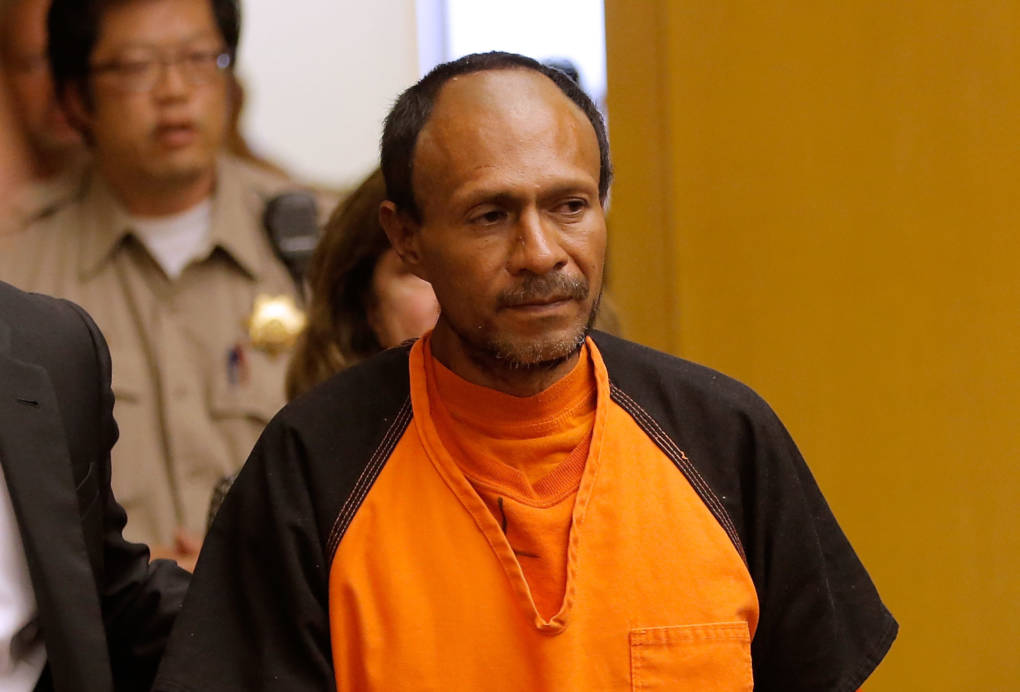
"caption": "Defendant Jose Ines Garcia Zarate, who is also known as Juan Francisco Lopez Sanchez, at his arraignment on July 7, 2015, in San Francisco.",
"description": "Defendant Jose Ines Garcia Zarate, who is also known as Juan Francisco Lopez Sanchez, at his arraignment on July 7, 2015, in San Francisco.",
"title": "ZarateArraign",
"credit": "Michael Macor-Pool/Getty Images",
"status": "inherit",
"isLoading": false,
"fetchFailed": false
},
"news_11629419": {
"type": "attachments",
"id": "news_11629419",
"meta": {
"index": "attachments_1716263798",
"site": "news",
"id": "11629419",
"found": true
},
"parent": 11629415,
"imgSizes": {
"small": {
"file": "https://ww2.kqed.org/app/uploads/sites/10/2017/11/RS27583_alt_648-520x353.jpg",
"width": 520,
"mimeType": "image/jpeg",
"height": 353
},
"twentyfourteen-full-width": {
"file": "https://ww2.kqed.org/app/uploads/sites/10/2017/11/RS27583_alt_648-1038x576.jpg",
"width": 1038,
"mimeType": "image/jpeg",
"height": 576
},
"thumbnail": {
"file": "https://ww2.kqed.org/app/uploads/sites/10/2017/11/RS27583_alt_648-160x109.jpg",
"width": 160,
"mimeType": "image/jpeg",
"height": 109
},
"fd-sm": {
"file": "https://ww2.kqed.org/app/uploads/sites/10/2017/11/RS27583_alt_648-960x651.jpg",
"width": 960,
"mimeType": "image/jpeg",
"height": 651
},
"post-thumbnail": {
"file": "https://ww2.kqed.org/app/uploads/sites/10/2017/11/RS27583_alt_648-672x372.jpg",
"width": 672,
"mimeType": "image/jpeg",
"height": 372
},
"xsmall": {
"file": "https://ww2.kqed.org/app/uploads/sites/10/2017/11/RS27583_alt_648-375x254.jpg",
"width": 375,
"mimeType": "image/jpeg",
"height": 254
},
"kqedFullSize": {
"file": "https://ww2.kqed.org/app/uploads/sites/10/2017/11/RS27583_alt_648.jpg",
"width": 1920,
"height": 1302
},
"large": {
"file": "https://ww2.kqed.org/app/uploads/sites/10/2017/11/RS27583_alt_648-1020x692.jpg",
"width": 1020,
"mimeType": "image/jpeg",
"height": 692
},
"xlarge": {
"file": "https://ww2.kqed.org/app/uploads/sites/10/2017/11/RS27583_alt_648-1180x800.jpg",
"width": 1180,
"mimeType": "image/jpeg",
"height": 800
},
"guest-author-50": {
"file": "https://ww2.kqed.org/app/uploads/sites/10/2017/11/RS27583_alt_648-50x50.jpg",
"width": 50,
"mimeType": "image/jpeg",
"height": 50
},
"guest-author-96": {
"file": "https://ww2.kqed.org/app/uploads/sites/10/2017/11/RS27583_alt_648-96x96.jpg",
"width": 96,
"mimeType": "image/jpeg",
"height": 96
},
"medium": {
"file": "https://ww2.kqed.org/app/uploads/sites/10/2017/11/RS27583_alt_648-800x543.jpg",
"width": 800,
"mimeType": "image/jpeg",
"height": 543
},
"guest-author-64": {
"file": "https://ww2.kqed.org/app/uploads/sites/10/2017/11/RS27583_alt_648-64x64.jpg",
"width": 64,
"mimeType": "image/jpeg",
"height": 64
},
"guest-author-32": {
"file": "https://ww2.kqed.org/app/uploads/sites/10/2017/11/RS27583_alt_648-32x32.jpg",
"width": 32,
"mimeType": "image/jpeg",
"height": 32
},
"fd-lrg": {
"file": "https://ww2.kqed.org/app/uploads/sites/10/2017/11/RS27583_alt_648-1920x1302.jpg",
"width": 1920,
"mimeType": "image/jpeg",
"height": 1302
},
"fd-med": {
"file": "https://ww2.kqed.org/app/uploads/sites/10/2017/11/RS27583_alt_648-1180x800.jpg",
"width": 1180,
"mimeType": "image/jpeg",
"height": 800
},
"full-width": {
"file": "https://ww2.kqed.org/app/uploads/sites/10/2017/11/RS27583_alt_648-1920x1302.jpg",
"width": 1920,
"mimeType": "image/jpeg",
"height": 1302
},
"detail": {
"file": "https://ww2.kqed.org/app/uploads/sites/10/2017/11/RS27583_alt_648-150x150.jpg",
"width": 150,
"mimeType": "image/jpeg",
"height": 150
},
"guest-author-128": {
"file": "https://ww2.kqed.org/app/uploads/sites/10/2017/11/RS27583_alt_648-128x128.jpg",
"width": 128,
"mimeType": "image/jpeg",
"height": 128
},
"xxsmall": {
"file": "https://ww2.kqed.org/app/uploads/sites/10/2017/11/RS27583_alt_648-240x163.jpg",
"width": 240,
"mimeType": "image/jpeg",
"height": 163
}
},
"publishDate": 1510194051,
"modified": 1512084944,
"caption": "Defendant Jose Ines Garcia Zarate, who is also known as Juan Francisco Lopez Sanchez, enters court for an arraignment on July 7, 2015, in San Francisco.",
"description": "Jose Ines Garcia Zarate, who is also known as Juan Francisco Lopez Sanchez, enters court for an arraignment on July 7, 2015 in San Francisco.",
"title": "Arraignment Held For Francisco Sanchez, Charged With The Shooting Death Of Kathryn Steinle On Pier 14",
"credit": "Michael Macor-Pool/Getty Images",
"status": "inherit",
"isLoading": false,
"fetchFailed": false
},
"news_11634031": {
"type": "attachments",
"id": "news_11634031",
"meta": {
"index": "attachments_1716263798",
"site": "news",
"id": "11634031",
"found": true
},
"parent": 11633889,
"imgSizes": {
"small": {
"file": "https://ww2.kqed.org/app/uploads/sites/10/2017/11/iStock-667267296-520x347.jpg",
"width": 520,
"mimeType": "image/jpeg",
"height": 347
},
"twentyfourteen-full-width": {
"file": "https://ww2.kqed.org/app/uploads/sites/10/2017/11/iStock-667267296-1038x576.jpg",
"width": 1038,
"mimeType": "image/jpeg",
"height": 576
},
"thumbnail": {
"file": "https://ww2.kqed.org/app/uploads/sites/10/2017/11/iStock-667267296-160x107.jpg",
"width": 160,
"mimeType": "image/jpeg",
"height": 107
},
"fd-sm": {
"file": "https://ww2.kqed.org/app/uploads/sites/10/2017/11/iStock-667267296-960x641.jpg",
"width": 960,
"mimeType": "image/jpeg",
"height": 641
},
"post-thumbnail": {
"file": "https://ww2.kqed.org/app/uploads/sites/10/2017/11/iStock-667267296-672x372.jpg",
"width": 672,
"mimeType": "image/jpeg",
"height": 372
},
"xsmall": {
"file": "https://ww2.kqed.org/app/uploads/sites/10/2017/11/iStock-667267296-375x250.jpg",
"width": 375,
"mimeType": "image/jpeg",
"height": 250
},
"kqedFullSize": {
"file": "https://ww2.kqed.org/app/uploads/sites/10/2017/11/iStock-667267296-e1512062743633.jpg",
"width": 1920,
"height": 1282
},
"large": {
"file": "https://ww2.kqed.org/app/uploads/sites/10/2017/11/iStock-667267296-1020x681.jpg",
"width": 1020,
"mimeType": "image/jpeg",
"height": 681
},
"xlarge": {
"file": "https://ww2.kqed.org/app/uploads/sites/10/2017/11/iStock-667267296-1180x788.jpg",
"width": 1180,
"mimeType": "image/jpeg",
"height": 788
},
"guest-author-50": {
"file": "https://ww2.kqed.org/app/uploads/sites/10/2017/11/iStock-667267296-50x50.jpg",
"width": 50,
"mimeType": "image/jpeg",
"height": 50
},
"guest-author-96": {
"file": "https://ww2.kqed.org/app/uploads/sites/10/2017/11/iStock-667267296-96x96.jpg",
"width": 96,
"mimeType": "image/jpeg",
"height": 96
},
"medium": {
"file": "https://ww2.kqed.org/app/uploads/sites/10/2017/11/iStock-667267296-800x534.jpg",
"width": 800,
"mimeType": "image/jpeg",
"height": 534
},
"guest-author-64": {
"file": "https://ww2.kqed.org/app/uploads/sites/10/2017/11/iStock-667267296-64x64.jpg",
"width": 64,
"mimeType": "image/jpeg",
"height": 64
},
"guest-author-32": {
"file": "https://ww2.kqed.org/app/uploads/sites/10/2017/11/iStock-667267296-32x32.jpg",
"width": 32,
"mimeType": "image/jpeg",
"height": 32
},
"fd-lrg": {
"file": "https://ww2.kqed.org/app/uploads/sites/10/2017/11/iStock-667267296-1920x1282.jpg",
"width": 1920,
"mimeType": "image/jpeg",
"height": 1282
},
"fd-med": {
"file": "https://ww2.kqed.org/app/uploads/sites/10/2017/11/iStock-667267296-1180x788.jpg",
"width": 1180,
"mimeType": "image/jpeg",
"height": 788
},
"full-width": {
"file": "https://ww2.kqed.org/app/uploads/sites/10/2017/11/iStock-667267296-1920x1282.jpg",
"width": 1920,
"mimeType": "image/jpeg",
"height": 1282
},
"detail": {
"file": "https://ww2.kqed.org/app/uploads/sites/10/2017/11/iStock-667267296-150x150.jpg",
"width": 150,
"mimeType": "image/jpeg",
"height": 150
},
"guest-author-128": {
"file": "https://ww2.kqed.org/app/uploads/sites/10/2017/11/iStock-667267296-128x128.jpg",
"width": 128,
"mimeType": "image/jpeg",
"height": 128
},
"xxsmall": {
"file": "https://ww2.kqed.org/app/uploads/sites/10/2017/11/iStock-667267296-240x160.jpg",
"width": 240,
"mimeType": "image/jpeg",
"height": 160
}
},
"publishDate": 1512062702,
"modified": 1512080476,
"caption": "A water fountain faucet.",
"description": null,
"title": "Water Fountain",
"credit": "Getty Images",
"status": "inherit",
"isLoading": false,
"fetchFailed": false
},
"news_11634104": {
"type": "attachments",
"id": "news_11634104",
"meta": {
"index": "attachments_1716263798",
"site": "news",
"id": "11634104",
"found": true
},
"parent": 11634054,
"imgSizes": {
"small": {
"file": "https://ww2.kqed.org/app/uploads/sites/10/2017/11/PamelaLopez-520x363.jpg",
"width": 520,
"mimeType": "image/jpeg",
"height": 363
},
"twentyfourteen-full-width": {
"file": "https://ww2.kqed.org/app/uploads/sites/10/2017/11/PamelaLopez-1038x576.jpg",
"width": 1038,
"mimeType": "image/jpeg",
"height": 576
},
"thumbnail": {
"file": "https://ww2.kqed.org/app/uploads/sites/10/2017/11/PamelaLopez-160x112.jpg",
"width": 160,
"mimeType": "image/jpeg",
"height": 112
},
"fd-sm": {
"file": "https://ww2.kqed.org/app/uploads/sites/10/2017/11/PamelaLopez-960x670.jpg",
"width": 960,
"mimeType": "image/jpeg",
"height": 670
},
"post-thumbnail": {
"file": "https://ww2.kqed.org/app/uploads/sites/10/2017/11/PamelaLopez-672x372.jpg",
"width": 672,
"mimeType": "image/jpeg",
"height": 372
},
"xsmall": {
"file": "https://ww2.kqed.org/app/uploads/sites/10/2017/11/PamelaLopez-375x262.jpg",
"width": 375,
"mimeType": "image/jpeg",
"height": 262
},
"kqedFullSize": {
"file": "https://ww2.kqed.org/app/uploads/sites/10/2017/11/PamelaLopez.jpg",
"width": 1920,
"height": 1339
},
"large": {
"file": "https://ww2.kqed.org/app/uploads/sites/10/2017/11/PamelaLopez-1020x711.jpg",
"width": 1020,
"mimeType": "image/jpeg",
"height": 711
},
"xlarge": {
"file": "https://ww2.kqed.org/app/uploads/sites/10/2017/11/PamelaLopez-1180x823.jpg",
"width": 1180,
"mimeType": "image/jpeg",
"height": 823
},
"guest-author-50": {
"file": "https://ww2.kqed.org/app/uploads/sites/10/2017/11/PamelaLopez-50x50.jpg",
"width": 50,
"mimeType": "image/jpeg",
"height": 50
},
"guest-author-96": {
"file": "https://ww2.kqed.org/app/uploads/sites/10/2017/11/PamelaLopez-96x96.jpg",
"width": 96,
"mimeType": "image/jpeg",
"height": 96
},
"medium": {
"file": "https://ww2.kqed.org/app/uploads/sites/10/2017/11/PamelaLopez-800x558.jpg",
"width": 800,
"mimeType": "image/jpeg",
"height": 558
},
"guest-author-64": {
"file": "https://ww2.kqed.org/app/uploads/sites/10/2017/11/PamelaLopez-64x64.jpg",
"width": 64,
"mimeType": "image/jpeg",
"height": 64
},
"guest-author-32": {
"file": "https://ww2.kqed.org/app/uploads/sites/10/2017/11/PamelaLopez-32x32.jpg",
"width": 32,
"mimeType": "image/jpeg",
"height": 32
},
"fd-lrg": {
"file": "https://ww2.kqed.org/app/uploads/sites/10/2017/11/PamelaLopez-1920x1339.jpg",
"width": 1920,
"mimeType": "image/jpeg",
"height": 1339
},
"fd-med": {
"file": "https://ww2.kqed.org/app/uploads/sites/10/2017/11/PamelaLopez-1180x823.jpg",
"width": 1180,
"mimeType": "image/jpeg",
"height": 823
},
"full-width": {
"file": "https://ww2.kqed.org/app/uploads/sites/10/2017/11/PamelaLopez-1920x1339.jpg",
"width": 1920,
"mimeType": "image/jpeg",
"height": 1339
},
"detail": {
"file": "https://ww2.kqed.org/app/uploads/sites/10/2017/11/PamelaLopez-150x150.jpg",
"width": 150,
"mimeType": "image/jpeg",
"height": 150
},
"guest-author-128": {
"file": "https://ww2.kqed.org/app/uploads/sites/10/2017/11/PamelaLopez-128x128.jpg",
"width": 128,
"mimeType": "image/jpeg",
"height": 128
},
"xxsmall": {
"file": "https://ww2.kqed.org/app/uploads/sites/10/2017/11/PamelaLopez-240x167.jpg",
"width": 240,
"mimeType": "image/jpeg",
"height": 167
}
},
"publishDate": 1512080338,
"modified": 1512080833,
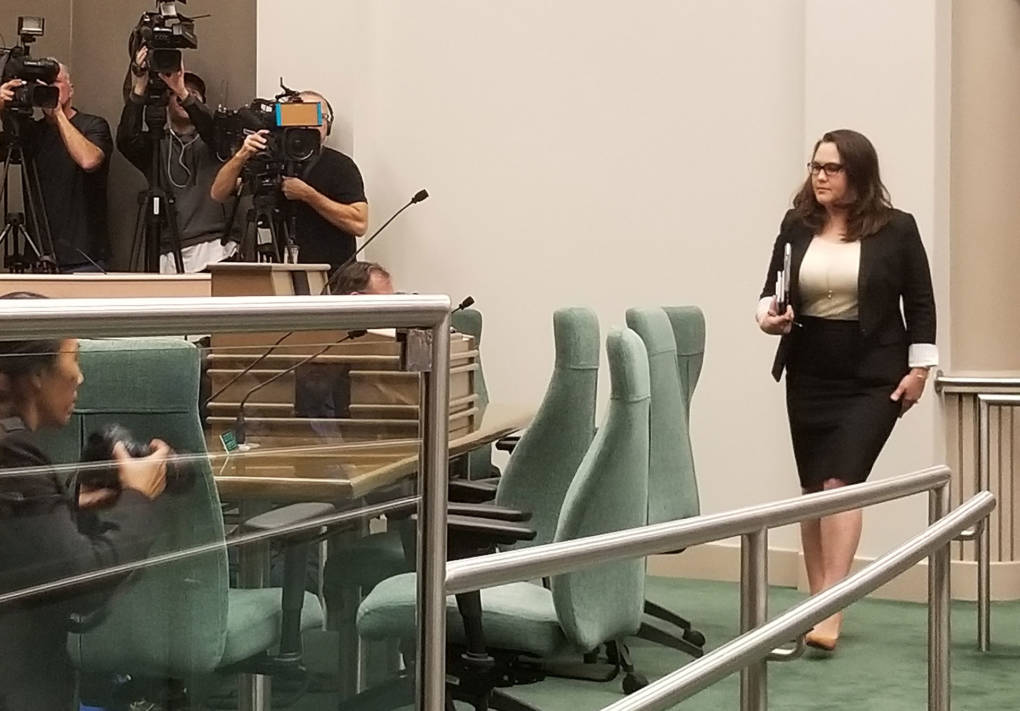
"caption": "Sacramento lobbyist Pamela Lopez testified in an Assembly hearing this week that she and other women felt a complete sense of powerlessness as a result of sexual harassment they’ve experienced.",
"description": "Sacramento lobbyist Pamela Lopez testified in an Assembly hearing this week that she and other women felt a complete sense of powerlessness as a result of sexual harassment they’ve experienced.",
"title": "PamelaLopez",
"credit": "Katie Orr/KQED",
"status": "inherit",
"isLoading": false,
"fetchFailed": false
},
"news_11634082": {
"type": "attachments",
"id": "news_11634082",
"meta": {
"index": "attachments_1716263798",
"site": "news",
"id": "11634082",
"found": true
},
"parent": 11634079,
"imgSizes": {
"small": {
"file": "https://ww2.kqed.org/app/uploads/sites/10/2017/11/RanchoBernardo-520x376.jpg",
"width": 520,
"mimeType": "image/jpeg",
"height": 376
},
"twentyfourteen-full-width": {
"file": "https://ww2.kqed.org/app/uploads/sites/10/2017/11/RanchoBernardo-1038x576.jpg",
"width": 1038,
"mimeType": "image/jpeg",
"height": 576
},
"thumbnail": {
"file": "https://ww2.kqed.org/app/uploads/sites/10/2017/11/RanchoBernardo-160x116.jpg",
"width": 160,
"mimeType": "image/jpeg",
"height": 116
},
"fd-sm": {
"file": "https://ww2.kqed.org/app/uploads/sites/10/2017/11/RanchoBernardo-960x695.jpg",
"width": 960,
"mimeType": "image/jpeg",
"height": 695
},
"post-thumbnail": {
"file": "https://ww2.kqed.org/app/uploads/sites/10/2017/11/RanchoBernardo-672x372.jpg",
"width": 672,
"mimeType": "image/jpeg",
"height": 372
},
"xsmall": {
"file": "https://ww2.kqed.org/app/uploads/sites/10/2017/11/RanchoBernardo-375x271.jpg",
"width": 375,
"mimeType": "image/jpeg",
"height": 271
},
"kqedFullSize": {
"file": "https://ww2.kqed.org/app/uploads/sites/10/2017/11/RanchoBernardo.jpg",
"width": 1920,
"height": 1389
},
"large": {
"file": "https://ww2.kqed.org/app/uploads/sites/10/2017/11/RanchoBernardo-1020x738.jpg",
"width": 1020,
"mimeType": "image/jpeg",
"height": 738
},
"xlarge": {
"file": "https://ww2.kqed.org/app/uploads/sites/10/2017/11/RanchoBernardo-1180x854.jpg",
"width": 1180,
"mimeType": "image/jpeg",
"height": 854
},
"guest-author-50": {
"file": "https://ww2.kqed.org/app/uploads/sites/10/2017/11/RanchoBernardo-50x50.jpg",
"width": 50,
"mimeType": "image/jpeg",
"height": 50
},
"guest-author-96": {
"file": "https://ww2.kqed.org/app/uploads/sites/10/2017/11/RanchoBernardo-96x96.jpg",
"width": 96,
"mimeType": "image/jpeg",
"height": 96
},
"medium": {
"file": "https://ww2.kqed.org/app/uploads/sites/10/2017/11/RanchoBernardo-800x579.jpg",
"width": 800,
"mimeType": "image/jpeg",
"height": 579
},
"guest-author-64": {
"file": "https://ww2.kqed.org/app/uploads/sites/10/2017/11/RanchoBernardo-64x64.jpg",
"width": 64,
"mimeType": "image/jpeg",
"height": 64
},
"guest-author-32": {
"file": "https://ww2.kqed.org/app/uploads/sites/10/2017/11/RanchoBernardo-32x32.jpg",
"width": 32,
"mimeType": "image/jpeg",
"height": 32
},
"fd-lrg": {
"file": "https://ww2.kqed.org/app/uploads/sites/10/2017/11/RanchoBernardo-1920x1389.jpg",
"width": 1920,
"mimeType": "image/jpeg",
"height": 1389
},
"fd-med": {
"file": "https://ww2.kqed.org/app/uploads/sites/10/2017/11/RanchoBernardo-1180x854.jpg",
"width": 1180,
"mimeType": "image/jpeg",
"height": 854
},
"full-width": {
"file": "https://ww2.kqed.org/app/uploads/sites/10/2017/11/RanchoBernardo-1920x1389.jpg",
"width": 1920,
"mimeType": "image/jpeg",
"height": 1389
},
"detail": {
"file": "https://ww2.kqed.org/app/uploads/sites/10/2017/11/RanchoBernardo-150x150.jpg",
"width": 150,
"mimeType": "image/jpeg",
"height": 150
},
"guest-author-128": {
"file": "https://ww2.kqed.org/app/uploads/sites/10/2017/11/RanchoBernardo-128x128.jpg",
"width": 128,
"mimeType": "image/jpeg",
"height": 128
},
"xxsmall": {
"file": "https://ww2.kqed.org/app/uploads/sites/10/2017/11/RanchoBernardo-240x174.jpg",
"width": 240,
"mimeType": "image/jpeg",
"height": 174
}
},
"publishDate": 1512077165,
"modified": 1512077286,
"caption": "A man discovers his home destroyed in Rancho Bernardo, North San Diego on Oct. 25, 2007. The California Public Utilities Commissions has voted to have San Diego utility shareholders, not ratepayers, pay $379 million in costs from three 2007 deadly blazes ignited by power lines. ",
"description": "A man discovers his home destroyed in Rancho Bernardo, North San Diego on Oct. 25, 2007. The California Public Utilities Commissions has voted to have San Diego utility shareholders, not ratepayers, pay $379 million in costs from three 2007 deadly blazes ignited by power lines. ",
"title": "RanchoBernardo",
"credit": "GABRIEL BOUYS/AFP/Getty Images",
"status": "inherit",
"isLoading": false,
"fetchFailed": false
},
"stateofhealth_362054": {
"type": "attachments",
"id": "stateofhealth_362054",
"meta": {
"index": "attachments_1716263798",
"site": "stateofhealth",
"id": "362054",
"found": true
},
"parent": 362025,
"imgSizes": {
"small": {
"file": "https://ww2.kqed.org/app/uploads/sites/27/2017/11/RS28161_IMG_7054-qut-520x390.jpg",
"width": 520,
"mimeType": "image/jpeg",
"height": 390
},
"twentyfourteen-full-width": {
"file": "https://ww2.kqed.org/app/uploads/sites/27/2017/11/RS28161_IMG_7054-qut-1038x576.jpg",
"width": 1038,
"mimeType": "image/jpeg",
"height": 576
},
"thumbnail": {
"file": "https://ww2.kqed.org/app/uploads/sites/27/2017/11/RS28161_IMG_7054-qut-160x120.jpg",
"width": 160,
"mimeType": "image/jpeg",
"height": 120
},
"fd-sm": {
"file": "https://ww2.kqed.org/app/uploads/sites/27/2017/11/RS28161_IMG_7054-qut-960x720.jpg",
"width": 960,
"mimeType": "image/jpeg",
"height": 720
},
"post-thumbnail": {
"file": "https://ww2.kqed.org/app/uploads/sites/27/2017/11/RS28161_IMG_7054-qut-672x372.jpg",
"width": 672,
"mimeType": "image/jpeg",
"height": 372
},
"xsmall": {
"file": "https://ww2.kqed.org/app/uploads/sites/27/2017/11/RS28161_IMG_7054-qut-375x281.jpg",
"width": 375,
"mimeType": "image/jpeg",
"height": 281
},
"kqedFullSize": {
"file": "https://ww2.kqed.org/app/uploads/sites/27/2017/11/RS28161_IMG_7054-qut.jpg",
"width": 1920,
"height": 1440
},
"large": {
"file": "https://ww2.kqed.org/app/uploads/sites/27/2017/11/RS28161_IMG_7054-qut-1020x765.jpg",
"width": 1020,
"mimeType": "image/jpeg",
"height": 765
},
"xlarge": {
"file": "https://ww2.kqed.org/app/uploads/sites/27/2017/11/RS28161_IMG_7054-qut-1180x885.jpg",
"width": 1180,
"mimeType": "image/jpeg",
"height": 885
},
"guest-author-50": {
"file": "https://ww2.kqed.org/app/uploads/sites/27/2017/11/RS28161_IMG_7054-qut-50x50.jpg",
"width": 50,
"mimeType": "image/jpeg",
"height": 50
},
"guest-author-96": {
"file": "https://ww2.kqed.org/app/uploads/sites/27/2017/11/RS28161_IMG_7054-qut-96x96.jpg",
"width": 96,
"mimeType": "image/jpeg",
"height": 96
},
"medium": {
"file": "https://ww2.kqed.org/app/uploads/sites/27/2017/11/RS28161_IMG_7054-qut-800x600.jpg",
"width": 800,
"mimeType": "image/jpeg",
"height": 600
},
"guest-author-64": {
"file": "https://ww2.kqed.org/app/uploads/sites/27/2017/11/RS28161_IMG_7054-qut-64x64.jpg",
"width": 64,
"mimeType": "image/jpeg",
"height": 64
},
"guest-author-32": {
"file": "https://ww2.kqed.org/app/uploads/sites/27/2017/11/RS28161_IMG_7054-qut-32x32.jpg",
"width": 32,
"mimeType": "image/jpeg",
"height": 32
},
"fd-lrg": {
"file": "https://ww2.kqed.org/app/uploads/sites/27/2017/11/RS28161_IMG_7054-qut-1920x1440.jpg",
"width": 1920,
"mimeType": "image/jpeg",
"height": 1440
},
"fd-med": {
"file": "https://ww2.kqed.org/app/uploads/sites/27/2017/11/RS28161_IMG_7054-qut-1180x885.jpg",
"width": 1180,
"mimeType": "image/jpeg",
"height": 885
},
"full-width": {
"file": "https://ww2.kqed.org/app/uploads/sites/27/2017/11/RS28161_IMG_7054-qut-1920x1440.jpg",
"width": 1920,
"mimeType": "image/jpeg",
"height": 1440
},
"detail": {
"file": "https://ww2.kqed.org/app/uploads/sites/27/2017/11/RS28161_IMG_7054-qut-150x150.jpg",
"width": 150,
"mimeType": "image/jpeg",
"height": 150
},
"medium_large": {
"file": "https://ww2.kqed.org/app/uploads/sites/27/2017/11/RS28161_IMG_7054-qut-768x576.jpg",
"width": 768,
"mimeType": "image/jpeg",
"height": 576
},
"guest-author-128": {
"file": "https://ww2.kqed.org/app/uploads/sites/27/2017/11/RS28161_IMG_7054-qut-128x128.jpg",
"width": 128,
"mimeType": "image/jpeg",
"height": 128
},
"xxsmall": {
"file": "https://ww2.kqed.org/app/uploads/sites/27/2017/11/RS28161_IMG_7054-qut-240x180.jpg",
"width": 240,
"mimeType": "image/jpeg",
"height": 180
}
},
"publishDate": 1511394325,
"modified": 1512000102,
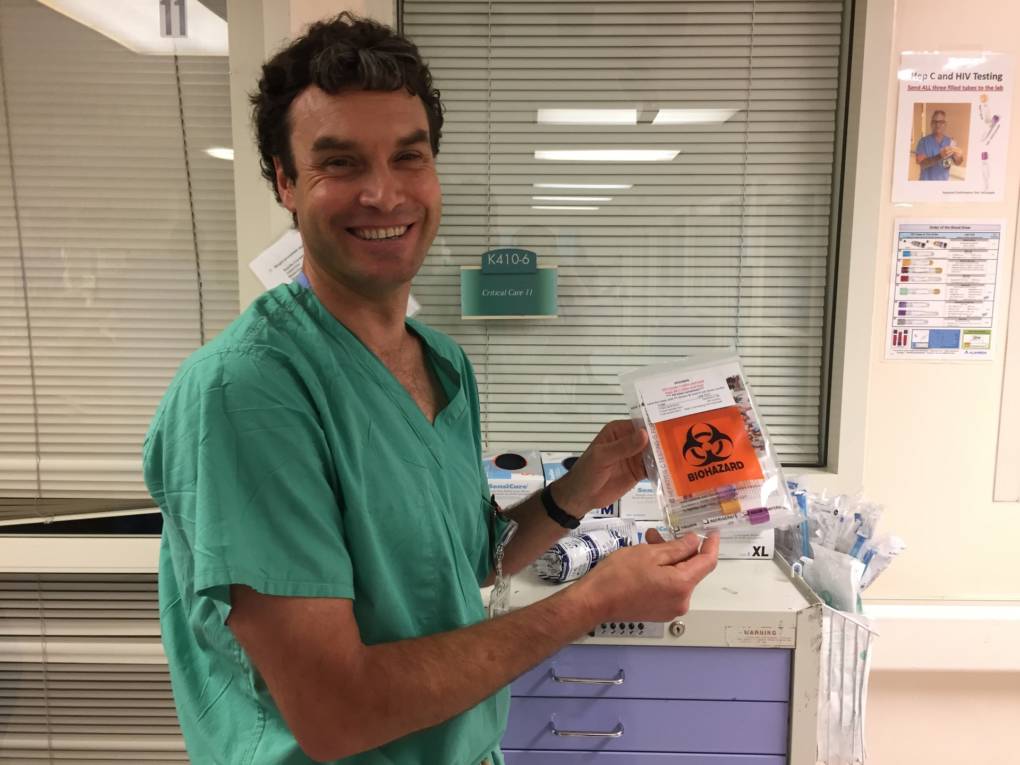
"caption": "Dr. Douglas White holds a kit used when drawing blood in Oakland's Highland Hospital emergency room. When staff draw blood, they automatically test patients for viruses like HIV and hepatitis C.",
"description": "Dr. Douglas White holds a kit used when drawing blood in Oakland's Highland Hospital Emergency Room. When staff draw blood, they automatically test patients for viruses like HIV and Hepatitis C.",
"title": "Doug White",
"credit": "Laura Klivans/KQED",
"status": "inherit",
"isLoading": false,
"fetchFailed": false
},
"news_11338176": {
"type": "attachments",
"id": "news_11338176",
"meta": {
"index": "attachments_1716263798",
"site": "news",
"id": "11338176",
"found": true
},
"parent": 11338167,
"imgSizes": {
"small": {
"file": "https://ww2.kqed.org/app/uploads/sites/10/2017/02/Capitol-1-520x330.jpg",
"width": 520,
"mimeType": "image/jpeg",
"height": 330
},
"twentyfourteen-full-width": {
"file": "https://ww2.kqed.org/app/uploads/sites/10/2017/02/Capitol-1-1038x576.jpg",
"width": 1038,
"mimeType": "image/jpeg",
"height": 576
},
"thumbnail": {
"file": "https://ww2.kqed.org/app/uploads/sites/10/2017/02/Capitol-1-160x102.jpg",
"width": 160,
"mimeType": "image/jpeg",
"height": 102
},
"fd-sm": {
"file": "https://ww2.kqed.org/app/uploads/sites/10/2017/02/Capitol-1-960x609.jpg",
"width": 960,
"mimeType": "image/jpeg",
"height": 609
},
"post-thumbnail": {
"file": "https://ww2.kqed.org/app/uploads/sites/10/2017/02/Capitol-1-672x372.jpg",
"width": 672,
"mimeType": "image/jpeg",
"height": 372
},
"xsmall": {
"file": "https://ww2.kqed.org/app/uploads/sites/10/2017/02/Capitol-1-375x238.jpg",
"width": 375,
"mimeType": "image/jpeg",
"height": 238
},
"kqedFullSize": {
"file": "https://ww2.kqed.org/app/uploads/sites/10/2017/02/Capitol-1.jpg",
"width": 1920,
"height": 1218
},
"large": {
"file": "https://ww2.kqed.org/app/uploads/sites/10/2017/02/Capitol-1-1020x647.jpg",
"width": 1020,
"mimeType": "image/jpeg",
"height": 647
},
"xlarge": {
"file": "https://ww2.kqed.org/app/uploads/sites/10/2017/02/Capitol-1-1180x749.jpg",
"width": 1180,
"mimeType": "image/jpeg",
"height": 749
},
"guest-author-50": {
"file": "https://ww2.kqed.org/app/uploads/sites/10/2017/02/Capitol-1-50x50.jpg",
"width": 50,
"mimeType": "image/jpeg",
"height": 50
},
"guest-author-96": {
"file": "https://ww2.kqed.org/app/uploads/sites/10/2017/02/Capitol-1-96x96.jpg",
"width": 96,
"mimeType": "image/jpeg",
"height": 96
},
"medium": {
"file": "https://ww2.kqed.org/app/uploads/sites/10/2017/02/Capitol-1-800x508.jpg",
"width": 800,
"mimeType": "image/jpeg",
"height": 508
},
"guest-author-64": {
"file": "https://ww2.kqed.org/app/uploads/sites/10/2017/02/Capitol-1-64x64.jpg",
"width": 64,
"mimeType": "image/jpeg",
"height": 64
},
"guest-author-32": {
"file": "https://ww2.kqed.org/app/uploads/sites/10/2017/02/Capitol-1-32x32.jpg",
"width": 32,
"mimeType": "image/jpeg",
"height": 32
},
"fd-lrg": {
"file": "https://ww2.kqed.org/app/uploads/sites/10/2017/02/Capitol-1-1920x1218.jpg",
"width": 1920,
"mimeType": "image/jpeg",
"height": 1218
},
"fd-med": {
"file": "https://ww2.kqed.org/app/uploads/sites/10/2017/02/Capitol-1-1180x749.jpg",
"width": 1180,
"mimeType": "image/jpeg",
"height": 749
},
"full-width": {
"file": "https://ww2.kqed.org/app/uploads/sites/10/2017/02/Capitol-1-1920x1218.jpg",
"width": 1920,
"mimeType": "image/jpeg",
"height": 1218
},
"detail": {
"file": "https://ww2.kqed.org/app/uploads/sites/10/2017/02/Capitol-1-150x150.jpg",
"width": 150,
"mimeType": "image/jpeg",
"height": 150
},
"guest-author-128": {
"file": "https://ww2.kqed.org/app/uploads/sites/10/2017/02/Capitol-1-128x128.jpg",
"width": 128,
"mimeType": "image/jpeg",
"height": 128
},
"xxsmall": {
"file": "https://ww2.kqed.org/app/uploads/sites/10/2017/02/Capitol-1-240x152.jpg",
"width": 240,
"mimeType": "image/jpeg",
"height": 152
}
},
"publishDate": 1488318880,
"modified": 1512060621,
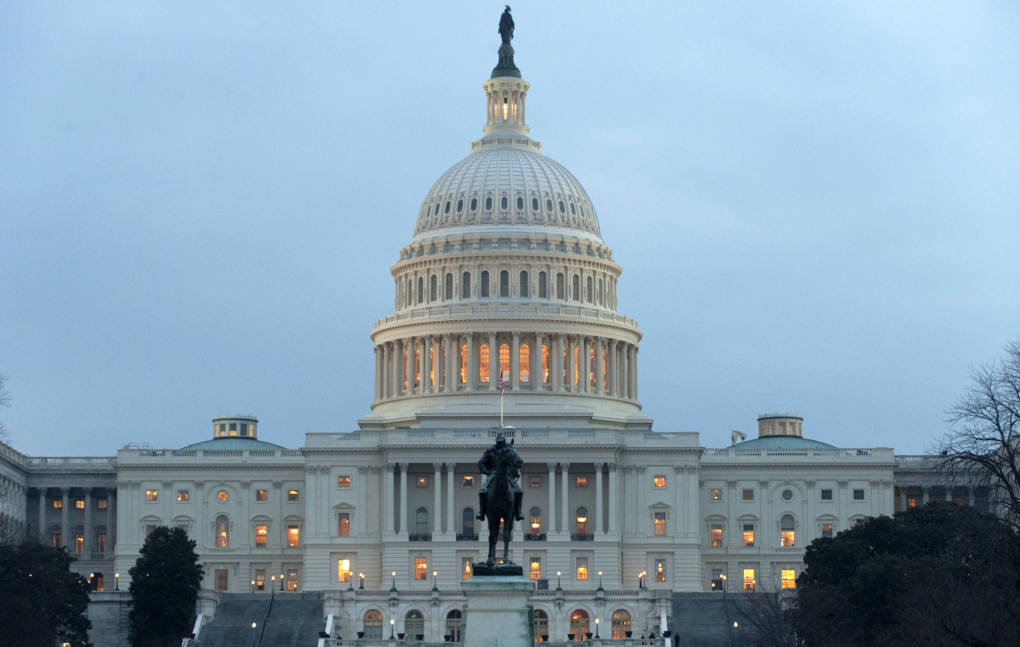
"caption": "The Senate began debate on a sweeping GOP tax bill on Thursday.",
"description": "The Senate began debate on a sweeping GOP tax bill on Thursday.",
"title": "Capitol",
"credit": "SAUL LOEB/AFP/Getty Images",
"status": "inherit",
"isLoading": false,
"fetchFailed": false
},
"news_11633996": {
"type": "attachments",
"id": "news_11633996",
"meta": {
"index": "attachments_1716263798",
"site": "news",
"id": "11633996",
"found": true
},
"parent": 11632954,
"imgSizes": {
"small": {
"file": "https://ww2.kqed.org/app/uploads/sites/10/2017/11/153625613_6e3d984624_o-520x390.jpg",
"width": 520,
"mimeType": "image/jpeg",
"height": 390
},
"twentyfourteen-full-width": {
"file": "https://ww2.kqed.org/app/uploads/sites/10/2017/11/153625613_6e3d984624_o-800x576.jpg",
"width": 800,
"mimeType": "image/jpeg",
"height": 576
},
"thumbnail": {
"file": "https://ww2.kqed.org/app/uploads/sites/10/2017/11/153625613_6e3d984624_o-160x120.jpg",
"width": 160,
"mimeType": "image/jpeg",
"height": 120
},
"post-thumbnail": {
"file": "https://ww2.kqed.org/app/uploads/sites/10/2017/11/153625613_6e3d984624_o-672x372.jpg",
"width": 672,
"mimeType": "image/jpeg",
"height": 372
},
"xsmall": {
"file": "https://ww2.kqed.org/app/uploads/sites/10/2017/11/153625613_6e3d984624_o-375x281.jpg",
"width": 375,
"mimeType": "image/jpeg",
"height": 281
},
"kqedFullSize": {
"file": "https://ww2.kqed.org/app/uploads/sites/10/2017/11/153625613_6e3d984624_o.jpg",
"width": 800,
"height": 600
},
"guest-author-50": {
"file": "https://ww2.kqed.org/app/uploads/sites/10/2017/11/153625613_6e3d984624_o-50x50.jpg",
"width": 50,
"mimeType": "image/jpeg",
"height": 50
},
"guest-author-96": {
"file": "https://ww2.kqed.org/app/uploads/sites/10/2017/11/153625613_6e3d984624_o-96x96.jpg",
"width": 96,
"mimeType": "image/jpeg",
"height": 96
},
"medium": {
"file": "https://ww2.kqed.org/app/uploads/sites/10/2017/11/153625613_6e3d984624_o-800x600.jpg",
"width": 800,
"mimeType": "image/jpeg",
"height": 600
},
"guest-author-64": {
"file": "https://ww2.kqed.org/app/uploads/sites/10/2017/11/153625613_6e3d984624_o-64x64.jpg",
"width": 64,
"mimeType": "image/jpeg",
"height": 64
},
"guest-author-32": {
"file": "https://ww2.kqed.org/app/uploads/sites/10/2017/11/153625613_6e3d984624_o-32x32.jpg",
"width": 32,
"mimeType": "image/jpeg",
"height": 32
},
"detail": {
"file": "https://ww2.kqed.org/app/uploads/sites/10/2017/11/153625613_6e3d984624_o-150x150.jpg",
"width": 150,
"mimeType": "image/jpeg",
"height": 150
},
"guest-author-128": {
"file": "https://ww2.kqed.org/app/uploads/sites/10/2017/11/153625613_6e3d984624_o-128x128.jpg",
"width": 128,
"mimeType": "image/jpeg",
"height": 128
},
"xxsmall": {
"file": "https://ww2.kqed.org/app/uploads/sites/10/2017/11/153625613_6e3d984624_o-240x180.jpg",
"width": 240,
"mimeType": "image/jpeg",
"height": 180
}
},
"publishDate": 1512005945,
"modified": 1512006018,
"caption": "Up close with a California golden poppy. ",
"description": "Up close with a California golden poppy. ",
"title": "153625613_6e3d984624_o",
"credit": "\u003ca href=\"https://www.flickr.com/photos/imagoarticulus/153625613/in/photolist-eznxt-HTspJC-6nbgaw-6iBMeg-mH2zfn-eznxT-7WRMCd-6iBFhF-eznwt-JgvXKz-4VgL5m-m3n1rS-ne4t5N-gkDb9-naXhgZ-ASP9j-Fhmrr-bYmhGY-nnthVR-orY4UL-RauLec-fRE1y-oCKg7R-6oTwq5-9ERuVv-nAmhXj-rnnRXq-4Vcgwi-SZ61vx-J24PiL-fCBsz4-ntbrZh-bYmgHE-bDgZmk-6n75Uz-TPyjtG-o4AZsX-rpnBDe-F6nWk4-LKA4-9Z4Aep-eiJjr2-cXw8MQ-nbncqf-rA1KT3-9ERuNx-eTNnML-eV7V9i-fEefN-9FzyTL\" target=\"_blank\">Rusty\u003c/a>/Flickr",
"status": "inherit",
"isLoading": false,
"fetchFailed": false
},
"news_11633959": {
"type": "attachments",
"id": "news_11633959",
"meta": {
"index": "attachments_1716263798",
"site": "news",
"id": "11633959",
"found": true
},
"parent": 11633957,
"imgSizes": {
"small": {
"file": "https://ww2.kqed.org/app/uploads/sites/10/2017/11/iStock-503516024-520x270.jpg",
"width": 520,
"mimeType": "image/jpeg",
"height": 270
},
"twentyfourteen-full-width": {
"file": "https://ww2.kqed.org/app/uploads/sites/10/2017/11/iStock-503516024-1038x576.jpg",
"width": 1038,
"mimeType": "image/jpeg",
"height": 576
},
"thumbnail": {
"file": "https://ww2.kqed.org/app/uploads/sites/10/2017/11/iStock-503516024-160x83.jpg",
"width": 160,
"mimeType": "image/jpeg",
"height": 83
},
"fd-sm": {
"file": "https://ww2.kqed.org/app/uploads/sites/10/2017/11/iStock-503516024-960x498.jpg",
"width": 960,
"mimeType": "image/jpeg",
"height": 498
},
"post-thumbnail": {
"file": "https://ww2.kqed.org/app/uploads/sites/10/2017/11/iStock-503516024-672x372.jpg",
"width": 672,
"mimeType": "image/jpeg",
"height": 372
},
"xsmall": {
"file": "https://ww2.kqed.org/app/uploads/sites/10/2017/11/iStock-503516024-375x194.jpg",
"width": 375,
"mimeType": "image/jpeg",
"height": 194
},
"kqedFullSize": {
"file": "https://ww2.kqed.org/app/uploads/sites/10/2017/11/iStock-503516024-e1512002719505.jpg",
"width": 1920,
"height": 996
},
"large": {
"file": "https://ww2.kqed.org/app/uploads/sites/10/2017/11/iStock-503516024-1020x529.jpg",
"width": 1020,
"mimeType": "image/jpeg",
"height": 529
},
"xlarge": {
"file": "https://ww2.kqed.org/app/uploads/sites/10/2017/11/iStock-503516024-1180x612.jpg",
"width": 1180,
"mimeType": "image/jpeg",
"height": 612
},
"guest-author-50": {
"file": "https://ww2.kqed.org/app/uploads/sites/10/2017/11/iStock-503516024-50x50.jpg",
"width": 50,
"mimeType": "image/jpeg",
"height": 50
},
"guest-author-96": {
"file": "https://ww2.kqed.org/app/uploads/sites/10/2017/11/iStock-503516024-96x96.jpg",
"width": 96,
"mimeType": "image/jpeg",
"height": 96
},
"medium": {
"file": "https://ww2.kqed.org/app/uploads/sites/10/2017/11/iStock-503516024-800x415.jpg",
"width": 800,
"mimeType": "image/jpeg",
"height": 415
},
"guest-author-64": {
"file": "https://ww2.kqed.org/app/uploads/sites/10/2017/11/iStock-503516024-64x64.jpg",
"width": 64,
"mimeType": "image/jpeg",
"height": 64
},
"guest-author-32": {
"file": "https://ww2.kqed.org/app/uploads/sites/10/2017/11/iStock-503516024-32x32.jpg",
"width": 32,
"mimeType": "image/jpeg",
"height": 32
},
"fd-lrg": {
"file": "https://ww2.kqed.org/app/uploads/sites/10/2017/11/iStock-503516024-1920x996.jpg",
"width": 1920,
"mimeType": "image/jpeg",
"height": 996
},
"fd-med": {
"file": "https://ww2.kqed.org/app/uploads/sites/10/2017/11/iStock-503516024-1180x612.jpg",
"width": 1180,
"mimeType": "image/jpeg",
"height": 612
},
"full-width": {
"file": "https://ww2.kqed.org/app/uploads/sites/10/2017/11/iStock-503516024-1920x996.jpg",
"width": 1920,
"mimeType": "image/jpeg",
"height": 996
},
"detail": {
"file": "https://ww2.kqed.org/app/uploads/sites/10/2017/11/iStock-503516024-150x150.jpg",
"width": 150,
"mimeType": "image/jpeg",
"height": 150
},
"guest-author-128": {
"file": "https://ww2.kqed.org/app/uploads/sites/10/2017/11/iStock-503516024-128x128.jpg",
"width": 128,
"mimeType": "image/jpeg",
"height": 128
},
"xxsmall": {
"file": "https://ww2.kqed.org/app/uploads/sites/10/2017/11/iStock-503516024-240x124.jpg",
"width": 240,
"mimeType": "image/jpeg",
"height": 124
}
},
"publishDate": 1512000647,
"modified": 1512002722,
"caption": "White Shark breaching in an attack.",
"description": "White Shark breaching in an attack.",
"title": "Great White Shark (Carcharodon carcharias) breaching in an attack",
"credit": "USO/iStockphoto",
"status": "inherit",
"isLoading": false,
"fetchFailed": false
},
"news_11633885": {
"type": "attachments",
"id": "news_11633885",
"meta": {
"index": "attachments_1716263798",
"site": "news",
"id": "11633885",
"found": true
},
"parent": 11633878,
"imgSizes": {
"small": {
"file": "https://ww2.kqed.org/app/uploads/sites/10/2017/11/Graduate-Student-Protest-520x390.jpeg",
"width": 520,
"mimeType": "image/jpeg",
"height": 390
},
"twentyfourteen-full-width": {
"file": "https://ww2.kqed.org/app/uploads/sites/10/2017/11/Graduate-Student-Protest-1038x576.jpeg",
"width": 1038,
"mimeType": "image/jpeg",
"height": 576
},
"thumbnail": {
"file": "https://ww2.kqed.org/app/uploads/sites/10/2017/11/Graduate-Student-Protest-160x120.jpeg",
"width": 160,
"mimeType": "image/jpeg",
"height": 120
},
"fd-sm": {
"file": "https://ww2.kqed.org/app/uploads/sites/10/2017/11/Graduate-Student-Protest-960x721.jpeg",
"width": 960,
"mimeType": "image/jpeg",
"height": 721
},
"post-thumbnail": {
"file": "https://ww2.kqed.org/app/uploads/sites/10/2017/11/Graduate-Student-Protest-672x372.jpeg",
"width": 672,
"mimeType": "image/jpeg",
"height": 372
},
"xsmall": {
"file": "https://ww2.kqed.org/app/uploads/sites/10/2017/11/Graduate-Student-Protest-375x282.jpeg",
"width": 375,
"mimeType": "image/jpeg",
"height": 282
},
"kqedFullSize": {
"file": "https://ww2.kqed.org/app/uploads/sites/10/2017/11/Graduate-Student-Protest.jpeg",
"width": 1500,
"height": 1126
},
"large": {
"file": "https://ww2.kqed.org/app/uploads/sites/10/2017/11/Graduate-Student-Protest-1020x766.jpeg",
"width": 1020,
"mimeType": "image/jpeg",
"height": 766
},
"xlarge": {
"file": "https://ww2.kqed.org/app/uploads/sites/10/2017/11/Graduate-Student-Protest-1180x886.jpeg",
"width": 1180,
"mimeType": "image/jpeg",
"height": 886
},
"guest-author-50": {
"file": "https://ww2.kqed.org/app/uploads/sites/10/2017/11/Graduate-Student-Protest-50x50.jpeg",
"width": 50,
"mimeType": "image/jpeg",
"height": 50
},
"guest-author-96": {
"file": "https://ww2.kqed.org/app/uploads/sites/10/2017/11/Graduate-Student-Protest-96x96.jpeg",
"width": 96,
"mimeType": "image/jpeg",
"height": 96
},
"medium": {
"file": "https://ww2.kqed.org/app/uploads/sites/10/2017/11/Graduate-Student-Protest-800x601.jpeg",
"width": 800,
"mimeType": "image/jpeg",
"height": 601
},
"guest-author-64": {
"file": "https://ww2.kqed.org/app/uploads/sites/10/2017/11/Graduate-Student-Protest-64x64.jpeg",
"width": 64,
"mimeType": "image/jpeg",
"height": 64
},
"guest-author-32": {
"file": "https://ww2.kqed.org/app/uploads/sites/10/2017/11/Graduate-Student-Protest-32x32.jpeg",
"width": 32,
"mimeType": "image/jpeg",
"height": 32
},
"fd-med": {
"file": "https://ww2.kqed.org/app/uploads/sites/10/2017/11/Graduate-Student-Protest-1180x886.jpeg",
"width": 1180,
"mimeType": "image/jpeg",
"height": 886
},
"detail": {
"file": "https://ww2.kqed.org/app/uploads/sites/10/2017/11/Graduate-Student-Protest-150x150.jpeg",
"width": 150,
"mimeType": "image/jpeg",
"height": 150
},
"guest-author-128": {
"file": "https://ww2.kqed.org/app/uploads/sites/10/2017/11/Graduate-Student-Protest-128x128.jpeg",
"width": 128,
"mimeType": "image/jpeg",
"height": 128
},
"xxsmall": {
"file": "https://ww2.kqed.org/app/uploads/sites/10/2017/11/Graduate-Student-Protest-240x180.jpeg",
"width": 240,
"mimeType": "image/jpeg",
"height": 180
}
},
"publishDate": 1511993346,
"modified": 1511998791,
"caption": "Graduate students at USC joined academics across the country to protest a tax increase on their earnings.",
"description": null,
"title": "Graduate Student Protest",
"credit": "Courtesy of Mona Khaled",
"status": "inherit",
"isLoading": false,
"fetchFailed": false
},
"news_11633872": {
"type": "attachments",
"id": "news_11633872",
"meta": {
"index": "attachments_1716263798",
"site": "news",
"id": "11633872",
"found": true
},
"parent": 11633869,
"imgSizes": {
"small": {
"file": "https://ww2.kqed.org/app/uploads/sites/10/2017/11/Barajas-520x385.jpg",
"width": 520,
"mimeType": "image/jpeg",
"height": 385
},
"twentyfourteen-full-width": {
"file": "https://ww2.kqed.org/app/uploads/sites/10/2017/11/Barajas-1038x576.jpg",
"width": 1038,
"mimeType": "image/jpeg",
"height": 576
},
"thumbnail": {
"file": "https://ww2.kqed.org/app/uploads/sites/10/2017/11/Barajas-160x119.jpg",
"width": 160,
"mimeType": "image/jpeg",
"height": 119
},
"fd-sm": {
"file": "https://ww2.kqed.org/app/uploads/sites/10/2017/11/Barajas-960x712.jpg",
"width": 960,
"mimeType": "image/jpeg",
"height": 712
},
"post-thumbnail": {
"file": "https://ww2.kqed.org/app/uploads/sites/10/2017/11/Barajas-672x372.jpg",
"width": 672,
"mimeType": "image/jpeg",
"height": 372
},
"xsmall": {
"file": "https://ww2.kqed.org/app/uploads/sites/10/2017/11/Barajas-375x278.jpg",
"width": 375,
"mimeType": "image/jpeg",
"height": 278
},
"kqedFullSize": {
"file": "https://ww2.kqed.org/app/uploads/sites/10/2017/11/Barajas.jpg",
"width": 1920,
"height": 1423
},
"large": {
"file": "https://ww2.kqed.org/app/uploads/sites/10/2017/11/Barajas-1020x756.jpg",
"width": 1020,
"mimeType": "image/jpeg",
"height": 756
},
"xlarge": {
"file": "https://ww2.kqed.org/app/uploads/sites/10/2017/11/Barajas-1180x875.jpg",
"width": 1180,
"mimeType": "image/jpeg",
"height": 875
},
"guest-author-50": {
"file": "https://ww2.kqed.org/app/uploads/sites/10/2017/11/Barajas-50x50.jpg",
"width": 50,
"mimeType": "image/jpeg",
"height": 50
},
"guest-author-96": {
"file": "https://ww2.kqed.org/app/uploads/sites/10/2017/11/Barajas-96x96.jpg",
"width": 96,
"mimeType": "image/jpeg",
"height": 96
},
"medium": {
"file": "https://ww2.kqed.org/app/uploads/sites/10/2017/11/Barajas-800x593.jpg",
"width": 800,
"mimeType": "image/jpeg",
"height": 593
},
"guest-author-64": {
"file": "https://ww2.kqed.org/app/uploads/sites/10/2017/11/Barajas-64x64.jpg",
"width": 64,
"mimeType": "image/jpeg",
"height": 64
},
"guest-author-32": {
"file": "https://ww2.kqed.org/app/uploads/sites/10/2017/11/Barajas-32x32.jpg",
"width": 32,
"mimeType": "image/jpeg",
"height": 32
},
"fd-lrg": {
"file": "https://ww2.kqed.org/app/uploads/sites/10/2017/11/Barajas-1920x1423.jpg",
"width": 1920,
"mimeType": "image/jpeg",
"height": 1423
},
"fd-med": {
"file": "https://ww2.kqed.org/app/uploads/sites/10/2017/11/Barajas-1180x875.jpg",
"width": 1180,
"mimeType": "image/jpeg",
"height": 875
},
"full-width": {
"file": "https://ww2.kqed.org/app/uploads/sites/10/2017/11/Barajas-1920x1423.jpg",
"width": 1920,
"mimeType": "image/jpeg",
"height": 1423
},
"detail": {
"file": "https://ww2.kqed.org/app/uploads/sites/10/2017/11/Barajas-150x150.jpg",
"width": 150,
"mimeType": "image/jpeg",
"height": 150
},
"guest-author-128": {
"file": "https://ww2.kqed.org/app/uploads/sites/10/2017/11/Barajas-128x128.jpg",
"width": 128,
"mimeType": "image/jpeg",
"height": 128
},
"xxsmall": {
"file": "https://ww2.kqed.org/app/uploads/sites/10/2017/11/Barajas-240x178.jpg",
"width": 240,
"mimeType": "image/jpeg",
"height": 178
}
},
"publishDate": 1511987273,
"modified": 1512007032,
"caption": "Zuleyma Barajas, 27, (R) and her mother, Maria Eugenia Galvan, face an uncertain future as the clock ticks down on the Deferred Action for Childhood Arrivals program, or DACA. Barajas and her younger sister have DACA work permits and deportation protection that will eventually expire unless Congress acts.",
"description": "Zuleyma Barajas, 27 (R) and her mother, Maria Eugenia Galvan, face an uncertain future as the clock ticks down on the Deferred Action for Childhood Arrivals program, or DACA. Barajas and her younger sister have DACA work permits and deportation protection that will eventually expire unless Congress acts.",
"title": "Barajas",
"credit": "Leslie Berestein Rojas/KPCC",
"status": "inherit",
"isLoading": false,
"fetchFailed": false
},
"news_11626688": {
"type": "attachments",
"id": "news_11626688",
"meta": {
"index": "attachments_1716263798",
"site": "news",
"id": "11626688",
"found": true
},
"parent": 11626686,
"imgSizes": {
"small": {
"file": "https://ww2.kqed.org/app/uploads/sites/10/2017/10/RS26143_GettyImages-670854616-1-qut-520x354.jpg",
"width": 520,
"mimeType": "image/jpeg",
"height": 354
},
"twentyfourteen-full-width": {
"file": "https://ww2.kqed.org/app/uploads/sites/10/2017/10/RS26143_GettyImages-670854616-1-qut-1038x576.jpg",
"width": 1038,
"mimeType": "image/jpeg",
"height": 576
},
"thumbnail": {
"file": "https://ww2.kqed.org/app/uploads/sites/10/2017/10/RS26143_GettyImages-670854616-1-qut-160x109.jpg",
"width": 160,
"mimeType": "image/jpeg",
"height": 109
},
"fd-sm": {
"file": "https://ww2.kqed.org/app/uploads/sites/10/2017/10/RS26143_GettyImages-670854616-1-qut-960x654.jpg",
"width": 960,
"mimeType": "image/jpeg",
"height": 654
},
"post-thumbnail": {
"file": "https://ww2.kqed.org/app/uploads/sites/10/2017/10/RS26143_GettyImages-670854616-1-qut-672x372.jpg",
"width": 672,
"mimeType": "image/jpeg",
"height": 372
},
"xsmall": {
"file": "https://ww2.kqed.org/app/uploads/sites/10/2017/10/RS26143_GettyImages-670854616-1-qut-375x255.jpg",
"width": 375,
"mimeType": "image/jpeg",
"height": 255
},
"kqedFullSize": {
"file": "https://ww2.kqed.org/app/uploads/sites/10/2017/10/RS26143_GettyImages-670854616-1-qut.jpg",
"width": 1920,
"height": 1308
},
"large": {
"file": "https://ww2.kqed.org/app/uploads/sites/10/2017/10/RS26143_GettyImages-670854616-1-qut-1020x695.jpg",
"width": 1020,
"mimeType": "image/jpeg",
"height": 695
},
"xlarge": {
"file": "https://ww2.kqed.org/app/uploads/sites/10/2017/10/RS26143_GettyImages-670854616-1-qut-1180x804.jpg",
"width": 1180,
"mimeType": "image/jpeg",
"height": 804
},
"guest-author-50": {
"file": "https://ww2.kqed.org/app/uploads/sites/10/2017/10/RS26143_GettyImages-670854616-1-qut-50x50.jpg",
"width": 50,
"mimeType": "image/jpeg",
"height": 50
},
"guest-author-96": {
"file": "https://ww2.kqed.org/app/uploads/sites/10/2017/10/RS26143_GettyImages-670854616-1-qut-96x96.jpg",
"width": 96,
"mimeType": "image/jpeg",
"height": 96
},
"medium": {
"file": "https://ww2.kqed.org/app/uploads/sites/10/2017/10/RS26143_GettyImages-670854616-1-qut-800x545.jpg",
"width": 800,
"mimeType": "image/jpeg",
"height": 545
},
"guest-author-64": {
"file": "https://ww2.kqed.org/app/uploads/sites/10/2017/10/RS26143_GettyImages-670854616-1-qut-64x64.jpg",
"width": 64,
"mimeType": "image/jpeg",
"height": 64
},
"guest-author-32": {
"file": "https://ww2.kqed.org/app/uploads/sites/10/2017/10/RS26143_GettyImages-670854616-1-qut-32x32.jpg",
"width": 32,
"mimeType": "image/jpeg",
"height": 32
},
"fd-lrg": {
"file": "https://ww2.kqed.org/app/uploads/sites/10/2017/10/RS26143_GettyImages-670854616-1-qut-1920x1308.jpg",
"width": 1920,
"mimeType": "image/jpeg",
"height": 1308
},
"fd-med": {
"file": "https://ww2.kqed.org/app/uploads/sites/10/2017/10/RS26143_GettyImages-670854616-1-qut-1180x804.jpg",
"width": 1180,
"mimeType": "image/jpeg",
"height": 804
},
"full-width": {
"file": "https://ww2.kqed.org/app/uploads/sites/10/2017/10/RS26143_GettyImages-670854616-1-qut-1920x1308.jpg",
"width": 1920,
"mimeType": "image/jpeg",
"height": 1308
},
"detail": {
"file": "https://ww2.kqed.org/app/uploads/sites/10/2017/10/RS26143_GettyImages-670854616-1-qut-150x150.jpg",
"width": 150,
"mimeType": "image/jpeg",
"height": 150
},
"guest-author-128": {
"file": "https://ww2.kqed.org/app/uploads/sites/10/2017/10/RS26143_GettyImages-670854616-1-qut-128x128.jpg",
"width": 128,
"mimeType": "image/jpeg",
"height": 128
},
"xxsmall": {
"file": "https://ww2.kqed.org/app/uploads/sites/10/2017/10/RS26143_GettyImages-670854616-1-qut-240x164.jpg",
"width": 240,
"mimeType": "image/jpeg",
"height": 164
}
},
"publishDate": 1509297494,
"modified": 1509297754,
"caption": "Justin Calvino displays marijuana grown on one of his properties in Mendocino County, California on April 19, 2017. Recreational legalization is fast-approaching, but confusion over regulations may create issues down the road. ",
"description": "Justin Calvino displays marijuana grown on one of his properties in Mendocino County, California on April 19, 2017. Recreational legalization is fast-approaching, but confusion over regulations may create issues down the road. ",
"title": "US-MARIJUANA-REGULATIONS",
"credit": "Josh EdelsonN/AFP/Getty Images",
"status": "inherit",
"isLoading": false,
"fetchFailed": false
}
},
"audioPlayerReducer": {
"postId": "stream_live",
"isPaused": true,
"isPlaying": false,
"pfsActive": false,
"pledgeModalIsOpen": true,
"playerDrawerIsOpen": false,
"liveAudioPlayStartedAt": 0,
"liveAudioPlayContext": ""
},
"authorsReducer": {
"byline_news_11634079": {
"type": "authors",
"id": "byline_news_11634079",
"meta": {
"override": true
},
"slug": "byline_news_11634079",
"name": "Associated Press",
"isLoading": false
},
"byline_news_11634026": {
"type": "authors",
"id": "byline_news_11634026",
"meta": {
"override": true
},
"slug": "byline_news_11634026",
"name": "Arnie Seipel",
"isLoading": false
},
"byline_news_11633869": {
"type": "authors",
"id": "byline_news_11633869",
"meta": {
"override": true
},
"slug": "byline_news_11633869",
"name": "\u003cstrong>\u003ca href=\"https://www.scpr.org/about/people/staff/leslie-berestein-rojas\">Leslie Berestein Rojas\u003c/a>\u003c/strong>",
"isLoading": false
},
"byline_news_11633851": {
"type": "authors",
"id": "byline_news_11633851",
"meta": {
"override": true
},
"slug": "byline_news_11633851",
"name": "\u003cstrong>Janie Har\u003cbr />Associated Press\u003c/strong>",
"isLoading": false
},
"samharnett": {
"type": "authors",
"id": "253",
"meta": {
"index": "authors_1716337520",
"id": "253",
"found": true
},
"name": "Sam Harnett",
"firstName": "Sam",
"lastName": "Harnett",
"slug": "samharnett",
"email": "samharnett@gmail.com",
"display_author_email": false,
"staff_mastheads": [],
"title": "KQED Contributor",
"bio": "Sam Harnett covered tech and work at KQED. He is the co-creator of \u003cem>\u003ca href=\"http://www.theworldaccordingtosound.org\">The World According to Sound\u003c/a>,\u003c/em> a 90-second podcast that features different sounds and the stories behind them.\r\n\r\nBefore coming to KQED, Sam worked as an independent reporter who contributed regularly to \u003cem>The California Report, Marketplace,\u003c/em> \u003cem>The World \u003c/em>and NPR.",
"avatar": "https://secure.gravatar.com/avatar/2538b972ac02f2b9546c7a6c59a0f3d0?s=600&d=blank&r=g",
"twitter": "Samwharnett",
"facebook": null,
"instagram": null,
"linkedin": null,
"sites": [
{
"site": "news",
"roles": [
"edit_others_posts",
"subscriber"
]
},
{
"site": "stateofhealth",
"roles": [
"author"
]
},
{
"site": "science",
"roles": [
"editor"
]
},
{
"site": "quest",
"roles": [
"subscriber"
]
}
],
"headData": {
"title": "Sam Harnett | KQED",
"description": "KQED Contributor",
"ogImgSrc": "https://secure.gravatar.com/avatar/2538b972ac02f2b9546c7a6c59a0f3d0?s=600&d=blank&r=g",
"twImgSrc": "https://secure.gravatar.com/avatar/2538b972ac02f2b9546c7a6c59a0f3d0?s=600&d=blank&r=g"
},
"isLoading": false,
"link": "/author/samharnett"
},
"scottshafer": {
"type": "authors",
"id": "255",
"meta": {
"index": "authors_1716337520",
"id": "255",
"found": true
},
"name": "Scott Shafer",
"firstName": "Scott",
"lastName": "Shafer",
"slug": "scottshafer",
"email": "sshafer@kqed.org",
"display_author_email": false,
"staff_mastheads": [
"news"
],
"title": "KQED Contributor",
"bio": "Scott Shafer is a senior editor with the KQED Politics and Government desk. He is co-host of Political Breakdown, the award-winning radio show and podcast with a personal take on the world of politics. Scott came to KQED in 1998 to host the statewide\u003cem> California Report\u003c/em>. Prior to that he had extended stints in politics and government\u003cem>.\u003c/em> He uses that inside experience at KQED in his, reporting, hosting and analysis for the politics desk. Scott collaborated \u003cem>Political Breakdown a\u003c/em>nd on \u003cem>The Political Mind of Jerry Brown, \u003c/em>an eight-part series about the life and extraordinary political career of the former governor. For fun, he plays water polo with the San Francisco Tsunami.",
"avatar": "https://secure.gravatar.com/avatar/a62ebae45b79d7aed1a39a0e3bf68104?s=600&d=blank&r=g",
"twitter": "scottshafer",
"bluesky": null,
"facebook": null,
"instagram": null,
"linkedin": null,
"sites": [
{
"site": "news",
"roles": [
"editor"
]
},
{
"site": "stateofhealth",
"roles": [
"author"
]
},
{
"site": "science",
"roles": [
"author"
]
},
{
"site": "forum",
"roles": [
"subscriber"
]
},
{
"site": "liveblog",
"roles": [
"author"
]
}
],
"headData": {
"title": "Scott Shafer | KQED",
"description": "KQED Contributor",
"ogImgSrc": "https://secure.gravatar.com/avatar/a62ebae45b79d7aed1a39a0e3bf68104?s=600&d=blank&r=g",
"twImgSrc": "https://secure.gravatar.com/avatar/a62ebae45b79d7aed1a39a0e3bf68104?s=600&d=blank&r=g"
},
"isLoading": false,
"link": "/author/scottshafer"
},
"aemslie": {
"type": "authors",
"id": "3206",
"meta": {
"index": "authors_1716337520",
"id": "3206",
"found": true
},
"name": "Alex Emslie",
"firstName": "Alex",
"lastName": "Emslie",
"slug": "aemslie",
"email": "aemslie@kqed.org",
"display_author_email": true,
"staff_mastheads": [
"news"
],
"title": "KQED Senior Editor",
"bio": "Alex Emslie is senior editor of talent and development at KQED, where he manages dozens of early career journalists and oversees news department internships.\r\n\r\nHe is a former carpenter and proud graduate of City College of San Francisco and San Francisco State University, where he studied journalism and criminal justice before joining KQED in 2013.\r\n\r\nAlex produced investigative journalism focused on \u003ca href=\"https://www.kqed.org/news/11667594/the-trials-of-marvin-mutch-video\">criminal justice\u003c/a> and policing for most of a decade. He has broken major stories about \u003ca href=\"https://www.kqed.org/news/135682/amid-a-series-of-vallejo-police-shootings-one-officers-name-stands-out\">police use of deadly force\u003c/a>, \u003ca href=\"https://www.kqed.org/news/10454955/racist-texts-prompt-sfpd-internal-investigation\">officer misconduct\u003c/a> and \u003ca href=\"https://www.kqed.org/news/11712239/terrorist-or-troll-judge-to-weigh-whether-oakland-man-really-intended-to-attack-bay-area\">other\u003c/a> \u003ca href=\"https://www.kqed.org/news/11221414/hayward-paid-159000-to-husband-of-retired-police-chief-documents-show\">high\u003c/a>-\u003ca href=\"https://www.kqed.org/news/10622762/the-forgotten-tracking-two-homicides-in-san-francisco-public-housing\">profile\u003c/a> \u003ca href=\"https://www.kqed.org/news/11624516/federal-agency-promoted-ranger-just-months-after-his-gun-was-stolen-and-used-in-steinle-killing\">cases\u003c/a>. He co-founded the \u003ca href=\"https://projects.scpr.org/california-reporting-project/\">California Reporting Project\u003c/a> in 2019 to obtain and report on previously confidential police internal investigations. The effort produced well over 100 original stories and changed the course of multiple criminal cases.\r\n\r\nHis work has been recognized with numerous journalism awards, including a national Edward R. Murrow award for several years of \u003ca href=\"https://www.kqed.org/news/11688481/sfpd-officers-in-mario-woods-case-recount-shooting-in-newly-filed-depositions\">reporting\u003c/a> on the San Francisco Police shooting of Mario Woods. His \u003ca href=\"https://www.kqed.org/news/147854/half-of-those-killed-by-san-francisco-police-are-mentally-ill\">reporting\u003c/a> on police killings of people in psychiatric crisis was cited in amicus briefs before the U.S. Supreme Court.\r\n\r\nAlex now enjoys mentoring the next generation of journalists at KQED.",
"avatar": "https://secure.gravatar.com/avatar/e691e65209f20e9da202bd730ead5663?s=600&d=blank&r=g",
"twitter": "SFNewsReporter",
"facebook": null,
"instagram": null,
"linkedin": null,
"sites": [
{
"site": "arts",
"roles": [
"editor"
]
},
{
"site": "news",
"roles": [
"editor"
]
},
{
"site": "mindshift",
"roles": [
"editor"
]
},
{
"site": "stateofhealth",
"roles": [
"editor"
]
},
{
"site": "science",
"roles": [
"administrator"
]
}
],
"headData": {
"title": "Alex Emslie | KQED",
"description": "KQED Senior Editor",
"ogImgSrc": "https://secure.gravatar.com/avatar/e691e65209f20e9da202bd730ead5663?s=600&d=blank&r=g",
"twImgSrc": "https://secure.gravatar.com/avatar/e691e65209f20e9da202bd730ead5663?s=600&d=blank&r=g"
},
"isLoading": false,
"link": "/author/aemslie"
},
"shossaini": {
"type": "authors",
"id": "3214",
"meta": {
"index": "authors_1716337520",
"id": "3214",
"found": true
},
"name": "Sara Hossaini",
"firstName": "Sara",
"lastName": "Hossaini",
"slug": "shossaini",
"email": "shossaini@kqed.org",
"display_author_email": true,
"staff_mastheads": [
"news"
],
"title": "KQED Reporter",
"bio": "Sara Hossaini came to general assignment reporting at KQED in 2013 after two winters reporting at Wyoming Public Radio. She holds a bachelor's degree in broadcast journalism from the University of Nebraska-Lincoln. Her radio romance began after a bitter breakup with documentary film (Ok, maybe it's still complicated). Her first simultaneous jobs in San Francisco were as Associate Producer on a PBS film series through the Center for Asian American Media and as a butler. She likes to trot, plot and make things with her hands.",
"avatar": "https://secure.gravatar.com/avatar/060e9f56b9554e17942e89f413242774?s=600&d=blank&r=g",
"twitter": "mshossaini",
"facebook": null,
"instagram": null,
"linkedin": null,
"sites": [
{
"site": "news",
"roles": [
"author"
]
},
{
"site": "stateofhealth",
"roles": [
"author"
]
}
],
"headData": {
"title": "Sara Hossaini | KQED",
"description": "KQED Reporter",
"ogImgSrc": "https://secure.gravatar.com/avatar/060e9f56b9554e17942e89f413242774?s=600&d=blank&r=g",
"twImgSrc": "https://secure.gravatar.com/avatar/060e9f56b9554e17942e89f413242774?s=600&d=blank&r=g"
},
"isLoading": false,
"link": "/author/shossaini"
},
"jplaczek": {
"type": "authors",
"id": "8606",
"meta": {
"index": "authors_1716337520",
"id": "8606",
"found": true
},
"name": "Jessica Placzek",
"firstName": "Jessica",
"lastName": "Placzek",
"slug": "jplaczek",
"email": "jessicalplaczek@gmail.com",
"display_author_email": false,
"staff_mastheads": [
"news"
],
"title": "KQED Contributor",
"bio": "Jessica Placzek is a former senior editor of podcasts at KQED where she served as the editorial lead of the podcast department. She worked with shows like MindShift, Rightnowish, Consider This, SOLD OUT, Bay Curious and The Bay. She’s also been a reporter and audio producer at KQED, KPFA, and KALW. She taught audio production to men incarcerated at California State Prison Solano and edited pieces they produced for the Uncuffed podcast through KALW. In 2018 she co-hosted and produced the third season of Raw Material for SFMOMA. In New Orleans she wrote for the Nola Defender. Her work has also appeared on Marketplace, All Things Considered, The California Report, and Vice. You can find more at jessicaplaczek.com",
"avatar": "https://secure.gravatar.com/avatar/5ead103b5880f672eceb84ce75eecd1b4b6f74a47edc457684a73ad5b8b158e9?s=600&d=blank&r=g",
"twitter": null,
"bluesky": null,
"facebook": null,
"instagram": null,
"linkedin": null,
"sites": [
{
"site": "arts",
"roles": [
"subscriber"
]
},
{
"site": "news",
"roles": [
"subscriber"
]
},
{
"site": "stateofhealth",
"roles": [
"editor"
]
},
{
"site": "forum",
"roles": [
"editor"
]
}
],
"headData": {
"title": "Jessica Placzek | KQED",
"description": "KQED Contributor",
"ogImgSrc": "https://secure.gravatar.com/avatar/5ead103b5880f672eceb84ce75eecd1b4b6f74a47edc457684a73ad5b8b158e9?s=600&d=blank&r=g",
"twImgSrc": "https://secure.gravatar.com/avatar/5ead103b5880f672eceb84ce75eecd1b4b6f74a47edc457684a73ad5b8b158e9?s=600&d=blank&r=g"
},
"isLoading": false,
"link": "/author/jplaczek"
},
"lklivans": {
"type": "authors",
"id": "8648",
"meta": {
"index": "authors_1716337520",
"id": "8648",
"found": true
},
"name": "Laura Klivans",
"firstName": "Laura",
"lastName": "Klivans",
"slug": "lklivans",
"email": "lklivans@kqed.org",
"display_author_email": true,
"staff_mastheads": [
"news",
"science"
],
"title": "Reporter",
"bio": "Laura Klivans is an award-winning science reporter for KQED News, where she covers climate change with an eye on both groundbreaking progress and gaps in action. She is the former host of KQED's blockbuster video series about tiny, amazing animals, \u003cem>Deep Look\u003c/em>. Her work reaches national audiences through NPR, \u003cem>Here & Now, \u003c/em>PRI, and other major outlets. \r\n\r\nLaura’s won five Northern California Area Emmy Awards for Deep Look and First Place in the Greater Bay Area Journalism Awards for a podcast exploring how one Oakland neighborhood teamed up to reduce planet-heating pollution.\r\n\r\nBeyond her reporting, she hosts and moderates events. In the past, she taught audio storytelling at the UC Berkeley Graduate School of Journalism, led international education programs, worked with immigrants and refugees along the Thai-Burmese border, taught high schoolers sex ed, and was an actress. \r\n\r\nShe's a former UC Berkeley Human Rights Fellow, USC Center for Health Journalism's California Fellow and Coro Fellow in Public Affairs. Laura has a master’s in journalism from UC Berkeley, a master’s in education from Harvard, and an undergraduate degree from Northwestern University.\r\n\r\nShe loves trying to riddle the meaning out of vanity license plates.",
"avatar": "https://secure.gravatar.com/avatar/2d2ecd1550a494cc10ad4a503406965585902124739e775a9b3817eebf1d88be?s=600&d=blank&r=g",
"twitter": "lauraklivans",
"bluesky": null,
"facebook": null,
"instagram": null,
"linkedin": null,
"sites": [
{
"site": "news",
"roles": [
"editor"
]
},
{
"site": "stateofhealth",
"roles": [
"contributor",
"editor"
]
},
{
"site": "science",
"roles": [
"editor"
]
},
{
"site": "forum",
"roles": [
"editor"
]
}
],
"headData": {
"title": "Laura Klivans | KQED",
"description": "Reporter",
"ogImgSrc": "https://secure.gravatar.com/avatar/2d2ecd1550a494cc10ad4a503406965585902124739e775a9b3817eebf1d88be?s=600&d=blank&r=g",
"twImgSrc": "https://secure.gravatar.com/avatar/2d2ecd1550a494cc10ad4a503406965585902124739e775a9b3817eebf1d88be?s=600&d=blank&r=g"
},
"isLoading": false,
"link": "/author/lklivans"
},
"dventon": {
"type": "authors",
"id": "11088",
"meta": {
"index": "authors_1716337520",
"id": "11088",
"found": true
},
"name": "Danielle Venton",
"firstName": "Danielle",
"lastName": "Venton",
"slug": "dventon",
"email": "dventon@kqed.org",
"display_author_email": true,
"staff_mastheads": [
"science"
],
"title": "Science reporter",
"bio": "Danielle Venton is a reporter for KQED Science. She covers wildfires, space and oceans (though she is prone to sea sickness).\r\n\r\nBefore joining KQED in 2015, Danielle was a staff reporter at KRCB in Sonoma County and a freelancer. She studied science communication at UC Santa Cruz and formerly worked at CERN in Geneva, Switzerland where she wrote about computing. She lives in Sonoma County and enjoys backpacking.",
"avatar": "https://secure.gravatar.com/avatar/37b292b5c40c8d93959c4f48d73b5286f41b7abd8588277e941905a3ed4c801c?s=600&d=blank&r=g",
"twitter": "DanielleVenton",
"bluesky": null,
"facebook": null,
"instagram": null,
"linkedin": null,
"sites": [
{
"site": "arts",
"roles": [
"contributor"
]
},
{
"site": "news",
"roles": [
"editor"
]
},
{
"site": "futureofyou",
"roles": [
"editor"
]
},
{
"site": "science",
"roles": [
"editor"
]
},
{
"site": "liveblog",
"roles": [
"contributor"
]
}
],
"headData": {
"title": "Danielle Venton | KQED",
"description": "Science reporter",
"ogImgSrc": "https://secure.gravatar.com/avatar/37b292b5c40c8d93959c4f48d73b5286f41b7abd8588277e941905a3ed4c801c?s=600&d=blank&r=g",
"twImgSrc": "https://secure.gravatar.com/avatar/37b292b5c40c8d93959c4f48d73b5286f41b7abd8588277e941905a3ed4c801c?s=600&d=blank&r=g"
},
"isLoading": false,
"link": "/author/dventon"
},
"korr": {
"type": "authors",
"id": "11200",
"meta": {
"index": "authors_1716337520",
"id": "11200",
"found": true
},
"name": "Katie Orr",
"firstName": "Katie",
"lastName": "Orr",
"slug": "korr",
"email": "korr@kqed.org",
"display_author_email": false,
"staff_mastheads": [],
"title": "KQED Contributor",
"bio": "Katie Orr was a Sacramento-based reporter for KQED's Politics and Government Desk, covering the state Capitol and a variety of issues including women in politics, voting and elections and legislation. Prior to joining KQED in 2016, Katie was state government reporter for Capital Public Radio in Sacramento. She's also worked for KPBS in San Diego, where she covered City Hall.\r\n\r\nKatie received her masters degree in political science from San Diego State University and holds a Bachelors degree in broadcast journalism from Arizona State University.\r\n\r\nIn 2015 Katie won a national Clarion Award for a series of stories she did on women in California politics. She's been honored by the Society for Professional Journalists and, in 2013, was named by \u003cem>The Washington Post\u003c/em> as one of the country's top state Capitol reporters. She's also reported for the award-winning documentary series \u003cem>The View from Here \u003c/em>and was part of the team that won national PRNDI and Gabriel Awards in 2015. She lives in Sacramento with her husband. Twitter: @1KatieOrr",
"avatar": "https://secure.gravatar.com/avatar/41a40b25845adc78f50808670860449e?s=600&d=blank&r=g",
"twitter": "1katieorr",
"facebook": null,
"instagram": null,
"linkedin": null,
"sites": [
{
"site": "news",
"roles": [
"subscriber"
]
},
{
"site": "stateofhealth",
"roles": [
"author"
]
},
{
"site": "forum",
"roles": [
"author"
]
}
],
"headData": {
"title": "Katie Orr | KQED",
"description": "KQED Contributor",
"ogImgSrc": "https://secure.gravatar.com/avatar/41a40b25845adc78f50808670860449e?s=600&d=blank&r=g",
"twImgSrc": "https://secure.gravatar.com/avatar/41a40b25845adc78f50808670860449e?s=600&d=blank&r=g"
},
"isLoading": false,
"link": "/author/korr"
}
},
"pagesReducer": {
"news_program_news-fix": {
"type": "terms",
"id": "news_6944",
"meta": {
"index": "terms_1716263798",
"site": "news",
"id": "6944",
"score": 16.377554
},
"featImg": "https://ww2.kqed.org/app/uploads/sites/10/2014/10/News-Fix-Logo-Web-Banners-04.png",
"name": "News Fix",
"description": null,
"taxonomy": "program",
"headData": {
"twImgId": null,
"twTitle": null,
"ogTitle": null,
"ogImgId": null,
"twDescription": null,
"description": "The News Fix is a daily news podcast from KQED that breaks down the latest headlines and provides in-depth analysis of the stories that matter to the Bay Area.",
"title": "News Fix - Daily Dose of Bay Area News | KQED",
"ogDescription": null
},
"ttid": 6968,
"slug": "news-fix",
"isLoading": false,
"title": "News Fix",
"pageMeta": {
"site": "news",
"WpPageTemplate": "page-topic-editorial",
"currentPage": 61
},
"blocks": [
{
"blockName": "kqed/post-list",
"attrs": {
"layout": "cardArticle2",
"query": "posts/news?program=news-fix",
"seeMore": false,
"paginated": true,
"page": 61
}
},
{
"blockName": "kqed/ad"
}
]
}
},
"pfsSessionReducer": {},
"postsReducer": {
"stream_live": {
"type": "live",
"id": "stream_live",
"audioUrl": "https://streams.kqed.org/kqedradio",
"title": "Live Stream",
"excerpt": "Live Stream information currently unavailable.",
"link": "/radio",
"featImg": "",
"label": {
"name": "KQED Live",
"link": "/"
}
},
"stream_kqedNewscast": {
"type": "posts",
"id": "stream_kqedNewscast",
"audioUrl": "https://www.kqed.org/.stream/anon/radio/RDnews/newscast.mp3?_=1",
"title": "KQED Newscast",
"featImg": "",
"label": {
"name": "88.5 FM",
"link": "/"
}
},
"news_11634201": {
"type": "posts",
"id": "news_11634201",
"meta": {
"index": "posts_1716263798",
"site": "news",
"id": "11634201",
"score": null,
"sort": [
1512098376000
]
},
"parent": 0,
"labelTerm": {
"site": "news",
"term": 72
},
"blocks": [],
"publishDate": 1512098376,
"format": "standard",
"disqusTitle": "How the Steinle Verdict Could Alter the Political Landscape",
"title": "How the Steinle Verdict Could Alter the Political Landscape",
"headTitle": "The California Report | KQED News",
"content": "\u003cp>Minutes after a San Francisco jury \u003ca href=\"https://ww2.kqed.org/news/2017/11/30/steinle-trial-verdict/\" target=\"_blank\" rel=\"noopener\">acquitted an undocumented immigrant\u003c/a> of murder and manslaughter in the death of Kathryn Steinle, his defense attorney, Matt Gonzalez, suggested that President Trump and Attorney General Jeff Sessions reflect upon the fact that everyone -- including them -- is entitled to the presumption of innocence until found guilty.\u003c/p>\n\u003cp>Gonzalez said he hoped \"they would reflect on that before they comment or disparage the verdict.\"\u003c/p>\n\u003cp>Minutes later, Sessions issued a dire statement.\u003c/p>\n\u003cp>“San Francisco’s decision to protect criminal aliens led to the preventable and heartbreaking death of Kate Steinle,\" he said.\u003c/p>\n\u003cp>In a reference to San Francisco's sanctuary city policy, Sessions added: \"I urge the leaders of the nation’s communities to reflect on the outcome of this case and consider carefully the harm they are doing to their citizens by refusing to cooperate with federal law enforcement officers.”\u003c/p>\n\u003cp>[ad fullwidth]\u003c/p>\n\u003cp>[contextly_sidebar id=\"1CTCAkwjDIasLxnFWALVfvyQkqk1GTOX\"]\u003c/p>\n\u003cp>San Francisco is one of dozens of so-called sanctuary cities in a state that just enacted its own \"sanctuary\" policy, limiting local law enforcement cooperation with federal immigration authorities.\u003c/p>\n\u003cp>UC Hastings law professor Rory Little said he wasn't surprised by the jury's not guilty verdict from a legal perspective.\u003c/p>\n\u003cp>\"There was not evidence beyond reasonable doubt that the defendant intended to shoot [Steinle] or that he intended to shoot the gun at all,\" Little said.\u003c/p>\n\u003cp>That said, Little believes \"it’s likely to be perceived as, 'Oh, that liberal San Francisco let a killer loose.' \"\u003c/p>\n\u003cp>Conservatives \u003ca href=\"https://ww2.kqed.org/news/2017/10/19/how-a-san-francisco-killing-became-part-of-the-u-s-immigration-debate/\" target=\"_blank\" rel=\"noopener\">seized on Steinle's death\u003c/a> as proof that cities like San Francisco are shielding dangerous criminals, a sentiment Trump echoed in a tweet a few hours after what he called \"a disgraceful verdict,\" adding \"no wonder the people of our Country are so angry with illegal immigration.\"\u003c/p>\n\u003cp>But defenders of the city's policy note that defendant Jose Ines Garcia Zarate didn't have a violent past and that he had been in the custody of federal officials before being sent to San Francisco a few months prior to the shooting.\u003c/p>\n\u003cp>So, in this hyperpartisan era, how will the verdict and sanctuary policies play out in state and national races next year?\u003c/p>\n\u003cp>\"This goes to the heart of the sanctuary city movement,\" said Republican consultant Sean Walsh.\u003c/p>\n\u003cp>Walsh believes what's needed now is a thoughtful discussion about border security and immigration, but he doubts that will happen.\u003c/p>\n\u003cp>\"It gives the real extremists on the anti-immigration side a lot of ammunition,\" Walsh said. \"A lot of people will be appalled by this verdict, I can tell you that.\"\u003c/p>\n\u003cfigure id=\"attachment_11634240\" class=\"wp-caption aligncenter\" style=\"max-width: 800px\">\u003cimg class=\"size-medium wp-image-11634240\" src=\"https://ww2.kqed.org/news/wp-content/uploads/sites/10/2017/11/SteinleFlowers-800x532.jpg\" alt=\"A well-wisher drops off flowers at the site where 32-year-old Kathryn Steinle was killed on July 6, 2015 in San Francisco.\" width=\"800\" height=\"532\" srcset=\"https://ww2.kqed.org/app/uploads/sites/10/2017/11/SteinleFlowers-800x532.jpg 800w, https://ww2.kqed.org/app/uploads/sites/10/2017/11/SteinleFlowers-160x106.jpg 160w, https://ww2.kqed.org/app/uploads/sites/10/2017/11/SteinleFlowers-1020x678.jpg 1020w, https://ww2.kqed.org/app/uploads/sites/10/2017/11/SteinleFlowers.jpg 1920w, https://ww2.kqed.org/app/uploads/sites/10/2017/11/SteinleFlowers-1180x784.jpg 1180w, https://ww2.kqed.org/app/uploads/sites/10/2017/11/SteinleFlowers-960x638.jpg 960w, https://ww2.kqed.org/app/uploads/sites/10/2017/11/SteinleFlowers-240x160.jpg 240w, https://ww2.kqed.org/app/uploads/sites/10/2017/11/SteinleFlowers-375x249.jpg 375w, https://ww2.kqed.org/app/uploads/sites/10/2017/11/SteinleFlowers-520x346.jpg 520w\" sizes=\"(max-width: 800px) 100vw, 800px\">\u003cfigcaption class=\"wp-caption-text\">A well-wisher drops off flowers at the site where 32-year-old Kathryn Steinle was killed on July 1, 2015, in San Francisco. \u003ccite>(Justin Sullivan/Getty Images)\u003c/cite>\u003c/figcaption>\u003c/figure>\n\u003cp>Consultant Mike Madrid, a Republican who is helping Democrat Antonio Villaraigosa's campaign for governor, says the verdict \"brings up old issues and old wounds\" from immigration wars in California during the 1990s.\u003c/p>\n\u003cp>\"California fought these culture wars 20 years ago and they’re mostly decided now,\" Madrid said.\u003c/p>\n\u003cp>In fact, a \u003ca href=\"http://www.ppic.org/publication/ppic-statewide-survey-californians-and-their-government-december-2017\" target=\"_blank\" rel=\"noopener\">new poll\u003c/a> from the Public Policy Institute of California found that 86 percent of Californians favor a path to citizenship for people in the U.S. illegally, if certain conditions are met.\u003c/p>\n\u003cp>However, Madrid notes, \"a lot of polling suggest sanctuary cities are not as popular in California as people believe.\"\u003c/p>\n\u003cp>Walsh, the Republican consultant, said Thursday's verdict could provide an opening for Villaraigosa.\u003c/p>\n\u003cp>\"He’s very supportive of having people come out of the shadows, Walsh said. \"But he’s also very hard on criminal aliens.\"\u003c/p>\n\u003cp>[contextly_sidebar id=\"toItvKL4S4xgfOwFzT5Ii0AoCa4FLgib\"]\u003c/p>\n\u003cp>\"It took Nixon to go to China and maybe it will take the first Latino governor in more than 100 years in California to push back on those who support unreasonable policies like not incarcerating or expelling criminal aliens,\" Walsh added.\u003c/p>\n\u003cp>Roger Salazar, a Democratic political consultant, said the president and other hard-line immigration Republicans outside California will certainly try to paint the case as a byproduct of San Francisco's liberal politics.\u003c/p>\n\u003cp>\"There is obviously nothing good about a tragic situation like this -- and I think what's even more unfortunate is that Trump and the White House will use the verdict to further try and divide people,\" Salazar said.\u003c/p>\n\u003cp>Immigration advocates in California also argued that the public and politicians now face a critical choice. Angela Chan, policy director and senior staff attorney at the Asian Law Caucus, has helped write many of the sanctuary policies and laws in California.\u003c/p>\n\u003cp>Chan said she hopes politicians \"will not allow this terrible tragedy to be used to further an extremist agenda.\"\u003c/p>\n\u003cp>\"Instead, we hope that people from all walks of life will be able to come together amidst the grief to advance our deepest values as a society,\" she said.\u003c/p>\n\u003cp>\u003c/p>\n\u003cp>\"Immigrants are a fundamental part of our communities. We need 'sanctuary' policies in order to protect residents from troubling abuses of federal power, limit racial profiling, and address persistent issues of confidence in law enforcement -- including making sure victims and witnesses can seek help without fear of deportation.\"\u003c/p>\n\n",
"disqusIdentifier": "11634201 https://ww2.kqed.org/news/?p=11634201",
"disqusUrl": "https://ww2.kqed.org/news/2017/11/30/how-the-steinle-verdict-could-alter-the-political-landscape/",
"stats": {
"hasVideo": false,
"hasChartOrMap": false,
"hasAudio": false,
"hasPolis": false,
"wordCount": 857,
"hasGoogleForm": false,
"hasGallery": false,
"hasHearkenModule": false,
"iframeSrcs": [],
"paragraphCount": 32
},
"modified": 1512175130,
"excerpt": "Will a controversial 'not guilty' verdict in the murder trial of an undocumented immigrant have political repercussions in California?",
"headData": {
"twImgId": "",
"twTitle": "",
"ogTitle": "",
"ogImgId": "",
"twDescription": "",
"description": "Will a controversial 'not guilty' verdict in the murder trial of an undocumented immigrant have political repercussions in California?",
"title": "How the Steinle Verdict Could Alter the Political Landscape | KQED",
"ogDescription": "",
"schema": {
"@context": "https://schema.org",
"@type": "NewsArticle",
"headline": "How the Steinle Verdict Could Alter the Political Landscape",
"datePublished": "2017-11-30T19:19:36-08:00",
"dateModified": "2017-12-01T16:38:50-08:00",
"image": "https://cdn.kqed.org/wp-content/uploads/2020/02/KQED-OG-Image@1x.png",
"isAccessibleForFree": "True",
"publisher": {
"@type": "NewsMediaOrganization",
"@id": "https://www.kqed.org/#organization",
"name": "KQED",
"logo": "https://cdn.kqed.org/wp-content/uploads/2020/02/KQED-OG-Image@1x.png",
"url": "https://www.kqed.org",
"sameAs": [
"https://www.facebook.com/KQED",
"https://twitter.com/KQED",
"https://www.instagram.com/kqed/",
"https://www.tiktok.com/@kqedofficial",
"https://www.linkedin.com/company/kqed",
"https://www.youtube.com/channel/UCeC0IOo7i1P_61zVUWbJ4nw"
]
}
}
},
"guestAuthors": [],
"slug": "how-the-steinle-verdict-could-alter-the-political-landscape",
"status": "publish",
"path": "/news/11634201/how-the-steinle-verdict-could-alter-the-political-landscape",
"audioTrackLength": null,
"parsedContent": [
{
"type": "contentString",
"content": "\u003cdiv class=\"post-body\">\u003cp>\u003cp>Minutes after a San Francisco jury \u003ca href=\"https://ww2.kqed.org/news/2017/11/30/steinle-trial-verdict/\" target=\"_blank\" rel=\"noopener\">acquitted an undocumented immigrant\u003c/a> of murder and manslaughter in the death of Kathryn Steinle, his defense attorney, Matt Gonzalez, suggested that President Trump and Attorney General Jeff Sessions reflect upon the fact that everyone -- including them -- is entitled to the presumption of innocence until found guilty.\u003c/p>\n\u003cp>Gonzalez said he hoped \"they would reflect on that before they comment or disparage the verdict.\"\u003c/p>\n\u003cp>Minutes later, Sessions issued a dire statement.\u003c/p>\n\u003cp>“San Francisco’s decision to protect criminal aliens led to the preventable and heartbreaking death of Kate Steinle,\" he said.\u003c/p>\n\u003cp>In a reference to San Francisco's sanctuary city policy, Sessions added: \"I urge the leaders of the nation’s communities to reflect on the outcome of this case and consider carefully the harm they are doing to their citizens by refusing to cooperate with federal law enforcement officers.”\u003c/p>\n\u003cp>\u003c/p>\u003c/div>",
"attributes": {
"named": {},
"numeric": []
}
},
{
"type": "component",
"content": "",
"name": "ad",
"attributes": {
"named": {
"label": "fullwidth"
},
"numeric": [
"fullwidth"
]
}
},
{
"type": "contentString",
"content": "\u003cdiv class=\"post-body\">\u003cp>\u003c/p>\n\u003cp>\u003c/p>\u003cp>\u003c/p>\u003cp>\u003c/p>\n\u003cp>San Francisco is one of dozens of so-called sanctuary cities in a state that just enacted its own \"sanctuary\" policy, limiting local law enforcement cooperation with federal immigration authorities.\u003c/p>\n\u003cp>UC Hastings law professor Rory Little said he wasn't surprised by the jury's not guilty verdict from a legal perspective.\u003c/p>\n\u003cp>\"There was not evidence beyond reasonable doubt that the defendant intended to shoot [Steinle] or that he intended to shoot the gun at all,\" Little said.\u003c/p>\n\u003cp>That said, Little believes \"it’s likely to be perceived as, 'Oh, that liberal San Francisco let a killer loose.' \"\u003c/p>\n\u003cp>Conservatives \u003ca href=\"https://ww2.kqed.org/news/2017/10/19/how-a-san-francisco-killing-became-part-of-the-u-s-immigration-debate/\" target=\"_blank\" rel=\"noopener\">seized on Steinle's death\u003c/a> as proof that cities like San Francisco are shielding dangerous criminals, a sentiment Trump echoed in a tweet a few hours after what he called \"a disgraceful verdict,\" adding \"no wonder the people of our Country are so angry with illegal immigration.\"\u003c/p>\n\u003cp>But defenders of the city's policy note that defendant Jose Ines Garcia Zarate didn't have a violent past and that he had been in the custody of federal officials before being sent to San Francisco a few months prior to the shooting.\u003c/p>\n\u003cp>So, in this hyperpartisan era, how will the verdict and sanctuary policies play out in state and national races next year?\u003c/p>\n\u003cp>\"This goes to the heart of the sanctuary city movement,\" said Republican consultant Sean Walsh.\u003c/p>\n\u003cp>Walsh believes what's needed now is a thoughtful discussion about border security and immigration, but he doubts that will happen.\u003c/p>\n\u003cp>\"It gives the real extremists on the anti-immigration side a lot of ammunition,\" Walsh said. \"A lot of people will be appalled by this verdict, I can tell you that.\"\u003c/p>\n\u003cfigure id=\"attachment_11634240\" class=\"wp-caption aligncenter\" style=\"max-width: 800px\">\u003cimg class=\"size-medium wp-image-11634240\" src=\"https://ww2.kqed.org/news/wp-content/uploads/sites/10/2017/11/SteinleFlowers-800x532.jpg\" alt=\"A well-wisher drops off flowers at the site where 32-year-old Kathryn Steinle was killed on July 6, 2015 in San Francisco.\" width=\"800\" height=\"532\" srcset=\"https://ww2.kqed.org/app/uploads/sites/10/2017/11/SteinleFlowers-800x532.jpg 800w, https://ww2.kqed.org/app/uploads/sites/10/2017/11/SteinleFlowers-160x106.jpg 160w, https://ww2.kqed.org/app/uploads/sites/10/2017/11/SteinleFlowers-1020x678.jpg 1020w, https://ww2.kqed.org/app/uploads/sites/10/2017/11/SteinleFlowers.jpg 1920w, https://ww2.kqed.org/app/uploads/sites/10/2017/11/SteinleFlowers-1180x784.jpg 1180w, https://ww2.kqed.org/app/uploads/sites/10/2017/11/SteinleFlowers-960x638.jpg 960w, https://ww2.kqed.org/app/uploads/sites/10/2017/11/SteinleFlowers-240x160.jpg 240w, https://ww2.kqed.org/app/uploads/sites/10/2017/11/SteinleFlowers-375x249.jpg 375w, https://ww2.kqed.org/app/uploads/sites/10/2017/11/SteinleFlowers-520x346.jpg 520w\" sizes=\"(max-width: 800px) 100vw, 800px\">\u003cfigcaption class=\"wp-caption-text\">A well-wisher drops off flowers at the site where 32-year-old Kathryn Steinle was killed on July 1, 2015, in San Francisco. \u003ccite>(Justin Sullivan/Getty Images)\u003c/cite>\u003c/figcaption>\u003c/figure>\n\u003cp>Consultant Mike Madrid, a Republican who is helping Democrat Antonio Villaraigosa's campaign for governor, says the verdict \"brings up old issues and old wounds\" from immigration wars in California during the 1990s.\u003c/p>\n\u003cp>\"California fought these culture wars 20 years ago and they’re mostly decided now,\" Madrid said.\u003c/p>\n\u003cp>In fact, a \u003ca href=\"http://www.ppic.org/publication/ppic-statewide-survey-californians-and-their-government-december-2017\" target=\"_blank\" rel=\"noopener\">new poll\u003c/a> from the Public Policy Institute of California found that 86 percent of Californians favor a path to citizenship for people in the U.S. illegally, if certain conditions are met.\u003c/p>\n\u003cp>However, Madrid notes, \"a lot of polling suggest sanctuary cities are not as popular in California as people believe.\"\u003c/p>\n\u003cp>Walsh, the Republican consultant, said Thursday's verdict could provide an opening for Villaraigosa.\u003c/p>\n\u003cp>\"He’s very supportive of having people come out of the shadows, Walsh said. \"But he’s also very hard on criminal aliens.\"\u003c/p>\n\u003cp>\u003c/p>\u003cp>\u003c/p>\u003cp>\u003c/p>\n\u003cp>\"It took Nixon to go to China and maybe it will take the first Latino governor in more than 100 years in California to push back on those who support unreasonable policies like not incarcerating or expelling criminal aliens,\" Walsh added.\u003c/p>\n\u003cp>Roger Salazar, a Democratic political consultant, said the president and other hard-line immigration Republicans outside California will certainly try to paint the case as a byproduct of San Francisco's liberal politics.\u003c/p>\n\u003cp>\"There is obviously nothing good about a tragic situation like this -- and I think what's even more unfortunate is that Trump and the White House will use the verdict to further try and divide people,\" Salazar said.\u003c/p>\n\u003cp>Immigration advocates in California also argued that the public and politicians now face a critical choice. Angela Chan, policy director and senior staff attorney at the Asian Law Caucus, has helped write many of the sanctuary policies and laws in California.\u003c/p>\n\u003cp>Chan said she hopes politicians \"will not allow this terrible tragedy to be used to further an extremist agenda.\"\u003c/p>\n\u003cp>\"Instead, we hope that people from all walks of life will be able to come together amidst the grief to advance our deepest values as a society,\" she said.\u003c/p>\n\u003cp>\u003c/p>\n\u003cp>\"Immigrants are a fundamental part of our communities. We need 'sanctuary' policies in order to protect residents from troubling abuses of federal power, limit racial profiling, and address persistent issues of confidence in law enforcement -- including making sure victims and witnesses can seek help without fear of deportation.\"\u003c/p>\n\n\u003c/div>\u003c/p>",
"attributes": {
"named": {},
"numeric": []
}
}
],
"link": "/news/11634201/how-the-steinle-verdict-could-alter-the-political-landscape",
"authors": [
"255"
],
"programs": [
"news_6944",
"news_72"
],
"categories": [
"news_1169",
"news_6188",
"news_8",
"news_13"
],
"tags": [
"news_18308",
"news_20445",
"news_17286",
"news_244"
],
"featImg": "news_11634235",
"label": "news_72"
},
"news_11633296": {
"type": "posts",
"id": "news_11633296",
"meta": {
"index": "posts_1716263798",
"site": "news",
"id": "11633296",
"score": null,
"sort": [
1512085832000
]
},
"parent": 0,
"labelTerm": {
"site": "news",
"term": 6944
},
"blocks": [],
"publishDate": 1512085832,
"format": "standard",
"disqusTitle": "Not Guilty: S.F. Jury Delivers Verdict in Kathryn Steinle Slaying",
"title": "Not Guilty: S.F. Jury Delivers Verdict in Kathryn Steinle Slaying",
"headTitle": "News Fix | KQED News",
"content": "\u003cp>\u003cem>Updated Thursday, 7:40 p.m.\u003c/em>\u003c/p>\n\u003cp>A San Francisco jury has acquitted the man who fired the shot that killed Kathryn Steinle on the city's waterfront in 2015, finding him not guilty of homicide charges. The verdict, coming at the end of six days of deliberation, is a surprising end to a case that garnered national attention because of the undisputed identity of the shooter.\u003c/p>\n\u003cp>Jose Ines Garcia Zarate was convicted Thursday of a single count of being a felon in possession of a firearm but acquitted on charges of murder and manslaughter. His undocumented status and history of deportations and illegal re-entry into the U.S. sparked criticism of San Francisco laws prohibiting cooperation with immigration authorities in most cases.\u003c/p>\n\u003cp>\"From day one, this case was used as a means to foment hate, to foment division, and to foment a program of mass deportation,\" defense attorney Francisco Ugarte said outside of court after the verdict was delivered. \"It was used to catapult a presidency along the philosophy of hate of others. ... Nothing about Mr. Garcia Zarate's ethnicity, nothing about his immigration status, nothing about the fact that he is born in Mexico had any relevance as to what happened on July 1, 2015. We believe the verdict is a correct and accurate reflection of the law and what happened on that day.\"\u003c/p>\n\u003caside class=\"alignright\">\n\u003ch3 style=\"text-align: center\">\u003ca href=\"https://ww2.kqed.org/news/2017/10/19/how-a-san-francisco-killing-became-part-of-the-u-s-immigration-debate/\" target=\"_blank\" rel=\"noopener\">\u003cspan style=\"color: #000000\">How S.F. Killing Became Part of the U.S. Immigration Debate\u003c/span>\u003c/a>\u003c/h3>\n\u003cfigure>\u003ca href=\"https://ww2.kqed.org/news/2017/10/19/how-a-san-francisco-killing-became-part-of-the-u-s-immigration-debate/\">\u003cimg src=\"https://ww2.kqed.org/news/wp-content/uploads/sites/10/2017/10/SteinleMain-1920x1322.jpg\" alt=\"\">\u003c/a>\u003c/figure>\n\u003cp>President Trump helped stir national outrage over Steinle's killing as he campaigned for president.\u003c/p>\n\u003cp>\u003ca href=\"https://ww2.kqed.org/news/2017/10/19/how-a-san-francisco-killing-became-part-of-the-u-s-immigration-debate/\" target=\"_blank\" rel=\"noopener\">Read more ...\u003c/a>\u003c/p>\n\u003c/aside>\n\u003cp>The firearm conviction carries a maximum sentence of three years in state prison, but could be adjusted upwards based on Garcia Zarate's previous criminal record, which included multiple convictions for illegally entering the United States. Any sentence will also credit Garcia Zarate for time served since his arrest shortly after he fired the shot that killed Steinle on July 1, 2015. \u003c/p>\n\u003cp>[ad fullwidth]\u003c/p>\n\u003cp>Prosecutors in the case had argued that Garcia Zarate fired a .40-caliber semiautomatic pistol -- a weapon stolen from a Bureau of Land Management officer's car in an unrelated auto burglary several days before -- with the intent to kill.\u003c/p>\n\u003cp>\"At the end of the day, this case really was a question for the jury,\" district attorney's spokesman Alex Bastian said. \"The verdict that came in today is not one we were hoping for.\"\u003c/p>\n\u003cp>Although the homicide acquittals technically reflect only the jury's judgment that prosecutors failed to prove their case beyond a reasonable doubt, the verdict also suggests defense attorneys were successful in persuading the panel that the shooting was inadvertent: that Garcia Zarate found an object wrapped in a shirt near a pedestrian pier on the Embarcadero, that he didn’t realize the object was a gun, and that the weapon discharged accidentally.\u003c/p>\n\u003cp>[audio src=\"https://www.kqed.org/.stream/anon/radio/RDnews/2017/11/2waySteinleVerdict.mp3\" Image=\"https://ww2.kqed.org/news/wp-content/uploads/sites/10/2017/11/RS27583_alt_648-1180x800.jpg\" Title=\"Not Guilty: S.F. Jury Delivers Verdict in Kathryn Steinle Slaying\" program=\"KQED News\"]\u003c/p>\n\u003cp>The shooting quickly \u003ca href=\"https://ww2.kqed.org/news/2017/10/19/how-a-san-francisco-killing-became-part-of-the-u-s-immigration-debate/\" target=\"_blank\" rel=\"noopener\">drew national attention\u003c/a> -- including that of then-presidential candidate Donald Trump -- as an example of violence committed by undocumented immigrants and enabled by so-called sanctuary cities like San Francisco.\u003c/p>\n\u003cp>\"He wasn't the only one to seize on the case to try to advance a restrictionist immigration agenda, but candidate Trump immediately seized on the Steinle case,\" University of Denver law professor Christopher Lasch said in an interview before the verdict. Lasch \u003ca href=\"https://poseidon01.ssrn.com/delivery.php?ID=037082122068090002076109065009111005123025053058021063112099081101084004024074080028096120057028116036040108026092007097004029039017049060086083113102081069101106032012081095075086091118110120002011083118064090078104113114093028085112112070117117103&EXT=pdf\" target=\"_blank\" rel=\"noopener\">researched\u003c/a> how Steinle's death has been portrayed by national politicians and news media. \"This case was never -- sadly -- was never about Ms. Steinle. It was about the idea of a person who had been deported committing a crime. And no matter how much nuance you layer onto the facts after that initial characterization, the narrative won’t change.\"\u003c/p>\n\u003cp>Lead defense attorney Matt Gonzalez had a message for the Trump administration after the verdict was read.\u003c/p>\n\u003cp>\"Let me just remind them that they are themselves under investigation by a special prosecutor in Washington D.C.,\" he said outside of court. \"They may soon avail themselves of the presumption of innocence and the beyond a reasonable doubt standard, and so I would ask them to reflect on that before they comment or disparage the result in this case.\"\u003c/p>\n\u003cp>U.S. Attorney General Jeff Sessions released a written statement criticizing so-called sanctuary cities within about an hour of the verdict.\u003c/p>\n\u003cp>\"San Francisco’s decision to protect criminal aliens led to the preventable and heartbreaking death of Kate Steinle,\" Sessions said. \"The Department of Justice will continue to ensure that all jurisdictions place the safety and security of their communities above the convenience of criminal aliens. I urge the leaders of the nation’s communities to reflect on the outcome of this case and consider carefully the harm they are doing to their citizens by refusing to cooperate with federal law enforcement officers.”\u003c/p>\n\u003cp>And Trump tweeted.\u003c/p>\n\u003cp>https://twitter.com/realDonaldTrump/status/936437372706836480\u003c/p>\n\u003cp>\u003cstrong>A Killing at Pier 14\u003c/strong>\u003c/p>\n\u003cp>Steinle, who was 32 years old, was out for an evening walk on The Embarcadero with her father and a family friend on July 1, 2015. The trio walked onto Pier 14 a few minutes after 6 p.m., joining a scattered crowd of tourists taking in an expansive view of the Bay Bridge.\u003c/p>\n\u003cp>They passed the man now known as Jose Ines Garcia Zarate, sitting in one of eight rotating steel chairs lining the pier's eastern rail. Steinle snapped a photo of her father leaning against the western rail, then a selfie of the group.\u003c/p>\n\u003cp>A loud bang startled James Steinle, \u003ca href=\"https://ww2.kqed.org/news/2017/10/24/steinle-trial-opens-intent-the-gun-and-grief-take-center-stage/\" target=\"_blank\" rel=\"noopener\">he testified\u003c/a> on Oct. 23, and his daughter fell to the ground.\u003c/p>\n\u003cp>\"She put up her arms and said, 'Help me, Dad,' \" Steinle said. But there was nothing he could do. A .40-caliber bullet had ricocheted off the concrete pier and hit Steinle in the lower-right back, severing her abdominal aorta. She was pronounced dead at San Francisco General Hospital later that evening.\u003c/p>\n\u003cp>Police arrested Garcia Zarate -- then known by the alias Juan Francisco Lopez Sanchez -- nearby within an hour of the shooting. In an \u003ca href=\"https://ww2.kqed.org/news/2017/11/01/defendant-in-steinle-murder-trial-told-police-he-fired-threw-gun-in-bay-to-stop-it-from-shooting/\" target=\"_blank\" rel=\"noopener\">overnight interview\u003c/a> with two SFPD homicide inspectors and an officer translating between English and Spanish, Garcia Zarate gave a somewhat unclear and shifting account of his involvement in Steinle's death. He initially denied being anywhere near Pier 14, and continued that denial even after an inspector showed him a photo snapped by a tourist that captured him sitting in the spinning metal chair.\u003c/p>\n\u003cp>He eventually told the police he found a gun -- what turned out to be a .40-caliber Sig Sauer semi-automatic pistol -- on the pier, wrapped in some sort of cloth. He said he threw it in the bay to \"stop it from firing,\" according to the officer's English translation of Garcia Zarate's answers. The inspectors asked him what he was aiming at, and he confusingly said he was trying to shoot a \"sea lion\" or \"black fish.\" Police recovered the weapon on July 2, 2015.\u003c/p>\n\u003caside class=\"alignright\">\n\u003ch3 style=\"text-align: center\">\u003ca href=\"https://ww2.kqed.org/news/2017/11/01/defendant-in-steinle-murder-trial-told-police-he-fired-threw-gun-in-bay-to-stop-it-from-shooting/\" target=\"_blank\" rel=\"noopener\">\u003cspan style=\"color: #000000\">Defendant in Steinle Murder Trial Told Police He Fired, Threw Gun in Bay to Stop It From Shooting\u003c/span>\u003c/a>\u003c/h3>\n\u003cfigure>\u003ca href=\"https://ww2.kqed.org/news/2017/11/01/defendant-in-steinle-murder-trial-told-police-he-fired-threw-gun-in-bay-to-stop-it-from-shooting/\">\u003cimg src=\"https://ww2.kqed.org/news/wp-content/uploads/sites/10/2017/11/RS27826_IMG_3413-qut-800x600.jpg\" alt=\"\">\u003c/a>\u003c/figure>\n\u003cp>During police interrogation, Jose Ines Garcia Zarate said \"yes,\" he fired the fatal shot, but said it was an accident.\u003c/p>\n\u003cp>\u003ca href=\"https://ww2.kqed.org/news/2017/11/01/defendant-in-steinle-murder-trial-told-police-he-fired-threw-gun-in-bay-to-stop-it-from-shooting/\" target=\"_blank\" rel=\"noopener\">Read more ...\u003c/a>\u003c/p>\n\u003c/aside>\n\u003cp>Within days, the details of Garcia Zarate's immigration history and transfer to San Francisco \u003ca href=\"http://www.sfgate.com/news/article/Pier-shooting-suspect-had-been-released-from-S-F-6365228.php\" target=\"_blank\" rel=\"noopener\">began to surface\u003c/a>. He'd been deported at least five times and had served over a decade in federal prison for illegal re-entry into the U.S. Since the late 1990s, he cycled through deportation, arrest at the U.S.-Mexico border and federal prison. But in March 2015, Garcia Zarate was transferred from federal custody to San Francisco to answer for a 20-year-old bench warrant stemming from a 1995 marijuana charge.\u003c/p>\n\u003cp>The marijuana charge was dismissed the next day, placing Garcia Zarate in the middle of a national argument over immigration enforcement and the conflicting priorities of local law enforcement and the federal government. U.S. Immigration and Customs Enforcement requested Garcia Zarate be held for deportation, but San Francisco -- a so-called sanctuary city -- ignores those requests in the absence of a warrant or court order.\u003c/p>\n\u003cp>With no legal reason to hold Garcia Zarate, the sheriff's department released him on April 15, 2015. He appears to have spent the next two months homeless, collecting cans along The Embarcadero so that he could earn money by recycling them.\u003c/p>\n\u003cp>\u003cstrong>Case Goes National\u003c/strong>\u003c/p>\n\u003cp>After Steinle's death, Garcia Zarate's mugshot became the face of what law professor Lasch says is a growing overlap between immigration and criminal justice in the U.S., with Trump leading the charge.\u003cbr>\n[contextly_sidebar id=\"jyqnogD8iQRVVIEvU5csvQbJp3xVstTU\"]\u003cbr>\n\"It was an opportunity to seize on this tragedy and turn it to their political advantage, and they do so by pushing a very cartoonish, a very two-dimensional understanding of what happened,\" he said, \"that a young woman was killed by somebody who had been deported several times.\"\u003c/p>\n\u003cp>University of San Francisco law professor Lara Bazelon agreed.\u003c/p>\n\u003cp>\"The case has become this kind of rallying cry for why sanctuary cities are a bad idea and lead to these terrible outcomes,\" she said. \"So irrespective of the actual facts of the case, there was this bigger narrative about it that fit into the platform that Donald Trump was running on, which is that illegal immigrants come here and commit horrible crimes and our immigration system is broken and we need to expel these people. He used this case as an example of what he was talking about.\"\u003c/p>\n\u003cp>But Garcia Zarate's immigration history and debate over sanctuary city policy was excluded from the criminal trial.\u003c/p>\n\u003cp>\"The jury is really supposed to focus on the specific facts and the crimes that are charged and the elements that need to be proved,\" Bazelon said. \"None of those involve whether or not this person was documented, undocumented, the history of his being released into San Francisco -- legally speaking, those facts and the surrounding narrative about immigration in this country are irrelevant to the issues the jury has to decide.\"\u003c/p>\n\u003cp>\u003cstrong>Central Question of Intent\u003c/strong>\u003c/p>\n\u003cp>What the jury did weigh was Garcia Zarate's intent, called into question by his defense attorneys' arguments drawn from the police interrogation and the physical evidence at the scene. They argued throughout the case that the shooting was accidental, that Garcia Zarate didn't know what he was holding when he picked up a heavy object wrapped in cloth and that the gun unintentionally fired as he handled the bundle.\u003c/p>\n\u003cp>\"The hallmark of an unforeseen accident is often a confluence of forces coming together to cause an exceptional moment that afterwards, everyone doubts could happen,\" lead defense attorney Gonzalez told the jury during closing arguments.\u003c/p>\n\u003cp>The defense called two firearms experts, one who testified about \u003ca href=\"https://ww2.kqed.org/news/2017/11/06/defense-expert-shot-that-killed-kathryn-steinle-fired-from-low-to-the-ground/\" target=\"_blank\" rel=\"noopener\">the gun's likely position\u003c/a> at or below Garcia Zarate's knees when the shot was fired, initially flying toward the pier. The other testified that several aspects of the shooting \u003ca href=\"https://ww2.kqed.org/news/2017/11/08/steinle-trial-defense-expert-says-facts-of-shooting-suggest-accidental-discharge/\" target=\"_blank\" rel=\"noopener\">indicated an accidental discharge\u003c/a>, including a single shot being fired, the ricochet and no apparent motivation for shooting.\u003c/p>\n\u003cp>The bullet ricocheted 12 to 15 feet from Garcia Zarate, then ascended at a low angle for another 78 feet before hitting Steinle.\u003c/p>\n\u003cp>Since-retired San Francisco police crime scene investigator \u003ca href=\"https://ww2.kqed.org/news/2017/10/30/bullet-trajectory-and-ricochet-shot-central-to-steinle-murder-trial/\" target=\"_blank\" rel=\"noopener\">John Evans testified\u003c/a> that the only reasonable interpretation of the shooting was that \"a human being held a firearm, pointed it in the direction of Ms. Steinle, pulled the trigger and fired, killing her.” The defense \u003ca href=\"https://ww2.kqed.org/news/2017/11/13/steinle-trial-defense-attorneys-question-credibility-of-key-prosecution-witness/\" target=\"_blank\" rel=\"noopener\">attacked Evans' credibility\u003c/a> outside court but was unable to impeach him in front of the jury.\u003c/p>\n\u003cp>Among Gonzalez's \"confluence of forces\" is the origin of the gun. It was stolen from a U.S. Bureau of Land Management ranger's car four days before Steinle's death, but police couldn't find any evidence tying Garcia Zarate to that burglary or other related car break-ins. Gonzalez has said the thefts \u003ca href=\"https://ww2.kqed.org/news/2017/08/21/second-auto-burglary-at-play-as-steinle-murder-trial-opens-in-s-f/\" target=\"_blank\" rel=\"noopener\">indicate the work\u003c/a> of a professional auto-burglary ring, not his client, who has no history of theft or any violent crimes. Judge Samuel Feng instructed the jury to assume Garcia Zarate did not steal the gun.\u003c/p>\n\u003cp>A defense video expert testified that surveillance video from about a quarter-mile away captured Garcia Zarate bending down just before the shooting -- though the blurry video excerpt was hard to make out definitively. He also \u003ca href=\"https://ww2.kqed.org/news/2017/11/08/six-shadowy-figures-steinle-trial-defense-attorneys-say-its-likely-group-dropped-gun/\" target=\"_blank\" rel=\"noopener\">testified about a group of six people\u003c/a> who can clearly be seen gathered around the seat Garcia Zarate would occupy 30 minutes later, appearing to set down and pick up a number of objects. The defense implied the group could have been placing the stolen gun.\u003c/p>\n\u003caside class=\"alignright\">\n\u003ch3 style=\"text-align: center\">\u003ca href=\"https://ww2.kqed.org/news/2017/10/20/federal-agency-promoted-ranger-just-months-after-his-gun-was-stolen-and-used-in-steinle-killing/\" target=\"_blank\" rel=\"noopener\">\u003cspan style=\"color: #000000\">Federal Agency Promoted Ranger Five Months After His Gun Was Stolen and Used in Steinle Killing\u003c/span>\u003c/a>\u003c/h3>\n\u003cfigure>\u003ca href=\"https://ww2.kqed.org/news/2017/10/20/federal-agency-promoted-ranger-just-months-after-his-gun-was-stolen-and-used-in-steinle-killing/\">\u003cimg src=\"https://ww2.kqed.org/news/wp-content/uploads/sites/10/2017/10/Woychowski.jpg\" alt=\"\">\u003c/a>\u003c/figure>\n\u003cp>Internal documents show U.S. Bureau of Land Management changed policies to require greater security of weapons after ranger's gun was used in San Francisco homicide.\u003c/p>\n\u003cp>\u003ca href=\"https://ww2.kqed.org/news/2017/10/20/federal-agency-promoted-ranger-just-months-after-his-gun-was-stolen-and-used-in-steinle-killing/\" target=\"_blank\" rel=\"noopener\">Read more ...\u003c/a>\u003c/p>\n\u003c/aside>\n\u003cp>The U.S. government is a defendant in a separate civil case brought by Steinle's parents. The lawsuit alleges the BLM ranger negligently failed to secure his weapon, leading to the death of Kathryn Steinle. Attorneys with the U.S. Department of Justice and Department of the Interior \u003ca href=\"https://ww2.kqed.org/news/2017/07/28/blm-ranger-to-testify-in-steinle-murder-trial/\" target=\"_blank\" rel=\"noopener\">unsuccessfully\u003c/a> attempted \u003ca href=\"https://ww2.kqed.org/news/2017/07/14/feds-balk-at-subpoena-for-rangers-testimony-in-kathryn-steinle-murder-case/\" target=\"_blank\" rel=\"noopener\">to prevent\u003c/a> ranger John Woychowski's testimony in the criminal trial and have attended most of the hearings.\u003c/p>\n\u003cp>Despite joining with the federal government to oppose Woychowski's testimony, the prosecution eventually called Woychowski as a witness. In addition to testifying about his weapon, he confirmed he was not disciplined following the theft. KQED was \u003ca href=\"https://ww2.kqed.org/news/2017/07/07/court-filing-ids-fed-whose-stolen-gun-was-used-in-kate-steinle-killing/\" target=\"_blank\" rel=\"noopener\">first to publicly identify\u003c/a> Woychowski and reported last month that he was \u003ca href=\"https://ww2.kqed.org/news/2017/10/20/federal-agency-promoted-ranger-just-months-after-his-gun-was-stolen-and-used-in-steinle-killing/\" target=\"_blank\" rel=\"noopener\">promoted to a supervisory position\u003c/a> five months after Steinle's death.\u003c/p>\n\u003cp>During her closing arguments, prosecutor Diana Garcia demonstrated to the jury that the low-profile Sig Sauer P239 handgun -- Woychowski's smaller, backup weapon -- could have fit into Garcia Zarate's pants or oversized jacket pockets.\u003c/p>\n\u003cp>She called the defense argument that he found the gun wrapped in cloth on the pier a \"fiction,\" and that it's much more reasonable that Garcia Zarate found the gun elsewhere and brought it with him to the pier, intending to shoot someone.\u003c/p>\n\u003cp>\"I don't know why he did this,\" she said. \"But when this defendant fired that gun, he did it in conscious disregard for every person on that pier.\"\u003c/p>\n\u003cp>[ad floatright]\u003c/p>\n\u003cp>She continued: \"He took the life of a young, vibrant, cherished woman by the name of Kate Steinle.\"\u003c/p>\n\n",
"disqusIdentifier": "11633296 https://ww2.kqed.org/news/?p=11633296",
"disqusUrl": "https://ww2.kqed.org/news/2017/11/30/steinle-trial-verdict/",
"stats": {
"hasVideo": false,
"hasChartOrMap": false,
"hasAudio": true,
"hasPolis": false,
"wordCount": 2435,
"hasGoogleForm": false,
"hasGallery": false,
"hasHearkenModule": false,
"iframeSrcs": [],
"paragraphCount": 53
},
"modified": 1529518725,
"excerpt": "Steinle's death at the hands of defendant Juan Ines Garcia Zarate, a previously deported undocumented immigrant from Mexico, became a centerpiece of Donald Trump's presidential campaign.",
"headData": {
"twImgId": "",
"twTitle": "",
"ogTitle": "",
"ogImgId": "",
"twDescription": "",
"description": "Steinle's death at the hands of defendant Juan Ines Garcia Zarate, a previously deported undocumented immigrant from Mexico, became a centerpiece of Donald Trump's presidential campaign.",
"title": "Not Guilty: S.F. Jury Delivers Verdict in Kathryn Steinle Slaying | KQED",
"ogDescription": "",
"schema": {
"@context": "https://schema.org",
"@type": "NewsArticle",
"headline": "Not Guilty: S.F. Jury Delivers Verdict in Kathryn Steinle Slaying",
"datePublished": "2017-11-30T15:50:32-08:00",
"dateModified": "2018-06-20T11:18:45-07:00",
"image": "https://cdn.kqed.org/wp-content/uploads/2020/02/KQED-OG-Image@1x.png",
"isAccessibleForFree": "True",
"publisher": {
"@type": "NewsMediaOrganization",
"@id": "https://www.kqed.org/#organization",
"name": "KQED",
"logo": "https://cdn.kqed.org/wp-content/uploads/2020/02/KQED-OG-Image@1x.png",
"url": "https://www.kqed.org",
"sameAs": [
"https://www.facebook.com/KQED",
"https://twitter.com/KQED",
"https://www.instagram.com/kqed/",
"https://www.tiktok.com/@kqedofficial",
"https://www.linkedin.com/company/kqed",
"https://www.youtube.com/channel/UCeC0IOo7i1P_61zVUWbJ4nw"
]
}
}
},
"guestAuthors": [],
"slug": "steinle-trial-verdict",
"status": "publish",
"path": "/news/11633296/steinle-trial-verdict",
"audioUrl": "https://www.kqed.org/.stream/anon/radio/RDnews/2017/11/2waySteinleVerdict.mp3",
"audioDuration": 229000,
"audioTrackLength": null,
"parsedContent": [
{
"type": "contentString",
"content": "\u003cdiv class=\"post-body\">\u003cp>\u003cp>\u003cem>Updated Thursday, 7:40 p.m.\u003c/em>\u003c/p>\n\u003cp>A San Francisco jury has acquitted the man who fired the shot that killed Kathryn Steinle on the city's waterfront in 2015, finding him not guilty of homicide charges. The verdict, coming at the end of six days of deliberation, is a surprising end to a case that garnered national attention because of the undisputed identity of the shooter.\u003c/p>\n\u003cp>Jose Ines Garcia Zarate was convicted Thursday of a single count of being a felon in possession of a firearm but acquitted on charges of murder and manslaughter. His undocumented status and history of deportations and illegal re-entry into the U.S. sparked criticism of San Francisco laws prohibiting cooperation with immigration authorities in most cases.\u003c/p>\n\u003cp>\"From day one, this case was used as a means to foment hate, to foment division, and to foment a program of mass deportation,\" defense attorney Francisco Ugarte said outside of court after the verdict was delivered. \"It was used to catapult a presidency along the philosophy of hate of others. ... Nothing about Mr. Garcia Zarate's ethnicity, nothing about his immigration status, nothing about the fact that he is born in Mexico had any relevance as to what happened on July 1, 2015. We believe the verdict is a correct and accurate reflection of the law and what happened on that day.\"\u003c/p>\n\u003caside class=\"alignright\">\n\u003ch3 style=\"text-align: center\">\u003ca href=\"https://ww2.kqed.org/news/2017/10/19/how-a-san-francisco-killing-became-part-of-the-u-s-immigration-debate/\" target=\"_blank\" rel=\"noopener\">\u003cspan style=\"color: #000000\">How S.F. Killing Became Part of the U.S. Immigration Debate\u003c/span>\u003c/a>\u003c/h3>\n\u003cfigure>\u003ca href=\"https://ww2.kqed.org/news/2017/10/19/how-a-san-francisco-killing-became-part-of-the-u-s-immigration-debate/\">\u003cimg src=\"https://ww2.kqed.org/news/wp-content/uploads/sites/10/2017/10/SteinleMain-1920x1322.jpg\" alt=\"\">\u003c/a>\u003c/figure>\n\u003cp>President Trump helped stir national outrage over Steinle's killing as he campaigned for president.\u003c/p>\n\u003cp>\u003ca href=\"https://ww2.kqed.org/news/2017/10/19/how-a-san-francisco-killing-became-part-of-the-u-s-immigration-debate/\" target=\"_blank\" rel=\"noopener\">Read more ...\u003c/a>\u003c/p>\n\u003c/aside>\n\u003cp>The firearm conviction carries a maximum sentence of three years in state prison, but could be adjusted upwards based on Garcia Zarate's previous criminal record, which included multiple convictions for illegally entering the United States. Any sentence will also credit Garcia Zarate for time served since his arrest shortly after he fired the shot that killed Steinle on July 1, 2015. \u003c/p>\n\u003cp>\u003c/p>\u003c/div>",
"attributes": {
"named": {},
"numeric": []
}
},
{
"type": "component",
"content": "",
"name": "ad",
"attributes": {
"named": {
"label": "fullwidth"
},
"numeric": [
"fullwidth"
]
}
},
{
"type": "contentString",
"content": "\u003cdiv class=\"post-body\">\u003cp>\u003c/p>\n\u003cp>Prosecutors in the case had argued that Garcia Zarate fired a .40-caliber semiautomatic pistol -- a weapon stolen from a Bureau of Land Management officer's car in an unrelated auto burglary several days before -- with the intent to kill.\u003c/p>\n\u003cp>\"At the end of the day, this case really was a question for the jury,\" district attorney's spokesman Alex Bastian said. \"The verdict that came in today is not one we were hoping for.\"\u003c/p>\n\u003cp>Although the homicide acquittals technically reflect only the jury's judgment that prosecutors failed to prove their case beyond a reasonable doubt, the verdict also suggests defense attorneys were successful in persuading the panel that the shooting was inadvertent: that Garcia Zarate found an object wrapped in a shirt near a pedestrian pier on the Embarcadero, that he didn’t realize the object was a gun, and that the weapon discharged accidentally.\u003c/p>\n\u003cp>\u003c/p>\u003c/div>",
"attributes": {
"named": {},
"numeric": []
}
},
{
"type": "component",
"content": "",
"name": "audio",
"attributes": {
"named": {
"src": "https://www.kqed.org/.stream/anon/radio/RDnews/2017/11/2waySteinleVerdict.mp3",
"image": "https://ww2.kqed.org/news/wp-content/uploads/sites/10/2017/11/RS27583_alt_648-1180x800.jpg",
"title": "Not Guilty: S.F. Jury Delivers Verdict in Kathryn Steinle Slaying",
"program": "KQED News",
"label": ""
},
"numeric": []
}
},
{
"type": "contentString",
"content": "\u003cdiv class=\"post-body\">\u003cp>\u003c/p>\n\u003cp>The shooting quickly \u003ca href=\"https://ww2.kqed.org/news/2017/10/19/how-a-san-francisco-killing-became-part-of-the-u-s-immigration-debate/\" target=\"_blank\" rel=\"noopener\">drew national attention\u003c/a> -- including that of then-presidential candidate Donald Trump -- as an example of violence committed by undocumented immigrants and enabled by so-called sanctuary cities like San Francisco.\u003c/p>\n\u003cp>\"He wasn't the only one to seize on the case to try to advance a restrictionist immigration agenda, but candidate Trump immediately seized on the Steinle case,\" University of Denver law professor Christopher Lasch said in an interview before the verdict. Lasch \u003ca href=\"https://poseidon01.ssrn.com/delivery.php?ID=037082122068090002076109065009111005123025053058021063112099081101084004024074080028096120057028116036040108026092007097004029039017049060086083113102081069101106032012081095075086091118110120002011083118064090078104113114093028085112112070117117103&EXT=pdf\" target=\"_blank\" rel=\"noopener\">researched\u003c/a> how Steinle's death has been portrayed by national politicians and news media. \"This case was never -- sadly -- was never about Ms. Steinle. It was about the idea of a person who had been deported committing a crime. And no matter how much nuance you layer onto the facts after that initial characterization, the narrative won’t change.\"\u003c/p>\n\u003cp>Lead defense attorney Matt Gonzalez had a message for the Trump administration after the verdict was read.\u003c/p>\n\u003cp>\"Let me just remind them that they are themselves under investigation by a special prosecutor in Washington D.C.,\" he said outside of court. \"They may soon avail themselves of the presumption of innocence and the beyond a reasonable doubt standard, and so I would ask them to reflect on that before they comment or disparage the result in this case.\"\u003c/p>\n\u003cp>U.S. Attorney General Jeff Sessions released a written statement criticizing so-called sanctuary cities within about an hour of the verdict.\u003c/p>\n\u003cp>\"San Francisco’s decision to protect criminal aliens led to the preventable and heartbreaking death of Kate Steinle,\" Sessions said. \"The Department of Justice will continue to ensure that all jurisdictions place the safety and security of their communities above the convenience of criminal aliens. I urge the leaders of the nation’s communities to reflect on the outcome of this case and consider carefully the harm they are doing to their citizens by refusing to cooperate with federal law enforcement officers.”\u003c/p>\n\u003cp>And Trump tweeted.\u003c/p>\u003c/p>\u003c/div>",
"attributes": {
"named": {},
"numeric": []
}
},
{
"type": "component",
"content": "",
"name": "singleTwitterStatus",
"attributes": {
"named": {
"id": "936437372706836480"
},
"numeric": []
}
},
{
"type": "contentString",
"content": "\u003cdiv class=\"post-body\">\u003cp>\n\u003cp>\u003cstrong>A Killing at Pier 14\u003c/strong>\u003c/p>\n\u003cp>Steinle, who was 32 years old, was out for an evening walk on The Embarcadero with her father and a family friend on July 1, 2015. The trio walked onto Pier 14 a few minutes after 6 p.m., joining a scattered crowd of tourists taking in an expansive view of the Bay Bridge.\u003c/p>\n\u003cp>They passed the man now known as Jose Ines Garcia Zarate, sitting in one of eight rotating steel chairs lining the pier's eastern rail. Steinle snapped a photo of her father leaning against the western rail, then a selfie of the group.\u003c/p>\n\u003cp>A loud bang startled James Steinle, \u003ca href=\"https://ww2.kqed.org/news/2017/10/24/steinle-trial-opens-intent-the-gun-and-grief-take-center-stage/\" target=\"_blank\" rel=\"noopener\">he testified\u003c/a> on Oct. 23, and his daughter fell to the ground.\u003c/p>\n\u003cp>\"She put up her arms and said, 'Help me, Dad,' \" Steinle said. But there was nothing he could do. A .40-caliber bullet had ricocheted off the concrete pier and hit Steinle in the lower-right back, severing her abdominal aorta. She was pronounced dead at San Francisco General Hospital later that evening.\u003c/p>\n\u003cp>Police arrested Garcia Zarate -- then known by the alias Juan Francisco Lopez Sanchez -- nearby within an hour of the shooting. In an \u003ca href=\"https://ww2.kqed.org/news/2017/11/01/defendant-in-steinle-murder-trial-told-police-he-fired-threw-gun-in-bay-to-stop-it-from-shooting/\" target=\"_blank\" rel=\"noopener\">overnight interview\u003c/a> with two SFPD homicide inspectors and an officer translating between English and Spanish, Garcia Zarate gave a somewhat unclear and shifting account of his involvement in Steinle's death. He initially denied being anywhere near Pier 14, and continued that denial even after an inspector showed him a photo snapped by a tourist that captured him sitting in the spinning metal chair.\u003c/p>\n\u003cp>He eventually told the police he found a gun -- what turned out to be a .40-caliber Sig Sauer semi-automatic pistol -- on the pier, wrapped in some sort of cloth. He said he threw it in the bay to \"stop it from firing,\" according to the officer's English translation of Garcia Zarate's answers. The inspectors asked him what he was aiming at, and he confusingly said he was trying to shoot a \"sea lion\" or \"black fish.\" Police recovered the weapon on July 2, 2015.\u003c/p>\n\u003caside class=\"alignright\">\n\u003ch3 style=\"text-align: center\">\u003ca href=\"https://ww2.kqed.org/news/2017/11/01/defendant-in-steinle-murder-trial-told-police-he-fired-threw-gun-in-bay-to-stop-it-from-shooting/\" target=\"_blank\" rel=\"noopener\">\u003cspan style=\"color: #000000\">Defendant in Steinle Murder Trial Told Police He Fired, Threw Gun in Bay to Stop It From Shooting\u003c/span>\u003c/a>\u003c/h3>\n\u003cfigure>\u003ca href=\"https://ww2.kqed.org/news/2017/11/01/defendant-in-steinle-murder-trial-told-police-he-fired-threw-gun-in-bay-to-stop-it-from-shooting/\">\u003cimg src=\"https://ww2.kqed.org/news/wp-content/uploads/sites/10/2017/11/RS27826_IMG_3413-qut-800x600.jpg\" alt=\"\">\u003c/a>\u003c/figure>\n\u003cp>During police interrogation, Jose Ines Garcia Zarate said \"yes,\" he fired the fatal shot, but said it was an accident.\u003c/p>\n\u003cp>\u003ca href=\"https://ww2.kqed.org/news/2017/11/01/defendant-in-steinle-murder-trial-told-police-he-fired-threw-gun-in-bay-to-stop-it-from-shooting/\" target=\"_blank\" rel=\"noopener\">Read more ...\u003c/a>\u003c/p>\n\u003c/aside>\n\u003cp>Within days, the details of Garcia Zarate's immigration history and transfer to San Francisco \u003ca href=\"http://www.sfgate.com/news/article/Pier-shooting-suspect-had-been-released-from-S-F-6365228.php\" target=\"_blank\" rel=\"noopener\">began to surface\u003c/a>. He'd been deported at least five times and had served over a decade in federal prison for illegal re-entry into the U.S. Since the late 1990s, he cycled through deportation, arrest at the U.S.-Mexico border and federal prison. But in March 2015, Garcia Zarate was transferred from federal custody to San Francisco to answer for a 20-year-old bench warrant stemming from a 1995 marijuana charge.\u003c/p>\n\u003cp>The marijuana charge was dismissed the next day, placing Garcia Zarate in the middle of a national argument over immigration enforcement and the conflicting priorities of local law enforcement and the federal government. U.S. Immigration and Customs Enforcement requested Garcia Zarate be held for deportation, but San Francisco -- a so-called sanctuary city -- ignores those requests in the absence of a warrant or court order.\u003c/p>\n\u003cp>With no legal reason to hold Garcia Zarate, the sheriff's department released him on April 15, 2015. He appears to have spent the next two months homeless, collecting cans along The Embarcadero so that he could earn money by recycling them.\u003c/p>\n\u003cp>\u003cstrong>Case Goes National\u003c/strong>\u003c/p>\n\u003cp>After Steinle's death, Garcia Zarate's mugshot became the face of what law professor Lasch says is a growing overlap between immigration and criminal justice in the U.S., with Trump leading the charge.\u003cbr>\n\u003c/p>\u003cp>\u003c/p>\u003cp>\u003cbr>\n\"It was an opportunity to seize on this tragedy and turn it to their political advantage, and they do so by pushing a very cartoonish, a very two-dimensional understanding of what happened,\" he said, \"that a young woman was killed by somebody who had been deported several times.\"\u003c/p>\n\u003cp>University of San Francisco law professor Lara Bazelon agreed.\u003c/p>\n\u003cp>\"The case has become this kind of rallying cry for why sanctuary cities are a bad idea and lead to these terrible outcomes,\" she said. \"So irrespective of the actual facts of the case, there was this bigger narrative about it that fit into the platform that Donald Trump was running on, which is that illegal immigrants come here and commit horrible crimes and our immigration system is broken and we need to expel these people. He used this case as an example of what he was talking about.\"\u003c/p>\n\u003cp>But Garcia Zarate's immigration history and debate over sanctuary city policy was excluded from the criminal trial.\u003c/p>\n\u003cp>\"The jury is really supposed to focus on the specific facts and the crimes that are charged and the elements that need to be proved,\" Bazelon said. \"None of those involve whether or not this person was documented, undocumented, the history of his being released into San Francisco -- legally speaking, those facts and the surrounding narrative about immigration in this country are irrelevant to the issues the jury has to decide.\"\u003c/p>\n\u003cp>\u003cstrong>Central Question of Intent\u003c/strong>\u003c/p>\n\u003cp>What the jury did weigh was Garcia Zarate's intent, called into question by his defense attorneys' arguments drawn from the police interrogation and the physical evidence at the scene. They argued throughout the case that the shooting was accidental, that Garcia Zarate didn't know what he was holding when he picked up a heavy object wrapped in cloth and that the gun unintentionally fired as he handled the bundle.\u003c/p>\n\u003cp>\"The hallmark of an unforeseen accident is often a confluence of forces coming together to cause an exceptional moment that afterwards, everyone doubts could happen,\" lead defense attorney Gonzalez told the jury during closing arguments.\u003c/p>\n\u003cp>The defense called two firearms experts, one who testified about \u003ca href=\"https://ww2.kqed.org/news/2017/11/06/defense-expert-shot-that-killed-kathryn-steinle-fired-from-low-to-the-ground/\" target=\"_blank\" rel=\"noopener\">the gun's likely position\u003c/a> at or below Garcia Zarate's knees when the shot was fired, initially flying toward the pier. The other testified that several aspects of the shooting \u003ca href=\"https://ww2.kqed.org/news/2017/11/08/steinle-trial-defense-expert-says-facts-of-shooting-suggest-accidental-discharge/\" target=\"_blank\" rel=\"noopener\">indicated an accidental discharge\u003c/a>, including a single shot being fired, the ricochet and no apparent motivation for shooting.\u003c/p>\n\u003cp>The bullet ricocheted 12 to 15 feet from Garcia Zarate, then ascended at a low angle for another 78 feet before hitting Steinle.\u003c/p>\n\u003cp>Since-retired San Francisco police crime scene investigator \u003ca href=\"https://ww2.kqed.org/news/2017/10/30/bullet-trajectory-and-ricochet-shot-central-to-steinle-murder-trial/\" target=\"_blank\" rel=\"noopener\">John Evans testified\u003c/a> that the only reasonable interpretation of the shooting was that \"a human being held a firearm, pointed it in the direction of Ms. Steinle, pulled the trigger and fired, killing her.” The defense \u003ca href=\"https://ww2.kqed.org/news/2017/11/13/steinle-trial-defense-attorneys-question-credibility-of-key-prosecution-witness/\" target=\"_blank\" rel=\"noopener\">attacked Evans' credibility\u003c/a> outside court but was unable to impeach him in front of the jury.\u003c/p>\n\u003cp>Among Gonzalez's \"confluence of forces\" is the origin of the gun. It was stolen from a U.S. Bureau of Land Management ranger's car four days before Steinle's death, but police couldn't find any evidence tying Garcia Zarate to that burglary or other related car break-ins. Gonzalez has said the thefts \u003ca href=\"https://ww2.kqed.org/news/2017/08/21/second-auto-burglary-at-play-as-steinle-murder-trial-opens-in-s-f/\" target=\"_blank\" rel=\"noopener\">indicate the work\u003c/a> of a professional auto-burglary ring, not his client, who has no history of theft or any violent crimes. Judge Samuel Feng instructed the jury to assume Garcia Zarate did not steal the gun.\u003c/p>\n\u003cp>A defense video expert testified that surveillance video from about a quarter-mile away captured Garcia Zarate bending down just before the shooting -- though the blurry video excerpt was hard to make out definitively. He also \u003ca href=\"https://ww2.kqed.org/news/2017/11/08/six-shadowy-figures-steinle-trial-defense-attorneys-say-its-likely-group-dropped-gun/\" target=\"_blank\" rel=\"noopener\">testified about a group of six people\u003c/a> who can clearly be seen gathered around the seat Garcia Zarate would occupy 30 minutes later, appearing to set down and pick up a number of objects. The defense implied the group could have been placing the stolen gun.\u003c/p>\n\u003caside class=\"alignright\">\n\u003ch3 style=\"text-align: center\">\u003ca href=\"https://ww2.kqed.org/news/2017/10/20/federal-agency-promoted-ranger-just-months-after-his-gun-was-stolen-and-used-in-steinle-killing/\" target=\"_blank\" rel=\"noopener\">\u003cspan style=\"color: #000000\">Federal Agency Promoted Ranger Five Months After His Gun Was Stolen and Used in Steinle Killing\u003c/span>\u003c/a>\u003c/h3>\n\u003cfigure>\u003ca href=\"https://ww2.kqed.org/news/2017/10/20/federal-agency-promoted-ranger-just-months-after-his-gun-was-stolen-and-used-in-steinle-killing/\">\u003cimg src=\"https://ww2.kqed.org/news/wp-content/uploads/sites/10/2017/10/Woychowski.jpg\" alt=\"\">\u003c/a>\u003c/figure>\n\u003cp>Internal documents show U.S. Bureau of Land Management changed policies to require greater security of weapons after ranger's gun was used in San Francisco homicide.\u003c/p>\n\u003cp>\u003ca href=\"https://ww2.kqed.org/news/2017/10/20/federal-agency-promoted-ranger-just-months-after-his-gun-was-stolen-and-used-in-steinle-killing/\" target=\"_blank\" rel=\"noopener\">Read more ...\u003c/a>\u003c/p>\n\u003c/aside>\n\u003cp>The U.S. government is a defendant in a separate civil case brought by Steinle's parents. The lawsuit alleges the BLM ranger negligently failed to secure his weapon, leading to the death of Kathryn Steinle. Attorneys with the U.S. Department of Justice and Department of the Interior \u003ca href=\"https://ww2.kqed.org/news/2017/07/28/blm-ranger-to-testify-in-steinle-murder-trial/\" target=\"_blank\" rel=\"noopener\">unsuccessfully\u003c/a> attempted \u003ca href=\"https://ww2.kqed.org/news/2017/07/14/feds-balk-at-subpoena-for-rangers-testimony-in-kathryn-steinle-murder-case/\" target=\"_blank\" rel=\"noopener\">to prevent\u003c/a> ranger John Woychowski's testimony in the criminal trial and have attended most of the hearings.\u003c/p>\n\u003cp>Despite joining with the federal government to oppose Woychowski's testimony, the prosecution eventually called Woychowski as a witness. In addition to testifying about his weapon, he confirmed he was not disciplined following the theft. KQED was \u003ca href=\"https://ww2.kqed.org/news/2017/07/07/court-filing-ids-fed-whose-stolen-gun-was-used-in-kate-steinle-killing/\" target=\"_blank\" rel=\"noopener\">first to publicly identify\u003c/a> Woychowski and reported last month that he was \u003ca href=\"https://ww2.kqed.org/news/2017/10/20/federal-agency-promoted-ranger-just-months-after-his-gun-was-stolen-and-used-in-steinle-killing/\" target=\"_blank\" rel=\"noopener\">promoted to a supervisory position\u003c/a> five months after Steinle's death.\u003c/p>\n\u003cp>During her closing arguments, prosecutor Diana Garcia demonstrated to the jury that the low-profile Sig Sauer P239 handgun -- Woychowski's smaller, backup weapon -- could have fit into Garcia Zarate's pants or oversized jacket pockets.\u003c/p>\n\u003cp>She called the defense argument that he found the gun wrapped in cloth on the pier a \"fiction,\" and that it's much more reasonable that Garcia Zarate found the gun elsewhere and brought it with him to the pier, intending to shoot someone.\u003c/p>\n\u003cp>\"I don't know why he did this,\" she said. \"But when this defendant fired that gun, he did it in conscious disregard for every person on that pier.\"\u003c/p>\n\u003cp>\u003c/p>\u003c/div>",
"attributes": {
"named": {},
"numeric": []
}
},
{
"type": "component",
"content": "",
"name": "ad",
"attributes": {
"named": {
"label": "floatright"
},
"numeric": [
"floatright"
]
}
},
{
"type": "contentString",
"content": "\u003cdiv class=\"post-body\">\u003cp>\u003c/p>\n\u003cp>She continued: \"He took the life of a young, vibrant, cherished woman by the name of Kate Steinle.\"\u003c/p>\n\n\u003c/div>\u003c/p>",
"attributes": {
"named": {},
"numeric": []
}
}
],
"link": "/news/11633296/steinle-trial-verdict",
"authors": [
"3206"
],
"programs": [
"news_6944"
],
"categories": [
"news_6188",
"news_8"
],
"tags": [
"news_19542",
"news_18308",
"news_17041"
],
"featImg": "news_11629419",
"label": "news_6944"
},
"news_11633889": {
"type": "posts",
"id": "news_11633889",
"meta": {
"index": "posts_1716263798",
"site": "news",
"id": "11633889",
"score": null,
"sort": [
1512082313000
]
},
"parent": 0,
"labelTerm": {
"site": "news",
"term": 6944
},
"blocks": [],
"publishDate": 1512082313,
"format": "audio",
"disqusTitle": "High Levels of Lead Detected in Tap Water at Some San Francisco Schools",
"title": "High Levels of Lead Detected in Tap Water at Some San Francisco Schools",
"headTitle": "News Fix | KQED News",
"content": "\u003cp>\u003ca href=\"#documents\">New documents obtained by KQED\u003c/a> reveal that half of San Francisco schools have lead in their water, though levels vary widely from school to school.\u003c/p>\n\u003cp>Information obtained as a result of a request under the California Public Records Act shows water from one tap measured more than 370 times the allowable concentration of lead.\u003c/p>\n\u003cp>The science classroom faucet at San Francisco International High School registered lead at 5,600 parts per billion. The Environmental Protection Agency sets the allowable limit at just 15 ppb.\u003c/p>\n\u003cp>The tap is one of about a dozen extremely high levels recorded at the campus, which is shared with elementary school kids from the New School.\u003c/p>\n\u003cp>\u003cstrong>An Isolated Case?\u003c/strong>\u003c/p>\n\u003cp>[ad fullwidth]\u003c/p>\n\u003cp>Even so, the city's Childhood Lead Prevention Program coordinator, Haroon Ahmad, says it's too soon to panic.\u003c/p>\n\u003cp>\"We still believe that the water is pretty good,\" Ahmad says. \"It's probably the fixture that's the problem, and at this point the fixture has been taken out of service.\"\u003c/p>\n\u003cp>Ahmad sees statistics on every child with high lead levels in their blood, and he says he hasn't seen an increase or clusters of high concentrations at city schools.\u003c/p>\n\u003cp>\"We have not seen a spike of cases coming our way since the school investigation has started,\" Ahmad says.\u003c/p>\n\u003cp>San Francisco volunteered to begin testing its schools for lead -- 5 taps per school -- earlier this year. A new state law will require all districts to do the same by the end of 2018.\u003c/p>\n\u003cp>In October, \u003ca href=\"http://www.sfgate.com/news/article/Three-San-Francisco-public-schools-show-high-12306785.php\" target=\"_blank\" rel=\"noopener\">three school sites \u003c/a>-- West Portal and Malcolm X elementary schools, and San Francisco International High School -- came back with samples that were too high. Repeat testing at those schools was conducted by the San Francisco Public Utilities Commission earlier this month.\u003c/p>\n\u003cp>\u003cstrong>How Much Is Too Much?\u003c/strong>\u003c/p>\n\u003cp>The lack of an observed increase in reported lead poisoning could support the district's belief that many faucets were rarely used -- like that science lab faucet, which officials say wasn't used for drinking. But it could also mean that parents haven't tested their kids.\u003c/p>\n\u003cp>\"What we see more typically is that kids may have no symptoms at all with lower levels,\" says Dr. Alison Matsunaga, a hematologist at UCSF Benioff Children's Hospital Oakland. \"But we know chronically over time, when kids have lead levels that are elevated, it can affect IQ, cognitive issues, neurodevelopmental issues as well, too.\"\u003c/p>\n\u003cp>Matsunaga says many experts, including the \u003ca href=\"https://www.aap.org/en-us/about-the-aap/aap-press-room/pages/With-No-Amount-of-Lead-Exposure-Safe-for-Children,-American-Academy-of-Pediatrics-Calls-For-Stricter-Regulations.aspx\" target=\"_blank\" rel=\"noopener\">American Academy of Pediatrics\u003c/a>, maintain that any lead is too much.\u003c/p>\n\u003cp>That's important, because 34 of the 74 San Francisco schools tested so far came back with detectable levels of lead \u003cem>under\u003c/em> the EPA limit, including taps in cafeterias and water refill stations.\u003c/p>\n\u003cp>\"There's no safe level of lead in drinking water for children,\" says the California Public Interest Research Group's Jason Pfeifle.\u003c/p>\n\u003cp>Pfeifle has been actively pushing for a zero-lead policy in neighboring Oakland, which has \u003ca href=\"https://drive.google.com/drive/folders/0B8A8X8ktDxQkV3Z6RU85R1pWZXc\" target=\"_blank\" rel=\"noopener\">found\u003c/a> the toxic metal in nearly as many of its schools so far. He wants to see the same policy in San Francisco schools.\u003c/p>\n\u003cp>\"The district should be fixing any water taps where any lead was found,\" Pfeifle says. \"Anything above 1 part per billion.\"\u003c/p>\n\u003cp>According to Nik Kaestner, sustainability director for the San Francisco Unified School District, any lead is a concern and fixing all tainted taps is being considered, as well as the possibility of testing every water spigot at every school -- but neither is on top of the district's \"priority matrix.\" He says the district immediately put faucets that were over the limit out of service. For now, individual schools have discretion when it comes to lower levels.\u003c/p>\n\u003cp>\"I think the logical course of action is to deal with your highest levels first, and then to work your way down to those that are not an immediate threat perhaps, but in the long run shouldn't be in our schools,\" Kaestner says.\u003c/p>\n\u003cp>He says 56 schools remain to be tested by the end of the year.\u003c/p>\n\u003cp>\u003cem>Check the list of schools tested so far below.\u003c/em>\u003c/p>\n\u003cp>\u003c!-- iframe plugin v.4.3 wordpress.org/plugins/iframe/ -->\u003cbr>\n\u003ciframe src=\"https://docs.google.com/document/d/e/2PACX-1vSBVI493F8U3DYA27QmhitiUr2rlEmqVXdRbuHLrSz0TssXKtems_0Xib1hzWf9cijICYWPXk94Imi9/pub?embedded=true\" width=\"100%\" height=\"500\" scrolling=\"yes\" class=\"iframe-class\" frameborder=\"0\">\u003c/iframe>\u003c/p>\n\u003cp>\u003c/p>\n\u003cp>\u003ca id=\"documents\">Read the documents below\u003c/a>:\u003cbr>\n[SFUSDLead]\u003c/p>\n\n",
"disqusIdentifier": "11633889 https://ww2.kqed.org/news/?p=11633889",
"disqusUrl": "https://ww2.kqed.org/news/2017/11/30/high-levels-of-lead-detected-in-tap-water-at-some-san-francisco-schools/",
"stats": {
"hasVideo": false,
"hasChartOrMap": false,
"hasAudio": false,
"hasPolis": false,
"wordCount": 686,
"hasGoogleForm": false,
"hasGallery": false,
"hasHearkenModule": false,
"iframeSrcs": [],
"paragraphCount": 27
},
"modified": 1521760575,
"excerpt": "Many experts, including the American Academy of Pediatrics, say any lead is too much.",
"headData": {
"twImgId": "",
"twTitle": "",
"ogTitle": "",
"ogImgId": "",
"twDescription": "",
"description": "Many experts, including the American Academy of Pediatrics, say any lead is too much.",
"title": "High Levels of Lead Detected in Tap Water at Some San Francisco Schools | KQED",
"ogDescription": "",
"schema": {
"@context": "https://schema.org",
"@type": "NewsArticle",
"headline": "High Levels of Lead Detected in Tap Water at Some San Francisco Schools",
"datePublished": "2017-11-30T14:51:53-08:00",
"dateModified": "2018-03-22T16:16:15-07:00",
"image": "https://cdn.kqed.org/wp-content/uploads/2020/02/KQED-OG-Image@1x.png",
"isAccessibleForFree": "True",
"publisher": {
"@type": "NewsMediaOrganization",
"@id": "https://www.kqed.org/#organization",
"name": "KQED",
"logo": "https://cdn.kqed.org/wp-content/uploads/2020/02/KQED-OG-Image@1x.png",
"url": "https://www.kqed.org",
"sameAs": [
"https://www.facebook.com/KQED",
"https://twitter.com/KQED",
"https://www.instagram.com/kqed/",
"https://www.tiktok.com/@kqedofficial",
"https://www.linkedin.com/company/kqed",
"https://www.youtube.com/channel/UCeC0IOo7i1P_61zVUWbJ4nw"
]
}
}
},
"guestAuthors": [],
"slug": "high-levels-of-lead-detected-in-tap-water-at-some-san-francisco-schools",
"status": "publish",
"audioUrl": "https://www.kqed.org/.stream/anon/radio/RDnews/2017/11/HossainiSFUSDWater.mp3",
"path": "/news/11633889/high-levels-of-lead-detected-in-tap-water-at-some-san-francisco-schools",
"audioDuration": 172000,
"audioTrackLength": null,
"parsedContent": [
{
"type": "contentString",
"content": "\u003cdiv class=\"post-body\">\u003cp>\u003cp>\u003ca href=\"#documents\">New documents obtained by KQED\u003c/a> reveal that half of San Francisco schools have lead in their water, though levels vary widely from school to school.\u003c/p>\n\u003cp>Information obtained as a result of a request under the California Public Records Act shows water from one tap measured more than 370 times the allowable concentration of lead.\u003c/p>\n\u003cp>The science classroom faucet at San Francisco International High School registered lead at 5,600 parts per billion. The Environmental Protection Agency sets the allowable limit at just 15 ppb.\u003c/p>\n\u003cp>The tap is one of about a dozen extremely high levels recorded at the campus, which is shared with elementary school kids from the New School.\u003c/p>\n\u003cp>\u003cstrong>An Isolated Case?\u003c/strong>\u003c/p>\n\u003cp>\u003c/p>\u003c/div>",
"attributes": {
"named": {},
"numeric": []
}
},
{
"type": "component",
"content": "",
"name": "ad",
"attributes": {
"named": {
"label": "fullwidth"
},
"numeric": [
"fullwidth"
]
}
},
{
"type": "contentString",
"content": "\u003cdiv class=\"post-body\">\u003cp>\u003c/p>\n\u003cp>Even so, the city's Childhood Lead Prevention Program coordinator, Haroon Ahmad, says it's too soon to panic.\u003c/p>\n\u003cp>\"We still believe that the water is pretty good,\" Ahmad says. \"It's probably the fixture that's the problem, and at this point the fixture has been taken out of service.\"\u003c/p>\n\u003cp>Ahmad sees statistics on every child with high lead levels in their blood, and he says he hasn't seen an increase or clusters of high concentrations at city schools.\u003c/p>\n\u003cp>\"We have not seen a spike of cases coming our way since the school investigation has started,\" Ahmad says.\u003c/p>\n\u003cp>San Francisco volunteered to begin testing its schools for lead -- 5 taps per school -- earlier this year. A new state law will require all districts to do the same by the end of 2018.\u003c/p>\n\u003cp>In October, \u003ca href=\"http://www.sfgate.com/news/article/Three-San-Francisco-public-schools-show-high-12306785.php\" target=\"_blank\" rel=\"noopener\">three school sites \u003c/a>-- West Portal and Malcolm X elementary schools, and San Francisco International High School -- came back with samples that were too high. Repeat testing at those schools was conducted by the San Francisco Public Utilities Commission earlier this month.\u003c/p>\n\u003cp>\u003cstrong>How Much Is Too Much?\u003c/strong>\u003c/p>\n\u003cp>The lack of an observed increase in reported lead poisoning could support the district's belief that many faucets were rarely used -- like that science lab faucet, which officials say wasn't used for drinking. But it could also mean that parents haven't tested their kids.\u003c/p>\n\u003cp>\"What we see more typically is that kids may have no symptoms at all with lower levels,\" says Dr. Alison Matsunaga, a hematologist at UCSF Benioff Children's Hospital Oakland. \"But we know chronically over time, when kids have lead levels that are elevated, it can affect IQ, cognitive issues, neurodevelopmental issues as well, too.\"\u003c/p>\n\u003cp>Matsunaga says many experts, including the \u003ca href=\"https://www.aap.org/en-us/about-the-aap/aap-press-room/pages/With-No-Amount-of-Lead-Exposure-Safe-for-Children,-American-Academy-of-Pediatrics-Calls-For-Stricter-Regulations.aspx\" target=\"_blank\" rel=\"noopener\">American Academy of Pediatrics\u003c/a>, maintain that any lead is too much.\u003c/p>\n\u003cp>That's important, because 34 of the 74 San Francisco schools tested so far came back with detectable levels of lead \u003cem>under\u003c/em> the EPA limit, including taps in cafeterias and water refill stations.\u003c/p>\n\u003cp>\"There's no safe level of lead in drinking water for children,\" says the California Public Interest Research Group's Jason Pfeifle.\u003c/p>\n\u003cp>Pfeifle has been actively pushing for a zero-lead policy in neighboring Oakland, which has \u003ca href=\"https://drive.google.com/drive/folders/0B8A8X8ktDxQkV3Z6RU85R1pWZXc\" target=\"_blank\" rel=\"noopener\">found\u003c/a> the toxic metal in nearly as many of its schools so far. He wants to see the same policy in San Francisco schools.\u003c/p>\n\u003cp>\"The district should be fixing any water taps where any lead was found,\" Pfeifle says. \"Anything above 1 part per billion.\"\u003c/p>\n\u003cp>According to Nik Kaestner, sustainability director for the San Francisco Unified School District, any lead is a concern and fixing all tainted taps is being considered, as well as the possibility of testing every water spigot at every school -- but neither is on top of the district's \"priority matrix.\" He says the district immediately put faucets that were over the limit out of service. For now, individual schools have discretion when it comes to lower levels.\u003c/p>\n\u003cp>\"I think the logical course of action is to deal with your highest levels first, and then to work your way down to those that are not an immediate threat perhaps, but in the long run shouldn't be in our schools,\" Kaestner says.\u003c/p>\n\u003cp>He says 56 schools remain to be tested by the end of the year.\u003c/p>\n\u003cp>\u003cem>Check the list of schools tested so far below.\u003c/em>\u003c/p>\n\u003cp>\u003c!-- iframe plugin v.4.3 wordpress.org/plugins/iframe/ -->\u003cbr>\n\u003ciframe src=\"https://docs.google.com/document/d/e/2PACX-1vSBVI493F8U3DYA27QmhitiUr2rlEmqVXdRbuHLrSz0TssXKtems_0Xib1hzWf9cijICYWPXk94Imi9/pub?embedded=true\" width=\"100%\" height=\"500\" scrolling=\"yes\" class=\"iframe-class\" frameborder=\"0\">\u003c/iframe>\u003c/p>\n\u003cp>\u003c/p>\n\u003cp>\u003ca id=\"documents\">Read the documents below\u003c/a>:\u003cbr>\n[SFUSDLead]\u003c/p>\n\n\u003c/div>\u003c/p>",
"attributes": {
"named": {},
"numeric": []
}
}
],
"link": "/news/11633889/high-levels-of-lead-detected-in-tap-water-at-some-san-francisco-schools",
"authors": [
"3214"
],
"programs": [
"news_6944"
],
"categories": [
"news_18540",
"news_19906",
"news_457",
"news_8",
"news_356"
],
"tags": [
"news_3025",
"news_38",
"news_2998"
],
"featImg": "news_11634031",
"label": "news_6944"
},
"news_11634054": {
"type": "posts",
"id": "news_11634054",
"meta": {
"index": "posts_1716263798",
"site": "news",
"id": "11634054",
"score": null,
"sort": [
1512081449000
]
},
"parent": 0,
"labelTerm": {
"site": "news",
"term": 72
},
"blocks": [],
"publishDate": 1512081449,
"format": "standard",
"disqusTitle": "Legislature Has Paid Nearly $2 Million in Sexual Harassment Cases Over 25 Years, Report Says",
"title": "Legislature Has Paid Nearly $2 Million in Sexual Harassment Cases Over 25 Years, Report Says",
"headTitle": "The California Report | KQED News",
"content": "\u003cp>\u003ca href=\"https://tuplelegal.com/memo-25-years-of-california-legislatures-sexual-harassment-settlements/\">New research\u003c/a> shows the California Legislature has paid out at least $1.9 million over the past 25 years to settle sexual harassment claims, all of that taxpayer money.\u003c/p>\n\u003cp>The research comes from \u003ca href=\"https://tuplelegal.com/\" target=\"_blank\" rel=\"noopener\">Tuple Legal\u003c/a>, a firm founded in 2017 by attorney and former Democratic Capitol staffer Ryan Hughes. He arrived at the number by compiling information from case settlements, court filings and media reports. He found the Legislature paid out an additional $306,000 for cases that may or may not have involved sexual harassment.\u003c/p>\n\u003cp>Hughes says the settlement agreements often protect the accused while exposing victims to potential and actual harm.\u003c/p>\n\u003cp>[contextly_sidebar id=\"UUMAfoMG5PrjMe1bk2MIY8uN0sY7pdwi\"]\u003c/p>\n\u003cp>\"It’s unfair to victims because their names are in these settlement agreements, media reports are generated with the victim’s names in it,\" he says. \"And the Legislature goes out of its way to not include details about what happened and who was involved.\"\u003c/p>\n\u003cp>[ad fullwidth]\u003c/p>\n\u003cp>Additionally, Hughes says the agreements often contain no-re-employment clauses that prohibit victims from being rehired in the Assembly or Senate.\u003c/p>\n\u003cp>\"That is particularly burdensome to somebody who is working in the policy and political sphere because they suddenly have so fewer jobs available to them than they did before,\" Hughes said.\u003c/p>\n\u003cp>[audio src=\"https://www.kqed.org/.stream/anon/radio/tcr/2017/12/LegisHarassOrr171201.mp3\" Image=\"https://ww2.kqed.org/news/wp-content/uploads/sites/10/2017/11/PamelaLopez-1180x823.jpg\" Title=\"Legislature Has Paid Nearly $2 Million in Sexual Harassment Cases Over 25 Years, Report Says\" program=\"The California Report\"]\u003c/p>\n\u003cp>The \u003ca href=\"https://law.justia.com/codes/california/2005/gov/9070-9080.html\">California Legislative Open Records Act\u003c/a> exempts the disclosure of complaints received or investigations conducted by the Legislature. Hughes says that makes it difficult to know exactly what sexual harassment investigations have been conducted.\u003c/p>\n\u003cp>An Assembly subcommittee recently \u003ca href=\"https://ww2.kqed.org/news/2017/11/28/assembly-hearing-describes-climate-of-sexual-harassment-at-state-capitol/\">held a hearing\u003c/a> on the chamber's sexual harassment policies where it was revealed the Assembly does not keep track of sexual harassment complaints, just investigations.\u003c/p>\n\u003cp>[contextly_sidebar id=\"DjaiTteTvUbu4FeFpacN4QKa2MvSHa8c\"]\u003c/p>\n\u003cp>Assemblywoman Laura Friedman (D-Glendale), who chaired the hearing, says that has to change.\u003c/p>\n\u003cp>\"If there are staffers or members who are having an unusual amount of complaints, that is something that absolutely needs to be looked into. And there should be a mechanism by which that happens automatically,\" she says.\u003c/p>\n\u003cp>At that \u003ca href=\"https://ww2.kqed.org/news/2017/11/28/assembly-hearing-describes-climate-of-sexual-harassment-at-state-capitol/\" target=\"_blank\" rel=\"noopener\">Assembly hearing\u003c/a>, several women also testified that fear of retaliation discourages many victims from coming forward.\u003c/p>\n\u003cp>Friedman plans to hold at least one more Assembly hearing on the issue. The Senate is in the process of selecting an outside law firm to investigate claims of sexual harassment in that chamber.\u003c/p>\n\u003cp>\u003c/p>\n\u003cp>In October, the \u003ca href=\"https://www.wesaidenough.com/\">We Said Enough\u003c/a> campaign \u003ca href=\"https://ww2.kqed.org/news/2017/10/17/enough-californias-women-in-politics-call-out-sexual-harassment/\" target=\"_blank\" rel=\"noopener\">released an open letter\u003c/a> signed by hundreds of women calling for an end to sexual harassment in the Capitol community.\u003c/p>\n\n",
"disqusIdentifier": "11634054 https://ww2.kqed.org/news/?p=11634054",
"disqusUrl": "https://ww2.kqed.org/news/2017/11/30/legislature-has-paid-nearly-2-million-in-sexual-harassment-cases-over-25-years-report-says/",
"stats": {
"hasVideo": false,
"hasChartOrMap": false,
"hasAudio": true,
"hasPolis": false,
"wordCount": 458,
"hasGoogleForm": false,
"hasGallery": false,
"hasHearkenModule": false,
"iframeSrcs": [],
"paragraphCount": 17
},
"modified": 1512158625,
"excerpt": "All of it is California taxpayer money. The settlement agreements often protect the accused while exposing victims to potential and actual harm.",
"headData": {
"twImgId": "",
"twTitle": "",
"ogTitle": "",
"ogImgId": "",
"twDescription": "",
"description": "All of it is California taxpayer money. The settlement agreements often protect the accused while exposing victims to potential and actual harm.",
"title": "Legislature Has Paid Nearly $2 Million in Sexual Harassment Cases Over 25 Years, Report Says | KQED",
"ogDescription": "",
"schema": {
"@context": "https://schema.org",
"@type": "NewsArticle",
"headline": "Legislature Has Paid Nearly $2 Million in Sexual Harassment Cases Over 25 Years, Report Says",
"datePublished": "2017-11-30T14:37:29-08:00",
"dateModified": "2017-12-01T12:03:45-08:00",
"image": "https://cdn.kqed.org/wp-content/uploads/2020/02/KQED-OG-Image@1x.png",
"isAccessibleForFree": "True",
"publisher": {
"@type": "NewsMediaOrganization",
"@id": "https://www.kqed.org/#organization",
"name": "KQED",
"logo": "https://cdn.kqed.org/wp-content/uploads/2020/02/KQED-OG-Image@1x.png",
"url": "https://www.kqed.org",
"sameAs": [
"https://www.facebook.com/KQED",
"https://twitter.com/KQED",
"https://www.instagram.com/kqed/",
"https://www.tiktok.com/@kqedofficial",
"https://www.linkedin.com/company/kqed",
"https://www.youtube.com/channel/UCeC0IOo7i1P_61zVUWbJ4nw"
]
}
}
},
"guestAuthors": [],
"slug": "legislature-has-paid-nearly-2-million-in-sexual-harassment-cases-over-25-years-report-says",
"status": "publish",
"path": "/news/11634054/legislature-has-paid-nearly-2-million-in-sexual-harassment-cases-over-25-years-report-says",
"audioUrl": "https://www.kqed.org/.stream/anon/radio/tcr/2017/12/LegisHarassOrr171201.mp3",
"audioDuration": 78000,
"audioTrackLength": null,
"parsedContent": [
{
"type": "contentString",
"content": "\u003cdiv class=\"post-body\">\u003cp>\u003cp>\u003ca href=\"https://tuplelegal.com/memo-25-years-of-california-legislatures-sexual-harassment-settlements/\">New research\u003c/a> shows the California Legislature has paid out at least $1.9 million over the past 25 years to settle sexual harassment claims, all of that taxpayer money.\u003c/p>\n\u003cp>The research comes from \u003ca href=\"https://tuplelegal.com/\" target=\"_blank\" rel=\"noopener\">Tuple Legal\u003c/a>, a firm founded in 2017 by attorney and former Democratic Capitol staffer Ryan Hughes. He arrived at the number by compiling information from case settlements, court filings and media reports. He found the Legislature paid out an additional $306,000 for cases that may or may not have involved sexual harassment.\u003c/p>\n\u003cp>Hughes says the settlement agreements often protect the accused while exposing victims to potential and actual harm.\u003c/p>\n\u003cp>\u003c/p>\u003cp>\u003c/p>\u003cp>\u003c/p>\n\u003cp>\"It’s unfair to victims because their names are in these settlement agreements, media reports are generated with the victim’s names in it,\" he says. \"And the Legislature goes out of its way to not include details about what happened and who was involved.\"\u003c/p>\n\u003cp>\u003c/p>\u003c/div>",
"attributes": {
"named": {},
"numeric": []
}
},
{
"type": "component",
"content": "",
"name": "ad",
"attributes": {
"named": {
"label": "fullwidth"
},
"numeric": [
"fullwidth"
]
}
},
{
"type": "contentString",
"content": "\u003cdiv class=\"post-body\">\u003cp>\u003c/p>\n\u003cp>Additionally, Hughes says the agreements often contain no-re-employment clauses that prohibit victims from being rehired in the Assembly or Senate.\u003c/p>\n\u003cp>\"That is particularly burdensome to somebody who is working in the policy and political sphere because they suddenly have so fewer jobs available to them than they did before,\" Hughes said.\u003c/p>\n\u003cp>\u003c/p>\u003c/div>",
"attributes": {
"named": {},
"numeric": []
}
},
{
"type": "component",
"content": "",
"name": "audio",
"attributes": {
"named": {
"src": "https://www.kqed.org/.stream/anon/radio/tcr/2017/12/LegisHarassOrr171201.mp3",
"image": "https://ww2.kqed.org/news/wp-content/uploads/sites/10/2017/11/PamelaLopez-1180x823.jpg",
"title": "Legislature Has Paid Nearly $2 Million in Sexual Harassment Cases Over 25 Years, Report Says",
"program": "The California Report",
"label": ""
},
"numeric": []
}
},
{
"type": "contentString",
"content": "\u003cdiv class=\"post-body\">\u003cp>\u003c/p>\n\u003cp>The \u003ca href=\"https://law.justia.com/codes/california/2005/gov/9070-9080.html\">California Legislative Open Records Act\u003c/a> exempts the disclosure of complaints received or investigations conducted by the Legislature. Hughes says that makes it difficult to know exactly what sexual harassment investigations have been conducted.\u003c/p>\n\u003cp>An Assembly subcommittee recently \u003ca href=\"https://ww2.kqed.org/news/2017/11/28/assembly-hearing-describes-climate-of-sexual-harassment-at-state-capitol/\">held a hearing\u003c/a> on the chamber's sexual harassment policies where it was revealed the Assembly does not keep track of sexual harassment complaints, just investigations.\u003c/p>\n\u003cp>\u003c/p>\u003cp>\u003c/p>\u003cp>\u003c/p>\n\u003cp>Assemblywoman Laura Friedman (D-Glendale), who chaired the hearing, says that has to change.\u003c/p>\n\u003cp>\"If there are staffers or members who are having an unusual amount of complaints, that is something that absolutely needs to be looked into. And there should be a mechanism by which that happens automatically,\" she says.\u003c/p>\n\u003cp>At that \u003ca href=\"https://ww2.kqed.org/news/2017/11/28/assembly-hearing-describes-climate-of-sexual-harassment-at-state-capitol/\" target=\"_blank\" rel=\"noopener\">Assembly hearing\u003c/a>, several women also testified that fear of retaliation discourages many victims from coming forward.\u003c/p>\n\u003cp>Friedman plans to hold at least one more Assembly hearing on the issue. The Senate is in the process of selecting an outside law firm to investigate claims of sexual harassment in that chamber.\u003c/p>\n\u003cp>\u003c/p>\n\u003cp>In October, the \u003ca href=\"https://www.wesaidenough.com/\">We Said Enough\u003c/a> campaign \u003ca href=\"https://ww2.kqed.org/news/2017/10/17/enough-californias-women-in-politics-call-out-sexual-harassment/\" target=\"_blank\" rel=\"noopener\">released an open letter\u003c/a> signed by hundreds of women calling for an end to sexual harassment in the Capitol community.\u003c/p>\n\n\u003c/div>\u003c/p>",
"attributes": {
"named": {},
"numeric": []
}
}
],
"link": "/news/11634054/legislature-has-paid-nearly-2-million-in-sexual-harassment-cases-over-25-years-report-says",
"authors": [
"11200"
],
"programs": [
"news_6944",
"news_72"
],
"categories": [
"news_6188",
"news_8",
"news_13"
],
"tags": [
"news_2704",
"news_17968",
"news_2838",
"news_17286",
"news_17041",
"news_22021",
"news_2833"
],
"featImg": "news_11634104",
"label": "news_72"
},
"news_11634079": {
"type": "posts",
"id": "news_11634079",
"meta": {
"index": "posts_1716263798",
"site": "news",
"id": "11634079",
"score": null,
"sort": [
1512077881000
]
},
"parent": 0,
"labelTerm": {
"site": "news",
"term": 72
},
"blocks": [],
"publishDate": 1512077881,
"format": "standard",
"disqusTitle": "San Diego Utility Can't Pass 2007 Fire Costs Onto Customers",
"title": "San Diego Utility Can't Pass 2007 Fire Costs Onto Customers",
"headTitle": "The California Report | KQED News",
"content": "\u003cp>The California Public Utilities Commission on Thursday rejected a request from a San Diego utility to force customers to shoulder $379 million in costs from three deadly blazes ignited by power lines in 2007.\u003c/p>\n\u003cp>Regulators voted unanimously to uphold an August decision by two judges, who said San Diego Gas & Electric did not act reasonably in managing its equipment and could not pass along costs to ratepayers. State law allows utilities to recover costs from customers only if they act in a \"prudent\" manner.\u003c/p>\n\u003cp>[contextly_sidebar id=\"sJrwVejrqUVlTGvaJlpJDHffZl6m5d5a\"]\u003c/p>\n\u003cp>The California Department of Forestry and Fire Protection and utility commission investigators concluded that three blazes in San Diego County in October 2007 were caused by San Diego Gas & Electric's electrified wires.\u003c/p>\n\u003cp>\"There is no dispute that each of the fires were caused by SDG&E facilities and in each instance we find that SDG&E did not meet its burden to show that it acted as a prudent manager,\" Commissioner Laine Randolph said.\u003c/p>\n\u003cp>[ad fullwidth]\u003c/p>\n\u003cp>The utility faced 2,500 lawsuits from people with fire damage and settled most of them for $2.4 billion. The $379 million it wanted to charge ratepayers remained after court proceedings, settlements and insurance payouts.\u003c/p>\n\u003cp>\u003c/p>\n\u003cp>The blazes destroyed more than 1,300 homes, killed two people and injured 40 firefighters.\u003c/p>\n\n",
"disqusIdentifier": "11634079 https://ww2.kqed.org/news/?p=11634079",
"disqusUrl": "https://ww2.kqed.org/news/2017/11/30/san-diego-utility-cant-pass-2007-fire-costs-onto-customers/",
"stats": {
"hasVideo": false,
"hasChartOrMap": false,
"hasAudio": false,
"hasPolis": false,
"wordCount": 219,
"hasGoogleForm": false,
"hasGallery": false,
"hasHearkenModule": false,
"iframeSrcs": [],
"paragraphCount": 9
},
"modified": 1512077881,
"excerpt": "Regulators have rejected a request from San Diego Gas & Electric to force customers to shoulder $379 million in costs from three deadly blazes ignited by power lines.",
"headData": {
"twImgId": "",
"twTitle": "",
"ogTitle": "",
"ogImgId": "",
"twDescription": "",
"description": "Regulators have rejected a request from San Diego Gas & Electric to force customers to shoulder $379 million in costs from three deadly blazes ignited by power lines.",
"title": "San Diego Utility Can't Pass 2007 Fire Costs Onto Customers | KQED",
"ogDescription": "",
"schema": {
"@context": "https://schema.org",
"@type": "NewsArticle",
"headline": "San Diego Utility Can't Pass 2007 Fire Costs Onto Customers",
"datePublished": "2017-11-30T13:38:01-08:00",
"dateModified": "2017-11-30T13:38:01-08:00",
"image": "https://cdn.kqed.org/wp-content/uploads/2020/02/KQED-OG-Image@1x.png",
"isAccessibleForFree": "True",
"publisher": {
"@type": "NewsMediaOrganization",
"@id": "https://www.kqed.org/#organization",
"name": "KQED",
"logo": "https://cdn.kqed.org/wp-content/uploads/2020/02/KQED-OG-Image@1x.png",
"url": "https://www.kqed.org",
"sameAs": [
"https://www.facebook.com/KQED",
"https://twitter.com/KQED",
"https://www.instagram.com/kqed/",
"https://www.tiktok.com/@kqedofficial",
"https://www.linkedin.com/company/kqed",
"https://www.youtube.com/channel/UCeC0IOo7i1P_61zVUWbJ4nw"
]
}
}
},
"guestAuthors": [],
"slug": "san-diego-utility-cant-pass-2007-fire-costs-onto-customers",
"status": "publish",
"nprByline": "Associated Press",
"path": "/news/11634079/san-diego-utility-cant-pass-2007-fire-costs-onto-customers",
"audioTrackLength": null,
"parsedContent": [
{
"type": "contentString",
"content": "\u003cdiv class=\"post-body\">\u003cp>\u003cp>The California Public Utilities Commission on Thursday rejected a request from a San Diego utility to force customers to shoulder $379 million in costs from three deadly blazes ignited by power lines in 2007.\u003c/p>\n\u003cp>Regulators voted unanimously to uphold an August decision by two judges, who said San Diego Gas & Electric did not act reasonably in managing its equipment and could not pass along costs to ratepayers. State law allows utilities to recover costs from customers only if they act in a \"prudent\" manner.\u003c/p>\n\u003cp>\u003c/p>\u003cp>\u003c/p>\u003cp>\u003c/p>\n\u003cp>The California Department of Forestry and Fire Protection and utility commission investigators concluded that three blazes in San Diego County in October 2007 were caused by San Diego Gas & Electric's electrified wires.\u003c/p>\n\u003cp>\"There is no dispute that each of the fires were caused by SDG&E facilities and in each instance we find that SDG&E did not meet its burden to show that it acted as a prudent manager,\" Commissioner Laine Randolph said.\u003c/p>\n\u003cp>\u003c/p>\u003c/div>",
"attributes": {
"named": {},
"numeric": []
}
},
{
"type": "component",
"content": "",
"name": "ad",
"attributes": {
"named": {
"label": "fullwidth"
},
"numeric": [
"fullwidth"
]
}
},
{
"type": "contentString",
"content": "\u003cdiv class=\"post-body\">\u003cp>\u003c/p>\n\u003cp>The utility faced 2,500 lawsuits from people with fire damage and settled most of them for $2.4 billion. The $379 million it wanted to charge ratepayers remained after court proceedings, settlements and insurance payouts.\u003c/p>\n\u003cp>\u003c/p>\n\u003cp>The blazes destroyed more than 1,300 homes, killed two people and injured 40 firefighters.\u003c/p>\n\n\u003c/div>\u003c/p>",
"attributes": {
"named": {},
"numeric": []
}
}
],
"link": "/news/11634079/san-diego-utility-cant-pass-2007-fire-costs-onto-customers",
"authors": [
"byline_news_11634079"
],
"programs": [
"news_6944",
"news_72"
],
"categories": [
"news_19906",
"news_6188",
"news_8"
],
"tags": [
"news_1066",
"news_4486",
"news_17286",
"news_17041",
"news_4463"
],
"featImg": "news_11634082",
"label": "news_72"
},
"stateofhealth_362025": {
"type": "posts",
"id": "stateofhealth_362025",
"meta": {
"index": "posts_1716263798",
"site": "stateofhealth",
"id": "362025",
"score": null,
"sort": [
1512046824000
]
},
"parent": 0,
"labelTerm": {
"site": "stateofhealth"
},
"blocks": [],
"publishDate": 1512046824,
"format": "standard",
"disqusTitle": "There's a Cure for Hepatitis C. Why Are So Many People Still Dying from It?",
"title": "There's a Cure for Hepatitis C. Why Are So Many People Still Dying from It?",
"headTitle": "State of Health | KQED News",
"content": "\u003cp>\u003cspan style=\"font-weight: 400\">A small purple-and-white sign hangs on the waiting room wall in Highland Hospital’s emergency department in Oakland.\u003c/span>\u003c/p>\n\u003cp>\u003cspan style=\"font-weight: 400\">In English and Spanish it reads: \"Our ER’s policy for patients 18 to 75 years old: HIV and Hepatitis C tests are done once a year if you are having other blood tests.\"\u003c/span>\u003c/p>\n\u003cp>\u003cspan style=\"font-weight: 400\">It’s a policy that emergency room physician Doug White and his colleagues instituted four years ago. Since up to half of people with hepatitis C do not know they are infected, testing is the first step toward eradicating the deadly, blood-borne virus, he said. \u003c/span>\u003c/p>\n\u003cp>\u003cspan style=\"font-weight: 400\">\"Hepatitis C is the leading cause of liver failure in the U.S.,\" White said. \"It's the number one cause of liver cancer. Number one cause of liver transplants. It’s a phenomenon of epic proportion.\"\u003c/span>\u003c/p>\n\u003cp>[audio src=\"https://www.kqed.org/.stream/anon/radio/tcr/2017/11/KlivansHepCCure.mp3\" Image=\"https://ww2.kqed.org/stateofhealth/wp-content/uploads/sites/27/2017/11/RS28161_IMG_7054-qut-1180x885.jpg\" Title=\"There's a Cure for Hepatitis C. Why Are So Many People Still Dying from It?\" program=\"The California Report\"]\u003c/p>\n\u003cp>\u003ca href=\"https://www.cdc.gov/hepatitis/hcv/cfaq.htm\" target=\"_blank\" rel=\"noopener\">\u003cspan style=\"font-weight: 400\">B\u003c/span>\u003cspan style=\"font-weight: 400\">etween 2.7 million and 3.9 million Americans have hepatitis C\u003c/span>\u003c/a>\u003cspan style=\"font-weight: 400\">, according to the Centers for Disease Control and Prevention (CDC). The virus can remain dormant for years, and by the time symptoms arise, the organs may already be damaged. Except for flu, \u003ca href=\"https://www.cdc.gov/nchhstp/newsroom/2016/hcv-mortality.html\" target=\"_blank\" rel=\"noopener\">hepatitis C \u003c/a>\u003c/span>\u003cspan style=\"font-weight: 400\">takes more lives than all other CDC-tracked infectious diseases \u003c/span>\u003ci>\u003cspan style=\"font-weight: 400\">combined -- and that includes HIV, tuberculosis and other more prominent diseases.\u003c/span>\u003c/i> \u003cspan style=\"font-weight: 400\">In 2015,\u003c/span>\u003ca href=\"https://www.cdc.gov/hepatitis/statistics/2015surveillance/commentary.htm\" target=\"_blank\" rel=\"noopener\"> \u003cspan style=\"font-weight: 400\">19,629 Americans died\u003c/span>\u003c/a>\u003cspan style=\"font-weight: 400\"> from hepatitis C, mostly from liver disease caused by the virus. \u003c/span>\u003c/p>\n\u003cp>[ad fullwidth]\u003c/p>\n\u003cp>\u003cspan style=\"font-weight: 400\">For years the few treatments for hepatitis C had severe side effects and were not very effective at eliminating the virus from the body. But a new generation of powerful drugs came out in late 2013. These drugs have minimal side effects and usually require taking just one pill a day for two to three months. The cure rate is more than 90 percent. \u003c/span>\u003c/p>\n\u003cp>\u003cspan style=\"font-weight: 400\">Given this powerful new option, it’s possible to\u003c/span>\u003ca href=\"http://nationalacademies.org/hmd/Reports/2016/Eliminating-the-Public-Health-Problem-of-Hepatitis-B-and-C-in-the-US.aspx\" target=\"_blank\" rel=\"noopener\"> \u003cspan style=\"font-weight: 400\">eliminate hepatitis C as a public health threat in the U.S. by 2030\u003c/span>\u003c/a>\u003cspan style=\"font-weight: 400\">, researchers say. But social and financial barriers remain, so it would take a concerted effort by government, health plans, doctors and hospitals.\u003c/span>\u003c/p>\n\u003cp>\u003cspan style=\"font-weight: 400\">Dr. White hopes Highland Hospital can be a leader in the fight, and a model for other hospitals tackling the hepatitis C epidemic. \u003c/span>\u003c/p>\n\u003cp>\u003cspan style=\"font-weight: 400\">\"Hepatitis C has gone from a disease that I had no incentive to look for to diagnose, because I couldn't do anything about it, to essentially a curable disease with treatment that's well tolerated,\" White said.\u003c/span>\u003c/p>\n\u003cp>\u003cspan style=\"font-weight: 400\">Highland staffers test nearly everyone who comes to the ER and gets blood drawn. They've built a robust electronic medical system that reminds medical staff to test for hepatitis C when doing other blood tests, as long as the patient hasn't had this test in the past year. Highland was one of the first ERs to test for hepatitis C like this nationwide. That helps flag infections among low-income or undocumented patients who use the ER for primary care. \u003c/span>\u003c/p>\n\u003cfigure id=\"attachment_362079\" class=\"wp-caption aligncenter\" style=\"max-width: 800px\">\u003cimg class=\"size-medium wp-image-362079\" src=\"https://ww2.kqed.org/stateofhealth/wp-content/uploads/sites/27/2017/11/RS28164_IMG_7065-qut-800x600.jpg\" alt=\"Dr. Doug White points to tubes used for Hepatitis C blood tests. Highland Hospital's emergency room has routinized their system so nearly every patient already getting blood drawn will also be tested for Hepatitis C.\" width=\"800\" height=\"600\" srcset=\"https://ww2.kqed.org/app/uploads/sites/27/2017/11/RS28164_IMG_7065-qut-800x600.jpg 800w, https://ww2.kqed.org/app/uploads/sites/27/2017/11/RS28164_IMG_7065-qut-160x120.jpg 160w, https://ww2.kqed.org/app/uploads/sites/27/2017/11/RS28164_IMG_7065-qut-768x576.jpg 768w, https://ww2.kqed.org/app/uploads/sites/27/2017/11/RS28164_IMG_7065-qut-1020x765.jpg 1020w, https://ww2.kqed.org/app/uploads/sites/27/2017/11/RS28164_IMG_7065-qut-1180x885.jpg 1180w, https://ww2.kqed.org/app/uploads/sites/27/2017/11/RS28164_IMG_7065-qut-960x720.jpg 960w, https://ww2.kqed.org/app/uploads/sites/27/2017/11/RS28164_IMG_7065-qut-240x180.jpg 240w, https://ww2.kqed.org/app/uploads/sites/27/2017/11/RS28164_IMG_7065-qut-375x281.jpg 375w, https://ww2.kqed.org/app/uploads/sites/27/2017/11/RS28164_IMG_7065-qut-520x390.jpg 520w\" sizes=\"(max-width: 800px) 100vw, 800px\">\u003cfigcaption class=\"wp-caption-text\">Dr. Doug White points to tubes used for hepatitis C blood tests. Highland Hospital's emergency room has routinized their system so nearly every patient already getting blood drawn will also be tested for hepatitis C. \u003ccite>(Laura Klivans/KQED)\u003c/cite>\u003c/figcaption>\u003c/figure>\n\u003cp>\u003cspan style=\"font-weight: 400\">And the work doesn't end in the ER. If patients test positive, they get a call or visit from Mae Petti.\u003c/span>\u003c/p>\n\u003cp>\u003cspan style=\"font-weight: 400\">Petti has a desk a few floors above the emergency room. She spends hours making phone call after phone call. In her friendly, polite but insistent manner, she persists until she speaks with every patient on her list. As Highland's hepatitis C linkage coordinator, Petti will contact patients again and again until they come in to get follow-up care. \u003c/span>\u003c/p>\n\u003cp>\u003cspan style=\"font-weight: 400\">Few hospitals have someone like Petti -- her position at Highland is grant-funded. And her work is paying off: Highland has doubled the number of people who return for follow-up appointments. Now, patients can start getting treated for hepatitis C in as soon as two weeks. Previously, it took six months after a positive test before a patient began treatment.\u003c/span>\u003c/p>\n\u003cp>\u003cstrong>San Francisco's Mission to Stamp out the Virus\u003c/strong>\u003c/p>\n\u003cp>\u003cspan style=\"font-weight: 400\">Across the bay, San Francisco has its own approach to the problem. A group there has been addressing hepatitis C since former Mayor Gavin Newsom assigned a specific \u003c/span>\u003ca href=\"http://sfhepc.org/\" target=\"_blank\" rel=\"noopener\">\u003cspan style=\"font-weight: 400\">task force\u003c/span>\u003c/a>\u003cspan style=\"font-weight: 400\"> to the issue in 2009. The group’s mission was first to recommend how the city should address hepatitis C. These days, they believe the threat of hepatitis C can be stamped out, and they think San Francisco is the place to do it. \u003c/span>\u003c/p>\n\u003cp>\u003cspan style=\"font-weight: 400\">At a recent task force gathering at San Francisco’s Department of Public Health, doctors, public health workers and many former hepatitis C patients -- now cured -- took their seats around a table.\u003c/span>\u003c/p>\n\u003cp>\u003cspan style=\"font-weight: 400\">After a dinner of pizza and salad, San Francisco’s viral hepatitis coordinator, Katie Burk, launched into a presentation. She listed reasons why she thinks San Francisco is a great candidate for elimination. First, she said, the city of San Francisco is small.\u003c/span>\u003c/p>\n\u003cp>\u003cspan style=\"font-weight: 400\">\"That matters when you’re trying to grab folks from all parts of the city, and make sure they’re getting the care they need,\" Burk said.\u003c/span>\u003c/p>\n\u003cp>\u003cspan style=\"font-weight: 400\">And there’s a historical commitment to fighting disease here.\u003c/span>\u003c/p>\n\u003cp>\u003cspan style=\"font-weight: 400\">\"We have this really incredible HIV program infrastructure in San Francisco,\" she said. \"We've built a lot of what we've done with hepatitis C sort of on the back of that program, and learned from a lot of our successes and challenges.\"\u003c/span>\u003c/p>\n\u003cp>\u003cspan style=\"font-weight: 400\">Hepatitis C is transmitted by blood -- and these days most of that happens through shared needles. Stopping the spread of the virus is therefore inextricably connected with efforts to end addiction to injectable drugs. San Francisco has places to exchange dirty syringes for clean ones, and plenty of programs and clinics offer “medication-assisted treatment” -- usually using buprenorphine, which helps people addicted to heroin and other opioids kick the habit. \u003c/span>\u003c/p>\n\u003cp>\u003cspan style=\"font-weight: 400\">San Francisco has another weapon too: a coalition specifically devoted to hepatitis C elimination, called \u003c/span>\u003ca href=\"http://www.endhepcsf.org/\" target=\"_blank\" rel=\"noopener\">\u003cspan style=\"font-weight: 400\">End Hep C SF\u003c/span>\u003c/a>\u003cspan style=\"font-weight: 400\">. It launched in 2016. \u003c/span>\u003c/p>\n\u003cp>\u003cspan style=\"font-weight: 400\">The End Hep C SF coalition has created something that experts consider crucial for the elimination of hepatitis C: an accurate estimate of how many residents harbor the virus, whether they are aware of it or not. In San Francisco, the current estimate is 12,000 people. \u003c/span>\u003c/p>\n\u003cp>\u003cspan style=\"font-weight: 400\">It’s unusual for a city to have a number like that to work with, because typically public health departments know only the number of people who have recently tested positive for hepatitis C. But San Francisco officials have gone farther: subtracting estimates of people who have been cured, died or moved away. They have calculated how many people probably have the virus, but have yet to be diagnosed.\u003c/span>\u003c/p>\n\u003cp>\u003cspan style=\"font-weight: 400\">Having that estimate is exciting, according to public health consultant Shelley Facente, who was also at the meeting, because it will allow the city to set goals of how many people to treat each year, and can offer an idea of when hepatitis C can largely be wiped out. The data have also helped identify target groups that have disproportionately high rates of hepatitis C in San Francisco, like transgender women. \u003c/span>\u003c/p>\n\u003cp>\u003cspan style=\"font-weight: 400\">Facente said roughly 4,500 San Franciscans already have been cured, using the new class of treatments for hepatitis C. \u003c/span>\u003c/p>\n\u003cp>\u003cspan style=\"font-weight: 400\">\"That means this is doable,\" Facente said, referring to elimination. \"We can really make this happen. It's very exciting that we've already made such progress. And now that we have even more information about what we need to do and where we need to go, it's even going to get better from here.\"\u003c/span>\u003c/p>\n\u003cp>\u003cstrong>Remaining Barriers to Elimination\u003c/strong>\u003c/p>\n\u003cp>Back at Highland Hospital, patient June Bullock had an appointment to pick up a refill of pills for his hepatitis C treatment. He met with physician assistant Amy Smith, who guides Highland patients through the treatment. Smith handed Bullock his last pack of pills and asked if he had any questions. His wife, Alfreda, was the one who spoke up.\u003c/p>\n\u003cfigure id=\"attachment_362085\" class=\"wp-caption aligncenter\" style=\"max-width: 800px\">\u003cimg class=\"size-medium wp-image-362085\" src=\"https://ww2.kqed.org/stateofhealth/wp-content/uploads/sites/27/2017/11/RS28167_IMG_7070-qut-800x600.jpg\" alt=\"June (left) and Alfreda Bullock at Highland Hospital to pick up June's final pack of medication for Hepatitis C.\" width=\"800\" height=\"600\" srcset=\"https://ww2.kqed.org/app/uploads/sites/27/2017/11/RS28167_IMG_7070-qut-800x600.jpg 800w, https://ww2.kqed.org/app/uploads/sites/27/2017/11/RS28167_IMG_7070-qut-160x120.jpg 160w, https://ww2.kqed.org/app/uploads/sites/27/2017/11/RS28167_IMG_7070-qut-768x576.jpg 768w, https://ww2.kqed.org/app/uploads/sites/27/2017/11/RS28167_IMG_7070-qut-1020x765.jpg 1020w, https://ww2.kqed.org/app/uploads/sites/27/2017/11/RS28167_IMG_7070-qut-1180x885.jpg 1180w, https://ww2.kqed.org/app/uploads/sites/27/2017/11/RS28167_IMG_7070-qut-960x720.jpg 960w, https://ww2.kqed.org/app/uploads/sites/27/2017/11/RS28167_IMG_7070-qut-240x180.jpg 240w, https://ww2.kqed.org/app/uploads/sites/27/2017/11/RS28167_IMG_7070-qut-375x281.jpg 375w, https://ww2.kqed.org/app/uploads/sites/27/2017/11/RS28167_IMG_7070-qut-520x390.jpg 520w\" sizes=\"(max-width: 800px) 100vw, 800px\">\u003cfigcaption class=\"wp-caption-text\">June (left) and Alfreda Bullock at Highland Hospital to pick up June's final pack of medication for hepatitis C. \u003ccite>(Laura Klivans/KQED)\u003c/cite>\u003c/figcaption>\u003c/figure>\n\u003cp>\u003cspan style=\"font-weight: 400\">\"My daughter says nobody can drink behind him out of a straw,\" Alfreda Bullock said.\u003c/span>\u003c/p>\n\u003cp>\u003cspan style=\"font-weight: 400\">\"No,\" Smith replied. \"That’s not true.\"\u003c/span>\u003c/p>\n\u003cp>\u003cspan style=\"font-weight: 400\">\"There’s a whole bunch of stuff going on, you know what I’m saying?\" Bullock said, explaining she’d heard a lot of misinformation about the virus.\u003c/span>\u003c/p>\n\u003cp>\u003cspan style=\"font-weight: 400\">Smith took the blame. \"Yeah. Well, I’m sorry we haven’t covered that.\" Smith then reviewed for them how hepatitis C is spread.\u003c/span>\u003c/p>\n\u003cp>\u003cspan style=\"font-weight: 400\">Research shows that to really curb hepatitis C, it takes a program like Highland’s: test widely, and then treat aggressively.\u003c/span>\u003c/p>\n\u003cp>\u003cspan style=\"font-weight: 400\">But, new hepatitis C infections still increased in California by 5.5 percent between 2011 and 2015, according to the state Department of Public Health.\u003c/span>\u003c/p>\n\u003cp>\u003cspan style=\"font-weight: 400\">That’s frustrating for people like Smith, who has seen many people get cured.\u003c/span>\u003c/p>\n\u003cp>\u003cspan style=\"font-weight: 400\">\"There are a lot of good people out there doing good work,\" she said. \"I just don’t think all the pieces are in place just yet.\"\u003c/span>\u003c/p>\n\u003cp>\u003cspan style=\"font-weight: 400\">Unaffordable drugs, for instance, are still one of the biggest barriers to treatment, Smith said.\u003c/span>\u003c/p>\n\u003cp>\u003cspan style=\"font-weight: 400\">The cheapest available drug retails at about $26,000 for a course that ranges from two to four months. Others can cost as much as $133,400. While insurance companies often negotiate lower prices, some have still tried to control costs by instituting limits on who qualifies for treatment. \u003c/span>\u003c/p>\n\u003cp>\u003cspan style=\"font-weight: 400\">Another problem is the nationwide opioid epidemic, which includes heroin abuse, often via needle. Many experts say that’s why hepatitis C infections are rising among people under 30 -- although hepatitis C has traditionally been considered a disease of the baby boomers. This older generation grew up before the virus was identified, let alone subject to screening in the blood supply. \u003c/span>\u003c/p>\n\u003cp>\u003cspan style=\"font-weight: 400\">Some advocates say the fight against hepatitis C is especially difficult because society places little value on the lives of the people who tend to get the virus -- current or former drug users, jail inmates and former prisoners.\u003c/span>\u003c/p>\n\u003cp>[ad floatright]\u003c/p>\n\u003cp>\u003cspan style=\"font-weight: 400\">Despite the challenges, efforts in the Bay Area show progress is still possible. The hope is that if a city like San Francisco can eliminate hepatitis C, others will follow suit. \u003c/span>\u003c/p>\n\n",
"disqusIdentifier": "362025 https://ww2.kqed.org/stateofhealth/?p=362025",
"disqusUrl": "https://ww2.kqed.org/stateofhealth/2017/11/30/theres-a-cure-for-hepatitis-c-why-are-so-many-people-still-dying-from-it/",
"stats": {
"hasVideo": false,
"hasChartOrMap": false,
"hasAudio": true,
"hasPolis": false,
"wordCount": 1775,
"hasGoogleForm": false,
"hasGallery": false,
"hasHearkenModule": false,
"iframeSrcs": [],
"paragraphCount": 44
},
"modified": 1512088784,
"excerpt": "Oakland's Highland Hospital and a coalition in San Francisco are moving the needle on hepatitis C elimination.",
"headData": {
"twImgId": "",
"twTitle": "",
"ogTitle": "",
"ogImgId": "",
"twDescription": "",
"description": "Oakland's Highland Hospital and a coalition in San Francisco are moving the needle on hepatitis C elimination.",
"title": "There's a Cure for Hepatitis C. Why Are So Many People Still Dying from It? | KQED",
"ogDescription": "",
"schema": {
"@context": "https://schema.org",
"@type": "Article",
"headline": "There's a Cure for Hepatitis C. Why Are So Many People Still Dying from It?",
"datePublished": "2017-11-30T05:00:24-08:00",
"dateModified": "2017-11-30T16:39:44-08:00",
"image": "https://cdn.kqed.org/wp-content/uploads/2020/02/KQED-OG-Image@1x.png"
}
},
"guestAuthors": [],
"slug": "theres-a-cure-for-hepatitis-c-why-are-so-many-people-still-dying-from-it",
"status": "publish",
"path": "/stateofhealth/362025/theres-a-cure-for-hepatitis-c-why-are-so-many-people-still-dying-from-it",
"audioTrackLength": null,
"parsedContent": [
{
"type": "contentString",
"content": "\u003cdiv class=\"post-body\">\u003cp>\u003cp>\u003cspan style=\"font-weight: 400\">A small purple-and-white sign hangs on the waiting room wall in Highland Hospital’s emergency department in Oakland.\u003c/span>\u003c/p>\n\u003cp>\u003cspan style=\"font-weight: 400\">In English and Spanish it reads: \"Our ER’s policy for patients 18 to 75 years old: HIV and Hepatitis C tests are done once a year if you are having other blood tests.\"\u003c/span>\u003c/p>\n\u003cp>\u003cspan style=\"font-weight: 400\">It’s a policy that emergency room physician Doug White and his colleagues instituted four years ago. Since up to half of people with hepatitis C do not know they are infected, testing is the first step toward eradicating the deadly, blood-borne virus, he said. \u003c/span>\u003c/p>\n\u003cp>\u003cspan style=\"font-weight: 400\">\"Hepatitis C is the leading cause of liver failure in the U.S.,\" White said. \"It's the number one cause of liver cancer. Number one cause of liver transplants. It’s a phenomenon of epic proportion.\"\u003c/span>\u003c/p>\n\u003cp>\u003c/p>\u003c/div>",
"attributes": {
"named": {},
"numeric": []
}
},
{
"type": "component",
"content": "",
"name": "audio",
"attributes": {
"named": {
"src": "https://www.kqed.org/.stream/anon/radio/tcr/2017/11/KlivansHepCCure.mp3",
"image": "https://ww2.kqed.org/stateofhealth/wp-content/uploads/sites/27/2017/11/RS28161_IMG_7054-qut-1180x885.jpg",
"title": "There's a Cure for Hepatitis C. Why Are So Many People Still Dying from It?",
"program": "The California Report",
"label": ""
},
"numeric": []
}
},
{
"type": "contentString",
"content": "\u003cdiv class=\"post-body\">\u003cp>\u003c/p>\n\u003cp>\u003ca href=\"https://www.cdc.gov/hepatitis/hcv/cfaq.htm\" target=\"_blank\" rel=\"noopener\">\u003cspan style=\"font-weight: 400\">B\u003c/span>\u003cspan style=\"font-weight: 400\">etween 2.7 million and 3.9 million Americans have hepatitis C\u003c/span>\u003c/a>\u003cspan style=\"font-weight: 400\">, according to the Centers for Disease Control and Prevention (CDC). The virus can remain dormant for years, and by the time symptoms arise, the organs may already be damaged. Except for flu, \u003ca href=\"https://www.cdc.gov/nchhstp/newsroom/2016/hcv-mortality.html\" target=\"_blank\" rel=\"noopener\">hepatitis C \u003c/a>\u003c/span>\u003cspan style=\"font-weight: 400\">takes more lives than all other CDC-tracked infectious diseases \u003c/span>\u003ci>\u003cspan style=\"font-weight: 400\">combined -- and that includes HIV, tuberculosis and other more prominent diseases.\u003c/span>\u003c/i> \u003cspan style=\"font-weight: 400\">In 2015,\u003c/span>\u003ca href=\"https://www.cdc.gov/hepatitis/statistics/2015surveillance/commentary.htm\" target=\"_blank\" rel=\"noopener\"> \u003cspan style=\"font-weight: 400\">19,629 Americans died\u003c/span>\u003c/a>\u003cspan style=\"font-weight: 400\"> from hepatitis C, mostly from liver disease caused by the virus. \u003c/span>\u003c/p>\n\u003cp>\u003c/p>\u003c/div>",
"attributes": {
"named": {},
"numeric": []
}
},
{
"type": "component",
"content": "",
"name": "ad",
"attributes": {
"named": {
"label": "fullwidth"
},
"numeric": [
"fullwidth"
]
}
},
{
"type": "contentString",
"content": "\u003cdiv class=\"post-body\">\u003cp>\u003c/p>\n\u003cp>\u003cspan style=\"font-weight: 400\">For years the few treatments for hepatitis C had severe side effects and were not very effective at eliminating the virus from the body. But a new generation of powerful drugs came out in late 2013. These drugs have minimal side effects and usually require taking just one pill a day for two to three months. The cure rate is more than 90 percent. \u003c/span>\u003c/p>\n\u003cp>\u003cspan style=\"font-weight: 400\">Given this powerful new option, it’s possible to\u003c/span>\u003ca href=\"http://nationalacademies.org/hmd/Reports/2016/Eliminating-the-Public-Health-Problem-of-Hepatitis-B-and-C-in-the-US.aspx\" target=\"_blank\" rel=\"noopener\"> \u003cspan style=\"font-weight: 400\">eliminate hepatitis C as a public health threat in the U.S. by 2030\u003c/span>\u003c/a>\u003cspan style=\"font-weight: 400\">, researchers say. But social and financial barriers remain, so it would take a concerted effort by government, health plans, doctors and hospitals.\u003c/span>\u003c/p>\n\u003cp>\u003cspan style=\"font-weight: 400\">Dr. White hopes Highland Hospital can be a leader in the fight, and a model for other hospitals tackling the hepatitis C epidemic. \u003c/span>\u003c/p>\n\u003cp>\u003cspan style=\"font-weight: 400\">\"Hepatitis C has gone from a disease that I had no incentive to look for to diagnose, because I couldn't do anything about it, to essentially a curable disease with treatment that's well tolerated,\" White said.\u003c/span>\u003c/p>\n\u003cp>\u003cspan style=\"font-weight: 400\">Highland staffers test nearly everyone who comes to the ER and gets blood drawn. They've built a robust electronic medical system that reminds medical staff to test for hepatitis C when doing other blood tests, as long as the patient hasn't had this test in the past year. Highland was one of the first ERs to test for hepatitis C like this nationwide. That helps flag infections among low-income or undocumented patients who use the ER for primary care. \u003c/span>\u003c/p>\n\u003cfigure id=\"attachment_362079\" class=\"wp-caption aligncenter\" style=\"max-width: 800px\">\u003cimg class=\"size-medium wp-image-362079\" src=\"https://ww2.kqed.org/stateofhealth/wp-content/uploads/sites/27/2017/11/RS28164_IMG_7065-qut-800x600.jpg\" alt=\"Dr. Doug White points to tubes used for Hepatitis C blood tests. Highland Hospital's emergency room has routinized their system so nearly every patient already getting blood drawn will also be tested for Hepatitis C.\" width=\"800\" height=\"600\" srcset=\"https://ww2.kqed.org/app/uploads/sites/27/2017/11/RS28164_IMG_7065-qut-800x600.jpg 800w, https://ww2.kqed.org/app/uploads/sites/27/2017/11/RS28164_IMG_7065-qut-160x120.jpg 160w, https://ww2.kqed.org/app/uploads/sites/27/2017/11/RS28164_IMG_7065-qut-768x576.jpg 768w, https://ww2.kqed.org/app/uploads/sites/27/2017/11/RS28164_IMG_7065-qut-1020x765.jpg 1020w, https://ww2.kqed.org/app/uploads/sites/27/2017/11/RS28164_IMG_7065-qut-1180x885.jpg 1180w, https://ww2.kqed.org/app/uploads/sites/27/2017/11/RS28164_IMG_7065-qut-960x720.jpg 960w, https://ww2.kqed.org/app/uploads/sites/27/2017/11/RS28164_IMG_7065-qut-240x180.jpg 240w, https://ww2.kqed.org/app/uploads/sites/27/2017/11/RS28164_IMG_7065-qut-375x281.jpg 375w, https://ww2.kqed.org/app/uploads/sites/27/2017/11/RS28164_IMG_7065-qut-520x390.jpg 520w\" sizes=\"(max-width: 800px) 100vw, 800px\">\u003cfigcaption class=\"wp-caption-text\">Dr. Doug White points to tubes used for hepatitis C blood tests. Highland Hospital's emergency room has routinized their system so nearly every patient already getting blood drawn will also be tested for hepatitis C. \u003ccite>(Laura Klivans/KQED)\u003c/cite>\u003c/figcaption>\u003c/figure>\n\u003cp>\u003cspan style=\"font-weight: 400\">And the work doesn't end in the ER. If patients test positive, they get a call or visit from Mae Petti.\u003c/span>\u003c/p>\n\u003cp>\u003cspan style=\"font-weight: 400\">Petti has a desk a few floors above the emergency room. She spends hours making phone call after phone call. In her friendly, polite but insistent manner, she persists until she speaks with every patient on her list. As Highland's hepatitis C linkage coordinator, Petti will contact patients again and again until they come in to get follow-up care. \u003c/span>\u003c/p>\n\u003cp>\u003cspan style=\"font-weight: 400\">Few hospitals have someone like Petti -- her position at Highland is grant-funded. And her work is paying off: Highland has doubled the number of people who return for follow-up appointments. Now, patients can start getting treated for hepatitis C in as soon as two weeks. Previously, it took six months after a positive test before a patient began treatment.\u003c/span>\u003c/p>\n\u003cp>\u003cstrong>San Francisco's Mission to Stamp out the Virus\u003c/strong>\u003c/p>\n\u003cp>\u003cspan style=\"font-weight: 400\">Across the bay, San Francisco has its own approach to the problem. A group there has been addressing hepatitis C since former Mayor Gavin Newsom assigned a specific \u003c/span>\u003ca href=\"http://sfhepc.org/\" target=\"_blank\" rel=\"noopener\">\u003cspan style=\"font-weight: 400\">task force\u003c/span>\u003c/a>\u003cspan style=\"font-weight: 400\"> to the issue in 2009. The group’s mission was first to recommend how the city should address hepatitis C. These days, they believe the threat of hepatitis C can be stamped out, and they think San Francisco is the place to do it. \u003c/span>\u003c/p>\n\u003cp>\u003cspan style=\"font-weight: 400\">At a recent task force gathering at San Francisco’s Department of Public Health, doctors, public health workers and many former hepatitis C patients -- now cured -- took their seats around a table.\u003c/span>\u003c/p>\n\u003cp>\u003cspan style=\"font-weight: 400\">After a dinner of pizza and salad, San Francisco’s viral hepatitis coordinator, Katie Burk, launched into a presentation. She listed reasons why she thinks San Francisco is a great candidate for elimination. First, she said, the city of San Francisco is small.\u003c/span>\u003c/p>\n\u003cp>\u003cspan style=\"font-weight: 400\">\"That matters when you’re trying to grab folks from all parts of the city, and make sure they’re getting the care they need,\" Burk said.\u003c/span>\u003c/p>\n\u003cp>\u003cspan style=\"font-weight: 400\">And there’s a historical commitment to fighting disease here.\u003c/span>\u003c/p>\n\u003cp>\u003cspan style=\"font-weight: 400\">\"We have this really incredible HIV program infrastructure in San Francisco,\" she said. \"We've built a lot of what we've done with hepatitis C sort of on the back of that program, and learned from a lot of our successes and challenges.\"\u003c/span>\u003c/p>\n\u003cp>\u003cspan style=\"font-weight: 400\">Hepatitis C is transmitted by blood -- and these days most of that happens through shared needles. Stopping the spread of the virus is therefore inextricably connected with efforts to end addiction to injectable drugs. San Francisco has places to exchange dirty syringes for clean ones, and plenty of programs and clinics offer “medication-assisted treatment” -- usually using buprenorphine, which helps people addicted to heroin and other opioids kick the habit. \u003c/span>\u003c/p>\n\u003cp>\u003cspan style=\"font-weight: 400\">San Francisco has another weapon too: a coalition specifically devoted to hepatitis C elimination, called \u003c/span>\u003ca href=\"http://www.endhepcsf.org/\" target=\"_blank\" rel=\"noopener\">\u003cspan style=\"font-weight: 400\">End Hep C SF\u003c/span>\u003c/a>\u003cspan style=\"font-weight: 400\">. It launched in 2016. \u003c/span>\u003c/p>\n\u003cp>\u003cspan style=\"font-weight: 400\">The End Hep C SF coalition has created something that experts consider crucial for the elimination of hepatitis C: an accurate estimate of how many residents harbor the virus, whether they are aware of it or not. In San Francisco, the current estimate is 12,000 people. \u003c/span>\u003c/p>\n\u003cp>\u003cspan style=\"font-weight: 400\">It’s unusual for a city to have a number like that to work with, because typically public health departments know only the number of people who have recently tested positive for hepatitis C. But San Francisco officials have gone farther: subtracting estimates of people who have been cured, died or moved away. They have calculated how many people probably have the virus, but have yet to be diagnosed.\u003c/span>\u003c/p>\n\u003cp>\u003cspan style=\"font-weight: 400\">Having that estimate is exciting, according to public health consultant Shelley Facente, who was also at the meeting, because it will allow the city to set goals of how many people to treat each year, and can offer an idea of when hepatitis C can largely be wiped out. The data have also helped identify target groups that have disproportionately high rates of hepatitis C in San Francisco, like transgender women. \u003c/span>\u003c/p>\n\u003cp>\u003cspan style=\"font-weight: 400\">Facente said roughly 4,500 San Franciscans already have been cured, using the new class of treatments for hepatitis C. \u003c/span>\u003c/p>\n\u003cp>\u003cspan style=\"font-weight: 400\">\"That means this is doable,\" Facente said, referring to elimination. \"We can really make this happen. It's very exciting that we've already made such progress. And now that we have even more information about what we need to do and where we need to go, it's even going to get better from here.\"\u003c/span>\u003c/p>\n\u003cp>\u003cstrong>Remaining Barriers to Elimination\u003c/strong>\u003c/p>\n\u003cp>Back at Highland Hospital, patient June Bullock had an appointment to pick up a refill of pills for his hepatitis C treatment. He met with physician assistant Amy Smith, who guides Highland patients through the treatment. Smith handed Bullock his last pack of pills and asked if he had any questions. His wife, Alfreda, was the one who spoke up.\u003c/p>\n\u003cfigure id=\"attachment_362085\" class=\"wp-caption aligncenter\" style=\"max-width: 800px\">\u003cimg class=\"size-medium wp-image-362085\" src=\"https://ww2.kqed.org/stateofhealth/wp-content/uploads/sites/27/2017/11/RS28167_IMG_7070-qut-800x600.jpg\" alt=\"June (left) and Alfreda Bullock at Highland Hospital to pick up June's final pack of medication for Hepatitis C.\" width=\"800\" height=\"600\" srcset=\"https://ww2.kqed.org/app/uploads/sites/27/2017/11/RS28167_IMG_7070-qut-800x600.jpg 800w, https://ww2.kqed.org/app/uploads/sites/27/2017/11/RS28167_IMG_7070-qut-160x120.jpg 160w, https://ww2.kqed.org/app/uploads/sites/27/2017/11/RS28167_IMG_7070-qut-768x576.jpg 768w, https://ww2.kqed.org/app/uploads/sites/27/2017/11/RS28167_IMG_7070-qut-1020x765.jpg 1020w, https://ww2.kqed.org/app/uploads/sites/27/2017/11/RS28167_IMG_7070-qut-1180x885.jpg 1180w, https://ww2.kqed.org/app/uploads/sites/27/2017/11/RS28167_IMG_7070-qut-960x720.jpg 960w, https://ww2.kqed.org/app/uploads/sites/27/2017/11/RS28167_IMG_7070-qut-240x180.jpg 240w, https://ww2.kqed.org/app/uploads/sites/27/2017/11/RS28167_IMG_7070-qut-375x281.jpg 375w, https://ww2.kqed.org/app/uploads/sites/27/2017/11/RS28167_IMG_7070-qut-520x390.jpg 520w\" sizes=\"(max-width: 800px) 100vw, 800px\">\u003cfigcaption class=\"wp-caption-text\">June (left) and Alfreda Bullock at Highland Hospital to pick up June's final pack of medication for hepatitis C. \u003ccite>(Laura Klivans/KQED)\u003c/cite>\u003c/figcaption>\u003c/figure>\n\u003cp>\u003cspan style=\"font-weight: 400\">\"My daughter says nobody can drink behind him out of a straw,\" Alfreda Bullock said.\u003c/span>\u003c/p>\n\u003cp>\u003cspan style=\"font-weight: 400\">\"No,\" Smith replied. \"That’s not true.\"\u003c/span>\u003c/p>\n\u003cp>\u003cspan style=\"font-weight: 400\">\"There’s a whole bunch of stuff going on, you know what I’m saying?\" Bullock said, explaining she’d heard a lot of misinformation about the virus.\u003c/span>\u003c/p>\n\u003cp>\u003cspan style=\"font-weight: 400\">Smith took the blame. \"Yeah. Well, I’m sorry we haven’t covered that.\" Smith then reviewed for them how hepatitis C is spread.\u003c/span>\u003c/p>\n\u003cp>\u003cspan style=\"font-weight: 400\">Research shows that to really curb hepatitis C, it takes a program like Highland’s: test widely, and then treat aggressively.\u003c/span>\u003c/p>\n\u003cp>\u003cspan style=\"font-weight: 400\">But, new hepatitis C infections still increased in California by 5.5 percent between 2011 and 2015, according to the state Department of Public Health.\u003c/span>\u003c/p>\n\u003cp>\u003cspan style=\"font-weight: 400\">That’s frustrating for people like Smith, who has seen many people get cured.\u003c/span>\u003c/p>\n\u003cp>\u003cspan style=\"font-weight: 400\">\"There are a lot of good people out there doing good work,\" she said. \"I just don’t think all the pieces are in place just yet.\"\u003c/span>\u003c/p>\n\u003cp>\u003cspan style=\"font-weight: 400\">Unaffordable drugs, for instance, are still one of the biggest barriers to treatment, Smith said.\u003c/span>\u003c/p>\n\u003cp>\u003cspan style=\"font-weight: 400\">The cheapest available drug retails at about $26,000 for a course that ranges from two to four months. Others can cost as much as $133,400. While insurance companies often negotiate lower prices, some have still tried to control costs by instituting limits on who qualifies for treatment. \u003c/span>\u003c/p>\n\u003cp>\u003cspan style=\"font-weight: 400\">Another problem is the nationwide opioid epidemic, which includes heroin abuse, often via needle. Many experts say that’s why hepatitis C infections are rising among people under 30 -- although hepatitis C has traditionally been considered a disease of the baby boomers. This older generation grew up before the virus was identified, let alone subject to screening in the blood supply. \u003c/span>\u003c/p>\n\u003cp>\u003cspan style=\"font-weight: 400\">Some advocates say the fight against hepatitis C is especially difficult because society places little value on the lives of the people who tend to get the virus -- current or former drug users, jail inmates and former prisoners.\u003c/span>\u003c/p>\n\u003cp>\u003c/p>\u003c/div>",
"attributes": {
"named": {},
"numeric": []
}
},
{
"type": "component",
"content": "",
"name": "ad",
"attributes": {
"named": {
"label": "floatright"
},
"numeric": [
"floatright"
]
}
},
{
"type": "contentString",
"content": "\u003cdiv class=\"post-body\">\u003cp>\u003c/p>\n\u003cp>\u003cspan style=\"font-weight: 400\">Despite the challenges, efforts in the Bay Area show progress is still possible. The hope is that if a city like San Francisco can eliminate hepatitis C, others will follow suit. \u003c/span>\u003c/p>\n\n\u003c/div>\u003c/p>",
"attributes": {
"named": {},
"numeric": []
}
}
],
"link": "/stateofhealth/362025/theres-a-cure-for-hepatitis-c-why-are-so-many-people-still-dying-from-it",
"authors": [
"8648"
],
"categories": [
"stateofhealth_11",
"stateofhealth_2746",
"stateofhealth_13",
"stateofhealth_1"
],
"tags": [
"stateofhealth_3204",
"stateofhealth_2808",
"stateofhealth_2867",
"stateofhealth_3205",
"stateofhealth_2519"
],
"featImg": "stateofhealth_362054",
"label": "stateofhealth"
},
"news_11634026": {
"type": "posts",
"id": "news_11634026",
"meta": {
"index": "posts_1716263798",
"site": "news",
"id": "11634026",
"score": null,
"sort": [
1512061088000
]
},
"parent": 0,
"labelTerm": {},
"blocks": [],
"publishDate": 1512061088,
"format": "standard",
"disqusTitle": "Senate Debates GOP Tax Bill: What To Watch For",
"title": "Senate Debates GOP Tax Bill: What To Watch For",
"headTitle": "The California Report | KQED News",
"content": "\u003cp>Senate Republicans have begun debate on their bill to overhaul the nation's tax code. Many GOP members \u003ca href=\"https://www.npr.org/2017/11/28/567053587/senate-tax-bill-gaining-momentum-with-some-gop-holdouts\">sound hopeful about passing their tax bill\u003c/a>, possibly in a matter of hours. But they aren't there yet. To pass, 50 of the 52 GOP senators need to support the legislation. As the bill is debated on the Senate floor Thursday, several amendments are expected to try to get their support.\u003c/p>\n\u003cp>\u003c!-- iframe plugin v.4.3 wordpress.org/plugins/iframe/ -->\u003cbr>\n\u003ciframe width=\"800\" height=\"400\" src=\"https://www.npr.org/templates/event/embeddedVideo.php?storyId=567430679&mediaId=567453166\" frameborder=\"0\" scrolling=\"no\" class=\"iframe-class\">\u003c/iframe>\u003c/p>\n\u003cp>Here's what to watch for:\u003c/p>\n\u003cp>\u003cstrong>ANWR Drilling \u003c/strong>\u003c/p>\n\u003cp>Sen. Lisa Murkowski, R-Alaska, says she plans to support the tax legislation. One of the elements that is bringing her on board is \u003ca href=\"https://www.npr.org/2017/11/18/564909626/senate-may-approve-drilling-in-alaskan-wilderness-with-tax-bill\">a provision to open part of the Arctic National Wildlife Refuge to oil and gas exploration.\u003c/a> It's been a goal of Alaska Republicans for a long time, and is estimated to bring in over $1 billion in revenue to help pay for a small fraction of the tax cuts being proposed.\u003c/p>\n\u003cp>[ad fullwidth]\u003c/p>\n\u003cp>The Senate parliamentarian also has to weigh in on whether this provision can fit with the tax package.\u003c/p>\n\u003cp>\u003cstrong>Triggers\u003c/strong>\u003c/p>\n\u003cp>Deficit hawks like Sens. Bob Corker, R-Tenn., and Jeff Flake, R-Ariz., are worried about the fact that the tax bill would add to the deficit — \u003ca href=\"https://www.npr.org/2017/11/20/565297639/how-republicans-can-shoehorn-temporary-tax-cuts-in-for-good\">possibly beyond the $1.4 trillion price tag\u003c/a> the Congressional Budget Office has put on the bill. GOP leaders say economic growth spurred by the tax bill would offset its costs, so there is\u003ca href=\"https://www.npr.org/2017/11/29/567278766/congress-considers-a-tax-revenue-trigger-to-shoot-down-budget-deficits\"> a compromise in the works to include a provision to raise taxes or cut spending\u003c/a> if the promised growth isn't achieved. But it's being questioned because that would mean imposing a tax increase at a time when the economy would not be doing particularly well.\u003c/p>\n\u003cp>\u003cstrong>Another Run At Obamacare \u003c/strong>\u003c/p>\n\u003cp>The Senate bill would cancel out the penalty imposed by the Affordable Care Act on individuals who do not have health insurance. Sen. Susan Collins, R-Maine, is seeking further legislation be taken up to shore up insurance markets in exchange for this measure, which would give Republicans a small victory in their failed struggle to repeal large parts of the law.\u003c/p>\n\u003cp>\u003cstrong>Keeping Score \u003c/strong>\u003c/p>\n\u003cp>Republican leaders want to speed the tax bill to passage by taking advantage of a quirk in Senate Budget rules that allow some tax and spending measures to pass with just 51 votes (including a tie-breaker from Vice President Pence, if needed) rather than the 60 votes needed for most other legislation.\u003c/p>\n\u003cp>That means Republicans can pass the bill on their own. But it also means they have to stick to strict rules that say the legislation can't increase the deficit by more than $1.5 trillion over the next ten years. They also have to make sure the tax cuts don't add to the deficit at all after that.\u003c/p>\n\u003cp>The Congressional Budget Office has produced scores estimating that the tax bill in its original form would add $1.4 trillion to the federal deficit over 10 years. It has also said the provision to cancel out the Affordable Care Act's mandate for individuals to have health insurance would reduce deficits by $318 billion, as millions fewer people are enrolled in Medicaid and the individual market, where the federal government offers subsidies for lower-income consumers.\u003c/p>\n\u003cp>But under Senate rules, an official score of the bill in its current form is needed in order to vote.\u003c/p>\n\u003cp>\u003cstrong>Child Tax Credit \u003c/strong>\u003c/p>\n\u003cp>Sens. Marco Rubio, R-Fla., and Mike Lee, R-Utah, want to make it easier for low and middle-income families to get a refund under the child tax credit. The pair introduced an amendment that would make the whole credit refundable—that means working parents who don't owe taxes at the end of the year could get a refund of up to $2,000 for every child in their family.\u003c/p>\n\u003cp>Rubio and Lee want to pay for that change by increasing the proposed corporate tax rate from 20 percent to 22 percent. That idea has met with some resistance among Republicans who want to keep the corporate rate as low as possible.\u003c/p>\n\u003cp>\u003c/p>\n\u003cp>\u003cem>NPR Congressional Reporter Kelsey Snell contributed to this report. \u003c/em>\u003cimg src=\"https://www.google-analytics.com/__utm.gif?utmac=UA-5828686-4&utmdt=Senate+Debates+GOP+Tax+Bill%3A+What+To+Watch+For&utme=8(APIKey)9(MDAxOTAwOTE4MDEyMTkxMDAzNjczZDljZA004)\">\u003c/p>\n\n",
"disqusIdentifier": "11634026 https://ww2.kqed.org/news/?p=11634026",
"disqusUrl": "https://ww2.kqed.org/news/2017/11/30/senate-debates-gop-tax-bill-what-to-watch-for/",
"stats": {
"hasVideo": false,
"hasChartOrMap": false,
"hasAudio": false,
"hasPolis": false,
"wordCount": 689,
"hasGoogleForm": false,
"hasGallery": false,
"hasHearkenModule": false,
"iframeSrcs": [],
"paragraphCount": 21
},
"modified": 1512070741,
"excerpt": "GOP leaders are scrambling to lock down enough votes to pass their overhaul of the nation's tax code. ",
"headData": {
"twImgId": "",
"twTitle": "",
"ogTitle": "",
"ogImgId": "",
"twDescription": "",
"description": "GOP leaders are scrambling to lock down enough votes to pass their overhaul of the nation's tax code. ",
"title": "Senate Debates GOP Tax Bill: What To Watch For | KQED",
"ogDescription": "",
"schema": {
"@context": "https://schema.org",
"@type": "NewsArticle",
"headline": "Senate Debates GOP Tax Bill: What To Watch For",
"datePublished": "2017-11-30T08:58:08-08:00",
"dateModified": "2017-11-30T11:39:01-08:00",
"image": "https://cdn.kqed.org/wp-content/uploads/2020/02/KQED-OG-Image@1x.png",
"isAccessibleForFree": "True",
"publisher": {
"@type": "NewsMediaOrganization",
"@id": "https://www.kqed.org/#organization",
"name": "KQED",
"logo": "https://cdn.kqed.org/wp-content/uploads/2020/02/KQED-OG-Image@1x.png",
"url": "https://www.kqed.org",
"sameAs": [
"https://www.facebook.com/KQED",
"https://twitter.com/KQED",
"https://www.instagram.com/kqed/",
"https://www.tiktok.com/@kqedofficial",
"https://www.linkedin.com/company/kqed",
"https://www.youtube.com/channel/UCeC0IOo7i1P_61zVUWbJ4nw"
]
}
}
},
"guestAuthors": [],
"slug": "senate-debates-gop-tax-bill-what-to-watch-for",
"status": "publish",
"sourceUrl": "http://www.npr.org/",
"nprApiLink": "http://api.npr.org/query?id=567430679&apiKey=MDAxOTAwOTE4MDEyMTkxMDAzNjczZDljZA004",
"nprByline": "Arnie Seipel",
"nprStoryDate": "Thu, 30 Nov 2017 10:41:00 -0500",
"nprLastModifiedDate": "Thu, 30 Nov 2017 11:14:32 -0500",
"nprHtmlLink": "https://www.npr.org/2017/11/30/567430679/watch-live-senate-debates-gop-tax-bill?ft=nprml&f=567430679",
"nprImageAgency": "AP",
"nprImageCredit": "J. Scott Applewhite",
"source": "NPR",
"nprStoryId": "567430679",
"nprRetrievedStory": "1",
"nprPubDate": "Thu, 30 Nov 2017 11:14:00 -0500",
"path": "/news/11634026/senate-debates-gop-tax-bill-what-to-watch-for",
"audioTrackLength": null,
"parsedContent": [
{
"type": "contentString",
"content": "\u003cdiv class=\"post-body\">\u003cp>\u003cp>Senate Republicans have begun debate on their bill to overhaul the nation's tax code. Many GOP members \u003ca href=\"https://www.npr.org/2017/11/28/567053587/senate-tax-bill-gaining-momentum-with-some-gop-holdouts\">sound hopeful about passing their tax bill\u003c/a>, possibly in a matter of hours. But they aren't there yet. To pass, 50 of the 52 GOP senators need to support the legislation. As the bill is debated on the Senate floor Thursday, several amendments are expected to try to get their support.\u003c/p>\n\u003cp>\u003c!-- iframe plugin v.4.3 wordpress.org/plugins/iframe/ -->\u003cbr>\n\u003ciframe width=\"800\" height=\"400\" src=\"https://www.npr.org/templates/event/embeddedVideo.php?storyId=567430679&mediaId=567453166\" frameborder=\"0\" scrolling=\"no\" class=\"iframe-class\">\u003c/iframe>\u003c/p>\n\u003cp>Here's what to watch for:\u003c/p>\n\u003cp>\u003cstrong>ANWR Drilling \u003c/strong>\u003c/p>\n\u003cp>Sen. Lisa Murkowski, R-Alaska, says she plans to support the tax legislation. One of the elements that is bringing her on board is \u003ca href=\"https://www.npr.org/2017/11/18/564909626/senate-may-approve-drilling-in-alaskan-wilderness-with-tax-bill\">a provision to open part of the Arctic National Wildlife Refuge to oil and gas exploration.\u003c/a> It's been a goal of Alaska Republicans for a long time, and is estimated to bring in over $1 billion in revenue to help pay for a small fraction of the tax cuts being proposed.\u003c/p>\n\u003cp>\u003c/p>\u003c/div>",
"attributes": {
"named": {},
"numeric": []
}
},
{
"type": "component",
"content": "",
"name": "ad",
"attributes": {
"named": {
"label": "fullwidth"
},
"numeric": [
"fullwidth"
]
}
},
{
"type": "contentString",
"content": "\u003cdiv class=\"post-body\">\u003cp>\u003c/p>\n\u003cp>The Senate parliamentarian also has to weigh in on whether this provision can fit with the tax package.\u003c/p>\n\u003cp>\u003cstrong>Triggers\u003c/strong>\u003c/p>\n\u003cp>Deficit hawks like Sens. Bob Corker, R-Tenn., and Jeff Flake, R-Ariz., are worried about the fact that the tax bill would add to the deficit — \u003ca href=\"https://www.npr.org/2017/11/20/565297639/how-republicans-can-shoehorn-temporary-tax-cuts-in-for-good\">possibly beyond the $1.4 trillion price tag\u003c/a> the Congressional Budget Office has put on the bill. GOP leaders say economic growth spurred by the tax bill would offset its costs, so there is\u003ca href=\"https://www.npr.org/2017/11/29/567278766/congress-considers-a-tax-revenue-trigger-to-shoot-down-budget-deficits\"> a compromise in the works to include a provision to raise taxes or cut spending\u003c/a> if the promised growth isn't achieved. But it's being questioned because that would mean imposing a tax increase at a time when the economy would not be doing particularly well.\u003c/p>\n\u003cp>\u003cstrong>Another Run At Obamacare \u003c/strong>\u003c/p>\n\u003cp>The Senate bill would cancel out the penalty imposed by the Affordable Care Act on individuals who do not have health insurance. Sen. Susan Collins, R-Maine, is seeking further legislation be taken up to shore up insurance markets in exchange for this measure, which would give Republicans a small victory in their failed struggle to repeal large parts of the law.\u003c/p>\n\u003cp>\u003cstrong>Keeping Score \u003c/strong>\u003c/p>\n\u003cp>Republican leaders want to speed the tax bill to passage by taking advantage of a quirk in Senate Budget rules that allow some tax and spending measures to pass with just 51 votes (including a tie-breaker from Vice President Pence, if needed) rather than the 60 votes needed for most other legislation.\u003c/p>\n\u003cp>That means Republicans can pass the bill on their own. But it also means they have to stick to strict rules that say the legislation can't increase the deficit by more than $1.5 trillion over the next ten years. They also have to make sure the tax cuts don't add to the deficit at all after that.\u003c/p>\n\u003cp>The Congressional Budget Office has produced scores estimating that the tax bill in its original form would add $1.4 trillion to the federal deficit over 10 years. It has also said the provision to cancel out the Affordable Care Act's mandate for individuals to have health insurance would reduce deficits by $318 billion, as millions fewer people are enrolled in Medicaid and the individual market, where the federal government offers subsidies for lower-income consumers.\u003c/p>\n\u003cp>But under Senate rules, an official score of the bill in its current form is needed in order to vote.\u003c/p>\n\u003cp>\u003cstrong>Child Tax Credit \u003c/strong>\u003c/p>\n\u003cp>Sens. Marco Rubio, R-Fla., and Mike Lee, R-Utah, want to make it easier for low and middle-income families to get a refund under the child tax credit. The pair introduced an amendment that would make the whole credit refundable—that means working parents who don't owe taxes at the end of the year could get a refund of up to $2,000 for every child in their family.\u003c/p>\n\u003cp>Rubio and Lee want to pay for that change by increasing the proposed corporate tax rate from 20 percent to 22 percent. That idea has met with some resistance among Republicans who want to keep the corporate rate as low as possible.\u003c/p>\n\u003cp>\u003c/p>\n\u003cp>\u003cem>NPR Congressional Reporter Kelsey Snell contributed to this report. \u003c/em>\u003cimg src=\"https://www.google-analytics.com/__utm.gif?utmac=UA-5828686-4&utmdt=Senate+Debates+GOP+Tax+Bill%3A+What+To+Watch+For&utme=8(APIKey)9(MDAxOTAwOTE4MDEyMTkxMDAzNjczZDljZA004)\">\u003c/p>\n\n\u003c/div>\u003c/p>",
"attributes": {
"named": {},
"numeric": []
}
}
],
"link": "/news/11634026/senate-debates-gop-tax-bill-what-to-watch-for",
"authors": [
"byline_news_11634026"
],
"programs": [
"news_6944",
"news_72"
],
"categories": [
"news_8",
"news_13"
],
"tags": [
"news_19542",
"news_22036",
"news_3890",
"news_423",
"news_17041",
"news_17628"
],
"affiliates": [
"news_253"
],
"featImg": "news_11338176",
"label": "source_news_11634026"
},
"news_11632954": {
"type": "posts",
"id": "news_11632954",
"meta": {
"index": "posts_1716263798",
"site": "news",
"id": "11632954",
"score": null,
"sort": [
1512039642000
]
},
"parent": 0,
"labelTerm": {},
"blocks": [],
"publishDate": 1512039642,
"format": "audio",
"title": "Can You Go To Jail For Picking California's State Flower?",
"headTitle": "Can You Go To Jail For Picking California’s State Flower? | KQED",
"content": "\u003cp>Bay Curious listener Josh Brett grew up Oakland, and was told from a young age that it is \u003cem>illegal\u003c/em> to pick California’s state flower: the golden poppy.\u003c/p>\n\u003cp>“It was sort of just common knowledge as a kid growing up in the Bay Area in the 90s that it was illegal,” he says. “You might even go to jail for it!”\u003c/p>\n\u003cfigure id=\"attachment_11633417\" class=\"wp-caption alignright\" style=\"max-width: 160px\">\u003cimg decoding=\"async\" loading=\"lazy\" class=\"wp-image-11633417 size-thumbnail\" src=\"https://ww2.kqed.org/news/wp-content/uploads/sites/10/2017/11/image1-160x213.jpg\" alt=\"Josh Brett\" width=\"160\" height=\"213\" srcset=\"https://ww2.kqed.org/app/uploads/sites/10/2017/11/image1-160x213.jpg 160w, https://ww2.kqed.org/app/uploads/sites/10/2017/11/image1-800x1067.jpg 800w, https://ww2.kqed.org/app/uploads/sites/10/2017/11/image1-1020x1360.jpg 1020w, https://ww2.kqed.org/app/uploads/sites/10/2017/11/image1-1920x2560.jpg 1920w, https://ww2.kqed.org/app/uploads/sites/10/2017/11/image1-1180x1573.jpg 1180w, https://ww2.kqed.org/app/uploads/sites/10/2017/11/image1-960x1280.jpg 960w, https://ww2.kqed.org/app/uploads/sites/10/2017/11/image1-240x320.jpg 240w, https://ww2.kqed.org/app/uploads/sites/10/2017/11/image1-375x500.jpg 375w, https://ww2.kqed.org/app/uploads/sites/10/2017/11/image1-520x693.jpg 520w, https://ww2.kqed.org/app/uploads/sites/10/2017/11/image1.jpg 1536w\" sizes=\"(max-width: 160px) 100vw, 160px\">\u003cfigcaption class=\"wp-caption-text\">Josh Brett \u003ccite>(Courtesy of Josh Brett)\u003c/cite>\u003c/figcaption>\u003c/figure>\n\u003cp>Brett isn’t sure where he first heard this warning — maybe older siblings, parents or teachers. But now that he’s all grown up, he wants to know, is it true?\u003c/p>\n\u003cp>[baycuriouspodcastinfo]\u003c/p>\n\u003cp>He asked Bay Curious:\u003c/p>\n\u003cp>\u003cstrong>“Is it illegal to pick California golden poppies?”\u003c/strong>\u003c/p>\n\u003cp>Turns out this myth is sort of true because it’s illegal to pick \u003cem>any\u003c/em> plant found in state and federal parks. If you pick one, you could be prosecuted for a misdemeanor crime punishable with a fine up to $1,000, and even 6 months in jail.\u003c/p>\n\u003cp>It’s also illegal to harm plants on other people’s property unless you get permission. That means one of the few places you can pick poppies without worry is in your own backyard.\u003c/p>\n\u003cp>Even if you wanted to pick the poppy, that’d be a waste, says Robin Binaoro, a seed ecologist at the Marin Headlands Nursery. “They’re not great flowers to pick to put in a bouquet because right when you pick ’em the petals start to fall off.”\u003c/p>\n\u003cp>He collects the seeds of the poppy — scientifically known as eschscholzia californica — legally.\u003c/p>\n\u003cp>“Once the flower dries out, the slightest touch will cause it to pop and the seeds can shoot several feet away,” says Binaoro.\u003c/p>\n\u003cp>Binaoro recommends keeping your poppies in the ground, where you can watch them respond to the light.\u003c/p>\n\u003cp>“They’re phototropic … on a sunny day you’ll see them open up, on a cloudy day they’ll stay closed,” he says.\u003c/p>\n\u003cfigure id=\"attachment_11633471\" class=\"wp-caption aligncenter\" style=\"max-width: 800px\">\u003cimg decoding=\"async\" loading=\"lazy\" class=\"wp-image-11633471 size-medium\" src=\"https://ww2.kqed.org/news/wp-content/uploads/sites/10/2017/11/IMG_0403-800x600.jpg\" alt=\"Robin Binaoro at the Marin Headlands Nursery\" width=\"800\" height=\"600\">\u003cfigcaption class=\"wp-caption-text\">Robin Binaoro at the Marin Headlands Nursery \u003ccite>(Jessica Placzek/KQED)\u003c/cite>\u003c/figcaption>\u003c/figure>\n\u003ch2>\u003cstrong>Before It Was The State Flower\u003c/strong>\u003c/h2>\n\u003cp>The poppy became California’s state flower in 1903, but it had many uses before the state of California even existed.\u003c/p>\n\u003cp>The Native Americans of the Bay Area, the Ohlone, had a lot of uses for the golden poppy, says Desiree Muñoz. She’s Rumsen Ohlone, and a ranger at the Golden Gate National Recreation Area. She says the Ohlone would boil the poppy in water to make a treatment that would get rid of pesky bugs that like to live on your scalp in your hair.\u003c/p>\n\u003cp>The vibrant color was also a helpful signpost. Muñoz’s sister says that the Ohlone used to plant poppies atop sacred burial sites along the coast, called shell mounds. The flower’s bright color would help direct ships into the bay.\u003c/p>\n\u003cp>[baycuriousbug]\u003c/p>\n\u003cp>The golden poppy also has narcotic qualities.\u003c/p>\n\u003cp>“Sometimes the boys, when they’re fasting, they used to use the Poppy to help them on their vision quests,” says Muñoz.\u003c/p>\n\u003cp>Most poppies are a little bit narcotic. But they vary in intensity, the California Poppy is much milder than the opium poppy, but that doesn’t mean it can’t get you really high.\u003c/p>\n\u003cp>What does our listener, Josh Brett, think of all this?\u003c/p>\n\u003cp>“Using them as color makes a lot of sense. I was not aware of their use as a vision quest aid or de-licing. That’s a very nice, multifaceted little flower,” says Brett.\u003c/p>\n\u003cp>[baycuriousquestion]\u003c/p>\n\u003cp>[ad fullwidth]\u003c/p>\n\u003cp>\u003c/p>\n",
"stats": {
"hasVideo": false,
"hasChartOrMap": false,
"hasAudio": false,
"hasPolis": false,
"wordCount": 621,
"hasGoogleForm": false,
"hasGallery": false,
"hasHearkenModule": true,
"iframeSrcs": [],
"paragraphCount": 25
},
"modified": 1700597345,
"excerpt": "Rumor has it California's golden poppy has some special protections. Is it true?",
"headData": {
"twImgId": "",
"twTitle": "",
"ogTitle": "",
"ogImgId": "",
"twDescription": "",
"description": "Rumor has it California's golden poppy has some special protections. Is it true?",
"title": "Can You Go To Jail For Picking California's State Flower? | KQED",
"ogDescription": "",
"schema": {
"@context": "https://schema.org",
"@type": "NewsArticle",
"headline": "Can You Go To Jail For Picking California's State Flower?",
"datePublished": "2017-11-30T03:00:42-08:00",
"dateModified": "2023-11-21T12:09:05-08:00",
"image": "https://cdn.kqed.org/wp-content/uploads/2020/02/KQED-OG-Image@1x.png",
"isAccessibleForFree": "True",
"publisher": {
"@type": "NewsMediaOrganization",
"@id": "https://www.kqed.org/#organization",
"name": "KQED",
"logo": "https://cdn.kqed.org/wp-content/uploads/2020/02/KQED-OG-Image@1x.png",
"url": "https://www.kqed.org",
"sameAs": [
"https://www.facebook.com/KQED",
"https://twitter.com/KQED",
"https://www.instagram.com/kqed/",
"https://www.tiktok.com/@kqedofficial",
"https://www.linkedin.com/company/kqed",
"https://www.youtube.com/channel/UCeC0IOo7i1P_61zVUWbJ4nw"
]
}
}
},
"guestAuthors": [],
"slug": "can-you-go-to-jail-for-picking-californias-state-flower",
"status": "publish",
"audioUrl": "https://www.kqed.org/.stream/anon/radio/bay-curious/2017/11/golden-poppy-podcast.mp3",
"audioTrackLength": 454,
"source": "Bay Curious",
"path": "/news/11632954/can-you-go-to-jail-for-picking-californias-state-flower",
"audioDuration": 457000,
"parsedContent": [
{
"type": "contentString",
"content": "\u003cdiv class=\"post-body\">\u003cp>\u003cp>Bay Curious listener Josh Brett grew up Oakland, and was told from a young age that it is \u003cem>illegal\u003c/em> to pick California’s state flower: the golden poppy.\u003c/p>\n\u003cp>“It was sort of just common knowledge as a kid growing up in the Bay Area in the 90s that it was illegal,” he says. “You might even go to jail for it!”\u003c/p>\n\u003cfigure id=\"attachment_11633417\" class=\"wp-caption alignright\" style=\"max-width: 160px\">\u003cimg decoding=\"async\" loading=\"lazy\" class=\"wp-image-11633417 size-thumbnail\" src=\"https://ww2.kqed.org/news/wp-content/uploads/sites/10/2017/11/image1-160x213.jpg\" alt=\"Josh Brett\" width=\"160\" height=\"213\" srcset=\"https://ww2.kqed.org/app/uploads/sites/10/2017/11/image1-160x213.jpg 160w, https://ww2.kqed.org/app/uploads/sites/10/2017/11/image1-800x1067.jpg 800w, https://ww2.kqed.org/app/uploads/sites/10/2017/11/image1-1020x1360.jpg 1020w, https://ww2.kqed.org/app/uploads/sites/10/2017/11/image1-1920x2560.jpg 1920w, https://ww2.kqed.org/app/uploads/sites/10/2017/11/image1-1180x1573.jpg 1180w, https://ww2.kqed.org/app/uploads/sites/10/2017/11/image1-960x1280.jpg 960w, https://ww2.kqed.org/app/uploads/sites/10/2017/11/image1-240x320.jpg 240w, https://ww2.kqed.org/app/uploads/sites/10/2017/11/image1-375x500.jpg 375w, https://ww2.kqed.org/app/uploads/sites/10/2017/11/image1-520x693.jpg 520w, https://ww2.kqed.org/app/uploads/sites/10/2017/11/image1.jpg 1536w\" sizes=\"(max-width: 160px) 100vw, 160px\">\u003cfigcaption class=\"wp-caption-text\">Josh Brett \u003ccite>(Courtesy of Josh Brett)\u003c/cite>\u003c/figcaption>\u003c/figure>\n\u003cp>Brett isn’t sure where he first heard this warning — maybe older siblings, parents or teachers. But now that he’s all grown up, he wants to know, is it true?\u003c/p>\n\u003cp>\u003c/p>\u003cp>\u003caside class=\"alignleft utils-parseShortcode-shortcodes-__bayCuriousPodcastShortcode__bayCurious\">\u003cimg src=https://cdn.kqed.org/wp-content/uploads/2023/02/bayCuriousLogo.png alt=\"Bay Curious Podcast\" loading=\"lazy\" />\n \u003ca href=\"/news/series/baycurious\">Bay Curious\u003c/a> is a podcast that answers your questions about the Bay Area.\n Subscribe on \u003ca href=\"https://itunes.apple.com/us/podcast/bay-curious/id1172473406\" target=\"_blank\" rel=\"noopener noreferrer\">Apple Podcasts\u003c/a>,\n \u003ca href=\"http://www.npr.org/podcasts/500557090/bay-curious\" target=\"_blank\" rel=\"noopener noreferrer\">NPR One\u003c/a> or your favorite podcast platform.\u003c/aside>\u003c/p>\u003cp>\u003c/p>\n\u003cp>He asked Bay Curious:\u003c/p>\n\u003cp>\u003cstrong>“Is it illegal to pick California golden poppies?”\u003c/strong>\u003c/p>\n\u003cp>Turns out this myth is sort of true because it’s illegal to pick \u003cem>any\u003c/em> plant found in state and federal parks. If you pick one, you could be prosecuted for a misdemeanor crime punishable with a fine up to $1,000, and even 6 months in jail.\u003c/p>\n\u003cp>It’s also illegal to harm plants on other people’s property unless you get permission. That means one of the few places you can pick poppies without worry is in your own backyard.\u003c/p>\n\u003cp>Even if you wanted to pick the poppy, that’d be a waste, says Robin Binaoro, a seed ecologist at the Marin Headlands Nursery. “They’re not great flowers to pick to put in a bouquet because right when you pick ’em the petals start to fall off.”\u003c/p>\n\u003cp>He collects the seeds of the poppy — scientifically known as eschscholzia californica — legally.\u003c/p>\n\u003cp>“Once the flower dries out, the slightest touch will cause it to pop and the seeds can shoot several feet away,” says Binaoro.\u003c/p>\n\u003cp>Binaoro recommends keeping your poppies in the ground, where you can watch them respond to the light.\u003c/p>\n\u003cp>“They’re phototropic … on a sunny day you’ll see them open up, on a cloudy day they’ll stay closed,” he says.\u003c/p>\n\u003cfigure id=\"attachment_11633471\" class=\"wp-caption aligncenter\" style=\"max-width: 800px\">\u003cimg decoding=\"async\" loading=\"lazy\" class=\"wp-image-11633471 size-medium\" src=\"https://ww2.kqed.org/news/wp-content/uploads/sites/10/2017/11/IMG_0403-800x600.jpg\" alt=\"Robin Binaoro at the Marin Headlands Nursery\" width=\"800\" height=\"600\">\u003cfigcaption class=\"wp-caption-text\">Robin Binaoro at the Marin Headlands Nursery \u003ccite>(Jessica Placzek/KQED)\u003c/cite>\u003c/figcaption>\u003c/figure>\n\u003ch2>\u003cstrong>Before It Was The State Flower\u003c/strong>\u003c/h2>\n\u003cp>The poppy became California’s state flower in 1903, but it had many uses before the state of California even existed.\u003c/p>\n\u003cp>The Native Americans of the Bay Area, the Ohlone, had a lot of uses for the golden poppy, says Desiree Muñoz. She’s Rumsen Ohlone, and a ranger at the Golden Gate National Recreation Area. She says the Ohlone would boil the poppy in water to make a treatment that would get rid of pesky bugs that like to live on your scalp in your hair.\u003c/p>\n\u003cp>The vibrant color was also a helpful signpost. Muñoz’s sister says that the Ohlone used to plant poppies atop sacred burial sites along the coast, called shell mounds. The flower’s bright color would help direct ships into the bay.\u003c/p>\n\u003cp>\u003c/p>\u003cp>\u003caside class=\"alignleft utils-parseShortcode-shortcodes-__bayCuriousPodcastShortcode__bayCurious\">\u003cimg src=https://cdn.kqed.org/wp-content/uploads/2023/02/bayCuriousLogo.png alt=\"Bay Curious Podcast\" loading=\"lazy\" />\n What do you wonder about the Bay Area, its culture or people that you want KQED to investigate?\n \u003ca href=\"/news/series/baycurious\">Ask Bay Curious.\u003c/a>\u003c/aside>\u003c/p>\u003cp>\u003c/p>\n\u003cp>The golden poppy also has narcotic qualities.\u003c/p>\n\u003cp>“Sometimes the boys, when they’re fasting, they used to use the Poppy to help them on their vision quests,” says Muñoz.\u003c/p>\n\u003cp>Most poppies are a little bit narcotic. But they vary in intensity, the California Poppy is much milder than the opium poppy, but that doesn’t mean it can’t get you really high.\u003c/p>\n\u003cp>What does our listener, Josh Brett, think of all this?\u003c/p>\n\u003cp>“Using them as color makes a lot of sense. I was not aware of their use as a vision quest aid or de-licing. That’s a very nice, multifaceted little flower,” says Brett.\u003c/p>\n\u003cp>\u003c/p>\u003c/div>",
"attributes": {
"named": {},
"numeric": []
}
},
{
"type": "component",
"content": "",
"name": "baycuriousquestion",
"attributes": {
"named": {
"label": ""
},
"numeric": []
}
},
{
"type": "contentString",
"content": "\u003cdiv class=\"post-body\">\u003cp>\u003c/p>\n\u003cp>\u003c/p>\u003c/div>",
"attributes": {
"named": {},
"numeric": []
}
},
{
"type": "component",
"content": "",
"name": "ad",
"attributes": {
"named": {
"label": "fullwidth"
},
"numeric": [
"fullwidth"
]
}
},
{
"type": "contentString",
"content": "\u003cdiv class=\"post-body\">\u003cp>\u003c/p>\n\u003cp>\u003c/p>\n\u003c/div>\u003c/p>",
"attributes": {
"named": {},
"numeric": []
}
}
],
"link": "/news/11632954/can-you-go-to-jail-for-picking-californias-state-flower",
"authors": [
"8606"
],
"programs": [
"news_6944",
"news_33523"
],
"series": [
"news_17986"
],
"categories": [
"news_19906",
"news_8",
"news_33520",
"news_356"
],
"tags": [
"news_20730"
],
"featImg": "news_11633996",
"label": "source_news_11632954"
},
"news_11633957": {
"type": "posts",
"id": "news_11633957",
"meta": {
"index": "posts_1716263798",
"site": "news",
"id": "11633957",
"score": null,
"sort": [
1512003359000
]
},
"guestAuthors": [],
"slug": "risk-of-shark-attacks-in-california-has-plummeted-researchers-say",
"title": "Risk of Shark Attacks in California Has Plummeted, Researchers Say",
"publishDate": 1512003359,
"format": "audio",
"headTitle": "Risk of Shark Attacks in California Has Plummeted, Researchers Say | KQED",
"labelTerm": {
"term": 72,
"site": "news"
},
"content": "\u003cp>If you fear shark attacks, you’re not alone. Even though accidents involving toasters kill more people each year, there’s something unnerving about the thought of being in the water with a predator.\u003c/p>\n\u003cp>On Friday, November 24, a man spear fishing in Monterey Bay was \u003ca href=\"http://www.mercurynews.com/2017/11/26/monterey-shark-bite-dad-tells-of-horrific-attack/\" target=\"_blank\" rel=\"noopener\">attacked by a shark\u003c/a> — probably a white shark. He’s expected to be OK. Each time a reported shark attack appears in the news, though, it can stoke panic.\u003c/p>\n\u003cp>Take some comfort, then, in the knowledge that your \u003ca href=\"https://www.popsci.com/shark-attacks-are-so-unlikely-so-fascinating\" target=\"_blank\" rel=\"noopener\">risk of a shark attack is low\u003c/a>, almost unbelievably low.\u003c/p>\n\u003cp>What’s more, the risk of shark attack has been in long-term decline. (We still advise due caution when in the water.)\u003c/p>\n\u003caside class=\"alignright\">\n\u003ch3>Slim chance of shark attacks, according to California-focused study\u003c/h3>\n\u003cul>\n\u003cli>Scuba divers are 6,897 times more likely to be hospitalized for diving-related decompression sickness than for white shark bites.\u003c/li>\n\u003cli>Ocean-goers are 1,817 times more likely to drown than die from a shark attack.\u003c/li>\n\u003cli>Scuba divers have a 1-in-136 million chance of being bitten.\u003c/li>\n\u003cli>Surfers have a 1-in-17 million chance of being bitten\u003cstrong>\u003cem>. \u003c/em>\u003c/strong>\u003c/li>\n\u003c/ul>\n\u003cp>Source: \u003ca href=\"https://news.stanford.edu/2015/07/08/shark-attack-risk-070815/\">Stanford News Service\u003c/a>\u003c/p>\n\u003c/aside>\n\u003cp>According to a study out of Stanford’s Hopkins Marine Station, shark attack risk on the California coast has dropped by more than 91 percent since 1950.\u003c/p>\n\u003cp>[ad fullwidth]\u003c/p>\n\u003cp>\u003ca href=\"http://onlinelibrary.wiley.com/doi/10.1890/150109/abstract\" target=\"_blank\" rel=\"noopener\">The study\u003c/a>, published in \u003cem>Frontiers in Ecology and the Environment\u003c/em>, weighted the number of reported attacks in the last 60 years in the state against the number of people using the ocean for swimming, diving, surfing and other sports. While the number of statewide attacks has remained relatively steady (about one per year on average in the ’50s to one-to-two per year now) the number of people in the ocean has ballooned.\u003c/p>\n\u003cp>“So right now your chances to have a shark interaction is much lower than it was in the ’50s,” says Francesco Ferretti, a shark researcher who studies the human impact on ocean health.\u003c/p>\n\u003cp>The best hypothesis for explaining this pattern, Ferretti says, is the amazing \u003ca href=\"https://blog.nature.org/science/2014/05/12/northern-elephant-seals-a-dramatic-conservation-success/\" target=\"_blank\" rel=\"noopener\">recovery of pinnipeds\u003c/a> — seals, sea lions, elephant seals — in California. These animals were basically hunted to extinction at the beginning of the last century, exploited for fur and fat. Their recovery began in the mid-20th century. “Now they are skyrocketing in many places around California,” Ferretti says.\u003c/p>\n\u003cp>Ferretti and co-researchers suspect that since seals tend to live in large groups in predictable areas — such as the Farallon Islands or Año Nuevo, north of Monterey Bay, white sharks know where to go to get a meal. It’s possible they’re not spending as much time roaming up and down the coastline as they once did.\u003c/p>\n\u003cp>As predators, sharks play key roles in ocean ecosystems.\u003c/p>\n\u003cp>“The sharks are kind of the police of the ocean,” says Ferretti. “They keep in balance things that [would] get out of control.”\u003c/p>\n\u003cfigure id=\"attachment_1918036\" class=\"wp-caption aligncenter\" style=\"max-width: 800px\">\u003cimg loading=\"lazy\" decoding=\"async\" class=\"size-medium wp-image-1918036\" src=\"https://ww2.kqed.org/science/wp-content/uploads/sites/35/2017/11/IMG_0047_preview-800x533.jpeg\" alt=\"\" width=\"800\" height=\"533\">\u003cfigcaption class=\"wp-caption-text\">Francesco Ferretti doing field research on shark abundance in Palau.\u003c/figcaption>\u003c/figure>\n\u003cp>The presence of top predators helps ensure stability and balance in fish stocks.\u003c/p>\n\u003cp>For example, it’s suspected that on the East Coast, \u003ca href=\"https://www.unc.edu/news/archives/mar07/petersonshark032807.html\" target=\"_blank\" rel=\"noopener\">killing sharks contributed to the collapse of a scallop fishery\u003c/a> in North Carolina, because sharks kept the rays — which eat scallops — in check.\u003c/p>\n\u003cp>[contextly_sidebar id=”pqrQy13ZoYWZrWdKHgDHDqCL4NkqNPPc”]\u003c/p>\n\u003cp>Ferretti’s data is practical too. He says learning about the ecology and movement of sharks can do much more to decrease the risk of shark attack than culling sharks.\u003c/p>\n\u003cp>\u003c/p>\n\u003cp>Risk of shark attacks is highest, he says, in the months of October and November in Northern California. For surfers, for example, risk can be reduced 25-fold by surfing in March instead, and by more than 1,600-fold by surfing in Southern California, between Los Angeles and San Diego.\u003c/p>\n\n",
"blocks": [],
"excerpt": "Despite the common fears of shark attack, individual risk in California is incredibly low -- and it has declined since 1950.",
"status": "publish",
"parent": 0,
"modified": 1721102696,
"stats": {
"hasAudio": false,
"hasVideo": false,
"hasChartOrMap": false,
"iframeSrcs": [],
"hasGoogleForm": false,
"hasGallery": false,
"hasHearkenModule": false,
"hasPolis": false,
"paragraphCount": 19,
"wordCount": 648
},
"headData": {
"title": "Risk of Shark Attacks in California Has Plummeted, Researchers Say | KQED",
"description": "Despite the common fears of shark attack, individual risk in California is incredibly low -- and it has declined since 1950.",
"ogTitle": "",
"ogDescription": "",
"ogImgId": "",
"twTitle": "",
"twDescription": "",
"twImgId": "",
"schema": {
"@context": "https://schema.org",
"@type": "NewsArticle",
"headline": "Risk of Shark Attacks in California Has Plummeted, Researchers Say",
"datePublished": "2017-11-29T16:55:59-08:00",
"dateModified": "2024-07-15T21:04:56-07:00",
"image": "https://cdn.kqed.org/wp-content/uploads/2020/02/KQED-OG-Image@1x.png",
"isAccessibleForFree": "True",
"publisher": {
"@type": "NewsMediaOrganization",
"@id": "https://www.kqed.org/#organization",
"name": "KQED",
"logo": "https://cdn.kqed.org/wp-content/uploads/2020/02/KQED-OG-Image@1x.png",
"url": "https://www.kqed.org",
"sameAs": [
"https://www.facebook.com/KQED",
"https://twitter.com/KQED",
"https://www.instagram.com/kqed/",
"https://www.tiktok.com/@kqedofficial",
"https://www.linkedin.com/company/kqed",
"https://www.youtube.com/channel/UCeC0IOo7i1P_61zVUWbJ4nw"
]
}
}
},
"audioUrl": "https://www.kqed.org/.stream/anon/radio/science/2017/11/SharkAttacksVenton.mp3",
"sticky": false,
"path": "/news/11633957/risk-of-shark-attacks-in-california-has-plummeted-researchers-say",
"audioDuration": 160000,
"audioTrackLength": null,
"parsedContent": [
{
"type": "contentString",
"content": "\u003cdiv class=\"post-body\">\u003cp>\u003cp>If you fear shark attacks, you’re not alone. Even though accidents involving toasters kill more people each year, there’s something unnerving about the thought of being in the water with a predator.\u003c/p>\n\u003cp>On Friday, November 24, a man spear fishing in Monterey Bay was \u003ca href=\"http://www.mercurynews.com/2017/11/26/monterey-shark-bite-dad-tells-of-horrific-attack/\" target=\"_blank\" rel=\"noopener\">attacked by a shark\u003c/a> — probably a white shark. He’s expected to be OK. Each time a reported shark attack appears in the news, though, it can stoke panic.\u003c/p>\n\u003cp>Take some comfort, then, in the knowledge that your \u003ca href=\"https://www.popsci.com/shark-attacks-are-so-unlikely-so-fascinating\" target=\"_blank\" rel=\"noopener\">risk of a shark attack is low\u003c/a>, almost unbelievably low.\u003c/p>\n\u003cp>What’s more, the risk of shark attack has been in long-term decline. (We still advise due caution when in the water.)\u003c/p>\n\u003caside class=\"alignright\">\n\u003ch3>Slim chance of shark attacks, according to California-focused study\u003c/h3>\n\u003cul>\n\u003cli>Scuba divers are 6,897 times more likely to be hospitalized for diving-related decompression sickness than for white shark bites.\u003c/li>\n\u003cli>Ocean-goers are 1,817 times more likely to drown than die from a shark attack.\u003c/li>\n\u003cli>Scuba divers have a 1-in-136 million chance of being bitten.\u003c/li>\n\u003cli>Surfers have a 1-in-17 million chance of being bitten\u003cstrong>\u003cem>. \u003c/em>\u003c/strong>\u003c/li>\n\u003c/ul>\n\u003cp>Source: \u003ca href=\"https://news.stanford.edu/2015/07/08/shark-attack-risk-070815/\">Stanford News Service\u003c/a>\u003c/p>\n\u003c/aside>\n\u003cp>According to a study out of Stanford’s Hopkins Marine Station, shark attack risk on the California coast has dropped by more than 91 percent since 1950.\u003c/p>\n\u003cp>\u003c/p>\u003c/div>",
"attributes": {
"named": {},
"numeric": []
}
},
{
"type": "component",
"content": "",
"name": "ad",
"attributes": {
"named": {
"label": "fullwidth"
},
"numeric": [
"fullwidth"
]
}
},
{
"type": "contentString",
"content": "\u003cdiv class=\"post-body\">\u003cp>\u003c/p>\n\u003cp>\u003ca href=\"http://onlinelibrary.wiley.com/doi/10.1890/150109/abstract\" target=\"_blank\" rel=\"noopener\">The study\u003c/a>, published in \u003cem>Frontiers in Ecology and the Environment\u003c/em>, weighted the number of reported attacks in the last 60 years in the state against the number of people using the ocean for swimming, diving, surfing and other sports. While the number of statewide attacks has remained relatively steady (about one per year on average in the ’50s to one-to-two per year now) the number of people in the ocean has ballooned.\u003c/p>\n\u003cp>“So right now your chances to have a shark interaction is much lower than it was in the ’50s,” says Francesco Ferretti, a shark researcher who studies the human impact on ocean health.\u003c/p>\n\u003cp>The best hypothesis for explaining this pattern, Ferretti says, is the amazing \u003ca href=\"https://blog.nature.org/science/2014/05/12/northern-elephant-seals-a-dramatic-conservation-success/\" target=\"_blank\" rel=\"noopener\">recovery of pinnipeds\u003c/a> — seals, sea lions, elephant seals — in California. These animals were basically hunted to extinction at the beginning of the last century, exploited for fur and fat. Their recovery began in the mid-20th century. “Now they are skyrocketing in many places around California,” Ferretti says.\u003c/p>\n\u003cp>Ferretti and co-researchers suspect that since seals tend to live in large groups in predictable areas — such as the Farallon Islands or Año Nuevo, north of Monterey Bay, white sharks know where to go to get a meal. It’s possible they’re not spending as much time roaming up and down the coastline as they once did.\u003c/p>\n\u003cp>As predators, sharks play key roles in ocean ecosystems.\u003c/p>\n\u003cp>“The sharks are kind of the police of the ocean,” says Ferretti. “They keep in balance things that [would] get out of control.”\u003c/p>\n\u003cfigure id=\"attachment_1918036\" class=\"wp-caption aligncenter\" style=\"max-width: 800px\">\u003cimg loading=\"lazy\" decoding=\"async\" class=\"size-medium wp-image-1918036\" src=\"https://ww2.kqed.org/science/wp-content/uploads/sites/35/2017/11/IMG_0047_preview-800x533.jpeg\" alt=\"\" width=\"800\" height=\"533\">\u003cfigcaption class=\"wp-caption-text\">Francesco Ferretti doing field research on shark abundance in Palau.\u003c/figcaption>\u003c/figure>\n\u003cp>The presence of top predators helps ensure stability and balance in fish stocks.\u003c/p>\n\u003cp>For example, it’s suspected that on the East Coast, \u003ca href=\"https://www.unc.edu/news/archives/mar07/petersonshark032807.html\" target=\"_blank\" rel=\"noopener\">killing sharks contributed to the collapse of a scallop fishery\u003c/a> in North Carolina, because sharks kept the rays — which eat scallops — in check.\u003c/p>\n\u003cp>\u003c/p>\u003cp>\u003c/p>\u003cp>\u003c/p>\n\u003cp>Ferretti’s data is practical too. He says learning about the ecology and movement of sharks can do much more to decrease the risk of shark attack than culling sharks.\u003c/p>\n\u003cp>\u003c/p>\n\u003cp>Risk of shark attacks is highest, he says, in the months of October and November in Northern California. For surfers, for example, risk can be reduced 25-fold by surfing in March instead, and by more than 1,600-fold by surfing in Southern California, between Los Angeles and San Diego.\u003c/p>\n\n\u003c/div>\u003c/p>",
"attributes": {
"named": {},
"numeric": []
}
}
],
"link": "/news/11633957/risk-of-shark-attacks-in-california-has-plummeted-researchers-say",
"authors": [
"11088"
],
"programs": [
"news_6944",
"news_72"
],
"categories": [
"news_19906",
"news_8",
"news_356"
],
"tags": [
"news_18132",
"news_17286"
],
"featImg": "news_11633959",
"label": "news_72"
},
"news_11633878": {
"type": "posts",
"id": "news_11633878",
"meta": {
"index": "posts_1716263798",
"site": "news",
"id": "11633878",
"score": null,
"sort": [
1512001933000
]
},
"parent": 0,
"labelTerm": {
"site": "news",
"term": 72
},
"blocks": [],
"publishDate": 1512001933,
"format": "audio",
"disqusTitle": "UC Grad Students Join National Protest Against GOP Plans to Increase Their Taxes",
"title": "UC Grad Students Join National Protest Against GOP Plans to Increase Their Taxes",
"headTitle": "The California Report | KQED News",
"content": "\u003cp>If House Republicans get their way, taxes would go up dramatically for graduate students across the country. In protest of this potential increase, grad students on University of California campuses joined academics across the state and country and walked out of classes today.\u003c/p>\n\u003cp>The House proposal would tax waived tuition fees, which means graduate students could end up paying thousands more in taxes each year. This additional burden would make higher education increasingly unaffordable for graduate students, many of whom are already living at or below the poverty line.\u003c/p>\n\u003cp>This tax could radically alter how graduate schools operate. In many graduate programs, Ph.D. candidates work for universities. In exchange, the institution gives them a small stipend, often around $20,000 a year, and it also waives their tuition. These waived tuition fees are a big part of many graduate students' compensation packages. At private universities, tuition fees could be up to $50,000 a year.\u003c/p>\n\u003cp>Right now these working graduate students pay taxes only on their stipend income, not waived tuition fees. Since their stipends are around, or even below the poverty line, grad students end up paying very little in taxes.\u003c/p>\n\u003cp>Matt Gardner, a senior fellow at the \u003ca href=\"https://itep.org/newsroom/\" target=\"_blank\" rel=\"noopener\">Institute on Taxation and Economic Policy\u003c/a>, said the decision not to tax waived tuition fees is in line with standard taxation principles. The same logic is at work behind the reason why we don’t tax workers for employer-sponsored health insurance.\u003c/p>\n\u003cp>[ad fullwidth]\u003c/p>\n\u003cp>“When you have income that you can’t really access, that you can’t really use, you shouldn’t be taxed on it,” Gardner said.\u003c/p>\n\u003cp>He said tuition waivers have been tax-free for almost half a century. Overturning that precedent and taxing waived tuition fees would bump graduate students up several tax brackets.\u003c/p>\n\u003cp>“You are going from a situation where these people are recognized as being below the poverty line,” Gardner said, “and putting them in a way where they’re being taxed 10 or even 15 percent.”\u003c/p>\n\u003cp>Grad students could end up paying more than half of their stipend income on taxes if this proposal becomes law. UC Berkeley graduate students Vetri Velan and Kathy Shield created \u003ca href=\"https://docs.google.com/spreadsheets/d/1qmh7E0y9B8xDfHP2ovxSHhnUVFVYwoO9OK33iHShtCo/edit#gid=0\" target=\"_blank\" rel=\"noopener\">this calculator\u003c/a> for graduate students to estimate how much more they could end up paying each year if tuition waivers become taxed.\u003c/p>\n\u003cp>The additional cost would make graduate school increasingly unaffordable for students like Marie Gillespie, who studies clinical psychology at the University of Southern California.\u003c/p>\n\u003cp>“I am a first-generation college student and an immigrant to the United States,” Gillespie said, “and I absolutely could not go to graduate school were it not for this tuition waiver.”\u003c/p>\n\u003cp>Gillespie said people often don’t realize that in many cases grad students are actually workers. They teach classes, do research and grade papers. Ph.D. programs can last up to a decade, but candidates often take classes only for the first few years. Many are in their late 20s and early 30s. Some have families to support.\u003c/p>\n\u003cp>Taxing tuition waivers would be disastrous for higher education, UC Berkeley political science professor Wendy Brown said.\u003c/p>\n\u003cp>“It would essentially push graduate programs back to a 19th-century model of higher education in which only the rich could go on to higher education,” Brown said.\u003c/p>\n\u003cp>The Senate proposal would keep tuition waivers tax free, but the proposal to tax the waivers could reappear as Congress tries to reconcile plans from the two chambers.\u003c/p>\n\u003cp>Congress’ Joint Committee on Taxation estimates that taxing waivers would generate $2 billion in revenue over 10 years. That’s small potatoes considering what’s at stake, said David Schwartz, a psychology professor at the University of Southern California.\u003c/p>\n\u003caside class=\"pullquote alignright\">'Doing this is just a mean-spirited attack on higher education.' \u003ccite>David Schwartz, psychology professor at USC\u003c/cite>\u003c/aside>\n\u003cp>“Tuition reimbursements for students is a tiny minuscule portion of the economy,” Schwartz said. “On the other hand, the payoff in terms of science and benefits to society is huge. So doing this is just a mean-spirited attack on higher education.”\u003c/p>\n\u003cp>\u003c/p>\n\u003cp>Schwartz said that unlike corporations and the wealthy, graduate students don’t have lobbies to represent them in Washington, D.C. So instead they have to organize to try to make their voices heard.\u003c/p>\n\n",
"disqusIdentifier": "11633878 https://ww2.kqed.org/news/?p=11633878",
"disqusUrl": "https://ww2.kqed.org/news/2017/11/29/uc-grad-students-join-national-protest-against-gop-plans-to-increase-their-taxes/",
"stats": {
"hasVideo": false,
"hasChartOrMap": false,
"hasAudio": false,
"hasPolis": false,
"wordCount": 730,
"hasGoogleForm": false,
"hasGallery": false,
"hasHearkenModule": false,
"iframeSrcs": [],
"paragraphCount": 20
},
"modified": 1512004512,
"excerpt": "The House proposal would tax waived tuition fees, which means graduate students could end up paying thousands more in taxes each year.",
"headData": {
"twImgId": "",
"twTitle": "",
"ogTitle": "",
"ogImgId": "",
"twDescription": "",
"description": "The House proposal would tax waived tuition fees, which means graduate students could end up paying thousands more in taxes each year.",
"title": "UC Grad Students Join National Protest Against GOP Plans to Increase Their Taxes | KQED",
"ogDescription": "",
"schema": {
"@context": "https://schema.org",
"@type": "NewsArticle",
"headline": "UC Grad Students Join National Protest Against GOP Plans to Increase Their Taxes",
"datePublished": "2017-11-29T16:32:13-08:00",
"dateModified": "2017-11-29T17:15:12-08:00",
"image": "https://cdn.kqed.org/wp-content/uploads/2020/02/KQED-OG-Image@1x.png",
"isAccessibleForFree": "True",
"publisher": {
"@type": "NewsMediaOrganization",
"@id": "https://www.kqed.org/#organization",
"name": "KQED",
"logo": "https://cdn.kqed.org/wp-content/uploads/2020/02/KQED-OG-Image@1x.png",
"url": "https://www.kqed.org",
"sameAs": [
"https://www.facebook.com/KQED",
"https://twitter.com/KQED",
"https://www.instagram.com/kqed/",
"https://www.tiktok.com/@kqedofficial",
"https://www.linkedin.com/company/kqed",
"https://www.youtube.com/channel/UCeC0IOo7i1P_61zVUWbJ4nw"
]
}
}
},
"guestAuthors": [],
"slug": "uc-grad-students-join-national-protest-against-gop-plans-to-increase-their-taxes",
"status": "publish",
"audioUrl": "https://www.kqed.org/.stream/anon/radio/RDnews/2017/11/HarnettGradStudentTaxes.mp3",
"path": "/news/11633878/uc-grad-students-join-national-protest-against-gop-plans-to-increase-their-taxes",
"audioDuration": null,
"audioTrackLength": null,
"parsedContent": [
{
"type": "contentString",
"content": "\u003cdiv class=\"post-body\">\u003cp>\u003cp>If House Republicans get their way, taxes would go up dramatically for graduate students across the country. In protest of this potential increase, grad students on University of California campuses joined academics across the state and country and walked out of classes today.\u003c/p>\n\u003cp>The House proposal would tax waived tuition fees, which means graduate students could end up paying thousands more in taxes each year. This additional burden would make higher education increasingly unaffordable for graduate students, many of whom are already living at or below the poverty line.\u003c/p>\n\u003cp>This tax could radically alter how graduate schools operate. In many graduate programs, Ph.D. candidates work for universities. In exchange, the institution gives them a small stipend, often around $20,000 a year, and it also waives their tuition. These waived tuition fees are a big part of many graduate students' compensation packages. At private universities, tuition fees could be up to $50,000 a year.\u003c/p>\n\u003cp>Right now these working graduate students pay taxes only on their stipend income, not waived tuition fees. Since their stipends are around, or even below the poverty line, grad students end up paying very little in taxes.\u003c/p>\n\u003cp>Matt Gardner, a senior fellow at the \u003ca href=\"https://itep.org/newsroom/\" target=\"_blank\" rel=\"noopener\">Institute on Taxation and Economic Policy\u003c/a>, said the decision not to tax waived tuition fees is in line with standard taxation principles. The same logic is at work behind the reason why we don’t tax workers for employer-sponsored health insurance.\u003c/p>\n\u003cp>\u003c/p>\u003c/div>",
"attributes": {
"named": {},
"numeric": []
}
},
{
"type": "component",
"content": "",
"name": "ad",
"attributes": {
"named": {
"label": "fullwidth"
},
"numeric": [
"fullwidth"
]
}
},
{
"type": "contentString",
"content": "\u003cdiv class=\"post-body\">\u003cp>\u003c/p>\n\u003cp>“When you have income that you can’t really access, that you can’t really use, you shouldn’t be taxed on it,” Gardner said.\u003c/p>\n\u003cp>He said tuition waivers have been tax-free for almost half a century. Overturning that precedent and taxing waived tuition fees would bump graduate students up several tax brackets.\u003c/p>\n\u003cp>“You are going from a situation where these people are recognized as being below the poverty line,” Gardner said, “and putting them in a way where they’re being taxed 10 or even 15 percent.”\u003c/p>\n\u003cp>Grad students could end up paying more than half of their stipend income on taxes if this proposal becomes law. UC Berkeley graduate students Vetri Velan and Kathy Shield created \u003ca href=\"https://docs.google.com/spreadsheets/d/1qmh7E0y9B8xDfHP2ovxSHhnUVFVYwoO9OK33iHShtCo/edit#gid=0\" target=\"_blank\" rel=\"noopener\">this calculator\u003c/a> for graduate students to estimate how much more they could end up paying each year if tuition waivers become taxed.\u003c/p>\n\u003cp>The additional cost would make graduate school increasingly unaffordable for students like Marie Gillespie, who studies clinical psychology at the University of Southern California.\u003c/p>\n\u003cp>“I am a first-generation college student and an immigrant to the United States,” Gillespie said, “and I absolutely could not go to graduate school were it not for this tuition waiver.”\u003c/p>\n\u003cp>Gillespie said people often don’t realize that in many cases grad students are actually workers. They teach classes, do research and grade papers. Ph.D. programs can last up to a decade, but candidates often take classes only for the first few years. Many are in their late 20s and early 30s. Some have families to support.\u003c/p>\n\u003cp>Taxing tuition waivers would be disastrous for higher education, UC Berkeley political science professor Wendy Brown said.\u003c/p>\n\u003cp>“It would essentially push graduate programs back to a 19th-century model of higher education in which only the rich could go on to higher education,” Brown said.\u003c/p>\n\u003cp>The Senate proposal would keep tuition waivers tax free, but the proposal to tax the waivers could reappear as Congress tries to reconcile plans from the two chambers.\u003c/p>\n\u003cp>Congress’ Joint Committee on Taxation estimates that taxing waivers would generate $2 billion in revenue over 10 years. That’s small potatoes considering what’s at stake, said David Schwartz, a psychology professor at the University of Southern California.\u003c/p>\n\u003caside class=\"pullquote alignright\">'Doing this is just a mean-spirited attack on higher education.' \u003ccite>David Schwartz, psychology professor at USC\u003c/cite>\u003c/aside>\n\u003cp>“Tuition reimbursements for students is a tiny minuscule portion of the economy,” Schwartz said. “On the other hand, the payoff in terms of science and benefits to society is huge. So doing this is just a mean-spirited attack on higher education.”\u003c/p>\n\u003cp>\u003c/p>\n\u003cp>Schwartz said that unlike corporations and the wealthy, graduate students don’t have lobbies to represent them in Washington, D.C. So instead they have to organize to try to make their voices heard.\u003c/p>\n\n\u003c/div>\u003c/p>",
"attributes": {
"named": {},
"numeric": []
}
}
],
"link": "/news/11633878/uc-grad-students-join-national-protest-against-gop-plans-to-increase-their-taxes",
"authors": [
"253"
],
"programs": [
"news_6944",
"news_72"
],
"categories": [
"news_18540",
"news_8"
],
"tags": [
"news_19542",
"news_4843",
"news_797"
],
"featImg": "news_11633885",
"label": "news_72"
},
"news_11633869": {
"type": "posts",
"id": "news_11633869",
"meta": {
"index": "posts_1716263798",
"site": "news",
"id": "11633869",
"score": null,
"sort": [
1511996930000
]
},
"parent": 0,
"labelTerm": {},
"blocks": [],
"publishDate": 1511996930,
"format": "standard",
"disqusTitle": "Young DACA Immigrants Grapple With What's Next as Hope of Federal Fix Dwindles",
"title": "Young DACA Immigrants Grapple With What's Next as Hope of Federal Fix Dwindles",
"headTitle": "The California Report | KQED News",
"content": "\u003cp>As Congress begins wrapping up its work for the year and hope fades for action to resolve the status of young unauthorized immigrants, the possibility is dawning for many of them that they could face deportation.\u003c/p>\n\u003cp>Since 2012, DACA has provided roughly 800,000 young immigrants, who arrived as children in the U.S., with temporary work permits and protection from deportation. These were renewable every two years.\u003c/p>\n\u003cp>In September, the Trump administration rescinded the program and called on Congress to find a solution to the young immigrants' status. But there is still no legislative compromise in sight.\u003c/p>\n\u003cp>DACA recipients' permits will begin to expire in March, depending on when the young immigrants last received renewals of their status.\u003c/p>\n\u003cp>As the year draws to an end, these young immigrants are at different stages of accepting what could happen next if Congress does not act.\u003c/p>\n\u003cp>[ad fullwidth]\u003c/p>\n\u003cp>[audio src=\"https://www.kqed.org/.stream/anon/radio/tcr/2017/11/DACARecipientsBeresteinRojas.mp3\" Image=\"https://ww2.kqed.org/news/wp-content/uploads/sites/10/2017/11/Barajas-1180x875.jpg\" Title=\"Young DACA Immigrants Grapple With What's Next as Hope of Federal Fix Dwindles\" program=\"The California Report\"]\u003c/p>\n\u003cp>Twenty-seven-year-old Zuleyma Barajas, visiting her mother in Van Nuys one recent morning, cast her eyes on a couple of posters in the apartment window. One features brown and black faces with the words, “We Are Here to Stay.”\u003c/p>\n\u003cp>“For me, these represent everything we are fighting for,\" said Barajas, who arrived in the U.S. with her family at age 10. Her mom, Maria Eugenia Galvan, agrees they need to stay strong.\u003c/p>\n\u003cp>\"I want to show the people don't be afraid, stay together, stay as a family,\" Galvan said.\u003c/p>\n\u003cp>Both women want federal legislation that would allow Barajas and her 25-year-old younger sister to keep their deportation protection and work permits under the Deferred Action for Childhood Arrivals program, known as DACA.\u003c/p>\n\u003cp>For Barajas and her sister, their status expires a year from now.\u003c/p>\n\u003cp>[contextly_sidebar id=\"IOpBMXaYeaUMW222ubBFkYWSGpqG8qTp\"]\u003c/p>\n\u003cp>At first, when she talks about the future, Barajas seems fired up and hopeful.\u003c/p>\n\u003cp>“I’m not planning on what I’m going to do when that time comes, that I’m left without anything,\" she said. \"I’m focused on doing what we need to do now, to make sure that doesn’t happen.”\u003c/p>\n\u003cp>She talked about a recent trip to Washington, D.C., where she and other young immigrants lobbied Congress members for what they call a “clean Dream Act,” a bill that would protect them, without targeting others, especially their parents, for immigration enforcement.\u003c/p>\n\u003cp>Barajas is also working on her career as a freelance photographer, something she decided to focus on after being laid off last year from a bank job. She would not need a work permit if she freelances.\u003c/p>\n\u003cp>Her mother fully supports her daughter's efforts. Galvan is an unauthorized immigrant, too, and like Barajas has been involved in efforts to pass a bill that would benefit the young immigrants.\u003c/p>\n\u003cp>But after talking for a while, the harsh reality of their situation takes hold, and Galvan breaks down.\u003c/p>\n\u003cp>“We’ve talked about this, my husband and me,\" she said through tears in Spanish. \"We came here for them. And if they give them permits, and [if] they say they will criminalize \u003cem>us\u003c/em> -- we will go.\"\u003c/p>\n\u003cp>[contextly_sidebar id=\"Q9yDjnk6KKidm5nBJeNN8dMv2jSiBSed\"]\u003c/p>\n\u003cp>Galvan said she and her husband have already spoken with others in a similar predicament. They have talked of possibly investing together in a house near the U.S.-Mexico border, where if they do have to leave, they could at least be relatively close to their children.\u003c/p>\n\u003cp>\"We've talked about going to Rosarito or Tijuana, so they can come see us on the weekends,\" said Galvan, a native of Mexico City. \"We just want for them to be OK.\"\u003c/p>\n\u003cp>As her mother spoke of leaving, Barajas was visibly shaken.\u003c/p>\n\u003cp>\"It's very hard to hear that,\" she said. \"I hate to say this, because it is the thing we are fighting for, something permanent. But if something came, and it was permanent — and it was at the cost of not being with my parents — I wouldn't stay.\"\u003c/p>\n\u003cp>Their conversation gets at the question that many DACA recipients and their families are asking: What do we do now?\u003c/p>\n\u003ch2>Time Running Out\u003c/h2>\n\u003cp>Several bills are pending in Congress that would address the DACA recipients' status, but Congress is far from acting on them.\u003c/p>\n\u003cp>The possibility of a legislative deal contracted last month, after the Trump administration released a list of requirements for any compromise. It included stricter enforcement, money for a border wall and federal funding cuts for \"sanctuary\" cities, all opposed by Democrats.\u003c/p>\n\u003cp>More recently, Trump and Senate Republican leaders agreed that legislation to benefit young immigrants would not be attached to a broader federal spending bill, and that further reduced the chances of a resolution by year's end.\u003c/p>\n\u003cp>Those who are politically active say no matter how impossible, they’ll keep pushing for a bill to keep the young immigrants in the country legally.\u003c/p>\n\u003cp>[contextly_sidebar id=\"V7bqaCrvI3ldu921O2CdOD3UWIXS3w5y\"]\u003c/p>\n\u003cp>Nancy Meza is one of them. Last month, she was among several young people who blocked a Westside intersection to protest the end of DACA. She and a handful of protesters were cited.\u003c/p>\n\u003cp>\"We've been here before; this is basically where we were in 2010,\" Meza said. \"The narrative that we see now is that DACA was something that was given, when the reality is that DACA was something that was fought for tooth and nail.\"\u003c/p>\n\u003cp>Years ago, Meza was among the college students who rallied in caps and gowns to pressure the Obama administration for a solution to their status. Then as now, their goal was legislation that would give them a path to legal residency. That didn't happen, but the pressure from the young activists ultimately helped lead to DACA, she said.\u003c/p>\n\u003cp>Meza, now 30, said she’s not going anywhere.\u003c/p>\n\u003caside class=\"pullquote alignright\">'I think they are going to start to ... deport us.'\u003ccite>Jungwoo Kim, DACA recipient\u003c/cite>\u003c/aside>\n\u003cp>“I made a commitment in 2010 to say that I was undocumented and unafraid, and for me, although Trump is in office, I’m not going to go back into the shadows,\" she said.\u003c/p>\n\u003cp>But she’s also being practical. Her first job after DACA was working in public relations for an affordable housing developer. Lately, she’s been polishing her freelance portfolio so that she can work self-employed jobs within the law once her DACA permit expires.\u003c/p>\n\u003cp>“Knowing that DACA is not going to be around for long, for me, it was really important to focus on building my own business, being able to continue doing marketing and communications on my own ...,\" Meza said.\u003c/p>\n\u003cp>[contextly_sidebar id=\"rvW0dSqTm13piLmIkaS28kPcHr7kPIbK\"]\u003c/p>\n\u003cp>Jungwoo Kim says he’s not sure what he’ll do for a living when his DACA permit expires in a little over a year and a half. Kim works for a community nonprofit in Koreatown. He’s 33 now, and the idea of returning to under-the-table jobs seems daunting.\u003c/p>\n\u003cp>So far, he prefers to stay optimistic. He has become increasingly active in pushing for a Dream Act bill.\u003c/p>\n\u003cp>“I have a really good feeling that we can really pass it this year. We have to pass it before December,\" he said, then laughed. \"Because all I want for Christmas is the Dream Act!\"\u003c/p>\n\u003cp>There is no point in hiding, he said. Because he submitted a DACA application and subsequent renewals, the government already has his information, including his home address, and this worries him. “I think they are going to start to … deport us,\" Kim said quietly.\u003c/p>\n\u003cp>He’s not the only one who worries. One young woman who had spoken with KPCC in the past declined an interview for this story.\u003c/p>\n\u003cp>[ad floatright]\u003c/p>\n\u003cp>She texted: “I hope you understand.\"\u003c/p>\n\n",
"disqusIdentifier": "11633869 https://ww2.kqed.org/news/?p=11633869",
"disqusUrl": "https://ww2.kqed.org/news/2017/11/29/young-daca-immigrants-grapple-with-whats-next-as-hope-of-federal-fix-dwindles/",
"stats": {
"hasVideo": false,
"hasChartOrMap": false,
"hasAudio": true,
"hasPolis": false,
"wordCount": 1352,
"hasGoogleForm": false,
"hasGallery": false,
"hasHearkenModule": false,
"iframeSrcs": [],
"paragraphCount": 45
},
"modified": 1512007043,
"excerpt": "As hope fades for congressional action to resolve the status of young unauthorized immigrants, the possibility is dawning on many of them that they could face deportation.",
"headData": {
"twImgId": "",
"twTitle": "",
"ogTitle": "",
"ogImgId": "",
"twDescription": "",
"description": "As hope fades for congressional action to resolve the status of young unauthorized immigrants, the possibility is dawning on many of them that they could face deportation.",
"title": "Young DACA Immigrants Grapple With What's Next as Hope of Federal Fix Dwindles | KQED",
"ogDescription": "",
"schema": {
"@context": "https://schema.org",
"@type": "NewsArticle",
"headline": "Young DACA Immigrants Grapple With What's Next as Hope of Federal Fix Dwindles",
"datePublished": "2017-11-29T15:08:50-08:00",
"dateModified": "2017-11-29T17:57:23-08:00",
"image": "https://cdn.kqed.org/wp-content/uploads/2020/02/KQED-OG-Image@1x.png",
"isAccessibleForFree": "True",
"publisher": {
"@type": "NewsMediaOrganization",
"@id": "https://www.kqed.org/#organization",
"name": "KQED",
"logo": "https://cdn.kqed.org/wp-content/uploads/2020/02/KQED-OG-Image@1x.png",
"url": "https://www.kqed.org",
"sameAs": [
"https://www.facebook.com/KQED",
"https://twitter.com/KQED",
"https://www.instagram.com/kqed/",
"https://www.tiktok.com/@kqedofficial",
"https://www.linkedin.com/company/kqed",
"https://www.youtube.com/channel/UCeC0IOo7i1P_61zVUWbJ4nw"
]
}
}
},
"guestAuthors": [],
"slug": "young-daca-immigrants-grapple-with-whats-next-as-hope-of-federal-fix-dwindles",
"status": "publish",
"sourceUrl": "https://www.scpr.org/",
"nprByline": "\u003cstrong>\u003ca href=\"https://www.scpr.org/about/people/staff/leslie-berestein-rojas\">Leslie Berestein Rojas\u003c/a>\u003c/strong>",
"source": "KPCC",
"path": "/news/11633869/young-daca-immigrants-grapple-with-whats-next-as-hope-of-federal-fix-dwindles",
"audioUrl": "https://www.kqed.org/.stream/anon/radio/tcr/2017/11/DACARecipientsBeresteinRojas.mp3",
"audioDuration": 151000,
"audioTrackLength": null,
"parsedContent": [
{
"type": "contentString",
"content": "\u003cdiv class=\"post-body\">\u003cp>\u003cp>As Congress begins wrapping up its work for the year and hope fades for action to resolve the status of young unauthorized immigrants, the possibility is dawning for many of them that they could face deportation.\u003c/p>\n\u003cp>Since 2012, DACA has provided roughly 800,000 young immigrants, who arrived as children in the U.S., with temporary work permits and protection from deportation. These were renewable every two years.\u003c/p>\n\u003cp>In September, the Trump administration rescinded the program and called on Congress to find a solution to the young immigrants' status. But there is still no legislative compromise in sight.\u003c/p>\n\u003cp>DACA recipients' permits will begin to expire in March, depending on when the young immigrants last received renewals of their status.\u003c/p>\n\u003cp>As the year draws to an end, these young immigrants are at different stages of accepting what could happen next if Congress does not act.\u003c/p>\n\u003cp>\u003c/p>\u003c/div>",
"attributes": {
"named": {},
"numeric": []
}
},
{
"type": "component",
"content": "",
"name": "ad",
"attributes": {
"named": {
"label": "fullwidth"
},
"numeric": [
"fullwidth"
]
}
},
{
"type": "contentString",
"content": "\u003cdiv class=\"post-body\">\u003cp>\u003c/p>\n\u003cp>\u003c/p>\u003c/div>",
"attributes": {
"named": {},
"numeric": []
}
},
{
"type": "component",
"content": "",
"name": "audio",
"attributes": {
"named": {
"src": "https://www.kqed.org/.stream/anon/radio/tcr/2017/11/DACARecipientsBeresteinRojas.mp3",
"image": "https://ww2.kqed.org/news/wp-content/uploads/sites/10/2017/11/Barajas-1180x875.jpg",
"title": "Young DACA Immigrants Grapple With What's Next as Hope of Federal Fix Dwindles",
"program": "The California Report",
"label": ""
},
"numeric": []
}
},
{
"type": "contentString",
"content": "\u003cdiv class=\"post-body\">\u003cp>\u003c/p>\n\u003cp>Twenty-seven-year-old Zuleyma Barajas, visiting her mother in Van Nuys one recent morning, cast her eyes on a couple of posters in the apartment window. One features brown and black faces with the words, “We Are Here to Stay.”\u003c/p>\n\u003cp>“For me, these represent everything we are fighting for,\" said Barajas, who arrived in the U.S. with her family at age 10. Her mom, Maria Eugenia Galvan, agrees they need to stay strong.\u003c/p>\n\u003cp>\"I want to show the people don't be afraid, stay together, stay as a family,\" Galvan said.\u003c/p>\n\u003cp>Both women want federal legislation that would allow Barajas and her 25-year-old younger sister to keep their deportation protection and work permits under the Deferred Action for Childhood Arrivals program, known as DACA.\u003c/p>\n\u003cp>For Barajas and her sister, their status expires a year from now.\u003c/p>\n\u003cp>\u003c/p>\u003cp>\u003c/p>\u003cp>\u003c/p>\n\u003cp>At first, when she talks about the future, Barajas seems fired up and hopeful.\u003c/p>\n\u003cp>“I’m not planning on what I’m going to do when that time comes, that I’m left without anything,\" she said. \"I’m focused on doing what we need to do now, to make sure that doesn’t happen.”\u003c/p>\n\u003cp>She talked about a recent trip to Washington, D.C., where she and other young immigrants lobbied Congress members for what they call a “clean Dream Act,” a bill that would protect them, without targeting others, especially their parents, for immigration enforcement.\u003c/p>\n\u003cp>Barajas is also working on her career as a freelance photographer, something she decided to focus on after being laid off last year from a bank job. She would not need a work permit if she freelances.\u003c/p>\n\u003cp>Her mother fully supports her daughter's efforts. Galvan is an unauthorized immigrant, too, and like Barajas has been involved in efforts to pass a bill that would benefit the young immigrants.\u003c/p>\n\u003cp>But after talking for a while, the harsh reality of their situation takes hold, and Galvan breaks down.\u003c/p>\n\u003cp>“We’ve talked about this, my husband and me,\" she said through tears in Spanish. \"We came here for them. And if they give them permits, and [if] they say they will criminalize \u003cem>us\u003c/em> -- we will go.\"\u003c/p>\n\u003cp>\u003c/p>\u003cp>\u003c/p>\u003cp>\u003c/p>\n\u003cp>Galvan said she and her husband have already spoken with others in a similar predicament. They have talked of possibly investing together in a house near the U.S.-Mexico border, where if they do have to leave, they could at least be relatively close to their children.\u003c/p>\n\u003cp>\"We've talked about going to Rosarito or Tijuana, so they can come see us on the weekends,\" said Galvan, a native of Mexico City. \"We just want for them to be OK.\"\u003c/p>\n\u003cp>As her mother spoke of leaving, Barajas was visibly shaken.\u003c/p>\n\u003cp>\"It's very hard to hear that,\" she said. \"I hate to say this, because it is the thing we are fighting for, something permanent. But if something came, and it was permanent — and it was at the cost of not being with my parents — I wouldn't stay.\"\u003c/p>\n\u003cp>Their conversation gets at the question that many DACA recipients and their families are asking: What do we do now?\u003c/p>\n\u003ch2>Time Running Out\u003c/h2>\n\u003cp>Several bills are pending in Congress that would address the DACA recipients' status, but Congress is far from acting on them.\u003c/p>\n\u003cp>The possibility of a legislative deal contracted last month, after the Trump administration released a list of requirements for any compromise. It included stricter enforcement, money for a border wall and federal funding cuts for \"sanctuary\" cities, all opposed by Democrats.\u003c/p>\n\u003cp>More recently, Trump and Senate Republican leaders agreed that legislation to benefit young immigrants would not be attached to a broader federal spending bill, and that further reduced the chances of a resolution by year's end.\u003c/p>\n\u003cp>Those who are politically active say no matter how impossible, they’ll keep pushing for a bill to keep the young immigrants in the country legally.\u003c/p>\n\u003cp>\u003c/p>\u003cp>\u003c/p>\u003cp>\u003c/p>\n\u003cp>Nancy Meza is one of them. Last month, she was among several young people who blocked a Westside intersection to protest the end of DACA. She and a handful of protesters were cited.\u003c/p>\n\u003cp>\"We've been here before; this is basically where we were in 2010,\" Meza said. \"The narrative that we see now is that DACA was something that was given, when the reality is that DACA was something that was fought for tooth and nail.\"\u003c/p>\n\u003cp>Years ago, Meza was among the college students who rallied in caps and gowns to pressure the Obama administration for a solution to their status. Then as now, their goal was legislation that would give them a path to legal residency. That didn't happen, but the pressure from the young activists ultimately helped lead to DACA, she said.\u003c/p>\n\u003cp>Meza, now 30, said she’s not going anywhere.\u003c/p>\n\u003caside class=\"pullquote alignright\">'I think they are going to start to ... deport us.'\u003ccite>Jungwoo Kim, DACA recipient\u003c/cite>\u003c/aside>\n\u003cp>“I made a commitment in 2010 to say that I was undocumented and unafraid, and for me, although Trump is in office, I’m not going to go back into the shadows,\" she said.\u003c/p>\n\u003cp>But she’s also being practical. Her first job after DACA was working in public relations for an affordable housing developer. Lately, she’s been polishing her freelance portfolio so that she can work self-employed jobs within the law once her DACA permit expires.\u003c/p>\n\u003cp>“Knowing that DACA is not going to be around for long, for me, it was really important to focus on building my own business, being able to continue doing marketing and communications on my own ...,\" Meza said.\u003c/p>\n\u003cp>\u003c/p>\u003cp>\u003c/p>\u003cp>\u003c/p>\n\u003cp>Jungwoo Kim says he’s not sure what he’ll do for a living when his DACA permit expires in a little over a year and a half. Kim works for a community nonprofit in Koreatown. He’s 33 now, and the idea of returning to under-the-table jobs seems daunting.\u003c/p>\n\u003cp>So far, he prefers to stay optimistic. He has become increasingly active in pushing for a Dream Act bill.\u003c/p>\n\u003cp>“I have a really good feeling that we can really pass it this year. We have to pass it before December,\" he said, then laughed. \"Because all I want for Christmas is the Dream Act!\"\u003c/p>\n\u003cp>There is no point in hiding, he said. Because he submitted a DACA application and subsequent renewals, the government already has his information, including his home address, and this worries him. “I think they are going to start to … deport us,\" Kim said quietly.\u003c/p>\n\u003cp>He’s not the only one who worries. One young woman who had spoken with KPCC in the past declined an interview for this story.\u003c/p>\n\u003cp>\u003c/p>\u003c/div>",
"attributes": {
"named": {},
"numeric": []
}
},
{
"type": "component",
"content": "",
"name": "ad",
"attributes": {
"named": {
"label": "floatright"
},
"numeric": [
"floatright"
]
}
},
{
"type": "contentString",
"content": "\u003cdiv class=\"post-body\">\u003cp>\u003c/p>\n\u003cp>She texted: “I hope you understand.\"\u003c/p>\n\n\u003c/div>\u003c/p>",
"attributes": {
"named": {},
"numeric": []
}
}
],
"link": "/news/11633869/young-daca-immigrants-grapple-with-whats-next-as-hope-of-federal-fix-dwindles",
"authors": [
"byline_news_11633869"
],
"programs": [
"news_6944",
"news_72"
],
"categories": [
"news_1169",
"news_6188",
"news_8",
"news_13"
],
"tags": [
"news_20226",
"news_17286",
"news_17041",
"news_244"
],
"affiliates": [
"news_7055"
],
"featImg": "news_11633872",
"label": "source_news_11633869"
},
"news_11633851": {
"type": "posts",
"id": "news_11633851",
"meta": {
"index": "posts_1716263798",
"site": "news",
"id": "11633851",
"score": null,
"sort": [
1511985217000
]
},
"parent": 0,
"labelTerm": {},
"blocks": [],
"publishDate": 1511985217,
"format": "standard",
"disqusTitle": "San Francisco Approves Rules on Recreational Pot Stores",
"title": "San Francisco Approves Rules on Recreational Pot Stores",
"headTitle": "The California Report | KQED News",
"content": "\u003cp>Following weeks of emotional and detailed debate over where to allow new stores, San Francisco supervisors approved regulations for the sale of recreational marijuana when it becomes legal in California in January.\u003c/p>\n\u003cp>The San Francisco Board of Supervisors voted Tuesday for a 600-foot buffer zone between stores and schools, although vocal members of the city's Chinese immigrant community had lobbied for a much larger barrier.\u003c/p>\n\u003cp>The board also rejected provisions that would have allowed neighborhoods to limit the number of pot shops or ban them outright. Pot advocates considered those provisions unfriendly.\u003c/p>\n\u003cp>[contextly_sidebar id=\"zhHwsm65ibkCmyt2nRz58tq35erA2OTj\"]\u003c/p>\n\u003cp>Cannabis supporters cheered when supervisors finally voted late Tuesday. They had rallied earlier in the day to encourage supervisors to hurry up and establish rules so businesses could start preparing.\u003c/p>\n\u003cp>[ad fullwidth]\u003c/p>\n\u003cp>Supervisor Ahsha Safai was the only person to vote against the broad set of regulations, saying that the board had not had enough time to hash out sensitive issues, such as neighborhood input and local zoning.\u003c/p>\n\u003cp>\"This is the issue that divides the board,\" he said, \"this is the issue that divides this city.\"\u003c/p>\n\u003cp>Recreational sales become legal in California on Jan. 1, although cities and counties are still struggling to devise regulations for local permits that growers or retailers need for state permits.\u003c/p>\n\u003cp>San Diego and Palm Springs are among the cities ready for legal sales. Los Angeles is not.\u003c/p>\n\u003cp>\u003c/p>\n\u003cp>San Francisco will not be ready for sales on New Year's Day but if the mayor signs the legislation quickly, the city could be ready in the first week of the new year.\u003c/p>\n\n",
"disqusIdentifier": "11633851 https://ww2.kqed.org/news/?p=11633851",
"disqusUrl": "https://ww2.kqed.org/news/2017/11/29/san-francisco-approves-rules-on-recreational-pot-stores/",
"stats": {
"hasVideo": false,
"hasChartOrMap": false,
"hasAudio": false,
"hasPolis": false,
"wordCount": 264,
"hasGoogleForm": false,
"hasGallery": false,
"hasHearkenModule": false,
"iframeSrcs": [],
"paragraphCount": 12
},
"modified": 1511985841,
"excerpt": "San Francisco will not be ready for sales on New Year's Day but if the mayor signs the legislation quickly, the city could be ready in the first week of the new year.",
"headData": {
"twImgId": "",
"twTitle": "",
"ogTitle": "",
"ogImgId": "",
"twDescription": "",
"description": "San Francisco will not be ready for sales on New Year's Day but if the mayor signs the legislation quickly, the city could be ready in the first week of the new year.",
"title": "San Francisco Approves Rules on Recreational Pot Stores | KQED",
"ogDescription": "",
"schema": {
"@context": "https://schema.org",
"@type": "NewsArticle",
"headline": "San Francisco Approves Rules on Recreational Pot Stores",
"datePublished": "2017-11-29T11:53:37-08:00",
"dateModified": "2017-11-29T12:04:01-08:00",
"image": "https://cdn.kqed.org/wp-content/uploads/2020/02/KQED-OG-Image@1x.png",
"isAccessibleForFree": "True",
"publisher": {
"@type": "NewsMediaOrganization",
"@id": "https://www.kqed.org/#organization",
"name": "KQED",
"logo": "https://cdn.kqed.org/wp-content/uploads/2020/02/KQED-OG-Image@1x.png",
"url": "https://www.kqed.org",
"sameAs": [
"https://www.facebook.com/KQED",
"https://twitter.com/KQED",
"https://www.instagram.com/kqed/",
"https://www.tiktok.com/@kqedofficial",
"https://www.linkedin.com/company/kqed",
"https://www.youtube.com/channel/UCeC0IOo7i1P_61zVUWbJ4nw"
]
}
}
},
"guestAuthors": [],
"slug": "san-francisco-approves-rules-on-recreational-pot-stores",
"status": "publish",
"nprByline": "\u003cstrong>Janie Har\u003cbr />Associated Press\u003c/strong>",
"source": "Associated Press",
"path": "/news/11633851/san-francisco-approves-rules-on-recreational-pot-stores",
"audioTrackLength": null,
"parsedContent": [
{
"type": "contentString",
"content": "\u003cdiv class=\"post-body\">\u003cp>\u003cp>Following weeks of emotional and detailed debate over where to allow new stores, San Francisco supervisors approved regulations for the sale of recreational marijuana when it becomes legal in California in January.\u003c/p>\n\u003cp>The San Francisco Board of Supervisors voted Tuesday for a 600-foot buffer zone between stores and schools, although vocal members of the city's Chinese immigrant community had lobbied for a much larger barrier.\u003c/p>\n\u003cp>The board also rejected provisions that would have allowed neighborhoods to limit the number of pot shops or ban them outright. Pot advocates considered those provisions unfriendly.\u003c/p>\n\u003cp>\u003c/p>\u003cp>\u003c/p>\u003cp>\u003c/p>\n\u003cp>Cannabis supporters cheered when supervisors finally voted late Tuesday. They had rallied earlier in the day to encourage supervisors to hurry up and establish rules so businesses could start preparing.\u003c/p>\n\u003cp>\u003c/p>\u003c/div>",
"attributes": {
"named": {},
"numeric": []
}
},
{
"type": "component",
"content": "",
"name": "ad",
"attributes": {
"named": {
"label": "fullwidth"
},
"numeric": [
"fullwidth"
]
}
},
{
"type": "contentString",
"content": "\u003cdiv class=\"post-body\">\u003cp>\u003c/p>\n\u003cp>Supervisor Ahsha Safai was the only person to vote against the broad set of regulations, saying that the board had not had enough time to hash out sensitive issues, such as neighborhood input and local zoning.\u003c/p>\n\u003cp>\"This is the issue that divides the board,\" he said, \"this is the issue that divides this city.\"\u003c/p>\n\u003cp>Recreational sales become legal in California on Jan. 1, although cities and counties are still struggling to devise regulations for local permits that growers or retailers need for state permits.\u003c/p>\n\u003cp>San Diego and Palm Springs are among the cities ready for legal sales. Los Angeles is not.\u003c/p>\n\u003cp>\u003c/p>\n\u003cp>San Francisco will not be ready for sales on New Year's Day but if the mayor signs the legislation quickly, the city could be ready in the first week of the new year.\u003c/p>\n\n\u003c/div>\u003c/p>",
"attributes": {
"named": {},
"numeric": []
}
}
],
"link": "/news/11633851/san-francisco-approves-rules-on-recreational-pot-stores",
"authors": [
"byline_news_11633851"
],
"programs": [
"news_6944",
"news_72"
],
"categories": [
"news_6188",
"news_8"
],
"tags": [
"news_102",
"news_38"
],
"featImg": "news_11626688",
"label": "source_news_11633851"
}
},
"podcastsReducer": {
"isFetching": false,
"fetchFailed": false,
"hasFetched": false,
"podcasts": {}
},
"radioProgramsReducer": {
"isFetching": false,
"fetchFailed": false,
"hasFetched": false,
"radioPrograms": {}
},
"radioSearchSegmentsReducer": {},
"programsReducer": {
"all-things-considered": {
"id": "all-things-considered",
"title": "All Things Considered",
"info": "Every weekday, \u003cem>All Things Considered\u003c/em> hosts Robert Siegel, Audie Cornish, Ari Shapiro, and Kelly McEvers present the program's trademark mix of news, interviews, commentaries, reviews, and offbeat features. Michel Martin hosts on the weekends.",
"airtime": "MON-FRI 1pm-2pm, 4:30pm-6:30pm\u003cbr />SAT-SUN 5pm-6pm",
"imageSrc": "https://cdn.kqed.org/wp-content/uploads/2024/04/All-Things-Considered-Podcast-Tile-360x360-1.jpg",
"officialWebsiteLink": "https://www.npr.org/programs/all-things-considered/",
"meta": {
"site": "news",
"source": "npr"
},
"link": "/radio/program/all-things-considered"
},
"american-suburb-podcast": {
"id": "american-suburb-podcast",
"title": "American Suburb: The Podcast",
"tagline": "The flip side of gentrification, told through one town",
"info": "Gentrification is changing cities across America, forcing people from neighborhoods they have long called home. Call them the displaced. Now those priced out of the Bay Area are looking for a better life in an unlikely place. American Suburb follows this migration to one California town along the Delta, 45 miles from San Francisco. But is this once sleepy suburb ready for them?",
"imageSrc": "https://cdn.kqed.org/wp-content/uploads/2024/04/American-Suburb-Podcast-Tile-703x703-1.jpg",
"officialWebsiteLink": "/news/series/american-suburb-podcast",
"meta": {
"site": "news",
"source": "kqed",
"order": 19
},
"link": "/news/series/american-suburb-podcast/",
"subscribe": {
"npr": "https://rpb3r.app.goo.gl/RBrW",
"apple": "https://itunes.apple.com/WebObjects/MZStore.woa/wa/viewPodcast?mt=2&id=1287748328",
"tuneIn": "https://tunein.com/radio/American-Suburb-p1086805/",
"rss": "https://ww2.kqed.org/news/series/american-suburb-podcast/feed/podcast",
"google": "https://podcasts.google.com/feed/aHR0cHM6Ly9mZWVkcy5tZWdhcGhvbmUuZm0vS1FJTkMzMDExODgxNjA5"
}
},
"baycurious": {
"id": "baycurious",
"title": "Bay Curious",
"tagline": "Exploring the Bay Area, one question at a time",
"info": "KQED’s new podcast, Bay Curious, gets to the bottom of the mysteries — both profound and peculiar — that give the Bay Area its unique identity. And we’ll do it with your help! You ask the questions. You decide what Bay Curious investigates. And you join us on the journey to find the answers.",
"imageSrc": "https://cdn.kqed.org/wp-content/uploads/2024/04/Bay-Curious-Podcast-Tile-703x703-1.jpg",
"imageAlt": "KQED Bay Curious",
"officialWebsiteLink": "/news/series/baycurious",
"meta": {
"site": "news",
"source": "kqed",
"order": 3
},
"link": "/podcasts/baycurious",
"subscribe": {
"apple": "https://podcasts.apple.com/us/podcast/bay-curious/id1172473406",
"npr": "https://www.npr.org/podcasts/500557090/bay-curious",
"rss": "https://ww2.kqed.org/news/category/bay-curious-podcast/feed/podcast",
"amazon": "https://music.amazon.com/podcasts/9a90d476-aa04-455d-9a4c-0871ed6216d4/bay-curious",
"stitcher": "https://www.stitcher.com/podcast/kqed/bay-curious",
"spotify": "https://open.spotify.com/show/6O76IdmhixfijmhTZLIJ8k"
}
},
"bbc-world-service": {
"id": "bbc-world-service",
"title": "BBC World Service",
"info": "The day's top stories from BBC News compiled twice daily in the week, once at weekends.",
"airtime": "MON-FRI 9pm-10pm, TUE-FRI 1am-2am",
"imageSrc": "https://cdn.kqed.org/wp-content/uploads/2024/04/BBC-World-Service-Podcast-Tile-360x360-1.jpg",
"officialWebsiteLink": "https://www.bbc.co.uk/sounds/play/live:bbc_world_service",
"meta": {
"site": "news",
"source": "BBC World Service"
},
"link": "/radio/program/bbc-world-service",
"subscribe": {
"apple": "https://itunes.apple.com/us/podcast/global-news-podcast/id135067274?mt=2",
"tuneIn": "https://tunein.com/radio/BBC-World-Service-p455581/",
"rss": "https://podcasts.files.bbci.co.uk/p02nq0gn.rss"
}
},
"californiareport": {
"id": "californiareport",
"title": "The California Report",
"tagline": "California, day by day",
"info": "KQED’s statewide radio news program providing daily coverage of issues, trends and public policy decisions.",
"imageSrc": "https://cdn.kqed.org/wp-content/uploads/2024/04/The-California-Report-Podcast-Tile-703x703-1.jpg",
"imageAlt": "KQED The California Report",
"officialWebsiteLink": "/californiareport",
"meta": {
"site": "news",
"source": "kqed",
"order": 8
},
"link": "/californiareport",
"subscribe": {
"apple": "https://podcasts.apple.com/us/podcast/kqeds-the-california-report/id79681292",
"amazon": "https://music.amazon.com/podcasts/26099305-72af-4542-9dde-ac1807fe36d5/kqed-s-the-california-report",
"npr": "https://www.npr.org/podcasts/432285393/the-california-report",
"stitcher": "https://www.stitcher.com/podcast/kqedfm-kqeds-the-california-report-podcast-8838",
"rss": "https://ww2.kqed.org/news/tag/tcram/feed/podcast"
}
},
"californiareportmagazine": {
"id": "californiareportmagazine",
"title": "The California Report Magazine",
"tagline": "Your state, your stories",
"info": "Every week, The California Report Magazine takes you on a road trip for the ears: to visit the places and meet the people who make California unique. The in-depth storytelling podcast from the California Report.",
"airtime": "FRI 4:30pm-5pm, 6:30pm-7pm, 11pm-11:30pm",
"imageSrc": "https://cdn.kqed.org/wp-content/uploads/2024/04/The-California-Report-Magazine-Podcast-Tile-703x703-1.jpg",
"imageAlt": "KQED The California Report Magazine",
"officialWebsiteLink": "/californiareportmagazine",
"meta": {
"site": "news",
"source": "kqed",
"order": 10
},
"link": "/californiareportmagazine",
"subscribe": {
"apple": "https://podcasts.apple.com/us/podcast/the-california-report-magazine/id1314750545",
"google": "https://podcasts.google.com/feed/aHR0cHM6Ly9mZWVkcy5tZWdhcGhvbmUuZm0vS1FJTkM3NjkwNjk1OTAz",
"npr": "https://www.npr.org/podcasts/564733126/the-california-report-magazine",
"stitcher": "https://www.stitcher.com/podcast/kqed/the-california-report-magazine",
"rss": "https://ww2.kqed.org/news/tag/tcrmag/feed/podcast"
}
},
"city-arts": {
"id": "city-arts",
"title": "City Arts & Lectures",
"info": "A one-hour radio program to hear celebrated writers, artists and thinkers address contemporary ideas and values, often discussing the creative process. Please note: tapes or transcripts are not available",
"imageSrc": "https://ww2.kqed.org/radio/wp-content/uploads/sites/50/2018/05/cityartsandlecture-300x300.jpg",
"officialWebsiteLink": "https://www.cityarts.net/",
"airtime": "SUN 1pm-2pm, TUE 10pm, WED 1am",
"meta": {
"site": "news",
"source": "City Arts & Lectures"
},
"link": "https://www.cityarts.net",
"subscribe": {
"tuneIn": "https://tunein.com/radio/City-Arts-and-Lectures-p692/",
"rss": "https://www.cityarts.net/feed/"
}
},
"closealltabs": {
"id": "closealltabs",
"title": "Close All Tabs",
"tagline": "Your irreverent guide to the trends redefining our world",
"info": "Close All Tabs breaks down how digital culture shapes our world through thoughtful insights and irreverent humor.",
"imageSrc": "https://cdn.kqed.org/wp-content/uploads/2025/02/CAT_2_Tile-scaled.jpg",
"imageAlt": "KQED Close All Tabs",
"officialWebsiteLink": "/podcasts/closealltabs",
"meta": {
"site": "news",
"source": "kqed",
"order": 1
},
"link": "/podcasts/closealltabs",
"subscribe": {
"apple": "https://podcasts.apple.com/us/podcast/close-all-tabs/id214663465",
"rss": "https://feeds.megaphone.fm/KQINC6993880386",
"amazon": "https://music.amazon.com/podcasts/92d9d4ac-67a3-4eed-b10a-fb45d45b1ef2/close-all-tabs",
"spotify": "https://open.spotify.com/show/6LAJFHnGK1pYXYzv6SIol6?si=deb0cae19813417c"
}
},
"code-switch-life-kit": {
"id": "code-switch-life-kit",
"title": "Code Switch / Life Kit",
"info": "\u003cem>Code Switch\u003c/em>, which listeners will hear in the first part of the hour, has fearless and much-needed conversations about race. Hosted by journalists of color, the show tackles the subject of race head-on, exploring how it impacts every part of society — from politics and pop culture to history, sports and more.\u003cbr />\u003cbr />\u003cem>Life Kit\u003c/em>, which will be in the second part of the hour, guides you through spaces and feelings no one prepares you for — from finances to mental health, from workplace microaggressions to imposter syndrome, from relationships to parenting. The show features experts with real world experience and shares their knowledge. Because everyone needs a little help being human.\u003cbr />\u003cbr />\u003ca href=\"https://www.npr.org/podcasts/510312/codeswitch\">\u003cem>Code Switch\u003c/em> offical site and podcast\u003c/a>\u003cbr />\u003ca href=\"https://www.npr.org/lifekit\">\u003cem>Life Kit\u003c/em> offical site and podcast\u003c/a>\u003cbr />",
"airtime": "SUN 9pm-10pm",
"imageSrc": "https://cdn.kqed.org/wp-content/uploads/2024/04/Code-Switch-Life-Kit-Podcast-Tile-360x360-1.jpg",
"meta": {
"site": "radio",
"source": "npr"
},
"link": "/radio/program/code-switch-life-kit",
"subscribe": {
"apple": "https://podcasts.apple.com/podcast/1112190608?mt=2&at=11l79Y&ct=nprdirectory",
"google": "https://podcasts.google.com/feed/aHR0cHM6Ly93d3cubnByLm9yZy9yc3MvcG9kY2FzdC5waHA_aWQ9NTEwMzEy",
"spotify": "https://open.spotify.com/show/3bExJ9JQpkwNhoHvaIIuyV",
"rss": "https://feeds.npr.org/510312/podcast.xml"
}
},
"commonwealth-club": {
"id": "commonwealth-club",
"title": "Commonwealth Club of California Podcast",
"info": "The Commonwealth Club of California is the nation's oldest and largest public affairs forum. As a non-partisan forum, The Club brings to the public airwaves diverse viewpoints on important topics. The Club's weekly radio broadcast - the oldest in the U.S., dating back to 1924 - is carried across the nation on public radio stations and is now podcasting. Our website archive features audio of our recent programs, as well as selected speeches from our long and distinguished history. This podcast feed is usually updated twice a week and is always un-edited.",
"airtime": "THU 10pm, FRI 1am",
"imageSrc": "https://cdn.kqed.org/wp-content/uploads/2024/04/Commonwealth-Club-Podcast-Tile-360x360-1.jpg",
"officialWebsiteLink": "https://www.commonwealthclub.org/podcasts",
"meta": {
"site": "news",
"source": "Commonwealth Club of California"
},
"link": "/radio/program/commonwealth-club",
"subscribe": {
"apple": "https://itunes.apple.com/us/podcast/commonwealth-club-of-california-podcast/id976334034?mt=2",
"google": "https://podcasts.google.com/feed/aHR0cDovL3d3dy5jb21tb253ZWFsdGhjbHViLm9yZy9hdWRpby9wb2RjYXN0L3dlZWtseS54bWw",
"tuneIn": "https://tunein.com/radio/Commonwealth-Club-of-California-p1060/"
}
},
"forum": {
"id": "forum",
"title": "Forum",
"tagline": "The conversation starts here",
"info": "KQED’s live call-in program discussing local, state, national and international issues, as well as in-depth interviews.",
"airtime": "MON-FRI 9am-11am, 10pm-11pm",
"imageSrc": "https://cdn.kqed.org/wp-content/uploads/2024/04/Forum-Podcast-Tile-703x703-1.jpg",
"imageAlt": "KQED Forum with Mina Kim and Alexis Madrigal",
"officialWebsiteLink": "/forum",
"meta": {
"site": "news",
"source": "kqed",
"order": 9
},
"link": "/forum",
"subscribe": {
"apple": "https://podcasts.apple.com/us/podcast/kqeds-forum/id73329719",
"google": "https://podcasts.google.com/feed/aHR0cHM6Ly9mZWVkcy5tZWdhcGhvbmUuZm0vS1FJTkM5NTU3MzgxNjMz",
"npr": "https://www.npr.org/podcasts/432307980/forum",
"stitcher": "https://www.stitcher.com/podcast/kqedfm-kqeds-forum-podcast",
"rss": "https://feeds.megaphone.fm/KQINC9557381633"
}
},
"freakonomics-radio": {
"id": "freakonomics-radio",
"title": "Freakonomics Radio",
"info": "Freakonomics Radio is a one-hour award-winning podcast and public-radio project hosted by Stephen Dubner, with co-author Steve Levitt as a regular guest. It is produced in partnership with WNYC.",
"imageSrc": "https://ww2.kqed.org/news/wp-content/uploads/sites/10/2018/05/freakonomicsRadio.png",
"officialWebsiteLink": "http://freakonomics.com/",
"airtime": "SUN 1am-2am, SAT 3pm-4pm",
"meta": {
"site": "radio",
"source": "WNYC"
},
"link": "/radio/program/freakonomics-radio",
"subscribe": {
"npr": "https://rpb3r.app.goo.gl/4s8b",
"apple": "https://itunes.apple.com/us/podcast/freakonomics-radio/id354668519",
"tuneIn": "https://tunein.com/podcasts/WNYC-Podcasts/Freakonomics-Radio-p272293/",
"rss": "https://feeds.feedburner.com/freakonomicsradio"
}
},
"fresh-air": {
"id": "fresh-air",
"title": "Fresh Air",
"info": "Hosted by Terry Gross, \u003cem>Fresh Air from WHYY\u003c/em> is the Peabody Award-winning weekday magazine of contemporary arts and issues. One of public radio's most popular programs, Fresh Air features intimate conversations with today's biggest luminaries.",
"airtime": "MON-FRI 7pm-8pm",
"imageSrc": "https://cdn.kqed.org/wp-content/uploads/2024/04/Fresh-Air-Podcast-Tile-360x360-1.jpg",
"officialWebsiteLink": "https://www.npr.org/programs/fresh-air/",
"meta": {
"site": "radio",
"source": "npr"
},
"link": "/radio/program/fresh-air",
"subscribe": {
"npr": "https://rpb3r.app.goo.gl/4s8b",
"apple": "https://itunes.apple.com/WebObjects/MZStore.woa/wa/viewPodcast?s=143441&mt=2&id=214089682&at=11l79Y&ct=nprdirectory",
"tuneIn": "https://tunein.com/radio/Fresh-Air-p17/",
"rss": "https://feeds.npr.org/381444908/podcast.xml"
}
},
"here-and-now": {
"id": "here-and-now",
"title": "Here & Now",
"info": "A live production of NPR and WBUR Boston, in collaboration with stations across the country, Here & Now reflects the fluid world of news as it's happening in the middle of the day, with timely, in-depth news, interviews and conversation. Hosted by Robin Young, Jeremy Hobson and Tonya Mosley.",
"airtime": "MON-THU 11am-12pm",
"imageSrc": "https://cdn.kqed.org/wp-content/uploads/2024/04/Here-And-Now-Podcast-Tile-360x360-1.jpg",
"officialWebsiteLink": "http://www.wbur.org/hereandnow",
"meta": {
"site": "news",
"source": "npr"
},
"link": "/radio/program/here-and-now",
"subsdcribe": {
"apple": "https://itunes.apple.com/WebObjects/MZStore.woa/wa/viewPodcast?mt=2&id=426698661",
"tuneIn": "https://tunein.com/radio/Here--Now-p211/",
"rss": "https://feeds.npr.org/510051/podcast.xml"
}
},
"hidden-brain": {
"id": "hidden-brain",
"title": "Hidden Brain",
"info": "Shankar Vedantam uses science and storytelling to reveal the unconscious patterns that drive human behavior, shape our choices and direct our relationships.",
"imageSrc": "https://ww2.kqed.org/radio/wp-content/uploads/sites/50/2018/05/hiddenbrain.jpg",
"officialWebsiteLink": "https://www.npr.org/series/423302056/hidden-brain",
"airtime": "SUN 7pm-8pm",
"meta": {
"site": "news",
"source": "NPR"
},
"link": "/radio/program/hidden-brain",
"subscribe": {
"apple": "https://itunes.apple.com/us/podcast/hidden-brain/id1028908750?mt=2",
"tuneIn": "https://tunein.com/podcasts/Science-Podcasts/Hidden-Brain-p787503/",
"rss": "https://feeds.npr.org/510308/podcast.xml"
}
},
"how-i-built-this": {
"id": "how-i-built-this",
"title": "How I Built This with Guy Raz",
"info": "Guy Raz dives into the stories behind some of the world's best known companies. How I Built This weaves a narrative journey about innovators, entrepreneurs and idealists—and the movements they built.",
"imageSrc": "https://ww2.kqed.org/news/wp-content/uploads/sites/10/2018/05/howIBuiltThis.png",
"officialWebsiteLink": "https://www.npr.org/podcasts/510313/how-i-built-this",
"airtime": "SUN 7:30pm-8pm",
"meta": {
"site": "news",
"source": "npr"
},
"link": "/radio/program/how-i-built-this",
"subscribe": {
"npr": "https://rpb3r.app.goo.gl/3zxy",
"apple": "https://itunes.apple.com/us/podcast/how-i-built-this-with-guy-raz/id1150510297?mt=2",
"tuneIn": "https://tunein.com/podcasts/Arts--Culture-Podcasts/How-I-Built-This-p910896/",
"rss": "https://feeds.npr.org/510313/podcast.xml"
}
},
"hyphenacion": {
"id": "hyphenacion",
"title": "Hyphenación",
"tagline": "Where conversation and cultura meet",
"info": "What kind of no sabo word is Hyphenación? For us, it’s about living within a hyphenation. Like being a third-gen Mexican-American from the Texas border now living that Bay Area Chicano life. Like Xorje! Each week we bring together a couple of hyphenated Latinos to talk all about personal life choices: family, careers, relationships, belonging … everything is on the table. ",
"imageSrc": "https://cdn.kqed.org/wp-content/uploads/2025/03/Hyphenacion_FinalAssets_PodcastTile.png",
"imageAlt": "KQED Hyphenación",
"officialWebsiteLink": "/podcasts/hyphenacion",
"meta": {
"site": "news",
"source": "kqed",
"order": 15
},
"link": "/podcasts/hyphenacion",
"subscribe": {
"apple": "https://podcasts.apple.com/us/podcast/hyphenaci%C3%B3n/id1191591838",
"spotify": "https://open.spotify.com/show/2p3Fifq96nw9BPcmFdIq0o?si=39209f7b25774f38",
"youtube": "https://www.youtube.com/c/kqedarts",
"amazon": "https://music.amazon.com/podcasts/6c3dd23c-93fb-4aab-97ba-1725fa6315f1/hyphenaci%C3%B3n",
"rss": "https://feeds.megaphone.fm/KQINC2275451163"
}
},
"jerrybrown": {
"id": "jerrybrown",
"title": "The Political Mind of Jerry Brown",
"tagline": "Lessons from a lifetime in politics",
"info": "The Political Mind of Jerry Brown brings listeners the wisdom of the former Governor, Mayor, and presidential candidate. Scott Shafer interviewed Brown for more than 40 hours, covering the former governor's life and half-century in the political game – and Brown has some lessons he'd like to share. ",
"imageSrc": "https://cdn.kqed.org/wp-content/uploads/2024/04/The-Political-Mind-of-Jerry-Brown-Podcast-Tile-703x703-1.jpg",
"imageAlt": "KQED The Political Mind of Jerry Brown",
"officialWebsiteLink": "/podcasts/jerrybrown",
"meta": {
"site": "news",
"source": "kqed",
"order": 18
},
"link": "/podcasts/jerrybrown",
"subscribe": {
"npr": "https://www.npr.org/podcasts/790253322/the-political-mind-of-jerry-brown",
"apple": "https://itunes.apple.com/us/podcast/id1492194549",
"rss": "https://ww2.kqed.org/news/series/jerrybrown/feed/podcast/",
"tuneIn": "http://tun.in/pjGcK",
"stitcher": "https://www.stitcher.com/podcast/kqed/the-political-mind-of-jerry-brown",
"spotify": "https://open.spotify.com/show/54C1dmuyFyKMFttY6X2j6r?si=K8SgRCoISNK6ZbjpXrX5-w",
"amazon": "https://music.amazon.com/podcasts/44420f75-3b0e-4301-ab3b-16da6b09e543/the-political-mind-of-jerry-brown"
}
},
"latino-usa": {
"id": "latino-usa",
"title": "Latino USA",
"airtime": "MON 1am-2am, SUN 6pm-7pm",
"info": "Latino USA, the radio journal of news and culture, is the only national, English-language radio program produced from a Latino perspective.",
"imageSrc": "https://ww2.kqed.org/radio/wp-content/uploads/sites/50/2018/04/latinoUsa.jpg",
"officialWebsiteLink": "http://latinousa.org/",
"meta": {
"site": "news",
"source": "npr"
},
"link": "/radio/program/latino-usa",
"subscribe": {
"npr": "https://rpb3r.app.goo.gl/xtTd",
"apple": "https://itunes.apple.com/WebObjects/MZStore.woa/wa/viewPodcast?s=143441&mt=2&id=79681317&at=11l79Y&ct=nprdirectory",
"tuneIn": "https://tunein.com/radio/Latino-USA-p621/",
"rss": "https://feeds.npr.org/510016/podcast.xml"
}
},
"marketplace": {
"id": "marketplace",
"title": "Marketplace",
"info": "Our flagship program, helmed by Kai Ryssdal, examines what the day in money delivered, through stories, conversations, newsworthy numbers and more. Updated Monday through Friday at about 3:30 p.m. PT.",
"airtime": "MON-FRI 4pm-4:30pm, MON-WED 6:30pm-7pm",
"imageSrc": "https://cdn.kqed.org/wp-content/uploads/2024/04/Marketplace-Podcast-Tile-360x360-1.jpg",
"officialWebsiteLink": "https://www.marketplace.org/",
"meta": {
"site": "news",
"source": "American Public Media"
},
"link": "/radio/program/marketplace",
"subscribe": {
"apple": "https://itunes.apple.com/WebObjects/MZStore.woa/wa/viewPodcast?s=143441&mt=2&id=201853034&at=11l79Y&ct=nprdirectory",
"tuneIn": "https://tunein.com/radio/APM-Marketplace-p88/",
"rss": "https://feeds.publicradio.org/public_feeds/marketplace-pm/rss/rss"
}
},
"masters-of-scale": {
"id": "masters-of-scale",
"title": "Masters of Scale",
"info": "Masters of Scale is an original podcast in which LinkedIn co-founder and Greylock Partner Reid Hoffman sets out to describe and prove theories that explain how great entrepreneurs take their companies from zero to a gazillion in ingenious fashion.",
"airtime": "Every other Wednesday June 12 through October 16 at 8pm (repeats Thursdays at 2am)",
"imageSrc": "https://cdn.kqed.org/wp-content/uploads/2024/04/Masters-of-Scale-Podcast-Tile-360x360-1.jpg",
"officialWebsiteLink": "https://mastersofscale.com/",
"meta": {
"site": "radio",
"source": "WaitWhat"
},
"link": "/radio/program/masters-of-scale",
"subscribe": {
"apple": "http://mastersofscale.app.link/",
"rss": "https://rss.art19.com/masters-of-scale"
}
},
"mindshift": {
"id": "mindshift",
"title": "MindShift",
"tagline": "A podcast about the future of learning and how we raise our kids",
"info": "The MindShift podcast explores the innovations in education that are shaping how kids learn. Hosts Ki Sung and Katrina Schwartz introduce listeners to educators, researchers, parents and students who are developing effective ways to improve how kids learn. We cover topics like how fed-up administrators are developing surprising tactics to deal with classroom disruptions; how listening to podcasts are helping kids develop reading skills; the consequences of overparenting; and why interdisciplinary learning can engage students on all ends of the traditional achievement spectrum. This podcast is part of the MindShift education site, a division of KQED News. KQED is an NPR/PBS member station based in San Francisco. You can also visit the MindShift website for episodes and supplemental blog posts or tweet us \u003ca href=\"https://twitter.com/MindShiftKQED\">@MindShiftKQED\u003c/a> or visit us at \u003ca href=\"/mindshift\">MindShift.KQED.org\u003c/a>",
"imageSrc": "https://cdn.kqed.org/wp-content/uploads/2024/04/Mindshift-Podcast-Tile-703x703-1.jpg",
"imageAlt": "KQED MindShift: How We Will Learn",
"officialWebsiteLink": "/mindshift/",
"meta": {
"site": "news",
"source": "kqed",
"order": 12
},
"link": "/podcasts/mindshift",
"subscribe": {
"apple": "https://podcasts.apple.com/us/podcast/mindshift-podcast/id1078765985",
"google": "https://podcasts.google.com/feed/aHR0cHM6Ly9mZWVkcy5tZWdhcGhvbmUuZm0vS1FJTkM1NzY0NjAwNDI5",
"npr": "https://www.npr.org/podcasts/464615685/mind-shift-podcast",
"stitcher": "https://www.stitcher.com/podcast/kqed/stories-teachers-share",
"spotify": "https://open.spotify.com/show/0MxSpNYZKNprFLCl7eEtyx"
}
},
"morning-edition": {
"id": "morning-edition",
"title": "Morning Edition",
"info": "\u003cem>Morning Edition\u003c/em> takes listeners around the country and the world with multi-faceted stories and commentaries every weekday. Hosts Steve Inskeep, David Greene and Rachel Martin bring you the latest breaking news and features to prepare you for the day.",
"airtime": "MON-FRI 3am-9am",
"imageSrc": "https://cdn.kqed.org/wp-content/uploads/2024/04/Morning-Edition-Podcast-Tile-360x360-1.jpg",
"officialWebsiteLink": "https://www.npr.org/programs/morning-edition/",
"meta": {
"site": "news",
"source": "npr"
},
"link": "/radio/program/morning-edition"
},
"onourwatch": {
"id": "onourwatch",
"title": "On Our Watch",
"tagline": "Deeply-reported investigative journalism",
"info": "For decades, the process for how police police themselves has been inconsistent – if not opaque. In some states, like California, these proceedings were completely hidden. After a new police transparency law unsealed scores of internal affairs files, our reporters set out to examine these cases and the shadow world of police discipline. On Our Watch brings listeners into the rooms where officers are questioned and witnesses are interrogated to find out who this system is really protecting. Is it the officers, or the public they've sworn to serve?",
"imageSrc": "https://cdn.kqed.org/wp-content/uploads/2024/04/On-Our-Watch-Podcast-Tile-703x703-1.jpg",
"imageAlt": "On Our Watch from NPR and KQED",
"officialWebsiteLink": "/podcasts/onourwatch",
"meta": {
"site": "news",
"source": "kqed",
"order": 11
},
"link": "/podcasts/onourwatch",
"subscribe": {
"apple": "https://podcasts.apple.com/podcast/id1567098962",
"google": "https://podcasts.google.com/feed/aHR0cHM6Ly9mZWVkcy5ucHIub3JnLzUxMDM2MC9wb2RjYXN0LnhtbD9zYz1nb29nbGVwb2RjYXN0cw",
"npr": "https://rpb3r.app.goo.gl/onourwatch",
"spotify": "https://open.spotify.com/show/0OLWoyizopu6tY1XiuX70x",
"tuneIn": "https://tunein.com/radio/On-Our-Watch-p1436229/",
"stitcher": "https://www.stitcher.com/show/on-our-watch",
"rss": "https://feeds.npr.org/510360/podcast.xml"
}
},
"on-the-media": {
"id": "on-the-media",
"title": "On The Media",
"info": "Our weekly podcast explores how the media 'sausage' is made, casts an incisive eye on fluctuations in the marketplace of ideas, and examines threats to the freedom of information and expression in America and abroad. For one hour a week, the show tries to lift the veil from the process of \"making media,\" especially news media, because it's through that lens that we see the world and the world sees us",
"airtime": "SUN 2pm-3pm, MON 12am-1am",
"imageSrc": "https://ww2.kqed.org/radio/wp-content/uploads/sites/50/2018/04/onTheMedia.png",
"officialWebsiteLink": "https://www.wnycstudios.org/shows/otm",
"meta": {
"site": "news",
"source": "wnyc"
},
"link": "/radio/program/on-the-media",
"subscribe": {
"apple": "https://itunes.apple.com/us/podcast/on-the-media/id73330715?mt=2",
"tuneIn": "https://tunein.com/radio/On-the-Media-p69/",
"rss": "http://feeds.wnyc.org/onthemedia"
}
},
"pbs-newshour": {
"id": "pbs-newshour",
"title": "PBS NewsHour",
"info": "Analysis, background reports and updates from the PBS NewsHour putting today's news in context.",
"airtime": "MON-FRI 3pm-4pm",
"imageSrc": "https://cdn.kqed.org/wp-content/uploads/2024/04/PBS-News-Hour-Podcast-Tile-360x360-1.jpg",
"officialWebsiteLink": "https://www.pbs.org/newshour/",
"meta": {
"site": "news",
"source": "pbs"
},
"link": "/radio/program/pbs-newshour",
"subscribe": {
"apple": "https://itunes.apple.com/us/podcast/pbs-newshour-full-show/id394432287?mt=2",
"tuneIn": "https://tunein.com/radio/PBS-NewsHour---Full-Show-p425698/",
"rss": "https://www.pbs.org/newshour/feeds/rss/podcasts/show"
}
},
"perspectives": {
"id": "perspectives",
"title": "Perspectives",
"tagline": "KQED's series of daily listener commentaries since 1991",
"info": "KQED's series of daily listener commentaries since 1991.",
"imageSrc": "https://cdn.kqed.org/wp-content/uploads/2025/01/Perspectives_Tile_Final.jpg",
"imageAlt": "KQED Perspectives",
"officialWebsiteLink": "/perspectives/",
"meta": {
"site": "radio",
"source": "kqed",
"order": 14
},
"link": "/perspectives",
"subscribe": {
"apple": "https://podcasts.apple.com/us/podcast/id73801135",
"npr": "https://www.npr.org/podcasts/432309616/perspectives",
"rss": "https://ww2.kqed.org/perspectives/category/perspectives/feed/",
"google": "https://podcasts.google.com/feed/aHR0cHM6Ly93dzIua3FlZC5vcmcvcGVyc3BlY3RpdmVzL2NhdGVnb3J5L3BlcnNwZWN0aXZlcy9mZWVkLw"
}
},
"planet-money": {
"id": "planet-money",
"title": "Planet Money",
"info": "The economy explained. Imagine you could call up a friend and say, Meet me at the bar and tell me what's going on with the economy. Now imagine that's actually a fun evening.",
"airtime": "SUN 3pm-4pm",
"imageSrc": "https://ww2.kqed.org/radio/wp-content/uploads/sites/50/2018/04/planetmoney.jpg",
"officialWebsiteLink": "https://www.npr.org/sections/money/",
"meta": {
"site": "news",
"source": "npr"
},
"link": "/radio/program/planet-money",
"subscribe": {
"npr": "https://rpb3r.app.goo.gl/M4f5",
"apple": "https://itunes.apple.com/us/podcast/planet-money/id290783428?mt=2",
"tuneIn": "https://tunein.com/podcasts/Business--Economics-Podcasts/Planet-Money-p164680/",
"rss": "https://feeds.npr.org/510289/podcast.xml"
}
},
"politicalbreakdown": {
"id": "politicalbreakdown",
"title": "Political Breakdown",
"tagline": "Politics from a personal perspective",
"info": "Political Breakdown is a new series that explores the political intersection of California and the nation. Each week hosts Scott Shafer and Marisa Lagos are joined with a new special guest to unpack politics -- with personality — and offer an insider’s glimpse at how politics happens.",
"airtime": "THU 6:30pm-7pm",
"imageSrc": "https://cdn.kqed.org/wp-content/uploads/2024/04/Political-Breakdown-2024-Podcast-Tile-703x703-1.jpg",
"imageAlt": "KQED Political Breakdown",
"officialWebsiteLink": "/podcasts/politicalbreakdown",
"meta": {
"site": "radio",
"source": "kqed",
"order": 5
},
"link": "/podcasts/politicalbreakdown",
"subscribe": {
"apple": "https://podcasts.apple.com/us/podcast/political-breakdown/id1327641087",
"amazon": "https://music.amazon.com/podcasts/e0c2d153-ad36-4c8d-901d-f1da6a724824/political-breakdown",
"npr": "https://www.npr.org/podcasts/572155894/political-breakdown",
"stitcher": "https://www.stitcher.com/podcast/kqed/political-breakdown",
"spotify": "https://open.spotify.com/show/07RVyIjIdk2WDuVehvBMoN",
"rss": "https://ww2.kqed.org/news/tag/political-breakdown/feed/podcast"
}
},
"possible": {
"id": "possible",
"title": "Possible",
"info": "Possible is hosted by entrepreneur Reid Hoffman and writer Aria Finger. Together in Possible, Hoffman and Finger lead enlightening discussions about building a brighter collective future. The show features interviews with visionary guests like Trevor Noah, Sam Altman and Janette Sadik-Khan. Possible paints an optimistic portrait of the world we can create through science, policy, business, art and our shared humanity. It asks: What if everything goes right for once? How can we get there? Each episode also includes a short fiction story generated by advanced AI GPT-4, serving as a thought-provoking springboard to speculate how humanity could leverage technology for good.",
"airtime": "SUN 2pm",
"imageSrc": "https://cdn.kqed.org/wp-content/uploads/2024/04/Possible-Podcast-Tile-360x360-1.jpg",
"officialWebsiteLink": "https://www.possible.fm/",
"meta": {
"site": "news",
"source": "Possible"
},
"link": "/radio/program/possible",
"subscribe": {
"apple": "https://podcasts.apple.com/us/podcast/possible/id1677184070",
"spotify": "https://open.spotify.com/show/730YpdUSNlMyPQwNnyjp4k"
}
},
"pri-the-world": {
"id": "pri-the-world",
"title": "PRI's The World: Latest Edition",
"info": "Each weekday, host Marco Werman and his team of producers bring you the world's most interesting stories in an hour of radio that reminds us just how small our planet really is.",
"airtime": "MON-FRI 2pm-3pm",
"imageSrc": "https://cdn.kqed.org/wp-content/uploads/2024/04/The-World-Podcast-Tile-360x360-1.jpg",
"officialWebsiteLink": "https://www.pri.org/programs/the-world",
"meta": {
"site": "news",
"source": "PRI"
},
"link": "/radio/program/pri-the-world",
"subscribe": {
"apple": "https://itunes.apple.com/us/podcast/pris-the-world-latest-edition/id278196007?mt=2",
"tuneIn": "https://tunein.com/podcasts/News--Politics-Podcasts/PRIs-The-World-p24/",
"rss": "http://feeds.feedburner.com/pri/theworld"
}
},
"radiolab": {
"id": "radiolab",
"title": "Radiolab",
"info": "A two-time Peabody Award-winner, Radiolab is an investigation told through sounds and stories, and centered around one big idea. In the Radiolab world, information sounds like music and science and culture collide. Hosted by Jad Abumrad and Robert Krulwich, the show is designed for listeners who demand skepticism, but appreciate wonder. WNYC Studios is the producer of other leading podcasts including Freakonomics Radio, Death, Sex & Money, On the Media and many more.",
"airtime": "SUN 12am-1am, SAT 2pm-3pm",
"imageSrc": "https://ww2.kqed.org/radio/wp-content/uploads/sites/50/2018/04/radiolab1400.png",
"officialWebsiteLink": "https://www.wnycstudios.org/shows/radiolab/",
"meta": {
"site": "science",
"source": "WNYC"
},
"link": "/radio/program/radiolab",
"subscribe": {
"apple": "https://itunes.apple.com/us/podcast/radiolab/id152249110?mt=2",
"tuneIn": "https://tunein.com/radio/RadioLab-p68032/",
"rss": "https://feeds.wnyc.org/radiolab"
}
},
"reveal": {
"id": "reveal",
"title": "Reveal",
"info": "Created by The Center for Investigative Reporting and PRX, Reveal is public radios first one-hour weekly radio show and podcast dedicated to investigative reporting. Credible, fact based and without a partisan agenda, Reveal combines the power and artistry of driveway moment storytelling with data-rich reporting on critically important issues. The result is stories that inform and inspire, arming our listeners with information to right injustices, hold the powerful accountable and improve lives.Reveal is hosted by Al Letson and showcases the award-winning work of CIR and newsrooms large and small across the nation. In a radio and podcast market crowded with choices, Reveal focuses on important and often surprising stories that illuminate the world for our listeners.",
"airtime": "SAT 4pm-5pm",
"imageSrc": "https://ww2.kqed.org/radio/wp-content/uploads/sites/50/2018/04/reveal300px.png",
"officialWebsiteLink": "https://www.revealnews.org/episodes/",
"meta": {
"site": "news",
"source": "npr"
},
"link": "/radio/program/reveal",
"subscribe": {
"apple": "https://itunes.apple.com/us/podcast/reveal/id886009669",
"tuneIn": "https://tunein.com/radio/Reveal-p679597/",
"rss": "http://feeds.revealradio.org/revealpodcast"
}
},
"rightnowish": {
"id": "rightnowish",
"title": "Rightnowish",
"tagline": "Art is where you find it",
"info": "Rightnowish digs into life in the Bay Area right now… ish. Journalist Pendarvis Harshaw takes us to galleries painted on the sides of liquor stores in West Oakland. We'll dance in warehouses in the Bayview, make smoothies with kids in South Berkeley, and listen to classical music in a 1984 Cutlass Supreme in Richmond. Every week, Pen talks to movers and shakers about how the Bay Area shapes what they create, and how they shape the place we call home.",
"imageSrc": "https://cdn.kqed.org/wp-content/uploads/2024/04/Rightnowish-Podcast-Tile-500x500-1.jpg",
"imageAlt": "KQED Rightnowish with Pendarvis Harshaw",
"officialWebsiteLink": "/podcasts/rightnowish",
"meta": {
"site": "arts",
"source": "kqed",
"order": 16
},
"link": "/podcasts/rightnowish",
"subscribe": {
"npr": "https://www.npr.org/podcasts/721590300/rightnowish",
"rss": "https://ww2.kqed.org/arts/programs/rightnowish/feed/podcast",
"apple": "https://podcasts.apple.com/us/podcast/rightnowish/id1482187648",
"stitcher": "https://www.stitcher.com/podcast/kqed/rightnowish",
"google": "https://podcasts.google.com/feed/aHR0cHM6Ly9mZWVkcy5tZWdhcGhvbmUuZm0vS1FJTkMxMjU5MTY3NDc4",
"spotify": "https://open.spotify.com/show/7kEJuafTzTVan7B78ttz1I"
}
},
"science-friday": {
"id": "science-friday",
"title": "Science Friday",
"info": "Science Friday is a weekly science talk show, broadcast live over public radio stations nationwide. Each week, the show focuses on science topics that are in the news and tries to bring an educated, balanced discussion to bear on the scientific issues at hand. Panels of expert guests join host Ira Flatow, a veteran science journalist, to discuss science and to take questions from listeners during the call-in portion of the program.",
"airtime": "FRI 11am-1pm",
"imageSrc": "https://cdn.kqed.org/wp-content/uploads/2024/04/Science-Friday-Podcast-Tile-360x360-1.jpg",
"officialWebsiteLink": "https://www.wnycstudios.org/shows/science-friday",
"meta": {
"site": "news",
"source": "npr"
},
"link": "/radio/program/science-friday",
"subscribe": {
"apple": "https://itunes.apple.com/WebObjects/MZStore.woa/wa/viewPodcast?s=143441&mt=2&id=73329284&at=11l79Y&ct=nprdirectory",
"tuneIn": "https://tunein.com/radio/Science-Friday-p394/",
"rss": "http://feeds.wnyc.org/science-friday"
}
},
"snap-judgment": {
"id": "snap-judgment",
"title": "Snap Judgment",
"tagline": "Real stories with killer beats",
"info": "The Snap Judgment radio show and podcast mixes real stories with killer beats to produce cinematic, dramatic radio. Snap's musical brand of storytelling dares listeners to see the world through the eyes of another. This is storytelling... with a BEAT!! Snap first aired on public radio stations nationwide in July 2010. Today, Snap Judgment airs on over 450 public radio stations and is brought to the airwaves by KQED & PRX.",
"airtime": "SAT 1pm-2pm, 9pm-10pm",
"imageSrc": "https://cdn.kqed.org/wp-content/uploads/2024/05/Snap-Judgment-Podcast-Tile-703x703-1.jpg",
"imageAlt": "KQED Snap Judgment",
"officialWebsiteLink": "https://snapjudgment.org",
"meta": {
"site": "arts",
"source": "kqed",
"order": 4
},
"link": "https://snapjudgment.org",
"subscribe": {
"apple": "https://podcasts.apple.com/us/podcast/snap-judgment/id283657561",
"npr": "https://www.npr.org/podcasts/449018144/snap-judgment",
"stitcher": "https://www.pandora.com/podcast/snap-judgment/PC:241?source=stitcher-sunset",
"spotify": "https://open.spotify.com/show/3Cct7ZWmxHNAtLgBTqjC5v",
"rss": "https://snap.feed.snapjudgment.org/"
}
},
"soldout": {
"id": "soldout",
"title": "SOLD OUT: Rethinking Housing in America",
"tagline": "A new future for housing",
"info": "Sold Out: Rethinking Housing in America",
"imageSrc": "https://cdn.kqed.org/wp-content/uploads/2024/04/Sold-Out-Podcast-Tile-703x703-1.jpg",
"imageAlt": "KQED Sold Out: Rethinking Housing in America",
"officialWebsiteLink": "/podcasts/soldout",
"meta": {
"site": "news",
"source": "kqed",
"order": 13
},
"link": "/podcasts/soldout",
"subscribe": {
"npr": "https://www.npr.org/podcasts/911586047/s-o-l-d-o-u-t-a-new-future-for-housing",
"apple": "https://podcasts.apple.com/us/podcast/introducing-sold-out-rethinking-housing-in-america/id1531354937",
"rss": "https://feeds.megaphone.fm/soldout",
"spotify": "https://open.spotify.com/show/38dTBSk2ISFoPiyYNoKn1X",
"stitcher": "https://www.stitcher.com/podcast/kqed/sold-out-rethinking-housing-in-america",
"tunein": "https://tunein.com/radio/SOLD-OUT-Rethinking-Housing-in-America-p1365871/"
}
},
"spooked": {
"id": "spooked",
"title": "Spooked",
"tagline": "True-life supernatural stories",
"info": "",
"imageSrc": "https://cdn.kqed.org/wp-content/uploads/2024/10/Spooked-Podcast-Tile-703x703-1.jpg",
"imageAlt": "KQED Spooked",
"officialWebsiteLink": "https://spookedpodcast.org/",
"meta": {
"site": "news",
"source": "kqed",
"order": 7
},
"link": "https://spookedpodcast.org/",
"subscribe": {
"apple": "https://podcasts.apple.com/us/podcast/spooked/id1279361017",
"npr": "https://www.npr.org/podcasts/549547848/snap-judgment-presents-spooked",
"spotify": "https://open.spotify.com/show/76571Rfl3m7PLJQZKQIGCT",
"rss": "https://feeds.simplecast.com/TBotaapn"
}
},
"tech-nation": {
"id": "tech-nation",
"title": "Tech Nation Radio Podcast",
"info": "Tech Nation is a weekly public radio program, hosted by Dr. Moira Gunn. Founded in 1993, it has grown from a simple interview show to a multi-faceted production, featuring conversations with noted technology and science leaders, and a weekly science and technology-related commentary.",
"airtime": "FRI 10pm",
"imageSrc": "https://cdn.kqed.org/wp-content/uploads/2024/04/Tech-Nation-Radio-Podcast-Tile-360x360-1.jpg",
"officialWebsiteLink": "http://technation.podomatic.com/",
"meta": {
"site": "science",
"source": "Tech Nation Media"
},
"link": "/radio/program/tech-nation",
"subscribe": {
"rss": "https://technation.podomatic.com/rss2.xml"
}
},
"ted-radio-hour": {
"id": "ted-radio-hour",
"title": "TED Radio Hour",
"info": "The TED Radio Hour is a journey through fascinating ideas, astonishing inventions, fresh approaches to old problems, and new ways to think and create.",
"airtime": "SUN 3pm-4pm, SAT 10pm-11pm",
"imageSrc": "https://ww2.kqed.org/radio/wp-content/uploads/sites/50/2018/04/tedRadioHour.jpg",
"officialWebsiteLink": "https://www.npr.org/programs/ted-radio-hour/?showDate=2018-06-22",
"meta": {
"site": "news",
"source": "npr"
},
"link": "/radio/program/ted-radio-hour",
"subscribe": {
"npr": "https://rpb3r.app.goo.gl/8vsS",
"apple": "https://itunes.apple.com/WebObjects/MZStore.woa/wa/viewPodcast?s=143441&mt=2&id=523121474&at=11l79Y&ct=nprdirectory",
"tuneIn": "https://tunein.com/radio/TED-Radio-Hour-p418021/",
"rss": "https://feeds.npr.org/510298/podcast.xml"
}
},
"thebay": {
"id": "thebay",
"title": "The Bay",
"tagline": "Local news to keep you rooted",
"info": "Host Devin Katayama walks you through the biggest story of the day with reporters and newsmakers.",
"imageSrc": "https://cdn.kqed.org/wp-content/uploads/2024/04/The-Bay-Podcast-Tile-703x703-1.jpg",
"imageAlt": "KQED The Bay",
"officialWebsiteLink": "/podcasts/thebay",
"meta": {
"site": "radio",
"source": "kqed",
"order": 2
},
"link": "/podcasts/thebay",
"subscribe": {
"apple": "https://podcasts.apple.com/us/podcast/the-bay/id1350043452",
"amazon": "https://music.amazon.com/podcasts/d800ea4c-7a2c-42f2-b861-edaf78a5db0b/the-bay",
"npr": "https://www.npr.org/podcasts/586725995/the-bay",
"stitcher": "https://www.stitcher.com/podcast/kqed/the-bay",
"spotify": "https://open.spotify.com/show/4BIKBKIujizLHlIlBNaAqQ",
"rss": "https://feeds.megaphone.fm/KQINC8259786327"
}
},
"thelatest": {
"id": "thelatest",
"title": "The Latest",
"tagline": "Trusted local news in real time",
"info": "",
"imageSrc": "https://cdn.kqed.org/wp-content/uploads/2025/05/The-Latest-2025-Podcast-Tile-703x703-1.jpg",
"imageAlt": "KQED The Latest",
"officialWebsiteLink": "/thelatest",
"meta": {
"site": "news",
"source": "kqed",
"order": 6
},
"link": "/thelatest",
"subscribe": {
"apple": "https://podcasts.apple.com/us/podcast/the-latest-from-kqed/id1197721799",
"npr": "https://www.npr.org/podcasts/1257949365/the-latest-from-k-q-e-d",
"spotify": "https://open.spotify.com/show/5KIIXMgM9GTi5AepwOYvIZ?si=bd3053fec7244dba",
"rss": "https://feeds.megaphone.fm/KQINC9137121918"
}
},
"theleap": {
"id": "theleap",
"title": "The Leap",
"tagline": "What if you closed your eyes, and jumped?",
"info": "Stories about people making dramatic, risky changes, told by award-winning public radio reporter Judy Campbell.",
"imageSrc": "https://cdn.kqed.org/wp-content/uploads/2024/04/The-Leap-Podcast-Tile-703x703-1.jpg",
"imageAlt": "KQED The Leap",
"officialWebsiteLink": "/podcasts/theleap",
"meta": {
"site": "news",
"source": "kqed",
"order": 17
},
"link": "/podcasts/theleap",
"subscribe": {
"apple": "https://podcasts.apple.com/us/podcast/the-leap/id1046668171",
"npr": "https://www.npr.org/podcasts/447248267/the-leap",
"stitcher": "https://www.stitcher.com/podcast/kqed/the-leap",
"spotify": "https://open.spotify.com/show/3sSlVHHzU0ytLwuGs1SD1U",
"rss": "https://ww2.kqed.org/news/programs/the-leap/feed/podcast"
}
},
"the-moth-radio-hour": {
"id": "the-moth-radio-hour",
"title": "The Moth Radio Hour",
"info": "Since its launch in 1997, The Moth has presented thousands of true stories, told live and without notes, to standing-room-only crowds worldwide. Moth storytellers stand alone, under a spotlight, with only a microphone and a roomful of strangers. The storyteller and the audience embark on a high-wire act of shared experience which is both terrifying and exhilarating. Since 2008, The Moth podcast has featured many of our favorite stories told live on Moth stages around the country. For information on all of our programs and live events, visit themoth.org.",
"airtime": "SAT 8pm-9pm and SUN 11am-12pm",
"imageSrc": "https://ww2.kqed.org/radio/wp-content/uploads/sites/50/2018/04/theMoth.jpg",
"officialWebsiteLink": "https://themoth.org/",
"meta": {
"site": "arts",
"source": "prx"
},
"link": "/radio/program/the-moth-radio-hour",
"subscribe": {
"apple": "https://itunes.apple.com/us/podcast/the-moth-podcast/id275699983?mt=2",
"tuneIn": "https://tunein.com/radio/The-Moth-p273888/",
"rss": "http://feeds.themoth.org/themothpodcast"
}
},
"the-new-yorker-radio-hour": {
"id": "the-new-yorker-radio-hour",
"title": "The New Yorker Radio Hour",
"info": "The New Yorker Radio Hour is a weekly program presented by the magazine's editor, David Remnick, and produced by WNYC Studios and The New Yorker. Each episode features a diverse mix of interviews, profiles, storytelling, and an occasional burst of humor inspired by the magazine, and shaped by its writers, artists, and editors. This isn't a radio version of a magazine, but something all its own, reflecting the rich possibilities of audio storytelling and conversation. Theme music for the show was composed and performed by Merrill Garbus of tUnE-YArDs.",
"airtime": "SAT 10am-11am",
"imageSrc": "https://cdn.kqed.org/wp-content/uploads/2024/04/The-New-Yorker-Podcast-Tile-360x360-1.jpg",
"officialWebsiteLink": "https://www.wnycstudios.org/shows/tnyradiohour",
"meta": {
"site": "arts",
"source": "WNYC"
},
"link": "/radio/program/the-new-yorker-radio-hour",
"subscribe": {
"apple": "https://itunes.apple.com/us/podcast/id1050430296",
"tuneIn": "https://tunein.com/podcasts/WNYC-Podcasts/New-Yorker-Radio-Hour-p803804/",
"rss": "https://feeds.feedburner.com/newyorkerradiohour"
}
},
"the-sam-sanders-show": {
"id": "the-sam-sanders-show",
"title": "The Sam Sanders Show",
"info": "One of public radio's most dynamic voices, Sam Sanders helped launch The NPR Politics Podcast and hosted NPR's hit show It's Been A Minute. Now, the award-winning host returns with something brand new, The Sam Sanders Show. Every week, Sam Sanders and friends dig into the culture that shapes our lives: what's driving the biggest trends, how artists really think, and even the memes you can't stop scrolling past. Sam is beloved for his way of unpacking the world and bringing you up close to fresh currents and engaging conversations. The Sam Sanders Show is smart, funny and always a good time.",
"airtime": "FRI 12-1pm AND SAT 11am-12pm",
"imageSrc": "https://cdn.kqed.org/wp-content/uploads/2025/11/The-Sam-Sanders-Show-Podcast-Tile-400x400-1.jpg",
"officialWebsiteLink": "https://www.kcrw.com/shows/the-sam-sanders-show/latest",
"meta": {
"site": "arts",
"source": "KCRW"
},
"link": "https://www.kcrw.com/shows/the-sam-sanders-show/latest",
"subscribe": {
"rss": "https://feed.cdnstream1.com/zjb/feed/download/ac/28/59/ac28594c-e1d0-4231-8728-61865cdc80e8.xml"
}
},
"the-splendid-table": {
"id": "the-splendid-table",
"title": "The Splendid Table",
"info": "\u003cem>The Splendid Table\u003c/em> hosts our nation's conversations about cooking, sustainability and food culture.",
"imageSrc": "https://cdn.kqed.org/wp-content/uploads/2024/04/The-Splendid-Table-Podcast-Tile-360x360-1.jpg",
"officialWebsiteLink": "https://www.splendidtable.org/",
"airtime": "SUN 10-11 pm",
"meta": {
"site": "radio",
"source": "npr"
},
"link": "/radio/program/the-splendid-table"
},
"this-american-life": {
"id": "this-american-life",
"title": "This American Life",
"info": "This American Life is a weekly public radio show, heard by 2.2 million people on more than 500 stations. Another 2.5 million people download the weekly podcast. It is hosted by Ira Glass, produced in collaboration with Chicago Public Media, delivered to stations by PRX The Public Radio Exchange, and has won all of the major broadcasting awards.",
"airtime": "SAT 12pm-1pm, 7pm-8pm",
"imageSrc": "https://ww2.kqed.org/radio/wp-content/uploads/sites/50/2018/04/thisAmericanLife.png",
"officialWebsiteLink": "https://www.thisamericanlife.org/",
"meta": {
"site": "news",
"source": "wbez"
},
"link": "/radio/program/this-american-life",
"subscribe": {
"apple": "https://itunes.apple.com/WebObjects/MZStore.woa/wa/viewPodcast?s=143441&mt=2&id=201671138&at=11l79Y&ct=nprdirectory",
"rss": "https://www.thisamericanlife.org/podcast/rss.xml"
}
},
"tinydeskradio": {
"id": "tinydeskradio",
"title": "Tiny Desk Radio",
"info": "We're bringing the best of Tiny Desk to the airwaves, only on public radio.",
"airtime": "SUN 8pm and SAT 9pm",
"imageSrc": "https://cdn.kqed.org/wp-content/uploads/2025/04/300x300-For-Member-Station-Logo-Tiny-Desk-Radio-@2x.png",
"officialWebsiteLink": "https://www.npr.org/series/g-s1-52030/tiny-desk-radio",
"meta": {
"site": "news",
"source": "npr"
},
"link": "/radio/program/tinydeskradio",
"subscribe": {
"rss": "https://feeds.npr.org/g-s1-52030/rss.xml"
}
},
"wait-wait-dont-tell-me": {
"id": "wait-wait-dont-tell-me",
"title": "Wait Wait... Don't Tell Me!",
"info": "Peter Sagal and Bill Kurtis host the weekly NPR News quiz show alongside some of the best and brightest news and entertainment personalities.",
"airtime": "SUN 10am-11am, SAT 11am-12pm, SAT 6pm-7pm",
"imageSrc": "https://cdn.kqed.org/wp-content/uploads/2024/04/Wait-Wait-Podcast-Tile-300x300-1.jpg",
"officialWebsiteLink": "https://www.npr.org/programs/wait-wait-dont-tell-me/",
"meta": {
"site": "news",
"source": "npr"
},
"link": "/radio/program/wait-wait-dont-tell-me",
"subscribe": {
"npr": "https://rpb3r.app.goo.gl/Xogv",
"apple": "https://itunes.apple.com/WebObjects/MZStore.woa/wa/viewPodcast?s=143441&mt=2&id=121493804&at=11l79Y&ct=nprdirectory",
"tuneIn": "https://tunein.com/radio/Wait-Wait-Dont-Tell-Me-p46/",
"rss": "https://feeds.npr.org/344098539/podcast.xml"
}
},
"weekend-edition-saturday": {
"id": "weekend-edition-saturday",
"title": "Weekend Edition Saturday",
"info": "Weekend Edition Saturday wraps up the week's news and offers a mix of analysis and features on a wide range of topics, including arts, sports, entertainment, and human interest stories. The two-hour program is hosted by NPR's Peabody Award-winning Scott Simon.",
"airtime": "SAT 5am-10am",
"imageSrc": "https://cdn.kqed.org/wp-content/uploads/2024/04/Weekend-Edition-Podcast-Tile-360x360-1.jpg",
"officialWebsiteLink": "https://www.npr.org/programs/weekend-edition-saturday/",
"meta": {
"site": "news",
"source": "npr"
},
"link": "/radio/program/weekend-edition-saturday"
},
"weekend-edition-sunday": {
"id": "weekend-edition-sunday",
"title": "Weekend Edition Sunday",
"info": "Weekend Edition Sunday features interviews with newsmakers, artists, scientists, politicians, musicians, writers, theologians and historians. The program has covered news events from Nelson Mandela's 1990 release from a South African prison to the capture of Saddam Hussein.",
"airtime": "SUN 5am-10am",
"imageSrc": "https://cdn.kqed.org/wp-content/uploads/2024/04/Weekend-Edition-Podcast-Tile-360x360-1.jpg",
"officialWebsiteLink": "https://www.npr.org/programs/weekend-edition-sunday/",
"meta": {
"site": "news",
"source": "npr"
},
"link": "/radio/program/weekend-edition-sunday"
}
},
"racesReducer": {},
"racesGenElectionReducer": {},
"racesGenElection2026Reducer": {},
"racesGenElection2026PresidentialReducer": {},
"radioSchedulesReducer": {},
"listsReducer": {
"posts/news?program=news-fix": {
"isFetching": false,
"latestQuery": {
"from": 720,
"size": 12
},
"vitalsOnly": false,
"totalRequested": 12,
"isLoading": false,
"isLoadingMore": true,
"total": {
"value": 10000,
"relation": "gte"
},
"items": [
"news_11634201",
"news_11633296",
"news_11633889",
"news_11634054",
"news_11634079",
"stateofhealth_362025",
"news_11634026",
"news_11632954",
"news_11633957",
"news_11633878",
"news_11633869",
"news_11633851"
],
"complete": true
}
},
"recallGuideReducer": {
"intros": {},
"policy": {},
"candidates": {}
},
"savedArticleReducer": {
"articles": [],
"status": {}
},
"newslettersReducer": {
"isFetching": false,
"fetchFailed": false,
"hasFetched": false,
"newsletters": {},
"isSubscribing": false,
"isUnsubscribing": false,
"subscribedNewsletters": {}
},
"termsReducer": {
"about": {
"name": "About",
"type": "terms",
"id": "about",
"slug": "about",
"link": "/about",
"taxonomy": "site"
},
"arts": {
"name": "Arts & Culture",
"grouping": [
"arts",
"pop",
"trulyca"
],
"description": "KQED Arts provides daily in-depth coverage of the Bay Area's music, art, film, performing arts, literature and arts news, as well as cultural commentary and criticism.",
"type": "terms",
"id": "arts",
"slug": "arts",
"link": "/arts",
"taxonomy": "site"
},
"artschool": {
"name": "Art School",
"parent": "arts",
"type": "terms",
"id": "artschool",
"slug": "artschool",
"link": "/artschool",
"taxonomy": "site"
},
"bayareabites": {
"name": "KQED food",
"grouping": [
"food",
"bayareabites",
"checkplease"
],
"parent": "food",
"type": "terms",
"id": "bayareabites",
"slug": "bayareabites",
"link": "/food",
"taxonomy": "site"
},
"bayareahiphop": {
"name": "Bay Area Hiphop",
"type": "terms",
"id": "bayareahiphop",
"slug": "bayareahiphop",
"link": "/bayareahiphop",
"taxonomy": "site"
},
"campaign21": {
"name": "Campaign 21",
"type": "terms",
"id": "campaign21",
"slug": "campaign21",
"link": "/campaign21",
"taxonomy": "site"
},
"careers": {
"name": "Careers",
"type": "terms",
"id": "careers",
"slug": "careers",
"link": "/careers",
"taxonomy": "site"
},
"checkplease": {
"name": "KQED food",
"grouping": [
"food",
"bayareabites",
"checkplease"
],
"parent": "food",
"type": "terms",
"id": "checkplease",
"slug": "checkplease",
"link": "/food",
"taxonomy": "site"
},
"education": {
"name": "Education",
"grouping": [
"education"
],
"type": "terms",
"id": "education",
"slug": "education",
"link": "/education",
"taxonomy": "site"
},
"elections": {
"name": "Elections",
"type": "terms",
"id": "elections",
"slug": "elections",
"link": "/elections",
"taxonomy": "site"
},
"events": {
"name": "Events",
"type": "terms",
"id": "events",
"slug": "events",
"link": "/events",
"taxonomy": "site"
},
"event": {
"name": "Event",
"alias": "events",
"type": "terms",
"id": "event",
"slug": "event",
"link": "/event",
"taxonomy": "site"
},
"filmschoolshorts": {
"name": "Film School Shorts",
"type": "terms",
"id": "filmschoolshorts",
"slug": "filmschoolshorts",
"link": "/filmschoolshorts",
"taxonomy": "site"
},
"food": {
"name": "KQED food",
"grouping": [
"food",
"bayareabites",
"checkplease"
],
"type": "terms",
"id": "food",
"slug": "food",
"link": "/food",
"taxonomy": "site"
},
"forum": {
"name": "Forum",
"relatedContentQuery": "posts/forum?",
"parent": "news",
"type": "terms",
"id": "forum",
"slug": "forum",
"link": "/forum",
"taxonomy": "site"
},
"futureofyou": {
"name": "Future of You",
"grouping": [
"science",
"futureofyou"
],
"parent": "science",
"type": "terms",
"id": "futureofyou",
"slug": "futureofyou",
"link": "/futureofyou",
"taxonomy": "site"
},
"jpepinheart": {
"name": "KQED food",
"relatedContentQuery": "posts/food,bayareabites,checkplease",
"parent": "food",
"type": "terms",
"id": "jpepinheart",
"slug": "jpepinheart",
"link": "/food",
"taxonomy": "site"
},
"liveblog": {
"name": "Live Blog",
"type": "terms",
"id": "liveblog",
"slug": "liveblog",
"link": "/liveblog",
"taxonomy": "site"
},
"livetv": {
"name": "Live TV",
"parent": "tv",
"type": "terms",
"id": "livetv",
"slug": "livetv",
"link": "/livetv",
"taxonomy": "site"
},
"lowdown": {
"name": "The Lowdown",
"relatedContentQuery": "posts/lowdown?",
"parent": "news",
"type": "terms",
"id": "lowdown",
"slug": "lowdown",
"link": "/lowdown",
"taxonomy": "site"
},
"mindshift": {
"name": "Mindshift",
"parent": "news",
"description": "MindShift explores the future of education by highlighting the innovative – and sometimes counterintuitive – ways educators and parents are helping all children succeed.",
"type": "terms",
"id": "mindshift",
"slug": "mindshift",
"link": "/mindshift",
"taxonomy": "site"
},
"news": {
"name": "News",
"grouping": [
"news",
"forum"
],
"type": "terms",
"id": "news",
"slug": "news",
"link": "/news",
"taxonomy": "site"
},
"newsletters": {
"name": "newsletters",
"type": "terms",
"id": "newsletters",
"slug": "newsletters",
"link": "/newsletters",
"taxonomy": "site"
},
"perspectives": {
"name": "Perspectives",
"parent": "radio",
"type": "terms",
"id": "perspectives",
"slug": "perspectives",
"link": "/perspectives",
"taxonomy": "site"
},
"podcasts": {
"name": "Podcasts",
"type": "terms",
"id": "podcasts",
"slug": "podcasts",
"link": "/podcasts",
"taxonomy": "site"
},
"pop": {
"name": "Pop",
"parent": "arts",
"type": "terms",
"id": "pop",
"slug": "pop",
"link": "/pop",
"taxonomy": "site"
},
"pressroom": {
"name": "Pressroom",
"type": "terms",
"id": "pressroom",
"slug": "pressroom",
"link": "/pressroom",
"taxonomy": "site"
},
"quest": {
"name": "Quest",
"parent": "science",
"type": "terms",
"id": "quest",
"slug": "quest",
"link": "/quest",
"taxonomy": "site"
},
"radio": {
"name": "Radio",
"grouping": [
"forum",
"perspectives"
],
"description": "Listen to KQED Public Radio – home of Forum and The California Report – on 88.5 FM in San Francisco, 89.3 FM in Sacramento, 88.3 FM in Santa Rosa and 88.1 FM in Martinez.",
"type": "terms",
"id": "radio",
"slug": "radio",
"link": "/radio",
"taxonomy": "site"
},
"root": {
"name": "KQED",
"image": "https://ww2.kqed.org/app/uploads/2020/02/KQED-OG-Image@1x.png",
"imageWidth": 1200,
"imageHeight": 630,
"headData": {
"title": "KQED | News, Radio, Podcasts, TV | Public Media for Northern California",
"description": "KQED provides public radio, television, and independent reporting on issues that matter to the Bay Area. We’re the NPR and PBS member station for Northern California."
},
"type": "terms",
"id": "root",
"slug": "root",
"link": "/root",
"taxonomy": "site"
},
"science": {
"name": "Science",
"grouping": [
"science",
"futureofyou"
],
"description": "KQED Science brings you award-winning science and environment coverage from the Bay Area and beyond.",
"type": "terms",
"id": "science",
"slug": "science",
"link": "/science",
"taxonomy": "site"
},
"stateofhealth": {
"name": "State of Health",
"parent": "science",
"type": "terms",
"id": "stateofhealth",
"slug": "stateofhealth",
"link": "/stateofhealth",
"taxonomy": "site"
},
"support": {
"name": "Support",
"type": "terms",
"id": "support",
"slug": "support",
"link": "/support",
"taxonomy": "site"
},
"thedolist": {
"name": "The Do List",
"parent": "arts",
"type": "terms",
"id": "thedolist",
"slug": "thedolist",
"link": "/thedolist",
"taxonomy": "site"
},
"trulyca": {
"name": "Truly CA",
"grouping": [
"arts",
"pop",
"trulyca"
],
"parent": "arts",
"type": "terms",
"id": "trulyca",
"slug": "trulyca",
"link": "/trulyca",
"taxonomy": "site"
},
"tv": {
"name": "TV",
"type": "terms",
"id": "tv",
"slug": "tv",
"link": "/tv",
"taxonomy": "site"
},
"voterguide": {
"name": "Voter Guide",
"parent": "elections",
"alias": "elections",
"type": "terms",
"id": "voterguide",
"slug": "voterguide",
"link": "/voterguide",
"taxonomy": "site"
},
"guiaelectoral": {
"name": "Guia Electoral",
"parent": "elections",
"alias": "elections",
"type": "terms",
"id": "guiaelectoral",
"slug": "guiaelectoral",
"link": "/guiaelectoral",
"taxonomy": "site"
},
"news_program_news-fix": {
"isLoading": true
},
"news_6944": {
"type": "terms",
"id": "news_6944",
"meta": {
"index": "terms_1716263798",
"site": "news",
"id": "6944",
"found": true
},
"relationships": {},
"featImg": "https://ww2.kqed.org/app/uploads/sites/10/2014/10/News-Fix-Logo-Web-Banners-04.png",
"name": "News Fix",
"description": null,
"taxonomy": "program",
"headData": {
"twImgId": null,
"twTitle": null,
"ogTitle": null,
"ogImgId": null,
"twDescription": null,
"description": "The News Fix is a daily news podcast from KQED that breaks down the latest headlines and provides in-depth analysis of the stories that matter to the Bay Area.",
"title": "News Fix - Daily Dose of Bay Area News | KQED",
"ogDescription": null
},
"ttid": 6968,
"slug": "news-fix",
"isLoading": false,
"link": "/news/program/news-fix"
},
"source_news_11634026": {
"type": "terms",
"id": "source_news_11634026",
"meta": {
"override": true
},
"name": "NPR",
"link": "http://www.npr.org/",
"isLoading": false
},
"source_news_11632954": {
"type": "terms",
"id": "source_news_11632954",
"meta": {
"override": true
},
"name": "Bay Curious",
"isLoading": false
},
"source_news_11633869": {
"type": "terms",
"id": "source_news_11633869",
"meta": {
"override": true
},
"name": "KPCC",
"link": "https://www.scpr.org/",
"isLoading": false
},
"source_news_11633851": {
"type": "terms",
"id": "source_news_11633851",
"meta": {
"override": true
},
"name": "Associated Press",
"isLoading": false
},
"news_72": {
"type": "terms",
"id": "news_72",
"meta": {
"index": "terms_1716263798",
"site": "news",
"id": "72",
"found": true
},
"relationships": {},
"featImg": "https://ww2.kqed.org/app/uploads/sites/10/2014/10/TCR-2-Logo-Web-Banners-03.png",
"name": "The California Report",
"description": null,
"taxonomy": "program",
"headData": {
"twImgId": null,
"twTitle": null,
"ogTitle": null,
"ogImgId": null,
"twDescription": null,
"description": null,
"title": "The California Report Archives | KQED News",
"ogDescription": null
},
"ttid": 6969,
"slug": "the-california-report",
"isLoading": false,
"link": "/news/program/the-california-report"
},
"news_1169": {
"type": "terms",
"id": "news_1169",
"meta": {
"index": "terms_1716263798",
"site": "news",
"id": "1169",
"found": true
},
"relationships": {},
"featImg": null,
"name": "Immigration",
"description": null,
"taxonomy": "category",
"headData": {
"twImgId": null,
"twTitle": null,
"ogTitle": null,
"ogImgId": null,
"twDescription": null,
"description": null,
"title": "Immigration Archives | KQED News",
"ogDescription": null
},
"ttid": 1180,
"slug": "immigration",
"isLoading": false,
"link": "/news/category/immigration"
},
"news_6188": {
"type": "terms",
"id": "news_6188",
"meta": {
"index": "terms_1716263798",
"site": "news",
"id": "6188",
"found": true
},
"relationships": {},
"featImg": null,
"name": "Law and Justice",
"description": null,
"taxonomy": "category",
"headData": {
"twImgId": null,
"twTitle": null,
"ogTitle": null,
"ogImgId": null,
"twDescription": null,
"description": null,
"title": "Law and Justice Archives | KQED News",
"ogDescription": null
},
"ttid": 6212,
"slug": "law-and-justice",
"isLoading": false,
"link": "/news/category/law-and-justice"
},
"news_8": {
"type": "terms",
"id": "news_8",
"meta": {
"index": "terms_1716263798",
"site": "news",
"id": "8",
"found": true
},
"relationships": {},
"featImg": null,
"name": "News",
"description": null,
"taxonomy": "category",
"headData": {
"twImgId": null,
"twTitle": null,
"ogTitle": null,
"ogImgId": null,
"twDescription": null,
"description": null,
"title": "News Archives | KQED News",
"ogDescription": null
},
"ttid": 8,
"slug": "news",
"isLoading": false,
"link": "/news/category/news"
},
"news_13": {
"type": "terms",
"id": "news_13",
"meta": {
"index": "terms_1716263798",
"site": "news",
"id": "13",
"found": true
},
"relationships": {},
"name": "Politics",
"slug": "politics",
"taxonomy": "category",
"description": null,
"featImg": null,
"headData": {
"title": "Politics | KQED News",
"description": null,
"ogTitle": null,
"ogDescription": null,
"ogImgId": null,
"twTitle": null,
"twDescription": null,
"twImgId": null
},
"ttid": 13,
"isLoading": false,
"link": "/news/category/politics"
},
"news_18308": {
"type": "terms",
"id": "news_18308",
"meta": {
"index": "terms_1716263798",
"site": "news",
"id": "18308",
"found": true
},
"relationships": {},
"featImg": null,
"name": "Kathryn Steinle",
"description": null,
"taxonomy": "tag",
"headData": {
"twImgId": null,
"twTitle": null,
"ogTitle": null,
"ogImgId": null,
"twDescription": null,
"description": null,
"title": "Kathryn Steinle Archives | KQED News",
"ogDescription": null
},
"ttid": 18342,
"slug": "kathryn-steinle",
"isLoading": false,
"link": "/news/tag/kathryn-steinle"
},
"news_20445": {
"type": "terms",
"id": "news_20445",
"meta": {
"index": "terms_1716263798",
"site": "news",
"id": "20445",
"found": true
},
"relationships": {},
"featImg": null,
"name": "Sanctuary Cities",
"description": null,
"taxonomy": "tag",
"headData": {
"twImgId": null,
"twTitle": null,
"ogTitle": null,
"ogImgId": null,
"twDescription": null,
"description": null,
"title": "Sanctuary Cities Archives | KQED News",
"ogDescription": null
},
"ttid": 20462,
"slug": "sanctuary-cities",
"isLoading": false,
"link": "/news/tag/sanctuary-cities"
},
"news_17286": {
"type": "terms",
"id": "news_17286",
"meta": {
"index": "terms_1716263798",
"site": "news",
"id": "17286",
"found": true
},
"relationships": {},
"featImg": null,
"name": "tcr",
"description": null,
"taxonomy": "tag",
"headData": {
"twImgId": null,
"twTitle": null,
"ogTitle": null,
"ogImgId": null,
"twDescription": null,
"description": null,
"title": "tcr Archives | KQED News",
"ogDescription": null
},
"ttid": 17318,
"slug": "tcr",
"isLoading": false,
"link": "/news/tag/tcr"
},
"news_244": {
"type": "terms",
"id": "news_244",
"meta": {
"index": "terms_1716263798",
"site": "news",
"id": "244",
"found": true
},
"relationships": {},
"featImg": null,
"name": "undocumented immigrants",
"description": null,
"taxonomy": "tag",
"headData": {
"twImgId": null,
"twTitle": null,
"ogTitle": null,
"ogImgId": null,
"twDescription": null,
"description": null,
"title": "undocumented immigrants Archives | KQED News",
"ogDescription": null
},
"ttid": 252,
"slug": "undocumented-immigrants",
"isLoading": false,
"link": "/news/tag/undocumented-immigrants"
},
"news_19542": {
"type": "terms",
"id": "news_19542",
"meta": {
"index": "terms_1716263798",
"site": "news",
"id": "19542",
"found": true
},
"relationships": {},
"featImg": null,
"name": "featured",
"description": null,
"taxonomy": "tag",
"headData": {
"twImgId": null,
"twTitle": null,
"ogTitle": null,
"ogImgId": null,
"twDescription": null,
"description": null,
"title": "featured Archives | KQED News",
"ogDescription": null
},
"ttid": 19559,
"slug": "featured",
"isLoading": false,
"link": "/news/tag/featured"
},
"news_17041": {
"type": "terms",
"id": "news_17041",
"meta": {
"index": "terms_1716263798",
"site": "news",
"id": "17041",
"found": true
},
"relationships": {},
"featImg": null,
"name": "the-california-report-featured",
"description": null,
"taxonomy": "tag",
"headData": {
"twImgId": null,
"twTitle": null,
"ogTitle": null,
"ogImgId": null,
"twDescription": null,
"description": null,
"title": "the-california-report-featured Archives | KQED News",
"ogDescription": null
},
"ttid": 17067,
"slug": "the-california-report-featured",
"isLoading": false,
"link": "/news/tag/the-california-report-featured"
},
"news_18540": {
"type": "terms",
"id": "news_18540",
"meta": {
"index": "terms_1716263798",
"site": "news",
"id": "18540",
"found": true
},
"relationships": {},
"featImg": null,
"name": "Education",
"description": null,
"taxonomy": "category",
"headData": {
"twImgId": null,
"twTitle": null,
"ogTitle": null,
"ogImgId": null,
"twDescription": null,
"description": null,
"title": "Education Archives | KQED News",
"ogDescription": null
},
"ttid": 2595,
"slug": "education",
"isLoading": false,
"link": "/news/category/education"
},
"news_19906": {
"type": "terms",
"id": "news_19906",
"meta": {
"index": "terms_1716263798",
"site": "news",
"id": "19906",
"found": true
},
"relationships": {},
"featImg": null,
"name": "Environment",
"description": null,
"taxonomy": "category",
"headData": {
"twImgId": null,
"twTitle": null,
"ogTitle": null,
"ogImgId": null,
"twDescription": null,
"description": null,
"title": "Environment Archives | KQED News",
"ogDescription": null
},
"ttid": 19923,
"slug": "environment",
"isLoading": false,
"link": "/news/category/environment"
},
"news_457": {
"type": "terms",
"id": "news_457",
"meta": {
"index": "terms_1716263798",
"site": "news",
"id": "457",
"found": true
},
"relationships": {},
"featImg": null,
"name": "Health",
"description": null,
"taxonomy": "category",
"headData": {
"twImgId": null,
"twTitle": null,
"ogTitle": null,
"ogImgId": null,
"twDescription": null,
"description": null,
"title": "Health Archives | KQED News",
"ogDescription": null
},
"ttid": 16998,
"slug": "health",
"isLoading": false,
"link": "/news/category/health"
},
"news_356": {
"type": "terms",
"id": "news_356",
"meta": {
"index": "terms_1716263798",
"site": "news",
"id": "356",
"found": true
},
"relationships": {},
"featImg": null,
"name": "Science",
"description": null,
"taxonomy": "category",
"headData": {
"twImgId": null,
"twTitle": null,
"ogTitle": null,
"ogImgId": null,
"twDescription": null,
"description": null,
"title": "Science Archives | KQED News",
"ogDescription": null
},
"ttid": 364,
"slug": "science",
"isLoading": false,
"link": "/news/category/science"
},
"news_3025": {
"type": "terms",
"id": "news_3025",
"meta": {
"index": "terms_1716263798",
"site": "news",
"id": "3025",
"found": true
},
"relationships": {},
"featImg": null,
"name": "lead",
"description": null,
"taxonomy": "tag",
"headData": {
"twImgId": null,
"twTitle": null,
"ogTitle": null,
"ogImgId": null,
"twDescription": null,
"description": null,
"title": "lead Archives | KQED News",
"ogDescription": null
},
"ttid": 3043,
"slug": "lead",
"isLoading": false,
"link": "/news/tag/lead"
},
"news_38": {
"type": "terms",
"id": "news_38",
"meta": {
"index": "terms_1716263798",
"site": "news",
"id": "38",
"found": true
},
"relationships": {},
"featImg": null,
"name": "San Francisco",
"description": null,
"taxonomy": "tag",
"headData": {
"twImgId": null,
"twTitle": null,
"ogTitle": null,
"ogImgId": null,
"twDescription": null,
"description": null,
"title": "San Francisco Archives | KQED News",
"ogDescription": null
},
"ttid": 58,
"slug": "san-francisco",
"isLoading": false,
"link": "/news/tag/san-francisco"
},
"news_2998": {
"type": "terms",
"id": "news_2998",
"meta": {
"index": "terms_1716263798",
"site": "news",
"id": "2998",
"found": true
},
"relationships": {},
"featImg": null,
"name": "schools",
"description": null,
"taxonomy": "tag",
"headData": {
"twImgId": null,
"twTitle": null,
"ogTitle": null,
"ogImgId": null,
"twDescription": null,
"description": null,
"title": "schools Archives | KQED News",
"ogDescription": null
},
"ttid": 3016,
"slug": "schools",
"isLoading": false,
"link": "/news/tag/schools"
},
"news_2704": {
"type": "terms",
"id": "news_2704",
"meta": {
"index": "terms_1716263798",
"site": "news",
"id": "2704",
"found": true
},
"relationships": {},
"featImg": null,
"name": "California Legislature",
"description": null,
"taxonomy": "tag",
"headData": {
"twImgId": null,
"twTitle": null,
"ogTitle": null,
"ogImgId": null,
"twDescription": null,
"description": null,
"title": "California Legislature Archives | KQED News",
"ogDescription": null
},
"ttid": 2722,
"slug": "california-legislature",
"isLoading": false,
"link": "/news/tag/california-legislature"
},
"news_17968": {
"type": "terms",
"id": "news_17968",
"meta": {
"index": "terms_1716263798",
"site": "news",
"id": "17968",
"found": true
},
"relationships": {},
"name": "Politics",
"slug": "politics",
"taxonomy": "tag",
"description": null,
"featImg": null,
"headData": {
"title": "Politics | KQED News",
"description": null,
"ogTitle": null,
"ogDescription": null,
"ogImgId": null,
"twTitle": null,
"twDescription": null,
"twImgId": null
},
"ttid": 18002,
"isLoading": false,
"link": "/news/tag/politics"
},
"news_2838": {
"type": "terms",
"id": "news_2838",
"meta": {
"index": "terms_1716263798",
"site": "news",
"id": "2838",
"found": true
},
"relationships": {},
"featImg": null,
"name": "sexual harassment",
"description": null,
"taxonomy": "tag",
"headData": {
"twImgId": null,
"twTitle": null,
"ogTitle": null,
"ogImgId": null,
"twDescription": null,
"description": null,
"title": "sexual harassment Archives | KQED News",
"ogDescription": null
},
"ttid": 2856,
"slug": "sexual-harassment",
"isLoading": false,
"link": "/news/tag/sexual-harassment"
},
"news_22021": {
"type": "terms",
"id": "news_22021",
"meta": {
"index": "terms_1716263798",
"site": "news",
"id": "22021",
"found": true
},
"relationships": {},
"featImg": null,
"name": "We Said Enough",
"description": null,
"taxonomy": "tag",
"headData": {
"twImgId": null,
"twTitle": null,
"ogTitle": null,
"ogImgId": null,
"twDescription": null,
"description": null,
"title": "We Said Enough Archives | KQED News",
"ogDescription": null
},
"ttid": 22038,
"slug": "we-said-enough",
"isLoading": false,
"link": "/news/tag/we-said-enough"
},
"news_2833": {
"type": "terms",
"id": "news_2833",
"meta": {
"index": "terms_1716263798",
"site": "news",
"id": "2833",
"found": true
},
"relationships": {},
"featImg": null,
"name": "women",
"description": null,
"taxonomy": "tag",
"headData": {
"twImgId": null,
"twTitle": null,
"ogTitle": null,
"ogImgId": null,
"twDescription": null,
"description": null,
"title": "women Archives | KQED News",
"ogDescription": null
},
"ttid": 2851,
"slug": "women",
"isLoading": false,
"link": "/news/tag/women"
},
"news_1066": {
"type": "terms",
"id": "news_1066",
"meta": {
"index": "terms_1716263798",
"site": "news",
"id": "1066",
"found": true
},
"relationships": {},
"featImg": null,
"name": "California Public Utilities Commission",
"description": null,
"taxonomy": "tag",
"headData": {
"twImgId": null,
"twTitle": null,
"ogTitle": null,
"ogImgId": null,
"twDescription": null,
"description": null,
"title": "California Public Utilities Commission Archives | KQED News",
"ogDescription": null
},
"ttid": 1077,
"slug": "california-public-utilities-commission",
"isLoading": false,
"link": "/news/tag/california-public-utilities-commission"
},
"news_4486": {
"type": "terms",
"id": "news_4486",
"meta": {
"index": "terms_1716263798",
"site": "news",
"id": "4486",
"found": true
},
"relationships": {},
"featImg": null,
"name": "San Diego",
"description": null,
"taxonomy": "tag",
"headData": {
"twImgId": null,
"twTitle": null,
"ogTitle": null,
"ogImgId": null,
"twDescription": null,
"description": null,
"title": "San Diego Archives | KQED News",
"ogDescription": null
},
"ttid": 4505,
"slug": "san-diego",
"isLoading": false,
"link": "/news/tag/san-diego"
},
"news_4463": {
"type": "terms",
"id": "news_4463",
"meta": {
"index": "terms_1716263798",
"site": "news",
"id": "4463",
"found": true
},
"relationships": {},
"featImg": null,
"name": "wildfires",
"description": null,
"taxonomy": "tag",
"headData": {
"twImgId": null,
"twTitle": null,
"ogTitle": null,
"ogImgId": null,
"twDescription": null,
"description": null,
"title": "wildfires Archives | KQED News",
"ogDescription": null
},
"ttid": 4482,
"slug": "wildfires",
"isLoading": false,
"link": "/news/tag/wildfires"
},
"stateofhealth_11": {
"type": "terms",
"id": "stateofhealth_11",
"meta": {
"index": "terms_1716263798",
"site": "stateofhealth",
"id": "11",
"found": true
},
"relationships": {},
"featImg": null,
"name": "Community Health",
"description": "\r\n\r\nFrom rural California to urban neighborhoods, where you live affects your health",
"taxonomy": "category",
"headData": {
"twImgId": null,
"twTitle": null,
"ogTitle": null,
"ogImgId": null,
"twDescription": null,
"description": "From rural California to urban neighborhoods, where you live affects your health",
"title": "Community Health Archives | KQED Arts",
"ogDescription": null
},
"ttid": 11,
"slug": "place-matters",
"isLoading": false,
"link": "/stateofhealth/category/place-matters"
},
"stateofhealth_2746": {
"type": "terms",
"id": "stateofhealth_2746",
"meta": {
"index": "terms_1716263798",
"site": "stateofhealth",
"id": "2746",
"found": true
},
"relationships": {},
"featImg": null,
"name": "Public Health",
"description": null,
"taxonomy": "category",
"headData": {
"twImgId": null,
"twTitle": null,
"ogTitle": null,
"ogImgId": null,
"twDescription": null,
"description": null,
"title": "Public Health Archives | KQED Arts",
"ogDescription": null
},
"ttid": 2755,
"slug": "public-health",
"isLoading": false,
"link": "/stateofhealth/category/public-health"
},
"stateofhealth_13": {
"type": "terms",
"id": "stateofhealth_13",
"meta": {
"index": "terms_1716263798",
"site": "stateofhealth",
"id": "13",
"found": true
},
"relationships": {},
"featImg": null,
"name": "Tests & Treatments",
"description": "Information and new research about advances in discovering and treating diseases and conditions.",
"taxonomy": "category",
"headData": {
"twImgId": null,
"twTitle": null,
"ogTitle": null,
"ogImgId": null,
"twDescription": null,
"description": "Information and new research about advances in discovering and treating diseases and conditions.",
"title": "Tests & Treatments Archives | KQED Arts",
"ogDescription": null
},
"ttid": 13,
"slug": "tests-treatments",
"isLoading": false,
"link": "/stateofhealth/category/tests-treatments"
},
"stateofhealth_1": {
"type": "terms",
"id": "stateofhealth_1",
"meta": {
"index": "terms_1716263798",
"site": "stateofhealth",
"id": "1",
"found": true
},
"relationships": {},
"featImg": null,
"name": "Uncategorized",
"description": null,
"taxonomy": "category",
"headData": {
"twImgId": null,
"twTitle": null,
"ogTitle": null,
"ogImgId": null,
"twDescription": null,
"description": null,
"title": "Uncategorized Archives | KQED Arts",
"ogDescription": null
},
"ttid": 1,
"slug": "uncategorized",
"isLoading": false,
"link": "/stateofhealth/category/uncategorized"
},
"stateofhealth_3204": {
"type": "terms",
"id": "stateofhealth_3204",
"meta": {
"index": "terms_1716263798",
"site": "stateofhealth",
"id": "3204",
"found": true
},
"relationships": {},
"featImg": null,
"name": "End Hep C SF",
"description": null,
"taxonomy": "tag",
"headData": {
"twImgId": null,
"twTitle": null,
"ogTitle": null,
"ogImgId": null,
"twDescription": null,
"description": null,
"title": "End Hep C SF Archives | KQED Arts",
"ogDescription": null
},
"ttid": 3213,
"slug": "end-hep-c-sf",
"isLoading": false,
"link": "/stateofhealth/tag/end-hep-c-sf"
},
"stateofhealth_2808": {
"type": "terms",
"id": "stateofhealth_2808",
"meta": {
"index": "terms_1716263798",
"site": "stateofhealth",
"id": "2808",
"found": true
},
"relationships": {},
"featImg": null,
"name": "featured",
"description": null,
"taxonomy": "tag",
"headData": {
"twImgId": null,
"twTitle": null,
"ogTitle": null,
"ogImgId": null,
"twDescription": null,
"description": null,
"title": "featured Archives | KQED Arts",
"ogDescription": null
},
"ttid": 2817,
"slug": "featured",
"isLoading": false,
"link": "/stateofhealth/tag/featured"
},
"stateofhealth_2867": {
"type": "terms",
"id": "stateofhealth_2867",
"meta": {
"index": "terms_1716263798",
"site": "stateofhealth",
"id": "2867",
"found": true
},
"relationships": {},
"featImg": null,
"name": "Hepatitis C",
"description": null,
"taxonomy": "tag",
"headData": {
"twImgId": null,
"twTitle": null,
"ogTitle": null,
"ogImgId": null,
"twDescription": null,
"description": null,
"title": "Hepatitis C Archives | KQED Arts",
"ogDescription": null
},
"ttid": 2876,
"slug": "hepatitis-c",
"isLoading": false,
"link": "/stateofhealth/tag/hepatitis-c"
},
"stateofhealth_3205": {
"type": "terms",
"id": "stateofhealth_3205",
"meta": {
"index": "terms_1716263798",
"site": "stateofhealth",
"id": "3205",
"found": true
},
"relationships": {},
"featImg": null,
"name": "Highland Hospital",
"description": null,
"taxonomy": "tag",
"headData": {
"twImgId": null,
"twTitle": null,
"ogTitle": null,
"ogImgId": null,
"twDescription": null,
"description": null,
"title": "Highland Hospital Archives | KQED Arts",
"ogDescription": null
},
"ttid": 3214,
"slug": "highland-hospital",
"isLoading": false,
"link": "/stateofhealth/tag/highland-hospital"
},
"stateofhealth_2519": {
"type": "terms",
"id": "stateofhealth_2519",
"meta": {
"index": "terms_1716263798",
"site": "stateofhealth",
"id": "2519",
"found": true
},
"relationships": {},
"featImg": null,
"name": "News",
"description": null,
"taxonomy": "tag",
"headData": {
"twImgId": null,
"twTitle": null,
"ogTitle": null,
"ogImgId": null,
"twDescription": null,
"description": null,
"title": "News Archives | KQED Arts",
"ogDescription": null
},
"ttid": 2528,
"slug": "news",
"isLoading": false,
"link": "/stateofhealth/tag/news"
},
"news_22036": {
"type": "terms",
"id": "news_22036",
"meta": {
"index": "terms_1716263798",
"site": "news",
"id": "22036",
"found": true
},
"relationships": {},
"featImg": null,
"name": "GOP tax bill",
"description": null,
"taxonomy": "tag",
"headData": {
"twImgId": null,
"twTitle": null,
"ogTitle": null,
"ogImgId": null,
"twDescription": null,
"description": null,
"title": "GOP tax bill Archives | KQED News",
"ogDescription": null
},
"ttid": 22053,
"slug": "gop-tax-bill",
"isLoading": false,
"link": "/news/tag/gop-tax-bill"
},
"news_3890": {
"type": "terms",
"id": "news_3890",
"meta": {
"index": "terms_1716263798",
"site": "news",
"id": "3890",
"found": true
},
"relationships": {},
"featImg": null,
"name": "Obamacare",
"description": null,
"taxonomy": "tag",
"headData": {
"twImgId": null,
"twTitle": null,
"ogTitle": null,
"ogImgId": null,
"twDescription": null,
"description": null,
"title": "Obamacare Archives | KQED News",
"ogDescription": null
},
"ttid": 3909,
"slug": "obamacare",
"isLoading": false,
"link": "/news/tag/obamacare"
},
"news_423": {
"type": "terms",
"id": "news_423",
"meta": {
"index": "terms_1716263798",
"site": "news",
"id": "423",
"found": true
},
"relationships": {},
"featImg": null,
"name": "taxes",
"description": null,
"taxonomy": "tag",
"headData": {
"twImgId": null,
"twTitle": null,
"ogTitle": null,
"ogImgId": null,
"twDescription": null,
"description": null,
"title": "taxes Archives | KQED News",
"ogDescription": null
},
"ttid": 432,
"slug": "taxes",
"isLoading": false,
"link": "/news/tag/taxes"
},
"news_17628": {
"type": "terms",
"id": "news_17628",
"meta": {
"index": "terms_1716263798",
"site": "news",
"id": "17628",
"found": true
},
"relationships": {},
"featImg": null,
"name": "U.S. Senate",
"description": null,
"taxonomy": "tag",
"headData": {
"twImgId": null,
"twTitle": null,
"ogTitle": null,
"ogImgId": null,
"twDescription": null,
"description": null,
"title": "U.S. Senate Archives | KQED News",
"ogDescription": null
},
"ttid": 17662,
"slug": "u-s-senate",
"isLoading": false,
"link": "/news/tag/u-s-senate"
},
"news_253": {
"type": "terms",
"id": "news_253",
"meta": {
"index": "terms_1716263798",
"site": "news",
"id": "253",
"found": true
},
"relationships": {},
"featImg": null,
"name": "NPR",
"description": null,
"taxonomy": "affiliate",
"headData": {
"twImgId": null,
"twTitle": null,
"ogTitle": null,
"ogImgId": null,
"twDescription": null,
"description": "KQED is the NPR station for the Bay Area, providing award-winning news, programming, and community engagement.",
"title": "NPR Archives - Get the Latest News and Reports from California | KQED",
"ogDescription": null
},
"ttid": 7083,
"slug": "npr",
"isLoading": false,
"link": "/news/affiliate/npr"
},
"news_33523": {
"type": "terms",
"id": "news_33523",
"meta": {
"index": "terms_1716263798",
"site": "news",
"id": "33523",
"found": true
},
"relationships": {},
"featImg": null,
"name": "Bay Curious",
"description": null,
"taxonomy": "program",
"headData": {
"twImgId": null,
"twTitle": null,
"ogTitle": null,
"ogImgId": null,
"twDescription": null,
"description": null,
"title": "Bay Curious Archives | KQED News",
"ogDescription": null
},
"ttid": 33540,
"slug": "bay-curious",
"isLoading": false,
"link": "/news/program/bay-curious"
},
"news_17986": {
"type": "terms",
"id": "news_17986",
"meta": {
"index": "terms_1716263798",
"site": "news",
"id": "17986",
"found": true
},
"relationships": {},
"featImg": "https://ww2.kqed.org/app/uploads/sites/10/2016/11/BayCuriousLogoFinal01-e1493662037229.png",
"name": "Bay Curious",
"description": "\u003ch2>A podcast exploring the Bay Area one question at a time\u003c/h2>\r\n\r\n\u003caside>\r\n\u003cdiv style=\"width: 100%; padding-right: 20px;\">\r\n\r\nKQED’s \u003cstrong>Bay Curious\u003c/strong> gets to the bottom of the mysteries — both profound and peculiar — that give the Bay Area its unique identity. And we’ll do it with your help! You ask the questions. You decide what Bay Curious investigates. And you join us on the journey to find the answers.\r\n\u003cbr />\r\n\u003cspan class=\"alignleft\">\u003ca href=\"https://itunes.apple.com/us/podcast/id1172473406\">\u003cimg width=\"75px\" src=\"https://ww2.kqed.org/news/wp-content/uploads/sites/10/2016/11/DownloadOniTunes_100x100.png\">\u003c/a> \u003ca href=\"https://goo.gl/app/playmusic?ibi=com.google.PlayMusic&isi=691797987&ius=googleplaymusic&link=https://play.google.com/music/m/Ipi2mc5aqfen4nr2daayiziiyuy?t%3DBay_Curious\">\u003cimg width=\"75px\" src=\"https://ww2.kqed.org/news/wp-content/uploads/sites/10/2016/11/Google_Play_100x100.png\">\u003c/a>\u003c/span>\u003c/div>\r\n\u003c/aside> \r\n\u003ch2>What's your question?\u003c/h2>\r\n\u003cdiv id=\"huxq6\" class=\"curiosity-module\" data-pym-src=\"//modules.wearehearken.com/kqed/curiosity_modules/133\">\u003c/div>\r\n\u003cscript src=\"//assets.wearehearken.com/production/thirdparty/p.m.js\">\u003c/script>\r\n\u003ch2>Bay Curious monthly newsletter\u003c/h2>\r\nWe're launching it soon! \u003ca href=\"https://docs.google.com/forms/d/e/1FAIpQLSdEtzbyNbSQkRHCCAkKhoGiAl3Bd0zWxhk0ZseJ1KH_o_ZDjQ/viewform\" target=\"_blank\">Sign up\u003c/a> so you don't miss it when it drops.\r\n",
"taxonomy": "series",
"headData": {
"twImgId": null,
"twTitle": null,
"ogTitle": null,
"ogImgId": null,
"twDescription": null,
"description": "A podcast exploring the Bay Area one question at a time KQED’s Bay Curious gets to the bottom of the mysteries — both profound and peculiar — that give the Bay Area its unique identity. And we’ll do it with your help! You ask the questions. You decide what Bay Curious investigates. And you join us on the journey to find the answers. What's your question? Bay Curious monthly newsletter We're launching it soon! Sign up so you don't miss it when it drops.",
"title": "Bay Curious Archives | KQED News",
"ogDescription": null
},
"ttid": 18020,
"slug": "baycurious",
"isLoading": false,
"link": "/news/series/baycurious"
},
"news_33520": {
"type": "terms",
"id": "news_33520",
"meta": {
"index": "terms_1716263798",
"site": "news",
"id": "33520",
"found": true
},
"relationships": {},
"featImg": null,
"name": "Podcast",
"description": null,
"taxonomy": "category",
"headData": {
"twImgId": null,
"twTitle": null,
"ogTitle": null,
"ogImgId": null,
"twDescription": null,
"description": null,
"title": "Podcast Archives | KQED News",
"ogDescription": null
},
"ttid": 33537,
"slug": "podcast",
"isLoading": false,
"link": "/news/category/podcast"
},
"news_20730": {
"type": "terms",
"id": "news_20730",
"meta": {
"index": "terms_1716263798",
"site": "news",
"id": "20730",
"found": true
},
"relationships": {},
"featImg": null,
"name": "wildflowers",
"description": null,
"taxonomy": "tag",
"headData": {
"twImgId": null,
"twTitle": null,
"ogTitle": null,
"ogImgId": null,
"twDescription": null,
"description": null,
"title": "wildflowers Archives | KQED News",
"ogDescription": null
},
"ttid": 20747,
"slug": "wildflowers",
"isLoading": false,
"link": "/news/tag/wildflowers"
},
"news_18132": {
"type": "terms",
"id": "news_18132",
"meta": {
"index": "terms_1716263798",
"site": "news",
"id": "18132",
"found": true
},
"relationships": {},
"featImg": null,
"name": "animals",
"description": null,
"taxonomy": "tag",
"headData": {
"twImgId": null,
"twTitle": null,
"ogTitle": null,
"ogImgId": null,
"twDescription": null,
"description": null,
"title": "animals Archives | KQED News",
"ogDescription": null
},
"ttid": 18166,
"slug": "animals",
"isLoading": false,
"link": "/news/tag/animals"
},
"news_4843": {
"type": "terms",
"id": "news_4843",
"meta": {
"index": "terms_1716263798",
"site": "news",
"id": "4843",
"found": true
},
"relationships": {},
"featImg": null,
"name": "higher education",
"description": null,
"taxonomy": "tag",
"headData": {
"twImgId": null,
"twTitle": null,
"ogTitle": null,
"ogImgId": null,
"twDescription": null,
"description": null,
"title": "higher education Archives | KQED News",
"ogDescription": null
},
"ttid": 4862,
"slug": "higher-education",
"isLoading": false,
"link": "/news/tag/higher-education"
},
"news_797": {
"type": "terms",
"id": "news_797",
"meta": {
"index": "terms_1716263798",
"site": "news",
"id": "797",
"found": true
},
"relationships": {},
"featImg": null,
"name": "tuition",
"description": null,
"taxonomy": "tag",
"headData": {
"twImgId": null,
"twTitle": null,
"ogTitle": null,
"ogImgId": null,
"twDescription": null,
"description": null,
"title": "tuition Archives | KQED News",
"ogDescription": null
},
"ttid": 807,
"slug": "tuition",
"isLoading": false,
"link": "/news/tag/tuition"
},
"news_20226": {
"type": "terms",
"id": "news_20226",
"meta": {
"index": "terms_1716263798",
"site": "news",
"id": "20226",
"found": true
},
"relationships": {},
"featImg": null,
"name": "DACA",
"description": null,
"taxonomy": "tag",
"headData": {
"twImgId": null,
"twTitle": null,
"ogTitle": null,
"ogImgId": null,
"twDescription": null,
"description": null,
"title": "DACA Archives | KQED News",
"ogDescription": null
},
"ttid": 20243,
"slug": "daca",
"isLoading": false,
"link": "/news/tag/daca"
},
"news_7055": {
"type": "terms",
"id": "news_7055",
"meta": {
"index": "terms_1716263798",
"site": "news",
"id": "7055",
"found": true
},
"relationships": {},
"featImg": null,
"name": "KPCC",
"description": null,
"taxonomy": "affiliate",
"headData": {
"twImgId": null,
"twTitle": null,
"ogTitle": null,
"ogImgId": null,
"twDescription": null,
"description": null,
"title": "KPCC Archives | KQED Arts",
"ogDescription": null
},
"ttid": 7082,
"slug": "kpcc",
"isLoading": false,
"link": "/news/affiliate/kpcc"
},
"news_102": {
"type": "terms",
"id": "news_102",
"meta": {
"index": "terms_1716263798",
"site": "news",
"id": "102",
"found": true
},
"relationships": {},
"featImg": null,
"name": "marijuana",
"description": null,
"taxonomy": "tag",
"headData": {
"twImgId": null,
"twTitle": null,
"ogTitle": null,
"ogImgId": null,
"twDescription": null,
"description": null,
"title": "marijuana Archives | KQED News",
"ogDescription": null
},
"ttid": 106,
"slug": "marijuana",
"isLoading": false,
"link": "/news/tag/marijuana"
}
},
"userPermissionsReducer": {
"wpLoggedIn": false
},
"eventsReducer": {},
"fssReducer": {},
"tvDailyScheduleReducer": {},
"tvWeeklyScheduleReducer": {},
"tvPrimetimeScheduleReducer": {},
"tvMonthlyScheduleReducer": {},
"userAccountReducer": {
"user": {
"email": null,
"emailStatus": "EMAIL_UNVALIDATED",
"loggedStatus": "LOGGED_OUT",
"loggingChecked": false,
"articles": [],
"firstName": null,
"lastName": null,
"phoneNumber": null,
"fetchingMembership": false,
"membershipError": false,
"memberships": [
{
"id": null,
"startDate": null,
"firstName": null,
"lastName": null,
"familyNumber": null,
"memberNumber": null,
"memberSince": null,
"expirationDate": null,
"pfsEligible": false,
"isSustaining": false,
"membershipLevel": "Prospect",
"membershipStatus": "Non Member",
"lastGiftDate": null,
"renewalDate": null,
"lastDonationAmount": null
}
]
},
"authModal": {
"isOpen": false,
"view": "LANDING_VIEW"
},
"error": null
},
"youthMediaReducer": {},
"checkPleaseReducer": {
"filterData": {
"region": {
"key": "Restaurant Region",
"filters": [
"Any Region"
]
},
"cuisine": {
"key": "Restaurant Cuisine",
"filters": [
"Any Cuisine"
]
}
},
"restaurantDataById": {},
"restaurantIdsSorted": [],
"error": null
},
"userAgentReducer": {
"userAgent": "Mozilla/5.0 AppleWebKit/537.36 (KHTML, like Gecko; compatible; ClaudeBot/1.0; +claudebot@anthropic.com)",
"isBot": true
},
"requestOutcomesReducer": {
"notFound": []
}
}