window.__IS_SSR__=true
window.__INITIAL_STATE__={
"attachmentsReducer": {
"audio_0": {
"type": "attachments",
"id": "audio_0",
"imgSizes": {
"kqedFullSize": {
"file": "https://ww2.kqed.org/news/wp-content/themes/KQED-unified/img/audio_bgs/background0.jpg"
}
}
},
"audio_1": {
"type": "attachments",
"id": "audio_1",
"imgSizes": {
"kqedFullSize": {
"file": "https://ww2.kqed.org/news/wp-content/themes/KQED-unified/img/audio_bgs/background1.jpg"
}
}
},
"audio_2": {
"type": "attachments",
"id": "audio_2",
"imgSizes": {
"kqedFullSize": {
"file": "https://ww2.kqed.org/news/wp-content/themes/KQED-unified/img/audio_bgs/background2.jpg"
}
}
},
"audio_3": {
"type": "attachments",
"id": "audio_3",
"imgSizes": {
"kqedFullSize": {
"file": "https://ww2.kqed.org/news/wp-content/themes/KQED-unified/img/audio_bgs/background3.jpg"
}
}
},
"audio_4": {
"type": "attachments",
"id": "audio_4",
"imgSizes": {
"kqedFullSize": {
"file": "https://ww2.kqed.org/news/wp-content/themes/KQED-unified/img/audio_bgs/background4.jpg"
}
}
},
"placeholder": {
"type": "attachments",
"id": "placeholder",
"imgSizes": {
"thumbnail": {
"file": "https://cdn.kqed.org/wp-content/uploads/2024/12/KQED-Default-Image-816638274-2000x1333-1-160x107.jpg",
"width": 160,
"height": 107,
"mimeType": "image/jpeg"
},
"medium": {
"file": "https://cdn.kqed.org/wp-content/uploads/2024/12/KQED-Default-Image-816638274-2000x1333-1-800x533.jpg",
"width": 800,
"height": 533,
"mimeType": "image/jpeg"
},
"medium_large": {
"file": "https://cdn.kqed.org/wp-content/uploads/2024/12/KQED-Default-Image-816638274-2000x1333-1-768x512.jpg",
"width": 768,
"height": 512,
"mimeType": "image/jpeg"
},
"large": {
"file": "https://cdn.kqed.org/wp-content/uploads/2024/12/KQED-Default-Image-816638274-2000x1333-1-1020x680.jpg",
"width": 1020,
"height": 680,
"mimeType": "image/jpeg"
},
"1536x1536": {
"file": "https://cdn.kqed.org/wp-content/uploads/2024/12/KQED-Default-Image-816638274-2000x1333-1-1536x1024.jpg",
"width": 1536,
"height": 1024,
"mimeType": "image/jpeg"
},
"fd-lrg": {
"file": "https://cdn.kqed.org/wp-content/uploads/2024/12/KQED-Default-Image-816638274-2000x1333-1-1536x1024.jpg",
"width": 1536,
"height": 1024,
"mimeType": "image/jpeg"
},
"fd-med": {
"file": "https://cdn.kqed.org/wp-content/uploads/2024/12/KQED-Default-Image-816638274-2000x1333-1-1020x680.jpg",
"width": 1020,
"height": 680,
"mimeType": "image/jpeg"
},
"fd-sm": {
"file": "https://cdn.kqed.org/wp-content/uploads/2024/12/KQED-Default-Image-816638274-2000x1333-1-800x533.jpg",
"width": 800,
"height": 533,
"mimeType": "image/jpeg"
},
"post-thumbnail": {
"file": "https://cdn.kqed.org/wp-content/uploads/2024/12/KQED-Default-Image-816638274-2000x1333-1-672x372.jpg",
"width": 672,
"height": 372,
"mimeType": "image/jpeg"
},
"twentyfourteen-full-width": {
"file": "https://cdn.kqed.org/wp-content/uploads/2024/12/KQED-Default-Image-816638274-2000x1333-1-1038x576.jpg",
"width": 1038,
"height": 576,
"mimeType": "image/jpeg"
},
"xxsmall": {
"file": "https://cdn.kqed.org/wp-content/uploads/2024/12/KQED-Default-Image-816638274-2000x1333-1-160x107.jpg",
"width": 160,
"height": 107,
"mimeType": "image/jpeg"
},
"xsmall": {
"file": "https://cdn.kqed.org/wp-content/uploads/2024/12/KQED-Default-Image-816638274-2000x1333-1-672x372.jpg",
"width": 672,
"height": 372,
"mimeType": "image/jpeg"
},
"small": {
"file": "https://cdn.kqed.org/wp-content/uploads/2024/12/KQED-Default-Image-816638274-2000x1333-1-672x372.jpg",
"width": 672,
"height": 372,
"mimeType": "image/jpeg"
},
"xlarge": {
"file": "https://cdn.kqed.org/wp-content/uploads/2024/12/KQED-Default-Image-816638274-2000x1333-1-1020x680.jpg",
"width": 1020,
"height": 680,
"mimeType": "image/jpeg"
},
"full-width": {
"file": "https://cdn.kqed.org/wp-content/uploads/2024/12/KQED-Default-Image-816638274-2000x1333-1-1920x1280.jpg",
"width": 1920,
"height": 1280,
"mimeType": "image/jpeg"
},
"guest-author-32": {
"file": "https://cdn.kqed.org/wp-content/uploads/2025/01/KQED-Default-Image-816638274-1333x1333-1-160x160.jpg",
"width": 32,
"height": 32,
"mimeType": "image/jpeg"
},
"guest-author-50": {
"file": "https://cdn.kqed.org/wp-content/uploads/2025/01/KQED-Default-Image-816638274-1333x1333-1-160x160.jpg",
"width": 50,
"height": 50,
"mimeType": "image/jpeg"
},
"guest-author-64": {
"file": "https://cdn.kqed.org/wp-content/uploads/2025/01/KQED-Default-Image-816638274-1333x1333-1-160x160.jpg",
"width": 64,
"height": 64,
"mimeType": "image/jpeg"
},
"guest-author-96": {
"file": "https://cdn.kqed.org/wp-content/uploads/2025/01/KQED-Default-Image-816638274-1333x1333-1-160x160.jpg",
"width": 96,
"height": 96,
"mimeType": "image/jpeg"
},
"guest-author-128": {
"file": "https://cdn.kqed.org/wp-content/uploads/2025/01/KQED-Default-Image-816638274-1333x1333-1-160x160.jpg",
"width": 128,
"height": 128,
"mimeType": "image/jpeg"
},
"detail": {
"file": "https://cdn.kqed.org/wp-content/uploads/2025/01/KQED-Default-Image-816638274-1333x1333-1-160x160.jpg",
"width": 160,
"height": 160,
"mimeType": "image/jpeg"
},
"kqedFullSize": {
"file": "https://cdn.kqed.org/wp-content/uploads/2024/12/KQED-Default-Image-816638274-2000x1333-1.jpg",
"width": 2000,
"height": 1333
}
}
},
"news_11616858": {
"type": "attachments",
"id": "news_11616858",
"meta": {
"index": "attachments_1716263798",
"site": "news",
"id": "11616858",
"found": true
},
"parent": 10677697,
"imgSizes": {
"small": {
"file": "https://ww2.kqed.org/app/uploads/sites/10/2015/09/34343028366_b0e182068c_k-520x347.jpg",
"width": 520,
"mimeType": "image/jpeg",
"height": 347
},
"twentyfourteen-full-width": {
"file": "https://ww2.kqed.org/app/uploads/sites/10/2015/09/34343028366_b0e182068c_k-1038x576.jpg",
"width": 1038,
"mimeType": "image/jpeg",
"height": 576
},
"thumbnail": {
"file": "https://ww2.kqed.org/app/uploads/sites/10/2015/09/34343028366_b0e182068c_k-160x107.jpg",
"width": 160,
"mimeType": "image/jpeg",
"height": 107
},
"fd-sm": {
"file": "https://ww2.kqed.org/app/uploads/sites/10/2015/09/34343028366_b0e182068c_k-960x640.jpg",
"width": 960,
"mimeType": "image/jpeg",
"height": 640
},
"post-thumbnail": {
"file": "https://ww2.kqed.org/app/uploads/sites/10/2015/09/34343028366_b0e182068c_k-672x372.jpg",
"width": 672,
"mimeType": "image/jpeg",
"height": 372
},
"xsmall": {
"file": "https://ww2.kqed.org/app/uploads/sites/10/2015/09/34343028366_b0e182068c_k-375x250.jpg",
"width": 375,
"mimeType": "image/jpeg",
"height": 250
},
"kqedFullSize": {
"file": "https://ww2.kqed.org/app/uploads/sites/10/2015/09/34343028366_b0e182068c_k.jpg",
"width": 2048,
"height": 1365
},
"large": {
"file": "https://ww2.kqed.org/app/uploads/sites/10/2015/09/34343028366_b0e182068c_k-1020x680.jpg",
"width": 1020,
"mimeType": "image/jpeg",
"height": 680
},
"xlarge": {
"file": "https://ww2.kqed.org/app/uploads/sites/10/2015/09/34343028366_b0e182068c_k-1180x786.jpg",
"width": 1180,
"mimeType": "image/jpeg",
"height": 786
},
"guest-author-50": {
"file": "https://ww2.kqed.org/app/uploads/sites/10/2015/09/34343028366_b0e182068c_k-50x50.jpg",
"width": 50,
"mimeType": "image/jpeg",
"height": 50
},
"guest-author-96": {
"file": "https://ww2.kqed.org/app/uploads/sites/10/2015/09/34343028366_b0e182068c_k-96x96.jpg",
"width": 96,
"mimeType": "image/jpeg",
"height": 96
},
"medium": {
"file": "https://ww2.kqed.org/app/uploads/sites/10/2015/09/34343028366_b0e182068c_k-800x533.jpg",
"width": 800,
"mimeType": "image/jpeg",
"height": 533
},
"guest-author-64": {
"file": "https://ww2.kqed.org/app/uploads/sites/10/2015/09/34343028366_b0e182068c_k-64x64.jpg",
"width": 64,
"mimeType": "image/jpeg",
"height": 64
},
"guest-author-32": {
"file": "https://ww2.kqed.org/app/uploads/sites/10/2015/09/34343028366_b0e182068c_k-32x32.jpg",
"width": 32,
"mimeType": "image/jpeg",
"height": 32
},
"fd-lrg": {
"file": "https://ww2.kqed.org/app/uploads/sites/10/2015/09/34343028366_b0e182068c_k-1920x1280.jpg",
"width": 1920,
"mimeType": "image/jpeg",
"height": 1280
},
"fd-med": {
"file": "https://ww2.kqed.org/app/uploads/sites/10/2015/09/34343028366_b0e182068c_k-1180x786.jpg",
"width": 1180,
"mimeType": "image/jpeg",
"height": 786
},
"full-width": {
"file": "https://ww2.kqed.org/app/uploads/sites/10/2015/09/34343028366_b0e182068c_k-1920x1280.jpg",
"width": 1920,
"mimeType": "image/jpeg",
"height": 1280
},
"detail": {
"file": "https://ww2.kqed.org/app/uploads/sites/10/2015/09/34343028366_b0e182068c_k-150x150.jpg",
"width": 150,
"mimeType": "image/jpeg",
"height": 150
},
"guest-author-128": {
"file": "https://ww2.kqed.org/app/uploads/sites/10/2015/09/34343028366_b0e182068c_k-128x128.jpg",
"width": 128,
"mimeType": "image/jpeg",
"height": 128
},
"xxsmall": {
"file": "https://ww2.kqed.org/app/uploads/sites/10/2015/09/34343028366_b0e182068c_k-240x160.jpg",
"width": 240,
"mimeType": "image/jpeg",
"height": 160
}
},
"publishDate": 1505374798,
"modified": 1505374846,
"caption": null,
"description": null,
"title": "34343028366_b0e182068c_k",
"credit": "\u003ca href=\"https://www.flickr.com/photos/153360648@N06/34343028366/in/photolist-UjLZQJ-9aJagK-dBvefV-oiM2fU-2wH8h-74WdMX-bfCgKK-7p6qxT-sfpyZ4-4sbQbv-78HbDE-hUa6kg-ptLxH-5xpPgA-4Stgqw-iVJUSF-v2jZH-btm6vd-iVLn1D-BSAVX-BSBeR-TyfRq7-a6pKXK-iVLgDg-tp6L4-e6tH89-tp7dA-ptMwK-bTFmc8-iJuFr7-7ebNSz-4gmoQH-a6Mg9m-rwFMsi-iGs1RK-7efFVh-c6Ts8W-tqZuF-4FEVk4-a2G8jY-39Z6ec-tp7z8-mXyDf-e8ePEH-BSAFu-8NCGjj-7JHfPG-btBBgU-dXtL3f-tp75h\" target=\"_blank\">Ryan Leib\u003c/a>/Flickr",
"status": "inherit",
"isLoading": false,
"fetchFailed": false
},
"news_11614803": {
"type": "attachments",
"id": "news_11614803",
"meta": {
"index": "attachments_1716263798",
"site": "news",
"id": "11614803",
"found": true
},
"title": "cleaner",
"publishDate": 1504133581,
"status": "inherit",
"parent": 11614704,
"modified": 1741112073,
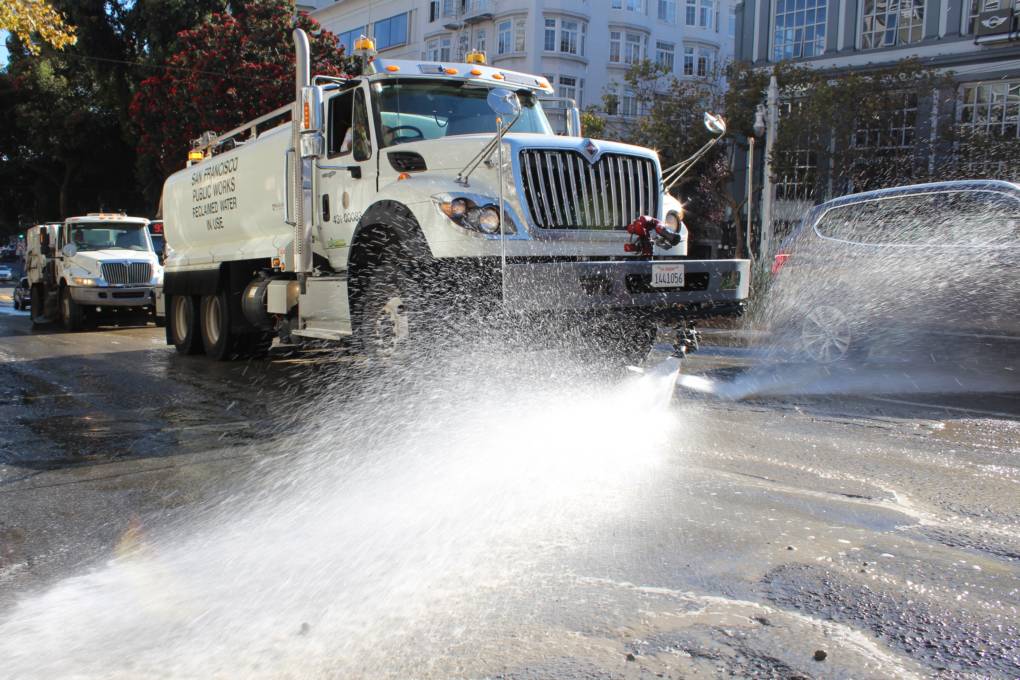
"caption": "A flusher sprays the streets down with water.",
"credit": "Courtesy of SF Public Works. ",
"altTag": "A flusher sprays the streets down with water.",
"description": "A flusher sprays the streets down with water.",
"imgSizes": {
"thumbnail": {
"file": "https://cdn.kqed.org/wp-content/uploads/sites/10/2017/08/cleaner-160x107.jpg",
"width": 160,
"height": 107,
"mimeType": "image/jpeg"
},
"medium": {
"file": "https://cdn.kqed.org/wp-content/uploads/sites/10/2017/08/cleaner-800x533.jpg",
"width": 800,
"height": 533,
"mimeType": "image/jpeg"
},
"large": {
"file": "https://cdn.kqed.org/wp-content/uploads/sites/10/2017/08/cleaner-1020x680.jpg",
"width": 1020,
"height": 680,
"mimeType": "image/jpeg"
},
"fd-lrg": {
"file": "https://cdn.kqed.org/wp-content/uploads/sites/10/2017/08/cleaner-1920x1280.jpg",
"width": 1920,
"height": 1280,
"mimeType": "image/jpeg"
},
"fd-med": {
"file": "https://cdn.kqed.org/wp-content/uploads/sites/10/2017/08/cleaner-1180x787.jpg",
"width": 1180,
"height": 787,
"mimeType": "image/jpeg"
},
"fd-sm": {
"file": "https://cdn.kqed.org/wp-content/uploads/sites/10/2017/08/cleaner-960x640.jpg",
"width": 960,
"height": 640,
"mimeType": "image/jpeg"
},
"post-thumbnail": {
"file": "https://cdn.kqed.org/wp-content/uploads/sites/10/2017/08/cleaner-672x372.jpg",
"width": 672,
"height": 372,
"mimeType": "image/jpeg"
},
"twentyfourteen-full-width": {
"file": "https://cdn.kqed.org/wp-content/uploads/sites/10/2017/08/cleaner-1038x576.jpg",
"width": 1038,
"height": 576,
"mimeType": "image/jpeg"
},
"xxsmall": {
"file": "https://cdn.kqed.org/wp-content/uploads/sites/10/2017/08/cleaner-240x160.jpg",
"width": 240,
"height": 160,
"mimeType": "image/jpeg"
},
"xsmall": {
"file": "https://cdn.kqed.org/wp-content/uploads/sites/10/2017/08/cleaner-375x250.jpg",
"width": 375,
"height": 250,
"mimeType": "image/jpeg"
},
"small": {
"file": "https://cdn.kqed.org/wp-content/uploads/sites/10/2017/08/cleaner-520x347.jpg",
"width": 520,
"height": 347,
"mimeType": "image/jpeg"
},
"xlarge": {
"file": "https://cdn.kqed.org/wp-content/uploads/sites/10/2017/08/cleaner-1180x787.jpg",
"width": 1180,
"height": 787,
"mimeType": "image/jpeg"
},
"full-width": {
"file": "https://cdn.kqed.org/wp-content/uploads/sites/10/2017/08/cleaner-1920x1280.jpg",
"width": 1920,
"height": 1280,
"mimeType": "image/jpeg"
},
"guest-author-32": {
"file": "https://cdn.kqed.org/wp-content/uploads/sites/10/2017/08/cleaner-32x32.jpg",
"width": 32,
"height": 32,
"mimeType": "image/jpeg"
},
"guest-author-50": {
"file": "https://cdn.kqed.org/wp-content/uploads/sites/10/2017/08/cleaner-50x50.jpg",
"width": 50,
"height": 50,
"mimeType": "image/jpeg"
},
"guest-author-64": {
"file": "https://cdn.kqed.org/wp-content/uploads/sites/10/2017/08/cleaner-64x64.jpg",
"width": 64,
"height": 64,
"mimeType": "image/jpeg"
},
"guest-author-96": {
"file": "https://cdn.kqed.org/wp-content/uploads/sites/10/2017/08/cleaner-96x96.jpg",
"width": 96,
"height": 96,
"mimeType": "image/jpeg"
},
"guest-author-128": {
"file": "https://cdn.kqed.org/wp-content/uploads/sites/10/2017/08/cleaner-128x128.jpg",
"width": 128,
"height": 128,
"mimeType": "image/jpeg"
},
"detail": {
"file": "https://cdn.kqed.org/wp-content/uploads/sites/10/2017/08/cleaner-150x150.jpg",
"width": 150,
"height": 150,
"mimeType": "image/jpeg"
},
"kqedFullSize": {
"file": "https://cdn.kqed.org/wp-content/uploads/sites/10/2017/08/cleaner-e1504203647680.jpg",
"width": 2000,
"height": 1333
}
},
"isLoading": false,
"fetchFailed": false
},
"news_11612485": {
"type": "attachments",
"id": "news_11612485",
"meta": {
"index": "attachments_1716263798",
"site": "news",
"id": "11612485",
"found": true
},
"parent": 11612408,
"imgSizes": {
"small": {
"file": "https://ww2.kqed.org/app/uploads/sites/10/2017/08/IMG_0662-520x390.jpg",
"width": 520,
"mimeType": "image/jpeg",
"height": 390
},
"twentyfourteen-full-width": {
"file": "https://ww2.kqed.org/app/uploads/sites/10/2017/08/IMG_0662-1038x576.jpg",
"width": 1038,
"mimeType": "image/jpeg",
"height": 576
},
"thumbnail": {
"file": "https://ww2.kqed.org/app/uploads/sites/10/2017/08/IMG_0662-160x120.jpg",
"width": 160,
"mimeType": "image/jpeg",
"height": 120
},
"fd-sm": {
"file": "https://ww2.kqed.org/app/uploads/sites/10/2017/08/IMG_0662-960x720.jpg",
"width": 960,
"mimeType": "image/jpeg",
"height": 720
},
"post-thumbnail": {
"file": "https://ww2.kqed.org/app/uploads/sites/10/2017/08/IMG_0662-672x372.jpg",
"width": 672,
"mimeType": "image/jpeg",
"height": 372
},
"xsmall": {
"file": "https://ww2.kqed.org/app/uploads/sites/10/2017/08/IMG_0662-375x281.jpg",
"width": 375,
"mimeType": "image/jpeg",
"height": 281
},
"kqedFullSize": {
"file": "https://ww2.kqed.org/app/uploads/sites/10/2017/08/IMG_0662.jpg",
"width": 1600,
"height": 1200
},
"large": {
"file": "https://ww2.kqed.org/app/uploads/sites/10/2017/08/IMG_0662-1020x765.jpg",
"width": 1020,
"mimeType": "image/jpeg",
"height": 765
},
"xlarge": {
"file": "https://ww2.kqed.org/app/uploads/sites/10/2017/08/IMG_0662-1180x885.jpg",
"width": 1180,
"mimeType": "image/jpeg",
"height": 885
},
"guest-author-50": {
"file": "https://ww2.kqed.org/app/uploads/sites/10/2017/08/IMG_0662-50x50.jpg",
"width": 50,
"mimeType": "image/jpeg",
"height": 50
},
"guest-author-96": {
"file": "https://ww2.kqed.org/app/uploads/sites/10/2017/08/IMG_0662-96x96.jpg",
"width": 96,
"mimeType": "image/jpeg",
"height": 96
},
"medium": {
"file": "https://ww2.kqed.org/app/uploads/sites/10/2017/08/IMG_0662-800x600.jpg",
"width": 800,
"mimeType": "image/jpeg",
"height": 600
},
"guest-author-64": {
"file": "https://ww2.kqed.org/app/uploads/sites/10/2017/08/IMG_0662-64x64.jpg",
"width": 64,
"mimeType": "image/jpeg",
"height": 64
},
"guest-author-32": {
"file": "https://ww2.kqed.org/app/uploads/sites/10/2017/08/IMG_0662-32x32.jpg",
"width": 32,
"mimeType": "image/jpeg",
"height": 32
},
"fd-med": {
"file": "https://ww2.kqed.org/app/uploads/sites/10/2017/08/IMG_0662-1180x885.jpg",
"width": 1180,
"mimeType": "image/jpeg",
"height": 885
},
"detail": {
"file": "https://ww2.kqed.org/app/uploads/sites/10/2017/08/IMG_0662-150x150.jpg",
"width": 150,
"mimeType": "image/jpeg",
"height": 150
},
"guest-author-128": {
"file": "https://ww2.kqed.org/app/uploads/sites/10/2017/08/IMG_0662-128x128.jpg",
"width": 128,
"mimeType": "image/jpeg",
"height": 128
},
"xxsmall": {
"file": "https://ww2.kqed.org/app/uploads/sites/10/2017/08/IMG_0662-240x180.jpg",
"width": 240,
"mimeType": "image/jpeg",
"height": 180
}
},
"publishDate": 1502927727,
"modified": 1502927765,
"caption": "Aerial views of the Suisun Bay Reserve Fleet in 2005, when there were more than 70 ships anchored there, including the legendary WWII battleship Iowa, now a floating museum in Los Angeles. ",
"description": "Aerial views of the Suisun Bay Reserve Fleet in 2005, when there were more than 70 ships anchored there, including the legendary WWII battleship Iowa, now a floating museum in Los Angeles. ",
"title": "IMG_0662",
"credit": "Craig Miller",
"status": "inherit",
"isLoading": false,
"fetchFailed": false
},
"news_11608066": {
"type": "attachments",
"id": "news_11608066",
"meta": {
"index": "attachments_1716263798",
"site": "news",
"id": "11608066",
"found": true
},
"parent": 11606579,
"imgSizes": {
"small": {
"file": "https://ww2.kqed.org/app/uploads/sites/10/2017/08/5221969751_b7ac781b2e_b-520x325.jpg",
"width": 520,
"mimeType": "image/jpeg",
"height": 325
},
"twentyfourteen-full-width": {
"file": "https://ww2.kqed.org/app/uploads/sites/10/2017/08/5221969751_b7ac781b2e_b-1024x576.jpg",
"width": 1024,
"mimeType": "image/jpeg",
"height": 576
},
"thumbnail": {
"file": "https://ww2.kqed.org/app/uploads/sites/10/2017/08/5221969751_b7ac781b2e_b-160x100.jpg",
"width": 160,
"mimeType": "image/jpeg",
"height": 100
},
"fd-sm": {
"file": "https://ww2.kqed.org/app/uploads/sites/10/2017/08/5221969751_b7ac781b2e_b-960x600.jpg",
"width": 960,
"mimeType": "image/jpeg",
"height": 600
},
"post-thumbnail": {
"file": "https://ww2.kqed.org/app/uploads/sites/10/2017/08/5221969751_b7ac781b2e_b-672x372.jpg",
"width": 672,
"mimeType": "image/jpeg",
"height": 372
},
"xsmall": {
"file": "https://ww2.kqed.org/app/uploads/sites/10/2017/08/5221969751_b7ac781b2e_b-375x234.jpg",
"width": 375,
"mimeType": "image/jpeg",
"height": 234
},
"kqedFullSize": {
"file": "https://ww2.kqed.org/app/uploads/sites/10/2017/08/5221969751_b7ac781b2e_b.jpg",
"width": 1024,
"height": 640
},
"large": {
"file": "https://ww2.kqed.org/app/uploads/sites/10/2017/08/5221969751_b7ac781b2e_b-1020x638.jpg",
"width": 1020,
"mimeType": "image/jpeg",
"height": 638
},
"guest-author-50": {
"file": "https://ww2.kqed.org/app/uploads/sites/10/2017/08/5221969751_b7ac781b2e_b-50x50.jpg",
"width": 50,
"mimeType": "image/jpeg",
"height": 50
},
"guest-author-96": {
"file": "https://ww2.kqed.org/app/uploads/sites/10/2017/08/5221969751_b7ac781b2e_b-96x96.jpg",
"width": 96,
"mimeType": "image/jpeg",
"height": 96
},
"medium": {
"file": "https://ww2.kqed.org/app/uploads/sites/10/2017/08/5221969751_b7ac781b2e_b-800x500.jpg",
"width": 800,
"mimeType": "image/jpeg",
"height": 500
},
"guest-author-64": {
"file": "https://ww2.kqed.org/app/uploads/sites/10/2017/08/5221969751_b7ac781b2e_b-64x64.jpg",
"width": 64,
"mimeType": "image/jpeg",
"height": 64
},
"guest-author-32": {
"file": "https://ww2.kqed.org/app/uploads/sites/10/2017/08/5221969751_b7ac781b2e_b-32x32.jpg",
"width": 32,
"mimeType": "image/jpeg",
"height": 32
},
"detail": {
"file": "https://ww2.kqed.org/app/uploads/sites/10/2017/08/5221969751_b7ac781b2e_b-150x150.jpg",
"width": 150,
"mimeType": "image/jpeg",
"height": 150
},
"guest-author-128": {
"file": "https://ww2.kqed.org/app/uploads/sites/10/2017/08/5221969751_b7ac781b2e_b-128x128.jpg",
"width": 128,
"mimeType": "image/jpeg",
"height": 128
},
"xxsmall": {
"file": "https://ww2.kqed.org/app/uploads/sites/10/2017/08/5221969751_b7ac781b2e_b-240x150.jpg",
"width": 240,
"mimeType": "image/jpeg",
"height": 150
}
},
"publishDate": 1501700569,
"modified": 1501700610,
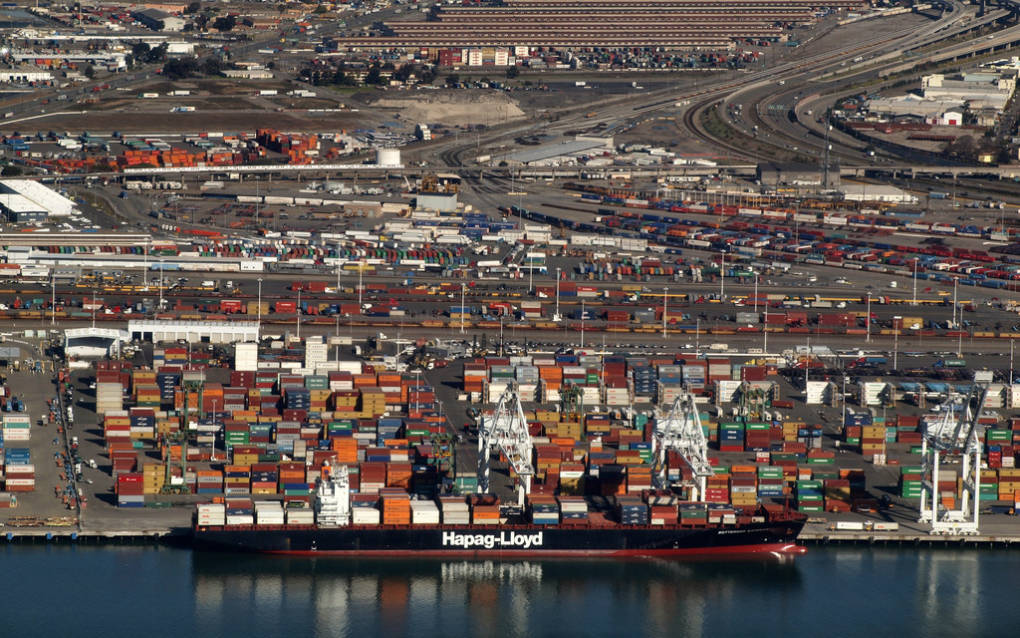
"caption": "The Port of Oakland",
"description": null,
"title": "The Port of Oakland",
"credit": "Daniel Parks/flickr",
"status": "inherit",
"isLoading": false,
"fetchFailed": false
},
"news_11608228": {
"type": "attachments",
"id": "news_11608228",
"meta": {
"index": "attachments_1716263798",
"site": "news",
"id": "11608228",
"found": true
},
"parent": 11608224,
"imgSizes": {
"small": {
"file": "https://ww2.kqed.org/app/uploads/sites/10/2017/08/14255173956_df31327448_k-520x284.jpg",
"width": 520,
"mimeType": "image/jpeg",
"height": 284
},
"twentyfourteen-full-width": {
"file": "https://ww2.kqed.org/app/uploads/sites/10/2017/08/14255173956_df31327448_k-1038x576.jpg",
"width": 1038,
"mimeType": "image/jpeg",
"height": 576
},
"thumbnail": {
"file": "https://ww2.kqed.org/app/uploads/sites/10/2017/08/14255173956_df31327448_k-160x87.jpg",
"width": 160,
"mimeType": "image/jpeg",
"height": 87
},
"fd-sm": {
"file": "https://ww2.kqed.org/app/uploads/sites/10/2017/08/14255173956_df31327448_k-960x524.jpg",
"width": 960,
"mimeType": "image/jpeg",
"height": 524
},
"post-thumbnail": {
"file": "https://ww2.kqed.org/app/uploads/sites/10/2017/08/14255173956_df31327448_k-672x372.jpg",
"width": 672,
"mimeType": "image/jpeg",
"height": 372
},
"xsmall": {
"file": "https://ww2.kqed.org/app/uploads/sites/10/2017/08/14255173956_df31327448_k-375x205.jpg",
"width": 375,
"mimeType": "image/jpeg",
"height": 205
},
"kqedFullSize": {
"file": "https://ww2.kqed.org/app/uploads/sites/10/2017/08/14255173956_df31327448_k.jpg",
"width": 2048,
"height": 1117
},
"large": {
"file": "https://ww2.kqed.org/app/uploads/sites/10/2017/08/14255173956_df31327448_k-1020x556.jpg",
"width": 1020,
"mimeType": "image/jpeg",
"height": 556
},
"xlarge": {
"file": "https://ww2.kqed.org/app/uploads/sites/10/2017/08/14255173956_df31327448_k-1180x644.jpg",
"width": 1180,
"mimeType": "image/jpeg",
"height": 644
},
"guest-author-50": {
"file": "https://ww2.kqed.org/app/uploads/sites/10/2017/08/14255173956_df31327448_k-50x50.jpg",
"width": 50,
"mimeType": "image/jpeg",
"height": 50
},
"guest-author-96": {
"file": "https://ww2.kqed.org/app/uploads/sites/10/2017/08/14255173956_df31327448_k-96x96.jpg",
"width": 96,
"mimeType": "image/jpeg",
"height": 96
},
"medium": {
"file": "https://ww2.kqed.org/app/uploads/sites/10/2017/08/14255173956_df31327448_k-800x436.jpg",
"width": 800,
"mimeType": "image/jpeg",
"height": 436
},
"guest-author-64": {
"file": "https://ww2.kqed.org/app/uploads/sites/10/2017/08/14255173956_df31327448_k-64x64.jpg",
"width": 64,
"mimeType": "image/jpeg",
"height": 64
},
"guest-author-32": {
"file": "https://ww2.kqed.org/app/uploads/sites/10/2017/08/14255173956_df31327448_k-32x32.jpg",
"width": 32,
"mimeType": "image/jpeg",
"height": 32
},
"fd-lrg": {
"file": "https://ww2.kqed.org/app/uploads/sites/10/2017/08/14255173956_df31327448_k-1920x1047.jpg",
"width": 1920,
"mimeType": "image/jpeg",
"height": 1047
},
"fd-med": {
"file": "https://ww2.kqed.org/app/uploads/sites/10/2017/08/14255173956_df31327448_k-1180x644.jpg",
"width": 1180,
"mimeType": "image/jpeg",
"height": 644
},
"full-width": {
"file": "https://ww2.kqed.org/app/uploads/sites/10/2017/08/14255173956_df31327448_k-1920x1047.jpg",
"width": 1920,
"mimeType": "image/jpeg",
"height": 1047
},
"detail": {
"file": "https://ww2.kqed.org/app/uploads/sites/10/2017/08/14255173956_df31327448_k-150x150.jpg",
"width": 150,
"mimeType": "image/jpeg",
"height": 150
},
"guest-author-128": {
"file": "https://ww2.kqed.org/app/uploads/sites/10/2017/08/14255173956_df31327448_k-128x128.jpg",
"width": 128,
"mimeType": "image/jpeg",
"height": 128
},
"xxsmall": {
"file": "https://ww2.kqed.org/app/uploads/sites/10/2017/08/14255173956_df31327448_k-240x131.jpg",
"width": 240,
"mimeType": "image/jpeg",
"height": 131
}
},
"publishDate": 1501709165,
"modified": 1501711475,
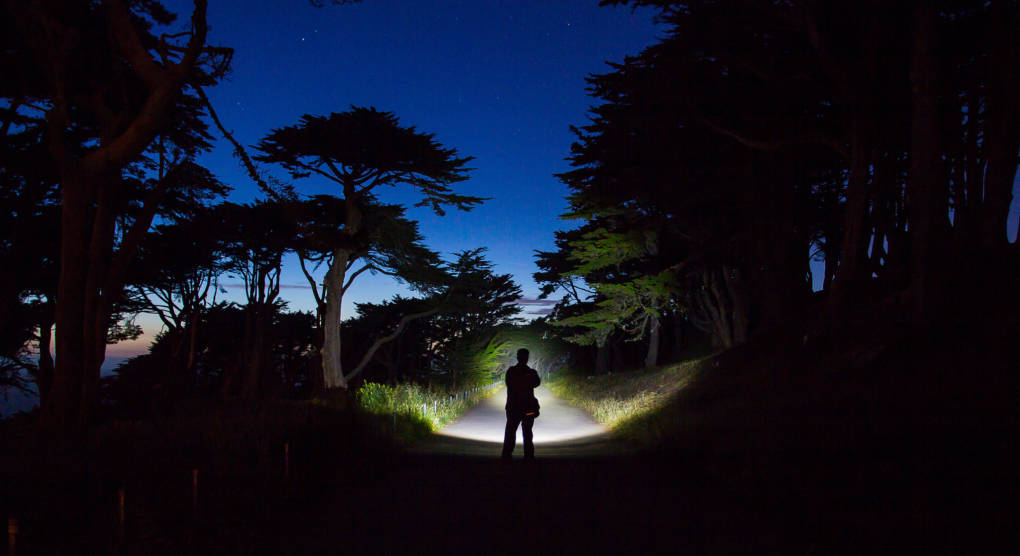
"caption": "An empty trail can be daunting. A Bay Curious listener asks should he be scared of mountain lions?",
"description": "Christian Arballo Images. All Rights Reserved. Feel free to share this image, just please give credit.",
"title": "14255173956_df31327448_k",
"credit": "Christian Arballo Images via Creative Commons",
"status": "inherit",
"isLoading": false,
"fetchFailed": false
},
"news_11594981": {
"type": "attachments",
"id": "news_11594981",
"meta": {
"index": "attachments_1716263798",
"site": "news",
"id": "11594981",
"found": true
},
"parent": 11594879,
"imgSizes": {
"small": {
"file": "https://ww2.kqed.org/app/uploads/sites/10/2017/07/16268406285_09cdc38c54_k-520x372.jpg",
"width": 520,
"mimeType": "image/jpeg",
"height": 372
},
"twentyfourteen-full-width": {
"file": "https://ww2.kqed.org/app/uploads/sites/10/2017/07/16268406285_09cdc38c54_k-1038x576.jpg",
"width": 1038,
"mimeType": "image/jpeg",
"height": 576
},
"thumbnail": {
"file": "https://ww2.kqed.org/app/uploads/sites/10/2017/07/16268406285_09cdc38c54_k-160x115.jpg",
"width": 160,
"mimeType": "image/jpeg",
"height": 115
},
"fd-sm": {
"file": "https://ww2.kqed.org/app/uploads/sites/10/2017/07/16268406285_09cdc38c54_k-960x688.jpg",
"width": 960,
"mimeType": "image/jpeg",
"height": 688
},
"post-thumbnail": {
"file": "https://ww2.kqed.org/app/uploads/sites/10/2017/07/16268406285_09cdc38c54_k-672x372.jpg",
"width": 672,
"mimeType": "image/jpeg",
"height": 372
},
"xsmall": {
"file": "https://ww2.kqed.org/app/uploads/sites/10/2017/07/16268406285_09cdc38c54_k-375x269.jpg",
"width": 375,
"mimeType": "image/jpeg",
"height": 269
},
"kqedFullSize": {
"file": "https://ww2.kqed.org/app/uploads/sites/10/2017/07/16268406285_09cdc38c54_k.jpg",
"width": 2048,
"height": 1467
},
"large": {
"file": "https://ww2.kqed.org/app/uploads/sites/10/2017/07/16268406285_09cdc38c54_k-1020x731.jpg",
"width": 1020,
"mimeType": "image/jpeg",
"height": 731
},
"xlarge": {
"file": "https://ww2.kqed.org/app/uploads/sites/10/2017/07/16268406285_09cdc38c54_k-1180x845.jpg",
"width": 1180,
"mimeType": "image/jpeg",
"height": 845
},
"guest-author-50": {
"file": "https://ww2.kqed.org/app/uploads/sites/10/2017/07/16268406285_09cdc38c54_k-50x50.jpg",
"width": 50,
"mimeType": "image/jpeg",
"height": 50
},
"guest-author-96": {
"file": "https://ww2.kqed.org/app/uploads/sites/10/2017/07/16268406285_09cdc38c54_k-96x96.jpg",
"width": 96,
"mimeType": "image/jpeg",
"height": 96
},
"medium": {
"file": "https://ww2.kqed.org/app/uploads/sites/10/2017/07/16268406285_09cdc38c54_k-800x573.jpg",
"width": 800,
"mimeType": "image/jpeg",
"height": 573
},
"guest-author-64": {
"file": "https://ww2.kqed.org/app/uploads/sites/10/2017/07/16268406285_09cdc38c54_k-64x64.jpg",
"width": 64,
"mimeType": "image/jpeg",
"height": 64
},
"guest-author-32": {
"file": "https://ww2.kqed.org/app/uploads/sites/10/2017/07/16268406285_09cdc38c54_k-32x32.jpg",
"width": 32,
"mimeType": "image/jpeg",
"height": 32
},
"fd-lrg": {
"file": "https://ww2.kqed.org/app/uploads/sites/10/2017/07/16268406285_09cdc38c54_k-1920x1375.jpg",
"width": 1920,
"mimeType": "image/jpeg",
"height": 1375
},
"fd-med": {
"file": "https://ww2.kqed.org/app/uploads/sites/10/2017/07/16268406285_09cdc38c54_k-1180x845.jpg",
"width": 1180,
"mimeType": "image/jpeg",
"height": 845
},
"full-width": {
"file": "https://ww2.kqed.org/app/uploads/sites/10/2017/07/16268406285_09cdc38c54_k-1920x1375.jpg",
"width": 1920,
"mimeType": "image/jpeg",
"height": 1375
},
"detail": {
"file": "https://ww2.kqed.org/app/uploads/sites/10/2017/07/16268406285_09cdc38c54_k-150x150.jpg",
"width": 150,
"mimeType": "image/jpeg",
"height": 150
},
"guest-author-128": {
"file": "https://ww2.kqed.org/app/uploads/sites/10/2017/07/16268406285_09cdc38c54_k-128x128.jpg",
"width": 128,
"mimeType": "image/jpeg",
"height": 128
},
"xxsmall": {
"file": "https://ww2.kqed.org/app/uploads/sites/10/2017/07/16268406285_09cdc38c54_k-240x172.jpg",
"width": 240,
"mimeType": "image/jpeg",
"height": 172
}
},
"publishDate": 1501093491,
"modified": 1558832220,
"caption": "The zipper machine at work on the Golden Gate Bridge.",
"description": "The zipper machine at work on the Golden Gate Bridge.",
"title": "16268406285_09cdc38c54_k",
"credit": "Peretz Partensky/Flickr",
"status": "inherit",
"isLoading": false,
"fetchFailed": false
},
"news_11487365": {
"type": "attachments",
"id": "news_11487365",
"meta": {
"index": "attachments_1716263798",
"site": "news",
"id": "11487365",
"found": true
},
"parent": 11487363,
"imgSizes": {
"small": {
"file": "https://ww2.kqed.org/app/uploads/sites/10/2017/05/plesiosaur-1614-e1496337109941-520x340.jpeg",
"width": 520,
"mimeType": "image/jpeg",
"height": 340
},
"twentyfourteen-full-width": {
"file": "https://ww2.kqed.org/app/uploads/sites/10/2017/05/plesiosaur-1614-e1496337109941-1038x576.jpeg",
"width": 1038,
"mimeType": "image/jpeg",
"height": 576
},
"thumbnail": {
"file": "https://ww2.kqed.org/app/uploads/sites/10/2017/05/plesiosaur-1614-e1496337109941-160x105.jpeg",
"width": 160,
"mimeType": "image/jpeg",
"height": 105
},
"fd-sm": {
"file": "https://ww2.kqed.org/app/uploads/sites/10/2017/05/plesiosaur-1614-e1496337109941-960x629.jpeg",
"width": 960,
"mimeType": "image/jpeg",
"height": 629
},
"post-thumbnail": {
"file": "https://ww2.kqed.org/app/uploads/sites/10/2017/05/plesiosaur-1614-e1496337109941-672x372.jpeg",
"width": 672,
"mimeType": "image/jpeg",
"height": 372
},
"xsmall": {
"file": "https://ww2.kqed.org/app/uploads/sites/10/2017/05/plesiosaur-1614-e1496337109941-375x246.jpeg",
"width": 375,
"mimeType": "image/jpeg",
"height": 246
},
"kqedFullSize": {
"file": "https://ww2.kqed.org/app/uploads/sites/10/2017/05/plesiosaur-1614-e1496337109941.jpeg",
"width": 1920,
"height": 1257
},
"large": {
"file": "https://ww2.kqed.org/app/uploads/sites/10/2017/05/plesiosaur-1614-e1496337109941-1020x668.jpeg",
"width": 1020,
"mimeType": "image/jpeg",
"height": 668
},
"xlarge": {
"file": "https://ww2.kqed.org/app/uploads/sites/10/2017/05/plesiosaur-1614-e1496337109941-1180x773.jpeg",
"width": 1180,
"mimeType": "image/jpeg",
"height": 773
},
"guest-author-50": {
"file": "https://ww2.kqed.org/app/uploads/sites/10/2017/05/plesiosaur-1614-e1496337109941-50x50.jpeg",
"width": 50,
"mimeType": "image/jpeg",
"height": 50
},
"guest-author-96": {
"file": "https://ww2.kqed.org/app/uploads/sites/10/2017/05/plesiosaur-1614-e1496337109941-96x96.jpeg",
"width": 96,
"mimeType": "image/jpeg",
"height": 96
},
"medium": {
"file": "https://ww2.kqed.org/app/uploads/sites/10/2017/05/plesiosaur-1614-e1496337109941-800x524.jpeg",
"width": 800,
"mimeType": "image/jpeg",
"height": 524
},
"guest-author-64": {
"file": "https://ww2.kqed.org/app/uploads/sites/10/2017/05/plesiosaur-1614-e1496337109941-64x64.jpeg",
"width": 64,
"mimeType": "image/jpeg",
"height": 64
},
"guest-author-32": {
"file": "https://ww2.kqed.org/app/uploads/sites/10/2017/05/plesiosaur-1614-e1496337109941-32x32.jpeg",
"width": 32,
"mimeType": "image/jpeg",
"height": 32
},
"fd-lrg": {
"file": "https://ww2.kqed.org/app/uploads/sites/10/2017/05/plesiosaur-1614-e1496337109941-1920x1257.jpeg",
"width": 1920,
"mimeType": "image/jpeg",
"height": 1257
},
"fd-med": {
"file": "https://ww2.kqed.org/app/uploads/sites/10/2017/05/plesiosaur-1614-e1496337109941-1180x773.jpeg",
"width": 1180,
"mimeType": "image/jpeg",
"height": 773
},
"full-width": {
"file": "https://ww2.kqed.org/app/uploads/sites/10/2017/05/plesiosaur-1614-e1496337109941-1920x1257.jpeg",
"width": 1920,
"mimeType": "image/jpeg",
"height": 1257
},
"detail": {
"file": "https://ww2.kqed.org/app/uploads/sites/10/2017/05/plesiosaur-1614-e1496337109941-150x150.jpeg",
"width": 150,
"mimeType": "image/jpeg",
"height": 150
},
"guest-author-128": {
"file": "https://ww2.kqed.org/app/uploads/sites/10/2017/05/plesiosaur-1614-e1496337109941-128x128.jpeg",
"width": 128,
"mimeType": "image/jpeg",
"height": 128
},
"xxsmall": {
"file": "https://ww2.kqed.org/app/uploads/sites/10/2017/05/plesiosaur-1614-e1496337109941-240x157.jpeg",
"width": 240,
"mimeType": "image/jpeg",
"height": 157
}
},
"publishDate": 1496248571,
"modified": 1496248868,
"caption": "Among the large reptiles that would have once swum in Bay Area waters is the plesiosaur.",
"description": "Among the large reptiles that would have once swum in Bay Area waters is the plesiosaur.",
"title": "plesiosaur 1614",
"credit": "Illustration by \u003ca href=\"http://hisportfolio.com/\" target=\"_blank\">Jon Adams\u003c/a>",
"status": "inherit",
"isLoading": false,
"fetchFailed": false
},
"news_11561842": {
"type": "attachments",
"id": "news_11561842",
"meta": {
"index": "attachments_1716263798",
"site": "news",
"id": "11561842",
"found": true
},
"parent": 11549263,
"imgSizes": {
"small": {
"file": "https://ww2.kqed.org/app/uploads/sites/10/2017/07/Screen-Shot-2017-07-11-at-11.30.16-AM-520x375.png",
"width": 520,
"mimeType": "image/png",
"height": 375
},
"thumbnail": {
"file": "https://ww2.kqed.org/app/uploads/sites/10/2017/07/Screen-Shot-2017-07-11-at-11.30.16-AM-160x115.png",
"width": 160,
"mimeType": "image/png",
"height": 115
},
"post-thumbnail": {
"file": "https://ww2.kqed.org/app/uploads/sites/10/2017/07/Screen-Shot-2017-07-11-at-11.30.16-AM-672x372.png",
"width": 672,
"mimeType": "image/png",
"height": 372
},
"xsmall": {
"file": "https://ww2.kqed.org/app/uploads/sites/10/2017/07/Screen-Shot-2017-07-11-at-11.30.16-AM-375x270.png",
"width": 375,
"mimeType": "image/png",
"height": 270
},
"kqedFullSize": {
"file": "https://ww2.kqed.org/app/uploads/sites/10/2017/07/Screen-Shot-2017-07-11-at-11.30.16-AM.png",
"width": 796,
"height": 574
},
"guest-author-50": {
"file": "https://ww2.kqed.org/app/uploads/sites/10/2017/07/Screen-Shot-2017-07-11-at-11.30.16-AM-50x50.png",
"width": 50,
"mimeType": "image/png",
"height": 50
},
"guest-author-96": {
"file": "https://ww2.kqed.org/app/uploads/sites/10/2017/07/Screen-Shot-2017-07-11-at-11.30.16-AM-96x96.png",
"width": 96,
"mimeType": "image/png",
"height": 96
},
"guest-author-64": {
"file": "https://ww2.kqed.org/app/uploads/sites/10/2017/07/Screen-Shot-2017-07-11-at-11.30.16-AM-64x64.png",
"width": 64,
"mimeType": "image/png",
"height": 64
},
"detail": {
"file": "https://ww2.kqed.org/app/uploads/sites/10/2017/07/Screen-Shot-2017-07-11-at-11.30.16-AM-150x150.png",
"width": 150,
"mimeType": "image/png",
"height": 150
},
"guest-author-32": {
"file": "https://ww2.kqed.org/app/uploads/sites/10/2017/07/Screen-Shot-2017-07-11-at-11.30.16-AM-32x32.png",
"width": 32,
"mimeType": "image/png",
"height": 32
},
"guest-author-128": {
"file": "https://ww2.kqed.org/app/uploads/sites/10/2017/07/Screen-Shot-2017-07-11-at-11.30.16-AM-128x128.png",
"width": 128,
"mimeType": "image/png",
"height": 128
},
"xxsmall": {
"file": "https://ww2.kqed.org/app/uploads/sites/10/2017/07/Screen-Shot-2017-07-11-at-11.30.16-AM-240x173.png",
"width": 240,
"mimeType": "image/png",
"height": 173
}
},
"publishDate": 1499797857,
"modified": 1499797934,
"caption": null,
"description": null,
"title": null,
"credit": "Courtesy of U.S. Fish & Wildlife Service",
"status": "inherit",
"isLoading": false,
"fetchFailed": false
},
"news_11552152": {
"type": "attachments",
"id": "news_11552152",
"meta": {
"index": "attachments_1716263798",
"site": "news",
"id": "11552152",
"found": true
},
"parent": 11551947,
"imgSizes": {
"small": {
"file": "https://ww2.kqed.org/app/uploads/sites/10/2017/07/RS25563_20170524_Rosicrucian_credit_BertJohnson-8-qut-520x347.jpg",
"width": 520,
"mimeType": "image/jpeg",
"height": 347
},
"twentyfourteen-full-width": {
"file": "https://ww2.kqed.org/app/uploads/sites/10/2017/07/RS25563_20170524_Rosicrucian_credit_BertJohnson-8-qut-1038x576.jpg",
"width": 1038,
"mimeType": "image/jpeg",
"height": 576
},
"thumbnail": {
"file": "https://ww2.kqed.org/app/uploads/sites/10/2017/07/RS25563_20170524_Rosicrucian_credit_BertJohnson-8-qut-160x107.jpg",
"width": 160,
"mimeType": "image/jpeg",
"height": 107
},
"fd-sm": {
"file": "https://ww2.kqed.org/app/uploads/sites/10/2017/07/RS25563_20170524_Rosicrucian_credit_BertJohnson-8-qut-960x640.jpg",
"width": 960,
"mimeType": "image/jpeg",
"height": 640
},
"post-thumbnail": {
"file": "https://ww2.kqed.org/app/uploads/sites/10/2017/07/RS25563_20170524_Rosicrucian_credit_BertJohnson-8-qut-672x372.jpg",
"width": 672,
"mimeType": "image/jpeg",
"height": 372
},
"xsmall": {
"file": "https://ww2.kqed.org/app/uploads/sites/10/2017/07/RS25563_20170524_Rosicrucian_credit_BertJohnson-8-qut-375x250.jpg",
"width": 375,
"mimeType": "image/jpeg",
"height": 250
},
"kqedFullSize": {
"file": "https://ww2.kqed.org/app/uploads/sites/10/2017/07/RS25563_20170524_Rosicrucian_credit_BertJohnson-8-qut.jpg",
"width": 1920,
"height": 1280
},
"large": {
"file": "https://ww2.kqed.org/app/uploads/sites/10/2017/07/RS25563_20170524_Rosicrucian_credit_BertJohnson-8-qut-1020x680.jpg",
"width": 1020,
"mimeType": "image/jpeg",
"height": 680
},
"xlarge": {
"file": "https://ww2.kqed.org/app/uploads/sites/10/2017/07/RS25563_20170524_Rosicrucian_credit_BertJohnson-8-qut-1180x787.jpg",
"width": 1180,
"mimeType": "image/jpeg",
"height": 787
},
"guest-author-50": {
"file": "https://ww2.kqed.org/app/uploads/sites/10/2017/07/RS25563_20170524_Rosicrucian_credit_BertJohnson-8-qut-50x50.jpg",
"width": 50,
"mimeType": "image/jpeg",
"height": 50
},
"guest-author-96": {
"file": "https://ww2.kqed.org/app/uploads/sites/10/2017/07/RS25563_20170524_Rosicrucian_credit_BertJohnson-8-qut-96x96.jpg",
"width": 96,
"mimeType": "image/jpeg",
"height": 96
},
"medium": {
"file": "https://ww2.kqed.org/app/uploads/sites/10/2017/07/RS25563_20170524_Rosicrucian_credit_BertJohnson-8-qut-800x533.jpg",
"width": 800,
"mimeType": "image/jpeg",
"height": 533
},
"guest-author-64": {
"file": "https://ww2.kqed.org/app/uploads/sites/10/2017/07/RS25563_20170524_Rosicrucian_credit_BertJohnson-8-qut-64x64.jpg",
"width": 64,
"mimeType": "image/jpeg",
"height": 64
},
"guest-author-32": {
"file": "https://ww2.kqed.org/app/uploads/sites/10/2017/07/RS25563_20170524_Rosicrucian_credit_BertJohnson-8-qut-32x32.jpg",
"width": 32,
"mimeType": "image/jpeg",
"height": 32
},
"fd-lrg": {
"file": "https://ww2.kqed.org/app/uploads/sites/10/2017/07/RS25563_20170524_Rosicrucian_credit_BertJohnson-8-qut-1920x1280.jpg",
"width": 1920,
"mimeType": "image/jpeg",
"height": 1280
},
"fd-med": {
"file": "https://ww2.kqed.org/app/uploads/sites/10/2017/07/RS25563_20170524_Rosicrucian_credit_BertJohnson-8-qut-1180x787.jpg",
"width": 1180,
"mimeType": "image/jpeg",
"height": 787
},
"full-width": {
"file": "https://ww2.kqed.org/app/uploads/sites/10/2017/07/RS25563_20170524_Rosicrucian_credit_BertJohnson-8-qut-1920x1280.jpg",
"width": 1920,
"mimeType": "image/jpeg",
"height": 1280
},
"detail": {
"file": "https://ww2.kqed.org/app/uploads/sites/10/2017/07/RS25563_20170524_Rosicrucian_credit_BertJohnson-8-qut-150x150.jpg",
"width": 150,
"mimeType": "image/jpeg",
"height": 150
},
"guest-author-128": {
"file": "https://ww2.kqed.org/app/uploads/sites/10/2017/07/RS25563_20170524_Rosicrucian_credit_BertJohnson-8-qut-128x128.jpg",
"width": 128,
"mimeType": "image/jpeg",
"height": 128
},
"xxsmall": {
"file": "https://ww2.kqed.org/app/uploads/sites/10/2017/07/RS25563_20170524_Rosicrucian_credit_BertJohnson-8-qut-240x160.jpg",
"width": 240,
"mimeType": "image/jpeg",
"height": 160
}
},
"publishDate": 1499384175,
"modified": 1499819782,
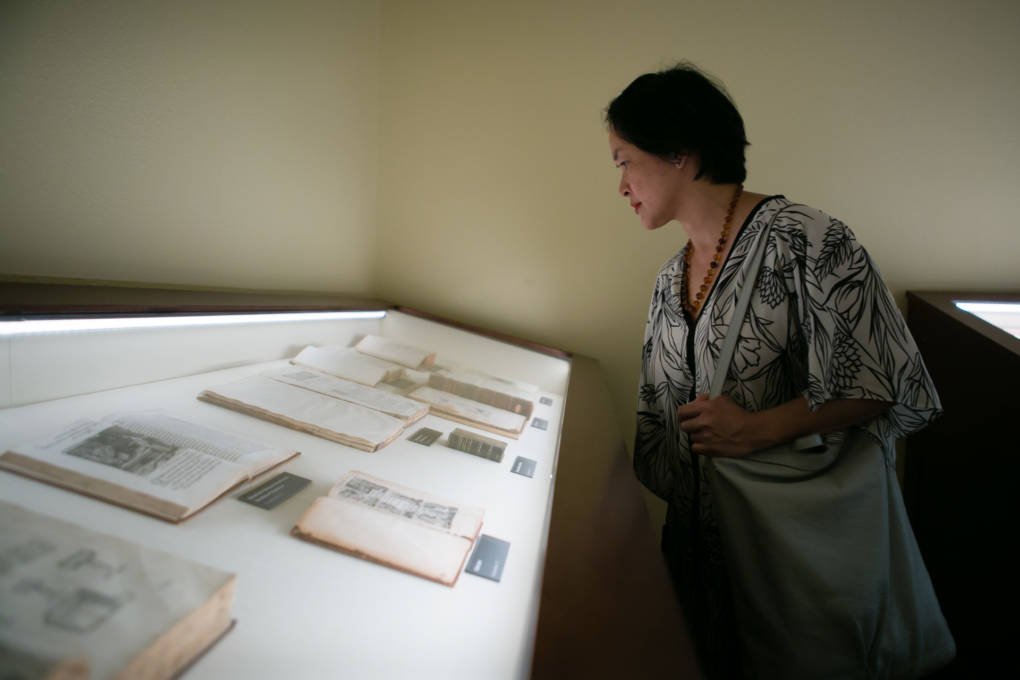
"caption": "The research library at Rosicrucian Park includes ancient texts dating back to the Renaissance era in Europe.",
"description": null,
"title": "RS25563_20170524_Rosicrucian_credit_BertJohnson-8-qut",
"credit": "Bert Johnson/KQED",
"status": "inherit",
"isLoading": false,
"fetchFailed": false
},
"news_11537257": {
"type": "attachments",
"id": "news_11537257",
"meta": {
"index": "attachments_1716263798",
"site": "news",
"id": "11537257",
"found": true
},
"parent": 11526958,
"imgSizes": {
"small": {
"file": "https://ww2.kqed.org/app/uploads/sites/10/2017/06/NOMO-Design-Code-Map-Black-520x347.jpeg",
"width": 520,
"mimeType": "image/jpeg",
"height": 347
},
"twentyfourteen-full-width": {
"file": "https://ww2.kqed.org/app/uploads/sites/10/2017/06/NOMO-Design-Code-Map-Black-1038x576.jpeg",
"width": 1038,
"mimeType": "image/jpeg",
"height": 576
},
"thumbnail": {
"file": "https://ww2.kqed.org/app/uploads/sites/10/2017/06/NOMO-Design-Code-Map-Black-160x107.jpeg",
"width": 160,
"mimeType": "image/jpeg",
"height": 107
},
"fd-sm": {
"file": "https://ww2.kqed.org/app/uploads/sites/10/2017/06/NOMO-Design-Code-Map-Black-960x640.jpeg",
"width": 960,
"mimeType": "image/jpeg",
"height": 640
},
"post-thumbnail": {
"file": "https://ww2.kqed.org/app/uploads/sites/10/2017/06/NOMO-Design-Code-Map-Black-672x372.jpeg",
"width": 672,
"mimeType": "image/jpeg",
"height": 372
},
"xsmall": {
"file": "https://ww2.kqed.org/app/uploads/sites/10/2017/06/NOMO-Design-Code-Map-Black-375x250.jpeg",
"width": 375,
"mimeType": "image/jpeg",
"height": 250
},
"kqedFullSize": {
"file": "https://ww2.kqed.org/app/uploads/sites/10/2017/06/NOMO-Design-Code-Map-Black.jpeg",
"width": 2592,
"height": 1728
},
"large": {
"file": "https://ww2.kqed.org/app/uploads/sites/10/2017/06/NOMO-Design-Code-Map-Black-1020x680.jpeg",
"width": 1020,
"mimeType": "image/jpeg",
"height": 680
},
"xlarge": {
"file": "https://ww2.kqed.org/app/uploads/sites/10/2017/06/NOMO-Design-Code-Map-Black-1180x787.jpeg",
"width": 1180,
"mimeType": "image/jpeg",
"height": 787
},
"guest-author-50": {
"file": "https://ww2.kqed.org/app/uploads/sites/10/2017/06/NOMO-Design-Code-Map-Black-50x50.jpeg",
"width": 50,
"mimeType": "image/jpeg",
"height": 50
},
"guest-author-96": {
"file": "https://ww2.kqed.org/app/uploads/sites/10/2017/06/NOMO-Design-Code-Map-Black-96x96.jpeg",
"width": 96,
"mimeType": "image/jpeg",
"height": 96
},
"medium": {
"file": "https://ww2.kqed.org/app/uploads/sites/10/2017/06/NOMO-Design-Code-Map-Black-800x533.jpeg",
"width": 800,
"mimeType": "image/jpeg",
"height": 533
},
"guest-author-64": {
"file": "https://ww2.kqed.org/app/uploads/sites/10/2017/06/NOMO-Design-Code-Map-Black-64x64.jpeg",
"width": 64,
"mimeType": "image/jpeg",
"height": 64
},
"guest-author-32": {
"file": "https://ww2.kqed.org/app/uploads/sites/10/2017/06/NOMO-Design-Code-Map-Black-32x32.jpeg",
"width": 32,
"mimeType": "image/jpeg",
"height": 32
},
"fd-lrg": {
"file": "https://ww2.kqed.org/app/uploads/sites/10/2017/06/NOMO-Design-Code-Map-Black-1920x1280.jpeg",
"width": 1920,
"mimeType": "image/jpeg",
"height": 1280
},
"fd-med": {
"file": "https://ww2.kqed.org/app/uploads/sites/10/2017/06/NOMO-Design-Code-Map-Black-1180x787.jpeg",
"width": 1180,
"mimeType": "image/jpeg",
"height": 787
},
"full-width": {
"file": "https://ww2.kqed.org/app/uploads/sites/10/2017/06/NOMO-Design-Code-Map-Black-1920x1280.jpeg",
"width": 1920,
"mimeType": "image/jpeg",
"height": 1280
},
"detail": {
"file": "https://ww2.kqed.org/app/uploads/sites/10/2017/06/NOMO-Design-Code-Map-Black-150x150.jpeg",
"width": 150,
"mimeType": "image/jpeg",
"height": 150
},
"guest-author-128": {
"file": "https://ww2.kqed.org/app/uploads/sites/10/2017/06/NOMO-Design-Code-Map-Black-128x128.jpeg",
"width": 128,
"mimeType": "image/jpeg",
"height": 128
},
"xxsmall": {
"file": "https://ww2.kqed.org/app/uploads/sites/10/2017/06/NOMO-Design-Code-Map-Black-240x160.jpeg",
"width": 240,
"mimeType": "image/jpeg",
"height": 160
}
},
"publishDate": 1498675414,
"modified": 1498689312,
"caption": "Nearly 400 airport codes from around the United States. Text size is based on their number of enplanements. ",
"description": "Nearly 400 airport codes from around the United States. Text sized is based on their number of enplanements. ",
"title": "NOMO Design Code Map Black",
"credit": "Designed by \u003ca href=\"https://shop.nomodesign.com/collections/airport-runway-series/products/us-primary-airport-code-map-screen-print\" target=\"_blank\">NOMO\u003c/a>",
"status": "inherit",
"isLoading": false,
"fetchFailed": false
},
"news_11002526": {
"type": "attachments",
"id": "news_11002526",
"meta": {
"index": "attachments_1716263798",
"site": "news",
"id": "11002526",
"found": true
},
"parent": 11001829,
"imgSizes": {
"twentyfourteen-full-width": {
"file": "https://ww2.kqed.org/app/uploads/sites/10/2016/09/RS16522_GettyImages-73453883-qut-1038x576.jpg",
"width": 1038,
"mimeType": "image/jpeg",
"height": 576
},
"thumbnail": {
"file": "https://ww2.kqed.org/app/uploads/sites/10/2016/09/RS16522_GettyImages-73453883-qut-400x267.jpg",
"width": 400,
"mimeType": "image/jpeg",
"height": 267
},
"fd-sm": {
"file": "https://ww2.kqed.org/app/uploads/sites/10/2016/09/RS16522_GettyImages-73453883-qut-960x642.jpg",
"width": 960,
"mimeType": "image/jpeg",
"height": 642
},
"post-thumbnail": {
"file": "https://ww2.kqed.org/app/uploads/sites/10/2016/09/RS16522_GettyImages-73453883-qut-672x372.jpg",
"width": 672,
"mimeType": "image/jpeg",
"height": 372
},
"kqedFullSize": {
"file": "https://ww2.kqed.org/app/uploads/sites/10/2016/09/RS16522_GettyImages-73453883-qut.jpg",
"width": 1920,
"height": 1283
},
"large": {
"file": "https://ww2.kqed.org/app/uploads/sites/10/2016/09/RS16522_GettyImages-73453883-qut-1920x1283.jpg",
"width": 1920,
"mimeType": "image/jpeg",
"height": 1283
},
"guest-author-50": {
"file": "https://ww2.kqed.org/app/uploads/sites/10/2016/09/RS16522_GettyImages-73453883-qut-50x50.jpg",
"width": 50,
"mimeType": "image/jpeg",
"height": 50
},
"guest-author-96": {
"file": "https://ww2.kqed.org/app/uploads/sites/10/2016/09/RS16522_GettyImages-73453883-qut-96x96.jpg",
"width": 96,
"mimeType": "image/jpeg",
"height": 96
},
"medium": {
"file": "https://ww2.kqed.org/app/uploads/sites/10/2016/09/RS16522_GettyImages-73453883-qut-800x535.jpg",
"width": 800,
"mimeType": "image/jpeg",
"height": 535
},
"guest-author-64": {
"file": "https://ww2.kqed.org/app/uploads/sites/10/2016/09/RS16522_GettyImages-73453883-qut-64x64.jpg",
"width": 64,
"mimeType": "image/jpeg",
"height": 64
},
"guest-author-32": {
"file": "https://ww2.kqed.org/app/uploads/sites/10/2016/09/RS16522_GettyImages-73453883-qut-32x32.jpg",
"width": 32,
"mimeType": "image/jpeg",
"height": 32
},
"jmtc-small-thumb": {
"file": "https://ww2.kqed.org/app/uploads/sites/10/2016/09/RS16522_GettyImages-73453883-qut-280x150.jpg",
"width": 280,
"mimeType": "image/jpeg",
"height": 150
},
"fd-lrg": {
"file": "https://ww2.kqed.org/app/uploads/sites/10/2016/09/RS16522_GettyImages-73453883-qut-1920x1283.jpg",
"width": 1920,
"mimeType": "image/jpeg",
"height": 1283
},
"fd-med": {
"file": "https://ww2.kqed.org/app/uploads/sites/10/2016/09/RS16522_GettyImages-73453883-qut-1180x789.jpg",
"width": 1180,
"mimeType": "image/jpeg",
"height": 789
},
"detail": {
"file": "https://ww2.kqed.org/app/uploads/sites/10/2016/09/RS16522_GettyImages-73453883-qut-150x150.jpg",
"width": 150,
"mimeType": "image/jpeg",
"height": 150
},
"guest-author-128": {
"file": "https://ww2.kqed.org/app/uploads/sites/10/2016/09/RS16522_GettyImages-73453883-qut-128x128.jpg",
"width": 128,
"mimeType": "image/jpeg",
"height": 128
}
},
"publishDate": 1467054201,
"modified": 1467159362,
"caption": "A man walks by two homeless people sleeping outside in San Francisco's Civic Center.",
"description": null,
"title": "RS16522_GettyImages-73453883-qut",
"credit": "David Marks/KQED",
"status": "inherit",
"isLoading": false,
"fetchFailed": false
},
"news_10628783": {
"type": "attachments",
"id": "news_10628783",
"meta": {
"index": "attachments_1716263798",
"site": "news",
"id": "10628783",
"found": true
},
"parent": 10628782,
"imgSizes": {
"jmtc-small-thumb": {
"file": "https://ww2.kqed.org/app/uploads/sites/10/2015/08/sanandreasmovie-280x150.jpg",
"width": 280,
"mimeType": "image/jpeg",
"height": 150
},
"thumbnail": {
"file": "https://ww2.kqed.org/app/uploads/sites/10/2015/08/sanandreasmovie-400x209.jpg",
"width": 400,
"mimeType": "image/jpeg",
"height": 209
},
"kqedFullSize": {
"file": "https://ww2.kqed.org/app/uploads/sites/10/2015/08/sanandreasmovie.jpg",
"width": 634,
"height": 332
},
"guest-author-96": {
"file": "https://ww2.kqed.org/app/uploads/sites/10/2015/08/sanandreasmovie-96x96.jpg",
"width": 96,
"mimeType": "image/jpeg",
"height": 96
},
"guest-author-64": {
"file": "https://ww2.kqed.org/app/uploads/sites/10/2015/08/sanandreasmovie-64x64.jpg",
"width": 64,
"mimeType": "image/jpeg",
"height": 64
},
"detail": {
"file": "https://ww2.kqed.org/app/uploads/sites/10/2015/08/sanandreasmovie-75x75.jpg",
"width": 75,
"mimeType": "image/jpeg",
"height": 75
},
"guest-author-32": {
"file": "https://ww2.kqed.org/app/uploads/sites/10/2015/08/sanandreasmovie-32x32.jpg",
"width": 32,
"mimeType": "image/jpeg",
"height": 32
},
"guest-author-128": {
"file": "https://ww2.kqed.org/app/uploads/sites/10/2015/08/sanandreasmovie-128x128.jpg",
"width": 128,
"mimeType": "image/jpeg",
"height": 128
}
},
"publishDate": 1438645496,
"modified": 1497486249,
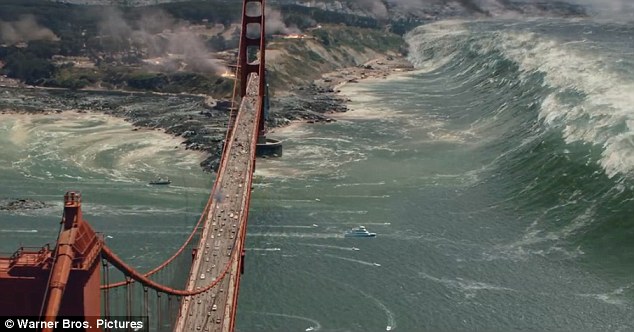
"caption": "A 250-foot tsunami surges toward the Golden Gate Bridge in the summer action movie 'San Andreas.'",
"description": "A 250-foot tsunami surges toward the Golden Gate Bridge in the summer action movie 'San Andreas.'",
"title": "sanandreasmovie",
"credit": "Warner Brothers",
"status": "inherit",
"isLoading": false,
"fetchFailed": false
}
},
"audioPlayerReducer": {
"postId": "stream_live",
"isPaused": true,
"isPlaying": false,
"pfsActive": false,
"pledgeModalIsOpen": true,
"playerDrawerIsOpen": false,
"liveAudioPlayStartedAt": 0,
"liveAudioPlayContext": ""
},
"authorsReducer": {
"byline_news_11487363": {
"type": "authors",
"id": "byline_news_11487363",
"meta": {
"override": true
},
"slug": "byline_news_11487363",
"name": "\u003cstrong>Daniel Potter\u003c/strong>",
"isLoading": false
},
"ohubertallen": {
"type": "authors",
"id": "102",
"meta": {
"index": "authors_1716337520",
"id": "102",
"found": true
},
"name": "Olivia Allen-Price",
"firstName": "Olivia",
"lastName": "Allen-Price",
"slug": "ohubertallen",
"email": "oallenprice@kqed.org",
"display_author_email": false,
"staff_mastheads": [
"news"
],
"title": "Senior Editor",
"bio": "Olivia Allen-Price is senior editor and host of the award-winning Bay Curious podcast. Prior to joining KQED in 2013, Olivia worked at The Baltimore Sun and The Virginian-Pilot in Norfolk, Va. She holds degrees in journalism and political science from Elon University. Her work has earned awards from the Society of Professional Journalists, the Hearst Foundation and Hearken. She loves to talk about running and curly hair.\r\n\r\nFollow: \u003ca href=\"https://twitter.com/oallenprice\">@oallenprice\u003c/a>\r\nEmail: \u003ca href=\"mailto:oallenprice@kqed.org\">oallenprice@kqed.org\u003c/a>",
"avatar": "https://secure.gravatar.com/avatar/07f7803c1f6be56f3be58ef276dfa64dce898502e0554408ef4858451a8294f7?s=600&d=blank&r=g",
"twitter": "oallenprice",
"bluesky": null,
"facebook": null,
"instagram": null,
"linkedin": null,
"sites": [
{
"site": "",
"roles": [
"editor"
]
},
{
"site": "arts",
"roles": [
"subscriber"
]
},
{
"site": "news",
"roles": [
"administrator"
]
},
{
"site": "pop",
"roles": [
"administrator"
]
},
{
"site": "bayareabites",
"roles": [
"contributor"
]
},
{
"site": "stateofhealth",
"roles": [
"administrator"
]
},
{
"site": "science",
"roles": [
"editor"
]
}
],
"headData": {
"title": "Olivia Allen-Price | KQED",
"description": "Senior Editor",
"ogImgSrc": "https://secure.gravatar.com/avatar/07f7803c1f6be56f3be58ef276dfa64dce898502e0554408ef4858451a8294f7?s=600&d=blank&r=g",
"twImgSrc": "https://secure.gravatar.com/avatar/07f7803c1f6be56f3be58ef276dfa64dce898502e0554408ef4858451a8294f7?s=600&d=blank&r=g"
},
"isLoading": false,
"link": "/author/ohubertallen"
},
"cmiller": {
"type": "authors",
"id": "221",
"meta": {
"index": "authors_1716337520",
"id": "221",
"found": true
},
"name": "Craig Miller",
"firstName": "Craig",
"lastName": "Miller",
"slug": "cmiller",
"email": "craig@voxterra.net",
"display_author_email": false,
"staff_mastheads": [
"science"
],
"title": "Editor Emeritus, Science",
"bio": "Craig is a former KQED Science editor, specializing in weather, climate, water & energy issues, with a little seismology thrown in just to shake things up. Prior to that, he launched and led the station's award-winning multimedia project, Climate Watch. Craig is also an accomplished writer/producer of television documentaries, with a focus on natural resource issues.",
"avatar": "https://secure.gravatar.com/avatar/b91661df645e001a9cafe0861fa685f9?s=600&d=blank&r=g",
"twitter": "voxterra",
"facebook": null,
"instagram": null,
"linkedin": null,
"sites": [
{
"site": "news",
"roles": [
"author"
]
},
{
"site": "futureofyou",
"roles": [
"editor"
]
},
{
"site": "stateofhealth",
"roles": [
"author"
]
},
{
"site": "science",
"roles": [
"editor"
]
},
{
"site": "quest",
"roles": [
"editor"
]
}
],
"headData": {
"title": "Craig Miller | KQED",
"description": "Editor Emeritus, Science",
"ogImgSrc": "https://secure.gravatar.com/avatar/b91661df645e001a9cafe0861fa685f9?s=600&d=blank&r=g",
"twImgSrc": "https://secure.gravatar.com/avatar/b91661df645e001a9cafe0861fa685f9?s=600&d=blank&r=g"
},
"isLoading": false,
"link": "/author/cmiller"
},
"rachael-myrow": {
"type": "authors",
"id": "251",
"meta": {
"index": "authors_1716337520",
"id": "251",
"found": true
},
"name": "Rachael Myrow",
"firstName": "Rachael",
"lastName": "Myrow",
"slug": "rachael-myrow",
"email": "rmyrow@kqed.org",
"display_author_email": true,
"staff_mastheads": [
"news"
],
"title": "Senior Editor of KQED's Silicon Valley News Desk",
"bio": "• I write and edit stories about how Silicon Valley power and policies shape everyday life in California. I’m also passionate about making Bay Area history and culture more accessible to a broad public. • I’ve been a journalist for most of my life, starting in high school with The Franklin Press in Los Angeles, where I grew up. While earning my first degree in English at UC Berkeley, I got my start in public radio at KALX-FM. After completing a second degree in journalism at Cal, I landed my first professional job at Marketplace, then moved on to KPCC (now LAist), and then KQED, where I hosted The California Report for more than seven years. • My reporting has appeared on NPR, The World, WBUR’s \u003ci>Here & Now\u003c/i>, and the BBC. I also guest host for KQED’s \u003ci>Forum\u003c/i>, as well as the Commonwealth Club in San Francisco. • I speak periodically on media, democracy and technology issues, and do voiceover work for documentaries and educational video projects. • Outside of the studio, you'll find me hiking Bay Area trails and whipping up Insta-ready meals in my kitchen. • I do not accept gifts, money, or favors from anyone connected to my reporting, I don't pay people for information, and I do not support or donate to political causes. • I strive to treat the people I report on with fairness, honesty, and respect. I also recognize there are often multiple sides to a story and work to verify information through multiple sources and documentation. If I get something wrong, I correct it.",
"avatar": "https://secure.gravatar.com/avatar/3ed8a3c5f26025e4a805ba634cda8cd764906b97438a6d9ce216b044e340da4e?s=600&d=blank&r=g",
"twitter": "rachaelmyrow",
"bluesky": null,
"facebook": null,
"instagram": null,
"linkedin": "https://www.linkedin.com/in/rachaelmyrow/",
"sites": [
{
"site": "arts",
"roles": [
"administrator"
]
},
{
"site": "news",
"roles": [
"edit_others_posts",
"editor"
]
},
{
"site": "futureofyou",
"roles": [
"editor"
]
},
{
"site": "bayareabites",
"roles": [
"editor"
]
},
{
"site": "stateofhealth",
"roles": [
"editor"
]
},
{
"site": "science",
"roles": [
"editor"
]
},
{
"site": "food",
"roles": [
"editor"
]
},
{
"site": "forum",
"roles": [
"editor"
]
},
{
"site": "liveblog",
"roles": [
"author"
]
}
],
"headData": {
"title": "Rachael Myrow | KQED",
"description": "Senior Editor of KQED's Silicon Valley News Desk",
"ogImgSrc": "https://secure.gravatar.com/avatar/3ed8a3c5f26025e4a805ba634cda8cd764906b97438a6d9ce216b044e340da4e?s=600&d=blank&r=g",
"twImgSrc": "https://secure.gravatar.com/avatar/3ed8a3c5f26025e4a805ba634cda8cd764906b97438a6d9ce216b044e340da4e?s=600&d=blank&r=g"
},
"isLoading": false,
"link": "/author/rachael-myrow"
},
"vinneetong": {
"type": "authors",
"id": "260",
"meta": {
"index": "authors_1716337520",
"id": "260",
"found": true
},
"name": "Vinnee Tong",
"firstName": "Vinnee",
"lastName": "Tong",
"slug": "vinneetong",
"email": "vtong@kqed.org",
"display_author_email": false,
"staff_mastheads": [
"news"
],
"title": "KQED Contributor",
"bio": "\u003cspan style=\"font-weight: 400;\">Vinnee Tong is the managing editor of news at KQED. She oversees editorial standards \u003cspan class=\"s2\">and works to highlight underrepresented voices and perspectives\u003c/span>\u003cspan class=\"s3\">.\u003c/span>\u003cspan class=\"s2\"> She was founding editor\u003c/span>\u003c/span>\u003cspan style=\"font-weight: 400;\"> of \u003ca href=\"http://bit.ly/thebaykqed\">\u003cem>The Bay,\u003c/em>\u003c/a> a storytelling news podcast from KQED\u003c/span>\u003cspan style=\"font-weight: 400;\">. Previously, she was a producer on the \u003ca href=\"http://baycurious.org\">\u003cem>Bay Curious\u003c/em> podcast\u003c/a> and the lead producer of \u003c/span>\u003cspan style=\"font-weight: 400;\">\u003cem>Truth Be Told,\u003c/em> an award-winning KQED series on race and identity distributed nationally by Public Radio International. \u003c/span>\u003cspan style=\"font-weight: 400;\">Before KQED, Vinnee was a print reporter at the Associated Press and newspapers. \u003cspan class=\"s4\">She covered local news from city hall and planning commission hearings as well as business news from New York, like the financial meltdown of 2008. \u003c/span>She has won a\u003c/span>\u003cspan style=\"font-weight: 400;\">wards for her reporting including an RTNDA Edward R. Murrow Award, as well as awards from the New York Press Club and the Society of American Business Editors and Writers. She is a graduate of the Columbia University Graduate School of Journalism and the University of California at Berkeley, \u003cspan class=\"s4\">where she was editor-in-chief of \u003ci>The Daily Californian\u003c/i>.\u003c/span>\u003c/span>",
"avatar": "https://secure.gravatar.com/avatar/02245596ef0333bf29265e2fd547f108?s=600&d=blank&r=g",
"twitter": "vinneetong",
"facebook": null,
"instagram": null,
"linkedin": null,
"sites": [
{
"site": "news",
"roles": [
"editor",
"edit_others_pages",
"edit_others_posts"
]
},
{
"site": "stateofhealth",
"roles": [
"author"
]
}
],
"headData": {
"title": "Vinnee Tong | KQED",
"description": "KQED Contributor",
"ogImgSrc": "https://secure.gravatar.com/avatar/02245596ef0333bf29265e2fd547f108?s=600&d=blank&r=g",
"twImgSrc": "https://secure.gravatar.com/avatar/02245596ef0333bf29265e2fd547f108?s=600&d=blank&r=g"
},
"isLoading": false,
"link": "/author/vinneetong"
},
"kdomara": {
"type": "authors",
"id": "1459",
"meta": {
"index": "authors_1716337520",
"id": "1459",
"found": true
},
"name": "Kelly O'Mara",
"firstName": "Kelly",
"lastName": "O'Mara",
"slug": "kdomara",
"email": "komara@kqed.org",
"display_author_email": false,
"staff_mastheads": [
"news"
],
"title": "KQED Contributor",
"bio": "Kelly O'Mara is a writer and reporter in the San Francisco Bay Area. She writes about food, health, sports, travel, business and California news. Her work has appeared on KQED, online for Outside Magazine, epsnW, VICE and in Competitor Magazine, among others. Follow Kelly on Twitter \u003ca href=\"https://twitter.com/kellydomara\">@kellydomara\u003c/a>.",
"avatar": "https://secure.gravatar.com/avatar/768fec7412028b72f13bdd0f5f9d8186?s=600&d=blank&r=g",
"twitter": null,
"facebook": null,
"instagram": null,
"linkedin": null,
"sites": [
{
"site": "arts",
"roles": []
},
{
"site": "news",
"roles": []
},
{
"site": "bayareabites",
"roles": []
},
{
"site": "stateofhealth",
"roles": []
},
{
"site": "science",
"roles": []
},
{
"site": "checkplease",
"roles": [
"editor"
]
},
{
"site": "food",
"roles": []
},
{
"site": "forum",
"roles": [
"editor"
]
},
{
"site": "liveblog",
"roles": [
"editor"
]
}
],
"headData": {
"title": "Kelly O'Mara | KQED",
"description": "KQED Contributor",
"ogImgSrc": "https://secure.gravatar.com/avatar/768fec7412028b72f13bdd0f5f9d8186?s=600&d=blank&r=g",
"twImgSrc": "https://secure.gravatar.com/avatar/768fec7412028b72f13bdd0f5f9d8186?s=600&d=blank&r=g"
},
"isLoading": false,
"link": "/author/kdomara"
},
"jplaczek": {
"type": "authors",
"id": "8606",
"meta": {
"index": "authors_1716337520",
"id": "8606",
"found": true
},
"name": "Jessica Placzek",
"firstName": "Jessica",
"lastName": "Placzek",
"slug": "jplaczek",
"email": "jessicalplaczek@gmail.com",
"display_author_email": false,
"staff_mastheads": [
"news"
],
"title": "KQED Contributor",
"bio": "Jessica Placzek is a former senior editor of podcasts at KQED where she served as the editorial lead of the podcast department. She worked with shows like MindShift, Rightnowish, Consider This, SOLD OUT, Bay Curious and The Bay. She’s also been a reporter and audio producer at KQED, KPFA, and KALW. She taught audio production to men incarcerated at California State Prison Solano and edited pieces they produced for the Uncuffed podcast through KALW. In 2018 she co-hosted and produced the third season of Raw Material for SFMOMA. In New Orleans she wrote for the Nola Defender. Her work has also appeared on Marketplace, All Things Considered, The California Report, and Vice. You can find more at jessicaplaczek.com",
"avatar": "https://secure.gravatar.com/avatar/5ead103b5880f672eceb84ce75eecd1b4b6f74a47edc457684a73ad5b8b158e9?s=600&d=blank&r=g",
"twitter": null,
"bluesky": null,
"facebook": null,
"instagram": null,
"linkedin": null,
"sites": [
{
"site": "arts",
"roles": [
"subscriber"
]
},
{
"site": "news",
"roles": [
"subscriber"
]
},
{
"site": "stateofhealth",
"roles": [
"editor"
]
},
{
"site": "forum",
"roles": [
"editor"
]
}
],
"headData": {
"title": "Jessica Placzek | KQED",
"description": "KQED Contributor",
"ogImgSrc": "https://secure.gravatar.com/avatar/5ead103b5880f672eceb84ce75eecd1b4b6f74a47edc457684a73ad5b8b158e9?s=600&d=blank&r=g",
"twImgSrc": "https://secure.gravatar.com/avatar/5ead103b5880f672eceb84ce75eecd1b4b6f74a47edc457684a73ad5b8b158e9?s=600&d=blank&r=g"
},
"isLoading": false,
"link": "/author/jplaczek"
},
"jvarner": {
"type": "authors",
"id": "8639",
"meta": {
"index": "authors_1716337520",
"id": "8639",
"found": true
},
"name": "Johanna Varner",
"firstName": "Johanna",
"lastName": "Varner",
"slug": "jvarner",
"email": "jvarner@kqed.org",
"display_author_email": false,
"staff_mastheads": [],
"title": null,
"bio": "Johanna Varner is excited to join KQED Science as a 2015 AAAS Mass Media Fellow. She recently finished her PhD in Biology from University of Utah, where she studied how small mammals are responding to climate change. She also has past lives as an engineer, a blueberry farmer, and a baker. Outside of the lab, Johanna has been active in designing authentic field research experiences for K-12 students and giving interactive public presentations about local mammals. You can find her on twitter at @johannavarner",
"avatar": "https://secure.gravatar.com/avatar/35ae0c7a361af670964ce707e56c052c?s=600&d=blank&r=g",
"twitter": null,
"facebook": null,
"instagram": null,
"linkedin": null,
"sites": [
{
"site": "news",
"roles": [
"author"
]
},
{
"site": "science",
"roles": [
"editor"
]
}
],
"headData": {
"title": "Johanna Varner | KQED",
"description": null,
"ogImgSrc": "https://secure.gravatar.com/avatar/35ae0c7a361af670964ce707e56c052c?s=600&d=blank&r=g",
"twImgSrc": "https://secure.gravatar.com/avatar/35ae0c7a361af670964ce707e56c052c?s=600&d=blank&r=g"
},
"isLoading": false,
"link": "/author/jvarner"
},
"pnelson": {
"type": "authors",
"id": "11293",
"meta": {
"index": "authors_1716337520",
"id": "11293",
"found": true
},
"name": "Penny Nelson",
"firstName": "Penny",
"lastName": "Nelson",
"slug": "pnelson",
"email": "PNelson@KQED.org",
"display_author_email": false,
"staff_mastheads": [],
"title": "KQED Contributor",
"bio": "Penny Nelson was based in the Bay Area and worked at KQED in many capacities since 1996. Prior to working in San Francisco, she worked at WHYY. At KQED, Penny was an anchor, host, producer and editor.",
"avatar": "https://secure.gravatar.com/avatar/986e19a6d0bd017e82bf77481175c4ad?s=600&d=blank&r=g",
"twitter": null,
"facebook": null,
"instagram": null,
"linkedin": null,
"sites": [
{
"site": "arts",
"roles": [
"author"
]
},
{
"site": "news",
"roles": [
"subscriber"
]
}
],
"headData": {
"title": "Penny Nelson | KQED",
"description": "KQED Contributor",
"ogImgSrc": "https://secure.gravatar.com/avatar/986e19a6d0bd017e82bf77481175c4ad?s=600&d=blank&r=g",
"twImgSrc": "https://secure.gravatar.com/avatar/986e19a6d0bd017e82bf77481175c4ad?s=600&d=blank&r=g"
},
"isLoading": false,
"link": "/author/pnelson"
}
},
"pagesReducer": {
"news_program_bay-curious": {
"type": "terms",
"id": "news_33523",
"meta": {
"index": "terms_1716263798",
"site": "news",
"id": "33523",
"score": 15.085575
},
"featImg": null,
"name": "Bay Curious",
"description": null,
"taxonomy": "program",
"headData": {
"twImgId": null,
"twTitle": null,
"ogTitle": null,
"ogImgId": null,
"twDescription": null,
"description": null,
"title": "Bay Curious Archives | KQED News",
"ogDescription": null
},
"ttid": 33540,
"slug": "bay-curious",
"isLoading": false,
"title": "Bay Curious",
"pageMeta": {
"site": "news",
"WpPageTemplate": "page-topic-editorial",
"currentPage": 39
},
"blocks": [
{
"blockName": "kqed/post-list",
"attrs": {
"layout": "cardArticle2",
"query": "posts/news?program=bay-curious",
"seeMore": false,
"paginated": true,
"page": 39
}
},
{
"blockName": "kqed/ad"
}
]
}
},
"pfsSessionReducer": {},
"postsReducer": {
"stream_live": {
"type": "live",
"id": "stream_live",
"audioUrl": "https://streams.kqed.org/kqedradio",
"title": "Live Stream",
"excerpt": "Live Stream information currently unavailable.",
"link": "/radio",
"featImg": "",
"label": {
"name": "KQED Live",
"link": "/"
}
},
"stream_kqedNewscast": {
"type": "posts",
"id": "stream_kqedNewscast",
"audioUrl": "https://www.kqed.org/.stream/anon/radio/RDnews/newscast.mp3?_=1",
"title": "KQED Newscast",
"featImg": "",
"label": {
"name": "88.5 FM",
"link": "/"
}
},
"news_10677697": {
"type": "posts",
"id": "news_10677697",
"meta": {
"index": "posts_1716263798",
"site": "news",
"id": "10677697",
"score": null,
"sort": [
1505376620000
]
},
"parent": 0,
"labelTerm": {
"site": "news",
"term": 33523
},
"blocks": [],
"publishDate": 1505376620,
"format": "audio",
"title": "History of the Berkeley Pier: A Ferry Tale",
"headTitle": "History of the Berkeley Pier: A Ferry Tale | KQED",
"content": "\u003cp>For years Martin Kunz has been looking down the hill from his office at Lawrence Berkeley Laboratory, out over the water, at one of the longest piers in California — the Berkeley Pier.\u003c/p>\n\u003cp>“I see this every day from my office when I have lunch, and I was curious what the history behind this is,” he said. He submitted a question to Bay Curious, so off we went to find the answer.\u003c/p>\n\u003cp>Lately, the Berkeley Pier has primarily been used as a fishing pier, but decades ago it had a very different purpose.\u003c/p>\n\u003ch2>Berkeley’s Population Boom\u003c/h2>\n\u003cp>\u003cspan style=\"font-weight: 400\">Back in the early 20th century, Berkeley was growing fast. Its population went from 13,214 residents in 1900 to 56,036 in 1920. Thousands of refugees from San Francisco’s 1906 earthquake found homes in Berkeley, the University of California experienced rapid expansion and an electric train system connected Berkeley to other Bay Area cities, such as Oakland.\u003c/span>\u003c/p>\n\u003cp>\u003cspan style=\"font-weight: 400\">Berkeley was establishing itself as an urban center, yet many of its residents still worked jobs in San Francisco. To get there, workers commuted by train to Oakland and then by boat to San Francisco — an inconvenient journey that makes today’s commute look like a cakewalk. So, in 1926, the Golden Gate Ferry Co. began building a pier that would bring auto ferries to Berkeley. \u003c/span>\u003c/p>\n\u003cp>[ad fullwidth]\u003c/p>\n\u003cp>When the construction was finished, the dock was 3½ miles long, making it one of the longest piers in the state. Why so long? Parts of San Francisco Bay are very shallow. Underneath the pier, the water is between 7 and 9 feet deep. The pier needed to reach parts of the bay where the water was deep enough for a ferry to travel.\u003c/p>\n\u003cp>[baycuriouspodcastinfo]\u003c/p>\n\u003cp>“A longer dock also meant that the ferry company saved a lot of money. In other words, you had to drive all the way out to the end of the pier and use your gas instead of them using gas for the ferry,” says Chuck Wollenberg, professor of history at Berkeley City College.\u003c/p>\n\u003cp>\u003cspan style=\"font-weight: 400\">Ferry service began at the pier in 1929. The three boats were named Golden Bear, Golden Poppy and Golden Shore.\u003c/span>\u003c/p>\n\u003cfigure id=\"attachment_10680832\" class=\"wp-caption aligncenter\" style=\"max-width: 800px\">\u003ca href=\"http://ww2.kqed.org/news/wp-content/uploads/sites/10/2015/09/IMG_4560.jpg\">\u003cimg decoding=\"async\" loading=\"lazy\" class=\"wp-image-10680832 size-medium\" src=\"http://ww2.kqed.org/news/wp-content/uploads/sites/10/2015/09/IMG_4560-800x533.jpg\" alt=\"IMG_4560\" width=\"800\" height=\"533\" srcset=\"https://ww2.kqed.org/app/uploads/sites/10/2015/09/IMG_4560-800x533.jpg 800w, https://ww2.kqed.org/app/uploads/sites/10/2015/09/IMG_4560-400x267.jpg 400w, https://ww2.kqed.org/app/uploads/sites/10/2015/09/IMG_4560-1440x960.jpg 1440w, https://ww2.kqed.org/app/uploads/sites/10/2015/09/IMG_4560-1920x1280.jpg 1920w, https://ww2.kqed.org/app/uploads/sites/10/2015/09/IMG_4560-1180x787.jpg 1180w, https://ww2.kqed.org/app/uploads/sites/10/2015/09/IMG_4560-960x640.jpg 960w\" sizes=\"(max-width: 800px) 100vw, 800px\">\u003c/a>\u003cfigcaption class=\"wp-caption-text\">The end of the pier today is much closer to shore than it once was, but cement pilings can still be seen far across the bay. \u003ccite>(Jessica Placzek/KQED)\u003c/cite>\u003c/figcaption>\u003c/figure>\n\u003ch2>Car Talk\u003c/h2>\n\u003cp>\u003cspan style=\"font-weight: 400\">The 1920s saw tremendous growth in the number of Americans driving personal automobiles. Ford’s assembly line made cars more affordable, and it wasn’t long before cars surpassed trains in popularity. After all, this was a time when Republicans claimed that \u003cspan style=\"color: #000000\">Republican prosperity had brought \u003cem>“a chicken in every pot. And a car in every backyard.”\u003c/em> \u003c/span>\u003c/span>\u003c/p>\n\u003cp>\u003cspan style=\"font-weight: 400\">\u003cspan style=\"color: #000000\">As more cars hit the roa\u003c/span>d, more cars relied on the ferries at the Berkeley Pier, and l\u003c/span>\u003cspan style=\"font-weight: 400\">ines could be long. Whenever Stanford played football against Cal at UC Berkeley, lines would stretch beyond the 3½ miles of pier. \u003c/span>\u003c/p>\n\u003cp>\u003cspan style=\"font-weight: 400\">“The mother of all traffic jams in the Bay Area occurred at the end of the Labor Day weekend,” says Wollenberg. “There was a four-hour wait. When people tried to cut in, people would take out revolvers and threaten people.”\u003c/span>\u003c/p>\n\u003cp>\u003cspan style=\"font-weight: 400\">But the same thing that created demand for the ferries also brought about the dock’s demise. With the rising popularity of cars, California legislators decided to create a bridge between Alameda County and San Francisco. The same year the ferries started running, engineers began laying plans for the Bay Bridge.\u003c/span>\u003c/p>\n\u003cp>\u003cspan style=\"font-weight: 400\">The Bay Bridge opened on Nov. 12, 1936. Former President Herbert Hoover watched as California Gov. Frank Merriam cut the ceremonial chain opening the bridge . The Golden Gate Ferry Co. would last only two more years, eventually calling it quits and giving the pier to the city of Berkeley. In total, the Berkeley auto ferries had run less than 10 years.\u003c/span>\u003c/p>\n\u003cfigure id=\"attachment_10680824\" class=\"wp-caption aligncenter\" style=\"max-width: 800px\">\u003ca href=\"http://ww2.kqed.org/news/wp-content/uploads/sites/10/2015/09/16384661292_d921040237_k-e1442176689248.jpg\">\u003cimg decoding=\"async\" loading=\"lazy\" class=\"wp-image-10680824 size-medium\" src=\"http://ww2.kqed.org/news/wp-content/uploads/sites/10/2015/09/16384661292_d921040237_k-800x184.jpg\" alt=\"16384661292_d921040237_k\" width=\"800\" height=\"184\">\u003c/a>\u003cfigcaption class=\"wp-caption-text\">A panorama shows the Berkeley Pier at the right. (Photo by Wayne Hsieh)\u003c/figcaption>\u003c/figure>\n\u003ch2>After the Bridge\u003c/h2>\n\u003cp>\u003cspan style=\"font-weight: 400\">Berkeley officials used state and city funds to convert the pier into a recreation area. It opened in spring 1938 and in the first year attracted 50,000 people. The Berkeley Recreation Department charged an admission fee of 10 cents for pedestrians and 25 cents for automobiles.\u003c/span>\u003c/p>\n\u003cp>\u003cspan style=\"font-weight: 400\">Fishing became a popular pastime on the pier and kids were encouraged to learn. Civic leaders in the ’40s and ’50s even suggested that fishing on the pier could reduce juvenile delinquency in the area.\u003c/span>\u003c/p>\n\u003cfigure id=\"attachment_10680825\" class=\"wp-caption alignleft\" style=\"max-width: 400px\">\u003ca href=\"http://ww2.kqed.org/news/wp-content/uploads/sites/10/2015/09/3710445129_9d3f66e753_o-e1442176636946.jpg\">\u003cimg decoding=\"async\" loading=\"lazy\" class=\"wp-image-10680825 size-thumbnail\" src=\"http://ww2.kqed.org/news/wp-content/uploads/sites/10/2015/09/3710445129_9d3f66e753_o-400x600.jpg\" alt=\"\" width=\"400\" height=\"600\">\u003c/a>\u003cfigcaption class=\"wp-caption-text\">Dozens of people would fish off the Berkeley Pier each day while it was open. (Photo by Robert McNicholas)\u003c/figcaption>\u003c/figure>\n\u003cp>\u003cspan style=\"font-weight: 400\">Soon, city officials found that maintaining miles of pier could be difficult and expensive. The corrosive effects of salt water took their toll on the dock, and over time sections of pier would be closed, repaired, reopened and then closed again. \u003c/span>\u003c/p>\n\u003cp>\u003cspan style=\"font-weight: 400\">The Berkeley Marina was also built out over the pier, cutting the pier down to about 2½ miles.\u003c/span>\u003c/p>\n\u003cp>\u003cspan style=\"font-weight: 400\">The farthest sections of the pier, which reach nearly to Treasure Island, have been abandoned for decades. Much of the wood has rotted away, so only the cement pilings are left. \u003c/span>\u003cspan style=\"font-weight: 400\">Sailors have blamed the decaying pier for sinking at least two ships, while fishermen have claimed it creates a fertile breeding ground for marine life.\u003c/span>\u003c/p>\n\u003cp>[baycuriousbug]\u003c/p>\n\u003cp>\u003cspan style=\"font-weight: 400\">Oakland resident Phillip Jwell is a longtime fisherman who has enjoyed the pier for years. Cast a line off the pier and you can pull in rays, perch, bass, halibut and even small sharks. \u003c/span>\u003c/p>\n\u003cp>\u003cspan style=\"font-weight: 400\">“Fishing is a good meditation. It clears your mind and actually helps you out better throughout the week,” says Jwell. \u003c/span>\u003c/p>\n\u003cp>\u003cspan style=\"font-weight: 400\">When the pier is open Jwell says, \u003c/span>\u003cspan style=\"font-weight: 400\">“It’s about 75 people out there fishing usually on a good average.”\u003c/span>\u003c/p>\n\u003cfigure id=\"attachment_10680830\" class=\"wp-caption aligncenter\" style=\"max-width: 800px\">\u003cimg decoding=\"async\" loading=\"lazy\" class=\"wp-image-10680830 size-medium\" src=\"http://ww2.kqed.org/news/wp-content/uploads/sites/10/2015/09/IMG_45731-800x533.jpg\" alt=\"IMG_4573\" width=\"800\" height=\"533\" srcset=\"https://ww2.kqed.org/app/uploads/sites/10/2015/09/IMG_45731-800x533.jpg 800w, https://ww2.kqed.org/app/uploads/sites/10/2015/09/IMG_45731-400x267.jpg 400w, https://ww2.kqed.org/app/uploads/sites/10/2015/09/IMG_45731-1440x960.jpg 1440w, https://ww2.kqed.org/app/uploads/sites/10/2015/09/IMG_45731-1920x1280.jpg 1920w, https://ww2.kqed.org/app/uploads/sites/10/2015/09/IMG_45731-1180x787.jpg 1180w, https://ww2.kqed.org/app/uploads/sites/10/2015/09/IMG_45731-960x640.jpg 960w\" sizes=\"(max-width: 800px) 100vw, 800px\">\u003cfigcaption class=\"wp-caption-text\">Wiley Rogers captains the Blown Away. (Photo by Jessica Placzek)\u003c/figcaption>\u003c/figure>\n\u003ch2>The Pier at Present\u003c/h2>\n\u003cp>\u003cspan style=\"font-weight: 400\">Now the future of the pier is looking uncertain. In July of 2015, Berkeley officials closed the entire pier after finding considerable structural damage. \u003c/span>\u003c/p>\n\u003cp>\u003cspan style=\"font-weight: 400\">The city hasn’t been clear about when or if the Berkeley Pier will open again. Repairs could be expensive and funding has been difficult in the past. It could take years.\u003c/span>\u003c/p>\n\u003cp>\u003c/p>\n\u003cp>[baycuriousquestion]\u003c/p>\n\n",
"stats": {
"hasVideo": false,
"hasChartOrMap": false,
"hasAudio": false,
"hasPolis": false,
"wordCount": 1073,
"hasGoogleForm": false,
"hasGallery": false,
"hasHearkenModule": true,
"iframeSrcs": [],
"paragraphCount": 28
},
"modified": 1700597467,
"excerpt": "What's the story behind this super-long pier that once nearly stretched from Berkeley to Treasure Island?",
"headData": {
"twImgId": "",
"twTitle": "",
"ogTitle": "",
"ogImgId": "",
"twDescription": "",
"description": "What's the story behind this super-long pier that once nearly stretched from Berkeley to Treasure Island?",
"title": "History of the Berkeley Pier: A Ferry Tale | KQED",
"ogDescription": "",
"schema": {
"@context": "https://schema.org",
"@type": "NewsArticle",
"headline": "History of the Berkeley Pier: A Ferry Tale",
"datePublished": "2017-09-14T01:10:20-07:00",
"dateModified": "2023-11-21T12:11:07-08:00",
"image": "https://cdn.kqed.org/wp-content/uploads/2020/02/KQED-OG-Image@1x.png",
"isAccessibleForFree": "True",
"publisher": {
"@type": "NewsMediaOrganization",
"@id": "https://www.kqed.org/#organization",
"name": "KQED",
"logo": "https://cdn.kqed.org/wp-content/uploads/2020/02/KQED-OG-Image@1x.png",
"url": "https://www.kqed.org",
"sameAs": [
"https://www.facebook.com/KQED",
"https://twitter.com/KQED",
"https://www.instagram.com/kqed/",
"https://www.tiktok.com/@kqedofficial",
"https://www.linkedin.com/company/kqed",
"https://www.youtube.com/channel/UCeC0IOo7i1P_61zVUWbJ4nw"
]
}
}
},
"guestAuthors": [],
"slug": "history-of-the-berkeley-pier-a-ferry-tale",
"status": "publish",
"audioUrl": "https://www.kqed.org/.stream/anon/radio/bay-curious/2017/09/BerkeleyPier.mp3",
"path": "/news/10677697/history-of-the-berkeley-pier-a-ferry-tale",
"audioDuration": null,
"audioTrackLength": null,
"parsedContent": [
{
"type": "contentString",
"content": "\u003cdiv class=\"post-body\">\u003cp>\u003cp>For years Martin Kunz has been looking down the hill from his office at Lawrence Berkeley Laboratory, out over the water, at one of the longest piers in California — the Berkeley Pier.\u003c/p>\n\u003cp>“I see this every day from my office when I have lunch, and I was curious what the history behind this is,” he said. He submitted a question to Bay Curious, so off we went to find the answer.\u003c/p>\n\u003cp>Lately, the Berkeley Pier has primarily been used as a fishing pier, but decades ago it had a very different purpose.\u003c/p>\n\u003ch2>Berkeley’s Population Boom\u003c/h2>\n\u003cp>\u003cspan style=\"font-weight: 400\">Back in the early 20th century, Berkeley was growing fast. Its population went from 13,214 residents in 1900 to 56,036 in 1920. Thousands of refugees from San Francisco’s 1906 earthquake found homes in Berkeley, the University of California experienced rapid expansion and an electric train system connected Berkeley to other Bay Area cities, such as Oakland.\u003c/span>\u003c/p>\n\u003cp>\u003cspan style=\"font-weight: 400\">Berkeley was establishing itself as an urban center, yet many of its residents still worked jobs in San Francisco. To get there, workers commuted by train to Oakland and then by boat to San Francisco — an inconvenient journey that makes today’s commute look like a cakewalk. So, in 1926, the Golden Gate Ferry Co. began building a pier that would bring auto ferries to Berkeley. \u003c/span>\u003c/p>\n\u003cp>\u003c/p>\u003c/div>",
"attributes": {
"named": {},
"numeric": []
}
},
{
"type": "component",
"content": "",
"name": "ad",
"attributes": {
"named": {
"label": "fullwidth"
},
"numeric": [
"fullwidth"
]
}
},
{
"type": "contentString",
"content": "\u003cdiv class=\"post-body\">\u003cp>\u003c/p>\n\u003cp>When the construction was finished, the dock was 3½ miles long, making it one of the longest piers in the state. Why so long? Parts of San Francisco Bay are very shallow. Underneath the pier, the water is between 7 and 9 feet deep. The pier needed to reach parts of the bay where the water was deep enough for a ferry to travel.\u003c/p>\n\u003cp>\u003c/p>\u003cp>\u003caside class=\"alignleft utils-parseShortcode-shortcodes-__bayCuriousPodcastShortcode__bayCurious\">\u003cimg src=https://cdn.kqed.org/wp-content/uploads/2023/02/bayCuriousLogo.png alt=\"Bay Curious Podcast\" loading=\"lazy\" />\n \u003ca href=\"/news/series/baycurious\">Bay Curious\u003c/a> is a podcast that answers your questions about the Bay Area.\n Subscribe on \u003ca href=\"https://itunes.apple.com/us/podcast/bay-curious/id1172473406\" target=\"_blank\" rel=\"noopener noreferrer\">Apple Podcasts\u003c/a>,\n \u003ca href=\"http://www.npr.org/podcasts/500557090/bay-curious\" target=\"_blank\" rel=\"noopener noreferrer\">NPR One\u003c/a> or your favorite podcast platform.\u003c/aside>\u003c/p>\u003cp>\u003c/p>\n\u003cp>“A longer dock also meant that the ferry company saved a lot of money. In other words, you had to drive all the way out to the end of the pier and use your gas instead of them using gas for the ferry,” says Chuck Wollenberg, professor of history at Berkeley City College.\u003c/p>\n\u003cp>\u003cspan style=\"font-weight: 400\">Ferry service began at the pier in 1929. The three boats were named Golden Bear, Golden Poppy and Golden Shore.\u003c/span>\u003c/p>\n\u003cfigure id=\"attachment_10680832\" class=\"wp-caption aligncenter\" style=\"max-width: 800px\">\u003ca href=\"http://ww2.kqed.org/news/wp-content/uploads/sites/10/2015/09/IMG_4560.jpg\">\u003cimg decoding=\"async\" loading=\"lazy\" class=\"wp-image-10680832 size-medium\" src=\"http://ww2.kqed.org/news/wp-content/uploads/sites/10/2015/09/IMG_4560-800x533.jpg\" alt=\"IMG_4560\" width=\"800\" height=\"533\" srcset=\"https://ww2.kqed.org/app/uploads/sites/10/2015/09/IMG_4560-800x533.jpg 800w, https://ww2.kqed.org/app/uploads/sites/10/2015/09/IMG_4560-400x267.jpg 400w, https://ww2.kqed.org/app/uploads/sites/10/2015/09/IMG_4560-1440x960.jpg 1440w, https://ww2.kqed.org/app/uploads/sites/10/2015/09/IMG_4560-1920x1280.jpg 1920w, https://ww2.kqed.org/app/uploads/sites/10/2015/09/IMG_4560-1180x787.jpg 1180w, https://ww2.kqed.org/app/uploads/sites/10/2015/09/IMG_4560-960x640.jpg 960w\" sizes=\"(max-width: 800px) 100vw, 800px\">\u003c/a>\u003cfigcaption class=\"wp-caption-text\">The end of the pier today is much closer to shore than it once was, but cement pilings can still be seen far across the bay. \u003ccite>(Jessica Placzek/KQED)\u003c/cite>\u003c/figcaption>\u003c/figure>\n\u003ch2>Car Talk\u003c/h2>\n\u003cp>\u003cspan style=\"font-weight: 400\">The 1920s saw tremendous growth in the number of Americans driving personal automobiles. Ford’s assembly line made cars more affordable, and it wasn’t long before cars surpassed trains in popularity. After all, this was a time when Republicans claimed that \u003cspan style=\"color: #000000\">Republican prosperity had brought \u003cem>“a chicken in every pot. And a car in every backyard.”\u003c/em> \u003c/span>\u003c/span>\u003c/p>\n\u003cp>\u003cspan style=\"font-weight: 400\">\u003cspan style=\"color: #000000\">As more cars hit the roa\u003c/span>d, more cars relied on the ferries at the Berkeley Pier, and l\u003c/span>\u003cspan style=\"font-weight: 400\">ines could be long. Whenever Stanford played football against Cal at UC Berkeley, lines would stretch beyond the 3½ miles of pier. \u003c/span>\u003c/p>\n\u003cp>\u003cspan style=\"font-weight: 400\">“The mother of all traffic jams in the Bay Area occurred at the end of the Labor Day weekend,” says Wollenberg. “There was a four-hour wait. When people tried to cut in, people would take out revolvers and threaten people.”\u003c/span>\u003c/p>\n\u003cp>\u003cspan style=\"font-weight: 400\">But the same thing that created demand for the ferries also brought about the dock’s demise. With the rising popularity of cars, California legislators decided to create a bridge between Alameda County and San Francisco. The same year the ferries started running, engineers began laying plans for the Bay Bridge.\u003c/span>\u003c/p>\n\u003cp>\u003cspan style=\"font-weight: 400\">The Bay Bridge opened on Nov. 12, 1936. Former President Herbert Hoover watched as California Gov. Frank Merriam cut the ceremonial chain opening the bridge . The Golden Gate Ferry Co. would last only two more years, eventually calling it quits and giving the pier to the city of Berkeley. In total, the Berkeley auto ferries had run less than 10 years.\u003c/span>\u003c/p>\n\u003cfigure id=\"attachment_10680824\" class=\"wp-caption aligncenter\" style=\"max-width: 800px\">\u003ca href=\"http://ww2.kqed.org/news/wp-content/uploads/sites/10/2015/09/16384661292_d921040237_k-e1442176689248.jpg\">\u003cimg decoding=\"async\" loading=\"lazy\" class=\"wp-image-10680824 size-medium\" src=\"http://ww2.kqed.org/news/wp-content/uploads/sites/10/2015/09/16384661292_d921040237_k-800x184.jpg\" alt=\"16384661292_d921040237_k\" width=\"800\" height=\"184\">\u003c/a>\u003cfigcaption class=\"wp-caption-text\">A panorama shows the Berkeley Pier at the right. (Photo by Wayne Hsieh)\u003c/figcaption>\u003c/figure>\n\u003ch2>After the Bridge\u003c/h2>\n\u003cp>\u003cspan style=\"font-weight: 400\">Berkeley officials used state and city funds to convert the pier into a recreation area. It opened in spring 1938 and in the first year attracted 50,000 people. The Berkeley Recreation Department charged an admission fee of 10 cents for pedestrians and 25 cents for automobiles.\u003c/span>\u003c/p>\n\u003cp>\u003cspan style=\"font-weight: 400\">Fishing became a popular pastime on the pier and kids were encouraged to learn. Civic leaders in the ’40s and ’50s even suggested that fishing on the pier could reduce juvenile delinquency in the area.\u003c/span>\u003c/p>\n\u003cfigure id=\"attachment_10680825\" class=\"wp-caption alignleft\" style=\"max-width: 400px\">\u003ca href=\"http://ww2.kqed.org/news/wp-content/uploads/sites/10/2015/09/3710445129_9d3f66e753_o-e1442176636946.jpg\">\u003cimg decoding=\"async\" loading=\"lazy\" class=\"wp-image-10680825 size-thumbnail\" src=\"http://ww2.kqed.org/news/wp-content/uploads/sites/10/2015/09/3710445129_9d3f66e753_o-400x600.jpg\" alt=\"\" width=\"400\" height=\"600\">\u003c/a>\u003cfigcaption class=\"wp-caption-text\">Dozens of people would fish off the Berkeley Pier each day while it was open. (Photo by Robert McNicholas)\u003c/figcaption>\u003c/figure>\n\u003cp>\u003cspan style=\"font-weight: 400\">Soon, city officials found that maintaining miles of pier could be difficult and expensive. The corrosive effects of salt water took their toll on the dock, and over time sections of pier would be closed, repaired, reopened and then closed again. \u003c/span>\u003c/p>\n\u003cp>\u003cspan style=\"font-weight: 400\">The Berkeley Marina was also built out over the pier, cutting the pier down to about 2½ miles.\u003c/span>\u003c/p>\n\u003cp>\u003cspan style=\"font-weight: 400\">The farthest sections of the pier, which reach nearly to Treasure Island, have been abandoned for decades. Much of the wood has rotted away, so only the cement pilings are left. \u003c/span>\u003cspan style=\"font-weight: 400\">Sailors have blamed the decaying pier for sinking at least two ships, while fishermen have claimed it creates a fertile breeding ground for marine life.\u003c/span>\u003c/p>\n\u003cp>\u003c/p>\u003cp>\u003caside class=\"alignleft utils-parseShortcode-shortcodes-__bayCuriousPodcastShortcode__bayCurious\">\u003cimg src=https://cdn.kqed.org/wp-content/uploads/2023/02/bayCuriousLogo.png alt=\"Bay Curious Podcast\" loading=\"lazy\" />\n What do you wonder about the Bay Area, its culture or people that you want KQED to investigate?\n \u003ca href=\"/news/series/baycurious\">Ask Bay Curious.\u003c/a>\u003c/aside>\u003c/p>\u003cp>\u003c/p>\n\u003cp>\u003cspan style=\"font-weight: 400\">Oakland resident Phillip Jwell is a longtime fisherman who has enjoyed the pier for years. Cast a line off the pier and you can pull in rays, perch, bass, halibut and even small sharks. \u003c/span>\u003c/p>\n\u003cp>\u003cspan style=\"font-weight: 400\">“Fishing is a good meditation. It clears your mind and actually helps you out better throughout the week,” says Jwell. \u003c/span>\u003c/p>\n\u003cp>\u003cspan style=\"font-weight: 400\">When the pier is open Jwell says, \u003c/span>\u003cspan style=\"font-weight: 400\">“It’s about 75 people out there fishing usually on a good average.”\u003c/span>\u003c/p>\n\u003cfigure id=\"attachment_10680830\" class=\"wp-caption aligncenter\" style=\"max-width: 800px\">\u003cimg decoding=\"async\" loading=\"lazy\" class=\"wp-image-10680830 size-medium\" src=\"http://ww2.kqed.org/news/wp-content/uploads/sites/10/2015/09/IMG_45731-800x533.jpg\" alt=\"IMG_4573\" width=\"800\" height=\"533\" srcset=\"https://ww2.kqed.org/app/uploads/sites/10/2015/09/IMG_45731-800x533.jpg 800w, https://ww2.kqed.org/app/uploads/sites/10/2015/09/IMG_45731-400x267.jpg 400w, https://ww2.kqed.org/app/uploads/sites/10/2015/09/IMG_45731-1440x960.jpg 1440w, https://ww2.kqed.org/app/uploads/sites/10/2015/09/IMG_45731-1920x1280.jpg 1920w, https://ww2.kqed.org/app/uploads/sites/10/2015/09/IMG_45731-1180x787.jpg 1180w, https://ww2.kqed.org/app/uploads/sites/10/2015/09/IMG_45731-960x640.jpg 960w\" sizes=\"(max-width: 800px) 100vw, 800px\">\u003cfigcaption class=\"wp-caption-text\">Wiley Rogers captains the Blown Away. (Photo by Jessica Placzek)\u003c/figcaption>\u003c/figure>\n\u003ch2>The Pier at Present\u003c/h2>\n\u003cp>\u003cspan style=\"font-weight: 400\">Now the future of the pier is looking uncertain. In July of 2015, Berkeley officials closed the entire pier after finding considerable structural damage. \u003c/span>\u003c/p>\n\u003cp>\u003cspan style=\"font-weight: 400\">The city hasn’t been clear about when or if the Berkeley Pier will open again. Repairs could be expensive and funding has been difficult in the past. It could take years.\u003c/span>\u003c/p>\n\u003cp>\u003c/p>\n\u003cp>\u003c/p>\u003c/div>",
"attributes": {
"named": {},
"numeric": []
}
},
{
"type": "component",
"content": "",
"name": "baycuriousquestion",
"attributes": {
"named": {
"label": ""
},
"numeric": []
}
},
{
"type": "contentString",
"content": "\u003cdiv class=\"post-body\">\u003cp>\u003c/p>\n\n\u003c/div>\u003c/p>",
"attributes": {
"named": {},
"numeric": []
}
}
],
"link": "/news/10677697/history-of-the-berkeley-pier-a-ferry-tale",
"authors": [
"8606"
],
"programs": [
"news_6944",
"news_33523"
],
"series": [
"news_17986"
],
"categories": [
"news_8",
"news_33520"
],
"tags": [
"news_129"
],
"featImg": "news_11616858",
"label": "news_33523"
},
"news_11614704": {
"type": "posts",
"id": "news_11614704",
"meta": {
"index": "posts_1716263798",
"site": "news",
"id": "11614704",
"score": null,
"sort": [
1504173654000
]
},
"parent": 0,
"labelTerm": {
"site": "news",
"term": 33523
},
"blocks": [],
"publishDate": 1504173654,
"format": "audio",
"title": "Parking After the Street Sweeper Passes: Legal or Not?",
"headTitle": "Parking After the Street Sweeper Passes: Legal or Not? | KQED",
"content": "\u003cp>If you live or work in San Francisco, you know landing a 12-hour parking spot on the street is one of those little victories of daily life. It means you don’t have to run out and move your car every couple of hours to avoid the parking ticket. And you don’t have to slink into the parking garage, defeated in your search for a free spot on the street.\u003c/p>\n\u003cp>It’s a few more bucks in your pocket.\u003c/p>\n\u003cp>But how much risk is that small victory worth?\u003c/p>\n\u003cp>[baycuriouspodcastinfo]\u003c/p>\n\u003cp>Ashley Ortiz asked Bay Curious: “If you see a street cleaner come through on a street cleaning day, can you park on the block before the end of the NO PARKING time frame that’s posted?”\u003c/p>\n\u003cp>[ad fullwidth]\u003c/p>\n\u003cp>In the interest of all parking scofflaws and saints, we set out to find the \u003cem>official\u003c/em> answer.\u003c/p>\n\u003cfigure id=\"attachment_11614805\" class=\"wp-caption alignright\" style=\"max-width: 350px\">\u003cimg decoding=\"async\" loading=\"lazy\" class=\"wp-image-11614805\" src=\"https://ww2.kqed.org/news/wp-content/uploads/sites/10/2017/08/noparking-800x768.jpg\" alt=\"A street cleaning sign in San Francisco.\" width=\"350\" height=\"336\" srcset=\"https://ww2.kqed.org/app/uploads/sites/10/2017/08/noparking-800x768.jpg 800w, https://ww2.kqed.org/app/uploads/sites/10/2017/08/noparking-160x154.jpg 160w, https://ww2.kqed.org/app/uploads/sites/10/2017/08/noparking-1020x979.jpg 1020w, https://ww2.kqed.org/app/uploads/sites/10/2017/08/noparking-960x921.jpg 960w, https://ww2.kqed.org/app/uploads/sites/10/2017/08/noparking-240x230.jpg 240w, https://ww2.kqed.org/app/uploads/sites/10/2017/08/noparking-375x360.jpg 375w, https://ww2.kqed.org/app/uploads/sites/10/2017/08/noparking-520x499.jpg 520w, https://ww2.kqed.org/app/uploads/sites/10/2017/08/noparking-32x32.jpg 32w, https://ww2.kqed.org/app/uploads/sites/10/2017/08/noparking.jpg 1142w\" sizes=\"(max-width: 350px) 100vw, 350px\">\u003cfigcaption class=\"wp-caption-text\">A street cleaning sign in San Francisco. \u003ccite>(Penny Nelson/KQED)\u003c/cite>\u003c/figcaption>\u003c/figure>\n\u003ch2>Walking The Parking Enforcement Beat\u003c/h2>\n\u003cp>I made my way to the San Francisco Municipal Transportation Agency, where I met up with traffic enforcement officer Denise Golden. She’s funny, smart and 100 percent no-nonsense.\u003c/p>\n\u003cp>She says that while people with her job may not be the most well-liked, “without us, it would be chaos. People would never move their vehicles. It would be definitely a problem.”\u003c/p>\n\u003cp>I asked her Ashley’s question and her answer surprised me.\u003c/p>\n\u003cp>“Once the street sweeper has gone by, we do permit the vehicle to park curbside,” she says.\u003c/p>\n\u003cp>So — it’s legal!\u003c/p>\n\u003cp>But, beware. There’s a hitch.\u003c/p>\n\u003caside class=\"alignright\">\n\u003ch3>Signs Got You Stumped?\u003c/h3>\n\u003cp>Is there another sign on the street you have a question about? Check out the \u003ca href=\"https://www.sfmta.com/getting-around/parking/how-park-legally\" target=\"_blank\" rel=\"noopener noreferrer\">SFMTA Parking Guide.\u003c/a>\u003c/p>\n\u003c/aside>\n\u003cp>Golden went on to say that, in many cases, street cleaning is a four-step process. So, even if you \u003cem>think\u003c/em> you’ve seen the street sweeper go by, you may have actually seen another vehicle.\u003c/p>\n\u003ch2>The Street Sweeping Process\u003c/h2>\n\u003cp>The first vehicle in the street cleaning parade is the broom support truck. A worker picks up large items off the street – things like big pieces of wood or an abandoned chair — and chucks them into this truck. They’re looking for anything that cannot be vacuumed up by the street sweeper.\u003c/p>\n\u003cfigure id=\"attachment_11614806\" class=\"wp-caption alignleft\" style=\"max-width: 350px\">\u003cimg decoding=\"async\" loading=\"lazy\" class=\"wp-image-11614806\" src=\"https://ww2.kqed.org/news/wp-content/uploads/sites/10/2017/08/buggy-800x583.jpg\" alt=\"The parking enforcement officer typically comes just before the street sweeper.\" width=\"350\" height=\"255\" srcset=\"https://ww2.kqed.org/app/uploads/sites/10/2017/08/buggy-800x583.jpg 800w, https://ww2.kqed.org/app/uploads/sites/10/2017/08/buggy-160x117.jpg 160w, https://ww2.kqed.org/app/uploads/sites/10/2017/08/buggy-1020x743.jpg 1020w, https://ww2.kqed.org/app/uploads/sites/10/2017/08/buggy-1180x860.jpg 1180w, https://ww2.kqed.org/app/uploads/sites/10/2017/08/buggy-960x699.jpg 960w, https://ww2.kqed.org/app/uploads/sites/10/2017/08/buggy-240x175.jpg 240w, https://ww2.kqed.org/app/uploads/sites/10/2017/08/buggy-375x273.jpg 375w, https://ww2.kqed.org/app/uploads/sites/10/2017/08/buggy-520x379.jpg 520w, https://ww2.kqed.org/app/uploads/sites/10/2017/08/buggy.jpg 1632w\" sizes=\"(max-width: 350px) 100vw, 350px\">\u003cfigcaption class=\"wp-caption-text\">The parking enforcement officer typically comes just before the street sweeper. \u003ccite>(Penny Nelson/KQED)\u003c/cite>\u003c/figcaption>\u003c/figure>\n\u003cp>Next comes the street flusher, which is used mostly on commercial streets like Market and Mission. The flusher has jets underneath the truck that shoot water on the roadway, loosening grime and grit.\u003c/p>\n\u003cp>Third in line is the parking ticket officer, citing cars that haven’t moved.\u003c/p>\n\u003cp>Finally, the street sweeper comes along with big brushes and a large tube that vacuums up all the remaining trash on the street.\u003c/p>\n\u003cp>After that final step, you can legally park.\u003c/p>\n\u003cp>You’re welcome.\u003c/p>\n\u003ch2>Wait, Four Steps? Really?\u003c/h2>\n\u003cp>I caught a ride one morning with John Sheehan, one of the city’s street sweepers, as he cleaned his route in Noe Valley. He was surprised to hear I’d been told street cleaning is a four-step process.\u003c/p>\n\u003cp>On his route, he said, it’s usually a two-step process: The parking enforcement person moves ahead of him and then he alone cleans the street.\u003c/p>\n\u003cp>[baycuriousbug]\u003c/p>\n\u003cp>Turns out the cleaning process changes based on a variety of factors, like which street is being cleaned, which district the street is in, time of year, if there are special events and what’s been requested.\u003c/p>\n\u003cp>But whether it’s a two-step or four-step process, the bottom line is: Wait for that ticket buggy and street sweeper to roll by and you’re in the clear.\u003c/p>\n\u003cp>\u003c/p>\n\u003cp>[baycuriousquestion]\u003c/p>\n\n",
"stats": {
"hasVideo": false,
"hasChartOrMap": false,
"hasAudio": false,
"hasPolis": false,
"wordCount": 640,
"hasGoogleForm": false,
"hasGallery": false,
"hasHearkenModule": true,
"iframeSrcs": [],
"paragraphCount": 28
},
"modified": 1700597477,
"excerpt": "There's one 'no parking' sign in San Francisco that you can bend the rules on ... if the conditions are right.",
"headData": {
"twImgId": "",
"twTitle": "",
"ogTitle": "",
"ogImgId": "",
"twDescription": "",
"description": "There's one 'no parking' sign in San Francisco that you can bend the rules on ... if the conditions are right.",
"title": "Parking After the Street Sweeper Passes: Legal or Not? | KQED",
"ogDescription": "",
"schema": {
"@context": "https://schema.org",
"@type": "NewsArticle",
"headline": "Parking After the Street Sweeper Passes: Legal or Not?",
"datePublished": "2017-08-31T03:00:54-07:00",
"dateModified": "2023-11-21T12:11:17-08:00",
"image": "https://cdn.kqed.org/wp-content/uploads/2020/02/KQED-OG-Image@1x.png",
"isAccessibleForFree": "True",
"publisher": {
"@type": "NewsMediaOrganization",
"@id": "https://www.kqed.org/#organization",
"name": "KQED",
"logo": "https://cdn.kqed.org/wp-content/uploads/2020/02/KQED-OG-Image@1x.png",
"url": "https://www.kqed.org",
"sameAs": [
"https://www.facebook.com/KQED",
"https://twitter.com/KQED",
"https://www.instagram.com/kqed/",
"https://www.tiktok.com/@kqedofficial",
"https://www.linkedin.com/company/kqed",
"https://www.youtube.com/channel/UCeC0IOo7i1P_61zVUWbJ4nw"
]
}
}
},
"guestAuthors": [],
"slug": "can-you-park-after-the-street-cleaner-has-gone-by",
"status": "publish",
"audioUrl": "https://www.kqed.org/.stream/anon/radio/bay-curious/2017/08/StreetCleaningpodcastmastered.mp3",
"path": "/news/11614704/can-you-park-after-the-street-cleaner-has-gone-by",
"audioDuration": 398000,
"audioTrackLength": null,
"parsedContent": [
{
"type": "contentString",
"content": "\u003cdiv class=\"post-body\">\u003cp>\u003cp>If you live or work in San Francisco, you know landing a 12-hour parking spot on the street is one of those little victories of daily life. It means you don’t have to run out and move your car every couple of hours to avoid the parking ticket. And you don’t have to slink into the parking garage, defeated in your search for a free spot on the street.\u003c/p>\n\u003cp>It’s a few more bucks in your pocket.\u003c/p>\n\u003cp>But how much risk is that small victory worth?\u003c/p>\n\u003cp>\u003c/p>\u003cp>\u003caside class=\"alignleft utils-parseShortcode-shortcodes-__bayCuriousPodcastShortcode__bayCurious\">\u003cimg src=https://cdn.kqed.org/wp-content/uploads/2023/02/bayCuriousLogo.png alt=\"Bay Curious Podcast\" loading=\"lazy\" />\n \u003ca href=\"/news/series/baycurious\">Bay Curious\u003c/a> is a podcast that answers your questions about the Bay Area.\n Subscribe on \u003ca href=\"https://itunes.apple.com/us/podcast/bay-curious/id1172473406\" target=\"_blank\" rel=\"noopener noreferrer\">Apple Podcasts\u003c/a>,\n \u003ca href=\"http://www.npr.org/podcasts/500557090/bay-curious\" target=\"_blank\" rel=\"noopener noreferrer\">NPR One\u003c/a> or your favorite podcast platform.\u003c/aside>\u003c/p>\u003cp>\u003c/p>\n\u003cp>Ashley Ortiz asked Bay Curious: “If you see a street cleaner come through on a street cleaning day, can you park on the block before the end of the NO PARKING time frame that’s posted?”\u003c/p>\n\u003cp>\u003c/p>\u003c/div>",
"attributes": {
"named": {},
"numeric": []
}
},
{
"type": "component",
"content": "",
"name": "ad",
"attributes": {
"named": {
"label": "fullwidth"
},
"numeric": [
"fullwidth"
]
}
},
{
"type": "contentString",
"content": "\u003cdiv class=\"post-body\">\u003cp>\u003c/p>\n\u003cp>In the interest of all parking scofflaws and saints, we set out to find the \u003cem>official\u003c/em> answer.\u003c/p>\n\u003cfigure id=\"attachment_11614805\" class=\"wp-caption alignright\" style=\"max-width: 350px\">\u003cimg decoding=\"async\" loading=\"lazy\" class=\"wp-image-11614805\" src=\"https://ww2.kqed.org/news/wp-content/uploads/sites/10/2017/08/noparking-800x768.jpg\" alt=\"A street cleaning sign in San Francisco.\" width=\"350\" height=\"336\" srcset=\"https://ww2.kqed.org/app/uploads/sites/10/2017/08/noparking-800x768.jpg 800w, https://ww2.kqed.org/app/uploads/sites/10/2017/08/noparking-160x154.jpg 160w, https://ww2.kqed.org/app/uploads/sites/10/2017/08/noparking-1020x979.jpg 1020w, https://ww2.kqed.org/app/uploads/sites/10/2017/08/noparking-960x921.jpg 960w, https://ww2.kqed.org/app/uploads/sites/10/2017/08/noparking-240x230.jpg 240w, https://ww2.kqed.org/app/uploads/sites/10/2017/08/noparking-375x360.jpg 375w, https://ww2.kqed.org/app/uploads/sites/10/2017/08/noparking-520x499.jpg 520w, https://ww2.kqed.org/app/uploads/sites/10/2017/08/noparking-32x32.jpg 32w, https://ww2.kqed.org/app/uploads/sites/10/2017/08/noparking.jpg 1142w\" sizes=\"(max-width: 350px) 100vw, 350px\">\u003cfigcaption class=\"wp-caption-text\">A street cleaning sign in San Francisco. \u003ccite>(Penny Nelson/KQED)\u003c/cite>\u003c/figcaption>\u003c/figure>\n\u003ch2>Walking The Parking Enforcement Beat\u003c/h2>\n\u003cp>I made my way to the San Francisco Municipal Transportation Agency, where I met up with traffic enforcement officer Denise Golden. She’s funny, smart and 100 percent no-nonsense.\u003c/p>\n\u003cp>She says that while people with her job may not be the most well-liked, “without us, it would be chaos. People would never move their vehicles. It would be definitely a problem.”\u003c/p>\n\u003cp>I asked her Ashley’s question and her answer surprised me.\u003c/p>\n\u003cp>“Once the street sweeper has gone by, we do permit the vehicle to park curbside,” she says.\u003c/p>\n\u003cp>So — it’s legal!\u003c/p>\n\u003cp>But, beware. There’s a hitch.\u003c/p>\n\u003caside class=\"alignright\">\n\u003ch3>Signs Got You Stumped?\u003c/h3>\n\u003cp>Is there another sign on the street you have a question about? Check out the \u003ca href=\"https://www.sfmta.com/getting-around/parking/how-park-legally\" target=\"_blank\" rel=\"noopener noreferrer\">SFMTA Parking Guide.\u003c/a>\u003c/p>\n\u003c/aside>\n\u003cp>Golden went on to say that, in many cases, street cleaning is a four-step process. So, even if you \u003cem>think\u003c/em> you’ve seen the street sweeper go by, you may have actually seen another vehicle.\u003c/p>\n\u003ch2>The Street Sweeping Process\u003c/h2>\n\u003cp>The first vehicle in the street cleaning parade is the broom support truck. A worker picks up large items off the street – things like big pieces of wood or an abandoned chair — and chucks them into this truck. They’re looking for anything that cannot be vacuumed up by the street sweeper.\u003c/p>\n\u003cfigure id=\"attachment_11614806\" class=\"wp-caption alignleft\" style=\"max-width: 350px\">\u003cimg decoding=\"async\" loading=\"lazy\" class=\"wp-image-11614806\" src=\"https://ww2.kqed.org/news/wp-content/uploads/sites/10/2017/08/buggy-800x583.jpg\" alt=\"The parking enforcement officer typically comes just before the street sweeper.\" width=\"350\" height=\"255\" srcset=\"https://ww2.kqed.org/app/uploads/sites/10/2017/08/buggy-800x583.jpg 800w, https://ww2.kqed.org/app/uploads/sites/10/2017/08/buggy-160x117.jpg 160w, https://ww2.kqed.org/app/uploads/sites/10/2017/08/buggy-1020x743.jpg 1020w, https://ww2.kqed.org/app/uploads/sites/10/2017/08/buggy-1180x860.jpg 1180w, https://ww2.kqed.org/app/uploads/sites/10/2017/08/buggy-960x699.jpg 960w, https://ww2.kqed.org/app/uploads/sites/10/2017/08/buggy-240x175.jpg 240w, https://ww2.kqed.org/app/uploads/sites/10/2017/08/buggy-375x273.jpg 375w, https://ww2.kqed.org/app/uploads/sites/10/2017/08/buggy-520x379.jpg 520w, https://ww2.kqed.org/app/uploads/sites/10/2017/08/buggy.jpg 1632w\" sizes=\"(max-width: 350px) 100vw, 350px\">\u003cfigcaption class=\"wp-caption-text\">The parking enforcement officer typically comes just before the street sweeper. \u003ccite>(Penny Nelson/KQED)\u003c/cite>\u003c/figcaption>\u003c/figure>\n\u003cp>Next comes the street flusher, which is used mostly on commercial streets like Market and Mission. The flusher has jets underneath the truck that shoot water on the roadway, loosening grime and grit.\u003c/p>\n\u003cp>Third in line is the parking ticket officer, citing cars that haven’t moved.\u003c/p>\n\u003cp>Finally, the street sweeper comes along with big brushes and a large tube that vacuums up all the remaining trash on the street.\u003c/p>\n\u003cp>After that final step, you can legally park.\u003c/p>\n\u003cp>You’re welcome.\u003c/p>\n\u003ch2>Wait, Four Steps? Really?\u003c/h2>\n\u003cp>I caught a ride one morning with John Sheehan, one of the city’s street sweepers, as he cleaned his route in Noe Valley. He was surprised to hear I’d been told street cleaning is a four-step process.\u003c/p>\n\u003cp>On his route, he said, it’s usually a two-step process: The parking enforcement person moves ahead of him and then he alone cleans the street.\u003c/p>\n\u003cp>\u003c/p>\u003cp>\u003caside class=\"alignleft utils-parseShortcode-shortcodes-__bayCuriousPodcastShortcode__bayCurious\">\u003cimg src=https://cdn.kqed.org/wp-content/uploads/2023/02/bayCuriousLogo.png alt=\"Bay Curious Podcast\" loading=\"lazy\" />\n What do you wonder about the Bay Area, its culture or people that you want KQED to investigate?\n \u003ca href=\"/news/series/baycurious\">Ask Bay Curious.\u003c/a>\u003c/aside>\u003c/p>\u003cp>\u003c/p>\n\u003cp>Turns out the cleaning process changes based on a variety of factors, like which street is being cleaned, which district the street is in, time of year, if there are special events and what’s been requested.\u003c/p>\n\u003cp>But whether it’s a two-step or four-step process, the bottom line is: Wait for that ticket buggy and street sweeper to roll by and you’re in the clear.\u003c/p>\n\u003cp>\u003c/p>\n\u003cp>\u003c/p>\u003c/div>",
"attributes": {
"named": {},
"numeric": []
}
},
{
"type": "component",
"content": "",
"name": "baycuriousquestion",
"attributes": {
"named": {
"label": ""
},
"numeric": []
}
},
{
"type": "contentString",
"content": "\u003cdiv class=\"post-body\">\u003cp>\u003c/p>\n\n\u003c/div>\u003c/p>",
"attributes": {
"named": {},
"numeric": []
}
}
],
"link": "/news/11614704/can-you-park-after-the-street-cleaner-has-gone-by",
"authors": [
"11293"
],
"programs": [
"news_6944",
"news_33523"
],
"series": [
"news_17986"
],
"categories": [
"news_8",
"news_33520",
"news_1397"
],
"tags": [
"news_1334"
],
"featImg": "news_11614803",
"label": "news_33523"
},
"news_11612408": {
"type": "posts",
"id": "news_11612408",
"meta": {
"index": "posts_1716263798",
"site": "news",
"id": "11612408",
"score": null,
"sort": [
1502964044000
]
},
"parent": 0,
"labelTerm": {
"site": "news",
"term": 33523
},
"blocks": [],
"publishDate": 1502964044,
"format": "audio",
"title": "Rusty Navy: The Bay Area's 'Mothball Fleet' Enters a New Era",
"headTitle": "Rusty Navy: The Bay Area’s ‘Mothball Fleet’ Enters a New Era | KQED",
"content": "\u003cp>\u003cem>UPDATED on Nov. 21, 2017\u003c/em>\u003c/p>\n\u003cp>If you’ve driven on I-680, across the Benicia–Martinez Bridge, you’ve probably seen them.\u003c/p>\n\u003cp>Clusters of old military ships are anchored side by side in Suisun Bay. Most of them are decades old. Their gray hulls are spotted with rust. Much of their paint has faded, or flaked away. Their decks are eerily deserted — no modern equipment, no sailors. They look abandoned, and on a foggy day, maybe even haunted.\u003c/p>\n\u003cp>[baycuriouspodcastinfo]\u003c/p>\n\u003cp>Most people call this the Ghost Fleet, or Mothball Fleet — but its official name is the Suisun Bay Reserve Fleet.\u003c/p>\n\u003cp>[ad fullwidth]\u003c/p>\n\u003cp>Bay Curious listener Steve Yeager has been wondering about the fleet since he was a kid. He still passes the ships on his weekly commute.\u003c/p>\n\u003cp>“Why are they there? And what is it doing to the environment?” he wants to know.\u003c/p>\n\u003cfigure id=\"attachment_11612545\" class=\"wp-caption aligncenter\" style=\"max-width: 800px\">\u003cimg decoding=\"async\" loading=\"lazy\" class=\"wp-image-11612545 size-medium\" src=\"https://ww2.kqed.org/news/wp-content/uploads/sites/10/2017/08/IMG_0665-800x600.jpg\" alt=\"The Suisun Bay Reserve Fleet in 2005, when there were more than 70 ships anchored there, including the legendary WWII battleship Iowa (foreground), now a floating museum in San Pedro.\" width=\"800\" height=\"600\" srcset=\"https://ww2.kqed.org/app/uploads/sites/10/2017/08/IMG_0665-800x600.jpg 800w, https://ww2.kqed.org/app/uploads/sites/10/2017/08/IMG_0665-160x120.jpg 160w, https://ww2.kqed.org/app/uploads/sites/10/2017/08/IMG_0665-1020x765.jpg 1020w, https://ww2.kqed.org/app/uploads/sites/10/2017/08/IMG_0665-1180x885.jpg 1180w, https://ww2.kqed.org/app/uploads/sites/10/2017/08/IMG_0665-960x720.jpg 960w, https://ww2.kqed.org/app/uploads/sites/10/2017/08/IMG_0665-240x180.jpg 240w, https://ww2.kqed.org/app/uploads/sites/10/2017/08/IMG_0665-375x281.jpg 375w, https://ww2.kqed.org/app/uploads/sites/10/2017/08/IMG_0665-520x390.jpg 520w, https://ww2.kqed.org/app/uploads/sites/10/2017/08/IMG_0665.jpg 1600w\" sizes=\"(max-width: 800px) 100vw, 800px\">\u003cfigcaption class=\"wp-caption-text\">The Suisun Bay Reserve Fleet in 2005, when there were more than 70 ships anchored there, including the legendary WWII battleship Iowa (foreground), now a floating museum in San Pedro. \u003ccite>(Craig Miller)\u003c/cite>\u003c/figcaption>\u003c/figure>\n\u003ch3>A Wartime Surplus\u003c/h3>\n\u003cp>The Suisun Bay Reserve Fleet is a place for the Navy, Coast Guard and Merchant Marine to park ships that are taken out of service, but \u003cem>might\u003c/em> one day be needed again — kind of like putting those sweaters into the cedar chest every spring. Hence the name “Mothball Fleet.”\u003c/p>\n\u003cp>Suisun Bay was first used for this purpose in 1946. World War II had just ended and the Navy had a huge surplus of vessels. Benicia was one of eight places around the country where rows of mothballed ships were anchored. At its peak, Suisun Bay had 340 ships lined up in neat rows. It was a forest of steel and wires.\u003c/p>\n\u003cp> \u003c/p>\n\u003cfigure id=\"attachment_11612437\" class=\"wp-caption aligncenter\" style=\"max-width: 800px\">\u003cimg decoding=\"async\" loading=\"lazy\" class=\"wp-image-11612437 size-medium\" src=\"https://ww2.kqed.org/news/wp-content/uploads/sites/10/2017/08/IMG_7800-800x600.jpg\" alt=\"A view of the Suisun Bay Reserve Fleet in 1962. At its peak, the “ghost fleet” had 340 vessels at anchor. Ten remain, including the barge used as the fleet's offices and maintenance base.\" width=\"800\" height=\"600\" srcset=\"https://ww2.kqed.org/app/uploads/sites/10/2017/08/IMG_7800-800x600.jpg 800w, https://ww2.kqed.org/app/uploads/sites/10/2017/08/IMG_7800-160x120.jpg 160w, https://ww2.kqed.org/app/uploads/sites/10/2017/08/IMG_7800-1020x765.jpg 1020w, https://ww2.kqed.org/app/uploads/sites/10/2017/08/IMG_7800-1920x1440.jpg 1920w, https://ww2.kqed.org/app/uploads/sites/10/2017/08/IMG_7800-1180x885.jpg 1180w, https://ww2.kqed.org/app/uploads/sites/10/2017/08/IMG_7800-960x720.jpg 960w, https://ww2.kqed.org/app/uploads/sites/10/2017/08/IMG_7800-240x180.jpg 240w, https://ww2.kqed.org/app/uploads/sites/10/2017/08/IMG_7800-375x281.jpg 375w, https://ww2.kqed.org/app/uploads/sites/10/2017/08/IMG_7800-520x390.jpg 520w, https://ww2.kqed.org/app/uploads/sites/10/2017/08/IMG_7800.jpg 2000w\" sizes=\"(max-width: 800px) 100vw, 800px\">\u003cfigcaption class=\"wp-caption-text\">A view of the Suisun Bay Reserve Fleet in 1962. At its peak, the “ghost fleet” had 340 vessels at anchor. Ten remain, including the barge used as the fleet’s offices and maintenance base. \u003ccite>(MARAD)\u003c/cite>\u003c/figcaption>\u003c/figure>\n\u003cp>Joe Pecoraro has been managing the Mothball Fleet for nearly 30 years.\u003c/p>\n\u003cp>“We had just about every kind of Navy ship here except for an aircraft carrier,” Pecoraro says. “We had guided-missile cruisers, frigates. We had a battleship for 10 years.”\u003c/p>\n\u003cp>The WWII battleship Iowa was a favorite of Pecoraro’s, before it was renovated into a floating museum and moved down to Los Angeles.\u003c/p>\n\u003cfigure id=\"attachment_11612493\" class=\"wp-caption aligncenter\" style=\"max-width: 800px\">\u003cimg decoding=\"async\" loading=\"lazy\" class=\"size-medium wp-image-11612493\" src=\"https://ww2.kqed.org/news/wp-content/uploads/sites/10/2017/08/IMG_7783-1-800x600.jpg\" alt=\"\" width=\"800\" height=\"600\" srcset=\"https://ww2.kqed.org/app/uploads/sites/10/2017/08/IMG_7783-1-800x600.jpg 800w, https://ww2.kqed.org/app/uploads/sites/10/2017/08/IMG_7783-1-160x120.jpg 160w, https://ww2.kqed.org/app/uploads/sites/10/2017/08/IMG_7783-1-1020x765.jpg 1020w, https://ww2.kqed.org/app/uploads/sites/10/2017/08/IMG_7783-1-1920x1440.jpg 1920w, https://ww2.kqed.org/app/uploads/sites/10/2017/08/IMG_7783-1-1180x885.jpg 1180w, https://ww2.kqed.org/app/uploads/sites/10/2017/08/IMG_7783-1-960x720.jpg 960w, https://ww2.kqed.org/app/uploads/sites/10/2017/08/IMG_7783-1-240x180.jpg 240w, https://ww2.kqed.org/app/uploads/sites/10/2017/08/IMG_7783-1-375x281.jpg 375w, https://ww2.kqed.org/app/uploads/sites/10/2017/08/IMG_7783-1-520x390.jpg 520w\" sizes=\"(max-width: 800px) 100vw, 800px\">\u003cfigcaption class=\"wp-caption-text\">Joe Pecoraro manages the reserve fleet. He’s been tending the ships since 1991. \u003ccite>(Craig Miller/KQED)\u003c/cite>\u003c/figcaption>\u003c/figure>\n\u003cp>Not all ships have such a glamorous afterlife as the Iowa. Many of them once anchored there were beyond redemption, and were stripped of their parts. Few were ever put back into action.\u003c/p>\n\u003cp>“My dad used to call it Joe’s rusty navy,” says Pecoraro. “We had a lotta rust.”\u003c/p>\n\u003cfigure id=\"attachment_11612485\" class=\"wp-caption aligncenter\" style=\"max-width: 800px\">\u003cimg decoding=\"async\" loading=\"lazy\" class=\"wp-image-11612485 size-medium\" src=\"https://ww2.kqed.org/news/wp-content/uploads/sites/10/2017/08/IMG_0662-800x600.jpg\" alt='A 2009 study found that 20 tons of contaminants had drained or sloughed off of vessels in the \"mothball fleet\" anchored in Suisun Bay. Measures have since been put in place to protect the bay. ' width=\"800\" height=\"600\" srcset=\"https://ww2.kqed.org/app/uploads/sites/10/2017/08/IMG_0662-800x600.jpg 800w, https://ww2.kqed.org/app/uploads/sites/10/2017/08/IMG_0662-160x120.jpg 160w, https://ww2.kqed.org/app/uploads/sites/10/2017/08/IMG_0662-1020x765.jpg 1020w, https://ww2.kqed.org/app/uploads/sites/10/2017/08/IMG_0662-1180x885.jpg 1180w, https://ww2.kqed.org/app/uploads/sites/10/2017/08/IMG_0662-960x720.jpg 960w, https://ww2.kqed.org/app/uploads/sites/10/2017/08/IMG_0662-240x180.jpg 240w, https://ww2.kqed.org/app/uploads/sites/10/2017/08/IMG_0662-375x281.jpg 375w, https://ww2.kqed.org/app/uploads/sites/10/2017/08/IMG_0662-520x390.jpg 520w, https://ww2.kqed.org/app/uploads/sites/10/2017/08/IMG_0662.jpg 1600w\" sizes=\"(max-width: 800px) 100vw, 800px\">\u003cfigcaption class=\"wp-caption-text\">A 2009 study found that 20 tons of contaminants had drained or sloughed off of vessels in the “mothball fleet” anchored in Suisun Bay. Measures have since been put in place to protect the bay. \u003ccite>(Craig Miller)\u003c/cite>\u003c/figcaption>\u003c/figure>\n\u003ch3>Environmental Concerns Surface\u003c/h3>\n\u003cp>Some ships in the fleet fell into such disrepair that environmentalists took notice.\u003c/p>\n\u003cp>“You could hear the crunch of the paint chips or the metal under your feet as you were walking across the decks of the ships,” says Sejal Choksi-Chugh, executive director of San Francisco Baykeeper. “That was just really horrifying because the minute it rained or the minute it got windy, all of that pollution just went right into the bay.”\u003c/p>\n\u003cp>And it wasn’t just rust. Harmful chemicals, lead, hazardous paint and asbestos were all coming off the vessels. Researchers found 20 tons of it had washed off the ships and into the water over the years. It’s an especially big problem because just next to the fleet sits Suisun Marsh — the largest salt marsh in the western United States, and an environmentally sensitive area.\u003c/p>\n\u003cfigure id=\"attachment_11612499\" class=\"wp-caption aligncenter\" style=\"max-width: 800px\">\u003cimg decoding=\"async\" loading=\"lazy\" class=\"size-medium wp-image-11612499\" src=\"https://ww2.kqed.org/news/wp-content/uploads/sites/10/2017/08/IMG_0693-800x600.jpg\" alt=\"This 2005 photo shows the proximity of the reserve fleet to environmentally-sensitive Suisun Marsh.\" width=\"800\" height=\"600\" srcset=\"https://ww2.kqed.org/app/uploads/sites/10/2017/08/IMG_0693-800x600.jpg 800w, https://ww2.kqed.org/app/uploads/sites/10/2017/08/IMG_0693-160x120.jpg 160w, https://ww2.kqed.org/app/uploads/sites/10/2017/08/IMG_0693-1020x765.jpg 1020w, https://ww2.kqed.org/app/uploads/sites/10/2017/08/IMG_0693-1180x885.jpg 1180w, https://ww2.kqed.org/app/uploads/sites/10/2017/08/IMG_0693-960x720.jpg 960w, https://ww2.kqed.org/app/uploads/sites/10/2017/08/IMG_0693-240x180.jpg 240w, https://ww2.kqed.org/app/uploads/sites/10/2017/08/IMG_0693-375x281.jpg 375w, https://ww2.kqed.org/app/uploads/sites/10/2017/08/IMG_0693-520x390.jpg 520w, https://ww2.kqed.org/app/uploads/sites/10/2017/08/IMG_0693.jpg 1600w\" sizes=\"(max-width: 800px) 100vw, 800px\">\u003cfigcaption class=\"wp-caption-text\">This 2005 photo shows the proximity of the reserve fleet to environmentally sensitive Suisun Marsh. \u003ccite>(Craig Miller)\u003c/cite>\u003c/figcaption>\u003c/figure>\n\u003cp>In 2009, \u003ca href=\"https://baykeeper.org/\" target=\"_blank\" rel=\"noopener noreferrer\">Baykeeper\u003c/a>, along with other environmental groups and local water quality regulators, sued in federal court under various environmental laws. They won a settlement to get 57 creaky old ships out of Suisun and off to the scrapyard.\u003c/p>\n\u003cp>Moving each ship cost about $1 million and involved a 45-day trip behind a seagoing tug. In August, the last of the scrapped ships were hauled away to Brownsville, Texas, where they are broken down and recycled.\u003c/p>\n\u003cp>Even the top brass at the U.S. Maritime Administration, known as MARAD, which manages the fleet, agrees it was overdue.\u003c/p>\n\u003cp>“The first ships that left, the first two dozen — someone said we should’ve put them out of their misery years ago. We couldn’t have reactivated them ever if we needed to,” says MARAD executive director Joel Szabat. “We needed to find a way to get rid of them.”\u003c/p>\n\u003cp>The whole project cost about $57 million, but a MARAD official says they recouped about $30 million by selling the scrap metal.\u003c/p>\n\u003cfigure id=\"attachment_11632569\" class=\"wp-caption aligncenter\" style=\"max-width: 2000px\">\u003ca href=\"https://ww2.kqed.org/news/wp-content/uploads/sites/10/2017/08/IMG_7787-1.jpg\">\u003cimg decoding=\"async\" loading=\"lazy\" class=\"size-full wp-image-11632569\" src=\"https://ww2.kqed.org/news/wp-content/uploads/sites/10/2017/08/IMG_7787-1.jpg\" alt='The Petersburg (foreground) is the newest addition to the Suisun Bay Reserve Fleet. The Navy tanker is part of the \"Ready Reserve,\" meaning it can deploy quickly if needed.' width=\"2000\" height=\"1396\" srcset=\"https://ww2.kqed.org/app/uploads/sites/10/2017/08/IMG_7787-1.jpg 2000w, https://ww2.kqed.org/app/uploads/sites/10/2017/08/IMG_7787-1-160x112.jpg 160w, https://ww2.kqed.org/app/uploads/sites/10/2017/08/IMG_7787-1-800x558.jpg 800w, https://ww2.kqed.org/app/uploads/sites/10/2017/08/IMG_7787-1-1020x712.jpg 1020w, https://ww2.kqed.org/app/uploads/sites/10/2017/08/IMG_7787-1-1920x1340.jpg 1920w, https://ww2.kqed.org/app/uploads/sites/10/2017/08/IMG_7787-1-1180x824.jpg 1180w, https://ww2.kqed.org/app/uploads/sites/10/2017/08/IMG_7787-1-960x670.jpg 960w, https://ww2.kqed.org/app/uploads/sites/10/2017/08/IMG_7787-1-240x168.jpg 240w, https://ww2.kqed.org/app/uploads/sites/10/2017/08/IMG_7787-1-375x262.jpg 375w, https://ww2.kqed.org/app/uploads/sites/10/2017/08/IMG_7787-1-520x363.jpg 520w\" sizes=\"(max-width: 2000px) 100vw, 2000px\">\u003c/a>\u003cfigcaption class=\"wp-caption-text\">The Petersburg (foreground) is the newest addition to the Suisun Bay Reserve Fleet. The Navy tanker is part of the “Ready Reserve,” meaning it can deploy quickly if needed. \u003ccite>(Craig Miller/KQED)\u003c/cite>\u003c/figcaption>\u003c/figure>\n\u003ch3>Today’s Fleet\u003c/h3>\n\u003cp>Though much smaller than it once was, the Ghost Fleet isn’t going away entirely. Today, only nine ships remain, plus the barge used as an office and maintenance base.\u003c/p>\n\u003cp>While it seems highly unlikely that we’ll ever see hundreds — or even the dozens of ships that reposed here less than 10 years ago — new ships can be added to the fleet. MARAD recently added a Navy tanker that’s part of the “Ready Reserve.” The Petersburg could be turned around in a few days if called back to duty, and a skeleton crew lives on board.\u003c/p>\n\u003cp>The remaining ships are outfitted with screens and filters to keep pollutants out of the bay, and MARAD now regularly tests the water quality.\u003c/p>\n\u003cfigure id=\"attachment_11612543\" class=\"wp-caption aligncenter\" style=\"max-width: 800px\">\u003cimg decoding=\"async\" loading=\"lazy\" class=\"size-medium wp-image-11612543\" src=\"https://ww2.kqed.org/news/wp-content/uploads/sites/10/2017/08/compare-800x450.jpeg\" alt=\"A satellite view of the fleet in 2009 (left) and 2017.\" width=\"800\" height=\"450\" srcset=\"https://ww2.kqed.org/app/uploads/sites/10/2017/08/compare-800x450.jpeg 800w, https://ww2.kqed.org/app/uploads/sites/10/2017/08/compare-160x90.jpeg 160w, https://ww2.kqed.org/app/uploads/sites/10/2017/08/compare-1020x574.jpeg 1020w, https://ww2.kqed.org/app/uploads/sites/10/2017/08/compare-1180x664.jpeg 1180w, https://ww2.kqed.org/app/uploads/sites/10/2017/08/compare-960x540.jpeg 960w, https://ww2.kqed.org/app/uploads/sites/10/2017/08/compare-240x135.jpeg 240w, https://ww2.kqed.org/app/uploads/sites/10/2017/08/compare-375x211.jpeg 375w, https://ww2.kqed.org/app/uploads/sites/10/2017/08/compare-520x293.jpeg 520w, https://ww2.kqed.org/app/uploads/sites/10/2017/08/compare.jpeg 1280w\" sizes=\"(max-width: 800px) 100vw, 800px\">\u003cfigcaption class=\"wp-caption-text\">A satellite view of the fleet in 2009 (left) and 2017. \u003ccite>(\u003ca href=\"https://www.planet.com\" target=\"_blank\">Planet\u003c/a>)\u003c/cite>\u003c/figcaption>\u003c/figure>\n\u003cp>So what did Steve Yeager, the listener who asked us about the fleet, think of our answer? He’s glad the environmental issues have been addressed, and doesn’t mind that a few ships are hanging around for the next generation to see out of the car window on trips up Interstate 680.\u003c/p>\n\u003cp>“My kids will ask me the same questions, but I’ll have a little more information now that I can tell them,” he says.\u003c/p>\n\u003cp>\u003cem>Watch this KQED video segment from 2008, when there were still more than 70 ships in Suisun Bay:\u003c/em>\u003c/p>\n\u003cp>[ad floatright]\u003c/p>\n\u003cp>https://youtu.be/1BHfiaPb5UI\u003c/p>\n\n",
"stats": {
"hasVideo": false,
"hasChartOrMap": false,
"hasAudio": false,
"hasPolis": false,
"wordCount": 1151,
"hasGoogleForm": false,
"hasGallery": false,
"hasHearkenModule": false,
"iframeSrcs": [],
"paragraphCount": 30
},
"modified": 1700597489,
"excerpt": "Clusters of old military ships are anchored side by side in Suisun Bay. Most of them are decades old.",
"headData": {
"twImgId": "",
"twTitle": "",
"ogTitle": "",
"ogImgId": "",
"twDescription": "",
"description": "Clusters of old military ships are anchored side by side in Suisun Bay. Most of them are decades old.",
"title": "Rusty Navy: The Bay Area's 'Mothball Fleet' Enters a New Era | KQED",
"ogDescription": "",
"schema": {
"@context": "https://schema.org",
"@type": "NewsArticle",
"headline": "Rusty Navy: The Bay Area's 'Mothball Fleet' Enters a New Era",
"datePublished": "2017-08-17T03:00:44-07:00",
"dateModified": "2023-11-21T12:11:29-08:00",
"image": "https://cdn.kqed.org/wp-content/uploads/2020/02/KQED-OG-Image@1x.png",
"isAccessibleForFree": "True",
"publisher": {
"@type": "NewsMediaOrganization",
"@id": "https://www.kqed.org/#organization",
"name": "KQED",
"logo": "https://cdn.kqed.org/wp-content/uploads/2020/02/KQED-OG-Image@1x.png",
"url": "https://www.kqed.org",
"sameAs": [
"https://www.facebook.com/KQED",
"https://twitter.com/KQED",
"https://www.instagram.com/kqed/",
"https://www.tiktok.com/@kqedofficial",
"https://www.linkedin.com/company/kqed",
"https://www.youtube.com/channel/UCeC0IOo7i1P_61zVUWbJ4nw"
]
}
}
},
"guestAuthors": [],
"slug": "rusty-navy-the-bay-areas-mothball-fleet-enters-a-new-era",
"status": "publish",
"audioUrl": "https://www.kqed.org/.stream/anon/radio/bay-curious/2017/08/ghost-fleet.mp3",
"path": "/news/11612408/rusty-navy-the-bay-areas-mothball-fleet-enters-a-new-era",
"audioDuration": 535000,
"audioTrackLength": null,
"parsedContent": [
{
"type": "contentString",
"content": "\u003cdiv class=\"post-body\">\u003cp>\u003cp>\u003cem>UPDATED on Nov. 21, 2017\u003c/em>\u003c/p>\n\u003cp>If you’ve driven on I-680, across the Benicia–Martinez Bridge, you’ve probably seen them.\u003c/p>\n\u003cp>Clusters of old military ships are anchored side by side in Suisun Bay. Most of them are decades old. Their gray hulls are spotted with rust. Much of their paint has faded, or flaked away. Their decks are eerily deserted — no modern equipment, no sailors. They look abandoned, and on a foggy day, maybe even haunted.\u003c/p>\n\u003cp>\u003c/p>\u003cp>\u003caside class=\"alignleft utils-parseShortcode-shortcodes-__bayCuriousPodcastShortcode__bayCurious\">\u003cimg src=https://cdn.kqed.org/wp-content/uploads/2023/02/bayCuriousLogo.png alt=\"Bay Curious Podcast\" loading=\"lazy\" />\n \u003ca href=\"/news/series/baycurious\">Bay Curious\u003c/a> is a podcast that answers your questions about the Bay Area.\n Subscribe on \u003ca href=\"https://itunes.apple.com/us/podcast/bay-curious/id1172473406\" target=\"_blank\" rel=\"noopener noreferrer\">Apple Podcasts\u003c/a>,\n \u003ca href=\"http://www.npr.org/podcasts/500557090/bay-curious\" target=\"_blank\" rel=\"noopener noreferrer\">NPR One\u003c/a> or your favorite podcast platform.\u003c/aside>\u003c/p>\u003cp>\u003c/p>\n\u003cp>Most people call this the Ghost Fleet, or Mothball Fleet — but its official name is the Suisun Bay Reserve Fleet.\u003c/p>\n\u003cp>\u003c/p>\u003c/div>",
"attributes": {
"named": {},
"numeric": []
}
},
{
"type": "component",
"content": "",
"name": "ad",
"attributes": {
"named": {
"label": "fullwidth"
},
"numeric": [
"fullwidth"
]
}
},
{
"type": "contentString",
"content": "\u003cdiv class=\"post-body\">\u003cp>\u003c/p>\n\u003cp>Bay Curious listener Steve Yeager has been wondering about the fleet since he was a kid. He still passes the ships on his weekly commute.\u003c/p>\n\u003cp>“Why are they there? And what is it doing to the environment?” he wants to know.\u003c/p>\n\u003cfigure id=\"attachment_11612545\" class=\"wp-caption aligncenter\" style=\"max-width: 800px\">\u003cimg decoding=\"async\" loading=\"lazy\" class=\"wp-image-11612545 size-medium\" src=\"https://ww2.kqed.org/news/wp-content/uploads/sites/10/2017/08/IMG_0665-800x600.jpg\" alt=\"The Suisun Bay Reserve Fleet in 2005, when there were more than 70 ships anchored there, including the legendary WWII battleship Iowa (foreground), now a floating museum in San Pedro.\" width=\"800\" height=\"600\" srcset=\"https://ww2.kqed.org/app/uploads/sites/10/2017/08/IMG_0665-800x600.jpg 800w, https://ww2.kqed.org/app/uploads/sites/10/2017/08/IMG_0665-160x120.jpg 160w, https://ww2.kqed.org/app/uploads/sites/10/2017/08/IMG_0665-1020x765.jpg 1020w, https://ww2.kqed.org/app/uploads/sites/10/2017/08/IMG_0665-1180x885.jpg 1180w, https://ww2.kqed.org/app/uploads/sites/10/2017/08/IMG_0665-960x720.jpg 960w, https://ww2.kqed.org/app/uploads/sites/10/2017/08/IMG_0665-240x180.jpg 240w, https://ww2.kqed.org/app/uploads/sites/10/2017/08/IMG_0665-375x281.jpg 375w, https://ww2.kqed.org/app/uploads/sites/10/2017/08/IMG_0665-520x390.jpg 520w, https://ww2.kqed.org/app/uploads/sites/10/2017/08/IMG_0665.jpg 1600w\" sizes=\"(max-width: 800px) 100vw, 800px\">\u003cfigcaption class=\"wp-caption-text\">The Suisun Bay Reserve Fleet in 2005, when there were more than 70 ships anchored there, including the legendary WWII battleship Iowa (foreground), now a floating museum in San Pedro. \u003ccite>(Craig Miller)\u003c/cite>\u003c/figcaption>\u003c/figure>\n\u003ch3>A Wartime Surplus\u003c/h3>\n\u003cp>The Suisun Bay Reserve Fleet is a place for the Navy, Coast Guard and Merchant Marine to park ships that are taken out of service, but \u003cem>might\u003c/em> one day be needed again — kind of like putting those sweaters into the cedar chest every spring. Hence the name “Mothball Fleet.”\u003c/p>\n\u003cp>Suisun Bay was first used for this purpose in 1946. World War II had just ended and the Navy had a huge surplus of vessels. Benicia was one of eight places around the country where rows of mothballed ships were anchored. At its peak, Suisun Bay had 340 ships lined up in neat rows. It was a forest of steel and wires.\u003c/p>\n\u003cp> \u003c/p>\n\u003cfigure id=\"attachment_11612437\" class=\"wp-caption aligncenter\" style=\"max-width: 800px\">\u003cimg decoding=\"async\" loading=\"lazy\" class=\"wp-image-11612437 size-medium\" src=\"https://ww2.kqed.org/news/wp-content/uploads/sites/10/2017/08/IMG_7800-800x600.jpg\" alt=\"A view of the Suisun Bay Reserve Fleet in 1962. At its peak, the “ghost fleet” had 340 vessels at anchor. Ten remain, including the barge used as the fleet's offices and maintenance base.\" width=\"800\" height=\"600\" srcset=\"https://ww2.kqed.org/app/uploads/sites/10/2017/08/IMG_7800-800x600.jpg 800w, https://ww2.kqed.org/app/uploads/sites/10/2017/08/IMG_7800-160x120.jpg 160w, https://ww2.kqed.org/app/uploads/sites/10/2017/08/IMG_7800-1020x765.jpg 1020w, https://ww2.kqed.org/app/uploads/sites/10/2017/08/IMG_7800-1920x1440.jpg 1920w, https://ww2.kqed.org/app/uploads/sites/10/2017/08/IMG_7800-1180x885.jpg 1180w, https://ww2.kqed.org/app/uploads/sites/10/2017/08/IMG_7800-960x720.jpg 960w, https://ww2.kqed.org/app/uploads/sites/10/2017/08/IMG_7800-240x180.jpg 240w, https://ww2.kqed.org/app/uploads/sites/10/2017/08/IMG_7800-375x281.jpg 375w, https://ww2.kqed.org/app/uploads/sites/10/2017/08/IMG_7800-520x390.jpg 520w, https://ww2.kqed.org/app/uploads/sites/10/2017/08/IMG_7800.jpg 2000w\" sizes=\"(max-width: 800px) 100vw, 800px\">\u003cfigcaption class=\"wp-caption-text\">A view of the Suisun Bay Reserve Fleet in 1962. At its peak, the “ghost fleet” had 340 vessels at anchor. Ten remain, including the barge used as the fleet’s offices and maintenance base. \u003ccite>(MARAD)\u003c/cite>\u003c/figcaption>\u003c/figure>\n\u003cp>Joe Pecoraro has been managing the Mothball Fleet for nearly 30 years.\u003c/p>\n\u003cp>“We had just about every kind of Navy ship here except for an aircraft carrier,” Pecoraro says. “We had guided-missile cruisers, frigates. We had a battleship for 10 years.”\u003c/p>\n\u003cp>The WWII battleship Iowa was a favorite of Pecoraro’s, before it was renovated into a floating museum and moved down to Los Angeles.\u003c/p>\n\u003cfigure id=\"attachment_11612493\" class=\"wp-caption aligncenter\" style=\"max-width: 800px\">\u003cimg decoding=\"async\" loading=\"lazy\" class=\"size-medium wp-image-11612493\" src=\"https://ww2.kqed.org/news/wp-content/uploads/sites/10/2017/08/IMG_7783-1-800x600.jpg\" alt=\"\" width=\"800\" height=\"600\" srcset=\"https://ww2.kqed.org/app/uploads/sites/10/2017/08/IMG_7783-1-800x600.jpg 800w, https://ww2.kqed.org/app/uploads/sites/10/2017/08/IMG_7783-1-160x120.jpg 160w, https://ww2.kqed.org/app/uploads/sites/10/2017/08/IMG_7783-1-1020x765.jpg 1020w, https://ww2.kqed.org/app/uploads/sites/10/2017/08/IMG_7783-1-1920x1440.jpg 1920w, https://ww2.kqed.org/app/uploads/sites/10/2017/08/IMG_7783-1-1180x885.jpg 1180w, https://ww2.kqed.org/app/uploads/sites/10/2017/08/IMG_7783-1-960x720.jpg 960w, https://ww2.kqed.org/app/uploads/sites/10/2017/08/IMG_7783-1-240x180.jpg 240w, https://ww2.kqed.org/app/uploads/sites/10/2017/08/IMG_7783-1-375x281.jpg 375w, https://ww2.kqed.org/app/uploads/sites/10/2017/08/IMG_7783-1-520x390.jpg 520w\" sizes=\"(max-width: 800px) 100vw, 800px\">\u003cfigcaption class=\"wp-caption-text\">Joe Pecoraro manages the reserve fleet. He’s been tending the ships since 1991. \u003ccite>(Craig Miller/KQED)\u003c/cite>\u003c/figcaption>\u003c/figure>\n\u003cp>Not all ships have such a glamorous afterlife as the Iowa. Many of them once anchored there were beyond redemption, and were stripped of their parts. Few were ever put back into action.\u003c/p>\n\u003cp>“My dad used to call it Joe’s rusty navy,” says Pecoraro. “We had a lotta rust.”\u003c/p>\n\u003cfigure id=\"attachment_11612485\" class=\"wp-caption aligncenter\" style=\"max-width: 800px\">\u003cimg decoding=\"async\" loading=\"lazy\" class=\"wp-image-11612485 size-medium\" src=\"https://ww2.kqed.org/news/wp-content/uploads/sites/10/2017/08/IMG_0662-800x600.jpg\" alt='A 2009 study found that 20 tons of contaminants had drained or sloughed off of vessels in the \"mothball fleet\" anchored in Suisun Bay. Measures have since been put in place to protect the bay. ' width=\"800\" height=\"600\" srcset=\"https://ww2.kqed.org/app/uploads/sites/10/2017/08/IMG_0662-800x600.jpg 800w, https://ww2.kqed.org/app/uploads/sites/10/2017/08/IMG_0662-160x120.jpg 160w, https://ww2.kqed.org/app/uploads/sites/10/2017/08/IMG_0662-1020x765.jpg 1020w, https://ww2.kqed.org/app/uploads/sites/10/2017/08/IMG_0662-1180x885.jpg 1180w, https://ww2.kqed.org/app/uploads/sites/10/2017/08/IMG_0662-960x720.jpg 960w, https://ww2.kqed.org/app/uploads/sites/10/2017/08/IMG_0662-240x180.jpg 240w, https://ww2.kqed.org/app/uploads/sites/10/2017/08/IMG_0662-375x281.jpg 375w, https://ww2.kqed.org/app/uploads/sites/10/2017/08/IMG_0662-520x390.jpg 520w, https://ww2.kqed.org/app/uploads/sites/10/2017/08/IMG_0662.jpg 1600w\" sizes=\"(max-width: 800px) 100vw, 800px\">\u003cfigcaption class=\"wp-caption-text\">A 2009 study found that 20 tons of contaminants had drained or sloughed off of vessels in the “mothball fleet” anchored in Suisun Bay. Measures have since been put in place to protect the bay. \u003ccite>(Craig Miller)\u003c/cite>\u003c/figcaption>\u003c/figure>\n\u003ch3>Environmental Concerns Surface\u003c/h3>\n\u003cp>Some ships in the fleet fell into such disrepair that environmentalists took notice.\u003c/p>\n\u003cp>“You could hear the crunch of the paint chips or the metal under your feet as you were walking across the decks of the ships,” says Sejal Choksi-Chugh, executive director of San Francisco Baykeeper. “That was just really horrifying because the minute it rained or the minute it got windy, all of that pollution just went right into the bay.”\u003c/p>\n\u003cp>And it wasn’t just rust. Harmful chemicals, lead, hazardous paint and asbestos were all coming off the vessels. Researchers found 20 tons of it had washed off the ships and into the water over the years. It’s an especially big problem because just next to the fleet sits Suisun Marsh — the largest salt marsh in the western United States, and an environmentally sensitive area.\u003c/p>\n\u003cfigure id=\"attachment_11612499\" class=\"wp-caption aligncenter\" style=\"max-width: 800px\">\u003cimg decoding=\"async\" loading=\"lazy\" class=\"size-medium wp-image-11612499\" src=\"https://ww2.kqed.org/news/wp-content/uploads/sites/10/2017/08/IMG_0693-800x600.jpg\" alt=\"This 2005 photo shows the proximity of the reserve fleet to environmentally-sensitive Suisun Marsh.\" width=\"800\" height=\"600\" srcset=\"https://ww2.kqed.org/app/uploads/sites/10/2017/08/IMG_0693-800x600.jpg 800w, https://ww2.kqed.org/app/uploads/sites/10/2017/08/IMG_0693-160x120.jpg 160w, https://ww2.kqed.org/app/uploads/sites/10/2017/08/IMG_0693-1020x765.jpg 1020w, https://ww2.kqed.org/app/uploads/sites/10/2017/08/IMG_0693-1180x885.jpg 1180w, https://ww2.kqed.org/app/uploads/sites/10/2017/08/IMG_0693-960x720.jpg 960w, https://ww2.kqed.org/app/uploads/sites/10/2017/08/IMG_0693-240x180.jpg 240w, https://ww2.kqed.org/app/uploads/sites/10/2017/08/IMG_0693-375x281.jpg 375w, https://ww2.kqed.org/app/uploads/sites/10/2017/08/IMG_0693-520x390.jpg 520w, https://ww2.kqed.org/app/uploads/sites/10/2017/08/IMG_0693.jpg 1600w\" sizes=\"(max-width: 800px) 100vw, 800px\">\u003cfigcaption class=\"wp-caption-text\">This 2005 photo shows the proximity of the reserve fleet to environmentally sensitive Suisun Marsh. \u003ccite>(Craig Miller)\u003c/cite>\u003c/figcaption>\u003c/figure>\n\u003cp>In 2009, \u003ca href=\"https://baykeeper.org/\" target=\"_blank\" rel=\"noopener noreferrer\">Baykeeper\u003c/a>, along with other environmental groups and local water quality regulators, sued in federal court under various environmental laws. They won a settlement to get 57 creaky old ships out of Suisun and off to the scrapyard.\u003c/p>\n\u003cp>Moving each ship cost about $1 million and involved a 45-day trip behind a seagoing tug. In August, the last of the scrapped ships were hauled away to Brownsville, Texas, where they are broken down and recycled.\u003c/p>\n\u003cp>Even the top brass at the U.S. Maritime Administration, known as MARAD, which manages the fleet, agrees it was overdue.\u003c/p>\n\u003cp>“The first ships that left, the first two dozen — someone said we should’ve put them out of their misery years ago. We couldn’t have reactivated them ever if we needed to,” says MARAD executive director Joel Szabat. “We needed to find a way to get rid of them.”\u003c/p>\n\u003cp>The whole project cost about $57 million, but a MARAD official says they recouped about $30 million by selling the scrap metal.\u003c/p>\n\u003cfigure id=\"attachment_11632569\" class=\"wp-caption aligncenter\" style=\"max-width: 2000px\">\u003ca href=\"https://ww2.kqed.org/news/wp-content/uploads/sites/10/2017/08/IMG_7787-1.jpg\">\u003cimg decoding=\"async\" loading=\"lazy\" class=\"size-full wp-image-11632569\" src=\"https://ww2.kqed.org/news/wp-content/uploads/sites/10/2017/08/IMG_7787-1.jpg\" alt='The Petersburg (foreground) is the newest addition to the Suisun Bay Reserve Fleet. The Navy tanker is part of the \"Ready Reserve,\" meaning it can deploy quickly if needed.' width=\"2000\" height=\"1396\" srcset=\"https://ww2.kqed.org/app/uploads/sites/10/2017/08/IMG_7787-1.jpg 2000w, https://ww2.kqed.org/app/uploads/sites/10/2017/08/IMG_7787-1-160x112.jpg 160w, https://ww2.kqed.org/app/uploads/sites/10/2017/08/IMG_7787-1-800x558.jpg 800w, https://ww2.kqed.org/app/uploads/sites/10/2017/08/IMG_7787-1-1020x712.jpg 1020w, https://ww2.kqed.org/app/uploads/sites/10/2017/08/IMG_7787-1-1920x1340.jpg 1920w, https://ww2.kqed.org/app/uploads/sites/10/2017/08/IMG_7787-1-1180x824.jpg 1180w, https://ww2.kqed.org/app/uploads/sites/10/2017/08/IMG_7787-1-960x670.jpg 960w, https://ww2.kqed.org/app/uploads/sites/10/2017/08/IMG_7787-1-240x168.jpg 240w, https://ww2.kqed.org/app/uploads/sites/10/2017/08/IMG_7787-1-375x262.jpg 375w, https://ww2.kqed.org/app/uploads/sites/10/2017/08/IMG_7787-1-520x363.jpg 520w\" sizes=\"(max-width: 2000px) 100vw, 2000px\">\u003c/a>\u003cfigcaption class=\"wp-caption-text\">The Petersburg (foreground) is the newest addition to the Suisun Bay Reserve Fleet. The Navy tanker is part of the “Ready Reserve,” meaning it can deploy quickly if needed. \u003ccite>(Craig Miller/KQED)\u003c/cite>\u003c/figcaption>\u003c/figure>\n\u003ch3>Today’s Fleet\u003c/h3>\n\u003cp>Though much smaller than it once was, the Ghost Fleet isn’t going away entirely. Today, only nine ships remain, plus the barge used as an office and maintenance base.\u003c/p>\n\u003cp>While it seems highly unlikely that we’ll ever see hundreds — or even the dozens of ships that reposed here less than 10 years ago — new ships can be added to the fleet. MARAD recently added a Navy tanker that’s part of the “Ready Reserve.” The Petersburg could be turned around in a few days if called back to duty, and a skeleton crew lives on board.\u003c/p>\n\u003cp>The remaining ships are outfitted with screens and filters to keep pollutants out of the bay, and MARAD now regularly tests the water quality.\u003c/p>\n\u003cfigure id=\"attachment_11612543\" class=\"wp-caption aligncenter\" style=\"max-width: 800px\">\u003cimg decoding=\"async\" loading=\"lazy\" class=\"size-medium wp-image-11612543\" src=\"https://ww2.kqed.org/news/wp-content/uploads/sites/10/2017/08/compare-800x450.jpeg\" alt=\"A satellite view of the fleet in 2009 (left) and 2017.\" width=\"800\" height=\"450\" srcset=\"https://ww2.kqed.org/app/uploads/sites/10/2017/08/compare-800x450.jpeg 800w, https://ww2.kqed.org/app/uploads/sites/10/2017/08/compare-160x90.jpeg 160w, https://ww2.kqed.org/app/uploads/sites/10/2017/08/compare-1020x574.jpeg 1020w, https://ww2.kqed.org/app/uploads/sites/10/2017/08/compare-1180x664.jpeg 1180w, https://ww2.kqed.org/app/uploads/sites/10/2017/08/compare-960x540.jpeg 960w, https://ww2.kqed.org/app/uploads/sites/10/2017/08/compare-240x135.jpeg 240w, https://ww2.kqed.org/app/uploads/sites/10/2017/08/compare-375x211.jpeg 375w, https://ww2.kqed.org/app/uploads/sites/10/2017/08/compare-520x293.jpeg 520w, https://ww2.kqed.org/app/uploads/sites/10/2017/08/compare.jpeg 1280w\" sizes=\"(max-width: 800px) 100vw, 800px\">\u003cfigcaption class=\"wp-caption-text\">A satellite view of the fleet in 2009 (left) and 2017. \u003ccite>(\u003ca href=\"https://www.planet.com\" target=\"_blank\">Planet\u003c/a>)\u003c/cite>\u003c/figcaption>\u003c/figure>\n\u003cp>So what did Steve Yeager, the listener who asked us about the fleet, think of our answer? He’s glad the environmental issues have been addressed, and doesn’t mind that a few ships are hanging around for the next generation to see out of the car window on trips up Interstate 680.\u003c/p>\n\u003cp>“My kids will ask me the same questions, but I’ll have a little more information now that I can tell them,” he says.\u003c/p>\n\u003cp>\u003cem>Watch this KQED video segment from 2008, when there were still more than 70 ships in Suisun Bay:\u003c/em>\u003c/p>\n\u003cp>\u003c/p>\u003c/div>",
"attributes": {
"named": {},
"numeric": []
}
},
{
"type": "component",
"content": "",
"name": "ad",
"attributes": {
"named": {
"label": "floatright"
},
"numeric": [
"floatright"
]
}
},
{
"type": "contentString",
"content": "\u003cdiv class=\"post-body\">\u003cp>\u003c/p>\u003c/p>\u003cp>\u003cspan class='utils-parseShortcode-shortcodes-__youtubeShortcode__embedYoutube'>\n \u003cspan class='utils-parseShortcode-shortcodes-__youtubeShortcode__embedYoutubeInside'>\n \u003ciframe\n loading='lazy'\n class='utils-parseShortcode-shortcodes-__youtubeShortcode__youtubePlayer'\n type='text/html'\n src='//www.youtube.com/embed/1BHfiaPb5UI'\n title='//www.youtube.com/embed/1BHfiaPb5UI'\n allowfullscreen='true'\n style='border:0;'>\u003c/iframe>\n \u003c/span>\n \u003c/span>\u003c/p>\u003cp>\n\u003c/div>\u003c/p>",
"attributes": {
"named": {},
"numeric": []
}
}
],
"link": "/news/11612408/rusty-navy-the-bay-areas-mothball-fleet-enters-a-new-era",
"authors": [
"221"
],
"programs": [
"news_6944",
"news_33523"
],
"series": [
"news_17986"
],
"categories": [
"news_8",
"news_33520",
"news_356"
],
"tags": [
"news_20902"
],
"featImg": "news_11612485",
"label": "news_33523"
},
"news_11606579": {
"type": "posts",
"id": "news_11606579",
"meta": {
"index": "posts_1716263798",
"site": "news",
"id": "11606579",
"score": null,
"sort": [
1502359231000
]
},
"guestAuthors": [],
"slug": "what-gets-shipped-through-the-port-of-oakland",
"title": "What Gets Shipped Through the Port of Oakland?",
"publishDate": 1502359231,
"format": "audio",
"headTitle": "What Gets Shipped Through the Port of Oakland? | KQED",
"labelTerm": {
"term": 33523,
"site": "news"
},
"content": "\u003cp>Oakland is home to the fifth-busiest container port in the country, and all around it containers are stacked sky-high like colorful, life-size Lego bricks.\u003c/p>\n\u003cp>Listener Ajith Kumar asked Bay Curious:\u003c/p>\n\u003cp>\u003cstrong>“Why are there millions of containers in West Oakland? How much trade is happening via those containers every month?”\u003c/strong>\u003c/p>\n\u003cp>I met port spokesman Mike Zampa at the edge of the seaport, where we could see ships coming in and thousands of 20-foot-long containers piled up.\u003c/p>\n\u003cfigure id=\"attachment_11608045\" class=\"wp-caption alignright\" style=\"max-width: 640px\">\u003cimg loading=\"lazy\" decoding=\"async\" class=\"size-large wp-image-11608045\" src=\"https://ww2.kqed.org/news/wp-content/uploads/sites/10/2017/08/IMG_0317.JPG-1020x765.jpeg\" alt=\"Mike Zampa at the Oakland Port.\" width=\"640\" height=\"480\" srcset=\"https://cdn.kqed.org/wp-content/uploads/sites/10/2017/08/IMG_0317.JPG-1020x765.jpeg 1020w, https://cdn.kqed.org/wp-content/uploads/sites/10/2017/08/IMG_0317.JPG-160x120.jpeg 160w, https://cdn.kqed.org/wp-content/uploads/sites/10/2017/08/IMG_0317.JPG-800x600.jpeg 800w, https://cdn.kqed.org/wp-content/uploads/sites/10/2017/08/IMG_0317.JPG-1920x1440.jpeg 1920w, https://cdn.kqed.org/wp-content/uploads/sites/10/2017/08/IMG_0317.JPG-1180x885.jpeg 1180w, https://cdn.kqed.org/wp-content/uploads/sites/10/2017/08/IMG_0317.JPG-960x720.jpeg 960w, https://cdn.kqed.org/wp-content/uploads/sites/10/2017/08/IMG_0317.JPG-240x180.jpeg 240w, https://cdn.kqed.org/wp-content/uploads/sites/10/2017/08/IMG_0317.JPG-375x281.jpeg 375w, https://cdn.kqed.org/wp-content/uploads/sites/10/2017/08/IMG_0317.JPG-520x390.jpeg 520w\" sizes=\"(max-width: 640px) 100vw, 640px\">\u003cfigcaption class=\"wp-caption-text\">Mike Zampa at the Oakland Port. \u003ccite>(Jessica Placzek/KQED)\u003c/cite>\u003c/figcaption>\u003c/figure>\n\u003cp>The port handles about 2.5 million containers every year. Some of those are empty, either to be filled here or filled elsewhere. As for loaded containers, the port hit a record last year when it handled 1.9 million of them.\u003c/p>\n\u003cp>[ad fullwidth]\u003c/p>\n\u003cp>Almost everything can be, and is, sent by container ship, Zampa says. From palm trees to racehorses.\u003c/p>\n\u003cp>“You name it, you’ll find it in a container,” he says.\u003c/p>\n\u003ch3>Ship Size Matters\u003c/h3>\n\u003cp>As for the ships, they keep getting bigger to handle more volume. The biggest ships are longer than the Empire State Building is tall.\u003c/p>\n\u003cp>“If you tip the Empire State Building on its side, the biggest ships coming to Oakland are bigger,” Zampa says.\u003c/p>\n\u003cp>Your average ship can hold about 14,000 containers. Last year, the biggest ship that came to Oakland could hold more than 18,000 containers. According to \u003ca href=\"http://www.bbc.com/news/magazine-21432226\">the BBC\u003c/a>, a ship that big could fit 36,000 cars or 863 million tins of baked beans.\u003c/p>\n\u003cp>This is one of the reasons shipping by sea is more efficient than shipping by air, Zampa says.\u003c/p>\n\u003cp>“If you put all that cargo on airplanes, how many airplanes would it take? I couldn’t tell you,” he says. “But that’s a lot more exhaust being emitted.”\u003c/p>\n\u003cp>Comparing the cargo space of an average freighter ship to the cargo space of a 747 airplane, it would take roughly 630 planes to move as much as a single ship. The difference is time. On average it takes a couple of weeks for a container ship to cross the Pacific from Asia.\u003c/p>\n\u003ch3>A ‘Star Wars’ Connection?\u003c/h3>\n\u003cp>We’ve been asked if the cranes at the port inspired \u003ca href=\"http://www.sfgate.com/bayarea/article/Nah-dude-they-weren-t-cranes-they-were-garbage-3279459.php\">George Lucas\u003c/a> to create the AT-AT snow walkers in “The Empire Strikes Back.” It turns out that they did not.\u003c/p>\n\u003cp>Zampa says the port is still special, just not in a Hollywood way. One way it stands out is that this American port exports more than it imports. And that’s not the case with most other U.S. ports.\u003c/p>\n\u003cp>“Most other U.S. ports are heavily skewed toward imports,” Zampa says. “That reflects the trade imbalance that the U.S. has with the rest of the world.”\u003c/p>\n\u003cp>Imports mostly come from Asia via Southern California.\u003c/p>\n\u003cfigure id=\"attachment_11608071\" class=\"wp-caption alignright\" style=\"max-width: 640px\">\u003cimg loading=\"lazy\" decoding=\"async\" class=\"size-full wp-image-11608071\" src=\"https://ww2.kqed.org/news/wp-content/uploads/sites/10/2017/08/24403336465_49f9e0b920_z.jpg\" alt='The \"Benjamin Franklin\", a cargo ship capable of carrying 18,000 containers.' width=\"640\" height=\"427\" srcset=\"https://cdn.kqed.org/wp-content/uploads/sites/10/2017/08/24403336465_49f9e0b920_z.jpg 640w, https://cdn.kqed.org/wp-content/uploads/sites/10/2017/08/24403336465_49f9e0b920_z-160x107.jpg 160w, https://cdn.kqed.org/wp-content/uploads/sites/10/2017/08/24403336465_49f9e0b920_z-240x160.jpg 240w, https://cdn.kqed.org/wp-content/uploads/sites/10/2017/08/24403336465_49f9e0b920_z-375x250.jpg 375w, https://cdn.kqed.org/wp-content/uploads/sites/10/2017/08/24403336465_49f9e0b920_z-520x347.jpg 520w\" sizes=\"(max-width: 640px) 100vw, 640px\">\u003cfigcaption class=\"wp-caption-text\">The Benjamin Franklin, a cargo ship capable of carrying 18,000 containers. \u003ccite>(Eric Garcetti/Flickr)\u003c/cite>\u003c/figcaption>\u003c/figure>\n\u003ch3>What’s in the Containers?\u003c/h3>\n\u003cp>Imports include apparel, consumer electronics, consumer goods, glass and a variety of household items.\u003c/p>\n\u003cp>The Oakland port exports lots of dried fruits and nuts, wine and other beverages.\u003c/p>\n\u003cp>Zampa says demand from Asia is growing for American farm products.\u003c/p>\n\u003cp>“Their middle-class populations have exploded, and as the middle class develops, it develops middle-class tastes,” he says.\u003c/p>\n\u003cp>Another major export out of Oakland? Paper.\u003c/p>\n\u003cp>That’s because of all the cardboard boxes we use to package our goods.\u003c/p>\n\u003cp>“If you think about it, everything you buy is going to come in a cardboard box,” Zampa says. “The West Coast sends a lot of scrap paper to Asia to make cardboard boxes that then get filled with goods and shipped back here.”\u003c/p>\n\u003cp>The port’s busiest season comes in late summer and early fall as American retailers stock up for the holidays. Last year, the port’s busiest month was August, when more than 220,000 containers came or went.\u003c/p>\n\u003ch3>Why Not San Francisco?\u003c/h3>\n\u003cp>San Francisco was once the major port in Northern California, but when container shipping emerged, Zampa says San Francisco no longer had the land to handle containers. Oakland did. Today there are hundreds of acres of land devoted to container shipping.\u003c/p>\n\u003cp>The Oakland port has the advantage of being close to lots of cities and easily connecting to railway lines. About 10 percent to 20 percent of the containers head on to rail, destined for places like Salt Lake City or Denver.\u003c/p>\n\u003cp>\u003c/p>\n\u003cp>But the majority of the container cargo is loaded onto trucks and taken to destinations in Northern California and western Nevada.\u003c/p>\n\n",
"blocks": [],
"excerpt": "Bay Curious finds out what stuff and how much of it comes through the Port of Oakland. ",
"status": "publish",
"parent": 0,
"modified": 1721111476,
"stats": {
"hasAudio": false,
"hasVideo": false,
"hasChartOrMap": false,
"iframeSrcs": [],
"hasGoogleForm": false,
"hasGallery": false,
"hasHearkenModule": false,
"hasPolis": false,
"paragraphCount": 30,
"wordCount": 797
},
"headData": {
"title": "What Gets Shipped Through the Port of Oakland? | KQED",
"description": "Bay Curious finds out what stuff and how much of it comes through the Port of Oakland. ",
"ogTitle": "",
"ogDescription": "",
"ogImgId": "",
"twTitle": "",
"twDescription": "",
"twImgId": "",
"schema": {
"@context": "https://schema.org",
"@type": "NewsArticle",
"headline": "What Gets Shipped Through the Port of Oakland?",
"datePublished": "2017-08-10T03:00:31-07:00",
"dateModified": "2024-07-15T23:31:16-07:00",
"image": "https://cdn.kqed.org/wp-content/uploads/2020/02/KQED-OG-Image@1x.png",
"isAccessibleForFree": "True",
"publisher": {
"@type": "NewsMediaOrganization",
"@id": "https://www.kqed.org/#organization",
"name": "KQED",
"logo": "https://cdn.kqed.org/wp-content/uploads/2020/02/KQED-OG-Image@1x.png",
"url": "https://www.kqed.org",
"sameAs": [
"https://www.facebook.com/KQED",
"https://twitter.com/KQED",
"https://www.instagram.com/kqed/",
"https://www.tiktok.com/@kqedofficial",
"https://www.linkedin.com/company/kqed",
"https://www.youtube.com/channel/UCeC0IOo7i1P_61zVUWbJ4nw"
]
}
}
},
"audioUrl": "https://www.kqed.org/.stream/mp3splice/radio/bay-curious/2017/08/oaklandportsfinal.mp3",
"sticky": false,
"path": "/news/11606579/what-gets-shipped-through-the-port-of-oakland",
"audioDuration": 319000,
"audioTrackLength": null,
"parsedContent": [
{
"type": "contentString",
"content": "\u003cdiv class=\"post-body\">\u003cp>\u003cp>Oakland is home to the fifth-busiest container port in the country, and all around it containers are stacked sky-high like colorful, life-size Lego bricks.\u003c/p>\n\u003cp>Listener Ajith Kumar asked Bay Curious:\u003c/p>\n\u003cp>\u003cstrong>“Why are there millions of containers in West Oakland? How much trade is happening via those containers every month?”\u003c/strong>\u003c/p>\n\u003cp>I met port spokesman Mike Zampa at the edge of the seaport, where we could see ships coming in and thousands of 20-foot-long containers piled up.\u003c/p>\n\u003cfigure id=\"attachment_11608045\" class=\"wp-caption alignright\" style=\"max-width: 640px\">\u003cimg loading=\"lazy\" decoding=\"async\" class=\"size-large wp-image-11608045\" src=\"https://ww2.kqed.org/news/wp-content/uploads/sites/10/2017/08/IMG_0317.JPG-1020x765.jpeg\" alt=\"Mike Zampa at the Oakland Port.\" width=\"640\" height=\"480\" srcset=\"https://cdn.kqed.org/wp-content/uploads/sites/10/2017/08/IMG_0317.JPG-1020x765.jpeg 1020w, https://cdn.kqed.org/wp-content/uploads/sites/10/2017/08/IMG_0317.JPG-160x120.jpeg 160w, https://cdn.kqed.org/wp-content/uploads/sites/10/2017/08/IMG_0317.JPG-800x600.jpeg 800w, https://cdn.kqed.org/wp-content/uploads/sites/10/2017/08/IMG_0317.JPG-1920x1440.jpeg 1920w, https://cdn.kqed.org/wp-content/uploads/sites/10/2017/08/IMG_0317.JPG-1180x885.jpeg 1180w, https://cdn.kqed.org/wp-content/uploads/sites/10/2017/08/IMG_0317.JPG-960x720.jpeg 960w, https://cdn.kqed.org/wp-content/uploads/sites/10/2017/08/IMG_0317.JPG-240x180.jpeg 240w, https://cdn.kqed.org/wp-content/uploads/sites/10/2017/08/IMG_0317.JPG-375x281.jpeg 375w, https://cdn.kqed.org/wp-content/uploads/sites/10/2017/08/IMG_0317.JPG-520x390.jpeg 520w\" sizes=\"(max-width: 640px) 100vw, 640px\">\u003cfigcaption class=\"wp-caption-text\">Mike Zampa at the Oakland Port. \u003ccite>(Jessica Placzek/KQED)\u003c/cite>\u003c/figcaption>\u003c/figure>\n\u003cp>The port handles about 2.5 million containers every year. Some of those are empty, either to be filled here or filled elsewhere. As for loaded containers, the port hit a record last year when it handled 1.9 million of them.\u003c/p>\n\u003cp>\u003c/p>\u003c/div>",
"attributes": {
"named": {},
"numeric": []
}
},
{
"type": "component",
"content": "",
"name": "ad",
"attributes": {
"named": {
"label": "fullwidth"
},
"numeric": [
"fullwidth"
]
}
},
{
"type": "contentString",
"content": "\u003cdiv class=\"post-body\">\u003cp>\u003c/p>\n\u003cp>Almost everything can be, and is, sent by container ship, Zampa says. From palm trees to racehorses.\u003c/p>\n\u003cp>“You name it, you’ll find it in a container,” he says.\u003c/p>\n\u003ch3>Ship Size Matters\u003c/h3>\n\u003cp>As for the ships, they keep getting bigger to handle more volume. The biggest ships are longer than the Empire State Building is tall.\u003c/p>\n\u003cp>“If you tip the Empire State Building on its side, the biggest ships coming to Oakland are bigger,” Zampa says.\u003c/p>\n\u003cp>Your average ship can hold about 14,000 containers. Last year, the biggest ship that came to Oakland could hold more than 18,000 containers. According to \u003ca href=\"http://www.bbc.com/news/magazine-21432226\">the BBC\u003c/a>, a ship that big could fit 36,000 cars or 863 million tins of baked beans.\u003c/p>\n\u003cp>This is one of the reasons shipping by sea is more efficient than shipping by air, Zampa says.\u003c/p>\n\u003cp>“If you put all that cargo on airplanes, how many airplanes would it take? I couldn’t tell you,” he says. “But that’s a lot more exhaust being emitted.”\u003c/p>\n\u003cp>Comparing the cargo space of an average freighter ship to the cargo space of a 747 airplane, it would take roughly 630 planes to move as much as a single ship. The difference is time. On average it takes a couple of weeks for a container ship to cross the Pacific from Asia.\u003c/p>\n\u003ch3>A ‘Star Wars’ Connection?\u003c/h3>\n\u003cp>We’ve been asked if the cranes at the port inspired \u003ca href=\"http://www.sfgate.com/bayarea/article/Nah-dude-they-weren-t-cranes-they-were-garbage-3279459.php\">George Lucas\u003c/a> to create the AT-AT snow walkers in “The Empire Strikes Back.” It turns out that they did not.\u003c/p>\n\u003cp>Zampa says the port is still special, just not in a Hollywood way. One way it stands out is that this American port exports more than it imports. And that’s not the case with most other U.S. ports.\u003c/p>\n\u003cp>“Most other U.S. ports are heavily skewed toward imports,” Zampa says. “That reflects the trade imbalance that the U.S. has with the rest of the world.”\u003c/p>\n\u003cp>Imports mostly come from Asia via Southern California.\u003c/p>\n\u003cfigure id=\"attachment_11608071\" class=\"wp-caption alignright\" style=\"max-width: 640px\">\u003cimg loading=\"lazy\" decoding=\"async\" class=\"size-full wp-image-11608071\" src=\"https://ww2.kqed.org/news/wp-content/uploads/sites/10/2017/08/24403336465_49f9e0b920_z.jpg\" alt='The \"Benjamin Franklin\", a cargo ship capable of carrying 18,000 containers.' width=\"640\" height=\"427\" srcset=\"https://cdn.kqed.org/wp-content/uploads/sites/10/2017/08/24403336465_49f9e0b920_z.jpg 640w, https://cdn.kqed.org/wp-content/uploads/sites/10/2017/08/24403336465_49f9e0b920_z-160x107.jpg 160w, https://cdn.kqed.org/wp-content/uploads/sites/10/2017/08/24403336465_49f9e0b920_z-240x160.jpg 240w, https://cdn.kqed.org/wp-content/uploads/sites/10/2017/08/24403336465_49f9e0b920_z-375x250.jpg 375w, https://cdn.kqed.org/wp-content/uploads/sites/10/2017/08/24403336465_49f9e0b920_z-520x347.jpg 520w\" sizes=\"(max-width: 640px) 100vw, 640px\">\u003cfigcaption class=\"wp-caption-text\">The Benjamin Franklin, a cargo ship capable of carrying 18,000 containers. \u003ccite>(Eric Garcetti/Flickr)\u003c/cite>\u003c/figcaption>\u003c/figure>\n\u003ch3>What’s in the Containers?\u003c/h3>\n\u003cp>Imports include apparel, consumer electronics, consumer goods, glass and a variety of household items.\u003c/p>\n\u003cp>The Oakland port exports lots of dried fruits and nuts, wine and other beverages.\u003c/p>\n\u003cp>Zampa says demand from Asia is growing for American farm products.\u003c/p>\n\u003cp>“Their middle-class populations have exploded, and as the middle class develops, it develops middle-class tastes,” he says.\u003c/p>\n\u003cp>Another major export out of Oakland? Paper.\u003c/p>\n\u003cp>That’s because of all the cardboard boxes we use to package our goods.\u003c/p>\n\u003cp>“If you think about it, everything you buy is going to come in a cardboard box,” Zampa says. “The West Coast sends a lot of scrap paper to Asia to make cardboard boxes that then get filled with goods and shipped back here.”\u003c/p>\n\u003cp>The port’s busiest season comes in late summer and early fall as American retailers stock up for the holidays. Last year, the port’s busiest month was August, when more than 220,000 containers came or went.\u003c/p>\n\u003ch3>Why Not San Francisco?\u003c/h3>\n\u003cp>San Francisco was once the major port in Northern California, but when container shipping emerged, Zampa says San Francisco no longer had the land to handle containers. Oakland did. Today there are hundreds of acres of land devoted to container shipping.\u003c/p>\n\u003cp>The Oakland port has the advantage of being close to lots of cities and easily connecting to railway lines. About 10 percent to 20 percent of the containers head on to rail, destined for places like Salt Lake City or Denver.\u003c/p>\n\u003cp>\u003c/p>\n\u003cp>But the majority of the container cargo is loaded onto trucks and taken to destinations in Northern California and western Nevada.\u003c/p>\n\n\u003c/div>\u003c/p>",
"attributes": {
"named": {},
"numeric": []
}
}
],
"link": "/news/11606579/what-gets-shipped-through-the-port-of-oakland",
"authors": [
"8606"
],
"programs": [
"news_6944",
"news_72",
"news_33523"
],
"series": [
"news_17986"
],
"categories": [
"news_1758",
"news_33520",
"news_1397"
],
"tags": [
"news_18426",
"news_19542",
"news_5746",
"news_20517"
],
"featImg": "news_11608066",
"label": "news_33523"
},
"news_11608224": {
"type": "posts",
"id": "news_11608224",
"meta": {
"index": "posts_1716263798",
"site": "news",
"id": "11608224",
"score": null,
"sort": [
1501754411000
]
},
"guestAuthors": [],
"slug": "are-you-scared-of-mountain-lions-should-you-be",
"title": "Mountain Lions: Real Threat to Bay Area Hikers?",
"publishDate": 1501754411,
"format": "audio",
"headTitle": "Mountain Lions: Real Threat to Bay Area Hikers? | KQED",
"labelTerm": {},
"content": "\u003cp>You know when you go out hiking and before you’ve even started, you see a sign like this?\u003cbr>\n\u003cstrong>\u003cbr>\nIf you encounter a mountain lion, face lion, back away slowly. Be large. Shout. Keep children close. Pick up children without bending. If attacked, fight back.\u003c/strong>\u003c/p>\n\u003cp>If you’re the nervous type, it can be unsettling.\u003c/p>\n\u003cfigure id=\"attachment_11608240\" class=\"wp-caption alignright\" style=\"max-width: 800px\">\u003cimg loading=\"lazy\" decoding=\"async\" class=\"size-medium wp-image-11608240\" src=\"https://ww2.kqed.org/news/wp-content/uploads/sites/10/2017/08/3242740400_8122a35457_b-800x250.jpg\" alt=\"\" width=\"800\" height=\"250\" srcset=\"https://cdn.kqed.org/wp-content/uploads/sites/10/2017/08/3242740400_8122a35457_b-800x250.jpg 800w, https://cdn.kqed.org/wp-content/uploads/sites/10/2017/08/3242740400_8122a35457_b-160x50.jpg 160w, https://cdn.kqed.org/wp-content/uploads/sites/10/2017/08/3242740400_8122a35457_b-1020x319.jpg 1020w, https://cdn.kqed.org/wp-content/uploads/sites/10/2017/08/3242740400_8122a35457_b-960x300.jpg 960w, https://cdn.kqed.org/wp-content/uploads/sites/10/2017/08/3242740400_8122a35457_b-240x75.jpg 240w, https://cdn.kqed.org/wp-content/uploads/sites/10/2017/08/3242740400_8122a35457_b-375x117.jpg 375w, https://cdn.kqed.org/wp-content/uploads/sites/10/2017/08/3242740400_8122a35457_b-520x163.jpg 520w, https://cdn.kqed.org/wp-content/uploads/sites/10/2017/08/3242740400_8122a35457_b.jpg 1024w\" sizes=\"(max-width: 800px) 100vw, 800px\">\u003cfigcaption class=\"wp-caption-text\">A warning sign is posted at the Los Trancos Open Space Preserve in San Mateo County. It’s part of the Midpeninsula Regional Open Space Preserve. \u003ccite>(Creative Commons via Flickr)\u003c/cite>\u003c/figcaption>\u003c/figure>\n\u003cp>Bay Curious listener Dave Fairburn wanted to know how much stock to put in these warnings — he’s a frequent hiker. He also wanted to know more about the Puma concolor, an animal that also goes by cougar, panther, ghost cat, mountain lion and more.\u003c/p>\n\u003cp>“I’ve never seen a mountain lion,” Fairburn says. “I don’t know anything about them, so I was kind of curious. Is it legitimate? Are they really here? Do I really need to think about them?”\u003c/p>\n\u003cp>Mountain lions are a top-of-the-food-chain type predator. Females can weigh between 80 to 85 pounds, and males get as big as 150 pounds.\u003c/p>\n\u003cp>[ad fullwidth]\u003c/p>\n\u003cp>Dave and I met at UC Santa Cruz to get answers from Associate Professor of Environmental Studies \u003ca href=\"https://envs.ucsc.edu/faculty/singleton.php?&singleton=true&cruz_id=cwilmers\">Chris Wilmers\u003c/a>. He runs the \u003ca href=\"http://santacruzpumas.org/\">Santa Cruz Puma Project\u003c/a>, where researchers have been studying mountain lions for almost a decade. Together we walk off campus to an area with lots of redwoods trees, where mountain lions roam.\u003c/p>\n\u003cfigure id=\"attachment_11608242\" class=\"wp-caption alignright\" style=\"max-width: 800px\">\u003cimg loading=\"lazy\" decoding=\"async\" class=\"size-medium wp-image-11608242\" src=\"https://ww2.kqed.org/news/wp-content/uploads/sites/10/2017/08/212F53DA-D029-4C5C-9169-F49F2FB74372-800x600.jpg\" alt=\"\" width=\"800\" height=\"600\" srcset=\"https://cdn.kqed.org/wp-content/uploads/sites/10/2017/08/212F53DA-D029-4C5C-9169-F49F2FB74372-800x600.jpg 800w, https://cdn.kqed.org/wp-content/uploads/sites/10/2017/08/212F53DA-D029-4C5C-9169-F49F2FB74372-160x120.jpg 160w, https://cdn.kqed.org/wp-content/uploads/sites/10/2017/08/212F53DA-D029-4C5C-9169-F49F2FB74372-1020x765.jpg 1020w, https://cdn.kqed.org/wp-content/uploads/sites/10/2017/08/212F53DA-D029-4C5C-9169-F49F2FB74372-1920x1440.jpg 1920w, https://cdn.kqed.org/wp-content/uploads/sites/10/2017/08/212F53DA-D029-4C5C-9169-F49F2FB74372-1180x885.jpg 1180w, https://cdn.kqed.org/wp-content/uploads/sites/10/2017/08/212F53DA-D029-4C5C-9169-F49F2FB74372-960x720.jpg 960w, https://cdn.kqed.org/wp-content/uploads/sites/10/2017/08/212F53DA-D029-4C5C-9169-F49F2FB74372-240x180.jpg 240w, https://cdn.kqed.org/wp-content/uploads/sites/10/2017/08/212F53DA-D029-4C5C-9169-F49F2FB74372-375x281.jpg 375w, https://cdn.kqed.org/wp-content/uploads/sites/10/2017/08/212F53DA-D029-4C5C-9169-F49F2FB74372-520x390.jpg 520w\" sizes=\"(max-width: 800px) 100vw, 800px\">\u003cfigcaption class=\"wp-caption-text\">UC Santa Cruz Associate Professor of Environmental Studies Chris Wilmers (left) and Berkeley resident Dave Fairburn in the redwoods near campus. \u003ccite>(Vinnee Tong/KQED)\u003c/cite>\u003c/figcaption>\u003c/figure>\n\u003cp>One of Fairburn’s first questions: How many mountain lions are there in the Bay Area?\u003c/p>\n\u003cp>“The short answer is, I don’t really know,” Wilmers says. His best guess is there are probably 50 or 60 mountain lions in the Santa Cruz Mountains, which stretches from south of San Francisco to Watsonville.\u003c/p>\n\u003cp>“And that’s probably the largest chunk of contiguous habitat for mountain lions in the Bay Area, so that would be the largest sub-population,” Wilmers says.\u003c/p>\n\u003cp>California’s Department of Fish and Wildlife estimates that there could be 4,000 to 6,000 mountain lions in California.\u003c/p>\n\u003ch2>\u003cstrong>How worried should we be?\u003c/strong>\u003c/h2>\n\u003cp>Our question-asker Fairburn worries when he’s out hiking and wants to know: Is he safe?\u003c/p>\n\u003cp>Wilmers says it’s important to keep things in perspective. Mountain lions actually go out of their way to avoid us. One way mountain lions avoid us is by shifting to a more nocturnal schedule than typical when they’re in areas where humans go.\u003c/p>\n\u003cp>And as far as tracking us as prey? No, not a thing.\u003c/p>\n\u003cp>“What they really love to eat is deer,” Wilmers says. “About 95 percent of the calories they ingest come from deer. Their behavior is to try to avoid you, rather than seek you out as prey.”\u003c/p>\n\u003cp>The \u003ca href=\"https://www.wildlife.ca.gov/Conservation/Mammals/Mountain-Lion\">Department of Fish and Wildlife \u003c/a>keeps track of mountain lion attacks on humans. In the past three decades, there have been \u003ca href=\"https://www.wildlife.ca.gov/Conservation/Mammals/Mountain-Lion/Attacks\">three deaths statewide\u003c/a>, as well as 12 attacks that were not fatal. And no attacks on humans at all since 2014.\u003c/p>\n\u003cp>[baycuriouspodcastinfo]\u003c/p>\n\u003cp>Wilmers likes to tell people it’s far more risky to drive a car or even brush your teeth. One of his favorite comparisons is how many people impale themselves on their toothbrush and die.\u003c/p>\n\u003cp>“You know, it’s something like 10 or 11 a year,” Wilmers says. “So probababilistically, you’ve got a greater chance of impaling yourself on your toothbrush than being killed by a mountain lion, but we don’t think of the toothbrush as being dangerous.”\u003c/p>\n\u003cp>If they’re avoiding us, this made Fairburn wonder about the one or two animals a year that find their way into towns, often on the peninsula. Wilmer says they’re basically lost.\u003c/p>\n\u003cp>“Those are almost always young animals, usually young males that are out looking for a new territory,” Wilmers says. “They essentially make a mistake and wander into a downtown.”\u003c/p>\n\u003cp>So, while humans are relatively safe, it’s probably less safe for Fido and Fluffy. And for livestock in more remote areas.\u003c/p>\n\u003cfigure id=\"attachment_11608245\" class=\"wp-caption alignright\" style=\"max-width: 800px\">\u003cimg loading=\"lazy\" decoding=\"async\" class=\"size-medium wp-image-11608245\" src=\"https://ww2.kqed.org/news/wp-content/uploads/sites/10/2017/08/34177848764_4662bc88da_k-800x533.jpg\" alt=\"\" width=\"800\" height=\"533\" srcset=\"https://cdn.kqed.org/wp-content/uploads/sites/10/2017/08/34177848764_4662bc88da_k-800x533.jpg 800w, https://cdn.kqed.org/wp-content/uploads/sites/10/2017/08/34177848764_4662bc88da_k-160x107.jpg 160w, https://cdn.kqed.org/wp-content/uploads/sites/10/2017/08/34177848764_4662bc88da_k-1020x680.jpg 1020w, https://cdn.kqed.org/wp-content/uploads/sites/10/2017/08/34177848764_4662bc88da_k-1920x1280.jpg 1920w, https://cdn.kqed.org/wp-content/uploads/sites/10/2017/08/34177848764_4662bc88da_k-1180x786.jpg 1180w, https://cdn.kqed.org/wp-content/uploads/sites/10/2017/08/34177848764_4662bc88da_k-960x640.jpg 960w, https://cdn.kqed.org/wp-content/uploads/sites/10/2017/08/34177848764_4662bc88da_k-240x160.jpg 240w, https://cdn.kqed.org/wp-content/uploads/sites/10/2017/08/34177848764_4662bc88da_k-375x250.jpg 375w, https://cdn.kqed.org/wp-content/uploads/sites/10/2017/08/34177848764_4662bc88da_k-520x347.jpg 520w, https://cdn.kqed.org/wp-content/uploads/sites/10/2017/08/34177848764_4662bc88da_k.jpg 2048w\" sizes=\"(max-width: 800px) 100vw, 800px\">\u003cfigcaption class=\"wp-caption-text\">Mountain lions are tawny in color. Females can weigh 80 to 85 pounds and males can be as big as 150 pounds. \u003ccite>(Creative Commons via Flickr)\u003c/cite>\u003c/figcaption>\u003c/figure>\n\u003ch2>Are They at Risk?\u003c/h2>\n\u003cp>We’ve mostly been talking about whether we’re in danger of mountain lions. But it’s also worth asking: Are they in danger of us?\u003c/p>\n\u003cp>Mountain lions depend on having space to roam. The more space humans take up, and the more open space we cut into smaller pieces with roads and freeways, the more we put \u003cem>them\u003c/em> at risk.\u003c/p>\n\u003cp>There are efforts to build tunnels under Highways 101 and 280 to give the mountain lions a way to get around. That’s because so many are being \u003ca href=\"http://www.wildlifecrossing.net/california/\">hit and killed by cars\u003c/a>. Last year, UC Davis counted 48 mountain lions deaths on California roads. But the co-director of UC Davis’s Road Ecology Center, \u003ca href=\"http://www.des.ucdavis.edu/research/shilling/\">Fraser Shilling\u003c/a>, says the actual number of roadkill deaths could be double that.\u003c/p>\n\u003cp>If the population of mountain lions in the Santa Cruz Mountains ends up isolated — and can’t diversify its gene pool — Wilmers says they’d probably go extinct within 100 years.\u003c/p>\n\u003ch2>\u003cstrong>How Do They Mate?\u003c/strong>\u003c/h2>\n\u003cp>If there are so few and if they’re pretty spread out, how do they find each other in the first place? You know … to mate?\u003c/p>\n\u003cp>The males pick a spot on what’s basically a “mountain lion highway” in the woods. They scratch the ground, pee and leave.\u003c/p>\n\u003cp>When a female comes looking for a mate, if she likes what she smells, she caterwauls. It sounds kind of like your neighborhood cat in heat, but a lot louder and deeper. Wilmers says researchers think mountain lions set up these communication hot spots in places where they can hear the female from long distances.\u003c/p>\n\u003cp>\u003c/p>\n\u003cp>Once she caterwauls, she waits. And if a male finds her, the happy couple spend two or three days together. Three months later, baby mountain lions!\u003c/p>\n\n",
"blocks": [],
"excerpt": "A Bay Curious listener who hikes a lot wonders: Should he be scared of mountain lions? We find out for him.",
"status": "publish",
"parent": 0,
"modified": 1721106255,
"stats": {
"hasAudio": false,
"hasVideo": false,
"hasChartOrMap": false,
"iframeSrcs": [],
"hasGoogleForm": false,
"hasGallery": false,
"hasHearkenModule": false,
"hasPolis": false,
"paragraphCount": 31,
"wordCount": 1081
},
"headData": {
"title": "Mountain Lions: Real Threat to Bay Area Hikers? | KQED",
"description": "A Bay Curious listener who hikes a lot wonders: Should he be scared of mountain lions? We find out for him.",
"ogTitle": "",
"ogDescription": "",
"ogImgId": "",
"twTitle": "",
"twDescription": "",
"twImgId": "",
"schema": {
"@context": "https://schema.org",
"@type": "NewsArticle",
"headline": "Mountain Lions: Real Threat to Bay Area Hikers?",
"datePublished": "2017-08-03T03:00:11-07:00",
"dateModified": "2024-07-15T22:04:15-07:00",
"image": "https://cdn.kqed.org/wp-content/uploads/2020/02/KQED-OG-Image@1x.png",
"isAccessibleForFree": "True",
"publisher": {
"@type": "NewsMediaOrganization",
"@id": "https://www.kqed.org/#organization",
"name": "KQED",
"logo": "https://cdn.kqed.org/wp-content/uploads/2020/02/KQED-OG-Image@1x.png",
"url": "https://www.kqed.org",
"sameAs": [
"https://www.facebook.com/KQED",
"https://twitter.com/KQED",
"https://www.instagram.com/kqed/",
"https://www.tiktok.com/@kqedofficial",
"https://www.linkedin.com/company/kqed",
"https://www.youtube.com/channel/UCeC0IOo7i1P_61zVUWbJ4nw"
]
}
}
},
"source": "Bay Curious",
"sourceUrl": "https://www.kqed.org/news/series/baycurious",
"audioUrl": "https://www.kqed.org/.stream/anon/radio/bay-curious/2017/08/MountainLion2.mp3",
"sticky": false,
"path": "/news/11608224/are-you-scared-of-mountain-lions-should-you-be",
"audioDuration": 526000,
"audioTrackLength": null,
"parsedContent": [
{
"type": "contentString",
"content": "\u003cdiv class=\"post-body\">\u003cp>\u003cp>You know when you go out hiking and before you’ve even started, you see a sign like this?\u003cbr>\n\u003cstrong>\u003cbr>\nIf you encounter a mountain lion, face lion, back away slowly. Be large. Shout. Keep children close. Pick up children without bending. If attacked, fight back.\u003c/strong>\u003c/p>\n\u003cp>If you’re the nervous type, it can be unsettling.\u003c/p>\n\u003cfigure id=\"attachment_11608240\" class=\"wp-caption alignright\" style=\"max-width: 800px\">\u003cimg loading=\"lazy\" decoding=\"async\" class=\"size-medium wp-image-11608240\" src=\"https://ww2.kqed.org/news/wp-content/uploads/sites/10/2017/08/3242740400_8122a35457_b-800x250.jpg\" alt=\"\" width=\"800\" height=\"250\" srcset=\"https://cdn.kqed.org/wp-content/uploads/sites/10/2017/08/3242740400_8122a35457_b-800x250.jpg 800w, https://cdn.kqed.org/wp-content/uploads/sites/10/2017/08/3242740400_8122a35457_b-160x50.jpg 160w, https://cdn.kqed.org/wp-content/uploads/sites/10/2017/08/3242740400_8122a35457_b-1020x319.jpg 1020w, https://cdn.kqed.org/wp-content/uploads/sites/10/2017/08/3242740400_8122a35457_b-960x300.jpg 960w, https://cdn.kqed.org/wp-content/uploads/sites/10/2017/08/3242740400_8122a35457_b-240x75.jpg 240w, https://cdn.kqed.org/wp-content/uploads/sites/10/2017/08/3242740400_8122a35457_b-375x117.jpg 375w, https://cdn.kqed.org/wp-content/uploads/sites/10/2017/08/3242740400_8122a35457_b-520x163.jpg 520w, https://cdn.kqed.org/wp-content/uploads/sites/10/2017/08/3242740400_8122a35457_b.jpg 1024w\" sizes=\"(max-width: 800px) 100vw, 800px\">\u003cfigcaption class=\"wp-caption-text\">A warning sign is posted at the Los Trancos Open Space Preserve in San Mateo County. It’s part of the Midpeninsula Regional Open Space Preserve. \u003ccite>(Creative Commons via Flickr)\u003c/cite>\u003c/figcaption>\u003c/figure>\n\u003cp>Bay Curious listener Dave Fairburn wanted to know how much stock to put in these warnings — he’s a frequent hiker. He also wanted to know more about the Puma concolor, an animal that also goes by cougar, panther, ghost cat, mountain lion and more.\u003c/p>\n\u003cp>“I’ve never seen a mountain lion,” Fairburn says. “I don’t know anything about them, so I was kind of curious. Is it legitimate? Are they really here? Do I really need to think about them?”\u003c/p>\n\u003cp>Mountain lions are a top-of-the-food-chain type predator. Females can weigh between 80 to 85 pounds, and males get as big as 150 pounds.\u003c/p>\n\u003cp>\u003c/p>\u003c/div>",
"attributes": {
"named": {},
"numeric": []
}
},
{
"type": "component",
"content": "",
"name": "ad",
"attributes": {
"named": {
"label": "fullwidth"
},
"numeric": [
"fullwidth"
]
}
},
{
"type": "contentString",
"content": "\u003cdiv class=\"post-body\">\u003cp>\u003c/p>\n\u003cp>Dave and I met at UC Santa Cruz to get answers from Associate Professor of Environmental Studies \u003ca href=\"https://envs.ucsc.edu/faculty/singleton.php?&singleton=true&cruz_id=cwilmers\">Chris Wilmers\u003c/a>. He runs the \u003ca href=\"http://santacruzpumas.org/\">Santa Cruz Puma Project\u003c/a>, where researchers have been studying mountain lions for almost a decade. Together we walk off campus to an area with lots of redwoods trees, where mountain lions roam.\u003c/p>\n\u003cfigure id=\"attachment_11608242\" class=\"wp-caption alignright\" style=\"max-width: 800px\">\u003cimg loading=\"lazy\" decoding=\"async\" class=\"size-medium wp-image-11608242\" src=\"https://ww2.kqed.org/news/wp-content/uploads/sites/10/2017/08/212F53DA-D029-4C5C-9169-F49F2FB74372-800x600.jpg\" alt=\"\" width=\"800\" height=\"600\" srcset=\"https://cdn.kqed.org/wp-content/uploads/sites/10/2017/08/212F53DA-D029-4C5C-9169-F49F2FB74372-800x600.jpg 800w, https://cdn.kqed.org/wp-content/uploads/sites/10/2017/08/212F53DA-D029-4C5C-9169-F49F2FB74372-160x120.jpg 160w, https://cdn.kqed.org/wp-content/uploads/sites/10/2017/08/212F53DA-D029-4C5C-9169-F49F2FB74372-1020x765.jpg 1020w, https://cdn.kqed.org/wp-content/uploads/sites/10/2017/08/212F53DA-D029-4C5C-9169-F49F2FB74372-1920x1440.jpg 1920w, https://cdn.kqed.org/wp-content/uploads/sites/10/2017/08/212F53DA-D029-4C5C-9169-F49F2FB74372-1180x885.jpg 1180w, https://cdn.kqed.org/wp-content/uploads/sites/10/2017/08/212F53DA-D029-4C5C-9169-F49F2FB74372-960x720.jpg 960w, https://cdn.kqed.org/wp-content/uploads/sites/10/2017/08/212F53DA-D029-4C5C-9169-F49F2FB74372-240x180.jpg 240w, https://cdn.kqed.org/wp-content/uploads/sites/10/2017/08/212F53DA-D029-4C5C-9169-F49F2FB74372-375x281.jpg 375w, https://cdn.kqed.org/wp-content/uploads/sites/10/2017/08/212F53DA-D029-4C5C-9169-F49F2FB74372-520x390.jpg 520w\" sizes=\"(max-width: 800px) 100vw, 800px\">\u003cfigcaption class=\"wp-caption-text\">UC Santa Cruz Associate Professor of Environmental Studies Chris Wilmers (left) and Berkeley resident Dave Fairburn in the redwoods near campus. \u003ccite>(Vinnee Tong/KQED)\u003c/cite>\u003c/figcaption>\u003c/figure>\n\u003cp>One of Fairburn’s first questions: How many mountain lions are there in the Bay Area?\u003c/p>\n\u003cp>“The short answer is, I don’t really know,” Wilmers says. His best guess is there are probably 50 or 60 mountain lions in the Santa Cruz Mountains, which stretches from south of San Francisco to Watsonville.\u003c/p>\n\u003cp>“And that’s probably the largest chunk of contiguous habitat for mountain lions in the Bay Area, so that would be the largest sub-population,” Wilmers says.\u003c/p>\n\u003cp>California’s Department of Fish and Wildlife estimates that there could be 4,000 to 6,000 mountain lions in California.\u003c/p>\n\u003ch2>\u003cstrong>How worried should we be?\u003c/strong>\u003c/h2>\n\u003cp>Our question-asker Fairburn worries when he’s out hiking and wants to know: Is he safe?\u003c/p>\n\u003cp>Wilmers says it’s important to keep things in perspective. Mountain lions actually go out of their way to avoid us. One way mountain lions avoid us is by shifting to a more nocturnal schedule than typical when they’re in areas where humans go.\u003c/p>\n\u003cp>And as far as tracking us as prey? No, not a thing.\u003c/p>\n\u003cp>“What they really love to eat is deer,” Wilmers says. “About 95 percent of the calories they ingest come from deer. Their behavior is to try to avoid you, rather than seek you out as prey.”\u003c/p>\n\u003cp>The \u003ca href=\"https://www.wildlife.ca.gov/Conservation/Mammals/Mountain-Lion\">Department of Fish and Wildlife \u003c/a>keeps track of mountain lion attacks on humans. In the past three decades, there have been \u003ca href=\"https://www.wildlife.ca.gov/Conservation/Mammals/Mountain-Lion/Attacks\">three deaths statewide\u003c/a>, as well as 12 attacks that were not fatal. And no attacks on humans at all since 2014.\u003c/p>\n\u003cp>\u003c/p>\u003cp>\u003caside class=\"alignleft utils-parseShortcode-shortcodes-__bayCuriousPodcastShortcode__bayCurious\">\u003cimg src=https://cdn.kqed.org/wp-content/uploads/2023/02/bayCuriousLogo.png alt=\"Bay Curious Podcast\" loading=\"lazy\" />\n \u003ca href=\"/news/series/baycurious\">Bay Curious\u003c/a> is a podcast that answers your questions about the Bay Area.\n Subscribe on \u003ca href=\"https://itunes.apple.com/us/podcast/bay-curious/id1172473406\" target=\"_blank\" rel=\"noopener noreferrer\">Apple Podcasts\u003c/a>,\n \u003ca href=\"http://www.npr.org/podcasts/500557090/bay-curious\" target=\"_blank\" rel=\"noopener noreferrer\">NPR One\u003c/a> or your favorite podcast platform.\u003c/aside>\u003c/p>\u003cp>\u003c/p>\n\u003cp>Wilmers likes to tell people it’s far more risky to drive a car or even brush your teeth. One of his favorite comparisons is how many people impale themselves on their toothbrush and die.\u003c/p>\n\u003cp>“You know, it’s something like 10 or 11 a year,” Wilmers says. “So probababilistically, you’ve got a greater chance of impaling yourself on your toothbrush than being killed by a mountain lion, but we don’t think of the toothbrush as being dangerous.”\u003c/p>\n\u003cp>If they’re avoiding us, this made Fairburn wonder about the one or two animals a year that find their way into towns, often on the peninsula. Wilmer says they’re basically lost.\u003c/p>\n\u003cp>“Those are almost always young animals, usually young males that are out looking for a new territory,” Wilmers says. “They essentially make a mistake and wander into a downtown.”\u003c/p>\n\u003cp>So, while humans are relatively safe, it’s probably less safe for Fido and Fluffy. And for livestock in more remote areas.\u003c/p>\n\u003cfigure id=\"attachment_11608245\" class=\"wp-caption alignright\" style=\"max-width: 800px\">\u003cimg loading=\"lazy\" decoding=\"async\" class=\"size-medium wp-image-11608245\" src=\"https://ww2.kqed.org/news/wp-content/uploads/sites/10/2017/08/34177848764_4662bc88da_k-800x533.jpg\" alt=\"\" width=\"800\" height=\"533\" srcset=\"https://cdn.kqed.org/wp-content/uploads/sites/10/2017/08/34177848764_4662bc88da_k-800x533.jpg 800w, https://cdn.kqed.org/wp-content/uploads/sites/10/2017/08/34177848764_4662bc88da_k-160x107.jpg 160w, https://cdn.kqed.org/wp-content/uploads/sites/10/2017/08/34177848764_4662bc88da_k-1020x680.jpg 1020w, https://cdn.kqed.org/wp-content/uploads/sites/10/2017/08/34177848764_4662bc88da_k-1920x1280.jpg 1920w, https://cdn.kqed.org/wp-content/uploads/sites/10/2017/08/34177848764_4662bc88da_k-1180x786.jpg 1180w, https://cdn.kqed.org/wp-content/uploads/sites/10/2017/08/34177848764_4662bc88da_k-960x640.jpg 960w, https://cdn.kqed.org/wp-content/uploads/sites/10/2017/08/34177848764_4662bc88da_k-240x160.jpg 240w, https://cdn.kqed.org/wp-content/uploads/sites/10/2017/08/34177848764_4662bc88da_k-375x250.jpg 375w, https://cdn.kqed.org/wp-content/uploads/sites/10/2017/08/34177848764_4662bc88da_k-520x347.jpg 520w, https://cdn.kqed.org/wp-content/uploads/sites/10/2017/08/34177848764_4662bc88da_k.jpg 2048w\" sizes=\"(max-width: 800px) 100vw, 800px\">\u003cfigcaption class=\"wp-caption-text\">Mountain lions are tawny in color. Females can weigh 80 to 85 pounds and males can be as big as 150 pounds. \u003ccite>(Creative Commons via Flickr)\u003c/cite>\u003c/figcaption>\u003c/figure>\n\u003ch2>Are They at Risk?\u003c/h2>\n\u003cp>We’ve mostly been talking about whether we’re in danger of mountain lions. But it’s also worth asking: Are they in danger of us?\u003c/p>\n\u003cp>Mountain lions depend on having space to roam. The more space humans take up, and the more open space we cut into smaller pieces with roads and freeways, the more we put \u003cem>them\u003c/em> at risk.\u003c/p>\n\u003cp>There are efforts to build tunnels under Highways 101 and 280 to give the mountain lions a way to get around. That’s because so many are being \u003ca href=\"http://www.wildlifecrossing.net/california/\">hit and killed by cars\u003c/a>. Last year, UC Davis counted 48 mountain lions deaths on California roads. But the co-director of UC Davis’s Road Ecology Center, \u003ca href=\"http://www.des.ucdavis.edu/research/shilling/\">Fraser Shilling\u003c/a>, says the actual number of roadkill deaths could be double that.\u003c/p>\n\u003cp>If the population of mountain lions in the Santa Cruz Mountains ends up isolated — and can’t diversify its gene pool — Wilmers says they’d probably go extinct within 100 years.\u003c/p>\n\u003ch2>\u003cstrong>How Do They Mate?\u003c/strong>\u003c/h2>\n\u003cp>If there are so few and if they’re pretty spread out, how do they find each other in the first place? You know … to mate?\u003c/p>\n\u003cp>The males pick a spot on what’s basically a “mountain lion highway” in the woods. They scratch the ground, pee and leave.\u003c/p>\n\u003cp>When a female comes looking for a mate, if she likes what she smells, she caterwauls. It sounds kind of like your neighborhood cat in heat, but a lot louder and deeper. Wilmers says researchers think mountain lions set up these communication hot spots in places where they can hear the female from long distances.\u003c/p>\n\u003cp>\u003c/p>\n\u003cp>Once she caterwauls, she waits. And if a male finds her, the happy couple spend two or three days together. Three months later, baby mountain lions!\u003c/p>\n\n\u003c/div>\u003c/p>",
"attributes": {
"named": {},
"numeric": []
}
}
],
"link": "/news/11608224/are-you-scared-of-mountain-lions-should-you-be",
"authors": [
"260"
],
"programs": [
"news_33523"
],
"series": [
"news_17986"
],
"categories": [
"news_33520",
"news_356"
],
"tags": [
"news_20023",
"news_1838",
"news_721"
],
"featImg": "news_11608228",
"label": "source_news_11608224"
},
"news_11594879": {
"type": "posts",
"id": "news_11594879",
"meta": {
"index": "posts_1716263798",
"site": "news",
"id": "11594879",
"score": null,
"sort": [
1501156845000
]
},
"parent": 0,
"labelTerm": {
"site": "news",
"term": 33523
},
"blocks": [],
"publishDate": 1501156845,
"format": "audio",
"title": "The Mesmerizing Machine That Makes Your Golden Gate Bridge Drive Less Terrifying",
"headTitle": "The Mesmerizing Machine That Makes Your Golden Gate Bridge Drive Less Terrifying | KQED",
"content": "\u003cp>Stephanie Schmidt lives in San Francisco and works north of the city, in Marin County. For years, she’s had to drive across the Golden Gate Bridge twice a day, every day.\u003c/p>\n\u003cp>“I’ve been crossing that thing probably near on 10,000 times, easily,” she said.\u003c/p>\n\u003cp>Crossing the bridge used to be a semi-terrifying experience — not just for her, but for most drivers. The lanes on the historic Golden Gate Bridge are narrow, and for decades there was very little separating the traffic heading in opposite directions — just flimsy yellow plastic tubes placed every few feet. If you happened to be driving in the center lane, it could feel like you were going to collide head-on with oncoming traffic.\u003c/p>\n\u003cp>[baycuriouspodcastinfo]\u003c/p>\n\u003cp>“There’s a reason why it was nicknamed a suicide lane, because you were very exposed,” said Schmidt.\u003c/p>\n\u003cp>[ad fullwidth]\u003c/p>\n\u003cp>It wasn’t just terrifying for drivers, but for bridge workers, too. Several times each day, to help with traffic flow, they would move the plastic tubes to change the number of lanes in each direction. It was a fairly low-tech process.\u003c/p>\n\u003cp>“They had a guy hanging out of the back of a pickup truck moving the pegs,” said Schmidt, “which just didn’t look safe.”\u003c/p>\n\u003cfigure id=\"attachment_11594994\" class=\"wp-caption alignright\" style=\"max-width: 640px\">\u003ca href=\"https://ww2.kqed.org/news/wp-content/uploads/sites/10/2017/07/4917406331_1257cbd44d_b.jpg\">\u003cimg decoding=\"async\" loading=\"lazy\" class=\"size-large wp-image-11594994\" src=\"https://ww2.kqed.org/news/wp-content/uploads/sites/10/2017/07/4917406331_1257cbd44d_b-1020x765.jpg\" alt=\"\" width=\"640\" height=\"480\" srcset=\"https://ww2.kqed.org/app/uploads/sites/10/2017/07/4917406331_1257cbd44d_b-1020x765.jpg 1020w, https://ww2.kqed.org/app/uploads/sites/10/2017/07/4917406331_1257cbd44d_b-160x120.jpg 160w, https://ww2.kqed.org/app/uploads/sites/10/2017/07/4917406331_1257cbd44d_b-800x600.jpg 800w, https://ww2.kqed.org/app/uploads/sites/10/2017/07/4917406331_1257cbd44d_b-960x720.jpg 960w, https://ww2.kqed.org/app/uploads/sites/10/2017/07/4917406331_1257cbd44d_b-240x180.jpg 240w, https://ww2.kqed.org/app/uploads/sites/10/2017/07/4917406331_1257cbd44d_b-375x281.jpg 375w, https://ww2.kqed.org/app/uploads/sites/10/2017/07/4917406331_1257cbd44d_b-520x390.jpg 520w, https://ww2.kqed.org/app/uploads/sites/10/2017/07/4917406331_1257cbd44d_b.jpg 1024w\" sizes=\"(max-width: 640px) 100vw, 640px\">\u003c/a>\u003cfigcaption class=\"wp-caption-text\">A view of the old system: pegs separating traffic directions. \u003ccite>(dsleeter_2000/Flickr)\u003c/cite>\u003c/figcaption>\u003c/figure>\n\u003cp>All that is why, just over two years ago, in January 2015, something on Schmidt’s drive changed.\u003c/p>\n\u003cp>Now, instead of flimsy tubes, there’s \u003ca href=\"http://goldengate.org/news/bridge/moveable-median-barrier-installed-on-the-golden-gate-bridge.php\" target=\"_blank\" rel=\"noopener noreferrer\">a big steel-and-concrete barrier\u003c/a>. But moving a big heavy barrier like that can’t be done by a few workers in a pickup truck anymore. Now they have a special, custom-made vehicle, dubbed “the zipper machine.” (It’s actually called a “barrier transfer machine,” but even the bridge officials refer to it as the zipper machine, so we’ll go with it.)\u003c/p>\n\u003cp>That zipper machine raised a number of questions for our commuter.\u003c/p>\n\u003ch4>Is it faster for the technicians now to move the lanes? What’s the etiquette of driving around those machines? Why do they have two machines? And why or what dictates when the barrier gets moved on the Golden Gate Bridge?\u003c/h4>\n\u003cp> \u003c/p>\n\u003cp>To answer all those questions, we went to the bridge to talk to Bill San Gregory, who supervises road services. He met us during a morning lane change, as the machine traveled across the bridge, changing the number of lanes back to the default set-up: three headed in each direction.\u003c/p>\n\u003cp>“Well, the machine drives along. It’s already on the wall, so it just picks the wall up about 4 inches and moves it over one lane exactly,” he said.\u003c/p>\n\u003cp>The machine isn’t automated. A worker has to drive it, following blue guidelines that have been painted on the road in order to stay in a straight line. (Bonus answer: That’s why there are blue lines painted on the road.)\u003c/p>\n\u003cp>At the front-left corner of the machine, the heavy barrier gets picked up, then it snakes through the machine, and comes out the back — moved to the right by one lane.\u003c/p>\n\u003cp>It can sound complicated, but it’s easier to understand if you see it.\u003c/p>\n\u003cp>https://www.youtube.com/watch?v=CeX1Fl_1cVE\u003c/p>\n\u003cp>And just like that, the number of lanes in each direction has changed — and no one had to hang out the back of a truck. Plus, it’s virtually impossible to have a head-on collision now; you’ll just hit the barrier instead.\u003c/p>\n\u003cp>“It was simply a safety factor. That’s why we have that barrier,” said Lisa Locati, the bridge patrol caption.\u003c/p>\n\u003cp>From 1971 to 2007, 16 people died from head-on collisions on the bridge. And how many have died since the new barrier went in? None, said Locati.\u003c/p>\n\u003cp>But it’s not like this was suddenly a new problem two years ago, when the barrier finally went in. Bridge officials have actually been trying to get a moveable barrier in place since 1982.\u003c/p>\n\u003cp>[baycuriousbug]\u003c/p>\n\u003cp>“There was nothing that would work for our roadway because the lanes are so narrow,” Locati said.\u003c/p>\n\u003cp>The center lanes on the Golden Gate Bridge are just 10 feet wide — whereas regular traffic lanes are usually 12 or 13 feet wide — and a regular moveable barrier is 2 feet across. That didn’t leave a lot of room for cars, so something special had to be constructed.\u003c/p>\n\u003cp>“They designed this wall specifically for our bridge,” said Locati. “It’s only one foot at its widest point.”\u003c/p>\n\u003cp>That’s how it works, but, per Schmidt’s first question: \u003cstrong>Is it faster than the old system?\u003c/strong>\u003c/p>\n\u003cp>[contextly_sidebar id=”Rgvl86qCkdW2sgMztuo092Ucdf1IsWJ6″]\u003c/p>\n\u003cp>“By the time the guys get on the machine and start it up and do all their system checks, to moving the barrier, to then powering down the machine, it takes about an hour,” said Locati. The zipper machine tops out at 7 to 8 mph.\u003c/p>\n\u003cp>The old system took about an hour, too, so it’s actually not any faster.\u003c/p>\n\u003cp>And \u003cstrong>what if you drive past it while the change is happening?\u003c/strong> San Gregory said: Don’t overthink it.\u003c/p>\n\u003cp>“Just act normal, drive right by the machine. You don’t have to move or adjust your speed or anything like that,” he said.\u003c/p>\n\u003cp>If you need to move over because the number of lanes in your direction is changing, then you’ll see a big flashing traffic arrow anyway. The machine can move the barrier only to the right, which means that when it travels south into the city it’s always decreasing the number of lanes traveling into San Francisco — but because it’s fewer lanes from the start of your drive across the bridge, you’ll always feel like you get an additional lane after you pass the zipper machine. So, you will never be driving in a lane and suddenly have it end — that would be unsafe.\u003c/p>\n\u003cp>You can watch this video from the company that designed the barrier:\u003c/p>\n\u003cp>https://www.youtube.com/watch?v=iIiZTVORhtQ\u003c/p>\n\u003cp>That’s also \u003cstrong>why there are two machines\u003c/strong>. When it’s three lanes in each direction, there’s a machine at each end, so the traffic flow could be shifted either way. But once one of the machines travels one way, then there are two machines at that end and four lanes of traffic traveling toward the machines. It could then be easily switched back to three and three.\u003c/p>\n\u003cp>And that brings us to Schmidt’s final question: \u003cstrong>“What makes them change the lanes, because it seems really inconsistent?”\u003c/strong>\u003c/p>\n\u003cp>When the barrier first went in, they’d move it whenever the flow of traffic hit a trigger point — “3,500 vehicles per lane of traffic per hour,” said Locati. But drivers didn’t like the inconsistency of not knowing \u003cem>exactly\u003c/em> when the barrier would move.\u003c/p>\n\u003cp>“We realized the public wanted a more concrete schedule, so that it could be predictable,” she said. For about a year now, they’ve been pretty set in their schedule.\u003c/p>\n\u003cp>Basically, they move the barrier at commute time to accommodate traffic flow. To be more specific: Every weekday around 4:30 a.m., they change to four lanes traveling into the city until 9 a.m., when they move back to three in each direction. Then on Tuesdays through Fridays, they switch to four lanes traveling in the outbound direction from 3:30 to 5 p.m. (On Mondays, traffic is lighter, so the number of lanes stays equal in each direction.)\u003c/p>\n\u003cp>This also sounds more complicated than it is. But overall \u003ca href=\"https://www.nytimes.com/2015/01/12/us/new-golden-gate-bridge-barrier-draws-sighs-of-relief.html?mcubz=0&_r=0\" target=\"_blank\" rel=\"noopener noreferrer\">most drivers\u003c/a> think the zipper machine is much better than the old system — including Schmidt.\u003c/p>\n\u003cp>“I like the zipper machine, because those pegs, sometimes they would miss a hole and they would just throw it, and it would be laying in the lane. And I would be terrified of running over it and popping my tire,” she said.\u003c/p>\n\u003cp>Fear no more, Schmidt.\u003c/p>\n\u003cp>[ad floatright]\u003c/p>\n\u003cp>[baycuriousquestion]\u003c/p>\n\n",
"stats": {
"hasVideo": true,
"hasChartOrMap": false,
"hasAudio": false,
"hasPolis": false,
"wordCount": 1433,
"hasGoogleForm": false,
"hasGallery": false,
"hasHearkenModule": true,
"iframeSrcs": [],
"paragraphCount": 42
},
"modified": 1700597529,
"excerpt": "Two years ago, a big steel-and-concrete median barrier went in on the Golden Gate Bridge. Bay Curious answers all your questions about it.",
"headData": {
"twImgId": "",
"twTitle": "",
"ogTitle": "",
"ogImgId": "",
"twDescription": "",
"description": "Two years ago, a big steel-and-concrete median barrier went in on the Golden Gate Bridge. Bay Curious answers all your questions about it.",
"title": "The Mesmerizing Machine That Makes Your Golden Gate Bridge Drive Less Terrifying | KQED",
"ogDescription": "",
"schema": {
"@context": "https://schema.org",
"@type": "NewsArticle",
"headline": "The Mesmerizing Machine That Makes Your Golden Gate Bridge Drive Less Terrifying",
"datePublished": "2017-07-27T05:00:45-07:00",
"dateModified": "2023-11-21T12:12:09-08:00",
"image": "https://cdn.kqed.org/wp-content/uploads/2020/02/KQED-OG-Image@1x.png",
"isAccessibleForFree": "True",
"publisher": {
"@type": "NewsMediaOrganization",
"@id": "https://www.kqed.org/#organization",
"name": "KQED",
"logo": "https://cdn.kqed.org/wp-content/uploads/2020/02/KQED-OG-Image@1x.png",
"url": "https://www.kqed.org",
"sameAs": [
"https://www.facebook.com/KQED",
"https://twitter.com/KQED",
"https://www.instagram.com/kqed/",
"https://www.tiktok.com/@kqedofficial",
"https://www.linkedin.com/company/kqed",
"https://www.youtube.com/channel/UCeC0IOo7i1P_61zVUWbJ4nw"
]
}
}
},
"guestAuthors": [],
"slug": "the-mesmerizing-machine-that-makes-driving-across-the-golden-gate-bridge-less-terrifying",
"status": "publish",
"audioUrl": "https://www.kqed.org/.stream/anon/radio/bay-curious/2017/07/zippermachine.mp3",
"path": "/news/11594879/the-mesmerizing-machine-that-makes-driving-across-the-golden-gate-bridge-less-terrifying",
"audioDuration": 401000,
"audioTrackLength": null,
"parsedContent": [
{
"type": "contentString",
"content": "\u003cdiv class=\"post-body\">\u003cp>\u003cp>Stephanie Schmidt lives in San Francisco and works north of the city, in Marin County. For years, she’s had to drive across the Golden Gate Bridge twice a day, every day.\u003c/p>\n\u003cp>“I’ve been crossing that thing probably near on 10,000 times, easily,” she said.\u003c/p>\n\u003cp>Crossing the bridge used to be a semi-terrifying experience — not just for her, but for most drivers. The lanes on the historic Golden Gate Bridge are narrow, and for decades there was very little separating the traffic heading in opposite directions — just flimsy yellow plastic tubes placed every few feet. If you happened to be driving in the center lane, it could feel like you were going to collide head-on with oncoming traffic.\u003c/p>\n\u003cp>\u003c/p>\u003cp>\u003caside class=\"alignleft utils-parseShortcode-shortcodes-__bayCuriousPodcastShortcode__bayCurious\">\u003cimg src=https://cdn.kqed.org/wp-content/uploads/2023/02/bayCuriousLogo.png alt=\"Bay Curious Podcast\" loading=\"lazy\" />\n \u003ca href=\"/news/series/baycurious\">Bay Curious\u003c/a> is a podcast that answers your questions about the Bay Area.\n Subscribe on \u003ca href=\"https://itunes.apple.com/us/podcast/bay-curious/id1172473406\" target=\"_blank\" rel=\"noopener noreferrer\">Apple Podcasts\u003c/a>,\n \u003ca href=\"http://www.npr.org/podcasts/500557090/bay-curious\" target=\"_blank\" rel=\"noopener noreferrer\">NPR One\u003c/a> or your favorite podcast platform.\u003c/aside>\u003c/p>\u003cp>\u003c/p>\n\u003cp>“There’s a reason why it was nicknamed a suicide lane, because you were very exposed,” said Schmidt.\u003c/p>\n\u003cp>\u003c/p>\u003c/div>",
"attributes": {
"named": {},
"numeric": []
}
},
{
"type": "component",
"content": "",
"name": "ad",
"attributes": {
"named": {
"label": "fullwidth"
},
"numeric": [
"fullwidth"
]
}
},
{
"type": "contentString",
"content": "\u003cdiv class=\"post-body\">\u003cp>\u003c/p>\n\u003cp>It wasn’t just terrifying for drivers, but for bridge workers, too. Several times each day, to help with traffic flow, they would move the plastic tubes to change the number of lanes in each direction. It was a fairly low-tech process.\u003c/p>\n\u003cp>“They had a guy hanging out of the back of a pickup truck moving the pegs,” said Schmidt, “which just didn’t look safe.”\u003c/p>\n\u003cfigure id=\"attachment_11594994\" class=\"wp-caption alignright\" style=\"max-width: 640px\">\u003ca href=\"https://ww2.kqed.org/news/wp-content/uploads/sites/10/2017/07/4917406331_1257cbd44d_b.jpg\">\u003cimg decoding=\"async\" loading=\"lazy\" class=\"size-large wp-image-11594994\" src=\"https://ww2.kqed.org/news/wp-content/uploads/sites/10/2017/07/4917406331_1257cbd44d_b-1020x765.jpg\" alt=\"\" width=\"640\" height=\"480\" srcset=\"https://ww2.kqed.org/app/uploads/sites/10/2017/07/4917406331_1257cbd44d_b-1020x765.jpg 1020w, https://ww2.kqed.org/app/uploads/sites/10/2017/07/4917406331_1257cbd44d_b-160x120.jpg 160w, https://ww2.kqed.org/app/uploads/sites/10/2017/07/4917406331_1257cbd44d_b-800x600.jpg 800w, https://ww2.kqed.org/app/uploads/sites/10/2017/07/4917406331_1257cbd44d_b-960x720.jpg 960w, https://ww2.kqed.org/app/uploads/sites/10/2017/07/4917406331_1257cbd44d_b-240x180.jpg 240w, https://ww2.kqed.org/app/uploads/sites/10/2017/07/4917406331_1257cbd44d_b-375x281.jpg 375w, https://ww2.kqed.org/app/uploads/sites/10/2017/07/4917406331_1257cbd44d_b-520x390.jpg 520w, https://ww2.kqed.org/app/uploads/sites/10/2017/07/4917406331_1257cbd44d_b.jpg 1024w\" sizes=\"(max-width: 640px) 100vw, 640px\">\u003c/a>\u003cfigcaption class=\"wp-caption-text\">A view of the old system: pegs separating traffic directions. \u003ccite>(dsleeter_2000/Flickr)\u003c/cite>\u003c/figcaption>\u003c/figure>\n\u003cp>All that is why, just over two years ago, in January 2015, something on Schmidt’s drive changed.\u003c/p>\n\u003cp>Now, instead of flimsy tubes, there’s \u003ca href=\"http://goldengate.org/news/bridge/moveable-median-barrier-installed-on-the-golden-gate-bridge.php\" target=\"_blank\" rel=\"noopener noreferrer\">a big steel-and-concrete barrier\u003c/a>. But moving a big heavy barrier like that can’t be done by a few workers in a pickup truck anymore. Now they have a special, custom-made vehicle, dubbed “the zipper machine.” (It’s actually called a “barrier transfer machine,” but even the bridge officials refer to it as the zipper machine, so we’ll go with it.)\u003c/p>\n\u003cp>That zipper machine raised a number of questions for our commuter.\u003c/p>\n\u003ch4>Is it faster for the technicians now to move the lanes? What’s the etiquette of driving around those machines? Why do they have two machines? And why or what dictates when the barrier gets moved on the Golden Gate Bridge?\u003c/h4>\n\u003cp> \u003c/p>\n\u003cp>To answer all those questions, we went to the bridge to talk to Bill San Gregory, who supervises road services. He met us during a morning lane change, as the machine traveled across the bridge, changing the number of lanes back to the default set-up: three headed in each direction.\u003c/p>\n\u003cp>“Well, the machine drives along. It’s already on the wall, so it just picks the wall up about 4 inches and moves it over one lane exactly,” he said.\u003c/p>\n\u003cp>The machine isn’t automated. A worker has to drive it, following blue guidelines that have been painted on the road in order to stay in a straight line. (Bonus answer: That’s why there are blue lines painted on the road.)\u003c/p>\n\u003cp>At the front-left corner of the machine, the heavy barrier gets picked up, then it snakes through the machine, and comes out the back — moved to the right by one lane.\u003c/p>\n\u003cp>It can sound complicated, but it’s easier to understand if you see it.\u003c/p>\u003c/p>\u003cp>\u003cspan class='utils-parseShortcode-shortcodes-__youtubeShortcode__embedYoutube'>\n \u003cspan class='utils-parseShortcode-shortcodes-__youtubeShortcode__embedYoutubeInside'>\n \u003ciframe\n loading='lazy'\n class='utils-parseShortcode-shortcodes-__youtubeShortcode__youtubePlayer'\n type='text/html'\n src='//www.youtube.com/embed/CeX1Fl_1cVE'\n title='//www.youtube.com/embed/CeX1Fl_1cVE'\n allowfullscreen='true'\n style='border:0;'>\u003c/iframe>\n \u003c/span>\n \u003c/span>\u003c/p>\u003cp>\u003cp>And just like that, the number of lanes in each direction has changed — and no one had to hang out the back of a truck. Plus, it’s virtually impossible to have a head-on collision now; you’ll just hit the barrier instead.\u003c/p>\n\u003cp>“It was simply a safety factor. That’s why we have that barrier,” said Lisa Locati, the bridge patrol caption.\u003c/p>\n\u003cp>From 1971 to 2007, 16 people died from head-on collisions on the bridge. And how many have died since the new barrier went in? None, said Locati.\u003c/p>\n\u003cp>But it’s not like this was suddenly a new problem two years ago, when the barrier finally went in. Bridge officials have actually been trying to get a moveable barrier in place since 1982.\u003c/p>\n\u003cp>\u003c/p>\u003cp>\u003caside class=\"alignleft utils-parseShortcode-shortcodes-__bayCuriousPodcastShortcode__bayCurious\">\u003cimg src=https://cdn.kqed.org/wp-content/uploads/2023/02/bayCuriousLogo.png alt=\"Bay Curious Podcast\" loading=\"lazy\" />\n What do you wonder about the Bay Area, its culture or people that you want KQED to investigate?\n \u003ca href=\"/news/series/baycurious\">Ask Bay Curious.\u003c/a>\u003c/aside>\u003c/p>\u003cp>\u003c/p>\n\u003cp>“There was nothing that would work for our roadway because the lanes are so narrow,” Locati said.\u003c/p>\n\u003cp>The center lanes on the Golden Gate Bridge are just 10 feet wide — whereas regular traffic lanes are usually 12 or 13 feet wide — and a regular moveable barrier is 2 feet across. That didn’t leave a lot of room for cars, so something special had to be constructed.\u003c/p>\n\u003cp>“They designed this wall specifically for our bridge,” said Locati. “It’s only one foot at its widest point.”\u003c/p>\n\u003cp>That’s how it works, but, per Schmidt’s first question: \u003cstrong>Is it faster than the old system?\u003c/strong>\u003c/p>\n\u003cp>\u003c/p>\u003cp>\u003c/p>\u003cp>\u003c/p>\n\u003cp>“By the time the guys get on the machine and start it up and do all their system checks, to moving the barrier, to then powering down the machine, it takes about an hour,” said Locati. The zipper machine tops out at 7 to 8 mph.\u003c/p>\n\u003cp>The old system took about an hour, too, so it’s actually not any faster.\u003c/p>\n\u003cp>And \u003cstrong>what if you drive past it while the change is happening?\u003c/strong> San Gregory said: Don’t overthink it.\u003c/p>\n\u003cp>“Just act normal, drive right by the machine. You don’t have to move or adjust your speed or anything like that,” he said.\u003c/p>\n\u003cp>If you need to move over because the number of lanes in your direction is changing, then you’ll see a big flashing traffic arrow anyway. The machine can move the barrier only to the right, which means that when it travels south into the city it’s always decreasing the number of lanes traveling into San Francisco — but because it’s fewer lanes from the start of your drive across the bridge, you’ll always feel like you get an additional lane after you pass the zipper machine. So, you will never be driving in a lane and suddenly have it end — that would be unsafe.\u003c/p>\n\u003cp>You can watch this video from the company that designed the barrier:\u003c/p>\u003c/p>\u003cp>\u003cspan class='utils-parseShortcode-shortcodes-__youtubeShortcode__embedYoutube'>\n \u003cspan class='utils-parseShortcode-shortcodes-__youtubeShortcode__embedYoutubeInside'>\n \u003ciframe\n loading='lazy'\n class='utils-parseShortcode-shortcodes-__youtubeShortcode__youtubePlayer'\n type='text/html'\n src='//www.youtube.com/embed/iIiZTVORhtQ'\n title='//www.youtube.com/embed/iIiZTVORhtQ'\n allowfullscreen='true'\n style='border:0;'>\u003c/iframe>\n \u003c/span>\n \u003c/span>\u003c/p>\u003cp>\u003cp>That’s also \u003cstrong>why there are two machines\u003c/strong>. When it’s three lanes in each direction, there’s a machine at each end, so the traffic flow could be shifted either way. But once one of the machines travels one way, then there are two machines at that end and four lanes of traffic traveling toward the machines. It could then be easily switched back to three and three.\u003c/p>\n\u003cp>And that brings us to Schmidt’s final question: \u003cstrong>“What makes them change the lanes, because it seems really inconsistent?”\u003c/strong>\u003c/p>\n\u003cp>When the barrier first went in, they’d move it whenever the flow of traffic hit a trigger point — “3,500 vehicles per lane of traffic per hour,” said Locati. But drivers didn’t like the inconsistency of not knowing \u003cem>exactly\u003c/em> when the barrier would move.\u003c/p>\n\u003cp>“We realized the public wanted a more concrete schedule, so that it could be predictable,” she said. For about a year now, they’ve been pretty set in their schedule.\u003c/p>\n\u003cp>Basically, they move the barrier at commute time to accommodate traffic flow. To be more specific: Every weekday around 4:30 a.m., they change to four lanes traveling into the city until 9 a.m., when they move back to three in each direction. Then on Tuesdays through Fridays, they switch to four lanes traveling in the outbound direction from 3:30 to 5 p.m. (On Mondays, traffic is lighter, so the number of lanes stays equal in each direction.)\u003c/p>\n\u003cp>This also sounds more complicated than it is. But overall \u003ca href=\"https://www.nytimes.com/2015/01/12/us/new-golden-gate-bridge-barrier-draws-sighs-of-relief.html?mcubz=0&_r=0\" target=\"_blank\" rel=\"noopener noreferrer\">most drivers\u003c/a> think the zipper machine is much better than the old system — including Schmidt.\u003c/p>\n\u003cp>“I like the zipper machine, because those pegs, sometimes they would miss a hole and they would just throw it, and it would be laying in the lane. And I would be terrified of running over it and popping my tire,” she said.\u003c/p>\n\u003cp>Fear no more, Schmidt.\u003c/p>\n\u003cp>\u003c/p>\u003c/div>",
"attributes": {
"named": {},
"numeric": []
}
},
{
"type": "component",
"content": "",
"name": "ad",
"attributes": {
"named": {
"label": "floatright"
},
"numeric": [
"floatright"
]
}
},
{
"type": "contentString",
"content": "\u003cdiv class=\"post-body\">\u003cp>\u003c/p>\n\u003cp>\u003c/p>\u003c/div>",
"attributes": {
"named": {},
"numeric": []
}
},
{
"type": "component",
"content": "",
"name": "baycuriousquestion",
"attributes": {
"named": {
"label": ""
},
"numeric": []
}
},
{
"type": "contentString",
"content": "\u003cdiv class=\"post-body\">\u003cp>\u003c/p>\n\n\u003c/div>\u003c/p>",
"attributes": {
"named": {},
"numeric": []
}
}
],
"link": "/news/11594879/the-mesmerizing-machine-that-makes-driving-across-the-golden-gate-bridge-less-terrifying",
"authors": [
"1459"
],
"programs": [
"news_6944",
"news_33523"
],
"series": [
"news_17986"
],
"categories": [
"news_33520",
"news_1397"
],
"tags": [
"news_18426",
"news_1276",
"news_92"
],
"featImg": "news_11594981",
"label": "news_33523"
},
"news_11487363": {
"type": "posts",
"id": "news_11487363",
"meta": {
"index": "posts_1716263798",
"site": "news",
"id": "11487363",
"score": null,
"sort": [
1500976830000
]
},
"guestAuthors": [],
"slug": "what-dinosaurs-roamed-the-bay-area",
"title": "Which Dinosaurs Roamed the Bay Area?",
"publishDate": 1500976830,
"format": "standard",
"headTitle": "Which Dinosaurs Roamed the Bay Area? | KQED",
"labelTerm": {
"term": 6944,
"site": "news"
},
"content": "\u003cp>\u003ca href=\"#episode-transcript\">\u003ci>View the full episode transcript.\u003c/i> This story first aired June 1, 2017.\u003c/a>\u003c/p>\n\u003cp>[dropcap]K[/dropcap]olten Wong, a shy 5-year-old from Daly City, loves dinosaurs. He draws them, goes with his family to museums, wears dinosaur shirts, and has tons of dinosaur books and toys.\u003c/p>\n\u003cp>At last year’s Bay Area Science Festival, Kolten asked Bay Curious: What sort of dinosaurs roamed the Bay Area? And are there fossils here?\u003c/p>\n\u003cp>[audio src=\"https://dts.podtrac.com/redirect.mp3/www.kqed.org/.stream/anon/radio/bay-curious/2017/05/dinosaurs-in-the-bay-area.mp3\" Image=\"https://ww2.kqed.org/news/wp-content/uploads/sites/10/2017/06/Ichthyosaur_hharder.png\" Title=\"LISTEN: What Dinosaurs Roamed the Bay Area?\" program=\"Bay Curious\"]\u003c/p>\n\u003cp>The answer is satisfyingly full of toothy prehistoric beasts. But before we get to those, we need to explain a bit about the Bay Area during the Mesozoic era — the geologic time of the dinosaurs, ending with their \u003ca href=\"https://ww2.kqed.org/science/2015/07/20/if-you-think-you-understand-the-death-of-the-dinosaurs-youre-wrong/\">sudden extinction\u003c/a> 66 million years ago.\u003c/p>\n\u003cfigure id=\"attachment_11487451\" class=\"wp-caption alignright\" style=\"max-width: 400px\">\u003cimg loading=\"lazy\" decoding=\"async\" class=\"wp-image-11487451\" src=\"https://ww2.kqed.org/news/wp-content/uploads/sites/10/2017/06/WdS0M20kyClZUKlpDXvw_iYx57ZOawsF_C-_XJHsfC-w6DanKBvq82Of7z9tAX3XsaWw7EDhi57jWdqlK1lV92alkRAs2048-e1496253100491-1020x765.jpg\" alt=\"Kolten Wong, a five-year-old dinosaur aficionado seen here at home in Daly City with his mom, Annie, wanted to know what dinosaurs used to roam the Bay Area.\" width=\"400\" height=\"300\" srcset=\"https://cdn.kqed.org/wp-content/uploads/sites/10/2017/06/WdS0M20kyClZUKlpDXvw_iYx57ZOawsF_C-_XJHsfC-w6DanKBvq82Of7z9tAX3XsaWw7EDhi57jWdqlK1lV92alkRAs2048-e1496253100491-1020x765.jpg 1020w, https://cdn.kqed.org/wp-content/uploads/sites/10/2017/06/WdS0M20kyClZUKlpDXvw_iYx57ZOawsF_C-_XJHsfC-w6DanKBvq82Of7z9tAX3XsaWw7EDhi57jWdqlK1lV92alkRAs2048-e1496253100491-160x120.jpg 160w, https://cdn.kqed.org/wp-content/uploads/sites/10/2017/06/WdS0M20kyClZUKlpDXvw_iYx57ZOawsF_C-_XJHsfC-w6DanKBvq82Of7z9tAX3XsaWw7EDhi57jWdqlK1lV92alkRAs2048-e1496253100491-800x600.jpg 800w, https://cdn.kqed.org/wp-content/uploads/sites/10/2017/06/WdS0M20kyClZUKlpDXvw_iYx57ZOawsF_C-_XJHsfC-w6DanKBvq82Of7z9tAX3XsaWw7EDhi57jWdqlK1lV92alkRAs2048-e1496253100491-1180x885.jpg 1180w, https://cdn.kqed.org/wp-content/uploads/sites/10/2017/06/WdS0M20kyClZUKlpDXvw_iYx57ZOawsF_C-_XJHsfC-w6DanKBvq82Of7z9tAX3XsaWw7EDhi57jWdqlK1lV92alkRAs2048-e1496253100491-960x720.jpg 960w, https://cdn.kqed.org/wp-content/uploads/sites/10/2017/06/WdS0M20kyClZUKlpDXvw_iYx57ZOawsF_C-_XJHsfC-w6DanKBvq82Of7z9tAX3XsaWw7EDhi57jWdqlK1lV92alkRAs2048-e1496253100491-240x180.jpg 240w, https://cdn.kqed.org/wp-content/uploads/sites/10/2017/06/WdS0M20kyClZUKlpDXvw_iYx57ZOawsF_C-_XJHsfC-w6DanKBvq82Of7z9tAX3XsaWw7EDhi57jWdqlK1lV92alkRAs2048-e1496253100491-375x281.jpg 375w, https://cdn.kqed.org/wp-content/uploads/sites/10/2017/06/WdS0M20kyClZUKlpDXvw_iYx57ZOawsF_C-_XJHsfC-w6DanKBvq82Of7z9tAX3XsaWw7EDhi57jWdqlK1lV92alkRAs2048-e1496253100491-520x390.jpg 520w, https://cdn.kqed.org/wp-content/uploads/sites/10/2017/06/WdS0M20kyClZUKlpDXvw_iYx57ZOawsF_C-_XJHsfC-w6DanKBvq82Of7z9tAX3XsaWw7EDhi57jWdqlK1lV92alkRAs2048-e1496253100491.jpg 1600w\" sizes=\"(max-width: 400px) 100vw, 400px\">\u003cfigcaption class=\"wp-caption-text\">Kolten Wong, a 5-year-old dinosaur aficionado seen here at home in Daly City with his mom, Annie, wanted to know what dinosaurs used to roam the Bay Area. \u003ccite>(Daniel Potter/KQED)\u003c/cite>\u003c/figcaption>\u003c/figure>\n\u003ch2>Mesozoic Bay Area\u003c/h2>\n\u003cp>“Through all of the Mesozoic, the Bay Area as we know it didn’t exist,” says Doris Sloan, a retired geologist from UC Berkeley and author of \u003ca href=\"http://www.ucpress.edu/book.php?isbn=9780520241268\">“Geology of the San Francisco Bay Region.”\u003c/a>\u003c/p>\n\u003cp>[ad fullwidth]\u003c/p>\n\u003cp>The California coastline was 100 miles farther east, toward the Sierra Foothills, putting the Bay Area thousands of feet underwater. And much of our ancient seafloor is long gone.\u003c/p>\n\u003cp>Over millions of years, the Farallon Plate subducted into an underwater trench, melting under the continent. This, along with frequent earthquakes and underwater landslides, meant bad news for ancient bones we’d like to find today.\u003c/p>\n\u003cp>[baycuriouspodcastinfo]\u003c/p>\n\u003cp>“This would shake a skeleton apart, and the sediments being dragged down into a zone where heat and pressure would metamorphose them—all of this argues you wouldn’t get much preserved,” Sloan says.\u003c/p>\n\u003cp>So you won’t find many fossils in the Bay Area — though a few have survived.\u003c/p>\n\u003cfigure id=\"attachment_11487453\" class=\"wp-caption alignright\" style=\"max-width: 300px\">\u003cimg loading=\"lazy\" decoding=\"async\" class=\"wp-image-11487453\" src=\"https://ww2.kqed.org/news/wp-content/uploads/sites/10/2017/06/YwhiaRwP3KrFrMZXXkjfA82iDgpuPuR_sUVsy4RvF3u2uY3knGq9wJ9G8Hakylr3MhdK-eG6V7ENW-9Xi6JNIWPv9dIs2048-160x213.jpg\" alt=\"Doris Sloan, a retired geologist seen here holding a sample of serpentinite at her home in Berkeley, says during the time of the dinosaurs, the Bay Area was thousands of feet underwater.\" width=\"300\" height=\"400\" srcset=\"https://cdn.kqed.org/wp-content/uploads/sites/10/2017/06/YwhiaRwP3KrFrMZXXkjfA82iDgpuPuR_sUVsy4RvF3u2uY3knGq9wJ9G8Hakylr3MhdK-eG6V7ENW-9Xi6JNIWPv9dIs2048-160x213.jpg 160w, https://cdn.kqed.org/wp-content/uploads/sites/10/2017/06/YwhiaRwP3KrFrMZXXkjfA82iDgpuPuR_sUVsy4RvF3u2uY3knGq9wJ9G8Hakylr3MhdK-eG6V7ENW-9Xi6JNIWPv9dIs2048-800x1067.jpg 800w, https://cdn.kqed.org/wp-content/uploads/sites/10/2017/06/YwhiaRwP3KrFrMZXXkjfA82iDgpuPuR_sUVsy4RvF3u2uY3knGq9wJ9G8Hakylr3MhdK-eG6V7ENW-9Xi6JNIWPv9dIs2048-1020x1360.jpg 1020w, https://cdn.kqed.org/wp-content/uploads/sites/10/2017/06/YwhiaRwP3KrFrMZXXkjfA82iDgpuPuR_sUVsy4RvF3u2uY3knGq9wJ9G8Hakylr3MhdK-eG6V7ENW-9Xi6JNIWPv9dIs2048-1180x1573.jpg 1180w, https://cdn.kqed.org/wp-content/uploads/sites/10/2017/06/YwhiaRwP3KrFrMZXXkjfA82iDgpuPuR_sUVsy4RvF3u2uY3knGq9wJ9G8Hakylr3MhdK-eG6V7ENW-9Xi6JNIWPv9dIs2048-960x1280.jpg 960w, https://cdn.kqed.org/wp-content/uploads/sites/10/2017/06/YwhiaRwP3KrFrMZXXkjfA82iDgpuPuR_sUVsy4RvF3u2uY3knGq9wJ9G8Hakylr3MhdK-eG6V7ENW-9Xi6JNIWPv9dIs2048-240x320.jpg 240w, https://cdn.kqed.org/wp-content/uploads/sites/10/2017/06/YwhiaRwP3KrFrMZXXkjfA82iDgpuPuR_sUVsy4RvF3u2uY3knGq9wJ9G8Hakylr3MhdK-eG6V7ENW-9Xi6JNIWPv9dIs2048-375x500.jpg 375w, https://cdn.kqed.org/wp-content/uploads/sites/10/2017/06/YwhiaRwP3KrFrMZXXkjfA82iDgpuPuR_sUVsy4RvF3u2uY3knGq9wJ9G8Hakylr3MhdK-eG6V7ENW-9Xi6JNIWPv9dIs2048-520x693.jpg 520w, https://cdn.kqed.org/wp-content/uploads/sites/10/2017/06/YwhiaRwP3KrFrMZXXkjfA82iDgpuPuR_sUVsy4RvF3u2uY3knGq9wJ9G8Hakylr3MhdK-eG6V7ENW-9Xi6JNIWPv9dIs2048.jpg 1200w\" sizes=\"(max-width: 300px) 100vw, 300px\">\u003cfigcaption class=\"wp-caption-text\">Doris Sloan, a retired geologist seen here holding a sample of serpentinite at her home in Berkeley, says during the time of the dinosaurs, the Bay Area was thousands of feet underwater. \u003ccite>(Daniel Potter/KQED)\u003c/cite>\u003c/figcaption>\u003c/figure>\n\u003cp>In the \u003ca href=\"https://ww2.kqed.org/quest/2011/04/21/geological-outings-around-the-bay-marin-headlands/\">Marin Headlands\u003c/a>, you can find reddish chert made up of tiny prehistoric shells of radiolarians — think of plankton. A few larger spiral shells from extinct mollusks have also turned up; these belonged to ammonites, which swam through the water kind of like the modern-day nautilus.\u003c/p>\n\u003cp>But to find evidence of the predators that ate those ammonites, you have to look closer to the prehistoric shoreline to the east.\u003c/p>\n\u003ch2>Our Aquatic Beasts\u003c/h2>\n\u003cfigure id=\"attachment_11487517\" class=\"wp-caption alignright\" style=\"max-width: 640px\">\u003cimg loading=\"lazy\" decoding=\"async\" class=\"size-large wp-image-11487517\" src=\"https://ww2.kqed.org/news/wp-content/uploads/sites/10/2017/06/YqePtwfcDpsX9E_zBWbs3SUPWhZr9T78Pjmdx_-Vqnb24HwY79-Hc6DT33Id97UmP60IbGHuIQIfiAkXVv2Fz81aqc8s2048-1-1020x729.jpg\" alt=\"Dick Hilton, co-chair of the Sierra College Natural History Museum, says fully intact skeletons from the time of the dinosaurs are rare in California. Because of the state’s jumbled geology, what’s found instead are mostly fragments.\" width=\"640\" height=\"457\" srcset=\"https://cdn.kqed.org/wp-content/uploads/sites/10/2017/06/YqePtwfcDpsX9E_zBWbs3SUPWhZr9T78Pjmdx_-Vqnb24HwY79-Hc6DT33Id97UmP60IbGHuIQIfiAkXVv2Fz81aqc8s2048-1-1020x729.jpg 1020w, https://cdn.kqed.org/wp-content/uploads/sites/10/2017/06/YqePtwfcDpsX9E_zBWbs3SUPWhZr9T78Pjmdx_-Vqnb24HwY79-Hc6DT33Id97UmP60IbGHuIQIfiAkXVv2Fz81aqc8s2048-1-160x114.jpg 160w, https://cdn.kqed.org/wp-content/uploads/sites/10/2017/06/YqePtwfcDpsX9E_zBWbs3SUPWhZr9T78Pjmdx_-Vqnb24HwY79-Hc6DT33Id97UmP60IbGHuIQIfiAkXVv2Fz81aqc8s2048-1-800x572.jpg 800w, https://cdn.kqed.org/wp-content/uploads/sites/10/2017/06/YqePtwfcDpsX9E_zBWbs3SUPWhZr9T78Pjmdx_-Vqnb24HwY79-Hc6DT33Id97UmP60IbGHuIQIfiAkXVv2Fz81aqc8s2048-1-1180x844.jpg 1180w, https://cdn.kqed.org/wp-content/uploads/sites/10/2017/06/YqePtwfcDpsX9E_zBWbs3SUPWhZr9T78Pjmdx_-Vqnb24HwY79-Hc6DT33Id97UmP60IbGHuIQIfiAkXVv2Fz81aqc8s2048-1-960x686.jpg 960w, https://cdn.kqed.org/wp-content/uploads/sites/10/2017/06/YqePtwfcDpsX9E_zBWbs3SUPWhZr9T78Pjmdx_-Vqnb24HwY79-Hc6DT33Id97UmP60IbGHuIQIfiAkXVv2Fz81aqc8s2048-1-240x172.jpg 240w, https://cdn.kqed.org/wp-content/uploads/sites/10/2017/06/YqePtwfcDpsX9E_zBWbs3SUPWhZr9T78Pjmdx_-Vqnb24HwY79-Hc6DT33Id97UmP60IbGHuIQIfiAkXVv2Fz81aqc8s2048-1-375x268.jpg 375w, https://cdn.kqed.org/wp-content/uploads/sites/10/2017/06/YqePtwfcDpsX9E_zBWbs3SUPWhZr9T78Pjmdx_-Vqnb24HwY79-Hc6DT33Id97UmP60IbGHuIQIfiAkXVv2Fz81aqc8s2048-1-520x372.jpg 520w, https://cdn.kqed.org/wp-content/uploads/sites/10/2017/06/YqePtwfcDpsX9E_zBWbs3SUPWhZr9T78Pjmdx_-Vqnb24HwY79-Hc6DT33Id97UmP60IbGHuIQIfiAkXVv2Fz81aqc8s2048-1.jpg 1487w\" sizes=\"(max-width: 640px) 100vw, 640px\">\u003cfigcaption class=\"wp-caption-text\">Dick Hilton, co-chair of the Sierra College Natural History Museum, says fully intact skeletons from the time of the dinosaurs are rare in California. Because of the state’s jumbled geology, what’s found instead are mostly fragments. \u003ccite>(Daniel Potter/KQED)\u003c/cite>\u003c/figcaption>\u003c/figure>\n\u003cp>Northeast of Sacramento, in Rocklin, Dick Hilton is co-chair of the Sierra College Natural History Museum. Hilton authored the 3.4-pound \u003ca href=\"http://www.ucpress.edu/ebook.php?isbn=9780520928459\">“Dinosaurs and Other Mesozoic Reptiles of California,”\u003c/a> and is careful to say that many of the superb beasts above what’s now San Francisco were not \u003cem>exactly\u003c/em> dinosaurs per se.\u003c/p>\n\u003cp>Dinosaurs, he explains, are terrestrial — land dwelling. So a Mesozoic creature swimming through the modern-day bay’s waters or flying overhead wouldn’t qualify. There are also taxonomic distinctions to do with skulls and hip structure.\u003c/p>\n\u003cp>Still, Hilton says, all kinds of gnarly reptiles that \u003cem>weren’t\u003c/em> dinosaurs swam along the coast, like one that resembled a dolphin — if dolphins were terrifying reptiles. Known as ichthyosaurus, the name literally means fish lizard.\u003c/p>\n\u003cfigure id=\"attachment_11487610\" class=\"wp-caption aligncenter\" style=\"max-width: 660px\">\u003cimg loading=\"lazy\" decoding=\"async\" class=\"size-full wp-image-11487610\" src=\"https://ww2.kqed.org/news/wp-content/uploads/sites/10/2017/06/Ichthyosaur_hharder.png\" alt=\"Ichthyosaurus' name means fish lizard. \" width=\"660\" height=\"411\" srcset=\"https://cdn.kqed.org/wp-content/uploads/sites/10/2017/06/Ichthyosaur_hharder.png 660w, https://cdn.kqed.org/wp-content/uploads/sites/10/2017/06/Ichthyosaur_hharder-160x100.png 160w, https://cdn.kqed.org/wp-content/uploads/sites/10/2017/06/Ichthyosaur_hharder-240x149.png 240w, https://cdn.kqed.org/wp-content/uploads/sites/10/2017/06/Ichthyosaur_hharder-375x234.png 375w, https://cdn.kqed.org/wp-content/uploads/sites/10/2017/06/Ichthyosaur_hharder-520x324.png 520w\" sizes=\"(max-width: 660px) 100vw, 660px\">\u003cfigcaption class=\"wp-caption-text\">Ichthyosaurus’ name means fish lizard. \u003ccite>(From \u003ca href=\"https://commons.wikimedia.org/wiki/File:Ichthyosaur_hharder.png\" target=\"_blank\">The Wonderful Paleo Art of Heinrich Harder\u003c/a>/Wikimedia Commons)\u003c/cite>\u003c/figcaption>\u003c/figure>\n\u003cp>Another toothy carnivore upwards of 30 feet long was mosasaurus.\u003c/p>\n\u003cp>“If you saw the latest Jurassic Park movie, one of these comes out of the water and scares the heck out of you, doesn’t it?” Hilton remarks. \u003ca href=\"https://www.youtube.com/watch?v=g6AKOTqDJeA\">Indeed\u003c/a>. Mosasaur fossils have been found just a few miles from Sierra College.\u003c/p>\n\u003cfigure id=\"attachment_11487612\" class=\"wp-caption alignright\" style=\"max-width: 400px\">\u003cimg loading=\"lazy\" decoding=\"async\" class=\"wp-image-11487612\" src=\"https://ww2.kqed.org/news/wp-content/uploads/sites/10/2017/06/Mosasaurus_beaugei1DB-1020x380.jpg\" alt=\"Mosasaur fossils have been found just a few miles from Sierra College.\" width=\"400\" height=\"149\" srcset=\"https://cdn.kqed.org/wp-content/uploads/sites/10/2017/06/Mosasaurus_beaugei1DB-1020x380.jpg 1020w, https://cdn.kqed.org/wp-content/uploads/sites/10/2017/06/Mosasaurus_beaugei1DB-160x60.jpg 160w, https://cdn.kqed.org/wp-content/uploads/sites/10/2017/06/Mosasaurus_beaugei1DB-800x298.jpg 800w, https://cdn.kqed.org/wp-content/uploads/sites/10/2017/06/Mosasaurus_beaugei1DB-1920x716.jpg 1920w, https://cdn.kqed.org/wp-content/uploads/sites/10/2017/06/Mosasaurus_beaugei1DB-1180x440.jpg 1180w, https://cdn.kqed.org/wp-content/uploads/sites/10/2017/06/Mosasaurus_beaugei1DB-960x358.jpg 960w, https://cdn.kqed.org/wp-content/uploads/sites/10/2017/06/Mosasaurus_beaugei1DB-240x89.jpg 240w, https://cdn.kqed.org/wp-content/uploads/sites/10/2017/06/Mosasaurus_beaugei1DB-375x140.jpg 375w, https://cdn.kqed.org/wp-content/uploads/sites/10/2017/06/Mosasaurus_beaugei1DB-520x194.jpg 520w\" sizes=\"(max-width: 400px) 100vw, 400px\">\u003cfigcaption class=\"wp-caption-text\">Mosasaur fossils have been found just a few miles from Sierra College. \u003ccite>(Courtesy of \u003ca href=\"https://commons.wikimedia.org/wiki/File:Mosasaurus_beaugei1DB.jpg\" target=\"_blank\">dmitrchel@mail.ru\u003c/a>/Wikimedia Commons)\u003c/cite>\u003c/figcaption>\u003c/figure>\n\u003cp>Among the favorites of Kolten, our young question asker, is another sometimes found in California called plesiosaurus.\u003c/p>\n\u003cp>“And everybody says, well, what’s that? And I always refer them to the Loch Ness monster,” Hilton jokes.\u003c/p>\n\u003cp>Plesiosaurs had four flippers, long necks and sharp teeth. Their fossils sometimes turn up with rocks inside the rib cage. Hilton believes they swallowed the rocks to attain neutral buoyancy.\u003c/p>\n\u003cp>“You don’t wanna sink to the bottom, you don’t wanna float to the top, so if you can swallow just enough rocks and keep them in your body, then you’re neutrally buoyant and you just glide through the ocean,” he says.\u003c/p>\n\u003cfigure id=\"attachment_11487616\" class=\"wp-caption aligncenter\" style=\"max-width: 640px\">\u003cimg loading=\"lazy\" decoding=\"async\" class=\"wp-image-11487616 size-large\" src=\"https://ww2.kqed.org/news/wp-content/uploads/sites/10/2017/06/Pterano-1020x817.jpg\" alt=\"The huge wings of the pterosaurs would have given the flying reptile a large range. Scientific note: This illustration depicts an incorrect wing attachment.\" width=\"640\" height=\"513\" srcset=\"https://cdn.kqed.org/wp-content/uploads/sites/10/2017/06/Pterano-1020x817.jpg 1020w, https://cdn.kqed.org/wp-content/uploads/sites/10/2017/06/Pterano-160x128.jpg 160w, https://cdn.kqed.org/wp-content/uploads/sites/10/2017/06/Pterano-800x641.jpg 800w, https://cdn.kqed.org/wp-content/uploads/sites/10/2017/06/Pterano-1180x945.jpg 1180w, https://cdn.kqed.org/wp-content/uploads/sites/10/2017/06/Pterano-960x769.jpg 960w, https://cdn.kqed.org/wp-content/uploads/sites/10/2017/06/Pterano-240x192.jpg 240w, https://cdn.kqed.org/wp-content/uploads/sites/10/2017/06/Pterano-375x300.jpg 375w, https://cdn.kqed.org/wp-content/uploads/sites/10/2017/06/Pterano-520x417.jpg 520w, https://cdn.kqed.org/wp-content/uploads/sites/10/2017/06/Pterano.jpg 1282w\" sizes=\"(max-width: 640px) 100vw, 640px\">\u003cfigcaption class=\"wp-caption-text\">The huge wings of the pterosaurs would have given the flying reptile a large range. Scientific note: This illustration depicts an incorrect wing attachment. \u003ccite>(From \u003ca href=\"https://commons.wikimedia.org/wiki/File:Pterano.jpg\" target=\"_blank\">The Wonderful Paleo Art of Heinrich Harder\u003c/a>/Wikimedia Commons)\u003c/cite>\u003c/figcaption>\u003c/figure>\n\u003cp>There were also pterosaurs, the flying family of the iconic pterodactyl and its cousin, the pteranodon.\u003c/p>\n\u003cp>“The largest ones may have had a wingspan of around 40 feet, so we’re talking of a flying reptile here the size of a jet fighter,” Hilton smiles, “which is pretty cool.” (Fact check: accurate.)\u003c/p>\n\u003cp>While the bay’s jumbled, messy geology makes it difficult to find definitive fossil evidence, Hilton is convinced they were around.\u003c/p>\n\u003cp>“It’s like today. You go along the coastline and you’re liable to see whales. And they stay usually fairly close to the coastline. But you can go out on a boat 500 miles from the shore and still see whales and still see birds, just probably not as numerous,” he says.\u003c/p>\n\u003cp>[baycuriousbug]\u003c/p>\n\u003cp>As for actual dinosaurs in California, much of what’s found are fragments — a finger or two here, a scrap of leg there. The only California fossil suggesting a meat-eating dinosaur once lived here is on display in Hilton’s museum: a dark gray chunk of theropod leg small enough to hold in your palm.\u003c/p>\n\u003cp>Of the few largely intact dinosaur skeletons found in the state, one belonged to a duck-billed plant eater known as Augustynolophus morrisi. State lawmakers are\u003ca href=\"http://www.sandiegouniontribune.com/opinion/sd-california-state-dinosaur-20170331-htmlstory.html\"> considering\u003c/a> a \u003ca href=\"http://leginfo.legislature.ca.gov/faces/billTextClient.xhtml?bill_id=201720180AB1540\">bill\u003c/a> this year to make it California’s state dinosaur. (Update: \u003ca href=\"https://www.smithsonianmag.com/smart-news/meet-augustynolophus-morrisi-californias-new-state-dinosaur-180965038/\">The bill passed\u003c/a>.)\u003c/p>\n\u003cfigure id=\"attachment_11488098\" class=\"wp-caption aligncenter\" style=\"max-width: 800px\">\u003cimg loading=\"lazy\" decoding=\"async\" class=\"size-medium wp-image-11488098\" src=\"https://ww2.kqed.org/news/wp-content/uploads/sites/10/2017/06/Augustynolophus_sculpt1sm-1-800x601.jpeg\" alt=\"The duck-billed plant-eater Augustynolophus could soon be named California's state dinosaur.\" width=\"800\" height=\"601\" srcset=\"https://cdn.kqed.org/wp-content/uploads/sites/10/2017/06/Augustynolophus_sculpt1sm-1-800x601.jpeg 800w, https://cdn.kqed.org/wp-content/uploads/sites/10/2017/06/Augustynolophus_sculpt1sm-1-160x120.jpeg 160w, https://cdn.kqed.org/wp-content/uploads/sites/10/2017/06/Augustynolophus_sculpt1sm-1-1020x767.jpeg 1020w, https://cdn.kqed.org/wp-content/uploads/sites/10/2017/06/Augustynolophus_sculpt1sm-1-1920x1443.jpeg 1920w, https://cdn.kqed.org/wp-content/uploads/sites/10/2017/06/Augustynolophus_sculpt1sm-1-1180x887.jpeg 1180w, https://cdn.kqed.org/wp-content/uploads/sites/10/2017/06/Augustynolophus_sculpt1sm-1-960x721.jpeg 960w, https://cdn.kqed.org/wp-content/uploads/sites/10/2017/06/Augustynolophus_sculpt1sm-1-240x180.jpeg 240w, https://cdn.kqed.org/wp-content/uploads/sites/10/2017/06/Augustynolophus_sculpt1sm-1-375x282.jpeg 375w, https://cdn.kqed.org/wp-content/uploads/sites/10/2017/06/Augustynolophus_sculpt1sm-1-520x391.jpeg 520w, https://cdn.kqed.org/wp-content/uploads/sites/10/2017/06/Augustynolophus_sculpt1sm-1.jpeg 2024w\" sizes=\"(max-width: 800px) 100vw, 800px\">\u003cfigcaption class=\"wp-caption-text\">The duck-billed plant-eater Augustynolophus could soon be named California’s state dinosaur. \u003ccite>(Image courtesy of the Natural History Museum of Los Angeles County)\u003c/cite>\u003c/figcaption>\u003c/figure>\n\u003cp>[baycuriousquestion]\u003c/p>\n\u003ch2 id=\"episode-transcript\">Episode Transcript\u003c/h2>\n\u003cp>\u003cb>Olivia Allen-Price:\u003c/b>\u003cspan style=\"font-weight: 400;\"> Hey guys, I want to introduce you to our Bay Curious question asker this week, and I have to warn you… he’s a little shy.\u003c/span>\u003c/p>\n\u003cp>\u003cb>Kolten Wong: \u003c/b>\u003cspan style=\"font-weight: 400;\">My name is Kolten Wong and I love dinosaurs.\u003c/span>\u003c/p>\n\u003cp>\u003cb>Daniel Potter: \u003c/b>\u003cspan style=\"font-weight: 400;\">Kolten, how old are you?\u003c/span>\u003c/p>\n\u003cp>\u003cb>Kolten Wong:\u003c/b>\u003cspan style=\"font-weight: 400;\"> Five!\u003c/span>\u003c/p>\n\u003cp>\u003cb>Olivia Allen-Price: \u003c/b>\u003cspan style=\"font-weight: 400;\">This is Kolten Wong. We met him last year at the Bay Area Science Festival. It’s this huge event at AT&T Park, and thousands of kids were there to learn about all things science. The Bay Curious team went to get questions—and Kolten’s really stood out. \u003c/span>\u003c/p>\n\u003cp>\u003cb>Kolten Wong\u003c/b>\u003cspan style=\"font-weight: 400;\">: What dinosaurs lived in the Bay Area?\u003c/span>\u003c/p>\n\u003cp>\u003cb>Olivia Allen-Price: \u003c/b>\u003cspan style=\"font-weight: 400;\">So, what dinosaurs used to roam the Bay Area? Science reporter Daniel Potter went to meet Kolten and his mom, Annie, at their house in Daly City.\u003c/span>\u003c/p>\n\u003cp>\u003cb>Daniel Potter: \u003c/b>\u003cspan style=\"font-weight: 400;\">Can you say it one more time, just to make sure I have it?\u003c/span>\u003c/p>\n\u003cp>\u003cb>Kolten Wong:\u003c/b>\u003cspan style=\"font-weight: 400;\"> How many dinosaurs in the Bay Area?\u003c/span>\u003c/p>\n\u003cp>\u003cb>Daniel Potter: \u003c/b>\u003cspan style=\"font-weight: 400;\">I’m gonna work on finding out.\u003c/span>\u003c/p>\n\u003cp>\u003cb>Olivia Allen-Price: \u003c/b>\u003cspan style=\"font-weight: 400;\">Today on Bay Curious, we’re going back in time … like way, way back… to discover California’s dinosaurs, and other prehistoric creatures. This episode first aired in 2017, but it continues to blow my mind even today. I’m Olivia Allen-Price. We’ll get started after this break.\u003c/span>\u003c/p>\n\u003cp>\u003cspan style=\"font-weight: 400;\">[SPONSORSHIP MESSAGE]\u003c/span>\u003c/p>\n\u003cp>\u003cb>Olivia Allen-Price: \u003c/b>\u003cspan style=\"font-weight: 400;\">Five year old Kolton wants to know: What dinosaurs used to roam the Bay Area? Let’s explore the prehistoric past around San Francisco long before it was a city…\u003c/span>\u003c/p>\n\u003cp>\u003cb>Daniel Potter: \u003c/b>\u003cspan style=\"font-weight: 400;\">Or, turns out, even before it was on dry land.\u003c/span>\u003c/p>\n\u003cp>\u003cb>Olivia Allen-Price: \u003c/b>\u003cspan style=\"font-weight: 400;\">Now, Daniel, before we dive in I think we should lay out your extensive credentials for everyone. After all, you and Kolten share a deep love of dinosaurs.\u003c/span>\u003c/p>\n\u003cp>\u003cb>Daniel Potter: \u003c/b>\u003cspan style=\"font-weight: 400;\">A mild obsession…Okay, I grew up rocking dinosaur shirts, had tons of books, my toy collection was peak jurassic park. These days I read up and go to museums and do stories about them, when I can. I draw stegosaurus on napkins, I own more than one pair of dinosaur socks. Kolten is similar. He has the shirts, the books, the toys:\u003c/span>\u003c/p>\n\u003cp>\u003cb>Daniel Potter:\u003c/b> \u003cspan style=\"font-weight: 400;\">What’s that?\u003c/span>\u003c/p>\n\u003cp>\u003cb>Kolten Wong: \u003c/b>\u003cspan style=\"font-weight: 400;\">A triceratops that does this:\u003c/span>\u003c/p>\n\u003cp>\u003ci>\u003cspan style=\"font-weight: 400;\">[toy roars]\u003c/span>\u003c/i>\u003c/p>\n\u003cp>\u003cb>Olivia Allen-Price:\u003c/b> \u003cspan style=\"font-weight: 400;\">So Kolten wanted to know what dinosaurs used to stomp around his neighborhood.\u003c/span>\u003c/p>\n\u003cp>\u003ci>\u003cspan style=\"font-weight: 400;\">[thunderous stomping]\u003c/span>\u003c/i>\u003c/p>\n\u003cp>\u003cb>Daniel Potter: \u003c/b>\u003cspan style=\"font-weight: 400;\">It turned out the answer was easy—zero dinosaurs. \u003c/span>\u003c/p>\n\u003cp>\u003cb>Olivia Allen-Price: \u003c/b>\u003cspan style=\"font-weight: 400;\">Whomp whomp.\u003c/span>\u003c/p>\n\u003cp>\u003cb>Daniel Potter: \u003c/b>\u003cspan style=\"font-weight: 400;\">But the reason is highly neat. And, this story does have lots of rad prehistoric beasts. \u003c/span>\u003c/p>\n\u003cp>\u003ci>\u003cspan style=\"font-weight: 400;\">[roar] \u003c/span>\u003c/i>\u003c/p>\n\u003cp>\u003cb>Daniel Potter: \u003c/b>\u003cspan style=\"font-weight: 400;\">First, we need to explain where San Francisco was during the Mesozoic Era. That’s the geologic time of the dinosaurs, before they suddenly died off about 66 million years ago.\u003c/span>\u003c/p>\n\u003cp>\u003cb>Doris Sloan: \u003c/b>\u003cspan style=\"font-weight: 400;\">Through all of the Mesozoic, the Bay Area as we know it didn’t exist.\u003c/span>\u003c/p>\n\u003cp>\u003cb>Daniel Potter: \u003c/b>\u003cspan style=\"font-weight: 400;\">This is Doris Sloan, a retired geologist from UC Berkeley who wrote a book called \u003c/span>\u003ci>\u003cspan style=\"font-weight: 400;\">Geology of the San Francisco Bay Region.\u003c/span>\u003c/i>\u003c/p>\n\u003cp>\u003cb>Doris Sloan: \u003c/b>\u003cspan style=\"font-weight: 400;\">The Bay Area was underwater. \u003c/span>\u003c/p>\n\u003cp>\u003cb>Daniel Potter: \u003c/b>\u003cspan style=\"font-weight: 400;\">So hundreds of feet, thousand of feet deep?\u003c/span>\u003c/p>\n\u003cp>\u003cb>Doris Sloan:\u003c/b> \u003cspan style=\"font-weight: 400;\">Probably thousands.\u003c/span>\u003c/p>\n\u003cp>\u003cb>Daniel Potter: \u003c/b>\u003cspan style=\"font-weight: 400;\">That seafloor wasn’t kind to old bones we’d like to find today. It was a trench, with an ocean plate slowly sliding under the continent and melting. Plus, it was prone to earthquakes, triggering powerful underwater landslides.\u003c/span>\u003c/p>\n\u003cp>\u003cb>Doris Sloan:\u003c/b> \u003cspan style=\"font-weight: 400;\">This would shake a skeleton apart, and the sediments being dragged down into a zone where heat and pressure would metamorphose them—All of this argues that you wouldn’t get much preserved.\u003c/span>\u003c/p>\n\u003cp>\u003cb>Daniel Potter:\u003c/b> \u003cspan style=\"font-weight: 400;\">California is, in a lot of ways, messier, more challenging to tease apart.\u003c/span>\u003c/p>\n\u003cp>\u003cb>Doris Sloan: \u003c/b>\u003cspan style=\"font-weight: 400;\">Good way to put that, messier. Certainly more mixed up and scrambled and there’s not a lot of layer-cake geology in California.\u003c/span>\u003c/p>\n\u003cp>\u003cb>Olivia Allen-Price: \u003c/b>\u003cspan style=\"font-weight: 400;\">Still, a \u003c/span>\u003ci>\u003cspan style=\"font-weight: 400;\">few\u003c/span>\u003c/i>\u003cspan style=\"font-weight: 400;\"> Mesozoic fossils did survive.\u003c/span>\u003c/p>\n\u003cp>\u003cb>Daniel Potter: \u003c/b>\u003cspan style=\"font-weight: 400;\">In the Marin Headlands, you can spot radiolarian chert. It’s a reddish rock made up of crumpled layers of tiny ancient shells—think of plankton—called radiolarians. A few larger spiral shells from extinct mollusks have also shown up. They belonged to ammonites, which swam through the water kind of like the modern-day nautilus.\u003c/span>\u003c/p>\n\u003cp>\u003cb>Olivia Allen-Price: \u003c/b>\u003cspan style=\"font-weight: 400;\">Alright Daniel, there’s a five-year-old kid waiting for nasty big pointy teeth.\u003c/span>\u003c/p>\n\u003cp>\u003cb>Kolten Wong: \u003c/b>\u003cspan style=\"font-weight: 400;\">Yes!\u003c/span>\u003c/p>\n\u003cp>\u003cb>Daniel Potter: \u003c/b>\u003cspan style=\"font-weight: 400;\">We’re on our way… So while the Bay Area was deep underwater, the coastline was a hundred miles further east. Picture a shoreline toward the Sierra foothills. I made the long drive to a museum out that way, on the other side of Sacramento. That’s where I met this guy:\u003c/span>\u003c/p>\n\u003cp>\u003cb>Dick Hilton:\u003c/b>\u003cspan style=\"font-weight: 400;\"> My name’s Dick Hilton, and this is Sierra College. And I’m co-chair of the Sierra College Natural History Museum. \u003c/span>\u003c/p>\n\u003cp>\u003cb>Daniel Potter: \u003c/b>\u003cspan style=\"font-weight: 400;\">Hilton’s book is titled \u003c/span>\u003ci>\u003cspan style=\"font-weight: 400;\">Dinosaurs and Other Mesozoic Reptiles of California.\u003c/span>\u003c/i>\u003c/p>\n\u003cp>\u003cb>Olivia Allen-Price: \u003c/b>\u003cspan style=\"font-weight: 400;\">Shipping weight: three and a half pounds.\u003c/span>\u003c/p>\n\u003cp>\u003cb>Daniel Potter: \u003c/b>\u003cspan style=\"font-weight: 400;\">What’s different between a Mesozoic reptile and a dinosaur?\u003c/span>\u003c/p>\n\u003cp>\u003cb>Dick Hilton:\u003c/b> \u003cspan style=\"font-weight: 400;\">Well a dinosaur, first of all they’re terrestrial. They’re totally terrestrial…\u003c/span>\u003c/p>\n\u003cp>\u003cb>Daniel Potter: \u003c/b>\u003cspan style=\"font-weight: 400;\">Terrestrial. This is why the Bay Area didn’t have dinosaurs stomping around: it was underwater, so whatever passed through was either swimming or flying. Not a dinosaur per se.\u003c/span>\u003c/p>\n\u003cp>\u003cb>Dick Hilton:\u003c/b> \u003cspan style=\"font-weight: 400;\">So it’s the skull, it’s the hip structure that sets them apart from other reptiles.\u003c/span>\u003c/p>\n\u003cp>\u003cb>Daniel Potter: \u003c/b>\u003cspan style=\"font-weight: 400;\">Hilton says all kinds of reptiles that weren’t dinosaurs swam along the coast, chowing down on fish and ammonites. One resembled dolphins, \u003c/span>\u003c/p>\n\u003cp>\u003ci>\u003cspan style=\"font-weight: 400;\">[dolphin screech]\u003c/span>\u003c/i>\u003c/p>\n\u003cp>\u003cb>Daniel Potter: \u003c/b>\u003cspan style=\"font-weight: 400;\">If dolphins were terrifying reptiles. That’s ichthyosaurus. The name literally means fish lizard. Another toothy predator upwards of 30 feet long was mosasaurs…\u003c/span>\u003c/p>\n\u003cp>\u003cb>Dick Hilton: \u003c/b>\u003cspan style=\"font-weight: 400;\">If you saw the latest Jurassic Park movie, one of these comes out of the water and scares the heck out of you.\u003c/span>\u003c/p>\n\u003cp>\u003ci>\u003cspan style=\"font-weight: 400;\">[Jurassic World clip]\u003c/span>\u003c/i>\u003c/p>\n\u003cp>\u003cb>Dick Hilton:\u003c/b>\u003cspan style=\"font-weight: 400;\"> This one was found right here, three miles south of the college…\u003c/span>\u003cb> \u003c/b>\u003c/p>\n\u003cp>\u003cb>Daniel Potter: \u003c/b>\u003cspan style=\"font-weight: 400;\">Also, one with four flippers, a long neck, and sharp teeth– Plesiosaurus. \u003c/span>\u003c/p>\n\u003cp>\u003cb>Dick Hilton:\u003c/b> \u003cspan style=\"font-weight: 400;\">And everybody says “Well what’s that?” And I always refer them to the Loch Ness monster.\u003c/span>\u003c/p>\n\u003cp>\u003cb>Daniel Potter: \u003c/b>\u003cspan style=\"font-weight: 400;\">When I first visited Kolten and asked about his favorites, he reached for a toy plesiosaur.\u003c/span>\u003c/p>\n\u003cp>\u003cb>Dick Hilton:\u003c/b> \u003cspan style=\"font-weight: 400;\">What’s interesting is they will come up on the beach with their long neck and scoop up rocks and swallow the rocks.\u003c/span>\u003c/p>\n\u003cp>\u003cb>Olivia Allen-Price: \u003c/b>\u003cspan style=\"font-weight: 400;\">Alligators and crocodiles do the same thing today. The stones are called gastroliths.\u003c/span>\u003c/p>\n\u003cp>\u003cb>Daniel Potter: \u003c/b>\u003cspan style=\"font-weight: 400;\">Some animals do it for digestion, but Hilton thinks plesiosaurs did it for neutral buoyancy.\u003c/span>\u003c/p>\n\u003cp>\u003cb>Dick Hilton: \u003c/b>\u003cspan style=\"font-weight: 400;\">You don’t wanna sink to the bottom, you don’t wanna float to the top, so if you can swallow just enough rocks and keep them in your body, then you’re neutrally buoyant and you just glide through the ocean, which is pretty cool.\u003c/span>\u003c/p>\n\u003cp>\u003cb>Daniel Potter:\u003c/b>\u003cspan style=\"font-weight: 400;\"> So have these been found then, fossils with rocks inside of them?\u003c/span>\u003c/p>\n\u003cp>\u003cb>Dick Hilton: \u003c/b>\u003cspan style=\"font-weight: 400;\">Yeah, we find them inside the rib cage, nests of rocks … These would’ve been swimming over San Francisco, at one time.\u003c/span>\u003c/p>\n\u003cp>\u003cb>Daniel Potter: \u003c/b>\u003cspan style=\"font-weight: 400;\">More Mesozoic reptiles were overhead, gliding and swooping through the air. The family of the iconic pterodactyl and its cousin, the pteranodon.\u003c/span>\u003c/p>\n\u003cp>\u003cb>Dick Hilton: \u003c/b>\u003cspan style=\"font-weight: 400;\">The largest ones may have had a wingspan of around 40 feet, so we’re talking of a flying reptile here the size of a jet fighter, which is pretty cool.\u003c/span>\u003c/p>\n\u003cp>\u003cb>Daniel Potter: \u003c/b>\u003cspan style=\"font-weight: 400;\">So is it your thought that pteranodons and other flying reptiles could’ve likely been circling over what’s now Bay Area?\u003c/span>\u003c/p>\n\u003cp>\u003cb>Dick Hilton: \u003c/b>\u003cspan style=\"font-weight: 400;\">Oh of course, yeah. They probably flew way out to sea, they had such huge wingspans.\u003c/span>\u003c/p>\n\u003cp>\u003cb>Daniel Potter: \u003c/b>\u003cspan style=\"font-weight: 400;\">It’s rare to find reptile or dinosaur fossils anywhere near California’s coast. A lot of what Hilton showed me were fragments from further east—a finger bone here, a piece of leg there. But Hilton is convinced, if they were on the Mesozoic shoreline around the Sierra foothills, they were swimming and flying above the modern-day Bay.\u003c/span>\u003c/p>\n\u003cp>\u003cb>Dick Hilton: \u003c/b>\u003cspan style=\"font-weight: 400;\">Undoubtedly. It’s like today. You go along the coastline and you’re liable to see whales, okay? And they stay usually fairly close to the coastline. But you can go out on a boat 500 miles from the shore and still see whales and still see birds, just probably not as numerous.\u003c/span>\u003c/p>\n\u003cp>\u003cb>Daniel Potter: \u003c/b>\u003cspan style=\"font-weight: 400;\">So I reported this back to Kolten the next day.\u003c/span>\u003c/p>\n\u003cp>\u003cb>Daniel Potter:\u003c/b> \u003cspan style=\"font-weight: 400;\">Have you ever seen a whale from the beach, Kolten?\u003c/span>\u003c/p>\n\u003cp>\u003cb>Kolten Wong: \u003c/b>\u003cspan style=\"font-weight: 400;\">Yes.\u003c/span>\u003c/p>\n\u003cp>\u003cb>Eric Wong:\u003c/b> \u003cspan style=\"font-weight: 400;\">Yeah, we saw one. Where?\u003c/span>\u003c/p>\n\u003cp>\u003cb>Kolten Wong: \u003c/b>\u003cspan style=\"font-weight: 400;\">Hawaii\u003c/span>\u003c/p>\n\u003cp>\u003cb>Daniel Potter: \u003c/b>\u003cspan style=\"font-weight: 400;\">You saw a whale from the beach when you were in Hawaii?\u003c/span>\u003c/p>\n\u003cp>\u003cb>Kolten Wong: \u003c/b>\u003cspan style=\"font-weight: 400;\">Yes.\u003c/span>\u003c/p>\n\u003cp>\u003cb>Daniel Potter: \u003c/b>\u003cspan style=\"font-weight: 400;\">We were on campus at Berkeley for an open house at the Museum of Paleontology, which has triceratops skulls, a pteranodon and a huge T-Rex. Kolten also pointed out the skull of a member of the duck-billed dinosaur family, the hadrosaurs, to me and his mom Annie.\u003c/span>\u003c/p>\n\u003cp>\u003cb>Annie Wong:\u003c/b>\u003cspan style=\"font-weight: 400;\"> What’s that one again, Kolten? I don’t know.\u003c/span>\u003c/p>\n\u003cp>\u003cb>Kolten Wong\u003c/b>\u003cb>\u003ci>: \u003c/i>\u003c/b>\u003cspan style=\"font-weight: 400;\">A parasaurolophus!\u003c/span>\u003c/p>\n\u003cp>\u003cb>Annie Wong:\u003c/b>\u003cspan style=\"font-weight: 400;\"> How did you recognize that?\u003c/span>\u003c/p>\n\u003cp>\u003cb>Kolten Wong: \u003c/b>\u003cspan style=\"font-weight: 400;\">Cause its crest.\u003c/span>\u003c/p>\n\u003cp>\u003cb>Annie Wong\u003c/b>\u003cb>\u003ci>: \u003c/i>\u003c/b>\u003cspan style=\"font-weight: 400;\">The crest?\u003c/span>\u003c/p>\n\u003cp>\u003cb>Kolten Wong: \u003c/b>\u003cspan style=\"font-weight: 400;\">Yes!\u003c/span>\u003c/p>\n\u003cp>\u003cb>Daniel Potter: \u003c/b>\u003cspan style=\"font-weight: 400;\">Related hadrosaurs are among the few dinosaur skeletons found intact in California, at least so far. Lawmakers are considering a bill to make one such duck-billed herbivore the state dinosaur.\u003c/span>\u003c/p>\n\u003cp>\u003cb>Olivia Allen-Price: \u003c/b>\u003cspan style=\"font-weight: 400;\">So how’d we do? Was Kolten satisfied?\u003c/span>\u003c/p>\n\u003cp>\u003cb>Daniel Potter: \u003c/b>\u003cspan style=\"font-weight: 400;\">I feel like we’ve covered a lot of ground, what do you think?\u003c/span>\u003c/p>\n\u003cp>\u003cb>Kolten Wong:\u003c/b>\u003cspan style=\"font-weight: 400;\"> Yes.\u003c/span>\u003c/p>\n\u003cp>\u003cb>Daniel Potter: \u003c/b>\u003cspan style=\"font-weight: 400;\">Enough to call it a podcast?\u003c/span>\u003c/p>\n\u003cp>\u003cb>Kolten Wong: \u003c/b>\u003cspan style=\"font-weight: 400;\">Yes!\u003c/span>\u003c/p>\n\u003cp>\u003cb>Daniel Potter: \u003c/b>\u003cspan style=\"font-weight: 400;\">Thanks, Kolten.\u003c/span>\u003c/p>\n\u003cp>\u003cb>Kolten Wong: \u003c/b>\u003cspan style=\"font-weight: 400;\">Thank you.\u003c/span>\u003c/p>\n\u003cp>\u003cb>Olivia Allen-Price: \u003c/b>\u003cspan style=\"font-weight: 400;\">Alright, that’s Bay Curious. Daniel Potter, thanks so much for the story.\u003c/span>\u003c/p>\n\u003cp>\u003cb>Daniel Potter: \u003c/b>\u003cspan style=\"font-weight: 400;\">It was fun! Quick thanks to Lisa White, Paul Renne, Kevin Padian, Charles Marshall, Danna Staaf and Matthew Clapham, all experts who helped background this story. Thanks especially to Kolten, Annie, Eric and the entire Wong family. Thanks also to Lisa Pickoff-White and Craig Miller.\u003c/span>\u003c/p>\n\u003cp>\u003cb>Olivia Allen-Price: \u003c/b>\u003cspan style=\"font-weight: 400;\">If you’re new to Bay Curious, welcome! Please consider subscribing so you don’t miss a future episode. And if you like what you’re hearing, share it with a friend!\u003c/span>\u003c/p>\n\u003cp>\u003cb>Olivia Allen-Price:\u003c/b>\u003cspan style=\"font-weight: 400;\"> Bay Curious is made in San Francisco at member-supported KQED. The show is produced by Amanda Font, Ana De Almeida Amaral, Christopher Beale, and me, Olivia Allen-Price.\u003c/span> \u003cspan style=\"font-weight: 400;\">Additional support from Jen Chien, Katrina Shwartz, Holly Kernan, and the whole KQED family. And we were trying to think of a send off that was related to dinosaurs but we were drawing blanks.\u003c/span>\u003c/p>\n\u003cp>\u003cb>Daniel Potter: \u003c/b>\u003cspan style=\"font-weight: 400;\">We’re glad you saurus.\u003c/span>\u003c/p>\n\u003cp>\u003cb>Olivia Allen-Price: \u003c/b>\u003cspan style=\"font-weight: 400;\">How about just like… roaaar! No?\u003c/span>\u003c/p>\n\u003cp>\u003cb>Daniel Potter: \u003c/b>\u003cspan style=\"font-weight: 400;\">Nailed it.\u003c/span>\u003c/p>\n\u003cp>\u003cb>Olivia Allen-Price: \u003c/b>\u003cspan style=\"font-weight: 400;\">I’m Olivia Allen-Price, I’ll see you next week.\u003c/span>\u003c/p>\n\u003cp>[ad floatright]\u003c/p>\n\u003cp> \u003c/p>\n\n",
"blocks": [],
"excerpt": "The answer is satisfyingly full of toothy prehistoric beasts.",
"status": "publish",
"parent": 0,
"modified": 1721861911,
"stats": {
"hasAudio": true,
"hasVideo": false,
"hasChartOrMap": false,
"iframeSrcs": [],
"hasGoogleForm": false,
"hasGallery": false,
"hasHearkenModule": true,
"hasPolis": false,
"paragraphCount": 129,
"wordCount": 3106
},
"headData": {
"title": "Which Dinosaurs Roamed the Bay Area? | KQED",
"description": "The answer is satisfyingly full of toothy prehistoric beasts.",
"ogTitle": "",
"ogDescription": "",
"ogImgId": "",
"twTitle": "",
"twDescription": "",
"twImgId": "",
"schema": {
"@context": "https://schema.org",
"@type": "NewsArticle",
"headline": "Which Dinosaurs Roamed the Bay Area?",
"datePublished": "2017-07-25T03:00:30-07:00",
"dateModified": "2024-07-24T15:58:31-07:00",
"image": "https://cdn.kqed.org/wp-content/uploads/2020/02/KQED-OG-Image@1x.png",
"isAccessibleForFree": "True",
"publisher": {
"@type": "NewsMediaOrganization",
"@id": "https://www.kqed.org/#organization",
"name": "KQED",
"logo": "https://cdn.kqed.org/wp-content/uploads/2020/02/KQED-OG-Image@1x.png",
"url": "https://www.kqed.org",
"sameAs": [
"https://www.facebook.com/KQED",
"https://twitter.com/KQED",
"https://www.instagram.com/kqed/",
"https://www.tiktok.com/@kqedofficial",
"https://www.linkedin.com/company/kqed",
"https://www.youtube.com/channel/UCeC0IOo7i1P_61zVUWbJ4nw"
]
}
}
},
"audioUrl": "https://dts.podtrac.com/redirect.mp3/www.kqed.org/.stream/anon/radio/bay-curious/2017/05/dinosaurs-in-the-bay-area.mp3",
"sticky": false,
"nprByline": "\u003cstrong>Daniel Potter\u003c/strong>",
"excludeFromSiteSearch": "Include",
"showOnAuthorArchivePages": "No",
"articleAge": "0",
"path": "/news/11487363/what-dinosaurs-roamed-the-bay-area",
"audioDuration": null,
"audioTrackLength": null,
"parsedContent": [
{
"type": "contentString",
"content": "\u003cdiv class=\"post-body\">\u003cp>\u003cp>\u003ca href=\"#episode-transcript\">\u003ci>View the full episode transcript.\u003c/i> This story first aired June 1, 2017.\u003c/a>\u003c/p>\n\u003cp>\u003c/p>\u003cp>\u003cspan class=\"utils-parseShortcode-shortcodes-__dropcapShortcode__dropcap\">K\u003c/span>\u003c/p>\u003cp>olten Wong, a shy 5-year-old from Daly City, loves dinosaurs. He draws them, goes with his family to museums, wears dinosaur shirts, and has tons of dinosaur books and toys.\u003c/p>\n\u003cp>At last year’s Bay Area Science Festival, Kolten asked Bay Curious: What sort of dinosaurs roamed the Bay Area? And are there fossils here?\u003c/p>\n\u003cp>\u003c/p>\u003c/div>",
"attributes": {
"named": {},
"numeric": []
}
},
{
"type": "component",
"content": "",
"name": "audio",
"attributes": {
"named": {
"src": "https://dts.podtrac.com/redirect.mp3/www.kqed.org/.stream/anon/radio/bay-curious/2017/05/dinosaurs-in-the-bay-area.mp3",
"image": "https://ww2.kqed.org/news/wp-content/uploads/sites/10/2017/06/Ichthyosaur_hharder.png",
"title": "LISTEN: What Dinosaurs Roamed the Bay Area?",
"program": "Bay Curious",
"label": ""
},
"numeric": []
}
},
{
"type": "contentString",
"content": "\u003cdiv class=\"post-body\">\u003cp>\u003c/p>\n\u003cp>The answer is satisfyingly full of toothy prehistoric beasts. But before we get to those, we need to explain a bit about the Bay Area during the Mesozoic era — the geologic time of the dinosaurs, ending with their \u003ca href=\"https://ww2.kqed.org/science/2015/07/20/if-you-think-you-understand-the-death-of-the-dinosaurs-youre-wrong/\">sudden extinction\u003c/a> 66 million years ago.\u003c/p>\n\u003cfigure id=\"attachment_11487451\" class=\"wp-caption alignright\" style=\"max-width: 400px\">\u003cimg loading=\"lazy\" decoding=\"async\" class=\"wp-image-11487451\" src=\"https://ww2.kqed.org/news/wp-content/uploads/sites/10/2017/06/WdS0M20kyClZUKlpDXvw_iYx57ZOawsF_C-_XJHsfC-w6DanKBvq82Of7z9tAX3XsaWw7EDhi57jWdqlK1lV92alkRAs2048-e1496253100491-1020x765.jpg\" alt=\"Kolten Wong, a five-year-old dinosaur aficionado seen here at home in Daly City with his mom, Annie, wanted to know what dinosaurs used to roam the Bay Area.\" width=\"400\" height=\"300\" srcset=\"https://cdn.kqed.org/wp-content/uploads/sites/10/2017/06/WdS0M20kyClZUKlpDXvw_iYx57ZOawsF_C-_XJHsfC-w6DanKBvq82Of7z9tAX3XsaWw7EDhi57jWdqlK1lV92alkRAs2048-e1496253100491-1020x765.jpg 1020w, https://cdn.kqed.org/wp-content/uploads/sites/10/2017/06/WdS0M20kyClZUKlpDXvw_iYx57ZOawsF_C-_XJHsfC-w6DanKBvq82Of7z9tAX3XsaWw7EDhi57jWdqlK1lV92alkRAs2048-e1496253100491-160x120.jpg 160w, https://cdn.kqed.org/wp-content/uploads/sites/10/2017/06/WdS0M20kyClZUKlpDXvw_iYx57ZOawsF_C-_XJHsfC-w6DanKBvq82Of7z9tAX3XsaWw7EDhi57jWdqlK1lV92alkRAs2048-e1496253100491-800x600.jpg 800w, https://cdn.kqed.org/wp-content/uploads/sites/10/2017/06/WdS0M20kyClZUKlpDXvw_iYx57ZOawsF_C-_XJHsfC-w6DanKBvq82Of7z9tAX3XsaWw7EDhi57jWdqlK1lV92alkRAs2048-e1496253100491-1180x885.jpg 1180w, https://cdn.kqed.org/wp-content/uploads/sites/10/2017/06/WdS0M20kyClZUKlpDXvw_iYx57ZOawsF_C-_XJHsfC-w6DanKBvq82Of7z9tAX3XsaWw7EDhi57jWdqlK1lV92alkRAs2048-e1496253100491-960x720.jpg 960w, https://cdn.kqed.org/wp-content/uploads/sites/10/2017/06/WdS0M20kyClZUKlpDXvw_iYx57ZOawsF_C-_XJHsfC-w6DanKBvq82Of7z9tAX3XsaWw7EDhi57jWdqlK1lV92alkRAs2048-e1496253100491-240x180.jpg 240w, https://cdn.kqed.org/wp-content/uploads/sites/10/2017/06/WdS0M20kyClZUKlpDXvw_iYx57ZOawsF_C-_XJHsfC-w6DanKBvq82Of7z9tAX3XsaWw7EDhi57jWdqlK1lV92alkRAs2048-e1496253100491-375x281.jpg 375w, https://cdn.kqed.org/wp-content/uploads/sites/10/2017/06/WdS0M20kyClZUKlpDXvw_iYx57ZOawsF_C-_XJHsfC-w6DanKBvq82Of7z9tAX3XsaWw7EDhi57jWdqlK1lV92alkRAs2048-e1496253100491-520x390.jpg 520w, https://cdn.kqed.org/wp-content/uploads/sites/10/2017/06/WdS0M20kyClZUKlpDXvw_iYx57ZOawsF_C-_XJHsfC-w6DanKBvq82Of7z9tAX3XsaWw7EDhi57jWdqlK1lV92alkRAs2048-e1496253100491.jpg 1600w\" sizes=\"(max-width: 400px) 100vw, 400px\">\u003cfigcaption class=\"wp-caption-text\">Kolten Wong, a 5-year-old dinosaur aficionado seen here at home in Daly City with his mom, Annie, wanted to know what dinosaurs used to roam the Bay Area. \u003ccite>(Daniel Potter/KQED)\u003c/cite>\u003c/figcaption>\u003c/figure>\n\u003ch2>Mesozoic Bay Area\u003c/h2>\n\u003cp>“Through all of the Mesozoic, the Bay Area as we know it didn’t exist,” says Doris Sloan, a retired geologist from UC Berkeley and author of \u003ca href=\"http://www.ucpress.edu/book.php?isbn=9780520241268\">“Geology of the San Francisco Bay Region.”\u003c/a>\u003c/p>\n\u003cp>\u003c/p>\u003c/div>",
"attributes": {
"named": {},
"numeric": []
}
},
{
"type": "component",
"content": "",
"name": "ad",
"attributes": {
"named": {
"label": "fullwidth"
},
"numeric": [
"fullwidth"
]
}
},
{
"type": "contentString",
"content": "\u003cdiv class=\"post-body\">\u003cp>\u003c/p>\n\u003cp>The California coastline was 100 miles farther east, toward the Sierra Foothills, putting the Bay Area thousands of feet underwater. And much of our ancient seafloor is long gone.\u003c/p>\n\u003cp>Over millions of years, the Farallon Plate subducted into an underwater trench, melting under the continent. This, along with frequent earthquakes and underwater landslides, meant bad news for ancient bones we’d like to find today.\u003c/p>\n\u003cp>\u003c/p>\u003cp>\u003caside class=\"alignleft utils-parseShortcode-shortcodes-__bayCuriousPodcastShortcode__bayCurious\">\u003cimg src=https://cdn.kqed.org/wp-content/uploads/2023/02/bayCuriousLogo.png alt=\"Bay Curious Podcast\" loading=\"lazy\" />\n \u003ca href=\"/news/series/baycurious\">Bay Curious\u003c/a> is a podcast that answers your questions about the Bay Area.\n Subscribe on \u003ca href=\"https://itunes.apple.com/us/podcast/bay-curious/id1172473406\" target=\"_blank\" rel=\"noopener noreferrer\">Apple Podcasts\u003c/a>,\n \u003ca href=\"http://www.npr.org/podcasts/500557090/bay-curious\" target=\"_blank\" rel=\"noopener noreferrer\">NPR One\u003c/a> or your favorite podcast platform.\u003c/aside>\u003c/p>\u003cp>\u003c/p>\n\u003cp>“This would shake a skeleton apart, and the sediments being dragged down into a zone where heat and pressure would metamorphose them—all of this argues you wouldn’t get much preserved,” Sloan says.\u003c/p>\n\u003cp>So you won’t find many fossils in the Bay Area — though a few have survived.\u003c/p>\n\u003cfigure id=\"attachment_11487453\" class=\"wp-caption alignright\" style=\"max-width: 300px\">\u003cimg loading=\"lazy\" decoding=\"async\" class=\"wp-image-11487453\" src=\"https://ww2.kqed.org/news/wp-content/uploads/sites/10/2017/06/YwhiaRwP3KrFrMZXXkjfA82iDgpuPuR_sUVsy4RvF3u2uY3knGq9wJ9G8Hakylr3MhdK-eG6V7ENW-9Xi6JNIWPv9dIs2048-160x213.jpg\" alt=\"Doris Sloan, a retired geologist seen here holding a sample of serpentinite at her home in Berkeley, says during the time of the dinosaurs, the Bay Area was thousands of feet underwater.\" width=\"300\" height=\"400\" srcset=\"https://cdn.kqed.org/wp-content/uploads/sites/10/2017/06/YwhiaRwP3KrFrMZXXkjfA82iDgpuPuR_sUVsy4RvF3u2uY3knGq9wJ9G8Hakylr3MhdK-eG6V7ENW-9Xi6JNIWPv9dIs2048-160x213.jpg 160w, https://cdn.kqed.org/wp-content/uploads/sites/10/2017/06/YwhiaRwP3KrFrMZXXkjfA82iDgpuPuR_sUVsy4RvF3u2uY3knGq9wJ9G8Hakylr3MhdK-eG6V7ENW-9Xi6JNIWPv9dIs2048-800x1067.jpg 800w, https://cdn.kqed.org/wp-content/uploads/sites/10/2017/06/YwhiaRwP3KrFrMZXXkjfA82iDgpuPuR_sUVsy4RvF3u2uY3knGq9wJ9G8Hakylr3MhdK-eG6V7ENW-9Xi6JNIWPv9dIs2048-1020x1360.jpg 1020w, https://cdn.kqed.org/wp-content/uploads/sites/10/2017/06/YwhiaRwP3KrFrMZXXkjfA82iDgpuPuR_sUVsy4RvF3u2uY3knGq9wJ9G8Hakylr3MhdK-eG6V7ENW-9Xi6JNIWPv9dIs2048-1180x1573.jpg 1180w, https://cdn.kqed.org/wp-content/uploads/sites/10/2017/06/YwhiaRwP3KrFrMZXXkjfA82iDgpuPuR_sUVsy4RvF3u2uY3knGq9wJ9G8Hakylr3MhdK-eG6V7ENW-9Xi6JNIWPv9dIs2048-960x1280.jpg 960w, https://cdn.kqed.org/wp-content/uploads/sites/10/2017/06/YwhiaRwP3KrFrMZXXkjfA82iDgpuPuR_sUVsy4RvF3u2uY3knGq9wJ9G8Hakylr3MhdK-eG6V7ENW-9Xi6JNIWPv9dIs2048-240x320.jpg 240w, https://cdn.kqed.org/wp-content/uploads/sites/10/2017/06/YwhiaRwP3KrFrMZXXkjfA82iDgpuPuR_sUVsy4RvF3u2uY3knGq9wJ9G8Hakylr3MhdK-eG6V7ENW-9Xi6JNIWPv9dIs2048-375x500.jpg 375w, https://cdn.kqed.org/wp-content/uploads/sites/10/2017/06/YwhiaRwP3KrFrMZXXkjfA82iDgpuPuR_sUVsy4RvF3u2uY3knGq9wJ9G8Hakylr3MhdK-eG6V7ENW-9Xi6JNIWPv9dIs2048-520x693.jpg 520w, https://cdn.kqed.org/wp-content/uploads/sites/10/2017/06/YwhiaRwP3KrFrMZXXkjfA82iDgpuPuR_sUVsy4RvF3u2uY3knGq9wJ9G8Hakylr3MhdK-eG6V7ENW-9Xi6JNIWPv9dIs2048.jpg 1200w\" sizes=\"(max-width: 300px) 100vw, 300px\">\u003cfigcaption class=\"wp-caption-text\">Doris Sloan, a retired geologist seen here holding a sample of serpentinite at her home in Berkeley, says during the time of the dinosaurs, the Bay Area was thousands of feet underwater. \u003ccite>(Daniel Potter/KQED)\u003c/cite>\u003c/figcaption>\u003c/figure>\n\u003cp>In the \u003ca href=\"https://ww2.kqed.org/quest/2011/04/21/geological-outings-around-the-bay-marin-headlands/\">Marin Headlands\u003c/a>, you can find reddish chert made up of tiny prehistoric shells of radiolarians — think of plankton. A few larger spiral shells from extinct mollusks have also turned up; these belonged to ammonites, which swam through the water kind of like the modern-day nautilus.\u003c/p>\n\u003cp>But to find evidence of the predators that ate those ammonites, you have to look closer to the prehistoric shoreline to the east.\u003c/p>\n\u003ch2>Our Aquatic Beasts\u003c/h2>\n\u003cfigure id=\"attachment_11487517\" class=\"wp-caption alignright\" style=\"max-width: 640px\">\u003cimg loading=\"lazy\" decoding=\"async\" class=\"size-large wp-image-11487517\" src=\"https://ww2.kqed.org/news/wp-content/uploads/sites/10/2017/06/YqePtwfcDpsX9E_zBWbs3SUPWhZr9T78Pjmdx_-Vqnb24HwY79-Hc6DT33Id97UmP60IbGHuIQIfiAkXVv2Fz81aqc8s2048-1-1020x729.jpg\" alt=\"Dick Hilton, co-chair of the Sierra College Natural History Museum, says fully intact skeletons from the time of the dinosaurs are rare in California. Because of the state’s jumbled geology, what’s found instead are mostly fragments.\" width=\"640\" height=\"457\" srcset=\"https://cdn.kqed.org/wp-content/uploads/sites/10/2017/06/YqePtwfcDpsX9E_zBWbs3SUPWhZr9T78Pjmdx_-Vqnb24HwY79-Hc6DT33Id97UmP60IbGHuIQIfiAkXVv2Fz81aqc8s2048-1-1020x729.jpg 1020w, https://cdn.kqed.org/wp-content/uploads/sites/10/2017/06/YqePtwfcDpsX9E_zBWbs3SUPWhZr9T78Pjmdx_-Vqnb24HwY79-Hc6DT33Id97UmP60IbGHuIQIfiAkXVv2Fz81aqc8s2048-1-160x114.jpg 160w, https://cdn.kqed.org/wp-content/uploads/sites/10/2017/06/YqePtwfcDpsX9E_zBWbs3SUPWhZr9T78Pjmdx_-Vqnb24HwY79-Hc6DT33Id97UmP60IbGHuIQIfiAkXVv2Fz81aqc8s2048-1-800x572.jpg 800w, https://cdn.kqed.org/wp-content/uploads/sites/10/2017/06/YqePtwfcDpsX9E_zBWbs3SUPWhZr9T78Pjmdx_-Vqnb24HwY79-Hc6DT33Id97UmP60IbGHuIQIfiAkXVv2Fz81aqc8s2048-1-1180x844.jpg 1180w, https://cdn.kqed.org/wp-content/uploads/sites/10/2017/06/YqePtwfcDpsX9E_zBWbs3SUPWhZr9T78Pjmdx_-Vqnb24HwY79-Hc6DT33Id97UmP60IbGHuIQIfiAkXVv2Fz81aqc8s2048-1-960x686.jpg 960w, https://cdn.kqed.org/wp-content/uploads/sites/10/2017/06/YqePtwfcDpsX9E_zBWbs3SUPWhZr9T78Pjmdx_-Vqnb24HwY79-Hc6DT33Id97UmP60IbGHuIQIfiAkXVv2Fz81aqc8s2048-1-240x172.jpg 240w, https://cdn.kqed.org/wp-content/uploads/sites/10/2017/06/YqePtwfcDpsX9E_zBWbs3SUPWhZr9T78Pjmdx_-Vqnb24HwY79-Hc6DT33Id97UmP60IbGHuIQIfiAkXVv2Fz81aqc8s2048-1-375x268.jpg 375w, https://cdn.kqed.org/wp-content/uploads/sites/10/2017/06/YqePtwfcDpsX9E_zBWbs3SUPWhZr9T78Pjmdx_-Vqnb24HwY79-Hc6DT33Id97UmP60IbGHuIQIfiAkXVv2Fz81aqc8s2048-1-520x372.jpg 520w, https://cdn.kqed.org/wp-content/uploads/sites/10/2017/06/YqePtwfcDpsX9E_zBWbs3SUPWhZr9T78Pjmdx_-Vqnb24HwY79-Hc6DT33Id97UmP60IbGHuIQIfiAkXVv2Fz81aqc8s2048-1.jpg 1487w\" sizes=\"(max-width: 640px) 100vw, 640px\">\u003cfigcaption class=\"wp-caption-text\">Dick Hilton, co-chair of the Sierra College Natural History Museum, says fully intact skeletons from the time of the dinosaurs are rare in California. Because of the state’s jumbled geology, what’s found instead are mostly fragments. \u003ccite>(Daniel Potter/KQED)\u003c/cite>\u003c/figcaption>\u003c/figure>\n\u003cp>Northeast of Sacramento, in Rocklin, Dick Hilton is co-chair of the Sierra College Natural History Museum. Hilton authored the 3.4-pound \u003ca href=\"http://www.ucpress.edu/ebook.php?isbn=9780520928459\">“Dinosaurs and Other Mesozoic Reptiles of California,”\u003c/a> and is careful to say that many of the superb beasts above what’s now San Francisco were not \u003cem>exactly\u003c/em> dinosaurs per se.\u003c/p>\n\u003cp>Dinosaurs, he explains, are terrestrial — land dwelling. So a Mesozoic creature swimming through the modern-day bay’s waters or flying overhead wouldn’t qualify. There are also taxonomic distinctions to do with skulls and hip structure.\u003c/p>\n\u003cp>Still, Hilton says, all kinds of gnarly reptiles that \u003cem>weren’t\u003c/em> dinosaurs swam along the coast, like one that resembled a dolphin — if dolphins were terrifying reptiles. Known as ichthyosaurus, the name literally means fish lizard.\u003c/p>\n\u003cfigure id=\"attachment_11487610\" class=\"wp-caption aligncenter\" style=\"max-width: 660px\">\u003cimg loading=\"lazy\" decoding=\"async\" class=\"size-full wp-image-11487610\" src=\"https://ww2.kqed.org/news/wp-content/uploads/sites/10/2017/06/Ichthyosaur_hharder.png\" alt=\"Ichthyosaurus' name means fish lizard. \" width=\"660\" height=\"411\" srcset=\"https://cdn.kqed.org/wp-content/uploads/sites/10/2017/06/Ichthyosaur_hharder.png 660w, https://cdn.kqed.org/wp-content/uploads/sites/10/2017/06/Ichthyosaur_hharder-160x100.png 160w, https://cdn.kqed.org/wp-content/uploads/sites/10/2017/06/Ichthyosaur_hharder-240x149.png 240w, https://cdn.kqed.org/wp-content/uploads/sites/10/2017/06/Ichthyosaur_hharder-375x234.png 375w, https://cdn.kqed.org/wp-content/uploads/sites/10/2017/06/Ichthyosaur_hharder-520x324.png 520w\" sizes=\"(max-width: 660px) 100vw, 660px\">\u003cfigcaption class=\"wp-caption-text\">Ichthyosaurus’ name means fish lizard. \u003ccite>(From \u003ca href=\"https://commons.wikimedia.org/wiki/File:Ichthyosaur_hharder.png\" target=\"_blank\">The Wonderful Paleo Art of Heinrich Harder\u003c/a>/Wikimedia Commons)\u003c/cite>\u003c/figcaption>\u003c/figure>\n\u003cp>Another toothy carnivore upwards of 30 feet long was mosasaurus.\u003c/p>\n\u003cp>“If you saw the latest Jurassic Park movie, one of these comes out of the water and scares the heck out of you, doesn’t it?” Hilton remarks. \u003ca href=\"https://www.youtube.com/watch?v=g6AKOTqDJeA\">Indeed\u003c/a>. Mosasaur fossils have been found just a few miles from Sierra College.\u003c/p>\n\u003cfigure id=\"attachment_11487612\" class=\"wp-caption alignright\" style=\"max-width: 400px\">\u003cimg loading=\"lazy\" decoding=\"async\" class=\"wp-image-11487612\" src=\"https://ww2.kqed.org/news/wp-content/uploads/sites/10/2017/06/Mosasaurus_beaugei1DB-1020x380.jpg\" alt=\"Mosasaur fossils have been found just a few miles from Sierra College.\" width=\"400\" height=\"149\" srcset=\"https://cdn.kqed.org/wp-content/uploads/sites/10/2017/06/Mosasaurus_beaugei1DB-1020x380.jpg 1020w, https://cdn.kqed.org/wp-content/uploads/sites/10/2017/06/Mosasaurus_beaugei1DB-160x60.jpg 160w, https://cdn.kqed.org/wp-content/uploads/sites/10/2017/06/Mosasaurus_beaugei1DB-800x298.jpg 800w, https://cdn.kqed.org/wp-content/uploads/sites/10/2017/06/Mosasaurus_beaugei1DB-1920x716.jpg 1920w, https://cdn.kqed.org/wp-content/uploads/sites/10/2017/06/Mosasaurus_beaugei1DB-1180x440.jpg 1180w, https://cdn.kqed.org/wp-content/uploads/sites/10/2017/06/Mosasaurus_beaugei1DB-960x358.jpg 960w, https://cdn.kqed.org/wp-content/uploads/sites/10/2017/06/Mosasaurus_beaugei1DB-240x89.jpg 240w, https://cdn.kqed.org/wp-content/uploads/sites/10/2017/06/Mosasaurus_beaugei1DB-375x140.jpg 375w, https://cdn.kqed.org/wp-content/uploads/sites/10/2017/06/Mosasaurus_beaugei1DB-520x194.jpg 520w\" sizes=\"(max-width: 400px) 100vw, 400px\">\u003cfigcaption class=\"wp-caption-text\">Mosasaur fossils have been found just a few miles from Sierra College. \u003ccite>(Courtesy of \u003ca href=\"https://commons.wikimedia.org/wiki/File:Mosasaurus_beaugei1DB.jpg\" target=\"_blank\">dmitrchel@mail.ru\u003c/a>/Wikimedia Commons)\u003c/cite>\u003c/figcaption>\u003c/figure>\n\u003cp>Among the favorites of Kolten, our young question asker, is another sometimes found in California called plesiosaurus.\u003c/p>\n\u003cp>“And everybody says, well, what’s that? And I always refer them to the Loch Ness monster,” Hilton jokes.\u003c/p>\n\u003cp>Plesiosaurs had four flippers, long necks and sharp teeth. Their fossils sometimes turn up with rocks inside the rib cage. Hilton believes they swallowed the rocks to attain neutral buoyancy.\u003c/p>\n\u003cp>“You don’t wanna sink to the bottom, you don’t wanna float to the top, so if you can swallow just enough rocks and keep them in your body, then you’re neutrally buoyant and you just glide through the ocean,” he says.\u003c/p>\n\u003cfigure id=\"attachment_11487616\" class=\"wp-caption aligncenter\" style=\"max-width: 640px\">\u003cimg loading=\"lazy\" decoding=\"async\" class=\"wp-image-11487616 size-large\" src=\"https://ww2.kqed.org/news/wp-content/uploads/sites/10/2017/06/Pterano-1020x817.jpg\" alt=\"The huge wings of the pterosaurs would have given the flying reptile a large range. Scientific note: This illustration depicts an incorrect wing attachment.\" width=\"640\" height=\"513\" srcset=\"https://cdn.kqed.org/wp-content/uploads/sites/10/2017/06/Pterano-1020x817.jpg 1020w, https://cdn.kqed.org/wp-content/uploads/sites/10/2017/06/Pterano-160x128.jpg 160w, https://cdn.kqed.org/wp-content/uploads/sites/10/2017/06/Pterano-800x641.jpg 800w, https://cdn.kqed.org/wp-content/uploads/sites/10/2017/06/Pterano-1180x945.jpg 1180w, https://cdn.kqed.org/wp-content/uploads/sites/10/2017/06/Pterano-960x769.jpg 960w, https://cdn.kqed.org/wp-content/uploads/sites/10/2017/06/Pterano-240x192.jpg 240w, https://cdn.kqed.org/wp-content/uploads/sites/10/2017/06/Pterano-375x300.jpg 375w, https://cdn.kqed.org/wp-content/uploads/sites/10/2017/06/Pterano-520x417.jpg 520w, https://cdn.kqed.org/wp-content/uploads/sites/10/2017/06/Pterano.jpg 1282w\" sizes=\"(max-width: 640px) 100vw, 640px\">\u003cfigcaption class=\"wp-caption-text\">The huge wings of the pterosaurs would have given the flying reptile a large range. Scientific note: This illustration depicts an incorrect wing attachment. \u003ccite>(From \u003ca href=\"https://commons.wikimedia.org/wiki/File:Pterano.jpg\" target=\"_blank\">The Wonderful Paleo Art of Heinrich Harder\u003c/a>/Wikimedia Commons)\u003c/cite>\u003c/figcaption>\u003c/figure>\n\u003cp>There were also pterosaurs, the flying family of the iconic pterodactyl and its cousin, the pteranodon.\u003c/p>\n\u003cp>“The largest ones may have had a wingspan of around 40 feet, so we’re talking of a flying reptile here the size of a jet fighter,” Hilton smiles, “which is pretty cool.” (Fact check: accurate.)\u003c/p>\n\u003cp>While the bay’s jumbled, messy geology makes it difficult to find definitive fossil evidence, Hilton is convinced they were around.\u003c/p>\n\u003cp>“It’s like today. You go along the coastline and you’re liable to see whales. And they stay usually fairly close to the coastline. But you can go out on a boat 500 miles from the shore and still see whales and still see birds, just probably not as numerous,” he says.\u003c/p>\n\u003cp>\u003c/p>\u003cp>\u003caside class=\"alignleft utils-parseShortcode-shortcodes-__bayCuriousPodcastShortcode__bayCurious\">\u003cimg src=https://cdn.kqed.org/wp-content/uploads/2023/02/bayCuriousLogo.png alt=\"Bay Curious Podcast\" loading=\"lazy\" />\n What do you wonder about the Bay Area, its culture or people that you want KQED to investigate?\n \u003ca href=\"/news/series/baycurious\">Ask Bay Curious.\u003c/a>\u003c/aside>\u003c/p>\u003cp>\u003c/p>\n\u003cp>As for actual dinosaurs in California, much of what’s found are fragments — a finger or two here, a scrap of leg there. The only California fossil suggesting a meat-eating dinosaur once lived here is on display in Hilton’s museum: a dark gray chunk of theropod leg small enough to hold in your palm.\u003c/p>\n\u003cp>Of the few largely intact dinosaur skeletons found in the state, one belonged to a duck-billed plant eater known as Augustynolophus morrisi. State lawmakers are\u003ca href=\"http://www.sandiegouniontribune.com/opinion/sd-california-state-dinosaur-20170331-htmlstory.html\"> considering\u003c/a> a \u003ca href=\"http://leginfo.legislature.ca.gov/faces/billTextClient.xhtml?bill_id=201720180AB1540\">bill\u003c/a> this year to make it California’s state dinosaur. (Update: \u003ca href=\"https://www.smithsonianmag.com/smart-news/meet-augustynolophus-morrisi-californias-new-state-dinosaur-180965038/\">The bill passed\u003c/a>.)\u003c/p>\n\u003cfigure id=\"attachment_11488098\" class=\"wp-caption aligncenter\" style=\"max-width: 800px\">\u003cimg loading=\"lazy\" decoding=\"async\" class=\"size-medium wp-image-11488098\" src=\"https://ww2.kqed.org/news/wp-content/uploads/sites/10/2017/06/Augustynolophus_sculpt1sm-1-800x601.jpeg\" alt=\"The duck-billed plant-eater Augustynolophus could soon be named California's state dinosaur.\" width=\"800\" height=\"601\" srcset=\"https://cdn.kqed.org/wp-content/uploads/sites/10/2017/06/Augustynolophus_sculpt1sm-1-800x601.jpeg 800w, https://cdn.kqed.org/wp-content/uploads/sites/10/2017/06/Augustynolophus_sculpt1sm-1-160x120.jpeg 160w, https://cdn.kqed.org/wp-content/uploads/sites/10/2017/06/Augustynolophus_sculpt1sm-1-1020x767.jpeg 1020w, https://cdn.kqed.org/wp-content/uploads/sites/10/2017/06/Augustynolophus_sculpt1sm-1-1920x1443.jpeg 1920w, https://cdn.kqed.org/wp-content/uploads/sites/10/2017/06/Augustynolophus_sculpt1sm-1-1180x887.jpeg 1180w, https://cdn.kqed.org/wp-content/uploads/sites/10/2017/06/Augustynolophus_sculpt1sm-1-960x721.jpeg 960w, https://cdn.kqed.org/wp-content/uploads/sites/10/2017/06/Augustynolophus_sculpt1sm-1-240x180.jpeg 240w, https://cdn.kqed.org/wp-content/uploads/sites/10/2017/06/Augustynolophus_sculpt1sm-1-375x282.jpeg 375w, https://cdn.kqed.org/wp-content/uploads/sites/10/2017/06/Augustynolophus_sculpt1sm-1-520x391.jpeg 520w, https://cdn.kqed.org/wp-content/uploads/sites/10/2017/06/Augustynolophus_sculpt1sm-1.jpeg 2024w\" sizes=\"(max-width: 800px) 100vw, 800px\">\u003cfigcaption class=\"wp-caption-text\">The duck-billed plant-eater Augustynolophus could soon be named California’s state dinosaur. \u003ccite>(Image courtesy of the Natural History Museum of Los Angeles County)\u003c/cite>\u003c/figcaption>\u003c/figure>\n\u003cp>\u003c/p>\u003c/div>",
"attributes": {
"named": {},
"numeric": []
}
},
{
"type": "component",
"content": "",
"name": "baycuriousquestion",
"attributes": {
"named": {
"label": ""
},
"numeric": []
}
},
{
"type": "contentString",
"content": "\u003cdiv class=\"post-body\">\u003c/div>",
"attributes": {
"named": {},
"numeric": []
}
},
{
"type": "contentString",
"content": "\u003cdiv class=\"post-content post-body\">\u003ch2 id=\"episode-transcript\">Episode Transcript\u003c/h2>\n\u003cp>\u003cb>Olivia Allen-Price:\u003c/b>\u003cspan style=\"font-weight: 400;\"> Hey guys, I want to introduce you to our Bay Curious question asker this week, and I have to warn you… he’s a little shy.\u003c/span>\u003c/p>\n\u003cp>\u003cb>Kolten Wong: \u003c/b>\u003cspan style=\"font-weight: 400;\">My name is Kolten Wong and I love dinosaurs.\u003c/span>\u003c/p>\n\u003cp>\u003cb>Daniel Potter: \u003c/b>\u003cspan style=\"font-weight: 400;\">Kolten, how old are you?\u003c/span>\u003c/p>\n\u003cp>\u003cb>Kolten Wong:\u003c/b>\u003cspan style=\"font-weight: 400;\"> Five!\u003c/span>\u003c/p>\n\u003cp>\u003cb>Olivia Allen-Price: \u003c/b>\u003cspan style=\"font-weight: 400;\">This is Kolten Wong. We met him last year at the Bay Area Science Festival. It’s this huge event at AT&T Park, and thousands of kids were there to learn about all things science. The Bay Curious team went to get questions—and Kolten’s really stood out. \u003c/span>\u003c/p>\n\u003cp>\u003cb>Kolten Wong\u003c/b>\u003cspan style=\"font-weight: 400;\">: What dinosaurs lived in the Bay Area?\u003c/span>\u003c/p>\n\u003cp>\u003cb>Olivia Allen-Price: \u003c/b>\u003cspan style=\"font-weight: 400;\">So, what dinosaurs used to roam the Bay Area? Science reporter Daniel Potter went to meet Kolten and his mom, Annie, at their house in Daly City.\u003c/span>\u003c/p>\n\u003cp>\u003cb>Daniel Potter: \u003c/b>\u003cspan style=\"font-weight: 400;\">Can you say it one more time, just to make sure I have it?\u003c/span>\u003c/p>\n\u003cp>\u003cb>Kolten Wong:\u003c/b>\u003cspan style=\"font-weight: 400;\"> How many dinosaurs in the Bay Area?\u003c/span>\u003c/p>\n\u003cp>\u003cb>Daniel Potter: \u003c/b>\u003cspan style=\"font-weight: 400;\">I’m gonna work on finding out.\u003c/span>\u003c/p>\n\u003cp>\u003cb>Olivia Allen-Price: \u003c/b>\u003cspan style=\"font-weight: 400;\">Today on Bay Curious, we’re going back in time … like way, way back… to discover California’s dinosaurs, and other prehistoric creatures. This episode first aired in 2017, but it continues to blow my mind even today. I’m Olivia Allen-Price. We’ll get started after this break.\u003c/span>\u003c/p>\n\u003cp>\u003cspan style=\"font-weight: 400;\">[SPONSORSHIP MESSAGE]\u003c/span>\u003c/p>\n\u003cp>\u003cb>Olivia Allen-Price: \u003c/b>\u003cspan style=\"font-weight: 400;\">Five year old Kolton wants to know: What dinosaurs used to roam the Bay Area? Let’s explore the prehistoric past around San Francisco long before it was a city…\u003c/span>\u003c/p>\n\u003cp>\u003cb>Daniel Potter: \u003c/b>\u003cspan style=\"font-weight: 400;\">Or, turns out, even before it was on dry land.\u003c/span>\u003c/p>\n\u003cp>\u003cb>Olivia Allen-Price: \u003c/b>\u003cspan style=\"font-weight: 400;\">Now, Daniel, before we dive in I think we should lay out your extensive credentials for everyone. After all, you and Kolten share a deep love of dinosaurs.\u003c/span>\u003c/p>\n\u003cp>\u003cb>Daniel Potter: \u003c/b>\u003cspan style=\"font-weight: 400;\">A mild obsession…Okay, I grew up rocking dinosaur shirts, had tons of books, my toy collection was peak jurassic park. These days I read up and go to museums and do stories about them, when I can. I draw stegosaurus on napkins, I own more than one pair of dinosaur socks. Kolten is similar. He has the shirts, the books, the toys:\u003c/span>\u003c/p>\n\u003cp>\u003cb>Daniel Potter:\u003c/b> \u003cspan style=\"font-weight: 400;\">What’s that?\u003c/span>\u003c/p>\n\u003cp>\u003cb>Kolten Wong: \u003c/b>\u003cspan style=\"font-weight: 400;\">A triceratops that does this:\u003c/span>\u003c/p>\n\u003cp>\u003ci>\u003cspan style=\"font-weight: 400;\">[toy roars]\u003c/span>\u003c/i>\u003c/p>\n\u003cp>\u003cb>Olivia Allen-Price:\u003c/b> \u003cspan style=\"font-weight: 400;\">So Kolten wanted to know what dinosaurs used to stomp around his neighborhood.\u003c/span>\u003c/p>\n\u003cp>\u003ci>\u003cspan style=\"font-weight: 400;\">[thunderous stomping]\u003c/span>\u003c/i>\u003c/p>\n\u003cp>\u003cb>Daniel Potter: \u003c/b>\u003cspan style=\"font-weight: 400;\">It turned out the answer was easy—zero dinosaurs. \u003c/span>\u003c/p>\n\u003cp>\u003cb>Olivia Allen-Price: \u003c/b>\u003cspan style=\"font-weight: 400;\">Whomp whomp.\u003c/span>\u003c/p>\n\u003cp>\u003cb>Daniel Potter: \u003c/b>\u003cspan style=\"font-weight: 400;\">But the reason is highly neat. And, this story does have lots of rad prehistoric beasts. \u003c/span>\u003c/p>\n\u003cp>\u003ci>\u003cspan style=\"font-weight: 400;\">[roar] \u003c/span>\u003c/i>\u003c/p>\n\u003cp>\u003cb>Daniel Potter: \u003c/b>\u003cspan style=\"font-weight: 400;\">First, we need to explain where San Francisco was during the Mesozoic Era. That’s the geologic time of the dinosaurs, before they suddenly died off about 66 million years ago.\u003c/span>\u003c/p>\n\u003cp>\u003cb>Doris Sloan: \u003c/b>\u003cspan style=\"font-weight: 400;\">Through all of the Mesozoic, the Bay Area as we know it didn’t exist.\u003c/span>\u003c/p>\n\u003cp>\u003cb>Daniel Potter: \u003c/b>\u003cspan style=\"font-weight: 400;\">This is Doris Sloan, a retired geologist from UC Berkeley who wrote a book called \u003c/span>\u003ci>\u003cspan style=\"font-weight: 400;\">Geology of the San Francisco Bay Region.\u003c/span>\u003c/i>\u003c/p>\n\u003cp>\u003cb>Doris Sloan: \u003c/b>\u003cspan style=\"font-weight: 400;\">The Bay Area was underwater. \u003c/span>\u003c/p>\n\u003cp>\u003cb>Daniel Potter: \u003c/b>\u003cspan style=\"font-weight: 400;\">So hundreds of feet, thousand of feet deep?\u003c/span>\u003c/p>\n\u003cp>\u003cb>Doris Sloan:\u003c/b> \u003cspan style=\"font-weight: 400;\">Probably thousands.\u003c/span>\u003c/p>\n\u003cp>\u003cb>Daniel Potter: \u003c/b>\u003cspan style=\"font-weight: 400;\">That seafloor wasn’t kind to old bones we’d like to find today. It was a trench, with an ocean plate slowly sliding under the continent and melting. Plus, it was prone to earthquakes, triggering powerful underwater landslides.\u003c/span>\u003c/p>\n\u003cp>\u003cb>Doris Sloan:\u003c/b> \u003cspan style=\"font-weight: 400;\">This would shake a skeleton apart, and the sediments being dragged down into a zone where heat and pressure would metamorphose them—All of this argues that you wouldn’t get much preserved.\u003c/span>\u003c/p>\n\u003cp>\u003cb>Daniel Potter:\u003c/b> \u003cspan style=\"font-weight: 400;\">California is, in a lot of ways, messier, more challenging to tease apart.\u003c/span>\u003c/p>\n\u003cp>\u003cb>Doris Sloan: \u003c/b>\u003cspan style=\"font-weight: 400;\">Good way to put that, messier. Certainly more mixed up and scrambled and there’s not a lot of layer-cake geology in California.\u003c/span>\u003c/p>\n\u003cp>\u003cb>Olivia Allen-Price: \u003c/b>\u003cspan style=\"font-weight: 400;\">Still, a \u003c/span>\u003ci>\u003cspan style=\"font-weight: 400;\">few\u003c/span>\u003c/i>\u003cspan style=\"font-weight: 400;\"> Mesozoic fossils did survive.\u003c/span>\u003c/p>\n\u003cp>\u003cb>Daniel Potter: \u003c/b>\u003cspan style=\"font-weight: 400;\">In the Marin Headlands, you can spot radiolarian chert. It’s a reddish rock made up of crumpled layers of tiny ancient shells—think of plankton—called radiolarians. A few larger spiral shells from extinct mollusks have also shown up. They belonged to ammonites, which swam through the water kind of like the modern-day nautilus.\u003c/span>\u003c/p>\n\u003cp>\u003cb>Olivia Allen-Price: \u003c/b>\u003cspan style=\"font-weight: 400;\">Alright Daniel, there’s a five-year-old kid waiting for nasty big pointy teeth.\u003c/span>\u003c/p>\n\u003cp>\u003cb>Kolten Wong: \u003c/b>\u003cspan style=\"font-weight: 400;\">Yes!\u003c/span>\u003c/p>\n\u003cp>\u003cb>Daniel Potter: \u003c/b>\u003cspan style=\"font-weight: 400;\">We’re on our way… So while the Bay Area was deep underwater, the coastline was a hundred miles further east. Picture a shoreline toward the Sierra foothills. I made the long drive to a museum out that way, on the other side of Sacramento. That’s where I met this guy:\u003c/span>\u003c/p>\n\u003cp>\u003cb>Dick Hilton:\u003c/b>\u003cspan style=\"font-weight: 400;\"> My name’s Dick Hilton, and this is Sierra College. And I’m co-chair of the Sierra College Natural History Museum. \u003c/span>\u003c/p>\n\u003cp>\u003cb>Daniel Potter: \u003c/b>\u003cspan style=\"font-weight: 400;\">Hilton’s book is titled \u003c/span>\u003ci>\u003cspan style=\"font-weight: 400;\">Dinosaurs and Other Mesozoic Reptiles of California.\u003c/span>\u003c/i>\u003c/p>\n\u003cp>\u003cb>Olivia Allen-Price: \u003c/b>\u003cspan style=\"font-weight: 400;\">Shipping weight: three and a half pounds.\u003c/span>\u003c/p>\n\u003cp>\u003cb>Daniel Potter: \u003c/b>\u003cspan style=\"font-weight: 400;\">What’s different between a Mesozoic reptile and a dinosaur?\u003c/span>\u003c/p>\n\u003cp>\u003cb>Dick Hilton:\u003c/b> \u003cspan style=\"font-weight: 400;\">Well a dinosaur, first of all they’re terrestrial. They’re totally terrestrial…\u003c/span>\u003c/p>\n\u003cp>\u003cb>Daniel Potter: \u003c/b>\u003cspan style=\"font-weight: 400;\">Terrestrial. This is why the Bay Area didn’t have dinosaurs stomping around: it was underwater, so whatever passed through was either swimming or flying. Not a dinosaur per se.\u003c/span>\u003c/p>\n\u003cp>\u003cb>Dick Hilton:\u003c/b> \u003cspan style=\"font-weight: 400;\">So it’s the skull, it’s the hip structure that sets them apart from other reptiles.\u003c/span>\u003c/p>\n\u003cp>\u003cb>Daniel Potter: \u003c/b>\u003cspan style=\"font-weight: 400;\">Hilton says all kinds of reptiles that weren’t dinosaurs swam along the coast, chowing down on fish and ammonites. One resembled dolphins, \u003c/span>\u003c/p>\n\u003cp>\u003ci>\u003cspan style=\"font-weight: 400;\">[dolphin screech]\u003c/span>\u003c/i>\u003c/p>\n\u003cp>\u003cb>Daniel Potter: \u003c/b>\u003cspan style=\"font-weight: 400;\">If dolphins were terrifying reptiles. That’s ichthyosaurus. The name literally means fish lizard. Another toothy predator upwards of 30 feet long was mosasaurs…\u003c/span>\u003c/p>\n\u003cp>\u003cb>Dick Hilton: \u003c/b>\u003cspan style=\"font-weight: 400;\">If you saw the latest Jurassic Park movie, one of these comes out of the water and scares the heck out of you.\u003c/span>\u003c/p>\n\u003cp>\u003ci>\u003cspan style=\"font-weight: 400;\">[Jurassic World clip]\u003c/span>\u003c/i>\u003c/p>\n\u003cp>\u003cb>Dick Hilton:\u003c/b>\u003cspan style=\"font-weight: 400;\"> This one was found right here, three miles south of the college…\u003c/span>\u003cb> \u003c/b>\u003c/p>\n\u003cp>\u003cb>Daniel Potter: \u003c/b>\u003cspan style=\"font-weight: 400;\">Also, one with four flippers, a long neck, and sharp teeth– Plesiosaurus. \u003c/span>\u003c/p>\n\u003cp>\u003cb>Dick Hilton:\u003c/b> \u003cspan style=\"font-weight: 400;\">And everybody says “Well what’s that?” And I always refer them to the Loch Ness monster.\u003c/span>\u003c/p>\n\u003cp>\u003cb>Daniel Potter: \u003c/b>\u003cspan style=\"font-weight: 400;\">When I first visited Kolten and asked about his favorites, he reached for a toy plesiosaur.\u003c/span>\u003c/p>\n\u003cp>\u003cb>Dick Hilton:\u003c/b> \u003cspan style=\"font-weight: 400;\">What’s interesting is they will come up on the beach with their long neck and scoop up rocks and swallow the rocks.\u003c/span>\u003c/p>\n\u003cp>\u003cb>Olivia Allen-Price: \u003c/b>\u003cspan style=\"font-weight: 400;\">Alligators and crocodiles do the same thing today. The stones are called gastroliths.\u003c/span>\u003c/p>\n\u003cp>\u003cb>Daniel Potter: \u003c/b>\u003cspan style=\"font-weight: 400;\">Some animals do it for digestion, but Hilton thinks plesiosaurs did it for neutral buoyancy.\u003c/span>\u003c/p>\n\u003cp>\u003cb>Dick Hilton: \u003c/b>\u003cspan style=\"font-weight: 400;\">You don’t wanna sink to the bottom, you don’t wanna float to the top, so if you can swallow just enough rocks and keep them in your body, then you’re neutrally buoyant and you just glide through the ocean, which is pretty cool.\u003c/span>\u003c/p>\n\u003cp>\u003cb>Daniel Potter:\u003c/b>\u003cspan style=\"font-weight: 400;\"> So have these been found then, fossils with rocks inside of them?\u003c/span>\u003c/p>\n\u003cp>\u003cb>Dick Hilton: \u003c/b>\u003cspan style=\"font-weight: 400;\">Yeah, we find them inside the rib cage, nests of rocks … These would’ve been swimming over San Francisco, at one time.\u003c/span>\u003c/p>\n\u003cp>\u003cb>Daniel Potter: \u003c/b>\u003cspan style=\"font-weight: 400;\">More Mesozoic reptiles were overhead, gliding and swooping through the air. The family of the iconic pterodactyl and its cousin, the pteranodon.\u003c/span>\u003c/p>\n\u003cp>\u003cb>Dick Hilton: \u003c/b>\u003cspan style=\"font-weight: 400;\">The largest ones may have had a wingspan of around 40 feet, so we’re talking of a flying reptile here the size of a jet fighter, which is pretty cool.\u003c/span>\u003c/p>\n\u003cp>\u003cb>Daniel Potter: \u003c/b>\u003cspan style=\"font-weight: 400;\">So is it your thought that pteranodons and other flying reptiles could’ve likely been circling over what’s now Bay Area?\u003c/span>\u003c/p>\n\u003cp>\u003cb>Dick Hilton: \u003c/b>\u003cspan style=\"font-weight: 400;\">Oh of course, yeah. They probably flew way out to sea, they had such huge wingspans.\u003c/span>\u003c/p>\n\u003cp>\u003cb>Daniel Potter: \u003c/b>\u003cspan style=\"font-weight: 400;\">It’s rare to find reptile or dinosaur fossils anywhere near California’s coast. A lot of what Hilton showed me were fragments from further east—a finger bone here, a piece of leg there. But Hilton is convinced, if they were on the Mesozoic shoreline around the Sierra foothills, they were swimming and flying above the modern-day Bay.\u003c/span>\u003c/p>\n\u003cp>\u003cb>Dick Hilton: \u003c/b>\u003cspan style=\"font-weight: 400;\">Undoubtedly. It’s like today. You go along the coastline and you’re liable to see whales, okay? And they stay usually fairly close to the coastline. But you can go out on a boat 500 miles from the shore and still see whales and still see birds, just probably not as numerous.\u003c/span>\u003c/p>\n\u003cp>\u003cb>Daniel Potter: \u003c/b>\u003cspan style=\"font-weight: 400;\">So I reported this back to Kolten the next day.\u003c/span>\u003c/p>\n\u003cp>\u003cb>Daniel Potter:\u003c/b> \u003cspan style=\"font-weight: 400;\">Have you ever seen a whale from the beach, Kolten?\u003c/span>\u003c/p>\n\u003cp>\u003cb>Kolten Wong: \u003c/b>\u003cspan style=\"font-weight: 400;\">Yes.\u003c/span>\u003c/p>\n\u003cp>\u003cb>Eric Wong:\u003c/b> \u003cspan style=\"font-weight: 400;\">Yeah, we saw one. Where?\u003c/span>\u003c/p>\n\u003cp>\u003cb>Kolten Wong: \u003c/b>\u003cspan style=\"font-weight: 400;\">Hawaii\u003c/span>\u003c/p>\n\u003cp>\u003cb>Daniel Potter: \u003c/b>\u003cspan style=\"font-weight: 400;\">You saw a whale from the beach when you were in Hawaii?\u003c/span>\u003c/p>\n\u003cp>\u003cb>Kolten Wong: \u003c/b>\u003cspan style=\"font-weight: 400;\">Yes.\u003c/span>\u003c/p>\n\u003cp>\u003cb>Daniel Potter: \u003c/b>\u003cspan style=\"font-weight: 400;\">We were on campus at Berkeley for an open house at the Museum of Paleontology, which has triceratops skulls, a pteranodon and a huge T-Rex. Kolten also pointed out the skull of a member of the duck-billed dinosaur family, the hadrosaurs, to me and his mom Annie.\u003c/span>\u003c/p>\n\u003cp>\u003cb>Annie Wong:\u003c/b>\u003cspan style=\"font-weight: 400;\"> What’s that one again, Kolten? I don’t know.\u003c/span>\u003c/p>\n\u003cp>\u003cb>Kolten Wong\u003c/b>\u003cb>\u003ci>: \u003c/i>\u003c/b>\u003cspan style=\"font-weight: 400;\">A parasaurolophus!\u003c/span>\u003c/p>\n\u003cp>\u003cb>Annie Wong:\u003c/b>\u003cspan style=\"font-weight: 400;\"> How did you recognize that?\u003c/span>\u003c/p>\n\u003cp>\u003cb>Kolten Wong: \u003c/b>\u003cspan style=\"font-weight: 400;\">Cause its crest.\u003c/span>\u003c/p>\n\u003cp>\u003cb>Annie Wong\u003c/b>\u003cb>\u003ci>: \u003c/i>\u003c/b>\u003cspan style=\"font-weight: 400;\">The crest?\u003c/span>\u003c/p>\n\u003cp>\u003cb>Kolten Wong: \u003c/b>\u003cspan style=\"font-weight: 400;\">Yes!\u003c/span>\u003c/p>\n\u003cp>\u003cb>Daniel Potter: \u003c/b>\u003cspan style=\"font-weight: 400;\">Related hadrosaurs are among the few dinosaur skeletons found intact in California, at least so far. Lawmakers are considering a bill to make one such duck-billed herbivore the state dinosaur.\u003c/span>\u003c/p>\n\u003cp>\u003cb>Olivia Allen-Price: \u003c/b>\u003cspan style=\"font-weight: 400;\">So how’d we do? Was Kolten satisfied?\u003c/span>\u003c/p>\n\u003cp>\u003cb>Daniel Potter: \u003c/b>\u003cspan style=\"font-weight: 400;\">I feel like we’ve covered a lot of ground, what do you think?\u003c/span>\u003c/p>\n\u003cp>\u003cb>Kolten Wong:\u003c/b>\u003cspan style=\"font-weight: 400;\"> Yes.\u003c/span>\u003c/p>\n\u003cp>\u003cb>Daniel Potter: \u003c/b>\u003cspan style=\"font-weight: 400;\">Enough to call it a podcast?\u003c/span>\u003c/p>\n\u003cp>\u003cb>Kolten Wong: \u003c/b>\u003cspan style=\"font-weight: 400;\">Yes!\u003c/span>\u003c/p>\n\u003cp>\u003cb>Daniel Potter: \u003c/b>\u003cspan style=\"font-weight: 400;\">Thanks, Kolten.\u003c/span>\u003c/p>\n\u003cp>\u003cb>Kolten Wong: \u003c/b>\u003cspan style=\"font-weight: 400;\">Thank you.\u003c/span>\u003c/p>\n\u003cp>\u003cb>Olivia Allen-Price: \u003c/b>\u003cspan style=\"font-weight: 400;\">Alright, that’s Bay Curious. Daniel Potter, thanks so much for the story.\u003c/span>\u003c/p>\n\u003cp>\u003cb>Daniel Potter: \u003c/b>\u003cspan style=\"font-weight: 400;\">It was fun! Quick thanks to Lisa White, Paul Renne, Kevin Padian, Charles Marshall, Danna Staaf and Matthew Clapham, all experts who helped background this story. Thanks especially to Kolten, Annie, Eric and the entire Wong family. Thanks also to Lisa Pickoff-White and Craig Miller.\u003c/span>\u003c/p>\n\u003cp>\u003cb>Olivia Allen-Price: \u003c/b>\u003cspan style=\"font-weight: 400;\">If you’re new to Bay Curious, welcome! Please consider subscribing so you don’t miss a future episode. And if you like what you’re hearing, share it with a friend!\u003c/span>\u003c/p>\n\u003cp>\u003cb>Olivia Allen-Price:\u003c/b>\u003cspan style=\"font-weight: 400;\"> Bay Curious is made in San Francisco at member-supported KQED. The show is produced by Amanda Font, Ana De Almeida Amaral, Christopher Beale, and me, Olivia Allen-Price.\u003c/span> \u003cspan style=\"font-weight: 400;\">Additional support from Jen Chien, Katrina Shwartz, Holly Kernan, and the whole KQED family. And we were trying to think of a send off that was related to dinosaurs but we were drawing blanks.\u003c/span>\u003c/p>\n\u003cp>\u003cb>Daniel Potter: \u003c/b>\u003cspan style=\"font-weight: 400;\">We’re glad you saurus.\u003c/span>\u003c/p>\n\u003cp>\u003cb>Olivia Allen-Price: \u003c/b>\u003cspan style=\"font-weight: 400;\">How about just like… roaaar! No?\u003c/span>\u003c/p>\n\u003cp>\u003cb>Daniel Potter: \u003c/b>\u003cspan style=\"font-weight: 400;\">Nailed it.\u003c/span>\u003c/p>\n\u003cp>\u003cb>Olivia Allen-Price: \u003c/b>\u003cspan style=\"font-weight: 400;\">I’m Olivia Allen-Price, I’ll see you next week.\u003c/span>\u003c/p>\n\u003cp>\u003c/p>\n\u003cp> \u003c/p>\n\n\u003c/div>"
}
],
"link": "/news/11487363/what-dinosaurs-roamed-the-bay-area",
"authors": [
"byline_news_11487363"
],
"programs": [
"news_33523",
"news_6944"
],
"series": [
"news_17986"
],
"categories": [
"news_8",
"news_33520",
"news_356"
],
"tags": [
"news_22586"
],
"featImg": "news_11487365",
"label": "news_6944"
},
"news_11549263": {
"type": "posts",
"id": "news_11549263",
"meta": {
"index": "posts_1716263798",
"site": "news",
"id": "11549263",
"score": null,
"sort": [
1500544845000
]
},
"parent": 0,
"labelTerm": {
"site": "news",
"term": 33523
},
"blocks": [],
"publishDate": 1500544845,
"format": "video",
"title": "The Island Ghost Town in the Middle of San Francisco Bay",
"headTitle": "The Island Ghost Town in the Middle of San Francisco Bay | KQED",
"content": "\u003cp>[dropcap]O[/dropcap]n an island in the middle of San Francisco Bay sits a series of abandoned wooden buildings, slumped over and sinking into the ground. They’re all that remain of the town called Drawbridge — often referred to as the last ghost town left in the Bay Area.\u003c/p>\n\u003cfigure id=\"attachment_11560074\" class=\"wp-caption alignright\" style=\"max-width: 640px\">\u003cimg decoding=\"async\" loading=\"lazy\" class=\"size-large wp-image-11560074\" src=\"https://ww2.kqed.org/news/wp-content/uploads/sites/10/2017/07/IMG_0178.JPG-1020x765.jpeg\" alt=\"Bay Curious listener John Aird. Behind him is the bridge leading to Drawbridge.\" width=\"640\" height=\"480\" srcset=\"https://ww2.kqed.org/app/uploads/sites/10/2017/07/IMG_0178.JPG-1020x765.jpeg 1020w, https://ww2.kqed.org/app/uploads/sites/10/2017/07/IMG_0178.JPG-160x120.jpeg 160w, https://ww2.kqed.org/app/uploads/sites/10/2017/07/IMG_0178.JPG-800x600.jpeg 800w, https://ww2.kqed.org/app/uploads/sites/10/2017/07/IMG_0178.JPG-1920x1440.jpeg 1920w, https://ww2.kqed.org/app/uploads/sites/10/2017/07/IMG_0178.JPG-1180x885.jpeg 1180w, https://ww2.kqed.org/app/uploads/sites/10/2017/07/IMG_0178.JPG-960x720.jpeg 960w, https://ww2.kqed.org/app/uploads/sites/10/2017/07/IMG_0178.JPG-240x180.jpeg 240w, https://ww2.kqed.org/app/uploads/sites/10/2017/07/IMG_0178.JPG-375x281.jpeg 375w, https://ww2.kqed.org/app/uploads/sites/10/2017/07/IMG_0178.JPG-520x390.jpeg 520w\" sizes=\"(max-width: 640px) 100vw, 640px\">\u003cfigcaption class=\"wp-caption-text\">Bay Curious listener John Aird. Behind him is the bridge leading to Drawbridge. \u003ccite>(Jessica Placzek/KQED)\u003c/cite>\u003c/figcaption>\u003c/figure>\n\u003cp>Bay Curious listener John Aird is a fifth-generation Californian who lives in Santa Cruz. Decades ago he visited the town when a few people were still living there. Now he’s back and curious about its history.\u003c/p>\n\u003cp>\u003cstrong>“I’d like to know more about Drawbridge. Anything about the history and when and why it was created and when it became a ghost town,” he says.\u003c/strong>\u003c/p>\n\u003ch2>The Beginning\u003c/h2>\n\u003cp>In the late 1800s, San Francisco was growing and its inhabitants found themselves with free time and a desire to go on vacation. Even back then, the beautiful beaches of Santa Cruz were an attractive destination for fogged-in city dwellers — though it took a lot of effort to get there.\u003c/p>\n\u003cp>[baycuriouspodcastinfo]\u003c/p>\n\u003cp>“If they went by stagecoach, it would take them a couple days down through the peninsula,” says Ceal Craig, president of the San Francisco Bay Wildlife Society and co-author of an upcoming book about Drawbridge titled, “Sinking Underwater: A Ghost Town’s Amazing Legacy.”\u003c/p>\n\u003cp>[ad fullwidth]\u003c/p>\n\u003cp>[audio src=\"https://dts.podtrac.com/redirect.mp3/www.kqed.org/.stream/mp3splice/radio/bay-curious/2017/07/Drawbridge_convert.mp3\" Image=\"https://ww2.kqed.org/news/wp-content/uploads/sites/10/2017/07/Drawbridge.png\" Title=\"LISTEN: The Island Ghost Town in the Middle of San Francisco Bay\" program=\"Bay Curious\"]\u003c/p>\n\u003cp>The long journey could cost more than $40 at the time, which today would be more than $900. All that to go about 75 miles to Santa Cruz!\u003c/p>\n\u003cp>Two men saw all this money changing hands and thought they could build a good business catering to the vacationers.\u003c/p>\n\u003caside class=\"alignright\">\n\u003c!-- iframe plugin v.4.3 wordpress.org/plugins/iframe/ -->\u003cbr>\n\u003ciframe loading=\"lazy\" src=\"https://www.google.com/maps/d/u/0/embed?mid=1ezG5Gf0mNbu0yem6g1hfe-mNvrE\" width=\"300\" height=\"300\" scrolling=\"yes\" class=\"iframe-class\" frameborder=\"0\">\u003c/iframe>\u003cbr>\n\u003c/aside>\n\u003cp>“Slippery” Jim Fair was a politician and Alfred “Hog” Davis owned a meatpacking plant. Together they formed a railroad company called the South Pacific Coast Railroad. In several hours it could ferry San Franciscans to Alameda and then put them on a train down to Santa Cruz.\u003c/p>\n\u003cp>“They had this challenge because if they went all the way on land, that makes a very long railroad,” Craig said.\u003c/p>\n\u003cp>To make the trip shorter, they laid tracks across some marshlands at the south end of the bay. At one section, the tracks cross a small island that’s less than a mile long. The island is flanked by two major waterways, Coyote Creek and Warm Springs Slough, that got a lot of boat traffic.\u003c/p>\n\u003cfigure id=\"attachment_11559976\" class=\"wp-caption alignright\" style=\"max-width: 500px\">\u003cimg decoding=\"async\" loading=\"lazy\" class=\"wp-image-11559976\" src=\"https://ww2.kqed.org/news/wp-content/uploads/sites/10/2017/07/Screen-Shot-2017-07-10-at-1.31.14-PM-800x537.png\" alt=\"This photograph of the bridge over Coyote Creek was taken around 1903. Notice the double set of rails. These were installed as a safety measure in case the train derailed while crossing the creek. This bridge has since been removed and replaced by a trestle. The young lady in the picture in Ann Byrnes.\" width=\"500\" height=\"335\" srcset=\"https://ww2.kqed.org/app/uploads/sites/10/2017/07/Screen-Shot-2017-07-10-at-1.31.14-PM-800x537.png 800w, https://ww2.kqed.org/app/uploads/sites/10/2017/07/Screen-Shot-2017-07-10-at-1.31.14-PM-160x107.png 160w, https://ww2.kqed.org/app/uploads/sites/10/2017/07/Screen-Shot-2017-07-10-at-1.31.14-PM-1020x684.png 1020w, https://ww2.kqed.org/app/uploads/sites/10/2017/07/Screen-Shot-2017-07-10-at-1.31.14-PM-1180x791.png 1180w, https://ww2.kqed.org/app/uploads/sites/10/2017/07/Screen-Shot-2017-07-10-at-1.31.14-PM-960x644.png 960w, https://ww2.kqed.org/app/uploads/sites/10/2017/07/Screen-Shot-2017-07-10-at-1.31.14-PM-240x161.png 240w, https://ww2.kqed.org/app/uploads/sites/10/2017/07/Screen-Shot-2017-07-10-at-1.31.14-PM-375x252.png 375w, https://ww2.kqed.org/app/uploads/sites/10/2017/07/Screen-Shot-2017-07-10-at-1.31.14-PM-520x349.png 520w, https://ww2.kqed.org/app/uploads/sites/10/2017/07/Screen-Shot-2017-07-10-at-1.31.14-PM.png 1628w\" sizes=\"(max-width: 500px) 100vw, 500px\">\u003cfigcaption class=\"wp-caption-text\">This photograph of the bridge over Coyote Creek was taken around 1903. This bridge has since been removed and replaced by a trestle. The young lady in the picture in Ann Byrnes. \u003ccite>(Courtesy of U.S. Fish & Wildlife Service)\u003c/cite>\u003c/figcaption>\u003c/figure>\n\u003cp>To get past the water, the railroad company built swing bridges that were completed in 1876. A swing bridge is designed to turn at the center of the waterway.\u003c/p>\n\u003cp>“Drawbridge is a misnomer,” Craig says. “The town should be called Swing Bridge.”\u003c/p>\n\u003cp>The bridges needed to be opened manually, and the first bridge tender was George Mundershietz. When he moved to the island, his cabin was the only building there.\u003c/p>\n\u003cp>Though there were no other people, Mundershietz was surrounded by plenty of wildlife. Fish and shrimp thrived in the muddy waters, and thousands of birds hid in the pristine marshlands and high grasses. Passengers on trains passing through noticed. Before long, hunters began abandoning their trips to Santa Cruz to get off the train early and shoot ducks. When they got too tired to make it home, they’d pay Mundershietz 50 cents to spend the night in his cabin.\u003c/p>\n\u003ch2>A Bustling Town\u003c/h2>\n\u003cp>From there, Drawbridge grew. Outdoorsmen started coming to Drawbridge in droves. Trains started making regular stops in town, and hunting cabins popped up all over the island.\u003c/p>\n\u003cfigure id=\"attachment_11559964\" class=\"wp-caption alignright\" style=\"max-width: 448px\">\u003cimg decoding=\"async\" loading=\"lazy\" class=\"wp-image-11559964\" src=\"https://ww2.kqed.org/news/wp-content/uploads/sites/10/2017/07/Screen-Shot-2017-07-05-at-3.35.11-PM.png\" alt=\"Dining inside the front porch at the Sprung Hotel. Mrs. Sprung second from right.\" width=\"448\" height=\"626\" srcset=\"https://ww2.kqed.org/app/uploads/sites/10/2017/07/Screen-Shot-2017-07-05-at-3.35.11-PM.png 528w, https://ww2.kqed.org/app/uploads/sites/10/2017/07/Screen-Shot-2017-07-05-at-3.35.11-PM-160x224.png 160w, https://ww2.kqed.org/app/uploads/sites/10/2017/07/Screen-Shot-2017-07-05-at-3.35.11-PM-240x335.png 240w, https://ww2.kqed.org/app/uploads/sites/10/2017/07/Screen-Shot-2017-07-05-at-3.35.11-PM-375x524.png 375w, https://ww2.kqed.org/app/uploads/sites/10/2017/07/Screen-Shot-2017-07-05-at-3.35.11-PM-520x727.png 520w\" sizes=\"(max-width: 448px) 100vw, 448px\">\u003cfigcaption class=\"wp-caption-text\">Dining inside the front porch at the Sprung Hotel. Mrs. Sprung second from right. \u003ccite>(Courtesy of U.S. Fish & Wildlife Service)\u003c/cite>\u003c/figcaption>\u003c/figure>\n\u003cp>Around 1900, the Sprung Hotel opened and became a fixture. The hotel served duck dinners and provided the town with water, which was pumped from the ground daily. Joe Sprung and his wife, Hedwig, ran the hotel. When all the rooms were full, Mrs. Sprung would rent out her room and sleep in the bathtub.\u003c/p>\n\u003cp>“There were no police, no mayor, no city council — nothing like that,” Craig says.\u003c/p>\n\u003cp>With little government oversight, the town developed a reputation as a place to go for prostitution and gambling. But former residents didn’t talk about that in interviews. Instead they waxed on about idyllic rural living and hunting.\u003c/p>\n\u003cp>Before limits were imposed, hunters would fill small cannons with shot, nails and chains to kill hundreds of birds in a single go.\u003c/p>\n\u003cfigure id=\"attachment_11559965\" class=\"wp-caption alignleft\" style=\"max-width: 349px\">\u003cimg decoding=\"async\" loading=\"lazy\" class=\"wp-image-11559965\" src=\"https://ww2.kqed.org/news/wp-content/uploads/sites/10/2017/07/Screen-Shot-2017-07-05-at-3.34.50-PM-800x1147.png\" alt=\"Ed Smith, a long time Drawbridge resident.\" width=\"349\" height=\"500\" srcset=\"https://ww2.kqed.org/app/uploads/sites/10/2017/07/Screen-Shot-2017-07-05-at-3.34.50-PM-800x1147.png 800w, https://ww2.kqed.org/app/uploads/sites/10/2017/07/Screen-Shot-2017-07-05-at-3.34.50-PM-160x229.png 160w, https://ww2.kqed.org/app/uploads/sites/10/2017/07/Screen-Shot-2017-07-05-at-3.34.50-PM-240x344.png 240w, https://ww2.kqed.org/app/uploads/sites/10/2017/07/Screen-Shot-2017-07-05-at-3.34.50-PM-375x538.png 375w, https://ww2.kqed.org/app/uploads/sites/10/2017/07/Screen-Shot-2017-07-05-at-3.34.50-PM-520x746.png 520w, https://ww2.kqed.org/app/uploads/sites/10/2017/07/Screen-Shot-2017-07-05-at-3.34.50-PM.png 880w\" sizes=\"(max-width: 349px) 100vw, 349px\">\u003cfigcaption class=\"wp-caption-text\">Ed Smith, a longtime Drawbridge resident. \u003ccite>(Courtesy of U.S. Fish & Wildlife Service)\u003c/cite>\u003c/figcaption>\u003c/figure>\n\u003cp>The town reached its heyday in the 1920s. There were about 80 or 90 houses, many on stilts and with their own rowboats. Five trains a day stopped at Drawbridge, bringing visitors to shoot, fish, relax and drink. Despite Prohibition, Mrs. Sprung brewed her own dark beer and sold it to hotel visitors for 25 cents. On the weekends the small island’s population would swell to 600.\u003c/p>\n\u003cp>Even in a town this small, former residents remember a strong class divide. The south end of town was where most full-time residents lived. They included hunters, fishermen, and employees of the hotel and railroad. To get to school, the children of workers would walk along the 3 miles of track to the nearby town of Alviso. Meanwhile, the north end was mostly for part-timers in town on vacation.\u003c/p>\n\u003cfigure id=\"attachment_11559969\" class=\"wp-caption aligncenter\" style=\"max-width: 1308px\">\u003cimg decoding=\"async\" loading=\"lazy\" class=\"wp-image-11559969 size-full\" src=\"https://ww2.kqed.org/news/wp-content/uploads/sites/10/2017/07/Screen-Shot-2017-07-05-at-3.33.45-PM.png\" alt=\"Posing in front of the Recreation cabin.\" width=\"1308\" height=\"908\" srcset=\"https://ww2.kqed.org/app/uploads/sites/10/2017/07/Screen-Shot-2017-07-05-at-3.33.45-PM.png 1308w, https://ww2.kqed.org/app/uploads/sites/10/2017/07/Screen-Shot-2017-07-05-at-3.33.45-PM-160x111.png 160w, https://ww2.kqed.org/app/uploads/sites/10/2017/07/Screen-Shot-2017-07-05-at-3.33.45-PM-800x555.png 800w, https://ww2.kqed.org/app/uploads/sites/10/2017/07/Screen-Shot-2017-07-05-at-3.33.45-PM-1020x708.png 1020w, https://ww2.kqed.org/app/uploads/sites/10/2017/07/Screen-Shot-2017-07-05-at-3.33.45-PM-1180x819.png 1180w, https://ww2.kqed.org/app/uploads/sites/10/2017/07/Screen-Shot-2017-07-05-at-3.33.45-PM-960x666.png 960w, https://ww2.kqed.org/app/uploads/sites/10/2017/07/Screen-Shot-2017-07-05-at-3.33.45-PM-240x167.png 240w, https://ww2.kqed.org/app/uploads/sites/10/2017/07/Screen-Shot-2017-07-05-at-3.33.45-PM-375x260.png 375w, https://ww2.kqed.org/app/uploads/sites/10/2017/07/Screen-Shot-2017-07-05-at-3.33.45-PM-520x361.png 520w\" sizes=\"(max-width: 1308px) 100vw, 1308px\">\u003cfigcaption class=\"wp-caption-text\">Posing in front of the Recreation cabin. \u003ccite>(Courtesy of U.S. Fish & Wildlife Service)\u003c/cite>\u003c/figcaption>\u003c/figure>\n\u003ch2>Becoming a Ghost Town\u003c/h2>\n\u003cp>Not long after Drawbridge’s rise came its fall.\u003c/p>\n\u003cp>The South Bay was industrializing and its population was growing. Nearby cities like San Jose and Fremont started pouring industrial waste and untreated human sewage into the bay, which harmed the creeks around Drawbridge. It was unpleasant for both humans and wildlife.\u003c/p>\n\u003cp>[contextly_sidebar id=”kibNuTq6wOcgojqGuH5MzFVmknUDioqO”]\u003c/p>\n\u003cp>Salt manufacturing in the South Bay also expanded. By the 1930s, half of the marshland had been converted into salt ponds, destroying the habitat of many birds.\u003c/p>\n\u003cp>With polluted water and fewer birds to hunt, Drawbridge lost its luster and visitors came less frequently.\u003c/p>\n\u003cp>By the 1950s, more South Bay residents meant more demand for water, and they began tapping the aquifer. The deep wells in Drawbridge ran dry and the town began to sink into the bay.\u003c/p>\n\u003cp>When the tides rose, sometimes they’d rise a little too high. The documentary film “Drawbridge” tells of a woman cooking in galoshes, as she watched a fish swim in and out of her kitchen.\u003c/p>\n\u003cfigure id=\"attachment_11559992\" class=\"wp-caption alignright\" style=\"max-width: 300px\">\u003cimg decoding=\"async\" loading=\"lazy\" class=\"wp-image-11559992\" src=\"https://ww2.kqed.org/news/wp-content/uploads/sites/10/2017/07/Screen-Shot-2017-07-10-at-1.50.03-PM-160x114.png\" alt=\"Nellie Dollin's house as it appeared in 1961.\" width=\"300\" height=\"214\">\u003cfigcaption class=\"wp-caption-text\">Nellie Dollin’s house as it appeared in 1961. \u003ccite>(Courtesy of U.S. Fish & Wildlife Service.)\u003c/cite>\u003c/figcaption>\u003c/figure>\n\u003cfigure id=\"attachment_11559995\" class=\"wp-caption alignright\" style=\"max-width: 300px\">\u003cimg decoding=\"async\" loading=\"lazy\" class=\"wp-image-11559995\" src=\"https://ww2.kqed.org/news/wp-content/uploads/sites/10/2017/07/Screen-Shot-2017-07-10-at-1.50.13-PM-160x111.png\" alt=\"Nellie Dollin's house after Drawbridge was a ghost town. \" width=\"300\" height=\"207\" srcset=\"https://ww2.kqed.org/app/uploads/sites/10/2017/07/Screen-Shot-2017-07-10-at-1.50.13-PM-160x111.png 160w, https://ww2.kqed.org/app/uploads/sites/10/2017/07/Screen-Shot-2017-07-10-at-1.50.13-PM-800x553.png 800w, https://ww2.kqed.org/app/uploads/sites/10/2017/07/Screen-Shot-2017-07-10-at-1.50.13-PM-1020x705.png 1020w, https://ww2.kqed.org/app/uploads/sites/10/2017/07/Screen-Shot-2017-07-10-at-1.50.13-PM-1180x815.png 1180w, https://ww2.kqed.org/app/uploads/sites/10/2017/07/Screen-Shot-2017-07-10-at-1.50.13-PM-960x663.png 960w, https://ww2.kqed.org/app/uploads/sites/10/2017/07/Screen-Shot-2017-07-10-at-1.50.13-PM-240x166.png 240w, https://ww2.kqed.org/app/uploads/sites/10/2017/07/Screen-Shot-2017-07-10-at-1.50.13-PM-375x259.png 375w, https://ww2.kqed.org/app/uploads/sites/10/2017/07/Screen-Shot-2017-07-10-at-1.50.13-PM-520x359.png 520w, https://ww2.kqed.org/app/uploads/sites/10/2017/07/Screen-Shot-2017-07-10-at-1.50.13-PM.png 1210w\" sizes=\"(max-width: 300px) 100vw, 300px\">\u003cfigcaption class=\"wp-caption-text\">Nellie Dollin’s house after Drawbridge was a ghost town. \u003ccite>(Courtesy of U.S. Fish & Wildlife Service.)\u003c/cite>\u003c/figcaption>\u003c/figure>\n\u003cp>By 1963, fewer than five residents were left.\u003c/p>\n\u003cp>Life got harder for those who stayed, as local newspapers began writing about Drawbridge as if it were already a ghost town. This attracted some unsavory characters.\u003c/p>\n\u003cp>“People would come out and do inappropriate things,” Craig says. “Theft, vandalism, going through people’s houses, things like that, burning them down. So it just became a little dangerous.”\u003c/p>\n\u003cp>The remaining residents felt unsafe, and all but one left.\u003c/p>\n\u003cp>Charles Luce was the last resident of Drawbridge, and lived alone out there for years.\u003c/p>\n\u003cp>“One character, he came in there. He broke the door, I was inside,” Luce said in an interview for the “Drawbridge” documentary. “And that’s when I put the shotgun right between his shoulder blades. … Don’t move. … Made him lay down on the floor, what went through my mind at that particular time is, ‘What if he won’t lie down? Will I shoot him?’ That’d be murder!”\u003c/p>\n\u003cp>Luce finally left in 1979. By then, the town had been designated as a wildlife refuge. Drawbridge was just for the birds. No hunting allowed.\u003c/p>\n\u003cp>[baycuriousbug]\u003c/p>\n\u003cp>Nowadays the only way to get to the town is on a train that doesn’t stop. Riding through, you can see the two dozen remaining structures. They’re in bad shape. A few are covered in graffiti, and others are nothing but the bones of the buildings they once were. They’ve been left to the elements and, year by year, they sink deeper into the mud.\u003c/p>\n\u003cfigure id=\"attachment_11559972\" class=\"wp-caption aligncenter\" style=\"max-width: 1200px\">\u003cimg decoding=\"async\" loading=\"lazy\" class=\"wp-image-11559972 size-full\" src=\"https://ww2.kqed.org/news/wp-content/uploads/sites/10/2017/07/2010-0524-DB-View-entire-length-from-north-KAP-Cris-4648097034_27def54245_o.jpg\" alt=\"Aerial view of Drawbridge.\" width=\"1200\" height=\"800\" srcset=\"https://ww2.kqed.org/app/uploads/sites/10/2017/07/2010-0524-DB-View-entire-length-from-north-KAP-Cris-4648097034_27def54245_o.jpg 1200w, https://ww2.kqed.org/app/uploads/sites/10/2017/07/2010-0524-DB-View-entire-length-from-north-KAP-Cris-4648097034_27def54245_o-160x107.jpg 160w, https://ww2.kqed.org/app/uploads/sites/10/2017/07/2010-0524-DB-View-entire-length-from-north-KAP-Cris-4648097034_27def54245_o-800x533.jpg 800w, https://ww2.kqed.org/app/uploads/sites/10/2017/07/2010-0524-DB-View-entire-length-from-north-KAP-Cris-4648097034_27def54245_o-1020x680.jpg 1020w, https://ww2.kqed.org/app/uploads/sites/10/2017/07/2010-0524-DB-View-entire-length-from-north-KAP-Cris-4648097034_27def54245_o-1180x787.jpg 1180w, https://ww2.kqed.org/app/uploads/sites/10/2017/07/2010-0524-DB-View-entire-length-from-north-KAP-Cris-4648097034_27def54245_o-960x640.jpg 960w, https://ww2.kqed.org/app/uploads/sites/10/2017/07/2010-0524-DB-View-entire-length-from-north-KAP-Cris-4648097034_27def54245_o-240x160.jpg 240w, https://ww2.kqed.org/app/uploads/sites/10/2017/07/2010-0524-DB-View-entire-length-from-north-KAP-Cris-4648097034_27def54245_o-375x250.jpg 375w, https://ww2.kqed.org/app/uploads/sites/10/2017/07/2010-0524-DB-View-entire-length-from-north-KAP-Cris-4648097034_27def54245_o-520x347.jpg 520w\" sizes=\"(max-width: 1200px) 100vw, 1200px\">\u003cfigcaption class=\"wp-caption-text\">Aerial view of Drawbridge. \u003ccite>( Cris Benton)\u003c/cite>\u003c/figcaption>\u003c/figure>\n\u003cp>[ad floatright]\u003c/p>\n\u003cp>[baycuriousquestion]\u003c/p>\n\n",
"stats": {
"hasVideo": false,
"hasChartOrMap": true,
"hasAudio": true,
"hasPolis": false,
"wordCount": 1536,
"hasGoogleForm": false,
"hasGallery": false,
"hasHearkenModule": true,
"iframeSrcs": [
"https://www.google.com/maps/d/u/0/embed"
],
"paragraphCount": 41
},
"modified": 1700597539,
"excerpt": "It's illegal to step foot in this Bay Area ghost town ... so we visited for you.",
"headData": {
"twImgId": "",
"twTitle": "",
"ogTitle": "",
"ogImgId": "",
"twDescription": "",
"description": "It's illegal to step foot in this Bay Area ghost town ... so we visited for you.",
"title": "The Island Ghost Town in the Middle of San Francisco Bay | KQED",
"ogDescription": "",
"schema": {
"@context": "https://schema.org",
"@type": "NewsArticle",
"headline": "The Island Ghost Town in the Middle of San Francisco Bay",
"datePublished": "2017-07-20T03:00:45-07:00",
"dateModified": "2023-11-21T12:12:19-08:00",
"image": "https://cdn.kqed.org/wp-content/uploads/2020/02/KQED-OG-Image@1x.png",
"isAccessibleForFree": "True",
"publisher": {
"@type": "NewsMediaOrganization",
"@id": "https://www.kqed.org/#organization",
"name": "KQED",
"logo": "https://cdn.kqed.org/wp-content/uploads/2020/02/KQED-OG-Image@1x.png",
"url": "https://www.kqed.org",
"sameAs": [
"https://www.facebook.com/KQED",
"https://twitter.com/KQED",
"https://www.instagram.com/kqed/",
"https://www.tiktok.com/@kqedofficial",
"https://www.linkedin.com/company/kqed",
"https://www.youtube.com/channel/UCeC0IOo7i1P_61zVUWbJ4nw"
]
}
}
},
"guestAuthors": [],
"slug": "the-island-ghost-town-in-the-middle-of-san-francisco-bay",
"status": "publish",
"videoEmbed": "https://youtu.be/ttGi9F2MeWA",
"path": "/news/11549263/the-island-ghost-town-in-the-middle-of-san-francisco-bay",
"audioUrl": "https://www.kqed.org/.stream/mp3splice/radio/bay-curious/2017/07/Drawbridge_convert.mp3",
"audioDuration": 619000,
"audioTrackLength": null,
"parsedContent": [
{
"type": "contentString",
"content": "\u003cdiv class=\"post-body\">\u003cp>\u003cp>\u003c/p>\u003cp>\u003cspan class=\"utils-parseShortcode-shortcodes-__dropcapShortcode__dropcap\">O\u003c/span>\u003c/p>\u003cp>n an island in the middle of San Francisco Bay sits a series of abandoned wooden buildings, slumped over and sinking into the ground. They’re all that remain of the town called Drawbridge — often referred to as the last ghost town left in the Bay Area.\u003c/p>\n\u003cfigure id=\"attachment_11560074\" class=\"wp-caption alignright\" style=\"max-width: 640px\">\u003cimg decoding=\"async\" loading=\"lazy\" class=\"size-large wp-image-11560074\" src=\"https://ww2.kqed.org/news/wp-content/uploads/sites/10/2017/07/IMG_0178.JPG-1020x765.jpeg\" alt=\"Bay Curious listener John Aird. Behind him is the bridge leading to Drawbridge.\" width=\"640\" height=\"480\" srcset=\"https://ww2.kqed.org/app/uploads/sites/10/2017/07/IMG_0178.JPG-1020x765.jpeg 1020w, https://ww2.kqed.org/app/uploads/sites/10/2017/07/IMG_0178.JPG-160x120.jpeg 160w, https://ww2.kqed.org/app/uploads/sites/10/2017/07/IMG_0178.JPG-800x600.jpeg 800w, https://ww2.kqed.org/app/uploads/sites/10/2017/07/IMG_0178.JPG-1920x1440.jpeg 1920w, https://ww2.kqed.org/app/uploads/sites/10/2017/07/IMG_0178.JPG-1180x885.jpeg 1180w, https://ww2.kqed.org/app/uploads/sites/10/2017/07/IMG_0178.JPG-960x720.jpeg 960w, https://ww2.kqed.org/app/uploads/sites/10/2017/07/IMG_0178.JPG-240x180.jpeg 240w, https://ww2.kqed.org/app/uploads/sites/10/2017/07/IMG_0178.JPG-375x281.jpeg 375w, https://ww2.kqed.org/app/uploads/sites/10/2017/07/IMG_0178.JPG-520x390.jpeg 520w\" sizes=\"(max-width: 640px) 100vw, 640px\">\u003cfigcaption class=\"wp-caption-text\">Bay Curious listener John Aird. Behind him is the bridge leading to Drawbridge. \u003ccite>(Jessica Placzek/KQED)\u003c/cite>\u003c/figcaption>\u003c/figure>\n\u003cp>Bay Curious listener John Aird is a fifth-generation Californian who lives in Santa Cruz. Decades ago he visited the town when a few people were still living there. Now he’s back and curious about its history.\u003c/p>\n\u003cp>\u003cstrong>“I’d like to know more about Drawbridge. Anything about the history and when and why it was created and when it became a ghost town,” he says.\u003c/strong>\u003c/p>\n\u003ch2>The Beginning\u003c/h2>\n\u003cp>In the late 1800s, San Francisco was growing and its inhabitants found themselves with free time and a desire to go on vacation. Even back then, the beautiful beaches of Santa Cruz were an attractive destination for fogged-in city dwellers — though it took a lot of effort to get there.\u003c/p>\n\u003cp>\u003c/p>\u003cp>\u003caside class=\"alignleft utils-parseShortcode-shortcodes-__bayCuriousPodcastShortcode__bayCurious\">\u003cimg src=https://cdn.kqed.org/wp-content/uploads/2023/02/bayCuriousLogo.png alt=\"Bay Curious Podcast\" loading=\"lazy\" />\n \u003ca href=\"/news/series/baycurious\">Bay Curious\u003c/a> is a podcast that answers your questions about the Bay Area.\n Subscribe on \u003ca href=\"https://itunes.apple.com/us/podcast/bay-curious/id1172473406\" target=\"_blank\" rel=\"noopener noreferrer\">Apple Podcasts\u003c/a>,\n \u003ca href=\"http://www.npr.org/podcasts/500557090/bay-curious\" target=\"_blank\" rel=\"noopener noreferrer\">NPR One\u003c/a> or your favorite podcast platform.\u003c/aside>\u003c/p>\u003cp>\u003c/p>\n\u003cp>“If they went by stagecoach, it would take them a couple days down through the peninsula,” says Ceal Craig, president of the San Francisco Bay Wildlife Society and co-author of an upcoming book about Drawbridge titled, “Sinking Underwater: A Ghost Town’s Amazing Legacy.”\u003c/p>\n\u003cp>\u003c/p>\u003c/div>",
"attributes": {
"named": {},
"numeric": []
}
},
{
"type": "component",
"content": "",
"name": "ad",
"attributes": {
"named": {
"label": "fullwidth"
},
"numeric": [
"fullwidth"
]
}
},
{
"type": "contentString",
"content": "\u003cdiv class=\"post-body\">\u003cp>\u003c/p>\n\u003cp>\u003c/p>\u003c/div>",
"attributes": {
"named": {},
"numeric": []
}
},
{
"type": "component",
"content": "",
"name": "audio",
"attributes": {
"named": {
"src": "https://dts.podtrac.com/redirect.mp3/www.kqed.org/.stream/mp3splice/radio/bay-curious/2017/07/Drawbridge_convert.mp3",
"image": "https://ww2.kqed.org/news/wp-content/uploads/sites/10/2017/07/Drawbridge.png",
"title": "LISTEN: The Island Ghost Town in the Middle of San Francisco Bay",
"program": "Bay Curious",
"label": ""
},
"numeric": []
}
},
{
"type": "contentString",
"content": "\u003cdiv class=\"post-body\">\u003cp>\u003c/p>\n\u003cp>The long journey could cost more than $40 at the time, which today would be more than $900. All that to go about 75 miles to Santa Cruz!\u003c/p>\n\u003cp>Two men saw all this money changing hands and thought they could build a good business catering to the vacationers.\u003c/p>\n\u003caside class=\"alignright\">\n\u003c!-- iframe plugin v.4.3 wordpress.org/plugins/iframe/ -->\u003cbr>\n\u003ciframe loading=\"lazy\" src=\"https://www.google.com/maps/d/u/0/embed?mid=1ezG5Gf0mNbu0yem6g1hfe-mNvrE\" width=\"300\" height=\"300\" scrolling=\"yes\" class=\"iframe-class\" frameborder=\"0\">\u003c/iframe>\u003cbr>\n\u003c/aside>\n\u003cp>“Slippery” Jim Fair was a politician and Alfred “Hog” Davis owned a meatpacking plant. Together they formed a railroad company called the South Pacific Coast Railroad. In several hours it could ferry San Franciscans to Alameda and then put them on a train down to Santa Cruz.\u003c/p>\n\u003cp>“They had this challenge because if they went all the way on land, that makes a very long railroad,” Craig said.\u003c/p>\n\u003cp>To make the trip shorter, they laid tracks across some marshlands at the south end of the bay. At one section, the tracks cross a small island that’s less than a mile long. The island is flanked by two major waterways, Coyote Creek and Warm Springs Slough, that got a lot of boat traffic.\u003c/p>\n\u003cfigure id=\"attachment_11559976\" class=\"wp-caption alignright\" style=\"max-width: 500px\">\u003cimg decoding=\"async\" loading=\"lazy\" class=\"wp-image-11559976\" src=\"https://ww2.kqed.org/news/wp-content/uploads/sites/10/2017/07/Screen-Shot-2017-07-10-at-1.31.14-PM-800x537.png\" alt=\"This photograph of the bridge over Coyote Creek was taken around 1903. Notice the double set of rails. These were installed as a safety measure in case the train derailed while crossing the creek. This bridge has since been removed and replaced by a trestle. The young lady in the picture in Ann Byrnes.\" width=\"500\" height=\"335\" srcset=\"https://ww2.kqed.org/app/uploads/sites/10/2017/07/Screen-Shot-2017-07-10-at-1.31.14-PM-800x537.png 800w, https://ww2.kqed.org/app/uploads/sites/10/2017/07/Screen-Shot-2017-07-10-at-1.31.14-PM-160x107.png 160w, https://ww2.kqed.org/app/uploads/sites/10/2017/07/Screen-Shot-2017-07-10-at-1.31.14-PM-1020x684.png 1020w, https://ww2.kqed.org/app/uploads/sites/10/2017/07/Screen-Shot-2017-07-10-at-1.31.14-PM-1180x791.png 1180w, https://ww2.kqed.org/app/uploads/sites/10/2017/07/Screen-Shot-2017-07-10-at-1.31.14-PM-960x644.png 960w, https://ww2.kqed.org/app/uploads/sites/10/2017/07/Screen-Shot-2017-07-10-at-1.31.14-PM-240x161.png 240w, https://ww2.kqed.org/app/uploads/sites/10/2017/07/Screen-Shot-2017-07-10-at-1.31.14-PM-375x252.png 375w, https://ww2.kqed.org/app/uploads/sites/10/2017/07/Screen-Shot-2017-07-10-at-1.31.14-PM-520x349.png 520w, https://ww2.kqed.org/app/uploads/sites/10/2017/07/Screen-Shot-2017-07-10-at-1.31.14-PM.png 1628w\" sizes=\"(max-width: 500px) 100vw, 500px\">\u003cfigcaption class=\"wp-caption-text\">This photograph of the bridge over Coyote Creek was taken around 1903. This bridge has since been removed and replaced by a trestle. The young lady in the picture in Ann Byrnes. \u003ccite>(Courtesy of U.S. Fish & Wildlife Service)\u003c/cite>\u003c/figcaption>\u003c/figure>\n\u003cp>To get past the water, the railroad company built swing bridges that were completed in 1876. A swing bridge is designed to turn at the center of the waterway.\u003c/p>\n\u003cp>“Drawbridge is a misnomer,” Craig says. “The town should be called Swing Bridge.”\u003c/p>\n\u003cp>The bridges needed to be opened manually, and the first bridge tender was George Mundershietz. When he moved to the island, his cabin was the only building there.\u003c/p>\n\u003cp>Though there were no other people, Mundershietz was surrounded by plenty of wildlife. Fish and shrimp thrived in the muddy waters, and thousands of birds hid in the pristine marshlands and high grasses. Passengers on trains passing through noticed. Before long, hunters began abandoning their trips to Santa Cruz to get off the train early and shoot ducks. When they got too tired to make it home, they’d pay Mundershietz 50 cents to spend the night in his cabin.\u003c/p>\n\u003ch2>A Bustling Town\u003c/h2>\n\u003cp>From there, Drawbridge grew. Outdoorsmen started coming to Drawbridge in droves. Trains started making regular stops in town, and hunting cabins popped up all over the island.\u003c/p>\n\u003cfigure id=\"attachment_11559964\" class=\"wp-caption alignright\" style=\"max-width: 448px\">\u003cimg decoding=\"async\" loading=\"lazy\" class=\"wp-image-11559964\" src=\"https://ww2.kqed.org/news/wp-content/uploads/sites/10/2017/07/Screen-Shot-2017-07-05-at-3.35.11-PM.png\" alt=\"Dining inside the front porch at the Sprung Hotel. Mrs. Sprung second from right.\" width=\"448\" height=\"626\" srcset=\"https://ww2.kqed.org/app/uploads/sites/10/2017/07/Screen-Shot-2017-07-05-at-3.35.11-PM.png 528w, https://ww2.kqed.org/app/uploads/sites/10/2017/07/Screen-Shot-2017-07-05-at-3.35.11-PM-160x224.png 160w, https://ww2.kqed.org/app/uploads/sites/10/2017/07/Screen-Shot-2017-07-05-at-3.35.11-PM-240x335.png 240w, https://ww2.kqed.org/app/uploads/sites/10/2017/07/Screen-Shot-2017-07-05-at-3.35.11-PM-375x524.png 375w, https://ww2.kqed.org/app/uploads/sites/10/2017/07/Screen-Shot-2017-07-05-at-3.35.11-PM-520x727.png 520w\" sizes=\"(max-width: 448px) 100vw, 448px\">\u003cfigcaption class=\"wp-caption-text\">Dining inside the front porch at the Sprung Hotel. Mrs. Sprung second from right. \u003ccite>(Courtesy of U.S. Fish & Wildlife Service)\u003c/cite>\u003c/figcaption>\u003c/figure>\n\u003cp>Around 1900, the Sprung Hotel opened and became a fixture. The hotel served duck dinners and provided the town with water, which was pumped from the ground daily. Joe Sprung and his wife, Hedwig, ran the hotel. When all the rooms were full, Mrs. Sprung would rent out her room and sleep in the bathtub.\u003c/p>\n\u003cp>“There were no police, no mayor, no city council — nothing like that,” Craig says.\u003c/p>\n\u003cp>With little government oversight, the town developed a reputation as a place to go for prostitution and gambling. But former residents didn’t talk about that in interviews. Instead they waxed on about idyllic rural living and hunting.\u003c/p>\n\u003cp>Before limits were imposed, hunters would fill small cannons with shot, nails and chains to kill hundreds of birds in a single go.\u003c/p>\n\u003cfigure id=\"attachment_11559965\" class=\"wp-caption alignleft\" style=\"max-width: 349px\">\u003cimg decoding=\"async\" loading=\"lazy\" class=\"wp-image-11559965\" src=\"https://ww2.kqed.org/news/wp-content/uploads/sites/10/2017/07/Screen-Shot-2017-07-05-at-3.34.50-PM-800x1147.png\" alt=\"Ed Smith, a long time Drawbridge resident.\" width=\"349\" height=\"500\" srcset=\"https://ww2.kqed.org/app/uploads/sites/10/2017/07/Screen-Shot-2017-07-05-at-3.34.50-PM-800x1147.png 800w, https://ww2.kqed.org/app/uploads/sites/10/2017/07/Screen-Shot-2017-07-05-at-3.34.50-PM-160x229.png 160w, https://ww2.kqed.org/app/uploads/sites/10/2017/07/Screen-Shot-2017-07-05-at-3.34.50-PM-240x344.png 240w, https://ww2.kqed.org/app/uploads/sites/10/2017/07/Screen-Shot-2017-07-05-at-3.34.50-PM-375x538.png 375w, https://ww2.kqed.org/app/uploads/sites/10/2017/07/Screen-Shot-2017-07-05-at-3.34.50-PM-520x746.png 520w, https://ww2.kqed.org/app/uploads/sites/10/2017/07/Screen-Shot-2017-07-05-at-3.34.50-PM.png 880w\" sizes=\"(max-width: 349px) 100vw, 349px\">\u003cfigcaption class=\"wp-caption-text\">Ed Smith, a longtime Drawbridge resident. \u003ccite>(Courtesy of U.S. Fish & Wildlife Service)\u003c/cite>\u003c/figcaption>\u003c/figure>\n\u003cp>The town reached its heyday in the 1920s. There were about 80 or 90 houses, many on stilts and with their own rowboats. Five trains a day stopped at Drawbridge, bringing visitors to shoot, fish, relax and drink. Despite Prohibition, Mrs. Sprung brewed her own dark beer and sold it to hotel visitors for 25 cents. On the weekends the small island’s population would swell to 600.\u003c/p>\n\u003cp>Even in a town this small, former residents remember a strong class divide. The south end of town was where most full-time residents lived. They included hunters, fishermen, and employees of the hotel and railroad. To get to school, the children of workers would walk along the 3 miles of track to the nearby town of Alviso. Meanwhile, the north end was mostly for part-timers in town on vacation.\u003c/p>\n\u003cfigure id=\"attachment_11559969\" class=\"wp-caption aligncenter\" style=\"max-width: 1308px\">\u003cimg decoding=\"async\" loading=\"lazy\" class=\"wp-image-11559969 size-full\" src=\"https://ww2.kqed.org/news/wp-content/uploads/sites/10/2017/07/Screen-Shot-2017-07-05-at-3.33.45-PM.png\" alt=\"Posing in front of the Recreation cabin.\" width=\"1308\" height=\"908\" srcset=\"https://ww2.kqed.org/app/uploads/sites/10/2017/07/Screen-Shot-2017-07-05-at-3.33.45-PM.png 1308w, https://ww2.kqed.org/app/uploads/sites/10/2017/07/Screen-Shot-2017-07-05-at-3.33.45-PM-160x111.png 160w, https://ww2.kqed.org/app/uploads/sites/10/2017/07/Screen-Shot-2017-07-05-at-3.33.45-PM-800x555.png 800w, https://ww2.kqed.org/app/uploads/sites/10/2017/07/Screen-Shot-2017-07-05-at-3.33.45-PM-1020x708.png 1020w, https://ww2.kqed.org/app/uploads/sites/10/2017/07/Screen-Shot-2017-07-05-at-3.33.45-PM-1180x819.png 1180w, https://ww2.kqed.org/app/uploads/sites/10/2017/07/Screen-Shot-2017-07-05-at-3.33.45-PM-960x666.png 960w, https://ww2.kqed.org/app/uploads/sites/10/2017/07/Screen-Shot-2017-07-05-at-3.33.45-PM-240x167.png 240w, https://ww2.kqed.org/app/uploads/sites/10/2017/07/Screen-Shot-2017-07-05-at-3.33.45-PM-375x260.png 375w, https://ww2.kqed.org/app/uploads/sites/10/2017/07/Screen-Shot-2017-07-05-at-3.33.45-PM-520x361.png 520w\" sizes=\"(max-width: 1308px) 100vw, 1308px\">\u003cfigcaption class=\"wp-caption-text\">Posing in front of the Recreation cabin. \u003ccite>(Courtesy of U.S. Fish & Wildlife Service)\u003c/cite>\u003c/figcaption>\u003c/figure>\n\u003ch2>Becoming a Ghost Town\u003c/h2>\n\u003cp>Not long after Drawbridge’s rise came its fall.\u003c/p>\n\u003cp>The South Bay was industrializing and its population was growing. Nearby cities like San Jose and Fremont started pouring industrial waste and untreated human sewage into the bay, which harmed the creeks around Drawbridge. It was unpleasant for both humans and wildlife.\u003c/p>\n\u003cp>\u003c/p>\u003cp>\u003c/p>\u003cp>\u003c/p>\n\u003cp>Salt manufacturing in the South Bay also expanded. By the 1930s, half of the marshland had been converted into salt ponds, destroying the habitat of many birds.\u003c/p>\n\u003cp>With polluted water and fewer birds to hunt, Drawbridge lost its luster and visitors came less frequently.\u003c/p>\n\u003cp>By the 1950s, more South Bay residents meant more demand for water, and they began tapping the aquifer. The deep wells in Drawbridge ran dry and the town began to sink into the bay.\u003c/p>\n\u003cp>When the tides rose, sometimes they’d rise a little too high. The documentary film “Drawbridge” tells of a woman cooking in galoshes, as she watched a fish swim in and out of her kitchen.\u003c/p>\n\u003cfigure id=\"attachment_11559992\" class=\"wp-caption alignright\" style=\"max-width: 300px\">\u003cimg decoding=\"async\" loading=\"lazy\" class=\"wp-image-11559992\" src=\"https://ww2.kqed.org/news/wp-content/uploads/sites/10/2017/07/Screen-Shot-2017-07-10-at-1.50.03-PM-160x114.png\" alt=\"Nellie Dollin's house as it appeared in 1961.\" width=\"300\" height=\"214\">\u003cfigcaption class=\"wp-caption-text\">Nellie Dollin’s house as it appeared in 1961. \u003ccite>(Courtesy of U.S. Fish & Wildlife Service.)\u003c/cite>\u003c/figcaption>\u003c/figure>\n\u003cfigure id=\"attachment_11559995\" class=\"wp-caption alignright\" style=\"max-width: 300px\">\u003cimg decoding=\"async\" loading=\"lazy\" class=\"wp-image-11559995\" src=\"https://ww2.kqed.org/news/wp-content/uploads/sites/10/2017/07/Screen-Shot-2017-07-10-at-1.50.13-PM-160x111.png\" alt=\"Nellie Dollin's house after Drawbridge was a ghost town. \" width=\"300\" height=\"207\" srcset=\"https://ww2.kqed.org/app/uploads/sites/10/2017/07/Screen-Shot-2017-07-10-at-1.50.13-PM-160x111.png 160w, https://ww2.kqed.org/app/uploads/sites/10/2017/07/Screen-Shot-2017-07-10-at-1.50.13-PM-800x553.png 800w, https://ww2.kqed.org/app/uploads/sites/10/2017/07/Screen-Shot-2017-07-10-at-1.50.13-PM-1020x705.png 1020w, https://ww2.kqed.org/app/uploads/sites/10/2017/07/Screen-Shot-2017-07-10-at-1.50.13-PM-1180x815.png 1180w, https://ww2.kqed.org/app/uploads/sites/10/2017/07/Screen-Shot-2017-07-10-at-1.50.13-PM-960x663.png 960w, https://ww2.kqed.org/app/uploads/sites/10/2017/07/Screen-Shot-2017-07-10-at-1.50.13-PM-240x166.png 240w, https://ww2.kqed.org/app/uploads/sites/10/2017/07/Screen-Shot-2017-07-10-at-1.50.13-PM-375x259.png 375w, https://ww2.kqed.org/app/uploads/sites/10/2017/07/Screen-Shot-2017-07-10-at-1.50.13-PM-520x359.png 520w, https://ww2.kqed.org/app/uploads/sites/10/2017/07/Screen-Shot-2017-07-10-at-1.50.13-PM.png 1210w\" sizes=\"(max-width: 300px) 100vw, 300px\">\u003cfigcaption class=\"wp-caption-text\">Nellie Dollin’s house after Drawbridge was a ghost town. \u003ccite>(Courtesy of U.S. Fish & Wildlife Service.)\u003c/cite>\u003c/figcaption>\u003c/figure>\n\u003cp>By 1963, fewer than five residents were left.\u003c/p>\n\u003cp>Life got harder for those who stayed, as local newspapers began writing about Drawbridge as if it were already a ghost town. This attracted some unsavory characters.\u003c/p>\n\u003cp>“People would come out and do inappropriate things,” Craig says. “Theft, vandalism, going through people’s houses, things like that, burning them down. So it just became a little dangerous.”\u003c/p>\n\u003cp>The remaining residents felt unsafe, and all but one left.\u003c/p>\n\u003cp>Charles Luce was the last resident of Drawbridge, and lived alone out there for years.\u003c/p>\n\u003cp>“One character, he came in there. He broke the door, I was inside,” Luce said in an interview for the “Drawbridge” documentary. “And that’s when I put the shotgun right between his shoulder blades. … Don’t move. … Made him lay down on the floor, what went through my mind at that particular time is, ‘What if he won’t lie down? Will I shoot him?’ That’d be murder!”\u003c/p>\n\u003cp>Luce finally left in 1979. By then, the town had been designated as a wildlife refuge. Drawbridge was just for the birds. No hunting allowed.\u003c/p>\n\u003cp>\u003c/p>\u003cp>\u003caside class=\"alignleft utils-parseShortcode-shortcodes-__bayCuriousPodcastShortcode__bayCurious\">\u003cimg src=https://cdn.kqed.org/wp-content/uploads/2023/02/bayCuriousLogo.png alt=\"Bay Curious Podcast\" loading=\"lazy\" />\n What do you wonder about the Bay Area, its culture or people that you want KQED to investigate?\n \u003ca href=\"/news/series/baycurious\">Ask Bay Curious.\u003c/a>\u003c/aside>\u003c/p>\u003cp>\u003c/p>\n\u003cp>Nowadays the only way to get to the town is on a train that doesn’t stop. Riding through, you can see the two dozen remaining structures. They’re in bad shape. A few are covered in graffiti, and others are nothing but the bones of the buildings they once were. They’ve been left to the elements and, year by year, they sink deeper into the mud.\u003c/p>\n\u003cfigure id=\"attachment_11559972\" class=\"wp-caption aligncenter\" style=\"max-width: 1200px\">\u003cimg decoding=\"async\" loading=\"lazy\" class=\"wp-image-11559972 size-full\" src=\"https://ww2.kqed.org/news/wp-content/uploads/sites/10/2017/07/2010-0524-DB-View-entire-length-from-north-KAP-Cris-4648097034_27def54245_o.jpg\" alt=\"Aerial view of Drawbridge.\" width=\"1200\" height=\"800\" srcset=\"https://ww2.kqed.org/app/uploads/sites/10/2017/07/2010-0524-DB-View-entire-length-from-north-KAP-Cris-4648097034_27def54245_o.jpg 1200w, https://ww2.kqed.org/app/uploads/sites/10/2017/07/2010-0524-DB-View-entire-length-from-north-KAP-Cris-4648097034_27def54245_o-160x107.jpg 160w, https://ww2.kqed.org/app/uploads/sites/10/2017/07/2010-0524-DB-View-entire-length-from-north-KAP-Cris-4648097034_27def54245_o-800x533.jpg 800w, https://ww2.kqed.org/app/uploads/sites/10/2017/07/2010-0524-DB-View-entire-length-from-north-KAP-Cris-4648097034_27def54245_o-1020x680.jpg 1020w, https://ww2.kqed.org/app/uploads/sites/10/2017/07/2010-0524-DB-View-entire-length-from-north-KAP-Cris-4648097034_27def54245_o-1180x787.jpg 1180w, https://ww2.kqed.org/app/uploads/sites/10/2017/07/2010-0524-DB-View-entire-length-from-north-KAP-Cris-4648097034_27def54245_o-960x640.jpg 960w, https://ww2.kqed.org/app/uploads/sites/10/2017/07/2010-0524-DB-View-entire-length-from-north-KAP-Cris-4648097034_27def54245_o-240x160.jpg 240w, https://ww2.kqed.org/app/uploads/sites/10/2017/07/2010-0524-DB-View-entire-length-from-north-KAP-Cris-4648097034_27def54245_o-375x250.jpg 375w, https://ww2.kqed.org/app/uploads/sites/10/2017/07/2010-0524-DB-View-entire-length-from-north-KAP-Cris-4648097034_27def54245_o-520x347.jpg 520w\" sizes=\"(max-width: 1200px) 100vw, 1200px\">\u003cfigcaption class=\"wp-caption-text\">Aerial view of Drawbridge. \u003ccite>( Cris Benton)\u003c/cite>\u003c/figcaption>\u003c/figure>\n\u003cp>\u003c/p>\u003c/div>",
"attributes": {
"named": {},
"numeric": []
}
},
{
"type": "component",
"content": "",
"name": "ad",
"attributes": {
"named": {
"label": "floatright"
},
"numeric": [
"floatright"
]
}
},
{
"type": "contentString",
"content": "\u003cdiv class=\"post-body\">\u003cp>\u003c/p>\n\u003cp>\u003c/p>\u003c/div>",
"attributes": {
"named": {},
"numeric": []
}
},
{
"type": "component",
"content": "",
"name": "baycuriousquestion",
"attributes": {
"named": {
"label": ""
},
"numeric": []
}
},
{
"type": "contentString",
"content": "\u003cdiv class=\"post-body\">\u003cp>\u003c/p>\n\n\u003c/div>\u003c/p>",
"attributes": {
"named": {},
"numeric": []
}
}
],
"link": "/news/11549263/the-island-ghost-town-in-the-middle-of-san-francisco-bay",
"authors": [
"8606"
],
"programs": [
"news_6944",
"news_33523"
],
"series": [
"news_17986"
],
"categories": [
"news_8",
"news_33520"
],
"tags": [
"news_23201",
"news_150"
],
"featImg": "news_11561842",
"label": "news_33523"
},
"news_11551947": {
"type": "posts",
"id": "news_11551947",
"meta": {
"index": "posts_1716263798",
"site": "news",
"id": "11551947",
"score": null,
"sort": [
1499929277000
]
},
"guestAuthors": [],
"slug": "what-is-the-rosicrucian-egyptian-museum-and-why-is-it-in-san-jose",
"title": "What Is the Rosicrucian Egyptian Museum and Why Is It in San Jose?",
"publishDate": 1499929277,
"format": "audio",
"headTitle": "What Is the Rosicrucian Egyptian Museum and Why Is It in San Jose? | KQED",
"labelTerm": {
"term": 33523,
"site": "news"
},
"content": "\u003cp>\u003cb>\u003c/b>If you attended sixth grade anywhere in or near San Jose, there’s a high likelihood you’ve been to see the largest collection of ancient Egyptian antiquities on public display anywhere west of the Mississippi.\u003c/p>\n\u003cp>I’m talking about the \u003ca href=\"http://www.egyptianmuseum.org\" target=\"_blank\" rel=\"noopener noreferrer\">Rosicrucian Egyptian Museum\u003c/a>.\u003c/p>\n\u003cp>Peggy Tran-Le visited as a teenager, but she still has questions. Sooooo many questions.\u003c/p>\n\u003cp>[baycuriouspodcastinfo]\u003c/p>\n\u003cp>“Why San Jose? How did they get those mummies? How did those mummies get out of Egypt? And why is it not — I mean, maybe I’m mistaken, but — why is it not better known?”\u003c/p>\n\u003cp>[ad fullwidth]\u003c/p>\n\u003cp>To find the answers, I joined her for a visit to the museum.\u003c/p>\n\u003cp>The entrance is lined with huge columns, potted papyrus and rows of ram-headed sphinxes — just like the ones lining the processional road to Karnak. Then, you open the giant brass-plated doors, and you see sixth-graders. Lots and lots of sixth-graders.\u003c/p>\n\u003cfigure id=\"attachment_11552129\" class=\"wp-caption aligncenter\" style=\"max-width: 800px\">\u003cimg loading=\"lazy\" decoding=\"async\" class=\"wp-image-11552129 size-medium\" src=\"https://ww2.kqed.org/news/wp-content/uploads/sites/10/2017/07/RS25561_20170524_Rosicrucian_credit_BertJohnson-3-qut-800x533.jpg\" alt='\"I remember the cat mummy. I remember the recreation of an Egyptian tomb. It scared the heck out of me,\" says Bay Curious question asker Peggy Tran-Le.' width=\"800\" height=\"533\" srcset=\"https://cdn.kqed.org/wp-content/uploads/sites/10/2017/07/RS25561_20170524_Rosicrucian_credit_BertJohnson-3-qut-800x533.jpg 800w, https://cdn.kqed.org/wp-content/uploads/sites/10/2017/07/RS25561_20170524_Rosicrucian_credit_BertJohnson-3-qut-160x107.jpg 160w, https://cdn.kqed.org/wp-content/uploads/sites/10/2017/07/RS25561_20170524_Rosicrucian_credit_BertJohnson-3-qut-1020x680.jpg 1020w, https://cdn.kqed.org/wp-content/uploads/sites/10/2017/07/RS25561_20170524_Rosicrucian_credit_BertJohnson-3-qut.jpg 1920w, https://cdn.kqed.org/wp-content/uploads/sites/10/2017/07/RS25561_20170524_Rosicrucian_credit_BertJohnson-3-qut-1180x787.jpg 1180w, https://cdn.kqed.org/wp-content/uploads/sites/10/2017/07/RS25561_20170524_Rosicrucian_credit_BertJohnson-3-qut-960x640.jpg 960w, https://cdn.kqed.org/wp-content/uploads/sites/10/2017/07/RS25561_20170524_Rosicrucian_credit_BertJohnson-3-qut-240x160.jpg 240w, https://cdn.kqed.org/wp-content/uploads/sites/10/2017/07/RS25561_20170524_Rosicrucian_credit_BertJohnson-3-qut-375x250.jpg 375w, https://cdn.kqed.org/wp-content/uploads/sites/10/2017/07/RS25561_20170524_Rosicrucian_credit_BertJohnson-3-qut-520x347.jpg 520w\" sizes=\"(max-width: 800px) 100vw, 800px\">\u003cfigcaption class=\"wp-caption-text\">“I remember the cat mummy. I remember the re-creation of an Egyptian tomb. It scared the heck out of me,” says Bay Curious question asker Peggy Tran-Le. \u003ccite>(Bert Johnson/KQED)\u003c/cite>\u003c/figcaption>\u003c/figure>\n\u003cp>“We host 110,000 guests per year, and about 26,000 of them are sixth-graders,” says Julie Scott, executive director of the Rosicrucian Egyptian Museum.\u003c/p>\n\u003cp>As it happens, Scott is also a practicing Rosicrucian, which is to say she belongs to a philosophical society that believes there’s a spiritual, transformative value to nerding out on ancient Egypt.\u003c/p>\n\u003cp>“I’ve been to Egypt 12 times now,” she says. “There’s always something fascinating to learn and discover.”\u003c/p>\n\u003cp>Rosicrucianism in its modern form bloomed around the turn of the 20th century, along with a host of other metaphysical philosophies seeking to plumb ancient depths for fresh perspectives on the mysteries of life and nature.\u003c/p>\n\u003cfigure id=\"attachment_11552128\" class=\"wp-caption aligncenter\" style=\"max-width: 800px\">\u003cimg loading=\"lazy\" decoding=\"async\" class=\"wp-image-11552128 size-medium\" src=\"https://ww2.kqed.org/news/wp-content/uploads/sites/10/2017/07/RS25564_20170524_Rosicrucian_credit_BertJohnson-2-qut-800x533.jpg\" alt=\"“We’re the caretakers of these artifacts,” says the Rosicrucian Egyptian Museum’s Executive Director Julie Scott. \" width=\"800\" height=\"533\" srcset=\"https://cdn.kqed.org/wp-content/uploads/sites/10/2017/07/RS25564_20170524_Rosicrucian_credit_BertJohnson-2-qut-800x533.jpg 800w, https://cdn.kqed.org/wp-content/uploads/sites/10/2017/07/RS25564_20170524_Rosicrucian_credit_BertJohnson-2-qut-160x107.jpg 160w, https://cdn.kqed.org/wp-content/uploads/sites/10/2017/07/RS25564_20170524_Rosicrucian_credit_BertJohnson-2-qut-1020x680.jpg 1020w, https://cdn.kqed.org/wp-content/uploads/sites/10/2017/07/RS25564_20170524_Rosicrucian_credit_BertJohnson-2-qut.jpg 1920w, https://cdn.kqed.org/wp-content/uploads/sites/10/2017/07/RS25564_20170524_Rosicrucian_credit_BertJohnson-2-qut-1180x787.jpg 1180w, https://cdn.kqed.org/wp-content/uploads/sites/10/2017/07/RS25564_20170524_Rosicrucian_credit_BertJohnson-2-qut-960x640.jpg 960w, https://cdn.kqed.org/wp-content/uploads/sites/10/2017/07/RS25564_20170524_Rosicrucian_credit_BertJohnson-2-qut-240x160.jpg 240w, https://cdn.kqed.org/wp-content/uploads/sites/10/2017/07/RS25564_20170524_Rosicrucian_credit_BertJohnson-2-qut-375x250.jpg 375w, https://cdn.kqed.org/wp-content/uploads/sites/10/2017/07/RS25564_20170524_Rosicrucian_credit_BertJohnson-2-qut-520x347.jpg 520w\" sizes=\"(max-width: 800px) 100vw, 800px\">\u003cfigcaption class=\"wp-caption-text\">“We’re the caretakers of these artifacts,” says the Rosicrucian Egyptian Museum’s executive director, Julie Scott. \u003ccite>(Bert Johnson/KQED)\u003c/cite>\u003c/figcaption>\u003c/figure>\n\u003cp>Local Rosicrucians began collecting ancient artifacts in 1929 and just kept going. There’s room after room of more than 4,000 statues and maps and mummies: human and otherwise.\u003c/p>\n\u003cp>“I think as a teenager, the animal mummies were the highlight of my first visit,” Tran-Le says.\u003c/p>\n\u003cp>Over the years, the museum has modernized to take advantage of advancements in science. Egyptologists have visited and reassessed various items. As an example, Scott tells me the back story behind a baboon mummy that captures my attention.\u003c/p>\n\u003cp>“So, this baboon, he looks — he is ancient, but he’s not a baboon,” Scott says. “We found, after doing an X-ray of him, that the body is actually a ceramic jar. The Egyptians would do this. They would put just a small piece of an animal, say, part of a bone or some of their fur, in this votive offering, and that way they could make more votive offerings.”\u003c/p>\n\u003cfigure id=\"attachment_11552132\" class=\"wp-caption aligncenter\" style=\"max-width: 800px\">\u003cimg loading=\"lazy\" decoding=\"async\" class=\"size-medium wp-image-11552132\" src=\"https://ww2.kqed.org/news/wp-content/uploads/sites/10/2017/07/RS25928_1930-RosicrucianDigest-qut-800x1139.jpg\" alt=\"The Rosicrucian Digest, published continuously from 1915, is put out by The Ancient and Mystical Order Rosæ Crucis, which also runs the Rosicrucian Egyptian Museum in San Jose.\" width=\"800\" height=\"1139\" srcset=\"https://cdn.kqed.org/wp-content/uploads/sites/10/2017/07/RS25928_1930-RosicrucianDigest-qut-800x1139.jpg 800w, https://cdn.kqed.org/wp-content/uploads/sites/10/2017/07/RS25928_1930-RosicrucianDigest-qut-160x228.jpg 160w, https://cdn.kqed.org/wp-content/uploads/sites/10/2017/07/RS25928_1930-RosicrucianDigest-qut-1020x1452.jpg 1020w, https://cdn.kqed.org/wp-content/uploads/sites/10/2017/07/RS25928_1930-RosicrucianDigest-qut.jpg 1920w, https://cdn.kqed.org/wp-content/uploads/sites/10/2017/07/RS25928_1930-RosicrucianDigest-qut-1180x1680.jpg 1180w, https://cdn.kqed.org/wp-content/uploads/sites/10/2017/07/RS25928_1930-RosicrucianDigest-qut-960x1367.jpg 960w, https://cdn.kqed.org/wp-content/uploads/sites/10/2017/07/RS25928_1930-RosicrucianDigest-qut-240x342.jpg 240w, https://cdn.kqed.org/wp-content/uploads/sites/10/2017/07/RS25928_1930-RosicrucianDigest-qut-375x534.jpg 375w, https://cdn.kqed.org/wp-content/uploads/sites/10/2017/07/RS25928_1930-RosicrucianDigest-qut-520x740.jpg 520w\" sizes=\"(max-width: 800px) 100vw, 800px\">\u003cfigcaption class=\"wp-caption-text\">The Rosicrucian Digest, published continuously from 1915, is put out by The Ancient and Mystical Order Rosæ Crucis, which also runs the Rosicrucian Egyptian Museum in San Jose. \u003ccite>(Courtesy of the Rosicrucian Egyptian Museum)\u003c/cite>\u003c/figcaption>\u003c/figure>\n\u003cp>To enhance the educational purpose of the collection, the Roscicrucians have also had a few replicas cast of famous items like King Tut’s golden sarcophagus and the Rosetta Stone. There’s also a tomb that is a composite replica of several real tombs in Egypt.\u003c/p>\n\u003cp>“In 1966, a team of Rosicrucian researchers went to Egypt and explored a number of tombs in the Beni Hasan region,” Scott explains, adding this tomb was most like the one of a man who was named Khnumhotep. He was not a pharaoh, but a nomarch — a governor, like Gov. Jerry Brown.\u003c/p>\n\u003cp>The tomb is located at the end of a series of winding stairs, not unlike the line you travel through to get to the Indiana Jones ride at Disneyland. Ask people what they remember from their childhood visit here, and it comes down to the animal mummies and the tomb.\u003c/p>\n\u003cfigure id=\"attachment_11552117\" class=\"wp-caption aligncenter\" style=\"max-width: 800px\">\u003cimg loading=\"lazy\" decoding=\"async\" class=\"size-medium wp-image-11552117\" src=\"https://ww2.kqed.org/news/wp-content/uploads/sites/10/2017/07/RS25769_20170615_credit_BertJohnson-2-qut-800x533.jpg\" alt=\"Peggy Tran-Le looks at the baboon mummy at the Rosicrucian Egyptian Museum in San Jose.\" width=\"800\" height=\"533\" srcset=\"https://cdn.kqed.org/wp-content/uploads/sites/10/2017/07/RS25769_20170615_credit_BertJohnson-2-qut-800x533.jpg 800w, https://cdn.kqed.org/wp-content/uploads/sites/10/2017/07/RS25769_20170615_credit_BertJohnson-2-qut-160x107.jpg 160w, https://cdn.kqed.org/wp-content/uploads/sites/10/2017/07/RS25769_20170615_credit_BertJohnson-2-qut-1020x680.jpg 1020w, https://cdn.kqed.org/wp-content/uploads/sites/10/2017/07/RS25769_20170615_credit_BertJohnson-2-qut.jpg 1920w, https://cdn.kqed.org/wp-content/uploads/sites/10/2017/07/RS25769_20170615_credit_BertJohnson-2-qut-1180x787.jpg 1180w, https://cdn.kqed.org/wp-content/uploads/sites/10/2017/07/RS25769_20170615_credit_BertJohnson-2-qut-960x640.jpg 960w, https://cdn.kqed.org/wp-content/uploads/sites/10/2017/07/RS25769_20170615_credit_BertJohnson-2-qut-240x160.jpg 240w, https://cdn.kqed.org/wp-content/uploads/sites/10/2017/07/RS25769_20170615_credit_BertJohnson-2-qut-375x250.jpg 375w, https://cdn.kqed.org/wp-content/uploads/sites/10/2017/07/RS25769_20170615_credit_BertJohnson-2-qut-520x347.jpg 520w\" sizes=\"(max-width: 800px) 100vw, 800px\">\u003cfigcaption class=\"wp-caption-text\">Peggy Tran-Le regards the baboon mummy at the Rosicrucian Egyptian Museum in San Jose. \u003ccite>(Bert Johnson/KQED)\u003c/cite>\u003c/figcaption>\u003c/figure>\n\u003cp>There are lots of thoughtful, even funny, touches. For example, the sarcophagus in this tomb is missing because it was “robbed,” as so many ancient Egyptian tombs were. Also, the lighting is low enough to encourage young minds to think anxious thoughts.\u003c/p>\n\u003cp>“I have to say that this part of the museum always scared me as a kid,” Tran-Le says, laughing. “It’s such a, it’s a dopey reaction, but it scared me. So I’m having just sort of flashbacks to being a scared young person down here.”\u003c/p>\n\u003cp>\u003ci>\u003c/i>We retreat to another gallery focused on the daily lives of ancient Egyptians. As you wander through the rooms, you’re reminded of just how impressive, how sophisticated they really were. They brewed beer, as we do today. They worshipped cats, as we do today. They kept their kohl, their black eye makeup, in cylinders that look just like mascara containers today.\u003c/p>\n\u003cp>\u003ci>\u003c/i>The museum is the crown jewel in a complex that includes a planetarium and a research library with ancient books from big names like Francis Bacon and Isaac Newton, who the Rosicrucians of today claim as their own.\u003c/p>\n\u003cfigure id=\"attachment_11552135\" class=\"wp-caption aligncenter\" style=\"max-width: 800px\">\u003cimg loading=\"lazy\" decoding=\"async\" class=\"wp-image-11552135 size-medium\" src=\"https://ww2.kqed.org/news/wp-content/uploads/sites/10/2017/07/RS25565_20170524_Rosicrucian_credit_BertJohnson-7-qut-800x533.jpg\" alt=\"The local order of Rosicrucians in San Jose is planning a new museum to focus on alchemy.\" width=\"800\" height=\"533\" srcset=\"https://cdn.kqed.org/wp-content/uploads/sites/10/2017/07/RS25565_20170524_Rosicrucian_credit_BertJohnson-7-qut-800x533.jpg 800w, https://cdn.kqed.org/wp-content/uploads/sites/10/2017/07/RS25565_20170524_Rosicrucian_credit_BertJohnson-7-qut-160x107.jpg 160w, https://cdn.kqed.org/wp-content/uploads/sites/10/2017/07/RS25565_20170524_Rosicrucian_credit_BertJohnson-7-qut-1020x680.jpg 1020w, https://cdn.kqed.org/wp-content/uploads/sites/10/2017/07/RS25565_20170524_Rosicrucian_credit_BertJohnson-7-qut.jpg 1920w, https://cdn.kqed.org/wp-content/uploads/sites/10/2017/07/RS25565_20170524_Rosicrucian_credit_BertJohnson-7-qut-1180x787.jpg 1180w, https://cdn.kqed.org/wp-content/uploads/sites/10/2017/07/RS25565_20170524_Rosicrucian_credit_BertJohnson-7-qut-960x640.jpg 960w, https://cdn.kqed.org/wp-content/uploads/sites/10/2017/07/RS25565_20170524_Rosicrucian_credit_BertJohnson-7-qut-240x160.jpg 240w, https://cdn.kqed.org/wp-content/uploads/sites/10/2017/07/RS25565_20170524_Rosicrucian_credit_BertJohnson-7-qut-375x250.jpg 375w, https://cdn.kqed.org/wp-content/uploads/sites/10/2017/07/RS25565_20170524_Rosicrucian_credit_BertJohnson-7-qut-520x347.jpg 520w\" sizes=\"(max-width: 800px) 100vw, 800px\">\u003cfigcaption class=\"wp-caption-text\">The local order of Rosicrucians in San Jose is planning a new museum to focus on alchemy. \u003ccite>(Bert Johnson/KQED)\u003c/cite>\u003c/figcaption>\u003c/figure>\n\u003cp>“Isaac Newton had the largest collection of alchemical books in Europe,” Scott says. “But he had to keep that private, because mystics at that time, they basically had to say, ‘OK, I’m just focusing on science. I’m staying out of religion. You guys do your religious stuff.’ But he was a very avid alchemist.”\u003c/p>\n\u003cp>So, modern scientists have been able to turn baser metals into gold, but it’s a hugely complicated and expensive effort that involves a \u003ca href=\"https://www.scientificamerican.com/article/fact-or-fiction-lead-can-be-turned-into-gold/\" target=\"_blank\" rel=\"noopener noreferrer\">particle accelerator\u003c/a>. The kind of alchemy the Rosicrucians believe is possible has not been replicated by modern scientists. The local order of Rosicrucians has posted a number of videos allowing you to explore the ideas for yourself.\u003c/p>\n\u003cp>https://youtu.be/qOCdFDXe5jQ\u003c/p>\n\u003cp>\u003ci>\u003c/i>“We don’t see (the pyramid) as a tomb,” Scott says. “We see it as an initiation chamber.”\u003c/p>\n\u003cp>\u003ci>\u003c/i>This line of conversation raises another question for Tran-Le: “When I came here with my friend’s mom and my friend, we walked the grounds and she said, ‘Oh, this is where the order held secret ceremonies.’ I don’t know if she was just trying to entertain a bunch of teenagers. Or is that something you can confirm? Or deny?”\u003c/p>\n\u003cp>Scott explains: “Well, we hold regular meetings for Rosicrucians that include a meditation and a discussion. They’re private to only Rosicrucians. We wouldn’t call them secret, but you have to be a Rosicrucian member to participate. That’s held in our grand temple, which is for Rosicrucians — that’s the spiritual headquarters, here at Rosicrucian Park.”\u003c/p>\n\u003cfigure id=\"attachment_11552139\" class=\"wp-caption aligncenter\" style=\"max-width: 800px\">\u003cimg loading=\"lazy\" decoding=\"async\" class=\"wp-image-11552139 size-medium\" src=\"https://ww2.kqed.org/news/wp-content/uploads/sites/10/2017/07/RS25929_1931-Poster-qut-800x999.jpg\" alt=\"For many years, Rosicrucians advertised in popular magazines.\" width=\"800\" height=\"999\" srcset=\"https://cdn.kqed.org/wp-content/uploads/sites/10/2017/07/RS25929_1931-Poster-qut-800x999.jpg 800w, https://cdn.kqed.org/wp-content/uploads/sites/10/2017/07/RS25929_1931-Poster-qut-160x200.jpg 160w, https://cdn.kqed.org/wp-content/uploads/sites/10/2017/07/RS25929_1931-Poster-qut-1020x1273.jpg 1020w, https://cdn.kqed.org/wp-content/uploads/sites/10/2017/07/RS25929_1931-Poster-qut.jpg 1920w, https://cdn.kqed.org/wp-content/uploads/sites/10/2017/07/RS25929_1931-Poster-qut-1180x1473.jpg 1180w, https://cdn.kqed.org/wp-content/uploads/sites/10/2017/07/RS25929_1931-Poster-qut-960x1199.jpg 960w, https://cdn.kqed.org/wp-content/uploads/sites/10/2017/07/RS25929_1931-Poster-qut-240x300.jpg 240w, https://cdn.kqed.org/wp-content/uploads/sites/10/2017/07/RS25929_1931-Poster-qut-375x468.jpg 375w, https://cdn.kqed.org/wp-content/uploads/sites/10/2017/07/RS25929_1931-Poster-qut-520x649.jpg 520w\" sizes=\"(max-width: 800px) 100vw, 800px\">\u003cfigcaption class=\"wp-caption-text\">For many years, Rosicrucians advertised in popular magazines.\u003c/figcaption>\u003c/figure>\n\u003cp>\u003cb>\u003c/b>Scott says there about 250,000 Rosicrucians worldwide, and other big centers like this one in \u003ca href=\"https://www.rose-croix.org\" target=\"_blank\" rel=\"noopener noreferrer\">France\u003c/a> and \u003ca href=\"http://www.maxheindel.org\" target=\"_blank\" rel=\"noopener noreferrer\">Brazil\u003c/a>. The New Yorker who started the U.S. chapter landed in San Jose’s bucolic Rose Garden neighborhood because land was cheap here. Well, it \u003ci>was\u003c/i> back in the early 20th century!\u003c/p>\n\u003cp>Scott adds: “People in this part of the world are so open to other ways of thinking and learning — and especially to more than just intellectual learning and understanding.”\u003c/p>\n\u003cp>From the beginning, the Golden State has welcomed seekers, people keen to remake the world into something less rational and boring, into something more mystical and spiritually resonant. But if you’re thinking Rosicrucianism is a religion, it’s not.\u003c/p>\n\u003cfigure id=\"attachment_11552141\" class=\"wp-caption aligncenter\" style=\"max-width: 800px\">\u003cimg loading=\"lazy\" decoding=\"async\" class=\"wp-image-11552141 size-medium\" src=\"https://ww2.kqed.org/news/wp-content/uploads/sites/10/2017/07/RS25932_Rosicrucian-Planetarium-historic-postcard-copy-qut-800x533.jpg\" alt=\"A postcard of the planetarium at Rosicrucian Park, one of the first in the US.\" width=\"800\" height=\"533\" srcset=\"https://cdn.kqed.org/wp-content/uploads/sites/10/2017/07/RS25932_Rosicrucian-Planetarium-historic-postcard-copy-qut-800x533.jpg 800w, https://cdn.kqed.org/wp-content/uploads/sites/10/2017/07/RS25932_Rosicrucian-Planetarium-historic-postcard-copy-qut-160x107.jpg 160w, https://cdn.kqed.org/wp-content/uploads/sites/10/2017/07/RS25932_Rosicrucian-Planetarium-historic-postcard-copy-qut-1020x680.jpg 1020w, https://cdn.kqed.org/wp-content/uploads/sites/10/2017/07/RS25932_Rosicrucian-Planetarium-historic-postcard-copy-qut-1180x787.jpg 1180w, https://cdn.kqed.org/wp-content/uploads/sites/10/2017/07/RS25932_Rosicrucian-Planetarium-historic-postcard-copy-qut-960x640.jpg 960w, https://cdn.kqed.org/wp-content/uploads/sites/10/2017/07/RS25932_Rosicrucian-Planetarium-historic-postcard-copy-qut-240x160.jpg 240w, https://cdn.kqed.org/wp-content/uploads/sites/10/2017/07/RS25932_Rosicrucian-Planetarium-historic-postcard-copy-qut-375x250.jpg 375w, https://cdn.kqed.org/wp-content/uploads/sites/10/2017/07/RS25932_Rosicrucian-Planetarium-historic-postcard-copy-qut-520x347.jpg 520w, https://cdn.kqed.org/wp-content/uploads/sites/10/2017/07/RS25932_Rosicrucian-Planetarium-historic-postcard-copy-qut.jpg 1800w\" sizes=\"(max-width: 800px) 100vw, 800px\">\u003cfigcaption class=\"wp-caption-text\">A postcard of the planetarium at Rosicrucian Park, one of the first in the U.S. \u003ccite>(Courtesy of the Rosicrucian Egyptian Museum)\u003c/cite>\u003c/figcaption>\u003c/figure>\n\u003cp>“I know Rosicrucians who are Catholics and Buddhist and Jews — every religion that I’m aware of, I’ve met somebody who is a practitioner of that religion,” Scott says. “There are also Rosicrucians who don’t consider themselves religious at all. They consider themselves spiritual.”\u003c/p>\n\u003cp>Regardless, you don’t have to \u003ci>believe\u003c/i> to benefit from the Rosicrucians’ enthusiasm for ancient Egypt.\u003c/p>\n\u003cp>\u003ci>\u003c/i>\u003ca href=\"https://history.stanford.edu/people/anne-austin\" target=\"_blank\" rel=\"noopener noreferrer\">Anne Austin\u003c/a> is an Egyptologist and archaeologist at Stanford who teaches a class called Egyptomania. She takes every class to San Jose. “I think it’s a great teaching collection, especially for people who are new to Egypt,” Austin says.\u003c/p>\n\u003cfigure id=\"attachment_11552137\" class=\"wp-caption aligncenter\" style=\"max-width: 800px\">\u003cimg loading=\"lazy\" decoding=\"async\" class=\"size-medium wp-image-11552137\" src=\"https://ww2.kqed.org/news/wp-content/uploads/sites/10/2017/07/RS25557_20170524_Rosicrucian_credit_BertJohnson-10-qut-800x533.jpg\" alt=\"The entrance to the Rosicrucian Egyptian Museum in San Jose.\" width=\"800\" height=\"533\" srcset=\"https://cdn.kqed.org/wp-content/uploads/sites/10/2017/07/RS25557_20170524_Rosicrucian_credit_BertJohnson-10-qut-800x533.jpg 800w, https://cdn.kqed.org/wp-content/uploads/sites/10/2017/07/RS25557_20170524_Rosicrucian_credit_BertJohnson-10-qut-160x107.jpg 160w, https://cdn.kqed.org/wp-content/uploads/sites/10/2017/07/RS25557_20170524_Rosicrucian_credit_BertJohnson-10-qut-1020x680.jpg 1020w, https://cdn.kqed.org/wp-content/uploads/sites/10/2017/07/RS25557_20170524_Rosicrucian_credit_BertJohnson-10-qut.jpg 1920w, https://cdn.kqed.org/wp-content/uploads/sites/10/2017/07/RS25557_20170524_Rosicrucian_credit_BertJohnson-10-qut-1180x787.jpg 1180w, https://cdn.kqed.org/wp-content/uploads/sites/10/2017/07/RS25557_20170524_Rosicrucian_credit_BertJohnson-10-qut-960x640.jpg 960w, https://cdn.kqed.org/wp-content/uploads/sites/10/2017/07/RS25557_20170524_Rosicrucian_credit_BertJohnson-10-qut-240x160.jpg 240w, https://cdn.kqed.org/wp-content/uploads/sites/10/2017/07/RS25557_20170524_Rosicrucian_credit_BertJohnson-10-qut-375x250.jpg 375w, https://cdn.kqed.org/wp-content/uploads/sites/10/2017/07/RS25557_20170524_Rosicrucian_credit_BertJohnson-10-qut-520x347.jpg 520w\" sizes=\"(max-width: 800px) 100vw, 800px\">\u003cfigcaption class=\"wp-caption-text\">The entrance to the Rosicrucian Egyptian Museum in San Jose. \u003ccite>(Courtesy of the Rosicrucian Egyptian Museum)\u003c/cite>\u003c/figcaption>\u003c/figure>\n\u003cp>I ask Austin if some Rosicrucian ideas about ancient Egyptian practices diverge from accepted academic gospel today.\u003c/p>\n\u003cp>“I think they’re open to a variety of interpretations of Egypt in a way that Egyptologists are less open,” Austin says. “So we’re not really open to thinking about past lives in Egypt. We’re not really open to feeling a kind of spiritual, direct connection with Egypt. I do not feel a direct spiritual connection with Egypt.”\u003c/p>\n\u003cp>\u003ci>\u003c/i>And the Rosicrucians, it’s fair to say, do.\u003c/p>\n\u003cp>[ad floatright]\u003c/p>\n\u003cp>[baycuriousquestion]\u003c/p>\n\n",
"blocks": [],
"excerpt": "'We host 110,000 guests per year, and about 26,000 of them are sixth-graders,' says the museum's executive director.",
"status": "publish",
"parent": 0,
"modified": 1721105259,
"stats": {
"hasAudio": false,
"hasVideo": false,
"hasChartOrMap": false,
"iframeSrcs": [],
"hasGoogleForm": false,
"hasGallery": false,
"hasHearkenModule": true,
"hasPolis": false,
"paragraphCount": 39,
"wordCount": 1614
},
"headData": {
"title": "What Is the Rosicrucian Egyptian Museum and Why Is It in San Jose? | KQED",
"description": "'We host 110,000 guests per year, and about 26,000 of them are sixth-graders,' says the museum's executive director.",
"ogTitle": "",
"ogDescription": "",
"ogImgId": "",
"twTitle": "",
"twDescription": "",
"twImgId": "",
"schema": {
"@context": "https://schema.org",
"@type": "NewsArticle",
"headline": "What Is the Rosicrucian Egyptian Museum and Why Is It in San Jose?",
"datePublished": "2017-07-13T00:01:17-07:00",
"dateModified": "2024-07-15T21:47:39-07:00",
"image": "https://cdn.kqed.org/wp-content/uploads/2020/02/KQED-OG-Image@1x.png",
"isAccessibleForFree": "True",
"publisher": {
"@type": "NewsMediaOrganization",
"@id": "https://www.kqed.org/#organization",
"name": "KQED",
"logo": "https://cdn.kqed.org/wp-content/uploads/2020/02/KQED-OG-Image@1x.png",
"url": "https://www.kqed.org",
"sameAs": [
"https://www.facebook.com/KQED",
"https://twitter.com/KQED",
"https://www.instagram.com/kqed/",
"https://www.tiktok.com/@kqedofficial",
"https://www.linkedin.com/company/kqed",
"https://www.youtube.com/channel/UCeC0IOo7i1P_61zVUWbJ4nw"
]
}
}
},
"audioUrl": "https://www.kqed.org/.stream/mp3splice/radio/bay-curious/2017/07/Rosicrucianpodcastmastered.mp3",
"sticky": false,
"path": "/news/11551947/what-is-the-rosicrucian-egyptian-museum-and-why-is-it-in-san-jose",
"audioDuration": 632000,
"audioTrackLength": null,
"parsedContent": [
{
"type": "contentString",
"content": "\u003cdiv class=\"post-body\">\u003cp>\u003cp>\u003cb>\u003c/b>If you attended sixth grade anywhere in or near San Jose, there’s a high likelihood you’ve been to see the largest collection of ancient Egyptian antiquities on public display anywhere west of the Mississippi.\u003c/p>\n\u003cp>I’m talking about the \u003ca href=\"http://www.egyptianmuseum.org\" target=\"_blank\" rel=\"noopener noreferrer\">Rosicrucian Egyptian Museum\u003c/a>.\u003c/p>\n\u003cp>Peggy Tran-Le visited as a teenager, but she still has questions. Sooooo many questions.\u003c/p>\n\u003cp>\u003c/p>\u003cp>\u003caside class=\"alignleft utils-parseShortcode-shortcodes-__bayCuriousPodcastShortcode__bayCurious\">\u003cimg src=https://cdn.kqed.org/wp-content/uploads/2023/02/bayCuriousLogo.png alt=\"Bay Curious Podcast\" loading=\"lazy\" />\n \u003ca href=\"/news/series/baycurious\">Bay Curious\u003c/a> is a podcast that answers your questions about the Bay Area.\n Subscribe on \u003ca href=\"https://itunes.apple.com/us/podcast/bay-curious/id1172473406\" target=\"_blank\" rel=\"noopener noreferrer\">Apple Podcasts\u003c/a>,\n \u003ca href=\"http://www.npr.org/podcasts/500557090/bay-curious\" target=\"_blank\" rel=\"noopener noreferrer\">NPR One\u003c/a> or your favorite podcast platform.\u003c/aside>\u003c/p>\u003cp>\u003c/p>\n\u003cp>“Why San Jose? How did they get those mummies? How did those mummies get out of Egypt? And why is it not — I mean, maybe I’m mistaken, but — why is it not better known?”\u003c/p>\n\u003cp>\u003c/p>\u003c/div>",
"attributes": {
"named": {},
"numeric": []
}
},
{
"type": "component",
"content": "",
"name": "ad",
"attributes": {
"named": {
"label": "fullwidth"
},
"numeric": [
"fullwidth"
]
}
},
{
"type": "contentString",
"content": "\u003cdiv class=\"post-body\">\u003cp>\u003c/p>\n\u003cp>To find the answers, I joined her for a visit to the museum.\u003c/p>\n\u003cp>The entrance is lined with huge columns, potted papyrus and rows of ram-headed sphinxes — just like the ones lining the processional road to Karnak. Then, you open the giant brass-plated doors, and you see sixth-graders. Lots and lots of sixth-graders.\u003c/p>\n\u003cfigure id=\"attachment_11552129\" class=\"wp-caption aligncenter\" style=\"max-width: 800px\">\u003cimg loading=\"lazy\" decoding=\"async\" class=\"wp-image-11552129 size-medium\" src=\"https://ww2.kqed.org/news/wp-content/uploads/sites/10/2017/07/RS25561_20170524_Rosicrucian_credit_BertJohnson-3-qut-800x533.jpg\" alt='\"I remember the cat mummy. I remember the recreation of an Egyptian tomb. It scared the heck out of me,\" says Bay Curious question asker Peggy Tran-Le.' width=\"800\" height=\"533\" srcset=\"https://cdn.kqed.org/wp-content/uploads/sites/10/2017/07/RS25561_20170524_Rosicrucian_credit_BertJohnson-3-qut-800x533.jpg 800w, https://cdn.kqed.org/wp-content/uploads/sites/10/2017/07/RS25561_20170524_Rosicrucian_credit_BertJohnson-3-qut-160x107.jpg 160w, https://cdn.kqed.org/wp-content/uploads/sites/10/2017/07/RS25561_20170524_Rosicrucian_credit_BertJohnson-3-qut-1020x680.jpg 1020w, https://cdn.kqed.org/wp-content/uploads/sites/10/2017/07/RS25561_20170524_Rosicrucian_credit_BertJohnson-3-qut.jpg 1920w, https://cdn.kqed.org/wp-content/uploads/sites/10/2017/07/RS25561_20170524_Rosicrucian_credit_BertJohnson-3-qut-1180x787.jpg 1180w, https://cdn.kqed.org/wp-content/uploads/sites/10/2017/07/RS25561_20170524_Rosicrucian_credit_BertJohnson-3-qut-960x640.jpg 960w, https://cdn.kqed.org/wp-content/uploads/sites/10/2017/07/RS25561_20170524_Rosicrucian_credit_BertJohnson-3-qut-240x160.jpg 240w, https://cdn.kqed.org/wp-content/uploads/sites/10/2017/07/RS25561_20170524_Rosicrucian_credit_BertJohnson-3-qut-375x250.jpg 375w, https://cdn.kqed.org/wp-content/uploads/sites/10/2017/07/RS25561_20170524_Rosicrucian_credit_BertJohnson-3-qut-520x347.jpg 520w\" sizes=\"(max-width: 800px) 100vw, 800px\">\u003cfigcaption class=\"wp-caption-text\">“I remember the cat mummy. I remember the re-creation of an Egyptian tomb. It scared the heck out of me,” says Bay Curious question asker Peggy Tran-Le. \u003ccite>(Bert Johnson/KQED)\u003c/cite>\u003c/figcaption>\u003c/figure>\n\u003cp>“We host 110,000 guests per year, and about 26,000 of them are sixth-graders,” says Julie Scott, executive director of the Rosicrucian Egyptian Museum.\u003c/p>\n\u003cp>As it happens, Scott is also a practicing Rosicrucian, which is to say she belongs to a philosophical society that believes there’s a spiritual, transformative value to nerding out on ancient Egypt.\u003c/p>\n\u003cp>“I’ve been to Egypt 12 times now,” she says. “There’s always something fascinating to learn and discover.”\u003c/p>\n\u003cp>Rosicrucianism in its modern form bloomed around the turn of the 20th century, along with a host of other metaphysical philosophies seeking to plumb ancient depths for fresh perspectives on the mysteries of life and nature.\u003c/p>\n\u003cfigure id=\"attachment_11552128\" class=\"wp-caption aligncenter\" style=\"max-width: 800px\">\u003cimg loading=\"lazy\" decoding=\"async\" class=\"wp-image-11552128 size-medium\" src=\"https://ww2.kqed.org/news/wp-content/uploads/sites/10/2017/07/RS25564_20170524_Rosicrucian_credit_BertJohnson-2-qut-800x533.jpg\" alt=\"“We’re the caretakers of these artifacts,” says the Rosicrucian Egyptian Museum’s Executive Director Julie Scott. \" width=\"800\" height=\"533\" srcset=\"https://cdn.kqed.org/wp-content/uploads/sites/10/2017/07/RS25564_20170524_Rosicrucian_credit_BertJohnson-2-qut-800x533.jpg 800w, https://cdn.kqed.org/wp-content/uploads/sites/10/2017/07/RS25564_20170524_Rosicrucian_credit_BertJohnson-2-qut-160x107.jpg 160w, https://cdn.kqed.org/wp-content/uploads/sites/10/2017/07/RS25564_20170524_Rosicrucian_credit_BertJohnson-2-qut-1020x680.jpg 1020w, https://cdn.kqed.org/wp-content/uploads/sites/10/2017/07/RS25564_20170524_Rosicrucian_credit_BertJohnson-2-qut.jpg 1920w, https://cdn.kqed.org/wp-content/uploads/sites/10/2017/07/RS25564_20170524_Rosicrucian_credit_BertJohnson-2-qut-1180x787.jpg 1180w, https://cdn.kqed.org/wp-content/uploads/sites/10/2017/07/RS25564_20170524_Rosicrucian_credit_BertJohnson-2-qut-960x640.jpg 960w, https://cdn.kqed.org/wp-content/uploads/sites/10/2017/07/RS25564_20170524_Rosicrucian_credit_BertJohnson-2-qut-240x160.jpg 240w, https://cdn.kqed.org/wp-content/uploads/sites/10/2017/07/RS25564_20170524_Rosicrucian_credit_BertJohnson-2-qut-375x250.jpg 375w, https://cdn.kqed.org/wp-content/uploads/sites/10/2017/07/RS25564_20170524_Rosicrucian_credit_BertJohnson-2-qut-520x347.jpg 520w\" sizes=\"(max-width: 800px) 100vw, 800px\">\u003cfigcaption class=\"wp-caption-text\">“We’re the caretakers of these artifacts,” says the Rosicrucian Egyptian Museum’s executive director, Julie Scott. \u003ccite>(Bert Johnson/KQED)\u003c/cite>\u003c/figcaption>\u003c/figure>\n\u003cp>Local Rosicrucians began collecting ancient artifacts in 1929 and just kept going. There’s room after room of more than 4,000 statues and maps and mummies: human and otherwise.\u003c/p>\n\u003cp>“I think as a teenager, the animal mummies were the highlight of my first visit,” Tran-Le says.\u003c/p>\n\u003cp>Over the years, the museum has modernized to take advantage of advancements in science. Egyptologists have visited and reassessed various items. As an example, Scott tells me the back story behind a baboon mummy that captures my attention.\u003c/p>\n\u003cp>“So, this baboon, he looks — he is ancient, but he’s not a baboon,” Scott says. “We found, after doing an X-ray of him, that the body is actually a ceramic jar. The Egyptians would do this. They would put just a small piece of an animal, say, part of a bone or some of their fur, in this votive offering, and that way they could make more votive offerings.”\u003c/p>\n\u003cfigure id=\"attachment_11552132\" class=\"wp-caption aligncenter\" style=\"max-width: 800px\">\u003cimg loading=\"lazy\" decoding=\"async\" class=\"size-medium wp-image-11552132\" src=\"https://ww2.kqed.org/news/wp-content/uploads/sites/10/2017/07/RS25928_1930-RosicrucianDigest-qut-800x1139.jpg\" alt=\"The Rosicrucian Digest, published continuously from 1915, is put out by The Ancient and Mystical Order Rosæ Crucis, which also runs the Rosicrucian Egyptian Museum in San Jose.\" width=\"800\" height=\"1139\" srcset=\"https://cdn.kqed.org/wp-content/uploads/sites/10/2017/07/RS25928_1930-RosicrucianDigest-qut-800x1139.jpg 800w, https://cdn.kqed.org/wp-content/uploads/sites/10/2017/07/RS25928_1930-RosicrucianDigest-qut-160x228.jpg 160w, https://cdn.kqed.org/wp-content/uploads/sites/10/2017/07/RS25928_1930-RosicrucianDigest-qut-1020x1452.jpg 1020w, https://cdn.kqed.org/wp-content/uploads/sites/10/2017/07/RS25928_1930-RosicrucianDigest-qut.jpg 1920w, https://cdn.kqed.org/wp-content/uploads/sites/10/2017/07/RS25928_1930-RosicrucianDigest-qut-1180x1680.jpg 1180w, https://cdn.kqed.org/wp-content/uploads/sites/10/2017/07/RS25928_1930-RosicrucianDigest-qut-960x1367.jpg 960w, https://cdn.kqed.org/wp-content/uploads/sites/10/2017/07/RS25928_1930-RosicrucianDigest-qut-240x342.jpg 240w, https://cdn.kqed.org/wp-content/uploads/sites/10/2017/07/RS25928_1930-RosicrucianDigest-qut-375x534.jpg 375w, https://cdn.kqed.org/wp-content/uploads/sites/10/2017/07/RS25928_1930-RosicrucianDigest-qut-520x740.jpg 520w\" sizes=\"(max-width: 800px) 100vw, 800px\">\u003cfigcaption class=\"wp-caption-text\">The Rosicrucian Digest, published continuously from 1915, is put out by The Ancient and Mystical Order Rosæ Crucis, which also runs the Rosicrucian Egyptian Museum in San Jose. \u003ccite>(Courtesy of the Rosicrucian Egyptian Museum)\u003c/cite>\u003c/figcaption>\u003c/figure>\n\u003cp>To enhance the educational purpose of the collection, the Roscicrucians have also had a few replicas cast of famous items like King Tut’s golden sarcophagus and the Rosetta Stone. There’s also a tomb that is a composite replica of several real tombs in Egypt.\u003c/p>\n\u003cp>“In 1966, a team of Rosicrucian researchers went to Egypt and explored a number of tombs in the Beni Hasan region,” Scott explains, adding this tomb was most like the one of a man who was named Khnumhotep. He was not a pharaoh, but a nomarch — a governor, like Gov. Jerry Brown.\u003c/p>\n\u003cp>The tomb is located at the end of a series of winding stairs, not unlike the line you travel through to get to the Indiana Jones ride at Disneyland. Ask people what they remember from their childhood visit here, and it comes down to the animal mummies and the tomb.\u003c/p>\n\u003cfigure id=\"attachment_11552117\" class=\"wp-caption aligncenter\" style=\"max-width: 800px\">\u003cimg loading=\"lazy\" decoding=\"async\" class=\"size-medium wp-image-11552117\" src=\"https://ww2.kqed.org/news/wp-content/uploads/sites/10/2017/07/RS25769_20170615_credit_BertJohnson-2-qut-800x533.jpg\" alt=\"Peggy Tran-Le looks at the baboon mummy at the Rosicrucian Egyptian Museum in San Jose.\" width=\"800\" height=\"533\" srcset=\"https://cdn.kqed.org/wp-content/uploads/sites/10/2017/07/RS25769_20170615_credit_BertJohnson-2-qut-800x533.jpg 800w, https://cdn.kqed.org/wp-content/uploads/sites/10/2017/07/RS25769_20170615_credit_BertJohnson-2-qut-160x107.jpg 160w, https://cdn.kqed.org/wp-content/uploads/sites/10/2017/07/RS25769_20170615_credit_BertJohnson-2-qut-1020x680.jpg 1020w, https://cdn.kqed.org/wp-content/uploads/sites/10/2017/07/RS25769_20170615_credit_BertJohnson-2-qut.jpg 1920w, https://cdn.kqed.org/wp-content/uploads/sites/10/2017/07/RS25769_20170615_credit_BertJohnson-2-qut-1180x787.jpg 1180w, https://cdn.kqed.org/wp-content/uploads/sites/10/2017/07/RS25769_20170615_credit_BertJohnson-2-qut-960x640.jpg 960w, https://cdn.kqed.org/wp-content/uploads/sites/10/2017/07/RS25769_20170615_credit_BertJohnson-2-qut-240x160.jpg 240w, https://cdn.kqed.org/wp-content/uploads/sites/10/2017/07/RS25769_20170615_credit_BertJohnson-2-qut-375x250.jpg 375w, https://cdn.kqed.org/wp-content/uploads/sites/10/2017/07/RS25769_20170615_credit_BertJohnson-2-qut-520x347.jpg 520w\" sizes=\"(max-width: 800px) 100vw, 800px\">\u003cfigcaption class=\"wp-caption-text\">Peggy Tran-Le regards the baboon mummy at the Rosicrucian Egyptian Museum in San Jose. \u003ccite>(Bert Johnson/KQED)\u003c/cite>\u003c/figcaption>\u003c/figure>\n\u003cp>There are lots of thoughtful, even funny, touches. For example, the sarcophagus in this tomb is missing because it was “robbed,” as so many ancient Egyptian tombs were. Also, the lighting is low enough to encourage young minds to think anxious thoughts.\u003c/p>\n\u003cp>“I have to say that this part of the museum always scared me as a kid,” Tran-Le says, laughing. “It’s such a, it’s a dopey reaction, but it scared me. So I’m having just sort of flashbacks to being a scared young person down here.”\u003c/p>\n\u003cp>\u003ci>\u003c/i>We retreat to another gallery focused on the daily lives of ancient Egyptians. As you wander through the rooms, you’re reminded of just how impressive, how sophisticated they really were. They brewed beer, as we do today. They worshipped cats, as we do today. They kept their kohl, their black eye makeup, in cylinders that look just like mascara containers today.\u003c/p>\n\u003cp>\u003ci>\u003c/i>The museum is the crown jewel in a complex that includes a planetarium and a research library with ancient books from big names like Francis Bacon and Isaac Newton, who the Rosicrucians of today claim as their own.\u003c/p>\n\u003cfigure id=\"attachment_11552135\" class=\"wp-caption aligncenter\" style=\"max-width: 800px\">\u003cimg loading=\"lazy\" decoding=\"async\" class=\"wp-image-11552135 size-medium\" src=\"https://ww2.kqed.org/news/wp-content/uploads/sites/10/2017/07/RS25565_20170524_Rosicrucian_credit_BertJohnson-7-qut-800x533.jpg\" alt=\"The local order of Rosicrucians in San Jose is planning a new museum to focus on alchemy.\" width=\"800\" height=\"533\" srcset=\"https://cdn.kqed.org/wp-content/uploads/sites/10/2017/07/RS25565_20170524_Rosicrucian_credit_BertJohnson-7-qut-800x533.jpg 800w, https://cdn.kqed.org/wp-content/uploads/sites/10/2017/07/RS25565_20170524_Rosicrucian_credit_BertJohnson-7-qut-160x107.jpg 160w, https://cdn.kqed.org/wp-content/uploads/sites/10/2017/07/RS25565_20170524_Rosicrucian_credit_BertJohnson-7-qut-1020x680.jpg 1020w, https://cdn.kqed.org/wp-content/uploads/sites/10/2017/07/RS25565_20170524_Rosicrucian_credit_BertJohnson-7-qut.jpg 1920w, https://cdn.kqed.org/wp-content/uploads/sites/10/2017/07/RS25565_20170524_Rosicrucian_credit_BertJohnson-7-qut-1180x787.jpg 1180w, https://cdn.kqed.org/wp-content/uploads/sites/10/2017/07/RS25565_20170524_Rosicrucian_credit_BertJohnson-7-qut-960x640.jpg 960w, https://cdn.kqed.org/wp-content/uploads/sites/10/2017/07/RS25565_20170524_Rosicrucian_credit_BertJohnson-7-qut-240x160.jpg 240w, https://cdn.kqed.org/wp-content/uploads/sites/10/2017/07/RS25565_20170524_Rosicrucian_credit_BertJohnson-7-qut-375x250.jpg 375w, https://cdn.kqed.org/wp-content/uploads/sites/10/2017/07/RS25565_20170524_Rosicrucian_credit_BertJohnson-7-qut-520x347.jpg 520w\" sizes=\"(max-width: 800px) 100vw, 800px\">\u003cfigcaption class=\"wp-caption-text\">The local order of Rosicrucians in San Jose is planning a new museum to focus on alchemy. \u003ccite>(Bert Johnson/KQED)\u003c/cite>\u003c/figcaption>\u003c/figure>\n\u003cp>“Isaac Newton had the largest collection of alchemical books in Europe,” Scott says. “But he had to keep that private, because mystics at that time, they basically had to say, ‘OK, I’m just focusing on science. I’m staying out of religion. You guys do your religious stuff.’ But he was a very avid alchemist.”\u003c/p>\n\u003cp>So, modern scientists have been able to turn baser metals into gold, but it’s a hugely complicated and expensive effort that involves a \u003ca href=\"https://www.scientificamerican.com/article/fact-or-fiction-lead-can-be-turned-into-gold/\" target=\"_blank\" rel=\"noopener noreferrer\">particle accelerator\u003c/a>. The kind of alchemy the Rosicrucians believe is possible has not been replicated by modern scientists. The local order of Rosicrucians has posted a number of videos allowing you to explore the ideas for yourself.\u003c/p>\u003c/p>\u003cp>\u003cspan class='utils-parseShortcode-shortcodes-__youtubeShortcode__embedYoutube'>\n \u003cspan class='utils-parseShortcode-shortcodes-__youtubeShortcode__embedYoutubeInside'>\n \u003ciframe\n loading='lazy'\n class='utils-parseShortcode-shortcodes-__youtubeShortcode__youtubePlayer'\n type='text/html'\n src='//www.youtube.com/embed/qOCdFDXe5jQ'\n title='//www.youtube.com/embed/qOCdFDXe5jQ'\n allowfullscreen='true'\n style='border:0;'>\u003c/iframe>\n \u003c/span>\n \u003c/span>\u003c/p>\u003cp>\u003cp>\u003ci>\u003c/i>“We don’t see (the pyramid) as a tomb,” Scott says. “We see it as an initiation chamber.”\u003c/p>\n\u003cp>\u003ci>\u003c/i>This line of conversation raises another question for Tran-Le: “When I came here with my friend’s mom and my friend, we walked the grounds and she said, ‘Oh, this is where the order held secret ceremonies.’ I don’t know if she was just trying to entertain a bunch of teenagers. Or is that something you can confirm? Or deny?”\u003c/p>\n\u003cp>Scott explains: “Well, we hold regular meetings for Rosicrucians that include a meditation and a discussion. They’re private to only Rosicrucians. We wouldn’t call them secret, but you have to be a Rosicrucian member to participate. That’s held in our grand temple, which is for Rosicrucians — that’s the spiritual headquarters, here at Rosicrucian Park.”\u003c/p>\n\u003cfigure id=\"attachment_11552139\" class=\"wp-caption aligncenter\" style=\"max-width: 800px\">\u003cimg loading=\"lazy\" decoding=\"async\" class=\"wp-image-11552139 size-medium\" src=\"https://ww2.kqed.org/news/wp-content/uploads/sites/10/2017/07/RS25929_1931-Poster-qut-800x999.jpg\" alt=\"For many years, Rosicrucians advertised in popular magazines.\" width=\"800\" height=\"999\" srcset=\"https://cdn.kqed.org/wp-content/uploads/sites/10/2017/07/RS25929_1931-Poster-qut-800x999.jpg 800w, https://cdn.kqed.org/wp-content/uploads/sites/10/2017/07/RS25929_1931-Poster-qut-160x200.jpg 160w, https://cdn.kqed.org/wp-content/uploads/sites/10/2017/07/RS25929_1931-Poster-qut-1020x1273.jpg 1020w, https://cdn.kqed.org/wp-content/uploads/sites/10/2017/07/RS25929_1931-Poster-qut.jpg 1920w, https://cdn.kqed.org/wp-content/uploads/sites/10/2017/07/RS25929_1931-Poster-qut-1180x1473.jpg 1180w, https://cdn.kqed.org/wp-content/uploads/sites/10/2017/07/RS25929_1931-Poster-qut-960x1199.jpg 960w, https://cdn.kqed.org/wp-content/uploads/sites/10/2017/07/RS25929_1931-Poster-qut-240x300.jpg 240w, https://cdn.kqed.org/wp-content/uploads/sites/10/2017/07/RS25929_1931-Poster-qut-375x468.jpg 375w, https://cdn.kqed.org/wp-content/uploads/sites/10/2017/07/RS25929_1931-Poster-qut-520x649.jpg 520w\" sizes=\"(max-width: 800px) 100vw, 800px\">\u003cfigcaption class=\"wp-caption-text\">For many years, Rosicrucians advertised in popular magazines.\u003c/figcaption>\u003c/figure>\n\u003cp>\u003cb>\u003c/b>Scott says there about 250,000 Rosicrucians worldwide, and other big centers like this one in \u003ca href=\"https://www.rose-croix.org\" target=\"_blank\" rel=\"noopener noreferrer\">France\u003c/a> and \u003ca href=\"http://www.maxheindel.org\" target=\"_blank\" rel=\"noopener noreferrer\">Brazil\u003c/a>. The New Yorker who started the U.S. chapter landed in San Jose’s bucolic Rose Garden neighborhood because land was cheap here. Well, it \u003ci>was\u003c/i> back in the early 20th century!\u003c/p>\n\u003cp>Scott adds: “People in this part of the world are so open to other ways of thinking and learning — and especially to more than just intellectual learning and understanding.”\u003c/p>\n\u003cp>From the beginning, the Golden State has welcomed seekers, people keen to remake the world into something less rational and boring, into something more mystical and spiritually resonant. But if you’re thinking Rosicrucianism is a religion, it’s not.\u003c/p>\n\u003cfigure id=\"attachment_11552141\" class=\"wp-caption aligncenter\" style=\"max-width: 800px\">\u003cimg loading=\"lazy\" decoding=\"async\" class=\"wp-image-11552141 size-medium\" src=\"https://ww2.kqed.org/news/wp-content/uploads/sites/10/2017/07/RS25932_Rosicrucian-Planetarium-historic-postcard-copy-qut-800x533.jpg\" alt=\"A postcard of the planetarium at Rosicrucian Park, one of the first in the US.\" width=\"800\" height=\"533\" srcset=\"https://cdn.kqed.org/wp-content/uploads/sites/10/2017/07/RS25932_Rosicrucian-Planetarium-historic-postcard-copy-qut-800x533.jpg 800w, https://cdn.kqed.org/wp-content/uploads/sites/10/2017/07/RS25932_Rosicrucian-Planetarium-historic-postcard-copy-qut-160x107.jpg 160w, https://cdn.kqed.org/wp-content/uploads/sites/10/2017/07/RS25932_Rosicrucian-Planetarium-historic-postcard-copy-qut-1020x680.jpg 1020w, https://cdn.kqed.org/wp-content/uploads/sites/10/2017/07/RS25932_Rosicrucian-Planetarium-historic-postcard-copy-qut-1180x787.jpg 1180w, https://cdn.kqed.org/wp-content/uploads/sites/10/2017/07/RS25932_Rosicrucian-Planetarium-historic-postcard-copy-qut-960x640.jpg 960w, https://cdn.kqed.org/wp-content/uploads/sites/10/2017/07/RS25932_Rosicrucian-Planetarium-historic-postcard-copy-qut-240x160.jpg 240w, https://cdn.kqed.org/wp-content/uploads/sites/10/2017/07/RS25932_Rosicrucian-Planetarium-historic-postcard-copy-qut-375x250.jpg 375w, https://cdn.kqed.org/wp-content/uploads/sites/10/2017/07/RS25932_Rosicrucian-Planetarium-historic-postcard-copy-qut-520x347.jpg 520w, https://cdn.kqed.org/wp-content/uploads/sites/10/2017/07/RS25932_Rosicrucian-Planetarium-historic-postcard-copy-qut.jpg 1800w\" sizes=\"(max-width: 800px) 100vw, 800px\">\u003cfigcaption class=\"wp-caption-text\">A postcard of the planetarium at Rosicrucian Park, one of the first in the U.S. \u003ccite>(Courtesy of the Rosicrucian Egyptian Museum)\u003c/cite>\u003c/figcaption>\u003c/figure>\n\u003cp>“I know Rosicrucians who are Catholics and Buddhist and Jews — every religion that I’m aware of, I’ve met somebody who is a practitioner of that religion,” Scott says. “There are also Rosicrucians who don’t consider themselves religious at all. They consider themselves spiritual.”\u003c/p>\n\u003cp>Regardless, you don’t have to \u003ci>believe\u003c/i> to benefit from the Rosicrucians’ enthusiasm for ancient Egypt.\u003c/p>\n\u003cp>\u003ci>\u003c/i>\u003ca href=\"https://history.stanford.edu/people/anne-austin\" target=\"_blank\" rel=\"noopener noreferrer\">Anne Austin\u003c/a> is an Egyptologist and archaeologist at Stanford who teaches a class called Egyptomania. She takes every class to San Jose. “I think it’s a great teaching collection, especially for people who are new to Egypt,” Austin says.\u003c/p>\n\u003cfigure id=\"attachment_11552137\" class=\"wp-caption aligncenter\" style=\"max-width: 800px\">\u003cimg loading=\"lazy\" decoding=\"async\" class=\"size-medium wp-image-11552137\" src=\"https://ww2.kqed.org/news/wp-content/uploads/sites/10/2017/07/RS25557_20170524_Rosicrucian_credit_BertJohnson-10-qut-800x533.jpg\" alt=\"The entrance to the Rosicrucian Egyptian Museum in San Jose.\" width=\"800\" height=\"533\" srcset=\"https://cdn.kqed.org/wp-content/uploads/sites/10/2017/07/RS25557_20170524_Rosicrucian_credit_BertJohnson-10-qut-800x533.jpg 800w, https://cdn.kqed.org/wp-content/uploads/sites/10/2017/07/RS25557_20170524_Rosicrucian_credit_BertJohnson-10-qut-160x107.jpg 160w, https://cdn.kqed.org/wp-content/uploads/sites/10/2017/07/RS25557_20170524_Rosicrucian_credit_BertJohnson-10-qut-1020x680.jpg 1020w, https://cdn.kqed.org/wp-content/uploads/sites/10/2017/07/RS25557_20170524_Rosicrucian_credit_BertJohnson-10-qut.jpg 1920w, https://cdn.kqed.org/wp-content/uploads/sites/10/2017/07/RS25557_20170524_Rosicrucian_credit_BertJohnson-10-qut-1180x787.jpg 1180w, https://cdn.kqed.org/wp-content/uploads/sites/10/2017/07/RS25557_20170524_Rosicrucian_credit_BertJohnson-10-qut-960x640.jpg 960w, https://cdn.kqed.org/wp-content/uploads/sites/10/2017/07/RS25557_20170524_Rosicrucian_credit_BertJohnson-10-qut-240x160.jpg 240w, https://cdn.kqed.org/wp-content/uploads/sites/10/2017/07/RS25557_20170524_Rosicrucian_credit_BertJohnson-10-qut-375x250.jpg 375w, https://cdn.kqed.org/wp-content/uploads/sites/10/2017/07/RS25557_20170524_Rosicrucian_credit_BertJohnson-10-qut-520x347.jpg 520w\" sizes=\"(max-width: 800px) 100vw, 800px\">\u003cfigcaption class=\"wp-caption-text\">The entrance to the Rosicrucian Egyptian Museum in San Jose. \u003ccite>(Courtesy of the Rosicrucian Egyptian Museum)\u003c/cite>\u003c/figcaption>\u003c/figure>\n\u003cp>I ask Austin if some Rosicrucian ideas about ancient Egyptian practices diverge from accepted academic gospel today.\u003c/p>\n\u003cp>“I think they’re open to a variety of interpretations of Egypt in a way that Egyptologists are less open,” Austin says. “So we’re not really open to thinking about past lives in Egypt. We’re not really open to feeling a kind of spiritual, direct connection with Egypt. I do not feel a direct spiritual connection with Egypt.”\u003c/p>\n\u003cp>\u003ci>\u003c/i>And the Rosicrucians, it’s fair to say, do.\u003c/p>\n\u003cp>\u003c/p>\u003c/div>",
"attributes": {
"named": {},
"numeric": []
}
},
{
"type": "component",
"content": "",
"name": "ad",
"attributes": {
"named": {
"label": "floatright"
},
"numeric": [
"floatright"
]
}
},
{
"type": "contentString",
"content": "\u003cdiv class=\"post-body\">\u003cp>\u003c/p>\n\u003cp>\u003c/p>\u003c/div>",
"attributes": {
"named": {},
"numeric": []
}
},
{
"type": "component",
"content": "",
"name": "baycuriousquestion",
"attributes": {
"named": {
"label": ""
},
"numeric": []
}
},
{
"type": "contentString",
"content": "\u003cdiv class=\"post-body\">\u003cp>\u003c/p>\n\n\u003c/div>\u003c/p>",
"attributes": {
"named": {},
"numeric": []
}
}
],
"link": "/news/11551947/what-is-the-rosicrucian-egyptian-museum-and-why-is-it-in-san-jose",
"authors": [
"251"
],
"programs": [
"news_6944",
"news_33523"
],
"series": [
"news_17986"
],
"categories": [
"news_223",
"news_33520"
],
"tags": [
"news_19133",
"news_18426",
"news_18541"
],
"featImg": "news_11552152",
"label": "news_33523"
},
"news_11526958": {
"type": "posts",
"id": "news_11526958",
"meta": {
"index": "posts_1716263798",
"site": "news",
"id": "11526958",
"score": null,
"sort": [
1498719665000
]
},
"parent": 0,
"labelTerm": {
"site": "news",
"term": 33523
},
"blocks": [],
"publishDate": 1498719665,
"format": "image",
"title": "Why the 'O' in San Francisco's Airport Code, SFO?",
"headTitle": "Why the ‘O’ in San Francisco’s Airport Code, SFO? | KQED",
"content": "\u003cp style=\"text-align: center\">\u003ca href=\"http://addisairport.com/\">ADD\u003c/a> \u003ca href=\"https://www.flyfresno.com/\">FAT\u003c/a> \u003ca href=\"http://www.prokerala.com/travel/airports/guinea/fria-airport.html\">FIG\u003c/a>.\u003c/p>\n\u003cp style=\"text-align: center\">\u003ca href=\"https://www.danangairportonline.com/\">DAD\u003c/a>, \u003ca href=\"http://opennav.com/airport/MOM/what-is-the-iata-code-for-letfotar-airport%3F\">MOM\u003c/a>, \u003ca href=\"http://www.prokerala.com/travel/airports/brazil/altamira-airport.html\">ATM\u003c/a>.\u003c/p>\n\u003cp style=\"text-align: center\">\u003ca href=\"http://www.flightstats.com/go/Airport/airportDetails.do?airportCode=WOW\">WOW\u003c/a>.\u003c/p>\n\u003cp style=\"text-align: center\">\u003ca href=\"http://www.prokerala.com/travel/airports/canada/estevan-point-airport.html\">YEP\u003c/a>.\u003c/p>\n\u003cp style=\"text-align: center\">\u003ca href=\"http://www.prokerala.com/travel/airports/germany/sembach-airport.html\">SEX\u003c/a> \u003ca href=\"http://airportcod.es/#airport/sux\">SUX\u003c/a>.\u003c/p>\n\u003cp>[ad fullwidth]\u003cbr>\nThat short “poem” is not just a string of random words. They’re all airport codes. But how do airports get these codes? To some, certain codes don’t seem to have any rhyme or reason. Which brings us to a question from listener Ruth Suter, who flies in and out of the Bay Area a lot.\u003c/p>\n\u003cp>\u003cstrong>“Why is the San Francisco airport called SFO?”\u003c/strong>\u003c/p>\n\u003cp>The SF seems obvious, but where did the O come from? Does it have to do with Oakland? We talked to John Hill at the SFO Museum.\u003c/p>\n\u003cp>[audio src=\"https://dts.podtrac.com/redirect.mp3/www.kqed.org/.stream/anon/radio/bay-curious/2017/06/SFO.mp3\" Image=\"https://ww2.kqed.org/news/wp-content/uploads/sites/10/2017/06/4731173713_4fff3dbce9_o.jpg\" Title=\"Why the 'O' in San Francisco’s airport code, SFO?\" program=\"Bay Curious\"]\u003c/p>\n\u003cp>“It’s an interesting story, and it came from the three-letter code distinctions that were established by the International Air Transport Association. Also called IATA. That group was formed in 1945,” Hill says.\u003c/p>\n\u003cp>Before IATA, most airports were identified by the two letters used by the National Weather Service codes. It usually made sense. Los Angeles was LA, Phoenix was PH, San Francisco was SF.\u003c/p>\n\u003cp>[baycuriouspodcastinfo]\u003c/p>\n\u003cp>“But as aviation quickly advanced, and more airports were established, two-letter codes sort of ran out of steam,” Hill says.\u003c/p>\n\u003cp>To have more options, IATA required airports to have three letters instead of two, increasing the possible combinations from 650 to 15,600.\u003c/p>\n\u003cp>“The only real requirement was that no two codes were the same. So as long as everybody had a distinct three-letter code, the system would work,” Hill says.\u003c/p>\n\u003cp>There was no universal naming convention, though there are some patterns.\u003c/p>\n\u003cp>A few airports just added an X to the end of their two-letter codes. Like Portland (PDX) and Los Angeles (LAX).\u003c/p>\n\u003cp>[contextly_sidebar id=”X4ry0yV8JL4GU1ojPCiKmUbQDrYS5Upl”]\u003c/p>\n\u003cp>Other airports decided to use the first three letters of the city’s name, like OAK in Oakland.\u003c/p>\n\u003cp>Then there were airports that took the acronyms of their namesakes, like JFK for New York’s John F. Kennedy International Airport.\u003c/p>\n\u003cp>Other codes are inspired by places that are no longer there, or names that are no longer used. Chicago’s O’Hare airport (ORD) was once known as Orchard Field Airport, named after a small town that was once nearby, Orchard Place. In New Orleans, MSY got its name from the Moisant Stock Yards.\u003c/p>\n\u003cp>[baycuriousbug]\u003c/p>\n\u003cp>Then there are the codes that seemingly make no sense at all, like EWR for Newark Liberty International Airport. It’s like that because in the United States, codes starting with N can only be used by the Navy.\u003c/p>\n\u003cp>But what about Ruth’s airport? SFO? Turns out it has nothing to do with Oakland.\u003c/p>\n\u003cp>“You know, Oakland’s Airport started virtually the same time that San Francisco’s did. So it would have been confusing to put those together, and I think Oakland tried to get its own three-letter code from the same time frame as SFO,” Hill says.\u003c/p>\n\u003cp>“With S.F. they simply took an O, which we can assume was convenient to the fact that San Francisco has an O at the end of it,” says Hill.\u003c/p>\n\u003cp>[baycuriousquestion]\u003c/p>\n\u003cp>\u003c/p>\n",
"stats": {
"hasVideo": false,
"hasChartOrMap": false,
"hasAudio": true,
"hasPolis": false,
"wordCount": 586,
"hasGoogleForm": false,
"hasGallery": false,
"hasHearkenModule": true,
"iframeSrcs": [],
"paragraphCount": 22
},
"modified": 1700597566,
"excerpt": "Why the \"O\" in SFO? And why is one of Chicago's airports coded ORD? And IAD for Dulles?",
"headData": {
"twImgId": "",
"twTitle": "",
"ogTitle": "",
"ogImgId": "",
"twDescription": "",
"description": "Why the "O" in SFO? And why is one of Chicago's airports coded ORD? And IAD for Dulles?",
"title": "Why the 'O' in San Francisco's Airport Code, SFO? | KQED",
"ogDescription": "",
"schema": {
"@context": "https://schema.org",
"@type": "NewsArticle",
"headline": "Why the 'O' in San Francisco's Airport Code, SFO?",
"datePublished": "2017-06-29T00:01:05-07:00",
"dateModified": "2023-11-21T12:12:46-08:00",
"image": "https://cdn.kqed.org/wp-content/uploads/2020/02/KQED-OG-Image@1x.png",
"isAccessibleForFree": "True",
"publisher": {
"@type": "NewsMediaOrganization",
"@id": "https://www.kqed.org/#organization",
"name": "KQED",
"logo": "https://cdn.kqed.org/wp-content/uploads/2020/02/KQED-OG-Image@1x.png",
"url": "https://www.kqed.org",
"sameAs": [
"https://www.facebook.com/KQED",
"https://twitter.com/KQED",
"https://www.instagram.com/kqed/",
"https://www.tiktok.com/@kqedofficial",
"https://www.linkedin.com/company/kqed",
"https://www.youtube.com/channel/UCeC0IOo7i1P_61zVUWbJ4nw"
]
}
}
},
"guestAuthors": [],
"slug": "where-do-airport-codes-come-from",
"status": "publish",
"audioUrl": "https://www.kqed.org/.stream/anon/radio/bay-curious/2017/06/SFO.mp3",
"audioTrackLength": 235,
"guestFields": "0",
"path": "/news/11526958/where-do-airport-codes-come-from",
"audioDuration": 250000,
"parsedContent": [
{
"type": "contentString",
"content": "\u003cdiv class=\"post-body\">\u003cp>\u003cp style=\"text-align: center\">\u003ca href=\"http://addisairport.com/\">ADD\u003c/a> \u003ca href=\"https://www.flyfresno.com/\">FAT\u003c/a> \u003ca href=\"http://www.prokerala.com/travel/airports/guinea/fria-airport.html\">FIG\u003c/a>.\u003c/p>\n\u003cp style=\"text-align: center\">\u003ca href=\"https://www.danangairportonline.com/\">DAD\u003c/a>, \u003ca href=\"http://opennav.com/airport/MOM/what-is-the-iata-code-for-letfotar-airport%3F\">MOM\u003c/a>, \u003ca href=\"http://www.prokerala.com/travel/airports/brazil/altamira-airport.html\">ATM\u003c/a>.\u003c/p>\n\u003cp style=\"text-align: center\">\u003ca href=\"http://www.flightstats.com/go/Airport/airportDetails.do?airportCode=WOW\">WOW\u003c/a>.\u003c/p>\n\u003cp style=\"text-align: center\">\u003ca href=\"http://www.prokerala.com/travel/airports/canada/estevan-point-airport.html\">YEP\u003c/a>.\u003c/p>\n\u003cp style=\"text-align: center\">\u003ca href=\"http://www.prokerala.com/travel/airports/germany/sembach-airport.html\">SEX\u003c/a> \u003ca href=\"http://airportcod.es/#airport/sux\">SUX\u003c/a>.\u003c/p>\n\u003cp>\u003c/p>\u003c/div>",
"attributes": {
"named": {},
"numeric": []
}
},
{
"type": "component",
"content": "",
"name": "ad",
"attributes": {
"named": {
"label": "fullwidth"
},
"numeric": [
"fullwidth"
]
}
},
{
"type": "contentString",
"content": "\u003cdiv class=\"post-body\">\u003cp>\u003cbr>\nThat short “poem” is not just a string of random words. They’re all airport codes. But how do airports get these codes? To some, certain codes don’t seem to have any rhyme or reason. Which brings us to a question from listener Ruth Suter, who flies in and out of the Bay Area a lot.\u003c/p>\n\u003cp>\u003cstrong>“Why is the San Francisco airport called SFO?”\u003c/strong>\u003c/p>\n\u003cp>The SF seems obvious, but where did the O come from? Does it have to do with Oakland? We talked to John Hill at the SFO Museum.\u003c/p>\n\u003cp>\u003c/p>\u003c/div>",
"attributes": {
"named": {},
"numeric": []
}
},
{
"type": "component",
"content": "",
"name": "audio",
"attributes": {
"named": {
"src": "https://dts.podtrac.com/redirect.mp3/www.kqed.org/.stream/anon/radio/bay-curious/2017/06/SFO.mp3",
"image": "https://ww2.kqed.org/news/wp-content/uploads/sites/10/2017/06/4731173713_4fff3dbce9_o.jpg",
"title": "Why the 'O' in San Francisco’s airport code, SFO?",
"program": "Bay Curious",
"label": ""
},
"numeric": []
}
},
{
"type": "contentString",
"content": "\u003cdiv class=\"post-body\">\u003cp>\u003c/p>\n\u003cp>“It’s an interesting story, and it came from the three-letter code distinctions that were established by the International Air Transport Association. Also called IATA. That group was formed in 1945,” Hill says.\u003c/p>\n\u003cp>Before IATA, most airports were identified by the two letters used by the National Weather Service codes. It usually made sense. Los Angeles was LA, Phoenix was PH, San Francisco was SF.\u003c/p>\n\u003cp>\u003c/p>\u003cp>\u003caside class=\"alignleft utils-parseShortcode-shortcodes-__bayCuriousPodcastShortcode__bayCurious\">\u003cimg src=https://cdn.kqed.org/wp-content/uploads/2023/02/bayCuriousLogo.png alt=\"Bay Curious Podcast\" loading=\"lazy\" />\n \u003ca href=\"/news/series/baycurious\">Bay Curious\u003c/a> is a podcast that answers your questions about the Bay Area.\n Subscribe on \u003ca href=\"https://itunes.apple.com/us/podcast/bay-curious/id1172473406\" target=\"_blank\" rel=\"noopener noreferrer\">Apple Podcasts\u003c/a>,\n \u003ca href=\"http://www.npr.org/podcasts/500557090/bay-curious\" target=\"_blank\" rel=\"noopener noreferrer\">NPR One\u003c/a> or your favorite podcast platform.\u003c/aside>\u003c/p>\u003cp>\u003c/p>\n\u003cp>“But as aviation quickly advanced, and more airports were established, two-letter codes sort of ran out of steam,” Hill says.\u003c/p>\n\u003cp>To have more options, IATA required airports to have three letters instead of two, increasing the possible combinations from 650 to 15,600.\u003c/p>\n\u003cp>“The only real requirement was that no two codes were the same. So as long as everybody had a distinct three-letter code, the system would work,” Hill says.\u003c/p>\n\u003cp>There was no universal naming convention, though there are some patterns.\u003c/p>\n\u003cp>A few airports just added an X to the end of their two-letter codes. Like Portland (PDX) and Los Angeles (LAX).\u003c/p>\n\u003cp>\u003c/p>\u003cp>\u003c/p>\u003cp>\u003c/p>\n\u003cp>Other airports decided to use the first three letters of the city’s name, like OAK in Oakland.\u003c/p>\n\u003cp>Then there were airports that took the acronyms of their namesakes, like JFK for New York’s John F. Kennedy International Airport.\u003c/p>\n\u003cp>Other codes are inspired by places that are no longer there, or names that are no longer used. Chicago’s O’Hare airport (ORD) was once known as Orchard Field Airport, named after a small town that was once nearby, Orchard Place. In New Orleans, MSY got its name from the Moisant Stock Yards.\u003c/p>\n\u003cp>\u003c/p>\u003cp>\u003caside class=\"alignleft utils-parseShortcode-shortcodes-__bayCuriousPodcastShortcode__bayCurious\">\u003cimg src=https://cdn.kqed.org/wp-content/uploads/2023/02/bayCuriousLogo.png alt=\"Bay Curious Podcast\" loading=\"lazy\" />\n What do you wonder about the Bay Area, its culture or people that you want KQED to investigate?\n \u003ca href=\"/news/series/baycurious\">Ask Bay Curious.\u003c/a>\u003c/aside>\u003c/p>\u003cp>\u003c/p>\n\u003cp>Then there are the codes that seemingly make no sense at all, like EWR for Newark Liberty International Airport. It’s like that because in the United States, codes starting with N can only be used by the Navy.\u003c/p>\n\u003cp>But what about Ruth’s airport? SFO? Turns out it has nothing to do with Oakland.\u003c/p>\n\u003cp>“You know, Oakland’s Airport started virtually the same time that San Francisco’s did. So it would have been confusing to put those together, and I think Oakland tried to get its own three-letter code from the same time frame as SFO,” Hill says.\u003c/p>\n\u003cp>“With S.F. they simply took an O, which we can assume was convenient to the fact that San Francisco has an O at the end of it,” says Hill.\u003c/p>\n\u003cp>\u003c/p>\u003c/div>",
"attributes": {
"named": {},
"numeric": []
}
},
{
"type": "component",
"content": "",
"name": "baycuriousquestion",
"attributes": {
"named": {
"label": ""
},
"numeric": []
}
},
{
"type": "contentString",
"content": "\u003cdiv class=\"post-body\">\u003cp>\u003c/p>\n\u003cp>\u003c/p>\n\u003c/div>\u003c/p>",
"attributes": {
"named": {},
"numeric": []
}
}
],
"link": "/news/11526958/where-do-airport-codes-come-from",
"authors": [
"8606"
],
"programs": [
"news_6944",
"news_33523"
],
"series": [
"news_17986"
],
"categories": [
"news_8",
"news_33520",
"news_1397"
],
"tags": [
"news_18426",
"news_451",
"news_20517"
],
"featImg": "news_11537257",
"label": "news_33523"
},
"news_11001829": {
"type": "posts",
"id": "news_11001829",
"meta": {
"index": "posts_1716263798",
"site": "news",
"id": "11001829",
"score": null,
"sort": [
1498176051000
]
},
"parent": 0,
"labelTerm": {
"site": "news",
"term": 33523
},
"blocks": [],
"publishDate": 1498176051,
"format": "audio",
"title": "Homelessness: You've Got Questions, We've Got Answers",
"headTitle": "Homelessness: You’ve Got Questions, We’ve Got Answers | KQED",
"content": "\u003cp>\u003ci>For KQED’s week of homelessness coverage, we asked you to submit your questions on homelessness. We received over 1,300 submissions. This week, Bay Curious answers some of the most frequently asked.\u003c/i>\u003c/p>\n\u003cp>\u003cb>What are the most common causes of homelessness?\u003c/b>\u003c/p>\n\u003cp>\u003cspan style=\"font-weight: 400\">Homelessness mostly arises from poverty and a lack of affordable housing. In the Bay Area, the cost of housing is outpacing what people making minimum wage can afford. When they lose their jobs, or their housing, they are at risk for becoming homeless. \u003c/span>\u003c/p>\n\u003cp>In San Francisco during the \u003ca href=\"http://hsh.sfgov.org/wp-content/uploads/2017/06/2017SanFrancisco-PIT-FINAL.pdf\">2017 Homeless Count\u003c/a>, 22 percent of the respondents reported job loss as the primary cause for their homelessness. Eviction accounted for 12 percent of responses.\u003c/p>\n\u003cp>[baycuriouspodcastinfo]\u003c/p>\n\u003cp>\u003cspan style=\"font-weight: 400\">Other people were forced out of their homes due to interpersonal tensions: arguments with family (13 percent), and breakups and divorce (10 percent). These things alone do not cause homelessness. It’s a systemic issue involving poverty, inadequate safety nets, lack of opportunity and an increasingly expensive housing market.\u003c/span>\u003c/p>\n\u003cp>[ad fullwidth]\u003c/p>\n\u003cp>The second most self-reported cause of homelessness was alcohol or substance abuse (15 percent).\u003c/p>\n\u003cp>Outside of San Francisco, causes homeless people cite shift slightly. Read the full report for your county for more details.\u003c/p>\n\u003cul>\n\u003cli>\u003ca href=\"https://www.sccgov.org/sites/oah/coc/census/Documents/SantaClaraCounty_HomelessReport_2015_FINAL.pdf\" target=\"_blank\" rel=\"noopener noreferrer\">Santa Clara County 2015\u003c/a> (2017 report expected later this month)\u003c/li>\n\u003cli>\u003ca href=\"http://everyonehome.org/wp-content/uploads/2017/06/ALAEMDA_7-1.pdf\" target=\"_blank\" rel=\"noopener noreferrer\">Alameda County 2017\u003c/a>\u003c/li>\n\u003cli>\u003ca href=\"http://hsa.smcgov.org/sites/hsa.smcgov.org/files/OneDayHomelessCount_ExecSummary_FINAL.pdf\" target=\"_blank\" rel=\"noopener noreferrer\">San Mateo County 2017\u003c/a>\u003c/li>\n\u003cli>\u003ca href=\"https://www.marinhhs.org/sites/default/files/files/servicepages/2015_06/executivesummary_marincounty_final.pdf\" target=\"_blank\" rel=\"noopener noreferrer\">Marin County 2015\u003c/a>\u003c/li>\n\u003cli>\u003ca href=\"http:///hsh.sfgov.org/wp-content/uploads/2017/06/2017SanFrancisco-PIT-FINAL.pdf\">San Francisco 2017\u003c/a>\u003c/li>\n\u003c/ul>\n\u003caside class=\"aligncenter\">\u003cstrong>Homelessness is a complex issue. \u003ca href=\"http://ww2.kqed.org/news/series/sf-homeless-project\" target=\"_blank\" rel=\"noopener noreferrer\">Learn more >>\u003c/a>\u003c/strong>\u003ca href=\"http://ww2.kqed.org/news/series/sf-homeless-project\" target=\"_blank\" rel=\"noopener noreferrer\">\u003cimg decoding=\"async\" loading=\"lazy\" class=\"aligncenter size-medium wp-image-11004769\" src=\"http://ww2.kqed.org/news/wp-content/uploads/sites/10/2016/06/sfproject3-800x240.jpg\" alt=\"sfproject3\" width=\"800\" height=\"240\" srcset=\"https://ww2.kqed.org/app/uploads/sites/10/2016/06/sfproject3.jpg 800w, https://ww2.kqed.org/app/uploads/sites/10/2016/06/sfproject3-400x120.jpg 400w\" sizes=\"(max-width: 800px) 100vw, 800px\">\u003c/a>\u003c/aside>\n\u003cp>It’s important to note that two-thirds of the respondents cited one or more health conditions. These include physical illness, physical disabilities, chronic substance abuse and severe mental health conditions.\u003c/p>\n\u003cp>“We know that having mental health problems increases your risk of homelessness and that homelessness worsens mental health problems,” says Dr. Margot Kushel, a professor at UCSF who specializes in homeless issues.\u003c/p>\n\u003cfigure id=\"attachment_11002390\" class=\"wp-caption alignnone\" style=\"max-width: 800px\">\u003cimg decoding=\"async\" loading=\"lazy\" class=\"wp-image-11002390 size-medium\" src=\"http://ww2.kqed.org/news/wp-content/uploads/sites/10/2016/09/Screen-Shot-2016-06-27-at-9.27.12-AM-e1467045025630-800x423.png\" alt=\"Source: The San Francisco 2015 Homeless Count\" width=\"800\" height=\"423\" srcset=\"https://ww2.kqed.org/app/uploads/sites/10/2016/09/Screen-Shot-2016-06-27-at-9.27.12-AM-e1467045025630-800x423.png 800w, https://ww2.kqed.org/app/uploads/sites/10/2016/09/Screen-Shot-2016-06-27-at-9.27.12-AM-e1467045025630-400x212.png 400w, https://ww2.kqed.org/app/uploads/sites/10/2016/09/Screen-Shot-2016-06-27-at-9.27.12-AM-e1467045025630-1180x624.png 1180w, https://ww2.kqed.org/app/uploads/sites/10/2016/09/Screen-Shot-2016-06-27-at-9.27.12-AM-e1467045025630-960x508.png 960w, https://ww2.kqed.org/app/uploads/sites/10/2016/09/Screen-Shot-2016-06-27-at-9.27.12-AM-e1467045025630.png 1202w\" sizes=\"(max-width: 800px) 100vw, 800px\">\u003cfigcaption class=\"wp-caption-text\">San Francisco 2015 Homeless Count\u003c/figcaption>\u003c/figure>\n\u003cp>\u003cspan style=\"font-weight: 400\">“The most common mental health problem among people who are homeless is severe depression, followed by bipolar disease, followed by schizophrenia. People have this view that everyone has a thought disorder and that’s just not true,” says Kushel. \u003c/span>\u003c/p>\n\u003cp>\u003cspan style=\"font-weight: 400\">Kushel also wants to point out that some of the people you see on the street acting erratically are actually housed and in treatment programs.\u003c/span>\u003c/p>\n\u003cp>\u003cspan style=\"font-weight: 400\">“People who are housed may still be out on the street engaging in behaviors that might look like they are homeless,” says Kushel. “In fact, many of the people who don’t have housing in this city are invisible to the general public. You’d never guess that they don’t have a home,”\u003c/span>\u003c/p>\n\u003cfigure id=\"attachment_11002523\" class=\"wp-caption alignnone\" style=\"max-width: 800px\">\u003cimg decoding=\"async\" loading=\"lazy\" class=\"wp-image-11002523 size-medium\" src=\"http://ww2.kqed.org/news/wp-content/uploads/sites/10/2016/09/RS18252_IMG_3524.JPG-qut-800x600.jpg\" alt=\"A homeless man sleeping in a doorway in San Francisco.\" width=\"800\" height=\"600\" srcset=\"https://ww2.kqed.org/app/uploads/sites/10/2016/09/RS18252_IMG_3524.JPG-qut-800x600.jpg 800w, https://ww2.kqed.org/app/uploads/sites/10/2016/09/RS18252_IMG_3524.JPG-qut-400x300.jpg 400w, https://ww2.kqed.org/app/uploads/sites/10/2016/09/RS18252_IMG_3524.JPG-qut.jpg 1920w, https://ww2.kqed.org/app/uploads/sites/10/2016/09/RS18252_IMG_3524.JPG-qut-1180x885.jpg 1180w, https://ww2.kqed.org/app/uploads/sites/10/2016/09/RS18252_IMG_3524.JPG-qut-960x720.jpg 960w\" sizes=\"(max-width: 800px) 100vw, 800px\">\u003cfigcaption class=\"wp-caption-text\">A homeless man sleeping in a doorway in San Francisco. \u003ccite>(Henry Rubin)\u003c/cite>\u003c/figcaption>\u003c/figure>\n\u003cp>\u003cb>What do I do if I think someone needs help?\u003c/b>\u003c/p>\n\u003cp>\u003cspan style=\"font-weight: 400\">Like most cities, San Francisco has a a 311 number to call if outreach or other resources are needed. \u003c/span>\u003c/p>\n\u003cp>\u003cspan style=\"font-weight: 400\">In fact, there are multiple outreach groups that aid homeless people, such as the San Francisco Homeless Outreach Team (415-734-4233) or the San Francisco Mobile Crisis Treatment Team (415-970-4000)\u003c/span>\u003c/p>\n\u003cp>\u003cspan style=\"font-weight: 400\">For more information, KQED published \u003c/span>\u003ca href=\"http://ww2.kqed.org/news/2014/07/help-homeless-san-francisco/\">\u003cspan style=\"font-weight: 400\">a story\u003c/span>\u003c/a>\u003cspan style=\"font-weight: 400\"> on this three years ago or you can check out the San Francisco Coalition on Homelessness’ \u003c/span>\u003ca href=\"http://www.cohsf.org/wp-content/uploads/2014/08/WHAT-TO-DO.pdf\">\u003cspan style=\"font-weight: 400\">10 Things To Do When You See Homeless People\u003c/span>\u003c/a>\u003cspan style=\"font-weight: 400\">.\u003c/span>\u003c/p>\n\u003cfigure id=\"attachment_11002537\" class=\"wp-caption alignright\" style=\"max-width: 540px\">\u003cimg decoding=\"async\" loading=\"lazy\" class=\"size-full wp-image-11002537\" src=\"http://ww2.kqed.org/news/wp-content/uploads/sites/10/2016/09/RS7933_freezing_temps_10dec2013_0244_web-sfi.jpg\" alt=\"Volunteers with a church group serve free meals to people at U.N. Plaza in San Francisco.\" width=\"540\" height=\"360\" srcset=\"https://ww2.kqed.org/app/uploads/sites/10/2016/09/RS7933_freezing_temps_10dec2013_0244_web-sfi.jpg 540w, https://ww2.kqed.org/app/uploads/sites/10/2016/09/RS7933_freezing_temps_10dec2013_0244_web-sfi-400x267.jpg 400w\" sizes=\"(max-width: 540px) 100vw, 540px\">\u003cfigcaption class=\"wp-caption-text\">Volunteers with a church group serve free meals to people at U.N. Plaza in San Francisco. \u003ccite>(Sara Bloomberg/KQED)\u003c/cite>\u003c/figcaption>\u003c/figure>\n\u003cp>\u003cb>Are other cities sending their homeless to San Francisco with one-way bus tickets?\u003c/b>\u003c/p>\n\u003cp>\u003cspan style=\"font-weight: 400\">Yes, people are being sent here, but it doesn’t work the way you think it might. Most cities have programs that put homeless people on buses. These buses bring homeless people to friends and family where they can find support and a stable living situation. Some people arrive here using such programs.\u003c/span>\u003c/p>\n\u003cp>\u003cspan style=\"font-weight: 400\">San Francisco also has one of these programs, it’s called \u003c/span>\u003cspan style=\"font-weight: 400\">\u003ca href=\"http://www.sfhsa.org/79.htm\">Homeward Bound\u003c/a>. It provides a \u003c/span>\u003cspan style=\"font-weight: 400\">ticket, travel aid and an escort to the bus for people who have confirmed housing and support in another city. Since 2005, \u003c/span>\u003cspan style=\"font-weight: 400\">over \u003ca href=\"http://www.sfexaminer.com/sf-expanding-program-bused-10k-homeless-residents-town-past-decade/\">10,000\u003c/a>\u003c/span>\u003cspan style=\"font-weight: 400\"> people have gotten bus tickets through the Homeward Bound program.\u003c/span>\u003c/p>\n\u003cp>\u003cspan style=\"font-weight: 400\">Yet, while reuniting people with friends and families can be a good thing, homeless advocates worry that the bus ticket programs are abused and don’t help people \u003c/span>\u003ca href=\"http://www.npr.org/templates/story/story.php?storyId=5221311\">\u003cspan style=\"font-weight: 400\">but simply export people and their problems elsewhere\u003c/span>\u003c/a>\u003cspan style=\"font-weight: 400\">. Some participants in the program are not even going home but simply to other areas that might have an open bed. Critics claim that these programs don’t do enough to ensure that people’s needs will be met at their destination.\u003c/span>\u003c/p>\n\u003cp>\u003cspan style=\"font-weight: 400\">But cities have an economic incentive to keep the program running. San Francisco’s Homeward Bound program spends an average of $185 per ticket, whereas housing and caring for people without shelter can cost thousands of dollars.\u003c/span>\u003c/p>\n\u003cp>\u003cspan style=\"font-weight: 400\">That said, there have been examples of bus tickets being used illegally. A few years ago, a Las Vegas hospital was found to be systematically putting mentally ill patients on Greyhound buses out of town. It was estimated that about 500 patients had destinations in California. Last year, San Francisco won a \u003c/span>\u003ca href=\"http://www.sfexaminer.com/sf-reaches-400k-settlement-proposal-in-nevada-patient-dumping-case/\">\u003cspan style=\"font-weight: 400\">$400,000 settlement\u003c/span>\u003c/a>\u003cspan style=\"font-weight: 400\"> from the state of Nevada to cover the medical costs of some 24 patients who arrived in the city with one-way tickets.\u003c/span>\u003c/p>\n\u003cfigure id=\"attachment_11002489\" class=\"wp-caption alignnone\" style=\"max-width: 800px\">\u003cimg decoding=\"async\" loading=\"lazy\" class=\"wp-image-11002489 size-medium\" src=\"http://ww2.kqed.org/news/wp-content/uploads/sites/10/2016/09/RS19951_160621_HomelessThumper_bhs04-qut-800x533.jpg\" alt=\""Thumper" sits for a portrait in the People's Park in Berkeley, Calif. where he is currently homeless and plays guitar to earn money for food.\" width=\"800\" height=\"533\" srcset=\"https://ww2.kqed.org/app/uploads/sites/10/2016/09/RS19951_160621_HomelessThumper_bhs04-qut-800x533.jpg 800w, https://ww2.kqed.org/app/uploads/sites/10/2016/09/RS19951_160621_HomelessThumper_bhs04-qut-400x267.jpg 400w, https://ww2.kqed.org/app/uploads/sites/10/2016/09/RS19951_160621_HomelessThumper_bhs04-qut.jpg 1920w, https://ww2.kqed.org/app/uploads/sites/10/2016/09/RS19951_160621_HomelessThumper_bhs04-qut-1180x787.jpg 1180w, https://ww2.kqed.org/app/uploads/sites/10/2016/09/RS19951_160621_HomelessThumper_bhs04-qut-960x640.jpg 960w\" sizes=\"(max-width: 800px) 100vw, 800px\">\u003cfigcaption class=\"wp-caption-text\">‘Thumper’ sits for a portrait in People’s Park in Berkeley, California, where he is currently homeless and plays guitar to earn money for food. \u003ccite>(Brittany Hosea-Small/KQED)\u003c/cite>\u003c/figcaption>\u003c/figure>\n\u003cp>\u003cb>Do any of the homeless choose life on the street? \u003c/b>\u003c/p>\n\u003cp>\u003cspan style=\"font-weight: 400\">“When people who are homeless are offered a safe and decent place to call home, we find they always say yes,” says Jennifer Friedenbach, the director of San Francisco’s Coalition on Homelessness. \u003c/span>\u003c/p>\n\u003cp>\u003cspan style=\"font-weight: 400\">“People often mistake turning down one night in a shelter as choosing to be homeless. They don’t understand that you have to lose all your belongings, separate from your pet, separate from your partner and wait in line for hours on end, only to get five hours of sleep and get kicked out in the next day without your property and survival gear,” says Friedenbach. \u003c/span>\u003c/p>\n\u003cp>\u003cspan style=\"font-weight: 400\">Other reasons people cite for opting out of shelters include violence, racism, homophobia and transphobia. There are others who decide to sleep on the streets because they want to avoid the bureaucracy and restrictions that come with living in supportive housing. “After going through the merry-go-round of social services … people might not be interested in a sheltered treatment-type program for long periods of time. They want to be more independent and off on their own,” says Eduardo Vega, a past director of the Mental Health Association of San Francisco .\u003c/span>\u003c/p>\n\u003cp>\u003cspan style=\"font-weight: 400\">In regard to long-term housing, the director of Hospitality House, told \u003c/span>\u003ca href=\"http://www.sfchronicle.com/bayarea/article/What-San-Franciscans-know-about-homeless-isn-t-7224018.php\">\u003cspan style=\"font-weight: 400\">the San Francisco Chronicle\u003c/span>\u003c/a>\u003cspan style=\"font-weight: 400\"> that there’s more to a person’s refusal of housing. “A lot of times people have been traumatized and re-traumatized and they don’t think [their lives will change]. They might need a little bit more work in order to be able to make that leap.”\u003c/span>\u003c/p>\n\u003cfigure id=\"attachment_11002522\" class=\"wp-caption alignnone\" style=\"max-width: 800px\">\u003cimg decoding=\"async\" loading=\"lazy\" class=\"size-medium wp-image-11002522\" src=\"http://ww2.kqed.org/news/wp-content/uploads/sites/10/2016/09/RS19840__MG_0893-qut-800x533.jpg\" alt=\"A couple people sleep in a dormitory at a Navigation Center in San Francisco. Unlike other centers, couples are allowed to push their beds together here, and dogs sleep with their people. \" width=\"800\" height=\"533\" srcset=\"https://ww2.kqed.org/app/uploads/sites/10/2016/09/RS19840__MG_0893-qut-800x533.jpg 800w, https://ww2.kqed.org/app/uploads/sites/10/2016/09/RS19840__MG_0893-qut-400x267.jpg 400w, https://ww2.kqed.org/app/uploads/sites/10/2016/09/RS19840__MG_0893-qut.jpg 1920w, https://ww2.kqed.org/app/uploads/sites/10/2016/09/RS19840__MG_0893-qut-1180x787.jpg 1180w, https://ww2.kqed.org/app/uploads/sites/10/2016/09/RS19840__MG_0893-qut-960x640.jpg 960w\" sizes=\"(max-width: 800px) 100vw, 800px\">\u003cfigcaption class=\"wp-caption-text\">A couple people sleep in a dormitory at the Navigation Center in San Francisco’s Mission District. Unlike other centers, couples are allowed to push their beds together here, and dogs sleep with their people. \u003ccite>(Deborah Svoboda)\u003c/cite>\u003c/figcaption>\u003c/figure>\n\u003cp>\u003cb>What happens to all the money that San Francisco spends on the homeless?\u003c/b>\u003c/p>\n\u003cp>\u003cspan style=\"font-weight: 400\">San Francisco allocated over $241 million on homelessness for the 2015-2016 fiscal year. \u003c/span>\u003c/p>\n\u003cfigure id=\"attachment_11002393\" class=\"wp-caption alignnone\" style=\"max-width: 800px\">\u003cimg decoding=\"async\" loading=\"lazy\" class=\"size-medium wp-image-11002393\" src=\"http://ww2.kqed.org/news/wp-content/uploads/sites/10/2016/09/Screen-Shot-2016-06-27-at-9.31.32-AM-e1467045166822-800x582.png\" alt=\"Courtesy of The Chronicle\" width=\"800\" height=\"582\" srcset=\"https://ww2.kqed.org/app/uploads/sites/10/2016/09/Screen-Shot-2016-06-27-at-9.31.32-AM-e1467045166822-800x582.png 800w, https://ww2.kqed.org/app/uploads/sites/10/2016/09/Screen-Shot-2016-06-27-at-9.31.32-AM-e1467045166822-400x291.png 400w, https://ww2.kqed.org/app/uploads/sites/10/2016/09/Screen-Shot-2016-06-27-at-9.31.32-AM-e1467045166822-1180x858.png 1180w, https://ww2.kqed.org/app/uploads/sites/10/2016/09/Screen-Shot-2016-06-27-at-9.31.32-AM-e1467045166822-960x698.png 960w, https://ww2.kqed.org/app/uploads/sites/10/2016/09/Screen-Shot-2016-06-27-at-9.31.32-AM-e1467045166822.png 1879w\" sizes=\"(max-width: 800px) 100vw, 800px\">\u003cfigcaption class=\"wp-caption-text\">The San Francisco Chronicle\u003c/figcaption>\u003c/figure>\n\u003cp>The proposed budget for the 2017-2018 fiscal year includes $245.5 million to address homelessness and supportive housing. \u003ca href=\"http://sfmayor.org/sites/default/files/CSF_Budget_Book_2017_Final_CMYK_LowRes.pdf\">The plan\u003c/a> allocates over $11 million for outreach and prevention and over $203 million towards shelter and housing.\u003c/p>\n\u003cp>\u003cb>Why are there so many homeless people in San Francisco, and why are they so visible?\u003c/b>\u003c/p>\n\u003cp>“It’s because of the high housing costs. San Francisco has a huge homeless population because it’s one of the most expensive cities,” says Kushel, the UCSF professor who specializes in homeless issues. “There is a myth that homeless people are drawn to San Francisco because it’s such a great place to be homeless. But research doesn’t hold that up.”\u003c/p>\n\u003cfigure id=\"attachment_11002482\" class=\"wp-caption alignright\" style=\"max-width: 540px\">\u003cimg decoding=\"async\" loading=\"lazy\" class=\"size-full wp-image-11002482\" src=\"http://ww2.kqed.org/news/wp-content/uploads/sites/10/2016/09/RS4660_homeless-sfi.jpg\" alt=\"A homeless man waiting in line outside of Glide uses a box for warmth and tries to get some sleep.\" width=\"540\" height=\"360\" srcset=\"https://ww2.kqed.org/app/uploads/sites/10/2016/09/RS4660_homeless-sfi.jpg 540w, https://ww2.kqed.org/app/uploads/sites/10/2016/09/RS4660_homeless-sfi-400x267.jpg 400w\" sizes=\"(max-width: 540px) 100vw, 540px\">\u003cfigcaption class=\"wp-caption-text\">A homeless man waiting for homeless services uses a box for warmth and tries to get some sleep. \u003ccite>(Deborah Svoboda/KQED)\u003c/cite>\u003c/figcaption>\u003c/figure>\n\u003cp>“The draw of a milder climate only has a marginal effect,” says Eduardo Vega, the previous director of the Mental Health Association of San Francisco.\u003c/p>\n\u003cp>\u003cspan style=\"font-weight: 400\">According to the 2015 San Francisco Homeless Count, of the 7,539 people counted, 71 percent lived in the city before they lost housing. Only 10 percent came from outside the state and the remaining 19 percent came from elsewhere in California. \u003c/span>\u003c/p>\n\u003cp>\u003cspan style=\"font-weight: 400\">“We do know that across the country, when people become homeless, they tend to migrate to a city. That’s because it’s hard to experience homelessness in a suburban area. You might have to walk 4, 10, or 20 miles to the nearest service agency. So, people tend to move to cities, but there’s nothing about San Francisco in particular,” says Kushel.\u003c/span>\u003c/p>\n\u003cp>According to Vega, the ratio of housed to unhoused people in San Francisco is unremarkable for a city of its size.\u003c/p>\n\u003cp>\u003cspan style=\"font-weight: 400\">“Because we have a small dense metropolitan area and a lot of people are crowded into the same 4 square miles downtown, there is a perception that the problem is somehow much worse in San Francisco,” says Vega.\u003c/span>\u003c/p>\n\u003cp>\u003cspan style=\"font-weight: 400\">In the 2015 \u003c/span>\u003ca style=\"line-height: 1.5\" href=\"https://www.hudexchange.info/resources/documents/2015-AHAR-Part-1.pdf\">report\u003c/a>\u003cspan style=\"font-weight: 400\"> by U.S. Housing and Urban Development, San Francisco’s homeless population, in sheer numbers, is smaller than New York, Los Angeles, Seattle, San Diego, Las Vegas, D.C. and Chicago. \u003c/span>\u003c/p>\n\u003cp>\u003cspan style=\"font-weight: 400\">“The problem is that homelessness is a big problem across the country. But here people are seeing lots of homelessness and getting sensitized to it, which is good,” says Vega. \u003c/span>\u003c/p>\n\u003cdiv class=\"mceTemp\">\u003c/div>\n\u003cfigure id=\"attachment_11002487\" class=\"wp-caption alignnone\" style=\"max-width: 800px\">\u003cimg decoding=\"async\" loading=\"lazy\" class=\"size-medium wp-image-11002487\" src=\"http://ww2.kqed.org/news/wp-content/uploads/sites/10/2016/09/RS19965_160623_Florida-St-Encampment_bhs08-qut-800x533.jpg\" alt=\"Chase and Monique talk in their tent on Florida St. that is part of a homeless encampment in the Mission District of San Francisco.\" width=\"800\" height=\"533\" srcset=\"https://ww2.kqed.org/app/uploads/sites/10/2016/09/RS19965_160623_Florida-St-Encampment_bhs08-qut-800x533.jpg 800w, https://ww2.kqed.org/app/uploads/sites/10/2016/09/RS19965_160623_Florida-St-Encampment_bhs08-qut-400x267.jpg 400w, https://ww2.kqed.org/app/uploads/sites/10/2016/09/RS19965_160623_Florida-St-Encampment_bhs08-qut.jpg 1920w, https://ww2.kqed.org/app/uploads/sites/10/2016/09/RS19965_160623_Florida-St-Encampment_bhs08-qut-1180x787.jpg 1180w, https://ww2.kqed.org/app/uploads/sites/10/2016/09/RS19965_160623_Florida-St-Encampment_bhs08-qut-960x640.jpg 960w\" sizes=\"(max-width: 800px) 100vw, 800px\">\u003cfigcaption class=\"wp-caption-text\">Chase (left) and Monique (right) in their tent on Florida Street that is part of a homeless encampment in the Mission District. \u003ccite>(Brittany Hosea-Small/KQED)\u003c/cite>\u003c/figcaption>\u003c/figure>\n\u003cp>\u003cb>Why are there so many \u003c/b>\u003cb>\u003ci>young\u003c/i>\u003c/b>\u003cb> homeless people in San Francisco than other places?\u003c/b>\u003c/p>\n\u003cp>\u003cspan style=\"font-weight: 400\">“More and more, we are seeing Bay Area youth becoming homeless,” says Mary Howe, director of the Homeless Youth Alliance. The organization provides a safe space for homeless youth in the Haight neighborhood and focuses on providing harm reduction services. The Haight is one neighborhood where young people living on the street are highly visible. \u003c/span>\u003c/p>\n\u003cp>\u003cspan style=\"font-weight: 400\">Many young people become homeless after aging out of the foster care system. Some were homeless with their families but left because they don’t want to be a burden. Some leave abusive, traumatic or neglectful homes. Others are kicked out after coming out as LGBTQ. In San Francisco, 48 percent of the young respondents in the 2015 homeless count identified as LGBTQ. \u003c/span>\u003c/p>\n\u003cfigure id=\"attachment_11002471\" class=\"wp-caption alignright\" style=\"max-width: 540px\">\u003cimg decoding=\"async\" loading=\"lazy\" class=\"size-full wp-image-11002471\" src=\"http://ww2.kqed.org/news/wp-content/uploads/sites/10/2016/09/RS7974_homeless_youth_alliance_dec2013_0335_web-sfi.jpg\" alt=\"Mary Howe is the executive director of the Homeless Youth Alliance on Haight Street in San Francisco. The organization provides a safe space for homeless youth in the Haight neighborhood and focuses on providing harm reduction services.\" width=\"540\" height=\"360\" srcset=\"https://ww2.kqed.org/app/uploads/sites/10/2016/09/RS7974_homeless_youth_alliance_dec2013_0335_web-sfi.jpg 540w, https://ww2.kqed.org/app/uploads/sites/10/2016/09/RS7974_homeless_youth_alliance_dec2013_0335_web-sfi-400x267.jpg 400w\" sizes=\"(max-width: 540px) 100vw, 540px\">\u003cfigcaption class=\"wp-caption-text\">Mary Howe of the Homeless Youth Alliance \u003ccite>(Sara Bloomberg/KQED)\u003c/cite>\u003c/figcaption>\u003c/figure>\n\u003cp>\u003cspan style=\"font-weight: 400\">Similar to the adults, many of the homeless youth lived here before becoming homeless. According to the \u003c/span>\u003ca href=\"http://sfgov.org/lhcb/sites/default/files/Youth_SanFrancisco_HomelessReport_2015_FINAL_2.pdf\">\u003cspan style=\"font-weight: 400\">Homeless Youth Count\u003c/span>\u003c/a>\u003cspan style=\"font-weight: 400\">, 56 percent of the homeless youth population was living in San Francisco prior to becoming homeless. Another 25 percent came from another county in California and 19 percent came from out of state. Many of the newcomers head to the Haight. \u003c/span>\u003c/p>\n\u003cp>\u003cspan style=\"font-weight: 400\">“I do think the Haight in particular is an international destination for young people. It will always draw people in, as it did in the ’60s. People still view it as something better than what they are leaving,” says Howe. \u003c/span>\u003cspan style=\"font-weight: 400\">“I also want to point out that many of the people paying rent in San Francisco are actually not from here either.”\u003c/span>\u003c/p>\n\u003cp>\u003cb>Are there any plans for adopting a “Housing First” program similar to that in Salt Lake City?\u003c/b>\u003c/p>\n\u003cp>\u003cspan style=\"font-weight: 400\">According to Kevin Fagen, Salt Lake City has “all but ended chronic homelessness.” The city accomplished this through an aggressive “Housing First” program, which quickly puts people into permanent housing. There are no requirements for eligibility, such as sobriety, treatment or service participation. Over 2,000 people who were formerly chronically homeless are housed in what is described as “showpieces of modern architecture.”\u003c/span>\u003c/p>\n\u003cp>\u003cspan style=\"font-weight: 400\">So why can’t San Francisco do this? Well, the city actually \u003c/span>\u003ci>\u003cspan style=\"font-weight: 400\">does\u003c/span>\u003c/i>\u003cspan style=\"font-weight: 400\"> have a Housing First program. According to \u003c/span>\u003ca href=\"http://www.sfchronicle.com/nation/article/Salt-Lake-City-a-model-for-S-F-on-homeless-5587357.php?t=edc865e5e805236f26&cmpid=twitter-premium\">\u003cspan style=\"font-weight: 400\">the San Francisco Chronicle\u003c/span>\u003c/a>\u003cspan style=\"font-weight: 400\">, it includes about 5,000 units of supportive housing in the Tenderloin neighborhood. But why hasn’t the program seen the same success as Salt Lake City? \u003c/span>\u003c/p>\n\u003cp>\u003cspan style=\"font-weight: 400\">According to Chronicle reporter \u003ca href=\"http://www.sfchronicle.com/author/kevin-fagan/\">Kevin Fagan\u003c/a>, Salt Lake City has more data on its homeless population, enabling the program to target the most at-risk people on the street. These are the people who use emergency services most. By identifying these folks, government and nonprofit agencies can quickly house and begin supportive services catered to the individual’s needs. \u003c/span>\u003c/p>\n\u003cp>\u003cspan style=\"font-weight: 400\">San Francisco has no single information network that tracks homeless people and the services they use. This hinders the city’s ability to help people who need it most. \u003c/span>\u003c/p>\n\u003cp>\u003cspan style=\"font-weight: 400\">Fagan says that another reason San Francisco’s program isn’t as successful is because it’s harder to cultivate a culture of self-improvement in the Tenderloin. Residents with substance abuse issues have a difficult time breaking old habits. Counselors in the Tenderloin are spread too thin and can have up to 100 clients each. By comparison, the Salt Lake City program has one counselor for every 15 residents.\u003c/span>\u003c/p>\n\u003cp>\u003cspan style=\"font-weight: 400\">“We provide a fair number of [Housing First units], but we need a lot more,” says Vega, the director of the Mental Health Association of San Francisco. \u003c/span>\u003c/p>\n\u003cp>\u003cspan style=\"font-weight: 400\">Today, San Francisco still has 1,745 chronically homeless individuals and 18 chronically homeless families. To provide more supportive housing similar to the Salt Lake City model, the main obstacle will be the cost. Building housing in the country’s most expensive real estate market costs heaps more than in Utah. \u003c/span>\u003c/p>\n\u003cp>\u003cspan style=\"font-weight: 400\">Furthermore, the high prices both cause homelessness and create barriers to finding a home outside of government support. In Salt Lake City, the program has a 15 percent turnover each year as people are able to transition out and support themselves. In San Francisco, less than 5 percent of the residents leave the program each year. They stay longer because they cannot afford to leave. \u003c/span>\u003c/p>\n\u003cfigure id=\"attachment_11002473\" class=\"wp-caption alignnone\" style=\"max-width: 800px\">\u003cimg decoding=\"async\" loading=\"lazy\" class=\"size-medium wp-image-11002473\" src=\"http://ww2.kqed.org/news/wp-content/uploads/sites/10/2016/09/RS18599_IMAG2728-qut-800x450.jpg\" alt=\"Division Street homeless encampments\" width=\"800\" height=\"450\" srcset=\"https://ww2.kqed.org/app/uploads/sites/10/2016/09/RS18599_IMAG2728-qut-800x450.jpg 800w, https://ww2.kqed.org/app/uploads/sites/10/2016/09/RS18599_IMAG2728-qut-400x225.jpg 400w, https://ww2.kqed.org/app/uploads/sites/10/2016/09/RS18599_IMAG2728-qut.jpg 1920w, https://ww2.kqed.org/app/uploads/sites/10/2016/09/RS18599_IMAG2728-qut-1180x664.jpg 1180w, https://ww2.kqed.org/app/uploads/sites/10/2016/09/RS18599_IMAG2728-qut-960x540.jpg 960w\" sizes=\"(max-width: 800px) 100vw, 800px\">\u003cfigcaption class=\"wp-caption-text\">Division Street homeless encampments. \u003ccite>(Amy Mostafa/KQED)\u003c/cite>\u003c/figcaption>\u003c/figure>\n\u003cp>[ad floatright]\u003c/p>\n\u003cp>\u003cem>This story was originally published on June 21st 2016. It was updated on June 23rd 2017. \u003c/em>\u003c/p>\n\n",
"stats": {
"hasVideo": false,
"hasChartOrMap": false,
"hasAudio": false,
"hasPolis": false,
"wordCount": 2504,
"hasGoogleForm": false,
"hasGallery": false,
"hasHearkenModule": false,
"iframeSrcs": [],
"paragraphCount": 57
},
"modified": 1700597579,
"excerpt": "What causes homelessness? Are people getting bused to San Francisco? Can we build tiny homes here? Answers to these questions and more. ",
"headData": {
"twImgId": "",
"twTitle": "",
"ogTitle": "",
"ogImgId": "",
"twDescription": "",
"description": "What causes homelessness? Are people getting bused to San Francisco? Can we build tiny homes here? Answers to these questions and more. ",
"title": "Homelessness: You've Got Questions, We've Got Answers | KQED",
"ogDescription": "",
"schema": {
"@context": "https://schema.org",
"@type": "NewsArticle",
"headline": "Homelessness: You've Got Questions, We've Got Answers",
"datePublished": "2017-06-22T17:00:51-07:00",
"dateModified": "2023-11-21T12:12:59-08:00",
"image": "https://cdn.kqed.org/wp-content/uploads/2020/02/KQED-OG-Image@1x.png",
"isAccessibleForFree": "True",
"publisher": {
"@type": "NewsMediaOrganization",
"@id": "https://www.kqed.org/#organization",
"name": "KQED",
"logo": "https://cdn.kqed.org/wp-content/uploads/2020/02/KQED-OG-Image@1x.png",
"url": "https://www.kqed.org",
"sameAs": [
"https://www.facebook.com/KQED",
"https://twitter.com/KQED",
"https://www.instagram.com/kqed/",
"https://www.tiktok.com/@kqedofficial",
"https://www.linkedin.com/company/kqed",
"https://www.youtube.com/channel/UCeC0IOo7i1P_61zVUWbJ4nw"
]
}
}
},
"guestAuthors": [],
"slug": "homelessness-youve-got-questions-weve-got-answers",
"status": "publish",
"customPermalink": "2016/06/28/homelessness-youve-got-questions-weve-got-answers/",
"audioUrl": "https://www.kqed.org/.stream/anon/radio/bay-curious/2017/06/Homelessness_BayCurious.mp3",
"path": "/news/11001829/homelessness-youve-got-questions-weve-got-answers",
"audioDuration": 994000,
"audioTrackLength": null,
"parsedContent": [
{
"type": "contentString",
"content": "\u003cdiv class=\"post-body\">\u003cp>\u003cp>\u003ci>For KQED’s week of homelessness coverage, we asked you to submit your questions on homelessness. We received over 1,300 submissions. This week, Bay Curious answers some of the most frequently asked.\u003c/i>\u003c/p>\n\u003cp>\u003cb>What are the most common causes of homelessness?\u003c/b>\u003c/p>\n\u003cp>\u003cspan style=\"font-weight: 400\">Homelessness mostly arises from poverty and a lack of affordable housing. In the Bay Area, the cost of housing is outpacing what people making minimum wage can afford. When they lose their jobs, or their housing, they are at risk for becoming homeless. \u003c/span>\u003c/p>\n\u003cp>In San Francisco during the \u003ca href=\"http://hsh.sfgov.org/wp-content/uploads/2017/06/2017SanFrancisco-PIT-FINAL.pdf\">2017 Homeless Count\u003c/a>, 22 percent of the respondents reported job loss as the primary cause for their homelessness. Eviction accounted for 12 percent of responses.\u003c/p>\n\u003cp>\u003c/p>\u003cp>\u003caside class=\"alignleft utils-parseShortcode-shortcodes-__bayCuriousPodcastShortcode__bayCurious\">\u003cimg src=https://cdn.kqed.org/wp-content/uploads/2023/02/bayCuriousLogo.png alt=\"Bay Curious Podcast\" loading=\"lazy\" />\n \u003ca href=\"/news/series/baycurious\">Bay Curious\u003c/a> is a podcast that answers your questions about the Bay Area.\n Subscribe on \u003ca href=\"https://itunes.apple.com/us/podcast/bay-curious/id1172473406\" target=\"_blank\" rel=\"noopener noreferrer\">Apple Podcasts\u003c/a>,\n \u003ca href=\"http://www.npr.org/podcasts/500557090/bay-curious\" target=\"_blank\" rel=\"noopener noreferrer\">NPR One\u003c/a> or your favorite podcast platform.\u003c/aside>\u003c/p>\u003cp>\u003c/p>\n\u003cp>\u003cspan style=\"font-weight: 400\">Other people were forced out of their homes due to interpersonal tensions: arguments with family (13 percent), and breakups and divorce (10 percent). These things alone do not cause homelessness. It’s a systemic issue involving poverty, inadequate safety nets, lack of opportunity and an increasingly expensive housing market.\u003c/span>\u003c/p>\n\u003cp>\u003c/p>\u003c/div>",
"attributes": {
"named": {},
"numeric": []
}
},
{
"type": "component",
"content": "",
"name": "ad",
"attributes": {
"named": {
"label": "fullwidth"
},
"numeric": [
"fullwidth"
]
}
},
{
"type": "contentString",
"content": "\u003cdiv class=\"post-body\">\u003cp>\u003c/p>\n\u003cp>The second most self-reported cause of homelessness was alcohol or substance abuse (15 percent).\u003c/p>\n\u003cp>Outside of San Francisco, causes homeless people cite shift slightly. Read the full report for your county for more details.\u003c/p>\n\u003cul>\n\u003cli>\u003ca href=\"https://www.sccgov.org/sites/oah/coc/census/Documents/SantaClaraCounty_HomelessReport_2015_FINAL.pdf\" target=\"_blank\" rel=\"noopener noreferrer\">Santa Clara County 2015\u003c/a> (2017 report expected later this month)\u003c/li>\n\u003cli>\u003ca href=\"http://everyonehome.org/wp-content/uploads/2017/06/ALAEMDA_7-1.pdf\" target=\"_blank\" rel=\"noopener noreferrer\">Alameda County 2017\u003c/a>\u003c/li>\n\u003cli>\u003ca href=\"http://hsa.smcgov.org/sites/hsa.smcgov.org/files/OneDayHomelessCount_ExecSummary_FINAL.pdf\" target=\"_blank\" rel=\"noopener noreferrer\">San Mateo County 2017\u003c/a>\u003c/li>\n\u003cli>\u003ca href=\"https://www.marinhhs.org/sites/default/files/files/servicepages/2015_06/executivesummary_marincounty_final.pdf\" target=\"_blank\" rel=\"noopener noreferrer\">Marin County 2015\u003c/a>\u003c/li>\n\u003cli>\u003ca href=\"http:///hsh.sfgov.org/wp-content/uploads/2017/06/2017SanFrancisco-PIT-FINAL.pdf\">San Francisco 2017\u003c/a>\u003c/li>\n\u003c/ul>\n\u003caside class=\"aligncenter\">\u003cstrong>Homelessness is a complex issue. \u003ca href=\"http://ww2.kqed.org/news/series/sf-homeless-project\" target=\"_blank\" rel=\"noopener noreferrer\">Learn more >>\u003c/a>\u003c/strong>\u003ca href=\"http://ww2.kqed.org/news/series/sf-homeless-project\" target=\"_blank\" rel=\"noopener noreferrer\">\u003cimg decoding=\"async\" loading=\"lazy\" class=\"aligncenter size-medium wp-image-11004769\" src=\"http://ww2.kqed.org/news/wp-content/uploads/sites/10/2016/06/sfproject3-800x240.jpg\" alt=\"sfproject3\" width=\"800\" height=\"240\" srcset=\"https://ww2.kqed.org/app/uploads/sites/10/2016/06/sfproject3.jpg 800w, https://ww2.kqed.org/app/uploads/sites/10/2016/06/sfproject3-400x120.jpg 400w\" sizes=\"(max-width: 800px) 100vw, 800px\">\u003c/a>\u003c/aside>\n\u003cp>It’s important to note that two-thirds of the respondents cited one or more health conditions. These include physical illness, physical disabilities, chronic substance abuse and severe mental health conditions.\u003c/p>\n\u003cp>“We know that having mental health problems increases your risk of homelessness and that homelessness worsens mental health problems,” says Dr. Margot Kushel, a professor at UCSF who specializes in homeless issues.\u003c/p>\n\u003cfigure id=\"attachment_11002390\" class=\"wp-caption alignnone\" style=\"max-width: 800px\">\u003cimg decoding=\"async\" loading=\"lazy\" class=\"wp-image-11002390 size-medium\" src=\"http://ww2.kqed.org/news/wp-content/uploads/sites/10/2016/09/Screen-Shot-2016-06-27-at-9.27.12-AM-e1467045025630-800x423.png\" alt=\"Source: The San Francisco 2015 Homeless Count\" width=\"800\" height=\"423\" srcset=\"https://ww2.kqed.org/app/uploads/sites/10/2016/09/Screen-Shot-2016-06-27-at-9.27.12-AM-e1467045025630-800x423.png 800w, https://ww2.kqed.org/app/uploads/sites/10/2016/09/Screen-Shot-2016-06-27-at-9.27.12-AM-e1467045025630-400x212.png 400w, https://ww2.kqed.org/app/uploads/sites/10/2016/09/Screen-Shot-2016-06-27-at-9.27.12-AM-e1467045025630-1180x624.png 1180w, https://ww2.kqed.org/app/uploads/sites/10/2016/09/Screen-Shot-2016-06-27-at-9.27.12-AM-e1467045025630-960x508.png 960w, https://ww2.kqed.org/app/uploads/sites/10/2016/09/Screen-Shot-2016-06-27-at-9.27.12-AM-e1467045025630.png 1202w\" sizes=\"(max-width: 800px) 100vw, 800px\">\u003cfigcaption class=\"wp-caption-text\">San Francisco 2015 Homeless Count\u003c/figcaption>\u003c/figure>\n\u003cp>\u003cspan style=\"font-weight: 400\">“The most common mental health problem among people who are homeless is severe depression, followed by bipolar disease, followed by schizophrenia. People have this view that everyone has a thought disorder and that’s just not true,” says Kushel. \u003c/span>\u003c/p>\n\u003cp>\u003cspan style=\"font-weight: 400\">Kushel also wants to point out that some of the people you see on the street acting erratically are actually housed and in treatment programs.\u003c/span>\u003c/p>\n\u003cp>\u003cspan style=\"font-weight: 400\">“People who are housed may still be out on the street engaging in behaviors that might look like they are homeless,” says Kushel. “In fact, many of the people who don’t have housing in this city are invisible to the general public. You’d never guess that they don’t have a home,”\u003c/span>\u003c/p>\n\u003cfigure id=\"attachment_11002523\" class=\"wp-caption alignnone\" style=\"max-width: 800px\">\u003cimg decoding=\"async\" loading=\"lazy\" class=\"wp-image-11002523 size-medium\" src=\"http://ww2.kqed.org/news/wp-content/uploads/sites/10/2016/09/RS18252_IMG_3524.JPG-qut-800x600.jpg\" alt=\"A homeless man sleeping in a doorway in San Francisco.\" width=\"800\" height=\"600\" srcset=\"https://ww2.kqed.org/app/uploads/sites/10/2016/09/RS18252_IMG_3524.JPG-qut-800x600.jpg 800w, https://ww2.kqed.org/app/uploads/sites/10/2016/09/RS18252_IMG_3524.JPG-qut-400x300.jpg 400w, https://ww2.kqed.org/app/uploads/sites/10/2016/09/RS18252_IMG_3524.JPG-qut.jpg 1920w, https://ww2.kqed.org/app/uploads/sites/10/2016/09/RS18252_IMG_3524.JPG-qut-1180x885.jpg 1180w, https://ww2.kqed.org/app/uploads/sites/10/2016/09/RS18252_IMG_3524.JPG-qut-960x720.jpg 960w\" sizes=\"(max-width: 800px) 100vw, 800px\">\u003cfigcaption class=\"wp-caption-text\">A homeless man sleeping in a doorway in San Francisco. \u003ccite>(Henry Rubin)\u003c/cite>\u003c/figcaption>\u003c/figure>\n\u003cp>\u003cb>What do I do if I think someone needs help?\u003c/b>\u003c/p>\n\u003cp>\u003cspan style=\"font-weight: 400\">Like most cities, San Francisco has a a 311 number to call if outreach or other resources are needed. \u003c/span>\u003c/p>\n\u003cp>\u003cspan style=\"font-weight: 400\">In fact, there are multiple outreach groups that aid homeless people, such as the San Francisco Homeless Outreach Team (415-734-4233) or the San Francisco Mobile Crisis Treatment Team (415-970-4000)\u003c/span>\u003c/p>\n\u003cp>\u003cspan style=\"font-weight: 400\">For more information, KQED published \u003c/span>\u003ca href=\"http://ww2.kqed.org/news/2014/07/help-homeless-san-francisco/\">\u003cspan style=\"font-weight: 400\">a story\u003c/span>\u003c/a>\u003cspan style=\"font-weight: 400\"> on this three years ago or you can check out the San Francisco Coalition on Homelessness’ \u003c/span>\u003ca href=\"http://www.cohsf.org/wp-content/uploads/2014/08/WHAT-TO-DO.pdf\">\u003cspan style=\"font-weight: 400\">10 Things To Do When You See Homeless People\u003c/span>\u003c/a>\u003cspan style=\"font-weight: 400\">.\u003c/span>\u003c/p>\n\u003cfigure id=\"attachment_11002537\" class=\"wp-caption alignright\" style=\"max-width: 540px\">\u003cimg decoding=\"async\" loading=\"lazy\" class=\"size-full wp-image-11002537\" src=\"http://ww2.kqed.org/news/wp-content/uploads/sites/10/2016/09/RS7933_freezing_temps_10dec2013_0244_web-sfi.jpg\" alt=\"Volunteers with a church group serve free meals to people at U.N. Plaza in San Francisco.\" width=\"540\" height=\"360\" srcset=\"https://ww2.kqed.org/app/uploads/sites/10/2016/09/RS7933_freezing_temps_10dec2013_0244_web-sfi.jpg 540w, https://ww2.kqed.org/app/uploads/sites/10/2016/09/RS7933_freezing_temps_10dec2013_0244_web-sfi-400x267.jpg 400w\" sizes=\"(max-width: 540px) 100vw, 540px\">\u003cfigcaption class=\"wp-caption-text\">Volunteers with a church group serve free meals to people at U.N. Plaza in San Francisco. \u003ccite>(Sara Bloomberg/KQED)\u003c/cite>\u003c/figcaption>\u003c/figure>\n\u003cp>\u003cb>Are other cities sending their homeless to San Francisco with one-way bus tickets?\u003c/b>\u003c/p>\n\u003cp>\u003cspan style=\"font-weight: 400\">Yes, people are being sent here, but it doesn’t work the way you think it might. Most cities have programs that put homeless people on buses. These buses bring homeless people to friends and family where they can find support and a stable living situation. Some people arrive here using such programs.\u003c/span>\u003c/p>\n\u003cp>\u003cspan style=\"font-weight: 400\">San Francisco also has one of these programs, it’s called \u003c/span>\u003cspan style=\"font-weight: 400\">\u003ca href=\"http://www.sfhsa.org/79.htm\">Homeward Bound\u003c/a>. It provides a \u003c/span>\u003cspan style=\"font-weight: 400\">ticket, travel aid and an escort to the bus for people who have confirmed housing and support in another city. Since 2005, \u003c/span>\u003cspan style=\"font-weight: 400\">over \u003ca href=\"http://www.sfexaminer.com/sf-expanding-program-bused-10k-homeless-residents-town-past-decade/\">10,000\u003c/a>\u003c/span>\u003cspan style=\"font-weight: 400\"> people have gotten bus tickets through the Homeward Bound program.\u003c/span>\u003c/p>\n\u003cp>\u003cspan style=\"font-weight: 400\">Yet, while reuniting people with friends and families can be a good thing, homeless advocates worry that the bus ticket programs are abused and don’t help people \u003c/span>\u003ca href=\"http://www.npr.org/templates/story/story.php?storyId=5221311\">\u003cspan style=\"font-weight: 400\">but simply export people and their problems elsewhere\u003c/span>\u003c/a>\u003cspan style=\"font-weight: 400\">. Some participants in the program are not even going home but simply to other areas that might have an open bed. Critics claim that these programs don’t do enough to ensure that people’s needs will be met at their destination.\u003c/span>\u003c/p>\n\u003cp>\u003cspan style=\"font-weight: 400\">But cities have an economic incentive to keep the program running. San Francisco’s Homeward Bound program spends an average of $185 per ticket, whereas housing and caring for people without shelter can cost thousands of dollars.\u003c/span>\u003c/p>\n\u003cp>\u003cspan style=\"font-weight: 400\">That said, there have been examples of bus tickets being used illegally. A few years ago, a Las Vegas hospital was found to be systematically putting mentally ill patients on Greyhound buses out of town. It was estimated that about 500 patients had destinations in California. Last year, San Francisco won a \u003c/span>\u003ca href=\"http://www.sfexaminer.com/sf-reaches-400k-settlement-proposal-in-nevada-patient-dumping-case/\">\u003cspan style=\"font-weight: 400\">$400,000 settlement\u003c/span>\u003c/a>\u003cspan style=\"font-weight: 400\"> from the state of Nevada to cover the medical costs of some 24 patients who arrived in the city with one-way tickets.\u003c/span>\u003c/p>\n\u003cfigure id=\"attachment_11002489\" class=\"wp-caption alignnone\" style=\"max-width: 800px\">\u003cimg decoding=\"async\" loading=\"lazy\" class=\"wp-image-11002489 size-medium\" src=\"http://ww2.kqed.org/news/wp-content/uploads/sites/10/2016/09/RS19951_160621_HomelessThumper_bhs04-qut-800x533.jpg\" alt=\""Thumper" sits for a portrait in the People's Park in Berkeley, Calif. where he is currently homeless and plays guitar to earn money for food.\" width=\"800\" height=\"533\" srcset=\"https://ww2.kqed.org/app/uploads/sites/10/2016/09/RS19951_160621_HomelessThumper_bhs04-qut-800x533.jpg 800w, https://ww2.kqed.org/app/uploads/sites/10/2016/09/RS19951_160621_HomelessThumper_bhs04-qut-400x267.jpg 400w, https://ww2.kqed.org/app/uploads/sites/10/2016/09/RS19951_160621_HomelessThumper_bhs04-qut.jpg 1920w, https://ww2.kqed.org/app/uploads/sites/10/2016/09/RS19951_160621_HomelessThumper_bhs04-qut-1180x787.jpg 1180w, https://ww2.kqed.org/app/uploads/sites/10/2016/09/RS19951_160621_HomelessThumper_bhs04-qut-960x640.jpg 960w\" sizes=\"(max-width: 800px) 100vw, 800px\">\u003cfigcaption class=\"wp-caption-text\">‘Thumper’ sits for a portrait in People’s Park in Berkeley, California, where he is currently homeless and plays guitar to earn money for food. \u003ccite>(Brittany Hosea-Small/KQED)\u003c/cite>\u003c/figcaption>\u003c/figure>\n\u003cp>\u003cb>Do any of the homeless choose life on the street? \u003c/b>\u003c/p>\n\u003cp>\u003cspan style=\"font-weight: 400\">“When people who are homeless are offered a safe and decent place to call home, we find they always say yes,” says Jennifer Friedenbach, the director of San Francisco’s Coalition on Homelessness. \u003c/span>\u003c/p>\n\u003cp>\u003cspan style=\"font-weight: 400\">“People often mistake turning down one night in a shelter as choosing to be homeless. They don’t understand that you have to lose all your belongings, separate from your pet, separate from your partner and wait in line for hours on end, only to get five hours of sleep and get kicked out in the next day without your property and survival gear,” says Friedenbach. \u003c/span>\u003c/p>\n\u003cp>\u003cspan style=\"font-weight: 400\">Other reasons people cite for opting out of shelters include violence, racism, homophobia and transphobia. There are others who decide to sleep on the streets because they want to avoid the bureaucracy and restrictions that come with living in supportive housing. “After going through the merry-go-round of social services … people might not be interested in a sheltered treatment-type program for long periods of time. They want to be more independent and off on their own,” says Eduardo Vega, a past director of the Mental Health Association of San Francisco .\u003c/span>\u003c/p>\n\u003cp>\u003cspan style=\"font-weight: 400\">In regard to long-term housing, the director of Hospitality House, told \u003c/span>\u003ca href=\"http://www.sfchronicle.com/bayarea/article/What-San-Franciscans-know-about-homeless-isn-t-7224018.php\">\u003cspan style=\"font-weight: 400\">the San Francisco Chronicle\u003c/span>\u003c/a>\u003cspan style=\"font-weight: 400\"> that there’s more to a person’s refusal of housing. “A lot of times people have been traumatized and re-traumatized and they don’t think [their lives will change]. They might need a little bit more work in order to be able to make that leap.”\u003c/span>\u003c/p>\n\u003cfigure id=\"attachment_11002522\" class=\"wp-caption alignnone\" style=\"max-width: 800px\">\u003cimg decoding=\"async\" loading=\"lazy\" class=\"size-medium wp-image-11002522\" src=\"http://ww2.kqed.org/news/wp-content/uploads/sites/10/2016/09/RS19840__MG_0893-qut-800x533.jpg\" alt=\"A couple people sleep in a dormitory at a Navigation Center in San Francisco. Unlike other centers, couples are allowed to push their beds together here, and dogs sleep with their people. \" width=\"800\" height=\"533\" srcset=\"https://ww2.kqed.org/app/uploads/sites/10/2016/09/RS19840__MG_0893-qut-800x533.jpg 800w, https://ww2.kqed.org/app/uploads/sites/10/2016/09/RS19840__MG_0893-qut-400x267.jpg 400w, https://ww2.kqed.org/app/uploads/sites/10/2016/09/RS19840__MG_0893-qut.jpg 1920w, https://ww2.kqed.org/app/uploads/sites/10/2016/09/RS19840__MG_0893-qut-1180x787.jpg 1180w, https://ww2.kqed.org/app/uploads/sites/10/2016/09/RS19840__MG_0893-qut-960x640.jpg 960w\" sizes=\"(max-width: 800px) 100vw, 800px\">\u003cfigcaption class=\"wp-caption-text\">A couple people sleep in a dormitory at the Navigation Center in San Francisco’s Mission District. Unlike other centers, couples are allowed to push their beds together here, and dogs sleep with their people. \u003ccite>(Deborah Svoboda)\u003c/cite>\u003c/figcaption>\u003c/figure>\n\u003cp>\u003cb>What happens to all the money that San Francisco spends on the homeless?\u003c/b>\u003c/p>\n\u003cp>\u003cspan style=\"font-weight: 400\">San Francisco allocated over $241 million on homelessness for the 2015-2016 fiscal year. \u003c/span>\u003c/p>\n\u003cfigure id=\"attachment_11002393\" class=\"wp-caption alignnone\" style=\"max-width: 800px\">\u003cimg decoding=\"async\" loading=\"lazy\" class=\"size-medium wp-image-11002393\" src=\"http://ww2.kqed.org/news/wp-content/uploads/sites/10/2016/09/Screen-Shot-2016-06-27-at-9.31.32-AM-e1467045166822-800x582.png\" alt=\"Courtesy of The Chronicle\" width=\"800\" height=\"582\" srcset=\"https://ww2.kqed.org/app/uploads/sites/10/2016/09/Screen-Shot-2016-06-27-at-9.31.32-AM-e1467045166822-800x582.png 800w, https://ww2.kqed.org/app/uploads/sites/10/2016/09/Screen-Shot-2016-06-27-at-9.31.32-AM-e1467045166822-400x291.png 400w, https://ww2.kqed.org/app/uploads/sites/10/2016/09/Screen-Shot-2016-06-27-at-9.31.32-AM-e1467045166822-1180x858.png 1180w, https://ww2.kqed.org/app/uploads/sites/10/2016/09/Screen-Shot-2016-06-27-at-9.31.32-AM-e1467045166822-960x698.png 960w, https://ww2.kqed.org/app/uploads/sites/10/2016/09/Screen-Shot-2016-06-27-at-9.31.32-AM-e1467045166822.png 1879w\" sizes=\"(max-width: 800px) 100vw, 800px\">\u003cfigcaption class=\"wp-caption-text\">The San Francisco Chronicle\u003c/figcaption>\u003c/figure>\n\u003cp>The proposed budget for the 2017-2018 fiscal year includes $245.5 million to address homelessness and supportive housing. \u003ca href=\"http://sfmayor.org/sites/default/files/CSF_Budget_Book_2017_Final_CMYK_LowRes.pdf\">The plan\u003c/a> allocates over $11 million for outreach and prevention and over $203 million towards shelter and housing.\u003c/p>\n\u003cp>\u003cb>Why are there so many homeless people in San Francisco, and why are they so visible?\u003c/b>\u003c/p>\n\u003cp>“It’s because of the high housing costs. San Francisco has a huge homeless population because it’s one of the most expensive cities,” says Kushel, the UCSF professor who specializes in homeless issues. “There is a myth that homeless people are drawn to San Francisco because it’s such a great place to be homeless. But research doesn’t hold that up.”\u003c/p>\n\u003cfigure id=\"attachment_11002482\" class=\"wp-caption alignright\" style=\"max-width: 540px\">\u003cimg decoding=\"async\" loading=\"lazy\" class=\"size-full wp-image-11002482\" src=\"http://ww2.kqed.org/news/wp-content/uploads/sites/10/2016/09/RS4660_homeless-sfi.jpg\" alt=\"A homeless man waiting in line outside of Glide uses a box for warmth and tries to get some sleep.\" width=\"540\" height=\"360\" srcset=\"https://ww2.kqed.org/app/uploads/sites/10/2016/09/RS4660_homeless-sfi.jpg 540w, https://ww2.kqed.org/app/uploads/sites/10/2016/09/RS4660_homeless-sfi-400x267.jpg 400w\" sizes=\"(max-width: 540px) 100vw, 540px\">\u003cfigcaption class=\"wp-caption-text\">A homeless man waiting for homeless services uses a box for warmth and tries to get some sleep. \u003ccite>(Deborah Svoboda/KQED)\u003c/cite>\u003c/figcaption>\u003c/figure>\n\u003cp>“The draw of a milder climate only has a marginal effect,” says Eduardo Vega, the previous director of the Mental Health Association of San Francisco.\u003c/p>\n\u003cp>\u003cspan style=\"font-weight: 400\">According to the 2015 San Francisco Homeless Count, of the 7,539 people counted, 71 percent lived in the city before they lost housing. Only 10 percent came from outside the state and the remaining 19 percent came from elsewhere in California. \u003c/span>\u003c/p>\n\u003cp>\u003cspan style=\"font-weight: 400\">“We do know that across the country, when people become homeless, they tend to migrate to a city. That’s because it’s hard to experience homelessness in a suburban area. You might have to walk 4, 10, or 20 miles to the nearest service agency. So, people tend to move to cities, but there’s nothing about San Francisco in particular,” says Kushel.\u003c/span>\u003c/p>\n\u003cp>According to Vega, the ratio of housed to unhoused people in San Francisco is unremarkable for a city of its size.\u003c/p>\n\u003cp>\u003cspan style=\"font-weight: 400\">“Because we have a small dense metropolitan area and a lot of people are crowded into the same 4 square miles downtown, there is a perception that the problem is somehow much worse in San Francisco,” says Vega.\u003c/span>\u003c/p>\n\u003cp>\u003cspan style=\"font-weight: 400\">In the 2015 \u003c/span>\u003ca style=\"line-height: 1.5\" href=\"https://www.hudexchange.info/resources/documents/2015-AHAR-Part-1.pdf\">report\u003c/a>\u003cspan style=\"font-weight: 400\"> by U.S. Housing and Urban Development, San Francisco’s homeless population, in sheer numbers, is smaller than New York, Los Angeles, Seattle, San Diego, Las Vegas, D.C. and Chicago. \u003c/span>\u003c/p>\n\u003cp>\u003cspan style=\"font-weight: 400\">“The problem is that homelessness is a big problem across the country. But here people are seeing lots of homelessness and getting sensitized to it, which is good,” says Vega. \u003c/span>\u003c/p>\n\u003cdiv class=\"mceTemp\">\u003c/div>\n\u003cfigure id=\"attachment_11002487\" class=\"wp-caption alignnone\" style=\"max-width: 800px\">\u003cimg decoding=\"async\" loading=\"lazy\" class=\"size-medium wp-image-11002487\" src=\"http://ww2.kqed.org/news/wp-content/uploads/sites/10/2016/09/RS19965_160623_Florida-St-Encampment_bhs08-qut-800x533.jpg\" alt=\"Chase and Monique talk in their tent on Florida St. that is part of a homeless encampment in the Mission District of San Francisco.\" width=\"800\" height=\"533\" srcset=\"https://ww2.kqed.org/app/uploads/sites/10/2016/09/RS19965_160623_Florida-St-Encampment_bhs08-qut-800x533.jpg 800w, https://ww2.kqed.org/app/uploads/sites/10/2016/09/RS19965_160623_Florida-St-Encampment_bhs08-qut-400x267.jpg 400w, https://ww2.kqed.org/app/uploads/sites/10/2016/09/RS19965_160623_Florida-St-Encampment_bhs08-qut.jpg 1920w, https://ww2.kqed.org/app/uploads/sites/10/2016/09/RS19965_160623_Florida-St-Encampment_bhs08-qut-1180x787.jpg 1180w, https://ww2.kqed.org/app/uploads/sites/10/2016/09/RS19965_160623_Florida-St-Encampment_bhs08-qut-960x640.jpg 960w\" sizes=\"(max-width: 800px) 100vw, 800px\">\u003cfigcaption class=\"wp-caption-text\">Chase (left) and Monique (right) in their tent on Florida Street that is part of a homeless encampment in the Mission District. \u003ccite>(Brittany Hosea-Small/KQED)\u003c/cite>\u003c/figcaption>\u003c/figure>\n\u003cp>\u003cb>Why are there so many \u003c/b>\u003cb>\u003ci>young\u003c/i>\u003c/b>\u003cb> homeless people in San Francisco than other places?\u003c/b>\u003c/p>\n\u003cp>\u003cspan style=\"font-weight: 400\">“More and more, we are seeing Bay Area youth becoming homeless,” says Mary Howe, director of the Homeless Youth Alliance. The organization provides a safe space for homeless youth in the Haight neighborhood and focuses on providing harm reduction services. The Haight is one neighborhood where young people living on the street are highly visible. \u003c/span>\u003c/p>\n\u003cp>\u003cspan style=\"font-weight: 400\">Many young people become homeless after aging out of the foster care system. Some were homeless with their families but left because they don’t want to be a burden. Some leave abusive, traumatic or neglectful homes. Others are kicked out after coming out as LGBTQ. In San Francisco, 48 percent of the young respondents in the 2015 homeless count identified as LGBTQ. \u003c/span>\u003c/p>\n\u003cfigure id=\"attachment_11002471\" class=\"wp-caption alignright\" style=\"max-width: 540px\">\u003cimg decoding=\"async\" loading=\"lazy\" class=\"size-full wp-image-11002471\" src=\"http://ww2.kqed.org/news/wp-content/uploads/sites/10/2016/09/RS7974_homeless_youth_alliance_dec2013_0335_web-sfi.jpg\" alt=\"Mary Howe is the executive director of the Homeless Youth Alliance on Haight Street in San Francisco. The organization provides a safe space for homeless youth in the Haight neighborhood and focuses on providing harm reduction services.\" width=\"540\" height=\"360\" srcset=\"https://ww2.kqed.org/app/uploads/sites/10/2016/09/RS7974_homeless_youth_alliance_dec2013_0335_web-sfi.jpg 540w, https://ww2.kqed.org/app/uploads/sites/10/2016/09/RS7974_homeless_youth_alliance_dec2013_0335_web-sfi-400x267.jpg 400w\" sizes=\"(max-width: 540px) 100vw, 540px\">\u003cfigcaption class=\"wp-caption-text\">Mary Howe of the Homeless Youth Alliance \u003ccite>(Sara Bloomberg/KQED)\u003c/cite>\u003c/figcaption>\u003c/figure>\n\u003cp>\u003cspan style=\"font-weight: 400\">Similar to the adults, many of the homeless youth lived here before becoming homeless. According to the \u003c/span>\u003ca href=\"http://sfgov.org/lhcb/sites/default/files/Youth_SanFrancisco_HomelessReport_2015_FINAL_2.pdf\">\u003cspan style=\"font-weight: 400\">Homeless Youth Count\u003c/span>\u003c/a>\u003cspan style=\"font-weight: 400\">, 56 percent of the homeless youth population was living in San Francisco prior to becoming homeless. Another 25 percent came from another county in California and 19 percent came from out of state. Many of the newcomers head to the Haight. \u003c/span>\u003c/p>\n\u003cp>\u003cspan style=\"font-weight: 400\">“I do think the Haight in particular is an international destination for young people. It will always draw people in, as it did in the ’60s. People still view it as something better than what they are leaving,” says Howe. \u003c/span>\u003cspan style=\"font-weight: 400\">“I also want to point out that many of the people paying rent in San Francisco are actually not from here either.”\u003c/span>\u003c/p>\n\u003cp>\u003cb>Are there any plans for adopting a “Housing First” program similar to that in Salt Lake City?\u003c/b>\u003c/p>\n\u003cp>\u003cspan style=\"font-weight: 400\">According to Kevin Fagen, Salt Lake City has “all but ended chronic homelessness.” The city accomplished this through an aggressive “Housing First” program, which quickly puts people into permanent housing. There are no requirements for eligibility, such as sobriety, treatment or service participation. Over 2,000 people who were formerly chronically homeless are housed in what is described as “showpieces of modern architecture.”\u003c/span>\u003c/p>\n\u003cp>\u003cspan style=\"font-weight: 400\">So why can’t San Francisco do this? Well, the city actually \u003c/span>\u003ci>\u003cspan style=\"font-weight: 400\">does\u003c/span>\u003c/i>\u003cspan style=\"font-weight: 400\"> have a Housing First program. According to \u003c/span>\u003ca href=\"http://www.sfchronicle.com/nation/article/Salt-Lake-City-a-model-for-S-F-on-homeless-5587357.php?t=edc865e5e805236f26&cmpid=twitter-premium\">\u003cspan style=\"font-weight: 400\">the San Francisco Chronicle\u003c/span>\u003c/a>\u003cspan style=\"font-weight: 400\">, it includes about 5,000 units of supportive housing in the Tenderloin neighborhood. But why hasn’t the program seen the same success as Salt Lake City? \u003c/span>\u003c/p>\n\u003cp>\u003cspan style=\"font-weight: 400\">According to Chronicle reporter \u003ca href=\"http://www.sfchronicle.com/author/kevin-fagan/\">Kevin Fagan\u003c/a>, Salt Lake City has more data on its homeless population, enabling the program to target the most at-risk people on the street. These are the people who use emergency services most. By identifying these folks, government and nonprofit agencies can quickly house and begin supportive services catered to the individual’s needs. \u003c/span>\u003c/p>\n\u003cp>\u003cspan style=\"font-weight: 400\">San Francisco has no single information network that tracks homeless people and the services they use. This hinders the city’s ability to help people who need it most. \u003c/span>\u003c/p>\n\u003cp>\u003cspan style=\"font-weight: 400\">Fagan says that another reason San Francisco’s program isn’t as successful is because it’s harder to cultivate a culture of self-improvement in the Tenderloin. Residents with substance abuse issues have a difficult time breaking old habits. Counselors in the Tenderloin are spread too thin and can have up to 100 clients each. By comparison, the Salt Lake City program has one counselor for every 15 residents.\u003c/span>\u003c/p>\n\u003cp>\u003cspan style=\"font-weight: 400\">“We provide a fair number of [Housing First units], but we need a lot more,” says Vega, the director of the Mental Health Association of San Francisco. \u003c/span>\u003c/p>\n\u003cp>\u003cspan style=\"font-weight: 400\">Today, San Francisco still has 1,745 chronically homeless individuals and 18 chronically homeless families. To provide more supportive housing similar to the Salt Lake City model, the main obstacle will be the cost. Building housing in the country’s most expensive real estate market costs heaps more than in Utah. \u003c/span>\u003c/p>\n\u003cp>\u003cspan style=\"font-weight: 400\">Furthermore, the high prices both cause homelessness and create barriers to finding a home outside of government support. In Salt Lake City, the program has a 15 percent turnover each year as people are able to transition out and support themselves. In San Francisco, less than 5 percent of the residents leave the program each year. They stay longer because they cannot afford to leave. \u003c/span>\u003c/p>\n\u003cfigure id=\"attachment_11002473\" class=\"wp-caption alignnone\" style=\"max-width: 800px\">\u003cimg decoding=\"async\" loading=\"lazy\" class=\"size-medium wp-image-11002473\" src=\"http://ww2.kqed.org/news/wp-content/uploads/sites/10/2016/09/RS18599_IMAG2728-qut-800x450.jpg\" alt=\"Division Street homeless encampments\" width=\"800\" height=\"450\" srcset=\"https://ww2.kqed.org/app/uploads/sites/10/2016/09/RS18599_IMAG2728-qut-800x450.jpg 800w, https://ww2.kqed.org/app/uploads/sites/10/2016/09/RS18599_IMAG2728-qut-400x225.jpg 400w, https://ww2.kqed.org/app/uploads/sites/10/2016/09/RS18599_IMAG2728-qut.jpg 1920w, https://ww2.kqed.org/app/uploads/sites/10/2016/09/RS18599_IMAG2728-qut-1180x664.jpg 1180w, https://ww2.kqed.org/app/uploads/sites/10/2016/09/RS18599_IMAG2728-qut-960x540.jpg 960w\" sizes=\"(max-width: 800px) 100vw, 800px\">\u003cfigcaption class=\"wp-caption-text\">Division Street homeless encampments. \u003ccite>(Amy Mostafa/KQED)\u003c/cite>\u003c/figcaption>\u003c/figure>\n\u003cp>\u003c/p>\u003c/div>",
"attributes": {
"named": {},
"numeric": []
}
},
{
"type": "component",
"content": "",
"name": "ad",
"attributes": {
"named": {
"label": "floatright"
},
"numeric": [
"floatright"
]
}
},
{
"type": "contentString",
"content": "\u003cdiv class=\"post-body\">\u003cp>\u003c/p>\n\u003cp>\u003cem>This story was originally published on June 21st 2016. It was updated on June 23rd 2017. \u003c/em>\u003c/p>\n\n\u003c/div>\u003c/p>",
"attributes": {
"named": {},
"numeric": []
}
}
],
"link": "/news/11001829/homelessness-youve-got-questions-weve-got-answers",
"authors": [
"8606"
],
"programs": [
"news_6944",
"news_33523"
],
"series": [
"news_17986",
"news_19491"
],
"categories": [
"news_6266",
"news_8",
"news_33520"
],
"tags": [
"news_4020",
"news_38"
],
"featImg": "news_11002526",
"label": "news_33523"
},
"news_10628782": {
"type": "posts",
"id": "news_10628782",
"meta": {
"index": "posts_1716263798",
"site": "news",
"id": "10628782",
"score": null,
"sort": [
1497510082000
]
},
"guestAuthors": [],
"slug": "what-would-really-happen-if-a-tsunami-hit-san-francisco",
"title": "What Would Really Happen if a Tsunami Hit the Bay Area?",
"publishDate": 1497510082,
"format": "audio",
"headTitle": "What Would Really Happen if a Tsunami Hit the Bay Area? | KQED",
"labelTerm": {
"term": 28779,
"site": "news"
},
"content": "\u003cp>In 2015, Steven Horowitz was watching one of the summer’s big blockbuster action flicks, \u003ca href=\"http://www.nytimes.com/aponline/2015/05/23/us/ap-us-film-san-andreas-the-facts.html?_r=0\">\u003cem>San Andreas\u003c/em>.\u003c/a> In the movie, the San Andreas fault shifts, triggering a magnitude 9.6 earthquake in San Francisco. Disaster ensues — and for the rest of the movie we watch as all of the West Coast’s greatest landmarks are destroyed one by one in an epic, computer-generated spectacle.\u003c/p>\n\u003cp class=\"size-full wp-image-10628783\">“I was sitting there watching the giant tsunami course through the Golden Gate and into the bay,” he says. “I looked at that and thought: Wouldn’t there be some kind of dissipation coming through the Golden Gate?”\u003c/p>\n\u003cp>He asked Bay Curious:\u003c/p>\n\u003cp>\u003cstrong>If a tsunami were to hit the Golden Gate, what would be its real effect on communities facing the San Francisco Bay?\u003c/strong>\u003c/p>\n\u003cp>[ad fullwidth]\u003c/p>\n\u003ch2>It’s all about our faults\u003c/h2>\n\u003cp>Despite the terrifying image of a 250-foot wave about to wash over the Golden Gate Bridge, tsunamis do not actually pose a considerable threat to the Bay Area.\u003c/p>\n\u003cp>It all has to do with the kinds of geologic faults that we have (and don’t have).\u003c/p>\n\u003cp>[baycuriouspodcastinfo]\u003c/p>\n\u003cp>Tsunamis are caused when one tectonic plate slides underneath another — a process called \u003ca href=\"http://earthguide.ucsd.edu/eoc/teachers/t_tectonics/p_subduction.html\">subduction\u003c/a>. This slow movement is happening all the time, but sometimes a plate will get stuck and pressure starts to build. When it finally lets go, there’s an underwater earthquake that can move the seafloor up and down, sending a wave to the surface of the ocean.\u003c/p>\n\u003cp>But the San Andreas Fault is different. It’s called a slip-strike fault because the two plates slide past each other horizontally. Of course, whenever plates move, the ground shakes. But here, there is no subduction and little displaced ocean.\u003c/p>\n\u003cp>Meaning no killer tsunamis. Even San Francisco’s infamous 1906 earthquake generated only a 4-inch wave at the Presidio gauge station.\u003c/p>\n\u003ch2>Small waves still pack a punch\u003c/h2>\n\u003cp>Although they aren’t generated here, tsunamis do occasionally hit our shores. Since 1854, more than 71 tsunamis have been recorded in San Francisco Bay. Most were generated by earthquakes in subduction zones near Russia, Japan or Alaska.\u003c/p>\n\u003cp>Eric Geist, a geophysicist at the U.S. Geological Survey in Menlo Park, says that size is the most important factor in evaluating risk.\u003c/p>\n\u003cp>“We can look at anything, from huge waves to micro-tsunamis, that you’d never see with your eyes but our instruments can detect,” he says.\u003c/p>\n\u003cp>The worst tsunami to hit the Bay Area was triggered in 1964 by a magnitude 9.2 earthquake in Alaska, Geist says, that killed 11 people in \u003ca href=\"http://www.npr.org/2005/11/17/5007860/california-town-still-scarred-by-1964-tsunami\">Crescent City.\u003c/a> That wave rolled in at just under 4 feet and damaged marinas and private boats in Marin County.\u003c/p>\n\u003cp>The infamous 2011 tsunami that devastated parts of Japan also \u003ca href=\"http://science.kqed.org/quest/2011/03/17/the-san-francisco-impact-of-the-japan-tsunami/\">arrived in the East Bay\u003c/a> 10 hours later at just over a foot in height, and caused millions of dollars of \u003ca href=\"http://www.sfgate.com/bayarea/article/Tsunami-causes-millions-in-damage-in-California-2389661.php\">damage in Crescent City\u003c/a>.\u003c/p>\n\u003cfigure id=\"attachment_10628784\" class=\"wp-caption aligncenter\" style=\"max-width: 1024px\">\u003cimg loading=\"lazy\" decoding=\"async\" class=\"size-full wp-image-10628784\" src=\"http://ww2.kqed.org/news/wp-content/uploads/sites/10/2015/08/5517993750_0ece81abd3_b.jpg\" alt=\"The 2011 Japanese tsunami, photographed as it arrived in Emeryville\" width=\"1024\" height=\"575\" srcset=\"https://cdn.kqed.org/wp-content/uploads/sites/10/2015/08/5517993750_0ece81abd3_b.jpg 1024w, https://cdn.kqed.org/wp-content/uploads/sites/10/2015/08/5517993750_0ece81abd3_b-400x225.jpg 400w, https://cdn.kqed.org/wp-content/uploads/sites/10/2015/08/5517993750_0ece81abd3_b-800x449.jpg 800w, https://cdn.kqed.org/wp-content/uploads/sites/10/2015/08/5517993750_0ece81abd3_b-960x539.jpg 960w\" sizes=\"auto, (max-width: 1024px) 100vw, 1024px\">\u003cfigcaption class=\"wp-caption-text\">The 2011 Japanese tsunami, photographed as it arrived in Emeryville. See \u003ca href=\"https://www.youtube.com/watch?v=jdMDCLwblkY\">video of the tsunami\u003c/a>. \u003ccite>(Steven Winter/Flickr)\u003c/cite>\u003c/figcaption>\u003c/figure>\n\u003cp>The Cascadia subduction zone, which runs roughly from Mendocino County to Vancouver Island, could also produce a massive earthquake and tsunami. But Geist says it’s unclear how a tsunami from “\u003ca href=\"http://www.newyorker.com/magazine/2015/07/20/the-really-big-one\">The Really Big One\u003c/a>” would affect the Bay Area.\u003c/p>\n\u003cp>“Oregon, Washington and California north of Eureka would really bear the brunt of that tsunami,” he explains.\u003c/p>\n\u003ch2>But what if a big one arrived?\u003c/h2>\n\u003cp>Although it’s unlikely, \u003ca href=\"http://www.pmc.ucsc.edu/~seisweb/steve_ward/\">Steven Ward\u003c/a>, a professor of earth and planetary sciences at UC Santa Cruz, has created \u003ca href=\"https://www.youtube.com/user/ingomar200\">a series of animations\u003c/a> to show how a big tsunami might spread through San Francisco Bay.\u003c/p>\n\u003cp>In Ward’s simulations, the incoming wave stands just over 16 feet tall. This is much larger than historical tsunamis, but Geist agrees that a wave this size is theoretically possible.\u003c/p>\n\u003cp>https://youtu.be/bP_AIWgknfI\u003c/p>\n\u003cp>Approaching the Golden Gate at 55 mph, the wave would first hit the outlying areas of Point Reyes National Seashore and Montara. It would then start to flood low-lying areas like Half Moon Bay.\u003c/p>\n\u003cp>“It’s not like splash and dash,” explains Ward. “When the water comes in, it’s going to flood.”\u003c/p>\n\u003cp>It would feel like a 12-hour tidal cycle was packed into an hour.\u003c/p>\n\u003cp>“And it will do as much damage when it goes back out and drags along cars and debris,” he adds.\u003c/p>\n\u003cfigure id=\"attachment_10630229\" class=\"wp-caption alignright\" style=\"max-width: 400px\">\u003ca href=\"http://ww2.kqed.org/news/wp-content/uploads/sites/10/2015/08/RS2674_goldengatebridge_20070115.jpg\">\u003cimg loading=\"lazy\" decoding=\"async\" class=\"size-thumbnail wp-image-10630229\" src=\"http://ww2.kqed.org/news/wp-content/uploads/sites/10/2015/08/RS2674_goldengatebridge_20070115-400x300.jpg\" alt=\"A 30-foot-high Tsunami would barely reach the top of the pylon on the Golden Gate Bridge.\" width=\"400\" height=\"300\" srcset=\"https://cdn.kqed.org/wp-content/uploads/sites/10/2015/08/RS2674_goldengatebridge_20070115-400x300.jpg 400w, https://cdn.kqed.org/wp-content/uploads/sites/10/2015/08/RS2674_goldengatebridge_20070115-800x600.jpg 800w, https://cdn.kqed.org/wp-content/uploads/sites/10/2015/08/RS2674_goldengatebridge_20070115-960x720.jpg 960w, https://cdn.kqed.org/wp-content/uploads/sites/10/2015/08/RS2674_goldengatebridge_20070115.jpg 1024w\" sizes=\"auto, (max-width: 400px) 100vw, 400px\">\u003c/a>\u003cfigcaption class=\"wp-caption-text\">A 30-foot-high tsunami would barely reach the top of the pylon on the Golden Gate Bridge. \u003ccite>(Salim Virji/\u003ca href=\"https://www.flickr.com/photos/salim/402618628\" target=\"_blank\">Flickr\u003c/a>)\u003c/cite>\u003c/figcaption>\u003c/figure>\n\u003cp>The original wave and splashbacks from shore would then start to pile up as they squeeze through the 1-mile-wide Golden Gate. In Ward’s simulations, the wave reaches a maximum height of about 30 feet.\u003c/p>\n\u003cp>“That’s barely to the top the pylon,” says Ward, who is confident that the bridge would have no trouble withstanding the wave energy. “It probably wouldn’t even touch the steel.”\u003c/p>\n\u003cp>[baycuriousbug]\u003c/p>\n\u003cp>Finally, the wave would fan out into San Francisco Bay. Parts of Crissy Field, Mission Bay and the Marina could see significant flooding, but by the time it reached Treasure Island or the East Bay, the wave would be less than 3 feet tall. It would probably not even make it to the South Bay.\u003c/p>\n\u003cp>\u003ca href=\"http://www.conservation.ca.gov/cgs/geologic_hazards/Tsunami/Inundation_Maps#County\" target=\"_blank\" rel=\"noopener noreferrer\">Inundation maps for coastal counties\u003c/a> are a great resource for understanding how high ocean waters could rise near you. Here’s San Francisco.\u003c/p>\n\u003cfigure id=\"attachment_10628785\" class=\"wp-caption aligncenter\" style=\"max-width: 850px\">\u003cimg loading=\"lazy\" decoding=\"async\" class=\"wp-image-10628785 size-full\" src=\"http://ww2.kqed.org/news/wp-content/uploads/sites/10/2015/08/sf-cropped.jpg\" alt=\"Red regions of San Francisco may be vulnerable to inundation by a tsunami.\" width=\"850\" height=\"813\" srcset=\"https://cdn.kqed.org/wp-content/uploads/sites/10/2015/08/sf-cropped.jpg 850w, https://cdn.kqed.org/wp-content/uploads/sites/10/2015/08/sf-cropped-400x383.jpg 400w, https://cdn.kqed.org/wp-content/uploads/sites/10/2015/08/sf-cropped-800x765.jpg 800w, https://cdn.kqed.org/wp-content/uploads/sites/10/2015/08/sf-cropped-32x32.jpg 32w\" sizes=\"auto, (max-width: 850px) 100vw, 850px\">\u003cfigcaption class=\"wp-caption-text\">Red regions may be vulnerable to inundation by a tsunami. \u003ccite>(Cal EMA)\u003c/cite>\u003c/figcaption>\u003c/figure>\n\u003ch2>Verdict: The Bay Area is relatively safe\u003c/h2>\n\u003cp>Steven Horowitz, who asked \u003ca href=\"http://kqed.org/baycurious\" target=\"_blank\" rel=\"noopener noreferrer\">Bay Curious\u003c/a> the question, was glad to hear that the tsunami would be nothing like the movie.\u003c/p>\n\u003cp>“By the time it gets to Berkeley, which is where I’m sitting right now, I think I’m pretty safe,” he says. “Sounds like it’s not going to come rushing up University Avenue.”\u003c/p>\n\u003cp>Bay Area residents can also rest assured that there have been no recorded deaths from tsunami-related events in San Francisco. And even a worst-case-scenario Cascadia tsunami would take several hours to reach the city, providing ample time to mobilize a response.\u003c/p>\n\u003cp>And just in case, the City and County of San Francisco has a \u003ca href=\"http://www.sfdem.org/ftp/uploadedfiles/DEM/PlansReports/TsunamiAnnex-2008.pdf\">tsunami plan (PDF)\u003c/a> in place. It includes a strategy for evacuating people from \u003ca href=\"http://www.conservation.ca.gov/cgs/geologic_hazards/Tsunami/Inundation_Maps/SanFrancisco/Documents/Tsunami_Inundation_SF_Overview_SanFrancisco.pdf\">vulnerable areas (PDF)\u003c/a> like Ocean Beach, coordinating basic services (like shelter, water, food, and medical attention) and performing search and rescue.\u003c/p>\n\u003cp>Still, “if you get a warning and are in a tsunami zone, follow the evacuation instructions,” says Ward. “What do you have to lose, a couple hours of your time?”\u003c/p>\n\u003cp>[ad floatright]\u003c/p>\n",
"blocks": [],
"excerpt": "You may have seen a tsunami hit San Francisco in a movie, but what would it really be like?",
"status": "publish",
"parent": 0,
"modified": 1733452171,
"stats": {
"hasAudio": false,
"hasVideo": false,
"hasChartOrMap": false,
"iframeSrcs": [],
"hasGoogleForm": false,
"hasGallery": false,
"hasHearkenModule": false,
"hasPolis": false,
"paragraphCount": 34,
"wordCount": 1144
},
"headData": {
"title": "What Would Really Happen if a Tsunami Hit the Bay Area? | KQED",
"description": "You may have seen a tsunami hit San Francisco in a movie, but what would it really be like?",
"ogTitle": "",
"ogDescription": "",
"ogImgId": "",
"twTitle": "",
"twDescription": "",
"twImgId": "",
"schema": {
"@context": "https://schema.org",
"@type": "NewsArticle",
"headline": "What Would Really Happen if a Tsunami Hit the Bay Area?",
"datePublished": "2017-06-15T00:01:22-07:00",
"dateModified": "2024-12-05T18:29:31-08:00",
"image": "https://cdn.kqed.org/wp-content/uploads/2020/02/KQED-OG-Image@1x.png",
"isAccessibleForFree": "True",
"publisher": {
"@type": "NewsMediaOrganization",
"@id": "https://www.kqed.org/#organization",
"name": "KQED",
"logo": "https://cdn.kqed.org/wp-content/uploads/2020/02/KQED-OG-Image@1x.png",
"url": "https://www.kqed.org",
"sameAs": [
"https://www.facebook.com/KQED",
"https://twitter.com/KQED",
"https://www.instagram.com/kqed/",
"https://www.tiktok.com/@kqedofficial",
"https://www.linkedin.com/company/kqed",
"https://www.youtube.com/channel/UCeC0IOo7i1P_61zVUWbJ4nw"
]
}
}
},
"audioUrl": "https://www.kqed.org/.stream/anon/radio/bay-curious/2017/06/tsunami-threat-bay-area.mp3",
"sticky": false,
"customPermalink": "2015/08/05/what-would-really-happen-if-a-tsunami-hit-san-francisco/",
"excludeFromSiteSearch": "Include",
"articleAge": "0",
"path": "/news/10628782/what-would-really-happen-if-a-tsunami-hit-san-francisco",
"audioTrackLength": null,
"parsedContent": [
{
"type": "contentString",
"content": "\u003cdiv class=\"post-body\">\u003cp>\u003cp>In 2015, Steven Horowitz was watching one of the summer’s big blockbuster action flicks, \u003ca href=\"http://www.nytimes.com/aponline/2015/05/23/us/ap-us-film-san-andreas-the-facts.html?_r=0\">\u003cem>San Andreas\u003c/em>.\u003c/a> In the movie, the San Andreas fault shifts, triggering a magnitude 9.6 earthquake in San Francisco. Disaster ensues — and for the rest of the movie we watch as all of the West Coast’s greatest landmarks are destroyed one by one in an epic, computer-generated spectacle.\u003c/p>\n\u003cp class=\"size-full wp-image-10628783\">“I was sitting there watching the giant tsunami course through the Golden Gate and into the bay,” he says. “I looked at that and thought: Wouldn’t there be some kind of dissipation coming through the Golden Gate?”\u003c/p>\n\u003cp>He asked Bay Curious:\u003c/p>\n\u003cp>\u003cstrong>If a tsunami were to hit the Golden Gate, what would be its real effect on communities facing the San Francisco Bay?\u003c/strong>\u003c/p>\n\u003cp>\u003c/p>\u003c/div>",
"attributes": {
"named": {},
"numeric": []
}
},
{
"type": "component",
"content": "",
"name": "ad",
"attributes": {
"named": {
"label": "fullwidth"
},
"numeric": [
"fullwidth"
]
}
},
{
"type": "contentString",
"content": "\u003cdiv class=\"post-body\">\u003cp>\u003c/p>\n\u003ch2>It’s all about our faults\u003c/h2>\n\u003cp>Despite the terrifying image of a 250-foot wave about to wash over the Golden Gate Bridge, tsunamis do not actually pose a considerable threat to the Bay Area.\u003c/p>\n\u003cp>It all has to do with the kinds of geologic faults that we have (and don’t have).\u003c/p>\n\u003cp>\u003c/p>\u003cp>\u003caside class=\"alignleft utils-parseShortcode-shortcodes-__bayCuriousPodcastShortcode__bayCurious\">\u003cimg src=https://cdn.kqed.org/wp-content/uploads/2023/02/bayCuriousLogo.png alt=\"Bay Curious Podcast\" loading=\"lazy\" />\n \u003ca href=\"/news/series/baycurious\">Bay Curious\u003c/a> is a podcast that answers your questions about the Bay Area.\n Subscribe on \u003ca href=\"https://itunes.apple.com/us/podcast/bay-curious/id1172473406\" target=\"_blank\" rel=\"noopener noreferrer\">Apple Podcasts\u003c/a>,\n \u003ca href=\"http://www.npr.org/podcasts/500557090/bay-curious\" target=\"_blank\" rel=\"noopener noreferrer\">NPR One\u003c/a> or your favorite podcast platform.\u003c/aside>\u003c/p>\u003cp>\u003c/p>\n\u003cp>Tsunamis are caused when one tectonic plate slides underneath another — a process called \u003ca href=\"http://earthguide.ucsd.edu/eoc/teachers/t_tectonics/p_subduction.html\">subduction\u003c/a>. This slow movement is happening all the time, but sometimes a plate will get stuck and pressure starts to build. When it finally lets go, there’s an underwater earthquake that can move the seafloor up and down, sending a wave to the surface of the ocean.\u003c/p>\n\u003cp>But the San Andreas Fault is different. It’s called a slip-strike fault because the two plates slide past each other horizontally. Of course, whenever plates move, the ground shakes. But here, there is no subduction and little displaced ocean.\u003c/p>\n\u003cp>Meaning no killer tsunamis. Even San Francisco’s infamous 1906 earthquake generated only a 4-inch wave at the Presidio gauge station.\u003c/p>\n\u003ch2>Small waves still pack a punch\u003c/h2>\n\u003cp>Although they aren’t generated here, tsunamis do occasionally hit our shores. Since 1854, more than 71 tsunamis have been recorded in San Francisco Bay. Most were generated by earthquakes in subduction zones near Russia, Japan or Alaska.\u003c/p>\n\u003cp>Eric Geist, a geophysicist at the U.S. Geological Survey in Menlo Park, says that size is the most important factor in evaluating risk.\u003c/p>\n\u003cp>“We can look at anything, from huge waves to micro-tsunamis, that you’d never see with your eyes but our instruments can detect,” he says.\u003c/p>\n\u003cp>The worst tsunami to hit the Bay Area was triggered in 1964 by a magnitude 9.2 earthquake in Alaska, Geist says, that killed 11 people in \u003ca href=\"http://www.npr.org/2005/11/17/5007860/california-town-still-scarred-by-1964-tsunami\">Crescent City.\u003c/a> That wave rolled in at just under 4 feet and damaged marinas and private boats in Marin County.\u003c/p>\n\u003cp>The infamous 2011 tsunami that devastated parts of Japan also \u003ca href=\"http://science.kqed.org/quest/2011/03/17/the-san-francisco-impact-of-the-japan-tsunami/\">arrived in the East Bay\u003c/a> 10 hours later at just over a foot in height, and caused millions of dollars of \u003ca href=\"http://www.sfgate.com/bayarea/article/Tsunami-causes-millions-in-damage-in-California-2389661.php\">damage in Crescent City\u003c/a>.\u003c/p>\n\u003cfigure id=\"attachment_10628784\" class=\"wp-caption aligncenter\" style=\"max-width: 1024px\">\u003cimg loading=\"lazy\" decoding=\"async\" class=\"size-full wp-image-10628784\" src=\"http://ww2.kqed.org/news/wp-content/uploads/sites/10/2015/08/5517993750_0ece81abd3_b.jpg\" alt=\"The 2011 Japanese tsunami, photographed as it arrived in Emeryville\" width=\"1024\" height=\"575\" srcset=\"https://cdn.kqed.org/wp-content/uploads/sites/10/2015/08/5517993750_0ece81abd3_b.jpg 1024w, https://cdn.kqed.org/wp-content/uploads/sites/10/2015/08/5517993750_0ece81abd3_b-400x225.jpg 400w, https://cdn.kqed.org/wp-content/uploads/sites/10/2015/08/5517993750_0ece81abd3_b-800x449.jpg 800w, https://cdn.kqed.org/wp-content/uploads/sites/10/2015/08/5517993750_0ece81abd3_b-960x539.jpg 960w\" sizes=\"auto, (max-width: 1024px) 100vw, 1024px\">\u003cfigcaption class=\"wp-caption-text\">The 2011 Japanese tsunami, photographed as it arrived in Emeryville. See \u003ca href=\"https://www.youtube.com/watch?v=jdMDCLwblkY\">video of the tsunami\u003c/a>. \u003ccite>(Steven Winter/Flickr)\u003c/cite>\u003c/figcaption>\u003c/figure>\n\u003cp>The Cascadia subduction zone, which runs roughly from Mendocino County to Vancouver Island, could also produce a massive earthquake and tsunami. But Geist says it’s unclear how a tsunami from “\u003ca href=\"http://www.newyorker.com/magazine/2015/07/20/the-really-big-one\">The Really Big One\u003c/a>” would affect the Bay Area.\u003c/p>\n\u003cp>“Oregon, Washington and California north of Eureka would really bear the brunt of that tsunami,” he explains.\u003c/p>\n\u003ch2>But what if a big one arrived?\u003c/h2>\n\u003cp>Although it’s unlikely, \u003ca href=\"http://www.pmc.ucsc.edu/~seisweb/steve_ward/\">Steven Ward\u003c/a>, a professor of earth and planetary sciences at UC Santa Cruz, has created \u003ca href=\"https://www.youtube.com/user/ingomar200\">a series of animations\u003c/a> to show how a big tsunami might spread through San Francisco Bay.\u003c/p>\n\u003cp>In Ward’s simulations, the incoming wave stands just over 16 feet tall. This is much larger than historical tsunamis, but Geist agrees that a wave this size is theoretically possible.\u003c/p>\u003c/p>\u003cp>\u003cspan class='utils-parseShortcode-shortcodes-__youtubeShortcode__embedYoutube'>\n \u003cspan class='utils-parseShortcode-shortcodes-__youtubeShortcode__embedYoutubeInside'>\n \u003ciframe\n loading='lazy'\n class='utils-parseShortcode-shortcodes-__youtubeShortcode__youtubePlayer'\n type='text/html'\n src='//www.youtube.com/embed/bP_AIWgknfI'\n title='//www.youtube.com/embed/bP_AIWgknfI'\n allowfullscreen='true'\n style='border:0;'>\u003c/iframe>\n \u003c/span>\n \u003c/span>\u003c/p>\u003cp>\u003cp>Approaching the Golden Gate at 55 mph, the wave would first hit the outlying areas of Point Reyes National Seashore and Montara. It would then start to flood low-lying areas like Half Moon Bay.\u003c/p>\n\u003cp>“It’s not like splash and dash,” explains Ward. “When the water comes in, it’s going to flood.”\u003c/p>\n\u003cp>It would feel like a 12-hour tidal cycle was packed into an hour.\u003c/p>\n\u003cp>“And it will do as much damage when it goes back out and drags along cars and debris,” he adds.\u003c/p>\n\u003cfigure id=\"attachment_10630229\" class=\"wp-caption alignright\" style=\"max-width: 400px\">\u003ca href=\"http://ww2.kqed.org/news/wp-content/uploads/sites/10/2015/08/RS2674_goldengatebridge_20070115.jpg\">\u003cimg loading=\"lazy\" decoding=\"async\" class=\"size-thumbnail wp-image-10630229\" src=\"http://ww2.kqed.org/news/wp-content/uploads/sites/10/2015/08/RS2674_goldengatebridge_20070115-400x300.jpg\" alt=\"A 30-foot-high Tsunami would barely reach the top of the pylon on the Golden Gate Bridge.\" width=\"400\" height=\"300\" srcset=\"https://cdn.kqed.org/wp-content/uploads/sites/10/2015/08/RS2674_goldengatebridge_20070115-400x300.jpg 400w, https://cdn.kqed.org/wp-content/uploads/sites/10/2015/08/RS2674_goldengatebridge_20070115-800x600.jpg 800w, https://cdn.kqed.org/wp-content/uploads/sites/10/2015/08/RS2674_goldengatebridge_20070115-960x720.jpg 960w, https://cdn.kqed.org/wp-content/uploads/sites/10/2015/08/RS2674_goldengatebridge_20070115.jpg 1024w\" sizes=\"auto, (max-width: 400px) 100vw, 400px\">\u003c/a>\u003cfigcaption class=\"wp-caption-text\">A 30-foot-high tsunami would barely reach the top of the pylon on the Golden Gate Bridge. \u003ccite>(Salim Virji/\u003ca href=\"https://www.flickr.com/photos/salim/402618628\" target=\"_blank\">Flickr\u003c/a>)\u003c/cite>\u003c/figcaption>\u003c/figure>\n\u003cp>The original wave and splashbacks from shore would then start to pile up as they squeeze through the 1-mile-wide Golden Gate. In Ward’s simulations, the wave reaches a maximum height of about 30 feet.\u003c/p>\n\u003cp>“That’s barely to the top the pylon,” says Ward, who is confident that the bridge would have no trouble withstanding the wave energy. “It probably wouldn’t even touch the steel.”\u003c/p>\n\u003cp>\u003c/p>\u003cp>\u003caside class=\"alignleft utils-parseShortcode-shortcodes-__bayCuriousPodcastShortcode__bayCurious\">\u003cimg src=https://cdn.kqed.org/wp-content/uploads/2023/02/bayCuriousLogo.png alt=\"Bay Curious Podcast\" loading=\"lazy\" />\n What do you wonder about the Bay Area, its culture or people that you want KQED to investigate?\n \u003ca href=\"/news/series/baycurious\">Ask Bay Curious.\u003c/a>\u003c/aside>\u003c/p>\u003cp>\u003c/p>\n\u003cp>Finally, the wave would fan out into San Francisco Bay. Parts of Crissy Field, Mission Bay and the Marina could see significant flooding, but by the time it reached Treasure Island or the East Bay, the wave would be less than 3 feet tall. It would probably not even make it to the South Bay.\u003c/p>\n\u003cp>\u003ca href=\"http://www.conservation.ca.gov/cgs/geologic_hazards/Tsunami/Inundation_Maps#County\" target=\"_blank\" rel=\"noopener noreferrer\">Inundation maps for coastal counties\u003c/a> are a great resource for understanding how high ocean waters could rise near you. Here’s San Francisco.\u003c/p>\n\u003cfigure id=\"attachment_10628785\" class=\"wp-caption aligncenter\" style=\"max-width: 850px\">\u003cimg loading=\"lazy\" decoding=\"async\" class=\"wp-image-10628785 size-full\" src=\"http://ww2.kqed.org/news/wp-content/uploads/sites/10/2015/08/sf-cropped.jpg\" alt=\"Red regions of San Francisco may be vulnerable to inundation by a tsunami.\" width=\"850\" height=\"813\" srcset=\"https://cdn.kqed.org/wp-content/uploads/sites/10/2015/08/sf-cropped.jpg 850w, https://cdn.kqed.org/wp-content/uploads/sites/10/2015/08/sf-cropped-400x383.jpg 400w, https://cdn.kqed.org/wp-content/uploads/sites/10/2015/08/sf-cropped-800x765.jpg 800w, https://cdn.kqed.org/wp-content/uploads/sites/10/2015/08/sf-cropped-32x32.jpg 32w\" sizes=\"auto, (max-width: 850px) 100vw, 850px\">\u003cfigcaption class=\"wp-caption-text\">Red regions may be vulnerable to inundation by a tsunami. \u003ccite>(Cal EMA)\u003c/cite>\u003c/figcaption>\u003c/figure>\n\u003ch2>Verdict: The Bay Area is relatively safe\u003c/h2>\n\u003cp>Steven Horowitz, who asked \u003ca href=\"http://kqed.org/baycurious\" target=\"_blank\" rel=\"noopener noreferrer\">Bay Curious\u003c/a> the question, was glad to hear that the tsunami would be nothing like the movie.\u003c/p>\n\u003cp>“By the time it gets to Berkeley, which is where I’m sitting right now, I think I’m pretty safe,” he says. “Sounds like it’s not going to come rushing up University Avenue.”\u003c/p>\n\u003cp>Bay Area residents can also rest assured that there have been no recorded deaths from tsunami-related events in San Francisco. And even a worst-case-scenario Cascadia tsunami would take several hours to reach the city, providing ample time to mobilize a response.\u003c/p>\n\u003cp>And just in case, the City and County of San Francisco has a \u003ca href=\"http://www.sfdem.org/ftp/uploadedfiles/DEM/PlansReports/TsunamiAnnex-2008.pdf\">tsunami plan (PDF)\u003c/a> in place. It includes a strategy for evacuating people from \u003ca href=\"http://www.conservation.ca.gov/cgs/geologic_hazards/Tsunami/Inundation_Maps/SanFrancisco/Documents/Tsunami_Inundation_SF_Overview_SanFrancisco.pdf\">vulnerable areas (PDF)\u003c/a> like Ocean Beach, coordinating basic services (like shelter, water, food, and medical attention) and performing search and rescue.\u003c/p>\n\u003cp>Still, “if you get a warning and are in a tsunami zone, follow the evacuation instructions,” says Ward. “What do you have to lose, a couple hours of your time?”\u003c/p>\n\u003cp>\u003c/p>\u003c/div>",
"attributes": {
"named": {},
"numeric": []
}
},
{
"type": "component",
"content": "",
"name": "ad",
"attributes": {
"named": {
"label": "floatright"
},
"numeric": [
"floatright"
]
}
},
{
"type": "contentString",
"content": "\u003cdiv class=\"post-body\">\u003cp>\u003c/p>\n\u003c/div>\u003c/p>",
"attributes": {
"named": {},
"numeric": []
}
}
],
"link": "/news/10628782/what-would-really-happen-if-a-tsunami-hit-san-francisco",
"authors": [
"8639",
"102"
],
"programs": [
"news_33523",
"news_34552",
"news_6944",
"news_28779"
],
"series": [
"news_17986"
],
"categories": [
"news_8",
"news_33520",
"news_356"
],
"tags": [
"news_24211",
"news_1013"
],
"featImg": "news_10628783",
"label": "news_28779"
}
},
"podcastsReducer": {
"isFetching": false,
"fetchFailed": false,
"hasFetched": false,
"podcasts": {}
},
"radioProgramsReducer": {
"isFetching": false,
"fetchFailed": false,
"hasFetched": false,
"radioPrograms": {}
},
"radioSearchSegmentsReducer": {},
"programsReducer": {
"all-things-considered": {
"id": "all-things-considered",
"title": "All Things Considered",
"info": "Every weekday, \u003cem>All Things Considered\u003c/em> hosts Robert Siegel, Audie Cornish, Ari Shapiro, and Kelly McEvers present the program's trademark mix of news, interviews, commentaries, reviews, and offbeat features. Michel Martin hosts on the weekends.",
"airtime": "MON-FRI 1pm-2pm, 4:30pm-6:30pm\u003cbr />SAT-SUN 5pm-6pm",
"imageSrc": "https://cdn.kqed.org/wp-content/uploads/2024/04/All-Things-Considered-Podcast-Tile-360x360-1.jpg",
"officialWebsiteLink": "https://www.npr.org/programs/all-things-considered/",
"meta": {
"site": "news",
"source": "npr"
},
"link": "/radio/program/all-things-considered"
},
"american-suburb-podcast": {
"id": "american-suburb-podcast",
"title": "American Suburb: The Podcast",
"tagline": "The flip side of gentrification, told through one town",
"info": "Gentrification is changing cities across America, forcing people from neighborhoods they have long called home. Call them the displaced. Now those priced out of the Bay Area are looking for a better life in an unlikely place. American Suburb follows this migration to one California town along the Delta, 45 miles from San Francisco. But is this once sleepy suburb ready for them?",
"imageSrc": "https://cdn.kqed.org/wp-content/uploads/2024/04/American-Suburb-Podcast-Tile-703x703-1.jpg",
"officialWebsiteLink": "/news/series/american-suburb-podcast",
"meta": {
"site": "news",
"source": "kqed",
"order": 19
},
"link": "/news/series/american-suburb-podcast/",
"subscribe": {
"npr": "https://rpb3r.app.goo.gl/RBrW",
"apple": "https://itunes.apple.com/WebObjects/MZStore.woa/wa/viewPodcast?mt=2&id=1287748328",
"tuneIn": "https://tunein.com/radio/American-Suburb-p1086805/",
"rss": "https://ww2.kqed.org/news/series/american-suburb-podcast/feed/podcast",
"google": "https://podcasts.google.com/feed/aHR0cHM6Ly9mZWVkcy5tZWdhcGhvbmUuZm0vS1FJTkMzMDExODgxNjA5"
}
},
"baycurious": {
"id": "baycurious",
"title": "Bay Curious",
"tagline": "Exploring the Bay Area, one question at a time",
"info": "KQED’s new podcast, Bay Curious, gets to the bottom of the mysteries — both profound and peculiar — that give the Bay Area its unique identity. And we’ll do it with your help! You ask the questions. You decide what Bay Curious investigates. And you join us on the journey to find the answers.",
"imageSrc": "https://cdn.kqed.org/wp-content/uploads/2024/04/Bay-Curious-Podcast-Tile-703x703-1.jpg",
"imageAlt": "KQED Bay Curious",
"officialWebsiteLink": "/news/series/baycurious",
"meta": {
"site": "news",
"source": "kqed",
"order": 3
},
"link": "/podcasts/baycurious",
"subscribe": {
"apple": "https://podcasts.apple.com/us/podcast/bay-curious/id1172473406",
"npr": "https://www.npr.org/podcasts/500557090/bay-curious",
"rss": "https://ww2.kqed.org/news/category/bay-curious-podcast/feed/podcast",
"amazon": "https://music.amazon.com/podcasts/9a90d476-aa04-455d-9a4c-0871ed6216d4/bay-curious",
"stitcher": "https://www.stitcher.com/podcast/kqed/bay-curious",
"spotify": "https://open.spotify.com/show/6O76IdmhixfijmhTZLIJ8k"
}
},
"bbc-world-service": {
"id": "bbc-world-service",
"title": "BBC World Service",
"info": "The day's top stories from BBC News compiled twice daily in the week, once at weekends.",
"airtime": "MON-FRI 9pm-10pm, TUE-FRI 1am-2am",
"imageSrc": "https://cdn.kqed.org/wp-content/uploads/2024/04/BBC-World-Service-Podcast-Tile-360x360-1.jpg",
"officialWebsiteLink": "https://www.bbc.co.uk/sounds/play/live:bbc_world_service",
"meta": {
"site": "news",
"source": "BBC World Service"
},
"link": "/radio/program/bbc-world-service",
"subscribe": {
"apple": "https://itunes.apple.com/us/podcast/global-news-podcast/id135067274?mt=2",
"tuneIn": "https://tunein.com/radio/BBC-World-Service-p455581/",
"rss": "https://podcasts.files.bbci.co.uk/p02nq0gn.rss"
}
},
"californiareport": {
"id": "californiareport",
"title": "The California Report",
"tagline": "California, day by day",
"info": "KQED’s statewide radio news program providing daily coverage of issues, trends and public policy decisions.",
"imageSrc": "https://cdn.kqed.org/wp-content/uploads/2024/04/The-California-Report-Podcast-Tile-703x703-1.jpg",
"imageAlt": "KQED The California Report",
"officialWebsiteLink": "/californiareport",
"meta": {
"site": "news",
"source": "kqed",
"order": 8
},
"link": "/californiareport",
"subscribe": {
"apple": "https://podcasts.apple.com/us/podcast/kqeds-the-california-report/id79681292",
"amazon": "https://music.amazon.com/podcasts/26099305-72af-4542-9dde-ac1807fe36d5/kqed-s-the-california-report",
"npr": "https://www.npr.org/podcasts/432285393/the-california-report",
"stitcher": "https://www.stitcher.com/podcast/kqedfm-kqeds-the-california-report-podcast-8838",
"rss": "https://ww2.kqed.org/news/tag/tcram/feed/podcast"
}
},
"californiareportmagazine": {
"id": "californiareportmagazine",
"title": "The California Report Magazine",
"tagline": "Your state, your stories",
"info": "Every week, The California Report Magazine takes you on a road trip for the ears: to visit the places and meet the people who make California unique. The in-depth storytelling podcast from the California Report.",
"airtime": "FRI 4:30pm-5pm, 6:30pm-7pm, 11pm-11:30pm",
"imageSrc": "https://cdn.kqed.org/wp-content/uploads/2024/04/The-California-Report-Magazine-Podcast-Tile-703x703-1.jpg",
"imageAlt": "KQED The California Report Magazine",
"officialWebsiteLink": "/californiareportmagazine",
"meta": {
"site": "news",
"source": "kqed",
"order": 10
},
"link": "/californiareportmagazine",
"subscribe": {
"apple": "https://podcasts.apple.com/us/podcast/the-california-report-magazine/id1314750545",
"google": "https://podcasts.google.com/feed/aHR0cHM6Ly9mZWVkcy5tZWdhcGhvbmUuZm0vS1FJTkM3NjkwNjk1OTAz",
"npr": "https://www.npr.org/podcasts/564733126/the-california-report-magazine",
"stitcher": "https://www.stitcher.com/podcast/kqed/the-california-report-magazine",
"rss": "https://ww2.kqed.org/news/tag/tcrmag/feed/podcast"
}
},
"city-arts": {
"id": "city-arts",
"title": "City Arts & Lectures",
"info": "A one-hour radio program to hear celebrated writers, artists and thinkers address contemporary ideas and values, often discussing the creative process. Please note: tapes or transcripts are not available",
"imageSrc": "https://ww2.kqed.org/radio/wp-content/uploads/sites/50/2018/05/cityartsandlecture-300x300.jpg",
"officialWebsiteLink": "https://www.cityarts.net/",
"airtime": "SUN 1pm-2pm, TUE 10pm, WED 1am",
"meta": {
"site": "news",
"source": "City Arts & Lectures"
},
"link": "https://www.cityarts.net",
"subscribe": {
"tuneIn": "https://tunein.com/radio/City-Arts-and-Lectures-p692/",
"rss": "https://www.cityarts.net/feed/"
}
},
"closealltabs": {
"id": "closealltabs",
"title": "Close All Tabs",
"tagline": "Your irreverent guide to the trends redefining our world",
"info": "Close All Tabs breaks down how digital culture shapes our world through thoughtful insights and irreverent humor.",
"imageSrc": "https://cdn.kqed.org/wp-content/uploads/2025/02/CAT_2_Tile-scaled.jpg",
"imageAlt": "KQED Close All Tabs",
"officialWebsiteLink": "/podcasts/closealltabs",
"meta": {
"site": "news",
"source": "kqed",
"order": 1
},
"link": "/podcasts/closealltabs",
"subscribe": {
"apple": "https://podcasts.apple.com/us/podcast/close-all-tabs/id214663465",
"rss": "https://feeds.megaphone.fm/KQINC6993880386",
"amazon": "https://music.amazon.com/podcasts/92d9d4ac-67a3-4eed-b10a-fb45d45b1ef2/close-all-tabs",
"spotify": "https://open.spotify.com/show/6LAJFHnGK1pYXYzv6SIol6?si=deb0cae19813417c"
}
},
"code-switch-life-kit": {
"id": "code-switch-life-kit",
"title": "Code Switch / Life Kit",
"info": "\u003cem>Code Switch\u003c/em>, which listeners will hear in the first part of the hour, has fearless and much-needed conversations about race. Hosted by journalists of color, the show tackles the subject of race head-on, exploring how it impacts every part of society — from politics and pop culture to history, sports and more.\u003cbr />\u003cbr />\u003cem>Life Kit\u003c/em>, which will be in the second part of the hour, guides you through spaces and feelings no one prepares you for — from finances to mental health, from workplace microaggressions to imposter syndrome, from relationships to parenting. The show features experts with real world experience and shares their knowledge. Because everyone needs a little help being human.\u003cbr />\u003cbr />\u003ca href=\"https://www.npr.org/podcasts/510312/codeswitch\">\u003cem>Code Switch\u003c/em> offical site and podcast\u003c/a>\u003cbr />\u003ca href=\"https://www.npr.org/lifekit\">\u003cem>Life Kit\u003c/em> offical site and podcast\u003c/a>\u003cbr />",
"airtime": "SUN 9pm-10pm",
"imageSrc": "https://cdn.kqed.org/wp-content/uploads/2024/04/Code-Switch-Life-Kit-Podcast-Tile-360x360-1.jpg",
"meta": {
"site": "radio",
"source": "npr"
},
"link": "/radio/program/code-switch-life-kit",
"subscribe": {
"apple": "https://podcasts.apple.com/podcast/1112190608?mt=2&at=11l79Y&ct=nprdirectory",
"google": "https://podcasts.google.com/feed/aHR0cHM6Ly93d3cubnByLm9yZy9yc3MvcG9kY2FzdC5waHA_aWQ9NTEwMzEy",
"spotify": "https://open.spotify.com/show/3bExJ9JQpkwNhoHvaIIuyV",
"rss": "https://feeds.npr.org/510312/podcast.xml"
}
},
"commonwealth-club": {
"id": "commonwealth-club",
"title": "Commonwealth Club of California Podcast",
"info": "The Commonwealth Club of California is the nation's oldest and largest public affairs forum. As a non-partisan forum, The Club brings to the public airwaves diverse viewpoints on important topics. The Club's weekly radio broadcast - the oldest in the U.S., dating back to 1924 - is carried across the nation on public radio stations and is now podcasting. Our website archive features audio of our recent programs, as well as selected speeches from our long and distinguished history. This podcast feed is usually updated twice a week and is always un-edited.",
"airtime": "THU 10pm, FRI 1am",
"imageSrc": "https://cdn.kqed.org/wp-content/uploads/2024/04/Commonwealth-Club-Podcast-Tile-360x360-1.jpg",
"officialWebsiteLink": "https://www.commonwealthclub.org/podcasts",
"meta": {
"site": "news",
"source": "Commonwealth Club of California"
},
"link": "/radio/program/commonwealth-club",
"subscribe": {
"apple": "https://itunes.apple.com/us/podcast/commonwealth-club-of-california-podcast/id976334034?mt=2",
"google": "https://podcasts.google.com/feed/aHR0cDovL3d3dy5jb21tb253ZWFsdGhjbHViLm9yZy9hdWRpby9wb2RjYXN0L3dlZWtseS54bWw",
"tuneIn": "https://tunein.com/radio/Commonwealth-Club-of-California-p1060/"
}
},
"forum": {
"id": "forum",
"title": "Forum",
"tagline": "The conversation starts here",
"info": "KQED’s live call-in program discussing local, state, national and international issues, as well as in-depth interviews.",
"airtime": "MON-FRI 9am-11am, 10pm-11pm",
"imageSrc": "https://cdn.kqed.org/wp-content/uploads/2024/04/Forum-Podcast-Tile-703x703-1.jpg",
"imageAlt": "KQED Forum with Mina Kim and Alexis Madrigal",
"officialWebsiteLink": "/forum",
"meta": {
"site": "news",
"source": "kqed",
"order": 9
},
"link": "/forum",
"subscribe": {
"apple": "https://podcasts.apple.com/us/podcast/kqeds-forum/id73329719",
"google": "https://podcasts.google.com/feed/aHR0cHM6Ly9mZWVkcy5tZWdhcGhvbmUuZm0vS1FJTkM5NTU3MzgxNjMz",
"npr": "https://www.npr.org/podcasts/432307980/forum",
"stitcher": "https://www.stitcher.com/podcast/kqedfm-kqeds-forum-podcast",
"rss": "https://feeds.megaphone.fm/KQINC9557381633"
}
},
"freakonomics-radio": {
"id": "freakonomics-radio",
"title": "Freakonomics Radio",
"info": "Freakonomics Radio is a one-hour award-winning podcast and public-radio project hosted by Stephen Dubner, with co-author Steve Levitt as a regular guest. It is produced in partnership with WNYC.",
"imageSrc": "https://ww2.kqed.org/news/wp-content/uploads/sites/10/2018/05/freakonomicsRadio.png",
"officialWebsiteLink": "http://freakonomics.com/",
"airtime": "SUN 1am-2am, SAT 3pm-4pm",
"meta": {
"site": "radio",
"source": "WNYC"
},
"link": "/radio/program/freakonomics-radio",
"subscribe": {
"npr": "https://rpb3r.app.goo.gl/4s8b",
"apple": "https://itunes.apple.com/us/podcast/freakonomics-radio/id354668519",
"tuneIn": "https://tunein.com/podcasts/WNYC-Podcasts/Freakonomics-Radio-p272293/",
"rss": "https://feeds.feedburner.com/freakonomicsradio"
}
},
"fresh-air": {
"id": "fresh-air",
"title": "Fresh Air",
"info": "Hosted by Terry Gross, \u003cem>Fresh Air from WHYY\u003c/em> is the Peabody Award-winning weekday magazine of contemporary arts and issues. One of public radio's most popular programs, Fresh Air features intimate conversations with today's biggest luminaries.",
"airtime": "MON-FRI 7pm-8pm",
"imageSrc": "https://cdn.kqed.org/wp-content/uploads/2024/04/Fresh-Air-Podcast-Tile-360x360-1.jpg",
"officialWebsiteLink": "https://www.npr.org/programs/fresh-air/",
"meta": {
"site": "radio",
"source": "npr"
},
"link": "/radio/program/fresh-air",
"subscribe": {
"npr": "https://rpb3r.app.goo.gl/4s8b",
"apple": "https://itunes.apple.com/WebObjects/MZStore.woa/wa/viewPodcast?s=143441&mt=2&id=214089682&at=11l79Y&ct=nprdirectory",
"tuneIn": "https://tunein.com/radio/Fresh-Air-p17/",
"rss": "https://feeds.npr.org/381444908/podcast.xml"
}
},
"here-and-now": {
"id": "here-and-now",
"title": "Here & Now",
"info": "A live production of NPR and WBUR Boston, in collaboration with stations across the country, Here & Now reflects the fluid world of news as it's happening in the middle of the day, with timely, in-depth news, interviews and conversation. Hosted by Robin Young, Jeremy Hobson and Tonya Mosley.",
"airtime": "MON-THU 11am-12pm",
"imageSrc": "https://cdn.kqed.org/wp-content/uploads/2024/04/Here-And-Now-Podcast-Tile-360x360-1.jpg",
"officialWebsiteLink": "http://www.wbur.org/hereandnow",
"meta": {
"site": "news",
"source": "npr"
},
"link": "/radio/program/here-and-now",
"subsdcribe": {
"apple": "https://itunes.apple.com/WebObjects/MZStore.woa/wa/viewPodcast?mt=2&id=426698661",
"tuneIn": "https://tunein.com/radio/Here--Now-p211/",
"rss": "https://feeds.npr.org/510051/podcast.xml"
}
},
"hidden-brain": {
"id": "hidden-brain",
"title": "Hidden Brain",
"info": "Shankar Vedantam uses science and storytelling to reveal the unconscious patterns that drive human behavior, shape our choices and direct our relationships.",
"imageSrc": "https://ww2.kqed.org/radio/wp-content/uploads/sites/50/2018/05/hiddenbrain.jpg",
"officialWebsiteLink": "https://www.npr.org/series/423302056/hidden-brain",
"airtime": "SUN 7pm-8pm",
"meta": {
"site": "news",
"source": "NPR"
},
"link": "/radio/program/hidden-brain",
"subscribe": {
"apple": "https://itunes.apple.com/us/podcast/hidden-brain/id1028908750?mt=2",
"tuneIn": "https://tunein.com/podcasts/Science-Podcasts/Hidden-Brain-p787503/",
"rss": "https://feeds.npr.org/510308/podcast.xml"
}
},
"how-i-built-this": {
"id": "how-i-built-this",
"title": "How I Built This with Guy Raz",
"info": "Guy Raz dives into the stories behind some of the world's best known companies. How I Built This weaves a narrative journey about innovators, entrepreneurs and idealists—and the movements they built.",
"imageSrc": "https://ww2.kqed.org/news/wp-content/uploads/sites/10/2018/05/howIBuiltThis.png",
"officialWebsiteLink": "https://www.npr.org/podcasts/510313/how-i-built-this",
"airtime": "SUN 7:30pm-8pm",
"meta": {
"site": "news",
"source": "npr"
},
"link": "/radio/program/how-i-built-this",
"subscribe": {
"npr": "https://rpb3r.app.goo.gl/3zxy",
"apple": "https://itunes.apple.com/us/podcast/how-i-built-this-with-guy-raz/id1150510297?mt=2",
"tuneIn": "https://tunein.com/podcasts/Arts--Culture-Podcasts/How-I-Built-This-p910896/",
"rss": "https://feeds.npr.org/510313/podcast.xml"
}
},
"hyphenacion": {
"id": "hyphenacion",
"title": "Hyphenación",
"tagline": "Where conversation and cultura meet",
"info": "What kind of no sabo word is Hyphenación? For us, it’s about living within a hyphenation. Like being a third-gen Mexican-American from the Texas border now living that Bay Area Chicano life. Like Xorje! Each week we bring together a couple of hyphenated Latinos to talk all about personal life choices: family, careers, relationships, belonging … everything is on the table. ",
"imageSrc": "https://cdn.kqed.org/wp-content/uploads/2025/03/Hyphenacion_FinalAssets_PodcastTile.png",
"imageAlt": "KQED Hyphenación",
"officialWebsiteLink": "/podcasts/hyphenacion",
"meta": {
"site": "news",
"source": "kqed",
"order": 15
},
"link": "/podcasts/hyphenacion",
"subscribe": {
"apple": "https://podcasts.apple.com/us/podcast/hyphenaci%C3%B3n/id1191591838",
"spotify": "https://open.spotify.com/show/2p3Fifq96nw9BPcmFdIq0o?si=39209f7b25774f38",
"youtube": "https://www.youtube.com/c/kqedarts",
"amazon": "https://music.amazon.com/podcasts/6c3dd23c-93fb-4aab-97ba-1725fa6315f1/hyphenaci%C3%B3n",
"rss": "https://feeds.megaphone.fm/KQINC2275451163"
}
},
"jerrybrown": {
"id": "jerrybrown",
"title": "The Political Mind of Jerry Brown",
"tagline": "Lessons from a lifetime in politics",
"info": "The Political Mind of Jerry Brown brings listeners the wisdom of the former Governor, Mayor, and presidential candidate. Scott Shafer interviewed Brown for more than 40 hours, covering the former governor's life and half-century in the political game – and Brown has some lessons he'd like to share. ",
"imageSrc": "https://cdn.kqed.org/wp-content/uploads/2024/04/The-Political-Mind-of-Jerry-Brown-Podcast-Tile-703x703-1.jpg",
"imageAlt": "KQED The Political Mind of Jerry Brown",
"officialWebsiteLink": "/podcasts/jerrybrown",
"meta": {
"site": "news",
"source": "kqed",
"order": 18
},
"link": "/podcasts/jerrybrown",
"subscribe": {
"npr": "https://www.npr.org/podcasts/790253322/the-political-mind-of-jerry-brown",
"apple": "https://itunes.apple.com/us/podcast/id1492194549",
"rss": "https://ww2.kqed.org/news/series/jerrybrown/feed/podcast/",
"tuneIn": "http://tun.in/pjGcK",
"stitcher": "https://www.stitcher.com/podcast/kqed/the-political-mind-of-jerry-brown",
"spotify": "https://open.spotify.com/show/54C1dmuyFyKMFttY6X2j6r?si=K8SgRCoISNK6ZbjpXrX5-w",
"amazon": "https://music.amazon.com/podcasts/44420f75-3b0e-4301-ab3b-16da6b09e543/the-political-mind-of-jerry-brown"
}
},
"latino-usa": {
"id": "latino-usa",
"title": "Latino USA",
"airtime": "MON 1am-2am, SUN 6pm-7pm",
"info": "Latino USA, the radio journal of news and culture, is the only national, English-language radio program produced from a Latino perspective.",
"imageSrc": "https://ww2.kqed.org/radio/wp-content/uploads/sites/50/2018/04/latinoUsa.jpg",
"officialWebsiteLink": "http://latinousa.org/",
"meta": {
"site": "news",
"source": "npr"
},
"link": "/radio/program/latino-usa",
"subscribe": {
"npr": "https://rpb3r.app.goo.gl/xtTd",
"apple": "https://itunes.apple.com/WebObjects/MZStore.woa/wa/viewPodcast?s=143441&mt=2&id=79681317&at=11l79Y&ct=nprdirectory",
"tuneIn": "https://tunein.com/radio/Latino-USA-p621/",
"rss": "https://feeds.npr.org/510016/podcast.xml"
}
},
"marketplace": {
"id": "marketplace",
"title": "Marketplace",
"info": "Our flagship program, helmed by Kai Ryssdal, examines what the day in money delivered, through stories, conversations, newsworthy numbers and more. Updated Monday through Friday at about 3:30 p.m. PT.",
"airtime": "MON-FRI 4pm-4:30pm, MON-WED 6:30pm-7pm",
"imageSrc": "https://cdn.kqed.org/wp-content/uploads/2024/04/Marketplace-Podcast-Tile-360x360-1.jpg",
"officialWebsiteLink": "https://www.marketplace.org/",
"meta": {
"site": "news",
"source": "American Public Media"
},
"link": "/radio/program/marketplace",
"subscribe": {
"apple": "https://itunes.apple.com/WebObjects/MZStore.woa/wa/viewPodcast?s=143441&mt=2&id=201853034&at=11l79Y&ct=nprdirectory",
"tuneIn": "https://tunein.com/radio/APM-Marketplace-p88/",
"rss": "https://feeds.publicradio.org/public_feeds/marketplace-pm/rss/rss"
}
},
"masters-of-scale": {
"id": "masters-of-scale",
"title": "Masters of Scale",
"info": "Masters of Scale is an original podcast in which LinkedIn co-founder and Greylock Partner Reid Hoffman sets out to describe and prove theories that explain how great entrepreneurs take their companies from zero to a gazillion in ingenious fashion.",
"airtime": "Every other Wednesday June 12 through October 16 at 8pm (repeats Thursdays at 2am)",
"imageSrc": "https://cdn.kqed.org/wp-content/uploads/2024/04/Masters-of-Scale-Podcast-Tile-360x360-1.jpg",
"officialWebsiteLink": "https://mastersofscale.com/",
"meta": {
"site": "radio",
"source": "WaitWhat"
},
"link": "/radio/program/masters-of-scale",
"subscribe": {
"apple": "http://mastersofscale.app.link/",
"rss": "https://rss.art19.com/masters-of-scale"
}
},
"mindshift": {
"id": "mindshift",
"title": "MindShift",
"tagline": "A podcast about the future of learning and how we raise our kids",
"info": "The MindShift podcast explores the innovations in education that are shaping how kids learn. Hosts Ki Sung and Katrina Schwartz introduce listeners to educators, researchers, parents and students who are developing effective ways to improve how kids learn. We cover topics like how fed-up administrators are developing surprising tactics to deal with classroom disruptions; how listening to podcasts are helping kids develop reading skills; the consequences of overparenting; and why interdisciplinary learning can engage students on all ends of the traditional achievement spectrum. This podcast is part of the MindShift education site, a division of KQED News. KQED is an NPR/PBS member station based in San Francisco. You can also visit the MindShift website for episodes and supplemental blog posts or tweet us \u003ca href=\"https://twitter.com/MindShiftKQED\">@MindShiftKQED\u003c/a> or visit us at \u003ca href=\"/mindshift\">MindShift.KQED.org\u003c/a>",
"imageSrc": "https://cdn.kqed.org/wp-content/uploads/2024/04/Mindshift-Podcast-Tile-703x703-1.jpg",
"imageAlt": "KQED MindShift: How We Will Learn",
"officialWebsiteLink": "/mindshift/",
"meta": {
"site": "news",
"source": "kqed",
"order": 12
},
"link": "/podcasts/mindshift",
"subscribe": {
"apple": "https://podcasts.apple.com/us/podcast/mindshift-podcast/id1078765985",
"google": "https://podcasts.google.com/feed/aHR0cHM6Ly9mZWVkcy5tZWdhcGhvbmUuZm0vS1FJTkM1NzY0NjAwNDI5",
"npr": "https://www.npr.org/podcasts/464615685/mind-shift-podcast",
"stitcher": "https://www.stitcher.com/podcast/kqed/stories-teachers-share",
"spotify": "https://open.spotify.com/show/0MxSpNYZKNprFLCl7eEtyx"
}
},
"morning-edition": {
"id": "morning-edition",
"title": "Morning Edition",
"info": "\u003cem>Morning Edition\u003c/em> takes listeners around the country and the world with multi-faceted stories and commentaries every weekday. Hosts Steve Inskeep, David Greene and Rachel Martin bring you the latest breaking news and features to prepare you for the day.",
"airtime": "MON-FRI 3am-9am",
"imageSrc": "https://cdn.kqed.org/wp-content/uploads/2024/04/Morning-Edition-Podcast-Tile-360x360-1.jpg",
"officialWebsiteLink": "https://www.npr.org/programs/morning-edition/",
"meta": {
"site": "news",
"source": "npr"
},
"link": "/radio/program/morning-edition"
},
"onourwatch": {
"id": "onourwatch",
"title": "On Our Watch",
"tagline": "Deeply-reported investigative journalism",
"info": "For decades, the process for how police police themselves has been inconsistent – if not opaque. In some states, like California, these proceedings were completely hidden. After a new police transparency law unsealed scores of internal affairs files, our reporters set out to examine these cases and the shadow world of police discipline. On Our Watch brings listeners into the rooms where officers are questioned and witnesses are interrogated to find out who this system is really protecting. Is it the officers, or the public they've sworn to serve?",
"imageSrc": "https://cdn.kqed.org/wp-content/uploads/2024/04/On-Our-Watch-Podcast-Tile-703x703-1.jpg",
"imageAlt": "On Our Watch from NPR and KQED",
"officialWebsiteLink": "/podcasts/onourwatch",
"meta": {
"site": "news",
"source": "kqed",
"order": 11
},
"link": "/podcasts/onourwatch",
"subscribe": {
"apple": "https://podcasts.apple.com/podcast/id1567098962",
"google": "https://podcasts.google.com/feed/aHR0cHM6Ly9mZWVkcy5ucHIub3JnLzUxMDM2MC9wb2RjYXN0LnhtbD9zYz1nb29nbGVwb2RjYXN0cw",
"npr": "https://rpb3r.app.goo.gl/onourwatch",
"spotify": "https://open.spotify.com/show/0OLWoyizopu6tY1XiuX70x",
"tuneIn": "https://tunein.com/radio/On-Our-Watch-p1436229/",
"stitcher": "https://www.stitcher.com/show/on-our-watch",
"rss": "https://feeds.npr.org/510360/podcast.xml"
}
},
"on-the-media": {
"id": "on-the-media",
"title": "On The Media",
"info": "Our weekly podcast explores how the media 'sausage' is made, casts an incisive eye on fluctuations in the marketplace of ideas, and examines threats to the freedom of information and expression in America and abroad. For one hour a week, the show tries to lift the veil from the process of \"making media,\" especially news media, because it's through that lens that we see the world and the world sees us",
"airtime": "SUN 2pm-3pm, MON 12am-1am",
"imageSrc": "https://ww2.kqed.org/radio/wp-content/uploads/sites/50/2018/04/onTheMedia.png",
"officialWebsiteLink": "https://www.wnycstudios.org/shows/otm",
"meta": {
"site": "news",
"source": "wnyc"
},
"link": "/radio/program/on-the-media",
"subscribe": {
"apple": "https://itunes.apple.com/us/podcast/on-the-media/id73330715?mt=2",
"tuneIn": "https://tunein.com/radio/On-the-Media-p69/",
"rss": "http://feeds.wnyc.org/onthemedia"
}
},
"pbs-newshour": {
"id": "pbs-newshour",
"title": "PBS NewsHour",
"info": "Analysis, background reports and updates from the PBS NewsHour putting today's news in context.",
"airtime": "MON-FRI 3pm-4pm",
"imageSrc": "https://cdn.kqed.org/wp-content/uploads/2024/04/PBS-News-Hour-Podcast-Tile-360x360-1.jpg",
"officialWebsiteLink": "https://www.pbs.org/newshour/",
"meta": {
"site": "news",
"source": "pbs"
},
"link": "/radio/program/pbs-newshour",
"subscribe": {
"apple": "https://itunes.apple.com/us/podcast/pbs-newshour-full-show/id394432287?mt=2",
"tuneIn": "https://tunein.com/radio/PBS-NewsHour---Full-Show-p425698/",
"rss": "https://www.pbs.org/newshour/feeds/rss/podcasts/show"
}
},
"perspectives": {
"id": "perspectives",
"title": "Perspectives",
"tagline": "KQED's series of daily listener commentaries since 1991",
"info": "KQED's series of daily listener commentaries since 1991.",
"imageSrc": "https://cdn.kqed.org/wp-content/uploads/2025/01/Perspectives_Tile_Final.jpg",
"imageAlt": "KQED Perspectives",
"officialWebsiteLink": "/perspectives/",
"meta": {
"site": "radio",
"source": "kqed",
"order": 14
},
"link": "/perspectives",
"subscribe": {
"apple": "https://podcasts.apple.com/us/podcast/id73801135",
"npr": "https://www.npr.org/podcasts/432309616/perspectives",
"rss": "https://ww2.kqed.org/perspectives/category/perspectives/feed/",
"google": "https://podcasts.google.com/feed/aHR0cHM6Ly93dzIua3FlZC5vcmcvcGVyc3BlY3RpdmVzL2NhdGVnb3J5L3BlcnNwZWN0aXZlcy9mZWVkLw"
}
},
"planet-money": {
"id": "planet-money",
"title": "Planet Money",
"info": "The economy explained. Imagine you could call up a friend and say, Meet me at the bar and tell me what's going on with the economy. Now imagine that's actually a fun evening.",
"airtime": "SUN 3pm-4pm",
"imageSrc": "https://ww2.kqed.org/radio/wp-content/uploads/sites/50/2018/04/planetmoney.jpg",
"officialWebsiteLink": "https://www.npr.org/sections/money/",
"meta": {
"site": "news",
"source": "npr"
},
"link": "/radio/program/planet-money",
"subscribe": {
"npr": "https://rpb3r.app.goo.gl/M4f5",
"apple": "https://itunes.apple.com/us/podcast/planet-money/id290783428?mt=2",
"tuneIn": "https://tunein.com/podcasts/Business--Economics-Podcasts/Planet-Money-p164680/",
"rss": "https://feeds.npr.org/510289/podcast.xml"
}
},
"politicalbreakdown": {
"id": "politicalbreakdown",
"title": "Political Breakdown",
"tagline": "Politics from a personal perspective",
"info": "Political Breakdown is a new series that explores the political intersection of California and the nation. Each week hosts Scott Shafer and Marisa Lagos are joined with a new special guest to unpack politics -- with personality — and offer an insider’s glimpse at how politics happens.",
"airtime": "THU 6:30pm-7pm",
"imageSrc": "https://cdn.kqed.org/wp-content/uploads/2024/04/Political-Breakdown-2024-Podcast-Tile-703x703-1.jpg",
"imageAlt": "KQED Political Breakdown",
"officialWebsiteLink": "/podcasts/politicalbreakdown",
"meta": {
"site": "radio",
"source": "kqed",
"order": 5
},
"link": "/podcasts/politicalbreakdown",
"subscribe": {
"apple": "https://podcasts.apple.com/us/podcast/political-breakdown/id1327641087",
"amazon": "https://music.amazon.com/podcasts/e0c2d153-ad36-4c8d-901d-f1da6a724824/political-breakdown",
"npr": "https://www.npr.org/podcasts/572155894/political-breakdown",
"stitcher": "https://www.stitcher.com/podcast/kqed/political-breakdown",
"spotify": "https://open.spotify.com/show/07RVyIjIdk2WDuVehvBMoN",
"rss": "https://ww2.kqed.org/news/tag/political-breakdown/feed/podcast"
}
},
"possible": {
"id": "possible",
"title": "Possible",
"info": "Possible is hosted by entrepreneur Reid Hoffman and writer Aria Finger. Together in Possible, Hoffman and Finger lead enlightening discussions about building a brighter collective future. The show features interviews with visionary guests like Trevor Noah, Sam Altman and Janette Sadik-Khan. Possible paints an optimistic portrait of the world we can create through science, policy, business, art and our shared humanity. It asks: What if everything goes right for once? How can we get there? Each episode also includes a short fiction story generated by advanced AI GPT-4, serving as a thought-provoking springboard to speculate how humanity could leverage technology for good.",
"airtime": "SUN 2pm",
"imageSrc": "https://cdn.kqed.org/wp-content/uploads/2024/04/Possible-Podcast-Tile-360x360-1.jpg",
"officialWebsiteLink": "https://www.possible.fm/",
"meta": {
"site": "news",
"source": "Possible"
},
"link": "/radio/program/possible",
"subscribe": {
"apple": "https://podcasts.apple.com/us/podcast/possible/id1677184070",
"spotify": "https://open.spotify.com/show/730YpdUSNlMyPQwNnyjp4k"
}
},
"pri-the-world": {
"id": "pri-the-world",
"title": "PRI's The World: Latest Edition",
"info": "Each weekday, host Marco Werman and his team of producers bring you the world's most interesting stories in an hour of radio that reminds us just how small our planet really is.",
"airtime": "MON-FRI 2pm-3pm",
"imageSrc": "https://cdn.kqed.org/wp-content/uploads/2024/04/The-World-Podcast-Tile-360x360-1.jpg",
"officialWebsiteLink": "https://www.pri.org/programs/the-world",
"meta": {
"site": "news",
"source": "PRI"
},
"link": "/radio/program/pri-the-world",
"subscribe": {
"apple": "https://itunes.apple.com/us/podcast/pris-the-world-latest-edition/id278196007?mt=2",
"tuneIn": "https://tunein.com/podcasts/News--Politics-Podcasts/PRIs-The-World-p24/",
"rss": "http://feeds.feedburner.com/pri/theworld"
}
},
"radiolab": {
"id": "radiolab",
"title": "Radiolab",
"info": "A two-time Peabody Award-winner, Radiolab is an investigation told through sounds and stories, and centered around one big idea. In the Radiolab world, information sounds like music and science and culture collide. Hosted by Jad Abumrad and Robert Krulwich, the show is designed for listeners who demand skepticism, but appreciate wonder. WNYC Studios is the producer of other leading podcasts including Freakonomics Radio, Death, Sex & Money, On the Media and many more.",
"airtime": "SUN 12am-1am, SAT 2pm-3pm",
"imageSrc": "https://ww2.kqed.org/radio/wp-content/uploads/sites/50/2018/04/radiolab1400.png",
"officialWebsiteLink": "https://www.wnycstudios.org/shows/radiolab/",
"meta": {
"site": "science",
"source": "WNYC"
},
"link": "/radio/program/radiolab",
"subscribe": {
"apple": "https://itunes.apple.com/us/podcast/radiolab/id152249110?mt=2",
"tuneIn": "https://tunein.com/radio/RadioLab-p68032/",
"rss": "https://feeds.wnyc.org/radiolab"
}
},
"reveal": {
"id": "reveal",
"title": "Reveal",
"info": "Created by The Center for Investigative Reporting and PRX, Reveal is public radios first one-hour weekly radio show and podcast dedicated to investigative reporting. Credible, fact based and without a partisan agenda, Reveal combines the power and artistry of driveway moment storytelling with data-rich reporting on critically important issues. The result is stories that inform and inspire, arming our listeners with information to right injustices, hold the powerful accountable and improve lives.Reveal is hosted by Al Letson and showcases the award-winning work of CIR and newsrooms large and small across the nation. In a radio and podcast market crowded with choices, Reveal focuses on important and often surprising stories that illuminate the world for our listeners.",
"airtime": "SAT 4pm-5pm",
"imageSrc": "https://ww2.kqed.org/radio/wp-content/uploads/sites/50/2018/04/reveal300px.png",
"officialWebsiteLink": "https://www.revealnews.org/episodes/",
"meta": {
"site": "news",
"source": "npr"
},
"link": "/radio/program/reveal",
"subscribe": {
"apple": "https://itunes.apple.com/us/podcast/reveal/id886009669",
"tuneIn": "https://tunein.com/radio/Reveal-p679597/",
"rss": "http://feeds.revealradio.org/revealpodcast"
}
},
"rightnowish": {
"id": "rightnowish",
"title": "Rightnowish",
"tagline": "Art is where you find it",
"info": "Rightnowish digs into life in the Bay Area right now… ish. Journalist Pendarvis Harshaw takes us to galleries painted on the sides of liquor stores in West Oakland. We'll dance in warehouses in the Bayview, make smoothies with kids in South Berkeley, and listen to classical music in a 1984 Cutlass Supreme in Richmond. Every week, Pen talks to movers and shakers about how the Bay Area shapes what they create, and how they shape the place we call home.",
"imageSrc": "https://cdn.kqed.org/wp-content/uploads/2024/04/Rightnowish-Podcast-Tile-500x500-1.jpg",
"imageAlt": "KQED Rightnowish with Pendarvis Harshaw",
"officialWebsiteLink": "/podcasts/rightnowish",
"meta": {
"site": "arts",
"source": "kqed",
"order": 16
},
"link": "/podcasts/rightnowish",
"subscribe": {
"npr": "https://www.npr.org/podcasts/721590300/rightnowish",
"rss": "https://ww2.kqed.org/arts/programs/rightnowish/feed/podcast",
"apple": "https://podcasts.apple.com/us/podcast/rightnowish/id1482187648",
"stitcher": "https://www.stitcher.com/podcast/kqed/rightnowish",
"google": "https://podcasts.google.com/feed/aHR0cHM6Ly9mZWVkcy5tZWdhcGhvbmUuZm0vS1FJTkMxMjU5MTY3NDc4",
"spotify": "https://open.spotify.com/show/7kEJuafTzTVan7B78ttz1I"
}
},
"science-friday": {
"id": "science-friday",
"title": "Science Friday",
"info": "Science Friday is a weekly science talk show, broadcast live over public radio stations nationwide. Each week, the show focuses on science topics that are in the news and tries to bring an educated, balanced discussion to bear on the scientific issues at hand. Panels of expert guests join host Ira Flatow, a veteran science journalist, to discuss science and to take questions from listeners during the call-in portion of the program.",
"airtime": "FRI 11am-1pm",
"imageSrc": "https://cdn.kqed.org/wp-content/uploads/2024/04/Science-Friday-Podcast-Tile-360x360-1.jpg",
"officialWebsiteLink": "https://www.wnycstudios.org/shows/science-friday",
"meta": {
"site": "news",
"source": "npr"
},
"link": "/radio/program/science-friday",
"subscribe": {
"apple": "https://itunes.apple.com/WebObjects/MZStore.woa/wa/viewPodcast?s=143441&mt=2&id=73329284&at=11l79Y&ct=nprdirectory",
"tuneIn": "https://tunein.com/radio/Science-Friday-p394/",
"rss": "http://feeds.wnyc.org/science-friday"
}
},
"snap-judgment": {
"id": "snap-judgment",
"title": "Snap Judgment",
"tagline": "Real stories with killer beats",
"info": "The Snap Judgment radio show and podcast mixes real stories with killer beats to produce cinematic, dramatic radio. Snap's musical brand of storytelling dares listeners to see the world through the eyes of another. This is storytelling... with a BEAT!! Snap first aired on public radio stations nationwide in July 2010. Today, Snap Judgment airs on over 450 public radio stations and is brought to the airwaves by KQED & PRX.",
"airtime": "SAT 1pm-2pm, 9pm-10pm",
"imageSrc": "https://cdn.kqed.org/wp-content/uploads/2024/05/Snap-Judgment-Podcast-Tile-703x703-1.jpg",
"imageAlt": "KQED Snap Judgment",
"officialWebsiteLink": "https://snapjudgment.org",
"meta": {
"site": "arts",
"source": "kqed",
"order": 4
},
"link": "https://snapjudgment.org",
"subscribe": {
"apple": "https://podcasts.apple.com/us/podcast/snap-judgment/id283657561",
"npr": "https://www.npr.org/podcasts/449018144/snap-judgment",
"stitcher": "https://www.pandora.com/podcast/snap-judgment/PC:241?source=stitcher-sunset",
"spotify": "https://open.spotify.com/show/3Cct7ZWmxHNAtLgBTqjC5v",
"rss": "https://snap.feed.snapjudgment.org/"
}
},
"soldout": {
"id": "soldout",
"title": "SOLD OUT: Rethinking Housing in America",
"tagline": "A new future for housing",
"info": "Sold Out: Rethinking Housing in America",
"imageSrc": "https://cdn.kqed.org/wp-content/uploads/2024/04/Sold-Out-Podcast-Tile-703x703-1.jpg",
"imageAlt": "KQED Sold Out: Rethinking Housing in America",
"officialWebsiteLink": "/podcasts/soldout",
"meta": {
"site": "news",
"source": "kqed",
"order": 13
},
"link": "/podcasts/soldout",
"subscribe": {
"npr": "https://www.npr.org/podcasts/911586047/s-o-l-d-o-u-t-a-new-future-for-housing",
"apple": "https://podcasts.apple.com/us/podcast/introducing-sold-out-rethinking-housing-in-america/id1531354937",
"rss": "https://feeds.megaphone.fm/soldout",
"spotify": "https://open.spotify.com/show/38dTBSk2ISFoPiyYNoKn1X",
"stitcher": "https://www.stitcher.com/podcast/kqed/sold-out-rethinking-housing-in-america",
"tunein": "https://tunein.com/radio/SOLD-OUT-Rethinking-Housing-in-America-p1365871/"
}
},
"spooked": {
"id": "spooked",
"title": "Spooked",
"tagline": "True-life supernatural stories",
"info": "",
"imageSrc": "https://cdn.kqed.org/wp-content/uploads/2024/10/Spooked-Podcast-Tile-703x703-1.jpg",
"imageAlt": "KQED Spooked",
"officialWebsiteLink": "https://spookedpodcast.org/",
"meta": {
"site": "news",
"source": "kqed",
"order": 7
},
"link": "https://spookedpodcast.org/",
"subscribe": {
"apple": "https://podcasts.apple.com/us/podcast/spooked/id1279361017",
"npr": "https://www.npr.org/podcasts/549547848/snap-judgment-presents-spooked",
"spotify": "https://open.spotify.com/show/76571Rfl3m7PLJQZKQIGCT",
"rss": "https://feeds.simplecast.com/TBotaapn"
}
},
"tech-nation": {
"id": "tech-nation",
"title": "Tech Nation Radio Podcast",
"info": "Tech Nation is a weekly public radio program, hosted by Dr. Moira Gunn. Founded in 1993, it has grown from a simple interview show to a multi-faceted production, featuring conversations with noted technology and science leaders, and a weekly science and technology-related commentary.",
"airtime": "FRI 10pm",
"imageSrc": "https://cdn.kqed.org/wp-content/uploads/2024/04/Tech-Nation-Radio-Podcast-Tile-360x360-1.jpg",
"officialWebsiteLink": "http://technation.podomatic.com/",
"meta": {
"site": "science",
"source": "Tech Nation Media"
},
"link": "/radio/program/tech-nation",
"subscribe": {
"rss": "https://technation.podomatic.com/rss2.xml"
}
},
"ted-radio-hour": {
"id": "ted-radio-hour",
"title": "TED Radio Hour",
"info": "The TED Radio Hour is a journey through fascinating ideas, astonishing inventions, fresh approaches to old problems, and new ways to think and create.",
"airtime": "SUN 3pm-4pm, SAT 10pm-11pm",
"imageSrc": "https://ww2.kqed.org/radio/wp-content/uploads/sites/50/2018/04/tedRadioHour.jpg",
"officialWebsiteLink": "https://www.npr.org/programs/ted-radio-hour/?showDate=2018-06-22",
"meta": {
"site": "news",
"source": "npr"
},
"link": "/radio/program/ted-radio-hour",
"subscribe": {
"npr": "https://rpb3r.app.goo.gl/8vsS",
"apple": "https://itunes.apple.com/WebObjects/MZStore.woa/wa/viewPodcast?s=143441&mt=2&id=523121474&at=11l79Y&ct=nprdirectory",
"tuneIn": "https://tunein.com/radio/TED-Radio-Hour-p418021/",
"rss": "https://feeds.npr.org/510298/podcast.xml"
}
},
"thebay": {
"id": "thebay",
"title": "The Bay",
"tagline": "Local news to keep you rooted",
"info": "Host Devin Katayama walks you through the biggest story of the day with reporters and newsmakers.",
"imageSrc": "https://cdn.kqed.org/wp-content/uploads/2024/04/The-Bay-Podcast-Tile-703x703-1.jpg",
"imageAlt": "KQED The Bay",
"officialWebsiteLink": "/podcasts/thebay",
"meta": {
"site": "radio",
"source": "kqed",
"order": 2
},
"link": "/podcasts/thebay",
"subscribe": {
"apple": "https://podcasts.apple.com/us/podcast/the-bay/id1350043452",
"amazon": "https://music.amazon.com/podcasts/d800ea4c-7a2c-42f2-b861-edaf78a5db0b/the-bay",
"npr": "https://www.npr.org/podcasts/586725995/the-bay",
"stitcher": "https://www.stitcher.com/podcast/kqed/the-bay",
"spotify": "https://open.spotify.com/show/4BIKBKIujizLHlIlBNaAqQ",
"rss": "https://feeds.megaphone.fm/KQINC8259786327"
}
},
"thelatest": {
"id": "thelatest",
"title": "The Latest",
"tagline": "Trusted local news in real time",
"info": "",
"imageSrc": "https://cdn.kqed.org/wp-content/uploads/2025/05/The-Latest-2025-Podcast-Tile-703x703-1.jpg",
"imageAlt": "KQED The Latest",
"officialWebsiteLink": "/thelatest",
"meta": {
"site": "news",
"source": "kqed",
"order": 6
},
"link": "/thelatest",
"subscribe": {
"apple": "https://podcasts.apple.com/us/podcast/the-latest-from-kqed/id1197721799",
"npr": "https://www.npr.org/podcasts/1257949365/the-latest-from-k-q-e-d",
"spotify": "https://open.spotify.com/show/5KIIXMgM9GTi5AepwOYvIZ?si=bd3053fec7244dba",
"rss": "https://feeds.megaphone.fm/KQINC9137121918"
}
},
"theleap": {
"id": "theleap",
"title": "The Leap",
"tagline": "What if you closed your eyes, and jumped?",
"info": "Stories about people making dramatic, risky changes, told by award-winning public radio reporter Judy Campbell.",
"imageSrc": "https://cdn.kqed.org/wp-content/uploads/2024/04/The-Leap-Podcast-Tile-703x703-1.jpg",
"imageAlt": "KQED The Leap",
"officialWebsiteLink": "/podcasts/theleap",
"meta": {
"site": "news",
"source": "kqed",
"order": 17
},
"link": "/podcasts/theleap",
"subscribe": {
"apple": "https://podcasts.apple.com/us/podcast/the-leap/id1046668171",
"npr": "https://www.npr.org/podcasts/447248267/the-leap",
"stitcher": "https://www.stitcher.com/podcast/kqed/the-leap",
"spotify": "https://open.spotify.com/show/3sSlVHHzU0ytLwuGs1SD1U",
"rss": "https://ww2.kqed.org/news/programs/the-leap/feed/podcast"
}
},
"the-moth-radio-hour": {
"id": "the-moth-radio-hour",
"title": "The Moth Radio Hour",
"info": "Since its launch in 1997, The Moth has presented thousands of true stories, told live and without notes, to standing-room-only crowds worldwide. Moth storytellers stand alone, under a spotlight, with only a microphone and a roomful of strangers. The storyteller and the audience embark on a high-wire act of shared experience which is both terrifying and exhilarating. Since 2008, The Moth podcast has featured many of our favorite stories told live on Moth stages around the country. For information on all of our programs and live events, visit themoth.org.",
"airtime": "SAT 8pm-9pm and SUN 11am-12pm",
"imageSrc": "https://ww2.kqed.org/radio/wp-content/uploads/sites/50/2018/04/theMoth.jpg",
"officialWebsiteLink": "https://themoth.org/",
"meta": {
"site": "arts",
"source": "prx"
},
"link": "/radio/program/the-moth-radio-hour",
"subscribe": {
"apple": "https://itunes.apple.com/us/podcast/the-moth-podcast/id275699983?mt=2",
"tuneIn": "https://tunein.com/radio/The-Moth-p273888/",
"rss": "http://feeds.themoth.org/themothpodcast"
}
},
"the-new-yorker-radio-hour": {
"id": "the-new-yorker-radio-hour",
"title": "The New Yorker Radio Hour",
"info": "The New Yorker Radio Hour is a weekly program presented by the magazine's editor, David Remnick, and produced by WNYC Studios and The New Yorker. Each episode features a diverse mix of interviews, profiles, storytelling, and an occasional burst of humor inspired by the magazine, and shaped by its writers, artists, and editors. This isn't a radio version of a magazine, but something all its own, reflecting the rich possibilities of audio storytelling and conversation. Theme music for the show was composed and performed by Merrill Garbus of tUnE-YArDs.",
"airtime": "SAT 10am-11am",
"imageSrc": "https://cdn.kqed.org/wp-content/uploads/2024/04/The-New-Yorker-Podcast-Tile-360x360-1.jpg",
"officialWebsiteLink": "https://www.wnycstudios.org/shows/tnyradiohour",
"meta": {
"site": "arts",
"source": "WNYC"
},
"link": "/radio/program/the-new-yorker-radio-hour",
"subscribe": {
"apple": "https://itunes.apple.com/us/podcast/id1050430296",
"tuneIn": "https://tunein.com/podcasts/WNYC-Podcasts/New-Yorker-Radio-Hour-p803804/",
"rss": "https://feeds.feedburner.com/newyorkerradiohour"
}
},
"the-sam-sanders-show": {
"id": "the-sam-sanders-show",
"title": "The Sam Sanders Show",
"info": "One of public radio's most dynamic voices, Sam Sanders helped launch The NPR Politics Podcast and hosted NPR's hit show It's Been A Minute. Now, the award-winning host returns with something brand new, The Sam Sanders Show. Every week, Sam Sanders and friends dig into the culture that shapes our lives: what's driving the biggest trends, how artists really think, and even the memes you can't stop scrolling past. Sam is beloved for his way of unpacking the world and bringing you up close to fresh currents and engaging conversations. The Sam Sanders Show is smart, funny and always a good time.",
"airtime": "FRI 12-1pm AND SAT 11am-12pm",
"imageSrc": "https://cdn.kqed.org/wp-content/uploads/2025/11/The-Sam-Sanders-Show-Podcast-Tile-400x400-1.jpg",
"officialWebsiteLink": "https://www.kcrw.com/shows/the-sam-sanders-show/latest",
"meta": {
"site": "arts",
"source": "KCRW"
},
"link": "https://www.kcrw.com/shows/the-sam-sanders-show/latest",
"subscribe": {
"rss": "https://feed.cdnstream1.com/zjb/feed/download/ac/28/59/ac28594c-e1d0-4231-8728-61865cdc80e8.xml"
}
},
"the-splendid-table": {
"id": "the-splendid-table",
"title": "The Splendid Table",
"info": "\u003cem>The Splendid Table\u003c/em> hosts our nation's conversations about cooking, sustainability and food culture.",
"imageSrc": "https://cdn.kqed.org/wp-content/uploads/2024/04/The-Splendid-Table-Podcast-Tile-360x360-1.jpg",
"officialWebsiteLink": "https://www.splendidtable.org/",
"airtime": "SUN 10-11 pm",
"meta": {
"site": "radio",
"source": "npr"
},
"link": "/radio/program/the-splendid-table"
},
"this-american-life": {
"id": "this-american-life",
"title": "This American Life",
"info": "This American Life is a weekly public radio show, heard by 2.2 million people on more than 500 stations. Another 2.5 million people download the weekly podcast. It is hosted by Ira Glass, produced in collaboration with Chicago Public Media, delivered to stations by PRX The Public Radio Exchange, and has won all of the major broadcasting awards.",
"airtime": "SAT 12pm-1pm, 7pm-8pm",
"imageSrc": "https://ww2.kqed.org/radio/wp-content/uploads/sites/50/2018/04/thisAmericanLife.png",
"officialWebsiteLink": "https://www.thisamericanlife.org/",
"meta": {
"site": "news",
"source": "wbez"
},
"link": "/radio/program/this-american-life",
"subscribe": {
"apple": "https://itunes.apple.com/WebObjects/MZStore.woa/wa/viewPodcast?s=143441&mt=2&id=201671138&at=11l79Y&ct=nprdirectory",
"rss": "https://www.thisamericanlife.org/podcast/rss.xml"
}
},
"tinydeskradio": {
"id": "tinydeskradio",
"title": "Tiny Desk Radio",
"info": "We're bringing the best of Tiny Desk to the airwaves, only on public radio.",
"airtime": "SUN 8pm and SAT 9pm",
"imageSrc": "https://cdn.kqed.org/wp-content/uploads/2025/04/300x300-For-Member-Station-Logo-Tiny-Desk-Radio-@2x.png",
"officialWebsiteLink": "https://www.npr.org/series/g-s1-52030/tiny-desk-radio",
"meta": {
"site": "news",
"source": "npr"
},
"link": "/radio/program/tinydeskradio",
"subscribe": {
"rss": "https://feeds.npr.org/g-s1-52030/rss.xml"
}
},
"wait-wait-dont-tell-me": {
"id": "wait-wait-dont-tell-me",
"title": "Wait Wait... Don't Tell Me!",
"info": "Peter Sagal and Bill Kurtis host the weekly NPR News quiz show alongside some of the best and brightest news and entertainment personalities.",
"airtime": "SUN 10am-11am, SAT 11am-12pm, SAT 6pm-7pm",
"imageSrc": "https://cdn.kqed.org/wp-content/uploads/2024/04/Wait-Wait-Podcast-Tile-300x300-1.jpg",
"officialWebsiteLink": "https://www.npr.org/programs/wait-wait-dont-tell-me/",
"meta": {
"site": "news",
"source": "npr"
},
"link": "/radio/program/wait-wait-dont-tell-me",
"subscribe": {
"npr": "https://rpb3r.app.goo.gl/Xogv",
"apple": "https://itunes.apple.com/WebObjects/MZStore.woa/wa/viewPodcast?s=143441&mt=2&id=121493804&at=11l79Y&ct=nprdirectory",
"tuneIn": "https://tunein.com/radio/Wait-Wait-Dont-Tell-Me-p46/",
"rss": "https://feeds.npr.org/344098539/podcast.xml"
}
},
"weekend-edition-saturday": {
"id": "weekend-edition-saturday",
"title": "Weekend Edition Saturday",
"info": "Weekend Edition Saturday wraps up the week's news and offers a mix of analysis and features on a wide range of topics, including arts, sports, entertainment, and human interest stories. The two-hour program is hosted by NPR's Peabody Award-winning Scott Simon.",
"airtime": "SAT 5am-10am",
"imageSrc": "https://cdn.kqed.org/wp-content/uploads/2024/04/Weekend-Edition-Podcast-Tile-360x360-1.jpg",
"officialWebsiteLink": "https://www.npr.org/programs/weekend-edition-saturday/",
"meta": {
"site": "news",
"source": "npr"
},
"link": "/radio/program/weekend-edition-saturday"
},
"weekend-edition-sunday": {
"id": "weekend-edition-sunday",
"title": "Weekend Edition Sunday",
"info": "Weekend Edition Sunday features interviews with newsmakers, artists, scientists, politicians, musicians, writers, theologians and historians. The program has covered news events from Nelson Mandela's 1990 release from a South African prison to the capture of Saddam Hussein.",
"airtime": "SUN 5am-10am",
"imageSrc": "https://cdn.kqed.org/wp-content/uploads/2024/04/Weekend-Edition-Podcast-Tile-360x360-1.jpg",
"officialWebsiteLink": "https://www.npr.org/programs/weekend-edition-sunday/",
"meta": {
"site": "news",
"source": "npr"
},
"link": "/radio/program/weekend-edition-sunday"
}
},
"racesReducer": {},
"racesGenElectionReducer": {},
"racesGenElection2026Reducer": {},
"radioSchedulesReducer": {},
"listsReducer": {
"posts/news?program=bay-curious": {
"isFetching": false,
"latestQuery": {
"from": 456,
"size": 12
},
"vitalsOnly": false,
"totalRequested": 12,
"isLoading": false,
"isLoadingMore": true,
"total": {
"value": 497,
"relation": "eq"
},
"items": [
"news_10677697",
"news_11614704",
"news_11612408",
"news_11606579",
"news_11608224",
"news_11594879",
"news_11487363",
"news_11549263",
"news_11551947",
"news_11526958",
"news_11001829",
"news_10628782"
],
"complete": true
}
},
"recallGuideReducer": {
"intros": {},
"policy": {},
"candidates": {}
},
"savedArticleReducer": {
"articles": [],
"status": {}
},
"newslettersReducer": {
"isFetching": false,
"fetchFailed": false,
"hasFetched": false,
"newsletters": {},
"isSubscribing": false,
"isUnsubscribing": false,
"subscribedNewsletters": {}
},
"termsReducer": {
"about": {
"name": "About",
"type": "terms",
"id": "about",
"slug": "about",
"link": "/about",
"taxonomy": "site"
},
"arts": {
"name": "Arts & Culture",
"grouping": [
"arts",
"pop",
"trulyca"
],
"description": "KQED Arts provides daily in-depth coverage of the Bay Area's music, art, film, performing arts, literature and arts news, as well as cultural commentary and criticism.",
"type": "terms",
"id": "arts",
"slug": "arts",
"link": "/arts",
"taxonomy": "site"
},
"artschool": {
"name": "Art School",
"parent": "arts",
"type": "terms",
"id": "artschool",
"slug": "artschool",
"link": "/artschool",
"taxonomy": "site"
},
"bayareabites": {
"name": "KQED food",
"grouping": [
"food",
"bayareabites",
"checkplease"
],
"parent": "food",
"type": "terms",
"id": "bayareabites",
"slug": "bayareabites",
"link": "/food",
"taxonomy": "site"
},
"bayareahiphop": {
"name": "Bay Area Hiphop",
"type": "terms",
"id": "bayareahiphop",
"slug": "bayareahiphop",
"link": "/bayareahiphop",
"taxonomy": "site"
},
"campaign21": {
"name": "Campaign 21",
"type": "terms",
"id": "campaign21",
"slug": "campaign21",
"link": "/campaign21",
"taxonomy": "site"
},
"careers": {
"name": "Careers",
"type": "terms",
"id": "careers",
"slug": "careers",
"link": "/careers",
"taxonomy": "site"
},
"checkplease": {
"name": "KQED food",
"grouping": [
"food",
"bayareabites",
"checkplease"
],
"parent": "food",
"type": "terms",
"id": "checkplease",
"slug": "checkplease",
"link": "/food",
"taxonomy": "site"
},
"education": {
"name": "Education",
"grouping": [
"education"
],
"type": "terms",
"id": "education",
"slug": "education",
"link": "/education",
"taxonomy": "site"
},
"elections": {
"name": "Elections",
"type": "terms",
"id": "elections",
"slug": "elections",
"link": "/elections",
"taxonomy": "site"
},
"events": {
"name": "Events",
"type": "terms",
"id": "events",
"slug": "events",
"link": "/events",
"taxonomy": "site"
},
"event": {
"name": "Event",
"alias": "events",
"type": "terms",
"id": "event",
"slug": "event",
"link": "/event",
"taxonomy": "site"
},
"filmschoolshorts": {
"name": "Film School Shorts",
"type": "terms",
"id": "filmschoolshorts",
"slug": "filmschoolshorts",
"link": "/filmschoolshorts",
"taxonomy": "site"
},
"food": {
"name": "KQED food",
"grouping": [
"food",
"bayareabites",
"checkplease"
],
"type": "terms",
"id": "food",
"slug": "food",
"link": "/food",
"taxonomy": "site"
},
"forum": {
"name": "Forum",
"relatedContentQuery": "posts/forum?",
"parent": "news",
"type": "terms",
"id": "forum",
"slug": "forum",
"link": "/forum",
"taxonomy": "site"
},
"futureofyou": {
"name": "Future of You",
"grouping": [
"science",
"futureofyou"
],
"parent": "science",
"type": "terms",
"id": "futureofyou",
"slug": "futureofyou",
"link": "/futureofyou",
"taxonomy": "site"
},
"jpepinheart": {
"name": "KQED food",
"relatedContentQuery": "posts/food,bayareabites,checkplease",
"parent": "food",
"type": "terms",
"id": "jpepinheart",
"slug": "jpepinheart",
"link": "/food",
"taxonomy": "site"
},
"liveblog": {
"name": "Live Blog",
"type": "terms",
"id": "liveblog",
"slug": "liveblog",
"link": "/liveblog",
"taxonomy": "site"
},
"livetv": {
"name": "Live TV",
"parent": "tv",
"type": "terms",
"id": "livetv",
"slug": "livetv",
"link": "/livetv",
"taxonomy": "site"
},
"lowdown": {
"name": "The Lowdown",
"relatedContentQuery": "posts/lowdown?",
"parent": "news",
"type": "terms",
"id": "lowdown",
"slug": "lowdown",
"link": "/lowdown",
"taxonomy": "site"
},
"mindshift": {
"name": "Mindshift",
"parent": "news",
"description": "MindShift explores the future of education by highlighting the innovative – and sometimes counterintuitive – ways educators and parents are helping all children succeed.",
"type": "terms",
"id": "mindshift",
"slug": "mindshift",
"link": "/mindshift",
"taxonomy": "site"
},
"news": {
"name": "News",
"grouping": [
"news",
"forum"
],
"type": "terms",
"id": "news",
"slug": "news",
"link": "/news",
"taxonomy": "site"
},
"newsletters": {
"name": "newsletters",
"type": "terms",
"id": "newsletters",
"slug": "newsletters",
"link": "/newsletters",
"taxonomy": "site"
},
"perspectives": {
"name": "Perspectives",
"parent": "radio",
"type": "terms",
"id": "perspectives",
"slug": "perspectives",
"link": "/perspectives",
"taxonomy": "site"
},
"podcasts": {
"name": "Podcasts",
"type": "terms",
"id": "podcasts",
"slug": "podcasts",
"link": "/podcasts",
"taxonomy": "site"
},
"pop": {
"name": "Pop",
"parent": "arts",
"type": "terms",
"id": "pop",
"slug": "pop",
"link": "/pop",
"taxonomy": "site"
},
"pressroom": {
"name": "Pressroom",
"type": "terms",
"id": "pressroom",
"slug": "pressroom",
"link": "/pressroom",
"taxonomy": "site"
},
"quest": {
"name": "Quest",
"parent": "science",
"type": "terms",
"id": "quest",
"slug": "quest",
"link": "/quest",
"taxonomy": "site"
},
"radio": {
"name": "Radio",
"grouping": [
"forum",
"perspectives"
],
"description": "Listen to KQED Public Radio – home of Forum and The California Report – on 88.5 FM in San Francisco, 89.3 FM in Sacramento, 88.3 FM in Santa Rosa and 88.1 FM in Martinez.",
"type": "terms",
"id": "radio",
"slug": "radio",
"link": "/radio",
"taxonomy": "site"
},
"root": {
"name": "KQED",
"image": "https://ww2.kqed.org/app/uploads/2020/02/KQED-OG-Image@1x.png",
"imageWidth": 1200,
"imageHeight": 630,
"headData": {
"title": "KQED | News, Radio, Podcasts, TV | Public Media for Northern California",
"description": "KQED provides public radio, television, and independent reporting on issues that matter to the Bay Area. We’re the NPR and PBS member station for Northern California."
},
"type": "terms",
"id": "root",
"slug": "root",
"link": "/root",
"taxonomy": "site"
},
"science": {
"name": "Science",
"grouping": [
"science",
"futureofyou"
],
"description": "KQED Science brings you award-winning science and environment coverage from the Bay Area and beyond.",
"type": "terms",
"id": "science",
"slug": "science",
"link": "/science",
"taxonomy": "site"
},
"stateofhealth": {
"name": "State of Health",
"parent": "science",
"type": "terms",
"id": "stateofhealth",
"slug": "stateofhealth",
"link": "/stateofhealth",
"taxonomy": "site"
},
"support": {
"name": "Support",
"type": "terms",
"id": "support",
"slug": "support",
"link": "/support",
"taxonomy": "site"
},
"thedolist": {
"name": "The Do List",
"parent": "arts",
"type": "terms",
"id": "thedolist",
"slug": "thedolist",
"link": "/thedolist",
"taxonomy": "site"
},
"trulyca": {
"name": "Truly CA",
"grouping": [
"arts",
"pop",
"trulyca"
],
"parent": "arts",
"type": "terms",
"id": "trulyca",
"slug": "trulyca",
"link": "/trulyca",
"taxonomy": "site"
},
"tv": {
"name": "TV",
"type": "terms",
"id": "tv",
"slug": "tv",
"link": "/tv",
"taxonomy": "site"
},
"voterguide": {
"name": "Voter Guide",
"parent": "elections",
"alias": "elections",
"type": "terms",
"id": "voterguide",
"slug": "voterguide",
"link": "/voterguide",
"taxonomy": "site"
},
"guiaelectoral": {
"name": "Guia Electoral",
"parent": "elections",
"alias": "elections",
"type": "terms",
"id": "guiaelectoral",
"slug": "guiaelectoral",
"link": "/guiaelectoral",
"taxonomy": "site"
},
"news_program_bay-curious": {
"isLoading": true
},
"news_33523": {
"type": "terms",
"id": "news_33523",
"meta": {
"index": "terms_1716263798",
"site": "news",
"id": "33523",
"found": true
},
"relationships": {},
"featImg": null,
"name": "Bay Curious",
"description": null,
"taxonomy": "program",
"headData": {
"twImgId": null,
"twTitle": null,
"ogTitle": null,
"ogImgId": null,
"twDescription": null,
"description": null,
"title": "Bay Curious Archives | KQED News",
"ogDescription": null
},
"ttid": 33540,
"slug": "bay-curious",
"isLoading": false,
"link": "/news/program/bay-curious"
},
"source_news_11608224": {
"type": "terms",
"id": "source_news_11608224",
"meta": {
"override": true
},
"name": "Bay Curious",
"link": "https://www.kqed.org/news/series/baycurious",
"isLoading": false
},
"news_6944": {
"type": "terms",
"id": "news_6944",
"meta": {
"index": "terms_1716263798",
"site": "news",
"id": "6944",
"found": true
},
"relationships": {},
"featImg": "https://ww2.kqed.org/app/uploads/sites/10/2014/10/News-Fix-Logo-Web-Banners-04.png",
"name": "News Fix",
"description": null,
"taxonomy": "program",
"headData": {
"twImgId": null,
"twTitle": null,
"ogTitle": null,
"ogImgId": null,
"twDescription": null,
"description": "The News Fix is a daily news podcast from KQED that breaks down the latest headlines and provides in-depth analysis of the stories that matter to the Bay Area.",
"title": "News Fix - Daily Dose of Bay Area News | KQED",
"ogDescription": null
},
"ttid": 6968,
"slug": "news-fix",
"isLoading": false,
"link": "/news/program/news-fix"
},
"news_17986": {
"type": "terms",
"id": "news_17986",
"meta": {
"index": "terms_1716263798",
"site": "news",
"id": "17986",
"found": true
},
"relationships": {},
"featImg": "https://ww2.kqed.org/app/uploads/sites/10/2016/11/BayCuriousLogoFinal01-e1493662037229.png",
"name": "Bay Curious",
"description": "\u003ch2>A podcast exploring the Bay Area one question at a time\u003c/h2>\r\n\r\n\u003caside>\r\n\u003cdiv style=\"width: 100%; padding-right: 20px;\">\r\n\r\nKQED’s \u003cstrong>Bay Curious\u003c/strong> gets to the bottom of the mysteries — both profound and peculiar — that give the Bay Area its unique identity. And we’ll do it with your help! You ask the questions. You decide what Bay Curious investigates. And you join us on the journey to find the answers.\r\n\u003cbr />\r\n\u003cspan class=\"alignleft\">\u003ca href=\"https://itunes.apple.com/us/podcast/id1172473406\">\u003cimg width=\"75px\" src=\"https://ww2.kqed.org/news/wp-content/uploads/sites/10/2016/11/DownloadOniTunes_100x100.png\">\u003c/a> \u003ca href=\"https://goo.gl/app/playmusic?ibi=com.google.PlayMusic&isi=691797987&ius=googleplaymusic&link=https://play.google.com/music/m/Ipi2mc5aqfen4nr2daayiziiyuy?t%3DBay_Curious\">\u003cimg width=\"75px\" src=\"https://ww2.kqed.org/news/wp-content/uploads/sites/10/2016/11/Google_Play_100x100.png\">\u003c/a>\u003c/span>\u003c/div>\r\n\u003c/aside> \r\n\u003ch2>What's your question?\u003c/h2>\r\n\u003cdiv id=\"huxq6\" class=\"curiosity-module\" data-pym-src=\"//modules.wearehearken.com/kqed/curiosity_modules/133\">\u003c/div>\r\n\u003cscript src=\"//assets.wearehearken.com/production/thirdparty/p.m.js\">\u003c/script>\r\n\u003ch2>Bay Curious monthly newsletter\u003c/h2>\r\nWe're launching it soon! \u003ca href=\"https://docs.google.com/forms/d/e/1FAIpQLSdEtzbyNbSQkRHCCAkKhoGiAl3Bd0zWxhk0ZseJ1KH_o_ZDjQ/viewform\" target=\"_blank\">Sign up\u003c/a> so you don't miss it when it drops.\r\n",
"taxonomy": "series",
"headData": {
"twImgId": null,
"twTitle": null,
"ogTitle": null,
"ogImgId": null,
"twDescription": null,
"description": "A podcast exploring the Bay Area one question at a time KQED’s Bay Curious gets to the bottom of the mysteries — both profound and peculiar — that give the Bay Area its unique identity. And we’ll do it with your help! You ask the questions. You decide what Bay Curious investigates. And you join us on the journey to find the answers. What's your question? Bay Curious monthly newsletter We're launching it soon! Sign up so you don't miss it when it drops.",
"title": "Bay Curious Archives | KQED News",
"ogDescription": null
},
"ttid": 18020,
"slug": "baycurious",
"isLoading": false,
"link": "/news/series/baycurious"
},
"news_8": {
"type": "terms",
"id": "news_8",
"meta": {
"index": "terms_1716263798",
"site": "news",
"id": "8",
"found": true
},
"relationships": {},
"featImg": null,
"name": "News",
"description": null,
"taxonomy": "category",
"headData": {
"twImgId": null,
"twTitle": null,
"ogTitle": null,
"ogImgId": null,
"twDescription": null,
"description": null,
"title": "News Archives | KQED News",
"ogDescription": null
},
"ttid": 8,
"slug": "news",
"isLoading": false,
"link": "/news/category/news"
},
"news_33520": {
"type": "terms",
"id": "news_33520",
"meta": {
"index": "terms_1716263798",
"site": "news",
"id": "33520",
"found": true
},
"relationships": {},
"featImg": null,
"name": "Podcast",
"description": null,
"taxonomy": "category",
"headData": {
"twImgId": null,
"twTitle": null,
"ogTitle": null,
"ogImgId": null,
"twDescription": null,
"description": null,
"title": "Podcast Archives | KQED News",
"ogDescription": null
},
"ttid": 33537,
"slug": "podcast",
"isLoading": false,
"link": "/news/category/podcast"
},
"news_129": {
"type": "terms",
"id": "news_129",
"meta": {
"index": "terms_1716263798",
"site": "news",
"id": "129",
"found": true
},
"relationships": {},
"featImg": null,
"name": "Berkeley",
"description": null,
"taxonomy": "tag",
"headData": {
"twImgId": null,
"twTitle": null,
"ogTitle": null,
"ogImgId": null,
"twDescription": null,
"description": null,
"title": "Berkeley Archives | KQED News",
"ogDescription": null
},
"ttid": 133,
"slug": "berkeley",
"isLoading": false,
"link": "/news/tag/berkeley"
},
"news_1397": {
"type": "terms",
"id": "news_1397",
"meta": {
"index": "terms_1716263798",
"site": "news",
"id": "1397",
"found": true
},
"relationships": {},
"featImg": null,
"name": "Transportation",
"description": null,
"taxonomy": "category",
"headData": {
"twImgId": null,
"twTitle": null,
"ogTitle": null,
"ogImgId": null,
"twDescription": null,
"description": null,
"title": "Transportation Archives | KQED News",
"ogDescription": null
},
"ttid": 1409,
"slug": "transportation",
"isLoading": false,
"link": "/news/category/transportation"
},
"news_1334": {
"type": "terms",
"id": "news_1334",
"meta": {
"index": "terms_1716263798",
"site": "news",
"id": "1334",
"found": true
},
"relationships": {},
"featImg": null,
"name": "SFMTA",
"description": null,
"taxonomy": "tag",
"headData": {
"twImgId": null,
"twTitle": null,
"ogTitle": null,
"ogImgId": null,
"twDescription": null,
"description": null,
"title": "SFMTA Archives | KQED News",
"ogDescription": null
},
"ttid": 1346,
"slug": "sfmta",
"isLoading": false,
"link": "/news/tag/sfmta"
},
"news_356": {
"type": "terms",
"id": "news_356",
"meta": {
"index": "terms_1716263798",
"site": "news",
"id": "356",
"found": true
},
"relationships": {},
"featImg": null,
"name": "Science",
"description": null,
"taxonomy": "category",
"headData": {
"twImgId": null,
"twTitle": null,
"ogTitle": null,
"ogImgId": null,
"twDescription": null,
"description": null,
"title": "Science Archives | KQED News",
"ogDescription": null
},
"ttid": 364,
"slug": "science",
"isLoading": false,
"link": "/news/category/science"
},
"news_20902": {
"type": "terms",
"id": "news_20902",
"meta": {
"index": "terms_1716263798",
"site": "news",
"id": "20902",
"found": true
},
"relationships": {},
"featImg": null,
"name": "Benicia",
"description": null,
"taxonomy": "tag",
"headData": {
"twImgId": null,
"twTitle": null,
"ogTitle": null,
"ogImgId": null,
"twDescription": null,
"description": null,
"title": "Benicia Archives | KQED News",
"ogDescription": null
},
"ttid": 20919,
"slug": "benicia",
"isLoading": false,
"link": "/news/tag/benicia"
},
"news_72": {
"type": "terms",
"id": "news_72",
"meta": {
"index": "terms_1716263798",
"site": "news",
"id": "72",
"found": true
},
"relationships": {},
"featImg": "https://ww2.kqed.org/app/uploads/sites/10/2014/10/TCR-2-Logo-Web-Banners-03.png",
"name": "The California Report",
"description": null,
"taxonomy": "program",
"headData": {
"twImgId": null,
"twTitle": null,
"ogTitle": null,
"ogImgId": null,
"twDescription": null,
"description": null,
"title": "The California Report Archives | KQED News",
"ogDescription": null
},
"ttid": 6969,
"slug": "the-california-report",
"isLoading": false,
"link": "/news/program/the-california-report"
},
"news_1758": {
"type": "terms",
"id": "news_1758",
"meta": {
"index": "terms_1716263798",
"site": "news",
"id": "1758",
"found": true
},
"relationships": {},
"featImg": null,
"name": "Economy",
"description": null,
"taxonomy": "category",
"headData": {
"twImgId": null,
"twTitle": null,
"ogTitle": null,
"ogImgId": null,
"twDescription": null,
"description": "Full coverage of the economy",
"title": "Economy Archives | KQED News",
"ogDescription": null
},
"ttid": 2648,
"slug": "economy",
"isLoading": false,
"link": "/news/category/economy"
},
"news_18426": {
"type": "terms",
"id": "news_18426",
"meta": {
"index": "terms_1716263798",
"site": "news",
"id": "18426",
"found": true
},
"relationships": {},
"featImg": null,
"name": "Bay Curious",
"description": null,
"taxonomy": "tag",
"headData": {
"twImgId": null,
"twTitle": null,
"ogTitle": null,
"ogImgId": null,
"twDescription": null,
"description": null,
"title": "Bay Curious Archives | KQED News",
"ogDescription": null
},
"ttid": 18460,
"slug": "bay-curious",
"isLoading": false,
"link": "/news/tag/bay-curious"
},
"news_19542": {
"type": "terms",
"id": "news_19542",
"meta": {
"index": "terms_1716263798",
"site": "news",
"id": "19542",
"found": true
},
"relationships": {},
"featImg": null,
"name": "featured",
"description": null,
"taxonomy": "tag",
"headData": {
"twImgId": null,
"twTitle": null,
"ogTitle": null,
"ogImgId": null,
"twDescription": null,
"description": null,
"title": "featured Archives | KQED News",
"ogDescription": null
},
"ttid": 19559,
"slug": "featured",
"isLoading": false,
"link": "/news/tag/featured"
},
"news_5746": {
"type": "terms",
"id": "news_5746",
"meta": {
"index": "terms_1716263798",
"site": "news",
"id": "5746",
"found": true
},
"relationships": {},
"featImg": null,
"name": "Import",
"description": "Stories imported from other sites",
"taxonomy": "tag",
"headData": {
"twImgId": null,
"twTitle": null,
"ogTitle": null,
"ogImgId": null,
"twDescription": null,
"description": "Stories imported from other sites",
"title": "Import Archives | KQED News",
"ogDescription": null
},
"ttid": 5770,
"slug": "import",
"isLoading": false,
"link": "/news/tag/import"
},
"news_20517": {
"type": "terms",
"id": "news_20517",
"meta": {
"index": "terms_1716263798",
"site": "news",
"id": "20517",
"found": true
},
"relationships": {},
"featImg": null,
"name": "transportation",
"description": null,
"taxonomy": "tag",
"headData": {
"twImgId": null,
"twTitle": null,
"ogTitle": null,
"ogImgId": null,
"twDescription": null,
"description": null,
"title": "transportation Archives | KQED News",
"ogDescription": null
},
"ttid": 20534,
"slug": "transportation",
"isLoading": false,
"link": "/news/tag/transportation"
},
"news_20023": {
"type": "terms",
"id": "news_20023",
"meta": {
"index": "terms_1716263798",
"site": "news",
"id": "20023",
"found": true
},
"relationships": {},
"featImg": null,
"name": "environment",
"description": null,
"taxonomy": "tag",
"headData": {
"twImgId": null,
"twTitle": null,
"ogTitle": null,
"ogImgId": null,
"twDescription": null,
"description": null,
"title": "environment Archives | KQED News",
"ogDescription": null
},
"ttid": 20040,
"slug": "environment",
"isLoading": false,
"link": "/news/tag/environment"
},
"news_1838": {
"type": "terms",
"id": "news_1838",
"meta": {
"index": "terms_1716263798",
"site": "news",
"id": "1838",
"found": true
},
"relationships": {},
"featImg": null,
"name": "mountain lions",
"description": null,
"taxonomy": "tag",
"headData": {
"twImgId": null,
"twTitle": null,
"ogTitle": null,
"ogImgId": null,
"twDescription": null,
"description": null,
"title": "mountain lions Archives | KQED News",
"ogDescription": null
},
"ttid": 1853,
"slug": "mountain-lions",
"isLoading": false,
"link": "/news/tag/mountain-lions"
},
"news_721": {
"type": "terms",
"id": "news_721",
"meta": {
"index": "terms_1716263798",
"site": "news",
"id": "721",
"found": true
},
"relationships": {},
"featImg": null,
"name": "Santa Cruz",
"description": null,
"taxonomy": "tag",
"headData": {
"twImgId": null,
"twTitle": null,
"ogTitle": null,
"ogImgId": null,
"twDescription": null,
"description": null,
"title": "Santa Cruz Archives | KQED News",
"ogDescription": null
},
"ttid": 730,
"slug": "santa-cruz",
"isLoading": false,
"link": "/news/tag/santa-cruz"
},
"news_1276": {
"type": "terms",
"id": "news_1276",
"meta": {
"index": "terms_1716263798",
"site": "news",
"id": "1276",
"found": true
},
"relationships": {},
"featImg": null,
"name": "Golden Gate Bridge",
"description": null,
"taxonomy": "tag",
"headData": {
"twImgId": null,
"twTitle": null,
"ogTitle": null,
"ogImgId": null,
"twDescription": null,
"description": null,
"title": "Golden Gate Bridge Archives | KQED News",
"ogDescription": null
},
"ttid": 1288,
"slug": "golden-gate-bridge",
"isLoading": false,
"link": "/news/tag/golden-gate-bridge"
},
"news_92": {
"type": "terms",
"id": "news_92",
"meta": {
"index": "terms_1716263798",
"site": "news",
"id": "92",
"found": true
},
"relationships": {},
"featImg": null,
"name": "traffic",
"description": null,
"taxonomy": "tag",
"headData": {
"twImgId": null,
"twTitle": null,
"ogTitle": null,
"ogImgId": null,
"twDescription": null,
"description": null,
"title": "traffic Archives | KQED News",
"ogDescription": null
},
"ttid": 95,
"slug": "traffic",
"isLoading": false,
"link": "/news/tag/traffic"
},
"news_22586": {
"type": "terms",
"id": "news_22586",
"meta": {
"index": "terms_1716263798",
"site": "news",
"id": "22586",
"found": true
},
"relationships": {},
"name": "_2018_lp",
"slug": "_2018_lp",
"taxonomy": "tag",
"description": null,
"featImg": null,
"headData": {
"title": "_2018_lp | KQED News",
"description": null,
"ogTitle": null,
"ogDescription": null,
"ogImgId": null,
"twTitle": null,
"twDescription": null,
"twImgId": null,
"metaRobotsNoIndex": "noindex"
},
"ttid": 22603,
"isLoading": false,
"link": "/news/tag/_2018_lp"
},
"news_23201": {
"type": "terms",
"id": "news_23201",
"meta": {
"index": "terms_1716263798",
"site": "news",
"id": "23201",
"found": true
},
"relationships": {},
"featImg": null,
"name": "Bay Curious Video",
"description": null,
"taxonomy": "tag",
"headData": {
"twImgId": null,
"twTitle": null,
"ogTitle": null,
"ogImgId": null,
"twDescription": null,
"description": null,
"title": "Bay Curious Video Archives | KQED News",
"ogDescription": null
},
"ttid": 23218,
"slug": "bay-curious-video",
"isLoading": false,
"link": "/news/tag/bay-curious-video"
},
"news_150": {
"type": "terms",
"id": "news_150",
"meta": {
"index": "terms_1716263798",
"site": "news",
"id": "150",
"found": true
},
"relationships": {},
"featImg": null,
"name": "video",
"description": null,
"taxonomy": "tag",
"headData": {
"twImgId": null,
"twTitle": null,
"ogTitle": null,
"ogImgId": null,
"twDescription": null,
"description": null,
"title": "video Archives | KQED News",
"ogDescription": null
},
"ttid": 157,
"slug": "video",
"isLoading": false,
"link": "/news/tag/video"
},
"news_223": {
"type": "terms",
"id": "news_223",
"meta": {
"index": "terms_1716263798",
"site": "news",
"id": "223",
"found": true
},
"relationships": {},
"featImg": null,
"name": "Arts and Culture",
"description": null,
"taxonomy": "category",
"headData": {
"twImgId": null,
"twTitle": null,
"ogTitle": null,
"ogImgId": null,
"twDescription": null,
"description": null,
"title": "Arts and Culture Archives | KQED News",
"ogDescription": null
},
"ttid": 231,
"slug": "arts-and-culture",
"isLoading": false,
"link": "/news/category/arts-and-culture"
},
"news_19133": {
"type": "terms",
"id": "news_19133",
"meta": {
"index": "terms_1716263798",
"site": "news",
"id": "19133",
"found": true
},
"relationships": {},
"featImg": null,
"name": "Arts",
"description": null,
"taxonomy": "tag",
"headData": {
"twImgId": null,
"twTitle": null,
"ogTitle": null,
"ogImgId": null,
"twDescription": null,
"description": null,
"title": "Arts Archives | KQED News",
"ogDescription": null
},
"ttid": 19150,
"slug": "arts",
"isLoading": false,
"link": "/news/tag/arts"
},
"news_18541": {
"type": "terms",
"id": "news_18541",
"meta": {
"index": "terms_1716263798",
"site": "news",
"id": "18541",
"found": true
},
"relationships": {},
"featImg": null,
"name": "San Jose",
"description": null,
"taxonomy": "tag",
"headData": {
"twImgId": null,
"twTitle": null,
"ogTitle": null,
"ogImgId": null,
"twDescription": null,
"description": null,
"title": "San Jose Archives | KQED News",
"ogDescription": null
},
"ttid": 91,
"slug": "san-jose",
"isLoading": false,
"link": "/news/tag/san-jose"
},
"news_451": {
"type": "terms",
"id": "news_451",
"meta": {
"index": "terms_1716263798",
"site": "news",
"id": "451",
"found": true
},
"relationships": {},
"featImg": null,
"name": "SFO",
"description": null,
"taxonomy": "tag",
"headData": {
"twImgId": null,
"twTitle": null,
"ogTitle": null,
"ogImgId": null,
"twDescription": null,
"description": null,
"title": "SFO Archives | KQED News",
"ogDescription": null
},
"ttid": 460,
"slug": "sfo",
"isLoading": false,
"link": "/news/tag/sfo"
},
"news_19491": {
"type": "terms",
"id": "news_19491",
"meta": {
"index": "terms_1716263798",
"site": "news",
"id": "19491",
"found": true
},
"relationships": {},
"featImg": "https://ww2.kqed.org/app/uploads/sites/10/2016/06/SFHomeless_long_Horizontal-02-e1467163328567.png",
"name": "SF Homeless Project",
"description": "Thousands of people are homeless in San Francisco, and even more throughout the Bay Area. Despite years of concern and millions of dollars of investment, the problem persists.\r\n\r\nWho are the people who live on the streets and on the edge of homelessness? Why have we failed to create lasting change? And are there solutions that offer hope for the future? \u003cstrong>As part of a collaboration with dozens of Bay Area news organizations, KQED is exploring these questions, and more.\u003c/strong>",
"taxonomy": "series",
"headData": {
"twImgId": null,
"twTitle": null,
"ogTitle": null,
"ogImgId": null,
"twDescription": null,
"description": "KQED's SF Homeless Project is an in-depth look at homelessness in SF. We explore the causes, the challenges, and the efforts being made to address this crisis.",
"title": "SF Homeless Project: Diving into Homelessness in SF | KQED",
"ogDescription": null
},
"ttid": 19508,
"slug": "sf-homeless-project",
"isLoading": false,
"link": "/news/series/sf-homeless-project"
},
"news_6266": {
"type": "terms",
"id": "news_6266",
"meta": {
"index": "terms_1716263798",
"site": "news",
"id": "6266",
"found": true
},
"relationships": {},
"featImg": null,
"name": "Housing",
"description": null,
"taxonomy": "category",
"headData": {
"twImgId": null,
"twTitle": null,
"ogTitle": null,
"ogImgId": null,
"twDescription": null,
"description": null,
"title": "Housing Archives | KQED News",
"ogDescription": null
},
"ttid": 6290,
"slug": "housing",
"isLoading": false,
"link": "/news/category/housing"
},
"news_4020": {
"type": "terms",
"id": "news_4020",
"meta": {
"index": "terms_1716263798",
"site": "news",
"id": "4020",
"found": true
},
"relationships": {},
"name": "Homelessness",
"slug": "homelessness",
"taxonomy": "tag",
"description": null,
"featImg": null,
"headData": {
"title": "Homelessness | KQED News",
"description": null,
"ogTitle": null,
"ogDescription": null,
"ogImgId": null,
"twTitle": null,
"twDescription": null,
"twImgId": null,
"metaRobotsNoIndex": "index"
},
"ttid": 4039,
"isLoading": false,
"link": "/news/tag/homelessness"
},
"news_38": {
"type": "terms",
"id": "news_38",
"meta": {
"index": "terms_1716263798",
"site": "news",
"id": "38",
"found": true
},
"relationships": {},
"featImg": null,
"name": "San Francisco",
"description": null,
"taxonomy": "tag",
"headData": {
"twImgId": null,
"twTitle": null,
"ogTitle": null,
"ogImgId": null,
"twDescription": null,
"description": null,
"title": "San Francisco Archives | KQED News",
"ogDescription": null
},
"ttid": 58,
"slug": "san-francisco",
"isLoading": false,
"link": "/news/tag/san-francisco"
},
"news_34552": {
"type": "terms",
"id": "news_34552",
"meta": {
"index": "terms_1716263798",
"site": "news",
"id": "34552",
"found": true
},
"relationships": {},
"name": "baycurious",
"slug": "baycurious",
"taxonomy": "program",
"description": null,
"featImg": null,
"headData": {
"title": "baycurious | KQED News",
"description": null,
"ogTitle": null,
"ogDescription": null,
"ogImgId": null,
"twTitle": null,
"twDescription": null,
"twImgId": null
},
"ttid": 34569,
"isLoading": false,
"link": "/news/program/baycurious"
},
"news_28779": {
"type": "terms",
"id": "news_28779",
"meta": {
"index": "terms_1716263798",
"site": "news",
"id": "28779",
"found": true
},
"relationships": {},
"featImg": null,
"name": "The Bay",
"description": null,
"taxonomy": "program",
"headData": {
"twImgId": null,
"twTitle": null,
"ogTitle": null,
"ogImgId": null,
"twDescription": null,
"description": "The Bay is a daily news and culture program from KQED that covers the latest headlines, trends, and stories that matter to the Bay Area.",
"title": "The Bay Area Archives | KQED",
"ogDescription": null
},
"ttid": 28796,
"slug": "the-bay",
"isLoading": false,
"link": "/news/program/the-bay"
},
"news_24211": {
"type": "terms",
"id": "news_24211",
"meta": {
"index": "terms_1716263798",
"site": "news",
"id": "24211",
"found": true
},
"relationships": {},
"featImg": null,
"name": "BayCurious",
"description": null,
"taxonomy": "tag",
"headData": {
"twImgId": null,
"twTitle": null,
"ogTitle": null,
"ogImgId": null,
"twDescription": null,
"description": null,
"title": "BayCurious Archives | KQED News",
"ogDescription": null
},
"ttid": 24228,
"slug": "baycurious",
"isLoading": false,
"link": "/news/tag/baycurious"
},
"news_1013": {
"type": "terms",
"id": "news_1013",
"meta": {
"index": "terms_1716263798",
"site": "news",
"id": "1013",
"found": true
},
"relationships": {},
"featImg": null,
"name": "tsunami",
"description": null,
"taxonomy": "tag",
"headData": {
"twImgId": null,
"twTitle": null,
"ogTitle": null,
"ogImgId": null,
"twDescription": null,
"description": null,
"title": "tsunami Archives | KQED News",
"ogDescription": null
},
"ttid": 1023,
"slug": "tsunami",
"isLoading": false,
"link": "/news/tag/tsunami"
}
},
"userPermissionsReducer": {
"wpLoggedIn": false
},
"eventsReducer": {},
"fssReducer": {},
"tvDailyScheduleReducer": {},
"tvWeeklyScheduleReducer": {},
"tvPrimetimeScheduleReducer": {},
"tvMonthlyScheduleReducer": {},
"userAccountReducer": {
"user": {
"email": null,
"emailStatus": "EMAIL_UNVALIDATED",
"loggedStatus": "LOGGED_OUT",
"loggingChecked": false,
"articles": [],
"firstName": null,
"lastName": null,
"phoneNumber": null,
"fetchingMembership": false,
"membershipError": false,
"memberships": [
{
"id": null,
"startDate": null,
"firstName": null,
"lastName": null,
"familyNumber": null,
"memberNumber": null,
"memberSince": null,
"expirationDate": null,
"pfsEligible": false,
"isSustaining": false,
"membershipLevel": "Prospect",
"membershipStatus": "Non Member",
"lastGiftDate": null,
"renewalDate": null,
"lastDonationAmount": null
}
]
},
"authModal": {
"isOpen": false,
"view": "LANDING_VIEW"
},
"error": null
},
"youthMediaReducer": {},
"checkPleaseReducer": {
"filterData": {
"region": {
"key": "Restaurant Region",
"filters": [
"Any Region"
]
},
"cuisine": {
"key": "Restaurant Cuisine",
"filters": [
"Any Cuisine"
]
}
},
"restaurantDataById": {},
"restaurantIdsSorted": [],
"error": null
},
"userAgentReducer": {
"userAgent": "Mozilla/5.0 AppleWebKit/537.36 (KHTML, like Gecko; compatible; ClaudeBot/1.0; +claudebot@anthropic.com)",
"isBot": true
},
"requestOutcomesReducer": {
"notFound": []
}
}