window.__IS_SSR__=true
window.__INITIAL_STATE__={
"attachmentsReducer": {
"audio_0": {
"type": "attachments",
"id": "audio_0",
"imgSizes": {
"kqedFullSize": {
"file": "https://ww2.kqed.org/news/wp-content/themes/KQED-unified/img/audio_bgs/background0.jpg"
}
}
},
"audio_1": {
"type": "attachments",
"id": "audio_1",
"imgSizes": {
"kqedFullSize": {
"file": "https://ww2.kqed.org/news/wp-content/themes/KQED-unified/img/audio_bgs/background1.jpg"
}
}
},
"audio_2": {
"type": "attachments",
"id": "audio_2",
"imgSizes": {
"kqedFullSize": {
"file": "https://ww2.kqed.org/news/wp-content/themes/KQED-unified/img/audio_bgs/background2.jpg"
}
}
},
"audio_3": {
"type": "attachments",
"id": "audio_3",
"imgSizes": {
"kqedFullSize": {
"file": "https://ww2.kqed.org/news/wp-content/themes/KQED-unified/img/audio_bgs/background3.jpg"
}
}
},
"audio_4": {
"type": "attachments",
"id": "audio_4",
"imgSizes": {
"kqedFullSize": {
"file": "https://ww2.kqed.org/news/wp-content/themes/KQED-unified/img/audio_bgs/background4.jpg"
}
}
},
"placeholder": {
"type": "attachments",
"id": "placeholder",
"imgSizes": {
"thumbnail": {
"file": "https://cdn.kqed.org/wp-content/uploads/2024/12/KQED-Default-Image-816638274-2000x1333-1-160x107.jpg",
"width": 160,
"height": 107,
"mimeType": "image/jpeg"
},
"medium": {
"file": "https://cdn.kqed.org/wp-content/uploads/2024/12/KQED-Default-Image-816638274-2000x1333-1-800x533.jpg",
"width": 800,
"height": 533,
"mimeType": "image/jpeg"
},
"medium_large": {
"file": "https://cdn.kqed.org/wp-content/uploads/2024/12/KQED-Default-Image-816638274-2000x1333-1-768x512.jpg",
"width": 768,
"height": 512,
"mimeType": "image/jpeg"
},
"large": {
"file": "https://cdn.kqed.org/wp-content/uploads/2024/12/KQED-Default-Image-816638274-2000x1333-1-1020x680.jpg",
"width": 1020,
"height": 680,
"mimeType": "image/jpeg"
},
"1536x1536": {
"file": "https://cdn.kqed.org/wp-content/uploads/2024/12/KQED-Default-Image-816638274-2000x1333-1-1536x1024.jpg",
"width": 1536,
"height": 1024,
"mimeType": "image/jpeg"
},
"fd-lrg": {
"file": "https://cdn.kqed.org/wp-content/uploads/2024/12/KQED-Default-Image-816638274-2000x1333-1-1536x1024.jpg",
"width": 1536,
"height": 1024,
"mimeType": "image/jpeg"
},
"fd-med": {
"file": "https://cdn.kqed.org/wp-content/uploads/2024/12/KQED-Default-Image-816638274-2000x1333-1-1020x680.jpg",
"width": 1020,
"height": 680,
"mimeType": "image/jpeg"
},
"fd-sm": {
"file": "https://cdn.kqed.org/wp-content/uploads/2024/12/KQED-Default-Image-816638274-2000x1333-1-800x533.jpg",
"width": 800,
"height": 533,
"mimeType": "image/jpeg"
},
"post-thumbnail": {
"file": "https://cdn.kqed.org/wp-content/uploads/2024/12/KQED-Default-Image-816638274-2000x1333-1-672x372.jpg",
"width": 672,
"height": 372,
"mimeType": "image/jpeg"
},
"twentyfourteen-full-width": {
"file": "https://cdn.kqed.org/wp-content/uploads/2024/12/KQED-Default-Image-816638274-2000x1333-1-1038x576.jpg",
"width": 1038,
"height": 576,
"mimeType": "image/jpeg"
},
"xxsmall": {
"file": "https://cdn.kqed.org/wp-content/uploads/2024/12/KQED-Default-Image-816638274-2000x1333-1-160x107.jpg",
"width": 160,
"height": 107,
"mimeType": "image/jpeg"
},
"xsmall": {
"file": "https://cdn.kqed.org/wp-content/uploads/2024/12/KQED-Default-Image-816638274-2000x1333-1-672x372.jpg",
"width": 672,
"height": 372,
"mimeType": "image/jpeg"
},
"small": {
"file": "https://cdn.kqed.org/wp-content/uploads/2024/12/KQED-Default-Image-816638274-2000x1333-1-672x372.jpg",
"width": 672,
"height": 372,
"mimeType": "image/jpeg"
},
"xlarge": {
"file": "https://cdn.kqed.org/wp-content/uploads/2024/12/KQED-Default-Image-816638274-2000x1333-1-1020x680.jpg",
"width": 1020,
"height": 680,
"mimeType": "image/jpeg"
},
"full-width": {
"file": "https://cdn.kqed.org/wp-content/uploads/2024/12/KQED-Default-Image-816638274-2000x1333-1-1920x1280.jpg",
"width": 1920,
"height": 1280,
"mimeType": "image/jpeg"
},
"guest-author-32": {
"file": "https://cdn.kqed.org/wp-content/uploads/2025/01/KQED-Default-Image-816638274-1333x1333-1-160x160.jpg",
"width": 32,
"height": 32,
"mimeType": "image/jpeg"
},
"guest-author-50": {
"file": "https://cdn.kqed.org/wp-content/uploads/2025/01/KQED-Default-Image-816638274-1333x1333-1-160x160.jpg",
"width": 50,
"height": 50,
"mimeType": "image/jpeg"
},
"guest-author-64": {
"file": "https://cdn.kqed.org/wp-content/uploads/2025/01/KQED-Default-Image-816638274-1333x1333-1-160x160.jpg",
"width": 64,
"height": 64,
"mimeType": "image/jpeg"
},
"guest-author-96": {
"file": "https://cdn.kqed.org/wp-content/uploads/2025/01/KQED-Default-Image-816638274-1333x1333-1-160x160.jpg",
"width": 96,
"height": 96,
"mimeType": "image/jpeg"
},
"guest-author-128": {
"file": "https://cdn.kqed.org/wp-content/uploads/2025/01/KQED-Default-Image-816638274-1333x1333-1-160x160.jpg",
"width": 128,
"height": 128,
"mimeType": "image/jpeg"
},
"detail": {
"file": "https://cdn.kqed.org/wp-content/uploads/2025/01/KQED-Default-Image-816638274-1333x1333-1-160x160.jpg",
"width": 160,
"height": 160,
"mimeType": "image/jpeg"
},
"kqedFullSize": {
"file": "https://cdn.kqed.org/wp-content/uploads/2024/12/KQED-Default-Image-816638274-2000x1333-1.jpg",
"width": 2000,
"height": 1333
}
}
},
"news_11990515": {
"type": "attachments",
"id": "news_11990515",
"meta": {
"index": "attachments_1716263798",
"site": "news",
"id": "11990515",
"found": true
},
"title": "240614-VTAGROUNDBREAKING-JG-01_qut",
"publishDate": 1718404276,
"status": "inherit",
"parent": 0,
"modified": 1749491424,
"caption": "South Bay leaders, transit officials and regional boosters take part in a ceremonial groundbreaking for VTA's BART Silicon Valley Phase II project in Santa Clara in June 2024.",
"credit": "Joseph Geha/KQED",
"altTag": null,
"description": null,
"imgSizes": {
"medium": {
"file": "https://cdn.kqed.org/wp-content/uploads/sites/10/2024/06/240614-VTAGROUNDBREAKING-JG-01_qut-800x533.jpg",
"width": 800,
"height": 533,
"mimeType": "image/jpeg"
},
"large": {
"file": "https://cdn.kqed.org/wp-content/uploads/sites/10/2024/06/240614-VTAGROUNDBREAKING-JG-01_qut-1020x680.jpg",
"width": 1020,
"height": 680,
"mimeType": "image/jpeg"
},
"thumbnail": {
"file": "https://cdn.kqed.org/wp-content/uploads/sites/10/2024/06/240614-VTAGROUNDBREAKING-JG-01_qut-160x107.jpg",
"width": 160,
"height": 107,
"mimeType": "image/jpeg"
},
"1536x1536": {
"file": "https://cdn.kqed.org/wp-content/uploads/sites/10/2024/06/240614-VTAGROUNDBREAKING-JG-01_qut-1536x1024.jpg",
"width": 1536,
"height": 1024,
"mimeType": "image/jpeg"
},
"post-thumbnail": {
"file": "https://cdn.kqed.org/wp-content/uploads/sites/10/2024/06/240614-VTAGROUNDBREAKING-JG-01_qut-672x372.jpg",
"width": 672,
"height": 372,
"mimeType": "image/jpeg"
},
"twentyfourteen-full-width": {
"file": "https://cdn.kqed.org/wp-content/uploads/sites/10/2024/06/240614-VTAGROUNDBREAKING-JG-01_qut-1038x576.jpg",
"width": 1038,
"height": 576,
"mimeType": "image/jpeg"
},
"kqedFullSize": {
"file": "https://cdn.kqed.org/wp-content/uploads/sites/10/2024/06/240614-VTAGROUNDBREAKING-JG-01_qut.jpg",
"width": 1920,
"height": 1280
}
},
"isLoading": false,
"fetchFailed": false
},
"news_11985193": {
"type": "attachments",
"id": "news_11985193",
"meta": {
"index": "attachments_1716263798",
"site": "news",
"id": "11985193",
"found": true
},
"title": "Valley Transit Authority",
"publishDate": 1715106456,
"status": "inherit",
"parent": 11985190,
"modified": 1718227807,
"caption": "A VTA light rail train at Mountain View Station on May 3, 2019. ",
"credit": "Smith Collection/Gado/Getty Images",
"altTag": "A train with \"VTA\" on the front pulls up to a station.",
"description": null,
"imgSizes": {
"medium": {
"file": "https://cdn.kqed.org/wp-content/uploads/sites/10/2024/05/GettyImages-1147411300-800x534.jpg",
"width": 800,
"height": 534,
"mimeType": "image/jpeg"
},
"large": {
"file": "https://cdn.kqed.org/wp-content/uploads/sites/10/2024/05/GettyImages-1147411300-1020x680.jpg",
"width": 1020,
"height": 680,
"mimeType": "image/jpeg"
},
"thumbnail": {
"file": "https://cdn.kqed.org/wp-content/uploads/sites/10/2024/05/GettyImages-1147411300-160x107.jpg",
"width": 160,
"height": 107,
"mimeType": "image/jpeg"
},
"post-thumbnail": {
"file": "https://cdn.kqed.org/wp-content/uploads/sites/10/2024/05/GettyImages-1147411300-672x372.jpg",
"width": 672,
"height": 372,
"mimeType": "image/jpeg"
},
"twentyfourteen-full-width": {
"file": "https://cdn.kqed.org/wp-content/uploads/sites/10/2024/05/GettyImages-1147411300-1024x576.jpg",
"width": 1024,
"height": 576,
"mimeType": "image/jpeg"
},
"kqedFullSize": {
"file": "https://cdn.kqed.org/wp-content/uploads/sites/10/2024/05/GettyImages-1147411300.jpg",
"width": 1024,
"height": 683
}
},
"isLoading": false,
"fetchFailed": false
},
"news_11966666": {
"type": "attachments",
"id": "news_11966666",
"meta": {
"index": "attachments_1716263798",
"site": "news",
"id": "11966666",
"found": true
},
"parent": 11966517,
"imgSizes": {
"twentyfourteen-full-width": {
"file": "https://cdn.kqed.org/wp-content/uploads/sites/10/2023/11/230921-TaxiDriver-10-BL-1038x576.jpg",
"width": 1038,
"mimeType": "image/jpeg",
"height": 576
},
"thumbnail": {
"file": "https://cdn.kqed.org/wp-content/uploads/sites/10/2023/11/230921-TaxiDriver-10-BL-160x107.jpg",
"width": 160,
"mimeType": "image/jpeg",
"height": 107
},
"post-thumbnail": {
"file": "https://cdn.kqed.org/wp-content/uploads/sites/10/2023/11/230921-TaxiDriver-10-BL-672x372.jpg",
"width": 672,
"mimeType": "image/jpeg",
"height": 372
},
"kqedFullSize": {
"file": "https://cdn.kqed.org/wp-content/uploads/sites/10/2023/11/230921-TaxiDriver-10-BL.jpg",
"width": 1920,
"height": 1280
},
"large": {
"file": "https://cdn.kqed.org/wp-content/uploads/sites/10/2023/11/230921-TaxiDriver-10-BL-1020x680.jpg",
"width": 1020,
"mimeType": "image/jpeg",
"height": 680
},
"1536x1536": {
"file": "https://cdn.kqed.org/wp-content/uploads/sites/10/2023/11/230921-TaxiDriver-10-BL-1536x1024.jpg",
"width": 1536,
"mimeType": "image/jpeg",
"height": 1024
},
"medium": {
"file": "https://cdn.kqed.org/wp-content/uploads/sites/10/2023/11/230921-TaxiDriver-10-BL-800x533.jpg",
"width": 800,
"mimeType": "image/jpeg",
"height": 533
}
},
"publishDate": 1699389847,
"modified": 1706648308,
"caption": "A Waymo vehicle drives through downtown San Francisco on Nov. 2, 2023.",
"description": null,
"title": "231102-TaxiDriver-BethLaBerge-11",
"credit": "Beth LaBerge/KQED",
"status": "inherit",
"altTag": "A white driverless vehicle drives on a city street.",
"isLoading": false,
"fetchFailed": false
},
"news_11979244": {
"type": "attachments",
"id": "news_11979244",
"meta": {
"index": "attachments_1716263798",
"site": "news",
"id": "11979244",
"found": true
},
"parent": 0,
"imgSizes": {
"twentyfourteen-full-width": {
"file": "https://cdn.kqed.org/wp-content/uploads/sites/10/2024/03/240313-BART-CRISIS-INTERVENTION-UNIT-MD-05-KQED-1038x576.jpg",
"width": 1038,
"mimeType": "image/jpeg",
"height": 576
},
"thumbnail": {
"file": "https://cdn.kqed.org/wp-content/uploads/sites/10/2024/03/240313-BART-CRISIS-INTERVENTION-UNIT-MD-05-KQED-160x107.jpg",
"width": 160,
"mimeType": "image/jpeg",
"height": 107
},
"post-thumbnail": {
"file": "https://cdn.kqed.org/wp-content/uploads/sites/10/2024/03/240313-BART-CRISIS-INTERVENTION-UNIT-MD-05-KQED-672x372.jpg",
"width": 672,
"mimeType": "image/jpeg",
"height": 372
},
"kqedFullSize": {
"file": "https://cdn.kqed.org/wp-content/uploads/sites/10/2024/03/240313-BART-CRISIS-INTERVENTION-UNIT-MD-05-KQED.jpg",
"width": 2000,
"height": 1333
},
"large": {
"file": "https://cdn.kqed.org/wp-content/uploads/sites/10/2024/03/240313-BART-CRISIS-INTERVENTION-UNIT-MD-05-KQED-1020x680.jpg",
"width": 1020,
"mimeType": "image/jpeg",
"height": 680
},
"1536x1536": {
"file": "https://cdn.kqed.org/wp-content/uploads/sites/10/2024/03/240313-BART-CRISIS-INTERVENTION-UNIT-MD-05-KQED-1536x1024.jpg",
"width": 1536,
"mimeType": "image/jpeg",
"height": 1024
},
"full-width": {
"file": "https://cdn.kqed.org/wp-content/uploads/sites/10/2024/03/240313-BART-CRISIS-INTERVENTION-UNIT-MD-05-KQED-1920x1280.jpg",
"width": 1920,
"mimeType": "image/jpeg",
"height": 1280
},
"medium": {
"file": "https://cdn.kqed.org/wp-content/uploads/sites/10/2024/03/240313-BART-CRISIS-INTERVENTION-UNIT-MD-05-KQED-800x533.jpg",
"width": 800,
"mimeType": "image/jpeg",
"height": 533
}
},
"publishDate": 1710354005,
"modified": 1715715709,
"caption": "BART Crisis Intervention Specialist Natalie Robinson walks through a Dublin/Pleasanton-bound BART train near Lake Merritt station on March 13, 2024, looking for people in distress.",
"description": null,
"title": "240313-BART CRISIS INTERVENTION UNIT-MD-05-KQED",
"credit": "Martin do Nascimento/KQED",
"status": "inherit",
"altTag": "A woman in a dark-blue jacket that says 'Crisis Intervention Specialist' on the back walks through a BART train.",
"isLoading": false,
"fetchFailed": false
},
"news_11985791": {
"type": "attachments",
"id": "news_11985791",
"meta": {
"index": "attachments_1716263798",
"site": "news",
"id": "11985791",
"found": true
},
"parent": 11985788,
"imgSizes": {
"twentyfourteen-full-width": {
"file": "https://cdn.kqed.org/wp-content/uploads/sites/10/2024/05/gettyimages-1265764462_wide-452187223f6f0e4dd776d27f518f9ab9fd410f01-copy-1038x576.jpg",
"width": 1038,
"mimeType": "image/jpeg",
"height": 576
},
"thumbnail": {
"file": "https://cdn.kqed.org/wp-content/uploads/sites/10/2024/05/gettyimages-1265764462_wide-452187223f6f0e4dd776d27f518f9ab9fd410f01-copy-160x90.jpg",
"width": 160,
"mimeType": "image/jpeg",
"height": 90
},
"post-thumbnail": {
"file": "https://cdn.kqed.org/wp-content/uploads/sites/10/2024/05/gettyimages-1265764462_wide-452187223f6f0e4dd776d27f518f9ab9fd410f01-copy-672x372.jpg",
"width": 672,
"mimeType": "image/jpeg",
"height": 372
},
"kqedFullSize": {
"file": "https://cdn.kqed.org/wp-content/uploads/sites/10/2024/05/gettyimages-1265764462_wide-452187223f6f0e4dd776d27f518f9ab9fd410f01-copy.jpg",
"width": 1300,
"height": 731
},
"large": {
"file": "https://cdn.kqed.org/wp-content/uploads/sites/10/2024/05/gettyimages-1265764462_wide-452187223f6f0e4dd776d27f518f9ab9fd410f01-copy-1020x574.jpg",
"width": 1020,
"mimeType": "image/jpeg",
"height": 574
},
"medium": {
"file": "https://cdn.kqed.org/wp-content/uploads/sites/10/2024/05/gettyimages-1265764462_wide-452187223f6f0e4dd776d27f518f9ab9fd410f01-copy-800x450.jpg",
"width": 800,
"mimeType": "image/jpeg",
"height": 450
}
},
"publishDate": 1715384949,
"modified": 1715385041,
"caption": "Tenke Fungurume Mine, one of the largest copper and cobalt mines in the world, is owned by Chinese company CMOC, in southeastern Democratic Republic of Congo. Minerals like cobalt are important components of electric vehicle batteries, but mines that produce them can hurt the environment and people nearby.",
"description": null,
"title": "gettyimages-1265764462_wide-452187223f6f0e4dd776d27f518f9ab9fd410f01 copy",
"credit": "Emmet Livingstone/AFP via Getty Images",
"status": "inherit",
"altTag": "A view of mines with terraces etched in the landscape.",
"isLoading": false,
"fetchFailed": false
},
"news_11985621": {
"type": "attachments",
"id": "news_11985621",
"meta": {
"index": "attachments_1716263798",
"site": "news",
"id": "11985621",
"found": true
},
"parent": 11985619,
"imgSizes": {
"twentyfourteen-full-width": {
"file": "https://cdn.kqed.org/wp-content/uploads/sites/10/2024/05/AP24130599594139-1038x576.jpg",
"width": 1038,
"mimeType": "image/jpeg",
"height": 576
},
"thumbnail": {
"file": "https://cdn.kqed.org/wp-content/uploads/sites/10/2024/05/AP24130599594139-160x107.jpg",
"width": 160,
"mimeType": "image/jpeg",
"height": 107
},
"post-thumbnail": {
"file": "https://cdn.kqed.org/wp-content/uploads/sites/10/2024/05/AP24130599594139-672x372.jpg",
"width": 672,
"mimeType": "image/jpeg",
"height": 372
},
"kqedFullSize": {
"file": "https://cdn.kqed.org/wp-content/uploads/sites/10/2024/05/AP24130599594139-scaled.jpg",
"width": 2560,
"height": 1707
},
"2048x2048": {
"file": "https://cdn.kqed.org/wp-content/uploads/sites/10/2024/05/AP24130599594139-2048x1365.jpg",
"width": 2048,
"mimeType": "image/jpeg",
"height": 1365
},
"large": {
"file": "https://cdn.kqed.org/wp-content/uploads/sites/10/2024/05/AP24130599594139-1020x680.jpg",
"width": 1020,
"mimeType": "image/jpeg",
"height": 680
},
"1536x1536": {
"file": "https://cdn.kqed.org/wp-content/uploads/sites/10/2024/05/AP24130599594139-1536x1024.jpg",
"width": 1536,
"mimeType": "image/jpeg",
"height": 1024
},
"full-width": {
"file": "https://cdn.kqed.org/wp-content/uploads/sites/10/2024/05/AP24130599594139-1920x1280.jpg",
"width": 1920,
"mimeType": "image/jpeg",
"height": 1280
},
"medium": {
"file": "https://cdn.kqed.org/wp-content/uploads/sites/10/2024/05/AP24130599594139-800x533.jpg",
"width": 800,
"mimeType": "image/jpeg",
"height": 533
}
},
"publishDate": 1715296159,
"modified": 1715297420,
"caption": "California Gov. Gavin Newsom speaks in Larkspur, Marin County, on April 16, 2024. California could soon deploy generative artificial intelligence tools to help reduce traffic jams, make roads safer and provide tax guidance, among other things, under new agreements announced on May 9, 2024, as part of Gov. Gavin Newsom's efforts to harness the power of new technologies for public services. ",
"description": null,
"title": "Gavin Newsom",
"credit": "Jeff Chiu/AP Photo",
"status": "inherit",
"altTag": "A white, middle-aged man in a suit and white shirt with no tie gestures to his right while speaking into a microphone outdoors.",
"isLoading": false,
"fetchFailed": false
},
"news_11985641": {
"type": "attachments",
"id": "news_11985641",
"meta": {
"index": "attachments_1716263798",
"site": "news",
"id": "11985641",
"found": true
},
"parent": 11985629,
"imgSizes": {
"twentyfourteen-full-width": {
"file": "https://cdn.kqed.org/wp-content/uploads/sites/10/2024/05/GettyImages-2148443885-1024x576.jpg",
"width": 1024,
"mimeType": "image/jpeg",
"height": 576
},
"thumbnail": {
"file": "https://cdn.kqed.org/wp-content/uploads/sites/10/2024/05/GettyImages-2148443885-160x105.jpg",
"width": 160,
"mimeType": "image/jpeg",
"height": 105
},
"post-thumbnail": {
"file": "https://cdn.kqed.org/wp-content/uploads/sites/10/2024/05/GettyImages-2148443885-672x372.jpg",
"width": 672,
"mimeType": "image/jpeg",
"height": 372
},
"kqedFullSize": {
"file": "https://cdn.kqed.org/wp-content/uploads/sites/10/2024/05/GettyImages-2148443885.jpg",
"width": 1024,
"height": 673
},
"large": {
"file": "https://cdn.kqed.org/wp-content/uploads/sites/10/2024/05/GettyImages-2148443885-1020x670.jpg",
"width": 1020,
"mimeType": "image/jpeg",
"height": 670
},
"medium": {
"file": "https://cdn.kqed.org/wp-content/uploads/sites/10/2024/05/GettyImages-2148443885-800x526.jpg",
"width": 800,
"mimeType": "image/jpeg",
"height": 526
}
},
"publishDate": 1715298001,
"modified": 1715301083,
"caption": "Travelers walk toward Terminal 2 at Oakland International Airport on April 12, 2024 in Oakland. The Board of Commissioners for the Port of Oakland voted on Thursday to proceed with a plan to change the name of Oakland International Airport to the San Francisco Bay Oakland International Airport. San Francisco officials object to the proposed name change and have threatened to file a lawsuit, arguing it would violate the city’s trademark on San Francisco International Airport and potentially confuse people traveling to the area. ",
"description": null,
"title": "Oakland City Officials Approve Name Change Of Airport To San Francisco Bay Oakland International Airport",
"credit": "Justin Sullivan/Getty Images",
"status": "inherit",
"altTag": "A sign at the airport that reads \"I [heart] OAK.\"",
"isLoading": false,
"fetchFailed": false
},
"news_11983385": {
"type": "attachments",
"id": "news_11983385",
"meta": {
"index": "attachments_1716263798",
"site": "news",
"id": "11983385",
"found": true
},
"parent": 11983384,
"imgSizes": {
"twentyfourteen-full-width": {
"file": "https://cdn.kqed.org/wp-content/uploads/sites/10/2024/04/007_KQED_Oakland_Airport_04142020_qut-1038x576.jpg",
"width": 1038,
"mimeType": "image/jpeg",
"height": 576
},
"thumbnail": {
"file": "https://cdn.kqed.org/wp-content/uploads/sites/10/2024/04/007_KQED_Oakland_Airport_04142020_qut-160x107.jpg",
"width": 160,
"mimeType": "image/jpeg",
"height": 107
},
"post-thumbnail": {
"file": "https://cdn.kqed.org/wp-content/uploads/sites/10/2024/04/007_KQED_Oakland_Airport_04142020_qut-672x372.jpg",
"width": 672,
"mimeType": "image/jpeg",
"height": 372
},
"kqedFullSize": {
"file": "https://cdn.kqed.org/wp-content/uploads/sites/10/2024/04/007_KQED_Oakland_Airport_04142020_qut.jpg",
"width": 1920,
"height": 1280
},
"large": {
"file": "https://cdn.kqed.org/wp-content/uploads/sites/10/2024/04/007_KQED_Oakland_Airport_04142020_qut-1020x680.jpg",
"width": 1020,
"mimeType": "image/jpeg",
"height": 680
},
"1536x1536": {
"file": "https://cdn.kqed.org/wp-content/uploads/sites/10/2024/04/007_KQED_Oakland_Airport_04142020_qut-1536x1024.jpg",
"width": 1536,
"mimeType": "image/jpeg",
"height": 1024
},
"medium": {
"file": "https://cdn.kqed.org/wp-content/uploads/sites/10/2024/04/007_KQED_Oakland_Airport_04142020_qut-800x533.jpg",
"width": 800,
"mimeType": "image/jpeg",
"height": 533
}
},
"publishDate": 1713473411,
"modified": 1713473500,
"caption": "Oakland International Airport on April 14, 2020.",
"description": null,
"title": "Oakland International Airport on April 14, 2020.",
"credit": "Beth LaBerge/KQED",
"status": "inherit",
"altTag": "An airport terminal with line dividers and luggage check with a sign that reads \"Oakland International.\"",
"isLoading": false,
"fetchFailed": false
},
"news_11980722": {
"type": "attachments",
"id": "news_11980722",
"meta": {
"index": "attachments_1716263798",
"site": "news",
"id": "11980722",
"found": true
},
"parent": 11980715,
"imgSizes": {
"twentyfourteen-full-width": {
"file": "https://cdn.kqed.org/wp-content/uploads/sites/10/2024/03/SFUSDSchoolBus-1038x576.jpg",
"width": 1038,
"mimeType": "image/jpeg",
"height": 576
},
"thumbnail": {
"file": "https://cdn.kqed.org/wp-content/uploads/sites/10/2024/03/SFUSDSchoolBus-160x107.jpg",
"width": 160,
"mimeType": "image/jpeg",
"height": 107
},
"post-thumbnail": {
"file": "https://cdn.kqed.org/wp-content/uploads/sites/10/2024/03/SFUSDSchoolBus-672x372.jpg",
"width": 672,
"mimeType": "image/jpeg",
"height": 372
},
"kqedFullSize": {
"file": "https://cdn.kqed.org/wp-content/uploads/sites/10/2024/03/SFUSDSchoolBus.jpg",
"width": 1920,
"height": 1280
},
"large": {
"file": "https://cdn.kqed.org/wp-content/uploads/sites/10/2024/03/SFUSDSchoolBus-1020x680.jpg",
"width": 1020,
"mimeType": "image/jpeg",
"height": 680
},
"1536x1536": {
"file": "https://cdn.kqed.org/wp-content/uploads/sites/10/2024/03/SFUSDSchoolBus-1536x1024.jpg",
"width": 1536,
"mimeType": "image/jpeg",
"height": 1024
},
"medium": {
"file": "https://cdn.kqed.org/wp-content/uploads/sites/10/2024/03/SFUSDSchoolBus-800x533.jpg",
"width": 800,
"mimeType": "image/jpeg",
"height": 533
}
},
"publishDate": 1711407845,
"modified": 1711407906,
"caption": "A school bus is parked outside of Buena Vista Horace Mann K-8, part of the San Francisco Unified School District, in San Francisco on March 2, 2023.",
"description": null,
"title": "SFUSDSchoolBus",
"credit": "Beth LaBerge/KQED",
"status": "inherit",
"altTag": "The back of a yellow school bus is visible next to a street sign reading \"bus stop.\"",
"isLoading": false,
"fetchFailed": false
},
"news_11980183": {
"type": "attachments",
"id": "news_11980183",
"meta": {
"index": "attachments_1716263798",
"site": "news",
"id": "11980183",
"found": true
},
"parent": 11980161,
"imgSizes": {
"twentyfourteen-full-width": {
"file": "https://cdn.kqed.org/wp-content/uploads/sites/10/2024/03/240313-BART-CRISIS-INTERVENTION-UNIT-MD-16_qut-1038x576.jpg",
"width": 1038,
"mimeType": "image/jpeg",
"height": 576
},
"thumbnail": {
"file": "https://cdn.kqed.org/wp-content/uploads/sites/10/2024/03/240313-BART-CRISIS-INTERVENTION-UNIT-MD-16_qut-160x107.jpg",
"width": 160,
"mimeType": "image/jpeg",
"height": 107
},
"post-thumbnail": {
"file": "https://cdn.kqed.org/wp-content/uploads/sites/10/2024/03/240313-BART-CRISIS-INTERVENTION-UNIT-MD-16_qut-672x372.jpg",
"width": 672,
"mimeType": "image/jpeg",
"height": 372
},
"kqedFullSize": {
"file": "https://cdn.kqed.org/wp-content/uploads/sites/10/2024/03/240313-BART-CRISIS-INTERVENTION-UNIT-MD-16_qut.jpg",
"width": 1920,
"height": 1280
},
"large": {
"file": "https://cdn.kqed.org/wp-content/uploads/sites/10/2024/03/240313-BART-CRISIS-INTERVENTION-UNIT-MD-16_qut-1020x680.jpg",
"width": 1020,
"mimeType": "image/jpeg",
"height": 680
},
"1536x1536": {
"file": "https://cdn.kqed.org/wp-content/uploads/sites/10/2024/03/240313-BART-CRISIS-INTERVENTION-UNIT-MD-16_qut-1536x1024.jpg",
"width": 1536,
"mimeType": "image/jpeg",
"height": 1024
},
"medium": {
"file": "https://cdn.kqed.org/wp-content/uploads/sites/10/2024/03/240313-BART-CRISIS-INTERVENTION-UNIT-MD-16_qut-800x533.jpg",
"width": 800,
"mimeType": "image/jpeg",
"height": 533
}
},
"publishDate": 1710975708,
"modified": 1710975788,
"caption": "A train approaches the station at the San Leandro BART station on March 13, 2024.",
"description": null,
"title": "240313-BART CRISIS INTERVENTION UNIT-MD-16_qut",
"credit": "Martin do Nascimento/KQED",
"status": "inherit",
"altTag": "A train approaches the station with people waiting.",
"isLoading": false,
"fetchFailed": false
},
"news_11980096": {
"type": "attachments",
"id": "news_11980096",
"meta": {
"index": "attachments_1716263798",
"site": "news",
"id": "11980096",
"found": true
},
"parent": 11980088,
"imgSizes": {
"twentyfourteen-full-width": {
"file": "https://cdn.kqed.org/wp-content/uploads/sites/10/2024/03/GettyImages-2087330277-1024x576.jpg",
"width": 1024,
"mimeType": "image/jpeg",
"height": 576
},
"thumbnail": {
"file": "https://cdn.kqed.org/wp-content/uploads/sites/10/2024/03/GettyImages-2087330277-160x107.jpg",
"width": 160,
"mimeType": "image/jpeg",
"height": 107
},
"post-thumbnail": {
"file": "https://cdn.kqed.org/wp-content/uploads/sites/10/2024/03/GettyImages-2087330277-672x372.jpg",
"width": 672,
"mimeType": "image/jpeg",
"height": 372
},
"kqedFullSize": {
"file": "https://cdn.kqed.org/wp-content/uploads/sites/10/2024/03/GettyImages-2087330277.jpg",
"width": 1024,
"height": 683
},
"large": {
"file": "https://cdn.kqed.org/wp-content/uploads/sites/10/2024/03/GettyImages-2087330277-1020x680.jpg",
"width": 1020,
"mimeType": "image/jpeg",
"height": 680
},
"medium": {
"file": "https://cdn.kqed.org/wp-content/uploads/sites/10/2024/03/GettyImages-2087330277-800x534.jpg",
"width": 800,
"mimeType": "image/jpeg",
"height": 534
}
},
"publishDate": 1710957494,
"modified": 1710957558,
"caption": "Afternoon commute traffic heading into downtown San Diego on March 12, 2024 in San Diego.",
"description": null,
"title": "San Diego Traffic",
"credit": "Kevin Carter/Getty Images",
"status": "inherit",
"altTag": null,
"isLoading": false,
"fetchFailed": false
},
"news_11980049": {
"type": "attachments",
"id": "news_11980049",
"meta": {
"index": "attachments_1716263798",
"site": "news",
"id": "11980049",
"found": true
},
"parent": 11980045,
"imgSizes": {
"twentyfourteen-full-width": {
"file": "https://cdn.kqed.org/wp-content/uploads/sites/10/2024/03/GettyImages-1715481411-1024x576.jpg",
"width": 1024,
"mimeType": "image/jpeg",
"height": 576
},
"thumbnail": {
"file": "https://cdn.kqed.org/wp-content/uploads/sites/10/2024/03/GettyImages-1715481411-160x107.jpg",
"width": 160,
"mimeType": "image/jpeg",
"height": 107
},
"post-thumbnail": {
"file": "https://cdn.kqed.org/wp-content/uploads/sites/10/2024/03/GettyImages-1715481411-672x372.jpg",
"width": 672,
"mimeType": "image/jpeg",
"height": 372
},
"kqedFullSize": {
"file": "https://cdn.kqed.org/wp-content/uploads/sites/10/2024/03/GettyImages-1715481411.jpg",
"width": 1024,
"height": 683
},
"large": {
"file": "https://cdn.kqed.org/wp-content/uploads/sites/10/2024/03/GettyImages-1715481411-1020x680.jpg",
"width": 1020,
"mimeType": "image/jpeg",
"height": 680
},
"medium": {
"file": "https://cdn.kqed.org/wp-content/uploads/sites/10/2024/03/GettyImages-1715481411-800x534.jpg",
"width": 800,
"mimeType": "image/jpeg",
"height": 534
}
},
"publishDate": 1710891865,
"modified": 1710891961,
"caption": "New Ram vehicles sit on a Dodge Chrysler-Jeep Ram dealership's lot on Oct. 3, 2023 in Miami, Florida.",
"description": null,
"title": "U.S. Auto Sales Continue To Rise Despite UAW Strike And Higher Interest Rates",
"credit": "Joe Raedle/Getty Images",
"status": "inherit",
"altTag": null,
"isLoading": false,
"fetchFailed": false
}
},
"audioPlayerReducer": {
"postId": "stream_live",
"isPaused": true,
"isPlaying": false,
"pfsActive": false,
"pledgeModalIsOpen": true,
"playerDrawerIsOpen": false,
"liveAudioPlayStartedAt": 0,
"liveAudioPlayContext": ""
},
"authorsReducer": {
"byline_news_11986059": {
"type": "authors",
"id": "byline_news_11986059",
"meta": {
"override": true
},
"slug": "byline_news_11986059",
"name": "Tom Krisher\u003cbr>The Associated Press",
"isLoading": false
},
"byline_news_11985788": {
"type": "authors",
"id": "byline_news_11985788",
"meta": {
"override": true
},
"slug": "byline_news_11985788",
"name": "\u003ca href=\"https://www.npr.org/people/348744968/camila-domonoske\">Camila Domonoske\u003c/a>",
"isLoading": false
},
"byline_news_11985619": {
"type": "authors",
"id": "byline_news_11985619",
"meta": {
"override": true
},
"slug": "byline_news_11985619",
"name": "Trân Nguyễn\u003cbr>Associated Press",
"isLoading": false
},
"byline_news_11980088": {
"type": "authors",
"id": "byline_news_11980088",
"meta": {
"override": true
},
"slug": "byline_news_11980088",
"name": "\u003ca href=\"https://www.npr.org/people/348744968/camila-domonoske\">Camila Domonoske\u003c/a>, \u003ca href=\"https://www.npr.org/people/1134404086/michael-copley\">Michael Copley\u003c/a>",
"isLoading": false
},
"byline_news_11980045": {
"type": "authors",
"id": "byline_news_11980045",
"meta": {
"override": true
},
"slug": "byline_news_11980045",
"name": "Sophie Austin\u003cbr>Associated Press",
"isLoading": false
},
"danbrekke": {
"type": "authors",
"id": "222",
"meta": {
"index": "authors_1716337520",
"id": "222",
"found": true
},
"name": "Dan Brekke",
"firstName": "Dan",
"lastName": "Brekke",
"slug": "danbrekke",
"email": "dbrekke@kqed.org",
"display_author_email": true,
"staff_mastheads": [
"news",
"science"
],
"title": "KQED Editor and Reporter",
"bio": "Dan Brekke is a reporter and editor for KQED News, responsible for coverage of topics ranging from California water issues to the Bay Area's transportation challenges. In a newsroom career that began in Chicago in 1972, Dan has worked for \u003cem>The San Francisco Examiner,\u003c/em> Wired and TechTV and has been published in The New York Times, The New York Times Magazine, Business 2.0, Salon and elsewhere.\r\n\r\nSince joining KQED in 2007, Dan has reported, edited and produced both radio and online features and breaking news pieces. He has shared as both editor and reporter in four Society of Professional Journalists Norcal Excellence in Journalism awards and one Edward R. Murrow regional award. He was chosen for a spring 2017 residency at the Mesa Refuge to advance his research on California salmon.\r\n\r\nEmail Dan at: \u003ca href=\"mailto:dbrekke@kqed.org\">dbrekke@kqed.org\u003c/a>\r\n\r\n\u003cstrong>Twitter:\u003c/strong> \u003ca href=\"https://twitter.com/danbrekke\" rel=\"noopener noreferrer\">twitter.com/danbrekke\u003c/a>\r\n\u003cstrong>Facebook:\u003c/strong> \u003ca href=\"https://www.facebook.com/danbrekke\" rel=\"noopener noreferrer\">www.facebook.com/danbrekke\u003c/a>\r\n\u003cstrong>LinkedIn:\u003c/strong> \u003ca href=\"https://www.linkedin.com/in/danbrekke\" rel=\"noopener noreferrer\">www.linkedin.com/in/danbrekke\u003c/a>",
"avatar": "https://secure.gravatar.com/avatar/8f1f0d2a978fb3b23426c922c7e2af558fa36905b49c4ce76a97dc3c72d27226?s=600&d=mm&r=g",
"twitter": "danbrekke",
"bluesky": null,
"facebook": null,
"instagram": "https://www.instagram.com/dan.brekke/",
"linkedin": "https://www.linkedin.com/in/danbrekke/",
"sites": [
{
"site": "news",
"roles": [
"administrator",
"create_posts"
]
},
{
"site": "stateofhealth",
"roles": [
"editor"
]
},
{
"site": "science",
"roles": [
"editor"
]
},
{
"site": "quest",
"roles": [
"contributor"
]
},
{
"site": "food",
"roles": [
"contributor"
]
},
{
"site": "forum",
"roles": [
"contributor"
]
},
{
"site": "elections",
"roles": [
"editor"
]
},
{
"site": "liveblog",
"roles": [
"editor"
]
}
],
"headData": {
"title": "Dan Brekke | KQED",
"description": "KQED Editor and Reporter",
"ogImgSrc": "https://secure.gravatar.com/avatar/8f1f0d2a978fb3b23426c922c7e2af558fa36905b49c4ce76a97dc3c72d27226?s=600&d=mm&r=g",
"twImgSrc": "https://secure.gravatar.com/avatar/8f1f0d2a978fb3b23426c922c7e2af558fa36905b49c4ce76a97dc3c72d27226?s=600&d=mm&r=g"
},
"isLoading": false,
"link": "/author/danbrekke"
},
"katrinaschwartz": {
"type": "authors",
"id": "234",
"meta": {
"index": "authors_1716337520",
"id": "234",
"found": true
},
"name": "Katrina Schwartz",
"firstName": "Katrina",
"lastName": "Schwartz",
"slug": "katrinaschwartz",
"email": "kschwartz@kqed.org",
"display_author_email": false,
"staff_mastheads": [
"news"
],
"title": "Producer",
"bio": "Katrina Schwartz is a journalist based in San Francisco. She's worked at KPCC public radio in LA and has reported on air and online for KQED since 2010. She covered how teaching and learning is changing for MindShift between 2012 and 2020. She is the co-host of the MindShift podcast and now produces KQED's Bay Curious podcast.",
"avatar": "https://secure.gravatar.com/avatar/edb4ee79070447a018538c9aae6eeecf28786515b8a0c30e43b6b7dce5aa44c8?s=600&d=blank&r=g",
"twitter": "kschwart",
"bluesky": null,
"facebook": null,
"instagram": null,
"linkedin": null,
"sites": [
{
"site": "",
"roles": [
"editor"
]
},
{
"site": "news",
"roles": [
"editor"
]
},
{
"site": "mindshift",
"roles": [
"administrator"
]
},
{
"site": "stateofhealth",
"roles": [
"author"
]
},
{
"site": "science",
"roles": [
"editor"
]
}
],
"headData": {
"title": "Katrina Schwartz | KQED",
"description": "Producer",
"ogImgSrc": "https://secure.gravatar.com/avatar/edb4ee79070447a018538c9aae6eeecf28786515b8a0c30e43b6b7dce5aa44c8?s=600&d=blank&r=g",
"twImgSrc": "https://secure.gravatar.com/avatar/edb4ee79070447a018538c9aae6eeecf28786515b8a0c30e43b6b7dce5aa44c8?s=600&d=blank&r=g"
},
"isLoading": false,
"link": "/author/katrinaschwartz"
},
"matthewgreen": {
"type": "authors",
"id": "1263",
"meta": {
"index": "authors_1716337520",
"id": "1263",
"found": true
},
"name": "Matthew Green",
"firstName": "Matthew",
"lastName": "Green",
"slug": "matthewgreen",
"email": "mgreen@kqed.org",
"display_author_email": false,
"staff_mastheads": [],
"title": "KQED Editor/Reporter",
"bio": "Matthew Green is a digital media producer for KQED News. He previously produced \u003ca href=\"http://www.kqed.org/lowdown\">The Lowdown\u003c/a>, KQED’s multimedia news education blog. Matthew's written for numerous Bay Area publications, including the Oakland Tribune and San Francisco Chronicle. He also taught journalism classes at Fremont High School in East Oakland.\r\n\r\nEmail: mgreen@kqed.org; Twitter: @MGreenKQED",
"avatar": "https://secure.gravatar.com/avatar/3bf498d1267ca02c8494f33d8cfc575e?s=600&d=blank&r=g",
"twitter": "MGreenKQED",
"facebook": null,
"instagram": null,
"linkedin": null,
"sites": [
{
"site": "news",
"roles": []
},
{
"site": "lowdown",
"roles": []
},
{
"site": "science",
"roles": []
},
{
"site": "education",
"roles": []
},
{
"site": "quest",
"roles": []
},
{
"site": "liveblog",
"roles": []
}
],
"headData": {
"title": "Matthew Green | KQED",
"description": "KQED Editor/Reporter",
"ogImgSrc": "https://secure.gravatar.com/avatar/3bf498d1267ca02c8494f33d8cfc575e?s=600&d=blank&r=g",
"twImgSrc": "https://secure.gravatar.com/avatar/3bf498d1267ca02c8494f33d8cfc575e?s=600&d=blank&r=g"
},
"isLoading": false,
"link": "/author/matthewgreen"
},
"jlara": {
"type": "authors",
"id": "11761",
"meta": {
"index": "authors_1716337520",
"id": "11761",
"found": true
},
"name": "Juan Carlos Lara",
"firstName": "Juan Carlos",
"lastName": "Lara",
"slug": "jlara",
"email": "jlara@kqed.org",
"display_author_email": false,
"staff_mastheads": [],
"title": "KQED Contributor",
"bio": null,
"avatar": "https://secure.gravatar.com/avatar/19e2052b9b05657c5ff2af2121846e9c?s=600&d=blank&r=g",
"twitter": null,
"facebook": null,
"instagram": null,
"linkedin": null,
"sites": [
{
"site": "arts",
"roles": [
"editor"
]
},
{
"site": "news",
"roles": [
"editor"
]
},
{
"site": "forum",
"roles": [
"editor"
]
},
{
"site": "liveblog",
"roles": [
"contributor"
]
}
],
"headData": {
"title": "Juan Carlos Lara | KQED",
"description": "KQED Contributor",
"ogImgSrc": "https://secure.gravatar.com/avatar/19e2052b9b05657c5ff2af2121846e9c?s=600&d=blank&r=g",
"twImgSrc": "https://secure.gravatar.com/avatar/19e2052b9b05657c5ff2af2121846e9c?s=600&d=blank&r=g"
},
"isLoading": false,
"link": "/author/jlara"
},
"jgeha": {
"type": "authors",
"id": "11906",
"meta": {
"index": "authors_1716337520",
"id": "11906",
"found": true
},
"name": "Joseph Geha",
"firstName": "Joseph",
"lastName": "Geha",
"slug": "jgeha",
"email": "jgeha@kqed.org",
"display_author_email": false,
"staff_mastheads": [
"news",
"science"
],
"title": "KQED Contributor",
"bio": null,
"avatar": "https://secure.gravatar.com/avatar/ea84d2b6dd93d6369d453edf19dd583f117cd1759d2d9c9c92f9de77017354fe?s=600&d=blank&r=g",
"twitter": null,
"bluesky": null,
"facebook": null,
"instagram": null,
"linkedin": null,
"sites": [
{
"site": "news",
"roles": [
"editor"
]
},
{
"site": "liveblog",
"roles": [
"author"
]
}
],
"headData": {
"title": "Joseph Geha | KQED",
"description": "KQED Contributor",
"ogImgSrc": "https://secure.gravatar.com/avatar/ea84d2b6dd93d6369d453edf19dd583f117cd1759d2d9c9c92f9de77017354fe?s=600&d=blank&r=g",
"twImgSrc": "https://secure.gravatar.com/avatar/ea84d2b6dd93d6369d453edf19dd583f117cd1759d2d9c9c92f9de77017354fe?s=600&d=blank&r=g"
},
"isLoading": false,
"link": "/author/jgeha"
}
},
"pagesReducer": {
"news_category_transportation": {
"type": "terms",
"id": "news_1397",
"meta": {
"index": "terms_1716263798",
"site": "news",
"id": "1397",
"score": 12.939901
},
"featImg": null,
"name": "Transportation",
"description": null,
"taxonomy": "category",
"headData": {
"twImgId": null,
"twTitle": null,
"ogTitle": null,
"ogImgId": null,
"twDescription": null,
"description": null,
"title": "Transportation Archives | KQED News",
"ogDescription": null
},
"ttid": 1409,
"slug": "transportation",
"isLoading": false,
"title": "Transportation",
"pageMeta": {
"site": "news",
"WpPageTemplate": "page-topic-editorial",
"currentPage": 27
},
"blocks": [
{
"blockName": "kqed/post-list",
"attrs": {
"layout": "cardArticle2",
"query": "posts/news?category=transportation",
"seeMore": false,
"paginated": true,
"page": 27
}
},
{
"blockName": "kqed/ad"
}
]
}
},
"pfsSessionReducer": {},
"postsReducer": {
"stream_live": {
"type": "live",
"id": "stream_live",
"audioUrl": "https://streams.kqed.org/kqedradio",
"title": "Live Stream",
"excerpt": "Live Stream information currently unavailable.",
"link": "/radio",
"featImg": "",
"label": {
"name": "KQED Live",
"link": "/"
}
},
"stream_kqedNewscast": {
"type": "posts",
"id": "stream_kqedNewscast",
"audioUrl": "https://www.kqed.org/.stream/anon/radio/RDnews/newscast.mp3?_=1",
"title": "KQED Newscast",
"featImg": "",
"label": {
"name": "88.5 FM",
"link": "/"
}
},
"news_11990508": {
"type": "posts",
"id": "news_11990508",
"meta": {
"index": "posts_1716263798",
"site": "news",
"id": "11990508",
"score": null,
"sort": [
1718404258000
]
},
"guestAuthors": [],
"slug": "vta-breaks-ground-on-12-7-billion-bart-extension-through-south-bay",
"title": "VTA Breaks Ground on $12.7 Billion BART Extension Through South Bay",
"publishDate": 1718404258,
"format": "standard",
"headTitle": "VTA Breaks Ground on $12.7 Billion BART Extension Through South Bay | KQED",
"labelTerm": {
"site": "news"
},
"content": "\u003cp>The journey of a thousand miles begins with a single step, the old saying goes.\u003c/p>\n\u003cp>And on Friday, the first scoop of dirt was taken out of the ground in what has been a decadeslong journey of planning and fundraising to run six new miles of BART track through the South Bay.\u003c/p>\n\u003cp>Santa Clara Valley Transportation Authority, known as VTA, held a groundbreaking on Friday to celebrate the beginning of heavy construction work on its BART Silicon Valley Phase II project.\u003c/p>\n\u003cp>“The project is a critical step in fulfilling the longstanding vision of ringing the Bay with high-quality, green-transit passenger rail,” Carolyn Gonot, VTA’s general manager, said.\u003c/p>\n\u003cfigure id=\"attachment_11990511\" class=\"wp-caption alignnone\" style=\"max-width: 1920px\">\u003cimg loading=\"lazy\" decoding=\"async\" class=\"size-full wp-image-11990511\" src=\"https://cdn.kqed.org/wp-content/uploads/sites/10/2024/06/240614-VTAGROUNDBREAKING-JG-09_qut.jpg\" alt=\"\" width=\"1920\" height=\"1280\" srcset=\"https://cdn.kqed.org/wp-content/uploads/sites/10/2024/06/240614-VTAGROUNDBREAKING-JG-09_qut.jpg 1920w, https://cdn.kqed.org/wp-content/uploads/sites/10/2024/06/240614-VTAGROUNDBREAKING-JG-09_qut-800x533.jpg 800w, https://cdn.kqed.org/wp-content/uploads/sites/10/2024/06/240614-VTAGROUNDBREAKING-JG-09_qut-1020x680.jpg 1020w, https://cdn.kqed.org/wp-content/uploads/sites/10/2024/06/240614-VTAGROUNDBREAKING-JG-09_qut-160x107.jpg 160w, https://cdn.kqed.org/wp-content/uploads/sites/10/2024/06/240614-VTAGROUNDBREAKING-JG-09_qut-1536x1024.jpg 1536w\" sizes=\"(max-width: 1920px) 100vw, 1920px\">\u003cfigcaption class=\"wp-caption-text\">VTA General Manager Carolyn Gonot speaks during the agency’s BART Silicon Valley Phase II project groundbreaking event on Friday. \u003ccite>(Joseph Geha/KQED)\u003c/cite>\u003c/figcaption>\u003c/figure>\n\u003cp>The $12.7 billion undertaking will extend BART from its current end of the line at Berryessa Station in North San José and will run west to create four new stations: 28th Street/Little Portugal near East San José, Downtown San José, Diridon and Santa Clara.\u003c/p>\n\u003cp>“This project is more than a transit expansion. It’s a catalyst for sustainable urban development and promoting affordable housing and equitable access to education, to health care, to jobs, to opportunities and strengthening neighborhoods for generations to come,” Gonot said.\u003c/p>\n\u003cp>South Bay officials at the groundbreaking emphasized how big transportation projects require collective efforts and steadfast commitment to a vision over many years to complete.\u003c/p>\n\u003cp>[ad fullwidth]\u003c/p>\n\u003cp>San José Mayor Matt Mahan said people are still benefiting from services like Caltrain today due to forward-looking investments made in the past. He noted he used the rail line to commute to run his former business in San Francisco while living in San José and a bus line in his youth to traverse Highway 17.\u003c/p>\n\u003cp>“Transit changed my life. It allowed me to get where I needed to go again and again, and it was a gift from past generations,” Mahan said. “We need to give that same gift to the next generation, and the one after that, and the one after that. Because transit connectivity creates opportunity.”\u003c/p>\n\u003cfigure id=\"attachment_11990510\" class=\"wp-caption alignnone\" style=\"max-width: 1920px\">\u003cimg loading=\"lazy\" decoding=\"async\" class=\"size-full wp-image-11990510\" src=\"https://cdn.kqed.org/wp-content/uploads/sites/10/2024/06/240614-VTAGROUNDBREAKING-JG-11_qut.jpg\" alt=\"\" width=\"1920\" height=\"1280\" srcset=\"https://cdn.kqed.org/wp-content/uploads/sites/10/2024/06/240614-VTAGROUNDBREAKING-JG-11_qut.jpg 1920w, https://cdn.kqed.org/wp-content/uploads/sites/10/2024/06/240614-VTAGROUNDBREAKING-JG-11_qut-800x533.jpg 800w, https://cdn.kqed.org/wp-content/uploads/sites/10/2024/06/240614-VTAGROUNDBREAKING-JG-11_qut-1020x680.jpg 1020w, https://cdn.kqed.org/wp-content/uploads/sites/10/2024/06/240614-VTAGROUNDBREAKING-JG-11_qut-160x107.jpg 160w, https://cdn.kqed.org/wp-content/uploads/sites/10/2024/06/240614-VTAGROUNDBREAKING-JG-11_qut-1536x1024.jpg 1536w\" sizes=\"(max-width: 1920px) 100vw, 1920px\">\u003cfigcaption class=\"wp-caption-text\">San José Mayor Matt Mahan said transit projects take collective effort and vision to complete during a groundbreaking event for VTA’s BART Silicon Valley Phase II project in Santa Clara on Friday. \u003ccite>(Joseph Geha/KQED)\u003c/cite>\u003c/figcaption>\u003c/figure>\n\u003cp>The project has faced significant timeline delays and massive cost increases long before any of the golden-colored shovels wielded by politicians and project leaders hit the ground on Friday in the hot sun.\u003c/p>\n\u003cp>An original VTA estimate in 2014 put the project cost at $4.7 billion, hoping to open the new stations to riders by 2026, which is more than two-and-a-half times cheaper than the current estimate and about 11 years sooner.\u003c/p>\n\u003cp>Between 2020 and 2021, the cost increased to $6.9 billion, then to $9.1 billion, in part due to evaluations from federal officials overseeing the project. VTA later revised its own estimate to $12.2 billion in October 2023, and another federal estimate earlier this year pegged the current cost and timeline, which VTA has not refuted.\u003c/p>\n\u003cp>[aside label=\"Related Stories\" postID=\"news_11989983,news_11988365,news_11986396\"]But local and regional leaders have largely held firm in calling for the project to push ahead, despite the hurdles and fumbles.\u003c/p>\n\u003cp>“We can’t imagine what our valley will look like in 50 or 100 years, but we can be confident that connecting rail around the Bay and helping millions of people access the heart of Silicon Valley, where most of the region’s growth is expected to happen in the coming decades, is going to create opportunity for so many,” Mahan said.\u003c/p>\n\u003cp>In addition to a new BART station, the site of the groundbreaking in Santa Clara near the border of San José is where a huge hole will be dug to eventually allow a $76 million tunnel boring machine being assembled in Germany to be dropped into the ground.\u003c/p>\n\u003cp>Once in place, it will begin eating away at millions of cubic yards of dirt to make way for the largely underground extension. The muck removed from the tunneling effort and digging for other station construction is set to be used to help benefit tidal marsh restoration efforts in the bay.\u003c/p>\n\u003cp>Santa Clara County Supervisor Cindy Chavez said that breaking ground on projects such as the BART extension and the recent start of construction of an elevated light rail extension through a heavily trafficked part of East San José shows a commitment to advancement.\u003c/p>\n\u003cfigure id=\"attachment_11990512\" class=\"wp-caption alignnone\" style=\"max-width: 1920px\">\u003cimg loading=\"lazy\" decoding=\"async\" class=\"size-full wp-image-11990512\" src=\"https://cdn.kqed.org/wp-content/uploads/sites/10/2024/06/240614-VTAGROUNDBREAKING-JG-06_qut.jpg\" alt=\"\" width=\"1920\" height=\"1280\" srcset=\"https://cdn.kqed.org/wp-content/uploads/sites/10/2024/06/240614-VTAGROUNDBREAKING-JG-06_qut.jpg 1920w, https://cdn.kqed.org/wp-content/uploads/sites/10/2024/06/240614-VTAGROUNDBREAKING-JG-06_qut-800x533.jpg 800w, https://cdn.kqed.org/wp-content/uploads/sites/10/2024/06/240614-VTAGROUNDBREAKING-JG-06_qut-1020x680.jpg 1020w, https://cdn.kqed.org/wp-content/uploads/sites/10/2024/06/240614-VTAGROUNDBREAKING-JG-06_qut-160x107.jpg 160w, https://cdn.kqed.org/wp-content/uploads/sites/10/2024/06/240614-VTAGROUNDBREAKING-JG-06_qut-1536x1024.jpg 1536w\" sizes=\"(max-width: 1920px) 100vw, 1920px\">\u003cfigcaption class=\"wp-caption-text\">Santa Clara County Supervisor and VTA Board Chair Cindy Chavez thanks VTA General Manager Carolyn Gonot (right) for her efforts to guide the agency’s BART Silicon Valley Phase II project on Friday. \u003ccite>(Joseph Geha/KQED)\u003c/cite>\u003c/figcaption>\u003c/figure>\n\u003cp>“We deserve world-class transportation in one of the most important economic hubs in the world,” Chavez said.\u003c/p>\n\u003cp>“It is a recognition of not just the importance of this community, but a recognition that we in this region are not stopping, we’re going to keep growing,” she said. “We’re not slowing down. We’re going to continue to be the center of innovation.”\u003c/p>\n\u003cp>\u003c/p>\n",
"blocks": [],
"excerpt": "Transit leaders and regional officials celebrated the groundbreaking of the new 6-mile BART extension through Silicon Valley on Friday, and emphasized the need to remain committed to major projects to benefit the region in the long run. ",
"status": "publish",
"parent": 0,
"modified": 1729027165,
"stats": {
"hasAudio": false,
"hasVideo": false,
"hasChartOrMap": false,
"iframeSrcs": [],
"hasGoogleForm": false,
"hasGallery": false,
"hasHearkenModule": false,
"hasPolis": false,
"paragraphCount": 21,
"wordCount": 897
},
"headData": {
"title": "VTA Breaks Ground on $12.7 Billion BART Extension Through South Bay | KQED",
"description": "Transit leaders and regional officials celebrated the groundbreaking of the new 6-mile BART extension through Silicon Valley on Friday, and emphasized the need to remain committed to major projects to benefit the region in the long run. ",
"ogTitle": "",
"ogDescription": "",
"ogImgId": "",
"twTitle": "",
"twDescription": "",
"twImgId": "",
"schema": {
"@context": "https://schema.org",
"@type": "NewsArticle",
"headline": "VTA Breaks Ground on $12.7 Billion BART Extension Through South Bay",
"datePublished": "2024-06-14T15:30:58-07:00",
"dateModified": "2024-10-15T14:19:25-07:00",
"image": "https://cdn.kqed.org/wp-content/uploads/2020/02/KQED-OG-Image@1x.png",
"isAccessibleForFree": "True",
"publisher": {
"@type": "NewsMediaOrganization",
"@id": "https://www.kqed.org/#organization",
"name": "KQED",
"logo": "https://cdn.kqed.org/wp-content/uploads/2020/02/KQED-OG-Image@1x.png",
"url": "https://www.kqed.org",
"sameAs": [
"https://www.facebook.com/KQED",
"https://twitter.com/KQED",
"https://www.instagram.com/kqed/",
"https://www.tiktok.com/@kqedofficial",
"https://www.linkedin.com/company/kqed",
"https://www.youtube.com/channel/UCeC0IOo7i1P_61zVUWbJ4nw"
]
}
}
},
"sticky": false,
"nprStoryId": "kqed-11990508",
"excludeFromSiteSearch": "Include",
"articleAge": "0",
"path": "/news/11990508/vta-breaks-ground-on-12-7-billion-bart-extension-through-south-bay",
"audioTrackLength": null,
"parsedContent": [
{
"type": "contentString",
"content": "\u003cdiv class=\"post-body\">\u003cp>\u003cp>The journey of a thousand miles begins with a single step, the old saying goes.\u003c/p>\n\u003cp>And on Friday, the first scoop of dirt was taken out of the ground in what has been a decadeslong journey of planning and fundraising to run six new miles of BART track through the South Bay.\u003c/p>\n\u003cp>Santa Clara Valley Transportation Authority, known as VTA, held a groundbreaking on Friday to celebrate the beginning of heavy construction work on its BART Silicon Valley Phase II project.\u003c/p>\n\u003cp>“The project is a critical step in fulfilling the longstanding vision of ringing the Bay with high-quality, green-transit passenger rail,” Carolyn Gonot, VTA’s general manager, said.\u003c/p>\n\u003cfigure id=\"attachment_11990511\" class=\"wp-caption alignnone\" style=\"max-width: 1920px\">\u003cimg loading=\"lazy\" decoding=\"async\" class=\"size-full wp-image-11990511\" src=\"https://cdn.kqed.org/wp-content/uploads/sites/10/2024/06/240614-VTAGROUNDBREAKING-JG-09_qut.jpg\" alt=\"\" width=\"1920\" height=\"1280\" srcset=\"https://cdn.kqed.org/wp-content/uploads/sites/10/2024/06/240614-VTAGROUNDBREAKING-JG-09_qut.jpg 1920w, https://cdn.kqed.org/wp-content/uploads/sites/10/2024/06/240614-VTAGROUNDBREAKING-JG-09_qut-800x533.jpg 800w, https://cdn.kqed.org/wp-content/uploads/sites/10/2024/06/240614-VTAGROUNDBREAKING-JG-09_qut-1020x680.jpg 1020w, https://cdn.kqed.org/wp-content/uploads/sites/10/2024/06/240614-VTAGROUNDBREAKING-JG-09_qut-160x107.jpg 160w, https://cdn.kqed.org/wp-content/uploads/sites/10/2024/06/240614-VTAGROUNDBREAKING-JG-09_qut-1536x1024.jpg 1536w\" sizes=\"(max-width: 1920px) 100vw, 1920px\">\u003cfigcaption class=\"wp-caption-text\">VTA General Manager Carolyn Gonot speaks during the agency’s BART Silicon Valley Phase II project groundbreaking event on Friday. \u003ccite>(Joseph Geha/KQED)\u003c/cite>\u003c/figcaption>\u003c/figure>\n\u003cp>The $12.7 billion undertaking will extend BART from its current end of the line at Berryessa Station in North San José and will run west to create four new stations: 28th Street/Little Portugal near East San José, Downtown San José, Diridon and Santa Clara.\u003c/p>\n\u003cp>“This project is more than a transit expansion. It’s a catalyst for sustainable urban development and promoting affordable housing and equitable access to education, to health care, to jobs, to opportunities and strengthening neighborhoods for generations to come,” Gonot said.\u003c/p>\n\u003cp>South Bay officials at the groundbreaking emphasized how big transportation projects require collective efforts and steadfast commitment to a vision over many years to complete.\u003c/p>\n\u003cp>\u003c/p>\u003c/div>",
"attributes": {
"named": {},
"numeric": []
}
},
{
"type": "component",
"content": "",
"name": "ad",
"attributes": {
"named": {
"label": "fullwidth"
},
"numeric": [
"fullwidth"
]
}
},
{
"type": "contentString",
"content": "\u003cdiv class=\"post-body\">\u003cp>\u003c/p>\n\u003cp>San José Mayor Matt Mahan said people are still benefiting from services like Caltrain today due to forward-looking investments made in the past. He noted he used the rail line to commute to run his former business in San Francisco while living in San José and a bus line in his youth to traverse Highway 17.\u003c/p>\n\u003cp>“Transit changed my life. It allowed me to get where I needed to go again and again, and it was a gift from past generations,” Mahan said. “We need to give that same gift to the next generation, and the one after that, and the one after that. Because transit connectivity creates opportunity.”\u003c/p>\n\u003cfigure id=\"attachment_11990510\" class=\"wp-caption alignnone\" style=\"max-width: 1920px\">\u003cimg loading=\"lazy\" decoding=\"async\" class=\"size-full wp-image-11990510\" src=\"https://cdn.kqed.org/wp-content/uploads/sites/10/2024/06/240614-VTAGROUNDBREAKING-JG-11_qut.jpg\" alt=\"\" width=\"1920\" height=\"1280\" srcset=\"https://cdn.kqed.org/wp-content/uploads/sites/10/2024/06/240614-VTAGROUNDBREAKING-JG-11_qut.jpg 1920w, https://cdn.kqed.org/wp-content/uploads/sites/10/2024/06/240614-VTAGROUNDBREAKING-JG-11_qut-800x533.jpg 800w, https://cdn.kqed.org/wp-content/uploads/sites/10/2024/06/240614-VTAGROUNDBREAKING-JG-11_qut-1020x680.jpg 1020w, https://cdn.kqed.org/wp-content/uploads/sites/10/2024/06/240614-VTAGROUNDBREAKING-JG-11_qut-160x107.jpg 160w, https://cdn.kqed.org/wp-content/uploads/sites/10/2024/06/240614-VTAGROUNDBREAKING-JG-11_qut-1536x1024.jpg 1536w\" sizes=\"(max-width: 1920px) 100vw, 1920px\">\u003cfigcaption class=\"wp-caption-text\">San José Mayor Matt Mahan said transit projects take collective effort and vision to complete during a groundbreaking event for VTA’s BART Silicon Valley Phase II project in Santa Clara on Friday. \u003ccite>(Joseph Geha/KQED)\u003c/cite>\u003c/figcaption>\u003c/figure>\n\u003cp>The project has faced significant timeline delays and massive cost increases long before any of the golden-colored shovels wielded by politicians and project leaders hit the ground on Friday in the hot sun.\u003c/p>\n\u003cp>An original VTA estimate in 2014 put the project cost at $4.7 billion, hoping to open the new stations to riders by 2026, which is more than two-and-a-half times cheaper than the current estimate and about 11 years sooner.\u003c/p>\n\u003cp>Between 2020 and 2021, the cost increased to $6.9 billion, then to $9.1 billion, in part due to evaluations from federal officials overseeing the project. VTA later revised its own estimate to $12.2 billion in October 2023, and another federal estimate earlier this year pegged the current cost and timeline, which VTA has not refuted.\u003c/p>\n\u003cp>\u003c/p>\u003c/div>",
"attributes": {
"named": {},
"numeric": []
}
},
{
"type": "component",
"content": "",
"name": "aside",
"attributes": {
"named": {
"label": "Related Stories ",
"postid": "news_11989983,news_11988365,news_11986396"
},
"numeric": []
}
},
{
"type": "contentString",
"content": "\u003cdiv class=\"post-body\">\u003cp>But local and regional leaders have largely held firm in calling for the project to push ahead, despite the hurdles and fumbles.\u003c/p>\n\u003cp>“We can’t imagine what our valley will look like in 50 or 100 years, but we can be confident that connecting rail around the Bay and helping millions of people access the heart of Silicon Valley, where most of the region’s growth is expected to happen in the coming decades, is going to create opportunity for so many,” Mahan said.\u003c/p>\n\u003cp>In addition to a new BART station, the site of the groundbreaking in Santa Clara near the border of San José is where a huge hole will be dug to eventually allow a $76 million tunnel boring machine being assembled in Germany to be dropped into the ground.\u003c/p>\n\u003cp>Once in place, it will begin eating away at millions of cubic yards of dirt to make way for the largely underground extension. The muck removed from the tunneling effort and digging for other station construction is set to be used to help benefit tidal marsh restoration efforts in the bay.\u003c/p>\n\u003cp>Santa Clara County Supervisor Cindy Chavez said that breaking ground on projects such as the BART extension and the recent start of construction of an elevated light rail extension through a heavily trafficked part of East San José shows a commitment to advancement.\u003c/p>\n\u003cfigure id=\"attachment_11990512\" class=\"wp-caption alignnone\" style=\"max-width: 1920px\">\u003cimg loading=\"lazy\" decoding=\"async\" class=\"size-full wp-image-11990512\" src=\"https://cdn.kqed.org/wp-content/uploads/sites/10/2024/06/240614-VTAGROUNDBREAKING-JG-06_qut.jpg\" alt=\"\" width=\"1920\" height=\"1280\" srcset=\"https://cdn.kqed.org/wp-content/uploads/sites/10/2024/06/240614-VTAGROUNDBREAKING-JG-06_qut.jpg 1920w, https://cdn.kqed.org/wp-content/uploads/sites/10/2024/06/240614-VTAGROUNDBREAKING-JG-06_qut-800x533.jpg 800w, https://cdn.kqed.org/wp-content/uploads/sites/10/2024/06/240614-VTAGROUNDBREAKING-JG-06_qut-1020x680.jpg 1020w, https://cdn.kqed.org/wp-content/uploads/sites/10/2024/06/240614-VTAGROUNDBREAKING-JG-06_qut-160x107.jpg 160w, https://cdn.kqed.org/wp-content/uploads/sites/10/2024/06/240614-VTAGROUNDBREAKING-JG-06_qut-1536x1024.jpg 1536w\" sizes=\"(max-width: 1920px) 100vw, 1920px\">\u003cfigcaption class=\"wp-caption-text\">Santa Clara County Supervisor and VTA Board Chair Cindy Chavez thanks VTA General Manager Carolyn Gonot (right) for her efforts to guide the agency’s BART Silicon Valley Phase II project on Friday. \u003ccite>(Joseph Geha/KQED)\u003c/cite>\u003c/figcaption>\u003c/figure>\n\u003cp>“We deserve world-class transportation in one of the most important economic hubs in the world,” Chavez said.\u003c/p>\n\u003cp>“It is a recognition of not just the importance of this community, but a recognition that we in this region are not stopping, we’re going to keep growing,” she said. “We’re not slowing down. We’re going to continue to be the center of innovation.”\u003c/p>\n\u003cp>\u003c/p>\n\u003c/div>\u003c/p>",
"attributes": {
"named": {},
"numeric": []
}
}
],
"link": "/news/11990508/vta-breaks-ground-on-12-7-billion-bart-extension-through-south-bay",
"authors": [
"11906"
],
"categories": [
"news_8",
"news_248",
"news_1397"
],
"tags": [
"news_269",
"news_31197",
"news_18541",
"news_1749",
"news_21285",
"news_1631",
"news_20675"
],
"featImg": "news_11990515",
"label": "news"
},
"news_11989983": {
"type": "posts",
"id": "news_11989983",
"meta": {
"index": "posts_1716263798",
"site": "news",
"id": "11989983",
"score": null,
"sort": [
1718230109000
]
},
"guestAuthors": [],
"slug": "vta-needs-better-project-planning-and-oversight-state-auditor-says",
"title": "VTA Needs Better Project Planning and Oversight, State Auditor Says",
"publishDate": 1718230109,
"format": "standard",
"headTitle": "VTA Needs Better Project Planning and Oversight, State Auditor Says | KQED",
"labelTerm": {
"site": "news"
},
"content": "\u003cp>Santa Clara County’s public transit agency needs to make a series of improvements to strengthen its project management and financial oversight, according to a new state audit.\u003c/p>\n\u003cp>The Santa Clara Valley Transportation Authority, or VTA, also needs to more frequently report key metrics to its board of directors, and lay out a new strategic plan based on specific performance goals, Grant Parks, the state auditor, said in his report.\u003c/p>\n\u003cp>\u003ca href=\"https://www.auditor.ca.gov/reports/2023-101-santa-clara-valley-transportation-authority/\">The 84-page report\u003c/a> was released Tuesday, a little more than a year after Assemblymember Marc Berman (D-Menlo Park) asked the state to look into the VTA.\u003c/p>\n\u003cp>When requesting the audit, Berman noted the agency has been the subject of three critical civil grand jury reports since 2004 and was previously audited by the state in 2008. The most recent report found that the agency had made but not sustained many of the changes recommended in the 2008 audit.\u003c/p>\n\u003cp>“I think the auditor’s report provides a really helpful roadmap for VTA to improve their operations, improve their financial management and to improve their governance,” Berman said. “I was encouraged to see the VTA board agreed with the vast majority of the recommendations from the state auditor.”\u003c/p>\n\u003cp>[ad fullwidth]\u003c/p>\n\u003cp>However, VTA officials did not agree with two key recommendations in the report. One suggests requiring local government officials to publicly explain the reasoning behind the board members they’ve chosen to represent their region and why they think those appointees are qualified. Currently, some groups of cities appoint their representatives in private meetings.\u003c/p>\n\u003cp>VTA countered that a more expedient solution would be to require each appointee to fill out a questionnaire attesting to their experience before they are sworn in, an option the auditor dismissed on the grounds that it would not appropriately hold officials accountable for their appointment decisions.\u003c/p>\n\u003cp>The auditor also suggested lawmakers increase VTA board-member term lengths from two to four years to boost experience and strengthen stability. The report noted that “VTA’s directors continue to average shorter tenures compared to their peers.”\u003c/p>\n\u003cp>VTA has countered that its current two-year terms work well because they offer more flexibility to the cities that select appointees to the board. The agency also said it would continue encouraging those cities to reappoint members for consecutive terms whenever feasible.\u003c/p>\n\u003cp>Berman said he was “surprised and disappointed” that VTA is resisting those changes.\u003c/p>\n\u003cp>“To be honest, I found their arguments against those two recommendations to be laughably weak,” he said. “It makes no sense from a good governance standpoint, either in how you appoint the board members or for how long you appoint the board members.[aside label=\"More public transit coverage\" tag=\"public-transit\"]In a statement, Santa Clara County Supervisor Cindy Chavez, chair of the VTA board, didn’t directly address those points of disagreement but said she thought the report was thorough, fair and thoughtful.\u003c/p>\n\u003cp>“VTA has a strong commitment to continuous improvement and takes every independent evaluation very seriously,” she said.\u003c/p>\n\u003cp>The most recent audit comes four years after a county grand jury investigation found the agency operated one of the “most expensive and least efficient” transit systems in the country and accused it of making many service decisions for political reasons rather than those in the best interest of quality transportation.\u003c/p>\n\u003cp>“Operating costs increase continuously, and taxpayers subsidize 90% of these costs, to the tune of about $5.50 per rider for each bus trip and $10.75 per rider for each light rail trip,” the 2019 grand jury report said.\u003c/p>\n\u003cp>The most recent audit noted that VTA should — but does not — conduct cost-benefit analyses of its projects, nor does it consistently estimate the costs of project operations and maintenance. It also does not regularly inform its board about cost increases or schedule changes, it said.\u003c/p>\n\u003cp>And though the report said that VTA has generally followed best practices when selecting which capital improvement projects to pursue, it found that the agency neglected to do a cost-benefit analysis before pursuing the Eastridge to BART Regional Connector, a project that broke ground earlier this month to extend light rail service about 2.4 miles.\u003c/p>\n\u003cp>“As a result, it is not clear whether one of these projects — an extension of VTA’s light rail system — is the best use of the $653 million cost VTA plans to incur,” the report said, recommending that the agency set a monetary threshold to determine when cost-benefit analyses are worthwhile.\u003c/p>\n\u003cp>The audit recommended that VTA officials report detailed information to the board with greater frequency, including changes in project costs and scheduling, and key performance metrics.\u003c/p>\n\u003cp>The report also found that VTA’s total operating costs per passenger trip and per service hour were higher than any of the five other comparable transit agencies the auditor looked at — including those in Los Angeles, Orange County and Sacramento.\u003c/p>\n\u003cp>“These high operating cost metrics indicate that VTA is not operating as efficiently as its peers, which warrants VTA’s further review to assess the causes,” the auditor said. “However, because VTA staff do not regularly report these types of data to the board, the board has a limited ability to monitor VTA’s performance and direct VTA staff to identify and address causes.”\u003c/p>\n\u003cp>Greg Richardson, VTA’s chief financial officer, said the agency has been working to improve its reporting to the board while also ensuring information is easily digestible and concise.\u003c/p>\n\u003cp>“It just hasn’t been happening on a routine basis and we’ve recognized that, and it’s work that we’re putting in place right now to begin doing,” Richardson told KQED. “I think we’ve done a pretty good job of keeping the board informed on a quarterly basis of what I would call the basic financial performance, but what we really haven’t dived into is metric-type information.”\u003c/p>\n\u003cp>The most recent audit also noted that while VTA is in a “relatively good financial condition,” about 60% of its revenue has come from four sales tax measures, three of which will sunset within the next three decades.\u003c/p>\n\u003cp>[ad floatright]\u003c/p>\n\u003cp>“VTA should begin planning to identify and generate its replacement revenue sources now,” the auditor said, noting that replacement tax measures take a long time to draft and get on the ballot.\u003c/p>\n\n",
"blocks": [],
"excerpt": "The report also said the South Bay transit agency needs to better inform its board of directors about key metrics and draft a new strategic plan based on specific performance goals.",
"status": "publish",
"parent": 0,
"modified": 1719447605,
"stats": {
"hasAudio": false,
"hasVideo": false,
"hasChartOrMap": false,
"iframeSrcs": [],
"hasGoogleForm": false,
"hasGallery": false,
"hasHearkenModule": false,
"hasPolis": false,
"paragraphCount": 26,
"wordCount": 1099
},
"headData": {
"title": "VTA Needs Better Project Planning and Oversight, State Auditor Says | KQED",
"description": "The report also said the South Bay transit agency needs to better inform its board of directors about key metrics and draft a new strategic plan based on specific performance goals.",
"ogTitle": "",
"ogDescription": "",
"ogImgId": "",
"twTitle": "",
"twDescription": "",
"twImgId": "",
"schema": {
"@context": "https://schema.org",
"@type": "NewsArticle",
"headline": "VTA Needs Better Project Planning and Oversight, State Auditor Says",
"datePublished": "2024-06-12T15:08:29-07:00",
"dateModified": "2024-06-26T17:20:05-07:00",
"image": "https://cdn.kqed.org/wp-content/uploads/2020/02/KQED-OG-Image@1x.png",
"isAccessibleForFree": "True",
"publisher": {
"@type": "NewsMediaOrganization",
"@id": "https://www.kqed.org/#organization",
"name": "KQED",
"logo": "https://cdn.kqed.org/wp-content/uploads/2020/02/KQED-OG-Image@1x.png",
"url": "https://www.kqed.org",
"sameAs": [
"https://www.facebook.com/KQED",
"https://twitter.com/KQED",
"https://www.instagram.com/kqed/",
"https://www.tiktok.com/@kqedofficial",
"https://www.linkedin.com/company/kqed",
"https://www.youtube.com/channel/UCeC0IOo7i1P_61zVUWbJ4nw"
]
}
}
},
"sticky": false,
"nprStoryId": "kqed-11989983",
"excludeFromSiteSearch": "Include",
"articleAge": "0",
"path": "/news/11989983/vta-needs-better-project-planning-and-oversight-state-auditor-says",
"audioTrackLength": null,
"parsedContent": [
{
"type": "contentString",
"content": "\u003cdiv class=\"post-body\">\u003cp>\u003cp>Santa Clara County’s public transit agency needs to make a series of improvements to strengthen its project management and financial oversight, according to a new state audit.\u003c/p>\n\u003cp>The Santa Clara Valley Transportation Authority, or VTA, also needs to more frequently report key metrics to its board of directors, and lay out a new strategic plan based on specific performance goals, Grant Parks, the state auditor, said in his report.\u003c/p>\n\u003cp>\u003ca href=\"https://www.auditor.ca.gov/reports/2023-101-santa-clara-valley-transportation-authority/\">The 84-page report\u003c/a> was released Tuesday, a little more than a year after Assemblymember Marc Berman (D-Menlo Park) asked the state to look into the VTA.\u003c/p>\n\u003cp>When requesting the audit, Berman noted the agency has been the subject of three critical civil grand jury reports since 2004 and was previously audited by the state in 2008. The most recent report found that the agency had made but not sustained many of the changes recommended in the 2008 audit.\u003c/p>\n\u003cp>“I think the auditor’s report provides a really helpful roadmap for VTA to improve their operations, improve their financial management and to improve their governance,” Berman said. “I was encouraged to see the VTA board agreed with the vast majority of the recommendations from the state auditor.”\u003c/p>\n\u003cp>\u003c/p>\u003c/div>",
"attributes": {
"named": {},
"numeric": []
}
},
{
"type": "component",
"content": "",
"name": "ad",
"attributes": {
"named": {
"label": "fullwidth"
},
"numeric": [
"fullwidth"
]
}
},
{
"type": "contentString",
"content": "\u003cdiv class=\"post-body\">\u003cp>\u003c/p>\n\u003cp>However, VTA officials did not agree with two key recommendations in the report. One suggests requiring local government officials to publicly explain the reasoning behind the board members they’ve chosen to represent their region and why they think those appointees are qualified. Currently, some groups of cities appoint their representatives in private meetings.\u003c/p>\n\u003cp>VTA countered that a more expedient solution would be to require each appointee to fill out a questionnaire attesting to their experience before they are sworn in, an option the auditor dismissed on the grounds that it would not appropriately hold officials accountable for their appointment decisions.\u003c/p>\n\u003cp>The auditor also suggested lawmakers increase VTA board-member term lengths from two to four years to boost experience and strengthen stability. The report noted that “VTA’s directors continue to average shorter tenures compared to their peers.”\u003c/p>\n\u003cp>VTA has countered that its current two-year terms work well because they offer more flexibility to the cities that select appointees to the board. The agency also said it would continue encouraging those cities to reappoint members for consecutive terms whenever feasible.\u003c/p>\n\u003cp>Berman said he was “surprised and disappointed” that VTA is resisting those changes.\u003c/p>\n\u003cp>“To be honest, I found their arguments against those two recommendations to be laughably weak,” he said. “It makes no sense from a good governance standpoint, either in how you appoint the board members or for how long you appoint the board members.\u003c/p>\u003c/div>",
"attributes": {
"named": {},
"numeric": []
}
},
{
"type": "component",
"content": "",
"name": "aside",
"attributes": {
"named": {
"label": "More public transit coverage ",
"tag": "public-transit"
},
"numeric": []
}
},
{
"type": "contentString",
"content": "\u003cdiv class=\"post-body\">\u003cp>In a statement, Santa Clara County Supervisor Cindy Chavez, chair of the VTA board, didn’t directly address those points of disagreement but said she thought the report was thorough, fair and thoughtful.\u003c/p>\n\u003cp>“VTA has a strong commitment to continuous improvement and takes every independent evaluation very seriously,” she said.\u003c/p>\n\u003cp>The most recent audit comes four years after a county grand jury investigation found the agency operated one of the “most expensive and least efficient” transit systems in the country and accused it of making many service decisions for political reasons rather than those in the best interest of quality transportation.\u003c/p>\n\u003cp>“Operating costs increase continuously, and taxpayers subsidize 90% of these costs, to the tune of about $5.50 per rider for each bus trip and $10.75 per rider for each light rail trip,” the 2019 grand jury report said.\u003c/p>\n\u003cp>The most recent audit noted that VTA should — but does not — conduct cost-benefit analyses of its projects, nor does it consistently estimate the costs of project operations and maintenance. It also does not regularly inform its board about cost increases or schedule changes, it said.\u003c/p>\n\u003cp>And though the report said that VTA has generally followed best practices when selecting which capital improvement projects to pursue, it found that the agency neglected to do a cost-benefit analysis before pursuing the Eastridge to BART Regional Connector, a project that broke ground earlier this month to extend light rail service about 2.4 miles.\u003c/p>\n\u003cp>“As a result, it is not clear whether one of these projects — an extension of VTA’s light rail system — is the best use of the $653 million cost VTA plans to incur,” the report said, recommending that the agency set a monetary threshold to determine when cost-benefit analyses are worthwhile.\u003c/p>\n\u003cp>The audit recommended that VTA officials report detailed information to the board with greater frequency, including changes in project costs and scheduling, and key performance metrics.\u003c/p>\n\u003cp>The report also found that VTA’s total operating costs per passenger trip and per service hour were higher than any of the five other comparable transit agencies the auditor looked at — including those in Los Angeles, Orange County and Sacramento.\u003c/p>\n\u003cp>“These high operating cost metrics indicate that VTA is not operating as efficiently as its peers, which warrants VTA’s further review to assess the causes,” the auditor said. “However, because VTA staff do not regularly report these types of data to the board, the board has a limited ability to monitor VTA’s performance and direct VTA staff to identify and address causes.”\u003c/p>\n\u003cp>Greg Richardson, VTA’s chief financial officer, said the agency has been working to improve its reporting to the board while also ensuring information is easily digestible and concise.\u003c/p>\n\u003cp>“It just hasn’t been happening on a routine basis and we’ve recognized that, and it’s work that we’re putting in place right now to begin doing,” Richardson told KQED. “I think we’ve done a pretty good job of keeping the board informed on a quarterly basis of what I would call the basic financial performance, but what we really haven’t dived into is metric-type information.”\u003c/p>\n\u003cp>The most recent audit also noted that while VTA is in a “relatively good financial condition,” about 60% of its revenue has come from four sales tax measures, three of which will sunset within the next three decades.\u003c/p>\n\u003cp>\u003c/p>\u003c/div>",
"attributes": {
"named": {},
"numeric": []
}
},
{
"type": "component",
"content": "",
"name": "ad",
"attributes": {
"named": {
"label": "floatright"
},
"numeric": [
"floatright"
]
}
},
{
"type": "contentString",
"content": "\u003cdiv class=\"post-body\">\u003cp>\u003c/p>\n\u003cp>“VTA should begin planning to identify and generate its replacement revenue sources now,” the auditor said, noting that replacement tax measures take a long time to draft and get on the ballot.\u003c/p>\n\n\u003c/div>\u003c/p>",
"attributes": {
"named": {},
"numeric": []
}
}
],
"link": "/news/11989983/vta-needs-better-project-planning-and-oversight-state-auditor-says",
"authors": [
"11906"
],
"categories": [
"news_8",
"news_1397"
],
"tags": [
"news_1764",
"news_18188",
"news_29087",
"news_21285",
"news_20517",
"news_20675"
],
"featImg": "news_11985193",
"label": "news"
},
"news_11986059": {
"type": "posts",
"id": "news_11986059",
"meta": {
"index": "posts_1716263798",
"site": "news",
"id": "11986059",
"score": null,
"sort": [
1715707136000
]
},
"parent": 0,
"labelTerm": {
"site": "news"
},
"blocks": [],
"publishDate": 1715707136,
"format": "standard",
"title": "Federal Safety Agency Investigating Waymo's Autonomous Taxis",
"headTitle": "Federal Safety Agency Investigating Waymo’s Autonomous Taxis | KQED",
"content": "\u003cp>The U.S. government’s highway safety agency has opened another investigation of automated driving systems, this time into crashes involving Waymo’s self-driving vehicles.\u003c/p>\n\u003cp>The National Highway Traffic Safety Administration posted \u003ca href=\"https://s3.documentcloud.org/documents/24662325/732396413-inoa-pe24016-12382.pdf\" target=\"_blank\" rel=\"noopener\">documents\u003c/a> detailing the probe on its website early Tuesday after receiving 22 reports of Waymo vehicles either crashing or doing something that may have violated traffic laws.\u003c/p>\n\u003cp>In the past month, the agency has opened at least four investigations of vehicles that can either drive themselves or take on at least some driving functions, as it appears to be getting more aggressive in regulating the devices.\u003c/p>\n\u003cp>In the probe of Waymo, which was once Google’s self-driving vehicle unit, the agency said it has reports of 17 crashes and five other reports of possible traffic law violations. No injuries were reported.\u003c/p>\n\u003cp>In the crashes, the Waymo vehicles hit stationary objects such as gates, chains or parked vehicles. Some of the incidents happened shortly after the Waymo driving system behaved unexpectedly near traffic control devices, according to the documents.\u003c/p>\n\u003cp>Waymo said in a statement that the NHTSA plays an important role in road safety and that it will continue working with the agency “as part of our mission to become the world’s most trusted driver.”\u003c/p>\n\u003cp>The company said it makes over 50,000 weekly trips with riders in challenging environments. “We are proud of our performance and safety record over tens of millions of autonomous miles driven, as well as our demonstrated commitment to safety transparency,” the statement said.\u003c/p>\n\u003cp>Waymo, based in Mountain View, has been operating around the clock throughout San Francisco since last summer under permits issued by the California Public Utilities Commission and Department of Motor Vehicles. The DMV has permitted the company to operate in 22 Peninsula and Silicon Valley cities and throughout Los Angeles and bordering communities.\u003c/p>\n\u003cp>Michael Brooks, executive director of the nonprofit Center for Auto Safety, said NHTSA’s more aggressive actions show that autonomous vehicles may not be ready for public roads yet.\u003c/p>\n\u003cp>[aside label=\"more on autonomous vehicles\" tag=\"waymo\"]The agency’s only enforcement power on autonomous vehicles, at present, is to open investigations and seek recalls, which it is doing, Brooks said. NHTSA has been criticized in the past for being slow to regulate Tesla and other companies that offer automated driving systems, but Brooks said things appear to have changed.\u003c/p>\n\u003cp>“Ultimately, I think it’s a good thing here that they’re taking these steps, trying to figure out why these vehicles are acting the way they are,” Brooks said.\u003c/p>\n\u003cp>NHTSA said it would investigate the 22 incidents involving Waymo’s fifth-generation driving system plus similar scenarios “to more closely assess any commonalities in these incidents.”\u003c/p>\n\u003cp>The agency said it understands that Waymo’s automated driving system was engaged throughout each incident, or in some cases involving a test vehicle, a human driver disengaged the system just before an accident happened.\u003c/p>\n\u003cp>The probe will evaluate the system’s performance in detecting and responding to traffic control devices and in avoiding crashes with stationary and semi-stationary objects and vehicles, the documents said.\u003c/p>\n\u003cp>Since late April, NHTSA has opened investigations into collisions involving self-driving vehicles run by Amazon-owned Zoox, as well as partially automated driver-assist systems offered by Tesla and Ford.\u003c/p>\n\u003cp>In 2021, the agency ordered all companies with self-driving vehicles or partially automated systems to report all crashes to the government. The probes rely heavily on data reported by the automakers under that order.\u003c/p>\n\u003cp>[ad fullwidth]\u003c/p>\n\u003cp>NHTSA is also investigating General Motors’ Cruise autonomous vehicle unit after receiving reports that the vehicles may not have used proper caution around pedestrians. The DMV and CPUC \u003ca href=\"https://www.kqed.org/news/11965443/california-dmv-pumps-the-brakes-on-cruise-driverless-taxis-in-san-francisco\" target=\"_blank\" rel=\"noopener\">suspended Cruise’s operating permits\u003c/a> last October after an incident in downtown San Francisco in which one of the company’s vehicles struck and dragged a pedestrian.\u003c/p>\n\u003cp>In the Ford investigation, the agency is looking into two nighttime crashes on freeways that killed three people.\u003c/p>\n\u003cp>NHTSA has also questioned whether a recall of Tesla’s Autopilot driver-assist system last year was effective enough to ensure human drivers were paying attention. NHTSA said it ultimately found 467 crashes involving Autopilot, resulting in 54 injuries and 14 deaths.\u003c/p>\n\u003cp>The agency also pressured Tesla to recall its “Full Self Driving” system last year because it can misbehave around intersections and doesn’t always follow speed limits.\u003c/p>\n\u003cp>Despite their names, neither Tesla’s Autopilot nor its “Full Self Driving” systems can drive vehicles themselves, and the company said human drivers must be ready to intervene at all times.\u003c/p>\n\u003cp>In addition, NHTSA has moved to set performance standards for automatic emergency braking systems, requiring them to brake quickly to avoid pedestrians and other vehicles.\u003c/p>\n\u003cp>The standards come after other investigations involving automatic braking systems from Tesla, Honda and Fisker because they can brake for no reason, increasing the risk of a crash.\u003c/p>\n\u003cp>In a 2022 interview, then-NHTSA Administrator Steven Cliff said the agency would step up scrutiny of automated vehicles, and the agency has recently taken more action. NHTSA has been without a Senate-confirmed administrator since Cliff left for the California Air Resources Board in August 2022.\u003c/p>\n\u003cp>\u003c/p>\n",
"stats": {
"hasVideo": false,
"hasChartOrMap": false,
"hasAudio": false,
"hasPolis": false,
"wordCount": 889,
"hasGoogleForm": false,
"hasGallery": false,
"hasHearkenModule": false,
"iframeSrcs": [],
"paragraphCount": 26
},
"modified": 1715711285,
"excerpt": "The National Highway Traffic Safety Administration is looking into how the company's self-driving vehicles behaved in 22 separate incidents.",
"headData": {
"twImgId": "",
"twTitle": "",
"ogTitle": "",
"ogImgId": "",
"twDescription": "",
"description": "The National Highway Traffic Safety Administration is looking into how the company's self-driving vehicles behaved in 22 separate incidents.",
"title": "Federal Safety Agency Investigating Waymo's Autonomous Taxis | KQED",
"ogDescription": "",
"schema": {
"@context": "https://schema.org",
"@type": "NewsArticle",
"headline": "Federal Safety Agency Investigating Waymo's Autonomous Taxis",
"datePublished": "2024-05-14T10:18:56-07:00",
"dateModified": "2024-05-14T11:28:05-07:00",
"image": "https://cdn.kqed.org/wp-content/uploads/2020/02/KQED-OG-Image@1x.png",
"isAccessibleForFree": "True",
"publisher": {
"@type": "NewsMediaOrganization",
"@id": "https://www.kqed.org/#organization",
"name": "KQED",
"logo": "https://cdn.kqed.org/wp-content/uploads/2020/02/KQED-OG-Image@1x.png",
"url": "https://www.kqed.org",
"sameAs": [
"https://www.facebook.com/KQED",
"https://twitter.com/KQED",
"https://www.instagram.com/kqed/",
"https://www.tiktok.com/@kqedofficial",
"https://www.linkedin.com/company/kqed",
"https://www.youtube.com/channel/UCeC0IOo7i1P_61zVUWbJ4nw"
]
}
}
},
"guestAuthors": [],
"slug": "federal-safety-agency-investigating-waymos-autonomous-taxis",
"status": "publish",
"nprByline": "Tom Krisher\u003cbr>The Associated Press",
"excludeFromSiteSearch": "Include",
"sticky": false,
"showOnAuthorArchivePages": "No",
"articleAge": "0",
"nprStoryId": "kqed-11986059",
"path": "/news/11986059/federal-safety-agency-investigating-waymos-autonomous-taxis",
"audioTrackLength": null,
"parsedContent": [
{
"type": "contentString",
"content": "\u003cdiv class=\"post-body\">\u003cp>\u003cp>The U.S. government’s highway safety agency has opened another investigation of automated driving systems, this time into crashes involving Waymo’s self-driving vehicles.\u003c/p>\n\u003cp>The National Highway Traffic Safety Administration posted \u003ca href=\"https://s3.documentcloud.org/documents/24662325/732396413-inoa-pe24016-12382.pdf\" target=\"_blank\" rel=\"noopener\">documents\u003c/a> detailing the probe on its website early Tuesday after receiving 22 reports of Waymo vehicles either crashing or doing something that may have violated traffic laws.\u003c/p>\n\u003cp>In the past month, the agency has opened at least four investigations of vehicles that can either drive themselves or take on at least some driving functions, as it appears to be getting more aggressive in regulating the devices.\u003c/p>\n\u003cp>In the probe of Waymo, which was once Google’s self-driving vehicle unit, the agency said it has reports of 17 crashes and five other reports of possible traffic law violations. No injuries were reported.\u003c/p>\n\u003cp>In the crashes, the Waymo vehicles hit stationary objects such as gates, chains or parked vehicles. Some of the incidents happened shortly after the Waymo driving system behaved unexpectedly near traffic control devices, according to the documents.\u003c/p>\n\u003cp>Waymo said in a statement that the NHTSA plays an important role in road safety and that it will continue working with the agency “as part of our mission to become the world’s most trusted driver.”\u003c/p>\n\u003cp>The company said it makes over 50,000 weekly trips with riders in challenging environments. “We are proud of our performance and safety record over tens of millions of autonomous miles driven, as well as our demonstrated commitment to safety transparency,” the statement said.\u003c/p>\n\u003cp>Waymo, based in Mountain View, has been operating around the clock throughout San Francisco since last summer under permits issued by the California Public Utilities Commission and Department of Motor Vehicles. The DMV has permitted the company to operate in 22 Peninsula and Silicon Valley cities and throughout Los Angeles and bordering communities.\u003c/p>\n\u003cp>Michael Brooks, executive director of the nonprofit Center for Auto Safety, said NHTSA’s more aggressive actions show that autonomous vehicles may not be ready for public roads yet.\u003c/p>\n\u003cp>\u003c/p>\u003c/div>",
"attributes": {
"named": {},
"numeric": []
}
},
{
"type": "component",
"content": "",
"name": "aside",
"attributes": {
"named": {
"label": "more on autonomous vehicles ",
"tag": "waymo"
},
"numeric": []
}
},
{
"type": "contentString",
"content": "\u003cdiv class=\"post-body\">\u003cp>The agency’s only enforcement power on autonomous vehicles, at present, is to open investigations and seek recalls, which it is doing, Brooks said. NHTSA has been criticized in the past for being slow to regulate Tesla and other companies that offer automated driving systems, but Brooks said things appear to have changed.\u003c/p>\n\u003cp>“Ultimately, I think it’s a good thing here that they’re taking these steps, trying to figure out why these vehicles are acting the way they are,” Brooks said.\u003c/p>\n\u003cp>NHTSA said it would investigate the 22 incidents involving Waymo’s fifth-generation driving system plus similar scenarios “to more closely assess any commonalities in these incidents.”\u003c/p>\n\u003cp>The agency said it understands that Waymo’s automated driving system was engaged throughout each incident, or in some cases involving a test vehicle, a human driver disengaged the system just before an accident happened.\u003c/p>\n\u003cp>The probe will evaluate the system’s performance in detecting and responding to traffic control devices and in avoiding crashes with stationary and semi-stationary objects and vehicles, the documents said.\u003c/p>\n\u003cp>Since late April, NHTSA has opened investigations into collisions involving self-driving vehicles run by Amazon-owned Zoox, as well as partially automated driver-assist systems offered by Tesla and Ford.\u003c/p>\n\u003cp>In 2021, the agency ordered all companies with self-driving vehicles or partially automated systems to report all crashes to the government. The probes rely heavily on data reported by the automakers under that order.\u003c/p>\n\u003cp>\u003c/p>\u003c/div>",
"attributes": {
"named": {},
"numeric": []
}
},
{
"type": "component",
"content": "",
"name": "ad",
"attributes": {
"named": {
"label": "fullwidth"
},
"numeric": [
"fullwidth"
]
}
},
{
"type": "contentString",
"content": "\u003cdiv class=\"post-body\">\u003cp>\u003c/p>\n\u003cp>NHTSA is also investigating General Motors’ Cruise autonomous vehicle unit after receiving reports that the vehicles may not have used proper caution around pedestrians. The DMV and CPUC \u003ca href=\"https://www.kqed.org/news/11965443/california-dmv-pumps-the-brakes-on-cruise-driverless-taxis-in-san-francisco\" target=\"_blank\" rel=\"noopener\">suspended Cruise’s operating permits\u003c/a> last October after an incident in downtown San Francisco in which one of the company’s vehicles struck and dragged a pedestrian.\u003c/p>\n\u003cp>In the Ford investigation, the agency is looking into two nighttime crashes on freeways that killed three people.\u003c/p>\n\u003cp>NHTSA has also questioned whether a recall of Tesla’s Autopilot driver-assist system last year was effective enough to ensure human drivers were paying attention. NHTSA said it ultimately found 467 crashes involving Autopilot, resulting in 54 injuries and 14 deaths.\u003c/p>\n\u003cp>The agency also pressured Tesla to recall its “Full Self Driving” system last year because it can misbehave around intersections and doesn’t always follow speed limits.\u003c/p>\n\u003cp>Despite their names, neither Tesla’s Autopilot nor its “Full Self Driving” systems can drive vehicles themselves, and the company said human drivers must be ready to intervene at all times.\u003c/p>\n\u003cp>In addition, NHTSA has moved to set performance standards for automatic emergency braking systems, requiring them to brake quickly to avoid pedestrians and other vehicles.\u003c/p>\n\u003cp>The standards come after other investigations involving automatic braking systems from Tesla, Honda and Fisker because they can brake for no reason, increasing the risk of a crash.\u003c/p>\n\u003cp>In a 2022 interview, then-NHTSA Administrator Steven Cliff said the agency would step up scrutiny of automated vehicles, and the agency has recently taken more action. NHTSA has been without a Senate-confirmed administrator since Cliff left for the California Air Resources Board in August 2022.\u003c/p>\n\u003cp>\u003c/p>\n\u003c/div>\u003c/p>",
"attributes": {
"named": {},
"numeric": []
}
}
],
"link": "/news/11986059/federal-safety-agency-investigating-waymos-autonomous-taxis",
"authors": [
"byline_news_11986059"
],
"categories": [
"news_8",
"news_248",
"news_1397"
],
"tags": [
"news_34043",
"news_33028",
"news_20517",
"news_20576"
],
"featImg": "news_11966666",
"label": "news"
},
"news_11985965": {
"type": "posts",
"id": "news_11985965",
"meta": {
"index": "posts_1716263798",
"site": "news",
"id": "11985965",
"score": null,
"sort": [
1715684417000
]
},
"guestAuthors": [],
"slug": "we-approach-in-peace-are-barts-outreach-efforts-to-help-people-in-crisis-working",
"title": "'We Approach in Peace': Are BART's Efforts to Help People in Crisis Working?",
"publishDate": 1715684417,
"format": "standard",
"headTitle": "‘We Approach in Peace’: Are BART’s Efforts to Help People in Crisis Working? | KQED",
"labelTerm": {
"site": "news"
},
"content": "\u003cp>On a recent rainy morning, Stephine Barnes paces slowly through a covered outdoor walkway off the main entrance of the San Leandro BART station.\u003c/p>\n\u003cp>“People like to camp out here because you have shelter. There’s no rain, it’s dry. So people just find little nooks and crannies,” Barnes says, surveying the area. “It’s usually where we find a lot of people in the wee hours of the morning, sleeping, camped out, wandering around.”\u003c/p>\n\u003cp>Barnes is a BART crisis intervention specialist, and her job entails seeking out and offering help to the many people in the sprawling transit system struggling with lack of shelter, mental health problems or addiction. She and her partner for the day, Natalie Robinson, are part of the agency’s ambitious new efforts to address a slew of human crises that show up on BART’s trains and platforms every day — without involving the police.\u003c/p>\n\u003cp>They spot a young woman with glasses and a purple bow in her hair who is hastily pulling belongings from a bike locker. Two roller bags, a dirty blanket and a ragged stuffed octopus are among the random array of possessions splayed on the ground around her.\u003c/p>\n\u003cp>Barnes and Robinson approach cautiously, mindful of a large Rottweiler sitting nearby.\u003c/p>\n\u003cp>“We like to connect people with resources,” Robinson says. “So if you have a need for shelter, housing, anything like that, you can let us know.”\u003c/p>\n\u003cp>The woman, who gives her name as Cat, seems tentative but receptive. She tells them that she and her boyfriend arrived recently from Southern California. They had been living in their car and storing their belongings in the bike locker. But BART police had just ordered them to clear out.\u003c/p>\n\u003cp>Cat nods to the dog, which sports a black-and-white smiley face bandana around its neck. “That’s Einstein,” she says. “He’s our son.”\u003c/p>\n\u003cp>“Oh, my goodness, you’re just a sweetheart,” Barnes exclaims, patting the dog’s head.\u003c/p>\n\u003cfigure id=\"attachment_11979248\" class=\"wp-caption alignnone\" style=\"max-width: 2000px\">\u003ca href=\"https://cdn.kqed.org/wp-content/uploads/sites/10/2024/03/240313-BART-CRISIS-INTERVENTION-UNIT-MD-12-KQED.jpg\">\u003cimg loading=\"lazy\" decoding=\"async\" class=\"wp-image-11979248 size-full\" src=\"https://cdn.kqed.org/wp-content/uploads/sites/10/2024/03/240313-BART-CRISIS-INTERVENTION-UNIT-MD-12-KQED.jpg\" alt=\"A middle-aged Black woman speaks to a younger woman wearing a purple hair decoration.\" width=\"2000\" height=\"1333\" srcset=\"https://cdn.kqed.org/wp-content/uploads/sites/10/2024/03/240313-BART-CRISIS-INTERVENTION-UNIT-MD-12-KQED.jpg 2000w, https://cdn.kqed.org/wp-content/uploads/sites/10/2024/03/240313-BART-CRISIS-INTERVENTION-UNIT-MD-12-KQED-800x533.jpg 800w, https://cdn.kqed.org/wp-content/uploads/sites/10/2024/03/240313-BART-CRISIS-INTERVENTION-UNIT-MD-12-KQED-1020x680.jpg 1020w, https://cdn.kqed.org/wp-content/uploads/sites/10/2024/03/240313-BART-CRISIS-INTERVENTION-UNIT-MD-12-KQED-160x107.jpg 160w, https://cdn.kqed.org/wp-content/uploads/sites/10/2024/03/240313-BART-CRISIS-INTERVENTION-UNIT-MD-12-KQED-1536x1024.jpg 1536w, https://cdn.kqed.org/wp-content/uploads/sites/10/2024/03/240313-BART-CRISIS-INTERVENTION-UNIT-MD-12-KQED-1920x1280.jpg 1920w\" sizes=\"(max-width: 2000px) 100vw, 2000px\">\u003c/a>\u003cfigcaption class=\"wp-caption-text\">Outside the San Leandro Bart station, BART Crisis Intervention Specialist Stephine Barnes tells an unhoused person named Cat about a nearby housing assistance program. \u003ccite>(Martin do Nascimento/KQED)\u003c/cite>\u003c/figcaption>\u003c/figure>\n\u003cp>She tells Cat to take her time retrieving her belongings, and emphasizes that she and Robinson are not police officers and aren’t there to pressure her to leave.\u003c/p>\n\u003cp>“If you guys are interested in getting on the list for permanent housing in Alameda County, there’s a place called Hedco in Hayward,” Barnes tells her. “You can get coffee in the morning and all that kind of stuff. And then they put you in line on how to get these resources for housing and all of those things Alameda County offers.”\u003c/p>\n\u003cp>Robinson explains how to get there and hands Cat her card, telling her to call if she needs anything.\u003c/p>\n\u003cp>“I’m really bad with resources, honestly. So this is great,” Cat says, stuffing the card in her jacket pocket and continuing her hurried packing.\u003c/p>\n\u003cp>“You don’t have to be out here forever,” Robinson says as she and Barnes wish Cat luck and head back toward the station.\u003c/p>\n\u003cp>They’ll probably never know if she follows through.\u003c/p>\n\u003cp>“It varies widely,” Robinson says. “We could bring someone to a resource, and they literally don’t walk in the door, or we connect somebody, and they follow all the way through.”\u003c/p>\n\u003ch2>\u003cb>‘Customer service on steroids’\u003c/b>\u003c/h2>\n\u003cp>In 2021, Barnes and Robinson, both seasoned BART employees, were among the first to join the crisis intervention team, now a 20-member crew dispatched throughout the 50-station transit system to offer help to people who appear to be overtly in need of it.\u003c/p>\n\u003cp>Finding that population has gotten a good deal easier in recent years, amid a discernible uptick in the number of people on BART’s trains and platforms experiencing homelessness or suffering from serious mental health issues — a trend that mirrors \u003ca href=\"https://www.sfchronicle.com/bayarea/article/homeless-populations-surge-11-in-san-jose-and-8-17176329.php\">the overall surge\u003c/a> in the Bay Area’s unhoused population since the start of the pandemic.\u003c/p>\n\u003cp>BART realized “a lot of the problems that were happening outside the station were coming inside the station,” says Barnes, 53, who was a station agent for 27 years, most recently at the Coliseum station in Oakland, before taking this job. “And, of course, as an agent, you see that firsthand.”\u003c/p>\n\u003cp>BART’s boots-on-the-ground outreach approach, launched in the depths of the pandemic, marks a notable foray into social services for an agency whose main objective has always been getting people from point A to point B.\u003c/p>\n\u003cp>The effort comes as BART struggles to recoup ridership, which \u003ca href=\"https://www.bart.gov/sites/default/files/2024-04/202403%20MRR.pdf\">still hovers at just over 40%\u003c/a> of pre-pandemic levels, and as riders \u003ca href=\"https://www.bayareacouncil.org/press-releases/new-poll-overwhelming-support-for-more-police-on-bart-greater-focus-on-cleanliness-and-stronger-enforcement-of-rules/\">consistently say in surveys that \u003c/a>they’re most dissatisfied with how the agency addresses homelessness.\u003c/p>\n\u003cfigure id=\"attachment_11986011\" class=\"wp-caption alignnone\" style=\"max-width: 1920px\">\u003ca href=\"https://cdn.kqed.org/wp-content/uploads/sites/10/2024/05/240313-BART-CRISIS-INTERVENTION-UNIT-MD-06_qut.jpg\">\u003cimg loading=\"lazy\" decoding=\"async\" class=\"wp-image-11986011 size-full\" src=\"https://cdn.kqed.org/wp-content/uploads/sites/10/2024/05/240313-BART-CRISIS-INTERVENTION-UNIT-MD-06_qut.jpg\" alt=\"Two middle-aged women in dark-blue uniforms speak to an unseen passenger on a BART train.\" width=\"1920\" height=\"1280\" srcset=\"https://cdn.kqed.org/wp-content/uploads/sites/10/2024/05/240313-BART-CRISIS-INTERVENTION-UNIT-MD-06_qut.jpg 1920w, https://cdn.kqed.org/wp-content/uploads/sites/10/2024/05/240313-BART-CRISIS-INTERVENTION-UNIT-MD-06_qut-800x533.jpg 800w, https://cdn.kqed.org/wp-content/uploads/sites/10/2024/05/240313-BART-CRISIS-INTERVENTION-UNIT-MD-06_qut-1020x680.jpg 1020w, https://cdn.kqed.org/wp-content/uploads/sites/10/2024/05/240313-BART-CRISIS-INTERVENTION-UNIT-MD-06_qut-160x107.jpg 160w, https://cdn.kqed.org/wp-content/uploads/sites/10/2024/05/240313-BART-CRISIS-INTERVENTION-UNIT-MD-06_qut-1536x1024.jpg 1536w\" sizes=\"(max-width: 1920px) 100vw, 1920px\">\u003c/a>\u003cfigcaption class=\"wp-caption-text\">BART Crisis Intervention Specialists Natalie Robinson (left) and Stephine Barnes check on the well-being of a BART passenger they think might need help. \u003ccite>(Martin do Nascimento/KQED)\u003c/cite>\u003c/figcaption>\u003c/figure>\n\u003cp>Those factors have prompted BART’s leaders to ratchet up funding for crisis intervention and related services — to the tune of $11 million last year, \u003ca href=\"https://www.bart.gov/sites/default/files/docs/Homeless%20Action%20Plan.pdf\">according to the agency’s 2023 homeless action plan\u003c/a>.\u003c/p>\n\u003cp>“People have seen a need for something different than what everyone was doing before, which was, ‘Call the police, call the police, call the police,’” says Barnes, who describes her job as “customer service on steroids.”\u003c/p>\n\u003cp>Most jobs at BART have existed since the agency started running trains more than 50 years ago, she notes.\u003c/p>\n\u003cp>“There was nothing, though, that really addressed the mental health component or the homelessness crisis that we’re experiencing in the Bay Area,” Barnes says. “So when I first read [about the job], I thought, ‘Wow, this is like the next-level customer service.’ Because some customers need more help than just buying a Clipper Card.”\u003c/p>\n\u003cp>The CISes, as they’re called, operate under the auspices of BART’s Police Department. But they wear distinctive, labeled uniforms and roam the stations and trains of their assigned zone in pairs, unaccompanied by sworn officers.\u003c/p>\n\u003cp>They also have no enforcement power and don’t carry any weapons.\u003c/p>\n\u003cp>They’re armed, instead, with latex gloves, Narcan — used to reverse opioid overdoses — and police radios in the event they need backup. And they use electronic notepads to document and tally their interactions, data the agency hopes will eventually demonstrate the still-undetermined effectiveness of the program.\u003c/p>\n\u003cp>Some CISes, like Robinson, 49, who worked as a BART police dispatcher for 16 years, also load their pockets with snacks to hand out. Others carry extra pairs of clean socks.\u003c/p>\n\u003cp>Much of the help CISes offer comes in the form of referrals to a collection of social service and mental health nonprofits sprinkled throughout BART’s five-county service area.\u003c/p>\n\u003cp>“We get to do God’s work out here,” Robinson says. “We’re helping people who are unhoused, who have substance-abuse issues, mental health issues. And being able to connect them to the proper service — those who are willing to make changes in their life — it’s just really rewarding.”\u003c/p>\n\u003ch2>\u003cb>Signs of distress\u003c/b>\u003c/h2>\n\u003cp>On this morning, Barnes and Robinson are about midway through an 8-hour shift, one that began at 5 a.m. and has taken them back and forth multiple times across their zone, from San Leandro to Lake Merritt stations. Much of that is spent patrolling train cars and platforms, searching for telltale signs of distress.\u003c/p>\n\u003cp>“We pay attention to maybe some drug paraphernalia, someone who might be passed out, and check on their welfare,” Robinson says. “And then we’re also patrolling stations and just interacting with the public and building relationships with individuals that we see on a repeat basis.”\u003c/p>\n\u003cp>BART station agents and train operators can reach out to the CISes for help dealing with difficult but non-threatening situations, Barnes says. Passengers can also now call BART police to request help from a non-sworn officer, and dispatchers are authorized to reroute certain 911 calls to them.\u003c/p>\n\u003cfigure id=\"attachment_11979245\" class=\"wp-caption alignnone\" style=\"max-width: 2000px\">\u003ca href=\"https://cdn.kqed.org/wp-content/uploads/sites/10/2024/03/240313-BART-CRISIS-INTERVENTION-UNIT-MD-07-KQED.jpg\">\u003cimg loading=\"lazy\" decoding=\"async\" class=\"wp-image-11979245 size-full\" src=\"https://cdn.kqed.org/wp-content/uploads/sites/10/2024/03/240313-BART-CRISIS-INTERVENTION-UNIT-MD-07-KQED.jpg\" alt=\"A person in a bathrobe and slippers walks on a train platform.\" width=\"2000\" height=\"1333\" srcset=\"https://cdn.kqed.org/wp-content/uploads/sites/10/2024/03/240313-BART-CRISIS-INTERVENTION-UNIT-MD-07-KQED.jpg 2000w, https://cdn.kqed.org/wp-content/uploads/sites/10/2024/03/240313-BART-CRISIS-INTERVENTION-UNIT-MD-07-KQED-800x533.jpg 800w, https://cdn.kqed.org/wp-content/uploads/sites/10/2024/03/240313-BART-CRISIS-INTERVENTION-UNIT-MD-07-KQED-1020x680.jpg 1020w, https://cdn.kqed.org/wp-content/uploads/sites/10/2024/03/240313-BART-CRISIS-INTERVENTION-UNIT-MD-07-KQED-160x107.jpg 160w, https://cdn.kqed.org/wp-content/uploads/sites/10/2024/03/240313-BART-CRISIS-INTERVENTION-UNIT-MD-07-KQED-1536x1024.jpg 1536w, https://cdn.kqed.org/wp-content/uploads/sites/10/2024/03/240313-BART-CRISIS-INTERVENTION-UNIT-MD-07-KQED-1920x1280.jpg 1920w\" sizes=\"(max-width: 2000px) 100vw, 2000px\">\u003c/a>\u003cfigcaption class=\"wp-caption-text\">A person in a bathrobe and slippers walks along the platform of the Fruitvale BART Station — someone that Crisis Intervention Specialist Stephine Barnes says she has interacted with multiple times. \u003ccite>(Martin do Nascimento/KQED)\u003c/cite>\u003c/figcaption>\u003c/figure>\n\u003cp>“We can be more accessible to the public than the officers can. They’re responding to emergencies, they’re responding to fights, they’re responding to someone with a weapon,” Barnes says. “But we can take the time out. If you need to talk to me for an hour, you have me for an hour. If I need to escort you on the train, and I need to take you to a resource that’s 30, 40 minutes away, I have the time to do that.”\u003c/p>\n\u003cp>Even when people are in their worst state, Barnes says, they’re still generally grateful to have someone checking in on them.\u003c/p>\n\u003cp>“I mean, of course, there are times when you’re going to be called names and told ‘Get away, you’re going to get your ass kicked,’ she says. “But I got that more as a station agent than I have in this position.”[aside label=\"more on homelessness\" tag=\"homelessness\"]BART says CISes “\u003ca href=\"https://www.bart.gov/news/articles/2023/news20230103-2\">have a background in social work\u003c/a>” or related experience and receive a month-long training that focuses on conflict resolution and de-escalation techniques for people suffering from mental health, homelessness and substance-abuse issues.\u003c/p>\n\u003cp>“We’re all trained in how to come in peace. So when we approach, we approach in peace,” Barnes says. “It’s about a greeting. It’s about, ‘Hey, how are you? How are you doing? How can I best support you?’”\u003c/p>\n\u003cp>“And a lot of times, they’re very receptive to it,” she says. “But it takes time. Relationships take time.”\u003c/p>\n\u003cp>Over roughly two hours that morning, Barnes and Robinson ask about 10 people if they need some help, including several semi-conscious riders slumped over on their seats and an older man near the entrance of the Coliseum station wrapped in a dirty blanket, muttering to himself. All, except Cat, the woman they encountered at San Leandro station, wave them off.\u003c/p>\n\u003cp>In the last quarter of 2023, CISes \u003ca href=\"https://www.bart.gov/sites/default/files/2024-02/Quarterly%20Service%20Performance%20Review%20-%20Second%20Quarter%20Fiscal%20Year%202024%20-%20Presentation%20%281%29.pdf\">reported having more than 4,500 contacts\u003c/a>, of which 210 — just under 5% — resulted in verifiable connections to service providers.\u003c/p>\n\u003cp>“It’s a game of patience. It may be the first contact somebody is ready to seek that help. Sometimes it might be the 20th contact,” says Ja’Son Scott, deputy chief of BART’s nascent Progressive Policing and Community Engagement Bureau, which encompasses the CIS program.\u003c/p>\n\u003cp>Scott’s bureau was launched \u003ca href=\"https://www.sfexaminer.com/archives/unarmed-bart-ambassadors-program-formalized-with-a-focus-on-community-service/article_f74c861e-326f-585d-9014-44665369b258.html\">in the fall of 2020\u003c/a>, just months after George Floyd’s murder by Minneapolis police sparked nationwide protests for racial justice and police accountability. BART says its new approach, aimed at helping to restore ridership, came in response to mounting requests from passengers for an increased safety presence in the system but with less reliance on armed officers.\u003c/p>\n\u003cfigure id=\"attachment_11979241\" class=\"wp-caption alignnone\" style=\"max-width: 2000px\">\u003ca href=\"https://cdn.kqed.org/wp-content/uploads/sites/10/2024/03/240313-BART-CRISIS-INTERVENTION-UNIT-MD-02-KQED.jpg\">\u003cimg loading=\"lazy\" decoding=\"async\" class=\"wp-image-11979241 size-full\" src=\"https://cdn.kqed.org/wp-content/uploads/sites/10/2024/03/240313-BART-CRISIS-INTERVENTION-UNIT-MD-02-KQED.jpg\" alt=\"Two women in uniform look through an open BART train door.\" width=\"2000\" height=\"1333\" srcset=\"https://cdn.kqed.org/wp-content/uploads/sites/10/2024/03/240313-BART-CRISIS-INTERVENTION-UNIT-MD-02-KQED.jpg 2000w, https://cdn.kqed.org/wp-content/uploads/sites/10/2024/03/240313-BART-CRISIS-INTERVENTION-UNIT-MD-02-KQED-800x533.jpg 800w, https://cdn.kqed.org/wp-content/uploads/sites/10/2024/03/240313-BART-CRISIS-INTERVENTION-UNIT-MD-02-KQED-1020x680.jpg 1020w, https://cdn.kqed.org/wp-content/uploads/sites/10/2024/03/240313-BART-CRISIS-INTERVENTION-UNIT-MD-02-KQED-160x107.jpg 160w, https://cdn.kqed.org/wp-content/uploads/sites/10/2024/03/240313-BART-CRISIS-INTERVENTION-UNIT-MD-02-KQED-1536x1024.jpg 1536w, https://cdn.kqed.org/wp-content/uploads/sites/10/2024/03/240313-BART-CRISIS-INTERVENTION-UNIT-MD-02-KQED-1920x1280.jpg 1920w\" sizes=\"(max-width: 2000px) 100vw, 2000px\">\u003c/a>\u003cfigcaption class=\"wp-caption-text\">BART Crisis Intervention Specialists Natalie Robinson (left) and Stephine Barnes speak to passengers on a BART train that’s been stalled on the platform after a man reportedly flung a bag of feces-caked laundry around the first car. \u003ccite>(Martin do Nascimento/KQED)\u003c/cite>\u003c/figcaption>\u003c/figure>\n\u003cp>The initiative has an annual budget of roughly $8 million, and in addition to the 20 CISes, it includes up to 10 “transit ambassadors” who also patrol the system, reporting safety concerns and “biohazards.”\u003c/p>\n\u003cp>\u003cb>“\u003c/b>I realize we didn’t have all the tools as police officers to deal with all the issues that you see in BART, and it’s not always necessary for a police officer to do that,” Scott says. “We can’t arrest our way through these problems.”\u003c/p>\n\u003ch2>\u003cb>Outreach vs. enforcement\u003c/b>\u003c/h2>\n\u003cp>BART’s social service efforts, however, haven’t always gone smoothly. The agency’s inspector general \u003ca href=\"https://www.bart.gov/sites/default/files/docs/REPORT_%24350K%20for%20Homeless%20Outreach%20Yielded%20Unclear%20Results_Final_020323.pdf\">reported\u003c/a> last year that a $350,000 multiyear contract with the Salvation Army to address homelessness resulted in just one unsheltered person entering treatment.\u003c/p>\n\u003cp>At the same time, BART’s Police Department has ramped up enforcement, \u003ca href=\"https://www.bart.gov/news/articles/2024/news20240328\">reporting a 62% increase in arrests\u003c/a> last year while aggressively recruiting to fill vacant positions on its force by offering higher salaries and signing bonuses.\u003c/p>\n\u003cp>Those developments come as riders say they want to see more sworn officers in the system.\u003c/p>\n\u003cp>A \u003ca href=\"https://drive.zooce.com/management/builtinapps/fileoperator.aspx?child=1&a=D3B60E43-50D3-46D5-A799-2C3CECF14238&ro=1&fid=13728646727690992504_9832503603610834240\">2023 Bay Area Council poll\u003c/a> found three-fourths of respondents would make that a high priority. Four out of five agreed that people who violate BART’s code of conduct — rules that prohibit smoking, eating, and playing loud music, among other things — should be ejected from the system. And more than two-thirds of respondents said they thought BART should focus exclusively on running a clean, safe and reliable transit operation — while letting other public agencies deal with people in crisis.\u003c/p>\n\u003cp>Debora Allen, a BART Board director, is among that majority. A staunch supporter of tougher law enforcement within the system, Allen was one of just two board members who voted against forming the Progressive Policing Bureau. And she remains dubious of its benefits.\u003c/p>\n\u003cp>“Look, no one wants to help people who are down and out and in crisis more than me. I think all of us on that board have the same interest,” she says. But “transit isn’t the place to start social service programs. We have counties and cities who receive hundreds of millions of dollars each year to do this social service work. We should remain focused on transit.”\u003c/p>\n\u003cfigure id=\"attachment_11979246\" class=\"wp-caption alignnone\" style=\"max-width: 2000px\">\u003ca href=\"https://cdn.kqed.org/wp-content/uploads/sites/10/2024/03/240313-BART-CRISIS-INTERVENTION-UNIT-MD-08-KQED.jpg\">\u003cimg loading=\"lazy\" decoding=\"async\" class=\"wp-image-11979246 size-full\" src=\"https://cdn.kqed.org/wp-content/uploads/sites/10/2024/03/240313-BART-CRISIS-INTERVENTION-UNIT-MD-08-KQED.jpg\" alt=\"A Narcan case on someone's belt.\" width=\"2000\" height=\"1333\" srcset=\"https://cdn.kqed.org/wp-content/uploads/sites/10/2024/03/240313-BART-CRISIS-INTERVENTION-UNIT-MD-08-KQED.jpg 2000w, https://cdn.kqed.org/wp-content/uploads/sites/10/2024/03/240313-BART-CRISIS-INTERVENTION-UNIT-MD-08-KQED-800x533.jpg 800w, https://cdn.kqed.org/wp-content/uploads/sites/10/2024/03/240313-BART-CRISIS-INTERVENTION-UNIT-MD-08-KQED-1020x680.jpg 1020w, https://cdn.kqed.org/wp-content/uploads/sites/10/2024/03/240313-BART-CRISIS-INTERVENTION-UNIT-MD-08-KQED-160x107.jpg 160w, https://cdn.kqed.org/wp-content/uploads/sites/10/2024/03/240313-BART-CRISIS-INTERVENTION-UNIT-MD-08-KQED-1536x1024.jpg 1536w, https://cdn.kqed.org/wp-content/uploads/sites/10/2024/03/240313-BART-CRISIS-INTERVENTION-UNIT-MD-08-KQED-1920x1280.jpg 1920w\" sizes=\"(max-width: 2000px) 100vw, 2000px\">\u003c/a>\u003cfigcaption class=\"wp-caption-text\">Stephine Barnes and other crisis intervention specialists always carry Narcan, a drug used to reverse opioid overdoses. \u003ccite>(Martin do Nascimento/KQED)\u003c/cite>\u003c/figcaption>\u003c/figure>\n\u003cp>Allen argues that BART is using scarce dollars to deliver services to people inside the system, all but incentivizing them to stay there, while offering little in the way of data to show if the program is actually helping people.\u003c/p>\n\u003cp>“What I have argued all along is our first line of defense should be to keep those people out of the system,” Allen says, decrying BART’s failure to clamp down on rampant fare evasion. \u003cb>“\u003c/b>Having them wandering and sometimes even living inside of a transit system with active moving trains all the time is the most dangerous place for them to decide to live.”\u003c/p>\n\u003ch2>‘We are definitely needed’\u003c/h2>\n\u003cp>At Lake Merritt station, Barnes and Robinson are dispatched to a Dublin-Pleasanton-bound train that’s been stalled on the platform after a man reportedly flung a bag of feces-caked laundry around the first car.\u003c/p>\n\u003cp>\u003cb>“\u003c/b>So it was all over the train car. They say he wiped it out, but it definitely needs disinfecting,” Robinson says after speaking with the train operator.\u003c/p>\n\u003cp>They calmly head up the stairs and out of the station in pursuit of the man and spend about five minutes looking for him.\u003c/p>\n\u003cp>\u003cb>“\u003c/b>We don’t see him anywhere. We always make an attempt to try to find somebody,” says Robinson, who had hoped to refer him to a shower and laundry truck that serves the area.\u003c/p>\n\u003cp>To do this job successfully, she says, it’s important to not get too emotionally involved.\u003c/p>\n\u003cp>“I mean, my personal outlook and training is that, you know, this is their life, their problems, their choices,” Robinson says. “So I can’t dwell necessarily on the feelings that are so associated with seeing so much human misery.”\u003c/p>\n\u003cfigure id=\"attachment_11979243\" class=\"wp-caption alignnone\" style=\"max-width: 2000px\">\u003ca href=\"https://cdn.kqed.org/wp-content/uploads/sites/10/2024/03/240313-BART-CRISIS-INTERVENTION-UNIT-MD-04-KQED.jpg\">\u003cimg loading=\"lazy\" decoding=\"async\" class=\"size-full wp-image-11979243\" src=\"https://cdn.kqed.org/wp-content/uploads/sites/10/2024/03/240313-BART-CRISIS-INTERVENTION-UNIT-MD-04-KQED.jpg\" alt=\"Two people in dark-blue uniforms talk to a BART train conductor.\" width=\"2000\" height=\"1333\" srcset=\"https://cdn.kqed.org/wp-content/uploads/sites/10/2024/03/240313-BART-CRISIS-INTERVENTION-UNIT-MD-04-KQED.jpg 2000w, https://cdn.kqed.org/wp-content/uploads/sites/10/2024/03/240313-BART-CRISIS-INTERVENTION-UNIT-MD-04-KQED-800x533.jpg 800w, https://cdn.kqed.org/wp-content/uploads/sites/10/2024/03/240313-BART-CRISIS-INTERVENTION-UNIT-MD-04-KQED-1020x680.jpg 1020w, https://cdn.kqed.org/wp-content/uploads/sites/10/2024/03/240313-BART-CRISIS-INTERVENTION-UNIT-MD-04-KQED-160x107.jpg 160w, https://cdn.kqed.org/wp-content/uploads/sites/10/2024/03/240313-BART-CRISIS-INTERVENTION-UNIT-MD-04-KQED-1536x1024.jpg 1536w, https://cdn.kqed.org/wp-content/uploads/sites/10/2024/03/240313-BART-CRISIS-INTERVENTION-UNIT-MD-04-KQED-1920x1280.jpg 1920w\" sizes=\"(max-width: 2000px) 100vw, 2000px\">\u003c/a>\u003cfigcaption class=\"wp-caption-text\">BART Crisis Intervention Specialists Natalie Robinson (center) and Stephine Barnes speak to a BART train conductor about a man who had been causing a disturbance on the train. \u003ccite>(Martin do Nascimento/KQED)\u003c/cite>\u003c/figcaption>\u003c/figure>\n\u003cp>But Robinson says the support she and her team offer can be a game changer — if and when people actually accept it. She recounts trying to build a relationship, over months, with a young man she often saw riding the trains in her zone, obviously intoxicated.\u003c/p>\n\u003cp>“And then one day, he came and asked for us and said he was ready for recovery,” she says. “He needed somebody to dial the phone for him. He needed somebody to talk to his dad for him. He was literally at his lowest point in his life. And you need a hand in those moments.”\u003c/p>\n\u003cp>She paused, waiting for the whine of a departing train to fade.\u003c/p>\n\u003cp>“So yeah, we are definitely needed,” she says. “There needs to be a 100 of us, not just 20.”\u003cbr>\n[ad fullwidth]\u003c/p>\n\u003cp>[ad floatright]\u003c/p>\n",
"blocks": [],
"excerpt": "BART's crisis intervention team is part of the transit agency's ambitious new strategy to reach out to the many people in the sprawling transit system who struggle with lack of shelter, mental health problems or addiction — without involving the police.",
"status": "publish",
"parent": 0,
"modified": 1726004381,
"stats": {
"hasAudio": false,
"hasVideo": false,
"hasChartOrMap": false,
"iframeSrcs": [],
"hasGoogleForm": false,
"hasGallery": false,
"hasHearkenModule": false,
"hasPolis": false,
"paragraphCount": 64,
"wordCount": 2891
},
"headData": {
"title": "'We Approach in Peace': Are BART's Efforts to Help People in Crisis Working? | KQED",
"description": "BART's crisis intervention team is part of the transit agency's ambitious new strategy to reach out to the many people in the sprawling transit system who struggle with lack of shelter, mental health problems or addiction — without involving the police.",
"ogTitle": "",
"ogDescription": "",
"ogImgId": "",
"twTitle": "",
"twDescription": "",
"twImgId": "",
"schema": {
"@context": "https://schema.org",
"@type": "NewsArticle",
"headline": "'We Approach in Peace': Are BART's Efforts to Help People in Crisis Working?",
"datePublished": "2024-05-14T04:00:17-07:00",
"dateModified": "2024-09-10T14:39:41-07:00",
"image": "https://cdn.kqed.org/wp-content/uploads/2020/02/KQED-OG-Image@1x.png",
"isAccessibleForFree": "True",
"publisher": {
"@type": "NewsMediaOrganization",
"@id": "https://www.kqed.org/#organization",
"name": "KQED",
"logo": "https://cdn.kqed.org/wp-content/uploads/2020/02/KQED-OG-Image@1x.png",
"url": "https://www.kqed.org",
"sameAs": [
"https://www.facebook.com/KQED",
"https://twitter.com/KQED",
"https://www.instagram.com/kqed/",
"https://www.tiktok.com/@kqedofficial",
"https://www.linkedin.com/company/kqed",
"https://www.youtube.com/channel/UCeC0IOo7i1P_61zVUWbJ4nw"
]
}
}
},
"audioUrl": "https://traffic.omny.fm/d/clips/0af137ef-751e-4b19-a055-aaef00d2d578/ffca7e9f-6831-41c5-bcaf-aaef00f5a073/53e5a2e5-5fdd-49e6-9b42-b1bc01115944/audio.mp3?download=true",
"sticky": false,
"nprStoryId": "kqed-11985965",
"excludeFromSiteSearch": "Include",
"articleAge": "0",
"path": "/news/11985965/we-approach-in-peace-are-barts-outreach-efforts-to-help-people-in-crisis-working",
"audioTrackLength": null,
"parsedContent": [
{
"type": "contentString",
"content": "\u003cdiv class=\"post-body\">\u003cp>\u003cp>On a recent rainy morning, Stephine Barnes paces slowly through a covered outdoor walkway off the main entrance of the San Leandro BART station.\u003c/p>\n\u003cp>“People like to camp out here because you have shelter. There’s no rain, it’s dry. So people just find little nooks and crannies,” Barnes says, surveying the area. “It’s usually where we find a lot of people in the wee hours of the morning, sleeping, camped out, wandering around.”\u003c/p>\n\u003cp>Barnes is a BART crisis intervention specialist, and her job entails seeking out and offering help to the many people in the sprawling transit system struggling with lack of shelter, mental health problems or addiction. She and her partner for the day, Natalie Robinson, are part of the agency’s ambitious new efforts to address a slew of human crises that show up on BART’s trains and platforms every day — without involving the police.\u003c/p>\n\u003cp>They spot a young woman with glasses and a purple bow in her hair who is hastily pulling belongings from a bike locker. Two roller bags, a dirty blanket and a ragged stuffed octopus are among the random array of possessions splayed on the ground around her.\u003c/p>\n\u003cp>Barnes and Robinson approach cautiously, mindful of a large Rottweiler sitting nearby.\u003c/p>\n\u003cp>“We like to connect people with resources,” Robinson says. “So if you have a need for shelter, housing, anything like that, you can let us know.”\u003c/p>\n\u003cp>The woman, who gives her name as Cat, seems tentative but receptive. She tells them that she and her boyfriend arrived recently from Southern California. They had been living in their car and storing their belongings in the bike locker. But BART police had just ordered them to clear out.\u003c/p>\n\u003cp>Cat nods to the dog, which sports a black-and-white smiley face bandana around its neck. “That’s Einstein,” she says. “He’s our son.”\u003c/p>\n\u003cp>“Oh, my goodness, you’re just a sweetheart,” Barnes exclaims, patting the dog’s head.\u003c/p>\n\u003cfigure id=\"attachment_11979248\" class=\"wp-caption alignnone\" style=\"max-width: 2000px\">\u003ca href=\"https://cdn.kqed.org/wp-content/uploads/sites/10/2024/03/240313-BART-CRISIS-INTERVENTION-UNIT-MD-12-KQED.jpg\">\u003cimg loading=\"lazy\" decoding=\"async\" class=\"wp-image-11979248 size-full\" src=\"https://cdn.kqed.org/wp-content/uploads/sites/10/2024/03/240313-BART-CRISIS-INTERVENTION-UNIT-MD-12-KQED.jpg\" alt=\"A middle-aged Black woman speaks to a younger woman wearing a purple hair decoration.\" width=\"2000\" height=\"1333\" srcset=\"https://cdn.kqed.org/wp-content/uploads/sites/10/2024/03/240313-BART-CRISIS-INTERVENTION-UNIT-MD-12-KQED.jpg 2000w, https://cdn.kqed.org/wp-content/uploads/sites/10/2024/03/240313-BART-CRISIS-INTERVENTION-UNIT-MD-12-KQED-800x533.jpg 800w, https://cdn.kqed.org/wp-content/uploads/sites/10/2024/03/240313-BART-CRISIS-INTERVENTION-UNIT-MD-12-KQED-1020x680.jpg 1020w, https://cdn.kqed.org/wp-content/uploads/sites/10/2024/03/240313-BART-CRISIS-INTERVENTION-UNIT-MD-12-KQED-160x107.jpg 160w, https://cdn.kqed.org/wp-content/uploads/sites/10/2024/03/240313-BART-CRISIS-INTERVENTION-UNIT-MD-12-KQED-1536x1024.jpg 1536w, https://cdn.kqed.org/wp-content/uploads/sites/10/2024/03/240313-BART-CRISIS-INTERVENTION-UNIT-MD-12-KQED-1920x1280.jpg 1920w\" sizes=\"(max-width: 2000px) 100vw, 2000px\">\u003c/a>\u003cfigcaption class=\"wp-caption-text\">Outside the San Leandro Bart station, BART Crisis Intervention Specialist Stephine Barnes tells an unhoused person named Cat about a nearby housing assistance program. \u003ccite>(Martin do Nascimento/KQED)\u003c/cite>\u003c/figcaption>\u003c/figure>\n\u003cp>She tells Cat to take her time retrieving her belongings, and emphasizes that she and Robinson are not police officers and aren’t there to pressure her to leave.\u003c/p>\n\u003cp>“If you guys are interested in getting on the list for permanent housing in Alameda County, there’s a place called Hedco in Hayward,” Barnes tells her. “You can get coffee in the morning and all that kind of stuff. And then they put you in line on how to get these resources for housing and all of those things Alameda County offers.”\u003c/p>\n\u003cp>Robinson explains how to get there and hands Cat her card, telling her to call if she needs anything.\u003c/p>\n\u003cp>“I’m really bad with resources, honestly. So this is great,” Cat says, stuffing the card in her jacket pocket and continuing her hurried packing.\u003c/p>\n\u003cp>“You don’t have to be out here forever,” Robinson says as she and Barnes wish Cat luck and head back toward the station.\u003c/p>\n\u003cp>They’ll probably never know if she follows through.\u003c/p>\n\u003cp>“It varies widely,” Robinson says. “We could bring someone to a resource, and they literally don’t walk in the door, or we connect somebody, and they follow all the way through.”\u003c/p>\n\u003ch2>\u003cb>‘Customer service on steroids’\u003c/b>\u003c/h2>\n\u003cp>In 2021, Barnes and Robinson, both seasoned BART employees, were among the first to join the crisis intervention team, now a 20-member crew dispatched throughout the 50-station transit system to offer help to people who appear to be overtly in need of it.\u003c/p>\n\u003cp>Finding that population has gotten a good deal easier in recent years, amid a discernible uptick in the number of people on BART’s trains and platforms experiencing homelessness or suffering from serious mental health issues — a trend that mirrors \u003ca href=\"https://www.sfchronicle.com/bayarea/article/homeless-populations-surge-11-in-san-jose-and-8-17176329.php\">the overall surge\u003c/a> in the Bay Area’s unhoused population since the start of the pandemic.\u003c/p>\n\u003cp>BART realized “a lot of the problems that were happening outside the station were coming inside the station,” says Barnes, 53, who was a station agent for 27 years, most recently at the Coliseum station in Oakland, before taking this job. “And, of course, as an agent, you see that firsthand.”\u003c/p>\n\u003cp>BART’s boots-on-the-ground outreach approach, launched in the depths of the pandemic, marks a notable foray into social services for an agency whose main objective has always been getting people from point A to point B.\u003c/p>\n\u003cp>The effort comes as BART struggles to recoup ridership, which \u003ca href=\"https://www.bart.gov/sites/default/files/2024-04/202403%20MRR.pdf\">still hovers at just over 40%\u003c/a> of pre-pandemic levels, and as riders \u003ca href=\"https://www.bayareacouncil.org/press-releases/new-poll-overwhelming-support-for-more-police-on-bart-greater-focus-on-cleanliness-and-stronger-enforcement-of-rules/\">consistently say in surveys that \u003c/a>they’re most dissatisfied with how the agency addresses homelessness.\u003c/p>\n\u003cfigure id=\"attachment_11986011\" class=\"wp-caption alignnone\" style=\"max-width: 1920px\">\u003ca href=\"https://cdn.kqed.org/wp-content/uploads/sites/10/2024/05/240313-BART-CRISIS-INTERVENTION-UNIT-MD-06_qut.jpg\">\u003cimg loading=\"lazy\" decoding=\"async\" class=\"wp-image-11986011 size-full\" src=\"https://cdn.kqed.org/wp-content/uploads/sites/10/2024/05/240313-BART-CRISIS-INTERVENTION-UNIT-MD-06_qut.jpg\" alt=\"Two middle-aged women in dark-blue uniforms speak to an unseen passenger on a BART train.\" width=\"1920\" height=\"1280\" srcset=\"https://cdn.kqed.org/wp-content/uploads/sites/10/2024/05/240313-BART-CRISIS-INTERVENTION-UNIT-MD-06_qut.jpg 1920w, https://cdn.kqed.org/wp-content/uploads/sites/10/2024/05/240313-BART-CRISIS-INTERVENTION-UNIT-MD-06_qut-800x533.jpg 800w, https://cdn.kqed.org/wp-content/uploads/sites/10/2024/05/240313-BART-CRISIS-INTERVENTION-UNIT-MD-06_qut-1020x680.jpg 1020w, https://cdn.kqed.org/wp-content/uploads/sites/10/2024/05/240313-BART-CRISIS-INTERVENTION-UNIT-MD-06_qut-160x107.jpg 160w, https://cdn.kqed.org/wp-content/uploads/sites/10/2024/05/240313-BART-CRISIS-INTERVENTION-UNIT-MD-06_qut-1536x1024.jpg 1536w\" sizes=\"(max-width: 1920px) 100vw, 1920px\">\u003c/a>\u003cfigcaption class=\"wp-caption-text\">BART Crisis Intervention Specialists Natalie Robinson (left) and Stephine Barnes check on the well-being of a BART passenger they think might need help. \u003ccite>(Martin do Nascimento/KQED)\u003c/cite>\u003c/figcaption>\u003c/figure>\n\u003cp>Those factors have prompted BART’s leaders to ratchet up funding for crisis intervention and related services — to the tune of $11 million last year, \u003ca href=\"https://www.bart.gov/sites/default/files/docs/Homeless%20Action%20Plan.pdf\">according to the agency’s 2023 homeless action plan\u003c/a>.\u003c/p>\n\u003cp>“People have seen a need for something different than what everyone was doing before, which was, ‘Call the police, call the police, call the police,’” says Barnes, who describes her job as “customer service on steroids.”\u003c/p>\n\u003cp>Most jobs at BART have existed since the agency started running trains more than 50 years ago, she notes.\u003c/p>\n\u003cp>“There was nothing, though, that really addressed the mental health component or the homelessness crisis that we’re experiencing in the Bay Area,” Barnes says. “So when I first read [about the job], I thought, ‘Wow, this is like the next-level customer service.’ Because some customers need more help than just buying a Clipper Card.”\u003c/p>\n\u003cp>The CISes, as they’re called, operate under the auspices of BART’s Police Department. But they wear distinctive, labeled uniforms and roam the stations and trains of their assigned zone in pairs, unaccompanied by sworn officers.\u003c/p>\n\u003cp>They also have no enforcement power and don’t carry any weapons.\u003c/p>\n\u003cp>They’re armed, instead, with latex gloves, Narcan — used to reverse opioid overdoses — and police radios in the event they need backup. And they use electronic notepads to document and tally their interactions, data the agency hopes will eventually demonstrate the still-undetermined effectiveness of the program.\u003c/p>\n\u003cp>Some CISes, like Robinson, 49, who worked as a BART police dispatcher for 16 years, also load their pockets with snacks to hand out. Others carry extra pairs of clean socks.\u003c/p>\n\u003cp>Much of the help CISes offer comes in the form of referrals to a collection of social service and mental health nonprofits sprinkled throughout BART’s five-county service area.\u003c/p>\n\u003cp>“We get to do God’s work out here,” Robinson says. “We’re helping people who are unhoused, who have substance-abuse issues, mental health issues. And being able to connect them to the proper service — those who are willing to make changes in their life — it’s just really rewarding.”\u003c/p>\n\u003ch2>\u003cb>Signs of distress\u003c/b>\u003c/h2>\n\u003cp>On this morning, Barnes and Robinson are about midway through an 8-hour shift, one that began at 5 a.m. and has taken them back and forth multiple times across their zone, from San Leandro to Lake Merritt stations. Much of that is spent patrolling train cars and platforms, searching for telltale signs of distress.\u003c/p>\n\u003cp>“We pay attention to maybe some drug paraphernalia, someone who might be passed out, and check on their welfare,” Robinson says. “And then we’re also patrolling stations and just interacting with the public and building relationships with individuals that we see on a repeat basis.”\u003c/p>\n\u003cp>BART station agents and train operators can reach out to the CISes for help dealing with difficult but non-threatening situations, Barnes says. Passengers can also now call BART police to request help from a non-sworn officer, and dispatchers are authorized to reroute certain 911 calls to them.\u003c/p>\n\u003cfigure id=\"attachment_11979245\" class=\"wp-caption alignnone\" style=\"max-width: 2000px\">\u003ca href=\"https://cdn.kqed.org/wp-content/uploads/sites/10/2024/03/240313-BART-CRISIS-INTERVENTION-UNIT-MD-07-KQED.jpg\">\u003cimg loading=\"lazy\" decoding=\"async\" class=\"wp-image-11979245 size-full\" src=\"https://cdn.kqed.org/wp-content/uploads/sites/10/2024/03/240313-BART-CRISIS-INTERVENTION-UNIT-MD-07-KQED.jpg\" alt=\"A person in a bathrobe and slippers walks on a train platform.\" width=\"2000\" height=\"1333\" srcset=\"https://cdn.kqed.org/wp-content/uploads/sites/10/2024/03/240313-BART-CRISIS-INTERVENTION-UNIT-MD-07-KQED.jpg 2000w, https://cdn.kqed.org/wp-content/uploads/sites/10/2024/03/240313-BART-CRISIS-INTERVENTION-UNIT-MD-07-KQED-800x533.jpg 800w, https://cdn.kqed.org/wp-content/uploads/sites/10/2024/03/240313-BART-CRISIS-INTERVENTION-UNIT-MD-07-KQED-1020x680.jpg 1020w, https://cdn.kqed.org/wp-content/uploads/sites/10/2024/03/240313-BART-CRISIS-INTERVENTION-UNIT-MD-07-KQED-160x107.jpg 160w, https://cdn.kqed.org/wp-content/uploads/sites/10/2024/03/240313-BART-CRISIS-INTERVENTION-UNIT-MD-07-KQED-1536x1024.jpg 1536w, https://cdn.kqed.org/wp-content/uploads/sites/10/2024/03/240313-BART-CRISIS-INTERVENTION-UNIT-MD-07-KQED-1920x1280.jpg 1920w\" sizes=\"(max-width: 2000px) 100vw, 2000px\">\u003c/a>\u003cfigcaption class=\"wp-caption-text\">A person in a bathrobe and slippers walks along the platform of the Fruitvale BART Station — someone that Crisis Intervention Specialist Stephine Barnes says she has interacted with multiple times. \u003ccite>(Martin do Nascimento/KQED)\u003c/cite>\u003c/figcaption>\u003c/figure>\n\u003cp>“We can be more accessible to the public than the officers can. They’re responding to emergencies, they’re responding to fights, they’re responding to someone with a weapon,” Barnes says. “But we can take the time out. If you need to talk to me for an hour, you have me for an hour. If I need to escort you on the train, and I need to take you to a resource that’s 30, 40 minutes away, I have the time to do that.”\u003c/p>\n\u003cp>Even when people are in their worst state, Barnes says, they’re still generally grateful to have someone checking in on them.\u003c/p>\n\u003cp>“I mean, of course, there are times when you’re going to be called names and told ‘Get away, you’re going to get your ass kicked,’ she says. “But I got that more as a station agent than I have in this position.”\u003c/p>\u003c/div>",
"attributes": {
"named": {},
"numeric": []
}
},
{
"type": "component",
"content": "",
"name": "aside",
"attributes": {
"named": {
"label": "more on homelessness ",
"tag": "homelessness"
},
"numeric": []
}
},
{
"type": "contentString",
"content": "\u003cdiv class=\"post-body\">\u003cp>BART says CISes “\u003ca href=\"https://www.bart.gov/news/articles/2023/news20230103-2\">have a background in social work\u003c/a>” or related experience and receive a month-long training that focuses on conflict resolution and de-escalation techniques for people suffering from mental health, homelessness and substance-abuse issues.\u003c/p>\n\u003cp>“We’re all trained in how to come in peace. So when we approach, we approach in peace,” Barnes says. “It’s about a greeting. It’s about, ‘Hey, how are you? How are you doing? How can I best support you?’”\u003c/p>\n\u003cp>“And a lot of times, they’re very receptive to it,” she says. “But it takes time. Relationships take time.”\u003c/p>\n\u003cp>Over roughly two hours that morning, Barnes and Robinson ask about 10 people if they need some help, including several semi-conscious riders slumped over on their seats and an older man near the entrance of the Coliseum station wrapped in a dirty blanket, muttering to himself. All, except Cat, the woman they encountered at San Leandro station, wave them off.\u003c/p>\n\u003cp>In the last quarter of 2023, CISes \u003ca href=\"https://www.bart.gov/sites/default/files/2024-02/Quarterly%20Service%20Performance%20Review%20-%20Second%20Quarter%20Fiscal%20Year%202024%20-%20Presentation%20%281%29.pdf\">reported having more than 4,500 contacts\u003c/a>, of which 210 — just under 5% — resulted in verifiable connections to service providers.\u003c/p>\n\u003cp>“It’s a game of patience. It may be the first contact somebody is ready to seek that help. Sometimes it might be the 20th contact,” says Ja’Son Scott, deputy chief of BART’s nascent Progressive Policing and Community Engagement Bureau, which encompasses the CIS program.\u003c/p>\n\u003cp>Scott’s bureau was launched \u003ca href=\"https://www.sfexaminer.com/archives/unarmed-bart-ambassadors-program-formalized-with-a-focus-on-community-service/article_f74c861e-326f-585d-9014-44665369b258.html\">in the fall of 2020\u003c/a>, just months after George Floyd’s murder by Minneapolis police sparked nationwide protests for racial justice and police accountability. BART says its new approach, aimed at helping to restore ridership, came in response to mounting requests from passengers for an increased safety presence in the system but with less reliance on armed officers.\u003c/p>\n\u003cfigure id=\"attachment_11979241\" class=\"wp-caption alignnone\" style=\"max-width: 2000px\">\u003ca href=\"https://cdn.kqed.org/wp-content/uploads/sites/10/2024/03/240313-BART-CRISIS-INTERVENTION-UNIT-MD-02-KQED.jpg\">\u003cimg loading=\"lazy\" decoding=\"async\" class=\"wp-image-11979241 size-full\" src=\"https://cdn.kqed.org/wp-content/uploads/sites/10/2024/03/240313-BART-CRISIS-INTERVENTION-UNIT-MD-02-KQED.jpg\" alt=\"Two women in uniform look through an open BART train door.\" width=\"2000\" height=\"1333\" srcset=\"https://cdn.kqed.org/wp-content/uploads/sites/10/2024/03/240313-BART-CRISIS-INTERVENTION-UNIT-MD-02-KQED.jpg 2000w, https://cdn.kqed.org/wp-content/uploads/sites/10/2024/03/240313-BART-CRISIS-INTERVENTION-UNIT-MD-02-KQED-800x533.jpg 800w, https://cdn.kqed.org/wp-content/uploads/sites/10/2024/03/240313-BART-CRISIS-INTERVENTION-UNIT-MD-02-KQED-1020x680.jpg 1020w, https://cdn.kqed.org/wp-content/uploads/sites/10/2024/03/240313-BART-CRISIS-INTERVENTION-UNIT-MD-02-KQED-160x107.jpg 160w, https://cdn.kqed.org/wp-content/uploads/sites/10/2024/03/240313-BART-CRISIS-INTERVENTION-UNIT-MD-02-KQED-1536x1024.jpg 1536w, https://cdn.kqed.org/wp-content/uploads/sites/10/2024/03/240313-BART-CRISIS-INTERVENTION-UNIT-MD-02-KQED-1920x1280.jpg 1920w\" sizes=\"(max-width: 2000px) 100vw, 2000px\">\u003c/a>\u003cfigcaption class=\"wp-caption-text\">BART Crisis Intervention Specialists Natalie Robinson (left) and Stephine Barnes speak to passengers on a BART train that’s been stalled on the platform after a man reportedly flung a bag of feces-caked laundry around the first car. \u003ccite>(Martin do Nascimento/KQED)\u003c/cite>\u003c/figcaption>\u003c/figure>\n\u003cp>The initiative has an annual budget of roughly $8 million, and in addition to the 20 CISes, it includes up to 10 “transit ambassadors” who also patrol the system, reporting safety concerns and “biohazards.”\u003c/p>\n\u003cp>\u003cb>“\u003c/b>I realize we didn’t have all the tools as police officers to deal with all the issues that you see in BART, and it’s not always necessary for a police officer to do that,” Scott says. “We can’t arrest our way through these problems.”\u003c/p>\n\u003ch2>\u003cb>Outreach vs. enforcement\u003c/b>\u003c/h2>\n\u003cp>BART’s social service efforts, however, haven’t always gone smoothly. The agency’s inspector general \u003ca href=\"https://www.bart.gov/sites/default/files/docs/REPORT_%24350K%20for%20Homeless%20Outreach%20Yielded%20Unclear%20Results_Final_020323.pdf\">reported\u003c/a> last year that a $350,000 multiyear contract with the Salvation Army to address homelessness resulted in just one unsheltered person entering treatment.\u003c/p>\n\u003cp>At the same time, BART’s Police Department has ramped up enforcement, \u003ca href=\"https://www.bart.gov/news/articles/2024/news20240328\">reporting a 62% increase in arrests\u003c/a> last year while aggressively recruiting to fill vacant positions on its force by offering higher salaries and signing bonuses.\u003c/p>\n\u003cp>Those developments come as riders say they want to see more sworn officers in the system.\u003c/p>\n\u003cp>A \u003ca href=\"https://drive.zooce.com/management/builtinapps/fileoperator.aspx?child=1&a=D3B60E43-50D3-46D5-A799-2C3CECF14238&ro=1&fid=13728646727690992504_9832503603610834240\">2023 Bay Area Council poll\u003c/a> found three-fourths of respondents would make that a high priority. Four out of five agreed that people who violate BART’s code of conduct — rules that prohibit smoking, eating, and playing loud music, among other things — should be ejected from the system. And more than two-thirds of respondents said they thought BART should focus exclusively on running a clean, safe and reliable transit operation — while letting other public agencies deal with people in crisis.\u003c/p>\n\u003cp>Debora Allen, a BART Board director, is among that majority. A staunch supporter of tougher law enforcement within the system, Allen was one of just two board members who voted against forming the Progressive Policing Bureau. And she remains dubious of its benefits.\u003c/p>\n\u003cp>“Look, no one wants to help people who are down and out and in crisis more than me. I think all of us on that board have the same interest,” she says. But “transit isn’t the place to start social service programs. We have counties and cities who receive hundreds of millions of dollars each year to do this social service work. We should remain focused on transit.”\u003c/p>\n\u003cfigure id=\"attachment_11979246\" class=\"wp-caption alignnone\" style=\"max-width: 2000px\">\u003ca href=\"https://cdn.kqed.org/wp-content/uploads/sites/10/2024/03/240313-BART-CRISIS-INTERVENTION-UNIT-MD-08-KQED.jpg\">\u003cimg loading=\"lazy\" decoding=\"async\" class=\"wp-image-11979246 size-full\" src=\"https://cdn.kqed.org/wp-content/uploads/sites/10/2024/03/240313-BART-CRISIS-INTERVENTION-UNIT-MD-08-KQED.jpg\" alt=\"A Narcan case on someone's belt.\" width=\"2000\" height=\"1333\" srcset=\"https://cdn.kqed.org/wp-content/uploads/sites/10/2024/03/240313-BART-CRISIS-INTERVENTION-UNIT-MD-08-KQED.jpg 2000w, https://cdn.kqed.org/wp-content/uploads/sites/10/2024/03/240313-BART-CRISIS-INTERVENTION-UNIT-MD-08-KQED-800x533.jpg 800w, https://cdn.kqed.org/wp-content/uploads/sites/10/2024/03/240313-BART-CRISIS-INTERVENTION-UNIT-MD-08-KQED-1020x680.jpg 1020w, https://cdn.kqed.org/wp-content/uploads/sites/10/2024/03/240313-BART-CRISIS-INTERVENTION-UNIT-MD-08-KQED-160x107.jpg 160w, https://cdn.kqed.org/wp-content/uploads/sites/10/2024/03/240313-BART-CRISIS-INTERVENTION-UNIT-MD-08-KQED-1536x1024.jpg 1536w, https://cdn.kqed.org/wp-content/uploads/sites/10/2024/03/240313-BART-CRISIS-INTERVENTION-UNIT-MD-08-KQED-1920x1280.jpg 1920w\" sizes=\"(max-width: 2000px) 100vw, 2000px\">\u003c/a>\u003cfigcaption class=\"wp-caption-text\">Stephine Barnes and other crisis intervention specialists always carry Narcan, a drug used to reverse opioid overdoses. \u003ccite>(Martin do Nascimento/KQED)\u003c/cite>\u003c/figcaption>\u003c/figure>\n\u003cp>Allen argues that BART is using scarce dollars to deliver services to people inside the system, all but incentivizing them to stay there, while offering little in the way of data to show if the program is actually helping people.\u003c/p>\n\u003cp>“What I have argued all along is our first line of defense should be to keep those people out of the system,” Allen says, decrying BART’s failure to clamp down on rampant fare evasion. \u003cb>“\u003c/b>Having them wandering and sometimes even living inside of a transit system with active moving trains all the time is the most dangerous place for them to decide to live.”\u003c/p>\n\u003ch2>‘We are definitely needed’\u003c/h2>\n\u003cp>At Lake Merritt station, Barnes and Robinson are dispatched to a Dublin-Pleasanton-bound train that’s been stalled on the platform after a man reportedly flung a bag of feces-caked laundry around the first car.\u003c/p>\n\u003cp>\u003cb>“\u003c/b>So it was all over the train car. They say he wiped it out, but it definitely needs disinfecting,” Robinson says after speaking with the train operator.\u003c/p>\n\u003cp>They calmly head up the stairs and out of the station in pursuit of the man and spend about five minutes looking for him.\u003c/p>\n\u003cp>\u003cb>“\u003c/b>We don’t see him anywhere. We always make an attempt to try to find somebody,” says Robinson, who had hoped to refer him to a shower and laundry truck that serves the area.\u003c/p>\n\u003cp>To do this job successfully, she says, it’s important to not get too emotionally involved.\u003c/p>\n\u003cp>“I mean, my personal outlook and training is that, you know, this is their life, their problems, their choices,” Robinson says. “So I can’t dwell necessarily on the feelings that are so associated with seeing so much human misery.”\u003c/p>\n\u003cfigure id=\"attachment_11979243\" class=\"wp-caption alignnone\" style=\"max-width: 2000px\">\u003ca href=\"https://cdn.kqed.org/wp-content/uploads/sites/10/2024/03/240313-BART-CRISIS-INTERVENTION-UNIT-MD-04-KQED.jpg\">\u003cimg loading=\"lazy\" decoding=\"async\" class=\"size-full wp-image-11979243\" src=\"https://cdn.kqed.org/wp-content/uploads/sites/10/2024/03/240313-BART-CRISIS-INTERVENTION-UNIT-MD-04-KQED.jpg\" alt=\"Two people in dark-blue uniforms talk to a BART train conductor.\" width=\"2000\" height=\"1333\" srcset=\"https://cdn.kqed.org/wp-content/uploads/sites/10/2024/03/240313-BART-CRISIS-INTERVENTION-UNIT-MD-04-KQED.jpg 2000w, https://cdn.kqed.org/wp-content/uploads/sites/10/2024/03/240313-BART-CRISIS-INTERVENTION-UNIT-MD-04-KQED-800x533.jpg 800w, https://cdn.kqed.org/wp-content/uploads/sites/10/2024/03/240313-BART-CRISIS-INTERVENTION-UNIT-MD-04-KQED-1020x680.jpg 1020w, https://cdn.kqed.org/wp-content/uploads/sites/10/2024/03/240313-BART-CRISIS-INTERVENTION-UNIT-MD-04-KQED-160x107.jpg 160w, https://cdn.kqed.org/wp-content/uploads/sites/10/2024/03/240313-BART-CRISIS-INTERVENTION-UNIT-MD-04-KQED-1536x1024.jpg 1536w, https://cdn.kqed.org/wp-content/uploads/sites/10/2024/03/240313-BART-CRISIS-INTERVENTION-UNIT-MD-04-KQED-1920x1280.jpg 1920w\" sizes=\"(max-width: 2000px) 100vw, 2000px\">\u003c/a>\u003cfigcaption class=\"wp-caption-text\">BART Crisis Intervention Specialists Natalie Robinson (center) and Stephine Barnes speak to a BART train conductor about a man who had been causing a disturbance on the train. \u003ccite>(Martin do Nascimento/KQED)\u003c/cite>\u003c/figcaption>\u003c/figure>\n\u003cp>But Robinson says the support she and her team offer can be a game changer — if and when people actually accept it. She recounts trying to build a relationship, over months, with a young man she often saw riding the trains in her zone, obviously intoxicated.\u003c/p>\n\u003cp>“And then one day, he came and asked for us and said he was ready for recovery,” she says. “He needed somebody to dial the phone for him. He needed somebody to talk to his dad for him. He was literally at his lowest point in his life. And you need a hand in those moments.”\u003c/p>\n\u003cp>She paused, waiting for the whine of a departing train to fade.\u003c/p>\n\u003cp>“So yeah, we are definitely needed,” she says. “There needs to be a 100 of us, not just 20.”\u003cbr>\n\u003c/p>\u003c/div>",
"attributes": {
"named": {},
"numeric": []
}
},
{
"type": "component",
"content": "",
"name": "ad",
"attributes": {
"named": {
"label": "fullwidth"
},
"numeric": [
"fullwidth"
]
}
},
{
"type": "contentString",
"content": "\u003cdiv class=\"post-body\">\u003cp>\u003c/p>\n\u003cp>\u003c/p>\u003c/div>",
"attributes": {
"named": {},
"numeric": []
}
},
{
"type": "component",
"content": "",
"name": "ad",
"attributes": {
"named": {
"label": "floatright"
},
"numeric": [
"floatright"
]
}
},
{
"type": "contentString",
"content": "\u003cdiv class=\"post-body\">\u003cp>\u003c/p>\n\u003c/div>\u003c/p>",
"attributes": {
"named": {},
"numeric": []
}
}
],
"link": "/news/11985965/we-approach-in-peace-are-barts-outreach-efforts-to-help-people-in-crisis-working",
"authors": [
"1263"
],
"categories": [
"news_457",
"news_6266",
"news_8",
"news_1397"
],
"tags": [
"news_269",
"news_17725",
"news_27626",
"news_18543",
"news_4020",
"news_19903",
"news_20517"
],
"featImg": "news_11979244",
"label": "news"
},
"news_11985788": {
"type": "posts",
"id": "news_11985788",
"meta": {
"index": "posts_1716263798",
"site": "news",
"id": "11985788",
"score": null,
"sort": [
1715454024000
]
},
"guestAuthors": [],
"slug": "their-batteries-hurt-the-environment-but-evs-still-beat-gas-cars-heres-why",
"title": "Their Batteries Hurt the Environment, but EVs Still Beat Gas Cars. Here's Why",
"publishDate": 1715454024,
"format": "standard",
"headTitle": "Their Batteries Hurt the Environment, but EVs Still Beat Gas Cars. Here’s Why | KQED",
"labelTerm": {
"term": 253,
"site": "news"
},
"content": "\u003cp>Electric vehicles are sometimes called “zero-emission vehicles.” But the batteries that go into them are not zero-emission at all. In fact, making those batteries takes \u003ca href=\"https://climate.mit.edu/ask-mit/how-much-co2-emitted-manufacturing-batteries\">a lot of (mostly-not-clean) energy \u003c/a>and \u003ca href=\"https://www.washingtonpost.com/world/interactive/2023/electric-car-batteries-geography/\">hurts the environment in other ways\u003c/a>, a fact that’s become common knowledge after \u003ca href=\"https://www.nationalgeographic.com/science/article/partner-content-audi-nl-the-cost-of-batteries\">widespread \u003c/a>media \u003ca href=\"https://www.theguardian.com/news/audio/2021/jan/11/the-curse-of-white-oil-electric-vehicles-dirty-secret-podcast\">coverage\u003c/a>.\u003c/p>\n\u003cp>Does that environmental damage cancel out the green benefits of giving up gasoline? Or, as Jennifer Sousie, who owns a Nissan Leaf, put it: “Does the manufacturing and ultimate disposal of the batteries completely negate all the good that the no-emission aspect of my car does?”\u003c/p>\n\u003cp>The answer is no. Here’s why.\u003c/p>\n\u003ch2>Batteries do more harm upfront — then less year after year\u003c/h2>\n\u003cp>With all that’s required to mine and process minerals — from giant diesel trucks to fossil-fuel-powered refineries — EV battery production has \u003ca href=\"https://www.kcrw.com/culture/shows/the-anti-dread-climate-podcast/whats-the-downside-of-going-electric\">a significant carbon footprint\u003c/a>. As a result, \u003ca href=\"https://www.iea.org/data-and-statistics/charts/comparative-life-cycle-greenhouse-gas-emissions-of-a-mid-size-bev-and-ice-vehicle\">building an electric vehicle\u003c/a> does more damage to the climate than building a gas car does.\u003c/p>\n\u003cp>But the gas car starts to catch up as soon as it goes its first mile.\u003c/p>\n\u003cp>If you look at the climate impact of building \u003cem>and using \u003c/em>a vehicle — something called a “lifecycle analysis” — \u003ca href=\"https://theicct.org/publication/a-global-comparison-of-the-life-cycle-greenhouse-gas-emissions-of-combustion-engine-and-electric-passenger-cars/\">study \u003c/a>after \u003ca href=\"https://www.osti.gov/biblio/1875764/\">study\u003c/a> has found a clear benefit to EVs. The size of the benefit varies — by vehicle, the source of the electricity it runs on, and a host of other factors — but the overall trend is obvious.\u003c/p>\n\u003cp>“The results were clearer than we thought, actually,” says Georg Bieker, with the International Council on Clean Transportation, who authored one of those reports. (This is the group \u003ca href=\"https://www.npr.org/2015/09/24/443053672/how-a-little-lab-in-west-virginia-caught-volkswagens-big-cheat\">that busted Volkswagen\u003c/a> for cheating on its emissions tests. Holding industries accountable for whether they’re actually reducing emissions is the ICCT’s whole \u003cem>thing.\u003c/em>)\u003c/p>\n\u003cp>Building a battery is an environmental cost that’s paid once. Burning gasoline is a cost that’s paid again, and again, and again.\u003c/p>\n\u003ch2>Gasoline’s environmental cost is ongoing\u003c/h2>\n\u003cp>Several listeners asked NPR about the negative impacts of mines, beyond carbon emissions. There are several: They disrupt habitats. They pollute with runoff or other waste. And people can suffer in other ways: \u003ca href=\"https://www.washingtonpost.com/world/interactive/2023/ev-mineral-manganese-south-africa/\">worker poisonings\u003c/a>, \u003ca href=\"https://www.npr.org/sections/goatsandsoda/2023/02/01/1152893248/red-cobalt-congo-drc-mining-siddharth-kara\">child labor\u003c/a>, \u003ca href=\"https://apnews.com/article/lithium-water-mining-indigenous-cb2f5b1580c12f8ba1b19223648069b7\">indigenous communities’ rights violated\u003c/a> and more.\u003c/p>\n\u003cp>Thea Riofrancos is a political scientist who \u003ca href=\"https://www.npr.org/2023/01/29/1152387283/the-hidden-environmental-costs-of-the-transitioning-to-electric-vehicles\">has sounded the alarm\u003c/a> about these impacts. She’s glad people are asking these questions — which she’d like to see them do for more than just EVs. “The fact that mined products are in basically everything we use should give us pause,” she says.\u003c/p>\n\u003cp>[ad fullwidth]\u003c/p>\n\u003cp>And, she says, anybody weighing an EV versus a gas-powered car needs to think just as carefully about the other side of the equation: the cost of relying on fossil fuels.\u003c/p>\n\u003cp>“A traditional car needs mining every day, needs mining every time it’s used. It needs the whole extraction complex of fossil fuels in order to power it,” she said.\u003c/p>\n\u003cp>The carbon pollution from burning gasoline and diesel in vehicles is the \u003ca href=\"https://usafacts.org/articles/what-are-the-main-sources-of-us-greenhouse-gas-emissions/\">top contributor to climate change in the U.S\u003c/a>. And there are other costs: Oil spills; funding for corrupt oil-rich regimes; the illnesses and preventable deaths caused by pollution from fossil fuels.\u003c/p>\n\u003cp>Add it up, she says, and if you’re concerned about all the harms from mining, you’ll still want to choose an EV over a comparable gas car.\u003c/p>\n\u003ch2>New technology and better practices can reduce EVs’ footprint\u003c/h2>\n\u003cp>There are several ways that manufacturing EVs could become cleaner.\u003c/p>\n\u003cp>Public pressure and a shift toward mining in regions with stronger regulations, like the U.S. instead of China, could reduce the harms done in mines. New technology, like \u003ca href=\"https://www.wbur.org/onpoint/2024/03/11/lithium-reserves-boom-mining-elements-energy\">a mining method called “direct lithium extraction,”\u003c/a> could produce minerals with much smaller footprints.\u003c/p>\n\u003cp>Batteries are also changing. A group called Lead the Charge is \u003ca href=\"https://leadthecharge.org/scorecards/\">evaluating automakers\u003c/a> on their efforts to clean up supply chains and source materials ethically; there’s a wide range of ratings.\u003c/p>\n\u003cp>Right now, if you want to avoid cobalt in your battery because of the horrific mining conditions, you could seek out an LFP battery, which is made \u003ca href=\"https://www.reuters.com/business/autos-transportation/ev-batteries-lithium-iron-phosphate-narrows-gap-with-nickel-cobalt-2023-06-22/\">without cobalt\u003c/a> – they’re used in vehicles like the Tesla Model 3 and Ford Mach-E. In the future, batteries based on sodium might be an alternative to lithium.\u003c/p>\n\u003cp>And last but not least, battery minerals \u003ca href=\"https://www.nhpr.org/environment/2022-01-26/mass-startup-transforms-old-electric-car-batteries-into-better-than-new-ones\">can be recycled\u003c/a>. This won’t meaningfully reduce the need for mining until huge numbers of EVs on the road have reached the end of their lifespan. But eventually, the same molecules of lithium and nickel could be used for many generations of cars – something that can’t be said for fossil fuels. (Recycling batteries is also important because it addresses environmental concerns about the risks of throwing them out.)\u003c/p>\n\u003cfigure id=\"attachment_11985790\" class=\"wp-caption alignnone\" style=\"max-width: 1300px\">\u003cimg loading=\"lazy\" decoding=\"async\" class=\"size-full wp-image-11985790\" src=\"https://cdn.kqed.org/wp-content/uploads/sites/10/2024/05/gettyimages-1237977311_wide-fc4aa98bd1e7a13368e09d93ce0698d1c795b3ad-copy.jpg\" alt=\"A platform with four wheels sits parked on the side of the road.\" width=\"1300\" height=\"731\" srcset=\"https://cdn.kqed.org/wp-content/uploads/sites/10/2024/05/gettyimages-1237977311_wide-fc4aa98bd1e7a13368e09d93ce0698d1c795b3ad-copy.jpg 1300w, https://cdn.kqed.org/wp-content/uploads/sites/10/2024/05/gettyimages-1237977311_wide-fc4aa98bd1e7a13368e09d93ce0698d1c795b3ad-copy-800x450.jpg 800w, https://cdn.kqed.org/wp-content/uploads/sites/10/2024/05/gettyimages-1237977311_wide-fc4aa98bd1e7a13368e09d93ce0698d1c795b3ad-copy-1020x574.jpg 1020w, https://cdn.kqed.org/wp-content/uploads/sites/10/2024/05/gettyimages-1237977311_wide-fc4aa98bd1e7a13368e09d93ce0698d1c795b3ad-copy-160x90.jpg 160w\" sizes=\"(max-width: 1300px) 100vw, 1300px\">\u003cfigcaption class=\"wp-caption-text\">A battery pack and a GMC Hummer EV stand outside an event in Lansing, Mich., in 2022. Thea Riofrancos says car shoppers concerned about the environmental impacts of mining for batteries can choose a smaller EV, instead of a behemoth like a Hummer, to minimize the harms. \u003ccite>(Jeff Kowalsky/AFP via Getty Images)\u003c/cite>\u003c/figcaption>\u003c/figure>\n\u003ch2>What’s best for the planet? Smaller batteries, fewer vehicles\u003c/h2>\n\u003cp>Meanwhile, for people who want to minimize their impact on the environment today, Riofrancos has some advice.\u003c/p>\n\u003cp>[aside label=\"Related Stories\" postID=\"news_11980088,science_1992222,science_1991185\"]First, ask whether you need a car at all. Riofrancos is a big advocate for bikes and public transit, which have much smaller footprints than an EV. But she also knows first-hand that many parts of the U.S. are not designed for car-free living — after years as a bike commuter, she now lives in Providence, Rhode Island, where that doesn’t work. (She tried.)\u003c/p>\n\u003cp>She and her husband recently replaced their vehicle. “I was not going to buy another car that uses gasoline, knowing what I know about the climate,” she says. “But I also have a lot of question marks about EVs, knowing what I know about EV supply chains.”\u003c/p>\n\u003cp>So after careful consideration, she bought an EV. But not just any EV. A used Chevy Bolt, which is a \u003cem>small \u003c/em>EV — smaller batteries require less mining. And since it was used, it was both more affordable and already had more than made up for the impacts of its manufacturing through the gasoline it had saved.\u003c/p>\n\u003cp>Listeners worried about battery mining impacts are asking the right questions, Riofrancos says. And the answers are more complicated than “yes” or “no” to EVs — they might include what kind of EV, what size and type of battery, and whether to buy a car at all.\u003c/p>\n\u003cp>“You know, there’s no perfect world out there, but there is better and worse and everything in between,” Riofrancos says.\u003c/p>\n\u003cp>[ad floatright]\u003c/p>\n",
"blocks": [],
"excerpt": "Experts say making the batteries that power electric vehicles is not a zero-emission process and has a significant carbon footprint, but that it's still a better alternative to gasoline vehicles in the long run. ",
"status": "publish",
"parent": 0,
"modified": 1721132942,
"stats": {
"hasAudio": false,
"hasVideo": false,
"hasChartOrMap": false,
"iframeSrcs": [],
"hasGoogleForm": false,
"hasGallery": false,
"hasHearkenModule": false,
"hasPolis": false,
"paragraphCount": 27,
"wordCount": 1194
},
"headData": {
"title": "Their Batteries Hurt the Environment, but EVs Still Beat Gas Cars. Here's Why | KQED",
"description": "Experts say making the batteries that power electric vehicles is not a zero-emission process and has a significant carbon footprint, but that it's still a better alternative to gasoline vehicles in the long run. ",
"ogTitle": "",
"ogDescription": "",
"ogImgId": "",
"twTitle": "",
"twDescription": "",
"twImgId": "",
"schema": {
"@context": "https://schema.org",
"@type": "NewsArticle",
"headline": "Their Batteries Hurt the Environment, but EVs Still Beat Gas Cars. Here's Why",
"datePublished": "2024-05-11T12:00:24-07:00",
"dateModified": "2024-07-16T05:29:02-07:00",
"image": "https://cdn.kqed.org/wp-content/uploads/2020/02/KQED-OG-Image@1x.png",
"isAccessibleForFree": "True",
"publisher": {
"@type": "NewsMediaOrganization",
"@id": "https://www.kqed.org/#organization",
"name": "KQED",
"logo": "https://cdn.kqed.org/wp-content/uploads/2020/02/KQED-OG-Image@1x.png",
"url": "https://www.kqed.org",
"sameAs": [
"https://www.facebook.com/KQED",
"https://twitter.com/KQED",
"https://www.instagram.com/kqed/",
"https://www.tiktok.com/@kqedofficial",
"https://www.linkedin.com/company/kqed",
"https://www.youtube.com/channel/UCeC0IOo7i1P_61zVUWbJ4nw"
]
}
}
},
"sticky": false,
"nprByline": "\u003ca href=\"https://www.npr.org/people/348744968/camila-domonoske\">Camila Domonoske\u003c/a>",
"nprStoryId": "kqed-11985788",
"excludeFromSiteSearch": "Include",
"showOnAuthorArchivePages": "No",
"articleAge": "0",
"path": "/news/11985788/their-batteries-hurt-the-environment-but-evs-still-beat-gas-cars-heres-why",
"audioTrackLength": null,
"parsedContent": [
{
"type": "contentString",
"content": "\u003cdiv class=\"post-body\">\u003cp>\u003cp>Electric vehicles are sometimes called “zero-emission vehicles.” But the batteries that go into them are not zero-emission at all. In fact, making those batteries takes \u003ca href=\"https://climate.mit.edu/ask-mit/how-much-co2-emitted-manufacturing-batteries\">a lot of (mostly-not-clean) energy \u003c/a>and \u003ca href=\"https://www.washingtonpost.com/world/interactive/2023/electric-car-batteries-geography/\">hurts the environment in other ways\u003c/a>, a fact that’s become common knowledge after \u003ca href=\"https://www.nationalgeographic.com/science/article/partner-content-audi-nl-the-cost-of-batteries\">widespread \u003c/a>media \u003ca href=\"https://www.theguardian.com/news/audio/2021/jan/11/the-curse-of-white-oil-electric-vehicles-dirty-secret-podcast\">coverage\u003c/a>.\u003c/p>\n\u003cp>Does that environmental damage cancel out the green benefits of giving up gasoline? Or, as Jennifer Sousie, who owns a Nissan Leaf, put it: “Does the manufacturing and ultimate disposal of the batteries completely negate all the good that the no-emission aspect of my car does?”\u003c/p>\n\u003cp>The answer is no. Here’s why.\u003c/p>\n\u003ch2>Batteries do more harm upfront — then less year after year\u003c/h2>\n\u003cp>With all that’s required to mine and process minerals — from giant diesel trucks to fossil-fuel-powered refineries — EV battery production has \u003ca href=\"https://www.kcrw.com/culture/shows/the-anti-dread-climate-podcast/whats-the-downside-of-going-electric\">a significant carbon footprint\u003c/a>. As a result, \u003ca href=\"https://www.iea.org/data-and-statistics/charts/comparative-life-cycle-greenhouse-gas-emissions-of-a-mid-size-bev-and-ice-vehicle\">building an electric vehicle\u003c/a> does more damage to the climate than building a gas car does.\u003c/p>\n\u003cp>But the gas car starts to catch up as soon as it goes its first mile.\u003c/p>\n\u003cp>If you look at the climate impact of building \u003cem>and using \u003c/em>a vehicle — something called a “lifecycle analysis” — \u003ca href=\"https://theicct.org/publication/a-global-comparison-of-the-life-cycle-greenhouse-gas-emissions-of-combustion-engine-and-electric-passenger-cars/\">study \u003c/a>after \u003ca href=\"https://www.osti.gov/biblio/1875764/\">study\u003c/a> has found a clear benefit to EVs. The size of the benefit varies — by vehicle, the source of the electricity it runs on, and a host of other factors — but the overall trend is obvious.\u003c/p>\n\u003cp>“The results were clearer than we thought, actually,” says Georg Bieker, with the International Council on Clean Transportation, who authored one of those reports. (This is the group \u003ca href=\"https://www.npr.org/2015/09/24/443053672/how-a-little-lab-in-west-virginia-caught-volkswagens-big-cheat\">that busted Volkswagen\u003c/a> for cheating on its emissions tests. Holding industries accountable for whether they’re actually reducing emissions is the ICCT’s whole \u003cem>thing.\u003c/em>)\u003c/p>\n\u003cp>Building a battery is an environmental cost that’s paid once. Burning gasoline is a cost that’s paid again, and again, and again.\u003c/p>\n\u003ch2>Gasoline’s environmental cost is ongoing\u003c/h2>\n\u003cp>Several listeners asked NPR about the negative impacts of mines, beyond carbon emissions. There are several: They disrupt habitats. They pollute with runoff or other waste. And people can suffer in other ways: \u003ca href=\"https://www.washingtonpost.com/world/interactive/2023/ev-mineral-manganese-south-africa/\">worker poisonings\u003c/a>, \u003ca href=\"https://www.npr.org/sections/goatsandsoda/2023/02/01/1152893248/red-cobalt-congo-drc-mining-siddharth-kara\">child labor\u003c/a>, \u003ca href=\"https://apnews.com/article/lithium-water-mining-indigenous-cb2f5b1580c12f8ba1b19223648069b7\">indigenous communities’ rights violated\u003c/a> and more.\u003c/p>\n\u003cp>Thea Riofrancos is a political scientist who \u003ca href=\"https://www.npr.org/2023/01/29/1152387283/the-hidden-environmental-costs-of-the-transitioning-to-electric-vehicles\">has sounded the alarm\u003c/a> about these impacts. She’s glad people are asking these questions — which she’d like to see them do for more than just EVs. “The fact that mined products are in basically everything we use should give us pause,” she says.\u003c/p>\n\u003cp>\u003c/p>\u003c/div>",
"attributes": {
"named": {},
"numeric": []
}
},
{
"type": "component",
"content": "",
"name": "ad",
"attributes": {
"named": {
"label": "fullwidth"
},
"numeric": [
"fullwidth"
]
}
},
{
"type": "contentString",
"content": "\u003cdiv class=\"post-body\">\u003cp>\u003c/p>\n\u003cp>And, she says, anybody weighing an EV versus a gas-powered car needs to think just as carefully about the other side of the equation: the cost of relying on fossil fuels.\u003c/p>\n\u003cp>“A traditional car needs mining every day, needs mining every time it’s used. It needs the whole extraction complex of fossil fuels in order to power it,” she said.\u003c/p>\n\u003cp>The carbon pollution from burning gasoline and diesel in vehicles is the \u003ca href=\"https://usafacts.org/articles/what-are-the-main-sources-of-us-greenhouse-gas-emissions/\">top contributor to climate change in the U.S\u003c/a>. And there are other costs: Oil spills; funding for corrupt oil-rich regimes; the illnesses and preventable deaths caused by pollution from fossil fuels.\u003c/p>\n\u003cp>Add it up, she says, and if you’re concerned about all the harms from mining, you’ll still want to choose an EV over a comparable gas car.\u003c/p>\n\u003ch2>New technology and better practices can reduce EVs’ footprint\u003c/h2>\n\u003cp>There are several ways that manufacturing EVs could become cleaner.\u003c/p>\n\u003cp>Public pressure and a shift toward mining in regions with stronger regulations, like the U.S. instead of China, could reduce the harms done in mines. New technology, like \u003ca href=\"https://www.wbur.org/onpoint/2024/03/11/lithium-reserves-boom-mining-elements-energy\">a mining method called “direct lithium extraction,”\u003c/a> could produce minerals with much smaller footprints.\u003c/p>\n\u003cp>Batteries are also changing. A group called Lead the Charge is \u003ca href=\"https://leadthecharge.org/scorecards/\">evaluating automakers\u003c/a> on their efforts to clean up supply chains and source materials ethically; there’s a wide range of ratings.\u003c/p>\n\u003cp>Right now, if you want to avoid cobalt in your battery because of the horrific mining conditions, you could seek out an LFP battery, which is made \u003ca href=\"https://www.reuters.com/business/autos-transportation/ev-batteries-lithium-iron-phosphate-narrows-gap-with-nickel-cobalt-2023-06-22/\">without cobalt\u003c/a> – they’re used in vehicles like the Tesla Model 3 and Ford Mach-E. In the future, batteries based on sodium might be an alternative to lithium.\u003c/p>\n\u003cp>And last but not least, battery minerals \u003ca href=\"https://www.nhpr.org/environment/2022-01-26/mass-startup-transforms-old-electric-car-batteries-into-better-than-new-ones\">can be recycled\u003c/a>. This won’t meaningfully reduce the need for mining until huge numbers of EVs on the road have reached the end of their lifespan. But eventually, the same molecules of lithium and nickel could be used for many generations of cars – something that can’t be said for fossil fuels. (Recycling batteries is also important because it addresses environmental concerns about the risks of throwing them out.)\u003c/p>\n\u003cfigure id=\"attachment_11985790\" class=\"wp-caption alignnone\" style=\"max-width: 1300px\">\u003cimg loading=\"lazy\" decoding=\"async\" class=\"size-full wp-image-11985790\" src=\"https://cdn.kqed.org/wp-content/uploads/sites/10/2024/05/gettyimages-1237977311_wide-fc4aa98bd1e7a13368e09d93ce0698d1c795b3ad-copy.jpg\" alt=\"A platform with four wheels sits parked on the side of the road.\" width=\"1300\" height=\"731\" srcset=\"https://cdn.kqed.org/wp-content/uploads/sites/10/2024/05/gettyimages-1237977311_wide-fc4aa98bd1e7a13368e09d93ce0698d1c795b3ad-copy.jpg 1300w, https://cdn.kqed.org/wp-content/uploads/sites/10/2024/05/gettyimages-1237977311_wide-fc4aa98bd1e7a13368e09d93ce0698d1c795b3ad-copy-800x450.jpg 800w, https://cdn.kqed.org/wp-content/uploads/sites/10/2024/05/gettyimages-1237977311_wide-fc4aa98bd1e7a13368e09d93ce0698d1c795b3ad-copy-1020x574.jpg 1020w, https://cdn.kqed.org/wp-content/uploads/sites/10/2024/05/gettyimages-1237977311_wide-fc4aa98bd1e7a13368e09d93ce0698d1c795b3ad-copy-160x90.jpg 160w\" sizes=\"(max-width: 1300px) 100vw, 1300px\">\u003cfigcaption class=\"wp-caption-text\">A battery pack and a GMC Hummer EV stand outside an event in Lansing, Mich., in 2022. Thea Riofrancos says car shoppers concerned about the environmental impacts of mining for batteries can choose a smaller EV, instead of a behemoth like a Hummer, to minimize the harms. \u003ccite>(Jeff Kowalsky/AFP via Getty Images)\u003c/cite>\u003c/figcaption>\u003c/figure>\n\u003ch2>What’s best for the planet? Smaller batteries, fewer vehicles\u003c/h2>\n\u003cp>Meanwhile, for people who want to minimize their impact on the environment today, Riofrancos has some advice.\u003c/p>\n\u003cp>\u003c/p>\u003c/div>",
"attributes": {
"named": {},
"numeric": []
}
},
{
"type": "component",
"content": "",
"name": "aside",
"attributes": {
"named": {
"label": "Related Stories ",
"postid": "news_11980088,science_1992222,science_1991185"
},
"numeric": []
}
},
{
"type": "contentString",
"content": "\u003cdiv class=\"post-body\">\u003cp>First, ask whether you need a car at all. Riofrancos is a big advocate for bikes and public transit, which have much smaller footprints than an EV. But she also knows first-hand that many parts of the U.S. are not designed for car-free living — after years as a bike commuter, she now lives in Providence, Rhode Island, where that doesn’t work. (She tried.)\u003c/p>\n\u003cp>She and her husband recently replaced their vehicle. “I was not going to buy another car that uses gasoline, knowing what I know about the climate,” she says. “But I also have a lot of question marks about EVs, knowing what I know about EV supply chains.”\u003c/p>\n\u003cp>So after careful consideration, she bought an EV. But not just any EV. A used Chevy Bolt, which is a \u003cem>small \u003c/em>EV — smaller batteries require less mining. And since it was used, it was both more affordable and already had more than made up for the impacts of its manufacturing through the gasoline it had saved.\u003c/p>\n\u003cp>Listeners worried about battery mining impacts are asking the right questions, Riofrancos says. And the answers are more complicated than “yes” or “no” to EVs — they might include what kind of EV, what size and type of battery, and whether to buy a car at all.\u003c/p>\n\u003cp>“You know, there’s no perfect world out there, but there is better and worse and everything in between,” Riofrancos says.\u003c/p>\n\u003cp>\u003c/p>\u003c/div>",
"attributes": {
"named": {},
"numeric": []
}
},
{
"type": "component",
"content": "",
"name": "ad",
"attributes": {
"named": {
"label": "floatright"
},
"numeric": [
"floatright"
]
}
},
{
"type": "contentString",
"content": "\u003cdiv class=\"post-body\">\u003cp>\u003c/p>\n\u003c/div>\u003c/p>",
"attributes": {
"named": {},
"numeric": []
}
}
],
"link": "/news/11985788/their-batteries-hurt-the-environment-but-evs-still-beat-gas-cars-heres-why",
"authors": [
"byline_news_11985788"
],
"categories": [
"news_19906",
"news_8",
"news_356",
"news_248",
"news_1397"
],
"tags": [
"news_21348",
"news_27626",
"news_3187",
"news_20517"
],
"affiliates": [
"news_253"
],
"featImg": "news_11985791",
"label": "news_253"
},
"news_11985619": {
"type": "posts",
"id": "news_11985619",
"meta": {
"index": "posts_1716263798",
"site": "news",
"id": "11985619",
"score": null,
"sort": [
1715299435000
]
},
"guestAuthors": [],
"slug": "newsom-seeks-to-harness-ai-tools-for-public-services-and-infrastructure",
"title": "Newsom Seeks to Harness AI Tools for Public Services and Infrastructure",
"publishDate": 1715299435,
"format": "standard",
"headTitle": "Newsom Seeks to Harness AI Tools for Public Services and Infrastructure | KQED",
"labelTerm": {
"site": "news"
},
"content": "\u003cp>California could soon deploy generative artificial intelligence tools to help reduce traffic jams, make roads safer and provide tax guidance, among other things, under new agreements announced Thursday as part of Gov. Gavin Newsom’s efforts to harness the power of new technologies for public services.\u003c/p>\n\u003cp>The state is partnering with five companies to create generative AI tools using technologies developed by tech giants such as Microsoft-backed OpenAI and Google-backed Anthropic that would ultimately help the state provide better services to the public, administration officials said.\u003c/p>\n\u003cp>“It is a very good sign that a lot of these companies are putting their focus on using GenAI for governmental service delivery,” said Amy Tong, secretary of government operations for California.\u003c/p>\n\u003cp>The companies will start a six-month internal trial during which state workers test and evaluate the tools. The companies will be paid $1 for their proposals. The state, which faces a significant budget deficit, can then reassess whether any tools could be fully implemented under new contracts. All the tools are considered low risk, meaning they don’t interact with confidential data or personal information, an administration spokesperson said.\u003c/p>\n\u003cp>[ad fullwidth]\u003c/p>\n\u003cp>Newsom, a Democrat, touts California as a global hub for AI technology, noting that 35 of the world’s top 50 AI companies are in the state. He signed an executive order last year requiring the state to start exploring responsible ways to incorporate generative AI by this summer, with the goal of positioning California as an AI leader. In January, the state started asking technology companies to come up with generative AI tools for public services. Last month, California was among the first states to roll out guidelines on when and how state agencies could buy such tools.\u003c/p>\n\u003cp>Generative AI, a branch of AI that can create new content such as text, audio and photos, has significant potential to help government agencies become more efficient, but there’s also an urgent need for safeguards and oversight to limit risks, state officials and experts said. In New York City, \u003ca href=\"https://apnews.com/article/new-york-city-chatbot-misinformation-6ebc71db5b770b9969c906a7ee4fae21\">an AI-powered chatbot\u003c/a> created by the city to help small businesses was found to dole out false guidance and advise companies to violate the law. The rapidly growing technology has also raised concerns about job loss, misinformation, privacy and \u003ca href=\"https://apnews.com/article/artificial-intelligence-ai-explained-policy-technology-regulations-discrimination-d3226c9139d3d06af263e7ff467d0666\">automation bias\u003c/a>.\u003c/p>\n\u003cp>While state governments \u003ca href=\"https://apnews.com/article/lobbying-artificial-intelligence-regulation-bias-discrimination-58eab95d279648e759f9099ca4249f00\">struggle to regulate AI in private sectors\u003c/a>, many are exploring how public agencies can leverage the powerful technology for the public good. California’s approach, which also requires companies to disclose what large language models they use to develop AI tools, is meant to build public trust, officials said.\u003c/p>\n\u003cp>The state’s efforts of testing the tools extensively and allowing state workers to provide feedback are some of the best practices to limit potential risks, said Meredith Lee, chief technical advisor for UC Berkeley’s College of Computing, Data Science, and Society. The challenge is ensuring the state continues testing and learning the tools’ potential risks after deployment.\u003c/p>\n\u003cp>“This is not something where you just work on testing for some small amount of time, and that’s it,” Lee said. “Putting in the structures for people to be able to revisit and better understand the deployments further down the line is really crucial.”\u003c/p>\n\u003cp>[aside label=\"Related Stories\" postID=\"news_11976097,news_11983752,news_11979306\"]The California Department of Transportation is looking for tools that would analyze traffic data and come up with solutions to reduce highway traffic and make roads safer. The state’s Department of Tax and Fee Administration, which administers more than 40 programs, wants an AI tool to help its call center cut wait times and call length. The state is also seeking technologies to provide non-English speakers information about health and social services benefits in their language and to streamline the inspection process for health care facilities.\u003c/p>\n\u003cp>The tool is designed to assist state workers, not replace them, said Nick Maduros, director of the Department of Tax and Fee Administration.\u003c/p>\n\u003cp>Call center workers there took more than 660,000 calls last year. The state envisions AI technology listening to those calls and pulling up specific tax code information associated with the problem the caller is describing. The worker could decide whether to use the information. Currently, call center workers must simultaneously listen to the call and manually look up the code, Maduros said.\u003c/p>\n\u003cp>“If it turns out it doesn’t serve the public better, then we’re out $1,” Maduros said. “And I think that’s a pretty good deal for the citizens of California.”\u003c/p>\n\u003cp>Tong wouldn’t say when a successfully vetted tool would be deployed but added that the state is moving as fast as it can.\u003c/p>\n\u003cp>“The whole essence of using GenAI is it doesn’t take years,” Tong said. “GenAI doesn’t wait for you.”\u003c/p>\n\u003cp>\u003c/p>\n",
"blocks": [],
"excerpt": "The governor said the state is partnering with 5 companies to create artificial intelligence tools to help reduce traffic jams, make roads safer and provide tax guidance, among other things.",
"status": "publish",
"parent": 0,
"modified": 1726245127,
"stats": {
"hasAudio": false,
"hasVideo": false,
"hasChartOrMap": false,
"iframeSrcs": [],
"hasGoogleForm": false,
"hasGallery": false,
"hasHearkenModule": false,
"hasPolis": false,
"paragraphCount": 17,
"wordCount": 829
},
"headData": {
"title": "Newsom Seeks to Harness AI Tools for Public Services and Infrastructure | KQED",
"description": "The governor said the state is partnering with 5 companies to create artificial intelligence tools to help reduce traffic jams, make roads safer and provide tax guidance, among other things.",
"ogTitle": "",
"ogDescription": "",
"ogImgId": "",
"twTitle": "",
"twDescription": "",
"twImgId": "",
"schema": {
"@context": "https://schema.org",
"@type": "NewsArticle",
"headline": "Newsom Seeks to Harness AI Tools for Public Services and Infrastructure",
"datePublished": "2024-05-09T17:03:55-07:00",
"dateModified": "2024-09-13T09:32:07-07:00",
"image": "https://cdn.kqed.org/wp-content/uploads/2020/02/KQED-OG-Image@1x.png",
"isAccessibleForFree": "True",
"publisher": {
"@type": "NewsMediaOrganization",
"@id": "https://www.kqed.org/#organization",
"name": "KQED",
"logo": "https://cdn.kqed.org/wp-content/uploads/2020/02/KQED-OG-Image@1x.png",
"url": "https://www.kqed.org",
"sameAs": [
"https://www.facebook.com/KQED",
"https://twitter.com/KQED",
"https://www.instagram.com/kqed/",
"https://www.tiktok.com/@kqedofficial",
"https://www.linkedin.com/company/kqed",
"https://www.youtube.com/channel/UCeC0IOo7i1P_61zVUWbJ4nw"
]
}
}
},
"sticky": false,
"nprByline": "Trân Nguyễn\u003cbr>Associated Press",
"nprStoryId": "kqed-11985619",
"excludeFromSiteSearch": "Include",
"showOnAuthorArchivePages": "No",
"articleAge": "0",
"path": "/news/11985619/newsom-seeks-to-harness-ai-tools-for-public-services-and-infrastructure",
"audioTrackLength": null,
"parsedContent": [
{
"type": "contentString",
"content": "\u003cdiv class=\"post-body\">\u003cp>\u003cp>California could soon deploy generative artificial intelligence tools to help reduce traffic jams, make roads safer and provide tax guidance, among other things, under new agreements announced Thursday as part of Gov. Gavin Newsom’s efforts to harness the power of new technologies for public services.\u003c/p>\n\u003cp>The state is partnering with five companies to create generative AI tools using technologies developed by tech giants such as Microsoft-backed OpenAI and Google-backed Anthropic that would ultimately help the state provide better services to the public, administration officials said.\u003c/p>\n\u003cp>“It is a very good sign that a lot of these companies are putting their focus on using GenAI for governmental service delivery,” said Amy Tong, secretary of government operations for California.\u003c/p>\n\u003cp>The companies will start a six-month internal trial during which state workers test and evaluate the tools. The companies will be paid $1 for their proposals. The state, which faces a significant budget deficit, can then reassess whether any tools could be fully implemented under new contracts. All the tools are considered low risk, meaning they don’t interact with confidential data or personal information, an administration spokesperson said.\u003c/p>\n\u003cp>\u003c/p>\u003c/div>",
"attributes": {
"named": {},
"numeric": []
}
},
{
"type": "component",
"content": "",
"name": "ad",
"attributes": {
"named": {
"label": "fullwidth"
},
"numeric": [
"fullwidth"
]
}
},
{
"type": "contentString",
"content": "\u003cdiv class=\"post-body\">\u003cp>\u003c/p>\n\u003cp>Newsom, a Democrat, touts California as a global hub for AI technology, noting that 35 of the world’s top 50 AI companies are in the state. He signed an executive order last year requiring the state to start exploring responsible ways to incorporate generative AI by this summer, with the goal of positioning California as an AI leader. In January, the state started asking technology companies to come up with generative AI tools for public services. Last month, California was among the first states to roll out guidelines on when and how state agencies could buy such tools.\u003c/p>\n\u003cp>Generative AI, a branch of AI that can create new content such as text, audio and photos, has significant potential to help government agencies become more efficient, but there’s also an urgent need for safeguards and oversight to limit risks, state officials and experts said. In New York City, \u003ca href=\"https://apnews.com/article/new-york-city-chatbot-misinformation-6ebc71db5b770b9969c906a7ee4fae21\">an AI-powered chatbot\u003c/a> created by the city to help small businesses was found to dole out false guidance and advise companies to violate the law. The rapidly growing technology has also raised concerns about job loss, misinformation, privacy and \u003ca href=\"https://apnews.com/article/artificial-intelligence-ai-explained-policy-technology-regulations-discrimination-d3226c9139d3d06af263e7ff467d0666\">automation bias\u003c/a>.\u003c/p>\n\u003cp>While state governments \u003ca href=\"https://apnews.com/article/lobbying-artificial-intelligence-regulation-bias-discrimination-58eab95d279648e759f9099ca4249f00\">struggle to regulate AI in private sectors\u003c/a>, many are exploring how public agencies can leverage the powerful technology for the public good. California’s approach, which also requires companies to disclose what large language models they use to develop AI tools, is meant to build public trust, officials said.\u003c/p>\n\u003cp>The state’s efforts of testing the tools extensively and allowing state workers to provide feedback are some of the best practices to limit potential risks, said Meredith Lee, chief technical advisor for UC Berkeley’s College of Computing, Data Science, and Society. The challenge is ensuring the state continues testing and learning the tools’ potential risks after deployment.\u003c/p>\n\u003cp>“This is not something where you just work on testing for some small amount of time, and that’s it,” Lee said. “Putting in the structures for people to be able to revisit and better understand the deployments further down the line is really crucial.”\u003c/p>\n\u003cp>\u003c/p>\u003c/div>",
"attributes": {
"named": {},
"numeric": []
}
},
{
"type": "component",
"content": "",
"name": "aside",
"attributes": {
"named": {
"label": "Related Stories ",
"postid": "news_11976097,news_11983752,news_11979306"
},
"numeric": []
}
},
{
"type": "contentString",
"content": "\u003cdiv class=\"post-body\">\u003cp>The California Department of Transportation is looking for tools that would analyze traffic data and come up with solutions to reduce highway traffic and make roads safer. The state’s Department of Tax and Fee Administration, which administers more than 40 programs, wants an AI tool to help its call center cut wait times and call length. The state is also seeking technologies to provide non-English speakers information about health and social services benefits in their language and to streamline the inspection process for health care facilities.\u003c/p>\n\u003cp>The tool is designed to assist state workers, not replace them, said Nick Maduros, director of the Department of Tax and Fee Administration.\u003c/p>\n\u003cp>Call center workers there took more than 660,000 calls last year. The state envisions AI technology listening to those calls and pulling up specific tax code information associated with the problem the caller is describing. The worker could decide whether to use the information. Currently, call center workers must simultaneously listen to the call and manually look up the code, Maduros said.\u003c/p>\n\u003cp>“If it turns out it doesn’t serve the public better, then we’re out $1,” Maduros said. “And I think that’s a pretty good deal for the citizens of California.”\u003c/p>\n\u003cp>Tong wouldn’t say when a successfully vetted tool would be deployed but added that the state is moving as fast as it can.\u003c/p>\n\u003cp>“The whole essence of using GenAI is it doesn’t take years,” Tong said. “GenAI doesn’t wait for you.”\u003c/p>\n\u003cp>\u003c/p>\n\u003c/div>\u003c/p>",
"attributes": {
"named": {},
"numeric": []
}
}
],
"link": "/news/11985619/newsom-seeks-to-harness-ai-tools-for-public-services-and-infrastructure",
"authors": [
"byline_news_11985619"
],
"categories": [
"news_31795",
"news_8",
"news_248",
"news_1397"
],
"tags": [
"news_25184",
"news_16"
],
"featImg": "news_11985621",
"label": "news"
},
"news_11985629": {
"type": "posts",
"id": "news_11985629",
"meta": {
"index": "posts_1716263798",
"site": "news",
"id": "11985629",
"score": null,
"sort": [
1715298450000
]
},
"parent": 0,
"labelTerm": {
"site": "news"
},
"blocks": [],
"publishDate": 1715298450,
"format": "standard",
"title": "It's Official: Oakland Port Once Again Votes to Change Airport Name to 'San Francisco Bay Oakland International Airport'",
"headTitle": "It’s Official: Oakland Port Once Again Votes to Change Airport Name to ‘San Francisco Bay Oakland International Airport’ | KQED",
"content": "\u003cp>The name Oakland International Airport is officially a thing of the past.\u003c/p>\n\u003cp>That’s after the Port of Oakland’s board of commissioners on Thursday evening voted unanimously, for the second time, to rename the airport San Francisco Bay Oakland International Airport.\u003c/p>\n\u003cp>Port officials estimate it will cost about $150,000 and take less than half a year to make new signage and stationery and for airlines and travel agencies to update their records.\u003c/p>\n\u003cp>However, that cost and timeline may change due to a legal challenge from San Francisco.\u003c/p>\n\u003cp>San Francisco City Attorney David Chiu \u003ca href=\"https://www.kqed.org/news/11983384/san-francisco-sues-oakland-over-plan-to-change-airport-name\">filed a lawsuit in April\u003c/a> — after the port board conditionally approved the name change — alleging that the new name infringes on the trademark of San Francisco International Airport, which the city owns and operates. Chiu now plans to seek a temporary injunction, which could prevent the implementation of the new name until the lawsuit is settled.\u003c/p>\n\u003cp>“I think any reasonable person who hears the airport names … will understand that those names are clearly similar and there will be a very high likelihood for confusion, and that is the standard for infringement when it comes to trademarks,” Chiu told KQED this week ahead of the vote.\u003c/p>\n\u003cp>Commissioners gave minimal input during Thursday’s meeting, except for Michael Colbruno, who addressed critiques that including San Francisco in the name would be misleading.\u003c/p>\n\u003cp>“San Francisco 49’ers is a great example, they’re in Santa Clara in the heart of Silicon Valley. The San Francisco Music Box Company is located where? Kansas. The San Francisco Bread Company is located where? Arkansas,” Colbruno said.\u003c/p>\n\u003cp>[ad fullwidth]\u003c/p>\n\u003cp>Chiu has also previously said he believes the new name is a deceptive attempt by Oakland to profit from the billions of dollars SFO has invested in building its reputation and that the change would result in many travelers, especially foreigners, going to the wrong airport and missing their flights.\u003c/p>\n\u003cp>He noted that at least one international airline — Portugal’s \u003ca href=\"https://www.azoresairlines.pt/\">Azores Airlines\u003c/a> — has already started using the new name on its flight reservations system.\u003c/p>\n\u003cp>Notably, San Joaquin County supervisors attempted a similar move in 2017. They briefly considered renaming Stockton Metropolitan Airport to San Francisco-Stockton Regional Airport.\u003c/p>\n\u003cp>However, that plan was put on hold after \u003ca href=\"https://www.sfgate.com/bayarea/article/SFO-objection-grounds-Stockton-airport-name-12303278.php\">SFO officials objected\u003c/a> to the change.\u003c/p>\n\u003cp>San Joaquin Supervisor Tom Patti told KQED last month that San Francisco leaders also offered to help with marketing for Stockton’s airport, which contributed to the county’s decision to reverse course.\u003c/p>\n\u003cp>Patti added that although San Joaquin backed out, the change might still be beneficial to Oakland’s airport.\u003c/p>\n\u003cp>“I understand San Francisco wanting to guard their brand, and that’s very important to them, but in the end, it’s really not going to hurt the region,” Patti said.\u003c/p>\n\u003cp>During the board’s first hearing on the change, SFO spokesperson Doug Yakel voiced the airport’s opposition to the new name.\u003c/p>\n\u003cp>“We believe that this new name will ultimately be misleading to customers, creating greater confusion, disservice, and ill will,” Yakel said. “We see on a regular basis what can happen when a customer isn’t clear about which airport they’re booking travel to; we see it all of the time.”\u003c/p>\n\u003cp>But port officials have rejected those claims.\u003c/p>\n\u003cp>In a statement last month, Port of Oakland Attorney Mary Richardson said, “The Port’s proposed renaming does not infringe upon SFO’s mark. SFO cannot lay claim to the geographically-descriptive term ‘San Francisco,’ let alone claim exclusive rights to the San Francisco Bay.”\u003c/p>\n\u003cp>Richardson added that the port will take all reasonable measures to ensure clarity for travelers.\u003c/p>\n\u003cp>Some environmental groups are also against the renaming effort over concerns that increased traffic through the airport could mean increased pollution levels.\u003c/p>\n\u003cp>The San Francisco Chamber of Commerce and other trade groups based in the city, worried about the possibility of losing some business to Oakland, have also opposed the change.\u003c/p>\n\u003cp>Conversely, business groups in Oakland and the broader East Bay have generally cheered on the move, excited by the prospect that the new name will attract more travelers and increase business.\u003c/p>\n\u003cp>One public commenter, who said he conducts business in Asia, said Oakland’s airport is not easily found on foreign-language flight booking websites.\u003c/p>\n\u003cp>“If you google London, all the London airports show up. In San Francisco, that doesn’t happen,” he said.\u003c/p>\n\u003cp>[aside label=\"Related Stories\" postID=\"news_11982744,news_11983384\"]A significant majority of public comments were opposed to the ordinance, many on environmental grounds.\u003c/p>\n\u003cp>“We oppose the ordinance, not for the name change in and of itself, but because the name change is part of the port’s strategy to expand airport operations, which will dramatically increase air pollution in East Oakland, a neighborhood with some of the worst air quality in the state due to decisions like this,” said Sarah Chen Small, an attorney for Communities for a Better Environment.\u003c/p>\n\u003cp>Spirit, Southwest and Volaris, three of the largest airlines operating out of Oakland, have voiced their support for the change.\u003c/p>\n\u003cp>“We fully support the Board of Port Commissioners proposal to rename the airport with the inclusion of San Francisco Bay in the name,” John Kirby, vice president of network planning for Spirit Airlines, said during the April hearing. “We believe this change will make our flights more discoverable and are a better representation of [Oakland’s] easy access to San Francisco.”\u003c/p>\n\u003cp>Port officials have said those three airlines could be the first to work with the airport to expand flights and destinations.\u003c/p>\n\u003cp>\u003cem>\u003cspan style=\"font-weight: 400\">This story includes reporting by KQED’s Matthew Green.\u003c/span>\u003c/em>\u003c/p>\n\u003cp>\u003c/p>\n",
"stats": {
"hasVideo": false,
"hasChartOrMap": false,
"hasAudio": false,
"hasPolis": false,
"wordCount": 977,
"hasGoogleForm": false,
"hasGallery": false,
"hasHearkenModule": false,
"iframeSrcs": [],
"paragraphCount": 33
},
"modified": 1715301619,
"excerpt": "The unanimous vote by the port's Board of Commissioners reaffirms its previous decision to change the name and comes despite legal action from San Francisco to block the move.",
"headData": {
"twImgId": "",
"twTitle": "",
"ogTitle": "",
"ogImgId": "",
"twDescription": "",
"description": "The unanimous vote by the port's Board of Commissioners reaffirms its previous decision to change the name and comes despite legal action from San Francisco to block the move.",
"title": "It's Official: Oakland Port Once Again Votes to Change Airport Name to 'San Francisco Bay Oakland International Airport' | KQED",
"ogDescription": "",
"schema": {
"@context": "https://schema.org",
"@type": "NewsArticle",
"headline": "It's Official: Oakland Port Once Again Votes to Change Airport Name to 'San Francisco Bay Oakland International Airport'",
"datePublished": "2024-05-09T16:47:30-07:00",
"dateModified": "2024-05-09T17:40:19-07:00",
"image": "https://cdn.kqed.org/wp-content/uploads/2020/02/KQED-OG-Image@1x.png",
"isAccessibleForFree": "True",
"publisher": {
"@type": "NewsMediaOrganization",
"@id": "https://www.kqed.org/#organization",
"name": "KQED",
"logo": "https://cdn.kqed.org/wp-content/uploads/2020/02/KQED-OG-Image@1x.png",
"url": "https://www.kqed.org",
"sameAs": [
"https://www.facebook.com/KQED",
"https://twitter.com/KQED",
"https://www.instagram.com/kqed/",
"https://www.tiktok.com/@kqedofficial",
"https://www.linkedin.com/company/kqed",
"https://www.youtube.com/channel/UCeC0IOo7i1P_61zVUWbJ4nw"
]
}
}
},
"guestAuthors": [],
"slug": "its-official-oakland-port-once-again-votes-to-change-airport-name-to-san-francisco-bay-oakland-international-airport",
"status": "publish",
"excludeFromSiteSearch": "Include",
"sticky": false,
"articleAge": "0",
"nprStoryId": "kqed-11985629",
"path": "/news/11985629/its-official-oakland-port-once-again-votes-to-change-airport-name-to-san-francisco-bay-oakland-international-airport",
"audioTrackLength": null,
"parsedContent": [
{
"type": "contentString",
"content": "\u003cdiv class=\"post-body\">\u003cp>\u003cp>The name Oakland International Airport is officially a thing of the past.\u003c/p>\n\u003cp>That’s after the Port of Oakland’s board of commissioners on Thursday evening voted unanimously, for the second time, to rename the airport San Francisco Bay Oakland International Airport.\u003c/p>\n\u003cp>Port officials estimate it will cost about $150,000 and take less than half a year to make new signage and stationery and for airlines and travel agencies to update their records.\u003c/p>\n\u003cp>However, that cost and timeline may change due to a legal challenge from San Francisco.\u003c/p>\n\u003cp>San Francisco City Attorney David Chiu \u003ca href=\"https://www.kqed.org/news/11983384/san-francisco-sues-oakland-over-plan-to-change-airport-name\">filed a lawsuit in April\u003c/a> — after the port board conditionally approved the name change — alleging that the new name infringes on the trademark of San Francisco International Airport, which the city owns and operates. Chiu now plans to seek a temporary injunction, which could prevent the implementation of the new name until the lawsuit is settled.\u003c/p>\n\u003cp>“I think any reasonable person who hears the airport names … will understand that those names are clearly similar and there will be a very high likelihood for confusion, and that is the standard for infringement when it comes to trademarks,” Chiu told KQED this week ahead of the vote.\u003c/p>\n\u003cp>Commissioners gave minimal input during Thursday’s meeting, except for Michael Colbruno, who addressed critiques that including San Francisco in the name would be misleading.\u003c/p>\n\u003cp>“San Francisco 49’ers is a great example, they’re in Santa Clara in the heart of Silicon Valley. The San Francisco Music Box Company is located where? Kansas. The San Francisco Bread Company is located where? Arkansas,” Colbruno said.\u003c/p>\n\u003cp>\u003c/p>\u003c/div>",
"attributes": {
"named": {},
"numeric": []
}
},
{
"type": "component",
"content": "",
"name": "ad",
"attributes": {
"named": {
"label": "fullwidth"
},
"numeric": [
"fullwidth"
]
}
},
{
"type": "contentString",
"content": "\u003cdiv class=\"post-body\">\u003cp>\u003c/p>\n\u003cp>Chiu has also previously said he believes the new name is a deceptive attempt by Oakland to profit from the billions of dollars SFO has invested in building its reputation and that the change would result in many travelers, especially foreigners, going to the wrong airport and missing their flights.\u003c/p>\n\u003cp>He noted that at least one international airline — Portugal’s \u003ca href=\"https://www.azoresairlines.pt/\">Azores Airlines\u003c/a> — has already started using the new name on its flight reservations system.\u003c/p>\n\u003cp>Notably, San Joaquin County supervisors attempted a similar move in 2017. They briefly considered renaming Stockton Metropolitan Airport to San Francisco-Stockton Regional Airport.\u003c/p>\n\u003cp>However, that plan was put on hold after \u003ca href=\"https://www.sfgate.com/bayarea/article/SFO-objection-grounds-Stockton-airport-name-12303278.php\">SFO officials objected\u003c/a> to the change.\u003c/p>\n\u003cp>San Joaquin Supervisor Tom Patti told KQED last month that San Francisco leaders also offered to help with marketing for Stockton’s airport, which contributed to the county’s decision to reverse course.\u003c/p>\n\u003cp>Patti added that although San Joaquin backed out, the change might still be beneficial to Oakland’s airport.\u003c/p>\n\u003cp>“I understand San Francisco wanting to guard their brand, and that’s very important to them, but in the end, it’s really not going to hurt the region,” Patti said.\u003c/p>\n\u003cp>During the board’s first hearing on the change, SFO spokesperson Doug Yakel voiced the airport’s opposition to the new name.\u003c/p>\n\u003cp>“We believe that this new name will ultimately be misleading to customers, creating greater confusion, disservice, and ill will,” Yakel said. “We see on a regular basis what can happen when a customer isn’t clear about which airport they’re booking travel to; we see it all of the time.”\u003c/p>\n\u003cp>But port officials have rejected those claims.\u003c/p>\n\u003cp>In a statement last month, Port of Oakland Attorney Mary Richardson said, “The Port’s proposed renaming does not infringe upon SFO’s mark. SFO cannot lay claim to the geographically-descriptive term ‘San Francisco,’ let alone claim exclusive rights to the San Francisco Bay.”\u003c/p>\n\u003cp>Richardson added that the port will take all reasonable measures to ensure clarity for travelers.\u003c/p>\n\u003cp>Some environmental groups are also against the renaming effort over concerns that increased traffic through the airport could mean increased pollution levels.\u003c/p>\n\u003cp>The San Francisco Chamber of Commerce and other trade groups based in the city, worried about the possibility of losing some business to Oakland, have also opposed the change.\u003c/p>\n\u003cp>Conversely, business groups in Oakland and the broader East Bay have generally cheered on the move, excited by the prospect that the new name will attract more travelers and increase business.\u003c/p>\n\u003cp>One public commenter, who said he conducts business in Asia, said Oakland’s airport is not easily found on foreign-language flight booking websites.\u003c/p>\n\u003cp>“If you google London, all the London airports show up. In San Francisco, that doesn’t happen,” he said.\u003c/p>\n\u003cp>\u003c/p>\u003c/div>",
"attributes": {
"named": {},
"numeric": []
}
},
{
"type": "component",
"content": "",
"name": "aside",
"attributes": {
"named": {
"label": "Related Stories ",
"postid": "news_11982744,news_11983384"
},
"numeric": []
}
},
{
"type": "contentString",
"content": "\u003cdiv class=\"post-body\">\u003cp>A significant majority of public comments were opposed to the ordinance, many on environmental grounds.\u003c/p>\n\u003cp>“We oppose the ordinance, not for the name change in and of itself, but because the name change is part of the port’s strategy to expand airport operations, which will dramatically increase air pollution in East Oakland, a neighborhood with some of the worst air quality in the state due to decisions like this,” said Sarah Chen Small, an attorney for Communities for a Better Environment.\u003c/p>\n\u003cp>Spirit, Southwest and Volaris, three of the largest airlines operating out of Oakland, have voiced their support for the change.\u003c/p>\n\u003cp>“We fully support the Board of Port Commissioners proposal to rename the airport with the inclusion of San Francisco Bay in the name,” John Kirby, vice president of network planning for Spirit Airlines, said during the April hearing. “We believe this change will make our flights more discoverable and are a better representation of [Oakland’s] easy access to San Francisco.”\u003c/p>\n\u003cp>Port officials have said those three airlines could be the first to work with the airport to expand flights and destinations.\u003c/p>\n\u003cp>\u003cem>\u003cspan style=\"font-weight: 400\">This story includes reporting by KQED’s Matthew Green.\u003c/span>\u003c/em>\u003c/p>\n\u003cp>\u003c/p>\n\u003c/div>\u003c/p>",
"attributes": {
"named": {},
"numeric": []
}
}
],
"link": "/news/11985629/its-official-oakland-port-once-again-votes-to-change-airport-name-to-san-francisco-bay-oakland-international-airport",
"authors": [
"11761"
],
"categories": [
"news_8",
"news_1397"
],
"tags": [
"news_27626",
"news_33915",
"news_2045",
"news_34040",
"news_451"
],
"featImg": "news_11985641",
"label": "news"
},
"news_11983384": {
"type": "posts",
"id": "news_11983384",
"meta": {
"index": "posts_1716263798",
"site": "news",
"id": "11983384",
"score": null,
"sort": [
1713473845000
]
},
"guestAuthors": [],
"slug": "san-francisco-sues-oakland-over-plan-to-change-airport-name",
"title": "San Francisco Sues Oakland Over Plan to Change Airport Name",
"publishDate": 1713473845,
"format": "standard",
"headTitle": "San Francisco Sues Oakland Over Plan to Change Airport Name | KQED",
"labelTerm": {
"site": "news"
},
"content": "\u003cp>Ready for another Battle of the Bay?\u003c/p>\n\u003cp>San Francisco on Thursday sued Oakland to block the city from renaming Oakland International Airport to “San Francisco Bay Oakland International Airport.”\u003c/p>\n\u003cp>Filed in U.S. district court, the suit accuses Oakland of infringing on San Francisco International Airport’s (SFO) trademark. It comes a week after the Port of Oakland’s board of commissioners \u003ca href=\"https://www.kqed.org/news/11982744/oakland-officials-to-proceed-with-controversial-move-to-rename-airport\">voted unanimously\u003c/a> to move forward with the name change in a bid to draw more traffic to the airport.\u003c/p>\n\u003cp>But San Francisco City Attorney David Chiu said the renaming would lead to widespread confusion and chaos for travelers, particularly non-English speakers. He noted that at least one international airline — Portugal’s \u003ca href=\"https://www.azoresairlines.pt/\">Azores Airlines\u003c/a> — has already started using the new name on its flight reservations system.\u003c/p>\n\u003cp>“We believe that Oakland intentionally designed their new rename to divert those who were unfamiliar with Bay Area geography, and also is trying to mislead the public in suggesting that Oakland might have a business relationship with SFO, which it does not,” Chiu told KQED.\u003c/p>\n\u003cp>[ad fullwidth]\u003c/p>\n\u003cp>He said the name change would likely cause many travelers to go to the wrong airport and miss their flights and could result in major economic losses and damage to the regional travel industry.\u003c/p>\n\u003cp>Chiu added that his office only learned about the proposed name change about a half hour before the Oakland Port \u003ca href=\"https://www.youtube.com/watch?v=W7IDRj5KUF4\">publicly announced it last month\u003c/a>. Since then, he said, Oakland has rebuffed his repeated attempts to work with the city to come up with a more reasonable alternative.\u003c/p>\n\u003cp>“Litigation, from our perspective, is a last resort,” he said, “but given that Oakland has refused to engage with us, we’re forced to move forward with a lawsuit today.”\u003c/p>\n\u003cp>The suit seeks to force Oakland to stop using the new name, destroy all physical and digital materials that display it, and to pay any related damages and fees.\u003c/p>\n\u003cp>[aside postID=\"news_11982744\" label=\"Related Story\"]In a statement on Thursday, Port of Oakland Attorney Mary Richardson dismissed the notion that the proposed renaming in any way violated SFO’s trademark and said the port would “take all reasonable measures to ensure clarity for travelers.”\u003c/p>\n\u003cp>“SFO cannot lay claim to the geographically descriptive term ‘San Francisco,’ let alone claim exclusive rights to the San Francisco Bay,” she said. “The Port trusts that travelers understand that the San Francisco Bay — like virtually every other major metropolitan area throughout the world — can contain more than one airport.”\u003c/p>\n\u003cp>In its late March video announcement, Oakland Board of Port Commissioners President Barbara Leslie said increasing the public’s awareness of the airport’s central geographic location in the Bay Area was key to increasing the number of available flights and destinations.\u003c/p>\n\u003cp>“We’ve found that over half of frequent international travelers and nearly a third of domestic travelers are unaware of OAK’s amazing location in the heart of Northern California and the San Francisco Bay Area,” she said in the video.\u003c/p>\n\u003cp>Leslie added that the lack of awareness has meant flights haven’t performed as well as they could, leading to a loss of existing routes and a reluctance among airlines to add new routes.\u003c/p>\n\u003cp>Port officials last week also released the results of two surveys asking residents of Oakland and the broader East Bay region to weigh in on the proposed name change. Initially, only a slim majority said they were comfortable with the change. But after the rationale for the change was explained to them, roughly two-thirds of respondents said they approved of it.\u003c/p>\n\u003cp>But Chiu argued that there are many other ways for Oakland’s airport to reference its geographic location without infringing on SFO’s trademark and confusing countless travelers.\u003c/p>\n\u003cp>“Oakland is trying to profit off of the fact that SFO has invested billions of dollars over decades in the reputation of the name San Francisco International Airport, the services at San Francisco International Airport,” he said. “And that’s not fair.”\u003c/p>\n\u003cp>\u003c/p>\n\u003cp>\u003cem>This story includes reporting from KQED’s Juan Carlos Lara.\u003c/em>\u003c/p>\n\n",
"blocks": [],
"excerpt": "The federal lawsuit argues that Oakland is intentionally trying to confuse passengers and divert traffic from SFO by renaming its airport ‘San Francisco Bay Oakland International Airport.’",
"status": "publish",
"parent": 0,
"modified": 1721120123,
"stats": {
"hasAudio": false,
"hasVideo": false,
"hasChartOrMap": false,
"iframeSrcs": [],
"hasGoogleForm": false,
"hasGallery": false,
"hasHearkenModule": false,
"hasPolis": false,
"paragraphCount": 20,
"wordCount": 710
},
"headData": {
"title": "San Francisco Sues Oakland Over Plan to Change Airport Name | KQED",
"description": "The federal lawsuit argues that Oakland is intentionally trying to confuse passengers and divert traffic from SFO by renaming its airport ‘San Francisco Bay Oakland International Airport.’",
"ogTitle": "",
"ogDescription": "",
"ogImgId": "",
"twTitle": "",
"twDescription": "",
"twImgId": "",
"schema": {
"@context": "https://schema.org",
"@type": "NewsArticle",
"headline": "San Francisco Sues Oakland Over Plan to Change Airport Name",
"datePublished": "2024-04-18T13:57:25-07:00",
"dateModified": "2024-07-16T01:55:23-07:00",
"image": "https://cdn.kqed.org/wp-content/uploads/2020/02/KQED-OG-Image@1x.png",
"isAccessibleForFree": "True",
"publisher": {
"@type": "NewsMediaOrganization",
"@id": "https://www.kqed.org/#organization",
"name": "KQED",
"logo": "https://cdn.kqed.org/wp-content/uploads/2020/02/KQED-OG-Image@1x.png",
"url": "https://www.kqed.org",
"sameAs": [
"https://www.facebook.com/KQED",
"https://twitter.com/KQED",
"https://www.instagram.com/kqed/",
"https://www.tiktok.com/@kqedofficial",
"https://www.linkedin.com/company/kqed",
"https://www.youtube.com/channel/UCeC0IOo7i1P_61zVUWbJ4nw"
]
}
}
},
"sticky": false,
"excludeFromSiteSearch": "Include",
"articleAge": "0",
"path": "/news/11983384/san-francisco-sues-oakland-over-plan-to-change-airport-name",
"audioTrackLength": null,
"parsedContent": [
{
"type": "contentString",
"content": "\u003cdiv class=\"post-body\">\u003cp>\u003cp>Ready for another Battle of the Bay?\u003c/p>\n\u003cp>San Francisco on Thursday sued Oakland to block the city from renaming Oakland International Airport to “San Francisco Bay Oakland International Airport.”\u003c/p>\n\u003cp>Filed in U.S. district court, the suit accuses Oakland of infringing on San Francisco International Airport’s (SFO) trademark. It comes a week after the Port of Oakland’s board of commissioners \u003ca href=\"https://www.kqed.org/news/11982744/oakland-officials-to-proceed-with-controversial-move-to-rename-airport\">voted unanimously\u003c/a> to move forward with the name change in a bid to draw more traffic to the airport.\u003c/p>\n\u003cp>But San Francisco City Attorney David Chiu said the renaming would lead to widespread confusion and chaos for travelers, particularly non-English speakers. He noted that at least one international airline — Portugal’s \u003ca href=\"https://www.azoresairlines.pt/\">Azores Airlines\u003c/a> — has already started using the new name on its flight reservations system.\u003c/p>\n\u003cp>“We believe that Oakland intentionally designed their new rename to divert those who were unfamiliar with Bay Area geography, and also is trying to mislead the public in suggesting that Oakland might have a business relationship with SFO, which it does not,” Chiu told KQED.\u003c/p>\n\u003cp>\u003c/p>\u003c/div>",
"attributes": {
"named": {},
"numeric": []
}
},
{
"type": "component",
"content": "",
"name": "ad",
"attributes": {
"named": {
"label": "fullwidth"
},
"numeric": [
"fullwidth"
]
}
},
{
"type": "contentString",
"content": "\u003cdiv class=\"post-body\">\u003cp>\u003c/p>\n\u003cp>He said the name change would likely cause many travelers to go to the wrong airport and miss their flights and could result in major economic losses and damage to the regional travel industry.\u003c/p>\n\u003cp>Chiu added that his office only learned about the proposed name change about a half hour before the Oakland Port \u003ca href=\"https://www.youtube.com/watch?v=W7IDRj5KUF4\">publicly announced it last month\u003c/a>. Since then, he said, Oakland has rebuffed his repeated attempts to work with the city to come up with a more reasonable alternative.\u003c/p>\n\u003cp>“Litigation, from our perspective, is a last resort,” he said, “but given that Oakland has refused to engage with us, we’re forced to move forward with a lawsuit today.”\u003c/p>\n\u003cp>The suit seeks to force Oakland to stop using the new name, destroy all physical and digital materials that display it, and to pay any related damages and fees.\u003c/p>\n\u003cp>\u003c/p>\u003c/div>",
"attributes": {
"named": {},
"numeric": []
}
},
{
"type": "component",
"content": "",
"name": "aside",
"attributes": {
"named": {
"postid": "news_11982744",
"label": "Related Story "
},
"numeric": []
}
},
{
"type": "contentString",
"content": "\u003cdiv class=\"post-body\">\u003cp>In a statement on Thursday, Port of Oakland Attorney Mary Richardson dismissed the notion that the proposed renaming in any way violated SFO’s trademark and said the port would “take all reasonable measures to ensure clarity for travelers.”\u003c/p>\n\u003cp>“SFO cannot lay claim to the geographically descriptive term ‘San Francisco,’ let alone claim exclusive rights to the San Francisco Bay,” she said. “The Port trusts that travelers understand that the San Francisco Bay — like virtually every other major metropolitan area throughout the world — can contain more than one airport.”\u003c/p>\n\u003cp>In its late March video announcement, Oakland Board of Port Commissioners President Barbara Leslie said increasing the public’s awareness of the airport’s central geographic location in the Bay Area was key to increasing the number of available flights and destinations.\u003c/p>\n\u003cp>“We’ve found that over half of frequent international travelers and nearly a third of domestic travelers are unaware of OAK’s amazing location in the heart of Northern California and the San Francisco Bay Area,” she said in the video.\u003c/p>\n\u003cp>Leslie added that the lack of awareness has meant flights haven’t performed as well as they could, leading to a loss of existing routes and a reluctance among airlines to add new routes.\u003c/p>\n\u003cp>Port officials last week also released the results of two surveys asking residents of Oakland and the broader East Bay region to weigh in on the proposed name change. Initially, only a slim majority said they were comfortable with the change. But after the rationale for the change was explained to them, roughly two-thirds of respondents said they approved of it.\u003c/p>\n\u003cp>But Chiu argued that there are many other ways for Oakland’s airport to reference its geographic location without infringing on SFO’s trademark and confusing countless travelers.\u003c/p>\n\u003cp>“Oakland is trying to profit off of the fact that SFO has invested billions of dollars over decades in the reputation of the name San Francisco International Airport, the services at San Francisco International Airport,” he said. “And that’s not fair.”\u003c/p>\n\u003cp>\u003c/p>\n\u003cp>\u003cem>This story includes reporting from KQED’s Juan Carlos Lara.\u003c/em>\u003c/p>\n\n\u003c/div>\u003c/p>",
"attributes": {
"named": {},
"numeric": []
}
}
],
"link": "/news/11983384/san-francisco-sues-oakland-over-plan-to-change-airport-name",
"authors": [
"1263"
],
"categories": [
"news_8",
"news_1397"
],
"tags": [
"news_21043",
"news_167",
"news_27626",
"news_33915",
"news_2767",
"news_20517"
],
"featImg": "news_11983385",
"label": "news"
},
"news_11980715": {
"type": "posts",
"id": "news_11980715",
"meta": {
"index": "posts_1716263798",
"site": "news",
"id": "11980715",
"score": null,
"sort": [
1711620004000
]
},
"guestAuthors": [],
"slug": "why-dont-more-bay-area-kids-ride-school-buses",
"title": "Why Doesn't California Have More School Buses?",
"publishDate": 1711620004,
"format": "standard",
"headTitle": "Why Doesn’t California Have More School Buses? | KQED",
"labelTerm": {},
"content": "\u003cp>\u003ca href=\"#episode-transcript\">View the full episode transcript.\u003c/a>\u003c/p>\n\u003cp>Weekday mornings are unquestionably hectic for many of us. We’re up early and out the door, headed towards some kind of commute to work. However, adding the responsibility of getting children through that morning routine and to school on time can feel like the day’s biggest accomplishment.\u003c/p>\n\u003cp>When Jules Winters first moved to the San Francisco Bay Area from the East Coast, she worried that in that morning rush, she’d get stuck behind a school bus stopping every couple of blocks to pick up kids. She knew from experience that it could make her late to work. But, soon, that concern turned to puzzlement because it never happened. Instead, she noticed a lot of traffic jams around schools at drop-off and pick-up times.\u003c/p>\n\u003cp>[baycuriouspodcastinfo]\u003c/p>\n\u003cp>“Now, I’m not going anywhere near [a] school because of all the parents dropping off their kids,” she says. “Why aren’t there buses taking students to and from school?” she wondered. “Why is that now the obligation of the family? And how do different families accommodate that? Is that equitable?”\u003c/p>\n\u003ch3>It goes back to Proposition 13\u003c/h3>\n\u003cp>Winters isn’t wrong. California has fewer school buses than in other parts of the country. A survey conducted by the Federal Highway Administration found that nationally, almost 40% of school-aged kids ride a school bus. In California, that number is only 8%.\u003c/p>\n\u003cp>[ad fullwidth]\u003c/p>\n\u003cp>Like so many questions related to school funding and services, the answer to Winters’ question has roots in the passage of Proposition 13, a constitutional amendment that limited how much a homeowner’s property taxes could increase each year. Property taxes were the primary way school districts funded themselves back then.\u003c/p>\n\u003cp>“The restriction of those sources of revenue in 1978 caused more or less a budget crisis,” says Sam Speroni, a doctoral researcher at the UCLA Institute of Transportation Studies and a researcher at San Jose State’s Mineta Transportation Institute. “So in 1982, the state froze its home-to-school transportation budget with only cost of living adjustments, and that stayed in place until 2022.”\u003c/p>\n\u003cfigure id=\"attachment_11980731\" class=\"wp-caption aligncenter\" style=\"max-width: 1920px\">\u003cimg loading=\"lazy\" decoding=\"async\" class=\"size-full wp-image-11980731\" src=\"https://cdn.kqed.org/wp-content/uploads/sites/10/2024/03/kids-ride-school-bus.jpg\" alt=\"A line of kids boards a yellow school bus.\" width=\"1920\" height=\"1080\" srcset=\"https://cdn.kqed.org/wp-content/uploads/sites/10/2024/03/kids-ride-school-bus.jpg 1920w, https://cdn.kqed.org/wp-content/uploads/sites/10/2024/03/kids-ride-school-bus-800x450.jpg 800w, https://cdn.kqed.org/wp-content/uploads/sites/10/2024/03/kids-ride-school-bus-1020x574.jpg 1020w, https://cdn.kqed.org/wp-content/uploads/sites/10/2024/03/kids-ride-school-bus-160x90.jpg 160w, https://cdn.kqed.org/wp-content/uploads/sites/10/2024/03/kids-ride-school-bus-1536x864.jpg 1536w\" sizes=\"(max-width: 1920px) 100vw, 1920px\">\u003cfigcaption class=\"wp-caption-text\">Across the country, about 40% of school-aged kids ride a school bus. In California, that number is closer to 8%. \u003ccite>( Ben Hasty/MediaNews Group/Reading Eagle via Getty Images)\u003c/cite>\u003c/figcaption>\u003c/figure>\n\u003cp>In the intervening years, California’s population has grown, including school-aged children, but the transportation budget has largely stayed the same. That has forced districts to shoulder more of the costs associated with providing school buses.\u003c/p>\n\u003cp>“That leads local districts into really difficult decisions about, ‘do we continue providing buses or do we eliminate in-school-house services that are also super important?’” Speroni says.\u003c/p>\n\u003cp>Districts are federally mandated to provide buses to certain groups of students, like those who have transportation, as part of their Individualized Education Program (IEP). However, California does not require school districts to offer school transportation to general education students. As the demands on the school budgets have grown, many districts have chosen not to prioritize school bus funding, which is costly.\u003c/p>\n\u003ch2>Buses to serve equity goals\u003c/h2>\n\u003cp>Low-income families and families of color often travel the furthest to get to school and have the least resources at their disposal. In recognition of that, some Bay Area districts fund a small number of buses to help meet their equity goals.\u003c/p>\n\u003cp>Berkeley Unified School District assigns elementary students to zones and then places them in schools with an eye toward socioeconomic diversity. The district uses census data on family income and parental education to help it do this. If the student lives further than 1 1/2 miles from their assigned school, the district offers school buses to help them get there.\u003c/p>\n\u003cp>Over 1,600 students ride the bus in Berkeley, about 18% of the school community.\u003c/p>\n\u003cp>\u003ciframe loading=\"lazy\" frameborder=\"0\" height=\"200\" scrolling=\"no\" src=\"https://playlist.megaphone.fm/?e=KQINC4087301904&light=true\" width=\"100%\">\u003c/iframe>\u003c/p>\n\u003cp>Berkeley’s commitment to school buses stems from a legacy of bussing for integration that goes back to 1968. Berkeley was the first sizable city with a large minority population to voluntarily start a two-way bussing program to both bring white students down from the hills and to take Black students up to the hill schools as a way to racially integrate the population of all its schools.\u003c/p>\n\u003cp>San Francisco also offers some school buses to general education students. It runs 35 buses for K–8 students each day, with routes that largely start on the southeast side of the city and bring kids to schools further north and west. The district says these routes help provide crucial access to language programs and offer more choices to families living in the southeast. The routes serve 46 schools and about 2,000 kids. Families sign up for the school bus when they enroll their children in elementary school. The routes and applications for spots on the bus are assigned at the educational placement center.\u003c/p>\n\u003ch2>Partnering with public transit agencies\u003c/h2>\n\u003cp>While many school districts in the San Francisco Bay Area do not provide dedicated school buses for general education students, they often partner with public transportation systems to help families get kids to school. In San Francisco, school-aged kids ride for free on Muni. SamTrans, serving schools in San Mateo County, offers free rides to low-income students.\u003c/p>\n\u003cp>Some school districts and public transportation agencies even work together to align schedules. For example, AC Transit, in the East Bay, offers Supplementary Service to School routes designed to align with school bell schedules and to cover the attendance boundaries of certain schools. AC Transit also discounts fares based on income requirements, as does Clipper.\u003c/p>\n\u003cp>Despite these efforts, according to the Federal Highway Administration survey, only about 2% of California students take public buses to school. In contrast, 68% get a ride in a private vehicle.\u003c/p>\n\u003ch3>Calls for school transportation reform\u003c/h3>\n\u003cp>Recently, there have been calls to reform California’s school transportation system. A 2014 Legislative Analyst’s Office report highlighted how underfunded the program had become and suggested several ways to reform it. In 2022, Newsom pledged state money to fund 60% of the cost of funding school transportation, the largest increase in years. The governor also allocated $1.5 billion in one-time funds to help districts transition to electric school buses.\u003c/p>\n\u003cp>State Sen. Nancy Skinner proposed a bill in 2022 that would provide universal access to school transportation for TK–12 public school students in the state. She argued that reliable transportation to school could reduce chronic absenteeism and improve school performance, especially for low-income students whose families more often don’t have cars. An analysis of the Skinner bill found it would cost the state $1.4 billion, which may be why, despite support in the Senate, it didn’t advance.\u003c/p>\n\u003cp>The high cost of providing school buses, paired with the many demands on a school district’s budget, make changes to school transportation policy a tricky proposition going forward.\u003c/p>\n\u003cp>[baycuriousquestion]\u003c/p>\n\u003ch2 id=\"episode-transcript\">Episode Transcript\u003c/h2>\n\u003cp>\u003cb>Olivia Allen-Price: \u003c/b>Whenever Bay Curious listener Jules Winters thinks about her childhood growing up in the suburbs of Philadelphia, she thinks of her school bus driver.\u003c/p>\n\u003cp>\u003cb>Jules Winters: \u003c/b>My bus driver was Ted for like, most of my life. This one time, there was a snowstorm that just hit, like out of nowhere, and it was like full-on blizzard. And I remember, like, we had been at school maybe only into like 9:00, and they were like, we got to get you out of here, like, now. And so they called all the buses. And we got on the bus with Ted, and we got stuck in a huge snowdrift on the way home.\u003c/p>\n\u003cp>\u003cb>Olivia Allen-Price: \u003c/b>Jules doesn’t remember being scared in that moment, even though it was probably really stressful for Ted. She felt safe. She knew Ted would get her home, he always did.\u003c/p>\n\u003cp>\u003cb>Jules Winters: \u003c/b>I have really good memories of taking the bus. Like, I met my best friend on the bus. She had moved into town over the summer and was just starting in a new school, and it’s kind of like I was the first person that she met.\u003c/p>\n\u003cp>\u003cb>Olivia Allen-Price: \u003c/b>So when she moved to California as an adult, Jules quickly noticed there weren’t many school buses moving kids around.\u003c/p>\n\u003cp>\u003cb>Jules Winters: \u003c/b>I think it’s ironic that initially, I was concerned about traffic, with like being stuck behind a bus, because that was what I was used to on the East Coast. Now, it’s like, I’m not going anywhere near that school because of all the parents dropping off their kids.\u003c/p>\n\u003cp>\u003cb>Olivia Allen-Price: \u003c/b>I live a half block from a school, and trust me, some of the worst traffic jams happen around school start and end times. Since Jules has such positive memories of riding the bus as a student, it got her wondering.\u003c/p>\n\u003cp>\u003cb>Jules Winters: \u003c/b>Why aren’t there buses taking students to and from school?\u003c/p>\n\u003cp>\u003cb>Olivia Allen-Price: \u003c/b>And that led to a whole bunch more questions.\u003c/p>\n\u003cp>\u003cb>Jules Winters: \u003c/b>Why is that now the obligation of the family and how do different families accommodate that? Is that equitable?\u003c/p>\n\u003cp>\u003cb>Olivia Allen-Price: \u003c/b>Today on Bay Curious, we’re taking a closer look at how kids get to school, why it matters, and if it’s true that there aren’t as many school buses in California as there are in other places. I’m Olivia Alan Price. Stay with us.\u003c/p>\n\u003cp>\u003ci>[Sponsor message]\u003c/i>\u003c/p>\n\u003cp>\u003cb>Olivia Allen-Price: \u003c/b>Today, we’re digging into why you don’t see as many school buses around the Bay area as you might in other parts of the country. And to help answer some of Jules’ questions, we have Bay curious producer and longtime education reporter Katrina Schwartz. Welcome, Katrina.\u003c/p>\n\u003cp>\u003cb>Katrina Schwartz: \u003c/b>Hi, Olivia. I was actually quite excited that we got an education question.\u003c/p>\n\u003cp>\u003cb>Olivia Allen-Price: \u003c/b>Yeah, let’s get right into it. Is Jules right? Are there actually fewer school buses here?\u003c/p>\n\u003cp>\u003cb>Katrina Schwartz: \u003c/b>Yes, Jules is correct. She’s actually put her finger on a real discrepancy. So there’s this survey that the Federal Highway Administration does across the country. And when you look nationwide, almost 40% of school-age kids ride a school bus. And that number has been fairly consistent across many decades. But here in California, only 8% of kids ride a school bus to school, which is the lowest in the country.\u003c/p>\n\u003cp>\u003cb>Olivia Allen-Price: \u003c/b>Wow. 8%. You know, I wouldn’t have thought it was that low. Although I guess if I think about it, I don’t tend to see school buses very often when I’m out on the roads.\u003c/p>\n\u003cp>\u003cb>Katrina Schwartz: \u003c/b>Right, because they really aren’t that common. In fact, I had a fair amount of trouble finding any kid that rode a school bus until I started asking around in Berkeley, where it is a little bit more common. So, I met Liz Christiano at her house in Berkeley. She actually volunteered to let me come over at this very stressful time in the morning.\u003c/p>\n\u003cp>\u003cb>Liz Christiano:\u003c/b> Good morning. Welcome, Katrina\u003c/p>\n\u003cp>\u003cb>Katrina Schwartz: \u003c/b>Getting ready time in order to meet up with her son James and his friend Eli, as they were having breakfast and getting ready to go to the school bus. They are both fourth graders at John Muir Elementary, and they remember the first time that they rode the school bus.\u003c/p>\n\u003cp>\u003cb>Eli: \u003c/b>It was kind of strange because, like, I didn’t know anybody, but then, like, I got used to it really quickly.\u003c/p>\n\u003cp>\u003cb>James: \u003c/b>It wasn’t really scary. I guess it felt weird.\u003c/p>\n\u003cp>\u003cb>Katrina Schwartz: \u003c/b>And they were not entirely positive about the experience but kind of resigned to it. I would say.\u003c/p>\n\u003cp>\u003cb>Eli: \u003c/b>It was pretty loud. There’s like so many people talking at once. And then the bus driver, like, frequently stops or has to use the radio to tell people to be quiet or to stop using foul language on the bus.\u003c/p>\n\u003cp>\u003cb>Olivia Allen-Price: \u003c/b>OK. That tracks. I remember not loving the bus all the time as a student, but I know that my mom appreciated that it meant she didn’t have to drive me to school.\u003c/p>\n\u003cp>\u003cb>Katrina Schwartz: \u003c/b>Yes, I think buses are really more for parents than they are for kids.\u003c/p>\n\u003cp>\u003cb>Liz Christiano: \u003c/b>My morning would be ridiculously stressful if I had to take him, even though we’re not that far away.\u003c/p>\n\u003cp>\u003cb>Katrina Schwartz: \u003c/b>Liz Christiano says she’s not even sure how she’d manage her morning without the bus.\u003c/p>\n\u003cp>\u003cb>Liz Christiano: \u003c/b>The getting up and going. Having to manage all of the logistics of getting everywhere and everything on time is just… it’s a lot.\u003c/p>\n\u003cp>\u003cb>Katrina Schwartz: \u003c/b>She has another child who’s younger, who goes to a preschool in Oakland. That school starts at the same time as James’ school. So if she was having to take them both to school, it would be this real logistical hurdle to juggle it all. And so she was just very thankful for the bus.\u003c/p>\n\u003cp>\u003cb>Liz Christiano: \u003c/b>Having your kid picked up and taken somewhere and then delivered home the amount of life and cognitive space that you get back, I love it. I really love it. The mornings are so much better because of the bus.\u003c/p>\n\u003cp>\u003cb>Katrina Schwartz: \u003c/b>James and Eli normally walk to the school bus together without their parents. It’s about a two-block walk. But this morning, because I was there, a bunch of kids met up and we all walked to the school bus together.\u003c/p>\n\u003cp>\u003cb>James: \u003c/b>We’re about to have to go to the bus. Do you want to interview Mia or Micah? they’re also on the bus.\u003c/p>\n\u003cp>\u003cb>Katrina Schwartz in scene: \u003c/b>So, Micah, how do you feel about the bus?\u003c/p>\n\u003cp>\u003cb>Micah: \u003c/b>I like that parents still get to work as much as they want. And it’s just fun to ride in the bus with friends.\u003c/p>\n\u003cp>\u003cb>Katrina Schwartz in scene: \u003c/b>What about you, Mia? How do you feel about it?\u003c/p>\n\u003cp>\u003cb>Mia: \u003c/b>I really like it. Because even if you’re late to the bus, all you have to do is run, and he’ll wait for you.\u003c/p>\n\u003cp>\u003cb>Katrina Schwartz in scene: \u003c/b>He waits for you!\u003c/p>\n\u003cp>\u003cb>Mia: \u003c/b>Yeah, and he laughs.\u003ci> (giggles)\u003c/i> This is my first year. So I was very nervous on the first day. I wasn’t expecting that my stop would be the first stop on the whole thing and that it would take like 20 minutes to get to school.\u003c/p>\n\u003cp>\u003cb>Katrina Schwartz in scene: \u003c/b>Are you annoyed that it takes so long or is it OK?\u003c/p>\n\u003cp>\u003cb>Mia: \u003c/b>It’s OK because then I get to talk to my friends when they get on the bus.\u003c/p>\n\u003cp>\u003cb>Katrina Schwartz in scene: \u003c/b>So, is this the bus stop?\u003c/p>\n\u003cp>\u003cb>Eli: \u003c/b>It’s a very sad bus stop because it has no sign.\u003c/p>\n\u003cp>\u003cb>Katrina Schwartz: \u003c/b>And, pretty soon the bus pulled up. The kids all kind of gave their moms hugs and then got on.\u003c/p>\n\u003cp>\u003cb>Mia: \u003c/b>What we’re trying to say, is the bus is amazing!\u003c/p>\n\u003cp>\u003cb>James: \u003c/b>No, we are not.\u003c/p>\n\u003cp>\u003cb>Katrina Schwartz: \u003c/b>Off they went.\u003c/p>\n\u003cp>\u003cb>Olivia Allen-Price: \u003c/b>I mean, it sounds like it’s working out really well for them. Why aren’t there more buses around California if it’s helping out this family so much?\u003c/p>\n\u003cp>\u003cb>Katrina Schwartz: \u003c/b>Yeah. So this all goes back to Proposition 13, which is a constitutional amendment that passed in 1978. And it really limits how much property taxes can increase for homeowners, which is a big deal for school districts because, before Prop. 13, property taxes were the main way that school districts funded themselves. Since then, that burden has shifted more to the state because of Prop. 13.\u003c/p>\n\u003cp>\u003cb>Sam Speroni: \u003c/b>The restriction of those sources of revenue in 1978 caused more or less a budget crisis.\u003c/p>\n\u003cp>\u003cb>Katrina Schwartz: \u003c/b>I talked with Sam Speroni, who is a doctoral student at UCLA studying school transportation.\u003c/p>\n\u003cp>\u003cb>Sam Speroni: \u003c/b>So, in 1982, the state froze its home-to-school transportation budget with only cost-of-living adjustments, and that stayed in place until 2022.\u003c/p>\n\u003cp>\u003cb>Katrina Schwartz: \u003c/b>So over the past 40-plus years, California’s population has grown, though. So there’s just this one pot of money that really hasn’t changed that much, and more kids and more need. So, if districts want to offer school buses, they have to kind of shoulder more of the burden to pay for that. And that means tradeoffs. You know, you can’t pay for everything.\u003c/p>\n\u003cp>\u003cb>Sam Speroni: \u003c/b>That leads local districts into really difficult decisions about, do we continue providing busses or do we eliminate in school house services that are also super important?\u003c/p>\n\u003cp>\u003cb>Katrina Schwartz: \u003c/b>Reading support specialist for example, or an extra social worker?\u003c/p>\n\u003cp>\u003cb>Sam Speroni: \u003c/b>And politically, it’s difficult to justify the elimination of teaching staff if school buses can be reduced first.\u003c/p>\n\u003cp>\u003cb>Olivia Allen-Price: \u003c/b>Obviously, you said it’s an expensive prospect for school districts to think about doing this, but Berkeley is making a bigger investment than others to keep buses going. Why?\u003c/p>\n\u003cp>\u003cb>Katrina Schwartz: \u003c/b>So it goes back to the history of bussing.\u003c/p>\n\u003cp>\u003cb>Archival tape: \u003c/b>The method is bussing, in itself one of the most controversial issues before boards of education throughout this country. But Berkeley is out to prove that it works.\u003c/p>\n\u003cp>\u003cb>Katrina Schwartz: \u003c/b>You know, in the 1960s and 70s, school buses were one of the primary ways that districts tried to integrate their schools racially. There was a lot of segregation before that, and school bussing was a way of basically moving kids around, mixing them up, taking them to different neighborhoods.\u003c/p>\n\u003cp>\u003cb>Archival tape: \u003c/b>And with the use of 25 buses, 3,500 elementary children began to commute to and from White and Negro neighborhoods.\u003c/p>\n\u003cp>\u003cb>Katrina Schwartz: \u003c/b>Trish McDermott is the senior communications director for Berkeley Unified, and she told me this history is fundamental to how Berkeley operates today.\u003c/p>\n\u003cp>\u003cb>Trish McDermott: \u003c/b>In 1968, we integrated our elementary schools, and that really made Berkeley the first larger city in the country with a large minority enrollment to voluntarily desegregate schools. And we did that with our buses.\u003c/p>\n\u003cp>\u003cb>Katrina Schwartz: \u003c/b>And Trish says even in progressive Berkeley, bussing for integration wasn’t always popular.\u003c/p>\n\u003cp>\u003cb>Trish McDermott: \u003c/b>Big, crowded school board meetings, a lot of pushback.\u003c/p>\n\u003cp>\u003cb>Katrina Schwartz: \u003c/b>They eventually got it done.\u003c/p>\n\u003cp>\u003cb>Trish McDermott: \u003c/b>It’s change that we’re very proud of, and it really is the legacy of our transportation department as it exists today.\u003c/p>\n\u003cp>\u003cb>Archival tape: \u003c/b>Oxford is typical of a school in Berkeley’s white middle-class neighborhood. Last year, Oxford student body had one Negro member. Today, 40% of the 325 students are black.\u003c/p>\n\u003cp>\u003cb>Katrina Schwartz: \u003c/b>It’s a progressive district, and they care about creating schools that are diverse and integrated. So, what they do is assign elementary school students to a zone, and then they look at the census for income data and parental education data to assign students to different schools. And then they use school buses to help kids and families get to the school that they were assigned to.\u003c/p>\n\u003cp>\u003cb>Olivia Allen-Price: \u003c/b>Berkeley is doing this, but how does that stack up against all the other hundreds of school districts in California?\u003c/p>\n\u003cp>\u003cb>Katrina Schwartz: \u003c/b>Well, it’s important to know that there’s no law in California that requires school districts to provide buses to general education students. So every district kind of looks at its budget and their student population and decides, you know, can we afford to do this or not? Is this where we want to spend our limited resources? You always have to make tradeoffs. So in a rural district, for example, they often prioritize school transportation because the distances are longer. There maybe aren’t any public transportation options for students, and the schools are more spread out. So bussing is sort of essential to getting kids to school.\u003c/p>\n\u003cp>I will say that every district does need to provide some school busses, because they are federally mandated to transport certain groups of students to school. So if a student has transportation as part of their Individualized Education program, for example, maybe they have a disability or something like that, then they get transportation to school, and that is federally mandated.\u003c/p>\n\u003cp>One district that actually does provide school buses for general education kids is San Francisco, which might actually surprise some families in San Francisco because a lot of families have to drive their kids to school or walk them to school or find some other way to get there. But there are a few school buses, 35 buses that the district runs. And again, it is also for equity reasons, largely the routes start on the south side of the city where there’s often more kids. It tends to be like lower-income neighborhoods, and the routes take kids to the west side of the city, and that’s to provide access to language programs, other schools, and basically makes sure that they have access to the rest of the city.\u003c/p>\n\u003cp>\u003cb>Olivia Allen-Price: \u003c/b>There must be families who would use bussing if it came to them, and it just doesn’t. What do those people do?\u003c/p>\n\u003cp>\u003cb>Katrina Schwartz: \u003c/b>Well, you know, some kids walk to school if they’re close enough, some kids bike to school. But about two-thirds of California students get a ride to school in a private vehicle. So obviously that’s not great for the environment. And it’s a big ask of families. I mean, plenty of people don’t have cars, so some districts try to help out by partnering with public transportation systems. So in San Francisco, for example, school kids can ride Muni for free. And the district says that every school is served by at least one Muni bus line or train line. In the East Bay. It’s AC transit, and they actually reach out to the school districts around them and try to align their bus schedules to the school. Will start and end times to make it easier for kids to ride.\u003c/p>\n\u003cp>\u003cb>Katrina Schwartz in scene:\u003c/b> I’m here at De Anza High School in Richmond. And it’s interesting because, like, all the AC transit buses are waiting here, like school buses. They’re pulled up off the street in this little pick-up zone. And there’s a bunch of kids who came out of school who are waiting around for the buses to leave.\u003c/p>\n\u003cp>\u003ci>[Sound of fare machine beeping]\u003c/i>\u003c/p>\n\u003cp>About 20 minutes after school let out…\u003c/p>\n\u003cp>\u003cb>Katrina Schwartz in scene:\u003c/b> So all the kids are, like, crowded around the door waiting to get on the bus.\u003c/p>\n\u003cp>\u003ci>[Sounds of bus honking and accelerating]\u003c/i>\u003c/p>\n\u003cp>\u003cb>Katrina Schwartz: \u003c/b>The bus takes off. And it takes a route through the school boundary zone so that all these kids can get back home. But if there was another patron on the street who wanted to ride, they could easily get on the bus anywhere along the route.\u003c/p>\n\u003cp>\u003cb>Olivia Allen-Price: \u003c/b>I mean, I imagine this, you know, really boils down to sort of a problem on the equity front, right? Because, OK, even if parents are able to take their kids to school because of their schedule, that still is going to mean they’re going to have to have a car that’s operational. That requires a certain amount of money. Be up to date on insurance. Or I mean, the other thing to consider is like, that’s going to limit the shift work that perhaps parents could do if they’re going to have to know that they need to be available to take their kid to school at a certain time. That’s a constraint that, especially if you’re living, you know, on a low-income salary, that’s just one more thing that you’re sort of juggling in an already pretty complicated life.\u003c/p>\n\u003cp>\u003cb>Katrina Schwartz: \u003c/b>Yeah, I think it is an equity issue, although it’s a little bit unclear how big of one it is. I mean, obviously any family that has more flexibility and more mobility is going to have more choices. And all the things that you laid out are true. But there are a lot of other factors that make schools unequal in California. So it’s hard to say how much of a difference a school bus would really make to the whole big picture. One thing that Sam Speroni says, though, is that if California as a state wants to even the playing field for families by offering choices about what schools a family might send their kid to, transportation really needs to be part of that conversation.\u003c/p>\n\u003cp>\u003cb>Sam Speroni: \u003c/b>Ultimately, you don’t have school choice if you don’t have transportation to those choices.\u003c/p>\n\u003cp>\u003cb>Katrina Schwartz: \u003c/b>And then the other problem that Sam Speroni brought up — this is a national problem — there’s a huge school bus driver shortage.\u003c/p>\n\u003cp>\u003cb>Sam Speroni: \u003c/b>With the buses we already have. We’re struggling to staff them.\u003c/p>\n\u003cp>\u003cb>Katrina Schwartz: \u003c/b>The school bus drivers have to have a special commercial driver’s license, which is also what you use for trucking or other types of delivery jobs. And often those jobs pay more. So in this current economy, it’s very hard to retain your school bus drivers. And we’re seeing that even in places that have much more robust bussing, they’re having a lot of trouble staffing their buses.\u003c/p>\n\u003cp>\u003cb>Olivia Allen-Price: \u003c/b>Now, given everything you’ve learned, are there likely to be any changes to how many school buses California schools offer?\u003c/p>\n\u003cp>\u003cb>Katrina Schwartz: \u003c/b>I mean, a number of people have flagged this as a problem. It’s an equity issue, as we already talked about. So, State Sen. Nancy Skinner actually introduced a bill in 2022 that would have provided universal school transportation for California public school students. And she did that because she argued that providing dedicated funds for school transportation would actually improve attendance. It would help with chronic absenteeism, and especially for low income students, it could also improve outcomes at school, too. But this bill was estimated to cost the state $1.4 billion. And so it had some support in the state Senate, but ultimately it didn’t advance.\u003c/p>\n\u003cp>\u003cb>Olivia Allen-Price: \u003c/b>$1.4 billion is a lot of money. But still, you know, as someone who rode a school bus, I do have a little bit of nostalgia for those big yellow buses. And I find it a little sad that, you know, I have a 3-year-old, and he isn’t likely to ride a bus in California and have that special relationship with his bus driver.\u003c/p>\n\u003cp>\u003cb>Katrina Schwartz: \u003c/b>Yeah, I mean, I definitely got the sense from our question-asker, Jules, that she finds it a bit sad. I mean, she really had a positive experience on the bus and felt like it really created community. And not having them around here in the Bay area seems like just another way that the social fabric is fraying a little bit.\u003c/p>\n\u003cp>\u003cb>Jules Winters: \u003c/b>I guess I’ve always imagined that buses are like a library or a firefighter station or a police station like it’s this community service that is part of the inlaid structure of what makes it a community or what makes it a school for that community. So it just boggles my mind that it’s not part of any of these communities here.\u003c/p>\n\u003cp>\u003cb>Olivia Allen-Price: \u003c/b>Well, Katrina Schwartz, thank you so much for bringing the story to us.\u003c/p>\n\u003cp>\u003cb>Katrina Schwartz: \u003c/b>You’re welcome. I’m sorry I couldn’t get more cute kids on buses. Apparently, there’s a lot of liability issues with getting on school buses.\u003c/p>\n\u003cp>\u003cb>Olivia Allen-Price: \u003c/b>The woes of education reporting.\u003c/p>\n\u003cp>\u003cb>Katrina Schwartz: \u003c/b>Yes. It’s hard.\u003c/p>\n\u003cp>\u003cb>Olivia Allen-Price \u003c/b>Big thanks to Jules Winters for asking this week’s question. If you’ve got a question you’d like Bay Curious to take on, head to baycurious.org and fill out our form at the top of the page. While you’re there, vote in our March voting round. Here are the options under consideration.\u003c/p>\n\u003cp>\u003cb>Voice 1 \u003c/b>Have you noticed all the motels along Lombard Street? I have. Ever since I was a kid, I’ve always wondered why. Can you find out?\u003c/p>\n\u003cp>\u003cb>Voice 2 \u003c/b>At the San Francisco Opera House, there’s a chandelier high above the orchestra level. How do they change the light bulbs when they burn out?\u003c/p>\n\u003cp>\u003cb>Voice 3 \u003c/b>San Mateo County has an official shared housing program, which helps people find housing in someone else’s home. How well is it working?\u003c/p>\n\u003cp>[ad floatright]\u003c/p>\n\u003cp>\u003cb>Olivia Allen-Price \u003c/b>Again, that’s \u003ca href=\"http://www.baycurious.org\">baycurious.org\u003c/a>.\u003c/p>\n\n",
"blocks": [],
"excerpt": "Only about 8% of California public school students ride a school bus, as compared to almost 40% nationwide. The reason goes back to Proposition 13 and school funding reform.",
"status": "publish",
"parent": 0,
"modified": 1721103906,
"stats": {
"hasAudio": true,
"hasVideo": false,
"hasChartOrMap": false,
"iframeSrcs": [],
"hasGoogleForm": false,
"hasGallery": false,
"hasHearkenModule": true,
"hasPolis": false,
"paragraphCount": 127,
"wordCount": 4963
},
"headData": {
"title": "Why Doesn't California Have More School Buses? | KQED",
"description": "Only about 8% of California public school students ride a school bus, as compared to almost 40% nationwide. The reason goes back to Proposition 13 and school funding reform.",
"ogTitle": "",
"ogDescription": "",
"ogImgId": "",
"twTitle": "",
"twDescription": "",
"twImgId": "",
"schema": {
"@context": "https://schema.org",
"@type": "NewsArticle",
"headline": "Why Doesn't California Have More School Buses?",
"datePublished": "2024-03-28T03:00:04-07:00",
"dateModified": "2024-07-15T21:25:06-07:00",
"image": "https://cdn.kqed.org/wp-content/uploads/2020/02/KQED-OG-Image@1x.png",
"isAccessibleForFree": "True",
"publisher": {
"@type": "NewsMediaOrganization",
"@id": "https://www.kqed.org/#organization",
"name": "KQED",
"logo": "https://cdn.kqed.org/wp-content/uploads/2020/02/KQED-OG-Image@1x.png",
"url": "https://www.kqed.org",
"sameAs": [
"https://www.facebook.com/KQED",
"https://twitter.com/KQED",
"https://www.instagram.com/kqed/",
"https://www.tiktok.com/@kqedofficial",
"https://www.linkedin.com/company/kqed",
"https://www.youtube.com/channel/UCeC0IOo7i1P_61zVUWbJ4nw"
]
}
}
},
"source": "Bay Curious",
"sourceUrl": "https://www.kqed.org/podcasts/baycurious/",
"audioUrl": "https://dcs.megaphone.fm/KQINC4087301904.mp3?key=a940237bee111ba8b944e9e9f85dc9c3&request_event_id=88eeff47-2301-4bb4-8781-4a2db771ad5e",
"sticky": false,
"excludeFromSiteSearch": "Include",
"articleAge": "0",
"path": "/news/11980715/why-dont-more-bay-area-kids-ride-school-buses",
"audioTrackLength": null,
"parsedContent": [
{
"type": "contentString",
"content": "\u003cdiv class=\"post-body\">\u003cp>\u003cp>\u003ca href=\"#episode-transcript\">View the full episode transcript.\u003c/a>\u003c/p>\n\u003cp>Weekday mornings are unquestionably hectic for many of us. We’re up early and out the door, headed towards some kind of commute to work. However, adding the responsibility of getting children through that morning routine and to school on time can feel like the day’s biggest accomplishment.\u003c/p>\n\u003cp>When Jules Winters first moved to the San Francisco Bay Area from the East Coast, she worried that in that morning rush, she’d get stuck behind a school bus stopping every couple of blocks to pick up kids. She knew from experience that it could make her late to work. But, soon, that concern turned to puzzlement because it never happened. Instead, she noticed a lot of traffic jams around schools at drop-off and pick-up times.\u003c/p>\n\u003cp>\u003c/p>\u003cp>\u003caside class=\"alignleft utils-parseShortcode-shortcodes-__bayCuriousPodcastShortcode__bayCurious\">\u003cimg src=https://cdn.kqed.org/wp-content/uploads/2023/02/bayCuriousLogo.png alt=\"Bay Curious Podcast\" loading=\"lazy\" />\n \u003ca href=\"/news/series/baycurious\">Bay Curious\u003c/a> is a podcast that answers your questions about the Bay Area.\n Subscribe on \u003ca href=\"https://itunes.apple.com/us/podcast/bay-curious/id1172473406\" target=\"_blank\" rel=\"noopener noreferrer\">Apple Podcasts\u003c/a>,\n \u003ca href=\"http://www.npr.org/podcasts/500557090/bay-curious\" target=\"_blank\" rel=\"noopener noreferrer\">NPR One\u003c/a> or your favorite podcast platform.\u003c/aside>\u003c/p>\u003cp>\u003c/p>\n\u003cp>“Now, I’m not going anywhere near [a] school because of all the parents dropping off their kids,” she says. “Why aren’t there buses taking students to and from school?” she wondered. “Why is that now the obligation of the family? And how do different families accommodate that? Is that equitable?”\u003c/p>\n\u003ch3>It goes back to Proposition 13\u003c/h3>\n\u003cp>Winters isn’t wrong. California has fewer school buses than in other parts of the country. A survey conducted by the Federal Highway Administration found that nationally, almost 40% of school-aged kids ride a school bus. In California, that number is only 8%.\u003c/p>\n\u003cp>\u003c/p>\u003c/div>",
"attributes": {
"named": {},
"numeric": []
}
},
{
"type": "component",
"content": "",
"name": "ad",
"attributes": {
"named": {
"label": "fullwidth"
},
"numeric": [
"fullwidth"
]
}
},
{
"type": "contentString",
"content": "\u003cdiv class=\"post-body\">\u003cp>\u003c/p>\n\u003cp>Like so many questions related to school funding and services, the answer to Winters’ question has roots in the passage of Proposition 13, a constitutional amendment that limited how much a homeowner’s property taxes could increase each year. Property taxes were the primary way school districts funded themselves back then.\u003c/p>\n\u003cp>“The restriction of those sources of revenue in 1978 caused more or less a budget crisis,” says Sam Speroni, a doctoral researcher at the UCLA Institute of Transportation Studies and a researcher at San Jose State’s Mineta Transportation Institute. “So in 1982, the state froze its home-to-school transportation budget with only cost of living adjustments, and that stayed in place until 2022.”\u003c/p>\n\u003cfigure id=\"attachment_11980731\" class=\"wp-caption aligncenter\" style=\"max-width: 1920px\">\u003cimg loading=\"lazy\" decoding=\"async\" class=\"size-full wp-image-11980731\" src=\"https://cdn.kqed.org/wp-content/uploads/sites/10/2024/03/kids-ride-school-bus.jpg\" alt=\"A line of kids boards a yellow school bus.\" width=\"1920\" height=\"1080\" srcset=\"https://cdn.kqed.org/wp-content/uploads/sites/10/2024/03/kids-ride-school-bus.jpg 1920w, https://cdn.kqed.org/wp-content/uploads/sites/10/2024/03/kids-ride-school-bus-800x450.jpg 800w, https://cdn.kqed.org/wp-content/uploads/sites/10/2024/03/kids-ride-school-bus-1020x574.jpg 1020w, https://cdn.kqed.org/wp-content/uploads/sites/10/2024/03/kids-ride-school-bus-160x90.jpg 160w, https://cdn.kqed.org/wp-content/uploads/sites/10/2024/03/kids-ride-school-bus-1536x864.jpg 1536w\" sizes=\"(max-width: 1920px) 100vw, 1920px\">\u003cfigcaption class=\"wp-caption-text\">Across the country, about 40% of school-aged kids ride a school bus. In California, that number is closer to 8%. \u003ccite>( Ben Hasty/MediaNews Group/Reading Eagle via Getty Images)\u003c/cite>\u003c/figcaption>\u003c/figure>\n\u003cp>In the intervening years, California’s population has grown, including school-aged children, but the transportation budget has largely stayed the same. That has forced districts to shoulder more of the costs associated with providing school buses.\u003c/p>\n\u003cp>“That leads local districts into really difficult decisions about, ‘do we continue providing buses or do we eliminate in-school-house services that are also super important?’” Speroni says.\u003c/p>\n\u003cp>Districts are federally mandated to provide buses to certain groups of students, like those who have transportation, as part of their Individualized Education Program (IEP). However, California does not require school districts to offer school transportation to general education students. As the demands on the school budgets have grown, many districts have chosen not to prioritize school bus funding, which is costly.\u003c/p>\n\u003ch2>Buses to serve equity goals\u003c/h2>\n\u003cp>Low-income families and families of color often travel the furthest to get to school and have the least resources at their disposal. In recognition of that, some Bay Area districts fund a small number of buses to help meet their equity goals.\u003c/p>\n\u003cp>Berkeley Unified School District assigns elementary students to zones and then places them in schools with an eye toward socioeconomic diversity. The district uses census data on family income and parental education to help it do this. If the student lives further than 1 1/2 miles from their assigned school, the district offers school buses to help them get there.\u003c/p>\n\u003cp>Over 1,600 students ride the bus in Berkeley, about 18% of the school community.\u003c/p>\n\u003cp>\u003ciframe loading=\"lazy\" frameborder=\"0\" height=\"200\" scrolling=\"no\" src=\"https://playlist.megaphone.fm/?e=KQINC4087301904&light=true\" width=\"100%\">\u003c/iframe>\u003c/p>\n\u003cp>Berkeley’s commitment to school buses stems from a legacy of bussing for integration that goes back to 1968. Berkeley was the first sizable city with a large minority population to voluntarily start a two-way bussing program to both bring white students down from the hills and to take Black students up to the hill schools as a way to racially integrate the population of all its schools.\u003c/p>\n\u003cp>San Francisco also offers some school buses to general education students. It runs 35 buses for K–8 students each day, with routes that largely start on the southeast side of the city and bring kids to schools further north and west. The district says these routes help provide crucial access to language programs and offer more choices to families living in the southeast. The routes serve 46 schools and about 2,000 kids. Families sign up for the school bus when they enroll their children in elementary school. The routes and applications for spots on the bus are assigned at the educational placement center.\u003c/p>\n\u003ch2>Partnering with public transit agencies\u003c/h2>\n\u003cp>While many school districts in the San Francisco Bay Area do not provide dedicated school buses for general education students, they often partner with public transportation systems to help families get kids to school. In San Francisco, school-aged kids ride for free on Muni. SamTrans, serving schools in San Mateo County, offers free rides to low-income students.\u003c/p>\n\u003cp>Some school districts and public transportation agencies even work together to align schedules. For example, AC Transit, in the East Bay, offers Supplementary Service to School routes designed to align with school bell schedules and to cover the attendance boundaries of certain schools. AC Transit also discounts fares based on income requirements, as does Clipper.\u003c/p>\n\u003cp>Despite these efforts, according to the Federal Highway Administration survey, only about 2% of California students take public buses to school. In contrast, 68% get a ride in a private vehicle.\u003c/p>\n\u003ch3>Calls for school transportation reform\u003c/h3>\n\u003cp>Recently, there have been calls to reform California’s school transportation system. A 2014 Legislative Analyst’s Office report highlighted how underfunded the program had become and suggested several ways to reform it. In 2022, Newsom pledged state money to fund 60% of the cost of funding school transportation, the largest increase in years. The governor also allocated $1.5 billion in one-time funds to help districts transition to electric school buses.\u003c/p>\n\u003cp>State Sen. Nancy Skinner proposed a bill in 2022 that would provide universal access to school transportation for TK–12 public school students in the state. She argued that reliable transportation to school could reduce chronic absenteeism and improve school performance, especially for low-income students whose families more often don’t have cars. An analysis of the Skinner bill found it would cost the state $1.4 billion, which may be why, despite support in the Senate, it didn’t advance.\u003c/p>\n\u003cp>The high cost of providing school buses, paired with the many demands on a school district’s budget, make changes to school transportation policy a tricky proposition going forward.\u003c/p>\n\u003cp>\u003c/p>\u003c/div>",
"attributes": {
"named": {},
"numeric": []
}
},
{
"type": "component",
"content": "",
"name": "baycuriousquestion",
"attributes": {
"named": {
"label": ""
},
"numeric": []
}
},
{
"type": "contentString",
"content": "\u003cdiv class=\"post-body\">\u003c/div>",
"attributes": {
"named": {},
"numeric": []
}
},
{
"type": "contentString",
"content": "\u003cdiv class=\"post-content post-body\">\u003ch2 id=\"episode-transcript\">Episode Transcript\u003c/h2>\n\u003cp>\u003cb>Olivia Allen-Price: \u003c/b>Whenever Bay Curious listener Jules Winters thinks about her childhood growing up in the suburbs of Philadelphia, she thinks of her school bus driver.\u003c/p>\n\u003cp>\u003cb>Jules Winters: \u003c/b>My bus driver was Ted for like, most of my life. This one time, there was a snowstorm that just hit, like out of nowhere, and it was like full-on blizzard. And I remember, like, we had been at school maybe only into like 9:00, and they were like, we got to get you out of here, like, now. And so they called all the buses. And we got on the bus with Ted, and we got stuck in a huge snowdrift on the way home.\u003c/p>\n\u003cp>\u003cb>Olivia Allen-Price: \u003c/b>Jules doesn’t remember being scared in that moment, even though it was probably really stressful for Ted. She felt safe. She knew Ted would get her home, he always did.\u003c/p>\n\u003cp>\u003cb>Jules Winters: \u003c/b>I have really good memories of taking the bus. Like, I met my best friend on the bus. She had moved into town over the summer and was just starting in a new school, and it’s kind of like I was the first person that she met.\u003c/p>\n\u003cp>\u003cb>Olivia Allen-Price: \u003c/b>So when she moved to California as an adult, Jules quickly noticed there weren’t many school buses moving kids around.\u003c/p>\n\u003cp>\u003cb>Jules Winters: \u003c/b>I think it’s ironic that initially, I was concerned about traffic, with like being stuck behind a bus, because that was what I was used to on the East Coast. Now, it’s like, I’m not going anywhere near that school because of all the parents dropping off their kids.\u003c/p>\n\u003cp>\u003cb>Olivia Allen-Price: \u003c/b>I live a half block from a school, and trust me, some of the worst traffic jams happen around school start and end times. Since Jules has such positive memories of riding the bus as a student, it got her wondering.\u003c/p>\n\u003cp>\u003cb>Jules Winters: \u003c/b>Why aren’t there buses taking students to and from school?\u003c/p>\n\u003cp>\u003cb>Olivia Allen-Price: \u003c/b>And that led to a whole bunch more questions.\u003c/p>\n\u003cp>\u003cb>Jules Winters: \u003c/b>Why is that now the obligation of the family and how do different families accommodate that? Is that equitable?\u003c/p>\n\u003cp>\u003cb>Olivia Allen-Price: \u003c/b>Today on Bay Curious, we’re taking a closer look at how kids get to school, why it matters, and if it’s true that there aren’t as many school buses in California as there are in other places. I’m Olivia Alan Price. Stay with us.\u003c/p>\n\u003cp>\u003ci>[Sponsor message]\u003c/i>\u003c/p>\n\u003cp>\u003cb>Olivia Allen-Price: \u003c/b>Today, we’re digging into why you don’t see as many school buses around the Bay area as you might in other parts of the country. And to help answer some of Jules’ questions, we have Bay curious producer and longtime education reporter Katrina Schwartz. Welcome, Katrina.\u003c/p>\n\u003cp>\u003cb>Katrina Schwartz: \u003c/b>Hi, Olivia. I was actually quite excited that we got an education question.\u003c/p>\n\u003cp>\u003cb>Olivia Allen-Price: \u003c/b>Yeah, let’s get right into it. Is Jules right? Are there actually fewer school buses here?\u003c/p>\n\u003cp>\u003cb>Katrina Schwartz: \u003c/b>Yes, Jules is correct. She’s actually put her finger on a real discrepancy. So there’s this survey that the Federal Highway Administration does across the country. And when you look nationwide, almost 40% of school-age kids ride a school bus. And that number has been fairly consistent across many decades. But here in California, only 8% of kids ride a school bus to school, which is the lowest in the country.\u003c/p>\n\u003cp>\u003cb>Olivia Allen-Price: \u003c/b>Wow. 8%. You know, I wouldn’t have thought it was that low. Although I guess if I think about it, I don’t tend to see school buses very often when I’m out on the roads.\u003c/p>\n\u003cp>\u003cb>Katrina Schwartz: \u003c/b>Right, because they really aren’t that common. In fact, I had a fair amount of trouble finding any kid that rode a school bus until I started asking around in Berkeley, where it is a little bit more common. So, I met Liz Christiano at her house in Berkeley. She actually volunteered to let me come over at this very stressful time in the morning.\u003c/p>\n\u003cp>\u003cb>Liz Christiano:\u003c/b> Good morning. Welcome, Katrina\u003c/p>\n\u003cp>\u003cb>Katrina Schwartz: \u003c/b>Getting ready time in order to meet up with her son James and his friend Eli, as they were having breakfast and getting ready to go to the school bus. They are both fourth graders at John Muir Elementary, and they remember the first time that they rode the school bus.\u003c/p>\n\u003cp>\u003cb>Eli: \u003c/b>It was kind of strange because, like, I didn’t know anybody, but then, like, I got used to it really quickly.\u003c/p>\n\u003cp>\u003cb>James: \u003c/b>It wasn’t really scary. I guess it felt weird.\u003c/p>\n\u003cp>\u003cb>Katrina Schwartz: \u003c/b>And they were not entirely positive about the experience but kind of resigned to it. I would say.\u003c/p>\n\u003cp>\u003cb>Eli: \u003c/b>It was pretty loud. There’s like so many people talking at once. And then the bus driver, like, frequently stops or has to use the radio to tell people to be quiet or to stop using foul language on the bus.\u003c/p>\n\u003cp>\u003cb>Olivia Allen-Price: \u003c/b>OK. That tracks. I remember not loving the bus all the time as a student, but I know that my mom appreciated that it meant she didn’t have to drive me to school.\u003c/p>\n\u003cp>\u003cb>Katrina Schwartz: \u003c/b>Yes, I think buses are really more for parents than they are for kids.\u003c/p>\n\u003cp>\u003cb>Liz Christiano: \u003c/b>My morning would be ridiculously stressful if I had to take him, even though we’re not that far away.\u003c/p>\n\u003cp>\u003cb>Katrina Schwartz: \u003c/b>Liz Christiano says she’s not even sure how she’d manage her morning without the bus.\u003c/p>\n\u003cp>\u003cb>Liz Christiano: \u003c/b>The getting up and going. Having to manage all of the logistics of getting everywhere and everything on time is just… it’s a lot.\u003c/p>\n\u003cp>\u003cb>Katrina Schwartz: \u003c/b>She has another child who’s younger, who goes to a preschool in Oakland. That school starts at the same time as James’ school. So if she was having to take them both to school, it would be this real logistical hurdle to juggle it all. And so she was just very thankful for the bus.\u003c/p>\n\u003cp>\u003cb>Liz Christiano: \u003c/b>Having your kid picked up and taken somewhere and then delivered home the amount of life and cognitive space that you get back, I love it. I really love it. The mornings are so much better because of the bus.\u003c/p>\n\u003cp>\u003cb>Katrina Schwartz: \u003c/b>James and Eli normally walk to the school bus together without their parents. It’s about a two-block walk. But this morning, because I was there, a bunch of kids met up and we all walked to the school bus together.\u003c/p>\n\u003cp>\u003cb>James: \u003c/b>We’re about to have to go to the bus. Do you want to interview Mia or Micah? they’re also on the bus.\u003c/p>\n\u003cp>\u003cb>Katrina Schwartz in scene: \u003c/b>So, Micah, how do you feel about the bus?\u003c/p>\n\u003cp>\u003cb>Micah: \u003c/b>I like that parents still get to work as much as they want. And it’s just fun to ride in the bus with friends.\u003c/p>\n\u003cp>\u003cb>Katrina Schwartz in scene: \u003c/b>What about you, Mia? How do you feel about it?\u003c/p>\n\u003cp>\u003cb>Mia: \u003c/b>I really like it. Because even if you’re late to the bus, all you have to do is run, and he’ll wait for you.\u003c/p>\n\u003cp>\u003cb>Katrina Schwartz in scene: \u003c/b>He waits for you!\u003c/p>\n\u003cp>\u003cb>Mia: \u003c/b>Yeah, and he laughs.\u003ci> (giggles)\u003c/i> This is my first year. So I was very nervous on the first day. I wasn’t expecting that my stop would be the first stop on the whole thing and that it would take like 20 minutes to get to school.\u003c/p>\n\u003cp>\u003cb>Katrina Schwartz in scene: \u003c/b>Are you annoyed that it takes so long or is it OK?\u003c/p>\n\u003cp>\u003cb>Mia: \u003c/b>It’s OK because then I get to talk to my friends when they get on the bus.\u003c/p>\n\u003cp>\u003cb>Katrina Schwartz in scene: \u003c/b>So, is this the bus stop?\u003c/p>\n\u003cp>\u003cb>Eli: \u003c/b>It’s a very sad bus stop because it has no sign.\u003c/p>\n\u003cp>\u003cb>Katrina Schwartz: \u003c/b>And, pretty soon the bus pulled up. The kids all kind of gave their moms hugs and then got on.\u003c/p>\n\u003cp>\u003cb>Mia: \u003c/b>What we’re trying to say, is the bus is amazing!\u003c/p>\n\u003cp>\u003cb>James: \u003c/b>No, we are not.\u003c/p>\n\u003cp>\u003cb>Katrina Schwartz: \u003c/b>Off they went.\u003c/p>\n\u003cp>\u003cb>Olivia Allen-Price: \u003c/b>I mean, it sounds like it’s working out really well for them. Why aren’t there more buses around California if it’s helping out this family so much?\u003c/p>\n\u003cp>\u003cb>Katrina Schwartz: \u003c/b>Yeah. So this all goes back to Proposition 13, which is a constitutional amendment that passed in 1978. And it really limits how much property taxes can increase for homeowners, which is a big deal for school districts because, before Prop. 13, property taxes were the main way that school districts funded themselves. Since then, that burden has shifted more to the state because of Prop. 13.\u003c/p>\n\u003cp>\u003cb>Sam Speroni: \u003c/b>The restriction of those sources of revenue in 1978 caused more or less a budget crisis.\u003c/p>\n\u003cp>\u003cb>Katrina Schwartz: \u003c/b>I talked with Sam Speroni, who is a doctoral student at UCLA studying school transportation.\u003c/p>\n\u003cp>\u003cb>Sam Speroni: \u003c/b>So, in 1982, the state froze its home-to-school transportation budget with only cost-of-living adjustments, and that stayed in place until 2022.\u003c/p>\n\u003cp>\u003cb>Katrina Schwartz: \u003c/b>So over the past 40-plus years, California’s population has grown, though. So there’s just this one pot of money that really hasn’t changed that much, and more kids and more need. So, if districts want to offer school buses, they have to kind of shoulder more of the burden to pay for that. And that means tradeoffs. You know, you can’t pay for everything.\u003c/p>\n\u003cp>\u003cb>Sam Speroni: \u003c/b>That leads local districts into really difficult decisions about, do we continue providing busses or do we eliminate in school house services that are also super important?\u003c/p>\n\u003cp>\u003cb>Katrina Schwartz: \u003c/b>Reading support specialist for example, or an extra social worker?\u003c/p>\n\u003cp>\u003cb>Sam Speroni: \u003c/b>And politically, it’s difficult to justify the elimination of teaching staff if school buses can be reduced first.\u003c/p>\n\u003cp>\u003cb>Olivia Allen-Price: \u003c/b>Obviously, you said it’s an expensive prospect for school districts to think about doing this, but Berkeley is making a bigger investment than others to keep buses going. Why?\u003c/p>\n\u003cp>\u003cb>Katrina Schwartz: \u003c/b>So it goes back to the history of bussing.\u003c/p>\n\u003cp>\u003cb>Archival tape: \u003c/b>The method is bussing, in itself one of the most controversial issues before boards of education throughout this country. But Berkeley is out to prove that it works.\u003c/p>\n\u003cp>\u003cb>Katrina Schwartz: \u003c/b>You know, in the 1960s and 70s, school buses were one of the primary ways that districts tried to integrate their schools racially. There was a lot of segregation before that, and school bussing was a way of basically moving kids around, mixing them up, taking them to different neighborhoods.\u003c/p>\n\u003cp>\u003cb>Archival tape: \u003c/b>And with the use of 25 buses, 3,500 elementary children began to commute to and from White and Negro neighborhoods.\u003c/p>\n\u003cp>\u003cb>Katrina Schwartz: \u003c/b>Trish McDermott is the senior communications director for Berkeley Unified, and she told me this history is fundamental to how Berkeley operates today.\u003c/p>\n\u003cp>\u003cb>Trish McDermott: \u003c/b>In 1968, we integrated our elementary schools, and that really made Berkeley the first larger city in the country with a large minority enrollment to voluntarily desegregate schools. And we did that with our buses.\u003c/p>\n\u003cp>\u003cb>Katrina Schwartz: \u003c/b>And Trish says even in progressive Berkeley, bussing for integration wasn’t always popular.\u003c/p>\n\u003cp>\u003cb>Trish McDermott: \u003c/b>Big, crowded school board meetings, a lot of pushback.\u003c/p>\n\u003cp>\u003cb>Katrina Schwartz: \u003c/b>They eventually got it done.\u003c/p>\n\u003cp>\u003cb>Trish McDermott: \u003c/b>It’s change that we’re very proud of, and it really is the legacy of our transportation department as it exists today.\u003c/p>\n\u003cp>\u003cb>Archival tape: \u003c/b>Oxford is typical of a school in Berkeley’s white middle-class neighborhood. Last year, Oxford student body had one Negro member. Today, 40% of the 325 students are black.\u003c/p>\n\u003cp>\u003cb>Katrina Schwartz: \u003c/b>It’s a progressive district, and they care about creating schools that are diverse and integrated. So, what they do is assign elementary school students to a zone, and then they look at the census for income data and parental education data to assign students to different schools. And then they use school buses to help kids and families get to the school that they were assigned to.\u003c/p>\n\u003cp>\u003cb>Olivia Allen-Price: \u003c/b>Berkeley is doing this, but how does that stack up against all the other hundreds of school districts in California?\u003c/p>\n\u003cp>\u003cb>Katrina Schwartz: \u003c/b>Well, it’s important to know that there’s no law in California that requires school districts to provide buses to general education students. So every district kind of looks at its budget and their student population and decides, you know, can we afford to do this or not? Is this where we want to spend our limited resources? You always have to make tradeoffs. So in a rural district, for example, they often prioritize school transportation because the distances are longer. There maybe aren’t any public transportation options for students, and the schools are more spread out. So bussing is sort of essential to getting kids to school.\u003c/p>\n\u003cp>I will say that every district does need to provide some school busses, because they are federally mandated to transport certain groups of students to school. So if a student has transportation as part of their Individualized Education program, for example, maybe they have a disability or something like that, then they get transportation to school, and that is federally mandated.\u003c/p>\n\u003cp>One district that actually does provide school buses for general education kids is San Francisco, which might actually surprise some families in San Francisco because a lot of families have to drive their kids to school or walk them to school or find some other way to get there. But there are a few school buses, 35 buses that the district runs. And again, it is also for equity reasons, largely the routes start on the south side of the city where there’s often more kids. It tends to be like lower-income neighborhoods, and the routes take kids to the west side of the city, and that’s to provide access to language programs, other schools, and basically makes sure that they have access to the rest of the city.\u003c/p>\n\u003cp>\u003cb>Olivia Allen-Price: \u003c/b>There must be families who would use bussing if it came to them, and it just doesn’t. What do those people do?\u003c/p>\n\u003cp>\u003cb>Katrina Schwartz: \u003c/b>Well, you know, some kids walk to school if they’re close enough, some kids bike to school. But about two-thirds of California students get a ride to school in a private vehicle. So obviously that’s not great for the environment. And it’s a big ask of families. I mean, plenty of people don’t have cars, so some districts try to help out by partnering with public transportation systems. So in San Francisco, for example, school kids can ride Muni for free. And the district says that every school is served by at least one Muni bus line or train line. In the East Bay. It’s AC transit, and they actually reach out to the school districts around them and try to align their bus schedules to the school. Will start and end times to make it easier for kids to ride.\u003c/p>\n\u003cp>\u003cb>Katrina Schwartz in scene:\u003c/b> I’m here at De Anza High School in Richmond. And it’s interesting because, like, all the AC transit buses are waiting here, like school buses. They’re pulled up off the street in this little pick-up zone. And there’s a bunch of kids who came out of school who are waiting around for the buses to leave.\u003c/p>\n\u003cp>\u003ci>[Sound of fare machine beeping]\u003c/i>\u003c/p>\n\u003cp>About 20 minutes after school let out…\u003c/p>\n\u003cp>\u003cb>Katrina Schwartz in scene:\u003c/b> So all the kids are, like, crowded around the door waiting to get on the bus.\u003c/p>\n\u003cp>\u003ci>[Sounds of bus honking and accelerating]\u003c/i>\u003c/p>\n\u003cp>\u003cb>Katrina Schwartz: \u003c/b>The bus takes off. And it takes a route through the school boundary zone so that all these kids can get back home. But if there was another patron on the street who wanted to ride, they could easily get on the bus anywhere along the route.\u003c/p>\n\u003cp>\u003cb>Olivia Allen-Price: \u003c/b>I mean, I imagine this, you know, really boils down to sort of a problem on the equity front, right? Because, OK, even if parents are able to take their kids to school because of their schedule, that still is going to mean they’re going to have to have a car that’s operational. That requires a certain amount of money. Be up to date on insurance. Or I mean, the other thing to consider is like, that’s going to limit the shift work that perhaps parents could do if they’re going to have to know that they need to be available to take their kid to school at a certain time. That’s a constraint that, especially if you’re living, you know, on a low-income salary, that’s just one more thing that you’re sort of juggling in an already pretty complicated life.\u003c/p>\n\u003cp>\u003cb>Katrina Schwartz: \u003c/b>Yeah, I think it is an equity issue, although it’s a little bit unclear how big of one it is. I mean, obviously any family that has more flexibility and more mobility is going to have more choices. And all the things that you laid out are true. But there are a lot of other factors that make schools unequal in California. So it’s hard to say how much of a difference a school bus would really make to the whole big picture. One thing that Sam Speroni says, though, is that if California as a state wants to even the playing field for families by offering choices about what schools a family might send their kid to, transportation really needs to be part of that conversation.\u003c/p>\n\u003cp>\u003cb>Sam Speroni: \u003c/b>Ultimately, you don’t have school choice if you don’t have transportation to those choices.\u003c/p>\n\u003cp>\u003cb>Katrina Schwartz: \u003c/b>And then the other problem that Sam Speroni brought up — this is a national problem — there’s a huge school bus driver shortage.\u003c/p>\n\u003cp>\u003cb>Sam Speroni: \u003c/b>With the buses we already have. We’re struggling to staff them.\u003c/p>\n\u003cp>\u003cb>Katrina Schwartz: \u003c/b>The school bus drivers have to have a special commercial driver’s license, which is also what you use for trucking or other types of delivery jobs. And often those jobs pay more. So in this current economy, it’s very hard to retain your school bus drivers. And we’re seeing that even in places that have much more robust bussing, they’re having a lot of trouble staffing their buses.\u003c/p>\n\u003cp>\u003cb>Olivia Allen-Price: \u003c/b>Now, given everything you’ve learned, are there likely to be any changes to how many school buses California schools offer?\u003c/p>\n\u003cp>\u003cb>Katrina Schwartz: \u003c/b>I mean, a number of people have flagged this as a problem. It’s an equity issue, as we already talked about. So, State Sen. Nancy Skinner actually introduced a bill in 2022 that would have provided universal school transportation for California public school students. And she did that because she argued that providing dedicated funds for school transportation would actually improve attendance. It would help with chronic absenteeism, and especially for low income students, it could also improve outcomes at school, too. But this bill was estimated to cost the state $1.4 billion. And so it had some support in the state Senate, but ultimately it didn’t advance.\u003c/p>\n\u003cp>\u003cb>Olivia Allen-Price: \u003c/b>$1.4 billion is a lot of money. But still, you know, as someone who rode a school bus, I do have a little bit of nostalgia for those big yellow buses. And I find it a little sad that, you know, I have a 3-year-old, and he isn’t likely to ride a bus in California and have that special relationship with his bus driver.\u003c/p>\n\u003cp>\u003cb>Katrina Schwartz: \u003c/b>Yeah, I mean, I definitely got the sense from our question-asker, Jules, that she finds it a bit sad. I mean, she really had a positive experience on the bus and felt like it really created community. And not having them around here in the Bay area seems like just another way that the social fabric is fraying a little bit.\u003c/p>\n\u003cp>\u003cb>Jules Winters: \u003c/b>I guess I’ve always imagined that buses are like a library or a firefighter station or a police station like it’s this community service that is part of the inlaid structure of what makes it a community or what makes it a school for that community. So it just boggles my mind that it’s not part of any of these communities here.\u003c/p>\n\u003cp>\u003cb>Olivia Allen-Price: \u003c/b>Well, Katrina Schwartz, thank you so much for bringing the story to us.\u003c/p>\n\u003cp>\u003cb>Katrina Schwartz: \u003c/b>You’re welcome. I’m sorry I couldn’t get more cute kids on buses. Apparently, there’s a lot of liability issues with getting on school buses.\u003c/p>\n\u003cp>\u003cb>Olivia Allen-Price: \u003c/b>The woes of education reporting.\u003c/p>\n\u003cp>\u003cb>Katrina Schwartz: \u003c/b>Yes. It’s hard.\u003c/p>\n\u003cp>\u003cb>Olivia Allen-Price \u003c/b>Big thanks to Jules Winters for asking this week’s question. If you’ve got a question you’d like Bay Curious to take on, head to baycurious.org and fill out our form at the top of the page. While you’re there, vote in our March voting round. Here are the options under consideration.\u003c/p>\n\u003cp>\u003cb>Voice 1 \u003c/b>Have you noticed all the motels along Lombard Street? I have. Ever since I was a kid, I’ve always wondered why. Can you find out?\u003c/p>\n\u003cp>\u003cb>Voice 2 \u003c/b>At the San Francisco Opera House, there’s a chandelier high above the orchestra level. How do they change the light bulbs when they burn out?\u003c/p>\n\u003cp>\u003cb>Voice 3 \u003c/b>San Mateo County has an official shared housing program, which helps people find housing in someone else’s home. How well is it working?\u003c/p>\n\u003cp>\u003c/p>\n\u003cp>\u003cb>Olivia Allen-Price \u003c/b>Again, that’s \u003ca href=\"http://www.baycurious.org\">baycurious.org\u003c/a>.\u003c/p>\n\n\u003c/div>"
}
],
"link": "/news/11980715/why-dont-more-bay-area-kids-ride-school-buses",
"authors": [
"234"
],
"programs": [
"news_33523"
],
"series": [
"news_17986"
],
"categories": [
"news_31795",
"news_18540",
"news_28250",
"news_8",
"news_1397"
],
"tags": [
"news_20013",
"news_27626",
"news_23484"
],
"featImg": "news_11980722",
"label": "source_news_11980715"
},
"news_11980161": {
"type": "posts",
"id": "news_11980161",
"meta": {
"index": "posts_1716263798",
"site": "news",
"id": "11980161",
"score": null,
"sort": [
1710978178000
]
},
"parent": 0,
"labelTerm": {
"site": "news"
},
"blocks": [],
"publishDate": 1710978178,
"format": "standard",
"title": "BART Fraud Watchdog Uncovers Worker Time-Card Scams",
"headTitle": "BART Fraud Watchdog Uncovers Worker Time-Card Scams | KQED",
"content": "\u003cp>BART’s independent fraud watchdog said it has uncovered several new cases in which employees clocked in for work shifts but then spent their time elsewhere.\u003c/p>\n\u003cp>The agency’s inspector general’s office said in \u003ca href=\"https://www.bartoig.org/files/b17a37941/More+Time+Theft+Cases+-+Cause+for+Concern.pdf\">a report released Monday\u003c/a> that it had substantiated allegations against three workers who were not cleared to work remotely and whose jobs were “not conducive” to off-site work.\u003c/p>\n\u003cp>The report, which was accompanied by \u003ca href=\"https://youtu.be/r6m4VKTCJJ4\">a YouTube animation\u003c/a> summarizing the findings, said the workers were found to be at home “during much or portions of their paid duty hours.” The office said BART’s total monetary loss was at least $9,004 and perhaps much higher.\u003c/p>\n\u003cp>https://youtu.be/r6m4VKTCJJ4\u003c/p>\n\u003cp>“The employees claimed to be working 10-hour shifts and would report to their duty locations for brief periods but would then leave for their private residence,” the report said. It added that “despite the employees often not being at their work locations or performing their duties,” each collected regular pay, overtime and even double-time for working holidays. They also received pension, vacation time and other benefits.\u003c/p>\n\u003cp>[ad fullwidth]\u003c/p>\n\u003cp>[pullquote size=\"medium\" align=\"right\" citation=\"Claudette Biemeret, Inspector General, BART\"]‘Time theft is damaging to BART’s reputation, particularly when evidence supports it was not an isolated event.’[/pullquote]The office said one of the three workers retired when BART police confronted him with evidence of wrongdoing. That employee now faces criminal fraud charges in San Mateo County.\u003c/p>\n\u003cp>The other two employees reportedly admitted to violating agency policy before the matter was referred to police. The report said BART management is investigating their cases.\u003c/p>\n\u003cp>The watchdog’s office has found a total of five cases of “time theft” at the 3,500-worker agency since early last year. In one case, \u003ca href=\"https://www.bart.gov/sites/default/files/docs/REPORT_BART%20Employee%20Collected%20Pay%20and%20Benefits%20for%20Time%20Not%20Worked_Final_020323.pdf\">reported in February 2023\u003c/a>, the inspector general found an employee had claimed to work 80 hours or more a week despite frequently failing to report for duty. In a case reported in September, the \u003ca href=\"https://www.bartoig.org/files/6697f3629/RPT_Summary+of+Misconduct+Investigations_090823.pdf\">watchdog found\u003c/a> only that an employee had been spending their on-duty hours in their personal vehicle and not working — an issue the inspector general said the worker’s supervisor had already addressed.\u003c/p>\n\u003cp>[aside postID=\"news_11967897,news_11971332,news_11956833\" label=\"Related Stories\"]Inspector General Claudette Biemeret said in this week’s report that the latest findings “indicate a lack of sufficient oversight by supervisors and managers” who approve workers’ time reports. She called on agency management to improve its system of verifying time worked.\u003c/p>\n\u003cp>Biemeret added that time theft damages BART beyond the financial losses involved. Such misconduct erodes morale among employees who obey workplace rules and casts a shadow on BART’s public image.\u003c/p>\n\u003cp>“Time theft is damaging to BART’s reputation, particularly, when evidence supports it was not an isolated event,” Biemeret wrote. “Legislators and taxpayers are less likely to support public funding when they believe the district cannot be entrusted with their funds.”\u003c/p>\n\u003cp>Public confidence in the agency is crucial at a time when it’s facing a crushing deficit and is preparing to join in a campaign to persuade voters to pass a tax measure that will support the region’s 27 transit agencies.\u003c/p>\n\u003cp>In a formal response that was part of the inspector general’s report, BART said the affected department would issue a “standard operating procedure” including check-ins and check-outs at the beginning and end of shifts on BART property. Supervisors will also make random site visits during work shifts.\u003c/p>\n\u003cp>Alicia Trost, BART’s chief communications officer, acknowledged in a statement that time theft “undermines our credibility with the public.”\u003c/p>\n\u003cp>\u003c/p>\n\u003cp>“We are working in partnership with the Office of the Inspector General to reaffirm our commitment to respond to, and prevent, waste, fraud and abuse, Trost said. “Our employees are expected to demonstrate the highest standards of integrity and ethical conduct. The Office of the Inspector General plays a critical role in ensuring a culture of accountability.”\u003c/p>\n\n",
"stats": {
"hasVideo": false,
"hasChartOrMap": false,
"hasAudio": false,
"hasPolis": false,
"wordCount": 696,
"hasGoogleForm": false,
"hasGallery": false,
"hasHearkenModule": false,
"iframeSrcs": [],
"paragraphCount": 16
},
"modified": 1710978956,
"excerpt": "A report from the transit agency’s inspector general finds that three employees clocked in for their shifts and then spent work time at home.",
"headData": {
"twImgId": "",
"twTitle": "",
"ogTitle": "",
"ogImgId": "",
"twDescription": "",
"description": "A report from the transit agency’s inspector general finds that three employees clocked in for their shifts and then spent work time at home.",
"title": "BART Fraud Watchdog Uncovers Worker Time-Card Scams | KQED",
"ogDescription": "",
"schema": {
"@context": "https://schema.org",
"@type": "NewsArticle",
"headline": "BART Fraud Watchdog Uncovers Worker Time-Card Scams",
"datePublished": "2024-03-20T16:42:58-07:00",
"dateModified": "2024-03-20T16:55:56-07:00",
"image": "https://cdn.kqed.org/wp-content/uploads/2020/02/KQED-OG-Image@1x.png",
"isAccessibleForFree": "True",
"publisher": {
"@type": "NewsMediaOrganization",
"@id": "https://www.kqed.org/#organization",
"name": "KQED",
"logo": "https://cdn.kqed.org/wp-content/uploads/2020/02/KQED-OG-Image@1x.png",
"url": "https://www.kqed.org",
"sameAs": [
"https://www.facebook.com/KQED",
"https://twitter.com/KQED",
"https://www.instagram.com/kqed/",
"https://www.tiktok.com/@kqedofficial",
"https://www.linkedin.com/company/kqed",
"https://www.youtube.com/channel/UCeC0IOo7i1P_61zVUWbJ4nw"
]
}
}
},
"guestAuthors": [],
"slug": "bart-fraud-watchdog-uncovers-worker-time-card-scams",
"status": "publish",
"excludeFromSiteSearch": "Include",
"sticky": false,
"articleAge": "0",
"path": "/news/11980161/bart-fraud-watchdog-uncovers-worker-time-card-scams",
"audioTrackLength": null,
"parsedContent": [
{
"type": "contentString",
"content": "\u003cdiv class=\"post-body\">\u003cp>\u003cp>BART’s independent fraud watchdog said it has uncovered several new cases in which employees clocked in for work shifts but then spent their time elsewhere.\u003c/p>\n\u003cp>The agency’s inspector general’s office said in \u003ca href=\"https://www.bartoig.org/files/b17a37941/More+Time+Theft+Cases+-+Cause+for+Concern.pdf\">a report released Monday\u003c/a> that it had substantiated allegations against three workers who were not cleared to work remotely and whose jobs were “not conducive” to off-site work.\u003c/p>\n\u003cp>The report, which was accompanied by \u003ca href=\"https://youtu.be/r6m4VKTCJJ4\">a YouTube animation\u003c/a> summarizing the findings, said the workers were found to be at home “during much or portions of their paid duty hours.” The office said BART’s total monetary loss was at least $9,004 and perhaps much higher.\u003c/p>\u003c/p>\u003cp>\u003cspan class='utils-parseShortcode-shortcodes-__youtubeShortcode__embedYoutube'>\n \u003cspan class='utils-parseShortcode-shortcodes-__youtubeShortcode__embedYoutubeInside'>\n \u003ciframe\n loading='lazy'\n class='utils-parseShortcode-shortcodes-__youtubeShortcode__youtubePlayer'\n type='text/html'\n src='//www.youtube.com/embed/r6m4VKTCJJ4'\n title='//www.youtube.com/embed/r6m4VKTCJJ4'\n allowfullscreen='true'\n style='border:0;'>\u003c/iframe>\n \u003c/span>\n \u003c/span>\u003c/p>\u003cp>\u003cp>“The employees claimed to be working 10-hour shifts and would report to their duty locations for brief periods but would then leave for their private residence,” the report said. It added that “despite the employees often not being at their work locations or performing their duties,” each collected regular pay, overtime and even double-time for working holidays. They also received pension, vacation time and other benefits.\u003c/p>\n\u003cp>\u003c/p>\u003c/div>",
"attributes": {
"named": {},
"numeric": []
}
},
{
"type": "component",
"content": "",
"name": "ad",
"attributes": {
"named": {
"label": "fullwidth"
},
"numeric": [
"fullwidth"
]
}
},
{
"type": "contentString",
"content": "\u003cdiv class=\"post-body\">\u003cp>\u003c/p>\n\u003cp>\u003c/p>\u003c/div>",
"attributes": {
"named": {},
"numeric": []
}
},
{
"type": "component",
"content": "‘Time theft is damaging to BART’s reputation, particularly when evidence supports it was not an isolated event.’",
"name": "pullquote",
"attributes": {
"named": {
"size": "medium",
"align": "right",
"citation": "Claudette Biemeret, Inspector General, BART",
"label": ""
},
"numeric": []
}
},
{
"type": "contentString",
"content": "\u003cdiv class=\"post-body\">\u003cp>The office said one of the three workers retired when BART police confronted him with evidence of wrongdoing. That employee now faces criminal fraud charges in San Mateo County.\u003c/p>\n\u003cp>The other two employees reportedly admitted to violating agency policy before the matter was referred to police. The report said BART management is investigating their cases.\u003c/p>\n\u003cp>The watchdog’s office has found a total of five cases of “time theft” at the 3,500-worker agency since early last year. In one case, \u003ca href=\"https://www.bart.gov/sites/default/files/docs/REPORT_BART%20Employee%20Collected%20Pay%20and%20Benefits%20for%20Time%20Not%20Worked_Final_020323.pdf\">reported in February 2023\u003c/a>, the inspector general found an employee had claimed to work 80 hours or more a week despite frequently failing to report for duty. In a case reported in September, the \u003ca href=\"https://www.bartoig.org/files/6697f3629/RPT_Summary+of+Misconduct+Investigations_090823.pdf\">watchdog found\u003c/a> only that an employee had been spending their on-duty hours in their personal vehicle and not working — an issue the inspector general said the worker’s supervisor had already addressed.\u003c/p>\n\u003cp>\u003c/p>\u003c/div>",
"attributes": {
"named": {},
"numeric": []
}
},
{
"type": "component",
"content": "",
"name": "aside",
"attributes": {
"named": {
"postid": "news_11967897,news_11971332,news_11956833",
"label": "Related Stories "
},
"numeric": []
}
},
{
"type": "contentString",
"content": "\u003cdiv class=\"post-body\">\u003cp>Inspector General Claudette Biemeret said in this week’s report that the latest findings “indicate a lack of sufficient oversight by supervisors and managers” who approve workers’ time reports. She called on agency management to improve its system of verifying time worked.\u003c/p>\n\u003cp>Biemeret added that time theft damages BART beyond the financial losses involved. Such misconduct erodes morale among employees who obey workplace rules and casts a shadow on BART’s public image.\u003c/p>\n\u003cp>“Time theft is damaging to BART’s reputation, particularly, when evidence supports it was not an isolated event,” Biemeret wrote. “Legislators and taxpayers are less likely to support public funding when they believe the district cannot be entrusted with their funds.”\u003c/p>\n\u003cp>Public confidence in the agency is crucial at a time when it’s facing a crushing deficit and is preparing to join in a campaign to persuade voters to pass a tax measure that will support the region’s 27 transit agencies.\u003c/p>\n\u003cp>In a formal response that was part of the inspector general’s report, BART said the affected department would issue a “standard operating procedure” including check-ins and check-outs at the beginning and end of shifts on BART property. Supervisors will also make random site visits during work shifts.\u003c/p>\n\u003cp>Alicia Trost, BART’s chief communications officer, acknowledged in a statement that time theft “undermines our credibility with the public.”\u003c/p>\n\u003cp>\u003c/p>\n\u003cp>“We are working in partnership with the Office of the Inspector General to reaffirm our commitment to respond to, and prevent, waste, fraud and abuse, Trost said. “Our employees are expected to demonstrate the highest standards of integrity and ethical conduct. The Office of the Inspector General plays a critical role in ensuring a culture of accountability.”\u003c/p>\n\n\u003c/div>\u003c/p>",
"attributes": {
"named": {},
"numeric": []
}
}
],
"link": "/news/11980161/bart-fraud-watchdog-uncovers-worker-time-card-scams",
"authors": [
"222"
],
"categories": [
"news_8",
"news_1397"
],
"tags": [
"news_269",
"news_23052",
"news_4500"
],
"featImg": "news_11980183",
"label": "news"
},
"news_11980088": {
"type": "posts",
"id": "news_11980088",
"meta": {
"index": "posts_1716263798",
"site": "news",
"id": "11980088",
"score": null,
"sort": [
1710963036000
]
},
"guestAuthors": [],
"slug": "in-boost-for-electric-vehicles-epa-sets-strict-limits-on-tailpipe-emissions",
"title": "EPA Finalizes Strict New Rules Limiting Tailpipe Emissions in Boost for Electric Vehicles",
"publishDate": 1710963036,
"format": "standard",
"headTitle": "EPA Finalizes Strict New Rules Limiting Tailpipe Emissions in Boost for Electric Vehicles | KQED",
"labelTerm": {
"term": 253,
"site": "news"
},
"content": "\u003cp>After nearly a year of frantic lobbying and debate, the EPA has finalized strict new rules on vehicle emissions that will push the auto industry to accelerate its transition to electric vehicles.\u003c/p>\n\u003cp>The EPA expects that under the new rules, EVs could account for up to 56% of new passenger vehicles sold for model years 2030 through 2032, meeting a goal that \u003ca href=\"https://www.whitehouse.gov/briefing-room/statements-releases/2021/08/05/fact-sheet-president-biden-announces-steps-to-drive-american-leadership-forward-on-clean-cars-and-trucks/\">President Biden set in 2021\u003c/a>.\u003c/p>\n\u003cp>The regulations are a cornerstone of the Biden administration’s efforts to fight climate change.\u003c/p>\n\u003cp>Combined with investments the U.S. is making in battery and electric vehicle manufacturing, the auto regulations will help shift the U.S. away from relying on fossil fuels for transportation, a senior administration official said during a call with reporters.\u003c/p>\n\u003cp>[ad fullwidth]\u003c/p>\n\u003cdiv>\n\u003cp>“Three years ago, I set an ambitious target: that half of all new cars and trucks sold in 2030 would be zero-emission,” Biden said in a statement, adding that the country will meet that goal “and race forward in the years ahead.”\u003c/p>\n\u003cp>Biden added that U.S. workers “will lead the world on autos making clean cars and trucks, each stamped ‘Made in America.'”\u003c/p>\n\u003cp>The new rules require auto manufacturers to slash emissions of greenhouse gases like carbon dioxide that are heating the planet, as well as air pollutants that contribute to soot and smog. The administration said the new standards will avoid more than 7 billion tons of carbon dioxide emissions and deliver almost $100 billion in annual benefits, including $13 billion in health benefits as a result of less pollution.\u003c/p>\n\u003cp>“That’s going to have immediate benefits in improving air quality, but also improving people’s health,” Cara Cook, director of programs at the Alliance of Nurses for Healthy Environments, told reporters ahead of the EPA’s announcement. “So they’re not breathing in dirty air, especially for those who are living near major roadways and highways, heavy traffic [areas]. Those are the ones that are going to really experience a significant amount of benefits from these rules.”\u003c/p>\n\u003ch2>Entire fleets, not individual cars, must meet strict rules\u003c/h2>\n\u003cp>The rules cover light- and medium-duty vehicles — cars, SUVs, vans and pickup trucks, but not 18-wheelers — from model years 2027 to 2032.\u003c/p>\n\u003cp>For light-duty vehicles, the EPA expects the rules will result in an industry-wide average emissions target of 85 grams of carbon dioxide per mile, representing an almost 50% reduction compared to existing standards for model year 2026 vehicles. The agency expects the average CO2 emissions target for medium-duty vehicles to fall by 44%.\u003c/p>\n\u003cp>[pullquote align=\"right\" size=\"medium\" citation=\"Cara Cook, director of programs, Alliance of Nurses for Healthy Environments\"]‘That’s going to have immediate benefits in improving air quality, but also improving people’s health. … especially for those who are living near major roadways and highways.’[/pullquote]The EPA rules are not written as an EV mandate or a ban on the sale of gas cars, like some states and other countries have adopted. Instead, the EPA sets standards that apply across an entire fleet — meaning an automaker still can make vehicles with higher emissions, as long as they also make enough very low or zero-emission vehicles that it averages out.\u003c/p>\n\u003cp>That means over the next decade, automakers can continue offering a range of vehicle types, but the “menu” available to consumers will shift to be cleaner overall.\u003c/p>\n\u003cp>The rules will likely drive a shift not just among automakers but among their suppliers and in infrastructure, said Thomas Boylan, regulatory director at the Zero Emission Transportation Association, which advocates for electric vehicles.\u003c/p>\n\u003cp>“I think it creates a substantial tailwind in the EV market itself, but I think it’s even more pronounced throughout the supply chain” for things like parts manufacturing and charging infrastructure, Boylan said.\u003c/p>\n\u003cp>“It’s really that full supply chain that has an additional level of certainty with these types of rules.”\u003c/p>\n\u003cp>The EPA said consumers can also opt for gas-powered vehicles with particulate filters and gas-electric hybrids.\u003c/p>\n\u003cp>Electric vehicles have higher price tags, on average, than gas-powered vehicles, although the gap has been narrowing and federal tax credits sometimes exceed the difference. Consumer groups have expressed\u003ca href=\"https://advocacy.consumerreports.org/research/clean-vehicle-standards-deliver-benefits-for-consumers/\"> support\u003c/a> for the EPA’s rules, noting that EVs save drivers money over the life of the vehicle because it’s almost always cheaper to charge than to fuel up. Researchers last year found the proposed rule would\u003ca href=\"https://www.resources.org/common-resources/new-proposed-emissions-standards-for-passenger-vehicles-who-benefits-the-most/\"> save all drivers money\u003c/a>, with the biggest savings for lower-income Americans.\u003c/p>\n\u003cp>[pullquote align=\"right\" size=\"medium\" citation=\"Chris Harto, senior policy analyst for transportation and energy, Consumer Reports\"]‘This is one of the biggest pieces of climate regulation in history.’[/pullquote]The EPA said it expects the new rules will deliver fuel savings to consumers of up to $46 billion annually, plus savings on maintenance and repairs that the agency values at $16 billion annually.\u003c/p>\n\u003cp>“This is one of the biggest pieces of climate regulation in history,” Chris Harto, senior policy analyst for transportation and energy at Consumer Reports, said on a call with reporters.\u003c/p>\n\u003cp>“It’s going to have opponents,” Harto added because the money consumers will save is “coming out of the pockets of the oil industry.”\u003c/p>\n\u003cp>In addition to reducing greenhouse gas emissions, the rules also call for reducing other types of tailpipe pollution. A senior Biden administration official said those pollution regulations will reduce hospitalizations and prevent 2,500 premature deaths in 2055.\u003c/p>\n\u003ch2>Auto industry asked for a slower start\u003c/h2>\n\u003cp>The auto industry is in the midst of a dramatic transformation, with virtually all major companies pivoting toward making electric vehicles — albeit at different speeds.\u003c/p>\n\u003cp>In the U.S., EV sales increased by 50% last year to just under 10% of new car sales. Automakers are also looking to Europe and China, which have embraced the idea of an electric future and are shifting their global plans accordingly.\u003c/p>\n\u003cp>[aside label=\"Related Stories\" postID=\"news_11980045,news_11974466,science_1991185\"]But U.S. charging infrastructure is not increasing fast enough to keep pace with EV growth. Most EVs for sale right now are luxury vehicles, with relatively fewer options on the cheaper end of the scale. And, significantly, legacy automakers are making far more money on their gas-powered vehicles than their EVs, some of which are not yet profitable at all.\u003c/p>\n\u003cp>The Alliance for Automotive Innovation, a trade group representing auto manufacturers, asked the EPA to adjust the timeline for the new rules, dialing down the ambition for the next few years and then cranking up the pace toward the end of the time frame. The United Auto Workers union made a similar appeal.\u003c/p>\n\u003cp>The approach reflected what the Alliance calls a “Goldilocks problem”: Automakers see huge risks if they move too slowly \u003cem>or \u003c/em>too quickly toward EVs.\u003c/p>\n\u003cp>Of course, the auto industry is not a monolith. All-electric automakers like Tesla and Rivian encouraged the EPA to set even more stringent rules. Dealers, who have generally been more skeptical of EVs than manufacturers, sharply criticized the EPA’s original proposed rules.\u003c/p>\n\u003cp>The final rules the EPA settled on reflect the input from automakers, labor unions and car dealers, a senior administration official said. Manufacturers will be able to make more gradual cuts to emissions in the early years, the official said, but the rules will ultimately deliver the same reductions as the agency’s initial proposal.\u003c/p>\n\u003ch2>The oil industry is fundamentally opposed\u003c/h2>\n\u003cp>The oil industry, meanwhile, has been an even more vocal critic of these rules and other policies promoting EVs. Rising adoption of electric vehicles is expected to reduce oil demand over time, although it will take decades for the global fleet of vehicles to turn over.\u003c/p>\n\u003cp>Oil trade groups call the new EPA rule a ban on gas-powered cars, although the regulations allow the continued sale of gas vehicles. The American Petroleum Institute has\u003ca href=\"https://www.api.org/news-policy-and-issues/blog/2023/07/11/epas-tailpipe-emissions-rule-threatens-freedom-reliability-security\"> said\u003c/a> the rule “threatens consumer freedom, energy reliability and national security.”\u003c/p>\n\u003cp>The American Fuel and Petrochemical Manufacturers, which has spent millions on ads against the EPA rules and other policies, also criticized the EPA for not considering the environmental impact of manufacturing a giant battery or charging an EV. A\u003ca href=\"https://theicct.org/publication/a-global-comparison-of-the-life-cycle-greenhouse-gas-emissions-of-combustion-engine-and-electric-passenger-cars/\"> large body of research\u003c/a> has found that even\u003ca href=\"https://www.osti.gov/biblio/1875764/\"> with those impacts factored in\u003c/a>, EVs are still\u003ca href=\"https://www.ucsusa.org/resources/driving-cleaner\"> vastly better for the planet\u003c/a> than comparable fossil fuel vehicles. It’s true, however, that larger, less efficient EVs have a bigger environmental footprint than smaller ones.\u003c/p>\n\u003cp>But the oil industry’s opposition goes even further. The attorney general of Texas has previously\u003ca href=\"https://climatecasechart.com/case/texas-v-epa-2/\"> filed a lawsuit\u003c/a> challenging the EPA’s authority to set rules designed to promote electric vehicles. Multiple oil trade groups backed Texas in the case. The auto industry sided with the EPA, noting that carmakers are investing billions in going electric and that reducing greenhouse gas emissions is a “national priority.”\u003c/p>\n\u003cp>In fact, cutting greenhouse gas emissions is a global priority. The world \u003ca href=\"https://www.npr.org/2023/12/13/1218125835/climate-talks-end-on-a-first-ever-call-for-the-world-to-move-away-from-fossil-fu\">has now agreed\u003c/a> that transitioning away from fossil fuels is key to reducing the devastating impacts of climate change that, even in the best-case scenario, will disrupt ecosystems and human lives around the world.\u003c/p>\n\u003cp>And as the EPA sets rules designed to accelerate the shift away from fossil fuels, carmakers and oil producers are responding very differently.\u003c/p>\n\u003cp>The auto industry sees a profitable zero-emissions future — if it can figure out how (and when) to get there. The oil industry is fighting to defend its core product.\u003c/p>\n\u003cp>On a call with reporters earlier this month, Chet Thompson, the CEO of the AFPM, lambasted media reports that the EPA was considering a “compromise” that would give the auto industry a few more years of more lenient standards, buying companies time to prepare for the EV transition.\u003c/p>\n\u003cp>Thompson emphasized that the EPA rules would still fundamentally aim to make most cars sold in the U.S. run on batteries.\u003c/p>\n\u003cp>“At 2032, it’s the same outcome,” Thompson said, frustrated. “This administration should not be calling that a compromise when, in fact, they want to take us to the same place.”\u003c/p>\n\u003c/div>\n\u003cp>[ad floatright]\u003c/p>\n",
"blocks": [],
"excerpt": "The EPA expects that under the new rules, EVs could account for up to 56% of new passenger vehicles sold for model years 2030 through 2032, meeting a goal that President Biden set in 2021.",
"status": "publish",
"parent": 0,
"modified": 1727905225,
"stats": {
"hasAudio": false,
"hasVideo": false,
"hasChartOrMap": false,
"iframeSrcs": [],
"hasGoogleForm": false,
"hasGallery": false,
"hasHearkenModule": false,
"hasPolis": false,
"paragraphCount": 40,
"wordCount": 1748
},
"headData": {
"title": "EPA Finalizes Strict New Rules Limiting Tailpipe Emissions in Boost for Electric Vehicles | KQED",
"description": "The EPA expects that under the new rules, EVs could account for up to 56% of new passenger vehicles sold for model years 2030 through 2032, meeting a goal that President Biden set in 2021.",
"ogTitle": "",
"ogDescription": "",
"ogImgId": "",
"twTitle": "",
"twDescription": "",
"twImgId": "",
"schema": {
"@context": "https://schema.org",
"@type": "NewsArticle",
"headline": "EPA Finalizes Strict New Rules Limiting Tailpipe Emissions in Boost for Electric Vehicles",
"datePublished": "2024-03-20T12:30:36-07:00",
"dateModified": "2024-10-02T14:40:25-07:00",
"image": "https://cdn.kqed.org/wp-content/uploads/2020/02/KQED-OG-Image@1x.png",
"isAccessibleForFree": "True",
"publisher": {
"@type": "NewsMediaOrganization",
"@id": "https://www.kqed.org/#organization",
"name": "KQED",
"logo": "https://cdn.kqed.org/wp-content/uploads/2020/02/KQED-OG-Image@1x.png",
"url": "https://www.kqed.org",
"sameAs": [
"https://www.facebook.com/KQED",
"https://twitter.com/KQED",
"https://www.instagram.com/kqed/",
"https://www.tiktok.com/@kqedofficial",
"https://www.linkedin.com/company/kqed",
"https://www.youtube.com/channel/UCeC0IOo7i1P_61zVUWbJ4nw"
]
}
}
},
"sticky": false,
"nprByline": "\u003ca href=\"https://www.npr.org/people/348744968/camila-domonoske\">Camila Domonoske\u003c/a>, \u003ca href=\"https://www.npr.org/people/1134404086/michael-copley\">Michael Copley\u003c/a>",
"excludeFromSiteSearch": "Include",
"showOnAuthorArchivePages": "No",
"articleAge": "0",
"path": "/news/11980088/in-boost-for-electric-vehicles-epa-sets-strict-limits-on-tailpipe-emissions",
"audioTrackLength": null,
"parsedContent": [
{
"type": "contentString",
"content": "\u003cdiv class=\"post-body\">\u003cp>\u003cp>After nearly a year of frantic lobbying and debate, the EPA has finalized strict new rules on vehicle emissions that will push the auto industry to accelerate its transition to electric vehicles.\u003c/p>\n\u003cp>The EPA expects that under the new rules, EVs could account for up to 56% of new passenger vehicles sold for model years 2030 through 2032, meeting a goal that \u003ca href=\"https://www.whitehouse.gov/briefing-room/statements-releases/2021/08/05/fact-sheet-president-biden-announces-steps-to-drive-american-leadership-forward-on-clean-cars-and-trucks/\">President Biden set in 2021\u003c/a>.\u003c/p>\n\u003cp>The regulations are a cornerstone of the Biden administration’s efforts to fight climate change.\u003c/p>\n\u003cp>Combined with investments the U.S. is making in battery and electric vehicle manufacturing, the auto regulations will help shift the U.S. away from relying on fossil fuels for transportation, a senior administration official said during a call with reporters.\u003c/p>\n\u003cp>\u003c/p>\u003c/div>",
"attributes": {
"named": {},
"numeric": []
}
},
{
"type": "component",
"content": "",
"name": "ad",
"attributes": {
"named": {
"label": "fullwidth"
},
"numeric": [
"fullwidth"
]
}
},
{
"type": "contentString",
"content": "\u003cdiv class=\"post-body\">\u003cp>\u003c/p>\n\u003cdiv>\n\u003cp>“Three years ago, I set an ambitious target: that half of all new cars and trucks sold in 2030 would be zero-emission,” Biden said in a statement, adding that the country will meet that goal “and race forward in the years ahead.”\u003c/p>\n\u003cp>Biden added that U.S. workers “will lead the world on autos making clean cars and trucks, each stamped ‘Made in America.'”\u003c/p>\n\u003cp>The new rules require auto manufacturers to slash emissions of greenhouse gases like carbon dioxide that are heating the planet, as well as air pollutants that contribute to soot and smog. The administration said the new standards will avoid more than 7 billion tons of carbon dioxide emissions and deliver almost $100 billion in annual benefits, including $13 billion in health benefits as a result of less pollution.\u003c/p>\n\u003cp>“That’s going to have immediate benefits in improving air quality, but also improving people’s health,” Cara Cook, director of programs at the Alliance of Nurses for Healthy Environments, told reporters ahead of the EPA’s announcement. “So they’re not breathing in dirty air, especially for those who are living near major roadways and highways, heavy traffic [areas]. Those are the ones that are going to really experience a significant amount of benefits from these rules.”\u003c/p>\n\u003ch2>Entire fleets, not individual cars, must meet strict rules\u003c/h2>\n\u003cp>The rules cover light- and medium-duty vehicles — cars, SUVs, vans and pickup trucks, but not 18-wheelers — from model years 2027 to 2032.\u003c/p>\n\u003cp>For light-duty vehicles, the EPA expects the rules will result in an industry-wide average emissions target of 85 grams of carbon dioxide per mile, representing an almost 50% reduction compared to existing standards for model year 2026 vehicles. The agency expects the average CO2 emissions target for medium-duty vehicles to fall by 44%.\u003c/p>\n\u003cp>\u003c/p>\u003c/div>",
"attributes": {
"named": {},
"numeric": []
}
},
{
"type": "component",
"content": "‘That’s going to have immediate benefits in improving air quality, but also improving people’s health. … especially for those who are living near major roadways and highways.’",
"name": "pullquote",
"attributes": {
"named": {
"align": "right",
"size": "medium",
"citation": "Cara Cook, director of programs, Alliance of Nurses for Healthy Environments",
"label": ""
},
"numeric": []
}
},
{
"type": "contentString",
"content": "\u003cdiv class=\"post-body\">\u003cp>The EPA rules are not written as an EV mandate or a ban on the sale of gas cars, like some states and other countries have adopted. Instead, the EPA sets standards that apply across an entire fleet — meaning an automaker still can make vehicles with higher emissions, as long as they also make enough very low or zero-emission vehicles that it averages out.\u003c/p>\n\u003cp>That means over the next decade, automakers can continue offering a range of vehicle types, but the “menu” available to consumers will shift to be cleaner overall.\u003c/p>\n\u003cp>The rules will likely drive a shift not just among automakers but among their suppliers and in infrastructure, said Thomas Boylan, regulatory director at the Zero Emission Transportation Association, which advocates for electric vehicles.\u003c/p>\n\u003cp>“I think it creates a substantial tailwind in the EV market itself, but I think it’s even more pronounced throughout the supply chain” for things like parts manufacturing and charging infrastructure, Boylan said.\u003c/p>\n\u003cp>“It’s really that full supply chain that has an additional level of certainty with these types of rules.”\u003c/p>\n\u003cp>The EPA said consumers can also opt for gas-powered vehicles with particulate filters and gas-electric hybrids.\u003c/p>\n\u003cp>Electric vehicles have higher price tags, on average, than gas-powered vehicles, although the gap has been narrowing and federal tax credits sometimes exceed the difference. Consumer groups have expressed\u003ca href=\"https://advocacy.consumerreports.org/research/clean-vehicle-standards-deliver-benefits-for-consumers/\"> support\u003c/a> for the EPA’s rules, noting that EVs save drivers money over the life of the vehicle because it’s almost always cheaper to charge than to fuel up. Researchers last year found the proposed rule would\u003ca href=\"https://www.resources.org/common-resources/new-proposed-emissions-standards-for-passenger-vehicles-who-benefits-the-most/\"> save all drivers money\u003c/a>, with the biggest savings for lower-income Americans.\u003c/p>\n\u003cp>\u003c/p>\u003c/div>",
"attributes": {
"named": {},
"numeric": []
}
},
{
"type": "component",
"content": "‘This is one of the biggest pieces of climate regulation in history.’",
"name": "pullquote",
"attributes": {
"named": {
"align": "right",
"size": "medium",
"citation": "Chris Harto, senior policy analyst for transportation and energy, Consumer Reports",
"label": ""
},
"numeric": []
}
},
{
"type": "contentString",
"content": "\u003cdiv class=\"post-body\">\u003cp>The EPA said it expects the new rules will deliver fuel savings to consumers of up to $46 billion annually, plus savings on maintenance and repairs that the agency values at $16 billion annually.\u003c/p>\n\u003cp>“This is one of the biggest pieces of climate regulation in history,” Chris Harto, senior policy analyst for transportation and energy at Consumer Reports, said on a call with reporters.\u003c/p>\n\u003cp>“It’s going to have opponents,” Harto added because the money consumers will save is “coming out of the pockets of the oil industry.”\u003c/p>\n\u003cp>In addition to reducing greenhouse gas emissions, the rules also call for reducing other types of tailpipe pollution. A senior Biden administration official said those pollution regulations will reduce hospitalizations and prevent 2,500 premature deaths in 2055.\u003c/p>\n\u003ch2>Auto industry asked for a slower start\u003c/h2>\n\u003cp>The auto industry is in the midst of a dramatic transformation, with virtually all major companies pivoting toward making electric vehicles — albeit at different speeds.\u003c/p>\n\u003cp>In the U.S., EV sales increased by 50% last year to just under 10% of new car sales. Automakers are also looking to Europe and China, which have embraced the idea of an electric future and are shifting their global plans accordingly.\u003c/p>\n\u003cp>\u003c/p>\u003c/div>",
"attributes": {
"named": {},
"numeric": []
}
},
{
"type": "component",
"content": "",
"name": "aside",
"attributes": {
"named": {
"label": "Related Stories ",
"postid": "news_11980045,news_11974466,science_1991185"
},
"numeric": []
}
},
{
"type": "contentString",
"content": "\u003cdiv class=\"post-body\">\u003cp>But U.S. charging infrastructure is not increasing fast enough to keep pace with EV growth. Most EVs for sale right now are luxury vehicles, with relatively fewer options on the cheaper end of the scale. And, significantly, legacy automakers are making far more money on their gas-powered vehicles than their EVs, some of which are not yet profitable at all.\u003c/p>\n\u003cp>The Alliance for Automotive Innovation, a trade group representing auto manufacturers, asked the EPA to adjust the timeline for the new rules, dialing down the ambition for the next few years and then cranking up the pace toward the end of the time frame. The United Auto Workers union made a similar appeal.\u003c/p>\n\u003cp>The approach reflected what the Alliance calls a “Goldilocks problem”: Automakers see huge risks if they move too slowly \u003cem>or \u003c/em>too quickly toward EVs.\u003c/p>\n\u003cp>Of course, the auto industry is not a monolith. All-electric automakers like Tesla and Rivian encouraged the EPA to set even more stringent rules. Dealers, who have generally been more skeptical of EVs than manufacturers, sharply criticized the EPA’s original proposed rules.\u003c/p>\n\u003cp>The final rules the EPA settled on reflect the input from automakers, labor unions and car dealers, a senior administration official said. Manufacturers will be able to make more gradual cuts to emissions in the early years, the official said, but the rules will ultimately deliver the same reductions as the agency’s initial proposal.\u003c/p>\n\u003ch2>The oil industry is fundamentally opposed\u003c/h2>\n\u003cp>The oil industry, meanwhile, has been an even more vocal critic of these rules and other policies promoting EVs. Rising adoption of electric vehicles is expected to reduce oil demand over time, although it will take decades for the global fleet of vehicles to turn over.\u003c/p>\n\u003cp>Oil trade groups call the new EPA rule a ban on gas-powered cars, although the regulations allow the continued sale of gas vehicles. The American Petroleum Institute has\u003ca href=\"https://www.api.org/news-policy-and-issues/blog/2023/07/11/epas-tailpipe-emissions-rule-threatens-freedom-reliability-security\"> said\u003c/a> the rule “threatens consumer freedom, energy reliability and national security.”\u003c/p>\n\u003cp>The American Fuel and Petrochemical Manufacturers, which has spent millions on ads against the EPA rules and other policies, also criticized the EPA for not considering the environmental impact of manufacturing a giant battery or charging an EV. A\u003ca href=\"https://theicct.org/publication/a-global-comparison-of-the-life-cycle-greenhouse-gas-emissions-of-combustion-engine-and-electric-passenger-cars/\"> large body of research\u003c/a> has found that even\u003ca href=\"https://www.osti.gov/biblio/1875764/\"> with those impacts factored in\u003c/a>, EVs are still\u003ca href=\"https://www.ucsusa.org/resources/driving-cleaner\"> vastly better for the planet\u003c/a> than comparable fossil fuel vehicles. It’s true, however, that larger, less efficient EVs have a bigger environmental footprint than smaller ones.\u003c/p>\n\u003cp>But the oil industry’s opposition goes even further. The attorney general of Texas has previously\u003ca href=\"https://climatecasechart.com/case/texas-v-epa-2/\"> filed a lawsuit\u003c/a> challenging the EPA’s authority to set rules designed to promote electric vehicles. Multiple oil trade groups backed Texas in the case. The auto industry sided with the EPA, noting that carmakers are investing billions in going electric and that reducing greenhouse gas emissions is a “national priority.”\u003c/p>\n\u003cp>In fact, cutting greenhouse gas emissions is a global priority. The world \u003ca href=\"https://www.npr.org/2023/12/13/1218125835/climate-talks-end-on-a-first-ever-call-for-the-world-to-move-away-from-fossil-fu\">has now agreed\u003c/a> that transitioning away from fossil fuels is key to reducing the devastating impacts of climate change that, even in the best-case scenario, will disrupt ecosystems and human lives around the world.\u003c/p>\n\u003cp>And as the EPA sets rules designed to accelerate the shift away from fossil fuels, carmakers and oil producers are responding very differently.\u003c/p>\n\u003cp>The auto industry sees a profitable zero-emissions future — if it can figure out how (and when) to get there. The oil industry is fighting to defend its core product.\u003c/p>\n\u003cp>On a call with reporters earlier this month, Chet Thompson, the CEO of the AFPM, lambasted media reports that the EPA was considering a “compromise” that would give the auto industry a few more years of more lenient standards, buying companies time to prepare for the EV transition.\u003c/p>\n\u003cp>Thompson emphasized that the EPA rules would still fundamentally aim to make most cars sold in the U.S. run on batteries.\u003c/p>\n\u003cp>“At 2032, it’s the same outcome,” Thompson said, frustrated. “This administration should not be calling that a compromise when, in fact, they want to take us to the same place.”\u003c/p>\n\u003c/div>\n\u003cp>\u003c/p>\u003c/div>",
"attributes": {
"named": {},
"numeric": []
}
},
{
"type": "component",
"content": "",
"name": "ad",
"attributes": {
"named": {
"label": "floatright"
},
"numeric": [
"floatright"
]
}
},
{
"type": "contentString",
"content": "\u003cdiv class=\"post-body\">\u003cp>\u003c/p>\n\u003c/div>\u003c/p>",
"attributes": {
"named": {},
"numeric": []
}
}
],
"link": "/news/11980088/in-boost-for-electric-vehicles-epa-sets-strict-limits-on-tailpipe-emissions",
"authors": [
"byline_news_11980088"
],
"categories": [
"news_34165",
"news_8",
"news_356",
"news_248",
"news_1397"
],
"tags": [
"news_23716",
"news_19204",
"news_22457",
"news_21506",
"news_3187",
"news_20517"
],
"affiliates": [
"news_253"
],
"featImg": "news_11980096",
"label": "news_253"
},
"news_11980045": {
"type": "posts",
"id": "news_11980045",
"meta": {
"index": "posts_1716263798",
"site": "news",
"id": "11980045",
"score": null,
"sort": [
1710893303000
]
},
"parent": 0,
"labelTerm": {
"site": "news"
},
"blocks": [],
"publishDate": 1710893303,
"format": "standard",
"title": "Automotive Giant Stellantis Agrees to Follow Strict California Emissions Standards",
"headTitle": "Automotive Giant Stellantis Agrees to Follow Strict California Emissions Standards | KQED",
"content": "\u003cp>Stellantis, one of the largest automakers in the world, agreed Tuesday to comply with California’s vehicle emissions standards that are the toughest in the nation and require zero-emission and plug-in hybrid vehicles to make up 68% of new light-duty vehicle sales by 2030.\u003c/p>\n\u003cp>The move by the company that makes vehicles for Chrysler, Dodge and Jeep was seen as a boost to Democratic Gov. Gavin Newsom’s ambitious policies to curtail global warming. The Biden administration restored the state’s authority to set its own tailpipe pollution standards for cars in 2022 after former President Donald Trump’s decision to \u003ca href=\"https://apnews.com/article/cf37ab14d4194ba199b4b98e3b31848a\">revoke California’s authority to set its own limits on auto emissions\u003c/a>. It was one of Trump’s most high-profile actions to roll back environmental rules he considered overly burdensome on businesses.\u003c/p>\n\u003cp>[pullquote align=\"right\" size=\"medium\" citation=\"Liane Randolph, chair, California Air Resources Board\"]‘This really allows for industry to have certainty in how they are going to work with government to achieve that zero-emission future.’[/pullquote]Stellantis now joins four big automakers — Ford, Honda, Volkswagen and BMW — that agreed to follow California’s rules in 2019. The Trump administration then launched an antitrust investigation of those companies, but eventually closed it after \u003ca href=\"https://apnews.com/administration-ends-antitrust-probe-of-4-automakers-calif-d5ea7c6f9ba89262b72378198d91e983\">failing to find any wrongdoing\u003c/a>.\u003c/p>\n\u003cp>Stellantis CEO Carlos Tavares called Tuesday’s agreement “a win-win solution that is good for the customer and good for the planet” in a statement.\u003c/p>\n\u003cp>Newsom’s office said Stellantis will avoid adding up to 12 million metric tons of greenhouse gas emissions through 2026, which is equivalent to emissions from more than 2.3 million vehicles annually.\u003c/p>\n\u003cp>The company also agreed to spend $4 million on installing electric vehicle chargers in parks and rural areas in California, Newsom’s office said, while Stellantis will spend another $6 million on charging infrastructure in other states that choose to adopt California’s rules.\u003c/p>\n\u003cp>[ad fullwidth]\u003c/p>\n\u003cp>“We are all in — enthusiastically committed to this transition,” Newsom said. “This is about jobs. This is about economic growth. This is about dominating one of the next great economic sectors.”\u003c/p>\n\u003cp>Since the 1970s, the federal government has allowed California to set its own rules for how much pollution can come from cars and trucks. These rules are tougher than the federal standards because California has the most cars on the road and struggles to meet air quality standards.\u003c/p>\n\u003cp>[aside label=\"Related Stories\" postID=\"news_11972271,news_11979516,science_1991185\"]California has been aggressive in trying to eliminate pollution from gas-powered cars and trucks, though the Biden administration has not yet granted it authority to enforce its ban on the sale of new gas-powered cars by 2035.\u003c/p>\n\u003cp>State regulators approved rules to phase out the sale of new fossil fuel-powered \u003ca href=\"https://apnews.com/article/technology-california-air-resources-board-climate-and-environment-dc75c11280f85a8ab134cf392497be68\">cars\u003c/a>, \u003ca href=\"https://apnews.com/article/california-truck-drayage-emissions-climate-change-ab703c7f6274e35d408e020c7a1a823e\">trucks\u003c/a>, \u003ca href=\"https://apnews.com/article/california-rail-train-emissions-climate-change-1b3e39ea4731422bc630a07c08c6a826\">trains\u003c/a> and \u003ca href=\"https://apnews.com/article/business-gavin-newsom-california-pollution-environment-and-nature-a0110d773785d920558134c0009ba694\">lawn equipment\u003c/a>. The railroad industry has \u003ca href=\"https://apnews.com/article/california-railroad-trains-lawsuit-emissions-locomotives-139ef09e80173b25b1abfb800bf98205\">sued to block new rules\u003c/a> they say would force the premature retirement of about 25,000 diesel-powered locomotives. But some auto makers have pledged to \u003ca href=\"https://apnews.com/article/california-trucks-zero-emission-gas-powered-6457fb67bf50af7e354dcfe511adc197\">voluntarily follow California’s new rules\u003c/a>, avoiding lawsuits that could potentially delay their implementation.\u003c/p>\n\u003cp>California Air Resources Board Chair Liane Randolph said the deals between the state and automakers to cut emissions will help the auto industry prepare for a transition away from gas-powered vehicles.\u003c/p>\n\u003cp>“This really allows for industry to have certainty in how they are going to work with government to achieve that zero-emission future,” she said.\u003c/p>\n\u003cp>\u003cem>Associated Press writer Adam Beam contributed to this report.\u003c/em>\u003c/p>\n\u003cp>\u003cem>Austin is a corps member for The Associated Press/Report for America Statehouse News Initiative. \u003ca href=\"https://www.reportforamerica.org/\">Report for America\u003c/a> is a nonprofit national service program that places journalists in local newsrooms to report on undercovered issues. Follow Austin on X, the platform formerly known as Twitter: @sophieadanna\u003c/em>\u003c/p>\n\u003cp>\u003c/p>\n",
"stats": {
"hasVideo": false,
"hasChartOrMap": false,
"hasAudio": false,
"hasPolis": false,
"wordCount": 658,
"hasGoogleForm": false,
"hasGallery": false,
"hasHearkenModule": false,
"iframeSrcs": [],
"paragraphCount": 16
},
"modified": 1710893303,
"excerpt": "The maker of Dodge, Jeep and Ram made a deal with California to cut greenhouse gas emission from cars as the state transitions away from gas-powered vehicles.",
"headData": {
"twImgId": "",
"twTitle": "",
"ogTitle": "",
"ogImgId": "",
"twDescription": "",
"description": "The maker of Dodge, Jeep and Ram made a deal with California to cut greenhouse gas emission from cars as the state transitions away from gas-powered vehicles.",
"title": "Automotive Giant Stellantis Agrees to Follow Strict California Emissions Standards | KQED",
"ogDescription": "",
"schema": {
"@context": "https://schema.org",
"@type": "NewsArticle",
"headline": "Automotive Giant Stellantis Agrees to Follow Strict California Emissions Standards",
"datePublished": "2024-03-19T17:08:23-07:00",
"dateModified": "2024-03-19T17:08:23-07:00",
"image": "https://cdn.kqed.org/wp-content/uploads/2020/02/KQED-OG-Image@1x.png",
"isAccessibleForFree": "True",
"publisher": {
"@type": "NewsMediaOrganization",
"@id": "https://www.kqed.org/#organization",
"name": "KQED",
"logo": "https://cdn.kqed.org/wp-content/uploads/2020/02/KQED-OG-Image@1x.png",
"url": "https://www.kqed.org",
"sameAs": [
"https://www.facebook.com/KQED",
"https://twitter.com/KQED",
"https://www.instagram.com/kqed/",
"https://www.tiktok.com/@kqedofficial",
"https://www.linkedin.com/company/kqed",
"https://www.youtube.com/channel/UCeC0IOo7i1P_61zVUWbJ4nw"
]
}
}
},
"guestAuthors": [],
"slug": "automotive-giant-stellantis-agrees-to-follow-strict-california-emissions-standards",
"status": "publish",
"nprByline": "Sophie Austin\u003cbr>Associated Press",
"excludeFromSiteSearch": "Include",
"sticky": false,
"showOnAuthorArchivePages": "No",
"articleAge": "0",
"path": "/news/11980045/automotive-giant-stellantis-agrees-to-follow-strict-california-emissions-standards",
"audioTrackLength": null,
"parsedContent": [
{
"type": "contentString",
"content": "\u003cdiv class=\"post-body\">\u003cp>\u003cp>Stellantis, one of the largest automakers in the world, agreed Tuesday to comply with California’s vehicle emissions standards that are the toughest in the nation and require zero-emission and plug-in hybrid vehicles to make up 68% of new light-duty vehicle sales by 2030.\u003c/p>\n\u003cp>The move by the company that makes vehicles for Chrysler, Dodge and Jeep was seen as a boost to Democratic Gov. Gavin Newsom’s ambitious policies to curtail global warming. The Biden administration restored the state’s authority to set its own tailpipe pollution standards for cars in 2022 after former President Donald Trump’s decision to \u003ca href=\"https://apnews.com/article/cf37ab14d4194ba199b4b98e3b31848a\">revoke California’s authority to set its own limits on auto emissions\u003c/a>. It was one of Trump’s most high-profile actions to roll back environmental rules he considered overly burdensome on businesses.\u003c/p>\n\u003cp>\u003c/p>\u003c/div>",
"attributes": {
"named": {},
"numeric": []
}
},
{
"type": "component",
"content": "‘This really allows for industry to have certainty in how they are going to work with government to achieve that zero-emission future.’",
"name": "pullquote",
"attributes": {
"named": {
"align": "right",
"size": "medium",
"citation": "Liane Randolph, chair, California Air Resources Board",
"label": ""
},
"numeric": []
}
},
{
"type": "contentString",
"content": "\u003cdiv class=\"post-body\">\u003cp>Stellantis now joins four big automakers — Ford, Honda, Volkswagen and BMW — that agreed to follow California’s rules in 2019. The Trump administration then launched an antitrust investigation of those companies, but eventually closed it after \u003ca href=\"https://apnews.com/administration-ends-antitrust-probe-of-4-automakers-calif-d5ea7c6f9ba89262b72378198d91e983\">failing to find any wrongdoing\u003c/a>.\u003c/p>\n\u003cp>Stellantis CEO Carlos Tavares called Tuesday’s agreement “a win-win solution that is good for the customer and good for the planet” in a statement.\u003c/p>\n\u003cp>Newsom’s office said Stellantis will avoid adding up to 12 million metric tons of greenhouse gas emissions through 2026, which is equivalent to emissions from more than 2.3 million vehicles annually.\u003c/p>\n\u003cp>The company also agreed to spend $4 million on installing electric vehicle chargers in parks and rural areas in California, Newsom’s office said, while Stellantis will spend another $6 million on charging infrastructure in other states that choose to adopt California’s rules.\u003c/p>\n\u003cp>\u003c/p>\u003c/div>",
"attributes": {
"named": {},
"numeric": []
}
},
{
"type": "component",
"content": "",
"name": "ad",
"attributes": {
"named": {
"label": "fullwidth"
},
"numeric": [
"fullwidth"
]
}
},
{
"type": "contentString",
"content": "\u003cdiv class=\"post-body\">\u003cp>\u003c/p>\n\u003cp>“We are all in — enthusiastically committed to this transition,” Newsom said. “This is about jobs. This is about economic growth. This is about dominating one of the next great economic sectors.”\u003c/p>\n\u003cp>Since the 1970s, the federal government has allowed California to set its own rules for how much pollution can come from cars and trucks. These rules are tougher than the federal standards because California has the most cars on the road and struggles to meet air quality standards.\u003c/p>\n\u003cp>\u003c/p>\u003c/div>",
"attributes": {
"named": {},
"numeric": []
}
},
{
"type": "component",
"content": "",
"name": "aside",
"attributes": {
"named": {
"label": "Related Stories ",
"postid": "news_11972271,news_11979516,science_1991185"
},
"numeric": []
}
},
{
"type": "contentString",
"content": "\u003cdiv class=\"post-body\">\u003cp>California has been aggressive in trying to eliminate pollution from gas-powered cars and trucks, though the Biden administration has not yet granted it authority to enforce its ban on the sale of new gas-powered cars by 2035.\u003c/p>\n\u003cp>State regulators approved rules to phase out the sale of new fossil fuel-powered \u003ca href=\"https://apnews.com/article/technology-california-air-resources-board-climate-and-environment-dc75c11280f85a8ab134cf392497be68\">cars\u003c/a>, \u003ca href=\"https://apnews.com/article/california-truck-drayage-emissions-climate-change-ab703c7f6274e35d408e020c7a1a823e\">trucks\u003c/a>, \u003ca href=\"https://apnews.com/article/california-rail-train-emissions-climate-change-1b3e39ea4731422bc630a07c08c6a826\">trains\u003c/a> and \u003ca href=\"https://apnews.com/article/business-gavin-newsom-california-pollution-environment-and-nature-a0110d773785d920558134c0009ba694\">lawn equipment\u003c/a>. The railroad industry has \u003ca href=\"https://apnews.com/article/california-railroad-trains-lawsuit-emissions-locomotives-139ef09e80173b25b1abfb800bf98205\">sued to block new rules\u003c/a> they say would force the premature retirement of about 25,000 diesel-powered locomotives. But some auto makers have pledged to \u003ca href=\"https://apnews.com/article/california-trucks-zero-emission-gas-powered-6457fb67bf50af7e354dcfe511adc197\">voluntarily follow California’s new rules\u003c/a>, avoiding lawsuits that could potentially delay their implementation.\u003c/p>\n\u003cp>California Air Resources Board Chair Liane Randolph said the deals between the state and automakers to cut emissions will help the auto industry prepare for a transition away from gas-powered vehicles.\u003c/p>\n\u003cp>“This really allows for industry to have certainty in how they are going to work with government to achieve that zero-emission future,” she said.\u003c/p>\n\u003cp>\u003cem>Associated Press writer Adam Beam contributed to this report.\u003c/em>\u003c/p>\n\u003cp>\u003cem>Austin is a corps member for The Associated Press/Report for America Statehouse News Initiative. \u003ca href=\"https://www.reportforamerica.org/\">Report for America\u003c/a> is a nonprofit national service program that places journalists in local newsrooms to report on undercovered issues. Follow Austin on X, the platform formerly known as Twitter: @sophieadanna\u003c/em>\u003c/p>\n\u003cp>\u003c/p>\n\u003c/div>\u003c/p>",
"attributes": {
"named": {},
"numeric": []
}
}
],
"link": "/news/11980045/automotive-giant-stellantis-agrees-to-follow-strict-california-emissions-standards",
"authors": [
"byline_news_11980045"
],
"categories": [
"news_31795",
"news_8",
"news_356",
"news_1397"
],
"tags": [
"news_1202",
"news_33917"
],
"featImg": "news_11980049",
"label": "news"
}
},
"podcastsReducer": {
"isFetching": false,
"fetchFailed": false,
"hasFetched": false,
"podcasts": {}
},
"radioProgramsReducer": {
"isFetching": false,
"fetchFailed": false,
"hasFetched": false,
"radioPrograms": {}
},
"radioSearchSegmentsReducer": {},
"programsReducer": {
"all-things-considered": {
"id": "all-things-considered",
"title": "All Things Considered",
"info": "Every weekday, \u003cem>All Things Considered\u003c/em> hosts Robert Siegel, Audie Cornish, Ari Shapiro, and Kelly McEvers present the program's trademark mix of news, interviews, commentaries, reviews, and offbeat features. Michel Martin hosts on the weekends.",
"airtime": "MON-FRI 1pm-2pm, 4:30pm-6:30pm\u003cbr />SAT-SUN 5pm-6pm",
"imageSrc": "https://cdn.kqed.org/wp-content/uploads/2024/04/All-Things-Considered-Podcast-Tile-360x360-1.jpg",
"officialWebsiteLink": "https://www.npr.org/programs/all-things-considered/",
"meta": {
"site": "news",
"source": "npr"
},
"link": "/radio/program/all-things-considered"
},
"american-suburb-podcast": {
"id": "american-suburb-podcast",
"title": "American Suburb: The Podcast",
"tagline": "The flip side of gentrification, told through one town",
"info": "Gentrification is changing cities across America, forcing people from neighborhoods they have long called home. Call them the displaced. Now those priced out of the Bay Area are looking for a better life in an unlikely place. American Suburb follows this migration to one California town along the Delta, 45 miles from San Francisco. But is this once sleepy suburb ready for them?",
"imageSrc": "https://cdn.kqed.org/wp-content/uploads/2024/04/American-Suburb-Podcast-Tile-703x703-1.jpg",
"officialWebsiteLink": "/news/series/american-suburb-podcast",
"meta": {
"site": "news",
"source": "kqed",
"order": 19
},
"link": "/news/series/american-suburb-podcast/",
"subscribe": {
"npr": "https://rpb3r.app.goo.gl/RBrW",
"apple": "https://itunes.apple.com/WebObjects/MZStore.woa/wa/viewPodcast?mt=2&id=1287748328",
"tuneIn": "https://tunein.com/radio/American-Suburb-p1086805/",
"rss": "https://ww2.kqed.org/news/series/american-suburb-podcast/feed/podcast",
"google": "https://podcasts.google.com/feed/aHR0cHM6Ly9mZWVkcy5tZWdhcGhvbmUuZm0vS1FJTkMzMDExODgxNjA5"
}
},
"baycurious": {
"id": "baycurious",
"title": "Bay Curious",
"tagline": "Exploring the Bay Area, one question at a time",
"info": "KQED’s new podcast, Bay Curious, gets to the bottom of the mysteries — both profound and peculiar — that give the Bay Area its unique identity. And we’ll do it with your help! You ask the questions. You decide what Bay Curious investigates. And you join us on the journey to find the answers.",
"imageSrc": "https://cdn.kqed.org/wp-content/uploads/2024/04/Bay-Curious-Podcast-Tile-703x703-1.jpg",
"imageAlt": "KQED Bay Curious",
"officialWebsiteLink": "/news/series/baycurious",
"meta": {
"site": "news",
"source": "kqed",
"order": 3
},
"link": "/podcasts/baycurious",
"subscribe": {
"apple": "https://podcasts.apple.com/us/podcast/bay-curious/id1172473406",
"npr": "https://www.npr.org/podcasts/500557090/bay-curious",
"rss": "https://ww2.kqed.org/news/category/bay-curious-podcast/feed/podcast",
"amazon": "https://music.amazon.com/podcasts/9a90d476-aa04-455d-9a4c-0871ed6216d4/bay-curious",
"stitcher": "https://www.stitcher.com/podcast/kqed/bay-curious",
"spotify": "https://open.spotify.com/show/6O76IdmhixfijmhTZLIJ8k"
}
},
"bbc-world-service": {
"id": "bbc-world-service",
"title": "BBC World Service",
"info": "The day's top stories from BBC News compiled twice daily in the week, once at weekends.",
"airtime": "MON-FRI 9pm-10pm, TUE-FRI 1am-2am",
"imageSrc": "https://cdn.kqed.org/wp-content/uploads/2024/04/BBC-World-Service-Podcast-Tile-360x360-1.jpg",
"officialWebsiteLink": "https://www.bbc.co.uk/sounds/play/live:bbc_world_service",
"meta": {
"site": "news",
"source": "BBC World Service"
},
"link": "/radio/program/bbc-world-service",
"subscribe": {
"apple": "https://itunes.apple.com/us/podcast/global-news-podcast/id135067274?mt=2",
"tuneIn": "https://tunein.com/radio/BBC-World-Service-p455581/",
"rss": "https://podcasts.files.bbci.co.uk/p02nq0gn.rss"
}
},
"californiareport": {
"id": "californiareport",
"title": "The California Report",
"tagline": "California, day by day",
"info": "KQED’s statewide radio news program providing daily coverage of issues, trends and public policy decisions.",
"imageSrc": "https://cdn.kqed.org/wp-content/uploads/2024/04/The-California-Report-Podcast-Tile-703x703-1.jpg",
"imageAlt": "KQED The California Report",
"officialWebsiteLink": "/californiareport",
"meta": {
"site": "news",
"source": "kqed",
"order": 8
},
"link": "/californiareport",
"subscribe": {
"apple": "https://podcasts.apple.com/us/podcast/kqeds-the-california-report/id79681292",
"amazon": "https://music.amazon.com/podcasts/26099305-72af-4542-9dde-ac1807fe36d5/kqed-s-the-california-report",
"npr": "https://www.npr.org/podcasts/432285393/the-california-report",
"stitcher": "https://www.stitcher.com/podcast/kqedfm-kqeds-the-california-report-podcast-8838",
"rss": "https://ww2.kqed.org/news/tag/tcram/feed/podcast"
}
},
"californiareportmagazine": {
"id": "californiareportmagazine",
"title": "The California Report Magazine",
"tagline": "Your state, your stories",
"info": "Every week, The California Report Magazine takes you on a road trip for the ears: to visit the places and meet the people who make California unique. The in-depth storytelling podcast from the California Report.",
"airtime": "FRI 4:30pm-5pm, 6:30pm-7pm, 11pm-11:30pm",
"imageSrc": "https://cdn.kqed.org/wp-content/uploads/2024/04/The-California-Report-Magazine-Podcast-Tile-703x703-1.jpg",
"imageAlt": "KQED The California Report Magazine",
"officialWebsiteLink": "/californiareportmagazine",
"meta": {
"site": "news",
"source": "kqed",
"order": 10
},
"link": "/californiareportmagazine",
"subscribe": {
"apple": "https://podcasts.apple.com/us/podcast/the-california-report-magazine/id1314750545",
"google": "https://podcasts.google.com/feed/aHR0cHM6Ly9mZWVkcy5tZWdhcGhvbmUuZm0vS1FJTkM3NjkwNjk1OTAz",
"npr": "https://www.npr.org/podcasts/564733126/the-california-report-magazine",
"stitcher": "https://www.stitcher.com/podcast/kqed/the-california-report-magazine",
"rss": "https://ww2.kqed.org/news/tag/tcrmag/feed/podcast"
}
},
"city-arts": {
"id": "city-arts",
"title": "City Arts & Lectures",
"info": "A one-hour radio program to hear celebrated writers, artists and thinkers address contemporary ideas and values, often discussing the creative process. Please note: tapes or transcripts are not available",
"imageSrc": "https://ww2.kqed.org/radio/wp-content/uploads/sites/50/2018/05/cityartsandlecture-300x300.jpg",
"officialWebsiteLink": "https://www.cityarts.net/",
"airtime": "SUN 1pm-2pm, TUE 10pm, WED 1am",
"meta": {
"site": "news",
"source": "City Arts & Lectures"
},
"link": "https://www.cityarts.net",
"subscribe": {
"tuneIn": "https://tunein.com/radio/City-Arts-and-Lectures-p692/",
"rss": "https://www.cityarts.net/feed/"
}
},
"closealltabs": {
"id": "closealltabs",
"title": "Close All Tabs",
"tagline": "Your irreverent guide to the trends redefining our world",
"info": "Close All Tabs breaks down how digital culture shapes our world through thoughtful insights and irreverent humor.",
"imageSrc": "https://cdn.kqed.org/wp-content/uploads/2025/02/CAT_2_Tile-scaled.jpg",
"imageAlt": "KQED Close All Tabs",
"officialWebsiteLink": "/podcasts/closealltabs",
"meta": {
"site": "news",
"source": "kqed",
"order": 1
},
"link": "/podcasts/closealltabs",
"subscribe": {
"apple": "https://podcasts.apple.com/us/podcast/close-all-tabs/id214663465",
"rss": "https://feeds.megaphone.fm/KQINC6993880386",
"amazon": "https://music.amazon.com/podcasts/92d9d4ac-67a3-4eed-b10a-fb45d45b1ef2/close-all-tabs",
"spotify": "https://open.spotify.com/show/6LAJFHnGK1pYXYzv6SIol6?si=deb0cae19813417c"
}
},
"code-switch-life-kit": {
"id": "code-switch-life-kit",
"title": "Code Switch / Life Kit",
"info": "\u003cem>Code Switch\u003c/em>, which listeners will hear in the first part of the hour, has fearless and much-needed conversations about race. Hosted by journalists of color, the show tackles the subject of race head-on, exploring how it impacts every part of society — from politics and pop culture to history, sports and more.\u003cbr />\u003cbr />\u003cem>Life Kit\u003c/em>, which will be in the second part of the hour, guides you through spaces and feelings no one prepares you for — from finances to mental health, from workplace microaggressions to imposter syndrome, from relationships to parenting. The show features experts with real world experience and shares their knowledge. Because everyone needs a little help being human.\u003cbr />\u003cbr />\u003ca href=\"https://www.npr.org/podcasts/510312/codeswitch\">\u003cem>Code Switch\u003c/em> offical site and podcast\u003c/a>\u003cbr />\u003ca href=\"https://www.npr.org/lifekit\">\u003cem>Life Kit\u003c/em> offical site and podcast\u003c/a>\u003cbr />",
"airtime": "SUN 9pm-10pm",
"imageSrc": "https://cdn.kqed.org/wp-content/uploads/2024/04/Code-Switch-Life-Kit-Podcast-Tile-360x360-1.jpg",
"meta": {
"site": "radio",
"source": "npr"
},
"link": "/radio/program/code-switch-life-kit",
"subscribe": {
"apple": "https://podcasts.apple.com/podcast/1112190608?mt=2&at=11l79Y&ct=nprdirectory",
"google": "https://podcasts.google.com/feed/aHR0cHM6Ly93d3cubnByLm9yZy9yc3MvcG9kY2FzdC5waHA_aWQ9NTEwMzEy",
"spotify": "https://open.spotify.com/show/3bExJ9JQpkwNhoHvaIIuyV",
"rss": "https://feeds.npr.org/510312/podcast.xml"
}
},
"commonwealth-club": {
"id": "commonwealth-club",
"title": "Commonwealth Club of California Podcast",
"info": "The Commonwealth Club of California is the nation's oldest and largest public affairs forum. As a non-partisan forum, The Club brings to the public airwaves diverse viewpoints on important topics. The Club's weekly radio broadcast - the oldest in the U.S., dating back to 1924 - is carried across the nation on public radio stations and is now podcasting. Our website archive features audio of our recent programs, as well as selected speeches from our long and distinguished history. This podcast feed is usually updated twice a week and is always un-edited.",
"airtime": "THU 10pm, FRI 1am",
"imageSrc": "https://cdn.kqed.org/wp-content/uploads/2024/04/Commonwealth-Club-Podcast-Tile-360x360-1.jpg",
"officialWebsiteLink": "https://www.commonwealthclub.org/podcasts",
"meta": {
"site": "news",
"source": "Commonwealth Club of California"
},
"link": "/radio/program/commonwealth-club",
"subscribe": {
"apple": "https://itunes.apple.com/us/podcast/commonwealth-club-of-california-podcast/id976334034?mt=2",
"google": "https://podcasts.google.com/feed/aHR0cDovL3d3dy5jb21tb253ZWFsdGhjbHViLm9yZy9hdWRpby9wb2RjYXN0L3dlZWtseS54bWw",
"tuneIn": "https://tunein.com/radio/Commonwealth-Club-of-California-p1060/"
}
},
"forum": {
"id": "forum",
"title": "Forum",
"tagline": "The conversation starts here",
"info": "KQED’s live call-in program discussing local, state, national and international issues, as well as in-depth interviews.",
"airtime": "MON-FRI 9am-11am, 10pm-11pm",
"imageSrc": "https://cdn.kqed.org/wp-content/uploads/2024/04/Forum-Podcast-Tile-703x703-1.jpg",
"imageAlt": "KQED Forum with Mina Kim and Alexis Madrigal",
"officialWebsiteLink": "/forum",
"meta": {
"site": "news",
"source": "kqed",
"order": 9
},
"link": "/forum",
"subscribe": {
"apple": "https://podcasts.apple.com/us/podcast/kqeds-forum/id73329719",
"google": "https://podcasts.google.com/feed/aHR0cHM6Ly9mZWVkcy5tZWdhcGhvbmUuZm0vS1FJTkM5NTU3MzgxNjMz",
"npr": "https://www.npr.org/podcasts/432307980/forum",
"stitcher": "https://www.stitcher.com/podcast/kqedfm-kqeds-forum-podcast",
"rss": "https://feeds.megaphone.fm/KQINC9557381633"
}
},
"freakonomics-radio": {
"id": "freakonomics-radio",
"title": "Freakonomics Radio",
"info": "Freakonomics Radio is a one-hour award-winning podcast and public-radio project hosted by Stephen Dubner, with co-author Steve Levitt as a regular guest. It is produced in partnership with WNYC.",
"imageSrc": "https://ww2.kqed.org/news/wp-content/uploads/sites/10/2018/05/freakonomicsRadio.png",
"officialWebsiteLink": "http://freakonomics.com/",
"airtime": "SUN 1am-2am, SAT 3pm-4pm",
"meta": {
"site": "radio",
"source": "WNYC"
},
"link": "/radio/program/freakonomics-radio",
"subscribe": {
"npr": "https://rpb3r.app.goo.gl/4s8b",
"apple": "https://itunes.apple.com/us/podcast/freakonomics-radio/id354668519",
"tuneIn": "https://tunein.com/podcasts/WNYC-Podcasts/Freakonomics-Radio-p272293/",
"rss": "https://feeds.feedburner.com/freakonomicsradio"
}
},
"fresh-air": {
"id": "fresh-air",
"title": "Fresh Air",
"info": "Hosted by Terry Gross, \u003cem>Fresh Air from WHYY\u003c/em> is the Peabody Award-winning weekday magazine of contemporary arts and issues. One of public radio's most popular programs, Fresh Air features intimate conversations with today's biggest luminaries.",
"airtime": "MON-FRI 7pm-8pm",
"imageSrc": "https://cdn.kqed.org/wp-content/uploads/2024/04/Fresh-Air-Podcast-Tile-360x360-1.jpg",
"officialWebsiteLink": "https://www.npr.org/programs/fresh-air/",
"meta": {
"site": "radio",
"source": "npr"
},
"link": "/radio/program/fresh-air",
"subscribe": {
"npr": "https://rpb3r.app.goo.gl/4s8b",
"apple": "https://itunes.apple.com/WebObjects/MZStore.woa/wa/viewPodcast?s=143441&mt=2&id=214089682&at=11l79Y&ct=nprdirectory",
"tuneIn": "https://tunein.com/radio/Fresh-Air-p17/",
"rss": "https://feeds.npr.org/381444908/podcast.xml"
}
},
"here-and-now": {
"id": "here-and-now",
"title": "Here & Now",
"info": "A live production of NPR and WBUR Boston, in collaboration with stations across the country, Here & Now reflects the fluid world of news as it's happening in the middle of the day, with timely, in-depth news, interviews and conversation. Hosted by Robin Young, Jeremy Hobson and Tonya Mosley.",
"airtime": "MON-THU 11am-12pm",
"imageSrc": "https://cdn.kqed.org/wp-content/uploads/2024/04/Here-And-Now-Podcast-Tile-360x360-1.jpg",
"officialWebsiteLink": "http://www.wbur.org/hereandnow",
"meta": {
"site": "news",
"source": "npr"
},
"link": "/radio/program/here-and-now",
"subsdcribe": {
"apple": "https://itunes.apple.com/WebObjects/MZStore.woa/wa/viewPodcast?mt=2&id=426698661",
"tuneIn": "https://tunein.com/radio/Here--Now-p211/",
"rss": "https://feeds.npr.org/510051/podcast.xml"
}
},
"hidden-brain": {
"id": "hidden-brain",
"title": "Hidden Brain",
"info": "Shankar Vedantam uses science and storytelling to reveal the unconscious patterns that drive human behavior, shape our choices and direct our relationships.",
"imageSrc": "https://ww2.kqed.org/radio/wp-content/uploads/sites/50/2018/05/hiddenbrain.jpg",
"officialWebsiteLink": "https://www.npr.org/series/423302056/hidden-brain",
"airtime": "SUN 7pm-8pm",
"meta": {
"site": "news",
"source": "NPR"
},
"link": "/radio/program/hidden-brain",
"subscribe": {
"apple": "https://itunes.apple.com/us/podcast/hidden-brain/id1028908750?mt=2",
"tuneIn": "https://tunein.com/podcasts/Science-Podcasts/Hidden-Brain-p787503/",
"rss": "https://feeds.npr.org/510308/podcast.xml"
}
},
"how-i-built-this": {
"id": "how-i-built-this",
"title": "How I Built This with Guy Raz",
"info": "Guy Raz dives into the stories behind some of the world's best known companies. How I Built This weaves a narrative journey about innovators, entrepreneurs and idealists—and the movements they built.",
"imageSrc": "https://ww2.kqed.org/news/wp-content/uploads/sites/10/2018/05/howIBuiltThis.png",
"officialWebsiteLink": "https://www.npr.org/podcasts/510313/how-i-built-this",
"airtime": "SUN 7:30pm-8pm",
"meta": {
"site": "news",
"source": "npr"
},
"link": "/radio/program/how-i-built-this",
"subscribe": {
"npr": "https://rpb3r.app.goo.gl/3zxy",
"apple": "https://itunes.apple.com/us/podcast/how-i-built-this-with-guy-raz/id1150510297?mt=2",
"tuneIn": "https://tunein.com/podcasts/Arts--Culture-Podcasts/How-I-Built-This-p910896/",
"rss": "https://feeds.npr.org/510313/podcast.xml"
}
},
"hyphenacion": {
"id": "hyphenacion",
"title": "Hyphenación",
"tagline": "Where conversation and cultura meet",
"info": "What kind of no sabo word is Hyphenación? For us, it’s about living within a hyphenation. Like being a third-gen Mexican-American from the Texas border now living that Bay Area Chicano life. Like Xorje! Each week we bring together a couple of hyphenated Latinos to talk all about personal life choices: family, careers, relationships, belonging … everything is on the table. ",
"imageSrc": "https://cdn.kqed.org/wp-content/uploads/2025/03/Hyphenacion_FinalAssets_PodcastTile.png",
"imageAlt": "KQED Hyphenación",
"officialWebsiteLink": "/podcasts/hyphenacion",
"meta": {
"site": "news",
"source": "kqed",
"order": 15
},
"link": "/podcasts/hyphenacion",
"subscribe": {
"apple": "https://podcasts.apple.com/us/podcast/hyphenaci%C3%B3n/id1191591838",
"spotify": "https://open.spotify.com/show/2p3Fifq96nw9BPcmFdIq0o?si=39209f7b25774f38",
"youtube": "https://www.youtube.com/c/kqedarts",
"amazon": "https://music.amazon.com/podcasts/6c3dd23c-93fb-4aab-97ba-1725fa6315f1/hyphenaci%C3%B3n",
"rss": "https://feeds.megaphone.fm/KQINC2275451163"
}
},
"jerrybrown": {
"id": "jerrybrown",
"title": "The Political Mind of Jerry Brown",
"tagline": "Lessons from a lifetime in politics",
"info": "The Political Mind of Jerry Brown brings listeners the wisdom of the former Governor, Mayor, and presidential candidate. Scott Shafer interviewed Brown for more than 40 hours, covering the former governor's life and half-century in the political game – and Brown has some lessons he'd like to share. ",
"imageSrc": "https://cdn.kqed.org/wp-content/uploads/2024/04/The-Political-Mind-of-Jerry-Brown-Podcast-Tile-703x703-1.jpg",
"imageAlt": "KQED The Political Mind of Jerry Brown",
"officialWebsiteLink": "/podcasts/jerrybrown",
"meta": {
"site": "news",
"source": "kqed",
"order": 18
},
"link": "/podcasts/jerrybrown",
"subscribe": {
"npr": "https://www.npr.org/podcasts/790253322/the-political-mind-of-jerry-brown",
"apple": "https://itunes.apple.com/us/podcast/id1492194549",
"rss": "https://ww2.kqed.org/news/series/jerrybrown/feed/podcast/",
"tuneIn": "http://tun.in/pjGcK",
"stitcher": "https://www.stitcher.com/podcast/kqed/the-political-mind-of-jerry-brown",
"spotify": "https://open.spotify.com/show/54C1dmuyFyKMFttY6X2j6r?si=K8SgRCoISNK6ZbjpXrX5-w",
"amazon": "https://music.amazon.com/podcasts/44420f75-3b0e-4301-ab3b-16da6b09e543/the-political-mind-of-jerry-brown"
}
},
"latino-usa": {
"id": "latino-usa",
"title": "Latino USA",
"airtime": "MON 1am-2am, SUN 6pm-7pm",
"info": "Latino USA, the radio journal of news and culture, is the only national, English-language radio program produced from a Latino perspective.",
"imageSrc": "https://ww2.kqed.org/radio/wp-content/uploads/sites/50/2018/04/latinoUsa.jpg",
"officialWebsiteLink": "http://latinousa.org/",
"meta": {
"site": "news",
"source": "npr"
},
"link": "/radio/program/latino-usa",
"subscribe": {
"npr": "https://rpb3r.app.goo.gl/xtTd",
"apple": "https://itunes.apple.com/WebObjects/MZStore.woa/wa/viewPodcast?s=143441&mt=2&id=79681317&at=11l79Y&ct=nprdirectory",
"tuneIn": "https://tunein.com/radio/Latino-USA-p621/",
"rss": "https://feeds.npr.org/510016/podcast.xml"
}
},
"marketplace": {
"id": "marketplace",
"title": "Marketplace",
"info": "Our flagship program, helmed by Kai Ryssdal, examines what the day in money delivered, through stories, conversations, newsworthy numbers and more. Updated Monday through Friday at about 3:30 p.m. PT.",
"airtime": "MON-FRI 4pm-4:30pm, MON-WED 6:30pm-7pm",
"imageSrc": "https://cdn.kqed.org/wp-content/uploads/2024/04/Marketplace-Podcast-Tile-360x360-1.jpg",
"officialWebsiteLink": "https://www.marketplace.org/",
"meta": {
"site": "news",
"source": "American Public Media"
},
"link": "/radio/program/marketplace",
"subscribe": {
"apple": "https://itunes.apple.com/WebObjects/MZStore.woa/wa/viewPodcast?s=143441&mt=2&id=201853034&at=11l79Y&ct=nprdirectory",
"tuneIn": "https://tunein.com/radio/APM-Marketplace-p88/",
"rss": "https://feeds.publicradio.org/public_feeds/marketplace-pm/rss/rss"
}
},
"masters-of-scale": {
"id": "masters-of-scale",
"title": "Masters of Scale",
"info": "Masters of Scale is an original podcast in which LinkedIn co-founder and Greylock Partner Reid Hoffman sets out to describe and prove theories that explain how great entrepreneurs take their companies from zero to a gazillion in ingenious fashion.",
"airtime": "Every other Wednesday June 12 through October 16 at 8pm (repeats Thursdays at 2am)",
"imageSrc": "https://cdn.kqed.org/wp-content/uploads/2024/04/Masters-of-Scale-Podcast-Tile-360x360-1.jpg",
"officialWebsiteLink": "https://mastersofscale.com/",
"meta": {
"site": "radio",
"source": "WaitWhat"
},
"link": "/radio/program/masters-of-scale",
"subscribe": {
"apple": "http://mastersofscale.app.link/",
"rss": "https://rss.art19.com/masters-of-scale"
}
},
"mindshift": {
"id": "mindshift",
"title": "MindShift",
"tagline": "A podcast about the future of learning and how we raise our kids",
"info": "The MindShift podcast explores the innovations in education that are shaping how kids learn. Hosts Ki Sung and Katrina Schwartz introduce listeners to educators, researchers, parents and students who are developing effective ways to improve how kids learn. We cover topics like how fed-up administrators are developing surprising tactics to deal with classroom disruptions; how listening to podcasts are helping kids develop reading skills; the consequences of overparenting; and why interdisciplinary learning can engage students on all ends of the traditional achievement spectrum. This podcast is part of the MindShift education site, a division of KQED News. KQED is an NPR/PBS member station based in San Francisco. You can also visit the MindShift website for episodes and supplemental blog posts or tweet us \u003ca href=\"https://twitter.com/MindShiftKQED\">@MindShiftKQED\u003c/a> or visit us at \u003ca href=\"/mindshift\">MindShift.KQED.org\u003c/a>",
"imageSrc": "https://cdn.kqed.org/wp-content/uploads/2024/04/Mindshift-Podcast-Tile-703x703-1.jpg",
"imageAlt": "KQED MindShift: How We Will Learn",
"officialWebsiteLink": "/mindshift/",
"meta": {
"site": "news",
"source": "kqed",
"order": 12
},
"link": "/podcasts/mindshift",
"subscribe": {
"apple": "https://podcasts.apple.com/us/podcast/mindshift-podcast/id1078765985",
"google": "https://podcasts.google.com/feed/aHR0cHM6Ly9mZWVkcy5tZWdhcGhvbmUuZm0vS1FJTkM1NzY0NjAwNDI5",
"npr": "https://www.npr.org/podcasts/464615685/mind-shift-podcast",
"stitcher": "https://www.stitcher.com/podcast/kqed/stories-teachers-share",
"spotify": "https://open.spotify.com/show/0MxSpNYZKNprFLCl7eEtyx"
}
},
"morning-edition": {
"id": "morning-edition",
"title": "Morning Edition",
"info": "\u003cem>Morning Edition\u003c/em> takes listeners around the country and the world with multi-faceted stories and commentaries every weekday. Hosts Steve Inskeep, David Greene and Rachel Martin bring you the latest breaking news and features to prepare you for the day.",
"airtime": "MON-FRI 3am-9am",
"imageSrc": "https://cdn.kqed.org/wp-content/uploads/2024/04/Morning-Edition-Podcast-Tile-360x360-1.jpg",
"officialWebsiteLink": "https://www.npr.org/programs/morning-edition/",
"meta": {
"site": "news",
"source": "npr"
},
"link": "/radio/program/morning-edition"
},
"onourwatch": {
"id": "onourwatch",
"title": "On Our Watch",
"tagline": "Deeply-reported investigative journalism",
"info": "For decades, the process for how police police themselves has been inconsistent – if not opaque. In some states, like California, these proceedings were completely hidden. After a new police transparency law unsealed scores of internal affairs files, our reporters set out to examine these cases and the shadow world of police discipline. On Our Watch brings listeners into the rooms where officers are questioned and witnesses are interrogated to find out who this system is really protecting. Is it the officers, or the public they've sworn to serve?",
"imageSrc": "https://cdn.kqed.org/wp-content/uploads/2024/04/On-Our-Watch-Podcast-Tile-703x703-1.jpg",
"imageAlt": "On Our Watch from NPR and KQED",
"officialWebsiteLink": "/podcasts/onourwatch",
"meta": {
"site": "news",
"source": "kqed",
"order": 11
},
"link": "/podcasts/onourwatch",
"subscribe": {
"apple": "https://podcasts.apple.com/podcast/id1567098962",
"google": "https://podcasts.google.com/feed/aHR0cHM6Ly9mZWVkcy5ucHIub3JnLzUxMDM2MC9wb2RjYXN0LnhtbD9zYz1nb29nbGVwb2RjYXN0cw",
"npr": "https://rpb3r.app.goo.gl/onourwatch",
"spotify": "https://open.spotify.com/show/0OLWoyizopu6tY1XiuX70x",
"tuneIn": "https://tunein.com/radio/On-Our-Watch-p1436229/",
"stitcher": "https://www.stitcher.com/show/on-our-watch",
"rss": "https://feeds.npr.org/510360/podcast.xml"
}
},
"on-the-media": {
"id": "on-the-media",
"title": "On The Media",
"info": "Our weekly podcast explores how the media 'sausage' is made, casts an incisive eye on fluctuations in the marketplace of ideas, and examines threats to the freedom of information and expression in America and abroad. For one hour a week, the show tries to lift the veil from the process of \"making media,\" especially news media, because it's through that lens that we see the world and the world sees us",
"airtime": "SUN 2pm-3pm, MON 12am-1am",
"imageSrc": "https://ww2.kqed.org/radio/wp-content/uploads/sites/50/2018/04/onTheMedia.png",
"officialWebsiteLink": "https://www.wnycstudios.org/shows/otm",
"meta": {
"site": "news",
"source": "wnyc"
},
"link": "/radio/program/on-the-media",
"subscribe": {
"apple": "https://itunes.apple.com/us/podcast/on-the-media/id73330715?mt=2",
"tuneIn": "https://tunein.com/radio/On-the-Media-p69/",
"rss": "http://feeds.wnyc.org/onthemedia"
}
},
"pbs-newshour": {
"id": "pbs-newshour",
"title": "PBS NewsHour",
"info": "Analysis, background reports and updates from the PBS NewsHour putting today's news in context.",
"airtime": "MON-FRI 3pm-4pm",
"imageSrc": "https://cdn.kqed.org/wp-content/uploads/2024/04/PBS-News-Hour-Podcast-Tile-360x360-1.jpg",
"officialWebsiteLink": "https://www.pbs.org/newshour/",
"meta": {
"site": "news",
"source": "pbs"
},
"link": "/radio/program/pbs-newshour",
"subscribe": {
"apple": "https://itunes.apple.com/us/podcast/pbs-newshour-full-show/id394432287?mt=2",
"tuneIn": "https://tunein.com/radio/PBS-NewsHour---Full-Show-p425698/",
"rss": "https://www.pbs.org/newshour/feeds/rss/podcasts/show"
}
},
"perspectives": {
"id": "perspectives",
"title": "Perspectives",
"tagline": "KQED's series of daily listener commentaries since 1991",
"info": "KQED's series of daily listener commentaries since 1991.",
"imageSrc": "https://cdn.kqed.org/wp-content/uploads/2025/01/Perspectives_Tile_Final.jpg",
"imageAlt": "KQED Perspectives",
"officialWebsiteLink": "/perspectives/",
"meta": {
"site": "radio",
"source": "kqed",
"order": 14
},
"link": "/perspectives",
"subscribe": {
"apple": "https://podcasts.apple.com/us/podcast/id73801135",
"npr": "https://www.npr.org/podcasts/432309616/perspectives",
"rss": "https://ww2.kqed.org/perspectives/category/perspectives/feed/",
"google": "https://podcasts.google.com/feed/aHR0cHM6Ly93dzIua3FlZC5vcmcvcGVyc3BlY3RpdmVzL2NhdGVnb3J5L3BlcnNwZWN0aXZlcy9mZWVkLw"
}
},
"planet-money": {
"id": "planet-money",
"title": "Planet Money",
"info": "The economy explained. Imagine you could call up a friend and say, Meet me at the bar and tell me what's going on with the economy. Now imagine that's actually a fun evening.",
"airtime": "SUN 3pm-4pm",
"imageSrc": "https://ww2.kqed.org/radio/wp-content/uploads/sites/50/2018/04/planetmoney.jpg",
"officialWebsiteLink": "https://www.npr.org/sections/money/",
"meta": {
"site": "news",
"source": "npr"
},
"link": "/radio/program/planet-money",
"subscribe": {
"npr": "https://rpb3r.app.goo.gl/M4f5",
"apple": "https://itunes.apple.com/us/podcast/planet-money/id290783428?mt=2",
"tuneIn": "https://tunein.com/podcasts/Business--Economics-Podcasts/Planet-Money-p164680/",
"rss": "https://feeds.npr.org/510289/podcast.xml"
}
},
"politicalbreakdown": {
"id": "politicalbreakdown",
"title": "Political Breakdown",
"tagline": "Politics from a personal perspective",
"info": "Political Breakdown is a new series that explores the political intersection of California and the nation. Each week hosts Scott Shafer and Marisa Lagos are joined with a new special guest to unpack politics -- with personality — and offer an insider’s glimpse at how politics happens.",
"airtime": "THU 6:30pm-7pm",
"imageSrc": "https://cdn.kqed.org/wp-content/uploads/2024/04/Political-Breakdown-2024-Podcast-Tile-703x703-1.jpg",
"imageAlt": "KQED Political Breakdown",
"officialWebsiteLink": "/podcasts/politicalbreakdown",
"meta": {
"site": "radio",
"source": "kqed",
"order": 5
},
"link": "/podcasts/politicalbreakdown",
"subscribe": {
"apple": "https://podcasts.apple.com/us/podcast/political-breakdown/id1327641087",
"amazon": "https://music.amazon.com/podcasts/e0c2d153-ad36-4c8d-901d-f1da6a724824/political-breakdown",
"npr": "https://www.npr.org/podcasts/572155894/political-breakdown",
"stitcher": "https://www.stitcher.com/podcast/kqed/political-breakdown",
"spotify": "https://open.spotify.com/show/07RVyIjIdk2WDuVehvBMoN",
"rss": "https://ww2.kqed.org/news/tag/political-breakdown/feed/podcast"
}
},
"possible": {
"id": "possible",
"title": "Possible",
"info": "Possible is hosted by entrepreneur Reid Hoffman and writer Aria Finger. Together in Possible, Hoffman and Finger lead enlightening discussions about building a brighter collective future. The show features interviews with visionary guests like Trevor Noah, Sam Altman and Janette Sadik-Khan. Possible paints an optimistic portrait of the world we can create through science, policy, business, art and our shared humanity. It asks: What if everything goes right for once? How can we get there? Each episode also includes a short fiction story generated by advanced AI GPT-4, serving as a thought-provoking springboard to speculate how humanity could leverage technology for good.",
"airtime": "SUN 2pm",
"imageSrc": "https://cdn.kqed.org/wp-content/uploads/2024/04/Possible-Podcast-Tile-360x360-1.jpg",
"officialWebsiteLink": "https://www.possible.fm/",
"meta": {
"site": "news",
"source": "Possible"
},
"link": "/radio/program/possible",
"subscribe": {
"apple": "https://podcasts.apple.com/us/podcast/possible/id1677184070",
"spotify": "https://open.spotify.com/show/730YpdUSNlMyPQwNnyjp4k"
}
},
"pri-the-world": {
"id": "pri-the-world",
"title": "PRI's The World: Latest Edition",
"info": "Each weekday, host Marco Werman and his team of producers bring you the world's most interesting stories in an hour of radio that reminds us just how small our planet really is.",
"airtime": "MON-FRI 2pm-3pm",
"imageSrc": "https://cdn.kqed.org/wp-content/uploads/2024/04/The-World-Podcast-Tile-360x360-1.jpg",
"officialWebsiteLink": "https://www.pri.org/programs/the-world",
"meta": {
"site": "news",
"source": "PRI"
},
"link": "/radio/program/pri-the-world",
"subscribe": {
"apple": "https://itunes.apple.com/us/podcast/pris-the-world-latest-edition/id278196007?mt=2",
"tuneIn": "https://tunein.com/podcasts/News--Politics-Podcasts/PRIs-The-World-p24/",
"rss": "http://feeds.feedburner.com/pri/theworld"
}
},
"radiolab": {
"id": "radiolab",
"title": "Radiolab",
"info": "A two-time Peabody Award-winner, Radiolab is an investigation told through sounds and stories, and centered around one big idea. In the Radiolab world, information sounds like music and science and culture collide. Hosted by Jad Abumrad and Robert Krulwich, the show is designed for listeners who demand skepticism, but appreciate wonder. WNYC Studios is the producer of other leading podcasts including Freakonomics Radio, Death, Sex & Money, On the Media and many more.",
"airtime": "SUN 12am-1am, SAT 2pm-3pm",
"imageSrc": "https://ww2.kqed.org/radio/wp-content/uploads/sites/50/2018/04/radiolab1400.png",
"officialWebsiteLink": "https://www.wnycstudios.org/shows/radiolab/",
"meta": {
"site": "science",
"source": "WNYC"
},
"link": "/radio/program/radiolab",
"subscribe": {
"apple": "https://itunes.apple.com/us/podcast/radiolab/id152249110?mt=2",
"tuneIn": "https://tunein.com/radio/RadioLab-p68032/",
"rss": "https://feeds.wnyc.org/radiolab"
}
},
"reveal": {
"id": "reveal",
"title": "Reveal",
"info": "Created by The Center for Investigative Reporting and PRX, Reveal is public radios first one-hour weekly radio show and podcast dedicated to investigative reporting. Credible, fact based and without a partisan agenda, Reveal combines the power and artistry of driveway moment storytelling with data-rich reporting on critically important issues. The result is stories that inform and inspire, arming our listeners with information to right injustices, hold the powerful accountable and improve lives.Reveal is hosted by Al Letson and showcases the award-winning work of CIR and newsrooms large and small across the nation. In a radio and podcast market crowded with choices, Reveal focuses on important and often surprising stories that illuminate the world for our listeners.",
"airtime": "SAT 4pm-5pm",
"imageSrc": "https://ww2.kqed.org/radio/wp-content/uploads/sites/50/2018/04/reveal300px.png",
"officialWebsiteLink": "https://www.revealnews.org/episodes/",
"meta": {
"site": "news",
"source": "npr"
},
"link": "/radio/program/reveal",
"subscribe": {
"apple": "https://itunes.apple.com/us/podcast/reveal/id886009669",
"tuneIn": "https://tunein.com/radio/Reveal-p679597/",
"rss": "http://feeds.revealradio.org/revealpodcast"
}
},
"rightnowish": {
"id": "rightnowish",
"title": "Rightnowish",
"tagline": "Art is where you find it",
"info": "Rightnowish digs into life in the Bay Area right now… ish. Journalist Pendarvis Harshaw takes us to galleries painted on the sides of liquor stores in West Oakland. We'll dance in warehouses in the Bayview, make smoothies with kids in South Berkeley, and listen to classical music in a 1984 Cutlass Supreme in Richmond. Every week, Pen talks to movers and shakers about how the Bay Area shapes what they create, and how they shape the place we call home.",
"imageSrc": "https://cdn.kqed.org/wp-content/uploads/2024/04/Rightnowish-Podcast-Tile-500x500-1.jpg",
"imageAlt": "KQED Rightnowish with Pendarvis Harshaw",
"officialWebsiteLink": "/podcasts/rightnowish",
"meta": {
"site": "arts",
"source": "kqed",
"order": 16
},
"link": "/podcasts/rightnowish",
"subscribe": {
"npr": "https://www.npr.org/podcasts/721590300/rightnowish",
"rss": "https://ww2.kqed.org/arts/programs/rightnowish/feed/podcast",
"apple": "https://podcasts.apple.com/us/podcast/rightnowish/id1482187648",
"stitcher": "https://www.stitcher.com/podcast/kqed/rightnowish",
"google": "https://podcasts.google.com/feed/aHR0cHM6Ly9mZWVkcy5tZWdhcGhvbmUuZm0vS1FJTkMxMjU5MTY3NDc4",
"spotify": "https://open.spotify.com/show/7kEJuafTzTVan7B78ttz1I"
}
},
"science-friday": {
"id": "science-friday",
"title": "Science Friday",
"info": "Science Friday is a weekly science talk show, broadcast live over public radio stations nationwide. Each week, the show focuses on science topics that are in the news and tries to bring an educated, balanced discussion to bear on the scientific issues at hand. Panels of expert guests join host Ira Flatow, a veteran science journalist, to discuss science and to take questions from listeners during the call-in portion of the program.",
"airtime": "FRI 11am-1pm",
"imageSrc": "https://cdn.kqed.org/wp-content/uploads/2024/04/Science-Friday-Podcast-Tile-360x360-1.jpg",
"officialWebsiteLink": "https://www.wnycstudios.org/shows/science-friday",
"meta": {
"site": "news",
"source": "npr"
},
"link": "/radio/program/science-friday",
"subscribe": {
"apple": "https://itunes.apple.com/WebObjects/MZStore.woa/wa/viewPodcast?s=143441&mt=2&id=73329284&at=11l79Y&ct=nprdirectory",
"tuneIn": "https://tunein.com/radio/Science-Friday-p394/",
"rss": "http://feeds.wnyc.org/science-friday"
}
},
"snap-judgment": {
"id": "snap-judgment",
"title": "Snap Judgment",
"tagline": "Real stories with killer beats",
"info": "The Snap Judgment radio show and podcast mixes real stories with killer beats to produce cinematic, dramatic radio. Snap's musical brand of storytelling dares listeners to see the world through the eyes of another. This is storytelling... with a BEAT!! Snap first aired on public radio stations nationwide in July 2010. Today, Snap Judgment airs on over 450 public radio stations and is brought to the airwaves by KQED & PRX.",
"airtime": "SAT 1pm-2pm, 9pm-10pm",
"imageSrc": "https://cdn.kqed.org/wp-content/uploads/2024/05/Snap-Judgment-Podcast-Tile-703x703-1.jpg",
"imageAlt": "KQED Snap Judgment",
"officialWebsiteLink": "https://snapjudgment.org",
"meta": {
"site": "arts",
"source": "kqed",
"order": 4
},
"link": "https://snapjudgment.org",
"subscribe": {
"apple": "https://podcasts.apple.com/us/podcast/snap-judgment/id283657561",
"npr": "https://www.npr.org/podcasts/449018144/snap-judgment",
"stitcher": "https://www.pandora.com/podcast/snap-judgment/PC:241?source=stitcher-sunset",
"spotify": "https://open.spotify.com/show/3Cct7ZWmxHNAtLgBTqjC5v",
"rss": "https://snap.feed.snapjudgment.org/"
}
},
"soldout": {
"id": "soldout",
"title": "SOLD OUT: Rethinking Housing in America",
"tagline": "A new future for housing",
"info": "Sold Out: Rethinking Housing in America",
"imageSrc": "https://cdn.kqed.org/wp-content/uploads/2024/04/Sold-Out-Podcast-Tile-703x703-1.jpg",
"imageAlt": "KQED Sold Out: Rethinking Housing in America",
"officialWebsiteLink": "/podcasts/soldout",
"meta": {
"site": "news",
"source": "kqed",
"order": 13
},
"link": "/podcasts/soldout",
"subscribe": {
"npr": "https://www.npr.org/podcasts/911586047/s-o-l-d-o-u-t-a-new-future-for-housing",
"apple": "https://podcasts.apple.com/us/podcast/introducing-sold-out-rethinking-housing-in-america/id1531354937",
"rss": "https://feeds.megaphone.fm/soldout",
"spotify": "https://open.spotify.com/show/38dTBSk2ISFoPiyYNoKn1X",
"stitcher": "https://www.stitcher.com/podcast/kqed/sold-out-rethinking-housing-in-america",
"tunein": "https://tunein.com/radio/SOLD-OUT-Rethinking-Housing-in-America-p1365871/"
}
},
"spooked": {
"id": "spooked",
"title": "Spooked",
"tagline": "True-life supernatural stories",
"info": "",
"imageSrc": "https://cdn.kqed.org/wp-content/uploads/2024/10/Spooked-Podcast-Tile-703x703-1.jpg",
"imageAlt": "KQED Spooked",
"officialWebsiteLink": "https://spookedpodcast.org/",
"meta": {
"site": "news",
"source": "kqed",
"order": 7
},
"link": "https://spookedpodcast.org/",
"subscribe": {
"apple": "https://podcasts.apple.com/us/podcast/spooked/id1279361017",
"npr": "https://www.npr.org/podcasts/549547848/snap-judgment-presents-spooked",
"spotify": "https://open.spotify.com/show/76571Rfl3m7PLJQZKQIGCT",
"rss": "https://feeds.simplecast.com/TBotaapn"
}
},
"tech-nation": {
"id": "tech-nation",
"title": "Tech Nation Radio Podcast",
"info": "Tech Nation is a weekly public radio program, hosted by Dr. Moira Gunn. Founded in 1993, it has grown from a simple interview show to a multi-faceted production, featuring conversations with noted technology and science leaders, and a weekly science and technology-related commentary.",
"airtime": "FRI 10pm",
"imageSrc": "https://cdn.kqed.org/wp-content/uploads/2024/04/Tech-Nation-Radio-Podcast-Tile-360x360-1.jpg",
"officialWebsiteLink": "http://technation.podomatic.com/",
"meta": {
"site": "science",
"source": "Tech Nation Media"
},
"link": "/radio/program/tech-nation",
"subscribe": {
"rss": "https://technation.podomatic.com/rss2.xml"
}
},
"ted-radio-hour": {
"id": "ted-radio-hour",
"title": "TED Radio Hour",
"info": "The TED Radio Hour is a journey through fascinating ideas, astonishing inventions, fresh approaches to old problems, and new ways to think and create.",
"airtime": "SUN 3pm-4pm, SAT 10pm-11pm",
"imageSrc": "https://ww2.kqed.org/radio/wp-content/uploads/sites/50/2018/04/tedRadioHour.jpg",
"officialWebsiteLink": "https://www.npr.org/programs/ted-radio-hour/?showDate=2018-06-22",
"meta": {
"site": "news",
"source": "npr"
},
"link": "/radio/program/ted-radio-hour",
"subscribe": {
"npr": "https://rpb3r.app.goo.gl/8vsS",
"apple": "https://itunes.apple.com/WebObjects/MZStore.woa/wa/viewPodcast?s=143441&mt=2&id=523121474&at=11l79Y&ct=nprdirectory",
"tuneIn": "https://tunein.com/radio/TED-Radio-Hour-p418021/",
"rss": "https://feeds.npr.org/510298/podcast.xml"
}
},
"thebay": {
"id": "thebay",
"title": "The Bay",
"tagline": "Local news to keep you rooted",
"info": "Host Devin Katayama walks you through the biggest story of the day with reporters and newsmakers.",
"imageSrc": "https://cdn.kqed.org/wp-content/uploads/2024/04/The-Bay-Podcast-Tile-703x703-1.jpg",
"imageAlt": "KQED The Bay",
"officialWebsiteLink": "/podcasts/thebay",
"meta": {
"site": "radio",
"source": "kqed",
"order": 2
},
"link": "/podcasts/thebay",
"subscribe": {
"apple": "https://podcasts.apple.com/us/podcast/the-bay/id1350043452",
"amazon": "https://music.amazon.com/podcasts/d800ea4c-7a2c-42f2-b861-edaf78a5db0b/the-bay",
"npr": "https://www.npr.org/podcasts/586725995/the-bay",
"stitcher": "https://www.stitcher.com/podcast/kqed/the-bay",
"spotify": "https://open.spotify.com/show/4BIKBKIujizLHlIlBNaAqQ",
"rss": "https://feeds.megaphone.fm/KQINC8259786327"
}
},
"thelatest": {
"id": "thelatest",
"title": "The Latest",
"tagline": "Trusted local news in real time",
"info": "",
"imageSrc": "https://cdn.kqed.org/wp-content/uploads/2025/05/The-Latest-2025-Podcast-Tile-703x703-1.jpg",
"imageAlt": "KQED The Latest",
"officialWebsiteLink": "/thelatest",
"meta": {
"site": "news",
"source": "kqed",
"order": 6
},
"link": "/thelatest",
"subscribe": {
"apple": "https://podcasts.apple.com/us/podcast/the-latest-from-kqed/id1197721799",
"npr": "https://www.npr.org/podcasts/1257949365/the-latest-from-k-q-e-d",
"spotify": "https://open.spotify.com/show/5KIIXMgM9GTi5AepwOYvIZ?si=bd3053fec7244dba",
"rss": "https://feeds.megaphone.fm/KQINC9137121918"
}
},
"theleap": {
"id": "theleap",
"title": "The Leap",
"tagline": "What if you closed your eyes, and jumped?",
"info": "Stories about people making dramatic, risky changes, told by award-winning public radio reporter Judy Campbell.",
"imageSrc": "https://cdn.kqed.org/wp-content/uploads/2024/04/The-Leap-Podcast-Tile-703x703-1.jpg",
"imageAlt": "KQED The Leap",
"officialWebsiteLink": "/podcasts/theleap",
"meta": {
"site": "news",
"source": "kqed",
"order": 17
},
"link": "/podcasts/theleap",
"subscribe": {
"apple": "https://podcasts.apple.com/us/podcast/the-leap/id1046668171",
"npr": "https://www.npr.org/podcasts/447248267/the-leap",
"stitcher": "https://www.stitcher.com/podcast/kqed/the-leap",
"spotify": "https://open.spotify.com/show/3sSlVHHzU0ytLwuGs1SD1U",
"rss": "https://ww2.kqed.org/news/programs/the-leap/feed/podcast"
}
},
"the-moth-radio-hour": {
"id": "the-moth-radio-hour",
"title": "The Moth Radio Hour",
"info": "Since its launch in 1997, The Moth has presented thousands of true stories, told live and without notes, to standing-room-only crowds worldwide. Moth storytellers stand alone, under a spotlight, with only a microphone and a roomful of strangers. The storyteller and the audience embark on a high-wire act of shared experience which is both terrifying and exhilarating. Since 2008, The Moth podcast has featured many of our favorite stories told live on Moth stages around the country. For information on all of our programs and live events, visit themoth.org.",
"airtime": "SAT 8pm-9pm and SUN 11am-12pm",
"imageSrc": "https://ww2.kqed.org/radio/wp-content/uploads/sites/50/2018/04/theMoth.jpg",
"officialWebsiteLink": "https://themoth.org/",
"meta": {
"site": "arts",
"source": "prx"
},
"link": "/radio/program/the-moth-radio-hour",
"subscribe": {
"apple": "https://itunes.apple.com/us/podcast/the-moth-podcast/id275699983?mt=2",
"tuneIn": "https://tunein.com/radio/The-Moth-p273888/",
"rss": "http://feeds.themoth.org/themothpodcast"
}
},
"the-new-yorker-radio-hour": {
"id": "the-new-yorker-radio-hour",
"title": "The New Yorker Radio Hour",
"info": "The New Yorker Radio Hour is a weekly program presented by the magazine's editor, David Remnick, and produced by WNYC Studios and The New Yorker. Each episode features a diverse mix of interviews, profiles, storytelling, and an occasional burst of humor inspired by the magazine, and shaped by its writers, artists, and editors. This isn't a radio version of a magazine, but something all its own, reflecting the rich possibilities of audio storytelling and conversation. Theme music for the show was composed and performed by Merrill Garbus of tUnE-YArDs.",
"airtime": "SAT 10am-11am",
"imageSrc": "https://cdn.kqed.org/wp-content/uploads/2024/04/The-New-Yorker-Podcast-Tile-360x360-1.jpg",
"officialWebsiteLink": "https://www.wnycstudios.org/shows/tnyradiohour",
"meta": {
"site": "arts",
"source": "WNYC"
},
"link": "/radio/program/the-new-yorker-radio-hour",
"subscribe": {
"apple": "https://itunes.apple.com/us/podcast/id1050430296",
"tuneIn": "https://tunein.com/podcasts/WNYC-Podcasts/New-Yorker-Radio-Hour-p803804/",
"rss": "https://feeds.feedburner.com/newyorkerradiohour"
}
},
"the-sam-sanders-show": {
"id": "the-sam-sanders-show",
"title": "The Sam Sanders Show",
"info": "One of public radio's most dynamic voices, Sam Sanders helped launch The NPR Politics Podcast and hosted NPR's hit show It's Been A Minute. Now, the award-winning host returns with something brand new, The Sam Sanders Show. Every week, Sam Sanders and friends dig into the culture that shapes our lives: what's driving the biggest trends, how artists really think, and even the memes you can't stop scrolling past. Sam is beloved for his way of unpacking the world and bringing you up close to fresh currents and engaging conversations. The Sam Sanders Show is smart, funny and always a good time.",
"airtime": "FRI 12-1pm AND SAT 11am-12pm",
"imageSrc": "https://cdn.kqed.org/wp-content/uploads/2025/11/The-Sam-Sanders-Show-Podcast-Tile-400x400-1.jpg",
"officialWebsiteLink": "https://www.kcrw.com/shows/the-sam-sanders-show/latest",
"meta": {
"site": "arts",
"source": "KCRW"
},
"link": "https://www.kcrw.com/shows/the-sam-sanders-show/latest",
"subscribe": {
"rss": "https://feed.cdnstream1.com/zjb/feed/download/ac/28/59/ac28594c-e1d0-4231-8728-61865cdc80e8.xml"
}
},
"the-splendid-table": {
"id": "the-splendid-table",
"title": "The Splendid Table",
"info": "\u003cem>The Splendid Table\u003c/em> hosts our nation's conversations about cooking, sustainability and food culture.",
"imageSrc": "https://cdn.kqed.org/wp-content/uploads/2024/04/The-Splendid-Table-Podcast-Tile-360x360-1.jpg",
"officialWebsiteLink": "https://www.splendidtable.org/",
"airtime": "SUN 10-11 pm",
"meta": {
"site": "radio",
"source": "npr"
},
"link": "/radio/program/the-splendid-table"
},
"this-american-life": {
"id": "this-american-life",
"title": "This American Life",
"info": "This American Life is a weekly public radio show, heard by 2.2 million people on more than 500 stations. Another 2.5 million people download the weekly podcast. It is hosted by Ira Glass, produced in collaboration with Chicago Public Media, delivered to stations by PRX The Public Radio Exchange, and has won all of the major broadcasting awards.",
"airtime": "SAT 12pm-1pm, 7pm-8pm",
"imageSrc": "https://ww2.kqed.org/radio/wp-content/uploads/sites/50/2018/04/thisAmericanLife.png",
"officialWebsiteLink": "https://www.thisamericanlife.org/",
"meta": {
"site": "news",
"source": "wbez"
},
"link": "/radio/program/this-american-life",
"subscribe": {
"apple": "https://itunes.apple.com/WebObjects/MZStore.woa/wa/viewPodcast?s=143441&mt=2&id=201671138&at=11l79Y&ct=nprdirectory",
"rss": "https://www.thisamericanlife.org/podcast/rss.xml"
}
},
"tinydeskradio": {
"id": "tinydeskradio",
"title": "Tiny Desk Radio",
"info": "We're bringing the best of Tiny Desk to the airwaves, only on public radio.",
"airtime": "SUN 8pm and SAT 9pm",
"imageSrc": "https://cdn.kqed.org/wp-content/uploads/2025/04/300x300-For-Member-Station-Logo-Tiny-Desk-Radio-@2x.png",
"officialWebsiteLink": "https://www.npr.org/series/g-s1-52030/tiny-desk-radio",
"meta": {
"site": "news",
"source": "npr"
},
"link": "/radio/program/tinydeskradio",
"subscribe": {
"rss": "https://feeds.npr.org/g-s1-52030/rss.xml"
}
},
"wait-wait-dont-tell-me": {
"id": "wait-wait-dont-tell-me",
"title": "Wait Wait... Don't Tell Me!",
"info": "Peter Sagal and Bill Kurtis host the weekly NPR News quiz show alongside some of the best and brightest news and entertainment personalities.",
"airtime": "SUN 10am-11am, SAT 11am-12pm, SAT 6pm-7pm",
"imageSrc": "https://cdn.kqed.org/wp-content/uploads/2024/04/Wait-Wait-Podcast-Tile-300x300-1.jpg",
"officialWebsiteLink": "https://www.npr.org/programs/wait-wait-dont-tell-me/",
"meta": {
"site": "news",
"source": "npr"
},
"link": "/radio/program/wait-wait-dont-tell-me",
"subscribe": {
"npr": "https://rpb3r.app.goo.gl/Xogv",
"apple": "https://itunes.apple.com/WebObjects/MZStore.woa/wa/viewPodcast?s=143441&mt=2&id=121493804&at=11l79Y&ct=nprdirectory",
"tuneIn": "https://tunein.com/radio/Wait-Wait-Dont-Tell-Me-p46/",
"rss": "https://feeds.npr.org/344098539/podcast.xml"
}
},
"weekend-edition-saturday": {
"id": "weekend-edition-saturday",
"title": "Weekend Edition Saturday",
"info": "Weekend Edition Saturday wraps up the week's news and offers a mix of analysis and features on a wide range of topics, including arts, sports, entertainment, and human interest stories. The two-hour program is hosted by NPR's Peabody Award-winning Scott Simon.",
"airtime": "SAT 5am-10am",
"imageSrc": "https://cdn.kqed.org/wp-content/uploads/2024/04/Weekend-Edition-Podcast-Tile-360x360-1.jpg",
"officialWebsiteLink": "https://www.npr.org/programs/weekend-edition-saturday/",
"meta": {
"site": "news",
"source": "npr"
},
"link": "/radio/program/weekend-edition-saturday"
},
"weekend-edition-sunday": {
"id": "weekend-edition-sunday",
"title": "Weekend Edition Sunday",
"info": "Weekend Edition Sunday features interviews with newsmakers, artists, scientists, politicians, musicians, writers, theologians and historians. The program has covered news events from Nelson Mandela's 1990 release from a South African prison to the capture of Saddam Hussein.",
"airtime": "SUN 5am-10am",
"imageSrc": "https://cdn.kqed.org/wp-content/uploads/2024/04/Weekend-Edition-Podcast-Tile-360x360-1.jpg",
"officialWebsiteLink": "https://www.npr.org/programs/weekend-edition-sunday/",
"meta": {
"site": "news",
"source": "npr"
},
"link": "/radio/program/weekend-edition-sunday"
}
},
"racesReducer": {},
"racesGenElectionReducer": {},
"racesGenElection2026Reducer": {},
"racesGenElection2026PresidentialReducer": {},
"radioSchedulesReducer": {},
"listsReducer": {
"posts/news?category=transportation": {
"isFetching": false,
"latestQuery": {
"from": 312,
"size": 12
},
"vitalsOnly": false,
"totalRequested": 12,
"isLoading": false,
"isLoadingMore": true,
"total": {
"value": 1950,
"relation": "eq"
},
"items": [
"news_11990508",
"news_11989983",
"news_11986059",
"news_11985965",
"news_11985788",
"news_11985619",
"news_11985629",
"news_11983384",
"news_11980715",
"news_11980161",
"news_11980088",
"news_11980045"
],
"complete": true
}
},
"recallGuideReducer": {
"intros": {},
"policy": {},
"candidates": {}
},
"savedArticleReducer": {
"articles": [],
"status": {}
},
"newslettersReducer": {
"isFetching": false,
"fetchFailed": false,
"hasFetched": false,
"newsletters": {},
"isSubscribing": false,
"isUnsubscribing": false,
"subscribedNewsletters": {}
},
"termsReducer": {
"about": {
"name": "About",
"type": "terms",
"id": "about",
"slug": "about",
"link": "/about",
"taxonomy": "site"
},
"arts": {
"name": "Arts & Culture",
"grouping": [
"arts",
"pop",
"trulyca"
],
"description": "KQED Arts provides daily in-depth coverage of the Bay Area's music, art, film, performing arts, literature and arts news, as well as cultural commentary and criticism.",
"type": "terms",
"id": "arts",
"slug": "arts",
"link": "/arts",
"taxonomy": "site"
},
"artschool": {
"name": "Art School",
"parent": "arts",
"type": "terms",
"id": "artschool",
"slug": "artschool",
"link": "/artschool",
"taxonomy": "site"
},
"bayareabites": {
"name": "KQED food",
"grouping": [
"food",
"bayareabites",
"checkplease"
],
"parent": "food",
"type": "terms",
"id": "bayareabites",
"slug": "bayareabites",
"link": "/food",
"taxonomy": "site"
},
"bayareahiphop": {
"name": "Bay Area Hiphop",
"type": "terms",
"id": "bayareahiphop",
"slug": "bayareahiphop",
"link": "/bayareahiphop",
"taxonomy": "site"
},
"campaign21": {
"name": "Campaign 21",
"type": "terms",
"id": "campaign21",
"slug": "campaign21",
"link": "/campaign21",
"taxonomy": "site"
},
"careers": {
"name": "Careers",
"type": "terms",
"id": "careers",
"slug": "careers",
"link": "/careers",
"taxonomy": "site"
},
"checkplease": {
"name": "KQED food",
"grouping": [
"food",
"bayareabites",
"checkplease"
],
"parent": "food",
"type": "terms",
"id": "checkplease",
"slug": "checkplease",
"link": "/food",
"taxonomy": "site"
},
"education": {
"name": "Education",
"grouping": [
"education"
],
"type": "terms",
"id": "education",
"slug": "education",
"link": "/education",
"taxonomy": "site"
},
"elections": {
"name": "Elections",
"type": "terms",
"id": "elections",
"slug": "elections",
"link": "/elections",
"taxonomy": "site"
},
"events": {
"name": "Events",
"type": "terms",
"id": "events",
"slug": "events",
"link": "/events",
"taxonomy": "site"
},
"event": {
"name": "Event",
"alias": "events",
"type": "terms",
"id": "event",
"slug": "event",
"link": "/event",
"taxonomy": "site"
},
"filmschoolshorts": {
"name": "Film School Shorts",
"type": "terms",
"id": "filmschoolshorts",
"slug": "filmschoolshorts",
"link": "/filmschoolshorts",
"taxonomy": "site"
},
"food": {
"name": "KQED food",
"grouping": [
"food",
"bayareabites",
"checkplease"
],
"type": "terms",
"id": "food",
"slug": "food",
"link": "/food",
"taxonomy": "site"
},
"forum": {
"name": "Forum",
"relatedContentQuery": "posts/forum?",
"parent": "news",
"type": "terms",
"id": "forum",
"slug": "forum",
"link": "/forum",
"taxonomy": "site"
},
"futureofyou": {
"name": "Future of You",
"grouping": [
"science",
"futureofyou"
],
"parent": "science",
"type": "terms",
"id": "futureofyou",
"slug": "futureofyou",
"link": "/futureofyou",
"taxonomy": "site"
},
"jpepinheart": {
"name": "KQED food",
"relatedContentQuery": "posts/food,bayareabites,checkplease",
"parent": "food",
"type": "terms",
"id": "jpepinheart",
"slug": "jpepinheart",
"link": "/food",
"taxonomy": "site"
},
"liveblog": {
"name": "Live Blog",
"type": "terms",
"id": "liveblog",
"slug": "liveblog",
"link": "/liveblog",
"taxonomy": "site"
},
"livetv": {
"name": "Live TV",
"parent": "tv",
"type": "terms",
"id": "livetv",
"slug": "livetv",
"link": "/livetv",
"taxonomy": "site"
},
"lowdown": {
"name": "The Lowdown",
"relatedContentQuery": "posts/lowdown?",
"parent": "news",
"type": "terms",
"id": "lowdown",
"slug": "lowdown",
"link": "/lowdown",
"taxonomy": "site"
},
"mindshift": {
"name": "Mindshift",
"parent": "news",
"description": "MindShift explores the future of education by highlighting the innovative – and sometimes counterintuitive – ways educators and parents are helping all children succeed.",
"type": "terms",
"id": "mindshift",
"slug": "mindshift",
"link": "/mindshift",
"taxonomy": "site"
},
"news": {
"name": "News",
"grouping": [
"news",
"forum"
],
"type": "terms",
"id": "news",
"slug": "news",
"link": "/news",
"taxonomy": "site"
},
"newsletters": {
"name": "newsletters",
"type": "terms",
"id": "newsletters",
"slug": "newsletters",
"link": "/newsletters",
"taxonomy": "site"
},
"perspectives": {
"name": "Perspectives",
"parent": "radio",
"type": "terms",
"id": "perspectives",
"slug": "perspectives",
"link": "/perspectives",
"taxonomy": "site"
},
"podcasts": {
"name": "Podcasts",
"type": "terms",
"id": "podcasts",
"slug": "podcasts",
"link": "/podcasts",
"taxonomy": "site"
},
"pop": {
"name": "Pop",
"parent": "arts",
"type": "terms",
"id": "pop",
"slug": "pop",
"link": "/pop",
"taxonomy": "site"
},
"pressroom": {
"name": "Pressroom",
"type": "terms",
"id": "pressroom",
"slug": "pressroom",
"link": "/pressroom",
"taxonomy": "site"
},
"quest": {
"name": "Quest",
"parent": "science",
"type": "terms",
"id": "quest",
"slug": "quest",
"link": "/quest",
"taxonomy": "site"
},
"radio": {
"name": "Radio",
"grouping": [
"forum",
"perspectives"
],
"description": "Listen to KQED Public Radio – home of Forum and The California Report – on 88.5 FM in San Francisco, 89.3 FM in Sacramento, 88.3 FM in Santa Rosa and 88.1 FM in Martinez.",
"type": "terms",
"id": "radio",
"slug": "radio",
"link": "/radio",
"taxonomy": "site"
},
"root": {
"name": "KQED",
"image": "https://ww2.kqed.org/app/uploads/2020/02/KQED-OG-Image@1x.png",
"imageWidth": 1200,
"imageHeight": 630,
"headData": {
"title": "KQED | News, Radio, Podcasts, TV | Public Media for Northern California",
"description": "KQED provides public radio, television, and independent reporting on issues that matter to the Bay Area. We’re the NPR and PBS member station for Northern California."
},
"type": "terms",
"id": "root",
"slug": "root",
"link": "/root",
"taxonomy": "site"
},
"science": {
"name": "Science",
"grouping": [
"science",
"futureofyou"
],
"description": "KQED Science brings you award-winning science and environment coverage from the Bay Area and beyond.",
"type": "terms",
"id": "science",
"slug": "science",
"link": "/science",
"taxonomy": "site"
},
"stateofhealth": {
"name": "State of Health",
"parent": "science",
"type": "terms",
"id": "stateofhealth",
"slug": "stateofhealth",
"link": "/stateofhealth",
"taxonomy": "site"
},
"support": {
"name": "Support",
"type": "terms",
"id": "support",
"slug": "support",
"link": "/support",
"taxonomy": "site"
},
"thedolist": {
"name": "The Do List",
"parent": "arts",
"type": "terms",
"id": "thedolist",
"slug": "thedolist",
"link": "/thedolist",
"taxonomy": "site"
},
"trulyca": {
"name": "Truly CA",
"grouping": [
"arts",
"pop",
"trulyca"
],
"parent": "arts",
"type": "terms",
"id": "trulyca",
"slug": "trulyca",
"link": "/trulyca",
"taxonomy": "site"
},
"tv": {
"name": "TV",
"type": "terms",
"id": "tv",
"slug": "tv",
"link": "/tv",
"taxonomy": "site"
},
"voterguide": {
"name": "Voter Guide",
"parent": "elections",
"alias": "elections",
"type": "terms",
"id": "voterguide",
"slug": "voterguide",
"link": "/voterguide",
"taxonomy": "site"
},
"guiaelectoral": {
"name": "Guia Electoral",
"parent": "elections",
"alias": "elections",
"type": "terms",
"id": "guiaelectoral",
"slug": "guiaelectoral",
"link": "/guiaelectoral",
"taxonomy": "site"
},
"news_category_transportation": {
"isLoading": true
},
"news_1397": {
"type": "terms",
"id": "news_1397",
"meta": {
"index": "terms_1716263798",
"site": "news",
"id": "1397",
"found": true
},
"relationships": {},
"featImg": null,
"name": "Transportation",
"description": null,
"taxonomy": "category",
"headData": {
"twImgId": null,
"twTitle": null,
"ogTitle": null,
"ogImgId": null,
"twDescription": null,
"description": null,
"title": "Transportation Archives | KQED News",
"ogDescription": null
},
"ttid": 1409,
"slug": "transportation",
"isLoading": false,
"link": "/news/category/transportation"
},
"source_news_11980715": {
"type": "terms",
"id": "source_news_11980715",
"meta": {
"override": true
},
"name": "Bay Curious",
"link": "https://www.kqed.org/podcasts/baycurious/",
"isLoading": false
},
"news_8": {
"type": "terms",
"id": "news_8",
"meta": {
"index": "terms_1716263798",
"site": "news",
"id": "8",
"found": true
},
"relationships": {},
"featImg": null,
"name": "News",
"description": null,
"taxonomy": "category",
"headData": {
"twImgId": null,
"twTitle": null,
"ogTitle": null,
"ogImgId": null,
"twDescription": null,
"description": null,
"title": "News Archives | KQED News",
"ogDescription": null
},
"ttid": 8,
"slug": "news",
"isLoading": false,
"link": "/news/category/news"
},
"news_248": {
"type": "terms",
"id": "news_248",
"meta": {
"index": "terms_1716263798",
"site": "news",
"id": "248",
"found": true
},
"relationships": {},
"featImg": null,
"name": "Technology",
"description": null,
"taxonomy": "category",
"headData": {
"twImgId": null,
"twTitle": null,
"ogTitle": null,
"ogImgId": null,
"twDescription": null,
"description": null,
"title": "Technology Archives | KQED News",
"ogDescription": null
},
"ttid": 256,
"slug": "technology",
"isLoading": false,
"link": "/news/category/technology"
},
"news_269": {
"type": "terms",
"id": "news_269",
"meta": {
"index": "terms_1716263798",
"site": "news",
"id": "269",
"found": true
},
"relationships": {},
"featImg": null,
"name": "BART",
"description": null,
"taxonomy": "tag",
"headData": {
"twImgId": null,
"twTitle": null,
"ogTitle": null,
"ogImgId": null,
"twDescription": null,
"description": null,
"title": "BART Archives | KQED News",
"ogDescription": null
},
"ttid": 277,
"slug": "bart",
"isLoading": false,
"link": "/news/tag/bart"
},
"news_31197": {
"type": "terms",
"id": "news_31197",
"meta": {
"index": "terms_1716263798",
"site": "news",
"id": "31197",
"found": true
},
"relationships": {},
"name": "Matt Mahan",
"slug": "matt-mahan",
"taxonomy": "tag",
"description": null,
"featImg": null,
"headData": {
"title": "Matt Mahan | KQED News",
"description": null,
"ogTitle": null,
"ogDescription": null,
"ogImgId": null,
"twTitle": null,
"twDescription": null,
"twImgId": null
},
"ttid": 31214,
"isLoading": false,
"link": "/news/tag/matt-mahan"
},
"news_18541": {
"type": "terms",
"id": "news_18541",
"meta": {
"index": "terms_1716263798",
"site": "news",
"id": "18541",
"found": true
},
"relationships": {},
"featImg": null,
"name": "San Jose",
"description": null,
"taxonomy": "tag",
"headData": {
"twImgId": null,
"twTitle": null,
"ogTitle": null,
"ogImgId": null,
"twDescription": null,
"description": null,
"title": "San Jose Archives | KQED News",
"ogDescription": null
},
"ttid": 91,
"slug": "san-jose",
"isLoading": false,
"link": "/news/tag/san-jose"
},
"news_1749": {
"type": "terms",
"id": "news_1749",
"meta": {
"index": "terms_1716263798",
"site": "news",
"id": "1749",
"found": true
},
"relationships": {},
"featImg": null,
"name": "Santa Clara",
"description": null,
"taxonomy": "tag",
"headData": {
"twImgId": null,
"twTitle": null,
"ogTitle": null,
"ogImgId": null,
"twDescription": null,
"description": null,
"title": "Santa Clara Archives | KQED News",
"ogDescription": null
},
"ttid": 1761,
"slug": "santa-clara",
"isLoading": false,
"link": "/news/tag/santa-clara"
},
"news_21285": {
"type": "terms",
"id": "news_21285",
"meta": {
"index": "terms_1716263798",
"site": "news",
"id": "21285",
"found": true
},
"relationships": {},
"featImg": null,
"name": "South Bay",
"description": null,
"taxonomy": "tag",
"headData": {
"twImgId": null,
"twTitle": null,
"ogTitle": null,
"ogImgId": null,
"twDescription": null,
"description": null,
"title": "South Bay Archives | KQED News",
"ogDescription": null
},
"ttid": 21302,
"slug": "south-bay",
"isLoading": false,
"link": "/news/tag/south-bay"
},
"news_1631": {
"type": "terms",
"id": "news_1631",
"meta": {
"index": "terms_1716263798",
"site": "news",
"id": "1631",
"found": true
},
"relationships": {},
"name": "Technology",
"slug": "technology",
"taxonomy": "tag",
"description": null,
"featImg": null,
"headData": {
"title": "Technology | KQED News",
"description": null,
"ogTitle": null,
"ogDescription": null,
"ogImgId": null,
"twTitle": null,
"twDescription": null,
"twImgId": null
},
"ttid": 1643,
"isLoading": false,
"link": "/news/tag/technology"
},
"news_20675": {
"type": "terms",
"id": "news_20675",
"meta": {
"index": "terms_1716263798",
"site": "news",
"id": "20675",
"found": true
},
"relationships": {},
"featImg": null,
"name": "VTA",
"description": null,
"taxonomy": "tag",
"headData": {
"twImgId": null,
"twTitle": null,
"ogTitle": null,
"ogImgId": null,
"twDescription": null,
"description": null,
"title": "VTA Archives | KQED News",
"ogDescription": null
},
"ttid": 20692,
"slug": "vta",
"isLoading": false,
"link": "/news/tag/vta"
},
"news_33733": {
"type": "terms",
"id": "news_33733",
"meta": {
"index": "terms_1716263798",
"site": "news",
"id": "33733",
"found": true
},
"relationships": {},
"featImg": null,
"name": "News",
"description": null,
"taxonomy": "interest",
"headData": {
"twImgId": null,
"twTitle": null,
"ogTitle": null,
"ogImgId": null,
"twDescription": null,
"description": null,
"title": "News Archives | KQED News",
"ogDescription": null
},
"ttid": 33750,
"slug": "news",
"isLoading": false,
"link": "/news/interest/news"
},
"news_33731": {
"type": "terms",
"id": "news_33731",
"meta": {
"index": "terms_1716263798",
"site": "news",
"id": "33731",
"found": true
},
"relationships": {},
"featImg": null,
"name": "South Bay",
"description": null,
"taxonomy": "interest",
"headData": {
"twImgId": null,
"twTitle": null,
"ogTitle": null,
"ogImgId": null,
"twDescription": null,
"description": null,
"title": "South Bay Archives | KQED News",
"ogDescription": null
},
"ttid": 33748,
"slug": "south-bay",
"isLoading": false,
"link": "/news/interest/south-bay"
},
"news_1764": {
"type": "terms",
"id": "news_1764",
"meta": {
"index": "terms_1716263798",
"site": "news",
"id": "1764",
"found": true
},
"relationships": {},
"featImg": null,
"name": "public transit",
"description": null,
"taxonomy": "tag",
"headData": {
"twImgId": null,
"twTitle": null,
"ogTitle": null,
"ogImgId": null,
"twDescription": null,
"description": null,
"title": "public transit Archives | KQED News",
"ogDescription": null
},
"ttid": 1777,
"slug": "public-transit",
"isLoading": false,
"link": "/news/tag/public-transit"
},
"news_18188": {
"type": "terms",
"id": "news_18188",
"meta": {
"index": "terms_1716263798",
"site": "news",
"id": "18188",
"found": true
},
"relationships": {},
"featImg": null,
"name": "Santa Clara County",
"description": null,
"taxonomy": "tag",
"headData": {
"twImgId": null,
"twTitle": null,
"ogTitle": null,
"ogImgId": null,
"twDescription": null,
"description": null,
"title": "Santa Clara County Archives | KQED News",
"ogDescription": null
},
"ttid": 18222,
"slug": "santa-clara-county",
"isLoading": false,
"link": "/news/tag/santa-clara-county"
},
"news_29087": {
"type": "terms",
"id": "news_29087",
"meta": {
"index": "terms_1716263798",
"site": "news",
"id": "29087",
"found": true
},
"relationships": {},
"featImg": null,
"name": "Santa Clara Valley Transportation Authority",
"description": null,
"taxonomy": "tag",
"headData": {
"twImgId": null,
"twTitle": null,
"ogTitle": null,
"ogImgId": null,
"twDescription": null,
"description": null,
"title": "Santa Clara Valley Transportation Authority Archives | KQED News",
"ogDescription": null
},
"ttid": 29104,
"slug": "santa-clara-valley-transportation-authority",
"isLoading": false,
"link": "/news/tag/santa-clara-valley-transportation-authority"
},
"news_20517": {
"type": "terms",
"id": "news_20517",
"meta": {
"index": "terms_1716263798",
"site": "news",
"id": "20517",
"found": true
},
"relationships": {},
"featImg": null,
"name": "transportation",
"description": null,
"taxonomy": "tag",
"headData": {
"twImgId": null,
"twTitle": null,
"ogTitle": null,
"ogImgId": null,
"twDescription": null,
"description": null,
"title": "transportation Archives | KQED News",
"ogDescription": null
},
"ttid": 20534,
"slug": "transportation",
"isLoading": false,
"link": "/news/tag/transportation"
},
"news_34043": {
"type": "terms",
"id": "news_34043",
"meta": {
"index": "terms_1716263798",
"site": "news",
"id": "34043",
"found": true
},
"relationships": {},
"featImg": null,
"name": "autonomous vehicles",
"description": null,
"taxonomy": "tag",
"headData": {
"twImgId": null,
"twTitle": null,
"ogTitle": null,
"ogImgId": null,
"twDescription": null,
"description": null,
"title": "autonomous vehicles Archives | KQED News",
"ogDescription": null
},
"ttid": 34060,
"slug": "autonomous-vehicles",
"isLoading": false,
"link": "/news/tag/autonomous-vehicles"
},
"news_33028": {
"type": "terms",
"id": "news_33028",
"meta": {
"index": "terms_1716263798",
"site": "news",
"id": "33028",
"found": true
},
"relationships": {},
"featImg": null,
"name": "robotaxis",
"description": null,
"taxonomy": "tag",
"headData": {
"twImgId": null,
"twTitle": null,
"ogTitle": null,
"ogImgId": null,
"twDescription": null,
"description": null,
"title": "robotaxis Archives | KQED News",
"ogDescription": null
},
"ttid": 33045,
"slug": "robotaxis",
"isLoading": false,
"link": "/news/tag/robotaxis"
},
"news_20576": {
"type": "terms",
"id": "news_20576",
"meta": {
"index": "terms_1716263798",
"site": "news",
"id": "20576",
"found": true
},
"relationships": {},
"featImg": null,
"name": "Waymo",
"description": null,
"taxonomy": "tag",
"headData": {
"twImgId": null,
"twTitle": null,
"ogTitle": null,
"ogImgId": null,
"twDescription": null,
"description": null,
"title": "Waymo Archives | KQED News",
"ogDescription": null
},
"ttid": 20593,
"slug": "waymo",
"isLoading": false,
"link": "/news/tag/waymo"
},
"news_457": {
"type": "terms",
"id": "news_457",
"meta": {
"index": "terms_1716263798",
"site": "news",
"id": "457",
"found": true
},
"relationships": {},
"featImg": null,
"name": "Health",
"description": null,
"taxonomy": "category",
"headData": {
"twImgId": null,
"twTitle": null,
"ogTitle": null,
"ogImgId": null,
"twDescription": null,
"description": null,
"title": "Health Archives | KQED News",
"ogDescription": null
},
"ttid": 16998,
"slug": "health",
"isLoading": false,
"link": "/news/category/health"
},
"news_6266": {
"type": "terms",
"id": "news_6266",
"meta": {
"index": "terms_1716263798",
"site": "news",
"id": "6266",
"found": true
},
"relationships": {},
"featImg": null,
"name": "Housing",
"description": null,
"taxonomy": "category",
"headData": {
"twImgId": null,
"twTitle": null,
"ogTitle": null,
"ogImgId": null,
"twDescription": null,
"description": null,
"title": "Housing Archives | KQED News",
"ogDescription": null
},
"ttid": 6290,
"slug": "housing",
"isLoading": false,
"link": "/news/category/housing"
},
"news_17725": {
"type": "terms",
"id": "news_17725",
"meta": {
"index": "terms_1716263798",
"site": "news",
"id": "17725",
"found": true
},
"relationships": {},
"featImg": null,
"name": "criminal justice",
"description": null,
"taxonomy": "tag",
"headData": {
"twImgId": null,
"twTitle": null,
"ogTitle": null,
"ogImgId": null,
"twDescription": null,
"description": null,
"title": "criminal justice Archives | KQED News",
"ogDescription": null
},
"ttid": 17759,
"slug": "criminal-justice",
"isLoading": false,
"link": "/news/tag/criminal-justice"
},
"news_27626": {
"type": "terms",
"id": "news_27626",
"meta": {
"index": "terms_1716263798",
"site": "news",
"id": "27626",
"found": true
},
"relationships": {},
"featImg": null,
"name": "featured-news",
"description": null,
"taxonomy": "tag",
"headData": {
"twImgId": null,
"twTitle": null,
"ogTitle": null,
"ogImgId": null,
"twDescription": null,
"description": null,
"title": "featured-news Archives | KQED News",
"ogDescription": null
},
"ttid": 27643,
"slug": "featured-news",
"isLoading": false,
"link": "/news/tag/featured-news"
},
"news_18543": {
"type": "terms",
"id": "news_18543",
"meta": {
"index": "terms_1716263798",
"site": "news",
"id": "18543",
"found": true
},
"relationships": {},
"featImg": null,
"name": "Health",
"description": null,
"taxonomy": "tag",
"headData": {
"twImgId": null,
"twTitle": null,
"ogTitle": null,
"ogImgId": null,
"twDescription": null,
"description": null,
"title": "Health Archives | KQED News",
"ogDescription": null
},
"ttid": 466,
"slug": "health",
"isLoading": false,
"link": "/news/tag/health"
},
"news_4020": {
"type": "terms",
"id": "news_4020",
"meta": {
"index": "terms_1716263798",
"site": "news",
"id": "4020",
"found": true
},
"relationships": {},
"name": "Homelessness",
"slug": "homelessness",
"taxonomy": "tag",
"description": null,
"featImg": null,
"headData": {
"title": "Homelessness | KQED News",
"description": null,
"ogTitle": null,
"ogDescription": null,
"ogImgId": null,
"twTitle": null,
"twDescription": null,
"twImgId": null,
"metaRobotsNoIndex": "index"
},
"ttid": 4039,
"isLoading": false,
"link": "/news/tag/homelessness"
},
"news_19903": {
"type": "terms",
"id": "news_19903",
"meta": {
"index": "terms_1716263798",
"site": "news",
"id": "19903",
"found": true
},
"relationships": {},
"featImg": null,
"name": "law enforcement",
"description": null,
"taxonomy": "tag",
"headData": {
"twImgId": null,
"twTitle": null,
"ogTitle": null,
"ogImgId": null,
"twDescription": null,
"description": null,
"title": "law enforcement Archives | KQED News",
"ogDescription": null
},
"ttid": 19920,
"slug": "law-enforcement",
"isLoading": false,
"link": "/news/tag/law-enforcement"
},
"news_33745": {
"type": "terms",
"id": "news_33745",
"meta": {
"index": "terms_1716263798",
"site": "news",
"id": "33745",
"found": true
},
"relationships": {},
"featImg": null,
"name": "Criminal Justice",
"description": null,
"taxonomy": "interest",
"headData": {
"twImgId": null,
"twTitle": null,
"ogTitle": null,
"ogImgId": null,
"twDescription": null,
"description": null,
"title": "Criminal Justice Archives | KQED News",
"ogDescription": null
},
"ttid": 33762,
"slug": "criminal-justice",
"isLoading": false,
"link": "/news/interest/criminal-justice"
},
"news_19906": {
"type": "terms",
"id": "news_19906",
"meta": {
"index": "terms_1716263798",
"site": "news",
"id": "19906",
"found": true
},
"relationships": {},
"featImg": null,
"name": "Environment",
"description": null,
"taxonomy": "category",
"headData": {
"twImgId": null,
"twTitle": null,
"ogTitle": null,
"ogImgId": null,
"twDescription": null,
"description": null,
"title": "Environment Archives | KQED News",
"ogDescription": null
},
"ttid": 19923,
"slug": "environment",
"isLoading": false,
"link": "/news/category/environment"
},
"news_356": {
"type": "terms",
"id": "news_356",
"meta": {
"index": "terms_1716263798",
"site": "news",
"id": "356",
"found": true
},
"relationships": {},
"featImg": null,
"name": "Science",
"description": null,
"taxonomy": "category",
"headData": {
"twImgId": null,
"twTitle": null,
"ogTitle": null,
"ogImgId": null,
"twDescription": null,
"description": null,
"title": "Science Archives | KQED News",
"ogDescription": null
},
"ttid": 364,
"slug": "science",
"isLoading": false,
"link": "/news/category/science"
},
"news_21348": {
"type": "terms",
"id": "news_21348",
"meta": {
"index": "terms_1716263798",
"site": "news",
"id": "21348",
"found": true
},
"relationships": {},
"featImg": null,
"name": "electric vehicles;",
"description": null,
"taxonomy": "tag",
"headData": {
"twImgId": null,
"twTitle": null,
"ogTitle": null,
"ogImgId": null,
"twDescription": null,
"description": null,
"title": "electric vehicles; Archives | KQED News",
"ogDescription": null
},
"ttid": 21365,
"slug": "electric-vehicles",
"isLoading": false,
"link": "/news/tag/electric-vehicles"
},
"news_3187": {
"type": "terms",
"id": "news_3187",
"meta": {
"index": "terms_1716263798",
"site": "news",
"id": "3187",
"found": true
},
"relationships": {},
"featImg": null,
"name": "science",
"description": null,
"taxonomy": "tag",
"headData": {
"twImgId": null,
"twTitle": null,
"ogTitle": null,
"ogImgId": null,
"twDescription": null,
"description": null,
"title": "science Archives | KQED News",
"ogDescription": null
},
"ttid": 3205,
"slug": "science-2",
"isLoading": false,
"link": "/news/tag/science-2"
},
"news_253": {
"type": "terms",
"id": "news_253",
"meta": {
"index": "terms_1716263798",
"site": "news",
"id": "253",
"found": true
},
"relationships": {},
"featImg": null,
"name": "NPR",
"description": null,
"taxonomy": "affiliate",
"headData": {
"twImgId": null,
"twTitle": null,
"ogTitle": null,
"ogImgId": null,
"twDescription": null,
"description": "KQED is the NPR station for the Bay Area, providing award-winning news, programming, and community engagement.",
"title": "NPR Archives - Get the Latest News and Reports from California | KQED",
"ogDescription": null
},
"ttid": 7083,
"slug": "npr",
"isLoading": false,
"link": "/news/affiliate/npr"
},
"news_33738": {
"type": "terms",
"id": "news_33738",
"meta": {
"index": "terms_1716263798",
"site": "news",
"id": "33738",
"found": true
},
"relationships": {},
"featImg": null,
"name": "California",
"description": null,
"taxonomy": "interest",
"headData": {
"twImgId": null,
"twTitle": null,
"ogTitle": null,
"ogImgId": null,
"twDescription": null,
"description": null,
"title": "California Archives | KQED News",
"ogDescription": null
},
"ttid": 33755,
"slug": "california",
"isLoading": false,
"link": "/news/interest/california"
},
"news_33750": {
"type": "terms",
"id": "news_33750",
"meta": {
"index": "terms_1716263798",
"site": "news",
"id": "33750",
"found": true
},
"relationships": {},
"featImg": null,
"name": "Climate",
"description": null,
"taxonomy": "interest",
"headData": {
"twImgId": null,
"twTitle": null,
"ogTitle": null,
"ogImgId": null,
"twDescription": null,
"description": null,
"title": "Climate Archives | KQED News",
"ogDescription": null
},
"ttid": 33767,
"slug": "climate",
"isLoading": false,
"link": "/news/interest/climate"
},
"news_33737": {
"type": "terms",
"id": "news_33737",
"meta": {
"index": "terms_1716263798",
"site": "news",
"id": "33737",
"found": true
},
"relationships": {},
"featImg": null,
"name": "Science",
"description": null,
"taxonomy": "interest",
"headData": {
"twImgId": null,
"twTitle": null,
"ogTitle": null,
"ogImgId": null,
"twDescription": null,
"description": null,
"title": "Science Archives | KQED News",
"ogDescription": null
},
"ttid": 33754,
"slug": "science",
"isLoading": false,
"link": "/news/interest/science"
},
"news_33732": {
"type": "terms",
"id": "news_33732",
"meta": {
"index": "terms_1716263798",
"site": "news",
"id": "33732",
"found": true
},
"relationships": {},
"featImg": null,
"name": "Technology",
"description": null,
"taxonomy": "interest",
"headData": {
"twImgId": null,
"twTitle": null,
"ogTitle": null,
"ogImgId": null,
"twDescription": null,
"description": null,
"title": "Technology Archives | KQED News",
"ogDescription": null
},
"ttid": 33749,
"slug": "technology",
"isLoading": false,
"link": "/news/interest/technology"
},
"news_31795": {
"type": "terms",
"id": "news_31795",
"meta": {
"index": "terms_1716263798",
"site": "news",
"id": "31795",
"found": true
},
"relationships": {},
"featImg": null,
"name": "California",
"description": null,
"taxonomy": "category",
"headData": {
"twImgId": null,
"twTitle": null,
"ogTitle": null,
"ogImgId": null,
"twDescription": null,
"description": null,
"title": "California Archives | KQED News",
"ogDescription": null
},
"ttid": 31812,
"slug": "california",
"isLoading": false,
"link": "/news/category/california"
},
"news_25184": {
"type": "terms",
"id": "news_25184",
"meta": {
"index": "terms_1716263798",
"site": "news",
"id": "25184",
"found": true
},
"relationships": {},
"featImg": null,
"name": "AI",
"description": null,
"taxonomy": "tag",
"headData": {
"twImgId": null,
"twTitle": null,
"ogTitle": null,
"ogImgId": null,
"twDescription": null,
"description": null,
"title": "AI Archives | KQED News",
"ogDescription": null
},
"ttid": 25201,
"slug": "ai",
"isLoading": false,
"link": "/news/tag/ai"
},
"news_16": {
"type": "terms",
"id": "news_16",
"meta": {
"index": "terms_1716263798",
"site": "news",
"id": "16",
"found": true
},
"relationships": {},
"featImg": null,
"name": "Gavin Newsom",
"description": null,
"taxonomy": "tag",
"headData": {
"twImgId": null,
"twTitle": null,
"ogTitle": null,
"ogImgId": null,
"twDescription": null,
"description": null,
"title": "Gavin Newsom Archives | KQED News",
"ogDescription": null
},
"ttid": 16,
"slug": "gavin-newsom",
"isLoading": false,
"link": "/news/tag/gavin-newsom"
},
"news_33915": {
"type": "terms",
"id": "news_33915",
"meta": {
"index": "terms_1716263798",
"site": "news",
"id": "33915",
"found": true
},
"relationships": {},
"featImg": null,
"name": "Oakland Airport",
"description": null,
"taxonomy": "tag",
"headData": {
"twImgId": null,
"twTitle": null,
"ogTitle": null,
"ogImgId": null,
"twDescription": null,
"description": null,
"title": "Oakland Airport Archives | KQED News",
"ogDescription": null
},
"ttid": 33932,
"slug": "oakland-airport",
"isLoading": false,
"link": "/news/tag/oakland-airport"
},
"news_2045": {
"type": "terms",
"id": "news_2045",
"meta": {
"index": "terms_1716263798",
"site": "news",
"id": "2045",
"found": true
},
"relationships": {},
"featImg": null,
"name": "Port of Oakland",
"description": null,
"taxonomy": "tag",
"headData": {
"twImgId": null,
"twTitle": null,
"ogTitle": null,
"ogImgId": null,
"twDescription": null,
"description": null,
"title": "Port of Oakland Archives | KQED News",
"ogDescription": null
},
"ttid": 2060,
"slug": "port-of-oakland",
"isLoading": false,
"link": "/news/tag/port-of-oakland"
},
"news_34040": {
"type": "terms",
"id": "news_34040",
"meta": {
"index": "terms_1716263798",
"site": "news",
"id": "34040",
"found": true
},
"relationships": {},
"featImg": null,
"name": "San Francisco Bay Oakland International Airport",
"description": null,
"taxonomy": "tag",
"headData": {
"twImgId": null,
"twTitle": null,
"ogTitle": null,
"ogImgId": null,
"twDescription": null,
"description": null,
"title": "San Francisco Bay Oakland International Airport Archives | KQED News",
"ogDescription": null
},
"ttid": 34057,
"slug": "san-francisco-bay-oakland-international-airport",
"isLoading": false,
"link": "/news/tag/san-francisco-bay-oakland-international-airport"
},
"news_451": {
"type": "terms",
"id": "news_451",
"meta": {
"index": "terms_1716263798",
"site": "news",
"id": "451",
"found": true
},
"relationships": {},
"featImg": null,
"name": "SFO",
"description": null,
"taxonomy": "tag",
"headData": {
"twImgId": null,
"twTitle": null,
"ogTitle": null,
"ogImgId": null,
"twDescription": null,
"description": null,
"title": "SFO Archives | KQED News",
"ogDescription": null
},
"ttid": 460,
"slug": "sfo",
"isLoading": false,
"link": "/news/tag/sfo"
},
"news_33730": {
"type": "terms",
"id": "news_33730",
"meta": {
"index": "terms_1716263798",
"site": "news",
"id": "33730",
"found": true
},
"relationships": {},
"featImg": null,
"name": "Oakland",
"description": null,
"taxonomy": "interest",
"headData": {
"twImgId": null,
"twTitle": null,
"ogTitle": null,
"ogImgId": null,
"twDescription": null,
"description": null,
"title": "Oakland Archives | KQED News",
"ogDescription": null
},
"ttid": 33747,
"slug": "oakland",
"isLoading": false,
"link": "/news/interest/oakland"
},
"news_21043": {
"type": "terms",
"id": "news_21043",
"meta": {
"index": "terms_1716263798",
"site": "news",
"id": "21043",
"found": true
},
"relationships": {},
"featImg": null,
"name": "aviation",
"description": null,
"taxonomy": "tag",
"headData": {
"twImgId": null,
"twTitle": null,
"ogTitle": null,
"ogImgId": null,
"twDescription": null,
"description": null,
"title": "aviation Archives | KQED News",
"ogDescription": null
},
"ttid": 21060,
"slug": "aviation",
"isLoading": false,
"link": "/news/tag/aviation"
},
"news_167": {
"type": "terms",
"id": "news_167",
"meta": {
"index": "terms_1716263798",
"site": "news",
"id": "167",
"found": true
},
"relationships": {},
"featImg": null,
"name": "David Chiu",
"description": null,
"taxonomy": "tag",
"headData": {
"twImgId": null,
"twTitle": null,
"ogTitle": null,
"ogImgId": null,
"twDescription": null,
"description": null,
"title": "David Chiu Archives | KQED News",
"ogDescription": null
},
"ttid": 174,
"slug": "david-chiu",
"isLoading": false,
"link": "/news/tag/david-chiu"
},
"news_2767": {
"type": "terms",
"id": "news_2767",
"meta": {
"index": "terms_1716263798",
"site": "news",
"id": "2767",
"found": true
},
"relationships": {},
"featImg": null,
"name": "San Francisco international Airport",
"description": null,
"taxonomy": "tag",
"headData": {
"twImgId": null,
"twTitle": null,
"ogTitle": null,
"ogImgId": null,
"twDescription": null,
"description": null,
"title": "San Francisco international Airport Archives | KQED News",
"ogDescription": null
},
"ttid": 2785,
"slug": "san-francisco-international-airport",
"isLoading": false,
"link": "/news/tag/san-francisco-international-airport"
},
"news_33729": {
"type": "terms",
"id": "news_33729",
"meta": {
"index": "terms_1716263798",
"site": "news",
"id": "33729",
"found": true
},
"relationships": {},
"featImg": null,
"name": "San Francisco",
"description": null,
"taxonomy": "interest",
"headData": {
"twImgId": null,
"twTitle": null,
"ogTitle": null,
"ogImgId": null,
"twDescription": null,
"description": null,
"title": "San Francisco Archives | KQED News",
"ogDescription": null
},
"ttid": 33746,
"slug": "san-francisco",
"isLoading": false,
"link": "/news/interest/san-francisco"
},
"news_33523": {
"type": "terms",
"id": "news_33523",
"meta": {
"index": "terms_1716263798",
"site": "news",
"id": "33523",
"found": true
},
"relationships": {},
"featImg": null,
"name": "Bay Curious",
"description": null,
"taxonomy": "program",
"headData": {
"twImgId": null,
"twTitle": null,
"ogTitle": null,
"ogImgId": null,
"twDescription": null,
"description": null,
"title": "Bay Curious Archives | KQED News",
"ogDescription": null
},
"ttid": 33540,
"slug": "bay-curious",
"isLoading": false,
"link": "/news/program/bay-curious"
},
"news_17986": {
"type": "terms",
"id": "news_17986",
"meta": {
"index": "terms_1716263798",
"site": "news",
"id": "17986",
"found": true
},
"relationships": {},
"featImg": "https://ww2.kqed.org/app/uploads/sites/10/2016/11/BayCuriousLogoFinal01-e1493662037229.png",
"name": "Bay Curious",
"description": "\u003ch2>A podcast exploring the Bay Area one question at a time\u003c/h2>\r\n\r\n\u003caside>\r\n\u003cdiv style=\"width: 100%; padding-right: 20px;\">\r\n\r\nKQED’s \u003cstrong>Bay Curious\u003c/strong> gets to the bottom of the mysteries — both profound and peculiar — that give the Bay Area its unique identity. And we’ll do it with your help! You ask the questions. You decide what Bay Curious investigates. And you join us on the journey to find the answers.\r\n\u003cbr />\r\n\u003cspan class=\"alignleft\">\u003ca href=\"https://itunes.apple.com/us/podcast/id1172473406\">\u003cimg width=\"75px\" src=\"https://ww2.kqed.org/news/wp-content/uploads/sites/10/2016/11/DownloadOniTunes_100x100.png\">\u003c/a> \u003ca href=\"https://goo.gl/app/playmusic?ibi=com.google.PlayMusic&isi=691797987&ius=googleplaymusic&link=https://play.google.com/music/m/Ipi2mc5aqfen4nr2daayiziiyuy?t%3DBay_Curious\">\u003cimg width=\"75px\" src=\"https://ww2.kqed.org/news/wp-content/uploads/sites/10/2016/11/Google_Play_100x100.png\">\u003c/a>\u003c/span>\u003c/div>\r\n\u003c/aside> \r\n\u003ch2>What's your question?\u003c/h2>\r\n\u003cdiv id=\"huxq6\" class=\"curiosity-module\" data-pym-src=\"//modules.wearehearken.com/kqed/curiosity_modules/133\">\u003c/div>\r\n\u003cscript src=\"//assets.wearehearken.com/production/thirdparty/p.m.js\">\u003c/script>\r\n\u003ch2>Bay Curious monthly newsletter\u003c/h2>\r\nWe're launching it soon! \u003ca href=\"https://docs.google.com/forms/d/e/1FAIpQLSdEtzbyNbSQkRHCCAkKhoGiAl3Bd0zWxhk0ZseJ1KH_o_ZDjQ/viewform\" target=\"_blank\">Sign up\u003c/a> so you don't miss it when it drops.\r\n",
"taxonomy": "series",
"headData": {
"twImgId": null,
"twTitle": null,
"ogTitle": null,
"ogImgId": null,
"twDescription": null,
"description": "A podcast exploring the Bay Area one question at a time KQED’s Bay Curious gets to the bottom of the mysteries — both profound and peculiar — that give the Bay Area its unique identity. And we’ll do it with your help! You ask the questions. You decide what Bay Curious investigates. And you join us on the journey to find the answers. What's your question? Bay Curious monthly newsletter We're launching it soon! Sign up so you don't miss it when it drops.",
"title": "Bay Curious Archives | KQED News",
"ogDescription": null
},
"ttid": 18020,
"slug": "baycurious",
"isLoading": false,
"link": "/news/series/baycurious"
},
"news_18540": {
"type": "terms",
"id": "news_18540",
"meta": {
"index": "terms_1716263798",
"site": "news",
"id": "18540",
"found": true
},
"relationships": {},
"featImg": null,
"name": "Education",
"description": null,
"taxonomy": "category",
"headData": {
"twImgId": null,
"twTitle": null,
"ogTitle": null,
"ogImgId": null,
"twDescription": null,
"description": null,
"title": "Education Archives | KQED News",
"ogDescription": null
},
"ttid": 2595,
"slug": "education",
"isLoading": false,
"link": "/news/category/education"
},
"news_28250": {
"type": "terms",
"id": "news_28250",
"meta": {
"index": "terms_1716263798",
"site": "news",
"id": "28250",
"found": true
},
"relationships": {},
"featImg": null,
"name": "Local",
"description": null,
"taxonomy": "category",
"headData": {
"twImgId": null,
"twTitle": null,
"ogTitle": null,
"ogImgId": null,
"twDescription": null,
"description": null,
"title": "Local Archives | KQED News",
"ogDescription": null
},
"ttid": 28267,
"slug": "local",
"isLoading": false,
"link": "/news/category/local"
},
"news_20013": {
"type": "terms",
"id": "news_20013",
"meta": {
"index": "terms_1716263798",
"site": "news",
"id": "20013",
"found": true
},
"relationships": {},
"featImg": null,
"name": "education",
"description": null,
"taxonomy": "tag",
"headData": {
"twImgId": null,
"twTitle": null,
"ogTitle": null,
"ogImgId": null,
"twDescription": null,
"description": null,
"title": "education Archives | KQED News",
"ogDescription": null
},
"ttid": 20030,
"slug": "education",
"isLoading": false,
"link": "/news/tag/education"
},
"news_23484": {
"type": "terms",
"id": "news_23484",
"meta": {
"index": "terms_1716263798",
"site": "news",
"id": "23484",
"found": true
},
"relationships": {},
"featImg": null,
"name": "Prop 13",
"description": null,
"taxonomy": "tag",
"headData": {
"twImgId": null,
"twTitle": null,
"ogTitle": null,
"ogImgId": null,
"twDescription": null,
"description": null,
"title": "Prop 13 Archives | KQED News",
"ogDescription": null
},
"ttid": 23501,
"slug": "prop-13",
"isLoading": false,
"link": "/news/tag/prop-13"
},
"news_33742": {
"type": "terms",
"id": "news_33742",
"meta": {
"index": "terms_1716263798",
"site": "news",
"id": "33742",
"found": true
},
"relationships": {},
"featImg": null,
"name": "Berkeley",
"description": null,
"taxonomy": "interest",
"headData": {
"twImgId": null,
"twTitle": null,
"ogTitle": null,
"ogImgId": null,
"twDescription": null,
"description": null,
"title": "Berkeley Archives | KQED News",
"ogDescription": null
},
"ttid": 33759,
"slug": "berkeley",
"isLoading": false,
"link": "/news/interest/berkeley"
},
"news_33746": {
"type": "terms",
"id": "news_33746",
"meta": {
"index": "terms_1716263798",
"site": "news",
"id": "33746",
"found": true
},
"relationships": {},
"featImg": null,
"name": "Education",
"description": null,
"taxonomy": "interest",
"headData": {
"twImgId": null,
"twTitle": null,
"ogTitle": null,
"ogImgId": null,
"twDescription": null,
"description": null,
"title": "Education Archives | KQED News",
"ogDescription": null
},
"ttid": 33763,
"slug": "education",
"isLoading": false,
"link": "/news/interest/education"
},
"news_23052": {
"type": "terms",
"id": "news_23052",
"meta": {
"index": "terms_1716263798",
"site": "news",
"id": "23052",
"found": true
},
"relationships": {},
"featImg": null,
"name": "fraud",
"description": null,
"taxonomy": "tag",
"headData": {
"twImgId": null,
"twTitle": null,
"ogTitle": null,
"ogImgId": null,
"twDescription": null,
"description": null,
"title": "fraud Archives | KQED News",
"ogDescription": null
},
"ttid": 23069,
"slug": "fraud",
"isLoading": false,
"link": "/news/tag/fraud"
},
"news_4500": {
"type": "terms",
"id": "news_4500",
"meta": {
"index": "terms_1716263798",
"site": "news",
"id": "4500",
"found": true
},
"relationships": {},
"featImg": null,
"name": "theft",
"description": null,
"taxonomy": "tag",
"headData": {
"twImgId": null,
"twTitle": null,
"ogTitle": null,
"ogImgId": null,
"twDescription": null,
"description": null,
"title": "theft Archives | KQED News",
"ogDescription": null
},
"ttid": 4519,
"slug": "theft",
"isLoading": false,
"link": "/news/tag/theft"
},
"news_34165": {
"type": "terms",
"id": "news_34165",
"meta": {
"index": "terms_1716263798",
"site": "news",
"id": "34165",
"found": true
},
"relationships": {},
"name": "Climate",
"slug": "climate",
"taxonomy": "category",
"description": null,
"featImg": null,
"headData": {
"title": "Climate Archives | KQED News",
"description": null,
"ogTitle": null,
"ogDescription": null,
"ogImgId": null,
"twTitle": null,
"twDescription": null,
"twImgId": null
},
"ttid": 34182,
"isLoading": false,
"link": "/news/category/climate"
},
"news_23716": {
"type": "terms",
"id": "news_23716",
"meta": {
"index": "terms_1716263798",
"site": "news",
"id": "23716",
"found": true
},
"relationships": {},
"featImg": null,
"name": "carbon emissions",
"description": null,
"taxonomy": "tag",
"headData": {
"twImgId": null,
"twTitle": null,
"ogTitle": null,
"ogImgId": null,
"twDescription": null,
"description": null,
"title": "carbon emissions Archives | KQED News",
"ogDescription": null
},
"ttid": 23733,
"slug": "carbon-emissions",
"isLoading": false,
"link": "/news/tag/carbon-emissions"
},
"news_19204": {
"type": "terms",
"id": "news_19204",
"meta": {
"index": "terms_1716263798",
"site": "news",
"id": "19204",
"found": true
},
"relationships": {},
"featImg": null,
"name": "climate",
"description": null,
"taxonomy": "tag",
"headData": {
"twImgId": null,
"twTitle": null,
"ogTitle": null,
"ogImgId": null,
"twDescription": null,
"description": null,
"title": "climate Archives | KQED News",
"ogDescription": null
},
"ttid": 19221,
"slug": "climate",
"isLoading": false,
"link": "/news/tag/climate"
},
"news_22457": {
"type": "terms",
"id": "news_22457",
"meta": {
"index": "terms_1716263798",
"site": "news",
"id": "22457",
"found": true
},
"relationships": {},
"featImg": null,
"name": "electric cars",
"description": null,
"taxonomy": "tag",
"headData": {
"twImgId": null,
"twTitle": null,
"ogTitle": null,
"ogImgId": null,
"twDescription": null,
"description": null,
"title": "electric cars Archives | KQED News",
"ogDescription": null
},
"ttid": 22474,
"slug": "electric-cars",
"isLoading": false,
"link": "/news/tag/electric-cars"
},
"news_21506": {
"type": "terms",
"id": "news_21506",
"meta": {
"index": "terms_1716263798",
"site": "news",
"id": "21506",
"found": true
},
"relationships": {},
"featImg": null,
"name": "Environmental Protection Agency",
"description": null,
"taxonomy": "tag",
"headData": {
"twImgId": null,
"twTitle": null,
"ogTitle": null,
"ogImgId": null,
"twDescription": null,
"description": null,
"title": "Environmental Protection Agency Archives | KQED News",
"ogDescription": null
},
"ttid": 21523,
"slug": "environmental-protection-agency",
"isLoading": false,
"link": "/news/tag/environmental-protection-agency"
},
"news_1202": {
"type": "terms",
"id": "news_1202",
"meta": {
"index": "terms_1716263798",
"site": "news",
"id": "1202",
"found": true
},
"relationships": {},
"featImg": null,
"name": "cars",
"description": null,
"taxonomy": "tag",
"headData": {
"twImgId": null,
"twTitle": null,
"ogTitle": null,
"ogImgId": null,
"twDescription": null,
"description": null,
"title": "cars Archives | KQED News",
"ogDescription": null
},
"ttid": 1214,
"slug": "cars",
"isLoading": false,
"link": "/news/tag/cars"
}
},
"userPermissionsReducer": {
"wpLoggedIn": false
},
"eventsReducer": {},
"fssReducer": {},
"tvDailyScheduleReducer": {},
"tvWeeklyScheduleReducer": {},
"tvPrimetimeScheduleReducer": {},
"tvMonthlyScheduleReducer": {},
"userAccountReducer": {
"user": {
"email": null,
"emailStatus": "EMAIL_UNVALIDATED",
"loggedStatus": "LOGGED_OUT",
"loggingChecked": false,
"articles": [],
"firstName": null,
"lastName": null,
"phoneNumber": null,
"fetchingMembership": false,
"membershipError": false,
"memberships": [
{
"id": null,
"startDate": null,
"firstName": null,
"lastName": null,
"familyNumber": null,
"memberNumber": null,
"memberSince": null,
"expirationDate": null,
"pfsEligible": false,
"isSustaining": false,
"membershipLevel": "Prospect",
"membershipStatus": "Non Member",
"lastGiftDate": null,
"renewalDate": null,
"lastDonationAmount": null
}
]
},
"authModal": {
"isOpen": false,
"view": "LANDING_VIEW"
},
"error": null
},
"youthMediaReducer": {},
"checkPleaseReducer": {
"filterData": {
"region": {
"key": "Restaurant Region",
"filters": [
"Any Region"
]
},
"cuisine": {
"key": "Restaurant Cuisine",
"filters": [
"Any Cuisine"
]
}
},
"restaurantDataById": {},
"restaurantIdsSorted": [],
"error": null
},
"userAgentReducer": {
"userAgent": "Mozilla/5.0 AppleWebKit/537.36 (KHTML, like Gecko; compatible; ClaudeBot/1.0; +claudebot@anthropic.com)",
"isBot": true
},
"requestOutcomesReducer": {
"notFound": []
}
}
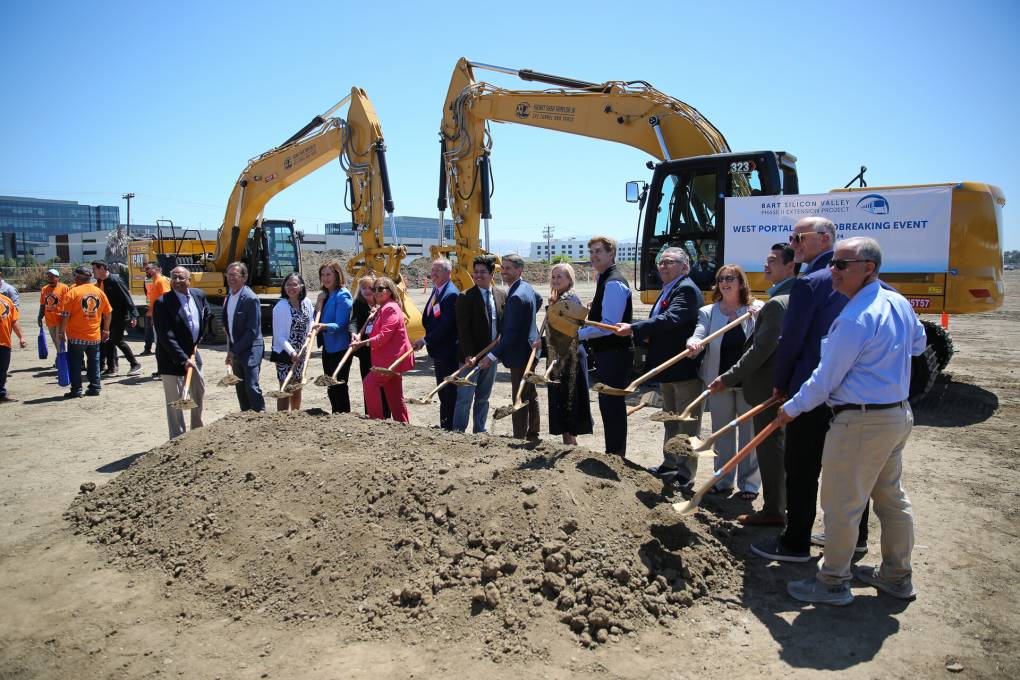
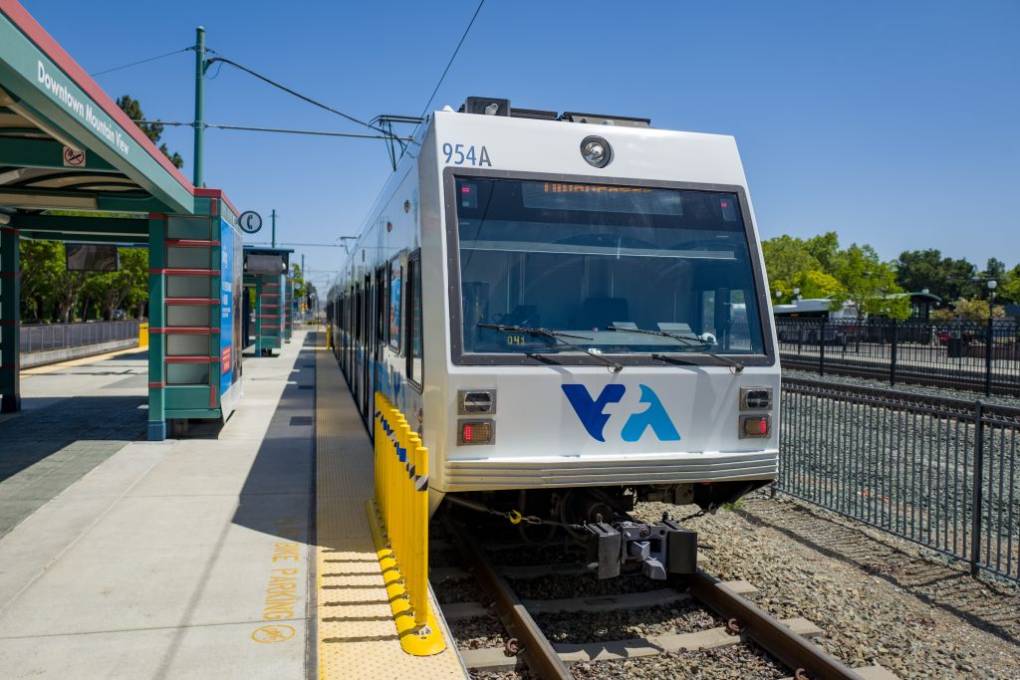
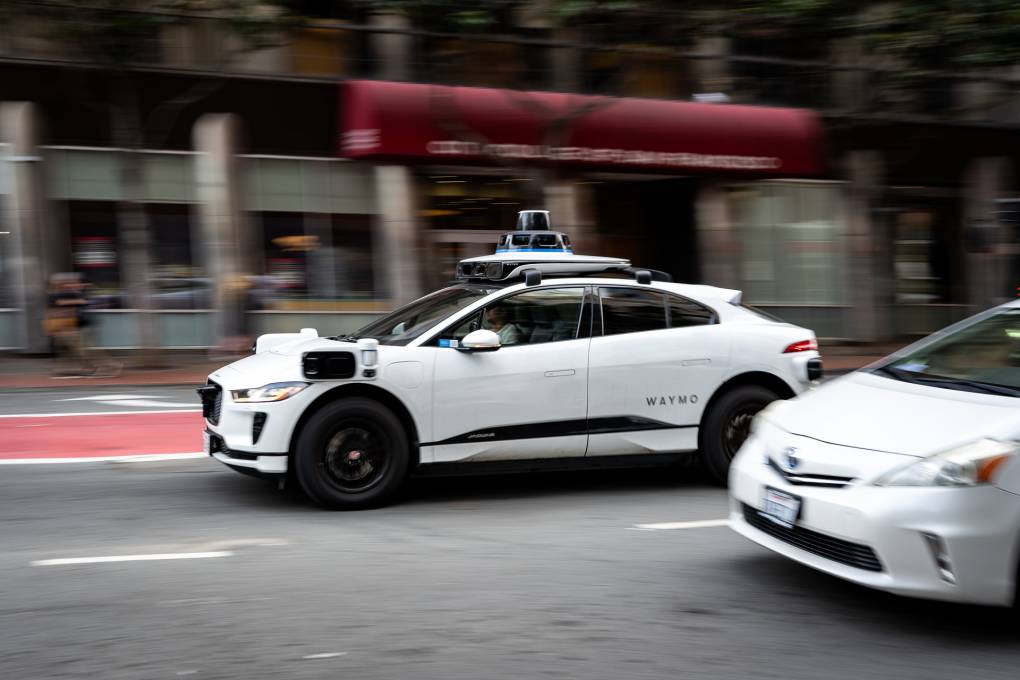
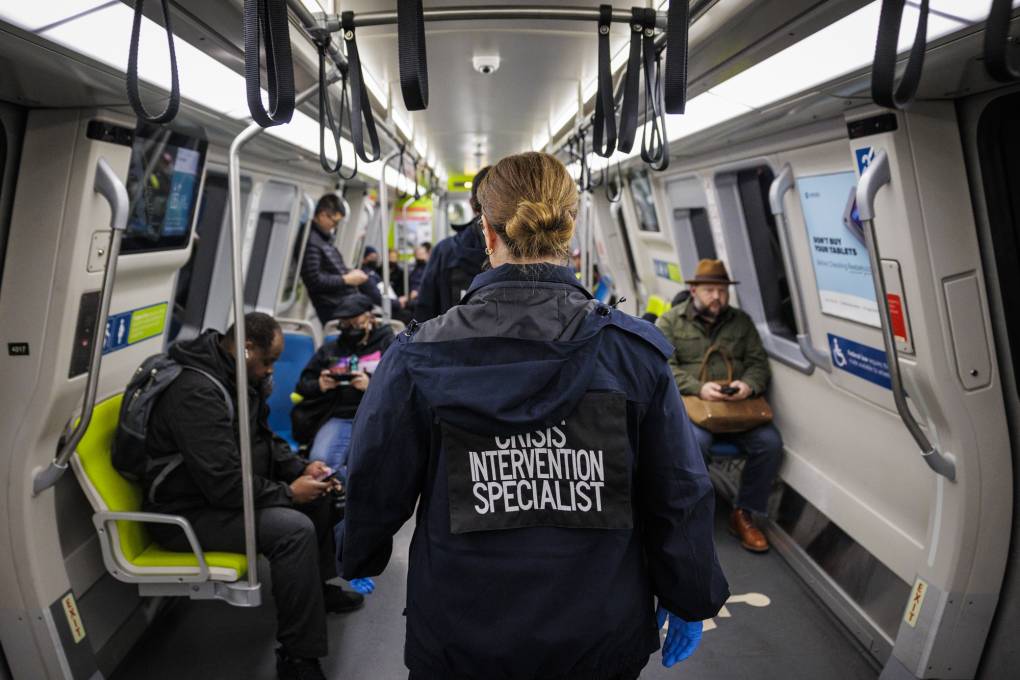

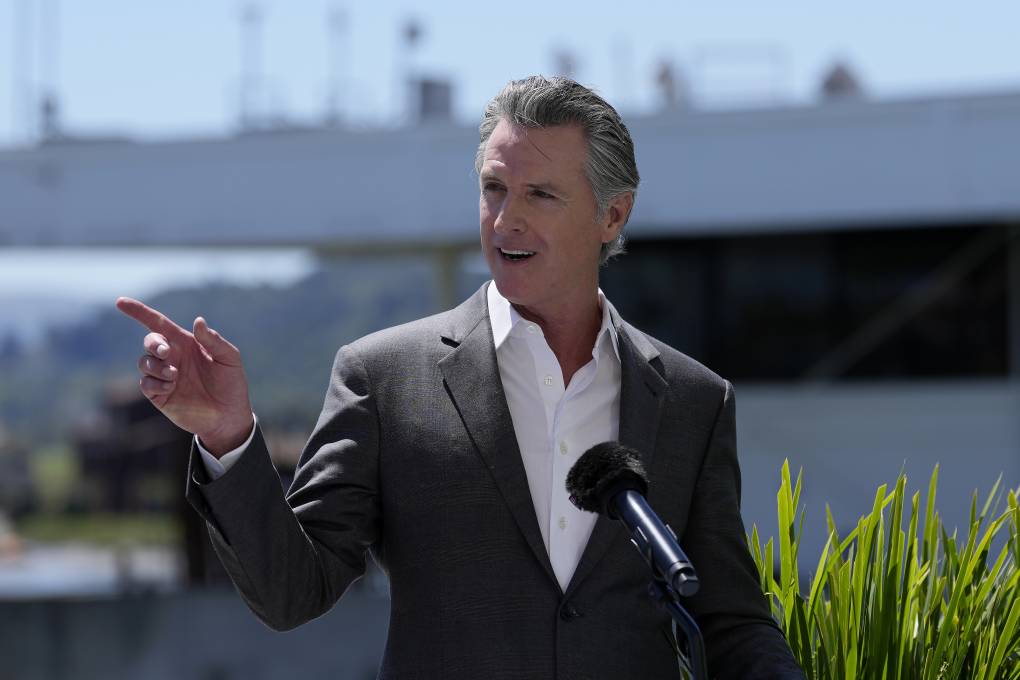
![A sign at the airport that reads "I [heart] OAK."](https://cdn.kqed.org/wp-content/uploads/sites/10/2024/05/GettyImages-2148443885-1020x670.jpg)