window.__IS_SSR__=true
window.__INITIAL_STATE__={
"attachmentsReducer": {
"audio_0": {
"type": "attachments",
"id": "audio_0",
"imgSizes": {
"kqedFullSize": {
"file": "https://ww2.kqed.org/news/wp-content/themes/KQED-unified/img/audio_bgs/background0.jpg"
}
}
},
"audio_1": {
"type": "attachments",
"id": "audio_1",
"imgSizes": {
"kqedFullSize": {
"file": "https://ww2.kqed.org/news/wp-content/themes/KQED-unified/img/audio_bgs/background1.jpg"
}
}
},
"audio_2": {
"type": "attachments",
"id": "audio_2",
"imgSizes": {
"kqedFullSize": {
"file": "https://ww2.kqed.org/news/wp-content/themes/KQED-unified/img/audio_bgs/background2.jpg"
}
}
},
"audio_3": {
"type": "attachments",
"id": "audio_3",
"imgSizes": {
"kqedFullSize": {
"file": "https://ww2.kqed.org/news/wp-content/themes/KQED-unified/img/audio_bgs/background3.jpg"
}
}
},
"audio_4": {
"type": "attachments",
"id": "audio_4",
"imgSizes": {
"kqedFullSize": {
"file": "https://ww2.kqed.org/news/wp-content/themes/KQED-unified/img/audio_bgs/background4.jpg"
}
}
},
"placeholder": {
"type": "attachments",
"id": "placeholder",
"imgSizes": {
"thumbnail": {
"file": "https://cdn.kqed.org/wp-content/uploads/2024/12/KQED-Default-Image-816638274-2000x1333-1-160x107.jpg",
"width": 160,
"height": 107,
"mimeType": "image/jpeg"
},
"medium": {
"file": "https://cdn.kqed.org/wp-content/uploads/2024/12/KQED-Default-Image-816638274-2000x1333-1-800x533.jpg",
"width": 800,
"height": 533,
"mimeType": "image/jpeg"
},
"medium_large": {
"file": "https://cdn.kqed.org/wp-content/uploads/2024/12/KQED-Default-Image-816638274-2000x1333-1-768x512.jpg",
"width": 768,
"height": 512,
"mimeType": "image/jpeg"
},
"large": {
"file": "https://cdn.kqed.org/wp-content/uploads/2024/12/KQED-Default-Image-816638274-2000x1333-1-1020x680.jpg",
"width": 1020,
"height": 680,
"mimeType": "image/jpeg"
},
"1536x1536": {
"file": "https://cdn.kqed.org/wp-content/uploads/2024/12/KQED-Default-Image-816638274-2000x1333-1-1536x1024.jpg",
"width": 1536,
"height": 1024,
"mimeType": "image/jpeg"
},
"fd-lrg": {
"file": "https://cdn.kqed.org/wp-content/uploads/2024/12/KQED-Default-Image-816638274-2000x1333-1-1536x1024.jpg",
"width": 1536,
"height": 1024,
"mimeType": "image/jpeg"
},
"fd-med": {
"file": "https://cdn.kqed.org/wp-content/uploads/2024/12/KQED-Default-Image-816638274-2000x1333-1-1020x680.jpg",
"width": 1020,
"height": 680,
"mimeType": "image/jpeg"
},
"fd-sm": {
"file": "https://cdn.kqed.org/wp-content/uploads/2024/12/KQED-Default-Image-816638274-2000x1333-1-800x533.jpg",
"width": 800,
"height": 533,
"mimeType": "image/jpeg"
},
"post-thumbnail": {
"file": "https://cdn.kqed.org/wp-content/uploads/2024/12/KQED-Default-Image-816638274-2000x1333-1-672x372.jpg",
"width": 672,
"height": 372,
"mimeType": "image/jpeg"
},
"twentyfourteen-full-width": {
"file": "https://cdn.kqed.org/wp-content/uploads/2024/12/KQED-Default-Image-816638274-2000x1333-1-1038x576.jpg",
"width": 1038,
"height": 576,
"mimeType": "image/jpeg"
},
"xxsmall": {
"file": "https://cdn.kqed.org/wp-content/uploads/2024/12/KQED-Default-Image-816638274-2000x1333-1-160x107.jpg",
"width": 160,
"height": 107,
"mimeType": "image/jpeg"
},
"xsmall": {
"file": "https://cdn.kqed.org/wp-content/uploads/2024/12/KQED-Default-Image-816638274-2000x1333-1-672x372.jpg",
"width": 672,
"height": 372,
"mimeType": "image/jpeg"
},
"small": {
"file": "https://cdn.kqed.org/wp-content/uploads/2024/12/KQED-Default-Image-816638274-2000x1333-1-672x372.jpg",
"width": 672,
"height": 372,
"mimeType": "image/jpeg"
},
"xlarge": {
"file": "https://cdn.kqed.org/wp-content/uploads/2024/12/KQED-Default-Image-816638274-2000x1333-1-1020x680.jpg",
"width": 1020,
"height": 680,
"mimeType": "image/jpeg"
},
"full-width": {
"file": "https://cdn.kqed.org/wp-content/uploads/2024/12/KQED-Default-Image-816638274-2000x1333-1-1920x1280.jpg",
"width": 1920,
"height": 1280,
"mimeType": "image/jpeg"
},
"guest-author-32": {
"file": "https://cdn.kqed.org/wp-content/uploads/2025/01/KQED-Default-Image-816638274-1333x1333-1-160x160.jpg",
"width": 32,
"height": 32,
"mimeType": "image/jpeg"
},
"guest-author-50": {
"file": "https://cdn.kqed.org/wp-content/uploads/2025/01/KQED-Default-Image-816638274-1333x1333-1-160x160.jpg",
"width": 50,
"height": 50,
"mimeType": "image/jpeg"
},
"guest-author-64": {
"file": "https://cdn.kqed.org/wp-content/uploads/2025/01/KQED-Default-Image-816638274-1333x1333-1-160x160.jpg",
"width": 64,
"height": 64,
"mimeType": "image/jpeg"
},
"guest-author-96": {
"file": "https://cdn.kqed.org/wp-content/uploads/2025/01/KQED-Default-Image-816638274-1333x1333-1-160x160.jpg",
"width": 96,
"height": 96,
"mimeType": "image/jpeg"
},
"guest-author-128": {
"file": "https://cdn.kqed.org/wp-content/uploads/2025/01/KQED-Default-Image-816638274-1333x1333-1-160x160.jpg",
"width": 128,
"height": 128,
"mimeType": "image/jpeg"
},
"detail": {
"file": "https://cdn.kqed.org/wp-content/uploads/2025/01/KQED-Default-Image-816638274-1333x1333-1-160x160.jpg",
"width": 160,
"height": 160,
"mimeType": "image/jpeg"
},
"kqedFullSize": {
"file": "https://cdn.kqed.org/wp-content/uploads/2024/12/KQED-Default-Image-816638274-2000x1333-1.jpg",
"width": 2000,
"height": 1333
}
}
},
"news_126686": {
"type": "attachments",
"id": "news_126686",
"meta": {
"index": "attachments_1716263798",
"site": "news",
"id": "126686",
"found": true
},
"parent": 126664,
"imgSizes": {
"kqedFullSize": {
"file": "https://ww2.kqed.org/app/uploads/sites/10/2014/02/parkingmeter.jpg",
"width": 640,
"height": 426
}
},
"publishDate": 1392657970,
"modified": 1392657970,
"caption": null,
"description": null,
"title": "parkingmeter",
"credit": null,
"status": "inherit",
"isLoading": false,
"fetchFailed": false
},
"news_146345": {
"type": "attachments",
"id": "news_146345",
"meta": {
"index": "attachments_1716263798",
"site": "news",
"id": "146345",
"found": true
},
"parent": 146160,
"imgSizes": {
"kqedFullSize": {
"file": "https://ww2.kqed.org/app/uploads/sites/10/2014/08/RS11910_IMG_2299-lpr.jpg",
"width": 2000,
"height": 1333
}
},
"publishDate": 1409348163,
"modified": 1409348163,
"caption": "A bike-share station on Market Street is next to the Powell Street BART Station. (Mark Andrew Boyer)",
"description": null,
"title": "bike share",
"credit": null,
"status": "inherit",
"isLoading": false,
"fetchFailed": false
},
"news_146093": {
"type": "attachments",
"id": "news_146093",
"meta": {
"index": "attachments_1716263798",
"site": "news",
"id": "146093",
"found": true
},
"parent": 146090,
"imgSizes": {
"kqedFullSize": {
"file": "https://ww2.kqed.org/app/uploads/sites/10/2014/08/i280.png",
"width": 640,
"height": 810
}
},
"publishDate": 1409241359,
"modified": 1409241359,
"caption": null,
"description": null,
"title": "i280",
"credit": null,
"status": "inherit",
"isLoading": false,
"fetchFailed": false
},
"news_145901": {
"type": "attachments",
"id": "news_145901",
"meta": {
"index": "attachments_1716263798",
"site": "news",
"id": "145901",
"found": true
},
"parent": 145848,
"imgSizes": {
"kqedFullSize": {
"file": "https://ww2.kqed.org/app/uploads/sites/10/2014/08/fremontfuture.jpg",
"width": 656,
"height": 407
}
},
"publishDate": 1409085190,
"modified": 1409085190,
"caption": "Artist's rendering of proposed Capitol Avenue development in Fremont's downtown district. ",
"description": "Artist's rendering of proposed Capitol Avenue development in Fremont's downtown district. ",
"title": "Fremont-Downtown Development",
"credit": null,
"status": "inherit",
"isLoading": false,
"fetchFailed": false
},
"news_145473": {
"type": "attachments",
"id": "news_145473",
"meta": {
"index": "attachments_1716263798",
"site": "news",
"id": "145473",
"found": true
},
"parent": 145312,
"imgSizes": {
"kqedFullSize": {
"file": "https://ww2.kqed.org/app/uploads/sites/10/2014/08/bartberryessa.jpg",
"width": 1699,
"height": 1024
}
},
"publishDate": 1408737915,
"modified": 1408737915,
"caption": "Rendering of the planned BART Berryessa Station in San Jose. (VTA)",
"description": null,
"title": "BART-Berryessa Station ",
"credit": null,
"status": "inherit",
"isLoading": false,
"fetchFailed": false
},
"news_145159": {
"type": "attachments",
"id": "news_145159",
"meta": {
"index": "attachments_1716263798",
"site": "news",
"id": "145159",
"found": true
},
"parent": 145157,
"imgSizes": {
"kqedFullSize": {
"file": "https://ww2.kqed.org/app/uploads/sites/10/2014/08/155268661.jpg",
"width": 3000,
"height": 2000
}
},
"publishDate": 1408478492,
"modified": 1408478492,
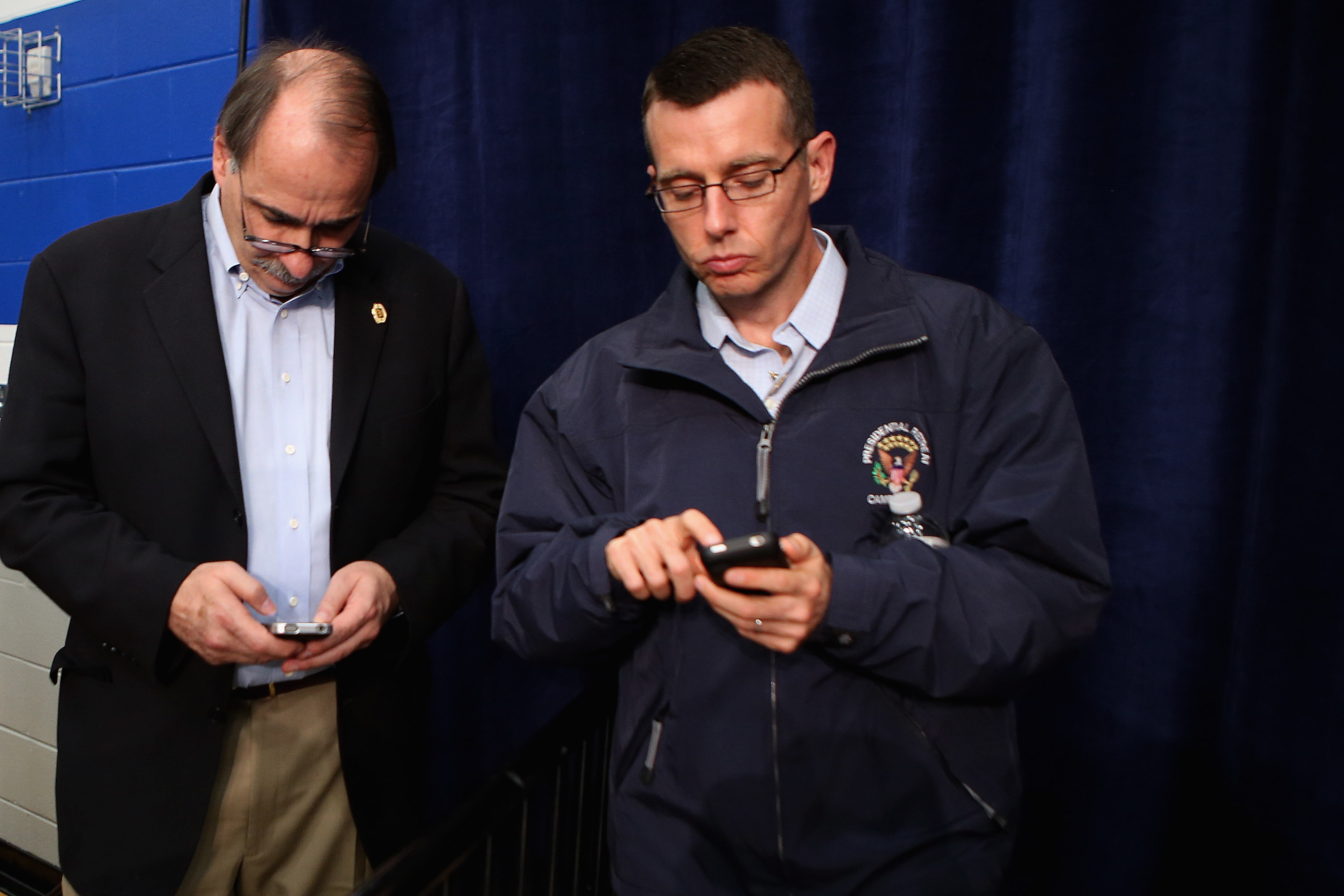
"caption": " David Plouffe, right, during President Obama's 2012 campaign. (Chip Somodevilla/Getty Images)",
"description": "SPRINGFIELD, OH - NOVEMBER 02: U.S. President Barack Obama addresses a campaign rally at Springfield High School November 2, 2012 in Springfield, Ohio. With four days left in the general election, Obama and the Republican presidential nominee, former Massachusetts Gov. Mitt Romney, are racing from swing-state to swing-state in an attempt to change voters' minds at the last minute. (Photo by Chip Somodevilla/Getty Images)",
"title": "David Plouffe-Uber",
"credit": null,
"status": "inherit",
"isLoading": false,
"fetchFailed": false
},
"news_138259": {
"type": "attachments",
"id": "news_138259",
"meta": {
"index": "attachments_1716263798",
"site": "news",
"id": "138259",
"found": true
},
"parent": 138232,
"imgSizes": {
"wide-featured-image": {
"file": "https://ww2.kqed.org/app/uploads/sites/10/2014/06/177205738-600x300.jpg",
"width": 600,
"mimeType": "image/jpeg",
"height": 300
},
"featured-page": {
"file": "https://ww2.kqed.org/app/uploads/sites/10/2014/06/177205738-315x145.jpg",
"width": 315,
"mimeType": "image/jpeg",
"height": 145
},
"thumbnail": {
"file": "https://ww2.kqed.org/app/uploads/sites/10/2014/06/177205738-300x300.jpg",
"width": 300,
"mimeType": "image/jpeg",
"height": 300
},
"kqedFullSize": {
"file": "https://ww2.kqed.org/app/uploads/sites/10/2014/06/177205738-e1407528453218.jpg",
"width": 640,
"height": 422
},
"large": {
"file": "https://ww2.kqed.org/app/uploads/sites/10/2014/06/177205738-1028x677.jpg",
"width": 1028,
"mimeType": "image/jpeg",
"height": 677
},
"wide-featured-image-full": {
"file": "https://ww2.kqed.org/app/uploads/sites/10/2014/06/177205738-960x300.jpg",
"width": 960,
"mimeType": "image/jpeg",
"height": 300
},
"guest-author-96": {
"file": "https://ww2.kqed.org/app/uploads/sites/10/2014/06/177205738-96x96.jpg",
"width": 96,
"mimeType": "image/jpeg",
"height": 96
},
"medium": {
"file": "https://ww2.kqed.org/app/uploads/sites/10/2014/06/177205738-640x421.jpg",
"width": 640,
"mimeType": "image/jpeg",
"height": 421
},
"guest-author-64": {
"file": "https://ww2.kqed.org/app/uploads/sites/10/2014/06/177205738-64x64.jpg",
"width": 64,
"mimeType": "image/jpeg",
"height": 64
},
"guest-author-32": {
"file": "https://ww2.kqed.org/app/uploads/sites/10/2014/06/177205738-32x32.jpg",
"width": 32,
"mimeType": "image/jpeg",
"height": 32
},
"narrow-featured-image": {
"file": "https://ww2.kqed.org/app/uploads/sites/10/2014/06/177205738-400x300.jpg",
"width": 400,
"mimeType": "image/jpeg",
"height": 300
},
"narrow-featured-image-full": {
"file": "https://ww2.kqed.org/app/uploads/sites/10/2014/06/177205738-640x360.jpg",
"width": 640,
"mimeType": "image/jpeg",
"height": 360
},
"detail": {
"file": "https://ww2.kqed.org/app/uploads/sites/10/2014/06/177205738-75x75.jpg",
"width": 75,
"mimeType": "image/jpeg",
"height": 75
},
"guest-author-128": {
"file": "https://ww2.kqed.org/app/uploads/sites/10/2014/06/177205738-128x128.jpg",
"width": 128,
"mimeType": "image/jpeg",
"height": 128
}
},
"publishDate": 1402015028,
"modified": 1402015028,
"caption": "A Tesla electric vehicle being assembled at the Tesla Motors car factory in Tilburg, the Netherlands. (Guus Schoonewille/AFP/Getty Images)",
"description": "A Tesla car being assembled at the new Tesla Motors car factory in Tilburg, the Netherlands. (Guus Schoonewille/AFP/Getty Images)",
"title": "NETHERLANDS-US-EU-AUTO-BUSINESS-ECONOMY-TESLA-MOTORS",
"credit": null,
"status": "inherit",
"isLoading": false,
"fetchFailed": false
},
"news_144165": {
"type": "attachments",
"id": "news_144165",
"meta": {
"index": "attachments_1716263798",
"site": "news",
"id": "144165",
"found": true
},
"title": "TSA badge",
"publishDate": 1407445887,
"status": "inherit",
"parent": 144160,
"modified": 1766003686,
"caption": "A TSA arm patch is seen at Los Angeles International Airport in February 2014. (David McNew/Getty Images)",
"credit": "David McNew/Getty Images",
"altTag": "A TSA arm patch is seen at Los Angeles International Airport in February 2014. (David McNew/Getty Images)",
"description": "A TSA arm patch is seen at Los Angeles International Airport (LAX) on Feb. 20, 2014, in Los Angeles, California. ",
"imgSizes": {
"kqedFullSize": {
"file": "https://cdn.kqed.org/wp-content/uploads/sites/10/2014/08/470823295-e1766003646657.jpg",
"width": 2000,
"height": 1334
}
},
"isLoading": false,
"fetchFailed": false
},
"news_140404": {
"type": "attachments",
"id": "news_140404",
"meta": {
"index": "attachments_1716263798",
"site": "news",
"id": "140404",
"found": true
},
"parent": 140402,
"imgSizes": {
"kqedFullSize": {
"file": "https://ww2.kqed.org/app/uploads/sites/10/2014/06/GoldenGate.jpg",
"width": 1280,
"height": 899
}
},
"publishDate": 1403884397,
"modified": 1403884397,
"caption": null,
"description": null,
"title": "Golden Gate Bridge To Seek Corporate Sponsorship",
"credit": null,
"status": "inherit",
"isLoading": false,
"fetchFailed": false
},
"news_143658": {
"type": "attachments",
"id": "news_143658",
"meta": {
"index": "attachments_1716263798",
"site": "news",
"id": "143658",
"found": true
},
"parent": 143653,
"imgSizes": {
"kqedFullSize": {
"file": "https://ww2.kqed.org/app/uploads/sites/10/2014/08/RS11371_photo.JPG-alt_136.jpg",
"width": 3264,
"height": 2448
}
},
"publishDate": 1406936101,
"modified": 1406936101,
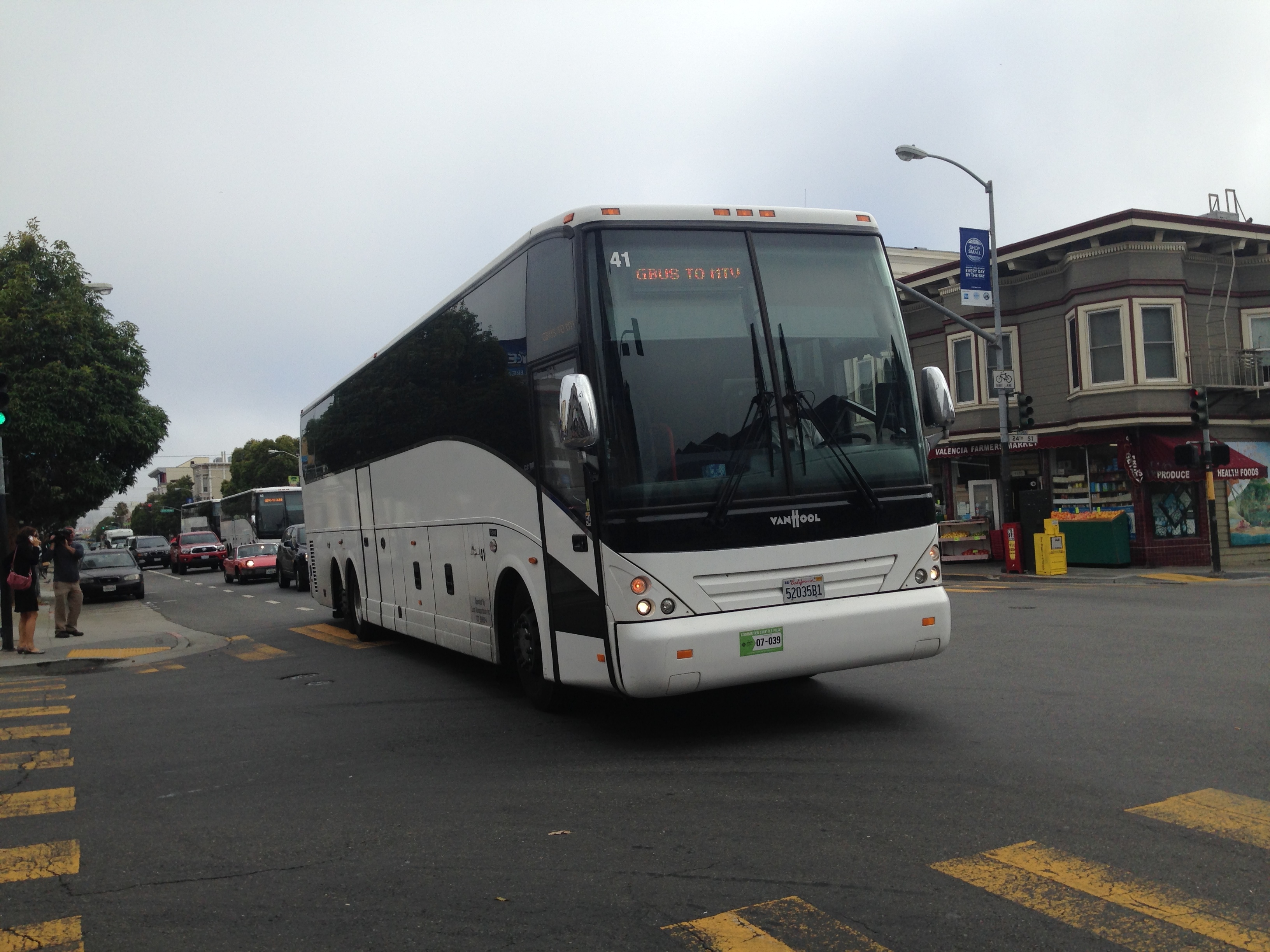
"caption": "A commuter shuttle headed to Google's Mountain View campus pulls into a pre-approved Muni stop at 24th St and Valencia. ",
"description": null,
"title": "RS11371_photo.JPG-alt_136",
"credit": null,
"status": "inherit",
"isLoading": false,
"fetchFailed": false
},
"news_126963": {
"type": "attachments",
"id": "news_126963",
"meta": {
"index": "attachments_1716263798",
"site": "news",
"id": "126963",
"found": true
},
"parent": 126954,
"imgSizes": {
"kqedFullSize": {
"file": "https://ww2.kqed.org/app/uploads/sites/10/2014/02/baybridge-640ab.jpg",
"width": 640,
"height": 433
}
},
"publishDate": 1392862149,
"modified": 1421776336,
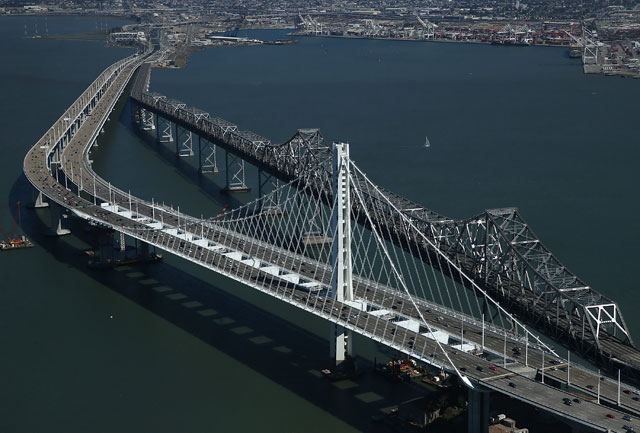
"caption": "The new eastern span of the Bay Bridge shortly before it opened in September 2013.",
"description": "The new eastern span of the Bay Bridge shortly before it opened in September 2013.",
"title": "baybridge-640ab",
"credit": " Justin Sullivan/Getty Images",
"status": "inherit",
"isLoading": false,
"fetchFailed": false
}
},
"audioPlayerReducer": {
"postId": "stream_live",
"isPaused": true,
"isPlaying": false,
"pfsActive": false,
"pledgeModalIsOpen": true,
"playerDrawerIsOpen": false,
"liveAudioPlayStartedAt": 0,
"liveAudioPlayContext": ""
},
"authorsReducer": {
"byline_news_145312": {
"type": "authors",
"id": "byline_news_145312",
"meta": {
"override": true
},
"slug": "byline_news_145312",
"name": "Aaron Mendelson",
"isLoading": false
},
"jbrooks": {
"type": "authors",
"id": "80",
"meta": {
"index": "authors_1716337520",
"id": "80",
"found": true
},
"name": "Jon Brooks",
"firstName": "Jon",
"lastName": "Brooks",
"slug": "jbrooks",
"email": "jbrooks@kqed.org",
"display_author_email": true,
"staff_mastheads": [
"science"
],
"title": "Digital Editor",
"bio": "Jon Brooks is a former Digital Editor for KQED Science. He is the former editor of KQED’s daily news blog, News Fix. In 2014, he won a California Journalism Award for his coverage of ride services like Uber and Lyft and the taxi industry. A veteran blogger, he previously worked for Yahoo! in various news writing and editing roles. Jon is also a playwright whose work has been produced in San Francisco, New York, Italy, and around the U.S. He has written about film for his own blog and studied film at Boston University.",
"avatar": "https://secure.gravatar.com/avatar/98887f7ed1c876ed414d4c915e969584?s=600&d=blank&r=g",
"twitter": "jbrooksfoy",
"facebook": null,
"instagram": null,
"linkedin": null,
"sites": [
{
"site": "arts",
"roles": [
"Contributor",
"editor"
]
},
{
"site": "news",
"roles": [
"author"
]
},
{
"site": "futureofyou",
"roles": [
"administrator"
]
},
{
"site": "mindshift",
"roles": [
"editor"
]
},
{
"site": "stateofhealth",
"roles": [
"editor"
]
},
{
"site": "science",
"roles": [
"administrator"
]
},
{
"site": "quest",
"roles": [
"editor"
]
}
],
"headData": {
"title": "Jon Brooks | KQED",
"description": "Digital Editor",
"ogImgSrc": "https://secure.gravatar.com/avatar/98887f7ed1c876ed414d4c915e969584?s=600&d=blank&r=g",
"twImgSrc": "https://secure.gravatar.com/avatar/98887f7ed1c876ed414d4c915e969584?s=600&d=blank&r=g"
},
"isLoading": false,
"link": "/author/jbrooks"
},
"bgoebel": {
"type": "authors",
"id": "214",
"meta": {
"index": "authors_1716337520",
"id": "214",
"found": true
},
"name": "Bryan Goebel",
"firstName": "Bryan",
"lastName": "Goebel",
"slug": "bgoebel",
"email": "bgoebel@kqed.org",
"display_author_email": false,
"staff_mastheads": [],
"title": null,
"bio": "Bryan Goebel is a reporter focused on transportation and housing issues. He was previously the editor of Streetsblog San Francisco, and an anchor/editor at KCBS Radio. He's a lifelong Californian and has also worked at radio stations in Barstow, Redding and Sacramento.",
"avatar": "https://secure.gravatar.com/avatar/7fdd6b065bfe9a23a71bcfa80848df88?s=600&d=blank&r=g",
"twitter": "velobry",
"facebook": null,
"instagram": null,
"linkedin": null,
"sites": [
{
"site": "news",
"roles": [
"subscriber"
]
},
{
"site": "stateofhealth",
"roles": [
"subscriber"
]
}
],
"headData": {
"title": "Bryan Goebel | KQED",
"description": null,
"ogImgSrc": "https://secure.gravatar.com/avatar/7fdd6b065bfe9a23a71bcfa80848df88?s=600&d=blank&r=g",
"twImgSrc": "https://secure.gravatar.com/avatar/7fdd6b065bfe9a23a71bcfa80848df88?s=600&d=blank&r=g"
},
"isLoading": false,
"link": "/author/bgoebel"
},
"danbrekke": {
"type": "authors",
"id": "222",
"meta": {
"index": "authors_1716337520",
"id": "222",
"found": true
},
"name": "Dan Brekke",
"firstName": "Dan",
"lastName": "Brekke",
"slug": "danbrekke",
"email": "dbrekke@kqed.org",
"display_author_email": true,
"staff_mastheads": [
"news",
"science"
],
"title": "KQED Editor and Reporter",
"bio": "Dan Brekke is a reporter and editor for KQED News, responsible for coverage of topics ranging from California water issues to the Bay Area's transportation challenges. In a newsroom career that began in Chicago in 1972, Dan has worked for \u003cem>The San Francisco Examiner,\u003c/em> Wired and TechTV and has been published in The New York Times, The New York Times Magazine, Business 2.0, Salon and elsewhere.\r\n\r\nSince joining KQED in 2007, Dan has reported, edited and produced both radio and online features and breaking news pieces. He has shared as both editor and reporter in four Society of Professional Journalists Norcal Excellence in Journalism awards and one Edward R. Murrow regional award. He was chosen for a spring 2017 residency at the Mesa Refuge to advance his research on California salmon.\r\n\r\nEmail Dan at: \u003ca href=\"mailto:dbrekke@kqed.org\">dbrekke@kqed.org\u003c/a>\r\n\r\n\u003cstrong>Twitter:\u003c/strong> \u003ca href=\"https://twitter.com/danbrekke\" rel=\"noopener noreferrer\">twitter.com/danbrekke\u003c/a>\r\n\u003cstrong>Facebook:\u003c/strong> \u003ca href=\"https://www.facebook.com/danbrekke\" rel=\"noopener noreferrer\">www.facebook.com/danbrekke\u003c/a>\r\n\u003cstrong>LinkedIn:\u003c/strong> \u003ca href=\"https://www.linkedin.com/in/danbrekke\" rel=\"noopener noreferrer\">www.linkedin.com/in/danbrekke\u003c/a>",
"avatar": "https://secure.gravatar.com/avatar/8f1f0d2a978fb3b23426c922c7e2af558fa36905b49c4ce76a97dc3c72d27226?s=600&d=mm&r=g",
"twitter": "danbrekke",
"bluesky": null,
"facebook": null,
"instagram": "https://www.instagram.com/dan.brekke/",
"linkedin": "https://www.linkedin.com/in/danbrekke/",
"sites": [
{
"site": "news",
"roles": [
"administrator",
"create_posts"
]
},
{
"site": "stateofhealth",
"roles": [
"editor"
]
},
{
"site": "science",
"roles": [
"editor"
]
},
{
"site": "quest",
"roles": [
"contributor"
]
},
{
"site": "food",
"roles": [
"contributor"
]
},
{
"site": "forum",
"roles": [
"contributor"
]
},
{
"site": "elections",
"roles": [
"editor"
]
},
{
"site": "liveblog",
"roles": [
"editor"
]
}
],
"headData": {
"title": "Dan Brekke | KQED",
"description": "KQED Editor and Reporter",
"ogImgSrc": "https://secure.gravatar.com/avatar/8f1f0d2a978fb3b23426c922c7e2af558fa36905b49c4ce76a97dc3c72d27226?s=600&d=mm&r=g",
"twImgSrc": "https://secure.gravatar.com/avatar/8f1f0d2a978fb3b23426c922c7e2af558fa36905b49c4ce76a97dc3c72d27226?s=600&d=mm&r=g"
},
"isLoading": false,
"link": "/author/danbrekke"
},
"iangell": {
"type": "authors",
"id": "229",
"meta": {
"index": "authors_1716337520",
"id": "229",
"found": true
},
"name": "Isabel Angell",
"firstName": "Isabel",
"lastName": "Angell",
"slug": "iangell",
"email": "iangell@KQED.org",
"display_author_email": false,
"staff_mastheads": [],
"title": null,
"bio": "Isabel Angell is an on-call reporter for KQED. She joined the station as a newsroom intern in 2013. \u003ca href=\"https://twitter.com/IsabeltheAngell\" target=\"_blank\" rel=\"noopener\">@IsabeltheAngell \u003c/a>",
"avatar": "https://secure.gravatar.com/avatar/e5d0b523fbffce6592a52f1dccafabe5?s=600&d=blank&r=g",
"twitter": null,
"facebook": null,
"instagram": null,
"linkedin": null,
"sites": [
{
"site": "news",
"roles": [
"subscriber"
]
}
],
"headData": {
"title": "Isabel Angell | KQED",
"description": null,
"ogImgSrc": "https://secure.gravatar.com/avatar/e5d0b523fbffce6592a52f1dccafabe5?s=600&d=blank&r=g",
"twImgSrc": "https://secure.gravatar.com/avatar/e5d0b523fbffce6592a52f1dccafabe5?s=600&d=blank&r=g"
},
"isLoading": false,
"link": "/author/iangell"
},
"kqed": {
"type": "authors",
"id": "236",
"meta": {
"index": "authors_1716337520",
"id": "236",
"found": true
},
"name": "KQED News Staff",
"firstName": "KQED News Staff",
"lastName": null,
"slug": "kqed",
"email": "faq@kqed.org",
"display_author_email": false,
"staff_mastheads": [],
"title": null,
"bio": null,
"avatar": "https://secure.gravatar.com/avatar/ef0e801a68c4c54afa9180db14084167?s=600&d=blank&r=g",
"twitter": null,
"facebook": null,
"instagram": null,
"linkedin": null,
"sites": [
{
"site": "arts",
"roles": [
"contributor"
]
},
{
"site": "news",
"roles": [
"editor"
]
},
{
"site": "futureofyou",
"roles": [
"author"
]
}
],
"headData": {
"title": "KQED News Staff | KQED",
"description": null,
"ogImgSrc": "https://secure.gravatar.com/avatar/ef0e801a68c4c54afa9180db14084167?s=600&d=blank&r=g",
"twImgSrc": "https://secure.gravatar.com/avatar/ef0e801a68c4c54afa9180db14084167?s=600&d=blank&r=g"
},
"isLoading": false,
"link": "/author/kqed"
},
"kqednewsstaffandwires": {
"type": "authors",
"id": "237",
"meta": {
"index": "authors_1716337520",
"id": "237",
"found": true
},
"name": "KQED News Staff and Wires",
"firstName": "KQED News Staff and Wires",
"lastName": null,
"slug": "kqednewsstaffandwires",
"email": "onlinenewsstaff@kqed.org",
"display_author_email": false,
"staff_mastheads": [],
"title": null,
"bio": null,
"avatar": "https://secure.gravatar.com/avatar/72295af8ebbfbd19a4948f5271285664?s=600&d=blank&r=g",
"twitter": null,
"facebook": null,
"instagram": null,
"linkedin": null,
"sites": [
{
"site": "arts",
"roles": [
"contributor"
]
},
{
"site": "news",
"roles": [
"contributor"
]
},
{
"site": "lowdown",
"roles": [
"author"
]
},
{
"site": "stateofhealth",
"roles": [
"contributor"
]
},
{
"site": "food",
"roles": [
"author"
]
}
],
"headData": {
"title": "KQED News Staff and Wires | KQED",
"description": null,
"ogImgSrc": "https://secure.gravatar.com/avatar/72295af8ebbfbd19a4948f5271285664?s=600&d=blank&r=g",
"twImgSrc": "https://secure.gravatar.com/avatar/72295af8ebbfbd19a4948f5271285664?s=600&d=blank&r=g"
},
"isLoading": false,
"link": "/author/kqednewsstaffandwires"
}
},
"pagesReducer": {
"news_category_transportation": {
"type": "terms",
"id": "news_1397",
"meta": {
"index": "terms_1716263798",
"site": "news",
"id": "1397",
"score": 12.940407
},
"featImg": null,
"name": "Transportation",
"description": null,
"taxonomy": "category",
"headData": {
"twImgId": null,
"twTitle": null,
"ogTitle": null,
"ogImgId": null,
"twDescription": null,
"description": null,
"title": "Transportation Archives | KQED News",
"ogDescription": null
},
"ttid": 1409,
"slug": "transportation",
"isLoading": false,
"title": "Transportation",
"pageMeta": {
"site": "news",
"WpPageTemplate": "page-topic-editorial",
"currentPage": 113
},
"blocks": [
{
"blockName": "kqed/post-list",
"attrs": {
"layout": "cardArticle2",
"query": "posts/news?category=transportation",
"seeMore": false,
"paginated": true,
"page": 113
}
},
{
"blockName": "kqed/ad"
}
]
}
},
"pfsSessionReducer": {},
"postsReducer": {
"stream_live": {
"type": "live",
"id": "stream_live",
"audioUrl": "https://streams.kqed.org/kqedradio",
"title": "Live Stream",
"excerpt": "Live Stream information currently unavailable.",
"link": "/radio",
"featImg": "",
"label": {
"name": "KQED Live",
"link": "/"
}
},
"stream_kqedNewscast": {
"type": "posts",
"id": "stream_kqedNewscast",
"audioUrl": "https://www.kqed.org/.stream/anon/radio/RDnews/newscast.mp3?_=1",
"title": "KQED Newscast",
"featImg": "",
"label": {
"name": "88.5 FM",
"link": "/"
}
},
"news_74953": {
"type": "posts",
"id": "news_74953",
"meta": {
"index": "posts_1716263798",
"site": "news",
"id": "74953",
"score": null,
"sort": [
1409585404000
]
},
"parent": 0,
"labelTerm": {
"site": "news",
"term": 6944
},
"blocks": [],
"publishDate": 1409585404,
"format": "aside",
"disqusTitle": "San Francisco Bay Area Labor Day Parking and Transit Schedules",
"title": "San Francisco Bay Area Labor Day Parking and Transit Schedules",
"headTitle": "News Fix | KQED News",
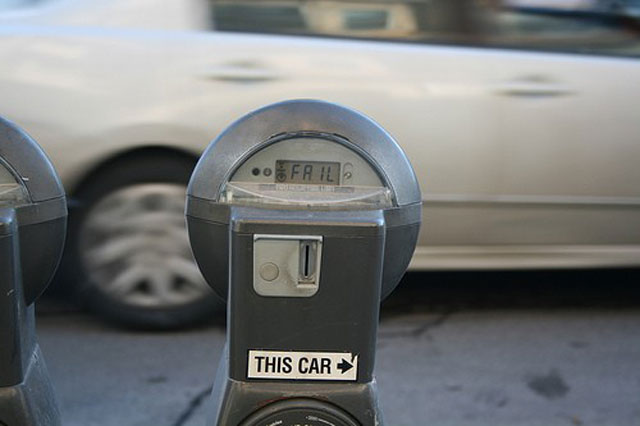
"content": "\u003cp>\u003cimg class=\"aligncenter size-full wp-image-126686\" src=\"http://ww2.kqed.org/news/wp-content/uploads/sites/10/2014/02/parkingmeter.jpg\" alt=\"parkingmeter\" width=\"640\" height=\"426\">\u003c/p>\n\u003cp>For those who've got some get-up-and-go this Labor Day, some helpful info ...\u003c/p>\n\u003cp>\u003cem>Parking enforcement:\u003c/em>\u003c/p>\n\u003cp>\u003cstrong>\u003ca href=\"http://www.sfmta.com/cms/penf/holidayenf.htm\">San Francisco\u003c/a>\u003c/strong>\u003c/p>\n\u003cp>Not enforced: commuter towaway, residential permits, M-F street sweeping\u003c/p>\n\u003cp>[ad fullwidth]\u003c/p>\n\u003cp>Enforced: 7-day street sweeping and parking meters\u003c/p>\n\u003cp>\u003ca href=\"http://www.oaklandnet.com/government/fwawebsite/parking/parking_enforce.htm\" target=\"_blank\">\u003cstrong>Oakland\u003c/strong>\u003c/a>\u003c/p>\n\u003cp>Not enforced: \u003ca href=\"http://www.oaklandnet.com/government/fwawebsite/parking/parking_enforce.htm\">street sweeping\u003c/a> and \u003ca href=\"http://www.oaklandnet.com/government/fwawebsite/parking/parking_mc&r.htm\">parking meters\u003c/a>\u003c/p>\n\u003cp>\u003ca href=\"http://www.sanjoseca.gov/index.aspx?NID=1877\" target=\"_blank\">\u003cstrong>San Jose\u003c/strong>\u003c/a>\u003c/p>\n\u003cp>Not enforced: parking meters\u003c/p>\n\u003cp>\u003cem>Transit\u003c/em>\u003c/p>\n\u003cp>Clink on the links for schedules.\u003c/p>\n\u003cul>\n\u003cli>\u003ca href=\"http://www.bart.gov/schedules/bystation\" target=\"_blank\">\u003cstrong>BART\u003c/strong> \u003c/a>- Sunday service\u003c/li>\n\u003cli>\u003ca href=\"http://transit.511.org/schedules/index.aspx#m1=S&m2=bus&cid=SF\" target=\"_blank\">\u003cstrong>Muni\u003c/strong>\u003c/a> - Sunday service\u003c/li>\n\u003cli>\u003ca href=\"http://transit.511.org/schedules/holiday.aspx\" target=\"_blank\">\u003cstrong>511.org\u003c/strong>\u003c/a> has a master list with links to holiday schedules for various Bay Area transit systems.\u003c/li>\n\u003c/ul>\n\u003cp>\u003c/p>\n\u003cp> \u003c/p>\n\n",
"disqusIdentifier": "74953 http://ww2.kqed.org/news/?p=74953",
"disqusUrl": "https://ww2.kqed.org/news/2014/09/01/san-francisco-bay-area-labor-day-parking-and-transit-schedules/",
"stats": {
"hasVideo": false,
"hasChartOrMap": false,
"hasAudio": false,
"hasPolis": false,
"wordCount": 85,
"hasGoogleForm": false,
"hasGallery": false,
"hasHearkenModule": false,
"iframeSrcs": [],
"paragraphCount": 14
},
"modified": 1420841511,
"excerpt": "Parking rules in San Francisco, Oakland and San Jose, plus links to Bay Area transit schedules.",
"headData": {
"twImgId": "",
"twTitle": "",
"ogTitle": "",
"ogImgId": "",
"twDescription": "",
"description": "Parking rules in San Francisco, Oakland and San Jose, plus links to Bay Area transit schedules.",
"title": "San Francisco Bay Area Labor Day Parking and Transit Schedules | KQED",
"ogDescription": "",
"schema": {
"@context": "https://schema.org",
"@type": "NewsArticle",
"headline": "San Francisco Bay Area Labor Day Parking and Transit Schedules",
"datePublished": "2014-09-01T08:30:04-07:00",
"dateModified": "2015-01-09T14:11:51-08:00",
"image": "https://cdn.kqed.org/wp-content/uploads/2020/02/KQED-OG-Image@1x.png",
"isAccessibleForFree": "True",
"publisher": {
"@type": "NewsMediaOrganization",
"@id": "https://www.kqed.org/#organization",
"name": "KQED",
"logo": "https://cdn.kqed.org/wp-content/uploads/2020/02/KQED-OG-Image@1x.png",
"url": "https://www.kqed.org",
"sameAs": [
"https://www.facebook.com/KQED",
"https://twitter.com/KQED",
"https://www.instagram.com/kqed/",
"https://www.tiktok.com/@kqedofficial",
"https://www.linkedin.com/company/kqed",
"https://www.youtube.com/channel/UCeC0IOo7i1P_61zVUWbJ4nw"
]
}
}
},
"guestAuthors": [],
"slug": "san-francisco-bay-area-labor-day-parking-and-transit-schedules",
"status": "publish",
"path": "/news/74953/san-francisco-bay-area-labor-day-parking-and-transit-schedules",
"audioTrackLength": null,
"parsedContent": [
{
"type": "contentString",
"content": "\u003cdiv class=\"post-body\">\u003cp>\u003cp>\u003cimg class=\"aligncenter size-full wp-image-126686\" src=\"http://ww2.kqed.org/news/wp-content/uploads/sites/10/2014/02/parkingmeter.jpg\" alt=\"parkingmeter\" width=\"640\" height=\"426\">\u003c/p>\n\u003cp>For those who've got some get-up-and-go this Labor Day, some helpful info ...\u003c/p>\n\u003cp>\u003cem>Parking enforcement:\u003c/em>\u003c/p>\n\u003cp>\u003cstrong>\u003ca href=\"http://www.sfmta.com/cms/penf/holidayenf.htm\">San Francisco\u003c/a>\u003c/strong>\u003c/p>\n\u003cp>Not enforced: commuter towaway, residential permits, M-F street sweeping\u003c/p>\n\u003cp>\u003c/p>\u003c/div>",
"attributes": {
"named": {},
"numeric": []
}
},
{
"type": "component",
"content": "",
"name": "ad",
"attributes": {
"named": {
"label": "fullwidth"
},
"numeric": [
"fullwidth"
]
}
},
{
"type": "contentString",
"content": "\u003cdiv class=\"post-body\">\u003cp>\u003c/p>\n\u003cp>Enforced: 7-day street sweeping and parking meters\u003c/p>\n\u003cp>\u003ca href=\"http://www.oaklandnet.com/government/fwawebsite/parking/parking_enforce.htm\" target=\"_blank\">\u003cstrong>Oakland\u003c/strong>\u003c/a>\u003c/p>\n\u003cp>Not enforced: \u003ca href=\"http://www.oaklandnet.com/government/fwawebsite/parking/parking_enforce.htm\">street sweeping\u003c/a> and \u003ca href=\"http://www.oaklandnet.com/government/fwawebsite/parking/parking_mc&r.htm\">parking meters\u003c/a>\u003c/p>\n\u003cp>\u003ca href=\"http://www.sanjoseca.gov/index.aspx?NID=1877\" target=\"_blank\">\u003cstrong>San Jose\u003c/strong>\u003c/a>\u003c/p>\n\u003cp>Not enforced: parking meters\u003c/p>\n\u003cp>\u003cem>Transit\u003c/em>\u003c/p>\n\u003cp>Clink on the links for schedules.\u003c/p>\n\u003cul>\n\u003cli>\u003ca href=\"http://www.bart.gov/schedules/bystation\" target=\"_blank\">\u003cstrong>BART\u003c/strong> \u003c/a>- Sunday service\u003c/li>\n\u003cli>\u003ca href=\"http://transit.511.org/schedules/index.aspx#m1=S&m2=bus&cid=SF\" target=\"_blank\">\u003cstrong>Muni\u003c/strong>\u003c/a> - Sunday service\u003c/li>\n\u003cli>\u003ca href=\"http://transit.511.org/schedules/holiday.aspx\" target=\"_blank\">\u003cstrong>511.org\u003c/strong>\u003c/a> has a master list with links to holiday schedules for various Bay Area transit systems.\u003c/li>\n\u003c/ul>\n\u003cp>\u003c/p>\n\u003cp> \u003c/p>\n\n\u003c/div>\u003c/p>",
"attributes": {
"named": {},
"numeric": []
}
}
],
"link": "/news/74953/san-francisco-bay-area-labor-day-parking-and-transit-schedules",
"authors": [
"80"
],
"programs": [
"news_6944"
],
"categories": [
"news_8",
"news_1397"
],
"featImg": "news_126686",
"label": "news_6944"
},
"news_146256": {
"type": "posts",
"id": "news_146256",
"meta": {
"index": "posts_1716263798",
"site": "news",
"id": "146256",
"score": null,
"sort": [
1409580011000
]
},
"guestAuthors": [],
"slug": "muni-fares-set-to-go-up-on-labor-day",
"title": "Muni Fares Go Up Today",
"publishDate": 1409580011,
"format": "aside",
"headTitle": "Muni Fares Go Up Today | KQED",
"labelTerm": {
"term": 6944,
"site": "news"
},
"content": "\u003cp>\u003cstrong>Bay City News\u003c/strong>\u003c/p>\n\u003cfigure id=\"attachment_137790\" class=\"wp-caption alignnone\" style=\"max-width: 640px\">\u003ca href=\"http://ww2.kqed.org/news/2014/06/02/whats-next-for-muni-after-sickout/rs739_muni051311-640/\" rel=\"attachment wp-att-137790\">\u003cimg loading=\"lazy\" decoding=\"async\" class=\"size-full wp-image-137790\" src=\"http://ww2.kqed.org/news/wp-content/uploads/sites/10/2014/06/RS739_muni051311-640.jpg\" alt=\"Passengers board a San Francisco MUNI bus March 7, 2007 in San Francisco, California. (Justin Sullivan/Getty Images)\" width=\"640\" height=\"400\">\u003c/a>\u003cfigcaption class=\"wp-caption-text\">Passengers board a Muni bus in San Francisco. (Justin Sullivan/Getty Images)\u003c/figcaption>\u003c/figure>\n\u003cp>The cost to commute in San Francisco is about to go up this Labor Day.\u003c/p>\n\u003cp>Daily cash fares for riding San Francisco Municipal Railway will go from $2 to $2.25 effective Monday, SFMTA officials said.\u003c/p>\n\u003cp>Monthly passes will also go up — inclusive Muni and BART monthly passes will increase to $80 from $76 and Muni-only passes will increase to $68 from $66.\u003c/p>\n\u003cp>Even Lifeline passes for low-income Muni riders will increase by $1 to $34 per month.To be eligible for Lifeline passes, single applicants must make less than $22,980, two-person households must make less than $31,020, and $8,040 is added to the minimum income for each family member.\u003c/p>\n\u003cp>[ad fullwidth]\u003c/p>\n\u003cp>However, fares for senior, disabled and youth Muni riders will remain unchanged. Riders between 5 and 18 years old in low- to middle-income families can also apply for the Free Muni for Youth program, which will remain in effect until at least June 30, 2016.\u003c/p>\n\u003cp>The fare increases are the first since 2009 and fares will continue to rise in the future, according to a formula based on the Bay Area Consumer Price Index.\u003c/p>\n\u003cp>\u003c/p>\n\u003cp>Fares did not rise until now because the board waited until the formula called for a 25-cent increase, according to the SFMTA.\u003c/p>\n\n",
"blocks": [],
"excerpt": "The basic fare for adults increases a quarter to $2.25 and most of the monthly passes go up as well.",
"status": "publish",
"parent": 0,
"modified": 1721107812,
"stats": {
"hasAudio": false,
"hasVideo": false,
"hasChartOrMap": false,
"iframeSrcs": [],
"hasGoogleForm": false,
"hasGallery": false,
"hasHearkenModule": false,
"hasPolis": false,
"paragraphCount": 10,
"wordCount": 232
},
"headData": {
"title": "Muni Fares Go Up Today | KQED",
"description": "The basic fare for adults increases a quarter to $2.25 and most of the monthly passes go up as well.",
"ogTitle": "",
"ogDescription": "",
"ogImgId": "",
"twTitle": "",
"twDescription": "",
"twImgId": "",
"schema": {
"@context": "https://schema.org",
"@type": "NewsArticle",
"headline": "Muni Fares Go Up Today",
"datePublished": "2014-09-01T07:00:11-07:00",
"dateModified": "2024-07-15T22:30:12-07:00",
"image": "https://cdn.kqed.org/wp-content/uploads/2020/02/KQED-OG-Image@1x.png",
"isAccessibleForFree": "True",
"publisher": {
"@type": "NewsMediaOrganization",
"@id": "https://www.kqed.org/#organization",
"name": "KQED",
"logo": "https://cdn.kqed.org/wp-content/uploads/2020/02/KQED-OG-Image@1x.png",
"url": "https://www.kqed.org",
"sameAs": [
"https://www.facebook.com/KQED",
"https://twitter.com/KQED",
"https://www.instagram.com/kqed/",
"https://www.tiktok.com/@kqedofficial",
"https://www.linkedin.com/company/kqed",
"https://www.youtube.com/channel/UCeC0IOo7i1P_61zVUWbJ4nw"
]
}
}
},
"sticky": false,
"customPermalink": "2014/09/01/-muni-fares-rise-on-labor-day/",
"path": "/news/146256/muni-fares-set-to-go-up-on-labor-day",
"audioTrackLength": null,
"parsedContent": [
{
"type": "contentString",
"content": "\u003cdiv class=\"post-body\">\u003cp>\u003cp>\u003cstrong>Bay City News\u003c/strong>\u003c/p>\n\u003cfigure id=\"attachment_137790\" class=\"wp-caption alignnone\" style=\"max-width: 640px\">\u003ca href=\"http://ww2.kqed.org/news/2014/06/02/whats-next-for-muni-after-sickout/rs739_muni051311-640/\" rel=\"attachment wp-att-137790\">\u003cimg loading=\"lazy\" decoding=\"async\" class=\"size-full wp-image-137790\" src=\"http://ww2.kqed.org/news/wp-content/uploads/sites/10/2014/06/RS739_muni051311-640.jpg\" alt=\"Passengers board a San Francisco MUNI bus March 7, 2007 in San Francisco, California. (Justin Sullivan/Getty Images)\" width=\"640\" height=\"400\">\u003c/a>\u003cfigcaption class=\"wp-caption-text\">Passengers board a Muni bus in San Francisco. (Justin Sullivan/Getty Images)\u003c/figcaption>\u003c/figure>\n\u003cp>The cost to commute in San Francisco is about to go up this Labor Day.\u003c/p>\n\u003cp>Daily cash fares for riding San Francisco Municipal Railway will go from $2 to $2.25 effective Monday, SFMTA officials said.\u003c/p>\n\u003cp>Monthly passes will also go up — inclusive Muni and BART monthly passes will increase to $80 from $76 and Muni-only passes will increase to $68 from $66.\u003c/p>\n\u003cp>Even Lifeline passes for low-income Muni riders will increase by $1 to $34 per month.To be eligible for Lifeline passes, single applicants must make less than $22,980, two-person households must make less than $31,020, and $8,040 is added to the minimum income for each family member.\u003c/p>\n\u003cp>\u003c/p>\u003c/div>",
"attributes": {
"named": {},
"numeric": []
}
},
{
"type": "component",
"content": "",
"name": "ad",
"attributes": {
"named": {
"label": "fullwidth"
},
"numeric": [
"fullwidth"
]
}
},
{
"type": "contentString",
"content": "\u003cdiv class=\"post-body\">\u003cp>\u003c/p>\n\u003cp>However, fares for senior, disabled and youth Muni riders will remain unchanged. Riders between 5 and 18 years old in low- to middle-income families can also apply for the Free Muni for Youth program, which will remain in effect until at least June 30, 2016.\u003c/p>\n\u003cp>The fare increases are the first since 2009 and fares will continue to rise in the future, according to a formula based on the Bay Area Consumer Price Index.\u003c/p>\n\u003cp>\u003c/p>\n\u003cp>Fares did not rise until now because the board waited until the formula called for a 25-cent increase, according to the SFMTA.\u003c/p>\n\n\u003c/div>\u003c/p>",
"attributes": {
"named": {},
"numeric": []
}
}
],
"link": "/news/146256/muni-fares-set-to-go-up-on-labor-day",
"authors": [
"237"
],
"programs": [
"news_6944"
],
"categories": [
"news_8",
"news_1397"
],
"tags": [
"news_320"
],
"label": "news_6944"
},
"news_146160": {
"type": "posts",
"id": "news_146160",
"meta": {
"index": "posts_1716263798",
"site": "news",
"id": "146160",
"score": null,
"sort": [
1409339519000
]
},
"guestAuthors": [],
"slug": "bay-area-bike-share-expansion-stalls",
"title": "Bay Area Bike Share Expansion Stalls",
"publishDate": 1409339519,
"format": "aside",
"headTitle": "Bay Area Bike Share Expansion Stalls | KQED",
"labelTerm": {
"term": 6944,
"site": "news"
},
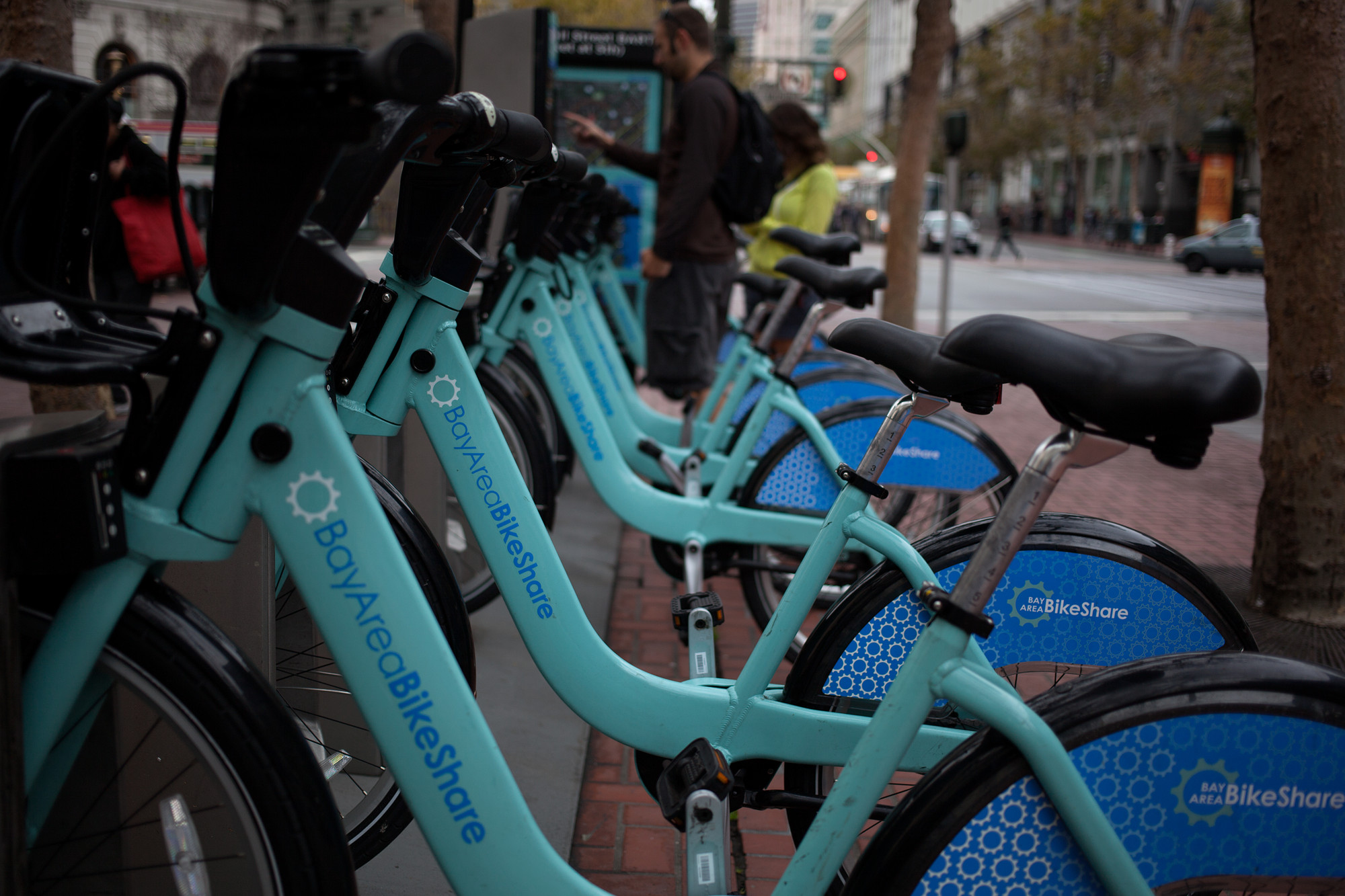
"content": "\u003cfigure id=\"attachment_146345\" class=\"wp-caption aligncenter\" style=\"max-width: 640px\">\u003ca href=\"http://ww2.kqed.org/news/wp-content/uploads/sites/10/2014/08/RS11910_IMG_2299-lpr.jpg\">\u003cimg loading=\"lazy\" decoding=\"async\" class=\"size-medium wp-image-146345\" src=\"http://ww2.kqed.org/news/wp-content/uploads/sites/10/2014/08/RS11910_IMG_2299-lpr-640x426.jpg\" alt=\"A bike-share station on Market Street is next to the Powell Street BART Station. (Mark Andrew Boyer)\" width=\"640\" height=\"426\">\u003c/a>\u003cfigcaption class=\"wp-caption-text\">A bike-share station on Market Street is next to the Powell Street BART Station. (Mark Andrew Boyer/KQED)\u003c/figcaption>\u003c/figure>\n\u003cp>One year after the sturdy, light-blue bikes first hit the streets, \u003ca href=\"http://www.bayareabikeshare.com/\">Bay Area Bike Share\u003c/a> is being deemed a success. But the system’s long-anticipated expansion remains stalled because the \u003ca href=\"http://www.streetsblog.org/2014/01/21/bixi-bankruptcy-what-does-it-mean-for-american-bike-share/\">supplier filed for bankruptcy \u003c/a>and the company that operates it is restructuring.\u003c/p>\n\u003cp>Since \u003ca href=\"http://ww2.kqed.org/news/2013/07/16/bay-area-bike-share-set-to-roll-out-next-month/\">the system launched\u003c/a> on Aug. 29, 2013, with 700 bikes at 70 stations in \u003cspan style=\"color: #4d4d4d\">San Francisco, Redwood City, Palo Alto, Mountain View and San Jose\u003c/span>, more than 32,000 people have taken 300,000 trips, traveling a total of 630,000 miles, according to the Bay Area Air Quality Management District.\u003c/p>\n\u003cp>“I think it’s gone really well,” said Heath Maddox, a bike-share planner at the San Francisco Municipal Transportation Agency. “We would like it to be bigger, and so would everybody. But if that’s the chief complaint, I’m satisfied at this point.”\u003c/p>\n\u003cp>The benefit of starting smaller and later than anticipated was that software bugs, which plagued bike-share systems in New York and Chicago, could be worked out, said Maddox. Air district officials say the system now has 5,000 annual \u003ca href=\"http://www.bayareabikeshare.com/membership\">members\u003c/a> and 28,000 “casual” members.\u003c/p>\n\u003cp>A data challenge that drew 35 entries \u003ca href=\"http://sf.streetsblog.org/2014/08/11/feast-your-eyes-on-beautiful-trip-data-from-year-old-bay-area-bike-share/\">offers some creative visualizations\u003c/a> of trip patterns. The bulk of trips have taken place in San Francisco, with its 35 stations. Daily ridership broke a record Monday, topping more than 1,200 trips, said Maddox.\u003c/p>\n\u003cfigure id=\"attachment_146346\" class=\"wp-caption aligncenter\" style=\"max-width: 640px\">\u003ca href=\"http://ww2.kqed.org/news/wp-content/uploads/sites/10/2014/08/RS11913_IMG_2450-lpr.jpg\">\u003cimg loading=\"lazy\" decoding=\"async\" class=\"size-medium wp-image-146346\" src=\"http://ww2.kqed.org/news/wp-content/uploads/sites/10/2014/08/RS11913_IMG_2450-lpr-640x426.jpg\" alt=\"Shelby Larochelle from Canada, Hajnalka Domjan from Hungary, and Maria Camajova from Slovakia rent bikes in San Francisco. (Mark Andrew Boyer/KQED)\" width=\"640\" height=\"426\">\u003c/a>\u003cfigcaption class=\"wp-caption-text\">From left: Shelby Larochelle of Canada, Hajnalka Domjan of Hungary and Maria Camajova of Slovakia rent bikes in San Francisco. (Mark Andrew Boyer/KQED)\u003c/figcaption>\u003c/figure>\n\u003cp>Andrew Stitt of Alameda was spotted docking a bike at the Civic Center station Tuesday. He said he uses Bay Area Bike Share to complete the last leg of his commute from BART to his job as a software engineer in SoMa.\u003c/p>\n\u003cp>[ad fullwidth]\u003c/p>\n\u003cp>“I think it’s awesome that we have a system that allows people to make these last-mile connections so they can get out of their cars, get on their bikes, but not have to worry about lugging their bike everywhere or it getting stolen,” said Stitt.\u003c/p>\n\u003cp>The bikes are being used in San Francisco an average of three times a day. “We’d like to see double that, but I don’t think it’s reasonable to expect the bikes to be used at that level of intensity when the system is as constrained as it is,” said Maddox.\u003c/p>\n\u003cp>An expansion to 1,000 bikes systemwide is currently funded. This includes 17 more stations in San Francisco, including locations in the Castro and Mission. Other locations for stations are still being worked out.\u003c/p>\n\u003cp>Beyond those plans, SFMTA officials hope to launch an additional 250 stations and 3,000 bikes in San Francsico, at a cost of $25 million. The city is currently seeking private funding for that.\u003c/p>\n\u003cp>Although several companies have come forward, Maddox said the city has been unable to move talks forward because of the uncertain future of Public Bike System Company (PBSC), a Canadian firm that supplies the bikes and software to the Bay Area, as well as bike-share programs in other U.S. cities.\u003c/p>\n\u003cp>“The industry is going through some upheaval,” explained Ralph Borrmann, a spokesman for the air district, which oversees Bay Area Bike Share. He said the operator, \u003ca href=\"http://www.altabicycleshare.com/\">Alta Bike Share\u003c/a>, is restructuring and that PBSC \u003ca href=\"http://wamu.org/news/14/04/16/bikeshare_supplier_gets_new_owner_reopening_door_to_possible_expansion_in_dc_area\">filed for bankruptcy and was sold\u003c/a>.\u003c/p>\n\u003cp>“I think long term this will actually benefit the industry, in terms of bringing new technology, new manufacturers, and opening a startup culture and providing more options for the future,” said Borrmann.\u003c/p>\n\u003cp>A spokeswoman for Alta Bike Share said she could not comment, and PBSC did not respond to a request for an interview. It’s unknown at this point when production of the bikes, stations and software will start up again.\u003c/p>\n\u003cp>John Goodwin, a spokesman for the Metropolitan Transportation Commission, which plans to take over administering the program, said more bikes could be on the ground within the next 18 to 24 months.\u003c/p>\n\u003cp>Planning, meanwhile, has begun to expand to the East Bay by September 2016. Between 600 to 700 bikes would be placed at up to 70 stations in Oakland and Berkeley, with a few stations in Emeryville, said Goodwin.\u003c/p>\n\u003cp>The slow pace of expansion has left some members frustrated. Yosh Asato of San Francisco was returning a bike to the Van Ness Avenue station Tuesday. She said she works downtown, where she can’t bring a bike into the office, and uses bike share frequently to get around the city.\u003c/p>\n\u003cp>\u003c/p>\n\u003cp>“I think starting small was a good idea,” said Asato. “It meant that we had a small system that runs well, but the delay in the expansion has been a disappointment. If it doesn’t expand soon, they’re going to lose momentum.”\u003c/p>\n\u003cfigure id=\"attachment_146348\" class=\"wp-caption aligncenter\" style=\"max-width: 640px\">\u003ca href=\"http://ww2.kqed.org/news/wp-content/uploads/sites/10/2014/08/RS11911_IMG_2360-lpr.jpg\">\u003cimg loading=\"lazy\" decoding=\"async\" class=\"size-medium wp-image-146348\" src=\"http://ww2.kqed.org/news/wp-content/uploads/sites/10/2014/08/RS11911_IMG_2360-lpr-640x426.jpg\" alt=\"Beth and Brad Maloney rent bikes from a station in downtown San Francisco. (Mark Andrew Boyer/KQED)\" width=\"640\" height=\"426\">\u003c/a>\u003cfigcaption class=\"wp-caption-text\">Beth and Brad Maloney rent bikes from a station in downtown San Francisco. (Mark Andrew Boyer/KQED)\u003c/figcaption>\u003c/figure>\n\n",
"blocks": [],
"excerpt": "Financial problems at the program's operator and supplier have held up plans to add bikes and locations.",
"status": "publish",
"parent": 0,
"modified": 1721105335,
"stats": {
"hasAudio": false,
"hasVideo": false,
"hasChartOrMap": false,
"iframeSrcs": [],
"hasGoogleForm": false,
"hasGallery": false,
"hasHearkenModule": false,
"hasPolis": false,
"paragraphCount": 20,
"wordCount": 861
},
"headData": {
"title": "Bay Area Bike Share Expansion Stalls | KQED",
"description": "Financial problems at the program's operator and supplier have held up plans to add bikes and locations.",
"ogTitle": "",
"ogDescription": "",
"ogImgId": "",
"twTitle": "",
"twDescription": "",
"twImgId": "",
"schema": {
"@context": "https://schema.org",
"@type": "NewsArticle",
"headline": "Bay Area Bike Share Expansion Stalls",
"datePublished": "2014-08-29T12:11:59-07:00",
"dateModified": "2024-07-15T21:48:55-07:00",
"image": "https://cdn.kqed.org/wp-content/uploads/2020/02/KQED-OG-Image@1x.png",
"isAccessibleForFree": "True",
"publisher": {
"@type": "NewsMediaOrganization",
"@id": "https://www.kqed.org/#organization",
"name": "KQED",
"logo": "https://cdn.kqed.org/wp-content/uploads/2020/02/KQED-OG-Image@1x.png",
"url": "https://www.kqed.org",
"sameAs": [
"https://www.facebook.com/KQED",
"https://twitter.com/KQED",
"https://www.instagram.com/kqed/",
"https://www.tiktok.com/@kqedofficial",
"https://www.linkedin.com/company/kqed",
"https://www.youtube.com/channel/UCeC0IOo7i1P_61zVUWbJ4nw"
]
}
}
},
"sticky": false,
"path": "/news/146160/bay-area-bike-share-expansion-stalls",
"audioTrackLength": null,
"parsedContent": [
{
"type": "contentString",
"content": "\u003cdiv class=\"post-body\">\u003cp>\u003cfigure id=\"attachment_146345\" class=\"wp-caption aligncenter\" style=\"max-width: 640px\">\u003ca href=\"http://ww2.kqed.org/news/wp-content/uploads/sites/10/2014/08/RS11910_IMG_2299-lpr.jpg\">\u003cimg loading=\"lazy\" decoding=\"async\" class=\"size-medium wp-image-146345\" src=\"http://ww2.kqed.org/news/wp-content/uploads/sites/10/2014/08/RS11910_IMG_2299-lpr-640x426.jpg\" alt=\"A bike-share station on Market Street is next to the Powell Street BART Station. (Mark Andrew Boyer)\" width=\"640\" height=\"426\">\u003c/a>\u003cfigcaption class=\"wp-caption-text\">A bike-share station on Market Street is next to the Powell Street BART Station. (Mark Andrew Boyer/KQED)\u003c/figcaption>\u003c/figure>\n\u003cp>One year after the sturdy, light-blue bikes first hit the streets, \u003ca href=\"http://www.bayareabikeshare.com/\">Bay Area Bike Share\u003c/a> is being deemed a success. But the system’s long-anticipated expansion remains stalled because the \u003ca href=\"http://www.streetsblog.org/2014/01/21/bixi-bankruptcy-what-does-it-mean-for-american-bike-share/\">supplier filed for bankruptcy \u003c/a>and the company that operates it is restructuring.\u003c/p>\n\u003cp>Since \u003ca href=\"http://ww2.kqed.org/news/2013/07/16/bay-area-bike-share-set-to-roll-out-next-month/\">the system launched\u003c/a> on Aug. 29, 2013, with 700 bikes at 70 stations in \u003cspan style=\"color: #4d4d4d\">San Francisco, Redwood City, Palo Alto, Mountain View and San Jose\u003c/span>, more than 32,000 people have taken 300,000 trips, traveling a total of 630,000 miles, according to the Bay Area Air Quality Management District.\u003c/p>\n\u003cp>“I think it’s gone really well,” said Heath Maddox, a bike-share planner at the San Francisco Municipal Transportation Agency. “We would like it to be bigger, and so would everybody. But if that’s the chief complaint, I’m satisfied at this point.”\u003c/p>\n\u003cp>The benefit of starting smaller and later than anticipated was that software bugs, which plagued bike-share systems in New York and Chicago, could be worked out, said Maddox. Air district officials say the system now has 5,000 annual \u003ca href=\"http://www.bayareabikeshare.com/membership\">members\u003c/a> and 28,000 “casual” members.\u003c/p>\n\u003cp>A data challenge that drew 35 entries \u003ca href=\"http://sf.streetsblog.org/2014/08/11/feast-your-eyes-on-beautiful-trip-data-from-year-old-bay-area-bike-share/\">offers some creative visualizations\u003c/a> of trip patterns. The bulk of trips have taken place in San Francisco, with its 35 stations. Daily ridership broke a record Monday, topping more than 1,200 trips, said Maddox.\u003c/p>\n\u003cfigure id=\"attachment_146346\" class=\"wp-caption aligncenter\" style=\"max-width: 640px\">\u003ca href=\"http://ww2.kqed.org/news/wp-content/uploads/sites/10/2014/08/RS11913_IMG_2450-lpr.jpg\">\u003cimg loading=\"lazy\" decoding=\"async\" class=\"size-medium wp-image-146346\" src=\"http://ww2.kqed.org/news/wp-content/uploads/sites/10/2014/08/RS11913_IMG_2450-lpr-640x426.jpg\" alt=\"Shelby Larochelle from Canada, Hajnalka Domjan from Hungary, and Maria Camajova from Slovakia rent bikes in San Francisco. (Mark Andrew Boyer/KQED)\" width=\"640\" height=\"426\">\u003c/a>\u003cfigcaption class=\"wp-caption-text\">From left: Shelby Larochelle of Canada, Hajnalka Domjan of Hungary and Maria Camajova of Slovakia rent bikes in San Francisco. (Mark Andrew Boyer/KQED)\u003c/figcaption>\u003c/figure>\n\u003cp>Andrew Stitt of Alameda was spotted docking a bike at the Civic Center station Tuesday. He said he uses Bay Area Bike Share to complete the last leg of his commute from BART to his job as a software engineer in SoMa.\u003c/p>\n\u003cp>\u003c/p>\u003c/div>",
"attributes": {
"named": {},
"numeric": []
}
},
{
"type": "component",
"content": "",
"name": "ad",
"attributes": {
"named": {
"label": "fullwidth"
},
"numeric": [
"fullwidth"
]
}
},
{
"type": "contentString",
"content": "\u003cdiv class=\"post-body\">\u003cp>\u003c/p>\n\u003cp>“I think it’s awesome that we have a system that allows people to make these last-mile connections so they can get out of their cars, get on their bikes, but not have to worry about lugging their bike everywhere or it getting stolen,” said Stitt.\u003c/p>\n\u003cp>The bikes are being used in San Francisco an average of three times a day. “We’d like to see double that, but I don’t think it’s reasonable to expect the bikes to be used at that level of intensity when the system is as constrained as it is,” said Maddox.\u003c/p>\n\u003cp>An expansion to 1,000 bikes systemwide is currently funded. This includes 17 more stations in San Francisco, including locations in the Castro and Mission. Other locations for stations are still being worked out.\u003c/p>\n\u003cp>Beyond those plans, SFMTA officials hope to launch an additional 250 stations and 3,000 bikes in San Francsico, at a cost of $25 million. The city is currently seeking private funding for that.\u003c/p>\n\u003cp>Although several companies have come forward, Maddox said the city has been unable to move talks forward because of the uncertain future of Public Bike System Company (PBSC), a Canadian firm that supplies the bikes and software to the Bay Area, as well as bike-share programs in other U.S. cities.\u003c/p>\n\u003cp>“The industry is going through some upheaval,” explained Ralph Borrmann, a spokesman for the air district, which oversees Bay Area Bike Share. He said the operator, \u003ca href=\"http://www.altabicycleshare.com/\">Alta Bike Share\u003c/a>, is restructuring and that PBSC \u003ca href=\"http://wamu.org/news/14/04/16/bikeshare_supplier_gets_new_owner_reopening_door_to_possible_expansion_in_dc_area\">filed for bankruptcy and was sold\u003c/a>.\u003c/p>\n\u003cp>“I think long term this will actually benefit the industry, in terms of bringing new technology, new manufacturers, and opening a startup culture and providing more options for the future,” said Borrmann.\u003c/p>\n\u003cp>A spokeswoman for Alta Bike Share said she could not comment, and PBSC did not respond to a request for an interview. It’s unknown at this point when production of the bikes, stations and software will start up again.\u003c/p>\n\u003cp>John Goodwin, a spokesman for the Metropolitan Transportation Commission, which plans to take over administering the program, said more bikes could be on the ground within the next 18 to 24 months.\u003c/p>\n\u003cp>Planning, meanwhile, has begun to expand to the East Bay by September 2016. Between 600 to 700 bikes would be placed at up to 70 stations in Oakland and Berkeley, with a few stations in Emeryville, said Goodwin.\u003c/p>\n\u003cp>The slow pace of expansion has left some members frustrated. Yosh Asato of San Francisco was returning a bike to the Van Ness Avenue station Tuesday. She said she works downtown, where she can’t bring a bike into the office, and uses bike share frequently to get around the city.\u003c/p>\n\u003cp>\u003c/p>\n\u003cp>“I think starting small was a good idea,” said Asato. “It meant that we had a small system that runs well, but the delay in the expansion has been a disappointment. If it doesn’t expand soon, they’re going to lose momentum.”\u003c/p>\n\u003cfigure id=\"attachment_146348\" class=\"wp-caption aligncenter\" style=\"max-width: 640px\">\u003ca href=\"http://ww2.kqed.org/news/wp-content/uploads/sites/10/2014/08/RS11911_IMG_2360-lpr.jpg\">\u003cimg loading=\"lazy\" decoding=\"async\" class=\"size-medium wp-image-146348\" src=\"http://ww2.kqed.org/news/wp-content/uploads/sites/10/2014/08/RS11911_IMG_2360-lpr-640x426.jpg\" alt=\"Beth and Brad Maloney rent bikes from a station in downtown San Francisco. (Mark Andrew Boyer/KQED)\" width=\"640\" height=\"426\">\u003c/a>\u003cfigcaption class=\"wp-caption-text\">Beth and Brad Maloney rent bikes from a station in downtown San Francisco. (Mark Andrew Boyer/KQED)\u003c/figcaption>\u003c/figure>\n\n\u003c/div>\u003c/p>",
"attributes": {
"named": {},
"numeric": []
}
}
],
"link": "/news/146160/bay-area-bike-share-expansion-stalls",
"authors": [
"214"
],
"programs": [
"news_6944"
],
"categories": [
"news_8",
"news_1397"
],
"tags": [
"news_2851",
"news_18555"
],
"featImg": "news_146345",
"label": "news_6944"
},
"news_146090": {
"type": "posts",
"id": "news_146090",
"meta": {
"index": "posts_1716263798",
"site": "news",
"id": "146090",
"score": null,
"sort": [
1409242060000
]
},
"parent": 0,
"labelTerm": {
"site": "news",
"term": 6944
},
"blocks": [],
"publishDate": 1409242060,
"format": "aside",
"disqusTitle": "I-280 North in San Francisco Closed Through Labor Day Weekend",
"title": "I-280 North in San Francisco Closed Through Labor Day Weekend",
"headTitle": "News Fix | KQED News",
"content": "\u003cp>If you're planning on cruising on Interstate 280 northbound in San Francisco over the Labor Day weekend, be aware that a stretch of the freeway will be closed starting at 2 p.m. today and continuing through Tuesday, Sept. 2, at 5 a.m..\u003c/p>\n\u003cp>The closure will occur from the 101/280 interchange through downtown San Francisco. Caltrans says it expects a \"significant travel delay\" as traffic will be rerouted to U.S. 101.\u003c/p>\n\u003cp>Southbound 280 will remain open.\u003c/p>\n\u003cp>Here are the on-ramps that will be closed:\u003c/p>\n\u003cul>\n\u003cli>Alemany Boulevard\u003c/li>\n\u003cli>U.S. 101 connector to northbound Interstate 280\u003c/li>\n\u003cli>Indiana Street/25th Street\u003c/li>\n\u003cli>18th Street\u003c/li>\n\u003c/ul>\n\u003cp>Use \u003ca href=\"http://511.org/\" target=\"_blank\">511.org\u003c/a> to map out your trip using public transportation, which Caltrans strongly recommends, or to check traffic conditions.\u003c/p>\n\u003cp>[ad fullwidth]\u003c/p>\n\u003cp>\u003c/p>\n\u003cp>\u003cimg class=\"aligncenter size-full wp-image-146093\" src=\"http://ww2.kqed.org/news/wp-content/uploads/sites/10/2014/08/i280.png\" alt=\"i280\" width=\"640\" height=\"810\">\u003c/p>\n\n",
"disqusIdentifier": "146090 http://ww2.kqed.org/news/?p=146090",
"disqusUrl": "https://ww2.kqed.org/news/2014/08/28/i-280-north-through-san-francisco-closes-today/",
"stats": {
"hasVideo": false,
"hasChartOrMap": false,
"hasAudio": false,
"hasPolis": false,
"wordCount": 127,
"hasGoogleForm": false,
"hasGallery": false,
"hasHearkenModule": false,
"iframeSrcs": [],
"paragraphCount": 8
},
"modified": 1420841616,
"excerpt": "Caltrans strongly advises using public transportation.",
"headData": {
"twImgId": "",
"twTitle": "",
"ogTitle": "",
"ogImgId": "",
"twDescription": "",
"description": "Caltrans strongly advises using public transportation.",
"title": "I-280 North in San Francisco Closed Through Labor Day Weekend | KQED",
"ogDescription": "",
"schema": {
"@context": "https://schema.org",
"@type": "NewsArticle",
"headline": "I-280 North in San Francisco Closed Through Labor Day Weekend",
"datePublished": "2014-08-28T09:07:40-07:00",
"dateModified": "2015-01-09T14:13:36-08:00",
"image": "https://cdn.kqed.org/wp-content/uploads/2020/02/KQED-OG-Image@1x.png",
"isAccessibleForFree": "True",
"publisher": {
"@type": "NewsMediaOrganization",
"@id": "https://www.kqed.org/#organization",
"name": "KQED",
"logo": "https://cdn.kqed.org/wp-content/uploads/2020/02/KQED-OG-Image@1x.png",
"url": "https://www.kqed.org",
"sameAs": [
"https://www.facebook.com/KQED",
"https://twitter.com/KQED",
"https://www.instagram.com/kqed/",
"https://www.tiktok.com/@kqedofficial",
"https://www.linkedin.com/company/kqed",
"https://www.youtube.com/channel/UCeC0IOo7i1P_61zVUWbJ4nw"
]
}
}
},
"guestAuthors": [],
"slug": "i-280-north-through-san-francisco-closes-today",
"status": "publish",
"customPermalink": "08/28/14/I280/280-North-Closed-san-francisco-through-labor-day-weekend/",
"path": "/news/146090/i-280-north-through-san-francisco-closes-today",
"audioTrackLength": null,
"parsedContent": [
{
"type": "contentString",
"content": "\u003cdiv class=\"post-body\">\u003cp>\u003cp>If you're planning on cruising on Interstate 280 northbound in San Francisco over the Labor Day weekend, be aware that a stretch of the freeway will be closed starting at 2 p.m. today and continuing through Tuesday, Sept. 2, at 5 a.m..\u003c/p>\n\u003cp>The closure will occur from the 101/280 interchange through downtown San Francisco. Caltrans says it expects a \"significant travel delay\" as traffic will be rerouted to U.S. 101.\u003c/p>\n\u003cp>Southbound 280 will remain open.\u003c/p>\n\u003cp>Here are the on-ramps that will be closed:\u003c/p>\n\u003cul>\n\u003cli>Alemany Boulevard\u003c/li>\n\u003cli>U.S. 101 connector to northbound Interstate 280\u003c/li>\n\u003cli>Indiana Street/25th Street\u003c/li>\n\u003cli>18th Street\u003c/li>\n\u003c/ul>\n\u003cp>Use \u003ca href=\"http://511.org/\" target=\"_blank\">511.org\u003c/a> to map out your trip using public transportation, which Caltrans strongly recommends, or to check traffic conditions.\u003c/p>\n\u003cp>\u003c/p>\u003c/div>",
"attributes": {
"named": {},
"numeric": []
}
},
{
"type": "component",
"content": "",
"name": "ad",
"attributes": {
"named": {
"label": "fullwidth"
},
"numeric": [
"fullwidth"
]
}
},
{
"type": "contentString",
"content": "\u003cdiv class=\"post-body\">\u003cp>\u003c/p>\n\u003cp>\u003c/p>\n\u003cp>\u003cimg class=\"aligncenter size-full wp-image-146093\" src=\"http://ww2.kqed.org/news/wp-content/uploads/sites/10/2014/08/i280.png\" alt=\"i280\" width=\"640\" height=\"810\">\u003c/p>\n\n\u003c/div>\u003c/p>",
"attributes": {
"named": {},
"numeric": []
}
}
],
"link": "/news/146090/i-280-north-through-san-francisco-closes-today",
"authors": [
"80"
],
"programs": [
"news_6944"
],
"categories": [
"news_8",
"news_1397"
],
"featImg": "news_146093",
"label": "news_6944"
},
"news_145848": {
"type": "posts",
"id": "news_145848",
"meta": {
"index": "posts_1716263798",
"site": "news",
"id": "145848",
"score": null,
"sort": [
1409144454000
]
},
"guestAuthors": [],
"slug": "fremont-searches-for-a-downtown-and-hopes-bart-can-help",
"title": "Fremont's Search for a Downtown -- and for Stronger Link to Silicon Valley",
"publishDate": 1409144454,
"format": "aside",
"headTitle": "Fremont’s Search for a Downtown — and for Stronger Link to Silicon Valley | KQED",
"labelTerm": {
"term": 6944,
"site": "news"
},
"content": "\u003cp>\u003cstrong>By Aaron Mendelson\u003c/strong>\u003c/p>\n\u003cfigure id=\"attachment_145901\" class=\"wp-caption aligncenter\" style=\"max-width: 640px\">\u003ca href=\"http://ww2.kqed.org/news/wp-content/uploads/sites/10/2014/08/fremontfuture.jpg\">\u003cimg loading=\"lazy\" decoding=\"async\" class=\"size-medium wp-image-145901\" src=\"http://ww2.kqed.org/news/wp-content/uploads/sites/10/2014/08/fremontfuture-640x397.jpg\" alt=\"Artist's rendering of proposed Capitol Avenue development in Fremont's downtown district. \" width=\"640\" height=\"397\">\u003c/a>\u003cfigcaption class=\"wp-caption-text\">Artist’s rendering of proposed Capitol Avenue development in Fremont’s downtown district.\u003c/figcaption>\u003c/figure>\n\u003cp>\u003cspan style=\"font-size: 4.6875em;float: left;line-height: 0.733em;padding: 0.05em 0.1em 0 0;font-family: times, serif, georgia\">F\u003c/span>remont, the Bay Area’s fourth-most-populous city, has long been overshadowed by bigger neighbors. But the city hopes to make a name for itself by taking advantage of a strong economy, its location within Silicon Valley and access to transit. That effort starts with building a real downtown for Fremont — from scratch.\u003c/p>\n\u003cp>\u003ciframe loading=\"lazy\" width=\"100%\" height=\"20\" scrolling=\"no\" frameborder=\"no\" src=\"https://w.soundcloud.com/player/?url=https%3A//api.soundcloud.com/tracks/164929325&color=ff5500&inverse=false&auto_play=false&show_user=true\">\u003c/iframe>\u003c/p>\n\u003cp>Fremont was born when \u003ca href=\"https://www.fremont.gov/149/History\" target=\"_blank\" rel=\"noopener\">five different communities merged in 1956\u003c/a> for fear of being annexed by Hayward. Those five areas — Centerville, Irvington, Mission San Jose, Niles and Warm Springs — had their own centers, but the new city of Fremont never had a real heart.\u003c/p>\n\u003cp>As Mayor Bill Harrison puts it, “Being born and raised in Fremont, I know that since its incorporation in 1956, Fremont didn’t have a downtown.”\u003c/p>\n\u003cp>[ad fullwidth]\u003c/p>\n\u003cp>Fremont, now a city of 220,000, has a central area that looks classically suburban, with lots of cars, wide streets and generous amounts of parking.\u003c/p>\n\u003cp>At a groundbreaking for \u003ca href=\"https://www.fremont.gov/DocumentCenter/View/20564\" target=\"_blank\" rel=\"noopener\">the city’s downtown initiative\u003c/a> in July, food trucks and live music were on hand to give residents a taste of the more urban feel that Fremont seeks.\u003c/p>\n\u003cp>“I’ve been waiting forever for a downtown,” said Sally Morgan, a resident of 27 years who attended the event. “I just would love to live near a downtown. I mean, that’s part of the community, right?”\u003c/p>\n\u003cp>Morgan says she misses the central business district in Los Altos, where she grew up.\u003c/p>\n\u003cp>During a speech at the groundbreaking, the mayor gave thanks to the woman he called the city’s “downtown czar,” Deputy City Manager Jessica von Borck.\u003c/p>\n\u003caside class=\"pullquote alignleft\">‘I’ve been waiting forever for a downtown. … I mean, that’s part of the community, right?’\u003ccite>— Sally Morgan,\u003cbr>\nlongtime Fremont resident\u003c/cite>\u003c/aside>\n\u003cp>“Yes, we’re suburbia right now,” von Borck says. “And it looks very much that way, but it’s riddled with opportunity because it is underdeveloped.”\u003c/p>\n\u003cp>Von Borck says there will be denser development here, and eventually a new city hall. The entire downtown effort could cost $250 million from a mix of public and private sources. The funding for the first step being celebrated at the groundbreaking comes from a $5.8 million \u003ca href=\"http://www.onebayarea.org/funding-and-grants.html\" target=\"_blank\" rel=\"noopener\">One Bay Area Grant \u003c/a>awarded to the city in 2013. The project will extend Capitol Avenue, connecting employment and retail centers and developing, Mayor Harrison promises, a real Main Street feel.\u003c/p>\n\u003cp>As things stand today, von Borck says, “a lot of our community needs to go outside of Fremont in order to seek out restaurant options or entertainment options.” She hopes a busier, pedestrian- and transit-friendly downtown will convince residents to stick around instead of heading to Palo Alto or Livermore.\u003c/p>\n\u003cp>Egon Terplan, the regional planning director with \u003ca href=\"http://www.spur.org/\" target=\"_blank\" rel=\"noopener\">SPUR, the San Francisco-based urban planning organization\u003c/a>, says the lack of a downtown in Fremont is due in part to the fact much of the area was rural and agricultural. In fact, his grandmother grew up on a farm near the city’s planned downtown.\u003c/p>\n\u003cp>Terplan says that a city creating a downtown needs to focus on how buildings relate to walkways and streets.\u003c/p>\n\u003cp>“How close are they to the sidewalk?” Terplan says, reciting a list of key questions. “Is there a big setback with a parking lot behind it? Or is there a generous sidewalk that you can walk by? Does the ground floor of the building have active uses that are inviting, that make people want to be a pedestrian?”\u003c/p>\n\u003cp>Those are small things, but if you do them right, you can see the difference from space. In an event room at SPUR, Terplan gestures to a satellite map of the Bay Area.\u003c/p>\n\u003cp>“You see a couple places where there’s a grid pattern, there’s a set of taller buildings surrounded by often a leafier residential neighborhood. And so the downtown pops in that context,” he says.\u003c/p>\n\u003cp>Terplan points to downtowns like San Jose, Palo Alto and San Mateo. On the satellite map, Fremont doesn’t pop.\u003c/p>\n\u003cp>“It doesn’t jump out as much a traditional downtown,” Terplan says, the kind that was built before World War II.\u003c/p>\n\u003cp>Terplan says it will help if Fremont plans around transit. The current downtown is about half a mile from the city’s existing BART station. BART falls just outside downtown, \u003ca href=\"http://www.fremont.gov/DocumentCenter/View/18050\">as depicted on city planning documents.\u003cbr>\n\u003c/a>\u003c/p>\n\u003cp>Next year, Fremont’s second BART station is expected to open. To be known as the South Fremont/Warm Springs stop, it will be the first step in BART’s march into Silicon Valley.\u003c/p>\n\u003cp>“One of the reasons that’s a game-changer for Fremont is that it transforms it from being the end of the line of a system, to being in the middle of the line,” says Terplan. He adds that his grandmother used to be able take the Southern Pacific from Fremont to San Jose. BART will make that trip possible again when the BART Silicon Valley line opens in 2018.\u003c/p>\n\u003cp>The station in the Warm Springs area is 6 miles south of downtown, and the city has big plans for the area. If downtown Fremont is about amenities and a civic heart for people in Fremont, then Warm Springs is about luring business currently outside Fremont.\u003c/p>\n\u003cp>As Jessica von Borck puts it, “The Warm Springs innovation district is more outward-facing, and finding a place for Fremont within Silicon Valley itself.”\u003c/p>\n\u003cp>The city has a slick website called \u003ca href=\"http://www.thinksiliconvalley.com\">Think Silicon Valley\u003c/a>, touting its benefits to tech companies. The city is already home to Tesla Motors and \u003ca href=\"http://www.mercurynews.com/ci_21734967/study-fremont-is-nations-top-city-startup-tech\" target=\"_blank\" rel=\"noopener\">a host of tech firms\u003c/a>, and it wants more.\u003c/p>\n\u003cp>“We are a sleeping dragon,” von Borck says, laughing. “We have a lot of opportunities that are really unknown to a lot of companies.”\u003c/p>\n\u003cp>\u003c/p>\n\u003cp>Fremont hopes that development around Warm Springs, already the city’s largest employment center, \u003ca href=\"http://fremont.gov/DocumentCenter/View/18691\">will add 12,000 jobs\u003c/a> over the next quarter-century. If all the planning comes together, the sleeping dragon could be about to wake up.\u003c/p>\n\n",
"blocks": [],
"excerpt": "City that started as five towns amid farmscape tries to craft an identity and grow its tech reputation. ",
"status": "publish",
"parent": 0,
"modified": 1729029843,
"stats": {
"hasAudio": true,
"hasVideo": false,
"hasChartOrMap": false,
"iframeSrcs": [],
"hasGoogleForm": false,
"hasGallery": false,
"hasHearkenModule": false,
"hasPolis": false,
"paragraphCount": 30,
"wordCount": 1063
},
"headData": {
"title": "Fremont's Search for a Downtown -- and for Stronger Link to Silicon Valley | KQED",
"description": "City that started as five towns amid farmscape tries to craft an identity and grow its tech reputation. ",
"ogTitle": "",
"ogDescription": "",
"ogImgId": "",
"twTitle": "",
"twDescription": "",
"twImgId": "",
"schema": {
"@context": "https://schema.org",
"@type": "NewsArticle",
"headline": "Fremont's Search for a Downtown -- and for Stronger Link to Silicon Valley",
"datePublished": "2014-08-27T06:00:54-07:00",
"dateModified": "2024-10-15T15:04:03-07:00",
"image": "https://cdn.kqed.org/wp-content/uploads/2020/02/KQED-OG-Image@1x.png",
"isAccessibleForFree": "True",
"publisher": {
"@type": "NewsMediaOrganization",
"@id": "https://www.kqed.org/#organization",
"name": "KQED",
"logo": "https://cdn.kqed.org/wp-content/uploads/2020/02/KQED-OG-Image@1x.png",
"url": "https://www.kqed.org",
"sameAs": [
"https://www.facebook.com/KQED",
"https://twitter.com/KQED",
"https://www.instagram.com/kqed/",
"https://www.tiktok.com/@kqedofficial",
"https://www.linkedin.com/company/kqed",
"https://www.youtube.com/channel/UCeC0IOo7i1P_61zVUWbJ4nw"
]
}
}
},
"sticky": false,
"path": "/news/145848/fremont-searches-for-a-downtown-and-hopes-bart-can-help",
"audioTrackLength": null,
"parsedContent": [
{
"type": "contentString",
"content": "\u003cdiv class=\"post-body\">\u003cp>\u003cp>\u003cstrong>By Aaron Mendelson\u003c/strong>\u003c/p>\n\u003cfigure id=\"attachment_145901\" class=\"wp-caption aligncenter\" style=\"max-width: 640px\">\u003ca href=\"http://ww2.kqed.org/news/wp-content/uploads/sites/10/2014/08/fremontfuture.jpg\">\u003cimg loading=\"lazy\" decoding=\"async\" class=\"size-medium wp-image-145901\" src=\"http://ww2.kqed.org/news/wp-content/uploads/sites/10/2014/08/fremontfuture-640x397.jpg\" alt=\"Artist's rendering of proposed Capitol Avenue development in Fremont's downtown district. \" width=\"640\" height=\"397\">\u003c/a>\u003cfigcaption class=\"wp-caption-text\">Artist’s rendering of proposed Capitol Avenue development in Fremont’s downtown district.\u003c/figcaption>\u003c/figure>\n\u003cp>\u003cspan style=\"font-size: 4.6875em;float: left;line-height: 0.733em;padding: 0.05em 0.1em 0 0;font-family: times, serif, georgia\">F\u003c/span>remont, the Bay Area’s fourth-most-populous city, has long been overshadowed by bigger neighbors. But the city hopes to make a name for itself by taking advantage of a strong economy, its location within Silicon Valley and access to transit. That effort starts with building a real downtown for Fremont — from scratch.\u003c/p>\n\u003cp>\u003ciframe loading=\"lazy\" width=\"100%\" height=\"20\" scrolling=\"no\" frameborder=\"no\" src=\"https://w.soundcloud.com/player/?url=https%3A//api.soundcloud.com/tracks/164929325&color=ff5500&inverse=false&auto_play=false&show_user=true\">\u003c/iframe>\u003c/p>\n\u003cp>Fremont was born when \u003ca href=\"https://www.fremont.gov/149/History\" target=\"_blank\" rel=\"noopener\">five different communities merged in 1956\u003c/a> for fear of being annexed by Hayward. Those five areas — Centerville, Irvington, Mission San Jose, Niles and Warm Springs — had their own centers, but the new city of Fremont never had a real heart.\u003c/p>\n\u003cp>As Mayor Bill Harrison puts it, “Being born and raised in Fremont, I know that since its incorporation in 1956, Fremont didn’t have a downtown.”\u003c/p>\n\u003cp>\u003c/p>\u003c/div>",
"attributes": {
"named": {},
"numeric": []
}
},
{
"type": "component",
"content": "",
"name": "ad",
"attributes": {
"named": {
"label": "fullwidth"
},
"numeric": [
"fullwidth"
]
}
},
{
"type": "contentString",
"content": "\u003cdiv class=\"post-body\">\u003cp>\u003c/p>\n\u003cp>Fremont, now a city of 220,000, has a central area that looks classically suburban, with lots of cars, wide streets and generous amounts of parking.\u003c/p>\n\u003cp>At a groundbreaking for \u003ca href=\"https://www.fremont.gov/DocumentCenter/View/20564\" target=\"_blank\" rel=\"noopener\">the city’s downtown initiative\u003c/a> in July, food trucks and live music were on hand to give residents a taste of the more urban feel that Fremont seeks.\u003c/p>\n\u003cp>“I’ve been waiting forever for a downtown,” said Sally Morgan, a resident of 27 years who attended the event. “I just would love to live near a downtown. I mean, that’s part of the community, right?”\u003c/p>\n\u003cp>Morgan says she misses the central business district in Los Altos, where she grew up.\u003c/p>\n\u003cp>During a speech at the groundbreaking, the mayor gave thanks to the woman he called the city’s “downtown czar,” Deputy City Manager Jessica von Borck.\u003c/p>\n\u003caside class=\"pullquote alignleft\">‘I’ve been waiting forever for a downtown. … I mean, that’s part of the community, right?’\u003ccite>— Sally Morgan,\u003cbr>\nlongtime Fremont resident\u003c/cite>\u003c/aside>\n\u003cp>“Yes, we’re suburbia right now,” von Borck says. “And it looks very much that way, but it’s riddled with opportunity because it is underdeveloped.”\u003c/p>\n\u003cp>Von Borck says there will be denser development here, and eventually a new city hall. The entire downtown effort could cost $250 million from a mix of public and private sources. The funding for the first step being celebrated at the groundbreaking comes from a $5.8 million \u003ca href=\"http://www.onebayarea.org/funding-and-grants.html\" target=\"_blank\" rel=\"noopener\">One Bay Area Grant \u003c/a>awarded to the city in 2013. The project will extend Capitol Avenue, connecting employment and retail centers and developing, Mayor Harrison promises, a real Main Street feel.\u003c/p>\n\u003cp>As things stand today, von Borck says, “a lot of our community needs to go outside of Fremont in order to seek out restaurant options or entertainment options.” She hopes a busier, pedestrian- and transit-friendly downtown will convince residents to stick around instead of heading to Palo Alto or Livermore.\u003c/p>\n\u003cp>Egon Terplan, the regional planning director with \u003ca href=\"http://www.spur.org/\" target=\"_blank\" rel=\"noopener\">SPUR, the San Francisco-based urban planning organization\u003c/a>, says the lack of a downtown in Fremont is due in part to the fact much of the area was rural and agricultural. In fact, his grandmother grew up on a farm near the city’s planned downtown.\u003c/p>\n\u003cp>Terplan says that a city creating a downtown needs to focus on how buildings relate to walkways and streets.\u003c/p>\n\u003cp>“How close are they to the sidewalk?” Terplan says, reciting a list of key questions. “Is there a big setback with a parking lot behind it? Or is there a generous sidewalk that you can walk by? Does the ground floor of the building have active uses that are inviting, that make people want to be a pedestrian?”\u003c/p>\n\u003cp>Those are small things, but if you do them right, you can see the difference from space. In an event room at SPUR, Terplan gestures to a satellite map of the Bay Area.\u003c/p>\n\u003cp>“You see a couple places where there’s a grid pattern, there’s a set of taller buildings surrounded by often a leafier residential neighborhood. And so the downtown pops in that context,” he says.\u003c/p>\n\u003cp>Terplan points to downtowns like San Jose, Palo Alto and San Mateo. On the satellite map, Fremont doesn’t pop.\u003c/p>\n\u003cp>“It doesn’t jump out as much a traditional downtown,” Terplan says, the kind that was built before World War II.\u003c/p>\n\u003cp>Terplan says it will help if Fremont plans around transit. The current downtown is about half a mile from the city’s existing BART station. BART falls just outside downtown, \u003ca href=\"http://www.fremont.gov/DocumentCenter/View/18050\">as depicted on city planning documents.\u003cbr>\n\u003c/a>\u003c/p>\n\u003cp>Next year, Fremont’s second BART station is expected to open. To be known as the South Fremont/Warm Springs stop, it will be the first step in BART’s march into Silicon Valley.\u003c/p>\n\u003cp>“One of the reasons that’s a game-changer for Fremont is that it transforms it from being the end of the line of a system, to being in the middle of the line,” says Terplan. He adds that his grandmother used to be able take the Southern Pacific from Fremont to San Jose. BART will make that trip possible again when the BART Silicon Valley line opens in 2018.\u003c/p>\n\u003cp>The station in the Warm Springs area is 6 miles south of downtown, and the city has big plans for the area. If downtown Fremont is about amenities and a civic heart for people in Fremont, then Warm Springs is about luring business currently outside Fremont.\u003c/p>\n\u003cp>As Jessica von Borck puts it, “The Warm Springs innovation district is more outward-facing, and finding a place for Fremont within Silicon Valley itself.”\u003c/p>\n\u003cp>The city has a slick website called \u003ca href=\"http://www.thinksiliconvalley.com\">Think Silicon Valley\u003c/a>, touting its benefits to tech companies. The city is already home to Tesla Motors and \u003ca href=\"http://www.mercurynews.com/ci_21734967/study-fremont-is-nations-top-city-startup-tech\" target=\"_blank\" rel=\"noopener\">a host of tech firms\u003c/a>, and it wants more.\u003c/p>\n\u003cp>“We are a sleeping dragon,” von Borck says, laughing. “We have a lot of opportunities that are really unknown to a lot of companies.”\u003c/p>\n\u003cp>\u003c/p>\n\u003cp>Fremont hopes that development around Warm Springs, already the city’s largest employment center, \u003ca href=\"http://fremont.gov/DocumentCenter/View/18691\">will add 12,000 jobs\u003c/a> over the next quarter-century. If all the planning comes together, the sleeping dragon could be about to wake up.\u003c/p>\n\n\u003c/div>\u003c/p>",
"attributes": {
"named": {},
"numeric": []
}
}
],
"link": "/news/145848/fremont-searches-for-a-downtown-and-hopes-bart-can-help",
"authors": [
"236"
],
"programs": [
"news_6944"
],
"categories": [
"news_1758",
"news_248",
"news_1397"
],
"tags": [
"news_269",
"news_66",
"news_1631"
],
"featImg": "news_145901",
"label": "news_6944"
},
"news_145312": {
"type": "posts",
"id": "news_145312",
"meta": {
"index": "posts_1716263798",
"site": "news",
"id": "145312",
"score": null,
"sort": [
1408658766000
]
},
"guestAuthors": [],
"slug": "bart-takes-another-step-towards-silicon-valley",
"title": "BART Takes Another Step Toward Silicon Valley",
"publishDate": 1408658766,
"format": "aside",
"headTitle": "BART Takes Another Step Toward Silicon Valley | KQED",
"labelTerm": {
"term": 6944,
"site": "news"
},
"content": "\u003cfigure id=\"attachment_145473\" class=\"wp-caption aligncenter\" style=\"max-width: 640px\">\u003ca href=\"http://ww2.kqed.org/news/wp-content/uploads/sites/10/2014/08/bartberryessa.jpg\">\u003cimg loading=\"lazy\" decoding=\"async\" src=\"http://ww2.kqed.org/news/wp-content/uploads/sites/10/2014/08/bartberryessa-640x385.jpg\" alt=\"Rendering of the planned BART Berryessa Station in San Jose. (VTA)\" width=\"640\" height=\"385\" class=\"size-medium wp-image-145473\">\u003c/a>\u003cfigcaption class=\"wp-caption-text\">Rendering of the planned BART Berryessa Station in San Jose. (VTA)\u003c/figcaption>\u003c/figure>\n\u003cp>When BART trains roll into San Jose’s \u003ca href=\"http://www.vta.org/bart/berryessa\">Berryessa Station\u003c/a> in a few years, they’ll be in Santa Clara County for the first time.\u003c/p>\n\u003cp>Wednesday, BART’s extension to Silicon Valley received its final $39 million in state funding from the California Transportation Commission. That brings state funding to $768 million for a project expected to cost $2.3 billion.\u003c/p>\n\u003cp>The Santa Clara Valley Transportation Authority (VTA) is overseeing construction of and will own the 10-mile extension — and BART will operate it. Scheduled to open to the public early in 2018, the extension will bring BART to Milpitas and San Jose, the Bay Area’s largest city.\u003c/p>\n\u003cp>An event celebrating the state allocation to the VTA was held at the site of the future Berryessa Station, the end of the extension, located between San Jose’s Alum Rock district and downtown.\u003c/p>\n\u003cp>San Jose Mayor Chuck Reed spoke at the event, telling the audience that “somebody is destined for sainthood because a miracle has happened in California. We’re getting the last check of more than a $700 million promise that was made decades ago.”\u003c/p>\n\u003cp>[ad fullwidth]\u003c/p>\n\u003cp>He thanked California’s three most recent governors — Gray Davis, Arnold Schwarzenegger and Jerry Brown — for warding off threats to the funding.\u003c/p>\n\u003cp>Carl Guardino, the president and CEO of the \u003ca href=\"http://svlg.org/\" target=\"_blank\" rel=\"noopener\">Silicon Valley Leadership Group\u003c/a>, who also serves as chair of the \u003ca href=\"http://www.catc.ca.gov/\" target=\"_blank\" rel=\"noopener\">California Transportation Commission\u003c/a>, emceed the event.\u003c/p>\n\u003cp>“This means for our commuters not only traffic relief and economic growth and jobs, but also greenhouse gas emissions. So this is a triple win,” Guardino said.\u003c/p>\n\u003cp>Former San Jose Mayor Ron Gonzales was also at the celebration.\u003c/p>\n\u003cp>Gonzales said Berryessa Station in San Jose is important for the area’s Latinos “because it gets [BART] closer to east side of San Jose, the major population center for the Hispanic community of San Jose and Silicon Valley. So one, it’s going to be easy to gain access to the BART process and the BART system here. And second: jobs.”\u003c/p>\n\u003cp>He added that BART trains will give families in the area easier access to higher education.\u003c/p>\n\u003cp>Before service to Berryessa and Milpitas begins, BART will open the South Fremont/Warm Springs station, its \u003ca href=\"https://www.bart.gov/stations\">45th\u003c/a>. The VTA’s BART Silicon Valley project takes over where that extension leaves off and will connect the Santa Clara County stations to the current Richmond-Fremont and Fremont-Daly City lines.\u003c/p>\n\u003cp>\u003c/p>\n\u003cp>A planned but currently unfunded second phase of BART construction in Silicon Valley could eventually bring service to downtown San Jose and Santa Clara.\u003c/p>\n\n",
"blocks": [],
"excerpt": "South Bay dignitaries celebrate getting final check from state for transit extension to open in 2018. ",
"status": "publish",
"parent": 0,
"modified": 1729029846,
"stats": {
"hasAudio": false,
"hasVideo": false,
"hasChartOrMap": false,
"iframeSrcs": [],
"hasGoogleForm": false,
"hasGallery": false,
"hasHearkenModule": false,
"hasPolis": false,
"paragraphCount": 15,
"wordCount": 455
},
"headData": {
"title": "BART Takes Another Step Toward Silicon Valley | KQED",
"description": "South Bay dignitaries celebrate getting final check from state for transit extension to open in 2018. ",
"ogTitle": "",
"ogDescription": "",
"ogImgId": "",
"twTitle": "",
"twDescription": "",
"twImgId": "",
"schema": {
"@context": "https://schema.org",
"@type": "NewsArticle",
"headline": "BART Takes Another Step Toward Silicon Valley",
"datePublished": "2014-08-21T15:06:06-07:00",
"dateModified": "2024-10-15T15:04:06-07:00",
"image": "https://cdn.kqed.org/wp-content/uploads/2020/02/KQED-OG-Image@1x.png",
"isAccessibleForFree": "True",
"publisher": {
"@type": "NewsMediaOrganization",
"@id": "https://www.kqed.org/#organization",
"name": "KQED",
"logo": "https://cdn.kqed.org/wp-content/uploads/2020/02/KQED-OG-Image@1x.png",
"url": "https://www.kqed.org",
"sameAs": [
"https://www.facebook.com/KQED",
"https://twitter.com/KQED",
"https://www.instagram.com/kqed/",
"https://www.tiktok.com/@kqedofficial",
"https://www.linkedin.com/company/kqed",
"https://www.youtube.com/channel/UCeC0IOo7i1P_61zVUWbJ4nw"
]
}
}
},
"sticky": false,
"customPermalink": "2014/08/21/bart-funding-san-jose-expansion/",
"nprByline": "Aaron Mendelson",
"path": "/news/145312/bart-takes-another-step-towards-silicon-valley",
"audioTrackLength": null,
"parsedContent": [
{
"type": "contentString",
"content": "\u003cdiv class=\"post-body\">\u003cp>\u003cfigure id=\"attachment_145473\" class=\"wp-caption aligncenter\" style=\"max-width: 640px\">\u003ca href=\"http://ww2.kqed.org/news/wp-content/uploads/sites/10/2014/08/bartberryessa.jpg\">\u003cimg loading=\"lazy\" decoding=\"async\" src=\"http://ww2.kqed.org/news/wp-content/uploads/sites/10/2014/08/bartberryessa-640x385.jpg\" alt=\"Rendering of the planned BART Berryessa Station in San Jose. (VTA)\" width=\"640\" height=\"385\" class=\"size-medium wp-image-145473\">\u003c/a>\u003cfigcaption class=\"wp-caption-text\">Rendering of the planned BART Berryessa Station in San Jose. (VTA)\u003c/figcaption>\u003c/figure>\n\u003cp>When BART trains roll into San Jose’s \u003ca href=\"http://www.vta.org/bart/berryessa\">Berryessa Station\u003c/a> in a few years, they’ll be in Santa Clara County for the first time.\u003c/p>\n\u003cp>Wednesday, BART’s extension to Silicon Valley received its final $39 million in state funding from the California Transportation Commission. That brings state funding to $768 million for a project expected to cost $2.3 billion.\u003c/p>\n\u003cp>The Santa Clara Valley Transportation Authority (VTA) is overseeing construction of and will own the 10-mile extension — and BART will operate it. Scheduled to open to the public early in 2018, the extension will bring BART to Milpitas and San Jose, the Bay Area’s largest city.\u003c/p>\n\u003cp>An event celebrating the state allocation to the VTA was held at the site of the future Berryessa Station, the end of the extension, located between San Jose’s Alum Rock district and downtown.\u003c/p>\n\u003cp>San Jose Mayor Chuck Reed spoke at the event, telling the audience that “somebody is destined for sainthood because a miracle has happened in California. We’re getting the last check of more than a $700 million promise that was made decades ago.”\u003c/p>\n\u003cp>\u003c/p>\u003c/div>",
"attributes": {
"named": {},
"numeric": []
}
},
{
"type": "component",
"content": "",
"name": "ad",
"attributes": {
"named": {
"label": "fullwidth"
},
"numeric": [
"fullwidth"
]
}
},
{
"type": "contentString",
"content": "\u003cdiv class=\"post-body\">\u003cp>\u003c/p>\n\u003cp>He thanked California’s three most recent governors — Gray Davis, Arnold Schwarzenegger and Jerry Brown — for warding off threats to the funding.\u003c/p>\n\u003cp>Carl Guardino, the president and CEO of the \u003ca href=\"http://svlg.org/\" target=\"_blank\" rel=\"noopener\">Silicon Valley Leadership Group\u003c/a>, who also serves as chair of the \u003ca href=\"http://www.catc.ca.gov/\" target=\"_blank\" rel=\"noopener\">California Transportation Commission\u003c/a>, emceed the event.\u003c/p>\n\u003cp>“This means for our commuters not only traffic relief and economic growth and jobs, but also greenhouse gas emissions. So this is a triple win,” Guardino said.\u003c/p>\n\u003cp>Former San Jose Mayor Ron Gonzales was also at the celebration.\u003c/p>\n\u003cp>Gonzales said Berryessa Station in San Jose is important for the area’s Latinos “because it gets [BART] closer to east side of San Jose, the major population center for the Hispanic community of San Jose and Silicon Valley. So one, it’s going to be easy to gain access to the BART process and the BART system here. And second: jobs.”\u003c/p>\n\u003cp>He added that BART trains will give families in the area easier access to higher education.\u003c/p>\n\u003cp>Before service to Berryessa and Milpitas begins, BART will open the South Fremont/Warm Springs station, its \u003ca href=\"https://www.bart.gov/stations\">45th\u003c/a>. The VTA’s BART Silicon Valley project takes over where that extension leaves off and will connect the Santa Clara County stations to the current Richmond-Fremont and Fremont-Daly City lines.\u003c/p>\n\u003cp>\u003c/p>\n\u003cp>A planned but currently unfunded second phase of BART construction in Silicon Valley could eventually bring service to downtown San Jose and Santa Clara.\u003c/p>\n\n\u003c/div>\u003c/p>",
"attributes": {
"named": {},
"numeric": []
}
}
],
"link": "/news/145312/bart-takes-another-step-towards-silicon-valley",
"authors": [
"byline_news_145312"
],
"programs": [
"news_6944"
],
"categories": [
"news_8",
"news_248",
"news_1397"
],
"tags": [
"news_269",
"news_18541",
"news_1631"
],
"featImg": "news_145473",
"label": "news_6944"
},
"news_145157": {
"type": "posts",
"id": "news_145157",
"meta": {
"index": "posts_1716263798",
"site": "news",
"id": "145157",
"score": null,
"sort": [
1408485800000
]
},
"parent": 0,
"labelTerm": {
"site": "news",
"term": 6944
},
"blocks": [],
"publishDate": 1408485800,
"format": "aside",
"disqusTitle": "Uber Hires David Plouffe, Big Gun From Obama White House",
"title": "Uber Hires David Plouffe, Big Gun From Obama White House",
"headTitle": "News Fix | KQED News",
"content": "\u003cfigure id=\"attachment_145159\" class=\"wp-caption aligncenter\" style=\"max-width: 640px\">\u003ca href=\"http://ww2.kqed.org/news/wp-content/uploads/sites/10/2014/08/155268661.jpg\">\u003cimg class=\"size-medium wp-image-145159\" src=\"http://ww2.kqed.org/news/wp-content/uploads/sites/10/2014/08/155268661-640x426.jpg\" alt=\" David Plouffe, right, during President Obama's 2012 campaign. (Chip Somodevilla/Getty Images)\" width=\"640\" height=\"426\">\u003c/a>\u003cfigcaption class=\"wp-caption-text\">David Plouffe, right, during President Obama's 2012 campaign. (Chip Somodevilla/Getty Images)\u003c/figcaption>\u003c/figure>\n\u003cp>In what one Bay Area analyst calls a marriage between Silicon Valley innovation and Beltway power politics, ride-service firm Uber has hired David Plouffe, an architect of President Obama's 2008 and 2012 victories, to lead its campaign to win over legislators and regulators in states and cities across the country.\u003c/p>\n\u003cp>In \u003ca href=\"http://blog.uber.com/davidplouffe\" target=\"_blank\">their announcement Tuesday\u003c/a>, both Plouffe and Uber CEO Travis Kalanick cast the move as part of the company's fight against a \"Big Taxi cartel\" that's trying to deny consumers choice in transportation services. Wrote Plouffe:\u003c/p>\n\u003cblockquote>\u003cp>Uber has the chance to be a once in a decade if not a once in a generation company. Of course, that poses a threat to some, and I’ve watched as the taxi industry cartel has tried to stand in the way of technology and big change. Ultimately, that approach is unwinnable. But I look forward to doing what I can right now to ensure drivers and riders are not denied their opportunity for choice in transportation due to those who want to maintain a monopoly and play the inside game to deny opportunity to those on the outside.\u003c/p>\u003c/blockquote>\n\u003cp>Professor David McCuan, a political scientist at Sonoma State University, said via email that Uber's new hire represents \"Silicon Valley ingenuity joining with traditional Washington politics in a show of real strength.\"\u003c/p>\n\u003cp>McCuan said that in addition to being a political \"heavy hitter,\" Plouffe brings a crucial skill set to the company.\u003c/p>\n\u003cp>\"His sophisticated use of analytical tools combined with advanced communication techniques will be needed as Uber navigates challenging terrain moving forward,\" McCuan said.\u003c/p>\n\u003cp>[ad fullwidth]\u003c/p>\n\u003cp>Eric Goldman, director of the High Tech Law Institute at Santa Clara University, said the company's move is part of a strategic shift throughout the technology industry.\u003c/p>\n\u003cp>\"For a long time, tech companies had the attitude that they would ignore government and hope that government ignores them,\" Goldman said. \"But we're seeing the emergence of a class of companies that can't ignore government. They have to navigate through a regulatory minefield.\"\u003c/p>\n\u003cp>Here's The New York Times' brief review of Plouffe's resume:\u003c/p>\n\u003cblockquote>\u003cp>A pioneer in the art of using technology and multiple sources of data to target messages to voters, Mr. Plouffe has deep and longstanding ties to President Obama; he managed his 2008 campaign for the White House and served in his White House from 2011 until early 2013. Even from outside the West Wing, Mr. Plouffe has remained one of Mr. Obama’s closest confidants, dispensing advice on a wide range of issues.\u003c/p>\n\u003cp>Mr. Plouffe also has experience in the private sector. After the 2008 campaign, he advised companies including Boeing and General Electric and gave paid speeches to groups and companies around the globe.\u003c/p>\n\u003cp>He was summoned back to the White House in 2011 to serve as Mr. Obama’s chief political adviser as the president retooled to face a divided Congress and geared up for his re-election bid. Since leaving the administration last year, Mr. Plouffe has served as a commentator on Bloomberg TV and ABC News.\u003c/p>\u003c/blockquote>\n\u003cp>In his statement, Kalanick said, \"I’ve come to realize we are in the middle of a political campaign\" against the taxi industry.\u003c/p>\n\u003cp>That campaign has surfaced in battles with regulators in many cities across the country, including San Francisco, and in California and many other states. Uber and ride-service competitors Lyft and Sidecar have been increasingly active in Sacramento as the Legislature considers a series of bills that would impact their operations.\u003c/p>\n\u003cp>California Secretary of State records show the three companies have reported spending a total of $480,000 in lobbying since the beginning of 2013. Most of that spending is going to defeat a series of measures that would impose new operating conditions on the ride services, which have been defined as \"transportation network companies\" by the California Public Utilities Commission.\u003c/p>\n\u003cp>Among the measures targeted: \u003ca href=\"http://leginfo.legislature.ca.gov:80/faces/billNavClient.xhtml?bill_id=201320140AB612\" target=\"_blank\">AB612\u003c/a>, which would set new requirements for driver background checks, among other provisions, and \u003ca href=\"http://leginfo.legislature.ca.gov/faces/billNavClient.xhtml?bill_id=201320140AB2293\" target=\"_blank\">AB2293\u003c/a>, which would impose more stringent insurance requirements on Uber and competitors. Both bills are currently under consideration in the state Senate.\u003c/p>\n\u003cp>The ride-service industry's spending appears to far outstrip what the \"Big Taxi cartel\" has spent since the beginning of last year. The Taxicab Paratransit Association, a persistent critic of what it has called lack of regulation for the ride-service companies, has spent about $32,000 on lobbying during the last 20 months, according to filings with the secretary of state. LiftPAC, the association's political action committee, reports donating about $25,000 to a total of 15 legislators since June 2013.\u003c/p>\n\u003cp>One stat we haven't pried out of the secretary of state's database yet: How much personal injury lawyers and the insurance industry, which have a stake in AB2293, might have spent on lobbying on the bill. We'll update this report when we have that information.\u003c/p>\n\u003cp>\u003c/p>\n\u003cp>\u003cem>KQED's Ted Goldberg contributed to this post. \u003c/em>\u003c/p>\n\n",
"disqusIdentifier": "145157 http://ww2.kqed.org/news/?p=145157",
"disqusUrl": "https://ww2.kqed.org/news/2014/08/19/uber-hires-david-plouffe-big-gun-from-obama-white-house/",
"stats": {
"hasVideo": false,
"hasChartOrMap": false,
"hasAudio": false,
"hasPolis": false,
"wordCount": 848,
"hasGoogleForm": false,
"hasGallery": false,
"hasHearkenModule": false,
"iframeSrcs": [],
"paragraphCount": 21
},
"modified": 1408572931,
"excerpt": "Ride firm retains President Obama's former political strategist to run national legislative campaign.",
"headData": {
"twImgId": "",
"twTitle": "",
"ogTitle": "",
"ogImgId": "",
"twDescription": "",
"description": "Ride firm retains President Obama's former political strategist to run national legislative campaign.",
"title": "Uber Hires David Plouffe, Big Gun From Obama White House | KQED",
"ogDescription": "",
"schema": {
"@context": "https://schema.org",
"@type": "NewsArticle",
"headline": "Uber Hires David Plouffe, Big Gun From Obama White House",
"datePublished": "2014-08-19T15:03:20-07:00",
"dateModified": "2014-08-20T15:15:31-07:00",
"image": "https://cdn.kqed.org/wp-content/uploads/2020/02/KQED-OG-Image@1x.png",
"isAccessibleForFree": "True",
"publisher": {
"@type": "NewsMediaOrganization",
"@id": "https://www.kqed.org/#organization",
"name": "KQED",
"logo": "https://cdn.kqed.org/wp-content/uploads/2020/02/KQED-OG-Image@1x.png",
"url": "https://www.kqed.org",
"sameAs": [
"https://www.facebook.com/KQED",
"https://twitter.com/KQED",
"https://www.instagram.com/kqed/",
"https://www.tiktok.com/@kqedofficial",
"https://www.linkedin.com/company/kqed",
"https://www.youtube.com/channel/UCeC0IOo7i1P_61zVUWbJ4nw"
]
}
}
},
"guestAuthors": [],
"slug": "uber-hires-david-plouffe-big-gun-from-obama-white-house",
"status": "publish",
"path": "/news/145157/uber-hires-david-plouffe-big-gun-from-obama-white-house",
"audioTrackLength": null,
"parsedContent": [
{
"type": "contentString",
"content": "\u003cdiv class=\"post-body\">\u003cp>\u003cfigure id=\"attachment_145159\" class=\"wp-caption aligncenter\" style=\"max-width: 640px\">\u003ca href=\"http://ww2.kqed.org/news/wp-content/uploads/sites/10/2014/08/155268661.jpg\">\u003cimg class=\"size-medium wp-image-145159\" src=\"http://ww2.kqed.org/news/wp-content/uploads/sites/10/2014/08/155268661-640x426.jpg\" alt=\" David Plouffe, right, during President Obama's 2012 campaign. (Chip Somodevilla/Getty Images)\" width=\"640\" height=\"426\">\u003c/a>\u003cfigcaption class=\"wp-caption-text\">David Plouffe, right, during President Obama's 2012 campaign. (Chip Somodevilla/Getty Images)\u003c/figcaption>\u003c/figure>\n\u003cp>In what one Bay Area analyst calls a marriage between Silicon Valley innovation and Beltway power politics, ride-service firm Uber has hired David Plouffe, an architect of President Obama's 2008 and 2012 victories, to lead its campaign to win over legislators and regulators in states and cities across the country.\u003c/p>\n\u003cp>In \u003ca href=\"http://blog.uber.com/davidplouffe\" target=\"_blank\">their announcement Tuesday\u003c/a>, both Plouffe and Uber CEO Travis Kalanick cast the move as part of the company's fight against a \"Big Taxi cartel\" that's trying to deny consumers choice in transportation services. Wrote Plouffe:\u003c/p>\n\u003cblockquote>\u003cp>Uber has the chance to be a once in a decade if not a once in a generation company. Of course, that poses a threat to some, and I’ve watched as the taxi industry cartel has tried to stand in the way of technology and big change. Ultimately, that approach is unwinnable. But I look forward to doing what I can right now to ensure drivers and riders are not denied their opportunity for choice in transportation due to those who want to maintain a monopoly and play the inside game to deny opportunity to those on the outside.\u003c/p>\u003c/blockquote>\n\u003cp>Professor David McCuan, a political scientist at Sonoma State University, said via email that Uber's new hire represents \"Silicon Valley ingenuity joining with traditional Washington politics in a show of real strength.\"\u003c/p>\n\u003cp>McCuan said that in addition to being a political \"heavy hitter,\" Plouffe brings a crucial skill set to the company.\u003c/p>\n\u003cp>\"His sophisticated use of analytical tools combined with advanced communication techniques will be needed as Uber navigates challenging terrain moving forward,\" McCuan said.\u003c/p>\n\u003cp>\u003c/p>\u003c/div>",
"attributes": {
"named": {},
"numeric": []
}
},
{
"type": "component",
"content": "",
"name": "ad",
"attributes": {
"named": {
"label": "fullwidth"
},
"numeric": [
"fullwidth"
]
}
},
{
"type": "contentString",
"content": "\u003cdiv class=\"post-body\">\u003cp>\u003c/p>\n\u003cp>Eric Goldman, director of the High Tech Law Institute at Santa Clara University, said the company's move is part of a strategic shift throughout the technology industry.\u003c/p>\n\u003cp>\"For a long time, tech companies had the attitude that they would ignore government and hope that government ignores them,\" Goldman said. \"But we're seeing the emergence of a class of companies that can't ignore government. They have to navigate through a regulatory minefield.\"\u003c/p>\n\u003cp>Here's The New York Times' brief review of Plouffe's resume:\u003c/p>\n\u003cblockquote>\u003cp>A pioneer in the art of using technology and multiple sources of data to target messages to voters, Mr. Plouffe has deep and longstanding ties to President Obama; he managed his 2008 campaign for the White House and served in his White House from 2011 until early 2013. Even from outside the West Wing, Mr. Plouffe has remained one of Mr. Obama’s closest confidants, dispensing advice on a wide range of issues.\u003c/p>\n\u003cp>Mr. Plouffe also has experience in the private sector. After the 2008 campaign, he advised companies including Boeing and General Electric and gave paid speeches to groups and companies around the globe.\u003c/p>\n\u003cp>He was summoned back to the White House in 2011 to serve as Mr. Obama’s chief political adviser as the president retooled to face a divided Congress and geared up for his re-election bid. Since leaving the administration last year, Mr. Plouffe has served as a commentator on Bloomberg TV and ABC News.\u003c/p>\u003c/blockquote>\n\u003cp>In his statement, Kalanick said, \"I’ve come to realize we are in the middle of a political campaign\" against the taxi industry.\u003c/p>\n\u003cp>That campaign has surfaced in battles with regulators in many cities across the country, including San Francisco, and in California and many other states. Uber and ride-service competitors Lyft and Sidecar have been increasingly active in Sacramento as the Legislature considers a series of bills that would impact their operations.\u003c/p>\n\u003cp>California Secretary of State records show the three companies have reported spending a total of $480,000 in lobbying since the beginning of 2013. Most of that spending is going to defeat a series of measures that would impose new operating conditions on the ride services, which have been defined as \"transportation network companies\" by the California Public Utilities Commission.\u003c/p>\n\u003cp>Among the measures targeted: \u003ca href=\"http://leginfo.legislature.ca.gov:80/faces/billNavClient.xhtml?bill_id=201320140AB612\" target=\"_blank\">AB612\u003c/a>, which would set new requirements for driver background checks, among other provisions, and \u003ca href=\"http://leginfo.legislature.ca.gov/faces/billNavClient.xhtml?bill_id=201320140AB2293\" target=\"_blank\">AB2293\u003c/a>, which would impose more stringent insurance requirements on Uber and competitors. Both bills are currently under consideration in the state Senate.\u003c/p>\n\u003cp>The ride-service industry's spending appears to far outstrip what the \"Big Taxi cartel\" has spent since the beginning of last year. The Taxicab Paratransit Association, a persistent critic of what it has called lack of regulation for the ride-service companies, has spent about $32,000 on lobbying during the last 20 months, according to filings with the secretary of state. LiftPAC, the association's political action committee, reports donating about $25,000 to a total of 15 legislators since June 2013.\u003c/p>\n\u003cp>One stat we haven't pried out of the secretary of state's database yet: How much personal injury lawyers and the insurance industry, which have a stake in AB2293, might have spent on lobbying on the bill. We'll update this report when we have that information.\u003c/p>\n\u003cp>\u003c/p>\n\u003cp>\u003cem>KQED's Ted Goldberg contributed to this post. \u003c/em>\u003c/p>\n\n\u003c/div>\u003c/p>",
"attributes": {
"named": {},
"numeric": []
}
}
],
"link": "/news/145157/uber-hires-david-plouffe-big-gun-from-obama-white-house",
"authors": [
"222"
],
"programs": [
"news_6944"
],
"categories": [
"news_248",
"news_1397"
],
"tags": [
"news_6818",
"news_4523"
],
"featImg": "news_145159",
"label": "news_6944"
},
"news_144318": {
"type": "posts",
"id": "news_144318",
"meta": {
"index": "posts_1716263798",
"site": "news",
"id": "144318",
"score": null,
"sort": [
1407528963000
]
},
"parent": 0,
"labelTerm": {
"site": "news",
"term": 6944
},
"blocks": [],
"publishDate": 1407528963,
"format": "aside",
"disqusTitle": "Should High-Income People Qualify For Electric Car Rebates?",
"title": "Should High-Income People Qualify For Electric Car Rebates?",
"headTitle": "News Fix | KQED News",
"content": "\u003cfigure id=\"attachment_138259\" class=\"wp-caption aligncenter\" style=\"max-width: 640px\">\u003cimg class=\"size-medium wp-image-138259\" src=\"http://ww2.kqed.org/news/wp-content/uploads/sites/10/2014/06/177205738-640x421.jpg\" alt=\"A Tesla car being assembled at the new Tesla Motors car factory in Tilburg, the Netherlands. (Guus Schoonewille/AFP/Getty Images)\" width=\"640\" height=\"421\">\u003cfigcaption class=\"wp-caption-text\">A Tesla electric vehicle being assembled at the Tesla Motors car factory in Tilburg, the Netherlands. (Guus Schoonewille/AFP/Getty Images)\u003c/figcaption>\u003c/figure>\n\u003cp>California has set a lofty goal for itself: putting 1.5 million zero-emission cars on the road by 2025.\u003c/p>\n\u003cp>But to reach that target, a lot more people are going to have to buy electric vehicles, which typically cost more and travel far shorter distances on a single charge than traditional cars do on a tank of gas. The state does have a rebate program to entice more Californians to go electric, but it has been underfunded and many of those subsidies are going to the state’s wealthiest residents. Now a bill working its way through the Legislature would establish a limit on income for those qualifying for an electric-vehicle rebate.\u003c/p>\n\u003cp>Jerry Hirsch is a reporter with the L.A. Times who wrote an extensive \u003ca href=\"http://www.latimes.com/business/autos/la-fi-hy-electric-car-rebates-20140807-story.html#page=1\" target=\"_blank\">story\u003c/a> on the issue Thursday. KQED's Tara Siler spoke with him yesterday. \u003ca href=\"https://soundcloud.com/kqed/states-electric-vehicle-subsidies-largely-going-to-wealthiest-residents\" target=\"_blank\">Listen here\u003c/a>:\u003c/p>\n\u003cp>\u003ciframe src=\"https://w.soundcloud.com/player/?url=https%3A//api.soundcloud.com/tracks/162192695&color=ff5500&auto_play=false&hide_related=false&show_comments=true&show_user=true&show_reposts=false\" width=\"100%\" height=\"166\" frameborder=\"no\" scrolling=\"no\">\u003c/iframe>\u003c/p>\n\u003cp>Hirsch said only roughly 150,000 zero-emission vehicles have been sold in the state to date, over many years. Nine times that amount would have to be sold in the next 11 years in order to meet the state's target.\u003c/p>\n\u003cp>[ad fullwidth]\u003c/p>\n\u003cp>California currently offers a $2,500 subsidy per electric vehicle, and the federal government also offers a $7,500 tax credit. There is currently a waiting list of 13,500 people who have filed for the rebate but have yet to receive it, because the Clean Vehicle Rebate Project ran out of funds this year. Hirsch said most of the rebates have gone to individuals who make more than $100,000 per year, which, he said, raises the question of whether taxpayers should be \"subsidizing wealthy people to purchases Teslas. .... Tesla's such a cool vehicle, maybe it would sell just as well to these affluent people without a rebate, and then the state can channel that money into providing rebates for, let's say, used electric vehicles or less expensive electric vehicles that low and middle-income people may be able to get into easier. \"\u003c/p>\n\u003cp>\u003c/p>\n\u003cp>To that end, \u003ca href=\"http://leginfo.legislature.ca.gov/faces/billNavClient.xhtml?bill_id=201320140SB1275\">SB1275\u003c/a> would instruct the California Air Resources Board to set a cap on income in order to qualify for the electric vehicle rebate; the exact cutoff would be determined by the board. The bill would also allow low-income households to bundle various types of incentives into purchasing an electric car, potentially bringing the cost of a vehicle down by thousands of dollars more.\u003c/p>\n\n",
"disqusIdentifier": "144318 http://ww2.kqed.org/news/?p=144318",
"disqusUrl": "https://ww2.kqed.org/news/2014/08/08/should-wealthy-people-qualify-for-electric-car-rebates/",
"stats": {
"hasVideo": false,
"hasChartOrMap": false,
"hasAudio": true,
"hasPolis": false,
"wordCount": 424,
"hasGoogleForm": false,
"hasGallery": false,
"hasHearkenModule": false,
"iframeSrcs": [],
"paragraphCount": 9
},
"modified": 1407541895,
"excerpt": "A proposed state bill would establish an income limit for receiving an electric car rebate.",
"headData": {
"twImgId": "",
"twTitle": "",
"ogTitle": "",
"ogImgId": "",
"twDescription": "",
"description": "A proposed state bill would establish an income limit for receiving an electric car rebate.",
"title": "Should High-Income People Qualify For Electric Car Rebates? | KQED",
"ogDescription": "",
"schema": {
"@context": "https://schema.org",
"@type": "NewsArticle",
"headline": "Should High-Income People Qualify For Electric Car Rebates?",
"datePublished": "2014-08-08T13:16:03-07:00",
"dateModified": "2014-08-08T16:51:35-07:00",
"image": "https://cdn.kqed.org/wp-content/uploads/2020/02/KQED-OG-Image@1x.png",
"isAccessibleForFree": "True",
"publisher": {
"@type": "NewsMediaOrganization",
"@id": "https://www.kqed.org/#organization",
"name": "KQED",
"logo": "https://cdn.kqed.org/wp-content/uploads/2020/02/KQED-OG-Image@1x.png",
"url": "https://www.kqed.org",
"sameAs": [
"https://www.facebook.com/KQED",
"https://twitter.com/KQED",
"https://www.instagram.com/kqed/",
"https://www.tiktok.com/@kqedofficial",
"https://www.linkedin.com/company/kqed",
"https://www.youtube.com/channel/UCeC0IOo7i1P_61zVUWbJ4nw"
]
}
}
},
"guestAuthors": [],
"slug": "should-wealthy-people-qualify-for-electric-car-rebates",
"status": "publish",
"customPermalink": "08/08/2014/should-high-income-people-qualify-for-electric-car-rebate/",
"path": "/news/144318/should-wealthy-people-qualify-for-electric-car-rebates",
"audioTrackLength": null,
"parsedContent": [
{
"type": "contentString",
"content": "\u003cdiv class=\"post-body\">\u003cp>\u003cfigure id=\"attachment_138259\" class=\"wp-caption aligncenter\" style=\"max-width: 640px\">\u003cimg class=\"size-medium wp-image-138259\" src=\"http://ww2.kqed.org/news/wp-content/uploads/sites/10/2014/06/177205738-640x421.jpg\" alt=\"A Tesla car being assembled at the new Tesla Motors car factory in Tilburg, the Netherlands. (Guus Schoonewille/AFP/Getty Images)\" width=\"640\" height=\"421\">\u003cfigcaption class=\"wp-caption-text\">A Tesla electric vehicle being assembled at the Tesla Motors car factory in Tilburg, the Netherlands. (Guus Schoonewille/AFP/Getty Images)\u003c/figcaption>\u003c/figure>\n\u003cp>California has set a lofty goal for itself: putting 1.5 million zero-emission cars on the road by 2025.\u003c/p>\n\u003cp>But to reach that target, a lot more people are going to have to buy electric vehicles, which typically cost more and travel far shorter distances on a single charge than traditional cars do on a tank of gas. The state does have a rebate program to entice more Californians to go electric, but it has been underfunded and many of those subsidies are going to the state’s wealthiest residents. Now a bill working its way through the Legislature would establish a limit on income for those qualifying for an electric-vehicle rebate.\u003c/p>\n\u003cp>Jerry Hirsch is a reporter with the L.A. Times who wrote an extensive \u003ca href=\"http://www.latimes.com/business/autos/la-fi-hy-electric-car-rebates-20140807-story.html#page=1\" target=\"_blank\">story\u003c/a> on the issue Thursday. KQED's Tara Siler spoke with him yesterday. \u003ca href=\"https://soundcloud.com/kqed/states-electric-vehicle-subsidies-largely-going-to-wealthiest-residents\" target=\"_blank\">Listen here\u003c/a>:\u003c/p>\n\u003cp>\u003ciframe src=\"https://w.soundcloud.com/player/?url=https%3A//api.soundcloud.com/tracks/162192695&color=ff5500&auto_play=false&hide_related=false&show_comments=true&show_user=true&show_reposts=false\" width=\"100%\" height=\"166\" frameborder=\"no\" scrolling=\"no\">\u003c/iframe>\u003c/p>\n\u003cp>Hirsch said only roughly 150,000 zero-emission vehicles have been sold in the state to date, over many years. Nine times that amount would have to be sold in the next 11 years in order to meet the state's target.\u003c/p>\n\u003cp>\u003c/p>\u003c/div>",
"attributes": {
"named": {},
"numeric": []
}
},
{
"type": "component",
"content": "",
"name": "ad",
"attributes": {
"named": {
"label": "fullwidth"
},
"numeric": [
"fullwidth"
]
}
},
{
"type": "contentString",
"content": "\u003cdiv class=\"post-body\">\u003cp>\u003c/p>\n\u003cp>California currently offers a $2,500 subsidy per electric vehicle, and the federal government also offers a $7,500 tax credit. There is currently a waiting list of 13,500 people who have filed for the rebate but have yet to receive it, because the Clean Vehicle Rebate Project ran out of funds this year. Hirsch said most of the rebates have gone to individuals who make more than $100,000 per year, which, he said, raises the question of whether taxpayers should be \"subsidizing wealthy people to purchases Teslas. .... Tesla's such a cool vehicle, maybe it would sell just as well to these affluent people without a rebate, and then the state can channel that money into providing rebates for, let's say, used electric vehicles or less expensive electric vehicles that low and middle-income people may be able to get into easier. \"\u003c/p>\n\u003cp>\u003c/p>\n\u003cp>To that end, \u003ca href=\"http://leginfo.legislature.ca.gov/faces/billNavClient.xhtml?bill_id=201320140SB1275\">SB1275\u003c/a> would instruct the California Air Resources Board to set a cap on income in order to qualify for the electric vehicle rebate; the exact cutoff would be determined by the board. The bill would also allow low-income households to bundle various types of incentives into purchasing an electric car, potentially bringing the cost of a vehicle down by thousands of dollars more.\u003c/p>\n\n\u003c/div>\u003c/p>",
"attributes": {
"named": {},
"numeric": []
}
}
],
"link": "/news/144318/should-wealthy-people-qualify-for-electric-car-rebates",
"authors": [
"236"
],
"programs": [
"news_6944"
],
"categories": [
"news_356",
"news_1397"
],
"tags": [
"news_57"
],
"featImg": "news_138259",
"label": "news_6944"
},
"news_144160": {
"type": "posts",
"id": "news_144160",
"meta": {
"index": "posts_1716263798",
"site": "news",
"id": "144160",
"score": null,
"sort": [
1407446058000
]
},
"parent": 0,
"labelTerm": {
"site": "news",
"term": 6944
},
"blocks": [],
"publishDate": 1407446058,
"format": "aside",
"disqusTitle": "Homeless Stowaway Arrested Once Again at LAX",
"title": "Homeless Stowaway Arrested Once Again at LAX",
"headTitle": "News Fix | KQED News",
"content": "\u003cp>\u003cstrong>\u003cbr>\nBy Matt Hamilton and Terry Collins,\u003cbr>\nAssociated Press\u003c/strong>\u003c/p>\n\u003cfigure id=\"attachment_144165\" class=\"wp-caption aligncenter\" style=\"max-width: 640px\">\u003ca href=\"http://ww2.kqed.org/news/wp-content/uploads/sites/10/2014/08/470823295.jpg\">\u003cimg class=\"size-medium wp-image-144165\" src=\"http://ww2.kqed.org/news/wp-content/uploads/sites/10/2014/08/470823295-640x426.jpg\" alt=\"A TSA arm patch is seen at Los Angeles International Airport in February 2014. (David McNew/Getty Images)\" width=\"640\" height=\"426\">\u003c/a>\u003cfigcaption class=\"wp-caption-text\">A TSA arm patch is seen at Los Angeles International Airport in February 2014. (David McNew/Getty Images)\u003c/figcaption>\u003c/figure>\n\u003cp>LOS ANGELES -- A woman who flew from San Jose to Los Angeles without a boarding pass and has made repeated attempts to sneak aboard flights was arrested again on Thursday at Los Angeles International Airport, authorities said.\u003c/p>\n\u003cp>Marilyn Jean Hartman, 62, was taken into custody at Terminal 7 at LAX at about 11:15 a.m., airport police spokeswoman Belinda Nettles said in a statement.\u003c/p>\n\u003cp>Police did not immediately say why she was arrested, but a judge a day earlier had ordered Hartman to stay away from the L.A. airport after at least seven past attempts to sneak aboard planes.\u003c/p>\n\u003cp>\"It was stupid, and it is something that I don't want to repeat,\" Hartman said as she left court Wednesday, vowing to never again board a plane without a ticket.\u003c/p>\n\u003cp>[ad fullwidth]\u003c/p>\n\u003cp>She had pleaded no contest to willfully and unlawfully entering the city as a stowaway on an aircraft, a misdemeanor, and was sentenced to 24 months' probation and ordered to keep away from LAX.\u003c/p>\n\u003cp>Hartman had recently left mental treatment that she had been ordered to attend.\u003c/p>\n\u003cp>She said homelessness drove her to take \"desperate measures,\" and that she feels safer being in airports than in the streets.\u003c/p>\n\u003cp>On Monday she had made at least three attempts to get to a plane before she finally went past a screener who was busy checking a family's documents at Mineta San Jose International Airport, according to law enforcement officials. They would speak only on condition of anonymity because the security breach is being investigated.\u003c/p>\n\u003cp>She then went through the electronic screening process before entering an airport terminal.\u003c/p>\n\u003cp>Her boarding status was discovered once Southwest Airlines Flight 3785 landed in Los Angeles, the officials said.\u003c/p>\n\u003cp>Her breach of security caused federal officials and the airline to launch investigations. It also prompted criticism of San Jose's airport in light of the trespassing of a teenage boy who stowed away in the wheel well of a Hawaiian Airlines flight and survived the arduous journey to Maui.\u003c/p>\n\u003cp>In February, Hartman was sentenced to 18 months' probation in San Mateo County after being arrested for attempting to board three Hawaii-bound flights at the San Francisco International Airport on three separate days. In November 2010, Hartman made it as far as the airport baggage claim on the Hawaiian island of Kauai before being arrested, the San Francisco Chronicle said.\u003c/p>\n\u003cp>Hartman told authorities in the past that wanted to fly somewhere warm because she had cancer, said Steve Wagstaffe, district attorney for San Mateo County. Hartman had cancer but has been in remission for several years, the San Francisco Chronicle reported.\u003c/p>\n\u003cp>Authorities placed Hartman in treatment for mental disorders in May but said she stopped attending last month. Wagstaffe said he had no plans to take any additional measures against her.\u003c/p>\n\u003cp>\u003c/p>\n\u003cp>\"She declined all of our efforts to offer her assistance,\" Wagstaffe said. \"And we tried all of the alternatives we had because we weren't interested in locking her up on our end.\"\u003c/p>\n\n",
"disqusIdentifier": "144160 http://ww2.kqed.org/news/?p=144160",
"disqusUrl": "https://ww2.kqed.org/news/2014/08/07/homeless-stowaway-arrested-once-again-at-lax/",
"stats": {
"hasVideo": false,
"hasChartOrMap": false,
"hasAudio": false,
"hasPolis": false,
"wordCount": 536,
"hasGoogleForm": false,
"hasGallery": false,
"hasHearkenModule": false,
"iframeSrcs": [],
"paragraphCount": 18
},
"modified": 1407449467,
"excerpt": "Woman, 62, had been ordered day earlier to avoid airport after repeated attempts to sneak aboard planes.",
"headData": {
"twImgId": "",
"twTitle": "",
"ogTitle": "",
"ogImgId": "",
"twDescription": "",
"description": "Woman, 62, had been ordered day earlier to avoid airport after repeated attempts to sneak aboard planes.",
"title": "Homeless Stowaway Arrested Once Again at LAX | KQED",
"ogDescription": "",
"schema": {
"@context": "https://schema.org",
"@type": "NewsArticle",
"headline": "Homeless Stowaway Arrested Once Again at LAX",
"datePublished": "2014-08-07T14:14:18-07:00",
"dateModified": "2014-08-07T15:11:07-07:00",
"image": "https://cdn.kqed.org/wp-content/uploads/2020/02/KQED-OG-Image@1x.png",
"isAccessibleForFree": "True",
"publisher": {
"@type": "NewsMediaOrganization",
"@id": "https://www.kqed.org/#organization",
"name": "KQED",
"logo": "https://cdn.kqed.org/wp-content/uploads/2020/02/KQED-OG-Image@1x.png",
"url": "https://www.kqed.org",
"sameAs": [
"https://www.facebook.com/KQED",
"https://twitter.com/KQED",
"https://www.instagram.com/kqed/",
"https://www.tiktok.com/@kqedofficial",
"https://www.linkedin.com/company/kqed",
"https://www.youtube.com/channel/UCeC0IOo7i1P_61zVUWbJ4nw"
]
}
}
},
"guestAuthors": [],
"slug": "homeless-stowaway-arrested-once-again-at-lax",
"status": "publish",
"customPermalink": "2014/08/07/homeless-stowaway-arrested-again-at-los-angeles-international-airport/",
"path": "/news/144160/homeless-stowaway-arrested-once-again-at-lax",
"audioTrackLength": null,
"parsedContent": [
{
"type": "contentString",
"content": "\u003cdiv class=\"post-body\">\u003cp>\u003cp>\u003cstrong>\u003cbr>\nBy Matt Hamilton and Terry Collins,\u003cbr>\nAssociated Press\u003c/strong>\u003c/p>\n\u003cfigure id=\"attachment_144165\" class=\"wp-caption aligncenter\" style=\"max-width: 640px\">\u003ca href=\"http://ww2.kqed.org/news/wp-content/uploads/sites/10/2014/08/470823295.jpg\">\u003cimg class=\"size-medium wp-image-144165\" src=\"http://ww2.kqed.org/news/wp-content/uploads/sites/10/2014/08/470823295-640x426.jpg\" alt=\"A TSA arm patch is seen at Los Angeles International Airport in February 2014. (David McNew/Getty Images)\" width=\"640\" height=\"426\">\u003c/a>\u003cfigcaption class=\"wp-caption-text\">A TSA arm patch is seen at Los Angeles International Airport in February 2014. (David McNew/Getty Images)\u003c/figcaption>\u003c/figure>\n\u003cp>LOS ANGELES -- A woman who flew from San Jose to Los Angeles without a boarding pass and has made repeated attempts to sneak aboard flights was arrested again on Thursday at Los Angeles International Airport, authorities said.\u003c/p>\n\u003cp>Marilyn Jean Hartman, 62, was taken into custody at Terminal 7 at LAX at about 11:15 a.m., airport police spokeswoman Belinda Nettles said in a statement.\u003c/p>\n\u003cp>Police did not immediately say why she was arrested, but a judge a day earlier had ordered Hartman to stay away from the L.A. airport after at least seven past attempts to sneak aboard planes.\u003c/p>\n\u003cp>\"It was stupid, and it is something that I don't want to repeat,\" Hartman said as she left court Wednesday, vowing to never again board a plane without a ticket.\u003c/p>\n\u003cp>\u003c/p>\u003c/div>",
"attributes": {
"named": {},
"numeric": []
}
},
{
"type": "component",
"content": "",
"name": "ad",
"attributes": {
"named": {
"label": "fullwidth"
},
"numeric": [
"fullwidth"
]
}
},
{
"type": "contentString",
"content": "\u003cdiv class=\"post-body\">\u003cp>\u003c/p>\n\u003cp>She had pleaded no contest to willfully and unlawfully entering the city as a stowaway on an aircraft, a misdemeanor, and was sentenced to 24 months' probation and ordered to keep away from LAX.\u003c/p>\n\u003cp>Hartman had recently left mental treatment that she had been ordered to attend.\u003c/p>\n\u003cp>She said homelessness drove her to take \"desperate measures,\" and that she feels safer being in airports than in the streets.\u003c/p>\n\u003cp>On Monday she had made at least three attempts to get to a plane before she finally went past a screener who was busy checking a family's documents at Mineta San Jose International Airport, according to law enforcement officials. They would speak only on condition of anonymity because the security breach is being investigated.\u003c/p>\n\u003cp>She then went through the electronic screening process before entering an airport terminal.\u003c/p>\n\u003cp>Her boarding status was discovered once Southwest Airlines Flight 3785 landed in Los Angeles, the officials said.\u003c/p>\n\u003cp>Her breach of security caused federal officials and the airline to launch investigations. It also prompted criticism of San Jose's airport in light of the trespassing of a teenage boy who stowed away in the wheel well of a Hawaiian Airlines flight and survived the arduous journey to Maui.\u003c/p>\n\u003cp>In February, Hartman was sentenced to 18 months' probation in San Mateo County after being arrested for attempting to board three Hawaii-bound flights at the San Francisco International Airport on three separate days. In November 2010, Hartman made it as far as the airport baggage claim on the Hawaiian island of Kauai before being arrested, the San Francisco Chronicle said.\u003c/p>\n\u003cp>Hartman told authorities in the past that wanted to fly somewhere warm because she had cancer, said Steve Wagstaffe, district attorney for San Mateo County. Hartman had cancer but has been in remission for several years, the San Francisco Chronicle reported.\u003c/p>\n\u003cp>Authorities placed Hartman in treatment for mental disorders in May but said she stopped attending last month. Wagstaffe said he had no plans to take any additional measures against her.\u003c/p>\n\u003cp>\u003c/p>\n\u003cp>\"She declined all of our efforts to offer her assistance,\" Wagstaffe said. \"And we tried all of the alternatives we had because we weren't interested in locking her up on our end.\"\u003c/p>\n\n\u003c/div>\u003c/p>",
"attributes": {
"named": {},
"numeric": []
}
}
],
"link": "/news/144160/homeless-stowaway-arrested-once-again-at-lax",
"authors": [
"237"
],
"programs": [
"news_6944"
],
"categories": [
"news_8",
"news_1397"
],
"tags": [
"news_6746"
],
"featImg": "news_144165",
"label": "news_6944"
},
"news_143833": {
"type": "posts",
"id": "news_143833",
"meta": {
"index": "posts_1716263798",
"site": "news",
"id": "143833",
"score": null,
"sort": [
1407256208000
]
},
"parent": 0,
"labelTerm": {
"site": "news",
"term": 6944
},
"blocks": [],
"publishDate": 1407256208,
"format": "aside",
"disqusTitle": "Golden Gate Bridge District Workers Vote to Authorize Strike",
"title": "Golden Gate Bridge District Workers Vote to Authorize Strike",
"headTitle": "News Fix | KQED News",
"content": "\u003cfigure id=\"attachment_65351\" class=\"wp-caption alignleft\" style=\"max-width: 640px\">\u003ca href=\"http://ww2.kqed.org/news/wp-content/uploads/sites/10/2012/05/newworkers.jpg\">\u003cimg class=\"wp-image-65351 size-full\" src=\"http://ww2.kqed.org/news/wp-content/uploads/sites/10/2012/05/newworkers.jpg\" alt=\"A Golden Gate Bridge electrician on a main cable. (Courtesy the Golden Gate Bridge, Highway and Transportation District)\" width=\"640\" height=\"425\">\u003c/a>\u003cfigcaption class=\"wp-caption-text\">A Golden Gate Bridge electrician on a main cable. (Courtesy the Golden Gate Bridge, Highway and Transportation District)\u003c/figcaption>\u003c/figure>\n\u003cp>A broad range of workers who run ferries, repair buses and maintain the Golden Gate Bridge have voted to authorize a strike in a dispute over wages and health care contributions.\u003c/p>\n\u003cp>Members of 13 unions, known collectively as the \u003ca href=\"http://goldengatelabor.com/\" target=\"_blank\">Golden Gate Bridge Labor Coalition,\u003c/a> voted overwhelmingly to authorize a walkout if negotiators aren’t able to reach a deal with the \u003ca href=\"http://www.goldengate.org\" target=\"_blank\">Golden Gate Bridge, Highway and Transportation District,\u003c/a> union spokesman Alexander Tonisson said Monday.\u003c/p>\n\u003cp>\"It seems like the district is unwilling to meet us halfway,\" Tonisson said. \"Therefore we've taken the strike authorization vote, and a strike is possible in the near future.\"\u003c/p>\n\u003cp>The workers include bus mechanics, ferry captains, deckhands, ironworkers and structural engineers, among others.\u003c/p>\n\u003cp>A strike would affect tens of thousands of bus and ferry commuters. Although bus operators are not part of the contract, Tonisson said their union would honor the picket lines.\u003c/p>\n\u003cp>[ad fullwidth]\u003c/p>\n\u003cp>The bridge district's general manager, Denis Mulligan, characterized the dispute differently, saying he was \"optimistic that we'll be able to amicably resolve all this.\" He was surprised by the strike vote.\u003c/p>\n\u003cp>\"Progress is being made at the table, and so to scare our customers needlessly is unwarranted,\" Mulligan said.\u003c/p>\n\u003cp>Tonisson said the unions, which have been working without a contract since July 1, are asking for a 12 percent wage increase over three years. Mulligan said the district is offering 9 percent. The unions maintain their wage request is needed to keep up with the high cost of living in the Bay Area, and to make up for additional money the district is asking them to pay into their health care premiums.\u003c/p>\n\u003cp>\"This is after three concessionary contracts where the coalition has given back to the district when financial times were harder,\" Tonisson said. \"We're not asking for anything outrageous here.\"\u003c/p>\n\u003cp>Workers' salaries range from $40,000 a year for a deckhand to $100,000 annually for a civil engineer, Tonisson said. Mulligan said workers' wages are competitive, and they receive a generous benefits package that's better than comparable positions at other Bay Area public agencies.\u003c/p>\n\u003cp>\"We’re very fortunate that we have very low turnover, which would seem to indicate that our packages are not out of the ballpark with respect to being woefully inadequate,\" Mulligan said.\u003c/p>\n\u003cp>Tonisson said a strike date has not been set.\u003c/p>\n\u003cp>\"It really depends what happens at the bargaining table,\" Tonisson said. \"It's important for the public to know that our members don't want to go on strike.\"\u003c/p>\n\u003cp>Mulligan said while talk of a strike was premature, the district would do everything it could to notify the public in the event of a walkout.\u003c/p>\n\u003cp>“A strike would be incredibly unfortunate,\" Mulligan said. \"It would reflect poorly on all of us, myself, our management team as well as our employees, because it would hurt our customers. And we should never take steps that hurt our customers.\"\u003c/p>\n\u003cp>\u003c/p>\n\u003cp>The two sides have been meeting at the district's administrative headquarters. Talks are scheduled to continue.\u003c/p>\n\n",
"disqusIdentifier": "143833 http://ww2.kqed.org/news/?p=143833",
"disqusUrl": "https://ww2.kqed.org/news/2014/08/05/golden-gate-bridge-district-workers-vote-to-authorize-strike/",
"stats": {
"hasVideo": false,
"hasChartOrMap": false,
"hasAudio": false,
"hasPolis": false,
"wordCount": 526,
"hasGoogleForm": false,
"hasGallery": false,
"hasHearkenModule": false,
"iframeSrcs": [],
"paragraphCount": 18
},
"modified": 1412893218,
"excerpt": "Labor action would affect tens of thousands of bus and ferry commuters. No strike date set.",
"headData": {
"twImgId": "",
"twTitle": "",
"ogTitle": "",
"ogImgId": "",
"twDescription": "",
"description": "Labor action would affect tens of thousands of bus and ferry commuters. No strike date set.",
"title": "Golden Gate Bridge District Workers Vote to Authorize Strike | KQED",
"ogDescription": "",
"schema": {
"@context": "https://schema.org",
"@type": "NewsArticle",
"headline": "Golden Gate Bridge District Workers Vote to Authorize Strike",
"datePublished": "2014-08-05T09:30:08-07:00",
"dateModified": "2014-10-09T15:20:18-07:00",
"image": "https://cdn.kqed.org/wp-content/uploads/2020/02/KQED-OG-Image@1x.png",
"isAccessibleForFree": "True",
"publisher": {
"@type": "NewsMediaOrganization",
"@id": "https://www.kqed.org/#organization",
"name": "KQED",
"logo": "https://cdn.kqed.org/wp-content/uploads/2020/02/KQED-OG-Image@1x.png",
"url": "https://www.kqed.org",
"sameAs": [
"https://www.facebook.com/KQED",
"https://twitter.com/KQED",
"https://www.instagram.com/kqed/",
"https://www.tiktok.com/@kqedofficial",
"https://www.linkedin.com/company/kqed",
"https://www.youtube.com/channel/UCeC0IOo7i1P_61zVUWbJ4nw"
]
}
}
},
"guestAuthors": [],
"slug": "golden-gate-bridge-district-workers-vote-to-authorize-strike",
"status": "publish",
"customPermalink": "2014/08/05/golden-gate-bridge-district-workers-vote-authorize-strike/",
"path": "/news/143833/golden-gate-bridge-district-workers-vote-to-authorize-strike",
"audioTrackLength": null,
"parsedContent": [
{
"type": "contentString",
"content": "\u003cdiv class=\"post-body\">\u003cp>\u003cfigure id=\"attachment_65351\" class=\"wp-caption alignleft\" style=\"max-width: 640px\">\u003ca href=\"http://ww2.kqed.org/news/wp-content/uploads/sites/10/2012/05/newworkers.jpg\">\u003cimg class=\"wp-image-65351 size-full\" src=\"http://ww2.kqed.org/news/wp-content/uploads/sites/10/2012/05/newworkers.jpg\" alt=\"A Golden Gate Bridge electrician on a main cable. (Courtesy the Golden Gate Bridge, Highway and Transportation District)\" width=\"640\" height=\"425\">\u003c/a>\u003cfigcaption class=\"wp-caption-text\">A Golden Gate Bridge electrician on a main cable. (Courtesy the Golden Gate Bridge, Highway and Transportation District)\u003c/figcaption>\u003c/figure>\n\u003cp>A broad range of workers who run ferries, repair buses and maintain the Golden Gate Bridge have voted to authorize a strike in a dispute over wages and health care contributions.\u003c/p>\n\u003cp>Members of 13 unions, known collectively as the \u003ca href=\"http://goldengatelabor.com/\" target=\"_blank\">Golden Gate Bridge Labor Coalition,\u003c/a> voted overwhelmingly to authorize a walkout if negotiators aren’t able to reach a deal with the \u003ca href=\"http://www.goldengate.org\" target=\"_blank\">Golden Gate Bridge, Highway and Transportation District,\u003c/a> union spokesman Alexander Tonisson said Monday.\u003c/p>\n\u003cp>\"It seems like the district is unwilling to meet us halfway,\" Tonisson said. \"Therefore we've taken the strike authorization vote, and a strike is possible in the near future.\"\u003c/p>\n\u003cp>The workers include bus mechanics, ferry captains, deckhands, ironworkers and structural engineers, among others.\u003c/p>\n\u003cp>A strike would affect tens of thousands of bus and ferry commuters. Although bus operators are not part of the contract, Tonisson said their union would honor the picket lines.\u003c/p>\n\u003cp>\u003c/p>\u003c/div>",
"attributes": {
"named": {},
"numeric": []
}
},
{
"type": "component",
"content": "",
"name": "ad",
"attributes": {
"named": {
"label": "fullwidth"
},
"numeric": [
"fullwidth"
]
}
},
{
"type": "contentString",
"content": "\u003cdiv class=\"post-body\">\u003cp>\u003c/p>\n\u003cp>The bridge district's general manager, Denis Mulligan, characterized the dispute differently, saying he was \"optimistic that we'll be able to amicably resolve all this.\" He was surprised by the strike vote.\u003c/p>\n\u003cp>\"Progress is being made at the table, and so to scare our customers needlessly is unwarranted,\" Mulligan said.\u003c/p>\n\u003cp>Tonisson said the unions, which have been working without a contract since July 1, are asking for a 12 percent wage increase over three years. Mulligan said the district is offering 9 percent. The unions maintain their wage request is needed to keep up with the high cost of living in the Bay Area, and to make up for additional money the district is asking them to pay into their health care premiums.\u003c/p>\n\u003cp>\"This is after three concessionary contracts where the coalition has given back to the district when financial times were harder,\" Tonisson said. \"We're not asking for anything outrageous here.\"\u003c/p>\n\u003cp>Workers' salaries range from $40,000 a year for a deckhand to $100,000 annually for a civil engineer, Tonisson said. Mulligan said workers' wages are competitive, and they receive a generous benefits package that's better than comparable positions at other Bay Area public agencies.\u003c/p>\n\u003cp>\"We’re very fortunate that we have very low turnover, which would seem to indicate that our packages are not out of the ballpark with respect to being woefully inadequate,\" Mulligan said.\u003c/p>\n\u003cp>Tonisson said a strike date has not been set.\u003c/p>\n\u003cp>\"It really depends what happens at the bargaining table,\" Tonisson said. \"It's important for the public to know that our members don't want to go on strike.\"\u003c/p>\n\u003cp>Mulligan said while talk of a strike was premature, the district would do everything it could to notify the public in the event of a walkout.\u003c/p>\n\u003cp>“A strike would be incredibly unfortunate,\" Mulligan said. \"It would reflect poorly on all of us, myself, our management team as well as our employees, because it would hurt our customers. And we should never take steps that hurt our customers.\"\u003c/p>\n\u003cp>\u003c/p>\n\u003cp>The two sides have been meeting at the district's administrative headquarters. Talks are scheduled to continue.\u003c/p>\n\n\u003c/div>\u003c/p>",
"attributes": {
"named": {},
"numeric": []
}
}
],
"link": "/news/143833/golden-gate-bridge-district-workers-vote-to-authorize-strike",
"authors": [
"214"
],
"programs": [
"news_6944"
],
"categories": [
"news_8",
"news_1397"
],
"tags": [
"news_1276"
],
"featImg": "news_140404",
"label": "news_6944"
},
"news_143653": {
"type": "posts",
"id": "news_143653",
"meta": {
"index": "posts_1716263798",
"site": "news",
"id": "143653",
"score": null,
"sort": [
1406937200000
]
},
"guestAuthors": [],
"slug": "sfmta-starts-commuter-shuttle-pilot-program",
"title": "SFMTA Starts Commuter Shuttle Pilot Program",
"publishDate": 1406937200,
"format": "aside",
"headTitle": "SFMTA Starts Commuter Shuttle Pilot Program | KQED",
"labelTerm": {
"term": 6944,
"site": "news"
},
"content": "\u003cfigure id=\"attachment_143658\" class=\"wp-caption aligncenter\" style=\"max-width: 640px\">\u003ca href=\"http://ww2.kqed.org/news/wp-content/uploads/sites/10/2014/08/RS11371_photo.JPG-alt_136.jpg\">\u003cimg loading=\"lazy\" decoding=\"async\" class=\"wp-image-143658 size-medium\" src=\"http://ww2.kqed.org/news/wp-content/uploads/sites/10/2014/08/RS11371_photo.JPG-alt_136-640x480.jpg\" alt=\"A commuter shuttle headed to Google's Mountain View campus pulls into a pre-approved Muni stop at 24th St and Valencia. \" width=\"640\" height=\"480\">\u003c/a>\u003cfigcaption class=\"wp-caption-text\">A commuter shuttle headed to Google’s Mountain View campus pulls into a pre-approved Muni stop at 24th and Valencia streets. (Isabel Angell/KQED)\u003c/figcaption>\u003c/figure>\n\u003cp>San Francisco’s \u003ca href=\"http://ww2.kqed.org/news/2014/07/15/sfmta-to-vote-on-higher-fees-for-google-tech-buses/\">pilot program\u003c/a> for commuter shuttles launched today. The San Francisco Municipal Transportation Agency (SFMTA) created the program mainly to regulate buses that carry tech workers south to their company’s campuses in places such as Mountain View and Menlo Park. Many tech companies provide buses for their employees, and the shuttles are commonly called “Google Buses.”\u003c/p>\n\u003cp>Commuter shuttles have been using existing Municipal Railway stops to pick up or drop off passengers for years, which has contributed to some of Muni’s delays.\u003c/p>\n\u003cp>The start of the pilot program caused some confusion among tech shuttle passengers today as buses started using new or different Muni stops. The shuttles are now limited to about 100 Muni stops, and the shuttle operators have to pay$3.55 per bus per stop to cover the cost of the program.\u003c/p>\n\u003cp>Kristen Holland, a spokeswoman for the SFMTA, said: “We wanted to make sure that these shuttles could still operate since they are still taking individual car trips off the road, which is a goal of ours, helps Muni, helps all of our transportation system work better. But it needed to work better with Muni.”\u003c/p>\n\u003cp>The shuttles also have to display green placards with an identification number on the front and back bumpers, so SFMTA officials can issue citations and track complaints.\u003c/p>\n\u003cp>[ad fullwidth]\u003c/p>\n\u003cp>Critics say the shuttles are contributing to a higher cost of living in the city — one UC Berkeley student argued in her master’s thesis in city planning that \u003ca href=\"http://svenworld.com/wp-content/uploads/2014/01/Goldman_PRFinal.pdf\">rents are higher around tech shuttle stops.\u003c/a>\u003c/p>\n\u003cp>This morning, a small protest led by advocates for seniors and people with disabilities briefly disrupted several bus departures.\u003c/p>\n\u003cp>\u003c/p>\n\u003cp>The shuttle pilot program is scheduled to last 18 months.\u003c/p>\n\n",
"blocks": [],
"excerpt": "Advocates for seniors and people with disabilities protested, briefly disrupting several bus departures.",
"status": "publish",
"parent": 0,
"modified": 1740180728,
"stats": {
"hasAudio": false,
"hasVideo": false,
"hasChartOrMap": false,
"iframeSrcs": [],
"hasGoogleForm": false,
"hasGallery": false,
"hasHearkenModule": false,
"hasPolis": false,
"paragraphCount": 10,
"wordCount": 330
},
"headData": {
"title": "SFMTA Starts Commuter Shuttle Pilot Program | KQED",
"description": "Advocates for seniors and people with disabilities protested, briefly disrupting several bus departures.",
"ogTitle": "",
"ogDescription": "",
"ogImgId": "",
"twTitle": "",
"twDescription": "",
"twImgId": "",
"schema": {
"@context": "https://schema.org",
"@type": "NewsArticle",
"headline": "SFMTA Starts Commuter Shuttle Pilot Program",
"datePublished": "2014-08-01T16:53:20-07:00",
"dateModified": "2025-02-21T15:32:08-08:00",
"image": "https://cdn.kqed.org/wp-content/uploads/2020/02/KQED-OG-Image@1x.png",
"isAccessibleForFree": "True",
"publisher": {
"@type": "NewsMediaOrganization",
"@id": "https://www.kqed.org/#organization",
"name": "KQED",
"logo": "https://cdn.kqed.org/wp-content/uploads/2020/02/KQED-OG-Image@1x.png",
"url": "https://www.kqed.org",
"sameAs": [
"https://www.facebook.com/KQED",
"https://twitter.com/KQED",
"https://www.instagram.com/kqed/",
"https://www.tiktok.com/@kqedofficial",
"https://www.linkedin.com/company/kqed",
"https://www.youtube.com/channel/UCeC0IOo7i1P_61zVUWbJ4nw"
]
}
}
},
"sticky": false,
"customPermalink": "2014/08/01/san-francisco-tech-bus-payment-program-begins/",
"path": "/news/143653/sfmta-starts-commuter-shuttle-pilot-program",
"audioTrackLength": null,
"parsedContent": [
{
"type": "contentString",
"content": "\u003cdiv class=\"post-body\">\u003cp>\u003cfigure id=\"attachment_143658\" class=\"wp-caption aligncenter\" style=\"max-width: 640px\">\u003ca href=\"http://ww2.kqed.org/news/wp-content/uploads/sites/10/2014/08/RS11371_photo.JPG-alt_136.jpg\">\u003cimg loading=\"lazy\" decoding=\"async\" class=\"wp-image-143658 size-medium\" src=\"http://ww2.kqed.org/news/wp-content/uploads/sites/10/2014/08/RS11371_photo.JPG-alt_136-640x480.jpg\" alt=\"A commuter shuttle headed to Google's Mountain View campus pulls into a pre-approved Muni stop at 24th St and Valencia. \" width=\"640\" height=\"480\">\u003c/a>\u003cfigcaption class=\"wp-caption-text\">A commuter shuttle headed to Google’s Mountain View campus pulls into a pre-approved Muni stop at 24th and Valencia streets. (Isabel Angell/KQED)\u003c/figcaption>\u003c/figure>\n\u003cp>San Francisco’s \u003ca href=\"http://ww2.kqed.org/news/2014/07/15/sfmta-to-vote-on-higher-fees-for-google-tech-buses/\">pilot program\u003c/a> for commuter shuttles launched today. The San Francisco Municipal Transportation Agency (SFMTA) created the program mainly to regulate buses that carry tech workers south to their company’s campuses in places such as Mountain View and Menlo Park. Many tech companies provide buses for their employees, and the shuttles are commonly called “Google Buses.”\u003c/p>\n\u003cp>Commuter shuttles have been using existing Municipal Railway stops to pick up or drop off passengers for years, which has contributed to some of Muni’s delays.\u003c/p>\n\u003cp>The start of the pilot program caused some confusion among tech shuttle passengers today as buses started using new or different Muni stops. The shuttles are now limited to about 100 Muni stops, and the shuttle operators have to pay$3.55 per bus per stop to cover the cost of the program.\u003c/p>\n\u003cp>Kristen Holland, a spokeswoman for the SFMTA, said: “We wanted to make sure that these shuttles could still operate since they are still taking individual car trips off the road, which is a goal of ours, helps Muni, helps all of our transportation system work better. But it needed to work better with Muni.”\u003c/p>\n\u003cp>The shuttles also have to display green placards with an identification number on the front and back bumpers, so SFMTA officials can issue citations and track complaints.\u003c/p>\n\u003cp>\u003c/p>\u003c/div>",
"attributes": {
"named": {},
"numeric": []
}
},
{
"type": "component",
"content": "",
"name": "ad",
"attributes": {
"named": {
"label": "fullwidth"
},
"numeric": [
"fullwidth"
]
}
},
{
"type": "contentString",
"content": "\u003cdiv class=\"post-body\">\u003cp>\u003c/p>\n\u003cp>Critics say the shuttles are contributing to a higher cost of living in the city — one UC Berkeley student argued in her master’s thesis in city planning that \u003ca href=\"http://svenworld.com/wp-content/uploads/2014/01/Goldman_PRFinal.pdf\">rents are higher around tech shuttle stops.\u003c/a>\u003c/p>\n\u003cp>This morning, a small protest led by advocates for seniors and people with disabilities briefly disrupted several bus departures.\u003c/p>\n\u003cp>\u003c/p>\n\u003cp>The shuttle pilot program is scheduled to last 18 months.\u003c/p>\n\n\u003c/div>\u003c/p>",
"attributes": {
"named": {},
"numeric": []
}
}
],
"link": "/news/143653/sfmta-starts-commuter-shuttle-pilot-program",
"authors": [
"229"
],
"programs": [
"news_6944"
],
"categories": [
"news_8",
"news_1397"
],
"tags": [
"news_5384",
"news_1334",
"news_20517"
],
"featImg": "news_143658",
"label": "news_6944"
},
"news_143561": {
"type": "posts",
"id": "news_143561",
"meta": {
"index": "posts_1716263798",
"site": "news",
"id": "143561",
"score": null,
"sort": [
1406906425000
]
},
"parent": 0,
"labelTerm": {
"site": "news",
"term": 6944
},
"blocks": [],
"publishDate": 1406906425,
"format": "aside",
"disqusTitle": "Bay Bridge Report: Caltrans Worked to Keep Construction Flaws Quiet",
"title": "Bay Bridge Report: Caltrans Worked to Keep Construction Flaws Quiet",
"headTitle": "News Fix | KQED News",
"content": "\u003cp>\u003cstrong>By \u003ca href=\"https://twitter.com/JWilliamsAP\" target=\"_blank\">Juliet Williams\u003c/a>\u003cbr>\nAssociated Press\u003c/strong>\u003c/p>\n\u003cfigure id=\"attachment_126963\" class=\"wp-caption aligncenter\" style=\"max-width: 640px\">\u003ca href=\"http://ww2.kqed.org/news/wp-content/uploads/sites/10/2014/02/baybridge-640ab.jpg\">\u003cimg class=\"size-full wp-image-126963\" src=\"http://ww2.kqed.org/news/wp-content/uploads/sites/10/2014/02/baybridge-640ab.jpg\" alt=\"The new eastern span of the Bay Bridge shortly before it opened last September. (Justin Sullivan/Getty Images)\" width=\"640\" height=\"433\">\u003c/a>\u003cfigcaption class=\"wp-caption-text\">The new eastern span of the Bay Bridge shortly before it opened last September. (Justin Sullivan/Getty Images) \u003ccite>( Justin Sullivan/Getty Images)\u003c/cite>\u003c/figcaption>\u003c/figure>\n\u003cp>SACRAMENTO -- Senior officials who oversaw construction of the $6.5 billion eastern span of the San Francisco-Oakland Bay Bridge repeatedly and deliberately brushed off criticism about construction problems and sought to keep information secret as part of an \"institutionalized, if not malicious, lack of transparency in the project,\" a state Senate investigative report released Thursday found.\u003c/p>\n\u003cp>The 64-page report, commissioned by the Senate Committee on Transportation and Housing in the wake of numerous media reports about construction flaws, cost overruns and delays, found a pattern of mismanagement among Caltrans officials and systemic failures in the way problems were reported and tracked.\u003c/p>\n\u003cp>However, none of the dozens of people interviewed has said the bridge is unsafe, the report said. (Report embedded below: \"\u003ca href=\"#baybridgereport\">San Francisco-Oakland Bay Bridge: Basic Reforms for the Future\u003c/a>.\")\u003c/p>\n\u003cp>\"Even the most aggrieved critics involved in the construction say they have confidence in the integrity of the structure,\" the report said, though many believe \"the officially estimated 150-year lifespan is exaggerated.\"\u003c/p>\n\u003cp>[ad fullwidth]\u003c/p>\n\u003cp>\"It is the finding of this investigation that those involved in overseeing the project have attempted to keep many serious allegations quiet, rather than dealing with them in an open, businesslike manner,\" the report said.\u003c/p>\n\u003cp>Most of the serious criticisms of the project were revealed by the news media rather than by government agencies.\u003c/p>\n\u003cp>Caltrans Director Malcolm Dougherty called the report flawed and said it failed to incorporate many of the corrections his agency pointed out after a draft was discussed at a hearing in January. (Embedded below: \u003ca href=\"#caltransresponse\">Official Caltrans response to Bay Bridge report\u003c/a>.\u003c/p>\n\u003cp>\"This report rehashes issues that have been investigated, reviewed and in many cases resolved,\" Dougherty said in a written statement. \"Any concerns about welds, anchor rods, tendons, leaks, and foundation testing have been investigated, in many cases by outside experts, and resolved.\"\u003c/p>\n\u003cp>The report came the same day a separate review by an independent panel of engineers found the engineering and design work met safety standards.\u003c/p>\n\u003cp>Dougherty acknowledged that the process was too secretive, partly because the legislation that created the toll bridge oversight committee for the bridge exempted it from California's open meetings law.\u003c/p>\n\u003cp>In retrospect, that was a mistake, Dougherty said in an interview.\u003c/p>\n\u003cp>The new state Senate report says there was an unspoken directive not to document problems in writing. Dougherty said that while he was not present for many of the verbal conversations referenced in the report, in his 24 years at the agency, \"I have never run into this non-documentation.\"\u003c/p>\n\u003cp>\"I would hope that I'd be able to say that it's not the culture of the agency,\" he said, adding that officials have specific requirements about daily reports and how to document them. \"There should not be any direction not to document any issues.\"\u003c/p>\n\u003cp>The report also affirms reporting by the Sacramento Bee that Caltrans knowingly accepted potentially hazardous work by a Chinese firm that welded most of the new roadway and tower.\u003c/p>\n\u003cp>Numerous inspectors, both private contractors and Caltrans employees, said they raised red flags about cracked welds on deck panels. A mandatory state audit found the Shanghai company was inexperienced and its employees were not well trained.\u003c/p>\n\u003cp>One contractor assigned to inspect the panels said he was admonished by senior Caltrans officials for being \"too rigorous.\" His firm's contract was not renewed when it expired in 2008. The report concluded it was one of numerous instances in which people and companies were punished for pointing out problems.\u003c/p>\n\u003cp>The report, which will be discussed at a hearing next Tuesday of the Transportation and Housing Committee, also found:\u003c/p>\n\u003cul>\n\u003cli>Objections that would further delay the project were rejected.\u003c/li>\n\u003cli>The state has spent $13 million on a database system designed to track bridge welding and address an outdated record-keeping system, but the system is still not available after seven years.\u003c/li>\n\u003cli>Some engineers were told to send critical emails without a subject line so they would be harder to retrieve in a public records request.\u003c/li>\n\u003c/ul>\n\u003cp>\u003ca id=\"baybridgereport\">\u003c/a>\u003ciframe id=\"doc_91788\" class=\"scribd_iframe_embed\" src=\"//www.scribd.com/embeds/235623599/content?start_page=1&view_mode=scroll&show_recommendations=false\" width=\"100%\" height=\"600\" frameborder=\"0\" scrolling=\"no\">\u003c/iframe>\u003c/p>\n\u003cp>\u003c/p>\n\u003cp>\u003ca id=\"caltransresponse\">\u003c/a>\u003ciframe id=\"doc_33703\" class=\"scribd_iframe_embed\" src=\"//www.scribd.com/embeds/235625117/content?start_page=1&view_mode=scroll&show_recommendations=false\" width=\"100%\" height=\"600\" frameborder=\"0\" scrolling=\"no\">\u003c/iframe>\u003c/p>\n\n",
"disqusIdentifier": "143561 http://ww2.kqed.org/news/?p=143561",
"disqusUrl": "https://ww2.kqed.org/news/2014/08/01/bay-bridge-report-caltrans-worked-to-keep-construction-flaws-quiet/",
"stats": {
"hasVideo": false,
"hasChartOrMap": false,
"hasAudio": false,
"hasPolis": false,
"wordCount": 693,
"hasGoogleForm": false,
"hasGallery": false,
"hasHearkenModule": false,
"iframeSrcs": [],
"paragraphCount": 22
},
"modified": 1406927590,
"excerpt": "Probe alleges officials tried to hide errors. Agency says report is flawed and changes have been made.",
"headData": {
"twImgId": "",
"twTitle": "",
"ogTitle": "",
"ogImgId": "",
"twDescription": "",
"description": "Probe alleges officials tried to hide errors. Agency says report is flawed and changes have been made.",
"title": "Bay Bridge Report: Caltrans Worked to Keep Construction Flaws Quiet | KQED",
"ogDescription": "",
"schema": {
"@context": "https://schema.org",
"@type": "NewsArticle",
"headline": "Bay Bridge Report: Caltrans Worked to Keep Construction Flaws Quiet",
"datePublished": "2014-08-01T08:20:25-07:00",
"dateModified": "2014-08-01T14:13:10-07:00",
"image": "https://cdn.kqed.org/wp-content/uploads/2020/02/KQED-OG-Image@1x.png",
"isAccessibleForFree": "True",
"publisher": {
"@type": "NewsMediaOrganization",
"@id": "https://www.kqed.org/#organization",
"name": "KQED",
"logo": "https://cdn.kqed.org/wp-content/uploads/2020/02/KQED-OG-Image@1x.png",
"url": "https://www.kqed.org",
"sameAs": [
"https://www.facebook.com/KQED",
"https://twitter.com/KQED",
"https://www.instagram.com/kqed/",
"https://www.tiktok.com/@kqedofficial",
"https://www.linkedin.com/company/kqed",
"https://www.youtube.com/channel/UCeC0IOo7i1P_61zVUWbJ4nw"
]
}
}
},
"guestAuthors": [],
"slug": "bay-bridge-report-caltrans-worked-to-keep-construction-flaws-quiet",
"status": "publish",
"path": "/news/143561/bay-bridge-report-caltrans-worked-to-keep-construction-flaws-quiet",
"audioTrackLength": null,
"parsedContent": [
{
"type": "contentString",
"content": "\u003cdiv class=\"post-body\">\u003cp>\u003cp>\u003cstrong>By \u003ca href=\"https://twitter.com/JWilliamsAP\" target=\"_blank\">Juliet Williams\u003c/a>\u003cbr>\nAssociated Press\u003c/strong>\u003c/p>\n\u003cfigure id=\"attachment_126963\" class=\"wp-caption aligncenter\" style=\"max-width: 640px\">\u003ca href=\"http://ww2.kqed.org/news/wp-content/uploads/sites/10/2014/02/baybridge-640ab.jpg\">\u003cimg class=\"size-full wp-image-126963\" src=\"http://ww2.kqed.org/news/wp-content/uploads/sites/10/2014/02/baybridge-640ab.jpg\" alt=\"The new eastern span of the Bay Bridge shortly before it opened last September. (Justin Sullivan/Getty Images)\" width=\"640\" height=\"433\">\u003c/a>\u003cfigcaption class=\"wp-caption-text\">The new eastern span of the Bay Bridge shortly before it opened last September. (Justin Sullivan/Getty Images) \u003ccite>( Justin Sullivan/Getty Images)\u003c/cite>\u003c/figcaption>\u003c/figure>\n\u003cp>SACRAMENTO -- Senior officials who oversaw construction of the $6.5 billion eastern span of the San Francisco-Oakland Bay Bridge repeatedly and deliberately brushed off criticism about construction problems and sought to keep information secret as part of an \"institutionalized, if not malicious, lack of transparency in the project,\" a state Senate investigative report released Thursday found.\u003c/p>\n\u003cp>The 64-page report, commissioned by the Senate Committee on Transportation and Housing in the wake of numerous media reports about construction flaws, cost overruns and delays, found a pattern of mismanagement among Caltrans officials and systemic failures in the way problems were reported and tracked.\u003c/p>\n\u003cp>However, none of the dozens of people interviewed has said the bridge is unsafe, the report said. (Report embedded below: \"\u003ca href=\"#baybridgereport\">San Francisco-Oakland Bay Bridge: Basic Reforms for the Future\u003c/a>.\")\u003c/p>\n\u003cp>\"Even the most aggrieved critics involved in the construction say they have confidence in the integrity of the structure,\" the report said, though many believe \"the officially estimated 150-year lifespan is exaggerated.\"\u003c/p>\n\u003cp>\u003c/p>\u003c/div>",
"attributes": {
"named": {},
"numeric": []
}
},
{
"type": "component",
"content": "",
"name": "ad",
"attributes": {
"named": {
"label": "fullwidth"
},
"numeric": [
"fullwidth"
]
}
},
{
"type": "contentString",
"content": "\u003cdiv class=\"post-body\">\u003cp>\u003c/p>\n\u003cp>\"It is the finding of this investigation that those involved in overseeing the project have attempted to keep many serious allegations quiet, rather than dealing with them in an open, businesslike manner,\" the report said.\u003c/p>\n\u003cp>Most of the serious criticisms of the project were revealed by the news media rather than by government agencies.\u003c/p>\n\u003cp>Caltrans Director Malcolm Dougherty called the report flawed and said it failed to incorporate many of the corrections his agency pointed out after a draft was discussed at a hearing in January. (Embedded below: \u003ca href=\"#caltransresponse\">Official Caltrans response to Bay Bridge report\u003c/a>.\u003c/p>\n\u003cp>\"This report rehashes issues that have been investigated, reviewed and in many cases resolved,\" Dougherty said in a written statement. \"Any concerns about welds, anchor rods, tendons, leaks, and foundation testing have been investigated, in many cases by outside experts, and resolved.\"\u003c/p>\n\u003cp>The report came the same day a separate review by an independent panel of engineers found the engineering and design work met safety standards.\u003c/p>\n\u003cp>Dougherty acknowledged that the process was too secretive, partly because the legislation that created the toll bridge oversight committee for the bridge exempted it from California's open meetings law.\u003c/p>\n\u003cp>In retrospect, that was a mistake, Dougherty said in an interview.\u003c/p>\n\u003cp>The new state Senate report says there was an unspoken directive not to document problems in writing. Dougherty said that while he was not present for many of the verbal conversations referenced in the report, in his 24 years at the agency, \"I have never run into this non-documentation.\"\u003c/p>\n\u003cp>\"I would hope that I'd be able to say that it's not the culture of the agency,\" he said, adding that officials have specific requirements about daily reports and how to document them. \"There should not be any direction not to document any issues.\"\u003c/p>\n\u003cp>The report also affirms reporting by the Sacramento Bee that Caltrans knowingly accepted potentially hazardous work by a Chinese firm that welded most of the new roadway and tower.\u003c/p>\n\u003cp>Numerous inspectors, both private contractors and Caltrans employees, said they raised red flags about cracked welds on deck panels. A mandatory state audit found the Shanghai company was inexperienced and its employees were not well trained.\u003c/p>\n\u003cp>One contractor assigned to inspect the panels said he was admonished by senior Caltrans officials for being \"too rigorous.\" His firm's contract was not renewed when it expired in 2008. The report concluded it was one of numerous instances in which people and companies were punished for pointing out problems.\u003c/p>\n\u003cp>The report, which will be discussed at a hearing next Tuesday of the Transportation and Housing Committee, also found:\u003c/p>\n\u003cul>\n\u003cli>Objections that would further delay the project were rejected.\u003c/li>\n\u003cli>The state has spent $13 million on a database system designed to track bridge welding and address an outdated record-keeping system, but the system is still not available after seven years.\u003c/li>\n\u003cli>Some engineers were told to send critical emails without a subject line so they would be harder to retrieve in a public records request.\u003c/li>\n\u003c/ul>\n\u003cp>\u003ca id=\"baybridgereport\">\u003c/a>\u003ciframe id=\"doc_91788\" class=\"scribd_iframe_embed\" src=\"//www.scribd.com/embeds/235623599/content?start_page=1&view_mode=scroll&show_recommendations=false\" width=\"100%\" height=\"600\" frameborder=\"0\" scrolling=\"no\">\u003c/iframe>\u003c/p>\n\u003cp>\u003c/p>\n\u003cp>\u003ca id=\"caltransresponse\">\u003c/a>\u003ciframe id=\"doc_33703\" class=\"scribd_iframe_embed\" src=\"//www.scribd.com/embeds/235625117/content?start_page=1&view_mode=scroll&show_recommendations=false\" width=\"100%\" height=\"600\" frameborder=\"0\" scrolling=\"no\">\u003c/iframe>\u003c/p>\n\n\u003c/div>\u003c/p>",
"attributes": {
"named": {},
"numeric": []
}
}
],
"link": "/news/143561/bay-bridge-report-caltrans-worked-to-keep-construction-flaws-quiet",
"authors": [
"237"
],
"programs": [
"news_6944"
],
"categories": [
"news_8",
"news_1397"
],
"tags": [
"news_231",
"news_943"
],
"featImg": "news_126963",
"label": "news_6944"
}
},
"podcastsReducer": {
"isFetching": false,
"fetchFailed": false,
"hasFetched": false,
"podcasts": {}
},
"radioProgramsReducer": {
"isFetching": false,
"fetchFailed": false,
"hasFetched": false,
"radioPrograms": {}
},
"radioSearchSegmentsReducer": {},
"programsReducer": {
"all-things-considered": {
"id": "all-things-considered",
"title": "All Things Considered",
"info": "Every weekday, \u003cem>All Things Considered\u003c/em> hosts Robert Siegel, Audie Cornish, Ari Shapiro, and Kelly McEvers present the program's trademark mix of news, interviews, commentaries, reviews, and offbeat features. Michel Martin hosts on the weekends.",
"airtime": "MON-FRI 1pm-2pm, 4:30pm-6:30pm\u003cbr />SAT-SUN 5pm-6pm",
"imageSrc": "https://cdn.kqed.org/wp-content/uploads/2024/04/All-Things-Considered-Podcast-Tile-360x360-1.jpg",
"officialWebsiteLink": "https://www.npr.org/programs/all-things-considered/",
"meta": {
"site": "news",
"source": "npr"
},
"link": "/radio/program/all-things-considered"
},
"american-suburb-podcast": {
"id": "american-suburb-podcast",
"title": "American Suburb: The Podcast",
"tagline": "The flip side of gentrification, told through one town",
"info": "Gentrification is changing cities across America, forcing people from neighborhoods they have long called home. Call them the displaced. Now those priced out of the Bay Area are looking for a better life in an unlikely place. American Suburb follows this migration to one California town along the Delta, 45 miles from San Francisco. But is this once sleepy suburb ready for them?",
"imageSrc": "https://cdn.kqed.org/wp-content/uploads/2024/04/American-Suburb-Podcast-Tile-703x703-1.jpg",
"officialWebsiteLink": "/news/series/american-suburb-podcast",
"meta": {
"site": "news",
"source": "kqed",
"order": 19
},
"link": "/news/series/american-suburb-podcast/",
"subscribe": {
"npr": "https://rpb3r.app.goo.gl/RBrW",
"apple": "https://itunes.apple.com/WebObjects/MZStore.woa/wa/viewPodcast?mt=2&id=1287748328",
"tuneIn": "https://tunein.com/radio/American-Suburb-p1086805/",
"rss": "https://ww2.kqed.org/news/series/american-suburb-podcast/feed/podcast",
"google": "https://podcasts.google.com/feed/aHR0cHM6Ly9mZWVkcy5tZWdhcGhvbmUuZm0vS1FJTkMzMDExODgxNjA5"
}
},
"baycurious": {
"id": "baycurious",
"title": "Bay Curious",
"tagline": "Exploring the Bay Area, one question at a time",
"info": "KQED’s new podcast, Bay Curious, gets to the bottom of the mysteries — both profound and peculiar — that give the Bay Area its unique identity. And we’ll do it with your help! You ask the questions. You decide what Bay Curious investigates. And you join us on the journey to find the answers.",
"imageSrc": "https://cdn.kqed.org/wp-content/uploads/2024/04/Bay-Curious-Podcast-Tile-703x703-1.jpg",
"imageAlt": "KQED Bay Curious",
"officialWebsiteLink": "/news/series/baycurious",
"meta": {
"site": "news",
"source": "kqed",
"order": 3
},
"link": "/podcasts/baycurious",
"subscribe": {
"apple": "https://podcasts.apple.com/us/podcast/bay-curious/id1172473406",
"npr": "https://www.npr.org/podcasts/500557090/bay-curious",
"rss": "https://ww2.kqed.org/news/category/bay-curious-podcast/feed/podcast",
"amazon": "https://music.amazon.com/podcasts/9a90d476-aa04-455d-9a4c-0871ed6216d4/bay-curious",
"stitcher": "https://www.stitcher.com/podcast/kqed/bay-curious",
"spotify": "https://open.spotify.com/show/6O76IdmhixfijmhTZLIJ8k"
}
},
"bbc-world-service": {
"id": "bbc-world-service",
"title": "BBC World Service",
"info": "The day's top stories from BBC News compiled twice daily in the week, once at weekends.",
"airtime": "MON-FRI 9pm-10pm, TUE-FRI 1am-2am",
"imageSrc": "https://cdn.kqed.org/wp-content/uploads/2024/04/BBC-World-Service-Podcast-Tile-360x360-1.jpg",
"officialWebsiteLink": "https://www.bbc.co.uk/sounds/play/live:bbc_world_service",
"meta": {
"site": "news",
"source": "BBC World Service"
},
"link": "/radio/program/bbc-world-service",
"subscribe": {
"apple": "https://itunes.apple.com/us/podcast/global-news-podcast/id135067274?mt=2",
"tuneIn": "https://tunein.com/radio/BBC-World-Service-p455581/",
"rss": "https://podcasts.files.bbci.co.uk/p02nq0gn.rss"
}
},
"californiareport": {
"id": "californiareport",
"title": "The California Report",
"tagline": "California, day by day",
"info": "KQED’s statewide radio news program providing daily coverage of issues, trends and public policy decisions.",
"imageSrc": "https://cdn.kqed.org/wp-content/uploads/2024/04/The-California-Report-Podcast-Tile-703x703-1.jpg",
"imageAlt": "KQED The California Report",
"officialWebsiteLink": "/californiareport",
"meta": {
"site": "news",
"source": "kqed",
"order": 8
},
"link": "/californiareport",
"subscribe": {
"apple": "https://podcasts.apple.com/us/podcast/kqeds-the-california-report/id79681292",
"amazon": "https://music.amazon.com/podcasts/26099305-72af-4542-9dde-ac1807fe36d5/kqed-s-the-california-report",
"npr": "https://www.npr.org/podcasts/432285393/the-california-report",
"stitcher": "https://www.stitcher.com/podcast/kqedfm-kqeds-the-california-report-podcast-8838",
"rss": "https://ww2.kqed.org/news/tag/tcram/feed/podcast"
}
},
"californiareportmagazine": {
"id": "californiareportmagazine",
"title": "The California Report Magazine",
"tagline": "Your state, your stories",
"info": "Every week, The California Report Magazine takes you on a road trip for the ears: to visit the places and meet the people who make California unique. The in-depth storytelling podcast from the California Report.",
"airtime": "FRI 4:30pm-5pm, 6:30pm-7pm, 11pm-11:30pm",
"imageSrc": "https://cdn.kqed.org/wp-content/uploads/2024/04/The-California-Report-Magazine-Podcast-Tile-703x703-1.jpg",
"imageAlt": "KQED The California Report Magazine",
"officialWebsiteLink": "/californiareportmagazine",
"meta": {
"site": "news",
"source": "kqed",
"order": 10
},
"link": "/californiareportmagazine",
"subscribe": {
"apple": "https://podcasts.apple.com/us/podcast/the-california-report-magazine/id1314750545",
"google": "https://podcasts.google.com/feed/aHR0cHM6Ly9mZWVkcy5tZWdhcGhvbmUuZm0vS1FJTkM3NjkwNjk1OTAz",
"npr": "https://www.npr.org/podcasts/564733126/the-california-report-magazine",
"stitcher": "https://www.stitcher.com/podcast/kqed/the-california-report-magazine",
"rss": "https://ww2.kqed.org/news/tag/tcrmag/feed/podcast"
}
},
"city-arts": {
"id": "city-arts",
"title": "City Arts & Lectures",
"info": "A one-hour radio program to hear celebrated writers, artists and thinkers address contemporary ideas and values, often discussing the creative process. Please note: tapes or transcripts are not available",
"imageSrc": "https://ww2.kqed.org/radio/wp-content/uploads/sites/50/2018/05/cityartsandlecture-300x300.jpg",
"officialWebsiteLink": "https://www.cityarts.net/",
"airtime": "SUN 1pm-2pm, TUE 10pm, WED 1am",
"meta": {
"site": "news",
"source": "City Arts & Lectures"
},
"link": "https://www.cityarts.net",
"subscribe": {
"tuneIn": "https://tunein.com/radio/City-Arts-and-Lectures-p692/",
"rss": "https://www.cityarts.net/feed/"
}
},
"closealltabs": {
"id": "closealltabs",
"title": "Close All Tabs",
"tagline": "Your irreverent guide to the trends redefining our world",
"info": "Close All Tabs breaks down how digital culture shapes our world through thoughtful insights and irreverent humor.",
"imageSrc": "https://cdn.kqed.org/wp-content/uploads/2025/02/CAT_2_Tile-scaled.jpg",
"imageAlt": "KQED Close All Tabs",
"officialWebsiteLink": "/podcasts/closealltabs",
"meta": {
"site": "news",
"source": "kqed",
"order": 1
},
"link": "/podcasts/closealltabs",
"subscribe": {
"apple": "https://podcasts.apple.com/us/podcast/close-all-tabs/id214663465",
"rss": "https://feeds.megaphone.fm/KQINC6993880386",
"amazon": "https://music.amazon.com/podcasts/92d9d4ac-67a3-4eed-b10a-fb45d45b1ef2/close-all-tabs",
"spotify": "https://open.spotify.com/show/6LAJFHnGK1pYXYzv6SIol6?si=deb0cae19813417c"
}
},
"code-switch-life-kit": {
"id": "code-switch-life-kit",
"title": "Code Switch / Life Kit",
"info": "\u003cem>Code Switch\u003c/em>, which listeners will hear in the first part of the hour, has fearless and much-needed conversations about race. Hosted by journalists of color, the show tackles the subject of race head-on, exploring how it impacts every part of society — from politics and pop culture to history, sports and more.\u003cbr />\u003cbr />\u003cem>Life Kit\u003c/em>, which will be in the second part of the hour, guides you through spaces and feelings no one prepares you for — from finances to mental health, from workplace microaggressions to imposter syndrome, from relationships to parenting. The show features experts with real world experience and shares their knowledge. Because everyone needs a little help being human.\u003cbr />\u003cbr />\u003ca href=\"https://www.npr.org/podcasts/510312/codeswitch\">\u003cem>Code Switch\u003c/em> offical site and podcast\u003c/a>\u003cbr />\u003ca href=\"https://www.npr.org/lifekit\">\u003cem>Life Kit\u003c/em> offical site and podcast\u003c/a>\u003cbr />",
"airtime": "SUN 9pm-10pm",
"imageSrc": "https://cdn.kqed.org/wp-content/uploads/2024/04/Code-Switch-Life-Kit-Podcast-Tile-360x360-1.jpg",
"meta": {
"site": "radio",
"source": "npr"
},
"link": "/radio/program/code-switch-life-kit",
"subscribe": {
"apple": "https://podcasts.apple.com/podcast/1112190608?mt=2&at=11l79Y&ct=nprdirectory",
"google": "https://podcasts.google.com/feed/aHR0cHM6Ly93d3cubnByLm9yZy9yc3MvcG9kY2FzdC5waHA_aWQ9NTEwMzEy",
"spotify": "https://open.spotify.com/show/3bExJ9JQpkwNhoHvaIIuyV",
"rss": "https://feeds.npr.org/510312/podcast.xml"
}
},
"commonwealth-club": {
"id": "commonwealth-club",
"title": "Commonwealth Club of California Podcast",
"info": "The Commonwealth Club of California is the nation's oldest and largest public affairs forum. As a non-partisan forum, The Club brings to the public airwaves diverse viewpoints on important topics. The Club's weekly radio broadcast - the oldest in the U.S., dating back to 1924 - is carried across the nation on public radio stations and is now podcasting. Our website archive features audio of our recent programs, as well as selected speeches from our long and distinguished history. This podcast feed is usually updated twice a week and is always un-edited.",
"airtime": "THU 10pm, FRI 1am",
"imageSrc": "https://cdn.kqed.org/wp-content/uploads/2024/04/Commonwealth-Club-Podcast-Tile-360x360-1.jpg",
"officialWebsiteLink": "https://www.commonwealthclub.org/podcasts",
"meta": {
"site": "news",
"source": "Commonwealth Club of California"
},
"link": "/radio/program/commonwealth-club",
"subscribe": {
"apple": "https://itunes.apple.com/us/podcast/commonwealth-club-of-california-podcast/id976334034?mt=2",
"google": "https://podcasts.google.com/feed/aHR0cDovL3d3dy5jb21tb253ZWFsdGhjbHViLm9yZy9hdWRpby9wb2RjYXN0L3dlZWtseS54bWw",
"tuneIn": "https://tunein.com/radio/Commonwealth-Club-of-California-p1060/"
}
},
"forum": {
"id": "forum",
"title": "Forum",
"tagline": "The conversation starts here",
"info": "KQED’s live call-in program discussing local, state, national and international issues, as well as in-depth interviews.",
"airtime": "MON-FRI 9am-11am, 10pm-11pm",
"imageSrc": "https://cdn.kqed.org/wp-content/uploads/2024/04/Forum-Podcast-Tile-703x703-1.jpg",
"imageAlt": "KQED Forum with Mina Kim and Alexis Madrigal",
"officialWebsiteLink": "/forum",
"meta": {
"site": "news",
"source": "kqed",
"order": 9
},
"link": "/forum",
"subscribe": {
"apple": "https://podcasts.apple.com/us/podcast/kqeds-forum/id73329719",
"google": "https://podcasts.google.com/feed/aHR0cHM6Ly9mZWVkcy5tZWdhcGhvbmUuZm0vS1FJTkM5NTU3MzgxNjMz",
"npr": "https://www.npr.org/podcasts/432307980/forum",
"stitcher": "https://www.stitcher.com/podcast/kqedfm-kqeds-forum-podcast",
"rss": "https://feeds.megaphone.fm/KQINC9557381633"
}
},
"freakonomics-radio": {
"id": "freakonomics-radio",
"title": "Freakonomics Radio",
"info": "Freakonomics Radio is a one-hour award-winning podcast and public-radio project hosted by Stephen Dubner, with co-author Steve Levitt as a regular guest. It is produced in partnership with WNYC.",
"imageSrc": "https://ww2.kqed.org/news/wp-content/uploads/sites/10/2018/05/freakonomicsRadio.png",
"officialWebsiteLink": "http://freakonomics.com/",
"airtime": "SUN 1am-2am, SAT 3pm-4pm",
"meta": {
"site": "radio",
"source": "WNYC"
},
"link": "/radio/program/freakonomics-radio",
"subscribe": {
"npr": "https://rpb3r.app.goo.gl/4s8b",
"apple": "https://itunes.apple.com/us/podcast/freakonomics-radio/id354668519",
"tuneIn": "https://tunein.com/podcasts/WNYC-Podcasts/Freakonomics-Radio-p272293/",
"rss": "https://feeds.feedburner.com/freakonomicsradio"
}
},
"fresh-air": {
"id": "fresh-air",
"title": "Fresh Air",
"info": "Hosted by Terry Gross, \u003cem>Fresh Air from WHYY\u003c/em> is the Peabody Award-winning weekday magazine of contemporary arts and issues. One of public radio's most popular programs, Fresh Air features intimate conversations with today's biggest luminaries.",
"airtime": "MON-FRI 7pm-8pm",
"imageSrc": "https://cdn.kqed.org/wp-content/uploads/2024/04/Fresh-Air-Podcast-Tile-360x360-1.jpg",
"officialWebsiteLink": "https://www.npr.org/programs/fresh-air/",
"meta": {
"site": "radio",
"source": "npr"
},
"link": "/radio/program/fresh-air",
"subscribe": {
"npr": "https://rpb3r.app.goo.gl/4s8b",
"apple": "https://itunes.apple.com/WebObjects/MZStore.woa/wa/viewPodcast?s=143441&mt=2&id=214089682&at=11l79Y&ct=nprdirectory",
"tuneIn": "https://tunein.com/radio/Fresh-Air-p17/",
"rss": "https://feeds.npr.org/381444908/podcast.xml"
}
},
"here-and-now": {
"id": "here-and-now",
"title": "Here & Now",
"info": "A live production of NPR and WBUR Boston, in collaboration with stations across the country, Here & Now reflects the fluid world of news as it's happening in the middle of the day, with timely, in-depth news, interviews and conversation. Hosted by Robin Young, Jeremy Hobson and Tonya Mosley.",
"airtime": "MON-THU 11am-12pm",
"imageSrc": "https://cdn.kqed.org/wp-content/uploads/2024/04/Here-And-Now-Podcast-Tile-360x360-1.jpg",
"officialWebsiteLink": "http://www.wbur.org/hereandnow",
"meta": {
"site": "news",
"source": "npr"
},
"link": "/radio/program/here-and-now",
"subsdcribe": {
"apple": "https://itunes.apple.com/WebObjects/MZStore.woa/wa/viewPodcast?mt=2&id=426698661",
"tuneIn": "https://tunein.com/radio/Here--Now-p211/",
"rss": "https://feeds.npr.org/510051/podcast.xml"
}
},
"hidden-brain": {
"id": "hidden-brain",
"title": "Hidden Brain",
"info": "Shankar Vedantam uses science and storytelling to reveal the unconscious patterns that drive human behavior, shape our choices and direct our relationships.",
"imageSrc": "https://ww2.kqed.org/radio/wp-content/uploads/sites/50/2018/05/hiddenbrain.jpg",
"officialWebsiteLink": "https://www.npr.org/series/423302056/hidden-brain",
"airtime": "SUN 7pm-8pm",
"meta": {
"site": "news",
"source": "NPR"
},
"link": "/radio/program/hidden-brain",
"subscribe": {
"apple": "https://itunes.apple.com/us/podcast/hidden-brain/id1028908750?mt=2",
"tuneIn": "https://tunein.com/podcasts/Science-Podcasts/Hidden-Brain-p787503/",
"rss": "https://feeds.npr.org/510308/podcast.xml"
}
},
"how-i-built-this": {
"id": "how-i-built-this",
"title": "How I Built This with Guy Raz",
"info": "Guy Raz dives into the stories behind some of the world's best known companies. How I Built This weaves a narrative journey about innovators, entrepreneurs and idealists—and the movements they built.",
"imageSrc": "https://ww2.kqed.org/news/wp-content/uploads/sites/10/2018/05/howIBuiltThis.png",
"officialWebsiteLink": "https://www.npr.org/podcasts/510313/how-i-built-this",
"airtime": "SUN 7:30pm-8pm",
"meta": {
"site": "news",
"source": "npr"
},
"link": "/radio/program/how-i-built-this",
"subscribe": {
"npr": "https://rpb3r.app.goo.gl/3zxy",
"apple": "https://itunes.apple.com/us/podcast/how-i-built-this-with-guy-raz/id1150510297?mt=2",
"tuneIn": "https://tunein.com/podcasts/Arts--Culture-Podcasts/How-I-Built-This-p910896/",
"rss": "https://feeds.npr.org/510313/podcast.xml"
}
},
"hyphenacion": {
"id": "hyphenacion",
"title": "Hyphenación",
"tagline": "Where conversation and cultura meet",
"info": "What kind of no sabo word is Hyphenación? For us, it’s about living within a hyphenation. Like being a third-gen Mexican-American from the Texas border now living that Bay Area Chicano life. Like Xorje! Each week we bring together a couple of hyphenated Latinos to talk all about personal life choices: family, careers, relationships, belonging … everything is on the table. ",
"imageSrc": "https://cdn.kqed.org/wp-content/uploads/2025/03/Hyphenacion_FinalAssets_PodcastTile.png",
"imageAlt": "KQED Hyphenación",
"officialWebsiteLink": "/podcasts/hyphenacion",
"meta": {
"site": "news",
"source": "kqed",
"order": 15
},
"link": "/podcasts/hyphenacion",
"subscribe": {
"apple": "https://podcasts.apple.com/us/podcast/hyphenaci%C3%B3n/id1191591838",
"spotify": "https://open.spotify.com/show/2p3Fifq96nw9BPcmFdIq0o?si=39209f7b25774f38",
"youtube": "https://www.youtube.com/c/kqedarts",
"amazon": "https://music.amazon.com/podcasts/6c3dd23c-93fb-4aab-97ba-1725fa6315f1/hyphenaci%C3%B3n",
"rss": "https://feeds.megaphone.fm/KQINC2275451163"
}
},
"jerrybrown": {
"id": "jerrybrown",
"title": "The Political Mind of Jerry Brown",
"tagline": "Lessons from a lifetime in politics",
"info": "The Political Mind of Jerry Brown brings listeners the wisdom of the former Governor, Mayor, and presidential candidate. Scott Shafer interviewed Brown for more than 40 hours, covering the former governor's life and half-century in the political game – and Brown has some lessons he'd like to share. ",
"imageSrc": "https://cdn.kqed.org/wp-content/uploads/2024/04/The-Political-Mind-of-Jerry-Brown-Podcast-Tile-703x703-1.jpg",
"imageAlt": "KQED The Political Mind of Jerry Brown",
"officialWebsiteLink": "/podcasts/jerrybrown",
"meta": {
"site": "news",
"source": "kqed",
"order": 18
},
"link": "/podcasts/jerrybrown",
"subscribe": {
"npr": "https://www.npr.org/podcasts/790253322/the-political-mind-of-jerry-brown",
"apple": "https://itunes.apple.com/us/podcast/id1492194549",
"rss": "https://ww2.kqed.org/news/series/jerrybrown/feed/podcast/",
"tuneIn": "http://tun.in/pjGcK",
"stitcher": "https://www.stitcher.com/podcast/kqed/the-political-mind-of-jerry-brown",
"spotify": "https://open.spotify.com/show/54C1dmuyFyKMFttY6X2j6r?si=K8SgRCoISNK6ZbjpXrX5-w",
"amazon": "https://music.amazon.com/podcasts/44420f75-3b0e-4301-ab3b-16da6b09e543/the-political-mind-of-jerry-brown"
}
},
"latino-usa": {
"id": "latino-usa",
"title": "Latino USA",
"airtime": "MON 1am-2am, SUN 6pm-7pm",
"info": "Latino USA, the radio journal of news and culture, is the only national, English-language radio program produced from a Latino perspective.",
"imageSrc": "https://ww2.kqed.org/radio/wp-content/uploads/sites/50/2018/04/latinoUsa.jpg",
"officialWebsiteLink": "http://latinousa.org/",
"meta": {
"site": "news",
"source": "npr"
},
"link": "/radio/program/latino-usa",
"subscribe": {
"npr": "https://rpb3r.app.goo.gl/xtTd",
"apple": "https://itunes.apple.com/WebObjects/MZStore.woa/wa/viewPodcast?s=143441&mt=2&id=79681317&at=11l79Y&ct=nprdirectory",
"tuneIn": "https://tunein.com/radio/Latino-USA-p621/",
"rss": "https://feeds.npr.org/510016/podcast.xml"
}
},
"marketplace": {
"id": "marketplace",
"title": "Marketplace",
"info": "Our flagship program, helmed by Kai Ryssdal, examines what the day in money delivered, through stories, conversations, newsworthy numbers and more. Updated Monday through Friday at about 3:30 p.m. PT.",
"airtime": "MON-FRI 4pm-4:30pm, MON-WED 6:30pm-7pm",
"imageSrc": "https://cdn.kqed.org/wp-content/uploads/2024/04/Marketplace-Podcast-Tile-360x360-1.jpg",
"officialWebsiteLink": "https://www.marketplace.org/",
"meta": {
"site": "news",
"source": "American Public Media"
},
"link": "/radio/program/marketplace",
"subscribe": {
"apple": "https://itunes.apple.com/WebObjects/MZStore.woa/wa/viewPodcast?s=143441&mt=2&id=201853034&at=11l79Y&ct=nprdirectory",
"tuneIn": "https://tunein.com/radio/APM-Marketplace-p88/",
"rss": "https://feeds.publicradio.org/public_feeds/marketplace-pm/rss/rss"
}
},
"masters-of-scale": {
"id": "masters-of-scale",
"title": "Masters of Scale",
"info": "Masters of Scale is an original podcast in which LinkedIn co-founder and Greylock Partner Reid Hoffman sets out to describe and prove theories that explain how great entrepreneurs take their companies from zero to a gazillion in ingenious fashion.",
"airtime": "Every other Wednesday June 12 through October 16 at 8pm (repeats Thursdays at 2am)",
"imageSrc": "https://cdn.kqed.org/wp-content/uploads/2024/04/Masters-of-Scale-Podcast-Tile-360x360-1.jpg",
"officialWebsiteLink": "https://mastersofscale.com/",
"meta": {
"site": "radio",
"source": "WaitWhat"
},
"link": "/radio/program/masters-of-scale",
"subscribe": {
"apple": "http://mastersofscale.app.link/",
"rss": "https://rss.art19.com/masters-of-scale"
}
},
"mindshift": {
"id": "mindshift",
"title": "MindShift",
"tagline": "A podcast about the future of learning and how we raise our kids",
"info": "The MindShift podcast explores the innovations in education that are shaping how kids learn. Hosts Ki Sung and Katrina Schwartz introduce listeners to educators, researchers, parents and students who are developing effective ways to improve how kids learn. We cover topics like how fed-up administrators are developing surprising tactics to deal with classroom disruptions; how listening to podcasts are helping kids develop reading skills; the consequences of overparenting; and why interdisciplinary learning can engage students on all ends of the traditional achievement spectrum. This podcast is part of the MindShift education site, a division of KQED News. KQED is an NPR/PBS member station based in San Francisco. You can also visit the MindShift website for episodes and supplemental blog posts or tweet us \u003ca href=\"https://twitter.com/MindShiftKQED\">@MindShiftKQED\u003c/a> or visit us at \u003ca href=\"/mindshift\">MindShift.KQED.org\u003c/a>",
"imageSrc": "https://cdn.kqed.org/wp-content/uploads/2024/04/Mindshift-Podcast-Tile-703x703-1.jpg",
"imageAlt": "KQED MindShift: How We Will Learn",
"officialWebsiteLink": "/mindshift/",
"meta": {
"site": "news",
"source": "kqed",
"order": 12
},
"link": "/podcasts/mindshift",
"subscribe": {
"apple": "https://podcasts.apple.com/us/podcast/mindshift-podcast/id1078765985",
"google": "https://podcasts.google.com/feed/aHR0cHM6Ly9mZWVkcy5tZWdhcGhvbmUuZm0vS1FJTkM1NzY0NjAwNDI5",
"npr": "https://www.npr.org/podcasts/464615685/mind-shift-podcast",
"stitcher": "https://www.stitcher.com/podcast/kqed/stories-teachers-share",
"spotify": "https://open.spotify.com/show/0MxSpNYZKNprFLCl7eEtyx"
}
},
"morning-edition": {
"id": "morning-edition",
"title": "Morning Edition",
"info": "\u003cem>Morning Edition\u003c/em> takes listeners around the country and the world with multi-faceted stories and commentaries every weekday. Hosts Steve Inskeep, David Greene and Rachel Martin bring you the latest breaking news and features to prepare you for the day.",
"airtime": "MON-FRI 3am-9am",
"imageSrc": "https://cdn.kqed.org/wp-content/uploads/2024/04/Morning-Edition-Podcast-Tile-360x360-1.jpg",
"officialWebsiteLink": "https://www.npr.org/programs/morning-edition/",
"meta": {
"site": "news",
"source": "npr"
},
"link": "/radio/program/morning-edition"
},
"onourwatch": {
"id": "onourwatch",
"title": "On Our Watch",
"tagline": "Deeply-reported investigative journalism",
"info": "For decades, the process for how police police themselves has been inconsistent – if not opaque. In some states, like California, these proceedings were completely hidden. After a new police transparency law unsealed scores of internal affairs files, our reporters set out to examine these cases and the shadow world of police discipline. On Our Watch brings listeners into the rooms where officers are questioned and witnesses are interrogated to find out who this system is really protecting. Is it the officers, or the public they've sworn to serve?",
"imageSrc": "https://cdn.kqed.org/wp-content/uploads/2024/04/On-Our-Watch-Podcast-Tile-703x703-1.jpg",
"imageAlt": "On Our Watch from NPR and KQED",
"officialWebsiteLink": "/podcasts/onourwatch",
"meta": {
"site": "news",
"source": "kqed",
"order": 11
},
"link": "/podcasts/onourwatch",
"subscribe": {
"apple": "https://podcasts.apple.com/podcast/id1567098962",
"google": "https://podcasts.google.com/feed/aHR0cHM6Ly9mZWVkcy5ucHIub3JnLzUxMDM2MC9wb2RjYXN0LnhtbD9zYz1nb29nbGVwb2RjYXN0cw",
"npr": "https://rpb3r.app.goo.gl/onourwatch",
"spotify": "https://open.spotify.com/show/0OLWoyizopu6tY1XiuX70x",
"tuneIn": "https://tunein.com/radio/On-Our-Watch-p1436229/",
"stitcher": "https://www.stitcher.com/show/on-our-watch",
"rss": "https://feeds.npr.org/510360/podcast.xml"
}
},
"on-the-media": {
"id": "on-the-media",
"title": "On The Media",
"info": "Our weekly podcast explores how the media 'sausage' is made, casts an incisive eye on fluctuations in the marketplace of ideas, and examines threats to the freedom of information and expression in America and abroad. For one hour a week, the show tries to lift the veil from the process of \"making media,\" especially news media, because it's through that lens that we see the world and the world sees us",
"airtime": "SUN 2pm-3pm, MON 12am-1am",
"imageSrc": "https://ww2.kqed.org/radio/wp-content/uploads/sites/50/2018/04/onTheMedia.png",
"officialWebsiteLink": "https://www.wnycstudios.org/shows/otm",
"meta": {
"site": "news",
"source": "wnyc"
},
"link": "/radio/program/on-the-media",
"subscribe": {
"apple": "https://itunes.apple.com/us/podcast/on-the-media/id73330715?mt=2",
"tuneIn": "https://tunein.com/radio/On-the-Media-p69/",
"rss": "http://feeds.wnyc.org/onthemedia"
}
},
"pbs-newshour": {
"id": "pbs-newshour",
"title": "PBS NewsHour",
"info": "Analysis, background reports and updates from the PBS NewsHour putting today's news in context.",
"airtime": "MON-FRI 3pm-4pm",
"imageSrc": "https://cdn.kqed.org/wp-content/uploads/2024/04/PBS-News-Hour-Podcast-Tile-360x360-1.jpg",
"officialWebsiteLink": "https://www.pbs.org/newshour/",
"meta": {
"site": "news",
"source": "pbs"
},
"link": "/radio/program/pbs-newshour",
"subscribe": {
"apple": "https://itunes.apple.com/us/podcast/pbs-newshour-full-show/id394432287?mt=2",
"tuneIn": "https://tunein.com/radio/PBS-NewsHour---Full-Show-p425698/",
"rss": "https://www.pbs.org/newshour/feeds/rss/podcasts/show"
}
},
"perspectives": {
"id": "perspectives",
"title": "Perspectives",
"tagline": "KQED's series of daily listener commentaries since 1991",
"info": "KQED's series of daily listener commentaries since 1991.",
"imageSrc": "https://cdn.kqed.org/wp-content/uploads/2025/01/Perspectives_Tile_Final.jpg",
"imageAlt": "KQED Perspectives",
"officialWebsiteLink": "/perspectives/",
"meta": {
"site": "radio",
"source": "kqed",
"order": 14
},
"link": "/perspectives",
"subscribe": {
"apple": "https://podcasts.apple.com/us/podcast/id73801135",
"npr": "https://www.npr.org/podcasts/432309616/perspectives",
"rss": "https://ww2.kqed.org/perspectives/category/perspectives/feed/",
"google": "https://podcasts.google.com/feed/aHR0cHM6Ly93dzIua3FlZC5vcmcvcGVyc3BlY3RpdmVzL2NhdGVnb3J5L3BlcnNwZWN0aXZlcy9mZWVkLw"
}
},
"planet-money": {
"id": "planet-money",
"title": "Planet Money",
"info": "The economy explained. Imagine you could call up a friend and say, Meet me at the bar and tell me what's going on with the economy. Now imagine that's actually a fun evening.",
"airtime": "SUN 3pm-4pm",
"imageSrc": "https://ww2.kqed.org/radio/wp-content/uploads/sites/50/2018/04/planetmoney.jpg",
"officialWebsiteLink": "https://www.npr.org/sections/money/",
"meta": {
"site": "news",
"source": "npr"
},
"link": "/radio/program/planet-money",
"subscribe": {
"npr": "https://rpb3r.app.goo.gl/M4f5",
"apple": "https://itunes.apple.com/us/podcast/planet-money/id290783428?mt=2",
"tuneIn": "https://tunein.com/podcasts/Business--Economics-Podcasts/Planet-Money-p164680/",
"rss": "https://feeds.npr.org/510289/podcast.xml"
}
},
"politicalbreakdown": {
"id": "politicalbreakdown",
"title": "Political Breakdown",
"tagline": "Politics from a personal perspective",
"info": "Political Breakdown is a new series that explores the political intersection of California and the nation. Each week hosts Scott Shafer and Marisa Lagos are joined with a new special guest to unpack politics -- with personality — and offer an insider’s glimpse at how politics happens.",
"airtime": "THU 6:30pm-7pm",
"imageSrc": "https://cdn.kqed.org/wp-content/uploads/2024/04/Political-Breakdown-2024-Podcast-Tile-703x703-1.jpg",
"imageAlt": "KQED Political Breakdown",
"officialWebsiteLink": "/podcasts/politicalbreakdown",
"meta": {
"site": "radio",
"source": "kqed",
"order": 5
},
"link": "/podcasts/politicalbreakdown",
"subscribe": {
"apple": "https://podcasts.apple.com/us/podcast/political-breakdown/id1327641087",
"amazon": "https://music.amazon.com/podcasts/e0c2d153-ad36-4c8d-901d-f1da6a724824/political-breakdown",
"npr": "https://www.npr.org/podcasts/572155894/political-breakdown",
"stitcher": "https://www.stitcher.com/podcast/kqed/political-breakdown",
"spotify": "https://open.spotify.com/show/07RVyIjIdk2WDuVehvBMoN",
"rss": "https://ww2.kqed.org/news/tag/political-breakdown/feed/podcast"
}
},
"possible": {
"id": "possible",
"title": "Possible",
"info": "Possible is hosted by entrepreneur Reid Hoffman and writer Aria Finger. Together in Possible, Hoffman and Finger lead enlightening discussions about building a brighter collective future. The show features interviews with visionary guests like Trevor Noah, Sam Altman and Janette Sadik-Khan. Possible paints an optimistic portrait of the world we can create through science, policy, business, art and our shared humanity. It asks: What if everything goes right for once? How can we get there? Each episode also includes a short fiction story generated by advanced AI GPT-4, serving as a thought-provoking springboard to speculate how humanity could leverage technology for good.",
"airtime": "SUN 2pm",
"imageSrc": "https://cdn.kqed.org/wp-content/uploads/2024/04/Possible-Podcast-Tile-360x360-1.jpg",
"officialWebsiteLink": "https://www.possible.fm/",
"meta": {
"site": "news",
"source": "Possible"
},
"link": "/radio/program/possible",
"subscribe": {
"apple": "https://podcasts.apple.com/us/podcast/possible/id1677184070",
"spotify": "https://open.spotify.com/show/730YpdUSNlMyPQwNnyjp4k"
}
},
"pri-the-world": {
"id": "pri-the-world",
"title": "PRI's The World: Latest Edition",
"info": "Each weekday, host Marco Werman and his team of producers bring you the world's most interesting stories in an hour of radio that reminds us just how small our planet really is.",
"airtime": "MON-FRI 2pm-3pm",
"imageSrc": "https://cdn.kqed.org/wp-content/uploads/2024/04/The-World-Podcast-Tile-360x360-1.jpg",
"officialWebsiteLink": "https://www.pri.org/programs/the-world",
"meta": {
"site": "news",
"source": "PRI"
},
"link": "/radio/program/pri-the-world",
"subscribe": {
"apple": "https://itunes.apple.com/us/podcast/pris-the-world-latest-edition/id278196007?mt=2",
"tuneIn": "https://tunein.com/podcasts/News--Politics-Podcasts/PRIs-The-World-p24/",
"rss": "http://feeds.feedburner.com/pri/theworld"
}
},
"radiolab": {
"id": "radiolab",
"title": "Radiolab",
"info": "A two-time Peabody Award-winner, Radiolab is an investigation told through sounds and stories, and centered around one big idea. In the Radiolab world, information sounds like music and science and culture collide. Hosted by Jad Abumrad and Robert Krulwich, the show is designed for listeners who demand skepticism, but appreciate wonder. WNYC Studios is the producer of other leading podcasts including Freakonomics Radio, Death, Sex & Money, On the Media and many more.",
"airtime": "SUN 12am-1am, SAT 2pm-3pm",
"imageSrc": "https://ww2.kqed.org/radio/wp-content/uploads/sites/50/2018/04/radiolab1400.png",
"officialWebsiteLink": "https://www.wnycstudios.org/shows/radiolab/",
"meta": {
"site": "science",
"source": "WNYC"
},
"link": "/radio/program/radiolab",
"subscribe": {
"apple": "https://itunes.apple.com/us/podcast/radiolab/id152249110?mt=2",
"tuneIn": "https://tunein.com/radio/RadioLab-p68032/",
"rss": "https://feeds.wnyc.org/radiolab"
}
},
"reveal": {
"id": "reveal",
"title": "Reveal",
"info": "Created by The Center for Investigative Reporting and PRX, Reveal is public radios first one-hour weekly radio show and podcast dedicated to investigative reporting. Credible, fact based and without a partisan agenda, Reveal combines the power and artistry of driveway moment storytelling with data-rich reporting on critically important issues. The result is stories that inform and inspire, arming our listeners with information to right injustices, hold the powerful accountable and improve lives.Reveal is hosted by Al Letson and showcases the award-winning work of CIR and newsrooms large and small across the nation. In a radio and podcast market crowded with choices, Reveal focuses on important and often surprising stories that illuminate the world for our listeners.",
"airtime": "SAT 4pm-5pm",
"imageSrc": "https://ww2.kqed.org/radio/wp-content/uploads/sites/50/2018/04/reveal300px.png",
"officialWebsiteLink": "https://www.revealnews.org/episodes/",
"meta": {
"site": "news",
"source": "npr"
},
"link": "/radio/program/reveal",
"subscribe": {
"apple": "https://itunes.apple.com/us/podcast/reveal/id886009669",
"tuneIn": "https://tunein.com/radio/Reveal-p679597/",
"rss": "http://feeds.revealradio.org/revealpodcast"
}
},
"rightnowish": {
"id": "rightnowish",
"title": "Rightnowish",
"tagline": "Art is where you find it",
"info": "Rightnowish digs into life in the Bay Area right now… ish. Journalist Pendarvis Harshaw takes us to galleries painted on the sides of liquor stores in West Oakland. We'll dance in warehouses in the Bayview, make smoothies with kids in South Berkeley, and listen to classical music in a 1984 Cutlass Supreme in Richmond. Every week, Pen talks to movers and shakers about how the Bay Area shapes what they create, and how they shape the place we call home.",
"imageSrc": "https://cdn.kqed.org/wp-content/uploads/2024/04/Rightnowish-Podcast-Tile-500x500-1.jpg",
"imageAlt": "KQED Rightnowish with Pendarvis Harshaw",
"officialWebsiteLink": "/podcasts/rightnowish",
"meta": {
"site": "arts",
"source": "kqed",
"order": 16
},
"link": "/podcasts/rightnowish",
"subscribe": {
"npr": "https://www.npr.org/podcasts/721590300/rightnowish",
"rss": "https://ww2.kqed.org/arts/programs/rightnowish/feed/podcast",
"apple": "https://podcasts.apple.com/us/podcast/rightnowish/id1482187648",
"stitcher": "https://www.stitcher.com/podcast/kqed/rightnowish",
"google": "https://podcasts.google.com/feed/aHR0cHM6Ly9mZWVkcy5tZWdhcGhvbmUuZm0vS1FJTkMxMjU5MTY3NDc4",
"spotify": "https://open.spotify.com/show/7kEJuafTzTVan7B78ttz1I"
}
},
"science-friday": {
"id": "science-friday",
"title": "Science Friday",
"info": "Science Friday is a weekly science talk show, broadcast live over public radio stations nationwide. Each week, the show focuses on science topics that are in the news and tries to bring an educated, balanced discussion to bear on the scientific issues at hand. Panels of expert guests join host Ira Flatow, a veteran science journalist, to discuss science and to take questions from listeners during the call-in portion of the program.",
"airtime": "FRI 11am-1pm",
"imageSrc": "https://cdn.kqed.org/wp-content/uploads/2024/04/Science-Friday-Podcast-Tile-360x360-1.jpg",
"officialWebsiteLink": "https://www.wnycstudios.org/shows/science-friday",
"meta": {
"site": "news",
"source": "npr"
},
"link": "/radio/program/science-friday",
"subscribe": {
"apple": "https://itunes.apple.com/WebObjects/MZStore.woa/wa/viewPodcast?s=143441&mt=2&id=73329284&at=11l79Y&ct=nprdirectory",
"tuneIn": "https://tunein.com/radio/Science-Friday-p394/",
"rss": "http://feeds.wnyc.org/science-friday"
}
},
"snap-judgment": {
"id": "snap-judgment",
"title": "Snap Judgment",
"tagline": "Real stories with killer beats",
"info": "The Snap Judgment radio show and podcast mixes real stories with killer beats to produce cinematic, dramatic radio. Snap's musical brand of storytelling dares listeners to see the world through the eyes of another. This is storytelling... with a BEAT!! Snap first aired on public radio stations nationwide in July 2010. Today, Snap Judgment airs on over 450 public radio stations and is brought to the airwaves by KQED & PRX.",
"airtime": "SAT 1pm-2pm, 9pm-10pm",
"imageSrc": "https://cdn.kqed.org/wp-content/uploads/2024/05/Snap-Judgment-Podcast-Tile-703x703-1.jpg",
"imageAlt": "KQED Snap Judgment",
"officialWebsiteLink": "https://snapjudgment.org",
"meta": {
"site": "arts",
"source": "kqed",
"order": 4
},
"link": "https://snapjudgment.org",
"subscribe": {
"apple": "https://podcasts.apple.com/us/podcast/snap-judgment/id283657561",
"npr": "https://www.npr.org/podcasts/449018144/snap-judgment",
"stitcher": "https://www.pandora.com/podcast/snap-judgment/PC:241?source=stitcher-sunset",
"spotify": "https://open.spotify.com/show/3Cct7ZWmxHNAtLgBTqjC5v",
"rss": "https://snap.feed.snapjudgment.org/"
}
},
"soldout": {
"id": "soldout",
"title": "SOLD OUT: Rethinking Housing in America",
"tagline": "A new future for housing",
"info": "Sold Out: Rethinking Housing in America",
"imageSrc": "https://cdn.kqed.org/wp-content/uploads/2024/04/Sold-Out-Podcast-Tile-703x703-1.jpg",
"imageAlt": "KQED Sold Out: Rethinking Housing in America",
"officialWebsiteLink": "/podcasts/soldout",
"meta": {
"site": "news",
"source": "kqed",
"order": 13
},
"link": "/podcasts/soldout",
"subscribe": {
"npr": "https://www.npr.org/podcasts/911586047/s-o-l-d-o-u-t-a-new-future-for-housing",
"apple": "https://podcasts.apple.com/us/podcast/introducing-sold-out-rethinking-housing-in-america/id1531354937",
"rss": "https://feeds.megaphone.fm/soldout",
"spotify": "https://open.spotify.com/show/38dTBSk2ISFoPiyYNoKn1X",
"stitcher": "https://www.stitcher.com/podcast/kqed/sold-out-rethinking-housing-in-america",
"tunein": "https://tunein.com/radio/SOLD-OUT-Rethinking-Housing-in-America-p1365871/"
}
},
"spooked": {
"id": "spooked",
"title": "Spooked",
"tagline": "True-life supernatural stories",
"info": "",
"imageSrc": "https://cdn.kqed.org/wp-content/uploads/2024/10/Spooked-Podcast-Tile-703x703-1.jpg",
"imageAlt": "KQED Spooked",
"officialWebsiteLink": "https://spookedpodcast.org/",
"meta": {
"site": "news",
"source": "kqed",
"order": 7
},
"link": "https://spookedpodcast.org/",
"subscribe": {
"apple": "https://podcasts.apple.com/us/podcast/spooked/id1279361017",
"npr": "https://www.npr.org/podcasts/549547848/snap-judgment-presents-spooked",
"spotify": "https://open.spotify.com/show/76571Rfl3m7PLJQZKQIGCT",
"rss": "https://feeds.simplecast.com/TBotaapn"
}
},
"tech-nation": {
"id": "tech-nation",
"title": "Tech Nation Radio Podcast",
"info": "Tech Nation is a weekly public radio program, hosted by Dr. Moira Gunn. Founded in 1993, it has grown from a simple interview show to a multi-faceted production, featuring conversations with noted technology and science leaders, and a weekly science and technology-related commentary.",
"airtime": "FRI 10pm",
"imageSrc": "https://cdn.kqed.org/wp-content/uploads/2024/04/Tech-Nation-Radio-Podcast-Tile-360x360-1.jpg",
"officialWebsiteLink": "http://technation.podomatic.com/",
"meta": {
"site": "science",
"source": "Tech Nation Media"
},
"link": "/radio/program/tech-nation",
"subscribe": {
"rss": "https://technation.podomatic.com/rss2.xml"
}
},
"ted-radio-hour": {
"id": "ted-radio-hour",
"title": "TED Radio Hour",
"info": "The TED Radio Hour is a journey through fascinating ideas, astonishing inventions, fresh approaches to old problems, and new ways to think and create.",
"airtime": "SUN 3pm-4pm, SAT 10pm-11pm",
"imageSrc": "https://ww2.kqed.org/radio/wp-content/uploads/sites/50/2018/04/tedRadioHour.jpg",
"officialWebsiteLink": "https://www.npr.org/programs/ted-radio-hour/?showDate=2018-06-22",
"meta": {
"site": "news",
"source": "npr"
},
"link": "/radio/program/ted-radio-hour",
"subscribe": {
"npr": "https://rpb3r.app.goo.gl/8vsS",
"apple": "https://itunes.apple.com/WebObjects/MZStore.woa/wa/viewPodcast?s=143441&mt=2&id=523121474&at=11l79Y&ct=nprdirectory",
"tuneIn": "https://tunein.com/radio/TED-Radio-Hour-p418021/",
"rss": "https://feeds.npr.org/510298/podcast.xml"
}
},
"thebay": {
"id": "thebay",
"title": "The Bay",
"tagline": "Local news to keep you rooted",
"info": "Host Devin Katayama walks you through the biggest story of the day with reporters and newsmakers.",
"imageSrc": "https://cdn.kqed.org/wp-content/uploads/2024/04/The-Bay-Podcast-Tile-703x703-1.jpg",
"imageAlt": "KQED The Bay",
"officialWebsiteLink": "/podcasts/thebay",
"meta": {
"site": "radio",
"source": "kqed",
"order": 2
},
"link": "/podcasts/thebay",
"subscribe": {
"apple": "https://podcasts.apple.com/us/podcast/the-bay/id1350043452",
"amazon": "https://music.amazon.com/podcasts/d800ea4c-7a2c-42f2-b861-edaf78a5db0b/the-bay",
"npr": "https://www.npr.org/podcasts/586725995/the-bay",
"stitcher": "https://www.stitcher.com/podcast/kqed/the-bay",
"spotify": "https://open.spotify.com/show/4BIKBKIujizLHlIlBNaAqQ",
"rss": "https://feeds.megaphone.fm/KQINC8259786327"
}
},
"thelatest": {
"id": "thelatest",
"title": "The Latest",
"tagline": "Trusted local news in real time",
"info": "",
"imageSrc": "https://cdn.kqed.org/wp-content/uploads/2025/05/The-Latest-2025-Podcast-Tile-703x703-1.jpg",
"imageAlt": "KQED The Latest",
"officialWebsiteLink": "/thelatest",
"meta": {
"site": "news",
"source": "kqed",
"order": 6
},
"link": "/thelatest",
"subscribe": {
"apple": "https://podcasts.apple.com/us/podcast/the-latest-from-kqed/id1197721799",
"npr": "https://www.npr.org/podcasts/1257949365/the-latest-from-k-q-e-d",
"spotify": "https://open.spotify.com/show/5KIIXMgM9GTi5AepwOYvIZ?si=bd3053fec7244dba",
"rss": "https://feeds.megaphone.fm/KQINC9137121918"
}
},
"theleap": {
"id": "theleap",
"title": "The Leap",
"tagline": "What if you closed your eyes, and jumped?",
"info": "Stories about people making dramatic, risky changes, told by award-winning public radio reporter Judy Campbell.",
"imageSrc": "https://cdn.kqed.org/wp-content/uploads/2024/04/The-Leap-Podcast-Tile-703x703-1.jpg",
"imageAlt": "KQED The Leap",
"officialWebsiteLink": "/podcasts/theleap",
"meta": {
"site": "news",
"source": "kqed",
"order": 17
},
"link": "/podcasts/theleap",
"subscribe": {
"apple": "https://podcasts.apple.com/us/podcast/the-leap/id1046668171",
"npr": "https://www.npr.org/podcasts/447248267/the-leap",
"stitcher": "https://www.stitcher.com/podcast/kqed/the-leap",
"spotify": "https://open.spotify.com/show/3sSlVHHzU0ytLwuGs1SD1U",
"rss": "https://ww2.kqed.org/news/programs/the-leap/feed/podcast"
}
},
"the-moth-radio-hour": {
"id": "the-moth-radio-hour",
"title": "The Moth Radio Hour",
"info": "Since its launch in 1997, The Moth has presented thousands of true stories, told live and without notes, to standing-room-only crowds worldwide. Moth storytellers stand alone, under a spotlight, with only a microphone and a roomful of strangers. The storyteller and the audience embark on a high-wire act of shared experience which is both terrifying and exhilarating. Since 2008, The Moth podcast has featured many of our favorite stories told live on Moth stages around the country. For information on all of our programs and live events, visit themoth.org.",
"airtime": "SAT 8pm-9pm and SUN 11am-12pm",
"imageSrc": "https://ww2.kqed.org/radio/wp-content/uploads/sites/50/2018/04/theMoth.jpg",
"officialWebsiteLink": "https://themoth.org/",
"meta": {
"site": "arts",
"source": "prx"
},
"link": "/radio/program/the-moth-radio-hour",
"subscribe": {
"apple": "https://itunes.apple.com/us/podcast/the-moth-podcast/id275699983?mt=2",
"tuneIn": "https://tunein.com/radio/The-Moth-p273888/",
"rss": "http://feeds.themoth.org/themothpodcast"
}
},
"the-new-yorker-radio-hour": {
"id": "the-new-yorker-radio-hour",
"title": "The New Yorker Radio Hour",
"info": "The New Yorker Radio Hour is a weekly program presented by the magazine's editor, David Remnick, and produced by WNYC Studios and The New Yorker. Each episode features a diverse mix of interviews, profiles, storytelling, and an occasional burst of humor inspired by the magazine, and shaped by its writers, artists, and editors. This isn't a radio version of a magazine, but something all its own, reflecting the rich possibilities of audio storytelling and conversation. Theme music for the show was composed and performed by Merrill Garbus of tUnE-YArDs.",
"airtime": "SAT 10am-11am",
"imageSrc": "https://cdn.kqed.org/wp-content/uploads/2024/04/The-New-Yorker-Podcast-Tile-360x360-1.jpg",
"officialWebsiteLink": "https://www.wnycstudios.org/shows/tnyradiohour",
"meta": {
"site": "arts",
"source": "WNYC"
},
"link": "/radio/program/the-new-yorker-radio-hour",
"subscribe": {
"apple": "https://itunes.apple.com/us/podcast/id1050430296",
"tuneIn": "https://tunein.com/podcasts/WNYC-Podcasts/New-Yorker-Radio-Hour-p803804/",
"rss": "https://feeds.feedburner.com/newyorkerradiohour"
}
},
"the-sam-sanders-show": {
"id": "the-sam-sanders-show",
"title": "The Sam Sanders Show",
"info": "One of public radio's most dynamic voices, Sam Sanders helped launch The NPR Politics Podcast and hosted NPR's hit show It's Been A Minute. Now, the award-winning host returns with something brand new, The Sam Sanders Show. Every week, Sam Sanders and friends dig into the culture that shapes our lives: what's driving the biggest trends, how artists really think, and even the memes you can't stop scrolling past. Sam is beloved for his way of unpacking the world and bringing you up close to fresh currents and engaging conversations. The Sam Sanders Show is smart, funny and always a good time.",
"airtime": "FRI 12-1pm AND SAT 11am-12pm",
"imageSrc": "https://cdn.kqed.org/wp-content/uploads/2025/11/The-Sam-Sanders-Show-Podcast-Tile-400x400-1.jpg",
"officialWebsiteLink": "https://www.kcrw.com/shows/the-sam-sanders-show/latest",
"meta": {
"site": "arts",
"source": "KCRW"
},
"link": "https://www.kcrw.com/shows/the-sam-sanders-show/latest",
"subscribe": {
"rss": "https://feed.cdnstream1.com/zjb/feed/download/ac/28/59/ac28594c-e1d0-4231-8728-61865cdc80e8.xml"
}
},
"the-splendid-table": {
"id": "the-splendid-table",
"title": "The Splendid Table",
"info": "\u003cem>The Splendid Table\u003c/em> hosts our nation's conversations about cooking, sustainability and food culture.",
"imageSrc": "https://cdn.kqed.org/wp-content/uploads/2024/04/The-Splendid-Table-Podcast-Tile-360x360-1.jpg",
"officialWebsiteLink": "https://www.splendidtable.org/",
"airtime": "SUN 10-11 pm",
"meta": {
"site": "radio",
"source": "npr"
},
"link": "/radio/program/the-splendid-table"
},
"this-american-life": {
"id": "this-american-life",
"title": "This American Life",
"info": "This American Life is a weekly public radio show, heard by 2.2 million people on more than 500 stations. Another 2.5 million people download the weekly podcast. It is hosted by Ira Glass, produced in collaboration with Chicago Public Media, delivered to stations by PRX The Public Radio Exchange, and has won all of the major broadcasting awards.",
"airtime": "SAT 12pm-1pm, 7pm-8pm",
"imageSrc": "https://ww2.kqed.org/radio/wp-content/uploads/sites/50/2018/04/thisAmericanLife.png",
"officialWebsiteLink": "https://www.thisamericanlife.org/",
"meta": {
"site": "news",
"source": "wbez"
},
"link": "/radio/program/this-american-life",
"subscribe": {
"apple": "https://itunes.apple.com/WebObjects/MZStore.woa/wa/viewPodcast?s=143441&mt=2&id=201671138&at=11l79Y&ct=nprdirectory",
"rss": "https://www.thisamericanlife.org/podcast/rss.xml"
}
},
"tinydeskradio": {
"id": "tinydeskradio",
"title": "Tiny Desk Radio",
"info": "We're bringing the best of Tiny Desk to the airwaves, only on public radio.",
"airtime": "SUN 8pm and SAT 9pm",
"imageSrc": "https://cdn.kqed.org/wp-content/uploads/2025/04/300x300-For-Member-Station-Logo-Tiny-Desk-Radio-@2x.png",
"officialWebsiteLink": "https://www.npr.org/series/g-s1-52030/tiny-desk-radio",
"meta": {
"site": "news",
"source": "npr"
},
"link": "/radio/program/tinydeskradio",
"subscribe": {
"rss": "https://feeds.npr.org/g-s1-52030/rss.xml"
}
},
"wait-wait-dont-tell-me": {
"id": "wait-wait-dont-tell-me",
"title": "Wait Wait... Don't Tell Me!",
"info": "Peter Sagal and Bill Kurtis host the weekly NPR News quiz show alongside some of the best and brightest news and entertainment personalities.",
"airtime": "SUN 10am-11am, SAT 11am-12pm, SAT 6pm-7pm",
"imageSrc": "https://cdn.kqed.org/wp-content/uploads/2024/04/Wait-Wait-Podcast-Tile-300x300-1.jpg",
"officialWebsiteLink": "https://www.npr.org/programs/wait-wait-dont-tell-me/",
"meta": {
"site": "news",
"source": "npr"
},
"link": "/radio/program/wait-wait-dont-tell-me",
"subscribe": {
"npr": "https://rpb3r.app.goo.gl/Xogv",
"apple": "https://itunes.apple.com/WebObjects/MZStore.woa/wa/viewPodcast?s=143441&mt=2&id=121493804&at=11l79Y&ct=nprdirectory",
"tuneIn": "https://tunein.com/radio/Wait-Wait-Dont-Tell-Me-p46/",
"rss": "https://feeds.npr.org/344098539/podcast.xml"
}
},
"weekend-edition-saturday": {
"id": "weekend-edition-saturday",
"title": "Weekend Edition Saturday",
"info": "Weekend Edition Saturday wraps up the week's news and offers a mix of analysis and features on a wide range of topics, including arts, sports, entertainment, and human interest stories. The two-hour program is hosted by NPR's Peabody Award-winning Scott Simon.",
"airtime": "SAT 5am-10am",
"imageSrc": "https://cdn.kqed.org/wp-content/uploads/2024/04/Weekend-Edition-Podcast-Tile-360x360-1.jpg",
"officialWebsiteLink": "https://www.npr.org/programs/weekend-edition-saturday/",
"meta": {
"site": "news",
"source": "npr"
},
"link": "/radio/program/weekend-edition-saturday"
},
"weekend-edition-sunday": {
"id": "weekend-edition-sunday",
"title": "Weekend Edition Sunday",
"info": "Weekend Edition Sunday features interviews with newsmakers, artists, scientists, politicians, musicians, writers, theologians and historians. The program has covered news events from Nelson Mandela's 1990 release from a South African prison to the capture of Saddam Hussein.",
"airtime": "SUN 5am-10am",
"imageSrc": "https://cdn.kqed.org/wp-content/uploads/2024/04/Weekend-Edition-Podcast-Tile-360x360-1.jpg",
"officialWebsiteLink": "https://www.npr.org/programs/weekend-edition-sunday/",
"meta": {
"site": "news",
"source": "npr"
},
"link": "/radio/program/weekend-edition-sunday"
}
},
"racesReducer": {},
"racesGenElectionReducer": {},
"racesGenElection2026Reducer": {},
"racesGenElection2026PresidentialReducer": {},
"radioSchedulesReducer": {},
"listsReducer": {
"posts/news?category=transportation": {
"isFetching": false,
"latestQuery": {
"from": 1344,
"size": 12
},
"vitalsOnly": false,
"totalRequested": 12,
"isLoading": false,
"isLoadingMore": true,
"total": {
"value": 1951,
"relation": "eq"
},
"items": [
"news_74953",
"news_146256",
"news_146160",
"news_146090",
"news_145848",
"news_145312",
"news_145157",
"news_144318",
"news_144160",
"news_143833",
"news_143653",
"news_143561"
],
"complete": true
}
},
"recallGuideReducer": {
"intros": {},
"policy": {},
"candidates": {}
},
"savedArticleReducer": {
"articles": [],
"status": {}
},
"newslettersReducer": {
"isFetching": false,
"fetchFailed": false,
"hasFetched": false,
"newsletters": {},
"isSubscribing": false,
"isUnsubscribing": false,
"subscribedNewsletters": {}
},
"termsReducer": {
"about": {
"name": "About",
"type": "terms",
"id": "about",
"slug": "about",
"link": "/about",
"taxonomy": "site"
},
"arts": {
"name": "Arts & Culture",
"grouping": [
"arts",
"pop",
"trulyca"
],
"description": "KQED Arts provides daily in-depth coverage of the Bay Area's music, art, film, performing arts, literature and arts news, as well as cultural commentary and criticism.",
"type": "terms",
"id": "arts",
"slug": "arts",
"link": "/arts",
"taxonomy": "site"
},
"artschool": {
"name": "Art School",
"parent": "arts",
"type": "terms",
"id": "artschool",
"slug": "artschool",
"link": "/artschool",
"taxonomy": "site"
},
"bayareabites": {
"name": "KQED food",
"grouping": [
"food",
"bayareabites",
"checkplease"
],
"parent": "food",
"type": "terms",
"id": "bayareabites",
"slug": "bayareabites",
"link": "/food",
"taxonomy": "site"
},
"bayareahiphop": {
"name": "Bay Area Hiphop",
"type": "terms",
"id": "bayareahiphop",
"slug": "bayareahiphop",
"link": "/bayareahiphop",
"taxonomy": "site"
},
"campaign21": {
"name": "Campaign 21",
"type": "terms",
"id": "campaign21",
"slug": "campaign21",
"link": "/campaign21",
"taxonomy": "site"
},
"careers": {
"name": "Careers",
"type": "terms",
"id": "careers",
"slug": "careers",
"link": "/careers",
"taxonomy": "site"
},
"checkplease": {
"name": "KQED food",
"grouping": [
"food",
"bayareabites",
"checkplease"
],
"parent": "food",
"type": "terms",
"id": "checkplease",
"slug": "checkplease",
"link": "/food",
"taxonomy": "site"
},
"education": {
"name": "Education",
"grouping": [
"education"
],
"type": "terms",
"id": "education",
"slug": "education",
"link": "/education",
"taxonomy": "site"
},
"elections": {
"name": "Elections",
"type": "terms",
"id": "elections",
"slug": "elections",
"link": "/elections",
"taxonomy": "site"
},
"events": {
"name": "Events",
"type": "terms",
"id": "events",
"slug": "events",
"link": "/events",
"taxonomy": "site"
},
"event": {
"name": "Event",
"alias": "events",
"type": "terms",
"id": "event",
"slug": "event",
"link": "/event",
"taxonomy": "site"
},
"filmschoolshorts": {
"name": "Film School Shorts",
"type": "terms",
"id": "filmschoolshorts",
"slug": "filmschoolshorts",
"link": "/filmschoolshorts",
"taxonomy": "site"
},
"food": {
"name": "KQED food",
"grouping": [
"food",
"bayareabites",
"checkplease"
],
"type": "terms",
"id": "food",
"slug": "food",
"link": "/food",
"taxonomy": "site"
},
"forum": {
"name": "Forum",
"relatedContentQuery": "posts/forum?",
"parent": "news",
"type": "terms",
"id": "forum",
"slug": "forum",
"link": "/forum",
"taxonomy": "site"
},
"futureofyou": {
"name": "Future of You",
"grouping": [
"science",
"futureofyou"
],
"parent": "science",
"type": "terms",
"id": "futureofyou",
"slug": "futureofyou",
"link": "/futureofyou",
"taxonomy": "site"
},
"jpepinheart": {
"name": "KQED food",
"relatedContentQuery": "posts/food,bayareabites,checkplease",
"parent": "food",
"type": "terms",
"id": "jpepinheart",
"slug": "jpepinheart",
"link": "/food",
"taxonomy": "site"
},
"liveblog": {
"name": "Live Blog",
"type": "terms",
"id": "liveblog",
"slug": "liveblog",
"link": "/liveblog",
"taxonomy": "site"
},
"livetv": {
"name": "Live TV",
"parent": "tv",
"type": "terms",
"id": "livetv",
"slug": "livetv",
"link": "/livetv",
"taxonomy": "site"
},
"lowdown": {
"name": "The Lowdown",
"relatedContentQuery": "posts/lowdown?",
"parent": "news",
"type": "terms",
"id": "lowdown",
"slug": "lowdown",
"link": "/lowdown",
"taxonomy": "site"
},
"mindshift": {
"name": "Mindshift",
"parent": "news",
"description": "MindShift explores the future of education by highlighting the innovative – and sometimes counterintuitive – ways educators and parents are helping all children succeed.",
"type": "terms",
"id": "mindshift",
"slug": "mindshift",
"link": "/mindshift",
"taxonomy": "site"
},
"news": {
"name": "News",
"grouping": [
"news",
"forum"
],
"type": "terms",
"id": "news",
"slug": "news",
"link": "/news",
"taxonomy": "site"
},
"newsletters": {
"name": "newsletters",
"type": "terms",
"id": "newsletters",
"slug": "newsletters",
"link": "/newsletters",
"taxonomy": "site"
},
"perspectives": {
"name": "Perspectives",
"parent": "radio",
"type": "terms",
"id": "perspectives",
"slug": "perspectives",
"link": "/perspectives",
"taxonomy": "site"
},
"podcasts": {
"name": "Podcasts",
"type": "terms",
"id": "podcasts",
"slug": "podcasts",
"link": "/podcasts",
"taxonomy": "site"
},
"pop": {
"name": "Pop",
"parent": "arts",
"type": "terms",
"id": "pop",
"slug": "pop",
"link": "/pop",
"taxonomy": "site"
},
"pressroom": {
"name": "Pressroom",
"type": "terms",
"id": "pressroom",
"slug": "pressroom",
"link": "/pressroom",
"taxonomy": "site"
},
"quest": {
"name": "Quest",
"parent": "science",
"type": "terms",
"id": "quest",
"slug": "quest",
"link": "/quest",
"taxonomy": "site"
},
"radio": {
"name": "Radio",
"grouping": [
"forum",
"perspectives"
],
"description": "Listen to KQED Public Radio – home of Forum and The California Report – on 88.5 FM in San Francisco, 89.3 FM in Sacramento, 88.3 FM in Santa Rosa and 88.1 FM in Martinez.",
"type": "terms",
"id": "radio",
"slug": "radio",
"link": "/radio",
"taxonomy": "site"
},
"root": {
"name": "KQED",
"image": "https://ww2.kqed.org/app/uploads/2020/02/KQED-OG-Image@1x.png",
"imageWidth": 1200,
"imageHeight": 630,
"headData": {
"title": "KQED | News, Radio, Podcasts, TV | Public Media for Northern California",
"description": "KQED provides public radio, television, and independent reporting on issues that matter to the Bay Area. We’re the NPR and PBS member station for Northern California."
},
"type": "terms",
"id": "root",
"slug": "root",
"link": "/root",
"taxonomy": "site"
},
"science": {
"name": "Science",
"grouping": [
"science",
"futureofyou"
],
"description": "KQED Science brings you award-winning science and environment coverage from the Bay Area and beyond.",
"type": "terms",
"id": "science",
"slug": "science",
"link": "/science",
"taxonomy": "site"
},
"stateofhealth": {
"name": "State of Health",
"parent": "science",
"type": "terms",
"id": "stateofhealth",
"slug": "stateofhealth",
"link": "/stateofhealth",
"taxonomy": "site"
},
"support": {
"name": "Support",
"type": "terms",
"id": "support",
"slug": "support",
"link": "/support",
"taxonomy": "site"
},
"thedolist": {
"name": "The Do List",
"parent": "arts",
"type": "terms",
"id": "thedolist",
"slug": "thedolist",
"link": "/thedolist",
"taxonomy": "site"
},
"trulyca": {
"name": "Truly CA",
"grouping": [
"arts",
"pop",
"trulyca"
],
"parent": "arts",
"type": "terms",
"id": "trulyca",
"slug": "trulyca",
"link": "/trulyca",
"taxonomy": "site"
},
"tv": {
"name": "TV",
"type": "terms",
"id": "tv",
"slug": "tv",
"link": "/tv",
"taxonomy": "site"
},
"voterguide": {
"name": "Voter Guide",
"parent": "elections",
"alias": "elections",
"type": "terms",
"id": "voterguide",
"slug": "voterguide",
"link": "/voterguide",
"taxonomy": "site"
},
"guiaelectoral": {
"name": "Guia Electoral",
"parent": "elections",
"alias": "elections",
"type": "terms",
"id": "guiaelectoral",
"slug": "guiaelectoral",
"link": "/guiaelectoral",
"taxonomy": "site"
},
"news_category_transportation": {
"isLoading": true
},
"news_1397": {
"type": "terms",
"id": "news_1397",
"meta": {
"index": "terms_1716263798",
"site": "news",
"id": "1397",
"found": true
},
"relationships": {},
"featImg": null,
"name": "Transportation",
"description": null,
"taxonomy": "category",
"headData": {
"twImgId": null,
"twTitle": null,
"ogTitle": null,
"ogImgId": null,
"twDescription": null,
"description": null,
"title": "Transportation Archives | KQED News",
"ogDescription": null
},
"ttid": 1409,
"slug": "transportation",
"isLoading": false,
"link": "/news/category/transportation"
},
"news_6944": {
"type": "terms",
"id": "news_6944",
"meta": {
"index": "terms_1716263798",
"site": "news",
"id": "6944",
"found": true
},
"relationships": {},
"featImg": "https://ww2.kqed.org/app/uploads/sites/10/2014/10/News-Fix-Logo-Web-Banners-04.png",
"name": "News Fix",
"description": null,
"taxonomy": "program",
"headData": {
"twImgId": null,
"twTitle": null,
"ogTitle": null,
"ogImgId": null,
"twDescription": null,
"description": "The News Fix is a daily news podcast from KQED that breaks down the latest headlines and provides in-depth analysis of the stories that matter to the Bay Area.",
"title": "News Fix - Daily Dose of Bay Area News | KQED",
"ogDescription": null
},
"ttid": 6968,
"slug": "news-fix",
"isLoading": false,
"link": "/news/program/news-fix"
},
"news_8": {
"type": "terms",
"id": "news_8",
"meta": {
"index": "terms_1716263798",
"site": "news",
"id": "8",
"found": true
},
"relationships": {},
"featImg": null,
"name": "News",
"description": null,
"taxonomy": "category",
"headData": {
"twImgId": null,
"twTitle": null,
"ogTitle": null,
"ogImgId": null,
"twDescription": null,
"description": null,
"title": "News Archives | KQED News",
"ogDescription": null
},
"ttid": 8,
"slug": "news",
"isLoading": false,
"link": "/news/category/news"
},
"news_320": {
"type": "terms",
"id": "news_320",
"meta": {
"index": "terms_1716263798",
"site": "news",
"id": "320",
"found": true
},
"relationships": {},
"featImg": null,
"name": "Muni",
"description": null,
"taxonomy": "tag",
"headData": {
"twImgId": null,
"twTitle": null,
"ogTitle": null,
"ogImgId": null,
"twDescription": null,
"description": null,
"title": "Muni Archives | KQED News",
"ogDescription": null
},
"ttid": 328,
"slug": "muni",
"isLoading": false,
"link": "/news/tag/muni"
},
"news_2851": {
"type": "terms",
"id": "news_2851",
"meta": {
"index": "terms_1716263798",
"site": "news",
"id": "2851",
"found": true
},
"relationships": {},
"featImg": null,
"name": "bicycling",
"description": null,
"taxonomy": "tag",
"headData": {
"twImgId": null,
"twTitle": null,
"ogTitle": null,
"ogImgId": null,
"twDescription": null,
"description": null,
"title": "bicycling Archives | KQED News",
"ogDescription": null
},
"ttid": 2869,
"slug": "bicycling",
"isLoading": false,
"link": "/news/tag/bicycling"
},
"news_18555": {
"type": "terms",
"id": "news_18555",
"meta": {
"index": "terms_1716263798",
"site": "news",
"id": "18555",
"found": true
},
"relationships": {},
"featImg": null,
"name": "cycling",
"description": null,
"taxonomy": "tag",
"headData": {
"twImgId": null,
"twTitle": null,
"ogTitle": null,
"ogImgId": null,
"twDescription": null,
"description": null,
"title": "cycling Archives | KQED News",
"ogDescription": null
},
"ttid": 18572,
"slug": "cycling",
"isLoading": false,
"link": "/news/tag/cycling"
},
"news_1758": {
"type": "terms",
"id": "news_1758",
"meta": {
"index": "terms_1716263798",
"site": "news",
"id": "1758",
"found": true
},
"relationships": {},
"featImg": null,
"name": "Economy",
"description": null,
"taxonomy": "category",
"headData": {
"twImgId": null,
"twTitle": null,
"ogTitle": null,
"ogImgId": null,
"twDescription": null,
"description": "Full coverage of the economy",
"title": "Economy Archives | KQED News",
"ogDescription": null
},
"ttid": 2648,
"slug": "economy",
"isLoading": false,
"link": "/news/category/economy"
},
"news_248": {
"type": "terms",
"id": "news_248",
"meta": {
"index": "terms_1716263798",
"site": "news",
"id": "248",
"found": true
},
"relationships": {},
"featImg": null,
"name": "Technology",
"description": null,
"taxonomy": "category",
"headData": {
"twImgId": null,
"twTitle": null,
"ogTitle": null,
"ogImgId": null,
"twDescription": null,
"description": null,
"title": "Technology Archives | KQED News",
"ogDescription": null
},
"ttid": 256,
"slug": "technology",
"isLoading": false,
"link": "/news/category/technology"
},
"news_269": {
"type": "terms",
"id": "news_269",
"meta": {
"index": "terms_1716263798",
"site": "news",
"id": "269",
"found": true
},
"relationships": {},
"featImg": null,
"name": "BART",
"description": null,
"taxonomy": "tag",
"headData": {
"twImgId": null,
"twTitle": null,
"ogTitle": null,
"ogImgId": null,
"twDescription": null,
"description": null,
"title": "BART Archives | KQED News",
"ogDescription": null
},
"ttid": 277,
"slug": "bart",
"isLoading": false,
"link": "/news/tag/bart"
},
"news_66": {
"type": "terms",
"id": "news_66",
"meta": {
"index": "terms_1716263798",
"site": "news",
"id": "66",
"found": true
},
"relationships": {},
"featImg": null,
"name": "Fremont",
"description": null,
"taxonomy": "tag",
"headData": {
"twImgId": null,
"twTitle": null,
"ogTitle": null,
"ogImgId": null,
"twDescription": null,
"description": null,
"title": "Fremont Archives | KQED News",
"ogDescription": null
},
"ttid": 67,
"slug": "fremont",
"isLoading": false,
"link": "/news/tag/fremont"
},
"news_1631": {
"type": "terms",
"id": "news_1631",
"meta": {
"index": "terms_1716263798",
"site": "news",
"id": "1631",
"found": true
},
"relationships": {},
"name": "Technology",
"slug": "technology",
"taxonomy": "tag",
"description": null,
"featImg": null,
"headData": {
"title": "Technology | KQED News",
"description": null,
"ogTitle": null,
"ogDescription": null,
"ogImgId": null,
"twTitle": null,
"twDescription": null,
"twImgId": null
},
"ttid": 1643,
"isLoading": false,
"link": "/news/tag/technology"
},
"news_18541": {
"type": "terms",
"id": "news_18541",
"meta": {
"index": "terms_1716263798",
"site": "news",
"id": "18541",
"found": true
},
"relationships": {},
"featImg": null,
"name": "San Jose",
"description": null,
"taxonomy": "tag",
"headData": {
"twImgId": null,
"twTitle": null,
"ogTitle": null,
"ogImgId": null,
"twDescription": null,
"description": null,
"title": "San Jose Archives | KQED News",
"ogDescription": null
},
"ttid": 91,
"slug": "san-jose",
"isLoading": false,
"link": "/news/tag/san-jose"
},
"news_6818": {
"type": "terms",
"id": "news_6818",
"meta": {
"index": "terms_1716263798",
"site": "news",
"id": "6818",
"found": true
},
"relationships": {},
"featImg": null,
"name": "David Plouffe",
"description": null,
"taxonomy": "tag",
"headData": {
"twImgId": null,
"twTitle": null,
"ogTitle": null,
"ogImgId": null,
"twDescription": null,
"description": null,
"title": "David Plouffe Archives | KQED News",
"ogDescription": null
},
"ttid": 6842,
"slug": "david-plouffe",
"isLoading": false,
"link": "/news/tag/david-plouffe"
},
"news_4523": {
"type": "terms",
"id": "news_4523",
"meta": {
"index": "terms_1716263798",
"site": "news",
"id": "4523",
"found": true
},
"relationships": {},
"featImg": null,
"name": "Uber",
"description": null,
"taxonomy": "tag",
"headData": {
"twImgId": null,
"twTitle": null,
"ogTitle": null,
"ogImgId": null,
"twDescription": null,
"description": null,
"title": "Uber Archives | KQED News",
"ogDescription": null
},
"ttid": 4542,
"slug": "uber",
"isLoading": false,
"link": "/news/tag/uber"
},
"news_356": {
"type": "terms",
"id": "news_356",
"meta": {
"index": "terms_1716263798",
"site": "news",
"id": "356",
"found": true
},
"relationships": {},
"featImg": null,
"name": "Science",
"description": null,
"taxonomy": "category",
"headData": {
"twImgId": null,
"twTitle": null,
"ogTitle": null,
"ogImgId": null,
"twDescription": null,
"description": null,
"title": "Science Archives | KQED News",
"ogDescription": null
},
"ttid": 364,
"slug": "science",
"isLoading": false,
"link": "/news/category/science"
},
"news_57": {
"type": "terms",
"id": "news_57",
"meta": {
"index": "terms_1716263798",
"site": "news",
"id": "57",
"found": true
},
"relationships": {},
"featImg": null,
"name": "Tesla",
"description": null,
"taxonomy": "tag",
"headData": {
"twImgId": null,
"twTitle": null,
"ogTitle": null,
"ogImgId": null,
"twDescription": null,
"description": null,
"title": "Tesla Archives | KQED News",
"ogDescription": null
},
"ttid": 57,
"slug": "tesla",
"isLoading": false,
"link": "/news/tag/tesla"
},
"news_6746": {
"type": "terms",
"id": "news_6746",
"meta": {
"index": "terms_1716263798",
"site": "news",
"id": "6746",
"found": true
},
"relationships": {},
"featImg": null,
"name": "senior stowaway",
"description": null,
"taxonomy": "tag",
"headData": {
"twImgId": null,
"twTitle": null,
"ogTitle": null,
"ogImgId": null,
"twDescription": null,
"description": null,
"title": "senior stowaway Archives | KQED News",
"ogDescription": null
},
"ttid": 6770,
"slug": "senior-stowaway",
"isLoading": false,
"link": "/news/tag/senior-stowaway"
},
"news_1276": {
"type": "terms",
"id": "news_1276",
"meta": {
"index": "terms_1716263798",
"site": "news",
"id": "1276",
"found": true
},
"relationships": {},
"featImg": null,
"name": "Golden Gate Bridge",
"description": null,
"taxonomy": "tag",
"headData": {
"twImgId": null,
"twTitle": null,
"ogTitle": null,
"ogImgId": null,
"twDescription": null,
"description": null,
"title": "Golden Gate Bridge Archives | KQED News",
"ogDescription": null
},
"ttid": 1288,
"slug": "golden-gate-bridge",
"isLoading": false,
"link": "/news/tag/golden-gate-bridge"
},
"news_5384": {
"type": "terms",
"id": "news_5384",
"meta": {
"index": "terms_1716263798",
"site": "news",
"id": "5384",
"found": true
},
"relationships": {},
"featImg": null,
"name": "Google bus",
"description": null,
"taxonomy": "tag",
"headData": {
"twImgId": null,
"twTitle": null,
"ogTitle": null,
"ogImgId": null,
"twDescription": null,
"description": null,
"title": "Google bus Archives | KQED News",
"ogDescription": null
},
"ttid": 5407,
"slug": "google-bus",
"isLoading": false,
"link": "/news/tag/google-bus"
},
"news_1334": {
"type": "terms",
"id": "news_1334",
"meta": {
"index": "terms_1716263798",
"site": "news",
"id": "1334",
"found": true
},
"relationships": {},
"featImg": null,
"name": "SFMTA",
"description": null,
"taxonomy": "tag",
"headData": {
"twImgId": null,
"twTitle": null,
"ogTitle": null,
"ogImgId": null,
"twDescription": null,
"description": null,
"title": "SFMTA Archives | KQED News",
"ogDescription": null
},
"ttid": 1346,
"slug": "sfmta",
"isLoading": false,
"link": "/news/tag/sfmta"
},
"news_20517": {
"type": "terms",
"id": "news_20517",
"meta": {
"index": "terms_1716263798",
"site": "news",
"id": "20517",
"found": true
},
"relationships": {},
"featImg": null,
"name": "transportation",
"description": null,
"taxonomy": "tag",
"headData": {
"twImgId": null,
"twTitle": null,
"ogTitle": null,
"ogImgId": null,
"twDescription": null,
"description": null,
"title": "transportation Archives | KQED News",
"ogDescription": null
},
"ttid": 20534,
"slug": "transportation",
"isLoading": false,
"link": "/news/tag/transportation"
},
"news_231": {
"type": "terms",
"id": "news_231",
"meta": {
"index": "terms_1716263798",
"site": "news",
"id": "231",
"found": true
},
"relationships": {},
"featImg": null,
"name": "Bay Bridge",
"description": null,
"taxonomy": "tag",
"headData": {
"twImgId": null,
"twTitle": null,
"ogTitle": null,
"ogImgId": null,
"twDescription": null,
"description": null,
"title": "Bay Bridge Archives | KQED News",
"ogDescription": null
},
"ttid": 239,
"slug": "bay-bridge",
"isLoading": false,
"link": "/news/tag/bay-bridge"
},
"news_943": {
"type": "terms",
"id": "news_943",
"meta": {
"index": "terms_1716263798",
"site": "news",
"id": "943",
"found": true
},
"relationships": {},
"featImg": null,
"name": "Caltrans",
"description": null,
"taxonomy": "tag",
"headData": {
"twImgId": null,
"twTitle": null,
"ogTitle": null,
"ogImgId": null,
"twDescription": null,
"description": null,
"title": "Caltrans Archives | KQED News",
"ogDescription": null
},
"ttid": 953,
"slug": "caltrans",
"isLoading": false,
"link": "/news/tag/caltrans"
}
},
"userPermissionsReducer": {
"wpLoggedIn": false
},
"eventsReducer": {},
"fssReducer": {},
"tvDailyScheduleReducer": {},
"tvWeeklyScheduleReducer": {},
"tvPrimetimeScheduleReducer": {},
"tvMonthlyScheduleReducer": {},
"userAccountReducer": {
"user": {
"email": null,
"emailStatus": "EMAIL_UNVALIDATED",
"loggedStatus": "LOGGED_OUT",
"loggingChecked": false,
"articles": [],
"firstName": null,
"lastName": null,
"phoneNumber": null,
"fetchingMembership": false,
"membershipError": false,
"memberships": [
{
"id": null,
"startDate": null,
"firstName": null,
"lastName": null,
"familyNumber": null,
"memberNumber": null,
"memberSince": null,
"expirationDate": null,
"pfsEligible": false,
"isSustaining": false,
"membershipLevel": "Prospect",
"membershipStatus": "Non Member",
"lastGiftDate": null,
"renewalDate": null,
"lastDonationAmount": null
}
]
},
"authModal": {
"isOpen": false,
"view": "LANDING_VIEW"
},
"error": null
},
"youthMediaReducer": {},
"checkPleaseReducer": {
"filterData": {
"region": {
"key": "Restaurant Region",
"filters": [
"Any Region"
]
},
"cuisine": {
"key": "Restaurant Cuisine",
"filters": [
"Any Cuisine"
]
}
},
"restaurantDataById": {},
"restaurantIdsSorted": [],
"error": null
},
"userAgentReducer": {
"userAgent": "Mozilla/5.0 AppleWebKit/537.36 (KHTML, like Gecko; compatible; ClaudeBot/1.0; +claudebot@anthropic.com)",
"isBot": true
},
"requestOutcomesReducer": {
"notFound": []
}
}