window.__IS_SSR__=true
window.__INITIAL_STATE__={
"attachmentsReducer": {
"audio_0": {
"type": "attachments",
"id": "audio_0",
"imgSizes": {
"kqedFullSize": {
"file": "https://ww2.kqed.org/news/wp-content/themes/KQED-unified/img/audio_bgs/background0.jpg"
}
}
},
"audio_1": {
"type": "attachments",
"id": "audio_1",
"imgSizes": {
"kqedFullSize": {
"file": "https://ww2.kqed.org/news/wp-content/themes/KQED-unified/img/audio_bgs/background1.jpg"
}
}
},
"audio_2": {
"type": "attachments",
"id": "audio_2",
"imgSizes": {
"kqedFullSize": {
"file": "https://ww2.kqed.org/news/wp-content/themes/KQED-unified/img/audio_bgs/background2.jpg"
}
}
},
"audio_3": {
"type": "attachments",
"id": "audio_3",
"imgSizes": {
"kqedFullSize": {
"file": "https://ww2.kqed.org/news/wp-content/themes/KQED-unified/img/audio_bgs/background3.jpg"
}
}
},
"audio_4": {
"type": "attachments",
"id": "audio_4",
"imgSizes": {
"kqedFullSize": {
"file": "https://ww2.kqed.org/news/wp-content/themes/KQED-unified/img/audio_bgs/background4.jpg"
}
}
},
"placeholder": {
"type": "attachments",
"id": "placeholder",
"imgSizes": {
"thumbnail": {
"file": "https://cdn.kqed.org/wp-content/uploads/2024/12/KQED-Default-Image-816638274-2000x1333-1-160x107.jpg",
"width": 160,
"height": 107,
"mimeType": "image/jpeg"
},
"medium": {
"file": "https://cdn.kqed.org/wp-content/uploads/2024/12/KQED-Default-Image-816638274-2000x1333-1-800x533.jpg",
"width": 800,
"height": 533,
"mimeType": "image/jpeg"
},
"medium_large": {
"file": "https://cdn.kqed.org/wp-content/uploads/2024/12/KQED-Default-Image-816638274-2000x1333-1-768x512.jpg",
"width": 768,
"height": 512,
"mimeType": "image/jpeg"
},
"large": {
"file": "https://cdn.kqed.org/wp-content/uploads/2024/12/KQED-Default-Image-816638274-2000x1333-1-1020x680.jpg",
"width": 1020,
"height": 680,
"mimeType": "image/jpeg"
},
"1536x1536": {
"file": "https://cdn.kqed.org/wp-content/uploads/2024/12/KQED-Default-Image-816638274-2000x1333-1-1536x1024.jpg",
"width": 1536,
"height": 1024,
"mimeType": "image/jpeg"
},
"fd-lrg": {
"file": "https://cdn.kqed.org/wp-content/uploads/2024/12/KQED-Default-Image-816638274-2000x1333-1-1536x1024.jpg",
"width": 1536,
"height": 1024,
"mimeType": "image/jpeg"
},
"fd-med": {
"file": "https://cdn.kqed.org/wp-content/uploads/2024/12/KQED-Default-Image-816638274-2000x1333-1-1020x680.jpg",
"width": 1020,
"height": 680,
"mimeType": "image/jpeg"
},
"fd-sm": {
"file": "https://cdn.kqed.org/wp-content/uploads/2024/12/KQED-Default-Image-816638274-2000x1333-1-800x533.jpg",
"width": 800,
"height": 533,
"mimeType": "image/jpeg"
},
"post-thumbnail": {
"file": "https://cdn.kqed.org/wp-content/uploads/2024/12/KQED-Default-Image-816638274-2000x1333-1-672x372.jpg",
"width": 672,
"height": 372,
"mimeType": "image/jpeg"
},
"twentyfourteen-full-width": {
"file": "https://cdn.kqed.org/wp-content/uploads/2024/12/KQED-Default-Image-816638274-2000x1333-1-1038x576.jpg",
"width": 1038,
"height": 576,
"mimeType": "image/jpeg"
},
"xxsmall": {
"file": "https://cdn.kqed.org/wp-content/uploads/2024/12/KQED-Default-Image-816638274-2000x1333-1-160x107.jpg",
"width": 160,
"height": 107,
"mimeType": "image/jpeg"
},
"xsmall": {
"file": "https://cdn.kqed.org/wp-content/uploads/2024/12/KQED-Default-Image-816638274-2000x1333-1-672x372.jpg",
"width": 672,
"height": 372,
"mimeType": "image/jpeg"
},
"small": {
"file": "https://cdn.kqed.org/wp-content/uploads/2024/12/KQED-Default-Image-816638274-2000x1333-1-672x372.jpg",
"width": 672,
"height": 372,
"mimeType": "image/jpeg"
},
"xlarge": {
"file": "https://cdn.kqed.org/wp-content/uploads/2024/12/KQED-Default-Image-816638274-2000x1333-1-1020x680.jpg",
"width": 1020,
"height": 680,
"mimeType": "image/jpeg"
},
"full-width": {
"file": "https://cdn.kqed.org/wp-content/uploads/2024/12/KQED-Default-Image-816638274-2000x1333-1-1920x1280.jpg",
"width": 1920,
"height": 1280,
"mimeType": "image/jpeg"
},
"guest-author-32": {
"file": "https://cdn.kqed.org/wp-content/uploads/2025/01/KQED-Default-Image-816638274-1333x1333-1-160x160.jpg",
"width": 32,
"height": 32,
"mimeType": "image/jpeg"
},
"guest-author-50": {
"file": "https://cdn.kqed.org/wp-content/uploads/2025/01/KQED-Default-Image-816638274-1333x1333-1-160x160.jpg",
"width": 50,
"height": 50,
"mimeType": "image/jpeg"
},
"guest-author-64": {
"file": "https://cdn.kqed.org/wp-content/uploads/2025/01/KQED-Default-Image-816638274-1333x1333-1-160x160.jpg",
"width": 64,
"height": 64,
"mimeType": "image/jpeg"
},
"guest-author-96": {
"file": "https://cdn.kqed.org/wp-content/uploads/2025/01/KQED-Default-Image-816638274-1333x1333-1-160x160.jpg",
"width": 96,
"height": 96,
"mimeType": "image/jpeg"
},
"guest-author-128": {
"file": "https://cdn.kqed.org/wp-content/uploads/2025/01/KQED-Default-Image-816638274-1333x1333-1-160x160.jpg",
"width": 128,
"height": 128,
"mimeType": "image/jpeg"
},
"detail": {
"file": "https://cdn.kqed.org/wp-content/uploads/2025/01/KQED-Default-Image-816638274-1333x1333-1-160x160.jpg",
"width": 160,
"height": 160,
"mimeType": "image/jpeg"
},
"kqedFullSize": {
"file": "https://cdn.kqed.org/wp-content/uploads/2024/12/KQED-Default-Image-816638274-2000x1333-1.jpg",
"width": 2000,
"height": 1333
}
}
},
"news_143552": {
"type": "attachments",
"id": "news_143552",
"meta": {
"index": "attachments_1716263798",
"site": "news",
"id": "143552",
"found": true
},
"parent": 143550,
"imgSizes": {
"kqedFullSize": {
"file": "https://ww2.kqed.org/app/uploads/sites/10/2014/07/RS3938_high-speed-rail20111118-hpr.jpg",
"width": 908,
"height": 520
}
},
"publishDate": 1406855012,
"modified": 1406855012,
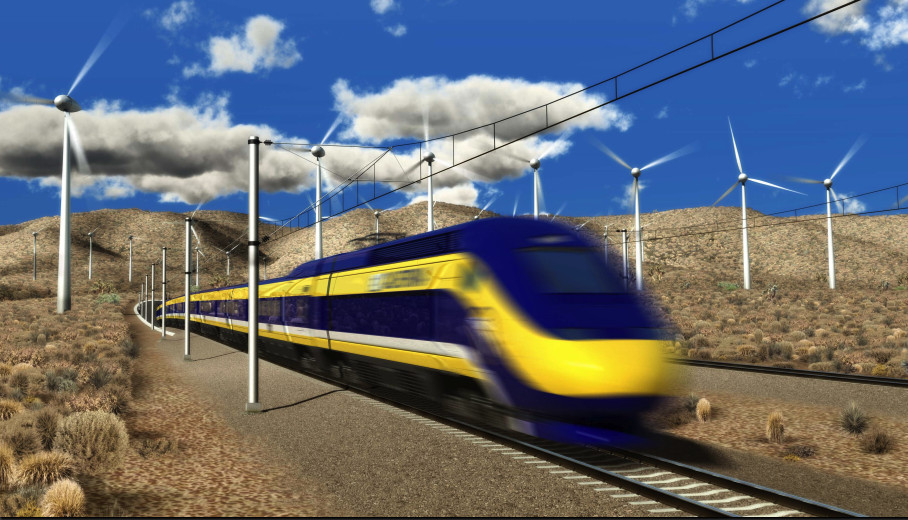
"caption": "Rendering of high-speed rail. (Courtesy the High-Speed Rail Authority)",
"description": null,
"title": "RS3938_high speed rail20111118-hpr",
"credit": null,
"status": "inherit",
"isLoading": false,
"fetchFailed": false
},
"news_143508": {
"type": "attachments",
"id": "news_143508",
"meta": {
"index": "attachments_1716263798",
"site": "news",
"id": "143508",
"found": true
},
"parent": 143474,
"imgSizes": {
"kqedFullSize": {
"file": "https://ww2.kqed.org/app/uploads/sites/10/2014/07/176645523.jpg",
"width": 3000,
"height": 1924
}
},
"publishDate": 1406845231,
"modified": 1406845231,
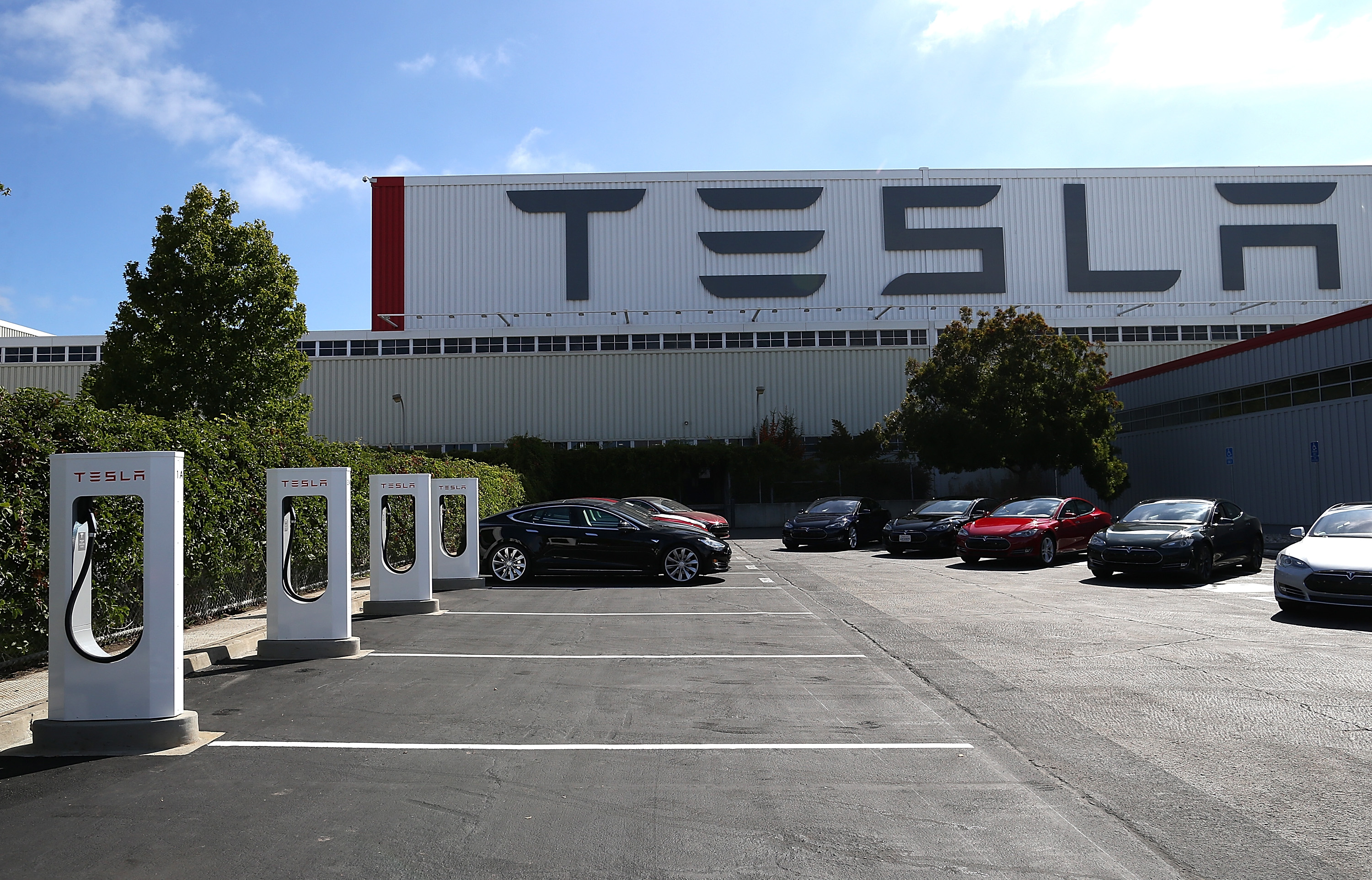
"caption": "Vehicle charging stations at Tesla Motors plant in Fremont. (Justin Sullivan/Getty Images)",
"description": "Vehicle charging stations at Tesla Motors plant in Fremont. (Justin Sullivan/Getty Images)",
"title": "Tesla Motors",
"credit": null,
"status": "inherit",
"isLoading": false,
"fetchFailed": false
},
"news_143401": {
"type": "attachments",
"id": "news_143401",
"meta": {
"index": "attachments_1716263798",
"site": "news",
"id": "143401",
"found": true
},
"parent": 143370,
"imgSizes": {
"kqedFullSize": {
"file": "https://ww2.kqed.org/app/uploads/sites/10/2014/07/RS11356_photo-1.JPG-alt_132.jpg",
"width": 3264,
"height": 2448
}
},
"publishDate": 1406767918,
"modified": 1406767918,
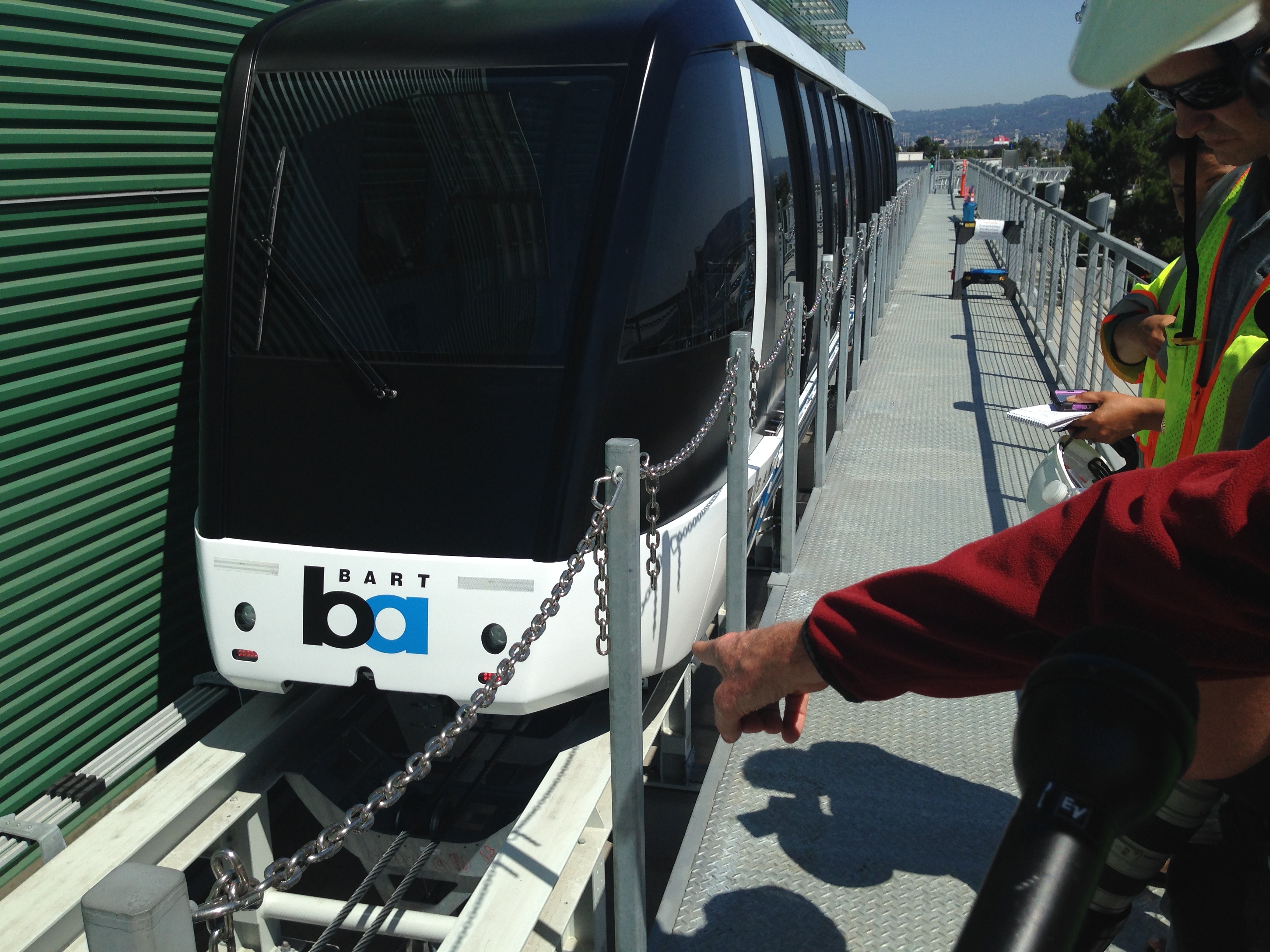
"caption": "One of the trains for BART's Oakland Airport Connector. (Isabel Angell/KQED)",
"description": null,
"title": "RS11356_photo 1.JPG-alt_132",
"credit": null,
"status": "inherit",
"isLoading": false,
"fetchFailed": false
},
"news_107955": {
"type": "attachments",
"id": "news_107955",
"meta": {
"index": "attachments_1716263798",
"site": "news",
"id": "107955",
"found": true
},
"parent": 107923,
"imgSizes": {
"kqedFullSize": {
"file": "https://ww2.kqed.org/app/uploads/sites/10/2013/08/Bay-bridge-640.jpg",
"width": 640,
"height": 480
}
},
"publishDate": 1377192968,
"modified": 1377192968,
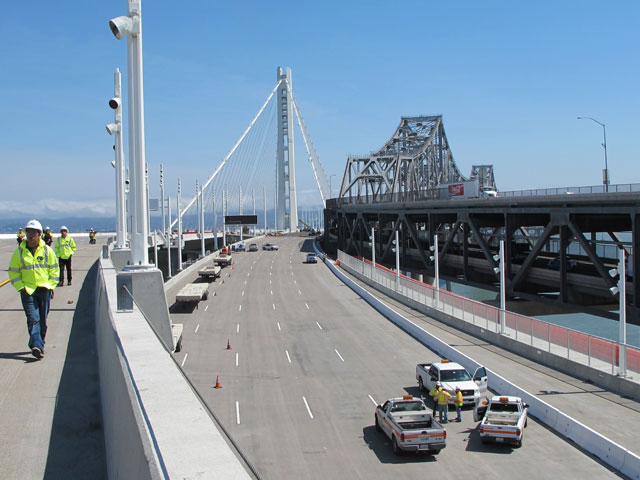
"caption": "Bay Bridge's new eastern span, left, with older span, right. (Andrew Stelzer/KQED)",
"description": "Bay Bridge's new eastern span, left, with older span, right. (Andrew Stelzer/KQED)",
"title": "Bay Bridge",
"credit": null,
"status": "inherit",
"isLoading": false,
"fetchFailed": false
},
"news_142920": {
"type": "attachments",
"id": "news_142920",
"meta": {
"index": "attachments_1716263798",
"site": "news",
"id": "142920",
"found": true
},
"parent": 142917,
"imgSizes": {
"kqedFullSize": {
"file": "https://ww2.kqed.org/app/uploads/sites/10/2014/07/fruitvalebart072614.jpg",
"width": 1024,
"height": 579
}
},
"publishDate": 1406303326,
"modified": 1406303326,
"caption": "The crowd at Oakland's Fruitvale station amid major BART delays Friday morning. (\u003ca href=\"https://twitter.com/CALencioni/\" target=\"_blank\">@CALencioni\u003c/a>/Twitter). ",
"description": null,
"title": "BART-Bomb Threat",
"credit": null,
"status": "inherit",
"isLoading": false,
"fetchFailed": false
},
"science_19737": {
"type": "attachments",
"id": "science_19737",
"meta": {
"index": "attachments_1716263798",
"site": "science",
"id": "19737",
"found": true
},
"parent": 19694,
"imgSizes": {
"kqedFullSize": {
"file": "https://ww2.kqed.org/app/uploads/sites/35/2014/07/10880scr_fab34f3151f07aa-e1406166428720.jpg",
"width": 640,
"height": 480
}
},
"publishDate": 1406166398,
"modified": 1406166398,
"caption": "Tank cars lined up in a rail yard in Richmond. (Craig Miller/KQED)",
"description": "Tank cars lined up in a rail yard in Richmond. (Craig Miller/KQED)",
"title": "10880scr_fab34f3151f07aa",
"credit": null,
"status": "inherit",
"isLoading": false,
"fetchFailed": false
},
"news_142503": {
"type": "attachments",
"id": "news_142503",
"meta": {
"index": "attachments_1716263798",
"site": "news",
"id": "142503",
"found": true
},
"parent": 142502,
"imgSizes": {
"kqedFullSize": {
"file": "https://ww2.kqed.org/app/uploads/sites/10/2014/07/sandwash.jpg",
"width": 1280,
"height": 847
}
},
"publishDate": 1406051423,
"modified": 1406051423,
"caption": null,
"description": null,
"title": "sandwash",
"credit": null,
"status": "inherit",
"isLoading": false,
"fetchFailed": false
},
"science_19557": {
"type": "attachments",
"id": "science_19557",
"meta": {
"index": "attachments_1716263798",
"site": "science",
"id": "19557",
"found": true
},
"parent": 19507,
"imgSizes": {
"kqedFullSize": {
"file": "https://ww2.kqed.org/app/uploads/sites/35/2014/07/Miille_Bakken1.jpg",
"width": 640,
"height": 360
}
},
"publishDate": 1405727103,
"modified": 1405727103,
"caption": "A BNSF train with tank cars crosses a trestle in the Feather River Canyon in Northern California. (Courtesy of Jake Miille)",
"description": "A BNSF train with tank cars crosses a trestle in the Feather River Canyon in Northern California. (Courtesy of Jake Miille)",
"title": "Miille_Bakken1",
"credit": null,
"status": "inherit",
"isLoading": false,
"fetchFailed": false
},
"news_142190": {
"type": "attachments",
"id": "news_142190",
"meta": {
"index": "attachments_1716263798",
"site": "news",
"id": "142190",
"found": true
},
"parent": 142178,
"imgSizes": {
"kqedFullSize": {
"file": "https://ww2.kqed.org/app/uploads/sites/10/2014/07/flag-football-1.jpg",
"width": 1280,
"height": 899
}
},
"publishDate": 1405705517,
"modified": 1405705517,
"caption": "John Barberini of Hayward watches the Legends of Candlestick flag football game, an event featuring former San Francisco 49ers greats against a team of retired NFL stars. It was billed as the final football game at the stadium, now slated for demolition next year. (Dan Brekke/KQED)",
"description": "John Barberini of Hayward watches the Legends of Candlestick flag football game, an event featuring former San Francisco 49ers greats against a team of retired NFL stars. It was billed as the final football game at the stadium, now slated for demolition next year.\n(Dan Brekke/KQED)",
"title": "flag football (1)",
"credit": null,
"status": "inherit",
"isLoading": false,
"fetchFailed": false
},
"news_137366": {
"type": "attachments",
"id": "news_137366",
"meta": {
"index": "attachments_1716263798",
"site": "news",
"id": "137366",
"found": true
},
"parent": 137357,
"imgSizes": {
"kqedFullSize": {
"file": "https://ww2.kqed.org/app/uploads/sites/10/2014/05/RS8537_IMG_9782-scr-e1405355033607.jpg",
"width": 640,
"height": 427
}
},
"publishDate": 1401314841,
"modified": 1487805998,
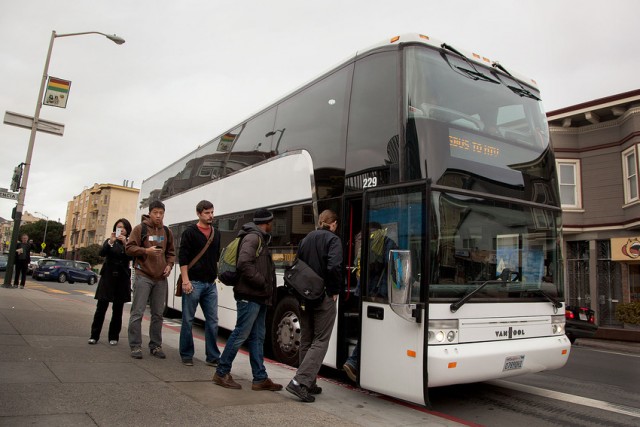
"caption": "Tech workers board a shuttle bus in San Francisco. ",
"description": "Tech workers board a shuttle bus in San Francisco. (Mark Andrew Boyer/KQED)",
"title": "Tech Workers-Google Buses",
"credit": "Mark Andrew Boyer/KQED",
"status": "inherit",
"isLoading": false,
"fetchFailed": false
}
},
"audioPlayerReducer": {
"postId": "stream_live",
"isPaused": true,
"isPlaying": false,
"pfsActive": false,
"pledgeModalIsOpen": true,
"playerDrawerIsOpen": false,
"liveAudioPlayStartedAt": 0,
"liveAudioPlayContext": ""
},
"authorsReducer": {
"ohubertallen": {
"type": "authors",
"id": "102",
"meta": {
"index": "authors_1716337520",
"id": "102",
"found": true
},
"name": "Olivia Allen-Price",
"firstName": "Olivia",
"lastName": "Allen-Price",
"slug": "ohubertallen",
"email": "oallenprice@kqed.org",
"display_author_email": false,
"staff_mastheads": [
"news"
],
"title": "Senior Editor",
"bio": "Olivia Allen-Price is senior editor and host of the award-winning Bay Curious podcast. Prior to joining KQED in 2013, Olivia worked at The Baltimore Sun and The Virginian-Pilot in Norfolk, Va. She holds degrees in journalism and political science from Elon University. Her work has earned awards from the Society of Professional Journalists, the Hearst Foundation and Hearken. She loves to talk about running and curly hair.\r\n\r\nFollow: \u003ca href=\"https://twitter.com/oallenprice\">@oallenprice\u003c/a>\r\nEmail: \u003ca href=\"mailto:oallenprice@kqed.org\">oallenprice@kqed.org\u003c/a>",
"avatar": "https://secure.gravatar.com/avatar/07f7803c1f6be56f3be58ef276dfa64dce898502e0554408ef4858451a8294f7?s=600&d=blank&r=g",
"twitter": "oallenprice",
"bluesky": null,
"facebook": null,
"instagram": null,
"linkedin": null,
"sites": [
{
"site": "",
"roles": [
"editor"
]
},
{
"site": "arts",
"roles": [
"subscriber"
]
},
{
"site": "news",
"roles": [
"administrator"
]
},
{
"site": "pop",
"roles": [
"administrator"
]
},
{
"site": "bayareabites",
"roles": [
"contributor"
]
},
{
"site": "stateofhealth",
"roles": [
"administrator"
]
},
{
"site": "science",
"roles": [
"editor"
]
}
],
"headData": {
"title": "Olivia Allen-Price | KQED",
"description": "Senior Editor",
"ogImgSrc": "https://secure.gravatar.com/avatar/07f7803c1f6be56f3be58ef276dfa64dce898502e0554408ef4858451a8294f7?s=600&d=blank&r=g",
"twImgSrc": "https://secure.gravatar.com/avatar/07f7803c1f6be56f3be58ef276dfa64dce898502e0554408ef4858451a8294f7?s=600&d=blank&r=g"
},
"isLoading": false,
"link": "/author/ohubertallen"
},
"mollysamuel": {
"type": "authors",
"id": "200",
"meta": {
"index": "authors_1716337520",
"id": "200",
"found": true
},
"name": "Molly Samuel",
"firstName": "Molly",
"lastName": "Samuel",
"slug": "mollysamuel",
"email": "msamuel@kqed.org",
"display_author_email": false,
"staff_mastheads": [],
"title": null,
"bio": "Molly Samuel joined KQED as an intern in 2007, and since then has worked here as a reporter, producer, director and blogger. Before becoming KQED Science’s Multimedia Producer, she was a producer for Climate Watch. Molly has also reported for NPR, KALW and High Country News, and has produced audio stories for The Encyclopedia of Life and the Oakland Museum of California. She was a fellow with the Middlebury Fellowships in Environmental Journalism and a journalist-in-residence at the National Evolutionary Synthesis Center. Molly has a degree in Ancient Greek from Oberlin College and is a co-founder of the record label True Panther Sounds.",
"avatar": "https://secure.gravatar.com/avatar/a6abd3b949a89fe5109fa9917631d0b6?s=600&d=blank&r=g",
"twitter": null,
"facebook": null,
"instagram": null,
"linkedin": null,
"sites": [
{
"site": "news",
"roles": [
"subscriber"
]
},
{
"site": "stateofhealth",
"roles": [
"subscriber"
]
},
{
"site": "science",
"roles": [
"subscriber"
]
},
{
"site": "quest",
"roles": [
"edit_users",
"subscriber"
]
}
],
"headData": {
"title": "Molly Samuel | KQED",
"description": null,
"ogImgSrc": "https://secure.gravatar.com/avatar/a6abd3b949a89fe5109fa9917631d0b6?s=600&d=blank&r=g",
"twImgSrc": "https://secure.gravatar.com/avatar/a6abd3b949a89fe5109fa9917631d0b6?s=600&d=blank&r=g"
},
"isLoading": false,
"link": "/author/mollysamuel"
},
"bgoebel": {
"type": "authors",
"id": "214",
"meta": {
"index": "authors_1716337520",
"id": "214",
"found": true
},
"name": "Bryan Goebel",
"firstName": "Bryan",
"lastName": "Goebel",
"slug": "bgoebel",
"email": "bgoebel@kqed.org",
"display_author_email": false,
"staff_mastheads": [],
"title": null,
"bio": "Bryan Goebel is a reporter focused on transportation and housing issues. He was previously the editor of Streetsblog San Francisco, and an anchor/editor at KCBS Radio. He's a lifelong Californian and has also worked at radio stations in Barstow, Redding and Sacramento.",
"avatar": "https://secure.gravatar.com/avatar/7fdd6b065bfe9a23a71bcfa80848df88?s=600&d=blank&r=g",
"twitter": "velobry",
"facebook": null,
"instagram": null,
"linkedin": null,
"sites": [
{
"site": "news",
"roles": [
"subscriber"
]
},
{
"site": "stateofhealth",
"roles": [
"subscriber"
]
}
],
"headData": {
"title": "Bryan Goebel | KQED",
"description": null,
"ogImgSrc": "https://secure.gravatar.com/avatar/7fdd6b065bfe9a23a71bcfa80848df88?s=600&d=blank&r=g",
"twImgSrc": "https://secure.gravatar.com/avatar/7fdd6b065bfe9a23a71bcfa80848df88?s=600&d=blank&r=g"
},
"isLoading": false,
"link": "/author/bgoebel"
},
"danbrekke": {
"type": "authors",
"id": "222",
"meta": {
"index": "authors_1716337520",
"id": "222",
"found": true
},
"name": "Dan Brekke",
"firstName": "Dan",
"lastName": "Brekke",
"slug": "danbrekke",
"email": "dbrekke@kqed.org",
"display_author_email": true,
"staff_mastheads": [
"news",
"science"
],
"title": "KQED Editor and Reporter",
"bio": "Dan Brekke is a reporter and editor for KQED News, responsible for coverage of topics ranging from California water issues to the Bay Area's transportation challenges. In a newsroom career that began in Chicago in 1972, Dan has worked for \u003cem>The San Francisco Examiner,\u003c/em> Wired and TechTV and has been published in The New York Times, The New York Times Magazine, Business 2.0, Salon and elsewhere.\r\n\r\nSince joining KQED in 2007, Dan has reported, edited and produced both radio and online features and breaking news pieces. He has shared as both editor and reporter in four Society of Professional Journalists Norcal Excellence in Journalism awards and one Edward R. Murrow regional award. He was chosen for a spring 2017 residency at the Mesa Refuge to advance his research on California salmon.\r\n\r\nEmail Dan at: \u003ca href=\"mailto:dbrekke@kqed.org\">dbrekke@kqed.org\u003c/a>\r\n\r\n\u003cstrong>Twitter:\u003c/strong> \u003ca href=\"https://twitter.com/danbrekke\" rel=\"noopener noreferrer\">twitter.com/danbrekke\u003c/a>\r\n\u003cstrong>Facebook:\u003c/strong> \u003ca href=\"https://www.facebook.com/danbrekke\" rel=\"noopener noreferrer\">www.facebook.com/danbrekke\u003c/a>\r\n\u003cstrong>LinkedIn:\u003c/strong> \u003ca href=\"https://www.linkedin.com/in/danbrekke\" rel=\"noopener noreferrer\">www.linkedin.com/in/danbrekke\u003c/a>",
"avatar": "https://secure.gravatar.com/avatar/8f1f0d2a978fb3b23426c922c7e2af558fa36905b49c4ce76a97dc3c72d27226?s=600&d=mm&r=g",
"twitter": "danbrekke",
"bluesky": null,
"facebook": null,
"instagram": "https://www.instagram.com/dan.brekke/",
"linkedin": "https://www.linkedin.com/in/danbrekke/",
"sites": [
{
"site": "news",
"roles": [
"administrator",
"create_posts"
]
},
{
"site": "stateofhealth",
"roles": [
"editor"
]
},
{
"site": "science",
"roles": [
"editor"
]
},
{
"site": "quest",
"roles": [
"contributor"
]
},
{
"site": "food",
"roles": [
"contributor"
]
},
{
"site": "forum",
"roles": [
"contributor"
]
},
{
"site": "elections",
"roles": [
"editor"
]
},
{
"site": "liveblog",
"roles": [
"editor"
]
}
],
"headData": {
"title": "Dan Brekke | KQED",
"description": "KQED Editor and Reporter",
"ogImgSrc": "https://secure.gravatar.com/avatar/8f1f0d2a978fb3b23426c922c7e2af558fa36905b49c4ce76a97dc3c72d27226?s=600&d=mm&r=g",
"twImgSrc": "https://secure.gravatar.com/avatar/8f1f0d2a978fb3b23426c922c7e2af558fa36905b49c4ce76a97dc3c72d27226?s=600&d=mm&r=g"
},
"isLoading": false,
"link": "/author/danbrekke"
},
"iangell": {
"type": "authors",
"id": "229",
"meta": {
"index": "authors_1716337520",
"id": "229",
"found": true
},
"name": "Isabel Angell",
"firstName": "Isabel",
"lastName": "Angell",
"slug": "iangell",
"email": "iangell@KQED.org",
"display_author_email": false,
"staff_mastheads": [],
"title": null,
"bio": "Isabel Angell is an on-call reporter for KQED. She joined the station as a newsroom intern in 2013. \u003ca href=\"https://twitter.com/IsabeltheAngell\" target=\"_blank\" rel=\"noopener\">@IsabeltheAngell \u003c/a>",
"avatar": "https://secure.gravatar.com/avatar/e5d0b523fbffce6592a52f1dccafabe5?s=600&d=blank&r=g",
"twitter": null,
"facebook": null,
"instagram": null,
"linkedin": null,
"sites": [
{
"site": "news",
"roles": [
"subscriber"
]
}
],
"headData": {
"title": "Isabel Angell | KQED",
"description": null,
"ogImgSrc": "https://secure.gravatar.com/avatar/e5d0b523fbffce6592a52f1dccafabe5?s=600&d=blank&r=g",
"twImgSrc": "https://secure.gravatar.com/avatar/e5d0b523fbffce6592a52f1dccafabe5?s=600&d=blank&r=g"
},
"isLoading": false,
"link": "/author/iangell"
},
"katrinaschwartz": {
"type": "authors",
"id": "234",
"meta": {
"index": "authors_1716337520",
"id": "234",
"found": true
},
"name": "Katrina Schwartz",
"firstName": "Katrina",
"lastName": "Schwartz",
"slug": "katrinaschwartz",
"email": "kschwartz@kqed.org",
"display_author_email": false,
"staff_mastheads": [
"news"
],
"title": "Producer",
"bio": "Katrina Schwartz is a journalist based in San Francisco. She's worked at KPCC public radio in LA and has reported on air and online for KQED since 2010. She covered how teaching and learning is changing for MindShift between 2012 and 2020. She is the co-host of the MindShift podcast and now produces KQED's Bay Curious podcast.",
"avatar": "https://secure.gravatar.com/avatar/edb4ee79070447a018538c9aae6eeecf28786515b8a0c30e43b6b7dce5aa44c8?s=600&d=blank&r=g",
"twitter": "kschwart",
"bluesky": null,
"facebook": null,
"instagram": null,
"linkedin": null,
"sites": [
{
"site": "",
"roles": [
"editor"
]
},
{
"site": "news",
"roles": [
"editor"
]
},
{
"site": "mindshift",
"roles": [
"administrator"
]
},
{
"site": "stateofhealth",
"roles": [
"author"
]
},
{
"site": "science",
"roles": [
"editor"
]
}
],
"headData": {
"title": "Katrina Schwartz | KQED",
"description": "Producer",
"ogImgSrc": "https://secure.gravatar.com/avatar/edb4ee79070447a018538c9aae6eeecf28786515b8a0c30e43b6b7dce5aa44c8?s=600&d=blank&r=g",
"twImgSrc": "https://secure.gravatar.com/avatar/edb4ee79070447a018538c9aae6eeecf28786515b8a0c30e43b6b7dce5aa44c8?s=600&d=blank&r=g"
},
"isLoading": false,
"link": "/author/katrinaschwartz"
},
"kqednewsstaffandwires": {
"type": "authors",
"id": "237",
"meta": {
"index": "authors_1716337520",
"id": "237",
"found": true
},
"name": "KQED News Staff and Wires",
"firstName": "KQED News Staff and Wires",
"lastName": null,
"slug": "kqednewsstaffandwires",
"email": "onlinenewsstaff@kqed.org",
"display_author_email": false,
"staff_mastheads": [],
"title": null,
"bio": null,
"avatar": "https://secure.gravatar.com/avatar/72295af8ebbfbd19a4948f5271285664?s=600&d=blank&r=g",
"twitter": null,
"facebook": null,
"instagram": null,
"linkedin": null,
"sites": [
{
"site": "arts",
"roles": [
"contributor"
]
},
{
"site": "news",
"roles": [
"contributor"
]
},
{
"site": "lowdown",
"roles": [
"author"
]
},
{
"site": "stateofhealth",
"roles": [
"contributor"
]
},
{
"site": "food",
"roles": [
"author"
]
}
],
"headData": {
"title": "KQED News Staff and Wires | KQED",
"description": null,
"ogImgSrc": "https://secure.gravatar.com/avatar/72295af8ebbfbd19a4948f5271285664?s=600&d=blank&r=g",
"twImgSrc": "https://secure.gravatar.com/avatar/72295af8ebbfbd19a4948f5271285664?s=600&d=blank&r=g"
},
"isLoading": false,
"link": "/author/kqednewsstaffandwires"
},
"sdetrow": {
"type": "authors",
"id": "256",
"meta": {
"index": "authors_1716337520",
"id": "256",
"found": true
},
"name": "Scott Detrow",
"firstName": "Scott",
"lastName": "Detrow",
"slug": "sdetrow",
"email": "sdetrow@kqed.org",
"display_author_email": false,
"staff_mastheads": [],
"title": null,
"bio": "Sacramento bureau chief Scott Detrow covers state government, politics and policy for KQED News and its statewide news program, The California Report.",
"avatar": "https://secure.gravatar.com/avatar/3271d0c151ba26452e3417f5ac251c30?s=600&d=blank&r=g",
"twitter": null,
"facebook": null,
"instagram": null,
"linkedin": null,
"sites": [
{
"site": "news",
"roles": [
"subscriber"
]
},
{
"site": "science",
"roles": [
"subscriber"
]
}
],
"headData": {
"title": "Scott Detrow | KQED",
"description": null,
"ogImgSrc": "https://secure.gravatar.com/avatar/3271d0c151ba26452e3417f5ac251c30?s=600&d=blank&r=g",
"twImgSrc": "https://secure.gravatar.com/avatar/3271d0c151ba26452e3417f5ac251c30?s=600&d=blank&r=g"
},
"isLoading": false,
"link": "/author/sdetrow"
}
},
"pagesReducer": {
"news_category_transportation": {
"type": "terms",
"id": "news_1397",
"meta": {
"index": "terms_1716263798",
"site": "news",
"id": "1397",
"score": 12.940365
},
"featImg": null,
"name": "Transportation",
"description": null,
"taxonomy": "category",
"headData": {
"twImgId": null,
"twTitle": null,
"ogTitle": null,
"ogImgId": null,
"twDescription": null,
"description": null,
"title": "Transportation Archives | KQED News",
"ogDescription": null
},
"ttid": 1409,
"slug": "transportation",
"isLoading": false,
"title": "Transportation",
"pageMeta": {
"site": "news",
"WpPageTemplate": "page-topic-editorial",
"currentPage": 114
},
"blocks": [
{
"blockName": "kqed/post-list",
"attrs": {
"layout": "cardArticle2",
"query": "posts/news?category=transportation",
"seeMore": false,
"paginated": true,
"page": 114
}
},
{
"blockName": "kqed/ad"
}
]
}
},
"pfsSessionReducer": {},
"postsReducer": {
"stream_live": {
"type": "live",
"id": "stream_live",
"audioUrl": "https://streams.kqed.org/kqedradio",
"title": "Live Stream",
"excerpt": "Live Stream information currently unavailable.",
"link": "/radio",
"featImg": "",
"label": {
"name": "KQED Live",
"link": "/"
}
},
"stream_kqedNewscast": {
"type": "posts",
"id": "stream_kqedNewscast",
"audioUrl": "https://www.kqed.org/.stream/anon/radio/RDnews/newscast.mp3?_=1",
"title": "KQED Newscast",
"featImg": "",
"label": {
"name": "88.5 FM",
"link": "/"
}
},
"news_143550": {
"type": "posts",
"id": "news_143550",
"meta": {
"index": "posts_1716263798",
"site": "news",
"id": "143550",
"score": null,
"sort": [
1406857257000
]
},
"parent": 0,
"labelTerm": {
"site": "news",
"term": 6944
},
"blocks": [],
"publishDate": 1406857257,
"format": "aside",
"disqusTitle": "State Appeals Court Delivers Win For High-Speed Rail",
"title": "State Appeals Court Delivers Win For High-Speed Rail",
"headTitle": "News Fix | KQED News",
"content": "\u003cfigure id=\"attachment_143552\" class=\"wp-caption aligncenter\" style=\"max-width: 640px\">\u003ca href=\"http://ww2.kqed.org/news/wp-content/uploads/sites/10/2014/07/RS3938_high-speed-rail20111118-hpr.jpg\">\u003cimg class=\"size-medium wp-image-143552\" src=\"http://ww2.kqed.org/news/wp-content/uploads/sites/10/2014/07/RS3938_high-speed-rail20111118-hpr-640x366.jpg\" alt=\"Rendering of high-speed rail. (Courtesy the High-Speed Rail Authority)\" width=\"640\" height=\"366\">\u003c/a>\u003cfigcaption class=\"wp-caption-text\">Rendering of high-speed rail. (Courtesy the High-Speed Rail Authority)\u003c/figcaption>\u003c/figure>\n\u003cp>A state appeals court has delivered a much-needed win for California’s controversial $68 billion High-Speed Rail project.\u003c/p>\n\u003cp>\u003ca href=\"http://www.courts.ca.gov/opinions/documents/C075668.PDF\">In a Thursday evening ruling\u003c/a>, California’s 3\u003csup>rd\u003c/sup> Court of Appeals overturned \u003ca href=\"http://www.reuters.com/article/2013/11/26/us-california-highspeedrail-idUSBRE9AP02520131126\">two November 2013 decisions by a Sacramento judge\u003c/a> blocking the project from tapping into $8 billion in state bond money, and throwing out the proposed San Francisco-to-Los Angeles rail line’s business plan.\u003c/p>\n\u003cp>“Contrary to the trial court's determination, the High-Speed Passenger Train Finance Committee properly found that issuance of bonds for the project was necessary or desirable,” the court ruled, ordering Judge Michael Kenny to validate bond sales financing the project’s initial construction phase.\u003c/p>\n\u003cp>“Without a validation the state could not go to the financial markets to sell the bonds that were approved by the voters (in 2008),” said Brown Administration spokesman H.D. Palmer. “Absent an appeal to the (state) Supreme Court, the 3\u003csup>rd\u003c/sup> District Court of Appeal has now given the state the green light to go forward and sell those bonds.”\u003c/p>\n\u003cp>It’s unclear at this time whether rail opponents will appeal the decision. “I’ve got to talk to my clients, but I suspect they may well appeal it,” said Stuart Flashman, who represents Kings County and others who challenged the project’s legal authority. “Obviously we’re very disappointed. …This ruling, I’m afraid, lets (the rail project) slide on forward.”\u003c/p>\n\u003cp>[ad fullwidth]\u003c/p>\n\u003cp>Governor Jerry Brown has made the rail project a top priority, despite growing concerns from lawmakers in both parties – but primarily Republicans – about the project’s growing cost and feasibility. \u003ca href=\"http://www.sacbee.com/2014/06/12/6480411/budget-deal-spends-cap-and-trade.html\">This year’s state budget allocated $250 million\u003c/a> in cap-and-trade auction revenue for the rail project.\u003c/p>\n\u003cp>Read the full ruling below:\u003c/p>\n\u003cp style=\"margin: 12px auto 6px auto;font-family: Helvetica,Arial,Sans-serif;font-style: normal;font-variant: normal;font-weight: normal;font-size: 14px;line-height: normal\">\n\u003c/p>\u003cp style=\"margin: 12px auto 6px auto;font-family: Helvetica,Arial,Sans-serif;font-style: normal;font-variant: normal;font-weight: normal;font-size: 14px;line-height: normal\">\u003ca style=\"text-decoration: underline\" title=\"View California High-Speed Rail Appeal Court Ruling on Scribd\" href=\"http://www.scribd.com/doc/235582454/California-High-Speed-Rail-Appeal-Court-Ruling\">California High-Speed Rail Appeal Court Ruling\u003c/a> by \u003ca style=\"text-decoration: underline\" title=\"View KQED News's profile on Scribd\" href=\"http://www.scribd.com/KQED_News\">KQED News\u003c/a>\u003c/p>\n\u003cp>\u003c/p>\n\u003cp>\u003ciframe id=\"doc_28795\" class=\"scribd_iframe_embed\" src=\"//www.scribd.com/embeds/235582454/content?start_page=1&view_mode=scroll&access_key=key-gTwD2wbxcpECyaYSbO5p&show_recommendations=false\" width=\"640\" height=\"853\" frameborder=\"0\" scrolling=\"no\">\u003c/iframe>\u003c/p>\n\n",
"disqusIdentifier": "143550 http://ww2.kqed.org/news/?p=143550",
"disqusUrl": "https://ww2.kqed.org/news/2014/07/31/state-appeals-court-delivers-win-for-high-speed-rail/",
"stats": {
"hasVideo": false,
"hasChartOrMap": false,
"hasAudio": false,
"hasPolis": false,
"wordCount": 334,
"hasGoogleForm": false,
"hasGallery": false,
"hasHearkenModule": false,
"iframeSrcs": [],
"paragraphCount": 10
},
"modified": 1406857257,
"excerpt": "An appeals court ruled that California may resume selling $10 billion in bonds for high-speed rail.",
"headData": {
"twImgId": "",
"twTitle": "",
"ogTitle": "",
"ogImgId": "",
"twDescription": "",
"description": "An appeals court ruled that California may resume selling $10 billion in bonds for high-speed rail.",
"title": "State Appeals Court Delivers Win For High-Speed Rail | KQED",
"ogDescription": "",
"schema": {
"@context": "https://schema.org",
"@type": "NewsArticle",
"headline": "State Appeals Court Delivers Win For High-Speed Rail",
"datePublished": "2014-07-31T18:40:57-07:00",
"dateModified": "2014-07-31T18:40:57-07:00",
"image": "https://cdn.kqed.org/wp-content/uploads/2020/02/KQED-OG-Image@1x.png",
"isAccessibleForFree": "True",
"publisher": {
"@type": "NewsMediaOrganization",
"@id": "https://www.kqed.org/#organization",
"name": "KQED",
"logo": "https://cdn.kqed.org/wp-content/uploads/2020/02/KQED-OG-Image@1x.png",
"url": "https://www.kqed.org",
"sameAs": [
"https://www.facebook.com/KQED",
"https://twitter.com/KQED",
"https://www.instagram.com/kqed/",
"https://www.tiktok.com/@kqedofficial",
"https://www.linkedin.com/company/kqed",
"https://www.youtube.com/channel/UCeC0IOo7i1P_61zVUWbJ4nw"
]
}
}
},
"guestAuthors": [],
"slug": "state-appeals-court-delivers-win-for-high-speed-rail",
"status": "publish",
"customPermalink": "2014/07/31/high-speed-rail-ruling-overturned/",
"path": "/news/143550/state-appeals-court-delivers-win-for-high-speed-rail",
"audioTrackLength": null,
"parsedContent": [
{
"type": "contentString",
"content": "\u003cdiv class=\"post-body\">\u003cp>\u003cfigure id=\"attachment_143552\" class=\"wp-caption aligncenter\" style=\"max-width: 640px\">\u003ca href=\"http://ww2.kqed.org/news/wp-content/uploads/sites/10/2014/07/RS3938_high-speed-rail20111118-hpr.jpg\">\u003cimg class=\"size-medium wp-image-143552\" src=\"http://ww2.kqed.org/news/wp-content/uploads/sites/10/2014/07/RS3938_high-speed-rail20111118-hpr-640x366.jpg\" alt=\"Rendering of high-speed rail. (Courtesy the High-Speed Rail Authority)\" width=\"640\" height=\"366\">\u003c/a>\u003cfigcaption class=\"wp-caption-text\">Rendering of high-speed rail. (Courtesy the High-Speed Rail Authority)\u003c/figcaption>\u003c/figure>\n\u003cp>A state appeals court has delivered a much-needed win for California’s controversial $68 billion High-Speed Rail project.\u003c/p>\n\u003cp>\u003ca href=\"http://www.courts.ca.gov/opinions/documents/C075668.PDF\">In a Thursday evening ruling\u003c/a>, California’s 3\u003csup>rd\u003c/sup> Court of Appeals overturned \u003ca href=\"http://www.reuters.com/article/2013/11/26/us-california-highspeedrail-idUSBRE9AP02520131126\">two November 2013 decisions by a Sacramento judge\u003c/a> blocking the project from tapping into $8 billion in state bond money, and throwing out the proposed San Francisco-to-Los Angeles rail line’s business plan.\u003c/p>\n\u003cp>“Contrary to the trial court's determination, the High-Speed Passenger Train Finance Committee properly found that issuance of bonds for the project was necessary or desirable,” the court ruled, ordering Judge Michael Kenny to validate bond sales financing the project’s initial construction phase.\u003c/p>\n\u003cp>“Without a validation the state could not go to the financial markets to sell the bonds that were approved by the voters (in 2008),” said Brown Administration spokesman H.D. Palmer. “Absent an appeal to the (state) Supreme Court, the 3\u003csup>rd\u003c/sup> District Court of Appeal has now given the state the green light to go forward and sell those bonds.”\u003c/p>\n\u003cp>It’s unclear at this time whether rail opponents will appeal the decision. “I’ve got to talk to my clients, but I suspect they may well appeal it,” said Stuart Flashman, who represents Kings County and others who challenged the project’s legal authority. “Obviously we’re very disappointed. …This ruling, I’m afraid, lets (the rail project) slide on forward.”\u003c/p>\n\u003cp>\u003c/p>\u003c/div>",
"attributes": {
"named": {},
"numeric": []
}
},
{
"type": "component",
"content": "",
"name": "ad",
"attributes": {
"named": {
"label": "fullwidth"
},
"numeric": [
"fullwidth"
]
}
},
{
"type": "contentString",
"content": "\u003cdiv class=\"post-body\">\u003cp>\u003c/p>\n\u003cp>Governor Jerry Brown has made the rail project a top priority, despite growing concerns from lawmakers in both parties – but primarily Republicans – about the project’s growing cost and feasibility. \u003ca href=\"http://www.sacbee.com/2014/06/12/6480411/budget-deal-spends-cap-and-trade.html\">This year’s state budget allocated $250 million\u003c/a> in cap-and-trade auction revenue for the rail project.\u003c/p>\n\u003cp>Read the full ruling below:\u003c/p>\n\u003cp style=\"margin: 12px auto 6px auto;font-family: Helvetica,Arial,Sans-serif;font-style: normal;font-variant: normal;font-weight: normal;font-size: 14px;line-height: normal\">\n\u003c/p>\u003cp style=\"margin: 12px auto 6px auto;font-family: Helvetica,Arial,Sans-serif;font-style: normal;font-variant: normal;font-weight: normal;font-size: 14px;line-height: normal\">\u003ca style=\"text-decoration: underline\" title=\"View California High-Speed Rail Appeal Court Ruling on Scribd\" href=\"http://www.scribd.com/doc/235582454/California-High-Speed-Rail-Appeal-Court-Ruling\">California High-Speed Rail Appeal Court Ruling\u003c/a> by \u003ca style=\"text-decoration: underline\" title=\"View KQED News's profile on Scribd\" href=\"http://www.scribd.com/KQED_News\">KQED News\u003c/a>\u003c/p>\n\u003cp>\u003c/p>\n\u003cp>\u003ciframe id=\"doc_28795\" class=\"scribd_iframe_embed\" src=\"//www.scribd.com/embeds/235582454/content?start_page=1&view_mode=scroll&access_key=key-gTwD2wbxcpECyaYSbO5p&show_recommendations=false\" width=\"640\" height=\"853\" frameborder=\"0\" scrolling=\"no\">\u003c/iframe>\u003c/p>\n\n\u003c/div>\u003c/p>",
"attributes": {
"named": {},
"numeric": []
}
}
],
"link": "/news/143550/state-appeals-court-delivers-win-for-high-speed-rail",
"authors": [
"256"
],
"programs": [
"news_6944"
],
"categories": [
"news_6188",
"news_8",
"news_13",
"news_1397"
],
"tags": [
"news_309"
],
"featImg": "news_143552",
"label": "news_6944"
},
"news_143474": {
"type": "posts",
"id": "news_143474",
"meta": {
"index": "posts_1716263798",
"site": "news",
"id": "143474",
"score": null,
"sort": [
1406845528000
]
},
"guestAuthors": [],
"slug": "tesla-breaks-ground-on-potential-nevada-site-for-battery-factory",
"title": "Tesla Breaks Ground on 'Potential' Nevada Site for Battery Factory",
"publishDate": 1406845528,
"format": "aside",
"headTitle": "Tesla Breaks Ground on ‘Potential’ Nevada Site for Battery Factory | KQED",
"labelTerm": {
"term": 6944,
"site": "news"
},
"content": "\u003cfigure id=\"attachment_143508\" class=\"wp-caption aligncenter\" style=\"max-width: 640px\">\u003ca href=\"http://ww2.kqed.org/news/wp-content/uploads/sites/10/2014/07/176645523.jpg\">\u003cimg loading=\"lazy\" decoding=\"async\" class=\"size-medium wp-image-143508\" src=\"http://ww2.kqed.org/news/wp-content/uploads/sites/10/2014/07/176645523-640x410.jpg\" alt=\"Vehicle charging stations at Tesla Motors plant in Fremont. (Justin Sullivan/Getty Images)\" width=\"640\" height=\"410\">\u003c/a>\u003cfigcaption class=\"wp-caption-text\">Vehicle charging stations at Tesla Motors plant in Fremont. (Justin Sullivan/Getty Images)\u003c/figcaption>\u003c/figure>\n\u003cp>From the “You Never Know When You Might Need a Nice Hole in the Ground” Department:\u003c/p>\n\u003cp>Palo Alto’s Tesla Motors has created a stir with two announcements today: First, it will \u003ca href=\"http://asia.nikkei.com/Business/Deals/With-Tesla-deal-Panasonic-sees-risk-and-reward\" target=\"_blank\" rel=\"noopener\">partner with Japan’s Panasonic\u003c/a> on battery production at its much anticipated Gigafactory. And second, it has broken ground on a Gigafactory site outside Reno.\u003c/p>\n\u003cp>Normally, news of a factory groundbreaking might suggest a factory will actually be built at the site where ground has been broken. But Tesla is quick to say that the Nevada site is only “potentially” the location of the $5 billion Gigafactory. That’s because the facility is still the focus of a bidding war among several states. Here’s how Tesla explains the situation in \u003ca href=\"http://ir.teslamotors.com/secfiling.cfm?filingID=1193125-14-289598&CIK=1318605\" target=\"_blank\" rel=\"noopener\"> its Form 8-K report on current activities released today\u003c/a>:\u003c/p>\n\u003cblockquote>\u003cp>Consistent with our strategy to identify and break ground on multiple sites, we continue to evaluate other locations in Arizona, California, New Mexico and Texas. The final site for the first Gigafactory will be determined in the next few months, once we have full visibility and agreement on the relevant incentives and processes for enabling the Gigafactory to be fully operational to meet the timing for Model 3. We see these concurrent efforts as prudent. This vehicle will be our third-generation product and will substantially broaden the addressable market for Tesla, helping to accelerate the transition towards sustainable transportation. Any potentially duplicative investments are minor compared to the revenue that could be lost if the launch of Model 3 were affected by any delays at our primary Gigafactory site.\u003c/p>\u003c/blockquote>\n\u003cp>Tesla’s statement doesn’t really help you visualize the scale of the Nevada site, on Interstate 80 about 25 miles east of downtown Reno. \u003ca href=\"http://www.rgj.com/story/money/business/2014/07/31/tesla-confirms-reno-is-a-finalist-for-gigafactory-site/13424581/\" target=\"_blank\" rel=\"noopener\">The Reno Gazette-Journal’s story on the development\u003c/a> does:\u003c/p>\n\u003cblockquote>\u003cp>Lance Gilman, the developer of the industrial center where Tesla is doing work, told the RGJ Thursday the project is one of the largest grading projects ever in the United States.\u003c/p>\n\u003cp>“We have finished a superpad to accommodate 5 million square feet,” Gilman said. “We moved several million cubic yards of material.”\u003c/p>\n\u003cp>He added Tesla is still working on other sites.\u003c/p>\n\u003cp>“Speed is critical to them. We finished this in 3 1/2 weeks,” he said. “There’s nowhere else in world you can get a project up as fast as here. Tesla can start pouring concrete next week if they desire.”\u003c/p>\n\u003cp>Gilman said reports of Tesla stopping work at the Northern Nevada industrial center are partially true.\u003c/p>\n\u003cp>“They have reached transition point that they’re going to add square feet,” he said.\u003c/p>\u003c/blockquote>\n\u003cp>The guy is saying they’ve excavated a 5-million-square-foot site? That’s roughly the size of 80 football fields. And they’ve moved “several million” cubic yards of material? Assuming conservatively they mean 3 million cubic yards, that would be the volume of 1,200 Olympic swimming pools.\u003c/p>\n\u003cp>[ad fullwidth]\u003c/p>\n\u003cp>But the numbers that really count are the ones attached to dollar signs. As part of its deal with Tesla, Panasonic is expected to invest about $1 billion, mostly in battery-making equipment at the new plant. Tesla has said it will spend up to $5 billion on the facility, which is expected to employ about 6,500 people. Wherever it’s built.\u003c/p>\n\u003cp>The magnitude of the investment, the jobs and the prestige that would go along with winning a high-profile competition for a cutting-edge manufacturing facility have fueled the competition for the plant. City officials in Tucson, Arizona, \u003ca href=\"http://tucson.com/business/local/tucson-to-tesla-motors-your-building-permit-is-ready/article_c705ad7a-10b2-579e-9b4c-35e03fd54676.html\" target=\"_blank\" rel=\"noopener\">have approved a building permit\u003c/a> for the plant without waiting for an application from the company.\u003c/p>\n\u003cp>\u003c/p>\n\u003cp>For its part, \u003ca href=\"http://www.mercurynews.com/business/ci_26126667/new-california-tax-credit-would-benefit-tesla-gigafactory\" target=\"_blank\" rel=\"noopener\">California has enacted a massive industrial tax credit\u003c/a> that apparently would benefit Tesla if it decides to build the Gigafactory here.\u003c/p>\n\n",
"blocks": [],
"excerpt": "Company prepares site near Reno as five states continue to compete for cutting-edge facility.",
"status": "publish",
"parent": 0,
"modified": 1721107560,
"stats": {
"hasAudio": false,
"hasVideo": false,
"hasChartOrMap": false,
"iframeSrcs": [],
"hasGoogleForm": false,
"hasGallery": false,
"hasHearkenModule": false,
"hasPolis": false,
"paragraphCount": 17,
"wordCount": 667
},
"headData": {
"title": "Tesla Breaks Ground on 'Potential' Nevada Site for Battery Factory | KQED",
"description": "Company prepares site near Reno as five states continue to compete for cutting-edge facility.",
"ogTitle": "",
"ogDescription": "",
"ogImgId": "",
"twTitle": "",
"twDescription": "",
"twImgId": "",
"schema": {
"@context": "https://schema.org",
"@type": "NewsArticle",
"headline": "Tesla Breaks Ground on 'Potential' Nevada Site for Battery Factory",
"datePublished": "2014-07-31T15:25:28-07:00",
"dateModified": "2024-07-15T22:26:00-07:00",
"image": "https://cdn.kqed.org/wp-content/uploads/2020/02/KQED-OG-Image@1x.png",
"isAccessibleForFree": "True",
"publisher": {
"@type": "NewsMediaOrganization",
"@id": "https://www.kqed.org/#organization",
"name": "KQED",
"logo": "https://cdn.kqed.org/wp-content/uploads/2020/02/KQED-OG-Image@1x.png",
"url": "https://www.kqed.org",
"sameAs": [
"https://www.facebook.com/KQED",
"https://twitter.com/KQED",
"https://www.instagram.com/kqed/",
"https://www.tiktok.com/@kqedofficial",
"https://www.linkedin.com/company/kqed",
"https://www.youtube.com/channel/UCeC0IOo7i1P_61zVUWbJ4nw"
]
}
}
},
"sticky": false,
"path": "/news/143474/tesla-breaks-ground-on-potential-nevada-site-for-battery-factory",
"audioTrackLength": null,
"parsedContent": [
{
"type": "contentString",
"content": "\u003cdiv class=\"post-body\">\u003cp>\u003cfigure id=\"attachment_143508\" class=\"wp-caption aligncenter\" style=\"max-width: 640px\">\u003ca href=\"http://ww2.kqed.org/news/wp-content/uploads/sites/10/2014/07/176645523.jpg\">\u003cimg loading=\"lazy\" decoding=\"async\" class=\"size-medium wp-image-143508\" src=\"http://ww2.kqed.org/news/wp-content/uploads/sites/10/2014/07/176645523-640x410.jpg\" alt=\"Vehicle charging stations at Tesla Motors plant in Fremont. (Justin Sullivan/Getty Images)\" width=\"640\" height=\"410\">\u003c/a>\u003cfigcaption class=\"wp-caption-text\">Vehicle charging stations at Tesla Motors plant in Fremont. (Justin Sullivan/Getty Images)\u003c/figcaption>\u003c/figure>\n\u003cp>From the “You Never Know When You Might Need a Nice Hole in the Ground” Department:\u003c/p>\n\u003cp>Palo Alto’s Tesla Motors has created a stir with two announcements today: First, it will \u003ca href=\"http://asia.nikkei.com/Business/Deals/With-Tesla-deal-Panasonic-sees-risk-and-reward\" target=\"_blank\" rel=\"noopener\">partner with Japan’s Panasonic\u003c/a> on battery production at its much anticipated Gigafactory. And second, it has broken ground on a Gigafactory site outside Reno.\u003c/p>\n\u003cp>Normally, news of a factory groundbreaking might suggest a factory will actually be built at the site where ground has been broken. But Tesla is quick to say that the Nevada site is only “potentially” the location of the $5 billion Gigafactory. That’s because the facility is still the focus of a bidding war among several states. Here’s how Tesla explains the situation in \u003ca href=\"http://ir.teslamotors.com/secfiling.cfm?filingID=1193125-14-289598&CIK=1318605\" target=\"_blank\" rel=\"noopener\"> its Form 8-K report on current activities released today\u003c/a>:\u003c/p>\n\u003cblockquote>\u003cp>Consistent with our strategy to identify and break ground on multiple sites, we continue to evaluate other locations in Arizona, California, New Mexico and Texas. The final site for the first Gigafactory will be determined in the next few months, once we have full visibility and agreement on the relevant incentives and processes for enabling the Gigafactory to be fully operational to meet the timing for Model 3. We see these concurrent efforts as prudent. This vehicle will be our third-generation product and will substantially broaden the addressable market for Tesla, helping to accelerate the transition towards sustainable transportation. Any potentially duplicative investments are minor compared to the revenue that could be lost if the launch of Model 3 were affected by any delays at our primary Gigafactory site.\u003c/p>\u003c/blockquote>\n\u003cp>Tesla’s statement doesn’t really help you visualize the scale of the Nevada site, on Interstate 80 about 25 miles east of downtown Reno. \u003ca href=\"http://www.rgj.com/story/money/business/2014/07/31/tesla-confirms-reno-is-a-finalist-for-gigafactory-site/13424581/\" target=\"_blank\" rel=\"noopener\">The Reno Gazette-Journal’s story on the development\u003c/a> does:\u003c/p>\n\u003cblockquote>\u003cp>Lance Gilman, the developer of the industrial center where Tesla is doing work, told the RGJ Thursday the project is one of the largest grading projects ever in the United States.\u003c/p>\n\u003cp>“We have finished a superpad to accommodate 5 million square feet,” Gilman said. “We moved several million cubic yards of material.”\u003c/p>\n\u003cp>He added Tesla is still working on other sites.\u003c/p>\n\u003cp>“Speed is critical to them. We finished this in 3 1/2 weeks,” he said. “There’s nowhere else in world you can get a project up as fast as here. Tesla can start pouring concrete next week if they desire.”\u003c/p>\n\u003cp>Gilman said reports of Tesla stopping work at the Northern Nevada industrial center are partially true.\u003c/p>\n\u003cp>“They have reached transition point that they’re going to add square feet,” he said.\u003c/p>\u003c/blockquote>\n\u003cp>The guy is saying they’ve excavated a 5-million-square-foot site? That’s roughly the size of 80 football fields. And they’ve moved “several million” cubic yards of material? Assuming conservatively they mean 3 million cubic yards, that would be the volume of 1,200 Olympic swimming pools.\u003c/p>\n\u003cp>\u003c/p>\u003c/div>",
"attributes": {
"named": {},
"numeric": []
}
},
{
"type": "component",
"content": "",
"name": "ad",
"attributes": {
"named": {
"label": "fullwidth"
},
"numeric": [
"fullwidth"
]
}
},
{
"type": "contentString",
"content": "\u003cdiv class=\"post-body\">\u003cp>\u003c/p>\n\u003cp>But the numbers that really count are the ones attached to dollar signs. As part of its deal with Tesla, Panasonic is expected to invest about $1 billion, mostly in battery-making equipment at the new plant. Tesla has said it will spend up to $5 billion on the facility, which is expected to employ about 6,500 people. Wherever it’s built.\u003c/p>\n\u003cp>The magnitude of the investment, the jobs and the prestige that would go along with winning a high-profile competition for a cutting-edge manufacturing facility have fueled the competition for the plant. City officials in Tucson, Arizona, \u003ca href=\"http://tucson.com/business/local/tucson-to-tesla-motors-your-building-permit-is-ready/article_c705ad7a-10b2-579e-9b4c-35e03fd54676.html\" target=\"_blank\" rel=\"noopener\">have approved a building permit\u003c/a> for the plant without waiting for an application from the company.\u003c/p>\n\u003cp>\u003c/p>\n\u003cp>For its part, \u003ca href=\"http://www.mercurynews.com/business/ci_26126667/new-california-tax-credit-would-benefit-tesla-gigafactory\" target=\"_blank\" rel=\"noopener\">California has enacted a massive industrial tax credit\u003c/a> that apparently would benefit Tesla if it decides to build the Gigafactory here.\u003c/p>\n\n\u003c/div>\u003c/p>",
"attributes": {
"named": {},
"numeric": []
}
}
],
"link": "/news/143474/tesla-breaks-ground-on-potential-nevada-site-for-battery-factory",
"authors": [
"222"
],
"programs": [
"news_6944"
],
"categories": [
"news_248",
"news_1397"
],
"tags": [
"news_3897",
"news_4753",
"news_57"
],
"featImg": "news_143508",
"label": "news_6944"
},
"news_143370": {
"type": "posts",
"id": "news_143370",
"meta": {
"index": "posts_1716263798",
"site": "news",
"id": "143370",
"score": null,
"sort": [
1406833848000
]
},
"parent": 0,
"labelTerm": {
"site": "news",
"term": 6944
},
"blocks": [],
"publishDate": 1406833848,
"format": "aside",
"disqusTitle": "BART's Oakland Airport Connector Passes Crucial Test",
"title": "BART's Oakland Airport Connector Passes Crucial Test",
"headTitle": "News Fix | KQED News",
"content": "\u003cfigure id=\"attachment_143401\" class=\"wp-caption aligncenter\" style=\"max-width: 640px\">\u003ca href=\"http://ww2.kqed.org/news/wp-content/uploads/sites/10/2014/07/RS11356_photo-1.JPG-alt_132.jpg\">\u003cimg class=\"size-medium wp-image-143401\" src=\"http://ww2.kqed.org/news/wp-content/uploads/sites/10/2014/07/RS11356_photo-1.JPG-alt_132-640x480.jpg\" alt=\"One of the trains for BART's Oakland Airport Connector. (Isabel Angell/KQED)\" width=\"640\" height=\"480\">\u003c/a>\u003cfigcaption class=\"wp-caption-text\">One of the trains for BART's Oakland Airport Connector. (Isabel Angell/KQED)\u003c/figcaption>\u003c/figure>\n\u003cp>BART's Oakland Airport Connector has reached a new milestone this week: A train completed its first fully automated loop around the system from the Coliseum station to airport terminals.\u003c/p>\n\u003cp>The Oakland Airport Connector runs on a cable system — pretty similar to the San Francisco cable cars, but without drivers. The system has four cable loops and one train per cable. The trains automatically switch cables four times: once at each end, and halfway between the two stops.\u003c/p>\n\u003cp>That halfway point is called the wheelhouse, and inside are four giant wheels with spinning cables. The noise from those spinning cables is almost deafening.\u003c/p>\n\u003cfigure id=\"attachment_143398\" class=\"wp-caption aligncenter\" style=\"max-width: 640px\">\u003ca href=\"http://ww2.kqed.org/news/wp-content/uploads/sites/10/2014/07/RS11358_photo-2.JPG-alt_133.jpg\">\u003cimg class=\"size-medium wp-image-143398\" src=\"http://ww2.kqed.org/news/wp-content/uploads/sites/10/2014/07/RS11358_photo-2.JPG-alt_133-640x480.jpg\" alt=\"Inside the Wheelhouse for BART's Oakland Airport Connector, one of the giant wheels spins a cable to pull the train along. (Isabel Angell/KQED)\" width=\"640\" height=\"480\">\u003c/a>\u003cfigcaption class=\"wp-caption-text\">Inside the Wheelhouse for BART's Oakland Airport Connector, one of the giant wheels spins a cable to pull the train along. (Isabel Angell/KQED)\u003c/figcaption>\u003c/figure>\n\u003cp>But outside, the trains are almost silent. You can barely hear cars as they approach.\u003c/p>\n\u003cp>\"There's no motors. The only hum you hear is from the air conditioner. Otherwise, it's going to be dead silent.\" said project manager Tom Dunscombe.\u003c/p>\n\u003cp>[ad fullwidth]\u003c/p>\n\u003cp>\"It's going to be like riding on a cloud. It's amazing,\" said Dean Hurst of \u003ca href=\"http://www.doppelmayr.com/en/\" target=\"_blank\">Doppelmayr, an Austrian company\u003c/a> that specializes in cable cars and other \"ropeway\" technologies.\u003c/p>\n\u003cp>\"The suspension and the ride quality is excellent,\" Hurst added.\u003c/p>\n\u003cp>The connector will replace AirBart, a tried-and-true shuttle bus system that's been running since the 1970s.\u003c/p>\n\u003cp>\"Between the Coliseum and the airport and back there's nine intersections, and traffic can vary day to day depending on what events are happening,\" Dunscombe said. \"So, as was said, the reliability should be much greater. So we're going to be delivering trains about every 4½ minutes to the Coliseum and to the airport.\"\u003c/p>\n\u003cfigure id=\"attachment_143399\" class=\"wp-caption aligncenter\" style=\"max-width: 467px\">\u003ca href=\"http://ww2.kqed.org/news/wp-content/uploads/sites/10/2014/07/RS11360_photo.JPG-alt_134.jpg\">\u003cimg class=\"size-full wp-image-143399\" src=\"http://ww2.kqed.org/news/wp-content/uploads/sites/10/2014/07/RS11360_photo.JPG-alt_134.jpg\" alt=\"A look inside one of the trains for BART's Oakland Airport Connector. The sandbags simulate a full load. (Isabel Angell/KQED)\" width=\"467\" height=\"350\">\u003c/a>\u003cfigcaption class=\"wp-caption-text\">A look inside one of the trains for BART's Oakland Airport Connector. The sandbags simulate a full load. (Isabel Angell/KQED)\u003c/figcaption>\u003c/figure>\n\u003cp>The $484 million connector is scheduled to open in November. Each ride will cost $6 one way. A BART spokesman said senior, youth and disability discounts would apply to the fare. Airport workers will pay $2 per ride.\u003c/p>\n\u003cp>\u003c/p>\n\u003cp>So far, the project is on time and on budget.\u003c/p>\n\n",
"disqusIdentifier": "143370 http://ww2.kqed.org/news/?p=143370",
"disqusUrl": "https://ww2.kqed.org/news/2014/07/31/barts-oakland-airport-connector-passes-crucial-test/",
"stats": {
"hasVideo": false,
"hasChartOrMap": false,
"hasAudio": false,
"hasPolis": false,
"wordCount": 376,
"hasGoogleForm": false,
"hasGallery": false,
"hasHearkenModule": false,
"iframeSrcs": [],
"paragraphCount": 13
},
"modified": 1406847082,
"excerpt": "Train completes its first fully automated loop around the system. It's scheduled to open in November.",
"headData": {
"twImgId": "",
"twTitle": "",
"ogTitle": "",
"ogImgId": "",
"twDescription": "",
"description": "Train completes its first fully automated loop around the system. It's scheduled to open in November.",
"title": "BART's Oakland Airport Connector Passes Crucial Test | KQED",
"ogDescription": "",
"schema": {
"@context": "https://schema.org",
"@type": "NewsArticle",
"headline": "BART's Oakland Airport Connector Passes Crucial Test",
"datePublished": "2014-07-31T12:10:48-07:00",
"dateModified": "2014-07-31T15:51:22-07:00",
"image": "https://cdn.kqed.org/wp-content/uploads/2020/02/KQED-OG-Image@1x.png",
"isAccessibleForFree": "True",
"publisher": {
"@type": "NewsMediaOrganization",
"@id": "https://www.kqed.org/#organization",
"name": "KQED",
"logo": "https://cdn.kqed.org/wp-content/uploads/2020/02/KQED-OG-Image@1x.png",
"url": "https://www.kqed.org",
"sameAs": [
"https://www.facebook.com/KQED",
"https://twitter.com/KQED",
"https://www.instagram.com/kqed/",
"https://www.tiktok.com/@kqedofficial",
"https://www.linkedin.com/company/kqed",
"https://www.youtube.com/channel/UCeC0IOo7i1P_61zVUWbJ4nw"
]
}
}
},
"guestAuthors": [],
"slug": "barts-oakland-airport-connector-passes-crucial-test",
"status": "publish",
"customPermalink": "2014/07/31/bart-oakland-airport-connector-passes-crucial-test/",
"path": "/news/143370/barts-oakland-airport-connector-passes-crucial-test",
"audioTrackLength": null,
"parsedContent": [
{
"type": "contentString",
"content": "\u003cdiv class=\"post-body\">\u003cp>\u003cfigure id=\"attachment_143401\" class=\"wp-caption aligncenter\" style=\"max-width: 640px\">\u003ca href=\"http://ww2.kqed.org/news/wp-content/uploads/sites/10/2014/07/RS11356_photo-1.JPG-alt_132.jpg\">\u003cimg class=\"size-medium wp-image-143401\" src=\"http://ww2.kqed.org/news/wp-content/uploads/sites/10/2014/07/RS11356_photo-1.JPG-alt_132-640x480.jpg\" alt=\"One of the trains for BART's Oakland Airport Connector. (Isabel Angell/KQED)\" width=\"640\" height=\"480\">\u003c/a>\u003cfigcaption class=\"wp-caption-text\">One of the trains for BART's Oakland Airport Connector. (Isabel Angell/KQED)\u003c/figcaption>\u003c/figure>\n\u003cp>BART's Oakland Airport Connector has reached a new milestone this week: A train completed its first fully automated loop around the system from the Coliseum station to airport terminals.\u003c/p>\n\u003cp>The Oakland Airport Connector runs on a cable system — pretty similar to the San Francisco cable cars, but without drivers. The system has four cable loops and one train per cable. The trains automatically switch cables four times: once at each end, and halfway between the two stops.\u003c/p>\n\u003cp>That halfway point is called the wheelhouse, and inside are four giant wheels with spinning cables. The noise from those spinning cables is almost deafening.\u003c/p>\n\u003cfigure id=\"attachment_143398\" class=\"wp-caption aligncenter\" style=\"max-width: 640px\">\u003ca href=\"http://ww2.kqed.org/news/wp-content/uploads/sites/10/2014/07/RS11358_photo-2.JPG-alt_133.jpg\">\u003cimg class=\"size-medium wp-image-143398\" src=\"http://ww2.kqed.org/news/wp-content/uploads/sites/10/2014/07/RS11358_photo-2.JPG-alt_133-640x480.jpg\" alt=\"Inside the Wheelhouse for BART's Oakland Airport Connector, one of the giant wheels spins a cable to pull the train along. (Isabel Angell/KQED)\" width=\"640\" height=\"480\">\u003c/a>\u003cfigcaption class=\"wp-caption-text\">Inside the Wheelhouse for BART's Oakland Airport Connector, one of the giant wheels spins a cable to pull the train along. (Isabel Angell/KQED)\u003c/figcaption>\u003c/figure>\n\u003cp>But outside, the trains are almost silent. You can barely hear cars as they approach.\u003c/p>\n\u003cp>\"There's no motors. The only hum you hear is from the air conditioner. Otherwise, it's going to be dead silent.\" said project manager Tom Dunscombe.\u003c/p>\n\u003cp>\u003c/p>\u003c/div>",
"attributes": {
"named": {},
"numeric": []
}
},
{
"type": "component",
"content": "",
"name": "ad",
"attributes": {
"named": {
"label": "fullwidth"
},
"numeric": [
"fullwidth"
]
}
},
{
"type": "contentString",
"content": "\u003cdiv class=\"post-body\">\u003cp>\u003c/p>\n\u003cp>\"It's going to be like riding on a cloud. It's amazing,\" said Dean Hurst of \u003ca href=\"http://www.doppelmayr.com/en/\" target=\"_blank\">Doppelmayr, an Austrian company\u003c/a> that specializes in cable cars and other \"ropeway\" technologies.\u003c/p>\n\u003cp>\"The suspension and the ride quality is excellent,\" Hurst added.\u003c/p>\n\u003cp>The connector will replace AirBart, a tried-and-true shuttle bus system that's been running since the 1970s.\u003c/p>\n\u003cp>\"Between the Coliseum and the airport and back there's nine intersections, and traffic can vary day to day depending on what events are happening,\" Dunscombe said. \"So, as was said, the reliability should be much greater. So we're going to be delivering trains about every 4½ minutes to the Coliseum and to the airport.\"\u003c/p>\n\u003cfigure id=\"attachment_143399\" class=\"wp-caption aligncenter\" style=\"max-width: 467px\">\u003ca href=\"http://ww2.kqed.org/news/wp-content/uploads/sites/10/2014/07/RS11360_photo.JPG-alt_134.jpg\">\u003cimg class=\"size-full wp-image-143399\" src=\"http://ww2.kqed.org/news/wp-content/uploads/sites/10/2014/07/RS11360_photo.JPG-alt_134.jpg\" alt=\"A look inside one of the trains for BART's Oakland Airport Connector. The sandbags simulate a full load. (Isabel Angell/KQED)\" width=\"467\" height=\"350\">\u003c/a>\u003cfigcaption class=\"wp-caption-text\">A look inside one of the trains for BART's Oakland Airport Connector. The sandbags simulate a full load. (Isabel Angell/KQED)\u003c/figcaption>\u003c/figure>\n\u003cp>The $484 million connector is scheduled to open in November. Each ride will cost $6 one way. A BART spokesman said senior, youth and disability discounts would apply to the fare. Airport workers will pay $2 per ride.\u003c/p>\n\u003cp>\u003c/p>\n\u003cp>So far, the project is on time and on budget.\u003c/p>\n\n\u003c/div>\u003c/p>",
"attributes": {
"named": {},
"numeric": []
}
}
],
"link": "/news/143370/barts-oakland-airport-connector-passes-crucial-test",
"authors": [
"229"
],
"programs": [
"news_6944"
],
"categories": [
"news_8",
"news_1397"
],
"tags": [
"news_269",
"news_6185"
],
"featImg": "news_143401",
"label": "news_6944"
},
"news_143068": {
"type": "posts",
"id": "news_143068",
"meta": {
"index": "posts_1716263798",
"site": "news",
"id": "143068",
"score": null,
"sort": [
1406569503000
]
},
"parent": 0,
"labelTerm": {
"site": "news",
"term": 6944
},
"blocks": [],
"publishDate": 1406569503,
"format": "aside",
"disqusTitle": "DeSaulnier Wants Criminal Probe of Bay Bridge Construction",
"title": "DeSaulnier Wants Criminal Probe of Bay Bridge Construction",
"headTitle": "News Fix | KQED News",
"content": "\u003cfigure id=\"attachment_107955\" class=\"wp-caption aligncenter\" style=\"max-width: 640px\">\u003ca href=\"http://ww2.kqed.org/news/wp-content/uploads/sites/10/2013/08/Bay-bridge-640.jpg\">\u003cimg class=\"size-full wp-image-107955\" src=\"http://ww2.kqed.org/news/wp-content/uploads/sites/10/2013/08/Bay-bridge-640.jpg\" alt=\"Bay Bridge's new eastern span before it opened on Labor Day 2013. (Andrew Stelzer/KQED)\" width=\"640\" height=\"480\">\u003c/a>\u003cfigcaption class=\"wp-caption-text\">Bay Bridge's new eastern span before it opened on Labor Day 2013. (Andrew Stelzer/KQED)\u003c/figcaption>\u003c/figure>\n\u003cp>The new eastern span of the Bay Bridge has been open nearly 11 months now. But the controversy over construction problems and cost overruns on the structure, which has been building for years, shows no sign of abating.\u003c/p>\n\u003cp>The latest sign: State Sen. Mark DeSaulnier (D-Concord) called, \u003ca href=\"http://www.sacbee.com/2014/07/26/6584786/state-senator-calls-for-criminal.html\" target=\"_blank\">via a story in the Sacramento Bee\u003c/a> over the weekend, for a criminal investigation into the construction issues. DeSaulnier says a report that his Senate Transportation and Housing Committee will release this week shows that Caltrans knowingly accepted substandard work at public expense.\u003c/p>\n\u003cp>The new report, which follows \u003ca href=\"http://ww2.kqed.org/news/2014/01/23/state-senate-report-on-bay-bridge-construction\" target=\"_blank\">a draft released in January\u003c/a>, will be the subject of a Sacramento hearing next week. DeSaulnier told the Bee's Charles Piller, who has produced a long series of investigative stories on the woes that have attended the bridge's construction, that some of the testimony expected is \"quite disturbing.\"\u003c/p>\n\u003cp>DeSaulnier, \u003ca href=\"http://sd07.senate.ca.gov/biography\" target=\"_blank\">in his second term in the state Senate\u003c/a>, is running to replace retiring Rep. George Miller (D-Martinez) in Congress.\u003c/p>\n\u003cp>Just to review, here are some of the problems tied to the bridge's construction: political battles over the bridge's design; the failure of massive steel rods designed to anchor the span's seismic stability devices; questions about the soundness of steel used in more than 2,000 other steel rods and bolts; leaks in the bridge's skyway structure that exposed crucial steel tendons to moisture and corrosion; leaks in the suspension span that could corrode structural steel; cracked welds in sections of road deck; and steel particles in the suspension tower's gleaming white finish that are causing it to yellow prematurely.\u003c/p>\n\u003cp>[ad fullwidth]\u003c/p>\n\u003cp>The price tag for all that (and, yes, a functional bridge): $6.5 billion and counting (the San Francisco Chronicle's Phil Matier and Andrew Ross \u003ca href=\"http://www.sfgate.com/default/article/The-high-toll-of-needed-testing-on-Bay-Bridge-5650513.php\" target=\"_blank\">report today on the mounting bill\u003c/a> for testing the steel rods and bolts).\u003c/p>\n\u003cp>\u003ciframe width=\"100%\" height=\"166\" scrolling=\"no\" frameborder=\"no\" src=\"https://w.soundcloud.com/player/?url=https%3A//api.soundcloud.com/tracks/160730385&color=ff5500&auto_play=false&hide_related=false&show_comments=true&show_user=true&show_reposts=false\">\u003c/iframe>\u003c/p>\n\u003cp>In Piller's weekend story for the Bee, DeSaulnier said he wants independent authorities — experts who haven't been affiliated with the span's construction — to conduct a \"comprehensive review\" of the structure's defects. He also said he'd like the Federal Highway Administration to review Caltrans' handling of the project.\u003c/p>\n\u003cp>Caltrans Director Malcolm Dougherty told Piller he'd welcome further oversight, adding that he looks forward to next week's Senate hearing “as an opportunity to talk about why our confidence is so high” in the safety of the bridge.\u003c/p>\n\u003cp>\u003c/p>\n\u003cp>Piller's story continues:\u003c/p>\n\u003cblockquote>\u003cp>Steve Heminger, executive director of the Metropolitan Transportation Commission and chairman of the oversight committee for Bay Bridge construction, recently said that some independent experts have “let perfect be the enemy of the good.” He and Caltrans say that the bridge is solid and will last 150 years. He declined to be interviewed for this story.\u003c/p>\n\u003cp>After years of delays and $5 billion in costs beyond the initial estimate, DeSaulnier said, neither he nor the public can passively accept such reassurances.\u003c/p>\n\u003cp>“We don’t know what we got for that – how much it will cost to maintain the bridge and what will happen when there’s another (major earthquake),” he said. “That’s three strikes to me. It’s a long way from perfection.”\u003c/p>\n\u003cp>DeSaulnier said officials have shown “indifference at the best, and at the worst, disdain, for the people who pay for the bridge” via taxes, and tolls that have risen sixfold since 1997.\u003c/p>\u003c/blockquote>\n\n",
"disqusIdentifier": "143068 http://ww2.kqed.org/news/?p=143068",
"disqusUrl": "https://ww2.kqed.org/news/2014/07/28/desaulnier-wants-criminal-probe-of-bay-bridge-construction/",
"stats": {
"hasVideo": false,
"hasChartOrMap": false,
"hasAudio": true,
"hasPolis": false,
"wordCount": 599,
"hasGoogleForm": false,
"hasGallery": false,
"hasHearkenModule": false,
"iframeSrcs": [],
"paragraphCount": 16
},
"modified": 1406595095,
"excerpt": "Concord Democrat says upcoming investigative report raises new questions about project's oversight.",
"headData": {
"twImgId": "",
"twTitle": "",
"ogTitle": "",
"ogImgId": "",
"twDescription": "",
"description": "Concord Democrat says upcoming investigative report raises new questions about project's oversight.",
"title": "DeSaulnier Wants Criminal Probe of Bay Bridge Construction | KQED",
"ogDescription": "",
"schema": {
"@context": "https://schema.org",
"@type": "NewsArticle",
"headline": "DeSaulnier Wants Criminal Probe of Bay Bridge Construction",
"datePublished": "2014-07-28T10:45:03-07:00",
"dateModified": "2014-07-28T17:51:35-07:00",
"image": "https://cdn.kqed.org/wp-content/uploads/2020/02/KQED-OG-Image@1x.png",
"isAccessibleForFree": "True",
"publisher": {
"@type": "NewsMediaOrganization",
"@id": "https://www.kqed.org/#organization",
"name": "KQED",
"logo": "https://cdn.kqed.org/wp-content/uploads/2020/02/KQED-OG-Image@1x.png",
"url": "https://www.kqed.org",
"sameAs": [
"https://www.facebook.com/KQED",
"https://twitter.com/KQED",
"https://www.instagram.com/kqed/",
"https://www.tiktok.com/@kqedofficial",
"https://www.linkedin.com/company/kqed",
"https://www.youtube.com/channel/UCeC0IOo7i1P_61zVUWbJ4nw"
]
}
}
},
"guestAuthors": [],
"slug": "desaulnier-wants-criminal-probe-of-bay-bridge-construction",
"status": "publish",
"path": "/news/143068/desaulnier-wants-criminal-probe-of-bay-bridge-construction",
"audioTrackLength": null,
"parsedContent": [
{
"type": "contentString",
"content": "\u003cdiv class=\"post-body\">\u003cp>\u003cfigure id=\"attachment_107955\" class=\"wp-caption aligncenter\" style=\"max-width: 640px\">\u003ca href=\"http://ww2.kqed.org/news/wp-content/uploads/sites/10/2013/08/Bay-bridge-640.jpg\">\u003cimg class=\"size-full wp-image-107955\" src=\"http://ww2.kqed.org/news/wp-content/uploads/sites/10/2013/08/Bay-bridge-640.jpg\" alt=\"Bay Bridge's new eastern span before it opened on Labor Day 2013. (Andrew Stelzer/KQED)\" width=\"640\" height=\"480\">\u003c/a>\u003cfigcaption class=\"wp-caption-text\">Bay Bridge's new eastern span before it opened on Labor Day 2013. (Andrew Stelzer/KQED)\u003c/figcaption>\u003c/figure>\n\u003cp>The new eastern span of the Bay Bridge has been open nearly 11 months now. But the controversy over construction problems and cost overruns on the structure, which has been building for years, shows no sign of abating.\u003c/p>\n\u003cp>The latest sign: State Sen. Mark DeSaulnier (D-Concord) called, \u003ca href=\"http://www.sacbee.com/2014/07/26/6584786/state-senator-calls-for-criminal.html\" target=\"_blank\">via a story in the Sacramento Bee\u003c/a> over the weekend, for a criminal investigation into the construction issues. DeSaulnier says a report that his Senate Transportation and Housing Committee will release this week shows that Caltrans knowingly accepted substandard work at public expense.\u003c/p>\n\u003cp>The new report, which follows \u003ca href=\"http://ww2.kqed.org/news/2014/01/23/state-senate-report-on-bay-bridge-construction\" target=\"_blank\">a draft released in January\u003c/a>, will be the subject of a Sacramento hearing next week. DeSaulnier told the Bee's Charles Piller, who has produced a long series of investigative stories on the woes that have attended the bridge's construction, that some of the testimony expected is \"quite disturbing.\"\u003c/p>\n\u003cp>DeSaulnier, \u003ca href=\"http://sd07.senate.ca.gov/biography\" target=\"_blank\">in his second term in the state Senate\u003c/a>, is running to replace retiring Rep. George Miller (D-Martinez) in Congress.\u003c/p>\n\u003cp>Just to review, here are some of the problems tied to the bridge's construction: political battles over the bridge's design; the failure of massive steel rods designed to anchor the span's seismic stability devices; questions about the soundness of steel used in more than 2,000 other steel rods and bolts; leaks in the bridge's skyway structure that exposed crucial steel tendons to moisture and corrosion; leaks in the suspension span that could corrode structural steel; cracked welds in sections of road deck; and steel particles in the suspension tower's gleaming white finish that are causing it to yellow prematurely.\u003c/p>\n\u003cp>\u003c/p>\u003c/div>",
"attributes": {
"named": {},
"numeric": []
}
},
{
"type": "component",
"content": "",
"name": "ad",
"attributes": {
"named": {
"label": "fullwidth"
},
"numeric": [
"fullwidth"
]
}
},
{
"type": "contentString",
"content": "\u003cdiv class=\"post-body\">\u003cp>\u003c/p>\n\u003cp>The price tag for all that (and, yes, a functional bridge): $6.5 billion and counting (the San Francisco Chronicle's Phil Matier and Andrew Ross \u003ca href=\"http://www.sfgate.com/default/article/The-high-toll-of-needed-testing-on-Bay-Bridge-5650513.php\" target=\"_blank\">report today on the mounting bill\u003c/a> for testing the steel rods and bolts).\u003c/p>\n\u003cp>\u003ciframe width=\"100%\" height=\"166\" scrolling=\"no\" frameborder=\"no\" src=\"https://w.soundcloud.com/player/?url=https%3A//api.soundcloud.com/tracks/160730385&color=ff5500&auto_play=false&hide_related=false&show_comments=true&show_user=true&show_reposts=false\">\u003c/iframe>\u003c/p>\n\u003cp>In Piller's weekend story for the Bee, DeSaulnier said he wants independent authorities — experts who haven't been affiliated with the span's construction — to conduct a \"comprehensive review\" of the structure's defects. He also said he'd like the Federal Highway Administration to review Caltrans' handling of the project.\u003c/p>\n\u003cp>Caltrans Director Malcolm Dougherty told Piller he'd welcome further oversight, adding that he looks forward to next week's Senate hearing “as an opportunity to talk about why our confidence is so high” in the safety of the bridge.\u003c/p>\n\u003cp>\u003c/p>\n\u003cp>Piller's story continues:\u003c/p>\n\u003cblockquote>\u003cp>Steve Heminger, executive director of the Metropolitan Transportation Commission and chairman of the oversight committee for Bay Bridge construction, recently said that some independent experts have “let perfect be the enemy of the good.” He and Caltrans say that the bridge is solid and will last 150 years. He declined to be interviewed for this story.\u003c/p>\n\u003cp>After years of delays and $5 billion in costs beyond the initial estimate, DeSaulnier said, neither he nor the public can passively accept such reassurances.\u003c/p>\n\u003cp>“We don’t know what we got for that – how much it will cost to maintain the bridge and what will happen when there’s another (major earthquake),” he said. “That’s three strikes to me. It’s a long way from perfection.”\u003c/p>\n\u003cp>DeSaulnier said officials have shown “indifference at the best, and at the worst, disdain, for the people who pay for the bridge” via taxes, and tolls that have risen sixfold since 1997.\u003c/p>\u003c/blockquote>\n\n\u003c/div>\u003c/p>",
"attributes": {
"named": {},
"numeric": []
}
}
],
"link": "/news/143068/desaulnier-wants-criminal-probe-of-bay-bridge-construction",
"authors": [
"222"
],
"programs": [
"news_6944"
],
"categories": [
"news_8",
"news_1397"
],
"tags": [
"news_231",
"news_943",
"news_5272"
],
"featImg": "news_107955",
"label": "news_6944"
},
"news_142917": {
"type": "posts",
"id": "news_142917",
"meta": {
"index": "posts_1716263798",
"site": "news",
"id": "142917",
"score": null,
"sort": [
1406304028000
]
},
"parent": 0,
"labelTerm": {
"site": "news",
"term": 6944
},
"blocks": [],
"publishDate": 1406304028,
"format": "aside",
"disqusTitle": "Major BART Delays Follow Reported Bomb Threat at Oakland's Coliseum Station",
"title": "Major BART Delays Follow Reported Bomb Threat at Oakland's Coliseum Station",
"headTitle": "News Fix | KQED News",
"content": "\u003cfigure id=\"attachment_142920\" class=\"wp-caption aligncenter\" style=\"max-width: 640px\">\u003ca href=\"http://ww2.kqed.org/news/wp-content/uploads/sites/10/2014/07/fruitvalebart072614.jpg\">\u003cimg class=\"wp-image-142920 size-medium\" src=\"http://ww2.kqed.org/news/wp-content/uploads/sites/10/2014/07/fruitvalebart072614-640x361.jpg\" alt=\"The crowd at Oakland's Fruitvale Station amid major BART delays Friday morning. (@CALencioni/Twitter). \" width=\"640\" height=\"361\">\u003c/a>\u003cfigcaption class=\"wp-caption-text\">The crowd at Oakland's Fruitvale Station amid major BART delays Friday morning. (\u003ca href=\"https://twitter.com/CALencioni/\" target=\"_blank\">@CALencioni\u003c/a>/Twitter).\u003c/figcaption>\u003c/figure>\n\u003cp>BART reports major delays throughout the system after a reported bomb threat at Oakland's Coliseum Station. The transit agency is urging riders to seek other forms of transportation.\u003c/p>\n\u003cp>\u003cstrong>Update, 9 a.m.: \u003c/strong>OK -- crisis over, everyone. The latest word from BART:\u003c/p>\n\u003cblockquote class=\"twitter-tweet\" lang=\"en\">\u003cp>BART recovering: coliseum has re-opened. We have established normal svc.\u003c/p>\n\u003cp>— SFBARTalert (@SFBARTalert) \u003ca href=\"https://twitter.com/SFBARTalert/statuses/492700840168550400\">July 25, 2014\u003c/a>\u003c/p>\u003c/blockquote>\n\u003cp>\u003cstrong>Update, 8:55 a.m.: \u003c/strong>Trains have resumed running through BART's Coliseum Station. Passengers are reportedly being allowed to enter the station, though they still can't get off trains there.\u003c/p>\n\u003cp>\u003cstrong>Original post:\u003c/strong> BART spokesman Jim Allison says the bomb report came in via 911 at 7:40 a.m. The call came from a member of the public who said they had overheard someone else make the threat, Allison said.\u003c/p>\n\u003cp>The Coliseum Station closure directly impacts BART's Fremont-Richmond, Fremont-Daly City and Daly City-Dublin/Pleasanton lines, but delays have rippled through the entire system. Trains are turning around at the Fruitvale and San Leandro stations and are not running through the Coliseum Station.\u003c/p>\n\u003cblockquote class=\"twitter-tweet\" lang=\"en\">\u003cp>Coliseum Station remains closed due to police activity. Parallel bus service provided by AC Transit.\u003c/p>\n\u003cp>— SFBART (@SFBART) \u003ca href=\"https://twitter.com/SFBART/statuses/492694086294708226\">July 25, 2014\u003c/a>\u003c/p>\u003c/blockquote>\n\u003cp>In an unrelated development, the BART system was awarded a Department of Homeland Security (DHS) transportation security grant of $17.4 million to secure the Transbay Tube against a potential terrorist attack.\u003c/p>\n\u003cp>[ad fullwidth]\u003c/p>\u003cp>\u003c/p>\n",
"disqusIdentifier": "142917 http://ww2.kqed.org/news/?p=142917",
"disqusUrl": "https://ww2.kqed.org/news/2014/07/25/major-bart-delays-follow-bomb-threat-at-oaklands-coliseum-station/",
"stats": {
"hasVideo": false,
"hasChartOrMap": false,
"hasAudio": false,
"hasPolis": false,
"wordCount": 247,
"hasGoogleForm": false,
"hasGallery": false,
"hasHearkenModule": false,
"iframeSrcs": [],
"paragraphCount": 12
},
"modified": 1406334928,
"excerpt": "Threat relayed via 911 prompts closure of tracks in Oakland and snarls Friday morning rush hour.",
"headData": {
"twImgId": "",
"twTitle": "",
"ogTitle": "",
"ogImgId": "",
"twDescription": "",
"description": "Threat relayed via 911 prompts closure of tracks in Oakland and snarls Friday morning rush hour.",
"title": "Major BART Delays Follow Reported Bomb Threat at Oakland's Coliseum Station | KQED",
"ogDescription": "",
"schema": {
"@context": "https://schema.org",
"@type": "NewsArticle",
"headline": "Major BART Delays Follow Reported Bomb Threat at Oakland's Coliseum Station",
"datePublished": "2014-07-25T09:00:28-07:00",
"dateModified": "2014-07-25T17:35:28-07:00",
"image": "https://cdn.kqed.org/wp-content/uploads/2020/02/KQED-OG-Image@1x.png",
"isAccessibleForFree": "True",
"publisher": {
"@type": "NewsMediaOrganization",
"@id": "https://www.kqed.org/#organization",
"name": "KQED",
"logo": "https://cdn.kqed.org/wp-content/uploads/2020/02/KQED-OG-Image@1x.png",
"url": "https://www.kqed.org",
"sameAs": [
"https://www.facebook.com/KQED",
"https://twitter.com/KQED",
"https://www.instagram.com/kqed/",
"https://www.tiktok.com/@kqedofficial",
"https://www.linkedin.com/company/kqed",
"https://www.youtube.com/channel/UCeC0IOo7i1P_61zVUWbJ4nw"
]
}
}
},
"guestAuthors": [],
"slug": "major-bart-delays-follow-bomb-threat-at-oaklands-coliseum-station",
"status": "publish",
"path": "/news/142917/major-bart-delays-follow-bomb-threat-at-oaklands-coliseum-station",
"audioTrackLength": null,
"parsedContent": [
{
"type": "contentString",
"content": "\u003cdiv class=\"post-body\">\u003cp>\u003cfigure id=\"attachment_142920\" class=\"wp-caption aligncenter\" style=\"max-width: 640px\">\u003ca href=\"http://ww2.kqed.org/news/wp-content/uploads/sites/10/2014/07/fruitvalebart072614.jpg\">\u003cimg class=\"wp-image-142920 size-medium\" src=\"http://ww2.kqed.org/news/wp-content/uploads/sites/10/2014/07/fruitvalebart072614-640x361.jpg\" alt=\"The crowd at Oakland's Fruitvale Station amid major BART delays Friday morning. (@CALencioni/Twitter). \" width=\"640\" height=\"361\">\u003c/a>\u003cfigcaption class=\"wp-caption-text\">The crowd at Oakland's Fruitvale Station amid major BART delays Friday morning. (\u003ca href=\"https://twitter.com/CALencioni/\" target=\"_blank\">@CALencioni\u003c/a>/Twitter).\u003c/figcaption>\u003c/figure>\n\u003cp>BART reports major delays throughout the system after a reported bomb threat at Oakland's Coliseum Station. The transit agency is urging riders to seek other forms of transportation.\u003c/p>\n\u003cp>\u003cstrong>Update, 9 a.m.: \u003c/strong>OK -- crisis over, everyone. The latest word from BART:\u003c/p>\n\u003cblockquote class=\"twitter-tweet\" lang=\"en\">\u003cp>BART recovering: coliseum has re-opened. We have established normal svc.\u003c/p>\n\u003cp>— SFBARTalert (@SFBARTalert) \u003ca href=\"https://twitter.com/SFBARTalert/statuses/492700840168550400\">July 25, 2014\u003c/a>\u003c/p>\u003c/blockquote>\n\u003cp>\u003cstrong>Update, 8:55 a.m.: \u003c/strong>Trains have resumed running through BART's Coliseum Station. Passengers are reportedly being allowed to enter the station, though they still can't get off trains there.\u003c/p>\n\u003cp>\u003cstrong>Original post:\u003c/strong> BART spokesman Jim Allison says the bomb report came in via 911 at 7:40 a.m. The call came from a member of the public who said they had overheard someone else make the threat, Allison said.\u003c/p>\n\u003cp>The Coliseum Station closure directly impacts BART's Fremont-Richmond, Fremont-Daly City and Daly City-Dublin/Pleasanton lines, but delays have rippled through the entire system. Trains are turning around at the Fruitvale and San Leandro stations and are not running through the Coliseum Station.\u003c/p>\n\u003cblockquote class=\"twitter-tweet\" lang=\"en\">\u003cp>Coliseum Station remains closed due to police activity. Parallel bus service provided by AC Transit.\u003c/p>\n\u003cp>— SFBART (@SFBART) \u003ca href=\"https://twitter.com/SFBART/statuses/492694086294708226\">July 25, 2014\u003c/a>\u003c/p>\u003c/blockquote>\n\u003cp>In an unrelated development, the BART system was awarded a Department of Homeland Security (DHS) transportation security grant of $17.4 million to secure the Transbay Tube against a potential terrorist attack.\u003c/p>\n\u003cp>\u003c/p>\u003c/div>",
"attributes": {
"named": {},
"numeric": []
}
},
{
"type": "component",
"content": "",
"name": "ad",
"attributes": {
"named": {
"label": "fullwidth"
},
"numeric": [
"fullwidth"
]
}
},
{
"type": "contentString",
"content": "\u003cdiv class=\"post-body\">\u003cp>\u003c/p>\u003cp>\u003c/p>\n\u003c/div>\u003c/p>",
"attributes": {
"named": {},
"numeric": []
}
}
],
"link": "/news/142917/major-bart-delays-follow-bomb-threat-at-oaklands-coliseum-station",
"authors": [
"222"
],
"programs": [
"news_6944"
],
"categories": [
"news_8",
"news_1397"
],
"tags": [
"news_269",
"news_17596"
],
"featImg": "news_142920",
"label": "news_6944"
},
"news_142646": {
"type": "posts",
"id": "news_142646",
"meta": {
"index": "posts_1716263798",
"site": "news",
"id": "142646",
"score": null,
"sort": [
1406218972000
]
},
"parent": 0,
"labelTerm": {
"site": "news",
"term": 6944
},
"blocks": [],
"publishDate": 1406218972,
"format": "aside",
"disqusTitle": "Bikeway on San Francisco's Embarcadero a Step Closer to Reality ",
"title": "Bikeway on San Francisco's Embarcadero a Step Closer to Reality ",
"headTitle": "News Fix | KQED News",
"content": "\u003cfigure id=\"attachment_142655\" class=\"wp-caption aligncenter\" style=\"max-width: 640px\">\u003ca href=\"http://ww2.kqed.org/news/wp-content/uploads/sites/10/2014/07/RS11230_JV0A7528.jpg\">\u003cimg class=\"wp-image-142655 size-medium\" src=\"http://ww2.kqed.org/news/wp-content/uploads/sites/10/2014/07/RS11230_JV0A7528-640x426.jpg\" alt=\"The Embarcadero attracts many bicyclists, as well as cars and pedstrians. (Jeremy Raff/KQED)\" width=\"640\" height=\"426\">\u003c/a>\u003cfigcaption class=\"wp-caption-text\">The Embarcadero attracts many bicyclists, as well as cars and pedestrians. (Jeremy Raff/KQED)\u003c/figcaption>\u003c/figure>\n\u003cp>When planners were redesigning the Embarcadero in the 1990s, where \u003ca href=\"http://foundsf.org/index.php?title=The_Embarcadero_Reborn\" target=\"_blank\">a quake-damaged double-deck freeway had been torn down\u003c/a> and the surface street later transformed into a boulevard, they opted against building a separated path for bicyclists.\u003c/p>\n\u003cp>Instead, standard bike lanes were chosen and \"cyclists who wanted to stay off the street would be permitted to use the promenade,\" according to \u003ca href=\"http://www.spur.org/sites/default/files/migrated/anchors/PATRI2009.pdf\" target=\"_blank\">a 2009 study conducted for SPUR\u003c/a>, the San Francisco Urban Planning and Research Association, which was featured in \u003ca href=\"http://sf.streetsblog.org/2009/10/14/spur-offers-a-thrilling-bike-path-proposal/\" target=\"_blank\">this Streetsblog San Francisco story\u003c/a>.\u003c/p>\n\u003cp>More than two decades later, the Embarcadero, with its breathtaking views and growing number of attractions, has become a big draw for tourists, locals and workers. And conflicts are increasing on the street and on the promenade between drivers, bicyclists and pedestrians. The city is also experiencing a population boom.\u003c/p>\n\u003cp>Now, after a decade of prodding from bike advocates, officials from a number of city agencies agree the time has come to reconfigure the street and build a protected bikeway.\u003c/p>\n\u003cp>“We’re excited that after many years of discussion, the city is launching an actual planning process that will result in great improvements,\" said Leah Shahum, executive director of the \u003ca href=\"http://www.sfbike.org/\">San Francisco Bicycle Coalition\u003c/a>. That public process, expected to last up to a year, begins tonight with \u003ca href=\"http://sfmta.com/zh-hant/calendar/meetings/embarcadero-enhancement-project-open-house\" target=\"_blank\">an open house\u003c/a> at Pier 1 that starts at 6 p.m.\u003c/p>\n\u003cp>[ad fullwidth]\u003c/p>\n\u003cp>The current green bike lanes on the Embarcadero can be troublesome because they're positioned between an auto lane and a parking lane. Bicyclists are often forced into car traffic to avoid shuttles, taxis, trucks and other vehicles that frequently block the bike lanes. That's why some bike riders prefer to stay on the promenade, where they feel safer.\u003c/p>\n\u003cp>Between 2006 and 2011, two pedestrians were killed and 84 people were injured on the Embarcadero while walking or riding a bicycle, according to the San Francisco Municipal Transportation Agency. Four pedestrians and three bicyclists were severely injured.\u003c/p>\n\u003cp>The most recent count by the SFMTA — taken two weeks ago between 4:30 p.m. and 5:30 p.m. at Embarcadero and Broadway -- found almost as many people walking as driving. People in cars accounted for 36 percent of those on the Embarcadero, while 32 percent were pedestrians, 23 percent were Muni passengers and 9 percent, or 550 people, were on bicycles.\u003c/p>\n\u003cfigure id=\"attachment_142783\" class=\"wp-caption alignright\" style=\"max-width: 300px\">\u003ca href=\"http://ww2.kqed.org/news/wp-content/uploads/sites/10/2014/07/Screen-Shot-2014-07-23-at-9.33.15-PM.png\">\u003cimg class=\"wp-image-142783 size-thumbnail\" src=\"http://ww2.kqed.org/news/wp-content/uploads/sites/10/2014/07/Screen-Shot-2014-07-23-at-9.33.15-PM-300x300.png\" alt=\"The San Francisco Bicycle Coalition's rendering of a protected bikeway along the Embarcadero. \" width=\"300\" height=\"300\">\u003c/a>\u003cfigcaption class=\"wp-caption-text\">The San Francisco Bicycle Coalition's rendering of a protected bikeway along the Embarcadero.\u003c/figcaption>\u003c/figure>\n\u003cp>Bike advocates say building a continuous and protected two-way bikeway -- separated from auto traffic -- along the entire 3-mile-long Embarcadero would attract bicyclists of all ages. \u003ca href=\"http://usa.streetsblog.org/2014/06/03/protected-bike-lanes-attract-riders-wherever-they-appear/\" target=\"_blank\">Studies have shown\u003c/a> that \u003ca href=\"http://la.streetsblog.org/2014/07/21/protected-bike-lanes-grow-in-ca-as-cities-face-down-old-concerns/\" target=\"_blank\">protected bike lanes\u003c/a> improve safety and attract more riders.\u003c/p>\n\u003cp>\"This will also allow the many people walking on the promenade to do so safe and comfortably without conflict from bike traffic,\" Shahum said.\u003c/p>\n\u003cp>Last year, during the America's Cup, the SFMTA \u003ca href=\"http://sf.streetsblog.org/2013/09/17/temporary-bikeway-provides-glimpse-of-bike-friendly-embarcadero/\" target=\"_blank\">set up a temporary two-way bikeway along a portion of the Embarcadero\u003c/a> that was deemed a success.\u003c/p>\n\u003cp>The Bicycle Coalition would like to see a permanent bikeway constructed on the east side of the Embarcadero because it \"has far fewer conflict areas such as driveways or parking zones that would put people biking and driving in conflict with each other,\" said Shahum.\u003c/p>\n\u003cp>Patrick Golier, who is heading the \u003ca href=\"http://sfmta.com/projects-planning/projects/embarcadero-enhancement-project\" target=\"_blank\">Embarcadero Enhancement Project\u003c/a> for the SFMTA, said Port of San Francisco officials have \"emphasized and re-emphasized with us how oversubscribed the promenade [east] side is, and how undersubscribed the west side of the street is.\"\u003c/p>\n\u003cp>Golier said planners may examine how to make the west side more attractive for bicyclists and pedestrians but acknowledged some concerns, such as the number of cross streets and \"strange three-legged intersections\" that \"would need to be addressed through detailed design.\"\u003c/p>\n\u003cp>The diversity and physical constraints of the street, Golier pointed out, seem to change on a block-by-block basis and \"pretty much everything’s up in the air.\"\u003c/p>\n\u003cp>Shahum would like to see something akin to the \u003ca href=\"https://www.traillink.com/trail/hudson-river-greenway.aspx\" target=\"_blank\">Hudson River Greenway\u003c/a> in New York. A recommended design is expected to be presented by the fall of 2015.\u003c/p>\n\u003cp>\u003c/p>\n\u003cp>“We do intend to deliver a project that addresses safety and comfort concerns for everyone,\" said Golier.\u003c/p>\n\n",
"disqusIdentifier": "142646 http://ww2.kqed.org/news/?p=142646",
"disqusUrl": "https://ww2.kqed.org/news/2014/07/24/bikeway-on-san-franciscos-embarcadero-a-step-closer-to-reality/",
"stats": {
"hasVideo": false,
"hasChartOrMap": false,
"hasAudio": false,
"hasPolis": false,
"wordCount": 722,
"hasGoogleForm": false,
"hasGallery": false,
"hasHearkenModule": false,
"iframeSrcs": [],
"paragraphCount": 19
},
"modified": 1406238096,
"excerpt": "Protected lane would likely decrease conflicts between bicyclists, pedestrians and drivers.",
"headData": {
"twImgId": "",
"twTitle": "",
"ogTitle": "",
"ogImgId": "",
"twDescription": "",
"description": "Protected lane would likely decrease conflicts between bicyclists, pedestrians and drivers.",
"title": "Bikeway on San Francisco's Embarcadero a Step Closer to Reality | KQED",
"ogDescription": "",
"schema": {
"@context": "https://schema.org",
"@type": "NewsArticle",
"headline": "Bikeway on San Francisco's Embarcadero a Step Closer to Reality ",
"datePublished": "2014-07-24T09:22:52-07:00",
"dateModified": "2014-07-24T14:41:36-07:00",
"image": "https://cdn.kqed.org/wp-content/uploads/2020/02/KQED-OG-Image@1x.png",
"isAccessibleForFree": "True",
"publisher": {
"@type": "NewsMediaOrganization",
"@id": "https://www.kqed.org/#organization",
"name": "KQED",
"logo": "https://cdn.kqed.org/wp-content/uploads/2020/02/KQED-OG-Image@1x.png",
"url": "https://www.kqed.org",
"sameAs": [
"https://www.facebook.com/KQED",
"https://twitter.com/KQED",
"https://www.instagram.com/kqed/",
"https://www.tiktok.com/@kqedofficial",
"https://www.linkedin.com/company/kqed",
"https://www.youtube.com/channel/UCeC0IOo7i1P_61zVUWbJ4nw"
]
}
}
},
"guestAuthors": [],
"slug": "bikeway-on-san-franciscos-embarcadero-a-step-closer-to-reality",
"status": "publish",
"customPermalink": "2014/07/24/san-francisco-embarcadero-bikeway-planned/",
"path": "/news/142646/bikeway-on-san-franciscos-embarcadero-a-step-closer-to-reality",
"audioTrackLength": null,
"parsedContent": [
{
"type": "contentString",
"content": "\u003cdiv class=\"post-body\">\u003cp>\u003cfigure id=\"attachment_142655\" class=\"wp-caption aligncenter\" style=\"max-width: 640px\">\u003ca href=\"http://ww2.kqed.org/news/wp-content/uploads/sites/10/2014/07/RS11230_JV0A7528.jpg\">\u003cimg class=\"wp-image-142655 size-medium\" src=\"http://ww2.kqed.org/news/wp-content/uploads/sites/10/2014/07/RS11230_JV0A7528-640x426.jpg\" alt=\"The Embarcadero attracts many bicyclists, as well as cars and pedstrians. (Jeremy Raff/KQED)\" width=\"640\" height=\"426\">\u003c/a>\u003cfigcaption class=\"wp-caption-text\">The Embarcadero attracts many bicyclists, as well as cars and pedestrians. (Jeremy Raff/KQED)\u003c/figcaption>\u003c/figure>\n\u003cp>When planners were redesigning the Embarcadero in the 1990s, where \u003ca href=\"http://foundsf.org/index.php?title=The_Embarcadero_Reborn\" target=\"_blank\">a quake-damaged double-deck freeway had been torn down\u003c/a> and the surface street later transformed into a boulevard, they opted against building a separated path for bicyclists.\u003c/p>\n\u003cp>Instead, standard bike lanes were chosen and \"cyclists who wanted to stay off the street would be permitted to use the promenade,\" according to \u003ca href=\"http://www.spur.org/sites/default/files/migrated/anchors/PATRI2009.pdf\" target=\"_blank\">a 2009 study conducted for SPUR\u003c/a>, the San Francisco Urban Planning and Research Association, which was featured in \u003ca href=\"http://sf.streetsblog.org/2009/10/14/spur-offers-a-thrilling-bike-path-proposal/\" target=\"_blank\">this Streetsblog San Francisco story\u003c/a>.\u003c/p>\n\u003cp>More than two decades later, the Embarcadero, with its breathtaking views and growing number of attractions, has become a big draw for tourists, locals and workers. And conflicts are increasing on the street and on the promenade between drivers, bicyclists and pedestrians. The city is also experiencing a population boom.\u003c/p>\n\u003cp>Now, after a decade of prodding from bike advocates, officials from a number of city agencies agree the time has come to reconfigure the street and build a protected bikeway.\u003c/p>\n\u003cp>“We’re excited that after many years of discussion, the city is launching an actual planning process that will result in great improvements,\" said Leah Shahum, executive director of the \u003ca href=\"http://www.sfbike.org/\">San Francisco Bicycle Coalition\u003c/a>. That public process, expected to last up to a year, begins tonight with \u003ca href=\"http://sfmta.com/zh-hant/calendar/meetings/embarcadero-enhancement-project-open-house\" target=\"_blank\">an open house\u003c/a> at Pier 1 that starts at 6 p.m.\u003c/p>\n\u003cp>\u003c/p>\u003c/div>",
"attributes": {
"named": {},
"numeric": []
}
},
{
"type": "component",
"content": "",
"name": "ad",
"attributes": {
"named": {
"label": "fullwidth"
},
"numeric": [
"fullwidth"
]
}
},
{
"type": "contentString",
"content": "\u003cdiv class=\"post-body\">\u003cp>\u003c/p>\n\u003cp>The current green bike lanes on the Embarcadero can be troublesome because they're positioned between an auto lane and a parking lane. Bicyclists are often forced into car traffic to avoid shuttles, taxis, trucks and other vehicles that frequently block the bike lanes. That's why some bike riders prefer to stay on the promenade, where they feel safer.\u003c/p>\n\u003cp>Between 2006 and 2011, two pedestrians were killed and 84 people were injured on the Embarcadero while walking or riding a bicycle, according to the San Francisco Municipal Transportation Agency. Four pedestrians and three bicyclists were severely injured.\u003c/p>\n\u003cp>The most recent count by the SFMTA — taken two weeks ago between 4:30 p.m. and 5:30 p.m. at Embarcadero and Broadway -- found almost as many people walking as driving. People in cars accounted for 36 percent of those on the Embarcadero, while 32 percent were pedestrians, 23 percent were Muni passengers and 9 percent, or 550 people, were on bicycles.\u003c/p>\n\u003cfigure id=\"attachment_142783\" class=\"wp-caption alignright\" style=\"max-width: 300px\">\u003ca href=\"http://ww2.kqed.org/news/wp-content/uploads/sites/10/2014/07/Screen-Shot-2014-07-23-at-9.33.15-PM.png\">\u003cimg class=\"wp-image-142783 size-thumbnail\" src=\"http://ww2.kqed.org/news/wp-content/uploads/sites/10/2014/07/Screen-Shot-2014-07-23-at-9.33.15-PM-300x300.png\" alt=\"The San Francisco Bicycle Coalition's rendering of a protected bikeway along the Embarcadero. \" width=\"300\" height=\"300\">\u003c/a>\u003cfigcaption class=\"wp-caption-text\">The San Francisco Bicycle Coalition's rendering of a protected bikeway along the Embarcadero.\u003c/figcaption>\u003c/figure>\n\u003cp>Bike advocates say building a continuous and protected two-way bikeway -- separated from auto traffic -- along the entire 3-mile-long Embarcadero would attract bicyclists of all ages. \u003ca href=\"http://usa.streetsblog.org/2014/06/03/protected-bike-lanes-attract-riders-wherever-they-appear/\" target=\"_blank\">Studies have shown\u003c/a> that \u003ca href=\"http://la.streetsblog.org/2014/07/21/protected-bike-lanes-grow-in-ca-as-cities-face-down-old-concerns/\" target=\"_blank\">protected bike lanes\u003c/a> improve safety and attract more riders.\u003c/p>\n\u003cp>\"This will also allow the many people walking on the promenade to do so safe and comfortably without conflict from bike traffic,\" Shahum said.\u003c/p>\n\u003cp>Last year, during the America's Cup, the SFMTA \u003ca href=\"http://sf.streetsblog.org/2013/09/17/temporary-bikeway-provides-glimpse-of-bike-friendly-embarcadero/\" target=\"_blank\">set up a temporary two-way bikeway along a portion of the Embarcadero\u003c/a> that was deemed a success.\u003c/p>\n\u003cp>The Bicycle Coalition would like to see a permanent bikeway constructed on the east side of the Embarcadero because it \"has far fewer conflict areas such as driveways or parking zones that would put people biking and driving in conflict with each other,\" said Shahum.\u003c/p>\n\u003cp>Patrick Golier, who is heading the \u003ca href=\"http://sfmta.com/projects-planning/projects/embarcadero-enhancement-project\" target=\"_blank\">Embarcadero Enhancement Project\u003c/a> for the SFMTA, said Port of San Francisco officials have \"emphasized and re-emphasized with us how oversubscribed the promenade [east] side is, and how undersubscribed the west side of the street is.\"\u003c/p>\n\u003cp>Golier said planners may examine how to make the west side more attractive for bicyclists and pedestrians but acknowledged some concerns, such as the number of cross streets and \"strange three-legged intersections\" that \"would need to be addressed through detailed design.\"\u003c/p>\n\u003cp>The diversity and physical constraints of the street, Golier pointed out, seem to change on a block-by-block basis and \"pretty much everything’s up in the air.\"\u003c/p>\n\u003cp>Shahum would like to see something akin to the \u003ca href=\"https://www.traillink.com/trail/hudson-river-greenway.aspx\" target=\"_blank\">Hudson River Greenway\u003c/a> in New York. A recommended design is expected to be presented by the fall of 2015.\u003c/p>\n\u003cp>\u003c/p>\n\u003cp>“We do intend to deliver a project that addresses safety and comfort concerns for everyone,\" said Golier.\u003c/p>\n\n\u003c/div>\u003c/p>",
"attributes": {
"named": {},
"numeric": []
}
}
],
"link": "/news/142646/bikeway-on-san-franciscos-embarcadero-a-step-closer-to-reality",
"authors": [
"214"
],
"programs": [
"news_6944"
],
"categories": [
"news_8",
"news_1397"
],
"tags": [
"news_2674",
"news_38",
"news_1334"
],
"label": "news_6944"
},
"science_19694": {
"type": "posts",
"id": "science_19694",
"meta": {
"index": "posts_1716263798",
"site": "science",
"id": "19694",
"score": null,
"sort": [
1406166587000
]
},
"parent": 0,
"labelTerm": {
"site": "science",
"term": 1753
},
"blocks": [],
"publishDate": 1406166587,
"format": "aside",
"title": "Feds Propose New Safety Rules for Oil Trains",
"headTitle": "Feds Propose New Safety Rules for Oil Trains | KQED",
"content": "\u003cfigure id=\"attachment_19737\" class=\"wp-caption aligncenter\" style=\"max-width: 640px\">\u003ca href=\"http://ww2.kqed.org/science/wp-content/uploads/sites/35/2014/07/10880scr_fab34f3151f07aa-e1406166428720.jpg\">\u003cimg loading=\"lazy\" decoding=\"async\" class=\"size-full wp-image-19737\" src=\"http://ww2.kqed.org/science/wp-content/uploads/sites/35/2014/07/10880scr_fab34f3151f07aa-e1406166428720.jpg\" alt=\"Tank cars lined up in a rail yard in Richmond. (Craig Miller/KQED)\" width=\"640\" height=\"480\">\u003c/a>\u003cfigcaption class=\"wp-caption-text\">Tank cars lined up in a rail yard in Richmond. (Craig Miller/KQED)\u003c/figcaption>\u003c/figure>\n\u003cp>The U.S. Department of Transportation is \u003ca href=\"http://www.phmsa.dot.gov/pv_obj_cache/pv_obj_id_75F600DC57D81471F96C328EB5DF9177527E1000/filename/Proposed_Rulemaking_Enhanced_Tank_Car_Standards_and_Operational_Controls_for_High_Hazard_Flammable_Trains_PHMSA_2012_0082_%28HM_251%29_RIN_2137_AE91.pdf\">proposing regulations\u003c/a> that would make trains carrying oil safer. There have been several fiery oil train derailments in other parts of the country in the past year, and last July, a train carrying crude oil from North Dakota’s Bakken formation exploded in the town of \u003cspan class=\"st\">Lac-Mégantic, Quebec, killing 47 people\u003c/span>.\u003c/p>\n\u003cp>The new rules include lower speed limits, better brakes and safer rail cars.\u003c/p>\n\u003cp>“We’re pleased to see that these recommendations were made,” said Kelly Huston, a deputy director at California’s Office of Emergency Services. State regulators have been \u003ca href=\"http://ww2.kqed.org/science/audio/california-has-little-say-over-oil-train-safety/\">pushing for tighter federal regulations\u003c/a> on oil trains.\u003c/p>\n\u003cp>Currently, one train a week carries a minimum of one million gallons of Bakken from North Dakota to a rail yard in Richmond.\u003c/p>\n\u003cp>Along with the proposed rules, the D.O.T. also \u003ca href=\"http://www.phmsa.dot.gov/pv_obj_cache/pv_obj_id_10B6171B1F17B07B32E437ADB3AC37F61DD70400/filename/07_21_14_Operation_Safe_Delivery_Report.pdf\">issued a report\u003c/a> finding that crude from the Bakken is more volatile than crude from other parts of the U.S., and that “there is an increased risk of a significant incident involving this material due to the significant volume that is transported, the routes and the extremely long distances it is moving by rail.”\u003c/p>\n\u003cp>[ad fullwidth]\u003c/p>\n\u003cp>“There’s no doubt we’re going to have better tank cars,” said Patti Goldman, an attorney with Earthjustice. She welcomes the rules, but says she doesn’t like the timeline, which doesn’t require the unsafe rail cars to be phased out until October, 2017. “It’s just going to happen too slowly and for too small a part of the hazardous shipments that we have on the rails.”\u003c/p>\n\u003cp>Last week, Earthjustice \u003ca href=\"http://earthjustice.org/sites/default/files/files/PetitionforEmergencyOrderReBakkenCrudeRailCars.pdf\">filed a petition\u003c/a> asking for older rail cars to be phased out immediately. \u003ca href=\"http://www.caloes.ca.gov/HazardousMaterials/Pages/Oil-By-Rail.aspx\">According to California officials\u003c/a>, as much as 82 percent of crude oil shipped in the U.S. — including the Bakken crude — is carried in old tank cars that cannot protect against explosions.\u003c/p>\n\u003cp>Trains delivered more than six million barrels of oil to California \u003ca href=\"http://energyalmanac.ca.gov/petroleum/statistics/2013_crude_by_rail.html\">last year\u003c/a>, from North Dakota, Alberta, Wyoming and other western states. State officials project that by 2016, the amount of crude traveling into California by train could surpass 100 million barrels.\u003c/p>\n\u003cp>Huston said the regulations are just one piece of improving crude-by-rail safety.\u003c/p>\n\u003cp>“We also have to provide better training for our first responders,” he said. “We should expand our hazardous materials response capability in the state, and we should look at regulating and inspecting the railroads more closely.”\u003c/p>\n\u003cp>California recently hired more rail safety inspectors. Huston said the OES is now evaluating what training the hazardous materials response teams need, and whether the teams are located in the best places to respond if there were an oil train accident.\u003c/p>\n\u003cp>The Association of American Railroads, an industry group, said in a \u003ca href=\"https://www.aar.org/newsandevents/Press-Releases/Pages/AAR-Responds-to-US-DOT-Proposed-Rule-on-Safety-of-Moving-Flammable-Liquids-by-Rail.aspx#.U8_7C7GU58E\">statement\u003c/a> it’s reviewing the D.O.T.’s proposals. A spokesman for the Western States Petroleum Association, which represents oil refiners, said they needed more time to review the regulations before commenting.\u003c/p>\n\u003cp>\u003c/p>\n\u003cp>The D.O.T. is now \u003ca href=\"http://www.dot.gov/briefing-room/us-dot-announces-comprehensive-proposed-rulemaking-safe-transportation-crude-oil\">accepting public comment\u003c/a>.\u003c/p>\n\n",
"stats": {
"hasVideo": false,
"hasChartOrMap": false,
"hasAudio": false,
"hasPolis": false,
"wordCount": 540,
"hasGoogleForm": false,
"hasGallery": false,
"hasHearkenModule": false,
"iframeSrcs": [],
"paragraphCount": 15
},
"modified": 1704933240,
"excerpt": "There have been several fiery oil train derailments in other parts of the country in the past year. The new rules include lower speed limits, better brakes and safer rail cars. ",
"headData": {
"twImgId": "",
"twTitle": "",
"ogTitle": "",
"ogImgId": "",
"twDescription": "",
"description": "There have been several fiery oil train derailments in other parts of the country in the past year. The new rules include lower speed limits, better brakes and safer rail cars. ",
"title": "Feds Propose New Safety Rules for Oil Trains | KQED",
"ogDescription": "",
"schema": {
"@context": "https://schema.org",
"@type": "Article",
"headline": "Feds Propose New Safety Rules for Oil Trains",
"datePublished": "2014-07-23T18:49:47-07:00",
"dateModified": "2024-01-10T16:34:00-08:00",
"image": "https://cdn.kqed.org/wp-content/uploads/2020/02/KQED-OG-Image@1x.png"
}
},
"guestAuthors": [],
"slug": "feds-propose-new-safety-rules-for-oil-trains",
"status": "publish",
"sticky": false,
"path": "/science/19694/feds-propose-new-safety-rules-for-oil-trains",
"audioTrackLength": null,
"parsedContent": [
{
"type": "contentString",
"content": "\u003cdiv class=\"post-body\">\u003cp>\u003cfigure id=\"attachment_19737\" class=\"wp-caption aligncenter\" style=\"max-width: 640px\">\u003ca href=\"http://ww2.kqed.org/science/wp-content/uploads/sites/35/2014/07/10880scr_fab34f3151f07aa-e1406166428720.jpg\">\u003cimg loading=\"lazy\" decoding=\"async\" class=\"size-full wp-image-19737\" src=\"http://ww2.kqed.org/science/wp-content/uploads/sites/35/2014/07/10880scr_fab34f3151f07aa-e1406166428720.jpg\" alt=\"Tank cars lined up in a rail yard in Richmond. (Craig Miller/KQED)\" width=\"640\" height=\"480\">\u003c/a>\u003cfigcaption class=\"wp-caption-text\">Tank cars lined up in a rail yard in Richmond. (Craig Miller/KQED)\u003c/figcaption>\u003c/figure>\n\u003cp>The U.S. Department of Transportation is \u003ca href=\"http://www.phmsa.dot.gov/pv_obj_cache/pv_obj_id_75F600DC57D81471F96C328EB5DF9177527E1000/filename/Proposed_Rulemaking_Enhanced_Tank_Car_Standards_and_Operational_Controls_for_High_Hazard_Flammable_Trains_PHMSA_2012_0082_%28HM_251%29_RIN_2137_AE91.pdf\">proposing regulations\u003c/a> that would make trains carrying oil safer. There have been several fiery oil train derailments in other parts of the country in the past year, and last July, a train carrying crude oil from North Dakota’s Bakken formation exploded in the town of \u003cspan class=\"st\">Lac-Mégantic, Quebec, killing 47 people\u003c/span>.\u003c/p>\n\u003cp>The new rules include lower speed limits, better brakes and safer rail cars.\u003c/p>\n\u003cp>“We’re pleased to see that these recommendations were made,” said Kelly Huston, a deputy director at California’s Office of Emergency Services. State regulators have been \u003ca href=\"http://ww2.kqed.org/science/audio/california-has-little-say-over-oil-train-safety/\">pushing for tighter federal regulations\u003c/a> on oil trains.\u003c/p>\n\u003cp>Currently, one train a week carries a minimum of one million gallons of Bakken from North Dakota to a rail yard in Richmond.\u003c/p>\n\u003cp>Along with the proposed rules, the D.O.T. also \u003ca href=\"http://www.phmsa.dot.gov/pv_obj_cache/pv_obj_id_10B6171B1F17B07B32E437ADB3AC37F61DD70400/filename/07_21_14_Operation_Safe_Delivery_Report.pdf\">issued a report\u003c/a> finding that crude from the Bakken is more volatile than crude from other parts of the U.S., and that “there is an increased risk of a significant incident involving this material due to the significant volume that is transported, the routes and the extremely long distances it is moving by rail.”\u003c/p>\n\u003cp>\u003c/p>\u003c/div>",
"attributes": {
"named": {},
"numeric": []
}
},
{
"type": "component",
"content": "",
"name": "ad",
"attributes": {
"named": {
"label": "fullwidth"
},
"numeric": [
"fullwidth"
]
}
},
{
"type": "contentString",
"content": "\u003cdiv class=\"post-body\">\u003cp>\u003c/p>\n\u003cp>“There’s no doubt we’re going to have better tank cars,” said Patti Goldman, an attorney with Earthjustice. She welcomes the rules, but says she doesn’t like the timeline, which doesn’t require the unsafe rail cars to be phased out until October, 2017. “It’s just going to happen too slowly and for too small a part of the hazardous shipments that we have on the rails.”\u003c/p>\n\u003cp>Last week, Earthjustice \u003ca href=\"http://earthjustice.org/sites/default/files/files/PetitionforEmergencyOrderReBakkenCrudeRailCars.pdf\">filed a petition\u003c/a> asking for older rail cars to be phased out immediately. \u003ca href=\"http://www.caloes.ca.gov/HazardousMaterials/Pages/Oil-By-Rail.aspx\">According to California officials\u003c/a>, as much as 82 percent of crude oil shipped in the U.S. — including the Bakken crude — is carried in old tank cars that cannot protect against explosions.\u003c/p>\n\u003cp>Trains delivered more than six million barrels of oil to California \u003ca href=\"http://energyalmanac.ca.gov/petroleum/statistics/2013_crude_by_rail.html\">last year\u003c/a>, from North Dakota, Alberta, Wyoming and other western states. State officials project that by 2016, the amount of crude traveling into California by train could surpass 100 million barrels.\u003c/p>\n\u003cp>Huston said the regulations are just one piece of improving crude-by-rail safety.\u003c/p>\n\u003cp>“We also have to provide better training for our first responders,” he said. “We should expand our hazardous materials response capability in the state, and we should look at regulating and inspecting the railroads more closely.”\u003c/p>\n\u003cp>California recently hired more rail safety inspectors. Huston said the OES is now evaluating what training the hazardous materials response teams need, and whether the teams are located in the best places to respond if there were an oil train accident.\u003c/p>\n\u003cp>The Association of American Railroads, an industry group, said in a \u003ca href=\"https://www.aar.org/newsandevents/Press-Releases/Pages/AAR-Responds-to-US-DOT-Proposed-Rule-on-Safety-of-Moving-Flammable-Liquids-by-Rail.aspx#.U8_7C7GU58E\">statement\u003c/a> it’s reviewing the D.O.T.’s proposals. A spokesman for the Western States Petroleum Association, which represents oil refiners, said they needed more time to review the regulations before commenting.\u003c/p>\n\u003cp>\u003c/p>\n\u003cp>The D.O.T. is now \u003ca href=\"http://www.dot.gov/briefing-room/us-dot-announces-comprehensive-proposed-rulemaking-safe-transportation-crude-oil\">accepting public comment\u003c/a>.\u003c/p>\n\n\u003c/div>\u003c/p>",
"attributes": {
"named": {},
"numeric": []
}
}
],
"link": "/science/19694/feds-propose-new-safety-rules-for-oil-trains",
"authors": [
"200"
],
"series": [
"science_1753"
],
"categories": [
"science_33",
"science_40"
],
"tags": [
"science_1043",
"science_952"
],
"featImg": "science_19737",
"label": "science_1753"
},
"news_142621": {
"type": "posts",
"id": "news_142621",
"meta": {
"index": "posts_1716263798",
"site": "news",
"id": "142621",
"score": null,
"sort": [
1406131406000
]
},
"parent": 0,
"labelTerm": {
"site": "news",
"term": 6944
},
"blocks": [],
"publishDate": 1406131406,
"format": "aside",
"disqusTitle": "Enrollment For Faster Security Screening Opens at SFO",
"title": "Enrollment For Faster Security Screening Opens at SFO",
"headTitle": "News Fix | KQED News",
"content": "\u003cp>\u003cstrong>By Bay City News\u003c/strong>\u003c/p>\n\u003cp>SAN FRANCISCO INTERNATIONAL AIRPORT — Travelers who want to move more quickly through airport security can now enroll in TSA Precheck at San Francisco International Airport, according to the Transportation Security Administration.\u003c/p>\n\u003cfigure id=\"attachment_142624\" class=\"wp-caption alignleft\" style=\"max-width: 320px\">\u003cimg class=\"wp-image-142624 size-medium\" src=\"http://ww2.kqed.org/news/wp-content/uploads/sites/10/2014/07/travelers-640x417.jpg\" alt=\"travelers\" width=\"320\" height=\"209\">\u003cfigcaption class=\"wp-caption-text\">(Photo by Scott Olson/Getty Images)\u003c/figcaption>\u003c/figure>\n\u003cp>TSA Precheck allows travelers who voluntarily undergo a special prescreening process to go through expedited security screening when they travel.\u003c/p>\n\u003cp>The faster security screening lets travelers keep on their shoes and light outerwear, keep their laptop in its case, keep their liquids and gels in their carry-on and pass through dedicated TSA Precheck lanes at more than 115 airports nationwide.\u003c/p>\n\u003cp>More than 400,000 travelers have enrolled in TSA Precheck across the country, according to TSA.\u003c/p>\n\u003cp>[ad fullwidth]\u003c/p>\n\u003cp>Travelers who want to enroll in TSA Precheck must be U.S. citizens or lawful permanent residents, TSA said. The application begins online at \u003ca href=\"https://universalenroll.dhs.gov/\" target=\"_blank\">universalenroll.dhs.gov\u003c/a>.\u003c/p>\n\u003cp>Applicants must then visit an enrollment center in person to verify citizenship or immigration status and provide fingerprints, TSA said.\u003c/p>\n\u003caside class=\"pullquote alignleft\">When enrolled, travelers can:\n\u003cul>\n\u003cli>Keep on their shoes\u003c/li>\n\u003cli>Keep laptop in case\u003c/li>\n\u003cli>Keep liquids and gels in carry-on luggage\u003c/li>\n\u003cli>Use security express lanes at more than 115 airports in U.S.\u003c/li>\n\u003c/ul>\n\u003c/aside>\n\u003cp>The SFO TSA Precheck enrollment center is in the International Terminal near the BART station entrance and checkpoint G, the TSA said. There are also enrollment centers in Oakland, South San Francisco and Martinez, TSA said.\u003c/p>\n\u003cp>\"During the application process, travelers will provide basic biographical information about themselves,\" Fred Lau, TSA Federal Security Director at SFO, said in a statement. \"TSA uses that information to pre-screen applicants and, if approved, they become eligible for expedited screening on a consistent basis.\"\u003c/p>\n\u003cp>The TSA maintains a list of TSA Precheck eligibility requirements, as well as disqualifying criminal offenses and other actions that would make an applicant ineligible, on its website at \u003ca href=\"http://www.tsa.gov/tsa-precheck/eligibility-requirements\" target=\"_blank\">www.tsa.gov/tsa-precheck/eligibility-requirements\u003c/a>.\u003c/p>\n\u003cp>Once enrolled, TSA Precheck travelers will receive a Known Traveler Number, which is valid for five years. The process includes a nonrefundable $85 application processing fee.\u003c/p>\n\u003cp>\u003c/p>\n\u003cp>The TSA still conducts random security measures, and no individual is guaranteed an expedited screening, according to TSA.\u003c/p>\n\n",
"disqusIdentifier": "142621 http://ww2.kqed.org/news/?p=142621",
"disqusUrl": "https://ww2.kqed.org/news/2014/07/23/enrollment-for-expedited-security-screening-opens-at-san-francisco-airport/",
"stats": {
"hasVideo": false,
"hasChartOrMap": false,
"hasAudio": false,
"hasPolis": false,
"wordCount": 361,
"hasGoogleForm": false,
"hasGallery": false,
"hasHearkenModule": false,
"iframeSrcs": [],
"paragraphCount": 14
},
"modified": 1406152470,
"excerpt": "Travelers who want to move more quickly through airport security can now enroll in TSA Precheck.",
"headData": {
"twImgId": "",
"twTitle": "",
"ogTitle": "",
"ogImgId": "",
"twDescription": "",
"description": "Travelers who want to move more quickly through airport security can now enroll in TSA Precheck.",
"title": "Enrollment For Faster Security Screening Opens at SFO | KQED",
"ogDescription": "",
"schema": {
"@context": "https://schema.org",
"@type": "NewsArticle",
"headline": "Enrollment For Faster Security Screening Opens at SFO",
"datePublished": "2014-07-23T09:03:26-07:00",
"dateModified": "2014-07-23T14:54:30-07:00",
"image": "https://cdn.kqed.org/wp-content/uploads/2020/02/KQED-OG-Image@1x.png",
"isAccessibleForFree": "True",
"publisher": {
"@type": "NewsMediaOrganization",
"@id": "https://www.kqed.org/#organization",
"name": "KQED",
"logo": "https://cdn.kqed.org/wp-content/uploads/2020/02/KQED-OG-Image@1x.png",
"url": "https://www.kqed.org",
"sameAs": [
"https://www.facebook.com/KQED",
"https://twitter.com/KQED",
"https://www.instagram.com/kqed/",
"https://www.tiktok.com/@kqedofficial",
"https://www.linkedin.com/company/kqed",
"https://www.youtube.com/channel/UCeC0IOo7i1P_61zVUWbJ4nw"
]
}
}
},
"guestAuthors": [],
"slug": "enrollment-for-expedited-security-screening-opens-at-san-francisco-airport",
"status": "publish",
"path": "/news/142621/enrollment-for-expedited-security-screening-opens-at-san-francisco-airport",
"audioTrackLength": null,
"parsedContent": [
{
"type": "contentString",
"content": "\u003cdiv class=\"post-body\">\u003cp>\u003cp>\u003cstrong>By Bay City News\u003c/strong>\u003c/p>\n\u003cp>SAN FRANCISCO INTERNATIONAL AIRPORT — Travelers who want to move more quickly through airport security can now enroll in TSA Precheck at San Francisco International Airport, according to the Transportation Security Administration.\u003c/p>\n\u003cfigure id=\"attachment_142624\" class=\"wp-caption alignleft\" style=\"max-width: 320px\">\u003cimg class=\"wp-image-142624 size-medium\" src=\"http://ww2.kqed.org/news/wp-content/uploads/sites/10/2014/07/travelers-640x417.jpg\" alt=\"travelers\" width=\"320\" height=\"209\">\u003cfigcaption class=\"wp-caption-text\">(Photo by Scott Olson/Getty Images)\u003c/figcaption>\u003c/figure>\n\u003cp>TSA Precheck allows travelers who voluntarily undergo a special prescreening process to go through expedited security screening when they travel.\u003c/p>\n\u003cp>The faster security screening lets travelers keep on their shoes and light outerwear, keep their laptop in its case, keep their liquids and gels in their carry-on and pass through dedicated TSA Precheck lanes at more than 115 airports nationwide.\u003c/p>\n\u003cp>More than 400,000 travelers have enrolled in TSA Precheck across the country, according to TSA.\u003c/p>\n\u003cp>\u003c/p>\u003c/div>",
"attributes": {
"named": {},
"numeric": []
}
},
{
"type": "component",
"content": "",
"name": "ad",
"attributes": {
"named": {
"label": "fullwidth"
},
"numeric": [
"fullwidth"
]
}
},
{
"type": "contentString",
"content": "\u003cdiv class=\"post-body\">\u003cp>\u003c/p>\n\u003cp>Travelers who want to enroll in TSA Precheck must be U.S. citizens or lawful permanent residents, TSA said. The application begins online at \u003ca href=\"https://universalenroll.dhs.gov/\" target=\"_blank\">universalenroll.dhs.gov\u003c/a>.\u003c/p>\n\u003cp>Applicants must then visit an enrollment center in person to verify citizenship or immigration status and provide fingerprints, TSA said.\u003c/p>\n\u003caside class=\"pullquote alignleft\">When enrolled, travelers can:\n\u003cul>\n\u003cli>Keep on their shoes\u003c/li>\n\u003cli>Keep laptop in case\u003c/li>\n\u003cli>Keep liquids and gels in carry-on luggage\u003c/li>\n\u003cli>Use security express lanes at more than 115 airports in U.S.\u003c/li>\n\u003c/ul>\n\u003c/aside>\n\u003cp>The SFO TSA Precheck enrollment center is in the International Terminal near the BART station entrance and checkpoint G, the TSA said. There are also enrollment centers in Oakland, South San Francisco and Martinez, TSA said.\u003c/p>\n\u003cp>\"During the application process, travelers will provide basic biographical information about themselves,\" Fred Lau, TSA Federal Security Director at SFO, said in a statement. \"TSA uses that information to pre-screen applicants and, if approved, they become eligible for expedited screening on a consistent basis.\"\u003c/p>\n\u003cp>The TSA maintains a list of TSA Precheck eligibility requirements, as well as disqualifying criminal offenses and other actions that would make an applicant ineligible, on its website at \u003ca href=\"http://www.tsa.gov/tsa-precheck/eligibility-requirements\" target=\"_blank\">www.tsa.gov/tsa-precheck/eligibility-requirements\u003c/a>.\u003c/p>\n\u003cp>Once enrolled, TSA Precheck travelers will receive a Known Traveler Number, which is valid for five years. The process includes a nonrefundable $85 application processing fee.\u003c/p>\n\u003cp>\u003c/p>\n\u003cp>The TSA still conducts random security measures, and no individual is guaranteed an expedited screening, according to TSA.\u003c/p>\n\n\u003c/div>\u003c/p>",
"attributes": {
"named": {},
"numeric": []
}
}
],
"link": "/news/142621/enrollment-for-expedited-security-screening-opens-at-san-francisco-airport",
"authors": [
"237"
],
"programs": [
"news_6944"
],
"categories": [
"news_8",
"news_1397"
],
"tags": [
"news_2767",
"news_451",
"news_264"
],
"label": "news_6944"
},
"news_142502": {
"type": "posts",
"id": "news_142502",
"meta": {
"index": "posts_1716263798",
"site": "news",
"id": "142502",
"score": null,
"sort": [
1406068567000
]
},
"parent": 0,
"labelTerm": {
"site": "news",
"term": 6944
},
"blocks": [],
"publishDate": 1406068567,
"format": "aside",
"disqusTitle": "Embarcadero BART Station Gets Dramatic Cleaning",
"title": "Embarcadero BART Station Gets Dramatic Cleaning",
"headTitle": "News Fix | KQED News",
"content": "\u003cfigure id=\"attachment_142503\" class=\"wp-caption aligncenter\" style=\"max-width: 640px\">\u003cimg class=\"wp-image-142503 size-medium\" src=\"http://ww2.kqed.org/news/wp-content/uploads/sites/10/2014/07/sandwash-640x423.jpg\" alt=\"sandwash\" width=\"640\" height=\"423\">\u003cfigcaption class=\"wp-caption-text\">The walls of the Embarcadero BART station are getting a cleaning. This photo was first posted to the \u003ca href=\"http://www.reddit.com/r/sanfrancisco/comments/2bbodo/embarcadero_bart_gets_a_cleaning_for_the_first/\" target=\"_blank\">San Francisco Reddit\u003c/a> board earlier this week. (Photo posted to Reddit by broostenq.)\u003c/figcaption>\u003c/figure>\n\u003cp>The Embarcadero BART station is getting a thorough scrub-down this week. Workers on the graveyard shift have been sandblasting sections of the walls along the tracks at night, says BART spokeswoman Alicia Trost.\u003c/p>\n\u003cp>The results are dramatic: It almost appears the clean sections of the wall have been painted white.\u003c/p>\n\u003cp>Despite appearances, the station walls aren't plain gray concrete but are actually white \u003ca href=\"http://en.wikipedia.org/wiki/Terrazzo\" target=\"_blank\">terrazzo\u003c/a>, a composite material made of rock and glass chips suspended in cement. Decades of brake dust from BART and Muni trains, plus the grime brought into the stations by humans, have caked the walls in filth.\u003c/p>\n\u003cp>“The main reason that Embarcadero is such a problem station with the walls getting as dark as they do is that it’s the first station out of the Transbay Tube,\" Trost said. \"The walls collect all the subway grime and train brake dust that blows out from the tube.\"\u003c/p>\n\u003cp>Earlier this year, a decades-old textile installation, \"Legs\" by Barbara Shawcroft, was \u003ca href=\"http://www.kqed.org/arts/visualarts/article.jsp?essid=121315\" target=\"_blank\">removed from the station\u003c/a>. Originally orange, the work had grown so dark with soot it was barely perceptible against the station walls. In its 35 years on display, it was cleaned twice, at great expense.\u003c/p>\n\u003cfigure id=\"attachment_142535\" class=\"wp-caption aligncenter\" style=\"max-width: 640px\">\u003cimg class=\"size-medium wp-image-142535\" src=\"http://ww2.kqed.org/news/wp-content/uploads/sites/10/2014/07/legschange-640x446.jpg\" alt='Left: Barbara Shawcroft’s “Legs” in 1978. (Photo courtesy of the artist. Taken by William Hocker.) Right: \"Legs\" in 2008. (Maria Hanafy/KQED) ' width=\"640\" height=\"446\">\u003cfigcaption class=\"wp-caption-text\">Left: Barbara Shawcroft’s “Legs” in 1978. (Photo courtesy of the artist. Taken by William Hocker.) Right: \"Legs\" in 2008. (Maria Hanafy/KQED)\u003c/figcaption>\u003c/figure>\n\u003cp> \u003c/p>\n\u003cp>[ad fullwidth]\u003c/p>\u003cp>\u003c/p>\n",
"disqusIdentifier": "142502 http://ww2.kqed.org/news/?p=142502",
"disqusUrl": "https://ww2.kqed.org/news/2014/07/22/embarcadero-bart-station-gets-dramatic-cleaning/",
"stats": {
"hasVideo": false,
"hasChartOrMap": false,
"hasAudio": false,
"hasPolis": false,
"wordCount": 265,
"hasGoogleForm": false,
"hasGallery": false,
"hasHearkenModule": false,
"iframeSrcs": [],
"paragraphCount": 7
},
"modified": 1406078525,
"excerpt": "Is that new paint at the Embarcadero BART station? Nope. The walls are getting sandblasted.",
"headData": {
"twImgId": "",
"twTitle": "",
"ogTitle": "",
"ogImgId": "",
"twDescription": "",
"description": "Is that new paint at the Embarcadero BART station? Nope. The walls are getting sandblasted.",
"title": "Embarcadero BART Station Gets Dramatic Cleaning | KQED",
"ogDescription": "",
"schema": {
"@context": "https://schema.org",
"@type": "NewsArticle",
"headline": "Embarcadero BART Station Gets Dramatic Cleaning",
"datePublished": "2014-07-22T15:36:07-07:00",
"dateModified": "2014-07-22T18:22:05-07:00",
"image": "https://cdn.kqed.org/wp-content/uploads/2020/02/KQED-OG-Image@1x.png",
"isAccessibleForFree": "True",
"publisher": {
"@type": "NewsMediaOrganization",
"@id": "https://www.kqed.org/#organization",
"name": "KQED",
"logo": "https://cdn.kqed.org/wp-content/uploads/2020/02/KQED-OG-Image@1x.png",
"url": "https://www.kqed.org",
"sameAs": [
"https://www.facebook.com/KQED",
"https://twitter.com/KQED",
"https://www.instagram.com/kqed/",
"https://www.tiktok.com/@kqedofficial",
"https://www.linkedin.com/company/kqed",
"https://www.youtube.com/channel/UCeC0IOo7i1P_61zVUWbJ4nw"
]
}
}
},
"guestAuthors": [],
"slug": "embarcadero-bart-station-gets-dramatic-cleaning",
"status": "publish",
"customPermalink": "2014/07/22/Embarcadero-BART-station-gets-dramatic-cleaning/",
"path": "/news/142502/embarcadero-bart-station-gets-dramatic-cleaning",
"audioTrackLength": null,
"parsedContent": [
{
"type": "contentString",
"content": "\u003cdiv class=\"post-body\">\u003cp>\u003cfigure id=\"attachment_142503\" class=\"wp-caption aligncenter\" style=\"max-width: 640px\">\u003cimg class=\"wp-image-142503 size-medium\" src=\"http://ww2.kqed.org/news/wp-content/uploads/sites/10/2014/07/sandwash-640x423.jpg\" alt=\"sandwash\" width=\"640\" height=\"423\">\u003cfigcaption class=\"wp-caption-text\">The walls of the Embarcadero BART station are getting a cleaning. This photo was first posted to the \u003ca href=\"http://www.reddit.com/r/sanfrancisco/comments/2bbodo/embarcadero_bart_gets_a_cleaning_for_the_first/\" target=\"_blank\">San Francisco Reddit\u003c/a> board earlier this week. (Photo posted to Reddit by broostenq.)\u003c/figcaption>\u003c/figure>\n\u003cp>The Embarcadero BART station is getting a thorough scrub-down this week. Workers on the graveyard shift have been sandblasting sections of the walls along the tracks at night, says BART spokeswoman Alicia Trost.\u003c/p>\n\u003cp>The results are dramatic: It almost appears the clean sections of the wall have been painted white.\u003c/p>\n\u003cp>Despite appearances, the station walls aren't plain gray concrete but are actually white \u003ca href=\"http://en.wikipedia.org/wiki/Terrazzo\" target=\"_blank\">terrazzo\u003c/a>, a composite material made of rock and glass chips suspended in cement. Decades of brake dust from BART and Muni trains, plus the grime brought into the stations by humans, have caked the walls in filth.\u003c/p>\n\u003cp>“The main reason that Embarcadero is such a problem station with the walls getting as dark as they do is that it’s the first station out of the Transbay Tube,\" Trost said. \"The walls collect all the subway grime and train brake dust that blows out from the tube.\"\u003c/p>\n\u003cp>Earlier this year, a decades-old textile installation, \"Legs\" by Barbara Shawcroft, was \u003ca href=\"http://www.kqed.org/arts/visualarts/article.jsp?essid=121315\" target=\"_blank\">removed from the station\u003c/a>. Originally orange, the work had grown so dark with soot it was barely perceptible against the station walls. In its 35 years on display, it was cleaned twice, at great expense.\u003c/p>\n\u003cfigure id=\"attachment_142535\" class=\"wp-caption aligncenter\" style=\"max-width: 640px\">\u003cimg class=\"size-medium wp-image-142535\" src=\"http://ww2.kqed.org/news/wp-content/uploads/sites/10/2014/07/legschange-640x446.jpg\" alt='Left: Barbara Shawcroft’s “Legs” in 1978. (Photo courtesy of the artist. Taken by William Hocker.) Right: \"Legs\" in 2008. (Maria Hanafy/KQED) ' width=\"640\" height=\"446\">\u003cfigcaption class=\"wp-caption-text\">Left: Barbara Shawcroft’s “Legs” in 1978. (Photo courtesy of the artist. Taken by William Hocker.) Right: \"Legs\" in 2008. (Maria Hanafy/KQED)\u003c/figcaption>\u003c/figure>\n\u003cp> \u003c/p>\n\u003cp>\u003c/p>\u003c/div>",
"attributes": {
"named": {},
"numeric": []
}
},
{
"type": "component",
"content": "",
"name": "ad",
"attributes": {
"named": {
"label": "fullwidth"
},
"numeric": [
"fullwidth"
]
}
},
{
"type": "contentString",
"content": "\u003cdiv class=\"post-body\">\u003cp>\u003c/p>\u003cp>\u003c/p>\n\u003c/div>\u003c/p>",
"attributes": {
"named": {},
"numeric": []
}
}
],
"link": "/news/142502/embarcadero-bart-station-gets-dramatic-cleaning",
"authors": [
"102"
],
"programs": [
"news_6944"
],
"categories": [
"news_8",
"news_1397"
],
"tags": [
"news_269",
"news_2674"
],
"featImg": "news_142503",
"label": "news_6944"
},
"science_19507": {
"type": "posts",
"id": "science_19507",
"meta": {
"index": "posts_1716263798",
"site": "science",
"id": "19507",
"score": null,
"sort": [
1405926066000
]
},
"parent": 0,
"labelTerm": {
"site": "science",
"term": 1753
},
"blocks": [],
"publishDate": 1405926066,
"format": "aside",
"title": "California Has Little Say Over Oil Train Safety",
"headTitle": "California Has Little Say Over Oil Train Safety | KQED",
"content": "\u003cdiv class=\"audio-wrap\">\n\u003ch2>Listen:\u003c/h2>\n\u003cp>http://www.kqed.org/.stream/anon/radio/science/2014/07/20140721science.mp3\u003c/p>\n\u003c/div>\n\u003cfigure id=\"attachment_19557\" class=\"wp-caption aligncenter\" style=\"max-width: 640px\">\u003ca href=\"http://ww2.kqed.org/science/wp-content/uploads/sites/35/2014/07/Miille_Bakken1.jpg\">\u003cimg loading=\"lazy\" decoding=\"async\" class=\"size-full wp-image-19557\" src=\"http://ww2.kqed.org/science/wp-content/uploads/sites/35/2014/07/Miille_Bakken1.jpg\" alt=\"A BNSF train with tank cars crosses a trestle in the Feather River Canyon in Northern California. (Courtesy of Jake Miille)\" width=\"640\" height=\"360\">\u003c/a>\u003cfigcaption class=\"wp-caption-text\">A BNSF train with tank cars crosses a trestle in the Feather River Canyon in Northern California. (\u003ca href=\"http://jakemiillephotography.com/\">Jake Miille/Jake Miille Photography\u003c/a>)\u003c/figcaption>\u003c/figure>\n\u003cp>\u003cstrong>Update, Friday, July 25:\u003c/strong> On Wednesday, the federal Department of Transportation \u003ca href=\"http://ww2.kqed.org/science/2014/07/23/feds-propose-new-safety-rules-for-oil-trains/\">proposed new regulations\u003c/a> aimed at improving the safety of trains carrying oil. \u003c/p>\n\u003cp>\u003cstrong>Original story (Monday, July 21):\u003c/strong>\u003cbr>\nThe number of trains carrying crude oil across California is increasing rapidly, and two official reports say the state is not ready. Regulators are preparing, with funds for disaster response and more track inspectors, but they’re limited in how much they can do to make rail transport safer.\u003c/p>\n\u003cp>“My view is it’s pretty undeniably bringing in extra risks to the state,” said Paul King, deputy director for rail safety at the California Public Utilities Commission (CPUC).\u003c/p>\n\u003cp>“These trains explode,” King said. “If that were to happen in a town, there’s no telling the damage. And of course we know what happened in little Lac-Mégantic.” That’s the town in Quebec where a train carrying crude from North Dakota’s Bakken formation derailed last July. The explosion killed 47 people.\u003c/p>\n\u003caside class=\"pullquote alignleft\">‘These trains explode.’\u003ccite>— Paul King, California Public Utilities Commission\u003c/cite>\u003c/aside>\n\u003cp>Bakken crude is volatile. In the past year, trains transporting crude from the Bakken have also exploded in North Dakota, Virginia and Alabama.\u003c/p>\n\u003cp>[ad fullwidth]\u003c/p>\n\u003cp>Trains carrying Bakken crude traverse California, too, bringing the oil to refineries here. And while the CPUC regulates rail in California, the state can’t actually do much when it comes telling the railroads how they can operate. Almost all of those rules are up to the federal government.\u003c/p>\n\u003cp>\u003cstrong>‘Our Hands in California Are Tied’\u003c/strong>\u003c/p>\n\u003cp>The state can’t set speed limits on crude oil trains. It can’t tell railroads to choose less hazardous routes. It can’t tell oil companies not to bring trains carrying the volatile crude through cities. It can’t tell oil companies to ship that crude in stronger tank cars. It can’t require upgraded braking systems.\u003c/p>\n\u003cp>Neither can local governments, though the cities of Davis, Richmond and Berkeley have all passed resolutions expressing their opposition to the transport of crude oil by rail.\u003c/p>\n\u003cp>“I almost feel like our hands in California are tied, yet all these trains are going through our communities,” State Senator Hannah-Beth Jackson, a democrat from Santa Barbara, said at a hearing last month.\u003c/p>\n\u003cp>Trains carried nearly 6.3 million barrels of oil into California in 2013. That’s more than five times more than in 2012. According to the California Energy Commission, by 2016 that number could balloon to more than 100 million barrels.\u003c/p>\n\u003cp>That’s because there’s an oil boom in the middle part of the continent, and to get that crude from Alberta and North Dakota to California, oil companies have to use trains.\u003c/p>\n\u003cfigure id=\"attachment_19558\" class=\"wp-caption aligncenter\" style=\"max-width: 640px\">\u003ca href=\"http://ww2.kqed.org/science/wp-content/uploads/sites/35/2014/07/lacmegantic.jpg\">\u003cimg loading=\"lazy\" decoding=\"async\" class=\"size-full wp-image-19558\" src=\"http://ww2.kqed.org/science/wp-content/uploads/sites/35/2014/07/lacmegantic.jpg\" alt=\"Firefighters douse blazes after in Lac-Megantic on July 6, 2013. (François Laplante-Delagrave/AFP/Getty Images)\" width=\"640\" height=\"428\">\u003c/a>\u003cfigcaption class=\"wp-caption-text\">Firefighters douse blazes in Lac-Megantic on July 6, 2013. (François Laplante-Delagrave/AFP/Getty Images)\u003c/figcaption>\u003c/figure>\n\u003cp>\u003cstrong>Steps Towards Safer Shipping\u003cbr>\n\u003c/strong>\u003c/p>\n\u003cp>There are ways to make the trains safer.\u003c/p>\n\u003cp>Most of the tank cars used to transport crude oil, including the volatile Bakken crude, are old, and can’t protect against explosions. After the disaster in Lac-Mégantic, \u003ca href=\"https://www.tc.gc.ca/eng/railsafety/tsb-2014-962.html\">Canada required\u003c/a> that the most dangerous of the cars — the same tank cars that carry as much as 82 percent of crude oil in the U.S. — be removed from service, and that the rest be retrofitted.\u003c/p>\n\u003cp>The U.S. is considering stricter tank car standards. Last week, the advocacy group Earthjustice sent a \u003ca href=\"http://earthjustice.org/sites/default/files/files/PetitionforEmergencyOrderReBakkenCrudeRailCars.pdf\">letter to the U.S. Department of Transportation\u003c/a>, urging the agency to move faster by issuing an emergency order immediately banning the use of the unsafe cars.\u003c/p>\n\u003cp>But California can’t require any of this. The CPUC intends to urge the DOT to “move expeditiously” to update its tank car regulations. That, and other recommendations, are laid out in a \u003ca href=\"http://www.caloes.ca.gov/HazardousMaterials/Pages/Oil-By-Rail.aspx\">recent report on crude-by-rail\u003c/a> safety in the state. The state wants the feds to require that there be newer braking technology on oil trains and a GPS-based system that prevents accidents on oil train routes. According to King, the CPUC will submit those recommendations to the Federal Railroad Administration soon.\u003c/p>\n\u003cp>The railroads have already adopted some \u003ca href=\"https://www.aar.org/newsandevents/Press-Releases/Pages/Freight-Railroads-Join-U-S-Transportation-Secretary-Foxx-in-Announcing-Industry-Crude-By-Rail-Safety-Initiative.aspx#.U8huG7GU58E\">voluntary safety measures\u003c/a>, including lower speed limits and increased track inspections. And Burlington Northern Santa Fe Railway, the company that is currently transporting large amounts of Bakken crude in California, is asking railcar manufacturers to submit bids to build 5,000 safer cars. (The railroads typically don’t own the cars used to ship material; the oil companies themselves either own or lease them.)\u003c/p>\n\u003cp>The CPUC has done one of the main things it can: hire more railroad safety inspectors. The CPUC keeps a list of the most hazardous sections of track, and according to \u003ca href=\"http://www.cpuc.ca.gov/NR/rdonlyres/06621650-B00C-42F5-ABA2-AE617FF39392/0/RailroadLocalSafetyHazardAnnualReportfor2013Final7114.pdf\">a recent report\u003c/a>, the most frequent cause of derailments at those sites are track problems. The new state budget adds seven positions, bringing the CPUC’s inspection staff to 38. CPUC staff checks all the tracks in California once a year and, going forward, will check the tracks on Bakken oil train routes twice a year.[contextly_sidebar id=”sRuVMXrfcyA2EbJyn8ugfGCUznnKPsll”]\u003c/p>\n\u003cp>\u003cstrong>A Past Disaster\u003c/strong>\u003c/p>\n\u003cp>California once tried to introduce stricter railroad regulations.\u003c/p>\n\u003cp>In July, 1991, a train derailed in Northern California at a bend in the track where it crosses the Upper Sacramento River, near the town of Dunsmuir. It spilled 19,000 gallons of a pesticide called metam sodium into the river.\u003c/p>\n\u003cp>“It killed everything down to the bacteria,” said Mark Stopher, who was hired by the California Department of Fish and Wildlife to assess the damage to the river.\u003c/p>\n\u003cp>The poison killed more than a million fish, and every insect and plant in the river for 40 miles. “Nobody’s ever seen anything like that before,” he said. In \u003ca href=\"http://youtu.be/k4UucmnSXSo\">video\u003c/a> from the time, you can see fish struggling to escape the river and get into tributaries. Stopher said they all died.\u003c/p>\n\u003cp>“It was kind of a blow to the heart to lose the river,” said Phil Dietrich, executive director of a conservation group called River Exchange.\u003c/p>\n\u003cp>The Upper Sacramento had been a popular fishing destination. So when the fish were gone, the tourists, and their money, disappeared too.\u003c/p>\n\u003cp>But it was a pulse of poison; metam sodium doesn’t linger. A few years later, the fish were back. The tourists are back, too. It could have been worse, if what spilled had been a substance that lasts in the environment for a longer time. Oil, for instance.\u003c/p>\n\u003cp>After the accident, the CPUC tried to require stronger track at Cantara Loop, to keep it from happening again.\u003c/p>\n\u003cp>“We were trying to adopt regulations where there were none,” said King. But they couldn’t. The railroad sued the CPUC, and eventually the court sided with the railroad, reinforcing the Federal Railroad Administration’s jurisdiction. There is a large rail in place on the bridge now, to help keep trains from derailing into the river. According to the CPUC, there have been four derailments in the area since 2009.\u003c/p>\n\u003cp>“Our role is limited,” King said. “Our role is to ensure that the regulations that the federal government has in place are followed.”\u003c/p>\n\u003cp>\u003cstrong>Beefing Up Clean-Up \u003c/strong>\u003c/p>\n\u003cp>Even if the the state can’t do all it wants to keep an accident from happening, it can prepare to respond to one.\u003c/p>\n\u003cp>In June, dozens of fire fighters, public health experts and Red Cross volunteers gathered near Cantara Loop to run a drill. The scenario was that an oil train had collided with an illegal marijuana grower’s truck at the site of the ’91 spill. The truck wrecked, and the train derailed and spilled oil into the river. \u003cstrong>\u003cbr>\n\u003c/strong>\u003c/p>\n\u003cp>Firefighters pulled the casualties (volunteers marked with paint) away from the scene, a helicopter brought tools to treat people who’d been doused in dangerous chemicals and a team deployed a drone to get a view of the (largely imaginary) disaster scene from above.\u003c/p>\n\u003cp>“We want to make sure California’s prepared to respond,” said Alexia Rettalack of California’s Office of Spill Prevention and Response (OSPR). “Spills happen. When product moves, things happen.”\u003c/p>\n\u003cp>OSPR got more money in this year’s budget, so that it can prepare for inland oil spills. Until now, the agency focused only on marine accidents. The state Office of Emergency Services is also looking for ways to better prepare emergency responders, many of whom are volunteers, for an oil train explosion. And state lawmakers are considering a couple of crude-by-rail bills that would improve emergency responses.\u003c/p>\n\u003cp>Dietrich emphasizes that what happened in Dunsmuir in 1991 was a rare event, and yet, the memory lingers.\u003c/p>\n\u003cp>[ad floatright]\u003c/p>\n\u003cp>“It comes down to we care about our river and about our towns,” he said. “And we hope that the agencies and the railroad are on top of it.”\u003c/p>\n\n",
"stats": {
"hasVideo": false,
"hasChartOrMap": false,
"hasAudio": true,
"hasPolis": false,
"wordCount": 1563,
"hasGoogleForm": false,
"hasGallery": false,
"hasHearkenModule": false,
"iframeSrcs": [],
"paragraphCount": 40
},
"modified": 1704933258,
"excerpt": "The state can't set speed limits on trains. It can't tell railroads to choose less hazardous routes. It can't tell oil companies not to bring trains carrying volatile crude through cities. ",
"headData": {
"twImgId": "",
"twTitle": "",
"ogTitle": "",
"ogImgId": "",
"twDescription": "",
"description": "The state can't set speed limits on trains. It can't tell railroads to choose less hazardous routes. It can't tell oil companies not to bring trains carrying volatile crude through cities. ",
"title": "California Has Little Say Over Oil Train Safety | KQED",
"ogDescription": "",
"schema": {
"@context": "https://schema.org",
"@type": "Article",
"headline": "California Has Little Say Over Oil Train Safety",
"datePublished": "2014-07-21T00:01:06-07:00",
"dateModified": "2024-01-10T16:34:18-08:00",
"image": "https://cdn.kqed.org/wp-content/uploads/2020/02/KQED-OG-Image@1x.png"
}
},
"guestAuthors": [],
"slug": "california-has-little-say-over-oil-train-safety",
"status": "publish",
"audioUrl": "http://www.kqed.org/.stream/anon/radio/science/2014/07/20140721science.mp3",
"sticky": false,
"path": "/science/19507/california-has-little-say-over-oil-train-safety",
"audioTrackLength": null,
"parsedContent": [
{
"type": "contentString",
"content": "\u003cdiv class=\"post-body\">\u003cp>\u003cdiv class=\"audio-wrap\">\n\u003ch2>Listen:\u003c/h2>\u003c/p>\u003c/div>",
"attributes": {
"named": {},
"numeric": []
}
},
{
"type": "component",
"content": "",
"name": "audioLink",
"attributes": {
"named": {
"src": "http://www.kqed.org/.stream/anon/radio/science/2014/07/20140721science.mp3"
},
"numeric": []
}
},
{
"type": "contentString",
"content": "\u003cdiv class=\"post-body\">\u003cp>\u003c/div>\n\u003cfigure id=\"attachment_19557\" class=\"wp-caption aligncenter\" style=\"max-width: 640px\">\u003ca href=\"http://ww2.kqed.org/science/wp-content/uploads/sites/35/2014/07/Miille_Bakken1.jpg\">\u003cimg loading=\"lazy\" decoding=\"async\" class=\"size-full wp-image-19557\" src=\"http://ww2.kqed.org/science/wp-content/uploads/sites/35/2014/07/Miille_Bakken1.jpg\" alt=\"A BNSF train with tank cars crosses a trestle in the Feather River Canyon in Northern California. (Courtesy of Jake Miille)\" width=\"640\" height=\"360\">\u003c/a>\u003cfigcaption class=\"wp-caption-text\">A BNSF train with tank cars crosses a trestle in the Feather River Canyon in Northern California. (\u003ca href=\"http://jakemiillephotography.com/\">Jake Miille/Jake Miille Photography\u003c/a>)\u003c/figcaption>\u003c/figure>\n\u003cp>\u003cstrong>Update, Friday, July 25:\u003c/strong> On Wednesday, the federal Department of Transportation \u003ca href=\"http://ww2.kqed.org/science/2014/07/23/feds-propose-new-safety-rules-for-oil-trains/\">proposed new regulations\u003c/a> aimed at improving the safety of trains carrying oil. \u003c/p>\n\u003cp>\u003cstrong>Original story (Monday, July 21):\u003c/strong>\u003cbr>\nThe number of trains carrying crude oil across California is increasing rapidly, and two official reports say the state is not ready. Regulators are preparing, with funds for disaster response and more track inspectors, but they’re limited in how much they can do to make rail transport safer.\u003c/p>\n\u003cp>“My view is it’s pretty undeniably bringing in extra risks to the state,” said Paul King, deputy director for rail safety at the California Public Utilities Commission (CPUC).\u003c/p>\n\u003cp>“These trains explode,” King said. “If that were to happen in a town, there’s no telling the damage. And of course we know what happened in little Lac-Mégantic.” That’s the town in Quebec where a train carrying crude from North Dakota’s Bakken formation derailed last July. The explosion killed 47 people.\u003c/p>\n\u003caside class=\"pullquote alignleft\">‘These trains explode.’\u003ccite>— Paul King, California Public Utilities Commission\u003c/cite>\u003c/aside>\n\u003cp>Bakken crude is volatile. In the past year, trains transporting crude from the Bakken have also exploded in North Dakota, Virginia and Alabama.\u003c/p>\n\u003cp>\u003c/p>\u003c/div>",
"attributes": {
"named": {},
"numeric": []
}
},
{
"type": "component",
"content": "",
"name": "ad",
"attributes": {
"named": {
"label": "fullwidth"
},
"numeric": [
"fullwidth"
]
}
},
{
"type": "contentString",
"content": "\u003cdiv class=\"post-body\">\u003cp>\u003c/p>\n\u003cp>Trains carrying Bakken crude traverse California, too, bringing the oil to refineries here. And while the CPUC regulates rail in California, the state can’t actually do much when it comes telling the railroads how they can operate. Almost all of those rules are up to the federal government.\u003c/p>\n\u003cp>\u003cstrong>‘Our Hands in California Are Tied’\u003c/strong>\u003c/p>\n\u003cp>The state can’t set speed limits on crude oil trains. It can’t tell railroads to choose less hazardous routes. It can’t tell oil companies not to bring trains carrying the volatile crude through cities. It can’t tell oil companies to ship that crude in stronger tank cars. It can’t require upgraded braking systems.\u003c/p>\n\u003cp>Neither can local governments, though the cities of Davis, Richmond and Berkeley have all passed resolutions expressing their opposition to the transport of crude oil by rail.\u003c/p>\n\u003cp>“I almost feel like our hands in California are tied, yet all these trains are going through our communities,” State Senator Hannah-Beth Jackson, a democrat from Santa Barbara, said at a hearing last month.\u003c/p>\n\u003cp>Trains carried nearly 6.3 million barrels of oil into California in 2013. That’s more than five times more than in 2012. According to the California Energy Commission, by 2016 that number could balloon to more than 100 million barrels.\u003c/p>\n\u003cp>That’s because there’s an oil boom in the middle part of the continent, and to get that crude from Alberta and North Dakota to California, oil companies have to use trains.\u003c/p>\n\u003cfigure id=\"attachment_19558\" class=\"wp-caption aligncenter\" style=\"max-width: 640px\">\u003ca href=\"http://ww2.kqed.org/science/wp-content/uploads/sites/35/2014/07/lacmegantic.jpg\">\u003cimg loading=\"lazy\" decoding=\"async\" class=\"size-full wp-image-19558\" src=\"http://ww2.kqed.org/science/wp-content/uploads/sites/35/2014/07/lacmegantic.jpg\" alt=\"Firefighters douse blazes after in Lac-Megantic on July 6, 2013. (François Laplante-Delagrave/AFP/Getty Images)\" width=\"640\" height=\"428\">\u003c/a>\u003cfigcaption class=\"wp-caption-text\">Firefighters douse blazes in Lac-Megantic on July 6, 2013. (François Laplante-Delagrave/AFP/Getty Images)\u003c/figcaption>\u003c/figure>\n\u003cp>\u003cstrong>Steps Towards Safer Shipping\u003cbr>\n\u003c/strong>\u003c/p>\n\u003cp>There are ways to make the trains safer.\u003c/p>\n\u003cp>Most of the tank cars used to transport crude oil, including the volatile Bakken crude, are old, and can’t protect against explosions. After the disaster in Lac-Mégantic, \u003ca href=\"https://www.tc.gc.ca/eng/railsafety/tsb-2014-962.html\">Canada required\u003c/a> that the most dangerous of the cars — the same tank cars that carry as much as 82 percent of crude oil in the U.S. — be removed from service, and that the rest be retrofitted.\u003c/p>\n\u003cp>The U.S. is considering stricter tank car standards. Last week, the advocacy group Earthjustice sent a \u003ca href=\"http://earthjustice.org/sites/default/files/files/PetitionforEmergencyOrderReBakkenCrudeRailCars.pdf\">letter to the U.S. Department of Transportation\u003c/a>, urging the agency to move faster by issuing an emergency order immediately banning the use of the unsafe cars.\u003c/p>\n\u003cp>But California can’t require any of this. The CPUC intends to urge the DOT to “move expeditiously” to update its tank car regulations. That, and other recommendations, are laid out in a \u003ca href=\"http://www.caloes.ca.gov/HazardousMaterials/Pages/Oil-By-Rail.aspx\">recent report on crude-by-rail\u003c/a> safety in the state. The state wants the feds to require that there be newer braking technology on oil trains and a GPS-based system that prevents accidents on oil train routes. According to King, the CPUC will submit those recommendations to the Federal Railroad Administration soon.\u003c/p>\n\u003cp>The railroads have already adopted some \u003ca href=\"https://www.aar.org/newsandevents/Press-Releases/Pages/Freight-Railroads-Join-U-S-Transportation-Secretary-Foxx-in-Announcing-Industry-Crude-By-Rail-Safety-Initiative.aspx#.U8huG7GU58E\">voluntary safety measures\u003c/a>, including lower speed limits and increased track inspections. And Burlington Northern Santa Fe Railway, the company that is currently transporting large amounts of Bakken crude in California, is asking railcar manufacturers to submit bids to build 5,000 safer cars. (The railroads typically don’t own the cars used to ship material; the oil companies themselves either own or lease them.)\u003c/p>\n\u003cp>The CPUC has done one of the main things it can: hire more railroad safety inspectors. The CPUC keeps a list of the most hazardous sections of track, and according to \u003ca href=\"http://www.cpuc.ca.gov/NR/rdonlyres/06621650-B00C-42F5-ABA2-AE617FF39392/0/RailroadLocalSafetyHazardAnnualReportfor2013Final7114.pdf\">a recent report\u003c/a>, the most frequent cause of derailments at those sites are track problems. The new state budget adds seven positions, bringing the CPUC’s inspection staff to 38. CPUC staff checks all the tracks in California once a year and, going forward, will check the tracks on Bakken oil train routes twice a year.\u003c/p>\u003cp>\u003c/p>\u003cp>\u003c/p>\n\u003cp>\u003cstrong>A Past Disaster\u003c/strong>\u003c/p>\n\u003cp>California once tried to introduce stricter railroad regulations.\u003c/p>\n\u003cp>In July, 1991, a train derailed in Northern California at a bend in the track where it crosses the Upper Sacramento River, near the town of Dunsmuir. It spilled 19,000 gallons of a pesticide called metam sodium into the river.\u003c/p>\n\u003cp>“It killed everything down to the bacteria,” said Mark Stopher, who was hired by the California Department of Fish and Wildlife to assess the damage to the river.\u003c/p>\n\u003cp>The poison killed more than a million fish, and every insect and plant in the river for 40 miles. “Nobody’s ever seen anything like that before,” he said. In \u003ca href=\"http://youtu.be/k4UucmnSXSo\">video\u003c/a> from the time, you can see fish struggling to escape the river and get into tributaries. Stopher said they all died.\u003c/p>\n\u003cp>“It was kind of a blow to the heart to lose the river,” said Phil Dietrich, executive director of a conservation group called River Exchange.\u003c/p>\n\u003cp>The Upper Sacramento had been a popular fishing destination. So when the fish were gone, the tourists, and their money, disappeared too.\u003c/p>\n\u003cp>But it was a pulse of poison; metam sodium doesn’t linger. A few years later, the fish were back. The tourists are back, too. It could have been worse, if what spilled had been a substance that lasts in the environment for a longer time. Oil, for instance.\u003c/p>\n\u003cp>After the accident, the CPUC tried to require stronger track at Cantara Loop, to keep it from happening again.\u003c/p>\n\u003cp>“We were trying to adopt regulations where there were none,” said King. But they couldn’t. The railroad sued the CPUC, and eventually the court sided with the railroad, reinforcing the Federal Railroad Administration’s jurisdiction. There is a large rail in place on the bridge now, to help keep trains from derailing into the river. According to the CPUC, there have been four derailments in the area since 2009.\u003c/p>\n\u003cp>“Our role is limited,” King said. “Our role is to ensure that the regulations that the federal government has in place are followed.”\u003c/p>\n\u003cp>\u003cstrong>Beefing Up Clean-Up \u003c/strong>\u003c/p>\n\u003cp>Even if the the state can’t do all it wants to keep an accident from happening, it can prepare to respond to one.\u003c/p>\n\u003cp>In June, dozens of fire fighters, public health experts and Red Cross volunteers gathered near Cantara Loop to run a drill. The scenario was that an oil train had collided with an illegal marijuana grower’s truck at the site of the ’91 spill. The truck wrecked, and the train derailed and spilled oil into the river. \u003cstrong>\u003cbr>\n\u003c/strong>\u003c/p>\n\u003cp>Firefighters pulled the casualties (volunteers marked with paint) away from the scene, a helicopter brought tools to treat people who’d been doused in dangerous chemicals and a team deployed a drone to get a view of the (largely imaginary) disaster scene from above.\u003c/p>\n\u003cp>“We want to make sure California’s prepared to respond,” said Alexia Rettalack of California’s Office of Spill Prevention and Response (OSPR). “Spills happen. When product moves, things happen.”\u003c/p>\n\u003cp>OSPR got more money in this year’s budget, so that it can prepare for inland oil spills. Until now, the agency focused only on marine accidents. The state Office of Emergency Services is also looking for ways to better prepare emergency responders, many of whom are volunteers, for an oil train explosion. And state lawmakers are considering a couple of crude-by-rail bills that would improve emergency responses.\u003c/p>\n\u003cp>Dietrich emphasizes that what happened in Dunsmuir in 1991 was a rare event, and yet, the memory lingers.\u003c/p>\n\u003cp>\u003c/p>\u003c/div>",
"attributes": {
"named": {},
"numeric": []
}
},
{
"type": "component",
"content": "",
"name": "ad",
"attributes": {
"named": {
"label": "floatright"
},
"numeric": [
"floatright"
]
}
},
{
"type": "contentString",
"content": "\u003cdiv class=\"post-body\">\u003cp>\u003c/p>\n\u003cp>“It comes down to we care about our river and about our towns,” he said. “And we hope that the agencies and the railroad are on top of it.”\u003c/p>\n\n\u003c/div>\u003c/p>",
"attributes": {
"named": {},
"numeric": []
}
}
],
"link": "/science/19507/california-has-little-say-over-oil-train-safety",
"authors": [
"200"
],
"series": [
"science_1753"
],
"categories": [
"science_46",
"science_33",
"science_35",
"science_40",
"science_43"
],
"tags": [
"science_1043",
"science_952"
],
"featImg": "science_19557",
"label": "science_1753"
},
"news_142178": {
"type": "posts",
"id": "news_142178",
"meta": {
"index": "posts_1716263798",
"site": "news",
"id": "142178",
"score": null,
"sort": [
1405704418000
]
},
"parent": 0,
"labelTerm": {
"site": "news",
"term": 6944
},
"blocks": [],
"publishDate": 1405704418,
"format": "aside",
"disqusTitle": "News Pix: Drakes Bay Closing, Water Fines, A's Coliseum Complications",
"title": "News Pix: Drakes Bay Closing, Water Fines, A's Coliseum Complications",
"headTitle": "News Fix | KQED News",
"content": "\u003cp>\u003ca href=\"http://ww2.kqed.org/news/wp-content/uploads/sites/10/2014/07/drakesbay.jpg\">\u003cimg class=\"aligncenter size-medium wp-image-142179\" src=\"http://ww2.kqed.org/news/wp-content/uploads/sites/10/2014/07/drakesbay-640x450.jpg\" alt=\"Oyster Fisherman Battles National Park Service Over Harvest Rights\" width=\"640\" height=\"450\">\u003c/a>\u003cbr>\nAfter nearly two years of legal battles and the U.S. Supreme Court's declining to hear the case, the federal government has given the owner of the Drakes Bay Oyster Company until the \u003ca href=\"http://ww2.kqed.org/news/07/14/2014/Drakes_Bay_Oysters\" target=\"_blank\">end of July to shut down its retail and canning operation\u003c/a>. \"We can't stop the federal government,\" owner Kevin Lunny told the Marin Independent Journal last week. \"That's the way it is.\" (Justin Sullivan/Getty Images)\u003c/p>\n\u003cp>\u003ca href=\"http://ww2.kqed.org/news/wp-content/uploads/sites/10/2014/07/As-stadium.jpg\">\u003cimg class=\"aligncenter size-medium wp-image-142180\" src=\"http://ww2.kqed.org/news/wp-content/uploads/sites/10/2014/07/As-stadium-640x450.jpg\" alt=\"Boston Red Sox v Oakland Athletics\" width=\"640\" height=\"450\">\u003c/a>\u003cbr>\nThe Oakland City Council voted to \u003ca href=\"http://ww2.kqed.org/news/2014/07/17/oakland-a-future-uncertain-after-city-council-amends-deal/\" target=\"_blank\">make changes to a proposed deal that would keep the A's at the Coliseum\u003c/a> for the next 10 years. Despite previous warnings that the deal, negotiated over 14 months, must remain as is, A's co-owner Lew Wolff said the team is considering the changes.\u003cspan style=\"color: #000000\"> \u003c/span>(Jason O. Watson/Getty Images)\u003c/p>\n\u003cp>\u003ca href=\"http://ww2.kqed.org/news/wp-content/uploads/sites/10/2014/07/shuttle-stops.jpg\">\u003cimg class=\"aligncenter size-medium wp-image-142181\" src=\"http://ww2.kqed.org/news/wp-content/uploads/sites/10/2014/07/shuttle-stops-640x450.jpg\" alt=\"shuttle stops\" width=\"640\" height=\"450\">\u003c/a>\u003cbr>\nThe San Francisco Municipal Transportation Agency board of directors voted to \u003ca href=\"http://ww2.kqed.org/news/2014/07/15/sfmta-to-vote-on-higher-fees-for-google-tech-buses/\" target=\"_blank\">approve a fee increase from $1 to $3.55 per stop per day\u003c/a>, after fewer shuttle providers than expected signed up for an 18-month pilot program. The new fee would take effect later this year and rise to $3.67 next year. (Mark Andrew Boyer/KQED)\u003c/p>\n\u003cp>\u003ca href=\"http://ww2.kqed.org/news/wp-content/uploads/sites/10/2014/07/flag-football-1.jpg\">\u003cimg class=\"aligncenter size-medium wp-image-142190\" src=\"http://ww2.kqed.org/news/wp-content/uploads/sites/10/2014/07/flag-football-1-640x449.jpg\" alt=\"flag football (1)\" width=\"640\" height=\"449\">\u003c/a>\u003cbr>\nJohn Barberini of Hayward watches the Legends of Candlestick flag football game, an event featuring former San Francisco 49ers' greats against a team of retired NFL stars. It was billed as the final football game at the stadium, now slated for demolition next year. (Dan Brekke/KQED)\u003c/p>\n\u003cp>\u003ca href=\"http://ww2.kqed.org/news/wp-content/uploads/sites/10/2014/07/water-fines.jpg\">\u003cimg class=\"aligncenter size-medium wp-image-142182\" src=\"http://ww2.kqed.org/news/wp-content/uploads/sites/10/2014/07/water-fines-640x449.jpg\" alt=\"water fines\" width=\"640\" height=\"449\">\u003c/a>\u003cbr>\nAfter largely ignoring a conservation law passed during the last drought, some of California’s \u003ca href=\"http://blogs.kqed.org/science/2014/07/17/california-water-districts-face-suit-for-ignoring-conservation-law/\" target=\"_blank\">largest agricultural water districts are facing a lawsuit\u003c/a> that would force them to measure how much water farmers use. The 2009 law was designed to push the state’s biggest water users to conserve by closely monitoring their consumption. But more than 20 water districts haven't turned in their water management plans and may face fines. (Craig Miller/KQED)\u003c/p>\n\u003cp>[ad fullwidth]\u003c/p>\n\u003cp>\u003c/p>\n\u003cp>\u003ca href=\"http://ww2.kqed.org/news/wp-content/uploads/sites/10/2014/07/lawn-watering.jpg\">\u003cimg class=\"aligncenter size-medium wp-image-142183\" src=\"http://ww2.kqed.org/news/wp-content/uploads/sites/10/2014/07/lawn-watering-640x450.jpg\" alt=\"lawn watering\" width=\"640\" height=\"450\">\u003c/a>\u003cbr>\nState regulators have \u003ca href=\"http://blogs.kqed.org/science/2014/07/15/california-regulators-approve-fines-for-wasting-water/\" target=\"_blank\">approved new fines aimed at water wasters\u003c/a>, hoping the penalties will lead to a reduction in water use amid one of the severest droughts in California history. \u003ca href=\"http://www.swrcb.ca.gov/board_info/agendas/2014/jul/071514_10_staffpres.pdf\" target=\"_blank\">New data shows\u003c/a> that even though Gov. Jerry Brown asked Californians to cut back on water by 20 percent earlier this year, overall consumption actually edged up in May 2014 compared to the previous three Mays.\u003c/p>\n\n",
"disqusIdentifier": "142178 http://ww2.kqed.org/news/?p=142178",
"disqusUrl": "https://ww2.kqed.org/news/2014/07/18/news-pix-drakes-bay-shut-down-water-fines-and-as-fate-up-in-the-air/",
"stats": {
"hasVideo": false,
"hasChartOrMap": false,
"hasAudio": false,
"hasPolis": false,
"wordCount": 384,
"hasGoogleForm": false,
"hasGallery": false,
"hasHearkenModule": false,
"iframeSrcs": [],
"paragraphCount": 8
},
"modified": 1405725085,
"excerpt": "The week's news in photos from around the Bay Area.",
"headData": {
"twImgId": "",
"twTitle": "",
"ogTitle": "",
"ogImgId": "",
"twDescription": "",
"description": "The week's news in photos from around the Bay Area.",
"title": "News Pix: Drakes Bay Closing, Water Fines, A's Coliseum Complications | KQED",
"ogDescription": "",
"schema": {
"@context": "https://schema.org",
"@type": "NewsArticle",
"headline": "News Pix: Drakes Bay Closing, Water Fines, A's Coliseum Complications",
"datePublished": "2014-07-18T10:26:58-07:00",
"dateModified": "2014-07-18T16:11:25-07:00",
"image": "https://cdn.kqed.org/wp-content/uploads/2020/02/KQED-OG-Image@1x.png",
"isAccessibleForFree": "True",
"publisher": {
"@type": "NewsMediaOrganization",
"@id": "https://www.kqed.org/#organization",
"name": "KQED",
"logo": "https://cdn.kqed.org/wp-content/uploads/2020/02/KQED-OG-Image@1x.png",
"url": "https://www.kqed.org",
"sameAs": [
"https://www.facebook.com/KQED",
"https://twitter.com/KQED",
"https://www.instagram.com/kqed/",
"https://www.tiktok.com/@kqedofficial",
"https://www.linkedin.com/company/kqed",
"https://www.youtube.com/channel/UCeC0IOo7i1P_61zVUWbJ4nw"
]
}
}
},
"guestAuthors": [],
"slug": "news-pix-drakes-bay-shut-down-water-fines-and-as-fate-up-in-the-air",
"status": "publish",
"customPermalink": "2014/07/18/drakes-bay-oysters-coliseum-water-fines/",
"path": "/news/142178/news-pix-drakes-bay-shut-down-water-fines-and-as-fate-up-in-the-air",
"audioTrackLength": null,
"parsedContent": [
{
"type": "contentString",
"content": "\u003cdiv class=\"post-body\">\u003cp>\u003cp>\u003ca href=\"http://ww2.kqed.org/news/wp-content/uploads/sites/10/2014/07/drakesbay.jpg\">\u003cimg class=\"aligncenter size-medium wp-image-142179\" src=\"http://ww2.kqed.org/news/wp-content/uploads/sites/10/2014/07/drakesbay-640x450.jpg\" alt=\"Oyster Fisherman Battles National Park Service Over Harvest Rights\" width=\"640\" height=\"450\">\u003c/a>\u003cbr>\nAfter nearly two years of legal battles and the U.S. Supreme Court's declining to hear the case, the federal government has given the owner of the Drakes Bay Oyster Company until the \u003ca href=\"http://ww2.kqed.org/news/07/14/2014/Drakes_Bay_Oysters\" target=\"_blank\">end of July to shut down its retail and canning operation\u003c/a>. \"We can't stop the federal government,\" owner Kevin Lunny told the Marin Independent Journal last week. \"That's the way it is.\" (Justin Sullivan/Getty Images)\u003c/p>\n\u003cp>\u003ca href=\"http://ww2.kqed.org/news/wp-content/uploads/sites/10/2014/07/As-stadium.jpg\">\u003cimg class=\"aligncenter size-medium wp-image-142180\" src=\"http://ww2.kqed.org/news/wp-content/uploads/sites/10/2014/07/As-stadium-640x450.jpg\" alt=\"Boston Red Sox v Oakland Athletics\" width=\"640\" height=\"450\">\u003c/a>\u003cbr>\nThe Oakland City Council voted to \u003ca href=\"http://ww2.kqed.org/news/2014/07/17/oakland-a-future-uncertain-after-city-council-amends-deal/\" target=\"_blank\">make changes to a proposed deal that would keep the A's at the Coliseum\u003c/a> for the next 10 years. Despite previous warnings that the deal, negotiated over 14 months, must remain as is, A's co-owner Lew Wolff said the team is considering the changes.\u003cspan style=\"color: #000000\"> \u003c/span>(Jason O. Watson/Getty Images)\u003c/p>\n\u003cp>\u003ca href=\"http://ww2.kqed.org/news/wp-content/uploads/sites/10/2014/07/shuttle-stops.jpg\">\u003cimg class=\"aligncenter size-medium wp-image-142181\" src=\"http://ww2.kqed.org/news/wp-content/uploads/sites/10/2014/07/shuttle-stops-640x450.jpg\" alt=\"shuttle stops\" width=\"640\" height=\"450\">\u003c/a>\u003cbr>\nThe San Francisco Municipal Transportation Agency board of directors voted to \u003ca href=\"http://ww2.kqed.org/news/2014/07/15/sfmta-to-vote-on-higher-fees-for-google-tech-buses/\" target=\"_blank\">approve a fee increase from $1 to $3.55 per stop per day\u003c/a>, after fewer shuttle providers than expected signed up for an 18-month pilot program. The new fee would take effect later this year and rise to $3.67 next year. (Mark Andrew Boyer/KQED)\u003c/p>\n\u003cp>\u003ca href=\"http://ww2.kqed.org/news/wp-content/uploads/sites/10/2014/07/flag-football-1.jpg\">\u003cimg class=\"aligncenter size-medium wp-image-142190\" src=\"http://ww2.kqed.org/news/wp-content/uploads/sites/10/2014/07/flag-football-1-640x449.jpg\" alt=\"flag football (1)\" width=\"640\" height=\"449\">\u003c/a>\u003cbr>\nJohn Barberini of Hayward watches the Legends of Candlestick flag football game, an event featuring former San Francisco 49ers' greats against a team of retired NFL stars. It was billed as the final football game at the stadium, now slated for demolition next year. (Dan Brekke/KQED)\u003c/p>\n\u003cp>\u003ca href=\"http://ww2.kqed.org/news/wp-content/uploads/sites/10/2014/07/water-fines.jpg\">\u003cimg class=\"aligncenter size-medium wp-image-142182\" src=\"http://ww2.kqed.org/news/wp-content/uploads/sites/10/2014/07/water-fines-640x449.jpg\" alt=\"water fines\" width=\"640\" height=\"449\">\u003c/a>\u003cbr>\nAfter largely ignoring a conservation law passed during the last drought, some of California’s \u003ca href=\"http://blogs.kqed.org/science/2014/07/17/california-water-districts-face-suit-for-ignoring-conservation-law/\" target=\"_blank\">largest agricultural water districts are facing a lawsuit\u003c/a> that would force them to measure how much water farmers use. The 2009 law was designed to push the state’s biggest water users to conserve by closely monitoring their consumption. But more than 20 water districts haven't turned in their water management plans and may face fines. (Craig Miller/KQED)\u003c/p>\n\u003cp>\u003c/p>\u003c/div>",
"attributes": {
"named": {},
"numeric": []
}
},
{
"type": "component",
"content": "",
"name": "ad",
"attributes": {
"named": {
"label": "fullwidth"
},
"numeric": [
"fullwidth"
]
}
},
{
"type": "contentString",
"content": "\u003cdiv class=\"post-body\">\u003cp>\u003c/p>\n\u003cp>\u003c/p>\n\u003cp>\u003ca href=\"http://ww2.kqed.org/news/wp-content/uploads/sites/10/2014/07/lawn-watering.jpg\">\u003cimg class=\"aligncenter size-medium wp-image-142183\" src=\"http://ww2.kqed.org/news/wp-content/uploads/sites/10/2014/07/lawn-watering-640x450.jpg\" alt=\"lawn watering\" width=\"640\" height=\"450\">\u003c/a>\u003cbr>\nState regulators have \u003ca href=\"http://blogs.kqed.org/science/2014/07/15/california-regulators-approve-fines-for-wasting-water/\" target=\"_blank\">approved new fines aimed at water wasters\u003c/a>, hoping the penalties will lead to a reduction in water use amid one of the severest droughts in California history. \u003ca href=\"http://www.swrcb.ca.gov/board_info/agendas/2014/jul/071514_10_staffpres.pdf\" target=\"_blank\">New data shows\u003c/a> that even though Gov. Jerry Brown asked Californians to cut back on water by 20 percent earlier this year, overall consumption actually edged up in May 2014 compared to the previous three Mays.\u003c/p>\n\n\u003c/div>\u003c/p>",
"attributes": {
"named": {},
"numeric": []
}
}
],
"link": "/news/142178/news-pix-drakes-bay-shut-down-water-fines-and-as-fate-up-in-the-air",
"authors": [
"234"
],
"programs": [
"news_6944"
],
"categories": [
"news_19906",
"news_8",
"news_10",
"news_248",
"news_1397"
],
"tags": [
"news_3094"
],
"featImg": "news_142190",
"label": "news_6944"
},
"news_141682": {
"type": "posts",
"id": "news_141682",
"meta": {
"index": "posts_1716263798",
"site": "news",
"id": "141682",
"score": null,
"sort": [
1405469747000
]
},
"parent": 0,
"labelTerm": {
"site": "news",
"term": 6944
},
"blocks": [],
"publishDate": 1405469747,
"format": "aside",
"disqusTitle": "SFMTA Approves Higher Fees For Google, Tech Buses",
"title": "SFMTA Approves Higher Fees For Google, Tech Buses",
"headTitle": "News Fix | KQED News",
"content": "\u003cp>\u003cstrong>By Bay City News\u003c/strong>\u003c/p>\n\u003cp>Companies using San Francisco city bus stops to pick up and drop off passengers on commuter shuttles will have to pay more.\u003c/p>\n\u003cfigure id=\"attachment_137366\" class=\"wp-caption alignright\" style=\"max-width: 408px\">\u003cimg class=\"wp-image-137366\" src=\"http://ww2.kqed.org/news/wp-content/uploads/sites/10/2014/05/RS8537_IMG_9782-scr-640x426.jpg\" alt=\"Tech workers board a shuttle bus in San Francisco. (Mark Andrew Boyer/KQED)\" width=\"408\" height=\"272\">\u003cfigcaption class=\"wp-caption-text\">Tech workers board a shuttle bus in San Francisco. (Mark Andrew Boyer/KQED) \u003ccite>(Mark Andrew Boyer/KQED)\u003c/cite>\u003c/figcaption>\u003c/figure>\n\u003cp>The San Francisco Municipal Transportation Agency board of directors voted to approve a fee increase from $1 per stop per day to $3.55 after fewer shuttle providers than expected signed up for an 18-month pilot program.\u003c/p>\n\u003cp>The new fee would take effect later this year and rise to $3.67 next year.\u003c/p>\n\u003cp>The pilot, which begins Aug. 1, allows companies operating shuttle buses -- seen by critics as a sign of inequality and housing displacement -- to use Muni bus stops for a fee in order to limit the impact on Muni service.\u003c/p>\n\u003cp>[ad fullwidth]\u003c/p>\n\u003cp>The board also approved the first list of shared Muni stops, along with a handful of white zones. Shuttles will use the white zones at locations where Muni stops are too busy to handle private buses.\u003c/p>\n\u003cp>The $1 fee had to be revised after SFMTA officials realized the costs of the project were going to be more than the $1.6 million originally anticipated, and that the number of stops per day was fewer than expected -- only 2,449 were requested from shuttle providers, 40 percent less than anticipated, SFMTA officials said.\u003c/p>\n\u003cp>One objection raised at today's meeting was from the Mission Bay Transit Management Association, which operates small shuttles that run to and from the Mission Bay neighborhood, which they said was mandated by the city's redevelopment plan.\u003c/p>\n\u003cp>The shuttles run between the Caltrain station, the Powell Street BART station and the Mission Bay neighborhood and are intended as a first-and-last-stop solution for people who have few transit options for getting there, said Corinne Woods of the Mission Bay Citizens Advisory Committee.\u003c/p>\n\u003cp>The Mission Bay TMA is a nonprofit enterprise that charges a fee to property owners to operate the service. Mission Bay has seen a huge influx of new residents and businesses recently but still has few public transit options, \"so the shuttle service is really critical,\" Woods said.\u003c/p>\n\u003cp>Several speakers argued the Mission Bay shuttles should not be charged the same fees as the large corporate buses operating regionally and that the proposed fee increase could cripple the shuttle service's operating budget. SFMTA board Chairman Tom Nolan said the speakers \"raised a good point.\"\u003c/p>\n\u003cp>Carli Paine, an SFMTA transportation manager, said about 80 percent of shuttles using Muni stops take passengers to destinations within San Francisco, while the other 20 percent take passengers to destinations outside the city.\u003c/p>\n\u003cp>She said they looked into the possibility of a tiered pricing system for different kinds of shuttles, but that the San Francisco City Attorney's office advised them that was not permitted.\u003c/p>\n\u003cp>Critics argue the shuttles take up city resources and impact rents in San Francisco by encouraging highly paid workers to move there.\u003c/p>\n\u003cp>Sara Shortt, who is named as a plaintiff in a lawsuit against the program, said at today's meeting that the increased fees were \"a step in the right direction.\" But she questioned whether they would be enough to cover enforcement costs. Shortt said those costs rise as the buses use parking spots or idle in the street rather than bus stops, to avoid paying the fees.\u003c/p>\n\u003cp>Emily Loper, a policy associate for the Bay Area Council praised today's decision, saying that the commuter shuttles are \"innovative transportation\" that take cars off the road.\u003c/p>\n\u003cp>\u003c/p>\n\u003cp>\"The benefits are immense,\" she said.\u003c/p>\n\n",
"disqusIdentifier": "141682 http://ww2.kqed.org/news/?p=141682",
"disqusUrl": "https://ww2.kqed.org/news/2014/07/15/sfmta-to-vote-on-higher-fees-for-google-tech-buses/",
"stats": {
"hasVideo": false,
"hasChartOrMap": false,
"hasAudio": false,
"hasPolis": false,
"wordCount": 602,
"hasGoogleForm": false,
"hasGallery": false,
"hasHearkenModule": false,
"iframeSrcs": [],
"paragraphCount": 19
},
"modified": 1405549287,
"excerpt": "The agency is proposing to charge transportation service providers using the Muni network $3.55 per shuttle stop.",
"headData": {
"twImgId": "",
"twTitle": "",
"ogTitle": "",
"ogImgId": "",
"twDescription": "",
"description": "The agency is proposing to charge transportation service providers using the Muni network $3.55 per shuttle stop.",
"title": "SFMTA Approves Higher Fees For Google, Tech Buses | KQED",
"ogDescription": "",
"schema": {
"@context": "https://schema.org",
"@type": "NewsArticle",
"headline": "SFMTA Approves Higher Fees For Google, Tech Buses",
"datePublished": "2014-07-15T17:15:47-07:00",
"dateModified": "2014-07-16T15:21:27-07:00",
"image": "https://cdn.kqed.org/wp-content/uploads/2020/02/KQED-OG-Image@1x.png",
"isAccessibleForFree": "True",
"publisher": {
"@type": "NewsMediaOrganization",
"@id": "https://www.kqed.org/#organization",
"name": "KQED",
"logo": "https://cdn.kqed.org/wp-content/uploads/2020/02/KQED-OG-Image@1x.png",
"url": "https://www.kqed.org",
"sameAs": [
"https://www.facebook.com/KQED",
"https://twitter.com/KQED",
"https://www.instagram.com/kqed/",
"https://www.tiktok.com/@kqedofficial",
"https://www.linkedin.com/company/kqed",
"https://www.youtube.com/channel/UCeC0IOo7i1P_61zVUWbJ4nw"
]
}
}
},
"guestAuthors": [],
"slug": "sfmta-to-vote-on-higher-fees-for-google-tech-buses",
"status": "publish",
"path": "/news/141682/sfmta-to-vote-on-higher-fees-for-google-tech-buses",
"audioTrackLength": null,
"parsedContent": [
{
"type": "contentString",
"content": "\u003cdiv class=\"post-body\">\u003cp>\u003cp>\u003cstrong>By Bay City News\u003c/strong>\u003c/p>\n\u003cp>Companies using San Francisco city bus stops to pick up and drop off passengers on commuter shuttles will have to pay more.\u003c/p>\n\u003cfigure id=\"attachment_137366\" class=\"wp-caption alignright\" style=\"max-width: 408px\">\u003cimg class=\"wp-image-137366\" src=\"http://ww2.kqed.org/news/wp-content/uploads/sites/10/2014/05/RS8537_IMG_9782-scr-640x426.jpg\" alt=\"Tech workers board a shuttle bus in San Francisco. (Mark Andrew Boyer/KQED)\" width=\"408\" height=\"272\">\u003cfigcaption class=\"wp-caption-text\">Tech workers board a shuttle bus in San Francisco. (Mark Andrew Boyer/KQED) \u003ccite>(Mark Andrew Boyer/KQED)\u003c/cite>\u003c/figcaption>\u003c/figure>\n\u003cp>The San Francisco Municipal Transportation Agency board of directors voted to approve a fee increase from $1 per stop per day to $3.55 after fewer shuttle providers than expected signed up for an 18-month pilot program.\u003c/p>\n\u003cp>The new fee would take effect later this year and rise to $3.67 next year.\u003c/p>\n\u003cp>The pilot, which begins Aug. 1, allows companies operating shuttle buses -- seen by critics as a sign of inequality and housing displacement -- to use Muni bus stops for a fee in order to limit the impact on Muni service.\u003c/p>\n\u003cp>\u003c/p>\u003c/div>",
"attributes": {
"named": {},
"numeric": []
}
},
{
"type": "component",
"content": "",
"name": "ad",
"attributes": {
"named": {
"label": "fullwidth"
},
"numeric": [
"fullwidth"
]
}
},
{
"type": "contentString",
"content": "\u003cdiv class=\"post-body\">\u003cp>\u003c/p>\n\u003cp>The board also approved the first list of shared Muni stops, along with a handful of white zones. Shuttles will use the white zones at locations where Muni stops are too busy to handle private buses.\u003c/p>\n\u003cp>The $1 fee had to be revised after SFMTA officials realized the costs of the project were going to be more than the $1.6 million originally anticipated, and that the number of stops per day was fewer than expected -- only 2,449 were requested from shuttle providers, 40 percent less than anticipated, SFMTA officials said.\u003c/p>\n\u003cp>One objection raised at today's meeting was from the Mission Bay Transit Management Association, which operates small shuttles that run to and from the Mission Bay neighborhood, which they said was mandated by the city's redevelopment plan.\u003c/p>\n\u003cp>The shuttles run between the Caltrain station, the Powell Street BART station and the Mission Bay neighborhood and are intended as a first-and-last-stop solution for people who have few transit options for getting there, said Corinne Woods of the Mission Bay Citizens Advisory Committee.\u003c/p>\n\u003cp>The Mission Bay TMA is a nonprofit enterprise that charges a fee to property owners to operate the service. Mission Bay has seen a huge influx of new residents and businesses recently but still has few public transit options, \"so the shuttle service is really critical,\" Woods said.\u003c/p>\n\u003cp>Several speakers argued the Mission Bay shuttles should not be charged the same fees as the large corporate buses operating regionally and that the proposed fee increase could cripple the shuttle service's operating budget. SFMTA board Chairman Tom Nolan said the speakers \"raised a good point.\"\u003c/p>\n\u003cp>Carli Paine, an SFMTA transportation manager, said about 80 percent of shuttles using Muni stops take passengers to destinations within San Francisco, while the other 20 percent take passengers to destinations outside the city.\u003c/p>\n\u003cp>She said they looked into the possibility of a tiered pricing system for different kinds of shuttles, but that the San Francisco City Attorney's office advised them that was not permitted.\u003c/p>\n\u003cp>Critics argue the shuttles take up city resources and impact rents in San Francisco by encouraging highly paid workers to move there.\u003c/p>\n\u003cp>Sara Shortt, who is named as a plaintiff in a lawsuit against the program, said at today's meeting that the increased fees were \"a step in the right direction.\" But she questioned whether they would be enough to cover enforcement costs. Shortt said those costs rise as the buses use parking spots or idle in the street rather than bus stops, to avoid paying the fees.\u003c/p>\n\u003cp>Emily Loper, a policy associate for the Bay Area Council praised today's decision, saying that the commuter shuttles are \"innovative transportation\" that take cars off the road.\u003c/p>\n\u003cp>\u003c/p>\n\u003cp>\"The benefits are immense,\" she said.\u003c/p>\n\n\u003c/div>\u003c/p>",
"attributes": {
"named": {},
"numeric": []
}
}
],
"link": "/news/141682/sfmta-to-vote-on-higher-fees-for-google-tech-buses",
"authors": [
"237"
],
"programs": [
"news_6944"
],
"categories": [
"news_8",
"news_1397"
],
"tags": [
"news_5384"
],
"featImg": "news_137366",
"label": "news_6944"
}
},
"podcastsReducer": {
"isFetching": false,
"fetchFailed": false,
"hasFetched": false,
"podcasts": {}
},
"radioProgramsReducer": {
"isFetching": false,
"fetchFailed": false,
"hasFetched": false,
"radioPrograms": {}
},
"radioSearchSegmentsReducer": {},
"programsReducer": {
"all-things-considered": {
"id": "all-things-considered",
"title": "All Things Considered",
"info": "Every weekday, \u003cem>All Things Considered\u003c/em> hosts Robert Siegel, Audie Cornish, Ari Shapiro, and Kelly McEvers present the program's trademark mix of news, interviews, commentaries, reviews, and offbeat features. Michel Martin hosts on the weekends.",
"airtime": "MON-FRI 1pm-2pm, 4:30pm-6:30pm\u003cbr />SAT-SUN 5pm-6pm",
"imageSrc": "https://cdn.kqed.org/wp-content/uploads/2024/04/All-Things-Considered-Podcast-Tile-360x360-1.jpg",
"officialWebsiteLink": "https://www.npr.org/programs/all-things-considered/",
"meta": {
"site": "news",
"source": "npr"
},
"link": "/radio/program/all-things-considered"
},
"american-suburb-podcast": {
"id": "american-suburb-podcast",
"title": "American Suburb: The Podcast",
"tagline": "The flip side of gentrification, told through one town",
"info": "Gentrification is changing cities across America, forcing people from neighborhoods they have long called home. Call them the displaced. Now those priced out of the Bay Area are looking for a better life in an unlikely place. American Suburb follows this migration to one California town along the Delta, 45 miles from San Francisco. But is this once sleepy suburb ready for them?",
"imageSrc": "https://cdn.kqed.org/wp-content/uploads/2024/04/American-Suburb-Podcast-Tile-703x703-1.jpg",
"officialWebsiteLink": "/news/series/american-suburb-podcast",
"meta": {
"site": "news",
"source": "kqed",
"order": 19
},
"link": "/news/series/american-suburb-podcast/",
"subscribe": {
"npr": "https://rpb3r.app.goo.gl/RBrW",
"apple": "https://itunes.apple.com/WebObjects/MZStore.woa/wa/viewPodcast?mt=2&id=1287748328",
"tuneIn": "https://tunein.com/radio/American-Suburb-p1086805/",
"rss": "https://ww2.kqed.org/news/series/american-suburb-podcast/feed/podcast",
"google": "https://podcasts.google.com/feed/aHR0cHM6Ly9mZWVkcy5tZWdhcGhvbmUuZm0vS1FJTkMzMDExODgxNjA5"
}
},
"baycurious": {
"id": "baycurious",
"title": "Bay Curious",
"tagline": "Exploring the Bay Area, one question at a time",
"info": "KQED’s new podcast, Bay Curious, gets to the bottom of the mysteries — both profound and peculiar — that give the Bay Area its unique identity. And we’ll do it with your help! You ask the questions. You decide what Bay Curious investigates. And you join us on the journey to find the answers.",
"imageSrc": "https://cdn.kqed.org/wp-content/uploads/2024/04/Bay-Curious-Podcast-Tile-703x703-1.jpg",
"imageAlt": "KQED Bay Curious",
"officialWebsiteLink": "/news/series/baycurious",
"meta": {
"site": "news",
"source": "kqed",
"order": 3
},
"link": "/podcasts/baycurious",
"subscribe": {
"apple": "https://podcasts.apple.com/us/podcast/bay-curious/id1172473406",
"npr": "https://www.npr.org/podcasts/500557090/bay-curious",
"rss": "https://ww2.kqed.org/news/category/bay-curious-podcast/feed/podcast",
"amazon": "https://music.amazon.com/podcasts/9a90d476-aa04-455d-9a4c-0871ed6216d4/bay-curious",
"stitcher": "https://www.stitcher.com/podcast/kqed/bay-curious",
"spotify": "https://open.spotify.com/show/6O76IdmhixfijmhTZLIJ8k"
}
},
"bbc-world-service": {
"id": "bbc-world-service",
"title": "BBC World Service",
"info": "The day's top stories from BBC News compiled twice daily in the week, once at weekends.",
"airtime": "MON-FRI 9pm-10pm, TUE-FRI 1am-2am",
"imageSrc": "https://cdn.kqed.org/wp-content/uploads/2024/04/BBC-World-Service-Podcast-Tile-360x360-1.jpg",
"officialWebsiteLink": "https://www.bbc.co.uk/sounds/play/live:bbc_world_service",
"meta": {
"site": "news",
"source": "BBC World Service"
},
"link": "/radio/program/bbc-world-service",
"subscribe": {
"apple": "https://itunes.apple.com/us/podcast/global-news-podcast/id135067274?mt=2",
"tuneIn": "https://tunein.com/radio/BBC-World-Service-p455581/",
"rss": "https://podcasts.files.bbci.co.uk/p02nq0gn.rss"
}
},
"californiareport": {
"id": "californiareport",
"title": "The California Report",
"tagline": "California, day by day",
"info": "KQED’s statewide radio news program providing daily coverage of issues, trends and public policy decisions.",
"imageSrc": "https://cdn.kqed.org/wp-content/uploads/2024/04/The-California-Report-Podcast-Tile-703x703-1.jpg",
"imageAlt": "KQED The California Report",
"officialWebsiteLink": "/californiareport",
"meta": {
"site": "news",
"source": "kqed",
"order": 8
},
"link": "/californiareport",
"subscribe": {
"apple": "https://podcasts.apple.com/us/podcast/kqeds-the-california-report/id79681292",
"amazon": "https://music.amazon.com/podcasts/26099305-72af-4542-9dde-ac1807fe36d5/kqed-s-the-california-report",
"npr": "https://www.npr.org/podcasts/432285393/the-california-report",
"stitcher": "https://www.stitcher.com/podcast/kqedfm-kqeds-the-california-report-podcast-8838",
"rss": "https://ww2.kqed.org/news/tag/tcram/feed/podcast"
}
},
"californiareportmagazine": {
"id": "californiareportmagazine",
"title": "The California Report Magazine",
"tagline": "Your state, your stories",
"info": "Every week, The California Report Magazine takes you on a road trip for the ears: to visit the places and meet the people who make California unique. The in-depth storytelling podcast from the California Report.",
"airtime": "FRI 4:30pm-5pm, 6:30pm-7pm, 11pm-11:30pm",
"imageSrc": "https://cdn.kqed.org/wp-content/uploads/2024/04/The-California-Report-Magazine-Podcast-Tile-703x703-1.jpg",
"imageAlt": "KQED The California Report Magazine",
"officialWebsiteLink": "/californiareportmagazine",
"meta": {
"site": "news",
"source": "kqed",
"order": 10
},
"link": "/californiareportmagazine",
"subscribe": {
"apple": "https://podcasts.apple.com/us/podcast/the-california-report-magazine/id1314750545",
"google": "https://podcasts.google.com/feed/aHR0cHM6Ly9mZWVkcy5tZWdhcGhvbmUuZm0vS1FJTkM3NjkwNjk1OTAz",
"npr": "https://www.npr.org/podcasts/564733126/the-california-report-magazine",
"stitcher": "https://www.stitcher.com/podcast/kqed/the-california-report-magazine",
"rss": "https://ww2.kqed.org/news/tag/tcrmag/feed/podcast"
}
},
"city-arts": {
"id": "city-arts",
"title": "City Arts & Lectures",
"info": "A one-hour radio program to hear celebrated writers, artists and thinkers address contemporary ideas and values, often discussing the creative process. Please note: tapes or transcripts are not available",
"imageSrc": "https://ww2.kqed.org/radio/wp-content/uploads/sites/50/2018/05/cityartsandlecture-300x300.jpg",
"officialWebsiteLink": "https://www.cityarts.net/",
"airtime": "SUN 1pm-2pm, TUE 10pm, WED 1am",
"meta": {
"site": "news",
"source": "City Arts & Lectures"
},
"link": "https://www.cityarts.net",
"subscribe": {
"tuneIn": "https://tunein.com/radio/City-Arts-and-Lectures-p692/",
"rss": "https://www.cityarts.net/feed/"
}
},
"closealltabs": {
"id": "closealltabs",
"title": "Close All Tabs",
"tagline": "Your irreverent guide to the trends redefining our world",
"info": "Close All Tabs breaks down how digital culture shapes our world through thoughtful insights and irreverent humor.",
"imageSrc": "https://cdn.kqed.org/wp-content/uploads/2025/02/CAT_2_Tile-scaled.jpg",
"imageAlt": "KQED Close All Tabs",
"officialWebsiteLink": "/podcasts/closealltabs",
"meta": {
"site": "news",
"source": "kqed",
"order": 1
},
"link": "/podcasts/closealltabs",
"subscribe": {
"apple": "https://podcasts.apple.com/us/podcast/close-all-tabs/id214663465",
"rss": "https://feeds.megaphone.fm/KQINC6993880386",
"amazon": "https://music.amazon.com/podcasts/92d9d4ac-67a3-4eed-b10a-fb45d45b1ef2/close-all-tabs",
"spotify": "https://open.spotify.com/show/6LAJFHnGK1pYXYzv6SIol6?si=deb0cae19813417c"
}
},
"code-switch-life-kit": {
"id": "code-switch-life-kit",
"title": "Code Switch / Life Kit",
"info": "\u003cem>Code Switch\u003c/em>, which listeners will hear in the first part of the hour, has fearless and much-needed conversations about race. Hosted by journalists of color, the show tackles the subject of race head-on, exploring how it impacts every part of society — from politics and pop culture to history, sports and more.\u003cbr />\u003cbr />\u003cem>Life Kit\u003c/em>, which will be in the second part of the hour, guides you through spaces and feelings no one prepares you for — from finances to mental health, from workplace microaggressions to imposter syndrome, from relationships to parenting. The show features experts with real world experience and shares their knowledge. Because everyone needs a little help being human.\u003cbr />\u003cbr />\u003ca href=\"https://www.npr.org/podcasts/510312/codeswitch\">\u003cem>Code Switch\u003c/em> offical site and podcast\u003c/a>\u003cbr />\u003ca href=\"https://www.npr.org/lifekit\">\u003cem>Life Kit\u003c/em> offical site and podcast\u003c/a>\u003cbr />",
"airtime": "SUN 9pm-10pm",
"imageSrc": "https://cdn.kqed.org/wp-content/uploads/2024/04/Code-Switch-Life-Kit-Podcast-Tile-360x360-1.jpg",
"meta": {
"site": "radio",
"source": "npr"
},
"link": "/radio/program/code-switch-life-kit",
"subscribe": {
"apple": "https://podcasts.apple.com/podcast/1112190608?mt=2&at=11l79Y&ct=nprdirectory",
"google": "https://podcasts.google.com/feed/aHR0cHM6Ly93d3cubnByLm9yZy9yc3MvcG9kY2FzdC5waHA_aWQ9NTEwMzEy",
"spotify": "https://open.spotify.com/show/3bExJ9JQpkwNhoHvaIIuyV",
"rss": "https://feeds.npr.org/510312/podcast.xml"
}
},
"commonwealth-club": {
"id": "commonwealth-club",
"title": "Commonwealth Club of California Podcast",
"info": "The Commonwealth Club of California is the nation's oldest and largest public affairs forum. As a non-partisan forum, The Club brings to the public airwaves diverse viewpoints on important topics. The Club's weekly radio broadcast - the oldest in the U.S., dating back to 1924 - is carried across the nation on public radio stations and is now podcasting. Our website archive features audio of our recent programs, as well as selected speeches from our long and distinguished history. This podcast feed is usually updated twice a week and is always un-edited.",
"airtime": "THU 10pm, FRI 1am",
"imageSrc": "https://cdn.kqed.org/wp-content/uploads/2024/04/Commonwealth-Club-Podcast-Tile-360x360-1.jpg",
"officialWebsiteLink": "https://www.commonwealthclub.org/podcasts",
"meta": {
"site": "news",
"source": "Commonwealth Club of California"
},
"link": "/radio/program/commonwealth-club",
"subscribe": {
"apple": "https://itunes.apple.com/us/podcast/commonwealth-club-of-california-podcast/id976334034?mt=2",
"google": "https://podcasts.google.com/feed/aHR0cDovL3d3dy5jb21tb253ZWFsdGhjbHViLm9yZy9hdWRpby9wb2RjYXN0L3dlZWtseS54bWw",
"tuneIn": "https://tunein.com/radio/Commonwealth-Club-of-California-p1060/"
}
},
"forum": {
"id": "forum",
"title": "Forum",
"tagline": "The conversation starts here",
"info": "KQED’s live call-in program discussing local, state, national and international issues, as well as in-depth interviews.",
"airtime": "MON-FRI 9am-11am, 10pm-11pm",
"imageSrc": "https://cdn.kqed.org/wp-content/uploads/2024/04/Forum-Podcast-Tile-703x703-1.jpg",
"imageAlt": "KQED Forum with Mina Kim and Alexis Madrigal",
"officialWebsiteLink": "/forum",
"meta": {
"site": "news",
"source": "kqed",
"order": 9
},
"link": "/forum",
"subscribe": {
"apple": "https://podcasts.apple.com/us/podcast/kqeds-forum/id73329719",
"google": "https://podcasts.google.com/feed/aHR0cHM6Ly9mZWVkcy5tZWdhcGhvbmUuZm0vS1FJTkM5NTU3MzgxNjMz",
"npr": "https://www.npr.org/podcasts/432307980/forum",
"stitcher": "https://www.stitcher.com/podcast/kqedfm-kqeds-forum-podcast",
"rss": "https://feeds.megaphone.fm/KQINC9557381633"
}
},
"freakonomics-radio": {
"id": "freakonomics-radio",
"title": "Freakonomics Radio",
"info": "Freakonomics Radio is a one-hour award-winning podcast and public-radio project hosted by Stephen Dubner, with co-author Steve Levitt as a regular guest. It is produced in partnership with WNYC.",
"imageSrc": "https://ww2.kqed.org/news/wp-content/uploads/sites/10/2018/05/freakonomicsRadio.png",
"officialWebsiteLink": "http://freakonomics.com/",
"airtime": "SUN 1am-2am, SAT 3pm-4pm",
"meta": {
"site": "radio",
"source": "WNYC"
},
"link": "/radio/program/freakonomics-radio",
"subscribe": {
"npr": "https://rpb3r.app.goo.gl/4s8b",
"apple": "https://itunes.apple.com/us/podcast/freakonomics-radio/id354668519",
"tuneIn": "https://tunein.com/podcasts/WNYC-Podcasts/Freakonomics-Radio-p272293/",
"rss": "https://feeds.feedburner.com/freakonomicsradio"
}
},
"fresh-air": {
"id": "fresh-air",
"title": "Fresh Air",
"info": "Hosted by Terry Gross, \u003cem>Fresh Air from WHYY\u003c/em> is the Peabody Award-winning weekday magazine of contemporary arts and issues. One of public radio's most popular programs, Fresh Air features intimate conversations with today's biggest luminaries.",
"airtime": "MON-FRI 7pm-8pm",
"imageSrc": "https://cdn.kqed.org/wp-content/uploads/2024/04/Fresh-Air-Podcast-Tile-360x360-1.jpg",
"officialWebsiteLink": "https://www.npr.org/programs/fresh-air/",
"meta": {
"site": "radio",
"source": "npr"
},
"link": "/radio/program/fresh-air",
"subscribe": {
"npr": "https://rpb3r.app.goo.gl/4s8b",
"apple": "https://itunes.apple.com/WebObjects/MZStore.woa/wa/viewPodcast?s=143441&mt=2&id=214089682&at=11l79Y&ct=nprdirectory",
"tuneIn": "https://tunein.com/radio/Fresh-Air-p17/",
"rss": "https://feeds.npr.org/381444908/podcast.xml"
}
},
"here-and-now": {
"id": "here-and-now",
"title": "Here & Now",
"info": "A live production of NPR and WBUR Boston, in collaboration with stations across the country, Here & Now reflects the fluid world of news as it's happening in the middle of the day, with timely, in-depth news, interviews and conversation. Hosted by Robin Young, Jeremy Hobson and Tonya Mosley.",
"airtime": "MON-THU 11am-12pm",
"imageSrc": "https://cdn.kqed.org/wp-content/uploads/2024/04/Here-And-Now-Podcast-Tile-360x360-1.jpg",
"officialWebsiteLink": "http://www.wbur.org/hereandnow",
"meta": {
"site": "news",
"source": "npr"
},
"link": "/radio/program/here-and-now",
"subsdcribe": {
"apple": "https://itunes.apple.com/WebObjects/MZStore.woa/wa/viewPodcast?mt=2&id=426698661",
"tuneIn": "https://tunein.com/radio/Here--Now-p211/",
"rss": "https://feeds.npr.org/510051/podcast.xml"
}
},
"hidden-brain": {
"id": "hidden-brain",
"title": "Hidden Brain",
"info": "Shankar Vedantam uses science and storytelling to reveal the unconscious patterns that drive human behavior, shape our choices and direct our relationships.",
"imageSrc": "https://ww2.kqed.org/radio/wp-content/uploads/sites/50/2018/05/hiddenbrain.jpg",
"officialWebsiteLink": "https://www.npr.org/series/423302056/hidden-brain",
"airtime": "SUN 7pm-8pm",
"meta": {
"site": "news",
"source": "NPR"
},
"link": "/radio/program/hidden-brain",
"subscribe": {
"apple": "https://itunes.apple.com/us/podcast/hidden-brain/id1028908750?mt=2",
"tuneIn": "https://tunein.com/podcasts/Science-Podcasts/Hidden-Brain-p787503/",
"rss": "https://feeds.npr.org/510308/podcast.xml"
}
},
"how-i-built-this": {
"id": "how-i-built-this",
"title": "How I Built This with Guy Raz",
"info": "Guy Raz dives into the stories behind some of the world's best known companies. How I Built This weaves a narrative journey about innovators, entrepreneurs and idealists—and the movements they built.",
"imageSrc": "https://ww2.kqed.org/news/wp-content/uploads/sites/10/2018/05/howIBuiltThis.png",
"officialWebsiteLink": "https://www.npr.org/podcasts/510313/how-i-built-this",
"airtime": "SUN 7:30pm-8pm",
"meta": {
"site": "news",
"source": "npr"
},
"link": "/radio/program/how-i-built-this",
"subscribe": {
"npr": "https://rpb3r.app.goo.gl/3zxy",
"apple": "https://itunes.apple.com/us/podcast/how-i-built-this-with-guy-raz/id1150510297?mt=2",
"tuneIn": "https://tunein.com/podcasts/Arts--Culture-Podcasts/How-I-Built-This-p910896/",
"rss": "https://feeds.npr.org/510313/podcast.xml"
}
},
"hyphenacion": {
"id": "hyphenacion",
"title": "Hyphenación",
"tagline": "Where conversation and cultura meet",
"info": "What kind of no sabo word is Hyphenación? For us, it’s about living within a hyphenation. Like being a third-gen Mexican-American from the Texas border now living that Bay Area Chicano life. Like Xorje! Each week we bring together a couple of hyphenated Latinos to talk all about personal life choices: family, careers, relationships, belonging … everything is on the table. ",
"imageSrc": "https://cdn.kqed.org/wp-content/uploads/2025/03/Hyphenacion_FinalAssets_PodcastTile.png",
"imageAlt": "KQED Hyphenación",
"officialWebsiteLink": "/podcasts/hyphenacion",
"meta": {
"site": "news",
"source": "kqed",
"order": 15
},
"link": "/podcasts/hyphenacion",
"subscribe": {
"apple": "https://podcasts.apple.com/us/podcast/hyphenaci%C3%B3n/id1191591838",
"spotify": "https://open.spotify.com/show/2p3Fifq96nw9BPcmFdIq0o?si=39209f7b25774f38",
"youtube": "https://www.youtube.com/c/kqedarts",
"amazon": "https://music.amazon.com/podcasts/6c3dd23c-93fb-4aab-97ba-1725fa6315f1/hyphenaci%C3%B3n",
"rss": "https://feeds.megaphone.fm/KQINC2275451163"
}
},
"jerrybrown": {
"id": "jerrybrown",
"title": "The Political Mind of Jerry Brown",
"tagline": "Lessons from a lifetime in politics",
"info": "The Political Mind of Jerry Brown brings listeners the wisdom of the former Governor, Mayor, and presidential candidate. Scott Shafer interviewed Brown for more than 40 hours, covering the former governor's life and half-century in the political game – and Brown has some lessons he'd like to share. ",
"imageSrc": "https://cdn.kqed.org/wp-content/uploads/2024/04/The-Political-Mind-of-Jerry-Brown-Podcast-Tile-703x703-1.jpg",
"imageAlt": "KQED The Political Mind of Jerry Brown",
"officialWebsiteLink": "/podcasts/jerrybrown",
"meta": {
"site": "news",
"source": "kqed",
"order": 18
},
"link": "/podcasts/jerrybrown",
"subscribe": {
"npr": "https://www.npr.org/podcasts/790253322/the-political-mind-of-jerry-brown",
"apple": "https://itunes.apple.com/us/podcast/id1492194549",
"rss": "https://ww2.kqed.org/news/series/jerrybrown/feed/podcast/",
"tuneIn": "http://tun.in/pjGcK",
"stitcher": "https://www.stitcher.com/podcast/kqed/the-political-mind-of-jerry-brown",
"spotify": "https://open.spotify.com/show/54C1dmuyFyKMFttY6X2j6r?si=K8SgRCoISNK6ZbjpXrX5-w",
"amazon": "https://music.amazon.com/podcasts/44420f75-3b0e-4301-ab3b-16da6b09e543/the-political-mind-of-jerry-brown"
}
},
"latino-usa": {
"id": "latino-usa",
"title": "Latino USA",
"airtime": "MON 1am-2am, SUN 6pm-7pm",
"info": "Latino USA, the radio journal of news and culture, is the only national, English-language radio program produced from a Latino perspective.",
"imageSrc": "https://ww2.kqed.org/radio/wp-content/uploads/sites/50/2018/04/latinoUsa.jpg",
"officialWebsiteLink": "http://latinousa.org/",
"meta": {
"site": "news",
"source": "npr"
},
"link": "/radio/program/latino-usa",
"subscribe": {
"npr": "https://rpb3r.app.goo.gl/xtTd",
"apple": "https://itunes.apple.com/WebObjects/MZStore.woa/wa/viewPodcast?s=143441&mt=2&id=79681317&at=11l79Y&ct=nprdirectory",
"tuneIn": "https://tunein.com/radio/Latino-USA-p621/",
"rss": "https://feeds.npr.org/510016/podcast.xml"
}
},
"marketplace": {
"id": "marketplace",
"title": "Marketplace",
"info": "Our flagship program, helmed by Kai Ryssdal, examines what the day in money delivered, through stories, conversations, newsworthy numbers and more. Updated Monday through Friday at about 3:30 p.m. PT.",
"airtime": "MON-FRI 4pm-4:30pm, MON-WED 6:30pm-7pm",
"imageSrc": "https://cdn.kqed.org/wp-content/uploads/2024/04/Marketplace-Podcast-Tile-360x360-1.jpg",
"officialWebsiteLink": "https://www.marketplace.org/",
"meta": {
"site": "news",
"source": "American Public Media"
},
"link": "/radio/program/marketplace",
"subscribe": {
"apple": "https://itunes.apple.com/WebObjects/MZStore.woa/wa/viewPodcast?s=143441&mt=2&id=201853034&at=11l79Y&ct=nprdirectory",
"tuneIn": "https://tunein.com/radio/APM-Marketplace-p88/",
"rss": "https://feeds.publicradio.org/public_feeds/marketplace-pm/rss/rss"
}
},
"masters-of-scale": {
"id": "masters-of-scale",
"title": "Masters of Scale",
"info": "Masters of Scale is an original podcast in which LinkedIn co-founder and Greylock Partner Reid Hoffman sets out to describe and prove theories that explain how great entrepreneurs take their companies from zero to a gazillion in ingenious fashion.",
"airtime": "Every other Wednesday June 12 through October 16 at 8pm (repeats Thursdays at 2am)",
"imageSrc": "https://cdn.kqed.org/wp-content/uploads/2024/04/Masters-of-Scale-Podcast-Tile-360x360-1.jpg",
"officialWebsiteLink": "https://mastersofscale.com/",
"meta": {
"site": "radio",
"source": "WaitWhat"
},
"link": "/radio/program/masters-of-scale",
"subscribe": {
"apple": "http://mastersofscale.app.link/",
"rss": "https://rss.art19.com/masters-of-scale"
}
},
"mindshift": {
"id": "mindshift",
"title": "MindShift",
"tagline": "A podcast about the future of learning and how we raise our kids",
"info": "The MindShift podcast explores the innovations in education that are shaping how kids learn. Hosts Ki Sung and Katrina Schwartz introduce listeners to educators, researchers, parents and students who are developing effective ways to improve how kids learn. We cover topics like how fed-up administrators are developing surprising tactics to deal with classroom disruptions; how listening to podcasts are helping kids develop reading skills; the consequences of overparenting; and why interdisciplinary learning can engage students on all ends of the traditional achievement spectrum. This podcast is part of the MindShift education site, a division of KQED News. KQED is an NPR/PBS member station based in San Francisco. You can also visit the MindShift website for episodes and supplemental blog posts or tweet us \u003ca href=\"https://twitter.com/MindShiftKQED\">@MindShiftKQED\u003c/a> or visit us at \u003ca href=\"/mindshift\">MindShift.KQED.org\u003c/a>",
"imageSrc": "https://cdn.kqed.org/wp-content/uploads/2024/04/Mindshift-Podcast-Tile-703x703-1.jpg",
"imageAlt": "KQED MindShift: How We Will Learn",
"officialWebsiteLink": "/mindshift/",
"meta": {
"site": "news",
"source": "kqed",
"order": 12
},
"link": "/podcasts/mindshift",
"subscribe": {
"apple": "https://podcasts.apple.com/us/podcast/mindshift-podcast/id1078765985",
"google": "https://podcasts.google.com/feed/aHR0cHM6Ly9mZWVkcy5tZWdhcGhvbmUuZm0vS1FJTkM1NzY0NjAwNDI5",
"npr": "https://www.npr.org/podcasts/464615685/mind-shift-podcast",
"stitcher": "https://www.stitcher.com/podcast/kqed/stories-teachers-share",
"spotify": "https://open.spotify.com/show/0MxSpNYZKNprFLCl7eEtyx"
}
},
"morning-edition": {
"id": "morning-edition",
"title": "Morning Edition",
"info": "\u003cem>Morning Edition\u003c/em> takes listeners around the country and the world with multi-faceted stories and commentaries every weekday. Hosts Steve Inskeep, David Greene and Rachel Martin bring you the latest breaking news and features to prepare you for the day.",
"airtime": "MON-FRI 3am-9am",
"imageSrc": "https://cdn.kqed.org/wp-content/uploads/2024/04/Morning-Edition-Podcast-Tile-360x360-1.jpg",
"officialWebsiteLink": "https://www.npr.org/programs/morning-edition/",
"meta": {
"site": "news",
"source": "npr"
},
"link": "/radio/program/morning-edition"
},
"onourwatch": {
"id": "onourwatch",
"title": "On Our Watch",
"tagline": "Deeply-reported investigative journalism",
"info": "For decades, the process for how police police themselves has been inconsistent – if not opaque. In some states, like California, these proceedings were completely hidden. After a new police transparency law unsealed scores of internal affairs files, our reporters set out to examine these cases and the shadow world of police discipline. On Our Watch brings listeners into the rooms where officers are questioned and witnesses are interrogated to find out who this system is really protecting. Is it the officers, or the public they've sworn to serve?",
"imageSrc": "https://cdn.kqed.org/wp-content/uploads/2024/04/On-Our-Watch-Podcast-Tile-703x703-1.jpg",
"imageAlt": "On Our Watch from NPR and KQED",
"officialWebsiteLink": "/podcasts/onourwatch",
"meta": {
"site": "news",
"source": "kqed",
"order": 11
},
"link": "/podcasts/onourwatch",
"subscribe": {
"apple": "https://podcasts.apple.com/podcast/id1567098962",
"google": "https://podcasts.google.com/feed/aHR0cHM6Ly9mZWVkcy5ucHIub3JnLzUxMDM2MC9wb2RjYXN0LnhtbD9zYz1nb29nbGVwb2RjYXN0cw",
"npr": "https://rpb3r.app.goo.gl/onourwatch",
"spotify": "https://open.spotify.com/show/0OLWoyizopu6tY1XiuX70x",
"tuneIn": "https://tunein.com/radio/On-Our-Watch-p1436229/",
"stitcher": "https://www.stitcher.com/show/on-our-watch",
"rss": "https://feeds.npr.org/510360/podcast.xml"
}
},
"on-the-media": {
"id": "on-the-media",
"title": "On The Media",
"info": "Our weekly podcast explores how the media 'sausage' is made, casts an incisive eye on fluctuations in the marketplace of ideas, and examines threats to the freedom of information and expression in America and abroad. For one hour a week, the show tries to lift the veil from the process of \"making media,\" especially news media, because it's through that lens that we see the world and the world sees us",
"airtime": "SUN 2pm-3pm, MON 12am-1am",
"imageSrc": "https://ww2.kqed.org/radio/wp-content/uploads/sites/50/2018/04/onTheMedia.png",
"officialWebsiteLink": "https://www.wnycstudios.org/shows/otm",
"meta": {
"site": "news",
"source": "wnyc"
},
"link": "/radio/program/on-the-media",
"subscribe": {
"apple": "https://itunes.apple.com/us/podcast/on-the-media/id73330715?mt=2",
"tuneIn": "https://tunein.com/radio/On-the-Media-p69/",
"rss": "http://feeds.wnyc.org/onthemedia"
}
},
"pbs-newshour": {
"id": "pbs-newshour",
"title": "PBS NewsHour",
"info": "Analysis, background reports and updates from the PBS NewsHour putting today's news in context.",
"airtime": "MON-FRI 3pm-4pm",
"imageSrc": "https://cdn.kqed.org/wp-content/uploads/2024/04/PBS-News-Hour-Podcast-Tile-360x360-1.jpg",
"officialWebsiteLink": "https://www.pbs.org/newshour/",
"meta": {
"site": "news",
"source": "pbs"
},
"link": "/radio/program/pbs-newshour",
"subscribe": {
"apple": "https://itunes.apple.com/us/podcast/pbs-newshour-full-show/id394432287?mt=2",
"tuneIn": "https://tunein.com/radio/PBS-NewsHour---Full-Show-p425698/",
"rss": "https://www.pbs.org/newshour/feeds/rss/podcasts/show"
}
},
"perspectives": {
"id": "perspectives",
"title": "Perspectives",
"tagline": "KQED's series of daily listener commentaries since 1991",
"info": "KQED's series of daily listener commentaries since 1991.",
"imageSrc": "https://cdn.kqed.org/wp-content/uploads/2025/01/Perspectives_Tile_Final.jpg",
"imageAlt": "KQED Perspectives",
"officialWebsiteLink": "/perspectives/",
"meta": {
"site": "radio",
"source": "kqed",
"order": 14
},
"link": "/perspectives",
"subscribe": {
"apple": "https://podcasts.apple.com/us/podcast/id73801135",
"npr": "https://www.npr.org/podcasts/432309616/perspectives",
"rss": "https://ww2.kqed.org/perspectives/category/perspectives/feed/",
"google": "https://podcasts.google.com/feed/aHR0cHM6Ly93dzIua3FlZC5vcmcvcGVyc3BlY3RpdmVzL2NhdGVnb3J5L3BlcnNwZWN0aXZlcy9mZWVkLw"
}
},
"planet-money": {
"id": "planet-money",
"title": "Planet Money",
"info": "The economy explained. Imagine you could call up a friend and say, Meet me at the bar and tell me what's going on with the economy. Now imagine that's actually a fun evening.",
"airtime": "SUN 3pm-4pm",
"imageSrc": "https://ww2.kqed.org/radio/wp-content/uploads/sites/50/2018/04/planetmoney.jpg",
"officialWebsiteLink": "https://www.npr.org/sections/money/",
"meta": {
"site": "news",
"source": "npr"
},
"link": "/radio/program/planet-money",
"subscribe": {
"npr": "https://rpb3r.app.goo.gl/M4f5",
"apple": "https://itunes.apple.com/us/podcast/planet-money/id290783428?mt=2",
"tuneIn": "https://tunein.com/podcasts/Business--Economics-Podcasts/Planet-Money-p164680/",
"rss": "https://feeds.npr.org/510289/podcast.xml"
}
},
"politicalbreakdown": {
"id": "politicalbreakdown",
"title": "Political Breakdown",
"tagline": "Politics from a personal perspective",
"info": "Political Breakdown is a new series that explores the political intersection of California and the nation. Each week hosts Scott Shafer and Marisa Lagos are joined with a new special guest to unpack politics -- with personality — and offer an insider’s glimpse at how politics happens.",
"airtime": "THU 6:30pm-7pm",
"imageSrc": "https://cdn.kqed.org/wp-content/uploads/2024/04/Political-Breakdown-2024-Podcast-Tile-703x703-1.jpg",
"imageAlt": "KQED Political Breakdown",
"officialWebsiteLink": "/podcasts/politicalbreakdown",
"meta": {
"site": "radio",
"source": "kqed",
"order": 5
},
"link": "/podcasts/politicalbreakdown",
"subscribe": {
"apple": "https://podcasts.apple.com/us/podcast/political-breakdown/id1327641087",
"amazon": "https://music.amazon.com/podcasts/e0c2d153-ad36-4c8d-901d-f1da6a724824/political-breakdown",
"npr": "https://www.npr.org/podcasts/572155894/political-breakdown",
"stitcher": "https://www.stitcher.com/podcast/kqed/political-breakdown",
"spotify": "https://open.spotify.com/show/07RVyIjIdk2WDuVehvBMoN",
"rss": "https://ww2.kqed.org/news/tag/political-breakdown/feed/podcast"
}
},
"possible": {
"id": "possible",
"title": "Possible",
"info": "Possible is hosted by entrepreneur Reid Hoffman and writer Aria Finger. Together in Possible, Hoffman and Finger lead enlightening discussions about building a brighter collective future. The show features interviews with visionary guests like Trevor Noah, Sam Altman and Janette Sadik-Khan. Possible paints an optimistic portrait of the world we can create through science, policy, business, art and our shared humanity. It asks: What if everything goes right for once? How can we get there? Each episode also includes a short fiction story generated by advanced AI GPT-4, serving as a thought-provoking springboard to speculate how humanity could leverage technology for good.",
"airtime": "SUN 2pm",
"imageSrc": "https://cdn.kqed.org/wp-content/uploads/2024/04/Possible-Podcast-Tile-360x360-1.jpg",
"officialWebsiteLink": "https://www.possible.fm/",
"meta": {
"site": "news",
"source": "Possible"
},
"link": "/radio/program/possible",
"subscribe": {
"apple": "https://podcasts.apple.com/us/podcast/possible/id1677184070",
"spotify": "https://open.spotify.com/show/730YpdUSNlMyPQwNnyjp4k"
}
},
"pri-the-world": {
"id": "pri-the-world",
"title": "PRI's The World: Latest Edition",
"info": "Each weekday, host Marco Werman and his team of producers bring you the world's most interesting stories in an hour of radio that reminds us just how small our planet really is.",
"airtime": "MON-FRI 2pm-3pm",
"imageSrc": "https://cdn.kqed.org/wp-content/uploads/2024/04/The-World-Podcast-Tile-360x360-1.jpg",
"officialWebsiteLink": "https://www.pri.org/programs/the-world",
"meta": {
"site": "news",
"source": "PRI"
},
"link": "/radio/program/pri-the-world",
"subscribe": {
"apple": "https://itunes.apple.com/us/podcast/pris-the-world-latest-edition/id278196007?mt=2",
"tuneIn": "https://tunein.com/podcasts/News--Politics-Podcasts/PRIs-The-World-p24/",
"rss": "http://feeds.feedburner.com/pri/theworld"
}
},
"radiolab": {
"id": "radiolab",
"title": "Radiolab",
"info": "A two-time Peabody Award-winner, Radiolab is an investigation told through sounds and stories, and centered around one big idea. In the Radiolab world, information sounds like music and science and culture collide. Hosted by Jad Abumrad and Robert Krulwich, the show is designed for listeners who demand skepticism, but appreciate wonder. WNYC Studios is the producer of other leading podcasts including Freakonomics Radio, Death, Sex & Money, On the Media and many more.",
"airtime": "SUN 12am-1am, SAT 2pm-3pm",
"imageSrc": "https://ww2.kqed.org/radio/wp-content/uploads/sites/50/2018/04/radiolab1400.png",
"officialWebsiteLink": "https://www.wnycstudios.org/shows/radiolab/",
"meta": {
"site": "science",
"source": "WNYC"
},
"link": "/radio/program/radiolab",
"subscribe": {
"apple": "https://itunes.apple.com/us/podcast/radiolab/id152249110?mt=2",
"tuneIn": "https://tunein.com/radio/RadioLab-p68032/",
"rss": "https://feeds.wnyc.org/radiolab"
}
},
"reveal": {
"id": "reveal",
"title": "Reveal",
"info": "Created by The Center for Investigative Reporting and PRX, Reveal is public radios first one-hour weekly radio show and podcast dedicated to investigative reporting. Credible, fact based and without a partisan agenda, Reveal combines the power and artistry of driveway moment storytelling with data-rich reporting on critically important issues. The result is stories that inform and inspire, arming our listeners with information to right injustices, hold the powerful accountable and improve lives.Reveal is hosted by Al Letson and showcases the award-winning work of CIR and newsrooms large and small across the nation. In a radio and podcast market crowded with choices, Reveal focuses on important and often surprising stories that illuminate the world for our listeners.",
"airtime": "SAT 4pm-5pm",
"imageSrc": "https://ww2.kqed.org/radio/wp-content/uploads/sites/50/2018/04/reveal300px.png",
"officialWebsiteLink": "https://www.revealnews.org/episodes/",
"meta": {
"site": "news",
"source": "npr"
},
"link": "/radio/program/reveal",
"subscribe": {
"apple": "https://itunes.apple.com/us/podcast/reveal/id886009669",
"tuneIn": "https://tunein.com/radio/Reveal-p679597/",
"rss": "http://feeds.revealradio.org/revealpodcast"
}
},
"rightnowish": {
"id": "rightnowish",
"title": "Rightnowish",
"tagline": "Art is where you find it",
"info": "Rightnowish digs into life in the Bay Area right now… ish. Journalist Pendarvis Harshaw takes us to galleries painted on the sides of liquor stores in West Oakland. We'll dance in warehouses in the Bayview, make smoothies with kids in South Berkeley, and listen to classical music in a 1984 Cutlass Supreme in Richmond. Every week, Pen talks to movers and shakers about how the Bay Area shapes what they create, and how they shape the place we call home.",
"imageSrc": "https://cdn.kqed.org/wp-content/uploads/2024/04/Rightnowish-Podcast-Tile-500x500-1.jpg",
"imageAlt": "KQED Rightnowish with Pendarvis Harshaw",
"officialWebsiteLink": "/podcasts/rightnowish",
"meta": {
"site": "arts",
"source": "kqed",
"order": 16
},
"link": "/podcasts/rightnowish",
"subscribe": {
"npr": "https://www.npr.org/podcasts/721590300/rightnowish",
"rss": "https://ww2.kqed.org/arts/programs/rightnowish/feed/podcast",
"apple": "https://podcasts.apple.com/us/podcast/rightnowish/id1482187648",
"stitcher": "https://www.stitcher.com/podcast/kqed/rightnowish",
"google": "https://podcasts.google.com/feed/aHR0cHM6Ly9mZWVkcy5tZWdhcGhvbmUuZm0vS1FJTkMxMjU5MTY3NDc4",
"spotify": "https://open.spotify.com/show/7kEJuafTzTVan7B78ttz1I"
}
},
"science-friday": {
"id": "science-friday",
"title": "Science Friday",
"info": "Science Friday is a weekly science talk show, broadcast live over public radio stations nationwide. Each week, the show focuses on science topics that are in the news and tries to bring an educated, balanced discussion to bear on the scientific issues at hand. Panels of expert guests join host Ira Flatow, a veteran science journalist, to discuss science and to take questions from listeners during the call-in portion of the program.",
"airtime": "FRI 11am-1pm",
"imageSrc": "https://cdn.kqed.org/wp-content/uploads/2024/04/Science-Friday-Podcast-Tile-360x360-1.jpg",
"officialWebsiteLink": "https://www.wnycstudios.org/shows/science-friday",
"meta": {
"site": "news",
"source": "npr"
},
"link": "/radio/program/science-friday",
"subscribe": {
"apple": "https://itunes.apple.com/WebObjects/MZStore.woa/wa/viewPodcast?s=143441&mt=2&id=73329284&at=11l79Y&ct=nprdirectory",
"tuneIn": "https://tunein.com/radio/Science-Friday-p394/",
"rss": "http://feeds.wnyc.org/science-friday"
}
},
"snap-judgment": {
"id": "snap-judgment",
"title": "Snap Judgment",
"tagline": "Real stories with killer beats",
"info": "The Snap Judgment radio show and podcast mixes real stories with killer beats to produce cinematic, dramatic radio. Snap's musical brand of storytelling dares listeners to see the world through the eyes of another. This is storytelling... with a BEAT!! Snap first aired on public radio stations nationwide in July 2010. Today, Snap Judgment airs on over 450 public radio stations and is brought to the airwaves by KQED & PRX.",
"airtime": "SAT 1pm-2pm, 9pm-10pm",
"imageSrc": "https://cdn.kqed.org/wp-content/uploads/2024/05/Snap-Judgment-Podcast-Tile-703x703-1.jpg",
"imageAlt": "KQED Snap Judgment",
"officialWebsiteLink": "https://snapjudgment.org",
"meta": {
"site": "arts",
"source": "kqed",
"order": 4
},
"link": "https://snapjudgment.org",
"subscribe": {
"apple": "https://podcasts.apple.com/us/podcast/snap-judgment/id283657561",
"npr": "https://www.npr.org/podcasts/449018144/snap-judgment",
"stitcher": "https://www.pandora.com/podcast/snap-judgment/PC:241?source=stitcher-sunset",
"spotify": "https://open.spotify.com/show/3Cct7ZWmxHNAtLgBTqjC5v",
"rss": "https://snap.feed.snapjudgment.org/"
}
},
"soldout": {
"id": "soldout",
"title": "SOLD OUT: Rethinking Housing in America",
"tagline": "A new future for housing",
"info": "Sold Out: Rethinking Housing in America",
"imageSrc": "https://cdn.kqed.org/wp-content/uploads/2024/04/Sold-Out-Podcast-Tile-703x703-1.jpg",
"imageAlt": "KQED Sold Out: Rethinking Housing in America",
"officialWebsiteLink": "/podcasts/soldout",
"meta": {
"site": "news",
"source": "kqed",
"order": 13
},
"link": "/podcasts/soldout",
"subscribe": {
"npr": "https://www.npr.org/podcasts/911586047/s-o-l-d-o-u-t-a-new-future-for-housing",
"apple": "https://podcasts.apple.com/us/podcast/introducing-sold-out-rethinking-housing-in-america/id1531354937",
"rss": "https://feeds.megaphone.fm/soldout",
"spotify": "https://open.spotify.com/show/38dTBSk2ISFoPiyYNoKn1X",
"stitcher": "https://www.stitcher.com/podcast/kqed/sold-out-rethinking-housing-in-america",
"tunein": "https://tunein.com/radio/SOLD-OUT-Rethinking-Housing-in-America-p1365871/"
}
},
"spooked": {
"id": "spooked",
"title": "Spooked",
"tagline": "True-life supernatural stories",
"info": "",
"imageSrc": "https://cdn.kqed.org/wp-content/uploads/2024/10/Spooked-Podcast-Tile-703x703-1.jpg",
"imageAlt": "KQED Spooked",
"officialWebsiteLink": "https://spookedpodcast.org/",
"meta": {
"site": "news",
"source": "kqed",
"order": 7
},
"link": "https://spookedpodcast.org/",
"subscribe": {
"apple": "https://podcasts.apple.com/us/podcast/spooked/id1279361017",
"npr": "https://www.npr.org/podcasts/549547848/snap-judgment-presents-spooked",
"spotify": "https://open.spotify.com/show/76571Rfl3m7PLJQZKQIGCT",
"rss": "https://feeds.simplecast.com/TBotaapn"
}
},
"tech-nation": {
"id": "tech-nation",
"title": "Tech Nation Radio Podcast",
"info": "Tech Nation is a weekly public radio program, hosted by Dr. Moira Gunn. Founded in 1993, it has grown from a simple interview show to a multi-faceted production, featuring conversations with noted technology and science leaders, and a weekly science and technology-related commentary.",
"airtime": "FRI 10pm",
"imageSrc": "https://cdn.kqed.org/wp-content/uploads/2024/04/Tech-Nation-Radio-Podcast-Tile-360x360-1.jpg",
"officialWebsiteLink": "http://technation.podomatic.com/",
"meta": {
"site": "science",
"source": "Tech Nation Media"
},
"link": "/radio/program/tech-nation",
"subscribe": {
"rss": "https://technation.podomatic.com/rss2.xml"
}
},
"ted-radio-hour": {
"id": "ted-radio-hour",
"title": "TED Radio Hour",
"info": "The TED Radio Hour is a journey through fascinating ideas, astonishing inventions, fresh approaches to old problems, and new ways to think and create.",
"airtime": "SUN 3pm-4pm, SAT 10pm-11pm",
"imageSrc": "https://ww2.kqed.org/radio/wp-content/uploads/sites/50/2018/04/tedRadioHour.jpg",
"officialWebsiteLink": "https://www.npr.org/programs/ted-radio-hour/?showDate=2018-06-22",
"meta": {
"site": "news",
"source": "npr"
},
"link": "/radio/program/ted-radio-hour",
"subscribe": {
"npr": "https://rpb3r.app.goo.gl/8vsS",
"apple": "https://itunes.apple.com/WebObjects/MZStore.woa/wa/viewPodcast?s=143441&mt=2&id=523121474&at=11l79Y&ct=nprdirectory",
"tuneIn": "https://tunein.com/radio/TED-Radio-Hour-p418021/",
"rss": "https://feeds.npr.org/510298/podcast.xml"
}
},
"thebay": {
"id": "thebay",
"title": "The Bay",
"tagline": "Local news to keep you rooted",
"info": "Host Devin Katayama walks you through the biggest story of the day with reporters and newsmakers.",
"imageSrc": "https://cdn.kqed.org/wp-content/uploads/2024/04/The-Bay-Podcast-Tile-703x703-1.jpg",
"imageAlt": "KQED The Bay",
"officialWebsiteLink": "/podcasts/thebay",
"meta": {
"site": "radio",
"source": "kqed",
"order": 2
},
"link": "/podcasts/thebay",
"subscribe": {
"apple": "https://podcasts.apple.com/us/podcast/the-bay/id1350043452",
"amazon": "https://music.amazon.com/podcasts/d800ea4c-7a2c-42f2-b861-edaf78a5db0b/the-bay",
"npr": "https://www.npr.org/podcasts/586725995/the-bay",
"stitcher": "https://www.stitcher.com/podcast/kqed/the-bay",
"spotify": "https://open.spotify.com/show/4BIKBKIujizLHlIlBNaAqQ",
"rss": "https://feeds.megaphone.fm/KQINC8259786327"
}
},
"thelatest": {
"id": "thelatest",
"title": "The Latest",
"tagline": "Trusted local news in real time",
"info": "",
"imageSrc": "https://cdn.kqed.org/wp-content/uploads/2025/05/The-Latest-2025-Podcast-Tile-703x703-1.jpg",
"imageAlt": "KQED The Latest",
"officialWebsiteLink": "/thelatest",
"meta": {
"site": "news",
"source": "kqed",
"order": 6
},
"link": "/thelatest",
"subscribe": {
"apple": "https://podcasts.apple.com/us/podcast/the-latest-from-kqed/id1197721799",
"npr": "https://www.npr.org/podcasts/1257949365/the-latest-from-k-q-e-d",
"spotify": "https://open.spotify.com/show/5KIIXMgM9GTi5AepwOYvIZ?si=bd3053fec7244dba",
"rss": "https://feeds.megaphone.fm/KQINC9137121918"
}
},
"theleap": {
"id": "theleap",
"title": "The Leap",
"tagline": "What if you closed your eyes, and jumped?",
"info": "Stories about people making dramatic, risky changes, told by award-winning public radio reporter Judy Campbell.",
"imageSrc": "https://cdn.kqed.org/wp-content/uploads/2024/04/The-Leap-Podcast-Tile-703x703-1.jpg",
"imageAlt": "KQED The Leap",
"officialWebsiteLink": "/podcasts/theleap",
"meta": {
"site": "news",
"source": "kqed",
"order": 17
},
"link": "/podcasts/theleap",
"subscribe": {
"apple": "https://podcasts.apple.com/us/podcast/the-leap/id1046668171",
"npr": "https://www.npr.org/podcasts/447248267/the-leap",
"stitcher": "https://www.stitcher.com/podcast/kqed/the-leap",
"spotify": "https://open.spotify.com/show/3sSlVHHzU0ytLwuGs1SD1U",
"rss": "https://ww2.kqed.org/news/programs/the-leap/feed/podcast"
}
},
"the-moth-radio-hour": {
"id": "the-moth-radio-hour",
"title": "The Moth Radio Hour",
"info": "Since its launch in 1997, The Moth has presented thousands of true stories, told live and without notes, to standing-room-only crowds worldwide. Moth storytellers stand alone, under a spotlight, with only a microphone and a roomful of strangers. The storyteller and the audience embark on a high-wire act of shared experience which is both terrifying and exhilarating. Since 2008, The Moth podcast has featured many of our favorite stories told live on Moth stages around the country. For information on all of our programs and live events, visit themoth.org.",
"airtime": "SAT 8pm-9pm and SUN 11am-12pm",
"imageSrc": "https://ww2.kqed.org/radio/wp-content/uploads/sites/50/2018/04/theMoth.jpg",
"officialWebsiteLink": "https://themoth.org/",
"meta": {
"site": "arts",
"source": "prx"
},
"link": "/radio/program/the-moth-radio-hour",
"subscribe": {
"apple": "https://itunes.apple.com/us/podcast/the-moth-podcast/id275699983?mt=2",
"tuneIn": "https://tunein.com/radio/The-Moth-p273888/",
"rss": "http://feeds.themoth.org/themothpodcast"
}
},
"the-new-yorker-radio-hour": {
"id": "the-new-yorker-radio-hour",
"title": "The New Yorker Radio Hour",
"info": "The New Yorker Radio Hour is a weekly program presented by the magazine's editor, David Remnick, and produced by WNYC Studios and The New Yorker. Each episode features a diverse mix of interviews, profiles, storytelling, and an occasional burst of humor inspired by the magazine, and shaped by its writers, artists, and editors. This isn't a radio version of a magazine, but something all its own, reflecting the rich possibilities of audio storytelling and conversation. Theme music for the show was composed and performed by Merrill Garbus of tUnE-YArDs.",
"airtime": "SAT 10am-11am",
"imageSrc": "https://cdn.kqed.org/wp-content/uploads/2024/04/The-New-Yorker-Podcast-Tile-360x360-1.jpg",
"officialWebsiteLink": "https://www.wnycstudios.org/shows/tnyradiohour",
"meta": {
"site": "arts",
"source": "WNYC"
},
"link": "/radio/program/the-new-yorker-radio-hour",
"subscribe": {
"apple": "https://itunes.apple.com/us/podcast/id1050430296",
"tuneIn": "https://tunein.com/podcasts/WNYC-Podcasts/New-Yorker-Radio-Hour-p803804/",
"rss": "https://feeds.feedburner.com/newyorkerradiohour"
}
},
"the-sam-sanders-show": {
"id": "the-sam-sanders-show",
"title": "The Sam Sanders Show",
"info": "One of public radio's most dynamic voices, Sam Sanders helped launch The NPR Politics Podcast and hosted NPR's hit show It's Been A Minute. Now, the award-winning host returns with something brand new, The Sam Sanders Show. Every week, Sam Sanders and friends dig into the culture that shapes our lives: what's driving the biggest trends, how artists really think, and even the memes you can't stop scrolling past. Sam is beloved for his way of unpacking the world and bringing you up close to fresh currents and engaging conversations. The Sam Sanders Show is smart, funny and always a good time.",
"airtime": "FRI 12-1pm AND SAT 11am-12pm",
"imageSrc": "https://cdn.kqed.org/wp-content/uploads/2025/11/The-Sam-Sanders-Show-Podcast-Tile-400x400-1.jpg",
"officialWebsiteLink": "https://www.kcrw.com/shows/the-sam-sanders-show/latest",
"meta": {
"site": "arts",
"source": "KCRW"
},
"link": "https://www.kcrw.com/shows/the-sam-sanders-show/latest",
"subscribe": {
"rss": "https://feed.cdnstream1.com/zjb/feed/download/ac/28/59/ac28594c-e1d0-4231-8728-61865cdc80e8.xml"
}
},
"the-splendid-table": {
"id": "the-splendid-table",
"title": "The Splendid Table",
"info": "\u003cem>The Splendid Table\u003c/em> hosts our nation's conversations about cooking, sustainability and food culture.",
"imageSrc": "https://cdn.kqed.org/wp-content/uploads/2024/04/The-Splendid-Table-Podcast-Tile-360x360-1.jpg",
"officialWebsiteLink": "https://www.splendidtable.org/",
"airtime": "SUN 10-11 pm",
"meta": {
"site": "radio",
"source": "npr"
},
"link": "/radio/program/the-splendid-table"
},
"this-american-life": {
"id": "this-american-life",
"title": "This American Life",
"info": "This American Life is a weekly public radio show, heard by 2.2 million people on more than 500 stations. Another 2.5 million people download the weekly podcast. It is hosted by Ira Glass, produced in collaboration with Chicago Public Media, delivered to stations by PRX The Public Radio Exchange, and has won all of the major broadcasting awards.",
"airtime": "SAT 12pm-1pm, 7pm-8pm",
"imageSrc": "https://ww2.kqed.org/radio/wp-content/uploads/sites/50/2018/04/thisAmericanLife.png",
"officialWebsiteLink": "https://www.thisamericanlife.org/",
"meta": {
"site": "news",
"source": "wbez"
},
"link": "/radio/program/this-american-life",
"subscribe": {
"apple": "https://itunes.apple.com/WebObjects/MZStore.woa/wa/viewPodcast?s=143441&mt=2&id=201671138&at=11l79Y&ct=nprdirectory",
"rss": "https://www.thisamericanlife.org/podcast/rss.xml"
}
},
"tinydeskradio": {
"id": "tinydeskradio",
"title": "Tiny Desk Radio",
"info": "We're bringing the best of Tiny Desk to the airwaves, only on public radio.",
"airtime": "SUN 8pm and SAT 9pm",
"imageSrc": "https://cdn.kqed.org/wp-content/uploads/2025/04/300x300-For-Member-Station-Logo-Tiny-Desk-Radio-@2x.png",
"officialWebsiteLink": "https://www.npr.org/series/g-s1-52030/tiny-desk-radio",
"meta": {
"site": "news",
"source": "npr"
},
"link": "/radio/program/tinydeskradio",
"subscribe": {
"rss": "https://feeds.npr.org/g-s1-52030/rss.xml"
}
},
"wait-wait-dont-tell-me": {
"id": "wait-wait-dont-tell-me",
"title": "Wait Wait... Don't Tell Me!",
"info": "Peter Sagal and Bill Kurtis host the weekly NPR News quiz show alongside some of the best and brightest news and entertainment personalities.",
"airtime": "SUN 10am-11am, SAT 11am-12pm, SAT 6pm-7pm",
"imageSrc": "https://cdn.kqed.org/wp-content/uploads/2024/04/Wait-Wait-Podcast-Tile-300x300-1.jpg",
"officialWebsiteLink": "https://www.npr.org/programs/wait-wait-dont-tell-me/",
"meta": {
"site": "news",
"source": "npr"
},
"link": "/radio/program/wait-wait-dont-tell-me",
"subscribe": {
"npr": "https://rpb3r.app.goo.gl/Xogv",
"apple": "https://itunes.apple.com/WebObjects/MZStore.woa/wa/viewPodcast?s=143441&mt=2&id=121493804&at=11l79Y&ct=nprdirectory",
"tuneIn": "https://tunein.com/radio/Wait-Wait-Dont-Tell-Me-p46/",
"rss": "https://feeds.npr.org/344098539/podcast.xml"
}
},
"weekend-edition-saturday": {
"id": "weekend-edition-saturday",
"title": "Weekend Edition Saturday",
"info": "Weekend Edition Saturday wraps up the week's news and offers a mix of analysis and features on a wide range of topics, including arts, sports, entertainment, and human interest stories. The two-hour program is hosted by NPR's Peabody Award-winning Scott Simon.",
"airtime": "SAT 5am-10am",
"imageSrc": "https://cdn.kqed.org/wp-content/uploads/2024/04/Weekend-Edition-Podcast-Tile-360x360-1.jpg",
"officialWebsiteLink": "https://www.npr.org/programs/weekend-edition-saturday/",
"meta": {
"site": "news",
"source": "npr"
},
"link": "/radio/program/weekend-edition-saturday"
},
"weekend-edition-sunday": {
"id": "weekend-edition-sunday",
"title": "Weekend Edition Sunday",
"info": "Weekend Edition Sunday features interviews with newsmakers, artists, scientists, politicians, musicians, writers, theologians and historians. The program has covered news events from Nelson Mandela's 1990 release from a South African prison to the capture of Saddam Hussein.",
"airtime": "SUN 5am-10am",
"imageSrc": "https://cdn.kqed.org/wp-content/uploads/2024/04/Weekend-Edition-Podcast-Tile-360x360-1.jpg",
"officialWebsiteLink": "https://www.npr.org/programs/weekend-edition-sunday/",
"meta": {
"site": "news",
"source": "npr"
},
"link": "/radio/program/weekend-edition-sunday"
}
},
"racesReducer": {},
"racesGenElectionReducer": {},
"racesGenElection2026Reducer": {},
"racesGenElection2026PresidentialReducer": {},
"radioSchedulesReducer": {},
"listsReducer": {
"posts/news?category=transportation": {
"isFetching": false,
"latestQuery": {
"from": 1356,
"size": 12
},
"vitalsOnly": false,
"totalRequested": 12,
"isLoading": false,
"isLoadingMore": true,
"total": {
"value": 1951,
"relation": "eq"
},
"items": [
"news_143550",
"news_143474",
"news_143370",
"news_143068",
"news_142917",
"news_142646",
"science_19694",
"news_142621",
"news_142502",
"science_19507",
"news_142178",
"news_141682"
],
"complete": true
}
},
"recallGuideReducer": {
"intros": {},
"policy": {},
"candidates": {}
},
"savedArticleReducer": {
"articles": [],
"status": {}
},
"newslettersReducer": {
"isFetching": false,
"fetchFailed": false,
"hasFetched": false,
"newsletters": {},
"isSubscribing": false,
"isUnsubscribing": false,
"subscribedNewsletters": {}
},
"termsReducer": {
"about": {
"name": "About",
"type": "terms",
"id": "about",
"slug": "about",
"link": "/about",
"taxonomy": "site"
},
"arts": {
"name": "Arts & Culture",
"grouping": [
"arts",
"pop",
"trulyca"
],
"description": "KQED Arts provides daily in-depth coverage of the Bay Area's music, art, film, performing arts, literature and arts news, as well as cultural commentary and criticism.",
"type": "terms",
"id": "arts",
"slug": "arts",
"link": "/arts",
"taxonomy": "site"
},
"artschool": {
"name": "Art School",
"parent": "arts",
"type": "terms",
"id": "artschool",
"slug": "artschool",
"link": "/artschool",
"taxonomy": "site"
},
"bayareabites": {
"name": "KQED food",
"grouping": [
"food",
"bayareabites",
"checkplease"
],
"parent": "food",
"type": "terms",
"id": "bayareabites",
"slug": "bayareabites",
"link": "/food",
"taxonomy": "site"
},
"bayareahiphop": {
"name": "Bay Area Hiphop",
"type": "terms",
"id": "bayareahiphop",
"slug": "bayareahiphop",
"link": "/bayareahiphop",
"taxonomy": "site"
},
"campaign21": {
"name": "Campaign 21",
"type": "terms",
"id": "campaign21",
"slug": "campaign21",
"link": "/campaign21",
"taxonomy": "site"
},
"careers": {
"name": "Careers",
"type": "terms",
"id": "careers",
"slug": "careers",
"link": "/careers",
"taxonomy": "site"
},
"checkplease": {
"name": "KQED food",
"grouping": [
"food",
"bayareabites",
"checkplease"
],
"parent": "food",
"type": "terms",
"id": "checkplease",
"slug": "checkplease",
"link": "/food",
"taxonomy": "site"
},
"education": {
"name": "Education",
"grouping": [
"education"
],
"type": "terms",
"id": "education",
"slug": "education",
"link": "/education",
"taxonomy": "site"
},
"elections": {
"name": "Elections",
"type": "terms",
"id": "elections",
"slug": "elections",
"link": "/elections",
"taxonomy": "site"
},
"events": {
"name": "Events",
"type": "terms",
"id": "events",
"slug": "events",
"link": "/events",
"taxonomy": "site"
},
"event": {
"name": "Event",
"alias": "events",
"type": "terms",
"id": "event",
"slug": "event",
"link": "/event",
"taxonomy": "site"
},
"filmschoolshorts": {
"name": "Film School Shorts",
"type": "terms",
"id": "filmschoolshorts",
"slug": "filmschoolshorts",
"link": "/filmschoolshorts",
"taxonomy": "site"
},
"food": {
"name": "KQED food",
"grouping": [
"food",
"bayareabites",
"checkplease"
],
"type": "terms",
"id": "food",
"slug": "food",
"link": "/food",
"taxonomy": "site"
},
"forum": {
"name": "Forum",
"relatedContentQuery": "posts/forum?",
"parent": "news",
"type": "terms",
"id": "forum",
"slug": "forum",
"link": "/forum",
"taxonomy": "site"
},
"futureofyou": {
"name": "Future of You",
"grouping": [
"science",
"futureofyou"
],
"parent": "science",
"type": "terms",
"id": "futureofyou",
"slug": "futureofyou",
"link": "/futureofyou",
"taxonomy": "site"
},
"jpepinheart": {
"name": "KQED food",
"relatedContentQuery": "posts/food,bayareabites,checkplease",
"parent": "food",
"type": "terms",
"id": "jpepinheart",
"slug": "jpepinheart",
"link": "/food",
"taxonomy": "site"
},
"liveblog": {
"name": "Live Blog",
"type": "terms",
"id": "liveblog",
"slug": "liveblog",
"link": "/liveblog",
"taxonomy": "site"
},
"livetv": {
"name": "Live TV",
"parent": "tv",
"type": "terms",
"id": "livetv",
"slug": "livetv",
"link": "/livetv",
"taxonomy": "site"
},
"lowdown": {
"name": "The Lowdown",
"relatedContentQuery": "posts/lowdown?",
"parent": "news",
"type": "terms",
"id": "lowdown",
"slug": "lowdown",
"link": "/lowdown",
"taxonomy": "site"
},
"mindshift": {
"name": "Mindshift",
"parent": "news",
"description": "MindShift explores the future of education by highlighting the innovative – and sometimes counterintuitive – ways educators and parents are helping all children succeed.",
"type": "terms",
"id": "mindshift",
"slug": "mindshift",
"link": "/mindshift",
"taxonomy": "site"
},
"news": {
"name": "News",
"grouping": [
"news",
"forum"
],
"type": "terms",
"id": "news",
"slug": "news",
"link": "/news",
"taxonomy": "site"
},
"newsletters": {
"name": "newsletters",
"type": "terms",
"id": "newsletters",
"slug": "newsletters",
"link": "/newsletters",
"taxonomy": "site"
},
"perspectives": {
"name": "Perspectives",
"parent": "radio",
"type": "terms",
"id": "perspectives",
"slug": "perspectives",
"link": "/perspectives",
"taxonomy": "site"
},
"podcasts": {
"name": "Podcasts",
"type": "terms",
"id": "podcasts",
"slug": "podcasts",
"link": "/podcasts",
"taxonomy": "site"
},
"pop": {
"name": "Pop",
"parent": "arts",
"type": "terms",
"id": "pop",
"slug": "pop",
"link": "/pop",
"taxonomy": "site"
},
"pressroom": {
"name": "Pressroom",
"type": "terms",
"id": "pressroom",
"slug": "pressroom",
"link": "/pressroom",
"taxonomy": "site"
},
"quest": {
"name": "Quest",
"parent": "science",
"type": "terms",
"id": "quest",
"slug": "quest",
"link": "/quest",
"taxonomy": "site"
},
"radio": {
"name": "Radio",
"grouping": [
"forum",
"perspectives"
],
"description": "Listen to KQED Public Radio – home of Forum and The California Report – on 88.5 FM in San Francisco, 89.3 FM in Sacramento, 88.3 FM in Santa Rosa and 88.1 FM in Martinez.",
"type": "terms",
"id": "radio",
"slug": "radio",
"link": "/radio",
"taxonomy": "site"
},
"root": {
"name": "KQED",
"image": "https://ww2.kqed.org/app/uploads/2020/02/KQED-OG-Image@1x.png",
"imageWidth": 1200,
"imageHeight": 630,
"headData": {
"title": "KQED | News, Radio, Podcasts, TV | Public Media for Northern California",
"description": "KQED provides public radio, television, and independent reporting on issues that matter to the Bay Area. We’re the NPR and PBS member station for Northern California."
},
"type": "terms",
"id": "root",
"slug": "root",
"link": "/root",
"taxonomy": "site"
},
"science": {
"name": "Science",
"grouping": [
"science",
"futureofyou"
],
"description": "KQED Science brings you award-winning science and environment coverage from the Bay Area and beyond.",
"type": "terms",
"id": "science",
"slug": "science",
"link": "/science",
"taxonomy": "site"
},
"stateofhealth": {
"name": "State of Health",
"parent": "science",
"type": "terms",
"id": "stateofhealth",
"slug": "stateofhealth",
"link": "/stateofhealth",
"taxonomy": "site"
},
"support": {
"name": "Support",
"type": "terms",
"id": "support",
"slug": "support",
"link": "/support",
"taxonomy": "site"
},
"thedolist": {
"name": "The Do List",
"parent": "arts",
"type": "terms",
"id": "thedolist",
"slug": "thedolist",
"link": "/thedolist",
"taxonomy": "site"
},
"trulyca": {
"name": "Truly CA",
"grouping": [
"arts",
"pop",
"trulyca"
],
"parent": "arts",
"type": "terms",
"id": "trulyca",
"slug": "trulyca",
"link": "/trulyca",
"taxonomy": "site"
},
"tv": {
"name": "TV",
"type": "terms",
"id": "tv",
"slug": "tv",
"link": "/tv",
"taxonomy": "site"
},
"voterguide": {
"name": "Voter Guide",
"parent": "elections",
"alias": "elections",
"type": "terms",
"id": "voterguide",
"slug": "voterguide",
"link": "/voterguide",
"taxonomy": "site"
},
"guiaelectoral": {
"name": "Guia Electoral",
"parent": "elections",
"alias": "elections",
"type": "terms",
"id": "guiaelectoral",
"slug": "guiaelectoral",
"link": "/guiaelectoral",
"taxonomy": "site"
},
"news_category_transportation": {
"isLoading": true
},
"news_1397": {
"type": "terms",
"id": "news_1397",
"meta": {
"index": "terms_1716263798",
"site": "news",
"id": "1397",
"found": true
},
"relationships": {},
"featImg": null,
"name": "Transportation",
"description": null,
"taxonomy": "category",
"headData": {
"twImgId": null,
"twTitle": null,
"ogTitle": null,
"ogImgId": null,
"twDescription": null,
"description": null,
"title": "Transportation Archives | KQED News",
"ogDescription": null
},
"ttid": 1409,
"slug": "transportation",
"isLoading": false,
"link": "/news/category/transportation"
},
"news_6944": {
"type": "terms",
"id": "news_6944",
"meta": {
"index": "terms_1716263798",
"site": "news",
"id": "6944",
"found": true
},
"relationships": {},
"featImg": "https://ww2.kqed.org/app/uploads/sites/10/2014/10/News-Fix-Logo-Web-Banners-04.png",
"name": "News Fix",
"description": null,
"taxonomy": "program",
"headData": {
"twImgId": null,
"twTitle": null,
"ogTitle": null,
"ogImgId": null,
"twDescription": null,
"description": "The News Fix is a daily news podcast from KQED that breaks down the latest headlines and provides in-depth analysis of the stories that matter to the Bay Area.",
"title": "News Fix - Daily Dose of Bay Area News | KQED",
"ogDescription": null
},
"ttid": 6968,
"slug": "news-fix",
"isLoading": false,
"link": "/news/program/news-fix"
},
"news_6188": {
"type": "terms",
"id": "news_6188",
"meta": {
"index": "terms_1716263798",
"site": "news",
"id": "6188",
"found": true
},
"relationships": {},
"featImg": null,
"name": "Law and Justice",
"description": null,
"taxonomy": "category",
"headData": {
"twImgId": null,
"twTitle": null,
"ogTitle": null,
"ogImgId": null,
"twDescription": null,
"description": null,
"title": "Law and Justice Archives | KQED News",
"ogDescription": null
},
"ttid": 6212,
"slug": "law-and-justice",
"isLoading": false,
"link": "/news/category/law-and-justice"
},
"news_8": {
"type": "terms",
"id": "news_8",
"meta": {
"index": "terms_1716263798",
"site": "news",
"id": "8",
"found": true
},
"relationships": {},
"featImg": null,
"name": "News",
"description": null,
"taxonomy": "category",
"headData": {
"twImgId": null,
"twTitle": null,
"ogTitle": null,
"ogImgId": null,
"twDescription": null,
"description": null,
"title": "News Archives | KQED News",
"ogDescription": null
},
"ttid": 8,
"slug": "news",
"isLoading": false,
"link": "/news/category/news"
},
"news_13": {
"type": "terms",
"id": "news_13",
"meta": {
"index": "terms_1716263798",
"site": "news",
"id": "13",
"found": true
},
"relationships": {},
"name": "Politics",
"slug": "politics",
"taxonomy": "category",
"description": null,
"featImg": null,
"headData": {
"title": "Politics | KQED News",
"description": null,
"ogTitle": null,
"ogDescription": null,
"ogImgId": null,
"twTitle": null,
"twDescription": null,
"twImgId": null
},
"ttid": 13,
"isLoading": false,
"link": "/news/category/politics"
},
"news_309": {
"type": "terms",
"id": "news_309",
"meta": {
"index": "terms_1716263798",
"site": "news",
"id": "309",
"found": true
},
"relationships": {},
"featImg": null,
"name": "high-speed rail",
"description": null,
"taxonomy": "tag",
"headData": {
"twImgId": null,
"twTitle": null,
"ogTitle": null,
"ogImgId": null,
"twDescription": null,
"description": null,
"title": "high-speed rail Archives | KQED News",
"ogDescription": null
},
"ttid": 317,
"slug": "high-speed-rail",
"isLoading": false,
"link": "/news/tag/high-speed-rail"
},
"news_248": {
"type": "terms",
"id": "news_248",
"meta": {
"index": "terms_1716263798",
"site": "news",
"id": "248",
"found": true
},
"relationships": {},
"featImg": null,
"name": "Technology",
"description": null,
"taxonomy": "category",
"headData": {
"twImgId": null,
"twTitle": null,
"ogTitle": null,
"ogImgId": null,
"twDescription": null,
"description": null,
"title": "Technology Archives | KQED News",
"ogDescription": null
},
"ttid": 256,
"slug": "technology",
"isLoading": false,
"link": "/news/category/technology"
},
"news_3897": {
"type": "terms",
"id": "news_3897",
"meta": {
"index": "terms_1716263798",
"site": "news",
"id": "3897",
"found": true
},
"relationships": {},
"featImg": null,
"name": "Elon Musk",
"description": null,
"taxonomy": "tag",
"headData": {
"twImgId": null,
"twTitle": null,
"ogTitle": null,
"ogImgId": null,
"twDescription": null,
"description": null,
"title": "Elon Musk Archives | KQED News",
"ogDescription": null
},
"ttid": 3916,
"slug": "elon-musk",
"isLoading": false,
"link": "/news/tag/elon-musk"
},
"news_4753": {
"type": "terms",
"id": "news_4753",
"meta": {
"index": "terms_1716263798",
"site": "news",
"id": "4753",
"found": true
},
"relationships": {},
"name": "Reno",
"slug": "reno",
"taxonomy": "tag",
"description": null,
"featImg": null,
"headData": {
"title": "Reno | KQED News",
"description": null,
"ogTitle": null,
"ogDescription": null,
"ogImgId": null,
"twTitle": null,
"twDescription": null,
"twImgId": null,
"metaRobotsNoIndex": "noindex"
},
"ttid": 4772,
"isLoading": false,
"link": "/news/tag/reno"
},
"news_57": {
"type": "terms",
"id": "news_57",
"meta": {
"index": "terms_1716263798",
"site": "news",
"id": "57",
"found": true
},
"relationships": {},
"featImg": null,
"name": "Tesla",
"description": null,
"taxonomy": "tag",
"headData": {
"twImgId": null,
"twTitle": null,
"ogTitle": null,
"ogImgId": null,
"twDescription": null,
"description": null,
"title": "Tesla Archives | KQED News",
"ogDescription": null
},
"ttid": 57,
"slug": "tesla",
"isLoading": false,
"link": "/news/tag/tesla"
},
"news_269": {
"type": "terms",
"id": "news_269",
"meta": {
"index": "terms_1716263798",
"site": "news",
"id": "269",
"found": true
},
"relationships": {},
"featImg": null,
"name": "BART",
"description": null,
"taxonomy": "tag",
"headData": {
"twImgId": null,
"twTitle": null,
"ogTitle": null,
"ogImgId": null,
"twDescription": null,
"description": null,
"title": "BART Archives | KQED News",
"ogDescription": null
},
"ttid": 277,
"slug": "bart",
"isLoading": false,
"link": "/news/tag/bart"
},
"news_6185": {
"type": "terms",
"id": "news_6185",
"meta": {
"index": "terms_1716263798",
"site": "news",
"id": "6185",
"found": true
},
"relationships": {},
"name": "Oakland Airport Connector",
"slug": "oakland-airport-connector",
"taxonomy": "tag",
"description": null,
"featImg": null,
"headData": {
"title": "Oakland Airport Connector | KQED News",
"description": null,
"ogTitle": null,
"ogDescription": null,
"ogImgId": null,
"twTitle": null,
"twDescription": null,
"twImgId": null,
"metaRobotsNoIndex": "noindex"
},
"ttid": 6209,
"isLoading": false,
"link": "/news/tag/oakland-airport-connector"
},
"news_231": {
"type": "terms",
"id": "news_231",
"meta": {
"index": "terms_1716263798",
"site": "news",
"id": "231",
"found": true
},
"relationships": {},
"featImg": null,
"name": "Bay Bridge",
"description": null,
"taxonomy": "tag",
"headData": {
"twImgId": null,
"twTitle": null,
"ogTitle": null,
"ogImgId": null,
"twDescription": null,
"description": null,
"title": "Bay Bridge Archives | KQED News",
"ogDescription": null
},
"ttid": 239,
"slug": "bay-bridge",
"isLoading": false,
"link": "/news/tag/bay-bridge"
},
"news_943": {
"type": "terms",
"id": "news_943",
"meta": {
"index": "terms_1716263798",
"site": "news",
"id": "943",
"found": true
},
"relationships": {},
"featImg": null,
"name": "Caltrans",
"description": null,
"taxonomy": "tag",
"headData": {
"twImgId": null,
"twTitle": null,
"ogTitle": null,
"ogImgId": null,
"twDescription": null,
"description": null,
"title": "Caltrans Archives | KQED News",
"ogDescription": null
},
"ttid": 953,
"slug": "caltrans",
"isLoading": false,
"link": "/news/tag/caltrans"
},
"news_5272": {
"type": "terms",
"id": "news_5272",
"meta": {
"index": "terms_1716263798",
"site": "news",
"id": "5272",
"found": true
},
"relationships": {},
"name": "Charles Piller",
"slug": "charles-piller",
"taxonomy": "tag",
"description": null,
"featImg": null,
"headData": {
"title": "Charles Piller | KQED News",
"description": null,
"ogTitle": null,
"ogDescription": null,
"ogImgId": null,
"twTitle": null,
"twDescription": null,
"twImgId": null,
"metaRobotsNoIndex": "noindex"
},
"ttid": 5294,
"isLoading": false,
"link": "/news/tag/charles-piller"
},
"news_17596": {
"type": "terms",
"id": "news_17596",
"meta": {
"index": "terms_1716263798",
"site": "news",
"id": "17596",
"found": true
},
"relationships": {},
"featImg": null,
"name": "Oakland Coliseum",
"description": null,
"taxonomy": "tag",
"headData": {
"twImgId": null,
"twTitle": null,
"ogTitle": null,
"ogImgId": null,
"twDescription": null,
"description": null,
"title": "Oakland Coliseum Archives | KQED News",
"ogDescription": null
},
"ttid": 17630,
"slug": "oakland-coliseum",
"isLoading": false,
"link": "/news/tag/oakland-coliseum"
},
"news_2674": {
"type": "terms",
"id": "news_2674",
"meta": {
"index": "terms_1716263798",
"site": "news",
"id": "2674",
"found": true
},
"relationships": {},
"featImg": null,
"name": "Embarcadero",
"description": null,
"taxonomy": "tag",
"headData": {
"twImgId": null,
"twTitle": null,
"ogTitle": null,
"ogImgId": null,
"twDescription": null,
"description": null,
"title": "Embarcadero Archives | KQED News",
"ogDescription": null
},
"ttid": 2691,
"slug": "embarcadero",
"isLoading": false,
"link": "/news/tag/embarcadero"
},
"news_38": {
"type": "terms",
"id": "news_38",
"meta": {
"index": "terms_1716263798",
"site": "news",
"id": "38",
"found": true
},
"relationships": {},
"featImg": null,
"name": "San Francisco",
"description": null,
"taxonomy": "tag",
"headData": {
"twImgId": null,
"twTitle": null,
"ogTitle": null,
"ogImgId": null,
"twDescription": null,
"description": null,
"title": "San Francisco Archives | KQED News",
"ogDescription": null
},
"ttid": 58,
"slug": "san-francisco",
"isLoading": false,
"link": "/news/tag/san-francisco"
},
"news_1334": {
"type": "terms",
"id": "news_1334",
"meta": {
"index": "terms_1716263798",
"site": "news",
"id": "1334",
"found": true
},
"relationships": {},
"featImg": null,
"name": "SFMTA",
"description": null,
"taxonomy": "tag",
"headData": {
"twImgId": null,
"twTitle": null,
"ogTitle": null,
"ogImgId": null,
"twDescription": null,
"description": null,
"title": "SFMTA Archives | KQED News",
"ogDescription": null
},
"ttid": 1346,
"slug": "sfmta",
"isLoading": false,
"link": "/news/tag/sfmta"
},
"science_1753": {
"type": "terms",
"id": "science_1753",
"meta": {
"index": "terms_1716263798",
"site": "science",
"id": "1753",
"found": true
},
"relationships": {},
"featImg": null,
"name": "Crude by Rail in California",
"description": null,
"taxonomy": "series",
"headData": {
"twImgId": null,
"twTitle": null,
"ogTitle": null,
"ogImgId": null,
"twDescription": null,
"description": null,
"title": "Crude by Rail in California Archives | KQED Science",
"ogDescription": null
},
"ttid": 1763,
"slug": "crude-by-rail-california",
"isLoading": false,
"link": "/science/series/crude-by-rail-california"
},
"science_33": {
"type": "terms",
"id": "science_33",
"meta": {
"index": "terms_1716263798",
"site": "science",
"id": "33",
"found": true
},
"relationships": {},
"featImg": null,
"name": "Energy",
"description": null,
"taxonomy": "category",
"headData": {
"twImgId": null,
"twTitle": null,
"ogTitle": null,
"ogImgId": null,
"twDescription": null,
"description": null,
"title": "Energy Archives | KQED Science",
"ogDescription": null
},
"ttid": 35,
"slug": "energy",
"isLoading": false,
"link": "/science/category/energy"
},
"science_40": {
"type": "terms",
"id": "science_40",
"meta": {
"index": "terms_1716263798",
"site": "science",
"id": "40",
"found": true
},
"relationships": {},
"featImg": null,
"name": "News",
"description": null,
"taxonomy": "category",
"headData": {
"twImgId": null,
"twTitle": null,
"ogTitle": null,
"ogImgId": null,
"twDescription": null,
"description": null,
"title": "News Archives | KQED Science",
"ogDescription": null
},
"ttid": 42,
"slug": "news",
"isLoading": false,
"link": "/science/category/news"
},
"science_1043": {
"type": "terms",
"id": "science_1043",
"meta": {
"index": "terms_1716263798",
"site": "science",
"id": "1043",
"found": true
},
"relationships": {},
"featImg": null,
"name": "crude-by-rail",
"description": null,
"taxonomy": "tag",
"headData": {
"twImgId": null,
"twTitle": null,
"ogTitle": null,
"ogImgId": null,
"twDescription": null,
"description": null,
"title": "crude-by-rail Archives | KQED Science",
"ogDescription": null
},
"ttid": 1051,
"slug": "crude-by-rail",
"isLoading": false,
"link": "/science/tag/crude-by-rail"
},
"science_952": {
"type": "terms",
"id": "science_952",
"meta": {
"index": "terms_1716263798",
"site": "science",
"id": "952",
"found": true
},
"relationships": {},
"featImg": null,
"name": "oil",
"description": null,
"taxonomy": "tag",
"headData": {
"twImgId": null,
"twTitle": null,
"ogTitle": null,
"ogImgId": null,
"twDescription": null,
"description": null,
"title": "oil Archives | KQED Science",
"ogDescription": null
},
"ttid": 959,
"slug": "oil",
"isLoading": false,
"link": "/science/tag/oil"
},
"news_2767": {
"type": "terms",
"id": "news_2767",
"meta": {
"index": "terms_1716263798",
"site": "news",
"id": "2767",
"found": true
},
"relationships": {},
"featImg": null,
"name": "San Francisco international Airport",
"description": null,
"taxonomy": "tag",
"headData": {
"twImgId": null,
"twTitle": null,
"ogTitle": null,
"ogImgId": null,
"twDescription": null,
"description": null,
"title": "San Francisco international Airport Archives | KQED News",
"ogDescription": null
},
"ttid": 2785,
"slug": "san-francisco-international-airport",
"isLoading": false,
"link": "/news/tag/san-francisco-international-airport"
},
"news_451": {
"type": "terms",
"id": "news_451",
"meta": {
"index": "terms_1716263798",
"site": "news",
"id": "451",
"found": true
},
"relationships": {},
"featImg": null,
"name": "SFO",
"description": null,
"taxonomy": "tag",
"headData": {
"twImgId": null,
"twTitle": null,
"ogTitle": null,
"ogImgId": null,
"twDescription": null,
"description": null,
"title": "SFO Archives | KQED News",
"ogDescription": null
},
"ttid": 460,
"slug": "sfo",
"isLoading": false,
"link": "/news/tag/sfo"
},
"news_264": {
"type": "terms",
"id": "news_264",
"meta": {
"index": "terms_1716263798",
"site": "news",
"id": "264",
"found": true
},
"relationships": {},
"featImg": null,
"name": "TSA",
"description": null,
"taxonomy": "tag",
"headData": {
"twImgId": null,
"twTitle": null,
"ogTitle": null,
"ogImgId": null,
"twDescription": null,
"description": null,
"title": "TSA Archives | KQED News",
"ogDescription": null
},
"ttid": 272,
"slug": "tsa",
"isLoading": false,
"link": "/news/tag/tsa"
},
"science_46": {
"type": "terms",
"id": "science_46",
"meta": {
"index": "terms_1716263798",
"site": "science",
"id": "46",
"found": true
},
"relationships": {},
"featImg": null,
"name": "Audio",
"description": null,
"taxonomy": "category",
"headData": {
"twImgId": null,
"twTitle": null,
"ogTitle": null,
"ogImgId": null,
"twDescription": null,
"description": null,
"title": "Audio Archives | KQED Science",
"ogDescription": null
},
"ttid": 48,
"slug": "audio",
"isLoading": false,
"link": "/science/category/audio"
},
"science_35": {
"type": "terms",
"id": "science_35",
"meta": {
"index": "terms_1716263798",
"site": "science",
"id": "35",
"found": true
},
"relationships": {},
"featImg": null,
"name": "Environment",
"description": null,
"taxonomy": "category",
"headData": {
"twImgId": null,
"twTitle": null,
"ogTitle": null,
"ogImgId": null,
"twDescription": null,
"description": null,
"title": "Environment Archives | KQED Science",
"ogDescription": null
},
"ttid": 37,
"slug": "environment",
"isLoading": false,
"link": "/science/category/environment"
},
"science_43": {
"type": "terms",
"id": "science_43",
"meta": {
"index": "terms_1716263798",
"site": "science",
"id": "43",
"found": true
},
"relationships": {},
"featImg": null,
"name": "Radio",
"description": null,
"taxonomy": "category",
"headData": {
"twImgId": null,
"twTitle": null,
"ogTitle": null,
"ogImgId": null,
"twDescription": null,
"description": null,
"title": "Radio Archives | KQED Science",
"ogDescription": null
},
"ttid": 45,
"slug": "radio",
"isLoading": false,
"link": "/science/category/radio"
},
"news_19906": {
"type": "terms",
"id": "news_19906",
"meta": {
"index": "terms_1716263798",
"site": "news",
"id": "19906",
"found": true
},
"relationships": {},
"featImg": null,
"name": "Environment",
"description": null,
"taxonomy": "category",
"headData": {
"twImgId": null,
"twTitle": null,
"ogTitle": null,
"ogImgId": null,
"twDescription": null,
"description": null,
"title": "Environment Archives | KQED News",
"ogDescription": null
},
"ttid": 19923,
"slug": "environment",
"isLoading": false,
"link": "/news/category/environment"
},
"news_10": {
"type": "terms",
"id": "news_10",
"meta": {
"index": "terms_1716263798",
"site": "news",
"id": "10",
"found": true
},
"relationships": {},
"featImg": null,
"name": "Sports",
"description": null,
"taxonomy": "category",
"headData": {
"twImgId": null,
"twTitle": null,
"ogTitle": null,
"ogImgId": null,
"twDescription": null,
"description": null,
"title": "Sports Archives | KQED News",
"ogDescription": null
},
"ttid": 10,
"slug": "sports",
"isLoading": false,
"link": "/news/category/sports"
},
"news_3094": {
"type": "terms",
"id": "news_3094",
"meta": {
"index": "terms_1716263798",
"site": "news",
"id": "3094",
"found": true
},
"relationships": {},
"featImg": null,
"name": "News Pix",
"description": null,
"taxonomy": "tag",
"headData": {
"twImgId": null,
"twTitle": null,
"ogTitle": null,
"ogImgId": null,
"twDescription": null,
"description": null,
"title": "News Pix Archives | KQED News",
"ogDescription": null
},
"ttid": 3112,
"slug": "news-pix",
"isLoading": false,
"link": "/news/tag/news-pix"
},
"news_5384": {
"type": "terms",
"id": "news_5384",
"meta": {
"index": "terms_1716263798",
"site": "news",
"id": "5384",
"found": true
},
"relationships": {},
"featImg": null,
"name": "Google bus",
"description": null,
"taxonomy": "tag",
"headData": {
"twImgId": null,
"twTitle": null,
"ogTitle": null,
"ogImgId": null,
"twDescription": null,
"description": null,
"title": "Google bus Archives | KQED News",
"ogDescription": null
},
"ttid": 5407,
"slug": "google-bus",
"isLoading": false,
"link": "/news/tag/google-bus"
}
},
"userPermissionsReducer": {
"wpLoggedIn": false
},
"eventsReducer": {},
"fssReducer": {},
"tvDailyScheduleReducer": {},
"tvWeeklyScheduleReducer": {},
"tvPrimetimeScheduleReducer": {},
"tvMonthlyScheduleReducer": {},
"userAccountReducer": {
"user": {
"email": null,
"emailStatus": "EMAIL_UNVALIDATED",
"loggedStatus": "LOGGED_OUT",
"loggingChecked": false,
"articles": [],
"firstName": null,
"lastName": null,
"phoneNumber": null,
"fetchingMembership": false,
"membershipError": false,
"memberships": [
{
"id": null,
"startDate": null,
"firstName": null,
"lastName": null,
"familyNumber": null,
"memberNumber": null,
"memberSince": null,
"expirationDate": null,
"pfsEligible": false,
"isSustaining": false,
"membershipLevel": "Prospect",
"membershipStatus": "Non Member",
"lastGiftDate": null,
"renewalDate": null,
"lastDonationAmount": null
}
]
},
"authModal": {
"isOpen": false,
"view": "LANDING_VIEW"
},
"error": null
},
"youthMediaReducer": {},
"checkPleaseReducer": {
"filterData": {
"region": {
"key": "Restaurant Region",
"filters": [
"Any Region"
]
},
"cuisine": {
"key": "Restaurant Cuisine",
"filters": [
"Any Cuisine"
]
}
},
"restaurantDataById": {},
"restaurantIdsSorted": [],
"error": null
},
"userAgentReducer": {
"userAgent": "Mozilla/5.0 AppleWebKit/537.36 (KHTML, like Gecko; compatible; ClaudeBot/1.0; +claudebot@anthropic.com)",
"isBot": true
},
"requestOutcomesReducer": {
"notFound": []
}
}