window.__IS_SSR__=true
window.__INITIAL_STATE__={
"attachmentsReducer": {
"audio_0": {
"type": "attachments",
"id": "audio_0",
"imgSizes": {
"kqedFullSize": {
"file": "https://ww2.kqed.org/news/wp-content/themes/KQED-unified/img/audio_bgs/background0.jpg"
}
}
},
"audio_1": {
"type": "attachments",
"id": "audio_1",
"imgSizes": {
"kqedFullSize": {
"file": "https://ww2.kqed.org/news/wp-content/themes/KQED-unified/img/audio_bgs/background1.jpg"
}
}
},
"audio_2": {
"type": "attachments",
"id": "audio_2",
"imgSizes": {
"kqedFullSize": {
"file": "https://ww2.kqed.org/news/wp-content/themes/KQED-unified/img/audio_bgs/background2.jpg"
}
}
},
"audio_3": {
"type": "attachments",
"id": "audio_3",
"imgSizes": {
"kqedFullSize": {
"file": "https://ww2.kqed.org/news/wp-content/themes/KQED-unified/img/audio_bgs/background3.jpg"
}
}
},
"audio_4": {
"type": "attachments",
"id": "audio_4",
"imgSizes": {
"kqedFullSize": {
"file": "https://ww2.kqed.org/news/wp-content/themes/KQED-unified/img/audio_bgs/background4.jpg"
}
}
},
"placeholder": {
"type": "attachments",
"id": "placeholder",
"imgSizes": {
"thumbnail": {
"file": "https://cdn.kqed.org/wp-content/uploads/2024/12/KQED-Default-Image-816638274-2000x1333-1-160x107.jpg",
"width": 160,
"height": 107,
"mimeType": "image/jpeg"
},
"medium": {
"file": "https://cdn.kqed.org/wp-content/uploads/2024/12/KQED-Default-Image-816638274-2000x1333-1-800x533.jpg",
"width": 800,
"height": 533,
"mimeType": "image/jpeg"
},
"medium_large": {
"file": "https://cdn.kqed.org/wp-content/uploads/2024/12/KQED-Default-Image-816638274-2000x1333-1-768x512.jpg",
"width": 768,
"height": 512,
"mimeType": "image/jpeg"
},
"large": {
"file": "https://cdn.kqed.org/wp-content/uploads/2024/12/KQED-Default-Image-816638274-2000x1333-1-1020x680.jpg",
"width": 1020,
"height": 680,
"mimeType": "image/jpeg"
},
"1536x1536": {
"file": "https://cdn.kqed.org/wp-content/uploads/2024/12/KQED-Default-Image-816638274-2000x1333-1-1536x1024.jpg",
"width": 1536,
"height": 1024,
"mimeType": "image/jpeg"
},
"fd-lrg": {
"file": "https://cdn.kqed.org/wp-content/uploads/2024/12/KQED-Default-Image-816638274-2000x1333-1-1536x1024.jpg",
"width": 1536,
"height": 1024,
"mimeType": "image/jpeg"
},
"fd-med": {
"file": "https://cdn.kqed.org/wp-content/uploads/2024/12/KQED-Default-Image-816638274-2000x1333-1-1020x680.jpg",
"width": 1020,
"height": 680,
"mimeType": "image/jpeg"
},
"fd-sm": {
"file": "https://cdn.kqed.org/wp-content/uploads/2024/12/KQED-Default-Image-816638274-2000x1333-1-800x533.jpg",
"width": 800,
"height": 533,
"mimeType": "image/jpeg"
},
"post-thumbnail": {
"file": "https://cdn.kqed.org/wp-content/uploads/2024/12/KQED-Default-Image-816638274-2000x1333-1-672x372.jpg",
"width": 672,
"height": 372,
"mimeType": "image/jpeg"
},
"twentyfourteen-full-width": {
"file": "https://cdn.kqed.org/wp-content/uploads/2024/12/KQED-Default-Image-816638274-2000x1333-1-1038x576.jpg",
"width": 1038,
"height": 576,
"mimeType": "image/jpeg"
},
"xxsmall": {
"file": "https://cdn.kqed.org/wp-content/uploads/2024/12/KQED-Default-Image-816638274-2000x1333-1-160x107.jpg",
"width": 160,
"height": 107,
"mimeType": "image/jpeg"
},
"xsmall": {
"file": "https://cdn.kqed.org/wp-content/uploads/2024/12/KQED-Default-Image-816638274-2000x1333-1-672x372.jpg",
"width": 672,
"height": 372,
"mimeType": "image/jpeg"
},
"small": {
"file": "https://cdn.kqed.org/wp-content/uploads/2024/12/KQED-Default-Image-816638274-2000x1333-1-672x372.jpg",
"width": 672,
"height": 372,
"mimeType": "image/jpeg"
},
"xlarge": {
"file": "https://cdn.kqed.org/wp-content/uploads/2024/12/KQED-Default-Image-816638274-2000x1333-1-1020x680.jpg",
"width": 1020,
"height": 680,
"mimeType": "image/jpeg"
},
"full-width": {
"file": "https://cdn.kqed.org/wp-content/uploads/2024/12/KQED-Default-Image-816638274-2000x1333-1-1920x1280.jpg",
"width": 1920,
"height": 1280,
"mimeType": "image/jpeg"
},
"guest-author-32": {
"file": "https://cdn.kqed.org/wp-content/uploads/2025/01/KQED-Default-Image-816638274-1333x1333-1-160x160.jpg",
"width": 32,
"height": 32,
"mimeType": "image/jpeg"
},
"guest-author-50": {
"file": "https://cdn.kqed.org/wp-content/uploads/2025/01/KQED-Default-Image-816638274-1333x1333-1-160x160.jpg",
"width": 50,
"height": 50,
"mimeType": "image/jpeg"
},
"guest-author-64": {
"file": "https://cdn.kqed.org/wp-content/uploads/2025/01/KQED-Default-Image-816638274-1333x1333-1-160x160.jpg",
"width": 64,
"height": 64,
"mimeType": "image/jpeg"
},
"guest-author-96": {
"file": "https://cdn.kqed.org/wp-content/uploads/2025/01/KQED-Default-Image-816638274-1333x1333-1-160x160.jpg",
"width": 96,
"height": 96,
"mimeType": "image/jpeg"
},
"guest-author-128": {
"file": "https://cdn.kqed.org/wp-content/uploads/2025/01/KQED-Default-Image-816638274-1333x1333-1-160x160.jpg",
"width": 128,
"height": 128,
"mimeType": "image/jpeg"
},
"detail": {
"file": "https://cdn.kqed.org/wp-content/uploads/2025/01/KQED-Default-Image-816638274-1333x1333-1-160x160.jpg",
"width": 160,
"height": 160,
"mimeType": "image/jpeg"
},
"kqedFullSize": {
"file": "https://cdn.kqed.org/wp-content/uploads/2024/12/KQED-Default-Image-816638274-2000x1333-1.jpg",
"width": 2000,
"height": 1333
}
}
},
"news_11892031": {
"type": "attachments",
"id": "news_11892031",
"meta": {
"index": "attachments_1716263798",
"site": "news",
"id": "11892031",
"found": true
},
"parent": 11892029,
"imgSizes": {
"twentyfourteen-full-width": {
"file": "https://ww2.kqed.org/app/uploads/sites/10/2021/10/marinnukes01-1038x576.png",
"width": 1038,
"mimeType": "image/png",
"height": 576
},
"thumbnail": {
"file": "https://ww2.kqed.org/app/uploads/sites/10/2021/10/marinnukes01-160x160.png",
"width": 160,
"mimeType": "image/png",
"height": 160
},
"post-thumbnail": {
"file": "https://ww2.kqed.org/app/uploads/sites/10/2021/10/marinnukes01-672x372.png",
"width": 672,
"mimeType": "image/png",
"height": 372
},
"kqedFullSize": {
"file": "https://ww2.kqed.org/app/uploads/sites/10/2021/10/marinnukes01.png",
"width": 1920,
"height": 1920
},
"large": {
"file": "https://ww2.kqed.org/app/uploads/sites/10/2021/10/marinnukes01-1020x1020.png",
"width": 1020,
"mimeType": "image/png",
"height": 1020
},
"1536x1536": {
"file": "https://ww2.kqed.org/app/uploads/sites/10/2021/10/marinnukes01-1536x1536.png",
"width": 1536,
"mimeType": "image/png",
"height": 1536
},
"medium": {
"file": "https://ww2.kqed.org/app/uploads/sites/10/2021/10/marinnukes01-800x800.png",
"width": 800,
"mimeType": "image/png",
"height": 800
}
},
"publishDate": 1634072367,
"modified": 1634072457,
"caption": null,
"description": null,
"title": "marinnukes01",
"credit": null,
"status": "inherit",
"altTag": "Cartoon: a huge nuclear missile on a hillside over the ocean as two surprised people sit in a hot tub together. Caption reads, \"yes, Marin was once armed with nukes... and so were Pacifica, Fremont & Angel Island!\"",
"isLoading": false,
"fetchFailed": false
},
"news_11897271": {
"type": "attachments",
"id": "news_11897271",
"meta": {
"index": "attachments_1716263798",
"site": "news",
"id": "11897271",
"found": true
},
"parent": 11897267,
"imgSizes": {
"thumbnail": {
"file": "https://ww2.kqed.org/app/uploads/sites/10/2021/11/GettyImages-1183883177-160x97.jpg",
"width": 160,
"mimeType": "image/jpeg",
"height": 97
},
"post-thumbnail": {
"file": "https://ww2.kqed.org/app/uploads/sites/10/2021/11/GettyImages-1183883177-640x372.jpg",
"width": 640,
"mimeType": "image/jpeg",
"height": 372
},
"kqedFullSize": {
"file": "https://ww2.kqed.org/app/uploads/sites/10/2021/11/GettyImages-1183883177.jpg",
"width": 640,
"height": 389
}
},
"publishDate": 1637765693,
"modified": 1637765735,
"caption": null,
"description": "This image mosaic of asteroid 253 Mathilde releaseed by NASA 30 June is constructed from four images acquired by the NEAR spacecraft on 27 June. The images were taken from a distance of 1,500 miles (2,400 kilometers) with sunlight coming from the upper right. The surface exhibits many large craters, including the deeply shadowed one at the center, which is estimated to be more than 6 miles (10 kilometers) deep. The shadowed, wedge-shaped feature at the lower right is another large crater viewed obliquely. Mathilde's angular shape is believed to result from a violent history of impacts. AFP PHOTO/NASA (Photo by - / NASA / AFP) (Photo by -/NASA/AFP via Getty Images)",
"title": "Asteroid",
"credit": "NASA/AFP/Getty Images",
"status": "inherit",
"altTag": null,
"isLoading": false,
"fetchFailed": false
},
"news_11896185": {
"type": "attachments",
"id": "news_11896185",
"meta": {
"index": "attachments_1716263798",
"site": "news",
"id": "11896185",
"found": true
},
"parent": 11896177,
"imgSizes": {
"twentyfourteen-full-width": {
"file": "https://ww2.kqed.org/app/uploads/sites/10/2021/11/GettyImages-1342264137-1038x576.jpg",
"width": 1038,
"mimeType": "image/jpeg",
"height": 576
},
"thumbnail": {
"file": "https://ww2.kqed.org/app/uploads/sites/10/2021/11/GettyImages-1342264137-160x107.jpg",
"width": 160,
"mimeType": "image/jpeg",
"height": 107
},
"post-thumbnail": {
"file": "https://ww2.kqed.org/app/uploads/sites/10/2021/11/GettyImages-1342264137-672x372.jpg",
"width": 672,
"mimeType": "image/jpeg",
"height": 372
},
"kqedFullSize": {
"file": "https://ww2.kqed.org/app/uploads/sites/10/2021/11/GettyImages-1342264137-scaled.jpg",
"width": 2560,
"height": 1707
},
"2048x2048": {
"file": "https://ww2.kqed.org/app/uploads/sites/10/2021/11/GettyImages-1342264137-2048x1365.jpg",
"width": 2048,
"mimeType": "image/jpeg",
"height": 1365
},
"large": {
"file": "https://ww2.kqed.org/app/uploads/sites/10/2021/11/GettyImages-1342264137-1020x680.jpg",
"width": 1020,
"mimeType": "image/jpeg",
"height": 680
},
"1536x1536": {
"file": "https://ww2.kqed.org/app/uploads/sites/10/2021/11/GettyImages-1342264137-1536x1024.jpg",
"width": 1536,
"mimeType": "image/jpeg",
"height": 1024
},
"full-width": {
"file": "https://ww2.kqed.org/app/uploads/sites/10/2021/11/GettyImages-1342264137-1920x1280.jpg",
"width": 1920,
"mimeType": "image/jpeg",
"height": 1280
},
"medium": {
"file": "https://ww2.kqed.org/app/uploads/sites/10/2021/11/GettyImages-1342264137-800x533.jpg",
"width": 800,
"mimeType": "image/jpeg",
"height": 533
}
},
"publishDate": 1636762231,
"modified": 1636825472,
"caption": "This year, Apple is growing its business as an advertising platform, after giving consumers the ability to opt out of tracking by non-Apple (read: rival) apps.",
"description": "This year, Apple is growing its business as an advertising platform, after giving consumers the ability to opt out of tracking by non-Apple (read: rival) apps.",
"title": "Apple's New iPhone 13 Available In Stores",
"credit": "Spencer Platt/Getty Images",
"status": "inherit",
"altTag": "A sleek new iPhone 13 at the center of the frame with other phones in the background.",
"isLoading": false,
"fetchFailed": false
},
"news_11896069": {
"type": "attachments",
"id": "news_11896069",
"meta": {
"index": "attachments_1716263798",
"site": "news",
"id": "11896069",
"found": true
},
"parent": 11895000,
"imgSizes": {
"twentyfourteen-full-width": {
"file": "https://ww2.kqed.org/app/uploads/sites/10/2021/11/004_SanFrancisco_AdhitiShaishav_09162021-1038x576.jpg",
"width": 1038,
"mimeType": "image/jpeg",
"height": 576
},
"thumbnail": {
"file": "https://ww2.kqed.org/app/uploads/sites/10/2021/11/004_SanFrancisco_AdhitiShaishav_09162021-160x107.jpg",
"width": 160,
"mimeType": "image/jpeg",
"height": 107
},
"post-thumbnail": {
"file": "https://ww2.kqed.org/app/uploads/sites/10/2021/11/004_SanFrancisco_AdhitiShaishav_09162021-672x372.jpg",
"width": 672,
"mimeType": "image/jpeg",
"height": 372
},
"kqedFullSize": {
"file": "https://ww2.kqed.org/app/uploads/sites/10/2021/11/004_SanFrancisco_AdhitiShaishav_09162021.jpg",
"width": 1920,
"height": 1280
},
"large": {
"file": "https://ww2.kqed.org/app/uploads/sites/10/2021/11/004_SanFrancisco_AdhitiShaishav_09162021-1020x680.jpg",
"width": 1020,
"mimeType": "image/jpeg",
"height": 680
},
"1536x1536": {
"file": "https://ww2.kqed.org/app/uploads/sites/10/2021/11/004_SanFrancisco_AdhitiShaishav_09162021-1536x1024.jpg",
"width": 1536,
"mimeType": "image/jpeg",
"height": 1024
},
"medium": {
"file": "https://ww2.kqed.org/app/uploads/sites/10/2021/11/004_SanFrancisco_AdhitiShaishav_09162021-800x533.jpg",
"width": 800,
"mimeType": "image/jpeg",
"height": 533
}
},
"publishDate": 1636743302,
"modified": 1636768014,
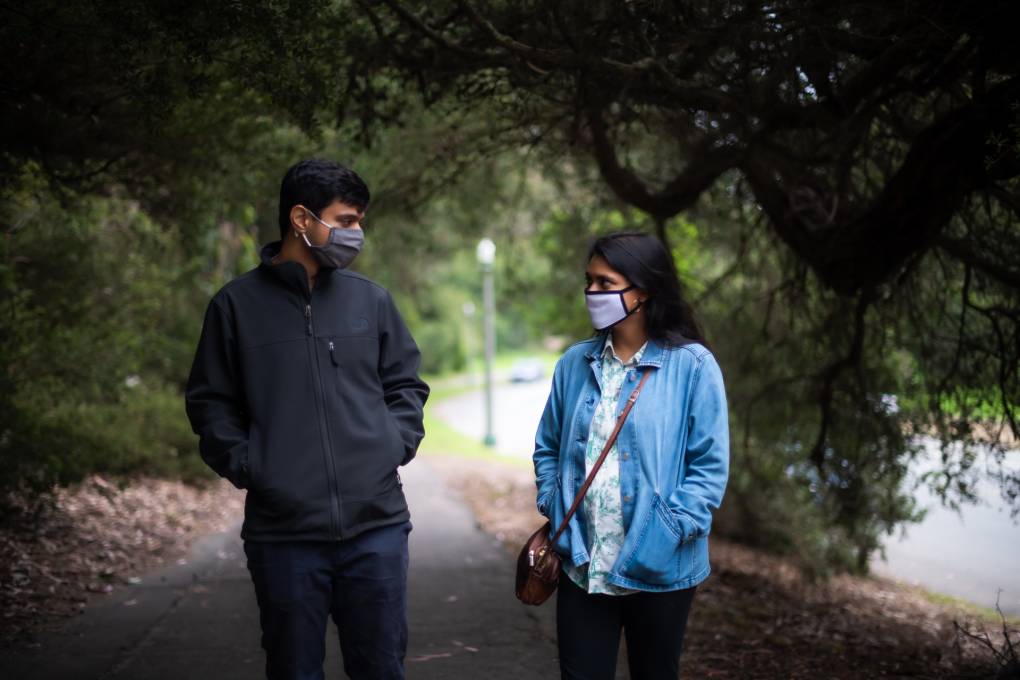
"caption": "Shaishav and I met in August 2020 through Hinge, a popular dating app. We had to get creative for safe, outdoor date activities, but it led to a meaningful relationship. ",
"description": "Shaishav and I met in August 2020 through a Hinge, a popular dating app. We had to get creative for safe, outdoor date activities, but it led to a meaningful relationship. ",
"title": "004_SanFrancisco_Adhiti+Shaishav_09162021",
"credit": "Beth LaBerge/KQED News",
"status": "inherit",
"altTag": "A man and woman walk through a park wearing COVID masks. He's in a black jacket and pants, she's in a blue jacket and white top.",
"isLoading": false,
"fetchFailed": false
},
"news_11895919": {
"type": "attachments",
"id": "news_11895919",
"meta": {
"index": "attachments_1716263798",
"site": "news",
"id": "11895919",
"found": true
},
"parent": 11895742,
"imgSizes": {
"thumbnail": {
"file": "https://ww2.kqed.org/app/uploads/sites/10/2021/11/GettyImages-1236188328-1-160x89.jpg",
"width": 160,
"mimeType": "image/jpeg",
"height": 89
},
"post-thumbnail": {
"file": "https://ww2.kqed.org/app/uploads/sites/10/2021/11/GettyImages-1236188328-1-672x372.jpg",
"width": 672,
"mimeType": "image/jpeg",
"height": 372
},
"kqedFullSize": {
"file": "https://ww2.kqed.org/app/uploads/sites/10/2021/11/GettyImages-1236188328-1.jpg",
"width": 1024,
"height": 570
},
"large": {
"file": "https://ww2.kqed.org/app/uploads/sites/10/2021/11/GettyImages-1236188328-1-1020x568.jpg",
"width": 1020,
"mimeType": "image/jpeg",
"height": 568
},
"medium": {
"file": "https://ww2.kqed.org/app/uploads/sites/10/2021/11/GettyImages-1236188328-1-800x445.jpg",
"width": 800,
"mimeType": "image/jpeg",
"height": 445
}
},
"publishDate": 1636591110,
"modified": 1636591314,
"caption": "Thousands of Facebook and Instagram users on Wednesday began a boycott — or 'logout' — of the two platforms, owned by parent company Meta.",
"description": null,
"title": "US-FACEBOOK-MEDIA-INTERNET-COMPUTERS-WIRELESS",
"credit": "Chris Delmas/AFP via Getty Images",
"status": "inherit",
"altTag": "The Facebook \"thumb's up\" logo on a smartphone, with the \"Meta\" logo in the background.",
"isLoading": false,
"fetchFailed": false
},
"news_11894407": {
"type": "attachments",
"id": "news_11894407",
"meta": {
"index": "attachments_1716263798",
"site": "news",
"id": "11894407",
"found": true
},
"parent": 11894371,
"imgSizes": {
"twentyfourteen-full-width": {
"file": "https://ww2.kqed.org/app/uploads/sites/10/2021/10/KNR908-Marquee-1038x576.jpeg",
"width": 1038,
"mimeType": "image/jpeg",
"height": 576
},
"thumbnail": {
"file": "https://ww2.kqed.org/app/uploads/sites/10/2021/10/KNR908-Marquee-160x108.jpeg",
"width": 160,
"mimeType": "image/jpeg",
"height": 108
},
"post-thumbnail": {
"file": "https://ww2.kqed.org/app/uploads/sites/10/2021/10/KNR908-Marquee-672x372.jpeg",
"width": 672,
"mimeType": "image/jpeg",
"height": 372
},
"kqedFullSize": {
"file": "https://ww2.kqed.org/app/uploads/sites/10/2021/10/KNR908-Marquee.jpeg",
"width": 1594,
"height": 1079
},
"large": {
"file": "https://ww2.kqed.org/app/uploads/sites/10/2021/10/KNR908-Marquee-1020x690.jpeg",
"width": 1020,
"mimeType": "image/jpeg",
"height": 690
},
"1536x1536": {
"file": "https://ww2.kqed.org/app/uploads/sites/10/2021/10/KNR908-Marquee-1536x1040.jpeg",
"width": 1536,
"mimeType": "image/jpeg",
"height": 1040
},
"medium": {
"file": "https://ww2.kqed.org/app/uploads/sites/10/2021/10/KNR908-Marquee-800x542.jpeg",
"width": 800,
"mimeType": "image/jpeg",
"height": 542
}
},
"publishDate": 1635544370,
"modified": 1635544394,
"caption": null,
"description": null,
"title": "KNR908 Marquee",
"credit": null,
"status": "inherit",
"altTag": "Dr. Monica Gandhi headshot",
"isLoading": false,
"fetchFailed": false
},
"news_11894159": {
"type": "attachments",
"id": "news_11894159",
"meta": {
"index": "attachments_1716263798",
"site": "news",
"id": "11894159",
"found": true
},
"parent": 11893822,
"imgSizes": {
"twentyfourteen-full-width": {
"file": "https://ww2.kqed.org/app/uploads/sites/10/2021/10/RS51993_IMG_3774-qut-1038x576.jpg",
"width": 1038,
"mimeType": "image/jpeg",
"height": 576
},
"thumbnail": {
"file": "https://ww2.kqed.org/app/uploads/sites/10/2021/10/RS51993_IMG_3774-qut-160x120.jpg",
"width": 160,
"mimeType": "image/jpeg",
"height": 120
},
"post-thumbnail": {
"file": "https://ww2.kqed.org/app/uploads/sites/10/2021/10/RS51993_IMG_3774-qut-672x372.jpg",
"width": 672,
"mimeType": "image/jpeg",
"height": 372
},
"kqedFullSize": {
"file": "https://ww2.kqed.org/app/uploads/sites/10/2021/10/RS51993_IMG_3774-qut.jpg",
"width": 1920,
"height": 1440
},
"large": {
"file": "https://ww2.kqed.org/app/uploads/sites/10/2021/10/RS51993_IMG_3774-qut-1020x765.jpg",
"width": 1020,
"mimeType": "image/jpeg",
"height": 765
},
"1536x1536": {
"file": "https://ww2.kqed.org/app/uploads/sites/10/2021/10/RS51993_IMG_3774-qut-1536x1152.jpg",
"width": 1536,
"mimeType": "image/jpeg",
"height": 1152
},
"medium": {
"file": "https://ww2.kqed.org/app/uploads/sites/10/2021/10/RS51993_IMG_3774-qut-800x600.jpg",
"width": 800,
"mimeType": "image/jpeg",
"height": 600
}
},
"publishDate": 1635445254,
"modified": 1635552282,
"caption": "Paranormal investigator Victor Huesca at Spadra Cemetery in Pomona.",
"description": null,
"title": "RS51993_IMG_3774-qut",
"credit": "Peter Gilstrap/KQED",
"status": "inherit",
"altTag": "A man with his hands stuffed into his jacket pockets poses for a photo in front of a tombstone, on the right of the frame, under a tree.",
"isLoading": false,
"fetchFailed": false
},
"news_11894190": {
"type": "attachments",
"id": "news_11894190",
"meta": {
"index": "attachments_1716263798",
"site": "news",
"id": "11894190",
"found": true
},
"parent": 11894189,
"imgSizes": {
"twentyfourteen-full-width": {
"file": "https://ww2.kqed.org/app/uploads/sites/10/2021/10/ap21301666442868-e9d5e86edbc5705ee47eff8b77bb563a6867e737-1038x576.jpg",
"width": 1038,
"mimeType": "image/jpeg",
"height": 576
},
"thumbnail": {
"file": "https://ww2.kqed.org/app/uploads/sites/10/2021/10/ap21301666442868-e9d5e86edbc5705ee47eff8b77bb563a6867e737-160x120.jpg",
"width": 160,
"mimeType": "image/jpeg",
"height": 120
},
"post-thumbnail": {
"file": "https://ww2.kqed.org/app/uploads/sites/10/2021/10/ap21301666442868-e9d5e86edbc5705ee47eff8b77bb563a6867e737-672x372.jpg",
"width": 672,
"mimeType": "image/jpeg",
"height": 372
},
"kqedFullSize": {
"file": "https://ww2.kqed.org/app/uploads/sites/10/2021/10/ap21301666442868-e9d5e86edbc5705ee47eff8b77bb563a6867e737-scaled-e1635450321890.jpg",
"width": 1920,
"height": 1440
},
"2048x2048": {
"file": "https://ww2.kqed.org/app/uploads/sites/10/2021/10/ap21301666442868-e9d5e86edbc5705ee47eff8b77bb563a6867e737-2048x1536.jpg",
"width": 2048,
"mimeType": "image/jpeg",
"height": 1536
},
"large": {
"file": "https://ww2.kqed.org/app/uploads/sites/10/2021/10/ap21301666442868-e9d5e86edbc5705ee47eff8b77bb563a6867e737-1020x765.jpg",
"width": 1020,
"mimeType": "image/jpeg",
"height": 765
},
"1536x1536": {
"file": "https://ww2.kqed.org/app/uploads/sites/10/2021/10/ap21301666442868-e9d5e86edbc5705ee47eff8b77bb563a6867e737-1536x1152.jpg",
"width": 1536,
"mimeType": "image/jpeg",
"height": 1152
},
"full-width": {
"file": "https://ww2.kqed.org/app/uploads/sites/10/2021/10/ap21301666442868-e9d5e86edbc5705ee47eff8b77bb563a6867e737-1920x1440.jpg",
"width": 1920,
"mimeType": "image/jpeg",
"height": 1440
},
"medium": {
"file": "https://ww2.kqed.org/app/uploads/sites/10/2021/10/ap21301666442868-e9d5e86edbc5705ee47eff8b77bb563a6867e737-800x600.jpg",
"width": 800,
"mimeType": "image/jpeg",
"height": 600
}
},
"publishDate": 1635449971,
"modified": 1635451522,
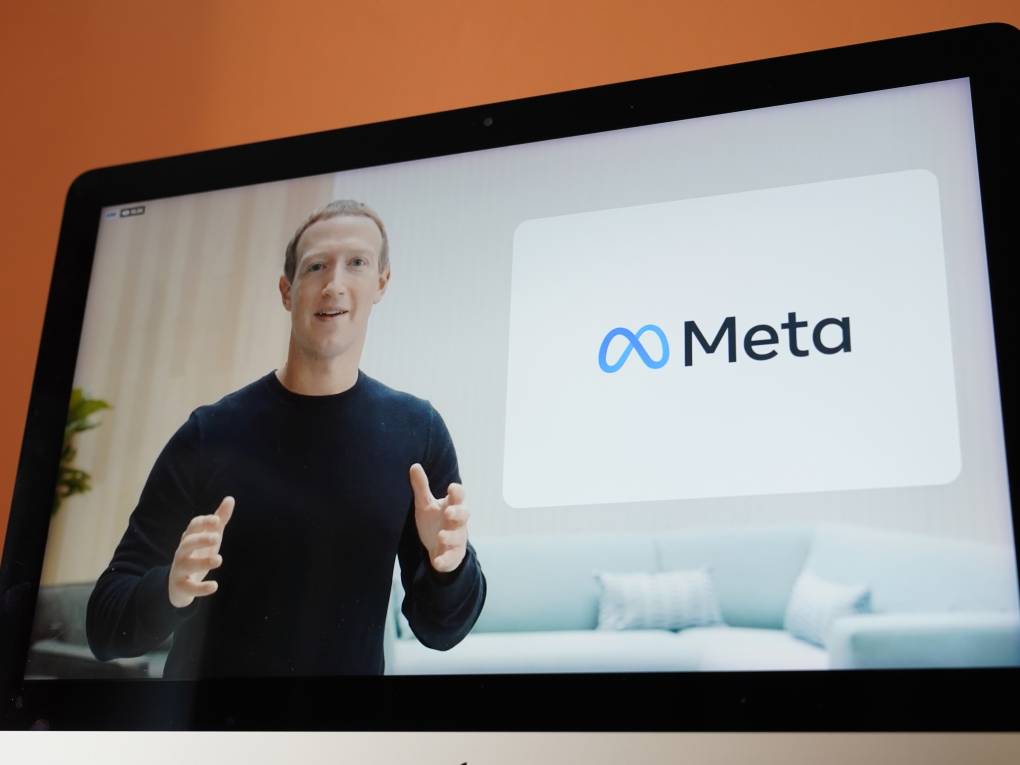
"caption": "A screenshot of Facebook CEO Mark Zuckerberg announcing the company's new name, Meta, during a virtual event on Oct. 28, 2021. ",
"description": null,
"title": "Facebook CEO Mark Zuckerberg delivers the keynote address during a virtual event on Thursday, Oct. 28, 2021. Zuckerberg announced that Facebook will rebrand itself under a new name: Meta.",
"credit": "Eric Risberg/AP",
"status": "inherit",
"altTag": "A screenshot of a man next to a 'Meta' label",
"isLoading": false,
"fetchFailed": false
},
"news_11894038": {
"type": "attachments",
"id": "news_11894038",
"meta": {
"index": "attachments_1716263798",
"site": "news",
"id": "11894038",
"found": true
},
"parent": 11894037,
"imgSizes": {
"twentyfourteen-full-width": {
"file": "https://ww2.kqed.org/app/uploads/sites/10/2021/10/gettyimages-1236142148_custom-ef01be923b65263fc7f06c4fb96c61a97c4ffc1c-1038x576.jpg",
"width": 1038,
"mimeType": "image/jpeg",
"height": 576
},
"thumbnail": {
"file": "https://ww2.kqed.org/app/uploads/sites/10/2021/10/gettyimages-1236142148_custom-ef01be923b65263fc7f06c4fb96c61a97c4ffc1c-160x107.jpg",
"width": 160,
"mimeType": "image/jpeg",
"height": 107
},
"post-thumbnail": {
"file": "https://ww2.kqed.org/app/uploads/sites/10/2021/10/gettyimages-1236142148_custom-ef01be923b65263fc7f06c4fb96c61a97c4ffc1c-672x372.jpg",
"width": 672,
"mimeType": "image/jpeg",
"height": 372
},
"kqedFullSize": {
"file": "https://ww2.kqed.org/app/uploads/sites/10/2021/10/gettyimages-1236142148_custom-ef01be923b65263fc7f06c4fb96c61a97c4ffc1c-scaled-e1635364574518.jpg",
"width": 1920,
"height": 1279
},
"2048x2048": {
"file": "https://ww2.kqed.org/app/uploads/sites/10/2021/10/gettyimages-1236142148_custom-ef01be923b65263fc7f06c4fb96c61a97c4ffc1c-2048x1364.jpg",
"width": 2048,
"mimeType": "image/jpeg",
"height": 1364
},
"large": {
"file": "https://ww2.kqed.org/app/uploads/sites/10/2021/10/gettyimages-1236142148_custom-ef01be923b65263fc7f06c4fb96c61a97c4ffc1c-1020x679.jpg",
"width": 1020,
"mimeType": "image/jpeg",
"height": 679
},
"1536x1536": {
"file": "https://ww2.kqed.org/app/uploads/sites/10/2021/10/gettyimages-1236142148_custom-ef01be923b65263fc7f06c4fb96c61a97c4ffc1c-1536x1023.jpg",
"width": 1536,
"mimeType": "image/jpeg",
"height": 1023
},
"full-width": {
"file": "https://ww2.kqed.org/app/uploads/sites/10/2021/10/gettyimages-1236142148_custom-ef01be923b65263fc7f06c4fb96c61a97c4ffc1c-1920x1278.jpg",
"width": 1920,
"mimeType": "image/jpeg",
"height": 1278
},
"medium": {
"file": "https://ww2.kqed.org/app/uploads/sites/10/2021/10/gettyimages-1236142148_custom-ef01be923b65263fc7f06c4fb96c61a97c4ffc1c-800x533.jpg",
"width": 800,
"mimeType": "image/jpeg",
"height": 533
}
},
"publishDate": 1635364482,
"modified": 1635380467,
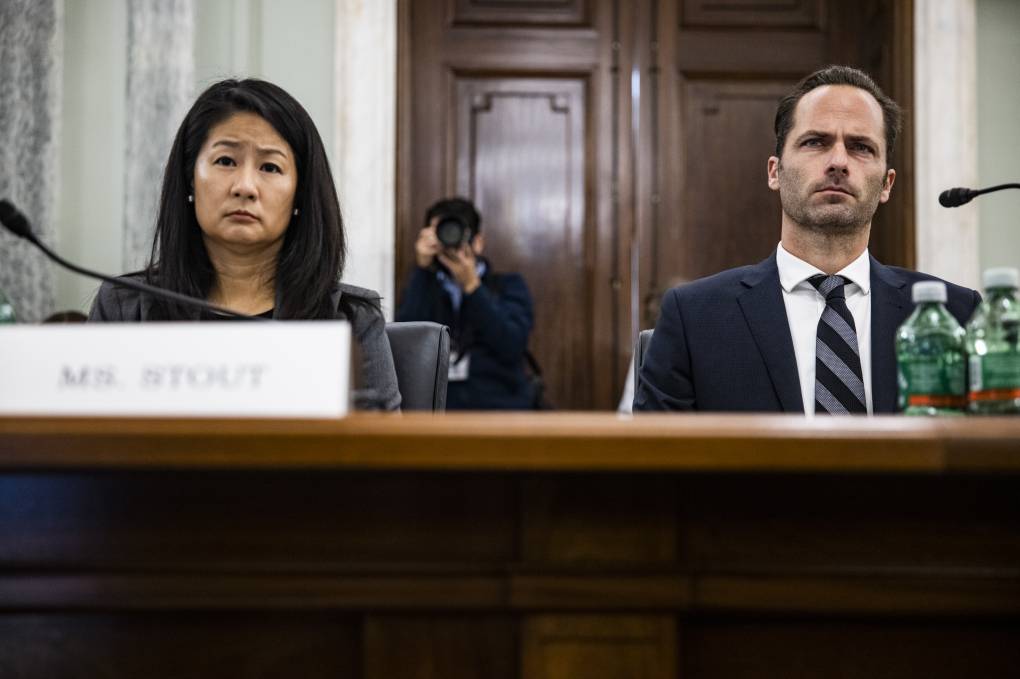
"caption": "Jennifer Stout, left, vice president of global public policy at Snapchat parent Snap Inc., and Michael Beckerman, vice president and head of public policy at TikTok, testify before a Senate panel on Tuesday, Oct. 26, 2021. ",
"description": "WASHINGTON, DC - OCTOBER 26: Jennifer Stout (L), Vice President of Global Public Policy at Snap Inc., and Michael Beckerman (R), Vice President and Head of Public Policy at TikTok, testify before a Senate Subcommittee on Consumer Protection, Product Safety, and Data Security hearing on Protecting Kids Online: Snapchat, TikTok, and YouTube on October 26, 2021 in Washington, DC. Social media companies have come under increased scrutiny after a whistleblower exposed controversial issues with Facebook and how they utilized algorithms to increase user engagement. (Photo by Samuel Corum/Getty Images)",
"title": "Jennifer Stout , left, vice president of global public policy at Snapchat parent Snap Inc., and Michael Beckerman, vice president and head of public policy at TikTok, testify before a Senate panel on Tuesday.",
"credit": "Samuel Corum/Getty Images",
"status": "inherit",
"altTag": "A woman and a man dressed in blazers sit at a long wooden table with nameplates in front of them. A photographer is blurred behind them in a doorway, a camera held to his face.",
"isLoading": false,
"fetchFailed": false
},
"news_11893919": {
"type": "attachments",
"id": "news_11893919",
"meta": {
"index": "attachments_1716263798",
"site": "news",
"id": "11893919",
"found": true
},
"parent": 11893901,
"imgSizes": {
"twentyfourteen-full-width": {
"file": "https://ww2.kqed.org/app/uploads/sites/10/2021/10/hanginthere_102621_final-1038x576.png",
"width": 1038,
"mimeType": "image/png",
"height": 576
},
"thumbnail": {
"file": "https://ww2.kqed.org/app/uploads/sites/10/2021/10/hanginthere_102621_final-160x140.png",
"width": 160,
"mimeType": "image/png",
"height": 140
},
"post-thumbnail": {
"file": "https://ww2.kqed.org/app/uploads/sites/10/2021/10/hanginthere_102621_final-672x372.png",
"width": 672,
"mimeType": "image/png",
"height": 372
},
"kqedFullSize": {
"file": "https://ww2.kqed.org/app/uploads/sites/10/2021/10/hanginthere_102621_final.png",
"width": 1920,
"height": 1679
},
"large": {
"file": "https://ww2.kqed.org/app/uploads/sites/10/2021/10/hanginthere_102621_final-1020x892.png",
"width": 1020,
"mimeType": "image/png",
"height": 892
},
"1536x1536": {
"file": "https://ww2.kqed.org/app/uploads/sites/10/2021/10/hanginthere_102621_final-1536x1343.png",
"width": 1536,
"mimeType": "image/png",
"height": 1343
},
"medium": {
"file": "https://ww2.kqed.org/app/uploads/sites/10/2021/10/hanginthere_102621_final-800x700.png",
"width": 800,
"mimeType": "image/png",
"height": 700
}
},
"publishDate": 1635289038,
"modified": 1635296324,
"caption": null,
"description": null,
"title": "hanginthere_102621_final",
"credit": null,
"status": "inherit",
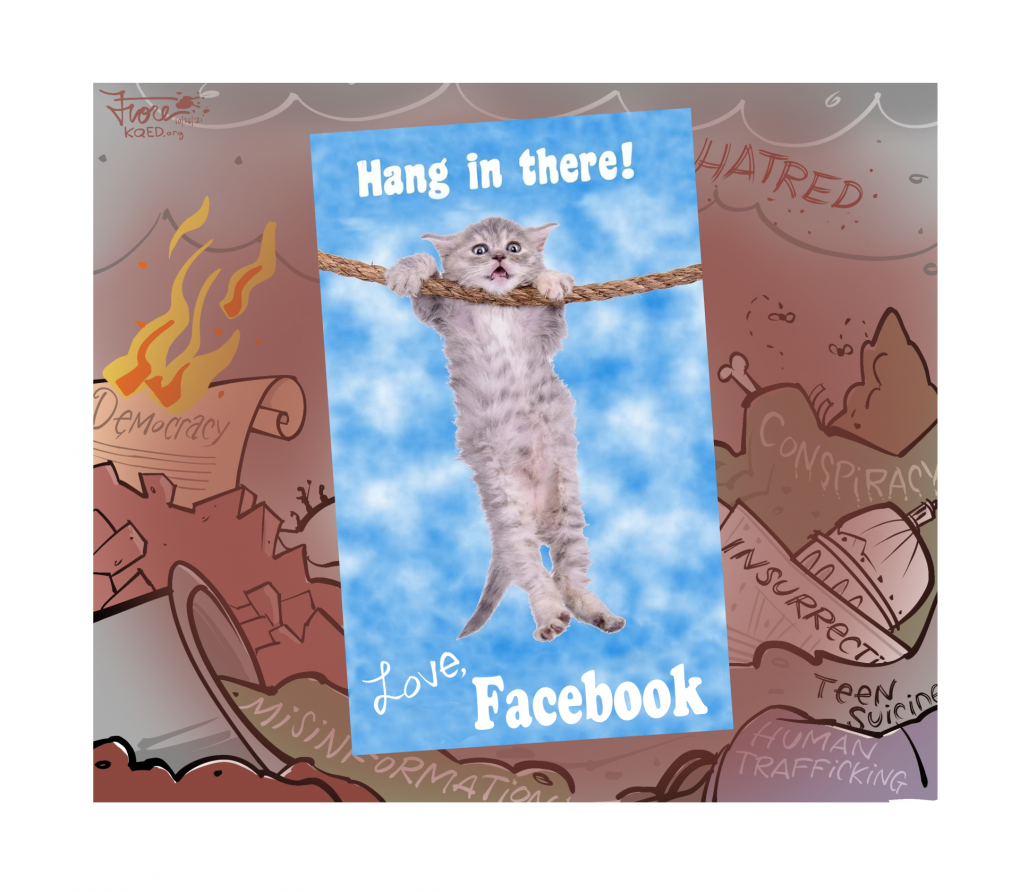
"altTag": "Cartoon: A poster of a cat that reads, \"hang in there, love, Facebook\" while behind the poster we see Democracy burning, misinformation, hate, insurrection and human trafficking in a large dump pile.",
"isLoading": false,
"fetchFailed": false
},
"news_11893762": {
"type": "attachments",
"id": "news_11893762",
"meta": {
"index": "attachments_1716263798",
"site": "news",
"id": "11893762",
"found": true
},
"parent": 11893761,
"imgSizes": {
"twentyfourteen-full-width": {
"file": "https://ww2.kqed.org/app/uploads/sites/10/2021/10/gettyimages-944827400-8f9e40d45a9bee38cd054e91a2577577d226ae30-1038x576.jpg",
"width": 1038,
"mimeType": "image/jpeg",
"height": 576
},
"thumbnail": {
"file": "https://ww2.kqed.org/app/uploads/sites/10/2021/10/gettyimages-944827400-8f9e40d45a9bee38cd054e91a2577577d226ae30-160x120.jpg",
"width": 160,
"mimeType": "image/jpeg",
"height": 120
},
"post-thumbnail": {
"file": "https://ww2.kqed.org/app/uploads/sites/10/2021/10/gettyimages-944827400-8f9e40d45a9bee38cd054e91a2577577d226ae30-672x372.jpg",
"width": 672,
"mimeType": "image/jpeg",
"height": 372
},
"kqedFullSize": {
"file": "https://ww2.kqed.org/app/uploads/sites/10/2021/10/gettyimages-944827400-8f9e40d45a9bee38cd054e91a2577577d226ae30-scaled.jpg",
"width": 2560,
"height": 1920
},
"2048x2048": {
"file": "https://ww2.kqed.org/app/uploads/sites/10/2021/10/gettyimages-944827400-8f9e40d45a9bee38cd054e91a2577577d226ae30-2048x1536.jpg",
"width": 2048,
"mimeType": "image/jpeg",
"height": 1536
},
"large": {
"file": "https://ww2.kqed.org/app/uploads/sites/10/2021/10/gettyimages-944827400-8f9e40d45a9bee38cd054e91a2577577d226ae30-1020x765.jpg",
"width": 1020,
"mimeType": "image/jpeg",
"height": 765
},
"1536x1536": {
"file": "https://ww2.kqed.org/app/uploads/sites/10/2021/10/gettyimages-944827400-8f9e40d45a9bee38cd054e91a2577577d226ae30-1536x1152.jpg",
"width": 1536,
"mimeType": "image/jpeg",
"height": 1152
},
"full-width": {
"file": "https://ww2.kqed.org/app/uploads/sites/10/2021/10/gettyimages-944827400-8f9e40d45a9bee38cd054e91a2577577d226ae30-1920x1440.jpg",
"width": 1920,
"mimeType": "image/jpeg",
"height": 1440
},
"medium": {
"file": "https://ww2.kqed.org/app/uploads/sites/10/2021/10/gettyimages-944827400-8f9e40d45a9bee38cd054e91a2577577d226ae30-800x600.jpg",
"width": 800,
"mimeType": "image/jpeg",
"height": 600
}
},
"publishDate": 1635268879,
"modified": 1635288892,
"caption": "Facebook CEO Mark Zuckerberg testifies on Capitol Hill in April 2018. A trove of insider documents known as the Facebook Papers has the company facing backlash over its effects on society and politics.",
"description": "WASHINGTON, DC - APRIL 11: Facebook co-founder, Chairman and CEO Mark Zuckerberg testifies before the House Energy and Commerce Committee in the Rayburn House Office Building on Capitol Hill April 11, 2018 in Washington, DC. This is the second day of testimony before Congress by Zuckerberg, 33, after it was reported that 87 million Facebook users had their personal information harvested by Cambridge Analytica, a British political consulting firm linked to the Trump campaign. (Photo by Chip Somodevilla/Getty Images)",
"title": "Facebook CEO Mark Zuckerberg testifies on Capitol Hill in April 2018. A trove of insider documents known as the Facebook Papers has the company facing backlash over its effects on society and politics.",
"credit": "Chip Somodevilla/Getty Images",
"status": "inherit",
"altTag": "A closeup of Mark Zuckerberg with his lips pressed together.",
"isLoading": false,
"fetchFailed": false
},
"news_11893012": {
"type": "attachments",
"id": "news_11893012",
"meta": {
"index": "attachments_1716263798",
"site": "news",
"id": "11893012",
"found": true
},
"parent": 11892723,
"imgSizes": {
"twentyfourteen-full-width": {
"file": "https://ww2.kqed.org/app/uploads/sites/10/2021/10/HelloFresh_BoxComposite-1038x576.jpg",
"width": 1038,
"mimeType": "image/jpeg",
"height": 576
},
"thumbnail": {
"file": "https://ww2.kqed.org/app/uploads/sites/10/2021/10/HelloFresh_BoxComposite-160x107.jpg",
"width": 160,
"mimeType": "image/jpeg",
"height": 107
},
"post-thumbnail": {
"file": "https://ww2.kqed.org/app/uploads/sites/10/2021/10/HelloFresh_BoxComposite-672x372.jpg",
"width": 672,
"mimeType": "image/jpeg",
"height": 372
},
"kqedFullSize": {
"file": "https://ww2.kqed.org/app/uploads/sites/10/2021/10/HelloFresh_BoxComposite-scaled-e1634737686176.jpg",
"width": 1920,
"height": 1280
},
"2048x2048": {
"file": "https://ww2.kqed.org/app/uploads/sites/10/2021/10/HelloFresh_BoxComposite-2048x1365.jpg",
"width": 2048,
"mimeType": "image/jpeg",
"height": 1365
},
"large": {
"file": "https://ww2.kqed.org/app/uploads/sites/10/2021/10/HelloFresh_BoxComposite-1020x680.jpg",
"width": 1020,
"mimeType": "image/jpeg",
"height": 680
},
"1536x1536": {
"file": "https://ww2.kqed.org/app/uploads/sites/10/2021/10/HelloFresh_BoxComposite-1536x1024.jpg",
"width": 1536,
"mimeType": "image/jpeg",
"height": 1024
},
"full-width": {
"file": "https://ww2.kqed.org/app/uploads/sites/10/2021/10/HelloFresh_BoxComposite-1920x1280.jpg",
"width": 1920,
"mimeType": "image/jpeg",
"height": 1280
},
"medium": {
"file": "https://ww2.kqed.org/app/uploads/sites/10/2021/10/HelloFresh_BoxComposite-800x533.jpg",
"width": 800,
"mimeType": "image/jpeg",
"height": 533
}
},
"publishDate": 1634737658,
"modified": 1634777776,
"caption": "A HelloFresh product.",
"description": null,
"title": "HelloFresh_BoxComposite",
"credit": "Courtesy HelloFresh",
"status": "inherit",
"altTag": "A company photo in a white kitchen of four brown paper Hello Fresh bags with a bright green color, fresh vegetables arrayed on the counter in front of them.",
"isLoading": false,
"fetchFailed": false
}
},
"audioPlayerReducer": {
"postId": "stream_live",
"isPaused": true,
"isPlaying": false,
"pfsActive": false,
"pledgeModalIsOpen": true,
"playerDrawerIsOpen": false,
"liveAudioPlayStartedAt": 0,
"liveAudioPlayContext": ""
},
"authorsReducer": {
"byline_news_11894373": {
"type": "authors",
"id": "byline_news_11894373",
"meta": {
"override": true
},
"slug": "byline_news_11894373",
"name": "Peter Gilstrap",
"isLoading": false
},
"byline_news_11894189": {
"type": "authors",
"id": "byline_news_11894189",
"meta": {
"override": true
},
"slug": "byline_news_11894189",
"name": "Shannon Bond",
"isLoading": false
},
"byline_news_11894037": {
"type": "authors",
"id": "byline_news_11894037",
"meta": {
"override": true
},
"slug": "byline_news_11894037",
"name": "Bobby Allyn\u003cbr>NPR",
"isLoading": false
},
"byline_news_11893761": {
"type": "authors",
"id": "byline_news_11893761",
"meta": {
"override": true
},
"slug": "byline_news_11893761",
"name": "Bill Chappell",
"isLoading": false
},
"kqed": {
"type": "authors",
"id": "236",
"meta": {
"index": "authors_1716337520",
"id": "236",
"found": true
},
"name": "KQED News Staff",
"firstName": "KQED News Staff",
"lastName": null,
"slug": "kqed",
"email": "faq@kqed.org",
"display_author_email": false,
"staff_mastheads": [],
"title": null,
"bio": null,
"avatar": "https://secure.gravatar.com/avatar/ef0e801a68c4c54afa9180db14084167?s=600&d=blank&r=g",
"twitter": null,
"facebook": null,
"instagram": null,
"linkedin": null,
"sites": [
{
"site": "arts",
"roles": [
"contributor"
]
},
{
"site": "news",
"roles": [
"editor"
]
},
{
"site": "futureofyou",
"roles": [
"author"
]
}
],
"headData": {
"title": "KQED News Staff | KQED",
"description": null,
"ogImgSrc": "https://secure.gravatar.com/avatar/ef0e801a68c4c54afa9180db14084167?s=600&d=blank&r=g",
"twImgSrc": "https://secure.gravatar.com/avatar/ef0e801a68c4c54afa9180db14084167?s=600&d=blank&r=g"
},
"isLoading": false,
"link": "/author/kqed"
},
"rachael-myrow": {
"type": "authors",
"id": "251",
"meta": {
"index": "authors_1716337520",
"id": "251",
"found": true
},
"name": "Rachael Myrow",
"firstName": "Rachael",
"lastName": "Myrow",
"slug": "rachael-myrow",
"email": "rmyrow@kqed.org",
"display_author_email": true,
"staff_mastheads": [
"news"
],
"title": "Senior Editor of KQED's Silicon Valley News Desk",
"bio": "• I write and edit stories about how Silicon Valley power and policies shape everyday life in California. I’m also passionate about making Bay Area history and culture more accessible to a broad public. • I’ve been a journalist for most of my life, starting in high school with The Franklin Press in Los Angeles, where I grew up. While earning my first degree in English at UC Berkeley, I got my start in public radio at KALX-FM. After completing a second degree in journalism at Cal, I landed my first professional job at Marketplace, then moved on to KPCC (now LAist), and then KQED, where I hosted The California Report for more than seven years. • My reporting has appeared on NPR, The World, WBUR’s \u003ci>Here & Now\u003c/i>, and the BBC. I also guest host for KQED’s \u003ci>Forum\u003c/i>, as well as the Commonwealth Club in San Francisco. • I speak periodically on media, democracy and technology issues, and do voiceover work for documentaries and educational video projects. • Outside of the studio, you'll find me hiking Bay Area trails and whipping up Insta-ready meals in my kitchen. • I do not accept gifts, money, or favors from anyone connected to my reporting, I don't pay people for information, and I do not support or donate to political causes. • I strive to treat the people I report on with fairness, honesty, and respect. I also recognize there are often multiple sides to a story and work to verify information through multiple sources and documentation. If I get something wrong, I correct it.",
"avatar": "https://secure.gravatar.com/avatar/3ed8a3c5f26025e4a805ba634cda8cd764906b97438a6d9ce216b044e340da4e?s=600&d=blank&r=g",
"twitter": "rachaelmyrow",
"bluesky": null,
"facebook": null,
"instagram": null,
"linkedin": "https://www.linkedin.com/in/rachaelmyrow/",
"sites": [
{
"site": "arts",
"roles": [
"administrator"
]
},
{
"site": "news",
"roles": [
"edit_others_posts",
"editor"
]
},
{
"site": "futureofyou",
"roles": [
"editor"
]
},
{
"site": "bayareabites",
"roles": [
"editor"
]
},
{
"site": "stateofhealth",
"roles": [
"editor"
]
},
{
"site": "science",
"roles": [
"editor"
]
},
{
"site": "food",
"roles": [
"editor"
]
},
{
"site": "forum",
"roles": [
"editor"
]
},
{
"site": "liveblog",
"roles": [
"author"
]
}
],
"headData": {
"title": "Rachael Myrow | KQED",
"description": "Senior Editor of KQED's Silicon Valley News Desk",
"ogImgSrc": "https://secure.gravatar.com/avatar/3ed8a3c5f26025e4a805ba634cda8cd764906b97438a6d9ce216b044e340da4e?s=600&d=blank&r=g",
"twImgSrc": "https://secure.gravatar.com/avatar/3ed8a3c5f26025e4a805ba634cda8cd764906b97438a6d9ce216b044e340da4e?s=600&d=blank&r=g"
},
"isLoading": false,
"link": "/author/rachael-myrow"
},
"samharnett": {
"type": "authors",
"id": "253",
"meta": {
"index": "authors_1716337520",
"id": "253",
"found": true
},
"name": "Sam Harnett",
"firstName": "Sam",
"lastName": "Harnett",
"slug": "samharnett",
"email": "samharnett@gmail.com",
"display_author_email": false,
"staff_mastheads": [],
"title": "KQED Contributor",
"bio": "Sam Harnett covered tech and work at KQED. He is the co-creator of \u003cem>\u003ca href=\"http://www.theworldaccordingtosound.org\">The World According to Sound\u003c/a>,\u003c/em> a 90-second podcast that features different sounds and the stories behind them.\r\n\r\nBefore coming to KQED, Sam worked as an independent reporter who contributed regularly to \u003cem>The California Report, Marketplace,\u003c/em> \u003cem>The World \u003c/em>and NPR.",
"avatar": "https://secure.gravatar.com/avatar/2538b972ac02f2b9546c7a6c59a0f3d0?s=600&d=blank&r=g",
"twitter": "Samwharnett",
"facebook": null,
"instagram": null,
"linkedin": null,
"sites": [
{
"site": "news",
"roles": [
"edit_others_posts",
"subscriber"
]
},
{
"site": "stateofhealth",
"roles": [
"author"
]
},
{
"site": "science",
"roles": [
"editor"
]
},
{
"site": "quest",
"roles": [
"subscriber"
]
}
],
"headData": {
"title": "Sam Harnett | KQED",
"description": "KQED Contributor",
"ogImgSrc": "https://secure.gravatar.com/avatar/2538b972ac02f2b9546c7a6c59a0f3d0?s=600&d=blank&r=g",
"twImgSrc": "https://secure.gravatar.com/avatar/2538b972ac02f2b9546c7a6c59a0f3d0?s=600&d=blank&r=g"
},
"isLoading": false,
"link": "/author/samharnett"
},
"markfiore": {
"type": "authors",
"id": "3236",
"meta": {
"index": "authors_1716337520",
"id": "3236",
"found": true
},
"name": "Mark Fiore",
"firstName": "Mark",
"lastName": "Fiore",
"slug": "markfiore",
"email": "mark@markfiore.com",
"display_author_email": false,
"staff_mastheads": [
"news"
],
"title": "KQED News Cartoonist",
"bio": "\u003ca href=\"http://www.MarkFiore.com\">MarkFiore.com\u003c/a> | \u003ca href=\"https://twitter.com/markfiore\">Follow on Twitter\u003c/a> | \u003ca href=\"https://www.facebook.com/pages/Mark-Fiore-Animated-Political-Cartoons/94451707396?ref=bookmarks\">Facebook\u003c/a> | \u003ca href=\"mailto:mark@markfiore.com\">email\u003c/a>\r\n\r\nPulitzer Prize-winner, Mark Fiore, who the Wall Street Journal has called “the undisputed guru of the form,” creates animated political cartoons in San Francisco, where his work has been featured regularly on the San Francisco Chronicle’s web site, SFGate.com. His work has appeared on Newsweek.com, Slate.com, CBSNews.com, MotherJones.com, DailyKos.com and NPR’s web site. Fiore’s political animation has appeared on CNN, Frontline, Bill Moyers Journal, Salon.com and cable and broadcast outlets across the globe.\r\n\r\nBeginning his professional life by drawing traditional political cartoons for newspapers, Fiore’s work appeared in publications ranging from the Washington Post to the Los Angeles Times. In the late 1990s, he began to experiment with animating political cartoons and, after a short stint at the San Jose Mercury News as their staff cartoonist, Fiore devoted all his energies to animation.\r\nGrowing up in California, Fiore also spent a good portion of his life in the backwoods of Idaho. It was this combination that shaped him politically. Mark majored in political science at Colorado College, where, in a perfect send-off for a cartoonist, he received his diploma in 1991 as commencement speaker Dick Cheney smiled approvingly.\r\nMark Fiore was awarded the Pulitzer Prize for political cartooning in 2010, a Robert F. Kennedy Journalism Award in 2004 and has twice received an Online Journalism Award for commentary from the Online News Association (2002, 2008). Fiore has received two awards for his work in new media from the National Cartoonists Society (2001, 2002), and in 2006 received The James Madison Freedom of Information Award from The Society of Professional Journalists.",
"avatar": "https://secure.gravatar.com/avatar/fc4e2a612b15b67bad0c6f0e1db4ca9b?s=600&d=blank&r=g",
"twitter": "MarkFiore",
"facebook": null,
"instagram": "https://www.instagram.com/markfiore/?hl=en",
"linkedin": null,
"sites": [
{
"site": "arts",
"roles": [
"contributor"
]
},
{
"site": "news",
"roles": [
"editor"
]
},
{
"site": "futureofyou",
"roles": [
"editor"
]
},
{
"site": "science",
"roles": [
"editor"
]
}
],
"headData": {
"title": "Mark Fiore | KQED",
"description": "KQED News Cartoonist",
"ogImgSrc": "https://secure.gravatar.com/avatar/fc4e2a612b15b67bad0c6f0e1db4ca9b?s=600&d=blank&r=g",
"twImgSrc": "https://secure.gravatar.com/avatar/fc4e2a612b15b67bad0c6f0e1db4ca9b?s=600&d=blank&r=g"
},
"isLoading": false,
"link": "/author/markfiore"
},
"abandlamudi": {
"type": "authors",
"id": "11672",
"meta": {
"index": "authors_1716337520",
"id": "11672",
"found": true
},
"name": "Adhiti Bandlamudi",
"firstName": "Adhiti",
"lastName": "Bandlamudi",
"slug": "abandlamudi",
"email": "abandlamudi@kqed.org",
"display_author_email": false,
"staff_mastheads": [
"news"
],
"title": "KQED Housing Reporter",
"bio": "Adhiti Bandlamudi reports for KQED's Housing desk. She focuses on how housing gets built across the Bay Area. Before joining KQED in 2020, she reported for WUNC in Durham, North Carolina, WABE in Atlanta, Georgia and Capital Public Radio in Sacramento. In 2017, she was awarded a Kroc Fellowship at NPR where she reported on everything from sprinkles to the Golden State Killer's arrest. When she's not reporting, she's baking new recipes in her kitchen or watching movies with friends and family. She's originally from Georgia and has strong opinions about Great British Bake Off.",
"avatar": "https://secure.gravatar.com/avatar/868129c8b257bb99a3500e2c86a65400?s=600&d=mm&r=g",
"twitter": "oddity_adhiti",
"facebook": null,
"instagram": null,
"linkedin": null,
"sites": [
{
"site": "arts",
"roles": [
"author"
]
},
{
"site": "news",
"roles": [
"editor"
]
},
{
"site": "liveblog",
"roles": [
"author"
]
}
],
"headData": {
"title": "Adhiti Bandlamudi | KQED",
"description": "KQED Housing Reporter",
"ogImgSrc": "https://secure.gravatar.com/avatar/868129c8b257bb99a3500e2c86a65400?s=600&d=mm&r=g",
"twImgSrc": "https://secure.gravatar.com/avatar/868129c8b257bb99a3500e2c86a65400?s=600&d=mm&r=g"
},
"isLoading": false,
"link": "/author/abandlamudi"
}
},
"pagesReducer": {
"news_category_technology": {
"type": "terms",
"id": "news_248",
"meta": {
"index": "terms_1716263798",
"site": "news",
"id": "248",
"score": 10.931152
},
"featImg": null,
"name": "Technology",
"description": null,
"taxonomy": "category",
"headData": {
"twImgId": null,
"twTitle": null,
"ogTitle": null,
"ogImgId": null,
"twDescription": null,
"description": null,
"title": "Technology Archives | KQED News",
"ogDescription": null
},
"ttid": 256,
"slug": "technology",
"isLoading": false,
"title": "Technology",
"pageMeta": {
"site": "news",
"WpPageTemplate": "page-topic-editorial",
"currentPage": 40
},
"blocks": [
{
"blockName": "kqed/post-list",
"attrs": {
"layout": "cardArticle2",
"query": "posts/news?category=technology",
"seeMore": false,
"paginated": true,
"page": 40
}
},
{
"blockName": "kqed/ad"
}
]
}
},
"pfsSessionReducer": {},
"postsReducer": {
"stream_live": {
"type": "live",
"id": "stream_live",
"audioUrl": "https://streams.kqed.org/kqedradio",
"title": "Live Stream",
"excerpt": "Live Stream information currently unavailable.",
"link": "/radio",
"featImg": "",
"label": {
"name": "KQED Live",
"link": "/"
}
},
"stream_kqedNewscast": {
"type": "posts",
"id": "stream_kqedNewscast",
"audioUrl": "https://www.kqed.org/.stream/anon/radio/RDnews/newscast.mp3?_=1",
"title": "KQED Newscast",
"featImg": "",
"label": {
"name": "88.5 FM",
"link": "/"
}
},
"news_11892029": {
"type": "posts",
"id": "news_11892029",
"meta": {
"index": "posts_1716263798",
"site": "news",
"id": "11892029",
"score": null,
"sort": [
1637777005000
]
},
"guestAuthors": [],
"slug": "beautiful-hilltops-for-the-nuclear-apocalypse-a-look-at-the-bay-areas-cold-war-past",
"title": "Beautiful Hilltops for the Nuclear Apocalypse: A Look at the Bay Area's Cold War Past",
"publishDate": 1637777005,
"format": "aside",
"headTitle": "Beautiful Hilltops for the Nuclear Apocalypse: A Look at the Bay Area’s Cold War Past | KQED",
"labelTerm": {
"term": 18515,
"site": "news"
},
"content": "\u003cp>\u003ca href=\"https://ww2.kqed.org/app/uploads/sites/10/2021/10/marinnukes01.png\">\u003cimg loading=\"lazy\" decoding=\"async\" class=\"alignnone size-full wp-image-11892031\" src=\"https://ww2.kqed.org/app/uploads/sites/10/2021/10/marinnukes01.png\" alt='Cartoon: a huge nuclear missile on a hillside over the ocean as two surprised people sit in a hot tub together. Caption reads, \"yes, Marin was once armed with nukes... and so were Pacifica, Fremont & Angel Island!\"' width=\"1920\" height=\"1920\" srcset=\"https://cdn.kqed.org/wp-content/uploads/sites/10/2021/10/marinnukes01.png 1920w, https://cdn.kqed.org/wp-content/uploads/sites/10/2021/10/marinnukes01-800x800.png 800w, https://cdn.kqed.org/wp-content/uploads/sites/10/2021/10/marinnukes01-1020x1020.png 1020w, https://cdn.kqed.org/wp-content/uploads/sites/10/2021/10/marinnukes01-160x160.png 160w, https://cdn.kqed.org/wp-content/uploads/sites/10/2021/10/marinnukes01-1536x1536.png 1536w\" sizes=\"(max-width: 1920px) 100vw, 1920px\">\u003c/a>\u003c/p>\n\u003cp>Several hillsides around San Francisco Bay held enough nuclear firepower during the Cold War to help carry out World War III.\u003c/p>\n\u003cp>Technically, WWIII would already have been underway when these missiles were launched – they were part of a last line of defense against nuclear-armed Soviet bombers headed our way.\u003c/p>\n\u003cp>Check out \u003ca href=\"https://www.kqed.org/news/11753198/nuclear-missiles-in-marin-oh-yeah-in-fact-all-around-the-bay-at-one-time-2\">Craig Miller’s wonderful Bay Curious interview\u003c/a> with two of the “missile men” who helped operate a missile battery in the Marin Headlands.\u003c/p>\n\u003cp>If just one of the nuclear-tipped Nike Ajax or Hercules missiles had been launched to intercept an approaching bomber, as it detonated overhead it would have vaporized everything within a radius of about 30 miles.\u003cbr>\n(The young Air Force guys who ran the various missile batteries around the Bay knew they would have approximately 30 minutes to live after launching a missile, and we can only assume the same would have been true for millions of civilians nearby.)\u003c/p>\n\u003cp>Many of the hilltops around us are where the idea of “\u003ca href=\"https://www.kuow.org/stories/how-daniel-ellsberg-learned-start-worrying-and-hate-bomb\">mutual assured destruction\u003c/a>” was to be put into practice.\u003c/p>\n\u003cp>\u003ca href=\"https://www.cnn.com/2021/10/06/politics/us-nuclear-weapons-stockpile/index.html\">We’re not out\u003c/a> of \u003ca href=\"https://www.washingtonpost.com/world/north-korea-hypersonic-missile-nuclear/2021/10/11/10664d70-2af9-11ec-b17d-985c186de338_story.html\">the woods\u003c/a> yet . . . but at least our ridges are now being used for \u003ca href=\"https://www.nps.gov/goga/marin-headlands.htm\">hiking and views\u003c/a> instead of for nuclear weapons.\u003c/p>\n\u003cp>[ad fullwidth]\u003c/p>\n\u003cp>\u003c/p>\n",
"blocks": [],
"excerpt": "Several hillsides around San Francisco Bay held enough nuclear firepower during the Cold War to help carry out World War III.",
"status": "publish",
"parent": 0,
"modified": 1721154124,
"stats": {
"hasAudio": false,
"hasVideo": false,
"hasChartOrMap": false,
"iframeSrcs": [],
"hasGoogleForm": false,
"hasGallery": false,
"hasHearkenModule": false,
"hasPolis": false,
"paragraphCount": 9,
"wordCount": 210
},
"headData": {
"title": "Beautiful Hilltops for the Nuclear Apocalypse: A Look at the Bay Area's Cold War Past | KQED",
"description": "Several hillsides around San Francisco Bay held enough nuclear firepower during the Cold War to help carry out World War III.",
"ogTitle": "",
"ogDescription": "",
"ogImgId": "",
"twTitle": "",
"twDescription": "",
"twImgId": "",
"schema": {
"@context": "https://schema.org",
"@type": "NewsArticle",
"headline": "Beautiful Hilltops for the Nuclear Apocalypse: A Look at the Bay Area's Cold War Past",
"datePublished": "2021-11-24T10:03:25-08:00",
"dateModified": "2024-07-16T11:22:04-07:00",
"image": "https://cdn.kqed.org/wp-content/uploads/2020/02/KQED-OG-Image@1x.png",
"isAccessibleForFree": "True",
"publisher": {
"@type": "NewsMediaOrganization",
"@id": "https://www.kqed.org/#organization",
"name": "KQED",
"logo": "https://cdn.kqed.org/wp-content/uploads/2020/02/KQED-OG-Image@1x.png",
"url": "https://www.kqed.org",
"sameAs": [
"https://www.facebook.com/KQED",
"https://twitter.com/KQED",
"https://www.instagram.com/kqed/",
"https://www.tiktok.com/@kqedofficial",
"https://www.linkedin.com/company/kqed",
"https://www.youtube.com/channel/UCeC0IOo7i1P_61zVUWbJ4nw"
]
}
}
},
"sticky": false,
"excludeFromSiteSearch": "Include",
"path": "/news/11892029/beautiful-hilltops-for-the-nuclear-apocalypse-a-look-at-the-bay-areas-cold-war-past",
"audioTrackLength": null,
"parsedContent": [
{
"type": "contentString",
"content": "\u003cdiv class=\"post-body\">\u003cp>\u003cp>\u003ca href=\"https://ww2.kqed.org/app/uploads/sites/10/2021/10/marinnukes01.png\">\u003cimg loading=\"lazy\" decoding=\"async\" class=\"alignnone size-full wp-image-11892031\" src=\"https://ww2.kqed.org/app/uploads/sites/10/2021/10/marinnukes01.png\" alt='Cartoon: a huge nuclear missile on a hillside over the ocean as two surprised people sit in a hot tub together. Caption reads, \"yes, Marin was once armed with nukes... and so were Pacifica, Fremont & Angel Island!\"' width=\"1920\" height=\"1920\" srcset=\"https://cdn.kqed.org/wp-content/uploads/sites/10/2021/10/marinnukes01.png 1920w, https://cdn.kqed.org/wp-content/uploads/sites/10/2021/10/marinnukes01-800x800.png 800w, https://cdn.kqed.org/wp-content/uploads/sites/10/2021/10/marinnukes01-1020x1020.png 1020w, https://cdn.kqed.org/wp-content/uploads/sites/10/2021/10/marinnukes01-160x160.png 160w, https://cdn.kqed.org/wp-content/uploads/sites/10/2021/10/marinnukes01-1536x1536.png 1536w\" sizes=\"(max-width: 1920px) 100vw, 1920px\">\u003c/a>\u003c/p>\n\u003cp>Several hillsides around San Francisco Bay held enough nuclear firepower during the Cold War to help carry out World War III.\u003c/p>\n\u003cp>Technically, WWIII would already have been underway when these missiles were launched – they were part of a last line of defense against nuclear-armed Soviet bombers headed our way.\u003c/p>\n\u003cp>Check out \u003ca href=\"https://www.kqed.org/news/11753198/nuclear-missiles-in-marin-oh-yeah-in-fact-all-around-the-bay-at-one-time-2\">Craig Miller’s wonderful Bay Curious interview\u003c/a> with two of the “missile men” who helped operate a missile battery in the Marin Headlands.\u003c/p>\n\u003cp>If just one of the nuclear-tipped Nike Ajax or Hercules missiles had been launched to intercept an approaching bomber, as it detonated overhead it would have vaporized everything within a radius of about 30 miles.\u003cbr>\n(The young Air Force guys who ran the various missile batteries around the Bay knew they would have approximately 30 minutes to live after launching a missile, and we can only assume the same would have been true for millions of civilians nearby.)\u003c/p>\n\u003cp>Many of the hilltops around us are where the idea of “\u003ca href=\"https://www.kuow.org/stories/how-daniel-ellsberg-learned-start-worrying-and-hate-bomb\">mutual assured destruction\u003c/a>” was to be put into practice.\u003c/p>\n\u003cp>\u003ca href=\"https://www.cnn.com/2021/10/06/politics/us-nuclear-weapons-stockpile/index.html\">We’re not out\u003c/a> of \u003ca href=\"https://www.washingtonpost.com/world/north-korea-hypersonic-missile-nuclear/2021/10/11/10664d70-2af9-11ec-b17d-985c186de338_story.html\">the woods\u003c/a> yet . . . but at least our ridges are now being used for \u003ca href=\"https://www.nps.gov/goga/marin-headlands.htm\">hiking and views\u003c/a> instead of for nuclear weapons.\u003c/p>\n\u003cp>\u003c/p>\u003c/div>",
"attributes": {
"named": {},
"numeric": []
}
},
{
"type": "component",
"content": "",
"name": "ad",
"attributes": {
"named": {
"label": "fullwidth"
},
"numeric": [
"fullwidth"
]
}
},
{
"type": "contentString",
"content": "\u003cdiv class=\"post-body\">\u003cp>\u003c/p>\n\u003cp>\u003c/p>\n\u003c/div>\u003c/p>",
"attributes": {
"named": {},
"numeric": []
}
}
],
"link": "/news/11892029/beautiful-hilltops-for-the-nuclear-apocalypse-a-look-at-the-bay-areas-cold-war-past",
"authors": [
"3236"
],
"series": [
"news_18515"
],
"categories": [
"news_19906",
"news_13",
"news_248"
],
"tags": [
"news_3729",
"news_20949",
"news_21079"
],
"featImg": "news_11892031",
"label": "news_18515"
},
"news_11897267": {
"type": "posts",
"id": "news_11897267",
"meta": {
"index": "posts_1716263798",
"site": "news",
"id": "11897267",
"score": null,
"sort": [
1637767251000
]
},
"guestAuthors": [],
"slug": "nasa-launches-historic-asteroid-deflecting-mission",
"title": "NASA Launches Historic Asteroid-Deflecting Mission",
"publishDate": 1637767251,
"format": "audio",
"headTitle": "NASA Launches Historic Asteroid-Deflecting Mission | KQED",
"labelTerm": {},
"content": "\u003ch2>NASA Mission Aims to Test Earth’s Defense Against Killer Asteroids\u003c/h2>\n\u003cp>NASA has launched a first-of-its-kind mission from California’s Vandenberg Air Force Base called DART, the Double Asteroid Redirection Test.\u003cbr>\n\u003cem>Guest: Jason Davis, Editorial Director, The Planetary Society\u003c/em>\u003c/p>\n\u003ch2>Dark Skies Hover Above Mojave Trails National Monument\u003c/h2>\n\u003cp>A year-long study on a part of the Mojave Desert has found that the night sky there is really, really dark. So much so, it might earn the rare distinction as an International Dark Sky Sanctuary.\u003cbr>\n\u003cem> Reporter: \u003c/em>\u003cem>Caleigh Wells, KCRW\u003c/em>\u003c/p>\n\u003ch2>Warmer Winters Could Mean More Bad News for California\u003c/h2>\n\u003cp>\u003cspan style=\"font-weight: 400\">Winters across the U.S. are getting warmer because of climate change. And in California, an increase of even a few degrees has serious implications for water supplies. \u003c/span>\u003cbr>\n\u003cem>\u003cspan style=\"font-weight: 400\"> Reporter: Laura Klivans, KQED \u003c/span>\u003c/em>\u003c/p>\n\u003ch2>With Thanksgiving Comes Food Waste, and Often Lots of it\u003c/h2>\n\u003cp>\u003cspan style=\"font-weight: 400\">Many of us will soon be preparing our Thanksgiving meals this week. But some of the food that will be cooked and served won’t actually be eaten, it will end up in the garbage. And that kind of food waste is a significant contributor to climate change, so much so the state of California is trying to crack down on it with big changes coming up. \u003c/span>\u003cbr>\n\u003cem>\u003cspan style=\"font-weight: 400\">Guest: Rachel Wagoner, the director of the state’s recycling agency, Cal-Recycle\u003c/span>\u003c/em>\u003c/p>\n\u003ch2>VA COVID-19 Data Doesn’t Tell Whole Story of Impacts of Pandemic\u003c/h2>\n\u003cp>\u003cspan style=\"font-weight: 400\">Last year, Congress passed a law requiring the Department of Veterans Affairs to disclose how many veterans got sick and died of the coronavirus in VA nursing homes. The department has finally released some data, but it’s incomplete. \u003c/span>\u003cbr>\n\u003cspan style=\"font-weight: 400\">\u003cem>Reporter: Jackie Fortier, KPCC\u003c/em> \u003c/span>\u003c/p>\n\u003cp>[ad fullwidth]\u003c/p>\u003cp>\u003c/p>\n",
"blocks": [],
"excerpt": null,
"status": "publish",
"parent": 0,
"modified": 1729027785,
"stats": {
"hasAudio": false,
"hasVideo": false,
"hasChartOrMap": false,
"iframeSrcs": [],
"hasGoogleForm": false,
"hasGallery": false,
"hasHearkenModule": false,
"hasPolis": false,
"paragraphCount": 7,
"wordCount": 294
},
"headData": {
"title": "NASA Launches Historic Asteroid-Deflecting Mission | KQED",
"description": "NASA Mission Aims to Test Earth's Defense Against Killer Asteroids NASA has launched a first-of-its-kind mission from California’s Vandenberg Air Force Base called DART, the Double Asteroid Redirection Test. Guest: Jason Davis, Editorial Director, The Planetary Society Dark Skies Hover Above Mojave Trails National Monument A year-long study on a part of the Mojave Desert has found that the night sky there is really, really dark. So much so, it might earn the rare distinction as an International Dark Sky Sanctuary. Reporter: Caleigh Wells, KCRW Warmer Winters Could Mean More Bad News for California Winters across the U.S. are getting",
"ogTitle": "",
"ogDescription": "",
"ogImgId": "",
"twTitle": "",
"twDescription": "",
"twImgId": "",
"schema": {
"@context": "https://schema.org",
"@type": "NewsArticle",
"headline": "NASA Launches Historic Asteroid-Deflecting Mission",
"datePublished": "2021-11-24T07:20:51-08:00",
"dateModified": "2024-10-15T14:29:45-07:00",
"image": "https://cdn.kqed.org/wp-content/uploads/2020/02/KQED-OG-Image@1x.png",
"isAccessibleForFree": "True",
"publisher": {
"@type": "NewsMediaOrganization",
"@id": "https://www.kqed.org/#organization",
"name": "KQED",
"logo": "https://cdn.kqed.org/wp-content/uploads/2020/02/KQED-OG-Image@1x.png",
"url": "https://www.kqed.org",
"sameAs": [
"https://www.facebook.com/KQED",
"https://twitter.com/KQED",
"https://www.instagram.com/kqed/",
"https://www.tiktok.com/@kqedofficial",
"https://www.linkedin.com/company/kqed",
"https://www.youtube.com/channel/UCeC0IOo7i1P_61zVUWbJ4nw"
]
}
}
},
"source": "Morning Report",
"sourceUrl": "https://www.kqed.org/news/tag/tcrarchive/",
"audioUrl": "https://www.kqed.org/.stream/anon/radio//2021/11/TCRAM20211124Podcast2loudnesscorrected.mp3",
"sticky": false,
"excludeFromSiteSearch": "Include",
"articleAge": "0",
"path": "/news/11897267/nasa-launches-historic-asteroid-deflecting-mission",
"audioTrackLength": null,
"parsedContent": [
{
"type": "contentString",
"content": "\u003cdiv class=\"post-body\">\u003cp>\u003ch2>NASA Mission Aims to Test Earth’s Defense Against Killer Asteroids\u003c/h2>\n\u003cp>NASA has launched a first-of-its-kind mission from California’s Vandenberg Air Force Base called DART, the Double Asteroid Redirection Test.\u003cbr>\n\u003cem>Guest: Jason Davis, Editorial Director, The Planetary Society\u003c/em>\u003c/p>\n\u003ch2>Dark Skies Hover Above Mojave Trails National Monument\u003c/h2>\n\u003cp>A year-long study on a part of the Mojave Desert has found that the night sky there is really, really dark. So much so, it might earn the rare distinction as an International Dark Sky Sanctuary.\u003cbr>\n\u003cem> Reporter: \u003c/em>\u003cem>Caleigh Wells, KCRW\u003c/em>\u003c/p>\n\u003ch2>Warmer Winters Could Mean More Bad News for California\u003c/h2>\n\u003cp>\u003cspan style=\"font-weight: 400\">Winters across the U.S. are getting warmer because of climate change. And in California, an increase of even a few degrees has serious implications for water supplies. \u003c/span>\u003cbr>\n\u003cem>\u003cspan style=\"font-weight: 400\"> Reporter: Laura Klivans, KQED \u003c/span>\u003c/em>\u003c/p>\n\u003ch2>With Thanksgiving Comes Food Waste, and Often Lots of it\u003c/h2>\n\u003cp>\u003cspan style=\"font-weight: 400\">Many of us will soon be preparing our Thanksgiving meals this week. But some of the food that will be cooked and served won’t actually be eaten, it will end up in the garbage. And that kind of food waste is a significant contributor to climate change, so much so the state of California is trying to crack down on it with big changes coming up. \u003c/span>\u003cbr>\n\u003cem>\u003cspan style=\"font-weight: 400\">Guest: Rachel Wagoner, the director of the state’s recycling agency, Cal-Recycle\u003c/span>\u003c/em>\u003c/p>\n\u003ch2>VA COVID-19 Data Doesn’t Tell Whole Story of Impacts of Pandemic\u003c/h2>\n\u003cp>\u003cspan style=\"font-weight: 400\">Last year, Congress passed a law requiring the Department of Veterans Affairs to disclose how many veterans got sick and died of the coronavirus in VA nursing homes. The department has finally released some data, but it’s incomplete. \u003c/span>\u003cbr>\n\u003cspan style=\"font-weight: 400\">\u003cem>Reporter: Jackie Fortier, KPCC\u003c/em> \u003c/span>\u003c/p>\n\u003cp>\u003c/p>\u003c/div>",
"attributes": {
"named": {},
"numeric": []
}
},
{
"type": "component",
"content": "",
"name": "ad",
"attributes": {
"named": {
"label": "fullwidth"
},
"numeric": [
"fullwidth"
]
}
},
{
"type": "contentString",
"content": "\u003cdiv class=\"post-body\">\u003cp>\u003c/p>\u003cp>\u003c/p>\n\u003c/div>\u003c/p>",
"attributes": {
"named": {},
"numeric": []
}
}
],
"link": "/news/11897267/nasa-launches-historic-asteroid-deflecting-mission",
"authors": [
"236"
],
"programs": [
"news_72"
],
"categories": [
"news_33520",
"news_248",
"news_21291"
],
"tags": [
"news_638",
"news_355",
"news_21998",
"news_21268",
"news_1631",
"news_17597"
],
"featImg": "news_11897271",
"label": "source_news_11897267"
},
"news_11896177": {
"type": "posts",
"id": "news_11896177",
"meta": {
"index": "posts_1716263798",
"site": "news",
"id": "11896177",
"score": null,
"sort": [
1636835122000
]
},
"guestAuthors": [],
"slug": "how-apples-privacy-protections-can-benefit-its-bottom-line-in-surprising-ways",
"title": "How Apple's Privacy Protections Can Benefit Its Bottom Line in Surprising Ways",
"publishDate": 1636835122,
"format": "audio",
"headTitle": "How Apple’s Privacy Protections Can Benefit Its Bottom Line in Surprising Ways | KQED",
"labelTerm": {
"term": 72,
"site": "news"
},
"content": "\u003cp>Back in April, \u003ca href=\"https://www.npr.org/2021/04/26/990943261/apple-rolls-out-major-new-privacy-protections-for-iphones-and-ipads\" target=\"_blank\" rel=\"noopener noreferrer\">privacy advocates hailed\u003c/a> Apple’s decision to let customers opt out of apps tracking you. But Apple is still tracking its own customers and serving them up to advertisers.\u003c/p>\n\u003cp>One ad that Apple released in May explaining the policy shift shows a guy named Felix followed around by an army of people who know too much about him.\u003c/p>\n\u003cp>They walk too close, sit too close, and peer over his shoulder as he uses his iPhone, until he finally clicks on a dialog box that says, “Ask App Not to Track.”\u003c/p>\n\u003cp>Apple CEO Tim Cook insists privacy is top of mind for the company. Earlier this year, speaking at a privacy and data protection conference in Belgium, he said, “As I’ve said before, if we accept as normal and unavoidable that everything can be aggregated and sold, then we lose so much more than data. We lose the freedom to be human.”\u003c/p>\n\u003cp>When questioned at the company’s latest earnings call this fall, Cook \u003ca href=\"https://www.fool.com/earnings/call-transcripts/2021/10/29/apple-aapl-q4-2021-earnings-call-transcript/\" target=\"_blank\" rel=\"noopener noreferrer\">reiterated\u003c/a> that consumer control over privacy was the company’s motivation. “There’s no other motivation,” he said.\u003c/p>\n\u003cp>https://www.youtube.com/watch?v=OaLxTz1Yw7M\u003c/p>\n\u003cp>But at the same time, Apple has \u003ca href=\"https://www.ft.com/content/074b881f-a931-4986-888e-2ac53e286b9d\" target=\"_blank\" rel=\"noopener noreferrer\">cleared a path\u003c/a> for itself to grow its advertising business. By one estimate, from the mobile analytics software company Branch, Apple tripled its market share in the months after it introduced the privacy changes to iPhones. Those changes obstructed rivals, like Facebook and Google.\u003c/p>\n\u003cp>“That tripling may be a little bit of an overestimate, but they’ve grown their market share for mobile advertising as a direct result of this policy,” said Eric Seufert, an independent analyst covering mobile advertising, especially for gaming companies. He also runs a blog called \u003ca href=\"https://mobiledevmemo.com\" target=\"_blank\" rel=\"noopener noreferrer\">Mobile Dev Memo\u003c/a>.\u003c/p>\n\u003cp>“Apple collects that data about you and it uses that data to sort of populate the ad placements there, which is like recommended apps — apps that it thinks you would like to download,” Seufert said.\u003c/p>\n\u003cp>Apple’s rival ad platforms, like Google, Facebook, and TikTok, were well aware of the hit they would take to their bottom line as a result of Apple’s policy change. They complained before and after. Facebook even took out full-page ads in newspapers to advertise its displeasure.\u003c/p>\n\u003cp>[aside postID=\"news_11801063,news_11802864,forum_2010101883563\" label=\"Related Coverage\"]But the advertisers who buy the ads from these platforms aren’t necessarily screaming bloody murder. “No, I don’t really blame profit-seeking entities for trying to make profit,” said Chris Stevens, chief marketing officer for the parking app SpotHero.\u003c/p>\n\u003cp>And if Apple temporarily reduces the number of ads coming at iPhone users — in an era when lawmakers and regulators appear unwilling or unable to — well, who’s going to weep crocodile tears for advertisers?\u003c/p>\n\u003cp>Stevens says it’s up to those companies to craft campaigns that intrigue and delight, rather than annoy and alarm. “That’s actually a symptom of a bad marketing campaign. It’s not really a symptom of a bad technology,” he said.\u003c/p>\n\u003cp>[ad fullwidth]\u003c/p>\n\u003cp>Except that a growing number of people are not that keen on the inescapable nature of the surveillance ad economy: buying and selling zombie profiles of you, and bombarding you with “personalized” pitches for things you don’t want or need.\u003c/p>\n\u003cp>Still, Stevens and others say Apple’s credibility with consumers is unlikely to suffer because most consumers are completely unaware that Apple operates in the ad space, serving you up to advertisers, just as everybody else who can does.\u003c/p>\n\u003cp>\u003c/p>\n",
"blocks": [],
"excerpt": "Apple's move last spring to give iPhone users the option to opt out of tracking by non-Apple apps was a savvy step to elbow aside Apple's rivals in the advertising business.",
"status": "publish",
"parent": 0,
"modified": 1746126952,
"stats": {
"hasAudio": false,
"hasVideo": true,
"hasChartOrMap": false,
"iframeSrcs": [],
"hasGoogleForm": false,
"hasGallery": false,
"hasHearkenModule": false,
"hasPolis": false,
"paragraphCount": 16,
"wordCount": 619
},
"headData": {
"title": "How Apple's Privacy Protections Can Benefit Its Bottom Line in Surprising Ways | KQED",
"description": "Apple's move last spring to give iPhone users the option to opt out of tracking by non-Apple apps was a savvy step to elbow aside Apple's rivals in the advertising business.",
"ogTitle": "",
"ogDescription": "",
"ogImgId": "",
"twTitle": "",
"twDescription": "",
"twImgId": "",
"schema": {
"@context": "https://schema.org",
"@type": "NewsArticle",
"headline": "How Apple's Privacy Protections Can Benefit Its Bottom Line in Surprising Ways",
"datePublished": "2021-11-13T12:25:22-08:00",
"dateModified": "2025-05-01T12:15:52-07:00",
"image": "https://cdn.kqed.org/wp-content/uploads/2020/02/KQED-OG-Image@1x.png",
"isAccessibleForFree": "True",
"publisher": {
"@type": "NewsMediaOrganization",
"@id": "https://www.kqed.org/#organization",
"name": "KQED",
"logo": "https://cdn.kqed.org/wp-content/uploads/2020/02/KQED-OG-Image@1x.png",
"url": "https://www.kqed.org",
"sameAs": [
"https://www.facebook.com/KQED",
"https://twitter.com/KQED",
"https://www.instagram.com/kqed/",
"https://www.tiktok.com/@kqedofficial",
"https://www.linkedin.com/company/kqed",
"https://www.youtube.com/channel/UCeC0IOo7i1P_61zVUWbJ4nw"
]
}
}
},
"audioUrl": "https://traffic.omny.fm/d/clips/0af137ef-751e-4b19-a055-aaef00d2d578/ffca7e9f-6831-41c5-bcaf-aaef00f5a073/7d1140f7-d23b-4a3b-a231-ade101500017/audio.mp3",
"sticky": false,
"templateType": "standard",
"featuredImageType": "standard",
"excludeFromSiteSearch": "Include",
"articleAge": "0",
"path": "/news/11896177/how-apples-privacy-protections-can-benefit-its-bottom-line-in-surprising-ways",
"audioTrackLength": null,
"parsedContent": [
{
"type": "contentString",
"content": "\u003cdiv class=\"post-body\">\u003cp>\u003cp>Back in April, \u003ca href=\"https://www.npr.org/2021/04/26/990943261/apple-rolls-out-major-new-privacy-protections-for-iphones-and-ipads\" target=\"_blank\" rel=\"noopener noreferrer\">privacy advocates hailed\u003c/a> Apple’s decision to let customers opt out of apps tracking you. But Apple is still tracking its own customers and serving them up to advertisers.\u003c/p>\n\u003cp>One ad that Apple released in May explaining the policy shift shows a guy named Felix followed around by an army of people who know too much about him.\u003c/p>\n\u003cp>They walk too close, sit too close, and peer over his shoulder as he uses his iPhone, until he finally clicks on a dialog box that says, “Ask App Not to Track.”\u003c/p>\n\u003cp>Apple CEO Tim Cook insists privacy is top of mind for the company. Earlier this year, speaking at a privacy and data protection conference in Belgium, he said, “As I’ve said before, if we accept as normal and unavoidable that everything can be aggregated and sold, then we lose so much more than data. We lose the freedom to be human.”\u003c/p>\n\u003cp>When questioned at the company’s latest earnings call this fall, Cook \u003ca href=\"https://www.fool.com/earnings/call-transcripts/2021/10/29/apple-aapl-q4-2021-earnings-call-transcript/\" target=\"_blank\" rel=\"noopener noreferrer\">reiterated\u003c/a> that consumer control over privacy was the company’s motivation. “There’s no other motivation,” he said.\u003c/p>\u003c/p>\u003cp>\u003cspan class='utils-parseShortcode-shortcodes-__youtubeShortcode__embedYoutube'>\n \u003cspan class='utils-parseShortcode-shortcodes-__youtubeShortcode__embedYoutubeInside'>\n \u003ciframe\n loading='lazy'\n class='utils-parseShortcode-shortcodes-__youtubeShortcode__youtubePlayer'\n type='text/html'\n src='//www.youtube.com/embed/OaLxTz1Yw7M'\n title='//www.youtube.com/embed/OaLxTz1Yw7M'\n allowfullscreen='true'\n style='border:0;'>\u003c/iframe>\n \u003c/span>\n \u003c/span>\u003c/p>\u003cp>\u003cp>But at the same time, Apple has \u003ca href=\"https://www.ft.com/content/074b881f-a931-4986-888e-2ac53e286b9d\" target=\"_blank\" rel=\"noopener noreferrer\">cleared a path\u003c/a> for itself to grow its advertising business. By one estimate, from the mobile analytics software company Branch, Apple tripled its market share in the months after it introduced the privacy changes to iPhones. Those changes obstructed rivals, like Facebook and Google.\u003c/p>\n\u003cp>“That tripling may be a little bit of an overestimate, but they’ve grown their market share for mobile advertising as a direct result of this policy,” said Eric Seufert, an independent analyst covering mobile advertising, especially for gaming companies. He also runs a blog called \u003ca href=\"https://mobiledevmemo.com\" target=\"_blank\" rel=\"noopener noreferrer\">Mobile Dev Memo\u003c/a>.\u003c/p>\n\u003cp>“Apple collects that data about you and it uses that data to sort of populate the ad placements there, which is like recommended apps — apps that it thinks you would like to download,” Seufert said.\u003c/p>\n\u003cp>Apple’s rival ad platforms, like Google, Facebook, and TikTok, were well aware of the hit they would take to their bottom line as a result of Apple’s policy change. They complained before and after. Facebook even took out full-page ads in newspapers to advertise its displeasure.\u003c/p>\n\u003cp>\u003c/p>\u003c/div>",
"attributes": {
"named": {},
"numeric": []
}
},
{
"type": "component",
"content": "",
"name": "aside",
"attributes": {
"named": {
"postid": "news_11801063,news_11802864,forum_2010101883563",
"label": "Related Coverage "
},
"numeric": []
}
},
{
"type": "contentString",
"content": "\u003cdiv class=\"post-body\">\u003cp>But the advertisers who buy the ads from these platforms aren’t necessarily screaming bloody murder. “No, I don’t really blame profit-seeking entities for trying to make profit,” said Chris Stevens, chief marketing officer for the parking app SpotHero.\u003c/p>\n\u003cp>And if Apple temporarily reduces the number of ads coming at iPhone users — in an era when lawmakers and regulators appear unwilling or unable to — well, who’s going to weep crocodile tears for advertisers?\u003c/p>\n\u003cp>Stevens says it’s up to those companies to craft campaigns that intrigue and delight, rather than annoy and alarm. “That’s actually a symptom of a bad marketing campaign. It’s not really a symptom of a bad technology,” he said.\u003c/p>\n\u003cp>\u003c/p>\u003c/div>",
"attributes": {
"named": {},
"numeric": []
}
},
{
"type": "component",
"content": "",
"name": "ad",
"attributes": {
"named": {
"label": "fullwidth"
},
"numeric": [
"fullwidth"
]
}
},
{
"type": "contentString",
"content": "\u003cdiv class=\"post-body\">\u003cp>\u003c/p>\n\u003cp>Except that a growing number of people are not that keen on the inescapable nature of the surveillance ad economy: buying and selling zombie profiles of you, and bombarding you with “personalized” pitches for things you don’t want or need.\u003c/p>\n\u003cp>Still, Stevens and others say Apple’s credibility with consumers is unlikely to suffer because most consumers are completely unaware that Apple operates in the ad space, serving you up to advertisers, just as everybody else who can does.\u003c/p>\n\u003cp>\u003c/p>\n\u003c/div>\u003c/p>",
"attributes": {
"named": {},
"numeric": []
}
}
],
"link": "/news/11896177/how-apples-privacy-protections-can-benefit-its-bottom-line-in-surprising-ways",
"authors": [
"251"
],
"programs": [
"news_72"
],
"categories": [
"news_1758",
"news_8",
"news_33520",
"news_248"
],
"tags": [
"news_21267",
"news_19182",
"news_22844",
"news_2414",
"news_2125",
"news_2011",
"news_4289",
"news_1631"
],
"featImg": "news_11896185",
"label": "news_72"
},
"news_11895000": {
"type": "posts",
"id": "news_11895000",
"meta": {
"index": "posts_1716263798",
"site": "news",
"id": "11895000",
"score": null,
"sort": [
1636763402000
]
},
"guestAuthors": [],
"slug": "how-i-met-my-husband-despite-the-global-pandemic",
"title": "How I Met My Husband Despite the Global Pandemic",
"publishDate": 1636763402,
"format": "standard",
"headTitle": "How I Met My Husband Despite the Global Pandemic | KQED",
"labelTerm": {
"term": 26731,
"site": "news"
},
"content": "\u003cp>I moved to the Bay Area in January 2020, before the pandemic was a glimmer in our collective eye. I had left most of my friends and family back home on the East Coast and grew lonely soon after moving out West. Then the pandemic hit and we all started sheltering in place, which didn’t make things easier.\u003c/p>\n\u003cp>Over the next few months of isolation, I hung out with my new California roommates and spent lots of digital FaceTime with my family and friends, but I longed to be in a relationship.\u003c/p>\n\u003cp>In August 2020, a recently married cousin suggested I download Hinge, a popular dating app. I was skeptical. Were people still dating in lockdown? How would we go on a date with everything closed? What if I got COVID? With so many questions, I decided to create some ground rules.\u003c/p>\n\u003cp>First, I would have to meet any guy over FaceTime first. Not only did FaceTime provide a safe meeting option, but it allowed me to see how the guy responded to potentially awkward situations. Video chats can be clumsy and tiring, but I figured if the guy could carry on a conversation and it didn’t feel like yet another Zoom meeting for work, maybe there was something there.\u003c/p>\n\u003cp>Second, I was going to pay close attention to how each guy interacted with me through the app. I even created a spreadsheet. I found it hard, after swiping left and right on countless profiles, to keep track of who was genuinely interested in me and, more importantly, who I was genuinely interested in. I kept notes on what we talked about, whether we talked throughout the week, and of course, whether the man I was talking to was open to meeting over FaceTime first.\u003c/p>\n\u003cp>[ad fullwidth]\u003c/p>\n\u003cp>Some guys disqualified themselves by insisting on meeting in person first. Other guys who did agree to meet on FaceTime clearly hadn’t showered for days and weren’t taking care of themselves in the pandemic. A third subset didn’t actually want to talk to me — they wanted a person to talk \u003ci>at\u003c/i>, not \u003ci>with\u003c/i>.\u003c/p>\n\u003cp>Finally, after about 30 duds, I met Shaishav. He DM’d me on the app, exclaiming how brave I appeared to be in one of my pictures where \u003ca href=\"https://www.wunc.org/environment/2019-10-29/reporters-notebook-spider-season-doesnt-have-to-be-scary\">I’m holding a tarantula and conquering my fears\u003c/a>. We exchanged pleasantries and small talk, and the conversation began to flow effortlessly.\u003c/p>\n\u003cfigure id=\"attachment_11896070\" class=\"wp-caption alignnone\" style=\"max-width: 800px\">\u003cimg loading=\"lazy\" decoding=\"async\" class=\"wp-image-11896070 size-medium\" src=\"https://ww2.kqed.org/app/uploads/sites/10/2021/11/022_SanFrancisco_AdhitiShaishav_09162021-800x533.jpg\" alt=\"A shot over the shoulder of a woman who was holding up a cell phone, talking on a video camera app with a man who is smiling.\" width=\"800\" height=\"533\" srcset=\"https://cdn.kqed.org/wp-content/uploads/sites/10/2021/11/022_SanFrancisco_AdhitiShaishav_09162021-800x533.jpg 800w, https://cdn.kqed.org/wp-content/uploads/sites/10/2021/11/022_SanFrancisco_AdhitiShaishav_09162021-1020x680.jpg 1020w, https://cdn.kqed.org/wp-content/uploads/sites/10/2021/11/022_SanFrancisco_AdhitiShaishav_09162021-160x107.jpg 160w, https://cdn.kqed.org/wp-content/uploads/sites/10/2021/11/022_SanFrancisco_AdhitiShaishav_09162021-1536x1024.jpg 1536w, https://cdn.kqed.org/wp-content/uploads/sites/10/2021/11/022_SanFrancisco_AdhitiShaishav_09162021.jpg 1920w\" sizes=\"(max-width: 800px) 100vw, 800px\">\u003cfigcaption class=\"wp-caption-text\">I was wary of meeting strangers in person when I started dating in a pandemic, so my first date with Shaishav was over a FaceTime call. To our surprise, the conversation flowed effortlessly. \u003ccite>(Beth LaBerge/ KQED News)\u003c/cite>\u003c/figcaption>\u003c/figure>\n\u003cp>He played the guitar, was a fan of the Beatles, Simon & Garfunkel and Pink Floyd, and was an avid reader, just like me. He had immigrated from Mumbai five years ago to work for a tech company in San Francisco. Above all, he was warm and put me at ease. At times, I forgot I was on a date.\u003c/p>\n\u003cp>I learned that he lived with his family, who had also recently moved here, and had to be careful about COVID because he didn’t want to infect his parents. We agreed to meet up in person a few days after our video chat, but we wanted to remain masked and meet outdoors. He suggested a hike in Golden Gate Park.\u003c/p>\n\u003cfigure id=\"attachment_11896071\" class=\"wp-caption alignnone\" style=\"max-width: 800px\">\u003cimg loading=\"lazy\" decoding=\"async\" class=\"wp-image-11896071 size-medium\" src=\"https://ww2.kqed.org/app/uploads/sites/10/2021/11/010_SanFrancisco_AdhitiShaishav_09162021-800x533.jpg\" alt=\"A man in a black jacket and dark pants waves as he walks. He has black hair and wears a COVID mask, with grass and trees behind him. A woman is in the front right of the frame turned away from the camera, blurred.\" width=\"800\" height=\"533\" srcset=\"https://cdn.kqed.org/wp-content/uploads/sites/10/2021/11/010_SanFrancisco_AdhitiShaishav_09162021-800x533.jpg 800w, https://cdn.kqed.org/wp-content/uploads/sites/10/2021/11/010_SanFrancisco_AdhitiShaishav_09162021-1020x680.jpg 1020w, https://cdn.kqed.org/wp-content/uploads/sites/10/2021/11/010_SanFrancisco_AdhitiShaishav_09162021-160x107.jpg 160w, https://cdn.kqed.org/wp-content/uploads/sites/10/2021/11/010_SanFrancisco_AdhitiShaishav_09162021-1536x1024.jpg 1536w, https://cdn.kqed.org/wp-content/uploads/sites/10/2021/11/010_SanFrancisco_AdhitiShaishav_09162021.jpg 1920w\" sizes=\"(max-width: 800px) 100vw, 800px\">\u003cfigcaption class=\"wp-caption-text\">On a fall afternoon in 2020, I met Shaishav for a first date in Golden Gate Park. We couldn’t see each other clearly through our masks, but I was already attracted to him. \u003ccite>(Beth LaBerge/KQED News)\u003c/cite>\u003c/figcaption>\u003c/figure>\n\u003cp>Our date just happened to be on one of the hottest days of the 2020 summer heat wave. I showed up in biker shorts, an old T-shirt and good hiking shoes. To my horror, he wore a T-shirt and slacks. But if Shaishav was appalled or surprised by the dress code mismatch, he said nothing about it.\u003c/p>\n\u003cp>We walked throughout the park and talked about everything: our families, how we ended up in the Bay Area, our work, hobbies and passions. Soon, it was dusk and he suggested we watch the sunset at Lands End, not too far from where we were. The lookout spot was incredibly romantic, teeming with couples holding each other. I expected Shaishav to make a move, to grasp my hand or put his arm around my shoulders. But he didn’t. He didn’t try anything and I found it so refreshing. We watched the sunset together as if we were old friends watching the sunset after a long walk.\u003c/p>\n\u003cp>Toward the end of the date, we decided to grab a burrito for dinner and eat outside, six feet apart. It was only then I saw his full face under the glow of a streetlamp. Months after that date, I asked Shaishav how he felt after that date.\u003c/p>\n\u003cp>“I was like, ‘Man, I have to wait a whole week — eight days to see her again?’” he said. “Because I wanted to see you again, just to get to know you, to talk to you.”\u003c/p>\n\u003cp>I drove back home feeling giddy and excited, but tried to keep my expectations low. After so many years of failed relationships and heartaches, I didn’t want to fall too fast or move too quickly.\u003c/p>\n\u003cp>This is why I believe the pandemic worked in our favor.\u003c/p>\n\u003cp>Dating in a pandemic means you have to be honest with yourself about whether the person you’re talking to is worth risking your health to hang out with. Keeping our distance, Shaishav and I had to rely on conversation to keep the mood going.\u003c/p>\n\u003cp>We shared embarrassing stories from our past and were vulnerable with each other quickly into our relationship. We talked about our past relationships, what went wrong and what we were looking for. And we had to get creative to find safe, \u003ci>outdoor\u003c/i> activities to do together, like going for a walk in Shoreline Park in Mountain View or going to the farmers market in the San Francisco Ferry Building.\u003c/p>\n\u003cfigure id=\"attachment_11896072\" class=\"wp-caption alignnone\" style=\"max-width: 800px\">\u003cimg loading=\"lazy\" decoding=\"async\" class=\"wp-image-11896072 size-medium\" src=\"https://ww2.kqed.org/app/uploads/sites/10/2021/11/012_SanFrancisco_AdhitiShaishav_09162021-800x533.jpg\" alt=\"A man and woman stand, backs turned to the camera, in front of a pond. The couple are turned to each other as if they're talking.\" width=\"800\" height=\"533\" srcset=\"https://cdn.kqed.org/wp-content/uploads/sites/10/2021/11/012_SanFrancisco_AdhitiShaishav_09162021-800x533.jpg 800w, https://cdn.kqed.org/wp-content/uploads/sites/10/2021/11/012_SanFrancisco_AdhitiShaishav_09162021-1020x680.jpg 1020w, https://cdn.kqed.org/wp-content/uploads/sites/10/2021/11/012_SanFrancisco_AdhitiShaishav_09162021-160x107.jpg 160w, https://cdn.kqed.org/wp-content/uploads/sites/10/2021/11/012_SanFrancisco_AdhitiShaishav_09162021-1536x1024.jpg 1536w, https://cdn.kqed.org/wp-content/uploads/sites/10/2021/11/012_SanFrancisco_AdhitiShaishav_09162021.jpg 1920w\" sizes=\"(max-width: 800px) 100vw, 800px\">\u003cfigcaption class=\"wp-caption-text\">Shaishav and I became exclusive a couple months after our first date. We felt it was safer to hang out outdoors, so we had to get creative for date-night activities, like walking around a park or going to a farmers market. \u003ccite>(Beth LaBerge/KQED News)\u003c/cite>\u003c/figcaption>\u003c/figure>\n\u003cp>“As we started talking about music and our lives and you being genuinely interested in my background, that’s when it started to solidify for me,” Shaishav said.\u003c/p>\n\u003ch3>Telling the parents\u003c/h3>\n\u003cp>A couple months in, we became exclusive — and started talking about the future. Both sets of parents were first-generation Indian immigrants. My parents immigrated back in the ’80s and Shaishav’s parents just five years ago. We were fully aware that the minute we told our parents about each other, they would start planning the wedding.\u003c/p>\n\u003cp>Sure enough, when I traveled back to Georgia in November to tell my parents about him, the planning began.\u003c/p>\n\u003cp>“All said and done, I’m an Asian parent,” my mother told me. “You tell me you met someone in your life who is special to you, I’m three steps ahead of you!”\u003c/p>\n\u003cp>My parents had a million questions: Where is he from? Is he employed? How tall is he? Is he a vegetarian? My mom, Aarati, says the fact that Shaishav was Indian was not a huge selling point for her, but she was impressed he had immigrated here, pulled himself up and was supporting himself.\u003c/p>\n\u003ch3>Then COVID surged\u003c/h3>\n\u003cp>After Thanksgiving, I traveled back to the Bay Are,a where COVID infection rates were rising. Remember, this was a time before vaccines were widely available. Shaishav and I decided to be more careful spending time together because we didn’t want to infect each other. That, and my roommate started throwing unmasked holiday parties in our apartment. Eventually, perhaps inevitably, \u003ca href=\"https://www.kqed.org/news/11857567/how-to-talk-to-your-roommates-about-covid-19-when-theyre-still-hosting-parties\">I contracted COVID\u003c/a>.\u003c/p>\n\u003cp>I was sick for two weeks after New Year’s, but the symptoms seemed to last forever. I got winded standing up, and walking down the hall to the bathroom felt like a trek up Mount Everest. The body aches kept me up at night, and I had trouble breathing deeply because my chest felt so heavy.\u003c/p>\n\u003cp>Shaishav wanted to come to my apartment and nurse me back to health, but given that his parents were living with him, I couldn’t risk him getting sick, too, and infecting the whole family. Instead, he insisted on dropping off groceries and food to my apartment. He drove down from San Francisco to San José every other day to bring me food and wave to me from outside my window. When he wasn’t driving to see me, he was calling day and night asking me to check my temperature and making sure I was eating properly.\u003c/p>\n\u003cp>By the time I recovered, I felt we had gone through something monumental together. It was a make-or-break experience that made me sure I wanted to move forward. In February, I decided to introduce Shaishav to my parents over FaceTime.\u003c/p>\n\u003cp>The FaceTime chat went spectacularly well. My mom and Shaishav grew up in Mumbai and swapped stories about the streets they walked down, the train stations they used to commute and the street foods you could only find in the city. Soon after that video chat, I was taking a COVID test and waiting for a negative result to meet Shaishav’s parents in San Francisco.\u003c/p>\n\u003cp>Inevitably, the conversation between all six of us turned to marriage. Now that their children had found someone special, both sets of parents wanted to find an auspicious date to perform an engagement ceremony.\u003c/p>\n\u003cp>In Hindu tradition, setting a date for an important event like an engagement or wedding is not so simple as to pick which dates the desired venue is available. You have to consult a priest who will provide a set of dates based on a calculation of the changing constellation patterns of my birthplace and date, and Shaishav’s birthplace and date.\u003c/p>\n\u003cp>The priest chose June 20 for the engagement ceremony.\u003c/p>\n\u003cp>But at this point, my parents had yet to meet Shaishav in person, and I wanted to get my parents’ blessing before making the ultimate decision of making him my husband.\u003c/p>\n\u003cfigure id=\"attachment_11896073\" class=\"wp-caption alignnone\" style=\"max-width: 800px\">\u003cimg loading=\"lazy\" decoding=\"async\" class=\"wp-image-11896073 size-medium\" src=\"https://ww2.kqed.org/app/uploads/sites/10/2021/11/026_SanFrancisco_AdhitiShaishav_09162021-800x533.jpg\" alt=\"A portrait of an engagement ring sitting atop a black covid mask, laying on grass. \" width=\"800\" height=\"533\" srcset=\"https://cdn.kqed.org/wp-content/uploads/sites/10/2021/11/026_SanFrancisco_AdhitiShaishav_09162021-800x533.jpg 800w, https://cdn.kqed.org/wp-content/uploads/sites/10/2021/11/026_SanFrancisco_AdhitiShaishav_09162021-1020x680.jpg 1020w, https://cdn.kqed.org/wp-content/uploads/sites/10/2021/11/026_SanFrancisco_AdhitiShaishav_09162021-160x107.jpg 160w, https://cdn.kqed.org/wp-content/uploads/sites/10/2021/11/026_SanFrancisco_AdhitiShaishav_09162021-1536x1024.jpg 1536w, https://cdn.kqed.org/wp-content/uploads/sites/10/2021/11/026_SanFrancisco_AdhitiShaishav_09162021.jpg 1920w\" sizes=\"(max-width: 800px) 100vw, 800px\">\u003cfigcaption class=\"wp-caption-text\">My relationship with Shaishav was moving at light speed and he hadn’t even met my parents yet. I wanted them to meet Shaishav in person and give me their blessing before moving forward with an engagement. \u003ccite>(Beth LaBerge/ KQED News)\u003c/cite>\u003c/figcaption>\u003c/figure>\n\u003cp>So in April, about seven months after Shaishav and I started dating, we took COVID tests and got on a plane to Georgia. We created a COVID-safe plan. We would meet my parents briefly in the airport and then drive to my parents’ cabin in the North Georgia mountains to quarantine. Only after getting a negative COVID result would we drive back down to the Atlanta suburbs, where my parents live, so Shaishav could meet them and spend time with my family.\u003c/p>\n\u003cp>Shaishav and I both realized our relationship was moving quickly — so quickly that it was hard to take stock of exactly how we felt about each other — and whether we were sure we wanted to move forward. I talked to Shaishav that afternoon, after arriving in the cabin.\u003c/p>\n\u003cp>“Who you spend your life with is a really big question and one question I always had was, ‘How will I know when I’m sure?’” Shaishav said. “And interestingly, I feel like I never had that question with you. That was a real seal of approval that if I don’t feel like asking that question when I’m with you, that probably means I’m so comfortable.”\u003c/p>\n\u003cp>The feeling was mutual. Even though we’d only known each other for half a year, I could see so clearly that I wanted to marry him, that when I was with him, I wanted to stay with him. He met my parents, brother and sister in April and they all loved him. We received their blessing to move forward.\u003c/p>\n\u003cp>On a windy Saturday afternoon in May, Shaishav and I were back in the Bay Area and we returned to our first date spot at Lands End for a hike. He led me to a small alcove off the side of the trail, got down on one knee and proposed.\u003c/p>\n\u003cfigure id=\"attachment_11896074\" class=\"wp-caption alignnone\" style=\"max-width: 800px\">\u003cimg loading=\"lazy\" decoding=\"async\" class=\"wp-image-11896074 size-medium\" src=\"https://ww2.kqed.org/app/uploads/sites/10/2021/11/Engagement-800x1067.jpg\" alt=\"The happy couple pose in a vertical seflie, smiling at the camera, with Adhiti brandishing her engagement ring on her hand for the camera.\" width=\"800\" height=\"1067\" srcset=\"https://cdn.kqed.org/wp-content/uploads/sites/10/2021/11/Engagement-800x1067.jpg 800w, https://cdn.kqed.org/wp-content/uploads/sites/10/2021/11/Engagement-1020x1360.jpg 1020w, https://cdn.kqed.org/wp-content/uploads/sites/10/2021/11/Engagement-160x213.jpg 160w, https://cdn.kqed.org/wp-content/uploads/sites/10/2021/11/Engagement-1152x1536.jpg 1152w, https://cdn.kqed.org/wp-content/uploads/sites/10/2021/11/Engagement-1536x2048.jpg 1536w, https://cdn.kqed.org/wp-content/uploads/sites/10/2021/11/Engagement-scaled.jpg 1920w\" sizes=\"(max-width: 800px) 100vw, 800px\">\u003cfigcaption class=\"wp-caption-text\">Shaishav and I got engaged on May 22, 2021, at Lands End in San Francisco. \u003ccite>(Adhiti Bandlamudi/ KQED News)\u003c/cite>\u003c/figcaption>\u003c/figure>\n\u003cp>Our families, elated, consulted with a priest to set our marriage date, which will be on Memorial Day weekend of 2022. But before that ceremony, which will feature traditions from my family’s Andhra heritage and Shaishav’s Gujarati heritage, we got married in San Francisco City Hall on Nov. 15.\u003c/p>\n\u003cp>Now that we’re vaccinated, we have started carefully stepping out into the world for the first time together, as husband and wife. It feels … strange.\u003c/p>\n\u003cp>[ad floatright]\u003c/p>\n\u003cp>There are so many experiences we’ve never shared because of the pandemic: concerts, dining in a restaurant, going to the movies and parties. It’s all new to us, but now we get to explore it all together.\u003c/p>\n\n",
"blocks": [],
"excerpt": "When KQED reporter Adhiti Bandlamudi started dating someone new during lockdown, she found deep connection, one she never expected.",
"status": "publish",
"parent": 0,
"modified": 1729027792,
"stats": {
"hasAudio": false,
"hasVideo": false,
"hasChartOrMap": false,
"iframeSrcs": [],
"hasGoogleForm": false,
"hasGallery": false,
"hasHearkenModule": false,
"hasPolis": false,
"paragraphCount": 41,
"wordCount": 2270
},
"headData": {
"title": "How I Met My Husband Despite the Global Pandemic | KQED",
"description": "When KQED reporter Adhiti Bandlamudi started dating someone new during lockdown, she found deep connection, one she never expected.",
"ogTitle": "",
"ogDescription": "",
"ogImgId": "",
"twTitle": "",
"twDescription": "",
"twImgId": "",
"schema": {
"@context": "https://schema.org",
"@type": "NewsArticle",
"headline": "How I Met My Husband Despite the Global Pandemic",
"datePublished": "2021-11-12T16:30:02-08:00",
"dateModified": "2024-10-15T14:29:52-07:00",
"image": "https://cdn.kqed.org/wp-content/uploads/2020/02/KQED-OG-Image@1x.png",
"isAccessibleForFree": "True",
"publisher": {
"@type": "NewsMediaOrganization",
"@id": "https://www.kqed.org/#organization",
"name": "KQED",
"logo": "https://cdn.kqed.org/wp-content/uploads/2020/02/KQED-OG-Image@1x.png",
"url": "https://www.kqed.org",
"sameAs": [
"https://www.facebook.com/KQED",
"https://twitter.com/KQED",
"https://www.instagram.com/kqed/",
"https://www.tiktok.com/@kqedofficial",
"https://www.linkedin.com/company/kqed",
"https://www.youtube.com/channel/UCeC0IOo7i1P_61zVUWbJ4nw"
]
}
}
},
"audioUrl": "https://traffic.omny.fm/d/clips/0af137ef-751e-4b19-a055-aaef00d2d578/ffca7e9f-6831-4[…]f-aaef00f5a073/188b62c0-5d83-4dcb-aab4-addf00054df6/audio.mp3",
"sticky": false,
"excludeFromSiteSearch": "Include",
"path": "/news/11895000/how-i-met-my-husband-despite-the-global-pandemic",
"audioTrackLength": null,
"parsedContent": [
{
"type": "contentString",
"content": "\u003cdiv class=\"post-body\">\u003cp>\u003cp>I moved to the Bay Area in January 2020, before the pandemic was a glimmer in our collective eye. I had left most of my friends and family back home on the East Coast and grew lonely soon after moving out West. Then the pandemic hit and we all started sheltering in place, which didn’t make things easier.\u003c/p>\n\u003cp>Over the next few months of isolation, I hung out with my new California roommates and spent lots of digital FaceTime with my family and friends, but I longed to be in a relationship.\u003c/p>\n\u003cp>In August 2020, a recently married cousin suggested I download Hinge, a popular dating app. I was skeptical. Were people still dating in lockdown? How would we go on a date with everything closed? What if I got COVID? With so many questions, I decided to create some ground rules.\u003c/p>\n\u003cp>First, I would have to meet any guy over FaceTime first. Not only did FaceTime provide a safe meeting option, but it allowed me to see how the guy responded to potentially awkward situations. Video chats can be clumsy and tiring, but I figured if the guy could carry on a conversation and it didn’t feel like yet another Zoom meeting for work, maybe there was something there.\u003c/p>\n\u003cp>Second, I was going to pay close attention to how each guy interacted with me through the app. I even created a spreadsheet. I found it hard, after swiping left and right on countless profiles, to keep track of who was genuinely interested in me and, more importantly, who I was genuinely interested in. I kept notes on what we talked about, whether we talked throughout the week, and of course, whether the man I was talking to was open to meeting over FaceTime first.\u003c/p>\n\u003cp>\u003c/p>\u003c/div>",
"attributes": {
"named": {},
"numeric": []
}
},
{
"type": "component",
"content": "",
"name": "ad",
"attributes": {
"named": {
"label": "fullwidth"
},
"numeric": [
"fullwidth"
]
}
},
{
"type": "contentString",
"content": "\u003cdiv class=\"post-body\">\u003cp>\u003c/p>\n\u003cp>Some guys disqualified themselves by insisting on meeting in person first. Other guys who did agree to meet on FaceTime clearly hadn’t showered for days and weren’t taking care of themselves in the pandemic. A third subset didn’t actually want to talk to me — they wanted a person to talk \u003ci>at\u003c/i>, not \u003ci>with\u003c/i>.\u003c/p>\n\u003cp>Finally, after about 30 duds, I met Shaishav. He DM’d me on the app, exclaiming how brave I appeared to be in one of my pictures where \u003ca href=\"https://www.wunc.org/environment/2019-10-29/reporters-notebook-spider-season-doesnt-have-to-be-scary\">I’m holding a tarantula and conquering my fears\u003c/a>. We exchanged pleasantries and small talk, and the conversation began to flow effortlessly.\u003c/p>\n\u003cfigure id=\"attachment_11896070\" class=\"wp-caption alignnone\" style=\"max-width: 800px\">\u003cimg loading=\"lazy\" decoding=\"async\" class=\"wp-image-11896070 size-medium\" src=\"https://ww2.kqed.org/app/uploads/sites/10/2021/11/022_SanFrancisco_AdhitiShaishav_09162021-800x533.jpg\" alt=\"A shot over the shoulder of a woman who was holding up a cell phone, talking on a video camera app with a man who is smiling.\" width=\"800\" height=\"533\" srcset=\"https://cdn.kqed.org/wp-content/uploads/sites/10/2021/11/022_SanFrancisco_AdhitiShaishav_09162021-800x533.jpg 800w, https://cdn.kqed.org/wp-content/uploads/sites/10/2021/11/022_SanFrancisco_AdhitiShaishav_09162021-1020x680.jpg 1020w, https://cdn.kqed.org/wp-content/uploads/sites/10/2021/11/022_SanFrancisco_AdhitiShaishav_09162021-160x107.jpg 160w, https://cdn.kqed.org/wp-content/uploads/sites/10/2021/11/022_SanFrancisco_AdhitiShaishav_09162021-1536x1024.jpg 1536w, https://cdn.kqed.org/wp-content/uploads/sites/10/2021/11/022_SanFrancisco_AdhitiShaishav_09162021.jpg 1920w\" sizes=\"(max-width: 800px) 100vw, 800px\">\u003cfigcaption class=\"wp-caption-text\">I was wary of meeting strangers in person when I started dating in a pandemic, so my first date with Shaishav was over a FaceTime call. To our surprise, the conversation flowed effortlessly. \u003ccite>(Beth LaBerge/ KQED News)\u003c/cite>\u003c/figcaption>\u003c/figure>\n\u003cp>He played the guitar, was a fan of the Beatles, Simon & Garfunkel and Pink Floyd, and was an avid reader, just like me. He had immigrated from Mumbai five years ago to work for a tech company in San Francisco. Above all, he was warm and put me at ease. At times, I forgot I was on a date.\u003c/p>\n\u003cp>I learned that he lived with his family, who had also recently moved here, and had to be careful about COVID because he didn’t want to infect his parents. We agreed to meet up in person a few days after our video chat, but we wanted to remain masked and meet outdoors. He suggested a hike in Golden Gate Park.\u003c/p>\n\u003cfigure id=\"attachment_11896071\" class=\"wp-caption alignnone\" style=\"max-width: 800px\">\u003cimg loading=\"lazy\" decoding=\"async\" class=\"wp-image-11896071 size-medium\" src=\"https://ww2.kqed.org/app/uploads/sites/10/2021/11/010_SanFrancisco_AdhitiShaishav_09162021-800x533.jpg\" alt=\"A man in a black jacket and dark pants waves as he walks. He has black hair and wears a COVID mask, with grass and trees behind him. A woman is in the front right of the frame turned away from the camera, blurred.\" width=\"800\" height=\"533\" srcset=\"https://cdn.kqed.org/wp-content/uploads/sites/10/2021/11/010_SanFrancisco_AdhitiShaishav_09162021-800x533.jpg 800w, https://cdn.kqed.org/wp-content/uploads/sites/10/2021/11/010_SanFrancisco_AdhitiShaishav_09162021-1020x680.jpg 1020w, https://cdn.kqed.org/wp-content/uploads/sites/10/2021/11/010_SanFrancisco_AdhitiShaishav_09162021-160x107.jpg 160w, https://cdn.kqed.org/wp-content/uploads/sites/10/2021/11/010_SanFrancisco_AdhitiShaishav_09162021-1536x1024.jpg 1536w, https://cdn.kqed.org/wp-content/uploads/sites/10/2021/11/010_SanFrancisco_AdhitiShaishav_09162021.jpg 1920w\" sizes=\"(max-width: 800px) 100vw, 800px\">\u003cfigcaption class=\"wp-caption-text\">On a fall afternoon in 2020, I met Shaishav for a first date in Golden Gate Park. We couldn’t see each other clearly through our masks, but I was already attracted to him. \u003ccite>(Beth LaBerge/KQED News)\u003c/cite>\u003c/figcaption>\u003c/figure>\n\u003cp>Our date just happened to be on one of the hottest days of the 2020 summer heat wave. I showed up in biker shorts, an old T-shirt and good hiking shoes. To my horror, he wore a T-shirt and slacks. But if Shaishav was appalled or surprised by the dress code mismatch, he said nothing about it.\u003c/p>\n\u003cp>We walked throughout the park and talked about everything: our families, how we ended up in the Bay Area, our work, hobbies and passions. Soon, it was dusk and he suggested we watch the sunset at Lands End, not too far from where we were. The lookout spot was incredibly romantic, teeming with couples holding each other. I expected Shaishav to make a move, to grasp my hand or put his arm around my shoulders. But he didn’t. He didn’t try anything and I found it so refreshing. We watched the sunset together as if we were old friends watching the sunset after a long walk.\u003c/p>\n\u003cp>Toward the end of the date, we decided to grab a burrito for dinner and eat outside, six feet apart. It was only then I saw his full face under the glow of a streetlamp. Months after that date, I asked Shaishav how he felt after that date.\u003c/p>\n\u003cp>“I was like, ‘Man, I have to wait a whole week — eight days to see her again?’” he said. “Because I wanted to see you again, just to get to know you, to talk to you.”\u003c/p>\n\u003cp>I drove back home feeling giddy and excited, but tried to keep my expectations low. After so many years of failed relationships and heartaches, I didn’t want to fall too fast or move too quickly.\u003c/p>\n\u003cp>This is why I believe the pandemic worked in our favor.\u003c/p>\n\u003cp>Dating in a pandemic means you have to be honest with yourself about whether the person you’re talking to is worth risking your health to hang out with. Keeping our distance, Shaishav and I had to rely on conversation to keep the mood going.\u003c/p>\n\u003cp>We shared embarrassing stories from our past and were vulnerable with each other quickly into our relationship. We talked about our past relationships, what went wrong and what we were looking for. And we had to get creative to find safe, \u003ci>outdoor\u003c/i> activities to do together, like going for a walk in Shoreline Park in Mountain View or going to the farmers market in the San Francisco Ferry Building.\u003c/p>\n\u003cfigure id=\"attachment_11896072\" class=\"wp-caption alignnone\" style=\"max-width: 800px\">\u003cimg loading=\"lazy\" decoding=\"async\" class=\"wp-image-11896072 size-medium\" src=\"https://ww2.kqed.org/app/uploads/sites/10/2021/11/012_SanFrancisco_AdhitiShaishav_09162021-800x533.jpg\" alt=\"A man and woman stand, backs turned to the camera, in front of a pond. The couple are turned to each other as if they're talking.\" width=\"800\" height=\"533\" srcset=\"https://cdn.kqed.org/wp-content/uploads/sites/10/2021/11/012_SanFrancisco_AdhitiShaishav_09162021-800x533.jpg 800w, https://cdn.kqed.org/wp-content/uploads/sites/10/2021/11/012_SanFrancisco_AdhitiShaishav_09162021-1020x680.jpg 1020w, https://cdn.kqed.org/wp-content/uploads/sites/10/2021/11/012_SanFrancisco_AdhitiShaishav_09162021-160x107.jpg 160w, https://cdn.kqed.org/wp-content/uploads/sites/10/2021/11/012_SanFrancisco_AdhitiShaishav_09162021-1536x1024.jpg 1536w, https://cdn.kqed.org/wp-content/uploads/sites/10/2021/11/012_SanFrancisco_AdhitiShaishav_09162021.jpg 1920w\" sizes=\"(max-width: 800px) 100vw, 800px\">\u003cfigcaption class=\"wp-caption-text\">Shaishav and I became exclusive a couple months after our first date. We felt it was safer to hang out outdoors, so we had to get creative for date-night activities, like walking around a park or going to a farmers market. \u003ccite>(Beth LaBerge/KQED News)\u003c/cite>\u003c/figcaption>\u003c/figure>\n\u003cp>“As we started talking about music and our lives and you being genuinely interested in my background, that’s when it started to solidify for me,” Shaishav said.\u003c/p>\n\u003ch3>Telling the parents\u003c/h3>\n\u003cp>A couple months in, we became exclusive — and started talking about the future. Both sets of parents were first-generation Indian immigrants. My parents immigrated back in the ’80s and Shaishav’s parents just five years ago. We were fully aware that the minute we told our parents about each other, they would start planning the wedding.\u003c/p>\n\u003cp>Sure enough, when I traveled back to Georgia in November to tell my parents about him, the planning began.\u003c/p>\n\u003cp>“All said and done, I’m an Asian parent,” my mother told me. “You tell me you met someone in your life who is special to you, I’m three steps ahead of you!”\u003c/p>\n\u003cp>My parents had a million questions: Where is he from? Is he employed? How tall is he? Is he a vegetarian? My mom, Aarati, says the fact that Shaishav was Indian was not a huge selling point for her, but she was impressed he had immigrated here, pulled himself up and was supporting himself.\u003c/p>\n\u003ch3>Then COVID surged\u003c/h3>\n\u003cp>After Thanksgiving, I traveled back to the Bay Are,a where COVID infection rates were rising. Remember, this was a time before vaccines were widely available. Shaishav and I decided to be more careful spending time together because we didn’t want to infect each other. That, and my roommate started throwing unmasked holiday parties in our apartment. Eventually, perhaps inevitably, \u003ca href=\"https://www.kqed.org/news/11857567/how-to-talk-to-your-roommates-about-covid-19-when-theyre-still-hosting-parties\">I contracted COVID\u003c/a>.\u003c/p>\n\u003cp>I was sick for two weeks after New Year’s, but the symptoms seemed to last forever. I got winded standing up, and walking down the hall to the bathroom felt like a trek up Mount Everest. The body aches kept me up at night, and I had trouble breathing deeply because my chest felt so heavy.\u003c/p>\n\u003cp>Shaishav wanted to come to my apartment and nurse me back to health, but given that his parents were living with him, I couldn’t risk him getting sick, too, and infecting the whole family. Instead, he insisted on dropping off groceries and food to my apartment. He drove down from San Francisco to San José every other day to bring me food and wave to me from outside my window. When he wasn’t driving to see me, he was calling day and night asking me to check my temperature and making sure I was eating properly.\u003c/p>\n\u003cp>By the time I recovered, I felt we had gone through something monumental together. It was a make-or-break experience that made me sure I wanted to move forward. In February, I decided to introduce Shaishav to my parents over FaceTime.\u003c/p>\n\u003cp>The FaceTime chat went spectacularly well. My mom and Shaishav grew up in Mumbai and swapped stories about the streets they walked down, the train stations they used to commute and the street foods you could only find in the city. Soon after that video chat, I was taking a COVID test and waiting for a negative result to meet Shaishav’s parents in San Francisco.\u003c/p>\n\u003cp>Inevitably, the conversation between all six of us turned to marriage. Now that their children had found someone special, both sets of parents wanted to find an auspicious date to perform an engagement ceremony.\u003c/p>\n\u003cp>In Hindu tradition, setting a date for an important event like an engagement or wedding is not so simple as to pick which dates the desired venue is available. You have to consult a priest who will provide a set of dates based on a calculation of the changing constellation patterns of my birthplace and date, and Shaishav’s birthplace and date.\u003c/p>\n\u003cp>The priest chose June 20 for the engagement ceremony.\u003c/p>\n\u003cp>But at this point, my parents had yet to meet Shaishav in person, and I wanted to get my parents’ blessing before making the ultimate decision of making him my husband.\u003c/p>\n\u003cfigure id=\"attachment_11896073\" class=\"wp-caption alignnone\" style=\"max-width: 800px\">\u003cimg loading=\"lazy\" decoding=\"async\" class=\"wp-image-11896073 size-medium\" src=\"https://ww2.kqed.org/app/uploads/sites/10/2021/11/026_SanFrancisco_AdhitiShaishav_09162021-800x533.jpg\" alt=\"A portrait of an engagement ring sitting atop a black covid mask, laying on grass. \" width=\"800\" height=\"533\" srcset=\"https://cdn.kqed.org/wp-content/uploads/sites/10/2021/11/026_SanFrancisco_AdhitiShaishav_09162021-800x533.jpg 800w, https://cdn.kqed.org/wp-content/uploads/sites/10/2021/11/026_SanFrancisco_AdhitiShaishav_09162021-1020x680.jpg 1020w, https://cdn.kqed.org/wp-content/uploads/sites/10/2021/11/026_SanFrancisco_AdhitiShaishav_09162021-160x107.jpg 160w, https://cdn.kqed.org/wp-content/uploads/sites/10/2021/11/026_SanFrancisco_AdhitiShaishav_09162021-1536x1024.jpg 1536w, https://cdn.kqed.org/wp-content/uploads/sites/10/2021/11/026_SanFrancisco_AdhitiShaishav_09162021.jpg 1920w\" sizes=\"(max-width: 800px) 100vw, 800px\">\u003cfigcaption class=\"wp-caption-text\">My relationship with Shaishav was moving at light speed and he hadn’t even met my parents yet. I wanted them to meet Shaishav in person and give me their blessing before moving forward with an engagement. \u003ccite>(Beth LaBerge/ KQED News)\u003c/cite>\u003c/figcaption>\u003c/figure>\n\u003cp>So in April, about seven months after Shaishav and I started dating, we took COVID tests and got on a plane to Georgia. We created a COVID-safe plan. We would meet my parents briefly in the airport and then drive to my parents’ cabin in the North Georgia mountains to quarantine. Only after getting a negative COVID result would we drive back down to the Atlanta suburbs, where my parents live, so Shaishav could meet them and spend time with my family.\u003c/p>\n\u003cp>Shaishav and I both realized our relationship was moving quickly — so quickly that it was hard to take stock of exactly how we felt about each other — and whether we were sure we wanted to move forward. I talked to Shaishav that afternoon, after arriving in the cabin.\u003c/p>\n\u003cp>“Who you spend your life with is a really big question and one question I always had was, ‘How will I know when I’m sure?’” Shaishav said. “And interestingly, I feel like I never had that question with you. That was a real seal of approval that if I don’t feel like asking that question when I’m with you, that probably means I’m so comfortable.”\u003c/p>\n\u003cp>The feeling was mutual. Even though we’d only known each other for half a year, I could see so clearly that I wanted to marry him, that when I was with him, I wanted to stay with him. He met my parents, brother and sister in April and they all loved him. We received their blessing to move forward.\u003c/p>\n\u003cp>On a windy Saturday afternoon in May, Shaishav and I were back in the Bay Area and we returned to our first date spot at Lands End for a hike. He led me to a small alcove off the side of the trail, got down on one knee and proposed.\u003c/p>\n\u003cfigure id=\"attachment_11896074\" class=\"wp-caption alignnone\" style=\"max-width: 800px\">\u003cimg loading=\"lazy\" decoding=\"async\" class=\"wp-image-11896074 size-medium\" src=\"https://ww2.kqed.org/app/uploads/sites/10/2021/11/Engagement-800x1067.jpg\" alt=\"The happy couple pose in a vertical seflie, smiling at the camera, with Adhiti brandishing her engagement ring on her hand for the camera.\" width=\"800\" height=\"1067\" srcset=\"https://cdn.kqed.org/wp-content/uploads/sites/10/2021/11/Engagement-800x1067.jpg 800w, https://cdn.kqed.org/wp-content/uploads/sites/10/2021/11/Engagement-1020x1360.jpg 1020w, https://cdn.kqed.org/wp-content/uploads/sites/10/2021/11/Engagement-160x213.jpg 160w, https://cdn.kqed.org/wp-content/uploads/sites/10/2021/11/Engagement-1152x1536.jpg 1152w, https://cdn.kqed.org/wp-content/uploads/sites/10/2021/11/Engagement-1536x2048.jpg 1536w, https://cdn.kqed.org/wp-content/uploads/sites/10/2021/11/Engagement-scaled.jpg 1920w\" sizes=\"(max-width: 800px) 100vw, 800px\">\u003cfigcaption class=\"wp-caption-text\">Shaishav and I got engaged on May 22, 2021, at Lands End in San Francisco. \u003ccite>(Adhiti Bandlamudi/ KQED News)\u003c/cite>\u003c/figcaption>\u003c/figure>\n\u003cp>Our families, elated, consulted with a priest to set our marriage date, which will be on Memorial Day weekend of 2022. But before that ceremony, which will feature traditions from my family’s Andhra heritage and Shaishav’s Gujarati heritage, we got married in San Francisco City Hall on Nov. 15.\u003c/p>\n\u003cp>Now that we’re vaccinated, we have started carefully stepping out into the world for the first time together, as husband and wife. It feels … strange.\u003c/p>\n\u003cp>\u003c/p>\u003c/div>",
"attributes": {
"named": {},
"numeric": []
}
},
{
"type": "component",
"content": "",
"name": "ad",
"attributes": {
"named": {
"label": "floatright"
},
"numeric": [
"floatright"
]
}
},
{
"type": "contentString",
"content": "\u003cdiv class=\"post-body\">\u003cp>\u003c/p>\n\u003cp>There are so many experiences we’ve never shared because of the pandemic: concerts, dining in a restaurant, going to the movies and parties. It’s all new to us, but now we get to explore it all together.\u003c/p>\n\n\u003c/div>\u003c/p>",
"attributes": {
"named": {},
"numeric": []
}
}
],
"link": "/news/11895000/how-i-met-my-husband-despite-the-global-pandemic",
"authors": [
"11672"
],
"programs": [
"news_72",
"news_26731"
],
"categories": [
"news_8",
"news_33520",
"news_248"
],
"tags": [
"news_27510",
"news_28519",
"news_28161",
"news_2947",
"news_1631"
],
"featImg": "news_11896069",
"label": "news_26731"
},
"news_11895742": {
"type": "posts",
"id": "news_11895742",
"meta": {
"index": "posts_1716263798",
"site": "news",
"id": "11895742",
"score": null,
"sort": [
1636592996000
]
},
"guestAuthors": [],
"slug": "accountability-groups-stage-4-day-facebook-logout-over-networks-content-moderation-practices",
"title": "Accountability Groups Stage 4-Day Facebook 'Logout' Over Network's Content-Moderation Practices",
"publishDate": 1636592996,
"format": "standard",
"headTitle": "Accountability Groups Stage 4-Day Facebook ‘Logout’ Over Network’s Content-Moderation Practices | KQED",
"labelTerm": {
"site": "news"
},
"content": "\u003cp>A coalition of more than 30 tech accountability groups and national political organizations, upset with what they say has been Facebook’s ham-handed approach to content moderation, has organized a four-day \u003ca href=\"https://thefacebooklogout.com/demands/\" target=\"_blank\" rel=\"noopener noreferrer\">boycott of the social media behemoth\u003c/a> (now known as Meta), beginning Wednesday.\u003c/p>\n\u003cp>“Facebook spends more energy trying to mend their broken public image than fixing what’s happening on their platform and at the company,” the Kairos Fellowship, a nonprofit focused on advancing racial and economic justice through tech accountability, said in a statement.\u003c/p>\n\u003cp>The group, which organized the boycott in partnership with a wide swath of mostly progressive organizations — including NARAL Pro-Choice America and MoveOn — is urging users to stay away from Facebook and Instagram through Saturday.\u003c/p>\n\u003cp>More than 51,000 people have pledged to log out, “amplifying our demands for Facebook to curb disinformation, increase transparency on content moderation decisions and halt surveillance advertising,” Kairos’s executive director, Mariana Ruiz Firmat, said.\u003c/p>\n\u003cp>Last year, following George Floyd’s murder by a Minneapolis police offer, a number of big tech and communications companies, including Microsoft, Verizon and HP, stopped advertising on Facebook and Instagram, in some cases for a month, in an effort to show solidarity with protesters who said Facebook wasn’t doing enough to counter hate speech on its platform.\u003c/p>\n\u003cp>But there’s been no significant repeat pullout, even as Facebook has recently come under fire for a spate of potentially major transgressions — from allegations of “\u003ca href=\"https://www.nbcnews.com/pop-culture/pop-culture-news/months-after-tiktok-apologized-black-creators-many-say-little-has-n1256726\" target=\"_blank\" rel=\"noopener noreferrer\">shadow-banning\u003c/a>” of BIPOC activists, to evidence the company knowingly promoted platforms that harm children and incite political violence, to reports detailing the \u003ca href=\"https://www.wsj.com/articles/facebook-files-xcheck-zuckerberg-elite-rules-11631541353\">more lenient approach it has taken to misinformation and disinformation disseminated by its “VIP” users\u003c/a>.\u003c/p>\n\u003cfigure id=\"attachment_11895723\" class=\"wp-caption aligncenter\" style=\"max-width: 1620px\">\u003ca href=\"https://ww2.kqed.org/app/uploads/sites/10/2021/11/1.jpg\">\u003cimg loading=\"lazy\" decoding=\"async\" class=\"wp-image-11895723 size-full\" src=\"https://ww2.kqed.org/app/uploads/sites/10/2021/11/1.jpg\" alt=\"A coalition of more than 30 national organizations like The Women’s March, MoveOn, NARAL Pro-Choice America, United We Dream and more have endorsed the campaign to log off Facebook and Instagram temporarily in a bid to pressure Meta to reform its economic model built on attracting advertisers by algorithmically encouraging users to spend more time on the sites viewing politically and culturally divisive content.\" width=\"1620\" height=\"911\" srcset=\"https://cdn.kqed.org/wp-content/uploads/sites/10/2021/11/1.jpg 1620w, https://cdn.kqed.org/wp-content/uploads/sites/10/2021/11/1-800x450.jpg 800w, https://cdn.kqed.org/wp-content/uploads/sites/10/2021/11/1-1020x574.jpg 1020w, https://cdn.kqed.org/wp-content/uploads/sites/10/2021/11/1-160x90.jpg 160w, https://cdn.kqed.org/wp-content/uploads/sites/10/2021/11/1-1536x864.jpg 1536w\" sizes=\"(max-width: 1620px) 100vw, 1620px\">\u003c/a>\u003cfigcaption class=\"wp-caption-text\">A coalition of more than 30 national organizations, including The Women’s March, MoveOn, NARAL Pro-Choice America and United We Dream, has endorsed the campaign to log off Facebook and Instagram temporarily in a bid to pressure its parent company, Meta, to reform its economic model, which is built on attracting advertisers by algorithmically encouraging users to spend more time viewing politically and culturally divisive content on its sites. \u003ccite>(Courtesy of Kairos)\u003c/cite>\u003c/figcaption>\u003c/figure>\n\u003cp>A number of users taking part in the boycott, however, say they are doing so out of frustration, after their groups on the platform were removed, with no explanation or recourse from the company. The company, they insist, needs to start treating its nonpaying users like valued customers.\u003c/p>\n\u003cp>Algorithms paired with virtually no human customer service have made life difficult for people like Nick Wright of San José. An engineer by day, at night he runs \u003ca href=\"https://www.facebook.com/HistoryAlliance/\" target=\"_blank\" rel=\"noopener noreferrer\">History Alliance\u003c/a>, a collection of roughly 30 Facebook history groups that collectively have more than 1 million members.\u003c/p>\n\u003cp>Wright says he understands why Facebook uses artificial intelligence to screen for an onslaught of offensive content like racist slurs or calls to violence, material CEO Mark Zuckerberg has repeatedly pledged to control over the years. But Wright says the software often functions like a “sledgehammer.”\u003c/p>\n\u003cp>“They start deleting your member comments. They start deleting threads. We’ve even had our groups deleted by Facebook without comment, without notice,” he said.\u003c/p>\n\u003cp>Wright says Facebook deleted his alliance’s \u003ca href=\"https://www.facebook.com/groups/WWIIHistory/\" target=\"_blank\" rel=\"noopener noreferrer\">WWII & Military History\u003c/a> group. In retrospect, he says, he presumes there were too many instances when a post or comment included a slur that was common in the 1930s and 1940s.\u003c/p>\n\u003cp>[aside postID=\"news_11813372,news_11827831,news_11866331\" label=\"Related Coverage\"]But there was no communication or warning from the company before the group was deleted, he said. Other groups he’s been involved in have also been suspended because, he thinks, its members have posted or shared too frequently, leading Facebook bots to identify them as spammers.\u003c/p>\n\u003cp>“They wouldn’t tell us why, and there was no escalation path to recovery. We had 50,000 members and we had no way to engage,” Wright said.\u003c/p>\n\u003cp>Wright ended up posting a notice to another group in his alliance focused on San Francisco history. He hoped one of the group’s 130,000 members might be a Facebook employee.\u003c/p>\n\u003cp>Sure enough, he said, a Facebook engineer in the group, based in Greece, responded and advocated for his WWII group to be restored.\u003c/p>\n\u003cp>“It’s U.S. history, right?” Wright said. “It’s not, you know, some right-edge, you know, cis-theory group. It’s simply things that happened.”\u003c/p>\n\u003cp>He later learned Facebook’s AI triggered on a swastika on a German uniform.\u003c/p>\n\u003cp>Without finding an advocate on the inside, Wright said, there’s no recourse for exasperated group administrators who feel they’ve been unfairly targeted — unless, however, that person or organization is an advertiser, and has a direct line to customer service.\u003c/p>\n\u003cp>This week, Meta published \u003ca href=\"https://transparency.fb.com/data/community-standards-enforcement\" target=\"_blank\" rel=\"noopener noreferrer\">yet another report\u003c/a> celebrating the recent strides it’s made to counter hate speech and other violations of its community standards. The company, for instance, claims that “prevalence of hate speech content was about 0.03% in the third 2021, which was a decrease from Q2 2021.”\u003c/p>\n\u003cp>“We want Facebook and Instagram to be places where people have a voice,” the company said in the report. “To create conditions where everyone feels comfortable expressing themselves, we must also protect their safety, privacy, dignity and authenticity.”\u003c/p>\n\u003cp>Meta did not respond to a request for comment on the boycott, and Kairos on Wednesday said it had still not received a response from the company either.\u003c/p>\n\u003cp>“Our campaign demonstrates the urgency for the company to take accountability for the real world dangers it poses to our communities not just in the United States, but globally,” the group said in its statement. “Users are taking back their power by coming together, and we will keep speaking out until Facebook implements the sweeping changes we’re demanding.”\u003cbr>\n[ad fullwidth]\u003c/p>\n\u003cp>\u003c/p>\n",
"blocks": [],
"excerpt": "Meta, the social media network formerly known as Facebook, faces a boycott from a coalition of tech accountability groups upset with the platform's approach to content moderation.",
"status": "publish",
"parent": 0,
"modified": 1729027795,
"stats": {
"hasAudio": false,
"hasVideo": false,
"hasChartOrMap": false,
"iframeSrcs": [],
"hasGoogleForm": false,
"hasGallery": false,
"hasHearkenModule": false,
"hasPolis": false,
"paragraphCount": 23,
"wordCount": 1008
},
"headData": {
"title": "Accountability Groups Stage 4-Day Facebook 'Logout' Over Network's Content-Moderation Practices | KQED",
"description": "Meta, the social media network formerly known as Facebook, faces a boycott from a coalition of tech accountability groups upset with the platform's approach to content moderation.",
"ogTitle": "",
"ogDescription": "",
"ogImgId": "",
"twTitle": "",
"twDescription": "",
"twImgId": "",
"schema": {
"@context": "https://schema.org",
"@type": "NewsArticle",
"headline": "Accountability Groups Stage 4-Day Facebook 'Logout' Over Network's Content-Moderation Practices",
"datePublished": "2021-11-10T17:09:56-08:00",
"dateModified": "2024-10-15T14:29:55-07:00",
"image": "https://cdn.kqed.org/wp-content/uploads/2020/02/KQED-OG-Image@1x.png",
"isAccessibleForFree": "True",
"publisher": {
"@type": "NewsMediaOrganization",
"@id": "https://www.kqed.org/#organization",
"name": "KQED",
"logo": "https://cdn.kqed.org/wp-content/uploads/2020/02/KQED-OG-Image@1x.png",
"url": "https://www.kqed.org",
"sameAs": [
"https://www.facebook.com/KQED",
"https://twitter.com/KQED",
"https://www.instagram.com/kqed/",
"https://www.tiktok.com/@kqedofficial",
"https://www.linkedin.com/company/kqed",
"https://www.youtube.com/channel/UCeC0IOo7i1P_61zVUWbJ4nw"
]
}
}
},
"audioUrl": "https://www.kqed.org/.stream/anon/radio/RDnews/2021/11/MyrowFacebookBoycott20211110.mp3",
"sticky": false,
"excludeFromSiteSearch": "Include",
"path": "/news/11895742/accountability-groups-stage-4-day-facebook-logout-over-networks-content-moderation-practices",
"audioTrackLength": null,
"parsedContent": [
{
"type": "contentString",
"content": "\u003cdiv class=\"post-body\">\u003cp>\u003cp>A coalition of more than 30 tech accountability groups and national political organizations, upset with what they say has been Facebook’s ham-handed approach to content moderation, has organized a four-day \u003ca href=\"https://thefacebooklogout.com/demands/\" target=\"_blank\" rel=\"noopener noreferrer\">boycott of the social media behemoth\u003c/a> (now known as Meta), beginning Wednesday.\u003c/p>\n\u003cp>“Facebook spends more energy trying to mend their broken public image than fixing what’s happening on their platform and at the company,” the Kairos Fellowship, a nonprofit focused on advancing racial and economic justice through tech accountability, said in a statement.\u003c/p>\n\u003cp>The group, which organized the boycott in partnership with a wide swath of mostly progressive organizations — including NARAL Pro-Choice America and MoveOn — is urging users to stay away from Facebook and Instagram through Saturday.\u003c/p>\n\u003cp>More than 51,000 people have pledged to log out, “amplifying our demands for Facebook to curb disinformation, increase transparency on content moderation decisions and halt surveillance advertising,” Kairos’s executive director, Mariana Ruiz Firmat, said.\u003c/p>\n\u003cp>Last year, following George Floyd’s murder by a Minneapolis police offer, a number of big tech and communications companies, including Microsoft, Verizon and HP, stopped advertising on Facebook and Instagram, in some cases for a month, in an effort to show solidarity with protesters who said Facebook wasn’t doing enough to counter hate speech on its platform.\u003c/p>\n\u003cp>But there’s been no significant repeat pullout, even as Facebook has recently come under fire for a spate of potentially major transgressions — from allegations of “\u003ca href=\"https://www.nbcnews.com/pop-culture/pop-culture-news/months-after-tiktok-apologized-black-creators-many-say-little-has-n1256726\" target=\"_blank\" rel=\"noopener noreferrer\">shadow-banning\u003c/a>” of BIPOC activists, to evidence the company knowingly promoted platforms that harm children and incite political violence, to reports detailing the \u003ca href=\"https://www.wsj.com/articles/facebook-files-xcheck-zuckerberg-elite-rules-11631541353\">more lenient approach it has taken to misinformation and disinformation disseminated by its “VIP” users\u003c/a>.\u003c/p>\n\u003cfigure id=\"attachment_11895723\" class=\"wp-caption aligncenter\" style=\"max-width: 1620px\">\u003ca href=\"https://ww2.kqed.org/app/uploads/sites/10/2021/11/1.jpg\">\u003cimg loading=\"lazy\" decoding=\"async\" class=\"wp-image-11895723 size-full\" src=\"https://ww2.kqed.org/app/uploads/sites/10/2021/11/1.jpg\" alt=\"A coalition of more than 30 national organizations like The Women’s March, MoveOn, NARAL Pro-Choice America, United We Dream and more have endorsed the campaign to log off Facebook and Instagram temporarily in a bid to pressure Meta to reform its economic model built on attracting advertisers by algorithmically encouraging users to spend more time on the sites viewing politically and culturally divisive content.\" width=\"1620\" height=\"911\" srcset=\"https://cdn.kqed.org/wp-content/uploads/sites/10/2021/11/1.jpg 1620w, https://cdn.kqed.org/wp-content/uploads/sites/10/2021/11/1-800x450.jpg 800w, https://cdn.kqed.org/wp-content/uploads/sites/10/2021/11/1-1020x574.jpg 1020w, https://cdn.kqed.org/wp-content/uploads/sites/10/2021/11/1-160x90.jpg 160w, https://cdn.kqed.org/wp-content/uploads/sites/10/2021/11/1-1536x864.jpg 1536w\" sizes=\"(max-width: 1620px) 100vw, 1620px\">\u003c/a>\u003cfigcaption class=\"wp-caption-text\">A coalition of more than 30 national organizations, including The Women’s March, MoveOn, NARAL Pro-Choice America and United We Dream, has endorsed the campaign to log off Facebook and Instagram temporarily in a bid to pressure its parent company, Meta, to reform its economic model, which is built on attracting advertisers by algorithmically encouraging users to spend more time viewing politically and culturally divisive content on its sites. \u003ccite>(Courtesy of Kairos)\u003c/cite>\u003c/figcaption>\u003c/figure>\n\u003cp>A number of users taking part in the boycott, however, say they are doing so out of frustration, after their groups on the platform were removed, with no explanation or recourse from the company. The company, they insist, needs to start treating its nonpaying users like valued customers.\u003c/p>\n\u003cp>Algorithms paired with virtually no human customer service have made life difficult for people like Nick Wright of San José. An engineer by day, at night he runs \u003ca href=\"https://www.facebook.com/HistoryAlliance/\" target=\"_blank\" rel=\"noopener noreferrer\">History Alliance\u003c/a>, a collection of roughly 30 Facebook history groups that collectively have more than 1 million members.\u003c/p>\n\u003cp>Wright says he understands why Facebook uses artificial intelligence to screen for an onslaught of offensive content like racist slurs or calls to violence, material CEO Mark Zuckerberg has repeatedly pledged to control over the years. But Wright says the software often functions like a “sledgehammer.”\u003c/p>\n\u003cp>“They start deleting your member comments. They start deleting threads. We’ve even had our groups deleted by Facebook without comment, without notice,” he said.\u003c/p>\n\u003cp>Wright says Facebook deleted his alliance’s \u003ca href=\"https://www.facebook.com/groups/WWIIHistory/\" target=\"_blank\" rel=\"noopener noreferrer\">WWII & Military History\u003c/a> group. In retrospect, he says, he presumes there were too many instances when a post or comment included a slur that was common in the 1930s and 1940s.\u003c/p>\n\u003cp>\u003c/p>\u003c/div>",
"attributes": {
"named": {},
"numeric": []
}
},
{
"type": "component",
"content": "",
"name": "aside",
"attributes": {
"named": {
"postid": "news_11813372,news_11827831,news_11866331",
"label": "Related Coverage "
},
"numeric": []
}
},
{
"type": "contentString",
"content": "\u003cdiv class=\"post-body\">\u003cp>But there was no communication or warning from the company before the group was deleted, he said. Other groups he’s been involved in have also been suspended because, he thinks, its members have posted or shared too frequently, leading Facebook bots to identify them as spammers.\u003c/p>\n\u003cp>“They wouldn’t tell us why, and there was no escalation path to recovery. We had 50,000 members and we had no way to engage,” Wright said.\u003c/p>\n\u003cp>Wright ended up posting a notice to another group in his alliance focused on San Francisco history. He hoped one of the group’s 130,000 members might be a Facebook employee.\u003c/p>\n\u003cp>Sure enough, he said, a Facebook engineer in the group, based in Greece, responded and advocated for his WWII group to be restored.\u003c/p>\n\u003cp>“It’s U.S. history, right?” Wright said. “It’s not, you know, some right-edge, you know, cis-theory group. It’s simply things that happened.”\u003c/p>\n\u003cp>He later learned Facebook’s AI triggered on a swastika on a German uniform.\u003c/p>\n\u003cp>Without finding an advocate on the inside, Wright said, there’s no recourse for exasperated group administrators who feel they’ve been unfairly targeted — unless, however, that person or organization is an advertiser, and has a direct line to customer service.\u003c/p>\n\u003cp>This week, Meta published \u003ca href=\"https://transparency.fb.com/data/community-standards-enforcement\" target=\"_blank\" rel=\"noopener noreferrer\">yet another report\u003c/a> celebrating the recent strides it’s made to counter hate speech and other violations of its community standards. The company, for instance, claims that “prevalence of hate speech content was about 0.03% in the third 2021, which was a decrease from Q2 2021.”\u003c/p>\n\u003cp>“We want Facebook and Instagram to be places where people have a voice,” the company said in the report. “To create conditions where everyone feels comfortable expressing themselves, we must also protect their safety, privacy, dignity and authenticity.”\u003c/p>\n\u003cp>Meta did not respond to a request for comment on the boycott, and Kairos on Wednesday said it had still not received a response from the company either.\u003c/p>\n\u003cp>“Our campaign demonstrates the urgency for the company to take accountability for the real world dangers it poses to our communities not just in the United States, but globally,” the group said in its statement. “Users are taking back their power by coming together, and we will keep speaking out until Facebook implements the sweeping changes we’re demanding.”\u003cbr>\n\u003c/p>\u003c/div>",
"attributes": {
"named": {},
"numeric": []
}
},
{
"type": "component",
"content": "",
"name": "ad",
"attributes": {
"named": {
"label": "fullwidth"
},
"numeric": [
"fullwidth"
]
}
},
{
"type": "contentString",
"content": "\u003cdiv class=\"post-body\">\u003cp>\u003c/p>\n\u003cp>\u003c/p>\n\u003c/div>\u003c/p>",
"attributes": {
"named": {},
"numeric": []
}
}
],
"link": "/news/11895742/accountability-groups-stage-4-day-facebook-logout-over-networks-content-moderation-practices",
"authors": [
"251"
],
"categories": [
"news_223",
"news_1758",
"news_8",
"news_248"
],
"tags": [
"news_249",
"news_21319",
"news_2451",
"news_30214",
"news_2011",
"news_1631"
],
"featImg": "news_11895919",
"label": "news"
},
"news_11894371": {
"type": "posts",
"id": "news_11894371",
"meta": {
"index": "posts_1716263798",
"site": "news",
"id": "11894371",
"score": null,
"sort": [
1635554600000
]
},
"parent": 0,
"labelTerm": {
"site": "news",
"term": 7052
},
"blocks": [],
"publishDate": 1635554600,
"format": "video",
"disqusTitle": "Dr. Monica Gandhi | This Week in California Politics",
"title": "Dr. Monica Gandhi | This Week in California Politics",
"headTitle": "KQED Newsroom | KQED News",
"content": "\u003cp>\u003cb>Dr. Monica Gandhi: COVID-19 Update\u003cbr>\n\u003c/b>\u003cspan style=\"font-weight: 400\">Should kids go trick-or-treating this Halloween? And should children aged 5 to 11 be required to get the COVID-19 vaccine, now that it’s been approved for that age group? UCSF Dr. Monica Gandhi weighs in on the latest public health guidance — and why she’s received death threats from publicly posting her views on social media.\u003c/span>\u003c/p>\n\u003cp>\u003cspan style=\"font-weight: 400\">Guest:\u003c/span>\u003c/p>\n\u003cul>\n\u003cli style=\"font-weight: 400\">\u003cspan style=\"font-weight: 400\">Dr. Monica Gandhi, UCSF infectious disease\u003c/span>\u003c/li>\n\u003c/ul>\n\u003cp>\u003cb>This Week in California Politics\u003cbr>\n\u003c/b>\u003cspan style=\"font-weight: 400\">It’s been a week for accountability hearings. In Sacramento, the state’s unemployment agency, the Employment Development Department, faced questions over how poorly they handled the flood of unemployment claims triggered by the pandemic. And on Capitol Hill in Washington, D.C., California lawmakers led a Congressional hearing to investigate the role of oil companies in spreading disinformation about climate change. We also chat through the latest in local politics, including San Francisco’s proposal to create a sick leave program for domestic workers like nannies and housecleaners.\u003c/span>\u003c/p>\n\u003cp>\u003cspan style=\"font-weight: 400\">Guests:\u003c/span>\u003c/p>\n\u003cul>\n\u003cli style=\"font-weight: 400\">\u003cspan style=\"font-weight: 400\">Guy Marzorati, KQED politics and government reporter\u003c/span>\u003c/li>\n\u003cli style=\"font-weight: 400\">\u003cspan style=\"font-weight: 400\">Seema Mehta, Los Angeles Times political writer\u003c/span>\u003c/li>\n\u003c/ul>\n\u003cp>\u003cb>Something Beautiful: Pronzini Pumpkin Patch\u003cbr>\n\u003c/b>\u003cspan style=\"font-weight: 400\">For this week’s look at Something Beautiful, we indulge in fall festivities at Pronzini’s Pumpkin Patch in Petaluma.\u003c/span>\u003c/p>\n\u003cp>[ad fullwidth]\u003c/p>\u003cp>\u003c/p>\n",
"disqusIdentifier": "11894371 https://ww2.kqed.org/news/?p=11894371",
"disqusUrl": "https://ww2.kqed.org/news/2021/10/29/dr-monica-gandhi-this-week-in-california-politics/",
"stats": {
"hasVideo": false,
"hasChartOrMap": false,
"hasAudio": false,
"hasPolis": false,
"wordCount": 217,
"hasGoogleForm": false,
"hasGallery": false,
"hasHearkenModule": false,
"iframeSrcs": [],
"paragraphCount": 7
},
"modified": 1635554600,
"excerpt": null,
"headData": {
"twImgId": "",
"twTitle": "",
"ogTitle": "",
"ogImgId": "",
"twDescription": "",
"description": "Dr. Monica Gandhi: COVID-19 Update Should kids go trick-or-treating this Halloween? And should children aged 5 to 11 be required to get the COVID-19 vaccine, now that it’s been approved for that age group? UCSF Dr. Monica Gandhi weighs in on the latest public health guidance — and why she’s received death threats from publicly",
"title": "Dr. Monica Gandhi | This Week in California Politics | KQED",
"ogDescription": "",
"schema": {
"@context": "https://schema.org",
"@type": "NewsArticle",
"headline": "Dr. Monica Gandhi | This Week in California Politics",
"datePublished": "2021-10-29T17:43:20-07:00",
"dateModified": "2021-10-29T17:43:20-07:00",
"image": "https://cdn.kqed.org/wp-content/uploads/2020/02/KQED-OG-Image@1x.png",
"isAccessibleForFree": "True",
"publisher": {
"@type": "NewsMediaOrganization",
"@id": "https://www.kqed.org/#organization",
"name": "KQED",
"logo": "https://cdn.kqed.org/wp-content/uploads/2020/02/KQED-OG-Image@1x.png",
"url": "https://www.kqed.org",
"sameAs": [
"https://www.facebook.com/KQED",
"https://twitter.com/KQED",
"https://www.instagram.com/kqed/",
"https://www.tiktok.com/@kqedofficial",
"https://www.linkedin.com/company/kqed",
"https://www.youtube.com/channel/UCeC0IOo7i1P_61zVUWbJ4nw"
]
}
}
},
"guestAuthors": [],
"slug": "dr-monica-gandhi-this-week-in-california-politics",
"status": "publish",
"videoEmbed": "https://youtu.be/ByPcyYhzTko",
"excludeFromSiteSearch": "Include",
"path": "/news/11894371/dr-monica-gandhi-this-week-in-california-politics",
"audioTrackLength": null,
"parsedContent": [
{
"type": "contentString",
"content": "\u003cdiv class=\"post-body\">\u003cp>\u003cp>\u003cb>Dr. Monica Gandhi: COVID-19 Update\u003cbr>\n\u003c/b>\u003cspan style=\"font-weight: 400\">Should kids go trick-or-treating this Halloween? And should children aged 5 to 11 be required to get the COVID-19 vaccine, now that it’s been approved for that age group? UCSF Dr. Monica Gandhi weighs in on the latest public health guidance — and why she’s received death threats from publicly posting her views on social media.\u003c/span>\u003c/p>\n\u003cp>\u003cspan style=\"font-weight: 400\">Guest:\u003c/span>\u003c/p>\n\u003cul>\n\u003cli style=\"font-weight: 400\">\u003cspan style=\"font-weight: 400\">Dr. Monica Gandhi, UCSF infectious disease\u003c/span>\u003c/li>\n\u003c/ul>\n\u003cp>\u003cb>This Week in California Politics\u003cbr>\n\u003c/b>\u003cspan style=\"font-weight: 400\">It’s been a week for accountability hearings. In Sacramento, the state’s unemployment agency, the Employment Development Department, faced questions over how poorly they handled the flood of unemployment claims triggered by the pandemic. And on Capitol Hill in Washington, D.C., California lawmakers led a Congressional hearing to investigate the role of oil companies in spreading disinformation about climate change. We also chat through the latest in local politics, including San Francisco’s proposal to create a sick leave program for domestic workers like nannies and housecleaners.\u003c/span>\u003c/p>\n\u003cp>\u003cspan style=\"font-weight: 400\">Guests:\u003c/span>\u003c/p>\n\u003cul>\n\u003cli style=\"font-weight: 400\">\u003cspan style=\"font-weight: 400\">Guy Marzorati, KQED politics and government reporter\u003c/span>\u003c/li>\n\u003cli style=\"font-weight: 400\">\u003cspan style=\"font-weight: 400\">Seema Mehta, Los Angeles Times political writer\u003c/span>\u003c/li>\n\u003c/ul>\n\u003cp>\u003cb>Something Beautiful: Pronzini Pumpkin Patch\u003cbr>\n\u003c/b>\u003cspan style=\"font-weight: 400\">For this week’s look at Something Beautiful, we indulge in fall festivities at Pronzini’s Pumpkin Patch in Petaluma.\u003c/span>\u003c/p>\n\u003cp>\u003c/p>\u003c/div>",
"attributes": {
"named": {},
"numeric": []
}
},
{
"type": "component",
"content": "",
"name": "ad",
"attributes": {
"named": {
"label": "fullwidth"
},
"numeric": [
"fullwidth"
]
}
},
{
"type": "contentString",
"content": "\u003cdiv class=\"post-body\">\u003cp>\u003c/p>\u003cp>\u003c/p>\n\u003c/div>\u003c/p>",
"attributes": {
"named": {},
"numeric": []
}
}
],
"link": "/news/11894371/dr-monica-gandhi-this-week-in-california-politics",
"authors": [
"236"
],
"programs": [
"news_7052"
],
"categories": [
"news_1758",
"news_19906",
"news_457",
"news_28250",
"news_8",
"news_13",
"news_248"
],
"tags": [
"news_27504",
"news_20132",
"news_30153",
"news_28340",
"news_249",
"news_23289",
"news_18816",
"news_20297",
"news_19177",
"news_4052",
"news_2509",
"news_30154",
"news_26089",
"news_922"
],
"featImg": "news_11894407",
"label": "news_7052"
},
"news_11894373": {
"type": "posts",
"id": "news_11894373",
"meta": {
"index": "posts_1716263798",
"site": "news",
"id": "11894373",
"score": null,
"sort": [
1635550343000
]
},
"guestAuthors": [],
"slug": "socal-ghost-hunter-driven-by-more-than-just-cheap-thrills",
"title": "Why This Ghost Hunter From East L.A. Talks to The Dead",
"publishDate": 1635550343,
"format": "standard",
"headTitle": "Why This Ghost Hunter From East L.A. Talks to The Dead | KQED",
"labelTerm": {},
"content": "\u003cp>Victor Huesca’s been visiting hotbeds of the supernatural for the last 15 years. He’s seen some chilling stuff, he said, like the time he went to an abandoned sanatorium.\u003c/p>\n\u003cp>“So as I turn around to walk up the stairs, and I see an arm reach out to grab me,” he said. “But it had no body. It was just an arm by itself. I remember the way it looked, it was super hairy, but it was just an arm floating.”\u003c/p>\n\u003cp>It’s the kind of thing he lives for.\u003c/p>\n\u003cp>Reaching out to those who’ve gone the way of all flesh is an obsession with Huesca, something that began when he was a child growing up in East L.A.\u003c/p>\n\u003cp>“My dad passed away when I was around 5, 6 years old and I always wondered where he had went,” recalled Huesca. “It wasn’t till I got older where I wanted to investigate places and explore the beyond.”\u003c/p>\n\u003cp>[ad fullwidth]\u003c/p>\n\u003cp>He’s never tried to reach his father. “It was something I felt I wouldn’t know how to react to if I somehow contacted his spirit. I always just left that alone.”\u003c/p>\n\u003cp>As he grew up, Huesca became a fan of horror movies. That led to an interest in ghost-hunting TV shows. As a teenager, he bought paranormal investigation gear online and jumped into the field, looking for supernatural action. Now he’s got his own \u003ca href=\"https://www.youtube.com/c/BarrierBeyond\">YouTube\u003c/a> channel, “BARRIER BEYOND,” that chronicles his paranormal adventures.\u003c/p>\n\u003cp>Huesca’s first trip was to a derelict hospital in Downey. He hit a haunted trifecta — hearing voices, footsteps and screams. He’s hit locations throughout Southern California and traveled the country searching out spirit contact.\u003c/p>\n\u003cp>But for Huesca, his hobby isn’t just some frivolous thrill ride chasing otherworldly noises down dank hallways. Or noises that could just as easily be the wind, or raccoons mating.\u003c/p>\n\u003cp>After that initial taste, he was hooked on something bigger than fear.\u003c/p>\n\u003cp>“It’s weird, because I 100% believe, but I just want more,” Huesca said. “So the fact that at least I can get some sort of proof to know that there is life after death, it’s like comfort, so to say.”\u003c/p>\n\u003cfigure id=\"attachment_11894157\" class=\"wp-caption aligncenter\" style=\"max-width: 800px\">\u003cimg loading=\"lazy\" decoding=\"async\" class=\"wp-image-11894157 size-medium\" src=\"https://ww2.kqed.org/app/uploads/sites/10/2021/10/RS51992_IMG_3761-qut-800x600.jpg\" alt=\"A wide and ornate driveway get to Spadra cemetery which has letters spelling S P A D R A across the bars. The photo is tinted sepia and yellow.\" width=\"800\" height=\"600\" srcset=\"https://cdn.kqed.org/wp-content/uploads/sites/10/2021/10/RS51992_IMG_3761-qut-800x600.jpg 800w, https://cdn.kqed.org/wp-content/uploads/sites/10/2021/10/RS51992_IMG_3761-qut-1020x765.jpg 1020w, https://cdn.kqed.org/wp-content/uploads/sites/10/2021/10/RS51992_IMG_3761-qut-160x120.jpg 160w, https://cdn.kqed.org/wp-content/uploads/sites/10/2021/10/RS51992_IMG_3761-qut-1536x1152.jpg 1536w, https://cdn.kqed.org/wp-content/uploads/sites/10/2021/10/RS51992_IMG_3761-qut.jpg 1920w\" sizes=\"(max-width: 800px) 100vw, 800px\">\u003cfigcaption class=\"wp-caption-text\">The entrance to Spadra Cemetery in Pomona. Beware. \u003ccite>(Peter Gilstrap)\u003c/cite>\u003c/figcaption>\u003c/figure>\n\u003cp>But some of the interactions get a little too close for comfort, like the time he took a late-night trip to a sanatorium in Kentucky.\u003c/p>\n\u003cp>“Whatever I had seen there followed me back home and was trying to attach itself to me,” he said. “It was really bad emotionally, where I was close to not ghost hunting anymore.”\u003c/p>\n\u003cp>So why did he continue?\u003c/p>\n\u003cp>“It’s a passion of mine. It’s something that I just love doing and I cannot stop doing,” he said.\u003c/p>\n\u003cp>And we’re doing it at Pomona’s \u003ca href=\"https://www.pomonahistorical.org/spadra-cemetery\">Spadra\u003c/a> Cemetery.\u003c/p>\n\u003cp>Spadra is a small, forgotten place wedged against the roaring California State Route 57 freeway. It was established as Spadra Cemetry in 1868 and its last burial was in 1965. (Though it is open for tours.)\u003c/p>\n\u003cp>The cemetery is home to a little more than 200 permanent residents and a handful of unhoused people who camp out beneath the gnarled oaks and tall pepper trees that droop like weeping willows.\u003c/p>\n\u003cp>The place radiates a vibe that falls somewhere between sad and creepy. Most of the tombstones are missing, or broken off and jagged.\u003c/p>\n\u003cp>Like a mouthful of bad teeth.\u003c/p>\n\u003cp>“This has long been a happy hunting ground for anyone with a Ford F-150 and a chain,” said Deborah Clifford, president of the Historical Society of Pomona Valley, which owns the cemetery. “You roll in, lasso a headstone and take it with you.”\u003c/p>\n\u003cp>Spadra isn’t usually open to the public, but people break in looking for more than just headstones. They come for the ghosts. After a night in the place, many file breathless Yelp reviews on the terrorizing entities they experience after dark.\u003c/p>\n\u003cp>This is a Yelp post from Jonathan R.: “After walking around with a bunch of friends for a while, we decided to leave. However, on our way out the girls in the group ran out from feeling a hand grab them. One girl stayed behind, and once we were out she took a picture of the exit and what we found in the picture was really scary. A tall slim like figure with a very distorted face appeared in the picture. Ever since then I have not gone back.”\u003c/p>\n\u003cp>Yelper Rudy M. was equally disturbed: “We were on the 10 freeway almost back home about 20 minutes later from leaving & I felt this overwhelming feeling of death. I felt so panicked & controlled, like something attacked me in [my] homie’s car. I asked my grandpa to pray for me once I got home. This place is truly haunted and demonic.”\u003c/p>\n\u003cp>“Oh, they swear by it,” said Clifford with a laugh, but, “it’s a place, that’s all.”\u003c/p>\n\u003cp>She should know. Clifford has spent a lot of Halloween’s at Spadra giving five-hour tours of the place, a fascinating glimpse into the Old West of early Pomona through visiting its dead. She has yet to be followed home by anything demonic or otherwise.\u003c/p>\n\u003cp>But that doesn’t discourage Victor Huesca.\u003c/p>\n\u003cfigure id=\"attachment_11894158\" class=\"wp-caption aligncenter\" style=\"max-width: 800px\">\u003cimg loading=\"lazy\" decoding=\"async\" class=\"wp-image-11894158 size-medium\" src=\"https://ww2.kqed.org/app/uploads/sites/10/2021/10/RS51996_IMG_3832-qut-800x600.jpg\" alt='A bald man in a baggy t-shirt and loose pants standing at the edge of a sidewalk in the center of the frame with trees in the background. The photo appears to be taken in a \"night\" mode, and his eyes are shining unnaturally.' width=\"800\" height=\"600\" srcset=\"https://cdn.kqed.org/wp-content/uploads/sites/10/2021/10/RS51996_IMG_3832-qut-800x600.jpg 800w, https://cdn.kqed.org/wp-content/uploads/sites/10/2021/10/RS51996_IMG_3832-qut-1020x765.jpg 1020w, https://cdn.kqed.org/wp-content/uploads/sites/10/2021/10/RS51996_IMG_3832-qut-160x120.jpg 160w, https://cdn.kqed.org/wp-content/uploads/sites/10/2021/10/RS51996_IMG_3832-qut-1536x1152.jpg 1536w, https://cdn.kqed.org/wp-content/uploads/sites/10/2021/10/RS51996_IMG_3832-qut.jpg 1920w\" sizes=\"(max-width: 800px) 100vw, 800px\">\u003cfigcaption class=\"wp-caption-text\">Wayne Owings at Spadra Cemetery in Pomona, near where he says he saw someone who died 1921. \u003ccite>(Peter Gilstrap)\u003c/cite>\u003c/figcaption>\u003c/figure>\n\u003cp>He’s ready to take on the darkness, armed only with a lantern and two ghost-detecting energy meters.\u003c/p>\n\u003cp>They’re about the size of TV remotes. When paranormal energy is near, he said, one lights up. The other gets a bit more emotional, squealing out a high-pitched sci-fi tone.\u003c/p>\n\u003cp>As the sun sinks and the moon rises, we set out among the graves.\u003c/p>\n\u003cp>Our first stop is ground zero for supernatural activity here, the grave of a man who died in 1921.\u003c/p>\n\u003cp>“James Fryer is one of the famous ghosts here at Spadra,” explained Huesca. “He’ll make noises, he’ll show himself.”\u003c/p>\n\u003cp>This wasn’t Huesca’s first visit to Fryer’s resting place. The last time he came, Huesca says Fryer wasn’t doing much resting.\u003c/p>\n\u003cp>“Out of nowhere I felt strange, and from the corner of my eye I saw this dark figure just look over my shoulder. It either wanted me to get out or make itself known but it was really creepy.”\u003c/p>\n\u003cp>So we waited for the dark figure. And we waited some more. Huesca summoned the spirit.\u003c/p>\n\u003cp>“Are you here James? … We just want to communicate with you James … Can you light up the device I have in my hand?”\u003c/p>\n\u003cp>But after five minutes of this, it looked like Fryer was a no show.\u003c/p>\n\u003cp>“He’s not having it right now,” said Huesca. But he’s not giving up. “Is there anybody else here? Anybody want to communicate with us?”\u003c/p>\n\u003cfigure id=\"attachment_11894155\" class=\"wp-caption alignnone\" style=\"max-width: 800px\">\u003cimg loading=\"lazy\" decoding=\"async\" class=\"wp-image-11894155 size-medium\" src=\"https://ww2.kqed.org/app/uploads/sites/10/2021/10/RS51994_IMG_3783-qut-800x600.jpg\" alt=\"A sepia toned photo of gravesites with the remains of tombstones. Trees are in the background, and succulent plants dot the landscape.\" width=\"800\" height=\"600\" srcset=\"https://cdn.kqed.org/wp-content/uploads/sites/10/2021/10/RS51994_IMG_3783-qut-800x600.jpg 800w, https://cdn.kqed.org/wp-content/uploads/sites/10/2021/10/RS51994_IMG_3783-qut-1020x765.jpg 1020w, https://cdn.kqed.org/wp-content/uploads/sites/10/2021/10/RS51994_IMG_3783-qut-160x120.jpg 160w, https://cdn.kqed.org/wp-content/uploads/sites/10/2021/10/RS51994_IMG_3783-qut-1536x1152.jpg 1536w, https://cdn.kqed.org/wp-content/uploads/sites/10/2021/10/RS51994_IMG_3783-qut.jpg 1920w\" sizes=\"(max-width: 800px) 100vw, 800px\">\u003cfigcaption class=\"wp-caption-text\">Spadra Cemetery in Pomona, where State Route 57 is next door and the tombstones are flat or long gone to vandals. \u003ccite>(Peter Gilstrap)\u003c/cite>\u003c/figcaption>\u003c/figure>\n\u003cp>Huesca’s pleas fell on deaf, dead ears. The ghost meter didn’t squeal, and no shadowy figures looked over our shoulders.\u003c/p>\n\u003cp>But off in the shadows, there was someone. He was picking up trash. Since ghosts don’t care about litter, this was, presumably, a living human. Indeed, it was one Wayne Owings, who said he’s a local and has been here countless times. He said he doesn’t believe in ghosts.\u003c/p>\n\u003cp>But then he said this: “I seen him. I ain’t lying. Heard something and I looked. Standing right there.”\u003c/p>\n\u003cp>It seems Owings had an encounter with a man dressed in a black, old-fashioned suit, complete with vest and watch fob. Did he think that was the ghost of Fryer?\u003c/p>\n\u003cp>“Oh yeah. Sure was nobody else,” Owings said.\u003c/p>\n\u003cp>Spooky, yes, but second hand. We decided to call it a night at Spadra.\u003c/p>\n\u003cp>But just a couple miles away, there’s another place that just may just be the portal to the underworld that we’d been seeking.\u003c/p>\n\u003cp>It’s a Mexican fast-food restaurant. Their chicken is crazy good.\u003c/p>\n\u003cp>If you search for hauntings in Pomona, you’ll discover that this place is allegedly ripe with strange activity. Doors are said to slam on their own. There are supposedly footsteps heard where no human is walking. And back there among the guacamole and grilled thighs, word is you can hear disembodied voices.\u003c/p>\n\u003cp>Why is it haunted? I don’t know. But, it says so on the internet.\u003c/p>\n\u003cp>In the drive-thru, I ordered two tacos and ask the disembodied voice emerging from the speaker if the place is haunted. The voice paused and said, “No. Proceed to the window.”\u003c/p>\n\u003cp>But, it’s all about being persistent.\u003c/p>\n\u003cp>Victor and I went in and I told them what we’re looking for. The manager politely suggested we do our ghost hunting out in the parking lot.\u003c/p>\n\u003cp>In that brief moment inside, however, Huesca’s meter was on.\u003c/p>\n\u003cp>His face looked like a kid’s on Christmas morning. That is, if that kid had asked Santa for communication from a dead person.\u003c/p>\n\u003cp>“It actually spiked up,” gushed Huesca. “The [meter] spiked up to yellow, and I didn’t even see it do that at the cemetery.”\u003c/p>\n\u003cp>What does that mean?\u003c/p>\n\u003cp>“It means there’s something around, it detected some sort of energy!”\u003c/p>\n\u003cp>It’s not exactly a floating, hairy arm, but after a ghost-free night in an old cemetery, “some sort of energy” in a fast food joint is better than nothing.\u003c/p>\n\u003cp>Still, it’s not the full-throttle paranormal juggernaut Huesca had hoped for.\u003c/p>\n\u003cp>“I really wanted you to experience something,” he said, “but it’s part of the ghost hunting experience. Sometimes you’ll get something, sometimes you won’t.”\u003c/p>\n\u003cp>[ad floatright]\u003c/p>\n\u003cp>Oh, I got something: two tacos.\u003c/p>\n\n",
"blocks": [],
"excerpt": "Victor Huesca takes us on a ghost-hunting tour spanning a Pomona graveyard and a fast-food joint. ",
"status": "publish",
"parent": 0,
"modified": 1729027798,
"stats": {
"hasAudio": false,
"hasVideo": false,
"hasChartOrMap": false,
"iframeSrcs": [],
"hasGoogleForm": false,
"hasGallery": false,
"hasHearkenModule": false,
"hasPolis": false,
"paragraphCount": 62,
"wordCount": 1771
},
"headData": {
"title": "Why This Ghost Hunter From East L.A. Talks to The Dead | KQED",
"description": "Victor Huesca takes us on a ghost-hunting tour spanning a Pomona graveyard and a fast-food joint. ",
"ogTitle": "",
"ogDescription": "",
"ogImgId": "",
"twTitle": "",
"twDescription": "",
"twImgId": "",
"schema": {
"@context": "https://schema.org",
"@type": "NewsArticle",
"headline": "Why This Ghost Hunter From East L.A. Talks to The Dead",
"datePublished": "2021-10-29T16:32:23-07:00",
"dateModified": "2024-10-15T14:29:58-07:00",
"image": "https://cdn.kqed.org/wp-content/uploads/2020/02/KQED-OG-Image@1x.png",
"isAccessibleForFree": "True",
"publisher": {
"@type": "NewsMediaOrganization",
"@id": "https://www.kqed.org/#organization",
"name": "KQED",
"logo": "https://cdn.kqed.org/wp-content/uploads/2020/02/KQED-OG-Image@1x.png",
"url": "https://www.kqed.org",
"sameAs": [
"https://www.facebook.com/KQED",
"https://twitter.com/KQED",
"https://www.instagram.com/kqed/",
"https://www.tiktok.com/@kqedofficial",
"https://www.linkedin.com/company/kqed",
"https://www.youtube.com/channel/UCeC0IOo7i1P_61zVUWbJ4nw"
]
}
}
},
"source": "The California Report Magazine",
"sourceUrl": "https://www.kqed.org/news/program/the-california-report-magazine",
"audioUrl": "https://traffic.omny.fm/d/clips/0af137ef-751e-4b19-a055-aaef00d2d578/ffca7e9f-6831-41c5-bcaf-aaef00f5a073/c28d27b0-7d39-4a6e-ada6-add301696eed/audio.mp3",
"sticky": false,
"nprByline": "Peter Gilstrap",
"excludeFromSiteSearch": "Include",
"path": "/news/11894373/socal-ghost-hunter-driven-by-more-than-just-cheap-thrills",
"audioTrackLength": null,
"parsedContent": [
{
"type": "contentString",
"content": "\u003cdiv class=\"post-body\">\u003cp>\u003cp>Victor Huesca’s been visiting hotbeds of the supernatural for the last 15 years. He’s seen some chilling stuff, he said, like the time he went to an abandoned sanatorium.\u003c/p>\n\u003cp>“So as I turn around to walk up the stairs, and I see an arm reach out to grab me,” he said. “But it had no body. It was just an arm by itself. I remember the way it looked, it was super hairy, but it was just an arm floating.”\u003c/p>\n\u003cp>It’s the kind of thing he lives for.\u003c/p>\n\u003cp>Reaching out to those who’ve gone the way of all flesh is an obsession with Huesca, something that began when he was a child growing up in East L.A.\u003c/p>\n\u003cp>“My dad passed away when I was around 5, 6 years old and I always wondered where he had went,” recalled Huesca. “It wasn’t till I got older where I wanted to investigate places and explore the beyond.”\u003c/p>\n\u003cp>\u003c/p>\u003c/div>",
"attributes": {
"named": {},
"numeric": []
}
},
{
"type": "component",
"content": "",
"name": "ad",
"attributes": {
"named": {
"label": "fullwidth"
},
"numeric": [
"fullwidth"
]
}
},
{
"type": "contentString",
"content": "\u003cdiv class=\"post-body\">\u003cp>\u003c/p>\n\u003cp>He’s never tried to reach his father. “It was something I felt I wouldn’t know how to react to if I somehow contacted his spirit. I always just left that alone.”\u003c/p>\n\u003cp>As he grew up, Huesca became a fan of horror movies. That led to an interest in ghost-hunting TV shows. As a teenager, he bought paranormal investigation gear online and jumped into the field, looking for supernatural action. Now he’s got his own \u003ca href=\"https://www.youtube.com/c/BarrierBeyond\">YouTube\u003c/a> channel, “BARRIER BEYOND,” that chronicles his paranormal adventures.\u003c/p>\n\u003cp>Huesca’s first trip was to a derelict hospital in Downey. He hit a haunted trifecta — hearing voices, footsteps and screams. He’s hit locations throughout Southern California and traveled the country searching out spirit contact.\u003c/p>\n\u003cp>But for Huesca, his hobby isn’t just some frivolous thrill ride chasing otherworldly noises down dank hallways. Or noises that could just as easily be the wind, or raccoons mating.\u003c/p>\n\u003cp>After that initial taste, he was hooked on something bigger than fear.\u003c/p>\n\u003cp>“It’s weird, because I 100% believe, but I just want more,” Huesca said. “So the fact that at least I can get some sort of proof to know that there is life after death, it’s like comfort, so to say.”\u003c/p>\n\u003cfigure id=\"attachment_11894157\" class=\"wp-caption aligncenter\" style=\"max-width: 800px\">\u003cimg loading=\"lazy\" decoding=\"async\" class=\"wp-image-11894157 size-medium\" src=\"https://ww2.kqed.org/app/uploads/sites/10/2021/10/RS51992_IMG_3761-qut-800x600.jpg\" alt=\"A wide and ornate driveway get to Spadra cemetery which has letters spelling S P A D R A across the bars. The photo is tinted sepia and yellow.\" width=\"800\" height=\"600\" srcset=\"https://cdn.kqed.org/wp-content/uploads/sites/10/2021/10/RS51992_IMG_3761-qut-800x600.jpg 800w, https://cdn.kqed.org/wp-content/uploads/sites/10/2021/10/RS51992_IMG_3761-qut-1020x765.jpg 1020w, https://cdn.kqed.org/wp-content/uploads/sites/10/2021/10/RS51992_IMG_3761-qut-160x120.jpg 160w, https://cdn.kqed.org/wp-content/uploads/sites/10/2021/10/RS51992_IMG_3761-qut-1536x1152.jpg 1536w, https://cdn.kqed.org/wp-content/uploads/sites/10/2021/10/RS51992_IMG_3761-qut.jpg 1920w\" sizes=\"(max-width: 800px) 100vw, 800px\">\u003cfigcaption class=\"wp-caption-text\">The entrance to Spadra Cemetery in Pomona. Beware. \u003ccite>(Peter Gilstrap)\u003c/cite>\u003c/figcaption>\u003c/figure>\n\u003cp>But some of the interactions get a little too close for comfort, like the time he took a late-night trip to a sanatorium in Kentucky.\u003c/p>\n\u003cp>“Whatever I had seen there followed me back home and was trying to attach itself to me,” he said. “It was really bad emotionally, where I was close to not ghost hunting anymore.”\u003c/p>\n\u003cp>So why did he continue?\u003c/p>\n\u003cp>“It’s a passion of mine. It’s something that I just love doing and I cannot stop doing,” he said.\u003c/p>\n\u003cp>And we’re doing it at Pomona’s \u003ca href=\"https://www.pomonahistorical.org/spadra-cemetery\">Spadra\u003c/a> Cemetery.\u003c/p>\n\u003cp>Spadra is a small, forgotten place wedged against the roaring California State Route 57 freeway. It was established as Spadra Cemetry in 1868 and its last burial was in 1965. (Though it is open for tours.)\u003c/p>\n\u003cp>The cemetery is home to a little more than 200 permanent residents and a handful of unhoused people who camp out beneath the gnarled oaks and tall pepper trees that droop like weeping willows.\u003c/p>\n\u003cp>The place radiates a vibe that falls somewhere between sad and creepy. Most of the tombstones are missing, or broken off and jagged.\u003c/p>\n\u003cp>Like a mouthful of bad teeth.\u003c/p>\n\u003cp>“This has long been a happy hunting ground for anyone with a Ford F-150 and a chain,” said Deborah Clifford, president of the Historical Society of Pomona Valley, which owns the cemetery. “You roll in, lasso a headstone and take it with you.”\u003c/p>\n\u003cp>Spadra isn’t usually open to the public, but people break in looking for more than just headstones. They come for the ghosts. After a night in the place, many file breathless Yelp reviews on the terrorizing entities they experience after dark.\u003c/p>\n\u003cp>This is a Yelp post from Jonathan R.: “After walking around with a bunch of friends for a while, we decided to leave. However, on our way out the girls in the group ran out from feeling a hand grab them. One girl stayed behind, and once we were out she took a picture of the exit and what we found in the picture was really scary. A tall slim like figure with a very distorted face appeared in the picture. Ever since then I have not gone back.”\u003c/p>\n\u003cp>Yelper Rudy M. was equally disturbed: “We were on the 10 freeway almost back home about 20 minutes later from leaving & I felt this overwhelming feeling of death. I felt so panicked & controlled, like something attacked me in [my] homie’s car. I asked my grandpa to pray for me once I got home. This place is truly haunted and demonic.”\u003c/p>\n\u003cp>“Oh, they swear by it,” said Clifford with a laugh, but, “it’s a place, that’s all.”\u003c/p>\n\u003cp>She should know. Clifford has spent a lot of Halloween’s at Spadra giving five-hour tours of the place, a fascinating glimpse into the Old West of early Pomona through visiting its dead. She has yet to be followed home by anything demonic or otherwise.\u003c/p>\n\u003cp>But that doesn’t discourage Victor Huesca.\u003c/p>\n\u003cfigure id=\"attachment_11894158\" class=\"wp-caption aligncenter\" style=\"max-width: 800px\">\u003cimg loading=\"lazy\" decoding=\"async\" class=\"wp-image-11894158 size-medium\" src=\"https://ww2.kqed.org/app/uploads/sites/10/2021/10/RS51996_IMG_3832-qut-800x600.jpg\" alt='A bald man in a baggy t-shirt and loose pants standing at the edge of a sidewalk in the center of the frame with trees in the background. The photo appears to be taken in a \"night\" mode, and his eyes are shining unnaturally.' width=\"800\" height=\"600\" srcset=\"https://cdn.kqed.org/wp-content/uploads/sites/10/2021/10/RS51996_IMG_3832-qut-800x600.jpg 800w, https://cdn.kqed.org/wp-content/uploads/sites/10/2021/10/RS51996_IMG_3832-qut-1020x765.jpg 1020w, https://cdn.kqed.org/wp-content/uploads/sites/10/2021/10/RS51996_IMG_3832-qut-160x120.jpg 160w, https://cdn.kqed.org/wp-content/uploads/sites/10/2021/10/RS51996_IMG_3832-qut-1536x1152.jpg 1536w, https://cdn.kqed.org/wp-content/uploads/sites/10/2021/10/RS51996_IMG_3832-qut.jpg 1920w\" sizes=\"(max-width: 800px) 100vw, 800px\">\u003cfigcaption class=\"wp-caption-text\">Wayne Owings at Spadra Cemetery in Pomona, near where he says he saw someone who died 1921. \u003ccite>(Peter Gilstrap)\u003c/cite>\u003c/figcaption>\u003c/figure>\n\u003cp>He’s ready to take on the darkness, armed only with a lantern and two ghost-detecting energy meters.\u003c/p>\n\u003cp>They’re about the size of TV remotes. When paranormal energy is near, he said, one lights up. The other gets a bit more emotional, squealing out a high-pitched sci-fi tone.\u003c/p>\n\u003cp>As the sun sinks and the moon rises, we set out among the graves.\u003c/p>\n\u003cp>Our first stop is ground zero for supernatural activity here, the grave of a man who died in 1921.\u003c/p>\n\u003cp>“James Fryer is one of the famous ghosts here at Spadra,” explained Huesca. “He’ll make noises, he’ll show himself.”\u003c/p>\n\u003cp>This wasn’t Huesca’s first visit to Fryer’s resting place. The last time he came, Huesca says Fryer wasn’t doing much resting.\u003c/p>\n\u003cp>“Out of nowhere I felt strange, and from the corner of my eye I saw this dark figure just look over my shoulder. It either wanted me to get out or make itself known but it was really creepy.”\u003c/p>\n\u003cp>So we waited for the dark figure. And we waited some more. Huesca summoned the spirit.\u003c/p>\n\u003cp>“Are you here James? … We just want to communicate with you James … Can you light up the device I have in my hand?”\u003c/p>\n\u003cp>But after five minutes of this, it looked like Fryer was a no show.\u003c/p>\n\u003cp>“He’s not having it right now,” said Huesca. But he’s not giving up. “Is there anybody else here? Anybody want to communicate with us?”\u003c/p>\n\u003cfigure id=\"attachment_11894155\" class=\"wp-caption alignnone\" style=\"max-width: 800px\">\u003cimg loading=\"lazy\" decoding=\"async\" class=\"wp-image-11894155 size-medium\" src=\"https://ww2.kqed.org/app/uploads/sites/10/2021/10/RS51994_IMG_3783-qut-800x600.jpg\" alt=\"A sepia toned photo of gravesites with the remains of tombstones. Trees are in the background, and succulent plants dot the landscape.\" width=\"800\" height=\"600\" srcset=\"https://cdn.kqed.org/wp-content/uploads/sites/10/2021/10/RS51994_IMG_3783-qut-800x600.jpg 800w, https://cdn.kqed.org/wp-content/uploads/sites/10/2021/10/RS51994_IMG_3783-qut-1020x765.jpg 1020w, https://cdn.kqed.org/wp-content/uploads/sites/10/2021/10/RS51994_IMG_3783-qut-160x120.jpg 160w, https://cdn.kqed.org/wp-content/uploads/sites/10/2021/10/RS51994_IMG_3783-qut-1536x1152.jpg 1536w, https://cdn.kqed.org/wp-content/uploads/sites/10/2021/10/RS51994_IMG_3783-qut.jpg 1920w\" sizes=\"(max-width: 800px) 100vw, 800px\">\u003cfigcaption class=\"wp-caption-text\">Spadra Cemetery in Pomona, where State Route 57 is next door and the tombstones are flat or long gone to vandals. \u003ccite>(Peter Gilstrap)\u003c/cite>\u003c/figcaption>\u003c/figure>\n\u003cp>Huesca’s pleas fell on deaf, dead ears. The ghost meter didn’t squeal, and no shadowy figures looked over our shoulders.\u003c/p>\n\u003cp>But off in the shadows, there was someone. He was picking up trash. Since ghosts don’t care about litter, this was, presumably, a living human. Indeed, it was one Wayne Owings, who said he’s a local and has been here countless times. He said he doesn’t believe in ghosts.\u003c/p>\n\u003cp>But then he said this: “I seen him. I ain’t lying. Heard something and I looked. Standing right there.”\u003c/p>\n\u003cp>It seems Owings had an encounter with a man dressed in a black, old-fashioned suit, complete with vest and watch fob. Did he think that was the ghost of Fryer?\u003c/p>\n\u003cp>“Oh yeah. Sure was nobody else,” Owings said.\u003c/p>\n\u003cp>Spooky, yes, but second hand. We decided to call it a night at Spadra.\u003c/p>\n\u003cp>But just a couple miles away, there’s another place that just may just be the portal to the underworld that we’d been seeking.\u003c/p>\n\u003cp>It’s a Mexican fast-food restaurant. Their chicken is crazy good.\u003c/p>\n\u003cp>If you search for hauntings in Pomona, you’ll discover that this place is allegedly ripe with strange activity. Doors are said to slam on their own. There are supposedly footsteps heard where no human is walking. And back there among the guacamole and grilled thighs, word is you can hear disembodied voices.\u003c/p>\n\u003cp>Why is it haunted? I don’t know. But, it says so on the internet.\u003c/p>\n\u003cp>In the drive-thru, I ordered two tacos and ask the disembodied voice emerging from the speaker if the place is haunted. The voice paused and said, “No. Proceed to the window.”\u003c/p>\n\u003cp>But, it’s all about being persistent.\u003c/p>\n\u003cp>Victor and I went in and I told them what we’re looking for. The manager politely suggested we do our ghost hunting out in the parking lot.\u003c/p>\n\u003cp>In that brief moment inside, however, Huesca’s meter was on.\u003c/p>\n\u003cp>His face looked like a kid’s on Christmas morning. That is, if that kid had asked Santa for communication from a dead person.\u003c/p>\n\u003cp>“It actually spiked up,” gushed Huesca. “The [meter] spiked up to yellow, and I didn’t even see it do that at the cemetery.”\u003c/p>\n\u003cp>What does that mean?\u003c/p>\n\u003cp>“It means there’s something around, it detected some sort of energy!”\u003c/p>\n\u003cp>It’s not exactly a floating, hairy arm, but after a ghost-free night in an old cemetery, “some sort of energy” in a fast food joint is better than nothing.\u003c/p>\n\u003cp>Still, it’s not the full-throttle paranormal juggernaut Huesca had hoped for.\u003c/p>\n\u003cp>“I really wanted you to experience something,” he said, “but it’s part of the ghost hunting experience. Sometimes you’ll get something, sometimes you won’t.”\u003c/p>\n\u003cp>\u003c/p>\u003c/div>",
"attributes": {
"named": {},
"numeric": []
}
},
{
"type": "component",
"content": "",
"name": "ad",
"attributes": {
"named": {
"label": "floatright"
},
"numeric": [
"floatright"
]
}
},
{
"type": "contentString",
"content": "\u003cdiv class=\"post-body\">\u003cp>\u003c/p>\n\u003cp>Oh, I got something: two tacos.\u003c/p>\n\n\u003c/div>\u003c/p>",
"attributes": {
"named": {},
"numeric": []
}
}
],
"link": "/news/11894373/socal-ghost-hunter-driven-by-more-than-just-cheap-thrills",
"authors": [
"byline_news_11894373"
],
"programs": [
"news_72",
"news_26731"
],
"categories": [
"news_8",
"news_33520",
"news_248"
],
"tags": [
"news_1631",
"news_30162"
],
"featImg": "news_11894159",
"label": "source_news_11894373"
},
"news_11894189": {
"type": "posts",
"id": "news_11894189",
"meta": {
"index": "posts_1716263798",
"site": "news",
"id": "11894189",
"score": null,
"sort": [
1635451361000
]
},
"guestAuthors": [],
"slug": "facebook-is-rebranding-as-meta-but-the-app-you-use-will-keep-its-old-name",
"title": "Facebook Is Rebranding as 'Meta' — But the App You Use Will Keep Its Old Name",
"publishDate": 1635451361,
"format": "standard",
"headTitle": "Facebook Is Rebranding as ‘Meta’ — But the App You Use Will Keep Its Old Name | KQED",
"labelTerm": {},
"content": "\u003cp>Facebook’s new corporate name is Meta, CEO Mark Zuckerberg announced on Thursday, in an apparent effort to recast the company’s public image from battered social network to tech innovator focused on building the next generation of online interaction known as the “metaverse.”\u003c/p>\n\u003cp>The Facebook app used by almost 3 billion people around the world every month will keep its name. But speaking at the company’s Connect virtual reality conference, Zuckerberg said the time had come to overhaul Facebook’s identity to reflect its broader ambitions.\u003c/p>\n\u003cp>“It is time for us to adopt a new company brand to encompass everything that we do,” he said. “From now on we’re going to be metaverse first, not Facebook first.”\u003c/p>\n\u003cp>Seventeen years after Zuckerberg founded Facebook in his Harvard dorm room, the company’s brand has been badly dented by a succession of crises, from \u003ca href=\"https://www.npr.org/2018/02/17/586690342/mueller-indictment-of-russian-operatives-details-playbook-of-information-warfare\">Russian interference\u003c/a> in the 2016 election to the \u003ca href=\"https://www.npr.org/2019/07/24/741282397/facebook-to-pay-5-billion-to-settle-ftc-privacy-case\">Cambridge Analytica data privacy scandal\u003c/a>, which became public in 2018, to last month’s damaging \u003ca href=\"https://www.npr.org/2021/10/25/1049015366/the-facebook-papers-what-you-need-to-know\">revelations\u003c/a> from a former employee turned \u003ca href=\"https://www.wsj.com/articles/the-facebook-files-11631713039\">whistleblower\u003c/a>.\u003c/p>\n\u003cp>But even as the company has been pummeled by a wave of critical news coverage about the harms the platform has perpetuated, based on the recently released trove of internal documents, Zuckerberg has unapologetically kept his focus on the metaverse, describing it on Thursday as the company’s new “North Star.”\u003c/p>\n\u003cp>[ad fullwidth]\u003c/p>\n\u003cp>He says the metaverse is the next big computing platform to which people’s attention, and dollars, will shift in the coming years. And he wants the newly christened Meta to play a prime role in creating it, and turning it into big business.\u003c/p>\n\u003cp>“Building our social media apps will always be an important focus for us. But right now, our brand is so tightly linked to one product that it can’t possibly represent everything that we’re doing today, let alone in the future,” Zuckerberg said.\u003c/p>\n\u003ch3>So just what is the metaverse anyway?\u003c/h3>\n\u003cp>Zuckerberg announced the new name in a glitzy video presentation that served as an explainer about the metaverse, a futuristic and vaguely defined concept that’s become a Silicon Valley buzzword in recent years.\u003c/p>\n\u003cp>The term metaverse was coined by science fiction writer \u003ca href=\"https://www.vanityfair.com/news/2017/06/neal-stephenson-metaverse-snow-crash-silicon-valley-virtual-reality\">Neal Stephenson\u003c/a> in his 1992 novel “Snow Crash\u003cem>.” \u003c/em>Enthusiasts use it to refer to immersive virtual spaces where people can \u003ca href=\"https://www.wbur.org/hereandnow/2020/05/13/video-games-isolation\">play games\u003c/a>, \u003ca href=\"https://www.npr.org/sections/coronavirus-live-updates/2020/04/24/843631981/travis-scotts-fortnite-event-draws-record-audience\">attend concerts\u003c/a>, \u003ca href=\"https://www.cbsnews.com/news/facebook-launches-horizon-workrooms-virtual-reality-app/\">meet with colleagues\u003c/a> and buy various \u003ca href=\"https://www.bloomberg.com/news/features/2021-06-16/non-fungible-tokens-and-the-metaverse-are-digital-fashion-s-next-frontiers\">digital goods\u003c/a> and services.\u003c/p>\n\u003cp>[aside label=\"related coverage\" tag=\"facebook\"]Facebook demonstrated many of those experiences on Thursday: showing Zuckerberg riding a virtual reality electric hydrofoil (in a nod to his \u003ca href=\"https://www.cnbc.com/2021/07/11/mark-zuckerberg-hydrofoil-photos-what-is-hydrofoiling.html\">real-life hobby\u003c/a>), fencing with a hologram, and walking through a 3D rendering of his “home space.”\u003c/p>\n\u003cp>Earlier this week, Facebook told investors its spending on virtual reality and other next-generation products and services will take a $10 billion bite out of its overall operating profit this year. It also announced \u003ca href=\"https://www.npr.org/2021/10/18/1047033994/facebook-metaverse-10-000-workers-europe-virtual-reality\">plans to hire 10,000 workers in Europe\u003c/a> over the next five years to build the metaverse.\u003c/p>\n\u003cp>On Thursday, Zuckerberg said he expects to invest “many billions of dollars for years to come,” painting a vision of the future where a billion people will use the metaverse and it will generate hundreds of billions of dollars in digital commerce — while acknowledging that goal remains “a long way off.”\u003c/p>\n\u003cp>“We are fully committed to this,” Zuckerberg said. “It is the next chapter of our work and, we believe, for the internet overall.”\u003c/p>\n\u003cp>In a nod to Facebook’s long run of crises, Zuckerberg devoted part of the presentation to emphasizing that the company will prioritize privacy and safety as it builds its new virtual services and hardware.\u003c/p>\n\u003cp>“Privacy standards will be built into the metaverse from Day One,” he said. “One of the lessons I’ve internalized from the last five years is we need to emphasize these principles from the start.”\u003c/p>\n\u003ch3>Potential key to the company’s existence\u003c/h3>\n\u003cp>Staying on top of the next big thing in tech is about more than just Zuckerberg’s interest in Silicon Valley’s latest fad: It’s about his company’s continued existence, which depends on attracting younger users.\u003c/p>\n\u003cp>The leaked internal documents show Facebook is worried about \u003ca href=\"http://d/\">losing relevance\u003c/a> as its user base grows older. \u003ca href=\"https://www.bloomberg.com/news/articles/2021-10-25/facebook-files-show-growth-struggles-as-young-users-in-u-s-decline\">People under 30 are spending less time on the platform\u003c/a>, posting less and sending fewer messages, according to an internal report prepared in March and reported on by Bloomberg.\u003c/p>\n\u003cp>Meanwhile, Instagram, which the company views as a pipeline for younger users who will eventually age into its other apps, is losing teenagers to other social media platforms — \u003ca href=\"https://www.nytimes.com/2021/10/16/technology/instagram-teens.html\">a phenomenon the company identified as an “existential threat,”\u003c/a> The New York Times reported.\u003c/p>\n\u003cp>Zuckerberg told investors on Monday he’s reorienting the company around appealing to young adults age 18 to 29, rather than the older crowd that has become its core. He cited threats including short-video app TikTok, which he said is “one of the most effective competitors that we have ever faced.”\u003c/p>\n\u003cp>The company’s big corporate overhaul comes as Congress threatens to pass tougher regulations on the tech industry, with some lawmakers saying it has grown so big and powerful that it’s like Big Tobacco was in its heyday.\u003c/p>\n\u003cp>“Facebook is going through so much turmoil, so much negativity” that the name change risks looking like “you are trying to hide something,” said Prashant Malaviya, a marketing professor at Georgetown University’s McDonough School of Business.\u003c/p>\n\u003ch3>Changing names often yields mixed results\u003c/h3>\n\u003cp>Other companies have changed their names in times of crisis with mixed results. In 2001, when Marlboro cigarette maker Philip Morris announced plans to rename itself Altria, a former Food and Drug Administration commissioner accused the company of \u003ca href=\"https://www.nytimes.com/2001/11/16/business/philip-morris-to-change-name-to-altria.html\">“running away from tobacco.”\u003c/a>\u003c/p>\n\u003cp>Malaviya says the Altria rebranding worked at the corporate level — but he points out the company never attempted to change the name of the product itself.\u003c/p>\n\u003cp>Similarly, the Facebook social network, known internally as the “big blue app,” isn’t going anywhere.\u003c/p>\n\u003cp>“The Facebook brand is going to continue to exist. The app will be there. Instagram is still going to be there,” Malaviya said. “And that’s where we have the problems with what the company is doing.”\u003c/p>\n\u003cp>In 2015, \u003ca href=\"https://www.npr.org/sections/thetwo-way/2015/08/10/431388769/google-creates-new-parent-company-called-alphabet\">Google reorganized under a new parent company called Alphabet\u003c/a>, and its founders handed over the day-to-day running of its lucrative search engine — although the company is still widely referred to as “Google.”\u003c/p>\n\u003cp>If that history is any guide, Malaviya says, don’t expect the name “Facebook” to disappear from conversation or headlines.\u003c/p>\n\u003cp>“Even if they’re talking about this new company, the people on Wall Street and Main Street might still continue to say, ‘Well, yeah, that’s still just Facebook,” he said.\u003c/p>\n\u003cp>[ad floatright]\u003c/p>\n\u003cp>\u003cem>\u003cstrong>Editor’s note\u003c/strong>:\u003c/em>\u003cem> Facebook is among NPR’s recent financial supporters.\u003c/em>\u003c/p>\n\u003cdiv class=\"fullattribution\">Copyright 2021 NPR. To see more, visit npr.org.\u003cimg decoding=\"async\" src=\"https://www.google-analytics.com/__utm.gif?utmac=UA-5828686-4&utmdt=Facebook+is+rebranding+as+Meta+%E2%80%94+but+the+app+you+use+will+still+be+called+Facebook&utme=8(APIKey)9(MDAxOTAwOTE4MDEyMTkxMDAzNjczZDljZA004)\">\u003c/div>\n\n",
"blocks": [],
"excerpt": "The change comes as Facebook looks to recast its public image from battered social network to tech innovator focused on building the next generation of online interaction, known as the \"metaverse.\"",
"status": "publish",
"parent": 0,
"modified": 1729027802,
"stats": {
"hasAudio": false,
"hasVideo": false,
"hasChartOrMap": false,
"iframeSrcs": [],
"hasGoogleForm": false,
"hasGallery": false,
"hasHearkenModule": false,
"hasPolis": false,
"paragraphCount": 31,
"wordCount": 1221
},
"headData": {
"title": "Facebook Is Rebranding as 'Meta' — But the App You Use Will Keep Its Old Name | KQED",
"description": "The change comes as Facebook looks to recast its public image from battered social network to tech innovator focused on building the next generation of online interaction, known as the "metaverse."",
"ogTitle": "",
"ogDescription": "",
"ogImgId": "",
"twTitle": "",
"twDescription": "",
"twImgId": "",
"schema": {
"@context": "https://schema.org",
"@type": "NewsArticle",
"headline": "Facebook Is Rebranding as 'Meta' — But the App You Use Will Keep Its Old Name",
"datePublished": "2021-10-28T13:02:41-07:00",
"dateModified": "2024-10-15T14:30:02-07:00",
"image": "https://cdn.kqed.org/wp-content/uploads/2020/02/KQED-OG-Image@1x.png",
"isAccessibleForFree": "True",
"publisher": {
"@type": "NewsMediaOrganization",
"@id": "https://www.kqed.org/#organization",
"name": "KQED",
"logo": "https://cdn.kqed.org/wp-content/uploads/2020/02/KQED-OG-Image@1x.png",
"url": "https://www.kqed.org",
"sameAs": [
"https://www.facebook.com/KQED",
"https://twitter.com/KQED",
"https://www.instagram.com/kqed/",
"https://www.tiktok.com/@kqedofficial",
"https://www.linkedin.com/company/kqed",
"https://www.youtube.com/channel/UCeC0IOo7i1P_61zVUWbJ4nw"
]
}
}
},
"source": "NPR",
"sourceUrl": "https://www.npr.org",
"sticky": false,
"nprImageCredit": "Eric Risberg",
"nprByline": "Shannon Bond",
"nprImageAgency": "AP",
"nprStoryId": "1049813246",
"nprApiLink": "http://api.npr.org/query?id=1049813246&apiKey=MDAxOTAwOTE4MDEyMTkxMDAzNjczZDljZA004",
"nprHtmlLink": "https://www.npr.org/2021/10/28/1049813246/facebook-new-name-meta-mark-zuckerberg?ft=nprml&f=1049813246",
"nprRetrievedStory": "1",
"nprPubDate": "Thu, 28 Oct 2021 15:30:00 -0400",
"nprStoryDate": "Thu, 28 Oct 2021 14:33:40 -0400",
"nprLastModifiedDate": "Thu, 28 Oct 2021 15:30:30 -0400",
"excludeFromSiteSearch": "Include",
"path": "/news/11894189/facebook-is-rebranding-as-meta-but-the-app-you-use-will-keep-its-old-name",
"audioTrackLength": null,
"parsedContent": [
{
"type": "contentString",
"content": "\u003cdiv class=\"post-body\">\u003cp>\u003cp>Facebook’s new corporate name is Meta, CEO Mark Zuckerberg announced on Thursday, in an apparent effort to recast the company’s public image from battered social network to tech innovator focused on building the next generation of online interaction known as the “metaverse.”\u003c/p>\n\u003cp>The Facebook app used by almost 3 billion people around the world every month will keep its name. But speaking at the company’s Connect virtual reality conference, Zuckerberg said the time had come to overhaul Facebook’s identity to reflect its broader ambitions.\u003c/p>\n\u003cp>“It is time for us to adopt a new company brand to encompass everything that we do,” he said. “From now on we’re going to be metaverse first, not Facebook first.”\u003c/p>\n\u003cp>Seventeen years after Zuckerberg founded Facebook in his Harvard dorm room, the company’s brand has been badly dented by a succession of crises, from \u003ca href=\"https://www.npr.org/2018/02/17/586690342/mueller-indictment-of-russian-operatives-details-playbook-of-information-warfare\">Russian interference\u003c/a> in the 2016 election to the \u003ca href=\"https://www.npr.org/2019/07/24/741282397/facebook-to-pay-5-billion-to-settle-ftc-privacy-case\">Cambridge Analytica data privacy scandal\u003c/a>, which became public in 2018, to last month’s damaging \u003ca href=\"https://www.npr.org/2021/10/25/1049015366/the-facebook-papers-what-you-need-to-know\">revelations\u003c/a> from a former employee turned \u003ca href=\"https://www.wsj.com/articles/the-facebook-files-11631713039\">whistleblower\u003c/a>.\u003c/p>\n\u003cp>But even as the company has been pummeled by a wave of critical news coverage about the harms the platform has perpetuated, based on the recently released trove of internal documents, Zuckerberg has unapologetically kept his focus on the metaverse, describing it on Thursday as the company’s new “North Star.”\u003c/p>\n\u003cp>\u003c/p>\u003c/div>",
"attributes": {
"named": {},
"numeric": []
}
},
{
"type": "component",
"content": "",
"name": "ad",
"attributes": {
"named": {
"label": "fullwidth"
},
"numeric": [
"fullwidth"
]
}
},
{
"type": "contentString",
"content": "\u003cdiv class=\"post-body\">\u003cp>\u003c/p>\n\u003cp>He says the metaverse is the next big computing platform to which people’s attention, and dollars, will shift in the coming years. And he wants the newly christened Meta to play a prime role in creating it, and turning it into big business.\u003c/p>\n\u003cp>“Building our social media apps will always be an important focus for us. But right now, our brand is so tightly linked to one product that it can’t possibly represent everything that we’re doing today, let alone in the future,” Zuckerberg said.\u003c/p>\n\u003ch3>So just what is the metaverse anyway?\u003c/h3>\n\u003cp>Zuckerberg announced the new name in a glitzy video presentation that served as an explainer about the metaverse, a futuristic and vaguely defined concept that’s become a Silicon Valley buzzword in recent years.\u003c/p>\n\u003cp>The term metaverse was coined by science fiction writer \u003ca href=\"https://www.vanityfair.com/news/2017/06/neal-stephenson-metaverse-snow-crash-silicon-valley-virtual-reality\">Neal Stephenson\u003c/a> in his 1992 novel “Snow Crash\u003cem>.” \u003c/em>Enthusiasts use it to refer to immersive virtual spaces where people can \u003ca href=\"https://www.wbur.org/hereandnow/2020/05/13/video-games-isolation\">play games\u003c/a>, \u003ca href=\"https://www.npr.org/sections/coronavirus-live-updates/2020/04/24/843631981/travis-scotts-fortnite-event-draws-record-audience\">attend concerts\u003c/a>, \u003ca href=\"https://www.cbsnews.com/news/facebook-launches-horizon-workrooms-virtual-reality-app/\">meet with colleagues\u003c/a> and buy various \u003ca href=\"https://www.bloomberg.com/news/features/2021-06-16/non-fungible-tokens-and-the-metaverse-are-digital-fashion-s-next-frontiers\">digital goods\u003c/a> and services.\u003c/p>\n\u003cp>\u003c/p>\u003c/div>",
"attributes": {
"named": {},
"numeric": []
}
},
{
"type": "component",
"content": "",
"name": "aside",
"attributes": {
"named": {
"label": "related coverage ",
"tag": "facebook"
},
"numeric": []
}
},
{
"type": "contentString",
"content": "\u003cdiv class=\"post-body\">\u003cp>Facebook demonstrated many of those experiences on Thursday: showing Zuckerberg riding a virtual reality electric hydrofoil (in a nod to his \u003ca href=\"https://www.cnbc.com/2021/07/11/mark-zuckerberg-hydrofoil-photos-what-is-hydrofoiling.html\">real-life hobby\u003c/a>), fencing with a hologram, and walking through a 3D rendering of his “home space.”\u003c/p>\n\u003cp>Earlier this week, Facebook told investors its spending on virtual reality and other next-generation products and services will take a $10 billion bite out of its overall operating profit this year. It also announced \u003ca href=\"https://www.npr.org/2021/10/18/1047033994/facebook-metaverse-10-000-workers-europe-virtual-reality\">plans to hire 10,000 workers in Europe\u003c/a> over the next five years to build the metaverse.\u003c/p>\n\u003cp>On Thursday, Zuckerberg said he expects to invest “many billions of dollars for years to come,” painting a vision of the future where a billion people will use the metaverse and it will generate hundreds of billions of dollars in digital commerce — while acknowledging that goal remains “a long way off.”\u003c/p>\n\u003cp>“We are fully committed to this,” Zuckerberg said. “It is the next chapter of our work and, we believe, for the internet overall.”\u003c/p>\n\u003cp>In a nod to Facebook’s long run of crises, Zuckerberg devoted part of the presentation to emphasizing that the company will prioritize privacy and safety as it builds its new virtual services and hardware.\u003c/p>\n\u003cp>“Privacy standards will be built into the metaverse from Day One,” he said. “One of the lessons I’ve internalized from the last five years is we need to emphasize these principles from the start.”\u003c/p>\n\u003ch3>Potential key to the company’s existence\u003c/h3>\n\u003cp>Staying on top of the next big thing in tech is about more than just Zuckerberg’s interest in Silicon Valley’s latest fad: It’s about his company’s continued existence, which depends on attracting younger users.\u003c/p>\n\u003cp>The leaked internal documents show Facebook is worried about \u003ca href=\"http://d/\">losing relevance\u003c/a> as its user base grows older. \u003ca href=\"https://www.bloomberg.com/news/articles/2021-10-25/facebook-files-show-growth-struggles-as-young-users-in-u-s-decline\">People under 30 are spending less time on the platform\u003c/a>, posting less and sending fewer messages, according to an internal report prepared in March and reported on by Bloomberg.\u003c/p>\n\u003cp>Meanwhile, Instagram, which the company views as a pipeline for younger users who will eventually age into its other apps, is losing teenagers to other social media platforms — \u003ca href=\"https://www.nytimes.com/2021/10/16/technology/instagram-teens.html\">a phenomenon the company identified as an “existential threat,”\u003c/a> The New York Times reported.\u003c/p>\n\u003cp>Zuckerberg told investors on Monday he’s reorienting the company around appealing to young adults age 18 to 29, rather than the older crowd that has become its core. He cited threats including short-video app TikTok, which he said is “one of the most effective competitors that we have ever faced.”\u003c/p>\n\u003cp>The company’s big corporate overhaul comes as Congress threatens to pass tougher regulations on the tech industry, with some lawmakers saying it has grown so big and powerful that it’s like Big Tobacco was in its heyday.\u003c/p>\n\u003cp>“Facebook is going through so much turmoil, so much negativity” that the name change risks looking like “you are trying to hide something,” said Prashant Malaviya, a marketing professor at Georgetown University’s McDonough School of Business.\u003c/p>\n\u003ch3>Changing names often yields mixed results\u003c/h3>\n\u003cp>Other companies have changed their names in times of crisis with mixed results. In 2001, when Marlboro cigarette maker Philip Morris announced plans to rename itself Altria, a former Food and Drug Administration commissioner accused the company of \u003ca href=\"https://www.nytimes.com/2001/11/16/business/philip-morris-to-change-name-to-altria.html\">“running away from tobacco.”\u003c/a>\u003c/p>\n\u003cp>Malaviya says the Altria rebranding worked at the corporate level — but he points out the company never attempted to change the name of the product itself.\u003c/p>\n\u003cp>Similarly, the Facebook social network, known internally as the “big blue app,” isn’t going anywhere.\u003c/p>\n\u003cp>“The Facebook brand is going to continue to exist. The app will be there. Instagram is still going to be there,” Malaviya said. “And that’s where we have the problems with what the company is doing.”\u003c/p>\n\u003cp>In 2015, \u003ca href=\"https://www.npr.org/sections/thetwo-way/2015/08/10/431388769/google-creates-new-parent-company-called-alphabet\">Google reorganized under a new parent company called Alphabet\u003c/a>, and its founders handed over the day-to-day running of its lucrative search engine — although the company is still widely referred to as “Google.”\u003c/p>\n\u003cp>If that history is any guide, Malaviya says, don’t expect the name “Facebook” to disappear from conversation or headlines.\u003c/p>\n\u003cp>“Even if they’re talking about this new company, the people on Wall Street and Main Street might still continue to say, ‘Well, yeah, that’s still just Facebook,” he said.\u003c/p>\n\u003cp>\u003c/p>\u003c/div>",
"attributes": {
"named": {},
"numeric": []
}
},
{
"type": "component",
"content": "",
"name": "ad",
"attributes": {
"named": {
"label": "floatright"
},
"numeric": [
"floatright"
]
}
},
{
"type": "contentString",
"content": "\u003cdiv class=\"post-body\">\u003cp>\u003c/p>\n\u003cp>\u003cem>\u003cstrong>Editor’s note\u003c/strong>:\u003c/em>\u003cem> Facebook is among NPR’s recent financial supporters.\u003c/em>\u003c/p>\n\u003cdiv class=\"fullattribution\">Copyright 2021 NPR. To see more, visit npr.org.\u003cimg decoding=\"async\" src=\"https://www.google-analytics.com/__utm.gif?utmac=UA-5828686-4&utmdt=Facebook+is+rebranding+as+Meta+%E2%80%94+but+the+app+you+use+will+still+be+called+Facebook&utme=8(APIKey)9(MDAxOTAwOTE4MDEyMTkxMDAzNjczZDljZA004)\">\u003c/div>\n\n\u003c/div>\u003c/p>",
"attributes": {
"named": {},
"numeric": []
}
}
],
"link": "/news/11894189/facebook-is-rebranding-as-meta-but-the-app-you-use-will-keep-its-old-name",
"authors": [
"byline_news_11894189"
],
"categories": [
"news_29992",
"news_8",
"news_248"
],
"tags": [
"news_19133",
"news_249",
"news_1089",
"news_1631"
],
"featImg": "news_11894190",
"label": "source_news_11894189"
},
"news_11894037": {
"type": "posts",
"id": "news_11894037",
"meta": {
"index": "posts_1716263798",
"site": "news",
"id": "11894037",
"score": null,
"sort": [
1635369350000
]
},
"guestAuthors": [],
"slug": "4-takeaways-from-the-senate-child-safety-hearing-with-youtube-snapchat-and-tiktok",
"title": "4 Takeaways From the Senate Child Safety Hearing With YouTube, Snapchat and TikTok",
"publishDate": 1635369350,
"format": "standard",
"headTitle": "4 Takeaways From the Senate Child Safety Hearing With YouTube, Snapchat and TikTok | KQED",
"labelTerm": {},
"content": "\u003cp>Lawmakers in the Senate hammered representatives from Snapchat, TikTok and YouTube on Tuesday in a combative hearing about whether the tech giants do enough to keep children safe online.\u003c/p>\n\u003cp>It marked the first time Snapchat and TikTok have landed in the hot seat in Washington, D.C., and for nearly four hours lawmakers pressed the officials about how the apps have been misused to promote bullying, worsen eating disorders and help teens buy dangerous drugs or engage in reckless behavior.\u003c/p>\n\u003cp>The hearing was convened by the Senate Commerce Subcommittee on Consumer Protection, Product Safety and Data Security — the same panel that brought \u003ca href=\"https://www.npr.org/2021/10/05/1043377310/facebook-whistleblower-frances-haugen-congress\">Facebook whistleblower Frances Haugen\u003c/a> to testify earlier this month about the thousands of pages of internal company documents she has shared with Congress, regulators and the press. Haugen says the documents show how the social network places profits over public safety.\u003c/p>\n\u003cp>Haugen’s disclosures about Facebook underscored the potential harms of the platform: its ability to amplify misinformation and how Facebook’s own research showed that Instagram can worsen mental health and body-image issues for young people.\u003c/p>\n\u003cp>Given how enormously popular Snapchat, TikTok and YouTube are with teens, lawmakers expressed deep worry about the platforms having the ability to hurt users’ self-image and contribute to other mental health issues.\u003c/p>\n\u003cp>[ad fullwidth]\u003c/p>\n\u003cp>In his opening remarks, Sen. Richard Blumenthal, D-Conn., said social media firms claiming they are distinct from Facebook is not going to cut it.\u003c/p>\n\u003cp>“Being different from Facebook is not a defense,” said Blumenthal, who leads the subcommittee. “That bar is in the gutter. It’s not a defense to say that you are different.”\u003c/p>\n\u003cp>Sen. Ed Markey, D-Mass., offered an even blunter assessment.\u003c/p>\n\u003cp>“The problem is clear: Big Tech preys on children and teens to make more money,” Markey said. “Now is the time for the legislative solutions to these problems.”\u003c/p>\n\u003cp>Here are four takeaways from the hearing.\u003c/p>\n\u003ch3>1. Lawmakers say that until incentives change, social media will be a ‘race to the bottom.’\u003c/h3>\n\u003cp>For the youngest users, Blumenthal said, social media companies have a perverse incentive to keep eyeballs glued on their apps, regardless of what kind of content is eventually served up.\u003c/p>\n\u003cp>“What we want is not a race to the bottom, but a race to the top,” Blumenthal said.\u003c/p>\n\u003cp>For teens and other young people using social media, being optimized for engagement can make social media apps addicting and lead users to content that is not age-appropriate or is harmful, the lawmakers said.\u003c/p>\n\u003cp>Sen. Cynthia Lummis, R-Wyo., asked the company officials whether platforms are designed to keep people engaged as long as possible.\u003c/p>\n\u003cp>Michael Beckerman, TikTok’s vice president and head of public policy, was evasive, saying the viral video app sees itself as a form of entertainment, no different from television or movies. Still, the app has a responsibility to give parents time-management and “take a break” tools, he said.\u003c/p>\n\u003cp>[aside postID=\"news_11891063\" label=\"Related Coverage\"]\u003c/p>\n\u003cp>For TikTok, Beckerman said, “overall engagement” is more important than how much time is spent on the app.\u003c/p>\n\u003cp>Jennifer Stout, the vice president of global public policy at Snapchat parent Snap Inc., said time on the app is “one of many metrics” the company studies.\u003c/p>\n\u003cp>And Leslie Miller, YouTube’s vice president of government affairs and public policy, like the other officials, would not directly answer the question of whether the video-streaming service defines success by how long people spend watching videos.\u003c/p>\n\u003cp>“We do look at, for example, if a video was watched through its entirety,” Miller said. “We look at those data points.”\u003c/p>\n\u003ch3>2. Snapchat says it will continue to fight abuse of its app, including cracking down on drug dealing.\u003c/h3>\n\u003cp>Stout told lawmakers that Snapchat is “an antidote to social media,” highlighting how “very little” of its content is sorted by algorithms.\u003c/p>\n\u003cp>“Snapchat’s architecture was intentionally designed to empower people to express a full range of experiences and emotions with their real friends, not just the pretty and perfect moments,” Stout said.\u003c/p>\n\u003cp>But lawmakers zeroed in on the ways in which Snapchat has led to harm.\u003c/p>\n\u003cp>One feature that drew particular attention from lawmakers was Snapchat’s now-disabled “speed filter,” which critics say encouraged teens to drive at excessive speeds. The feature has been connected to a number of deadly or near-fatal car crashes. The \u003ca href=\"https://www.npr.org/2021/06/17/1007385955/snapchat-ends-speed-filter-that-critics-say-encouraged-reckless-driving\">company’s decision to eliminate the feature\u003c/a> in June was first reported by NPR.\u003c/p>\n\u003cp>[pullquote size=\"medium\" align=\"right\" citation=\"Sen. Richard Blumenthal, D-Conn.\"]‘Being different from Facebook is not a defense. That bar is in the gutter. It’s not a defense to say that you are different.’[/pullquote]\u003c/p>\n\u003cp>Sen. Amy Klobuchar, D-Minn., noted other cases where young people obtained drugs through Snapchat, including one young man who died after purchasing the painkiller Percocet laced with fentanyl on the app.\u003c/p>\n\u003cp>\u003ca href=\"https://www.nbcnews.com/tech/social-media/snapchat-boosts-efforts-root-out-drug-dealers-n1280946\">Snap has stepped up detection measures to root out drug dealing\u003c/a> on the platform and launched an education campaign to steer users away from those peddling drugs on the app.\u003c/p>\n\u003cp>“We are absolutely determined to remove drug dealers from Snapchat,” Stout said.\u003c/p>\n\u003cp>Officials from all three companies were asked about instances where the platforms were found to have fed young users material about sex, self-harm or content that worsens body-image issues.\u003c/p>\n\u003cp>In response, the officials evaded responding to particular examples and instead stated generally that such content would violate its rules and be removed.\u003c/p>\n\u003cp>“We prohibit content that promotes or glorifies such things as eating disorders, but we also realize that users come and share their stories about these experiences,” said Miller.\u003c/p>\n\u003cp>At YouTube, Miller said, experts help develop content moderation policies. More than 90% of content that violates its community guidelines is detected through its artificial intelligence, according to Miller.\u003c/p>\n\u003ch3>3. TikTok’s ties to China were in the spotlight.\u003c/h3>\n\u003cp>TikTok, which has more than 1 billion monthly active users around the globe, was grilled about an issue that first landed it in hot water during the Trump administration: its ties to China.\u003c/p>\n\u003cp>TikTok is a U.S. business that is a subsidiary of ByteDance, a Beijing-based tech giant.\u003c/p>\n\u003cp>Officials at TikTok have long said that Americans’ data is primarily stored in the U.S. and safeguarded from the Chinese authorities.\u003c/p>\n\u003cp>Lawmakers, led by Sen. Ted Cruz, R-Texas, questioned those safeguards, and pushed Beckerman on whether U.S. user data is shared with ByteDance, accusing TikTok of being cozy with Chinese authorities.\u003c/p>\n\u003cp>Cruz asked Beckerman whether TikTok’s privacy policy permits ByteDance unfettered access to Americans’ personal information.\u003c/p>\n\u003cp>Beckerman did not directly answer the question, pointing out that TikTok does not exist in China. The app’s Chinese counterpart is known as Douyin.\u003c/p>\n\u003cp>“That does not give this committee any confidence that TikTok is doing anything other than participating in Chinese propaganda and espionage on American children,” said Cruz.\u003c/p>\n\u003cp>“That is not accurate,” Beckerman shot back.\u003c/p>\n\u003cp>\u003ca href=\"https://www.documentcloud.org/documents/7216620-Cloutier-DECLARATION.htm\">China-based ByteDance engineers do have access to U.S. user data\u003c/a>, but can only gain such access with permission from an American security team, a top TikTok security official said last year in a sworn statement as part of the company’s legal battle with the Trump administration.\u003c/p>\n\u003cp>“We do not share information with the Chinese government,” Beckerman told senators on Tuesday.\u003c/p>\n\u003ch3>4. The companies refused to commit on legislative proposals.\u003c/h3>\n\u003cp>Even though there is bipartisan support in Washington to regulate the tech industry, Democrats and Republicans differ in diagnosing the problem, and sometimes have opposing solutions.\u003c/p>\n\u003cp>Nonetheless, senators discussed a range of legislative proposals, like an update to a\u003ca href=\"https://www.npr.org/2021/04/22/989862270/the-26-words-that-made-the-internet-what-it-is\"> law known as Section 230\u003c/a> that provides a legal shield to the industry.\u003c/p>\n\u003cp>In addition, bills that would protect the online privacy rights of children, ban ads targeting young users and eliminate core features of social media, including “like” buttons, autoplay and push alerts, were also put to company officials.\u003c/p>\n\u003cp>Most of the time, however, lawmakers could not pin down the positions of the tech company representatives on various proposals.\u003c/p>\n\u003cp>After the officials refused to offer clear answers on whether they supported a law that would regulate how tech companies can collect personal data from teenagers, Markey became frustrated.\u003c/p>\n\u003cp>“This is just what drives us crazy, ‘We want to talk, want to talk, want to talk.’ This bill’s been out there for years, and you still don’t have a view on it,” Markey said.\u003c/p>\n\u003cp>Blumenthal, too, grew impatient with the answers from the company representatives on specific pieces of legislation that would impose greater restrictions on the tech industry.\u003c/p>\n\u003cp>Markey said it wasn’t enough to simply support the goals of the legislation, as the officials said that they did. “That’s meaningless if you don’t support the legislation,” he said.\u003c/p>\n\u003cp>\u003cem>Editor’s note: Google, which owns YouTube, is among NPR’s recent financial supporters.\u003c/em>\u003c/p>\n\u003cp>[ad floatright]\u003c/p>\n\u003cp>Copyright 2021 NPR. To see more, visit npr.org.\u003c/p>\n\n",
"blocks": [],
"excerpt": "Sen. Richard Blumenthal, who chaired the hearing, said being distinct from Facebook isn't enough to cut it for the three tech giants. 'That bar is in the gutter,' he told the company officials. ",
"status": "publish",
"parent": 0,
"modified": 1729027805,
"stats": {
"hasAudio": false,
"hasVideo": false,
"hasChartOrMap": false,
"iframeSrcs": [],
"hasGoogleForm": false,
"hasGallery": false,
"hasHearkenModule": false,
"hasPolis": false,
"paragraphCount": 54,
"wordCount": 1550
},
"headData": {
"title": "4 Takeaways From the Senate Child Safety Hearing With YouTube, Snapchat and TikTok | KQED",
"description": "Sen. Richard Blumenthal, who chaired the hearing, said being distinct from Facebook isn't enough to cut it for the three tech giants. 'That bar is in the gutter,' he told the company officials. ",
"ogTitle": "",
"ogDescription": "",
"ogImgId": "",
"twTitle": "",
"twDescription": "",
"twImgId": "",
"schema": {
"@context": "https://schema.org",
"@type": "NewsArticle",
"headline": "4 Takeaways From the Senate Child Safety Hearing With YouTube, Snapchat and TikTok",
"datePublished": "2021-10-27T14:15:50-07:00",
"dateModified": "2024-10-15T14:30:05-07:00",
"image": "https://cdn.kqed.org/wp-content/uploads/2020/02/KQED-OG-Image@1x.png",
"isAccessibleForFree": "True",
"publisher": {
"@type": "NewsMediaOrganization",
"@id": "https://www.kqed.org/#organization",
"name": "KQED",
"logo": "https://cdn.kqed.org/wp-content/uploads/2020/02/KQED-OG-Image@1x.png",
"url": "https://www.kqed.org",
"sameAs": [
"https://www.facebook.com/KQED",
"https://twitter.com/KQED",
"https://www.instagram.com/kqed/",
"https://www.tiktok.com/@kqedofficial",
"https://www.linkedin.com/company/kqed",
"https://www.youtube.com/channel/UCeC0IOo7i1P_61zVUWbJ4nw"
]
}
}
},
"source": "NPR",
"sourceUrl": "https://www.npr.org/",
"sticky": false,
"nprImageCredit": "Samuel Corum",
"nprByline": "Bobby Allyn\u003cbr>NPR",
"nprImageAgency": "Getty Images",
"nprStoryId": "1049267501",
"nprApiLink": "http://api.npr.org/query?id=1049267501&apiKey=MDAxOTAwOTE4MDEyMTkxMDAzNjczZDljZA004",
"nprHtmlLink": "https://www.npr.org/2021/10/26/1049267501/snapchat-tiktok-youtube-congress-child-safety-hearing?ft=nprml&f=1049267501",
"nprRetrievedStory": "1",
"nprPubDate": "Tue, 26 Oct 2021 18:40:00 -0400",
"nprStoryDate": "Tue, 26 Oct 2021 18:38:02 -0400",
"nprLastModifiedDate": "Tue, 26 Oct 2021 18:40:00 -0400",
"excludeFromSiteSearch": "Include",
"path": "/news/11894037/4-takeaways-from-the-senate-child-safety-hearing-with-youtube-snapchat-and-tiktok",
"audioTrackLength": null,
"parsedContent": [
{
"type": "contentString",
"content": "\u003cdiv class=\"post-body\">\u003cp>\u003cp>Lawmakers in the Senate hammered representatives from Snapchat, TikTok and YouTube on Tuesday in a combative hearing about whether the tech giants do enough to keep children safe online.\u003c/p>\n\u003cp>It marked the first time Snapchat and TikTok have landed in the hot seat in Washington, D.C., and for nearly four hours lawmakers pressed the officials about how the apps have been misused to promote bullying, worsen eating disorders and help teens buy dangerous drugs or engage in reckless behavior.\u003c/p>\n\u003cp>The hearing was convened by the Senate Commerce Subcommittee on Consumer Protection, Product Safety and Data Security — the same panel that brought \u003ca href=\"https://www.npr.org/2021/10/05/1043377310/facebook-whistleblower-frances-haugen-congress\">Facebook whistleblower Frances Haugen\u003c/a> to testify earlier this month about the thousands of pages of internal company documents she has shared with Congress, regulators and the press. Haugen says the documents show how the social network places profits over public safety.\u003c/p>\n\u003cp>Haugen’s disclosures about Facebook underscored the potential harms of the platform: its ability to amplify misinformation and how Facebook’s own research showed that Instagram can worsen mental health and body-image issues for young people.\u003c/p>\n\u003cp>Given how enormously popular Snapchat, TikTok and YouTube are with teens, lawmakers expressed deep worry about the platforms having the ability to hurt users’ self-image and contribute to other mental health issues.\u003c/p>\n\u003cp>\u003c/p>\u003c/div>",
"attributes": {
"named": {},
"numeric": []
}
},
{
"type": "component",
"content": "",
"name": "ad",
"attributes": {
"named": {
"label": "fullwidth"
},
"numeric": [
"fullwidth"
]
}
},
{
"type": "contentString",
"content": "\u003cdiv class=\"post-body\">\u003cp>\u003c/p>\n\u003cp>In his opening remarks, Sen. Richard Blumenthal, D-Conn., said social media firms claiming they are distinct from Facebook is not going to cut it.\u003c/p>\n\u003cp>“Being different from Facebook is not a defense,” said Blumenthal, who leads the subcommittee. “That bar is in the gutter. It’s not a defense to say that you are different.”\u003c/p>\n\u003cp>Sen. Ed Markey, D-Mass., offered an even blunter assessment.\u003c/p>\n\u003cp>“The problem is clear: Big Tech preys on children and teens to make more money,” Markey said. “Now is the time for the legislative solutions to these problems.”\u003c/p>\n\u003cp>Here are four takeaways from the hearing.\u003c/p>\n\u003ch3>1. Lawmakers say that until incentives change, social media will be a ‘race to the bottom.’\u003c/h3>\n\u003cp>For the youngest users, Blumenthal said, social media companies have a perverse incentive to keep eyeballs glued on their apps, regardless of what kind of content is eventually served up.\u003c/p>\n\u003cp>“What we want is not a race to the bottom, but a race to the top,” Blumenthal said.\u003c/p>\n\u003cp>For teens and other young people using social media, being optimized for engagement can make social media apps addicting and lead users to content that is not age-appropriate or is harmful, the lawmakers said.\u003c/p>\n\u003cp>Sen. Cynthia Lummis, R-Wyo., asked the company officials whether platforms are designed to keep people engaged as long as possible.\u003c/p>\n\u003cp>Michael Beckerman, TikTok’s vice president and head of public policy, was evasive, saying the viral video app sees itself as a form of entertainment, no different from television or movies. Still, the app has a responsibility to give parents time-management and “take a break” tools, he said.\u003c/p>\n\u003cp>\u003c/p>\u003c/div>",
"attributes": {
"named": {},
"numeric": []
}
},
{
"type": "component",
"content": "",
"name": "aside",
"attributes": {
"named": {
"postid": "news_11891063",
"label": "Related Coverage "
},
"numeric": []
}
},
{
"type": "contentString",
"content": "\u003cdiv class=\"post-body\">\u003cp>\u003c/p>\n\u003cp>For TikTok, Beckerman said, “overall engagement” is more important than how much time is spent on the app.\u003c/p>\n\u003cp>Jennifer Stout, the vice president of global public policy at Snapchat parent Snap Inc., said time on the app is “one of many metrics” the company studies.\u003c/p>\n\u003cp>And Leslie Miller, YouTube’s vice president of government affairs and public policy, like the other officials, would not directly answer the question of whether the video-streaming service defines success by how long people spend watching videos.\u003c/p>\n\u003cp>“We do look at, for example, if a video was watched through its entirety,” Miller said. “We look at those data points.”\u003c/p>\n\u003ch3>2. Snapchat says it will continue to fight abuse of its app, including cracking down on drug dealing.\u003c/h3>\n\u003cp>Stout told lawmakers that Snapchat is “an antidote to social media,” highlighting how “very little” of its content is sorted by algorithms.\u003c/p>\n\u003cp>“Snapchat’s architecture was intentionally designed to empower people to express a full range of experiences and emotions with their real friends, not just the pretty and perfect moments,” Stout said.\u003c/p>\n\u003cp>But lawmakers zeroed in on the ways in which Snapchat has led to harm.\u003c/p>\n\u003cp>One feature that drew particular attention from lawmakers was Snapchat’s now-disabled “speed filter,” which critics say encouraged teens to drive at excessive speeds. The feature has been connected to a number of deadly or near-fatal car crashes. The \u003ca href=\"https://www.npr.org/2021/06/17/1007385955/snapchat-ends-speed-filter-that-critics-say-encouraged-reckless-driving\">company’s decision to eliminate the feature\u003c/a> in June was first reported by NPR.\u003c/p>\n\u003cp>\u003c/p>\u003c/div>",
"attributes": {
"named": {},
"numeric": []
}
},
{
"type": "component",
"content": "‘Being different from Facebook is not a defense. That bar is in the gutter. It’s not a defense to say that you are different.’",
"name": "pullquote",
"attributes": {
"named": {
"size": "medium",
"align": "right",
"citation": "Sen. Richard Blumenthal, D-Conn.",
"label": ""
},
"numeric": []
}
},
{
"type": "contentString",
"content": "\u003cdiv class=\"post-body\">\u003cp>\u003c/p>\n\u003cp>Sen. Amy Klobuchar, D-Minn., noted other cases where young people obtained drugs through Snapchat, including one young man who died after purchasing the painkiller Percocet laced with fentanyl on the app.\u003c/p>\n\u003cp>\u003ca href=\"https://www.nbcnews.com/tech/social-media/snapchat-boosts-efforts-root-out-drug-dealers-n1280946\">Snap has stepped up detection measures to root out drug dealing\u003c/a> on the platform and launched an education campaign to steer users away from those peddling drugs on the app.\u003c/p>\n\u003cp>“We are absolutely determined to remove drug dealers from Snapchat,” Stout said.\u003c/p>\n\u003cp>Officials from all three companies were asked about instances where the platforms were found to have fed young users material about sex, self-harm or content that worsens body-image issues.\u003c/p>\n\u003cp>In response, the officials evaded responding to particular examples and instead stated generally that such content would violate its rules and be removed.\u003c/p>\n\u003cp>“We prohibit content that promotes or glorifies such things as eating disorders, but we also realize that users come and share their stories about these experiences,” said Miller.\u003c/p>\n\u003cp>At YouTube, Miller said, experts help develop content moderation policies. More than 90% of content that violates its community guidelines is detected through its artificial intelligence, according to Miller.\u003c/p>\n\u003ch3>3. TikTok’s ties to China were in the spotlight.\u003c/h3>\n\u003cp>TikTok, which has more than 1 billion monthly active users around the globe, was grilled about an issue that first landed it in hot water during the Trump administration: its ties to China.\u003c/p>\n\u003cp>TikTok is a U.S. business that is a subsidiary of ByteDance, a Beijing-based tech giant.\u003c/p>\n\u003cp>Officials at TikTok have long said that Americans’ data is primarily stored in the U.S. and safeguarded from the Chinese authorities.\u003c/p>\n\u003cp>Lawmakers, led by Sen. Ted Cruz, R-Texas, questioned those safeguards, and pushed Beckerman on whether U.S. user data is shared with ByteDance, accusing TikTok of being cozy with Chinese authorities.\u003c/p>\n\u003cp>Cruz asked Beckerman whether TikTok’s privacy policy permits ByteDance unfettered access to Americans’ personal information.\u003c/p>\n\u003cp>Beckerman did not directly answer the question, pointing out that TikTok does not exist in China. The app’s Chinese counterpart is known as Douyin.\u003c/p>\n\u003cp>“That does not give this committee any confidence that TikTok is doing anything other than participating in Chinese propaganda and espionage on American children,” said Cruz.\u003c/p>\n\u003cp>“That is not accurate,” Beckerman shot back.\u003c/p>\n\u003cp>\u003ca href=\"https://www.documentcloud.org/documents/7216620-Cloutier-DECLARATION.htm\">China-based ByteDance engineers do have access to U.S. user data\u003c/a>, but can only gain such access with permission from an American security team, a top TikTok security official said last year in a sworn statement as part of the company’s legal battle with the Trump administration.\u003c/p>\n\u003cp>“We do not share information with the Chinese government,” Beckerman told senators on Tuesday.\u003c/p>\n\u003ch3>4. The companies refused to commit on legislative proposals.\u003c/h3>\n\u003cp>Even though there is bipartisan support in Washington to regulate the tech industry, Democrats and Republicans differ in diagnosing the problem, and sometimes have opposing solutions.\u003c/p>\n\u003cp>Nonetheless, senators discussed a range of legislative proposals, like an update to a\u003ca href=\"https://www.npr.org/2021/04/22/989862270/the-26-words-that-made-the-internet-what-it-is\"> law known as Section 230\u003c/a> that provides a legal shield to the industry.\u003c/p>\n\u003cp>In addition, bills that would protect the online privacy rights of children, ban ads targeting young users and eliminate core features of social media, including “like” buttons, autoplay and push alerts, were also put to company officials.\u003c/p>\n\u003cp>Most of the time, however, lawmakers could not pin down the positions of the tech company representatives on various proposals.\u003c/p>\n\u003cp>After the officials refused to offer clear answers on whether they supported a law that would regulate how tech companies can collect personal data from teenagers, Markey became frustrated.\u003c/p>\n\u003cp>“This is just what drives us crazy, ‘We want to talk, want to talk, want to talk.’ This bill’s been out there for years, and you still don’t have a view on it,” Markey said.\u003c/p>\n\u003cp>Blumenthal, too, grew impatient with the answers from the company representatives on specific pieces of legislation that would impose greater restrictions on the tech industry.\u003c/p>\n\u003cp>Markey said it wasn’t enough to simply support the goals of the legislation, as the officials said that they did. “That’s meaningless if you don’t support the legislation,” he said.\u003c/p>\n\u003cp>\u003cem>Editor’s note: Google, which owns YouTube, is among NPR’s recent financial supporters.\u003c/em>\u003c/p>\n\u003cp>\u003c/p>\u003c/div>",
"attributes": {
"named": {},
"numeric": []
}
},
{
"type": "component",
"content": "",
"name": "ad",
"attributes": {
"named": {
"label": "floatright"
},
"numeric": [
"floatright"
]
}
},
{
"type": "contentString",
"content": "\u003cdiv class=\"post-body\">\u003cp>\u003c/p>\n\u003cp>Copyright 2021 NPR. To see more, visit npr.org.\u003c/p>\n\n\u003c/div>\u003c/p>",
"attributes": {
"named": {},
"numeric": []
}
}
],
"link": "/news/11894037/4-takeaways-from-the-senate-child-safety-hearing-with-youtube-snapchat-and-tiktok",
"authors": [
"byline_news_11894037"
],
"categories": [
"news_8",
"news_248"
],
"tags": [
"news_1631",
"news_29435",
"news_22585"
],
"featImg": "news_11894038",
"label": "source_news_11894037"
},
"news_11893901": {
"type": "posts",
"id": "news_11893901",
"meta": {
"index": "posts_1716263798",
"site": "news",
"id": "11893901",
"score": null,
"sort": [
1635293116000
]
},
"guestAuthors": [],
"slug": "move-faster-break-even-more-things",
"title": "Move Faster, Break Even More Things",
"publishDate": 1635293116,
"format": "aside",
"headTitle": "Move Faster, Break Even More Things | KQED",
"labelTerm": {
"term": 18515,
"site": "news"
},
"content": "\u003cp>\u003ca href=\"https://ww2.kqed.org/app/uploads/sites/10/2021/10/hanginthere_102621_final.png\">\u003cimg loading=\"lazy\" decoding=\"async\" class=\"alignnone size-full wp-image-11893919\" src=\"https://ww2.kqed.org/app/uploads/sites/10/2021/10/hanginthere_102621_final.png\" alt='Cartoon: we see a poster of a cat that reads, \"hang in there, love, Facebook\" while behind the poster we see Democracy burning, misinformation, hate, insurrection and human trafficking in a large dump pile.' width=\"1920\" height=\"1679\" srcset=\"https://cdn.kqed.org/wp-content/uploads/sites/10/2021/10/hanginthere_102621_final.png 1920w, https://cdn.kqed.org/wp-content/uploads/sites/10/2021/10/hanginthere_102621_final-800x700.png 800w, https://cdn.kqed.org/wp-content/uploads/sites/10/2021/10/hanginthere_102621_final-1020x892.png 1020w, https://cdn.kqed.org/wp-content/uploads/sites/10/2021/10/hanginthere_102621_final-160x140.png 160w, https://cdn.kqed.org/wp-content/uploads/sites/10/2021/10/hanginthere_102621_final-1536x1343.png 1536w\" sizes=\"(max-width: 1920px) 100vw, 1920px\">\u003c/a>As employees aired their concerns about Facebook’s complicity in the Jan. 6 insurrection, \u003ca href=\"https://bit.ly/fiorefacebookpapers\">a top executive urged them\u003c/a> to “hang in there.”\u003c/p>\n\u003cp>The Facebook Papers offer a look inside the Pandora’s box that the $1 trillion social networking company has become.\u003c/p>\n\u003cp>From sparking an increase in suicidal thoughts among teens to stoking political division to inciting people to violence, the tech giant headquartered in the Bay Area — it has become increasingly apparent — has created something it can’t control.\u003c/p>\n\u003cp>But never mind.\u003c/p>\n\u003cp>Even as the company is under fire from lawmakers and activists across the globe, \u003ca href=\"https://www.npr.org/2021/10/18/1047033994/facebook-metaverse-10-000-workers-europe-virtual-reality\">Mark Zuckerberg and crew are doubling down\u003c/a> on building their immersive virtual reality-based social environment.\u003c/p>\n\u003cp>What could possibly go wrong?\u003c/p>\n\u003cp>[ad fullwidth]\u003c/p>\n\u003cp>\u003c/p>\n",
"blocks": [],
"excerpt": "As employees aired their concerns about Facebook's complicity in the Jan. 6 insurrection, a top executive urged them to \"hang in there.\" ",
"status": "publish",
"parent": 0,
"modified": 1729027809,
"stats": {
"hasAudio": false,
"hasVideo": false,
"hasChartOrMap": false,
"iframeSrcs": [],
"hasGoogleForm": false,
"hasGallery": false,
"hasHearkenModule": false,
"hasPolis": false,
"paragraphCount": 8,
"wordCount": 128
},
"headData": {
"title": "Move Faster, Break Even More Things | KQED",
"description": "As employees aired their concerns about Facebook's complicity in the Jan. 6 insurrection, a top executive urged them to "hang in there." ",
"ogTitle": "",
"ogDescription": "",
"ogImgId": "",
"twTitle": "",
"twDescription": "",
"twImgId": "",
"schema": {
"@context": "https://schema.org",
"@type": "NewsArticle",
"headline": "Move Faster, Break Even More Things",
"datePublished": "2021-10-26T17:05:16-07:00",
"dateModified": "2024-10-15T14:30:09-07:00",
"image": "https://cdn.kqed.org/wp-content/uploads/2020/02/KQED-OG-Image@1x.png",
"isAccessibleForFree": "True",
"publisher": {
"@type": "NewsMediaOrganization",
"@id": "https://www.kqed.org/#organization",
"name": "KQED",
"logo": "https://cdn.kqed.org/wp-content/uploads/2020/02/KQED-OG-Image@1x.png",
"url": "https://www.kqed.org",
"sameAs": [
"https://www.facebook.com/KQED",
"https://twitter.com/KQED",
"https://www.instagram.com/kqed/",
"https://www.tiktok.com/@kqedofficial",
"https://www.linkedin.com/company/kqed",
"https://www.youtube.com/channel/UCeC0IOo7i1P_61zVUWbJ4nw"
]
}
}
},
"sticky": false,
"path": "/news/11893901/move-faster-break-even-more-things",
"audioTrackLength": null,
"parsedContent": [
{
"type": "contentString",
"content": "\u003cdiv class=\"post-body\">\u003cp>\u003cp>\u003ca href=\"https://ww2.kqed.org/app/uploads/sites/10/2021/10/hanginthere_102621_final.png\">\u003cimg loading=\"lazy\" decoding=\"async\" class=\"alignnone size-full wp-image-11893919\" src=\"https://ww2.kqed.org/app/uploads/sites/10/2021/10/hanginthere_102621_final.png\" alt='Cartoon: we see a poster of a cat that reads, \"hang in there, love, Facebook\" while behind the poster we see Democracy burning, misinformation, hate, insurrection and human trafficking in a large dump pile.' width=\"1920\" height=\"1679\" srcset=\"https://cdn.kqed.org/wp-content/uploads/sites/10/2021/10/hanginthere_102621_final.png 1920w, https://cdn.kqed.org/wp-content/uploads/sites/10/2021/10/hanginthere_102621_final-800x700.png 800w, https://cdn.kqed.org/wp-content/uploads/sites/10/2021/10/hanginthere_102621_final-1020x892.png 1020w, https://cdn.kqed.org/wp-content/uploads/sites/10/2021/10/hanginthere_102621_final-160x140.png 160w, https://cdn.kqed.org/wp-content/uploads/sites/10/2021/10/hanginthere_102621_final-1536x1343.png 1536w\" sizes=\"(max-width: 1920px) 100vw, 1920px\">\u003c/a>As employees aired their concerns about Facebook’s complicity in the Jan. 6 insurrection, \u003ca href=\"https://bit.ly/fiorefacebookpapers\">a top executive urged them\u003c/a> to “hang in there.”\u003c/p>\n\u003cp>The Facebook Papers offer a look inside the Pandora’s box that the $1 trillion social networking company has become.\u003c/p>\n\u003cp>From sparking an increase in suicidal thoughts among teens to stoking political division to inciting people to violence, the tech giant headquartered in the Bay Area — it has become increasingly apparent — has created something it can’t control.\u003c/p>\n\u003cp>But never mind.\u003c/p>\n\u003cp>Even as the company is under fire from lawmakers and activists across the globe, \u003ca href=\"https://www.npr.org/2021/10/18/1047033994/facebook-metaverse-10-000-workers-europe-virtual-reality\">Mark Zuckerberg and crew are doubling down\u003c/a> on building their immersive virtual reality-based social environment.\u003c/p>\n\u003cp>What could possibly go wrong?\u003c/p>\n\u003cp>\u003c/p>\u003c/div>",
"attributes": {
"named": {},
"numeric": []
}
},
{
"type": "component",
"content": "",
"name": "ad",
"attributes": {
"named": {
"label": "fullwidth"
},
"numeric": [
"fullwidth"
]
}
},
{
"type": "contentString",
"content": "\u003cdiv class=\"post-body\">\u003cp>\u003c/p>\n\u003cp>\u003c/p>\n\u003c/div>\u003c/p>",
"attributes": {
"named": {},
"numeric": []
}
}
],
"link": "/news/11893901/move-faster-break-even-more-things",
"authors": [
"3236"
],
"series": [
"news_18515"
],
"categories": [
"news_6188",
"news_8",
"news_13",
"news_248"
],
"tags": [
"news_249",
"news_250",
"news_20949",
"news_1089",
"news_1631"
],
"featImg": "news_11893919",
"label": "news_18515"
},
"news_11893761": {
"type": "posts",
"id": "news_11893761",
"meta": {
"index": "posts_1716263798",
"site": "news",
"id": "11893761",
"score": null,
"sort": [
1635272343000
]
},
"guestAuthors": [],
"slug": "the-facebook-papers-what-you-need-to-know-about-the-trove-of-insider-documents",
"title": "The Facebook Papers: What You Need to Know About the Trove of Insider Documents",
"publishDate": 1635272343,
"format": "standard",
"headTitle": "The Facebook Papers: What You Need to Know About the Trove of Insider Documents | KQED",
"labelTerm": {},
"content": "\u003cp>Facebook’s rank-and-file employees warned their leaders about the company’s effects on society and politics in the U.S. — and its inability to effectively moderate content in other countries magnified those dangers. Those are two of the main takeaways from thousands of internal Facebook documents that NPR and other news outlets have reviewed.\u003c/p>\n\u003cp>The documents, known collectively as the Facebook Papers, were shared in redacted form with Congress after whistleblower Frances Haugen, a former Facebook product manager, disclosed them to the Securities and Exchange Commission.\u003c/p>\n\u003cp>Haugen alleges that the trove of statements and data prove that Facebook’s leaders have repeatedly and knowingly put the company’s image and profitability ahead of the public good — even at the risk of violence and other harm.\u003c/p>\n\u003cp>Some of the internal documents initially emerged last month in \u003ca href=\"https://www.wsj.com/articles/the-facebook-files-11631713039\">\u003cem>The Wall Street Journal\u003c/em>\u003c/a>\u003cem>. \u003c/em>They include internal research findings and internal audits that the company performed on its own practices.\u003c/p>\n\u003cp>Here are four main takeaways from news outlets’ review of the documents:\u003c/p>\n\u003ch3>1. Facebook employees hotly debated its policies, especially after Jan. 6.\u003c/h3>\n\u003cp>When then-President Donald Trump’s supporters mounted an insurrection at the U.S. Capitol on Jan. 6, Facebook rushed to take technical measures that aimed to clamp down on misinformation and content that might incite further violence. The next day, \u003ca href=\"https://www.npr.org/sections/insurrection-at-the-capitol/2021/01/07/954453630/facebook-bans-president-trump-from-posting-for-the-rest-of-his-presidency\">it banned Trump from the platform\u003c/a> — at first temporarily, but then permanently.\u003c/p>\n\u003cp>[ad fullwidth]\u003c/p>\n\u003cp>In the weeks leading up to the violence, Facebook worked to defuse vitriol and conspiracy theories from Trump voters who refused to accept his defeat. As NPR’s Shannon Bond and Bobby Allyn have reported, \u003ca href=\"https://www.npr.org/2021/10/22/1048543513/facebook-groups-jan-6-insurrection\">the company repeatedly shut down groups affiliated with the Stop the Steal movement\u003c/a>. But those groups were attracting hundreds of thousands of users, and Facebook was unable to keep pace as the conspiracy theorists regrouped.\u003c/p>\n\u003cp>The post-election turmoil put a quick end to the relief that many at Facebook felt on Nov. 3, when the U.S. election played out mostly peacefully and without inklings of foreign meddling.\u003c/p>\n\u003cp>But then came Jan. 6 — and as the assault on the Capitol riveted and horrified audiences in the U.S. and elsewhere, Facebook employees aired their frustration and anger.\u003c/p>\n\u003cp>“We’ve been fueling this fire for a long time and we shouldn’t be surprised it’s now out of control,” one employee wrote on an internal message board, the documents show.\u003c/p>\n\u003cp>“Hang in there everyone,” Mike Schroepfer, Facebook’s chief technology officer, wrote on a message board, calling for calm as he explained the company’s approach to the riot, according to the documents.\u003c/p>\n\u003cp>In response to Schroepfer’s message, Facebook employees said it was too little too late.\u003c/p>\n\u003cp>“I came here hoping to effect change and improve society, but all I’ve seen is atrophy and abdication of responsibility,” one commenter said, according to the documents.\u003c/p>\n\u003cp>In a statement to NPR, Facebook spokesperson Andy Stone said Facebook did not bear responsibility for the Capitol siege.\u003c/p>\n\u003cp>“The responsibility for the violence that occurred on January 6 lies with those who attacked our Capitol and those who encouraged them,” Stone said.\u003c/p>\n\u003ch3>2. Content standards were contorted, often out of fear of riling high-profile accounts.\u003c/h3>\n\u003cp>One of the earliest revelations from the internal documents is the detail they provide about \u003ca href=\"https://www.wsj.com/articles/facebook-files-xcheck-zuckerberg-elite-rules-11631541353\">Facebook’s separate set of content standards for high-profile accounts\u003c/a>, such as those for Trump, or for celebrities.[aside postID=news_11891063,news_11890948 label='Related Posts']\u003c/p>\n\u003cp>During Trump’s presidency, he regularly made false and inflammatory statements about a wide range of matters. But only a small handful were removed by Facebook, as when the then-president made dangerous claims like saying COVID-19 was less dangerous than the flu or stating that children were \u003ca href=\"https://www.npr.org/2020/08/05/899558311/facebook-removes-trump-post-over-false-claim-about-children-and-covid-19\">“almost immune from this disease.”\u003c/a>\u003c/p>\n\u003cp>Facebook has previously defended its approach to such controversial and misleading statements, saying politicians like Trump should be allowed to say what they believe so the public knows what they think. Facebook CEO Mark Zuckerberg has also repeatedly insisted that Facebook is merely a platform, not the “arbiter of truth.”\u003c/p>\n\u003cp>But the documents suggest Facebook’s policy of treating influential people differently — codified in a VIP system called \u003ca href=\"https://apnews.com/article/technology-business-2c39adedde98be43e1c4084bba36b479\">XCheck\u003c/a> — was created in large part to prevent a public relations backlash from celebrities and other high-profile users.\u003c/p>\n\u003cp>The \u003ca href=\"https://www.npr.org/2021/09/23/1040081678/what-leaked-internal-documents-reveal-about-the-damage-facebook-has-caused\">entire premise of the XCheck system\u003c/a>, the Journal’s Jeff Horwitz told NPR in September, “is to never publicly tangle with anyone who is influential enough to do you harm.”\u003c/p>\n\u003cp>\u003ca href=\"https://www.npr.org/2021/10/21/1047928585/oversight-board-slams-facebook-for-giving-special-treatment-to-vip-users\">Facebook’s own oversight board sharply criticized the program\u003c/a> last week, saying the company has not been forthcoming enough about its varying standards for content moderation.\u003c/p>\n\u003cp>A Facebook spokesperson told NPR in a statement that the company asked the board to review the program because it aims “to be clearer in our explanations to them going forward.”\u003c/p>\n\u003ch3>3. Young people see Facebook content as “boring, misleading, and negative.”\u003c/h3>\n\u003cp>For much of the past decade, older people have been the fastest-growing U.S. demographic on Facebook — a dramatic turnabout for a company whose founding mystique rests on the image of a hoodie-wearing coder creating a space for college kids to connect.\u003c/p>\n\u003cp>During the same time span, Facebook has seen \u003ca href=\"https://www.forbes.com/sites/niallmccarthy/2019/03/08/is-facebook-becoming-social-medias-retirement-home-infographic/?sh=1a33e3d51ba9\">younger people become less likely to join the site\u003c/a>. It’s a worrying trend for the company — Facebook insiders got an update on that trend this year, in an internal presentation that is reflected in the documents.\u003c/p>\n\u003cp>\u003ca href=\"https://www.theverge.com/22743744/facebook-teen-usage-decline-frances-haugen-leaks\">“Most young adults perceive Facebook as a place for people in their 40s and 50s,”\u003c/a> the company’s researchers said, according to The Verge. “Young adults perceive content as boring, misleading, and negative. They often have to get past irrelevant content to get to what matters.”\u003c/p>\n\u003cp>Along with that stumbling block, young users were found to have negative views of Facebook due to privacy concerns and its potential “impact to their wellbeing,” The Verge reports.\u003c/p>\n\u003cp>Haugen previously leaked a Facebook study that found that \u003ca href=\"https://s.wsj.net/public/resources/documents/teen-mental-health-deep-dive.pdf\">13.5% of British teen girls in a survey said their suicidal thoughts became more frequent after they joined Instagram\u003c/a>.\u003c/p>\n\u003cp>In addition to its namesake platform, Facebook owns Instagram and WhatsApp.\u003c/p>\n\u003cp>“It is clear that Facebook prioritizes profit over the well-being of children and all users,” Sen. Marsha Blackburn, R-Tenn., said during a Senate hearing this month in which Haugen testified.\u003c/p>\n\u003ch3>4. Facebook’s global reach exceeds its grasp.\u003c/h3>\n\u003cp>While much of the focus on Facebook in the U.S. has to do with its role in enabling and intensifying political divisions, the documents also fault the company for its activities in numerous other countries.\u003c/p>\n\u003cp>The documents portray Facebook as failing to deal with a number of social and language complexities stemming from its more than 2.8 billion users worldwide. The results have been especially dangerous and harmful in countries where unrest or rights abuses are common, the documents state.\u003c/p>\n\u003cp>“Two years ago, \u003ca href=\"https://www.pbs.org/newshour/world/apple-threatened-to-pull-facebook-and-instagram-from-its-app-store-over-maid-abuse\">Apple threatened to pull Facebook and Instagram from its app store over concerns about the platform being used as a tool to trade and sell maids in the Mideast\u003c/a>,” The Associated Press reports.\u003c/p>\n\u003cp>The company routinely struggles with posts and comments in Arabic, both on its main platform and on Instagram, according to the documents. Arabic is one of the world’s most widely spoken languages, but its many dialects are highly distinct from each another.\u003c/p>\n\u003cp>Facebook “doesn’t have anyone who can speak most of them or can understand most of them in terms of sort of the vernacular,” Horwitz told NPR. “And it also doesn’t have a system to route content in those dialects to the right people.”\u003c/p>\n\u003cp>The problem extends beyond Arabic and has a wide range of effects.\u003c/p>\n\u003cp>“In countries like Afghanistan and Myanmar, these \u003ca href=\"https://apnews.com/article/the-facebook-papers-language-moderation-problems-392cb2d065f81980713f37384d07e61f\">loopholes have allowed inflammatory language to flourish\u003c/a> on the platform,” the AP reports, “while in Syria and the Palestinian territories, Facebook suppresses ordinary speech, imposing blanket bans on common words.”\u003c/p>\n\u003cp>As similar stories emerged over the weekend about India and Ethiopia, \u003ca href=\"https://about.fb.com/news/2021/10/approach-to-countries-at-risk/\">Facebook said that it has more than 40,000 people “working on safety and security\u003c/a>, including global content review teams in over 20 sites around the world reviewing content in over 70 languages.”\u003c/p>\n\u003cp>[ad floatright]\u003c/p>\n\u003cp>\u003cstrong>\u003cem>Editor’s note: Facebook is among NPR’s recent financial supporters.\u003c/em>\u003c/strong>\u003c/p>\n\u003cdiv class=\"fullattribution\">Copyright 2021 NPR. To see more, visit npr.org.\u003cimg decoding=\"async\" src=\"https://www.google-analytics.com/__utm.gif?utmac=UA-5828686-4&utmdt=The+Facebook+Papers%3A+What+you+need+to+know+about+the+trove+of+insider+documents&utme=8(APIKey)9(MDAxOTAwOTE4MDEyMTkxMDAzNjczZDljZA004)\">\u003c/div>\n\n",
"blocks": [],
"excerpt": "\"We've been fueling this fire for a long time and we shouldn't be surprised it's now out of control,\" an employee reportedly wrote on an internal message board.",
"status": "publish",
"parent": 0,
"modified": 1729027812,
"stats": {
"hasAudio": false,
"hasVideo": false,
"hasChartOrMap": false,
"iframeSrcs": [],
"hasGoogleForm": false,
"hasGallery": false,
"hasHearkenModule": false,
"hasPolis": false,
"paragraphCount": 40,
"wordCount": 1453
},
"headData": {
"title": "The Facebook Papers: What You Need to Know About the Trove of Insider Documents | KQED",
"description": ""We've been fueling this fire for a long time and we shouldn't be surprised it's now out of control," an employee reportedly wrote on an internal message board.",
"ogTitle": "",
"ogDescription": "",
"ogImgId": "",
"twTitle": "",
"twDescription": "",
"twImgId": "",
"schema": {
"@context": "https://schema.org",
"@type": "NewsArticle",
"headline": "The Facebook Papers: What You Need to Know About the Trove of Insider Documents",
"datePublished": "2021-10-26T11:19:03-07:00",
"dateModified": "2024-10-15T14:30:12-07:00",
"image": "https://cdn.kqed.org/wp-content/uploads/2020/02/KQED-OG-Image@1x.png",
"isAccessibleForFree": "True",
"publisher": {
"@type": "NewsMediaOrganization",
"@id": "https://www.kqed.org/#organization",
"name": "KQED",
"logo": "https://cdn.kqed.org/wp-content/uploads/2020/02/KQED-OG-Image@1x.png",
"url": "https://www.kqed.org",
"sameAs": [
"https://www.facebook.com/KQED",
"https://twitter.com/KQED",
"https://www.instagram.com/kqed/",
"https://www.tiktok.com/@kqedofficial",
"https://www.linkedin.com/company/kqed",
"https://www.youtube.com/channel/UCeC0IOo7i1P_61zVUWbJ4nw"
]
}
}
},
"source": "NPR",
"sourceUrl": "https://www.npr.org",
"sticky": false,
"nprImageCredit": "Chip Somodevilla",
"nprByline": "Bill Chappell",
"nprImageAgency": "Getty Images",
"nprStoryId": "1049015366",
"nprApiLink": "http://api.npr.org/query?id=1049015366&apiKey=MDAxOTAwOTE4MDEyMTkxMDAzNjczZDljZA004",
"nprHtmlLink": "https://www.npr.org/2021/10/25/1049015366/the-facebook-papers-what-you-need-to-know?ft=nprml&f=1049015366",
"nprRetrievedStory": "1",
"nprPubDate": "Mon, 25 Oct 2021 18:56:00 -0400",
"nprStoryDate": "Mon, 25 Oct 2021 16:55:00 -0400",
"nprLastModifiedDate": "Mon, 25 Oct 2021 18:56:06 -0400",
"path": "/news/11893761/the-facebook-papers-what-you-need-to-know-about-the-trove-of-insider-documents",
"audioTrackLength": null,
"parsedContent": [
{
"type": "contentString",
"content": "\u003cdiv class=\"post-body\">\u003cp>\u003cp>Facebook’s rank-and-file employees warned their leaders about the company’s effects on society and politics in the U.S. — and its inability to effectively moderate content in other countries magnified those dangers. Those are two of the main takeaways from thousands of internal Facebook documents that NPR and other news outlets have reviewed.\u003c/p>\n\u003cp>The documents, known collectively as the Facebook Papers, were shared in redacted form with Congress after whistleblower Frances Haugen, a former Facebook product manager, disclosed them to the Securities and Exchange Commission.\u003c/p>\n\u003cp>Haugen alleges that the trove of statements and data prove that Facebook’s leaders have repeatedly and knowingly put the company’s image and profitability ahead of the public good — even at the risk of violence and other harm.\u003c/p>\n\u003cp>Some of the internal documents initially emerged last month in \u003ca href=\"https://www.wsj.com/articles/the-facebook-files-11631713039\">\u003cem>The Wall Street Journal\u003c/em>\u003c/a>\u003cem>. \u003c/em>They include internal research findings and internal audits that the company performed on its own practices.\u003c/p>\n\u003cp>Here are four main takeaways from news outlets’ review of the documents:\u003c/p>\n\u003ch3>1. Facebook employees hotly debated its policies, especially after Jan. 6.\u003c/h3>\n\u003cp>When then-President Donald Trump’s supporters mounted an insurrection at the U.S. Capitol on Jan. 6, Facebook rushed to take technical measures that aimed to clamp down on misinformation and content that might incite further violence. The next day, \u003ca href=\"https://www.npr.org/sections/insurrection-at-the-capitol/2021/01/07/954453630/facebook-bans-president-trump-from-posting-for-the-rest-of-his-presidency\">it banned Trump from the platform\u003c/a> — at first temporarily, but then permanently.\u003c/p>\n\u003cp>\u003c/p>\u003c/div>",
"attributes": {
"named": {},
"numeric": []
}
},
{
"type": "component",
"content": "",
"name": "ad",
"attributes": {
"named": {
"label": "fullwidth"
},
"numeric": [
"fullwidth"
]
}
},
{
"type": "contentString",
"content": "\u003cdiv class=\"post-body\">\u003cp>\u003c/p>\n\u003cp>In the weeks leading up to the violence, Facebook worked to defuse vitriol and conspiracy theories from Trump voters who refused to accept his defeat. As NPR’s Shannon Bond and Bobby Allyn have reported, \u003ca href=\"https://www.npr.org/2021/10/22/1048543513/facebook-groups-jan-6-insurrection\">the company repeatedly shut down groups affiliated with the Stop the Steal movement\u003c/a>. But those groups were attracting hundreds of thousands of users, and Facebook was unable to keep pace as the conspiracy theorists regrouped.\u003c/p>\n\u003cp>The post-election turmoil put a quick end to the relief that many at Facebook felt on Nov. 3, when the U.S. election played out mostly peacefully and without inklings of foreign meddling.\u003c/p>\n\u003cp>But then came Jan. 6 — and as the assault on the Capitol riveted and horrified audiences in the U.S. and elsewhere, Facebook employees aired their frustration and anger.\u003c/p>\n\u003cp>“We’ve been fueling this fire for a long time and we shouldn’t be surprised it’s now out of control,” one employee wrote on an internal message board, the documents show.\u003c/p>\n\u003cp>“Hang in there everyone,” Mike Schroepfer, Facebook’s chief technology officer, wrote on a message board, calling for calm as he explained the company’s approach to the riot, according to the documents.\u003c/p>\n\u003cp>In response to Schroepfer’s message, Facebook employees said it was too little too late.\u003c/p>\n\u003cp>“I came here hoping to effect change and improve society, but all I’ve seen is atrophy and abdication of responsibility,” one commenter said, according to the documents.\u003c/p>\n\u003cp>In a statement to NPR, Facebook spokesperson Andy Stone said Facebook did not bear responsibility for the Capitol siege.\u003c/p>\n\u003cp>“The responsibility for the violence that occurred on January 6 lies with those who attacked our Capitol and those who encouraged them,” Stone said.\u003c/p>\n\u003ch3>2. Content standards were contorted, often out of fear of riling high-profile accounts.\u003c/h3>\n\u003cp>One of the earliest revelations from the internal documents is the detail they provide about \u003ca href=\"https://www.wsj.com/articles/facebook-files-xcheck-zuckerberg-elite-rules-11631541353\">Facebook’s separate set of content standards for high-profile accounts\u003c/a>, such as those for Trump, or for celebrities.\u003c/p>\u003c/div>",
"attributes": {
"named": {},
"numeric": []
}
},
{
"type": "component",
"content": "",
"name": "aside",
"attributes": {
"named": {
"postid": "news_11891063,news_11890948",
"label": "Related Posts "
},
"numeric": []
}
},
{
"type": "contentString",
"content": "\u003cdiv class=\"post-body\">\u003cp>\u003c/p>\n\u003cp>During Trump’s presidency, he regularly made false and inflammatory statements about a wide range of matters. But only a small handful were removed by Facebook, as when the then-president made dangerous claims like saying COVID-19 was less dangerous than the flu or stating that children were \u003ca href=\"https://www.npr.org/2020/08/05/899558311/facebook-removes-trump-post-over-false-claim-about-children-and-covid-19\">“almost immune from this disease.”\u003c/a>\u003c/p>\n\u003cp>Facebook has previously defended its approach to such controversial and misleading statements, saying politicians like Trump should be allowed to say what they believe so the public knows what they think. Facebook CEO Mark Zuckerberg has also repeatedly insisted that Facebook is merely a platform, not the “arbiter of truth.”\u003c/p>\n\u003cp>But the documents suggest Facebook’s policy of treating influential people differently — codified in a VIP system called \u003ca href=\"https://apnews.com/article/technology-business-2c39adedde98be43e1c4084bba36b479\">XCheck\u003c/a> — was created in large part to prevent a public relations backlash from celebrities and other high-profile users.\u003c/p>\n\u003cp>The \u003ca href=\"https://www.npr.org/2021/09/23/1040081678/what-leaked-internal-documents-reveal-about-the-damage-facebook-has-caused\">entire premise of the XCheck system\u003c/a>, the Journal’s Jeff Horwitz told NPR in September, “is to never publicly tangle with anyone who is influential enough to do you harm.”\u003c/p>\n\u003cp>\u003ca href=\"https://www.npr.org/2021/10/21/1047928585/oversight-board-slams-facebook-for-giving-special-treatment-to-vip-users\">Facebook’s own oversight board sharply criticized the program\u003c/a> last week, saying the company has not been forthcoming enough about its varying standards for content moderation.\u003c/p>\n\u003cp>A Facebook spokesperson told NPR in a statement that the company asked the board to review the program because it aims “to be clearer in our explanations to them going forward.”\u003c/p>\n\u003ch3>3. Young people see Facebook content as “boring, misleading, and negative.”\u003c/h3>\n\u003cp>For much of the past decade, older people have been the fastest-growing U.S. demographic on Facebook — a dramatic turnabout for a company whose founding mystique rests on the image of a hoodie-wearing coder creating a space for college kids to connect.\u003c/p>\n\u003cp>During the same time span, Facebook has seen \u003ca href=\"https://www.forbes.com/sites/niallmccarthy/2019/03/08/is-facebook-becoming-social-medias-retirement-home-infographic/?sh=1a33e3d51ba9\">younger people become less likely to join the site\u003c/a>. It’s a worrying trend for the company — Facebook insiders got an update on that trend this year, in an internal presentation that is reflected in the documents.\u003c/p>\n\u003cp>\u003ca href=\"https://www.theverge.com/22743744/facebook-teen-usage-decline-frances-haugen-leaks\">“Most young adults perceive Facebook as a place for people in their 40s and 50s,”\u003c/a> the company’s researchers said, according to The Verge. “Young adults perceive content as boring, misleading, and negative. They often have to get past irrelevant content to get to what matters.”\u003c/p>\n\u003cp>Along with that stumbling block, young users were found to have negative views of Facebook due to privacy concerns and its potential “impact to their wellbeing,” The Verge reports.\u003c/p>\n\u003cp>Haugen previously leaked a Facebook study that found that \u003ca href=\"https://s.wsj.net/public/resources/documents/teen-mental-health-deep-dive.pdf\">13.5% of British teen girls in a survey said their suicidal thoughts became more frequent after they joined Instagram\u003c/a>.\u003c/p>\n\u003cp>In addition to its namesake platform, Facebook owns Instagram and WhatsApp.\u003c/p>\n\u003cp>“It is clear that Facebook prioritizes profit over the well-being of children and all users,” Sen. Marsha Blackburn, R-Tenn., said during a Senate hearing this month in which Haugen testified.\u003c/p>\n\u003ch3>4. Facebook’s global reach exceeds its grasp.\u003c/h3>\n\u003cp>While much of the focus on Facebook in the U.S. has to do with its role in enabling and intensifying political divisions, the documents also fault the company for its activities in numerous other countries.\u003c/p>\n\u003cp>The documents portray Facebook as failing to deal with a number of social and language complexities stemming from its more than 2.8 billion users worldwide. The results have been especially dangerous and harmful in countries where unrest or rights abuses are common, the documents state.\u003c/p>\n\u003cp>“Two years ago, \u003ca href=\"https://www.pbs.org/newshour/world/apple-threatened-to-pull-facebook-and-instagram-from-its-app-store-over-maid-abuse\">Apple threatened to pull Facebook and Instagram from its app store over concerns about the platform being used as a tool to trade and sell maids in the Mideast\u003c/a>,” The Associated Press reports.\u003c/p>\n\u003cp>The company routinely struggles with posts and comments in Arabic, both on its main platform and on Instagram, according to the documents. Arabic is one of the world’s most widely spoken languages, but its many dialects are highly distinct from each another.\u003c/p>\n\u003cp>Facebook “doesn’t have anyone who can speak most of them or can understand most of them in terms of sort of the vernacular,” Horwitz told NPR. “And it also doesn’t have a system to route content in those dialects to the right people.”\u003c/p>\n\u003cp>The problem extends beyond Arabic and has a wide range of effects.\u003c/p>\n\u003cp>“In countries like Afghanistan and Myanmar, these \u003ca href=\"https://apnews.com/article/the-facebook-papers-language-moderation-problems-392cb2d065f81980713f37384d07e61f\">loopholes have allowed inflammatory language to flourish\u003c/a> on the platform,” the AP reports, “while in Syria and the Palestinian territories, Facebook suppresses ordinary speech, imposing blanket bans on common words.”\u003c/p>\n\u003cp>As similar stories emerged over the weekend about India and Ethiopia, \u003ca href=\"https://about.fb.com/news/2021/10/approach-to-countries-at-risk/\">Facebook said that it has more than 40,000 people “working on safety and security\u003c/a>, including global content review teams in over 20 sites around the world reviewing content in over 70 languages.”\u003c/p>\n\u003cp>\u003c/p>\u003c/div>",
"attributes": {
"named": {},
"numeric": []
}
},
{
"type": "component",
"content": "",
"name": "ad",
"attributes": {
"named": {
"label": "floatright"
},
"numeric": [
"floatright"
]
}
},
{
"type": "contentString",
"content": "\u003cdiv class=\"post-body\">\u003cp>\u003c/p>\n\u003cp>\u003cstrong>\u003cem>Editor’s note: Facebook is among NPR’s recent financial supporters.\u003c/em>\u003c/strong>\u003c/p>\n\u003cdiv class=\"fullattribution\">Copyright 2021 NPR. To see more, visit npr.org.\u003cimg decoding=\"async\" src=\"https://www.google-analytics.com/__utm.gif?utmac=UA-5828686-4&utmdt=The+Facebook+Papers%3A+What+you+need+to+know+about+the+trove+of+insider+documents&utme=8(APIKey)9(MDAxOTAwOTE4MDEyMTkxMDAzNjczZDljZA004)\">\u003c/div>\n\n\u003c/div>\u003c/p>",
"attributes": {
"named": {},
"numeric": []
}
}
],
"link": "/news/11893761/the-facebook-papers-what-you-need-to-know-about-the-trove-of-insider-documents",
"authors": [
"byline_news_11893761"
],
"categories": [
"news_8",
"news_248"
],
"tags": [
"news_249",
"news_250",
"news_1631"
],
"featImg": "news_11893762",
"label": "source_news_11893761"
},
"news_11892723": {
"type": "posts",
"id": "news_11892723",
"meta": {
"index": "posts_1716263798",
"site": "news",
"id": "11892723",
"score": null,
"sort": [
1634763194000
]
},
"guestAuthors": [],
"slug": "hellofresh-workers-in-richmond-are-trying-to-form-first-union-in-meal-kit-delivery-industry",
"title": "HelloFresh Workers in Richmond Are Trying to Form First Union in 'Meal-Kit' Delivery Industry",
"publishDate": 1634763194,
"format": "aside",
"headTitle": "HelloFresh Workers in Richmond Are Trying to Form First Union in ‘Meal-Kit’ Delivery Industry | KQED",
"labelTerm": {
"site": "news"
},
"content": "\u003cp>Business during the pandemic has been booming for meal-kit delivery companies like HelloFresh, the \u003ca href=\"https://fooddigital.com/food/hellofresh-now-biggest-meal-kit-service-us-market-share\">largest business in the industry\u003c/a>. But workers at the company’s factory kitchen in Richmond say they are not sharing in the gains and that the company’s rapid growth is leading to dangerous working conditions. So, they’re trying to unionize.\u003c/p>\n\u003cp>Lily Vasquez works at the Richmond facility, where she stocks kits with ingredients all day. She says she hopes a union could help give workers more say on the job and improve wages and working conditions. Vasquez says she doesn’t think customers understand what the wages and conditions are like for the people who make their meal kits.\u003c/p>\n\u003cp>[pullquote size=\"medium\" align=\"right\" citation=\"Lily Vasquez, HelloFresh employee\"]‘I know people receive the kits, but they don’t have any idea of how we’ve been treated in the company. These people are at their homes, they’re waiting for their food. They’re safe. But us, we have to go to work and be at risk.’[/pullquote]\u003c/p>\n\u003cp>“I know people receive the kits, but they don’t have any idea of how we’ve been treated in the company,” Vasquez says. “These people are at their homes, they’re waiting for their food. They’re safe. But us, we have to go to work and be at risk.”\u003c/p>\n\u003cp>Over the last few years, there has been an explosion of delivery and on-demand service companies where the labor is very removed from the final customer. Someone who orders from Blue Apron, Uber Eats, Instacart or HelloFresh may never encounter a worker. The food or meal can seem to just appear on their doorstep, a perk that companies like HelloFresh advertise.\u003c/p>\n\u003cp>[ad fullwidth]\u003c/p>\n\u003cp>In promotional videos, HelloFresh says there is a lot of “magic behind the scenes” that makes the company’s meal kits possible. That magic behind the scenes is labor being done by people like Vasquez.\u003c/p>\n\u003cp>Vasquez says the workers in Richmond have been packing tens of thousands of meal kits a day during the pandemic. Instead of working at a single table, she says there’s now a stack of two or three shelves, so they have to bend up and down to get the different ingredients. She says everyone is rushing to meet their delivery targets every day.\u003c/p>\n\u003cp>Vazquez says it’s chaotic and dangerous at the facility. “There are empty pallets with plastic on them,” she says. “There are gloves and plastic on the floor.” Several workers told KQED about accidents they recently witnessed involving loose plastic, pallets and tripping.\u003c/p>\n\u003cp>[aside postID=\"news_11873927,news_11862641\" label=\"Related Posts\"]\u003c/p>\n\u003cp>A HelloFresh spokesperson responded in a statement, “Our employees are critical to everything we do, and we prioritize their health, safety and well-being above all else.” They added, “HelloFresh was among the first companies in the industry to introduce robust COVID-19 response measures.”\u003c/p>\n\u003cp>Even so, HelloFresh had a major COVID-19 outbreak in Richmond last summer. The Contra Costa County public health team intervened and worked extensively with the company to update their protocols. There were 171 confirmed cases.\u003c/p>\n\u003cp>Vazquez says she caught covid at the facility and then passed it to her son. Her mother lives with them, and because they were worried she would get sick, they had to send her to live with a relative.\u003c/p>\n\u003cp>Meanwhile, \u003ca href=\"https://www.grocerydive.com/news/meal-kit-sales-are-cooking-amid-the-pandemic/577367/\">the pandemic has been a boon for companies that deliver groceries and food\u003c/a>. It helped turn around business for HelloFresh. The company became profitable for the first time during the pandemic, and in 2020 it brought in a net profit of around $430 million.\u003c/p>\n\u003cp>Jessica Choy, deputy director with UNITE HERE, the union leading the unionization effort at HelloFresh, says unions need to mobilize quickly to protect workers as these new delivery and on-demand services take over sectors of the economy where unions were once relatively strong.\u003c/p>\n\u003cp>[pullquote size=\"medium\" align=\"right\" citation=\"Jessica Choy, UNITE HERE deputy director\"]‘This is just where the work went during the pandemic. Our members were laid off in hotels and food service and airports, and at the same time, companies like HelloFresh exploded.’[/pullquote]\u003c/p>\n\u003cp>“This is just where the work went during the pandemic,” Choy says. “Our members were laid off in hotels and food service and airports, and at the same time, companies like HelloFresh exploded.”\u003c/p>\n\u003cp>Workers for delivery and ride-hailing services like Lyft and Uber have been organizing in groups like \u003ca href=\"https://www.drivers-united.org/\">Rideshare Drivers United\u003c/a>. Earlier this year, \u003ca href=\"https://www.kqed.org/news/11873927/they-work-for-an-app-they-deliver-groceries-and-now-they-have-a-union\">Bay Area workers for the grocery delivery service Imperfect Foods formed a union\u003c/a>.\u003c/p>\n\u003cp>The union effort at HelloFresh involves about 1,000 workers at the Richmond facility and at kitchens in Colorado. If the workers succeed, they’d become the first unionized group in the meal-kit industry.\u003c/p>\n\u003cp>\u003c/p>\n\u003cp>Whether or not the union wins this vote, though, companies like HelloFresh are on notice. There’s widespread dissatisfaction from workers who feel like they’re not sharing in the “magic” of this growing on-demand economy.\u003c/p>\n\n",
"blocks": [],
"excerpt": "Workers say they aren't sharing in the pandemic gains made by companies offering on-demand services and delivery.",
"status": "publish",
"parent": 0,
"modified": 1740699877,
"stats": {
"hasAudio": false,
"hasVideo": false,
"hasChartOrMap": false,
"iframeSrcs": [],
"hasGoogleForm": false,
"hasGallery": false,
"hasHearkenModule": false,
"hasPolis": false,
"paragraphCount": 21,
"wordCount": 876
},
"headData": {
"title": "HelloFresh Workers in Richmond Are Trying to Form First Union in 'Meal-Kit' Delivery Industry | KQED",
"description": "Workers say they aren't sharing in the pandemic gains made by companies offering on-demand services and delivery.",
"ogTitle": "",
"ogDescription": "",
"ogImgId": "",
"twTitle": "",
"twDescription": "",
"twImgId": "",
"schema": {
"@context": "https://schema.org",
"@type": "NewsArticle",
"headline": "HelloFresh Workers in Richmond Are Trying to Form First Union in 'Meal-Kit' Delivery Industry",
"datePublished": "2021-10-20T13:53:14-07:00",
"dateModified": "2025-02-27T15:44:37-08:00",
"image": "https://cdn.kqed.org/wp-content/uploads/2020/02/KQED-OG-Image@1x.png",
"isAccessibleForFree": "True",
"publisher": {
"@type": "NewsMediaOrganization",
"@id": "https://www.kqed.org/#organization",
"name": "KQED",
"logo": "https://cdn.kqed.org/wp-content/uploads/2020/02/KQED-OG-Image@1x.png",
"url": "https://www.kqed.org",
"sameAs": [
"https://www.facebook.com/KQED",
"https://twitter.com/KQED",
"https://www.instagram.com/kqed/",
"https://www.tiktok.com/@kqedofficial",
"https://www.linkedin.com/company/kqed",
"https://www.youtube.com/channel/UCeC0IOo7i1P_61zVUWbJ4nw"
]
}
}
},
"audioUrl": "https://www.podtrac.com/pts/redirect.mp3/traffic.megaphone.fm/KQINC5110451934.mp3?updated=1634938215",
"sticky": false,
"path": "/news/11892723/hellofresh-workers-in-richmond-are-trying-to-form-first-union-in-meal-kit-delivery-industry",
"audioTrackLength": null,
"parsedContent": [
{
"type": "contentString",
"content": "\u003cdiv class=\"post-body\">\u003cp>\u003cp>Business during the pandemic has been booming for meal-kit delivery companies like HelloFresh, the \u003ca href=\"https://fooddigital.com/food/hellofresh-now-biggest-meal-kit-service-us-market-share\">largest business in the industry\u003c/a>. But workers at the company’s factory kitchen in Richmond say they are not sharing in the gains and that the company’s rapid growth is leading to dangerous working conditions. So, they’re trying to unionize.\u003c/p>\n\u003cp>Lily Vasquez works at the Richmond facility, where she stocks kits with ingredients all day. She says she hopes a union could help give workers more say on the job and improve wages and working conditions. Vasquez says she doesn’t think customers understand what the wages and conditions are like for the people who make their meal kits.\u003c/p>\n\u003cp>\u003c/p>\u003c/div>",
"attributes": {
"named": {},
"numeric": []
}
},
{
"type": "component",
"content": "‘I know people receive the kits, but they don’t have any idea of how we’ve been treated in the company. These people are at their homes, they’re waiting for their food. They’re safe. But us, we have to go to work and be at risk.’",
"name": "pullquote",
"attributes": {
"named": {
"size": "medium",
"align": "right",
"citation": "Lily Vasquez, HelloFresh employee",
"label": ""
},
"numeric": []
}
},
{
"type": "contentString",
"content": "\u003cdiv class=\"post-body\">\u003cp>\u003c/p>\n\u003cp>“I know people receive the kits, but they don’t have any idea of how we’ve been treated in the company,” Vasquez says. “These people are at their homes, they’re waiting for their food. They’re safe. But us, we have to go to work and be at risk.”\u003c/p>\n\u003cp>Over the last few years, there has been an explosion of delivery and on-demand service companies where the labor is very removed from the final customer. Someone who orders from Blue Apron, Uber Eats, Instacart or HelloFresh may never encounter a worker. The food or meal can seem to just appear on their doorstep, a perk that companies like HelloFresh advertise.\u003c/p>\n\u003cp>\u003c/p>\u003c/div>",
"attributes": {
"named": {},
"numeric": []
}
},
{
"type": "component",
"content": "",
"name": "ad",
"attributes": {
"named": {
"label": "fullwidth"
},
"numeric": [
"fullwidth"
]
}
},
{
"type": "contentString",
"content": "\u003cdiv class=\"post-body\">\u003cp>\u003c/p>\n\u003cp>In promotional videos, HelloFresh says there is a lot of “magic behind the scenes” that makes the company’s meal kits possible. That magic behind the scenes is labor being done by people like Vasquez.\u003c/p>\n\u003cp>Vasquez says the workers in Richmond have been packing tens of thousands of meal kits a day during the pandemic. Instead of working at a single table, she says there’s now a stack of two or three shelves, so they have to bend up and down to get the different ingredients. She says everyone is rushing to meet their delivery targets every day.\u003c/p>\n\u003cp>Vazquez says it’s chaotic and dangerous at the facility. “There are empty pallets with plastic on them,” she says. “There are gloves and plastic on the floor.” Several workers told KQED about accidents they recently witnessed involving loose plastic, pallets and tripping.\u003c/p>\n\u003cp>\u003c/p>\u003c/div>",
"attributes": {
"named": {},
"numeric": []
}
},
{
"type": "component",
"content": "",
"name": "aside",
"attributes": {
"named": {
"postid": "news_11873927,news_11862641",
"label": "Related Posts "
},
"numeric": []
}
},
{
"type": "contentString",
"content": "\u003cdiv class=\"post-body\">\u003cp>\u003c/p>\n\u003cp>A HelloFresh spokesperson responded in a statement, “Our employees are critical to everything we do, and we prioritize their health, safety and well-being above all else.” They added, “HelloFresh was among the first companies in the industry to introduce robust COVID-19 response measures.”\u003c/p>\n\u003cp>Even so, HelloFresh had a major COVID-19 outbreak in Richmond last summer. The Contra Costa County public health team intervened and worked extensively with the company to update their protocols. There were 171 confirmed cases.\u003c/p>\n\u003cp>Vazquez says she caught covid at the facility and then passed it to her son. Her mother lives with them, and because they were worried she would get sick, they had to send her to live with a relative.\u003c/p>\n\u003cp>Meanwhile, \u003ca href=\"https://www.grocerydive.com/news/meal-kit-sales-are-cooking-amid-the-pandemic/577367/\">the pandemic has been a boon for companies that deliver groceries and food\u003c/a>. It helped turn around business for HelloFresh. The company became profitable for the first time during the pandemic, and in 2020 it brought in a net profit of around $430 million.\u003c/p>\n\u003cp>Jessica Choy, deputy director with UNITE HERE, the union leading the unionization effort at HelloFresh, says unions need to mobilize quickly to protect workers as these new delivery and on-demand services take over sectors of the economy where unions were once relatively strong.\u003c/p>\n\u003cp>\u003c/p>\u003c/div>",
"attributes": {
"named": {},
"numeric": []
}
},
{
"type": "component",
"content": "‘This is just where the work went during the pandemic. Our members were laid off in hotels and food service and airports, and at the same time, companies like HelloFresh exploded.’",
"name": "pullquote",
"attributes": {
"named": {
"size": "medium",
"align": "right",
"citation": "Jessica Choy, UNITE HERE deputy director",
"label": ""
},
"numeric": []
}
},
{
"type": "contentString",
"content": "\u003cdiv class=\"post-body\">\u003cp>\u003c/p>\n\u003cp>“This is just where the work went during the pandemic,” Choy says. “Our members were laid off in hotels and food service and airports, and at the same time, companies like HelloFresh exploded.”\u003c/p>\n\u003cp>Workers for delivery and ride-hailing services like Lyft and Uber have been organizing in groups like \u003ca href=\"https://www.drivers-united.org/\">Rideshare Drivers United\u003c/a>. Earlier this year, \u003ca href=\"https://www.kqed.org/news/11873927/they-work-for-an-app-they-deliver-groceries-and-now-they-have-a-union\">Bay Area workers for the grocery delivery service Imperfect Foods formed a union\u003c/a>.\u003c/p>\n\u003cp>The union effort at HelloFresh involves about 1,000 workers at the Richmond facility and at kitchens in Colorado. If the workers succeed, they’d become the first unionized group in the meal-kit industry.\u003c/p>\n\u003cp>\u003c/p>\n\u003cp>Whether or not the union wins this vote, though, companies like HelloFresh are on notice. There’s widespread dissatisfaction from workers who feel like they’re not sharing in the “magic” of this growing on-demand economy.\u003c/p>\n\n\u003c/div>\u003c/p>",
"attributes": {
"named": {},
"numeric": []
}
}
],
"link": "/news/11892723/hellofresh-workers-in-richmond-are-trying-to-form-first-union-in-meal-kit-delivery-industry",
"authors": [
"253"
],
"categories": [
"news_8",
"news_248"
],
"tags": [
"news_333",
"news_17994",
"news_27660",
"news_579",
"news_22800",
"news_1631",
"news_794"
],
"featImg": "news_11893012",
"label": "news"
}
},
"podcastsReducer": {
"isFetching": false,
"fetchFailed": false,
"hasFetched": false,
"podcasts": {}
},
"radioProgramsReducer": {
"isFetching": false,
"fetchFailed": false,
"hasFetched": false,
"radioPrograms": {}
},
"radioSearchSegmentsReducer": {},
"programsReducer": {
"all-things-considered": {
"id": "all-things-considered",
"title": "All Things Considered",
"info": "Every weekday, \u003cem>All Things Considered\u003c/em> hosts Robert Siegel, Audie Cornish, Ari Shapiro, and Kelly McEvers present the program's trademark mix of news, interviews, commentaries, reviews, and offbeat features. Michel Martin hosts on the weekends.",
"airtime": "MON-FRI 1pm-2pm, 4:30pm-6:30pm\u003cbr />SAT-SUN 5pm-6pm",
"imageSrc": "https://cdn.kqed.org/wp-content/uploads/2024/04/All-Things-Considered-Podcast-Tile-360x360-1.jpg",
"officialWebsiteLink": "https://www.npr.org/programs/all-things-considered/",
"meta": {
"site": "news",
"source": "npr"
},
"link": "/radio/program/all-things-considered"
},
"american-suburb-podcast": {
"id": "american-suburb-podcast",
"title": "American Suburb: The Podcast",
"tagline": "The flip side of gentrification, told through one town",
"info": "Gentrification is changing cities across America, forcing people from neighborhoods they have long called home. Call them the displaced. Now those priced out of the Bay Area are looking for a better life in an unlikely place. American Suburb follows this migration to one California town along the Delta, 45 miles from San Francisco. But is this once sleepy suburb ready for them?",
"imageSrc": "https://cdn.kqed.org/wp-content/uploads/2024/04/American-Suburb-Podcast-Tile-703x703-1.jpg",
"officialWebsiteLink": "/news/series/american-suburb-podcast",
"meta": {
"site": "news",
"source": "kqed",
"order": 19
},
"link": "/news/series/american-suburb-podcast/",
"subscribe": {
"npr": "https://rpb3r.app.goo.gl/RBrW",
"apple": "https://itunes.apple.com/WebObjects/MZStore.woa/wa/viewPodcast?mt=2&id=1287748328",
"tuneIn": "https://tunein.com/radio/American-Suburb-p1086805/",
"rss": "https://ww2.kqed.org/news/series/american-suburb-podcast/feed/podcast",
"google": "https://podcasts.google.com/feed/aHR0cHM6Ly9mZWVkcy5tZWdhcGhvbmUuZm0vS1FJTkMzMDExODgxNjA5"
}
},
"baycurious": {
"id": "baycurious",
"title": "Bay Curious",
"tagline": "Exploring the Bay Area, one question at a time",
"info": "KQED’s new podcast, Bay Curious, gets to the bottom of the mysteries — both profound and peculiar — that give the Bay Area its unique identity. And we’ll do it with your help! You ask the questions. You decide what Bay Curious investigates. And you join us on the journey to find the answers.",
"imageSrc": "https://cdn.kqed.org/wp-content/uploads/2024/04/Bay-Curious-Podcast-Tile-703x703-1.jpg",
"imageAlt": "KQED Bay Curious",
"officialWebsiteLink": "/news/series/baycurious",
"meta": {
"site": "news",
"source": "kqed",
"order": 3
},
"link": "/podcasts/baycurious",
"subscribe": {
"apple": "https://podcasts.apple.com/us/podcast/bay-curious/id1172473406",
"npr": "https://www.npr.org/podcasts/500557090/bay-curious",
"rss": "https://ww2.kqed.org/news/category/bay-curious-podcast/feed/podcast",
"amazon": "https://music.amazon.com/podcasts/9a90d476-aa04-455d-9a4c-0871ed6216d4/bay-curious",
"stitcher": "https://www.stitcher.com/podcast/kqed/bay-curious",
"spotify": "https://open.spotify.com/show/6O76IdmhixfijmhTZLIJ8k"
}
},
"bbc-world-service": {
"id": "bbc-world-service",
"title": "BBC World Service",
"info": "The day's top stories from BBC News compiled twice daily in the week, once at weekends.",
"airtime": "MON-FRI 9pm-10pm, TUE-FRI 1am-2am",
"imageSrc": "https://cdn.kqed.org/wp-content/uploads/2024/04/BBC-World-Service-Podcast-Tile-360x360-1.jpg",
"officialWebsiteLink": "https://www.bbc.co.uk/sounds/play/live:bbc_world_service",
"meta": {
"site": "news",
"source": "BBC World Service"
},
"link": "/radio/program/bbc-world-service",
"subscribe": {
"apple": "https://itunes.apple.com/us/podcast/global-news-podcast/id135067274?mt=2",
"tuneIn": "https://tunein.com/radio/BBC-World-Service-p455581/",
"rss": "https://podcasts.files.bbci.co.uk/p02nq0gn.rss"
}
},
"californiareport": {
"id": "californiareport",
"title": "The California Report",
"tagline": "California, day by day",
"info": "KQED’s statewide radio news program providing daily coverage of issues, trends and public policy decisions.",
"imageSrc": "https://cdn.kqed.org/wp-content/uploads/2024/04/The-California-Report-Podcast-Tile-703x703-1.jpg",
"imageAlt": "KQED The California Report",
"officialWebsiteLink": "/californiareport",
"meta": {
"site": "news",
"source": "kqed",
"order": 8
},
"link": "/californiareport",
"subscribe": {
"apple": "https://podcasts.apple.com/us/podcast/kqeds-the-california-report/id79681292",
"amazon": "https://music.amazon.com/podcasts/26099305-72af-4542-9dde-ac1807fe36d5/kqed-s-the-california-report",
"npr": "https://www.npr.org/podcasts/432285393/the-california-report",
"stitcher": "https://www.stitcher.com/podcast/kqedfm-kqeds-the-california-report-podcast-8838",
"rss": "https://ww2.kqed.org/news/tag/tcram/feed/podcast"
}
},
"californiareportmagazine": {
"id": "californiareportmagazine",
"title": "The California Report Magazine",
"tagline": "Your state, your stories",
"info": "Every week, The California Report Magazine takes you on a road trip for the ears: to visit the places and meet the people who make California unique. The in-depth storytelling podcast from the California Report.",
"airtime": "FRI 4:30pm-5pm, 6:30pm-7pm, 11pm-11:30pm",
"imageSrc": "https://cdn.kqed.org/wp-content/uploads/2024/04/The-California-Report-Magazine-Podcast-Tile-703x703-1.jpg",
"imageAlt": "KQED The California Report Magazine",
"officialWebsiteLink": "/californiareportmagazine",
"meta": {
"site": "news",
"source": "kqed",
"order": 10
},
"link": "/californiareportmagazine",
"subscribe": {
"apple": "https://podcasts.apple.com/us/podcast/the-california-report-magazine/id1314750545",
"google": "https://podcasts.google.com/feed/aHR0cHM6Ly9mZWVkcy5tZWdhcGhvbmUuZm0vS1FJTkM3NjkwNjk1OTAz",
"npr": "https://www.npr.org/podcasts/564733126/the-california-report-magazine",
"stitcher": "https://www.stitcher.com/podcast/kqed/the-california-report-magazine",
"rss": "https://ww2.kqed.org/news/tag/tcrmag/feed/podcast"
}
},
"city-arts": {
"id": "city-arts",
"title": "City Arts & Lectures",
"info": "A one-hour radio program to hear celebrated writers, artists and thinkers address contemporary ideas and values, often discussing the creative process. Please note: tapes or transcripts are not available",
"imageSrc": "https://ww2.kqed.org/radio/wp-content/uploads/sites/50/2018/05/cityartsandlecture-300x300.jpg",
"officialWebsiteLink": "https://www.cityarts.net/",
"airtime": "SUN 1pm-2pm, TUE 10pm, WED 1am",
"meta": {
"site": "news",
"source": "City Arts & Lectures"
},
"link": "https://www.cityarts.net",
"subscribe": {
"tuneIn": "https://tunein.com/radio/City-Arts-and-Lectures-p692/",
"rss": "https://www.cityarts.net/feed/"
}
},
"closealltabs": {
"id": "closealltabs",
"title": "Close All Tabs",
"tagline": "Your irreverent guide to the trends redefining our world",
"info": "Close All Tabs breaks down how digital culture shapes our world through thoughtful insights and irreverent humor.",
"imageSrc": "https://cdn.kqed.org/wp-content/uploads/2025/02/CAT_2_Tile-scaled.jpg",
"imageAlt": "KQED Close All Tabs",
"officialWebsiteLink": "/podcasts/closealltabs",
"meta": {
"site": "news",
"source": "kqed",
"order": 1
},
"link": "/podcasts/closealltabs",
"subscribe": {
"apple": "https://podcasts.apple.com/us/podcast/close-all-tabs/id214663465",
"rss": "https://feeds.megaphone.fm/KQINC6993880386",
"amazon": "https://music.amazon.com/podcasts/92d9d4ac-67a3-4eed-b10a-fb45d45b1ef2/close-all-tabs",
"spotify": "https://open.spotify.com/show/6LAJFHnGK1pYXYzv6SIol6?si=deb0cae19813417c"
}
},
"code-switch-life-kit": {
"id": "code-switch-life-kit",
"title": "Code Switch / Life Kit",
"info": "\u003cem>Code Switch\u003c/em>, which listeners will hear in the first part of the hour, has fearless and much-needed conversations about race. Hosted by journalists of color, the show tackles the subject of race head-on, exploring how it impacts every part of society — from politics and pop culture to history, sports and more.\u003cbr />\u003cbr />\u003cem>Life Kit\u003c/em>, which will be in the second part of the hour, guides you through spaces and feelings no one prepares you for — from finances to mental health, from workplace microaggressions to imposter syndrome, from relationships to parenting. The show features experts with real world experience and shares their knowledge. Because everyone needs a little help being human.\u003cbr />\u003cbr />\u003ca href=\"https://www.npr.org/podcasts/510312/codeswitch\">\u003cem>Code Switch\u003c/em> offical site and podcast\u003c/a>\u003cbr />\u003ca href=\"https://www.npr.org/lifekit\">\u003cem>Life Kit\u003c/em> offical site and podcast\u003c/a>\u003cbr />",
"airtime": "SUN 9pm-10pm",
"imageSrc": "https://cdn.kqed.org/wp-content/uploads/2024/04/Code-Switch-Life-Kit-Podcast-Tile-360x360-1.jpg",
"meta": {
"site": "radio",
"source": "npr"
},
"link": "/radio/program/code-switch-life-kit",
"subscribe": {
"apple": "https://podcasts.apple.com/podcast/1112190608?mt=2&at=11l79Y&ct=nprdirectory",
"google": "https://podcasts.google.com/feed/aHR0cHM6Ly93d3cubnByLm9yZy9yc3MvcG9kY2FzdC5waHA_aWQ9NTEwMzEy",
"spotify": "https://open.spotify.com/show/3bExJ9JQpkwNhoHvaIIuyV",
"rss": "https://feeds.npr.org/510312/podcast.xml"
}
},
"commonwealth-club": {
"id": "commonwealth-club",
"title": "Commonwealth Club of California Podcast",
"info": "The Commonwealth Club of California is the nation's oldest and largest public affairs forum. As a non-partisan forum, The Club brings to the public airwaves diverse viewpoints on important topics. The Club's weekly radio broadcast - the oldest in the U.S., dating back to 1924 - is carried across the nation on public radio stations and is now podcasting. Our website archive features audio of our recent programs, as well as selected speeches from our long and distinguished history. This podcast feed is usually updated twice a week and is always un-edited.",
"airtime": "THU 10pm, FRI 1am",
"imageSrc": "https://cdn.kqed.org/wp-content/uploads/2024/04/Commonwealth-Club-Podcast-Tile-360x360-1.jpg",
"officialWebsiteLink": "https://www.commonwealthclub.org/podcasts",
"meta": {
"site": "news",
"source": "Commonwealth Club of California"
},
"link": "/radio/program/commonwealth-club",
"subscribe": {
"apple": "https://itunes.apple.com/us/podcast/commonwealth-club-of-california-podcast/id976334034?mt=2",
"google": "https://podcasts.google.com/feed/aHR0cDovL3d3dy5jb21tb253ZWFsdGhjbHViLm9yZy9hdWRpby9wb2RjYXN0L3dlZWtseS54bWw",
"tuneIn": "https://tunein.com/radio/Commonwealth-Club-of-California-p1060/"
}
},
"forum": {
"id": "forum",
"title": "Forum",
"tagline": "The conversation starts here",
"info": "KQED’s live call-in program discussing local, state, national and international issues, as well as in-depth interviews.",
"airtime": "MON-FRI 9am-11am, 10pm-11pm",
"imageSrc": "https://cdn.kqed.org/wp-content/uploads/2024/04/Forum-Podcast-Tile-703x703-1.jpg",
"imageAlt": "KQED Forum with Mina Kim and Alexis Madrigal",
"officialWebsiteLink": "/forum",
"meta": {
"site": "news",
"source": "kqed",
"order": 9
},
"link": "/forum",
"subscribe": {
"apple": "https://podcasts.apple.com/us/podcast/kqeds-forum/id73329719",
"google": "https://podcasts.google.com/feed/aHR0cHM6Ly9mZWVkcy5tZWdhcGhvbmUuZm0vS1FJTkM5NTU3MzgxNjMz",
"npr": "https://www.npr.org/podcasts/432307980/forum",
"stitcher": "https://www.stitcher.com/podcast/kqedfm-kqeds-forum-podcast",
"rss": "https://feeds.megaphone.fm/KQINC9557381633"
}
},
"freakonomics-radio": {
"id": "freakonomics-radio",
"title": "Freakonomics Radio",
"info": "Freakonomics Radio is a one-hour award-winning podcast and public-radio project hosted by Stephen Dubner, with co-author Steve Levitt as a regular guest. It is produced in partnership with WNYC.",
"imageSrc": "https://ww2.kqed.org/news/wp-content/uploads/sites/10/2018/05/freakonomicsRadio.png",
"officialWebsiteLink": "http://freakonomics.com/",
"airtime": "SUN 1am-2am, SAT 3pm-4pm",
"meta": {
"site": "radio",
"source": "WNYC"
},
"link": "/radio/program/freakonomics-radio",
"subscribe": {
"npr": "https://rpb3r.app.goo.gl/4s8b",
"apple": "https://itunes.apple.com/us/podcast/freakonomics-radio/id354668519",
"tuneIn": "https://tunein.com/podcasts/WNYC-Podcasts/Freakonomics-Radio-p272293/",
"rss": "https://feeds.feedburner.com/freakonomicsradio"
}
},
"fresh-air": {
"id": "fresh-air",
"title": "Fresh Air",
"info": "Hosted by Terry Gross, \u003cem>Fresh Air from WHYY\u003c/em> is the Peabody Award-winning weekday magazine of contemporary arts and issues. One of public radio's most popular programs, Fresh Air features intimate conversations with today's biggest luminaries.",
"airtime": "MON-FRI 7pm-8pm",
"imageSrc": "https://cdn.kqed.org/wp-content/uploads/2024/04/Fresh-Air-Podcast-Tile-360x360-1.jpg",
"officialWebsiteLink": "https://www.npr.org/programs/fresh-air/",
"meta": {
"site": "radio",
"source": "npr"
},
"link": "/radio/program/fresh-air",
"subscribe": {
"npr": "https://rpb3r.app.goo.gl/4s8b",
"apple": "https://itunes.apple.com/WebObjects/MZStore.woa/wa/viewPodcast?s=143441&mt=2&id=214089682&at=11l79Y&ct=nprdirectory",
"tuneIn": "https://tunein.com/radio/Fresh-Air-p17/",
"rss": "https://feeds.npr.org/381444908/podcast.xml"
}
},
"here-and-now": {
"id": "here-and-now",
"title": "Here & Now",
"info": "A live production of NPR and WBUR Boston, in collaboration with stations across the country, Here & Now reflects the fluid world of news as it's happening in the middle of the day, with timely, in-depth news, interviews and conversation. Hosted by Robin Young, Jeremy Hobson and Tonya Mosley.",
"airtime": "MON-THU 11am-12pm",
"imageSrc": "https://cdn.kqed.org/wp-content/uploads/2024/04/Here-And-Now-Podcast-Tile-360x360-1.jpg",
"officialWebsiteLink": "http://www.wbur.org/hereandnow",
"meta": {
"site": "news",
"source": "npr"
},
"link": "/radio/program/here-and-now",
"subsdcribe": {
"apple": "https://itunes.apple.com/WebObjects/MZStore.woa/wa/viewPodcast?mt=2&id=426698661",
"tuneIn": "https://tunein.com/radio/Here--Now-p211/",
"rss": "https://feeds.npr.org/510051/podcast.xml"
}
},
"hidden-brain": {
"id": "hidden-brain",
"title": "Hidden Brain",
"info": "Shankar Vedantam uses science and storytelling to reveal the unconscious patterns that drive human behavior, shape our choices and direct our relationships.",
"imageSrc": "https://ww2.kqed.org/radio/wp-content/uploads/sites/50/2018/05/hiddenbrain.jpg",
"officialWebsiteLink": "https://www.npr.org/series/423302056/hidden-brain",
"airtime": "SUN 7pm-8pm",
"meta": {
"site": "news",
"source": "NPR"
},
"link": "/radio/program/hidden-brain",
"subscribe": {
"apple": "https://itunes.apple.com/us/podcast/hidden-brain/id1028908750?mt=2",
"tuneIn": "https://tunein.com/podcasts/Science-Podcasts/Hidden-Brain-p787503/",
"rss": "https://feeds.npr.org/510308/podcast.xml"
}
},
"how-i-built-this": {
"id": "how-i-built-this",
"title": "How I Built This with Guy Raz",
"info": "Guy Raz dives into the stories behind some of the world's best known companies. How I Built This weaves a narrative journey about innovators, entrepreneurs and idealists—and the movements they built.",
"imageSrc": "https://ww2.kqed.org/news/wp-content/uploads/sites/10/2018/05/howIBuiltThis.png",
"officialWebsiteLink": "https://www.npr.org/podcasts/510313/how-i-built-this",
"airtime": "SUN 7:30pm-8pm",
"meta": {
"site": "news",
"source": "npr"
},
"link": "/radio/program/how-i-built-this",
"subscribe": {
"npr": "https://rpb3r.app.goo.gl/3zxy",
"apple": "https://itunes.apple.com/us/podcast/how-i-built-this-with-guy-raz/id1150510297?mt=2",
"tuneIn": "https://tunein.com/podcasts/Arts--Culture-Podcasts/How-I-Built-This-p910896/",
"rss": "https://feeds.npr.org/510313/podcast.xml"
}
},
"hyphenacion": {
"id": "hyphenacion",
"title": "Hyphenación",
"tagline": "Where conversation and cultura meet",
"info": "What kind of no sabo word is Hyphenación? For us, it’s about living within a hyphenation. Like being a third-gen Mexican-American from the Texas border now living that Bay Area Chicano life. Like Xorje! Each week we bring together a couple of hyphenated Latinos to talk all about personal life choices: family, careers, relationships, belonging … everything is on the table. ",
"imageSrc": "https://cdn.kqed.org/wp-content/uploads/2025/03/Hyphenacion_FinalAssets_PodcastTile.png",
"imageAlt": "KQED Hyphenación",
"officialWebsiteLink": "/podcasts/hyphenacion",
"meta": {
"site": "news",
"source": "kqed",
"order": 15
},
"link": "/podcasts/hyphenacion",
"subscribe": {
"apple": "https://podcasts.apple.com/us/podcast/hyphenaci%C3%B3n/id1191591838",
"spotify": "https://open.spotify.com/show/2p3Fifq96nw9BPcmFdIq0o?si=39209f7b25774f38",
"youtube": "https://www.youtube.com/c/kqedarts",
"amazon": "https://music.amazon.com/podcasts/6c3dd23c-93fb-4aab-97ba-1725fa6315f1/hyphenaci%C3%B3n",
"rss": "https://feeds.megaphone.fm/KQINC2275451163"
}
},
"jerrybrown": {
"id": "jerrybrown",
"title": "The Political Mind of Jerry Brown",
"tagline": "Lessons from a lifetime in politics",
"info": "The Political Mind of Jerry Brown brings listeners the wisdom of the former Governor, Mayor, and presidential candidate. Scott Shafer interviewed Brown for more than 40 hours, covering the former governor's life and half-century in the political game – and Brown has some lessons he'd like to share. ",
"imageSrc": "https://cdn.kqed.org/wp-content/uploads/2024/04/The-Political-Mind-of-Jerry-Brown-Podcast-Tile-703x703-1.jpg",
"imageAlt": "KQED The Political Mind of Jerry Brown",
"officialWebsiteLink": "/podcasts/jerrybrown",
"meta": {
"site": "news",
"source": "kqed",
"order": 18
},
"link": "/podcasts/jerrybrown",
"subscribe": {
"npr": "https://www.npr.org/podcasts/790253322/the-political-mind-of-jerry-brown",
"apple": "https://itunes.apple.com/us/podcast/id1492194549",
"rss": "https://ww2.kqed.org/news/series/jerrybrown/feed/podcast/",
"tuneIn": "http://tun.in/pjGcK",
"stitcher": "https://www.stitcher.com/podcast/kqed/the-political-mind-of-jerry-brown",
"spotify": "https://open.spotify.com/show/54C1dmuyFyKMFttY6X2j6r?si=K8SgRCoISNK6ZbjpXrX5-w",
"amazon": "https://music.amazon.com/podcasts/44420f75-3b0e-4301-ab3b-16da6b09e543/the-political-mind-of-jerry-brown"
}
},
"latino-usa": {
"id": "latino-usa",
"title": "Latino USA",
"airtime": "MON 1am-2am, SUN 6pm-7pm",
"info": "Latino USA, the radio journal of news and culture, is the only national, English-language radio program produced from a Latino perspective.",
"imageSrc": "https://ww2.kqed.org/radio/wp-content/uploads/sites/50/2018/04/latinoUsa.jpg",
"officialWebsiteLink": "http://latinousa.org/",
"meta": {
"site": "news",
"source": "npr"
},
"link": "/radio/program/latino-usa",
"subscribe": {
"npr": "https://rpb3r.app.goo.gl/xtTd",
"apple": "https://itunes.apple.com/WebObjects/MZStore.woa/wa/viewPodcast?s=143441&mt=2&id=79681317&at=11l79Y&ct=nprdirectory",
"tuneIn": "https://tunein.com/radio/Latino-USA-p621/",
"rss": "https://feeds.npr.org/510016/podcast.xml"
}
},
"marketplace": {
"id": "marketplace",
"title": "Marketplace",
"info": "Our flagship program, helmed by Kai Ryssdal, examines what the day in money delivered, through stories, conversations, newsworthy numbers and more. Updated Monday through Friday at about 3:30 p.m. PT.",
"airtime": "MON-FRI 4pm-4:30pm, MON-WED 6:30pm-7pm",
"imageSrc": "https://cdn.kqed.org/wp-content/uploads/2024/04/Marketplace-Podcast-Tile-360x360-1.jpg",
"officialWebsiteLink": "https://www.marketplace.org/",
"meta": {
"site": "news",
"source": "American Public Media"
},
"link": "/radio/program/marketplace",
"subscribe": {
"apple": "https://itunes.apple.com/WebObjects/MZStore.woa/wa/viewPodcast?s=143441&mt=2&id=201853034&at=11l79Y&ct=nprdirectory",
"tuneIn": "https://tunein.com/radio/APM-Marketplace-p88/",
"rss": "https://feeds.publicradio.org/public_feeds/marketplace-pm/rss/rss"
}
},
"masters-of-scale": {
"id": "masters-of-scale",
"title": "Masters of Scale",
"info": "Masters of Scale is an original podcast in which LinkedIn co-founder and Greylock Partner Reid Hoffman sets out to describe and prove theories that explain how great entrepreneurs take their companies from zero to a gazillion in ingenious fashion.",
"airtime": "Every other Wednesday June 12 through October 16 at 8pm (repeats Thursdays at 2am)",
"imageSrc": "https://cdn.kqed.org/wp-content/uploads/2024/04/Masters-of-Scale-Podcast-Tile-360x360-1.jpg",
"officialWebsiteLink": "https://mastersofscale.com/",
"meta": {
"site": "radio",
"source": "WaitWhat"
},
"link": "/radio/program/masters-of-scale",
"subscribe": {
"apple": "http://mastersofscale.app.link/",
"rss": "https://rss.art19.com/masters-of-scale"
}
},
"mindshift": {
"id": "mindshift",
"title": "MindShift",
"tagline": "A podcast about the future of learning and how we raise our kids",
"info": "The MindShift podcast explores the innovations in education that are shaping how kids learn. Hosts Ki Sung and Katrina Schwartz introduce listeners to educators, researchers, parents and students who are developing effective ways to improve how kids learn. We cover topics like how fed-up administrators are developing surprising tactics to deal with classroom disruptions; how listening to podcasts are helping kids develop reading skills; the consequences of overparenting; and why interdisciplinary learning can engage students on all ends of the traditional achievement spectrum. This podcast is part of the MindShift education site, a division of KQED News. KQED is an NPR/PBS member station based in San Francisco. You can also visit the MindShift website for episodes and supplemental blog posts or tweet us \u003ca href=\"https://twitter.com/MindShiftKQED\">@MindShiftKQED\u003c/a> or visit us at \u003ca href=\"/mindshift\">MindShift.KQED.org\u003c/a>",
"imageSrc": "https://cdn.kqed.org/wp-content/uploads/2024/04/Mindshift-Podcast-Tile-703x703-1.jpg",
"imageAlt": "KQED MindShift: How We Will Learn",
"officialWebsiteLink": "/mindshift/",
"meta": {
"site": "news",
"source": "kqed",
"order": 12
},
"link": "/podcasts/mindshift",
"subscribe": {
"apple": "https://podcasts.apple.com/us/podcast/mindshift-podcast/id1078765985",
"google": "https://podcasts.google.com/feed/aHR0cHM6Ly9mZWVkcy5tZWdhcGhvbmUuZm0vS1FJTkM1NzY0NjAwNDI5",
"npr": "https://www.npr.org/podcasts/464615685/mind-shift-podcast",
"stitcher": "https://www.stitcher.com/podcast/kqed/stories-teachers-share",
"spotify": "https://open.spotify.com/show/0MxSpNYZKNprFLCl7eEtyx"
}
},
"morning-edition": {
"id": "morning-edition",
"title": "Morning Edition",
"info": "\u003cem>Morning Edition\u003c/em> takes listeners around the country and the world with multi-faceted stories and commentaries every weekday. Hosts Steve Inskeep, David Greene and Rachel Martin bring you the latest breaking news and features to prepare you for the day.",
"airtime": "MON-FRI 3am-9am",
"imageSrc": "https://cdn.kqed.org/wp-content/uploads/2024/04/Morning-Edition-Podcast-Tile-360x360-1.jpg",
"officialWebsiteLink": "https://www.npr.org/programs/morning-edition/",
"meta": {
"site": "news",
"source": "npr"
},
"link": "/radio/program/morning-edition"
},
"onourwatch": {
"id": "onourwatch",
"title": "On Our Watch",
"tagline": "Deeply-reported investigative journalism",
"info": "For decades, the process for how police police themselves has been inconsistent – if not opaque. In some states, like California, these proceedings were completely hidden. After a new police transparency law unsealed scores of internal affairs files, our reporters set out to examine these cases and the shadow world of police discipline. On Our Watch brings listeners into the rooms where officers are questioned and witnesses are interrogated to find out who this system is really protecting. Is it the officers, or the public they've sworn to serve?",
"imageSrc": "https://cdn.kqed.org/wp-content/uploads/2024/04/On-Our-Watch-Podcast-Tile-703x703-1.jpg",
"imageAlt": "On Our Watch from NPR and KQED",
"officialWebsiteLink": "/podcasts/onourwatch",
"meta": {
"site": "news",
"source": "kqed",
"order": 11
},
"link": "/podcasts/onourwatch",
"subscribe": {
"apple": "https://podcasts.apple.com/podcast/id1567098962",
"google": "https://podcasts.google.com/feed/aHR0cHM6Ly9mZWVkcy5ucHIub3JnLzUxMDM2MC9wb2RjYXN0LnhtbD9zYz1nb29nbGVwb2RjYXN0cw",
"npr": "https://rpb3r.app.goo.gl/onourwatch",
"spotify": "https://open.spotify.com/show/0OLWoyizopu6tY1XiuX70x",
"tuneIn": "https://tunein.com/radio/On-Our-Watch-p1436229/",
"stitcher": "https://www.stitcher.com/show/on-our-watch",
"rss": "https://feeds.npr.org/510360/podcast.xml"
}
},
"on-the-media": {
"id": "on-the-media",
"title": "On The Media",
"info": "Our weekly podcast explores how the media 'sausage' is made, casts an incisive eye on fluctuations in the marketplace of ideas, and examines threats to the freedom of information and expression in America and abroad. For one hour a week, the show tries to lift the veil from the process of \"making media,\" especially news media, because it's through that lens that we see the world and the world sees us",
"airtime": "SUN 2pm-3pm, MON 12am-1am",
"imageSrc": "https://ww2.kqed.org/radio/wp-content/uploads/sites/50/2018/04/onTheMedia.png",
"officialWebsiteLink": "https://www.wnycstudios.org/shows/otm",
"meta": {
"site": "news",
"source": "wnyc"
},
"link": "/radio/program/on-the-media",
"subscribe": {
"apple": "https://itunes.apple.com/us/podcast/on-the-media/id73330715?mt=2",
"tuneIn": "https://tunein.com/radio/On-the-Media-p69/",
"rss": "http://feeds.wnyc.org/onthemedia"
}
},
"pbs-newshour": {
"id": "pbs-newshour",
"title": "PBS NewsHour",
"info": "Analysis, background reports and updates from the PBS NewsHour putting today's news in context.",
"airtime": "MON-FRI 3pm-4pm",
"imageSrc": "https://cdn.kqed.org/wp-content/uploads/2024/04/PBS-News-Hour-Podcast-Tile-360x360-1.jpg",
"officialWebsiteLink": "https://www.pbs.org/newshour/",
"meta": {
"site": "news",
"source": "pbs"
},
"link": "/radio/program/pbs-newshour",
"subscribe": {
"apple": "https://itunes.apple.com/us/podcast/pbs-newshour-full-show/id394432287?mt=2",
"tuneIn": "https://tunein.com/radio/PBS-NewsHour---Full-Show-p425698/",
"rss": "https://www.pbs.org/newshour/feeds/rss/podcasts/show"
}
},
"perspectives": {
"id": "perspectives",
"title": "Perspectives",
"tagline": "KQED's series of daily listener commentaries since 1991",
"info": "KQED's series of daily listener commentaries since 1991.",
"imageSrc": "https://cdn.kqed.org/wp-content/uploads/2025/01/Perspectives_Tile_Final.jpg",
"imageAlt": "KQED Perspectives",
"officialWebsiteLink": "/perspectives/",
"meta": {
"site": "radio",
"source": "kqed",
"order": 14
},
"link": "/perspectives",
"subscribe": {
"apple": "https://podcasts.apple.com/us/podcast/id73801135",
"npr": "https://www.npr.org/podcasts/432309616/perspectives",
"rss": "https://ww2.kqed.org/perspectives/category/perspectives/feed/",
"google": "https://podcasts.google.com/feed/aHR0cHM6Ly93dzIua3FlZC5vcmcvcGVyc3BlY3RpdmVzL2NhdGVnb3J5L3BlcnNwZWN0aXZlcy9mZWVkLw"
}
},
"planet-money": {
"id": "planet-money",
"title": "Planet Money",
"info": "The economy explained. Imagine you could call up a friend and say, Meet me at the bar and tell me what's going on with the economy. Now imagine that's actually a fun evening.",
"airtime": "SUN 3pm-4pm",
"imageSrc": "https://ww2.kqed.org/radio/wp-content/uploads/sites/50/2018/04/planetmoney.jpg",
"officialWebsiteLink": "https://www.npr.org/sections/money/",
"meta": {
"site": "news",
"source": "npr"
},
"link": "/radio/program/planet-money",
"subscribe": {
"npr": "https://rpb3r.app.goo.gl/M4f5",
"apple": "https://itunes.apple.com/us/podcast/planet-money/id290783428?mt=2",
"tuneIn": "https://tunein.com/podcasts/Business--Economics-Podcasts/Planet-Money-p164680/",
"rss": "https://feeds.npr.org/510289/podcast.xml"
}
},
"politicalbreakdown": {
"id": "politicalbreakdown",
"title": "Political Breakdown",
"tagline": "Politics from a personal perspective",
"info": "Political Breakdown is a new series that explores the political intersection of California and the nation. Each week hosts Scott Shafer and Marisa Lagos are joined with a new special guest to unpack politics -- with personality — and offer an insider’s glimpse at how politics happens.",
"airtime": "THU 6:30pm-7pm",
"imageSrc": "https://cdn.kqed.org/wp-content/uploads/2024/04/Political-Breakdown-2024-Podcast-Tile-703x703-1.jpg",
"imageAlt": "KQED Political Breakdown",
"officialWebsiteLink": "/podcasts/politicalbreakdown",
"meta": {
"site": "radio",
"source": "kqed",
"order": 5
},
"link": "/podcasts/politicalbreakdown",
"subscribe": {
"apple": "https://podcasts.apple.com/us/podcast/political-breakdown/id1327641087",
"amazon": "https://music.amazon.com/podcasts/e0c2d153-ad36-4c8d-901d-f1da6a724824/political-breakdown",
"npr": "https://www.npr.org/podcasts/572155894/political-breakdown",
"stitcher": "https://www.stitcher.com/podcast/kqed/political-breakdown",
"spotify": "https://open.spotify.com/show/07RVyIjIdk2WDuVehvBMoN",
"rss": "https://ww2.kqed.org/news/tag/political-breakdown/feed/podcast"
}
},
"possible": {
"id": "possible",
"title": "Possible",
"info": "Possible is hosted by entrepreneur Reid Hoffman and writer Aria Finger. Together in Possible, Hoffman and Finger lead enlightening discussions about building a brighter collective future. The show features interviews with visionary guests like Trevor Noah, Sam Altman and Janette Sadik-Khan. Possible paints an optimistic portrait of the world we can create through science, policy, business, art and our shared humanity. It asks: What if everything goes right for once? How can we get there? Each episode also includes a short fiction story generated by advanced AI GPT-4, serving as a thought-provoking springboard to speculate how humanity could leverage technology for good.",
"airtime": "SUN 2pm",
"imageSrc": "https://cdn.kqed.org/wp-content/uploads/2024/04/Possible-Podcast-Tile-360x360-1.jpg",
"officialWebsiteLink": "https://www.possible.fm/",
"meta": {
"site": "news",
"source": "Possible"
},
"link": "/radio/program/possible",
"subscribe": {
"apple": "https://podcasts.apple.com/us/podcast/possible/id1677184070",
"spotify": "https://open.spotify.com/show/730YpdUSNlMyPQwNnyjp4k"
}
},
"pri-the-world": {
"id": "pri-the-world",
"title": "PRI's The World: Latest Edition",
"info": "Each weekday, host Marco Werman and his team of producers bring you the world's most interesting stories in an hour of radio that reminds us just how small our planet really is.",
"airtime": "MON-FRI 2pm-3pm",
"imageSrc": "https://cdn.kqed.org/wp-content/uploads/2024/04/The-World-Podcast-Tile-360x360-1.jpg",
"officialWebsiteLink": "https://www.pri.org/programs/the-world",
"meta": {
"site": "news",
"source": "PRI"
},
"link": "/radio/program/pri-the-world",
"subscribe": {
"apple": "https://itunes.apple.com/us/podcast/pris-the-world-latest-edition/id278196007?mt=2",
"tuneIn": "https://tunein.com/podcasts/News--Politics-Podcasts/PRIs-The-World-p24/",
"rss": "http://feeds.feedburner.com/pri/theworld"
}
},
"radiolab": {
"id": "radiolab",
"title": "Radiolab",
"info": "A two-time Peabody Award-winner, Radiolab is an investigation told through sounds and stories, and centered around one big idea. In the Radiolab world, information sounds like music and science and culture collide. Hosted by Jad Abumrad and Robert Krulwich, the show is designed for listeners who demand skepticism, but appreciate wonder. WNYC Studios is the producer of other leading podcasts including Freakonomics Radio, Death, Sex & Money, On the Media and many more.",
"airtime": "SUN 12am-1am, SAT 2pm-3pm",
"imageSrc": "https://ww2.kqed.org/radio/wp-content/uploads/sites/50/2018/04/radiolab1400.png",
"officialWebsiteLink": "https://www.wnycstudios.org/shows/radiolab/",
"meta": {
"site": "science",
"source": "WNYC"
},
"link": "/radio/program/radiolab",
"subscribe": {
"apple": "https://itunes.apple.com/us/podcast/radiolab/id152249110?mt=2",
"tuneIn": "https://tunein.com/radio/RadioLab-p68032/",
"rss": "https://feeds.wnyc.org/radiolab"
}
},
"reveal": {
"id": "reveal",
"title": "Reveal",
"info": "Created by The Center for Investigative Reporting and PRX, Reveal is public radios first one-hour weekly radio show and podcast dedicated to investigative reporting. Credible, fact based and without a partisan agenda, Reveal combines the power and artistry of driveway moment storytelling with data-rich reporting on critically important issues. The result is stories that inform and inspire, arming our listeners with information to right injustices, hold the powerful accountable and improve lives.Reveal is hosted by Al Letson and showcases the award-winning work of CIR and newsrooms large and small across the nation. In a radio and podcast market crowded with choices, Reveal focuses on important and often surprising stories that illuminate the world for our listeners.",
"airtime": "SAT 4pm-5pm",
"imageSrc": "https://ww2.kqed.org/radio/wp-content/uploads/sites/50/2018/04/reveal300px.png",
"officialWebsiteLink": "https://www.revealnews.org/episodes/",
"meta": {
"site": "news",
"source": "npr"
},
"link": "/radio/program/reveal",
"subscribe": {
"apple": "https://itunes.apple.com/us/podcast/reveal/id886009669",
"tuneIn": "https://tunein.com/radio/Reveal-p679597/",
"rss": "http://feeds.revealradio.org/revealpodcast"
}
},
"rightnowish": {
"id": "rightnowish",
"title": "Rightnowish",
"tagline": "Art is where you find it",
"info": "Rightnowish digs into life in the Bay Area right now… ish. Journalist Pendarvis Harshaw takes us to galleries painted on the sides of liquor stores in West Oakland. We'll dance in warehouses in the Bayview, make smoothies with kids in South Berkeley, and listen to classical music in a 1984 Cutlass Supreme in Richmond. Every week, Pen talks to movers and shakers about how the Bay Area shapes what they create, and how they shape the place we call home.",
"imageSrc": "https://cdn.kqed.org/wp-content/uploads/2024/04/Rightnowish-Podcast-Tile-500x500-1.jpg",
"imageAlt": "KQED Rightnowish with Pendarvis Harshaw",
"officialWebsiteLink": "/podcasts/rightnowish",
"meta": {
"site": "arts",
"source": "kqed",
"order": 16
},
"link": "/podcasts/rightnowish",
"subscribe": {
"npr": "https://www.npr.org/podcasts/721590300/rightnowish",
"rss": "https://ww2.kqed.org/arts/programs/rightnowish/feed/podcast",
"apple": "https://podcasts.apple.com/us/podcast/rightnowish/id1482187648",
"stitcher": "https://www.stitcher.com/podcast/kqed/rightnowish",
"google": "https://podcasts.google.com/feed/aHR0cHM6Ly9mZWVkcy5tZWdhcGhvbmUuZm0vS1FJTkMxMjU5MTY3NDc4",
"spotify": "https://open.spotify.com/show/7kEJuafTzTVan7B78ttz1I"
}
},
"science-friday": {
"id": "science-friday",
"title": "Science Friday",
"info": "Science Friday is a weekly science talk show, broadcast live over public radio stations nationwide. Each week, the show focuses on science topics that are in the news and tries to bring an educated, balanced discussion to bear on the scientific issues at hand. Panels of expert guests join host Ira Flatow, a veteran science journalist, to discuss science and to take questions from listeners during the call-in portion of the program.",
"airtime": "FRI 11am-1pm",
"imageSrc": "https://cdn.kqed.org/wp-content/uploads/2024/04/Science-Friday-Podcast-Tile-360x360-1.jpg",
"officialWebsiteLink": "https://www.wnycstudios.org/shows/science-friday",
"meta": {
"site": "news",
"source": "npr"
},
"link": "/radio/program/science-friday",
"subscribe": {
"apple": "https://itunes.apple.com/WebObjects/MZStore.woa/wa/viewPodcast?s=143441&mt=2&id=73329284&at=11l79Y&ct=nprdirectory",
"tuneIn": "https://tunein.com/radio/Science-Friday-p394/",
"rss": "http://feeds.wnyc.org/science-friday"
}
},
"snap-judgment": {
"id": "snap-judgment",
"title": "Snap Judgment",
"tagline": "Real stories with killer beats",
"info": "The Snap Judgment radio show and podcast mixes real stories with killer beats to produce cinematic, dramatic radio. Snap's musical brand of storytelling dares listeners to see the world through the eyes of another. This is storytelling... with a BEAT!! Snap first aired on public radio stations nationwide in July 2010. Today, Snap Judgment airs on over 450 public radio stations and is brought to the airwaves by KQED & PRX.",
"airtime": "SAT 1pm-2pm, 9pm-10pm",
"imageSrc": "https://cdn.kqed.org/wp-content/uploads/2024/05/Snap-Judgment-Podcast-Tile-703x703-1.jpg",
"imageAlt": "KQED Snap Judgment",
"officialWebsiteLink": "https://snapjudgment.org",
"meta": {
"site": "arts",
"source": "kqed",
"order": 4
},
"link": "https://snapjudgment.org",
"subscribe": {
"apple": "https://podcasts.apple.com/us/podcast/snap-judgment/id283657561",
"npr": "https://www.npr.org/podcasts/449018144/snap-judgment",
"stitcher": "https://www.pandora.com/podcast/snap-judgment/PC:241?source=stitcher-sunset",
"spotify": "https://open.spotify.com/show/3Cct7ZWmxHNAtLgBTqjC5v",
"rss": "https://snap.feed.snapjudgment.org/"
}
},
"soldout": {
"id": "soldout",
"title": "SOLD OUT: Rethinking Housing in America",
"tagline": "A new future for housing",
"info": "Sold Out: Rethinking Housing in America",
"imageSrc": "https://cdn.kqed.org/wp-content/uploads/2024/04/Sold-Out-Podcast-Tile-703x703-1.jpg",
"imageAlt": "KQED Sold Out: Rethinking Housing in America",
"officialWebsiteLink": "/podcasts/soldout",
"meta": {
"site": "news",
"source": "kqed",
"order": 13
},
"link": "/podcasts/soldout",
"subscribe": {
"npr": "https://www.npr.org/podcasts/911586047/s-o-l-d-o-u-t-a-new-future-for-housing",
"apple": "https://podcasts.apple.com/us/podcast/introducing-sold-out-rethinking-housing-in-america/id1531354937",
"rss": "https://feeds.megaphone.fm/soldout",
"spotify": "https://open.spotify.com/show/38dTBSk2ISFoPiyYNoKn1X",
"stitcher": "https://www.stitcher.com/podcast/kqed/sold-out-rethinking-housing-in-america",
"tunein": "https://tunein.com/radio/SOLD-OUT-Rethinking-Housing-in-America-p1365871/"
}
},
"spooked": {
"id": "spooked",
"title": "Spooked",
"tagline": "True-life supernatural stories",
"info": "",
"imageSrc": "https://cdn.kqed.org/wp-content/uploads/2024/10/Spooked-Podcast-Tile-703x703-1.jpg",
"imageAlt": "KQED Spooked",
"officialWebsiteLink": "https://spookedpodcast.org/",
"meta": {
"site": "news",
"source": "kqed",
"order": 7
},
"link": "https://spookedpodcast.org/",
"subscribe": {
"apple": "https://podcasts.apple.com/us/podcast/spooked/id1279361017",
"npr": "https://www.npr.org/podcasts/549547848/snap-judgment-presents-spooked",
"spotify": "https://open.spotify.com/show/76571Rfl3m7PLJQZKQIGCT",
"rss": "https://feeds.simplecast.com/TBotaapn"
}
},
"tech-nation": {
"id": "tech-nation",
"title": "Tech Nation Radio Podcast",
"info": "Tech Nation is a weekly public radio program, hosted by Dr. Moira Gunn. Founded in 1993, it has grown from a simple interview show to a multi-faceted production, featuring conversations with noted technology and science leaders, and a weekly science and technology-related commentary.",
"airtime": "FRI 10pm",
"imageSrc": "https://cdn.kqed.org/wp-content/uploads/2024/04/Tech-Nation-Radio-Podcast-Tile-360x360-1.jpg",
"officialWebsiteLink": "http://technation.podomatic.com/",
"meta": {
"site": "science",
"source": "Tech Nation Media"
},
"link": "/radio/program/tech-nation",
"subscribe": {
"rss": "https://technation.podomatic.com/rss2.xml"
}
},
"ted-radio-hour": {
"id": "ted-radio-hour",
"title": "TED Radio Hour",
"info": "The TED Radio Hour is a journey through fascinating ideas, astonishing inventions, fresh approaches to old problems, and new ways to think and create.",
"airtime": "SUN 3pm-4pm, SAT 10pm-11pm",
"imageSrc": "https://ww2.kqed.org/radio/wp-content/uploads/sites/50/2018/04/tedRadioHour.jpg",
"officialWebsiteLink": "https://www.npr.org/programs/ted-radio-hour/?showDate=2018-06-22",
"meta": {
"site": "news",
"source": "npr"
},
"link": "/radio/program/ted-radio-hour",
"subscribe": {
"npr": "https://rpb3r.app.goo.gl/8vsS",
"apple": "https://itunes.apple.com/WebObjects/MZStore.woa/wa/viewPodcast?s=143441&mt=2&id=523121474&at=11l79Y&ct=nprdirectory",
"tuneIn": "https://tunein.com/radio/TED-Radio-Hour-p418021/",
"rss": "https://feeds.npr.org/510298/podcast.xml"
}
},
"thebay": {
"id": "thebay",
"title": "The Bay",
"tagline": "Local news to keep you rooted",
"info": "Host Devin Katayama walks you through the biggest story of the day with reporters and newsmakers.",
"imageSrc": "https://cdn.kqed.org/wp-content/uploads/2024/04/The-Bay-Podcast-Tile-703x703-1.jpg",
"imageAlt": "KQED The Bay",
"officialWebsiteLink": "/podcasts/thebay",
"meta": {
"site": "radio",
"source": "kqed",
"order": 2
},
"link": "/podcasts/thebay",
"subscribe": {
"apple": "https://podcasts.apple.com/us/podcast/the-bay/id1350043452",
"amazon": "https://music.amazon.com/podcasts/d800ea4c-7a2c-42f2-b861-edaf78a5db0b/the-bay",
"npr": "https://www.npr.org/podcasts/586725995/the-bay",
"stitcher": "https://www.stitcher.com/podcast/kqed/the-bay",
"spotify": "https://open.spotify.com/show/4BIKBKIujizLHlIlBNaAqQ",
"rss": "https://feeds.megaphone.fm/KQINC8259786327"
}
},
"thelatest": {
"id": "thelatest",
"title": "The Latest",
"tagline": "Trusted local news in real time",
"info": "",
"imageSrc": "https://cdn.kqed.org/wp-content/uploads/2025/05/The-Latest-2025-Podcast-Tile-703x703-1.jpg",
"imageAlt": "KQED The Latest",
"officialWebsiteLink": "/thelatest",
"meta": {
"site": "news",
"source": "kqed",
"order": 6
},
"link": "/thelatest",
"subscribe": {
"apple": "https://podcasts.apple.com/us/podcast/the-latest-from-kqed/id1197721799",
"npr": "https://www.npr.org/podcasts/1257949365/the-latest-from-k-q-e-d",
"spotify": "https://open.spotify.com/show/5KIIXMgM9GTi5AepwOYvIZ?si=bd3053fec7244dba",
"rss": "https://feeds.megaphone.fm/KQINC9137121918"
}
},
"theleap": {
"id": "theleap",
"title": "The Leap",
"tagline": "What if you closed your eyes, and jumped?",
"info": "Stories about people making dramatic, risky changes, told by award-winning public radio reporter Judy Campbell.",
"imageSrc": "https://cdn.kqed.org/wp-content/uploads/2024/04/The-Leap-Podcast-Tile-703x703-1.jpg",
"imageAlt": "KQED The Leap",
"officialWebsiteLink": "/podcasts/theleap",
"meta": {
"site": "news",
"source": "kqed",
"order": 17
},
"link": "/podcasts/theleap",
"subscribe": {
"apple": "https://podcasts.apple.com/us/podcast/the-leap/id1046668171",
"npr": "https://www.npr.org/podcasts/447248267/the-leap",
"stitcher": "https://www.stitcher.com/podcast/kqed/the-leap",
"spotify": "https://open.spotify.com/show/3sSlVHHzU0ytLwuGs1SD1U",
"rss": "https://ww2.kqed.org/news/programs/the-leap/feed/podcast"
}
},
"the-moth-radio-hour": {
"id": "the-moth-radio-hour",
"title": "The Moth Radio Hour",
"info": "Since its launch in 1997, The Moth has presented thousands of true stories, told live and without notes, to standing-room-only crowds worldwide. Moth storytellers stand alone, under a spotlight, with only a microphone and a roomful of strangers. The storyteller and the audience embark on a high-wire act of shared experience which is both terrifying and exhilarating. Since 2008, The Moth podcast has featured many of our favorite stories told live on Moth stages around the country. For information on all of our programs and live events, visit themoth.org.",
"airtime": "SAT 8pm-9pm and SUN 11am-12pm",
"imageSrc": "https://ww2.kqed.org/radio/wp-content/uploads/sites/50/2018/04/theMoth.jpg",
"officialWebsiteLink": "https://themoth.org/",
"meta": {
"site": "arts",
"source": "prx"
},
"link": "/radio/program/the-moth-radio-hour",
"subscribe": {
"apple": "https://itunes.apple.com/us/podcast/the-moth-podcast/id275699983?mt=2",
"tuneIn": "https://tunein.com/radio/The-Moth-p273888/",
"rss": "http://feeds.themoth.org/themothpodcast"
}
},
"the-new-yorker-radio-hour": {
"id": "the-new-yorker-radio-hour",
"title": "The New Yorker Radio Hour",
"info": "The New Yorker Radio Hour is a weekly program presented by the magazine's editor, David Remnick, and produced by WNYC Studios and The New Yorker. Each episode features a diverse mix of interviews, profiles, storytelling, and an occasional burst of humor inspired by the magazine, and shaped by its writers, artists, and editors. This isn't a radio version of a magazine, but something all its own, reflecting the rich possibilities of audio storytelling and conversation. Theme music for the show was composed and performed by Merrill Garbus of tUnE-YArDs.",
"airtime": "SAT 10am-11am",
"imageSrc": "https://cdn.kqed.org/wp-content/uploads/2024/04/The-New-Yorker-Podcast-Tile-360x360-1.jpg",
"officialWebsiteLink": "https://www.wnycstudios.org/shows/tnyradiohour",
"meta": {
"site": "arts",
"source": "WNYC"
},
"link": "/radio/program/the-new-yorker-radio-hour",
"subscribe": {
"apple": "https://itunes.apple.com/us/podcast/id1050430296",
"tuneIn": "https://tunein.com/podcasts/WNYC-Podcasts/New-Yorker-Radio-Hour-p803804/",
"rss": "https://feeds.feedburner.com/newyorkerradiohour"
}
},
"the-sam-sanders-show": {
"id": "the-sam-sanders-show",
"title": "The Sam Sanders Show",
"info": "One of public radio's most dynamic voices, Sam Sanders helped launch The NPR Politics Podcast and hosted NPR's hit show It's Been A Minute. Now, the award-winning host returns with something brand new, The Sam Sanders Show. Every week, Sam Sanders and friends dig into the culture that shapes our lives: what's driving the biggest trends, how artists really think, and even the memes you can't stop scrolling past. Sam is beloved for his way of unpacking the world and bringing you up close to fresh currents and engaging conversations. The Sam Sanders Show is smart, funny and always a good time.",
"airtime": "FRI 12-1pm AND SAT 11am-12pm",
"imageSrc": "https://cdn.kqed.org/wp-content/uploads/2025/11/The-Sam-Sanders-Show-Podcast-Tile-400x400-1.jpg",
"officialWebsiteLink": "https://www.kcrw.com/shows/the-sam-sanders-show/latest",
"meta": {
"site": "arts",
"source": "KCRW"
},
"link": "https://www.kcrw.com/shows/the-sam-sanders-show/latest",
"subscribe": {
"rss": "https://feed.cdnstream1.com/zjb/feed/download/ac/28/59/ac28594c-e1d0-4231-8728-61865cdc80e8.xml"
}
},
"the-splendid-table": {
"id": "the-splendid-table",
"title": "The Splendid Table",
"info": "\u003cem>The Splendid Table\u003c/em> hosts our nation's conversations about cooking, sustainability and food culture.",
"imageSrc": "https://cdn.kqed.org/wp-content/uploads/2024/04/The-Splendid-Table-Podcast-Tile-360x360-1.jpg",
"officialWebsiteLink": "https://www.splendidtable.org/",
"airtime": "SUN 10-11 pm",
"meta": {
"site": "radio",
"source": "npr"
},
"link": "/radio/program/the-splendid-table"
},
"this-american-life": {
"id": "this-american-life",
"title": "This American Life",
"info": "This American Life is a weekly public radio show, heard by 2.2 million people on more than 500 stations. Another 2.5 million people download the weekly podcast. It is hosted by Ira Glass, produced in collaboration with Chicago Public Media, delivered to stations by PRX The Public Radio Exchange, and has won all of the major broadcasting awards.",
"airtime": "SAT 12pm-1pm, 7pm-8pm",
"imageSrc": "https://ww2.kqed.org/radio/wp-content/uploads/sites/50/2018/04/thisAmericanLife.png",
"officialWebsiteLink": "https://www.thisamericanlife.org/",
"meta": {
"site": "news",
"source": "wbez"
},
"link": "/radio/program/this-american-life",
"subscribe": {
"apple": "https://itunes.apple.com/WebObjects/MZStore.woa/wa/viewPodcast?s=143441&mt=2&id=201671138&at=11l79Y&ct=nprdirectory",
"rss": "https://www.thisamericanlife.org/podcast/rss.xml"
}
},
"tinydeskradio": {
"id": "tinydeskradio",
"title": "Tiny Desk Radio",
"info": "We're bringing the best of Tiny Desk to the airwaves, only on public radio.",
"airtime": "SUN 8pm and SAT 9pm",
"imageSrc": "https://cdn.kqed.org/wp-content/uploads/2025/04/300x300-For-Member-Station-Logo-Tiny-Desk-Radio-@2x.png",
"officialWebsiteLink": "https://www.npr.org/series/g-s1-52030/tiny-desk-radio",
"meta": {
"site": "news",
"source": "npr"
},
"link": "/radio/program/tinydeskradio",
"subscribe": {
"rss": "https://feeds.npr.org/g-s1-52030/rss.xml"
}
},
"wait-wait-dont-tell-me": {
"id": "wait-wait-dont-tell-me",
"title": "Wait Wait... Don't Tell Me!",
"info": "Peter Sagal and Bill Kurtis host the weekly NPR News quiz show alongside some of the best and brightest news and entertainment personalities.",
"airtime": "SUN 10am-11am, SAT 11am-12pm, SAT 6pm-7pm",
"imageSrc": "https://cdn.kqed.org/wp-content/uploads/2024/04/Wait-Wait-Podcast-Tile-300x300-1.jpg",
"officialWebsiteLink": "https://www.npr.org/programs/wait-wait-dont-tell-me/",
"meta": {
"site": "news",
"source": "npr"
},
"link": "/radio/program/wait-wait-dont-tell-me",
"subscribe": {
"npr": "https://rpb3r.app.goo.gl/Xogv",
"apple": "https://itunes.apple.com/WebObjects/MZStore.woa/wa/viewPodcast?s=143441&mt=2&id=121493804&at=11l79Y&ct=nprdirectory",
"tuneIn": "https://tunein.com/radio/Wait-Wait-Dont-Tell-Me-p46/",
"rss": "https://feeds.npr.org/344098539/podcast.xml"
}
},
"weekend-edition-saturday": {
"id": "weekend-edition-saturday",
"title": "Weekend Edition Saturday",
"info": "Weekend Edition Saturday wraps up the week's news and offers a mix of analysis and features on a wide range of topics, including arts, sports, entertainment, and human interest stories. The two-hour program is hosted by NPR's Peabody Award-winning Scott Simon.",
"airtime": "SAT 5am-10am",
"imageSrc": "https://cdn.kqed.org/wp-content/uploads/2024/04/Weekend-Edition-Podcast-Tile-360x360-1.jpg",
"officialWebsiteLink": "https://www.npr.org/programs/weekend-edition-saturday/",
"meta": {
"site": "news",
"source": "npr"
},
"link": "/radio/program/weekend-edition-saturday"
},
"weekend-edition-sunday": {
"id": "weekend-edition-sunday",
"title": "Weekend Edition Sunday",
"info": "Weekend Edition Sunday features interviews with newsmakers, artists, scientists, politicians, musicians, writers, theologians and historians. The program has covered news events from Nelson Mandela's 1990 release from a South African prison to the capture of Saddam Hussein.",
"airtime": "SUN 5am-10am",
"imageSrc": "https://cdn.kqed.org/wp-content/uploads/2024/04/Weekend-Edition-Podcast-Tile-360x360-1.jpg",
"officialWebsiteLink": "https://www.npr.org/programs/weekend-edition-sunday/",
"meta": {
"site": "news",
"source": "npr"
},
"link": "/radio/program/weekend-edition-sunday"
}
},
"racesReducer": {},
"racesGenElectionReducer": {},
"racesGenElection2026Reducer": {},
"racesGenElection2026PresidentialReducer": {},
"radioSchedulesReducer": {},
"listsReducer": {
"posts/news?category=technology": {
"isFetching": false,
"latestQuery": {
"from": 468,
"size": 12
},
"vitalsOnly": false,
"totalRequested": 12,
"isLoading": false,
"isLoadingMore": true,
"total": {
"value": 2461,
"relation": "eq"
},
"items": [
"news_11892029",
"news_11897267",
"news_11896177",
"news_11895000",
"news_11895742",
"news_11894371",
"news_11894373",
"news_11894189",
"news_11894037",
"news_11893901",
"news_11893761",
"news_11892723"
],
"complete": true
}
},
"recallGuideReducer": {
"intros": {},
"policy": {},
"candidates": {}
},
"savedArticleReducer": {
"articles": [],
"status": {}
},
"newslettersReducer": {
"isFetching": false,
"fetchFailed": false,
"hasFetched": false,
"newsletters": {},
"isSubscribing": false,
"isUnsubscribing": false,
"subscribedNewsletters": {}
},
"termsReducer": {
"about": {
"name": "About",
"type": "terms",
"id": "about",
"slug": "about",
"link": "/about",
"taxonomy": "site"
},
"arts": {
"name": "Arts & Culture",
"grouping": [
"arts",
"pop",
"trulyca"
],
"description": "KQED Arts provides daily in-depth coverage of the Bay Area's music, art, film, performing arts, literature and arts news, as well as cultural commentary and criticism.",
"type": "terms",
"id": "arts",
"slug": "arts",
"link": "/arts",
"taxonomy": "site"
},
"artschool": {
"name": "Art School",
"parent": "arts",
"type": "terms",
"id": "artschool",
"slug": "artschool",
"link": "/artschool",
"taxonomy": "site"
},
"bayareabites": {
"name": "KQED food",
"grouping": [
"food",
"bayareabites",
"checkplease"
],
"parent": "food",
"type": "terms",
"id": "bayareabites",
"slug": "bayareabites",
"link": "/food",
"taxonomy": "site"
},
"bayareahiphop": {
"name": "Bay Area Hiphop",
"type": "terms",
"id": "bayareahiphop",
"slug": "bayareahiphop",
"link": "/bayareahiphop",
"taxonomy": "site"
},
"campaign21": {
"name": "Campaign 21",
"type": "terms",
"id": "campaign21",
"slug": "campaign21",
"link": "/campaign21",
"taxonomy": "site"
},
"careers": {
"name": "Careers",
"type": "terms",
"id": "careers",
"slug": "careers",
"link": "/careers",
"taxonomy": "site"
},
"checkplease": {
"name": "KQED food",
"grouping": [
"food",
"bayareabites",
"checkplease"
],
"parent": "food",
"type": "terms",
"id": "checkplease",
"slug": "checkplease",
"link": "/food",
"taxonomy": "site"
},
"education": {
"name": "Education",
"grouping": [
"education"
],
"type": "terms",
"id": "education",
"slug": "education",
"link": "/education",
"taxonomy": "site"
},
"elections": {
"name": "Elections",
"type": "terms",
"id": "elections",
"slug": "elections",
"link": "/elections",
"taxonomy": "site"
},
"events": {
"name": "Events",
"type": "terms",
"id": "events",
"slug": "events",
"link": "/events",
"taxonomy": "site"
},
"event": {
"name": "Event",
"alias": "events",
"type": "terms",
"id": "event",
"slug": "event",
"link": "/event",
"taxonomy": "site"
},
"filmschoolshorts": {
"name": "Film School Shorts",
"type": "terms",
"id": "filmschoolshorts",
"slug": "filmschoolshorts",
"link": "/filmschoolshorts",
"taxonomy": "site"
},
"food": {
"name": "KQED food",
"grouping": [
"food",
"bayareabites",
"checkplease"
],
"type": "terms",
"id": "food",
"slug": "food",
"link": "/food",
"taxonomy": "site"
},
"forum": {
"name": "Forum",
"relatedContentQuery": "posts/forum?",
"parent": "news",
"type": "terms",
"id": "forum",
"slug": "forum",
"link": "/forum",
"taxonomy": "site"
},
"futureofyou": {
"name": "Future of You",
"grouping": [
"science",
"futureofyou"
],
"parent": "science",
"type": "terms",
"id": "futureofyou",
"slug": "futureofyou",
"link": "/futureofyou",
"taxonomy": "site"
},
"jpepinheart": {
"name": "KQED food",
"relatedContentQuery": "posts/food,bayareabites,checkplease",
"parent": "food",
"type": "terms",
"id": "jpepinheart",
"slug": "jpepinheart",
"link": "/food",
"taxonomy": "site"
},
"liveblog": {
"name": "Live Blog",
"type": "terms",
"id": "liveblog",
"slug": "liveblog",
"link": "/liveblog",
"taxonomy": "site"
},
"livetv": {
"name": "Live TV",
"parent": "tv",
"type": "terms",
"id": "livetv",
"slug": "livetv",
"link": "/livetv",
"taxonomy": "site"
},
"lowdown": {
"name": "The Lowdown",
"relatedContentQuery": "posts/lowdown?",
"parent": "news",
"type": "terms",
"id": "lowdown",
"slug": "lowdown",
"link": "/lowdown",
"taxonomy": "site"
},
"mindshift": {
"name": "Mindshift",
"parent": "news",
"description": "MindShift explores the future of education by highlighting the innovative – and sometimes counterintuitive – ways educators and parents are helping all children succeed.",
"type": "terms",
"id": "mindshift",
"slug": "mindshift",
"link": "/mindshift",
"taxonomy": "site"
},
"news": {
"name": "News",
"grouping": [
"news",
"forum"
],
"type": "terms",
"id": "news",
"slug": "news",
"link": "/news",
"taxonomy": "site"
},
"newsletters": {
"name": "newsletters",
"type": "terms",
"id": "newsletters",
"slug": "newsletters",
"link": "/newsletters",
"taxonomy": "site"
},
"perspectives": {
"name": "Perspectives",
"parent": "radio",
"type": "terms",
"id": "perspectives",
"slug": "perspectives",
"link": "/perspectives",
"taxonomy": "site"
},
"podcasts": {
"name": "Podcasts",
"type": "terms",
"id": "podcasts",
"slug": "podcasts",
"link": "/podcasts",
"taxonomy": "site"
},
"pop": {
"name": "Pop",
"parent": "arts",
"type": "terms",
"id": "pop",
"slug": "pop",
"link": "/pop",
"taxonomy": "site"
},
"pressroom": {
"name": "Pressroom",
"type": "terms",
"id": "pressroom",
"slug": "pressroom",
"link": "/pressroom",
"taxonomy": "site"
},
"quest": {
"name": "Quest",
"parent": "science",
"type": "terms",
"id": "quest",
"slug": "quest",
"link": "/quest",
"taxonomy": "site"
},
"radio": {
"name": "Radio",
"grouping": [
"forum",
"perspectives"
],
"description": "Listen to KQED Public Radio – home of Forum and The California Report – on 88.5 FM in San Francisco, 89.3 FM in Sacramento, 88.3 FM in Santa Rosa and 88.1 FM in Martinez.",
"type": "terms",
"id": "radio",
"slug": "radio",
"link": "/radio",
"taxonomy": "site"
},
"root": {
"name": "KQED",
"image": "https://ww2.kqed.org/app/uploads/2020/02/KQED-OG-Image@1x.png",
"imageWidth": 1200,
"imageHeight": 630,
"headData": {
"title": "KQED | News, Radio, Podcasts, TV | Public Media for Northern California",
"description": "KQED provides public radio, television, and independent reporting on issues that matter to the Bay Area. We’re the NPR and PBS member station for Northern California."
},
"type": "terms",
"id": "root",
"slug": "root",
"link": "/root",
"taxonomy": "site"
},
"science": {
"name": "Science",
"grouping": [
"science",
"futureofyou"
],
"description": "KQED Science brings you award-winning science and environment coverage from the Bay Area and beyond.",
"type": "terms",
"id": "science",
"slug": "science",
"link": "/science",
"taxonomy": "site"
},
"stateofhealth": {
"name": "State of Health",
"parent": "science",
"type": "terms",
"id": "stateofhealth",
"slug": "stateofhealth",
"link": "/stateofhealth",
"taxonomy": "site"
},
"support": {
"name": "Support",
"type": "terms",
"id": "support",
"slug": "support",
"link": "/support",
"taxonomy": "site"
},
"thedolist": {
"name": "The Do List",
"parent": "arts",
"type": "terms",
"id": "thedolist",
"slug": "thedolist",
"link": "/thedolist",
"taxonomy": "site"
},
"trulyca": {
"name": "Truly CA",
"grouping": [
"arts",
"pop",
"trulyca"
],
"parent": "arts",
"type": "terms",
"id": "trulyca",
"slug": "trulyca",
"link": "/trulyca",
"taxonomy": "site"
},
"tv": {
"name": "TV",
"type": "terms",
"id": "tv",
"slug": "tv",
"link": "/tv",
"taxonomy": "site"
},
"voterguide": {
"name": "Voter Guide",
"parent": "elections",
"alias": "elections",
"type": "terms",
"id": "voterguide",
"slug": "voterguide",
"link": "/voterguide",
"taxonomy": "site"
},
"guiaelectoral": {
"name": "Guia Electoral",
"parent": "elections",
"alias": "elections",
"type": "terms",
"id": "guiaelectoral",
"slug": "guiaelectoral",
"link": "/guiaelectoral",
"taxonomy": "site"
},
"news_category_technology": {
"isLoading": true
},
"news_248": {
"type": "terms",
"id": "news_248",
"meta": {
"index": "terms_1716263798",
"site": "news",
"id": "248",
"found": true
},
"relationships": {},
"featImg": null,
"name": "Technology",
"description": null,
"taxonomy": "category",
"headData": {
"twImgId": null,
"twTitle": null,
"ogTitle": null,
"ogImgId": null,
"twDescription": null,
"description": null,
"title": "Technology Archives | KQED News",
"ogDescription": null
},
"ttid": 256,
"slug": "technology",
"isLoading": false,
"link": "/news/category/technology"
},
"source_news_11897267": {
"type": "terms",
"id": "source_news_11897267",
"meta": {
"override": true
},
"name": "Morning Report",
"link": "https://www.kqed.org/news/tag/tcrarchive/",
"isLoading": false
},
"source_news_11894373": {
"type": "terms",
"id": "source_news_11894373",
"meta": {
"override": true
},
"name": "The California Report Magazine",
"link": "https://www.kqed.org/news/program/the-california-report-magazine",
"isLoading": false
},
"source_news_11894189": {
"type": "terms",
"id": "source_news_11894189",
"meta": {
"override": true
},
"name": "NPR",
"link": "https://www.npr.org",
"isLoading": false
},
"source_news_11894037": {
"type": "terms",
"id": "source_news_11894037",
"meta": {
"override": true
},
"name": "NPR",
"link": "https://www.npr.org/",
"isLoading": false
},
"source_news_11893761": {
"type": "terms",
"id": "source_news_11893761",
"meta": {
"override": true
},
"name": "NPR",
"link": "https://www.npr.org",
"isLoading": false
},
"news_18515": {
"type": "terms",
"id": "news_18515",
"meta": {
"index": "terms_1716263798",
"site": "news",
"id": "18515",
"found": true
},
"relationships": {},
"featImg": "https://ww2.kqed.org/app/uploads/sites/10/2015/09/DrawnBayHeader.jpg",
"name": "Mark Fiore: Drawn to the Bay",
"description": "\"Mark Fiore: Drawn to the Bay\" is a look at the Bay Area through the eyes of a longtime local cartoonist. Sometimes current, sometimes quirky, always interesting and engaging, you can find Drawn to the Bay here and on KQED’s Facebook, Twitter and Instagram feeds Monday through Friday. Mark Fiore is a Pulitzer Prize-winning political animator and cartoonist who hatched in California before the Intertubes were even invented.\r\n",
"taxonomy": "series",
"headData": {
"twImgId": null,
"twTitle": null,
"ogTitle": null,
"ogImgId": null,
"twDescription": null,
"description": "\"Mark Fiore: Drawn to the Bay\" is a look at the Bay Area through the eyes of a longtime local cartoonist. Sometimes current, sometimes quirky, always interesting and engaging, you can find Drawn to the Bay here and on KQED’s Facebook, Twitter and Instagram feeds Monday through Friday. Mark Fiore is a Pulitzer Prize-winning political animator and cartoonist who hatched in California before the Intertubes were even invented.",
"title": "Mark Fiore: Drawn to the Bay Archives | KQED News",
"ogDescription": null
},
"ttid": 18549,
"slug": "mark-fiore-drawn-to-the-bay",
"isLoading": false,
"link": "/news/series/mark-fiore-drawn-to-the-bay"
},
"news_19906": {
"type": "terms",
"id": "news_19906",
"meta": {
"index": "terms_1716263798",
"site": "news",
"id": "19906",
"found": true
},
"relationships": {},
"featImg": null,
"name": "Environment",
"description": null,
"taxonomy": "category",
"headData": {
"twImgId": null,
"twTitle": null,
"ogTitle": null,
"ogImgId": null,
"twDescription": null,
"description": null,
"title": "Environment Archives | KQED News",
"ogDescription": null
},
"ttid": 19923,
"slug": "environment",
"isLoading": false,
"link": "/news/category/environment"
},
"news_13": {
"type": "terms",
"id": "news_13",
"meta": {
"index": "terms_1716263798",
"site": "news",
"id": "13",
"found": true
},
"relationships": {},
"name": "Politics",
"slug": "politics",
"taxonomy": "category",
"description": null,
"featImg": null,
"headData": {
"title": "Politics | KQED News",
"description": null,
"ogTitle": null,
"ogDescription": null,
"ogImgId": null,
"twTitle": null,
"twDescription": null,
"twImgId": null
},
"ttid": 13,
"isLoading": false,
"link": "/news/category/politics"
},
"news_3729": {
"type": "terms",
"id": "news_3729",
"meta": {
"index": "terms_1716263798",
"site": "news",
"id": "3729",
"found": true
},
"relationships": {},
"featImg": null,
"name": "Marin County",
"description": null,
"taxonomy": "tag",
"headData": {
"twImgId": null,
"twTitle": null,
"ogTitle": null,
"ogImgId": null,
"twDescription": null,
"description": null,
"title": "Marin County Archives | KQED News",
"ogDescription": null
},
"ttid": 3747,
"slug": "marin-county",
"isLoading": false,
"link": "/news/tag/marin-county"
},
"news_20949": {
"type": "terms",
"id": "news_20949",
"meta": {
"index": "terms_1716263798",
"site": "news",
"id": "20949",
"found": true
},
"relationships": {},
"featImg": null,
"name": "mark-fiore-drawn-to-the-bay-featured",
"description": null,
"taxonomy": "tag",
"headData": {
"twImgId": null,
"twTitle": null,
"ogTitle": null,
"ogImgId": null,
"twDescription": null,
"description": null,
"title": "mark-fiore-drawn-to-the-bay-featured Archives | KQED News",
"ogDescription": null
},
"ttid": 20966,
"slug": "mark-fiore-drawn-to-the-bay-featured",
"isLoading": false,
"link": "/news/tag/mark-fiore-drawn-to-the-bay-featured"
},
"news_21079": {
"type": "terms",
"id": "news_21079",
"meta": {
"index": "terms_1716263798",
"site": "news",
"id": "21079",
"found": true
},
"relationships": {},
"featImg": null,
"name": "nuclear warfare",
"description": null,
"taxonomy": "tag",
"headData": {
"twImgId": null,
"twTitle": null,
"ogTitle": null,
"ogImgId": null,
"twDescription": null,
"description": null,
"title": "nuclear warfare Archives | KQED News",
"ogDescription": null
},
"ttid": 21096,
"slug": "nuclear-warfare",
"isLoading": false,
"link": "/news/tag/nuclear-warfare"
},
"news_72": {
"type": "terms",
"id": "news_72",
"meta": {
"index": "terms_1716263798",
"site": "news",
"id": "72",
"found": true
},
"relationships": {},
"featImg": "https://ww2.kqed.org/app/uploads/sites/10/2014/10/TCR-2-Logo-Web-Banners-03.png",
"name": "The California Report",
"description": null,
"taxonomy": "program",
"headData": {
"twImgId": null,
"twTitle": null,
"ogTitle": null,
"ogImgId": null,
"twDescription": null,
"description": null,
"title": "The California Report Archives | KQED News",
"ogDescription": null
},
"ttid": 6969,
"slug": "the-california-report",
"isLoading": false,
"link": "/news/program/the-california-report"
},
"news_33520": {
"type": "terms",
"id": "news_33520",
"meta": {
"index": "terms_1716263798",
"site": "news",
"id": "33520",
"found": true
},
"relationships": {},
"featImg": null,
"name": "Podcast",
"description": null,
"taxonomy": "category",
"headData": {
"twImgId": null,
"twTitle": null,
"ogTitle": null,
"ogImgId": null,
"twDescription": null,
"description": null,
"title": "Podcast Archives | KQED News",
"ogDescription": null
},
"ttid": 33537,
"slug": "podcast",
"isLoading": false,
"link": "/news/category/podcast"
},
"news_21291": {
"type": "terms",
"id": "news_21291",
"meta": {
"index": "terms_1716263798",
"site": "news",
"id": "21291",
"found": true
},
"relationships": {},
"featImg": null,
"name": "Uncategorized",
"description": null,
"taxonomy": "category",
"headData": {
"twImgId": null,
"twTitle": null,
"ogTitle": null,
"ogImgId": null,
"twDescription": null,
"description": null,
"title": "Uncategorized Archives | KQED News",
"ogDescription": null
},
"ttid": 21308,
"slug": "uncategorized",
"isLoading": false,
"link": "/news/category/uncategorized"
},
"news_638": {
"type": "terms",
"id": "news_638",
"meta": {
"index": "terms_1716263798",
"site": "news",
"id": "638",
"found": true
},
"relationships": {},
"featImg": null,
"name": "Mountain View",
"description": null,
"taxonomy": "tag",
"headData": {
"twImgId": null,
"twTitle": null,
"ogTitle": null,
"ogImgId": null,
"twDescription": null,
"description": null,
"title": "Mountain View Archives | KQED News",
"ogDescription": null
},
"ttid": 647,
"slug": "mountain-view",
"isLoading": false,
"link": "/news/tag/mountain-view"
},
"news_355": {
"type": "terms",
"id": "news_355",
"meta": {
"index": "terms_1716263798",
"site": "news",
"id": "355",
"found": true
},
"relationships": {},
"featImg": null,
"name": "NASA",
"description": null,
"taxonomy": "tag",
"headData": {
"twImgId": null,
"twTitle": null,
"ogTitle": null,
"ogImgId": null,
"twDescription": null,
"description": null,
"title": "NASA Archives | KQED News",
"ogDescription": null
},
"ttid": 363,
"slug": "nasa",
"isLoading": false,
"link": "/news/tag/nasa"
},
"news_21998": {
"type": "terms",
"id": "news_21998",
"meta": {
"index": "terms_1716263798",
"site": "news",
"id": "21998",
"found": true
},
"relationships": {},
"featImg": null,
"name": "TCRAM",
"description": null,
"taxonomy": "tag",
"headData": {
"twImgId": null,
"twTitle": null,
"ogTitle": null,
"ogImgId": null,
"twDescription": null,
"description": null,
"title": "TCRAM Archives | KQED News",
"ogDescription": null
},
"ttid": 22015,
"slug": "tcram",
"isLoading": false,
"link": "/news/tag/tcram"
},
"news_21268": {
"type": "terms",
"id": "news_21268",
"meta": {
"index": "terms_1716263798",
"site": "news",
"id": "21268",
"found": true
},
"relationships": {},
"featImg": null,
"name": "tcrarchive",
"description": null,
"taxonomy": "tag",
"headData": {
"twImgId": null,
"twTitle": null,
"ogTitle": null,
"ogImgId": null,
"twDescription": null,
"description": null,
"title": "tcrarchive Archives | KQED News",
"ogDescription": null
},
"ttid": 21285,
"slug": "tcrarchive",
"isLoading": false,
"link": "/news/tag/tcrarchive"
},
"news_1631": {
"type": "terms",
"id": "news_1631",
"meta": {
"index": "terms_1716263798",
"site": "news",
"id": "1631",
"found": true
},
"relationships": {},
"name": "Technology",
"slug": "technology",
"taxonomy": "tag",
"description": null,
"featImg": null,
"headData": {
"title": "Technology | KQED News",
"description": null,
"ogTitle": null,
"ogDescription": null,
"ogImgId": null,
"twTitle": null,
"twDescription": null,
"twImgId": null
},
"ttid": 1643,
"isLoading": false,
"link": "/news/tag/technology"
},
"news_17597": {
"type": "terms",
"id": "news_17597",
"meta": {
"index": "terms_1716263798",
"site": "news",
"id": "17597",
"found": true
},
"relationships": {},
"featImg": null,
"name": "UC Berkeley",
"description": null,
"taxonomy": "tag",
"headData": {
"twImgId": null,
"twTitle": null,
"ogTitle": null,
"ogImgId": null,
"twDescription": null,
"description": null,
"title": "UC Berkeley Archives | KQED News",
"ogDescription": null
},
"ttid": 17631,
"slug": "uc-berkeley",
"isLoading": false,
"link": "/news/tag/uc-berkeley"
},
"news_1758": {
"type": "terms",
"id": "news_1758",
"meta": {
"index": "terms_1716263798",
"site": "news",
"id": "1758",
"found": true
},
"relationships": {},
"featImg": null,
"name": "Economy",
"description": null,
"taxonomy": "category",
"headData": {
"twImgId": null,
"twTitle": null,
"ogTitle": null,
"ogImgId": null,
"twDescription": null,
"description": "Full coverage of the economy",
"title": "Economy Archives | KQED News",
"ogDescription": null
},
"ttid": 2648,
"slug": "economy",
"isLoading": false,
"link": "/news/category/economy"
},
"news_8": {
"type": "terms",
"id": "news_8",
"meta": {
"index": "terms_1716263798",
"site": "news",
"id": "8",
"found": true
},
"relationships": {},
"featImg": null,
"name": "News",
"description": null,
"taxonomy": "category",
"headData": {
"twImgId": null,
"twTitle": null,
"ogTitle": null,
"ogImgId": null,
"twDescription": null,
"description": null,
"title": "News Archives | KQED News",
"ogDescription": null
},
"ttid": 8,
"slug": "news",
"isLoading": false,
"link": "/news/category/news"
},
"news_21267": {
"type": "terms",
"id": "news_21267",
"meta": {
"index": "terms_1716263798",
"site": "news",
"id": "21267",
"found": true
},
"relationships": {},
"featImg": null,
"name": "Advertising",
"description": null,
"taxonomy": "tag",
"headData": {
"twImgId": null,
"twTitle": null,
"ogTitle": null,
"ogImgId": null,
"twDescription": null,
"description": null,
"title": "Advertising Archives | KQED News",
"ogDescription": null
},
"ttid": 21284,
"slug": "advertising",
"isLoading": false,
"link": "/news/tag/advertising"
},
"news_19182": {
"type": "terms",
"id": "news_19182",
"meta": {
"index": "terms_1716263798",
"site": "news",
"id": "19182",
"found": true
},
"relationships": {},
"featImg": null,
"name": "Apple",
"description": null,
"taxonomy": "tag",
"headData": {
"twImgId": null,
"twTitle": null,
"ogTitle": null,
"ogImgId": null,
"twDescription": null,
"description": null,
"title": "Apple Archives | KQED News",
"ogDescription": null
},
"ttid": 19199,
"slug": "apple",
"isLoading": false,
"link": "/news/tag/apple"
},
"news_22844": {
"type": "terms",
"id": "news_22844",
"meta": {
"index": "terms_1716263798",
"site": "news",
"id": "22844",
"found": true
},
"relationships": {},
"featImg": null,
"name": "Data Privacy",
"description": null,
"taxonomy": "tag",
"headData": {
"twImgId": null,
"twTitle": null,
"ogTitle": null,
"ogImgId": null,
"twDescription": null,
"description": null,
"title": "Data Privacy Archives | KQED News",
"ogDescription": null
},
"ttid": 22861,
"slug": "data-privacy",
"isLoading": false,
"link": "/news/tag/data-privacy"
},
"news_2414": {
"type": "terms",
"id": "news_2414",
"meta": {
"index": "terms_1716263798",
"site": "news",
"id": "2414",
"found": true
},
"relationships": {},
"featImg": null,
"name": "Internet Privacy",
"description": null,
"taxonomy": "tag",
"headData": {
"twImgId": null,
"twTitle": null,
"ogTitle": null,
"ogImgId": null,
"twDescription": null,
"description": null,
"title": "Internet Privacy Archives | KQED News",
"ogDescription": null
},
"ttid": 2429,
"slug": "internet-privacy",
"isLoading": false,
"link": "/news/tag/internet-privacy"
},
"news_2125": {
"type": "terms",
"id": "news_2125",
"meta": {
"index": "terms_1716263798",
"site": "news",
"id": "2125",
"found": true
},
"relationships": {},
"featImg": null,
"name": "online privacy",
"description": null,
"taxonomy": "tag",
"headData": {
"twImgId": null,
"twTitle": null,
"ogTitle": null,
"ogImgId": null,
"twDescription": null,
"description": null,
"title": "online privacy Archives | KQED News",
"ogDescription": null
},
"ttid": 2140,
"slug": "online-privacy",
"isLoading": false,
"link": "/news/tag/online-privacy"
},
"news_2011": {
"type": "terms",
"id": "news_2011",
"meta": {
"index": "terms_1716263798",
"site": "news",
"id": "2011",
"found": true
},
"relationships": {},
"featImg": null,
"name": "Rachael Myrow",
"description": null,
"taxonomy": "tag",
"headData": {
"twImgId": null,
"twTitle": null,
"ogTitle": null,
"ogImgId": null,
"twDescription": null,
"description": null,
"title": "Rachael Myrow Archives | KQED News",
"ogDescription": null
},
"ttid": 2026,
"slug": "rachael-myrow-2",
"isLoading": false,
"link": "/news/tag/rachael-myrow-2"
},
"news_4289": {
"type": "terms",
"id": "news_4289",
"meta": {
"index": "terms_1716263798",
"site": "news",
"id": "4289",
"found": true
},
"relationships": {},
"featImg": null,
"name": "surveillance",
"description": null,
"taxonomy": "tag",
"headData": {
"twImgId": null,
"twTitle": null,
"ogTitle": null,
"ogImgId": null,
"twDescription": null,
"description": null,
"title": "surveillance Archives | KQED News",
"ogDescription": null
},
"ttid": 4308,
"slug": "surveillance",
"isLoading": false,
"link": "/news/tag/surveillance"
},
"news_26731": {
"type": "terms",
"id": "news_26731",
"meta": {
"index": "terms_1716263798",
"site": "news",
"id": "26731",
"found": true
},
"relationships": {},
"featImg": null,
"name": "The California Report Magazine",
"description": null,
"taxonomy": "program",
"headData": {
"twImgId": null,
"twTitle": null,
"ogTitle": null,
"ogImgId": null,
"twDescription": null,
"description": null,
"title": "The California Report Magazine Archives | KQED News",
"ogDescription": null
},
"ttid": 26748,
"slug": "the-california-report-magazine",
"isLoading": false,
"link": "/news/program/the-california-report-magazine"
},
"news_27510": {
"type": "terms",
"id": "news_27510",
"meta": {
"index": "terms_1716263798",
"site": "news",
"id": "27510",
"found": true
},
"relationships": {},
"featImg": null,
"name": "Adhiti Bandlamudi",
"description": null,
"taxonomy": "tag",
"headData": {
"twImgId": null,
"twTitle": null,
"ogTitle": null,
"ogImgId": null,
"twDescription": null,
"description": null,
"title": "Adhiti Bandlamudi Archives | KQED News",
"ogDescription": null
},
"ttid": 27527,
"slug": "adhiti-bandlamudi",
"isLoading": false,
"link": "/news/tag/adhiti-bandlamudi"
},
"news_28519": {
"type": "terms",
"id": "news_28519",
"meta": {
"index": "terms_1716263798",
"site": "news",
"id": "28519",
"found": true
},
"relationships": {},
"featImg": null,
"name": "California Report Magazine",
"description": null,
"taxonomy": "tag",
"headData": {
"twImgId": null,
"twTitle": null,
"ogTitle": null,
"ogImgId": null,
"twDescription": null,
"description": null,
"title": "California Report Magazine Archives | KQED News",
"ogDescription": null
},
"ttid": 28536,
"slug": "california-report-magazine",
"isLoading": false,
"link": "/news/tag/california-report-magazine"
},
"news_28161": {
"type": "terms",
"id": "news_28161",
"meta": {
"index": "terms_1716263798",
"site": "news",
"id": "28161",
"found": true
},
"relationships": {},
"featImg": null,
"name": "dating",
"description": null,
"taxonomy": "tag",
"headData": {
"twImgId": null,
"twTitle": null,
"ogTitle": null,
"ogImgId": null,
"twDescription": null,
"description": null,
"title": "dating Archives | KQED News",
"ogDescription": null
},
"ttid": 28178,
"slug": "dating",
"isLoading": false,
"link": "/news/tag/dating"
},
"news_2947": {
"type": "terms",
"id": "news_2947",
"meta": {
"index": "terms_1716263798",
"site": "news",
"id": "2947",
"found": true
},
"relationships": {},
"featImg": null,
"name": "marriage",
"description": null,
"taxonomy": "tag",
"headData": {
"twImgId": null,
"twTitle": null,
"ogTitle": null,
"ogImgId": null,
"twDescription": null,
"description": null,
"title": "marriage Archives | KQED News",
"ogDescription": null
},
"ttid": 2965,
"slug": "marriage",
"isLoading": false,
"link": "/news/tag/marriage"
},
"news_223": {
"type": "terms",
"id": "news_223",
"meta": {
"index": "terms_1716263798",
"site": "news",
"id": "223",
"found": true
},
"relationships": {},
"featImg": null,
"name": "Arts and Culture",
"description": null,
"taxonomy": "category",
"headData": {
"twImgId": null,
"twTitle": null,
"ogTitle": null,
"ogImgId": null,
"twDescription": null,
"description": null,
"title": "Arts and Culture Archives | KQED News",
"ogDescription": null
},
"ttid": 231,
"slug": "arts-and-culture",
"isLoading": false,
"link": "/news/category/arts-and-culture"
},
"news_249": {
"type": "terms",
"id": "news_249",
"meta": {
"index": "terms_1716263798",
"site": "news",
"id": "249",
"found": true
},
"relationships": {},
"featImg": null,
"name": "Facebook",
"description": null,
"taxonomy": "tag",
"headData": {
"twImgId": null,
"twTitle": null,
"ogTitle": null,
"ogImgId": null,
"twDescription": null,
"description": null,
"title": "Facebook Archives | KQED News",
"ogDescription": null
},
"ttid": 257,
"slug": "facebook",
"isLoading": false,
"link": "/news/tag/facebook"
},
"news_21319": {
"type": "terms",
"id": "news_21319",
"meta": {
"index": "terms_1716263798",
"site": "news",
"id": "21319",
"found": true
},
"relationships": {},
"featImg": null,
"name": "hate speech",
"description": null,
"taxonomy": "tag",
"headData": {
"twImgId": null,
"twTitle": null,
"ogTitle": null,
"ogImgId": null,
"twDescription": null,
"description": null,
"title": "hate speech Archives | KQED News",
"ogDescription": null
},
"ttid": 21336,
"slug": "hate-speech",
"isLoading": false,
"link": "/news/tag/hate-speech"
},
"news_2451": {
"type": "terms",
"id": "news_2451",
"meta": {
"index": "terms_1716263798",
"site": "news",
"id": "2451",
"found": true
},
"relationships": {},
"featImg": null,
"name": "Instagram",
"description": null,
"taxonomy": "tag",
"headData": {
"twImgId": null,
"twTitle": null,
"ogTitle": null,
"ogImgId": null,
"twDescription": null,
"description": null,
"title": "Instagram Archives | KQED News",
"ogDescription": null
},
"ttid": 2466,
"slug": "instagram",
"isLoading": false,
"link": "/news/tag/instagram"
},
"news_30214": {
"type": "terms",
"id": "news_30214",
"meta": {
"index": "terms_1716263798",
"site": "news",
"id": "30214",
"found": true
},
"relationships": {},
"featImg": null,
"name": "Meta",
"description": null,
"taxonomy": "tag",
"headData": {
"twImgId": null,
"twTitle": null,
"ogTitle": null,
"ogImgId": null,
"twDescription": null,
"description": null,
"title": "Meta Archives | KQED News",
"ogDescription": null
},
"ttid": 30231,
"slug": "meta",
"isLoading": false,
"link": "/news/tag/meta"
},
"news_7052": {
"type": "terms",
"id": "news_7052",
"meta": {
"index": "terms_1716263798",
"site": "news",
"id": "7052",
"found": true
},
"relationships": {
"ogImgId": {
"data": {
"type": "attachments",
"id": "news_117396"
}
}
},
"featImg": "https://ww2.kqed.org/app/uploads/sites/10/2014/10/KQED-Newsroom-Logo-Web-Banners-051.png",
"name": "KQED Newsroom",
"description": null,
"taxonomy": "program",
"headData": {
"twImgId": null,
"twTitle": null,
"ogTitle": "KQED Newsroom",
"ogImgId": "news_117396",
"twDescription": null,
"description": "KQED Newsroom airs every Friday on KQED-9",
"title": "KQED Newsroom | KQED Arts",
"ogDescription": "KQED Newsroom is our weekly show highlighting the issues that matter most to the people of Northern California."
},
"ttid": 7078,
"slug": "kqed-newsroom",
"isLoading": false,
"link": "/news/program/kqed-newsroom"
},
"news_457": {
"type": "terms",
"id": "news_457",
"meta": {
"index": "terms_1716263798",
"site": "news",
"id": "457",
"found": true
},
"relationships": {},
"featImg": null,
"name": "Health",
"description": null,
"taxonomy": "category",
"headData": {
"twImgId": null,
"twTitle": null,
"ogTitle": null,
"ogImgId": null,
"twDescription": null,
"description": null,
"title": "Health Archives | KQED News",
"ogDescription": null
},
"ttid": 16998,
"slug": "health",
"isLoading": false,
"link": "/news/category/health"
},
"news_28250": {
"type": "terms",
"id": "news_28250",
"meta": {
"index": "terms_1716263798",
"site": "news",
"id": "28250",
"found": true
},
"relationships": {},
"featImg": null,
"name": "Local",
"description": null,
"taxonomy": "category",
"headData": {
"twImgId": null,
"twTitle": null,
"ogTitle": null,
"ogImgId": null,
"twDescription": null,
"description": null,
"title": "Local Archives | KQED News",
"ogDescription": null
},
"ttid": 28267,
"slug": "local",
"isLoading": false,
"link": "/news/category/local"
},
"news_27504": {
"type": "terms",
"id": "news_27504",
"meta": {
"index": "terms_1716263798",
"site": "news",
"id": "27504",
"found": true
},
"relationships": {},
"featImg": null,
"name": "covid-19",
"description": null,
"taxonomy": "tag",
"headData": {
"twImgId": null,
"twTitle": null,
"ogTitle": null,
"ogImgId": null,
"twDescription": null,
"description": null,
"title": "covid-19 Archives | KQED News",
"ogDescription": null
},
"ttid": 27521,
"slug": "covid-19",
"isLoading": false,
"link": "/news/tag/covid-19"
},
"news_20132": {
"type": "terms",
"id": "news_20132",
"meta": {
"index": "terms_1716263798",
"site": "news",
"id": "20132",
"found": true
},
"relationships": {},
"featImg": null,
"name": "Dia de Los Muertos",
"description": null,
"taxonomy": "tag",
"headData": {
"twImgId": null,
"twTitle": null,
"ogTitle": null,
"ogImgId": null,
"twDescription": null,
"description": null,
"title": "Dia de Los Muertos Archives | KQED News",
"ogDescription": null
},
"ttid": 20149,
"slug": "dia-de-los-muertos",
"isLoading": false,
"link": "/news/tag/dia-de-los-muertos"
},
"news_28340": {
"type": "terms",
"id": "news_28340",
"meta": {
"index": "terms_1716263798",
"site": "news",
"id": "28340",
"found": true
},
"relationships": {},
"featImg": null,
"name": "Employment Development Department",
"description": null,
"taxonomy": "tag",
"headData": {
"twImgId": null,
"twTitle": null,
"ogTitle": null,
"ogImgId": null,
"twDescription": null,
"description": null,
"title": "Employment Development Department Archives | KQED News",
"ogDescription": null
},
"ttid": 28357,
"slug": "employment-development-department",
"isLoading": false,
"link": "/news/tag/employment-development-department"
},
"news_23289": {
"type": "terms",
"id": "news_23289",
"meta": {
"index": "terms_1716263798",
"site": "news",
"id": "23289",
"found": true
},
"relationships": {},
"featImg": null,
"name": "Guy Marzorati",
"description": null,
"taxonomy": "tag",
"headData": {
"twImgId": null,
"twTitle": null,
"ogTitle": null,
"ogImgId": null,
"twDescription": null,
"description": null,
"title": "Guy Marzorati Archives | KQED News",
"ogDescription": null
},
"ttid": 23306,
"slug": "guy-marzorati",
"isLoading": false,
"link": "/news/tag/guy-marzorati"
},
"news_18816": {
"type": "terms",
"id": "news_18816",
"meta": {
"index": "terms_1716263798",
"site": "news",
"id": "18816",
"found": true
},
"relationships": {},
"featImg": null,
"name": "Halloween",
"description": null,
"taxonomy": "tag",
"headData": {
"twImgId": null,
"twTitle": null,
"ogTitle": null,
"ogImgId": null,
"twDescription": null,
"description": null,
"title": "Halloween Archives | KQED News",
"ogDescription": null
},
"ttid": 18833,
"slug": "halloween",
"isLoading": false,
"link": "/news/tag/halloween"
},
"news_20297": {
"type": "terms",
"id": "news_20297",
"meta": {
"index": "terms_1716263798",
"site": "news",
"id": "20297",
"found": true
},
"relationships": {},
"featImg": "https://ww2.kqed.org/app/uploads/sites/10/2014/10/KQED-Newsroom-Logo-Web-Banners-051.png",
"name": "KQED Newsroom Full Episodes",
"description": null,
"taxonomy": "tag",
"headData": {
"twImgId": null,
"twTitle": null,
"ogTitle": null,
"ogImgId": null,
"twDescription": null,
"description": null,
"title": "KQED Newsroom Full Episodes Archives | KQED News",
"ogDescription": null
},
"ttid": 20314,
"slug": "kqed-newsroom-episode",
"isLoading": false,
"link": "/news/tag/kqed-newsroom-episode"
},
"news_19177": {
"type": "terms",
"id": "news_19177",
"meta": {
"index": "terms_1716263798",
"site": "news",
"id": "19177",
"found": true
},
"relationships": {},
"featImg": null,
"name": "kqed-newsroom-featured",
"description": null,
"taxonomy": "tag",
"headData": {
"twImgId": null,
"twTitle": null,
"ogTitle": null,
"ogImgId": null,
"twDescription": null,
"description": null,
"title": "kqed-newsroom-featured Archives | KQED News",
"ogDescription": null
},
"ttid": 19194,
"slug": "kqed-newsroom-featured",
"isLoading": false,
"link": "/news/tag/kqed-newsroom-featured"
},
"news_4052": {
"type": "terms",
"id": "news_4052",
"meta": {
"index": "terms_1716263798",
"site": "news",
"id": "4052",
"found": true
},
"relationships": {},
"featImg": null,
"name": "Los Angeles Times",
"description": null,
"taxonomy": "tag",
"headData": {
"twImgId": null,
"twTitle": null,
"ogTitle": null,
"ogImgId": null,
"twDescription": null,
"description": null,
"title": "Los Angeles Times Archives | KQED News",
"ogDescription": null
},
"ttid": 4071,
"slug": "los-angeles-times",
"isLoading": false,
"link": "/news/tag/los-angeles-times"
},
"news_2509": {
"type": "terms",
"id": "news_2509",
"meta": {
"index": "terms_1716263798",
"site": "news",
"id": "2509",
"found": true
},
"relationships": {},
"featImg": null,
"name": "Petaluma",
"description": null,
"taxonomy": "tag",
"headData": {
"twImgId": null,
"twTitle": null,
"ogTitle": null,
"ogImgId": null,
"twDescription": null,
"description": null,
"title": "Petaluma Archives | KQED News",
"ogDescription": null
},
"ttid": 2524,
"slug": "petaluma",
"isLoading": false,
"link": "/news/tag/petaluma"
},
"news_26089": {
"type": "terms",
"id": "news_26089",
"meta": {
"index": "terms_1716263798",
"site": "news",
"id": "26089",
"found": true
},
"relationships": {},
"name": "seema mehta",
"slug": "seema-mehta",
"taxonomy": "tag",
"description": null,
"featImg": null,
"headData": {
"title": "seema mehta | KQED News",
"description": null,
"ogTitle": null,
"ogDescription": null,
"ogImgId": null,
"twTitle": null,
"twDescription": null,
"twImgId": null,
"metaRobotsNoIndex": "noindex"
},
"ttid": 26106,
"isLoading": false,
"link": "/news/tag/seema-mehta"
},
"news_922": {
"type": "terms",
"id": "news_922",
"meta": {
"index": "terms_1716263798",
"site": "news",
"id": "922",
"found": true
},
"relationships": {},
"featImg": null,
"name": "ucsf",
"description": null,
"taxonomy": "tag",
"headData": {
"twImgId": null,
"twTitle": null,
"ogTitle": null,
"ogImgId": null,
"twDescription": null,
"description": null,
"title": "ucsf Archives | KQED News",
"ogDescription": null
},
"ttid": 932,
"slug": "ucsf",
"isLoading": false,
"link": "/news/tag/ucsf"
},
"news_30162": {
"type": "terms",
"id": "news_30162",
"meta": {
"index": "terms_1716263798",
"site": "news",
"id": "30162",
"found": true
},
"relationships": {},
"featImg": null,
"name": "The California Report Magazine",
"description": null,
"taxonomy": "tag",
"headData": {
"twImgId": null,
"twTitle": null,
"ogTitle": null,
"ogImgId": null,
"twDescription": null,
"description": null,
"title": "The California Report Magazine Archives | KQED News",
"ogDescription": null
},
"ttid": 30179,
"slug": "the-california-report-magazine",
"isLoading": false,
"link": "/news/tag/the-california-report-magazine"
},
"news_29992": {
"type": "terms",
"id": "news_29992",
"meta": {
"index": "terms_1716263798",
"site": "news",
"id": "29992",
"found": true
},
"relationships": {},
"featImg": null,
"name": "Arts",
"description": null,
"taxonomy": "category",
"headData": {
"twImgId": null,
"twTitle": null,
"ogTitle": null,
"ogImgId": null,
"twDescription": null,
"description": null,
"title": "Arts Archives | KQED News",
"ogDescription": null
},
"ttid": 30009,
"slug": "arts",
"isLoading": false,
"link": "/news/category/arts"
},
"news_19133": {
"type": "terms",
"id": "news_19133",
"meta": {
"index": "terms_1716263798",
"site": "news",
"id": "19133",
"found": true
},
"relationships": {},
"featImg": null,
"name": "Arts",
"description": null,
"taxonomy": "tag",
"headData": {
"twImgId": null,
"twTitle": null,
"ogTitle": null,
"ogImgId": null,
"twDescription": null,
"description": null,
"title": "Arts Archives | KQED News",
"ogDescription": null
},
"ttid": 19150,
"slug": "arts",
"isLoading": false,
"link": "/news/tag/arts"
},
"news_1089": {
"type": "terms",
"id": "news_1089",
"meta": {
"index": "terms_1716263798",
"site": "news",
"id": "1089",
"found": true
},
"relationships": {},
"featImg": null,
"name": "social media",
"description": null,
"taxonomy": "tag",
"headData": {
"twImgId": null,
"twTitle": null,
"ogTitle": null,
"ogImgId": null,
"twDescription": null,
"description": null,
"title": "social media Archives | KQED News",
"ogDescription": null
},
"ttid": 1100,
"slug": "social-media",
"isLoading": false,
"link": "/news/tag/social-media"
},
"news_29435": {
"type": "terms",
"id": "news_29435",
"meta": {
"index": "terms_1716263798",
"site": "news",
"id": "29435",
"found": true
},
"relationships": {},
"featImg": null,
"name": "tiktok",
"description": null,
"taxonomy": "tag",
"headData": {
"twImgId": null,
"twTitle": null,
"ogTitle": null,
"ogImgId": null,
"twDescription": null,
"description": null,
"title": "tiktok Archives | KQED News",
"ogDescription": null
},
"ttid": 29452,
"slug": "tiktok",
"isLoading": false,
"link": "/news/tag/tiktok"
},
"news_22585": {
"type": "terms",
"id": "news_22585",
"meta": {
"index": "terms_1716263798",
"site": "news",
"id": "22585",
"found": true
},
"relationships": {},
"featImg": null,
"name": "YouTube",
"description": null,
"taxonomy": "tag",
"headData": {
"twImgId": null,
"twTitle": null,
"ogTitle": null,
"ogImgId": null,
"twDescription": null,
"description": null,
"title": "YouTube Archives | KQED News",
"ogDescription": null
},
"ttid": 22602,
"slug": "youtube",
"isLoading": false,
"link": "/news/tag/youtube"
},
"news_6188": {
"type": "terms",
"id": "news_6188",
"meta": {
"index": "terms_1716263798",
"site": "news",
"id": "6188",
"found": true
},
"relationships": {},
"featImg": null,
"name": "Law and Justice",
"description": null,
"taxonomy": "category",
"headData": {
"twImgId": null,
"twTitle": null,
"ogTitle": null,
"ogImgId": null,
"twDescription": null,
"description": null,
"title": "Law and Justice Archives | KQED News",
"ogDescription": null
},
"ttid": 6212,
"slug": "law-and-justice",
"isLoading": false,
"link": "/news/category/law-and-justice"
},
"news_250": {
"type": "terms",
"id": "news_250",
"meta": {
"index": "terms_1716263798",
"site": "news",
"id": "250",
"found": true
},
"relationships": {},
"featImg": null,
"name": "Mark Zuckerberg",
"description": null,
"taxonomy": "tag",
"headData": {
"twImgId": null,
"twTitle": null,
"ogTitle": null,
"ogImgId": null,
"twDescription": null,
"description": null,
"title": "Mark Zuckerberg Archives | KQED News",
"ogDescription": null
},
"ttid": 258,
"slug": "mark-zuckerberg",
"isLoading": false,
"link": "/news/tag/mark-zuckerberg"
},
"news_333": {
"type": "terms",
"id": "news_333",
"meta": {
"index": "terms_1716263798",
"site": "news",
"id": "333",
"found": true
},
"relationships": {},
"featImg": null,
"name": "Food",
"description": null,
"taxonomy": "tag",
"headData": {
"twImgId": null,
"twTitle": null,
"ogTitle": null,
"ogImgId": null,
"twDescription": null,
"description": null,
"title": "Food Archives | KQED News",
"ogDescription": null
},
"ttid": 341,
"slug": "food",
"isLoading": false,
"link": "/news/tag/food"
},
"news_17994": {
"type": "terms",
"id": "news_17994",
"meta": {
"index": "terms_1716263798",
"site": "news",
"id": "17994",
"found": true
},
"relationships": {},
"featImg": null,
"name": "gig economy",
"description": null,
"taxonomy": "tag",
"headData": {
"twImgId": null,
"twTitle": null,
"ogTitle": null,
"ogImgId": null,
"twDescription": null,
"description": null,
"title": "gig economy Archives | KQED News",
"ogDescription": null
},
"ttid": 18028,
"slug": "gig-economy",
"isLoading": false,
"link": "/news/tag/gig-economy"
},
"news_27660": {
"type": "terms",
"id": "news_27660",
"meta": {
"index": "terms_1716263798",
"site": "news",
"id": "27660",
"found": true
},
"relationships": {},
"featImg": null,
"name": "pandemic",
"description": null,
"taxonomy": "tag",
"headData": {
"twImgId": null,
"twTitle": null,
"ogTitle": null,
"ogImgId": null,
"twDescription": null,
"description": null,
"title": "pandemic Archives | KQED News",
"ogDescription": null
},
"ttid": 27677,
"slug": "pandemic",
"isLoading": false,
"link": "/news/tag/pandemic"
},
"news_579": {
"type": "terms",
"id": "news_579",
"meta": {
"index": "terms_1716263798",
"site": "news",
"id": "579",
"found": true
},
"relationships": {},
"featImg": null,
"name": "Richmond",
"description": null,
"taxonomy": "tag",
"headData": {
"twImgId": null,
"twTitle": null,
"ogTitle": null,
"ogImgId": null,
"twDescription": null,
"description": null,
"title": "Richmond Archives | KQED News",
"ogDescription": null
},
"ttid": 2717,
"slug": "richmond",
"isLoading": false,
"link": "/news/tag/richmond"
},
"news_22800": {
"type": "terms",
"id": "news_22800",
"meta": {
"index": "terms_1716263798",
"site": "news",
"id": "22800",
"found": true
},
"relationships": {},
"featImg": null,
"name": "Sam Harnett",
"description": null,
"taxonomy": "tag",
"headData": {
"twImgId": null,
"twTitle": null,
"ogTitle": null,
"ogImgId": null,
"twDescription": null,
"description": null,
"title": "Sam Harnett Archives | KQED News",
"ogDescription": null
},
"ttid": 22817,
"slug": "sam-harnett",
"isLoading": false,
"link": "/news/tag/sam-harnett"
},
"news_794": {
"type": "terms",
"id": "news_794",
"meta": {
"index": "terms_1716263798",
"site": "news",
"id": "794",
"found": true
},
"relationships": {},
"name": "Unions",
"slug": "unions",
"taxonomy": "tag",
"description": null,
"featImg": null,
"headData": {
"title": "Unions | KQED News",
"description": null,
"ogTitle": null,
"ogDescription": null,
"ogImgId": null,
"twTitle": null,
"twDescription": null,
"twImgId": null
},
"ttid": 804,
"isLoading": false,
"link": "/news/tag/unions"
}
},
"userPermissionsReducer": {
"wpLoggedIn": false
},
"eventsReducer": {},
"fssReducer": {},
"tvDailyScheduleReducer": {},
"tvWeeklyScheduleReducer": {},
"tvPrimetimeScheduleReducer": {},
"tvMonthlyScheduleReducer": {},
"userAccountReducer": {
"user": {
"email": null,
"emailStatus": "EMAIL_UNVALIDATED",
"loggedStatus": "LOGGED_OUT",
"loggingChecked": false,
"articles": [],
"firstName": null,
"lastName": null,
"phoneNumber": null,
"fetchingMembership": false,
"membershipError": false,
"memberships": [
{
"id": null,
"startDate": null,
"firstName": null,
"lastName": null,
"familyNumber": null,
"memberNumber": null,
"memberSince": null,
"expirationDate": null,
"pfsEligible": false,
"isSustaining": false,
"membershipLevel": "Prospect",
"membershipStatus": "Non Member",
"lastGiftDate": null,
"renewalDate": null,
"lastDonationAmount": null
}
]
},
"authModal": {
"isOpen": false,
"view": "LANDING_VIEW"
},
"error": null
},
"youthMediaReducer": {},
"checkPleaseReducer": {
"filterData": {
"region": {
"key": "Restaurant Region",
"filters": [
"Any Region"
]
},
"cuisine": {
"key": "Restaurant Cuisine",
"filters": [
"Any Cuisine"
]
}
},
"restaurantDataById": {},
"restaurantIdsSorted": [],
"error": null
},
"userAgentReducer": {
"userAgent": "Mozilla/5.0 AppleWebKit/537.36 (KHTML, like Gecko; compatible; ClaudeBot/1.0; +claudebot@anthropic.com)",
"isBot": true
},
"requestOutcomesReducer": {
"notFound": []
}
}