window.__IS_SSR__=true
window.__INITIAL_STATE__={
"attachmentsReducer": {
"audio_0": {
"type": "attachments",
"id": "audio_0",
"imgSizes": {
"kqedFullSize": {
"file": "https://ww2.kqed.org/news/wp-content/themes/KQED-unified/img/audio_bgs/background0.jpg"
}
}
},
"audio_1": {
"type": "attachments",
"id": "audio_1",
"imgSizes": {
"kqedFullSize": {
"file": "https://ww2.kqed.org/news/wp-content/themes/KQED-unified/img/audio_bgs/background1.jpg"
}
}
},
"audio_2": {
"type": "attachments",
"id": "audio_2",
"imgSizes": {
"kqedFullSize": {
"file": "https://ww2.kqed.org/news/wp-content/themes/KQED-unified/img/audio_bgs/background2.jpg"
}
}
},
"audio_3": {
"type": "attachments",
"id": "audio_3",
"imgSizes": {
"kqedFullSize": {
"file": "https://ww2.kqed.org/news/wp-content/themes/KQED-unified/img/audio_bgs/background3.jpg"
}
}
},
"audio_4": {
"type": "attachments",
"id": "audio_4",
"imgSizes": {
"kqedFullSize": {
"file": "https://ww2.kqed.org/news/wp-content/themes/KQED-unified/img/audio_bgs/background4.jpg"
}
}
},
"placeholder": {
"type": "attachments",
"id": "placeholder",
"imgSizes": {
"thumbnail": {
"file": "https://cdn.kqed.org/wp-content/uploads/2024/12/KQED-Default-Image-816638274-2000x1333-1-160x107.jpg",
"width": 160,
"height": 107,
"mimeType": "image/jpeg"
},
"medium": {
"file": "https://cdn.kqed.org/wp-content/uploads/2024/12/KQED-Default-Image-816638274-2000x1333-1-800x533.jpg",
"width": 800,
"height": 533,
"mimeType": "image/jpeg"
},
"medium_large": {
"file": "https://cdn.kqed.org/wp-content/uploads/2024/12/KQED-Default-Image-816638274-2000x1333-1-768x512.jpg",
"width": 768,
"height": 512,
"mimeType": "image/jpeg"
},
"large": {
"file": "https://cdn.kqed.org/wp-content/uploads/2024/12/KQED-Default-Image-816638274-2000x1333-1-1020x680.jpg",
"width": 1020,
"height": 680,
"mimeType": "image/jpeg"
},
"1536x1536": {
"file": "https://cdn.kqed.org/wp-content/uploads/2024/12/KQED-Default-Image-816638274-2000x1333-1-1536x1024.jpg",
"width": 1536,
"height": 1024,
"mimeType": "image/jpeg"
},
"fd-lrg": {
"file": "https://cdn.kqed.org/wp-content/uploads/2024/12/KQED-Default-Image-816638274-2000x1333-1-1536x1024.jpg",
"width": 1536,
"height": 1024,
"mimeType": "image/jpeg"
},
"fd-med": {
"file": "https://cdn.kqed.org/wp-content/uploads/2024/12/KQED-Default-Image-816638274-2000x1333-1-1020x680.jpg",
"width": 1020,
"height": 680,
"mimeType": "image/jpeg"
},
"fd-sm": {
"file": "https://cdn.kqed.org/wp-content/uploads/2024/12/KQED-Default-Image-816638274-2000x1333-1-800x533.jpg",
"width": 800,
"height": 533,
"mimeType": "image/jpeg"
},
"post-thumbnail": {
"file": "https://cdn.kqed.org/wp-content/uploads/2024/12/KQED-Default-Image-816638274-2000x1333-1-672x372.jpg",
"width": 672,
"height": 372,
"mimeType": "image/jpeg"
},
"twentyfourteen-full-width": {
"file": "https://cdn.kqed.org/wp-content/uploads/2024/12/KQED-Default-Image-816638274-2000x1333-1-1038x576.jpg",
"width": 1038,
"height": 576,
"mimeType": "image/jpeg"
},
"xxsmall": {
"file": "https://cdn.kqed.org/wp-content/uploads/2024/12/KQED-Default-Image-816638274-2000x1333-1-160x107.jpg",
"width": 160,
"height": 107,
"mimeType": "image/jpeg"
},
"xsmall": {
"file": "https://cdn.kqed.org/wp-content/uploads/2024/12/KQED-Default-Image-816638274-2000x1333-1-672x372.jpg",
"width": 672,
"height": 372,
"mimeType": "image/jpeg"
},
"small": {
"file": "https://cdn.kqed.org/wp-content/uploads/2024/12/KQED-Default-Image-816638274-2000x1333-1-672x372.jpg",
"width": 672,
"height": 372,
"mimeType": "image/jpeg"
},
"xlarge": {
"file": "https://cdn.kqed.org/wp-content/uploads/2024/12/KQED-Default-Image-816638274-2000x1333-1-1020x680.jpg",
"width": 1020,
"height": 680,
"mimeType": "image/jpeg"
},
"full-width": {
"file": "https://cdn.kqed.org/wp-content/uploads/2024/12/KQED-Default-Image-816638274-2000x1333-1-1920x1280.jpg",
"width": 1920,
"height": 1280,
"mimeType": "image/jpeg"
},
"guest-author-32": {
"file": "https://cdn.kqed.org/wp-content/uploads/2025/01/KQED-Default-Image-816638274-1333x1333-1-160x160.jpg",
"width": 32,
"height": 32,
"mimeType": "image/jpeg"
},
"guest-author-50": {
"file": "https://cdn.kqed.org/wp-content/uploads/2025/01/KQED-Default-Image-816638274-1333x1333-1-160x160.jpg",
"width": 50,
"height": 50,
"mimeType": "image/jpeg"
},
"guest-author-64": {
"file": "https://cdn.kqed.org/wp-content/uploads/2025/01/KQED-Default-Image-816638274-1333x1333-1-160x160.jpg",
"width": 64,
"height": 64,
"mimeType": "image/jpeg"
},
"guest-author-96": {
"file": "https://cdn.kqed.org/wp-content/uploads/2025/01/KQED-Default-Image-816638274-1333x1333-1-160x160.jpg",
"width": 96,
"height": 96,
"mimeType": "image/jpeg"
},
"guest-author-128": {
"file": "https://cdn.kqed.org/wp-content/uploads/2025/01/KQED-Default-Image-816638274-1333x1333-1-160x160.jpg",
"width": 128,
"height": 128,
"mimeType": "image/jpeg"
},
"detail": {
"file": "https://cdn.kqed.org/wp-content/uploads/2025/01/KQED-Default-Image-816638274-1333x1333-1-160x160.jpg",
"width": 160,
"height": 160,
"mimeType": "image/jpeg"
},
"kqedFullSize": {
"file": "https://cdn.kqed.org/wp-content/uploads/2024/12/KQED-Default-Image-816638274-2000x1333-1.jpg",
"width": 2000,
"height": 1333
}
}
},
"news_11947185": {
"type": "attachments",
"id": "news_11947185",
"meta": {
"index": "attachments_1716263798",
"site": "news",
"id": "11947185",
"found": true
},
"parent": 11947169,
"imgSizes": {
"twentyfourteen-full-width": {
"file": "https://ww2.kqed.org/app/uploads/sites/10/2023/04/001_InternetArchiveRally_04082023__V8A0423-1038x576.jpg",
"width": 1038,
"mimeType": "image/jpeg",
"height": 576
},
"thumbnail": {
"file": "https://ww2.kqed.org/app/uploads/sites/10/2023/04/001_InternetArchiveRally_04082023__V8A0423-160x107.jpg",
"width": 160,
"mimeType": "image/jpeg",
"height": 107
},
"post-thumbnail": {
"file": "https://ww2.kqed.org/app/uploads/sites/10/2023/04/001_InternetArchiveRally_04082023__V8A0423-672x372.jpg",
"width": 672,
"mimeType": "image/jpeg",
"height": 372
},
"kqedFullSize": {
"file": "https://ww2.kqed.org/app/uploads/sites/10/2023/04/001_InternetArchiveRally_04082023__V8A0423.jpg",
"width": 1920,
"height": 1280
},
"large": {
"file": "https://ww2.kqed.org/app/uploads/sites/10/2023/04/001_InternetArchiveRally_04082023__V8A0423-1020x680.jpg",
"width": 1020,
"mimeType": "image/jpeg",
"height": 680
},
"1536x1536": {
"file": "https://ww2.kqed.org/app/uploads/sites/10/2023/04/001_InternetArchiveRally_04082023__V8A0423-1536x1024.jpg",
"width": 1536,
"mimeType": "image/jpeg",
"height": 1024
},
"medium": {
"file": "https://ww2.kqed.org/app/uploads/sites/10/2023/04/001_InternetArchiveRally_04082023__V8A0423-800x533.jpg",
"width": 800,
"mimeType": "image/jpeg",
"height": 533
}
},
"publishDate": 1681946507,
"modified": 1681948894,
"caption": "Dozens of supporters rallied outside the Internet Archive's San Francisco library on April 8 to defend the nonprofit's free e-book lending project.",
"description": null,
"title": "001_InternetArchiveRally_04082023__V8A0423",
"credit": "S. Smith Patrick/Courtesy Internet Archive",
"status": "inherit",
"altTag": "A group of about 40 people stand on steps in front of a building holding numerous signs, a prominent one reading 'librarians wouldn't delete a book'",
"isLoading": false,
"fetchFailed": false
},
"news_11945648": {
"type": "attachments",
"id": "news_11945648",
"meta": {
"index": "attachments_1716263798",
"site": "news",
"id": "11945648",
"found": true
},
"parent": 11945533,
"imgSizes": {
"twentyfourteen-full-width": {
"file": "https://ww2.kqed.org/app/uploads/sites/10/2023/04/RS64115_012_KQED_InternetArchiveOffices_03242023-qut-1038x576.jpg",
"width": 1038,
"mimeType": "image/jpeg",
"height": 576
},
"thumbnail": {
"file": "https://ww2.kqed.org/app/uploads/sites/10/2023/04/RS64115_012_KQED_InternetArchiveOffices_03242023-qut-160x107.jpg",
"width": 160,
"mimeType": "image/jpeg",
"height": 107
},
"post-thumbnail": {
"file": "https://ww2.kqed.org/app/uploads/sites/10/2023/04/RS64115_012_KQED_InternetArchiveOffices_03242023-qut-672x372.jpg",
"width": 672,
"mimeType": "image/jpeg",
"height": 372
},
"kqedFullSize": {
"file": "https://ww2.kqed.org/app/uploads/sites/10/2023/04/RS64115_012_KQED_InternetArchiveOffices_03242023-qut.jpg",
"width": 1920,
"height": 1280
},
"large": {
"file": "https://ww2.kqed.org/app/uploads/sites/10/2023/04/RS64115_012_KQED_InternetArchiveOffices_03242023-qut-1020x680.jpg",
"width": 1020,
"mimeType": "image/jpeg",
"height": 680
},
"1536x1536": {
"file": "https://ww2.kqed.org/app/uploads/sites/10/2023/04/RS64115_012_KQED_InternetArchiveOffices_03242023-qut-1536x1024.jpg",
"width": 1536,
"mimeType": "image/jpeg",
"height": 1024
},
"medium": {
"file": "https://ww2.kqed.org/app/uploads/sites/10/2023/04/RS64115_012_KQED_InternetArchiveOffices_03242023-qut-800x533.jpg",
"width": 800,
"mimeType": "image/jpeg",
"height": 533
}
},
"publishDate": 1680635149,
"modified": 1680636124,
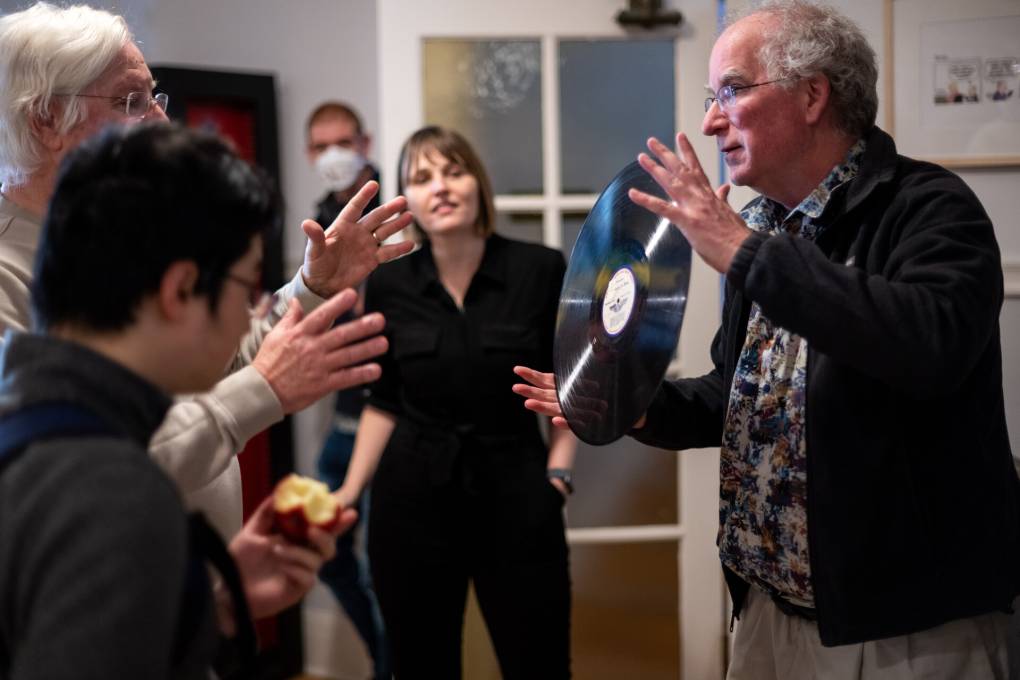
"caption": "Internet Archive founder Brewster Kahle (right) speaks to guests, volunteers and staff at one of the Archive's public lunches at its location in San Francisco's Richmond District on March 24.",
"description": null,
"title": "RS64115_012_KQED_InternetArchiveOffices_03242023-qut",
"credit": "Beth LaBerge/KQED",
"status": "inherit",
"altTag": "A middle-aged white man wearing glasses and an intense expression holds up a vinyl record while engaging in what appears to be an intense conversation with another man who is gesturing with his hands, while in the distance a white woman wearing a black dress looks on - others whose faces aren't visible are gathered around",
"isLoading": false,
"fetchFailed": false
},
"news_11945374": {
"type": "attachments",
"id": "news_11945374",
"meta": {
"index": "attachments_1716263798",
"site": "news",
"id": "11945374",
"found": true
},
"parent": 11945357,
"imgSizes": {
"twentyfourteen-full-width": {
"file": "https://ww2.kqed.org/app/uploads/sites/10/2023/03/kerr_googleraters_custom-4069495b174aabaffdce0db9f2c6309bd26a9682-s1600-c85-copy-1038x576.jpg",
"width": 1038,
"mimeType": "image/jpeg",
"height": 576
},
"thumbnail": {
"file": "https://ww2.kqed.org/app/uploads/sites/10/2023/03/kerr_googleraters_custom-4069495b174aabaffdce0db9f2c6309bd26a9682-s1600-c85-copy-160x120.jpg",
"width": 160,
"mimeType": "image/jpeg",
"height": 120
},
"post-thumbnail": {
"file": "https://ww2.kqed.org/app/uploads/sites/10/2023/03/kerr_googleraters_custom-4069495b174aabaffdce0db9f2c6309bd26a9682-s1600-c85-copy-672x372.jpg",
"width": 672,
"mimeType": "image/jpeg",
"height": 372
},
"kqedFullSize": {
"file": "https://ww2.kqed.org/app/uploads/sites/10/2023/03/kerr_googleraters_custom-4069495b174aabaffdce0db9f2c6309bd26a9682-s1600-c85-copy.jpg",
"width": 1600,
"height": 1199
},
"large": {
"file": "https://ww2.kqed.org/app/uploads/sites/10/2023/03/kerr_googleraters_custom-4069495b174aabaffdce0db9f2c6309bd26a9682-s1600-c85-copy-1020x764.jpg",
"width": 1020,
"mimeType": "image/jpeg",
"height": 764
},
"1536x1536": {
"file": "https://ww2.kqed.org/app/uploads/sites/10/2023/03/kerr_googleraters_custom-4069495b174aabaffdce0db9f2c6309bd26a9682-s1600-c85-copy-1536x1151.jpg",
"width": 1536,
"mimeType": "image/jpeg",
"height": 1151
},
"medium": {
"file": "https://ww2.kqed.org/app/uploads/sites/10/2023/03/kerr_googleraters_custom-4069495b174aabaffdce0db9f2c6309bd26a9682-s1600-c85-copy-800x600.jpg",
"width": 800,
"mimeType": "image/jpeg",
"height": 600
}
},
"publishDate": 1680297475,
"modified": 1680297574,
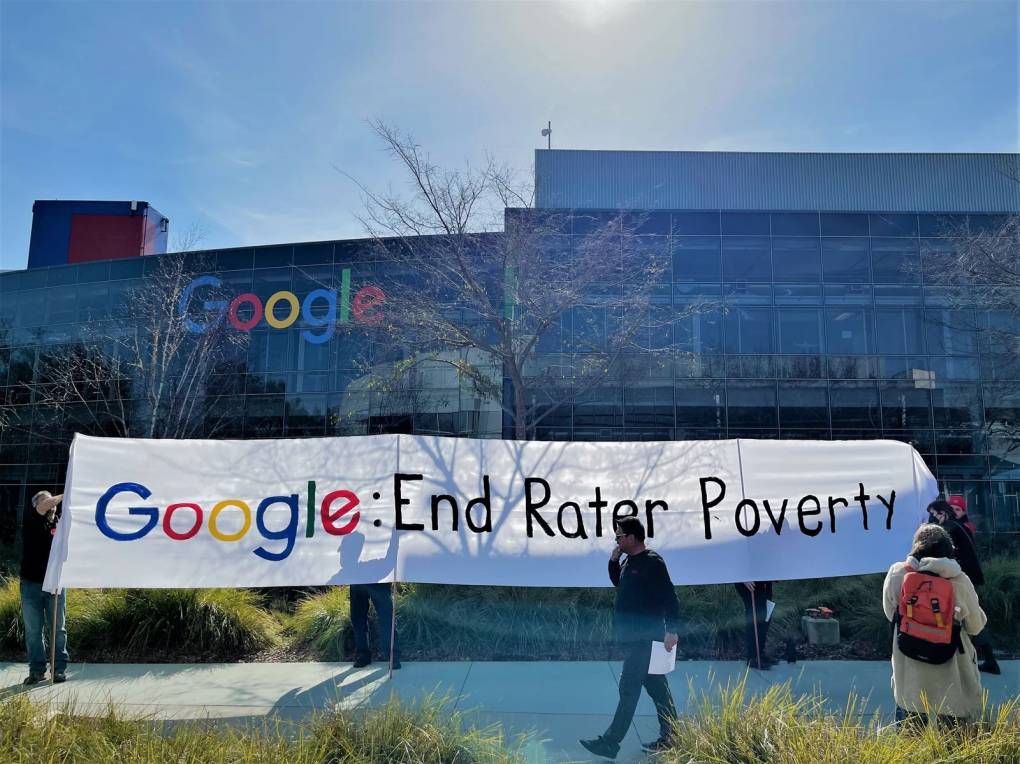
"caption": "Google raters get ready for a rally at the company's Silicon Valley headquarters on Feb. 1, 2023.",
"description": null,
"title": "kerr_googleraters_custom-4069495b174aabaffdce0db9f2c6309bd26a9682-s1600-c85 copy",
"credit": "Dana Kerr/NPR",
"status": "inherit",
"altTag": "A view of Google headquarters with a banner in front of it that reads \"Google: End Rater Poverty\" and a person standing in front of the banner.",
"isLoading": false,
"fetchFailed": false
},
"news_11944822": {
"type": "attachments",
"id": "news_11944822",
"meta": {
"index": "attachments_1716263798",
"site": "news",
"id": "11944822",
"found": true
},
"parent": 11944818,
"imgSizes": {
"twentyfourteen-full-width": {
"file": "https://ww2.kqed.org/app/uploads/sites/10/2023/03/GettyImages-76837875-1024x576.jpg",
"width": 1024,
"mimeType": "image/jpeg",
"height": 576
},
"thumbnail": {
"file": "https://ww2.kqed.org/app/uploads/sites/10/2023/03/GettyImages-76837875-160x112.jpg",
"width": 160,
"mimeType": "image/jpeg",
"height": 112
},
"post-thumbnail": {
"file": "https://ww2.kqed.org/app/uploads/sites/10/2023/03/GettyImages-76837875-672x372.jpg",
"width": 672,
"mimeType": "image/jpeg",
"height": 372
},
"kqedFullSize": {
"file": "https://ww2.kqed.org/app/uploads/sites/10/2023/03/GettyImages-76837875.jpg",
"width": 1024,
"height": 716
},
"large": {
"file": "https://ww2.kqed.org/app/uploads/sites/10/2023/03/GettyImages-76837875-1020x713.jpg",
"width": 1020,
"mimeType": "image/jpeg",
"height": 713
},
"medium": {
"file": "https://ww2.kqed.org/app/uploads/sites/10/2023/03/GettyImages-76837875-800x559.jpg",
"width": 800,
"mimeType": "image/jpeg",
"height": 559
}
},
"publishDate": 1679776567,
"modified": 1679939608,
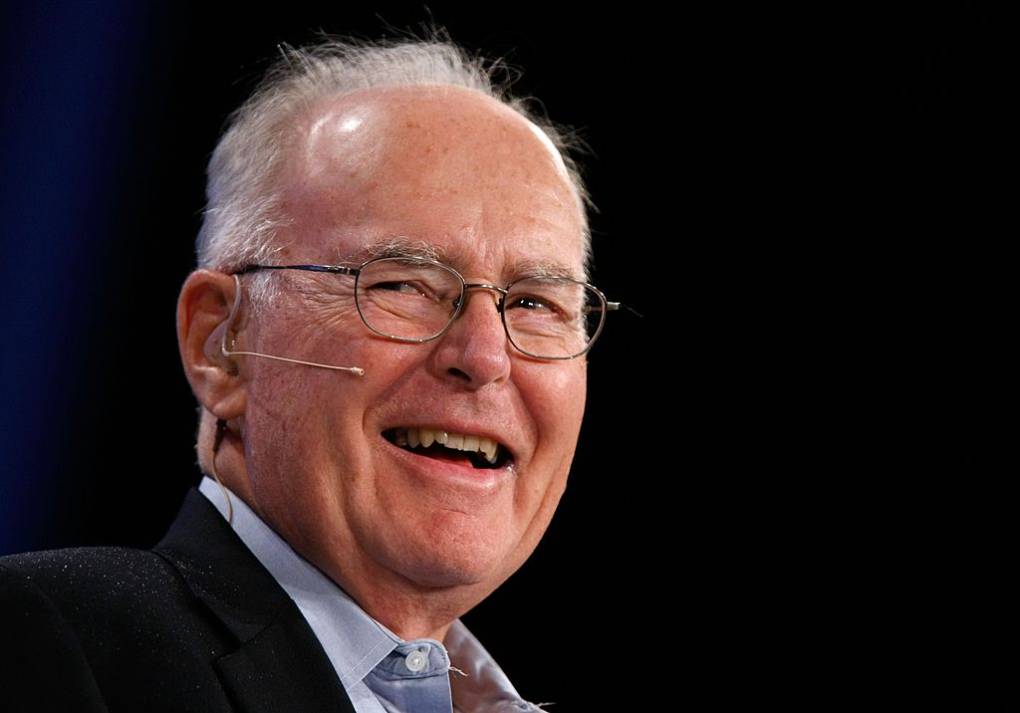
"caption": "Intel co-founder Gordon Moore smiles as he speaks during a conversation with National Public Radio host Dr. Moira Gunn during the 2007 Intel Developer Forum Sept. 18, 2007, at the Moscone Center in San Francisco.",
"description": null,
"title": "Intel CEO Paul Otellini Speaks At Programmers Forum",
"credit": "Justin Sullivan/Getty Images",
"status": "inherit",
"altTag": "Headshot of an older white man with white hair and glasses smiles as he looks past the camera.",
"isLoading": false,
"fetchFailed": false
},
"news_11944654": {
"type": "attachments",
"id": "news_11944654",
"meta": {
"index": "attachments_1716263798",
"site": "news",
"id": "11944654",
"found": true
},
"parent": 11944608,
"imgSizes": {
"twentyfourteen-full-width": {
"file": "https://ww2.kqed.org/app/uploads/sites/10/2023/03/GettyImages-1248923679-1024x576.jpg",
"width": 1024,
"mimeType": "image/jpeg",
"height": 576
},
"thumbnail": {
"file": "https://ww2.kqed.org/app/uploads/sites/10/2023/03/GettyImages-1248923679-160x107.jpg",
"width": 160,
"mimeType": "image/jpeg",
"height": 107
},
"post-thumbnail": {
"file": "https://ww2.kqed.org/app/uploads/sites/10/2023/03/GettyImages-1248923679-672x372.jpg",
"width": 672,
"mimeType": "image/jpeg",
"height": 372
},
"kqedFullSize": {
"file": "https://ww2.kqed.org/app/uploads/sites/10/2023/03/GettyImages-1248923679.jpg",
"width": 1024,
"height": 683
},
"large": {
"file": "https://ww2.kqed.org/app/uploads/sites/10/2023/03/GettyImages-1248923679-1020x680.jpg",
"width": 1020,
"mimeType": "image/jpeg",
"height": 680
},
"medium": {
"file": "https://ww2.kqed.org/app/uploads/sites/10/2023/03/GettyImages-1248923679-800x534.jpg",
"width": 800,
"mimeType": "image/jpeg",
"height": 534
}
},
"publishDate": 1679615988,
"modified": 1679616155,
"caption": "Customers wait for service outside Silicon Valley Bank in Menlo Park on March 13, 2023, just days after the bank failed and its assets were seized by the FDIC. ",
"description": null,
"title": "SVB branch in Menlo Park",
"credit": "John Brecher for The Washington Post via Getty Images",
"status": "inherit",
"altTag": "People stand in line outside a building with the \"svb\" — Silicon Valley Bank — logo.",
"isLoading": false,
"fetchFailed": false
},
"news_11944370": {
"type": "attachments",
"id": "news_11944370",
"meta": {
"index": "attachments_1716263798",
"site": "news",
"id": "11944370",
"found": true
},
"parent": 0,
"imgSizes": {
"twentyfourteen-full-width": {
"file": "https://ww2.kqed.org/app/uploads/sites/10/2023/03/RS52368_010_SanFrancisco_GigWorkerProtest_11032021-1038x576.jpg",
"width": 1038,
"mimeType": "image/jpeg",
"height": 576
},
"thumbnail": {
"file": "https://ww2.kqed.org/app/uploads/sites/10/2023/03/RS52368_010_SanFrancisco_GigWorkerProtest_11032021-160x106.jpg",
"width": 160,
"mimeType": "image/jpeg",
"height": 106
},
"post-thumbnail": {
"file": "https://ww2.kqed.org/app/uploads/sites/10/2023/03/RS52368_010_SanFrancisco_GigWorkerProtest_11032021-672x372.jpg",
"width": 672,
"mimeType": "image/jpeg",
"height": 372
},
"kqedFullSize": {
"file": "https://ww2.kqed.org/app/uploads/sites/10/2023/03/RS52368_010_SanFrancisco_GigWorkerProtest_11032021-scaled.jpg",
"width": 2560,
"height": 1704
},
"2048x2048": {
"file": "https://ww2.kqed.org/app/uploads/sites/10/2023/03/RS52368_010_SanFrancisco_GigWorkerProtest_11032021-2048x1363.jpg",
"width": 2048,
"mimeType": "image/jpeg",
"height": 1363
},
"large": {
"file": "https://ww2.kqed.org/app/uploads/sites/10/2023/03/RS52368_010_SanFrancisco_GigWorkerProtest_11032021-1020x679.jpg",
"width": 1020,
"mimeType": "image/jpeg",
"height": 679
},
"1536x1536": {
"file": "https://ww2.kqed.org/app/uploads/sites/10/2023/03/RS52368_010_SanFrancisco_GigWorkerProtest_11032021-1536x1022.jpg",
"width": 1536,
"mimeType": "image/jpeg",
"height": 1022
},
"full-width": {
"file": "https://ww2.kqed.org/app/uploads/sites/10/2023/03/RS52368_010_SanFrancisco_GigWorkerProtest_11032021-1920x1278.jpg",
"width": 1920,
"mimeType": "image/jpeg",
"height": 1278
},
"medium": {
"file": "https://ww2.kqed.org/app/uploads/sites/10/2023/03/RS52368_010_SanFrancisco_GigWorkerProtest_11032021-800x532.jpg",
"width": 800,
"mimeType": "image/jpeg",
"height": 532
}
},
"publishDate": 1679511824,
"modified": 1679526543,
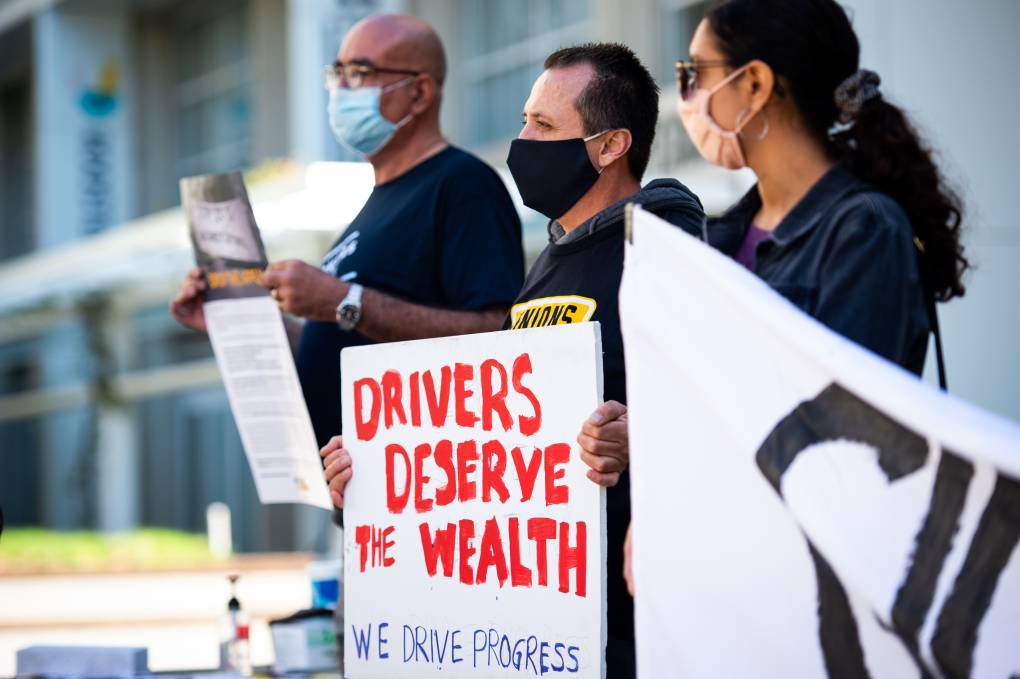
"caption": "Hector Castellanos (center) with We Drive Progress holds a sign that says 'Drivers Deserve the Wealth' outside DoorDash headquarters in San Francisco on Nov. 3, 2021, along with fellow gig workers, including rideshare and delivery drivers, demanding fair pay and employee rights.",
"description": null,
"title": "RS52368_010_SanFrancisco_GigWorkerProtest_11032021",
"credit": "Beth LaBerge/KQED",
"status": "inherit",
"altTag": "A man with dark hair holds a white sign with red lettering that reads, \"Drivers Deserve the Wealth\" and \"We Drive Progress.\" Other black and white signs are seen in foreground.",
"isLoading": false,
"fetchFailed": false
},
"news_11944234": {
"type": "attachments",
"id": "news_11944234",
"meta": {
"index": "attachments_1716263798",
"site": "news",
"id": "11944234",
"found": true
},
"parent": 11944233,
"imgSizes": {
"twentyfourteen-full-width": {
"file": "https://ww2.kqed.org/app/uploads/sites/10/2023/03/Screen-Shot-2023-03-21-at-11.31.58-AM-1038x576.png",
"width": 1038,
"mimeType": "image/png",
"height": 576
},
"thumbnail": {
"file": "https://ww2.kqed.org/app/uploads/sites/10/2023/03/Screen-Shot-2023-03-21-at-11.31.58-AM-160x115.png",
"width": 160,
"mimeType": "image/png",
"height": 115
},
"post-thumbnail": {
"file": "https://ww2.kqed.org/app/uploads/sites/10/2023/03/Screen-Shot-2023-03-21-at-11.31.58-AM-672x372.png",
"width": 672,
"mimeType": "image/png",
"height": 372
},
"kqedFullSize": {
"file": "https://ww2.kqed.org/app/uploads/sites/10/2023/03/Screen-Shot-2023-03-21-at-11.31.58-AM.png",
"width": 1181,
"height": 849
},
"large": {
"file": "https://ww2.kqed.org/app/uploads/sites/10/2023/03/Screen-Shot-2023-03-21-at-11.31.58-AM-1020x733.png",
"width": 1020,
"mimeType": "image/png",
"height": 733
},
"medium": {
"file": "https://ww2.kqed.org/app/uploads/sites/10/2023/03/Screen-Shot-2023-03-21-at-11.31.58-AM-800x575.png",
"width": 800,
"mimeType": "image/png",
"height": 575
}
},
"publishDate": 1679423566,
"modified": 1679423589,
"caption": null,
"description": "Note: These are just the housing projects that KQED has so far identified that have SVB loans or equity. It is not meant to be a comprehensive list, and will be updated if more projects are discovered.",
"title": null,
"credit": "Matthew Green/KQED",
"status": "inherit",
"altTag": null,
"isLoading": false,
"fetchFailed": false
},
"news_11933918": {
"type": "attachments",
"id": "news_11933918",
"meta": {
"index": "attachments_1716263798",
"site": "news",
"id": "11933918",
"found": true
},
"parent": 11933882,
"imgSizes": {
"twentyfourteen-full-width": {
"file": "https://ww2.kqed.org/app/uploads/sites/10/2022/12/RS60253_045_KQED_Biotechnology_11172022-qut-1038x576.jpg",
"width": 1038,
"mimeType": "image/jpeg",
"height": 576
},
"thumbnail": {
"file": "https://ww2.kqed.org/app/uploads/sites/10/2022/12/RS60253_045_KQED_Biotechnology_11172022-qut-160x107.jpg",
"width": 160,
"mimeType": "image/jpeg",
"height": 107
},
"post-thumbnail": {
"file": "https://ww2.kqed.org/app/uploads/sites/10/2022/12/RS60253_045_KQED_Biotechnology_11172022-qut-672x372.jpg",
"width": 672,
"mimeType": "image/jpeg",
"height": 372
},
"kqedFullSize": {
"file": "https://ww2.kqed.org/app/uploads/sites/10/2022/12/RS60253_045_KQED_Biotechnology_11172022-qut.jpg",
"width": 1920,
"height": 1280
},
"large": {
"file": "https://ww2.kqed.org/app/uploads/sites/10/2022/12/RS60253_045_KQED_Biotechnology_11172022-qut-1020x680.jpg",
"width": 1020,
"mimeType": "image/jpeg",
"height": 680
},
"1536x1536": {
"file": "https://ww2.kqed.org/app/uploads/sites/10/2022/12/RS60253_045_KQED_Biotechnology_11172022-qut-1536x1024.jpg",
"width": 1536,
"mimeType": "image/jpeg",
"height": 1024
},
"medium": {
"file": "https://ww2.kqed.org/app/uploads/sites/10/2022/12/RS60253_045_KQED_Biotechnology_11172022-qut-800x533.jpg",
"width": 800,
"mimeType": "image/jpeg",
"height": 533
}
},
"publishDate": 1670019780,
"modified": 1670019849,
"caption": "A sign for South San Francisco, 'The Birthplace of Biotechnology,' on Oyster Point Boulevard.",
"description": null,
"title": "RS60253_045_KQED_Biotechnology_11172022-qut",
"credit": "Beth LaBerge/KQED",
"status": "inherit",
"altTag": "A blue sign for South San Francisco, 'The Birthplace of Biotechnology,' against a blue sky and a palm tree with an office building in the background",
"isLoading": false,
"fetchFailed": false
},
"news_11943965": {
"type": "attachments",
"id": "news_11943965",
"meta": {
"index": "attachments_1716263798",
"site": "news",
"id": "11943965",
"found": true
},
"parent": 11943962,
"imgSizes": {
"twentyfourteen-full-width": {
"file": "https://ww2.kqed.org/app/uploads/sites/10/2023/03/BankingCrisis-1038x576.png",
"width": 1038,
"mimeType": "image/png",
"height": 576
},
"thumbnail": {
"file": "https://ww2.kqed.org/app/uploads/sites/10/2023/03/BankingCrisis-160x90.png",
"width": 160,
"mimeType": "image/png",
"height": 90
},
"post-thumbnail": {
"file": "https://ww2.kqed.org/app/uploads/sites/10/2023/03/BankingCrisis-672x372.png",
"width": 672,
"mimeType": "image/png",
"height": 372
},
"kqedFullSize": {
"file": "https://ww2.kqed.org/app/uploads/sites/10/2023/03/BankingCrisis.png",
"width": 1920,
"height": 1080
},
"large": {
"file": "https://ww2.kqed.org/app/uploads/sites/10/2023/03/BankingCrisis-1020x574.png",
"width": 1020,
"mimeType": "image/png",
"height": 574
},
"1536x1536": {
"file": "https://ww2.kqed.org/app/uploads/sites/10/2023/03/BankingCrisis-1536x864.png",
"width": 1536,
"mimeType": "image/png",
"height": 864
},
"medium": {
"file": "https://ww2.kqed.org/app/uploads/sites/10/2023/03/BankingCrisis-800x450.png",
"width": 800,
"mimeType": "image/png",
"height": 450
}
},
"publishDate": 1679090889,
"modified": 1679090889,
"caption": null,
"description": null,
"title": "BankingCrisis",
"credit": null,
"status": "inherit",
"altTag": null,
"isLoading": false,
"fetchFailed": false
},
"news_11943700": {
"type": "attachments",
"id": "news_11943700",
"meta": {
"index": "attachments_1716263798",
"site": "news",
"id": "11943700",
"found": true
},
"parent": 11943688,
"imgSizes": {
"twentyfourteen-full-width": {
"file": "https://ww2.kqed.org/app/uploads/sites/10/2023/03/maceo-may-san-francisco-ca-construction-aug-2022-984x576.jpeg",
"width": 984,
"mimeType": "image/jpeg",
"height": 576
},
"thumbnail": {
"file": "https://ww2.kqed.org/app/uploads/sites/10/2023/03/maceo-may-san-francisco-ca-construction-aug-2022-160x107.jpeg",
"width": 160,
"mimeType": "image/jpeg",
"height": 107
},
"post-thumbnail": {
"file": "https://ww2.kqed.org/app/uploads/sites/10/2023/03/maceo-may-san-francisco-ca-construction-aug-2022-672x372.jpeg",
"width": 672,
"mimeType": "image/jpeg",
"height": 372
},
"kqedFullSize": {
"file": "https://ww2.kqed.org/app/uploads/sites/10/2023/03/maceo-may-san-francisco-ca-construction-aug-2022.jpeg",
"width": 984,
"height": 656
},
"medium": {
"file": "https://ww2.kqed.org/app/uploads/sites/10/2023/03/maceo-may-san-francisco-ca-construction-aug-2022-800x533.jpeg",
"width": 800,
"mimeType": "image/jpeg",
"height": 533
}
},
"publishDate": 1678938842,
"modified": 1678996884,
"caption": "The Maceo May Apartments, an affordable housing project on Treasure Island, while still under construction in August 2022. The project was partly funded by a loan from Silicon Valley Bank.",
"description": null,
"title": "maceo-may-san-francisco-ca-construction-aug-2022",
"credit": "Courtesy of Apartments.com",
"status": "inherit",
"altTag": "An aerial view of a large apartment building still under construction.",
"isLoading": false,
"fetchFailed": false
},
"news_11943644": {
"type": "attachments",
"id": "news_11943644",
"meta": {
"index": "attachments_1716263798",
"site": "news",
"id": "11943644",
"found": true
},
"parent": 11943634,
"imgSizes": {
"twentyfourteen-full-width": {
"file": "https://ww2.kqed.org/app/uploads/sites/10/2023/03/RS63272_033_KQED_ValleyVerdeFarmSJ_02282023-qut-1038x576.jpg",
"width": 1038,
"mimeType": "image/jpeg",
"height": 576
},
"thumbnail": {
"file": "https://ww2.kqed.org/app/uploads/sites/10/2023/03/RS63272_033_KQED_ValleyVerdeFarmSJ_02282023-qut-160x107.jpg",
"width": 160,
"mimeType": "image/jpeg",
"height": 107
},
"post-thumbnail": {
"file": "https://ww2.kqed.org/app/uploads/sites/10/2023/03/RS63272_033_KQED_ValleyVerdeFarmSJ_02282023-qut-672x372.jpg",
"width": 672,
"mimeType": "image/jpeg",
"height": 372
},
"kqedFullSize": {
"file": "https://ww2.kqed.org/app/uploads/sites/10/2023/03/RS63272_033_KQED_ValleyVerdeFarmSJ_02282023-qut.jpg",
"width": 1920,
"height": 1280
},
"large": {
"file": "https://ww2.kqed.org/app/uploads/sites/10/2023/03/RS63272_033_KQED_ValleyVerdeFarmSJ_02282023-qut-1020x680.jpg",
"width": 1020,
"mimeType": "image/jpeg",
"height": 680
},
"1536x1536": {
"file": "https://ww2.kqed.org/app/uploads/sites/10/2023/03/RS63272_033_KQED_ValleyVerdeFarmSJ_02282023-qut-1536x1024.jpg",
"width": 1536,
"mimeType": "image/jpeg",
"height": 1024
},
"medium": {
"file": "https://ww2.kqed.org/app/uploads/sites/10/2023/03/RS63272_033_KQED_ValleyVerdeFarmSJ_02282023-qut-800x533.jpg",
"width": 800,
"mimeType": "image/jpeg",
"height": 533
}
},
"publishDate": 1678919606,
"modified": 1678919721,
"caption": "An orange orchard in an unexpected place caught the attention of a Bay Curious listener.",
"description": null,
"title": "An orange orchard in an unexpected place caught the attention of a Bay Curious listener.",
"credit": "Beth LaBerge/KQED",
"status": "inherit",
"altTag": "An orange tree is in the foreground and in the background is a four story apartment building.",
"isLoading": false,
"fetchFailed": false
},
"news_11943250": {
"type": "attachments",
"id": "news_11943250",
"meta": {
"index": "attachments_1716263798",
"site": "news",
"id": "11943250",
"found": true
},
"title": "US-BANKING-MARKET-SVB",
"publishDate": 1678483249,
"status": "inherit",
"parent": 11943215,
"modified": 1769122415,
"caption": "Police officers leave Silicon Valley Bank's headquarters in Santa Clara on March 10, 2023. ",
"credit": "Noah Berger/AFP via Getty Images",
"altTag": "Two armed police officers, one with a baton in left hand, stand outside Silicon Valley Bank headquarters as another person behind them reads a notice taped to the closed front entrance explaining the bank's closure.",
"description": null,
"imgSizes": {
"medium": {
"file": "https://cdn.kqed.org/wp-content/uploads/sites/10/2023/03/GettyImages-1247999584-800x532.jpg",
"width": 800,
"height": 532,
"mimeType": "image/jpeg"
},
"large": {
"file": "https://cdn.kqed.org/wp-content/uploads/sites/10/2023/03/GettyImages-1247999584-1020x678.jpg",
"width": 1020,
"height": 678,
"mimeType": "image/jpeg"
},
"thumbnail": {
"file": "https://cdn.kqed.org/wp-content/uploads/sites/10/2023/03/GettyImages-1247999584-160x106.jpg",
"width": 160,
"height": 106,
"mimeType": "image/jpeg"
},
"post-thumbnail": {
"file": "https://cdn.kqed.org/wp-content/uploads/sites/10/2023/03/GettyImages-1247999584-672x372.jpg",
"width": 672,
"height": 372,
"mimeType": "image/jpeg"
},
"twentyfourteen-full-width": {
"file": "https://cdn.kqed.org/wp-content/uploads/sites/10/2023/03/GettyImages-1247999584-1024x576.jpg",
"width": 1024,
"height": 576,
"mimeType": "image/jpeg"
},
"kqedFullSize": {
"file": "https://cdn.kqed.org/wp-content/uploads/sites/10/2023/03/GettyImages-1247999584.jpg",
"width": 1024,
"height": 681
}
},
"isLoading": false,
"fetchFailed": false
}
},
"audioPlayerReducer": {
"postId": "stream_live",
"isPaused": true,
"isPlaying": false,
"pfsActive": false,
"pledgeModalIsOpen": true,
"playerDrawerIsOpen": false,
"liveAudioPlayStartedAt": 0,
"liveAudioPlayContext": ""
},
"authorsReducer": {
"byline_news_11945357": {
"type": "authors",
"id": "byline_news_11945357",
"meta": {
"override": true
},
"slug": "byline_news_11945357",
"name": "\u003ca href=\"https://www.npr.org/people/1147860766/dara-kerr\">Dara Kerr\u003c/a>",
"isLoading": false
},
"byline_news_11944818": {
"type": "authors",
"id": "byline_news_11944818",
"meta": {
"override": true
},
"slug": "byline_news_11944818",
"name": "The Associated Press",
"isLoading": false
},
"kqed": {
"type": "authors",
"id": "236",
"meta": {
"index": "authors_1716337520",
"id": "236",
"found": true
},
"name": "KQED News Staff",
"firstName": "KQED News Staff",
"lastName": null,
"slug": "kqed",
"email": "faq@kqed.org",
"display_author_email": false,
"staff_mastheads": [],
"title": null,
"bio": null,
"avatar": "https://secure.gravatar.com/avatar/ef0e801a68c4c54afa9180db14084167?s=600&d=blank&r=g",
"twitter": null,
"facebook": null,
"instagram": null,
"linkedin": null,
"sites": [
{
"site": "arts",
"roles": [
"contributor"
]
},
{
"site": "news",
"roles": [
"editor"
]
},
{
"site": "futureofyou",
"roles": [
"author"
]
}
],
"headData": {
"title": "KQED News Staff | KQED",
"description": null,
"ogImgSrc": "https://secure.gravatar.com/avatar/ef0e801a68c4c54afa9180db14084167?s=600&d=blank&r=g",
"twImgSrc": "https://secure.gravatar.com/avatar/ef0e801a68c4c54afa9180db14084167?s=600&d=blank&r=g"
},
"isLoading": false,
"link": "/author/kqed"
},
"rachael-myrow": {
"type": "authors",
"id": "251",
"meta": {
"index": "authors_1716337520",
"id": "251",
"found": true
},
"name": "Rachael Myrow",
"firstName": "Rachael",
"lastName": "Myrow",
"slug": "rachael-myrow",
"email": "rmyrow@kqed.org",
"display_author_email": true,
"staff_mastheads": [
"news"
],
"title": "Senior Editor of KQED's Silicon Valley News Desk",
"bio": "• I write and edit stories about how Silicon Valley power and policies shape everyday life in California. I’m also passionate about making Bay Area history and culture more accessible to a broad public. • I’ve been a journalist for most of my life, starting in high school with The Franklin Press in Los Angeles, where I grew up. While earning my first degree in English at UC Berkeley, I got my start in public radio at KALX-FM. After completing a second degree in journalism at Cal, I landed my first professional job at Marketplace, then moved on to KPCC (now LAist), and then KQED, where I hosted The California Report for more than seven years. • My reporting has appeared on NPR, The World, WBUR’s \u003ci>Here & Now\u003c/i>, and the BBC. I also guest host for KQED’s \u003ci>Forum\u003c/i>, as well as the Commonwealth Club in San Francisco. • I speak periodically on media, democracy and technology issues, and do voiceover work for documentaries and educational video projects. • Outside of the studio, you'll find me hiking Bay Area trails and whipping up Insta-ready meals in my kitchen. • I do not accept gifts, money, or favors from anyone connected to my reporting, I don't pay people for information, and I do not support or donate to political causes. • I strive to treat the people I report on with fairness, honesty, and respect. I also recognize there are often multiple sides to a story and work to verify information through multiple sources and documentation. If I get something wrong, I correct it.",
"avatar": "https://secure.gravatar.com/avatar/3ed8a3c5f26025e4a805ba634cda8cd764906b97438a6d9ce216b044e340da4e?s=600&d=blank&r=g",
"twitter": "rachaelmyrow",
"bluesky": null,
"facebook": null,
"instagram": null,
"linkedin": "https://www.linkedin.com/in/rachaelmyrow/",
"sites": [
{
"site": "arts",
"roles": [
"administrator"
]
},
{
"site": "news",
"roles": [
"edit_others_posts",
"editor"
]
},
{
"site": "futureofyou",
"roles": [
"editor"
]
},
{
"site": "bayareabites",
"roles": [
"editor"
]
},
{
"site": "stateofhealth",
"roles": [
"editor"
]
},
{
"site": "science",
"roles": [
"editor"
]
},
{
"site": "food",
"roles": [
"editor"
]
},
{
"site": "forum",
"roles": [
"editor"
]
},
{
"site": "liveblog",
"roles": [
"author"
]
}
],
"headData": {
"title": "Rachael Myrow | KQED",
"description": "Senior Editor of KQED's Silicon Valley News Desk",
"ogImgSrc": "https://secure.gravatar.com/avatar/3ed8a3c5f26025e4a805ba634cda8cd764906b97438a6d9ce216b044e340da4e?s=600&d=blank&r=g",
"twImgSrc": "https://secure.gravatar.com/avatar/3ed8a3c5f26025e4a805ba634cda8cd764906b97438a6d9ce216b044e340da4e?s=600&d=blank&r=g"
},
"isLoading": false,
"link": "/author/rachael-myrow"
},
"scottshafer": {
"type": "authors",
"id": "255",
"meta": {
"index": "authors_1716337520",
"id": "255",
"found": true
},
"name": "Scott Shafer",
"firstName": "Scott",
"lastName": "Shafer",
"slug": "scottshafer",
"email": "sshafer@kqed.org",
"display_author_email": false,
"staff_mastheads": [
"news"
],
"title": "KQED Contributor",
"bio": "Scott Shafer is a senior editor with the KQED Politics and Government desk. He is co-host of Political Breakdown, the award-winning radio show and podcast with a personal take on the world of politics. Scott came to KQED in 1998 to host the statewide\u003cem> California Report\u003c/em>. Prior to that he had extended stints in politics and government\u003cem>.\u003c/em> He uses that inside experience at KQED in his, reporting, hosting and analysis for the politics desk. Scott collaborated \u003cem>Political Breakdown a\u003c/em>nd on \u003cem>The Political Mind of Jerry Brown, \u003c/em>an eight-part series about the life and extraordinary political career of the former governor. For fun, he plays water polo with the San Francisco Tsunami.",
"avatar": "https://secure.gravatar.com/avatar/a62ebae45b79d7aed1a39a0e3bf68104?s=600&d=blank&r=g",
"twitter": "scottshafer",
"bluesky": null,
"facebook": null,
"instagram": null,
"linkedin": null,
"sites": [
{
"site": "news",
"roles": [
"editor"
]
},
{
"site": "stateofhealth",
"roles": [
"author"
]
},
{
"site": "science",
"roles": [
"author"
]
},
{
"site": "forum",
"roles": [
"subscriber"
]
},
{
"site": "liveblog",
"roles": [
"author"
]
}
],
"headData": {
"title": "Scott Shafer | KQED",
"description": "KQED Contributor",
"ogImgSrc": "https://secure.gravatar.com/avatar/a62ebae45b79d7aed1a39a0e3bf68104?s=600&d=blank&r=g",
"twImgSrc": "https://secure.gravatar.com/avatar/a62ebae45b79d7aed1a39a0e3bf68104?s=600&d=blank&r=g"
},
"isLoading": false,
"link": "/author/scottshafer"
},
"lklivans": {
"type": "authors",
"id": "8648",
"meta": {
"index": "authors_1716337520",
"id": "8648",
"found": true
},
"name": "Laura Klivans",
"firstName": "Laura",
"lastName": "Klivans",
"slug": "lklivans",
"email": "lklivans@kqed.org",
"display_author_email": true,
"staff_mastheads": [
"news",
"science"
],
"title": "Reporter",
"bio": "Laura Klivans is an award-winning science reporter for KQED News, where she covers climate change with an eye on both groundbreaking progress and gaps in action. She is the former host of KQED's blockbuster video series about tiny, amazing animals, \u003cem>Deep Look\u003c/em>. Her work reaches national audiences through NPR, \u003cem>Here & Now, \u003c/em>PRI, and other major outlets. \r\n\r\nLaura’s won five Northern California Area Emmy Awards for Deep Look and First Place in the Greater Bay Area Journalism Awards for a podcast exploring how one Oakland neighborhood teamed up to reduce planet-heating pollution.\r\n\r\nBeyond her reporting, she hosts and moderates events. In the past, she taught audio storytelling at the UC Berkeley Graduate School of Journalism, led international education programs, worked with immigrants and refugees along the Thai-Burmese border, taught high schoolers sex ed, and was an actress. \r\n\r\nShe's a former UC Berkeley Human Rights Fellow, USC Center for Health Journalism's California Fellow and Coro Fellow in Public Affairs. Laura has a master’s in journalism from UC Berkeley, a master’s in education from Harvard, and an undergraduate degree from Northwestern University.\r\n\r\nShe loves trying to riddle the meaning out of vanity license plates.",
"avatar": "https://secure.gravatar.com/avatar/2d2ecd1550a494cc10ad4a503406965585902124739e775a9b3817eebf1d88be?s=600&d=blank&r=g",
"twitter": "lauraklivans",
"bluesky": null,
"facebook": null,
"instagram": null,
"linkedin": null,
"sites": [
{
"site": "news",
"roles": [
"editor"
]
},
{
"site": "stateofhealth",
"roles": [
"contributor",
"editor"
]
},
{
"site": "science",
"roles": [
"editor"
]
},
{
"site": "forum",
"roles": [
"editor"
]
}
],
"headData": {
"title": "Laura Klivans | KQED",
"description": "Reporter",
"ogImgSrc": "https://secure.gravatar.com/avatar/2d2ecd1550a494cc10ad4a503406965585902124739e775a9b3817eebf1d88be?s=600&d=blank&r=g",
"twImgSrc": "https://secure.gravatar.com/avatar/2d2ecd1550a494cc10ad4a503406965585902124739e775a9b3817eebf1d88be?s=600&d=blank&r=g"
},
"isLoading": false,
"link": "/author/lklivans"
},
"ecruzguevarra": {
"type": "authors",
"id": "8654",
"meta": {
"index": "authors_1716337520",
"id": "8654",
"found": true
},
"name": "Ericka Cruz Guevarra",
"firstName": "Ericka",
"lastName": "Cruz Guevarra",
"slug": "ecruzguevarra",
"email": "ecruzguevarra@kqed.org",
"display_author_email": true,
"staff_mastheads": [
"news"
],
"title": "Producer, The Bay Podcast",
"bio": "Ericka Cruz Guevarra is host of \u003ca href=\"https://www.kqed.org/podcasts/thebay\">\u003cem>The Bay\u003c/em>\u003c/a> podcast at KQED. Before host, she was the show’s producer. Her work in that capacity includes a three-part reported series on policing in Vallejo, which won a 2020 excellence in journalism award from the Society of Professional Journalists. Ericka has worked as a breaking news reporter at Oregon Public Broadcasting, helped produce the Code Switch podcast, and was KQED’s inaugural Raul Ramirez Diversity Fund intern. She’s also an alumna of NPR’s Next Generation Radio program. Send her an email if you have strong feelings about whether Fairfield and Suisun City are the Bay. Ericka is represented by SAG-AFTRA.",
"avatar": "https://secure.gravatar.com/avatar/accefc1de4bafc7e234b69bcb9b6f6536c130fd84709bc3069ef11a78787e1bb?s=600&d=blank&r=g",
"twitter": "NotoriousECG",
"bluesky": null,
"facebook": null,
"instagram": null,
"linkedin": null,
"sites": [
{
"site": "arts",
"roles": [
"subscriber"
]
},
{
"site": "news",
"roles": [
"editor",
"manage_categories"
]
},
{
"site": "futureofyou",
"roles": [
"subscriber"
]
},
{
"site": "stateofhealth",
"roles": [
"subscriber"
]
},
{
"site": "science",
"roles": [
"editor"
]
},
{
"site": "forum",
"roles": [
"subscriber"
]
}
],
"headData": {
"title": "Ericka Cruz Guevarra | KQED",
"description": "Producer, The Bay Podcast",
"ogImgSrc": "https://secure.gravatar.com/avatar/accefc1de4bafc7e234b69bcb9b6f6536c130fd84709bc3069ef11a78787e1bb?s=600&d=blank&r=g",
"twImgSrc": "https://secure.gravatar.com/avatar/accefc1de4bafc7e234b69bcb9b6f6536c130fd84709bc3069ef11a78787e1bb?s=600&d=blank&r=g"
},
"isLoading": false,
"link": "/author/ecruzguevarra"
},
"lesleymcclurg": {
"type": "authors",
"id": "11229",
"meta": {
"index": "authors_1716337520",
"id": "11229",
"found": true
},
"name": "Lesley McClurg",
"firstName": "Lesley",
"lastName": "McClurg",
"slug": "lesleymcclurg",
"email": "lmcclurg@KQED.org",
"display_author_email": false,
"staff_mastheads": [
"news",
"science"
],
"title": "KQED Health Correspondent",
"bio": "Lesley McClurg is a health correspondent and fill-in host whose work is regularly rebroadcast on NPR and PBS programs. She’s earned multiple regional Emmy awards, a national and a regional Edward R. Murrow award, and was named Best Beat Reporter by the Association of Health Care Journalists. The Society of Professional Journalists has recognized her work several times, and the Society of Environmental Journalists spotlighted her coverage of California’s historic drought.\r\n\r\nBefore joining KQED in 2016, Lesley covered food and sustainability for Capital Public Radio, environmental issues for Colorado Public Radio, and reported for KUOW and KCTS 9 in Seattle. Away from the newsroom, she loves skiing with her daughter, mountain biking with her partner, and playing with Ollie, the family’s goldendoodle. On deadline, she runs almost entirely on chocolate chips.\r\n\r\n ",
"avatar": "https://secure.gravatar.com/avatar/bab49e972ea10c774fe0f5e29dba1722b158f7c0d58a360923d1389d380b2978?s=600&d=blank&r=g",
"twitter": "lesleywmcclurg",
"bluesky": null,
"facebook": null,
"instagram": null,
"linkedin": null,
"sites": [
{
"site": "arts",
"roles": [
"author"
]
},
{
"site": "news",
"roles": [
"editor"
]
},
{
"site": "futureofyou",
"roles": [
"editor"
]
},
{
"site": "stateofhealth",
"roles": [
"author"
]
},
{
"site": "science",
"roles": [
"editor"
]
},
{
"site": "quest",
"roles": [
"subscriber"
]
},
{
"site": "forum",
"roles": [
"administrator"
]
},
{
"site": "liveblog",
"roles": [
"author"
]
}
],
"headData": {
"title": "Lesley McClurg | KQED",
"description": "KQED Health Correspondent",
"ogImgSrc": "https://secure.gravatar.com/avatar/bab49e972ea10c774fe0f5e29dba1722b158f7c0d58a360923d1389d380b2978?s=600&d=blank&r=g",
"twImgSrc": "https://secure.gravatar.com/avatar/bab49e972ea10c774fe0f5e29dba1722b158f7c0d58a360923d1389d380b2978?s=600&d=blank&r=g"
},
"isLoading": false,
"link": "/author/lesleymcclurg"
},
"dcronin": {
"type": "authors",
"id": "11362",
"meta": {
"index": "authors_1716337520",
"id": "11362",
"found": true
},
"name": "Dana Cronin",
"firstName": "Dana",
"lastName": "Cronin",
"slug": "dcronin",
"email": "dcronin@KQED.org",
"display_author_email": true,
"staff_mastheads": [],
"title": "KQED Contributor",
"bio": "Dana Cronin is a reporter for KQED News. She loves writing stories about climate change, environmental issues, food and agriculture. She's reported across the country, from Colorado to Washington D.C. to Illinois, and has won numerous awards for her coverage. Her work is regularly featured on national broadcasts, including NPR’s Morning Edition, All Things Considered, PBS Newshour and Science Friday. She lives in Oakland and has an avocado tree in her back yard.",
"avatar": "https://secure.gravatar.com/avatar/b242755225e2f85f37c259df1f4cdfa36dc82f17dcf79e697fb392d658d1750b?s=600&d=blank&r=g",
"twitter": "DanaHCronin",
"bluesky": null,
"facebook": null,
"instagram": null,
"linkedin": null,
"sites": [
{
"site": "arts",
"roles": [
"author"
]
},
{
"site": "news",
"roles": [
"editor"
]
},
{
"site": "science",
"roles": [
"author"
]
},
{
"site": "liveblog",
"roles": [
"author"
]
}
],
"headData": {
"title": "Dana Cronin | KQED",
"description": "KQED Contributor",
"ogImgSrc": "https://secure.gravatar.com/avatar/b242755225e2f85f37c259df1f4cdfa36dc82f17dcf79e697fb392d658d1750b?s=600&d=blank&r=g",
"twImgSrc": "https://secure.gravatar.com/avatar/b242755225e2f85f37c259df1f4cdfa36dc82f17dcf79e697fb392d658d1750b?s=600&d=blank&r=g"
},
"isLoading": false,
"link": "/author/dcronin"
},
"amontecillo": {
"type": "authors",
"id": "11649",
"meta": {
"index": "authors_1716337520",
"id": "11649",
"found": true
},
"name": "Alan Montecillo",
"firstName": "Alan",
"lastName": "Montecillo",
"slug": "amontecillo",
"email": "amontecillo@kqed.org",
"display_author_email": false,
"staff_mastheads": [
"news"
],
"title": "KQED Contributor",
"bio": "Alan Montecillo is the senior editor of \u003cem>\u003ca href=\"http://kqed.org/thebay\">The Bay\u003c/a>, \u003c/em> KQED's local news podcast. Before moving to the Bay Area, he worked as a senior talk show producer for WILL in Champaign-Urbana, Illinois and at Oregon Public Broadcasting in Portland, Oregon. He has won journalism awards from the Society of Professional Journalists Northern California, the Public Media Journalists Association, The Signal Awards, and has also received a regional Edward R. Murrow award. Alan is a Filipino American from Hong Kong and a graduate of Reed College.",
"avatar": "https://secure.gravatar.com/avatar/268f53a2066899ea9efdd8a5900218b17c822d9862cbc9326cccec53ef41d349?s=600&d=blank&r=g",
"twitter": "alanmontecillo",
"bluesky": null,
"facebook": null,
"instagram": null,
"linkedin": null,
"sites": [
{
"site": "",
"roles": [
"editor"
]
},
{
"site": "news",
"roles": [
"editor",
"manage_categories"
]
}
],
"headData": {
"title": "Alan Montecillo | KQED",
"description": "KQED Contributor",
"ogImgSrc": "https://secure.gravatar.com/avatar/268f53a2066899ea9efdd8a5900218b17c822d9862cbc9326cccec53ef41d349?s=600&d=blank&r=g",
"twImgSrc": "https://secure.gravatar.com/avatar/268f53a2066899ea9efdd8a5900218b17c822d9862cbc9326cccec53ef41d349?s=600&d=blank&r=g"
},
"isLoading": false,
"link": "/author/amontecillo"
},
"mesquinca": {
"type": "authors",
"id": "11802",
"meta": {
"index": "authors_1716337520",
"id": "11802",
"found": true
},
"name": "Maria Esquinca",
"firstName": "Maria",
"lastName": "Esquinca",
"slug": "mesquinca",
"email": "mesquinca@kqed.org",
"display_author_email": false,
"staff_mastheads": [],
"title": "Producer, The Bay",
"bio": "María Esquinca is a producer of The Bay. Before that, she was a New York Women’s Foundation IGNITE Fellow at Latino USA. She worked at Radio Bilingue where she covered the San Joaquin Valley. Maria has interned at WLRN, News 21, The New York Times Student Journalism Institute and at Crain’s Detroit Business as a Dow Jones News Fund Business Reporting Intern. She is an MFA graduate from the University of Miami. In 2017, she graduated from the Walter Cronkite School of Journalism and Mass Communication with a Master of Mass Communication. A fronteriza, she was born in Ciudad Juárez, Chihuahua, Mexico and grew up in El Paso, Texas.",
"avatar": "https://secure.gravatar.com/avatar/77cedba18aae91da775038ba06dcd8d0?s=600&d=blank&r=g",
"twitter": "@m_esquinca",
"facebook": null,
"instagram": null,
"linkedin": null,
"sites": [
{
"site": "news",
"roles": []
}
],
"headData": {
"title": "Maria Esquinca | KQED",
"description": "Producer, The Bay",
"ogImgSrc": "https://secure.gravatar.com/avatar/77cedba18aae91da775038ba06dcd8d0?s=600&d=blank&r=g",
"twImgSrc": "https://secure.gravatar.com/avatar/77cedba18aae91da775038ba06dcd8d0?s=600&d=blank&r=g"
},
"isLoading": false,
"link": "/author/mesquinca"
},
"sjohnson": {
"type": "authors",
"id": "11840",
"meta": {
"index": "authors_1716337520",
"id": "11840",
"found": true
},
"name": "Sydney Johnson",
"firstName": "Sydney",
"lastName": "Johnson",
"slug": "sjohnson",
"email": "sjohnson@kqed.org",
"display_author_email": false,
"staff_mastheads": [
"news"
],
"title": "KQED Reporter",
"bio": "Sydney Johnson is a general assignment reporter at KQED. She previously reported on public health and city government at the San Francisco Examiner, and before that, she covered statewide education policy for EdSource. Her reporting has won multiple local, state and national awards. Sydney is a graduate of the University of California, Berkeley and lives in San Francisco.",
"avatar": "https://secure.gravatar.com/avatar/97855f2719b72ad6190b7c535fe642c8?s=600&d=blank&r=g",
"twitter": "sydneyfjohnson",
"facebook": null,
"instagram": null,
"linkedin": null,
"sites": [
{
"site": "news",
"roles": [
"editor"
]
}
],
"headData": {
"title": "Sydney Johnson | KQED",
"description": "KQED Reporter",
"ogImgSrc": "https://secure.gravatar.com/avatar/97855f2719b72ad6190b7c535fe642c8?s=600&d=blank&r=g",
"twImgSrc": "https://secure.gravatar.com/avatar/97855f2719b72ad6190b7c535fe642c8?s=600&d=blank&r=g"
},
"isLoading": false,
"link": "/author/sjohnson"
},
"srodriguez": {
"type": "authors",
"id": "11852",
"meta": {
"index": "authors_1716337520",
"id": "11852",
"found": true
},
"name": "Steph Rodriguez",
"firstName": "Steph",
"lastName": "Rodriguez",
"slug": "srodriguez",
"email": "srodriguez@KQED.org",
"display_author_email": true,
"staff_mastheads": [
"news"
],
"title": "KQED Contributor",
"bio": "Steph Rodriguez is an award-winning editor and journalist who specializes in writing stories about food and music, arts and culture. She’s currently a Digital Editor for KQED News in San Francisco. Her past professional experience includes Food Editor for SFGATE as well as Managing Editor and Dining Editor for the Sacramento News & Review. She has roots in Bakersfield and Sacramento California and currently lives in Oakland with her family.",
"avatar": "https://secure.gravatar.com/avatar/5220c101baf7d495ca871563de9b8653e5863afdbd5f55ea5db0dda0732db3a2?s=600&d=blank&r=g",
"twitter": "wordstospill",
"bluesky": null,
"facebook": null,
"instagram": null,
"linkedin": null,
"sites": [
{
"site": "",
"roles": [
"administrator"
]
},
{
"site": "arts",
"roles": [
"administrator"
]
},
{
"site": "news",
"roles": [
"administrator"
]
},
{
"site": "science",
"roles": [
"administrator"
]
}
],
"headData": {
"title": "Steph Rodriguez | KQED",
"description": "KQED Contributor",
"ogImgSrc": "https://secure.gravatar.com/avatar/5220c101baf7d495ca871563de9b8653e5863afdbd5f55ea5db0dda0732db3a2?s=600&d=blank&r=g",
"twImgSrc": "https://secure.gravatar.com/avatar/5220c101baf7d495ca871563de9b8653e5863afdbd5f55ea5db0dda0732db3a2?s=600&d=blank&r=g"
},
"isLoading": false,
"link": "/author/srodriguez"
}
},
"pagesReducer": {
"news_category_technology": {
"type": "terms",
"id": "news_248",
"meta": {
"index": "terms_1716263798",
"site": "news",
"id": "248",
"score": 10.93111
},
"featImg": null,
"name": "Technology",
"description": null,
"taxonomy": "category",
"headData": {
"twImgId": null,
"twTitle": null,
"ogTitle": null,
"ogImgId": null,
"twDescription": null,
"description": null,
"title": "Technology Archives | KQED News",
"ogDescription": null
},
"ttid": 256,
"slug": "technology",
"isLoading": false,
"title": "Technology",
"pageMeta": {
"site": "news",
"WpPageTemplate": "page-topic-editorial",
"currentPage": 33
},
"blocks": [
{
"blockName": "kqed/post-list",
"attrs": {
"layout": "cardArticle2",
"query": "posts/news?category=technology",
"seeMore": false,
"paginated": true,
"page": 33
}
},
{
"blockName": "kqed/ad"
}
]
}
},
"pfsSessionReducer": {},
"postsReducer": {
"stream_live": {
"type": "live",
"id": "stream_live",
"audioUrl": "https://streams.kqed.org/kqedradio",
"title": "Live Stream",
"excerpt": "Live Stream information currently unavailable.",
"link": "/radio",
"featImg": "",
"label": {
"name": "KQED Live",
"link": "/"
}
},
"stream_kqedNewscast": {
"type": "posts",
"id": "stream_kqedNewscast",
"audioUrl": "https://www.kqed.org/.stream/anon/radio/RDnews/newscast.mp3?_=1",
"title": "KQED Newscast",
"featImg": "",
"label": {
"name": "88.5 FM",
"link": "/"
}
},
"news_11947169": {
"type": "posts",
"id": "news_11947169",
"meta": {
"index": "posts_1716263798",
"site": "news",
"id": "11947169",
"score": null,
"sort": [
1681948248000
]
},
"guestAuthors": [],
"slug": "sf-supervisors-throw-support-behind-internet-archive-as-it-fights-copyright-ruling",
"title": "San Francisco Supervisors Throw Support Behind Internet Archive as It Fights Copyright Ruling",
"publishDate": 1681948248,
"format": "standard",
"headTitle": "San Francisco Supervisors Throw Support Behind Internet Archive as It Fights Copyright Ruling | KQED",
"labelTerm": {
"site": "news"
},
"content": "\u003cp>San Francisco leaders are throwing their support behind the \u003ca href=\"https://www.kqed.org/news/11945533/sf-based-internet-archive-is-fighting-a-ruling-that-could-change-the-future-of-digital-libraries\">threatened Internet Archive\u003c/a>, a free digital library headquartered in San Francisco’s Richmond District.\u003c/p>\n\u003cp>The Board of Supervisors on Tuesday \u003ca href=\"https://sfgov.legistar.com/View.ashx?M=F&ID=11893345&GUID=990E482D-3EAE-4A80-ABE9-5836644B34E3\">unanimously approved a resolution (PDF)\u003c/a> in support of the archive, which is fighting a \u003ca href=\"https://www.npr.org/2023/03/26/1166101459/internet-archive-lawsuit-books-library-publishers\">federal ruling from late March\u003c/a>, when U.S. District Court Judge John G. Koeltl of the Southern District of New York sided with publishers who sued the nonprofit for copyright violation. The resolution next heads to Mayor London Breed for approval. Then, Chan said, it will be referred to the state Legislature and the U.S. Congress for support.\u003c/p>\n\u003cp>“At a time when we are seeing an increase in censorship and book bans across the country, we must move to preserve free access to information,” Supervisor Connie Chan, who authored the resolution and represents the Richmond District, said in a press release. “I am proud to stand with the Internet Archive, our Richmond District neighbor, and digital libraries throughout the United States.”\u003c/p>\n\u003cp>Founded in 1996, the Internet Archive is a nonprofit digital library and archive that preserves books, music, film, webpages and many more media artifacts and makes them publicly available for free. It holds nearly 41 million books and counting, and lends those as e-books on a one-to-one basis referred to as “controlled digital lending.”\u003c/p>\n\u003cp>But in 2020, when in-person libraries were largely closed due to the pandemic, the archive removed waitlists for its e-books so more people could access them. It ended that practice in June of the same year, but by then, four of the largest publishing houses had sued the Internet Archive for copyright infringement.\u003c/p>\n\u003cp>[ad fullwidth]\u003c/p>\n\u003cp>Hachette Book Group, HarperCollins, Penguin Random House and Wiley argued that the archive’s so-called Open Library ignores licensing fees that libraries are supposed to pay publishers for texts that are not in the public domain.\u003c/p>\n\u003cp>The publishers \u003ca href=\"https://storage.courtlistener.com/recap/gov.uscourts.nysd.537900/gov.uscourts.nysd.537900.1.1.pdf\">specifically complained about 127 books not under public domain (PDF)\u003c/a> that are stored and offered freely on the archive, by authors such as Sylvia Plath, Jon Krakauer, Toni Morrison, Malcolm Gladwell, C.S. Lewis and J.D. Salinger.\u003c/p>\n\u003cp>Because libraries had already paid licensing fees for the print books that the archive scans as part of the Open Library project, the nonprofit argued its one-to-one lending system constitutes fair use.\u003c/p>\n\u003cp>But Koeltl agreed with the publishers. “IA’s fair use defense rests on the notion that lawfully acquiring a copyrighted print book entitles the recipient to make an unauthorized copy and distribute it in place of the print book, so long as it does not simultaneously lend the print book,” Koeltl \u003ca href=\"https://storage.courtlistener.com/recap/gov.uscourts.nysd.537900/gov.uscourts.nysd.537900.188.0.pdf\">said in his ruling (PDF)\u003c/a>. “But no case or legal principle supports that notion. Every authority points the other direction.”\u003c/p>\n\u003cp>The Internet Archive is now appealing that case with a boost from local leaders and community members.\u003c/p>\n\u003cp>[aside postID=news_11945533 hero='https://ww2.kqed.org/app/uploads/sites/10/2023/04/RS64115_012_KQED_InternetArchiveOffices_03242023-qut-1020x680.jpg']“It’s a sad day that we have to be here to talk about the importance of maintaining access to information through libraries,” Brewster Kahle, founder and digital librarian of the Internet Archive, said in the press announcement. “We must stand firm in our commitment to providing Universal Access to All Knowledge.”\u003c/p>\n\u003cp>Supporters of the Internet Archive held a rally on the steps of its San Francisco-based library and museum on April 8. The archive also operates a warehouse in the city of Richmond where millions of books donated by libraries and individuals are stored.\u003c/p>\n\u003cp>\u003c/p>\n\u003cp>Chan’s resolution recognized “the irreplaceable public value of libraries, including online libraries like the Internet Archive, and the essential rights of all libraries to own, preserve, and lend both digital and print books to the residents of San Francisco and the wider public.”\u003c/p>\n\n",
"blocks": [],
"excerpt": "'We must move to preserve free access to information,' said Supervisor Connie Chan. The nonprofit digital library, headquartered in the Richmond District, is fighting a ruling that could change the future of digital libraries.",
"status": "publish",
"parent": 0,
"modified": 1729027531,
"stats": {
"hasAudio": false,
"hasVideo": false,
"hasChartOrMap": false,
"iframeSrcs": [],
"hasGoogleForm": false,
"hasGallery": false,
"hasHearkenModule": false,
"hasPolis": false,
"paragraphCount": 15,
"wordCount": 657
},
"headData": {
"title": "San Francisco Supervisors Throw Support Behind Internet Archive as It Fights Copyright Ruling | KQED",
"description": "'We must move to preserve free access to information,' said Supervisor Connie Chan. The nonprofit digital library, headquartered in the Richmond District, is fighting a ruling that could change the future of digital libraries.",
"ogTitle": "",
"ogDescription": "",
"ogImgId": "",
"twTitle": "",
"twDescription": "",
"twImgId": "",
"schema": {
"@context": "https://schema.org",
"@type": "NewsArticle",
"headline": "San Francisco Supervisors Throw Support Behind Internet Archive as It Fights Copyright Ruling",
"datePublished": "2023-04-19T16:50:48-07:00",
"dateModified": "2024-10-15T14:25:31-07:00",
"image": "https://cdn.kqed.org/wp-content/uploads/2020/02/KQED-OG-Image@1x.png",
"isAccessibleForFree": "True",
"publisher": {
"@type": "NewsMediaOrganization",
"@id": "https://www.kqed.org/#organization",
"name": "KQED",
"logo": "https://cdn.kqed.org/wp-content/uploads/2020/02/KQED-OG-Image@1x.png",
"url": "https://www.kqed.org",
"sameAs": [
"https://www.facebook.com/KQED",
"https://twitter.com/KQED",
"https://www.instagram.com/kqed/",
"https://www.tiktok.com/@kqedofficial",
"https://www.linkedin.com/company/kqed",
"https://www.youtube.com/channel/UCeC0IOo7i1P_61zVUWbJ4nw"
]
}
}
},
"sticky": false,
"excludeFromSiteSearch": "Include",
"articleAge": "0",
"path": "/news/11947169/sf-supervisors-throw-support-behind-internet-archive-as-it-fights-copyright-ruling",
"audioTrackLength": null,
"parsedContent": [
{
"type": "contentString",
"content": "\u003cdiv class=\"post-body\">\u003cp>\u003cp>San Francisco leaders are throwing their support behind the \u003ca href=\"https://www.kqed.org/news/11945533/sf-based-internet-archive-is-fighting-a-ruling-that-could-change-the-future-of-digital-libraries\">threatened Internet Archive\u003c/a>, a free digital library headquartered in San Francisco’s Richmond District.\u003c/p>\n\u003cp>The Board of Supervisors on Tuesday \u003ca href=\"https://sfgov.legistar.com/View.ashx?M=F&ID=11893345&GUID=990E482D-3EAE-4A80-ABE9-5836644B34E3\">unanimously approved a resolution (PDF)\u003c/a> in support of the archive, which is fighting a \u003ca href=\"https://www.npr.org/2023/03/26/1166101459/internet-archive-lawsuit-books-library-publishers\">federal ruling from late March\u003c/a>, when U.S. District Court Judge John G. Koeltl of the Southern District of New York sided with publishers who sued the nonprofit for copyright violation. The resolution next heads to Mayor London Breed for approval. Then, Chan said, it will be referred to the state Legislature and the U.S. Congress for support.\u003c/p>\n\u003cp>“At a time when we are seeing an increase in censorship and book bans across the country, we must move to preserve free access to information,” Supervisor Connie Chan, who authored the resolution and represents the Richmond District, said in a press release. “I am proud to stand with the Internet Archive, our Richmond District neighbor, and digital libraries throughout the United States.”\u003c/p>\n\u003cp>Founded in 1996, the Internet Archive is a nonprofit digital library and archive that preserves books, music, film, webpages and many more media artifacts and makes them publicly available for free. It holds nearly 41 million books and counting, and lends those as e-books on a one-to-one basis referred to as “controlled digital lending.”\u003c/p>\n\u003cp>But in 2020, when in-person libraries were largely closed due to the pandemic, the archive removed waitlists for its e-books so more people could access them. It ended that practice in June of the same year, but by then, four of the largest publishing houses had sued the Internet Archive for copyright infringement.\u003c/p>\n\u003cp>\u003c/p>\u003c/div>",
"attributes": {
"named": {},
"numeric": []
}
},
{
"type": "component",
"content": "",
"name": "ad",
"attributes": {
"named": {
"label": "fullwidth"
},
"numeric": [
"fullwidth"
]
}
},
{
"type": "contentString",
"content": "\u003cdiv class=\"post-body\">\u003cp>\u003c/p>\n\u003cp>Hachette Book Group, HarperCollins, Penguin Random House and Wiley argued that the archive’s so-called Open Library ignores licensing fees that libraries are supposed to pay publishers for texts that are not in the public domain.\u003c/p>\n\u003cp>The publishers \u003ca href=\"https://storage.courtlistener.com/recap/gov.uscourts.nysd.537900/gov.uscourts.nysd.537900.1.1.pdf\">specifically complained about 127 books not under public domain (PDF)\u003c/a> that are stored and offered freely on the archive, by authors such as Sylvia Plath, Jon Krakauer, Toni Morrison, Malcolm Gladwell, C.S. Lewis and J.D. Salinger.\u003c/p>\n\u003cp>Because libraries had already paid licensing fees for the print books that the archive scans as part of the Open Library project, the nonprofit argued its one-to-one lending system constitutes fair use.\u003c/p>\n\u003cp>But Koeltl agreed with the publishers. “IA’s fair use defense rests on the notion that lawfully acquiring a copyrighted print book entitles the recipient to make an unauthorized copy and distribute it in place of the print book, so long as it does not simultaneously lend the print book,” Koeltl \u003ca href=\"https://storage.courtlistener.com/recap/gov.uscourts.nysd.537900/gov.uscourts.nysd.537900.188.0.pdf\">said in his ruling (PDF)\u003c/a>. “But no case or legal principle supports that notion. Every authority points the other direction.”\u003c/p>\n\u003cp>The Internet Archive is now appealing that case with a boost from local leaders and community members.\u003c/p>\n\u003cp>\u003c/p>\u003c/div>",
"attributes": {
"named": {},
"numeric": []
}
},
{
"type": "component",
"content": "",
"name": "aside",
"attributes": {
"named": {
"postid": "news_11945533",
"hero": "https://ww2.kqed.org/app/uploads/sites/10/2023/04/RS64115_012_KQED_InternetArchiveOffices_03242023-qut-1020x680.jpg",
"label": ""
},
"numeric": []
}
},
{
"type": "contentString",
"content": "\u003cdiv class=\"post-body\">\u003cp>“It’s a sad day that we have to be here to talk about the importance of maintaining access to information through libraries,” Brewster Kahle, founder and digital librarian of the Internet Archive, said in the press announcement. “We must stand firm in our commitment to providing Universal Access to All Knowledge.”\u003c/p>\n\u003cp>Supporters of the Internet Archive held a rally on the steps of its San Francisco-based library and museum on April 8. The archive also operates a warehouse in the city of Richmond where millions of books donated by libraries and individuals are stored.\u003c/p>\n\u003cp>\u003c/p>\n\u003cp>Chan’s resolution recognized “the irreplaceable public value of libraries, including online libraries like the Internet Archive, and the essential rights of all libraries to own, preserve, and lend both digital and print books to the residents of San Francisco and the wider public.”\u003c/p>\n\n\u003c/div>\u003c/p>",
"attributes": {
"named": {},
"numeric": []
}
}
],
"link": "/news/11947169/sf-supervisors-throw-support-behind-internet-archive-as-it-fights-copyright-ruling",
"authors": [
"11840"
],
"categories": [
"news_8",
"news_13",
"news_248"
],
"tags": [
"news_205",
"news_38",
"news_168",
"news_1631"
],
"featImg": "news_11947185",
"label": "news"
},
"news_11945533": {
"type": "posts",
"id": "news_11945533",
"meta": {
"index": "posts_1716263798",
"site": "news",
"id": "11945533",
"score": null,
"sort": [
1680699710000
]
},
"guestAuthors": [],
"slug": "sf-based-internet-archive-is-fighting-a-ruling-that-could-change-the-future-of-digital-libraries",
"title": "SF-Based Internet Archive Is Fighting a Ruling That Could Change the Future of Digital Libraries",
"publishDate": 1680699710,
"format": "standard",
"headTitle": "SF-Based Internet Archive Is Fighting a Ruling That Could Change the Future of Digital Libraries | KQED",
"labelTerm": {
"site": "news"
},
"content": "\u003cp>[dropcap]F[/dropcap]or 26 years, a San Francisco-based digital library has stood in stark opposition to today’s commercial information ecosystem, hallmarked by paywalled periodicals, pricey books and advertisement-driven media.\u003c/p>\n\u003cp>Inside the Internet Archive’s massive warehouse, with towers of books new and old, it begins to sink in just how ambitious the nonprofit organization’s mission is: to preserve millions of texts and lend them freely online.\u003c/p>\n\u003cp>But the library’s philosophy is now being tried in court, as a \u003ca href=\"https://arstechnica.com/tech-policy/2023/03/publishers-beat-internet-archive-as-judge-rules-e-book-lending-violates-copyright/\">ruling in a major lawsuit against the Internet Archive\u003c/a> not only threatens to remove many of the free books from the Internet Archive’s website, but also could set the tone for digital libraries across the country.\u003c/p>\n\u003cp>“The idea was to try to fulfill the dream of the internet, of a universal library, and of universal access to all knowledge. A digital Library of Alexandria,” Brewster Kahle, founder and digital librarian for the Internet Archive, told KQED, referencing one of the world’s \u003ca href=\"https://time.com/5912689/library-of-alexandria-burning/\">earliest and most storied libraries\u003c/a>. “The San Francisco Public Library, the Burlingame Public Library and many libraries around the Bay Area donate books when they don’t need them anymore to the Internet Archive rather than, say, landfill.”\u003c/p>\n\u003cp>[ad fullwidth]\u003c/p>\n\u003cp>E-book lending is used across libraries and publishing houses, and often libraries will license those digital books from publishers. Through its \u003ca href=\"https://archive.org/details/ol_data\">Open Library\u003c/a>, the Internet Archive maintains that it uses a model known as “controlled digital lending,” where a library owns a book, scans it digitally and loans the digital copy to one user at a time.\u003c/p>\n\u003cp>But in March 2020, when physical libraries were closed due to the pandemic and students were learning from home, the Internet Archive temporarily removed waitlists so anyone could access the books online, calling the initiative the National Emergency Library.\u003c/p>\n\u003cfigure id=\"attachment_11945692\" class=\"wp-caption aligncenter\" style=\"max-width: 1920px\">\u003cimg loading=\"lazy\" decoding=\"async\" class=\"size-full wp-image-11945692\" src=\"https://ww2.kqed.org/app/uploads/sites/10/2023/04/021_KQED_InternetArchiveWarehouse_03302023.jpg\" alt=\"An older white man with grey-white hair wearing a dark sweater reaches out to close a grey metallic door as huge cardboard boxes labeled as containing books sit in the background\" width=\"1920\" height=\"1280\" srcset=\"https://cdn.kqed.org/wp-content/uploads/sites/10/2023/04/021_KQED_InternetArchiveWarehouse_03302023.jpg 1920w, https://cdn.kqed.org/wp-content/uploads/sites/10/2023/04/021_KQED_InternetArchiveWarehouse_03302023-800x533.jpg 800w, https://cdn.kqed.org/wp-content/uploads/sites/10/2023/04/021_KQED_InternetArchiveWarehouse_03302023-1020x680.jpg 1020w, https://cdn.kqed.org/wp-content/uploads/sites/10/2023/04/021_KQED_InternetArchiveWarehouse_03302023-160x107.jpg 160w, https://cdn.kqed.org/wp-content/uploads/sites/10/2023/04/021_KQED_InternetArchiveWarehouse_03302023-1536x1024.jpg 1536w\" sizes=\"(max-width: 1920px) 100vw, 1920px\">\u003cfigcaption class=\"wp-caption-text\">Brewster Kahle closes a storage container with books labeled from “Allen County Public Library’’ at an Internet Archive storage facility in Richmond on March 30. \u003ccite>(Beth LaBerge/KQED)\u003c/cite>\u003c/figcaption>\u003c/figure>\n\u003cp>The Archive stopped the program and returned to its regular lending practices in June 2020, the same month that Hachette Book Group and other major publishers hit the Internet Archive with a multimillion-dollar lawsuit alleging copyright infringement.\u003c/p>\n\u003cp>This month, a federal judge in New York sided with the publishers, which include Penguin Random House, Wiley and HarperCollins, ruling that the Internet Archive violated copyright infringement laws through both the Open Library and the National Emergency Library.\u003c/p>\n\u003cp>[pullquote size=\"medium\" align=\"right\" citation=\"Brewster Kahle, Internet Archive founder\"]‘The publishers demanded that we destroy millions of digitized books and stop lending, and they sued us for tens of millions of dollars. That was the publishers’ response when libraries closed, was to sue libraries.’[/pullquote]In its \u003ca href=\"https://www.eff.org/document/complaint-50\">lawsuit\u003c/a>, Hachette Group argued that the Internet Archive “badly misleads the public and boldly misappropriates the goodwill that libraries enjoy and have legitimately earned.”\u003c/p>\n\u003cp>The publishers specifically complained about \u003ca href=\"https://storage.courtlistener.com/recap/gov.uscourts.nysd.537900/gov.uscourts.nysd.537900.1.1.pdf\">127 books not under public domain (PDF)\u003c/a> that are stored and offered freely on the Archive, by authors such as Sylvia Plath, Jon Krakauer, Toni Morrison, Malcolm Gladwell, C.S. Lewis and J.D. Salinger.\u003c/p>\n\u003cp>Publishers say Open Library flouts licensing fees libraries are supposed to pay them. But because libraries already paid licensing fees for the print books that the Internet Archive scans as part of the Open Library project, the nonprofit asserts that their one-to-one lending system constitutes fair use.\u003c/p>\n\u003cp>“IA’s fair use defense rests on the notion that lawfully acquiring a copyrighted print book entitles the recipient to make an unauthorized copy and distribute it in place of the print book, so long as it does not simultaneously lend the print book,” the Southern District of New York Judge John Koeltl \u003ca href=\"https://storage.courtlistener.com/recap/gov.uscourts.nysd.537900/gov.uscourts.nysd.537900.188.0.pdf\">stated in his ruling (PDF)\u003c/a>. “But no case or legal principle supports that notion. Every authority points the other direction.”\u003c/p>\n\u003cfigure id=\"attachment_11945701\" class=\"wp-caption aligncenter\" style=\"max-width: 1920px\">\u003cimg loading=\"lazy\" decoding=\"async\" class=\"size-full wp-image-11945701\" src=\"https://ww2.kqed.org/app/uploads/sites/10/2023/04/018_KQED_InternetArchiveWarehouse_03302023.jpg\" alt=\"A man in the distance stands in a walkway between two huge walls of grey storage containers stacked on top of each other inside what appears to be a massive warehouse\" width=\"1920\" height=\"1280\" srcset=\"https://cdn.kqed.org/wp-content/uploads/sites/10/2023/04/018_KQED_InternetArchiveWarehouse_03302023.jpg 1920w, https://cdn.kqed.org/wp-content/uploads/sites/10/2023/04/018_KQED_InternetArchiveWarehouse_03302023-800x533.jpg 800w, https://cdn.kqed.org/wp-content/uploads/sites/10/2023/04/018_KQED_InternetArchiveWarehouse_03302023-1020x680.jpg 1020w, https://cdn.kqed.org/wp-content/uploads/sites/10/2023/04/018_KQED_InternetArchiveWarehouse_03302023-160x107.jpg 160w, https://cdn.kqed.org/wp-content/uploads/sites/10/2023/04/018_KQED_InternetArchiveWarehouse_03302023-1536x1024.jpg 1536w\" sizes=\"(max-width: 1920px) 100vw, 1920px\">\u003cfigcaption class=\"wp-caption-text\">Matthew Soper, physical warehouse manager and archivist, walks alongside storage containers at the Internet Archive storage facility in Richmond on March 30. \u003ccite>(Beth LaBerge/KQED)\u003c/cite>\u003c/figcaption>\u003c/figure>\n\u003cp>The fight is not over, though. The Archive, with support from its fandom of technologists, librarians, researchers, authors and digital rights activists, \u003ca href=\"http://blog.archive.org/2023/03/25/the-fight-continues/\">plans to appeal the ruling\u003c/a>.\u003c/p>\n\u003cp>“The publishers demanded that we destroy millions of digitized books and stop lending, and they sued us for tens of millions of dollars. That was the publishers’ response when libraries closed, was to sue libraries,” said Kahle. “I don’t think it was very good behavior. In fact, it’s horrendous.”\u003c/p>\n\u003ch2>Built in the Bay\u003c/h2>\n\u003cp>The Archive is rooted in the Bay Area, spiritually with its high-tech-meets-open-access ethos, and physically, in the form of a Greek-columned, former Christian Science church-turned media museum in San Francisco’s Richmond District.\u003c/p>\n\u003cfigure id=\"attachment_11945689\" class=\"wp-caption aligncenter\" style=\"max-width: 1920px\">\u003cimg loading=\"lazy\" decoding=\"async\" class=\"size-full wp-image-11945689\" src=\"https://ww2.kqed.org/app/uploads/sites/10/2023/04/054_KQED_InternetArchiveOffices_03242023.jpg\" alt=\"Close-up photo of a shiny metallic plaque with text on it below a columned icon which is the symbol of the Internet Archive\" width=\"1920\" height=\"1280\" srcset=\"https://cdn.kqed.org/wp-content/uploads/sites/10/2023/04/054_KQED_InternetArchiveOffices_03242023.jpg 1920w, https://cdn.kqed.org/wp-content/uploads/sites/10/2023/04/054_KQED_InternetArchiveOffices_03242023-800x533.jpg 800w, https://cdn.kqed.org/wp-content/uploads/sites/10/2023/04/054_KQED_InternetArchiveOffices_03242023-1020x680.jpg 1020w, https://cdn.kqed.org/wp-content/uploads/sites/10/2023/04/054_KQED_InternetArchiveOffices_03242023-160x107.jpg 160w, https://cdn.kqed.org/wp-content/uploads/sites/10/2023/04/054_KQED_InternetArchiveOffices_03242023-1536x1024.jpg 1536w\" sizes=\"(max-width: 1920px) 100vw, 1920px\">\u003cfigcaption class=\"wp-caption-text\">A sign at the Internet Archive’s offices in San Francisco reads, ‘Universal access to all knowledge.’ \u003ccite>(Beth LaBerge/KQED)\u003c/cite>\u003c/figcaption>\u003c/figure>\n\u003cp>Inside its warehouse in the city of Richmond, just across the bay, rows of shipping containers hold meticulously organized boxes of books donated from places like the California State Library, the University of Florida, UC Riverside, the San Francisco Public Library and many other institutions the Archive helps to digitize books for.\u003c/p>\n\u003cp>The collection also includes an entire section of books that are banned, as well as books that legislators across the U.S. are actively attempting to ban. Nationwide, attempts to ban books nearly doubled from 2021 to 2022, reaching the highest point ever recorded at \u003ca href=\"https://www.ala.org/news/press-releases/2023/03/record-book-bans-2022\">1,269 demands to censor library books and resources in 2022\u003c/a>, according to an analysis by the American Library Association, which began tracking the data nearly 20 years ago.\u003c/p>\n\u003cfigure id=\"attachment_11945707\" class=\"wp-caption aligncenter\" style=\"max-width: 1920px\">\u003cimg loading=\"lazy\" decoding=\"async\" class=\"size-full wp-image-11945707\" src=\"https://ww2.kqed.org/app/uploads/sites/10/2023/04/016_KQED_InternetArchiveOffices_03242023.jpg\" alt=\"Someone wearing a bright orange hoodie sits at an archiving station holding an open book and facing a computer screen\" width=\"1920\" height=\"1280\" srcset=\"https://cdn.kqed.org/wp-content/uploads/sites/10/2023/04/016_KQED_InternetArchiveOffices_03242023.jpg 1920w, https://cdn.kqed.org/wp-content/uploads/sites/10/2023/04/016_KQED_InternetArchiveOffices_03242023-800x533.jpg 800w, https://cdn.kqed.org/wp-content/uploads/sites/10/2023/04/016_KQED_InternetArchiveOffices_03242023-1020x680.jpg 1020w, https://cdn.kqed.org/wp-content/uploads/sites/10/2023/04/016_KQED_InternetArchiveOffices_03242023-160x107.jpg 160w, https://cdn.kqed.org/wp-content/uploads/sites/10/2023/04/016_KQED_InternetArchiveOffices_03242023-1536x1024.jpg 1536w\" sizes=\"(max-width: 1920px) 100vw, 1920px\">\u003cfigcaption class=\"wp-caption-text\">Eliza Zhang scans books at the Internet Archive offices in San Francisco. \u003ccite>(Beth LaBerge/KQED)\u003c/cite>\u003c/figcaption>\u003c/figure>\n\u003cp>On any given day, staff with the Archive can be found tucked away at its San Francisco-based library scanning physical books, many of which are donated by local public libraries and university libraries, as well as individuals.\u003c/p>\n\u003cp>Amsterdam-based novelist Bette Adriaanse has used the Internet Archive for her work and was a fan from afar until she visited the Archive’s Richmond District location on a recent sunny Friday afternoon, when it hosts lunches open to the community.\u003c/p>\n\u003cp>“I was looking for this very obscure book on art and I couldn’t find it anywhere, not in libraries or bookstores. And then I found it on the Archive and I read it online and borrowed it,” said Adriaanse. “Since then I’ve been borrowing books from them that I can’t find in the library. And if I want to buy a book to support a book, I buy it.”\u003c/p>\n\u003cfigure id=\"attachment_11945695\" class=\"wp-caption aligncenter\" style=\"max-width: 1920px\">\u003cimg loading=\"lazy\" decoding=\"async\" class=\"size-full wp-image-11945695\" src=\"https://ww2.kqed.org/app/uploads/sites/10/2023/04/021_KQED_InternetArchiveOffices_03242023.jpg\" alt=\"A white woman with short brown hair stands facing a middle-aged white man, both smiling and engaged in conversation, with an old time record player in the background within a corridor which appears to be lined with vinyl records\" width=\"1920\" height=\"1280\" srcset=\"https://cdn.kqed.org/wp-content/uploads/sites/10/2023/04/021_KQED_InternetArchiveOffices_03242023.jpg 1920w, https://cdn.kqed.org/wp-content/uploads/sites/10/2023/04/021_KQED_InternetArchiveOffices_03242023-800x533.jpg 800w, https://cdn.kqed.org/wp-content/uploads/sites/10/2023/04/021_KQED_InternetArchiveOffices_03242023-1020x680.jpg 1020w, https://cdn.kqed.org/wp-content/uploads/sites/10/2023/04/021_KQED_InternetArchiveOffices_03242023-160x107.jpg 160w, https://cdn.kqed.org/wp-content/uploads/sites/10/2023/04/021_KQED_InternetArchiveOffices_03242023-1536x1024.jpg 1536w\" sizes=\"(max-width: 1920px) 100vw, 1920px\">\u003cfigcaption class=\"wp-caption-text\">Brewster Kahle shows Amsterdam-based novelist Bette Adriaanse an early record player at the Internet Archive offices in San Francisco. \u003ccite>(Beth LaBerge/KQED)\u003c/cite>\u003c/figcaption>\u003c/figure>\n\u003cp>She was among about two dozen people who stopped by the Archive recently for its Friday lunches, during which Kahle is often around providing tours. On this particular Friday, the tour group was made up of fans visiting from out of the country, filmmakers, academics, archival vigilantes who scan the internet for websites to save, and video game designers in town for a conference.\u003c/p>\n\u003cp>In black socks with no shoes, Kahle dazzled the group with stories of the early internet days in the Archive’s common space. Then he laced up for a tour to the main attraction, a stained-glass chapel bordered with 3-foot-tall figures of people who are part of the Archive’s history and present.\u003c/p>\n\u003cfigure id=\"attachment_11945697\" class=\"wp-caption aligncenter\" style=\"max-width: 1920px\">\u003cimg loading=\"lazy\" decoding=\"async\" class=\"size-full wp-image-11945697\" src=\"https://ww2.kqed.org/app/uploads/sites/10/2023/04/042_KQED_InternetArchiveOffices_03242023.jpg\" alt=\"A photo of what appear to be dozens of clay figurines which are delicately painted and apparently standing near church pews\" width=\"1920\" height=\"1280\" srcset=\"https://cdn.kqed.org/wp-content/uploads/sites/10/2023/04/042_KQED_InternetArchiveOffices_03242023.jpg 1920w, https://cdn.kqed.org/wp-content/uploads/sites/10/2023/04/042_KQED_InternetArchiveOffices_03242023-800x533.jpg 800w, https://cdn.kqed.org/wp-content/uploads/sites/10/2023/04/042_KQED_InternetArchiveOffices_03242023-1020x680.jpg 1020w, https://cdn.kqed.org/wp-content/uploads/sites/10/2023/04/042_KQED_InternetArchiveOffices_03242023-160x107.jpg 160w, https://cdn.kqed.org/wp-content/uploads/sites/10/2023/04/042_KQED_InternetArchiveOffices_03242023-1536x1024.jpg 1536w\" sizes=\"(max-width: 1920px) 100vw, 1920px\">\u003cfigcaption class=\"wp-caption-text\">Statues of the Internet Archive staff, including founder Brewster Kahle, line church pews at the former church-turned-offices in San Francisco. Kahle explained that his idea was to create Terracotta Archivists after he saw the Terracotta Army in China. If you work for the Internet Archive for three years, a statue of you is made. \u003ccite>(Beth LaBerge/KQED)\u003c/cite>\u003c/figcaption>\u003c/figure>\n\u003cp>At the pulpit there’s a tower of computer screens scrolling through bygone pages of the earliest days of the internet. The Internet Archive also runs the \u003ca href=\"https://archive.org/web/\">Wayback Machine\u003c/a>, a digital archive of more than 800 billion webpages and counting, ranging from early ’90s blogs to news websites and Donald Trump’s tweets.\u003c/p>\n\u003cp>Behind the rows of pews, a giant server studded with lights that flash every time something is uploaded to the Archive twinkles like a technologic starry sky.\u003c/p>\n\u003cp>Local musician and filmmaker Rohit Rao regularly works out of the space, which offers free public Wi-Fi.\u003c/p>\n\u003cp>“I was drawn to it for nostalgia at first. But more recently, I’ve been uploading my films to the Archive. I had a bunch of these hard drives with films on there and I wanted to store them online,” said Rao, hunched over a keyboard in the Archive’s living room. “Lately, they’ve been giving me space to work. I might track my entire record here if they’re cool with it.”\u003c/p>\n\u003ch2>The future of digital libraries\u003c/h2>\n\u003cp>Whichever way the Archive’s appeal in the publishers’ lawsuit ultimately goes, some librarians and authors say it could set the stage for what book lending looks like in an increasingly digital era.\u003c/p>\n\u003cp>Some books could altogether disappear, advocates of the Archive say.\u003c/p>\n\u003cp>Laura Gibbs, who taught folklore and mythology online for the University of Oklahoma for more than 20 years, frequently used the Archive with her students. In more recent years, she has been dedicated to uploading and preserving some of the rare texts she works with, which are often hard to access elsewhere.\u003c/p>\n\u003cp>“This completely changed my research, and I do all my reading via the Internet Archive now,” said Gibbs, who was on the tour. “It just feels like the most important thing I’ve ever done. This is the future of education.”\u003c/p>\n\u003cfigure id=\"attachment_11945699\" class=\"wp-caption aligncenter\" style=\"max-width: 1920px\">\u003cimg loading=\"lazy\" decoding=\"async\" class=\"size-full wp-image-11945699\" src=\"https://ww2.kqed.org/app/uploads/sites/10/2023/04/031_KQED_InternetArchiveOffices_03242023.jpg\" alt=\"A middle-aged white woman with glasses and grey hair stands in front of what appears to be a large shelving unit full of memorabilia in a large, clean, well lit room\" width=\"1920\" height=\"1280\" srcset=\"https://cdn.kqed.org/wp-content/uploads/sites/10/2023/04/031_KQED_InternetArchiveOffices_03242023.jpg 1920w, https://cdn.kqed.org/wp-content/uploads/sites/10/2023/04/031_KQED_InternetArchiveOffices_03242023-800x533.jpg 800w, https://cdn.kqed.org/wp-content/uploads/sites/10/2023/04/031_KQED_InternetArchiveOffices_03242023-1020x680.jpg 1020w, https://cdn.kqed.org/wp-content/uploads/sites/10/2023/04/031_KQED_InternetArchiveOffices_03242023-160x107.jpg 160w, https://cdn.kqed.org/wp-content/uploads/sites/10/2023/04/031_KQED_InternetArchiveOffices_03242023-1536x1024.jpg 1536w\" sizes=\"(max-width: 1920px) 100vw, 1920px\">\u003cfigcaption class=\"wp-caption-text\">Laura Gibbs looks at memorabilia at the Internet Archive offices in San Francisco. \u003ccite>(Beth LaBerge/KQED)\u003c/cite>\u003c/figcaption>\u003c/figure>\n\u003cp>Controlled digital lending “enables many authors to reach more readers than they could otherwise, and authors like our members who write to be read would not be served if fewer readers could access their books,” the \u003ca href=\"https://www.authorsalliance.org/about/\">Authors Alliance\u003c/a> wrote in response to the recent ruling. The Alliance is a broad coalition of librarians, writers, academics and copyright attorneys who advocate for wider public access to books and knowledge.\u003c/p>\n\u003cp>The Internet Archive case also arrives as more libraries are digitizing their books to meet new customer demands and technological shifts.\u003c/p>\n\u003cp>“The argument that the Internet Archive isn’t a library is wrong. If this argument is accepted, the results would jeopardize the future development of digital libraries nationwide. The Internet Archive is the most significant specialized library to emerge in decades,” \u003ca href=\"https://www.insidehighered.com/views/2023/03/17/librarians-should-stand-internet-archive-opinion\">a group of eight librarians from MIT, UC Berkeley and other prominent institutions recently wrote in an op-ed for Inside Higher Education\u003c/a>.\u003c/p>\n\u003cfigure id=\"attachment_11945709\" class=\"wp-caption aligncenter\" style=\"max-width: 1920px\">\u003cimg loading=\"lazy\" decoding=\"async\" class=\"size-full wp-image-11945709\" src=\"https://ww2.kqed.org/app/uploads/sites/10/2023/04/004_KQED_InternetArchiveOffices_03242023.jpg\" alt=\"A middle aged white man standing up gestures intensely as he speaks with the backs of audience members listening blurred in the foreground\" width=\"1920\" height=\"1280\" srcset=\"https://cdn.kqed.org/wp-content/uploads/sites/10/2023/04/004_KQED_InternetArchiveOffices_03242023.jpg 1920w, https://cdn.kqed.org/wp-content/uploads/sites/10/2023/04/004_KQED_InternetArchiveOffices_03242023-800x533.jpg 800w, https://cdn.kqed.org/wp-content/uploads/sites/10/2023/04/004_KQED_InternetArchiveOffices_03242023-1020x680.jpg 1020w, https://cdn.kqed.org/wp-content/uploads/sites/10/2023/04/004_KQED_InternetArchiveOffices_03242023-160x107.jpg 160w, https://cdn.kqed.org/wp-content/uploads/sites/10/2023/04/004_KQED_InternetArchiveOffices_03242023-1536x1024.jpg 1536w\" sizes=\"(max-width: 1920px) 100vw, 1920px\">\u003cfigcaption class=\"wp-caption-text\">Brewster Kahle speaks to guests, volunteers and staff at the Internet Archive offices in San Francisco on March 24. \u003ccite>(Beth LaBerge/KQED)\u003c/cite>\u003c/figcaption>\u003c/figure>\n\u003cp>The Internet Archive says that it is, in fact, a modern-day library, pointing out that it has received government dollars earmarked for libraries, including from \u003ca href=\"https://www.fcc.gov/consumers/guides/universal-service-program-schools-and-libraries-e-rate\">the federal E-Rate program\u003c/a>, which provides funds and discounts on internet connection for schools and libraries.\u003c/p>\n\u003cp>Authors like Adriaanse understand the tough reality of making it financially as a writer, and that publishers need to make money to stay afloat.\u003c/p>\n\u003cp>But she was pleasantly surprised to find her own books on the Archive, as well as other free digital lending services at her local Dutch library system during the pandemic for people who didn’t have a library card.\u003c/p>\n\u003cp>“I got a lot more readers, so that tells you there are a lot of people out there who want to read but don’t have a library card or money to buy books,” Adriaanse said. “It is inspiring. It makes me think we can have universal access to knowledge.”\u003c/p>\n\u003cp>[ad floatright]\u003c/p>\n",
"blocks": [],
"excerpt": "A judge recently ruled in favor of publishers in a lawsuit against San Francisco-based Internet Archive, demanding the nonprofit's online library remove e-books. The Archive will appeal.",
"status": "publish",
"parent": 0,
"modified": 1729027534,
"stats": {
"hasAudio": false,
"hasVideo": false,
"hasChartOrMap": false,
"iframeSrcs": [],
"hasGoogleForm": false,
"hasGallery": false,
"hasHearkenModule": false,
"hasPolis": false,
"paragraphCount": 39,
"wordCount": 2043
},
"headData": {
"title": "SF-Based Internet Archive Is Fighting a Ruling That Could Change the Future of Digital Libraries | KQED",
"description": "A judge recently ruled in favor of publishers in a lawsuit against San Francisco-based Internet Archive, demanding the nonprofit's online library remove e-books. The Archive will appeal.",
"ogTitle": "",
"ogDescription": "",
"ogImgId": "",
"twTitle": "",
"twDescription": "",
"twImgId": "",
"schema": {
"@context": "https://schema.org",
"@type": "NewsArticle",
"headline": "SF-Based Internet Archive Is Fighting a Ruling That Could Change the Future of Digital Libraries",
"datePublished": "2023-04-05T06:01:50-07:00",
"dateModified": "2024-10-15T14:25:34-07:00",
"image": "https://cdn.kqed.org/wp-content/uploads/2020/02/KQED-OG-Image@1x.png",
"isAccessibleForFree": "True",
"publisher": {
"@type": "NewsMediaOrganization",
"@id": "https://www.kqed.org/#organization",
"name": "KQED",
"logo": "https://cdn.kqed.org/wp-content/uploads/2020/02/KQED-OG-Image@1x.png",
"url": "https://www.kqed.org",
"sameAs": [
"https://www.facebook.com/KQED",
"https://twitter.com/KQED",
"https://www.instagram.com/kqed/",
"https://www.tiktok.com/@kqedofficial",
"https://www.linkedin.com/company/kqed",
"https://www.youtube.com/channel/UCeC0IOo7i1P_61zVUWbJ4nw"
]
}
}
},
"sticky": false,
"excludeFromSiteSearch": "Include",
"articleAge": "0",
"path": "/news/11945533/sf-based-internet-archive-is-fighting-a-ruling-that-could-change-the-future-of-digital-libraries",
"audioTrackLength": null,
"parsedContent": [
{
"type": "contentString",
"content": "\u003cdiv class=\"post-body\">\u003cp>\u003cp>\u003c/p>\u003cp>\u003cspan class=\"utils-parseShortcode-shortcodes-__dropcapShortcode__dropcap\">F\u003c/span>\u003c/p>\u003cp>or 26 years, a San Francisco-based digital library has stood in stark opposition to today’s commercial information ecosystem, hallmarked by paywalled periodicals, pricey books and advertisement-driven media.\u003c/p>\n\u003cp>Inside the Internet Archive’s massive warehouse, with towers of books new and old, it begins to sink in just how ambitious the nonprofit organization’s mission is: to preserve millions of texts and lend them freely online.\u003c/p>\n\u003cp>But the library’s philosophy is now being tried in court, as a \u003ca href=\"https://arstechnica.com/tech-policy/2023/03/publishers-beat-internet-archive-as-judge-rules-e-book-lending-violates-copyright/\">ruling in a major lawsuit against the Internet Archive\u003c/a> not only threatens to remove many of the free books from the Internet Archive’s website, but also could set the tone for digital libraries across the country.\u003c/p>\n\u003cp>“The idea was to try to fulfill the dream of the internet, of a universal library, and of universal access to all knowledge. A digital Library of Alexandria,” Brewster Kahle, founder and digital librarian for the Internet Archive, told KQED, referencing one of the world’s \u003ca href=\"https://time.com/5912689/library-of-alexandria-burning/\">earliest and most storied libraries\u003c/a>. “The San Francisco Public Library, the Burlingame Public Library and many libraries around the Bay Area donate books when they don’t need them anymore to the Internet Archive rather than, say, landfill.”\u003c/p>\n\u003cp>\u003c/p>\u003c/div>",
"attributes": {
"named": {},
"numeric": []
}
},
{
"type": "component",
"content": "",
"name": "ad",
"attributes": {
"named": {
"label": "fullwidth"
},
"numeric": [
"fullwidth"
]
}
},
{
"type": "contentString",
"content": "\u003cdiv class=\"post-body\">\u003cp>\u003c/p>\n\u003cp>E-book lending is used across libraries and publishing houses, and often libraries will license those digital books from publishers. Through its \u003ca href=\"https://archive.org/details/ol_data\">Open Library\u003c/a>, the Internet Archive maintains that it uses a model known as “controlled digital lending,” where a library owns a book, scans it digitally and loans the digital copy to one user at a time.\u003c/p>\n\u003cp>But in March 2020, when physical libraries were closed due to the pandemic and students were learning from home, the Internet Archive temporarily removed waitlists so anyone could access the books online, calling the initiative the National Emergency Library.\u003c/p>\n\u003cfigure id=\"attachment_11945692\" class=\"wp-caption aligncenter\" style=\"max-width: 1920px\">\u003cimg loading=\"lazy\" decoding=\"async\" class=\"size-full wp-image-11945692\" src=\"https://ww2.kqed.org/app/uploads/sites/10/2023/04/021_KQED_InternetArchiveWarehouse_03302023.jpg\" alt=\"An older white man with grey-white hair wearing a dark sweater reaches out to close a grey metallic door as huge cardboard boxes labeled as containing books sit in the background\" width=\"1920\" height=\"1280\" srcset=\"https://cdn.kqed.org/wp-content/uploads/sites/10/2023/04/021_KQED_InternetArchiveWarehouse_03302023.jpg 1920w, https://cdn.kqed.org/wp-content/uploads/sites/10/2023/04/021_KQED_InternetArchiveWarehouse_03302023-800x533.jpg 800w, https://cdn.kqed.org/wp-content/uploads/sites/10/2023/04/021_KQED_InternetArchiveWarehouse_03302023-1020x680.jpg 1020w, https://cdn.kqed.org/wp-content/uploads/sites/10/2023/04/021_KQED_InternetArchiveWarehouse_03302023-160x107.jpg 160w, https://cdn.kqed.org/wp-content/uploads/sites/10/2023/04/021_KQED_InternetArchiveWarehouse_03302023-1536x1024.jpg 1536w\" sizes=\"(max-width: 1920px) 100vw, 1920px\">\u003cfigcaption class=\"wp-caption-text\">Brewster Kahle closes a storage container with books labeled from “Allen County Public Library’’ at an Internet Archive storage facility in Richmond on March 30. \u003ccite>(Beth LaBerge/KQED)\u003c/cite>\u003c/figcaption>\u003c/figure>\n\u003cp>The Archive stopped the program and returned to its regular lending practices in June 2020, the same month that Hachette Book Group and other major publishers hit the Internet Archive with a multimillion-dollar lawsuit alleging copyright infringement.\u003c/p>\n\u003cp>This month, a federal judge in New York sided with the publishers, which include Penguin Random House, Wiley and HarperCollins, ruling that the Internet Archive violated copyright infringement laws through both the Open Library and the National Emergency Library.\u003c/p>\n\u003cp>\u003c/p>\u003c/div>",
"attributes": {
"named": {},
"numeric": []
}
},
{
"type": "component",
"content": "‘The publishers demanded that we destroy millions of digitized books and stop lending, and they sued us for tens of millions of dollars. That was the publishers’ response when libraries closed, was to sue libraries.’",
"name": "pullquote",
"attributes": {
"named": {
"size": "medium",
"align": "right",
"citation": "Brewster Kahle, Internet Archive founder",
"label": ""
},
"numeric": []
}
},
{
"type": "contentString",
"content": "\u003cdiv class=\"post-body\">\u003cp>In its \u003ca href=\"https://www.eff.org/document/complaint-50\">lawsuit\u003c/a>, Hachette Group argued that the Internet Archive “badly misleads the public and boldly misappropriates the goodwill that libraries enjoy and have legitimately earned.”\u003c/p>\n\u003cp>The publishers specifically complained about \u003ca href=\"https://storage.courtlistener.com/recap/gov.uscourts.nysd.537900/gov.uscourts.nysd.537900.1.1.pdf\">127 books not under public domain (PDF)\u003c/a> that are stored and offered freely on the Archive, by authors such as Sylvia Plath, Jon Krakauer, Toni Morrison, Malcolm Gladwell, C.S. Lewis and J.D. Salinger.\u003c/p>\n\u003cp>Publishers say Open Library flouts licensing fees libraries are supposed to pay them. But because libraries already paid licensing fees for the print books that the Internet Archive scans as part of the Open Library project, the nonprofit asserts that their one-to-one lending system constitutes fair use.\u003c/p>\n\u003cp>“IA’s fair use defense rests on the notion that lawfully acquiring a copyrighted print book entitles the recipient to make an unauthorized copy and distribute it in place of the print book, so long as it does not simultaneously lend the print book,” the Southern District of New York Judge John Koeltl \u003ca href=\"https://storage.courtlistener.com/recap/gov.uscourts.nysd.537900/gov.uscourts.nysd.537900.188.0.pdf\">stated in his ruling (PDF)\u003c/a>. “But no case or legal principle supports that notion. Every authority points the other direction.”\u003c/p>\n\u003cfigure id=\"attachment_11945701\" class=\"wp-caption aligncenter\" style=\"max-width: 1920px\">\u003cimg loading=\"lazy\" decoding=\"async\" class=\"size-full wp-image-11945701\" src=\"https://ww2.kqed.org/app/uploads/sites/10/2023/04/018_KQED_InternetArchiveWarehouse_03302023.jpg\" alt=\"A man in the distance stands in a walkway between two huge walls of grey storage containers stacked on top of each other inside what appears to be a massive warehouse\" width=\"1920\" height=\"1280\" srcset=\"https://cdn.kqed.org/wp-content/uploads/sites/10/2023/04/018_KQED_InternetArchiveWarehouse_03302023.jpg 1920w, https://cdn.kqed.org/wp-content/uploads/sites/10/2023/04/018_KQED_InternetArchiveWarehouse_03302023-800x533.jpg 800w, https://cdn.kqed.org/wp-content/uploads/sites/10/2023/04/018_KQED_InternetArchiveWarehouse_03302023-1020x680.jpg 1020w, https://cdn.kqed.org/wp-content/uploads/sites/10/2023/04/018_KQED_InternetArchiveWarehouse_03302023-160x107.jpg 160w, https://cdn.kqed.org/wp-content/uploads/sites/10/2023/04/018_KQED_InternetArchiveWarehouse_03302023-1536x1024.jpg 1536w\" sizes=\"(max-width: 1920px) 100vw, 1920px\">\u003cfigcaption class=\"wp-caption-text\">Matthew Soper, physical warehouse manager and archivist, walks alongside storage containers at the Internet Archive storage facility in Richmond on March 30. \u003ccite>(Beth LaBerge/KQED)\u003c/cite>\u003c/figcaption>\u003c/figure>\n\u003cp>The fight is not over, though. The Archive, with support from its fandom of technologists, librarians, researchers, authors and digital rights activists, \u003ca href=\"http://blog.archive.org/2023/03/25/the-fight-continues/\">plans to appeal the ruling\u003c/a>.\u003c/p>\n\u003cp>“The publishers demanded that we destroy millions of digitized books and stop lending, and they sued us for tens of millions of dollars. That was the publishers’ response when libraries closed, was to sue libraries,” said Kahle. “I don’t think it was very good behavior. In fact, it’s horrendous.”\u003c/p>\n\u003ch2>Built in the Bay\u003c/h2>\n\u003cp>The Archive is rooted in the Bay Area, spiritually with its high-tech-meets-open-access ethos, and physically, in the form of a Greek-columned, former Christian Science church-turned media museum in San Francisco’s Richmond District.\u003c/p>\n\u003cfigure id=\"attachment_11945689\" class=\"wp-caption aligncenter\" style=\"max-width: 1920px\">\u003cimg loading=\"lazy\" decoding=\"async\" class=\"size-full wp-image-11945689\" src=\"https://ww2.kqed.org/app/uploads/sites/10/2023/04/054_KQED_InternetArchiveOffices_03242023.jpg\" alt=\"Close-up photo of a shiny metallic plaque with text on it below a columned icon which is the symbol of the Internet Archive\" width=\"1920\" height=\"1280\" srcset=\"https://cdn.kqed.org/wp-content/uploads/sites/10/2023/04/054_KQED_InternetArchiveOffices_03242023.jpg 1920w, https://cdn.kqed.org/wp-content/uploads/sites/10/2023/04/054_KQED_InternetArchiveOffices_03242023-800x533.jpg 800w, https://cdn.kqed.org/wp-content/uploads/sites/10/2023/04/054_KQED_InternetArchiveOffices_03242023-1020x680.jpg 1020w, https://cdn.kqed.org/wp-content/uploads/sites/10/2023/04/054_KQED_InternetArchiveOffices_03242023-160x107.jpg 160w, https://cdn.kqed.org/wp-content/uploads/sites/10/2023/04/054_KQED_InternetArchiveOffices_03242023-1536x1024.jpg 1536w\" sizes=\"(max-width: 1920px) 100vw, 1920px\">\u003cfigcaption class=\"wp-caption-text\">A sign at the Internet Archive’s offices in San Francisco reads, ‘Universal access to all knowledge.’ \u003ccite>(Beth LaBerge/KQED)\u003c/cite>\u003c/figcaption>\u003c/figure>\n\u003cp>Inside its warehouse in the city of Richmond, just across the bay, rows of shipping containers hold meticulously organized boxes of books donated from places like the California State Library, the University of Florida, UC Riverside, the San Francisco Public Library and many other institutions the Archive helps to digitize books for.\u003c/p>\n\u003cp>The collection also includes an entire section of books that are banned, as well as books that legislators across the U.S. are actively attempting to ban. Nationwide, attempts to ban books nearly doubled from 2021 to 2022, reaching the highest point ever recorded at \u003ca href=\"https://www.ala.org/news/press-releases/2023/03/record-book-bans-2022\">1,269 demands to censor library books and resources in 2022\u003c/a>, according to an analysis by the American Library Association, which began tracking the data nearly 20 years ago.\u003c/p>\n\u003cfigure id=\"attachment_11945707\" class=\"wp-caption aligncenter\" style=\"max-width: 1920px\">\u003cimg loading=\"lazy\" decoding=\"async\" class=\"size-full wp-image-11945707\" src=\"https://ww2.kqed.org/app/uploads/sites/10/2023/04/016_KQED_InternetArchiveOffices_03242023.jpg\" alt=\"Someone wearing a bright orange hoodie sits at an archiving station holding an open book and facing a computer screen\" width=\"1920\" height=\"1280\" srcset=\"https://cdn.kqed.org/wp-content/uploads/sites/10/2023/04/016_KQED_InternetArchiveOffices_03242023.jpg 1920w, https://cdn.kqed.org/wp-content/uploads/sites/10/2023/04/016_KQED_InternetArchiveOffices_03242023-800x533.jpg 800w, https://cdn.kqed.org/wp-content/uploads/sites/10/2023/04/016_KQED_InternetArchiveOffices_03242023-1020x680.jpg 1020w, https://cdn.kqed.org/wp-content/uploads/sites/10/2023/04/016_KQED_InternetArchiveOffices_03242023-160x107.jpg 160w, https://cdn.kqed.org/wp-content/uploads/sites/10/2023/04/016_KQED_InternetArchiveOffices_03242023-1536x1024.jpg 1536w\" sizes=\"(max-width: 1920px) 100vw, 1920px\">\u003cfigcaption class=\"wp-caption-text\">Eliza Zhang scans books at the Internet Archive offices in San Francisco. \u003ccite>(Beth LaBerge/KQED)\u003c/cite>\u003c/figcaption>\u003c/figure>\n\u003cp>On any given day, staff with the Archive can be found tucked away at its San Francisco-based library scanning physical books, many of which are donated by local public libraries and university libraries, as well as individuals.\u003c/p>\n\u003cp>Amsterdam-based novelist Bette Adriaanse has used the Internet Archive for her work and was a fan from afar until she visited the Archive’s Richmond District location on a recent sunny Friday afternoon, when it hosts lunches open to the community.\u003c/p>\n\u003cp>“I was looking for this very obscure book on art and I couldn’t find it anywhere, not in libraries or bookstores. And then I found it on the Archive and I read it online and borrowed it,” said Adriaanse. “Since then I’ve been borrowing books from them that I can’t find in the library. And if I want to buy a book to support a book, I buy it.”\u003c/p>\n\u003cfigure id=\"attachment_11945695\" class=\"wp-caption aligncenter\" style=\"max-width: 1920px\">\u003cimg loading=\"lazy\" decoding=\"async\" class=\"size-full wp-image-11945695\" src=\"https://ww2.kqed.org/app/uploads/sites/10/2023/04/021_KQED_InternetArchiveOffices_03242023.jpg\" alt=\"A white woman with short brown hair stands facing a middle-aged white man, both smiling and engaged in conversation, with an old time record player in the background within a corridor which appears to be lined with vinyl records\" width=\"1920\" height=\"1280\" srcset=\"https://cdn.kqed.org/wp-content/uploads/sites/10/2023/04/021_KQED_InternetArchiveOffices_03242023.jpg 1920w, https://cdn.kqed.org/wp-content/uploads/sites/10/2023/04/021_KQED_InternetArchiveOffices_03242023-800x533.jpg 800w, https://cdn.kqed.org/wp-content/uploads/sites/10/2023/04/021_KQED_InternetArchiveOffices_03242023-1020x680.jpg 1020w, https://cdn.kqed.org/wp-content/uploads/sites/10/2023/04/021_KQED_InternetArchiveOffices_03242023-160x107.jpg 160w, https://cdn.kqed.org/wp-content/uploads/sites/10/2023/04/021_KQED_InternetArchiveOffices_03242023-1536x1024.jpg 1536w\" sizes=\"(max-width: 1920px) 100vw, 1920px\">\u003cfigcaption class=\"wp-caption-text\">Brewster Kahle shows Amsterdam-based novelist Bette Adriaanse an early record player at the Internet Archive offices in San Francisco. \u003ccite>(Beth LaBerge/KQED)\u003c/cite>\u003c/figcaption>\u003c/figure>\n\u003cp>She was among about two dozen people who stopped by the Archive recently for its Friday lunches, during which Kahle is often around providing tours. On this particular Friday, the tour group was made up of fans visiting from out of the country, filmmakers, academics, archival vigilantes who scan the internet for websites to save, and video game designers in town for a conference.\u003c/p>\n\u003cp>In black socks with no shoes, Kahle dazzled the group with stories of the early internet days in the Archive’s common space. Then he laced up for a tour to the main attraction, a stained-glass chapel bordered with 3-foot-tall figures of people who are part of the Archive’s history and present.\u003c/p>\n\u003cfigure id=\"attachment_11945697\" class=\"wp-caption aligncenter\" style=\"max-width: 1920px\">\u003cimg loading=\"lazy\" decoding=\"async\" class=\"size-full wp-image-11945697\" src=\"https://ww2.kqed.org/app/uploads/sites/10/2023/04/042_KQED_InternetArchiveOffices_03242023.jpg\" alt=\"A photo of what appear to be dozens of clay figurines which are delicately painted and apparently standing near church pews\" width=\"1920\" height=\"1280\" srcset=\"https://cdn.kqed.org/wp-content/uploads/sites/10/2023/04/042_KQED_InternetArchiveOffices_03242023.jpg 1920w, https://cdn.kqed.org/wp-content/uploads/sites/10/2023/04/042_KQED_InternetArchiveOffices_03242023-800x533.jpg 800w, https://cdn.kqed.org/wp-content/uploads/sites/10/2023/04/042_KQED_InternetArchiveOffices_03242023-1020x680.jpg 1020w, https://cdn.kqed.org/wp-content/uploads/sites/10/2023/04/042_KQED_InternetArchiveOffices_03242023-160x107.jpg 160w, https://cdn.kqed.org/wp-content/uploads/sites/10/2023/04/042_KQED_InternetArchiveOffices_03242023-1536x1024.jpg 1536w\" sizes=\"(max-width: 1920px) 100vw, 1920px\">\u003cfigcaption class=\"wp-caption-text\">Statues of the Internet Archive staff, including founder Brewster Kahle, line church pews at the former church-turned-offices in San Francisco. Kahle explained that his idea was to create Terracotta Archivists after he saw the Terracotta Army in China. If you work for the Internet Archive for three years, a statue of you is made. \u003ccite>(Beth LaBerge/KQED)\u003c/cite>\u003c/figcaption>\u003c/figure>\n\u003cp>At the pulpit there’s a tower of computer screens scrolling through bygone pages of the earliest days of the internet. The Internet Archive also runs the \u003ca href=\"https://archive.org/web/\">Wayback Machine\u003c/a>, a digital archive of more than 800 billion webpages and counting, ranging from early ’90s blogs to news websites and Donald Trump’s tweets.\u003c/p>\n\u003cp>Behind the rows of pews, a giant server studded with lights that flash every time something is uploaded to the Archive twinkles like a technologic starry sky.\u003c/p>\n\u003cp>Local musician and filmmaker Rohit Rao regularly works out of the space, which offers free public Wi-Fi.\u003c/p>\n\u003cp>“I was drawn to it for nostalgia at first. But more recently, I’ve been uploading my films to the Archive. I had a bunch of these hard drives with films on there and I wanted to store them online,” said Rao, hunched over a keyboard in the Archive’s living room. “Lately, they’ve been giving me space to work. I might track my entire record here if they’re cool with it.”\u003c/p>\n\u003ch2>The future of digital libraries\u003c/h2>\n\u003cp>Whichever way the Archive’s appeal in the publishers’ lawsuit ultimately goes, some librarians and authors say it could set the stage for what book lending looks like in an increasingly digital era.\u003c/p>\n\u003cp>Some books could altogether disappear, advocates of the Archive say.\u003c/p>\n\u003cp>Laura Gibbs, who taught folklore and mythology online for the University of Oklahoma for more than 20 years, frequently used the Archive with her students. In more recent years, she has been dedicated to uploading and preserving some of the rare texts she works with, which are often hard to access elsewhere.\u003c/p>\n\u003cp>“This completely changed my research, and I do all my reading via the Internet Archive now,” said Gibbs, who was on the tour. “It just feels like the most important thing I’ve ever done. This is the future of education.”\u003c/p>\n\u003cfigure id=\"attachment_11945699\" class=\"wp-caption aligncenter\" style=\"max-width: 1920px\">\u003cimg loading=\"lazy\" decoding=\"async\" class=\"size-full wp-image-11945699\" src=\"https://ww2.kqed.org/app/uploads/sites/10/2023/04/031_KQED_InternetArchiveOffices_03242023.jpg\" alt=\"A middle-aged white woman with glasses and grey hair stands in front of what appears to be a large shelving unit full of memorabilia in a large, clean, well lit room\" width=\"1920\" height=\"1280\" srcset=\"https://cdn.kqed.org/wp-content/uploads/sites/10/2023/04/031_KQED_InternetArchiveOffices_03242023.jpg 1920w, https://cdn.kqed.org/wp-content/uploads/sites/10/2023/04/031_KQED_InternetArchiveOffices_03242023-800x533.jpg 800w, https://cdn.kqed.org/wp-content/uploads/sites/10/2023/04/031_KQED_InternetArchiveOffices_03242023-1020x680.jpg 1020w, https://cdn.kqed.org/wp-content/uploads/sites/10/2023/04/031_KQED_InternetArchiveOffices_03242023-160x107.jpg 160w, https://cdn.kqed.org/wp-content/uploads/sites/10/2023/04/031_KQED_InternetArchiveOffices_03242023-1536x1024.jpg 1536w\" sizes=\"(max-width: 1920px) 100vw, 1920px\">\u003cfigcaption class=\"wp-caption-text\">Laura Gibbs looks at memorabilia at the Internet Archive offices in San Francisco. \u003ccite>(Beth LaBerge/KQED)\u003c/cite>\u003c/figcaption>\u003c/figure>\n\u003cp>Controlled digital lending “enables many authors to reach more readers than they could otherwise, and authors like our members who write to be read would not be served if fewer readers could access their books,” the \u003ca href=\"https://www.authorsalliance.org/about/\">Authors Alliance\u003c/a> wrote in response to the recent ruling. The Alliance is a broad coalition of librarians, writers, academics and copyright attorneys who advocate for wider public access to books and knowledge.\u003c/p>\n\u003cp>The Internet Archive case also arrives as more libraries are digitizing their books to meet new customer demands and technological shifts.\u003c/p>\n\u003cp>“The argument that the Internet Archive isn’t a library is wrong. If this argument is accepted, the results would jeopardize the future development of digital libraries nationwide. The Internet Archive is the most significant specialized library to emerge in decades,” \u003ca href=\"https://www.insidehighered.com/views/2023/03/17/librarians-should-stand-internet-archive-opinion\">a group of eight librarians from MIT, UC Berkeley and other prominent institutions recently wrote in an op-ed for Inside Higher Education\u003c/a>.\u003c/p>\n\u003cfigure id=\"attachment_11945709\" class=\"wp-caption aligncenter\" style=\"max-width: 1920px\">\u003cimg loading=\"lazy\" decoding=\"async\" class=\"size-full wp-image-11945709\" src=\"https://ww2.kqed.org/app/uploads/sites/10/2023/04/004_KQED_InternetArchiveOffices_03242023.jpg\" alt=\"A middle aged white man standing up gestures intensely as he speaks with the backs of audience members listening blurred in the foreground\" width=\"1920\" height=\"1280\" srcset=\"https://cdn.kqed.org/wp-content/uploads/sites/10/2023/04/004_KQED_InternetArchiveOffices_03242023.jpg 1920w, https://cdn.kqed.org/wp-content/uploads/sites/10/2023/04/004_KQED_InternetArchiveOffices_03242023-800x533.jpg 800w, https://cdn.kqed.org/wp-content/uploads/sites/10/2023/04/004_KQED_InternetArchiveOffices_03242023-1020x680.jpg 1020w, https://cdn.kqed.org/wp-content/uploads/sites/10/2023/04/004_KQED_InternetArchiveOffices_03242023-160x107.jpg 160w, https://cdn.kqed.org/wp-content/uploads/sites/10/2023/04/004_KQED_InternetArchiveOffices_03242023-1536x1024.jpg 1536w\" sizes=\"(max-width: 1920px) 100vw, 1920px\">\u003cfigcaption class=\"wp-caption-text\">Brewster Kahle speaks to guests, volunteers and staff at the Internet Archive offices in San Francisco on March 24. \u003ccite>(Beth LaBerge/KQED)\u003c/cite>\u003c/figcaption>\u003c/figure>\n\u003cp>The Internet Archive says that it is, in fact, a modern-day library, pointing out that it has received government dollars earmarked for libraries, including from \u003ca href=\"https://www.fcc.gov/consumers/guides/universal-service-program-schools-and-libraries-e-rate\">the federal E-Rate program\u003c/a>, which provides funds and discounts on internet connection for schools and libraries.\u003c/p>\n\u003cp>Authors like Adriaanse understand the tough reality of making it financially as a writer, and that publishers need to make money to stay afloat.\u003c/p>\n\u003cp>But she was pleasantly surprised to find her own books on the Archive, as well as other free digital lending services at her local Dutch library system during the pandemic for people who didn’t have a library card.\u003c/p>\n\u003cp>“I got a lot more readers, so that tells you there are a lot of people out there who want to read but don’t have a library card or money to buy books,” Adriaanse said. “It is inspiring. It makes me think we can have universal access to knowledge.”\u003c/p>\n\u003cp>\u003c/p>\u003c/div>",
"attributes": {
"named": {},
"numeric": []
}
},
{
"type": "component",
"content": "",
"name": "ad",
"attributes": {
"named": {
"label": "floatright"
},
"numeric": [
"floatright"
]
}
},
{
"type": "contentString",
"content": "\u003cdiv class=\"post-body\">\u003cp>\u003c/p>\n\u003c/div>\u003c/p>",
"attributes": {
"named": {},
"numeric": []
}
}
],
"link": "/news/11945533/sf-based-internet-archive-is-fighting-a-ruling-that-could-change-the-future-of-digital-libraries",
"authors": [
"11840"
],
"categories": [
"news_223",
"news_8",
"news_248"
],
"tags": [
"news_18880",
"news_27626",
"news_18179",
"news_28147",
"news_579",
"news_38",
"news_1631"
],
"featImg": "news_11945648",
"label": "news"
},
"news_11945357": {
"type": "posts",
"id": "news_11945357",
"meta": {
"index": "posts_1716263798",
"site": "news",
"id": "11945357",
"score": null,
"sort": [
1680354039000
]
},
"guestAuthors": [],
"slug": "googles-ghost-workers-demand-to-be-seen-seeking-better-wages-and-benefits-from-tech-giant",
"title": "Google's 'Ghost Workers' Demand to Be Seen, Seeking Better Wages and Benefits From Tech Giant",
"publishDate": 1680354039,
"format": "standard",
"headTitle": "Google’s ‘Ghost Workers’ Demand to Be Seen, Seeking Better Wages and Benefits From Tech Giant | KQED",
"labelTerm": {
"term": 253,
"site": "news"
},
"content": "\u003cp>Teresa Partain has a job few people know exists. She’s a content moderator for Google’s ads engine and many of her colleagues do the same work for Google Search. Their job is to make sure the results people see are accurate and not spam or scams. Google calls these workers “quality raters,” but Partain said they call themselves “ghost workers.”\u003c/p>\n\u003cp>“Most people — even at Google — have no idea that we exist,” Partain said. “They don’t know that there are human beings doing a lot of the work. They think that the software is magic and already perfect and doesn’t need maintenance. And that’s just not true.”\u003c/p>\n\u003cp>But now they want to be seen. They’ve written letters to Google executives, held a rally outside the company’s Silicon Valley headquarters and created a petition to demand benefits and better pay.\u003c/p>\n\u003cp>[ad fullwidth]\u003c/p>\n\u003cp>Partain isn’t employed by Google directly, but by a subcontractor called Appen. And, she said, that employment setup is what has led to worker grievances — mainly low wages, no benefits and isolation from colleagues. Partain is one of at least 10,000 people worldwide doing this job, according to Google.\u003c/p>\n\u003cp>They work from home and even though they’re employed by subcontractors, they’re given assignments directly by Google. Partain evaluates the quality and placement of Google ads, while her colleagues rate the quality of Google Search results. Their tasks can range from confirming a search for “carrot cake recipe” brings up relevant results to making sure an airfare ad doesn’t appear next to a news story about a plane crash.\u003c/p>\n\u003cp>Without them, Google Search wouldn’t function smoothly. Google says it gets \u003ca href=\"https://www.google.com/search/howsearchworks/how-search-works/rigorous-testing/\">billions of queries\u003c/a> every day and it’s constantly making improvements to ensure its algorithms keep up. Danny Sullivan, the company’s public liaison for Search, wrote in a\u003ca href=\"https://blog.google/products/search/raters-experiments-improve-google-search/\"> blog post\u003c/a> that getting feedback from raters is “a key part of our evaluation process.”[pullquote align=\"right\" size=\"medium\" citation=\"Roberto Clack, executive director, Temp Worker Justice\"]‘A lot of people don’t really understand just how prevalent the subcontracting and staffing agency usage is. These models are really the driving force towards lower labor standards.’[/pullquote]Raters work on Google’s two most vital products — Search and ads. In 2022, Google made more than \u003ca href=\"https://abc.xyz/investor/static/pdf/20230203_alphabet_10K.pdf?cache=5ae4398\">$224 billion in revenue (PDF)\u003c/a> from Search and advertising, accounting for more than 79% of its total revenue. For comparison, that’s more than the entire gross domestic product of Greece.\u003c/p>\n\u003cp>“We support billions of dollars of revenue,” Google rater Ed Stackhouse told NPR. “And we get paid less than your average fast food worker.”\u003c/p>\n\u003cp>Google raters who work for Appen make between $14 and $14.50 an hour and under company policy can’t work more than 29 hours a week. Raters who spoke with NPR said they have health conditions or family needs that require them to work from home and they appreciate they can do that. But, since they can’t work more than 29 hours a week, they’re not eligible for benefits like health care and sick leave.\u003c/p>\n\u003cp>Google spokesperson Courtenay Mencini told NPR in a statement that “Our suppliers manage all employment terms for the raters, including pay and benefits.” Appen, which is an Australian company that has other big tech clients such as Salesforce and LinkedIn, didn’t respond to multiple requests for comment.\u003c/p>\n\u003ch2>Ramping up the pressure\u003c/h2>\n\u003cp>A group of about 50 Google workers gathered in an outdoor courtyard at the company’s sprawling California headquarters in February. Many of them wore red t-shirts that sported the Alphabet Workers Union logo, which is a labor group made up of people who work for Google and its parent company Alphabet.\u003c/p>\n\u003cp>They unfurled a massive white cloth banner that read, “Google: End Rater Poverty” and chanted “Equal pay for equal work.”\u003c/p>\n\u003cp>Raters had come from around the country to hand deliver a \u003ca href=\"https://www.ratersunion.org/\">petition\u003c/a> to Prabhakar Raghavan, Google’s senior vice president in charge of Search, ads and other divisions. The petition, which has now been signed by more than 850 raters, asks Raghavan to meet with them to discuss better pay and benefits.[pullquote align=\"right\" size=\"medium\" citation=\"Ed Stackhouse, Google rater\"]‘We support billions of dollars of revenue. And we get paid less than your average fast food worker.’[/pullquote]Partain flew in from Kansas for the rally and said she’d been a rater for more than seven years and that she and her colleagues “want to be able to do our job well, earn a dignified wage and have access to basic benefits.” The raters were joined by worker advocates, local politicians and union representatives.\u003c/p>\n\u003cp>“A lot of people don’t really understand just how prevalent the subcontracting and staffing agency usage is,” said Roberto Clack, executive director of Temp Worker Justice, a nonprofit that advocates for contract workers. “These models are really the driving force towards lower labor standards.”\u003c/p>\n\u003cp>Google’s Mencini declined to provide numbers on the company’s subcontractor workforce. But, according to estimates from the Alphabet Workers Union, Alphabet has around 200,000 contract workers worldwide who do \u003ca href=\"https://everygoogleworker.alphabetworkersunion.org/\">all sorts of jobs\u003c/a>. That’s more than 50% of the company’s total workforce.\u003c/p>\n\u003cdiv>\n\u003cp>The raters’ pressure campaign on Google began last year. With the help of Alphabet Workers Union, they began meeting each other and organizing online.\u003c/p>\n\u003cp>In May, Alphabet Workers Union published an open letter to Raghavan demanding the company raise pay for raters. Then, in January of this year, raters who work for Appen \u003ca href=\"https://www.forbes.com/sites/richardnieva/2023/01/11/google-search-quality-rater-raise/\">got their first-ever raise\u003c/a> to $14 or $14.50 an hour, based on seniority. Previously, workers made roughly $10 to $13 an hour.\u003c/p>\n\u003cp>After the February rally, Appen raters were told they’d get another raise by the end of this year that would increase their pay to $15 an hour. Then, a couple weeks later, Appen sent them an email saying the hours they work could be extended from the previous maximum of 26 hours per week to what raters have now — 29 hours per week. Raters can work their own hours, but it can be no more than 29 per week.\u003c/p>\n\u003cp>“So, the magic 30 hours a week is what we can’t go past,” Partain said.\u003c/p>\n\u003cp>Google’s Mencini told NPR that the company’s \u003ca href=\"https://urldefense.com/v3/__https:/support.google.com/corporate-suppliers/answer/10208902/*zippy=__;Iw!!Iwwt!Ub5DUC5iYYOJz9Y7sePkrMr9s_4Id4QlDovj04rf7c2RxXO5jdmw1TQ2oA5dU4_x1Qyq8MnV7RFg%24\">Wages and Benefits standards\u003c/a> — which would provide health care and sick leave to contractors — only apply to people who are assigned to Google at least 30 hours per week and have access to the company’s corporate systems or campuses.\u003c/p>\n\u003cp>Raters say that as long as they haven’t met that threshold, they’re going to keep up the pressure.\u003c/p>\n\u003cp>“What we’re asking for now is just to be allowed to get the same benefits as people who work 30 hours a week are supposed to get,” Partain said. “And if we have to work 30 hours a week in order to get them, people would be happy to do that.”\u003c/p>\n\u003cp>As far as a response from Raghavan to meet with them, raters say they’re still waiting.\u003c/p>\n\u003c/div>\u003cp>[ad floatright]\u003c/p>\n",
"blocks": [],
"excerpt": "Google's 'quality raters' — who refer to themselves as 'ghost workers' — are employed through subcontractors and number around 10,000 worldwide, helping the company generate 'billions in revenue.' They are demanding better wages and benefits from the tech giant. ",
"status": "publish",
"parent": 0,
"modified": 1740180797,
"stats": {
"hasAudio": false,
"hasVideo": false,
"hasChartOrMap": false,
"iframeSrcs": [],
"hasGoogleForm": false,
"hasGallery": false,
"hasHearkenModule": false,
"hasPolis": false,
"paragraphCount": 24,
"wordCount": 1283
},
"headData": {
"title": "Google's 'Ghost Workers' Demand to Be Seen, Seeking Better Wages and Benefits From Tech Giant | KQED",
"description": "Google's 'quality raters' — who refer to themselves as 'ghost workers' — are employed through subcontractors and number around 10,000 worldwide, helping the company generate 'billions in revenue.' They are demanding better wages and benefits from the tech giant. ",
"ogTitle": "",
"ogDescription": "",
"ogImgId": "",
"twTitle": "",
"twDescription": "",
"twImgId": "",
"schema": {
"@context": "https://schema.org",
"@type": "NewsArticle",
"headline": "Google's 'Ghost Workers' Demand to Be Seen, Seeking Better Wages and Benefits From Tech Giant",
"datePublished": "2023-04-01T06:00:39-07:00",
"dateModified": "2025-02-21T15:33:17-08:00",
"image": "https://cdn.kqed.org/wp-content/uploads/2020/02/KQED-OG-Image@1x.png",
"isAccessibleForFree": "True",
"publisher": {
"@type": "NewsMediaOrganization",
"@id": "https://www.kqed.org/#organization",
"name": "KQED",
"logo": "https://cdn.kqed.org/wp-content/uploads/2020/02/KQED-OG-Image@1x.png",
"url": "https://www.kqed.org",
"sameAs": [
"https://www.facebook.com/KQED",
"https://twitter.com/KQED",
"https://www.instagram.com/kqed/",
"https://www.tiktok.com/@kqedofficial",
"https://www.linkedin.com/company/kqed",
"https://www.youtube.com/channel/UCeC0IOo7i1P_61zVUWbJ4nw"
]
}
}
},
"sticky": false,
"nprByline": "\u003ca href=\"https://www.npr.org/people/1147860766/dara-kerr\">Dara Kerr\u003c/a>",
"excludeFromSiteSearch": "Include",
"showOnAuthorArchivePages": "No",
"articleAge": "0",
"path": "/news/11945357/googles-ghost-workers-demand-to-be-seen-seeking-better-wages-and-benefits-from-tech-giant",
"audioTrackLength": null,
"parsedContent": [
{
"type": "contentString",
"content": "\u003cdiv class=\"post-body\">\u003cp>\u003cp>Teresa Partain has a job few people know exists. She’s a content moderator for Google’s ads engine and many of her colleagues do the same work for Google Search. Their job is to make sure the results people see are accurate and not spam or scams. Google calls these workers “quality raters,” but Partain said they call themselves “ghost workers.”\u003c/p>\n\u003cp>“Most people — even at Google — have no idea that we exist,” Partain said. “They don’t know that there are human beings doing a lot of the work. They think that the software is magic and already perfect and doesn’t need maintenance. And that’s just not true.”\u003c/p>\n\u003cp>But now they want to be seen. They’ve written letters to Google executives, held a rally outside the company’s Silicon Valley headquarters and created a petition to demand benefits and better pay.\u003c/p>\n\u003cp>\u003c/p>\u003c/div>",
"attributes": {
"named": {},
"numeric": []
}
},
{
"type": "component",
"content": "",
"name": "ad",
"attributes": {
"named": {
"label": "fullwidth"
},
"numeric": [
"fullwidth"
]
}
},
{
"type": "contentString",
"content": "\u003cdiv class=\"post-body\">\u003cp>\u003c/p>\n\u003cp>Partain isn’t employed by Google directly, but by a subcontractor called Appen. And, she said, that employment setup is what has led to worker grievances — mainly low wages, no benefits and isolation from colleagues. Partain is one of at least 10,000 people worldwide doing this job, according to Google.\u003c/p>\n\u003cp>They work from home and even though they’re employed by subcontractors, they’re given assignments directly by Google. Partain evaluates the quality and placement of Google ads, while her colleagues rate the quality of Google Search results. Their tasks can range from confirming a search for “carrot cake recipe” brings up relevant results to making sure an airfare ad doesn’t appear next to a news story about a plane crash.\u003c/p>\n\u003cp>Without them, Google Search wouldn’t function smoothly. Google says it gets \u003ca href=\"https://www.google.com/search/howsearchworks/how-search-works/rigorous-testing/\">billions of queries\u003c/a> every day and it’s constantly making improvements to ensure its algorithms keep up. Danny Sullivan, the company’s public liaison for Search, wrote in a\u003ca href=\"https://blog.google/products/search/raters-experiments-improve-google-search/\"> blog post\u003c/a> that getting feedback from raters is “a key part of our evaluation process.”\u003c/p>\u003c/div>",
"attributes": {
"named": {},
"numeric": []
}
},
{
"type": "component",
"content": "‘A lot of people don’t really understand just how prevalent the subcontracting and staffing agency usage is. These models are really the driving force towards lower labor standards.’",
"name": "pullquote",
"attributes": {
"named": {
"align": "right",
"size": "medium",
"citation": "Roberto Clack, executive director, Temp Worker Justice",
"label": ""
},
"numeric": []
}
},
{
"type": "contentString",
"content": "\u003cdiv class=\"post-body\">\u003cp>Raters work on Google’s two most vital products — Search and ads. In 2022, Google made more than \u003ca href=\"https://abc.xyz/investor/static/pdf/20230203_alphabet_10K.pdf?cache=5ae4398\">$224 billion in revenue (PDF)\u003c/a> from Search and advertising, accounting for more than 79% of its total revenue. For comparison, that’s more than the entire gross domestic product of Greece.\u003c/p>\n\u003cp>“We support billions of dollars of revenue,” Google rater Ed Stackhouse told NPR. “And we get paid less than your average fast food worker.”\u003c/p>\n\u003cp>Google raters who work for Appen make between $14 and $14.50 an hour and under company policy can’t work more than 29 hours a week. Raters who spoke with NPR said they have health conditions or family needs that require them to work from home and they appreciate they can do that. But, since they can’t work more than 29 hours a week, they’re not eligible for benefits like health care and sick leave.\u003c/p>\n\u003cp>Google spokesperson Courtenay Mencini told NPR in a statement that “Our suppliers manage all employment terms for the raters, including pay and benefits.” Appen, which is an Australian company that has other big tech clients such as Salesforce and LinkedIn, didn’t respond to multiple requests for comment.\u003c/p>\n\u003ch2>Ramping up the pressure\u003c/h2>\n\u003cp>A group of about 50 Google workers gathered in an outdoor courtyard at the company’s sprawling California headquarters in February. Many of them wore red t-shirts that sported the Alphabet Workers Union logo, which is a labor group made up of people who work for Google and its parent company Alphabet.\u003c/p>\n\u003cp>They unfurled a massive white cloth banner that read, “Google: End Rater Poverty” and chanted “Equal pay for equal work.”\u003c/p>\n\u003cp>Raters had come from around the country to hand deliver a \u003ca href=\"https://www.ratersunion.org/\">petition\u003c/a> to Prabhakar Raghavan, Google’s senior vice president in charge of Search, ads and other divisions. The petition, which has now been signed by more than 850 raters, asks Raghavan to meet with them to discuss better pay and benefits.\u003c/p>\u003c/div>",
"attributes": {
"named": {},
"numeric": []
}
},
{
"type": "component",
"content": "‘We support billions of dollars of revenue. And we get paid less than your average fast food worker.’",
"name": "pullquote",
"attributes": {
"named": {
"align": "right",
"size": "medium",
"citation": "Ed Stackhouse, Google rater",
"label": ""
},
"numeric": []
}
},
{
"type": "contentString",
"content": "\u003cdiv class=\"post-body\">\u003cp>Partain flew in from Kansas for the rally and said she’d been a rater for more than seven years and that she and her colleagues “want to be able to do our job well, earn a dignified wage and have access to basic benefits.” The raters were joined by worker advocates, local politicians and union representatives.\u003c/p>\n\u003cp>“A lot of people don’t really understand just how prevalent the subcontracting and staffing agency usage is,” said Roberto Clack, executive director of Temp Worker Justice, a nonprofit that advocates for contract workers. “These models are really the driving force towards lower labor standards.”\u003c/p>\n\u003cp>Google’s Mencini declined to provide numbers on the company’s subcontractor workforce. But, according to estimates from the Alphabet Workers Union, Alphabet has around 200,000 contract workers worldwide who do \u003ca href=\"https://everygoogleworker.alphabetworkersunion.org/\">all sorts of jobs\u003c/a>. That’s more than 50% of the company’s total workforce.\u003c/p>\n\u003cdiv>\n\u003cp>The raters’ pressure campaign on Google began last year. With the help of Alphabet Workers Union, they began meeting each other and organizing online.\u003c/p>\n\u003cp>In May, Alphabet Workers Union published an open letter to Raghavan demanding the company raise pay for raters. Then, in January of this year, raters who work for Appen \u003ca href=\"https://www.forbes.com/sites/richardnieva/2023/01/11/google-search-quality-rater-raise/\">got their first-ever raise\u003c/a> to $14 or $14.50 an hour, based on seniority. Previously, workers made roughly $10 to $13 an hour.\u003c/p>\n\u003cp>After the February rally, Appen raters were told they’d get another raise by the end of this year that would increase their pay to $15 an hour. Then, a couple weeks later, Appen sent them an email saying the hours they work could be extended from the previous maximum of 26 hours per week to what raters have now — 29 hours per week. Raters can work their own hours, but it can be no more than 29 per week.\u003c/p>\n\u003cp>“So, the magic 30 hours a week is what we can’t go past,” Partain said.\u003c/p>\n\u003cp>Google’s Mencini told NPR that the company’s \u003ca href=\"https://urldefense.com/v3/__https:/support.google.com/corporate-suppliers/answer/10208902/*zippy=__;Iw!!Iwwt!Ub5DUC5iYYOJz9Y7sePkrMr9s_4Id4QlDovj04rf7c2RxXO5jdmw1TQ2oA5dU4_x1Qyq8MnV7RFg%24\">Wages and Benefits standards\u003c/a> — which would provide health care and sick leave to contractors — only apply to people who are assigned to Google at least 30 hours per week and have access to the company’s corporate systems or campuses.\u003c/p>\n\u003cp>Raters say that as long as they haven’t met that threshold, they’re going to keep up the pressure.\u003c/p>\n\u003cp>“What we’re asking for now is just to be allowed to get the same benefits as people who work 30 hours a week are supposed to get,” Partain said. “And if we have to work 30 hours a week in order to get them, people would be happy to do that.”\u003c/p>\n\u003cp>As far as a response from Raghavan to meet with them, raters say they’re still waiting.\u003c/p>\n\u003c/div>\u003cp>\u003c/p>\u003c/div>",
"attributes": {
"named": {},
"numeric": []
}
},
{
"type": "component",
"content": "",
"name": "ad",
"attributes": {
"named": {
"label": "floatright"
},
"numeric": [
"floatright"
]
}
},
{
"type": "contentString",
"content": "\u003cdiv class=\"post-body\">\u003cp>\u003c/p>\n\u003c/div>\u003c/p>",
"attributes": {
"named": {},
"numeric": []
}
}
],
"link": "/news/11945357/googles-ghost-workers-demand-to-be-seen-seeking-better-wages-and-benefits-from-tech-giant",
"authors": [
"byline_news_11945357"
],
"categories": [
"news_31795",
"news_1758",
"news_34551",
"news_8",
"news_248"
],
"tags": [
"news_24027",
"news_18538",
"news_18545",
"news_93",
"news_19904",
"news_1631"
],
"affiliates": [
"news_253"
],
"featImg": "news_11945374",
"label": "news_253"
},
"news_11944818": {
"type": "posts",
"id": "news_11944818",
"meta": {
"index": "posts_1716263798",
"site": "news",
"id": "11944818",
"score": null,
"sort": [
1679777879000
]
},
"guestAuthors": [],
"slug": "intel-co-founder-philanthropist-silicon-valley-visionary-gordon-moore-dies-at-94",
"title": "Intel Co-Founder, Philanthropist, Silicon Valley Visionary Gordon Moore Dies at 94",
"publishDate": 1679777879,
"format": "standard",
"headTitle": "Intel Co-Founder, Philanthropist, Silicon Valley Visionary Gordon Moore Dies at 94 | KQED",
"labelTerm": {
"site": "news"
},
"content": "\u003cp>Gordon Moore, the Intel co-founder who set the breakneck pace of progress in the digital age with a simple 1965 prediction of how quickly engineers would boost the capacity of computer chips, has died. He was 94.\u003c/p>\n\u003cp>Moore died Friday at his home in Hawaii, according to Intel and the Gordon and Betty Moore Foundation.\u003c/p>\n\u003cp>Moore, who held a Ph.D. in chemistry and physics, made his famous observation — now known as “Moore’s law” — three years before he helped start Intel in 1968. It appeared among a number of articles about the future written for the now-defunct \u003cem>Electronics\u003c/em> magazine by experts in various fields.\u003c/p>\n\u003cfigure id=\"attachment_11944825\" class=\"wp-caption alignright\" style=\"max-width: 800px\">\u003cimg loading=\"lazy\" decoding=\"async\" class=\"size-medium wp-image-11944825\" src=\"https://ww2.kqed.org/app/uploads/sites/10/2023/03/GettyImages-51040798-800x546.jpg\" alt=\"Two white men with white hair and wearing suits shake hands on a stage with the presidential dais to the right of the photo with the presidential emblem on it.\" width=\"800\" height=\"546\" srcset=\"https://cdn.kqed.org/wp-content/uploads/sites/10/2023/03/GettyImages-51040798-800x546.jpg 800w, https://cdn.kqed.org/wp-content/uploads/sites/10/2023/03/GettyImages-51040798-1020x696.jpg 1020w, https://cdn.kqed.org/wp-content/uploads/sites/10/2023/03/GettyImages-51040798-160x109.jpg 160w, https://cdn.kqed.org/wp-content/uploads/sites/10/2023/03/GettyImages-51040798.jpg 1024w\" sizes=\"(max-width: 800px) 100vw, 800px\">\u003cfigcaption class=\"wp-caption-text\">Gordon Moore (left) shakes hands with former President Bill Clinton at the California Institute of Technology on Jan. 21, 2000. \u003ccite>(David McNew/Getty Images)\u003c/cite>\u003c/figcaption>\u003c/figure>\n\u003cp>The prediction, which Moore said he plotted out on graph paper based on what had been happening with chips at the time, said the capacity and complexity of integrated circuits would double every year.\u003c/p>\n\u003cp>Strictly speaking, Moore’s observation referred to the doubling of transistors on a semiconductor. But over the years, it has been applied to hard drives, computer monitors and other electronic devices, holding that roughly every 18 months a new generation of products makes their predecessors obsolete.\u003c/p>\n\u003cp>It became a standard for the tech industry’s progress and innovation.\u003c/p>\n\u003cp>“It’s the human spirit. It’s what made Silicon Valley,” Carver Mead, a retired California Institute of Technology computer scientist who coined the term “Moore’s law” in the early 1970s, said in 2005. “It’s the real thing.”\u003c/p>\n\u003cp>Moore later became known for his philanthropy when he and his wife established the Gordon and Betty Moore Foundation, which focuses on environmental conservation, science, patient care and projects in the San Francisco Bay area. It has donated more than $5.1 billion to charitable causes since its founding in 2000.\u003c/p>\n\u003cp>“Those of us who have met and worked with Gordon will forever be inspired by his wisdom, humility and generosity,” foundation president Harvey Fineberg said in a statement.[pullquote align=\"right\" size=\"medium\" citation=\" Frank Yeary, chair, Intel\"]‘It is impossible to imagine the world we live in today, with computing so essential to our lives, without the contributions of Gordon Moore.’[/pullquote]Intel Chair Frank Yeary called Moore a brilliant scientist and a leading American entrepreneur.\u003c/p>\n\u003cp>“It is impossible to imagine the world we live in today, with computing so essential to our lives, without the contributions of Gordon Moore,” he said.\u003c/p>\n\u003cp>The co-authors of \u003cem>Moore’s Law: The Life of Gordon Moore, Silicon Valley’s Quiet Revolutionary\u003c/em> called him “the most important thinker and doer in the story of silicon electronics.”\u003c/p>\n\u003cp>Moore was born in San Francisco on Jan. 3, 1929, and grew up in the tiny nearby coastal town of Pescadero. As a boy, he took a liking to chemistry sets. He attended San José State University, then transferred to UC Berkeley, where he graduated with a degree in chemistry.\u003c/p>\n\u003cp>After getting his Ph.D. from the California Institute of Technology in 1954, he worked briefly as a researcher at Johns Hopkins University.\u003c/p>\n\u003cfigure id=\"attachment_11944823\" class=\"wp-caption alignnone\" style=\"max-width: 800px\">\u003cimg loading=\"lazy\" decoding=\"async\" class=\"size-medium wp-image-11944823\" src=\"https://ww2.kqed.org/app/uploads/sites/10/2023/03/GettyImages-685196529-800x541.jpg\" alt=\"A middle-aged white man with glasses and wearing suit and tie smiles at the camera in his office.\" width=\"800\" height=\"541\" srcset=\"https://cdn.kqed.org/wp-content/uploads/sites/10/2023/03/GettyImages-685196529-800x541.jpg 800w, https://cdn.kqed.org/wp-content/uploads/sites/10/2023/03/GettyImages-685196529-1020x689.jpg 1020w, https://cdn.kqed.org/wp-content/uploads/sites/10/2023/03/GettyImages-685196529-160x108.jpg 160w, https://cdn.kqed.org/wp-content/uploads/sites/10/2023/03/GettyImages-685196529.jpg 1024w\" sizes=\"(max-width: 800px) 100vw, 800px\">\u003cfigcaption class=\"wp-caption-text\">Gordon Moore as CEO of Intel, in a photo from Feb. 11, 1981. \u003ccite>(Roger Ressmeyer/CORBIS/VCG via Getty Images)\u003c/cite>\u003c/figcaption>\u003c/figure>\n\u003cp>His entry into microchips began when he went to work for William Shockley, who in 1956 shared the Nobel Prize for physics for his work inventing the transistor. Less than two years later, Moore and seven colleagues left Shockley Semiconductor Laboratory after growing tired of its namesake’s management practices.\u003c/p>\n\u003cp>The defection by the “traitorous eight,” as the group came to be called, planted the seeds for Silicon Valley’s renegade culture, in which engineers who disagreed with their colleagues didn’t hesitate to become competitors.\u003c/p>\n\u003cp>The Shockley defectors in 1957 created Fairchild Semiconductor, which became one of the first companies to manufacture the integrated circuit, a refinement of the transistor.\u003c/p>\n\u003cp>Fairchild supplied the chips that went into the first computers that astronauts used aboard spacecraft.[pullquote align=\"right\" size=\"medium\" citation=\"Harvey Fineberg, president, Gordon and Betty Moore Foundation\"]‘Those of us who have met and worked with Gordon will forever be inspired by his wisdom, humility and generosity.’[/pullquote]In 1968, Moore and Robert Noyce, one of the eight engineers who left Shockley, again struck out on their own. With $500,000 of their own money and the backing of venture capitalist Arthur Rock, they founded Intel, a name based on joining the words “integrated” and “electronics.”\u003c/p>\n\u003cp>Moore became Intel’s chief executive in 1975. His tenure as CEO ended in 1987, though he remained chair for another 10 years. He was chair emeritus from 1997 to 2006.\u003c/p>\n\u003cp>He received the National Medal of Technology from President George H.W. Bush in 1990 and the Presidential Medal of Freedom from President George W. Bush in 2002.\u003c/p>\n\u003cp>Despite his wealth and acclaim, Moore remained known for his modesty. In 2005, he referred to Moore’s law as “a lucky guess that got a lot more publicity than it deserved.”\u003c/p>\n\u003cp>He is survived by his wife of 50 years, Betty, sons Kenneth and Steven, and four grandchildren.\u003c/p>\n\u003cp>[ad fullwidth]\u003c/p>\n\u003cp>\u003c/p>\n",
"blocks": [],
"excerpt": "The Intel co-founder, who set the breakneck pace of progress in the digital age with a simple 1965 prediction of how quickly engineers would boost the capacity of computer chips, died at his home in Hawaii on Friday, age 94, said Intel and the Gordon and Betty Moore Foundation.",
"status": "publish",
"parent": 0,
"modified": 1729027541,
"stats": {
"hasAudio": false,
"hasVideo": false,
"hasChartOrMap": false,
"iframeSrcs": [],
"hasGoogleForm": false,
"hasGallery": false,
"hasHearkenModule": false,
"hasPolis": false,
"paragraphCount": 23,
"wordCount": 904
},
"headData": {
"title": "Intel Co-Founder, Philanthropist, Silicon Valley Visionary Gordon Moore Dies at 94 | KQED",
"description": "The Intel co-founder, who set the breakneck pace of progress in the digital age with a simple 1965 prediction of how quickly engineers would boost the capacity of computer chips, died at his home in Hawaii on Friday, age 94, said Intel and the Gordon and Betty Moore Foundation.",
"ogTitle": "",
"ogDescription": "",
"ogImgId": "",
"twTitle": "",
"twDescription": "",
"twImgId": "",
"schema": {
"@context": "https://schema.org",
"@type": "NewsArticle",
"headline": "Intel Co-Founder, Philanthropist, Silicon Valley Visionary Gordon Moore Dies at 94",
"datePublished": "2023-03-25T13:57:59-07:00",
"dateModified": "2024-10-15T14:25:41-07:00",
"image": "https://cdn.kqed.org/wp-content/uploads/2020/02/KQED-OG-Image@1x.png",
"isAccessibleForFree": "True",
"publisher": {
"@type": "NewsMediaOrganization",
"@id": "https://www.kqed.org/#organization",
"name": "KQED",
"logo": "https://cdn.kqed.org/wp-content/uploads/2020/02/KQED-OG-Image@1x.png",
"url": "https://www.kqed.org",
"sameAs": [
"https://www.facebook.com/KQED",
"https://twitter.com/KQED",
"https://www.instagram.com/kqed/",
"https://www.tiktok.com/@kqedofficial",
"https://www.linkedin.com/company/kqed",
"https://www.youtube.com/channel/UCeC0IOo7i1P_61zVUWbJ4nw"
]
}
}
},
"sticky": false,
"nprByline": "The Associated Press",
"excludeFromSiteSearch": "Include",
"showOnAuthorArchivePages": "No",
"articleAge": "0",
"path": "/news/11944818/intel-co-founder-philanthropist-silicon-valley-visionary-gordon-moore-dies-at-94",
"audioTrackLength": null,
"parsedContent": [
{
"type": "contentString",
"content": "\u003cdiv class=\"post-body\">\u003cp>\u003cp>Gordon Moore, the Intel co-founder who set the breakneck pace of progress in the digital age with a simple 1965 prediction of how quickly engineers would boost the capacity of computer chips, has died. He was 94.\u003c/p>\n\u003cp>Moore died Friday at his home in Hawaii, according to Intel and the Gordon and Betty Moore Foundation.\u003c/p>\n\u003cp>Moore, who held a Ph.D. in chemistry and physics, made his famous observation — now known as “Moore’s law” — three years before he helped start Intel in 1968. It appeared among a number of articles about the future written for the now-defunct \u003cem>Electronics\u003c/em> magazine by experts in various fields.\u003c/p>\n\u003cfigure id=\"attachment_11944825\" class=\"wp-caption alignright\" style=\"max-width: 800px\">\u003cimg loading=\"lazy\" decoding=\"async\" class=\"size-medium wp-image-11944825\" src=\"https://ww2.kqed.org/app/uploads/sites/10/2023/03/GettyImages-51040798-800x546.jpg\" alt=\"Two white men with white hair and wearing suits shake hands on a stage with the presidential dais to the right of the photo with the presidential emblem on it.\" width=\"800\" height=\"546\" srcset=\"https://cdn.kqed.org/wp-content/uploads/sites/10/2023/03/GettyImages-51040798-800x546.jpg 800w, https://cdn.kqed.org/wp-content/uploads/sites/10/2023/03/GettyImages-51040798-1020x696.jpg 1020w, https://cdn.kqed.org/wp-content/uploads/sites/10/2023/03/GettyImages-51040798-160x109.jpg 160w, https://cdn.kqed.org/wp-content/uploads/sites/10/2023/03/GettyImages-51040798.jpg 1024w\" sizes=\"(max-width: 800px) 100vw, 800px\">\u003cfigcaption class=\"wp-caption-text\">Gordon Moore (left) shakes hands with former President Bill Clinton at the California Institute of Technology on Jan. 21, 2000. \u003ccite>(David McNew/Getty Images)\u003c/cite>\u003c/figcaption>\u003c/figure>\n\u003cp>The prediction, which Moore said he plotted out on graph paper based on what had been happening with chips at the time, said the capacity and complexity of integrated circuits would double every year.\u003c/p>\n\u003cp>Strictly speaking, Moore’s observation referred to the doubling of transistors on a semiconductor. But over the years, it has been applied to hard drives, computer monitors and other electronic devices, holding that roughly every 18 months a new generation of products makes their predecessors obsolete.\u003c/p>\n\u003cp>It became a standard for the tech industry’s progress and innovation.\u003c/p>\n\u003cp>“It’s the human spirit. It’s what made Silicon Valley,” Carver Mead, a retired California Institute of Technology computer scientist who coined the term “Moore’s law” in the early 1970s, said in 2005. “It’s the real thing.”\u003c/p>\n\u003cp>Moore later became known for his philanthropy when he and his wife established the Gordon and Betty Moore Foundation, which focuses on environmental conservation, science, patient care and projects in the San Francisco Bay area. It has donated more than $5.1 billion to charitable causes since its founding in 2000.\u003c/p>\n\u003cp>“Those of us who have met and worked with Gordon will forever be inspired by his wisdom, humility and generosity,” foundation president Harvey Fineberg said in a statement.\u003c/p>\u003c/div>",
"attributes": {
"named": {},
"numeric": []
}
},
{
"type": "component",
"content": "‘It is impossible to imagine the world we live in today, with computing so essential to our lives, without the contributions of Gordon Moore.’",
"name": "pullquote",
"attributes": {
"named": {
"align": "right",
"size": "medium",
"citation": " Frank Yeary, chair, Intel",
"label": ""
},
"numeric": []
}
},
{
"type": "contentString",
"content": "\u003cdiv class=\"post-body\">\u003cp>Intel Chair Frank Yeary called Moore a brilliant scientist and a leading American entrepreneur.\u003c/p>\n\u003cp>“It is impossible to imagine the world we live in today, with computing so essential to our lives, without the contributions of Gordon Moore,” he said.\u003c/p>\n\u003cp>The co-authors of \u003cem>Moore’s Law: The Life of Gordon Moore, Silicon Valley’s Quiet Revolutionary\u003c/em> called him “the most important thinker and doer in the story of silicon electronics.”\u003c/p>\n\u003cp>Moore was born in San Francisco on Jan. 3, 1929, and grew up in the tiny nearby coastal town of Pescadero. As a boy, he took a liking to chemistry sets. He attended San José State University, then transferred to UC Berkeley, where he graduated with a degree in chemistry.\u003c/p>\n\u003cp>After getting his Ph.D. from the California Institute of Technology in 1954, he worked briefly as a researcher at Johns Hopkins University.\u003c/p>\n\u003cfigure id=\"attachment_11944823\" class=\"wp-caption alignnone\" style=\"max-width: 800px\">\u003cimg loading=\"lazy\" decoding=\"async\" class=\"size-medium wp-image-11944823\" src=\"https://ww2.kqed.org/app/uploads/sites/10/2023/03/GettyImages-685196529-800x541.jpg\" alt=\"A middle-aged white man with glasses and wearing suit and tie smiles at the camera in his office.\" width=\"800\" height=\"541\" srcset=\"https://cdn.kqed.org/wp-content/uploads/sites/10/2023/03/GettyImages-685196529-800x541.jpg 800w, https://cdn.kqed.org/wp-content/uploads/sites/10/2023/03/GettyImages-685196529-1020x689.jpg 1020w, https://cdn.kqed.org/wp-content/uploads/sites/10/2023/03/GettyImages-685196529-160x108.jpg 160w, https://cdn.kqed.org/wp-content/uploads/sites/10/2023/03/GettyImages-685196529.jpg 1024w\" sizes=\"(max-width: 800px) 100vw, 800px\">\u003cfigcaption class=\"wp-caption-text\">Gordon Moore as CEO of Intel, in a photo from Feb. 11, 1981. \u003ccite>(Roger Ressmeyer/CORBIS/VCG via Getty Images)\u003c/cite>\u003c/figcaption>\u003c/figure>\n\u003cp>His entry into microchips began when he went to work for William Shockley, who in 1956 shared the Nobel Prize for physics for his work inventing the transistor. Less than two years later, Moore and seven colleagues left Shockley Semiconductor Laboratory after growing tired of its namesake’s management practices.\u003c/p>\n\u003cp>The defection by the “traitorous eight,” as the group came to be called, planted the seeds for Silicon Valley’s renegade culture, in which engineers who disagreed with their colleagues didn’t hesitate to become competitors.\u003c/p>\n\u003cp>The Shockley defectors in 1957 created Fairchild Semiconductor, which became one of the first companies to manufacture the integrated circuit, a refinement of the transistor.\u003c/p>\n\u003cp>Fairchild supplied the chips that went into the first computers that astronauts used aboard spacecraft.\u003c/p>\u003c/div>",
"attributes": {
"named": {},
"numeric": []
}
},
{
"type": "component",
"content": "‘Those of us who have met and worked with Gordon will forever be inspired by his wisdom, humility and generosity.’",
"name": "pullquote",
"attributes": {
"named": {
"align": "right",
"size": "medium",
"citation": "Harvey Fineberg, president, Gordon and Betty Moore Foundation",
"label": ""
},
"numeric": []
}
},
{
"type": "contentString",
"content": "\u003cdiv class=\"post-body\">\u003cp>In 1968, Moore and Robert Noyce, one of the eight engineers who left Shockley, again struck out on their own. With $500,000 of their own money and the backing of venture capitalist Arthur Rock, they founded Intel, a name based on joining the words “integrated” and “electronics.”\u003c/p>\n\u003cp>Moore became Intel’s chief executive in 1975. His tenure as CEO ended in 1987, though he remained chair for another 10 years. He was chair emeritus from 1997 to 2006.\u003c/p>\n\u003cp>He received the National Medal of Technology from President George H.W. Bush in 1990 and the Presidential Medal of Freedom from President George W. Bush in 2002.\u003c/p>\n\u003cp>Despite his wealth and acclaim, Moore remained known for his modesty. In 2005, he referred to Moore’s law as “a lucky guess that got a lot more publicity than it deserved.”\u003c/p>\n\u003cp>He is survived by his wife of 50 years, Betty, sons Kenneth and Steven, and four grandchildren.\u003c/p>\n\u003cp>\u003c/p>\u003c/div>",
"attributes": {
"named": {},
"numeric": []
}
},
{
"type": "component",
"content": "",
"name": "ad",
"attributes": {
"named": {
"label": "fullwidth"
},
"numeric": [
"fullwidth"
]
}
},
{
"type": "contentString",
"content": "\u003cdiv class=\"post-body\">\u003cp>\u003c/p>\n\u003cp>\u003c/p>\n\u003c/div>\u003c/p>",
"attributes": {
"named": {},
"numeric": []
}
}
],
"link": "/news/11944818/intel-co-founder-philanthropist-silicon-valley-visionary-gordon-moore-dies-at-94",
"authors": [
"byline_news_11944818"
],
"categories": [
"news_8",
"news_248"
],
"tags": [
"news_18341",
"news_1631"
],
"featImg": "news_11944822",
"label": "news"
},
"news_11944608": {
"type": "posts",
"id": "news_11944608",
"meta": {
"index": "posts_1716263798",
"site": "news",
"id": "11944608",
"score": null,
"sort": [
1679616266000
]
},
"guestAuthors": [],
"slug": "silicon-valley-bank-pledged-to-invest-11-billion-in-underserved-communities-will-its-new-owners-honor-that",
"title": "Silicon Valley Bank Pledged to Invest $11 Billion in Underserved Communities. Will Its New Owners Honor That?",
"publishDate": 1679616266,
"format": "standard",
"headTitle": "Silicon Valley Bank Pledged to Invest $11 Billion in Underserved Communities. Will Its New Owners Honor That? | KQED",
"labelTerm": {
"site": "news"
},
"content": "\u003cp>As part of a \u003ca href=\"https://www.svb.com/news/company-news/svb-financial-group-completes-acquisition-of-boston-private2\">merger two years ago\u003c/a>, Silicon Valley Bank entered into a \u003ca href=\"https://calreinvest.org/wp-content/uploads/2021/05/Community-Benefits-Plan-SVB-CRC-GLI.pdf\">community benefits agreement (PDF)\u003c/a>, committing to spending more than \u003ca href=\"https://www.svb.com/news/company-news/svb-financial-group-announces-%24112.2-billion-community-benefits-plan\">$11 billion over five years\u003c/a> on things like \u003ca href=\"https://www.kqed.org/news/11943688/map-bay-area-affordable-housing-projects-impacted-by-silicon-valley-banks-collapse\">affordable housing\u003c/a> and small-business loans in the Bay Area and Los Angeles.\u003c/p>\n\u003cp>But nearly two weeks after \u003ca href=\"https://www.nytimes.com/2023/03/10/business/silicon-valley-bank-stock.html\">SVB’s collapse\u003c/a>, the Federal Deposit Insurance Corporation has struggled to find a buyer for the bank, and has now \u003ca href=\"https://www.reuters.com/business/finance/fdic-extends-bidding-window-svb-seeks-separate-sale-private-unit-2023-03-20/\">broken it up into two separate units\u003c/a>, setting Friday as the \u003ca href=\"https://www.bloomberg.com/news/articles/2023-03-22/fdic-said-to-delay-bid-deadline-for-silicon-valley-private-bank?sref=y3YMCJ4e\">second bidding deadline\u003c/a>.\u003c/p>\n\u003cp>Given all that, it remains unclear whether federal regulators will require prospective buyers to honor the community benefits agreement.\u003c/p>\n\u003cp>“It’s a real economic driver, and a real concern when you lose that,” said Paulina Gonzalez-Brito, CEO of the California Reinvestment Coalition (CRC), which negotiated the agreement.\u003c/p>\n\u003cp>[aside label=\"related coverage\" tag=\"silicon-valley-bank\"]“We’ve seen the regulators step in to provide real support for depositors, and we agree that was an important step … and so we’re glad that the depositors are going to be protected,” Gonzalez-Brito added. But, she said, “we hope that there’s going to be just as much attention from the regulators to protect” the agreement.\u003c/p>\n\u003cp>Gonzalez-Brito said she’s heard that private equity and hedge fund managers are interested in buying the bank, which she said may not bode well for the future of the agreement.\u003c/p>\n\u003cp>“If a purchaser is not committed to community reinvestment, I think it becomes really difficult to have them assume responsibility for this commitment, and to successfully implement it,” she said.\u003c/p>\n\u003cp>The CRC, which advocates for lower-income communities and communities of color, consists of 300 members across the state, including affordable housing developers, community development financial institutions and nonprofit legal service agencies.\u003c/p>\n\u003cp>A \u003ca href=\"https://www.dailykos.com/campaigns/petitions/sign-the-petition-save-affordable-housing-keep-the-promises-silicon-valley-bank-made\">petition\u003c/a> started by the group is urging the FDIC to require any buyers to uphold SVB’s affordable housing commitments.\u003c/p>\n\u003cp>“I think it’s a fair assessment to say that the bank was doing a good job, and maybe a better job than other banks, in providing support to affordable housing, to communities of color, to low-income communities, both small-business support as well as housing support,” Gonzalez-Brito said.\u003c/p>\n\u003cp>Ari Beliak, who heads \u003ca href=\"https://merrittcap.org/about-us/\">Merritt Community Capital\u003c/a>, a nonprofit affordable-housing funder that worked closely with SVB, said many of the bank’s staff who work in affordable housing financing are still there — at what’s known as a “\u003ca href=\"https://www.svb.com/about-us/bridge-bank-hub\">bridge bank\u003c/a>” — and say for now, at least, “they’ve been told that they should act as business as usual.”\u003c/p>\n\u003cp>“Silicon Valley Bank has been an investor with Merritt for 15 years. They really increased dramatically the amount of their investment after they signed the community benefits agreement,” he said.\u003c/p>\n\u003cp>The big national banks or investors expected to take over SVB’s assets “look at the macro and not the micro, and the micro is where the people are,” Beliak added.\u003c/p>\n\u003cp>“I don’t know who’s going to step up when Silicon Valley Bank walks away,” he said. “Without them, we don’t know who’s going to step into that void, if anyone’s going to step in.”\u003cbr>\n[ad fullwidth]\u003c/p>\n\u003cp>\u003c/p>\n",
"blocks": [],
"excerpt": "Beneficiaries of Silicon Valley Bank's $11.2 billion community benefits agreement are worried that whoever buys parts of the bank will have little interest in adopting the commitments it made to underserved communities.",
"status": "publish",
"parent": 0,
"modified": 1740181941,
"stats": {
"hasAudio": false,
"hasVideo": false,
"hasChartOrMap": false,
"iframeSrcs": [],
"hasGoogleForm": false,
"hasGallery": false,
"hasHearkenModule": false,
"hasPolis": false,
"paragraphCount": 15,
"wordCount": 569
},
"headData": {
"title": "Silicon Valley Bank Pledged to Invest $11 Billion in Underserved Communities. Will Its New Owners Honor That? | KQED",
"description": "Beneficiaries of Silicon Valley Bank's $11.2 billion community benefits agreement are worried that whoever buys parts of the bank will have little interest in adopting the commitments it made to underserved communities.",
"ogTitle": "",
"ogDescription": "",
"ogImgId": "",
"twTitle": "",
"twDescription": "",
"twImgId": "",
"schema": {
"@context": "https://schema.org",
"@type": "NewsArticle",
"headline": "Silicon Valley Bank Pledged to Invest $11 Billion in Underserved Communities. Will Its New Owners Honor That?",
"datePublished": "2023-03-23T17:04:26-07:00",
"dateModified": "2025-02-21T15:52:21-08:00",
"image": "https://cdn.kqed.org/wp-content/uploads/2020/02/KQED-OG-Image@1x.png",
"isAccessibleForFree": "True",
"publisher": {
"@type": "NewsMediaOrganization",
"@id": "https://www.kqed.org/#organization",
"name": "KQED",
"logo": "https://cdn.kqed.org/wp-content/uploads/2020/02/KQED-OG-Image@1x.png",
"url": "https://www.kqed.org",
"sameAs": [
"https://www.facebook.com/KQED",
"https://twitter.com/KQED",
"https://www.instagram.com/kqed/",
"https://www.tiktok.com/@kqedofficial",
"https://www.linkedin.com/company/kqed",
"https://www.youtube.com/channel/UCeC0IOo7i1P_61zVUWbJ4nw"
]
}
}
},
"audioUrl": "https://traffic.omny.fm/d/clips/0af137ef-751e-4b19-a055-aaef00d2d578/ffca7e9f-6831-41c5-bcaf-aaef00f5a073/684d690a-4179-4ff2-93f9-afce010e029c/audio.mp3",
"sticky": false,
"excludeFromSiteSearch": "Include",
"articleAge": "0",
"path": "/news/11944608/silicon-valley-bank-pledged-to-invest-11-billion-in-underserved-communities-will-its-new-owners-honor-that",
"audioTrackLength": null,
"parsedContent": [
{
"type": "contentString",
"content": "\u003cdiv class=\"post-body\">\u003cp>\u003cp>As part of a \u003ca href=\"https://www.svb.com/news/company-news/svb-financial-group-completes-acquisition-of-boston-private2\">merger two years ago\u003c/a>, Silicon Valley Bank entered into a \u003ca href=\"https://calreinvest.org/wp-content/uploads/2021/05/Community-Benefits-Plan-SVB-CRC-GLI.pdf\">community benefits agreement (PDF)\u003c/a>, committing to spending more than \u003ca href=\"https://www.svb.com/news/company-news/svb-financial-group-announces-%24112.2-billion-community-benefits-plan\">$11 billion over five years\u003c/a> on things like \u003ca href=\"https://www.kqed.org/news/11943688/map-bay-area-affordable-housing-projects-impacted-by-silicon-valley-banks-collapse\">affordable housing\u003c/a> and small-business loans in the Bay Area and Los Angeles.\u003c/p>\n\u003cp>But nearly two weeks after \u003ca href=\"https://www.nytimes.com/2023/03/10/business/silicon-valley-bank-stock.html\">SVB’s collapse\u003c/a>, the Federal Deposit Insurance Corporation has struggled to find a buyer for the bank, and has now \u003ca href=\"https://www.reuters.com/business/finance/fdic-extends-bidding-window-svb-seeks-separate-sale-private-unit-2023-03-20/\">broken it up into two separate units\u003c/a>, setting Friday as the \u003ca href=\"https://www.bloomberg.com/news/articles/2023-03-22/fdic-said-to-delay-bid-deadline-for-silicon-valley-private-bank?sref=y3YMCJ4e\">second bidding deadline\u003c/a>.\u003c/p>\n\u003cp>Given all that, it remains unclear whether federal regulators will require prospective buyers to honor the community benefits agreement.\u003c/p>\n\u003cp>“It’s a real economic driver, and a real concern when you lose that,” said Paulina Gonzalez-Brito, CEO of the California Reinvestment Coalition (CRC), which negotiated the agreement.\u003c/p>\n\u003cp>\u003c/p>\u003c/div>",
"attributes": {
"named": {},
"numeric": []
}
},
{
"type": "component",
"content": "",
"name": "aside",
"attributes": {
"named": {
"label": "related coverage ",
"tag": "silicon-valley-bank"
},
"numeric": []
}
},
{
"type": "contentString",
"content": "\u003cdiv class=\"post-body\">\u003cp>“We’ve seen the regulators step in to provide real support for depositors, and we agree that was an important step … and so we’re glad that the depositors are going to be protected,” Gonzalez-Brito added. But, she said, “we hope that there’s going to be just as much attention from the regulators to protect” the agreement.\u003c/p>\n\u003cp>Gonzalez-Brito said she’s heard that private equity and hedge fund managers are interested in buying the bank, which she said may not bode well for the future of the agreement.\u003c/p>\n\u003cp>“If a purchaser is not committed to community reinvestment, I think it becomes really difficult to have them assume responsibility for this commitment, and to successfully implement it,” she said.\u003c/p>\n\u003cp>The CRC, which advocates for lower-income communities and communities of color, consists of 300 members across the state, including affordable housing developers, community development financial institutions and nonprofit legal service agencies.\u003c/p>\n\u003cp>A \u003ca href=\"https://www.dailykos.com/campaigns/petitions/sign-the-petition-save-affordable-housing-keep-the-promises-silicon-valley-bank-made\">petition\u003c/a> started by the group is urging the FDIC to require any buyers to uphold SVB’s affordable housing commitments.\u003c/p>\n\u003cp>“I think it’s a fair assessment to say that the bank was doing a good job, and maybe a better job than other banks, in providing support to affordable housing, to communities of color, to low-income communities, both small-business support as well as housing support,” Gonzalez-Brito said.\u003c/p>\n\u003cp>Ari Beliak, who heads \u003ca href=\"https://merrittcap.org/about-us/\">Merritt Community Capital\u003c/a>, a nonprofit affordable-housing funder that worked closely with SVB, said many of the bank’s staff who work in affordable housing financing are still there — at what’s known as a “\u003ca href=\"https://www.svb.com/about-us/bridge-bank-hub\">bridge bank\u003c/a>” — and say for now, at least, “they’ve been told that they should act as business as usual.”\u003c/p>\n\u003cp>“Silicon Valley Bank has been an investor with Merritt for 15 years. They really increased dramatically the amount of their investment after they signed the community benefits agreement,” he said.\u003c/p>\n\u003cp>The big national banks or investors expected to take over SVB’s assets “look at the macro and not the micro, and the micro is where the people are,” Beliak added.\u003c/p>\n\u003cp>“I don’t know who’s going to step up when Silicon Valley Bank walks away,” he said. “Without them, we don’t know who’s going to step into that void, if anyone’s going to step in.”\u003cbr>\n\u003c/p>\u003c/div>",
"attributes": {
"named": {},
"numeric": []
}
},
{
"type": "component",
"content": "",
"name": "ad",
"attributes": {
"named": {
"label": "fullwidth"
},
"numeric": [
"fullwidth"
]
}
},
{
"type": "contentString",
"content": "\u003cdiv class=\"post-body\">\u003cp>\u003c/p>\n\u003cp>\u003c/p>\n\u003c/div>\u003c/p>",
"attributes": {
"named": {},
"numeric": []
}
}
],
"link": "/news/11944608/silicon-valley-bank-pledged-to-invest-11-billion-in-underserved-communities-will-its-new-owners-honor-that",
"authors": [
"251"
],
"categories": [
"news_6266",
"news_8",
"news_248"
],
"tags": [
"news_3921",
"news_69",
"news_1631"
],
"featImg": "news_11944654",
"label": "news"
},
"news_11944344": {
"type": "posts",
"id": "news_11944344",
"meta": {
"index": "posts_1716263798",
"site": "news",
"id": "11944344",
"score": null,
"sort": [
1679526902000
]
},
"guestAuthors": [],
"slug": "no-reward-for-loyalty-gig-companies-winning-fight-to-classify-drivers-as-independent",
"title": "'No Reward for Loyalty': Gig Companies Winning Fight to Classify Drivers as Independent",
"publishDate": 1679526902,
"format": "standard",
"headTitle": "‘No Reward for Loyalty’: Gig Companies Winning Fight to Classify Drivers as Independent | KQED",
"labelTerm": {
"term": 72,
"site": "news"
},
"content": "\u003cp>After a California appeals court \u003ca href=\"https://www.politico.com/news/2023/03/13/california-court-lets-gig-companies-keep-treating-workers-as-contractors-00086898\">upheld most of Proposition 22\u003c/a> last week, it’s widely expected the Service Employees International Union (SEIU) will appeal to the state Supreme Court. That’s even though the union says it’s still considering its options.\u003c/p>\n\u003cp>[aside label=\"More California Coverage\" tag=\"california\"]\u003c/p>\n\u003cp>Tia Orr, executive director of SEIU California, wrote in an email to KQED, “Drivers have always led this movement, and we will follow their lead as we consider all options — whether that’s seeking review from the California Supreme Court — to ensure that rideshare drivers and delivery workers have access to the same rights and protections afforded to other workers in California.”\u003c/p>\n\u003cp>\u003ca href=\"https://vig.cdn.sos.ca.gov/2020/general/pdf/topl-prop22.pdf\">Prop. 22 (PDF)\u003c/a> is widely perceived as a major carve-out of California labor law, allowing Uber, Lyft and similar businesses to classify their drivers as independent contractors, rather than employees. A lower court ruling \u003ca href=\"https://www.marketwatch.com/story/judge-shoots-down-landmark-law-that-kept-uber-and-lyft-drivers-from-being-employees-11629513964\">found the law unconstitutional\u003c/a>. But the \u003ca href=\"https://www.courts.ca.gov/opinions/documents/A163655.PDF\">two-judge majority on the state appeals panel disagreed (PDF)\u003c/a>, arguing state law has never provided generous labor protections to “all potentially eligible wage workers” in California. There are, for instance, \u003ca href=\"https://www.kqed.org/news/11939848/a-legacy-of-slavery-for-domestic-workers-californias-new-safety-guidelines-are-long-overdue-say-advocates\">long-standing carve-outs for domestic and agricultural workers\u003c/a>.\u003c/p>\n\u003ch2>Rideshare industry reaction exultant\u003c/h2>\n\u003cp>In a statement following the release of the decision, \u003ca href=\"https://www.lyft.com/blog/posts/lyft-statement-on-california-court-of-appeal-prop-22-decision\">Lyft officials wrote in a blog post\u003c/a>, “We are pleased that the court upheld the democratic will of the voters … We are excited to continue operating our service with no changes.”\u003c/p>\n\u003cfigure id=\"attachment_11944379\" class=\"wp-caption aligncenter\" style=\"max-width: 2560px\">\u003cimg loading=\"lazy\" decoding=\"async\" class=\"size-full wp-image-11944379\" src=\"https://ww2.kqed.org/app/uploads/sites/10/2023/03/RS16535_IMG_0443.JPG-scaled.jpg\" alt=\"A closeup shot of a black vehicle with a pink Lyft sticker and a black and white Uber sticker on the left side of its windshield. The vehicle sits idle waiting to pick up a customer.\" width=\"2560\" height=\"1707\" srcset=\"https://cdn.kqed.org/wp-content/uploads/sites/10/2023/03/RS16535_IMG_0443.JPG-scaled.jpg 2560w, https://cdn.kqed.org/wp-content/uploads/sites/10/2023/03/RS16535_IMG_0443.JPG-800x533.jpg 800w, https://cdn.kqed.org/wp-content/uploads/sites/10/2023/03/RS16535_IMG_0443.JPG-1020x680.jpg 1020w, https://cdn.kqed.org/wp-content/uploads/sites/10/2023/03/RS16535_IMG_0443.JPG-160x107.jpg 160w, https://cdn.kqed.org/wp-content/uploads/sites/10/2023/03/RS16535_IMG_0443.JPG-1536x1024.jpg 1536w, https://cdn.kqed.org/wp-content/uploads/sites/10/2023/03/RS16535_IMG_0443.JPG-2048x1365.jpg 2048w, https://cdn.kqed.org/wp-content/uploads/sites/10/2023/03/RS16535_IMG_0443.JPG-1920x1280.jpg 1920w\" sizes=\"(max-width: 2560px) 100vw, 2560px\">\u003cfigcaption class=\"wp-caption-text\">Proposition 22 allows gig companies such as Uber and Lyft to classify their drivers as independent contractors, rather than employees. \u003ccite>(Ericka Cruz Guevarra/KQED)\u003c/cite>\u003c/figcaption>\u003c/figure>\n\u003cp>Uber’s chief legal officer, Tony West, wrote in an email to KQED, “Across the state, drivers and couriers have said they are happy with Prop 22, which affords them new benefits while preserving the unique flexibility of app-based work.”\u003c/p>\n\u003cp>The 1st District Court of Appeal in San Francisco did invalidate Prop. 22’s most \u003ca href=\"https://calmatters.org/politics/post-it/2020/10/california-amendment-threshold-proposition-22/\">controversial provision\u003c/a>, one that required a close-to-impossible seven-eighths’ vote of the Legislature to pass any bills that modify Prop. 22. But experts don’t expect Uber or Lyft to appeal, lest they risk the possibility the California Supreme Court agrees with the lower court ruling, and/or strike down all of Prop. 22.\u003c/p>\n\u003cp>[ad fullwidth]\u003c/p>\n\u003cp>Stanford labor law professor William Gould, who served as chair of the National Labor Relations Board from 1994 to 1998, wrote in an email to KQED that he thinks it’s “more than likely that the California Supreme Court will reverse. Should it not do so, the Biden administration’s new wage and hour rule on who is an employee preempts state law and, if drawn inconsistently with Proposition 22, will trump it constitutionally.”\u003c/p>\n\u003cp>In a separate but related decision, a unanimous 9th Circuit panel \u003ca href=\"https://www.reuters.com/legal/ubers-challenge-calif-contractor-law-revived-by-us-appeals-court-2023-03-17/\">reinstated Uber and Postmates’ constitutional claim\u003c/a> against California’s \u003ca href=\"https://www.kqed.org/news/tag/ab5\">Assembly Bill 5\u003c/a> on Friday. The San Francisco-based appeals panel said the state must face claims that the law is unconstitutional because it singles out app-based transportation businesses while exempting many other industries from the need to justify why they classify some workers as contractors rather than employees.[aside label=\"More on Assembly Bill 5\" tag=\"ab5\"]Already, the success of Prop. 22 with California voters at the ballot box in 2020 has inspired a similar measure on the 2024 ballot, one that would \u003ca href=\"https://elections.cdn.sos.ca.gov/ccrov/2023/january/23012jh.pdf\">overturn a new law (PDF)\u003c/a> designed to \u003ca href=\"https://calmatters.org/california-divide/ca-divide-workplace/2022/08/fast-food-workers/\">improve wages and working conditions in fast food\u003c/a>.\u003c/p>\n\u003cp>“No question there are a lot of minimum labor law standards in California, and I understand why employers find them onerous to comply with, not to mention expensive,” said UC Berkeley law professor Catherine Fisk, who wrote a friend-of-the-court brief on behalf of a group of California labor and employment law professors opposed to Prop. 22. She added that she’s “disappointed” by the appeals court decision.\u003c/p>\n\u003cp>“I don’t think it’s really in the public’s best interest to have such a large group of workers who are carved out of the minimum protections of state law. That exists not only to benefit the workers and their families, but the communities that are affected by abject poverty,” she said.\u003c/p>\n\u003ch2>Happy to be independent, unhappy about the pay\u003c/h2>\n\u003cp>“Scott from LA County,” who drives for Uber, says he didn’t even vote in 2020 when the measure was on the ballot. KQED is not sharing Scott’s last name because because he fears the company might retaliate against him for speaking to KQED; he is unaffiliated with either the SEIU or the industry-backed \u003ca href=\"https://protectdriversandservices.com/about/our-coalition/\">Protect App-Based Drivers and Services coalition\u003c/a> (PADS).\u003c/p>\n\u003cp>“I was a little nonchalant about Prop. 22 because I was just getting started, and things were surprisingly good back then,” he said.\u003c/p>\n\u003cp>Scott admitted his opinion changed after Prop. 22 took effect the following January, and he watched the measure’s promised 120% of minimum wage become a ceiling for him, rather than a floor. In other words, he makes about $18.60 an hour these days.\u003c/p>\n\u003cfigure id=\"attachment_11944396\" class=\"wp-caption aligncenter\" style=\"max-width: 2560px\">\u003cimg loading=\"lazy\" decoding=\"async\" class=\"size-full wp-image-11944396\" src=\"https://ww2.kqed.org/app/uploads/sites/10/2023/03/RS52363_004_SanFrancisco_GigWorkerProtest_11032021-scaled.jpg\" alt='A man stands with his back to the camera wearing a black T-shirt with yellow writing that reads \"Drivers Union Now.\" In the background, two people hold a large white sign that reads, \"Gig Workers Are Essential.\"' width=\"2560\" height=\"1707\" srcset=\"https://cdn.kqed.org/wp-content/uploads/sites/10/2023/03/RS52363_004_SanFrancisco_GigWorkerProtest_11032021-scaled.jpg 2560w, https://cdn.kqed.org/wp-content/uploads/sites/10/2023/03/RS52363_004_SanFrancisco_GigWorkerProtest_11032021-800x533.jpg 800w, https://cdn.kqed.org/wp-content/uploads/sites/10/2023/03/RS52363_004_SanFrancisco_GigWorkerProtest_11032021-1020x680.jpg 1020w, https://cdn.kqed.org/wp-content/uploads/sites/10/2023/03/RS52363_004_SanFrancisco_GigWorkerProtest_11032021-160x107.jpg 160w, https://cdn.kqed.org/wp-content/uploads/sites/10/2023/03/RS52363_004_SanFrancisco_GigWorkerProtest_11032021-1536x1024.jpg 1536w, https://cdn.kqed.org/wp-content/uploads/sites/10/2023/03/RS52363_004_SanFrancisco_GigWorkerProtest_11032021-2048x1365.jpg 2048w, https://cdn.kqed.org/wp-content/uploads/sites/10/2023/03/RS52363_004_SanFrancisco_GigWorkerProtest_11032021-1920x1280.jpg 1920w\" sizes=\"(max-width: 2560px) 100vw, 2560px\">\u003cfigcaption class=\"wp-caption-text\">Gig workers, including rideshare and delivery drivers, with We Drive Progress and Gig Workers Rising demonstrate outside DoorDash headquarters in San Francisco on Nov. 3, 2021, demanding fair pay and employee rights. \u003ccite>(Beth LaBerge/KQED)\u003c/cite>\u003c/figcaption>\u003c/figure>\n\u003cp>“But that’s not what independent contractors got into Uber for, to make 120% of minimum wage,” he said. “In the past, I was making $30, $40, $50 an hour.”[pullquote size=\"medium\" align=\"right\" citation=\"Scott, rideshare driver\"]‘There’s no reward for loyalty. You just kind of always feel like you’re replaceable.’[/pullquote]That said, Scott still loves choosing his own hours, 20 to 25 a week, and he’s not really bothered by the fact that independent contractors, as defined by Prop. 22, don’t have the same protections as employees under California law.\u003c/p>\n\u003cp>He said what bothers him most, aside from making less money, is his sense that the company is driving out gig workers like him — who remember the days before Prop. 22 and can see the work is becoming less profitable — and relying on high turnover to pull in new people who can’t remember when drivers made more.\u003c/p>\n\u003cp>“There’s no reward for loyalty. You just kind of always feel like you’re replaceable,” Scott said.\u003c/p>\n\u003ch2>Side hustle or livelihood?\u003c/h2>\n\u003cp>The percentage of rideshare drivers who are full time versus part time has been a point of contention between union-friendly Democratic lawmakers in California and the rideshare companies. A report published last year by UC Riverside’s Center for Economic Forecasting and Development for the industry-backed drivers’ coalition found “\u003ca href=\"https://protectdriversandservices.com/wp-content/uploads/2022/03/UCR_CEFD_CA_AppDrivers_Analysis_2_17_2022-41.pdf\">only 23% of drivers report working with platforms on what would conventionally be considered a full-time basis\u003c/a>.”\u003c/p>\n\u003cfigure id=\"attachment_11944401\" class=\"wp-caption aligncenter\" style=\"max-width: 2560px\">\u003cimg loading=\"lazy\" decoding=\"async\" class=\"size-full wp-image-11944401\" src=\"https://ww2.kqed.org/app/uploads/sites/10/2023/03/RS52369_011_SanFrancisco_GigWorkerProtest_11032021-scaled.jpg\" alt=\"\" width=\"2560\" height=\"1704\" srcset=\"https://cdn.kqed.org/wp-content/uploads/sites/10/2023/03/RS52369_011_SanFrancisco_GigWorkerProtest_11032021-scaled.jpg 2560w, https://cdn.kqed.org/wp-content/uploads/sites/10/2023/03/RS52369_011_SanFrancisco_GigWorkerProtest_11032021-800x533.jpg 800w, https://cdn.kqed.org/wp-content/uploads/sites/10/2023/03/RS52369_011_SanFrancisco_GigWorkerProtest_11032021-1020x679.jpg 1020w, https://cdn.kqed.org/wp-content/uploads/sites/10/2023/03/RS52369_011_SanFrancisco_GigWorkerProtest_11032021-160x107.jpg 160w, https://cdn.kqed.org/wp-content/uploads/sites/10/2023/03/RS52369_011_SanFrancisco_GigWorkerProtest_11032021-1536x1022.jpg 1536w, https://cdn.kqed.org/wp-content/uploads/sites/10/2023/03/RS52369_011_SanFrancisco_GigWorkerProtest_11032021-2048x1363.jpg 2048w, https://cdn.kqed.org/wp-content/uploads/sites/10/2023/03/RS52369_011_SanFrancisco_GigWorkerProtest_11032021-1920x1278.jpg 1920w\" sizes=\"(max-width: 2560px) 100vw, 2560px\">\u003cfigcaption class=\"wp-caption-text\">A demonstrator holds a sign that says ‘Prop 22 Is Unconstitutional’ during a protest outside DoorDash headquarters in San Francisco on Nov. 3, 2021. \u003ccite>(Beth LaBerge/KQED)\u003c/cite>\u003c/figcaption>\u003c/figure>\n\u003cp>In a recent talk before The Economic Club of Chicago, \u003ca href=\"https://www.youtube.com/watch?t=2131&v=HFKrv9Ub9WI&feature=youtu.be\">Uber CEO Dara Khosrowshahi said the weakening economy is bringing more drivers — he calls them “earners” — online\u003c/a>.\u003c/p>\n\u003cp>“About 70% of our earners are saying inflation is actually one of the reasons why they’re coming on to the platform, because they can earn flexibly. And they can, you know, earn another $500 a week for groceries or whatever else they need to live,” Khosrowshahi said.\u003c/p>\n\u003cp>If drivers are only making a little extra money with the platforms versus relying on the driving for their livelihoods, labor lawyers say, it’s easier for gig companies to argue they aren’t exploiting the drivers by refusing to provide them the benefits employees would receive — or exploiting taxpayers by socializing the costs drivers can’t afford to cover on their own.\u003c/p>\n\u003cp>“We saw this during the pandemic, right after Proposition 22 was enacted,” said Fisk, of UC Berkeley. “Every other employer had paid into the unemployment system. So when their workers became unemployed, they could file a claim for unemployment and be compensated. Uber and Lyft exempted themselves from the unemployment system. Their drivers were left penniless. So what did the companies say? ‘Congress has created a system for independent contractors. You should apply to that.’ Who was paying for that? \u003ca href=\"https://www.kqed.org/news/11812496/uber-and-lyft-arent-paying-for-drivers-unemployment-you-are-confirms-newsom\">The taxpayers\u003c/a>.”\u003c/p>\n\u003cp>[ad floatright]\u003c/p>\n",
"blocks": [],
"excerpt": "Labor advocates are mulling their options after a California appeals court reversed most of a ruling invalidating Prop. 22, the state's 2020 voter-approved gig economy law allowing ride-hailing and delivery companies to classify workers as independent contractors rather than employees.",
"status": "publish",
"parent": 0,
"modified": 1729027547,
"stats": {
"hasAudio": false,
"hasVideo": false,
"hasChartOrMap": false,
"iframeSrcs": [],
"hasGoogleForm": false,
"hasGallery": false,
"hasHearkenModule": false,
"hasPolis": false,
"paragraphCount": 24,
"wordCount": 1447
},
"headData": {
"title": "'No Reward for Loyalty': Gig Companies Winning Fight to Classify Drivers as Independent | KQED",
"description": "Labor advocates are mulling their options after a California appeals court reversed most of a ruling invalidating Prop. 22, the state's 2020 voter-approved gig economy law allowing ride-hailing and delivery companies to classify workers as independent contractors rather than employees.",
"ogTitle": "",
"ogDescription": "",
"ogImgId": "",
"twTitle": "",
"twDescription": "",
"twImgId": "",
"schema": {
"@context": "https://schema.org",
"@type": "NewsArticle",
"headline": "'No Reward for Loyalty': Gig Companies Winning Fight to Classify Drivers as Independent",
"datePublished": "2023-03-22T16:15:02-07:00",
"dateModified": "2024-10-15T14:25:47-07:00",
"image": "https://cdn.kqed.org/wp-content/uploads/2020/02/KQED-OG-Image@1x.png",
"isAccessibleForFree": "True",
"publisher": {
"@type": "NewsMediaOrganization",
"@id": "https://www.kqed.org/#organization",
"name": "KQED",
"logo": "https://cdn.kqed.org/wp-content/uploads/2020/02/KQED-OG-Image@1x.png",
"url": "https://www.kqed.org",
"sameAs": [
"https://www.facebook.com/KQED",
"https://twitter.com/KQED",
"https://www.instagram.com/kqed/",
"https://www.tiktok.com/@kqedofficial",
"https://www.linkedin.com/company/kqed",
"https://www.youtube.com/channel/UCeC0IOo7i1P_61zVUWbJ4nw"
]
}
}
},
"audioUrl": "https://traffic.omny.fm/d/clips/0af137ef-751e-4b19-a055-aaef00d2d578/ffca7e9f-6831-4[…]f-aaef00f5a073/4e415b4b-1ff5-4652-a454-afcd0108868a/audio.mp3",
"sticky": false,
"templateType": "standard",
"featuredImageType": "standard",
"excludeFromSiteSearch": "Include",
"showOnAuthorArchivePages": "No",
"articleAge": "0",
"path": "/news/11944344/no-reward-for-loyalty-gig-companies-winning-fight-to-classify-drivers-as-independent",
"audioTrackLength": null,
"parsedContent": [
{
"type": "contentString",
"content": "\u003cdiv class=\"post-body\">\u003cp>\u003cp>After a California appeals court \u003ca href=\"https://www.politico.com/news/2023/03/13/california-court-lets-gig-companies-keep-treating-workers-as-contractors-00086898\">upheld most of Proposition 22\u003c/a> last week, it’s widely expected the Service Employees International Union (SEIU) will appeal to the state Supreme Court. That’s even though the union says it’s still considering its options.\u003c/p>\n\u003cp>\u003c/p>\u003c/div>",
"attributes": {
"named": {},
"numeric": []
}
},
{
"type": "component",
"content": "",
"name": "aside",
"attributes": {
"named": {
"label": "More California Coverage ",
"tag": "california"
},
"numeric": []
}
},
{
"type": "contentString",
"content": "\u003cdiv class=\"post-body\">\u003cp>\u003c/p>\n\u003cp>Tia Orr, executive director of SEIU California, wrote in an email to KQED, “Drivers have always led this movement, and we will follow their lead as we consider all options — whether that’s seeking review from the California Supreme Court — to ensure that rideshare drivers and delivery workers have access to the same rights and protections afforded to other workers in California.”\u003c/p>\n\u003cp>\u003ca href=\"https://vig.cdn.sos.ca.gov/2020/general/pdf/topl-prop22.pdf\">Prop. 22 (PDF)\u003c/a> is widely perceived as a major carve-out of California labor law, allowing Uber, Lyft and similar businesses to classify their drivers as independent contractors, rather than employees. A lower court ruling \u003ca href=\"https://www.marketwatch.com/story/judge-shoots-down-landmark-law-that-kept-uber-and-lyft-drivers-from-being-employees-11629513964\">found the law unconstitutional\u003c/a>. But the \u003ca href=\"https://www.courts.ca.gov/opinions/documents/A163655.PDF\">two-judge majority on the state appeals panel disagreed (PDF)\u003c/a>, arguing state law has never provided generous labor protections to “all potentially eligible wage workers” in California. There are, for instance, \u003ca href=\"https://www.kqed.org/news/11939848/a-legacy-of-slavery-for-domestic-workers-californias-new-safety-guidelines-are-long-overdue-say-advocates\">long-standing carve-outs for domestic and agricultural workers\u003c/a>.\u003c/p>\n\u003ch2>Rideshare industry reaction exultant\u003c/h2>\n\u003cp>In a statement following the release of the decision, \u003ca href=\"https://www.lyft.com/blog/posts/lyft-statement-on-california-court-of-appeal-prop-22-decision\">Lyft officials wrote in a blog post\u003c/a>, “We are pleased that the court upheld the democratic will of the voters … We are excited to continue operating our service with no changes.”\u003c/p>\n\u003cfigure id=\"attachment_11944379\" class=\"wp-caption aligncenter\" style=\"max-width: 2560px\">\u003cimg loading=\"lazy\" decoding=\"async\" class=\"size-full wp-image-11944379\" src=\"https://ww2.kqed.org/app/uploads/sites/10/2023/03/RS16535_IMG_0443.JPG-scaled.jpg\" alt=\"A closeup shot of a black vehicle with a pink Lyft sticker and a black and white Uber sticker on the left side of its windshield. The vehicle sits idle waiting to pick up a customer.\" width=\"2560\" height=\"1707\" srcset=\"https://cdn.kqed.org/wp-content/uploads/sites/10/2023/03/RS16535_IMG_0443.JPG-scaled.jpg 2560w, https://cdn.kqed.org/wp-content/uploads/sites/10/2023/03/RS16535_IMG_0443.JPG-800x533.jpg 800w, https://cdn.kqed.org/wp-content/uploads/sites/10/2023/03/RS16535_IMG_0443.JPG-1020x680.jpg 1020w, https://cdn.kqed.org/wp-content/uploads/sites/10/2023/03/RS16535_IMG_0443.JPG-160x107.jpg 160w, https://cdn.kqed.org/wp-content/uploads/sites/10/2023/03/RS16535_IMG_0443.JPG-1536x1024.jpg 1536w, https://cdn.kqed.org/wp-content/uploads/sites/10/2023/03/RS16535_IMG_0443.JPG-2048x1365.jpg 2048w, https://cdn.kqed.org/wp-content/uploads/sites/10/2023/03/RS16535_IMG_0443.JPG-1920x1280.jpg 1920w\" sizes=\"(max-width: 2560px) 100vw, 2560px\">\u003cfigcaption class=\"wp-caption-text\">Proposition 22 allows gig companies such as Uber and Lyft to classify their drivers as independent contractors, rather than employees. \u003ccite>(Ericka Cruz Guevarra/KQED)\u003c/cite>\u003c/figcaption>\u003c/figure>\n\u003cp>Uber’s chief legal officer, Tony West, wrote in an email to KQED, “Across the state, drivers and couriers have said they are happy with Prop 22, which affords them new benefits while preserving the unique flexibility of app-based work.”\u003c/p>\n\u003cp>The 1st District Court of Appeal in San Francisco did invalidate Prop. 22’s most \u003ca href=\"https://calmatters.org/politics/post-it/2020/10/california-amendment-threshold-proposition-22/\">controversial provision\u003c/a>, one that required a close-to-impossible seven-eighths’ vote of the Legislature to pass any bills that modify Prop. 22. But experts don’t expect Uber or Lyft to appeal, lest they risk the possibility the California Supreme Court agrees with the lower court ruling, and/or strike down all of Prop. 22.\u003c/p>\n\u003cp>\u003c/p>\u003c/div>",
"attributes": {
"named": {},
"numeric": []
}
},
{
"type": "component",
"content": "",
"name": "ad",
"attributes": {
"named": {
"label": "fullwidth"
},
"numeric": [
"fullwidth"
]
}
},
{
"type": "contentString",
"content": "\u003cdiv class=\"post-body\">\u003cp>\u003c/p>\n\u003cp>Stanford labor law professor William Gould, who served as chair of the National Labor Relations Board from 1994 to 1998, wrote in an email to KQED that he thinks it’s “more than likely that the California Supreme Court will reverse. Should it not do so, the Biden administration’s new wage and hour rule on who is an employee preempts state law and, if drawn inconsistently with Proposition 22, will trump it constitutionally.”\u003c/p>\n\u003cp>In a separate but related decision, a unanimous 9th Circuit panel \u003ca href=\"https://www.reuters.com/legal/ubers-challenge-calif-contractor-law-revived-by-us-appeals-court-2023-03-17/\">reinstated Uber and Postmates’ constitutional claim\u003c/a> against California’s \u003ca href=\"https://www.kqed.org/news/tag/ab5\">Assembly Bill 5\u003c/a> on Friday. The San Francisco-based appeals panel said the state must face claims that the law is unconstitutional because it singles out app-based transportation businesses while exempting many other industries from the need to justify why they classify some workers as contractors rather than employees.\u003c/p>\u003c/div>",
"attributes": {
"named": {},
"numeric": []
}
},
{
"type": "component",
"content": "",
"name": "aside",
"attributes": {
"named": {
"label": "More on Assembly Bill 5 ",
"tag": "ab5"
},
"numeric": []
}
},
{
"type": "contentString",
"content": "\u003cdiv class=\"post-body\">\u003cp>Already, the success of Prop. 22 with California voters at the ballot box in 2020 has inspired a similar measure on the 2024 ballot, one that would \u003ca href=\"https://elections.cdn.sos.ca.gov/ccrov/2023/january/23012jh.pdf\">overturn a new law (PDF)\u003c/a> designed to \u003ca href=\"https://calmatters.org/california-divide/ca-divide-workplace/2022/08/fast-food-workers/\">improve wages and working conditions in fast food\u003c/a>.\u003c/p>\n\u003cp>“No question there are a lot of minimum labor law standards in California, and I understand why employers find them onerous to comply with, not to mention expensive,” said UC Berkeley law professor Catherine Fisk, who wrote a friend-of-the-court brief on behalf of a group of California labor and employment law professors opposed to Prop. 22. She added that she’s “disappointed” by the appeals court decision.\u003c/p>\n\u003cp>“I don’t think it’s really in the public’s best interest to have such a large group of workers who are carved out of the minimum protections of state law. That exists not only to benefit the workers and their families, but the communities that are affected by abject poverty,” she said.\u003c/p>\n\u003ch2>Happy to be independent, unhappy about the pay\u003c/h2>\n\u003cp>“Scott from LA County,” who drives for Uber, says he didn’t even vote in 2020 when the measure was on the ballot. KQED is not sharing Scott’s last name because because he fears the company might retaliate against him for speaking to KQED; he is unaffiliated with either the SEIU or the industry-backed \u003ca href=\"https://protectdriversandservices.com/about/our-coalition/\">Protect App-Based Drivers and Services coalition\u003c/a> (PADS).\u003c/p>\n\u003cp>“I was a little nonchalant about Prop. 22 because I was just getting started, and things were surprisingly good back then,” he said.\u003c/p>\n\u003cp>Scott admitted his opinion changed after Prop. 22 took effect the following January, and he watched the measure’s promised 120% of minimum wage become a ceiling for him, rather than a floor. In other words, he makes about $18.60 an hour these days.\u003c/p>\n\u003cfigure id=\"attachment_11944396\" class=\"wp-caption aligncenter\" style=\"max-width: 2560px\">\u003cimg loading=\"lazy\" decoding=\"async\" class=\"size-full wp-image-11944396\" src=\"https://ww2.kqed.org/app/uploads/sites/10/2023/03/RS52363_004_SanFrancisco_GigWorkerProtest_11032021-scaled.jpg\" alt='A man stands with his back to the camera wearing a black T-shirt with yellow writing that reads \"Drivers Union Now.\" In the background, two people hold a large white sign that reads, \"Gig Workers Are Essential.\"' width=\"2560\" height=\"1707\" srcset=\"https://cdn.kqed.org/wp-content/uploads/sites/10/2023/03/RS52363_004_SanFrancisco_GigWorkerProtest_11032021-scaled.jpg 2560w, https://cdn.kqed.org/wp-content/uploads/sites/10/2023/03/RS52363_004_SanFrancisco_GigWorkerProtest_11032021-800x533.jpg 800w, https://cdn.kqed.org/wp-content/uploads/sites/10/2023/03/RS52363_004_SanFrancisco_GigWorkerProtest_11032021-1020x680.jpg 1020w, https://cdn.kqed.org/wp-content/uploads/sites/10/2023/03/RS52363_004_SanFrancisco_GigWorkerProtest_11032021-160x107.jpg 160w, https://cdn.kqed.org/wp-content/uploads/sites/10/2023/03/RS52363_004_SanFrancisco_GigWorkerProtest_11032021-1536x1024.jpg 1536w, https://cdn.kqed.org/wp-content/uploads/sites/10/2023/03/RS52363_004_SanFrancisco_GigWorkerProtest_11032021-2048x1365.jpg 2048w, https://cdn.kqed.org/wp-content/uploads/sites/10/2023/03/RS52363_004_SanFrancisco_GigWorkerProtest_11032021-1920x1280.jpg 1920w\" sizes=\"(max-width: 2560px) 100vw, 2560px\">\u003cfigcaption class=\"wp-caption-text\">Gig workers, including rideshare and delivery drivers, with We Drive Progress and Gig Workers Rising demonstrate outside DoorDash headquarters in San Francisco on Nov. 3, 2021, demanding fair pay and employee rights. \u003ccite>(Beth LaBerge/KQED)\u003c/cite>\u003c/figcaption>\u003c/figure>\n\u003cp>“But that’s not what independent contractors got into Uber for, to make 120% of minimum wage,” he said. “In the past, I was making $30, $40, $50 an hour.”\u003c/p>\u003c/div>",
"attributes": {
"named": {},
"numeric": []
}
},
{
"type": "component",
"content": "‘There’s no reward for loyalty. You just kind of always feel like you’re replaceable.’",
"name": "pullquote",
"attributes": {
"named": {
"size": "medium",
"align": "right",
"citation": "Scott, rideshare driver",
"label": ""
},
"numeric": []
}
},
{
"type": "contentString",
"content": "\u003cdiv class=\"post-body\">\u003cp>That said, Scott still loves choosing his own hours, 20 to 25 a week, and he’s not really bothered by the fact that independent contractors, as defined by Prop. 22, don’t have the same protections as employees under California law.\u003c/p>\n\u003cp>He said what bothers him most, aside from making less money, is his sense that the company is driving out gig workers like him — who remember the days before Prop. 22 and can see the work is becoming less profitable — and relying on high turnover to pull in new people who can’t remember when drivers made more.\u003c/p>\n\u003cp>“There’s no reward for loyalty. You just kind of always feel like you’re replaceable,” Scott said.\u003c/p>\n\u003ch2>Side hustle or livelihood?\u003c/h2>\n\u003cp>The percentage of rideshare drivers who are full time versus part time has been a point of contention between union-friendly Democratic lawmakers in California and the rideshare companies. A report published last year by UC Riverside’s Center for Economic Forecasting and Development for the industry-backed drivers’ coalition found “\u003ca href=\"https://protectdriversandservices.com/wp-content/uploads/2022/03/UCR_CEFD_CA_AppDrivers_Analysis_2_17_2022-41.pdf\">only 23% of drivers report working with platforms on what would conventionally be considered a full-time basis\u003c/a>.”\u003c/p>\n\u003cfigure id=\"attachment_11944401\" class=\"wp-caption aligncenter\" style=\"max-width: 2560px\">\u003cimg loading=\"lazy\" decoding=\"async\" class=\"size-full wp-image-11944401\" src=\"https://ww2.kqed.org/app/uploads/sites/10/2023/03/RS52369_011_SanFrancisco_GigWorkerProtest_11032021-scaled.jpg\" alt=\"\" width=\"2560\" height=\"1704\" srcset=\"https://cdn.kqed.org/wp-content/uploads/sites/10/2023/03/RS52369_011_SanFrancisco_GigWorkerProtest_11032021-scaled.jpg 2560w, https://cdn.kqed.org/wp-content/uploads/sites/10/2023/03/RS52369_011_SanFrancisco_GigWorkerProtest_11032021-800x533.jpg 800w, https://cdn.kqed.org/wp-content/uploads/sites/10/2023/03/RS52369_011_SanFrancisco_GigWorkerProtest_11032021-1020x679.jpg 1020w, https://cdn.kqed.org/wp-content/uploads/sites/10/2023/03/RS52369_011_SanFrancisco_GigWorkerProtest_11032021-160x107.jpg 160w, https://cdn.kqed.org/wp-content/uploads/sites/10/2023/03/RS52369_011_SanFrancisco_GigWorkerProtest_11032021-1536x1022.jpg 1536w, https://cdn.kqed.org/wp-content/uploads/sites/10/2023/03/RS52369_011_SanFrancisco_GigWorkerProtest_11032021-2048x1363.jpg 2048w, https://cdn.kqed.org/wp-content/uploads/sites/10/2023/03/RS52369_011_SanFrancisco_GigWorkerProtest_11032021-1920x1278.jpg 1920w\" sizes=\"(max-width: 2560px) 100vw, 2560px\">\u003cfigcaption class=\"wp-caption-text\">A demonstrator holds a sign that says ‘Prop 22 Is Unconstitutional’ during a protest outside DoorDash headquarters in San Francisco on Nov. 3, 2021. \u003ccite>(Beth LaBerge/KQED)\u003c/cite>\u003c/figcaption>\u003c/figure>\n\u003cp>In a recent talk before The Economic Club of Chicago, \u003ca href=\"https://www.youtube.com/watch?t=2131&v=HFKrv9Ub9WI&feature=youtu.be\">Uber CEO Dara Khosrowshahi said the weakening economy is bringing more drivers — he calls them “earners” — online\u003c/a>.\u003c/p>\n\u003cp>“About 70% of our earners are saying inflation is actually one of the reasons why they’re coming on to the platform, because they can earn flexibly. And they can, you know, earn another $500 a week for groceries or whatever else they need to live,” Khosrowshahi said.\u003c/p>\n\u003cp>If drivers are only making a little extra money with the platforms versus relying on the driving for their livelihoods, labor lawyers say, it’s easier for gig companies to argue they aren’t exploiting the drivers by refusing to provide them the benefits employees would receive — or exploiting taxpayers by socializing the costs drivers can’t afford to cover on their own.\u003c/p>\n\u003cp>“We saw this during the pandemic, right after Proposition 22 was enacted,” said Fisk, of UC Berkeley. “Every other employer had paid into the unemployment system. So when their workers became unemployed, they could file a claim for unemployment and be compensated. Uber and Lyft exempted themselves from the unemployment system. Their drivers were left penniless. So what did the companies say? ‘Congress has created a system for independent contractors. You should apply to that.’ Who was paying for that? \u003ca href=\"https://www.kqed.org/news/11812496/uber-and-lyft-arent-paying-for-drivers-unemployment-you-are-confirms-newsom\">The taxpayers\u003c/a>.”\u003c/p>\n\u003cp>\u003c/p>\u003c/div>",
"attributes": {
"named": {},
"numeric": []
}
},
{
"type": "component",
"content": "",
"name": "ad",
"attributes": {
"named": {
"label": "floatright"
},
"numeric": [
"floatright"
]
}
},
{
"type": "contentString",
"content": "\u003cdiv class=\"post-body\">\u003cp>\u003c/p>\n\u003c/div>\u003c/p>",
"attributes": {
"named": {},
"numeric": []
}
}
],
"link": "/news/11944344/no-reward-for-loyalty-gig-companies-winning-fight-to-classify-drivers-as-independent",
"authors": [
"251"
],
"programs": [
"news_72"
],
"categories": [
"news_31795",
"news_1758",
"news_8",
"news_33520",
"news_248"
],
"tags": [
"news_17994",
"news_26585",
"news_4524",
"news_25675",
"news_4658",
"news_1631",
"news_4523"
],
"featImg": "news_11944370",
"label": "news_72"
},
"news_11944233": {
"type": "posts",
"id": "news_11944233",
"meta": {
"index": "posts_1716263798",
"site": "news",
"id": "11944233",
"score": null,
"sort": [
1679479257000
]
},
"guestAuthors": [],
"slug": "these-affordable-housing-projects-are-affected-by-silicon-valley-banks-collapse",
"title": "These Affordable Housing Projects Are Affected by Silicon Valley Bank’s Collapse",
"publishDate": 1679479257,
"format": "audio",
"headTitle": "These Affordable Housing Projects Are Affected by Silicon Valley Bank’s Collapse | KQED",
"labelTerm": {},
"content": "\u003cp>\u003cspan style=\"font-weight: 400\">Silicon Valley Bank is best known for its relationships with the tech industry. But the bank also had billions out in loans to developers working on affordable housing projects in the Bay Area\u003c/span>\u003cspan style=\"font-weight: 400\">. Unlike larger banks, regional banks like SVB are more likely to fund local affordable housing projects.\u003c/span>\u003c/p>\n\u003cp>\u003cspan style=\"font-weight: 400\">Now that the bank has collapsed, the future of these projects is precarious, and calls into question how these much-needed affordable housing projects are funded in the first place.\u003c/span>\u003c/p>\n\u003cp>\u003ca href=\"https://drive.google.com/file/d/12e5erqBZ6e3snJ6lVZjcefmeWAeoeF4i/view?usp=share_link\">\u003cem>Episode transcript\u003c/em>\u003c/a>\u003c/p>\n\u003cp>\u003cb>Guest: \u003c/b>\u003ca href=\"https://twitter.com/sydneyfjohnson\">\u003cspan style=\"font-weight: 400\">Sydney Johnson,\u003c/span>\u003c/a>\u003cspan style=\"font-weight: 400\"> KQED reporter\u003c/span>\u003c/p>\n\u003cdiv class=\"card card--enclosed grey\">\n\u003cp id=\"embed-code\" class=\"inconsolata\">\n\u003c!-- iframe plugin v.4.3 wordpress.org/plugins/iframe/ -->\u003cbr>\n\u003ciframe loading=\"lazy\" frameborder=\"0\" height=\"200\" scrolling=\"no\" src=\"https://playlist.megaphone.fm/?e=KQINC7512789498&light=true\" width=\"100%\" class=\"iframe-class\">\u003c/iframe>\n\u003c/p>\n\u003c/div>\n\u003cp>\u003cb>Links:\u003c/b>\u003c/p>\n\u003cul>\n\u003cli style=\"font-weight: 400\">\u003ca href=\"https://www.kqed.org/news/11943688/map-bay-area-affordable-housing-projects-impacted-by-silicon-valley-banks-collapse\">MAP: Bay Area Affordable Housing Projects Impacted by Silicon Valley Bank’s Collapse\u003c/a>\u003c/li>\n\u003cli style=\"font-weight: 400\">\u003ca href=\"https://www.kqed.org/about/17653/help-make-the-bay-even-better\">\u003cspan style=\"font-weight: 400\">The Bay Survey\u003c/span>\u003c/a>\u003c/li>\n\u003c/ul>\n\u003cp>[ad fullwidth]\u003c/p>\u003cp>\u003c/p>\n",
"blocks": [],
"excerpt": "KQED has identified at least 11 Bay Area affordable housing developments that relied on loans from Silicon Valley Bank.",
"status": "publish",
"parent": 0,
"modified": 1740181944,
"stats": {
"hasAudio": true,
"hasVideo": false,
"hasChartOrMap": false,
"iframeSrcs": [],
"hasGoogleForm": false,
"hasGallery": false,
"hasHearkenModule": false,
"hasPolis": false,
"paragraphCount": 7,
"wordCount": 106
},
"headData": {
"title": "These Affordable Housing Projects Are Affected by Silicon Valley Bank’s Collapse | KQED",
"description": "KQED has identified at least 11 Bay Area affordable housing developments that relied on loans from Silicon Valley Bank.",
"ogTitle": "",
"ogDescription": "",
"ogImgId": "",
"twTitle": "",
"twDescription": "",
"twImgId": "",
"schema": {
"@context": "https://schema.org",
"@type": "NewsArticle",
"headline": "These Affordable Housing Projects Are Affected by Silicon Valley Bank’s Collapse",
"datePublished": "2023-03-22T03:00:57-07:00",
"dateModified": "2025-02-21T15:52:24-08:00",
"image": "https://cdn.kqed.org/wp-content/uploads/2020/02/KQED-OG-Image@1x.png",
"isAccessibleForFree": "True",
"publisher": {
"@type": "NewsMediaOrganization",
"@id": "https://www.kqed.org/#organization",
"name": "KQED",
"logo": "https://cdn.kqed.org/wp-content/uploads/2020/02/KQED-OG-Image@1x.png",
"url": "https://www.kqed.org",
"sameAs": [
"https://www.facebook.com/KQED",
"https://twitter.com/KQED",
"https://www.instagram.com/kqed/",
"https://www.tiktok.com/@kqedofficial",
"https://www.linkedin.com/company/kqed",
"https://www.youtube.com/channel/UCeC0IOo7i1P_61zVUWbJ4nw"
]
}
}
},
"source": "The Bay",
"sourceUrl": "https://www.kqed.org/podcasts/thebay",
"audioUrl": "https://www.podtrac.com/pts/redirect.mp3/chrt.fm/track/A511B8/traffic.megaphone.fm/KQINC7512789498.mp3?updated=1679442463",
"sticky": false,
"excludeFromSiteSearch": "Include",
"articleAge": "0",
"path": "/news/11944233/these-affordable-housing-projects-are-affected-by-silicon-valley-banks-collapse",
"audioTrackLength": null,
"parsedContent": [
{
"type": "contentString",
"content": "\u003cdiv class=\"post-body\">\u003cp>\u003cp>\u003cspan style=\"font-weight: 400\">Silicon Valley Bank is best known for its relationships with the tech industry. But the bank also had billions out in loans to developers working on affordable housing projects in the Bay Area\u003c/span>\u003cspan style=\"font-weight: 400\">. Unlike larger banks, regional banks like SVB are more likely to fund local affordable housing projects.\u003c/span>\u003c/p>\n\u003cp>\u003cspan style=\"font-weight: 400\">Now that the bank has collapsed, the future of these projects is precarious, and calls into question how these much-needed affordable housing projects are funded in the first place.\u003c/span>\u003c/p>\n\u003cp>\u003ca href=\"https://drive.google.com/file/d/12e5erqBZ6e3snJ6lVZjcefmeWAeoeF4i/view?usp=share_link\">\u003cem>Episode transcript\u003c/em>\u003c/a>\u003c/p>\n\u003cp>\u003cb>Guest: \u003c/b>\u003ca href=\"https://twitter.com/sydneyfjohnson\">\u003cspan style=\"font-weight: 400\">Sydney Johnson,\u003c/span>\u003c/a>\u003cspan style=\"font-weight: 400\"> KQED reporter\u003c/span>\u003c/p>\n\u003cdiv class=\"card card--enclosed grey\">\n\u003cp id=\"embed-code\" class=\"inconsolata\">\n\u003c!-- iframe plugin v.4.3 wordpress.org/plugins/iframe/ -->\u003cbr>\n\u003ciframe loading=\"lazy\" frameborder=\"0\" height=\"200\" scrolling=\"no\" src=\"https://playlist.megaphone.fm/?e=KQINC7512789498&light=true\" width=\"100%\" class=\"iframe-class\">\u003c/iframe>\n\u003c/p>\n\u003c/div>\n\u003cp>\u003cb>Links:\u003c/b>\u003c/p>\n\u003cul>\n\u003cli style=\"font-weight: 400\">\u003ca href=\"https://www.kqed.org/news/11943688/map-bay-area-affordable-housing-projects-impacted-by-silicon-valley-banks-collapse\">MAP: Bay Area Affordable Housing Projects Impacted by Silicon Valley Bank’s Collapse\u003c/a>\u003c/li>\n\u003cli style=\"font-weight: 400\">\u003ca href=\"https://www.kqed.org/about/17653/help-make-the-bay-even-better\">\u003cspan style=\"font-weight: 400\">The Bay Survey\u003c/span>\u003c/a>\u003c/li>\n\u003c/ul>\n\u003cp>\u003c/p>\u003c/div>",
"attributes": {
"named": {},
"numeric": []
}
},
{
"type": "component",
"content": "",
"name": "ad",
"attributes": {
"named": {
"label": "fullwidth"
},
"numeric": [
"fullwidth"
]
}
},
{
"type": "contentString",
"content": "\u003cdiv class=\"post-body\">\u003cp>\u003c/p>\u003cp>\u003c/p>\n\u003c/div>\u003c/p>",
"attributes": {
"named": {},
"numeric": []
}
}
],
"link": "/news/11944233/these-affordable-housing-projects-are-affected-by-silicon-valley-banks-collapse",
"authors": [
"8654",
"11840",
"11802",
"11649",
"11844"
],
"programs": [
"news_28779"
],
"categories": [
"news_6266",
"news_8",
"news_33520",
"news_248"
],
"tags": [
"news_69",
"news_1775",
"news_1631",
"news_22598"
],
"featImg": "news_11944234",
"label": "source_news_11944233"
},
"news_11943901": {
"type": "posts",
"id": "news_11943901",
"meta": {
"index": "posts_1716263798",
"site": "news",
"id": "11943901",
"score": null,
"sort": [
1679144405000
]
},
"guestAuthors": [],
"slug": "it-was-like-a-hurricane-silicon-valley-bank-failure-sends-bio-climate-tech-industries-scrambling-for-new-funding",
"title": "'It Was Like a Hurricane': Silicon Valley Bank Failure Sends Biotech, Climate Tech Industries Scrambling for New Funding",
"publishDate": 1679144405,
"format": "standard",
"headTitle": "‘It Was Like a Hurricane’: Silicon Valley Bank Failure Sends Biotech, Climate Tech Industries Scrambling for New Funding | KQED",
"labelTerm": {
"site": "news"
},
"content": "\u003cp>Nkarta Therapeutics, among a throng of \u003ca href=\"https://www.kqed.org/news/11933882/beyond-vaccines-biotech-is-booming-in-the-bay-area-despite-a-cooling-economy\">biotech companies in South San Francisco\u003c/a>, had $350 million in deposits and assets in Silicon Valley Bank.\u003c/p>\n\u003cp>But last Friday, after the bank failed, it suddenly had no access to those funds, said Paul Hastings, the company’s CEO.\u003c/p>\n\u003cp>[aside label=\"More California Coverage\" tag=\"silicon-valley\"]\u003c/p>\n\u003cp>“Oh, my goodness. It was like a hurricane of thoughts about what’s going to happen here,” he said.\u003c/p>\n\u003cp>Hastings said another bank that works with SVB was able to wire him money on Monday, just in time for Nkarta to make payroll the next day.\u003c/p>\n\u003cp>Nearly half of the country’s biotech and climate-technology companies, many of them headquartered in the Bay Area, banked with Silicon Valley Bank. Last year, SVB committed to investing at least $5 billion in the clean-tech industry.\u003c/p>\n\u003cp>But even as the FDIC quickly stepped in to guarantee deposits following the bank’s collapse, many companies have been scrambling to find new banks, open accounts and reorganize payroll systems.\u003c/p>\n\u003cp>Although Rob Chess, chair of Nektar, was deeply relieved the government stepped in, he pointed to another big problem many former SVB clients will undoubtedly face.\u003c/p>\n\u003cp>[ad fullwidth]\u003c/p>\n\u003cp>“Who are we going to negotiate with? Silicon Valley was both the most sophisticated and, frankly, the easiest to deal with, and they were the leaders of the field. So it removes a capital source for many companies,” Chess said.\u003c/p>\n\u003cp>To his point, SVB was widely known for incubating ambitious climate and biotech start-ups, and was a valuable resource for new companies looking for a bank willing to invest in innovative and somewhat risky ventures.\u003c/p>\n\u003cp>[pullquote size=\"medium\" align=\"right\" citation=\"Rob Chess, chair, Nektar Therapeutics\"]‘Who are we going to negotiate with? Silicon Valley was both the most sophisticated and, frankly, the easiest to deal with, and they were the leaders of the field.’[/pullquote]\u003c/p>\n\u003cp>Peter Reinhardt, CEO of Charm Industrial, a carbon-removal company, said his company had millions of dollars in cash deposits at SVB, in addition to checking, savings and other accounts.\u003c/p>\n\u003cp>Reinhardt noted that although most SVB clients with remaining deposits in the bank were essentially “made whole by the FDIC,” it’s still unclear how SVB plans to address companies with large lines of debt offered by the bank in an effort to help start-ups build their assets.\u003c/p>\n\u003cp>“I think there’s some concern that it could have a ripple effect for any companies that are really reliant on these more complicated products than just deposits,” Reinhardt said. “I do think it’s probably more likely to affect hardware and climate-tech companies than software companies.”\u003c/p>\n\u003cp>He added that about 60% of community solar projects across the U.S. banked with SVB, and it remains unclear how those projects will be affected.\u003c/p>\n\u003cp>For Ryan Panchadsaram, an advisor at Kleiner Perkins, a major Silicon Valley venture capital fund that invests in climate-tech companies, SVB’s collapse means existing banks will have to fill the void when it comes to funding early stage companies that have unique ideas.\u003c/p>\n\u003cp>“Will [banks] help finance them? How do you give them a bit of venture debt to do the risky thing?” he said. “I think that’s what we’re all going to have to see together.”\u003c/p>\n\u003cp>\u003c/p>\n",
"blocks": [],
"excerpt": "After Silicon Valley Bank's public collapse, many biotech and climate-technology companies are rushing to open new bank accounts and source funding.",
"status": "publish",
"parent": 0,
"modified": 1740181950,
"stats": {
"hasAudio": false,
"hasVideo": false,
"hasChartOrMap": false,
"iframeSrcs": [],
"hasGoogleForm": false,
"hasGallery": false,
"hasHearkenModule": false,
"hasPolis": false,
"paragraphCount": 19,
"wordCount": 574
},
"headData": {
"title": "'It Was Like a Hurricane': Silicon Valley Bank Failure Sends Biotech, Climate Tech Industries Scrambling for New Funding | KQED",
"description": "Silicon Valley Bank's collapse leaves many Bay Area bio- and climate technology companies scrambling to open accounts, reorganize payroll systems.",
"ogTitle": "",
"ogDescription": "",
"ogImgId": "",
"twTitle": "",
"twDescription": "",
"twImgId": "",
"socialDescription": "Silicon Valley Bank's collapse leaves many Bay Area bio- and climate technology companies scrambling to open accounts, reorganize payroll systems.",
"schema": {
"@context": "https://schema.org",
"@type": "NewsArticle",
"headline": "'It Was Like a Hurricane': Silicon Valley Bank Failure Sends Biotech, Climate Tech Industries Scrambling for New Funding",
"datePublished": "2023-03-18T06:00:05-07:00",
"dateModified": "2025-02-21T15:52:30-08:00",
"image": "https://cdn.kqed.org/wp-content/uploads/2020/02/KQED-OG-Image@1x.png",
"isAccessibleForFree": "True",
"publisher": {
"@type": "NewsMediaOrganization",
"@id": "https://www.kqed.org/#organization",
"name": "KQED",
"logo": "https://cdn.kqed.org/wp-content/uploads/2020/02/KQED-OG-Image@1x.png",
"url": "https://www.kqed.org",
"sameAs": [
"https://www.facebook.com/KQED",
"https://twitter.com/KQED",
"https://www.instagram.com/kqed/",
"https://www.tiktok.com/@kqedofficial",
"https://www.linkedin.com/company/kqed",
"https://www.youtube.com/channel/UCeC0IOo7i1P_61zVUWbJ4nw"
]
}
}
},
"sticky": false,
"excludeFromSiteSearch": "Include",
"showOnAuthorArchivePages": "No",
"articleAge": "0",
"path": "/news/11943901/it-was-like-a-hurricane-silicon-valley-bank-failure-sends-bio-climate-tech-industries-scrambling-for-new-funding",
"audioTrackLength": null,
"parsedContent": [
{
"type": "contentString",
"content": "\u003cdiv class=\"post-body\">\u003cp>\u003cp>Nkarta Therapeutics, among a throng of \u003ca href=\"https://www.kqed.org/news/11933882/beyond-vaccines-biotech-is-booming-in-the-bay-area-despite-a-cooling-economy\">biotech companies in South San Francisco\u003c/a>, had $350 million in deposits and assets in Silicon Valley Bank.\u003c/p>\n\u003cp>But last Friday, after the bank failed, it suddenly had no access to those funds, said Paul Hastings, the company’s CEO.\u003c/p>\n\u003cp>\u003c/p>\u003c/div>",
"attributes": {
"named": {},
"numeric": []
}
},
{
"type": "component",
"content": "",
"name": "aside",
"attributes": {
"named": {
"label": "More California Coverage ",
"tag": "silicon-valley"
},
"numeric": []
}
},
{
"type": "contentString",
"content": "\u003cdiv class=\"post-body\">\u003cp>\u003c/p>\n\u003cp>“Oh, my goodness. It was like a hurricane of thoughts about what’s going to happen here,” he said.\u003c/p>\n\u003cp>Hastings said another bank that works with SVB was able to wire him money on Monday, just in time for Nkarta to make payroll the next day.\u003c/p>\n\u003cp>Nearly half of the country’s biotech and climate-technology companies, many of them headquartered in the Bay Area, banked with Silicon Valley Bank. Last year, SVB committed to investing at least $5 billion in the clean-tech industry.\u003c/p>\n\u003cp>But even as the FDIC quickly stepped in to guarantee deposits following the bank’s collapse, many companies have been scrambling to find new banks, open accounts and reorganize payroll systems.\u003c/p>\n\u003cp>Although Rob Chess, chair of Nektar, was deeply relieved the government stepped in, he pointed to another big problem many former SVB clients will undoubtedly face.\u003c/p>\n\u003cp>\u003c/p>\u003c/div>",
"attributes": {
"named": {},
"numeric": []
}
},
{
"type": "component",
"content": "",
"name": "ad",
"attributes": {
"named": {
"label": "fullwidth"
},
"numeric": [
"fullwidth"
]
}
},
{
"type": "contentString",
"content": "\u003cdiv class=\"post-body\">\u003cp>\u003c/p>\n\u003cp>“Who are we going to negotiate with? Silicon Valley was both the most sophisticated and, frankly, the easiest to deal with, and they were the leaders of the field. So it removes a capital source for many companies,” Chess said.\u003c/p>\n\u003cp>To his point, SVB was widely known for incubating ambitious climate and biotech start-ups, and was a valuable resource for new companies looking for a bank willing to invest in innovative and somewhat risky ventures.\u003c/p>\n\u003cp>\u003c/p>\u003c/div>",
"attributes": {
"named": {},
"numeric": []
}
},
{
"type": "component",
"content": "‘Who are we going to negotiate with? Silicon Valley was both the most sophisticated and, frankly, the easiest to deal with, and they were the leaders of the field.’",
"name": "pullquote",
"attributes": {
"named": {
"size": "medium",
"align": "right",
"citation": "Rob Chess, chair, Nektar Therapeutics",
"label": ""
},
"numeric": []
}
},
{
"type": "contentString",
"content": "\u003cdiv class=\"post-body\">\u003cp>\u003c/p>\n\u003cp>Peter Reinhardt, CEO of Charm Industrial, a carbon-removal company, said his company had millions of dollars in cash deposits at SVB, in addition to checking, savings and other accounts.\u003c/p>\n\u003cp>Reinhardt noted that although most SVB clients with remaining deposits in the bank were essentially “made whole by the FDIC,” it’s still unclear how SVB plans to address companies with large lines of debt offered by the bank in an effort to help start-ups build their assets.\u003c/p>\n\u003cp>“I think there’s some concern that it could have a ripple effect for any companies that are really reliant on these more complicated products than just deposits,” Reinhardt said. “I do think it’s probably more likely to affect hardware and climate-tech companies than software companies.”\u003c/p>\n\u003cp>He added that about 60% of community solar projects across the U.S. banked with SVB, and it remains unclear how those projects will be affected.\u003c/p>\n\u003cp>For Ryan Panchadsaram, an advisor at Kleiner Perkins, a major Silicon Valley venture capital fund that invests in climate-tech companies, SVB’s collapse means existing banks will have to fill the void when it comes to funding early stage companies that have unique ideas.\u003c/p>\n\u003cp>“Will [banks] help finance them? How do you give them a bit of venture debt to do the risky thing?” he said. “I think that’s what we’re all going to have to see together.”\u003c/p>\n\u003cp>\u003c/p>\n\u003c/div>\u003c/p>",
"attributes": {
"named": {},
"numeric": []
}
}
],
"link": "/news/11943901/it-was-like-a-hurricane-silicon-valley-bank-failure-sends-bio-climate-tech-industries-scrambling-for-new-funding",
"authors": [
"11229",
"8648",
"11852"
],
"categories": [
"news_31795",
"news_34165",
"news_1758",
"news_19906",
"news_8",
"news_356",
"news_248"
],
"tags": [
"news_69",
"news_18538",
"news_19204",
"news_18545",
"news_1631"
],
"featImg": "news_11933918",
"label": "news"
},
"news_11943962": {
"type": "posts",
"id": "news_11943962",
"meta": {
"index": "posts_1716263798",
"site": "news",
"id": "11943962",
"score": null,
"sort": [
1679091805000
]
},
"guestAuthors": [],
"slug": "silicon-valley-bank-bailout-tech-news-of-the-week",
"title": "Silicon Valley Bank Bailout | Tech News of the Week",
"publishDate": 1679091805,
"format": "video",
"headTitle": "Silicon Valley Bank Bailout | Tech News of the Week | KQED",
"labelTerm": {
"term": 7052,
"site": "news"
},
"content": "\u003cp>\u003cb>Silicon Valley Bank Bailout\u003cbr>\n\u003c/b>\u003cspan style=\"font-weight: 400\">In the wake of the second largest bank failure in U.S. history, we discuss the federal government’s intervention and the national picture with U.S. Congressmember Ro Khanna (D-Calif.), whose district includes Silicon Valley.\u003c/span>\u003c/p>\n\u003cp>\u003cb>Silicon Valley Bank and Tech News\u003cbr>\n\u003c/b>\u003cspan style=\"font-weight: 400\">We take an extended look at the banking turmoil, stock market dip and economic uncertainty that lies ahead with MarketWatch’s Reporter Levi Sumagaysay and Bureau Chief Jeremy Owens.\u003c/span>\u003c/p>\n\u003cp>\u003cb>Something Beautiful: San Francisco SPCA\u003cbr>\n\u003c/b>\u003cspan style=\"font-weight: 400\">This week’s look at Something Beautiful is the SF SPCA. The organization is the largest shelter in the Bay Area and the first cageless animal shelter to be established in the United States. \u003c/span>\u003c/p>\n\u003cp>[ad fullwidth]\u003c/p>\u003cp>\u003c/p>\n",
"blocks": [],
"excerpt": null,
"status": "publish",
"parent": 0,
"modified": 1740181953,
"stats": {
"hasAudio": false,
"hasVideo": false,
"hasChartOrMap": false,
"iframeSrcs": [],
"hasGoogleForm": false,
"hasGallery": false,
"hasHearkenModule": false,
"hasPolis": false,
"paragraphCount": 5,
"wordCount": 121
},
"headData": {
"title": "Silicon Valley Bank Bailout | Tech News of the Week | KQED",
"description": "Silicon Valley Bank Bailout In the wake of the second largest bank failure in U.S. history, we discuss the federal government's intervention and the national picture with U.S. Congressmember Ro Khanna (D-Calif.), whose district includes Silicon Valley. Silicon Valley Bank and Tech News We take an extended look at the banking turmoil, stock market dip and economic uncertainty that lies ahead with MarketWatch's Reporter Levi Sumagaysay and Bureau Chief Jeremy Owens. Something Beautiful: San Francisco SPCA This week's look at Something Beautiful is the SF SPCA. The organization is the largest shelter in the Bay Area and the first cageless",
"ogTitle": "",
"ogDescription": "",
"ogImgId": "",
"twTitle": "",
"twDescription": "",
"twImgId": "",
"schema": {
"@context": "https://schema.org",
"@type": "NewsArticle",
"headline": "Silicon Valley Bank Bailout | Tech News of the Week",
"datePublished": "2023-03-17T15:23:25-07:00",
"dateModified": "2025-02-21T15:52:33-08:00",
"image": "https://cdn.kqed.org/wp-content/uploads/2020/02/KQED-OG-Image@1x.png",
"isAccessibleForFree": "True",
"publisher": {
"@type": "NewsMediaOrganization",
"@id": "https://www.kqed.org/#organization",
"name": "KQED",
"logo": "https://cdn.kqed.org/wp-content/uploads/2020/02/KQED-OG-Image@1x.png",
"url": "https://www.kqed.org",
"sameAs": [
"https://www.facebook.com/KQED",
"https://twitter.com/KQED",
"https://www.instagram.com/kqed/",
"https://www.tiktok.com/@kqedofficial",
"https://www.linkedin.com/company/kqed",
"https://www.youtube.com/channel/UCeC0IOo7i1P_61zVUWbJ4nw"
]
}
}
},
"videoEmbed": "https://youtu.be/Ie0vJqlDHrg",
"sticky": false,
"excludeFromSiteSearch": "Include",
"articleAge": "0",
"path": "/news/11943962/silicon-valley-bank-bailout-tech-news-of-the-week",
"audioTrackLength": null,
"parsedContent": [
{
"type": "contentString",
"content": "\u003cdiv class=\"post-body\">\u003cp>\u003cp>\u003cb>Silicon Valley Bank Bailout\u003cbr>\n\u003c/b>\u003cspan style=\"font-weight: 400\">In the wake of the second largest bank failure in U.S. history, we discuss the federal government’s intervention and the national picture with U.S. Congressmember Ro Khanna (D-Calif.), whose district includes Silicon Valley.\u003c/span>\u003c/p>\n\u003cp>\u003cb>Silicon Valley Bank and Tech News\u003cbr>\n\u003c/b>\u003cspan style=\"font-weight: 400\">We take an extended look at the banking turmoil, stock market dip and economic uncertainty that lies ahead with MarketWatch’s Reporter Levi Sumagaysay and Bureau Chief Jeremy Owens.\u003c/span>\u003c/p>\n\u003cp>\u003cb>Something Beautiful: San Francisco SPCA\u003cbr>\n\u003c/b>\u003cspan style=\"font-weight: 400\">This week’s look at Something Beautiful is the SF SPCA. The organization is the largest shelter in the Bay Area and the first cageless animal shelter to be established in the United States. \u003c/span>\u003c/p>\n\u003cp>\u003c/p>\u003c/div>",
"attributes": {
"named": {},
"numeric": []
}
},
{
"type": "component",
"content": "",
"name": "ad",
"attributes": {
"named": {
"label": "fullwidth"
},
"numeric": [
"fullwidth"
]
}
},
{
"type": "contentString",
"content": "\u003cdiv class=\"post-body\">\u003cp>\u003c/p>\u003cp>\u003c/p>\n\u003c/div>\u003c/p>",
"attributes": {
"named": {},
"numeric": []
}
}
],
"link": "/news/11943962/silicon-valley-bank-bailout-tech-news-of-the-week",
"authors": [
"236"
],
"programs": [
"news_7052"
],
"categories": [
"news_31795",
"news_1758",
"news_13",
"news_248"
],
"tags": [
"news_69",
"news_2619",
"news_1631"
],
"featImg": "news_11943965",
"label": "news_7052"
},
"news_11943688": {
"type": "posts",
"id": "news_11943688",
"meta": {
"index": "posts_1716263798",
"site": "news",
"id": "11943688",
"score": null,
"sort": [
1679007507000
]
},
"guestAuthors": [],
"slug": "map-bay-area-affordable-housing-projects-impacted-by-silicon-valley-banks-collapse",
"title": "MAP: Bay Area Affordable Housing Projects Impacted by Silicon Valley Bank's Collapse",
"publishDate": 1679007507,
"format": "standard",
"headTitle": "MAP: Bay Area Affordable Housing Projects Impacted by Silicon Valley Bank’s Collapse | KQED",
"labelTerm": {
"site": "news"
},
"content": "\u003cp>The \u003ca href=\"https://www.pbs.org/newshour/economy/why-silicon-valley-bank-and-signature-bank-failed-so-fast#:~:text=Customers%20of%20SVB%20were%20withdrawing,%242%20billion%20in%20new%20capital.\">recent downfall of Silicon Valley Bank (SVB)\u003c/a> has a number of major Bay Area affordable housing developers scrambling to find new lending options for projects that are desperately needed to address the region’s housing crisis.\u003c/p>\n\u003cp>KQED has so far identified 11 in-process or recently completed affordable housing projects in several Bay Area cities — comprising more than 1,000 units — dependent on loans from SVB, the Santa Clara-based lender that failed on Friday following a social media-fueled bank run.\u003c/p>\n\u003cp>“When we woke up Friday, it was like, ‘What do you mean SVB is going away?’” said Linda Mandolini, president of Eden Housing, an affordable housing developer with projects across the Bay Area, including three funded with SVB loans. Eden was also prepared to secure a loan with SVB for a new project later this spring, just as federal officials seized the bank’s $209 billion in assets.\u003c/p>\n\u003cp>SVB has loaned or invested nearly $2 billion to fund affordable housing projects in the Bay Area, according to its website.\u003c/p>\n\u003cp>“All of our financing is tied to time,” said Mandolini. “We don’t want to stop the projects.”\u003c/p>\n\u003cp>\u003ca href=\"https://money.usnews.com/banking/articles/how-the-fdic-protects-your-money-after-a-bank-run\">Since the Federal Deposit Insurance Corporation (FDIC) stepped in Friday\u003c/a>, Mandolini said, she has been assured that lines of credit from SVB will continue for projects already under construction — including the $42 million in loans SVB originally agreed to. But she said the bank’s collapse leaves many unanswered questions — even for Eden’s already completed projects — like how much of the more than $50 million the bank promised in continued financing will now actually be available.\u003c/p>\n\u003cp>\u003c!-- iframe plugin v.4.3 wordpress.org/plugins/iframe/ -->\u003cbr>\n\u003ciframe loading=\"lazy\" title=\"Bay Area Affordable Housing Developments With SVB Loans/Equity\" aria-label=\"Map\" id=\"datawrapper-chart-sp8pw\" src=\"https://datawrapper.dwcdn.net/sp8pw/9/\" scrolling=\"no\" frameborder=\"0\" style=\"border: none;\" width=\"750\" height=\"750\" data-external=\"1\" class=\"iframe-class\">\u003c/iframe>\u003c/p>\n\u003cp>In San Francisco, at least five affordable housing projects at varying stages of development, comprising nearly 500 units, were largely funded by SVB loans and are now at risk. They include the 104-unit Maceo May development on Treasure Island, and the 135-unit Shirley Chisholm Village in the Outer Sunset.\u003c/p>\n\u003cp>The city, in partnership with Mercy Housing, was also preparing to finalize a loan contract with Silicon Valley Bank last week for the Kelsey Civic Center, a proposed 112-unit affordable housing development directly across the street from City Hall.\u003c/p>\n\u003cp>San Francisco officials say they are now seeking alternative lending and financing options.\u003c/p>\n\u003cp>“We are keeping an eye on other lenders that have worked with project sponsors on affordable housing,” said Anne Stanley, a spokesperson for the Mayor’s Office of Housing and Community Development. “Right now we are just trying to make sure the next step doesn’t result in any additional delays and new construction loans are consistent.”\u003c/p>\n\u003cp>Timing is everything in housing construction. The longer it takes to secure new deals, the more costs developers and housing providers absorb.[aside label=\"related coverage\" tag=\"affordable-housing\"]“I’m very concerned. Anything that causes a delay or might disrupt financing or increase costs is a problem,” said state Sen. Scott Wiener (D-San Francisco), who has called on San Francisco and the state to rapidly ramp up affordable housing construction. “We don’t know what’s going to happen to these projects.”\u003c/p>\n\u003cp>Earlier this week, San Francisco Supervisor Ahsha Safaí sent a letter to San Francisco’s treasurer and other key city leaders requesting a report on the fiscal impact of the bank’s collapse on the city’s affordable housing projects and its retirement fund for public employees.\u003c/p>\n\u003cp>“This is on the top of everyone’s mind. It impacts our local economy in so many ways and this is something we need to take seriously and do everything we can,” he told KQED. “The response has been swift and strong, and I appreciate how the feds and Treasury are reacting to ensure depositors. We just have to monitor this and be as cautious and aware as possible.”\u003c/p>\n\u003cp>Despite the roller-coaster week, Mandolini of Eden Housing said she remained optimistic about finding a new lender for the affected projects without an interruption in the construction process.\u003c/p>\n\u003cp>“Because there is such a huge shortage of housing, banks feel this is a good place to achieve their community objectives,” she said. “It’s good, steady business for the banks. It’s not super glam but it’s good community-based business.”[ad fullwidth]\u003c/p>\n\u003cp>\u003c/p>\n",
"blocks": [],
"excerpt": "Developers of at least 11 in-process or recently completed affordable housing projects in the Bay Area are scrambling to find new lending options in the wake of the bank's collapse.\r\n",
"status": "publish",
"parent": 0,
"modified": 1740181957,
"stats": {
"hasAudio": false,
"hasVideo": false,
"hasChartOrMap": true,
"iframeSrcs": [
"https://datawrapper.dwcdn.net/sp8pw/9/"
],
"hasGoogleForm": false,
"hasGallery": false,
"hasHearkenModule": false,
"hasPolis": false,
"paragraphCount": 17,
"wordCount": 749
},
"headData": {
"title": "MAP: Bay Area Affordable Housing Projects Impacted by Silicon Valley Bank's Collapse | KQED",
"description": "Developers of at least 11 in-process or recently completed affordable housing projects in the Bay Area are scrambling to find new lending options in the wake of the bank's collapse.\r\n",
"ogTitle": "",
"ogDescription": "",
"ogImgId": "",
"twTitle": "",
"twDescription": "",
"twImgId": "",
"schema": {
"@context": "https://schema.org",
"@type": "NewsArticle",
"headline": "MAP: Bay Area Affordable Housing Projects Impacted by Silicon Valley Bank's Collapse",
"datePublished": "2023-03-16T15:58:27-07:00",
"dateModified": "2025-02-21T15:52:37-08:00",
"image": "https://cdn.kqed.org/wp-content/uploads/2020/02/KQED-OG-Image@1x.png",
"isAccessibleForFree": "True",
"publisher": {
"@type": "NewsMediaOrganization",
"@id": "https://www.kqed.org/#organization",
"name": "KQED",
"logo": "https://cdn.kqed.org/wp-content/uploads/2020/02/KQED-OG-Image@1x.png",
"url": "https://www.kqed.org",
"sameAs": [
"https://www.facebook.com/KQED",
"https://twitter.com/KQED",
"https://www.instagram.com/kqed/",
"https://www.tiktok.com/@kqedofficial",
"https://www.linkedin.com/company/kqed",
"https://www.youtube.com/channel/UCeC0IOo7i1P_61zVUWbJ4nw"
]
}
}
},
"sticky": false,
"excludeFromSiteSearch": "Include",
"articleAge": "0",
"path": "/news/11943688/map-bay-area-affordable-housing-projects-impacted-by-silicon-valley-banks-collapse",
"audioTrackLength": null,
"parsedContent": [
{
"type": "contentString",
"content": "\u003cdiv class=\"post-body\">\u003cp>\u003cp>The \u003ca href=\"https://www.pbs.org/newshour/economy/why-silicon-valley-bank-and-signature-bank-failed-so-fast#:~:text=Customers%20of%20SVB%20were%20withdrawing,%242%20billion%20in%20new%20capital.\">recent downfall of Silicon Valley Bank (SVB)\u003c/a> has a number of major Bay Area affordable housing developers scrambling to find new lending options for projects that are desperately needed to address the region’s housing crisis.\u003c/p>\n\u003cp>KQED has so far identified 11 in-process or recently completed affordable housing projects in several Bay Area cities — comprising more than 1,000 units — dependent on loans from SVB, the Santa Clara-based lender that failed on Friday following a social media-fueled bank run.\u003c/p>\n\u003cp>“When we woke up Friday, it was like, ‘What do you mean SVB is going away?’” said Linda Mandolini, president of Eden Housing, an affordable housing developer with projects across the Bay Area, including three funded with SVB loans. Eden was also prepared to secure a loan with SVB for a new project later this spring, just as federal officials seized the bank’s $209 billion in assets.\u003c/p>\n\u003cp>SVB has loaned or invested nearly $2 billion to fund affordable housing projects in the Bay Area, according to its website.\u003c/p>\n\u003cp>“All of our financing is tied to time,” said Mandolini. “We don’t want to stop the projects.”\u003c/p>\n\u003cp>\u003ca href=\"https://money.usnews.com/banking/articles/how-the-fdic-protects-your-money-after-a-bank-run\">Since the Federal Deposit Insurance Corporation (FDIC) stepped in Friday\u003c/a>, Mandolini said, she has been assured that lines of credit from SVB will continue for projects already under construction — including the $42 million in loans SVB originally agreed to. But she said the bank’s collapse leaves many unanswered questions — even for Eden’s already completed projects — like how much of the more than $50 million the bank promised in continued financing will now actually be available.\u003c/p>\n\u003cp>\u003c!-- iframe plugin v.4.3 wordpress.org/plugins/iframe/ -->\u003cbr>\n\u003ciframe loading=\"lazy\" title=\"Bay Area Affordable Housing Developments With SVB Loans/Equity\" aria-label=\"Map\" id=\"datawrapper-chart-sp8pw\" src=\"https://datawrapper.dwcdn.net/sp8pw/9/\" scrolling=\"no\" frameborder=\"0\" style=\"border: none;\" width=\"750\" height=\"750\" data-external=\"1\" class=\"iframe-class\">\u003c/iframe>\u003c/p>\n\u003cp>In San Francisco, at least five affordable housing projects at varying stages of development, comprising nearly 500 units, were largely funded by SVB loans and are now at risk. They include the 104-unit Maceo May development on Treasure Island, and the 135-unit Shirley Chisholm Village in the Outer Sunset.\u003c/p>\n\u003cp>The city, in partnership with Mercy Housing, was also preparing to finalize a loan contract with Silicon Valley Bank last week for the Kelsey Civic Center, a proposed 112-unit affordable housing development directly across the street from City Hall.\u003c/p>\n\u003cp>San Francisco officials say they are now seeking alternative lending and financing options.\u003c/p>\n\u003cp>“We are keeping an eye on other lenders that have worked with project sponsors on affordable housing,” said Anne Stanley, a spokesperson for the Mayor’s Office of Housing and Community Development. “Right now we are just trying to make sure the next step doesn’t result in any additional delays and new construction loans are consistent.”\u003c/p>\n\u003cp>Timing is everything in housing construction. The longer it takes to secure new deals, the more costs developers and housing providers absorb.\u003c/p>\u003c/div>",
"attributes": {
"named": {},
"numeric": []
}
},
{
"type": "component",
"content": "",
"name": "aside",
"attributes": {
"named": {
"label": "related coverage ",
"tag": "affordable-housing"
},
"numeric": []
}
},
{
"type": "contentString",
"content": "\u003cdiv class=\"post-body\">\u003cp>“I’m very concerned. Anything that causes a delay or might disrupt financing or increase costs is a problem,” said state Sen. Scott Wiener (D-San Francisco), who has called on San Francisco and the state to rapidly ramp up affordable housing construction. “We don’t know what’s going to happen to these projects.”\u003c/p>\n\u003cp>Earlier this week, San Francisco Supervisor Ahsha Safaí sent a letter to San Francisco’s treasurer and other key city leaders requesting a report on the fiscal impact of the bank’s collapse on the city’s affordable housing projects and its retirement fund for public employees.\u003c/p>\n\u003cp>“This is on the top of everyone’s mind. It impacts our local economy in so many ways and this is something we need to take seriously and do everything we can,” he told KQED. “The response has been swift and strong, and I appreciate how the feds and Treasury are reacting to ensure depositors. We just have to monitor this and be as cautious and aware as possible.”\u003c/p>\n\u003cp>Despite the roller-coaster week, Mandolini of Eden Housing said she remained optimistic about finding a new lender for the affected projects without an interruption in the construction process.\u003c/p>\n\u003cp>“Because there is such a huge shortage of housing, banks feel this is a good place to achieve their community objectives,” she said. “It’s good, steady business for the banks. It’s not super glam but it’s good community-based business.”\u003c/p>\u003c/div>",
"attributes": {
"named": {},
"numeric": []
}
},
{
"type": "component",
"content": "",
"name": "ad",
"attributes": {
"named": {
"label": "fullwidth"
},
"numeric": [
"fullwidth"
]
}
},
{
"type": "contentString",
"content": "\u003cdiv class=\"post-body\">\u003cp>\u003c/p>\n\u003cp>\u003c/p>\n\u003c/div>\u003c/p>",
"attributes": {
"named": {},
"numeric": []
}
}
],
"link": "/news/11943688/map-bay-area-affordable-housing-projects-impacted-by-silicon-valley-banks-collapse",
"authors": [
"11840"
],
"categories": [
"news_6266",
"news_8",
"news_248"
],
"tags": [
"news_3921",
"news_24805",
"news_69",
"news_1775",
"news_38",
"news_18541",
"news_1631",
"news_273"
],
"featImg": "news_11943700",
"label": "news"
},
"news_11943634": {
"type": "posts",
"id": "news_11943634",
"meta": {
"index": "posts_1716263798",
"site": "news",
"id": "11943634",
"score": null,
"sort": [
1678960855000
]
},
"guestAuthors": [],
"slug": "bay-area-land-is-so-expensive-how-do-urban-farms-survive",
"title": "Bay Area Land Is So Expensive. How Do Urban Farms Survive?",
"publishDate": 1678960855,
"format": "standard",
"headTitle": "Bay Area Land Is So Expensive. How Do Urban Farms Survive? | KQED",
"labelTerm": {},
"content": "\u003cp>\u003ca href=\"http://bit.ly/3Ltoxfg\">\u003cem>Read a transcript of this episode here.\u003c/em>\u003c/a>\u003c/p>\n\u003cp>Carlos Urbina used to ride the San José light rail every day to work. As he looked out the train window, he’d pass by big buildings, busy intersections, offices and apartment complexes. But there was one part of his daily commute that always caught his attention. Amid all that urban infrastructure, the train would pass by a sprawling orange orchard.\u003c/p>\n\u003cp>[baycuriouspodcastinfo]\u003c/p>\n\u003cp>This orchard was striking. It took up a whole block with rows and rows of big, bushy orange trees. It looked like a green-and-orange haven amid the North San José suburban sprawl. People would often stop and take photos of the farm, wondering what it was doing in the middle of Silicon Valley. Carlos would spot tractors on the property and farmworkers tending to the trees.\u003c/p>\n\u003cp>“It was weird to me to see a farm in the middle of what seems like super-valuable real estate and, you know, like they’re just doing their farming stuff,” said Carlos. “I found it very curious.”\u003c/p>\n\u003cp>[ad fullwidth]\u003c/p>\n\u003cp>The orchard struck Carlos for another reason. It reminded him of his favorite place to visit as a child: his grandma’s house. Carlos grew up in Mexico City, and his grandma lived in a small agricultural community in a neighboring state called Tlaxcala. With its bountiful fruit trees and mountains in the distance, the orange orchard bore a striking resemblance to that place.\u003c/p>\n\u003cp>“I got a little nostalgic for that,” he said.\u003c/p>\n\u003cp>But Carlos also wondered how a scene like that could exist in the middle of Silicon Valley, with its notoriously high land prices.\u003c/p>\n\u003cp>“What I’d like to know is, who owns it? What kind of products do they grow there? And, finally, how come they are still the owners of that piece of farm?” he asked.\u003c/p>\n\u003ch2>The orchard\u003c/h2>\n\u003cp>The orange orchard is located in north San José, right across from the River Oaks light-rail station. It’s in a fairly suburban area, sitting amid a sea of tech company headquarters, school campuses and manufacturing facilities.\u003c/p>\n\u003cp>After some sleuthing, we tracked down one of the current owners of the property: Alice Moitozo.\u003c/p>\n\u003cp>Moitozo is 93 years old and co-owns the orchard with her sister-in-law. She’s lived in a house in the middle of the orchard for 72 years. Her father-in-law, a Portuguese immigrant, bought the property in 1915 and established a dairy operation on-site. Eventually, with the influx of canneries in the region, the Moitozos switched to growing fruit, specifically pears.\u003c/p>\n\u003cp>“This whole area here, north San José, was all pear orchards,” said Moitozo. The canneries eventually all moved away, many to the San Joaquin Valley. “So my husband and his brother planted the orange trees.”\u003c/p>\n\u003cp>That was around the 1960s. At a time when property values in Santa Clara Valley were skyrocketing — convincing many farmers to sell their land — the Moitozos stayed and planted the orange trees.\u003c/p>\n\u003cfigure id=\"attachment_11943645\" class=\"wp-caption aligncenter\" style=\"max-width: 1920px\">\u003cimg loading=\"lazy\" decoding=\"async\" class=\"size-full wp-image-11943645\" src=\"https://ww2.kqed.org/app/uploads/sites/10/2023/03/RS63268_029_KQED_ValleyVerdeFarmSJ_02282023-qut.jpg\" alt=\"An orange tree with dozens of large oranges on its branches that look ready to be picked. \" width=\"1920\" height=\"1280\" srcset=\"https://cdn.kqed.org/wp-content/uploads/sites/10/2023/03/RS63268_029_KQED_ValleyVerdeFarmSJ_02282023-qut.jpg 1920w, https://cdn.kqed.org/wp-content/uploads/sites/10/2023/03/RS63268_029_KQED_ValleyVerdeFarmSJ_02282023-qut-800x533.jpg 800w, https://cdn.kqed.org/wp-content/uploads/sites/10/2023/03/RS63268_029_KQED_ValleyVerdeFarmSJ_02282023-qut-1020x680.jpg 1020w, https://cdn.kqed.org/wp-content/uploads/sites/10/2023/03/RS63268_029_KQED_ValleyVerdeFarmSJ_02282023-qut-160x107.jpg 160w, https://cdn.kqed.org/wp-content/uploads/sites/10/2023/03/RS63268_029_KQED_ValleyVerdeFarmSJ_02282023-qut-1536x1024.jpg 1536w\" sizes=\"(max-width: 1920px) 100vw, 1920px\">\u003cfigcaption class=\"wp-caption-text\">When canning was a larger industry in San José, pears were grown on this land. In the 1960s, as canneries were moving away, the owners turned it into an orange orchard. \u003ccite>(Beth LaBerge/KQED)\u003c/cite>\u003c/figcaption>\u003c/figure>\n\u003cp>Moitozo’s husband has since passed away, but their son now manages the orchard, which remains fully operational. They used to sell the oranges, but now they \u003ca href=\"https://www.shfb.org/impact/blog/one-of-the-last-surviving-orchards-in-silicon-valley-donates-92843-pounds-of-oranges/\">donate them\u003c/a> to a local food bank. At this point, it’s essentially an extravagant garden.\u003c/p>\n\u003cp>Over the years, Moitozo said she’s had many buyers express interest in her approximately 15-acre property.\u003c/p>\n\u003cp>“I had a fellow come to my door one time … and he offered me a million dollars an acre,” she said. “I said, ‘No, I’m not selling. I’m going to die here.’”\u003c/p>\n\u003ch2>Urban farming today\u003c/h2>\n\u003cp>While Silicon Valley has largely converted from farmland to techland, there are still hundreds of urban farms all over the Bay Area. From small-scale vegetables to rooftop flowers, urban farmers are growing all different kinds of things.\u003c/p>\n\u003cp>What they all have in common is that it’s hard to make it work financially here.\u003c/p>\n\u003cp>“It’s incredibly difficult to be a commercially viable urban farm,” said Eli Zigas, food and agriculture policy director at the San Francisco Bay Area Planning and Urban Research Association (SPUR).\u003c/p>\n\u003cp>To understand how they survive, Zigas divides Bay Area urban farms into two general categories: commercial and noncommercial. Commercial farms are ones that make a living on what they grow.\u003cbr>\n“They are in it for the business of agriculture,” said Zigas. Perhaps they sell at a local farmers market or have an online shop.\u003c/p>\n\u003cp>Noncommercial farms, on the other hand, tend to focus more on education.[emailsignup newslettername=\"baycurious\" align=\"right\"]“Those projects are things like community gardens, school gardens and teaching farms,” Zigas said. “In the Bay Area and most of the country, those are the most common forms of urban farming.”\u003c/p>\n\u003cp>Nonprofit farms are incredibly important to urban communities, said Zigas, because they help people connect with the land and learn about ecology, seasons and how to grow their own food. Even the U.S. Department of Agriculture has an advisory committee and various grant opportunities targeted specifically at urban farms.\u003c/p>\n\u003cp>While not all urban farms fall squarely into these two categories, Zigas said it’s a helpful framework for understanding how they survive here.\u003c/p>\n\u003cp>To understand it even better, we visited some farms.\u003c/p>\n\u003ch2>‘A skill for life’\u003c/h2>\n\u003cp>At Valley Verde, a nonprofit farm in downtown San José, the mission is simple.\u003c/p>\n\u003cp>“We want people to learn how to grow their own food,” said Lovepreet Kaur, the farm’s executive director. “We want to teach them a skill for life. We don’t want to just provide a vegetable and say, ‘OK, here you go,’ and that’s it.”\u003c/p>\n\u003cp>Valley Verde was founded in 2012 and currently offers a handful of educational gardening programs specifically for lower-income community members in San José. For example, their Shared Garden program provides participants with the tools and know-how for gardening at home, including a class and materials such as raised beds, soil and seedlings.\u003c/p>\n\u003cfigure id=\"attachment_11943648\" class=\"wp-caption aligncenter\" style=\"max-width: 1920px\">\u003cimg loading=\"lazy\" decoding=\"async\" class=\"size-full wp-image-11943648\" src=\"https://ww2.kqed.org/app/uploads/sites/10/2023/03/RS63252_008_KQED_ValleyVerdeFarmSJ_02282023-qut.jpg\" alt=\"A raised garden bed with several small green plants growing. A small greenhouse is in the background.\" width=\"1920\" height=\"1280\" srcset=\"https://cdn.kqed.org/wp-content/uploads/sites/10/2023/03/RS63252_008_KQED_ValleyVerdeFarmSJ_02282023-qut.jpg 1920w, https://cdn.kqed.org/wp-content/uploads/sites/10/2023/03/RS63252_008_KQED_ValleyVerdeFarmSJ_02282023-qut-800x533.jpg 800w, https://cdn.kqed.org/wp-content/uploads/sites/10/2023/03/RS63252_008_KQED_ValleyVerdeFarmSJ_02282023-qut-1020x680.jpg 1020w, https://cdn.kqed.org/wp-content/uploads/sites/10/2023/03/RS63252_008_KQED_ValleyVerdeFarmSJ_02282023-qut-160x107.jpg 160w, https://cdn.kqed.org/wp-content/uploads/sites/10/2023/03/RS63252_008_KQED_ValleyVerdeFarmSJ_02282023-qut-1536x1024.jpg 1536w\" sizes=\"(max-width: 1920px) 100vw, 1920px\">\u003cfigcaption class=\"wp-caption-text\">Native pollinator plants grow at Valley Verde. \u003ccite>(Beth LaBerge/KQED)\u003c/cite>\u003c/figcaption>\u003c/figure>\n\u003cp>Those skills can help alleviate food insecurity — a significant issue in Silicon Valley.\u003c/p>\n\u003cp>The farm also grows food that is culturally relevant to its participants, including okra, bitter melon and Thai chili peppers. That’s important to Kaur, who immigrated to the U.S. from India when she was 11 years old.\u003c/p>\n\u003cp>“When I came here to the U.S., there were a lot of vegetables that I grew up eating that were no longer accessible to me,” she said. “I didn’t see them at any stores, or if you did, they were very, very expensive.”\u003c/p>\n\u003cfigure id=\"attachment_11943650\" class=\"wp-caption aligncenter\" style=\"max-width: 1920px\">\u003cimg loading=\"lazy\" decoding=\"async\" class=\"wp-image-11943650 size-full\" src=\"https://ww2.kqed.org/app/uploads/sites/10/2023/03/RS63248_010_KQED_ValleyVerdeFarmSJ_02282023-qut.jpg\" alt=\"A bespectacled Indian woman with her head completely covered in a black scarf knotted at the nape of her neck, bends over and holds the tip of a leaf of a purple and green plant, growing in a raised bed, between her first finger and thumb. \" width=\"1920\" height=\"1280\" srcset=\"https://cdn.kqed.org/wp-content/uploads/sites/10/2023/03/RS63248_010_KQED_ValleyVerdeFarmSJ_02282023-qut.jpg 1920w, https://cdn.kqed.org/wp-content/uploads/sites/10/2023/03/RS63248_010_KQED_ValleyVerdeFarmSJ_02282023-qut-800x533.jpg 800w, https://cdn.kqed.org/wp-content/uploads/sites/10/2023/03/RS63248_010_KQED_ValleyVerdeFarmSJ_02282023-qut-1020x680.jpg 1020w, https://cdn.kqed.org/wp-content/uploads/sites/10/2023/03/RS63248_010_KQED_ValleyVerdeFarmSJ_02282023-qut-160x107.jpg 160w, https://cdn.kqed.org/wp-content/uploads/sites/10/2023/03/RS63248_010_KQED_ValleyVerdeFarmSJ_02282023-qut-1536x1024.jpg 1536w\" sizes=\"(max-width: 1920px) 100vw, 1920px\">\u003cfigcaption class=\"wp-caption-text\">Lovepreet Kaur looks at a Japanese red mustard plant at Valley Verde. The farm is intentional about growing plants that are culturally relevant to community members and may be hard to find. \u003ccite>(Beth LaBerge/KQED)\u003c/cite>\u003c/figcaption>\u003c/figure>\n\u003cp>But running these programs for free isn’t easy. Like most nonprofits, Valley Verde survives on grants, including from the Health Trust and the Lucile Packard Foundation. But according to Kaur, the biggest challenge is accessing land.\u003c/p>\n\u003cp>“We want to stay either downtown or on the east side,” said Kaur. “Wherever we serve the community, we want to be in our community. We don’t want to be far away from them.”\u003c/p>\n\u003cp>There’s plenty of land available in more rural areas or in the hills surrounding Silicon Valley, but Kaur said they need to be accessible to their program participants to maintain their mission.\u003c/p>\n\u003cp>Valley Verde has moved multiple times over the last few years. Right now, they’re leasing their lot from Google, which is charging them only $1 per month. But with only two years left on that lease, Kaur’s already starting to think about what comes next. She hopes the next move will be permanent.\u003c/p>\n\u003cp>“It is extremely stressful to be moving from one place to another, especially when you have plants. There’s a high mortality every time we try to move the plants while they’re still in their growing stages,” she said.\u003c/p>\n\u003cfigure id=\"attachment_11943651\" class=\"wp-caption aligncenter\" style=\"max-width: 1920px\">\u003cimg loading=\"lazy\" decoding=\"async\" class=\"wp-image-11943651 size-full\" src=\"https://ww2.kqed.org/app/uploads/sites/10/2023/03/RS63243_004_KQED_ValleyVerdeFarmSJ_02282023-qut.jpg\" alt=\"A bespectacled Indian woman with her head completely covered in a black scarf knotted at the nape of her neck touches soil in a small container with a just-sprouted plant. \" width=\"1920\" height=\"1280\" srcset=\"https://cdn.kqed.org/wp-content/uploads/sites/10/2023/03/RS63243_004_KQED_ValleyVerdeFarmSJ_02282023-qut.jpg 1920w, https://cdn.kqed.org/wp-content/uploads/sites/10/2023/03/RS63243_004_KQED_ValleyVerdeFarmSJ_02282023-qut-800x533.jpg 800w, https://cdn.kqed.org/wp-content/uploads/sites/10/2023/03/RS63243_004_KQED_ValleyVerdeFarmSJ_02282023-qut-1020x680.jpg 1020w, https://cdn.kqed.org/wp-content/uploads/sites/10/2023/03/RS63243_004_KQED_ValleyVerdeFarmSJ_02282023-qut-160x107.jpg 160w, https://cdn.kqed.org/wp-content/uploads/sites/10/2023/03/RS63243_004_KQED_ValleyVerdeFarmSJ_02282023-qut-1536x1024.jpg 1536w\" sizes=\"(max-width: 1920px) 100vw, 1920px\">\u003cfigcaption class=\"wp-caption-text\">Kaur checks on seedlings in a greenhouse at Valley Verde. She says moving plants to a new location is a tricky process, and not all plants survive. \u003ccite>(Beth LaBerge/KQED)\u003c/cite>\u003c/figcaption>\u003c/figure>\n\u003ch2>Farming in the sky\u003c/h2>\n\u003cp>As opposed to nonprofit farms like Valley Verde, commercial operations in the Bay Area are harder to come by, which makes Bluma Farm, a commercial flower farm based in Berkeley, a rarity. In fact, founder and owner Joanna Letz doesn’t know anyone else in the Bay Area operating a for-profit farm in such an urban environment.\u003c/p>\n\u003cp>Bluma’s situation is unique; the farm is spread across 15 modular apartment rooftops near downtown Berkeley and boasts a spectacular 360-degree view stretching from the Berkeley hills to downtown San Francisco.\u003c/p>\n\u003cp>Letz started growing flowers here in 2019, just a couple years after the building was built. She grows all kinds of flowers: godetia, nigella, violas, larkspur. The farm looks like a mosaic of raised beds in the sky, punctuated with a rainbow of flowers.\u003c/p>\n\u003cfigure id=\"attachment_11943660\" class=\"wp-caption aligncenter\" style=\"max-width: 1980px\">\u003cimg loading=\"lazy\" decoding=\"async\" class=\"size-full wp-image-11943660\" src=\"https://ww2.kqed.org/app/uploads/sites/10/2023/03/nicola-parisi_kitchen-table-advisors_bluma-farm_1406.jpg\" alt=\"A woman walking through a rooftop garden, holding a gathering of flowers, with apartments and a mountain in the distance. \" width=\"1980\" height=\"1238\" srcset=\"https://cdn.kqed.org/wp-content/uploads/sites/10/2023/03/nicola-parisi_kitchen-table-advisors_bluma-farm_1406.jpg 1980w, https://cdn.kqed.org/wp-content/uploads/sites/10/2023/03/nicola-parisi_kitchen-table-advisors_bluma-farm_1406-800x500.jpg 800w, https://cdn.kqed.org/wp-content/uploads/sites/10/2023/03/nicola-parisi_kitchen-table-advisors_bluma-farm_1406-1020x638.jpg 1020w, https://cdn.kqed.org/wp-content/uploads/sites/10/2023/03/nicola-parisi_kitchen-table-advisors_bluma-farm_1406-160x100.jpg 160w, https://cdn.kqed.org/wp-content/uploads/sites/10/2023/03/nicola-parisi_kitchen-table-advisors_bluma-farm_1406-1536x960.jpg 1536w, https://cdn.kqed.org/wp-content/uploads/sites/10/2023/03/nicola-parisi_kitchen-table-advisors_bluma-farm_1406-1920x1200.jpg 1920w\" sizes=\"(max-width: 1980px) 100vw, 1980px\">\u003cfigcaption class=\"wp-caption-text\">Bluma Farm founder and owner Joanna Letz runs her business on 15 modular apartment rooftops. \u003ccite>(Courtesy of Nicola Parisi)\u003c/cite>\u003c/figcaption>\u003c/figure>\n\u003cp>At first, Letz said it was hard transitioning from farming on the ground to the roof. But now that she’s more used to it, she sees “all the really important benefits of farming on a roof and also just the ability to be growing in the city and showing other people what’s possible.”\u003c/p>\n\u003cp>As a for-profit business, Bluma has various revenue streams. About half their income comes from weddings, though that changed somewhat during the pandemic, said Letz. She sells some flowers wholesale and some retail, and she has a flower-subscription service.\u003c/p>\n\u003cp>“Cut flowers are higher profit per square foot than just about any other crop I can think of,” she said.\u003c/p>\n\u003cp>Still, it’s hard to make it work financially — especially in such a high-priced area.\u003c/p>\n\u003cp>“I try to keep my prices as high as I can because I want myself and my employees to be able to make enough money to live here,” she said. “And that’s still hard.”\u003c/p>\n\u003cfigure id=\"attachment_11943663\" class=\"wp-caption alignright\" style=\"max-width: 640px\">\u003cimg loading=\"lazy\" decoding=\"async\" class=\"wp-image-11943663 size-large\" src=\"https://ww2.kqed.org/app/uploads/sites/10/2023/03/nicola-parisi_kitchen-table-advisors_bluma-farm_1146-1020x1428.jpg\" alt=\"A smiling white woman with long brown hair in a bun, a white-and-gray striped sweater, a tool belt, and brown boots pulls back some opaque plastic to reveal seedlings underneath.\" width=\"640\" height=\"896\" srcset=\"https://cdn.kqed.org/wp-content/uploads/sites/10/2023/03/nicola-parisi_kitchen-table-advisors_bluma-farm_1146-1020x1428.jpg 1020w, https://cdn.kqed.org/wp-content/uploads/sites/10/2023/03/nicola-parisi_kitchen-table-advisors_bluma-farm_1146-800x1120.jpg 800w, https://cdn.kqed.org/wp-content/uploads/sites/10/2023/03/nicola-parisi_kitchen-table-advisors_bluma-farm_1146-160x224.jpg 160w, https://cdn.kqed.org/wp-content/uploads/sites/10/2023/03/nicola-parisi_kitchen-table-advisors_bluma-farm_1146-1097x1536.jpg 1097w, https://cdn.kqed.org/wp-content/uploads/sites/10/2023/03/nicola-parisi_kitchen-table-advisors_bluma-farm_1146.jpg 1414w\" sizes=\"(max-width: 640px) 100vw, 640px\">\u003cfigcaption class=\"wp-caption-text\">Letz says flowers earn a high return per square foot. \u003ccite>(Courtesy of Nicola Parisi)\u003c/cite>\u003c/figcaption>\u003c/figure>\n\u003cp>But it’s important to her to stay in the city, where she hopes more rooftop farms will start to emerge.\u003c/p>\n\u003cp>“There’s a lot of buildings that have gone up just in the time that I’ve been farming here,” she said, pointing to some buildings in the distance that don’t have rooftop farms. “What could we be doing with them that we’re not?”\u003c/p>\n\u003cp>Letz said she’s especially passionate about teaching youth about farming and the power of growing your own produce. She currently works with a handful of interns from local high schools.\u003c/p>\n\u003cp>“That makes me excited … that we can get people up here and experience this,” she said.\u003c/p>\n\u003cp>That’s why, despite the challenges, we should be fighting to keep urban farms here in the Bay Area, said SPUR’s Zigas.\u003c/p>\n\u003cp>[ad floatright]\u003c/p>\n\u003cp>“[It’s] not about the number of people we can feed, but the number of people we can reach or touch through education and awareness,” he said. “And for that reason we should try and have more spaces where people can learn about food and how it’s grown.”\u003c/p>\n\n",
"blocks": [],
"excerpt": "There are a handful of farms within our big cities. But with land at a premium, how can these small growers afford to grow food in an urban environment?",
"status": "publish",
"parent": 0,
"modified": 1729027562,
"stats": {
"hasAudio": false,
"hasVideo": false,
"hasChartOrMap": false,
"iframeSrcs": [],
"hasGoogleForm": false,
"hasGallery": false,
"hasHearkenModule": false,
"hasPolis": false,
"paragraphCount": 52,
"wordCount": 2035
},
"headData": {
"title": "Bay Area Land Is So Expensive. How Do Urban Farms Survive? | KQED",
"description": "There are a handful of farms within our big cities. But with land at a premium, how can these small growers afford to grow food in an urban environment?",
"ogTitle": "",
"ogDescription": "",
"ogImgId": "",
"twTitle": "",
"twDescription": "",
"twImgId": "",
"schema": {
"@context": "https://schema.org",
"@type": "NewsArticle",
"headline": "Bay Area Land Is So Expensive. How Do Urban Farms Survive?",
"datePublished": "2023-03-16T03:00:55-07:00",
"dateModified": "2024-10-15T14:26:02-07:00",
"image": "https://cdn.kqed.org/wp-content/uploads/2020/02/KQED-OG-Image@1x.png",
"isAccessibleForFree": "True",
"publisher": {
"@type": "NewsMediaOrganization",
"@id": "https://www.kqed.org/#organization",
"name": "KQED",
"logo": "https://cdn.kqed.org/wp-content/uploads/2020/02/KQED-OG-Image@1x.png",
"url": "https://www.kqed.org",
"sameAs": [
"https://www.facebook.com/KQED",
"https://twitter.com/KQED",
"https://www.instagram.com/kqed/",
"https://www.tiktok.com/@kqedofficial",
"https://www.linkedin.com/company/kqed",
"https://www.youtube.com/channel/UCeC0IOo7i1P_61zVUWbJ4nw"
]
}
}
},
"source": "Food",
"sourceUrl": "/food/",
"audioUrl": "https://www.podtrac.com/pts/redirect.mp3/chrt.fm/track/EBCBFA/traffic.megaphone.fm/KQINC4091490647.mp3?updated=1678935635",
"sticky": false,
"excludeFromSiteSearch": "Include",
"articleAge": "0",
"path": "/news/11943634/bay-area-land-is-so-expensive-how-do-urban-farms-survive",
"audioTrackLength": null,
"parsedContent": [
{
"type": "contentString",
"content": "\u003cdiv class=\"post-body\">\u003cp>\u003cp>\u003ca href=\"http://bit.ly/3Ltoxfg\">\u003cem>Read a transcript of this episode here.\u003c/em>\u003c/a>\u003c/p>\n\u003cp>Carlos Urbina used to ride the San José light rail every day to work. As he looked out the train window, he’d pass by big buildings, busy intersections, offices and apartment complexes. But there was one part of his daily commute that always caught his attention. Amid all that urban infrastructure, the train would pass by a sprawling orange orchard.\u003c/p>\n\u003cp>\u003c/p>\u003cp>\u003caside class=\"alignleft utils-parseShortcode-shortcodes-__bayCuriousPodcastShortcode__bayCurious\">\u003cimg src=https://cdn.kqed.org/wp-content/uploads/2023/02/bayCuriousLogo.png alt=\"Bay Curious Podcast\" loading=\"lazy\" />\n \u003ca href=\"/news/series/baycurious\">Bay Curious\u003c/a> is a podcast that answers your questions about the Bay Area.\n Subscribe on \u003ca href=\"https://itunes.apple.com/us/podcast/bay-curious/id1172473406\" target=\"_blank\" rel=\"noopener noreferrer\">Apple Podcasts\u003c/a>,\n \u003ca href=\"http://www.npr.org/podcasts/500557090/bay-curious\" target=\"_blank\" rel=\"noopener noreferrer\">NPR One\u003c/a> or your favorite podcast platform.\u003c/aside>\u003c/p>\u003cp>\u003c/p>\n\u003cp>This orchard was striking. It took up a whole block with rows and rows of big, bushy orange trees. It looked like a green-and-orange haven amid the North San José suburban sprawl. People would often stop and take photos of the farm, wondering what it was doing in the middle of Silicon Valley. Carlos would spot tractors on the property and farmworkers tending to the trees.\u003c/p>\n\u003cp>“It was weird to me to see a farm in the middle of what seems like super-valuable real estate and, you know, like they’re just doing their farming stuff,” said Carlos. “I found it very curious.”\u003c/p>\n\u003cp>\u003c/p>\u003c/div>",
"attributes": {
"named": {},
"numeric": []
}
},
{
"type": "component",
"content": "",
"name": "ad",
"attributes": {
"named": {
"label": "fullwidth"
},
"numeric": [
"fullwidth"
]
}
},
{
"type": "contentString",
"content": "\u003cdiv class=\"post-body\">\u003cp>\u003c/p>\n\u003cp>The orchard struck Carlos for another reason. It reminded him of his favorite place to visit as a child: his grandma’s house. Carlos grew up in Mexico City, and his grandma lived in a small agricultural community in a neighboring state called Tlaxcala. With its bountiful fruit trees and mountains in the distance, the orange orchard bore a striking resemblance to that place.\u003c/p>\n\u003cp>“I got a little nostalgic for that,” he said.\u003c/p>\n\u003cp>But Carlos also wondered how a scene like that could exist in the middle of Silicon Valley, with its notoriously high land prices.\u003c/p>\n\u003cp>“What I’d like to know is, who owns it? What kind of products do they grow there? And, finally, how come they are still the owners of that piece of farm?” he asked.\u003c/p>\n\u003ch2>The orchard\u003c/h2>\n\u003cp>The orange orchard is located in north San José, right across from the River Oaks light-rail station. It’s in a fairly suburban area, sitting amid a sea of tech company headquarters, school campuses and manufacturing facilities.\u003c/p>\n\u003cp>After some sleuthing, we tracked down one of the current owners of the property: Alice Moitozo.\u003c/p>\n\u003cp>Moitozo is 93 years old and co-owns the orchard with her sister-in-law. She’s lived in a house in the middle of the orchard for 72 years. Her father-in-law, a Portuguese immigrant, bought the property in 1915 and established a dairy operation on-site. Eventually, with the influx of canneries in the region, the Moitozos switched to growing fruit, specifically pears.\u003c/p>\n\u003cp>“This whole area here, north San José, was all pear orchards,” said Moitozo. The canneries eventually all moved away, many to the San Joaquin Valley. “So my husband and his brother planted the orange trees.”\u003c/p>\n\u003cp>That was around the 1960s. At a time when property values in Santa Clara Valley were skyrocketing — convincing many farmers to sell their land — the Moitozos stayed and planted the orange trees.\u003c/p>\n\u003cfigure id=\"attachment_11943645\" class=\"wp-caption aligncenter\" style=\"max-width: 1920px\">\u003cimg loading=\"lazy\" decoding=\"async\" class=\"size-full wp-image-11943645\" src=\"https://ww2.kqed.org/app/uploads/sites/10/2023/03/RS63268_029_KQED_ValleyVerdeFarmSJ_02282023-qut.jpg\" alt=\"An orange tree with dozens of large oranges on its branches that look ready to be picked. \" width=\"1920\" height=\"1280\" srcset=\"https://cdn.kqed.org/wp-content/uploads/sites/10/2023/03/RS63268_029_KQED_ValleyVerdeFarmSJ_02282023-qut.jpg 1920w, https://cdn.kqed.org/wp-content/uploads/sites/10/2023/03/RS63268_029_KQED_ValleyVerdeFarmSJ_02282023-qut-800x533.jpg 800w, https://cdn.kqed.org/wp-content/uploads/sites/10/2023/03/RS63268_029_KQED_ValleyVerdeFarmSJ_02282023-qut-1020x680.jpg 1020w, https://cdn.kqed.org/wp-content/uploads/sites/10/2023/03/RS63268_029_KQED_ValleyVerdeFarmSJ_02282023-qut-160x107.jpg 160w, https://cdn.kqed.org/wp-content/uploads/sites/10/2023/03/RS63268_029_KQED_ValleyVerdeFarmSJ_02282023-qut-1536x1024.jpg 1536w\" sizes=\"(max-width: 1920px) 100vw, 1920px\">\u003cfigcaption class=\"wp-caption-text\">When canning was a larger industry in San José, pears were grown on this land. In the 1960s, as canneries were moving away, the owners turned it into an orange orchard. \u003ccite>(Beth LaBerge/KQED)\u003c/cite>\u003c/figcaption>\u003c/figure>\n\u003cp>Moitozo’s husband has since passed away, but their son now manages the orchard, which remains fully operational. They used to sell the oranges, but now they \u003ca href=\"https://www.shfb.org/impact/blog/one-of-the-last-surviving-orchards-in-silicon-valley-donates-92843-pounds-of-oranges/\">donate them\u003c/a> to a local food bank. At this point, it’s essentially an extravagant garden.\u003c/p>\n\u003cp>Over the years, Moitozo said she’s had many buyers express interest in her approximately 15-acre property.\u003c/p>\n\u003cp>“I had a fellow come to my door one time … and he offered me a million dollars an acre,” she said. “I said, ‘No, I’m not selling. I’m going to die here.’”\u003c/p>\n\u003ch2>Urban farming today\u003c/h2>\n\u003cp>While Silicon Valley has largely converted from farmland to techland, there are still hundreds of urban farms all over the Bay Area. From small-scale vegetables to rooftop flowers, urban farmers are growing all different kinds of things.\u003c/p>\n\u003cp>What they all have in common is that it’s hard to make it work financially here.\u003c/p>\n\u003cp>“It’s incredibly difficult to be a commercially viable urban farm,” said Eli Zigas, food and agriculture policy director at the San Francisco Bay Area Planning and Urban Research Association (SPUR).\u003c/p>\n\u003cp>To understand how they survive, Zigas divides Bay Area urban farms into two general categories: commercial and noncommercial. Commercial farms are ones that make a living on what they grow.\u003cbr>\n“They are in it for the business of agriculture,” said Zigas. Perhaps they sell at a local farmers market or have an online shop.\u003c/p>\n\u003cp>Noncommercial farms, on the other hand, tend to focus more on education.\u003c/p>\u003c/div>",
"attributes": {
"named": {},
"numeric": []
}
},
{
"type": "component",
"content": "",
"name": "emailsignup",
"attributes": {
"named": {
"newslettername": "baycurious",
"align": "right",
"label": ""
},
"numeric": []
}
},
{
"type": "contentString",
"content": "\u003cdiv class=\"post-body\">\u003cp>“Those projects are things like community gardens, school gardens and teaching farms,” Zigas said. “In the Bay Area and most of the country, those are the most common forms of urban farming.”\u003c/p>\n\u003cp>Nonprofit farms are incredibly important to urban communities, said Zigas, because they help people connect with the land and learn about ecology, seasons and how to grow their own food. Even the U.S. Department of Agriculture has an advisory committee and various grant opportunities targeted specifically at urban farms.\u003c/p>\n\u003cp>While not all urban farms fall squarely into these two categories, Zigas said it’s a helpful framework for understanding how they survive here.\u003c/p>\n\u003cp>To understand it even better, we visited some farms.\u003c/p>\n\u003ch2>‘A skill for life’\u003c/h2>\n\u003cp>At Valley Verde, a nonprofit farm in downtown San José, the mission is simple.\u003c/p>\n\u003cp>“We want people to learn how to grow their own food,” said Lovepreet Kaur, the farm’s executive director. “We want to teach them a skill for life. We don’t want to just provide a vegetable and say, ‘OK, here you go,’ and that’s it.”\u003c/p>\n\u003cp>Valley Verde was founded in 2012 and currently offers a handful of educational gardening programs specifically for lower-income community members in San José. For example, their Shared Garden program provides participants with the tools and know-how for gardening at home, including a class and materials such as raised beds, soil and seedlings.\u003c/p>\n\u003cfigure id=\"attachment_11943648\" class=\"wp-caption aligncenter\" style=\"max-width: 1920px\">\u003cimg loading=\"lazy\" decoding=\"async\" class=\"size-full wp-image-11943648\" src=\"https://ww2.kqed.org/app/uploads/sites/10/2023/03/RS63252_008_KQED_ValleyVerdeFarmSJ_02282023-qut.jpg\" alt=\"A raised garden bed with several small green plants growing. A small greenhouse is in the background.\" width=\"1920\" height=\"1280\" srcset=\"https://cdn.kqed.org/wp-content/uploads/sites/10/2023/03/RS63252_008_KQED_ValleyVerdeFarmSJ_02282023-qut.jpg 1920w, https://cdn.kqed.org/wp-content/uploads/sites/10/2023/03/RS63252_008_KQED_ValleyVerdeFarmSJ_02282023-qut-800x533.jpg 800w, https://cdn.kqed.org/wp-content/uploads/sites/10/2023/03/RS63252_008_KQED_ValleyVerdeFarmSJ_02282023-qut-1020x680.jpg 1020w, https://cdn.kqed.org/wp-content/uploads/sites/10/2023/03/RS63252_008_KQED_ValleyVerdeFarmSJ_02282023-qut-160x107.jpg 160w, https://cdn.kqed.org/wp-content/uploads/sites/10/2023/03/RS63252_008_KQED_ValleyVerdeFarmSJ_02282023-qut-1536x1024.jpg 1536w\" sizes=\"(max-width: 1920px) 100vw, 1920px\">\u003cfigcaption class=\"wp-caption-text\">Native pollinator plants grow at Valley Verde. \u003ccite>(Beth LaBerge/KQED)\u003c/cite>\u003c/figcaption>\u003c/figure>\n\u003cp>Those skills can help alleviate food insecurity — a significant issue in Silicon Valley.\u003c/p>\n\u003cp>The farm also grows food that is culturally relevant to its participants, including okra, bitter melon and Thai chili peppers. That’s important to Kaur, who immigrated to the U.S. from India when she was 11 years old.\u003c/p>\n\u003cp>“When I came here to the U.S., there were a lot of vegetables that I grew up eating that were no longer accessible to me,” she said. “I didn’t see them at any stores, or if you did, they were very, very expensive.”\u003c/p>\n\u003cfigure id=\"attachment_11943650\" class=\"wp-caption aligncenter\" style=\"max-width: 1920px\">\u003cimg loading=\"lazy\" decoding=\"async\" class=\"wp-image-11943650 size-full\" src=\"https://ww2.kqed.org/app/uploads/sites/10/2023/03/RS63248_010_KQED_ValleyVerdeFarmSJ_02282023-qut.jpg\" alt=\"A bespectacled Indian woman with her head completely covered in a black scarf knotted at the nape of her neck, bends over and holds the tip of a leaf of a purple and green plant, growing in a raised bed, between her first finger and thumb. \" width=\"1920\" height=\"1280\" srcset=\"https://cdn.kqed.org/wp-content/uploads/sites/10/2023/03/RS63248_010_KQED_ValleyVerdeFarmSJ_02282023-qut.jpg 1920w, https://cdn.kqed.org/wp-content/uploads/sites/10/2023/03/RS63248_010_KQED_ValleyVerdeFarmSJ_02282023-qut-800x533.jpg 800w, https://cdn.kqed.org/wp-content/uploads/sites/10/2023/03/RS63248_010_KQED_ValleyVerdeFarmSJ_02282023-qut-1020x680.jpg 1020w, https://cdn.kqed.org/wp-content/uploads/sites/10/2023/03/RS63248_010_KQED_ValleyVerdeFarmSJ_02282023-qut-160x107.jpg 160w, https://cdn.kqed.org/wp-content/uploads/sites/10/2023/03/RS63248_010_KQED_ValleyVerdeFarmSJ_02282023-qut-1536x1024.jpg 1536w\" sizes=\"(max-width: 1920px) 100vw, 1920px\">\u003cfigcaption class=\"wp-caption-text\">Lovepreet Kaur looks at a Japanese red mustard plant at Valley Verde. The farm is intentional about growing plants that are culturally relevant to community members and may be hard to find. \u003ccite>(Beth LaBerge/KQED)\u003c/cite>\u003c/figcaption>\u003c/figure>\n\u003cp>But running these programs for free isn’t easy. Like most nonprofits, Valley Verde survives on grants, including from the Health Trust and the Lucile Packard Foundation. But according to Kaur, the biggest challenge is accessing land.\u003c/p>\n\u003cp>“We want to stay either downtown or on the east side,” said Kaur. “Wherever we serve the community, we want to be in our community. We don’t want to be far away from them.”\u003c/p>\n\u003cp>There’s plenty of land available in more rural areas or in the hills surrounding Silicon Valley, but Kaur said they need to be accessible to their program participants to maintain their mission.\u003c/p>\n\u003cp>Valley Verde has moved multiple times over the last few years. Right now, they’re leasing their lot from Google, which is charging them only $1 per month. But with only two years left on that lease, Kaur’s already starting to think about what comes next. She hopes the next move will be permanent.\u003c/p>\n\u003cp>“It is extremely stressful to be moving from one place to another, especially when you have plants. There’s a high mortality every time we try to move the plants while they’re still in their growing stages,” she said.\u003c/p>\n\u003cfigure id=\"attachment_11943651\" class=\"wp-caption aligncenter\" style=\"max-width: 1920px\">\u003cimg loading=\"lazy\" decoding=\"async\" class=\"wp-image-11943651 size-full\" src=\"https://ww2.kqed.org/app/uploads/sites/10/2023/03/RS63243_004_KQED_ValleyVerdeFarmSJ_02282023-qut.jpg\" alt=\"A bespectacled Indian woman with her head completely covered in a black scarf knotted at the nape of her neck touches soil in a small container with a just-sprouted plant. \" width=\"1920\" height=\"1280\" srcset=\"https://cdn.kqed.org/wp-content/uploads/sites/10/2023/03/RS63243_004_KQED_ValleyVerdeFarmSJ_02282023-qut.jpg 1920w, https://cdn.kqed.org/wp-content/uploads/sites/10/2023/03/RS63243_004_KQED_ValleyVerdeFarmSJ_02282023-qut-800x533.jpg 800w, https://cdn.kqed.org/wp-content/uploads/sites/10/2023/03/RS63243_004_KQED_ValleyVerdeFarmSJ_02282023-qut-1020x680.jpg 1020w, https://cdn.kqed.org/wp-content/uploads/sites/10/2023/03/RS63243_004_KQED_ValleyVerdeFarmSJ_02282023-qut-160x107.jpg 160w, https://cdn.kqed.org/wp-content/uploads/sites/10/2023/03/RS63243_004_KQED_ValleyVerdeFarmSJ_02282023-qut-1536x1024.jpg 1536w\" sizes=\"(max-width: 1920px) 100vw, 1920px\">\u003cfigcaption class=\"wp-caption-text\">Kaur checks on seedlings in a greenhouse at Valley Verde. She says moving plants to a new location is a tricky process, and not all plants survive. \u003ccite>(Beth LaBerge/KQED)\u003c/cite>\u003c/figcaption>\u003c/figure>\n\u003ch2>Farming in the sky\u003c/h2>\n\u003cp>As opposed to nonprofit farms like Valley Verde, commercial operations in the Bay Area are harder to come by, which makes Bluma Farm, a commercial flower farm based in Berkeley, a rarity. In fact, founder and owner Joanna Letz doesn’t know anyone else in the Bay Area operating a for-profit farm in such an urban environment.\u003c/p>\n\u003cp>Bluma’s situation is unique; the farm is spread across 15 modular apartment rooftops near downtown Berkeley and boasts a spectacular 360-degree view stretching from the Berkeley hills to downtown San Francisco.\u003c/p>\n\u003cp>Letz started growing flowers here in 2019, just a couple years after the building was built. She grows all kinds of flowers: godetia, nigella, violas, larkspur. The farm looks like a mosaic of raised beds in the sky, punctuated with a rainbow of flowers.\u003c/p>\n\u003cfigure id=\"attachment_11943660\" class=\"wp-caption aligncenter\" style=\"max-width: 1980px\">\u003cimg loading=\"lazy\" decoding=\"async\" class=\"size-full wp-image-11943660\" src=\"https://ww2.kqed.org/app/uploads/sites/10/2023/03/nicola-parisi_kitchen-table-advisors_bluma-farm_1406.jpg\" alt=\"A woman walking through a rooftop garden, holding a gathering of flowers, with apartments and a mountain in the distance. \" width=\"1980\" height=\"1238\" srcset=\"https://cdn.kqed.org/wp-content/uploads/sites/10/2023/03/nicola-parisi_kitchen-table-advisors_bluma-farm_1406.jpg 1980w, https://cdn.kqed.org/wp-content/uploads/sites/10/2023/03/nicola-parisi_kitchen-table-advisors_bluma-farm_1406-800x500.jpg 800w, https://cdn.kqed.org/wp-content/uploads/sites/10/2023/03/nicola-parisi_kitchen-table-advisors_bluma-farm_1406-1020x638.jpg 1020w, https://cdn.kqed.org/wp-content/uploads/sites/10/2023/03/nicola-parisi_kitchen-table-advisors_bluma-farm_1406-160x100.jpg 160w, https://cdn.kqed.org/wp-content/uploads/sites/10/2023/03/nicola-parisi_kitchen-table-advisors_bluma-farm_1406-1536x960.jpg 1536w, https://cdn.kqed.org/wp-content/uploads/sites/10/2023/03/nicola-parisi_kitchen-table-advisors_bluma-farm_1406-1920x1200.jpg 1920w\" sizes=\"(max-width: 1980px) 100vw, 1980px\">\u003cfigcaption class=\"wp-caption-text\">Bluma Farm founder and owner Joanna Letz runs her business on 15 modular apartment rooftops. \u003ccite>(Courtesy of Nicola Parisi)\u003c/cite>\u003c/figcaption>\u003c/figure>\n\u003cp>At first, Letz said it was hard transitioning from farming on the ground to the roof. But now that she’s more used to it, she sees “all the really important benefits of farming on a roof and also just the ability to be growing in the city and showing other people what’s possible.”\u003c/p>\n\u003cp>As a for-profit business, Bluma has various revenue streams. About half their income comes from weddings, though that changed somewhat during the pandemic, said Letz. She sells some flowers wholesale and some retail, and she has a flower-subscription service.\u003c/p>\n\u003cp>“Cut flowers are higher profit per square foot than just about any other crop I can think of,” she said.\u003c/p>\n\u003cp>Still, it’s hard to make it work financially — especially in such a high-priced area.\u003c/p>\n\u003cp>“I try to keep my prices as high as I can because I want myself and my employees to be able to make enough money to live here,” she said. “And that’s still hard.”\u003c/p>\n\u003cfigure id=\"attachment_11943663\" class=\"wp-caption alignright\" style=\"max-width: 640px\">\u003cimg loading=\"lazy\" decoding=\"async\" class=\"wp-image-11943663 size-large\" src=\"https://ww2.kqed.org/app/uploads/sites/10/2023/03/nicola-parisi_kitchen-table-advisors_bluma-farm_1146-1020x1428.jpg\" alt=\"A smiling white woman with long brown hair in a bun, a white-and-gray striped sweater, a tool belt, and brown boots pulls back some opaque plastic to reveal seedlings underneath.\" width=\"640\" height=\"896\" srcset=\"https://cdn.kqed.org/wp-content/uploads/sites/10/2023/03/nicola-parisi_kitchen-table-advisors_bluma-farm_1146-1020x1428.jpg 1020w, https://cdn.kqed.org/wp-content/uploads/sites/10/2023/03/nicola-parisi_kitchen-table-advisors_bluma-farm_1146-800x1120.jpg 800w, https://cdn.kqed.org/wp-content/uploads/sites/10/2023/03/nicola-parisi_kitchen-table-advisors_bluma-farm_1146-160x224.jpg 160w, https://cdn.kqed.org/wp-content/uploads/sites/10/2023/03/nicola-parisi_kitchen-table-advisors_bluma-farm_1146-1097x1536.jpg 1097w, https://cdn.kqed.org/wp-content/uploads/sites/10/2023/03/nicola-parisi_kitchen-table-advisors_bluma-farm_1146.jpg 1414w\" sizes=\"(max-width: 640px) 100vw, 640px\">\u003cfigcaption class=\"wp-caption-text\">Letz says flowers earn a high return per square foot. \u003ccite>(Courtesy of Nicola Parisi)\u003c/cite>\u003c/figcaption>\u003c/figure>\n\u003cp>But it’s important to her to stay in the city, where she hopes more rooftop farms will start to emerge.\u003c/p>\n\u003cp>“There’s a lot of buildings that have gone up just in the time that I’ve been farming here,” she said, pointing to some buildings in the distance that don’t have rooftop farms. “What could we be doing with them that we’re not?”\u003c/p>\n\u003cp>Letz said she’s especially passionate about teaching youth about farming and the power of growing your own produce. She currently works with a handful of interns from local high schools.\u003c/p>\n\u003cp>“That makes me excited … that we can get people up here and experience this,” she said.\u003c/p>\n\u003cp>That’s why, despite the challenges, we should be fighting to keep urban farms here in the Bay Area, said SPUR’s Zigas.\u003c/p>\n\u003cp>\u003c/p>\u003c/div>",
"attributes": {
"named": {},
"numeric": []
}
},
{
"type": "component",
"content": "",
"name": "ad",
"attributes": {
"named": {
"label": "floatright"
},
"numeric": [
"floatright"
]
}
},
{
"type": "contentString",
"content": "\u003cdiv class=\"post-body\">\u003cp>\u003c/p>\n\u003cp>“[It’s] not about the number of people we can feed, but the number of people we can reach or touch through education and awareness,” he said. “And for that reason we should try and have more spaces where people can learn about food and how it’s grown.”\u003c/p>\n\n\u003c/div>\u003c/p>",
"attributes": {
"named": {},
"numeric": []
}
}
],
"link": "/news/11943634/bay-area-land-is-so-expensive-how-do-urban-farms-survive",
"authors": [
"11362"
],
"programs": [
"news_28779",
"news_34552",
"news_33523"
],
"series": [
"news_17986"
],
"categories": [
"news_19906",
"news_24114",
"news_8",
"news_33520",
"news_248"
],
"tags": [
"news_4092",
"news_18538",
"news_27626",
"news_333",
"news_18541",
"news_1631"
],
"featImg": "news_11943644",
"label": "source_news_11943634"
},
"news_11943556": {
"type": "posts",
"id": "news_11943556",
"meta": {
"index": "posts_1716263798",
"site": "news",
"id": "11943556",
"score": null,
"sort": [
1678910819000
]
},
"guestAuthors": [],
"slug": "california-lawmakers-call-for-state-investigation-into-silicon-valley-bank-failure",
"title": "California Lawmakers Call for State Investigation Into Silicon Valley Bank Failure",
"publishDate": 1678910819,
"format": "standard",
"headTitle": "California Lawmakers Call for State Investigation Into Silicon Valley Bank Failure | KQED",
"labelTerm": {},
"content": "\u003cp>As federal officials scramble to figure out more details about the \u003ca href=\"https://www.pbs.org/newshour/economy/why-silicon-valley-bank-and-signature-bank-failed-so-fast\">sudden failure of Silicon Valley Bank (SVB)\u003c/a> last week, some lawmakers in Sacramento are calling for the state to launch its own investigation.\u003c/p>\n\u003cp>Assemblymember Timothy Grayson (D-Concord), who heads up his chamber’s Banking and Finance Committee, said that after the federal government releases its report on SVB on May 1, he wants the Legislature to start asking questions.\u003c/p>\n\u003cp>“We will gather the facts and wait for investigation, reports and analysis to come out. But there will be oversight hearings,” Grayson told KQED this week. He added that he wants to see whether California’s oversight of SVB, a state-chartered bank, fell short.\u003c/p>\n\u003cp>“There will be informational hearings, and we will dive deep into the information that is provided for us through investigations so that we can make sure that we do everything we can to identify those gaps and then fill them on a state level,” he said.\u003c/p>\n\u003cp>Grayson spent the weekend on the phone with fellow lawmakers, including fellow Assemblymember Rebecca Bauer-Kahan (D-San Ramon), who also serves on the banking committee.\u003c/p>\n\u003cp>[ad fullwidth]\u003c/p>\n\u003cp>“We need to ensure we’re doing everything we can to protect Californians and their livelihoods and their ability to pay rent and keep food on the table,” Bauer-Kahan said. “So we will be looking long and hard at what authority we have to protect Californians.”\u003c/p>\n\u003cp>In the immediate wake of SVB’s failure, many Democrats blamed Republicans in Congress and former President Donald Trump, who both worked to weaken the landmark \u003ca href=\"https://www.cftc.gov/LawRegulation/DoddFrankAct/index.htm\">Dodd-Frank Act\u003c/a>, which mandated stricter oversight of the banking industry after the 2008–09 global financial crisis.\u003c/p>\n\u003cp>SVB and \u003ca href=\"https://www.cnbc.com/2023/03/13/signature-bank-third-biggest-bank-failure-in-us-history.html\">Signature Bank, which also failed last week\u003c/a>, were among the banks that successfully lobbied to have the law changed to essentially exempt themselves from stricter federal requirements and annual Federal Reserve “stress tests.”\u003c/p>\n\u003cp>“Silicon Valley Bank would have fallen within that more stringent regulatory review. But because of the lobbying of Silicon Valley Bank itself and others, it was rolled back in 2018,” said California Attorney General Rob Bonta.\u003c/p>\n\u003cp>Bonta noted that while federal regulators have most of the authority to regulate banks, California also holds some oversight power through state agencies like the \u003ca href=\"https://dfpi.ca.gov/\">Department of Financial Protection and Innovation\u003c/a> (DFPI), which first announced the bank’s closure on Friday.\u003c/p>\n\u003cp>“I think we need to ask the question about … the role of all relevant players,” Bonta said. “[How can we] accomplish what we all want to do, which is to protect everyday people, to avoid situations like this in the future? And who should have what role?”[aside label=\"related coverage\" tag=\"silicon-valley-bank\"]After Republicans succeeded in weakening Dodd-Frank and Trump pushed to undermine the Consumer Financial Protection Bureau, an oversight agency created by his predecessor, California moved to bolster its own consumer banking protections.\u003c/p>\n\u003cp>In 2020, with a push from Gov. Gavin Newsom, the Legislature passed \u003ca href=\"https://leginfo.legislature.ca.gov/faces/billTextClient.xhtml?bill_id=201920200AB1864\">AB 1864\u003c/a>, which created the DFPI, with the goal to “improve accountability and transparency in the California financial system.”\u003c/p>\n\u003cp>The nascent agency’s powers included the ability to regulate financial institutions, especially state-chartered banks, as well as the authority to enforce consumer protection laws.\u003c/p>\n\u003cp>Kat Taylor, co-founder and board chair of Beneficial State Bank in Oakland, strongly supported the creation of the agency. She says its regulatory functions are critical because the financial sector is so influential.\u003c/p>\n\u003cp>“It’s a far bigger industry than any other industry, and it fuels all other industries,” Taylor said, noting that more state and federal oversight of the financial industry is needed. “So we don’t understand it at our peril. And it’s complicated.”\u003c/p>\n\u003cp>Despite repeated requests for interviews this week as the bank crisis continued unfolding, DFPI declined to grant an interview to KQED. Four days after the news broke, and 24 hours after they were first contacted, agency spokesperson Elizabeth Smith emailed a one-sentence statement: “We are actively investigating the situation and conducting a thorough review to ensure the Department is doing everything we can to protect Californians.”\u003c/p>\n\u003cp>State Sen. Monique Limón (D-Santa Barbara), who authored AB 1864 and now chairs the Senate Banking and Financial Institutions Committee, said she wasn’t faulting the DFPI for the bank’s collapse, but does have plenty of questions for the agency she helped create.\u003c/p>\n\u003cp>“It’s very fair for legislators to be asking a lot of questions about an agency and wanting to understand what happened,” she said.\u003c/p>\n\u003cp>“You know, I’ve started to write down some of the questions from other members who maybe don’t serve on banking and finance, who don’t have the same purview in terms of the subject-matter area, but who are impacted because they have constituents who are impacted.”\u003c/p>\n\u003cp>Limón promised transparency in the coming months as state lawmakers further investigate the bank’s failure.\u003c/p>\n\u003cp>“We also want to ensure that we are reviewing our own state laws [to determine] what laws allow for something like that to happen,” she added. “Sometimes the silence or absence of laws is what allows things to occur. And certainly we’re going to be looking at all of that.”\u003c/p>\n\u003cp>That sentiment was echoed by Assemblymember Grayson.\u003c/p>\n\u003cp>\u003c/p>\n\u003cp>“I think we have to face reality: There was a bank run, which means something didn’t go right,” Grayson said. “But we had a process to deal with that. And now we get to do a follow-up investigation and figure out how in the future do we prevent that kind of thing from happening again.”\u003c/p>\n\n",
"blocks": [],
"excerpt": "As federal officials scramble to figure out exactly what led to the bank's failure and who's to blame, some Sacramento lawmakers are calling for hearings to get more specific answers and figure out how to 'prevent that kind of thing from happening again.'",
"status": "publish",
"parent": 0,
"modified": 1740181960,
"stats": {
"hasAudio": false,
"hasVideo": false,
"hasChartOrMap": false,
"iframeSrcs": [],
"hasGoogleForm": false,
"hasGallery": false,
"hasHearkenModule": false,
"hasPolis": false,
"paragraphCount": 25,
"wordCount": 992
},
"headData": {
"title": "California Lawmakers Call for State Investigation Into Silicon Valley Bank Failure | KQED",
"description": "As federal officials scramble to figure out exactly what led to the bank's failure and who's to blame, some Sacramento lawmakers are calling for hearings to get more specific answers and figure out how to 'prevent that kind of thing from happening again.'",
"ogTitle": "",
"ogDescription": "",
"ogImgId": "",
"twTitle": "",
"twDescription": "",
"twImgId": "",
"schema": {
"@context": "https://schema.org",
"@type": "NewsArticle",
"headline": "California Lawmakers Call for State Investigation Into Silicon Valley Bank Failure",
"datePublished": "2023-03-15T13:06:59-07:00",
"dateModified": "2025-02-21T15:52:40-08:00",
"image": "https://cdn.kqed.org/wp-content/uploads/2020/02/KQED-OG-Image@1x.png",
"isAccessibleForFree": "True",
"publisher": {
"@type": "NewsMediaOrganization",
"@id": "https://www.kqed.org/#organization",
"name": "KQED",
"logo": "https://cdn.kqed.org/wp-content/uploads/2020/02/KQED-OG-Image@1x.png",
"url": "https://www.kqed.org",
"sameAs": [
"https://www.facebook.com/KQED",
"https://twitter.com/KQED",
"https://www.instagram.com/kqed/",
"https://www.tiktok.com/@kqedofficial",
"https://www.linkedin.com/company/kqed",
"https://www.youtube.com/channel/UCeC0IOo7i1P_61zVUWbJ4nw"
]
}
}
},
"source": "Food",
"sourceUrl": "https://www.kqed.org/food",
"audioUrl": "https://traffic.omny.fm/d/clips/0af137ef-751e-4b19-a055-aaef00d2d578/ffca7e9f-6831-41c5-bcaf-aaef00f5a073/a5e3bb69-e813-43fe-80be-afc600f0ea2b/audio.mp3",
"sticky": false,
"excludeFromSiteSearch": "Include",
"articleAge": "0",
"path": "/news/11943556/california-lawmakers-call-for-state-investigation-into-silicon-valley-bank-failure",
"audioTrackLength": null,
"parsedContent": [
{
"type": "contentString",
"content": "\u003cdiv class=\"post-body\">\u003cp>\u003cp>As federal officials scramble to figure out more details about the \u003ca href=\"https://www.pbs.org/newshour/economy/why-silicon-valley-bank-and-signature-bank-failed-so-fast\">sudden failure of Silicon Valley Bank (SVB)\u003c/a> last week, some lawmakers in Sacramento are calling for the state to launch its own investigation.\u003c/p>\n\u003cp>Assemblymember Timothy Grayson (D-Concord), who heads up his chamber’s Banking and Finance Committee, said that after the federal government releases its report on SVB on May 1, he wants the Legislature to start asking questions.\u003c/p>\n\u003cp>“We will gather the facts and wait for investigation, reports and analysis to come out. But there will be oversight hearings,” Grayson told KQED this week. He added that he wants to see whether California’s oversight of SVB, a state-chartered bank, fell short.\u003c/p>\n\u003cp>“There will be informational hearings, and we will dive deep into the information that is provided for us through investigations so that we can make sure that we do everything we can to identify those gaps and then fill them on a state level,” he said.\u003c/p>\n\u003cp>Grayson spent the weekend on the phone with fellow lawmakers, including fellow Assemblymember Rebecca Bauer-Kahan (D-San Ramon), who also serves on the banking committee.\u003c/p>\n\u003cp>\u003c/p>\u003c/div>",
"attributes": {
"named": {},
"numeric": []
}
},
{
"type": "component",
"content": "",
"name": "ad",
"attributes": {
"named": {
"label": "fullwidth"
},
"numeric": [
"fullwidth"
]
}
},
{
"type": "contentString",
"content": "\u003cdiv class=\"post-body\">\u003cp>\u003c/p>\n\u003cp>“We need to ensure we’re doing everything we can to protect Californians and their livelihoods and their ability to pay rent and keep food on the table,” Bauer-Kahan said. “So we will be looking long and hard at what authority we have to protect Californians.”\u003c/p>\n\u003cp>In the immediate wake of SVB’s failure, many Democrats blamed Republicans in Congress and former President Donald Trump, who both worked to weaken the landmark \u003ca href=\"https://www.cftc.gov/LawRegulation/DoddFrankAct/index.htm\">Dodd-Frank Act\u003c/a>, which mandated stricter oversight of the banking industry after the 2008–09 global financial crisis.\u003c/p>\n\u003cp>SVB and \u003ca href=\"https://www.cnbc.com/2023/03/13/signature-bank-third-biggest-bank-failure-in-us-history.html\">Signature Bank, which also failed last week\u003c/a>, were among the banks that successfully lobbied to have the law changed to essentially exempt themselves from stricter federal requirements and annual Federal Reserve “stress tests.”\u003c/p>\n\u003cp>“Silicon Valley Bank would have fallen within that more stringent regulatory review. But because of the lobbying of Silicon Valley Bank itself and others, it was rolled back in 2018,” said California Attorney General Rob Bonta.\u003c/p>\n\u003cp>Bonta noted that while federal regulators have most of the authority to regulate banks, California also holds some oversight power through state agencies like the \u003ca href=\"https://dfpi.ca.gov/\">Department of Financial Protection and Innovation\u003c/a> (DFPI), which first announced the bank’s closure on Friday.\u003c/p>\n\u003cp>“I think we need to ask the question about … the role of all relevant players,” Bonta said. “[How can we] accomplish what we all want to do, which is to protect everyday people, to avoid situations like this in the future? And who should have what role?”\u003c/p>\u003c/div>",
"attributes": {
"named": {},
"numeric": []
}
},
{
"type": "component",
"content": "",
"name": "aside",
"attributes": {
"named": {
"label": "related coverage ",
"tag": "silicon-valley-bank"
},
"numeric": []
}
},
{
"type": "contentString",
"content": "\u003cdiv class=\"post-body\">\u003cp>After Republicans succeeded in weakening Dodd-Frank and Trump pushed to undermine the Consumer Financial Protection Bureau, an oversight agency created by his predecessor, California moved to bolster its own consumer banking protections.\u003c/p>\n\u003cp>In 2020, with a push from Gov. Gavin Newsom, the Legislature passed \u003ca href=\"https://leginfo.legislature.ca.gov/faces/billTextClient.xhtml?bill_id=201920200AB1864\">AB 1864\u003c/a>, which created the DFPI, with the goal to “improve accountability and transparency in the California financial system.”\u003c/p>\n\u003cp>The nascent agency’s powers included the ability to regulate financial institutions, especially state-chartered banks, as well as the authority to enforce consumer protection laws.\u003c/p>\n\u003cp>Kat Taylor, co-founder and board chair of Beneficial State Bank in Oakland, strongly supported the creation of the agency. She says its regulatory functions are critical because the financial sector is so influential.\u003c/p>\n\u003cp>“It’s a far bigger industry than any other industry, and it fuels all other industries,” Taylor said, noting that more state and federal oversight of the financial industry is needed. “So we don’t understand it at our peril. And it’s complicated.”\u003c/p>\n\u003cp>Despite repeated requests for interviews this week as the bank crisis continued unfolding, DFPI declined to grant an interview to KQED. Four days after the news broke, and 24 hours after they were first contacted, agency spokesperson Elizabeth Smith emailed a one-sentence statement: “We are actively investigating the situation and conducting a thorough review to ensure the Department is doing everything we can to protect Californians.”\u003c/p>\n\u003cp>State Sen. Monique Limón (D-Santa Barbara), who authored AB 1864 and now chairs the Senate Banking and Financial Institutions Committee, said she wasn’t faulting the DFPI for the bank’s collapse, but does have plenty of questions for the agency she helped create.\u003c/p>\n\u003cp>“It’s very fair for legislators to be asking a lot of questions about an agency and wanting to understand what happened,” she said.\u003c/p>\n\u003cp>“You know, I’ve started to write down some of the questions from other members who maybe don’t serve on banking and finance, who don’t have the same purview in terms of the subject-matter area, but who are impacted because they have constituents who are impacted.”\u003c/p>\n\u003cp>Limón promised transparency in the coming months as state lawmakers further investigate the bank’s failure.\u003c/p>\n\u003cp>“We also want to ensure that we are reviewing our own state laws [to determine] what laws allow for something like that to happen,” she added. “Sometimes the silence or absence of laws is what allows things to occur. And certainly we’re going to be looking at all of that.”\u003c/p>\n\u003cp>That sentiment was echoed by Assemblymember Grayson.\u003c/p>\n\u003cp>\u003c/p>\n\u003cp>“I think we have to face reality: There was a bank run, which means something didn’t go right,” Grayson said. “But we had a process to deal with that. And now we get to do a follow-up investigation and figure out how in the future do we prevent that kind of thing from happening again.”\u003c/p>\n\n\u003c/div>\u003c/p>",
"attributes": {
"named": {},
"numeric": []
}
}
],
"link": "/news/11943556/california-lawmakers-call-for-state-investigation-into-silicon-valley-bank-failure",
"authors": [
"255"
],
"programs": [
"news_72"
],
"categories": [
"news_1758",
"news_8",
"news_33520",
"news_248"
],
"tags": [
"news_69",
"news_18538",
"news_2704",
"news_17968",
"news_1631"
],
"featImg": "news_11943250",
"label": "source_news_11943556"
}
},
"podcastsReducer": {
"isFetching": false,
"fetchFailed": false,
"hasFetched": false,
"podcasts": {}
},
"radioProgramsReducer": {
"isFetching": false,
"fetchFailed": false,
"hasFetched": false,
"radioPrograms": {}
},
"radioSearchSegmentsReducer": {},
"programsReducer": {
"all-things-considered": {
"id": "all-things-considered",
"title": "All Things Considered",
"info": "Every weekday, \u003cem>All Things Considered\u003c/em> hosts Robert Siegel, Audie Cornish, Ari Shapiro, and Kelly McEvers present the program's trademark mix of news, interviews, commentaries, reviews, and offbeat features. Michel Martin hosts on the weekends.",
"airtime": "MON-FRI 1pm-2pm, 4:30pm-6:30pm\u003cbr />SAT-SUN 5pm-6pm",
"imageSrc": "https://cdn.kqed.org/wp-content/uploads/2024/04/All-Things-Considered-Podcast-Tile-360x360-1.jpg",
"officialWebsiteLink": "https://www.npr.org/programs/all-things-considered/",
"meta": {
"site": "news",
"source": "npr"
},
"link": "/radio/program/all-things-considered"
},
"american-suburb-podcast": {
"id": "american-suburb-podcast",
"title": "American Suburb: The Podcast",
"tagline": "The flip side of gentrification, told through one town",
"info": "Gentrification is changing cities across America, forcing people from neighborhoods they have long called home. Call them the displaced. Now those priced out of the Bay Area are looking for a better life in an unlikely place. American Suburb follows this migration to one California town along the Delta, 45 miles from San Francisco. But is this once sleepy suburb ready for them?",
"imageSrc": "https://cdn.kqed.org/wp-content/uploads/2024/04/American-Suburb-Podcast-Tile-703x703-1.jpg",
"officialWebsiteLink": "/news/series/american-suburb-podcast",
"meta": {
"site": "news",
"source": "kqed",
"order": 19
},
"link": "/news/series/american-suburb-podcast/",
"subscribe": {
"npr": "https://rpb3r.app.goo.gl/RBrW",
"apple": "https://itunes.apple.com/WebObjects/MZStore.woa/wa/viewPodcast?mt=2&id=1287748328",
"tuneIn": "https://tunein.com/radio/American-Suburb-p1086805/",
"rss": "https://ww2.kqed.org/news/series/american-suburb-podcast/feed/podcast",
"google": "https://podcasts.google.com/feed/aHR0cHM6Ly9mZWVkcy5tZWdhcGhvbmUuZm0vS1FJTkMzMDExODgxNjA5"
}
},
"baycurious": {
"id": "baycurious",
"title": "Bay Curious",
"tagline": "Exploring the Bay Area, one question at a time",
"info": "KQED’s new podcast, Bay Curious, gets to the bottom of the mysteries — both profound and peculiar — that give the Bay Area its unique identity. And we’ll do it with your help! You ask the questions. You decide what Bay Curious investigates. And you join us on the journey to find the answers.",
"imageSrc": "https://cdn.kqed.org/wp-content/uploads/2024/04/Bay-Curious-Podcast-Tile-703x703-1.jpg",
"imageAlt": "KQED Bay Curious",
"officialWebsiteLink": "/news/series/baycurious",
"meta": {
"site": "news",
"source": "kqed",
"order": 3
},
"link": "/podcasts/baycurious",
"subscribe": {
"apple": "https://podcasts.apple.com/us/podcast/bay-curious/id1172473406",
"npr": "https://www.npr.org/podcasts/500557090/bay-curious",
"rss": "https://ww2.kqed.org/news/category/bay-curious-podcast/feed/podcast",
"amazon": "https://music.amazon.com/podcasts/9a90d476-aa04-455d-9a4c-0871ed6216d4/bay-curious",
"stitcher": "https://www.stitcher.com/podcast/kqed/bay-curious",
"spotify": "https://open.spotify.com/show/6O76IdmhixfijmhTZLIJ8k"
}
},
"bbc-world-service": {
"id": "bbc-world-service",
"title": "BBC World Service",
"info": "The day's top stories from BBC News compiled twice daily in the week, once at weekends.",
"airtime": "MON-FRI 9pm-10pm, TUE-FRI 1am-2am",
"imageSrc": "https://cdn.kqed.org/wp-content/uploads/2024/04/BBC-World-Service-Podcast-Tile-360x360-1.jpg",
"officialWebsiteLink": "https://www.bbc.co.uk/sounds/play/live:bbc_world_service",
"meta": {
"site": "news",
"source": "BBC World Service"
},
"link": "/radio/program/bbc-world-service",
"subscribe": {
"apple": "https://itunes.apple.com/us/podcast/global-news-podcast/id135067274?mt=2",
"tuneIn": "https://tunein.com/radio/BBC-World-Service-p455581/",
"rss": "https://podcasts.files.bbci.co.uk/p02nq0gn.rss"
}
},
"californiareport": {
"id": "californiareport",
"title": "The California Report",
"tagline": "California, day by day",
"info": "KQED’s statewide radio news program providing daily coverage of issues, trends and public policy decisions.",
"imageSrc": "https://cdn.kqed.org/wp-content/uploads/2024/04/The-California-Report-Podcast-Tile-703x703-1.jpg",
"imageAlt": "KQED The California Report",
"officialWebsiteLink": "/californiareport",
"meta": {
"site": "news",
"source": "kqed",
"order": 8
},
"link": "/californiareport",
"subscribe": {
"apple": "https://podcasts.apple.com/us/podcast/kqeds-the-california-report/id79681292",
"amazon": "https://music.amazon.com/podcasts/26099305-72af-4542-9dde-ac1807fe36d5/kqed-s-the-california-report",
"npr": "https://www.npr.org/podcasts/432285393/the-california-report",
"stitcher": "https://www.stitcher.com/podcast/kqedfm-kqeds-the-california-report-podcast-8838",
"rss": "https://ww2.kqed.org/news/tag/tcram/feed/podcast"
}
},
"californiareportmagazine": {
"id": "californiareportmagazine",
"title": "The California Report Magazine",
"tagline": "Your state, your stories",
"info": "Every week, The California Report Magazine takes you on a road trip for the ears: to visit the places and meet the people who make California unique. The in-depth storytelling podcast from the California Report.",
"airtime": "FRI 4:30pm-5pm, 6:30pm-7pm, 11pm-11:30pm",
"imageSrc": "https://cdn.kqed.org/wp-content/uploads/2024/04/The-California-Report-Magazine-Podcast-Tile-703x703-1.jpg",
"imageAlt": "KQED The California Report Magazine",
"officialWebsiteLink": "/californiareportmagazine",
"meta": {
"site": "news",
"source": "kqed",
"order": 10
},
"link": "/californiareportmagazine",
"subscribe": {
"apple": "https://podcasts.apple.com/us/podcast/the-california-report-magazine/id1314750545",
"google": "https://podcasts.google.com/feed/aHR0cHM6Ly9mZWVkcy5tZWdhcGhvbmUuZm0vS1FJTkM3NjkwNjk1OTAz",
"npr": "https://www.npr.org/podcasts/564733126/the-california-report-magazine",
"stitcher": "https://www.stitcher.com/podcast/kqed/the-california-report-magazine",
"rss": "https://ww2.kqed.org/news/tag/tcrmag/feed/podcast"
}
},
"city-arts": {
"id": "city-arts",
"title": "City Arts & Lectures",
"info": "A one-hour radio program to hear celebrated writers, artists and thinkers address contemporary ideas and values, often discussing the creative process. Please note: tapes or transcripts are not available",
"imageSrc": "https://ww2.kqed.org/radio/wp-content/uploads/sites/50/2018/05/cityartsandlecture-300x300.jpg",
"officialWebsiteLink": "https://www.cityarts.net/",
"airtime": "SUN 1pm-2pm, TUE 10pm, WED 1am",
"meta": {
"site": "news",
"source": "City Arts & Lectures"
},
"link": "https://www.cityarts.net",
"subscribe": {
"tuneIn": "https://tunein.com/radio/City-Arts-and-Lectures-p692/",
"rss": "https://www.cityarts.net/feed/"
}
},
"closealltabs": {
"id": "closealltabs",
"title": "Close All Tabs",
"tagline": "Your irreverent guide to the trends redefining our world",
"info": "Close All Tabs breaks down how digital culture shapes our world through thoughtful insights and irreverent humor.",
"imageSrc": "https://cdn.kqed.org/wp-content/uploads/2025/02/CAT_2_Tile-scaled.jpg",
"imageAlt": "KQED Close All Tabs",
"officialWebsiteLink": "/podcasts/closealltabs",
"meta": {
"site": "news",
"source": "kqed",
"order": 1
},
"link": "/podcasts/closealltabs",
"subscribe": {
"apple": "https://podcasts.apple.com/us/podcast/close-all-tabs/id214663465",
"rss": "https://feeds.megaphone.fm/KQINC6993880386",
"amazon": "https://music.amazon.com/podcasts/92d9d4ac-67a3-4eed-b10a-fb45d45b1ef2/close-all-tabs",
"spotify": "https://open.spotify.com/show/6LAJFHnGK1pYXYzv6SIol6?si=deb0cae19813417c"
}
},
"code-switch-life-kit": {
"id": "code-switch-life-kit",
"title": "Code Switch / Life Kit",
"info": "\u003cem>Code Switch\u003c/em>, which listeners will hear in the first part of the hour, has fearless and much-needed conversations about race. Hosted by journalists of color, the show tackles the subject of race head-on, exploring how it impacts every part of society — from politics and pop culture to history, sports and more.\u003cbr />\u003cbr />\u003cem>Life Kit\u003c/em>, which will be in the second part of the hour, guides you through spaces and feelings no one prepares you for — from finances to mental health, from workplace microaggressions to imposter syndrome, from relationships to parenting. The show features experts with real world experience and shares their knowledge. Because everyone needs a little help being human.\u003cbr />\u003cbr />\u003ca href=\"https://www.npr.org/podcasts/510312/codeswitch\">\u003cem>Code Switch\u003c/em> offical site and podcast\u003c/a>\u003cbr />\u003ca href=\"https://www.npr.org/lifekit\">\u003cem>Life Kit\u003c/em> offical site and podcast\u003c/a>\u003cbr />",
"airtime": "SUN 9pm-10pm",
"imageSrc": "https://cdn.kqed.org/wp-content/uploads/2024/04/Code-Switch-Life-Kit-Podcast-Tile-360x360-1.jpg",
"meta": {
"site": "radio",
"source": "npr"
},
"link": "/radio/program/code-switch-life-kit",
"subscribe": {
"apple": "https://podcasts.apple.com/podcast/1112190608?mt=2&at=11l79Y&ct=nprdirectory",
"google": "https://podcasts.google.com/feed/aHR0cHM6Ly93d3cubnByLm9yZy9yc3MvcG9kY2FzdC5waHA_aWQ9NTEwMzEy",
"spotify": "https://open.spotify.com/show/3bExJ9JQpkwNhoHvaIIuyV",
"rss": "https://feeds.npr.org/510312/podcast.xml"
}
},
"commonwealth-club": {
"id": "commonwealth-club",
"title": "Commonwealth Club of California Podcast",
"info": "The Commonwealth Club of California is the nation's oldest and largest public affairs forum. As a non-partisan forum, The Club brings to the public airwaves diverse viewpoints on important topics. The Club's weekly radio broadcast - the oldest in the U.S., dating back to 1924 - is carried across the nation on public radio stations and is now podcasting. Our website archive features audio of our recent programs, as well as selected speeches from our long and distinguished history. This podcast feed is usually updated twice a week and is always un-edited.",
"airtime": "THU 10pm, FRI 1am",
"imageSrc": "https://cdn.kqed.org/wp-content/uploads/2024/04/Commonwealth-Club-Podcast-Tile-360x360-1.jpg",
"officialWebsiteLink": "https://www.commonwealthclub.org/podcasts",
"meta": {
"site": "news",
"source": "Commonwealth Club of California"
},
"link": "/radio/program/commonwealth-club",
"subscribe": {
"apple": "https://itunes.apple.com/us/podcast/commonwealth-club-of-california-podcast/id976334034?mt=2",
"google": "https://podcasts.google.com/feed/aHR0cDovL3d3dy5jb21tb253ZWFsdGhjbHViLm9yZy9hdWRpby9wb2RjYXN0L3dlZWtseS54bWw",
"tuneIn": "https://tunein.com/radio/Commonwealth-Club-of-California-p1060/"
}
},
"forum": {
"id": "forum",
"title": "Forum",
"tagline": "The conversation starts here",
"info": "KQED’s live call-in program discussing local, state, national and international issues, as well as in-depth interviews.",
"airtime": "MON-FRI 9am-11am, 10pm-11pm",
"imageSrc": "https://cdn.kqed.org/wp-content/uploads/2024/04/Forum-Podcast-Tile-703x703-1.jpg",
"imageAlt": "KQED Forum with Mina Kim and Alexis Madrigal",
"officialWebsiteLink": "/forum",
"meta": {
"site": "news",
"source": "kqed",
"order": 9
},
"link": "/forum",
"subscribe": {
"apple": "https://podcasts.apple.com/us/podcast/kqeds-forum/id73329719",
"google": "https://podcasts.google.com/feed/aHR0cHM6Ly9mZWVkcy5tZWdhcGhvbmUuZm0vS1FJTkM5NTU3MzgxNjMz",
"npr": "https://www.npr.org/podcasts/432307980/forum",
"stitcher": "https://www.stitcher.com/podcast/kqedfm-kqeds-forum-podcast",
"rss": "https://feeds.megaphone.fm/KQINC9557381633"
}
},
"freakonomics-radio": {
"id": "freakonomics-radio",
"title": "Freakonomics Radio",
"info": "Freakonomics Radio is a one-hour award-winning podcast and public-radio project hosted by Stephen Dubner, with co-author Steve Levitt as a regular guest. It is produced in partnership with WNYC.",
"imageSrc": "https://ww2.kqed.org/news/wp-content/uploads/sites/10/2018/05/freakonomicsRadio.png",
"officialWebsiteLink": "http://freakonomics.com/",
"airtime": "SUN 1am-2am, SAT 3pm-4pm",
"meta": {
"site": "radio",
"source": "WNYC"
},
"link": "/radio/program/freakonomics-radio",
"subscribe": {
"npr": "https://rpb3r.app.goo.gl/4s8b",
"apple": "https://itunes.apple.com/us/podcast/freakonomics-radio/id354668519",
"tuneIn": "https://tunein.com/podcasts/WNYC-Podcasts/Freakonomics-Radio-p272293/",
"rss": "https://feeds.feedburner.com/freakonomicsradio"
}
},
"fresh-air": {
"id": "fresh-air",
"title": "Fresh Air",
"info": "Hosted by Terry Gross, \u003cem>Fresh Air from WHYY\u003c/em> is the Peabody Award-winning weekday magazine of contemporary arts and issues. One of public radio's most popular programs, Fresh Air features intimate conversations with today's biggest luminaries.",
"airtime": "MON-FRI 7pm-8pm",
"imageSrc": "https://cdn.kqed.org/wp-content/uploads/2024/04/Fresh-Air-Podcast-Tile-360x360-1.jpg",
"officialWebsiteLink": "https://www.npr.org/programs/fresh-air/",
"meta": {
"site": "radio",
"source": "npr"
},
"link": "/radio/program/fresh-air",
"subscribe": {
"npr": "https://rpb3r.app.goo.gl/4s8b",
"apple": "https://itunes.apple.com/WebObjects/MZStore.woa/wa/viewPodcast?s=143441&mt=2&id=214089682&at=11l79Y&ct=nprdirectory",
"tuneIn": "https://tunein.com/radio/Fresh-Air-p17/",
"rss": "https://feeds.npr.org/381444908/podcast.xml"
}
},
"here-and-now": {
"id": "here-and-now",
"title": "Here & Now",
"info": "A live production of NPR and WBUR Boston, in collaboration with stations across the country, Here & Now reflects the fluid world of news as it's happening in the middle of the day, with timely, in-depth news, interviews and conversation. Hosted by Robin Young, Jeremy Hobson and Tonya Mosley.",
"airtime": "MON-THU 11am-12pm",
"imageSrc": "https://cdn.kqed.org/wp-content/uploads/2024/04/Here-And-Now-Podcast-Tile-360x360-1.jpg",
"officialWebsiteLink": "http://www.wbur.org/hereandnow",
"meta": {
"site": "news",
"source": "npr"
},
"link": "/radio/program/here-and-now",
"subsdcribe": {
"apple": "https://itunes.apple.com/WebObjects/MZStore.woa/wa/viewPodcast?mt=2&id=426698661",
"tuneIn": "https://tunein.com/radio/Here--Now-p211/",
"rss": "https://feeds.npr.org/510051/podcast.xml"
}
},
"hidden-brain": {
"id": "hidden-brain",
"title": "Hidden Brain",
"info": "Shankar Vedantam uses science and storytelling to reveal the unconscious patterns that drive human behavior, shape our choices and direct our relationships.",
"imageSrc": "https://ww2.kqed.org/radio/wp-content/uploads/sites/50/2018/05/hiddenbrain.jpg",
"officialWebsiteLink": "https://www.npr.org/series/423302056/hidden-brain",
"airtime": "SUN 7pm-8pm",
"meta": {
"site": "news",
"source": "NPR"
},
"link": "/radio/program/hidden-brain",
"subscribe": {
"apple": "https://itunes.apple.com/us/podcast/hidden-brain/id1028908750?mt=2",
"tuneIn": "https://tunein.com/podcasts/Science-Podcasts/Hidden-Brain-p787503/",
"rss": "https://feeds.npr.org/510308/podcast.xml"
}
},
"how-i-built-this": {
"id": "how-i-built-this",
"title": "How I Built This with Guy Raz",
"info": "Guy Raz dives into the stories behind some of the world's best known companies. How I Built This weaves a narrative journey about innovators, entrepreneurs and idealists—and the movements they built.",
"imageSrc": "https://ww2.kqed.org/news/wp-content/uploads/sites/10/2018/05/howIBuiltThis.png",
"officialWebsiteLink": "https://www.npr.org/podcasts/510313/how-i-built-this",
"airtime": "SUN 7:30pm-8pm",
"meta": {
"site": "news",
"source": "npr"
},
"link": "/radio/program/how-i-built-this",
"subscribe": {
"npr": "https://rpb3r.app.goo.gl/3zxy",
"apple": "https://itunes.apple.com/us/podcast/how-i-built-this-with-guy-raz/id1150510297?mt=2",
"tuneIn": "https://tunein.com/podcasts/Arts--Culture-Podcasts/How-I-Built-This-p910896/",
"rss": "https://feeds.npr.org/510313/podcast.xml"
}
},
"hyphenacion": {
"id": "hyphenacion",
"title": "Hyphenación",
"tagline": "Where conversation and cultura meet",
"info": "What kind of no sabo word is Hyphenación? For us, it’s about living within a hyphenation. Like being a third-gen Mexican-American from the Texas border now living that Bay Area Chicano life. Like Xorje! Each week we bring together a couple of hyphenated Latinos to talk all about personal life choices: family, careers, relationships, belonging … everything is on the table. ",
"imageSrc": "https://cdn.kqed.org/wp-content/uploads/2025/03/Hyphenacion_FinalAssets_PodcastTile.png",
"imageAlt": "KQED Hyphenación",
"officialWebsiteLink": "/podcasts/hyphenacion",
"meta": {
"site": "news",
"source": "kqed",
"order": 15
},
"link": "/podcasts/hyphenacion",
"subscribe": {
"apple": "https://podcasts.apple.com/us/podcast/hyphenaci%C3%B3n/id1191591838",
"spotify": "https://open.spotify.com/show/2p3Fifq96nw9BPcmFdIq0o?si=39209f7b25774f38",
"youtube": "https://www.youtube.com/c/kqedarts",
"amazon": "https://music.amazon.com/podcasts/6c3dd23c-93fb-4aab-97ba-1725fa6315f1/hyphenaci%C3%B3n",
"rss": "https://feeds.megaphone.fm/KQINC2275451163"
}
},
"jerrybrown": {
"id": "jerrybrown",
"title": "The Political Mind of Jerry Brown",
"tagline": "Lessons from a lifetime in politics",
"info": "The Political Mind of Jerry Brown brings listeners the wisdom of the former Governor, Mayor, and presidential candidate. Scott Shafer interviewed Brown for more than 40 hours, covering the former governor's life and half-century in the political game – and Brown has some lessons he'd like to share. ",
"imageSrc": "https://cdn.kqed.org/wp-content/uploads/2024/04/The-Political-Mind-of-Jerry-Brown-Podcast-Tile-703x703-1.jpg",
"imageAlt": "KQED The Political Mind of Jerry Brown",
"officialWebsiteLink": "/podcasts/jerrybrown",
"meta": {
"site": "news",
"source": "kqed",
"order": 18
},
"link": "/podcasts/jerrybrown",
"subscribe": {
"npr": "https://www.npr.org/podcasts/790253322/the-political-mind-of-jerry-brown",
"apple": "https://itunes.apple.com/us/podcast/id1492194549",
"rss": "https://ww2.kqed.org/news/series/jerrybrown/feed/podcast/",
"tuneIn": "http://tun.in/pjGcK",
"stitcher": "https://www.stitcher.com/podcast/kqed/the-political-mind-of-jerry-brown",
"spotify": "https://open.spotify.com/show/54C1dmuyFyKMFttY6X2j6r?si=K8SgRCoISNK6ZbjpXrX5-w",
"amazon": "https://music.amazon.com/podcasts/44420f75-3b0e-4301-ab3b-16da6b09e543/the-political-mind-of-jerry-brown"
}
},
"latino-usa": {
"id": "latino-usa",
"title": "Latino USA",
"airtime": "MON 1am-2am, SUN 6pm-7pm",
"info": "Latino USA, the radio journal of news and culture, is the only national, English-language radio program produced from a Latino perspective.",
"imageSrc": "https://ww2.kqed.org/radio/wp-content/uploads/sites/50/2018/04/latinoUsa.jpg",
"officialWebsiteLink": "http://latinousa.org/",
"meta": {
"site": "news",
"source": "npr"
},
"link": "/radio/program/latino-usa",
"subscribe": {
"npr": "https://rpb3r.app.goo.gl/xtTd",
"apple": "https://itunes.apple.com/WebObjects/MZStore.woa/wa/viewPodcast?s=143441&mt=2&id=79681317&at=11l79Y&ct=nprdirectory",
"tuneIn": "https://tunein.com/radio/Latino-USA-p621/",
"rss": "https://feeds.npr.org/510016/podcast.xml"
}
},
"marketplace": {
"id": "marketplace",
"title": "Marketplace",
"info": "Our flagship program, helmed by Kai Ryssdal, examines what the day in money delivered, through stories, conversations, newsworthy numbers and more. Updated Monday through Friday at about 3:30 p.m. PT.",
"airtime": "MON-FRI 4pm-4:30pm, MON-WED 6:30pm-7pm",
"imageSrc": "https://cdn.kqed.org/wp-content/uploads/2024/04/Marketplace-Podcast-Tile-360x360-1.jpg",
"officialWebsiteLink": "https://www.marketplace.org/",
"meta": {
"site": "news",
"source": "American Public Media"
},
"link": "/radio/program/marketplace",
"subscribe": {
"apple": "https://itunes.apple.com/WebObjects/MZStore.woa/wa/viewPodcast?s=143441&mt=2&id=201853034&at=11l79Y&ct=nprdirectory",
"tuneIn": "https://tunein.com/radio/APM-Marketplace-p88/",
"rss": "https://feeds.publicradio.org/public_feeds/marketplace-pm/rss/rss"
}
},
"masters-of-scale": {
"id": "masters-of-scale",
"title": "Masters of Scale",
"info": "Masters of Scale is an original podcast in which LinkedIn co-founder and Greylock Partner Reid Hoffman sets out to describe and prove theories that explain how great entrepreneurs take their companies from zero to a gazillion in ingenious fashion.",
"airtime": "Every other Wednesday June 12 through October 16 at 8pm (repeats Thursdays at 2am)",
"imageSrc": "https://cdn.kqed.org/wp-content/uploads/2024/04/Masters-of-Scale-Podcast-Tile-360x360-1.jpg",
"officialWebsiteLink": "https://mastersofscale.com/",
"meta": {
"site": "radio",
"source": "WaitWhat"
},
"link": "/radio/program/masters-of-scale",
"subscribe": {
"apple": "http://mastersofscale.app.link/",
"rss": "https://rss.art19.com/masters-of-scale"
}
},
"mindshift": {
"id": "mindshift",
"title": "MindShift",
"tagline": "A podcast about the future of learning and how we raise our kids",
"info": "The MindShift podcast explores the innovations in education that are shaping how kids learn. Hosts Ki Sung and Katrina Schwartz introduce listeners to educators, researchers, parents and students who are developing effective ways to improve how kids learn. We cover topics like how fed-up administrators are developing surprising tactics to deal with classroom disruptions; how listening to podcasts are helping kids develop reading skills; the consequences of overparenting; and why interdisciplinary learning can engage students on all ends of the traditional achievement spectrum. This podcast is part of the MindShift education site, a division of KQED News. KQED is an NPR/PBS member station based in San Francisco. You can also visit the MindShift website for episodes and supplemental blog posts or tweet us \u003ca href=\"https://twitter.com/MindShiftKQED\">@MindShiftKQED\u003c/a> or visit us at \u003ca href=\"/mindshift\">MindShift.KQED.org\u003c/a>",
"imageSrc": "https://cdn.kqed.org/wp-content/uploads/2024/04/Mindshift-Podcast-Tile-703x703-1.jpg",
"imageAlt": "KQED MindShift: How We Will Learn",
"officialWebsiteLink": "/mindshift/",
"meta": {
"site": "news",
"source": "kqed",
"order": 12
},
"link": "/podcasts/mindshift",
"subscribe": {
"apple": "https://podcasts.apple.com/us/podcast/mindshift-podcast/id1078765985",
"google": "https://podcasts.google.com/feed/aHR0cHM6Ly9mZWVkcy5tZWdhcGhvbmUuZm0vS1FJTkM1NzY0NjAwNDI5",
"npr": "https://www.npr.org/podcasts/464615685/mind-shift-podcast",
"stitcher": "https://www.stitcher.com/podcast/kqed/stories-teachers-share",
"spotify": "https://open.spotify.com/show/0MxSpNYZKNprFLCl7eEtyx"
}
},
"morning-edition": {
"id": "morning-edition",
"title": "Morning Edition",
"info": "\u003cem>Morning Edition\u003c/em> takes listeners around the country and the world with multi-faceted stories and commentaries every weekday. Hosts Steve Inskeep, David Greene and Rachel Martin bring you the latest breaking news and features to prepare you for the day.",
"airtime": "MON-FRI 3am-9am",
"imageSrc": "https://cdn.kqed.org/wp-content/uploads/2024/04/Morning-Edition-Podcast-Tile-360x360-1.jpg",
"officialWebsiteLink": "https://www.npr.org/programs/morning-edition/",
"meta": {
"site": "news",
"source": "npr"
},
"link": "/radio/program/morning-edition"
},
"onourwatch": {
"id": "onourwatch",
"title": "On Our Watch",
"tagline": "Deeply-reported investigative journalism",
"info": "For decades, the process for how police police themselves has been inconsistent – if not opaque. In some states, like California, these proceedings were completely hidden. After a new police transparency law unsealed scores of internal affairs files, our reporters set out to examine these cases and the shadow world of police discipline. On Our Watch brings listeners into the rooms where officers are questioned and witnesses are interrogated to find out who this system is really protecting. Is it the officers, or the public they've sworn to serve?",
"imageSrc": "https://cdn.kqed.org/wp-content/uploads/2024/04/On-Our-Watch-Podcast-Tile-703x703-1.jpg",
"imageAlt": "On Our Watch from NPR and KQED",
"officialWebsiteLink": "/podcasts/onourwatch",
"meta": {
"site": "news",
"source": "kqed",
"order": 11
},
"link": "/podcasts/onourwatch",
"subscribe": {
"apple": "https://podcasts.apple.com/podcast/id1567098962",
"google": "https://podcasts.google.com/feed/aHR0cHM6Ly9mZWVkcy5ucHIub3JnLzUxMDM2MC9wb2RjYXN0LnhtbD9zYz1nb29nbGVwb2RjYXN0cw",
"npr": "https://rpb3r.app.goo.gl/onourwatch",
"spotify": "https://open.spotify.com/show/0OLWoyizopu6tY1XiuX70x",
"tuneIn": "https://tunein.com/radio/On-Our-Watch-p1436229/",
"stitcher": "https://www.stitcher.com/show/on-our-watch",
"rss": "https://feeds.npr.org/510360/podcast.xml"
}
},
"on-the-media": {
"id": "on-the-media",
"title": "On The Media",
"info": "Our weekly podcast explores how the media 'sausage' is made, casts an incisive eye on fluctuations in the marketplace of ideas, and examines threats to the freedom of information and expression in America and abroad. For one hour a week, the show tries to lift the veil from the process of \"making media,\" especially news media, because it's through that lens that we see the world and the world sees us",
"airtime": "SUN 2pm-3pm, MON 12am-1am",
"imageSrc": "https://ww2.kqed.org/radio/wp-content/uploads/sites/50/2018/04/onTheMedia.png",
"officialWebsiteLink": "https://www.wnycstudios.org/shows/otm",
"meta": {
"site": "news",
"source": "wnyc"
},
"link": "/radio/program/on-the-media",
"subscribe": {
"apple": "https://itunes.apple.com/us/podcast/on-the-media/id73330715?mt=2",
"tuneIn": "https://tunein.com/radio/On-the-Media-p69/",
"rss": "http://feeds.wnyc.org/onthemedia"
}
},
"pbs-newshour": {
"id": "pbs-newshour",
"title": "PBS NewsHour",
"info": "Analysis, background reports and updates from the PBS NewsHour putting today's news in context.",
"airtime": "MON-FRI 3pm-4pm",
"imageSrc": "https://cdn.kqed.org/wp-content/uploads/2024/04/PBS-News-Hour-Podcast-Tile-360x360-1.jpg",
"officialWebsiteLink": "https://www.pbs.org/newshour/",
"meta": {
"site": "news",
"source": "pbs"
},
"link": "/radio/program/pbs-newshour",
"subscribe": {
"apple": "https://itunes.apple.com/us/podcast/pbs-newshour-full-show/id394432287?mt=2",
"tuneIn": "https://tunein.com/radio/PBS-NewsHour---Full-Show-p425698/",
"rss": "https://www.pbs.org/newshour/feeds/rss/podcasts/show"
}
},
"perspectives": {
"id": "perspectives",
"title": "Perspectives",
"tagline": "KQED's series of daily listener commentaries since 1991",
"info": "KQED's series of daily listener commentaries since 1991.",
"imageSrc": "https://cdn.kqed.org/wp-content/uploads/2025/01/Perspectives_Tile_Final.jpg",
"imageAlt": "KQED Perspectives",
"officialWebsiteLink": "/perspectives/",
"meta": {
"site": "radio",
"source": "kqed",
"order": 14
},
"link": "/perspectives",
"subscribe": {
"apple": "https://podcasts.apple.com/us/podcast/id73801135",
"npr": "https://www.npr.org/podcasts/432309616/perspectives",
"rss": "https://ww2.kqed.org/perspectives/category/perspectives/feed/",
"google": "https://podcasts.google.com/feed/aHR0cHM6Ly93dzIua3FlZC5vcmcvcGVyc3BlY3RpdmVzL2NhdGVnb3J5L3BlcnNwZWN0aXZlcy9mZWVkLw"
}
},
"planet-money": {
"id": "planet-money",
"title": "Planet Money",
"info": "The economy explained. Imagine you could call up a friend and say, Meet me at the bar and tell me what's going on with the economy. Now imagine that's actually a fun evening.",
"airtime": "SUN 3pm-4pm",
"imageSrc": "https://ww2.kqed.org/radio/wp-content/uploads/sites/50/2018/04/planetmoney.jpg",
"officialWebsiteLink": "https://www.npr.org/sections/money/",
"meta": {
"site": "news",
"source": "npr"
},
"link": "/radio/program/planet-money",
"subscribe": {
"npr": "https://rpb3r.app.goo.gl/M4f5",
"apple": "https://itunes.apple.com/us/podcast/planet-money/id290783428?mt=2",
"tuneIn": "https://tunein.com/podcasts/Business--Economics-Podcasts/Planet-Money-p164680/",
"rss": "https://feeds.npr.org/510289/podcast.xml"
}
},
"politicalbreakdown": {
"id": "politicalbreakdown",
"title": "Political Breakdown",
"tagline": "Politics from a personal perspective",
"info": "Political Breakdown is a new series that explores the political intersection of California and the nation. Each week hosts Scott Shafer and Marisa Lagos are joined with a new special guest to unpack politics -- with personality — and offer an insider’s glimpse at how politics happens.",
"airtime": "THU 6:30pm-7pm",
"imageSrc": "https://cdn.kqed.org/wp-content/uploads/2024/04/Political-Breakdown-2024-Podcast-Tile-703x703-1.jpg",
"imageAlt": "KQED Political Breakdown",
"officialWebsiteLink": "/podcasts/politicalbreakdown",
"meta": {
"site": "radio",
"source": "kqed",
"order": 5
},
"link": "/podcasts/politicalbreakdown",
"subscribe": {
"apple": "https://podcasts.apple.com/us/podcast/political-breakdown/id1327641087",
"amazon": "https://music.amazon.com/podcasts/e0c2d153-ad36-4c8d-901d-f1da6a724824/political-breakdown",
"npr": "https://www.npr.org/podcasts/572155894/political-breakdown",
"stitcher": "https://www.stitcher.com/podcast/kqed/political-breakdown",
"spotify": "https://open.spotify.com/show/07RVyIjIdk2WDuVehvBMoN",
"rss": "https://ww2.kqed.org/news/tag/political-breakdown/feed/podcast"
}
},
"possible": {
"id": "possible",
"title": "Possible",
"info": "Possible is hosted by entrepreneur Reid Hoffman and writer Aria Finger. Together in Possible, Hoffman and Finger lead enlightening discussions about building a brighter collective future. The show features interviews with visionary guests like Trevor Noah, Sam Altman and Janette Sadik-Khan. Possible paints an optimistic portrait of the world we can create through science, policy, business, art and our shared humanity. It asks: What if everything goes right for once? How can we get there? Each episode also includes a short fiction story generated by advanced AI GPT-4, serving as a thought-provoking springboard to speculate how humanity could leverage technology for good.",
"airtime": "SUN 2pm",
"imageSrc": "https://cdn.kqed.org/wp-content/uploads/2024/04/Possible-Podcast-Tile-360x360-1.jpg",
"officialWebsiteLink": "https://www.possible.fm/",
"meta": {
"site": "news",
"source": "Possible"
},
"link": "/radio/program/possible",
"subscribe": {
"apple": "https://podcasts.apple.com/us/podcast/possible/id1677184070",
"spotify": "https://open.spotify.com/show/730YpdUSNlMyPQwNnyjp4k"
}
},
"pri-the-world": {
"id": "pri-the-world",
"title": "PRI's The World: Latest Edition",
"info": "Each weekday, host Marco Werman and his team of producers bring you the world's most interesting stories in an hour of radio that reminds us just how small our planet really is.",
"airtime": "MON-FRI 2pm-3pm",
"imageSrc": "https://cdn.kqed.org/wp-content/uploads/2024/04/The-World-Podcast-Tile-360x360-1.jpg",
"officialWebsiteLink": "https://www.pri.org/programs/the-world",
"meta": {
"site": "news",
"source": "PRI"
},
"link": "/radio/program/pri-the-world",
"subscribe": {
"apple": "https://itunes.apple.com/us/podcast/pris-the-world-latest-edition/id278196007?mt=2",
"tuneIn": "https://tunein.com/podcasts/News--Politics-Podcasts/PRIs-The-World-p24/",
"rss": "http://feeds.feedburner.com/pri/theworld"
}
},
"radiolab": {
"id": "radiolab",
"title": "Radiolab",
"info": "A two-time Peabody Award-winner, Radiolab is an investigation told through sounds and stories, and centered around one big idea. In the Radiolab world, information sounds like music and science and culture collide. Hosted by Jad Abumrad and Robert Krulwich, the show is designed for listeners who demand skepticism, but appreciate wonder. WNYC Studios is the producer of other leading podcasts including Freakonomics Radio, Death, Sex & Money, On the Media and many more.",
"airtime": "SUN 12am-1am, SAT 2pm-3pm",
"imageSrc": "https://ww2.kqed.org/radio/wp-content/uploads/sites/50/2018/04/radiolab1400.png",
"officialWebsiteLink": "https://www.wnycstudios.org/shows/radiolab/",
"meta": {
"site": "science",
"source": "WNYC"
},
"link": "/radio/program/radiolab",
"subscribe": {
"apple": "https://itunes.apple.com/us/podcast/radiolab/id152249110?mt=2",
"tuneIn": "https://tunein.com/radio/RadioLab-p68032/",
"rss": "https://feeds.wnyc.org/radiolab"
}
},
"reveal": {
"id": "reveal",
"title": "Reveal",
"info": "Created by The Center for Investigative Reporting and PRX, Reveal is public radios first one-hour weekly radio show and podcast dedicated to investigative reporting. Credible, fact based and without a partisan agenda, Reveal combines the power and artistry of driveway moment storytelling with data-rich reporting on critically important issues. The result is stories that inform and inspire, arming our listeners with information to right injustices, hold the powerful accountable and improve lives.Reveal is hosted by Al Letson and showcases the award-winning work of CIR and newsrooms large and small across the nation. In a radio and podcast market crowded with choices, Reveal focuses on important and often surprising stories that illuminate the world for our listeners.",
"airtime": "SAT 4pm-5pm",
"imageSrc": "https://ww2.kqed.org/radio/wp-content/uploads/sites/50/2018/04/reveal300px.png",
"officialWebsiteLink": "https://www.revealnews.org/episodes/",
"meta": {
"site": "news",
"source": "npr"
},
"link": "/radio/program/reveal",
"subscribe": {
"apple": "https://itunes.apple.com/us/podcast/reveal/id886009669",
"tuneIn": "https://tunein.com/radio/Reveal-p679597/",
"rss": "http://feeds.revealradio.org/revealpodcast"
}
},
"rightnowish": {
"id": "rightnowish",
"title": "Rightnowish",
"tagline": "Art is where you find it",
"info": "Rightnowish digs into life in the Bay Area right now… ish. Journalist Pendarvis Harshaw takes us to galleries painted on the sides of liquor stores in West Oakland. We'll dance in warehouses in the Bayview, make smoothies with kids in South Berkeley, and listen to classical music in a 1984 Cutlass Supreme in Richmond. Every week, Pen talks to movers and shakers about how the Bay Area shapes what they create, and how they shape the place we call home.",
"imageSrc": "https://cdn.kqed.org/wp-content/uploads/2024/04/Rightnowish-Podcast-Tile-500x500-1.jpg",
"imageAlt": "KQED Rightnowish with Pendarvis Harshaw",
"officialWebsiteLink": "/podcasts/rightnowish",
"meta": {
"site": "arts",
"source": "kqed",
"order": 16
},
"link": "/podcasts/rightnowish",
"subscribe": {
"npr": "https://www.npr.org/podcasts/721590300/rightnowish",
"rss": "https://ww2.kqed.org/arts/programs/rightnowish/feed/podcast",
"apple": "https://podcasts.apple.com/us/podcast/rightnowish/id1482187648",
"stitcher": "https://www.stitcher.com/podcast/kqed/rightnowish",
"google": "https://podcasts.google.com/feed/aHR0cHM6Ly9mZWVkcy5tZWdhcGhvbmUuZm0vS1FJTkMxMjU5MTY3NDc4",
"spotify": "https://open.spotify.com/show/7kEJuafTzTVan7B78ttz1I"
}
},
"science-friday": {
"id": "science-friday",
"title": "Science Friday",
"info": "Science Friday is a weekly science talk show, broadcast live over public radio stations nationwide. Each week, the show focuses on science topics that are in the news and tries to bring an educated, balanced discussion to bear on the scientific issues at hand. Panels of expert guests join host Ira Flatow, a veteran science journalist, to discuss science and to take questions from listeners during the call-in portion of the program.",
"airtime": "FRI 11am-1pm",
"imageSrc": "https://cdn.kqed.org/wp-content/uploads/2024/04/Science-Friday-Podcast-Tile-360x360-1.jpg",
"officialWebsiteLink": "https://www.wnycstudios.org/shows/science-friday",
"meta": {
"site": "news",
"source": "npr"
},
"link": "/radio/program/science-friday",
"subscribe": {
"apple": "https://itunes.apple.com/WebObjects/MZStore.woa/wa/viewPodcast?s=143441&mt=2&id=73329284&at=11l79Y&ct=nprdirectory",
"tuneIn": "https://tunein.com/radio/Science-Friday-p394/",
"rss": "http://feeds.wnyc.org/science-friday"
}
},
"snap-judgment": {
"id": "snap-judgment",
"title": "Snap Judgment",
"tagline": "Real stories with killer beats",
"info": "The Snap Judgment radio show and podcast mixes real stories with killer beats to produce cinematic, dramatic radio. Snap's musical brand of storytelling dares listeners to see the world through the eyes of another. This is storytelling... with a BEAT!! Snap first aired on public radio stations nationwide in July 2010. Today, Snap Judgment airs on over 450 public radio stations and is brought to the airwaves by KQED & PRX.",
"airtime": "SAT 1pm-2pm, 9pm-10pm",
"imageSrc": "https://cdn.kqed.org/wp-content/uploads/2024/05/Snap-Judgment-Podcast-Tile-703x703-1.jpg",
"imageAlt": "KQED Snap Judgment",
"officialWebsiteLink": "https://snapjudgment.org",
"meta": {
"site": "arts",
"source": "kqed",
"order": 4
},
"link": "https://snapjudgment.org",
"subscribe": {
"apple": "https://podcasts.apple.com/us/podcast/snap-judgment/id283657561",
"npr": "https://www.npr.org/podcasts/449018144/snap-judgment",
"stitcher": "https://www.pandora.com/podcast/snap-judgment/PC:241?source=stitcher-sunset",
"spotify": "https://open.spotify.com/show/3Cct7ZWmxHNAtLgBTqjC5v",
"rss": "https://snap.feed.snapjudgment.org/"
}
},
"soldout": {
"id": "soldout",
"title": "SOLD OUT: Rethinking Housing in America",
"tagline": "A new future for housing",
"info": "Sold Out: Rethinking Housing in America",
"imageSrc": "https://cdn.kqed.org/wp-content/uploads/2024/04/Sold-Out-Podcast-Tile-703x703-1.jpg",
"imageAlt": "KQED Sold Out: Rethinking Housing in America",
"officialWebsiteLink": "/podcasts/soldout",
"meta": {
"site": "news",
"source": "kqed",
"order": 13
},
"link": "/podcasts/soldout",
"subscribe": {
"npr": "https://www.npr.org/podcasts/911586047/s-o-l-d-o-u-t-a-new-future-for-housing",
"apple": "https://podcasts.apple.com/us/podcast/introducing-sold-out-rethinking-housing-in-america/id1531354937",
"rss": "https://feeds.megaphone.fm/soldout",
"spotify": "https://open.spotify.com/show/38dTBSk2ISFoPiyYNoKn1X",
"stitcher": "https://www.stitcher.com/podcast/kqed/sold-out-rethinking-housing-in-america",
"tunein": "https://tunein.com/radio/SOLD-OUT-Rethinking-Housing-in-America-p1365871/"
}
},
"spooked": {
"id": "spooked",
"title": "Spooked",
"tagline": "True-life supernatural stories",
"info": "",
"imageSrc": "https://cdn.kqed.org/wp-content/uploads/2024/10/Spooked-Podcast-Tile-703x703-1.jpg",
"imageAlt": "KQED Spooked",
"officialWebsiteLink": "https://spookedpodcast.org/",
"meta": {
"site": "news",
"source": "kqed",
"order": 7
},
"link": "https://spookedpodcast.org/",
"subscribe": {
"apple": "https://podcasts.apple.com/us/podcast/spooked/id1279361017",
"npr": "https://www.npr.org/podcasts/549547848/snap-judgment-presents-spooked",
"spotify": "https://open.spotify.com/show/76571Rfl3m7PLJQZKQIGCT",
"rss": "https://feeds.simplecast.com/TBotaapn"
}
},
"tech-nation": {
"id": "tech-nation",
"title": "Tech Nation Radio Podcast",
"info": "Tech Nation is a weekly public radio program, hosted by Dr. Moira Gunn. Founded in 1993, it has grown from a simple interview show to a multi-faceted production, featuring conversations with noted technology and science leaders, and a weekly science and technology-related commentary.",
"airtime": "FRI 10pm",
"imageSrc": "https://cdn.kqed.org/wp-content/uploads/2024/04/Tech-Nation-Radio-Podcast-Tile-360x360-1.jpg",
"officialWebsiteLink": "http://technation.podomatic.com/",
"meta": {
"site": "science",
"source": "Tech Nation Media"
},
"link": "/radio/program/tech-nation",
"subscribe": {
"rss": "https://technation.podomatic.com/rss2.xml"
}
},
"ted-radio-hour": {
"id": "ted-radio-hour",
"title": "TED Radio Hour",
"info": "The TED Radio Hour is a journey through fascinating ideas, astonishing inventions, fresh approaches to old problems, and new ways to think and create.",
"airtime": "SUN 3pm-4pm, SAT 10pm-11pm",
"imageSrc": "https://ww2.kqed.org/radio/wp-content/uploads/sites/50/2018/04/tedRadioHour.jpg",
"officialWebsiteLink": "https://www.npr.org/programs/ted-radio-hour/?showDate=2018-06-22",
"meta": {
"site": "news",
"source": "npr"
},
"link": "/radio/program/ted-radio-hour",
"subscribe": {
"npr": "https://rpb3r.app.goo.gl/8vsS",
"apple": "https://itunes.apple.com/WebObjects/MZStore.woa/wa/viewPodcast?s=143441&mt=2&id=523121474&at=11l79Y&ct=nprdirectory",
"tuneIn": "https://tunein.com/radio/TED-Radio-Hour-p418021/",
"rss": "https://feeds.npr.org/510298/podcast.xml"
}
},
"thebay": {
"id": "thebay",
"title": "The Bay",
"tagline": "Local news to keep you rooted",
"info": "Host Devin Katayama walks you through the biggest story of the day with reporters and newsmakers.",
"imageSrc": "https://cdn.kqed.org/wp-content/uploads/2024/04/The-Bay-Podcast-Tile-703x703-1.jpg",
"imageAlt": "KQED The Bay",
"officialWebsiteLink": "/podcasts/thebay",
"meta": {
"site": "radio",
"source": "kqed",
"order": 2
},
"link": "/podcasts/thebay",
"subscribe": {
"apple": "https://podcasts.apple.com/us/podcast/the-bay/id1350043452",
"amazon": "https://music.amazon.com/podcasts/d800ea4c-7a2c-42f2-b861-edaf78a5db0b/the-bay",
"npr": "https://www.npr.org/podcasts/586725995/the-bay",
"stitcher": "https://www.stitcher.com/podcast/kqed/the-bay",
"spotify": "https://open.spotify.com/show/4BIKBKIujizLHlIlBNaAqQ",
"rss": "https://feeds.megaphone.fm/KQINC8259786327"
}
},
"thelatest": {
"id": "thelatest",
"title": "The Latest",
"tagline": "Trusted local news in real time",
"info": "",
"imageSrc": "https://cdn.kqed.org/wp-content/uploads/2025/05/The-Latest-2025-Podcast-Tile-703x703-1.jpg",
"imageAlt": "KQED The Latest",
"officialWebsiteLink": "/thelatest",
"meta": {
"site": "news",
"source": "kqed",
"order": 6
},
"link": "/thelatest",
"subscribe": {
"apple": "https://podcasts.apple.com/us/podcast/the-latest-from-kqed/id1197721799",
"npr": "https://www.npr.org/podcasts/1257949365/the-latest-from-k-q-e-d",
"spotify": "https://open.spotify.com/show/5KIIXMgM9GTi5AepwOYvIZ?si=bd3053fec7244dba",
"rss": "https://feeds.megaphone.fm/KQINC9137121918"
}
},
"theleap": {
"id": "theleap",
"title": "The Leap",
"tagline": "What if you closed your eyes, and jumped?",
"info": "Stories about people making dramatic, risky changes, told by award-winning public radio reporter Judy Campbell.",
"imageSrc": "https://cdn.kqed.org/wp-content/uploads/2024/04/The-Leap-Podcast-Tile-703x703-1.jpg",
"imageAlt": "KQED The Leap",
"officialWebsiteLink": "/podcasts/theleap",
"meta": {
"site": "news",
"source": "kqed",
"order": 17
},
"link": "/podcasts/theleap",
"subscribe": {
"apple": "https://podcasts.apple.com/us/podcast/the-leap/id1046668171",
"npr": "https://www.npr.org/podcasts/447248267/the-leap",
"stitcher": "https://www.stitcher.com/podcast/kqed/the-leap",
"spotify": "https://open.spotify.com/show/3sSlVHHzU0ytLwuGs1SD1U",
"rss": "https://ww2.kqed.org/news/programs/the-leap/feed/podcast"
}
},
"the-moth-radio-hour": {
"id": "the-moth-radio-hour",
"title": "The Moth Radio Hour",
"info": "Since its launch in 1997, The Moth has presented thousands of true stories, told live and without notes, to standing-room-only crowds worldwide. Moth storytellers stand alone, under a spotlight, with only a microphone and a roomful of strangers. The storyteller and the audience embark on a high-wire act of shared experience which is both terrifying and exhilarating. Since 2008, The Moth podcast has featured many of our favorite stories told live on Moth stages around the country. For information on all of our programs and live events, visit themoth.org.",
"airtime": "SAT 8pm-9pm and SUN 11am-12pm",
"imageSrc": "https://ww2.kqed.org/radio/wp-content/uploads/sites/50/2018/04/theMoth.jpg",
"officialWebsiteLink": "https://themoth.org/",
"meta": {
"site": "arts",
"source": "prx"
},
"link": "/radio/program/the-moth-radio-hour",
"subscribe": {
"apple": "https://itunes.apple.com/us/podcast/the-moth-podcast/id275699983?mt=2",
"tuneIn": "https://tunein.com/radio/The-Moth-p273888/",
"rss": "http://feeds.themoth.org/themothpodcast"
}
},
"the-new-yorker-radio-hour": {
"id": "the-new-yorker-radio-hour",
"title": "The New Yorker Radio Hour",
"info": "The New Yorker Radio Hour is a weekly program presented by the magazine's editor, David Remnick, and produced by WNYC Studios and The New Yorker. Each episode features a diverse mix of interviews, profiles, storytelling, and an occasional burst of humor inspired by the magazine, and shaped by its writers, artists, and editors. This isn't a radio version of a magazine, but something all its own, reflecting the rich possibilities of audio storytelling and conversation. Theme music for the show was composed and performed by Merrill Garbus of tUnE-YArDs.",
"airtime": "SAT 10am-11am",
"imageSrc": "https://cdn.kqed.org/wp-content/uploads/2024/04/The-New-Yorker-Podcast-Tile-360x360-1.jpg",
"officialWebsiteLink": "https://www.wnycstudios.org/shows/tnyradiohour",
"meta": {
"site": "arts",
"source": "WNYC"
},
"link": "/radio/program/the-new-yorker-radio-hour",
"subscribe": {
"apple": "https://itunes.apple.com/us/podcast/id1050430296",
"tuneIn": "https://tunein.com/podcasts/WNYC-Podcasts/New-Yorker-Radio-Hour-p803804/",
"rss": "https://feeds.feedburner.com/newyorkerradiohour"
}
},
"the-sam-sanders-show": {
"id": "the-sam-sanders-show",
"title": "The Sam Sanders Show",
"info": "One of public radio's most dynamic voices, Sam Sanders helped launch The NPR Politics Podcast and hosted NPR's hit show It's Been A Minute. Now, the award-winning host returns with something brand new, The Sam Sanders Show. Every week, Sam Sanders and friends dig into the culture that shapes our lives: what's driving the biggest trends, how artists really think, and even the memes you can't stop scrolling past. Sam is beloved for his way of unpacking the world and bringing you up close to fresh currents and engaging conversations. The Sam Sanders Show is smart, funny and always a good time.",
"airtime": "FRI 12-1pm AND SAT 11am-12pm",
"imageSrc": "https://cdn.kqed.org/wp-content/uploads/2025/11/The-Sam-Sanders-Show-Podcast-Tile-400x400-1.jpg",
"officialWebsiteLink": "https://www.kcrw.com/shows/the-sam-sanders-show/latest",
"meta": {
"site": "arts",
"source": "KCRW"
},
"link": "https://www.kcrw.com/shows/the-sam-sanders-show/latest",
"subscribe": {
"rss": "https://feed.cdnstream1.com/zjb/feed/download/ac/28/59/ac28594c-e1d0-4231-8728-61865cdc80e8.xml"
}
},
"the-splendid-table": {
"id": "the-splendid-table",
"title": "The Splendid Table",
"info": "\u003cem>The Splendid Table\u003c/em> hosts our nation's conversations about cooking, sustainability and food culture.",
"imageSrc": "https://cdn.kqed.org/wp-content/uploads/2024/04/The-Splendid-Table-Podcast-Tile-360x360-1.jpg",
"officialWebsiteLink": "https://www.splendidtable.org/",
"airtime": "SUN 10-11 pm",
"meta": {
"site": "radio",
"source": "npr"
},
"link": "/radio/program/the-splendid-table"
},
"this-american-life": {
"id": "this-american-life",
"title": "This American Life",
"info": "This American Life is a weekly public radio show, heard by 2.2 million people on more than 500 stations. Another 2.5 million people download the weekly podcast. It is hosted by Ira Glass, produced in collaboration with Chicago Public Media, delivered to stations by PRX The Public Radio Exchange, and has won all of the major broadcasting awards.",
"airtime": "SAT 12pm-1pm, 7pm-8pm",
"imageSrc": "https://ww2.kqed.org/radio/wp-content/uploads/sites/50/2018/04/thisAmericanLife.png",
"officialWebsiteLink": "https://www.thisamericanlife.org/",
"meta": {
"site": "news",
"source": "wbez"
},
"link": "/radio/program/this-american-life",
"subscribe": {
"apple": "https://itunes.apple.com/WebObjects/MZStore.woa/wa/viewPodcast?s=143441&mt=2&id=201671138&at=11l79Y&ct=nprdirectory",
"rss": "https://www.thisamericanlife.org/podcast/rss.xml"
}
},
"tinydeskradio": {
"id": "tinydeskradio",
"title": "Tiny Desk Radio",
"info": "We're bringing the best of Tiny Desk to the airwaves, only on public radio.",
"airtime": "SUN 8pm and SAT 9pm",
"imageSrc": "https://cdn.kqed.org/wp-content/uploads/2025/04/300x300-For-Member-Station-Logo-Tiny-Desk-Radio-@2x.png",
"officialWebsiteLink": "https://www.npr.org/series/g-s1-52030/tiny-desk-radio",
"meta": {
"site": "news",
"source": "npr"
},
"link": "/radio/program/tinydeskradio",
"subscribe": {
"rss": "https://feeds.npr.org/g-s1-52030/rss.xml"
}
},
"wait-wait-dont-tell-me": {
"id": "wait-wait-dont-tell-me",
"title": "Wait Wait... Don't Tell Me!",
"info": "Peter Sagal and Bill Kurtis host the weekly NPR News quiz show alongside some of the best and brightest news and entertainment personalities.",
"airtime": "SUN 10am-11am, SAT 11am-12pm, SAT 6pm-7pm",
"imageSrc": "https://cdn.kqed.org/wp-content/uploads/2024/04/Wait-Wait-Podcast-Tile-300x300-1.jpg",
"officialWebsiteLink": "https://www.npr.org/programs/wait-wait-dont-tell-me/",
"meta": {
"site": "news",
"source": "npr"
},
"link": "/radio/program/wait-wait-dont-tell-me",
"subscribe": {
"npr": "https://rpb3r.app.goo.gl/Xogv",
"apple": "https://itunes.apple.com/WebObjects/MZStore.woa/wa/viewPodcast?s=143441&mt=2&id=121493804&at=11l79Y&ct=nprdirectory",
"tuneIn": "https://tunein.com/radio/Wait-Wait-Dont-Tell-Me-p46/",
"rss": "https://feeds.npr.org/344098539/podcast.xml"
}
},
"weekend-edition-saturday": {
"id": "weekend-edition-saturday",
"title": "Weekend Edition Saturday",
"info": "Weekend Edition Saturday wraps up the week's news and offers a mix of analysis and features on a wide range of topics, including arts, sports, entertainment, and human interest stories. The two-hour program is hosted by NPR's Peabody Award-winning Scott Simon.",
"airtime": "SAT 5am-10am",
"imageSrc": "https://cdn.kqed.org/wp-content/uploads/2024/04/Weekend-Edition-Podcast-Tile-360x360-1.jpg",
"officialWebsiteLink": "https://www.npr.org/programs/weekend-edition-saturday/",
"meta": {
"site": "news",
"source": "npr"
},
"link": "/radio/program/weekend-edition-saturday"
},
"weekend-edition-sunday": {
"id": "weekend-edition-sunday",
"title": "Weekend Edition Sunday",
"info": "Weekend Edition Sunday features interviews with newsmakers, artists, scientists, politicians, musicians, writers, theologians and historians. The program has covered news events from Nelson Mandela's 1990 release from a South African prison to the capture of Saddam Hussein.",
"airtime": "SUN 5am-10am",
"imageSrc": "https://cdn.kqed.org/wp-content/uploads/2024/04/Weekend-Edition-Podcast-Tile-360x360-1.jpg",
"officialWebsiteLink": "https://www.npr.org/programs/weekend-edition-sunday/",
"meta": {
"site": "news",
"source": "npr"
},
"link": "/radio/program/weekend-edition-sunday"
}
},
"racesReducer": {},
"racesGenElectionReducer": {},
"racesGenElection2026Reducer": {},
"racesGenElection2026PresidentialReducer": {},
"radioSchedulesReducer": {},
"listsReducer": {
"posts/news?category=technology": {
"isFetching": false,
"latestQuery": {
"from": 384,
"size": 12
},
"vitalsOnly": false,
"totalRequested": 12,
"isLoading": false,
"isLoadingMore": true,
"total": {
"value": 2460,
"relation": "eq"
},
"items": [
"news_11947169",
"news_11945533",
"news_11945357",
"news_11944818",
"news_11944608",
"news_11944344",
"news_11944233",
"news_11943901",
"news_11943962",
"news_11943688",
"news_11943634",
"news_11943556"
],
"complete": true
}
},
"recallGuideReducer": {
"intros": {},
"policy": {},
"candidates": {}
},
"savedArticleReducer": {
"articles": [],
"status": {}
},
"newslettersReducer": {
"isFetching": false,
"fetchFailed": false,
"hasFetched": false,
"newsletters": {},
"isSubscribing": false,
"isUnsubscribing": false,
"subscribedNewsletters": {}
},
"termsReducer": {
"about": {
"name": "About",
"type": "terms",
"id": "about",
"slug": "about",
"link": "/about",
"taxonomy": "site"
},
"arts": {
"name": "Arts & Culture",
"grouping": [
"arts",
"pop",
"trulyca"
],
"description": "KQED Arts provides daily in-depth coverage of the Bay Area's music, art, film, performing arts, literature and arts news, as well as cultural commentary and criticism.",
"type": "terms",
"id": "arts",
"slug": "arts",
"link": "/arts",
"taxonomy": "site"
},
"artschool": {
"name": "Art School",
"parent": "arts",
"type": "terms",
"id": "artschool",
"slug": "artschool",
"link": "/artschool",
"taxonomy": "site"
},
"bayareabites": {
"name": "KQED food",
"grouping": [
"food",
"bayareabites",
"checkplease"
],
"parent": "food",
"type": "terms",
"id": "bayareabites",
"slug": "bayareabites",
"link": "/food",
"taxonomy": "site"
},
"bayareahiphop": {
"name": "Bay Area Hiphop",
"type": "terms",
"id": "bayareahiphop",
"slug": "bayareahiphop",
"link": "/bayareahiphop",
"taxonomy": "site"
},
"campaign21": {
"name": "Campaign 21",
"type": "terms",
"id": "campaign21",
"slug": "campaign21",
"link": "/campaign21",
"taxonomy": "site"
},
"careers": {
"name": "Careers",
"type": "terms",
"id": "careers",
"slug": "careers",
"link": "/careers",
"taxonomy": "site"
},
"checkplease": {
"name": "KQED food",
"grouping": [
"food",
"bayareabites",
"checkplease"
],
"parent": "food",
"type": "terms",
"id": "checkplease",
"slug": "checkplease",
"link": "/food",
"taxonomy": "site"
},
"education": {
"name": "Education",
"grouping": [
"education"
],
"type": "terms",
"id": "education",
"slug": "education",
"link": "/education",
"taxonomy": "site"
},
"elections": {
"name": "Elections",
"type": "terms",
"id": "elections",
"slug": "elections",
"link": "/elections",
"taxonomy": "site"
},
"events": {
"name": "Events",
"type": "terms",
"id": "events",
"slug": "events",
"link": "/events",
"taxonomy": "site"
},
"event": {
"name": "Event",
"alias": "events",
"type": "terms",
"id": "event",
"slug": "event",
"link": "/event",
"taxonomy": "site"
},
"filmschoolshorts": {
"name": "Film School Shorts",
"type": "terms",
"id": "filmschoolshorts",
"slug": "filmschoolshorts",
"link": "/filmschoolshorts",
"taxonomy": "site"
},
"food": {
"name": "KQED food",
"grouping": [
"food",
"bayareabites",
"checkplease"
],
"type": "terms",
"id": "food",
"slug": "food",
"link": "/food",
"taxonomy": "site"
},
"forum": {
"name": "Forum",
"relatedContentQuery": "posts/forum?",
"parent": "news",
"type": "terms",
"id": "forum",
"slug": "forum",
"link": "/forum",
"taxonomy": "site"
},
"futureofyou": {
"name": "Future of You",
"grouping": [
"science",
"futureofyou"
],
"parent": "science",
"type": "terms",
"id": "futureofyou",
"slug": "futureofyou",
"link": "/futureofyou",
"taxonomy": "site"
},
"jpepinheart": {
"name": "KQED food",
"relatedContentQuery": "posts/food,bayareabites,checkplease",
"parent": "food",
"type": "terms",
"id": "jpepinheart",
"slug": "jpepinheart",
"link": "/food",
"taxonomy": "site"
},
"liveblog": {
"name": "Live Blog",
"type": "terms",
"id": "liveblog",
"slug": "liveblog",
"link": "/liveblog",
"taxonomy": "site"
},
"livetv": {
"name": "Live TV",
"parent": "tv",
"type": "terms",
"id": "livetv",
"slug": "livetv",
"link": "/livetv",
"taxonomy": "site"
},
"lowdown": {
"name": "The Lowdown",
"relatedContentQuery": "posts/lowdown?",
"parent": "news",
"type": "terms",
"id": "lowdown",
"slug": "lowdown",
"link": "/lowdown",
"taxonomy": "site"
},
"mindshift": {
"name": "Mindshift",
"parent": "news",
"description": "MindShift explores the future of education by highlighting the innovative – and sometimes counterintuitive – ways educators and parents are helping all children succeed.",
"type": "terms",
"id": "mindshift",
"slug": "mindshift",
"link": "/mindshift",
"taxonomy": "site"
},
"news": {
"name": "News",
"grouping": [
"news",
"forum"
],
"type": "terms",
"id": "news",
"slug": "news",
"link": "/news",
"taxonomy": "site"
},
"newsletters": {
"name": "newsletters",
"type": "terms",
"id": "newsletters",
"slug": "newsletters",
"link": "/newsletters",
"taxonomy": "site"
},
"perspectives": {
"name": "Perspectives",
"parent": "radio",
"type": "terms",
"id": "perspectives",
"slug": "perspectives",
"link": "/perspectives",
"taxonomy": "site"
},
"podcasts": {
"name": "Podcasts",
"type": "terms",
"id": "podcasts",
"slug": "podcasts",
"link": "/podcasts",
"taxonomy": "site"
},
"pop": {
"name": "Pop",
"parent": "arts",
"type": "terms",
"id": "pop",
"slug": "pop",
"link": "/pop",
"taxonomy": "site"
},
"pressroom": {
"name": "Pressroom",
"type": "terms",
"id": "pressroom",
"slug": "pressroom",
"link": "/pressroom",
"taxonomy": "site"
},
"quest": {
"name": "Quest",
"parent": "science",
"type": "terms",
"id": "quest",
"slug": "quest",
"link": "/quest",
"taxonomy": "site"
},
"radio": {
"name": "Radio",
"grouping": [
"forum",
"perspectives"
],
"description": "Listen to KQED Public Radio – home of Forum and The California Report – on 88.5 FM in San Francisco, 89.3 FM in Sacramento, 88.3 FM in Santa Rosa and 88.1 FM in Martinez.",
"type": "terms",
"id": "radio",
"slug": "radio",
"link": "/radio",
"taxonomy": "site"
},
"root": {
"name": "KQED",
"image": "https://ww2.kqed.org/app/uploads/2020/02/KQED-OG-Image@1x.png",
"imageWidth": 1200,
"imageHeight": 630,
"headData": {
"title": "KQED | News, Radio, Podcasts, TV | Public Media for Northern California",
"description": "KQED provides public radio, television, and independent reporting on issues that matter to the Bay Area. We’re the NPR and PBS member station for Northern California."
},
"type": "terms",
"id": "root",
"slug": "root",
"link": "/root",
"taxonomy": "site"
},
"science": {
"name": "Science",
"grouping": [
"science",
"futureofyou"
],
"description": "KQED Science brings you award-winning science and environment coverage from the Bay Area and beyond.",
"type": "terms",
"id": "science",
"slug": "science",
"link": "/science",
"taxonomy": "site"
},
"stateofhealth": {
"name": "State of Health",
"parent": "science",
"type": "terms",
"id": "stateofhealth",
"slug": "stateofhealth",
"link": "/stateofhealth",
"taxonomy": "site"
},
"support": {
"name": "Support",
"type": "terms",
"id": "support",
"slug": "support",
"link": "/support",
"taxonomy": "site"
},
"thedolist": {
"name": "The Do List",
"parent": "arts",
"type": "terms",
"id": "thedolist",
"slug": "thedolist",
"link": "/thedolist",
"taxonomy": "site"
},
"trulyca": {
"name": "Truly CA",
"grouping": [
"arts",
"pop",
"trulyca"
],
"parent": "arts",
"type": "terms",
"id": "trulyca",
"slug": "trulyca",
"link": "/trulyca",
"taxonomy": "site"
},
"tv": {
"name": "TV",
"type": "terms",
"id": "tv",
"slug": "tv",
"link": "/tv",
"taxonomy": "site"
},
"voterguide": {
"name": "Voter Guide",
"parent": "elections",
"alias": "elections",
"type": "terms",
"id": "voterguide",
"slug": "voterguide",
"link": "/voterguide",
"taxonomy": "site"
},
"guiaelectoral": {
"name": "Guia Electoral",
"parent": "elections",
"alias": "elections",
"type": "terms",
"id": "guiaelectoral",
"slug": "guiaelectoral",
"link": "/guiaelectoral",
"taxonomy": "site"
},
"news_category_technology": {
"isLoading": true
},
"news_248": {
"type": "terms",
"id": "news_248",
"meta": {
"index": "terms_1716263798",
"site": "news",
"id": "248",
"found": true
},
"relationships": {},
"featImg": null,
"name": "Technology",
"description": null,
"taxonomy": "category",
"headData": {
"twImgId": null,
"twTitle": null,
"ogTitle": null,
"ogImgId": null,
"twDescription": null,
"description": null,
"title": "Technology Archives | KQED News",
"ogDescription": null
},
"ttid": 256,
"slug": "technology",
"isLoading": false,
"link": "/news/category/technology"
},
"source_news_11944233": {
"type": "terms",
"id": "source_news_11944233",
"meta": {
"override": true
},
"name": "The Bay",
"link": "https://www.kqed.org/podcasts/thebay",
"isLoading": false
},
"source_news_11943634": {
"type": "terms",
"id": "source_news_11943634",
"meta": {
"override": true
},
"name": "Food",
"link": "/food/",
"isLoading": false
},
"source_news_11943556": {
"type": "terms",
"id": "source_news_11943556",
"meta": {
"override": true
},
"name": "Food",
"link": "https://www.kqed.org/food",
"isLoading": false
},
"news_8": {
"type": "terms",
"id": "news_8",
"meta": {
"index": "terms_1716263798",
"site": "news",
"id": "8",
"found": true
},
"relationships": {},
"featImg": null,
"name": "News",
"description": null,
"taxonomy": "category",
"headData": {
"twImgId": null,
"twTitle": null,
"ogTitle": null,
"ogImgId": null,
"twDescription": null,
"description": null,
"title": "News Archives | KQED News",
"ogDescription": null
},
"ttid": 8,
"slug": "news",
"isLoading": false,
"link": "/news/category/news"
},
"news_13": {
"type": "terms",
"id": "news_13",
"meta": {
"index": "terms_1716263798",
"site": "news",
"id": "13",
"found": true
},
"relationships": {},
"name": "Politics",
"slug": "politics",
"taxonomy": "category",
"description": null,
"featImg": null,
"headData": {
"title": "Politics | KQED News",
"description": null,
"ogTitle": null,
"ogDescription": null,
"ogImgId": null,
"twTitle": null,
"twDescription": null,
"twImgId": null
},
"ttid": 13,
"isLoading": false,
"link": "/news/category/politics"
},
"news_205": {
"type": "terms",
"id": "news_205",
"meta": {
"index": "terms_1716263798",
"site": "news",
"id": "205",
"found": true
},
"relationships": {},
"featImg": null,
"name": "Media",
"description": null,
"taxonomy": "tag",
"headData": {
"twImgId": null,
"twTitle": null,
"ogTitle": null,
"ogImgId": null,
"twDescription": null,
"description": null,
"title": "Media Archives | KQED News",
"ogDescription": null
},
"ttid": 213,
"slug": "media",
"isLoading": false,
"link": "/news/tag/media"
},
"news_38": {
"type": "terms",
"id": "news_38",
"meta": {
"index": "terms_1716263798",
"site": "news",
"id": "38",
"found": true
},
"relationships": {},
"featImg": null,
"name": "San Francisco",
"description": null,
"taxonomy": "tag",
"headData": {
"twImgId": null,
"twTitle": null,
"ogTitle": null,
"ogImgId": null,
"twDescription": null,
"description": null,
"title": "San Francisco Archives | KQED News",
"ogDescription": null
},
"ttid": 58,
"slug": "san-francisco",
"isLoading": false,
"link": "/news/tag/san-francisco"
},
"news_168": {
"type": "terms",
"id": "news_168",
"meta": {
"index": "terms_1716263798",
"site": "news",
"id": "168",
"found": true
},
"relationships": {},
"featImg": null,
"name": "San Francisco Supervisors",
"description": null,
"taxonomy": "tag",
"headData": {
"twImgId": null,
"twTitle": null,
"ogTitle": null,
"ogImgId": null,
"twDescription": null,
"description": null,
"title": "San Francisco Supervisors Archives | KQED News",
"ogDescription": null
},
"ttid": 175,
"slug": "san-francisco-supervisors",
"isLoading": false,
"link": "/news/tag/san-francisco-supervisors"
},
"news_1631": {
"type": "terms",
"id": "news_1631",
"meta": {
"index": "terms_1716263798",
"site": "news",
"id": "1631",
"found": true
},
"relationships": {},
"name": "Technology",
"slug": "technology",
"taxonomy": "tag",
"description": null,
"featImg": null,
"headData": {
"title": "Technology | KQED News",
"description": null,
"ogTitle": null,
"ogDescription": null,
"ogImgId": null,
"twTitle": null,
"twDescription": null,
"twImgId": null
},
"ttid": 1643,
"isLoading": false,
"link": "/news/tag/technology"
},
"news_223": {
"type": "terms",
"id": "news_223",
"meta": {
"index": "terms_1716263798",
"site": "news",
"id": "223",
"found": true
},
"relationships": {},
"featImg": null,
"name": "Arts and Culture",
"description": null,
"taxonomy": "category",
"headData": {
"twImgId": null,
"twTitle": null,
"ogTitle": null,
"ogImgId": null,
"twDescription": null,
"description": null,
"title": "Arts and Culture Archives | KQED News",
"ogDescription": null
},
"ttid": 231,
"slug": "arts-and-culture",
"isLoading": false,
"link": "/news/category/arts-and-culture"
},
"news_18880": {
"type": "terms",
"id": "news_18880",
"meta": {
"index": "terms_1716263798",
"site": "news",
"id": "18880",
"found": true
},
"relationships": {},
"featImg": null,
"name": "books",
"description": null,
"taxonomy": "tag",
"headData": {
"twImgId": null,
"twTitle": null,
"ogTitle": null,
"ogImgId": null,
"twDescription": null,
"description": null,
"title": "books Archives | KQED News",
"ogDescription": null
},
"ttid": 18897,
"slug": "books",
"isLoading": false,
"link": "/news/tag/books"
},
"news_27626": {
"type": "terms",
"id": "news_27626",
"meta": {
"index": "terms_1716263798",
"site": "news",
"id": "27626",
"found": true
},
"relationships": {},
"featImg": null,
"name": "featured-news",
"description": null,
"taxonomy": "tag",
"headData": {
"twImgId": null,
"twTitle": null,
"ogTitle": null,
"ogImgId": null,
"twDescription": null,
"description": null,
"title": "featured-news Archives | KQED News",
"ogDescription": null
},
"ttid": 27643,
"slug": "featured-news",
"isLoading": false,
"link": "/news/tag/featured-news"
},
"news_18179": {
"type": "terms",
"id": "news_18179",
"meta": {
"index": "terms_1716263798",
"site": "news",
"id": "18179",
"found": true
},
"relationships": {},
"featImg": null,
"name": "libraries",
"description": null,
"taxonomy": "tag",
"headData": {
"twImgId": null,
"twTitle": null,
"ogTitle": null,
"ogImgId": null,
"twDescription": null,
"description": null,
"title": "libraries Archives | KQED News",
"ogDescription": null
},
"ttid": 18213,
"slug": "libraries",
"isLoading": false,
"link": "/news/tag/libraries"
},
"news_28147": {
"type": "terms",
"id": "news_28147",
"meta": {
"index": "terms_1716263798",
"site": "news",
"id": "28147",
"found": true
},
"relationships": {},
"featImg": null,
"name": "library",
"description": null,
"taxonomy": "tag",
"headData": {
"twImgId": null,
"twTitle": null,
"ogTitle": null,
"ogImgId": null,
"twDescription": null,
"description": null,
"title": "library Archives | KQED News",
"ogDescription": null
},
"ttid": 28164,
"slug": "library",
"isLoading": false,
"link": "/news/tag/library"
},
"news_579": {
"type": "terms",
"id": "news_579",
"meta": {
"index": "terms_1716263798",
"site": "news",
"id": "579",
"found": true
},
"relationships": {},
"featImg": null,
"name": "Richmond",
"description": null,
"taxonomy": "tag",
"headData": {
"twImgId": null,
"twTitle": null,
"ogTitle": null,
"ogImgId": null,
"twDescription": null,
"description": null,
"title": "Richmond Archives | KQED News",
"ogDescription": null
},
"ttid": 2717,
"slug": "richmond",
"isLoading": false,
"link": "/news/tag/richmond"
},
"news_31795": {
"type": "terms",
"id": "news_31795",
"meta": {
"index": "terms_1716263798",
"site": "news",
"id": "31795",
"found": true
},
"relationships": {},
"featImg": null,
"name": "California",
"description": null,
"taxonomy": "category",
"headData": {
"twImgId": null,
"twTitle": null,
"ogTitle": null,
"ogImgId": null,
"twDescription": null,
"description": null,
"title": "California Archives | KQED News",
"ogDescription": null
},
"ttid": 31812,
"slug": "california",
"isLoading": false,
"link": "/news/category/california"
},
"news_1758": {
"type": "terms",
"id": "news_1758",
"meta": {
"index": "terms_1716263798",
"site": "news",
"id": "1758",
"found": true
},
"relationships": {},
"featImg": null,
"name": "Economy",
"description": null,
"taxonomy": "category",
"headData": {
"twImgId": null,
"twTitle": null,
"ogTitle": null,
"ogImgId": null,
"twDescription": null,
"description": "Full coverage of the economy",
"title": "Economy Archives | KQED News",
"ogDescription": null
},
"ttid": 2648,
"slug": "economy",
"isLoading": false,
"link": "/news/category/economy"
},
"news_34551": {
"type": "terms",
"id": "news_34551",
"meta": {
"index": "terms_1716263798",
"site": "news",
"id": "34551",
"found": true
},
"relationships": {},
"name": "Labor",
"slug": "labor",
"taxonomy": "category",
"description": "We examine worker safety, workplace regulation, employment trends and union organizing.",
"featImg": null,
"headData": {
"title": "Labor | KQED News",
"description": "We examine worker safety, workplace regulation, employment trends and union organizing.",
"ogTitle": null,
"ogDescription": null,
"ogImgId": null,
"twTitle": null,
"twDescription": null,
"twImgId": null
},
"ttid": 34568,
"isLoading": false,
"link": "/news/category/labor"
},
"news_24027": {
"type": "terms",
"id": "news_24027",
"meta": {
"index": "terms_1716263798",
"site": "news",
"id": "24027",
"found": true
},
"relationships": {},
"featImg": null,
"name": "Alphabet",
"description": null,
"taxonomy": "tag",
"headData": {
"twImgId": null,
"twTitle": null,
"ogTitle": null,
"ogImgId": null,
"twDescription": null,
"description": null,
"title": "Alphabet Archives | KQED News",
"ogDescription": null
},
"ttid": 24044,
"slug": "alphabet",
"isLoading": false,
"link": "/news/tag/alphabet"
},
"news_18538": {
"type": "terms",
"id": "news_18538",
"meta": {
"index": "terms_1716263798",
"site": "news",
"id": "18538",
"found": true
},
"relationships": {},
"featImg": null,
"name": "California",
"description": null,
"taxonomy": "tag",
"headData": {
"twImgId": null,
"twTitle": null,
"ogTitle": null,
"ogImgId": null,
"twDescription": null,
"description": null,
"title": "California Archives | KQED News",
"ogDescription": null
},
"ttid": 31,
"slug": "california",
"isLoading": false,
"link": "/news/tag/california"
},
"news_18545": {
"type": "terms",
"id": "news_18545",
"meta": {
"index": "terms_1716263798",
"site": "news",
"id": "18545",
"found": true
},
"relationships": {},
"featImg": null,
"name": "Economy",
"description": null,
"taxonomy": "tag",
"headData": {
"twImgId": null,
"twTitle": null,
"ogTitle": null,
"ogImgId": null,
"twDescription": null,
"description": null,
"title": "Economy Archives | KQED News",
"ogDescription": null
},
"ttid": 1771,
"slug": "economy",
"isLoading": false,
"link": "/news/tag/economy"
},
"news_93": {
"type": "terms",
"id": "news_93",
"meta": {
"index": "terms_1716263798",
"site": "news",
"id": "93",
"found": true
},
"relationships": {},
"featImg": null,
"name": "Google",
"description": null,
"taxonomy": "tag",
"headData": {
"twImgId": null,
"twTitle": null,
"ogTitle": null,
"ogImgId": null,
"twDescription": null,
"description": null,
"title": "Google Archives | KQED News",
"ogDescription": null
},
"ttid": 96,
"slug": "google",
"isLoading": false,
"link": "/news/tag/google"
},
"news_19904": {
"type": "terms",
"id": "news_19904",
"meta": {
"index": "terms_1716263798",
"site": "news",
"id": "19904",
"found": true
},
"relationships": {},
"name": "Labor",
"slug": "labor",
"taxonomy": "tag",
"description": null,
"featImg": null,
"headData": {
"title": "Labor | KQED News",
"description": null,
"ogTitle": null,
"ogDescription": null,
"ogImgId": null,
"twTitle": null,
"twDescription": null,
"twImgId": null
},
"ttid": 19921,
"isLoading": false,
"link": "/news/tag/labor"
},
"news_253": {
"type": "terms",
"id": "news_253",
"meta": {
"index": "terms_1716263798",
"site": "news",
"id": "253",
"found": true
},
"relationships": {},
"featImg": null,
"name": "NPR",
"description": null,
"taxonomy": "affiliate",
"headData": {
"twImgId": null,
"twTitle": null,
"ogTitle": null,
"ogImgId": null,
"twDescription": null,
"description": "KQED is the NPR station for the Bay Area, providing award-winning news, programming, and community engagement.",
"title": "NPR Archives - Get the Latest News and Reports from California | KQED",
"ogDescription": null
},
"ttid": 7083,
"slug": "npr",
"isLoading": false,
"link": "/news/affiliate/npr"
},
"news_18341": {
"type": "terms",
"id": "news_18341",
"meta": {
"index": "terms_1716263798",
"site": "news",
"id": "18341",
"found": true
},
"relationships": {},
"featImg": null,
"name": "Intel",
"description": null,
"taxonomy": "tag",
"headData": {
"twImgId": null,
"twTitle": null,
"ogTitle": null,
"ogImgId": null,
"twDescription": null,
"description": null,
"title": "Intel Archives | KQED News",
"ogDescription": null
},
"ttid": 18375,
"slug": "intel",
"isLoading": false,
"link": "/news/tag/intel"
},
"news_6266": {
"type": "terms",
"id": "news_6266",
"meta": {
"index": "terms_1716263798",
"site": "news",
"id": "6266",
"found": true
},
"relationships": {},
"featImg": null,
"name": "Housing",
"description": null,
"taxonomy": "category",
"headData": {
"twImgId": null,
"twTitle": null,
"ogTitle": null,
"ogImgId": null,
"twDescription": null,
"description": null,
"title": "Housing Archives | KQED News",
"ogDescription": null
},
"ttid": 6290,
"slug": "housing",
"isLoading": false,
"link": "/news/category/housing"
},
"news_3921": {
"type": "terms",
"id": "news_3921",
"meta": {
"index": "terms_1716263798",
"site": "news",
"id": "3921",
"found": true
},
"relationships": {},
"featImg": null,
"name": "affordable housing",
"description": null,
"taxonomy": "tag",
"headData": {
"twImgId": null,
"twTitle": null,
"ogTitle": null,
"ogImgId": null,
"twDescription": null,
"description": null,
"title": "affordable housing Archives | KQED News",
"ogDescription": null
},
"ttid": 3940,
"slug": "affordable-housing",
"isLoading": false,
"link": "/news/tag/affordable-housing"
},
"news_69": {
"type": "terms",
"id": "news_69",
"meta": {
"index": "terms_1716263798",
"site": "news",
"id": "69",
"found": true
},
"relationships": {},
"name": "Banks",
"slug": "banks",
"taxonomy": "tag",
"description": null,
"featImg": null,
"headData": {
"title": "Banks | KQED News",
"description": null,
"ogTitle": null,
"ogDescription": null,
"ogImgId": null,
"twTitle": null,
"twDescription": null,
"twImgId": null
},
"ttid": 70,
"isLoading": false,
"link": "/news/tag/banks"
},
"news_72": {
"type": "terms",
"id": "news_72",
"meta": {
"index": "terms_1716263798",
"site": "news",
"id": "72",
"found": true
},
"relationships": {},
"featImg": "https://ww2.kqed.org/app/uploads/sites/10/2014/10/TCR-2-Logo-Web-Banners-03.png",
"name": "The California Report",
"description": null,
"taxonomy": "program",
"headData": {
"twImgId": null,
"twTitle": null,
"ogTitle": null,
"ogImgId": null,
"twDescription": null,
"description": null,
"title": "The California Report Archives | KQED News",
"ogDescription": null
},
"ttid": 6969,
"slug": "the-california-report",
"isLoading": false,
"link": "/news/program/the-california-report"
},
"news_33520": {
"type": "terms",
"id": "news_33520",
"meta": {
"index": "terms_1716263798",
"site": "news",
"id": "33520",
"found": true
},
"relationships": {},
"featImg": null,
"name": "Podcast",
"description": null,
"taxonomy": "category",
"headData": {
"twImgId": null,
"twTitle": null,
"ogTitle": null,
"ogImgId": null,
"twDescription": null,
"description": null,
"title": "Podcast Archives | KQED News",
"ogDescription": null
},
"ttid": 33537,
"slug": "podcast",
"isLoading": false,
"link": "/news/category/podcast"
},
"news_17994": {
"type": "terms",
"id": "news_17994",
"meta": {
"index": "terms_1716263798",
"site": "news",
"id": "17994",
"found": true
},
"relationships": {},
"featImg": null,
"name": "gig economy",
"description": null,
"taxonomy": "tag",
"headData": {
"twImgId": null,
"twTitle": null,
"ogTitle": null,
"ogImgId": null,
"twDescription": null,
"description": null,
"title": "gig economy Archives | KQED News",
"ogDescription": null
},
"ttid": 18028,
"slug": "gig-economy",
"isLoading": false,
"link": "/news/tag/gig-economy"
},
"news_26585": {
"type": "terms",
"id": "news_26585",
"meta": {
"index": "terms_1716263798",
"site": "news",
"id": "26585",
"found": true
},
"relationships": {},
"featImg": null,
"name": "gig workers",
"description": null,
"taxonomy": "tag",
"headData": {
"twImgId": null,
"twTitle": null,
"ogTitle": null,
"ogImgId": null,
"twDescription": null,
"description": null,
"title": "gig workers Archives | KQED News",
"ogDescription": null
},
"ttid": 26602,
"slug": "gig-workers",
"isLoading": false,
"link": "/news/tag/gig-workers"
},
"news_4524": {
"type": "terms",
"id": "news_4524",
"meta": {
"index": "terms_1716263798",
"site": "news",
"id": "4524",
"found": true
},
"relationships": {},
"featImg": null,
"name": "Lyft",
"description": null,
"taxonomy": "tag",
"headData": {
"twImgId": null,
"twTitle": null,
"ogTitle": null,
"ogImgId": null,
"twDescription": null,
"description": null,
"title": "Lyft Archives | KQED News",
"ogDescription": null
},
"ttid": 4543,
"slug": "lyft",
"isLoading": false,
"link": "/news/tag/lyft"
},
"news_25675": {
"type": "terms",
"id": "news_25675",
"meta": {
"index": "terms_1716263798",
"site": "news",
"id": "25675",
"found": true
},
"relationships": {},
"featImg": null,
"name": "rideshare",
"description": null,
"taxonomy": "tag",
"headData": {
"twImgId": null,
"twTitle": null,
"ogTitle": null,
"ogImgId": null,
"twDescription": null,
"description": null,
"title": "rideshare Archives | KQED News",
"ogDescription": null
},
"ttid": 25692,
"slug": "rideshare",
"isLoading": false,
"link": "/news/tag/rideshare"
},
"news_4658": {
"type": "terms",
"id": "news_4658",
"meta": {
"index": "terms_1716263798",
"site": "news",
"id": "4658",
"found": true
},
"relationships": {},
"featImg": null,
"name": "ridesharing",
"description": null,
"taxonomy": "tag",
"headData": {
"twImgId": null,
"twTitle": null,
"ogTitle": null,
"ogImgId": null,
"twDescription": null,
"description": null,
"title": "ridesharing Archives | KQED News",
"ogDescription": null
},
"ttid": 4677,
"slug": "ridesharing",
"isLoading": false,
"link": "/news/tag/ridesharing"
},
"news_4523": {
"type": "terms",
"id": "news_4523",
"meta": {
"index": "terms_1716263798",
"site": "news",
"id": "4523",
"found": true
},
"relationships": {},
"featImg": null,
"name": "Uber",
"description": null,
"taxonomy": "tag",
"headData": {
"twImgId": null,
"twTitle": null,
"ogTitle": null,
"ogImgId": null,
"twDescription": null,
"description": null,
"title": "Uber Archives | KQED News",
"ogDescription": null
},
"ttid": 4542,
"slug": "uber",
"isLoading": false,
"link": "/news/tag/uber"
},
"news_28779": {
"type": "terms",
"id": "news_28779",
"meta": {
"index": "terms_1716263798",
"site": "news",
"id": "28779",
"found": true
},
"relationships": {},
"featImg": null,
"name": "The Bay",
"description": null,
"taxonomy": "program",
"headData": {
"twImgId": null,
"twTitle": null,
"ogTitle": null,
"ogImgId": null,
"twDescription": null,
"description": "The Bay is a daily news and culture program from KQED that covers the latest headlines, trends, and stories that matter to the Bay Area.",
"title": "The Bay Area Archives | KQED",
"ogDescription": null
},
"ttid": 28796,
"slug": "the-bay",
"isLoading": false,
"link": "/news/program/the-bay"
},
"news_1775": {
"type": "terms",
"id": "news_1775",
"meta": {
"index": "terms_1716263798",
"site": "news",
"id": "1775",
"found": true
},
"relationships": {},
"featImg": null,
"name": "housing",
"description": null,
"taxonomy": "tag",
"headData": {
"twImgId": null,
"twTitle": null,
"ogTitle": null,
"ogImgId": null,
"twDescription": null,
"description": null,
"title": "housing Archives | KQED News",
"ogDescription": null
},
"ttid": 1790,
"slug": "housing",
"isLoading": false,
"link": "/news/tag/housing"
},
"news_22598": {
"type": "terms",
"id": "news_22598",
"meta": {
"index": "terms_1716263798",
"site": "news",
"id": "22598",
"found": true
},
"relationships": {},
"featImg": null,
"name": "The Bay",
"description": "\u003cimg class=\"alignnone size-medium wp-image-11638190\" src=\"https://ww2.kqed.org/news/wp-content/uploads/sites/10/2018/02/TheBay_1200x6301.png\" alt=\"\" />\r\n\u003cbr/>\r\n\r\nEvery good story starts local. So that’s where we start. \u003ci>The Bay\u003c/i> is storytelling for daily news. KQED host Devin Katayama talks with reporters to help us make sense of what’s happening in the Bay Area. One story. One conversation. One idea.\r\n\r\n\u003cstrong>Subscribe to The Bay:\u003c/strong>\r\n\r\n\u003ca href=\"https://itunes.apple.com/us/podcast/the-bay/id1350043452?mt=2\">\u003cimg src=\"https://ww2.kqed.org/news/wp-content/uploads/sites/10/2018/01/Listen_on_Apple_Podcasts_sRGB_US-e1515635079510.png\" />\u003c/a>",
"taxonomy": "tag",
"headData": {
"twImgId": null,
"twTitle": null,
"ogTitle": null,
"ogImgId": null,
"twDescription": null,
"description": "Every good story starts local. So that’s where we start. The Bay is storytelling for daily news. KQED host Devin Katayama talks with reporters to help us make sense of what’s happening in the Bay Area. One story. One conversation. One idea. Subscribe to The Bay:",
"title": "The Bay Archives | KQED News",
"ogDescription": null
},
"ttid": 22615,
"slug": "the-bay",
"isLoading": false,
"link": "/news/tag/the-bay"
},
"news_34165": {
"type": "terms",
"id": "news_34165",
"meta": {
"index": "terms_1716263798",
"site": "news",
"id": "34165",
"found": true
},
"relationships": {},
"name": "Climate",
"slug": "climate",
"taxonomy": "category",
"description": null,
"featImg": null,
"headData": {
"title": "Climate Archives | KQED News",
"description": null,
"ogTitle": null,
"ogDescription": null,
"ogImgId": null,
"twTitle": null,
"twDescription": null,
"twImgId": null
},
"ttid": 34182,
"isLoading": false,
"link": "/news/category/climate"
},
"news_19906": {
"type": "terms",
"id": "news_19906",
"meta": {
"index": "terms_1716263798",
"site": "news",
"id": "19906",
"found": true
},
"relationships": {},
"featImg": null,
"name": "Environment",
"description": null,
"taxonomy": "category",
"headData": {
"twImgId": null,
"twTitle": null,
"ogTitle": null,
"ogImgId": null,
"twDescription": null,
"description": null,
"title": "Environment Archives | KQED News",
"ogDescription": null
},
"ttid": 19923,
"slug": "environment",
"isLoading": false,
"link": "/news/category/environment"
},
"news_356": {
"type": "terms",
"id": "news_356",
"meta": {
"index": "terms_1716263798",
"site": "news",
"id": "356",
"found": true
},
"relationships": {},
"featImg": null,
"name": "Science",
"description": null,
"taxonomy": "category",
"headData": {
"twImgId": null,
"twTitle": null,
"ogTitle": null,
"ogImgId": null,
"twDescription": null,
"description": null,
"title": "Science Archives | KQED News",
"ogDescription": null
},
"ttid": 364,
"slug": "science",
"isLoading": false,
"link": "/news/category/science"
},
"news_19204": {
"type": "terms",
"id": "news_19204",
"meta": {
"index": "terms_1716263798",
"site": "news",
"id": "19204",
"found": true
},
"relationships": {},
"featImg": null,
"name": "climate",
"description": null,
"taxonomy": "tag",
"headData": {
"twImgId": null,
"twTitle": null,
"ogTitle": null,
"ogImgId": null,
"twDescription": null,
"description": null,
"title": "climate Archives | KQED News",
"ogDescription": null
},
"ttid": 19221,
"slug": "climate",
"isLoading": false,
"link": "/news/tag/climate"
},
"news_7052": {
"type": "terms",
"id": "news_7052",
"meta": {
"index": "terms_1716263798",
"site": "news",
"id": "7052",
"found": true
},
"relationships": {
"ogImgId": {
"data": {
"type": "attachments",
"id": "news_117396"
}
}
},
"featImg": "https://ww2.kqed.org/app/uploads/sites/10/2014/10/KQED-Newsroom-Logo-Web-Banners-051.png",
"name": "KQED Newsroom",
"description": null,
"taxonomy": "program",
"headData": {
"twImgId": null,
"twTitle": null,
"ogTitle": "KQED Newsroom",
"ogImgId": "news_117396",
"twDescription": null,
"description": "KQED Newsroom airs every Friday on KQED-9",
"title": "KQED Newsroom | KQED Arts",
"ogDescription": "KQED Newsroom is our weekly show highlighting the issues that matter most to the people of Northern California."
},
"ttid": 7078,
"slug": "kqed-newsroom",
"isLoading": false,
"link": "/news/program/kqed-newsroom"
},
"news_2619": {
"type": "terms",
"id": "news_2619",
"meta": {
"index": "terms_1716263798",
"site": "news",
"id": "2619",
"found": true
},
"relationships": {},
"featImg": null,
"name": "finance",
"description": null,
"taxonomy": "tag",
"headData": {
"twImgId": null,
"twTitle": null,
"ogTitle": null,
"ogImgId": null,
"twDescription": null,
"description": null,
"title": "finance Archives | KQED News",
"ogDescription": null
},
"ttid": 2635,
"slug": "finance",
"isLoading": false,
"link": "/news/tag/finance"
},
"news_24805": {
"type": "terms",
"id": "news_24805",
"meta": {
"index": "terms_1716263798",
"site": "news",
"id": "24805",
"found": true
},
"relationships": {},
"featImg": null,
"name": "affordable housing crisis",
"description": null,
"taxonomy": "tag",
"headData": {
"twImgId": null,
"twTitle": null,
"ogTitle": null,
"ogImgId": null,
"twDescription": null,
"description": null,
"title": "affordable housing crisis Archives | KQED News",
"ogDescription": null
},
"ttid": 24822,
"slug": "affordable-housing-crisis",
"isLoading": false,
"link": "/news/tag/affordable-housing-crisis"
},
"news_18541": {
"type": "terms",
"id": "news_18541",
"meta": {
"index": "terms_1716263798",
"site": "news",
"id": "18541",
"found": true
},
"relationships": {},
"featImg": null,
"name": "San Jose",
"description": null,
"taxonomy": "tag",
"headData": {
"twImgId": null,
"twTitle": null,
"ogTitle": null,
"ogImgId": null,
"twDescription": null,
"description": null,
"title": "San Jose Archives | KQED News",
"ogDescription": null
},
"ttid": 91,
"slug": "san-jose",
"isLoading": false,
"link": "/news/tag/san-jose"
},
"news_273": {
"type": "terms",
"id": "news_273",
"meta": {
"index": "terms_1716263798",
"site": "news",
"id": "273",
"found": true
},
"relationships": {},
"featImg": null,
"name": "Vallejo",
"description": null,
"taxonomy": "tag",
"headData": {
"twImgId": null,
"twTitle": null,
"ogTitle": null,
"ogImgId": null,
"twDescription": null,
"description": null,
"title": "Vallejo Archives | KQED News",
"ogDescription": null
},
"ttid": 281,
"slug": "vallejo",
"isLoading": false,
"link": "/news/tag/vallejo"
},
"news_34552": {
"type": "terms",
"id": "news_34552",
"meta": {
"index": "terms_1716263798",
"site": "news",
"id": "34552",
"found": true
},
"relationships": {},
"name": "baycurious",
"slug": "baycurious",
"taxonomy": "program",
"description": null,
"featImg": null,
"headData": {
"title": "baycurious | KQED News",
"description": null,
"ogTitle": null,
"ogDescription": null,
"ogImgId": null,
"twTitle": null,
"twDescription": null,
"twImgId": null
},
"ttid": 34569,
"isLoading": false,
"link": "/news/program/baycurious"
},
"news_33523": {
"type": "terms",
"id": "news_33523",
"meta": {
"index": "terms_1716263798",
"site": "news",
"id": "33523",
"found": true
},
"relationships": {},
"featImg": null,
"name": "Bay Curious",
"description": null,
"taxonomy": "program",
"headData": {
"twImgId": null,
"twTitle": null,
"ogTitle": null,
"ogImgId": null,
"twDescription": null,
"description": null,
"title": "Bay Curious Archives | KQED News",
"ogDescription": null
},
"ttid": 33540,
"slug": "bay-curious",
"isLoading": false,
"link": "/news/program/bay-curious"
},
"news_17986": {
"type": "terms",
"id": "news_17986",
"meta": {
"index": "terms_1716263798",
"site": "news",
"id": "17986",
"found": true
},
"relationships": {},
"featImg": "https://ww2.kqed.org/app/uploads/sites/10/2016/11/BayCuriousLogoFinal01-e1493662037229.png",
"name": "Bay Curious",
"description": "\u003ch2>A podcast exploring the Bay Area one question at a time\u003c/h2>\r\n\r\n\u003caside>\r\n\u003cdiv style=\"width: 100%; padding-right: 20px;\">\r\n\r\nKQED’s \u003cstrong>Bay Curious\u003c/strong> gets to the bottom of the mysteries — both profound and peculiar — that give the Bay Area its unique identity. And we’ll do it with your help! You ask the questions. You decide what Bay Curious investigates. And you join us on the journey to find the answers.\r\n\u003cbr />\r\n\u003cspan class=\"alignleft\">\u003ca href=\"https://itunes.apple.com/us/podcast/id1172473406\">\u003cimg width=\"75px\" src=\"https://ww2.kqed.org/news/wp-content/uploads/sites/10/2016/11/DownloadOniTunes_100x100.png\">\u003c/a> \u003ca href=\"https://goo.gl/app/playmusic?ibi=com.google.PlayMusic&isi=691797987&ius=googleplaymusic&link=https://play.google.com/music/m/Ipi2mc5aqfen4nr2daayiziiyuy?t%3DBay_Curious\">\u003cimg width=\"75px\" src=\"https://ww2.kqed.org/news/wp-content/uploads/sites/10/2016/11/Google_Play_100x100.png\">\u003c/a>\u003c/span>\u003c/div>\r\n\u003c/aside> \r\n\u003ch2>What's your question?\u003c/h2>\r\n\u003cdiv id=\"huxq6\" class=\"curiosity-module\" data-pym-src=\"//modules.wearehearken.com/kqed/curiosity_modules/133\">\u003c/div>\r\n\u003cscript src=\"//assets.wearehearken.com/production/thirdparty/p.m.js\">\u003c/script>\r\n\u003ch2>Bay Curious monthly newsletter\u003c/h2>\r\nWe're launching it soon! \u003ca href=\"https://docs.google.com/forms/d/e/1FAIpQLSdEtzbyNbSQkRHCCAkKhoGiAl3Bd0zWxhk0ZseJ1KH_o_ZDjQ/viewform\" target=\"_blank\">Sign up\u003c/a> so you don't miss it when it drops.\r\n",
"taxonomy": "series",
"headData": {
"twImgId": null,
"twTitle": null,
"ogTitle": null,
"ogImgId": null,
"twDescription": null,
"description": "A podcast exploring the Bay Area one question at a time KQED’s Bay Curious gets to the bottom of the mysteries — both profound and peculiar — that give the Bay Area its unique identity. And we’ll do it with your help! You ask the questions. You decide what Bay Curious investigates. And you join us on the journey to find the answers. What's your question? Bay Curious monthly newsletter We're launching it soon! Sign up so you don't miss it when it drops.",
"title": "Bay Curious Archives | KQED News",
"ogDescription": null
},
"ttid": 18020,
"slug": "baycurious",
"isLoading": false,
"link": "/news/series/baycurious"
},
"news_24114": {
"type": "terms",
"id": "news_24114",
"meta": {
"index": "terms_1716263798",
"site": "news",
"id": "24114",
"found": true
},
"relationships": {},
"featImg": null,
"name": "Food",
"description": null,
"taxonomy": "category",
"headData": {
"twImgId": null,
"twTitle": null,
"ogTitle": null,
"ogImgId": null,
"twDescription": null,
"description": null,
"title": "Food Archives | KQED News",
"ogDescription": null
},
"ttid": 24131,
"slug": "food",
"isLoading": false,
"link": "/news/category/food"
},
"news_4092": {
"type": "terms",
"id": "news_4092",
"meta": {
"index": "terms_1716263798",
"site": "news",
"id": "4092",
"found": true
},
"relationships": {},
"featImg": null,
"name": "agriculture",
"description": null,
"taxonomy": "tag",
"headData": {
"twImgId": null,
"twTitle": null,
"ogTitle": null,
"ogImgId": null,
"twDescription": null,
"description": null,
"title": "agriculture Archives | KQED News",
"ogDescription": null
},
"ttid": 4111,
"slug": "agriculture-2",
"isLoading": false,
"link": "/news/tag/agriculture-2"
},
"news_333": {
"type": "terms",
"id": "news_333",
"meta": {
"index": "terms_1716263798",
"site": "news",
"id": "333",
"found": true
},
"relationships": {},
"featImg": null,
"name": "Food",
"description": null,
"taxonomy": "tag",
"headData": {
"twImgId": null,
"twTitle": null,
"ogTitle": null,
"ogImgId": null,
"twDescription": null,
"description": null,
"title": "Food Archives | KQED News",
"ogDescription": null
},
"ttid": 341,
"slug": "food",
"isLoading": false,
"link": "/news/tag/food"
},
"news_2704": {
"type": "terms",
"id": "news_2704",
"meta": {
"index": "terms_1716263798",
"site": "news",
"id": "2704",
"found": true
},
"relationships": {},
"featImg": null,
"name": "California Legislature",
"description": null,
"taxonomy": "tag",
"headData": {
"twImgId": null,
"twTitle": null,
"ogTitle": null,
"ogImgId": null,
"twDescription": null,
"description": null,
"title": "California Legislature Archives | KQED News",
"ogDescription": null
},
"ttid": 2722,
"slug": "california-legislature",
"isLoading": false,
"link": "/news/tag/california-legislature"
},
"news_17968": {
"type": "terms",
"id": "news_17968",
"meta": {
"index": "terms_1716263798",
"site": "news",
"id": "17968",
"found": true
},
"relationships": {},
"name": "Politics",
"slug": "politics",
"taxonomy": "tag",
"description": null,
"featImg": null,
"headData": {
"title": "Politics | KQED News",
"description": null,
"ogTitle": null,
"ogDescription": null,
"ogImgId": null,
"twTitle": null,
"twDescription": null,
"twImgId": null
},
"ttid": 18002,
"isLoading": false,
"link": "/news/tag/politics"
}
},
"userPermissionsReducer": {
"wpLoggedIn": false
},
"eventsReducer": {},
"fssReducer": {},
"tvDailyScheduleReducer": {},
"tvWeeklyScheduleReducer": {},
"tvPrimetimeScheduleReducer": {},
"tvMonthlyScheduleReducer": {},
"userAccountReducer": {
"user": {
"email": null,
"emailStatus": "EMAIL_UNVALIDATED",
"loggedStatus": "LOGGED_OUT",
"loggingChecked": false,
"articles": [],
"firstName": null,
"lastName": null,
"phoneNumber": null,
"fetchingMembership": false,
"membershipError": false,
"memberships": [
{
"id": null,
"startDate": null,
"firstName": null,
"lastName": null,
"familyNumber": null,
"memberNumber": null,
"memberSince": null,
"expirationDate": null,
"pfsEligible": false,
"isSustaining": false,
"membershipLevel": "Prospect",
"membershipStatus": "Non Member",
"lastGiftDate": null,
"renewalDate": null,
"lastDonationAmount": null
}
]
},
"authModal": {
"isOpen": false,
"view": "LANDING_VIEW"
},
"error": null
},
"youthMediaReducer": {},
"checkPleaseReducer": {
"filterData": {
"region": {
"key": "Restaurant Region",
"filters": [
"Any Region"
]
},
"cuisine": {
"key": "Restaurant Cuisine",
"filters": [
"Any Cuisine"
]
}
},
"restaurantDataById": {},
"restaurantIdsSorted": [],
"error": null
},
"userAgentReducer": {
"userAgent": "Mozilla/5.0 AppleWebKit/537.36 (KHTML, like Gecko; compatible; ClaudeBot/1.0; +claudebot@anthropic.com)",
"isBot": true
},
"requestOutcomesReducer": {
"notFound": []
}
}