window.__IS_SSR__=true
window.__INITIAL_STATE__={
"attachmentsReducer": {
"audio_0": {
"type": "attachments",
"id": "audio_0",
"imgSizes": {
"kqedFullSize": {
"file": "https://ww2.kqed.org/news/wp-content/themes/KQED-unified/img/audio_bgs/background0.jpg"
}
}
},
"audio_1": {
"type": "attachments",
"id": "audio_1",
"imgSizes": {
"kqedFullSize": {
"file": "https://ww2.kqed.org/news/wp-content/themes/KQED-unified/img/audio_bgs/background1.jpg"
}
}
},
"audio_2": {
"type": "attachments",
"id": "audio_2",
"imgSizes": {
"kqedFullSize": {
"file": "https://ww2.kqed.org/news/wp-content/themes/KQED-unified/img/audio_bgs/background2.jpg"
}
}
},
"audio_3": {
"type": "attachments",
"id": "audio_3",
"imgSizes": {
"kqedFullSize": {
"file": "https://ww2.kqed.org/news/wp-content/themes/KQED-unified/img/audio_bgs/background3.jpg"
}
}
},
"audio_4": {
"type": "attachments",
"id": "audio_4",
"imgSizes": {
"kqedFullSize": {
"file": "https://ww2.kqed.org/news/wp-content/themes/KQED-unified/img/audio_bgs/background4.jpg"
}
}
},
"placeholder": {
"type": "attachments",
"id": "placeholder",
"imgSizes": {
"thumbnail": {
"file": "https://cdn.kqed.org/wp-content/uploads/2024/12/KQED-Default-Image-816638274-2000x1333-1-160x107.jpg",
"width": 160,
"height": 107,
"mimeType": "image/jpeg"
},
"medium": {
"file": "https://cdn.kqed.org/wp-content/uploads/2024/12/KQED-Default-Image-816638274-2000x1333-1-800x533.jpg",
"width": 800,
"height": 533,
"mimeType": "image/jpeg"
},
"medium_large": {
"file": "https://cdn.kqed.org/wp-content/uploads/2024/12/KQED-Default-Image-816638274-2000x1333-1-768x512.jpg",
"width": 768,
"height": 512,
"mimeType": "image/jpeg"
},
"large": {
"file": "https://cdn.kqed.org/wp-content/uploads/2024/12/KQED-Default-Image-816638274-2000x1333-1-1020x680.jpg",
"width": 1020,
"height": 680,
"mimeType": "image/jpeg"
},
"1536x1536": {
"file": "https://cdn.kqed.org/wp-content/uploads/2024/12/KQED-Default-Image-816638274-2000x1333-1-1536x1024.jpg",
"width": 1536,
"height": 1024,
"mimeType": "image/jpeg"
},
"fd-lrg": {
"file": "https://cdn.kqed.org/wp-content/uploads/2024/12/KQED-Default-Image-816638274-2000x1333-1-1536x1024.jpg",
"width": 1536,
"height": 1024,
"mimeType": "image/jpeg"
},
"fd-med": {
"file": "https://cdn.kqed.org/wp-content/uploads/2024/12/KQED-Default-Image-816638274-2000x1333-1-1020x680.jpg",
"width": 1020,
"height": 680,
"mimeType": "image/jpeg"
},
"fd-sm": {
"file": "https://cdn.kqed.org/wp-content/uploads/2024/12/KQED-Default-Image-816638274-2000x1333-1-800x533.jpg",
"width": 800,
"height": 533,
"mimeType": "image/jpeg"
},
"post-thumbnail": {
"file": "https://cdn.kqed.org/wp-content/uploads/2024/12/KQED-Default-Image-816638274-2000x1333-1-672x372.jpg",
"width": 672,
"height": 372,
"mimeType": "image/jpeg"
},
"twentyfourteen-full-width": {
"file": "https://cdn.kqed.org/wp-content/uploads/2024/12/KQED-Default-Image-816638274-2000x1333-1-1038x576.jpg",
"width": 1038,
"height": 576,
"mimeType": "image/jpeg"
},
"xxsmall": {
"file": "https://cdn.kqed.org/wp-content/uploads/2024/12/KQED-Default-Image-816638274-2000x1333-1-160x107.jpg",
"width": 160,
"height": 107,
"mimeType": "image/jpeg"
},
"xsmall": {
"file": "https://cdn.kqed.org/wp-content/uploads/2024/12/KQED-Default-Image-816638274-2000x1333-1-672x372.jpg",
"width": 672,
"height": 372,
"mimeType": "image/jpeg"
},
"small": {
"file": "https://cdn.kqed.org/wp-content/uploads/2024/12/KQED-Default-Image-816638274-2000x1333-1-672x372.jpg",
"width": 672,
"height": 372,
"mimeType": "image/jpeg"
},
"xlarge": {
"file": "https://cdn.kqed.org/wp-content/uploads/2024/12/KQED-Default-Image-816638274-2000x1333-1-1020x680.jpg",
"width": 1020,
"height": 680,
"mimeType": "image/jpeg"
},
"full-width": {
"file": "https://cdn.kqed.org/wp-content/uploads/2024/12/KQED-Default-Image-816638274-2000x1333-1-1920x1280.jpg",
"width": 1920,
"height": 1280,
"mimeType": "image/jpeg"
},
"guest-author-32": {
"file": "https://cdn.kqed.org/wp-content/uploads/2025/01/KQED-Default-Image-816638274-1333x1333-1-160x160.jpg",
"width": 32,
"height": 32,
"mimeType": "image/jpeg"
},
"guest-author-50": {
"file": "https://cdn.kqed.org/wp-content/uploads/2025/01/KQED-Default-Image-816638274-1333x1333-1-160x160.jpg",
"width": 50,
"height": 50,
"mimeType": "image/jpeg"
},
"guest-author-64": {
"file": "https://cdn.kqed.org/wp-content/uploads/2025/01/KQED-Default-Image-816638274-1333x1333-1-160x160.jpg",
"width": 64,
"height": 64,
"mimeType": "image/jpeg"
},
"guest-author-96": {
"file": "https://cdn.kqed.org/wp-content/uploads/2025/01/KQED-Default-Image-816638274-1333x1333-1-160x160.jpg",
"width": 96,
"height": 96,
"mimeType": "image/jpeg"
},
"guest-author-128": {
"file": "https://cdn.kqed.org/wp-content/uploads/2025/01/KQED-Default-Image-816638274-1333x1333-1-160x160.jpg",
"width": 128,
"height": 128,
"mimeType": "image/jpeg"
},
"detail": {
"file": "https://cdn.kqed.org/wp-content/uploads/2025/01/KQED-Default-Image-816638274-1333x1333-1-160x160.jpg",
"width": 160,
"height": 160,
"mimeType": "image/jpeg"
},
"kqedFullSize": {
"file": "https://cdn.kqed.org/wp-content/uploads/2024/12/KQED-Default-Image-816638274-2000x1333-1.jpg",
"width": 2000,
"height": 1333
}
}
},
"news_11956612": {
"type": "attachments",
"id": "news_11956612",
"meta": {
"index": "attachments_1716263798",
"site": "news",
"id": "11956612",
"found": true
},
"parent": 11956602,
"imgSizes": {
"twentyfourteen-full-width": {
"file": "https://ww2.kqed.org/app/uploads/sites/10/2023/07/GettyImages-1408782176-1024x576.jpg",
"width": 1024,
"mimeType": "image/jpeg",
"height": 576
},
"thumbnail": {
"file": "https://ww2.kqed.org/app/uploads/sites/10/2023/07/GettyImages-1408782176-160x109.jpg",
"width": 160,
"mimeType": "image/jpeg",
"height": 109
},
"post-thumbnail": {
"file": "https://ww2.kqed.org/app/uploads/sites/10/2023/07/GettyImages-1408782176-672x372.jpg",
"width": 672,
"mimeType": "image/jpeg",
"height": 372
},
"kqedFullSize": {
"file": "https://ww2.kqed.org/app/uploads/sites/10/2023/07/GettyImages-1408782176.jpg",
"width": 1024,
"height": 699
},
"large": {
"file": "https://ww2.kqed.org/app/uploads/sites/10/2023/07/GettyImages-1408782176-1020x696.jpg",
"width": 1020,
"mimeType": "image/jpeg",
"height": 696
},
"medium": {
"file": "https://ww2.kqed.org/app/uploads/sites/10/2023/07/GettyImages-1408782176-800x546.jpg",
"width": 800,
"mimeType": "image/jpeg",
"height": 546
}
},
"publishDate": 1690411294,
"modified": 1690411348,
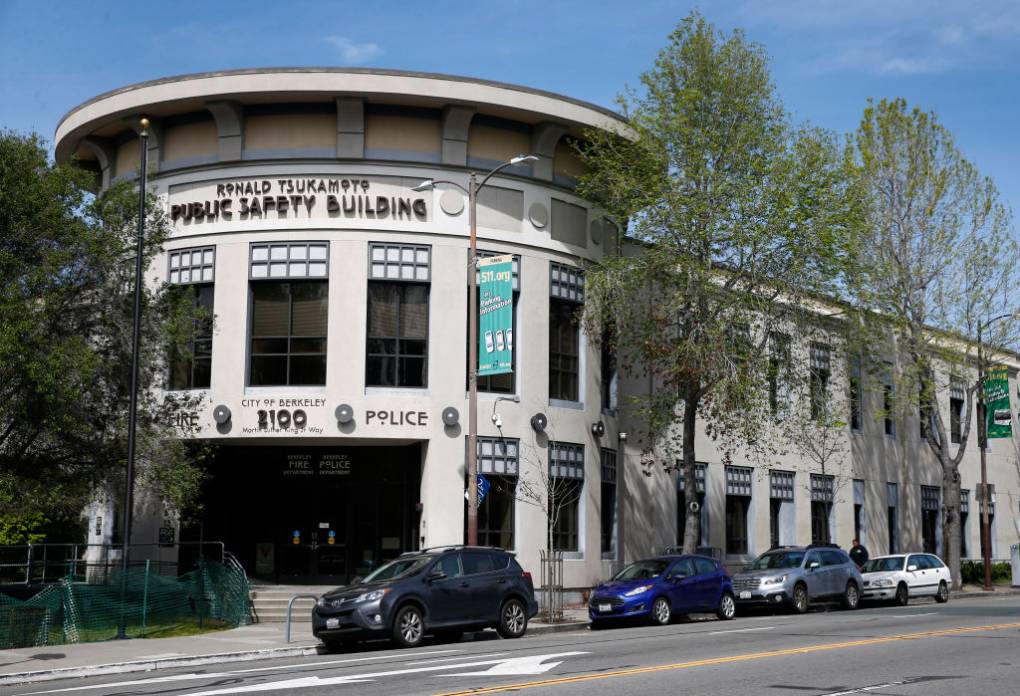
"caption": "The Ronald Tsukamoto Public Safety Building house the police department and fire department administration in Berkeley on Saturday, March 31, 2018. ",
"description": null,
"title": "The Ronald Tsukamoto Public Safety Building house the police department and fire department administration in Berkeley, Calif. on Saturday, March 31, 2018",
"credit": "Paul Chinn/The San Francisco Chronicle via Getty Images",
"status": "inherit",
"altTag": "A building seen during the day with three cars lined up outside of the building.",
"isLoading": false,
"fetchFailed": false
},
"news_11956208": {
"type": "attachments",
"id": "news_11956208",
"meta": {
"index": "attachments_1716263798",
"site": "news",
"id": "11956208",
"found": true
},
"parent": 11956178,
"imgSizes": {
"twentyfourteen-full-width": {
"file": "https://ww2.kqed.org/app/uploads/sites/10/2023/07/230721-SAG-AFTRA-LOS-GATOS-RM-01-KQED-1038x576.jpg",
"width": 1038,
"mimeType": "image/jpeg",
"height": 576
},
"thumbnail": {
"file": "https://ww2.kqed.org/app/uploads/sites/10/2023/07/230721-SAG-AFTRA-LOS-GATOS-RM-01-KQED-160x120.jpg",
"width": 160,
"mimeType": "image/jpeg",
"height": 120
},
"post-thumbnail": {
"file": "https://ww2.kqed.org/app/uploads/sites/10/2023/07/230721-SAG-AFTRA-LOS-GATOS-RM-01-KQED-672x372.jpg",
"width": 672,
"mimeType": "image/jpeg",
"height": 372
},
"kqedFullSize": {
"file": "https://ww2.kqed.org/app/uploads/sites/10/2023/07/230721-SAG-AFTRA-LOS-GATOS-RM-01-KQED.jpg",
"width": 2000,
"height": 1500
},
"large": {
"file": "https://ww2.kqed.org/app/uploads/sites/10/2023/07/230721-SAG-AFTRA-LOS-GATOS-RM-01-KQED-1020x765.jpg",
"width": 1020,
"mimeType": "image/jpeg",
"height": 765
},
"1536x1536": {
"file": "https://ww2.kqed.org/app/uploads/sites/10/2023/07/230721-SAG-AFTRA-LOS-GATOS-RM-01-KQED-1536x1152.jpg",
"width": 1536,
"mimeType": "image/jpeg",
"height": 1152
},
"full-width": {
"file": "https://ww2.kqed.org/app/uploads/sites/10/2023/07/230721-SAG-AFTRA-LOS-GATOS-RM-01-KQED-1920x1440.jpg",
"width": 1920,
"mimeType": "image/jpeg",
"height": 1440
},
"medium": {
"file": "https://ww2.kqed.org/app/uploads/sites/10/2023/07/230721-SAG-AFTRA-LOS-GATOS-RM-01-KQED-800x600.jpg",
"width": 800,
"mimeType": "image/jpeg",
"height": 600
}
},
"publishDate": 1689971294,
"modified": 1689971393,
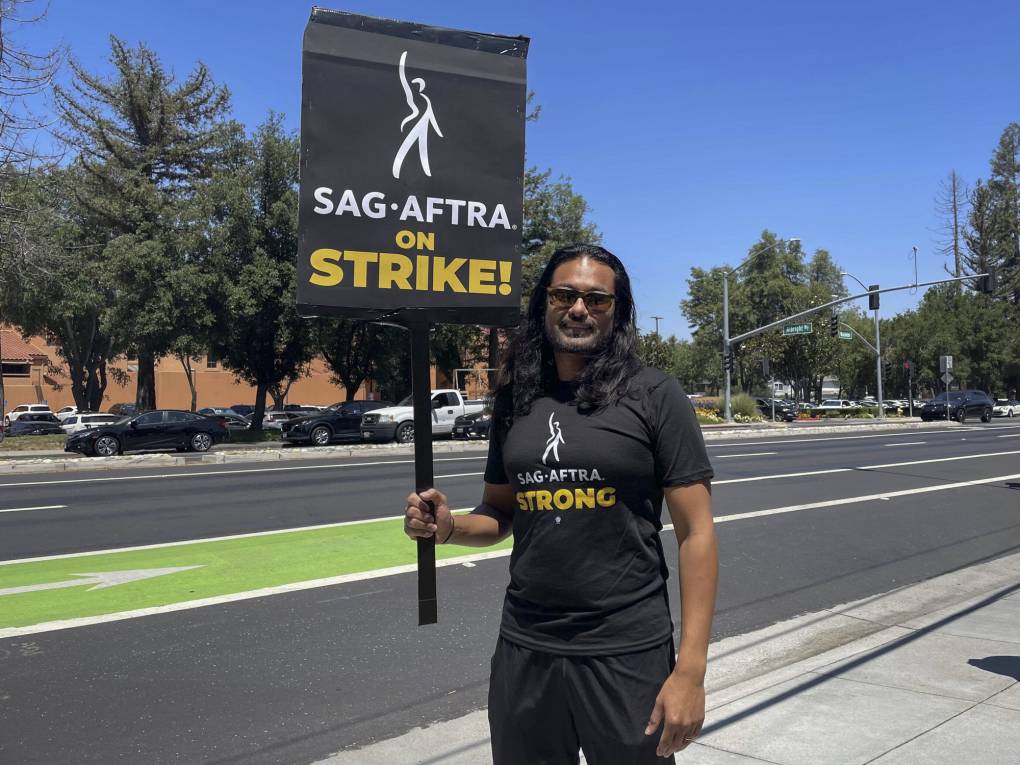
"caption": "Actor Rajiv Shah of Los Gatos joined dozens of SAG-AFTRA members who rallied outside of Netflix headquarters in Los Gatos on July 11, 2023.",
"description": null,
"title": "230721-SAG-AFTRA LOS GATOS-RM-01-KQED",
"credit": "Rachael Myrow/KQED",
"status": "inherit",
"altTag": "A south Asian man with long hair holds a sign and wears a t-shirt that both read \"SAG-AFTRA on Strike\"",
"isLoading": false,
"fetchFailed": false
},
"news_11956028": {
"type": "attachments",
"id": "news_11956028",
"meta": {
"index": "attachments_1716263798",
"site": "news",
"id": "11956028",
"found": true
},
"title": "Stanford University",
"publishDate": 1689798100,
"status": "inherit",
"parent": 12024203,
"modified": 1739323014,
"caption": "The arches of the Main Quadrangle buildings on the campus of Stanford University in Palo Alto on Oct. 2, 2021.",
"credit": "David Madison/Getty Images",
"altTag": "An ornate sandstone-colored building with a series of arches sitting on a brick plaza.",
"description": null,
"imgSizes": {
"medium": {
"file": "https://cdn.kqed.org/wp-content/uploads/sites/10/2023/07/230719-STANFORD-GETTY-DM-KQED-800x528.jpg",
"width": 800,
"height": 528,
"mimeType": "image/jpeg"
},
"large": {
"file": "https://cdn.kqed.org/wp-content/uploads/sites/10/2023/07/230719-STANFORD-GETTY-DM-KQED-1020x673.jpg",
"width": 1020,
"height": 673,
"mimeType": "image/jpeg"
},
"thumbnail": {
"file": "https://cdn.kqed.org/wp-content/uploads/sites/10/2023/07/230719-STANFORD-GETTY-DM-KQED-160x106.jpg",
"width": 160,
"height": 106,
"mimeType": "image/jpeg"
},
"1536x1536": {
"file": "https://cdn.kqed.org/wp-content/uploads/sites/10/2023/07/230719-STANFORD-GETTY-DM-KQED-1536x1014.jpg",
"width": 1536,
"height": 1014,
"mimeType": "image/jpeg"
},
"post-thumbnail": {
"file": "https://cdn.kqed.org/wp-content/uploads/sites/10/2023/07/230719-STANFORD-GETTY-DM-KQED-672x372.jpg",
"width": 672,
"height": 372,
"mimeType": "image/jpeg"
},
"twentyfourteen-full-width": {
"file": "https://cdn.kqed.org/wp-content/uploads/sites/10/2023/07/230719-STANFORD-GETTY-DM-KQED-1038x576.jpg",
"width": 1038,
"height": 576,
"mimeType": "image/jpeg"
},
"full-width": {
"file": "https://cdn.kqed.org/wp-content/uploads/sites/10/2023/07/230719-STANFORD-GETTY-DM-KQED-1920x1267.jpg",
"width": 1920,
"height": 1267,
"mimeType": "image/jpeg"
},
"kqedFullSize": {
"file": "https://cdn.kqed.org/wp-content/uploads/sites/10/2023/07/230719-STANFORD-GETTY-DM-KQED.jpg",
"width": 2000,
"height": 1320
}
},
"isLoading": false,
"fetchFailed": false
},
"news_11954853": {
"type": "attachments",
"id": "news_11954853",
"meta": {
"index": "attachments_1716263798",
"site": "news",
"id": "11954853",
"found": true
},
"parent": 0,
"imgSizes": {
"twentyfourteen-full-width": {
"file": "https://ww2.kqed.org/app/uploads/sites/10/2023/06/230630100-Van-Ness-MB-KQED-1038x576.jpg",
"width": 1038,
"mimeType": "image/jpeg",
"height": 576
},
"thumbnail": {
"file": "https://ww2.kqed.org/app/uploads/sites/10/2023/06/230630100-Van-Ness-MB-KQED-160x71.jpg",
"width": 160,
"mimeType": "image/jpeg",
"height": 71
},
"post-thumbnail": {
"file": "https://ww2.kqed.org/app/uploads/sites/10/2023/06/230630100-Van-Ness-MB-KQED-672x372.jpg",
"width": 672,
"mimeType": "image/jpeg",
"height": 372
},
"kqedFullSize": {
"file": "https://ww2.kqed.org/app/uploads/sites/10/2023/06/230630100-Van-Ness-MB-KQED.jpg",
"width": 2500,
"height": 1111
},
"2048x2048": {
"file": "https://ww2.kqed.org/app/uploads/sites/10/2023/06/230630100-Van-Ness-MB-KQED-2048x910.jpg",
"width": 2048,
"mimeType": "image/jpeg",
"height": 910
},
"large": {
"file": "https://ww2.kqed.org/app/uploads/sites/10/2023/06/230630100-Van-Ness-MB-KQED-1020x453.jpg",
"width": 1020,
"mimeType": "image/jpeg",
"height": 453
},
"1536x1536": {
"file": "https://ww2.kqed.org/app/uploads/sites/10/2023/06/230630100-Van-Ness-MB-KQED-1536x683.jpg",
"width": 1536,
"mimeType": "image/jpeg",
"height": 683
},
"full-width": {
"file": "https://ww2.kqed.org/app/uploads/sites/10/2023/06/230630100-Van-Ness-MB-KQED-1920x853.jpg",
"width": 1920,
"mimeType": "image/jpeg",
"height": 853
},
"medium": {
"file": "https://ww2.kqed.org/app/uploads/sites/10/2023/06/230630100-Van-Ness-MB-KQED-800x356.jpg",
"width": 800,
"mimeType": "image/jpeg",
"height": 356
}
},
"publishDate": 1688166476,
"modified": 1689272499,
"caption": "In 2012, the 100 Van Ness building was converted from office space to residential apartment units and the building's concrete facade was replaced by glass.",
"description": null,
"title": "230630100 Van Ness-MB-KQED",
"credit": "Courtesy of Marc Babsin",
"status": "inherit",
"altTag": "Three images of the same building at different points in construction. In the first, it has a concrete facade. In the second, the building has no facade. In the third, it has a modern glass facade.",
"isLoading": false,
"fetchFailed": false
},
"news_11953895": {
"type": "attachments",
"id": "news_11953895",
"meta": {
"index": "attachments_1716263798",
"site": "news",
"id": "11953895",
"found": true
},
"parent": 11953890,
"imgSizes": {
"thumbnail": {
"file": "https://ww2.kqed.org/app/uploads/sites/10/2023/06/1990s-now-1YT-160x90.png",
"width": 160,
"mimeType": "image/png",
"height": 90
},
"post-thumbnail": {
"file": "https://ww2.kqed.org/app/uploads/sites/10/2023/06/1990s-now-1YT-672x372.png",
"width": 672,
"mimeType": "image/png",
"height": 372
},
"kqedFullSize": {
"file": "https://ww2.kqed.org/app/uploads/sites/10/2023/06/1990s-now-1YT.png",
"width": 682,
"height": 384
}
},
"publishDate": 1687545230,
"modified": 1687545230,
"caption": null,
"description": null,
"title": "1990s-now (1)YT",
"credit": null,
"status": "inherit",
"altTag": null,
"isLoading": false,
"fetchFailed": false
},
"news_11944459": {
"type": "attachments",
"id": "news_11944459",
"meta": {
"index": "attachments_1716263798",
"site": "news",
"id": "11944459",
"found": true
},
"parent": 0,
"imgSizes": {
"twentyfourteen-full-width": {
"file": "https://ww2.kqed.org/app/uploads/sites/10/2023/03/RS63760_AP23081730685175-qut-1038x576.jpg",
"width": 1038,
"mimeType": "image/jpeg",
"height": 576
},
"thumbnail": {
"file": "https://ww2.kqed.org/app/uploads/sites/10/2023/03/RS63760_AP23081730685175-qut-160x107.jpg",
"width": 160,
"mimeType": "image/jpeg",
"height": 107
},
"post-thumbnail": {
"file": "https://ww2.kqed.org/app/uploads/sites/10/2023/03/RS63760_AP23081730685175-qut-672x372.jpg",
"width": 672,
"mimeType": "image/jpeg",
"height": 372
},
"kqedFullSize": {
"file": "https://ww2.kqed.org/app/uploads/sites/10/2023/03/RS63760_AP23081730685175-qut.jpg",
"width": 1920,
"height": 1280
},
"large": {
"file": "https://ww2.kqed.org/app/uploads/sites/10/2023/03/RS63760_AP23081730685175-qut-1020x680.jpg",
"width": 1020,
"mimeType": "image/jpeg",
"height": 680
},
"1536x1536": {
"file": "https://ww2.kqed.org/app/uploads/sites/10/2023/03/RS63760_AP23081730685175-qut-1536x1024.jpg",
"width": 1536,
"mimeType": "image/jpeg",
"height": 1024
},
"medium": {
"file": "https://ww2.kqed.org/app/uploads/sites/10/2023/03/RS63760_AP23081730685175-qut-800x533.jpg",
"width": 800,
"mimeType": "image/jpeg",
"height": 533
}
},
"publishDate": 1679524771,
"modified": 1679592418,
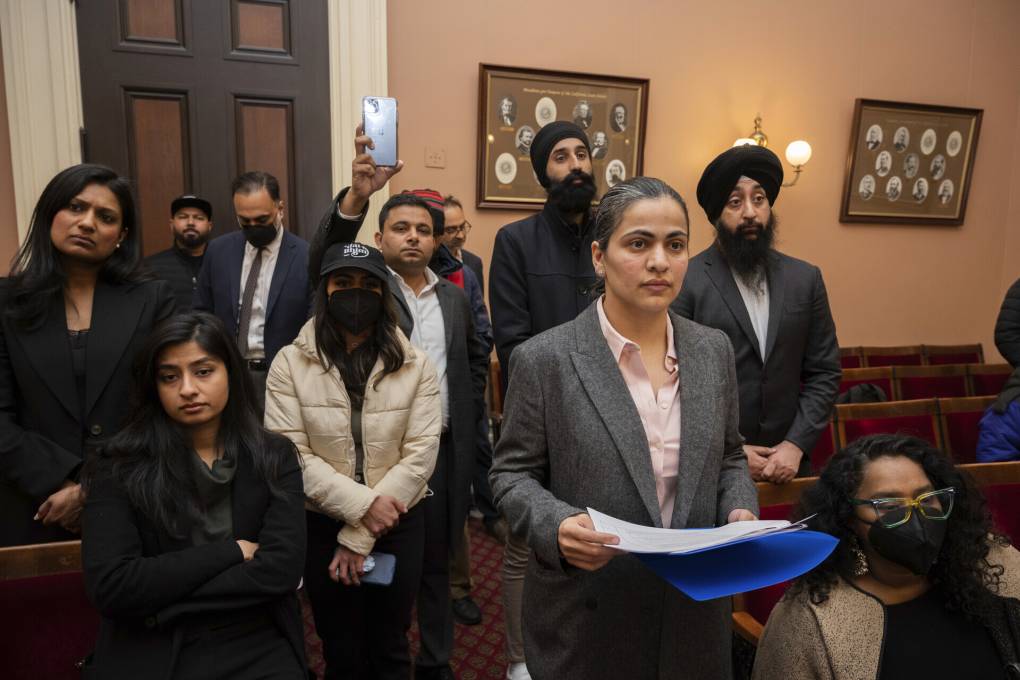
"caption": "California state Sen. Aisha Wahab (foreground) listens to speakers during a news conference where she proposed Senate Bill 403, which adds caste as a protected category to the state's anti-discrimination laws, in Sacramento, on Wednesday, March 22, 2023. California may become the first state in the nation to outlaw caste-based bias, a safeguard that people of South Asian descent say is necessary to protect them from discrimination in housing, education and the tech sector, where they hold key roles.",
"description": null,
"title": "California Caste Bias Bill",
"credit": "José Luis Villegas/AP",
"status": "inherit",
"altTag": "Men and women in business attire stand in a courtroom in Sacramento, California. One man holds up his cell phone One woman in a gray suit with pink button-up shirt, holds a blue folder with papers inside as she looks past the camera.",
"isLoading": false,
"fetchFailed": false
},
"news_11952100": {
"type": "attachments",
"id": "news_11952100",
"meta": {
"index": "attachments_1716263798",
"site": "news",
"id": "11952100",
"found": true
},
"parent": 11952095,
"imgSizes": {
"twentyfourteen-full-width": {
"file": "https://ww2.kqed.org/app/uploads/sites/10/2023/06/Thurmond-1038x576.png",
"width": 1038,
"mimeType": "image/png",
"height": 576
},
"thumbnail": {
"file": "https://ww2.kqed.org/app/uploads/sites/10/2023/06/Thurmond-160x90.png",
"width": 160,
"mimeType": "image/png",
"height": 90
},
"post-thumbnail": {
"file": "https://ww2.kqed.org/app/uploads/sites/10/2023/06/Thurmond-672x372.png",
"width": 672,
"mimeType": "image/png",
"height": 372
},
"kqedFullSize": {
"file": "https://ww2.kqed.org/app/uploads/sites/10/2023/06/Thurmond.png",
"width": 1920,
"height": 1080
},
"large": {
"file": "https://ww2.kqed.org/app/uploads/sites/10/2023/06/Thurmond-1020x574.png",
"width": 1020,
"mimeType": "image/png",
"height": 574
},
"1536x1536": {
"file": "https://ww2.kqed.org/app/uploads/sites/10/2023/06/Thurmond-1536x864.png",
"width": 1536,
"mimeType": "image/png",
"height": 864
},
"medium": {
"file": "https://ww2.kqed.org/app/uploads/sites/10/2023/06/Thurmond-800x450.png",
"width": 800,
"mimeType": "image/png",
"height": 450
}
},
"publishDate": 1685748260,
"modified": 1685748260,
"caption": null,
"description": null,
"title": "Thurmond",
"credit": null,
"status": "inherit",
"altTag": null,
"isLoading": false,
"fetchFailed": false
},
"news_11951943": {
"type": "attachments",
"id": "news_11951943",
"meta": {
"index": "attachments_1716263798",
"site": "news",
"id": "11951943",
"found": true
},
"title": null,
"publishDate": 1685645830,
"status": "inherit",
"parent": 12035855,
"modified": 1744662450,
"caption": "Despite heavy lobbying by Mark Zuckerberg to avoid a trial, the Federal Trade Commission’s case against Meta began Monday, alleging the company violated competition laws with its acquisitions of Instagram and WhatsApp.",
"credit": "Jeff Chiu/AP Photo",
"altTag": "The Meta booth at the Game Developers Conference 2023 in San Francisco.",
"description": null,
"imgSizes": {
"medium": {
"file": "https://cdn.kqed.org/wp-content/uploads/sites/10/2023/06/060123-Meta-Facebook-Instagram-AP-JC-KQED-800x533.jpg",
"width": 800,
"height": 533,
"mimeType": "image/jpeg"
},
"large": {
"file": "https://cdn.kqed.org/wp-content/uploads/sites/10/2023/06/060123-Meta-Facebook-Instagram-AP-JC-KQED-1020x680.jpg",
"width": 1020,
"height": 680,
"mimeType": "image/jpeg"
},
"thumbnail": {
"file": "https://cdn.kqed.org/wp-content/uploads/sites/10/2023/06/060123-Meta-Facebook-Instagram-AP-JC-KQED-160x107.jpg",
"width": 160,
"height": 107,
"mimeType": "image/jpeg"
},
"1536x1536": {
"file": "https://cdn.kqed.org/wp-content/uploads/sites/10/2023/06/060123-Meta-Facebook-Instagram-AP-JC-KQED-1536x1024.jpg",
"width": 1536,
"height": 1024,
"mimeType": "image/jpeg"
},
"post-thumbnail": {
"file": "https://cdn.kqed.org/wp-content/uploads/sites/10/2023/06/060123-Meta-Facebook-Instagram-AP-JC-KQED-672x372.jpg",
"width": 672,
"height": 372,
"mimeType": "image/jpeg"
},
"twentyfourteen-full-width": {
"file": "https://cdn.kqed.org/wp-content/uploads/sites/10/2023/06/060123-Meta-Facebook-Instagram-AP-JC-KQED-1038x576.jpg",
"width": 1038,
"height": 576,
"mimeType": "image/jpeg"
},
"kqedFullSize": {
"file": "https://cdn.kqed.org/wp-content/uploads/sites/10/2023/06/060123-Meta-Facebook-Instagram-AP-JC-KQED.jpg",
"width": 1920,
"height": 1280
}
},
"isLoading": false,
"fetchFailed": false
},
"news_11949367": {
"type": "attachments",
"id": "news_11949367",
"meta": {
"index": "attachments_1716263798",
"site": "news",
"id": "11949367",
"found": true
},
"parent": 11949365,
"imgSizes": {
"thumbnail": {
"file": "https://ww2.kqed.org/app/uploads/sites/10/2023/05/KNR-512-160x107.jpg",
"width": 160,
"mimeType": "image/jpeg",
"height": 107
},
"kqedFullSize": {
"file": "https://ww2.kqed.org/app/uploads/sites/10/2023/05/KNR-512.jpg",
"width": 512,
"height": 341
}
},
"publishDate": 1683927166,
"modified": 1683927166,
"caption": null,
"description": null,
"title": "KNR 512",
"credit": null,
"status": "inherit",
"altTag": null,
"isLoading": false,
"fetchFailed": false
},
"news_11948237": {
"type": "attachments",
"id": "news_11948237",
"meta": {
"index": "attachments_1716263798",
"site": "news",
"id": "11948237",
"found": true
},
"parent": 11948206,
"imgSizes": {
"twentyfourteen-full-width": {
"file": "https://ww2.kqed.org/app/uploads/sites/10/2023/05/GettyImages-1484874436-1024x576.jpg",
"width": 1024,
"mimeType": "image/jpeg",
"height": 576
},
"thumbnail": {
"file": "https://ww2.kqed.org/app/uploads/sites/10/2023/05/GettyImages-1484874436-160x107.jpg",
"width": 160,
"mimeType": "image/jpeg",
"height": 107
},
"post-thumbnail": {
"file": "https://ww2.kqed.org/app/uploads/sites/10/2023/05/GettyImages-1484874436-672x372.jpg",
"width": 672,
"mimeType": "image/jpeg",
"height": 372
},
"kqedFullSize": {
"file": "https://ww2.kqed.org/app/uploads/sites/10/2023/05/GettyImages-1484874436.jpg",
"width": 1024,
"height": 683
},
"large": {
"file": "https://ww2.kqed.org/app/uploads/sites/10/2023/05/GettyImages-1484874436-1020x680.jpg",
"width": 1020,
"mimeType": "image/jpeg",
"height": 680
},
"medium": {
"file": "https://ww2.kqed.org/app/uploads/sites/10/2023/05/GettyImages-1484874436-800x534.jpg",
"width": 800,
"mimeType": "image/jpeg",
"height": 534
}
},
"publishDate": 1682979508,
"modified": 1682991688,
"caption": "Two people walk past a First Republic Bank branch in Manhattan on April 24, 2023, in New York City.",
"description": null,
"title": "Troubled First Republic Bank Reports First Quarter Earnings",
"credit": "Spencer Platt/Getty Images",
"status": "inherit",
"altTag": "Two people wearing dark colored hooded sweatshirts, one with a blue backpack and the other with a cap and face mask, walk past a building with a sign that reads \"First Republic\" with an eagle logo next to it.",
"isLoading": false,
"fetchFailed": false
},
"news_11948026": {
"type": "attachments",
"id": "news_11948026",
"meta": {
"index": "attachments_1716263798",
"site": "news",
"id": "11948026",
"found": true
},
"parent": 11948019,
"imgSizes": {
"twentyfourteen-full-width": {
"file": "https://ww2.kqed.org/app/uploads/sites/10/2023/04/GettyImages-1248159371-1024x576.jpg",
"width": 1024,
"mimeType": "image/jpeg",
"height": 576
},
"thumbnail": {
"file": "https://ww2.kqed.org/app/uploads/sites/10/2023/04/GettyImages-1248159371-160x107.jpg",
"width": 160,
"mimeType": "image/jpeg",
"height": 107
},
"post-thumbnail": {
"file": "https://ww2.kqed.org/app/uploads/sites/10/2023/04/GettyImages-1248159371-672x372.jpg",
"width": 672,
"mimeType": "image/jpeg",
"height": 372
},
"kqedFullSize": {
"file": "https://ww2.kqed.org/app/uploads/sites/10/2023/04/GettyImages-1248159371.jpg",
"width": 1024,
"height": 683
},
"large": {
"file": "https://ww2.kqed.org/app/uploads/sites/10/2023/04/GettyImages-1248159371-1020x680.jpg",
"width": 1020,
"mimeType": "image/jpeg",
"height": 680
},
"medium": {
"file": "https://ww2.kqed.org/app/uploads/sites/10/2023/04/GettyImages-1248159371-800x534.jpg",
"width": 800,
"mimeType": "image/jpeg",
"height": 534
}
},
"publishDate": 1682706359,
"modified": 1682706443,
"caption": "People wait outside the Silicon Valley Bank headquarters in Santa Clara to withdraw funds after the federal government intervened upon the bank's collapse, on March 13, 2023.",
"description": null,
"title": "US regulators shut down Silicon Valley Bank",
"credit": "Nikolas Liepins/Anadolu Agency via Getty Images",
"status": "inherit",
"altTag": "A line of people outside a grey building with Silicon Valley Bank written above the entrance.",
"isLoading": false,
"fetchFailed": false
},
"news_11947072": {
"type": "attachments",
"id": "news_11947072",
"meta": {
"index": "attachments_1716263798",
"site": "news",
"id": "11947072",
"found": true
},
"title": "Cropped view of woman using mobile phone applications with internet connection. Female hands holding modern smartphone on city street. Social network content, internet traffic data. Free wireless",
"publishDate": 1681857676,
"status": "inherit",
"parent": 12070405,
"modified": 1768940360,
"caption": "The California Delete Act would give Californians control of their personal online data.",
"credit": "istock/GaudiLab",
"altTag": "A close up of a woman's hands as she holds a smartphone and is swiping the screen. She wears an orange jacket.",
"description": null,
"imgSizes": {
"medium": {
"file": "https://cdn.kqed.org/wp-content/uploads/sites/10/2023/04/RS40986_iStock-1170728885-qut-800x533.jpg",
"width": 800,
"height": 533,
"mimeType": "image/jpeg"
},
"large": {
"file": "https://cdn.kqed.org/wp-content/uploads/sites/10/2023/04/RS40986_iStock-1170728885-qut-1020x680.jpg",
"width": 1020,
"height": 680,
"mimeType": "image/jpeg"
},
"thumbnail": {
"file": "https://cdn.kqed.org/wp-content/uploads/sites/10/2023/04/RS40986_iStock-1170728885-qut-160x107.jpg",
"width": 160,
"height": 107,
"mimeType": "image/jpeg"
},
"1536x1536": {
"file": "https://cdn.kqed.org/wp-content/uploads/sites/10/2023/04/RS40986_iStock-1170728885-qut-1536x1024.jpg",
"width": 1536,
"height": 1024,
"mimeType": "image/jpeg"
},
"post-thumbnail": {
"file": "https://cdn.kqed.org/wp-content/uploads/sites/10/2023/04/RS40986_iStock-1170728885-qut-672x372.jpg",
"width": 672,
"height": 372,
"mimeType": "image/jpeg"
},
"twentyfourteen-full-width": {
"file": "https://cdn.kqed.org/wp-content/uploads/sites/10/2023/04/RS40986_iStock-1170728885-qut-1038x576.jpg",
"width": 1038,
"height": 576,
"mimeType": "image/jpeg"
},
"kqedFullSize": {
"file": "https://cdn.kqed.org/wp-content/uploads/sites/10/2023/04/RS40986_iStock-1170728885-qut.jpg",
"width": 1920,
"height": 1280
}
},
"isLoading": false,
"fetchFailed": false
}
},
"audioPlayerReducer": {
"postId": "stream_live",
"isPaused": true,
"isPlaying": false,
"pfsActive": false,
"pledgeModalIsOpen": true,
"playerDrawerIsOpen": false,
"liveAudioPlayStartedAt": 0,
"liveAudioPlayContext": ""
},
"authorsReducer": {
"byline_news_11955994": {
"type": "authors",
"id": "byline_news_11955994",
"meta": {
"override": true
},
"slug": "byline_news_11955994",
"name": "\u003ca href=\"https://apnews.com/\">Janie Har\u003c/a>\u003cbr> The Associated Press",
"isLoading": false
},
"byline_news_11951924": {
"type": "authors",
"id": "byline_news_11951924",
"meta": {
"override": true
},
"slug": "byline_news_11951924",
"name": "\u003ca href=\"https://www.npr.org/people/638550790/bobby-allyn\">Bobby Allyn\u003c/a>\u003cbr>NPR",
"isLoading": false
},
"byline_news_11948019": {
"type": "authors",
"id": "byline_news_11948019",
"meta": {
"override": true
},
"slug": "byline_news_11948019",
"name": "\u003ca href=\"https://www.npr.org/people/2788801/scott-horsley\">Scott Horsley\u003c/a>",
"isLoading": false
},
"kqed": {
"type": "authors",
"id": "236",
"meta": {
"index": "authors_1716337520",
"id": "236",
"found": true
},
"name": "KQED News Staff",
"firstName": "KQED News Staff",
"lastName": null,
"slug": "kqed",
"email": "faq@kqed.org",
"display_author_email": false,
"staff_mastheads": [],
"title": null,
"bio": null,
"avatar": "https://secure.gravatar.com/avatar/ef0e801a68c4c54afa9180db14084167?s=600&d=blank&r=g",
"twitter": null,
"facebook": null,
"instagram": null,
"linkedin": null,
"sites": [
{
"site": "arts",
"roles": [
"contributor"
]
},
{
"site": "news",
"roles": [
"editor"
]
},
{
"site": "futureofyou",
"roles": [
"author"
]
}
],
"headData": {
"title": "KQED News Staff | KQED",
"description": null,
"ogImgSrc": "https://secure.gravatar.com/avatar/ef0e801a68c4c54afa9180db14084167?s=600&d=blank&r=g",
"twImgSrc": "https://secure.gravatar.com/avatar/ef0e801a68c4c54afa9180db14084167?s=600&d=blank&r=g"
},
"isLoading": false,
"link": "/author/kqed"
},
"kqednewsstaffandwires": {
"type": "authors",
"id": "237",
"meta": {
"index": "authors_1716337520",
"id": "237",
"found": true
},
"name": "KQED News Staff and Wires",
"firstName": "KQED News Staff and Wires",
"lastName": null,
"slug": "kqednewsstaffandwires",
"email": "onlinenewsstaff@kqed.org",
"display_author_email": false,
"staff_mastheads": [],
"title": null,
"bio": null,
"avatar": "https://secure.gravatar.com/avatar/72295af8ebbfbd19a4948f5271285664?s=600&d=blank&r=g",
"twitter": null,
"facebook": null,
"instagram": null,
"linkedin": null,
"sites": [
{
"site": "arts",
"roles": [
"contributor"
]
},
{
"site": "news",
"roles": [
"contributor"
]
},
{
"site": "lowdown",
"roles": [
"author"
]
},
{
"site": "stateofhealth",
"roles": [
"contributor"
]
},
{
"site": "food",
"roles": [
"author"
]
}
],
"headData": {
"title": "KQED News Staff and Wires | KQED",
"description": null,
"ogImgSrc": "https://secure.gravatar.com/avatar/72295af8ebbfbd19a4948f5271285664?s=600&d=blank&r=g",
"twImgSrc": "https://secure.gravatar.com/avatar/72295af8ebbfbd19a4948f5271285664?s=600&d=blank&r=g"
},
"isLoading": false,
"link": "/author/kqednewsstaffandwires"
},
"rachael-myrow": {
"type": "authors",
"id": "251",
"meta": {
"index": "authors_1716337520",
"id": "251",
"found": true
},
"name": "Rachael Myrow",
"firstName": "Rachael",
"lastName": "Myrow",
"slug": "rachael-myrow",
"email": "rmyrow@kqed.org",
"display_author_email": true,
"staff_mastheads": [
"news"
],
"title": "Senior Editor of KQED's Silicon Valley News Desk",
"bio": "• I write and edit stories about how Silicon Valley power and policies shape everyday life in California. I’m also passionate about making Bay Area history and culture more accessible to a broad public. • I’ve been a journalist for most of my life, starting in high school with The Franklin Press in Los Angeles, where I grew up. While earning my first degree in English at UC Berkeley, I got my start in public radio at KALX-FM. After completing a second degree in journalism at Cal, I landed my first professional job at Marketplace, then moved on to KPCC (now LAist), and then KQED, where I hosted The California Report for more than seven years. • My reporting has appeared on NPR, The World, WBUR’s \u003ci>Here & Now\u003c/i>, and the BBC. I also guest host for KQED’s \u003ci>Forum\u003c/i>, as well as the Commonwealth Club in San Francisco. • I speak periodically on media, democracy and technology issues, and do voiceover work for documentaries and educational video projects. • Outside of the studio, you'll find me hiking Bay Area trails and whipping up Insta-ready meals in my kitchen. • I do not accept gifts, money, or favors from anyone connected to my reporting, I don't pay people for information, and I do not support or donate to political causes. • I strive to treat the people I report on with fairness, honesty, and respect. I also recognize there are often multiple sides to a story and work to verify information through multiple sources and documentation. If I get something wrong, I correct it.",
"avatar": "https://secure.gravatar.com/avatar/3ed8a3c5f26025e4a805ba634cda8cd764906b97438a6d9ce216b044e340da4e?s=600&d=blank&r=g",
"twitter": "rachaelmyrow",
"bluesky": null,
"facebook": null,
"instagram": null,
"linkedin": "https://www.linkedin.com/in/rachaelmyrow/",
"sites": [
{
"site": "arts",
"roles": [
"administrator"
]
},
{
"site": "news",
"roles": [
"edit_others_posts",
"editor"
]
},
{
"site": "futureofyou",
"roles": [
"editor"
]
},
{
"site": "bayareabites",
"roles": [
"editor"
]
},
{
"site": "stateofhealth",
"roles": [
"editor"
]
},
{
"site": "science",
"roles": [
"editor"
]
},
{
"site": "food",
"roles": [
"editor"
]
},
{
"site": "forum",
"roles": [
"editor"
]
},
{
"site": "liveblog",
"roles": [
"author"
]
}
],
"headData": {
"title": "Rachael Myrow | KQED",
"description": "Senior Editor of KQED's Silicon Valley News Desk",
"ogImgSrc": "https://secure.gravatar.com/avatar/3ed8a3c5f26025e4a805ba634cda8cd764906b97438a6d9ce216b044e340da4e?s=600&d=blank&r=g",
"twImgSrc": "https://secure.gravatar.com/avatar/3ed8a3c5f26025e4a805ba634cda8cd764906b97438a6d9ce216b044e340da4e?s=600&d=blank&r=g"
},
"isLoading": false,
"link": "/author/rachael-myrow"
},
"ecruzguevarra": {
"type": "authors",
"id": "8654",
"meta": {
"index": "authors_1716337520",
"id": "8654",
"found": true
},
"name": "Ericka Cruz Guevarra",
"firstName": "Ericka",
"lastName": "Cruz Guevarra",
"slug": "ecruzguevarra",
"email": "ecruzguevarra@kqed.org",
"display_author_email": true,
"staff_mastheads": [
"news"
],
"title": "Producer, The Bay Podcast",
"bio": "Ericka Cruz Guevarra is host of \u003ca href=\"https://www.kqed.org/podcasts/thebay\">\u003cem>The Bay\u003c/em>\u003c/a> podcast at KQED. Before host, she was the show’s producer. Her work in that capacity includes a three-part reported series on policing in Vallejo, which won a 2020 excellence in journalism award from the Society of Professional Journalists. Ericka has worked as a breaking news reporter at Oregon Public Broadcasting, helped produce the Code Switch podcast, and was KQED’s inaugural Raul Ramirez Diversity Fund intern. She’s also an alumna of NPR’s Next Generation Radio program. Send her an email if you have strong feelings about whether Fairfield and Suisun City are the Bay. Ericka is represented by SAG-AFTRA.",
"avatar": "https://secure.gravatar.com/avatar/accefc1de4bafc7e234b69bcb9b6f6536c130fd84709bc3069ef11a78787e1bb?s=600&d=blank&r=g",
"twitter": "NotoriousECG",
"bluesky": null,
"facebook": null,
"instagram": null,
"linkedin": null,
"sites": [
{
"site": "arts",
"roles": [
"subscriber"
]
},
{
"site": "news",
"roles": [
"editor",
"manage_categories"
]
},
{
"site": "futureofyou",
"roles": [
"subscriber"
]
},
{
"site": "stateofhealth",
"roles": [
"subscriber"
]
},
{
"site": "science",
"roles": [
"editor"
]
},
{
"site": "forum",
"roles": [
"subscriber"
]
}
],
"headData": {
"title": "Ericka Cruz Guevarra | KQED",
"description": "Producer, The Bay Podcast",
"ogImgSrc": "https://secure.gravatar.com/avatar/accefc1de4bafc7e234b69bcb9b6f6536c130fd84709bc3069ef11a78787e1bb?s=600&d=blank&r=g",
"twImgSrc": "https://secure.gravatar.com/avatar/accefc1de4bafc7e234b69bcb9b6f6536c130fd84709bc3069ef11a78787e1bb?s=600&d=blank&r=g"
},
"isLoading": false,
"link": "/author/ecruzguevarra"
},
"amontecillo": {
"type": "authors",
"id": "11649",
"meta": {
"index": "authors_1716337520",
"id": "11649",
"found": true
},
"name": "Alan Montecillo",
"firstName": "Alan",
"lastName": "Montecillo",
"slug": "amontecillo",
"email": "amontecillo@kqed.org",
"display_author_email": false,
"staff_mastheads": [
"news"
],
"title": "KQED Contributor",
"bio": "Alan Montecillo is the senior editor of \u003cem>\u003ca href=\"http://kqed.org/thebay\">The Bay\u003c/a>, \u003c/em> KQED's local news podcast. Before moving to the Bay Area, he worked as a senior talk show producer for WILL in Champaign-Urbana, Illinois and at Oregon Public Broadcasting in Portland, Oregon. He has won journalism awards from the Society of Professional Journalists Northern California, the Public Media Journalists Association, The Signal Awards, and has also received a regional Edward R. Murrow award. Alan is a Filipino American from Hong Kong and a graduate of Reed College.",
"avatar": "https://secure.gravatar.com/avatar/268f53a2066899ea9efdd8a5900218b17c822d9862cbc9326cccec53ef41d349?s=600&d=blank&r=g",
"twitter": "alanmontecillo",
"bluesky": null,
"facebook": null,
"instagram": null,
"linkedin": null,
"sites": [
{
"site": "",
"roles": [
"editor"
]
},
{
"site": "news",
"roles": [
"editor",
"manage_categories"
]
}
],
"headData": {
"title": "Alan Montecillo | KQED",
"description": "KQED Contributor",
"ogImgSrc": "https://secure.gravatar.com/avatar/268f53a2066899ea9efdd8a5900218b17c822d9862cbc9326cccec53ef41d349?s=600&d=blank&r=g",
"twImgSrc": "https://secure.gravatar.com/avatar/268f53a2066899ea9efdd8a5900218b17c822d9862cbc9326cccec53ef41d349?s=600&d=blank&r=g"
},
"isLoading": false,
"link": "/author/amontecillo"
},
"mesquinca": {
"type": "authors",
"id": "11802",
"meta": {
"index": "authors_1716337520",
"id": "11802",
"found": true
},
"name": "Maria Esquinca",
"firstName": "Maria",
"lastName": "Esquinca",
"slug": "mesquinca",
"email": "mesquinca@kqed.org",
"display_author_email": false,
"staff_mastheads": [],
"title": "Producer, The Bay",
"bio": "María Esquinca is a producer of The Bay. Before that, she was a New York Women’s Foundation IGNITE Fellow at Latino USA. She worked at Radio Bilingue where she covered the San Joaquin Valley. Maria has interned at WLRN, News 21, The New York Times Student Journalism Institute and at Crain’s Detroit Business as a Dow Jones News Fund Business Reporting Intern. She is an MFA graduate from the University of Miami. In 2017, she graduated from the Walter Cronkite School of Journalism and Mass Communication with a Master of Mass Communication. A fronteriza, she was born in Ciudad Juárez, Chihuahua, Mexico and grew up in El Paso, Texas.",
"avatar": "https://secure.gravatar.com/avatar/77cedba18aae91da775038ba06dcd8d0?s=600&d=blank&r=g",
"twitter": "@m_esquinca",
"facebook": null,
"instagram": null,
"linkedin": null,
"sites": [
{
"site": "news",
"roles": []
}
],
"headData": {
"title": "Maria Esquinca | KQED",
"description": "Producer, The Bay",
"ogImgSrc": "https://secure.gravatar.com/avatar/77cedba18aae91da775038ba06dcd8d0?s=600&d=blank&r=g",
"twImgSrc": "https://secure.gravatar.com/avatar/77cedba18aae91da775038ba06dcd8d0?s=600&d=blank&r=g"
},
"isLoading": false,
"link": "/author/mesquinca"
},
"sjohnson": {
"type": "authors",
"id": "11840",
"meta": {
"index": "authors_1716337520",
"id": "11840",
"found": true
},
"name": "Sydney Johnson",
"firstName": "Sydney",
"lastName": "Johnson",
"slug": "sjohnson",
"email": "sjohnson@kqed.org",
"display_author_email": false,
"staff_mastheads": [
"news"
],
"title": "KQED Reporter",
"bio": "Sydney Johnson is a general assignment reporter at KQED. She previously reported on public health and city government at the San Francisco Examiner, and before that, she covered statewide education policy for EdSource. Her reporting has won multiple local, state and national awards. Sydney is a graduate of the University of California, Berkeley and lives in San Francisco.",
"avatar": "https://secure.gravatar.com/avatar/97855f2719b72ad6190b7c535fe642c8?s=600&d=blank&r=g",
"twitter": "sydneyfjohnson",
"facebook": null,
"instagram": null,
"linkedin": null,
"sites": [
{
"site": "news",
"roles": [
"editor"
]
}
],
"headData": {
"title": "Sydney Johnson | KQED",
"description": "KQED Reporter",
"ogImgSrc": "https://secure.gravatar.com/avatar/97855f2719b72ad6190b7c535fe642c8?s=600&d=blank&r=g",
"twImgSrc": "https://secure.gravatar.com/avatar/97855f2719b72ad6190b7c535fe642c8?s=600&d=blank&r=g"
},
"isLoading": false,
"link": "/author/sjohnson"
},
"gsalomone": {
"type": "authors",
"id": "11843",
"meta": {
"index": "authors_1716337520",
"id": "11843",
"found": true
},
"name": "Giuliana Salomone",
"firstName": "Giuliana",
"lastName": "Salomone",
"slug": "gsalomone",
"email": "gsalomone@kqed.org",
"display_author_email": false,
"staff_mastheads": [],
"title": "Giuliana Salomone",
"bio": null,
"avatar": "https://secure.gravatar.com/avatar/e6b25c1a2333c2bf9593da460906986f?s=600&d=blank&r=g",
"twitter": null,
"facebook": null,
"instagram": null,
"linkedin": null,
"sites": [
{
"site": "news",
"roles": [
"author"
]
}
],
"headData": {
"title": "Giuliana Salomone | KQED",
"description": "Giuliana Salomone",
"ogImgSrc": "https://secure.gravatar.com/avatar/e6b25c1a2333c2bf9593da460906986f?s=600&d=blank&r=g",
"twImgSrc": "https://secure.gravatar.com/avatar/e6b25c1a2333c2bf9593da460906986f?s=600&d=blank&r=g"
},
"isLoading": false,
"link": "/author/gsalomone"
},
"pbartolone": {
"type": "authors",
"id": "11879",
"meta": {
"index": "authors_1716337520",
"id": "11879",
"found": true
},
"name": "Pauline Bartolone",
"firstName": "Pauline",
"lastName": "Bartolone",
"slug": "pbartolone",
"email": "pbartolone@kqed.org",
"display_author_email": false,
"staff_mastheads": [],
"title": "KQED Contributor",
"bio": "Pauline Bartolone has been a journalist for two decades, specializing in longform audio storytelling. Before editing and producing for podcasts like Bay Curious, she was a health care journalist for public radio and print outlets such as CalMatters and Kaiser Health News. Her reporting has won several regional Edward R. Murrow awards, national recognition from the Society of Professional Journalists and a first-place prize from the Association of Health Care Journalists.\r\n\r\nPauline’s work has aired frequently on National Public Radio, and bylines have appeared in The Los Angeles Times, CNN.com, Washingtonpost.com, USA Today and Scientific American.\r\n\r\nPauline has lived in Northern California for 20 years. Her other passions are crafts (now done in collaboration with her daughter) and the Brazilian martial art of capoeira.",
"avatar": "https://secure.gravatar.com/avatar/95001c30374b0d3878007af9cf1e120a?s=600&d=blank&r=g",
"twitter": "pbartolone",
"facebook": null,
"instagram": null,
"linkedin": null,
"sites": [
{
"site": "news",
"roles": [
"editor"
]
},
{
"site": "podcasts",
"roles": [
"subscriber"
]
}
],
"headData": {
"title": "Pauline Bartolone | KQED",
"description": "KQED Contributor",
"ogImgSrc": "https://secure.gravatar.com/avatar/95001c30374b0d3878007af9cf1e120a?s=600&d=blank&r=g",
"twImgSrc": "https://secure.gravatar.com/avatar/95001c30374b0d3878007af9cf1e120a?s=600&d=blank&r=g"
},
"isLoading": false,
"link": "/author/pbartolone"
}
},
"pagesReducer": {
"news_category_technology": {
"type": "terms",
"id": "news_248",
"meta": {
"index": "terms_1716263798",
"site": "news",
"id": "248",
"score": 10.931152
},
"featImg": null,
"name": "Technology",
"description": null,
"taxonomy": "category",
"headData": {
"twImgId": null,
"twTitle": null,
"ogTitle": null,
"ogImgId": null,
"twDescription": null,
"description": null,
"title": "Technology Archives | KQED News",
"ogDescription": null
},
"ttid": 256,
"slug": "technology",
"isLoading": false,
"title": "Technology",
"pageMeta": {
"site": "news",
"WpPageTemplate": "page-topic-editorial",
"currentPage": 32
},
"blocks": [
{
"blockName": "kqed/post-list",
"attrs": {
"layout": "cardArticle2",
"query": "posts/news?category=technology",
"seeMore": false,
"paginated": true,
"page": 32
}
},
{
"blockName": "kqed/ad"
}
]
}
},
"pfsSessionReducer": {},
"postsReducer": {
"stream_live": {
"type": "live",
"id": "stream_live",
"audioUrl": "https://streams.kqed.org/kqedradio",
"title": "Live Stream",
"excerpt": "Live Stream information currently unavailable.",
"link": "/radio",
"featImg": "",
"label": {
"name": "KQED Live",
"link": "/"
}
},
"stream_kqedNewscast": {
"type": "posts",
"id": "stream_kqedNewscast",
"audioUrl": "https://www.kqed.org/.stream/anon/radio/RDnews/newscast.mp3?_=1",
"title": "KQED Newscast",
"featImg": "",
"label": {
"name": "88.5 FM",
"link": "/"
}
},
"news_11956602": {
"type": "posts",
"id": "news_11956602",
"meta": {
"index": "posts_1716263798",
"site": "news",
"id": "11956602",
"score": null,
"sort": [
1690414932000
]
},
"guestAuthors": [],
"slug": "berkeley-approves-license-plate-reader-cameras-despite-privacy-concerns",
"title": "Berkeley Approves License Plate Reader Cameras Despite Privacy Concerns",
"publishDate": 1690414932,
"format": "standard",
"headTitle": "Berkeley Approves License Plate Reader Cameras Despite Privacy Concerns | KQED",
"labelTerm": {
"site": "news"
},
"content": "\u003cp>Berkeley City Council voted 6–1 on Tuesday night to install 52 license plate scanners on street lights throughout the city to address rising auto theft, return stolen vehicles and deter other serious crimes.\u003c/p>\n\u003cp>The decision comes as \u003ca href=\"https://www.kqed.org/news/11956244/controversial-speeding-ticket-cameras-could-come-to-3-bay-area-cities-under-proposed-california-bill\">California is simultaneously seeking to pilot speeding cameras in six cities across the state\u003c/a>, including three in the Bay Area. But privacy advocates and some residents are wary of the surveillance technology, questioning its effectiveness and how the immense amount of data captured by the scanners could be used.\u003c/p>\n\u003cp>“There is insufficient evidence at this point to say that yes, this will solve our crime problems,” said Hansel Aguilar, director of the city’s Police Accountability Board. “Vehicle theft was the most clear (application) with this, but even with that, the evidence is mixed on its potential and effectiveness to prevent auto vehicle thefts.”[pullquote size=\"medium\" align=\"right\" citation=\"Hansel Aguilar, director, Berkeley’s Police Accountability Board\"]‘We should, with any surveillance technology, just be mindful of its promises and make sure we manage our expectations as a community.’[/pullquote]Berkeley Police have been pushing for the cameras, which will operate under a two-year pilot program and city leaders will evaluate after whether they should continue using them. Berkeley Police Department will begin installing the devices this fall, and exact locations have not been determined.\u003c/p>\n\u003cp>“We know that good data in, lends itself to good data out, and we are now working to accomplish that,” said Jessica Perry, public relations officer for the Berkeley Police Department.\u003c/p>\n\u003cp>Supporters say that the license plate readers can increase the likelihood and speed at which police can identify drivers who pose a risk to street safety or who are wanted for other serious crimes.\u003c/p>\n\u003cp>At least 733 stolen vehicles have been reported in Berkeley so far this year, a 67% increase from a year ago, according to \u003ca href=\"https://bpd-transparency-initiative-berkeleypd.hub.arcgis.com/pages/crimes\">police department data\u003c/a>. On the whole, crime reports in Berkeley are up 15% compared to last year.\u003c/p>\n\u003cp>The approved pilot program will require an initial setup cost of $250,000 and it will cost an estimated $175,000 annually to maintain the devices.[aside postID=\"news_11956244,news_11927758,news_11929172\" label=\"Related Stories\"]Berkeley already has some scanners installed on parking enforcement vehicles, \u003cem>Berkeleyside\u003c/em> reports, and several law enforcement agencies in Alameda County \u003ca href=\"https://www.auditor.ca.gov/reports/2019-118/summary.html\">already use some amount of automated license plate readers (ALPRs)\u003c/a>.\u003c/p>\n\u003cp>In June, Berkeley also approved the use of \u003ca href=\"https://www.berkeleyside.org/2023/06/15/berkeley-surveillance-cameras\">10 fixed surveillance cameras\u003c/a> to be placed on city intersections to help identify other crimes, like thefts and shootings.\u003c/p>\n\u003cp>Vacaville has seen a 33% dip in auto thefts since the city approved of the scanners in 2019, Berkeley Police Sgt. Joseph Ledoux said at a City Council Public Safety Committee meeting in June. But members of the Police Accountability Board questioned the statistic.\u003c/p>\n\u003cp>“That number could be misleading, because the period where that decrease occurred was before some of the ALPRs were installed,” said Aguilar.\u003c/p>\n\u003cp>Berkeley’s Police Accountability Board voted against the cameras in June. Members were not convinced that privacy risks would outweigh any benefits from the added surveillance.\u003c/p>\n\u003cp>“We should, with any surveillance technology, just be mindful of its promises and make sure we manage our expectations as a community,” Aguilar said. “I know a lot of people are concerned about these reported crime trends and I don’t want the police department to be put in a situation where we treat any tool as a magic bullet.”\u003c/p>\n\u003cp>[ad fullwidth]\u003c/p>\n\u003cp>The American Civil Liberties Union echoed their concerns with the technology and wrote a letter to Berkeley City Council ahead of Tuesday’s vote.\u003c/p>\n\u003cp>“ALPR systems represent a massive expansion of surveillance that frequently do not bring commensurate public safety benefits. Rather, in many circumstances, this technology causes more harm than good,” the letter reads.\u003c/p>\n\u003cp>In addition to data privacy concerns, ACLU wrote that technologies like ALPRs are often deployed in disadvantaged neighborhoods and could disproportionately punish residents in those areas.\u003c/p>\n\u003cp>“ALPR systems are easily misused to harm marginalized communities,” the ACLU wrote. “As with other surveillance technologies, police often deploy license plate readers in poor and historically overpoliced areas, regardless of crime rates.”\u003c/p>\n\u003cp>Tracy Rosenberg, advocacy director of Oakland Privacy, a citizens’ coalition that advocates for the regulation of surveillance technology, worries that the data collected by the scanners is susceptible to data breaches, and she’s skeptical over how the tool could prevent most types of crime.\u003c/p>\n\u003cp>“I’ve heard people saying it will prevent gun violence and a number of other things that it in very practical terms won’t do … So we have a situation where we’re using municipal resources for something that may not be able to deliver what people are being promised,” said Rosenberg.\u003c/p>\n\u003cp>“Do we really want the government tracking everywhere that our cars go and putting it into a cloud database online? These cloud databases can be leaky, things get hacked,” she added.\u003c/p>\n\u003cp>Rosenberg similarly has concerns with a statewide speed camera pilot program that is currently working its way through the California Legislature.\u003c/p>\n\u003cp>The bill, AB 645, would allow San Francisco, Oakland and San José to pilot an automated speed camera system, along with Los Angeles, Glendale and Long Beach.\u003c/p>\n\u003cp>Supporters say it can help deter pedestrian accidents and other road collisions. Funding collected from speeding tickets, which can run from $50 to $500 depending on the violation, would be earmarked for street infrastructure improvement projects.\u003c/p>\n\u003cp>Critics like Rosenberg say that cities should first invest in infrastructure improvement, violence prevention programs, and building better roads, which can improve traffic and public safety.\u003c/p>\n\u003cp>She pointed to how cities like Oakland and Richmond have used license plate scanners for years, but continue to battle many of the same challenges as Berkeley.\u003c/p>\n\u003cp>“If these readers really stop and prevent crime,” she said, “then why on earth haven’t they been working in those cities?”\u003c/p>\n\u003cp>\u003cem>KQED’s Rachael Myrow contributed reporting to this story.\u003c/em>\u003c/p>\n\u003cp>\u003c/p>\n",
"blocks": [],
"excerpt": "Berkeley Police have been pushing for the scanners to help fight rising reports of auto theft.",
"status": "publish",
"parent": 0,
"modified": 1729027504,
"stats": {
"hasAudio": false,
"hasVideo": false,
"hasChartOrMap": false,
"iframeSrcs": [],
"hasGoogleForm": false,
"hasGallery": false,
"hasHearkenModule": false,
"hasPolis": false,
"paragraphCount": 28,
"wordCount": 1028
},
"headData": {
"title": "Berkeley Approves License Plate Reader Cameras Despite Privacy Concerns | KQED",
"description": "Berkeley Police have been pushing for the scanners to help fight rising reports of auto theft.",
"ogTitle": "",
"ogDescription": "",
"ogImgId": "",
"twTitle": "",
"twDescription": "",
"twImgId": "",
"schema": {
"@context": "https://schema.org",
"@type": "NewsArticle",
"headline": "Berkeley Approves License Plate Reader Cameras Despite Privacy Concerns",
"datePublished": "2023-07-26T16:42:12-07:00",
"dateModified": "2024-10-15T14:25:04-07:00",
"image": "https://cdn.kqed.org/wp-content/uploads/2020/02/KQED-OG-Image@1x.png",
"isAccessibleForFree": "True",
"publisher": {
"@type": "NewsMediaOrganization",
"@id": "https://www.kqed.org/#organization",
"name": "KQED",
"logo": "https://cdn.kqed.org/wp-content/uploads/2020/02/KQED-OG-Image@1x.png",
"url": "https://www.kqed.org",
"sameAs": [
"https://www.facebook.com/KQED",
"https://twitter.com/KQED",
"https://www.instagram.com/kqed/",
"https://www.tiktok.com/@kqedofficial",
"https://www.linkedin.com/company/kqed",
"https://www.youtube.com/channel/UCeC0IOo7i1P_61zVUWbJ4nw"
]
}
}
},
"sticky": false,
"excludeFromSiteSearch": "Include",
"articleAge": "0",
"path": "/news/11956602/berkeley-approves-license-plate-reader-cameras-despite-privacy-concerns",
"audioTrackLength": null,
"parsedContent": [
{
"type": "contentString",
"content": "\u003cdiv class=\"post-body\">\u003cp>\u003cp>Berkeley City Council voted 6–1 on Tuesday night to install 52 license plate scanners on street lights throughout the city to address rising auto theft, return stolen vehicles and deter other serious crimes.\u003c/p>\n\u003cp>The decision comes as \u003ca href=\"https://www.kqed.org/news/11956244/controversial-speeding-ticket-cameras-could-come-to-3-bay-area-cities-under-proposed-california-bill\">California is simultaneously seeking to pilot speeding cameras in six cities across the state\u003c/a>, including three in the Bay Area. But privacy advocates and some residents are wary of the surveillance technology, questioning its effectiveness and how the immense amount of data captured by the scanners could be used.\u003c/p>\n\u003cp>“There is insufficient evidence at this point to say that yes, this will solve our crime problems,” said Hansel Aguilar, director of the city’s Police Accountability Board. “Vehicle theft was the most clear (application) with this, but even with that, the evidence is mixed on its potential and effectiveness to prevent auto vehicle thefts.”\u003c/p>\u003c/div>",
"attributes": {
"named": {},
"numeric": []
}
},
{
"type": "component",
"content": "‘We should, with any surveillance technology, just be mindful of its promises and make sure we manage our expectations as a community.’",
"name": "pullquote",
"attributes": {
"named": {
"size": "medium",
"align": "right",
"citation": "Hansel Aguilar, director, Berkeley’s Police Accountability Board",
"label": ""
},
"numeric": []
}
},
{
"type": "contentString",
"content": "\u003cdiv class=\"post-body\">\u003cp>Berkeley Police have been pushing for the cameras, which will operate under a two-year pilot program and city leaders will evaluate after whether they should continue using them. Berkeley Police Department will begin installing the devices this fall, and exact locations have not been determined.\u003c/p>\n\u003cp>“We know that good data in, lends itself to good data out, and we are now working to accomplish that,” said Jessica Perry, public relations officer for the Berkeley Police Department.\u003c/p>\n\u003cp>Supporters say that the license plate readers can increase the likelihood and speed at which police can identify drivers who pose a risk to street safety or who are wanted for other serious crimes.\u003c/p>\n\u003cp>At least 733 stolen vehicles have been reported in Berkeley so far this year, a 67% increase from a year ago, according to \u003ca href=\"https://bpd-transparency-initiative-berkeleypd.hub.arcgis.com/pages/crimes\">police department data\u003c/a>. On the whole, crime reports in Berkeley are up 15% compared to last year.\u003c/p>\n\u003cp>The approved pilot program will require an initial setup cost of $250,000 and it will cost an estimated $175,000 annually to maintain the devices.\u003c/p>\u003c/div>",
"attributes": {
"named": {},
"numeric": []
}
},
{
"type": "component",
"content": "",
"name": "aside",
"attributes": {
"named": {
"postid": "news_11956244,news_11927758,news_11929172",
"label": "Related Stories "
},
"numeric": []
}
},
{
"type": "contentString",
"content": "\u003cdiv class=\"post-body\">\u003cp>Berkeley already has some scanners installed on parking enforcement vehicles, \u003cem>Berkeleyside\u003c/em> reports, and several law enforcement agencies in Alameda County \u003ca href=\"https://www.auditor.ca.gov/reports/2019-118/summary.html\">already use some amount of automated license plate readers (ALPRs)\u003c/a>.\u003c/p>\n\u003cp>In June, Berkeley also approved the use of \u003ca href=\"https://www.berkeleyside.org/2023/06/15/berkeley-surveillance-cameras\">10 fixed surveillance cameras\u003c/a> to be placed on city intersections to help identify other crimes, like thefts and shootings.\u003c/p>\n\u003cp>Vacaville has seen a 33% dip in auto thefts since the city approved of the scanners in 2019, Berkeley Police Sgt. Joseph Ledoux said at a City Council Public Safety Committee meeting in June. But members of the Police Accountability Board questioned the statistic.\u003c/p>\n\u003cp>“That number could be misleading, because the period where that decrease occurred was before some of the ALPRs were installed,” said Aguilar.\u003c/p>\n\u003cp>Berkeley’s Police Accountability Board voted against the cameras in June. Members were not convinced that privacy risks would outweigh any benefits from the added surveillance.\u003c/p>\n\u003cp>“We should, with any surveillance technology, just be mindful of its promises and make sure we manage our expectations as a community,” Aguilar said. “I know a lot of people are concerned about these reported crime trends and I don’t want the police department to be put in a situation where we treat any tool as a magic bullet.”\u003c/p>\n\u003cp>\u003c/p>\u003c/div>",
"attributes": {
"named": {},
"numeric": []
}
},
{
"type": "component",
"content": "",
"name": "ad",
"attributes": {
"named": {
"label": "fullwidth"
},
"numeric": [
"fullwidth"
]
}
},
{
"type": "contentString",
"content": "\u003cdiv class=\"post-body\">\u003cp>\u003c/p>\n\u003cp>The American Civil Liberties Union echoed their concerns with the technology and wrote a letter to Berkeley City Council ahead of Tuesday’s vote.\u003c/p>\n\u003cp>“ALPR systems represent a massive expansion of surveillance that frequently do not bring commensurate public safety benefits. Rather, in many circumstances, this technology causes more harm than good,” the letter reads.\u003c/p>\n\u003cp>In addition to data privacy concerns, ACLU wrote that technologies like ALPRs are often deployed in disadvantaged neighborhoods and could disproportionately punish residents in those areas.\u003c/p>\n\u003cp>“ALPR systems are easily misused to harm marginalized communities,” the ACLU wrote. “As with other surveillance technologies, police often deploy license plate readers in poor and historically overpoliced areas, regardless of crime rates.”\u003c/p>\n\u003cp>Tracy Rosenberg, advocacy director of Oakland Privacy, a citizens’ coalition that advocates for the regulation of surveillance technology, worries that the data collected by the scanners is susceptible to data breaches, and she’s skeptical over how the tool could prevent most types of crime.\u003c/p>\n\u003cp>“I’ve heard people saying it will prevent gun violence and a number of other things that it in very practical terms won’t do … So we have a situation where we’re using municipal resources for something that may not be able to deliver what people are being promised,” said Rosenberg.\u003c/p>\n\u003cp>“Do we really want the government tracking everywhere that our cars go and putting it into a cloud database online? These cloud databases can be leaky, things get hacked,” she added.\u003c/p>\n\u003cp>Rosenberg similarly has concerns with a statewide speed camera pilot program that is currently working its way through the California Legislature.\u003c/p>\n\u003cp>The bill, AB 645, would allow San Francisco, Oakland and San José to pilot an automated speed camera system, along with Los Angeles, Glendale and Long Beach.\u003c/p>\n\u003cp>Supporters say it can help deter pedestrian accidents and other road collisions. Funding collected from speeding tickets, which can run from $50 to $500 depending on the violation, would be earmarked for street infrastructure improvement projects.\u003c/p>\n\u003cp>Critics like Rosenberg say that cities should first invest in infrastructure improvement, violence prevention programs, and building better roads, which can improve traffic and public safety.\u003c/p>\n\u003cp>She pointed to how cities like Oakland and Richmond have used license plate scanners for years, but continue to battle many of the same challenges as Berkeley.\u003c/p>\n\u003cp>“If these readers really stop and prevent crime,” she said, “then why on earth haven’t they been working in those cities?”\u003c/p>\n\u003cp>\u003cem>KQED’s Rachael Myrow contributed reporting to this story.\u003c/em>\u003c/p>\n\u003cp>\u003c/p>\n\u003c/div>\u003c/p>",
"attributes": {
"named": {},
"numeric": []
}
}
],
"link": "/news/11956602/berkeley-approves-license-plate-reader-cameras-despite-privacy-concerns",
"authors": [
"11840"
],
"categories": [
"news_8",
"news_248"
],
"tags": [
"news_32949",
"news_32939",
"news_673",
"news_17626",
"news_1631",
"news_20517"
],
"featImg": "news_11956612",
"label": "news"
},
"news_11956178": {
"type": "posts",
"id": "news_11956178",
"meta": {
"index": "posts_1716263798",
"site": "news",
"id": "11956178",
"score": null,
"sort": [
1689978267000
]
},
"guestAuthors": [],
"slug": "its-now-or-never-writers-and-actors-see-conflict-with-big-tech-as-existential",
"title": "'It's Now or Never': Writers and Actors See Conflict With Big Tech as Existential",
"publishDate": 1689978267,
"format": "audio",
"headTitle": "‘It’s Now or Never’: Writers and Actors See Conflict With Big Tech as Existential | KQED",
"labelTerm": {
"site": "news"
},
"content": "\u003cp>Dozens of SAG-AFTRA members rallied outside Netflix headquarters in Los Gatos on Thursday, protesting declining pay and residuals in the streaming age.\u003c/p>\n\u003cp>Netflix is just one of the Alliance of Motion Picture and Television Producers (AMPTP) member companies that SAG-AFTRA is striking against. Others include the major motion picture studios, the principal broadcast television networks, and streaming services like Apple TV+ and Amazon, as well as Netflix.\u003c/p>\n\u003cp>So why pick on Netflix? The actors said in large part because Netflix is the streaming monster that \u003ca href=\"https://advanced-television.com/2022/11/18/report-streaming-37-of-us-tv-viewing-in-october/\">redefined the entertainment business\u003c/a> over the last 16 years, and it \u003ca href=\"https://www.nexttv.com/news/what-slow-start-streaming-for-netflixs-most-popular-shows-was-actually-up-5-through-the-first-six-weeks-of-2023\">continues to dominate\u003c/a> today.\u003c/p>\n\u003cp>[ad fullwidth]\u003c/p>\n\u003cp>“Tech is only going to grow. You know, streaming is only going to grow. So all we’re asking is that we grow with it,” said \u003ca href=\"https://rajivshahofficial.com\">Rajiv Shah\u003c/a>, a member of the Screen Actors Guild–American Federation of Television and Radio Artists for more than 20 years.\u003c/p>\n\u003cp>Shah said he’s prepared to stay off movie and TV sets for as long as necessary to extract what he considers an equitable contract from the biggest companies in the business. [aside label=\"related coverage\" tag=\"proposition-22\"]“What everybody understands is this is setting a precedent for what’s going to come in the future because you see it in the gig economy and see how people are — their work is being utilized, but not fairly compensated,” he said.\u003c/p>\n\u003cp>This wouldn’t be the first time Big Tech has gone up against Big Labor in California. In the state Legislature and at the ballot box, the “gig economy” has disrupted multiple labor markets. In stark terms, that’s because the shift to part-time work with minimal employer-provided benefits has taken money out of the pockets of rank-and-file workers and \u003ca href=\"https://www.kqed.org/news/11944344/no-reward-for-loyalty-gig-companies-winning-fight-to-classify-drivers-as-independent\">shifted it to the pockets of executives and investors\u003c/a>.\u003c/p>\n\u003cp>SAG-AFTRA President Fran Drescher has said as much in her speeches. “What’s happening to us is happening across all fields of labor … Employers make Wall Street and greed their priority and they forget about the essential contributors that make the machine run,” she said announcing the strike.\u003c/p>\n\u003cp>\u003ciframe loading=\"lazy\" title=\"Watch: Fran Drescher delivers fiery speech on SAG-AFTRA strike\" width=\"640\" height=\"360\" src=\"https://www.youtube.com/embed/J4SAPOX7R5M?feature=oembed\" frameborder=\"0\" allow=\"accelerometer; autoplay; clipboard-write; encrypted-media; gyroscope; picture-in-picture; web-share\" referrerpolicy=\"strict-origin-when-cross-origin\" allowfullscreen>\u003c/iframe>\u003c/p>\n\u003cp>In the latest \u003ca href=\"https://www.youtube.com/watch?v=FBFcFWZ4hPs\">Netflix earnings call\u003c/a> last week, co-CEO Ted Sarandos was careful to note he was raised in a union household before he echoed the party line put forward by the AMPTP. “We’re super committed to getting to an agreement as soon as possible, one that’s equitable, and one that enables the industry and everybody in it, to move forward into the future,” he said.[pullquote align=\"right\" size=\"medium\" citation=\"Paola Tapia-Limón, member, Writers Guild of America\"]‘There’s always greed … people wanting to make the best products with the least amount of money. But … at least those people respected the art form. The tech companies, they don’t care. It’s just money to them.’[/pullquote]Last year, \u003ca href=\"https://variety.com/2023/digital/news/netflix-executive-compensation-2022-reed-hastings-ted-sarandos-1235591184/\">Sarandos made $50 million\u003c/a>. That’s not nearly as much as the \u003ca href=\"https://www.cnbc.com/2023/07/05/heres-how-much-the-10-highest-paid-us-ceos-earn.html\">highest-paid CEOs in the U.S.\u003c/a>, but the storyline of executives making billions while rank-and-file creatives suffer sticks in the craw of Writers Guild of America member Paola Tapia-Limón of Los Angeles. The WGA has been on strike since early May. “My last episode aired a while ago, and I did get residuals. But it’s still a ridiculous amount,” she told KQED.\u003c/p>\n\u003cp>Even during what’s been called the “\u003ca href=\"https://www.theverge.com/2022/12/14/23507793/streaming-wars-hbo-max-netflix-ads-residuals-warrior-nun\">golden age\u003c/a>” of streaming TV, with the rise of the writer-producer, \u003ca href=\"https://www.wgacontract2023.org/updates/bulletins/writers-are-not-keeping-up\">compensation for most writers has stagnated\u003c/a>, according to the WGA.\u003c/p>\n\u003cp>She added that this has been happening just as Hollywood finally began to diversify in a meaningful way, allowing people like Tapia-Limón to build a middle-class career. “The thought of leaving the industry has definitely crossed my mind in my darkest moments. I’m not going to lie. But I also worked really hard to get here. It’s been over a decade, and I’m a little stubborn,” she said.\u003c/p>\n\u003ch2>What’s different about this struggle\u003c/h2>\n\u003cp>\u003ca href=\"https://apnews.com/article/past-hollywood-strikes-62de005f62e38dd09b38cd591ea26123\">Hollywood producers have played hardball\u003c/a> in every labor conflict for more than a century. Tapia-Limón knows “\u003ca href=\"https://www.cnn.com/2023/07/19/business/nightcap-hollywood-accounting-strike/index.html\">fuzzy accounting\u003c/a>” in this business predates the entry of Big Tech. But, Tapia-Limón says, for deep-pocketed companies like Apple and Amazon, entertainment is just one of many things they do.\u003c/p>\n\u003cp>“There’s always greed … people wanting to make the best products with the least amount of money. But … at least those people respected the art form. The tech companies, they don’t care. It’s just money to them,” Tapia-Limón said.\u003c/p>\n\u003cfigure id=\"attachment_11956195\" class=\"wp-caption alignright\" style=\"max-width: 1024px\">\u003cimg loading=\"lazy\" decoding=\"async\" src=\"https://ww2.kqed.org/app/uploads/sites/10/2023/07/3D3444F1-1ABE-4C62-BB36-A78ED55AEAA4_1_105_c.jpeg\" alt=\"An African American woman holds a SAG-AFTRA on STRIKE sign with protestors behind her holding the same signs.\" width=\"1024\" height=\"768\" class=\"size-full wp-image-11956195\" srcset=\"https://cdn.kqed.org/wp-content/uploads/sites/10/2023/07/3D3444F1-1ABE-4C62-BB36-A78ED55AEAA4_1_105_c.jpeg 1024w, https://cdn.kqed.org/wp-content/uploads/sites/10/2023/07/3D3444F1-1ABE-4C62-BB36-A78ED55AEAA4_1_105_c-800x600.jpeg 800w, https://cdn.kqed.org/wp-content/uploads/sites/10/2023/07/3D3444F1-1ABE-4C62-BB36-A78ED55AEAA4_1_105_c-1020x765.jpeg 1020w, https://cdn.kqed.org/wp-content/uploads/sites/10/2023/07/3D3444F1-1ABE-4C62-BB36-A78ED55AEAA4_1_105_c-160x120.jpeg 160w\" sizes=\"auto, (max-width: 1024px) 100vw, 1024px\">\u003cfigcaption class=\"wp-caption-text\">SAG-AFTRA member Harley Ford of Vallejo at the rally in Los Gatos on Thursday. Ford said she’s ready for a long fight, because she believes this conflict is existential for humans, in yet another industry moving to replace as many as possible with artificial intelligence. ‘I mean, we get it. It’s here to stay. But let us bring the characters to life. Let an actual human do that,’ she said. \u003ccite>(Rachael Myrow/KQED)\u003c/cite>\u003c/figcaption>\u003c/figure>\n\u003cp>“It’s sociopathic. It doesn’t make any sense to me. We’re not asking for them to give up their billions,” said Jorge Rivera, vice chair of the Latinx Writers Committee for WGA West. But he added he thinks it’s a mistake to demonize Big Tech alone. Wall Street, he said, and its demand for exponential growth is also playing a major part in the economic disruption of Hollywood.\u003c/p>\n\u003cp>“You can’t just make a profit. You’ve got to grow that profit every year, and I don’t think that is a sustainable model for entertainment. Yeah, we can make billions a year, but can we multiply that by 100 every year? I don’t think so. That’s what they want,” Rivera said. This is in an era when \u003ca href=\"https://www.npr.org/2023/07/20/1188952468/is-the-tv-film-industry-collapsing-or-just-reshaping-itself-for-the-future\">people spend more time and money\u003c/a> on video games than movies, and more time watching YouTube than any TV network.\u003c/p>\n\u003cp>So what happens next? By many accounts: artificial intelligence. Many writers and actors told KQED they fear they have a limited time before the big companies figure out how to minimize the human contributions to entertainment. The humans figure this is the last time they’ll be in a position to negotiate.\u003c/p>\n\u003cp>[ad floatright]\u003c/p>\n",
"blocks": [],
"excerpt": "The Hollywood strikes this time are different from those of the past, and not just because the technology has changed: Silicon Valley has taken over Hollywood, and Big Tech has an established anti-union bent.",
"status": "publish",
"parent": 0,
"modified": 1740699840,
"stats": {
"hasAudio": false,
"hasVideo": true,
"hasChartOrMap": false,
"iframeSrcs": [],
"hasGoogleForm": false,
"hasGallery": false,
"hasHearkenModule": false,
"hasPolis": false,
"paragraphCount": 18,
"wordCount": 1120
},
"headData": {
"title": "'It's Now or Never': Writers and Actors See Conflict With Big Tech as Existential | KQED",
"description": "The Hollywood strikes this time are different from those of the past, and not just because the technology has changed: Silicon Valley has taken over Hollywood, and Big Tech has an established anti-union bent.",
"ogTitle": "",
"ogDescription": "",
"ogImgId": "",
"twTitle": "",
"twDescription": "",
"twImgId": "",
"schema": {
"@context": "https://schema.org",
"@type": "NewsArticle",
"headline": "'It's Now or Never': Writers and Actors See Conflict With Big Tech as Existential",
"datePublished": "2023-07-21T15:24:27-07:00",
"dateModified": "2025-02-27T15:44:00-08:00",
"image": "https://cdn.kqed.org/wp-content/uploads/2020/02/KQED-OG-Image@1x.png",
"isAccessibleForFree": "True",
"publisher": {
"@type": "NewsMediaOrganization",
"@id": "https://www.kqed.org/#organization",
"name": "KQED",
"logo": "https://cdn.kqed.org/wp-content/uploads/2020/02/KQED-OG-Image@1x.png",
"url": "https://www.kqed.org",
"sameAs": [
"https://www.facebook.com/KQED",
"https://twitter.com/KQED",
"https://www.instagram.com/kqed/",
"https://www.tiktok.com/@kqedofficial",
"https://www.linkedin.com/company/kqed",
"https://www.youtube.com/channel/UCeC0IOo7i1P_61zVUWbJ4nw"
]
}
}
},
"audioUrl": "https://traffic.omny.fm/d/clips/0af137ef-751e-4b19-a055-aaef00d2d578/ffca7e9f-6831-4[…]f-aaef00f5a073/03c5df9e-7ad6-4298-940e-b04a01016bf4/audio.mp3",
"sticky": false,
"excludeFromSiteSearch": "Include",
"articleAge": "0",
"path": "/news/11956178/its-now-or-never-writers-and-actors-see-conflict-with-big-tech-as-existential",
"audioTrackLength": null,
"parsedContent": [
{
"type": "contentString",
"content": "\u003cdiv class=\"post-body\">\u003cp>\u003cp>Dozens of SAG-AFTRA members rallied outside Netflix headquarters in Los Gatos on Thursday, protesting declining pay and residuals in the streaming age.\u003c/p>\n\u003cp>Netflix is just one of the Alliance of Motion Picture and Television Producers (AMPTP) member companies that SAG-AFTRA is striking against. Others include the major motion picture studios, the principal broadcast television networks, and streaming services like Apple TV+ and Amazon, as well as Netflix.\u003c/p>\n\u003cp>So why pick on Netflix? The actors said in large part because Netflix is the streaming monster that \u003ca href=\"https://advanced-television.com/2022/11/18/report-streaming-37-of-us-tv-viewing-in-october/\">redefined the entertainment business\u003c/a> over the last 16 years, and it \u003ca href=\"https://www.nexttv.com/news/what-slow-start-streaming-for-netflixs-most-popular-shows-was-actually-up-5-through-the-first-six-weeks-of-2023\">continues to dominate\u003c/a> today.\u003c/p>\n\u003cp>\u003c/p>\u003c/div>",
"attributes": {
"named": {},
"numeric": []
}
},
{
"type": "component",
"content": "",
"name": "ad",
"attributes": {
"named": {
"label": "fullwidth"
},
"numeric": [
"fullwidth"
]
}
},
{
"type": "contentString",
"content": "\u003cdiv class=\"post-body\">\u003cp>\u003c/p>\n\u003cp>“Tech is only going to grow. You know, streaming is only going to grow. So all we’re asking is that we grow with it,” said \u003ca href=\"https://rajivshahofficial.com\">Rajiv Shah\u003c/a>, a member of the Screen Actors Guild–American Federation of Television and Radio Artists for more than 20 years.\u003c/p>\n\u003cp>Shah said he’s prepared to stay off movie and TV sets for as long as necessary to extract what he considers an equitable contract from the biggest companies in the business. \u003c/p>\u003c/div>",
"attributes": {
"named": {},
"numeric": []
}
},
{
"type": "component",
"content": "",
"name": "aside",
"attributes": {
"named": {
"label": "related coverage ",
"tag": "proposition-22"
},
"numeric": []
}
},
{
"type": "contentString",
"content": "\u003cdiv class=\"post-body\">\u003cp>“What everybody understands is this is setting a precedent for what’s going to come in the future because you see it in the gig economy and see how people are — their work is being utilized, but not fairly compensated,” he said.\u003c/p>\n\u003cp>This wouldn’t be the first time Big Tech has gone up against Big Labor in California. In the state Legislature and at the ballot box, the “gig economy” has disrupted multiple labor markets. In stark terms, that’s because the shift to part-time work with minimal employer-provided benefits has taken money out of the pockets of rank-and-file workers and \u003ca href=\"https://www.kqed.org/news/11944344/no-reward-for-loyalty-gig-companies-winning-fight-to-classify-drivers-as-independent\">shifted it to the pockets of executives and investors\u003c/a>.\u003c/p>\n\u003cp>SAG-AFTRA President Fran Drescher has said as much in her speeches. “What’s happening to us is happening across all fields of labor … Employers make Wall Street and greed their priority and they forget about the essential contributors that make the machine run,” she said announcing the strike.\u003c/p>\n\u003cp>\u003ciframe loading=\"lazy\" title=\"Watch: Fran Drescher delivers fiery speech on SAG-AFTRA strike\" width=\"640\" height=\"360\" src=\"https://www.youtube.com/embed/J4SAPOX7R5M?feature=oembed\" frameborder=\"0\" allow=\"accelerometer; autoplay; clipboard-write; encrypted-media; gyroscope; picture-in-picture; web-share\" referrerpolicy=\"strict-origin-when-cross-origin\" allowfullscreen>\u003c/iframe>\u003c/p>\n\u003cp>In the latest \u003ca href=\"https://www.youtube.com/watch?v=FBFcFWZ4hPs\">Netflix earnings call\u003c/a> last week, co-CEO Ted Sarandos was careful to note he was raised in a union household before he echoed the party line put forward by the AMPTP. “We’re super committed to getting to an agreement as soon as possible, one that’s equitable, and one that enables the industry and everybody in it, to move forward into the future,” he said.\u003c/p>\u003c/div>",
"attributes": {
"named": {},
"numeric": []
}
},
{
"type": "component",
"content": "‘There’s always greed … people wanting to make the best products with the least amount of money. But … at least those people respected the art form. The tech companies, they don’t care. It’s just money to them.’",
"name": "pullquote",
"attributes": {
"named": {
"align": "right",
"size": "medium",
"citation": "Paola Tapia-Limón, member, Writers Guild of America",
"label": ""
},
"numeric": []
}
},
{
"type": "contentString",
"content": "\u003cdiv class=\"post-body\">\u003cp>Last year, \u003ca href=\"https://variety.com/2023/digital/news/netflix-executive-compensation-2022-reed-hastings-ted-sarandos-1235591184/\">Sarandos made $50 million\u003c/a>. That’s not nearly as much as the \u003ca href=\"https://www.cnbc.com/2023/07/05/heres-how-much-the-10-highest-paid-us-ceos-earn.html\">highest-paid CEOs in the U.S.\u003c/a>, but the storyline of executives making billions while rank-and-file creatives suffer sticks in the craw of Writers Guild of America member Paola Tapia-Limón of Los Angeles. The WGA has been on strike since early May. “My last episode aired a while ago, and I did get residuals. But it’s still a ridiculous amount,” she told KQED.\u003c/p>\n\u003cp>Even during what’s been called the “\u003ca href=\"https://www.theverge.com/2022/12/14/23507793/streaming-wars-hbo-max-netflix-ads-residuals-warrior-nun\">golden age\u003c/a>” of streaming TV, with the rise of the writer-producer, \u003ca href=\"https://www.wgacontract2023.org/updates/bulletins/writers-are-not-keeping-up\">compensation for most writers has stagnated\u003c/a>, according to the WGA.\u003c/p>\n\u003cp>She added that this has been happening just as Hollywood finally began to diversify in a meaningful way, allowing people like Tapia-Limón to build a middle-class career. “The thought of leaving the industry has definitely crossed my mind in my darkest moments. I’m not going to lie. But I also worked really hard to get here. It’s been over a decade, and I’m a little stubborn,” she said.\u003c/p>\n\u003ch2>What’s different about this struggle\u003c/h2>\n\u003cp>\u003ca href=\"https://apnews.com/article/past-hollywood-strikes-62de005f62e38dd09b38cd591ea26123\">Hollywood producers have played hardball\u003c/a> in every labor conflict for more than a century. Tapia-Limón knows “\u003ca href=\"https://www.cnn.com/2023/07/19/business/nightcap-hollywood-accounting-strike/index.html\">fuzzy accounting\u003c/a>” in this business predates the entry of Big Tech. But, Tapia-Limón says, for deep-pocketed companies like Apple and Amazon, entertainment is just one of many things they do.\u003c/p>\n\u003cp>“There’s always greed … people wanting to make the best products with the least amount of money. But … at least those people respected the art form. The tech companies, they don’t care. It’s just money to them,” Tapia-Limón said.\u003c/p>\n\u003cfigure id=\"attachment_11956195\" class=\"wp-caption alignright\" style=\"max-width: 1024px\">\u003cimg loading=\"lazy\" decoding=\"async\" src=\"https://ww2.kqed.org/app/uploads/sites/10/2023/07/3D3444F1-1ABE-4C62-BB36-A78ED55AEAA4_1_105_c.jpeg\" alt=\"An African American woman holds a SAG-AFTRA on STRIKE sign with protestors behind her holding the same signs.\" width=\"1024\" height=\"768\" class=\"size-full wp-image-11956195\" srcset=\"https://cdn.kqed.org/wp-content/uploads/sites/10/2023/07/3D3444F1-1ABE-4C62-BB36-A78ED55AEAA4_1_105_c.jpeg 1024w, https://cdn.kqed.org/wp-content/uploads/sites/10/2023/07/3D3444F1-1ABE-4C62-BB36-A78ED55AEAA4_1_105_c-800x600.jpeg 800w, https://cdn.kqed.org/wp-content/uploads/sites/10/2023/07/3D3444F1-1ABE-4C62-BB36-A78ED55AEAA4_1_105_c-1020x765.jpeg 1020w, https://cdn.kqed.org/wp-content/uploads/sites/10/2023/07/3D3444F1-1ABE-4C62-BB36-A78ED55AEAA4_1_105_c-160x120.jpeg 160w\" sizes=\"auto, (max-width: 1024px) 100vw, 1024px\">\u003cfigcaption class=\"wp-caption-text\">SAG-AFTRA member Harley Ford of Vallejo at the rally in Los Gatos on Thursday. Ford said she’s ready for a long fight, because she believes this conflict is existential for humans, in yet another industry moving to replace as many as possible with artificial intelligence. ‘I mean, we get it. It’s here to stay. But let us bring the characters to life. Let an actual human do that,’ she said. \u003ccite>(Rachael Myrow/KQED)\u003c/cite>\u003c/figcaption>\u003c/figure>\n\u003cp>“It’s sociopathic. It doesn’t make any sense to me. We’re not asking for them to give up their billions,” said Jorge Rivera, vice chair of the Latinx Writers Committee for WGA West. But he added he thinks it’s a mistake to demonize Big Tech alone. Wall Street, he said, and its demand for exponential growth is also playing a major part in the economic disruption of Hollywood.\u003c/p>\n\u003cp>“You can’t just make a profit. You’ve got to grow that profit every year, and I don’t think that is a sustainable model for entertainment. Yeah, we can make billions a year, but can we multiply that by 100 every year? I don’t think so. That’s what they want,” Rivera said. This is in an era when \u003ca href=\"https://www.npr.org/2023/07/20/1188952468/is-the-tv-film-industry-collapsing-or-just-reshaping-itself-for-the-future\">people spend more time and money\u003c/a> on video games than movies, and more time watching YouTube than any TV network.\u003c/p>\n\u003cp>So what happens next? By many accounts: artificial intelligence. Many writers and actors told KQED they fear they have a limited time before the big companies figure out how to minimize the human contributions to entertainment. The humans figure this is the last time they’ll be in a position to negotiate.\u003c/p>\n\u003cp>\u003c/p>\u003c/div>",
"attributes": {
"named": {},
"numeric": []
}
},
{
"type": "component",
"content": "",
"name": "ad",
"attributes": {
"named": {
"label": "floatright"
},
"numeric": [
"floatright"
]
}
},
{
"type": "contentString",
"content": "\u003cdiv class=\"post-body\">\u003cp>\u003c/p>\n\u003c/div>\u003c/p>",
"attributes": {
"named": {},
"numeric": []
}
}
],
"link": "/news/11956178/its-now-or-never-writers-and-actors-see-conflict-with-big-tech-as-existential",
"authors": [
"251"
],
"categories": [
"news_29992",
"news_8",
"news_248"
],
"tags": [
"news_27626",
"news_17994",
"news_727",
"news_28389",
"news_1631",
"news_794"
],
"featImg": "news_11956208",
"label": "news"
},
"news_11955994": {
"type": "posts",
"id": "news_11955994",
"meta": {
"index": "posts_1716263798",
"site": "news",
"id": "11955994",
"score": null,
"sort": [
1689809114000
]
},
"guestAuthors": [],
"slug": "stanford-university-president-to-resign-after-concerns-about-his-research",
"title": "Stanford University President to Resign After Concerns About His Research",
"publishDate": 1689809114,
"format": "standard",
"headTitle": "Stanford University President to Resign After Concerns About His Research | KQED",
"labelTerm": {
"site": "news"
},
"content": "\u003cp>The president of \u003ca href=\"https://www.kqed.org/news/tag/stanford-university\">Stanford University\u003c/a> said Wednesday he would resign, citing an \u003ca href=\"https://boardoftrustees.stanford.edu/wp-content/uploads/sites/5/2023/07/Scientific-Panel-Final-Report.pdf\">independent review (PDF)\u003c/a> that cleared him of research misconduct but found flaws in papers authored by his lab.\u003c/p>\n\u003cp>Marc Tessier-Lavigne said in a statement to students and staff that he would step down Aug. 31.\u003c/p>\n\u003cp>The resignation comes after the board of trustees launched a review in December following allegations he engaged in fraud and other unethical conduct related to his research and papers.\u003c/p>\n\u003cp>Tessier-Lavigne said he “never submitted a scientific paper without firmly believing that the data were correct and accurately presented.” But he added he should have been more diligent in seeking corrections regarding his work.\u003c/p>\n\u003cp>[ad fullwidth]\u003c/p>\n\u003cp>The review assessed 12 papers that Tessier-Lavigne worked on, and he is the principal author of five of them. He said he was aware of issues with four of the five papers, but acknowledged taking “insufficient” steps to deal with the issues. He said he’ll retract three of the papers and correct two.\u003c/p>\n\u003cp>The panel reviewed a dozen scientific papers on which Tessier-Lavigne is listed as a co-author after allegations of misconduct aired on PubPeer, a website where members of the scientific community can raise issues or concerns regarding scientific publications, the report stated.\u003c/p>\n\u003cp>[aside label='More on Education' tag='education']\u003c/p>\n\u003cp>“Those comments were essentially ignored until November of 2022,” said Dr. Ivan Oransky, who teaches at \u003ca href=\"https://journalism.nyu.edu/about-us/profile/ivan-oransky-md/\">New York University’s Arthur L. Carter Journalism Institute\u003c/a> and co-founded the nonprofit \u003ca href=\"https://retractionwatch.com/\">Retraction Watch\u003c/a>. He’s also on the board of directors for PubPeer.\u003c/p>\n\u003cp>Oransky told KQED that the rise of online publication of scientific journals has encouraged more scientists and reporters to discuss concerns in a variety of forums.\u003c/p>\n\u003cp>“Let’s treat scientific error and frankly misconduct as the regular, frequent event that it is. There are 5,000 retractions a year now,” Oransky said. “I don’t know that they’re happening much more often. They’re in the news much more often.”\u003c/p>\n\u003cp>“The devil is always in the details,” Oransky went on, “so you don’t actually have to know about something to be responsible for it. I see a very common pattern of a leader who created and encouraged a culture of success above all else. … We must get these results and we must be able to publish them in these big journals because that’s how he (Tessier-Lavigne) continues to get grants and win support and get good positions. There was a deeper problem in that lab.”\u003c/p>\n\u003cp>The panel cleared him of the most serious allegation, that a 2009 paper published in the scientific journal Nature, was the subject of a fraud investigation and that fraud was found. The paper proposed a model of neurodegeneration, which could have great potential for Alzheimer’s disease research and therapy, the panel wrote in its report.\u003c/p>\n\u003cp>But the panel also concluded the paper had multiple problems, including a lack of rigor in its development and that the research that went into the paper and its presentation contained “various errors and shortcomings.” The panel did not find evidence that Tessier-Lavigne was aware of the lack of rigor.\u003c/p>\n\u003cp>The review, however, did find that Tessier-Lavigne did not work hard enough to get some of the problematic papers retracted.\u003c/p>\n\u003cp>“The Scientific Panel has concluded that at various times when concerns with Dr. Tessier-Lavigne’s papers emerged … [he] failed to decisively and forthrightly correct mistakes in the scientific record,” the review stated. “… timely correction or retraction and/or more forthright and transparent actions toward correcting the scientific record would have better-served science and all concerned.”[pullquote size=\"medium\" align=\"right\" citation=\"Matthew Schrag, assistant professor of neurology, Vanderbilt University Medical Center\"]‘This is not one single episode — and this has been pointed out to him and to the scientific community in various forums for quite a lot of years.’[/pullquote]Matthew Schrag, assistant professor of neurology at Vanderbilt University Medical Center, told KQED he understands how people could also look at this pattern as somewhat eyebrow-raising.\u003c/p>\n\u003cp>“This is not one single episode — and this has been pointed out to him and to the scientific community in various forums for quite a lot of years — to the point that you see that he initiated some corrective steps years ago that were never completed,” he said.\u003c/p>\n\u003cp>“When the supervising scientists become aware, they acquire a responsibility,” Schrag added. “It doesn’t mean they’re at fault for what happened, but they do have a responsibility to correct it.”\u003c/p>\n\u003cp>Tessier-Lavigne said he’s stepping down because he expects continued debate about his ability to lead the university. He will remain on the faculty as a biology professor. He also said he will continue his research into brain development and neurodegeneration.\u003c/p>\n\u003cp>He has been president for nearly seven years.\u003c/p>\n\u003cp>\u003cem>KQED’s \u003ca href=\"https://www.kqed.org/author/rachael-myrow\">Rachael Myrow\u003c/a> contributed to this report.\u003c/em>\u003c/p>\n\u003cp>\u003c/p>\n",
"blocks": [],
"excerpt": "Stanford University President Marc Tessier-Lavigne will step down in August after a review of alleged misconduct on papers he authored. He will remain on faculty.",
"status": "publish",
"parent": 0,
"modified": 1729027511,
"stats": {
"hasAudio": false,
"hasVideo": false,
"hasChartOrMap": false,
"iframeSrcs": [],
"hasGoogleForm": false,
"hasGallery": false,
"hasHearkenModule": false,
"hasPolis": false,
"paragraphCount": 22,
"wordCount": 866
},
"headData": {
"title": "Stanford University President to Resign After Concerns About His Research | KQED",
"description": "Stanford University President Marc Tessier-Lavigne will step down in August after a review of alleged misconduct on papers he authored. He will remain on faculty.",
"ogTitle": "",
"ogDescription": "",
"ogImgId": "",
"twTitle": "",
"twDescription": "",
"twImgId": "",
"schema": {
"@context": "https://schema.org",
"@type": "NewsArticle",
"headline": "Stanford University President to Resign After Concerns About His Research",
"datePublished": "2023-07-19T16:25:14-07:00",
"dateModified": "2024-10-15T14:25:11-07:00",
"image": "https://cdn.kqed.org/wp-content/uploads/2020/02/KQED-OG-Image@1x.png",
"isAccessibleForFree": "True",
"publisher": {
"@type": "NewsMediaOrganization",
"@id": "https://www.kqed.org/#organization",
"name": "KQED",
"logo": "https://cdn.kqed.org/wp-content/uploads/2020/02/KQED-OG-Image@1x.png",
"url": "https://www.kqed.org",
"sameAs": [
"https://www.facebook.com/KQED",
"https://twitter.com/KQED",
"https://www.instagram.com/kqed/",
"https://www.tiktok.com/@kqedofficial",
"https://www.linkedin.com/company/kqed",
"https://www.youtube.com/channel/UCeC0IOo7i1P_61zVUWbJ4nw"
]
}
}
},
"sticky": false,
"nprByline": "\u003ca href=\"https://apnews.com/\">Janie Har\u003c/a>\u003cbr> The Associated Press",
"excludeFromSiteSearch": "Include",
"showOnAuthorArchivePages": "No",
"articleAge": "0",
"path": "/news/11955994/stanford-university-president-to-resign-after-concerns-about-his-research",
"audioTrackLength": null,
"parsedContent": [
{
"type": "contentString",
"content": "\u003cdiv class=\"post-body\">\u003cp>\u003cp>The president of \u003ca href=\"https://www.kqed.org/news/tag/stanford-university\">Stanford University\u003c/a> said Wednesday he would resign, citing an \u003ca href=\"https://boardoftrustees.stanford.edu/wp-content/uploads/sites/5/2023/07/Scientific-Panel-Final-Report.pdf\">independent review (PDF)\u003c/a> that cleared him of research misconduct but found flaws in papers authored by his lab.\u003c/p>\n\u003cp>Marc Tessier-Lavigne said in a statement to students and staff that he would step down Aug. 31.\u003c/p>\n\u003cp>The resignation comes after the board of trustees launched a review in December following allegations he engaged in fraud and other unethical conduct related to his research and papers.\u003c/p>\n\u003cp>Tessier-Lavigne said he “never submitted a scientific paper without firmly believing that the data were correct and accurately presented.” But he added he should have been more diligent in seeking corrections regarding his work.\u003c/p>\n\u003cp>\u003c/p>\u003c/div>",
"attributes": {
"named": {},
"numeric": []
}
},
{
"type": "component",
"content": "",
"name": "ad",
"attributes": {
"named": {
"label": "fullwidth"
},
"numeric": [
"fullwidth"
]
}
},
{
"type": "contentString",
"content": "\u003cdiv class=\"post-body\">\u003cp>\u003c/p>\n\u003cp>The review assessed 12 papers that Tessier-Lavigne worked on, and he is the principal author of five of them. He said he was aware of issues with four of the five papers, but acknowledged taking “insufficient” steps to deal with the issues. He said he’ll retract three of the papers and correct two.\u003c/p>\n\u003cp>The panel reviewed a dozen scientific papers on which Tessier-Lavigne is listed as a co-author after allegations of misconduct aired on PubPeer, a website where members of the scientific community can raise issues or concerns regarding scientific publications, the report stated.\u003c/p>\n\u003cp>\u003c/p>\u003c/div>",
"attributes": {
"named": {},
"numeric": []
}
},
{
"type": "component",
"content": "",
"name": "aside",
"attributes": {
"named": {
"label": "More on Education ",
"tag": "education"
},
"numeric": []
}
},
{
"type": "contentString",
"content": "\u003cdiv class=\"post-body\">\u003cp>\u003c/p>\n\u003cp>“Those comments were essentially ignored until November of 2022,” said Dr. Ivan Oransky, who teaches at \u003ca href=\"https://journalism.nyu.edu/about-us/profile/ivan-oransky-md/\">New York University’s Arthur L. Carter Journalism Institute\u003c/a> and co-founded the nonprofit \u003ca href=\"https://retractionwatch.com/\">Retraction Watch\u003c/a>. He’s also on the board of directors for PubPeer.\u003c/p>\n\u003cp>Oransky told KQED that the rise of online publication of scientific journals has encouraged more scientists and reporters to discuss concerns in a variety of forums.\u003c/p>\n\u003cp>“Let’s treat scientific error and frankly misconduct as the regular, frequent event that it is. There are 5,000 retractions a year now,” Oransky said. “I don’t know that they’re happening much more often. They’re in the news much more often.”\u003c/p>\n\u003cp>“The devil is always in the details,” Oransky went on, “so you don’t actually have to know about something to be responsible for it. I see a very common pattern of a leader who created and encouraged a culture of success above all else. … We must get these results and we must be able to publish them in these big journals because that’s how he (Tessier-Lavigne) continues to get grants and win support and get good positions. There was a deeper problem in that lab.”\u003c/p>\n\u003cp>The panel cleared him of the most serious allegation, that a 2009 paper published in the scientific journal Nature, was the subject of a fraud investigation and that fraud was found. The paper proposed a model of neurodegeneration, which could have great potential for Alzheimer’s disease research and therapy, the panel wrote in its report.\u003c/p>\n\u003cp>But the panel also concluded the paper had multiple problems, including a lack of rigor in its development and that the research that went into the paper and its presentation contained “various errors and shortcomings.” The panel did not find evidence that Tessier-Lavigne was aware of the lack of rigor.\u003c/p>\n\u003cp>The review, however, did find that Tessier-Lavigne did not work hard enough to get some of the problematic papers retracted.\u003c/p>\n\u003cp>“The Scientific Panel has concluded that at various times when concerns with Dr. Tessier-Lavigne’s papers emerged … [he] failed to decisively and forthrightly correct mistakes in the scientific record,” the review stated. “… timely correction or retraction and/or more forthright and transparent actions toward correcting the scientific record would have better-served science and all concerned.”\u003c/p>\u003c/div>",
"attributes": {
"named": {},
"numeric": []
}
},
{
"type": "component",
"content": "‘This is not one single episode — and this has been pointed out to him and to the scientific community in various forums for quite a lot of years.’",
"name": "pullquote",
"attributes": {
"named": {
"size": "medium",
"align": "right",
"citation": "Matthew Schrag, assistant professor of neurology, Vanderbilt University Medical Center",
"label": ""
},
"numeric": []
}
},
{
"type": "contentString",
"content": "\u003cdiv class=\"post-body\">\u003cp>Matthew Schrag, assistant professor of neurology at Vanderbilt University Medical Center, told KQED he understands how people could also look at this pattern as somewhat eyebrow-raising.\u003c/p>\n\u003cp>“This is not one single episode — and this has been pointed out to him and to the scientific community in various forums for quite a lot of years — to the point that you see that he initiated some corrective steps years ago that were never completed,” he said.\u003c/p>\n\u003cp>“When the supervising scientists become aware, they acquire a responsibility,” Schrag added. “It doesn’t mean they’re at fault for what happened, but they do have a responsibility to correct it.”\u003c/p>\n\u003cp>Tessier-Lavigne said he’s stepping down because he expects continued debate about his ability to lead the university. He will remain on the faculty as a biology professor. He also said he will continue his research into brain development and neurodegeneration.\u003c/p>\n\u003cp>He has been president for nearly seven years.\u003c/p>\n\u003cp>\u003cem>KQED’s \u003ca href=\"https://www.kqed.org/author/rachael-myrow\">Rachael Myrow\u003c/a> contributed to this report.\u003c/em>\u003c/p>\n\u003cp>\u003c/p>\n\u003c/div>\u003c/p>",
"attributes": {
"named": {},
"numeric": []
}
}
],
"link": "/news/11955994/stanford-university-president-to-resign-after-concerns-about-his-research",
"authors": [
"byline_news_11955994"
],
"categories": [
"news_18540",
"news_8",
"news_248"
],
"tags": [
"news_18538",
"news_221",
"news_31934",
"news_20013",
"news_1631"
],
"featImg": "news_11956028",
"label": "news"
},
"news_11955554": {
"type": "posts",
"id": "news_11955554",
"meta": {
"index": "posts_1716263798",
"site": "news",
"id": "11955554",
"score": null,
"sort": [
1689242421000
]
},
"guestAuthors": [],
"slug": "could-empty-offices-in-san-francisco-be-converted-to-homes",
"title": "Could Empty Offices in San Francisco Be Converted to Homes?",
"publishDate": 1689242421,
"format": "standard",
"headTitle": "Could Empty Offices in San Francisco Be Converted to Homes? | KQED",
"labelTerm": {
"term": 33523,
"site": "news"
},
"content": "\u003cp>\u003cem>\u003ca href=\"https://drive.google.com/file/d/1q7BNr6kOVbzQpP46ZuANDKQEgjwIpge7/view?usp=drive_link\">Read a transcript of this episode. \u003c/a>\u003c/em>\u003c/p>\n\u003cp>If you watch national TV news — or eavesdrop at your local coffee shop — you may have heard something like this: San Francisco’s offices are lying vacant, homelessness is rampant, and the city is floundering.\u003c/p>\n\u003cp>Bay Curious listener Judith Gottlieb, a retired nurse in Oakland, has been hearing some of those stories. And the idea of people sleeping on the street breaks her heart. One day, she got an idea.\u003c/p>\n\u003cp>“I heard about all these empty office buildings in San Francisco, and I was thinking, couldn’t we just move [people] in there really quickly?” Gottlieb asked Bay Curious.\u003c/p>\n\u003cp>Office vacancy is hovering around 30% in downtown San Francisco, and recently there’s been a lot of talk about converting all these empty offices to living space as a way to create much-needed housing and revive downtown at the same time. [baycuriouspodcastinfo]\u003c/p>\n\u003cp>“The unhoused need dignity. They need a roof over their head,” said Gottlieb. “Anything we can do is better than just waiting around.”\u003cbr>\nBay Curious looked into the economics of converting office space to housing in the city, and explored whether this is a good option for getting people off the streets.\u003c/p>\n\u003ch2>How difficult is conversion?\u003c/h2>\n\u003cp>Offices have been converted to housing before in San Francisco, but only a handful of times, according to the San Francisco Planning Commission. But as far as the agency knows, it hasn’t been done for people experiencing homelessness.\u003c/p>\n\u003cp>A prime example of a market-rate conversion is 100 Van Ness, a 28-story, glass-covered tower just steps from Market Street and City Hall.\u003c/p>\n\u003cp>This tower first belonged to the California State Automobile Association and was built in the 1970s. Back then, it was a beige tower of concrete with small rectangular windows. Now its exterior is almost all glass.\u003c/p>\n\u003cfigure id=\"attachment_11955562\" class=\"wp-caption aligncenter\" style=\"max-width: 2560px\">\u003ca href=\"https://ww2.kqed.org/app/uploads/sites/10/2023/07/IMG_6909-scaled.jpeg\">\u003cimg loading=\"lazy\" decoding=\"async\" class=\"wp-image-11955562 size-full\" src=\"https://ww2.kqed.org/app/uploads/sites/10/2023/07/IMG_6909-scaled.jpeg\" alt=\"A white man wearing a suit smiles at the camera in the foreground. He's standing on the rooftop of a skyscraper. Behind him is a view of the San Francisco city skyline.\" width=\"2560\" height=\"1920\" srcset=\"https://cdn.kqed.org/wp-content/uploads/sites/10/2023/07/IMG_6909-scaled.jpeg 2560w, https://cdn.kqed.org/wp-content/uploads/sites/10/2023/07/IMG_6909-800x600.jpeg 800w, https://cdn.kqed.org/wp-content/uploads/sites/10/2023/07/IMG_6909-1020x765.jpeg 1020w, https://cdn.kqed.org/wp-content/uploads/sites/10/2023/07/IMG_6909-160x120.jpeg 160w, https://cdn.kqed.org/wp-content/uploads/sites/10/2023/07/IMG_6909-1536x1152.jpeg 1536w, https://cdn.kqed.org/wp-content/uploads/sites/10/2023/07/IMG_6909-2048x1536.jpeg 2048w, https://cdn.kqed.org/wp-content/uploads/sites/10/2023/07/IMG_6909-1920x1440.jpeg 1920w\" sizes=\"(max-width: 2560px) 100vw, 2560px\">\u003c/a>\u003cfigcaption class=\"wp-caption-text\">Strachan Forgan stands on the rooftop of 100 Van Ness. \u003ccite>(Pauline Bartolone/KQED)\u003c/cite>\u003c/figcaption>\u003c/figure>\n\u003cp>“We essentially took off the entire façade of the building and replaced it with this floor-to-ceiling glass,” said Strachan Forgan, a principal at SCB, the architectural firm that helped create the residential units in 2015.\u003c/p>\n\u003cp>During a recent tour of 100 Van Ness, Forgan explained the complete transformation of the interior of the building. The once sprawling open floors of office space have been carved up into hundreds of luxury apartments. Only four of the original eight elevators remain, because residential settings have less need for elevators, according to Forgan.\u003c/p>\n\u003cp>The converted apartments — ranging from $3,159 for a tiny studio to more than $6,000 for a roomy two-bedroom — are not without design quirks. Some are attractive, others less so.\u003c/p>\n\u003cp>Things residents may enjoy are the elevated ceilings — slightly higher than in your standard apartment. Developers also removed the heating and cooling machinery, which is typically kept on office building roofs, to make open leisure space instead, complete with chairs and 360-degree views of the Bay Area.\u003c/p>\n\u003cp>“It has pretty spectacular views in every direction,” said Forgan, with a backdrop of the Marin Headlands, and the many hills of San Francisco, behind him.\u003c/p>\n\u003cp>On the downside, some apartments at Van Ness have fewer surface area for windows, so bedrooms use “borrowed light” from living spaces. Because the apartments are carved out of a vast open office floor, many of the apartments are long and deep, stretching from the window to the center elevators.\u003c/p>\n\u003cp>As a result, many apartments at 100 Van Ness have long, tunnel-like hallways with windows at the end. In one of the building’s one-bedroom units, a windowless bedroom in the middle of the layout has a semi-transparent wall to let in light from the living room.\u003c/p>\n\u003cfigure id=\"attachment_11954821\" class=\"wp-caption aligncenter\" style=\"max-width: 2000px\">\u003ca href=\"https://ww2.kqed.org/app/uploads/sites/10/2023/06/230630-100-VAN-NESS-MHN-14-KQED.jpg\">\u003cimg loading=\"lazy\" decoding=\"async\" class=\"wp-image-11954821 size-full\" src=\"https://ww2.kqed.org/app/uploads/sites/10/2023/06/230630-100-VAN-NESS-MHN-14-KQED.jpg\" alt=\"A large empty room with a glass sliding door and glass panels in one wall.\" width=\"2000\" height=\"1333\" srcset=\"https://cdn.kqed.org/wp-content/uploads/sites/10/2023/06/230630-100-VAN-NESS-MHN-14-KQED.jpg 2000w, https://cdn.kqed.org/wp-content/uploads/sites/10/2023/06/230630-100-VAN-NESS-MHN-14-KQED-800x533.jpg 800w, https://cdn.kqed.org/wp-content/uploads/sites/10/2023/06/230630-100-VAN-NESS-MHN-14-KQED-1020x680.jpg 1020w, https://cdn.kqed.org/wp-content/uploads/sites/10/2023/06/230630-100-VAN-NESS-MHN-14-KQED-160x107.jpg 160w, https://cdn.kqed.org/wp-content/uploads/sites/10/2023/06/230630-100-VAN-NESS-MHN-14-KQED-1536x1024.jpg 1536w, https://cdn.kqed.org/wp-content/uploads/sites/10/2023/06/230630-100-VAN-NESS-MHN-14-KQED-1920x1280.jpg 1920w\" sizes=\"(max-width: 2000px) 100vw, 2000px\">\u003c/a>\u003cfigcaption class=\"wp-caption-text\">A sliding door and light panels allow light through to an interior bedroom in a converted apartment at 100 Van Ness in San Francisco on June 30, 2023. Built in 1974, the building was converted from office space to residential apartment units in 2012. \u003ccite>(Martin do Nascimento/KQED)\u003c/cite>\u003c/figcaption>\u003c/figure>\n\u003cp>When 100 Van Ness first opened to residents, units with windowless bedrooms were initially offered with significant discounts, but developers soon found that wasn’t necessary.\u003c/p>\n\u003cp>“Actually, the residents really like it because it’s very quiet,” said Forgan. “You’re away from the hustle and bustle. It can be a little darker, so if you’re sleeping there, it’s fine.”\u003c/p>\n\u003ch2>It comes down to money\u003c/h2>\n\u003cp>Forgan’s firm wants to stay in this business of designing conversions of offices to housing. They see the value to downtown San Francisco, and the environment. Reusing an existing building has a smaller carbon footprint than knocking it down and starting from scratch.\u003cbr>\nSo why is this project one of only a handful of office-to-residential conversions in San Francisco?\u003c/p>\n\u003cp>Perhaps not surprisingly, it has largely to do with the high cost of housing development.\u003c/p>\n\u003cp>On a very basic level, there’s the cost of new plumbing and electrical. You need pipes for new kitchens and bathrooms. Then, a lot of these buildings need a seismic upgrade. Forgan says the kind of housing that would recoup costs of a conversion would be at the higher end of the market.\u003c/p>\n\u003cp>“You’ve got to buy the building and do everything to convert it. And by the time you add up those costs, the only thing that pencils [out] is more of a luxury product, especially with a building like this that has great views and a good location,” he said.\u003c/p>\n\u003cfigure id=\"attachment_11954820\" class=\"wp-caption aligncenter\" style=\"max-width: 2000px\">\u003ca href=\"https://ww2.kqed.org/app/uploads/sites/10/2023/06/230630-100-VAN-NESS-MHN-10-KQED.jpg\">\u003cimg loading=\"lazy\" decoding=\"async\" class=\"wp-image-11954820 size-full\" src=\"https://ww2.kqed.org/app/uploads/sites/10/2023/06/230630-100-VAN-NESS-MHN-10-KQED.jpg\" alt=\"People pass a sign on a city sidewalk advertising luxury apartments.\" width=\"2000\" height=\"1333\" srcset=\"https://cdn.kqed.org/wp-content/uploads/sites/10/2023/06/230630-100-VAN-NESS-MHN-10-KQED.jpg 2000w, https://cdn.kqed.org/wp-content/uploads/sites/10/2023/06/230630-100-VAN-NESS-MHN-10-KQED-800x533.jpg 800w, https://cdn.kqed.org/wp-content/uploads/sites/10/2023/06/230630-100-VAN-NESS-MHN-10-KQED-1020x680.jpg 1020w, https://cdn.kqed.org/wp-content/uploads/sites/10/2023/06/230630-100-VAN-NESS-MHN-10-KQED-160x107.jpg 160w, https://cdn.kqed.org/wp-content/uploads/sites/10/2023/06/230630-100-VAN-NESS-MHN-10-KQED-1536x1024.jpg 1536w, https://cdn.kqed.org/wp-content/uploads/sites/10/2023/06/230630-100-VAN-NESS-MHN-10-KQED-1920x1280.jpg 1920w\" sizes=\"(max-width: 2000px) 100vw, 2000px\">\u003c/a>\u003cfigcaption class=\"wp-caption-text\">People pass by the entrance to the 100 Van Ness building in San Francisco on June 30, 2023. \u003ccite>(Martin do Nascimento/KQED)\u003c/cite>\u003c/figcaption>\u003c/figure>\n\u003cp>Housing developers like the Emerald Fund, which backed 100 Van Ness, say they’re interested in doing more office-to-housing conversions. The raw construction costs of converting offices could actually be done more cheaply than building a brand-new apartment tower, says Marc Babsin, president of the fund.\u003c/p>\n\u003cp>Babsin says they’ve looked at four office buildings to convert recently, but so far, no new project has made sense cost-wise.\u003c/p>\n\u003cp>“We continue to look. We think this is a great idea from a public policy perspective. We do need to save our downtowns and this is a great way to do that, to bring people onto the street,” said Babsin. “It’s a great way to produce housing that is currently not being produced.”\u003c/p>\n\u003cp>Public policy experts at the San Francisco Bay Area Planning and Urban Research Association (SPUR) agree that the hefty costs of development can make such a project a nonstarter.\u003c/p>\n\u003cp>Sujata Srivastava, San Francisco director at SPUR, explained a few of the financial burdens that give housing developers pause:\u003c/p>\n\u003cul>\n\u003cli>City fees that support public projects like child care programs and transportation, which can add up to millions of dollars.\u003c/li>\n\u003cli>Transfer and property taxes.\u003c/li>\n\u003cli>Reduced revenue potential, because San Francisco requires a certain number of units be affordable to lower-income tenants.\u003c/li>\n\u003cli>Construction costs, which are very expensive right now.\u003c/li>\n\u003c/ul>\n\u003cp>“It doesn’t really make any financial sense to do conversions under the current costs that we have in San Francisco,” said Srivastava, adding that housing development is even less likely because rents are also down since before the pandemic. “The math just doesn’t really work.”\u003c/p>\n\u003cp>A recent SPUR report suggests city lawmakers need to make major changes if they want to jump-start these conversions.\u003c/p>\n\u003cp>[ad fullwidth]\u003c/p>\n\u003cp>San Francisco politicians have already made some changes, and are working on more. The Mayor’s Office and supervisors have relaxed rules about open space, sunlight and apartment sizes for some conversions. Elected city officials have proposed reducing affordable housing requirements and impact fees on all new housing developments, but not as low as developers want.\u003c/p>\n\u003cp>It’s all part of the city’s effort to jump-start more activity downtown and build more housing.\u003c/p>\n\u003ch2>A solution for homelessness?\u003c/h2>\n\u003cp>Since the pandemic emptied out office space in the Financial District, downtown streets look vacant; pedestrians experience windy sidewalks, empty restaurants and sparse foot traffic. Graham Luth was sitting on the sidewalk on 2nd Street near Montgomery Street one recent Friday morning, trying to get money to go to Colorado.\u003c/p>\n\u003cp>“I got evicted, sort of,” said Luth about being temporarily without a home. “I got a job offer but I’m short on bus money.”\u003c/p>\n\u003cp>When asked about this idea of sheltering people in empty office space downtown, Luth looked up at the tall buildings around him, and said, if no one’s using them, why not?\u003c/p>\n\u003cp>“I think it’s a fantastic idea because there is a lot of space that is just … sitting there,” said Luth. “So I guess just being able to figure out who owns the spaces and if … they’re not gaining or losing, that the space can be used for a matter that would help support the whole community.”\u003c/p>\n\u003cp>However, the city of San Francisco may have already found a different way to shelter people without housing: buying underused hotels.\u003c/p>\n\u003cp>“One of the things that happened during the pandemic that … really kind of changed the landscape around solving homelessness was this idea of using hotels,” said Jennifer Friedenbach, executive director of the Coalition on Homelessness.\u003c/p>\n\u003cp>During the pandemic, San Francisco and their partner organizations bought eight hotels and apartment buildings to provide permanent supportive housing to people who were formerly on the streets. It has created almost 1,000 new housing units for people without shelter. The city is in the process of acquiring two more buildings. [emailsignup newslettername=\"baycurious\" align=\"right\"]\u003c/p>\n\u003cp>As a result of San Francisco’s efforts, the unsheltered unhoused population has gone down 15% since 2020. That’s as homelessness in general has gone up around the state, according to the Public Policy Institute of California.\u003c/p>\n\u003cp>“Folks are getting housed,” said Friedenbach. “That has been really incredible.”\u003c/p>\n\u003cp>San Francisco used state COVID-19 money through Project Homekey and a local tax on large corporations, known to San Francisco voters as Proposition C, to purchase and operate the buildings.\u003c/p>\n\u003cp>“We had unprecedented success during COVID,” said Shireen McSpadden, executive director of San Francisco’s Department of Homelessness and Supportive Housing, about their recent efforts to house unsheltered people.\u003c/p>\n\u003cp>The success is due to the enormous resources that were made available to them through Project Homekey and local tax dollars, said McSpadden.\u003c/p>\n\u003cp>“It really showed what can happen when you can marshal resources,” she said.\u003c/p>\n\u003cp>Friedenbach says making housing out of hotel rooms is easier and cheaper because it already has living space infrastructure.\u003c/p>\n\u003cp>“A lot of the tourist hotels have larger rooms. You can turn them into studio apartments and have small kitchens,” Friedenbach said. “There’s all these design things you can do that are really cool and you’ve already got the pipes, the electricity, the water.”\u003c/p>\n\u003cp>With nationally owned hotels like the Hilton and Parc 55 abandoning their Union Square buildings, and the city’s recent track record of housing people in hotels, repurposing these newly abandoned buildings doesn’t seem like a wild idea.\u003c/p>\n\u003cp>As for Judith Gottlieb’s question, it seems that vacant hotels may be a better option for housing unsheltered people. But those vacant offices in the city’s core could one day be high-end housing, especially if lawmakers take more steps to make conversions cheaper.\u003c/p>\n\u003cp>[baycuriousquestion]\u003c/p>\n\u003cp>[ad floatright]\u003c/p>\n",
"blocks": [],
"excerpt": "The office vacancy rate in downtown San Francisco is hovering around 30%. Is it feasible to turn these empty buildings into new housing? ",
"status": "publish",
"parent": 0,
"modified": 1729027514,
"stats": {
"hasAudio": false,
"hasVideo": false,
"hasChartOrMap": false,
"iframeSrcs": [],
"hasGoogleForm": false,
"hasGallery": false,
"hasHearkenModule": true,
"hasPolis": false,
"paragraphCount": 51,
"wordCount": 1976
},
"headData": {
"title": "Could Empty Offices in San Francisco Be Converted to Homes? | KQED",
"description": "The office vacancy rate in downtown San Francisco is hovering around 30%. Is it feasible to turn these empty buildings into new housing? ",
"ogTitle": "",
"ogDescription": "",
"ogImgId": "",
"twTitle": "",
"twDescription": "",
"twImgId": "",
"schema": {
"@context": "https://schema.org",
"@type": "NewsArticle",
"headline": "Could Empty Offices in San Francisco Be Converted to Homes?",
"datePublished": "2023-07-13T03:00:21-07:00",
"dateModified": "2024-10-15T14:25:14-07:00",
"image": "https://cdn.kqed.org/wp-content/uploads/2020/02/KQED-OG-Image@1x.png",
"isAccessibleForFree": "True",
"publisher": {
"@type": "NewsMediaOrganization",
"@id": "https://www.kqed.org/#organization",
"name": "KQED",
"logo": "https://cdn.kqed.org/wp-content/uploads/2020/02/KQED-OG-Image@1x.png",
"url": "https://www.kqed.org",
"sameAs": [
"https://www.facebook.com/KQED",
"https://twitter.com/KQED",
"https://www.instagram.com/kqed/",
"https://www.tiktok.com/@kqedofficial",
"https://www.linkedin.com/company/kqed",
"https://www.youtube.com/channel/UCeC0IOo7i1P_61zVUWbJ4nw"
]
}
}
},
"audioUrl": "https://www.podtrac.com/pts/redirect.mp3/pdst.fm/e/chrt.fm/track/G6C7C3/traffic.megaphone.fm/KQINC3726965618.mp3?updated=1689205690",
"sticky": false,
"excludeFromSiteSearch": "Include",
"showOnAuthorArchivePages": "No",
"articleAge": "0",
"path": "/news/11955554/could-empty-offices-in-san-francisco-be-converted-to-homes",
"audioTrackLength": null,
"parsedContent": [
{
"type": "contentString",
"content": "\u003cdiv class=\"post-body\">\u003cp>\u003cp>\u003cem>\u003ca href=\"https://drive.google.com/file/d/1q7BNr6kOVbzQpP46ZuANDKQEgjwIpge7/view?usp=drive_link\">Read a transcript of this episode. \u003c/a>\u003c/em>\u003c/p>\n\u003cp>If you watch national TV news — or eavesdrop at your local coffee shop — you may have heard something like this: San Francisco’s offices are lying vacant, homelessness is rampant, and the city is floundering.\u003c/p>\n\u003cp>Bay Curious listener Judith Gottlieb, a retired nurse in Oakland, has been hearing some of those stories. And the idea of people sleeping on the street breaks her heart. One day, she got an idea.\u003c/p>\n\u003cp>“I heard about all these empty office buildings in San Francisco, and I was thinking, couldn’t we just move [people] in there really quickly?” Gottlieb asked Bay Curious.\u003c/p>\n\u003cp>Office vacancy is hovering around 30% in downtown San Francisco, and recently there’s been a lot of talk about converting all these empty offices to living space as a way to create much-needed housing and revive downtown at the same time. \u003c/p>\u003cp>\u003caside class=\"alignleft utils-parseShortcode-shortcodes-__bayCuriousPodcastShortcode__bayCurious\">\u003cimg src=https://cdn.kqed.org/wp-content/uploads/2023/02/bayCuriousLogo.png alt=\"Bay Curious Podcast\" loading=\"lazy\" />\n \u003ca href=\"/news/series/baycurious\">Bay Curious\u003c/a> is a podcast that answers your questions about the Bay Area.\n Subscribe on \u003ca href=\"https://itunes.apple.com/us/podcast/bay-curious/id1172473406\" target=\"_blank\" rel=\"noopener noreferrer\">Apple Podcasts\u003c/a>,\n \u003ca href=\"http://www.npr.org/podcasts/500557090/bay-curious\" target=\"_blank\" rel=\"noopener noreferrer\">NPR One\u003c/a> or your favorite podcast platform.\u003c/aside>\u003c/p>\u003cp>\u003c/p>\n\u003cp>“The unhoused need dignity. They need a roof over their head,” said Gottlieb. “Anything we can do is better than just waiting around.”\u003cbr>\nBay Curious looked into the economics of converting office space to housing in the city, and explored whether this is a good option for getting people off the streets.\u003c/p>\n\u003ch2>How difficult is conversion?\u003c/h2>\n\u003cp>Offices have been converted to housing before in San Francisco, but only a handful of times, according to the San Francisco Planning Commission. But as far as the agency knows, it hasn’t been done for people experiencing homelessness.\u003c/p>\n\u003cp>A prime example of a market-rate conversion is 100 Van Ness, a 28-story, glass-covered tower just steps from Market Street and City Hall.\u003c/p>\n\u003cp>This tower first belonged to the California State Automobile Association and was built in the 1970s. Back then, it was a beige tower of concrete with small rectangular windows. Now its exterior is almost all glass.\u003c/p>\n\u003cfigure id=\"attachment_11955562\" class=\"wp-caption aligncenter\" style=\"max-width: 2560px\">\u003ca href=\"https://ww2.kqed.org/app/uploads/sites/10/2023/07/IMG_6909-scaled.jpeg\">\u003cimg loading=\"lazy\" decoding=\"async\" class=\"wp-image-11955562 size-full\" src=\"https://ww2.kqed.org/app/uploads/sites/10/2023/07/IMG_6909-scaled.jpeg\" alt=\"A white man wearing a suit smiles at the camera in the foreground. He's standing on the rooftop of a skyscraper. Behind him is a view of the San Francisco city skyline.\" width=\"2560\" height=\"1920\" srcset=\"https://cdn.kqed.org/wp-content/uploads/sites/10/2023/07/IMG_6909-scaled.jpeg 2560w, https://cdn.kqed.org/wp-content/uploads/sites/10/2023/07/IMG_6909-800x600.jpeg 800w, https://cdn.kqed.org/wp-content/uploads/sites/10/2023/07/IMG_6909-1020x765.jpeg 1020w, https://cdn.kqed.org/wp-content/uploads/sites/10/2023/07/IMG_6909-160x120.jpeg 160w, https://cdn.kqed.org/wp-content/uploads/sites/10/2023/07/IMG_6909-1536x1152.jpeg 1536w, https://cdn.kqed.org/wp-content/uploads/sites/10/2023/07/IMG_6909-2048x1536.jpeg 2048w, https://cdn.kqed.org/wp-content/uploads/sites/10/2023/07/IMG_6909-1920x1440.jpeg 1920w\" sizes=\"(max-width: 2560px) 100vw, 2560px\">\u003c/a>\u003cfigcaption class=\"wp-caption-text\">Strachan Forgan stands on the rooftop of 100 Van Ness. \u003ccite>(Pauline Bartolone/KQED)\u003c/cite>\u003c/figcaption>\u003c/figure>\n\u003cp>“We essentially took off the entire façade of the building and replaced it with this floor-to-ceiling glass,” said Strachan Forgan, a principal at SCB, the architectural firm that helped create the residential units in 2015.\u003c/p>\n\u003cp>During a recent tour of 100 Van Ness, Forgan explained the complete transformation of the interior of the building. The once sprawling open floors of office space have been carved up into hundreds of luxury apartments. Only four of the original eight elevators remain, because residential settings have less need for elevators, according to Forgan.\u003c/p>\n\u003cp>The converted apartments — ranging from $3,159 for a tiny studio to more than $6,000 for a roomy two-bedroom — are not without design quirks. Some are attractive, others less so.\u003c/p>\n\u003cp>Things residents may enjoy are the elevated ceilings — slightly higher than in your standard apartment. Developers also removed the heating and cooling machinery, which is typically kept on office building roofs, to make open leisure space instead, complete with chairs and 360-degree views of the Bay Area.\u003c/p>\n\u003cp>“It has pretty spectacular views in every direction,” said Forgan, with a backdrop of the Marin Headlands, and the many hills of San Francisco, behind him.\u003c/p>\n\u003cp>On the downside, some apartments at Van Ness have fewer surface area for windows, so bedrooms use “borrowed light” from living spaces. Because the apartments are carved out of a vast open office floor, many of the apartments are long and deep, stretching from the window to the center elevators.\u003c/p>\n\u003cp>As a result, many apartments at 100 Van Ness have long, tunnel-like hallways with windows at the end. In one of the building’s one-bedroom units, a windowless bedroom in the middle of the layout has a semi-transparent wall to let in light from the living room.\u003c/p>\n\u003cfigure id=\"attachment_11954821\" class=\"wp-caption aligncenter\" style=\"max-width: 2000px\">\u003ca href=\"https://ww2.kqed.org/app/uploads/sites/10/2023/06/230630-100-VAN-NESS-MHN-14-KQED.jpg\">\u003cimg loading=\"lazy\" decoding=\"async\" class=\"wp-image-11954821 size-full\" src=\"https://ww2.kqed.org/app/uploads/sites/10/2023/06/230630-100-VAN-NESS-MHN-14-KQED.jpg\" alt=\"A large empty room with a glass sliding door and glass panels in one wall.\" width=\"2000\" height=\"1333\" srcset=\"https://cdn.kqed.org/wp-content/uploads/sites/10/2023/06/230630-100-VAN-NESS-MHN-14-KQED.jpg 2000w, https://cdn.kqed.org/wp-content/uploads/sites/10/2023/06/230630-100-VAN-NESS-MHN-14-KQED-800x533.jpg 800w, https://cdn.kqed.org/wp-content/uploads/sites/10/2023/06/230630-100-VAN-NESS-MHN-14-KQED-1020x680.jpg 1020w, https://cdn.kqed.org/wp-content/uploads/sites/10/2023/06/230630-100-VAN-NESS-MHN-14-KQED-160x107.jpg 160w, https://cdn.kqed.org/wp-content/uploads/sites/10/2023/06/230630-100-VAN-NESS-MHN-14-KQED-1536x1024.jpg 1536w, https://cdn.kqed.org/wp-content/uploads/sites/10/2023/06/230630-100-VAN-NESS-MHN-14-KQED-1920x1280.jpg 1920w\" sizes=\"(max-width: 2000px) 100vw, 2000px\">\u003c/a>\u003cfigcaption class=\"wp-caption-text\">A sliding door and light panels allow light through to an interior bedroom in a converted apartment at 100 Van Ness in San Francisco on June 30, 2023. Built in 1974, the building was converted from office space to residential apartment units in 2012. \u003ccite>(Martin do Nascimento/KQED)\u003c/cite>\u003c/figcaption>\u003c/figure>\n\u003cp>When 100 Van Ness first opened to residents, units with windowless bedrooms were initially offered with significant discounts, but developers soon found that wasn’t necessary.\u003c/p>\n\u003cp>“Actually, the residents really like it because it’s very quiet,” said Forgan. “You’re away from the hustle and bustle. It can be a little darker, so if you’re sleeping there, it’s fine.”\u003c/p>\n\u003ch2>It comes down to money\u003c/h2>\n\u003cp>Forgan’s firm wants to stay in this business of designing conversions of offices to housing. They see the value to downtown San Francisco, and the environment. Reusing an existing building has a smaller carbon footprint than knocking it down and starting from scratch.\u003cbr>\nSo why is this project one of only a handful of office-to-residential conversions in San Francisco?\u003c/p>\n\u003cp>Perhaps not surprisingly, it has largely to do with the high cost of housing development.\u003c/p>\n\u003cp>On a very basic level, there’s the cost of new plumbing and electrical. You need pipes for new kitchens and bathrooms. Then, a lot of these buildings need a seismic upgrade. Forgan says the kind of housing that would recoup costs of a conversion would be at the higher end of the market.\u003c/p>\n\u003cp>“You’ve got to buy the building and do everything to convert it. And by the time you add up those costs, the only thing that pencils [out] is more of a luxury product, especially with a building like this that has great views and a good location,” he said.\u003c/p>\n\u003cfigure id=\"attachment_11954820\" class=\"wp-caption aligncenter\" style=\"max-width: 2000px\">\u003ca href=\"https://ww2.kqed.org/app/uploads/sites/10/2023/06/230630-100-VAN-NESS-MHN-10-KQED.jpg\">\u003cimg loading=\"lazy\" decoding=\"async\" class=\"wp-image-11954820 size-full\" src=\"https://ww2.kqed.org/app/uploads/sites/10/2023/06/230630-100-VAN-NESS-MHN-10-KQED.jpg\" alt=\"People pass a sign on a city sidewalk advertising luxury apartments.\" width=\"2000\" height=\"1333\" srcset=\"https://cdn.kqed.org/wp-content/uploads/sites/10/2023/06/230630-100-VAN-NESS-MHN-10-KQED.jpg 2000w, https://cdn.kqed.org/wp-content/uploads/sites/10/2023/06/230630-100-VAN-NESS-MHN-10-KQED-800x533.jpg 800w, https://cdn.kqed.org/wp-content/uploads/sites/10/2023/06/230630-100-VAN-NESS-MHN-10-KQED-1020x680.jpg 1020w, https://cdn.kqed.org/wp-content/uploads/sites/10/2023/06/230630-100-VAN-NESS-MHN-10-KQED-160x107.jpg 160w, https://cdn.kqed.org/wp-content/uploads/sites/10/2023/06/230630-100-VAN-NESS-MHN-10-KQED-1536x1024.jpg 1536w, https://cdn.kqed.org/wp-content/uploads/sites/10/2023/06/230630-100-VAN-NESS-MHN-10-KQED-1920x1280.jpg 1920w\" sizes=\"(max-width: 2000px) 100vw, 2000px\">\u003c/a>\u003cfigcaption class=\"wp-caption-text\">People pass by the entrance to the 100 Van Ness building in San Francisco on June 30, 2023. \u003ccite>(Martin do Nascimento/KQED)\u003c/cite>\u003c/figcaption>\u003c/figure>\n\u003cp>Housing developers like the Emerald Fund, which backed 100 Van Ness, say they’re interested in doing more office-to-housing conversions. The raw construction costs of converting offices could actually be done more cheaply than building a brand-new apartment tower, says Marc Babsin, president of the fund.\u003c/p>\n\u003cp>Babsin says they’ve looked at four office buildings to convert recently, but so far, no new project has made sense cost-wise.\u003c/p>\n\u003cp>“We continue to look. We think this is a great idea from a public policy perspective. We do need to save our downtowns and this is a great way to do that, to bring people onto the street,” said Babsin. “It’s a great way to produce housing that is currently not being produced.”\u003c/p>\n\u003cp>Public policy experts at the San Francisco Bay Area Planning and Urban Research Association (SPUR) agree that the hefty costs of development can make such a project a nonstarter.\u003c/p>\n\u003cp>Sujata Srivastava, San Francisco director at SPUR, explained a few of the financial burdens that give housing developers pause:\u003c/p>\n\u003cul>\n\u003cli>City fees that support public projects like child care programs and transportation, which can add up to millions of dollars.\u003c/li>\n\u003cli>Transfer and property taxes.\u003c/li>\n\u003cli>Reduced revenue potential, because San Francisco requires a certain number of units be affordable to lower-income tenants.\u003c/li>\n\u003cli>Construction costs, which are very expensive right now.\u003c/li>\n\u003c/ul>\n\u003cp>“It doesn’t really make any financial sense to do conversions under the current costs that we have in San Francisco,” said Srivastava, adding that housing development is even less likely because rents are also down since before the pandemic. “The math just doesn’t really work.”\u003c/p>\n\u003cp>A recent SPUR report suggests city lawmakers need to make major changes if they want to jump-start these conversions.\u003c/p>\n\u003cp>\u003c/p>\u003c/div>",
"attributes": {
"named": {},
"numeric": []
}
},
{
"type": "component",
"content": "",
"name": "ad",
"attributes": {
"named": {
"label": "fullwidth"
},
"numeric": [
"fullwidth"
]
}
},
{
"type": "contentString",
"content": "\u003cdiv class=\"post-body\">\u003cp>\u003c/p>\n\u003cp>San Francisco politicians have already made some changes, and are working on more. The Mayor’s Office and supervisors have relaxed rules about open space, sunlight and apartment sizes for some conversions. Elected city officials have proposed reducing affordable housing requirements and impact fees on all new housing developments, but not as low as developers want.\u003c/p>\n\u003cp>It’s all part of the city’s effort to jump-start more activity downtown and build more housing.\u003c/p>\n\u003ch2>A solution for homelessness?\u003c/h2>\n\u003cp>Since the pandemic emptied out office space in the Financial District, downtown streets look vacant; pedestrians experience windy sidewalks, empty restaurants and sparse foot traffic. Graham Luth was sitting on the sidewalk on 2nd Street near Montgomery Street one recent Friday morning, trying to get money to go to Colorado.\u003c/p>\n\u003cp>“I got evicted, sort of,” said Luth about being temporarily without a home. “I got a job offer but I’m short on bus money.”\u003c/p>\n\u003cp>When asked about this idea of sheltering people in empty office space downtown, Luth looked up at the tall buildings around him, and said, if no one’s using them, why not?\u003c/p>\n\u003cp>“I think it’s a fantastic idea because there is a lot of space that is just … sitting there,” said Luth. “So I guess just being able to figure out who owns the spaces and if … they’re not gaining or losing, that the space can be used for a matter that would help support the whole community.”\u003c/p>\n\u003cp>However, the city of San Francisco may have already found a different way to shelter people without housing: buying underused hotels.\u003c/p>\n\u003cp>“One of the things that happened during the pandemic that … really kind of changed the landscape around solving homelessness was this idea of using hotels,” said Jennifer Friedenbach, executive director of the Coalition on Homelessness.\u003c/p>\n\u003cp>During the pandemic, San Francisco and their partner organizations bought eight hotels and apartment buildings to provide permanent supportive housing to people who were formerly on the streets. It has created almost 1,000 new housing units for people without shelter. The city is in the process of acquiring two more buildings. \u003c/p>\u003c/div>",
"attributes": {
"named": {},
"numeric": []
}
},
{
"type": "component",
"content": "",
"name": "emailsignup",
"attributes": {
"named": {
"newslettername": "baycurious",
"align": "right",
"label": ""
},
"numeric": []
}
},
{
"type": "contentString",
"content": "\u003cdiv class=\"post-body\">\u003cp>\u003c/p>\n\u003cp>As a result of San Francisco’s efforts, the unsheltered unhoused population has gone down 15% since 2020. That’s as homelessness in general has gone up around the state, according to the Public Policy Institute of California.\u003c/p>\n\u003cp>“Folks are getting housed,” said Friedenbach. “That has been really incredible.”\u003c/p>\n\u003cp>San Francisco used state COVID-19 money through Project Homekey and a local tax on large corporations, known to San Francisco voters as Proposition C, to purchase and operate the buildings.\u003c/p>\n\u003cp>“We had unprecedented success during COVID,” said Shireen McSpadden, executive director of San Francisco’s Department of Homelessness and Supportive Housing, about their recent efforts to house unsheltered people.\u003c/p>\n\u003cp>The success is due to the enormous resources that were made available to them through Project Homekey and local tax dollars, said McSpadden.\u003c/p>\n\u003cp>“It really showed what can happen when you can marshal resources,” she said.\u003c/p>\n\u003cp>Friedenbach says making housing out of hotel rooms is easier and cheaper because it already has living space infrastructure.\u003c/p>\n\u003cp>“A lot of the tourist hotels have larger rooms. You can turn them into studio apartments and have small kitchens,” Friedenbach said. “There’s all these design things you can do that are really cool and you’ve already got the pipes, the electricity, the water.”\u003c/p>\n\u003cp>With nationally owned hotels like the Hilton and Parc 55 abandoning their Union Square buildings, and the city’s recent track record of housing people in hotels, repurposing these newly abandoned buildings doesn’t seem like a wild idea.\u003c/p>\n\u003cp>As for Judith Gottlieb’s question, it seems that vacant hotels may be a better option for housing unsheltered people. But those vacant offices in the city’s core could one day be high-end housing, especially if lawmakers take more steps to make conversions cheaper.\u003c/p>\n\u003cp>\u003c/p>\u003c/div>",
"attributes": {
"named": {},
"numeric": []
}
},
{
"type": "component",
"content": "",
"name": "baycuriousquestion",
"attributes": {
"named": {
"label": ""
},
"numeric": []
}
},
{
"type": "contentString",
"content": "\u003cdiv class=\"post-body\">\u003cp>\u003c/p>\n\u003cp>\u003c/p>\u003c/div>",
"attributes": {
"named": {},
"numeric": []
}
},
{
"type": "component",
"content": "",
"name": "ad",
"attributes": {
"named": {
"label": "floatright"
},
"numeric": [
"floatright"
]
}
},
{
"type": "contentString",
"content": "\u003cdiv class=\"post-body\">\u003cp>\u003c/p>\n\u003c/div>\u003c/p>",
"attributes": {
"named": {},
"numeric": []
}
}
],
"link": "/news/11955554/could-empty-offices-in-san-francisco-be-converted-to-homes",
"authors": [
"11879"
],
"programs": [
"news_28779",
"news_34552",
"news_33523"
],
"series": [
"news_17986"
],
"categories": [
"news_6266",
"news_8",
"news_33520",
"news_248"
],
"tags": [
"news_3921",
"news_27626",
"news_4020",
"news_1775",
"news_38",
"news_1631"
],
"featImg": "news_11954853",
"label": "news_33523"
},
"news_11953890": {
"type": "posts",
"id": "news_11953890",
"meta": {
"index": "posts_1716263798",
"site": "news",
"id": "11953890",
"score": null,
"sort": [
1687554057000
]
},
"parent": 0,
"labelTerm": {
"site": "news",
"term": 7052
},
"blocks": [],
"publishDate": 1687554057,
"format": "video",
"title": "KQED Newsroom Finale: Saying Goodbye",
"headTitle": "KQED Newsroom Finale: Saying Goodbye | KQED",
"content": "\u003cp>KQED Newsroom\u003cbr>\nFriday, June 23, 2023\u003cbr>\n7 p.m. on Channel 9\u003cbr>\nHost: Priya David Clemens\u003c/p>\n\u003cp> \u003c/p>\n\u003cp>\u003cb>KQED Newsroom Celebrates 55 Years\u003c/b>\u003c/p>\n\u003cp>\u003cspan style=\"font-weight: 400\">For 55 years, KQED Newsroom has covered the Bay Area’s defining moments and hosted in-depth discussions with major newsmakers, including elected officials, politicians, artists, scientists and entrepreneurs.\u003c/span>\u003c/p>\n\u003cp>\u003cspan style=\"font-weight: 400\">KQED Newsroom journalists have always strived to give our audience trustworthy news coverage and deliver the important news of our times from here in the Bay Area, across California and from the nation’s capital. \u003c/span>\u003c/p>\n\u003cp>[ad fullwidth]\u003c/p>\n\u003cp>\u003cb>Looking Back (1990s\u003c/b>\u003cb>–\u003c/b>\u003cb>Now)\u003c/b>\u003c/p>\n\u003cp>\u003c/p>\n\u003cp>\u003cspan style=\"font-weight: 400\">In our final episode, we journey through news highlights from the past four decades with the stories that shaped the Bay Area we live in today. We start with the 1990s, a decade defined by the explosion of the internet and the radical transformation of every aspect of our lives.\u003c/span>\u003c/p>\n\n",
"stats": {
"hasVideo": false,
"hasChartOrMap": false,
"hasAudio": false,
"hasPolis": false,
"wordCount": 148,
"hasGoogleForm": false,
"hasGallery": false,
"hasHearkenModule": false,
"iframeSrcs": [],
"paragraphCount": 8
},
"modified": 1687580706,
"excerpt": null,
"headData": {
"twImgId": "",
"twTitle": "",
"ogTitle": "",
"ogImgId": "",
"twDescription": "",
"description": "KQED Newsroom Friday, June 23, 2023 7 p.m. on Channel 9 Host: Priya David Clemens KQED Newsroom Celebrates 55 Years For 55 years, KQED Newsroom has covered the Bay Area's defining moments and hosted in-depth discussions with major newsmakers, including elected officials, politicians, artists, scientists and entrepreneurs. KQED Newsroom journalists have always strived to",
"title": "KQED Newsroom Finale: Saying Goodbye | KQED",
"ogDescription": "",
"schema": {
"@context": "https://schema.org",
"@type": "NewsArticle",
"headline": "KQED Newsroom Finale: Saying Goodbye",
"datePublished": "2023-06-23T14:00:57-07:00",
"dateModified": "2023-06-23T21:25:06-07:00",
"image": "https://cdn.kqed.org/wp-content/uploads/2020/02/KQED-OG-Image@1x.png",
"isAccessibleForFree": "True",
"publisher": {
"@type": "NewsMediaOrganization",
"@id": "https://www.kqed.org/#organization",
"name": "KQED",
"logo": "https://cdn.kqed.org/wp-content/uploads/2020/02/KQED-OG-Image@1x.png",
"url": "https://www.kqed.org",
"sameAs": [
"https://www.facebook.com/KQED",
"https://twitter.com/KQED",
"https://www.instagram.com/kqed/",
"https://www.tiktok.com/@kqedofficial",
"https://www.linkedin.com/company/kqed",
"https://www.youtube.com/channel/UCeC0IOo7i1P_61zVUWbJ4nw"
]
}
}
},
"guestAuthors": [],
"slug": "kqed-newsroom-finale-saying-goodbye",
"status": "publish",
"videoEmbed": "https://youtu.be/yFcHjneDrbM",
"excludeFromSiteSearch": "Include",
"articleAge": "0",
"path": "/news/11953890/kqed-newsroom-finale-saying-goodbye",
"audioTrackLength": null,
"parsedContent": [
{
"type": "contentString",
"content": "\u003cdiv class=\"post-body\">\u003cp>\u003cp>KQED Newsroom\u003cbr>\nFriday, June 23, 2023\u003cbr>\n7 p.m. on Channel 9\u003cbr>\nHost: Priya David Clemens\u003c/p>\n\u003cp> \u003c/p>\n\u003cp>\u003cb>KQED Newsroom Celebrates 55 Years\u003c/b>\u003c/p>\n\u003cp>\u003cspan style=\"font-weight: 400\">For 55 years, KQED Newsroom has covered the Bay Area’s defining moments and hosted in-depth discussions with major newsmakers, including elected officials, politicians, artists, scientists and entrepreneurs.\u003c/span>\u003c/p>\n\u003cp>\u003cspan style=\"font-weight: 400\">KQED Newsroom journalists have always strived to give our audience trustworthy news coverage and deliver the important news of our times from here in the Bay Area, across California and from the nation’s capital. \u003c/span>\u003c/p>\n\u003cp>\u003c/p>\u003c/div>",
"attributes": {
"named": {},
"numeric": []
}
},
{
"type": "component",
"content": "",
"name": "ad",
"attributes": {
"named": {
"label": "fullwidth"
},
"numeric": [
"fullwidth"
]
}
},
{
"type": "contentString",
"content": "\u003cdiv class=\"post-body\">\u003cp>\u003c/p>\n\u003cp>\u003cb>Looking Back (1990s\u003c/b>\u003cb>–\u003c/b>\u003cb>Now)\u003c/b>\u003c/p>\n\u003cp>\u003c/p>\n\u003cp>\u003cspan style=\"font-weight: 400\">In our final episode, we journey through news highlights from the past four decades with the stories that shaped the Bay Area we live in today. We start with the 1990s, a decade defined by the explosion of the internet and the radical transformation of every aspect of our lives.\u003c/span>\u003c/p>\n\n\u003c/div>\u003c/p>",
"attributes": {
"named": {},
"numeric": []
}
}
],
"link": "/news/11953890/kqed-newsroom-finale-saying-goodbye",
"authors": [
"236"
],
"programs": [
"news_7052"
],
"categories": [
"news_31795",
"news_1758",
"news_19906",
"news_457",
"news_6188",
"news_28250",
"news_8",
"news_13",
"news_10",
"news_248"
],
"tags": [
"news_32851"
],
"featImg": "news_11953895",
"label": "news_7052"
},
"news_11952188": {
"type": "posts",
"id": "news_11952188",
"meta": {
"index": "posts_1716263798",
"site": "news",
"id": "11952188",
"score": null,
"sort": [
1685959259000
]
},
"guestAuthors": [],
"slug": "california-caste-discrimination",
"title": "California Could Become the First State to Ban Caste Discrimination",
"publishDate": 1685959259,
"format": "audio",
"headTitle": "California Could Become the First State to Ban Caste Discrimination | KQED",
"labelTerm": {},
"content": "\u003cp>Caste is a hierarchical system, based on birth, that affects South Asians on the subcontinent and around the world.\u003c/p>\n\u003cp>Many hesitate to discuss it out in the open. But over the years, people from marginalized caste backgrounds have been speaking up — including in Silicon Valley, home to thousands of workers of South Asian descent, where allegations of caste discrimination have hung over some of the area’s largest tech companies.\u003c/p>\n\u003cp>Now, a bill has been introduced to ban caste discrimination in California. And it has sparked heated arguments within South Asian communities.\u003c/p>\n\u003cp>\u003cem>\u003ca href=\"https://bit.ly/43MNCrC\" target=\"_blank\" rel=\"noopener noreferrer\">Episode transcript\u003c/a>\u003c/em>\u003c/p>\n\u003cp>\u003cstrong>Guest: \u003c/strong>\u003ca href=\"https://twitter.com/sonipaul\" target=\"_blank\" rel=\"noopener noreferrer\">Sonia Paul\u003c/a>, freelance journalist\u003c/p>\n\u003cp>[ad fullwidth]\u003c/p>\n\u003cp id=\"embed-code\" class=\"inconsolata\">\n\u003c!-- iframe plugin v.4.3 wordpress.org/plugins/iframe/ -->\u003cbr>\n\u003ciframe loading=\"lazy\" frameborder=\"0\" height=\"200\" scrolling=\"no\" src=\"https://playlist.megaphone.fm/?e=KQINC5786979429&light=true\" width=\"100%\" class=\"iframe-class\">\u003c/iframe>\n\u003c/p>\n\u003cp>\u003cstrong>Links:\u003c/strong>\u003c/p>\n\u003cul>\n\u003cli>\u003cstrong>LISTEN: \u003c/strong>\u003ca href=\"https://www.bbc.co.uk/sounds/play/w3ct5fbq\" target=\"_blank\" rel=\"noopener noreferrer\">\u003cstrong>The hidden caste codes of Silicon Valley\u003c/strong>\u003c/a>\u003c/li>\n\u003cli>\u003cstrong>READ: \u003c/strong>\u003ca href=\"https://www.wired.com/story/trapped-in-silicon-valleys-hidden-caste-system/\" target=\"_blank\" rel=\"noopener noreferrer\">\u003cstrong>Trapped in Silicon Valley’s Hidden Caste System\u003c/strong>\u003c/a>\u003c/li>\n\u003c/ul>\n\u003cp>\u003cem>The audio used in this episode with Professor Anupama Rao \u003c/em>\u003ca href=\"https://www.youtube.com/watch?v=OH_u0uCr59E\" target=\"_blank\" rel=\"noopener noreferrer\">\u003cem>originally aired\u003c/em>\u003c/a>\u003cem> in The Agenda With Steve Paikin. \u003c/em>\u003c/p>\n\u003cp>\u003c/p>\n\u003cp> \u003c/p>\n\n",
"blocks": [],
"excerpt": "A new state bill has been introduced to ban caste discrimination in California. And its sparked heated arguments within South Asian communities.",
"status": "publish",
"parent": 0,
"modified": 1729027518,
"stats": {
"hasAudio": true,
"hasVideo": false,
"hasChartOrMap": false,
"iframeSrcs": [],
"hasGoogleForm": false,
"hasGallery": false,
"hasHearkenModule": false,
"hasPolis": false,
"paragraphCount": 9,
"wordCount": 142
},
"headData": {
"title": "California Could Become the First State to Ban Caste Discrimination | KQED",
"description": "A new state bill has been introduced to ban caste discrimination in California. And its sparked heated arguments within South Asian communities.",
"ogTitle": "",
"ogDescription": "",
"ogImgId": "",
"twTitle": "",
"twDescription": "",
"twImgId": "",
"schema": {
"@context": "https://schema.org",
"@type": "NewsArticle",
"headline": "California Could Become the First State to Ban Caste Discrimination",
"datePublished": "2023-06-05T03:00:59-07:00",
"dateModified": "2024-10-15T14:25:18-07:00",
"image": "https://cdn.kqed.org/wp-content/uploads/2020/02/KQED-OG-Image@1x.png",
"isAccessibleForFree": "True",
"publisher": {
"@type": "NewsMediaOrganization",
"@id": "https://www.kqed.org/#organization",
"name": "KQED",
"logo": "https://cdn.kqed.org/wp-content/uploads/2020/02/KQED-OG-Image@1x.png",
"url": "https://www.kqed.org",
"sameAs": [
"https://www.facebook.com/KQED",
"https://twitter.com/KQED",
"https://www.instagram.com/kqed/",
"https://www.tiktok.com/@kqedofficial",
"https://www.linkedin.com/company/kqed",
"https://www.youtube.com/channel/UCeC0IOo7i1P_61zVUWbJ4nw"
]
}
}
},
"source": "The Bay",
"sourceUrl": "https://www.kqed.org/podcasts/thebay",
"audioUrl": "https://www.podtrac.com/pts/redirect.mp3/chrt.fm/track/G6C7C3/traffic.megaphone.fm/KQINC5786979429.mp3?updated=1685953029",
"sticky": false,
"excludeFromSiteSearch": "Include",
"articleAge": "0",
"path": "/news/11952188/california-caste-discrimination",
"audioTrackLength": null,
"parsedContent": [
{
"type": "contentString",
"content": "\u003cdiv class=\"post-body\">\u003cp>\u003cp>Caste is a hierarchical system, based on birth, that affects South Asians on the subcontinent and around the world.\u003c/p>\n\u003cp>Many hesitate to discuss it out in the open. But over the years, people from marginalized caste backgrounds have been speaking up — including in Silicon Valley, home to thousands of workers of South Asian descent, where allegations of caste discrimination have hung over some of the area’s largest tech companies.\u003c/p>\n\u003cp>Now, a bill has been introduced to ban caste discrimination in California. And it has sparked heated arguments within South Asian communities.\u003c/p>\n\u003cp>\u003cem>\u003ca href=\"https://bit.ly/43MNCrC\" target=\"_blank\" rel=\"noopener noreferrer\">Episode transcript\u003c/a>\u003c/em>\u003c/p>\n\u003cp>\u003cstrong>Guest: \u003c/strong>\u003ca href=\"https://twitter.com/sonipaul\" target=\"_blank\" rel=\"noopener noreferrer\">Sonia Paul\u003c/a>, freelance journalist\u003c/p>\n\u003cp>\u003c/p>\u003c/div>",
"attributes": {
"named": {},
"numeric": []
}
},
{
"type": "component",
"content": "",
"name": "ad",
"attributes": {
"named": {
"label": "fullwidth"
},
"numeric": [
"fullwidth"
]
}
},
{
"type": "contentString",
"content": "\u003cdiv class=\"post-body\">\u003cp>\u003c/p>\n\u003cp id=\"embed-code\" class=\"inconsolata\">\n\u003c!-- iframe plugin v.4.3 wordpress.org/plugins/iframe/ -->\u003cbr>\n\u003ciframe loading=\"lazy\" frameborder=\"0\" height=\"200\" scrolling=\"no\" src=\"https://playlist.megaphone.fm/?e=KQINC5786979429&light=true\" width=\"100%\" class=\"iframe-class\">\u003c/iframe>\n\u003c/p>\n\u003cp>\u003cstrong>Links:\u003c/strong>\u003c/p>\n\u003cul>\n\u003cli>\u003cstrong>LISTEN: \u003c/strong>\u003ca href=\"https://www.bbc.co.uk/sounds/play/w3ct5fbq\" target=\"_blank\" rel=\"noopener noreferrer\">\u003cstrong>The hidden caste codes of Silicon Valley\u003c/strong>\u003c/a>\u003c/li>\n\u003cli>\u003cstrong>READ: \u003c/strong>\u003ca href=\"https://www.wired.com/story/trapped-in-silicon-valleys-hidden-caste-system/\" target=\"_blank\" rel=\"noopener noreferrer\">\u003cstrong>Trapped in Silicon Valley’s Hidden Caste System\u003c/strong>\u003c/a>\u003c/li>\n\u003c/ul>\n\u003cp>\u003cem>The audio used in this episode with Professor Anupama Rao \u003c/em>\u003ca href=\"https://www.youtube.com/watch?v=OH_u0uCr59E\" target=\"_blank\" rel=\"noopener noreferrer\">\u003cem>originally aired\u003c/em>\u003c/a>\u003cem> in The Agenda With Steve Paikin. \u003c/em>\u003c/p>\n\u003cp>\u003c/p>\n\u003cp> \u003c/p>\n\n\u003c/div>\u003c/p>",
"attributes": {
"named": {},
"numeric": []
}
}
],
"link": "/news/11952188/california-caste-discrimination",
"authors": [
"8654",
"11649",
"11802"
],
"programs": [
"news_28779"
],
"categories": [
"news_8",
"news_33520",
"news_248"
],
"tags": [
"news_1631",
"news_22598"
],
"featImg": "news_11944459",
"label": "source_news_11952188"
},
"news_11952095": {
"type": "posts",
"id": "news_11952095",
"meta": {
"index": "posts_1716263798",
"site": "news",
"id": "11952095",
"score": null,
"sort": [
1685748310000
]
},
"guestAuthors": [],
"slug": "tony-thurmond-autonomous-vehicles-generative-ai",
"title": "Tony Thurmond | Autonomous Vehicles | Generative AI",
"publishDate": 1685748310,
"format": "video",
"headTitle": "Tony Thurmond | Autonomous Vehicles | Generative AI | KQED",
"labelTerm": {
"term": 7052,
"site": "news"
},
"content": "\u003cp>\u003cb>CA State Superintendent Tony Thurmond\u003c/b>\u003c/p>\n\u003cp>\u003cspan style=\"font-weight: 400\">California’s public schools are dealing with unprecedented issues exacerbated by the pandemic: staffing shortages, low literacy, absenteeism and a mental health crisis among students. Tony Thurmond, the state superintendent of instruction, joins us to discuss the future of education in California. \u003c/span>\u003c/p>\n\u003cp> \u003c/p>\n\u003cp>\u003cb>The Future of Autonomous Vehicles\u003c/b>\u003c/p>\n\u003cp>\u003cspan style=\"font-weight: 400\">Driverless cars are already moving along densely packed San Francisco streets. What does it mean for human drivers and street safety? We look at what’s happening. \u003c/span>\u003c/p>\n\u003cp>[ad fullwidth]\u003c/p>\n\u003cp>\u003cspan style=\"font-weight: 400\">Guests:\u003c/span>\u003c/p>\n\u003cul>\n\u003cli style=\"font-weight: 400\">\u003cspan style=\"font-weight: 400\">Ellie Casson, Waymo head of city policy and government affairs\u003c/span>\u003c/li>\n\u003cli style=\"font-weight: 400\">\u003cspan style=\"font-weight: 400\">Prof. William Riggs, director of USF’s Autonomous Vehicles and the City Initiative\u003c/span>\u003c/li>\n\u003c/ul>\n\u003cp> \u003c/p>\n\u003cp>\u003cb>Generative AI\u003c/b>\u003c/p>\n\u003cp>\u003cspan style=\"font-weight: 400\">Generative artificial intelligence is being called a paradigm shift for humanity — a change that will affect our work, our relationships and our knowledge. So what to make of it? Emily Chang, host and executive producer at Bloomberg Originals and author of \u003c/span>\u003ci>\u003cspan style=\"font-weight: 400\">Brotopia\u003c/span>\u003c/i>\u003cspan style=\"font-weight: 400\">, tries to help us make sense of it all. \u003c/span>\u003c/p>\n\u003cp> \u003c/p>\n\u003cp>\u003cb>Something Beautiful\u003c/b>\u003c/p>\n\u003cp>\u003c/p>\n\u003cp>\u003cspan style=\"font-weight: 400\">Since 1985, Point Isabel Dog Park has been a haven for Bay Area dog owners who want to let their dogs enjoy nature off-leash. The park, which sits on Richmond’s shoreline, encompasses roughly 50 acres and is this week’s look at Something Beautiful. \u003c/span>\u003c/p>\n\n",
"blocks": [],
"excerpt": null,
"status": "publish",
"parent": 0,
"modified": 1740178492,
"stats": {
"hasAudio": false,
"hasVideo": false,
"hasChartOrMap": false,
"iframeSrcs": [],
"hasGoogleForm": false,
"hasGallery": false,
"hasHearkenModule": false,
"hasPolis": false,
"paragraphCount": 11,
"wordCount": 219
},
"headData": {
"title": "Tony Thurmond | Autonomous Vehicles | Generative AI | KQED",
"description": "CA State Superintendent Tony Thurmond California's public schools are dealing with unprecedented issues exacerbated by the pandemic: staffing shortages, low literacy, absenteeism and a mental health crisis among students. Tony Thurmond, the state superintendent of instruction, joins us to discuss the future of education in California. The Future of Autonomous Vehicles Driverless cars are already moving along densely packed San Francisco streets. What does it mean for human drivers and street safety? We look at what's happening. Guests: Ellie Casson, Waymo head of city policy and government affairs Prof. William Riggs, director of USF's Autonomous Vehicles and the City",
"ogTitle": "",
"ogDescription": "",
"ogImgId": "",
"twTitle": "",
"twDescription": "",
"twImgId": "",
"schema": {
"@context": "https://schema.org",
"@type": "NewsArticle",
"headline": "Tony Thurmond | Autonomous Vehicles | Generative AI",
"datePublished": "2023-06-02T16:25:10-07:00",
"dateModified": "2025-02-21T14:54:52-08:00",
"image": "https://cdn.kqed.org/wp-content/uploads/2020/02/KQED-OG-Image@1x.png",
"isAccessibleForFree": "True",
"publisher": {
"@type": "NewsMediaOrganization",
"@id": "https://www.kqed.org/#organization",
"name": "KQED",
"logo": "https://cdn.kqed.org/wp-content/uploads/2020/02/KQED-OG-Image@1x.png",
"url": "https://www.kqed.org",
"sameAs": [
"https://www.facebook.com/KQED",
"https://twitter.com/KQED",
"https://www.instagram.com/kqed/",
"https://www.tiktok.com/@kqedofficial",
"https://www.linkedin.com/company/kqed",
"https://www.youtube.com/channel/UCeC0IOo7i1P_61zVUWbJ4nw"
]
}
}
},
"videoEmbed": "https://youtu.be/vKxcp-qdj6g",
"sticky": false,
"excludeFromSiteSearch": "Include",
"articleAge": "0",
"path": "/news/11952095/tony-thurmond-autonomous-vehicles-generative-ai",
"audioTrackLength": null,
"parsedContent": [
{
"type": "contentString",
"content": "\u003cdiv class=\"post-body\">\u003cp>\u003cp>\u003cb>CA State Superintendent Tony Thurmond\u003c/b>\u003c/p>\n\u003cp>\u003cspan style=\"font-weight: 400\">California’s public schools are dealing with unprecedented issues exacerbated by the pandemic: staffing shortages, low literacy, absenteeism and a mental health crisis among students. Tony Thurmond, the state superintendent of instruction, joins us to discuss the future of education in California. \u003c/span>\u003c/p>\n\u003cp> \u003c/p>\n\u003cp>\u003cb>The Future of Autonomous Vehicles\u003c/b>\u003c/p>\n\u003cp>\u003cspan style=\"font-weight: 400\">Driverless cars are already moving along densely packed San Francisco streets. What does it mean for human drivers and street safety? We look at what’s happening. \u003c/span>\u003c/p>\n\u003cp>\u003c/p>\u003c/div>",
"attributes": {
"named": {},
"numeric": []
}
},
{
"type": "component",
"content": "",
"name": "ad",
"attributes": {
"named": {
"label": "fullwidth"
},
"numeric": [
"fullwidth"
]
}
},
{
"type": "contentString",
"content": "\u003cdiv class=\"post-body\">\u003cp>\u003c/p>\n\u003cp>\u003cspan style=\"font-weight: 400\">Guests:\u003c/span>\u003c/p>\n\u003cul>\n\u003cli style=\"font-weight: 400\">\u003cspan style=\"font-weight: 400\">Ellie Casson, Waymo head of city policy and government affairs\u003c/span>\u003c/li>\n\u003cli style=\"font-weight: 400\">\u003cspan style=\"font-weight: 400\">Prof. William Riggs, director of USF’s Autonomous Vehicles and the City Initiative\u003c/span>\u003c/li>\n\u003c/ul>\n\u003cp> \u003c/p>\n\u003cp>\u003cb>Generative AI\u003c/b>\u003c/p>\n\u003cp>\u003cspan style=\"font-weight: 400\">Generative artificial intelligence is being called a paradigm shift for humanity — a change that will affect our work, our relationships and our knowledge. So what to make of it? Emily Chang, host and executive producer at Bloomberg Originals and author of \u003c/span>\u003ci>\u003cspan style=\"font-weight: 400\">Brotopia\u003c/span>\u003c/i>\u003cspan style=\"font-weight: 400\">, tries to help us make sense of it all. \u003c/span>\u003c/p>\n\u003cp> \u003c/p>\n\u003cp>\u003cb>Something Beautiful\u003c/b>\u003c/p>\n\u003cp>\u003c/p>\n\u003cp>\u003cspan style=\"font-weight: 400\">Since 1985, Point Isabel Dog Park has been a haven for Bay Area dog owners who want to let their dogs enjoy nature off-leash. The park, which sits on Richmond’s shoreline, encompasses roughly 50 acres and is this week’s look at Something Beautiful. \u003c/span>\u003c/p>\n\n\u003c/div>\u003c/p>",
"attributes": {
"named": {},
"numeric": []
}
}
],
"link": "/news/11952095/tony-thurmond-autonomous-vehicles-generative-ai",
"authors": [
"11843"
],
"programs": [
"news_7052"
],
"categories": [
"news_18540",
"news_8",
"news_248",
"news_1397"
],
"tags": [
"news_25184",
"news_31933",
"news_1631",
"news_20576"
],
"featImg": "news_11952100",
"label": "news_7052"
},
"news_11951924": {
"type": "posts",
"id": "news_11951924",
"meta": {
"index": "posts_1716263798",
"site": "news",
"id": "11951924",
"score": null,
"sort": [
1685648214000
]
},
"guestAuthors": [],
"slug": "facebook-instagram-threaten-to-block-news-stories-in-california",
"title": "Facebook, Instagram Threaten to Block News Stories in California if Bill Passes",
"publishDate": 1685648214,
"format": "standard",
"headTitle": "Facebook, Instagram Threaten to Block News Stories in California if Bill Passes | KQED",
"labelTerm": {},
"content": "\u003cp>Facebook and Instagram will block all news articles in California if state lawmakers pass a bill meant to funnel money from the tech platforms to media organizations, a Meta spokesman threatened on Wednesday.\u003c/p>\n\u003cp>The \u003ca href=\"https://leginfo.legislature.ca.gov/faces/billTextClient.xhtml?bill_id=202320240AB886\">California Journalism Preservation Act\u003c/a> would essentially tax the advertising profits platforms make from distributing news articles. Under the measure, some 70% of the money collected from the so-called “usage fee” would support newsrooms throughout the state.\u003c/p>\n\u003cp>The bill’s sponsor, Assemblywoman Buffy Wicks, a Democrat who represents Oakland, argues the measure could provide a “lifeline” to local news organizations that have seen advertising revenue plunge.\u003c/p>\n\u003cp>“As news consumption has moved online, community news outlets have been downsized and closing at an alarming rate,” Wicks said at a hearing on the bill earlier this month, pointing out that more than 100 California news organizations have gone under in the past decade.\u003c/p>\n\u003cp>[ad fullwidth]\u003c/p>\n\u003cp>But now, Meta warns the legislation would make the company block the sharing of news articles in California on Facebook and Instagram.\u003c/p>\n\u003cp>The bill, the company argued, would mostly assist out-of-state sites “under the guise” of helping news publishers in California.\u003c/p>\n\u003cp>“If the Journalism Preservation Act passes, we will be forced to remove news from Facebook and Instagram, rather than pay into a slush fund that primarily benefits big, out-of-state media companies under the guise of aiding California publishers,” Andy Stone, a spokesman for Meta, \u003ca href=\"https://twitter.com/andymstone/status/1663951770052067338?s=20\">said\u003c/a> on Wednesday.\u003c/p>\n\u003cp>When asked how exactly the act would force Meta to stop distributing news articles, Stone said: “It’s pay or remove the news. Our hand is being forced.”\u003c/p>\n\u003cp>Danielle Coffey, executive vice president of the News Media Alliance trade group, criticized Meta for threatening to block articles in the state, saying the ailing news industry would benefit from having tech platforms pay their fair share.\u003c/p>\n\u003cp>“Meta’s threat to take down news is undemocratic and unbecoming. We have seen [this] in their playbook before,” Coffey said in a statement.\u003c/p>\n\u003ch2>\u003cstrong>Threats in California echo Big Tech’s warnings in Washington and overseas\u003c/strong>\u003c/h2>\n\u003cp>Facebook and Google have developed something of a predictable response to efforts attempting to make them pay the media industry for articles: Threatening to stop carrying news in protest.\u003c/p>\n\u003cfigure id=\"attachment_11951940\" class=\"wp-caption aligncenter\" style=\"max-width: 1920px\">\u003cimg loading=\"lazy\" decoding=\"async\" class=\"size-full wp-image-11951940\" src=\"https://ww2.kqed.org/app/uploads/sites/10/2023/06/RS26525_GettyImages-486234008-qut.jpg\" alt='A building with glass windows and a huge multicolored logo reads, \"Google.\"' width=\"1920\" height=\"1281\" srcset=\"https://cdn.kqed.org/wp-content/uploads/sites/10/2023/06/RS26525_GettyImages-486234008-qut.jpg 1920w, https://cdn.kqed.org/wp-content/uploads/sites/10/2023/06/RS26525_GettyImages-486234008-qut-800x534.jpg 800w, https://cdn.kqed.org/wp-content/uploads/sites/10/2023/06/RS26525_GettyImages-486234008-qut-1020x681.jpg 1020w, https://cdn.kqed.org/wp-content/uploads/sites/10/2023/06/RS26525_GettyImages-486234008-qut-160x107.jpg 160w, https://cdn.kqed.org/wp-content/uploads/sites/10/2023/06/RS26525_GettyImages-486234008-qut-1536x1025.jpg 1536w\" sizes=\"auto, (max-width: 1920px) 100vw, 1920px\">\u003cfigcaption class=\"wp-caption-text\">Google headquarters on Sept. 2, 2015, in Mountain View. According to figures provided to NPR by Insider Intelligence, services owned by Meta or Google have collected nearly 70% of digital advertising revenue made in 2023. \u003ccite>(Justin Sullivan/Getty Images)\u003c/cite>\u003c/figcaption>\u003c/figure>\n\u003cp>They aren’t empty threats; Facebook \u003ca href=\"https://www.npr.org/2021/02/18/968921926/facebook-takes-a-hard-line-against-proposed-australian-law\">briefly blocked\u003c/a> news articles in Australia over a similar measure that required tech companies to pay publishers for news content. Google said it would pull its search engine from the country before a compromise was struck.\u003c/p>\n\u003cp>Lawmakers in Washington floated a plan last year with the goal of helping news outlets negotiate with tech companies, and \u003ca href=\"https://www.reuters.com/technology/facebook-owner-meta-remove-news-its-platform-if-congress-passes-media-bill-2022-12-05/#:~:text=WASHINGTON%2C%20Dec%205%20(Reuters),O)%20Google%20and%20Facebook.\">Facebook said\u003c/a> it would yank news from the platform nationwide.\u003c/p>\n\u003cp>[pullquote size=\"medium\" align=\"right\" citation=\"Danielle Coffey, executive vice president, News Media Alliance\"]‘Meta’s threat to take down news is undemocratic and unbecoming. We have seen [this] in their playbook before.’[/pullquote]\u003c/p>\n\u003cp>Canada is getting a taste of it, too. There, the tech giants \u003ca href=\"https://www.thestar.com/politics/federal/2023/05/30/business-would-be-over-canadas-news-publishers-say-ban-by-google-and-facebook-would-devastate-them.html\">say\u003c/a> they’re ready to pull the plug on news content if a similar measure is enacted. As a test, Google has \u003ca href=\"https://www.wsj.com/articles/google-blocks-news-results-in-some-canadian-searches-a0577c75\">even blocked news articles\u003c/a> from searches for some users.\u003c/p>\n\u003cp>A spokeswoman for Google declined to comment on the California bill.\u003c/p>\n\u003cp>While tech companies and publishers squabble over legislation, many news publishers \u003ca href=\"https://www.npr.org/2023/04/28/1172599212/web-buzzfeed-vice-gawker-facebook-twitter-media-news\">have started pivoting away\u003c/a> from social media altogether and placing the focus on newsletters, podcasts and subscription-driven models.\u003c/p>\n\u003ch2>40,000 newsroom jobs lost, as ad revenue nosedives\u003c/h2>\n\u003cp>The media industry has been hemorrhaging jobs for years. Some 40,000 newsroom jobs disappeared between 2008 and 2020, \u003ca href=\"https://www.pewresearch.org/short-reads/2021/07/13/u-s-newsroom-employment-has-fallen-26-since-2008/\">the Pew Research Center has found\u003c/a>.\u003c/p>\n\u003cp>And while many factors have contributed to the news industry’s woes, a significant blow has been delivered by the tech industry’s dominance over online advertising.\u003c/p>\n\u003cp>According to figures provided to NPR by Insider Intelligence, services owned by Meta or Google have collected nearly 70% of digital advertising revenue made in 2023.\u003c/p>\n\u003cp>In Australia, Facebook and Google eventually buckled and reached deals with news publishers. Bill Grueskin, a professor at the Columbia University School of Journalism who has studied the Australian law, \u003ca href=\"https://www.cjr.org/business_of_news/australia-pressured-google-and-facebook-to-pay-for-journalism-is-america-next.php\">found that\u003c/a> it generated nearly $150 million for news organizations.\u003c/p>\n\u003cfigure id=\"attachment_11951941\" class=\"wp-caption aligncenter\" style=\"max-width: 1920px\">\u003cimg loading=\"lazy\" decoding=\"async\" class=\"size-full wp-image-11951941\" src=\"https://ww2.kqed.org/app/uploads/sites/10/2023/06/RS2274_facebook20120517.jpg\" alt=\"A computer tablet screen glows with a blue and white social media logo for the company Facebook. People are blurred in the background at a cafe setting.\" width=\"1920\" height=\"1277\" srcset=\"https://cdn.kqed.org/wp-content/uploads/sites/10/2023/06/RS2274_facebook20120517.jpg 1920w, https://cdn.kqed.org/wp-content/uploads/sites/10/2023/06/RS2274_facebook20120517-800x532.jpg 800w, https://cdn.kqed.org/wp-content/uploads/sites/10/2023/06/RS2274_facebook20120517-1020x678.jpg 1020w, https://cdn.kqed.org/wp-content/uploads/sites/10/2023/06/RS2274_facebook20120517-160x106.jpg 160w, https://cdn.kqed.org/wp-content/uploads/sites/10/2023/06/RS2274_facebook20120517-1536x1022.jpg 1536w\" sizes=\"auto, (max-width: 1920px) 100vw, 1920px\">\u003cfigcaption class=\"wp-caption-text\">The California Journalism Preservation Act would essentially tax the advertising profits that platforms like Facebook and Instagram make from distributing news articles. Under the measure, some 70% of the money collected from the so-called ‘usage fee’ would support newsrooms throughout the state. Facebook has threatened to pull news stories from its platform altogether should the bill succeed. \u003ccite>(Ted Aljibe/AFP/Getty Images)\u003c/cite>\u003c/figcaption>\u003c/figure>\n\u003cp>The Australian Broadcasting Corporation \u003ca href=\"https://www.abc.net.au/news/2021-12-03/abc-to-add-more-than-50-journalists-in-regional-australia/100673862\">was able to hire\u003c/a> 50 new journalist in underserved parts of the country as a result of the law.\u003c/p>\n\u003cp>California is the first state to attempt to replicate the Australian model.\u003c/p>\n\u003cp>Experts who study the news industry say while the Australian news landscape is distinct from the U.S., given how concentrated it is — Rupert Murdoch’s News Corp. controls more than half of the market — many other states will be watching how the showdown in Sacramento plays out.\u003c/p>\n\u003cp>“We are now in a no-holds-barred battle for revenue, with many news companies, emboldened by the settlement in Australia, becoming quite vocal and aggressive in arguing this case,” said John Wihbey, journalism professor at Northeastern University.\u003c/p>\n\u003cp>The California bill is set to receive a vote on the California assembly floor on Thursday. It is expected to pass and move to the state Senate.\u003c/p>\n\u003ch2>Critics worry the bill will hurt, not help news outlets\u003c/h2>\n\u003cp>In California, struggling publishers have come out strongly in favor of the bill.\u003c/p>\n\u003cp>“Put plainly, Big Tech is bleeding publishers dry without contributing any resources to creating high-quality content,” Troy Masters, the publisher of Los Angeles Blade, \u003ca href=\"https://www.sacbee.com/opinion/article275859591.html\">wrote on Tuesday\u003c/a> in the Sacramento Bee. “This is not a theoretical problem. News deserts are a reality across California at a time when misinformation is at an all-time high, causing Americans’ trust in democracy and our institutions to erode at alarming rates.”\u003c/p>\n\u003cp>Yet others fear the California legislation could have unintended consequences that end up hurting the news outlets it aims to help.\u003c/p>\n\u003cp>For instance, media analyst and publisher Ken Doctor has argued that bad actors with sites peddling misinformation could game the system and end up getting funding. Other worries: The bill would supercharge lurid, clickbait-y headlines from sites angling to get a slice of the new pot of money, or channel money to hedge-fund owners that have cut newsrooms in pursuit of profits.[aside postID=news_11931727 hero='https://ww2.kqed.org/app/uploads/sites/10/2020/06/RS43524_GettyImages-1178141588-qut-1020x680.jpg']“I applaud [that] the legislators’ want to help the local news business,” Doctor \u003ca href=\"https://www.latimes.com/california/newsletter/2023-05-11/could-charging-big-tech-a-journalism-usage-fee-help-save-local-news-essential-california\">told\u003c/a> The Los Angeles Times. “But I think what they really need is a much deeper and wider understanding of the mechanics and nuances of how that business works.”\u003c/p>\n\u003cp>Media scholar Amanda Lotz, who teaches at the Queensland University of Technology, told NPR that “the business model for journalism is collapsing broadly,” but she said it’s not fair to only blame Big Tech companies for the media industry’s struggles.\u003c/p>\n\u003cp>Wihbey at Northeastern University agrees, but he said if California can force Big Tech to the bargaining table with news publishers, it could — even in a small way — prop up a local news market under siege.\u003c/p>\n\u003cp>“Such deals will not ‘save the news’ industry, but they could contribute a new, reliable stream to support news,” he said. “I hope that social platform companies can see it in their interest to support the underlying democratic societies that, after all, are the bedrock of their commercial markets.”\u003c/p>\n\u003cp>[ad floatright]\u003c/p>\n",
"blocks": [],
"excerpt": "Facebook and Instagram have responded to efforts to make them pay the media industry for articles by threatening to stop carrying news stories altogether.",
"status": "publish",
"parent": 0,
"modified": 1740178497,
"stats": {
"hasAudio": false,
"hasVideo": false,
"hasChartOrMap": false,
"iframeSrcs": [],
"hasGoogleForm": false,
"hasGallery": false,
"hasHearkenModule": false,
"hasPolis": false,
"paragraphCount": 35,
"wordCount": 1381
},
"headData": {
"title": "Facebook, Instagram to Block News Stories from California | KQED",
"description": "Facebook, Instagram's response to efforts attempting to make them pay the media industry for content is to threaten to pull news stories altogether.",
"ogTitle": "",
"ogDescription": "",
"ogImgId": "",
"twTitle": "",
"twDescription": "",
"twImgId": "",
"socialTitle": "Facebook, Instagram to Block News Stories from California%%page%% %%sep%% KQED",
"socialDescription": "Facebook, Instagram's response to efforts attempting to make them pay the media industry for content is to threaten to pull news stories altogether.",
"schema": {
"@context": "https://schema.org",
"@type": "NewsArticle",
"headline": "Facebook, Instagram Threaten to Block News Stories in California if Bill Passes",
"datePublished": "2023-06-01T12:36:54-07:00",
"dateModified": "2025-02-21T14:54:57-08:00",
"image": "https://cdn.kqed.org/wp-content/uploads/2020/02/KQED-OG-Image@1x.png",
"isAccessibleForFree": "True",
"publisher": {
"@type": "NewsMediaOrganization",
"@id": "https://www.kqed.org/#organization",
"name": "KQED",
"logo": "https://cdn.kqed.org/wp-content/uploads/2020/02/KQED-OG-Image@1x.png",
"url": "https://www.kqed.org",
"sameAs": [
"https://www.facebook.com/KQED",
"https://twitter.com/KQED",
"https://www.instagram.com/kqed/",
"https://www.tiktok.com/@kqedofficial",
"https://www.linkedin.com/company/kqed",
"https://www.youtube.com/channel/UCeC0IOo7i1P_61zVUWbJ4nw"
]
}
}
},
"source": "NPR",
"sourceUrl": "https://www.npr.org/",
"sticky": false,
"nprByline": "\u003ca href=\"https://www.npr.org/people/638550790/bobby-allyn\">Bobby Allyn\u003c/a>\u003cbr>NPR",
"excludeFromSiteSearch": "Include",
"showOnAuthorArchivePages": "No",
"articleAge": "0",
"path": "/news/11951924/facebook-instagram-threaten-to-block-news-stories-in-california",
"audioTrackLength": null,
"parsedContent": [
{
"type": "contentString",
"content": "\u003cdiv class=\"post-body\">\u003cp>\u003cp>Facebook and Instagram will block all news articles in California if state lawmakers pass a bill meant to funnel money from the tech platforms to media organizations, a Meta spokesman threatened on Wednesday.\u003c/p>\n\u003cp>The \u003ca href=\"https://leginfo.legislature.ca.gov/faces/billTextClient.xhtml?bill_id=202320240AB886\">California Journalism Preservation Act\u003c/a> would essentially tax the advertising profits platforms make from distributing news articles. Under the measure, some 70% of the money collected from the so-called “usage fee” would support newsrooms throughout the state.\u003c/p>\n\u003cp>The bill’s sponsor, Assemblywoman Buffy Wicks, a Democrat who represents Oakland, argues the measure could provide a “lifeline” to local news organizations that have seen advertising revenue plunge.\u003c/p>\n\u003cp>“As news consumption has moved online, community news outlets have been downsized and closing at an alarming rate,” Wicks said at a hearing on the bill earlier this month, pointing out that more than 100 California news organizations have gone under in the past decade.\u003c/p>\n\u003cp>\u003c/p>\u003c/div>",
"attributes": {
"named": {},
"numeric": []
}
},
{
"type": "component",
"content": "",
"name": "ad",
"attributes": {
"named": {
"label": "fullwidth"
},
"numeric": [
"fullwidth"
]
}
},
{
"type": "contentString",
"content": "\u003cdiv class=\"post-body\">\u003cp>\u003c/p>\n\u003cp>But now, Meta warns the legislation would make the company block the sharing of news articles in California on Facebook and Instagram.\u003c/p>\n\u003cp>The bill, the company argued, would mostly assist out-of-state sites “under the guise” of helping news publishers in California.\u003c/p>\n\u003cp>“If the Journalism Preservation Act passes, we will be forced to remove news from Facebook and Instagram, rather than pay into a slush fund that primarily benefits big, out-of-state media companies under the guise of aiding California publishers,” Andy Stone, a spokesman for Meta, \u003ca href=\"https://twitter.com/andymstone/status/1663951770052067338?s=20\">said\u003c/a> on Wednesday.\u003c/p>\n\u003cp>When asked how exactly the act would force Meta to stop distributing news articles, Stone said: “It’s pay or remove the news. Our hand is being forced.”\u003c/p>\n\u003cp>Danielle Coffey, executive vice president of the News Media Alliance trade group, criticized Meta for threatening to block articles in the state, saying the ailing news industry would benefit from having tech platforms pay their fair share.\u003c/p>\n\u003cp>“Meta’s threat to take down news is undemocratic and unbecoming. We have seen [this] in their playbook before,” Coffey said in a statement.\u003c/p>\n\u003ch2>\u003cstrong>Threats in California echo Big Tech’s warnings in Washington and overseas\u003c/strong>\u003c/h2>\n\u003cp>Facebook and Google have developed something of a predictable response to efforts attempting to make them pay the media industry for articles: Threatening to stop carrying news in protest.\u003c/p>\n\u003cfigure id=\"attachment_11951940\" class=\"wp-caption aligncenter\" style=\"max-width: 1920px\">\u003cimg loading=\"lazy\" decoding=\"async\" class=\"size-full wp-image-11951940\" src=\"https://ww2.kqed.org/app/uploads/sites/10/2023/06/RS26525_GettyImages-486234008-qut.jpg\" alt='A building with glass windows and a huge multicolored logo reads, \"Google.\"' width=\"1920\" height=\"1281\" srcset=\"https://cdn.kqed.org/wp-content/uploads/sites/10/2023/06/RS26525_GettyImages-486234008-qut.jpg 1920w, https://cdn.kqed.org/wp-content/uploads/sites/10/2023/06/RS26525_GettyImages-486234008-qut-800x534.jpg 800w, https://cdn.kqed.org/wp-content/uploads/sites/10/2023/06/RS26525_GettyImages-486234008-qut-1020x681.jpg 1020w, https://cdn.kqed.org/wp-content/uploads/sites/10/2023/06/RS26525_GettyImages-486234008-qut-160x107.jpg 160w, https://cdn.kqed.org/wp-content/uploads/sites/10/2023/06/RS26525_GettyImages-486234008-qut-1536x1025.jpg 1536w\" sizes=\"auto, (max-width: 1920px) 100vw, 1920px\">\u003cfigcaption class=\"wp-caption-text\">Google headquarters on Sept. 2, 2015, in Mountain View. According to figures provided to NPR by Insider Intelligence, services owned by Meta or Google have collected nearly 70% of digital advertising revenue made in 2023. \u003ccite>(Justin Sullivan/Getty Images)\u003c/cite>\u003c/figcaption>\u003c/figure>\n\u003cp>They aren’t empty threats; Facebook \u003ca href=\"https://www.npr.org/2021/02/18/968921926/facebook-takes-a-hard-line-against-proposed-australian-law\">briefly blocked\u003c/a> news articles in Australia over a similar measure that required tech companies to pay publishers for news content. Google said it would pull its search engine from the country before a compromise was struck.\u003c/p>\n\u003cp>Lawmakers in Washington floated a plan last year with the goal of helping news outlets negotiate with tech companies, and \u003ca href=\"https://www.reuters.com/technology/facebook-owner-meta-remove-news-its-platform-if-congress-passes-media-bill-2022-12-05/#:~:text=WASHINGTON%2C%20Dec%205%20(Reuters),O)%20Google%20and%20Facebook.\">Facebook said\u003c/a> it would yank news from the platform nationwide.\u003c/p>\n\u003cp>\u003c/p>\u003c/div>",
"attributes": {
"named": {},
"numeric": []
}
},
{
"type": "component",
"content": "‘Meta’s threat to take down news is undemocratic and unbecoming. We have seen [this] in their playbook before.’",
"name": "pullquote",
"attributes": {
"named": {
"size": "medium",
"align": "right",
"citation": "Danielle Coffey, executive vice president, News Media Alliance",
"label": ""
},
"numeric": []
}
},
{
"type": "contentString",
"content": "\u003cdiv class=\"post-body\">\u003cp>\u003c/p>\n\u003cp>Canada is getting a taste of it, too. There, the tech giants \u003ca href=\"https://www.thestar.com/politics/federal/2023/05/30/business-would-be-over-canadas-news-publishers-say-ban-by-google-and-facebook-would-devastate-them.html\">say\u003c/a> they’re ready to pull the plug on news content if a similar measure is enacted. As a test, Google has \u003ca href=\"https://www.wsj.com/articles/google-blocks-news-results-in-some-canadian-searches-a0577c75\">even blocked news articles\u003c/a> from searches for some users.\u003c/p>\n\u003cp>A spokeswoman for Google declined to comment on the California bill.\u003c/p>\n\u003cp>While tech companies and publishers squabble over legislation, many news publishers \u003ca href=\"https://www.npr.org/2023/04/28/1172599212/web-buzzfeed-vice-gawker-facebook-twitter-media-news\">have started pivoting away\u003c/a> from social media altogether and placing the focus on newsletters, podcasts and subscription-driven models.\u003c/p>\n\u003ch2>40,000 newsroom jobs lost, as ad revenue nosedives\u003c/h2>\n\u003cp>The media industry has been hemorrhaging jobs for years. Some 40,000 newsroom jobs disappeared between 2008 and 2020, \u003ca href=\"https://www.pewresearch.org/short-reads/2021/07/13/u-s-newsroom-employment-has-fallen-26-since-2008/\">the Pew Research Center has found\u003c/a>.\u003c/p>\n\u003cp>And while many factors have contributed to the news industry’s woes, a significant blow has been delivered by the tech industry’s dominance over online advertising.\u003c/p>\n\u003cp>According to figures provided to NPR by Insider Intelligence, services owned by Meta or Google have collected nearly 70% of digital advertising revenue made in 2023.\u003c/p>\n\u003cp>In Australia, Facebook and Google eventually buckled and reached deals with news publishers. Bill Grueskin, a professor at the Columbia University School of Journalism who has studied the Australian law, \u003ca href=\"https://www.cjr.org/business_of_news/australia-pressured-google-and-facebook-to-pay-for-journalism-is-america-next.php\">found that\u003c/a> it generated nearly $150 million for news organizations.\u003c/p>\n\u003cfigure id=\"attachment_11951941\" class=\"wp-caption aligncenter\" style=\"max-width: 1920px\">\u003cimg loading=\"lazy\" decoding=\"async\" class=\"size-full wp-image-11951941\" src=\"https://ww2.kqed.org/app/uploads/sites/10/2023/06/RS2274_facebook20120517.jpg\" alt=\"A computer tablet screen glows with a blue and white social media logo for the company Facebook. People are blurred in the background at a cafe setting.\" width=\"1920\" height=\"1277\" srcset=\"https://cdn.kqed.org/wp-content/uploads/sites/10/2023/06/RS2274_facebook20120517.jpg 1920w, https://cdn.kqed.org/wp-content/uploads/sites/10/2023/06/RS2274_facebook20120517-800x532.jpg 800w, https://cdn.kqed.org/wp-content/uploads/sites/10/2023/06/RS2274_facebook20120517-1020x678.jpg 1020w, https://cdn.kqed.org/wp-content/uploads/sites/10/2023/06/RS2274_facebook20120517-160x106.jpg 160w, https://cdn.kqed.org/wp-content/uploads/sites/10/2023/06/RS2274_facebook20120517-1536x1022.jpg 1536w\" sizes=\"auto, (max-width: 1920px) 100vw, 1920px\">\u003cfigcaption class=\"wp-caption-text\">The California Journalism Preservation Act would essentially tax the advertising profits that platforms like Facebook and Instagram make from distributing news articles. Under the measure, some 70% of the money collected from the so-called ‘usage fee’ would support newsrooms throughout the state. Facebook has threatened to pull news stories from its platform altogether should the bill succeed. \u003ccite>(Ted Aljibe/AFP/Getty Images)\u003c/cite>\u003c/figcaption>\u003c/figure>\n\u003cp>The Australian Broadcasting Corporation \u003ca href=\"https://www.abc.net.au/news/2021-12-03/abc-to-add-more-than-50-journalists-in-regional-australia/100673862\">was able to hire\u003c/a> 50 new journalist in underserved parts of the country as a result of the law.\u003c/p>\n\u003cp>California is the first state to attempt to replicate the Australian model.\u003c/p>\n\u003cp>Experts who study the news industry say while the Australian news landscape is distinct from the U.S., given how concentrated it is — Rupert Murdoch’s News Corp. controls more than half of the market — many other states will be watching how the showdown in Sacramento plays out.\u003c/p>\n\u003cp>“We are now in a no-holds-barred battle for revenue, with many news companies, emboldened by the settlement in Australia, becoming quite vocal and aggressive in arguing this case,” said John Wihbey, journalism professor at Northeastern University.\u003c/p>\n\u003cp>The California bill is set to receive a vote on the California assembly floor on Thursday. It is expected to pass and move to the state Senate.\u003c/p>\n\u003ch2>Critics worry the bill will hurt, not help news outlets\u003c/h2>\n\u003cp>In California, struggling publishers have come out strongly in favor of the bill.\u003c/p>\n\u003cp>“Put plainly, Big Tech is bleeding publishers dry without contributing any resources to creating high-quality content,” Troy Masters, the publisher of Los Angeles Blade, \u003ca href=\"https://www.sacbee.com/opinion/article275859591.html\">wrote on Tuesday\u003c/a> in the Sacramento Bee. “This is not a theoretical problem. News deserts are a reality across California at a time when misinformation is at an all-time high, causing Americans’ trust in democracy and our institutions to erode at alarming rates.”\u003c/p>\n\u003cp>Yet others fear the California legislation could have unintended consequences that end up hurting the news outlets it aims to help.\u003c/p>\n\u003cp>For instance, media analyst and publisher Ken Doctor has argued that bad actors with sites peddling misinformation could game the system and end up getting funding. Other worries: The bill would supercharge lurid, clickbait-y headlines from sites angling to get a slice of the new pot of money, or channel money to hedge-fund owners that have cut newsrooms in pursuit of profits.\u003c/p>\u003c/div>",
"attributes": {
"named": {},
"numeric": []
}
},
{
"type": "component",
"content": "",
"name": "aside",
"attributes": {
"named": {
"postid": "news_11931727",
"hero": "https://ww2.kqed.org/app/uploads/sites/10/2020/06/RS43524_GettyImages-1178141588-qut-1020x680.jpg",
"label": ""
},
"numeric": []
}
},
{
"type": "contentString",
"content": "\u003cdiv class=\"post-body\">\u003cp>“I applaud [that] the legislators’ want to help the local news business,” Doctor \u003ca href=\"https://www.latimes.com/california/newsletter/2023-05-11/could-charging-big-tech-a-journalism-usage-fee-help-save-local-news-essential-california\">told\u003c/a> The Los Angeles Times. “But I think what they really need is a much deeper and wider understanding of the mechanics and nuances of how that business works.”\u003c/p>\n\u003cp>Media scholar Amanda Lotz, who teaches at the Queensland University of Technology, told NPR that “the business model for journalism is collapsing broadly,” but she said it’s not fair to only blame Big Tech companies for the media industry’s struggles.\u003c/p>\n\u003cp>Wihbey at Northeastern University agrees, but he said if California can force Big Tech to the bargaining table with news publishers, it could — even in a small way — prop up a local news market under siege.\u003c/p>\n\u003cp>“Such deals will not ‘save the news’ industry, but they could contribute a new, reliable stream to support news,” he said. “I hope that social platform companies can see it in their interest to support the underlying democratic societies that, after all, are the bedrock of their commercial markets.”\u003c/p>\n\u003cp>\u003c/p>\u003c/div>",
"attributes": {
"named": {},
"numeric": []
}
},
{
"type": "component",
"content": "",
"name": "ad",
"attributes": {
"named": {
"label": "floatright"
},
"numeric": [
"floatright"
]
}
},
{
"type": "contentString",
"content": "\u003cdiv class=\"post-body\">\u003cp>\u003c/p>\n\u003c/div>\u003c/p>",
"attributes": {
"named": {},
"numeric": []
}
}
],
"link": "/news/11951924/facebook-instagram-threaten-to-block-news-stories-in-california",
"authors": [
"byline_news_11951924"
],
"categories": [
"news_8",
"news_248"
],
"tags": [
"news_18538",
"news_249",
"news_2451",
"news_30214",
"news_1631"
],
"featImg": "news_11951943",
"label": "source_news_11951924"
},
"news_11949365": {
"type": "posts",
"id": "news_11949365",
"meta": {
"index": "posts_1716263798",
"site": "news",
"id": "11949365",
"score": null,
"sort": [
1683927348000
]
},
"guestAuthors": [],
"slug": "the-future-of-ai-with-rep-ted-lieu-sf-ballets-tamara-rojo",
"title": "The Future of AI With Rep. Ted Lieu | SF Ballet's Tamara Rojo",
"publishDate": 1683927348,
"format": "video",
"headTitle": "The Future of AI With Rep. Ted Lieu | SF Ballet’s Tamara Rojo | KQED",
"labelTerm": {
"term": 7052,
"site": "news"
},
"content": "\u003cp>\u003cb>The Future of Artificial Intelligence With US Rep. Ted Lieu\u003c/b>\u003c/p>\n\u003cp>\u003cspan style=\"font-weight: 400\">Artificial intelligence is rolling out faster than a lot of people anticipated — at a speed Congress is struggling to keep up with. The maker of ChatGPT, the chatbot driven by artificial intelligence, is set to testify to Congress next week. U.S. Rep. Ted Lieu (D-Los Angeles) says the steam engine revolutionized society, but AI is more like a supersonic jet engine with a personality. \u003c/span>\u003c/p>\n\u003cp> \u003c/p>\n\u003cp>\u003cb>San Francisco Ballet’s Artistic Director Tamara Rojo\u003c/b>\u003c/p>\n\u003cp>\u003cspan style=\"font-weight: 400\">San Francisco is the oldest ballet company in the United States and the second largest, after New York. The ballet has a new artistic director, the first woman ever in the position. Tamara Rojo has come to the Bay Area from the United Kingdom, where she was the principal dancer and artistic director for the English National Ballet for nearly 10 years. We sat down with her to discuss the past, present and future of the San Francisco Ballet. \u003c/span>\u003c/p>\n\u003cp>[ad fullwidth]\u003c/p>\n\u003cp> \u003c/p>\n\u003cp>\u003cb>Something Beautiful: Walt Disney Family Museum\u003c/b>\u003c/p>\n\u003cp>\u003c/p>\n\u003cp>\u003cspan style=\"font-weight: 400\">Since 2009, the Walt Disney Family Museum has allowed visitors to immerse themselves in the personal life and legacy of Walt Disney. Join us as we travel to the Presidio to take a stroll through this iconic establishment for this week’s look at Something Beautiful. \u003c/span>\u003c/p>\n\n",
"blocks": [],
"excerpt": null,
"status": "publish",
"parent": 0,
"modified": 1721129859,
"stats": {
"hasAudio": false,
"hasVideo": false,
"hasChartOrMap": false,
"iframeSrcs": [],
"hasGoogleForm": false,
"hasGallery": false,
"hasHearkenModule": false,
"hasPolis": false,
"paragraphCount": 8,
"wordCount": 224
},
"headData": {
"title": "The Future of AI With Rep. Ted Lieu | SF Ballet's Tamara Rojo | KQED",
"description": "The Future of Artificial Intelligence With US Rep. Ted Lieu Artificial intelligence is rolling out faster than a lot of people anticipated — at a speed Congress is struggling to keep up with. The maker of ChatGPT, the chatbot driven by artificial intelligence, is set to testify to Congress next week. U.S. Rep. Ted Lieu",
"ogTitle": "",
"ogDescription": "",
"ogImgId": "",
"twTitle": "",
"twDescription": "",
"twImgId": "",
"schema": {
"@context": "https://schema.org",
"@type": "NewsArticle",
"headline": "The Future of AI With Rep. Ted Lieu | SF Ballet's Tamara Rojo",
"datePublished": "2023-05-12T14:35:48-07:00",
"dateModified": "2024-07-16T04:37:39-07:00",
"image": "https://cdn.kqed.org/wp-content/uploads/2020/02/KQED-OG-Image@1x.png",
"isAccessibleForFree": "True",
"publisher": {
"@type": "NewsMediaOrganization",
"@id": "https://www.kqed.org/#organization",
"name": "KQED",
"logo": "https://cdn.kqed.org/wp-content/uploads/2020/02/KQED-OG-Image@1x.png",
"url": "https://www.kqed.org",
"sameAs": [
"https://www.facebook.com/KQED",
"https://twitter.com/KQED",
"https://www.instagram.com/kqed/",
"https://www.tiktok.com/@kqedofficial",
"https://www.linkedin.com/company/kqed",
"https://www.youtube.com/channel/UCeC0IOo7i1P_61zVUWbJ4nw"
]
}
}
},
"videoEmbed": "https://youtu.be/kTDaan-Y3Mo",
"sticky": false,
"excludeFromSiteSearch": "Include",
"articleAge": "0",
"path": "/news/11949365/the-future-of-ai-with-rep-ted-lieu-sf-ballets-tamara-rojo",
"audioTrackLength": null,
"parsedContent": [
{
"type": "contentString",
"content": "\u003cdiv class=\"post-body\">\u003cp>\u003cp>\u003cb>The Future of Artificial Intelligence With US Rep. Ted Lieu\u003c/b>\u003c/p>\n\u003cp>\u003cspan style=\"font-weight: 400\">Artificial intelligence is rolling out faster than a lot of people anticipated — at a speed Congress is struggling to keep up with. The maker of ChatGPT, the chatbot driven by artificial intelligence, is set to testify to Congress next week. U.S. Rep. Ted Lieu (D-Los Angeles) says the steam engine revolutionized society, but AI is more like a supersonic jet engine with a personality. \u003c/span>\u003c/p>\n\u003cp> \u003c/p>\n\u003cp>\u003cb>San Francisco Ballet’s Artistic Director Tamara Rojo\u003c/b>\u003c/p>\n\u003cp>\u003cspan style=\"font-weight: 400\">San Francisco is the oldest ballet company in the United States and the second largest, after New York. The ballet has a new artistic director, the first woman ever in the position. Tamara Rojo has come to the Bay Area from the United Kingdom, where she was the principal dancer and artistic director for the English National Ballet for nearly 10 years. We sat down with her to discuss the past, present and future of the San Francisco Ballet. \u003c/span>\u003c/p>\n\u003cp>\u003c/p>\u003c/div>",
"attributes": {
"named": {},
"numeric": []
}
},
{
"type": "component",
"content": "",
"name": "ad",
"attributes": {
"named": {
"label": "fullwidth"
},
"numeric": [
"fullwidth"
]
}
},
{
"type": "contentString",
"content": "\u003cdiv class=\"post-body\">\u003cp>\u003c/p>\n\u003cp> \u003c/p>\n\u003cp>\u003cb>Something Beautiful: Walt Disney Family Museum\u003c/b>\u003c/p>\n\u003cp>\u003c/p>\n\u003cp>\u003cspan style=\"font-weight: 400\">Since 2009, the Walt Disney Family Museum has allowed visitors to immerse themselves in the personal life and legacy of Walt Disney. Join us as we travel to the Presidio to take a stroll through this iconic establishment for this week’s look at Something Beautiful. \u003c/span>\u003c/p>\n\n\u003c/div>\u003c/p>",
"attributes": {
"named": {},
"numeric": []
}
}
],
"link": "/news/11949365/the-future-of-ai-with-rep-ted-lieu-sf-ballets-tamara-rojo",
"authors": [
"236"
],
"programs": [
"news_7052"
],
"categories": [
"news_29992",
"news_8",
"news_248"
],
"tags": [
"news_25184",
"news_19133",
"news_20149",
"news_17968",
"news_1631"
],
"featImg": "news_11949367",
"label": "news_7052"
},
"news_11948206": {
"type": "posts",
"id": "news_11948206",
"meta": {
"index": "posts_1716263798",
"site": "news",
"id": "11948206",
"score": null,
"sort": [
1683025256000
]
},
"guestAuthors": [],
"slug": "another-bay-area-bank-collapsed-heres-how-big-deposits-from-the-very-wealthy-contributed",
"title": "Another Bay Area Bank Collapsed. Here's How Big Deposits From the Very Wealthy Contributed",
"publishDate": 1683025256,
"format": "standard",
"headTitle": "Another Bay Area Bank Collapsed. Here’s How Big Deposits From the Very Wealthy Contributed | KQED",
"labelTerm": {
"site": "news"
},
"content": "\u003cp>After California regulators seized San Francisco’s troubled First Republic Bank early Monday, the Federal Deposit Insurance Corporation (FDIC) \u003ca href=\"https://www.fdic.gov/news/press-releases/2023/pr23034.html\">promptly sold\u003c/a> all of its deposits and most of its assets to JPMorgan Chase in a bid to \u003ca href=\"https://apnews.com/article/silicon-valley-fed-supervision-review-30f56061bf5d103cef7e9445d50fd759\">end the turmoil\u003c/a> that has raised questions about the health of the U.S. banking system.\u003c/p>\n\u003cp>The bank’s demise marked the second-largest bank failure in U.S. history. It was also the second Bay Area-based bank to fail in less than two months, joining Silicon Valley Bank — for just over seven weeks the second-largest bank failure, and now the third — which \u003ca href=\"https://apnews.com/article/silicon-valley-bank-failure-fdic-tech-vc-f343cdc6a8adee4a3635b756cec1f787\">was seized by the FDIC \u003c/a>on March 10 after its collapse following a bank run.\u003c/p>\n\u003cp>In the wake of Silicon Valley Bank’s failure, concerned depositors also began pulling money out of First Republic, which has more than three dozen branches in the Bay Area.\u003c/p>\n\u003cp>[pullquote size=\"medium\" align=\"right\" citation=\"Filippo Rebessi, economics professor, Cal State East Bay\"]‘Other banks across the nation, they don’t have these very large uninsured depositors that all of a sudden may be more prone to make a run.’[/pullquote]\u003c/p>\n\u003cp>That’s an especially significant problem for banks based in a region where the tech industry has created enormous wealth for some. For both failed banks, big money meant big deposits that often exceeded federal insurance maximums.\u003c/p>\n\u003cp>“Other banks across the nation, they don’t have these very large uninsured depositors that all of a sudden may be more prone to make a run on the bank,” said Cal State East Bay economics professor Filippo Rebessi. “Because if the bank goes bankrupt, they don’t have their money insured.”\u003c/p>\n\u003cp>Rebessi said it’s hard to tell whether there will be more large-scale bank failures in the near future.\u003c/p>\n\u003cp>“A month ago, I would have told you the worst is behind us, because I really thought that the action that had been taken was decisive,” he said. “At the same time, it seems like we’re going through some very unpredictable times and depositors are not feeling completely safe in their circumstances.”\u003c/p>\n\u003cp>Despite a $30 billion infusion of capital by major U.S. banks and other efforts by federal regulators to restore confidence in First Republic, it’s now the third midsize bank, with Signature Bank, to fail in less than two months. The only larger bank failure in U.S. history was \u003ca href=\"https://apnews.com/article/silicon-valley-bank-failure-fdic-tech-vc-f343cdc6a8adee4a3635b756cec1f787\">Washington Mutual\u003c/a>, which collapsed at the height of the 2008 financial crisis and was also taken over by JPMorgan in a similar government-orchestrated deal.\u003c/p>\n\u003cp>“Our government invited us and others to step up, and we did,” said Jamie Dimon, chair and CEO of JPMorgan Chase.\u003c/p>\n\u003cp>First Republic’s 84 branches opened on Monday as branches of JPMorgan Chase, which acquired the bank’s $92 billion in deposits and $203 billion in loans and other securities. The bank’s shareholders are likely to be wiped out as part of the deal.\u003c/p>\n\u003cp>Dimon said in a conference call with both reporters and investors that he believed “this part of this (banking) crisis is over.” Other midsize banks reported their results last week and the vast majority showed that deposits had stabilized and profits remained relatively healthy. The outlier was First Republic.\u003c/p>\n\u003ch2>When catering to the very rich becomes a liability\u003c/h2>\n\u003cp>Before this year, First Republic was the envy of the banking industry. Its well-appointed branches served warm cookies to its clients — who were almost exclusively the rich and powerful. Its bankers lured in wealthy clients with low-cost mortgages and attractive savings rates in order to sell them on higher-profit businesses like wealth management and brokerage accounts. In return, the wealthy rarely defaulted on their loans and parked substantial sums of money in the bank that could be lent elsewhere.\u003c/p>\n\u003cp>But that business model of catering to the rich became a liability with the \u003ca href=\"https://apnews.com/article/silicon-valley-bank-uk-bailout-hsbc-sale-4d2da0e9c6f39c0fd8faf321a2b295cf\">collapses of Silicon Valley Bank\u003c/a> and \u003ca href=\"https://apnews.com/article/signature-fdic-failure-new-york-community-bank-3c820646cc6574439fa158095594505e\">Signature Bank\u003c/a>. These banks had large amount of uninsured deposits — that is, deposits above the $250,000 limit set by the FDIC. As was the case with Silicon Valley Bank and Signature Bank, First Republic clients with large accounts were quick to pull their money at the first sign of trouble.\u003c/p>\n\u003cp>“Too many (First Republic) customers showed their true loyalties were to their own fears,” wrote Timothy Coffey, analyst with Janney Montgomery Scott, in a note to investors.\u003c/p>\n\u003cp>[ad fullwidth]\u003c/p>\n\u003cp>A coalition of a dozen banks pulled together \u003ca href=\"https://apnews.com/article/first-republic-bank-deposits-rescue-9daaea0e7133007d5e7f8257030d1b1c\">a $30 billion funding package\u003c/a> for First Republic last month that, for a while, seemed to stanch the bleeding of deposits. But it became increasingly clear that First Republic was on borrowed time: It needed to find a buyer, or find new forms of funding to replace the deposits that had left the bank.\u003c/p>\n\u003cp>First Republic planned to sell off unprofitable assets, including low-interest mortgages that it provided to wealthy clients. It also announced plans to lay off up to a quarter of its workforce, which totaled about 7,200 employees in late 2022. But it was seen as too little, too late, by analysts. The bank seemed to be on the brink of failure for weeks.\u003c/p>\n\u003cp>The $30 billion package “bought time when time was needed” for First Republic, said Jeremy Barnum, JPMorgan’s chief financial officer, in a call with reporters.\u003c/p>\n\u003cp>Last Monday, First Republic reported its first-quarter results and stunned analysts and investors when it revealed that $100 billion in deposits had flowed out of the bank, most in mid-March immediately after the failure of Silicon Valley Bank and Signature Bank. Its executives took no questions from analysts on an earning conference call. First Republic’s stock plunged more than 50% the day after the report.\u003c/p>\n\u003cp>By the middle of last week, it became clear government intervention in First Republic was necessary. Treasury officials asked banks to submit bids for First Republic, and bankers and regulators worked through the weekend to find a way forward.\u003c/p>\n\u003cp>Once again JPMorgan Chase, the nation’s biggest bank with a reputation as a dealmaker during times of crisis, became the government’s go-to bank; Treasury officials had enlisted JPMorgan last month to lead the $30 billion rescue package. Also, back in 2008, Dimon was the go-to banker for Washington to find private solutions for that banking crisis, and JPMorgan acquired both Bear Stearns and Washington Mutual.\u003c/p>\n\u003cp>[aside postID=\"news_11943901,news_11948019,news_11944608\" label=\"Related Posts\"]The Federal Reserve and FDIC, which regulate the banking industry along with the Office of the Comptroller of the Currency, could face renewed criticism over their handling of First Republic. Both acknowledged Friday in separate reports that \u003ca href=\"https://apnews.com/article/silicon-valley-fed-supervision-review-30f56061bf5d103cef7e9445d50fd759\">lax supervision had contributed\u003c/a> to the failures of Silicon Valley Bank and Signature Bank.\u003c/p>\n\u003cp>“These banks were allowed to get too big too quickly when interest rates were low,” Coffey said in an interview.\u003c/p>\n\u003cp>There could also now be questions about the size of JPMorgan Chase, which has more than $3 trillion in assets and is by far the biggest of the “too big to fail” institutions around the world.\u003c/p>\n\u003cp>Regulators “permitted the country’s biggest bank to get even bigger. We expect this will be a Democratic focus for months,” said Jaret Seiberg, banking analyst at TD Cowen.\u003c/p>\n\u003cp>JPMorgan is so big that by law it would not be allowed to buy First Republic because no one bank can have more than a 10% market share of deposits in the U.S. It is only because First Republic failed that JPMorgan was allowed to step in.\u003c/p>\n\u003cp>In a statement, JPMorgan portrayed the First Republic deal as beneficial both to the financial system and the company. As part of the agreement, the FDIC will share losses with JPMorgan on First Republic’s loans. The FDIC expects First Republic’s failure to cost the insurance fund roughly $13 billion, which is funded by bank assessments, not by taxpayers.\u003c/p>\n\u003cp>JPMorgan expects the addition of First Republic to add $500 million to its net income per year, although it expects to incur $2 billion in costs integrating First Republic into its operations over the next 18 months.\u003c/p>\n\u003cp>\u003cem>This story includes reporting by Ken Sweet, Matt O’Brien and Christopher Rugaber of The Associated Press, and KQED’s Erin Baldassari and Spencer Whitney.\u003c/em>\u003c/p>\n\u003cp>[ad floatright]\u003c/p>\n",
"blocks": [],
"excerpt": "The historic collapse of San Francisco's First Republic Bank on Monday came on the heels of the failure of Silicon Valley Bank. Uninsurably large deposits from very wealthy investors made things worse for both.",
"status": "publish",
"parent": 0,
"modified": 1740181929,
"stats": {
"hasAudio": false,
"hasVideo": false,
"hasChartOrMap": false,
"iframeSrcs": [],
"hasGoogleForm": false,
"hasGallery": false,
"hasHearkenModule": false,
"hasPolis": false,
"paragraphCount": 31,
"wordCount": 1428
},
"headData": {
"title": "Another Bay Area Bank Collapsed. Here's How Big Deposits From the Very Wealthy Contributed | KQED",
"description": "The historic collapse of San Francisco's First Republic Bank on Monday came on the heels of the failure of Silicon Valley Bank. Uninsurably large deposits from very wealthy investors made things worse for both.",
"ogTitle": "",
"ogDescription": "",
"ogImgId": "",
"twTitle": "",
"twDescription": "",
"twImgId": "",
"schema": {
"@context": "https://schema.org",
"@type": "NewsArticle",
"headline": "Another Bay Area Bank Collapsed. Here's How Big Deposits From the Very Wealthy Contributed",
"datePublished": "2023-05-02T04:00:56-07:00",
"dateModified": "2025-02-21T15:52:09-08:00",
"image": "https://cdn.kqed.org/wp-content/uploads/2020/02/KQED-OG-Image@1x.png",
"isAccessibleForFree": "True",
"publisher": {
"@type": "NewsMediaOrganization",
"@id": "https://www.kqed.org/#organization",
"name": "KQED",
"logo": "https://cdn.kqed.org/wp-content/uploads/2020/02/KQED-OG-Image@1x.png",
"url": "https://www.kqed.org",
"sameAs": [
"https://www.facebook.com/KQED",
"https://twitter.com/KQED",
"https://www.instagram.com/kqed/",
"https://www.tiktok.com/@kqedofficial",
"https://www.linkedin.com/company/kqed",
"https://www.youtube.com/channel/UCeC0IOo7i1P_61zVUWbJ4nw"
]
}
}
},
"sticky": false,
"excludeFromSiteSearch": "Include",
"showOnAuthorArchivePages": "No",
"articleAge": "0",
"path": "/news/11948206/another-bay-area-bank-collapsed-heres-how-big-deposits-from-the-very-wealthy-contributed",
"audioTrackLength": null,
"parsedContent": [
{
"type": "contentString",
"content": "\u003cdiv class=\"post-body\">\u003cp>\u003cp>After California regulators seized San Francisco’s troubled First Republic Bank early Monday, the Federal Deposit Insurance Corporation (FDIC) \u003ca href=\"https://www.fdic.gov/news/press-releases/2023/pr23034.html\">promptly sold\u003c/a> all of its deposits and most of its assets to JPMorgan Chase in a bid to \u003ca href=\"https://apnews.com/article/silicon-valley-fed-supervision-review-30f56061bf5d103cef7e9445d50fd759\">end the turmoil\u003c/a> that has raised questions about the health of the U.S. banking system.\u003c/p>\n\u003cp>The bank’s demise marked the second-largest bank failure in U.S. history. It was also the second Bay Area-based bank to fail in less than two months, joining Silicon Valley Bank — for just over seven weeks the second-largest bank failure, and now the third — which \u003ca href=\"https://apnews.com/article/silicon-valley-bank-failure-fdic-tech-vc-f343cdc6a8adee4a3635b756cec1f787\">was seized by the FDIC \u003c/a>on March 10 after its collapse following a bank run.\u003c/p>\n\u003cp>In the wake of Silicon Valley Bank’s failure, concerned depositors also began pulling money out of First Republic, which has more than three dozen branches in the Bay Area.\u003c/p>\n\u003cp>\u003c/p>\u003c/div>",
"attributes": {
"named": {},
"numeric": []
}
},
{
"type": "component",
"content": "‘Other banks across the nation, they don’t have these very large uninsured depositors that all of a sudden may be more prone to make a run.’",
"name": "pullquote",
"attributes": {
"named": {
"size": "medium",
"align": "right",
"citation": "Filippo Rebessi, economics professor, Cal State East Bay",
"label": ""
},
"numeric": []
}
},
{
"type": "contentString",
"content": "\u003cdiv class=\"post-body\">\u003cp>\u003c/p>\n\u003cp>That’s an especially significant problem for banks based in a region where the tech industry has created enormous wealth for some. For both failed banks, big money meant big deposits that often exceeded federal insurance maximums.\u003c/p>\n\u003cp>“Other banks across the nation, they don’t have these very large uninsured depositors that all of a sudden may be more prone to make a run on the bank,” said Cal State East Bay economics professor Filippo Rebessi. “Because if the bank goes bankrupt, they don’t have their money insured.”\u003c/p>\n\u003cp>Rebessi said it’s hard to tell whether there will be more large-scale bank failures in the near future.\u003c/p>\n\u003cp>“A month ago, I would have told you the worst is behind us, because I really thought that the action that had been taken was decisive,” he said. “At the same time, it seems like we’re going through some very unpredictable times and depositors are not feeling completely safe in their circumstances.”\u003c/p>\n\u003cp>Despite a $30 billion infusion of capital by major U.S. banks and other efforts by federal regulators to restore confidence in First Republic, it’s now the third midsize bank, with Signature Bank, to fail in less than two months. The only larger bank failure in U.S. history was \u003ca href=\"https://apnews.com/article/silicon-valley-bank-failure-fdic-tech-vc-f343cdc6a8adee4a3635b756cec1f787\">Washington Mutual\u003c/a>, which collapsed at the height of the 2008 financial crisis and was also taken over by JPMorgan in a similar government-orchestrated deal.\u003c/p>\n\u003cp>“Our government invited us and others to step up, and we did,” said Jamie Dimon, chair and CEO of JPMorgan Chase.\u003c/p>\n\u003cp>First Republic’s 84 branches opened on Monday as branches of JPMorgan Chase, which acquired the bank’s $92 billion in deposits and $203 billion in loans and other securities. The bank’s shareholders are likely to be wiped out as part of the deal.\u003c/p>\n\u003cp>Dimon said in a conference call with both reporters and investors that he believed “this part of this (banking) crisis is over.” Other midsize banks reported their results last week and the vast majority showed that deposits had stabilized and profits remained relatively healthy. The outlier was First Republic.\u003c/p>\n\u003ch2>When catering to the very rich becomes a liability\u003c/h2>\n\u003cp>Before this year, First Republic was the envy of the banking industry. Its well-appointed branches served warm cookies to its clients — who were almost exclusively the rich and powerful. Its bankers lured in wealthy clients with low-cost mortgages and attractive savings rates in order to sell them on higher-profit businesses like wealth management and brokerage accounts. In return, the wealthy rarely defaulted on their loans and parked substantial sums of money in the bank that could be lent elsewhere.\u003c/p>\n\u003cp>But that business model of catering to the rich became a liability with the \u003ca href=\"https://apnews.com/article/silicon-valley-bank-uk-bailout-hsbc-sale-4d2da0e9c6f39c0fd8faf321a2b295cf\">collapses of Silicon Valley Bank\u003c/a> and \u003ca href=\"https://apnews.com/article/signature-fdic-failure-new-york-community-bank-3c820646cc6574439fa158095594505e\">Signature Bank\u003c/a>. These banks had large amount of uninsured deposits — that is, deposits above the $250,000 limit set by the FDIC. As was the case with Silicon Valley Bank and Signature Bank, First Republic clients with large accounts were quick to pull their money at the first sign of trouble.\u003c/p>\n\u003cp>“Too many (First Republic) customers showed their true loyalties were to their own fears,” wrote Timothy Coffey, analyst with Janney Montgomery Scott, in a note to investors.\u003c/p>\n\u003cp>\u003c/p>\u003c/div>",
"attributes": {
"named": {},
"numeric": []
}
},
{
"type": "component",
"content": "",
"name": "ad",
"attributes": {
"named": {
"label": "fullwidth"
},
"numeric": [
"fullwidth"
]
}
},
{
"type": "contentString",
"content": "\u003cdiv class=\"post-body\">\u003cp>\u003c/p>\n\u003cp>A coalition of a dozen banks pulled together \u003ca href=\"https://apnews.com/article/first-republic-bank-deposits-rescue-9daaea0e7133007d5e7f8257030d1b1c\">a $30 billion funding package\u003c/a> for First Republic last month that, for a while, seemed to stanch the bleeding of deposits. But it became increasingly clear that First Republic was on borrowed time: It needed to find a buyer, or find new forms of funding to replace the deposits that had left the bank.\u003c/p>\n\u003cp>First Republic planned to sell off unprofitable assets, including low-interest mortgages that it provided to wealthy clients. It also announced plans to lay off up to a quarter of its workforce, which totaled about 7,200 employees in late 2022. But it was seen as too little, too late, by analysts. The bank seemed to be on the brink of failure for weeks.\u003c/p>\n\u003cp>The $30 billion package “bought time when time was needed” for First Republic, said Jeremy Barnum, JPMorgan’s chief financial officer, in a call with reporters.\u003c/p>\n\u003cp>Last Monday, First Republic reported its first-quarter results and stunned analysts and investors when it revealed that $100 billion in deposits had flowed out of the bank, most in mid-March immediately after the failure of Silicon Valley Bank and Signature Bank. Its executives took no questions from analysts on an earning conference call. First Republic’s stock plunged more than 50% the day after the report.\u003c/p>\n\u003cp>By the middle of last week, it became clear government intervention in First Republic was necessary. Treasury officials asked banks to submit bids for First Republic, and bankers and regulators worked through the weekend to find a way forward.\u003c/p>\n\u003cp>Once again JPMorgan Chase, the nation’s biggest bank with a reputation as a dealmaker during times of crisis, became the government’s go-to bank; Treasury officials had enlisted JPMorgan last month to lead the $30 billion rescue package. Also, back in 2008, Dimon was the go-to banker for Washington to find private solutions for that banking crisis, and JPMorgan acquired both Bear Stearns and Washington Mutual.\u003c/p>\n\u003cp>\u003c/p>\u003c/div>",
"attributes": {
"named": {},
"numeric": []
}
},
{
"type": "component",
"content": "",
"name": "aside",
"attributes": {
"named": {
"postid": "news_11943901,news_11948019,news_11944608",
"label": "Related Posts "
},
"numeric": []
}
},
{
"type": "contentString",
"content": "\u003cdiv class=\"post-body\">\u003cp>The Federal Reserve and FDIC, which regulate the banking industry along with the Office of the Comptroller of the Currency, could face renewed criticism over their handling of First Republic. Both acknowledged Friday in separate reports that \u003ca href=\"https://apnews.com/article/silicon-valley-fed-supervision-review-30f56061bf5d103cef7e9445d50fd759\">lax supervision had contributed\u003c/a> to the failures of Silicon Valley Bank and Signature Bank.\u003c/p>\n\u003cp>“These banks were allowed to get too big too quickly when interest rates were low,” Coffey said in an interview.\u003c/p>\n\u003cp>There could also now be questions about the size of JPMorgan Chase, which has more than $3 trillion in assets and is by far the biggest of the “too big to fail” institutions around the world.\u003c/p>\n\u003cp>Regulators “permitted the country’s biggest bank to get even bigger. We expect this will be a Democratic focus for months,” said Jaret Seiberg, banking analyst at TD Cowen.\u003c/p>\n\u003cp>JPMorgan is so big that by law it would not be allowed to buy First Republic because no one bank can have more than a 10% market share of deposits in the U.S. It is only because First Republic failed that JPMorgan was allowed to step in.\u003c/p>\n\u003cp>In a statement, JPMorgan portrayed the First Republic deal as beneficial both to the financial system and the company. As part of the agreement, the FDIC will share losses with JPMorgan on First Republic’s loans. The FDIC expects First Republic’s failure to cost the insurance fund roughly $13 billion, which is funded by bank assessments, not by taxpayers.\u003c/p>\n\u003cp>JPMorgan expects the addition of First Republic to add $500 million to its net income per year, although it expects to incur $2 billion in costs integrating First Republic into its operations over the next 18 months.\u003c/p>\n\u003cp>\u003cem>This story includes reporting by Ken Sweet, Matt O’Brien and Christopher Rugaber of The Associated Press, and KQED’s Erin Baldassari and Spencer Whitney.\u003c/em>\u003c/p>\n\u003cp>\u003c/p>\u003c/div>",
"attributes": {
"named": {},
"numeric": []
}
},
{
"type": "component",
"content": "",
"name": "ad",
"attributes": {
"named": {
"label": "floatright"
},
"numeric": [
"floatright"
]
}
},
{
"type": "contentString",
"content": "\u003cdiv class=\"post-body\">\u003cp>\u003c/p>\n\u003c/div>\u003c/p>",
"attributes": {
"named": {},
"numeric": []
}
}
],
"link": "/news/11948206/another-bay-area-bank-collapsed-heres-how-big-deposits-from-the-very-wealthy-contributed",
"authors": [
"237"
],
"categories": [
"news_1758",
"news_8",
"news_248"
],
"tags": [
"news_69",
"news_18545"
],
"featImg": "news_11948237",
"label": "news"
},
"news_11948019": {
"type": "posts",
"id": "news_11948019",
"meta": {
"index": "posts_1716263798",
"site": "news",
"id": "11948019",
"score": null,
"sort": [
1682710994000
]
},
"guestAuthors": [],
"slug": "fed-takes-partial-blame-for-silicon-valley-bank-collapse",
"title": "Fed Takes Partial Blame for Silicon Valley Bank Collapse",
"publishDate": 1682710994,
"format": "standard",
"headTitle": "Fed Takes Partial Blame for Silicon Valley Bank Collapse | KQED",
"labelTerm": {
"term": 253,
"site": "news"
},
"content": "\u003cp>The Federal Reserve says its own light-touch approach to bank regulation is partly to blame for the collapse of Silicon Valley Bank last month, and it promised more vigorous oversight in the future.\u003c/p>\n\u003cp>In a \u003ca href=\"https://www.federalreserve.gov/publications/files/svb-review-20230428.pdf\">scathing 114-page report (PDF)\u003c/a>, the Fed says its own supervisors were slow to grasp the extent of the problems at Silicon Valley Bank, and when problems were identified, supervisors failed to move aggressively enough to ensure those problems were fixed.\u003c/p>\n\u003cfigure id=\"attachment_11948027\" class=\"wp-caption alignright\" style=\"max-width: 640px\">\u003cimg loading=\"lazy\" decoding=\"async\" class=\"size-large wp-image-11948027\" src=\"https://ww2.kqed.org/app/uploads/sites/10/2023/04/GettyImages-1250750434-1020x679.jpg\" alt=\"Headshot of a white middle-aged man with a suit looking away from the camera with a serious expression.\" width=\"640\" height=\"426\" srcset=\"https://cdn.kqed.org/wp-content/uploads/sites/10/2023/04/GettyImages-1250750434-1020x679.jpg 1020w, https://cdn.kqed.org/wp-content/uploads/sites/10/2023/04/GettyImages-1250750434-800x533.jpg 800w, https://cdn.kqed.org/wp-content/uploads/sites/10/2023/04/GettyImages-1250750434-160x107.jpg 160w, https://cdn.kqed.org/wp-content/uploads/sites/10/2023/04/GettyImages-1250750434.jpg 1024w\" sizes=\"auto, (max-width: 640px) 100vw, 640px\">\u003cfigcaption class=\"wp-caption-text\">Michael Barr, vice chair for supervision of the Board of Governors of the Federal Reserve System, testifies during the House Financial Services Committee hearing titled The Federal Regulators’ Response to Recent Bank Failures, in Rayburn Building in Washington DC, March 29, 2023. \u003ccite>(Tom Williams/CQ-Roll Call, Inc via Getty Images)\u003c/cite>\u003c/figcaption>\u003c/figure>\n\u003cp>The report says changes adopted in 2019 that exempted all but the biggest banks from strict scrutiny — along with a cultural shift toward less-assertive policing of banks — allowed problems at Silicon Valley Bank to fester until it was too late.\u003c/p>\n\u003cp>“Following Silicon Valley Bank’s failure, we must strengthen the Federal Reserve’s supervision and regulation, based on what we have learned,” said Michael Barr, the Fed’s vice chair for supervision, who led the review.\u003c/p>\n\u003cp>Barr took over as the Fed’s top bank regulator last July, replacing Randal Quarles, who oversaw the changes made in 2019. Barr’s more aggressive approach to bank regulation has drawn criticism from Senate Republicans. But it has the backing of Fed chairman Jerome Powell.\u003c/p>\n\u003cp>“I welcome this thorough and self-critical report on Federal Reserve supervision from Vice Chair Barr,” Powell said in a statement. “I agree with and support his recommendations to address our rules and supervisory practices, and I am confident they will lead to a stronger and more resilient banking system.”[aside label=\"Related Stories\" postID=\"forum_2010101892482,news_11943452,news_11945075\"]Barr found that some of the problems at Silicon Valley Bank were unique, based on its heavy concentration in the tech industry, its shoddy risk-management practices, and its large share of uninsured deposits — which customers raced to withdraw when problems surfaced.\u003c/p>\n\u003cp>But the failure holds lessons for the broader financial system and the way it’s regulated.\u003c/p>\n\u003cp>The speed of the bank run at Silicon Valley — where customers tried to withdraw an unprecedented $140 billion over the course of two days — will force the Fed to rethink its approach, in an age where rumors can spread rapidly on social media and money can be moved instantly with a tap on a smart phone.\u003c/p>\n\u003cp>The experience also shows that any bank failure can have widespread ripple effects, even if the bank is not extremely large or well-connected. The collapse of Silicon Valley Bank and Signature Bank in New York two days later rattled confidence in the nation’s overall banking system and required the federal government to take emergency steps to prevent a wider bank run.\u003c/p>\n\u003cp>[ad fullwidth]\u003c/p>\n\u003cp>\u003c/p>\n",
"blocks": [],
"excerpt": "The scathing and self-critical report led by Vice Chair for Supervision Michael Barr said the Fed was slow to grasp the extent of the problems at Silicon Valley Bank and that supervisors were not aggressive enough to ensure those problems were fixed.",
"status": "publish",
"parent": 0,
"modified": 1740181934,
"stats": {
"hasAudio": false,
"hasVideo": false,
"hasChartOrMap": false,
"iframeSrcs": [],
"hasGoogleForm": false,
"hasGallery": false,
"hasHearkenModule": false,
"hasPolis": false,
"paragraphCount": 11,
"wordCount": 508
},
"headData": {
"title": "Fed Takes Partial Blame for Silicon Valley Bank Collapse | KQED",
"description": "The scathing and self-critical report led by Vice Chair for Supervision Michael Barr said the Fed was slow to grasp the extent of the problems at Silicon Valley Bank and that supervisors were not aggressive enough to ensure those problems were fixed.",
"ogTitle": "",
"ogDescription": "",
"ogImgId": "",
"twTitle": "",
"twDescription": "",
"twImgId": "",
"schema": {
"@context": "https://schema.org",
"@type": "NewsArticle",
"headline": "Fed Takes Partial Blame for Silicon Valley Bank Collapse",
"datePublished": "2023-04-28T12:43:14-07:00",
"dateModified": "2025-02-21T15:52:14-08:00",
"image": "https://cdn.kqed.org/wp-content/uploads/2020/02/KQED-OG-Image@1x.png",
"isAccessibleForFree": "True",
"publisher": {
"@type": "NewsMediaOrganization",
"@id": "https://www.kqed.org/#organization",
"name": "KQED",
"logo": "https://cdn.kqed.org/wp-content/uploads/2020/02/KQED-OG-Image@1x.png",
"url": "https://www.kqed.org",
"sameAs": [
"https://www.facebook.com/KQED",
"https://twitter.com/KQED",
"https://www.instagram.com/kqed/",
"https://www.tiktok.com/@kqedofficial",
"https://www.linkedin.com/company/kqed",
"https://www.youtube.com/channel/UCeC0IOo7i1P_61zVUWbJ4nw"
]
}
}
},
"sticky": false,
"nprByline": "\u003ca href=\"https://www.npr.org/people/2788801/scott-horsley\">Scott Horsley\u003c/a>",
"excludeFromSiteSearch": "Include",
"showOnAuthorArchivePages": "No",
"articleAge": "0",
"path": "/news/11948019/fed-takes-partial-blame-for-silicon-valley-bank-collapse",
"audioTrackLength": null,
"parsedContent": [
{
"type": "contentString",
"content": "\u003cdiv class=\"post-body\">\u003cp>\u003cp>The Federal Reserve says its own light-touch approach to bank regulation is partly to blame for the collapse of Silicon Valley Bank last month, and it promised more vigorous oversight in the future.\u003c/p>\n\u003cp>In a \u003ca href=\"https://www.federalreserve.gov/publications/files/svb-review-20230428.pdf\">scathing 114-page report (PDF)\u003c/a>, the Fed says its own supervisors were slow to grasp the extent of the problems at Silicon Valley Bank, and when problems were identified, supervisors failed to move aggressively enough to ensure those problems were fixed.\u003c/p>\n\u003cfigure id=\"attachment_11948027\" class=\"wp-caption alignright\" style=\"max-width: 640px\">\u003cimg loading=\"lazy\" decoding=\"async\" class=\"size-large wp-image-11948027\" src=\"https://ww2.kqed.org/app/uploads/sites/10/2023/04/GettyImages-1250750434-1020x679.jpg\" alt=\"Headshot of a white middle-aged man with a suit looking away from the camera with a serious expression.\" width=\"640\" height=\"426\" srcset=\"https://cdn.kqed.org/wp-content/uploads/sites/10/2023/04/GettyImages-1250750434-1020x679.jpg 1020w, https://cdn.kqed.org/wp-content/uploads/sites/10/2023/04/GettyImages-1250750434-800x533.jpg 800w, https://cdn.kqed.org/wp-content/uploads/sites/10/2023/04/GettyImages-1250750434-160x107.jpg 160w, https://cdn.kqed.org/wp-content/uploads/sites/10/2023/04/GettyImages-1250750434.jpg 1024w\" sizes=\"auto, (max-width: 640px) 100vw, 640px\">\u003cfigcaption class=\"wp-caption-text\">Michael Barr, vice chair for supervision of the Board of Governors of the Federal Reserve System, testifies during the House Financial Services Committee hearing titled The Federal Regulators’ Response to Recent Bank Failures, in Rayburn Building in Washington DC, March 29, 2023. \u003ccite>(Tom Williams/CQ-Roll Call, Inc via Getty Images)\u003c/cite>\u003c/figcaption>\u003c/figure>\n\u003cp>The report says changes adopted in 2019 that exempted all but the biggest banks from strict scrutiny — along with a cultural shift toward less-assertive policing of banks — allowed problems at Silicon Valley Bank to fester until it was too late.\u003c/p>\n\u003cp>“Following Silicon Valley Bank’s failure, we must strengthen the Federal Reserve’s supervision and regulation, based on what we have learned,” said Michael Barr, the Fed’s vice chair for supervision, who led the review.\u003c/p>\n\u003cp>Barr took over as the Fed’s top bank regulator last July, replacing Randal Quarles, who oversaw the changes made in 2019. Barr’s more aggressive approach to bank regulation has drawn criticism from Senate Republicans. But it has the backing of Fed chairman Jerome Powell.\u003c/p>\n\u003cp>“I welcome this thorough and self-critical report on Federal Reserve supervision from Vice Chair Barr,” Powell said in a statement. “I agree with and support his recommendations to address our rules and supervisory practices, and I am confident they will lead to a stronger and more resilient banking system.”\u003c/p>\u003c/div>",
"attributes": {
"named": {},
"numeric": []
}
},
{
"type": "component",
"content": "",
"name": "aside",
"attributes": {
"named": {
"label": "Related Stories ",
"postid": "forum_2010101892482,news_11943452,news_11945075"
},
"numeric": []
}
},
{
"type": "contentString",
"content": "\u003cdiv class=\"post-body\">\u003cp>Barr found that some of the problems at Silicon Valley Bank were unique, based on its heavy concentration in the tech industry, its shoddy risk-management practices, and its large share of uninsured deposits — which customers raced to withdraw when problems surfaced.\u003c/p>\n\u003cp>But the failure holds lessons for the broader financial system and the way it’s regulated.\u003c/p>\n\u003cp>The speed of the bank run at Silicon Valley — where customers tried to withdraw an unprecedented $140 billion over the course of two days — will force the Fed to rethink its approach, in an age where rumors can spread rapidly on social media and money can be moved instantly with a tap on a smart phone.\u003c/p>\n\u003cp>The experience also shows that any bank failure can have widespread ripple effects, even if the bank is not extremely large or well-connected. The collapse of Silicon Valley Bank and Signature Bank in New York two days later rattled confidence in the nation’s overall banking system and required the federal government to take emergency steps to prevent a wider bank run.\u003c/p>\n\u003cp>\u003c/p>\u003c/div>",
"attributes": {
"named": {},
"numeric": []
}
},
{
"type": "component",
"content": "",
"name": "ad",
"attributes": {
"named": {
"label": "fullwidth"
},
"numeric": [
"fullwidth"
]
}
},
{
"type": "contentString",
"content": "\u003cdiv class=\"post-body\">\u003cp>\u003c/p>\n\u003cp>\u003c/p>\n\u003c/div>\u003c/p>",
"attributes": {
"named": {},
"numeric": []
}
}
],
"link": "/news/11948019/fed-takes-partial-blame-for-silicon-valley-bank-collapse",
"authors": [
"byline_news_11948019"
],
"categories": [
"news_1758",
"news_8",
"news_248"
],
"tags": [
"news_69",
"news_18545",
"news_1631"
],
"affiliates": [
"news_253"
],
"featImg": "news_11948026",
"label": "news_253"
},
"news_11947039": {
"type": "posts",
"id": "news_11947039",
"meta": {
"index": "posts_1716263798",
"site": "news",
"id": "11947039",
"score": null,
"sort": [
1682341236000
]
},
"guestAuthors": [],
"slug": "delete-act-seeks-to-give-californians-more-power-to-block-data-tracking",
"title": "‘Delete Act’ Seeks to Give Californians More Power to Block Data Tracking",
"publishDate": 1682341236,
"format": "audio",
"headTitle": "‘Delete Act’ Seeks to Give Californians More Power to Block Data Tracking | KQED",
"labelTerm": {
"site": "news"
},
"content": "\u003cp>With Congress stalled on protecting consumer privacy online, California has taken matters into its own hands: On Tuesday, the \u003ca href=\"https://sjud.senate.ca.gov/content/april-18-2023-bill-hearing\">Senate Judiciary Committee\u003c/a> in Sacramento is expected to consider a new bill that promises to put a little more power into consumers’ hands.\u003c/p>\n\u003cp>By now, many people are used to those little boxes that pop up whenever they visit a website for the first time. The boxes prompt the user to accept cookies, which then track and sell users’ data. People can also reject cookies, or pick and choose the information they’re open to sharing.\u003c/p>\n\u003cp>Those boxes come courtesy of a couple of privacy laws passed in California, along with other protections like a \u003ca href=\"https://oag.ca.gov/data-brokers\">data broker registry\u003c/a> in the state.\u003c/p>\n\u003cp>[ad fullwidth]\u003c/p>\n\u003cp>“Which is good, right? It’s good to know who these companies are,” said Hayley Tsukayama, senior legislative activist with San Francisco-based nonprofit the Electronic Frontier Foundation; EFF is dedicated to civil liberties in the digital age.\u003c/p>\n\u003cp>Tsukayama said that what most experts in the field agree on is that California law leads the nation in this space, but that it’s still \u003ca href=\"https://www.kqed.org/news/11793073/the-year-in-tech-privacy-controversy-and-unsuccessful-public-offerings\">barely enforced\u003c/a>. The onus is on individuals to try to protect their data from an estimated 2,000–4,000 data brokers worldwide — many of which have no other relationship with consumers beyond the trade in their data. This lucrative trade is also known as \u003ca href=\"https://consumerfed.org/consumer_info/factsheet-surveillance-advertising-what-is-it/\">surveillance advertising\u003c/a>, or the “ad tech” industry.\u003c/p>\n\u003ch2>The Delete Act: An iterative change to California law\u003c/h2>\n\u003cp>In a privacy advocate’s ideal world, Tsukayama said, California would fight a lot harder on consumers’ behalf, but “that’s not the law that California has on the books, and it’s clearly a law that California has shown it’s not willing to pass. So, you know, we work with what we have.”\u003c/p>\n\u003cfigure id=\"attachment_11947082\" class=\"wp-caption aligncenter\" style=\"max-width: 1920px\">\u003cimg loading=\"lazy\" decoding=\"async\" class=\"size-full wp-image-11947082\" src=\"https://ww2.kqed.org/app/uploads/sites/10/2023/04/GettyImages-1405667521-4.jpg\" alt=\"A close up shot of a computer screen that shows a pop-up about accepting or deleting internet cookies.\" width=\"1920\" height=\"1280\" srcset=\"https://cdn.kqed.org/wp-content/uploads/sites/10/2023/04/GettyImages-1405667521-4.jpg 1920w, https://cdn.kqed.org/wp-content/uploads/sites/10/2023/04/GettyImages-1405667521-4-800x533.jpg 800w, https://cdn.kqed.org/wp-content/uploads/sites/10/2023/04/GettyImages-1405667521-4-1020x680.jpg 1020w, https://cdn.kqed.org/wp-content/uploads/sites/10/2023/04/GettyImages-1405667521-4-160x107.jpg 160w, https://cdn.kqed.org/wp-content/uploads/sites/10/2023/04/GettyImages-1405667521-4-1536x1024.jpg 1536w\" sizes=\"(max-width: 1920px) 100vw, 1920px\">\u003cfigcaption class=\"wp-caption-text\">On Tuesday, April 25, 2023, the Senate Judiciary Committee in Sacramento is expected to consider the California Delete Act (SB 362), which promises to put more power into consumers’ hands. \u003ccite>(Sean Gladwell/Getty Images)\u003c/cite>\u003c/figcaption>\u003c/figure>\n\u003cp>EFF supports \u003ca href=\"https://sd13.senate.ca.gov/news/press-release/april-11-2023/data-brokers-beware-californians-will-gain-new-privacy-protections\">the Delete Act\u003c/a>, or \u003ca href=\"https://leginfo.legislature.ca.gov/faces/billStatusClient.xhtml?bill_id=202320240SB362\">SB 362\u003c/a>, by state Sen. Josh Becker, who represents the Peninsula.\u003c/p>\n\u003cp>[aside label='More on Data Privacy' tag='california-consumer-privacy-act']\u003c/p>\n\u003cp>“I want to be able to hit that delete button and delete my personal information, delete the ability of these data brokers to collect and track me,” said Becker, of his second attempt to pass such a bill. “These data brokers are out there analyzing, selling personal information. You know, this is a way to put a stop to it.”\u003c/p>\n\u003cp>Tracy Rosenberg, a data privacy advocate with \u003ca href=\"https://media-alliance.org\">Media Alliance\u003c/a> and \u003ca href=\"https://oaklandprivacy.org\">Oakland Privacy\u003c/a>, said she anticipates a lot of pushback from tech companies, because “making [the Delete Act] workable probably destroys their businesses as most of us, by now, don’t really see the value in the aggregating and sale of our data on the open market by third parties …\u003c/p>\n\u003cp>“It is a pretty basic-level philosophical battle about whether your personal information is, in fact, yours to share as you see appropriate and when it is personally beneficial to you, or whether it is property to be bought and sold,” Rosenberg said.\u003c/p>\n\u003ch2>Likely opposition\u003c/h2>\n\u003cp>SB 362 isn’t on the California Chamber of Commerce’s “\u003ca href=\"https://advocacy.calchamber.com/policy/bill-tracking/2023-job-killers/\">job killer\u003c/a>” list this year, but the group typically opposes anything that tightens consumer privacy online. The Chamber recently asked a Sacramento Superior Court judge to force the state to \u003ca href=\"https://advocacy.calchamber.com/2023/03/31/calchamber-lawsuit-asks-court-to-order-california-privacy-agency-to-adopt-complete-set-of-final-regulations-implement-voters-will-on-enforcement/\">hold off enforcing\u003c/a> the California Consumer Privacy Act (CPRA) until at least July 1, “until businesses receive the implementation time that the voters approved, 12 months after regulations are adopted.”[pullquote size=\"medium\" align=\"right\" citation=\"State Sen. Josh Becker (D-Silicon Valley)\"]‘This is being used for identity theft, people tracking down their exes. We think about reproductive rights. There’s very real consequences, right?’[/pullquote]The companies that buy and sell consumer data claim that targeted advertising is a benefit because the ads that follow people around the internet more closely align with their interests. But that data can also be used by insurance companies, employers and law enforcement.\u003c/p>\n\u003cp>“You can look at precise geolocation where someone is. You can know the products they buy. You can know what websites they visit. This is being used for identity theft, people tracking down their exes. We think about \u003ca href=\"https://cyberscoop.com/white-house-abortion-data-privacy/\">reproductive rights\u003c/a>. There’s very real consequences, right?” Becker said.\u003c/p>\n\u003cp>He added that public awareness is higher today than during his last attempt, which makes him more confident he’ll succeed this time.\u003c/p>\n\u003cp>\u003c/p>\n",
"blocks": [],
"excerpt": "The California Delete Act (SB 362), introduced by state Sen. Josh Becker (D-Silicon Valley), would give Californians more digital tools to protect their privacy.",
"status": "publish",
"parent": 0,
"modified": 1729027527,
"stats": {
"hasAudio": false,
"hasVideo": false,
"hasChartOrMap": false,
"iframeSrcs": [],
"hasGoogleForm": false,
"hasGallery": false,
"hasHearkenModule": false,
"hasPolis": false,
"paragraphCount": 16,
"wordCount": 792
},
"headData": {
"title": "‘Delete Act’ Seeks to Give Californians More Power to Block Data Tracking | KQED",
"description": "The California Delete Act (SB 362), introduced by state Sen. Josh Becker (D-Silicon Valley), would give Californians more digital tools to protect their privacy.",
"ogTitle": "",
"ogDescription": "",
"ogImgId": "",
"twTitle": "",
"twDescription": "",
"twImgId": "",
"schema": {
"@context": "https://schema.org",
"@type": "NewsArticle",
"headline": "‘Delete Act’ Seeks to Give Californians More Power to Block Data Tracking",
"datePublished": "2023-04-24T06:00:36-07:00",
"dateModified": "2024-10-15T14:25:27-07:00",
"image": "https://cdn.kqed.org/wp-content/uploads/2020/02/KQED-OG-Image@1x.png",
"isAccessibleForFree": "True",
"publisher": {
"@type": "NewsMediaOrganization",
"@id": "https://www.kqed.org/#organization",
"name": "KQED",
"logo": "https://cdn.kqed.org/wp-content/uploads/2020/02/KQED-OG-Image@1x.png",
"url": "https://www.kqed.org",
"sameAs": [
"https://www.facebook.com/KQED",
"https://twitter.com/KQED",
"https://www.instagram.com/kqed/",
"https://www.tiktok.com/@kqedofficial",
"https://www.linkedin.com/company/kqed",
"https://www.youtube.com/channel/UCeC0IOo7i1P_61zVUWbJ4nw"
]
}
}
},
"audioUrl": "https://traffic.omny.fm/d/clips/0af137ef-751e-4b19-a055-aaef00d2d578/ffca7e9f-6831-4[…]f-aaef00f5a073/184dde8f-f227-44b6-8892-afef0179470c/audio.mp3",
"sticky": false,
"excludeFromSiteSearch": "Include",
"articleAge": "0",
"path": "/news/11947039/delete-act-seeks-to-give-californians-more-power-to-block-data-tracking",
"audioTrackLength": null,
"parsedContent": [
{
"type": "contentString",
"content": "\u003cdiv class=\"post-body\">\u003cp>\u003cp>With Congress stalled on protecting consumer privacy online, California has taken matters into its own hands: On Tuesday, the \u003ca href=\"https://sjud.senate.ca.gov/content/april-18-2023-bill-hearing\">Senate Judiciary Committee\u003c/a> in Sacramento is expected to consider a new bill that promises to put a little more power into consumers’ hands.\u003c/p>\n\u003cp>By now, many people are used to those little boxes that pop up whenever they visit a website for the first time. The boxes prompt the user to accept cookies, which then track and sell users’ data. People can also reject cookies, or pick and choose the information they’re open to sharing.\u003c/p>\n\u003cp>Those boxes come courtesy of a couple of privacy laws passed in California, along with other protections like a \u003ca href=\"https://oag.ca.gov/data-brokers\">data broker registry\u003c/a> in the state.\u003c/p>\n\u003cp>\u003c/p>\u003c/div>",
"attributes": {
"named": {},
"numeric": []
}
},
{
"type": "component",
"content": "",
"name": "ad",
"attributes": {
"named": {
"label": "fullwidth"
},
"numeric": [
"fullwidth"
]
}
},
{
"type": "contentString",
"content": "\u003cdiv class=\"post-body\">\u003cp>\u003c/p>\n\u003cp>“Which is good, right? It’s good to know who these companies are,” said Hayley Tsukayama, senior legislative activist with San Francisco-based nonprofit the Electronic Frontier Foundation; EFF is dedicated to civil liberties in the digital age.\u003c/p>\n\u003cp>Tsukayama said that what most experts in the field agree on is that California law leads the nation in this space, but that it’s still \u003ca href=\"https://www.kqed.org/news/11793073/the-year-in-tech-privacy-controversy-and-unsuccessful-public-offerings\">barely enforced\u003c/a>. The onus is on individuals to try to protect their data from an estimated 2,000–4,000 data brokers worldwide — many of which have no other relationship with consumers beyond the trade in their data. This lucrative trade is also known as \u003ca href=\"https://consumerfed.org/consumer_info/factsheet-surveillance-advertising-what-is-it/\">surveillance advertising\u003c/a>, or the “ad tech” industry.\u003c/p>\n\u003ch2>The Delete Act: An iterative change to California law\u003c/h2>\n\u003cp>In a privacy advocate’s ideal world, Tsukayama said, California would fight a lot harder on consumers’ behalf, but “that’s not the law that California has on the books, and it’s clearly a law that California has shown it’s not willing to pass. So, you know, we work with what we have.”\u003c/p>\n\u003cfigure id=\"attachment_11947082\" class=\"wp-caption aligncenter\" style=\"max-width: 1920px\">\u003cimg loading=\"lazy\" decoding=\"async\" class=\"size-full wp-image-11947082\" src=\"https://ww2.kqed.org/app/uploads/sites/10/2023/04/GettyImages-1405667521-4.jpg\" alt=\"A close up shot of a computer screen that shows a pop-up about accepting or deleting internet cookies.\" width=\"1920\" height=\"1280\" srcset=\"https://cdn.kqed.org/wp-content/uploads/sites/10/2023/04/GettyImages-1405667521-4.jpg 1920w, https://cdn.kqed.org/wp-content/uploads/sites/10/2023/04/GettyImages-1405667521-4-800x533.jpg 800w, https://cdn.kqed.org/wp-content/uploads/sites/10/2023/04/GettyImages-1405667521-4-1020x680.jpg 1020w, https://cdn.kqed.org/wp-content/uploads/sites/10/2023/04/GettyImages-1405667521-4-160x107.jpg 160w, https://cdn.kqed.org/wp-content/uploads/sites/10/2023/04/GettyImages-1405667521-4-1536x1024.jpg 1536w\" sizes=\"(max-width: 1920px) 100vw, 1920px\">\u003cfigcaption class=\"wp-caption-text\">On Tuesday, April 25, 2023, the Senate Judiciary Committee in Sacramento is expected to consider the California Delete Act (SB 362), which promises to put more power into consumers’ hands. \u003ccite>(Sean Gladwell/Getty Images)\u003c/cite>\u003c/figcaption>\u003c/figure>\n\u003cp>EFF supports \u003ca href=\"https://sd13.senate.ca.gov/news/press-release/april-11-2023/data-brokers-beware-californians-will-gain-new-privacy-protections\">the Delete Act\u003c/a>, or \u003ca href=\"https://leginfo.legislature.ca.gov/faces/billStatusClient.xhtml?bill_id=202320240SB362\">SB 362\u003c/a>, by state Sen. Josh Becker, who represents the Peninsula.\u003c/p>\n\u003cp>\u003c/p>\u003c/div>",
"attributes": {
"named": {},
"numeric": []
}
},
{
"type": "component",
"content": "",
"name": "aside",
"attributes": {
"named": {
"label": "More on Data Privacy ",
"tag": "california-consumer-privacy-act"
},
"numeric": []
}
},
{
"type": "contentString",
"content": "\u003cdiv class=\"post-body\">\u003cp>\u003c/p>\n\u003cp>“I want to be able to hit that delete button and delete my personal information, delete the ability of these data brokers to collect and track me,” said Becker, of his second attempt to pass such a bill. “These data brokers are out there analyzing, selling personal information. You know, this is a way to put a stop to it.”\u003c/p>\n\u003cp>Tracy Rosenberg, a data privacy advocate with \u003ca href=\"https://media-alliance.org\">Media Alliance\u003c/a> and \u003ca href=\"https://oaklandprivacy.org\">Oakland Privacy\u003c/a>, said she anticipates a lot of pushback from tech companies, because “making [the Delete Act] workable probably destroys their businesses as most of us, by now, don’t really see the value in the aggregating and sale of our data on the open market by third parties …\u003c/p>\n\u003cp>“It is a pretty basic-level philosophical battle about whether your personal information is, in fact, yours to share as you see appropriate and when it is personally beneficial to you, or whether it is property to be bought and sold,” Rosenberg said.\u003c/p>\n\u003ch2>Likely opposition\u003c/h2>\n\u003cp>SB 362 isn’t on the California Chamber of Commerce’s “\u003ca href=\"https://advocacy.calchamber.com/policy/bill-tracking/2023-job-killers/\">job killer\u003c/a>” list this year, but the group typically opposes anything that tightens consumer privacy online. The Chamber recently asked a Sacramento Superior Court judge to force the state to \u003ca href=\"https://advocacy.calchamber.com/2023/03/31/calchamber-lawsuit-asks-court-to-order-california-privacy-agency-to-adopt-complete-set-of-final-regulations-implement-voters-will-on-enforcement/\">hold off enforcing\u003c/a> the California Consumer Privacy Act (CPRA) until at least July 1, “until businesses receive the implementation time that the voters approved, 12 months after regulations are adopted.”\u003c/p>\u003c/div>",
"attributes": {
"named": {},
"numeric": []
}
},
{
"type": "component",
"content": "‘This is being used for identity theft, people tracking down their exes. We think about reproductive rights. There’s very real consequences, right?’",
"name": "pullquote",
"attributes": {
"named": {
"size": "medium",
"align": "right",
"citation": "State Sen. Josh Becker (D-Silicon Valley)",
"label": ""
},
"numeric": []
}
},
{
"type": "contentString",
"content": "\u003cdiv class=\"post-body\">\u003cp>The companies that buy and sell consumer data claim that targeted advertising is a benefit because the ads that follow people around the internet more closely align with their interests. But that data can also be used by insurance companies, employers and law enforcement.\u003c/p>\n\u003cp>“You can look at precise geolocation where someone is. You can know the products they buy. You can know what websites they visit. This is being used for identity theft, people tracking down their exes. We think about \u003ca href=\"https://cyberscoop.com/white-house-abortion-data-privacy/\">reproductive rights\u003c/a>. There’s very real consequences, right?” Becker said.\u003c/p>\n\u003cp>He added that public awareness is higher today than during his last attempt, which makes him more confident he’ll succeed this time.\u003c/p>\n\u003cp>\u003c/p>\n\u003c/div>\u003c/p>",
"attributes": {
"named": {},
"numeric": []
}
}
],
"link": "/news/11947039/delete-act-seeks-to-give-californians-more-power-to-block-data-tracking",
"authors": [
"251"
],
"categories": [
"news_8",
"news_248"
],
"tags": [
"news_22845",
"news_30069",
"news_22307",
"news_22844",
"news_27626",
"news_2414",
"news_2125",
"news_1631"
],
"featImg": "news_11947072",
"label": "news"
}
},
"podcastsReducer": {
"isFetching": false,
"fetchFailed": false,
"hasFetched": false,
"podcasts": {}
},
"radioProgramsReducer": {
"isFetching": false,
"fetchFailed": false,
"hasFetched": false,
"radioPrograms": {}
},
"radioSearchSegmentsReducer": {},
"programsReducer": {
"all-things-considered": {
"id": "all-things-considered",
"title": "All Things Considered",
"info": "Every weekday, \u003cem>All Things Considered\u003c/em> hosts Robert Siegel, Audie Cornish, Ari Shapiro, and Kelly McEvers present the program's trademark mix of news, interviews, commentaries, reviews, and offbeat features. Michel Martin hosts on the weekends.",
"airtime": "MON-FRI 1pm-2pm, 4:30pm-6:30pm\u003cbr />SAT-SUN 5pm-6pm",
"imageSrc": "https://cdn.kqed.org/wp-content/uploads/2024/04/All-Things-Considered-Podcast-Tile-360x360-1.jpg",
"officialWebsiteLink": "https://www.npr.org/programs/all-things-considered/",
"meta": {
"site": "news",
"source": "npr"
},
"link": "/radio/program/all-things-considered"
},
"american-suburb-podcast": {
"id": "american-suburb-podcast",
"title": "American Suburb: The Podcast",
"tagline": "The flip side of gentrification, told through one town",
"info": "Gentrification is changing cities across America, forcing people from neighborhoods they have long called home. Call them the displaced. Now those priced out of the Bay Area are looking for a better life in an unlikely place. American Suburb follows this migration to one California town along the Delta, 45 miles from San Francisco. But is this once sleepy suburb ready for them?",
"imageSrc": "https://cdn.kqed.org/wp-content/uploads/2024/04/American-Suburb-Podcast-Tile-703x703-1.jpg",
"officialWebsiteLink": "/news/series/american-suburb-podcast",
"meta": {
"site": "news",
"source": "kqed",
"order": 19
},
"link": "/news/series/american-suburb-podcast/",
"subscribe": {
"npr": "https://rpb3r.app.goo.gl/RBrW",
"apple": "https://itunes.apple.com/WebObjects/MZStore.woa/wa/viewPodcast?mt=2&id=1287748328",
"tuneIn": "https://tunein.com/radio/American-Suburb-p1086805/",
"rss": "https://ww2.kqed.org/news/series/american-suburb-podcast/feed/podcast",
"google": "https://podcasts.google.com/feed/aHR0cHM6Ly9mZWVkcy5tZWdhcGhvbmUuZm0vS1FJTkMzMDExODgxNjA5"
}
},
"baycurious": {
"id": "baycurious",
"title": "Bay Curious",
"tagline": "Exploring the Bay Area, one question at a time",
"info": "KQED’s new podcast, Bay Curious, gets to the bottom of the mysteries — both profound and peculiar — that give the Bay Area its unique identity. And we’ll do it with your help! You ask the questions. You decide what Bay Curious investigates. And you join us on the journey to find the answers.",
"imageSrc": "https://cdn.kqed.org/wp-content/uploads/2024/04/Bay-Curious-Podcast-Tile-703x703-1.jpg",
"imageAlt": "KQED Bay Curious",
"officialWebsiteLink": "/news/series/baycurious",
"meta": {
"site": "news",
"source": "kqed",
"order": 3
},
"link": "/podcasts/baycurious",
"subscribe": {
"apple": "https://podcasts.apple.com/us/podcast/bay-curious/id1172473406",
"npr": "https://www.npr.org/podcasts/500557090/bay-curious",
"rss": "https://ww2.kqed.org/news/category/bay-curious-podcast/feed/podcast",
"amazon": "https://music.amazon.com/podcasts/9a90d476-aa04-455d-9a4c-0871ed6216d4/bay-curious",
"stitcher": "https://www.stitcher.com/podcast/kqed/bay-curious",
"spotify": "https://open.spotify.com/show/6O76IdmhixfijmhTZLIJ8k"
}
},
"bbc-world-service": {
"id": "bbc-world-service",
"title": "BBC World Service",
"info": "The day's top stories from BBC News compiled twice daily in the week, once at weekends.",
"airtime": "MON-FRI 9pm-10pm, TUE-FRI 1am-2am",
"imageSrc": "https://cdn.kqed.org/wp-content/uploads/2024/04/BBC-World-Service-Podcast-Tile-360x360-1.jpg",
"officialWebsiteLink": "https://www.bbc.co.uk/sounds/play/live:bbc_world_service",
"meta": {
"site": "news",
"source": "BBC World Service"
},
"link": "/radio/program/bbc-world-service",
"subscribe": {
"apple": "https://itunes.apple.com/us/podcast/global-news-podcast/id135067274?mt=2",
"tuneIn": "https://tunein.com/radio/BBC-World-Service-p455581/",
"rss": "https://podcasts.files.bbci.co.uk/p02nq0gn.rss"
}
},
"californiareport": {
"id": "californiareport",
"title": "The California Report",
"tagline": "California, day by day",
"info": "KQED’s statewide radio news program providing daily coverage of issues, trends and public policy decisions.",
"imageSrc": "https://cdn.kqed.org/wp-content/uploads/2024/04/The-California-Report-Podcast-Tile-703x703-1.jpg",
"imageAlt": "KQED The California Report",
"officialWebsiteLink": "/californiareport",
"meta": {
"site": "news",
"source": "kqed",
"order": 8
},
"link": "/californiareport",
"subscribe": {
"apple": "https://podcasts.apple.com/us/podcast/kqeds-the-california-report/id79681292",
"amazon": "https://music.amazon.com/podcasts/26099305-72af-4542-9dde-ac1807fe36d5/kqed-s-the-california-report",
"npr": "https://www.npr.org/podcasts/432285393/the-california-report",
"stitcher": "https://www.stitcher.com/podcast/kqedfm-kqeds-the-california-report-podcast-8838",
"rss": "https://ww2.kqed.org/news/tag/tcram/feed/podcast"
}
},
"californiareportmagazine": {
"id": "californiareportmagazine",
"title": "The California Report Magazine",
"tagline": "Your state, your stories",
"info": "Every week, The California Report Magazine takes you on a road trip for the ears: to visit the places and meet the people who make California unique. The in-depth storytelling podcast from the California Report.",
"airtime": "FRI 4:30pm-5pm, 6:30pm-7pm, 11pm-11:30pm",
"imageSrc": "https://cdn.kqed.org/wp-content/uploads/2024/04/The-California-Report-Magazine-Podcast-Tile-703x703-1.jpg",
"imageAlt": "KQED The California Report Magazine",
"officialWebsiteLink": "/californiareportmagazine",
"meta": {
"site": "news",
"source": "kqed",
"order": 10
},
"link": "/californiareportmagazine",
"subscribe": {
"apple": "https://podcasts.apple.com/us/podcast/the-california-report-magazine/id1314750545",
"google": "https://podcasts.google.com/feed/aHR0cHM6Ly9mZWVkcy5tZWdhcGhvbmUuZm0vS1FJTkM3NjkwNjk1OTAz",
"npr": "https://www.npr.org/podcasts/564733126/the-california-report-magazine",
"stitcher": "https://www.stitcher.com/podcast/kqed/the-california-report-magazine",
"rss": "https://ww2.kqed.org/news/tag/tcrmag/feed/podcast"
}
},
"city-arts": {
"id": "city-arts",
"title": "City Arts & Lectures",
"info": "A one-hour radio program to hear celebrated writers, artists and thinkers address contemporary ideas and values, often discussing the creative process. Please note: tapes or transcripts are not available",
"imageSrc": "https://ww2.kqed.org/radio/wp-content/uploads/sites/50/2018/05/cityartsandlecture-300x300.jpg",
"officialWebsiteLink": "https://www.cityarts.net/",
"airtime": "SUN 1pm-2pm, TUE 10pm, WED 1am",
"meta": {
"site": "news",
"source": "City Arts & Lectures"
},
"link": "https://www.cityarts.net",
"subscribe": {
"tuneIn": "https://tunein.com/radio/City-Arts-and-Lectures-p692/",
"rss": "https://www.cityarts.net/feed/"
}
},
"closealltabs": {
"id": "closealltabs",
"title": "Close All Tabs",
"tagline": "Your irreverent guide to the trends redefining our world",
"info": "Close All Tabs breaks down how digital culture shapes our world through thoughtful insights and irreverent humor.",
"imageSrc": "https://cdn.kqed.org/wp-content/uploads/2025/02/CAT_2_Tile-scaled.jpg",
"imageAlt": "KQED Close All Tabs",
"officialWebsiteLink": "/podcasts/closealltabs",
"meta": {
"site": "news",
"source": "kqed",
"order": 1
},
"link": "/podcasts/closealltabs",
"subscribe": {
"apple": "https://podcasts.apple.com/us/podcast/close-all-tabs/id214663465",
"rss": "https://feeds.megaphone.fm/KQINC6993880386",
"amazon": "https://music.amazon.com/podcasts/92d9d4ac-67a3-4eed-b10a-fb45d45b1ef2/close-all-tabs",
"spotify": "https://open.spotify.com/show/6LAJFHnGK1pYXYzv6SIol6?si=deb0cae19813417c"
}
},
"code-switch-life-kit": {
"id": "code-switch-life-kit",
"title": "Code Switch / Life Kit",
"info": "\u003cem>Code Switch\u003c/em>, which listeners will hear in the first part of the hour, has fearless and much-needed conversations about race. Hosted by journalists of color, the show tackles the subject of race head-on, exploring how it impacts every part of society — from politics and pop culture to history, sports and more.\u003cbr />\u003cbr />\u003cem>Life Kit\u003c/em>, which will be in the second part of the hour, guides you through spaces and feelings no one prepares you for — from finances to mental health, from workplace microaggressions to imposter syndrome, from relationships to parenting. The show features experts with real world experience and shares their knowledge. Because everyone needs a little help being human.\u003cbr />\u003cbr />\u003ca href=\"https://www.npr.org/podcasts/510312/codeswitch\">\u003cem>Code Switch\u003c/em> offical site and podcast\u003c/a>\u003cbr />\u003ca href=\"https://www.npr.org/lifekit\">\u003cem>Life Kit\u003c/em> offical site and podcast\u003c/a>\u003cbr />",
"airtime": "SUN 9pm-10pm",
"imageSrc": "https://cdn.kqed.org/wp-content/uploads/2024/04/Code-Switch-Life-Kit-Podcast-Tile-360x360-1.jpg",
"meta": {
"site": "radio",
"source": "npr"
},
"link": "/radio/program/code-switch-life-kit",
"subscribe": {
"apple": "https://podcasts.apple.com/podcast/1112190608?mt=2&at=11l79Y&ct=nprdirectory",
"google": "https://podcasts.google.com/feed/aHR0cHM6Ly93d3cubnByLm9yZy9yc3MvcG9kY2FzdC5waHA_aWQ9NTEwMzEy",
"spotify": "https://open.spotify.com/show/3bExJ9JQpkwNhoHvaIIuyV",
"rss": "https://feeds.npr.org/510312/podcast.xml"
}
},
"commonwealth-club": {
"id": "commonwealth-club",
"title": "Commonwealth Club of California Podcast",
"info": "The Commonwealth Club of California is the nation's oldest and largest public affairs forum. As a non-partisan forum, The Club brings to the public airwaves diverse viewpoints on important topics. The Club's weekly radio broadcast - the oldest in the U.S., dating back to 1924 - is carried across the nation on public radio stations and is now podcasting. Our website archive features audio of our recent programs, as well as selected speeches from our long and distinguished history. This podcast feed is usually updated twice a week and is always un-edited.",
"airtime": "THU 10pm, FRI 1am",
"imageSrc": "https://cdn.kqed.org/wp-content/uploads/2024/04/Commonwealth-Club-Podcast-Tile-360x360-1.jpg",
"officialWebsiteLink": "https://www.commonwealthclub.org/podcasts",
"meta": {
"site": "news",
"source": "Commonwealth Club of California"
},
"link": "/radio/program/commonwealth-club",
"subscribe": {
"apple": "https://itunes.apple.com/us/podcast/commonwealth-club-of-california-podcast/id976334034?mt=2",
"google": "https://podcasts.google.com/feed/aHR0cDovL3d3dy5jb21tb253ZWFsdGhjbHViLm9yZy9hdWRpby9wb2RjYXN0L3dlZWtseS54bWw",
"tuneIn": "https://tunein.com/radio/Commonwealth-Club-of-California-p1060/"
}
},
"forum": {
"id": "forum",
"title": "Forum",
"tagline": "The conversation starts here",
"info": "KQED’s live call-in program discussing local, state, national and international issues, as well as in-depth interviews.",
"airtime": "MON-FRI 9am-11am, 10pm-11pm",
"imageSrc": "https://cdn.kqed.org/wp-content/uploads/2024/04/Forum-Podcast-Tile-703x703-1.jpg",
"imageAlt": "KQED Forum with Mina Kim and Alexis Madrigal",
"officialWebsiteLink": "/forum",
"meta": {
"site": "news",
"source": "kqed",
"order": 9
},
"link": "/forum",
"subscribe": {
"apple": "https://podcasts.apple.com/us/podcast/kqeds-forum/id73329719",
"google": "https://podcasts.google.com/feed/aHR0cHM6Ly9mZWVkcy5tZWdhcGhvbmUuZm0vS1FJTkM5NTU3MzgxNjMz",
"npr": "https://www.npr.org/podcasts/432307980/forum",
"stitcher": "https://www.stitcher.com/podcast/kqedfm-kqeds-forum-podcast",
"rss": "https://feeds.megaphone.fm/KQINC9557381633"
}
},
"freakonomics-radio": {
"id": "freakonomics-radio",
"title": "Freakonomics Radio",
"info": "Freakonomics Radio is a one-hour award-winning podcast and public-radio project hosted by Stephen Dubner, with co-author Steve Levitt as a regular guest. It is produced in partnership with WNYC.",
"imageSrc": "https://ww2.kqed.org/news/wp-content/uploads/sites/10/2018/05/freakonomicsRadio.png",
"officialWebsiteLink": "http://freakonomics.com/",
"airtime": "SUN 1am-2am, SAT 3pm-4pm",
"meta": {
"site": "radio",
"source": "WNYC"
},
"link": "/radio/program/freakonomics-radio",
"subscribe": {
"npr": "https://rpb3r.app.goo.gl/4s8b",
"apple": "https://itunes.apple.com/us/podcast/freakonomics-radio/id354668519",
"tuneIn": "https://tunein.com/podcasts/WNYC-Podcasts/Freakonomics-Radio-p272293/",
"rss": "https://feeds.feedburner.com/freakonomicsradio"
}
},
"fresh-air": {
"id": "fresh-air",
"title": "Fresh Air",
"info": "Hosted by Terry Gross, \u003cem>Fresh Air from WHYY\u003c/em> is the Peabody Award-winning weekday magazine of contemporary arts and issues. One of public radio's most popular programs, Fresh Air features intimate conversations with today's biggest luminaries.",
"airtime": "MON-FRI 7pm-8pm",
"imageSrc": "https://cdn.kqed.org/wp-content/uploads/2024/04/Fresh-Air-Podcast-Tile-360x360-1.jpg",
"officialWebsiteLink": "https://www.npr.org/programs/fresh-air/",
"meta": {
"site": "radio",
"source": "npr"
},
"link": "/radio/program/fresh-air",
"subscribe": {
"npr": "https://rpb3r.app.goo.gl/4s8b",
"apple": "https://itunes.apple.com/WebObjects/MZStore.woa/wa/viewPodcast?s=143441&mt=2&id=214089682&at=11l79Y&ct=nprdirectory",
"tuneIn": "https://tunein.com/radio/Fresh-Air-p17/",
"rss": "https://feeds.npr.org/381444908/podcast.xml"
}
},
"here-and-now": {
"id": "here-and-now",
"title": "Here & Now",
"info": "A live production of NPR and WBUR Boston, in collaboration with stations across the country, Here & Now reflects the fluid world of news as it's happening in the middle of the day, with timely, in-depth news, interviews and conversation. Hosted by Robin Young, Jeremy Hobson and Tonya Mosley.",
"airtime": "MON-THU 11am-12pm",
"imageSrc": "https://cdn.kqed.org/wp-content/uploads/2024/04/Here-And-Now-Podcast-Tile-360x360-1.jpg",
"officialWebsiteLink": "http://www.wbur.org/hereandnow",
"meta": {
"site": "news",
"source": "npr"
},
"link": "/radio/program/here-and-now",
"subsdcribe": {
"apple": "https://itunes.apple.com/WebObjects/MZStore.woa/wa/viewPodcast?mt=2&id=426698661",
"tuneIn": "https://tunein.com/radio/Here--Now-p211/",
"rss": "https://feeds.npr.org/510051/podcast.xml"
}
},
"hidden-brain": {
"id": "hidden-brain",
"title": "Hidden Brain",
"info": "Shankar Vedantam uses science and storytelling to reveal the unconscious patterns that drive human behavior, shape our choices and direct our relationships.",
"imageSrc": "https://ww2.kqed.org/radio/wp-content/uploads/sites/50/2018/05/hiddenbrain.jpg",
"officialWebsiteLink": "https://www.npr.org/series/423302056/hidden-brain",
"airtime": "SUN 7pm-8pm",
"meta": {
"site": "news",
"source": "NPR"
},
"link": "/radio/program/hidden-brain",
"subscribe": {
"apple": "https://itunes.apple.com/us/podcast/hidden-brain/id1028908750?mt=2",
"tuneIn": "https://tunein.com/podcasts/Science-Podcasts/Hidden-Brain-p787503/",
"rss": "https://feeds.npr.org/510308/podcast.xml"
}
},
"how-i-built-this": {
"id": "how-i-built-this",
"title": "How I Built This with Guy Raz",
"info": "Guy Raz dives into the stories behind some of the world's best known companies. How I Built This weaves a narrative journey about innovators, entrepreneurs and idealists—and the movements they built.",
"imageSrc": "https://ww2.kqed.org/news/wp-content/uploads/sites/10/2018/05/howIBuiltThis.png",
"officialWebsiteLink": "https://www.npr.org/podcasts/510313/how-i-built-this",
"airtime": "SUN 7:30pm-8pm",
"meta": {
"site": "news",
"source": "npr"
},
"link": "/radio/program/how-i-built-this",
"subscribe": {
"npr": "https://rpb3r.app.goo.gl/3zxy",
"apple": "https://itunes.apple.com/us/podcast/how-i-built-this-with-guy-raz/id1150510297?mt=2",
"tuneIn": "https://tunein.com/podcasts/Arts--Culture-Podcasts/How-I-Built-This-p910896/",
"rss": "https://feeds.npr.org/510313/podcast.xml"
}
},
"hyphenacion": {
"id": "hyphenacion",
"title": "Hyphenación",
"tagline": "Where conversation and cultura meet",
"info": "What kind of no sabo word is Hyphenación? For us, it’s about living within a hyphenation. Like being a third-gen Mexican-American from the Texas border now living that Bay Area Chicano life. Like Xorje! Each week we bring together a couple of hyphenated Latinos to talk all about personal life choices: family, careers, relationships, belonging … everything is on the table. ",
"imageSrc": "https://cdn.kqed.org/wp-content/uploads/2025/03/Hyphenacion_FinalAssets_PodcastTile.png",
"imageAlt": "KQED Hyphenación",
"officialWebsiteLink": "/podcasts/hyphenacion",
"meta": {
"site": "news",
"source": "kqed",
"order": 15
},
"link": "/podcasts/hyphenacion",
"subscribe": {
"apple": "https://podcasts.apple.com/us/podcast/hyphenaci%C3%B3n/id1191591838",
"spotify": "https://open.spotify.com/show/2p3Fifq96nw9BPcmFdIq0o?si=39209f7b25774f38",
"youtube": "https://www.youtube.com/c/kqedarts",
"amazon": "https://music.amazon.com/podcasts/6c3dd23c-93fb-4aab-97ba-1725fa6315f1/hyphenaci%C3%B3n",
"rss": "https://feeds.megaphone.fm/KQINC2275451163"
}
},
"jerrybrown": {
"id": "jerrybrown",
"title": "The Political Mind of Jerry Brown",
"tagline": "Lessons from a lifetime in politics",
"info": "The Political Mind of Jerry Brown brings listeners the wisdom of the former Governor, Mayor, and presidential candidate. Scott Shafer interviewed Brown for more than 40 hours, covering the former governor's life and half-century in the political game – and Brown has some lessons he'd like to share. ",
"imageSrc": "https://cdn.kqed.org/wp-content/uploads/2024/04/The-Political-Mind-of-Jerry-Brown-Podcast-Tile-703x703-1.jpg",
"imageAlt": "KQED The Political Mind of Jerry Brown",
"officialWebsiteLink": "/podcasts/jerrybrown",
"meta": {
"site": "news",
"source": "kqed",
"order": 18
},
"link": "/podcasts/jerrybrown",
"subscribe": {
"npr": "https://www.npr.org/podcasts/790253322/the-political-mind-of-jerry-brown",
"apple": "https://itunes.apple.com/us/podcast/id1492194549",
"rss": "https://ww2.kqed.org/news/series/jerrybrown/feed/podcast/",
"tuneIn": "http://tun.in/pjGcK",
"stitcher": "https://www.stitcher.com/podcast/kqed/the-political-mind-of-jerry-brown",
"spotify": "https://open.spotify.com/show/54C1dmuyFyKMFttY6X2j6r?si=K8SgRCoISNK6ZbjpXrX5-w",
"amazon": "https://music.amazon.com/podcasts/44420f75-3b0e-4301-ab3b-16da6b09e543/the-political-mind-of-jerry-brown"
}
},
"latino-usa": {
"id": "latino-usa",
"title": "Latino USA",
"airtime": "MON 1am-2am, SUN 6pm-7pm",
"info": "Latino USA, the radio journal of news and culture, is the only national, English-language radio program produced from a Latino perspective.",
"imageSrc": "https://ww2.kqed.org/radio/wp-content/uploads/sites/50/2018/04/latinoUsa.jpg",
"officialWebsiteLink": "http://latinousa.org/",
"meta": {
"site": "news",
"source": "npr"
},
"link": "/radio/program/latino-usa",
"subscribe": {
"npr": "https://rpb3r.app.goo.gl/xtTd",
"apple": "https://itunes.apple.com/WebObjects/MZStore.woa/wa/viewPodcast?s=143441&mt=2&id=79681317&at=11l79Y&ct=nprdirectory",
"tuneIn": "https://tunein.com/radio/Latino-USA-p621/",
"rss": "https://feeds.npr.org/510016/podcast.xml"
}
},
"marketplace": {
"id": "marketplace",
"title": "Marketplace",
"info": "Our flagship program, helmed by Kai Ryssdal, examines what the day in money delivered, through stories, conversations, newsworthy numbers and more. Updated Monday through Friday at about 3:30 p.m. PT.",
"airtime": "MON-FRI 4pm-4:30pm, MON-WED 6:30pm-7pm",
"imageSrc": "https://cdn.kqed.org/wp-content/uploads/2024/04/Marketplace-Podcast-Tile-360x360-1.jpg",
"officialWebsiteLink": "https://www.marketplace.org/",
"meta": {
"site": "news",
"source": "American Public Media"
},
"link": "/radio/program/marketplace",
"subscribe": {
"apple": "https://itunes.apple.com/WebObjects/MZStore.woa/wa/viewPodcast?s=143441&mt=2&id=201853034&at=11l79Y&ct=nprdirectory",
"tuneIn": "https://tunein.com/radio/APM-Marketplace-p88/",
"rss": "https://feeds.publicradio.org/public_feeds/marketplace-pm/rss/rss"
}
},
"masters-of-scale": {
"id": "masters-of-scale",
"title": "Masters of Scale",
"info": "Masters of Scale is an original podcast in which LinkedIn co-founder and Greylock Partner Reid Hoffman sets out to describe and prove theories that explain how great entrepreneurs take their companies from zero to a gazillion in ingenious fashion.",
"airtime": "Every other Wednesday June 12 through October 16 at 8pm (repeats Thursdays at 2am)",
"imageSrc": "https://cdn.kqed.org/wp-content/uploads/2024/04/Masters-of-Scale-Podcast-Tile-360x360-1.jpg",
"officialWebsiteLink": "https://mastersofscale.com/",
"meta": {
"site": "radio",
"source": "WaitWhat"
},
"link": "/radio/program/masters-of-scale",
"subscribe": {
"apple": "http://mastersofscale.app.link/",
"rss": "https://rss.art19.com/masters-of-scale"
}
},
"mindshift": {
"id": "mindshift",
"title": "MindShift",
"tagline": "A podcast about the future of learning and how we raise our kids",
"info": "The MindShift podcast explores the innovations in education that are shaping how kids learn. Hosts Ki Sung and Katrina Schwartz introduce listeners to educators, researchers, parents and students who are developing effective ways to improve how kids learn. We cover topics like how fed-up administrators are developing surprising tactics to deal with classroom disruptions; how listening to podcasts are helping kids develop reading skills; the consequences of overparenting; and why interdisciplinary learning can engage students on all ends of the traditional achievement spectrum. This podcast is part of the MindShift education site, a division of KQED News. KQED is an NPR/PBS member station based in San Francisco. You can also visit the MindShift website for episodes and supplemental blog posts or tweet us \u003ca href=\"https://twitter.com/MindShiftKQED\">@MindShiftKQED\u003c/a> or visit us at \u003ca href=\"/mindshift\">MindShift.KQED.org\u003c/a>",
"imageSrc": "https://cdn.kqed.org/wp-content/uploads/2024/04/Mindshift-Podcast-Tile-703x703-1.jpg",
"imageAlt": "KQED MindShift: How We Will Learn",
"officialWebsiteLink": "/mindshift/",
"meta": {
"site": "news",
"source": "kqed",
"order": 12
},
"link": "/podcasts/mindshift",
"subscribe": {
"apple": "https://podcasts.apple.com/us/podcast/mindshift-podcast/id1078765985",
"google": "https://podcasts.google.com/feed/aHR0cHM6Ly9mZWVkcy5tZWdhcGhvbmUuZm0vS1FJTkM1NzY0NjAwNDI5",
"npr": "https://www.npr.org/podcasts/464615685/mind-shift-podcast",
"stitcher": "https://www.stitcher.com/podcast/kqed/stories-teachers-share",
"spotify": "https://open.spotify.com/show/0MxSpNYZKNprFLCl7eEtyx"
}
},
"morning-edition": {
"id": "morning-edition",
"title": "Morning Edition",
"info": "\u003cem>Morning Edition\u003c/em> takes listeners around the country and the world with multi-faceted stories and commentaries every weekday. Hosts Steve Inskeep, David Greene and Rachel Martin bring you the latest breaking news and features to prepare you for the day.",
"airtime": "MON-FRI 3am-9am",
"imageSrc": "https://cdn.kqed.org/wp-content/uploads/2024/04/Morning-Edition-Podcast-Tile-360x360-1.jpg",
"officialWebsiteLink": "https://www.npr.org/programs/morning-edition/",
"meta": {
"site": "news",
"source": "npr"
},
"link": "/radio/program/morning-edition"
},
"onourwatch": {
"id": "onourwatch",
"title": "On Our Watch",
"tagline": "Deeply-reported investigative journalism",
"info": "For decades, the process for how police police themselves has been inconsistent – if not opaque. In some states, like California, these proceedings were completely hidden. After a new police transparency law unsealed scores of internal affairs files, our reporters set out to examine these cases and the shadow world of police discipline. On Our Watch brings listeners into the rooms where officers are questioned and witnesses are interrogated to find out who this system is really protecting. Is it the officers, or the public they've sworn to serve?",
"imageSrc": "https://cdn.kqed.org/wp-content/uploads/2024/04/On-Our-Watch-Podcast-Tile-703x703-1.jpg",
"imageAlt": "On Our Watch from NPR and KQED",
"officialWebsiteLink": "/podcasts/onourwatch",
"meta": {
"site": "news",
"source": "kqed",
"order": 11
},
"link": "/podcasts/onourwatch",
"subscribe": {
"apple": "https://podcasts.apple.com/podcast/id1567098962",
"google": "https://podcasts.google.com/feed/aHR0cHM6Ly9mZWVkcy5ucHIub3JnLzUxMDM2MC9wb2RjYXN0LnhtbD9zYz1nb29nbGVwb2RjYXN0cw",
"npr": "https://rpb3r.app.goo.gl/onourwatch",
"spotify": "https://open.spotify.com/show/0OLWoyizopu6tY1XiuX70x",
"tuneIn": "https://tunein.com/radio/On-Our-Watch-p1436229/",
"stitcher": "https://www.stitcher.com/show/on-our-watch",
"rss": "https://feeds.npr.org/510360/podcast.xml"
}
},
"on-the-media": {
"id": "on-the-media",
"title": "On The Media",
"info": "Our weekly podcast explores how the media 'sausage' is made, casts an incisive eye on fluctuations in the marketplace of ideas, and examines threats to the freedom of information and expression in America and abroad. For one hour a week, the show tries to lift the veil from the process of \"making media,\" especially news media, because it's through that lens that we see the world and the world sees us",
"airtime": "SUN 2pm-3pm, MON 12am-1am",
"imageSrc": "https://ww2.kqed.org/radio/wp-content/uploads/sites/50/2018/04/onTheMedia.png",
"officialWebsiteLink": "https://www.wnycstudios.org/shows/otm",
"meta": {
"site": "news",
"source": "wnyc"
},
"link": "/radio/program/on-the-media",
"subscribe": {
"apple": "https://itunes.apple.com/us/podcast/on-the-media/id73330715?mt=2",
"tuneIn": "https://tunein.com/radio/On-the-Media-p69/",
"rss": "http://feeds.wnyc.org/onthemedia"
}
},
"pbs-newshour": {
"id": "pbs-newshour",
"title": "PBS NewsHour",
"info": "Analysis, background reports and updates from the PBS NewsHour putting today's news in context.",
"airtime": "MON-FRI 3pm-4pm",
"imageSrc": "https://cdn.kqed.org/wp-content/uploads/2024/04/PBS-News-Hour-Podcast-Tile-360x360-1.jpg",
"officialWebsiteLink": "https://www.pbs.org/newshour/",
"meta": {
"site": "news",
"source": "pbs"
},
"link": "/radio/program/pbs-newshour",
"subscribe": {
"apple": "https://itunes.apple.com/us/podcast/pbs-newshour-full-show/id394432287?mt=2",
"tuneIn": "https://tunein.com/radio/PBS-NewsHour---Full-Show-p425698/",
"rss": "https://www.pbs.org/newshour/feeds/rss/podcasts/show"
}
},
"perspectives": {
"id": "perspectives",
"title": "Perspectives",
"tagline": "KQED's series of daily listener commentaries since 1991",
"info": "KQED's series of daily listener commentaries since 1991.",
"imageSrc": "https://cdn.kqed.org/wp-content/uploads/2025/01/Perspectives_Tile_Final.jpg",
"imageAlt": "KQED Perspectives",
"officialWebsiteLink": "/perspectives/",
"meta": {
"site": "radio",
"source": "kqed",
"order": 14
},
"link": "/perspectives",
"subscribe": {
"apple": "https://podcasts.apple.com/us/podcast/id73801135",
"npr": "https://www.npr.org/podcasts/432309616/perspectives",
"rss": "https://ww2.kqed.org/perspectives/category/perspectives/feed/",
"google": "https://podcasts.google.com/feed/aHR0cHM6Ly93dzIua3FlZC5vcmcvcGVyc3BlY3RpdmVzL2NhdGVnb3J5L3BlcnNwZWN0aXZlcy9mZWVkLw"
}
},
"planet-money": {
"id": "planet-money",
"title": "Planet Money",
"info": "The economy explained. Imagine you could call up a friend and say, Meet me at the bar and tell me what's going on with the economy. Now imagine that's actually a fun evening.",
"airtime": "SUN 3pm-4pm",
"imageSrc": "https://ww2.kqed.org/radio/wp-content/uploads/sites/50/2018/04/planetmoney.jpg",
"officialWebsiteLink": "https://www.npr.org/sections/money/",
"meta": {
"site": "news",
"source": "npr"
},
"link": "/radio/program/planet-money",
"subscribe": {
"npr": "https://rpb3r.app.goo.gl/M4f5",
"apple": "https://itunes.apple.com/us/podcast/planet-money/id290783428?mt=2",
"tuneIn": "https://tunein.com/podcasts/Business--Economics-Podcasts/Planet-Money-p164680/",
"rss": "https://feeds.npr.org/510289/podcast.xml"
}
},
"politicalbreakdown": {
"id": "politicalbreakdown",
"title": "Political Breakdown",
"tagline": "Politics from a personal perspective",
"info": "Political Breakdown is a new series that explores the political intersection of California and the nation. Each week hosts Scott Shafer and Marisa Lagos are joined with a new special guest to unpack politics -- with personality — and offer an insider’s glimpse at how politics happens.",
"airtime": "THU 6:30pm-7pm",
"imageSrc": "https://cdn.kqed.org/wp-content/uploads/2024/04/Political-Breakdown-2024-Podcast-Tile-703x703-1.jpg",
"imageAlt": "KQED Political Breakdown",
"officialWebsiteLink": "/podcasts/politicalbreakdown",
"meta": {
"site": "radio",
"source": "kqed",
"order": 5
},
"link": "/podcasts/politicalbreakdown",
"subscribe": {
"apple": "https://podcasts.apple.com/us/podcast/political-breakdown/id1327641087",
"amazon": "https://music.amazon.com/podcasts/e0c2d153-ad36-4c8d-901d-f1da6a724824/political-breakdown",
"npr": "https://www.npr.org/podcasts/572155894/political-breakdown",
"stitcher": "https://www.stitcher.com/podcast/kqed/political-breakdown",
"spotify": "https://open.spotify.com/show/07RVyIjIdk2WDuVehvBMoN",
"rss": "https://ww2.kqed.org/news/tag/political-breakdown/feed/podcast"
}
},
"possible": {
"id": "possible",
"title": "Possible",
"info": "Possible is hosted by entrepreneur Reid Hoffman and writer Aria Finger. Together in Possible, Hoffman and Finger lead enlightening discussions about building a brighter collective future. The show features interviews with visionary guests like Trevor Noah, Sam Altman and Janette Sadik-Khan. Possible paints an optimistic portrait of the world we can create through science, policy, business, art and our shared humanity. It asks: What if everything goes right for once? How can we get there? Each episode also includes a short fiction story generated by advanced AI GPT-4, serving as a thought-provoking springboard to speculate how humanity could leverage technology for good.",
"airtime": "SUN 2pm",
"imageSrc": "https://cdn.kqed.org/wp-content/uploads/2024/04/Possible-Podcast-Tile-360x360-1.jpg",
"officialWebsiteLink": "https://www.possible.fm/",
"meta": {
"site": "news",
"source": "Possible"
},
"link": "/radio/program/possible",
"subscribe": {
"apple": "https://podcasts.apple.com/us/podcast/possible/id1677184070",
"spotify": "https://open.spotify.com/show/730YpdUSNlMyPQwNnyjp4k"
}
},
"pri-the-world": {
"id": "pri-the-world",
"title": "PRI's The World: Latest Edition",
"info": "Each weekday, host Marco Werman and his team of producers bring you the world's most interesting stories in an hour of radio that reminds us just how small our planet really is.",
"airtime": "MON-FRI 2pm-3pm",
"imageSrc": "https://cdn.kqed.org/wp-content/uploads/2024/04/The-World-Podcast-Tile-360x360-1.jpg",
"officialWebsiteLink": "https://www.pri.org/programs/the-world",
"meta": {
"site": "news",
"source": "PRI"
},
"link": "/radio/program/pri-the-world",
"subscribe": {
"apple": "https://itunes.apple.com/us/podcast/pris-the-world-latest-edition/id278196007?mt=2",
"tuneIn": "https://tunein.com/podcasts/News--Politics-Podcasts/PRIs-The-World-p24/",
"rss": "http://feeds.feedburner.com/pri/theworld"
}
},
"radiolab": {
"id": "radiolab",
"title": "Radiolab",
"info": "A two-time Peabody Award-winner, Radiolab is an investigation told through sounds and stories, and centered around one big idea. In the Radiolab world, information sounds like music and science and culture collide. Hosted by Jad Abumrad and Robert Krulwich, the show is designed for listeners who demand skepticism, but appreciate wonder. WNYC Studios is the producer of other leading podcasts including Freakonomics Radio, Death, Sex & Money, On the Media and many more.",
"airtime": "SUN 12am-1am, SAT 2pm-3pm",
"imageSrc": "https://ww2.kqed.org/radio/wp-content/uploads/sites/50/2018/04/radiolab1400.png",
"officialWebsiteLink": "https://www.wnycstudios.org/shows/radiolab/",
"meta": {
"site": "science",
"source": "WNYC"
},
"link": "/radio/program/radiolab",
"subscribe": {
"apple": "https://itunes.apple.com/us/podcast/radiolab/id152249110?mt=2",
"tuneIn": "https://tunein.com/radio/RadioLab-p68032/",
"rss": "https://feeds.wnyc.org/radiolab"
}
},
"reveal": {
"id": "reveal",
"title": "Reveal",
"info": "Created by The Center for Investigative Reporting and PRX, Reveal is public radios first one-hour weekly radio show and podcast dedicated to investigative reporting. Credible, fact based and without a partisan agenda, Reveal combines the power and artistry of driveway moment storytelling with data-rich reporting on critically important issues. The result is stories that inform and inspire, arming our listeners with information to right injustices, hold the powerful accountable and improve lives.Reveal is hosted by Al Letson and showcases the award-winning work of CIR and newsrooms large and small across the nation. In a radio and podcast market crowded with choices, Reveal focuses on important and often surprising stories that illuminate the world for our listeners.",
"airtime": "SAT 4pm-5pm",
"imageSrc": "https://ww2.kqed.org/radio/wp-content/uploads/sites/50/2018/04/reveal300px.png",
"officialWebsiteLink": "https://www.revealnews.org/episodes/",
"meta": {
"site": "news",
"source": "npr"
},
"link": "/radio/program/reveal",
"subscribe": {
"apple": "https://itunes.apple.com/us/podcast/reveal/id886009669",
"tuneIn": "https://tunein.com/radio/Reveal-p679597/",
"rss": "http://feeds.revealradio.org/revealpodcast"
}
},
"rightnowish": {
"id": "rightnowish",
"title": "Rightnowish",
"tagline": "Art is where you find it",
"info": "Rightnowish digs into life in the Bay Area right now… ish. Journalist Pendarvis Harshaw takes us to galleries painted on the sides of liquor stores in West Oakland. We'll dance in warehouses in the Bayview, make smoothies with kids in South Berkeley, and listen to classical music in a 1984 Cutlass Supreme in Richmond. Every week, Pen talks to movers and shakers about how the Bay Area shapes what they create, and how they shape the place we call home.",
"imageSrc": "https://cdn.kqed.org/wp-content/uploads/2024/04/Rightnowish-Podcast-Tile-500x500-1.jpg",
"imageAlt": "KQED Rightnowish with Pendarvis Harshaw",
"officialWebsiteLink": "/podcasts/rightnowish",
"meta": {
"site": "arts",
"source": "kqed",
"order": 16
},
"link": "/podcasts/rightnowish",
"subscribe": {
"npr": "https://www.npr.org/podcasts/721590300/rightnowish",
"rss": "https://ww2.kqed.org/arts/programs/rightnowish/feed/podcast",
"apple": "https://podcasts.apple.com/us/podcast/rightnowish/id1482187648",
"stitcher": "https://www.stitcher.com/podcast/kqed/rightnowish",
"google": "https://podcasts.google.com/feed/aHR0cHM6Ly9mZWVkcy5tZWdhcGhvbmUuZm0vS1FJTkMxMjU5MTY3NDc4",
"spotify": "https://open.spotify.com/show/7kEJuafTzTVan7B78ttz1I"
}
},
"science-friday": {
"id": "science-friday",
"title": "Science Friday",
"info": "Science Friday is a weekly science talk show, broadcast live over public radio stations nationwide. Each week, the show focuses on science topics that are in the news and tries to bring an educated, balanced discussion to bear on the scientific issues at hand. Panels of expert guests join host Ira Flatow, a veteran science journalist, to discuss science and to take questions from listeners during the call-in portion of the program.",
"airtime": "FRI 11am-1pm",
"imageSrc": "https://cdn.kqed.org/wp-content/uploads/2024/04/Science-Friday-Podcast-Tile-360x360-1.jpg",
"officialWebsiteLink": "https://www.wnycstudios.org/shows/science-friday",
"meta": {
"site": "news",
"source": "npr"
},
"link": "/radio/program/science-friday",
"subscribe": {
"apple": "https://itunes.apple.com/WebObjects/MZStore.woa/wa/viewPodcast?s=143441&mt=2&id=73329284&at=11l79Y&ct=nprdirectory",
"tuneIn": "https://tunein.com/radio/Science-Friday-p394/",
"rss": "http://feeds.wnyc.org/science-friday"
}
},
"snap-judgment": {
"id": "snap-judgment",
"title": "Snap Judgment",
"tagline": "Real stories with killer beats",
"info": "The Snap Judgment radio show and podcast mixes real stories with killer beats to produce cinematic, dramatic radio. Snap's musical brand of storytelling dares listeners to see the world through the eyes of another. This is storytelling... with a BEAT!! Snap first aired on public radio stations nationwide in July 2010. Today, Snap Judgment airs on over 450 public radio stations and is brought to the airwaves by KQED & PRX.",
"airtime": "SAT 1pm-2pm, 9pm-10pm",
"imageSrc": "https://cdn.kqed.org/wp-content/uploads/2024/05/Snap-Judgment-Podcast-Tile-703x703-1.jpg",
"imageAlt": "KQED Snap Judgment",
"officialWebsiteLink": "https://snapjudgment.org",
"meta": {
"site": "arts",
"source": "kqed",
"order": 4
},
"link": "https://snapjudgment.org",
"subscribe": {
"apple": "https://podcasts.apple.com/us/podcast/snap-judgment/id283657561",
"npr": "https://www.npr.org/podcasts/449018144/snap-judgment",
"stitcher": "https://www.pandora.com/podcast/snap-judgment/PC:241?source=stitcher-sunset",
"spotify": "https://open.spotify.com/show/3Cct7ZWmxHNAtLgBTqjC5v",
"rss": "https://snap.feed.snapjudgment.org/"
}
},
"soldout": {
"id": "soldout",
"title": "SOLD OUT: Rethinking Housing in America",
"tagline": "A new future for housing",
"info": "Sold Out: Rethinking Housing in America",
"imageSrc": "https://cdn.kqed.org/wp-content/uploads/2024/04/Sold-Out-Podcast-Tile-703x703-1.jpg",
"imageAlt": "KQED Sold Out: Rethinking Housing in America",
"officialWebsiteLink": "/podcasts/soldout",
"meta": {
"site": "news",
"source": "kqed",
"order": 13
},
"link": "/podcasts/soldout",
"subscribe": {
"npr": "https://www.npr.org/podcasts/911586047/s-o-l-d-o-u-t-a-new-future-for-housing",
"apple": "https://podcasts.apple.com/us/podcast/introducing-sold-out-rethinking-housing-in-america/id1531354937",
"rss": "https://feeds.megaphone.fm/soldout",
"spotify": "https://open.spotify.com/show/38dTBSk2ISFoPiyYNoKn1X",
"stitcher": "https://www.stitcher.com/podcast/kqed/sold-out-rethinking-housing-in-america",
"tunein": "https://tunein.com/radio/SOLD-OUT-Rethinking-Housing-in-America-p1365871/"
}
},
"spooked": {
"id": "spooked",
"title": "Spooked",
"tagline": "True-life supernatural stories",
"info": "",
"imageSrc": "https://cdn.kqed.org/wp-content/uploads/2024/10/Spooked-Podcast-Tile-703x703-1.jpg",
"imageAlt": "KQED Spooked",
"officialWebsiteLink": "https://spookedpodcast.org/",
"meta": {
"site": "news",
"source": "kqed",
"order": 7
},
"link": "https://spookedpodcast.org/",
"subscribe": {
"apple": "https://podcasts.apple.com/us/podcast/spooked/id1279361017",
"npr": "https://www.npr.org/podcasts/549547848/snap-judgment-presents-spooked",
"spotify": "https://open.spotify.com/show/76571Rfl3m7PLJQZKQIGCT",
"rss": "https://feeds.simplecast.com/TBotaapn"
}
},
"tech-nation": {
"id": "tech-nation",
"title": "Tech Nation Radio Podcast",
"info": "Tech Nation is a weekly public radio program, hosted by Dr. Moira Gunn. Founded in 1993, it has grown from a simple interview show to a multi-faceted production, featuring conversations with noted technology and science leaders, and a weekly science and technology-related commentary.",
"airtime": "FRI 10pm",
"imageSrc": "https://cdn.kqed.org/wp-content/uploads/2024/04/Tech-Nation-Radio-Podcast-Tile-360x360-1.jpg",
"officialWebsiteLink": "http://technation.podomatic.com/",
"meta": {
"site": "science",
"source": "Tech Nation Media"
},
"link": "/radio/program/tech-nation",
"subscribe": {
"rss": "https://technation.podomatic.com/rss2.xml"
}
},
"ted-radio-hour": {
"id": "ted-radio-hour",
"title": "TED Radio Hour",
"info": "The TED Radio Hour is a journey through fascinating ideas, astonishing inventions, fresh approaches to old problems, and new ways to think and create.",
"airtime": "SUN 3pm-4pm, SAT 10pm-11pm",
"imageSrc": "https://ww2.kqed.org/radio/wp-content/uploads/sites/50/2018/04/tedRadioHour.jpg",
"officialWebsiteLink": "https://www.npr.org/programs/ted-radio-hour/?showDate=2018-06-22",
"meta": {
"site": "news",
"source": "npr"
},
"link": "/radio/program/ted-radio-hour",
"subscribe": {
"npr": "https://rpb3r.app.goo.gl/8vsS",
"apple": "https://itunes.apple.com/WebObjects/MZStore.woa/wa/viewPodcast?s=143441&mt=2&id=523121474&at=11l79Y&ct=nprdirectory",
"tuneIn": "https://tunein.com/radio/TED-Radio-Hour-p418021/",
"rss": "https://feeds.npr.org/510298/podcast.xml"
}
},
"thebay": {
"id": "thebay",
"title": "The Bay",
"tagline": "Local news to keep you rooted",
"info": "Host Devin Katayama walks you through the biggest story of the day with reporters and newsmakers.",
"imageSrc": "https://cdn.kqed.org/wp-content/uploads/2024/04/The-Bay-Podcast-Tile-703x703-1.jpg",
"imageAlt": "KQED The Bay",
"officialWebsiteLink": "/podcasts/thebay",
"meta": {
"site": "radio",
"source": "kqed",
"order": 2
},
"link": "/podcasts/thebay",
"subscribe": {
"apple": "https://podcasts.apple.com/us/podcast/the-bay/id1350043452",
"amazon": "https://music.amazon.com/podcasts/d800ea4c-7a2c-42f2-b861-edaf78a5db0b/the-bay",
"npr": "https://www.npr.org/podcasts/586725995/the-bay",
"stitcher": "https://www.stitcher.com/podcast/kqed/the-bay",
"spotify": "https://open.spotify.com/show/4BIKBKIujizLHlIlBNaAqQ",
"rss": "https://feeds.megaphone.fm/KQINC8259786327"
}
},
"thelatest": {
"id": "thelatest",
"title": "The Latest",
"tagline": "Trusted local news in real time",
"info": "",
"imageSrc": "https://cdn.kqed.org/wp-content/uploads/2025/05/The-Latest-2025-Podcast-Tile-703x703-1.jpg",
"imageAlt": "KQED The Latest",
"officialWebsiteLink": "/thelatest",
"meta": {
"site": "news",
"source": "kqed",
"order": 6
},
"link": "/thelatest",
"subscribe": {
"apple": "https://podcasts.apple.com/us/podcast/the-latest-from-kqed/id1197721799",
"npr": "https://www.npr.org/podcasts/1257949365/the-latest-from-k-q-e-d",
"spotify": "https://open.spotify.com/show/5KIIXMgM9GTi5AepwOYvIZ?si=bd3053fec7244dba",
"rss": "https://feeds.megaphone.fm/KQINC9137121918"
}
},
"theleap": {
"id": "theleap",
"title": "The Leap",
"tagline": "What if you closed your eyes, and jumped?",
"info": "Stories about people making dramatic, risky changes, told by award-winning public radio reporter Judy Campbell.",
"imageSrc": "https://cdn.kqed.org/wp-content/uploads/2024/04/The-Leap-Podcast-Tile-703x703-1.jpg",
"imageAlt": "KQED The Leap",
"officialWebsiteLink": "/podcasts/theleap",
"meta": {
"site": "news",
"source": "kqed",
"order": 17
},
"link": "/podcasts/theleap",
"subscribe": {
"apple": "https://podcasts.apple.com/us/podcast/the-leap/id1046668171",
"npr": "https://www.npr.org/podcasts/447248267/the-leap",
"stitcher": "https://www.stitcher.com/podcast/kqed/the-leap",
"spotify": "https://open.spotify.com/show/3sSlVHHzU0ytLwuGs1SD1U",
"rss": "https://ww2.kqed.org/news/programs/the-leap/feed/podcast"
}
},
"the-moth-radio-hour": {
"id": "the-moth-radio-hour",
"title": "The Moth Radio Hour",
"info": "Since its launch in 1997, The Moth has presented thousands of true stories, told live and without notes, to standing-room-only crowds worldwide. Moth storytellers stand alone, under a spotlight, with only a microphone and a roomful of strangers. The storyteller and the audience embark on a high-wire act of shared experience which is both terrifying and exhilarating. Since 2008, The Moth podcast has featured many of our favorite stories told live on Moth stages around the country. For information on all of our programs and live events, visit themoth.org.",
"airtime": "SAT 8pm-9pm and SUN 11am-12pm",
"imageSrc": "https://ww2.kqed.org/radio/wp-content/uploads/sites/50/2018/04/theMoth.jpg",
"officialWebsiteLink": "https://themoth.org/",
"meta": {
"site": "arts",
"source": "prx"
},
"link": "/radio/program/the-moth-radio-hour",
"subscribe": {
"apple": "https://itunes.apple.com/us/podcast/the-moth-podcast/id275699983?mt=2",
"tuneIn": "https://tunein.com/radio/The-Moth-p273888/",
"rss": "http://feeds.themoth.org/themothpodcast"
}
},
"the-new-yorker-radio-hour": {
"id": "the-new-yorker-radio-hour",
"title": "The New Yorker Radio Hour",
"info": "The New Yorker Radio Hour is a weekly program presented by the magazine's editor, David Remnick, and produced by WNYC Studios and The New Yorker. Each episode features a diverse mix of interviews, profiles, storytelling, and an occasional burst of humor inspired by the magazine, and shaped by its writers, artists, and editors. This isn't a radio version of a magazine, but something all its own, reflecting the rich possibilities of audio storytelling and conversation. Theme music for the show was composed and performed by Merrill Garbus of tUnE-YArDs.",
"airtime": "SAT 10am-11am",
"imageSrc": "https://cdn.kqed.org/wp-content/uploads/2024/04/The-New-Yorker-Podcast-Tile-360x360-1.jpg",
"officialWebsiteLink": "https://www.wnycstudios.org/shows/tnyradiohour",
"meta": {
"site": "arts",
"source": "WNYC"
},
"link": "/radio/program/the-new-yorker-radio-hour",
"subscribe": {
"apple": "https://itunes.apple.com/us/podcast/id1050430296",
"tuneIn": "https://tunein.com/podcasts/WNYC-Podcasts/New-Yorker-Radio-Hour-p803804/",
"rss": "https://feeds.feedburner.com/newyorkerradiohour"
}
},
"the-sam-sanders-show": {
"id": "the-sam-sanders-show",
"title": "The Sam Sanders Show",
"info": "One of public radio's most dynamic voices, Sam Sanders helped launch The NPR Politics Podcast and hosted NPR's hit show It's Been A Minute. Now, the award-winning host returns with something brand new, The Sam Sanders Show. Every week, Sam Sanders and friends dig into the culture that shapes our lives: what's driving the biggest trends, how artists really think, and even the memes you can't stop scrolling past. Sam is beloved for his way of unpacking the world and bringing you up close to fresh currents and engaging conversations. The Sam Sanders Show is smart, funny and always a good time.",
"airtime": "FRI 12-1pm AND SAT 11am-12pm",
"imageSrc": "https://cdn.kqed.org/wp-content/uploads/2025/11/The-Sam-Sanders-Show-Podcast-Tile-400x400-1.jpg",
"officialWebsiteLink": "https://www.kcrw.com/shows/the-sam-sanders-show/latest",
"meta": {
"site": "arts",
"source": "KCRW"
},
"link": "https://www.kcrw.com/shows/the-sam-sanders-show/latest",
"subscribe": {
"rss": "https://feed.cdnstream1.com/zjb/feed/download/ac/28/59/ac28594c-e1d0-4231-8728-61865cdc80e8.xml"
}
},
"the-splendid-table": {
"id": "the-splendid-table",
"title": "The Splendid Table",
"info": "\u003cem>The Splendid Table\u003c/em> hosts our nation's conversations about cooking, sustainability and food culture.",
"imageSrc": "https://cdn.kqed.org/wp-content/uploads/2024/04/The-Splendid-Table-Podcast-Tile-360x360-1.jpg",
"officialWebsiteLink": "https://www.splendidtable.org/",
"airtime": "SUN 10-11 pm",
"meta": {
"site": "radio",
"source": "npr"
},
"link": "/radio/program/the-splendid-table"
},
"this-american-life": {
"id": "this-american-life",
"title": "This American Life",
"info": "This American Life is a weekly public radio show, heard by 2.2 million people on more than 500 stations. Another 2.5 million people download the weekly podcast. It is hosted by Ira Glass, produced in collaboration with Chicago Public Media, delivered to stations by PRX The Public Radio Exchange, and has won all of the major broadcasting awards.",
"airtime": "SAT 12pm-1pm, 7pm-8pm",
"imageSrc": "https://ww2.kqed.org/radio/wp-content/uploads/sites/50/2018/04/thisAmericanLife.png",
"officialWebsiteLink": "https://www.thisamericanlife.org/",
"meta": {
"site": "news",
"source": "wbez"
},
"link": "/radio/program/this-american-life",
"subscribe": {
"apple": "https://itunes.apple.com/WebObjects/MZStore.woa/wa/viewPodcast?s=143441&mt=2&id=201671138&at=11l79Y&ct=nprdirectory",
"rss": "https://www.thisamericanlife.org/podcast/rss.xml"
}
},
"tinydeskradio": {
"id": "tinydeskradio",
"title": "Tiny Desk Radio",
"info": "We're bringing the best of Tiny Desk to the airwaves, only on public radio.",
"airtime": "SUN 8pm and SAT 9pm",
"imageSrc": "https://cdn.kqed.org/wp-content/uploads/2025/04/300x300-For-Member-Station-Logo-Tiny-Desk-Radio-@2x.png",
"officialWebsiteLink": "https://www.npr.org/series/g-s1-52030/tiny-desk-radio",
"meta": {
"site": "news",
"source": "npr"
},
"link": "/radio/program/tinydeskradio",
"subscribe": {
"rss": "https://feeds.npr.org/g-s1-52030/rss.xml"
}
},
"wait-wait-dont-tell-me": {
"id": "wait-wait-dont-tell-me",
"title": "Wait Wait... Don't Tell Me!",
"info": "Peter Sagal and Bill Kurtis host the weekly NPR News quiz show alongside some of the best and brightest news and entertainment personalities.",
"airtime": "SUN 10am-11am, SAT 11am-12pm, SAT 6pm-7pm",
"imageSrc": "https://cdn.kqed.org/wp-content/uploads/2024/04/Wait-Wait-Podcast-Tile-300x300-1.jpg",
"officialWebsiteLink": "https://www.npr.org/programs/wait-wait-dont-tell-me/",
"meta": {
"site": "news",
"source": "npr"
},
"link": "/radio/program/wait-wait-dont-tell-me",
"subscribe": {
"npr": "https://rpb3r.app.goo.gl/Xogv",
"apple": "https://itunes.apple.com/WebObjects/MZStore.woa/wa/viewPodcast?s=143441&mt=2&id=121493804&at=11l79Y&ct=nprdirectory",
"tuneIn": "https://tunein.com/radio/Wait-Wait-Dont-Tell-Me-p46/",
"rss": "https://feeds.npr.org/344098539/podcast.xml"
}
},
"weekend-edition-saturday": {
"id": "weekend-edition-saturday",
"title": "Weekend Edition Saturday",
"info": "Weekend Edition Saturday wraps up the week's news and offers a mix of analysis and features on a wide range of topics, including arts, sports, entertainment, and human interest stories. The two-hour program is hosted by NPR's Peabody Award-winning Scott Simon.",
"airtime": "SAT 5am-10am",
"imageSrc": "https://cdn.kqed.org/wp-content/uploads/2024/04/Weekend-Edition-Podcast-Tile-360x360-1.jpg",
"officialWebsiteLink": "https://www.npr.org/programs/weekend-edition-saturday/",
"meta": {
"site": "news",
"source": "npr"
},
"link": "/radio/program/weekend-edition-saturday"
},
"weekend-edition-sunday": {
"id": "weekend-edition-sunday",
"title": "Weekend Edition Sunday",
"info": "Weekend Edition Sunday features interviews with newsmakers, artists, scientists, politicians, musicians, writers, theologians and historians. The program has covered news events from Nelson Mandela's 1990 release from a South African prison to the capture of Saddam Hussein.",
"airtime": "SUN 5am-10am",
"imageSrc": "https://cdn.kqed.org/wp-content/uploads/2024/04/Weekend-Edition-Podcast-Tile-360x360-1.jpg",
"officialWebsiteLink": "https://www.npr.org/programs/weekend-edition-sunday/",
"meta": {
"site": "news",
"source": "npr"
},
"link": "/radio/program/weekend-edition-sunday"
}
},
"racesReducer": {},
"racesGenElectionReducer": {},
"racesGenElection2026Reducer": {},
"racesGenElection2026PresidentialReducer": {},
"radioSchedulesReducer": {},
"listsReducer": {
"posts/news?category=technology": {
"isFetching": false,
"latestQuery": {
"from": 372,
"size": 12
},
"vitalsOnly": false,
"totalRequested": 12,
"isLoading": false,
"isLoadingMore": true,
"total": {
"value": 2460,
"relation": "eq"
},
"items": [
"news_11956602",
"news_11956178",
"news_11955994",
"news_11955554",
"news_11953890",
"news_11952188",
"news_11952095",
"news_11951924",
"news_11949365",
"news_11948206",
"news_11948019",
"news_11947039"
],
"complete": true
}
},
"recallGuideReducer": {
"intros": {},
"policy": {},
"candidates": {}
},
"savedArticleReducer": {
"articles": [],
"status": {}
},
"newslettersReducer": {
"isFetching": false,
"fetchFailed": false,
"hasFetched": false,
"newsletters": {},
"isSubscribing": false,
"isUnsubscribing": false,
"subscribedNewsletters": {}
},
"termsReducer": {
"about": {
"name": "About",
"type": "terms",
"id": "about",
"slug": "about",
"link": "/about",
"taxonomy": "site"
},
"arts": {
"name": "Arts & Culture",
"grouping": [
"arts",
"pop",
"trulyca"
],
"description": "KQED Arts provides daily in-depth coverage of the Bay Area's music, art, film, performing arts, literature and arts news, as well as cultural commentary and criticism.",
"type": "terms",
"id": "arts",
"slug": "arts",
"link": "/arts",
"taxonomy": "site"
},
"artschool": {
"name": "Art School",
"parent": "arts",
"type": "terms",
"id": "artschool",
"slug": "artschool",
"link": "/artschool",
"taxonomy": "site"
},
"bayareabites": {
"name": "KQED food",
"grouping": [
"food",
"bayareabites",
"checkplease"
],
"parent": "food",
"type": "terms",
"id": "bayareabites",
"slug": "bayareabites",
"link": "/food",
"taxonomy": "site"
},
"bayareahiphop": {
"name": "Bay Area Hiphop",
"type": "terms",
"id": "bayareahiphop",
"slug": "bayareahiphop",
"link": "/bayareahiphop",
"taxonomy": "site"
},
"campaign21": {
"name": "Campaign 21",
"type": "terms",
"id": "campaign21",
"slug": "campaign21",
"link": "/campaign21",
"taxonomy": "site"
},
"careers": {
"name": "Careers",
"type": "terms",
"id": "careers",
"slug": "careers",
"link": "/careers",
"taxonomy": "site"
},
"checkplease": {
"name": "KQED food",
"grouping": [
"food",
"bayareabites",
"checkplease"
],
"parent": "food",
"type": "terms",
"id": "checkplease",
"slug": "checkplease",
"link": "/food",
"taxonomy": "site"
},
"education": {
"name": "Education",
"grouping": [
"education"
],
"type": "terms",
"id": "education",
"slug": "education",
"link": "/education",
"taxonomy": "site"
},
"elections": {
"name": "Elections",
"type": "terms",
"id": "elections",
"slug": "elections",
"link": "/elections",
"taxonomy": "site"
},
"events": {
"name": "Events",
"type": "terms",
"id": "events",
"slug": "events",
"link": "/events",
"taxonomy": "site"
},
"event": {
"name": "Event",
"alias": "events",
"type": "terms",
"id": "event",
"slug": "event",
"link": "/event",
"taxonomy": "site"
},
"filmschoolshorts": {
"name": "Film School Shorts",
"type": "terms",
"id": "filmschoolshorts",
"slug": "filmschoolshorts",
"link": "/filmschoolshorts",
"taxonomy": "site"
},
"food": {
"name": "KQED food",
"grouping": [
"food",
"bayareabites",
"checkplease"
],
"type": "terms",
"id": "food",
"slug": "food",
"link": "/food",
"taxonomy": "site"
},
"forum": {
"name": "Forum",
"relatedContentQuery": "posts/forum?",
"parent": "news",
"type": "terms",
"id": "forum",
"slug": "forum",
"link": "/forum",
"taxonomy": "site"
},
"futureofyou": {
"name": "Future of You",
"grouping": [
"science",
"futureofyou"
],
"parent": "science",
"type": "terms",
"id": "futureofyou",
"slug": "futureofyou",
"link": "/futureofyou",
"taxonomy": "site"
},
"jpepinheart": {
"name": "KQED food",
"relatedContentQuery": "posts/food,bayareabites,checkplease",
"parent": "food",
"type": "terms",
"id": "jpepinheart",
"slug": "jpepinheart",
"link": "/food",
"taxonomy": "site"
},
"liveblog": {
"name": "Live Blog",
"type": "terms",
"id": "liveblog",
"slug": "liveblog",
"link": "/liveblog",
"taxonomy": "site"
},
"livetv": {
"name": "Live TV",
"parent": "tv",
"type": "terms",
"id": "livetv",
"slug": "livetv",
"link": "/livetv",
"taxonomy": "site"
},
"lowdown": {
"name": "The Lowdown",
"relatedContentQuery": "posts/lowdown?",
"parent": "news",
"type": "terms",
"id": "lowdown",
"slug": "lowdown",
"link": "/lowdown",
"taxonomy": "site"
},
"mindshift": {
"name": "Mindshift",
"parent": "news",
"description": "MindShift explores the future of education by highlighting the innovative – and sometimes counterintuitive – ways educators and parents are helping all children succeed.",
"type": "terms",
"id": "mindshift",
"slug": "mindshift",
"link": "/mindshift",
"taxonomy": "site"
},
"news": {
"name": "News",
"grouping": [
"news",
"forum"
],
"type": "terms",
"id": "news",
"slug": "news",
"link": "/news",
"taxonomy": "site"
},
"newsletters": {
"name": "newsletters",
"type": "terms",
"id": "newsletters",
"slug": "newsletters",
"link": "/newsletters",
"taxonomy": "site"
},
"perspectives": {
"name": "Perspectives",
"parent": "radio",
"type": "terms",
"id": "perspectives",
"slug": "perspectives",
"link": "/perspectives",
"taxonomy": "site"
},
"podcasts": {
"name": "Podcasts",
"type": "terms",
"id": "podcasts",
"slug": "podcasts",
"link": "/podcasts",
"taxonomy": "site"
},
"pop": {
"name": "Pop",
"parent": "arts",
"type": "terms",
"id": "pop",
"slug": "pop",
"link": "/pop",
"taxonomy": "site"
},
"pressroom": {
"name": "Pressroom",
"type": "terms",
"id": "pressroom",
"slug": "pressroom",
"link": "/pressroom",
"taxonomy": "site"
},
"quest": {
"name": "Quest",
"parent": "science",
"type": "terms",
"id": "quest",
"slug": "quest",
"link": "/quest",
"taxonomy": "site"
},
"radio": {
"name": "Radio",
"grouping": [
"forum",
"perspectives"
],
"description": "Listen to KQED Public Radio – home of Forum and The California Report – on 88.5 FM in San Francisco, 89.3 FM in Sacramento, 88.3 FM in Santa Rosa and 88.1 FM in Martinez.",
"type": "terms",
"id": "radio",
"slug": "radio",
"link": "/radio",
"taxonomy": "site"
},
"root": {
"name": "KQED",
"image": "https://ww2.kqed.org/app/uploads/2020/02/KQED-OG-Image@1x.png",
"imageWidth": 1200,
"imageHeight": 630,
"headData": {
"title": "KQED | News, Radio, Podcasts, TV | Public Media for Northern California",
"description": "KQED provides public radio, television, and independent reporting on issues that matter to the Bay Area. We’re the NPR and PBS member station for Northern California."
},
"type": "terms",
"id": "root",
"slug": "root",
"link": "/root",
"taxonomy": "site"
},
"science": {
"name": "Science",
"grouping": [
"science",
"futureofyou"
],
"description": "KQED Science brings you award-winning science and environment coverage from the Bay Area and beyond.",
"type": "terms",
"id": "science",
"slug": "science",
"link": "/science",
"taxonomy": "site"
},
"stateofhealth": {
"name": "State of Health",
"parent": "science",
"type": "terms",
"id": "stateofhealth",
"slug": "stateofhealth",
"link": "/stateofhealth",
"taxonomy": "site"
},
"support": {
"name": "Support",
"type": "terms",
"id": "support",
"slug": "support",
"link": "/support",
"taxonomy": "site"
},
"thedolist": {
"name": "The Do List",
"parent": "arts",
"type": "terms",
"id": "thedolist",
"slug": "thedolist",
"link": "/thedolist",
"taxonomy": "site"
},
"trulyca": {
"name": "Truly CA",
"grouping": [
"arts",
"pop",
"trulyca"
],
"parent": "arts",
"type": "terms",
"id": "trulyca",
"slug": "trulyca",
"link": "/trulyca",
"taxonomy": "site"
},
"tv": {
"name": "TV",
"type": "terms",
"id": "tv",
"slug": "tv",
"link": "/tv",
"taxonomy": "site"
},
"voterguide": {
"name": "Voter Guide",
"parent": "elections",
"alias": "elections",
"type": "terms",
"id": "voterguide",
"slug": "voterguide",
"link": "/voterguide",
"taxonomy": "site"
},
"guiaelectoral": {
"name": "Guia Electoral",
"parent": "elections",
"alias": "elections",
"type": "terms",
"id": "guiaelectoral",
"slug": "guiaelectoral",
"link": "/guiaelectoral",
"taxonomy": "site"
},
"news_category_technology": {
"isLoading": true
},
"news_248": {
"type": "terms",
"id": "news_248",
"meta": {
"index": "terms_1716263798",
"site": "news",
"id": "248",
"found": true
},
"relationships": {},
"featImg": null,
"name": "Technology",
"description": null,
"taxonomy": "category",
"headData": {
"twImgId": null,
"twTitle": null,
"ogTitle": null,
"ogImgId": null,
"twDescription": null,
"description": null,
"title": "Technology Archives | KQED News",
"ogDescription": null
},
"ttid": 256,
"slug": "technology",
"isLoading": false,
"link": "/news/category/technology"
},
"source_news_11952188": {
"type": "terms",
"id": "source_news_11952188",
"meta": {
"override": true
},
"name": "The Bay",
"link": "https://www.kqed.org/podcasts/thebay",
"isLoading": false
},
"source_news_11951924": {
"type": "terms",
"id": "source_news_11951924",
"meta": {
"override": true
},
"name": "NPR",
"link": "https://www.npr.org/",
"isLoading": false
},
"news_8": {
"type": "terms",
"id": "news_8",
"meta": {
"index": "terms_1716263798",
"site": "news",
"id": "8",
"found": true
},
"relationships": {},
"featImg": null,
"name": "News",
"description": null,
"taxonomy": "category",
"headData": {
"twImgId": null,
"twTitle": null,
"ogTitle": null,
"ogImgId": null,
"twDescription": null,
"description": null,
"title": "News Archives | KQED News",
"ogDescription": null
},
"ttid": 8,
"slug": "news",
"isLoading": false,
"link": "/news/category/news"
},
"news_32949": {
"type": "terms",
"id": "news_32949",
"meta": {
"index": "terms_1716263798",
"site": "news",
"id": "32949",
"found": true
},
"relationships": {},
"featImg": null,
"name": "auto theft",
"description": null,
"taxonomy": "tag",
"headData": {
"twImgId": null,
"twTitle": null,
"ogTitle": null,
"ogImgId": null,
"twDescription": null,
"description": null,
"title": "auto theft Archives | KQED News",
"ogDescription": null
},
"ttid": 32966,
"slug": "auto-theft",
"isLoading": false,
"link": "/news/tag/auto-theft"
},
"news_32939": {
"type": "terms",
"id": "news_32939",
"meta": {
"index": "terms_1716263798",
"site": "news",
"id": "32939",
"found": true
},
"relationships": {},
"featImg": null,
"name": "automated speeding tickets",
"description": null,
"taxonomy": "tag",
"headData": {
"twImgId": null,
"twTitle": null,
"ogTitle": null,
"ogImgId": null,
"twDescription": null,
"description": null,
"title": "automated speeding tickets Archives | KQED News",
"ogDescription": null
},
"ttid": 32956,
"slug": "automated-speeding-tickets",
"isLoading": false,
"link": "/news/tag/automated-speeding-tickets"
},
"news_673": {
"type": "terms",
"id": "news_673",
"meta": {
"index": "terms_1716263798",
"site": "news",
"id": "673",
"found": true
},
"relationships": {},
"featImg": null,
"name": "Berkeley City Council",
"description": null,
"taxonomy": "tag",
"headData": {
"twImgId": null,
"twTitle": null,
"ogTitle": null,
"ogImgId": null,
"twDescription": null,
"description": null,
"title": "Berkeley City Council Archives | KQED News",
"ogDescription": null
},
"ttid": 682,
"slug": "berkeley-city-council",
"isLoading": false,
"link": "/news/tag/berkeley-city-council"
},
"news_17626": {
"type": "terms",
"id": "news_17626",
"meta": {
"index": "terms_1716263798",
"site": "news",
"id": "17626",
"found": true
},
"relationships": {},
"featImg": null,
"name": "crime",
"description": null,
"taxonomy": "tag",
"headData": {
"twImgId": null,
"twTitle": null,
"ogTitle": null,
"ogImgId": null,
"twDescription": null,
"description": null,
"title": "crime Archives | KQED News",
"ogDescription": null
},
"ttid": 17660,
"slug": "crime",
"isLoading": false,
"link": "/news/tag/crime"
},
"news_1631": {
"type": "terms",
"id": "news_1631",
"meta": {
"index": "terms_1716263798",
"site": "news",
"id": "1631",
"found": true
},
"relationships": {},
"name": "Technology",
"slug": "technology",
"taxonomy": "tag",
"description": null,
"featImg": null,
"headData": {
"title": "Technology | KQED News",
"description": null,
"ogTitle": null,
"ogDescription": null,
"ogImgId": null,
"twTitle": null,
"twDescription": null,
"twImgId": null
},
"ttid": 1643,
"isLoading": false,
"link": "/news/tag/technology"
},
"news_20517": {
"type": "terms",
"id": "news_20517",
"meta": {
"index": "terms_1716263798",
"site": "news",
"id": "20517",
"found": true
},
"relationships": {},
"featImg": null,
"name": "transportation",
"description": null,
"taxonomy": "tag",
"headData": {
"twImgId": null,
"twTitle": null,
"ogTitle": null,
"ogImgId": null,
"twDescription": null,
"description": null,
"title": "transportation Archives | KQED News",
"ogDescription": null
},
"ttid": 20534,
"slug": "transportation",
"isLoading": false,
"link": "/news/tag/transportation"
},
"news_29992": {
"type": "terms",
"id": "news_29992",
"meta": {
"index": "terms_1716263798",
"site": "news",
"id": "29992",
"found": true
},
"relationships": {},
"featImg": null,
"name": "Arts",
"description": null,
"taxonomy": "category",
"headData": {
"twImgId": null,
"twTitle": null,
"ogTitle": null,
"ogImgId": null,
"twDescription": null,
"description": null,
"title": "Arts Archives | KQED News",
"ogDescription": null
},
"ttid": 30009,
"slug": "arts",
"isLoading": false,
"link": "/news/category/arts"
},
"news_27626": {
"type": "terms",
"id": "news_27626",
"meta": {
"index": "terms_1716263798",
"site": "news",
"id": "27626",
"found": true
},
"relationships": {},
"featImg": null,
"name": "featured-news",
"description": null,
"taxonomy": "tag",
"headData": {
"twImgId": null,
"twTitle": null,
"ogTitle": null,
"ogImgId": null,
"twDescription": null,
"description": null,
"title": "featured-news Archives | KQED News",
"ogDescription": null
},
"ttid": 27643,
"slug": "featured-news",
"isLoading": false,
"link": "/news/tag/featured-news"
},
"news_17994": {
"type": "terms",
"id": "news_17994",
"meta": {
"index": "terms_1716263798",
"site": "news",
"id": "17994",
"found": true
},
"relationships": {},
"featImg": null,
"name": "gig economy",
"description": null,
"taxonomy": "tag",
"headData": {
"twImgId": null,
"twTitle": null,
"ogTitle": null,
"ogImgId": null,
"twDescription": null,
"description": null,
"title": "gig economy Archives | KQED News",
"ogDescription": null
},
"ttid": 18028,
"slug": "gig-economy",
"isLoading": false,
"link": "/news/tag/gig-economy"
},
"news_727": {
"type": "terms",
"id": "news_727",
"meta": {
"index": "terms_1716263798",
"site": "news",
"id": "727",
"found": true
},
"relationships": {},
"featImg": null,
"name": "Netflix",
"description": null,
"taxonomy": "tag",
"headData": {
"twImgId": null,
"twTitle": null,
"ogTitle": null,
"ogImgId": null,
"twDescription": null,
"description": null,
"title": "Netflix Archives | KQED News",
"ogDescription": null
},
"ttid": 736,
"slug": "netflix",
"isLoading": false,
"link": "/news/tag/netflix"
},
"news_28389": {
"type": "terms",
"id": "news_28389",
"meta": {
"index": "terms_1716263798",
"site": "news",
"id": "28389",
"found": true
},
"relationships": {},
"featImg": null,
"name": "SAG AFTRA",
"description": null,
"taxonomy": "tag",
"headData": {
"twImgId": null,
"twTitle": null,
"ogTitle": null,
"ogImgId": null,
"twDescription": null,
"description": null,
"title": "SAG AFTRA Archives | KQED News",
"ogDescription": null
},
"ttid": 28406,
"slug": "sag-aftra",
"isLoading": false,
"link": "/news/tag/sag-aftra"
},
"news_794": {
"type": "terms",
"id": "news_794",
"meta": {
"index": "terms_1716263798",
"site": "news",
"id": "794",
"found": true
},
"relationships": {},
"name": "Unions",
"slug": "unions",
"taxonomy": "tag",
"description": null,
"featImg": null,
"headData": {
"title": "Unions | KQED News",
"description": null,
"ogTitle": null,
"ogDescription": null,
"ogImgId": null,
"twTitle": null,
"twDescription": null,
"twImgId": null
},
"ttid": 804,
"isLoading": false,
"link": "/news/tag/unions"
},
"news_18540": {
"type": "terms",
"id": "news_18540",
"meta": {
"index": "terms_1716263798",
"site": "news",
"id": "18540",
"found": true
},
"relationships": {},
"featImg": null,
"name": "Education",
"description": null,
"taxonomy": "category",
"headData": {
"twImgId": null,
"twTitle": null,
"ogTitle": null,
"ogImgId": null,
"twDescription": null,
"description": null,
"title": "Education Archives | KQED News",
"ogDescription": null
},
"ttid": 2595,
"slug": "education",
"isLoading": false,
"link": "/news/category/education"
},
"news_18538": {
"type": "terms",
"id": "news_18538",
"meta": {
"index": "terms_1716263798",
"site": "news",
"id": "18538",
"found": true
},
"relationships": {},
"featImg": null,
"name": "California",
"description": null,
"taxonomy": "tag",
"headData": {
"twImgId": null,
"twTitle": null,
"ogTitle": null,
"ogImgId": null,
"twDescription": null,
"description": null,
"title": "California Archives | KQED News",
"ogDescription": null
},
"ttid": 31,
"slug": "california",
"isLoading": false,
"link": "/news/tag/california"
},
"news_221": {
"type": "terms",
"id": "news_221",
"meta": {
"index": "terms_1716263798",
"site": "news",
"id": "221",
"found": true
},
"relationships": {},
"featImg": null,
"name": "California State University",
"description": null,
"taxonomy": "tag",
"headData": {
"twImgId": null,
"twTitle": null,
"ogTitle": null,
"ogImgId": null,
"twDescription": null,
"description": null,
"title": "California State University Archives | KQED News",
"ogDescription": null
},
"ttid": 229,
"slug": "california-state-university",
"isLoading": false,
"link": "/news/tag/california-state-university"
},
"news_31934": {
"type": "terms",
"id": "news_31934",
"meta": {
"index": "terms_1716263798",
"site": "news",
"id": "31934",
"found": true
},
"relationships": {},
"name": "college president",
"slug": "college-president",
"taxonomy": "tag",
"description": null,
"featImg": null,
"headData": {
"title": "college president | KQED News",
"description": null,
"ogTitle": null,
"ogDescription": null,
"ogImgId": null,
"twTitle": null,
"twDescription": null,
"twImgId": null,
"metaRobotsNoIndex": "noindex"
},
"ttid": 31951,
"isLoading": false,
"link": "/news/tag/college-president"
},
"news_20013": {
"type": "terms",
"id": "news_20013",
"meta": {
"index": "terms_1716263798",
"site": "news",
"id": "20013",
"found": true
},
"relationships": {},
"featImg": null,
"name": "education",
"description": null,
"taxonomy": "tag",
"headData": {
"twImgId": null,
"twTitle": null,
"ogTitle": null,
"ogImgId": null,
"twDescription": null,
"description": null,
"title": "education Archives | KQED News",
"ogDescription": null
},
"ttid": 20030,
"slug": "education",
"isLoading": false,
"link": "/news/tag/education"
},
"news_28779": {
"type": "terms",
"id": "news_28779",
"meta": {
"index": "terms_1716263798",
"site": "news",
"id": "28779",
"found": true
},
"relationships": {},
"featImg": null,
"name": "The Bay",
"description": null,
"taxonomy": "program",
"headData": {
"twImgId": null,
"twTitle": null,
"ogTitle": null,
"ogImgId": null,
"twDescription": null,
"description": "The Bay is a daily news and culture program from KQED that covers the latest headlines, trends, and stories that matter to the Bay Area.",
"title": "The Bay Area Archives | KQED",
"ogDescription": null
},
"ttid": 28796,
"slug": "the-bay",
"isLoading": false,
"link": "/news/program/the-bay"
},
"news_34552": {
"type": "terms",
"id": "news_34552",
"meta": {
"index": "terms_1716263798",
"site": "news",
"id": "34552",
"found": true
},
"relationships": {},
"name": "baycurious",
"slug": "baycurious",
"taxonomy": "program",
"description": null,
"featImg": null,
"headData": {
"title": "baycurious | KQED News",
"description": null,
"ogTitle": null,
"ogDescription": null,
"ogImgId": null,
"twTitle": null,
"twDescription": null,
"twImgId": null
},
"ttid": 34569,
"isLoading": false,
"link": "/news/program/baycurious"
},
"news_33523": {
"type": "terms",
"id": "news_33523",
"meta": {
"index": "terms_1716263798",
"site": "news",
"id": "33523",
"found": true
},
"relationships": {},
"featImg": null,
"name": "Bay Curious",
"description": null,
"taxonomy": "program",
"headData": {
"twImgId": null,
"twTitle": null,
"ogTitle": null,
"ogImgId": null,
"twDescription": null,
"description": null,
"title": "Bay Curious Archives | KQED News",
"ogDescription": null
},
"ttid": 33540,
"slug": "bay-curious",
"isLoading": false,
"link": "/news/program/bay-curious"
},
"news_17986": {
"type": "terms",
"id": "news_17986",
"meta": {
"index": "terms_1716263798",
"site": "news",
"id": "17986",
"found": true
},
"relationships": {},
"featImg": "https://ww2.kqed.org/app/uploads/sites/10/2016/11/BayCuriousLogoFinal01-e1493662037229.png",
"name": "Bay Curious",
"description": "\u003ch2>A podcast exploring the Bay Area one question at a time\u003c/h2>\r\n\r\n\u003caside>\r\n\u003cdiv style=\"width: 100%; padding-right: 20px;\">\r\n\r\nKQED’s \u003cstrong>Bay Curious\u003c/strong> gets to the bottom of the mysteries — both profound and peculiar — that give the Bay Area its unique identity. And we’ll do it with your help! You ask the questions. You decide what Bay Curious investigates. And you join us on the journey to find the answers.\r\n\u003cbr />\r\n\u003cspan class=\"alignleft\">\u003ca href=\"https://itunes.apple.com/us/podcast/id1172473406\">\u003cimg width=\"75px\" src=\"https://ww2.kqed.org/news/wp-content/uploads/sites/10/2016/11/DownloadOniTunes_100x100.png\">\u003c/a> \u003ca href=\"https://goo.gl/app/playmusic?ibi=com.google.PlayMusic&isi=691797987&ius=googleplaymusic&link=https://play.google.com/music/m/Ipi2mc5aqfen4nr2daayiziiyuy?t%3DBay_Curious\">\u003cimg width=\"75px\" src=\"https://ww2.kqed.org/news/wp-content/uploads/sites/10/2016/11/Google_Play_100x100.png\">\u003c/a>\u003c/span>\u003c/div>\r\n\u003c/aside> \r\n\u003ch2>What's your question?\u003c/h2>\r\n\u003cdiv id=\"huxq6\" class=\"curiosity-module\" data-pym-src=\"//modules.wearehearken.com/kqed/curiosity_modules/133\">\u003c/div>\r\n\u003cscript src=\"//assets.wearehearken.com/production/thirdparty/p.m.js\">\u003c/script>\r\n\u003ch2>Bay Curious monthly newsletter\u003c/h2>\r\nWe're launching it soon! \u003ca href=\"https://docs.google.com/forms/d/e/1FAIpQLSdEtzbyNbSQkRHCCAkKhoGiAl3Bd0zWxhk0ZseJ1KH_o_ZDjQ/viewform\" target=\"_blank\">Sign up\u003c/a> so you don't miss it when it drops.\r\n",
"taxonomy": "series",
"headData": {
"twImgId": null,
"twTitle": null,
"ogTitle": null,
"ogImgId": null,
"twDescription": null,
"description": "A podcast exploring the Bay Area one question at a time KQED’s Bay Curious gets to the bottom of the mysteries — both profound and peculiar — that give the Bay Area its unique identity. And we’ll do it with your help! You ask the questions. You decide what Bay Curious investigates. And you join us on the journey to find the answers. What's your question? Bay Curious monthly newsletter We're launching it soon! Sign up so you don't miss it when it drops.",
"title": "Bay Curious Archives | KQED News",
"ogDescription": null
},
"ttid": 18020,
"slug": "baycurious",
"isLoading": false,
"link": "/news/series/baycurious"
},
"news_6266": {
"type": "terms",
"id": "news_6266",
"meta": {
"index": "terms_1716263798",
"site": "news",
"id": "6266",
"found": true
},
"relationships": {},
"featImg": null,
"name": "Housing",
"description": null,
"taxonomy": "category",
"headData": {
"twImgId": null,
"twTitle": null,
"ogTitle": null,
"ogImgId": null,
"twDescription": null,
"description": null,
"title": "Housing Archives | KQED News",
"ogDescription": null
},
"ttid": 6290,
"slug": "housing",
"isLoading": false,
"link": "/news/category/housing"
},
"news_33520": {
"type": "terms",
"id": "news_33520",
"meta": {
"index": "terms_1716263798",
"site": "news",
"id": "33520",
"found": true
},
"relationships": {},
"featImg": null,
"name": "Podcast",
"description": null,
"taxonomy": "category",
"headData": {
"twImgId": null,
"twTitle": null,
"ogTitle": null,
"ogImgId": null,
"twDescription": null,
"description": null,
"title": "Podcast Archives | KQED News",
"ogDescription": null
},
"ttid": 33537,
"slug": "podcast",
"isLoading": false,
"link": "/news/category/podcast"
},
"news_3921": {
"type": "terms",
"id": "news_3921",
"meta": {
"index": "terms_1716263798",
"site": "news",
"id": "3921",
"found": true
},
"relationships": {},
"featImg": null,
"name": "affordable housing",
"description": null,
"taxonomy": "tag",
"headData": {
"twImgId": null,
"twTitle": null,
"ogTitle": null,
"ogImgId": null,
"twDescription": null,
"description": null,
"title": "affordable housing Archives | KQED News",
"ogDescription": null
},
"ttid": 3940,
"slug": "affordable-housing",
"isLoading": false,
"link": "/news/tag/affordable-housing"
},
"news_4020": {
"type": "terms",
"id": "news_4020",
"meta": {
"index": "terms_1716263798",
"site": "news",
"id": "4020",
"found": true
},
"relationships": {},
"name": "Homelessness",
"slug": "homelessness",
"taxonomy": "tag",
"description": null,
"featImg": null,
"headData": {
"title": "Homelessness | KQED News",
"description": null,
"ogTitle": null,
"ogDescription": null,
"ogImgId": null,
"twTitle": null,
"twDescription": null,
"twImgId": null,
"metaRobotsNoIndex": "index"
},
"ttid": 4039,
"isLoading": false,
"link": "/news/tag/homelessness"
},
"news_1775": {
"type": "terms",
"id": "news_1775",
"meta": {
"index": "terms_1716263798",
"site": "news",
"id": "1775",
"found": true
},
"relationships": {},
"featImg": null,
"name": "housing",
"description": null,
"taxonomy": "tag",
"headData": {
"twImgId": null,
"twTitle": null,
"ogTitle": null,
"ogImgId": null,
"twDescription": null,
"description": null,
"title": "housing Archives | KQED News",
"ogDescription": null
},
"ttid": 1790,
"slug": "housing",
"isLoading": false,
"link": "/news/tag/housing"
},
"news_38": {
"type": "terms",
"id": "news_38",
"meta": {
"index": "terms_1716263798",
"site": "news",
"id": "38",
"found": true
},
"relationships": {},
"featImg": null,
"name": "San Francisco",
"description": null,
"taxonomy": "tag",
"headData": {
"twImgId": null,
"twTitle": null,
"ogTitle": null,
"ogImgId": null,
"twDescription": null,
"description": null,
"title": "San Francisco Archives | KQED News",
"ogDescription": null
},
"ttid": 58,
"slug": "san-francisco",
"isLoading": false,
"link": "/news/tag/san-francisco"
},
"news_7052": {
"type": "terms",
"id": "news_7052",
"meta": {
"index": "terms_1716263798",
"site": "news",
"id": "7052",
"found": true
},
"relationships": {
"ogImgId": {
"data": {
"type": "attachments",
"id": "news_117396"
}
}
},
"featImg": "https://ww2.kqed.org/app/uploads/sites/10/2014/10/KQED-Newsroom-Logo-Web-Banners-051.png",
"name": "KQED Newsroom",
"description": null,
"taxonomy": "program",
"headData": {
"twImgId": null,
"twTitle": null,
"ogTitle": "KQED Newsroom",
"ogImgId": "news_117396",
"twDescription": null,
"description": "KQED Newsroom airs every Friday on KQED-9",
"title": "KQED Newsroom | KQED Arts",
"ogDescription": "KQED Newsroom is our weekly show highlighting the issues that matter most to the people of Northern California."
},
"ttid": 7078,
"slug": "kqed-newsroom",
"isLoading": false,
"link": "/news/program/kqed-newsroom"
},
"news_31795": {
"type": "terms",
"id": "news_31795",
"meta": {
"index": "terms_1716263798",
"site": "news",
"id": "31795",
"found": true
},
"relationships": {},
"featImg": null,
"name": "California",
"description": null,
"taxonomy": "category",
"headData": {
"twImgId": null,
"twTitle": null,
"ogTitle": null,
"ogImgId": null,
"twDescription": null,
"description": null,
"title": "California Archives | KQED News",
"ogDescription": null
},
"ttid": 31812,
"slug": "california",
"isLoading": false,
"link": "/news/category/california"
},
"news_1758": {
"type": "terms",
"id": "news_1758",
"meta": {
"index": "terms_1716263798",
"site": "news",
"id": "1758",
"found": true
},
"relationships": {},
"featImg": null,
"name": "Economy",
"description": null,
"taxonomy": "category",
"headData": {
"twImgId": null,
"twTitle": null,
"ogTitle": null,
"ogImgId": null,
"twDescription": null,
"description": "Full coverage of the economy",
"title": "Economy Archives | KQED News",
"ogDescription": null
},
"ttid": 2648,
"slug": "economy",
"isLoading": false,
"link": "/news/category/economy"
},
"news_19906": {
"type": "terms",
"id": "news_19906",
"meta": {
"index": "terms_1716263798",
"site": "news",
"id": "19906",
"found": true
},
"relationships": {},
"featImg": null,
"name": "Environment",
"description": null,
"taxonomy": "category",
"headData": {
"twImgId": null,
"twTitle": null,
"ogTitle": null,
"ogImgId": null,
"twDescription": null,
"description": null,
"title": "Environment Archives | KQED News",
"ogDescription": null
},
"ttid": 19923,
"slug": "environment",
"isLoading": false,
"link": "/news/category/environment"
},
"news_457": {
"type": "terms",
"id": "news_457",
"meta": {
"index": "terms_1716263798",
"site": "news",
"id": "457",
"found": true
},
"relationships": {},
"featImg": null,
"name": "Health",
"description": null,
"taxonomy": "category",
"headData": {
"twImgId": null,
"twTitle": null,
"ogTitle": null,
"ogImgId": null,
"twDescription": null,
"description": null,
"title": "Health Archives | KQED News",
"ogDescription": null
},
"ttid": 16998,
"slug": "health",
"isLoading": false,
"link": "/news/category/health"
},
"news_6188": {
"type": "terms",
"id": "news_6188",
"meta": {
"index": "terms_1716263798",
"site": "news",
"id": "6188",
"found": true
},
"relationships": {},
"featImg": null,
"name": "Law and Justice",
"description": null,
"taxonomy": "category",
"headData": {
"twImgId": null,
"twTitle": null,
"ogTitle": null,
"ogImgId": null,
"twDescription": null,
"description": null,
"title": "Law and Justice Archives | KQED News",
"ogDescription": null
},
"ttid": 6212,
"slug": "law-and-justice",
"isLoading": false,
"link": "/news/category/law-and-justice"
},
"news_28250": {
"type": "terms",
"id": "news_28250",
"meta": {
"index": "terms_1716263798",
"site": "news",
"id": "28250",
"found": true
},
"relationships": {},
"featImg": null,
"name": "Local",
"description": null,
"taxonomy": "category",
"headData": {
"twImgId": null,
"twTitle": null,
"ogTitle": null,
"ogImgId": null,
"twDescription": null,
"description": null,
"title": "Local Archives | KQED News",
"ogDescription": null
},
"ttid": 28267,
"slug": "local",
"isLoading": false,
"link": "/news/category/local"
},
"news_13": {
"type": "terms",
"id": "news_13",
"meta": {
"index": "terms_1716263798",
"site": "news",
"id": "13",
"found": true
},
"relationships": {},
"name": "Politics",
"slug": "politics",
"taxonomy": "category",
"description": null,
"featImg": null,
"headData": {
"title": "Politics | KQED News",
"description": null,
"ogTitle": null,
"ogDescription": null,
"ogImgId": null,
"twTitle": null,
"twDescription": null,
"twImgId": null
},
"ttid": 13,
"isLoading": false,
"link": "/news/category/politics"
},
"news_10": {
"type": "terms",
"id": "news_10",
"meta": {
"index": "terms_1716263798",
"site": "news",
"id": "10",
"found": true
},
"relationships": {},
"featImg": null,
"name": "Sports",
"description": null,
"taxonomy": "category",
"headData": {
"twImgId": null,
"twTitle": null,
"ogTitle": null,
"ogImgId": null,
"twDescription": null,
"description": null,
"title": "Sports Archives | KQED News",
"ogDescription": null
},
"ttid": 10,
"slug": "sports",
"isLoading": false,
"link": "/news/category/sports"
},
"news_22598": {
"type": "terms",
"id": "news_22598",
"meta": {
"index": "terms_1716263798",
"site": "news",
"id": "22598",
"found": true
},
"relationships": {},
"featImg": null,
"name": "The Bay",
"description": "\u003cimg class=\"alignnone size-medium wp-image-11638190\" src=\"https://ww2.kqed.org/news/wp-content/uploads/sites/10/2018/02/TheBay_1200x6301.png\" alt=\"\" />\r\n\u003cbr/>\r\n\r\nEvery good story starts local. So that’s where we start. \u003ci>The Bay\u003c/i> is storytelling for daily news. KQED host Devin Katayama talks with reporters to help us make sense of what’s happening in the Bay Area. One story. One conversation. One idea.\r\n\r\n\u003cstrong>Subscribe to The Bay:\u003c/strong>\r\n\r\n\u003ca href=\"https://itunes.apple.com/us/podcast/the-bay/id1350043452?mt=2\">\u003cimg src=\"https://ww2.kqed.org/news/wp-content/uploads/sites/10/2018/01/Listen_on_Apple_Podcasts_sRGB_US-e1515635079510.png\" />\u003c/a>",
"taxonomy": "tag",
"headData": {
"twImgId": null,
"twTitle": null,
"ogTitle": null,
"ogImgId": null,
"twDescription": null,
"description": "Every good story starts local. So that’s where we start. The Bay is storytelling for daily news. KQED host Devin Katayama talks with reporters to help us make sense of what’s happening in the Bay Area. One story. One conversation. One idea. Subscribe to The Bay:",
"title": "The Bay Archives | KQED News",
"ogDescription": null
},
"ttid": 22615,
"slug": "the-bay",
"isLoading": false,
"link": "/news/tag/the-bay"
},
"news_1397": {
"type": "terms",
"id": "news_1397",
"meta": {
"index": "terms_1716263798",
"site": "news",
"id": "1397",
"found": true
},
"relationships": {},
"featImg": null,
"name": "Transportation",
"description": null,
"taxonomy": "category",
"headData": {
"twImgId": null,
"twTitle": null,
"ogTitle": null,
"ogImgId": null,
"twDescription": null,
"description": null,
"title": "Transportation Archives | KQED News",
"ogDescription": null
},
"ttid": 1409,
"slug": "transportation",
"isLoading": false,
"link": "/news/category/transportation"
},
"news_25184": {
"type": "terms",
"id": "news_25184",
"meta": {
"index": "terms_1716263798",
"site": "news",
"id": "25184",
"found": true
},
"relationships": {},
"featImg": null,
"name": "AI",
"description": null,
"taxonomy": "tag",
"headData": {
"twImgId": null,
"twTitle": null,
"ogTitle": null,
"ogImgId": null,
"twDescription": null,
"description": null,
"title": "AI Archives | KQED News",
"ogDescription": null
},
"ttid": 25201,
"slug": "ai",
"isLoading": false,
"link": "/news/tag/ai"
},
"news_31933": {
"type": "terms",
"id": "news_31933",
"meta": {
"index": "terms_1716263798",
"site": "news",
"id": "31933",
"found": true
},
"relationships": {},
"featImg": null,
"name": "California education",
"description": null,
"taxonomy": "tag",
"headData": {
"twImgId": null,
"twTitle": null,
"ogTitle": null,
"ogImgId": null,
"twDescription": null,
"description": null,
"title": "California education Archives | KQED News",
"ogDescription": null
},
"ttid": 31950,
"slug": "california-education",
"isLoading": false,
"link": "/news/tag/california-education"
},
"news_20576": {
"type": "terms",
"id": "news_20576",
"meta": {
"index": "terms_1716263798",
"site": "news",
"id": "20576",
"found": true
},
"relationships": {},
"featImg": null,
"name": "Waymo",
"description": null,
"taxonomy": "tag",
"headData": {
"twImgId": null,
"twTitle": null,
"ogTitle": null,
"ogImgId": null,
"twDescription": null,
"description": null,
"title": "Waymo Archives | KQED News",
"ogDescription": null
},
"ttid": 20593,
"slug": "waymo",
"isLoading": false,
"link": "/news/tag/waymo"
},
"news_249": {
"type": "terms",
"id": "news_249",
"meta": {
"index": "terms_1716263798",
"site": "news",
"id": "249",
"found": true
},
"relationships": {},
"featImg": null,
"name": "Facebook",
"description": null,
"taxonomy": "tag",
"headData": {
"twImgId": null,
"twTitle": null,
"ogTitle": null,
"ogImgId": null,
"twDescription": null,
"description": null,
"title": "Facebook Archives | KQED News",
"ogDescription": null
},
"ttid": 257,
"slug": "facebook",
"isLoading": false,
"link": "/news/tag/facebook"
},
"news_2451": {
"type": "terms",
"id": "news_2451",
"meta": {
"index": "terms_1716263798",
"site": "news",
"id": "2451",
"found": true
},
"relationships": {},
"featImg": null,
"name": "Instagram",
"description": null,
"taxonomy": "tag",
"headData": {
"twImgId": null,
"twTitle": null,
"ogTitle": null,
"ogImgId": null,
"twDescription": null,
"description": null,
"title": "Instagram Archives | KQED News",
"ogDescription": null
},
"ttid": 2466,
"slug": "instagram",
"isLoading": false,
"link": "/news/tag/instagram"
},
"news_30214": {
"type": "terms",
"id": "news_30214",
"meta": {
"index": "terms_1716263798",
"site": "news",
"id": "30214",
"found": true
},
"relationships": {},
"featImg": null,
"name": "Meta",
"description": null,
"taxonomy": "tag",
"headData": {
"twImgId": null,
"twTitle": null,
"ogTitle": null,
"ogImgId": null,
"twDescription": null,
"description": null,
"title": "Meta Archives | KQED News",
"ogDescription": null
},
"ttid": 30231,
"slug": "meta",
"isLoading": false,
"link": "/news/tag/meta"
},
"news_19133": {
"type": "terms",
"id": "news_19133",
"meta": {
"index": "terms_1716263798",
"site": "news",
"id": "19133",
"found": true
},
"relationships": {},
"featImg": null,
"name": "Arts",
"description": null,
"taxonomy": "tag",
"headData": {
"twImgId": null,
"twTitle": null,
"ogTitle": null,
"ogImgId": null,
"twDescription": null,
"description": null,
"title": "Arts Archives | KQED News",
"ogDescription": null
},
"ttid": 19150,
"slug": "arts",
"isLoading": false,
"link": "/news/tag/arts"
},
"news_20149": {
"type": "terms",
"id": "news_20149",
"meta": {
"index": "terms_1716263798",
"site": "news",
"id": "20149",
"found": true
},
"relationships": {},
"featImg": null,
"name": "Congress",
"description": null,
"taxonomy": "tag",
"headData": {
"twImgId": null,
"twTitle": null,
"ogTitle": null,
"ogImgId": null,
"twDescription": null,
"description": null,
"title": "Congress Archives | KQED News",
"ogDescription": null
},
"ttid": 20166,
"slug": "congress",
"isLoading": false,
"link": "/news/tag/congress"
},
"news_17968": {
"type": "terms",
"id": "news_17968",
"meta": {
"index": "terms_1716263798",
"site": "news",
"id": "17968",
"found": true
},
"relationships": {},
"name": "Politics",
"slug": "politics",
"taxonomy": "tag",
"description": null,
"featImg": null,
"headData": {
"title": "Politics | KQED News",
"description": null,
"ogTitle": null,
"ogDescription": null,
"ogImgId": null,
"twTitle": null,
"twDescription": null,
"twImgId": null
},
"ttid": 18002,
"isLoading": false,
"link": "/news/tag/politics"
},
"news_69": {
"type": "terms",
"id": "news_69",
"meta": {
"index": "terms_1716263798",
"site": "news",
"id": "69",
"found": true
},
"relationships": {},
"name": "Banks",
"slug": "banks",
"taxonomy": "tag",
"description": null,
"featImg": null,
"headData": {
"title": "Banks | KQED News",
"description": null,
"ogTitle": null,
"ogDescription": null,
"ogImgId": null,
"twTitle": null,
"twDescription": null,
"twImgId": null
},
"ttid": 70,
"isLoading": false,
"link": "/news/tag/banks"
},
"news_18545": {
"type": "terms",
"id": "news_18545",
"meta": {
"index": "terms_1716263798",
"site": "news",
"id": "18545",
"found": true
},
"relationships": {},
"featImg": null,
"name": "Economy",
"description": null,
"taxonomy": "tag",
"headData": {
"twImgId": null,
"twTitle": null,
"ogTitle": null,
"ogImgId": null,
"twDescription": null,
"description": null,
"title": "Economy Archives | KQED News",
"ogDescription": null
},
"ttid": 1771,
"slug": "economy",
"isLoading": false,
"link": "/news/tag/economy"
},
"news_253": {
"type": "terms",
"id": "news_253",
"meta": {
"index": "terms_1716263798",
"site": "news",
"id": "253",
"found": true
},
"relationships": {},
"featImg": null,
"name": "NPR",
"description": null,
"taxonomy": "affiliate",
"headData": {
"twImgId": null,
"twTitle": null,
"ogTitle": null,
"ogImgId": null,
"twDescription": null,
"description": "KQED is the NPR station for the Bay Area, providing award-winning news, programming, and community engagement.",
"title": "NPR Archives - Get the Latest News and Reports from California | KQED",
"ogDescription": null
},
"ttid": 7083,
"slug": "npr",
"isLoading": false,
"link": "/news/affiliate/npr"
},
"news_22845": {
"type": "terms",
"id": "news_22845",
"meta": {
"index": "terms_1716263798",
"site": "news",
"id": "22845",
"found": true
},
"relationships": {},
"featImg": null,
"name": "California Consumer Privacy Act",
"description": null,
"taxonomy": "tag",
"headData": {
"twImgId": null,
"twTitle": null,
"ogTitle": null,
"ogImgId": null,
"twDescription": null,
"description": null,
"title": "California Consumer Privacy Act Archives | KQED News",
"ogDescription": null
},
"ttid": 22862,
"slug": "california-consumer-privacy-act",
"isLoading": false,
"link": "/news/tag/california-consumer-privacy-act"
},
"news_30069": {
"type": "terms",
"id": "news_30069",
"meta": {
"index": "terms_1716263798",
"site": "news",
"id": "30069",
"found": true
},
"relationships": {},
"featImg": null,
"name": "california law",
"description": null,
"taxonomy": "tag",
"headData": {
"twImgId": null,
"twTitle": null,
"ogTitle": null,
"ogImgId": null,
"twDescription": null,
"description": null,
"title": "california law Archives | KQED News",
"ogDescription": null
},
"ttid": 30086,
"slug": "california-law",
"isLoading": false,
"link": "/news/tag/california-law"
},
"news_22307": {
"type": "terms",
"id": "news_22307",
"meta": {
"index": "terms_1716263798",
"site": "news",
"id": "22307",
"found": true
},
"relationships": {},
"featImg": null,
"name": "california laws",
"description": null,
"taxonomy": "tag",
"headData": {
"twImgId": null,
"twTitle": null,
"ogTitle": null,
"ogImgId": null,
"twDescription": null,
"description": null,
"title": "california laws Archives | KQED News",
"ogDescription": null
},
"ttid": 22324,
"slug": "california-laws",
"isLoading": false,
"link": "/news/tag/california-laws"
},
"news_22844": {
"type": "terms",
"id": "news_22844",
"meta": {
"index": "terms_1716263798",
"site": "news",
"id": "22844",
"found": true
},
"relationships": {},
"featImg": null,
"name": "Data Privacy",
"description": null,
"taxonomy": "tag",
"headData": {
"twImgId": null,
"twTitle": null,
"ogTitle": null,
"ogImgId": null,
"twDescription": null,
"description": null,
"title": "Data Privacy Archives | KQED News",
"ogDescription": null
},
"ttid": 22861,
"slug": "data-privacy",
"isLoading": false,
"link": "/news/tag/data-privacy"
},
"news_2414": {
"type": "terms",
"id": "news_2414",
"meta": {
"index": "terms_1716263798",
"site": "news",
"id": "2414",
"found": true
},
"relationships": {},
"featImg": null,
"name": "Internet Privacy",
"description": null,
"taxonomy": "tag",
"headData": {
"twImgId": null,
"twTitle": null,
"ogTitle": null,
"ogImgId": null,
"twDescription": null,
"description": null,
"title": "Internet Privacy Archives | KQED News",
"ogDescription": null
},
"ttid": 2429,
"slug": "internet-privacy",
"isLoading": false,
"link": "/news/tag/internet-privacy"
},
"news_2125": {
"type": "terms",
"id": "news_2125",
"meta": {
"index": "terms_1716263798",
"site": "news",
"id": "2125",
"found": true
},
"relationships": {},
"featImg": null,
"name": "online privacy",
"description": null,
"taxonomy": "tag",
"headData": {
"twImgId": null,
"twTitle": null,
"ogTitle": null,
"ogImgId": null,
"twDescription": null,
"description": null,
"title": "online privacy Archives | KQED News",
"ogDescription": null
},
"ttid": 2140,
"slug": "online-privacy",
"isLoading": false,
"link": "/news/tag/online-privacy"
}
},
"userPermissionsReducer": {
"wpLoggedIn": false
},
"eventsReducer": {},
"fssReducer": {},
"tvDailyScheduleReducer": {},
"tvWeeklyScheduleReducer": {},
"tvPrimetimeScheduleReducer": {},
"tvMonthlyScheduleReducer": {},
"userAccountReducer": {
"user": {
"email": null,
"emailStatus": "EMAIL_UNVALIDATED",
"loggedStatus": "LOGGED_OUT",
"loggingChecked": false,
"articles": [],
"firstName": null,
"lastName": null,
"phoneNumber": null,
"fetchingMembership": false,
"membershipError": false,
"memberships": [
{
"id": null,
"startDate": null,
"firstName": null,
"lastName": null,
"familyNumber": null,
"memberNumber": null,
"memberSince": null,
"expirationDate": null,
"pfsEligible": false,
"isSustaining": false,
"membershipLevel": "Prospect",
"membershipStatus": "Non Member",
"lastGiftDate": null,
"renewalDate": null,
"lastDonationAmount": null
}
]
},
"authModal": {
"isOpen": false,
"view": "LANDING_VIEW"
},
"error": null
},
"youthMediaReducer": {},
"checkPleaseReducer": {
"filterData": {
"region": {
"key": "Restaurant Region",
"filters": [
"Any Region"
]
},
"cuisine": {
"key": "Restaurant Cuisine",
"filters": [
"Any Cuisine"
]
}
},
"restaurantDataById": {},
"restaurantIdsSorted": [],
"error": null
},
"userAgentReducer": {
"userAgent": "Mozilla/5.0 AppleWebKit/537.36 (KHTML, like Gecko; compatible; ClaudeBot/1.0; +claudebot@anthropic.com)",
"isBot": true
},
"requestOutcomesReducer": {
"notFound": []
}
}