window.__IS_SSR__=true
window.__INITIAL_STATE__={
"attachmentsReducer": {
"audio_0": {
"type": "attachments",
"id": "audio_0",
"imgSizes": {
"kqedFullSize": {
"file": "https://ww2.kqed.org/news/wp-content/themes/KQED-unified/img/audio_bgs/background0.jpg"
}
}
},
"audio_1": {
"type": "attachments",
"id": "audio_1",
"imgSizes": {
"kqedFullSize": {
"file": "https://ww2.kqed.org/news/wp-content/themes/KQED-unified/img/audio_bgs/background1.jpg"
}
}
},
"audio_2": {
"type": "attachments",
"id": "audio_2",
"imgSizes": {
"kqedFullSize": {
"file": "https://ww2.kqed.org/news/wp-content/themes/KQED-unified/img/audio_bgs/background2.jpg"
}
}
},
"audio_3": {
"type": "attachments",
"id": "audio_3",
"imgSizes": {
"kqedFullSize": {
"file": "https://ww2.kqed.org/news/wp-content/themes/KQED-unified/img/audio_bgs/background3.jpg"
}
}
},
"audio_4": {
"type": "attachments",
"id": "audio_4",
"imgSizes": {
"kqedFullSize": {
"file": "https://ww2.kqed.org/news/wp-content/themes/KQED-unified/img/audio_bgs/background4.jpg"
}
}
},
"placeholder": {
"type": "attachments",
"id": "placeholder",
"imgSizes": {
"thumbnail": {
"file": "https://cdn.kqed.org/wp-content/uploads/2024/12/KQED-Default-Image-816638274-2000x1333-1-160x107.jpg",
"width": 160,
"height": 107,
"mimeType": "image/jpeg"
},
"medium": {
"file": "https://cdn.kqed.org/wp-content/uploads/2024/12/KQED-Default-Image-816638274-2000x1333-1-800x533.jpg",
"width": 800,
"height": 533,
"mimeType": "image/jpeg"
},
"medium_large": {
"file": "https://cdn.kqed.org/wp-content/uploads/2024/12/KQED-Default-Image-816638274-2000x1333-1-768x512.jpg",
"width": 768,
"height": 512,
"mimeType": "image/jpeg"
},
"large": {
"file": "https://cdn.kqed.org/wp-content/uploads/2024/12/KQED-Default-Image-816638274-2000x1333-1-1020x680.jpg",
"width": 1020,
"height": 680,
"mimeType": "image/jpeg"
},
"1536x1536": {
"file": "https://cdn.kqed.org/wp-content/uploads/2024/12/KQED-Default-Image-816638274-2000x1333-1-1536x1024.jpg",
"width": 1536,
"height": 1024,
"mimeType": "image/jpeg"
},
"fd-lrg": {
"file": "https://cdn.kqed.org/wp-content/uploads/2024/12/KQED-Default-Image-816638274-2000x1333-1-1536x1024.jpg",
"width": 1536,
"height": 1024,
"mimeType": "image/jpeg"
},
"fd-med": {
"file": "https://cdn.kqed.org/wp-content/uploads/2024/12/KQED-Default-Image-816638274-2000x1333-1-1020x680.jpg",
"width": 1020,
"height": 680,
"mimeType": "image/jpeg"
},
"fd-sm": {
"file": "https://cdn.kqed.org/wp-content/uploads/2024/12/KQED-Default-Image-816638274-2000x1333-1-800x533.jpg",
"width": 800,
"height": 533,
"mimeType": "image/jpeg"
},
"post-thumbnail": {
"file": "https://cdn.kqed.org/wp-content/uploads/2024/12/KQED-Default-Image-816638274-2000x1333-1-672x372.jpg",
"width": 672,
"height": 372,
"mimeType": "image/jpeg"
},
"twentyfourteen-full-width": {
"file": "https://cdn.kqed.org/wp-content/uploads/2024/12/KQED-Default-Image-816638274-2000x1333-1-1038x576.jpg",
"width": 1038,
"height": 576,
"mimeType": "image/jpeg"
},
"xxsmall": {
"file": "https://cdn.kqed.org/wp-content/uploads/2024/12/KQED-Default-Image-816638274-2000x1333-1-160x107.jpg",
"width": 160,
"height": 107,
"mimeType": "image/jpeg"
},
"xsmall": {
"file": "https://cdn.kqed.org/wp-content/uploads/2024/12/KQED-Default-Image-816638274-2000x1333-1-672x372.jpg",
"width": 672,
"height": 372,
"mimeType": "image/jpeg"
},
"small": {
"file": "https://cdn.kqed.org/wp-content/uploads/2024/12/KQED-Default-Image-816638274-2000x1333-1-672x372.jpg",
"width": 672,
"height": 372,
"mimeType": "image/jpeg"
},
"xlarge": {
"file": "https://cdn.kqed.org/wp-content/uploads/2024/12/KQED-Default-Image-816638274-2000x1333-1-1020x680.jpg",
"width": 1020,
"height": 680,
"mimeType": "image/jpeg"
},
"full-width": {
"file": "https://cdn.kqed.org/wp-content/uploads/2024/12/KQED-Default-Image-816638274-2000x1333-1-1920x1280.jpg",
"width": 1920,
"height": 1280,
"mimeType": "image/jpeg"
},
"guest-author-32": {
"file": "https://cdn.kqed.org/wp-content/uploads/2025/01/KQED-Default-Image-816638274-1333x1333-1-160x160.jpg",
"width": 32,
"height": 32,
"mimeType": "image/jpeg"
},
"guest-author-50": {
"file": "https://cdn.kqed.org/wp-content/uploads/2025/01/KQED-Default-Image-816638274-1333x1333-1-160x160.jpg",
"width": 50,
"height": 50,
"mimeType": "image/jpeg"
},
"guest-author-64": {
"file": "https://cdn.kqed.org/wp-content/uploads/2025/01/KQED-Default-Image-816638274-1333x1333-1-160x160.jpg",
"width": 64,
"height": 64,
"mimeType": "image/jpeg"
},
"guest-author-96": {
"file": "https://cdn.kqed.org/wp-content/uploads/2025/01/KQED-Default-Image-816638274-1333x1333-1-160x160.jpg",
"width": 96,
"height": 96,
"mimeType": "image/jpeg"
},
"guest-author-128": {
"file": "https://cdn.kqed.org/wp-content/uploads/2025/01/KQED-Default-Image-816638274-1333x1333-1-160x160.jpg",
"width": 128,
"height": 128,
"mimeType": "image/jpeg"
},
"detail": {
"file": "https://cdn.kqed.org/wp-content/uploads/2025/01/KQED-Default-Image-816638274-1333x1333-1-160x160.jpg",
"width": 160,
"height": 160,
"mimeType": "image/jpeg"
},
"kqedFullSize": {
"file": "https://cdn.kqed.org/wp-content/uploads/2024/12/KQED-Default-Image-816638274-2000x1333-1.jpg",
"width": 2000,
"height": 1333
}
}
},
"news_11852661": {
"type": "attachments",
"id": "news_11852661",
"meta": {
"index": "attachments_1716263798",
"site": "news",
"id": "11852661",
"found": true
},
"parent": 11852498,
"imgSizes": {
"apple_news_ca_square_4_0": {
"file": "https://ww2.kqed.org/app/uploads/sites/10/2020/12/RS16556_IMG_0695-qut-1020x577-1-470x470.jpg",
"width": 470,
"mimeType": "image/jpeg",
"height": 470
},
"thumbnail": {
"file": "https://ww2.kqed.org/app/uploads/sites/10/2020/12/RS16556_IMG_0695-qut-1020x577-1-160x91.jpg",
"width": 160,
"mimeType": "image/jpeg",
"height": 91
},
"post-thumbnail": {
"file": "https://ww2.kqed.org/app/uploads/sites/10/2020/12/RS16556_IMG_0695-qut-1020x577-1-672x372.jpg",
"width": 672,
"mimeType": "image/jpeg",
"height": 372
},
"kqedFullSize": {
"file": "https://ww2.kqed.org/app/uploads/sites/10/2020/12/RS16556_IMG_0695-qut-1020x577-1.jpg",
"width": 1020,
"height": 577
},
"apple_news_ca_landscape_4_7": {
"file": "https://ww2.kqed.org/app/uploads/sites/10/2020/12/RS16556_IMG_0695-qut-1020x577-1-632x474.jpg",
"width": 632,
"mimeType": "image/jpeg",
"height": 474
},
"apple_news_ca_landscape_4_0": {
"file": "https://ww2.kqed.org/app/uploads/sites/10/2020/12/RS16556_IMG_0695-qut-1020x577-1-536x402.jpg",
"width": 536,
"mimeType": "image/jpeg",
"height": 402
},
"medium": {
"file": "https://ww2.kqed.org/app/uploads/sites/10/2020/12/RS16556_IMG_0695-qut-1020x577-1-800x453.jpg",
"width": 800,
"mimeType": "image/jpeg",
"height": 453
},
"apple_news_ca_portrait_4_0": {
"file": "https://ww2.kqed.org/app/uploads/sites/10/2020/12/RS16556_IMG_0695-qut-1020x577-1-354x472.jpg",
"width": 354,
"mimeType": "image/jpeg",
"height": 472
},
"apple_news_ca_portrait_9_7": {
"file": "https://ww2.kqed.org/app/uploads/sites/10/2020/12/RS16556_IMG_0695-qut-1020x577-1-840x577.jpg",
"width": 840,
"mimeType": "image/jpeg",
"height": 577
},
"apple_news_ca_portrait_4_7": {
"file": "https://ww2.kqed.org/app/uploads/sites/10/2020/12/RS16556_IMG_0695-qut-1020x577-1-414x552.jpg",
"width": 414,
"mimeType": "image/jpeg",
"height": 552
},
"apple_news_ca_portrait_5_5": {
"file": "https://ww2.kqed.org/app/uploads/sites/10/2020/12/RS16556_IMG_0695-qut-1020x577-1-687x577.jpg",
"width": 687,
"mimeType": "image/jpeg",
"height": 577
},
"apple_news_ca_square_4_7": {
"file": "https://ww2.kqed.org/app/uploads/sites/10/2020/12/RS16556_IMG_0695-qut-1020x577-1-550x550.jpg",
"width": 550,
"mimeType": "image/jpeg",
"height": 550
},
"apple_news_ca_square_5_5": {
"file": "https://ww2.kqed.org/app/uploads/sites/10/2020/12/RS16556_IMG_0695-qut-1020x577-1-912x577.jpg",
"width": 912,
"mimeType": "image/jpeg",
"height": 577
}
},
"publishDate": 1608755929,
"modified": 1699237527,
"caption": "An Uber driver waits to pick up a customer in San Francisco.",
"description": null,
"title": "RS16556_IMG_0695-qut-1020x577",
"credit": "Ericka Cruz Guevarra/KQED",
"status": "inherit",
"altTag": "A view of the dashboard of a car with Uber and Lyft logos on the window. Inside sits a man in the driver's seat.",
"isLoading": false,
"fetchFailed": false
},
"news_11965462": {
"type": "attachments",
"id": "news_11965462",
"meta": {
"index": "attachments_1716263798",
"site": "news",
"id": "11965462",
"found": true
},
"parent": 11965403,
"imgSizes": {
"twentyfourteen-full-width": {
"file": "https://ww2.kqed.org/app/uploads/sites/10/2023/10/231019-GazaRally-011-BL-qut-1038x576.jpg",
"width": 1038,
"mimeType": "image/jpeg",
"height": 576
},
"thumbnail": {
"file": "https://ww2.kqed.org/app/uploads/sites/10/2023/10/231019-GazaRally-011-BL-qut-160x107.jpg",
"width": 160,
"mimeType": "image/jpeg",
"height": 107
},
"post-thumbnail": {
"file": "https://ww2.kqed.org/app/uploads/sites/10/2023/10/231019-GazaRally-011-BL-qut-672x372.jpg",
"width": 672,
"mimeType": "image/jpeg",
"height": 372
},
"kqedFullSize": {
"file": "https://ww2.kqed.org/app/uploads/sites/10/2023/10/231019-GazaRally-011-BL-qut.jpg",
"width": 1920,
"height": 1280
},
"large": {
"file": "https://ww2.kqed.org/app/uploads/sites/10/2023/10/231019-GazaRally-011-BL-qut-1020x680.jpg",
"width": 1020,
"mimeType": "image/jpeg",
"height": 680
},
"1536x1536": {
"file": "https://ww2.kqed.org/app/uploads/sites/10/2023/10/231019-GazaRally-011-BL-qut-1536x1024.jpg",
"width": 1536,
"mimeType": "image/jpeg",
"height": 1024
},
"medium": {
"file": "https://ww2.kqed.org/app/uploads/sites/10/2023/10/231019-GazaRally-011-BL-qut-800x533.jpg",
"width": 800,
"mimeType": "image/jpeg",
"height": 533
}
},
"publishDate": 1698184300,
"modified": 1698184421,
"caption": "Foaz Kayed (left) and Laila Al rally alongside hundreds of demonstrators outside the Federal Building in San Francisco on Oct. 19, 2023, calling for the end of United States military aid to Israel.",
"description": null,
"title": "231019-GazaRally-011-BL-qut",
"credit": "Beth LaBerge/KQED",
"status": "inherit",
"altTag": "Two women wearing headscarves hold 'Free Palestine' and 'No justice, no peace' signs during a large outdoor rally.",
"isLoading": false,
"fetchFailed": false
},
"news_11965447": {
"type": "attachments",
"id": "news_11965447",
"meta": {
"index": "attachments_1716263798",
"site": "news",
"id": "11965447",
"found": true
},
"parent": 11965443,
"imgSizes": {
"twentyfourteen-full-width": {
"file": "https://ww2.kqed.org/app/uploads/sites/10/2023/10/GettyImages-1497019980-1024x576.jpg",
"width": 1024,
"mimeType": "image/jpeg",
"height": 576
},
"thumbnail": {
"file": "https://ww2.kqed.org/app/uploads/sites/10/2023/10/GettyImages-1497019980-160x105.jpg",
"width": 160,
"mimeType": "image/jpeg",
"height": 105
},
"post-thumbnail": {
"file": "https://ww2.kqed.org/app/uploads/sites/10/2023/10/GettyImages-1497019980-672x372.jpg",
"width": 672,
"mimeType": "image/jpeg",
"height": 372
},
"kqedFullSize": {
"file": "https://ww2.kqed.org/app/uploads/sites/10/2023/10/GettyImages-1497019980.jpg",
"width": 1024,
"height": 669
},
"large": {
"file": "https://ww2.kqed.org/app/uploads/sites/10/2023/10/GettyImages-1497019980-1020x666.jpg",
"width": 1020,
"mimeType": "image/jpeg",
"height": 666
},
"medium": {
"file": "https://ww2.kqed.org/app/uploads/sites/10/2023/10/GettyImages-1497019980-800x523.jpg",
"width": 800,
"mimeType": "image/jpeg",
"height": 523
}
},
"publishDate": 1698179522,
"modified": 1698181455,
"caption": "A Chevrolet Cruise autonomous vehicle with a driver moves through an intersection on June 8, 2023, in San Francisco.",
"description": null,
"title": "Self-Driving Cars, Now Common In San Francisco, Bring Backlash From Residents",
"credit": "Justin Sullivan/Getty Images",
"status": "inherit",
"altTag": "A white and red car drives through an intersection with other vehicles around.",
"isLoading": false,
"fetchFailed": false
},
"news_11964912": {
"type": "attachments",
"id": "news_11964912",
"meta": {
"index": "attachments_1716263798",
"site": "news",
"id": "11964912",
"found": true
},
"parent": 0,
"imgSizes": {
"twentyfourteen-full-width": {
"file": "https://ww2.kqed.org/app/uploads/sites/10/2023/10/231017-CosentinoFarm-016-BL-KQED-1038x576.jpg",
"width": 1038,
"mimeType": "image/jpeg",
"height": 576
},
"thumbnail": {
"file": "https://ww2.kqed.org/app/uploads/sites/10/2023/10/231017-CosentinoFarm-016-BL-KQED-160x107.jpg",
"width": 160,
"mimeType": "image/jpeg",
"height": 107
},
"post-thumbnail": {
"file": "https://ww2.kqed.org/app/uploads/sites/10/2023/10/231017-CosentinoFarm-016-BL-KQED-672x372.jpg",
"width": 672,
"mimeType": "image/jpeg",
"height": 372
},
"kqedFullSize": {
"file": "https://ww2.kqed.org/app/uploads/sites/10/2023/10/231017-CosentinoFarm-016-BL-KQED.jpg",
"width": 2000,
"height": 1333
},
"large": {
"file": "https://ww2.kqed.org/app/uploads/sites/10/2023/10/231017-CosentinoFarm-016-BL-KQED-1020x680.jpg",
"width": 1020,
"mimeType": "image/jpeg",
"height": 680
},
"1536x1536": {
"file": "https://ww2.kqed.org/app/uploads/sites/10/2023/10/231017-CosentinoFarm-016-BL-KQED-1536x1024.jpg",
"width": 1536,
"mimeType": "image/jpeg",
"height": 1024
},
"full-width": {
"file": "https://ww2.kqed.org/app/uploads/sites/10/2023/10/231017-CosentinoFarm-016-BL-KQED-1920x1280.jpg",
"width": 1920,
"mimeType": "image/jpeg",
"height": 1280
},
"medium": {
"file": "https://ww2.kqed.org/app/uploads/sites/10/2023/10/231017-CosentinoFarm-016-BL-KQED-800x533.jpg",
"width": 800,
"mimeType": "image/jpeg",
"height": 533
}
},
"publishDate": 1697667311,
"modified": 1697668105,
"caption": "Jason Cosentino sits with his grandfather Phil Cosentino while holding freshly picked grapes at J&P Cosentino Family Farm in San Jose on Oct. 17, 2023.",
"description": null,
"title": "231017-CosentinoFarm-016-BL-KQED",
"credit": "Beth LaBerge/KQED",
"status": "inherit",
"altTag": "A person in a baseball cap offers another person sitting beside them some grapes.",
"isLoading": false,
"fetchFailed": false
},
"news_11953163": {
"type": "attachments",
"id": "news_11953163",
"meta": {
"index": "attachments_1716263798",
"site": "news",
"id": "11953163",
"found": true
},
"parent": 0,
"imgSizes": {
"twentyfourteen-full-width": {
"file": "https://ww2.kqed.org/app/uploads/sites/10/2023/06/GettyImages-1385201995-KQED-1038x576.jpg",
"width": 1038,
"mimeType": "image/jpeg",
"height": 576
},
"thumbnail": {
"file": "https://ww2.kqed.org/app/uploads/sites/10/2023/06/GettyImages-1385201995-KQED-160x110.jpg",
"width": 160,
"mimeType": "image/jpeg",
"height": 110
},
"post-thumbnail": {
"file": "https://ww2.kqed.org/app/uploads/sites/10/2023/06/GettyImages-1385201995-KQED-672x372.jpg",
"width": 672,
"mimeType": "image/jpeg",
"height": 372
},
"kqedFullSize": {
"file": "https://ww2.kqed.org/app/uploads/sites/10/2023/06/GettyImages-1385201995-KQED.jpg",
"width": 2000,
"height": 1376
},
"large": {
"file": "https://ww2.kqed.org/app/uploads/sites/10/2023/06/GettyImages-1385201995-KQED-1020x702.jpg",
"width": 1020,
"mimeType": "image/jpeg",
"height": 702
},
"1536x1536": {
"file": "https://ww2.kqed.org/app/uploads/sites/10/2023/06/GettyImages-1385201995-KQED-1536x1057.jpg",
"width": 1536,
"mimeType": "image/jpeg",
"height": 1057
},
"full-width": {
"file": "https://ww2.kqed.org/app/uploads/sites/10/2023/06/GettyImages-1385201995-KQED-1920x1321.jpg",
"width": 1920,
"mimeType": "image/jpeg",
"height": 1321
},
"medium": {
"file": "https://ww2.kqed.org/app/uploads/sites/10/2023/06/GettyImages-1385201995-KQED-800x550.jpg",
"width": 800,
"mimeType": "image/jpeg",
"height": 550
}
},
"publishDate": 1686935725,
"modified": 1697143920,
"caption": "Students walk through Sproul Plaza on the UC Berkeley campus. ",
"description": null,
"title": "GettyImages-1385201995-KQED",
"credit": "Justin Sullivan/Getty Images",
"status": "inherit",
"altTag": "Young people wearing backpacks walk through a brick courtyard and under an ornate iron archway.",
"isLoading": false,
"fetchFailed": false
},
"news_11963187": {
"type": "attachments",
"id": "news_11963187",
"meta": {
"index": "attachments_1716263798",
"site": "news",
"id": "11963187",
"found": true
},
"parent": 11963137,
"imgSizes": {
"twentyfourteen-full-width": {
"file": "https://ww2.kqed.org/app/uploads/sites/10/2023/10/GettyImages-1503223451-1038x576.jpg",
"width": 1038,
"mimeType": "image/jpeg",
"height": 576
},
"thumbnail": {
"file": "https://ww2.kqed.org/app/uploads/sites/10/2023/10/GettyImages-1503223451-160x107.jpg",
"width": 160,
"mimeType": "image/jpeg",
"height": 107
},
"post-thumbnail": {
"file": "https://ww2.kqed.org/app/uploads/sites/10/2023/10/GettyImages-1503223451-672x372.jpg",
"width": 672,
"mimeType": "image/jpeg",
"height": 372
},
"kqedFullSize": {
"file": "https://ww2.kqed.org/app/uploads/sites/10/2023/10/GettyImages-1503223451.jpg",
"width": 2121,
"height": 1414
},
"2048x2048": {
"file": "https://ww2.kqed.org/app/uploads/sites/10/2023/10/GettyImages-1503223451-2048x1365.jpg",
"width": 2048,
"mimeType": "image/jpeg",
"height": 1365
},
"large": {
"file": "https://ww2.kqed.org/app/uploads/sites/10/2023/10/GettyImages-1503223451-1020x680.jpg",
"width": 1020,
"mimeType": "image/jpeg",
"height": 680
},
"1536x1536": {
"file": "https://ww2.kqed.org/app/uploads/sites/10/2023/10/GettyImages-1503223451-1536x1024.jpg",
"width": 1536,
"mimeType": "image/jpeg",
"height": 1024
},
"full-width": {
"file": "https://ww2.kqed.org/app/uploads/sites/10/2023/10/GettyImages-1503223451-1920x1280.jpg",
"width": 1920,
"mimeType": "image/jpeg",
"height": 1280
},
"medium": {
"file": "https://ww2.kqed.org/app/uploads/sites/10/2023/10/GettyImages-1503223451-800x533.jpg",
"width": 800,
"mimeType": "image/jpeg",
"height": 533
}
},
"publishDate": 1696287185,
"modified": 1696287791,
"caption": null,
"description": null,
"title": "System hacked warning alert, Man using smartphone with cyber attack network, virus, spyware, scam or Malicious software. Cyber security and cybercrime. Compromised information internet",
"credit": "Johannes Bluemel Photography/iStock and Getty Images Plus",
"status": "inherit",
"altTag": "An illustration of a hand holding a cell phone with a red emergency logo above the device.",
"isLoading": false,
"fetchFailed": false
},
"news_11960272": {
"type": "attachments",
"id": "news_11960272",
"meta": {
"index": "attachments_1716263798",
"site": "news",
"id": "11960272",
"found": true
},
"parent": 0,
"imgSizes": {
"twentyfourteen-full-width": {
"file": "https://ww2.kqed.org/app/uploads/sites/10/2023/09/230906-850-SINGLETON-RD-MD-07-KQED-1038x576.jpg",
"width": 1038,
"mimeType": "image/jpeg",
"height": 576
},
"thumbnail": {
"file": "https://ww2.kqed.org/app/uploads/sites/10/2023/09/230906-850-SINGLETON-RD-MD-07-KQED-160x107.jpg",
"width": 160,
"mimeType": "image/jpeg",
"height": 107
},
"post-thumbnail": {
"file": "https://ww2.kqed.org/app/uploads/sites/10/2023/09/230906-850-SINGLETON-RD-MD-07-KQED-672x372.jpg",
"width": 672,
"mimeType": "image/jpeg",
"height": 372
},
"kqedFullSize": {
"file": "https://ww2.kqed.org/app/uploads/sites/10/2023/09/230906-850-SINGLETON-RD-MD-07-KQED.jpg",
"width": 2000,
"height": 1333
},
"large": {
"file": "https://ww2.kqed.org/app/uploads/sites/10/2023/09/230906-850-SINGLETON-RD-MD-07-KQED-1020x680.jpg",
"width": 1020,
"mimeType": "image/jpeg",
"height": 680
},
"1536x1536": {
"file": "https://ww2.kqed.org/app/uploads/sites/10/2023/09/230906-850-SINGLETON-RD-MD-07-KQED-1536x1024.jpg",
"width": 1536,
"mimeType": "image/jpeg",
"height": 1024
},
"full-width": {
"file": "https://ww2.kqed.org/app/uploads/sites/10/2023/09/230906-850-SINGLETON-RD-MD-07-KQED-1920x1280.jpg",
"width": 1920,
"mimeType": "image/jpeg",
"height": 1280
},
"medium": {
"file": "https://ww2.kqed.org/app/uploads/sites/10/2023/09/230906-850-SINGLETON-RD-MD-07-KQED-800x533.jpg",
"width": 800,
"mimeType": "image/jpeg",
"height": 533
}
},
"publishDate": 1694043041,
"modified": 1694116664,
"caption": "With the legendary San José Berryessa Flea Market known as La Pulga set to close in the coming years, city officials see the landfill at 850 Singleton Road as uniquely suited for a sprawling bazaar housing hundreds of small businesses that are in need of a new place to sell their goods.",
"description": null,
"title": "The landfill at 850 Singleton Rd. in San José on Sept. 6, 2023.",
"credit": "Martin do Nascimento/KQED",
"status": "inherit",
"altTag": "An aerial view of a large open field surrounded by neighborhoods and trees.",
"isLoading": false,
"fetchFailed": false
},
"news_11959581": {
"type": "attachments",
"id": "news_11959581",
"meta": {
"index": "attachments_1716263798",
"site": "news",
"id": "11959581",
"found": true
},
"parent": 0,
"imgSizes": {
"twentyfourteen-full-width": {
"file": "https://ww2.kqed.org/app/uploads/sites/10/2023/08/230830-HEAT-WAVE-AM-KQED-1038x576.jpg",
"width": 1038,
"mimeType": "image/jpeg",
"height": 576
},
"thumbnail": {
"file": "https://ww2.kqed.org/app/uploads/sites/10/2023/08/230830-HEAT-WAVE-AM-KQED-160x107.jpg",
"width": 160,
"mimeType": "image/jpeg",
"height": 107
},
"post-thumbnail": {
"file": "https://ww2.kqed.org/app/uploads/sites/10/2023/08/230830-HEAT-WAVE-AM-KQED-672x372.jpg",
"width": 672,
"mimeType": "image/jpeg",
"height": 372
},
"kqedFullSize": {
"file": "https://ww2.kqed.org/app/uploads/sites/10/2023/08/230830-HEAT-WAVE-AM-KQED.jpg",
"width": 2000,
"height": 1333
},
"large": {
"file": "https://ww2.kqed.org/app/uploads/sites/10/2023/08/230830-HEAT-WAVE-AM-KQED-1020x680.jpg",
"width": 1020,
"mimeType": "image/jpeg",
"height": 680
},
"1536x1536": {
"file": "https://ww2.kqed.org/app/uploads/sites/10/2023/08/230830-HEAT-WAVE-AM-KQED-1536x1024.jpg",
"width": 1536,
"mimeType": "image/jpeg",
"height": 1024
},
"full-width": {
"file": "https://ww2.kqed.org/app/uploads/sites/10/2023/08/230830-HEAT-WAVE-AM-KQED-1920x1280.jpg",
"width": 1920,
"mimeType": "image/jpeg",
"height": 1280
},
"medium": {
"file": "https://ww2.kqed.org/app/uploads/sites/10/2023/08/230830-HEAT-WAVE-AM-KQED-800x533.jpg",
"width": 800,
"mimeType": "image/jpeg",
"height": 533
}
},
"publishDate": 1693416718,
"modified": 1693416809,
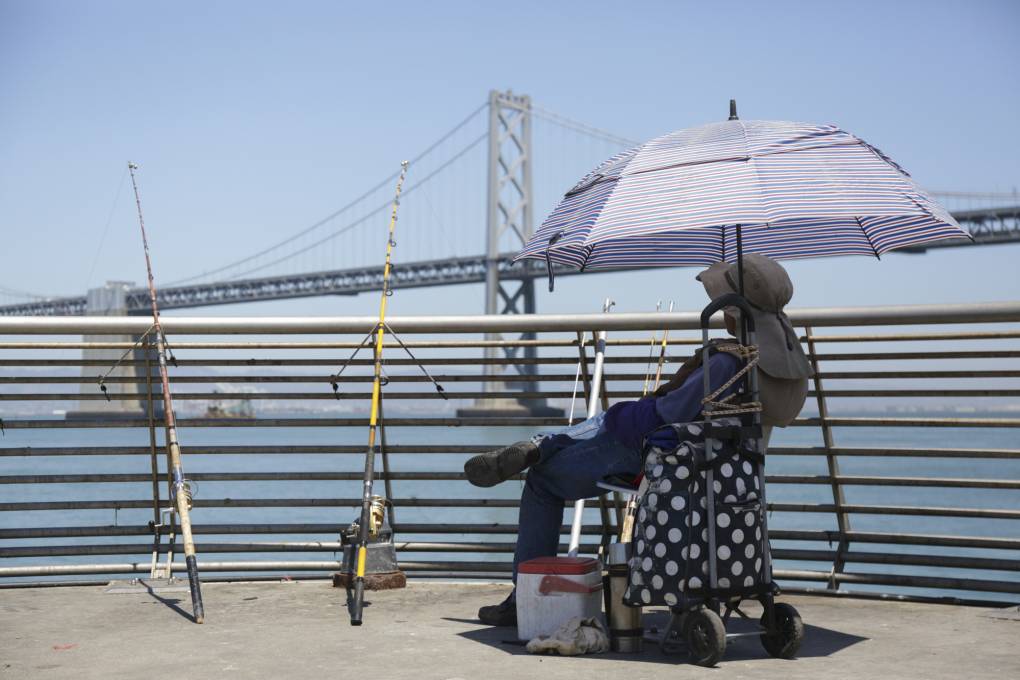
"caption": "A fisherman waits under the shade of his umbrella in front of the Bay Bridge on June 17, 2020.",
"description": null,
"title": "230830-HEAT WAVE-AM-KQED",
"credit": "Arash Malekzadeh/KQED",
"status": "inherit",
"altTag": "A fisherman waits under the shade of his umbrella in front of the Bay Bridge.",
"isLoading": false,
"fetchFailed": false
},
"news_11959418": {
"type": "attachments",
"id": "news_11959418",
"meta": {
"index": "attachments_1716263798",
"site": "news",
"id": "11959418",
"found": true
},
"parent": 11959390,
"imgSizes": {
"twentyfourteen-full-width": {
"file": "https://ww2.kqed.org/app/uploads/sites/10/2023/08/RS68412_GettyImages-1495481919-1-qut-1038x576.jpg",
"width": 1038,
"mimeType": "image/jpeg",
"height": 576
},
"thumbnail": {
"file": "https://ww2.kqed.org/app/uploads/sites/10/2023/08/RS68412_GettyImages-1495481919-1-qut-160x108.jpg",
"width": 160,
"mimeType": "image/jpeg",
"height": 108
},
"post-thumbnail": {
"file": "https://ww2.kqed.org/app/uploads/sites/10/2023/08/RS68412_GettyImages-1495481919-1-qut-672x372.jpg",
"width": 672,
"mimeType": "image/jpeg",
"height": 372
},
"kqedFullSize": {
"file": "https://ww2.kqed.org/app/uploads/sites/10/2023/08/RS68412_GettyImages-1495481919-1-qut.jpg",
"width": 2000,
"height": 1347
},
"large": {
"file": "https://ww2.kqed.org/app/uploads/sites/10/2023/08/RS68412_GettyImages-1495481919-1-qut-1020x687.jpg",
"width": 1020,
"mimeType": "image/jpeg",
"height": 687
},
"1536x1536": {
"file": "https://ww2.kqed.org/app/uploads/sites/10/2023/08/RS68412_GettyImages-1495481919-1-qut-1536x1034.jpg",
"width": 1536,
"mimeType": "image/jpeg",
"height": 1034
},
"full-width": {
"file": "https://ww2.kqed.org/app/uploads/sites/10/2023/08/RS68412_GettyImages-1495481919-1-qut-1920x1293.jpg",
"width": 1920,
"mimeType": "image/jpeg",
"height": 1293
},
"medium": {
"file": "https://ww2.kqed.org/app/uploads/sites/10/2023/08/RS68412_GettyImages-1495481919-1-qut-800x539.jpg",
"width": 800,
"mimeType": "image/jpeg",
"height": 539
}
},
"publishDate": 1693270672,
"modified": 1693327127,
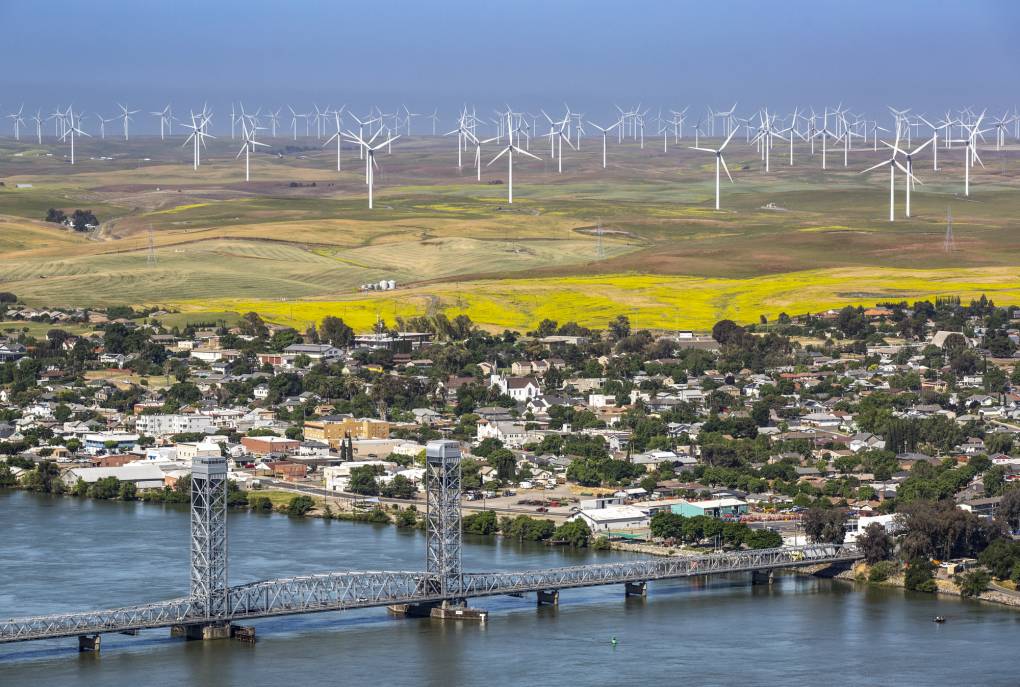
"caption": "The small town of Rio Vista, located along the Sacramento River and Highway 12. The town's mayor said a group of Silicon Valley investors bought land surrounding the city and parcels within the city limits. ",
"description": null,
"title": "Aerial Photos of California's Delta",
"credit": "George Rose/Getty Images",
"status": "inherit",
"altTag": "a town seen from above, next to a river, with fields and windmills in the background",
"isLoading": false,
"fetchFailed": false
},
"news_11958791": {
"type": "attachments",
"id": "news_11958791",
"meta": {
"index": "attachments_1716263798",
"site": "news",
"id": "11958791",
"found": true
},
"parent": 11958785,
"imgSizes": {
"twentyfourteen-full-width": {
"file": "https://ww2.kqed.org/app/uploads/sites/10/2023/08/GettyImages-1558852156-1038x576.jpg",
"width": 1038,
"mimeType": "image/jpeg",
"height": 576
},
"thumbnail": {
"file": "https://ww2.kqed.org/app/uploads/sites/10/2023/08/GettyImages-1558852156-160x110.jpg",
"width": 160,
"mimeType": "image/jpeg",
"height": 110
},
"post-thumbnail": {
"file": "https://ww2.kqed.org/app/uploads/sites/10/2023/08/GettyImages-1558852156-672x372.jpg",
"width": 672,
"mimeType": "image/jpeg",
"height": 372
},
"kqedFullSize": {
"file": "https://ww2.kqed.org/app/uploads/sites/10/2023/08/GettyImages-1558852156-scaled.jpg",
"width": 2560,
"height": 1754
},
"2048x2048": {
"file": "https://ww2.kqed.org/app/uploads/sites/10/2023/08/GettyImages-1558852156-2048x1403.jpg",
"width": 2048,
"mimeType": "image/jpeg",
"height": 1403
},
"large": {
"file": "https://ww2.kqed.org/app/uploads/sites/10/2023/08/GettyImages-1558852156-1020x699.jpg",
"width": 1020,
"mimeType": "image/jpeg",
"height": 699
},
"1536x1536": {
"file": "https://ww2.kqed.org/app/uploads/sites/10/2023/08/GettyImages-1558852156-1536x1052.jpg",
"width": 1536,
"mimeType": "image/jpeg",
"height": 1052
},
"full-width": {
"file": "https://ww2.kqed.org/app/uploads/sites/10/2023/08/GettyImages-1558852156-1920x1315.jpg",
"width": 1920,
"mimeType": "image/jpeg",
"height": 1315
},
"medium": {
"file": "https://ww2.kqed.org/app/uploads/sites/10/2023/08/GettyImages-1558852156-800x548.jpg",
"width": 800,
"mimeType": "image/jpeg",
"height": 548
}
},
"publishDate": 1692731850,
"modified": 1694699755,
"caption": "Members of SAG-AFTRA hold signs as they picket in front of Netflix headquarters on July 20, 2023 in Los Gatos, California. Hollywood productions have stopped across the country as both writers and actors went on strike after their contracts expired with the Alliance of Motion Picture and Television Producers (AMPTP). This is the first time since 1960 that both unions have gone on strike at the same time. Both unions are fighting for contracts that prevent an A.I. from replacing them at their jobs as well as better pay when working on shows for streaming services.",
"description": null,
"title": "SAG-AFTRA Strikers And Supporters Rally Across The U.S.",
"credit": "Justin Sullivan/Getty Images",
"status": "inherit",
"altTag": "Hollywood Strike",
"isLoading": false,
"fetchFailed": false
},
"news_11958149": {
"type": "attachments",
"id": "news_11958149",
"meta": {
"index": "attachments_1716263798",
"site": "news",
"id": "11958149",
"found": true
},
"parent": 0,
"imgSizes": {
"twentyfourteen-full-width": {
"file": "https://ww2.kqed.org/app/uploads/sites/10/2023/08/230814-WAGE-THEFT-FJR-05-KQED-1038x576.jpg",
"width": 1038,
"mimeType": "image/jpeg",
"height": 576
},
"thumbnail": {
"file": "https://ww2.kqed.org/app/uploads/sites/10/2023/08/230814-WAGE-THEFT-FJR-05-KQED-160x107.jpg",
"width": 160,
"mimeType": "image/jpeg",
"height": 107
},
"post-thumbnail": {
"file": "https://ww2.kqed.org/app/uploads/sites/10/2023/08/230814-WAGE-THEFT-FJR-05-KQED-672x372.jpg",
"width": 672,
"mimeType": "image/jpeg",
"height": 372
},
"kqedFullSize": {
"file": "https://ww2.kqed.org/app/uploads/sites/10/2023/08/230814-WAGE-THEFT-FJR-05-KQED.jpg",
"width": 2000,
"height": 1333
},
"large": {
"file": "https://ww2.kqed.org/app/uploads/sites/10/2023/08/230814-WAGE-THEFT-FJR-05-KQED-1020x680.jpg",
"width": 1020,
"mimeType": "image/jpeg",
"height": 680
},
"1536x1536": {
"file": "https://ww2.kqed.org/app/uploads/sites/10/2023/08/230814-WAGE-THEFT-FJR-05-KQED-1536x1024.jpg",
"width": 1536,
"mimeType": "image/jpeg",
"height": 1024
},
"full-width": {
"file": "https://ww2.kqed.org/app/uploads/sites/10/2023/08/230814-WAGE-THEFT-FJR-05-KQED-1920x1280.jpg",
"width": 1920,
"mimeType": "image/jpeg",
"height": 1280
},
"medium": {
"file": "https://ww2.kqed.org/app/uploads/sites/10/2023/08/230814-WAGE-THEFT-FJR-05-KQED-800x533.jpg",
"width": 800,
"mimeType": "image/jpeg",
"height": 533
}
},
"publishDate": 1692037246,
"modified": 1692113205,
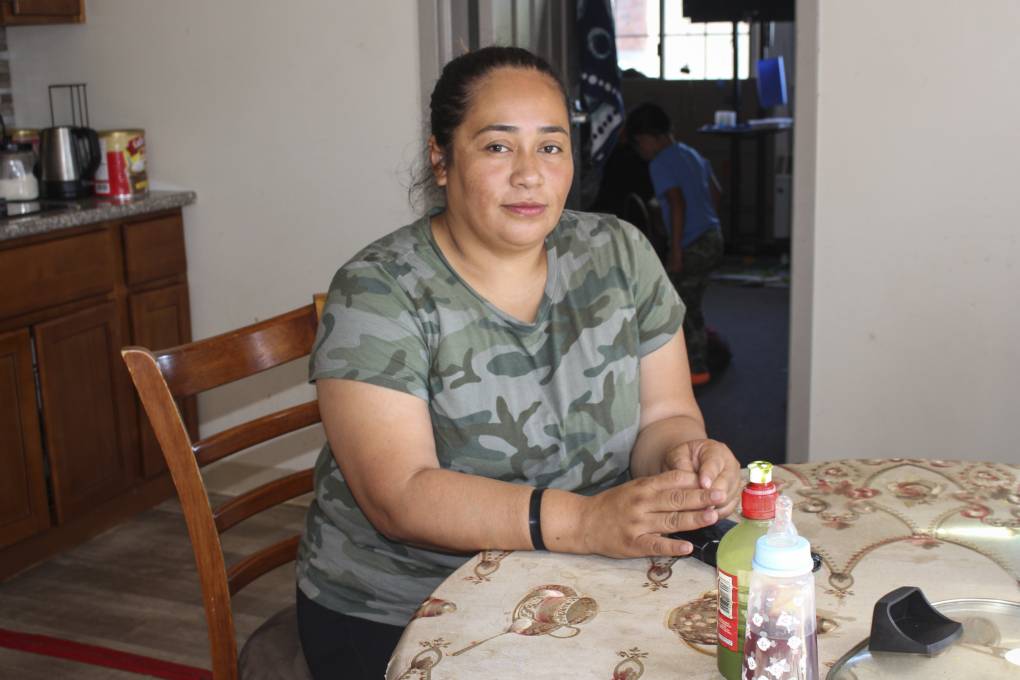
"caption": "Mirna Arana, 36, at home with her children on July 31, 2023. Arana won a wage theft judgment with the California Labor Commissioner’s Office about 2 years ago, but has yet to recover any money, even after the agency’s Judgment Enforcement Unit intervened.",
"description": null,
"title": "230814-WAGE THEFT-FJR-05-KQED",
"credit": "Farida Jhabvala Romero/KQED",
"status": "inherit",
"altTag": "A woman sits at a table looking at the camera.",
"isLoading": false,
"fetchFailed": false
},
"news_11957650": {
"type": "attachments",
"id": "news_11957650",
"meta": {
"index": "attachments_1716263798",
"site": "news",
"id": "11957650",
"found": true
},
"parent": 0,
"imgSizes": {
"twentyfourteen-full-width": {
"file": "https://ww2.kqed.org/app/uploads/sites/10/2023/08/230808-WAYMO-Getty-JS-2-KQED-1038x576.jpg",
"width": 1038,
"mimeType": "image/jpeg",
"height": 576
},
"thumbnail": {
"file": "https://ww2.kqed.org/app/uploads/sites/10/2023/08/230808-WAYMO-Getty-JS-2-KQED-160x104.jpg",
"width": 160,
"mimeType": "image/jpeg",
"height": 104
},
"post-thumbnail": {
"file": "https://ww2.kqed.org/app/uploads/sites/10/2023/08/230808-WAYMO-Getty-JS-2-KQED-672x372.jpg",
"width": 672,
"mimeType": "image/jpeg",
"height": 372
},
"kqedFullSize": {
"file": "https://ww2.kqed.org/app/uploads/sites/10/2023/08/230808-WAYMO-Getty-JS-2-KQED.jpg",
"width": 2000,
"height": 1303
},
"large": {
"file": "https://ww2.kqed.org/app/uploads/sites/10/2023/08/230808-WAYMO-Getty-JS-2-KQED-1020x665.jpg",
"width": 1020,
"mimeType": "image/jpeg",
"height": 665
},
"1536x1536": {
"file": "https://ww2.kqed.org/app/uploads/sites/10/2023/08/230808-WAYMO-Getty-JS-2-KQED-1536x1001.jpg",
"width": 1536,
"mimeType": "image/jpeg",
"height": 1001
},
"full-width": {
"file": "https://ww2.kqed.org/app/uploads/sites/10/2023/08/230808-WAYMO-Getty-JS-2-KQED-1920x1251.jpg",
"width": 1920,
"mimeType": "image/jpeg",
"height": 1251
},
"medium": {
"file": "https://ww2.kqed.org/app/uploads/sites/10/2023/08/230808-WAYMO-Getty-JS-2-KQED-800x521.jpg",
"width": 800,
"mimeType": "image/jpeg",
"height": 521
}
},
"publishDate": 1691516695,
"modified": 1691686899,
"caption": "Waymo cars drive down a street in San Francisco on March 1, 2023.",
"description": null,
"title": "Waymo Cuts 8% Of Workforce As Tech Layoffs Continue",
"credit": "Justin Sullivan/Getty Images",
"status": "inherit",
"altTag": "Waymo cars drive down a street in San Francisco on March 01, 2023.",
"isLoading": false,
"fetchFailed": false
}
},
"audioPlayerReducer": {
"postId": "stream_live",
"isPaused": true,
"isPlaying": false,
"pfsActive": false,
"pledgeModalIsOpen": true,
"playerDrawerIsOpen": false,
"liveAudioPlayStartedAt": 0,
"liveAudioPlayContext": ""
},
"authorsReducer": {
"byline_news_11964259": {
"type": "authors",
"id": "byline_news_11964259",
"meta": {
"override": true
},
"slug": "byline_news_11964259",
"name": "\u003ca href=\"https://calmatters.org/author/carolyn-jones/\">Carolyn Jones\u003c/a> and \u003ca href=\"https://calmatters.org/author/mikhailzinshteyn/\">Mikhail Zinshteyn\u003c/a>",
"isLoading": false
},
"danbrekke": {
"type": "authors",
"id": "222",
"meta": {
"index": "authors_1716337520",
"id": "222",
"found": true
},
"name": "Dan Brekke",
"firstName": "Dan",
"lastName": "Brekke",
"slug": "danbrekke",
"email": "dbrekke@kqed.org",
"display_author_email": true,
"staff_mastheads": [
"news",
"science"
],
"title": "KQED Editor and Reporter",
"bio": "Dan Brekke is a reporter and editor for KQED News, responsible for coverage of topics ranging from California water issues to the Bay Area's transportation challenges. In a newsroom career that began in Chicago in 1972, Dan has worked for \u003cem>The San Francisco Examiner,\u003c/em> Wired and TechTV and has been published in The New York Times, The New York Times Magazine, Business 2.0, Salon and elsewhere.\r\n\r\nSince joining KQED in 2007, Dan has reported, edited and produced both radio and online features and breaking news pieces. He has shared as both editor and reporter in four Society of Professional Journalists Norcal Excellence in Journalism awards and one Edward R. Murrow regional award. He was chosen for a spring 2017 residency at the Mesa Refuge to advance his research on California salmon.\r\n\r\nEmail Dan at: \u003ca href=\"mailto:dbrekke@kqed.org\">dbrekke@kqed.org\u003c/a>\r\n\r\n\u003cstrong>Twitter:\u003c/strong> \u003ca href=\"https://twitter.com/danbrekke\" rel=\"noopener noreferrer\">twitter.com/danbrekke\u003c/a>\r\n\u003cstrong>Facebook:\u003c/strong> \u003ca href=\"https://www.facebook.com/danbrekke\" rel=\"noopener noreferrer\">www.facebook.com/danbrekke\u003c/a>\r\n\u003cstrong>LinkedIn:\u003c/strong> \u003ca href=\"https://www.linkedin.com/in/danbrekke\" rel=\"noopener noreferrer\">www.linkedin.com/in/danbrekke\u003c/a>",
"avatar": "https://secure.gravatar.com/avatar/8f1f0d2a978fb3b23426c922c7e2af558fa36905b49c4ce76a97dc3c72d27226?s=600&d=mm&r=g",
"twitter": "danbrekke",
"bluesky": null,
"facebook": null,
"instagram": "https://www.instagram.com/dan.brekke/",
"linkedin": "https://www.linkedin.com/in/danbrekke/",
"sites": [
{
"site": "news",
"roles": [
"administrator",
"create_posts"
]
},
{
"site": "stateofhealth",
"roles": [
"editor"
]
},
{
"site": "science",
"roles": [
"editor"
]
},
{
"site": "quest",
"roles": [
"contributor"
]
},
{
"site": "food",
"roles": [
"contributor"
]
},
{
"site": "forum",
"roles": [
"contributor"
]
},
{
"site": "elections",
"roles": [
"editor"
]
},
{
"site": "liveblog",
"roles": [
"editor"
]
}
],
"headData": {
"title": "Dan Brekke | KQED",
"description": "KQED Editor and Reporter",
"ogImgSrc": "https://secure.gravatar.com/avatar/8f1f0d2a978fb3b23426c922c7e2af558fa36905b49c4ce76a97dc3c72d27226?s=600&d=mm&r=g",
"twImgSrc": "https://secure.gravatar.com/avatar/8f1f0d2a978fb3b23426c922c7e2af558fa36905b49c4ce76a97dc3c72d27226?s=600&d=mm&r=g"
},
"isLoading": false,
"link": "/author/danbrekke"
},
"gmarzorati": {
"type": "authors",
"id": "227",
"meta": {
"index": "authors_1716337520",
"id": "227",
"found": true
},
"name": "Guy Marzorati",
"firstName": "Guy",
"lastName": "Marzorati",
"slug": "gmarzorati",
"email": "gmarzorati@KQED.org",
"display_author_email": true,
"staff_mastheads": [
"news"
],
"title": "Correspondent",
"bio": "Guy Marzorati is a correspondent on KQED's California Politics and Government Desk, based in San Jose. A graduate of Santa Clara University, Guy joined KQED in 2013. He reports on state and local politics and produces KQED's digital voter guide.",
"avatar": "https://secure.gravatar.com/avatar/e7038b8dbfd55b104369b76b1cd0b9de?s=600&d=blank&r=g",
"twitter": "guymarzorati",
"facebook": null,
"instagram": null,
"linkedin": null,
"sites": [
{
"site": "",
"roles": [
"editor"
]
},
{
"site": "news",
"roles": [
"editor"
]
},
{
"site": "science",
"roles": [
"editor"
]
},
{
"site": "forum",
"roles": [
"editor"
]
},
{
"site": "elections",
"roles": [
"editor"
]
},
{
"site": "liveblog",
"roles": [
"editor"
]
}
],
"headData": {
"title": "Guy Marzorati | KQED",
"description": "Correspondent",
"ogImgSrc": "https://secure.gravatar.com/avatar/e7038b8dbfd55b104369b76b1cd0b9de?s=600&d=blank&r=g",
"twImgSrc": "https://secure.gravatar.com/avatar/e7038b8dbfd55b104369b76b1cd0b9de?s=600&d=blank&r=g"
},
"isLoading": false,
"link": "/author/gmarzorati"
},
"rachael-myrow": {
"type": "authors",
"id": "251",
"meta": {
"index": "authors_1716337520",
"id": "251",
"found": true
},
"name": "Rachael Myrow",
"firstName": "Rachael",
"lastName": "Myrow",
"slug": "rachael-myrow",
"email": "rmyrow@kqed.org",
"display_author_email": true,
"staff_mastheads": [
"news"
],
"title": "Senior Editor of KQED's Silicon Valley News Desk",
"bio": "• I write and edit stories about how Silicon Valley power and policies shape everyday life in California. I’m also passionate about making Bay Area history and culture more accessible to a broad public. • I’ve been a journalist for most of my life, starting in high school with The Franklin Press in Los Angeles, where I grew up. While earning my first degree in English at UC Berkeley, I got my start in public radio at KALX-FM. After completing a second degree in journalism at Cal, I landed my first professional job at Marketplace, then moved on to KPCC (now LAist), and then KQED, where I hosted The California Report for more than seven years. • My reporting has appeared on NPR, The World, WBUR’s \u003ci>Here & Now\u003c/i>, and the BBC. I also guest host for KQED’s \u003ci>Forum\u003c/i>, as well as the Commonwealth Club in San Francisco. • I speak periodically on media, democracy and technology issues, and do voiceover work for documentaries and educational video projects. • Outside of the studio, you'll find me hiking Bay Area trails and whipping up Insta-ready meals in my kitchen. • I do not accept gifts, money, or favors from anyone connected to my reporting, I don't pay people for information, and I do not support or donate to political causes. • I strive to treat the people I report on with fairness, honesty, and respect. I also recognize there are often multiple sides to a story and work to verify information through multiple sources and documentation. If I get something wrong, I correct it.",
"avatar": "https://secure.gravatar.com/avatar/3ed8a3c5f26025e4a805ba634cda8cd764906b97438a6d9ce216b044e340da4e?s=600&d=blank&r=g",
"twitter": "rachaelmyrow",
"bluesky": null,
"facebook": null,
"instagram": null,
"linkedin": "https://www.linkedin.com/in/rachaelmyrow/",
"sites": [
{
"site": "arts",
"roles": [
"administrator"
]
},
{
"site": "news",
"roles": [
"edit_others_posts",
"editor"
]
},
{
"site": "futureofyou",
"roles": [
"editor"
]
},
{
"site": "bayareabites",
"roles": [
"editor"
]
},
{
"site": "stateofhealth",
"roles": [
"editor"
]
},
{
"site": "science",
"roles": [
"editor"
]
},
{
"site": "food",
"roles": [
"editor"
]
},
{
"site": "forum",
"roles": [
"editor"
]
},
{
"site": "liveblog",
"roles": [
"author"
]
}
],
"headData": {
"title": "Rachael Myrow | KQED",
"description": "Senior Editor of KQED's Silicon Valley News Desk",
"ogImgSrc": "https://secure.gravatar.com/avatar/3ed8a3c5f26025e4a805ba634cda8cd764906b97438a6d9ce216b044e340da4e?s=600&d=blank&r=g",
"twImgSrc": "https://secure.gravatar.com/avatar/3ed8a3c5f26025e4a805ba634cda8cd764906b97438a6d9ce216b044e340da4e?s=600&d=blank&r=g"
},
"isLoading": false,
"link": "/author/rachael-myrow"
},
"carlysevern": {
"type": "authors",
"id": "3243",
"meta": {
"index": "authors_1716337520",
"id": "3243",
"found": true
},
"name": "Carly Severn",
"firstName": "Carly",
"lastName": "Severn",
"slug": "carlysevern",
"email": "csevern@kqed.org",
"display_author_email": false,
"staff_mastheads": [
"news"
],
"title": "Senior Editor, Audience News ",
"bio": "Carly is KQED's Senior Editor of Audience News on the Digital News team, and has reported for the California Report Magazine, Bay Curious and KQED Arts. She's formerly the host of \u003ca href=\"http://ww2.kqed.org/pop/category/the-cooler/\" rel=\"noopener noreferrer\">The Cooler\u003c/a> podcast.",
"avatar": "https://secure.gravatar.com/avatar/54037bf5c128fe678f0ef26cec97a93f2e7f220a22d7285703328f12c42c1b1d?s=600&d=blank&r=g",
"twitter": "teacupinthebay",
"bluesky": null,
"facebook": null,
"instagram": null,
"linkedin": null,
"sites": [
{
"site": "",
"roles": [
"editor"
]
},
{
"site": "arts",
"roles": [
"editor"
]
},
{
"site": "news",
"roles": [
"administrator"
]
},
{
"site": "pop",
"roles": [
"editor"
]
},
{
"site": "futureofyou",
"roles": [
"editor"
]
},
{
"site": "about",
"roles": [
"administrator"
]
},
{
"site": "mindshift",
"roles": [
"editor"
]
},
{
"site": "bayareabites",
"roles": [
"editor"
]
},
{
"site": "stateofhealth",
"roles": [
"editor"
]
},
{
"site": "science",
"roles": [
"editor"
]
},
{
"site": "food",
"roles": [
"contributor"
]
},
{
"site": "forum",
"roles": [
"editor"
]
},
{
"site": "perspectives",
"roles": [
"administrator"
]
},
{
"site": "liveblog",
"roles": [
"editor"
]
}
],
"headData": {
"title": "Carly Severn | KQED",
"description": "Senior Editor, Audience News ",
"ogImgSrc": "https://secure.gravatar.com/avatar/54037bf5c128fe678f0ef26cec97a93f2e7f220a22d7285703328f12c42c1b1d?s=600&d=blank&r=g",
"twImgSrc": "https://secure.gravatar.com/avatar/54037bf5c128fe678f0ef26cec97a93f2e7f220a22d7285703328f12c42c1b1d?s=600&d=blank&r=g"
},
"isLoading": false,
"link": "/author/carlysevern"
},
"ecruzguevarra": {
"type": "authors",
"id": "8654",
"meta": {
"index": "authors_1716337520",
"id": "8654",
"found": true
},
"name": "Ericka Cruz Guevarra",
"firstName": "Ericka",
"lastName": "Cruz Guevarra",
"slug": "ecruzguevarra",
"email": "ecruzguevarra@kqed.org",
"display_author_email": true,
"staff_mastheads": [
"news"
],
"title": "Producer, The Bay Podcast",
"bio": "Ericka Cruz Guevarra is host of \u003ca href=\"https://www.kqed.org/podcasts/thebay\">\u003cem>The Bay\u003c/em>\u003c/a> podcast at KQED. Before host, she was the show’s producer. Her work in that capacity includes a three-part reported series on policing in Vallejo, which won a 2020 excellence in journalism award from the Society of Professional Journalists. Ericka has worked as a breaking news reporter at Oregon Public Broadcasting, helped produce the Code Switch podcast, and was KQED’s inaugural Raul Ramirez Diversity Fund intern. She’s also an alumna of NPR’s Next Generation Radio program. Send her an email if you have strong feelings about whether Fairfield and Suisun City are the Bay. Ericka is represented by SAG-AFTRA.",
"avatar": "https://secure.gravatar.com/avatar/accefc1de4bafc7e234b69bcb9b6f6536c130fd84709bc3069ef11a78787e1bb?s=600&d=blank&r=g",
"twitter": "NotoriousECG",
"bluesky": null,
"facebook": null,
"instagram": null,
"linkedin": null,
"sites": [
{
"site": "arts",
"roles": [
"subscriber"
]
},
{
"site": "news",
"roles": [
"editor",
"manage_categories"
]
},
{
"site": "futureofyou",
"roles": [
"subscriber"
]
},
{
"site": "stateofhealth",
"roles": [
"subscriber"
]
},
{
"site": "science",
"roles": [
"editor"
]
},
{
"site": "forum",
"roles": [
"subscriber"
]
}
],
"headData": {
"title": "Ericka Cruz Guevarra | KQED",
"description": "Producer, The Bay Podcast",
"ogImgSrc": "https://secure.gravatar.com/avatar/accefc1de4bafc7e234b69bcb9b6f6536c130fd84709bc3069ef11a78787e1bb?s=600&d=blank&r=g",
"twImgSrc": "https://secure.gravatar.com/avatar/accefc1de4bafc7e234b69bcb9b6f6536c130fd84709bc3069ef11a78787e1bb?s=600&d=blank&r=g"
},
"isLoading": false,
"link": "/author/ecruzguevarra"
},
"fjhabvala": {
"type": "authors",
"id": "8659",
"meta": {
"index": "authors_1716337520",
"id": "8659",
"found": true
},
"name": "Farida Jhabvala Romero",
"firstName": "Farida",
"lastName": "Jhabvala Romero",
"slug": "fjhabvala",
"email": "fjhabvala@kqed.org",
"display_author_email": true,
"staff_mastheads": [
"news"
],
"title": "KQED Contributor",
"bio": "Farida Jhabvala Romero is a Labor Correspondent for KQED. She previously covered immigration. Farida was \u003ca href=\"https://www.ccnma.org/2022-most-influential-latina-journalists\">named\u003c/a> one of the 10 Most Influential Latina Journalists in California in 2022 by the California Chicano News Media Association. Her work has won awards from the Society of Professional Journalists (Northern California), as well as a national and regional Edward M. Murrow Award for the collaborative reporting projects “Dangerous Air” and “Graying California.” Before joining KQED, Farida worked as a producer at Radio Bilingüe, a national public radio network. Farida earned her master’s degree in journalism from Stanford University.",
"avatar": "https://secure.gravatar.com/avatar/f9f022d4e2609741874222a1e9d41f48fea74011aa7c615eef91d9a50c944ebe?s=600&d=blank&r=g",
"twitter": "FaridaJhabvala",
"bluesky": null,
"facebook": null,
"instagram": null,
"linkedin": "https://www.linkedin.com/in/faridajhabvala/",
"sites": [
{
"site": "news",
"roles": [
"editor"
]
},
{
"site": "stateofhealth",
"roles": [
"author"
]
},
{
"site": "liveblog",
"roles": [
"author"
]
}
],
"headData": {
"title": "Farida Jhabvala Romero | KQED",
"description": "KQED Contributor",
"ogImgSrc": "https://secure.gravatar.com/avatar/f9f022d4e2609741874222a1e9d41f48fea74011aa7c615eef91d9a50c944ebe?s=600&d=blank&r=g",
"twImgSrc": "https://secure.gravatar.com/avatar/f9f022d4e2609741874222a1e9d41f48fea74011aa7c615eef91d9a50c944ebe?s=600&d=blank&r=g"
},
"isLoading": false,
"link": "/author/fjhabvala"
},
"amontecillo": {
"type": "authors",
"id": "11649",
"meta": {
"index": "authors_1716337520",
"id": "11649",
"found": true
},
"name": "Alan Montecillo",
"firstName": "Alan",
"lastName": "Montecillo",
"slug": "amontecillo",
"email": "amontecillo@kqed.org",
"display_author_email": false,
"staff_mastheads": [
"news"
],
"title": "KQED Contributor",
"bio": "Alan Montecillo is the senior editor of \u003cem>\u003ca href=\"http://kqed.org/thebay\">The Bay\u003c/a>, \u003c/em> KQED's local news podcast. Before moving to the Bay Area, he worked as a senior talk show producer for WILL in Champaign-Urbana, Illinois and at Oregon Public Broadcasting in Portland, Oregon. He has won journalism awards from the Society of Professional Journalists Northern California, the Public Media Journalists Association, The Signal Awards, and has also received a regional Edward R. Murrow award. Alan is a Filipino American from Hong Kong and a graduate of Reed College.",
"avatar": "https://secure.gravatar.com/avatar/268f53a2066899ea9efdd8a5900218b17c822d9862cbc9326cccec53ef41d349?s=600&d=blank&r=g",
"twitter": "alanmontecillo",
"bluesky": null,
"facebook": null,
"instagram": null,
"linkedin": null,
"sites": [
{
"site": "",
"roles": [
"editor"
]
},
{
"site": "news",
"roles": [
"editor",
"manage_categories"
]
}
],
"headData": {
"title": "Alan Montecillo | KQED",
"description": "KQED Contributor",
"ogImgSrc": "https://secure.gravatar.com/avatar/268f53a2066899ea9efdd8a5900218b17c822d9862cbc9326cccec53ef41d349?s=600&d=blank&r=g",
"twImgSrc": "https://secure.gravatar.com/avatar/268f53a2066899ea9efdd8a5900218b17c822d9862cbc9326cccec53ef41d349?s=600&d=blank&r=g"
},
"isLoading": false,
"link": "/author/amontecillo"
},
"agonzalez": {
"type": "authors",
"id": "11724",
"meta": {
"index": "authors_1716337520",
"id": "11724",
"found": true
},
"name": "Alexander Gonzalez",
"firstName": "Alexander",
"lastName": "Gonzalez",
"slug": "agonzalez",
"email": "AlexanderGonzalez@KQED.org",
"display_author_email": false,
"staff_mastheads": [
"news"
],
"title": "KQED Contributor",
"bio": null,
"avatar": "https://secure.gravatar.com/avatar/9e291ed34e154df4c662edf858b641d70b4859939bfe40be478408f9dfd057d2?s=600&d=blank&r=g",
"twitter": null,
"bluesky": null,
"facebook": null,
"instagram": null,
"linkedin": null,
"sites": [
{
"site": "arts",
"roles": [
"editor"
]
},
{
"site": "news",
"roles": [
"editor"
]
},
{
"site": "science",
"roles": [
"editor"
]
}
],
"headData": {
"title": "Alexander Gonzalez | KQED",
"description": "KQED Contributor",
"ogImgSrc": "https://secure.gravatar.com/avatar/9e291ed34e154df4c662edf858b641d70b4859939bfe40be478408f9dfd057d2?s=600&d=blank&r=g",
"twImgSrc": "https://secure.gravatar.com/avatar/9e291ed34e154df4c662edf858b641d70b4859939bfe40be478408f9dfd057d2?s=600&d=blank&r=g"
},
"isLoading": false,
"link": "/author/agonzalez"
},
"mesquinca": {
"type": "authors",
"id": "11802",
"meta": {
"index": "authors_1716337520",
"id": "11802",
"found": true
},
"name": "Maria Esquinca",
"firstName": "Maria",
"lastName": "Esquinca",
"slug": "mesquinca",
"email": "mesquinca@kqed.org",
"display_author_email": false,
"staff_mastheads": [],
"title": "Producer, The Bay",
"bio": "María Esquinca is a producer of The Bay. Before that, she was a New York Women’s Foundation IGNITE Fellow at Latino USA. She worked at Radio Bilingue where she covered the San Joaquin Valley. Maria has interned at WLRN, News 21, The New York Times Student Journalism Institute and at Crain’s Detroit Business as a Dow Jones News Fund Business Reporting Intern. She is an MFA graduate from the University of Miami. In 2017, she graduated from the Walter Cronkite School of Journalism and Mass Communication with a Master of Mass Communication. A fronteriza, she was born in Ciudad Juárez, Chihuahua, Mexico and grew up in El Paso, Texas.",
"avatar": "https://secure.gravatar.com/avatar/77cedba18aae91da775038ba06dcd8d0?s=600&d=blank&r=g",
"twitter": "@m_esquinca",
"facebook": null,
"instagram": null,
"linkedin": null,
"sites": [
{
"site": "news",
"roles": []
}
],
"headData": {
"title": "Maria Esquinca | KQED",
"description": "Producer, The Bay",
"ogImgSrc": "https://secure.gravatar.com/avatar/77cedba18aae91da775038ba06dcd8d0?s=600&d=blank&r=g",
"twImgSrc": "https://secure.gravatar.com/avatar/77cedba18aae91da775038ba06dcd8d0?s=600&d=blank&r=g"
},
"isLoading": false,
"link": "/author/mesquinca"
},
"dyoung": {
"type": "authors",
"id": "11811",
"meta": {
"index": "authors_1716337520",
"id": "11811",
"found": true
},
"name": "Daphne Young",
"firstName": "Daphne",
"lastName": "Young",
"slug": "dyoung",
"email": "dyoung@kqed.org",
"display_author_email": false,
"staff_mastheads": [
"news"
],
"title": "KQED Contributor",
"bio": null,
"avatar": "https://secure.gravatar.com/avatar/21c035b7180f70e980c60055bf25070b?s=600&d=blank&r=g",
"twitter": null,
"facebook": null,
"instagram": null,
"linkedin": null,
"sites": [
{
"site": "news",
"roles": []
}
],
"headData": {
"title": "Daphne Young | KQED",
"description": "KQED Contributor",
"ogImgSrc": "https://secure.gravatar.com/avatar/21c035b7180f70e980c60055bf25070b?s=600&d=blank&r=g",
"twImgSrc": "https://secure.gravatar.com/avatar/21c035b7180f70e980c60055bf25070b?s=600&d=blank&r=g"
},
"isLoading": false,
"link": "/author/dyoung"
},
"sjohnson": {
"type": "authors",
"id": "11840",
"meta": {
"index": "authors_1716337520",
"id": "11840",
"found": true
},
"name": "Sydney Johnson",
"firstName": "Sydney",
"lastName": "Johnson",
"slug": "sjohnson",
"email": "sjohnson@kqed.org",
"display_author_email": false,
"staff_mastheads": [
"news"
],
"title": "KQED Reporter",
"bio": "Sydney Johnson is a general assignment reporter at KQED. She previously reported on public health and city government at the San Francisco Examiner, and before that, she covered statewide education policy for EdSource. Her reporting has won multiple local, state and national awards. Sydney is a graduate of the University of California, Berkeley and lives in San Francisco.",
"avatar": "https://secure.gravatar.com/avatar/97855f2719b72ad6190b7c535fe642c8?s=600&d=blank&r=g",
"twitter": "sydneyfjohnson",
"facebook": null,
"instagram": null,
"linkedin": null,
"sites": [
{
"site": "news",
"roles": [
"editor"
]
}
],
"headData": {
"title": "Sydney Johnson | KQED",
"description": "KQED Reporter",
"ogImgSrc": "https://secure.gravatar.com/avatar/97855f2719b72ad6190b7c535fe642c8?s=600&d=blank&r=g",
"twImgSrc": "https://secure.gravatar.com/avatar/97855f2719b72ad6190b7c535fe642c8?s=600&d=blank&r=g"
},
"isLoading": false,
"link": "/author/sjohnson"
}
},
"pagesReducer": {
"news_category_technology": {
"type": "terms",
"id": "news_248",
"meta": {
"index": "terms_1716263798",
"site": "news",
"id": "248",
"score": 10.931152
},
"featImg": null,
"name": "Technology",
"description": null,
"taxonomy": "category",
"headData": {
"twImgId": null,
"twTitle": null,
"ogTitle": null,
"ogImgId": null,
"twDescription": null,
"description": null,
"title": "Technology Archives | KQED News",
"ogDescription": null
},
"ttid": 256,
"slug": "technology",
"isLoading": false,
"title": "Technology",
"pageMeta": {
"site": "news",
"WpPageTemplate": "page-topic-editorial",
"currentPage": 31
},
"blocks": [
{
"blockName": "kqed/post-list",
"attrs": {
"layout": "cardArticle2",
"query": "posts/news?category=technology",
"seeMore": false,
"paginated": true,
"page": 31
}
},
{
"blockName": "kqed/ad"
}
]
}
},
"pfsSessionReducer": {},
"postsReducer": {
"stream_live": {
"type": "live",
"id": "stream_live",
"audioUrl": "https://streams.kqed.org/kqedradio",
"title": "Live Stream",
"excerpt": "Live Stream information currently unavailable.",
"link": "/radio",
"featImg": "",
"label": {
"name": "KQED Live",
"link": "/"
}
},
"stream_kqedNewscast": {
"type": "posts",
"id": "stream_kqedNewscast",
"audioUrl": "https://www.kqed.org/.stream/anon/radio/RDnews/newscast.mp3?_=1",
"title": "KQED Newscast",
"featImg": "",
"label": {
"name": "88.5 FM",
"link": "/"
}
},
"news_11966365": {
"type": "posts",
"id": "news_11966365",
"meta": {
"index": "posts_1716263798",
"site": "news",
"id": "11966365",
"score": null,
"sort": [
1699106449000
]
},
"guestAuthors": [],
"slug": "nearly-200-uber-sexual-assault-cases-are-being-grouped-together-in-1-sf-court",
"title": "Nearly 200 Uber Sexual Assault Cases Are Being Grouped Together in 1 SF Court",
"publishDate": 1699106449,
"format": "standard",
"headTitle": "Nearly 200 Uber Sexual Assault Cases Are Being Grouped Together in 1 SF Court | KQED",
"labelTerm": {
"site": "news"
},
"content": "\u003cp>More than 175 individual sexual assault cases against Uber were recently consolidated, each of which similarly claims the San Francisco-based ride-share company hasn’t done enough to protect passengers. And on Friday, the parties involved met for the first time before a federal judge in San Francisco.\u003c/p>\n\u003cp>Uber’s terms of use preclude class-action lawsuits against the company in cases of sexual assault. But, over the company’s objections, plaintiffs’ attorneys argued the current cases are similar enough to warrant “multidistrict litigation,” which brings together similar cases from multiple court districts.\u003c/p>\n\u003cp>In the coming months, U.S. District Judge Charles Breyer will hear pretrial matters that pertain to all the cases and ultimately decide whether to take on what’s called a “bellwether trial” or a smaller sampling of lawsuits from a larger group of similar cases. If he declines to do so, the individual cases will ultimately head back to their home states for trial.\u003c/p>\n\u003cp>This comes as another consolidated set of lawsuits was recently filed against Uber that also accuses the company of failing to adequately ensure the safety of its passengers in California.\u003c/p>\n\u003cp>“We think they’re putting profits over safety every day,” said Bret Stanley, a Houston-based personal injury lawyer, whose firm, Kherkher Garcia, is one of about 15 involved in Uber’s “multidistrict litigation” — or as he likes to calls it, “class action’s cousin.”[aside label=\"related coverage\" tag=\"uber\"]In recent years, scores of passengers have alleged being sexually assaulted by drivers while riding with Uber and\u003ca href=\"https://www.nytimes.com/2019/12/05/business/lyft-sexual-assault-lawsuit.html\"> Lyft\u003c/a> — with allegations ranging from groping to rape to \u003ca href=\"https://www.cbsnews.com/news/woman-allegedly-kidnapped-by-fake-uber-driver-rescued-after-slipping-note-to-gas-station-customer-arizona/\">kidnapping\u003c/a> — and sued the companies for failing to provide adequate safeguards.\u003c/p>\n\u003cp>Uber told KQED it could not comment on pending litigation. But it stressed that the vast majority — 99.9% — of the billions of trips it makes are completed without any reported safety incidents.\u003c/p>\n\u003cp>“Uber is going to say, ‘99% of the time, we’re good.’ Well, .1% of a billion is 1 million! Right? The numbers are so huge,” Stanley said. “We really do want to force change.”\u003c/p>\n\u003cp>He said Uber is well aware of the steps it can take to make rides safer.\u003c/p>\n\u003cp>“Because they know more data about these drivers than anyone,” he said. “Uber collects data on drivers on every single trip. And they should not be exposing people to safety risks if they have reason to believe that this person is unsafe or has done, previously, sexually inappropriate things in the vehicle.”\u003c/p>\n\u003cp>In 2018, Uber introduced a number of safety features, including an in-app\u003ca href=\"https://techcrunch.com/2018/05/29/uber-adds-911-assistance-to-rider-app/#:~:text=As%20you%20can%20see%20below,shows%20it%20in%20the%20app.\"> 911 button\u003c/a> and location sharing. Last year, it announced a partnership with ADT, a security firm, and added the capacity for passengers to \u003ca href=\"https://techcrunch.com/2021/12/02/uber-pilots-safety-feature-that-allows-users-to-record-audio-during-a-ride/\">record audio\u003c/a> in its app and request\u003ca href=\"https://techcrunch.com/2022/08/30/uber-partners-with-adt-to-let-riders-get-in-touch-with-a-life-safety-agent/\"> live help from an ADT safety agent\u003c/a>.\u003c/p>\n\u003cp>But Stanley and other parties suing Uber argue those steps don’t go far enough and say the company should implement stronger safeguards, like tougher background checks and video recordings of every ride. They also say Uber should immediately deactivate the accounts of drivers who have been recorded engaging in inappropriate behavior.\u003cbr>\n[ad fullwidth]\u003c/p>\n\u003cp>Although Uber has long resisted implementing stricter background checks, it launched last year a\u003ca href=\"https://www.uber.com/newsroom/safety-in-the-drivers-seat/\"> voluntary in-ride video recording pilot program\u003c/a> in a handful of cities.\u003c/p>\n\u003cp>Some longtime Uber drivers, like Sergio Avedian, pay for their own dashcams as a personal safety measure.\u003c/p>\n\u003cp>“I think it’s a huge deterrent,” Avedian said of his dashcam, which he claims has prevented some passengers from behaving inappropriately.\u003c/p>\n\u003cp>“You’re on your own as a driver and a passenger,” said Avedian, a senior contributor to \u003ca href=\"https://therideshareguy.com/\">The Rideshare Guy blog and the host of its podcast. \u003c/a>\u003c/p>\n\u003cp>In fact, roughly half of Uber’s sexual assault allegations involve \u003ca href=\"https://www.uber.com/us/en/about/reports/us-safety-report/\">passengers assaulting drivers\u003c/a>, the company reported.\u003c/p>\n\u003cp>Avedian said he thinks passengers should have to opt out of allowing video recordings during rides rather than opting in. The cost of installing dashcams in every car is nominal, he said, and in a world where people regularly overshare on social media anyway, the potential privacy concerns seem relatively negligible, particularly if it enhances safety.\u003c/p>\n\u003cp>“My safety trumps privacy, and passenger safety should trump privacy,” Avedian said. “Because, again, you’re in a car with a stranger. All it takes is one of these instances to change your life forever.”\u003c/p>\n\u003cp>\u003c/p>\n",
"blocks": [],
"excerpt": "Passengers can't file class-action lawsuits against Uber in cases of sexual assault. But plaintiffs successfully argued that the current cases, filed in multiple courts around the country, are similar enough to bring them together under one roof.",
"status": "publish",
"parent": 0,
"modified": 1729027319,
"stats": {
"hasAudio": false,
"hasVideo": false,
"hasChartOrMap": false,
"iframeSrcs": [],
"hasGoogleForm": false,
"hasGallery": false,
"hasHearkenModule": false,
"hasPolis": false,
"paragraphCount": 19,
"wordCount": 765
},
"headData": {
"title": "Nearly 200 Uber Sexual Assault Cases Are Being Grouped Together in 1 SF Court | KQED",
"description": "Passengers can't file class-action lawsuits against Uber in cases of sexual assault. But plaintiffs successfully argued that the current cases, filed in multiple courts around the country, are similar enough to bring them together under one roof.",
"ogTitle": "",
"ogDescription": "",
"ogImgId": "",
"twTitle": "",
"twDescription": "",
"twImgId": "",
"schema": {
"@context": "https://schema.org",
"@type": "NewsArticle",
"headline": "Nearly 200 Uber Sexual Assault Cases Are Being Grouped Together in 1 SF Court",
"datePublished": "2023-11-04T07:00:49-07:00",
"dateModified": "2024-10-15T14:21:59-07:00",
"image": "https://cdn.kqed.org/wp-content/uploads/2020/02/KQED-OG-Image@1x.png",
"isAccessibleForFree": "True",
"publisher": {
"@type": "NewsMediaOrganization",
"@id": "https://www.kqed.org/#organization",
"name": "KQED",
"logo": "https://cdn.kqed.org/wp-content/uploads/2020/02/KQED-OG-Image@1x.png",
"url": "https://www.kqed.org",
"sameAs": [
"https://www.facebook.com/KQED",
"https://twitter.com/KQED",
"https://www.instagram.com/kqed/",
"https://www.tiktok.com/@kqedofficial",
"https://www.linkedin.com/company/kqed",
"https://www.youtube.com/channel/UCeC0IOo7i1P_61zVUWbJ4nw"
]
}
}
},
"sticky": false,
"excludeFromSiteSearch": "Include",
"articleAge": "0",
"path": "/news/11966365/nearly-200-uber-sexual-assault-cases-are-being-grouped-together-in-1-sf-court",
"audioTrackLength": null,
"parsedContent": [
{
"type": "contentString",
"content": "\u003cdiv class=\"post-body\">\u003cp>\u003cp>More than 175 individual sexual assault cases against Uber were recently consolidated, each of which similarly claims the San Francisco-based ride-share company hasn’t done enough to protect passengers. And on Friday, the parties involved met for the first time before a federal judge in San Francisco.\u003c/p>\n\u003cp>Uber’s terms of use preclude class-action lawsuits against the company in cases of sexual assault. But, over the company’s objections, plaintiffs’ attorneys argued the current cases are similar enough to warrant “multidistrict litigation,” which brings together similar cases from multiple court districts.\u003c/p>\n\u003cp>In the coming months, U.S. District Judge Charles Breyer will hear pretrial matters that pertain to all the cases and ultimately decide whether to take on what’s called a “bellwether trial” or a smaller sampling of lawsuits from a larger group of similar cases. If he declines to do so, the individual cases will ultimately head back to their home states for trial.\u003c/p>\n\u003cp>This comes as another consolidated set of lawsuits was recently filed against Uber that also accuses the company of failing to adequately ensure the safety of its passengers in California.\u003c/p>\n\u003cp>“We think they’re putting profits over safety every day,” said Bret Stanley, a Houston-based personal injury lawyer, whose firm, Kherkher Garcia, is one of about 15 involved in Uber’s “multidistrict litigation” — or as he likes to calls it, “class action’s cousin.”\u003c/p>\u003c/div>",
"attributes": {
"named": {},
"numeric": []
}
},
{
"type": "component",
"content": "",
"name": "aside",
"attributes": {
"named": {
"label": "related coverage ",
"tag": "uber"
},
"numeric": []
}
},
{
"type": "contentString",
"content": "\u003cdiv class=\"post-body\">\u003cp>In recent years, scores of passengers have alleged being sexually assaulted by drivers while riding with Uber and\u003ca href=\"https://www.nytimes.com/2019/12/05/business/lyft-sexual-assault-lawsuit.html\"> Lyft\u003c/a> — with allegations ranging from groping to rape to \u003ca href=\"https://www.cbsnews.com/news/woman-allegedly-kidnapped-by-fake-uber-driver-rescued-after-slipping-note-to-gas-station-customer-arizona/\">kidnapping\u003c/a> — and sued the companies for failing to provide adequate safeguards.\u003c/p>\n\u003cp>Uber told KQED it could not comment on pending litigation. But it stressed that the vast majority — 99.9% — of the billions of trips it makes are completed without any reported safety incidents.\u003c/p>\n\u003cp>“Uber is going to say, ‘99% of the time, we’re good.’ Well, .1% of a billion is 1 million! Right? The numbers are so huge,” Stanley said. “We really do want to force change.”\u003c/p>\n\u003cp>He said Uber is well aware of the steps it can take to make rides safer.\u003c/p>\n\u003cp>“Because they know more data about these drivers than anyone,” he said. “Uber collects data on drivers on every single trip. And they should not be exposing people to safety risks if they have reason to believe that this person is unsafe or has done, previously, sexually inappropriate things in the vehicle.”\u003c/p>\n\u003cp>In 2018, Uber introduced a number of safety features, including an in-app\u003ca href=\"https://techcrunch.com/2018/05/29/uber-adds-911-assistance-to-rider-app/#:~:text=As%20you%20can%20see%20below,shows%20it%20in%20the%20app.\"> 911 button\u003c/a> and location sharing. Last year, it announced a partnership with ADT, a security firm, and added the capacity for passengers to \u003ca href=\"https://techcrunch.com/2021/12/02/uber-pilots-safety-feature-that-allows-users-to-record-audio-during-a-ride/\">record audio\u003c/a> in its app and request\u003ca href=\"https://techcrunch.com/2022/08/30/uber-partners-with-adt-to-let-riders-get-in-touch-with-a-life-safety-agent/\"> live help from an ADT safety agent\u003c/a>.\u003c/p>\n\u003cp>But Stanley and other parties suing Uber argue those steps don’t go far enough and say the company should implement stronger safeguards, like tougher background checks and video recordings of every ride. They also say Uber should immediately deactivate the accounts of drivers who have been recorded engaging in inappropriate behavior.\u003cbr>\n\u003c/p>\u003c/div>",
"attributes": {
"named": {},
"numeric": []
}
},
{
"type": "component",
"content": "",
"name": "ad",
"attributes": {
"named": {
"label": "fullwidth"
},
"numeric": [
"fullwidth"
]
}
},
{
"type": "contentString",
"content": "\u003cdiv class=\"post-body\">\u003cp>\u003c/p>\n\u003cp>Although Uber has long resisted implementing stricter background checks, it launched last year a\u003ca href=\"https://www.uber.com/newsroom/safety-in-the-drivers-seat/\"> voluntary in-ride video recording pilot program\u003c/a> in a handful of cities.\u003c/p>\n\u003cp>Some longtime Uber drivers, like Sergio Avedian, pay for their own dashcams as a personal safety measure.\u003c/p>\n\u003cp>“I think it’s a huge deterrent,” Avedian said of his dashcam, which he claims has prevented some passengers from behaving inappropriately.\u003c/p>\n\u003cp>“You’re on your own as a driver and a passenger,” said Avedian, a senior contributor to \u003ca href=\"https://therideshareguy.com/\">The Rideshare Guy blog and the host of its podcast. \u003c/a>\u003c/p>\n\u003cp>In fact, roughly half of Uber’s sexual assault allegations involve \u003ca href=\"https://www.uber.com/us/en/about/reports/us-safety-report/\">passengers assaulting drivers\u003c/a>, the company reported.\u003c/p>\n\u003cp>Avedian said he thinks passengers should have to opt out of allowing video recordings during rides rather than opting in. The cost of installing dashcams in every car is nominal, he said, and in a world where people regularly overshare on social media anyway, the potential privacy concerns seem relatively negligible, particularly if it enhances safety.\u003c/p>\n\u003cp>“My safety trumps privacy, and passenger safety should trump privacy,” Avedian said. “Because, again, you’re in a car with a stranger. All it takes is one of these instances to change your life forever.”\u003c/p>\n\u003cp>\u003c/p>\n\u003c/div>\u003c/p>",
"attributes": {
"named": {},
"numeric": []
}
}
],
"link": "/news/11966365/nearly-200-uber-sexual-assault-cases-are-being-grouped-together-in-1-sf-court",
"authors": [
"251"
],
"categories": [
"news_8",
"news_248"
],
"tags": [
"news_4658",
"news_1527",
"news_1631",
"news_4523"
],
"featImg": "news_11852661",
"label": "news"
},
"news_11965403": {
"type": "posts",
"id": "news_11965403",
"meta": {
"index": "posts_1716263798",
"site": "news",
"id": "11965403",
"score": null,
"sort": [
1698189470000
]
},
"guestAuthors": [],
"slug": "social-media-companies-get-big-fat-f-in-moderating-israel-hamas-war-content-say-hate-speech-watchers",
"title": "Social Media Companies Get 'Big Fat F' in Moderating Israel-Hamas War Content, Say Hate-Speech Watchers",
"publishDate": 1698189470,
"format": "standard",
"headTitle": "Social Media Companies Get ‘Big Fat F’ in Moderating Israel-Hamas War Content, Say Hate-Speech Watchers | KQED",
"labelTerm": {
"site": "news"
},
"content": "\u003cp>A growing group of academics and civil discourse advocates are \u003ca href=\"https://dfrlab.org/2023/10/12/in-israel-hamas-conflict-social-media-become-tools-of-propaganda-and-disinformation/\">sounding the alarm\u003c/a> over a surge in hate speech and disinformation on all major social media platforms as the Israel-Hamas war escalates.\u003c/p>\n\u003cp>Consider the most recent dramatic example, in the hours following the \u003ca href=\"https://www.nytimes.com/2023/10/18/world/middleeast/gaza-hospital-israel-hamas-explained.html\">Oct. 17 air strike of a hospital in Gaza\u003c/a> that killed scores of civilians. As journalists and respected investigative groups tried to make sense of the incident, social media exploded with unfounded accusations from Hamas and its supporters that the missile had been fired by Israel and had killed close to 500 people. They then cast doubt on subsequent evidence suggesting that the hospital was most likely hit by an errant rocket fired by Palestinian militants and that the death toll — while still strikingly high — was significantly lower than initially reported.\u003c/p>\n\u003cp>While incontrovertible confirmation of who perpetrated this particular tragedy may not come for some time — if ever — it’s clear that the chaotic online discourse around it further inflamed tensions.\u003c/p>\n\u003ch2>Eroding trust\u003c/h2>\n\u003cp>“It’s not just that there are fraudulent pieces of information out there. When the \u003cem>authentic\u003c/em> pieces of information come out, we don’t know if we should trust it,” said Hany Farid, a UC Berkeley School of Information professor specializing in detecting manipulated media and deep fakes. “And that makes reasoning about what is happening really difficult. Nobody fundamentally knows what’s going on anymore, and that’s insane.”\u003c/p>\n\u003cp>Over the last year, major social media platforms have \u003ca href=\"https://www.kqed.org/news/11932611/with-mass-social-media-layoffs-researchers-warn-of-rise-in-hate-speech\">gutted their content moderation teams, a shift that many say is in part responsible for the proliferation of \u003c/a>\u003ca href=\"https://www.npr.org/2023/10/19/1207173798/fake-accounts-old-videos-and-rumors-fuel-chaos-around-gaza-hospital-explosion\">photos and videos\u003c/a> of this war that turn out to be recycled from other conflicts — or are sometimes even clipped from video games.[pullquote align =\"right\" size=\"medium\" citation=\"Hany Farid, UC Berkeley School of Information\"]‘People should be angry that when they go online, they are being lied to. They are being manipulated by other people, by state-sponsored actors, and by the very platforms, and we are no longer informed citizens.’[/pullquote]“Let’s start with Twitter. (I refuse to call it X.) They just get a big fat F,” Farid said. “It is clear that Twitter has become more of a hellhole than it was pre-Musk, and it continues to decline.”\u003c/p>\n\u003cp>Since Elon Musk \u003ca href=\"https://www.nytimes.com/2022/10/27/technology/elon-musk-twitter-deal-complete.html\">bought Twitter last year\u003c/a> — and then changed its name to “X “— many observers say the social media platform, long influential among journalists, has increasingly become a \u003ca href=\"https://www.washingtonpost.com/technology/2023/10/18/hamas-social-media-terror/\">de facto rebroadcaster \u003c/a>of \u003ca href=\"https://www.washingtonpost.com/technology/2023/10/11/tiktok-youtube-israel-hamas-content-moderation/\">unfiltered war propaganda \u003c/a>posted on even more loosely moderated, conspiracy-prone platforms like Telegram.\u003c/p>\n\u003cp>But if X gets an “F” from hate-speech watchers during this latest conflict, Meta, which owns Facebook, Instagram and WhatsApp and has considerably greater reach, gets something just north of F, said Callum Hood, head of research for the Center for Countering Digital Hate.\u003c/p>\n\u003cp>“If I know that one of the most popular posts on Facebook — according to data that I know they have access to, as well — is footage of an execution, with no warnings on it, at all, I have very serious concerns about what they’re doing,” he said.\u003c/p>\n\u003cp>In a statement to KQED, a Meta spokesperson pointed to a company blog post about its \u003ca href=\"https://about.fb.com/news/2023/10/metas-efforts-regarding-israel-hamas-war/\">special operations center\u003c/a> staffed with experts, including fluent Hebrew and Arabic speakers, “working around the clock to monitor our platforms while protecting people’s ability to use our apps to shed light on important developments happening on the ground.”\u003c/p>\n\u003ch2>‘These are not new problems’\u003c/h2>\n\u003cp>Content moderation is no easy task, especially when individuals with strong opinions post or repost factually inaccurate material, said Jillian York, director for international freedom of expression with the San Francisco-based Electronic Frontier Foundation. Last week, her group \u003ca href=\"https://www.eff.org/deeplinks/2023/10/social-media-platforms-must-do-better-when-handling-misinformation-especially\">posted an open letter\u003c/a> calling on social media companies to better handle misinformation, particularly during major international conflicts.\u003c/p>\n\u003cp>[ad fullwidth]\u003c/p>\n\u003cp>“These are not new problems,” York said. “We want platforms to ensure that their content moderation practices are transparent and consistent. We want them to sufficiently resource in every location in which they operate.”\u003c/p>\n\u003cp>Every researcher KQED spoke to also lamented the \u003ca href=\"https://www.kqed.org/news/11905230/do-federal-lawmakers-have-the-stomach-to-rein-in-big-tech\">lack of federal regulation\u003c/a> of social media platforms. They noted how, in contrast, the European Union’s Digital Services Act went into effect a couple of months ago, requiring large platforms to \u003ca href=\"https://www.theverge.com/23845672/eu-digital-services-act-explained\">employ robust procedures\u003c/a> to tackle systemic risks and abuse.\u003c/p>\n\u003cp>In a blog post, Meta acknowledged growing concerns among users that Facebook and Instagram appeared to be algorithmically curtailing the reach of certain posts, a technique known as “shadow banning.” The company characterized those incidents as “bugs,” which it says have since been fixed.\u003c/p>\n\u003cp>“This bug affected accounts equally around the globe – not only people trying to post about what’s happening in Israel and Gaza – and it had nothing to do with the subject matter of the content,” Meta said in its blog post.[aside label=\"related coverage\" tag=\"disinformation\"]But researchers say their ability to monitor what’s actually gaining traction on Meta’s platforms through the company’s application programming interfaces, or APIs, has been limited. Crowdtangle is another analytics tool researchers have found useful in monitoring content — one they say Meta bought but has failed to maintain.\u003c/p>\n\u003cp>“Facebook and Instagram is harder to study than ever. The truth is, I don’t think any organization has a very good grip on how disinformational hate is spreading on Facebook or Instagram right now because every possible tool that we once had for investigating it, they’re unusable,” Hood said. “Overall, maybe there’s less on these platforms, but we can’t actually say.”\u003c/p>\n\u003cp>According to Hood and other researchers, a similar lack of transparency makes it impossible to independently assess the efforts of Tiktok, which\u003ca href=\"https://newsroom.tiktok.com/en-us/our-continued-actions-to-protect-the-tiktok-community-during-the-israelhamas-war\"> recently announced \u003c/a>it launched a command center that brings together “key members” of its “40,000-strong global team of safety professionals,” and was working to remove posts that support or incite violence.\u003c/p>\n\u003cp>Hood and Farid, among many other observers, say these recent efforts are largely ineffective because they are overlaid on top of an ad-based business model designed to keep users on the platforms by promoting engaging content, regardless of its veracity.\u003c/p>\n\u003ch2>‘Stop getting your information from social media’\u003c/h2>\n\u003cp>“People should be angry that when they go online, they are being lied to. They are being manipulated by other people, by state-sponsored actors, and by the very platforms, and we are no longer informed citizens,” Farid said. “We’re not arguing about how to do something or if to do something. We’re arguing about 1 + 1 = 2.”\u003c/p>\n\u003cp>In contrast, Farid adds, most news organizations have structural incentives to try to get the facts right, even though \u003ca href=\"https://news.gallup.com/poll/512861/media-confidence-matches-2016-record-low.aspx?utm_source=substack&utm_medium=email\">a large proportion of Americans\u003c/a> don’t trust them either. That is to say, journalists are concerned about maintaining their own credibility with news consumers and competitively assessing rivals’ news coverage to probe for weaknesses.\u003c/p>\n\u003cp>“When things are unfolding as fast as they are, stop getting your information from social media,” he said. “I’m not saying that \u003cem>The Washington Post\u003c/em> and \u003cem>The New York Times\u003c/em> and the \u003cem>San Francisco Chronicle\u003c/em> always get it right. But at least they’re trying to get it right. And you can’t say that about social media.”\u003c/p>\n\u003cp>Farid says he finds hope for the future in emerging content authentication protocols and technologies. He points to new efforts like the Coalition for Content Provenance and Authenticity (\u003ca href=\"https://c2pa.org\">C2PA\u003c/a>), an alliance between Adobe, Intel, Microsoft and other major tech companies to develop technical standards for certifying the provenance of media content.\u003c/p>\n\u003cp>“So if I am in Gaza, and I film the bombing of a hospital, I can now verify when that was taken, who took it, where it was taken, and what was recorded,” Farid said. “That technology, we know how to do it. It just has to get deployed.”\u003c/p>\n\u003cp>[ad floatright]\u003c/p>\n",
"blocks": [],
"excerpt": "Many civil discourse advocates and scholars say all the major social media platforms are failing to tackle the surge of hate speech and disinformation around the Israel-Gaza conflict.",
"status": "publish",
"parent": 0,
"modified": 1729027322,
"stats": {
"hasAudio": false,
"hasVideo": false,
"hasChartOrMap": false,
"iframeSrcs": [],
"hasGoogleForm": false,
"hasGallery": false,
"hasHearkenModule": false,
"hasPolis": false,
"paragraphCount": 24,
"wordCount": 1394
},
"headData": {
"title": "Social Media Companies Get 'Big Fat F' in Moderating Israel-Hamas War Content, Say Hate-Speech Watchers | KQED",
"description": "Many civil discourse advocates and scholars say all the major social media platforms are failing to tackle the surge of hate speech and disinformation around the Israel-Gaza conflict.",
"ogTitle": "",
"ogDescription": "",
"ogImgId": "",
"twTitle": "",
"twDescription": "",
"twImgId": "",
"schema": {
"@context": "https://schema.org",
"@type": "NewsArticle",
"headline": "Social Media Companies Get 'Big Fat F' in Moderating Israel-Hamas War Content, Say Hate-Speech Watchers",
"datePublished": "2023-10-24T16:17:50-07:00",
"dateModified": "2024-10-15T14:22:02-07:00",
"image": "https://cdn.kqed.org/wp-content/uploads/2020/02/KQED-OG-Image@1x.png",
"isAccessibleForFree": "True",
"publisher": {
"@type": "NewsMediaOrganization",
"@id": "https://www.kqed.org/#organization",
"name": "KQED",
"logo": "https://cdn.kqed.org/wp-content/uploads/2020/02/KQED-OG-Image@1x.png",
"url": "https://www.kqed.org",
"sameAs": [
"https://www.facebook.com/KQED",
"https://twitter.com/KQED",
"https://www.instagram.com/kqed/",
"https://www.tiktok.com/@kqedofficial",
"https://www.linkedin.com/company/kqed",
"https://www.youtube.com/channel/UCeC0IOo7i1P_61zVUWbJ4nw"
]
}
}
},
"audioUrl": "https://traffic.omny.fm/d/clips/0af137ef-751e-4b19-a055-aaef00d2d578/ffca7e9f-6831-41c5-bcaf-aaef00f5a073/c9a709b6-6e84-47d0-863c-b0a500f5d176/audio.mp3?download=true",
"sticky": false,
"excludeFromSiteSearch": "Include",
"articleAge": "0",
"path": "/news/11965403/social-media-companies-get-big-fat-f-in-moderating-israel-hamas-war-content-say-hate-speech-watchers",
"audioTrackLength": null,
"parsedContent": [
{
"type": "contentString",
"content": "\u003cdiv class=\"post-body\">\u003cp>\u003cp>A growing group of academics and civil discourse advocates are \u003ca href=\"https://dfrlab.org/2023/10/12/in-israel-hamas-conflict-social-media-become-tools-of-propaganda-and-disinformation/\">sounding the alarm\u003c/a> over a surge in hate speech and disinformation on all major social media platforms as the Israel-Hamas war escalates.\u003c/p>\n\u003cp>Consider the most recent dramatic example, in the hours following the \u003ca href=\"https://www.nytimes.com/2023/10/18/world/middleeast/gaza-hospital-israel-hamas-explained.html\">Oct. 17 air strike of a hospital in Gaza\u003c/a> that killed scores of civilians. As journalists and respected investigative groups tried to make sense of the incident, social media exploded with unfounded accusations from Hamas and its supporters that the missile had been fired by Israel and had killed close to 500 people. They then cast doubt on subsequent evidence suggesting that the hospital was most likely hit by an errant rocket fired by Palestinian militants and that the death toll — while still strikingly high — was significantly lower than initially reported.\u003c/p>\n\u003cp>While incontrovertible confirmation of who perpetrated this particular tragedy may not come for some time — if ever — it’s clear that the chaotic online discourse around it further inflamed tensions.\u003c/p>\n\u003ch2>Eroding trust\u003c/h2>\n\u003cp>“It’s not just that there are fraudulent pieces of information out there. When the \u003cem>authentic\u003c/em> pieces of information come out, we don’t know if we should trust it,” said Hany Farid, a UC Berkeley School of Information professor specializing in detecting manipulated media and deep fakes. “And that makes reasoning about what is happening really difficult. Nobody fundamentally knows what’s going on anymore, and that’s insane.”\u003c/p>\n\u003cp>Over the last year, major social media platforms have \u003ca href=\"https://www.kqed.org/news/11932611/with-mass-social-media-layoffs-researchers-warn-of-rise-in-hate-speech\">gutted their content moderation teams, a shift that many say is in part responsible for the proliferation of \u003c/a>\u003ca href=\"https://www.npr.org/2023/10/19/1207173798/fake-accounts-old-videos-and-rumors-fuel-chaos-around-gaza-hospital-explosion\">photos and videos\u003c/a> of this war that turn out to be recycled from other conflicts — or are sometimes even clipped from video games.\u003c/p>\u003c/div>",
"attributes": {
"named": {},
"numeric": []
}
},
{
"type": "component",
"content": "‘People should be angry that when they go online, they are being lied to. They are being manipulated by other people, by state-sponsored actors, and by the very platforms, and we are no longer informed citizens.’",
"name": "pullquote",
"attributes": {
"named": {
"align": "right",
"size": "medium",
"citation": "Hany Farid, UC Berkeley School of Information",
"label": ""
},
"numeric": []
}
},
{
"type": "contentString",
"content": "\u003cdiv class=\"post-body\">\u003cp>“Let’s start with Twitter. (I refuse to call it X.) They just get a big fat F,” Farid said. “It is clear that Twitter has become more of a hellhole than it was pre-Musk, and it continues to decline.”\u003c/p>\n\u003cp>Since Elon Musk \u003ca href=\"https://www.nytimes.com/2022/10/27/technology/elon-musk-twitter-deal-complete.html\">bought Twitter last year\u003c/a> — and then changed its name to “X “— many observers say the social media platform, long influential among journalists, has increasingly become a \u003ca href=\"https://www.washingtonpost.com/technology/2023/10/18/hamas-social-media-terror/\">de facto rebroadcaster \u003c/a>of \u003ca href=\"https://www.washingtonpost.com/technology/2023/10/11/tiktok-youtube-israel-hamas-content-moderation/\">unfiltered war propaganda \u003c/a>posted on even more loosely moderated, conspiracy-prone platforms like Telegram.\u003c/p>\n\u003cp>But if X gets an “F” from hate-speech watchers during this latest conflict, Meta, which owns Facebook, Instagram and WhatsApp and has considerably greater reach, gets something just north of F, said Callum Hood, head of research for the Center for Countering Digital Hate.\u003c/p>\n\u003cp>“If I know that one of the most popular posts on Facebook — according to data that I know they have access to, as well — is footage of an execution, with no warnings on it, at all, I have very serious concerns about what they’re doing,” he said.\u003c/p>\n\u003cp>In a statement to KQED, a Meta spokesperson pointed to a company blog post about its \u003ca href=\"https://about.fb.com/news/2023/10/metas-efforts-regarding-israel-hamas-war/\">special operations center\u003c/a> staffed with experts, including fluent Hebrew and Arabic speakers, “working around the clock to monitor our platforms while protecting people’s ability to use our apps to shed light on important developments happening on the ground.”\u003c/p>\n\u003ch2>‘These are not new problems’\u003c/h2>\n\u003cp>Content moderation is no easy task, especially when individuals with strong opinions post or repost factually inaccurate material, said Jillian York, director for international freedom of expression with the San Francisco-based Electronic Frontier Foundation. Last week, her group \u003ca href=\"https://www.eff.org/deeplinks/2023/10/social-media-platforms-must-do-better-when-handling-misinformation-especially\">posted an open letter\u003c/a> calling on social media companies to better handle misinformation, particularly during major international conflicts.\u003c/p>\n\u003cp>\u003c/p>\u003c/div>",
"attributes": {
"named": {},
"numeric": []
}
},
{
"type": "component",
"content": "",
"name": "ad",
"attributes": {
"named": {
"label": "fullwidth"
},
"numeric": [
"fullwidth"
]
}
},
{
"type": "contentString",
"content": "\u003cdiv class=\"post-body\">\u003cp>\u003c/p>\n\u003cp>“These are not new problems,” York said. “We want platforms to ensure that their content moderation practices are transparent and consistent. We want them to sufficiently resource in every location in which they operate.”\u003c/p>\n\u003cp>Every researcher KQED spoke to also lamented the \u003ca href=\"https://www.kqed.org/news/11905230/do-federal-lawmakers-have-the-stomach-to-rein-in-big-tech\">lack of federal regulation\u003c/a> of social media platforms. They noted how, in contrast, the European Union’s Digital Services Act went into effect a couple of months ago, requiring large platforms to \u003ca href=\"https://www.theverge.com/23845672/eu-digital-services-act-explained\">employ robust procedures\u003c/a> to tackle systemic risks and abuse.\u003c/p>\n\u003cp>In a blog post, Meta acknowledged growing concerns among users that Facebook and Instagram appeared to be algorithmically curtailing the reach of certain posts, a technique known as “shadow banning.” The company characterized those incidents as “bugs,” which it says have since been fixed.\u003c/p>\n\u003cp>“This bug affected accounts equally around the globe – not only people trying to post about what’s happening in Israel and Gaza – and it had nothing to do with the subject matter of the content,” Meta said in its blog post.\u003c/p>\u003c/div>",
"attributes": {
"named": {},
"numeric": []
}
},
{
"type": "component",
"content": "",
"name": "aside",
"attributes": {
"named": {
"label": "related coverage ",
"tag": "disinformation"
},
"numeric": []
}
},
{
"type": "contentString",
"content": "\u003cdiv class=\"post-body\">\u003cp>But researchers say their ability to monitor what’s actually gaining traction on Meta’s platforms through the company’s application programming interfaces, or APIs, has been limited. Crowdtangle is another analytics tool researchers have found useful in monitoring content — one they say Meta bought but has failed to maintain.\u003c/p>\n\u003cp>“Facebook and Instagram is harder to study than ever. The truth is, I don’t think any organization has a very good grip on how disinformational hate is spreading on Facebook or Instagram right now because every possible tool that we once had for investigating it, they’re unusable,” Hood said. “Overall, maybe there’s less on these platforms, but we can’t actually say.”\u003c/p>\n\u003cp>According to Hood and other researchers, a similar lack of transparency makes it impossible to independently assess the efforts of Tiktok, which\u003ca href=\"https://newsroom.tiktok.com/en-us/our-continued-actions-to-protect-the-tiktok-community-during-the-israelhamas-war\"> recently announced \u003c/a>it launched a command center that brings together “key members” of its “40,000-strong global team of safety professionals,” and was working to remove posts that support or incite violence.\u003c/p>\n\u003cp>Hood and Farid, among many other observers, say these recent efforts are largely ineffective because they are overlaid on top of an ad-based business model designed to keep users on the platforms by promoting engaging content, regardless of its veracity.\u003c/p>\n\u003ch2>‘Stop getting your information from social media’\u003c/h2>\n\u003cp>“People should be angry that when they go online, they are being lied to. They are being manipulated by other people, by state-sponsored actors, and by the very platforms, and we are no longer informed citizens,” Farid said. “We’re not arguing about how to do something or if to do something. We’re arguing about 1 + 1 = 2.”\u003c/p>\n\u003cp>In contrast, Farid adds, most news organizations have structural incentives to try to get the facts right, even though \u003ca href=\"https://news.gallup.com/poll/512861/media-confidence-matches-2016-record-low.aspx?utm_source=substack&utm_medium=email\">a large proportion of Americans\u003c/a> don’t trust them either. That is to say, journalists are concerned about maintaining their own credibility with news consumers and competitively assessing rivals’ news coverage to probe for weaknesses.\u003c/p>\n\u003cp>“When things are unfolding as fast as they are, stop getting your information from social media,” he said. “I’m not saying that \u003cem>The Washington Post\u003c/em> and \u003cem>The New York Times\u003c/em> and the \u003cem>San Francisco Chronicle\u003c/em> always get it right. But at least they’re trying to get it right. And you can’t say that about social media.”\u003c/p>\n\u003cp>Farid says he finds hope for the future in emerging content authentication protocols and technologies. He points to new efforts like the Coalition for Content Provenance and Authenticity (\u003ca href=\"https://c2pa.org\">C2PA\u003c/a>), an alliance between Adobe, Intel, Microsoft and other major tech companies to develop technical standards for certifying the provenance of media content.\u003c/p>\n\u003cp>“So if I am in Gaza, and I film the bombing of a hospital, I can now verify when that was taken, who took it, where it was taken, and what was recorded,” Farid said. “That technology, we know how to do it. It just has to get deployed.”\u003c/p>\n\u003cp>\u003c/p>\u003c/div>",
"attributes": {
"named": {},
"numeric": []
}
},
{
"type": "component",
"content": "",
"name": "ad",
"attributes": {
"named": {
"label": "floatright"
},
"numeric": [
"floatright"
]
}
},
{
"type": "contentString",
"content": "\u003cdiv class=\"post-body\">\u003cp>\u003c/p>\n\u003c/div>\u003c/p>",
"attributes": {
"named": {},
"numeric": []
}
}
],
"link": "/news/11965403/social-media-companies-get-big-fat-f-in-moderating-israel-hamas-war-content-say-hate-speech-watchers",
"authors": [
"251"
],
"categories": [
"news_8",
"news_248"
],
"tags": [
"news_29718",
"news_26706",
"news_249",
"news_6631",
"news_21319",
"news_33333",
"news_30214",
"news_26264",
"news_17968",
"news_1089",
"news_1631",
"news_346"
],
"featImg": "news_11965462",
"label": "news"
},
"news_11965443": {
"type": "posts",
"id": "news_11965443",
"meta": {
"index": "posts_1716263798",
"site": "news",
"id": "11965443",
"score": null,
"sort": [
1698181230000
]
},
"guestAuthors": [],
"slug": "california-dmv-pumps-the-brakes-on-cruise-driverless-taxis-in-san-francisco",
"title": "California DMV and CPUC Pump the Brakes on Cruise Driverless Taxis in San Francisco",
"publishDate": 1698181230,
"format": "standard",
"headTitle": "California DMV and CPUC Pump the Brakes on Cruise Driverless Taxis in San Francisco | KQED",
"labelTerm": {
"site": "news"
},
"content": "\u003cp>\u003cem>Updated 11:15 a.m. Wednesday\u003c/em>\u003c/p>\n\u003cp>It’s the end of the road for one driverless vehicle company in San Francisco. At least for now.\u003c/p>\n\u003cp>[pullquote size=\"medium\" align=\"right\" citation=\"California Department of Motor Vehicles\"]‘The DMV will not approve until the company has fulfilled the requirements to the department’s satisfaction.’[/pullquote]On Tuesday, \u003ca href=\"https://www.documentcloud.org/documents/24082109-gm-cruise-order-of-suspension-deployment\">the California Department of Motor Vehicles\u003c/a> announced that it suspended autonomous vehicle deployment and driverless testing permits for Cruise because of an early October incident in which a pedestrian was seriously injured.\u003c/p>\n\u003cp>The DMV said it was lifting Cruise’s permits indefinitely due to safety concerns and because the company failed to disclose full details of the Oct. 2 collision at 5th and Market streets.\u003c/p>\n\u003cp>“Public safety remains the California DMV’s top priority, and the department’s autonomous vehicle regulations provide a framework to facilitate the safe testing and deployment of this technology on California public roads,” the DMV said in a statement. “The DMV will not approve until the company has fulfilled the requirements to the department’s satisfaction.”\u003c/p>\n\u003cp>[ad fullwidth]\u003c/p>\n\u003cp>The California Public Utilities Commission, which regulates for-hire transportation services, quickly followed suit. The commission issued an order suspending Cruise’s permit to carry members of the public, whether or not they’re paying for rides.\u003c/p>\n\u003cp>Both the DMV and CPUC said they are investigating.\u003c/p>\n\u003cp>General Motors-owned Cruise is one of two robotaxi companies in San Francisco that the CPUC authorized in August to operate driverless vehicles in the city. The other is Waymo, which is owned by Google’s parent company, Alphabet.\u003c/p>\n\u003cp>The DMV’s order on Tuesday only applies to Cruise. The state agency said it has found Cruise’s autonomous vehicles are unsafe and that the company has allegedly “misrepresented” safety data about the cars.\u003c/p>\n\u003cp>Cruise said it learned of the DMV’s decision on Tuesday at 10:30 a.m. PDT and will stop all driverless vehicle operations in San Francisco.\u003c/p>\n\u003cp>The suspension follows increasing public pushback over Cruise and other driverless vehicles that operate in San Francisco and a handful of recent crashes involving Cruise robotaxis.\u003c/p>\n\u003cp>[aside postID=\"news_11959303,news_11958630,news_11957833\" label=\"Related Stories\"]One of those incidents was a hit-and-run in early October, where a human driver struck a pedestrian crossing Fifth and Market streets, hurling them into the street in front of a Cruise robotaxi. The driverless vehicle then rolled over and dragged the pedestrian forward as it attempted to pull over to stop because it detected a collision, reports from \u003ca href=\"https://getcruise.com/news/blog/2023/a-detailed-review-of-the-recent-sf-hit-and-run-incident/\">Cruise\u003c/a> and \u003ca href=\"https://www.sfchronicle.com/bayarea/article/woman-run-autonomous-vehicle-san-francisco-18403044.php\">witnesses\u003c/a> say.\u003c/p>\n\u003cp>“Our teams are currently doing an analysis to identify potential enhancements to the AV’s response to this kind of extremely rare event,” a Cruise spokesperson said in an email to KQED.\u003c/p>\n\u003cp>The DMV cited the Oct. 2 accident in its order of suspension sent to Cruise on Thursday, obtained by KQED.\u003c/p>\n\u003cp>The agency said Cruise “failed to disclose that the AV executed a pullover maneuver that increased the risk of, and may have caused, further injury to a pedestrian,” the letter sent to Cruise reads.\u003c/p>\n\u003cp>After the accident, the National Highway Traffic Safety Administration said it would investigate Cruise, writing in an Oct. 16 memo that the company “may not have exercised appropriate caution to around pedestrians in the roadway.”\u003c/p>\n\u003cp>The San Francisco city attorney’s office has asked the CPUC to revisit its August decision to allow Cruise and Waymo to expand operations without first requiring them to meet certain safety requirements.\u003c/p>\n\u003cp>City Attorney David Chiu told KQED his office has not yet received any response from CPUC. He said that the DMV’s actions on Tuesday “vindicates the public safety concerns our city has been raising for months.”\u003c/p>\n\u003cp>“We need Cruise to step forward and hopefully take a different turn here and engage with the city transparently with real accountability,” Chiu said regarding allegations from the DMV that Cruise failed to disclose how the driverless vehicle drove 20 feet with the victim beneath the car. “What was suggested in the DMV letter is troubling.”\u003c/p>\n\u003cp>Teamsters Western Region International Vice President Peter Finn called the DMV’s decision “a step in the right direction,” but that it’s “too little too late.”\u003c/p>\n\u003cp>“Regulatory bodies should have enough foresight and operational savvy to know that the responsible thing to do is to make sure that automated driving systems are safe before they are introduced to the general public — not after they are introduced, and certainly not after driverless cars have caused traffic jams, injuries, and obstructions to first responders,” Finn said in a press release.\u003c/p>\n\u003cp>The Teamsters have protested efforts by Cruise to expand driverless vehicles in California, citing labor and safety concerns. The group supported Assembly Bill 316, which would have required human operators in cars and trucks weighing more than 10,000 pounds and easily passed in both houses of the Legislature. Gov. Gavin Newsom vetoed the bill.\u003c/p>\n\u003cp>Assemblymember Phil Ting, D-San Francisco, said he’s taken a Cruise ride and found it to feel safe but supports the DMV’s decision.\u003c/p>\n\u003cblockquote class=\"twitter-tweet\">\n\u003cp dir=\"ltr\" lang=\"en\">I applaud \u003ca href=\"https://twitter.com/CA_DMV?ref_src=twsrc%5Etfw\">@CA_DMV\u003c/a> for their oversight role in making sure San Franciscans are safe on our streets. I took my 1st \u003ca href=\"https://twitter.com/Cruise?ref_src=twsrc%5Etfw\">@Cruise\u003c/a> ride last week & found it to be safe/cautious. I’ll continue to monitor the situation to ensure safety is prioritized before the company’s cars may return. \u003ca href=\"https://t.co/DCExNWRnOc\">pic.twitter.com/DCExNWRnOc\u003c/a>\u003c/p>\n\u003cp>— Phil Ting (@PhilTing) \u003ca href=\"https://twitter.com/PhilTing/status/1716865643843367286?ref_src=twsrc%5Etfw\">October 24, 2023\u003c/a>\u003c/p>\u003c/blockquote>\n\u003cp>\u003cem>This is a developing story and will be updated. \u003c/em>\u003c/p>\n\u003cp>\u003c/p>\n\u003cp>\u003cem>Updated to add the California Public Utilities Commission’s suspension of Cruise’s permit to carry passengers. \u003c/em>\u003c/p>\n\n",
"blocks": [],
"excerpt": "The Department of Motor Vehicles on Tuesday suspended the company’s autonomous vehicle deployment, citing public safety concerns.",
"status": "publish",
"parent": 0,
"modified": 1729027324,
"stats": {
"hasAudio": false,
"hasVideo": false,
"hasChartOrMap": false,
"iframeSrcs": [],
"hasGoogleForm": false,
"hasGallery": false,
"hasHearkenModule": false,
"hasPolis": false,
"paragraphCount": 28,
"wordCount": 979
},
"headData": {
"title": "California DMV and CPUC Pump the Brakes on Cruise Driverless Taxis in San Francisco | KQED",
"description": "The Department of Motor Vehicles on Tuesday suspended the company’s autonomous vehicle deployment, citing public safety concerns.",
"ogTitle": "",
"ogDescription": "",
"ogImgId": "",
"twTitle": "",
"twDescription": "",
"twImgId": "",
"schema": {
"@context": "https://schema.org",
"@type": "NewsArticle",
"headline": "California DMV and CPUC Pump the Brakes on Cruise Driverless Taxis in San Francisco",
"datePublished": "2023-10-24T14:00:30-07:00",
"dateModified": "2024-10-15T14:22:04-07:00",
"image": "https://cdn.kqed.org/wp-content/uploads/2020/02/KQED-OG-Image@1x.png",
"isAccessibleForFree": "True",
"publisher": {
"@type": "NewsMediaOrganization",
"@id": "https://www.kqed.org/#organization",
"name": "KQED",
"logo": "https://cdn.kqed.org/wp-content/uploads/2020/02/KQED-OG-Image@1x.png",
"url": "https://www.kqed.org",
"sameAs": [
"https://www.facebook.com/KQED",
"https://twitter.com/KQED",
"https://www.instagram.com/kqed/",
"https://www.tiktok.com/@kqedofficial",
"https://www.linkedin.com/company/kqed",
"https://www.youtube.com/channel/UCeC0IOo7i1P_61zVUWbJ4nw"
]
}
}
},
"sticky": false,
"excludeFromSiteSearch": "Include",
"articleAge": "0",
"path": "/news/11965443/california-dmv-pumps-the-brakes-on-cruise-driverless-taxis-in-san-francisco",
"audioTrackLength": null,
"parsedContent": [
{
"type": "contentString",
"content": "\u003cdiv class=\"post-body\">\u003cp>\u003cp>\u003cem>Updated 11:15 a.m. Wednesday\u003c/em>\u003c/p>\n\u003cp>It’s the end of the road for one driverless vehicle company in San Francisco. At least for now.\u003c/p>\n\u003cp>\u003c/p>\u003c/div>",
"attributes": {
"named": {},
"numeric": []
}
},
{
"type": "component",
"content": "‘The DMV will not approve until the company has fulfilled the requirements to the department’s satisfaction.’",
"name": "pullquote",
"attributes": {
"named": {
"size": "medium",
"align": "right",
"citation": "California Department of Motor Vehicles",
"label": ""
},
"numeric": []
}
},
{
"type": "contentString",
"content": "\u003cdiv class=\"post-body\">\u003cp>On Tuesday, \u003ca href=\"https://www.documentcloud.org/documents/24082109-gm-cruise-order-of-suspension-deployment\">the California Department of Motor Vehicles\u003c/a> announced that it suspended autonomous vehicle deployment and driverless testing permits for Cruise because of an early October incident in which a pedestrian was seriously injured.\u003c/p>\n\u003cp>The DMV said it was lifting Cruise’s permits indefinitely due to safety concerns and because the company failed to disclose full details of the Oct. 2 collision at 5th and Market streets.\u003c/p>\n\u003cp>“Public safety remains the California DMV’s top priority, and the department’s autonomous vehicle regulations provide a framework to facilitate the safe testing and deployment of this technology on California public roads,” the DMV said in a statement. “The DMV will not approve until the company has fulfilled the requirements to the department’s satisfaction.”\u003c/p>\n\u003cp>\u003c/p>\u003c/div>",
"attributes": {
"named": {},
"numeric": []
}
},
{
"type": "component",
"content": "",
"name": "ad",
"attributes": {
"named": {
"label": "fullwidth"
},
"numeric": [
"fullwidth"
]
}
},
{
"type": "contentString",
"content": "\u003cdiv class=\"post-body\">\u003cp>\u003c/p>\n\u003cp>The California Public Utilities Commission, which regulates for-hire transportation services, quickly followed suit. The commission issued an order suspending Cruise’s permit to carry members of the public, whether or not they’re paying for rides.\u003c/p>\n\u003cp>Both the DMV and CPUC said they are investigating.\u003c/p>\n\u003cp>General Motors-owned Cruise is one of two robotaxi companies in San Francisco that the CPUC authorized in August to operate driverless vehicles in the city. The other is Waymo, which is owned by Google’s parent company, Alphabet.\u003c/p>\n\u003cp>The DMV’s order on Tuesday only applies to Cruise. The state agency said it has found Cruise’s autonomous vehicles are unsafe and that the company has allegedly “misrepresented” safety data about the cars.\u003c/p>\n\u003cp>Cruise said it learned of the DMV’s decision on Tuesday at 10:30 a.m. PDT and will stop all driverless vehicle operations in San Francisco.\u003c/p>\n\u003cp>The suspension follows increasing public pushback over Cruise and other driverless vehicles that operate in San Francisco and a handful of recent crashes involving Cruise robotaxis.\u003c/p>\n\u003cp>\u003c/p>\u003c/div>",
"attributes": {
"named": {},
"numeric": []
}
},
{
"type": "component",
"content": "",
"name": "aside",
"attributes": {
"named": {
"postid": "news_11959303,news_11958630,news_11957833",
"label": "Related Stories "
},
"numeric": []
}
},
{
"type": "contentString",
"content": "\u003cdiv class=\"post-body\">\u003cp>One of those incidents was a hit-and-run in early October, where a human driver struck a pedestrian crossing Fifth and Market streets, hurling them into the street in front of a Cruise robotaxi. The driverless vehicle then rolled over and dragged the pedestrian forward as it attempted to pull over to stop because it detected a collision, reports from \u003ca href=\"https://getcruise.com/news/blog/2023/a-detailed-review-of-the-recent-sf-hit-and-run-incident/\">Cruise\u003c/a> and \u003ca href=\"https://www.sfchronicle.com/bayarea/article/woman-run-autonomous-vehicle-san-francisco-18403044.php\">witnesses\u003c/a> say.\u003c/p>\n\u003cp>“Our teams are currently doing an analysis to identify potential enhancements to the AV’s response to this kind of extremely rare event,” a Cruise spokesperson said in an email to KQED.\u003c/p>\n\u003cp>The DMV cited the Oct. 2 accident in its order of suspension sent to Cruise on Thursday, obtained by KQED.\u003c/p>\n\u003cp>The agency said Cruise “failed to disclose that the AV executed a pullover maneuver that increased the risk of, and may have caused, further injury to a pedestrian,” the letter sent to Cruise reads.\u003c/p>\n\u003cp>After the accident, the National Highway Traffic Safety Administration said it would investigate Cruise, writing in an Oct. 16 memo that the company “may not have exercised appropriate caution to around pedestrians in the roadway.”\u003c/p>\n\u003cp>The San Francisco city attorney’s office has asked the CPUC to revisit its August decision to allow Cruise and Waymo to expand operations without first requiring them to meet certain safety requirements.\u003c/p>\n\u003cp>City Attorney David Chiu told KQED his office has not yet received any response from CPUC. He said that the DMV’s actions on Tuesday “vindicates the public safety concerns our city has been raising for months.”\u003c/p>\n\u003cp>“We need Cruise to step forward and hopefully take a different turn here and engage with the city transparently with real accountability,” Chiu said regarding allegations from the DMV that Cruise failed to disclose how the driverless vehicle drove 20 feet with the victim beneath the car. “What was suggested in the DMV letter is troubling.”\u003c/p>\n\u003cp>Teamsters Western Region International Vice President Peter Finn called the DMV’s decision “a step in the right direction,” but that it’s “too little too late.”\u003c/p>\n\u003cp>“Regulatory bodies should have enough foresight and operational savvy to know that the responsible thing to do is to make sure that automated driving systems are safe before they are introduced to the general public — not after they are introduced, and certainly not after driverless cars have caused traffic jams, injuries, and obstructions to first responders,” Finn said in a press release.\u003c/p>\n\u003cp>The Teamsters have protested efforts by Cruise to expand driverless vehicles in California, citing labor and safety concerns. The group supported Assembly Bill 316, which would have required human operators in cars and trucks weighing more than 10,000 pounds and easily passed in both houses of the Legislature. Gov. Gavin Newsom vetoed the bill.\u003c/p>\n\u003cp>Assemblymember Phil Ting, D-San Francisco, said he’s taken a Cruise ride and found it to feel safe but supports the DMV’s decision.\u003c/p>\n\u003cblockquote class=\"twitter-tweet\">\n\u003cp dir=\"ltr\" lang=\"en\">I applaud \u003ca href=\"https://twitter.com/CA_DMV?ref_src=twsrc%5Etfw\">@CA_DMV\u003c/a> for their oversight role in making sure San Franciscans are safe on our streets. I took my 1st \u003ca href=\"https://twitter.com/Cruise?ref_src=twsrc%5Etfw\">@Cruise\u003c/a> ride last week & found it to be safe/cautious. I’ll continue to monitor the situation to ensure safety is prioritized before the company’s cars may return. \u003ca href=\"https://t.co/DCExNWRnOc\">pic.twitter.com/DCExNWRnOc\u003c/a>\u003c/p>\n\u003cp>— Phil Ting (@PhilTing) \u003ca href=\"https://twitter.com/PhilTing/status/1716865643843367286?ref_src=twsrc%5Etfw\">October 24, 2023\u003c/a>\u003c/p>\u003c/blockquote>\n\u003cp>\u003cem>This is a developing story and will be updated. \u003c/em>\u003c/p>\n\u003cp>\u003c/p>\n\u003cp>\u003cem>Updated to add the California Public Utilities Commission’s suspension of Cruise’s permit to carry passengers. \u003c/em>\u003c/p>\n\n\u003c/div>\u003c/p>",
"attributes": {
"named": {},
"numeric": []
}
}
],
"link": "/news/11965443/california-dmv-pumps-the-brakes-on-cruise-driverless-taxis-in-san-francisco",
"authors": [
"11840",
"222"
],
"categories": [
"news_8",
"news_248"
],
"tags": [
"news_33009",
"news_17636",
"news_33010",
"news_27626",
"news_1631",
"news_20576"
],
"featImg": "news_11965447",
"label": "news"
},
"news_11964809": {
"type": "posts",
"id": "news_11964809",
"meta": {
"index": "posts_1716263798",
"site": "news",
"id": "11964809",
"score": null,
"sort": [
1697799647000
]
},
"guestAuthors": [],
"slug": "one-of-san-joses-last-working-orchards-has-been-family-run-since-1945",
"title": "One of San José’s Last Working Orchards Has Been Family Run Since 1945",
"publishDate": 1697799647,
"format": "standard",
"headTitle": "One of San José’s Last Working Orchards Has Been Family Run Since 1945 | KQED",
"labelTerm": {
"term": 26731,
"site": "news"
},
"content": "\u003cp>\u003cspan style=\"font-weight: 400;\">Long before it was pumping out semiconductors and tech billionaires, t\u003c/span>\u003cspan style=\"font-weight: 400;\">he \u003ca href=\"https://www.youtube.com/watch?v=JoMVzhb0r5A\">Santa Clara Valley \u003c/a>\u003c/span>\u003cspan style=\"font-weight: 400;\">was the largest fruit-producing region in the country. Until the 1960s, what was then known as “The Valley of Heart’s Delight” was full of orchards growing peaches, plums, nectarines, cherries and many other varieties of fruit. \u003c/span>\u003cspan style=\"font-weight: 400;\">\u003cbr>\n\u003c/span>\u003cspan style=\"font-weight: 400;\">\u003cbr>\n\u003c/span>\u003cspan style=\"font-weight: 400;\">Most farms have been paved for housing developments and tech campuses. But you can still visit one of the last working orchards in San José, a tiny farm just a short drive from the campuses of many Silicon Valley giants. \u003c/span>\u003c/p>\n\u003cp>\u003cspan style=\"font-weight: 400;\">Nestled between Highway 85 and housing development, \u003c/span>\u003cspan style=\"font-weight: 400;\">the \u003c/span>\u003ca href=\"https://cosentinofamilyfarm.com/#theFarm\">\u003cspan style=\"font-weight: 400;\">J&P Cosentino Family Farm\u003c/span>\u003c/a>\u003cspan style=\"font-weight: 400;\"> still grows fruit and veggies on 2 acres and features a year-round farm stand and regular on-farm tours.\u003c/span>\u003c/p>\n\u003cfigure id=\"attachment_11964907\" class=\"wp-caption aligncenter\" style=\"max-width: 800px\">\u003cimg loading=\"lazy\" decoding=\"async\" class=\"size-medium wp-image-11964907\" src=\"https://ww2.kqed.org/app/uploads/sites/10/2023/10/231018-CONSENTINO-FARMS-01-KQED-800x533.jpg\" alt=\"An aerial photo of a patch of green trees in the middle of a residential neighborhood.\" width=\"800\" height=\"533\" srcset=\"https://cdn.kqed.org/wp-content/uploads/sites/10/2023/10/231018-CONSENTINO-FARMS-01-KQED-800x533.jpg 800w, https://cdn.kqed.org/wp-content/uploads/sites/10/2023/10/231018-CONSENTINO-FARMS-01-KQED-1020x679.jpg 1020w, https://cdn.kqed.org/wp-content/uploads/sites/10/2023/10/231018-CONSENTINO-FARMS-01-KQED-160x107.jpg 160w, https://cdn.kqed.org/wp-content/uploads/sites/10/2023/10/231018-CONSENTINO-FARMS-01-KQED-1536x1023.jpg 1536w, https://cdn.kqed.org/wp-content/uploads/sites/10/2023/10/231018-CONSENTINO-FARMS-01-KQED-1920x1279.jpg 1920w, https://cdn.kqed.org/wp-content/uploads/sites/10/2023/10/231018-CONSENTINO-FARMS-01-KQED.jpg 2000w\" sizes=\"(max-width: 800px) 100vw, 800px\">\u003cfigcaption class=\"wp-caption-text\">An aerial view of J&P Cosentino Farms, showing its 2 acres of remaining farmland, surrounded by a housing development and Highway 85. The farm spanned 10 acres when it first opened in 1945. \u003ccite>(Courtesy of Brighton Denevan)\u003c/cite>\u003c/figcaption>\u003c/figure>\n\u003cp>\u003cspan style=\"font-weight: 400;\">“Occasionally, first-timers here would say, ‘This is a funny place for a farm,’” chuckled owner Phil Cosentino. “I’d say, ‘Oh, this is a funny place for homes.’ Because, years ago, there were no homes here, it was all farms … as far as the eye could see in any direction. This is the way the valley was. All orchards.” [pullquote size=\"medium\" align=\"right\" citation=\"Phil Cosentino, owner, J&P Cosentino Family Farm\"]‘… years ago, there were no homes here, it was all farms … as far as the eye could see in any direction. This is the way the valley was. All orchards.’[/pullquote]\u003c/span>\u003cspan style=\"font-weight: 400;\">Cosentino and his family have worked this orchard since 1945, when his dad, Dominic, first bought the land. Back then, the Cosentinos owned a full 10 acres in San José. But, that all changed when the freeway was built.\u003c/span>\u003c/p>\n\u003cp>\u003cspan style=\"font-weight: 400;\">“In 1984, they took the land and called it \u003c/span>\u003ca href=\"https://www.justice.gov/enrd/condemnation/land-acquisition-section/history-federal-use-eminent-domain\">\u003cspan style=\"font-weight: 400;\">eminent domain\u003c/span>\u003c/a>\u003cspan style=\"font-weight: 400;\"> … and then, we were left with the 2 acres,” said Jason Cosentino, Phil’s grandson. He’s a former chef for Google who’s come back to run the farm, creating the \u003c/span>\u003ca href=\"https://cosentinofamilyfarm.com/farm-kitchen/\">\u003cspan style=\"font-weight: 400;\">Cosentino Farm Kitchen\u003c/span>\u003c/a>\u003cspan style=\"font-weight: 400;\"> food line of jams and sauces. \u003c/span>\u003c/p>\n\u003cp>\u003cspan style=\"font-weight: 400;\">“We are making a commitment to this day that this is our last 2 acres,” the younger Cosentino said. “We’re sticking our foot down and it’s not going anywhere.”\u003c/span>\u003c/p>\n\u003cp>\u003cspan style=\"font-weight: 400;\">[ad fullwidth] \u003c/span>\u003c/p>\n\u003cp>\u003cspan style=\"font-weight: 400;\">Jason said what helped this 80-year-old orchard survive and thrive was that his grandfather Phil decided to use those last 2 acres to plant double the number of trees. [pullquote size=\"medium\" align=\"right\" citation=\"Jason Cosentino, founder, Cosentino Farm Kitchen\"]‘We are making a commitment to this day that this is our last 2 acres. We’re sticking our foot down and it’s not going anywhere.’[/pullquote]\u003c/span>\u003cspan style=\"font-weight: 400;\">Today, more than 600 trees are bearing 90-plus varieties of fruit, including\u003c/span>\u003cspan style=\"font-weight: 400;\"> apricots, plums, prunes, nectarines, apples, figs and persimmons. Plus, grapevines, berry bushes and so much more. \u003c/span>\u003c/p>\n\u003cp>\u003cspan style=\"font-weight: 400;\">This year, the Cosentino family began offering tours, allowing visitors to walk through the orchard and pick the fruit right off the trees while enjoying free samples and learning about the farm’s history. \u003c/span>\u003c/p>\n\u003cp>\u003cspan style=\"font-weight: 400;\">“There are only five trees that are original from my great grandfather, that he planted in the early 1950s,” Jason told a crowd of nearly 100 visitors on a recent tour. He gestured to the canopy of a large, papershell almond tree.\u003c/span>\u003c/p>\n\u003cp>\u003cspan style=\"font-weight: 400;\">During the one-hour walking and tasting tour, Jason also gave tips on correctly picking the fruit off the trees. (Here’s a tip: You’re supposed to pull figs away from the tree by tugging in the opposite direction of where the stem is coming out.)\u003c/span>\u003c/p>\n\u003cfigure id=\"attachment_11964913\" class=\"wp-caption aligncenter\" style=\"max-width: 800px\">\u003cimg loading=\"lazy\" decoding=\"async\" class=\"size-medium wp-image-11964913\" src=\"https://ww2.kqed.org/app/uploads/sites/10/2023/10/231017-CosentinoFarm-018-BL-KQED-800x533.jpg\" alt=\"\" width=\"800\" height=\"533\" srcset=\"https://cdn.kqed.org/wp-content/uploads/sites/10/2023/10/231017-CosentinoFarm-018-BL-KQED-800x533.jpg 800w, https://cdn.kqed.org/wp-content/uploads/sites/10/2023/10/231017-CosentinoFarm-018-BL-KQED-1020x680.jpg 1020w, https://cdn.kqed.org/wp-content/uploads/sites/10/2023/10/231017-CosentinoFarm-018-BL-KQED-160x107.jpg 160w, https://cdn.kqed.org/wp-content/uploads/sites/10/2023/10/231017-CosentinoFarm-018-BL-KQED-1536x1024.jpg 1536w, https://cdn.kqed.org/wp-content/uploads/sites/10/2023/10/231017-CosentinoFarm-018-BL-KQED-1920x1280.jpg 1920w, https://cdn.kqed.org/wp-content/uploads/sites/10/2023/10/231017-CosentinoFarm-018-BL-KQED.jpg 2000w\" sizes=\"(max-width: 800px) 100vw, 800px\">\u003cfigcaption class=\"wp-caption-text\">Phil Cosentino sits with his grandson Jason Cosentino while holding freshly picked grapes at J&P Cosentino Family Farm in San Jose on Oct. 17, 2023. \u003ccite>(Beth LaBerge/KQED)\u003c/cite>\u003c/figcaption>\u003c/figure>\n\u003cp>\u003cspan style=\"font-weight: 400;\">“So inspiring, just to see a local farm,” said visitor Diana Jonathans of Campbell, who drove for the tour. “All the family members here. To hear the wisdom of the original O.G., Mr. Cosentino, was super touching.” [pullquote size=\"medium\" align=\"right\" citation=\"Christy Sgarloto, resident, San José\"]‘I never knew this was all back here. I would always come to their fruit stand … but I had no idea that it was this big.’[/pullquote]\u003c/span>\u003cspan style=\"font-weight: 400;\">The tour has also attracted neighbors curious about the trees behind the farm stand they’ve been stopping by for years. \u003c/span>\u003c/p>\n\u003cp>\u003cspan style=\"font-weight: 400;\">“I never knew this was all back here,” said Christy Sgarloto, who lives a few blocks away and would often stop by to purchase stone fruit for her peach crisps. “I would always come to their fruit stand … but I had no idea that it was this big.” [aside postID=news_11963136 hero='https://ww2.kqed.org/app/uploads/sites/10/2023/08/RS68075_230818-HetSayRestaurant-17-BL-KQED-1020x680.jpg']\u003c/span>\u003cspan style=\"font-weight: 400;\">Her husband, Steve Sgarlato, knew the Cosentino name from the family-run supermarkets in San José, Santa Clara and Silvercreek until they decided to focus on the farm back in 2011. He had no idea that the farm was so lush. \u003c/span>\u003c/p>\n\u003cp>\u003cspan style=\"font-weight: 400;\">“Never been in here … and it’s just amazing,” Steve Sgarlato said. “I wish there were more places like this.” \u003c/span>\u003c/p>\n\u003cp>\u003cspan style=\"font-weight: 400;\">The year-round orchard and farm stand sits right off Highway 85 on Carter Avenue in San José. It’s a trip your taste buds will be glad you made. On your way back home, as you’re inhaling figs, grapes and pluots, you might even begin singing Dionne Warwick’s classic: “Do You Know the Way to San José?” \u003c/span>\u003c/p>\n\u003cp>\u003ci>\u003cspan style=\"font-weight: 400;\">The next \u003c/span>\u003c/i>\u003ca href=\"https://cosentinofamilyfarm.com/farm-events/\">\u003ci>\u003cspan style=\"font-weight: 400;\">Cosentino Family Farm Tour\u003c/span>\u003c/i>\u003c/a>\u003ci>\u003cspan style=\"font-weight: 400;\"> is scheduled for Saturday, Nov. 18, 2023. \u003c/span>\u003c/i>\u003c/p>\n\u003cp>\u003c/p>\n",
"blocks": [],
"excerpt": "J&P Cosentino Family Farm in San José grows fruit and veggies across 2 acres. The fourth-generation orchard features a year-round farm stand and u-pick tours.",
"status": "publish",
"parent": 0,
"modified": 1729027328,
"stats": {
"hasAudio": false,
"hasVideo": false,
"hasChartOrMap": false,
"iframeSrcs": [],
"hasGoogleForm": false,
"hasGallery": false,
"hasHearkenModule": false,
"hasPolis": false,
"paragraphCount": 16,
"wordCount": 1024
},
"headData": {
"title": "One of San José’s Last Working Orchards Has Been Family Run Since 1945 | KQED",
"description": "J&P Cosentino Family Farm in San José grows fruit and veggies across 2 acres. The fourth-generation orchard features a year-round farm stand and u-pick tours.",
"ogTitle": "",
"ogDescription": "",
"ogImgId": "",
"twTitle": "",
"twDescription": "",
"twImgId": "",
"schema": {
"@context": "https://schema.org",
"@type": "NewsArticle",
"headline": "One of San José’s Last Working Orchards Has Been Family Run Since 1945",
"datePublished": "2023-10-20T04:00:47-07:00",
"dateModified": "2024-10-15T14:22:08-07:00",
"image": "https://cdn.kqed.org/wp-content/uploads/2020/02/KQED-OG-Image@1x.png",
"isAccessibleForFree": "True",
"publisher": {
"@type": "NewsMediaOrganization",
"@id": "https://www.kqed.org/#organization",
"name": "KQED",
"logo": "https://cdn.kqed.org/wp-content/uploads/2020/02/KQED-OG-Image@1x.png",
"url": "https://www.kqed.org",
"sameAs": [
"https://www.facebook.com/KQED",
"https://twitter.com/KQED",
"https://www.instagram.com/kqed/",
"https://www.tiktok.com/@kqedofficial",
"https://www.linkedin.com/company/kqed",
"https://www.youtube.com/channel/UCeC0IOo7i1P_61zVUWbJ4nw"
]
}
}
},
"audioUrl": "https://traffic.omny.fm/d/clips/0af137ef-751e-4b19-a055-aaef00d2d578/ffca7e9f-6831-41c5-bcaf-aaef00f5a073/9c029d08-9fd4-457e-9909-b09f016d3fc5/audio.mp3",
"sticky": false,
"excludeFromSiteSearch": "Include",
"articleAge": "0",
"path": "/news/11964809/one-of-san-joses-last-working-orchards-has-been-family-run-since-1945",
"audioTrackLength": null,
"parsedContent": [
{
"type": "contentString",
"content": "\u003cdiv class=\"post-body\">\u003cp>\u003cp>\u003cspan style=\"font-weight: 400;\">Long before it was pumping out semiconductors and tech billionaires, t\u003c/span>\u003cspan style=\"font-weight: 400;\">he \u003ca href=\"https://www.youtube.com/watch?v=JoMVzhb0r5A\">Santa Clara Valley \u003c/a>\u003c/span>\u003cspan style=\"font-weight: 400;\">was the largest fruit-producing region in the country. Until the 1960s, what was then known as “The Valley of Heart’s Delight” was full of orchards growing peaches, plums, nectarines, cherries and many other varieties of fruit. \u003c/span>\u003cspan style=\"font-weight: 400;\">\u003cbr>\n\u003c/span>\u003cspan style=\"font-weight: 400;\">\u003cbr>\n\u003c/span>\u003cspan style=\"font-weight: 400;\">Most farms have been paved for housing developments and tech campuses. But you can still visit one of the last working orchards in San José, a tiny farm just a short drive from the campuses of many Silicon Valley giants. \u003c/span>\u003c/p>\n\u003cp>\u003cspan style=\"font-weight: 400;\">Nestled between Highway 85 and housing development, \u003c/span>\u003cspan style=\"font-weight: 400;\">the \u003c/span>\u003ca href=\"https://cosentinofamilyfarm.com/#theFarm\">\u003cspan style=\"font-weight: 400;\">J&P Cosentino Family Farm\u003c/span>\u003c/a>\u003cspan style=\"font-weight: 400;\"> still grows fruit and veggies on 2 acres and features a year-round farm stand and regular on-farm tours.\u003c/span>\u003c/p>\n\u003cfigure id=\"attachment_11964907\" class=\"wp-caption aligncenter\" style=\"max-width: 800px\">\u003cimg loading=\"lazy\" decoding=\"async\" class=\"size-medium wp-image-11964907\" src=\"https://ww2.kqed.org/app/uploads/sites/10/2023/10/231018-CONSENTINO-FARMS-01-KQED-800x533.jpg\" alt=\"An aerial photo of a patch of green trees in the middle of a residential neighborhood.\" width=\"800\" height=\"533\" srcset=\"https://cdn.kqed.org/wp-content/uploads/sites/10/2023/10/231018-CONSENTINO-FARMS-01-KQED-800x533.jpg 800w, https://cdn.kqed.org/wp-content/uploads/sites/10/2023/10/231018-CONSENTINO-FARMS-01-KQED-1020x679.jpg 1020w, https://cdn.kqed.org/wp-content/uploads/sites/10/2023/10/231018-CONSENTINO-FARMS-01-KQED-160x107.jpg 160w, https://cdn.kqed.org/wp-content/uploads/sites/10/2023/10/231018-CONSENTINO-FARMS-01-KQED-1536x1023.jpg 1536w, https://cdn.kqed.org/wp-content/uploads/sites/10/2023/10/231018-CONSENTINO-FARMS-01-KQED-1920x1279.jpg 1920w, https://cdn.kqed.org/wp-content/uploads/sites/10/2023/10/231018-CONSENTINO-FARMS-01-KQED.jpg 2000w\" sizes=\"(max-width: 800px) 100vw, 800px\">\u003cfigcaption class=\"wp-caption-text\">An aerial view of J&P Cosentino Farms, showing its 2 acres of remaining farmland, surrounded by a housing development and Highway 85. The farm spanned 10 acres when it first opened in 1945. \u003ccite>(Courtesy of Brighton Denevan)\u003c/cite>\u003c/figcaption>\u003c/figure>\n\u003cp>\u003cspan style=\"font-weight: 400;\">“Occasionally, first-timers here would say, ‘This is a funny place for a farm,’” chuckled owner Phil Cosentino. “I’d say, ‘Oh, this is a funny place for homes.’ Because, years ago, there were no homes here, it was all farms … as far as the eye could see in any direction. This is the way the valley was. All orchards.” \u003c/p>\u003c/div>",
"attributes": {
"named": {},
"numeric": []
}
},
{
"type": "component",
"content": "‘… years ago, there were no homes here, it was all farms … as far as the eye could see in any direction. This is the way the valley was. All orchards.’",
"name": "pullquote",
"attributes": {
"named": {
"size": "medium",
"align": "right",
"citation": "Phil Cosentino, owner, J&P Cosentino Family Farm",
"label": ""
},
"numeric": []
}
},
{
"type": "contentString",
"content": "\u003cdiv class=\"post-body\">\u003cp>\u003c/span>\u003cspan style=\"font-weight: 400;\">Cosentino and his family have worked this orchard since 1945, when his dad, Dominic, first bought the land. Back then, the Cosentinos owned a full 10 acres in San José. But, that all changed when the freeway was built.\u003c/span>\u003c/p>\n\u003cp>\u003cspan style=\"font-weight: 400;\">“In 1984, they took the land and called it \u003c/span>\u003ca href=\"https://www.justice.gov/enrd/condemnation/land-acquisition-section/history-federal-use-eminent-domain\">\u003cspan style=\"font-weight: 400;\">eminent domain\u003c/span>\u003c/a>\u003cspan style=\"font-weight: 400;\"> … and then, we were left with the 2 acres,” said Jason Cosentino, Phil’s grandson. He’s a former chef for Google who’s come back to run the farm, creating the \u003c/span>\u003ca href=\"https://cosentinofamilyfarm.com/farm-kitchen/\">\u003cspan style=\"font-weight: 400;\">Cosentino Farm Kitchen\u003c/span>\u003c/a>\u003cspan style=\"font-weight: 400;\"> food line of jams and sauces. \u003c/span>\u003c/p>\n\u003cp>\u003cspan style=\"font-weight: 400;\">“We are making a commitment to this day that this is our last 2 acres,” the younger Cosentino said. “We’re sticking our foot down and it’s not going anywhere.”\u003c/span>\u003c/p>\n\u003cp>\u003cspan style=\"font-weight: 400;\">\u003c/p>\u003c/div>",
"attributes": {
"named": {},
"numeric": []
}
},
{
"type": "component",
"content": "",
"name": "ad",
"attributes": {
"named": {
"label": "fullwidth"
},
"numeric": [
"fullwidth"
]
}
},
{
"type": "contentString",
"content": "\u003cdiv class=\"post-body\">\u003cp> \u003c/span>\u003c/p>\n\u003cp>\u003cspan style=\"font-weight: 400;\">Jason said what helped this 80-year-old orchard survive and thrive was that his grandfather Phil decided to use those last 2 acres to plant double the number of trees. \u003c/p>\u003c/div>",
"attributes": {
"named": {},
"numeric": []
}
},
{
"type": "component",
"content": "‘We are making a commitment to this day that this is our last 2 acres. We’re sticking our foot down and it’s not going anywhere.’",
"name": "pullquote",
"attributes": {
"named": {
"size": "medium",
"align": "right",
"citation": "Jason Cosentino, founder, Cosentino Farm Kitchen",
"label": ""
},
"numeric": []
}
},
{
"type": "contentString",
"content": "\u003cdiv class=\"post-body\">\u003cp>\u003c/span>\u003cspan style=\"font-weight: 400;\">Today, more than 600 trees are bearing 90-plus varieties of fruit, including\u003c/span>\u003cspan style=\"font-weight: 400;\"> apricots, plums, prunes, nectarines, apples, figs and persimmons. Plus, grapevines, berry bushes and so much more. \u003c/span>\u003c/p>\n\u003cp>\u003cspan style=\"font-weight: 400;\">This year, the Cosentino family began offering tours, allowing visitors to walk through the orchard and pick the fruit right off the trees while enjoying free samples and learning about the farm’s history. \u003c/span>\u003c/p>\n\u003cp>\u003cspan style=\"font-weight: 400;\">“There are only five trees that are original from my great grandfather, that he planted in the early 1950s,” Jason told a crowd of nearly 100 visitors on a recent tour. He gestured to the canopy of a large, papershell almond tree.\u003c/span>\u003c/p>\n\u003cp>\u003cspan style=\"font-weight: 400;\">During the one-hour walking and tasting tour, Jason also gave tips on correctly picking the fruit off the trees. (Here’s a tip: You’re supposed to pull figs away from the tree by tugging in the opposite direction of where the stem is coming out.)\u003c/span>\u003c/p>\n\u003cfigure id=\"attachment_11964913\" class=\"wp-caption aligncenter\" style=\"max-width: 800px\">\u003cimg loading=\"lazy\" decoding=\"async\" class=\"size-medium wp-image-11964913\" src=\"https://ww2.kqed.org/app/uploads/sites/10/2023/10/231017-CosentinoFarm-018-BL-KQED-800x533.jpg\" alt=\"\" width=\"800\" height=\"533\" srcset=\"https://cdn.kqed.org/wp-content/uploads/sites/10/2023/10/231017-CosentinoFarm-018-BL-KQED-800x533.jpg 800w, https://cdn.kqed.org/wp-content/uploads/sites/10/2023/10/231017-CosentinoFarm-018-BL-KQED-1020x680.jpg 1020w, https://cdn.kqed.org/wp-content/uploads/sites/10/2023/10/231017-CosentinoFarm-018-BL-KQED-160x107.jpg 160w, https://cdn.kqed.org/wp-content/uploads/sites/10/2023/10/231017-CosentinoFarm-018-BL-KQED-1536x1024.jpg 1536w, https://cdn.kqed.org/wp-content/uploads/sites/10/2023/10/231017-CosentinoFarm-018-BL-KQED-1920x1280.jpg 1920w, https://cdn.kqed.org/wp-content/uploads/sites/10/2023/10/231017-CosentinoFarm-018-BL-KQED.jpg 2000w\" sizes=\"(max-width: 800px) 100vw, 800px\">\u003cfigcaption class=\"wp-caption-text\">Phil Cosentino sits with his grandson Jason Cosentino while holding freshly picked grapes at J&P Cosentino Family Farm in San Jose on Oct. 17, 2023. \u003ccite>(Beth LaBerge/KQED)\u003c/cite>\u003c/figcaption>\u003c/figure>\n\u003cp>\u003cspan style=\"font-weight: 400;\">“So inspiring, just to see a local farm,” said visitor Diana Jonathans of Campbell, who drove for the tour. “All the family members here. To hear the wisdom of the original O.G., Mr. Cosentino, was super touching.” \u003c/p>\u003c/div>",
"attributes": {
"named": {},
"numeric": []
}
},
{
"type": "component",
"content": "‘I never knew this was all back here. I would always come to their fruit stand … but I had no idea that it was this big.’",
"name": "pullquote",
"attributes": {
"named": {
"size": "medium",
"align": "right",
"citation": "Christy Sgarloto, resident, San José",
"label": ""
},
"numeric": []
}
},
{
"type": "contentString",
"content": "\u003cdiv class=\"post-body\">\u003cp>\u003c/span>\u003cspan style=\"font-weight: 400;\">The tour has also attracted neighbors curious about the trees behind the farm stand they’ve been stopping by for years. \u003c/span>\u003c/p>\n\u003cp>\u003cspan style=\"font-weight: 400;\">“I never knew this was all back here,” said Christy Sgarloto, who lives a few blocks away and would often stop by to purchase stone fruit for her peach crisps. “I would always come to their fruit stand … but I had no idea that it was this big.” \u003c/p>\u003c/div>",
"attributes": {
"named": {},
"numeric": []
}
},
{
"type": "component",
"content": "",
"name": "aside",
"attributes": {
"named": {
"postid": "news_11963136",
"hero": "https://ww2.kqed.org/app/uploads/sites/10/2023/08/RS68075_230818-HetSayRestaurant-17-BL-KQED-1020x680.jpg",
"label": ""
},
"numeric": []
}
},
{
"type": "contentString",
"content": "\u003cdiv class=\"post-body\">\u003cp>\u003c/span>\u003cspan style=\"font-weight: 400;\">Her husband, Steve Sgarlato, knew the Cosentino name from the family-run supermarkets in San José, Santa Clara and Silvercreek until they decided to focus on the farm back in 2011. He had no idea that the farm was so lush. \u003c/span>\u003c/p>\n\u003cp>\u003cspan style=\"font-weight: 400;\">“Never been in here … and it’s just amazing,” Steve Sgarlato said. “I wish there were more places like this.” \u003c/span>\u003c/p>\n\u003cp>\u003cspan style=\"font-weight: 400;\">The year-round orchard and farm stand sits right off Highway 85 on Carter Avenue in San José. It’s a trip your taste buds will be glad you made. On your way back home, as you’re inhaling figs, grapes and pluots, you might even begin singing Dionne Warwick’s classic: “Do You Know the Way to San José?” \u003c/span>\u003c/p>\n\u003cp>\u003ci>\u003cspan style=\"font-weight: 400;\">The next \u003c/span>\u003c/i>\u003ca href=\"https://cosentinofamilyfarm.com/farm-events/\">\u003ci>\u003cspan style=\"font-weight: 400;\">Cosentino Family Farm Tour\u003c/span>\u003c/i>\u003c/a>\u003ci>\u003cspan style=\"font-weight: 400;\"> is scheduled for Saturday, Nov. 18, 2023. \u003c/span>\u003c/i>\u003c/p>\n\u003cp>\u003c/p>\n\u003c/div>\u003c/p>",
"attributes": {
"named": {},
"numeric": []
}
}
],
"link": "/news/11964809/one-of-san-joses-last-working-orchards-has-been-family-run-since-1945",
"authors": [
"11811"
],
"programs": [
"news_72",
"news_26731"
],
"categories": [
"news_8",
"news_33520",
"news_248"
],
"tags": [
"news_30976",
"news_27626",
"news_19623",
"news_18541",
"news_5719",
"news_1631"
],
"featImg": "news_11964912",
"label": "news_26731"
},
"news_11964259": {
"type": "posts",
"id": "news_11964259",
"meta": {
"index": "posts_1716263798",
"site": "news",
"id": "11964259",
"score": null,
"sort": [
1697146545000
]
},
"parent": 0,
"labelTerm": {
"site": "news",
"term": 18481
},
"blocks": [],
"publishDate": 1697146545,
"format": "standard",
"title": "'We Can't Pretend It Away': Schools Grapple With Guidelines for Using Generative AI on College Applications",
"headTitle": "‘We Can’t Pretend It Away’: Schools Grapple With Guidelines for Using Generative AI on College Applications | KQED",
"content": "\u003cp>Artificial intelligence might be the new frontier in technology, but Toby Reed, a senior at Fremont High in Oakland, is unequivocal about whether to harness its powers — at least on his college application essay.\u003c/p>\n\u003cp>“No. It’s blatantly plagiarizing,” said Reed, who, like hundreds of thousands of other California seniors, is in the process of applying to colleges. “It’s bad enough stealing content, but with ChatGPT you’re not even stealing from a real person.”\u003c/p>\n\u003cp>In the first application season since generative AI tools like ChatGPT have become widely available, colleges and high schools are grappling with the ethical and practical implications of text-writing technology.\u003c/p>\n\u003cp>[pullquote align=\"right\" size=\"medium\" citation=\"Katherine Goyette, computer science coordinator, California Department of Education\"]‘We want our students to understand how AI works and how to leverage it, but also understand the ethical implications. AI is here. We need to teach students and educators how to learn with it, and learn about it.’[/pullquote]“We can’t pretend it away,” said Josh Godinez, a counselor at Centennial High School in Riverside County, and former president of the California Association of School Counselors. Students are using AI on their college application essays, whether grown-ups like it or not, he said.\u003c/p>\n\u003cp>Most school leaders and college experts that CalMatters interviewed agree that students who rely exclusively on AI to write their college application essays are violating academic integrity rules and are subject to having their applications rejected. But there’s plenty of nuance in the details, and guidelines can be vague and confusing.\u003c/p>\n\u003cp>The California Department of Education \u003ca href=\"https://www.cde.ca.gov/pd/ca/cs/aiincalifornia.asp\">encourages districts to explore\u003c/a> the potential benefits of AI, particularly in computer science curriculum or as part of broader lessons in media literacy. But it leaves decisions about AI use in classrooms up to school districts — many of which have policies prohibiting plagiarism, which could include the use of AI for writing essays, for example.\u003c/p>\n\u003cp>That means most students applying to college now are at least familiar with the ethics of using technology to write their essays for them.\u003c/p>\n\u003cp>“We want our students to understand how AI works and how to leverage it, but also understand the ethical implications,” said Katherine Goyette, the state education department’s computer science coordinator. “AI is here. We need to teach students and educators how to learn with it, and learn about it.”\u003c/p>\n\u003cp>And even if colleges prohibit essays whose provenance is generative AI, nabbing a student for robotic plagiarism is an imprecise science. The company behind ChatGPT \u003ca href=\"https://www.theverge.com/2023/7/25/23807487/openai-ai-generated-low-accuracy\">shut down its own tool\u003c/a> for detecting text generated by AI in July, citing a high rate of error. One scholar \u003ca href=\"https://www.wired.com/story/ai-detection-chat-gpt-college-students/\">in a \u003cem>Wired\u003c/em> article\u003c/a> noted that even a 1% rate of false-positives is inexcusable, because for every 1,000 essays, that’s 10 students who could be accused of an academic theft they didn’t commit.\u003c/p>\n\u003cp>José Gonzalez, chief technology officer for the Los Angeles County Office of Education, noted that no AI detection tool is 100% accurate. And AI itself can occasionally produce incorrect information.\u003c/p>\n\u003ch2>Varying policies on AI in admissions essays\u003c/h2>\n\u003cp>Common App, the college application tool used by \u003ca href=\"https://www.commonapp.org/explore/\">1,000 institutions nationwide\u003c/a>, in August included a restriction on “substantive” AI use in college admissions applications as part of its \u003ca href=\"https://www.commonapp.org/files/Common-App-Fraud-Policy.pdf\">fraud policy (PDF)\u003c/a>. The addition was a response to feedback from member colleges and an internal desire to “keep up with the changing technologies,” a spokesperson wrote.\u003c/p>\n\u003cp>What does “substantive” mean? Common App’s CEO, Jenny Rickard, said there’s no definition, and that’s intentional, writing in an email that “we will evaluate the totality of the circumstances to determine if a student truly intended to misrepresent content generated by AI technology as their own work.”\u003c/p>\n\u003cp>Common App doesn’t determine whether students are being honest — that’s up to the member colleges to figure out. But if Common App concludes that a student plagiarized, that student’s account may be terminated and Common App will notify the campuses to which the student applied, Rickard wrote.\u003c/p>\n\u003cp>University of Southern California, which uses the Common App exclusively to process its admissions and is a \u003ca href=\"https://s3.us-west-2.amazonaws.com/ca.research.publish/State+2020/California2020.pdf\">top choice for Common App applicants (PDF)\u003c/a>, is less lenient.\u003c/p>\n\u003cp>“Were we to learn that an applicant had used generative AI for any part of their application, their application would be immediately rejected,” the university said in a written statement. The school turned down CalMatters’ request to interview an admissions official.\u003c/p>\n\u003cfigure id=\"attachment_11964280\" class=\"wp-caption alignnone\" style=\"max-width: 2000px\">\u003ca href=\"https://ww2.kqed.org/app/uploads/sites/10/2023/10/101023-AI-College-Toby-Reed-LA-CM-17.jpg\">\u003cimg decoding=\"async\" loading=\"lazy\" class=\"size-full wp-image-11964280\" src=\"https://ww2.kqed.org/app/uploads/sites/10/2023/10/101023-AI-College-Toby-Reed-LA-CM-17.jpg\" alt=\"A Black student with long hair leans against a wall.\" width=\"2000\" height=\"1333\" srcset=\"https://ww2.kqed.org/app/uploads/sites/10/2023/10/101023-AI-College-Toby-Reed-LA-CM-17.jpg 2000w, https://ww2.kqed.org/app/uploads/sites/10/2023/10/101023-AI-College-Toby-Reed-LA-CM-17-800x533.jpg 800w, https://ww2.kqed.org/app/uploads/sites/10/2023/10/101023-AI-College-Toby-Reed-LA-CM-17-1020x680.jpg 1020w, https://ww2.kqed.org/app/uploads/sites/10/2023/10/101023-AI-College-Toby-Reed-LA-CM-17-160x107.jpg 160w, https://ww2.kqed.org/app/uploads/sites/10/2023/10/101023-AI-College-Toby-Reed-LA-CM-17-1536x1024.jpg 1536w, https://ww2.kqed.org/app/uploads/sites/10/2023/10/101023-AI-College-Toby-Reed-LA-CM-17-1920x1280.jpg 1920w\" sizes=\"(max-width: 2000px) 100vw, 2000px\">\u003c/a>\u003cfigcaption class=\"wp-caption-text\">Toby Reed, a senior at Fremont High School in Oakland, on campus on Oct. 10, 2023. \u003ccite>(Laure Andrillon/CalMatters)\u003c/cite>\u003c/figcaption>\u003c/figure>\n\u003cp>But those stern words lack teeth. The highly selective private university isn’t employing any AI-detection software, a spokesperson wrote.\u003c/p>\n\u003cp>The University of California and its nine undergraduate campuses permit students to use generative AI in admissions essays in limited form, such as “advice on content and editing,” but “content and final written text must be their own,” \u003ca href=\"https://apply.universityofcalifornia.edu/docs/StatementOfIntegrity.pdf\">its written policy states (PDF)\u003c/a>. Unlike the state’s private campuses, UC operates its own admissions portal.\u003c/p>\n\u003cp>But the UC Office of the President, which also turned down a CalMatters request for an interview on the topic, wouldn’t specify how it detects whether students relied on AI tools to write their essays. “UC conducts regular screenings to verify the integrity of the responses, may request authentication of the content or writing as the student’s, and will take action when it is determined that the integrity of the response is compromised,” including plagiarism through AI, its guidance states.\u003c/p>\n\u003cp>Ryan King, a UC spokesperson, suggested students are wasting their effort by relying on AI generative tools, writing “it would be more work for them to try building a strong ChatGPT prompt than it would be to develop their own original responses to the (essay questions).”\u003c/p>\n\u003cp>Campuses that responded to CalMatters indicated that while generative AI can be a source to spitball ideas, structure an outline and generally shape the essay-writing process, the tools are no match for human voices to communicate nuance and detail how an applicant’s life experiences tie into the various essay questions. There’s also limited room for the banal writing AI tools typically generate — the Common App essay response can’t exceed 650 words while UC’s four essays are capped at 350 words each.\u003c/p>\n\u003cp>[aside label=\"related coverage\" tag=\"artificial-intelligence\"]Pomona College, a highly selective institution that accepts applications through the Common App, has no formal policy on AI use in admissions essays, though its admissions director, Adam Sapp, wrote in an email that the technology is “not very good at nuance, personalization or helping a student communicate in their authentic voice, which is what we’re really looking for when we evaluate an application.”\u003c/p>\n\u003cp>“The value of a 350-word response on topics like leadership, resiliency, or creativity may be diminished if it doesn’t directly reflect a student’s own experiences,” noted UC Riverside’s director of undergraduate admissions, Veronica Zendejas, in email.\u003c/p>\n\u003cp>Admissions officials at Stanford University and UC Berkeley conveyed similar sentiments.\u003c/p>\n\u003cp>Zendejas offers practical tips for crafting essay responses, a process that can often cause anxiety in students. She tells prospective students to “write in clear, straightforward prose, much like they would in an interview or a conversation. This approach should alleviate concerns about the need for AI tools to assist in writing their responses.”\u003c/p>\n\u003cp>University of San Francisco, another Common App partner, won’t use AI detection software for college applications because school officials don’t think it’s necessary. The full picture of a student’s fit on campus comes into view from their grades, letters of recommendation and other aspects of the holistic application review, said Sherie Gilmore-Cleveland, the university’s associate provost who oversees undergraduate admissions.\u003c/p>\n\u003cp>After a student’s high school academics, the essay is the second-most important factor in a student’s application, she said. But in her 20-plus years of working in admissions, Gilmore-Cleveland noted, she’s never encountered a case in which a student with weak grades and a strong essay was admitted.\u003c/p>\n\u003cp>On the flip side, however, a student with good grades and an awful essay may be rejected from the university if they’re trying to apply for a competitive major. The student may be re-routed to another major, or just be rejected outright — it’s a case-by-case basis, Gilmore-Cleveland said.\u003c/p>\n\u003ch2>Using generative AI is easy\u003c/h2>\n\u003cp>But not everyone applying to college is a good writer, said Jeffrey Hancock, a Stanford University \u003ca href=\"https://news.stanford.edu/2023/02/13/will-chatgpt-change-way-think-work/\">professor of communication\u003c/a>, and some students will “probably find that they do better when they use a tool like this.”\u003c/p>\n\u003cp>Hancock said students with no coding experience can train a tool like ChatGPT, especially the latest premium version, to generate strong essays, in a process known as fine-tuning.[ad fullwidth]\u003c/p>\n\u003cp>First, an applicant pastes old essays written by students who were admitted to top colleges into an AI tool, and tells it to analyze them for positive traits. Then, the applicant pastes essays from students who were rejected from schools and prompts the AI to look for patterns to avoid. Along the way, the applicant can also confirm that the AI tool is understanding the task.\u003c/p>\n\u003cp>Finally, the applicant prompts the tool to generate a rough draft based on those findings.\u003c/p>\n\u003cp>Hancock co-published a peer-reviewed study in March showing that humans can detect AI-written work \u003ca href=\"https://www.pnas.org/doi/10.1073/pnas.2208839120\">about as accurately as predicting a coin toss\u003c/a> — meaning poorly. And “as you build detectors, the AI gets better,” said Hancock, who anticipates there will soon be an arms race between detection and evasion tools.\u003c/p>\n\u003cp>And while generative AI may be the latest cause célèbre, it’s part of a long line of help students have been able to access for decades. Teachers, counselors and family members offer students writing support. So can pricey tutors, who — even if they’re \u003ca href=\"https://slate.com/human-interest/2023/09/college-essay-personal-statement-narrative-common-app.html#:~:text=Hiring%20an%20expensive,and%20editing%20drafts.\">ethically opposed\u003c/a> to writing an essay for a student — can still provide tailored coaching in a way that’s inaccessible to most lower-income students.\u003c/p>\n\u003cp>The debate over AI use in college applications reflects a larger trend in classrooms. Educators are deciding how to adapt to artificial intelligence, especially as it improves and becomes more ubiquitous. Some districts have yet to address the issue, while others have adopted comprehensive guidelines promoting its benefits and warning of its dangers.\u003c/p>\n\u003cp>[pullquote align=\"right\" size=\"medium\" citation=\"Tara Sorkhabi, senior at Monte Vista High School in Danville\"]‘Admissions officers wouldn’t know who they’re accepting. They’d basically be admitting a bot.’[/pullquote]The Los Angeles County Office of Education held an AI symposium last summer for hundreds of educators, and is crafting guidelines for the 80 districts it oversees. Despite AI’s obvious risks, the most obvious benefits, according to Gonzalez, are for teachers and administrators: creating lesson plans, making master schedules, tracking student achievement and attendance, writing grant applications and even crafting state-mandated accountability plans.\u003c/p>\n\u003cp>Christine Elgersma, senior editor for learning content strategy at Common Sense Media, a research and advocacy nonprofit, suggests that schools move forward thoughtfully as they create AI policies and include students in the discussion. Students should understand the ethical implications, the biases that exist in AI algorithms, the potential for misinformation and the privacy risks, she said.\u003c/p>\n\u003cp>“Since college essays are so personal, it brings up a question of privacy,” Elgersma said. “For example, pieces of your story could turn up folded into another student’s AI-generated essay.”\u003c/p>\n\u003cp>Students should also understand the value of learning to write, and think, independently, “developing your own ideas and expressing yourself in words, with clarity and profundity and a flair that’s your own,” she said.\u003c/p>\n\u003cp>Tara Sorkhabi, a senior at Monte Vista High School in Danville, said her teachers have been clear in discouraging, if not outright banning, the use of AI for writing assignments. While Sorkhabi has found AI useful in studying chemistry, for example, she does not believe students should use it for college application essays.\u003c/p>\n\u003cp>“Admissions officers wouldn’t know who they’re accepting. They’d basically be admitting a bot,” she said.\u003c/p>\n\u003cp>She also thinks that allowing AI in college application essays is unfair to students who toil for weeks perfecting their own essays without the help of machines.\u003c/p>\n\u003cp>Reed, the Fremont High senior, said students who over-rely on AI for writing assignments are ultimately cheating themselves, because they’re not learning valuable skills like research, expression and critical thinking.\u003c/p>\n\u003cp>“It’s your future,” Reed said, emphasizing that students should take advantage of opportunities to expand their minds, not use short-cuts. “You can’t plagiarize in school. You can’t do it at work. People like AI because it’s quick and easy, but it’s not good.”\u003c/p>\n\u003cp>[ad floatright]\u003c/p>\n",
"stats": {
"hasVideo": false,
"hasChartOrMap": false,
"hasAudio": false,
"hasPolis": false,
"wordCount": 2260,
"hasGoogleForm": false,
"hasGallery": false,
"hasHearkenModule": false,
"iframeSrcs": [],
"paragraphCount": 44
},
"modified": 1697148048,
"excerpt": "In the first college application season since generative AI tools like ChatGPT have become widely available, colleges and high schools are weighing the ethical and practical implications of text-writing technology.",
"headData": {
"twImgId": "",
"twTitle": "",
"ogTitle": "",
"ogImgId": "",
"twDescription": "",
"description": "In the first college application season since generative AI tools like ChatGPT have become widely available, colleges and high schools are weighing the ethical and practical implications of text-writing technology.",
"title": "'We Can't Pretend It Away': Schools Grapple With Guidelines for Using Generative AI on College Applications | KQED",
"ogDescription": "",
"schema": {
"@context": "https://schema.org",
"@type": "NewsArticle",
"headline": "'We Can't Pretend It Away': Schools Grapple With Guidelines for Using Generative AI on College Applications",
"datePublished": "2023-10-12T14:35:45-07:00",
"dateModified": "2023-10-12T15:00:48-07:00",
"image": "https://cdn.kqed.org/wp-content/uploads/2020/02/KQED-OG-Image@1x.png",
"isAccessibleForFree": "True",
"publisher": {
"@type": "NewsMediaOrganization",
"@id": "https://www.kqed.org/#organization",
"name": "KQED",
"logo": "https://cdn.kqed.org/wp-content/uploads/2020/02/KQED-OG-Image@1x.png",
"url": "https://www.kqed.org",
"sameAs": [
"https://www.facebook.com/KQED",
"https://twitter.com/KQED",
"https://www.instagram.com/kqed/",
"https://www.tiktok.com/@kqedofficial",
"https://www.linkedin.com/company/kqed",
"https://www.youtube.com/channel/UCeC0IOo7i1P_61zVUWbJ4nw"
]
}
}
},
"guestAuthors": [],
"slug": "we-cant-pretend-it-away-schools-grapple-with-guidelines-for-using-generative-ai-on-college-applications",
"status": "publish",
"nprByline": "\u003ca href=\"https://calmatters.org/author/carolyn-jones/\">Carolyn Jones\u003c/a> and \u003ca href=\"https://calmatters.org/author/mikhailzinshteyn/\">Mikhail Zinshteyn\u003c/a>",
"excludeFromSiteSearch": "Include",
"showOnAuthorArchivePages": "No",
"articleAge": "0",
"path": "/news/11964259/we-cant-pretend-it-away-schools-grapple-with-guidelines-for-using-generative-ai-on-college-applications",
"audioTrackLength": null,
"parsedContent": [
{
"type": "contentString",
"content": "\u003cdiv class=\"post-body\">\u003cp>\u003cp>Artificial intelligence might be the new frontier in technology, but Toby Reed, a senior at Fremont High in Oakland, is unequivocal about whether to harness its powers — at least on his college application essay.\u003c/p>\n\u003cp>“No. It’s blatantly plagiarizing,” said Reed, who, like hundreds of thousands of other California seniors, is in the process of applying to colleges. “It’s bad enough stealing content, but with ChatGPT you’re not even stealing from a real person.”\u003c/p>\n\u003cp>In the first application season since generative AI tools like ChatGPT have become widely available, colleges and high schools are grappling with the ethical and practical implications of text-writing technology.\u003c/p>\n\u003cp>\u003c/p>\u003c/div>",
"attributes": {
"named": {},
"numeric": []
}
},
{
"type": "component",
"content": "‘We want our students to understand how AI works and how to leverage it, but also understand the ethical implications. AI is here. We need to teach students and educators how to learn with it, and learn about it.’",
"name": "pullquote",
"attributes": {
"named": {
"align": "right",
"size": "medium",
"citation": "Katherine Goyette, computer science coordinator, California Department of Education",
"label": ""
},
"numeric": []
}
},
{
"type": "contentString",
"content": "\u003cdiv class=\"post-body\">\u003cp>“We can’t pretend it away,” said Josh Godinez, a counselor at Centennial High School in Riverside County, and former president of the California Association of School Counselors. Students are using AI on their college application essays, whether grown-ups like it or not, he said.\u003c/p>\n\u003cp>Most school leaders and college experts that CalMatters interviewed agree that students who rely exclusively on AI to write their college application essays are violating academic integrity rules and are subject to having their applications rejected. But there’s plenty of nuance in the details, and guidelines can be vague and confusing.\u003c/p>\n\u003cp>The California Department of Education \u003ca href=\"https://www.cde.ca.gov/pd/ca/cs/aiincalifornia.asp\">encourages districts to explore\u003c/a> the potential benefits of AI, particularly in computer science curriculum or as part of broader lessons in media literacy. But it leaves decisions about AI use in classrooms up to school districts — many of which have policies prohibiting plagiarism, which could include the use of AI for writing essays, for example.\u003c/p>\n\u003cp>That means most students applying to college now are at least familiar with the ethics of using technology to write their essays for them.\u003c/p>\n\u003cp>“We want our students to understand how AI works and how to leverage it, but also understand the ethical implications,” said Katherine Goyette, the state education department’s computer science coordinator. “AI is here. We need to teach students and educators how to learn with it, and learn about it.”\u003c/p>\n\u003cp>And even if colleges prohibit essays whose provenance is generative AI, nabbing a student for robotic plagiarism is an imprecise science. The company behind ChatGPT \u003ca href=\"https://www.theverge.com/2023/7/25/23807487/openai-ai-generated-low-accuracy\">shut down its own tool\u003c/a> for detecting text generated by AI in July, citing a high rate of error. One scholar \u003ca href=\"https://www.wired.com/story/ai-detection-chat-gpt-college-students/\">in a \u003cem>Wired\u003c/em> article\u003c/a> noted that even a 1% rate of false-positives is inexcusable, because for every 1,000 essays, that’s 10 students who could be accused of an academic theft they didn’t commit.\u003c/p>\n\u003cp>José Gonzalez, chief technology officer for the Los Angeles County Office of Education, noted that no AI detection tool is 100% accurate. And AI itself can occasionally produce incorrect information.\u003c/p>\n\u003ch2>Varying policies on AI in admissions essays\u003c/h2>\n\u003cp>Common App, the college application tool used by \u003ca href=\"https://www.commonapp.org/explore/\">1,000 institutions nationwide\u003c/a>, in August included a restriction on “substantive” AI use in college admissions applications as part of its \u003ca href=\"https://www.commonapp.org/files/Common-App-Fraud-Policy.pdf\">fraud policy (PDF)\u003c/a>. The addition was a response to feedback from member colleges and an internal desire to “keep up with the changing technologies,” a spokesperson wrote.\u003c/p>\n\u003cp>What does “substantive” mean? Common App’s CEO, Jenny Rickard, said there’s no definition, and that’s intentional, writing in an email that “we will evaluate the totality of the circumstances to determine if a student truly intended to misrepresent content generated by AI technology as their own work.”\u003c/p>\n\u003cp>Common App doesn’t determine whether students are being honest — that’s up to the member colleges to figure out. But if Common App concludes that a student plagiarized, that student’s account may be terminated and Common App will notify the campuses to which the student applied, Rickard wrote.\u003c/p>\n\u003cp>University of Southern California, which uses the Common App exclusively to process its admissions and is a \u003ca href=\"https://s3.us-west-2.amazonaws.com/ca.research.publish/State+2020/California2020.pdf\">top choice for Common App applicants (PDF)\u003c/a>, is less lenient.\u003c/p>\n\u003cp>“Were we to learn that an applicant had used generative AI for any part of their application, their application would be immediately rejected,” the university said in a written statement. The school turned down CalMatters’ request to interview an admissions official.\u003c/p>\n\u003cfigure id=\"attachment_11964280\" class=\"wp-caption alignnone\" style=\"max-width: 2000px\">\u003ca href=\"https://ww2.kqed.org/app/uploads/sites/10/2023/10/101023-AI-College-Toby-Reed-LA-CM-17.jpg\">\u003cimg decoding=\"async\" loading=\"lazy\" class=\"size-full wp-image-11964280\" src=\"https://ww2.kqed.org/app/uploads/sites/10/2023/10/101023-AI-College-Toby-Reed-LA-CM-17.jpg\" alt=\"A Black student with long hair leans against a wall.\" width=\"2000\" height=\"1333\" srcset=\"https://ww2.kqed.org/app/uploads/sites/10/2023/10/101023-AI-College-Toby-Reed-LA-CM-17.jpg 2000w, https://ww2.kqed.org/app/uploads/sites/10/2023/10/101023-AI-College-Toby-Reed-LA-CM-17-800x533.jpg 800w, https://ww2.kqed.org/app/uploads/sites/10/2023/10/101023-AI-College-Toby-Reed-LA-CM-17-1020x680.jpg 1020w, https://ww2.kqed.org/app/uploads/sites/10/2023/10/101023-AI-College-Toby-Reed-LA-CM-17-160x107.jpg 160w, https://ww2.kqed.org/app/uploads/sites/10/2023/10/101023-AI-College-Toby-Reed-LA-CM-17-1536x1024.jpg 1536w, https://ww2.kqed.org/app/uploads/sites/10/2023/10/101023-AI-College-Toby-Reed-LA-CM-17-1920x1280.jpg 1920w\" sizes=\"(max-width: 2000px) 100vw, 2000px\">\u003c/a>\u003cfigcaption class=\"wp-caption-text\">Toby Reed, a senior at Fremont High School in Oakland, on campus on Oct. 10, 2023. \u003ccite>(Laure Andrillon/CalMatters)\u003c/cite>\u003c/figcaption>\u003c/figure>\n\u003cp>But those stern words lack teeth. The highly selective private university isn’t employing any AI-detection software, a spokesperson wrote.\u003c/p>\n\u003cp>The University of California and its nine undergraduate campuses permit students to use generative AI in admissions essays in limited form, such as “advice on content and editing,” but “content and final written text must be their own,” \u003ca href=\"https://apply.universityofcalifornia.edu/docs/StatementOfIntegrity.pdf\">its written policy states (PDF)\u003c/a>. Unlike the state’s private campuses, UC operates its own admissions portal.\u003c/p>\n\u003cp>But the UC Office of the President, which also turned down a CalMatters request for an interview on the topic, wouldn’t specify how it detects whether students relied on AI tools to write their essays. “UC conducts regular screenings to verify the integrity of the responses, may request authentication of the content or writing as the student’s, and will take action when it is determined that the integrity of the response is compromised,” including plagiarism through AI, its guidance states.\u003c/p>\n\u003cp>Ryan King, a UC spokesperson, suggested students are wasting their effort by relying on AI generative tools, writing “it would be more work for them to try building a strong ChatGPT prompt than it would be to develop their own original responses to the (essay questions).”\u003c/p>\n\u003cp>Campuses that responded to CalMatters indicated that while generative AI can be a source to spitball ideas, structure an outline and generally shape the essay-writing process, the tools are no match for human voices to communicate nuance and detail how an applicant’s life experiences tie into the various essay questions. There’s also limited room for the banal writing AI tools typically generate — the Common App essay response can’t exceed 650 words while UC’s four essays are capped at 350 words each.\u003c/p>\n\u003cp>\u003c/p>\u003c/div>",
"attributes": {
"named": {},
"numeric": []
}
},
{
"type": "component",
"content": "",
"name": "aside",
"attributes": {
"named": {
"label": "related coverage ",
"tag": "artificial-intelligence"
},
"numeric": []
}
},
{
"type": "contentString",
"content": "\u003cdiv class=\"post-body\">\u003cp>Pomona College, a highly selective institution that accepts applications through the Common App, has no formal policy on AI use in admissions essays, though its admissions director, Adam Sapp, wrote in an email that the technology is “not very good at nuance, personalization or helping a student communicate in their authentic voice, which is what we’re really looking for when we evaluate an application.”\u003c/p>\n\u003cp>“The value of a 350-word response on topics like leadership, resiliency, or creativity may be diminished if it doesn’t directly reflect a student’s own experiences,” noted UC Riverside’s director of undergraduate admissions, Veronica Zendejas, in email.\u003c/p>\n\u003cp>Admissions officials at Stanford University and UC Berkeley conveyed similar sentiments.\u003c/p>\n\u003cp>Zendejas offers practical tips for crafting essay responses, a process that can often cause anxiety in students. She tells prospective students to “write in clear, straightforward prose, much like they would in an interview or a conversation. This approach should alleviate concerns about the need for AI tools to assist in writing their responses.”\u003c/p>\n\u003cp>University of San Francisco, another Common App partner, won’t use AI detection software for college applications because school officials don’t think it’s necessary. The full picture of a student’s fit on campus comes into view from their grades, letters of recommendation and other aspects of the holistic application review, said Sherie Gilmore-Cleveland, the university’s associate provost who oversees undergraduate admissions.\u003c/p>\n\u003cp>After a student’s high school academics, the essay is the second-most important factor in a student’s application, she said. But in her 20-plus years of working in admissions, Gilmore-Cleveland noted, she’s never encountered a case in which a student with weak grades and a strong essay was admitted.\u003c/p>\n\u003cp>On the flip side, however, a student with good grades and an awful essay may be rejected from the university if they’re trying to apply for a competitive major. The student may be re-routed to another major, or just be rejected outright — it’s a case-by-case basis, Gilmore-Cleveland said.\u003c/p>\n\u003ch2>Using generative AI is easy\u003c/h2>\n\u003cp>But not everyone applying to college is a good writer, said Jeffrey Hancock, a Stanford University \u003ca href=\"https://news.stanford.edu/2023/02/13/will-chatgpt-change-way-think-work/\">professor of communication\u003c/a>, and some students will “probably find that they do better when they use a tool like this.”\u003c/p>\n\u003cp>Hancock said students with no coding experience can train a tool like ChatGPT, especially the latest premium version, to generate strong essays, in a process known as fine-tuning.\u003c/p>\u003c/div>",
"attributes": {
"named": {},
"numeric": []
}
},
{
"type": "component",
"content": "",
"name": "ad",
"attributes": {
"named": {
"label": "fullwidth"
},
"numeric": [
"fullwidth"
]
}
},
{
"type": "contentString",
"content": "\u003cdiv class=\"post-body\">\u003cp>\u003c/p>\n\u003cp>First, an applicant pastes old essays written by students who were admitted to top colleges into an AI tool, and tells it to analyze them for positive traits. Then, the applicant pastes essays from students who were rejected from schools and prompts the AI to look for patterns to avoid. Along the way, the applicant can also confirm that the AI tool is understanding the task.\u003c/p>\n\u003cp>Finally, the applicant prompts the tool to generate a rough draft based on those findings.\u003c/p>\n\u003cp>Hancock co-published a peer-reviewed study in March showing that humans can detect AI-written work \u003ca href=\"https://www.pnas.org/doi/10.1073/pnas.2208839120\">about as accurately as predicting a coin toss\u003c/a> — meaning poorly. And “as you build detectors, the AI gets better,” said Hancock, who anticipates there will soon be an arms race between detection and evasion tools.\u003c/p>\n\u003cp>And while generative AI may be the latest cause célèbre, it’s part of a long line of help students have been able to access for decades. Teachers, counselors and family members offer students writing support. So can pricey tutors, who — even if they’re \u003ca href=\"https://slate.com/human-interest/2023/09/college-essay-personal-statement-narrative-common-app.html#:~:text=Hiring%20an%20expensive,and%20editing%20drafts.\">ethically opposed\u003c/a> to writing an essay for a student — can still provide tailored coaching in a way that’s inaccessible to most lower-income students.\u003c/p>\n\u003cp>The debate over AI use in college applications reflects a larger trend in classrooms. Educators are deciding how to adapt to artificial intelligence, especially as it improves and becomes more ubiquitous. Some districts have yet to address the issue, while others have adopted comprehensive guidelines promoting its benefits and warning of its dangers.\u003c/p>\n\u003cp>\u003c/p>\u003c/div>",
"attributes": {
"named": {},
"numeric": []
}
},
{
"type": "component",
"content": "‘Admissions officers wouldn’t know who they’re accepting. They’d basically be admitting a bot.’",
"name": "pullquote",
"attributes": {
"named": {
"align": "right",
"size": "medium",
"citation": "Tara Sorkhabi, senior at Monte Vista High School in Danville",
"label": ""
},
"numeric": []
}
},
{
"type": "contentString",
"content": "\u003cdiv class=\"post-body\">\u003cp>The Los Angeles County Office of Education held an AI symposium last summer for hundreds of educators, and is crafting guidelines for the 80 districts it oversees. Despite AI’s obvious risks, the most obvious benefits, according to Gonzalez, are for teachers and administrators: creating lesson plans, making master schedules, tracking student achievement and attendance, writing grant applications and even crafting state-mandated accountability plans.\u003c/p>\n\u003cp>Christine Elgersma, senior editor for learning content strategy at Common Sense Media, a research and advocacy nonprofit, suggests that schools move forward thoughtfully as they create AI policies and include students in the discussion. Students should understand the ethical implications, the biases that exist in AI algorithms, the potential for misinformation and the privacy risks, she said.\u003c/p>\n\u003cp>“Since college essays are so personal, it brings up a question of privacy,” Elgersma said. “For example, pieces of your story could turn up folded into another student’s AI-generated essay.”\u003c/p>\n\u003cp>Students should also understand the value of learning to write, and think, independently, “developing your own ideas and expressing yourself in words, with clarity and profundity and a flair that’s your own,” she said.\u003c/p>\n\u003cp>Tara Sorkhabi, a senior at Monte Vista High School in Danville, said her teachers have been clear in discouraging, if not outright banning, the use of AI for writing assignments. While Sorkhabi has found AI useful in studying chemistry, for example, she does not believe students should use it for college application essays.\u003c/p>\n\u003cp>“Admissions officers wouldn’t know who they’re accepting. They’d basically be admitting a bot,” she said.\u003c/p>\n\u003cp>She also thinks that allowing AI in college application essays is unfair to students who toil for weeks perfecting their own essays without the help of machines.\u003c/p>\n\u003cp>Reed, the Fremont High senior, said students who over-rely on AI for writing assignments are ultimately cheating themselves, because they’re not learning valuable skills like research, expression and critical thinking.\u003c/p>\n\u003cp>“It’s your future,” Reed said, emphasizing that students should take advantage of opportunities to expand their minds, not use short-cuts. “You can’t plagiarize in school. You can’t do it at work. People like AI because it’s quick and easy, but it’s not good.”\u003c/p>\n\u003cp>\u003c/p>\u003c/div>",
"attributes": {
"named": {},
"numeric": []
}
},
{
"type": "component",
"content": "",
"name": "ad",
"attributes": {
"named": {
"label": "floatright"
},
"numeric": [
"floatright"
]
}
},
{
"type": "contentString",
"content": "\u003cdiv class=\"post-body\">\u003cp>\u003c/p>\n\u003c/div>\u003c/p>",
"attributes": {
"named": {},
"numeric": []
}
}
],
"link": "/news/11964259/we-cant-pretend-it-away-schools-grapple-with-guidelines-for-using-generative-ai-on-college-applications",
"authors": [
"byline_news_11964259"
],
"categories": [
"news_18540",
"news_8",
"news_248"
],
"tags": [
"news_2114",
"news_32668",
"news_18085",
"news_33324",
"news_27626",
"news_33325"
],
"affiliates": [
"news_18481"
],
"featImg": "news_11953163",
"label": "news_18481"
},
"news_11963137": {
"type": "posts",
"id": "news_11963137",
"meta": {
"index": "posts_1716263798",
"site": "news",
"id": "11963137",
"score": null,
"sort": [
1696434015000
]
},
"guestAuthors": [],
"slug": "fema-fcc-emergency-alert",
"title": "What to Expect from the Nationwide Emergency Alert Test",
"publishDate": 1696434015,
"format": "standard",
"headTitle": "What to Expect from the Nationwide Emergency Alert Test | KQED",
"labelTerm": {
"site": "news"
},
"content": "\u003cp>Heads-up: On Wednesday morning, you’ll see — and hear — \u003ca href=\"https://www.fema.gov/press-release/20230803/fema-and-fcc-plan-nationwide-emergency-alert-test-oct-4-2023\">a loud test of the United States’ emergency alert system\u003c/a>.\u003c/p>\n\u003cp>It’s because the system that’s meant to warn you in the event of a major disaster is being tested by \u003ca href=\"https://www.kqed.org/news/tag/fema\">the Federal Emergency Management Agency (FEMA)\u003c/a> and the Federal Communications Commission (FCC). And this means that a loud alert will be broadcast not just on radio and television, but also on your cellphone.\u003c/p>\n\u003cp>\u003cstrong>Jump straight to:\u003c/strong>\u003c/p>\n\u003cul>\n\u003cli>\u003cstrong>\u003ca href=\"#emergencyalerttiming\">When will this emergency alert hit my cellphone?\u003c/a>\u003c/strong>\u003c/li>\n\u003cli>\u003cstrong>\u003ca href=\"#emergencytestsound\">What will the test look and sound like?\u003c/a>\u003c/strong>\u003c/li>\n\u003cli>\u003cstrong>\u003ca href=\"#blockfemaemergencyalert\">Can I block this emergency alert?\u003c/a>\u003c/strong>\u003c/li>\n\u003c/ul>\n\u003cp>Seeing the words “Emergency Alert” on your phone or the nearest TV screen can be jarring, even when the rest of the wording makes it clear that it’s only a test. And many people who lived in Hawaii in 2018 — and their families — still hold the traumatic memories of \u003ca href=\"https://www.theatlantic.com/international/archive/2018/01/pandemonium-and-rage-in-hawaii/550529/\">an Emergency Alert System alert sent to residents’ cellphones warning of an apparent imminent missile threat,\u003c/a> in a false alarm accidentally triggered by one employee during a test.[aside postID='news_11963308,news_11940562,news_11960630' label='More Explainers From KQED']\u003c/p>\n\u003cp>Many people are familiar with emergency test alerts appearing on broadcast platforms like television and radio, but potentially less familiar with how those alerts are tested on the cellphone they’re holding. So if you know of someone in your life that might be alarmed or panicked by this emergency alert test blaring on their cellphone — for example, an elder in your family who maybe isn’t super-comfortable using their cellphone — you might consider giving them a heads-up about Wednesday morning’s test and letting them know it’s nothing to be concerned about.\u003c/p>\n\u003cp>The message will also be in either English or Spanish depending on the language settings of a person’s cellphone. So if you know someone who doesn’t speak either of those languages, let them know about the test too.\u003c/p>\n\u003cp>And if you know a person who \u003cem>really\u003c/em> won’t want to have their phone suddenly screeching loudly on Wednesday morning — perhaps \u003ca href=\"https://www.kqed.org/news/11954298/fireworks-near-me-fourth-of-july-safety#PTSD\">someone living with PTSD\u003c/a>, a person who works nights or a family with a young baby sleeping at home — you might want to send them this story as well.\u003c/p>\n\u003ch2>\u003ca id=\"emergencyalerttiming\">\u003c/a>When and where will the emergency alert test take place?\u003c/h2>\n\u003cp>It’s actually two tests, really: one happening on broadcast (radio and television) and one that will come through to your cellphone. Keep reading for the specific details of the messages you’ll see or hear.\u003c/p>\n\u003cp>Both tests are scheduled to begin at around 2:20 p.m. ET — 11:20 a.m. PT here in California — Wednesday, Oct. 4.\u003c/p>\n\u003cul>\n\u003cli>\u003cstrong>Jump straight to: \u003ca href=\"#disasterscenario\">When might I receive one of these alerts for real?\u003c/a>\u003c/strong>\u003c/li>\n\u003c/ul>\n\u003cp>For the broadcast tests, radio and television stations have a little flexibility about the exact timing of the emergency alert test. KQED Public Radio will be carrying the emergency alert test at 11 a.m. PT on Wednesday morning.\u003c/p>\n\u003cp>For the cellphone test, FEMA says that cell towers will “broadcast the test for approximately 30 minutes” starting around that time.\u003c/p>\n\u003ch2>\u003ca id=\"emergencytestsound\">\u003c/a>What will Wednesday’s emergency alert test look and sound like?\u003c/h2>\n\u003cp>The first part of the test will happen on radio and television, and will be testing the government’s Emergency Alert System (EAS). FEMA says this will be the seventh EAS test that’s been conducted nationwide, so chances are good you’ve seen or heard one of these broadcast tests before, and that the emergency tone is familiar to you.\u003c/p>\n\u003cp>The second part of the test, which will happen around the same time, will be sent direct to your cellphone to test the government’s Wireless Emergency Alerts (WEA). FEMA says this is only the second time WEA have been tested to all cellular devices.[aside postID='news_11959477,news_11959904,science_1984306' label='More Explainers From KQED']\u003c/p>\n\u003cp>As for what people will see and hear on their phones, “it’s going to be the same sound that they hear for when they get an Amber Alert or another type of alert on their cellphone,” said Richard Rudman, chair of California’s State Emergency Communications Committee. The noise will be loud, and will come through even if your phone is silenced. The message will also be accompanied with vibration.\u003c/p>\n\u003cp>The text will be in either English or Spanish, depending on your phone’s language settings.\u003c/p>\n\u003cp>In English you’ll see the words “THIS IS A TEST of the National Wireless Emergency Alert System. No action is needed.”\u003c/p>\n\u003cp>Phones with Spanish-language settings will show: “ESTA ES UNA PRUEBA del Sistema Nacional de Alerta de Emergencia. No se necesita acción.”\u003c/p>\n\u003ch2>What should I do when I see or hear the test?\u003c/h2>\n\u003cp>Nothing — as the test message will say, no action is needed from you.\u003c/p>\n\u003ch2>\u003ca id=\"blockfemaemergencyalert\">\u003c/a>Can I block the emergency alert? What if my phone is off at the time?\u003c/h2>\n\u003cp>FEMA says that \u003ca href=\"https://www.fema.gov/press-release/20231003/fema-and-fcc-plan-nationwide-emergency-alert-test-oct-4-test-messages-will\">your cellphone needs to be “switched on, within range of an active cell tower\u003c/a>, and in a geographic area where the wireless provider participates” in the Wireless Emergency Alerts system to be capable of receiving the emergency test message.\u003c/p>\n\u003cp>So if your phone is switched off, you won’t hear the emergency alert. \u003ca href=\"https://www.fcc.gov/consumers/guides/wireless-emergency-alerts-wea\">Your phone also won’t receive the alert if it’s in Airplane Mode\u003c/a>, according to the FCC.\u003c/p>\n\u003cp>What happens when you turn your phone back on? According to FEMA, “if a phone is off before the test alert is sent and not turned back on until after the WEA Test expires (approximately 30 minutes),\u003ca href=\"https://www.fema.gov/press-release/20231003/fema-and-fcc-plan-nationwide-emergency-alert-test-oct-4-test-messages-will\"> the phone should not get the test message\u003c/a>.”\u003c/p>\n\u003cp>What about blocking the alert? \u003ca href=\"https://www.fcc.gov/consumers/guides/wireless-emergency-alerts-wea\">Your wireless carrier \u003cem>may\u003c/em> offer you the option of blocking some Wireless Emergency Alerts\u003c/a> — like Amber Alerts— in your phone settings, says FEMA. However, that doesn’t apply to National Alerts, which means that opting out of Wednesday’s test through your settings isn’t in fact possible. Plus, the FCC says that it “strongly urges” you to stay opted in to Wireless Emergency Alerts in general, “to receive all these life-saving messages.”\u003c/p>\n\u003cp>[ad fullwidth]\u003c/p>\n\u003ch2>Why is this emergency test happening?\u003c/h2>\n\u003cp>“The cellphone WEA alerts are usually for local emergencies,” explains Rudman. “This is one of the first national tests being conducted for this particular type of test.”\u003c/p>\n\u003cp>The primary purpose of this test, said Rudman, is less about alerting every individual’s cellphone and more about “making sure all of the cellphone carriers are equipped properly.”\u003c/p>\n\u003cp>In other words, this is more directed at Verizon or AT&T than it is at you personally — testing whether those carriers will indeed be able to alert your cellphone in the event of a real disaster, whether it’s happening on a local or national scale.\u003c/p>\n\u003ch2>\u003ca id=\"disasterscenario\">\u003c/a>Why would I potentially receive this kind of alert for real?\u003c/h2>\n\u003cp>As unsettling as it can feel to imagine the scenarios in which you’d be seeing and hearing this kind of emergency message for real, these alerts are a key way of letting the public know what they need to do in the event of a disaster, said Rudman. And the list of potential disaster events, “as we’re finding out in an age where we have changing weather, and wildfires and other things are concerned, is kind of endless,” said Rudman.\u003c/p>\n\u003cul>\n\u003cli>\u003cstrong>\u003ca href=\"#tellus\">Tell us: What else do you need information about right now?\u003c/a>\u003c/strong>\u003c/li>\n\u003c/ul>\n\u003cp>Another reason these alerts are crucial: If a disaster is really unfolding, an emergency alert message won’t just tell you it’s happening. Instead it should tell you what you need to \u003cem>do\u003c/em> to be safe, said Rudman.\u003c/p>\n\u003cp>“There may be a shelter in place order; there may be an immediate evacuation order; there may be an order to boil water because the water isn’t safe there, or a smoke cloud or a toxic gas cloud is coming,” he said.\u003c/p>\n\u003cp>These alerts are also meant to get residents to take the threat seriously, and heed the warnings.\u003c/p>\n\u003cp>“Human nature is such that it takes a little bit of reinforcement to get us motivated to stop what we’re doing,” said Rudman. When something really bad happens, he said, many people go into a state of denial about the scale of the disaster, and that this is really happening to them. These alerts are intended to “help break through that, and get people to take actions that help protect themselves,” he said.\u003c/p>\n\u003cp>In a disaster situation — for example, a fast-moving wildfire, a flood or storm, a tsunami or a terrorist attack — these emergency alerts on radio, television and cellphones would only be one part of a wider mix of alerting systems, said Rudman. For example, during wildfires in Northern California law enforcement have gone door-to-door to evacuate residents, or broadcast safety messages from the streets.\u003c/p>\n\u003cp>\u003ca href=\"https://www.kqed.org/news/11840047/during-a-disaster-your-phone-might-stop-working-how-can-you-communicate\">Cellphone service itself can also be severely disrupted during a disaster\u003c/a>, as we’ve seen with recent wildfires in the wider Bay Area. In the event of a major emergency, local emergency managers “should use all the tools in their toolkit with the hopes that as many people as possible will get warnings,” said Rudman.\u003c/p>\n\u003ch2>Wait, my phone didn’t get the emergency alert. What happened?\u003c/h2>\n\u003cp>Remember that the emergency test to your cellphone is scheduled to \u003cem>begin\u003c/em> around 11:20 a.m. on Wednesday morning, and it could take half an hour for the alert to come through.\u003c/p>\n\u003cp>But, said Rudman, “sometimes tests don’t always go well, and we uncover problems.” So if you don’t received the emergency alert test on Wednesday morning at all, he advises you let your cellphone carrier know.\u003c/p>\n\u003ch2>\u003ca id=\"tellus\">\u003c/a>Tell us: What else do you need information about?\u003c/h2>\n\u003cp>At KQED News, we know that it can sometimes be hard to track down the answers to navigate life in the Bay Area in 2023. We’ve published \u003ca href=\"https://www.kqed.org/news/tag/coronavirus-resources-and-explainers\">clear, practical explainers and guides about COVID\u003c/a>, \u003ca href=\"https://www.kqed.org/news/11936674/how-to-prepare-for-this-weeks-atmospheric-river-storm-sandbags-emergency-kits-and-more\">how to cope with intense winter weather\u003c/a> and \u003ca href=\"https://www.kqed.org/news/11821950/how-to-safely-attend-a-protest-in-the-bay-area\">how to exercise your right to protest safely\u003c/a>.\u003c/p>\n\u003cp>So tell us: What do you need to know more about? Tell us, and you could see your question answered online or on social media. What you submit will make our reporting stronger, and help us decide what to cover here on our site, and on KQED Public Radio, too.\u003c/p>\n\u003cp>[hearken id=\"10483\" src=\"https://modules.wearehearken.com/kqed/embed/10483.js\"]\u003c/p>\n\u003cp>\u003cem>An earlier version of this story was published on Oct. 3 \u003c/em>\u003c/p>\n\u003cp>[ad floatright]\u003c/p>\n",
"blocks": [],
"excerpt": "On Wednesday morning, FEMA will test its nationwide emergency alert system with messages on broadcast and your cellphone. Here's what to expect, and when it might be used for real.",
"status": "publish",
"parent": 0,
"modified": 1747674432,
"stats": {
"hasAudio": false,
"hasVideo": false,
"hasChartOrMap": false,
"iframeSrcs": [],
"hasGoogleForm": false,
"hasGallery": false,
"hasHearkenModule": true,
"hasPolis": false,
"paragraphCount": 40,
"wordCount": 1837
},
"headData": {
"title": "Nationwide Emergency Alert Test: What You Need to Know | KQED",
"description": "Expect a nationwide emergency alert test on Wednesday. Find out what to do and why it's being conducted across phones, TVs, and radios.",
"ogTitle": "",
"ogDescription": "",
"ogImgId": "",
"twTitle": "",
"twDescription": "",
"twImgId": "",
"socialTitle": "Nationwide Emergency Alert Test: What You Need to Know | KQED",
"socialDescription": "Expect a nationwide emergency alert test on Wednesday. Find out what to do and why it's being conducted across phones, TVs, and radios.",
"schema": {
"@context": "https://schema.org",
"@type": "NewsArticle",
"headline": "What to Expect from the Nationwide Emergency Alert Test",
"datePublished": "2023-10-04T08:40:15-07:00",
"dateModified": "2025-05-19T10:07:12-07:00",
"image": "https://cdn.kqed.org/wp-content/uploads/2020/02/KQED-OG-Image@1x.png",
"isAccessibleForFree": "True",
"publisher": {
"@type": "NewsMediaOrganization",
"@id": "https://www.kqed.org/#organization",
"name": "KQED",
"logo": "https://cdn.kqed.org/wp-content/uploads/2020/02/KQED-OG-Image@1x.png",
"url": "https://www.kqed.org",
"sameAs": [
"https://www.facebook.com/KQED",
"https://twitter.com/KQED",
"https://www.instagram.com/kqed/",
"https://www.tiktok.com/@kqedofficial",
"https://www.linkedin.com/company/kqed",
"https://www.youtube.com/channel/UCeC0IOo7i1P_61zVUWbJ4nw"
]
}
}
},
"sticky": false,
"templateType": "standard",
"featuredImageType": "standard",
"excludeFromSiteSearch": "Include",
"articleAge": "0",
"path": "/news/11963137/fema-fcc-emergency-alert",
"audioTrackLength": null,
"parsedContent": [
{
"type": "contentString",
"content": "\u003cdiv class=\"post-body\">\u003cp>\u003cp>Heads-up: On Wednesday morning, you’ll see — and hear — \u003ca href=\"https://www.fema.gov/press-release/20230803/fema-and-fcc-plan-nationwide-emergency-alert-test-oct-4-2023\">a loud test of the United States’ emergency alert system\u003c/a>.\u003c/p>\n\u003cp>It’s because the system that’s meant to warn you in the event of a major disaster is being tested by \u003ca href=\"https://www.kqed.org/news/tag/fema\">the Federal Emergency Management Agency (FEMA)\u003c/a> and the Federal Communications Commission (FCC). And this means that a loud alert will be broadcast not just on radio and television, but also on your cellphone.\u003c/p>\n\u003cp>\u003cstrong>Jump straight to:\u003c/strong>\u003c/p>\n\u003cul>\n\u003cli>\u003cstrong>\u003ca href=\"#emergencyalerttiming\">When will this emergency alert hit my cellphone?\u003c/a>\u003c/strong>\u003c/li>\n\u003cli>\u003cstrong>\u003ca href=\"#emergencytestsound\">What will the test look and sound like?\u003c/a>\u003c/strong>\u003c/li>\n\u003cli>\u003cstrong>\u003ca href=\"#blockfemaemergencyalert\">Can I block this emergency alert?\u003c/a>\u003c/strong>\u003c/li>\n\u003c/ul>\n\u003cp>Seeing the words “Emergency Alert” on your phone or the nearest TV screen can be jarring, even when the rest of the wording makes it clear that it’s only a test. And many people who lived in Hawaii in 2018 — and their families — still hold the traumatic memories of \u003ca href=\"https://www.theatlantic.com/international/archive/2018/01/pandemonium-and-rage-in-hawaii/550529/\">an Emergency Alert System alert sent to residents’ cellphones warning of an apparent imminent missile threat,\u003c/a> in a false alarm accidentally triggered by one employee during a test.\u003c/p>\u003c/div>",
"attributes": {
"named": {},
"numeric": []
}
},
{
"type": "component",
"content": "",
"name": "aside",
"attributes": {
"named": {
"postid": "news_11963308,news_11940562,news_11960630",
"label": "More Explainers From KQED "
},
"numeric": []
}
},
{
"type": "contentString",
"content": "\u003cdiv class=\"post-body\">\u003cp>\u003c/p>\n\u003cp>Many people are familiar with emergency test alerts appearing on broadcast platforms like television and radio, but potentially less familiar with how those alerts are tested on the cellphone they’re holding. So if you know of someone in your life that might be alarmed or panicked by this emergency alert test blaring on their cellphone — for example, an elder in your family who maybe isn’t super-comfortable using their cellphone — you might consider giving them a heads-up about Wednesday morning’s test and letting them know it’s nothing to be concerned about.\u003c/p>\n\u003cp>The message will also be in either English or Spanish depending on the language settings of a person’s cellphone. So if you know someone who doesn’t speak either of those languages, let them know about the test too.\u003c/p>\n\u003cp>And if you know a person who \u003cem>really\u003c/em> won’t want to have their phone suddenly screeching loudly on Wednesday morning — perhaps \u003ca href=\"https://www.kqed.org/news/11954298/fireworks-near-me-fourth-of-july-safety#PTSD\">someone living with PTSD\u003c/a>, a person who works nights or a family with a young baby sleeping at home — you might want to send them this story as well.\u003c/p>\n\u003ch2>\u003ca id=\"emergencyalerttiming\">\u003c/a>When and where will the emergency alert test take place?\u003c/h2>\n\u003cp>It’s actually two tests, really: one happening on broadcast (radio and television) and one that will come through to your cellphone. Keep reading for the specific details of the messages you’ll see or hear.\u003c/p>\n\u003cp>Both tests are scheduled to begin at around 2:20 p.m. ET — 11:20 a.m. PT here in California — Wednesday, Oct. 4.\u003c/p>\n\u003cul>\n\u003cli>\u003cstrong>Jump straight to: \u003ca href=\"#disasterscenario\">When might I receive one of these alerts for real?\u003c/a>\u003c/strong>\u003c/li>\n\u003c/ul>\n\u003cp>For the broadcast tests, radio and television stations have a little flexibility about the exact timing of the emergency alert test. KQED Public Radio will be carrying the emergency alert test at 11 a.m. PT on Wednesday morning.\u003c/p>\n\u003cp>For the cellphone test, FEMA says that cell towers will “broadcast the test for approximately 30 minutes” starting around that time.\u003c/p>\n\u003ch2>\u003ca id=\"emergencytestsound\">\u003c/a>What will Wednesday’s emergency alert test look and sound like?\u003c/h2>\n\u003cp>The first part of the test will happen on radio and television, and will be testing the government’s Emergency Alert System (EAS). FEMA says this will be the seventh EAS test that’s been conducted nationwide, so chances are good you’ve seen or heard one of these broadcast tests before, and that the emergency tone is familiar to you.\u003c/p>\n\u003cp>The second part of the test, which will happen around the same time, will be sent direct to your cellphone to test the government’s Wireless Emergency Alerts (WEA). FEMA says this is only the second time WEA have been tested to all cellular devices.\u003c/p>\u003c/div>",
"attributes": {
"named": {},
"numeric": []
}
},
{
"type": "component",
"content": "",
"name": "aside",
"attributes": {
"named": {
"postid": "news_11959477,news_11959904,science_1984306",
"label": "More Explainers From KQED "
},
"numeric": []
}
},
{
"type": "contentString",
"content": "\u003cdiv class=\"post-body\">\u003cp>\u003c/p>\n\u003cp>As for what people will see and hear on their phones, “it’s going to be the same sound that they hear for when they get an Amber Alert or another type of alert on their cellphone,” said Richard Rudman, chair of California’s State Emergency Communications Committee. The noise will be loud, and will come through even if your phone is silenced. The message will also be accompanied with vibration.\u003c/p>\n\u003cp>The text will be in either English or Spanish, depending on your phone’s language settings.\u003c/p>\n\u003cp>In English you’ll see the words “THIS IS A TEST of the National Wireless Emergency Alert System. No action is needed.”\u003c/p>\n\u003cp>Phones with Spanish-language settings will show: “ESTA ES UNA PRUEBA del Sistema Nacional de Alerta de Emergencia. No se necesita acción.”\u003c/p>\n\u003ch2>What should I do when I see or hear the test?\u003c/h2>\n\u003cp>Nothing — as the test message will say, no action is needed from you.\u003c/p>\n\u003ch2>\u003ca id=\"blockfemaemergencyalert\">\u003c/a>Can I block the emergency alert? What if my phone is off at the time?\u003c/h2>\n\u003cp>FEMA says that \u003ca href=\"https://www.fema.gov/press-release/20231003/fema-and-fcc-plan-nationwide-emergency-alert-test-oct-4-test-messages-will\">your cellphone needs to be “switched on, within range of an active cell tower\u003c/a>, and in a geographic area where the wireless provider participates” in the Wireless Emergency Alerts system to be capable of receiving the emergency test message.\u003c/p>\n\u003cp>So if your phone is switched off, you won’t hear the emergency alert. \u003ca href=\"https://www.fcc.gov/consumers/guides/wireless-emergency-alerts-wea\">Your phone also won’t receive the alert if it’s in Airplane Mode\u003c/a>, according to the FCC.\u003c/p>\n\u003cp>What happens when you turn your phone back on? According to FEMA, “if a phone is off before the test alert is sent and not turned back on until after the WEA Test expires (approximately 30 minutes),\u003ca href=\"https://www.fema.gov/press-release/20231003/fema-and-fcc-plan-nationwide-emergency-alert-test-oct-4-test-messages-will\"> the phone should not get the test message\u003c/a>.”\u003c/p>\n\u003cp>What about blocking the alert? \u003ca href=\"https://www.fcc.gov/consumers/guides/wireless-emergency-alerts-wea\">Your wireless carrier \u003cem>may\u003c/em> offer you the option of blocking some Wireless Emergency Alerts\u003c/a> — like Amber Alerts— in your phone settings, says FEMA. However, that doesn’t apply to National Alerts, which means that opting out of Wednesday’s test through your settings isn’t in fact possible. Plus, the FCC says that it “strongly urges” you to stay opted in to Wireless Emergency Alerts in general, “to receive all these life-saving messages.”\u003c/p>\n\u003cp>\u003c/p>\u003c/div>",
"attributes": {
"named": {},
"numeric": []
}
},
{
"type": "component",
"content": "",
"name": "ad",
"attributes": {
"named": {
"label": "fullwidth"
},
"numeric": [
"fullwidth"
]
}
},
{
"type": "contentString",
"content": "\u003cdiv class=\"post-body\">\u003cp>\u003c/p>\n\u003ch2>Why is this emergency test happening?\u003c/h2>\n\u003cp>“The cellphone WEA alerts are usually for local emergencies,” explains Rudman. “This is one of the first national tests being conducted for this particular type of test.”\u003c/p>\n\u003cp>The primary purpose of this test, said Rudman, is less about alerting every individual’s cellphone and more about “making sure all of the cellphone carriers are equipped properly.”\u003c/p>\n\u003cp>In other words, this is more directed at Verizon or AT&T than it is at you personally — testing whether those carriers will indeed be able to alert your cellphone in the event of a real disaster, whether it’s happening on a local or national scale.\u003c/p>\n\u003ch2>\u003ca id=\"disasterscenario\">\u003c/a>Why would I potentially receive this kind of alert for real?\u003c/h2>\n\u003cp>As unsettling as it can feel to imagine the scenarios in which you’d be seeing and hearing this kind of emergency message for real, these alerts are a key way of letting the public know what they need to do in the event of a disaster, said Rudman. And the list of potential disaster events, “as we’re finding out in an age where we have changing weather, and wildfires and other things are concerned, is kind of endless,” said Rudman.\u003c/p>\n\u003cul>\n\u003cli>\u003cstrong>\u003ca href=\"#tellus\">Tell us: What else do you need information about right now?\u003c/a>\u003c/strong>\u003c/li>\n\u003c/ul>\n\u003cp>Another reason these alerts are crucial: If a disaster is really unfolding, an emergency alert message won’t just tell you it’s happening. Instead it should tell you what you need to \u003cem>do\u003c/em> to be safe, said Rudman.\u003c/p>\n\u003cp>“There may be a shelter in place order; there may be an immediate evacuation order; there may be an order to boil water because the water isn’t safe there, or a smoke cloud or a toxic gas cloud is coming,” he said.\u003c/p>\n\u003cp>These alerts are also meant to get residents to take the threat seriously, and heed the warnings.\u003c/p>\n\u003cp>“Human nature is such that it takes a little bit of reinforcement to get us motivated to stop what we’re doing,” said Rudman. When something really bad happens, he said, many people go into a state of denial about the scale of the disaster, and that this is really happening to them. These alerts are intended to “help break through that, and get people to take actions that help protect themselves,” he said.\u003c/p>\n\u003cp>In a disaster situation — for example, a fast-moving wildfire, a flood or storm, a tsunami or a terrorist attack — these emergency alerts on radio, television and cellphones would only be one part of a wider mix of alerting systems, said Rudman. For example, during wildfires in Northern California law enforcement have gone door-to-door to evacuate residents, or broadcast safety messages from the streets.\u003c/p>\n\u003cp>\u003ca href=\"https://www.kqed.org/news/11840047/during-a-disaster-your-phone-might-stop-working-how-can-you-communicate\">Cellphone service itself can also be severely disrupted during a disaster\u003c/a>, as we’ve seen with recent wildfires in the wider Bay Area. In the event of a major emergency, local emergency managers “should use all the tools in their toolkit with the hopes that as many people as possible will get warnings,” said Rudman.\u003c/p>\n\u003ch2>Wait, my phone didn’t get the emergency alert. What happened?\u003c/h2>\n\u003cp>Remember that the emergency test to your cellphone is scheduled to \u003cem>begin\u003c/em> around 11:20 a.m. on Wednesday morning, and it could take half an hour for the alert to come through.\u003c/p>\n\u003cp>But, said Rudman, “sometimes tests don’t always go well, and we uncover problems.” So if you don’t received the emergency alert test on Wednesday morning at all, he advises you let your cellphone carrier know.\u003c/p>\n\u003ch2>\u003ca id=\"tellus\">\u003c/a>Tell us: What else do you need information about?\u003c/h2>\n\u003cp>At KQED News, we know that it can sometimes be hard to track down the answers to navigate life in the Bay Area in 2023. We’ve published \u003ca href=\"https://www.kqed.org/news/tag/coronavirus-resources-and-explainers\">clear, practical explainers and guides about COVID\u003c/a>, \u003ca href=\"https://www.kqed.org/news/11936674/how-to-prepare-for-this-weeks-atmospheric-river-storm-sandbags-emergency-kits-and-more\">how to cope with intense winter weather\u003c/a> and \u003ca href=\"https://www.kqed.org/news/11821950/how-to-safely-attend-a-protest-in-the-bay-area\">how to exercise your right to protest safely\u003c/a>.\u003c/p>\n\u003cp>So tell us: What do you need to know more about? Tell us, and you could see your question answered online or on social media. What you submit will make our reporting stronger, and help us decide what to cover here on our site, and on KQED Public Radio, too.\u003c/p>\n\u003cp>\u003c/p>\u003c/div>",
"attributes": {
"named": {},
"numeric": []
}
},
{
"type": "component",
"content": "",
"name": "hearken",
"attributes": {
"named": {
"id": "10483",
"src": "https://modules.wearehearken.com/kqed/embed/10483.js",
"label": ""
},
"numeric": []
}
},
{
"type": "contentString",
"content": "\u003cdiv class=\"post-body\">\u003cp>\u003c/p>\n\u003cp>\u003cem>An earlier version of this story was published on Oct. 3 \u003c/em>\u003c/p>\n\u003cp>\u003c/p>\u003c/div>",
"attributes": {
"named": {},
"numeric": []
}
},
{
"type": "component",
"content": "",
"name": "ad",
"attributes": {
"named": {
"label": "floatright"
},
"numeric": [
"floatright"
]
}
},
{
"type": "contentString",
"content": "\u003cdiv class=\"post-body\">\u003cp>\u003c/p>\n\u003c/div>\u003c/p>",
"attributes": {
"named": {},
"numeric": []
}
}
],
"link": "/news/11963137/fema-fcc-emergency-alert",
"authors": [
"3243"
],
"categories": [
"news_8",
"news_248"
],
"tags": [
"news_32707",
"news_22057",
"news_21917"
],
"featImg": "news_11963187",
"label": "news"
},
"news_11960306": {
"type": "posts",
"id": "news_11960306",
"meta": {
"index": "posts_1716263798",
"site": "news",
"id": "11960306",
"score": null,
"sort": [
1694120450000
]
},
"guestAuthors": [],
"slug": "why-the-future-of-san-joses-flea-market-could-be-an-abandoned-landfill",
"title": "Why the Future of San José's Flea Market Could Be an Abandoned Landfill",
"publishDate": 1694120450,
"format": "standard",
"headTitle": "Why the Future of San José’s Flea Market Could Be an Abandoned Landfill | KQED",
"labelTerm": {
"site": "news"
},
"content": "\u003cp>Lilia Gaspar moved into her house next to the Singleton Road landfill in San José when she was 6 years old in the early 1970s. Her parents were farmworkers – her father came to California through the Bracero Program in 1951. She still remembers how the block looked during her youth.\u003c/p>\n\u003cp>“It was the city dump and the recycling center right behind us,” Gaspar said. “Cherry orchards were over here, where Lantern Way is, that used to be all cherry orchards.”\u003c/p>\n\u003cp>Residential and commercial developments gobbled up most centrally located parcels in Silicon Valley, but the 90-acre landfill on Singleton Road has sat virtually untouched since it closed in the late 1970s.\u003c/p>\n\u003cp>[ad fullwidth]\u003c/p>\n\u003cp>For decades, Gaspar has watched the high flames from the landfill’s methane stacks burn in the night sky.\u003c/p>\n\u003cp>Now, the drying brush along Singleton Road could become a veritable field of dreams for the \u003ca href=\"https://www.kqed.org/news/11957907/this-is-our-city-san-joses-berryessa-flea-market-vendors-fight-to-stay\">vendors at the legendary San José Berryessa Flea Market\u003c/a>. The market, known as La Pulga, is set to close in the coming years.\u003c/p>\n\u003cp>City officials acknowledge the challenges of turning a landfill into a landmark, but they see Singleton Road as uniquely suited for a sprawling bazaar \u003ca href=\"https://www.kqed.org/news/11916729/my-roots-are-at-the-flea-market-as-la-pulga-closure-looms-over-vendors-one-san-jose-family-weighs-the-future\">housing hundreds of small businesses\u003c/a> that are in need of a new place to sell their goods.\u003c/p>\n\u003cp>“That is probably the only site that I know of right now in San José where we could keep everybody together,” said Nanci Klein, the city’s director of Economic Development & Cultural Affairs, at a meeting of flea market vendors in June. “But it’s far from a given.”\u003c/p>\n\u003cp>As part of a \u003ca href=\"https://www.kqed.org/news/11879717/san-jose-approves-plan-to-radically-transform-flea-market-site\">deal to redevelop the current market site on Berryessa Road\u003c/a>, the owners of the flea market and the city are putting $7.5 million into a fund aimed at helping vendors when the market closes, which could come as soon as 2025.[pullquote align=\"right\" size=\"medium\" citation=\"Dr. Gabriel Filippelli, executive director, Indiana University Environmental Resilience Institute\"]‘You always have to remember that you are sitting on a pile of material that has a potential to release toxins. So, you have to keep monitoring it, you have to keep checking it …’[/pullquote]The goal is to mitigate the effects of what would be a massive displacement of at least 460 small businesses. By comparison, the Westfield mall in San Francisco housed around 50 stores when its well-publicized closure was announced.\u003c/p>\n\u003cp>On Thursday evening, \u003ca href=\"https://www.kqed.org/news/11951100/san-joses-flea-market-la-pulga-has-new-vendor-group-voicing-its-future\">an advisory group of flea market vendors\u003c/a> will review an analysis of potential future market sites prepared by a city consultant. The firm identified eight future sites and designated five as “more viable.”\u003c/p>\n\u003cp>They include the Singleton landfill, the former Sears store at Eastridge Center, the Santa Clara County Fairgrounds and a small piece of land on the current market site. The fifth option would be to help individual vendors set up shop in vacant storefronts throughout the city.\u003c/p>\n\u003cp>On the meeting’s agenda, only the Singleton Road landfill is singled out for discussion. Of the five sites, it’s also the only one owned by the city that could potentially keep the market whole in the future.\u003c/p>\n\u003cfigure id=\"attachment_11960271\" class=\"wp-caption alignnone\" style=\"max-width: 2000px\">\u003cimg loading=\"lazy\" decoding=\"async\" class=\"size-full wp-image-11960271\" src=\"https://ww2.kqed.org/app/uploads/sites/10/2023/09/230906-850-SINGLETON-RD-MD-03-KQED.jpg\" alt='A sign on a chain link fence reading \"No Illegal Dumping\" in front of a large open field.' width=\"2000\" height=\"1333\" srcset=\"https://cdn.kqed.org/wp-content/uploads/sites/10/2023/09/230906-850-SINGLETON-RD-MD-03-KQED.jpg 2000w, https://cdn.kqed.org/wp-content/uploads/sites/10/2023/09/230906-850-SINGLETON-RD-MD-03-KQED-800x533.jpg 800w, https://cdn.kqed.org/wp-content/uploads/sites/10/2023/09/230906-850-SINGLETON-RD-MD-03-KQED-1020x680.jpg 1020w, https://cdn.kqed.org/wp-content/uploads/sites/10/2023/09/230906-850-SINGLETON-RD-MD-03-KQED-160x107.jpg 160w, https://cdn.kqed.org/wp-content/uploads/sites/10/2023/09/230906-850-SINGLETON-RD-MD-03-KQED-1536x1024.jpg 1536w, https://cdn.kqed.org/wp-content/uploads/sites/10/2023/09/230906-850-SINGLETON-RD-MD-03-KQED-1920x1280.jpg 1920w\" sizes=\"(max-width: 2000px) 100vw, 2000px\">\u003cfigcaption class=\"wp-caption-text\">A ‘No Illegal Dumping’ sign on the fencing surrounding the landfill at 850 Singleton Rd. in San José on Sept. 6, 2023. \u003ccite>(Martin do Nascimento/KQED)\u003c/cite>\u003c/figcaption>\u003c/figure>\n\u003cp>“That’s our north star for the Vendor Association, right? Advocating and fighting for a whole relocated spot,” said Roberto Gonzalez, president of the Berryessa Flea Market Vendors Association.\u003c/p>\n\u003cp>Gonzalez, a member of the advisory group, preferred casting a wide net for future sites, and not zeroing in on one replacement location too soon. But the Singleton parcel, he said, “obviously is attractive because it’s a large piece of land [and] San José doesn’t really have anything like that around.”\u003c/p>\n\u003cp>From the mid-1960s until the late 1970s, the land was home to private and municipal dumps. Problems quickly piled up. \u003cem>The Mercury News\u003c/em> in San José documented resident complaints about dust control and fears about the landfill contaminating local groundwater.\u003c/p>\n\u003cp>“The city landfill on Singleton Road was cited for not properly covering refuse, having a history of fire problems and not controlling access by the public,” read an article from October 1980.[pullquote align=\"right\" size=\"medium\" citation=\"Nanci Klein, director, San José Economic Development & Cultural Affairs\"]‘There’s a heck of a lot to think about if this site could be made to be a home for the vendors.’[/pullquote]Over the ensuing decades, the land was imagined as a future golf course, a methane power plant and a recreational sports complex, none of which panned out. It sits mostly vacant now, apart from the flare stacks burning off methane — and \u003ca href=\"https://www2.calrecycle.ca.gov/SolidWaste/SiteInspection/Details/349860?siteID=3391\">several roosters being raised for cockfighting that city inspectors stumbled across last year\u003c/a>.\u003c/p>\n\u003cp>The land still holds value: A 2008 city estimate pegged the site’s worth at up to $57 million. It sits along Capitol Expressway and is less than two miles from Highway 101. The size of the site would allow vendors to relocate together, and potentially recreate the cross-pollination of shoppers that takes place at La Pulga. By contrast, the future market space envisioned for the current flea market site (if the current owners find a willing developer) would only have room for some vendors.\u003c/p>\n\u003cp>“Retail is most successful when there is a critical mass of compatible retailers located in the same place,” consultants write in the alternative site presentation to the advisory group. “A smaller market could still succeed, but would need to offer something special or different to attract shoppers and generate sufficient revenue for vendors to make a profit.”\u003c/p>\n\u003cp>The methane releases at the Singleton site are unlikely to pose a threat to merchants and shoppers in an open-air market, said Gabriel Filippelli, executive director of the Indiana University Environmental Resilience Institute. The flaring is a method of managing the gas releases that occur as bacteria consume the materials in the landfill over time.\u003c/p>\n\u003cp>“In general, this kind of reuse — reusing the surface of the landfill for another activity — is viable, and it’s done in a lot of other places, and it can be safe,” said Filippelli, who reviewed the city’s quarterly inspection reports for KQED.\u003c/p>\n\u003cp>A top concern for developing the site, Filippelli added, is ensuring the landfill’s structural integrity in case of an earthquake.\u003c/p>\n\u003cfigure id=\"attachment_11960270\" class=\"wp-caption alignnone\" style=\"max-width: 2000px\">\u003cimg loading=\"lazy\" decoding=\"async\" class=\"size-full wp-image-11960270\" src=\"https://ww2.kqed.org/app/uploads/sites/10/2023/09/230906-850-SINGLETON-RD-MD-02-KQED.jpg\" alt=\"A small structure with a large smokestack is seen from behind a chainlink fence in the center of a large field.\" width=\"2000\" height=\"1333\" srcset=\"https://cdn.kqed.org/wp-content/uploads/sites/10/2023/09/230906-850-SINGLETON-RD-MD-02-KQED.jpg 2000w, https://cdn.kqed.org/wp-content/uploads/sites/10/2023/09/230906-850-SINGLETON-RD-MD-02-KQED-800x533.jpg 800w, https://cdn.kqed.org/wp-content/uploads/sites/10/2023/09/230906-850-SINGLETON-RD-MD-02-KQED-1020x680.jpg 1020w, https://cdn.kqed.org/wp-content/uploads/sites/10/2023/09/230906-850-SINGLETON-RD-MD-02-KQED-160x107.jpg 160w, https://cdn.kqed.org/wp-content/uploads/sites/10/2023/09/230906-850-SINGLETON-RD-MD-02-KQED-1536x1024.jpg 1536w, https://cdn.kqed.org/wp-content/uploads/sites/10/2023/09/230906-850-SINGLETON-RD-MD-02-KQED-1920x1280.jpg 1920w\" sizes=\"(max-width: 2000px) 100vw, 2000px\">\u003cfigcaption class=\"wp-caption-text\">A methane release structure at 850 Singleton Rd. in San José on Sept. 6, 2023. \u003ccite>(Martin do Nascimento/KQED)\u003c/cite>\u003c/figcaption>\u003c/figure>\n\u003cp>“You always have to remember that you are sitting on a pile of material that has a potential to release toxins,” he said. “So, you have to keep monitoring it, you have to keep checking it, and of course, if there’s any seismic disruption or digging or trenching, you have to pay extra special care.”\u003c/p>\n\u003cp>The alternative site analysis lays out additional concerns: a long public process for development, regulatory hurdles and “significant site work.”\u003c/p>\n\u003cp>“There’s a heck of a lot to think about if this site could be made to be a home for the vendors,” said Klein, with the city’s Economic Development and Cultural Affairs department, in June.\u003c/p>\n\u003cp>The city will also need to convince residents near the Singleton landfill that the flea market would be a positive addition to the Seven Trees neighborhood.[aside label='More on San José' tag='san-jose']From her perch next to the landfill, Gaspar said she didn’t like the idea of La Pulga coming to the neighborhood. For one, she’s worried about the rush of customers it could bring to the area.\u003c/p>\n\u003cp>“We already have enough traffic here, it’s too congested,” she said.\u003c/p>\n\u003cp>Seven Trees resident Alie Victorine also had concerns — about the traffic, noise and potential illegal parking by market customers.\u003c/p>\n\u003cp>But she described the area around the landfill as ripe for attention and investment from the city.\u003c/p>\n\u003cp>“This is the area that we are hoping to really tackle next year, to get the city to do something about it, to improve the look so that the neighbors aren’t dealing with the crime issues and the blight issues for this area,” she said.\u003c/p>\n\u003cp>Gaspar is not getting her hopes up for a transformation. In 2000, San José voters passed Measure P, a bond to fund a proposed sports complex on the Singleton landfill.\u003c/p>\n\u003cp>“Everybody was excited, everybody went for it and everything,” she said. “And to this day, we’re still waiting.”\u003c/p>\n\u003cp>[ad floatright]\u003c/p>\n",
"blocks": [],
"excerpt": "The former Singleton Road dump could fit the hundreds of vendors at La Pulga. But can the former landfill be transformed into a future landmark? ",
"status": "publish",
"parent": 0,
"modified": 1729027332,
"stats": {
"hasAudio": false,
"hasVideo": false,
"hasChartOrMap": false,
"iframeSrcs": [],
"hasGoogleForm": false,
"hasGallery": false,
"hasHearkenModule": false,
"hasPolis": false,
"paragraphCount": 32,
"wordCount": 1490
},
"headData": {
"title": "Why the Future of San José's Flea Market Could Be an Abandoned Landfill | KQED",
"description": "The former Singleton Road dump could fit the hundreds of vendors at La Pulga. But can the former landfill be transformed into a future landmark? ",
"ogTitle": "",
"ogDescription": "",
"ogImgId": "",
"twTitle": "",
"twDescription": "",
"twImgId": "",
"schema": {
"@context": "https://schema.org",
"@type": "NewsArticle",
"headline": "Why the Future of San José's Flea Market Could Be an Abandoned Landfill",
"datePublished": "2023-09-07T14:00:50-07:00",
"dateModified": "2024-10-15T14:22:12-07:00",
"image": "https://cdn.kqed.org/wp-content/uploads/2020/02/KQED-OG-Image@1x.png",
"isAccessibleForFree": "True",
"publisher": {
"@type": "NewsMediaOrganization",
"@id": "https://www.kqed.org/#organization",
"name": "KQED",
"logo": "https://cdn.kqed.org/wp-content/uploads/2020/02/KQED-OG-Image@1x.png",
"url": "https://www.kqed.org",
"sameAs": [
"https://www.facebook.com/KQED",
"https://twitter.com/KQED",
"https://www.instagram.com/kqed/",
"https://www.tiktok.com/@kqedofficial",
"https://www.linkedin.com/company/kqed",
"https://www.youtube.com/channel/UCeC0IOo7i1P_61zVUWbJ4nw"
]
}
}
},
"sticky": false,
"excludeFromSiteSearch": "Include",
"articleAge": "0",
"path": "/news/11960306/why-the-future-of-san-joses-flea-market-could-be-an-abandoned-landfill",
"audioTrackLength": null,
"parsedContent": [
{
"type": "contentString",
"content": "\u003cdiv class=\"post-body\">\u003cp>\u003cp>Lilia Gaspar moved into her house next to the Singleton Road landfill in San José when she was 6 years old in the early 1970s. Her parents were farmworkers – her father came to California through the Bracero Program in 1951. She still remembers how the block looked during her youth.\u003c/p>\n\u003cp>“It was the city dump and the recycling center right behind us,” Gaspar said. “Cherry orchards were over here, where Lantern Way is, that used to be all cherry orchards.”\u003c/p>\n\u003cp>Residential and commercial developments gobbled up most centrally located parcels in Silicon Valley, but the 90-acre landfill on Singleton Road has sat virtually untouched since it closed in the late 1970s.\u003c/p>\n\u003cp>\u003c/p>\u003c/div>",
"attributes": {
"named": {},
"numeric": []
}
},
{
"type": "component",
"content": "",
"name": "ad",
"attributes": {
"named": {
"label": "fullwidth"
},
"numeric": [
"fullwidth"
]
}
},
{
"type": "contentString",
"content": "\u003cdiv class=\"post-body\">\u003cp>\u003c/p>\n\u003cp>For decades, Gaspar has watched the high flames from the landfill’s methane stacks burn in the night sky.\u003c/p>\n\u003cp>Now, the drying brush along Singleton Road could become a veritable field of dreams for the \u003ca href=\"https://www.kqed.org/news/11957907/this-is-our-city-san-joses-berryessa-flea-market-vendors-fight-to-stay\">vendors at the legendary San José Berryessa Flea Market\u003c/a>. The market, known as La Pulga, is set to close in the coming years.\u003c/p>\n\u003cp>City officials acknowledge the challenges of turning a landfill into a landmark, but they see Singleton Road as uniquely suited for a sprawling bazaar \u003ca href=\"https://www.kqed.org/news/11916729/my-roots-are-at-the-flea-market-as-la-pulga-closure-looms-over-vendors-one-san-jose-family-weighs-the-future\">housing hundreds of small businesses\u003c/a> that are in need of a new place to sell their goods.\u003c/p>\n\u003cp>“That is probably the only site that I know of right now in San José where we could keep everybody together,” said Nanci Klein, the city’s director of Economic Development & Cultural Affairs, at a meeting of flea market vendors in June. “But it’s far from a given.”\u003c/p>\n\u003cp>As part of a \u003ca href=\"https://www.kqed.org/news/11879717/san-jose-approves-plan-to-radically-transform-flea-market-site\">deal to redevelop the current market site on Berryessa Road\u003c/a>, the owners of the flea market and the city are putting $7.5 million into a fund aimed at helping vendors when the market closes, which could come as soon as 2025.\u003c/p>\u003c/div>",
"attributes": {
"named": {},
"numeric": []
}
},
{
"type": "component",
"content": "‘You always have to remember that you are sitting on a pile of material that has a potential to release toxins. So, you have to keep monitoring it, you have to keep checking it …’",
"name": "pullquote",
"attributes": {
"named": {
"align": "right",
"size": "medium",
"citation": "Dr. Gabriel Filippelli, executive director, Indiana University Environmental Resilience Institute",
"label": ""
},
"numeric": []
}
},
{
"type": "contentString",
"content": "\u003cdiv class=\"post-body\">\u003cp>The goal is to mitigate the effects of what would be a massive displacement of at least 460 small businesses. By comparison, the Westfield mall in San Francisco housed around 50 stores when its well-publicized closure was announced.\u003c/p>\n\u003cp>On Thursday evening, \u003ca href=\"https://www.kqed.org/news/11951100/san-joses-flea-market-la-pulga-has-new-vendor-group-voicing-its-future\">an advisory group of flea market vendors\u003c/a> will review an analysis of potential future market sites prepared by a city consultant. The firm identified eight future sites and designated five as “more viable.”\u003c/p>\n\u003cp>They include the Singleton landfill, the former Sears store at Eastridge Center, the Santa Clara County Fairgrounds and a small piece of land on the current market site. The fifth option would be to help individual vendors set up shop in vacant storefronts throughout the city.\u003c/p>\n\u003cp>On the meeting’s agenda, only the Singleton Road landfill is singled out for discussion. Of the five sites, it’s also the only one owned by the city that could potentially keep the market whole in the future.\u003c/p>\n\u003cfigure id=\"attachment_11960271\" class=\"wp-caption alignnone\" style=\"max-width: 2000px\">\u003cimg loading=\"lazy\" decoding=\"async\" class=\"size-full wp-image-11960271\" src=\"https://ww2.kqed.org/app/uploads/sites/10/2023/09/230906-850-SINGLETON-RD-MD-03-KQED.jpg\" alt='A sign on a chain link fence reading \"No Illegal Dumping\" in front of a large open field.' width=\"2000\" height=\"1333\" srcset=\"https://cdn.kqed.org/wp-content/uploads/sites/10/2023/09/230906-850-SINGLETON-RD-MD-03-KQED.jpg 2000w, https://cdn.kqed.org/wp-content/uploads/sites/10/2023/09/230906-850-SINGLETON-RD-MD-03-KQED-800x533.jpg 800w, https://cdn.kqed.org/wp-content/uploads/sites/10/2023/09/230906-850-SINGLETON-RD-MD-03-KQED-1020x680.jpg 1020w, https://cdn.kqed.org/wp-content/uploads/sites/10/2023/09/230906-850-SINGLETON-RD-MD-03-KQED-160x107.jpg 160w, https://cdn.kqed.org/wp-content/uploads/sites/10/2023/09/230906-850-SINGLETON-RD-MD-03-KQED-1536x1024.jpg 1536w, https://cdn.kqed.org/wp-content/uploads/sites/10/2023/09/230906-850-SINGLETON-RD-MD-03-KQED-1920x1280.jpg 1920w\" sizes=\"(max-width: 2000px) 100vw, 2000px\">\u003cfigcaption class=\"wp-caption-text\">A ‘No Illegal Dumping’ sign on the fencing surrounding the landfill at 850 Singleton Rd. in San José on Sept. 6, 2023. \u003ccite>(Martin do Nascimento/KQED)\u003c/cite>\u003c/figcaption>\u003c/figure>\n\u003cp>“That’s our north star for the Vendor Association, right? Advocating and fighting for a whole relocated spot,” said Roberto Gonzalez, president of the Berryessa Flea Market Vendors Association.\u003c/p>\n\u003cp>Gonzalez, a member of the advisory group, preferred casting a wide net for future sites, and not zeroing in on one replacement location too soon. But the Singleton parcel, he said, “obviously is attractive because it’s a large piece of land [and] San José doesn’t really have anything like that around.”\u003c/p>\n\u003cp>From the mid-1960s until the late 1970s, the land was home to private and municipal dumps. Problems quickly piled up. \u003cem>The Mercury News\u003c/em> in San José documented resident complaints about dust control and fears about the landfill contaminating local groundwater.\u003c/p>\n\u003cp>“The city landfill on Singleton Road was cited for not properly covering refuse, having a history of fire problems and not controlling access by the public,” read an article from October 1980.\u003c/p>\u003c/div>",
"attributes": {
"named": {},
"numeric": []
}
},
{
"type": "component",
"content": "‘There’s a heck of a lot to think about if this site could be made to be a home for the vendors.’",
"name": "pullquote",
"attributes": {
"named": {
"align": "right",
"size": "medium",
"citation": "Nanci Klein, director, San José Economic Development & Cultural Affairs",
"label": ""
},
"numeric": []
}
},
{
"type": "contentString",
"content": "\u003cdiv class=\"post-body\">\u003cp>Over the ensuing decades, the land was imagined as a future golf course, a methane power plant and a recreational sports complex, none of which panned out. It sits mostly vacant now, apart from the flare stacks burning off methane — and \u003ca href=\"https://www2.calrecycle.ca.gov/SolidWaste/SiteInspection/Details/349860?siteID=3391\">several roosters being raised for cockfighting that city inspectors stumbled across last year\u003c/a>.\u003c/p>\n\u003cp>The land still holds value: A 2008 city estimate pegged the site’s worth at up to $57 million. It sits along Capitol Expressway and is less than two miles from Highway 101. The size of the site would allow vendors to relocate together, and potentially recreate the cross-pollination of shoppers that takes place at La Pulga. By contrast, the future market space envisioned for the current flea market site (if the current owners find a willing developer) would only have room for some vendors.\u003c/p>\n\u003cp>“Retail is most successful when there is a critical mass of compatible retailers located in the same place,” consultants write in the alternative site presentation to the advisory group. “A smaller market could still succeed, but would need to offer something special or different to attract shoppers and generate sufficient revenue for vendors to make a profit.”\u003c/p>\n\u003cp>The methane releases at the Singleton site are unlikely to pose a threat to merchants and shoppers in an open-air market, said Gabriel Filippelli, executive director of the Indiana University Environmental Resilience Institute. The flaring is a method of managing the gas releases that occur as bacteria consume the materials in the landfill over time.\u003c/p>\n\u003cp>“In general, this kind of reuse — reusing the surface of the landfill for another activity — is viable, and it’s done in a lot of other places, and it can be safe,” said Filippelli, who reviewed the city’s quarterly inspection reports for KQED.\u003c/p>\n\u003cp>A top concern for developing the site, Filippelli added, is ensuring the landfill’s structural integrity in case of an earthquake.\u003c/p>\n\u003cfigure id=\"attachment_11960270\" class=\"wp-caption alignnone\" style=\"max-width: 2000px\">\u003cimg loading=\"lazy\" decoding=\"async\" class=\"size-full wp-image-11960270\" src=\"https://ww2.kqed.org/app/uploads/sites/10/2023/09/230906-850-SINGLETON-RD-MD-02-KQED.jpg\" alt=\"A small structure with a large smokestack is seen from behind a chainlink fence in the center of a large field.\" width=\"2000\" height=\"1333\" srcset=\"https://cdn.kqed.org/wp-content/uploads/sites/10/2023/09/230906-850-SINGLETON-RD-MD-02-KQED.jpg 2000w, https://cdn.kqed.org/wp-content/uploads/sites/10/2023/09/230906-850-SINGLETON-RD-MD-02-KQED-800x533.jpg 800w, https://cdn.kqed.org/wp-content/uploads/sites/10/2023/09/230906-850-SINGLETON-RD-MD-02-KQED-1020x680.jpg 1020w, https://cdn.kqed.org/wp-content/uploads/sites/10/2023/09/230906-850-SINGLETON-RD-MD-02-KQED-160x107.jpg 160w, https://cdn.kqed.org/wp-content/uploads/sites/10/2023/09/230906-850-SINGLETON-RD-MD-02-KQED-1536x1024.jpg 1536w, https://cdn.kqed.org/wp-content/uploads/sites/10/2023/09/230906-850-SINGLETON-RD-MD-02-KQED-1920x1280.jpg 1920w\" sizes=\"(max-width: 2000px) 100vw, 2000px\">\u003cfigcaption class=\"wp-caption-text\">A methane release structure at 850 Singleton Rd. in San José on Sept. 6, 2023. \u003ccite>(Martin do Nascimento/KQED)\u003c/cite>\u003c/figcaption>\u003c/figure>\n\u003cp>“You always have to remember that you are sitting on a pile of material that has a potential to release toxins,” he said. “So, you have to keep monitoring it, you have to keep checking it, and of course, if there’s any seismic disruption or digging or trenching, you have to pay extra special care.”\u003c/p>\n\u003cp>The alternative site analysis lays out additional concerns: a long public process for development, regulatory hurdles and “significant site work.”\u003c/p>\n\u003cp>“There’s a heck of a lot to think about if this site could be made to be a home for the vendors,” said Klein, with the city’s Economic Development and Cultural Affairs department, in June.\u003c/p>\n\u003cp>The city will also need to convince residents near the Singleton landfill that the flea market would be a positive addition to the Seven Trees neighborhood.\u003c/p>\u003c/div>",
"attributes": {
"named": {},
"numeric": []
}
},
{
"type": "component",
"content": "",
"name": "aside",
"attributes": {
"named": {
"label": "More on San José ",
"tag": "san-jose"
},
"numeric": []
}
},
{
"type": "contentString",
"content": "\u003cdiv class=\"post-body\">\u003cp>From her perch next to the landfill, Gaspar said she didn’t like the idea of La Pulga coming to the neighborhood. For one, she’s worried about the rush of customers it could bring to the area.\u003c/p>\n\u003cp>“We already have enough traffic here, it’s too congested,” she said.\u003c/p>\n\u003cp>Seven Trees resident Alie Victorine also had concerns — about the traffic, noise and potential illegal parking by market customers.\u003c/p>\n\u003cp>But she described the area around the landfill as ripe for attention and investment from the city.\u003c/p>\n\u003cp>“This is the area that we are hoping to really tackle next year, to get the city to do something about it, to improve the look so that the neighbors aren’t dealing with the crime issues and the blight issues for this area,” she said.\u003c/p>\n\u003cp>Gaspar is not getting her hopes up for a transformation. In 2000, San José voters passed Measure P, a bond to fund a proposed sports complex on the Singleton landfill.\u003c/p>\n\u003cp>“Everybody was excited, everybody went for it and everything,” she said. “And to this day, we’re still waiting.”\u003c/p>\n\u003cp>\u003c/p>\u003c/div>",
"attributes": {
"named": {},
"numeric": []
}
},
{
"type": "component",
"content": "",
"name": "ad",
"attributes": {
"named": {
"label": "floatright"
},
"numeric": [
"floatright"
]
}
},
{
"type": "contentString",
"content": "\u003cdiv class=\"post-body\">\u003cp>\u003c/p>\n\u003c/div>\u003c/p>",
"attributes": {
"named": {},
"numeric": []
}
}
],
"link": "/news/11960306/why-the-future-of-san-joses-flea-market-could-be-an-abandoned-landfill",
"authors": [
"227"
],
"categories": [
"news_1758",
"news_8",
"news_248"
],
"tags": [
"news_33014",
"news_27626",
"news_29596",
"news_18541",
"news_29632",
"news_1631"
],
"featImg": "news_11960272",
"label": "news"
},
"news_11959651": {
"type": "posts",
"id": "news_11959651",
"meta": {
"index": "posts_1716263798",
"site": "news",
"id": "11959651",
"score": null,
"sort": [
1693479603000
]
},
"guestAuthors": [],
"slug": "this-free-app-created-by-a-bay-area-teen-calculates-skin-health-risk-as-california-faces-heat-waves-and-wildfire-smoke",
"title": "San Francisco Teen Creates a Free App to Calculate Skin Risk Based on Location",
"publishDate": 1693479603,
"format": "audio",
"headTitle": "San Francisco Teen Creates a Free App to Calculate Skin Risk Based on Location | KQED",
"labelTerm": {
"site": "news"
},
"content": "\u003cp>India Poetzscher has quantified the environmental risks to the largest organ in the human body. That’s no small feat for a senior attending University High School in San Francisco.\u003c/p>\n\u003cp>The 17-year-old created the \u003ca href=\"https://apps.apple.com/us/app/skinchem/id6447789991\">Skin Chem app\u003c/a>, which gives users a risk score based on their location. This number helps show how environmental conditions, such as sun exposure and air pollution, threaten skin health.\u003c/p>\n\u003cp>“A lot of people are becoming more aware about UV and how that affects your skin, but there are all these other chemicals that I don’t think they’re as aware of,” she said.\u003c/p>\n\u003cp>Beyond the UV index, Poetzscher wanted to highlight air pollution and other factors that affect skin health. The app includes a calculator feature that takes into account cigarette smoking, car traffic and daily sunscreen use.\u003c/p>\n\u003cp>“I decided to make an app because I feel like it’s very accessible in today’s society,” Poetzscher said.\u003c/p>\n\u003cp>She has long been interested in skin care. As she learned about chemistry, she noticed certain beauty products have toxic compounds. She then began doing her own research, leading her to pursue an independent study class at school. Thus, the Skin Chem app was born. It won the 2022 Congressional App Challenge for California’s 12th District.\u003c/p>\n\u003cp>https://twitter.com/SpeakerPelosi/status/1649174665816932352\u003c/p>\n\u003cp>Dr. Divya Seth, a procedural dermatology fellow at UCSF’s Dermatologic Surgery and Laser Center, said Skin Chem is promising in how it draws on environmental data to give people a snapshot of their risk on a particular day. During her medical training, she studied how the environment affects our skin, and in doing that work, she looked for similar tools. Nothing came close to Skin Chem, she said.\u003c/p>\n\u003cp>“Although there are some different tools out there related to other types of environmental exposures, they don’t really come together in a way that directly allows you to figure out how they impact your skin specifically,” Seth said. “I think this app is unique in that it brings together that environmental data.”\u003c/p>\n\u003cp>When asked about potential improvements to the app, Seth said while she sees the app as a great first step, she would like to see the technology give people actionable prompts. Right now, users get a risk score and are asked to take precautions — but the app doesn’t tell people to wear sunscreen or put on a hat. “As we think about how UV exposure leads to skin cancer, or how the particulate matter index can lead to different inflammatory skin conditions, I think having those next steps could be really important,” she said.\u003c/p>\n\u003cp>While Poetzscher’s project initially began from an interest in personal skin care, the stakes for skin health could be getting higher as the climate crisis intensifies. A \u003ca href=\"https://www.ametsoc.org/index.cfm/ams/publications/bulletin-of-the-american-meteorological-society-bams/explaining-extreme-events-from-a-climate-perspective/\">report by the American Meteorological Society\u003c/a> found that climate change drove unprecedented heat waves, floods and droughts in recent years.\u003c/p>\n\u003cp>This summer, extreme heat has been making headlines in places like \u003ca href=\"https://www.npr.org/2023/08/01/1191238086/phoenix-ends-31-day-streak-of-highs-at-or-above-110-degrees-by-reaching-108#:~:text=Phoenix%20ends%2031%2Dday%20streak,degrees%20%E2%80%94%20by%20reaching%20108%20%3A%20NPR&text=Hourly%20News-,Phoenix%20ends%2031%2Dday%20streak%20of%20highs%20at%20or%20above,Arizona%20and%20into%20California's%20desert.\">Phoenix\u003c/a>, where record-breaking temperatures of more than 110 degrees lasted over a month. The hot weather spread into California, as well, with triple-digit temperatures seen in parts of the Bay and in the Central Valley.[aside tag=\"wildfire, technology\" label=\"More Related Stories\"]Institutions like UCSF are exploring the relationship between skin health and the climate. According to a 2021 \u003ca href=\"https://jamanetwork.com/journals/jamadermatology/fullarticle/2778632?guestAccessKey=8ae10d43-5a47-49a9-871f-333058452007\">UCSF study\u003c/a>, during the 2018 Camp Fire, which choked the Bay Area in wildfire smoke, health clinics in San Francisco saw an increase in the number of patient visits for eczema. The findings suggest that short-term exposure to hazardous air can be damaging to skin health.\u003c/p>\n\u003cp>According to Seth, other U.S. research has shown that as pollutants or exposure to different factories in your area increases, there’s an increased risk of different inflammatory skin conditions. Lately, she has been looking into neighborhood disparities. Where you live may determine your propensity to certain skin conditions.\u003c/p>\n\u003cp>“One thing that I think is powerful about this app is looking at those hyperlocal conditions and understanding how those can change just based on built environment factors,” said Sadie Wilson, senior resilience manager at Greenbelt Alliance, a Bay Area nonprofit climate advocacy organization.\u003c/p>\n\u003cp>This hyperlocal attention — seen in the location-based approach of the Skin Chem app — is key to combating the larger threats emerging from the climate crisis.\u003c/p>\n\u003cp>“While we think about climate change, usually in global emissions, all of them are adding up to have these huge shifts in our climate, we don’t often talk about how that results in really local conditions,” Wilson said.\u003c/p>\n\u003cp>[ad fullwidth]\u003c/p>\n\u003cp>This local focus is showing up in the Greenbelt Alliance’s work with the summer launch of its \u003ca href=\"https://www.greenbelt.org/hotspots/\">Resilience Hotspots Initiative\u003c/a>, which identifies several climate-vulnerable communities — North Richmond shoreline, Suisun City, Newark, southwest Santa Rosa and Gilroy — and how they could benefit from nature-based solutions, or using the natural environment as resilience solutions.\u003c/p>\n\u003cp>“Not just understanding a tree for its aesthetic purposes, but really understanding how that plays a role in stormwater capture and heat reduction in air purification,” Wilson said.\u003c/p>\n\u003cp>The initiative’s work in Gilroy and Santa Rosa is geared toward partnerships with local organizations to help respond to heat and wildfire risks while keeping equity in mind. In parts of Santa Rosa and other agriculture-based communities, predominantly Latino farmworker communities face the brunt of working outside in extreme heat.\u003c/p>\n\u003cp>Wilson said education is a big part of the gap that needs to be filled to help communities of color especially become resilient to climate impacts.\u003c/p>\n\u003cp>“Organizing and getting involved locally are some of the best ways to make change,” she said.\u003c/p>\n\u003cp>For Poetzscher, who is part of a new climate-conscious generation, it’s the spirit of outreach that could promote hope in the face of our planet’s biggest crisis.\u003c/p>\n\u003cp>“I learned so much during this project,” she said. “There’s still a lot of work to be done in terms of spreading awareness about this issue. But I think it’s better than before and it’s improving.”\u003c/p>\n\u003cp>\u003cem>KQED’s Brian Watt interviewed India Poetzscher. Listen to the audio \u003ca href=\"https://traffic.omny.fm/d/clips/0af137ef-751e-4b19-a055-aaef00d2d578/ffca7e9f-6831-41c5-bcaf-aaef00f5a073/a717d537-56e0-46c2-842c-b06d0111e106/audio.mp3\">here\u003c/a>.\u003c/em>\u003c/p>\n\u003cp>[ad fullwidth]\u003c/p>\n\u003cp>[ad floatright]\u003c/p>\n",
"blocks": [],
"excerpt": "The Skin Chem app, winner of the 2022 Congressional App Challenge in San Francisco County, aims to raise skin health awareness. ",
"status": "publish",
"parent": 0,
"modified": 1721134487,
"stats": {
"hasAudio": false,
"hasVideo": false,
"hasChartOrMap": false,
"iframeSrcs": [],
"hasGoogleForm": false,
"hasGallery": false,
"hasHearkenModule": false,
"hasPolis": false,
"paragraphCount": 26,
"wordCount": 1074
},
"headData": {
"title": "San Francisco Teen Creates a Free App to Calculate Skin Risk Based on Location | KQED",
"description": "The Skin Chem app, winner of the 2022 Congressional App Challenge in San Francisco County, aims to raise skin health awareness. ",
"ogTitle": "",
"ogDescription": "",
"ogImgId": "",
"twTitle": "",
"twDescription": "",
"twImgId": "",
"schema": {
"@context": "https://schema.org",
"@type": "NewsArticle",
"headline": "San Francisco Teen Creates a Free App to Calculate Skin Risk Based on Location",
"datePublished": "2023-08-31T04:00:03-07:00",
"dateModified": "2024-07-16T05:54:47-07:00",
"image": "https://cdn.kqed.org/wp-content/uploads/2020/02/KQED-OG-Image@1x.png",
"isAccessibleForFree": "True",
"publisher": {
"@type": "NewsMediaOrganization",
"@id": "https://www.kqed.org/#organization",
"name": "KQED",
"logo": "https://cdn.kqed.org/wp-content/uploads/2020/02/KQED-OG-Image@1x.png",
"url": "https://www.kqed.org",
"sameAs": [
"https://www.facebook.com/KQED",
"https://twitter.com/KQED",
"https://www.instagram.com/kqed/",
"https://www.tiktok.com/@kqedofficial",
"https://www.linkedin.com/company/kqed",
"https://www.youtube.com/channel/UCeC0IOo7i1P_61zVUWbJ4nw"
]
}
}
},
"audioUrl": "https://traffic.omny.fm/d/clips/0af137ef-751e-4b19-a055-aaef00d2d578/ffca7e9f-6831-41c5-bcaf-aaef00f5a073/a717d537-56e0-46c2-842c-b06d0111e106/audio.mp3",
"sticky": false,
"excludeFromSiteSearch": "Include",
"articleAge": "0",
"path": "/news/11959651/this-free-app-created-by-a-bay-area-teen-calculates-skin-health-risk-as-california-faces-heat-waves-and-wildfire-smoke",
"audioTrackLength": null,
"parsedContent": [
{
"type": "contentString",
"content": "\u003cdiv class=\"post-body\">\u003cp>\u003cp>India Poetzscher has quantified the environmental risks to the largest organ in the human body. That’s no small feat for a senior attending University High School in San Francisco.\u003c/p>\n\u003cp>The 17-year-old created the \u003ca href=\"https://apps.apple.com/us/app/skinchem/id6447789991\">Skin Chem app\u003c/a>, which gives users a risk score based on their location. This number helps show how environmental conditions, such as sun exposure and air pollution, threaten skin health.\u003c/p>\n\u003cp>“A lot of people are becoming more aware about UV and how that affects your skin, but there are all these other chemicals that I don’t think they’re as aware of,” she said.\u003c/p>\n\u003cp>Beyond the UV index, Poetzscher wanted to highlight air pollution and other factors that affect skin health. The app includes a calculator feature that takes into account cigarette smoking, car traffic and daily sunscreen use.\u003c/p>\n\u003cp>“I decided to make an app because I feel like it’s very accessible in today’s society,” Poetzscher said.\u003c/p>\n\u003cp>She has long been interested in skin care. As she learned about chemistry, she noticed certain beauty products have toxic compounds. She then began doing her own research, leading her to pursue an independent study class at school. Thus, the Skin Chem app was born. It won the 2022 Congressional App Challenge for California’s 12th District.\u003c/p>\u003c/p>\u003c/div>",
"attributes": {
"named": {},
"numeric": []
}
},
{
"type": "component",
"content": "",
"name": "singleTwitterStatus",
"attributes": {
"named": {
"id": "1649174665816932352"
},
"numeric": []
}
},
{
"type": "contentString",
"content": "\u003cdiv class=\"post-body\">\u003cp>\n\u003cp>Dr. Divya Seth, a procedural dermatology fellow at UCSF’s Dermatologic Surgery and Laser Center, said Skin Chem is promising in how it draws on environmental data to give people a snapshot of their risk on a particular day. During her medical training, she studied how the environment affects our skin, and in doing that work, she looked for similar tools. Nothing came close to Skin Chem, she said.\u003c/p>\n\u003cp>“Although there are some different tools out there related to other types of environmental exposures, they don’t really come together in a way that directly allows you to figure out how they impact your skin specifically,” Seth said. “I think this app is unique in that it brings together that environmental data.”\u003c/p>\n\u003cp>When asked about potential improvements to the app, Seth said while she sees the app as a great first step, she would like to see the technology give people actionable prompts. Right now, users get a risk score and are asked to take precautions — but the app doesn’t tell people to wear sunscreen or put on a hat. “As we think about how UV exposure leads to skin cancer, or how the particulate matter index can lead to different inflammatory skin conditions, I think having those next steps could be really important,” she said.\u003c/p>\n\u003cp>While Poetzscher’s project initially began from an interest in personal skin care, the stakes for skin health could be getting higher as the climate crisis intensifies. A \u003ca href=\"https://www.ametsoc.org/index.cfm/ams/publications/bulletin-of-the-american-meteorological-society-bams/explaining-extreme-events-from-a-climate-perspective/\">report by the American Meteorological Society\u003c/a> found that climate change drove unprecedented heat waves, floods and droughts in recent years.\u003c/p>\n\u003cp>This summer, extreme heat has been making headlines in places like \u003ca href=\"https://www.npr.org/2023/08/01/1191238086/phoenix-ends-31-day-streak-of-highs-at-or-above-110-degrees-by-reaching-108#:~:text=Phoenix%20ends%2031%2Dday%20streak,degrees%20%E2%80%94%20by%20reaching%20108%20%3A%20NPR&text=Hourly%20News-,Phoenix%20ends%2031%2Dday%20streak%20of%20highs%20at%20or%20above,Arizona%20and%20into%20California's%20desert.\">Phoenix\u003c/a>, where record-breaking temperatures of more than 110 degrees lasted over a month. The hot weather spread into California, as well, with triple-digit temperatures seen in parts of the Bay and in the Central Valley.\u003c/p>\u003c/div>",
"attributes": {
"named": {},
"numeric": []
}
},
{
"type": "component",
"content": "",
"name": "aside",
"attributes": {
"named": {
"tag": "wildfire, technology",
"label": "More Related Stories "
},
"numeric": []
}
},
{
"type": "contentString",
"content": "\u003cdiv class=\"post-body\">\u003cp>Institutions like UCSF are exploring the relationship between skin health and the climate. According to a 2021 \u003ca href=\"https://jamanetwork.com/journals/jamadermatology/fullarticle/2778632?guestAccessKey=8ae10d43-5a47-49a9-871f-333058452007\">UCSF study\u003c/a>, during the 2018 Camp Fire, which choked the Bay Area in wildfire smoke, health clinics in San Francisco saw an increase in the number of patient visits for eczema. The findings suggest that short-term exposure to hazardous air can be damaging to skin health.\u003c/p>\n\u003cp>According to Seth, other U.S. research has shown that as pollutants or exposure to different factories in your area increases, there’s an increased risk of different inflammatory skin conditions. Lately, she has been looking into neighborhood disparities. Where you live may determine your propensity to certain skin conditions.\u003c/p>\n\u003cp>“One thing that I think is powerful about this app is looking at those hyperlocal conditions and understanding how those can change just based on built environment factors,” said Sadie Wilson, senior resilience manager at Greenbelt Alliance, a Bay Area nonprofit climate advocacy organization.\u003c/p>\n\u003cp>This hyperlocal attention — seen in the location-based approach of the Skin Chem app — is key to combating the larger threats emerging from the climate crisis.\u003c/p>\n\u003cp>“While we think about climate change, usually in global emissions, all of them are adding up to have these huge shifts in our climate, we don’t often talk about how that results in really local conditions,” Wilson said.\u003c/p>\n\u003cp>\u003c/p>\u003c/div>",
"attributes": {
"named": {},
"numeric": []
}
},
{
"type": "component",
"content": "",
"name": "ad",
"attributes": {
"named": {
"label": "fullwidth"
},
"numeric": [
"fullwidth"
]
}
},
{
"type": "contentString",
"content": "\u003cdiv class=\"post-body\">\u003cp>\u003c/p>\n\u003cp>This local focus is showing up in the Greenbelt Alliance’s work with the summer launch of its \u003ca href=\"https://www.greenbelt.org/hotspots/\">Resilience Hotspots Initiative\u003c/a>, which identifies several climate-vulnerable communities — North Richmond shoreline, Suisun City, Newark, southwest Santa Rosa and Gilroy — and how they could benefit from nature-based solutions, or using the natural environment as resilience solutions.\u003c/p>\n\u003cp>“Not just understanding a tree for its aesthetic purposes, but really understanding how that plays a role in stormwater capture and heat reduction in air purification,” Wilson said.\u003c/p>\n\u003cp>The initiative’s work in Gilroy and Santa Rosa is geared toward partnerships with local organizations to help respond to heat and wildfire risks while keeping equity in mind. In parts of Santa Rosa and other agriculture-based communities, predominantly Latino farmworker communities face the brunt of working outside in extreme heat.\u003c/p>\n\u003cp>Wilson said education is a big part of the gap that needs to be filled to help communities of color especially become resilient to climate impacts.\u003c/p>\n\u003cp>“Organizing and getting involved locally are some of the best ways to make change,” she said.\u003c/p>\n\u003cp>For Poetzscher, who is part of a new climate-conscious generation, it’s the spirit of outreach that could promote hope in the face of our planet’s biggest crisis.\u003c/p>\n\u003cp>“I learned so much during this project,” she said. “There’s still a lot of work to be done in terms of spreading awareness about this issue. But I think it’s better than before and it’s improving.”\u003c/p>\n\u003cp>\u003cem>KQED’s Brian Watt interviewed India Poetzscher. Listen to the audio \u003ca href=\"https://traffic.omny.fm/d/clips/0af137ef-751e-4b19-a055-aaef00d2d578/ffca7e9f-6831-41c5-bcaf-aaef00f5a073/a717d537-56e0-46c2-842c-b06d0111e106/audio.mp3\">here\u003c/a>.\u003c/em>\u003c/p>\n\u003cp>\u003c/p>\u003c/div>",
"attributes": {
"named": {},
"numeric": []
}
},
{
"type": "component",
"content": "",
"name": "ad",
"attributes": {
"named": {
"label": "fullwidth"
},
"numeric": [
"fullwidth"
]
}
},
{
"type": "contentString",
"content": "\u003cdiv class=\"post-body\">\u003cp>\u003c/p>\n\u003cp>\u003c/p>\u003c/div>",
"attributes": {
"named": {},
"numeric": []
}
},
{
"type": "component",
"content": "",
"name": "ad",
"attributes": {
"named": {
"label": "floatright"
},
"numeric": [
"floatright"
]
}
},
{
"type": "contentString",
"content": "\u003cdiv class=\"post-body\">\u003cp>\u003c/p>\n\u003c/div>\u003c/p>",
"attributes": {
"named": {},
"numeric": []
}
}
],
"link": "/news/11959651/this-free-app-created-by-a-bay-area-teen-calculates-skin-health-risk-as-california-faces-heat-waves-and-wildfire-smoke",
"authors": [
"11724"
],
"categories": [
"news_19906",
"news_28250",
"news_8",
"news_356",
"news_248"
],
"tags": [
"news_2036",
"news_2929",
"news_29851"
],
"featImg": "news_11959581",
"label": "news"
},
"news_11959390": {
"type": "posts",
"id": "news_11959390",
"meta": {
"index": "posts_1716263798",
"site": "news",
"id": "11959390",
"score": null,
"sort": [
1693319401000
]
},
"guestAuthors": [],
"slug": "elected-officials-to-meet-with-silicon-valley-investors-behind-800-million-solano-county-land-grab",
"title": "Elected Officials to Meet With Silicon Valley Investors Behind $800 Million Solano County Land Grab",
"publishDate": 1693319401,
"format": "standard",
"headTitle": "Elected Officials to Meet With Silicon Valley Investors Behind $800 Million Solano County Land Grab | KQED",
"labelTerm": {
"site": "news"
},
"content": "\u003cp>Elected officials in Solano County will meet this week with a group of Silicon Valley billionaires who want to construct a new city on \u003ca href=\"https://www.kqed.org/news/11957208/near-1-billion-land-purchase-around-california-air-base-under-investigation\">nearly $1 billion worth of land they secretly purchased\u003c/a>.\u003c/p>\n\u003cp>Over the last five years, Flannery Associates has purchased $800 million worth of land just outside of Travis Air Force Base. After the land was bought for much more than its present value, government officials started investigating the group due to homeland security concerns with the location next to a military base.\u003c/p>\n\u003cp>But \u003ca href=\"https://www.nytimes.com/2023/08/25/business/land-purchases-solano-county.html?unlocked_article_code=lqPwMvckq8b2_rCBT3bCfqEBKHLRVLY1VceXY7F2eu_6gXn3srltmqkIDjuqfsIjsesKJTwxkRIMcYS93koSdXA7j9b-qkDPbOXgJq3-xayu_yOTctxF94n10TNymak_LDE-wxcHhKzHOWqhHauUR6DZXbVh4tDQPkv1YNkkrxuWRJxILgye0sQWYhBqdV6qlyVZTPU0UX9IAh0xh5_if3A_AqEdG0jXafrwMIpGCwz8jj3y0BM4waeBknRWEy9ZXtiXjXPH3OYDByTK9Feqgtv9FPYTfjWe4JztlkAt4iPg-CMWBxztH13SEZr5-7v34eCQyOBPw6XE21C3G9q0Sed6lnthR3w&smid=url-share\">The New York Times recently revealed\u003c/a> that, rather than a foreign adversary, Silicon Valley tech giants have been buying up the agricultural land — in hopes of starting a city from scratch. According to the Times, those backing Flannery Associates include Laurene Powell Jobs, entrepreneur and founder of Emerson Collective, venture capitalist Michael Moritz, Reid Hoffman, co-founder of LinkedIn and Marc Andreessen and Chris Dixon, investors at the Andreessen Horowitz venture capital firm.\u003c/p>\n\u003cp>The revelation has not soothed the concerns of local officials and existing community members.\u003c/p>\n\u003cp>“We were concerned it might be the Chinese. Well, we’re still concerned. A bunch of wealthy Silicon Valley billionaires putting together an initiative that suits their purpose may be a very serious threat to Travis Air Force Base and our national security,” U.S. Rep. John Garamendi, who represents Solano County, told KQED. “Flannery Associates have proven themselves to be terrible bad actors, using strong-arm techniques that you might find in the mafia, forcing people to sell their land even though they did not want to, and engaging in practices that are just despicable.”\u003c/p>\n\u003cp>[ad fullwidth]\u003c/p>\n\u003cp>Representatives from Flannery will meet with elected officials, starting this week, to discuss their ambitious plans to build a new city in an area that’s about halfway between San Francisco and Sacramento.\u003c/p>\n\u003cp>“We care deeply about the future of Solano County and California and believe their best days are ahead. We are proud to partner on a project that aims to deliver access to good-paying jobs, affordable housing, clean energy, sustainable infrastructure, open space and a healthy environment to residents of Solano County,” Brian Brokaw, a Flannery spokesperson, said in a text message to KQED. “We are excited to start working with residents and elected officials, as well as with Travis Air Force Base, on making that happen.”\u003c/p>\n\u003cp>Before investors were revealed, Flannery sent out a poll to local residents asking about building the new city between Fairfield and Rio Vista.\u003c/p>\n\u003cp>The poll, obtained by KQED, suggested that Flannery Associates could try for a ballot measure as soon as next year to begin approving development plans, which are still very unclear.[pullquote size='medium' align='right' citation=\"Mayor Ron Kott, City of Rio Vista\"]‘Flannery has never contacted anybody in Rio Vista, nobody in the city government. Not a word. And we’re surrounded by it. So whatever decisions they make, it affects our city directly, both good and bad.’[/pullquote]A representative from Flannery told KQED that the company is looking to launch a voter initiative to change zoning laws on the land, predominantly used for agriculture.\u003c/p>\n\u003cp>In addition to building housing in the area, the company is interested in agricultural investments in the long- and short-term, correspondence from 2018 and 2019 between Flannery and Solano County’s Department of Resource Management shows.\u003c/p>\n\u003cp>The news has brought much confusion and concern for local leaders, like Rio Vista Mayor Ron Kott.\u003c/p>\n\u003cp>He acknowledged some opportunities that rezoning the area could bring, including an influx of property taxes and investment in renewable energies like solar or wind farms. But the covert nature of the operation has perplexed him.\u003c/p>\n\u003cp>“Flannery has never contacted anybody in Rio Vista, nobody in the city government. Not a word,” he said. “And we’re surrounded by it. So whatever decisions they make, it affects our city directly, both good and bad.”\u003c/p>\n\u003cp>U.S. Rep. Mike Thompson represents parts of Sonoma and Solano, along with Napa and Lake counties.\u003c/p>\n\u003cp>“If they have a proposal or a plan to develop the properties that they purchased or plan to purchase, they’re going to need to work with the local community,” Thompson told KQED. “They’re going to have to be part of the community and they’re going to have to treat the local community with respect and work with them, not work against them.”\u003c/p>\n\u003cp>Plans for the unnamed city have been in discussion as far back as 2017, when billionaire investor Michael Moritz wrote to potential investors about the chance to get in on the creation of an entirely new California community, \u003cem>The New York Times\u003c/em> first reported.\u003c/p>\n\u003cp>Flannery was then developed by former Goldman Sachs trader Jan Sramek, according to a pitch deck for the project that Moritz circulated, which outlined ideas such as a community built off the clean energy economy, robust public transportation and urban life.[pullquote size='medium' align='right' citation=\"Rep. John Garamendi (D-Calif.)\"]‘Never in all my years have I ever heard of somebody suing a group of farmers to try to force them to sell their land.’[/pullquote]Since then, Flannery has purchased nearly 140 properties, many of which were bought higher than their present value, totaling nearly $1 billion.\u003c/p>\n\u003cp>But Flannery representatives would not say who they have been in discussions with in terms of actual city planning.\u003c/p>\n\u003cp>“It’s going to pose some serious water issues and it’s going to cause some serious transportation issues, because our transportation system right now is already strained,” Kott said. “Their land purchases have pretty much surrounded the city of Rio Vista, including some parcels within the city limits.”\u003c/p>\n\u003cp>Flannery’s land grab came under the microscope earlier this year when the company filed a lawsuit alleging local farmers were inflating land prices.\u003c/p>\n\u003cp>The lawsuit states that the company bought about 140 parcels of land from 400 landowners. Flannery accused a group of landowners, who held off on selling, of price fixing and violating anti-trust in order to collectively raise their prices.\u003c/p>\n\u003cp>Some of the landowners have reached a settlement with Flannery, while others have motioned to dismiss the lawsuit.\u003c/p>\n\u003cp>“These are five-, six-generation family farmers in the area. Some refused to sell. So Flannery filed a lawsuit against seven family farmers, claiming that they were engaged in an illegal constraint of trade to raise the prices,” Garamendi said. “Never in all my years have I ever heard of somebody suing a group of farmers to try to force them to sell their land.”\u003c/p>\n\u003cp>[ad floatright]\u003c/p>\n\u003cp>\u003cem>KQED reporters Billy Cruz, Annelise Finney and Dan Brekke contributed to this story.\u003c/em>\u003c/p>\n\n",
"blocks": [],
"excerpt": "Silicon Valley tech giants have been buying up agricultural land — in hopes of starting a utopian city from scratch.",
"status": "publish",
"parent": 0,
"modified": 1729027487,
"stats": {
"hasAudio": false,
"hasVideo": false,
"hasChartOrMap": false,
"iframeSrcs": [],
"hasGoogleForm": false,
"hasGallery": false,
"hasHearkenModule": false,
"hasPolis": false,
"paragraphCount": 26,
"wordCount": 1145
},
"headData": {
"title": "Elected Officials to Meet With Silicon Valley Investors Behind $800 Million Solano County Land Grab | KQED",
"description": "Silicon Valley tech giants have been buying up agricultural land — in hopes of starting a utopian city from scratch.",
"ogTitle": "",
"ogDescription": "",
"ogImgId": "",
"twTitle": "",
"twDescription": "",
"twImgId": "",
"schema": {
"@context": "https://schema.org",
"@type": "NewsArticle",
"headline": "Elected Officials to Meet With Silicon Valley Investors Behind $800 Million Solano County Land Grab",
"datePublished": "2023-08-29T07:30:01-07:00",
"dateModified": "2024-10-15T14:24:47-07:00",
"image": "https://cdn.kqed.org/wp-content/uploads/2020/02/KQED-OG-Image@1x.png",
"isAccessibleForFree": "True",
"publisher": {
"@type": "NewsMediaOrganization",
"@id": "https://www.kqed.org/#organization",
"name": "KQED",
"logo": "https://cdn.kqed.org/wp-content/uploads/2020/02/KQED-OG-Image@1x.png",
"url": "https://www.kqed.org",
"sameAs": [
"https://www.facebook.com/KQED",
"https://twitter.com/KQED",
"https://www.instagram.com/kqed/",
"https://www.tiktok.com/@kqedofficial",
"https://www.linkedin.com/company/kqed",
"https://www.youtube.com/channel/UCeC0IOo7i1P_61zVUWbJ4nw"
]
}
}
},
"sticky": false,
"excludeFromSiteSearch": "Include",
"articleAge": "0",
"path": "/news/11959390/elected-officials-to-meet-with-silicon-valley-investors-behind-800-million-solano-county-land-grab",
"audioTrackLength": null,
"parsedContent": [
{
"type": "contentString",
"content": "\u003cdiv class=\"post-body\">\u003cp>\u003cp>Elected officials in Solano County will meet this week with a group of Silicon Valley billionaires who want to construct a new city on \u003ca href=\"https://www.kqed.org/news/11957208/near-1-billion-land-purchase-around-california-air-base-under-investigation\">nearly $1 billion worth of land they secretly purchased\u003c/a>.\u003c/p>\n\u003cp>Over the last five years, Flannery Associates has purchased $800 million worth of land just outside of Travis Air Force Base. After the land was bought for much more than its present value, government officials started investigating the group due to homeland security concerns with the location next to a military base.\u003c/p>\n\u003cp>But \u003ca href=\"https://www.nytimes.com/2023/08/25/business/land-purchases-solano-county.html?unlocked_article_code=lqPwMvckq8b2_rCBT3bCfqEBKHLRVLY1VceXY7F2eu_6gXn3srltmqkIDjuqfsIjsesKJTwxkRIMcYS93koSdXA7j9b-qkDPbOXgJq3-xayu_yOTctxF94n10TNymak_LDE-wxcHhKzHOWqhHauUR6DZXbVh4tDQPkv1YNkkrxuWRJxILgye0sQWYhBqdV6qlyVZTPU0UX9IAh0xh5_if3A_AqEdG0jXafrwMIpGCwz8jj3y0BM4waeBknRWEy9ZXtiXjXPH3OYDByTK9Feqgtv9FPYTfjWe4JztlkAt4iPg-CMWBxztH13SEZr5-7v34eCQyOBPw6XE21C3G9q0Sed6lnthR3w&smid=url-share\">The New York Times recently revealed\u003c/a> that, rather than a foreign adversary, Silicon Valley tech giants have been buying up the agricultural land — in hopes of starting a city from scratch. According to the Times, those backing Flannery Associates include Laurene Powell Jobs, entrepreneur and founder of Emerson Collective, venture capitalist Michael Moritz, Reid Hoffman, co-founder of LinkedIn and Marc Andreessen and Chris Dixon, investors at the Andreessen Horowitz venture capital firm.\u003c/p>\n\u003cp>The revelation has not soothed the concerns of local officials and existing community members.\u003c/p>\n\u003cp>“We were concerned it might be the Chinese. Well, we’re still concerned. A bunch of wealthy Silicon Valley billionaires putting together an initiative that suits their purpose may be a very serious threat to Travis Air Force Base and our national security,” U.S. Rep. John Garamendi, who represents Solano County, told KQED. “Flannery Associates have proven themselves to be terrible bad actors, using strong-arm techniques that you might find in the mafia, forcing people to sell their land even though they did not want to, and engaging in practices that are just despicable.”\u003c/p>\n\u003cp>\u003c/p>\u003c/div>",
"attributes": {
"named": {},
"numeric": []
}
},
{
"type": "component",
"content": "",
"name": "ad",
"attributes": {
"named": {
"label": "fullwidth"
},
"numeric": [
"fullwidth"
]
}
},
{
"type": "contentString",
"content": "\u003cdiv class=\"post-body\">\u003cp>\u003c/p>\n\u003cp>Representatives from Flannery will meet with elected officials, starting this week, to discuss their ambitious plans to build a new city in an area that’s about halfway between San Francisco and Sacramento.\u003c/p>\n\u003cp>“We care deeply about the future of Solano County and California and believe their best days are ahead. We are proud to partner on a project that aims to deliver access to good-paying jobs, affordable housing, clean energy, sustainable infrastructure, open space and a healthy environment to residents of Solano County,” Brian Brokaw, a Flannery spokesperson, said in a text message to KQED. “We are excited to start working with residents and elected officials, as well as with Travis Air Force Base, on making that happen.”\u003c/p>\n\u003cp>Before investors were revealed, Flannery sent out a poll to local residents asking about building the new city between Fairfield and Rio Vista.\u003c/p>\n\u003cp>The poll, obtained by KQED, suggested that Flannery Associates could try for a ballot measure as soon as next year to begin approving development plans, which are still very unclear.\u003c/p>\u003c/div>",
"attributes": {
"named": {},
"numeric": []
}
},
{
"type": "component",
"content": "‘Flannery has never contacted anybody in Rio Vista, nobody in the city government. Not a word. And we’re surrounded by it. So whatever decisions they make, it affects our city directly, both good and bad.’",
"name": "pullquote",
"attributes": {
"named": {
"size": "medium",
"align": "right",
"citation": "Mayor Ron Kott, City of Rio Vista",
"label": ""
},
"numeric": []
}
},
{
"type": "contentString",
"content": "\u003cdiv class=\"post-body\">\u003cp>A representative from Flannery told KQED that the company is looking to launch a voter initiative to change zoning laws on the land, predominantly used for agriculture.\u003c/p>\n\u003cp>In addition to building housing in the area, the company is interested in agricultural investments in the long- and short-term, correspondence from 2018 and 2019 between Flannery and Solano County’s Department of Resource Management shows.\u003c/p>\n\u003cp>The news has brought much confusion and concern for local leaders, like Rio Vista Mayor Ron Kott.\u003c/p>\n\u003cp>He acknowledged some opportunities that rezoning the area could bring, including an influx of property taxes and investment in renewable energies like solar or wind farms. But the covert nature of the operation has perplexed him.\u003c/p>\n\u003cp>“Flannery has never contacted anybody in Rio Vista, nobody in the city government. Not a word,” he said. “And we’re surrounded by it. So whatever decisions they make, it affects our city directly, both good and bad.”\u003c/p>\n\u003cp>U.S. Rep. Mike Thompson represents parts of Sonoma and Solano, along with Napa and Lake counties.\u003c/p>\n\u003cp>“If they have a proposal or a plan to develop the properties that they purchased or plan to purchase, they’re going to need to work with the local community,” Thompson told KQED. “They’re going to have to be part of the community and they’re going to have to treat the local community with respect and work with them, not work against them.”\u003c/p>\n\u003cp>Plans for the unnamed city have been in discussion as far back as 2017, when billionaire investor Michael Moritz wrote to potential investors about the chance to get in on the creation of an entirely new California community, \u003cem>The New York Times\u003c/em> first reported.\u003c/p>\n\u003cp>Flannery was then developed by former Goldman Sachs trader Jan Sramek, according to a pitch deck for the project that Moritz circulated, which outlined ideas such as a community built off the clean energy economy, robust public transportation and urban life.\u003c/p>\u003c/div>",
"attributes": {
"named": {},
"numeric": []
}
},
{
"type": "component",
"content": "‘Never in all my years have I ever heard of somebody suing a group of farmers to try to force them to sell their land.’",
"name": "pullquote",
"attributes": {
"named": {
"size": "medium",
"align": "right",
"citation": "Rep. John Garamendi (D-Calif.)",
"label": ""
},
"numeric": []
}
},
{
"type": "contentString",
"content": "\u003cdiv class=\"post-body\">\u003cp>Since then, Flannery has purchased nearly 140 properties, many of which were bought higher than their present value, totaling nearly $1 billion.\u003c/p>\n\u003cp>But Flannery representatives would not say who they have been in discussions with in terms of actual city planning.\u003c/p>\n\u003cp>“It’s going to pose some serious water issues and it’s going to cause some serious transportation issues, because our transportation system right now is already strained,” Kott said. “Their land purchases have pretty much surrounded the city of Rio Vista, including some parcels within the city limits.”\u003c/p>\n\u003cp>Flannery’s land grab came under the microscope earlier this year when the company filed a lawsuit alleging local farmers were inflating land prices.\u003c/p>\n\u003cp>The lawsuit states that the company bought about 140 parcels of land from 400 landowners. Flannery accused a group of landowners, who held off on selling, of price fixing and violating anti-trust in order to collectively raise their prices.\u003c/p>\n\u003cp>Some of the landowners have reached a settlement with Flannery, while others have motioned to dismiss the lawsuit.\u003c/p>\n\u003cp>“These are five-, six-generation family farmers in the area. Some refused to sell. So Flannery filed a lawsuit against seven family farmers, claiming that they were engaged in an illegal constraint of trade to raise the prices,” Garamendi said. “Never in all my years have I ever heard of somebody suing a group of farmers to try to force them to sell their land.”\u003c/p>\n\u003cp>\u003c/p>\u003c/div>",
"attributes": {
"named": {},
"numeric": []
}
},
{
"type": "component",
"content": "",
"name": "ad",
"attributes": {
"named": {
"label": "floatright"
},
"numeric": [
"floatright"
]
}
},
{
"type": "contentString",
"content": "\u003cdiv class=\"post-body\">\u003cp>\u003c/p>\n\u003cp>\u003cem>KQED reporters Billy Cruz, Annelise Finney and Dan Brekke contributed to this story.\u003c/em>\u003c/p>\n\n\u003c/div>\u003c/p>",
"attributes": {
"named": {},
"numeric": []
}
}
],
"link": "/news/11959390/elected-officials-to-meet-with-silicon-valley-investors-behind-800-million-solano-county-land-grab",
"authors": [
"11840"
],
"categories": [
"news_8",
"news_248"
],
"tags": [
"news_32978",
"news_1537",
"news_24484",
"news_28225",
"news_23938",
"news_1631",
"news_21140"
],
"featImg": "news_11959418",
"label": "news"
},
"news_11958785": {
"type": "posts",
"id": "news_11958785",
"meta": {
"index": "posts_1716263798",
"site": "news",
"id": "11958785",
"score": null,
"sort": [
1692784837000
]
},
"guestAuthors": [],
"slug": "how-silicon-valley-ate-hollywood",
"title": "How Silicon Valley Ate Hollywood",
"publishDate": 1692784837,
"format": "audio",
"headTitle": "How Silicon Valley Ate Hollywood | KQED",
"labelTerm": {},
"content": "\u003cp>\u003ca href=\"#episode-transcript\">\u003ci>\u003cspan style=\"font-weight: 400\">View the full episode transcript.\u003c/span>\u003c/i>\u003c/a>\u003c/p>\n\u003cp>\u003cspan style=\"font-weight: 400\">Hollywood is no stranger to changes brought on by technology. But KQED’s Rachael Myrow says that for writers and actors currently on strike, this moment is existential — thanks in no small part to Silicon Valley.\u003c/span>\u003c/p>\n\u003cp>\u003ci>\u003cspan style=\"font-weight: 400\">Many KQED staffers are also members of SAG-AFTRA, but journalists have a different contract from Hollywood actors.\u003c/span>\u003c/i>\u003c/p>\n\u003cp>\u003c!-- iframe plugin v.4.3 wordpress.org/plugins/iframe/ -->\u003cbr>\n\u003ciframe loading=\"lazy\" frameborder=\"0\" height=\"200\" scrolling=\"no\" src=\"https://playlist.megaphone.fm/?e=KQINC9846389333\" width=\"100%\" class=\"iframe-class\">\u003c/iframe>\u003c/p>\n\u003ch2 id=\"episode-transcript\">Episode Transcript\u003c/h2>\n\u003cp>\u003ci>\u003cspan style=\"font-weight: 400\">This is a computer-generated transcript. While our team has reviewed it, there may be errors.\u003c/span>\u003c/i>\u003c/p>\n\u003cp>[ad fullwidth]\u003c/p>\n\u003cp style=\"font-weight: 400\">\u003cstrong>Ericka Cruz Guevarra: \u003c/strong>I’m Ericka Cruz Guevarra, and welcome to The Bay. Local news to keep you r ooted. Writers in Hollywood have been on strike since May, demanding better wages and working conditions. And last month, thousands of actors joined them. This standoff between the Writers Guild of America, the Screen Actors Guild and the Alliance of Motion Picture and Television Producers is likely to drag on for a while. And behind these calls for improved working conditions is an entire business model changed in large part by none other than Silicon Valley.\u003c/p>\n\u003cp style=\"font-weight: 400\">\u003cstrong>Ericka Cruz Guevarra: \u003c/strong>The entire business model has been changed by streaming digital air. This is a moment of history. That is a moment of truth. If we don’t stand tall right now, we are all going to be in trouble.\u003c/p>\n\u003cp style=\"font-weight: 400\">\u003cstrong>Ericka Cruz Guevarra: \u003c/strong>Hollywood is no stranger to big changes brought on by technology. But for writers and actors on strike right now, this moment is existential. Today, how Silicon Valley changed Hollywood and why this strike has everything to do with big tech.\u003c/p>\n\u003cp style=\"font-weight: 400\">\u003cstrong>Ericka Cruz Guevarra: \u003c/strong>Well, my first question, Rachel, I understand you actually come from a Hollywood family. So am I in the presence of Hollywood royalty right now?\u003c/p>\n\u003cp style=\"font-weight: 400\">\u003cstrong>Rachael Myrow: \u003c/strong>I wouldn’t call it royalty, but I come from a long line of composers.\u003c/p>\n\u003cp style=\"font-weight: 400\">\u003cstrong>Ericka Cruz Guevarra: \u003c/strong>Rachael Myrow is senior editor of KQED’s Silicon Valley Desk.\u003c/p>\n\u003cp style=\"font-weight: 400\">\u003cstrong>MUSIC: \u003c/strong>[“You Make Me Feel So Young” by Frank Sinatra]\u003c/p>\n\u003cp style=\"font-weight: 400\">\u003cstrong>Rachael Myrow: \u003c/strong>Both my father and grandfather worked in Hollywood. My grandfather worked for 20th Century Fox in the studio system during the 1940s and fifties. He’s probably best known today for two songs. “You Make Me Feel So Young” and “Autumn Nocturne.”\u003c/p>\n\u003cp style=\"font-weight: 400\">\u003cstrong>MUSIC: \u003c/strong>[continues]\u003c/p>\n\u003cp style=\"font-weight: 400\">\u003cstrong>Rachael Myrow: \u003c/strong>You know, you make me feel so young was was part of a sort of a boiler plate musical of the kind that Hollywood used to churn out back then and would probably have been buried in that movie, except for the fact that a number of years later, Frank Sinatra decided to do a cover. Oh, my gosh. I don’t know. That’s that sounds like royalty to me.\u003c/p>\n\u003cp style=\"font-weight: 400\">\u003cstrong>MUSIC: \u003c/strong>[continues]\u003c/p>\n\u003cp style=\"font-weight: 400\">\u003cstrong>Ericka Cruz Guevarra:: \u003c/strong>Well, I guess what did you come to learn about how Hollywood works from like this point of view or this perspective?\u003c/p>\n\u003cp style=\"font-weight: 400\">\u003cstrong>Rachael Myrow: \u003c/strong>There’s always been this war dance, if you will, between labor and the production companies. New technologies always been new technologies, disrupting things. And there’s always been this sort of gap between the experimental phase of a new technology being rolled out and that moment when the unions catch on and demand a piece of the action for their members in the next contract talks. So whether you’re talking about the shift to television or videotape rentals, remember those or foreign residuals? You know, there’s a little lag and then the unions catch up.\u003c/p>\n\u003cp style=\"font-weight: 400\">\u003cstrong>Ericka Cruz Guevarra: \u003c/strong>You know, we’re talking about the strike. All these actors, producers, writers demanding higher wages and better protections. But what is that? What does any of that have to do with big tech and Silicon Valley?\u003c/p>\n\u003cp style=\"font-weight: 400\">\u003cstrong>Rachael Myrow: \u003c/strong>This wouldn’t be the first time Big Tech has essentially gone up against Big Labor in California, Right? These are very well-established unions. The Writers Guild of America, SAG-AFTRA. The gig economy has disrupted all sorts of labor markets. Right. And in really stark terms, because the shift to part time work with minimal employer provided benefits has taken money out of the pockets of rank and file workers and shifted it to the pockets of executives and investors. And again, in Hollywood, you know, the executives have always looked out for themselves, for sure. But what’s happening now is that these companies don’t mind sharing the wealth with the top 1%, the superstars, the the showrunners. But everybody else appears to be treated as expendable in much the same way that you see very carefully delineated stratification of the labor market in Silicon Valley. So, you know, Hollywood was already gig ified by the time Silicon Valley arrived. But Silicon Valley has perfected the business model in a very kind of dark and foreboding way.\u003c/p>\n\u003cp style=\"font-weight: 400\">\u003cstrong>Ericka Cruz Guevarra: \u003c/strong>And that is in big part because of the fact that streaming has really sort of changed the game. Right. You talk about the role of streaming in all this and Netflix sort of changing the landscape for many of these these folks.\u003c/p>\n\u003cp style=\"font-weight: 400\">\u003cstrong>Rachael Myrow: \u003c/strong>Netflix introduced the concept of streaming. Netflix has also changed the name of the game in terms of transparency or lack thereof. You know, it was always hard to know exactly what was happening under the hood, financially speaking, with a show that you’re involved in producing. But Netflix tells you nothing. Even if you were the one making this the show and people who have been very successful on these programs report that they’re not making the kind of money you would think you would make if you were involved with a hit. My God, I’m going to be so rich.\u003c/p>\n\u003cp style=\"font-weight: 400\">\u003cstrong>News Anchor \u003c/strong>That was Kimiko Glenn, who played Brooks Soso on Netflix’s Orange is the New Black. She earned just $27 on that residual check. You saw it there. Her frustration being echoed by many of her costars.\u003c/p>\n\u003cp style=\"font-weight: 400\">\u003cstrong>Rachael Myrow: \u003c/strong>Which makes you ask the question, who knows how much Orange is the New Black is actually making, and who stands in for the actors inside Netflix arguing for them to get a fair amount of money?\u003c/p>\n\u003cp style=\"font-weight: 400\">\u003cstrong>News Anchor \u003c/strong>Leah DeLaria telling The New Yorker, I got $20. I would love to know how much money did Ted Sarandos make last year? Well, here’s the answer. Sarandos, who’s the CEO of Netflix. According to the company’s financial statements last year, he received $20 million in base salary, more than $50 million, if you include the stock and the options…\u003c/p>\n\u003cp style=\"font-weight: 400\">\u003cstrong>Protesters \u003c/strong>[chanting]\u003c/p>\n\u003cp style=\"font-weight: 400\">\u003cstrong>Rachael Myrow: \u003c/strong>The people I talked to on the picket lines outside of Netflix headquarters in Los Gatos. These people, Ericka, they can connect the dots. They watched what happened to gig workers in other industries. They saw what happened to musicians. My grandfather made a comfortable living on contract with 20th Century Fox, now owned by Disney. My father, on the other hand, died young, in large part from the stress of the ups and downs of working as an independent, a creative gig worker before we knew what that meant. But then you get to someone like Rajiv Shah, right? He’s from Los Gatos. He’s a member of SAG-AFTRA, the Screen Actors Guild slash American Federation of Television and Radio Artists for more than 20 years.\u003c/p>\n\u003cp style=\"font-weight: 400\">\u003cstrong>Rajiv Shah: \u003c/strong>This is full time for me. So, I mean, I do a lot of work in L.A. and here I’m also a writer, so I do a lot of work with that. And we actually have a production company that does a lot of work for, you know, small businesses and things like that. So it’s all creative. You know, what I’ve been doing.\u003c/p>\n\u003cp style=\"font-weight: 400\">\u003cstrong>Rachael Myrow: \u003c/strong>And like many creatives, he’s a hyphenate. He’s working a diversified portfolio of gigs. And I think I mentioned he’s from Los Gatos, right? He gets the tech has eaten Hollywood.\u003c/p>\n\u003cp style=\"font-weight: 400\">\u003cstrong>Rajiv Shah: \u003c/strong>But I think what everybody understands is this is setting a precedent for what’s going to come in the future because, you know, tech is only going to grow. You know, streaming is only going to grow. So all we’re asking is that we grow with it.\u003c/p>\n\u003cp style=\"font-weight: 400\">\u003cstrong>Rachael Myrow: \u003c/strong>You know, But this is Labor’s moment, right? Maybe the last opportunity it has to fight for a share of the pie that allows people like Shah to survive economically.\u003c/p>\n\u003cp style=\"font-weight: 400\">\u003cstrong>Ericka Cruz Guevarra: \u003c/strong>I mean, Rachael, big tech has also been notoriously anti-union, right? I mean, just sort of thinking about how Uber and Lyft, for example, have been some of the biggest champions of gig work as opposed to full time work with benefits. How does that play into this? Like has. Have you seen this sort of anti-union, I guess, energy trickling down into Hollywood?\u003c/p>\n\u003cp style=\"font-weight: 400\">\u003cstrong>Rachael Myrow: \u003c/strong>The companies coming from tech. They don’t have this history of hashing things out every few years with the writers, the directors and the actors. Many of them are not union in the slightest, not even a portion of their employee base. It’s a different ballgame. We’ve seen Hollywood executives say some pretty dark things about willing to watch the writers and the actors bleed. You lose their homes. And, you know, it’s not that the companies aren’t at risk of losing a lot of money, but a lot of their entertainment services are are kind of loss leaders, to borrow a phrase from retail. If you’re Amazon, it doesn’t matter if prime, you know, at least the entertainment part of prime makes money. The whole point is to give people a reason to sign up for prime. Right. To to have the diapers delivered to your doorstep and to keep you engaged with Prime to continue re-upping every year. So that’s what Prime video is there for if you’re Apple. You don’t need to make money from Apple TV, right? This it’s just one unit. And in truth, you could say, well, yeah, those other media behemoths, they’re also made up of multiple units, many of which they talk about selling to each other. So so there’s some of that. But the big media companies, they have to succeed in entertainment versus for tech companies. I don’t think they have to.\u003c/p>\n\u003cp style=\"font-weight: 400\">\u003cstrong>Ericka Cruz Guevarra: \u003c/strong>There’s so much talk now about A.I. in big tech. How do you think that might further reshape the landscape of Hollywood?\u003c/p>\n\u003cp style=\"font-weight: 400\">\u003cstrong>Rachael Myrow: \u003c/strong>This is the question on everybody’s lips, and there’s a lot that really nobody really knows yet. You’ve probably noticed the companies are busy hiring specialists just to figure out what’s possible. Right. And what kind of intellectual property rights are protectable because nobody owns as much creative content as these companies. Right. But already it doesn’t take a software engineer to see that visual special effects people are in big trouble and actors are in big trouble. I don’t know if you saw the latest Indiana Jones movie. There’s a big chunk at the beginning, which is starring a fairly believable younger version of Harrison Ford, but that’s Harrison Ford. So he gets to make bank off that project, right? $25 million. Now, imagine that you’re an extra or the kind of actor who makes a little money here and there for big roles. People might recognize your face or the kind of character you usually play. There are legions of people like this in Hollywood and really all over the world, because there are all sorts of film sets all over the world. Right, including the Bay Area today. Nothing protects these actors from having their likeness recorded on the one or two days. They’re brought on to a set and then used for perpetuity. They’re never going to get called back.\u003c/p>\n\u003cp style=\"font-weight: 400\">\u003cstrong>Harley Ford: \u003c/strong>There’s places for A.I., but let us do the work.\u003c/p>\n\u003cp style=\"font-weight: 400\">\u003cstrong>Rachael Myrow: \u003c/strong>So actors like. One woman I met outside of Netflix in Los Gatos, Harley Ford, she can see the writing on the wall. She knows where this is going.\u003c/p>\n\u003cp style=\"font-weight: 400\">\u003cstrong>Harley Ford: \u003c/strong>We’re the ones that, you know, have felt those emotions. And how can a robot put a tear behind something that doesn’t know what a real feeling is? It doesn’t know love. It doesn’t know respect or kindness. It doesn’t know fear.\u003c/p>\n\u003cp style=\"font-weight: 400\">\u003cstrong>Rachael Myrow: \u003c/strong>Harley understands something that I think if you can appreciate that spark of creativity, the way that that only a human can speak to the emotions within us, like some some computer driven retread just can’t. Get to that. Looking ahead here, where does the, I guess, strike stand now? Are the actors and writers any closer to reaching a deal? At this moment, it’s just the writers back at the bargaining table. But I. I can’t read the tea leaves on this one because for one thing, we’re not getting a lot of public information about what they’re talking about. But also, I think that all three core issues for the writers especially are existential, right? Who gets paid and how? Who works and how much and who gets a say in how generative AI is used. And I should say it’s existential for the actors, too. I just think this is this is a moment, perhaps the last moment when when these two unions have the strategic capacity to drive the conversation. I go back to the idea, Erica, that Silicon Valley has eaten Hollywood, eaten the production model, eaten the economic model, and, you know, seems to be well on its way to eating the creative model. We might not see so many picket lines up here in the San Francisco Bay Area. But I’ll tell you, when you see those actors and writers yelling into the cameras on social media, they are yelling at us.\u003c/p>\n\u003cp style=\"font-weight: 400\">\u003cstrong>Ericka Cruz Guevarra: \u003c/strong>Rachel, thank you so much.\u003c/p>\n\u003cp style=\"font-weight: 400\">\u003cstrong>Rachael Myrow: \u003c/strong>Thank you.\u003c/p>\n\u003cp style=\"font-weight: 400\">\u003cstrong>Ericka Cruz Guevarra: \u003c/strong>That was Rachael Myrow, senior editor of the Silicon Valley desk for KQED. Many KQED staffers are members of SAG-AFTRA. But broadcast journalists have a different contract than the Hollywood actors. This 40-minute conversation with Rachel was cut down and edited by senior editor Alan Montecillo. Producer Maria Esquinca scored this episode and added all the tape. If you liked this episode or learn something, tell someone about it. I’m Ericka Cruz Guevarra, thanks for listening to The Bay. Talk to you next time.\u003c/p>\n\u003cp>[ad floatright]\u003c/p>\n\u003cp style=\"font-weight: 400\">\n\u003c/p>\n",
"blocks": [],
"excerpt": null,
"status": "publish",
"parent": 0,
"modified": 1740178481,
"stats": {
"hasAudio": true,
"hasVideo": false,
"hasChartOrMap": false,
"iframeSrcs": [],
"hasGoogleForm": false,
"hasGallery": false,
"hasHearkenModule": false,
"hasPolis": false,
"paragraphCount": 7,
"wordCount": 2547
},
"headData": {
"title": "How Silicon Valley Ate Hollywood | KQED",
"description": "View the full episode transcript. Hollywood is no stranger to changes brought on by technology. But KQED’s Rachael Myrow says that for writers and actors currently on strike, this moment is existential — thanks in no small part to Silicon Valley. Many KQED staffers are also members of SAG-AFTRA, but journalists have a different contract from Hollywood actors. Episode Transcript This is a computer-generated transcript. While our team has reviewed it, there may be errors. Ericka Cruz Guevarra: I'm Ericka Cruz Guevarra, and welcome to The Bay. Local news to keep you r ooted. Writers in Hollywood have been on",
"ogTitle": "",
"ogDescription": "",
"ogImgId": "",
"twTitle": "",
"twDescription": "",
"twImgId": "",
"schema": {
"@context": "https://schema.org",
"@type": "NewsArticle",
"headline": "How Silicon Valley Ate Hollywood",
"datePublished": "2023-08-23T03:00:37-07:00",
"dateModified": "2025-02-21T14:54:41-08:00",
"image": "https://cdn.kqed.org/wp-content/uploads/2020/02/KQED-OG-Image@1x.png",
"isAccessibleForFree": "True",
"publisher": {
"@type": "NewsMediaOrganization",
"@id": "https://www.kqed.org/#organization",
"name": "KQED",
"logo": "https://cdn.kqed.org/wp-content/uploads/2020/02/KQED-OG-Image@1x.png",
"url": "https://www.kqed.org",
"sameAs": [
"https://www.facebook.com/KQED",
"https://twitter.com/KQED",
"https://www.instagram.com/kqed/",
"https://www.tiktok.com/@kqedofficial",
"https://www.linkedin.com/company/kqed",
"https://www.youtube.com/channel/UCeC0IOo7i1P_61zVUWbJ4nw"
]
}
}
},
"source": "The Bay",
"sourceUrl": "https://www.kqed.org/podcasts/thebay",
"audioUrl": "https://www.podtrac.com/pts/redirect.mp3/chrt.fm/track/G6C7C3/traffic.megaphone.fm/KQINC9846389333.mp3?updated=1692732229",
"sticky": false,
"excludeFromSiteSearch": "Include",
"articleAge": "0",
"path": "/news/11958785/how-silicon-valley-ate-hollywood",
"audioTrackLength": null,
"parsedContent": [
{
"type": "contentString",
"content": "\u003cdiv class=\"post-body\">\u003cp>\u003cp>\u003ca href=\"#episode-transcript\">\u003ci>\u003cspan style=\"font-weight: 400\">View the full episode transcript.\u003c/span>\u003c/i>\u003c/a>\u003c/p>\n\u003cp>\u003cspan style=\"font-weight: 400\">Hollywood is no stranger to changes brought on by technology. But KQED’s Rachael Myrow says that for writers and actors currently on strike, this moment is existential — thanks in no small part to Silicon Valley.\u003c/span>\u003c/p>\n\u003cp>\u003ci>\u003cspan style=\"font-weight: 400\">Many KQED staffers are also members of SAG-AFTRA, but journalists have a different contract from Hollywood actors.\u003c/span>\u003c/i>\u003c/p>\n\u003cp>\u003c!-- iframe plugin v.4.3 wordpress.org/plugins/iframe/ -->\u003cbr>\n\u003ciframe loading=\"lazy\" frameborder=\"0\" height=\"200\" scrolling=\"no\" src=\"https://playlist.megaphone.fm/?e=KQINC9846389333\" width=\"100%\" class=\"iframe-class\">\u003c/iframe>\u003c/div>",
"attributes": {
"named": {},
"numeric": []
}
},
{
"type": "contentString",
"content": "\u003cdiv class=\"post-content post-body\">\u003ch2 id=\"episode-transcript\">Episode Transcript\u003c/h2>\n\u003cp>\u003ci>\u003cspan style=\"font-weight: 400\">This is a computer-generated transcript. While our team has reviewed it, there may be errors.\u003c/span>\u003c/i>\u003c/p>\n\u003cp>\u003c/p>\n\u003cp style=\"font-weight: 400\">\u003cstrong>Ericka Cruz Guevarra: \u003c/strong>I’m Ericka Cruz Guevarra, and welcome to The Bay. Local news to keep you r ooted. Writers in Hollywood have been on strike since May, demanding better wages and working conditions. And last month, thousands of actors joined them. This standoff between the Writers Guild of America, the Screen Actors Guild and the Alliance of Motion Picture and Television Producers is likely to drag on for a while. And behind these calls for improved working conditions is an entire business model changed in large part by none other than Silicon Valley.\u003c/p>\n\u003cp style=\"font-weight: 400\">\u003cstrong>Ericka Cruz Guevarra: \u003c/strong>The entire business model has been changed by streaming digital air. This is a moment of history. That is a moment of truth. If we don’t stand tall right now, we are all going to be in trouble.\u003c/p>\n\u003cp style=\"font-weight: 400\">\u003cstrong>Ericka Cruz Guevarra: \u003c/strong>Hollywood is no stranger to big changes brought on by technology. But for writers and actors on strike right now, this moment is existential. Today, how Silicon Valley changed Hollywood and why this strike has everything to do with big tech.\u003c/p>\n\u003cp style=\"font-weight: 400\">\u003cstrong>Ericka Cruz Guevarra: \u003c/strong>Well, my first question, Rachel, I understand you actually come from a Hollywood family. So am I in the presence of Hollywood royalty right now?\u003c/p>\n\u003cp style=\"font-weight: 400\">\u003cstrong>Rachael Myrow: \u003c/strong>I wouldn’t call it royalty, but I come from a long line of composers.\u003c/p>\n\u003cp style=\"font-weight: 400\">\u003cstrong>Ericka Cruz Guevarra: \u003c/strong>Rachael Myrow is senior editor of KQED’s Silicon Valley Desk.\u003c/p>\n\u003cp style=\"font-weight: 400\">\u003cstrong>MUSIC: \u003c/strong>[“You Make Me Feel So Young” by Frank Sinatra]\u003c/p>\n\u003cp style=\"font-weight: 400\">\u003cstrong>Rachael Myrow: \u003c/strong>Both my father and grandfather worked in Hollywood. My grandfather worked for 20th Century Fox in the studio system during the 1940s and fifties. He’s probably best known today for two songs. “You Make Me Feel So Young” and “Autumn Nocturne.”\u003c/p>\n\u003cp style=\"font-weight: 400\">\u003cstrong>MUSIC: \u003c/strong>[continues]\u003c/p>\n\u003cp style=\"font-weight: 400\">\u003cstrong>Rachael Myrow: \u003c/strong>You know, you make me feel so young was was part of a sort of a boiler plate musical of the kind that Hollywood used to churn out back then and would probably have been buried in that movie, except for the fact that a number of years later, Frank Sinatra decided to do a cover. Oh, my gosh. I don’t know. That’s that sounds like royalty to me.\u003c/p>\n\u003cp style=\"font-weight: 400\">\u003cstrong>MUSIC: \u003c/strong>[continues]\u003c/p>\n\u003cp style=\"font-weight: 400\">\u003cstrong>Ericka Cruz Guevarra:: \u003c/strong>Well, I guess what did you come to learn about how Hollywood works from like this point of view or this perspective?\u003c/p>\n\u003cp style=\"font-weight: 400\">\u003cstrong>Rachael Myrow: \u003c/strong>There’s always been this war dance, if you will, between labor and the production companies. New technologies always been new technologies, disrupting things. And there’s always been this sort of gap between the experimental phase of a new technology being rolled out and that moment when the unions catch on and demand a piece of the action for their members in the next contract talks. So whether you’re talking about the shift to television or videotape rentals, remember those or foreign residuals? You know, there’s a little lag and then the unions catch up.\u003c/p>\n\u003cp style=\"font-weight: 400\">\u003cstrong>Ericka Cruz Guevarra: \u003c/strong>You know, we’re talking about the strike. All these actors, producers, writers demanding higher wages and better protections. But what is that? What does any of that have to do with big tech and Silicon Valley?\u003c/p>\n\u003cp style=\"font-weight: 400\">\u003cstrong>Rachael Myrow: \u003c/strong>This wouldn’t be the first time Big Tech has essentially gone up against Big Labor in California, Right? These are very well-established unions. The Writers Guild of America, SAG-AFTRA. The gig economy has disrupted all sorts of labor markets. Right. And in really stark terms, because the shift to part time work with minimal employer provided benefits has taken money out of the pockets of rank and file workers and shifted it to the pockets of executives and investors. And again, in Hollywood, you know, the executives have always looked out for themselves, for sure. But what’s happening now is that these companies don’t mind sharing the wealth with the top 1%, the superstars, the the showrunners. But everybody else appears to be treated as expendable in much the same way that you see very carefully delineated stratification of the labor market in Silicon Valley. So, you know, Hollywood was already gig ified by the time Silicon Valley arrived. But Silicon Valley has perfected the business model in a very kind of dark and foreboding way.\u003c/p>\n\u003cp style=\"font-weight: 400\">\u003cstrong>Ericka Cruz Guevarra: \u003c/strong>And that is in big part because of the fact that streaming has really sort of changed the game. Right. You talk about the role of streaming in all this and Netflix sort of changing the landscape for many of these these folks.\u003c/p>\n\u003cp style=\"font-weight: 400\">\u003cstrong>Rachael Myrow: \u003c/strong>Netflix introduced the concept of streaming. Netflix has also changed the name of the game in terms of transparency or lack thereof. You know, it was always hard to know exactly what was happening under the hood, financially speaking, with a show that you’re involved in producing. But Netflix tells you nothing. Even if you were the one making this the show and people who have been very successful on these programs report that they’re not making the kind of money you would think you would make if you were involved with a hit. My God, I’m going to be so rich.\u003c/p>\n\u003cp style=\"font-weight: 400\">\u003cstrong>News Anchor \u003c/strong>That was Kimiko Glenn, who played Brooks Soso on Netflix’s Orange is the New Black. She earned just $27 on that residual check. You saw it there. Her frustration being echoed by many of her costars.\u003c/p>\n\u003cp style=\"font-weight: 400\">\u003cstrong>Rachael Myrow: \u003c/strong>Which makes you ask the question, who knows how much Orange is the New Black is actually making, and who stands in for the actors inside Netflix arguing for them to get a fair amount of money?\u003c/p>\n\u003cp style=\"font-weight: 400\">\u003cstrong>News Anchor \u003c/strong>Leah DeLaria telling The New Yorker, I got $20. I would love to know how much money did Ted Sarandos make last year? Well, here’s the answer. Sarandos, who’s the CEO of Netflix. According to the company’s financial statements last year, he received $20 million in base salary, more than $50 million, if you include the stock and the options…\u003c/p>\n\u003cp style=\"font-weight: 400\">\u003cstrong>Protesters \u003c/strong>[chanting]\u003c/p>\n\u003cp style=\"font-weight: 400\">\u003cstrong>Rachael Myrow: \u003c/strong>The people I talked to on the picket lines outside of Netflix headquarters in Los Gatos. These people, Ericka, they can connect the dots. They watched what happened to gig workers in other industries. They saw what happened to musicians. My grandfather made a comfortable living on contract with 20th Century Fox, now owned by Disney. My father, on the other hand, died young, in large part from the stress of the ups and downs of working as an independent, a creative gig worker before we knew what that meant. But then you get to someone like Rajiv Shah, right? He’s from Los Gatos. He’s a member of SAG-AFTRA, the Screen Actors Guild slash American Federation of Television and Radio Artists for more than 20 years.\u003c/p>\n\u003cp style=\"font-weight: 400\">\u003cstrong>Rajiv Shah: \u003c/strong>This is full time for me. So, I mean, I do a lot of work in L.A. and here I’m also a writer, so I do a lot of work with that. And we actually have a production company that does a lot of work for, you know, small businesses and things like that. So it’s all creative. You know, what I’ve been doing.\u003c/p>\n\u003cp style=\"font-weight: 400\">\u003cstrong>Rachael Myrow: \u003c/strong>And like many creatives, he’s a hyphenate. He’s working a diversified portfolio of gigs. And I think I mentioned he’s from Los Gatos, right? He gets the tech has eaten Hollywood.\u003c/p>\n\u003cp style=\"font-weight: 400\">\u003cstrong>Rajiv Shah: \u003c/strong>But I think what everybody understands is this is setting a precedent for what’s going to come in the future because, you know, tech is only going to grow. You know, streaming is only going to grow. So all we’re asking is that we grow with it.\u003c/p>\n\u003cp style=\"font-weight: 400\">\u003cstrong>Rachael Myrow: \u003c/strong>You know, But this is Labor’s moment, right? Maybe the last opportunity it has to fight for a share of the pie that allows people like Shah to survive economically.\u003c/p>\n\u003cp style=\"font-weight: 400\">\u003cstrong>Ericka Cruz Guevarra: \u003c/strong>I mean, Rachael, big tech has also been notoriously anti-union, right? I mean, just sort of thinking about how Uber and Lyft, for example, have been some of the biggest champions of gig work as opposed to full time work with benefits. How does that play into this? Like has. Have you seen this sort of anti-union, I guess, energy trickling down into Hollywood?\u003c/p>\n\u003cp style=\"font-weight: 400\">\u003cstrong>Rachael Myrow: \u003c/strong>The companies coming from tech. They don’t have this history of hashing things out every few years with the writers, the directors and the actors. Many of them are not union in the slightest, not even a portion of their employee base. It’s a different ballgame. We’ve seen Hollywood executives say some pretty dark things about willing to watch the writers and the actors bleed. You lose their homes. And, you know, it’s not that the companies aren’t at risk of losing a lot of money, but a lot of their entertainment services are are kind of loss leaders, to borrow a phrase from retail. If you’re Amazon, it doesn’t matter if prime, you know, at least the entertainment part of prime makes money. The whole point is to give people a reason to sign up for prime. Right. To to have the diapers delivered to your doorstep and to keep you engaged with Prime to continue re-upping every year. So that’s what Prime video is there for if you’re Apple. You don’t need to make money from Apple TV, right? This it’s just one unit. And in truth, you could say, well, yeah, those other media behemoths, they’re also made up of multiple units, many of which they talk about selling to each other. So so there’s some of that. But the big media companies, they have to succeed in entertainment versus for tech companies. I don’t think they have to.\u003c/p>\n\u003cp style=\"font-weight: 400\">\u003cstrong>Ericka Cruz Guevarra: \u003c/strong>There’s so much talk now about A.I. in big tech. How do you think that might further reshape the landscape of Hollywood?\u003c/p>\n\u003cp style=\"font-weight: 400\">\u003cstrong>Rachael Myrow: \u003c/strong>This is the question on everybody’s lips, and there’s a lot that really nobody really knows yet. You’ve probably noticed the companies are busy hiring specialists just to figure out what’s possible. Right. And what kind of intellectual property rights are protectable because nobody owns as much creative content as these companies. Right. But already it doesn’t take a software engineer to see that visual special effects people are in big trouble and actors are in big trouble. I don’t know if you saw the latest Indiana Jones movie. There’s a big chunk at the beginning, which is starring a fairly believable younger version of Harrison Ford, but that’s Harrison Ford. So he gets to make bank off that project, right? $25 million. Now, imagine that you’re an extra or the kind of actor who makes a little money here and there for big roles. People might recognize your face or the kind of character you usually play. There are legions of people like this in Hollywood and really all over the world, because there are all sorts of film sets all over the world. Right, including the Bay Area today. Nothing protects these actors from having their likeness recorded on the one or two days. They’re brought on to a set and then used for perpetuity. They’re never going to get called back.\u003c/p>\n\u003cp style=\"font-weight: 400\">\u003cstrong>Harley Ford: \u003c/strong>There’s places for A.I., but let us do the work.\u003c/p>\n\u003cp style=\"font-weight: 400\">\u003cstrong>Rachael Myrow: \u003c/strong>So actors like. One woman I met outside of Netflix in Los Gatos, Harley Ford, she can see the writing on the wall. She knows where this is going.\u003c/p>\n\u003cp style=\"font-weight: 400\">\u003cstrong>Harley Ford: \u003c/strong>We’re the ones that, you know, have felt those emotions. And how can a robot put a tear behind something that doesn’t know what a real feeling is? It doesn’t know love. It doesn’t know respect or kindness. It doesn’t know fear.\u003c/p>\n\u003cp style=\"font-weight: 400\">\u003cstrong>Rachael Myrow: \u003c/strong>Harley understands something that I think if you can appreciate that spark of creativity, the way that that only a human can speak to the emotions within us, like some some computer driven retread just can’t. Get to that. Looking ahead here, where does the, I guess, strike stand now? Are the actors and writers any closer to reaching a deal? At this moment, it’s just the writers back at the bargaining table. But I. I can’t read the tea leaves on this one because for one thing, we’re not getting a lot of public information about what they’re talking about. But also, I think that all three core issues for the writers especially are existential, right? Who gets paid and how? Who works and how much and who gets a say in how generative AI is used. And I should say it’s existential for the actors, too. I just think this is this is a moment, perhaps the last moment when when these two unions have the strategic capacity to drive the conversation. I go back to the idea, Erica, that Silicon Valley has eaten Hollywood, eaten the production model, eaten the economic model, and, you know, seems to be well on its way to eating the creative model. We might not see so many picket lines up here in the San Francisco Bay Area. But I’ll tell you, when you see those actors and writers yelling into the cameras on social media, they are yelling at us.\u003c/p>\n\u003cp style=\"font-weight: 400\">\u003cstrong>Ericka Cruz Guevarra: \u003c/strong>Rachel, thank you so much.\u003c/p>\n\u003cp style=\"font-weight: 400\">\u003cstrong>Rachael Myrow: \u003c/strong>Thank you.\u003c/p>\n\u003cp style=\"font-weight: 400\">\u003cstrong>Ericka Cruz Guevarra: \u003c/strong>That was Rachael Myrow, senior editor of the Silicon Valley desk for KQED. Many KQED staffers are members of SAG-AFTRA. But broadcast journalists have a different contract than the Hollywood actors. This 40-minute conversation with Rachel was cut down and edited by senior editor Alan Montecillo. Producer Maria Esquinca scored this episode and added all the tape. If you liked this episode or learn something, tell someone about it. I’m Ericka Cruz Guevarra, thanks for listening to The Bay. Talk to you next time.\u003c/p>\n\u003cp>\u003c/p>\n\u003cp style=\"font-weight: 400\">\n\u003c/p>\n\u003c/div>"
}
],
"link": "/news/11958785/how-silicon-valley-ate-hollywood",
"authors": [
"8654",
"251",
"11802",
"11649"
],
"programs": [
"news_28779"
],
"categories": [
"news_8",
"news_33520",
"news_248"
],
"tags": [
"news_5396",
"news_26182",
"news_727",
"news_1631",
"news_22598"
],
"featImg": "news_11958791",
"label": "source_news_11958785"
},
"news_11958124": {
"type": "posts",
"id": "news_11958124",
"meta": {
"index": "posts_1716263798",
"site": "news",
"id": "11958124",
"score": null,
"sort": [
1692051511000
]
},
"guestAuthors": [],
"slug": "santa-clara-county-pushes-food-businesses-to-pay-worker-wages-or-lose-permits",
"title": "Santa Clara County Pushes Food Businesses to Pay Worker Wages — or Lose Permits",
"publishDate": 1692051511,
"format": "audio",
"headTitle": "Santa Clara County Pushes Food Businesses to Pay Worker Wages — or Lose Permits | KQED",
"labelTerm": {},
"content": "\u003cp>The most populous county in the Bay Area is helping state authorities address a perennial problem in labor law enforcement: businesses that were found to have cheated workers out of wages, but then fail to settle that debt.\u003c/p>\n\u003cp>Statewide, thousands of people with lower-income who have won wage claims in front of state regulators over the last decade may never recover their money, even after courts have ordered their employers to pay up.\u003c/p>\n\u003cp>Unscrupulous debtors often skirt those obligations by hiding assets or closing operations and reorganizing as a new business — leaving vulnerable families without restitution — while facing little to no consequences, said workers’ rights advocates.\u003c/p>\n\u003cp>But a unique Santa Clara County approach targeting food retailers is leading to money back in workers’ pockets, in an industry regulators rate as one of the top for workplace violations.\u003c/p>\n\u003cp>The county leverages the food permits it issues to push local restaurants and other food-serving businesses with unpaid \u003ca href=\"https://www.dir.ca.gov/dlse/Judgment-Enforcement-Unit.html#:~:text=What%20is%20a%20Judgment%3F,the%20worker%20recover%20the%20wages.\">labor violation judgments\u003c/a> to comply — or risk losing authorization to operate in Santa Clara. The permits of about 1,800 local employers are contingent on following all applicable workplace laws, such as minimum wage and overtime pay.\u003c/p>\n\u003cp>“It has enormous potential,” said Ruth Silver Taube, an attorney who coordinates the Santa Clara County \u003ca href=\"https://wagetheftcoalition.org/\">Wage Theft Coalition\u003c/a>. “It disincentivizes wage theft because business owners want to keep their restaurants open.”\u003c/p>\n\u003cp>[ad fullwidth]\u003c/p>\n\u003ch2>‘Just a piece of paper’\u003c/h2>\n\u003cp>In California, workers lose \u003ca href=\"https://www.epi.org/publication/employers-steal-billions-from-workers-paychecks-each-year/\">roughly $2 billion\u003c/a> annually from employers who aren’t paying minimum wage, and that’s just one form of wage theft, according to the Economic Policy Institute. Many of those victimized, often lower-income immigrants and women, will never file an official complaint with the state agency tasked with investigating wage theft because they fear retaliation.[pullquote size=\"medium\" align=\"right\" citation=\"Ruth Silver Taube, attorney and coordinator, Santa Clara County Wage Theft Coalition\"]‘It has enormous potential. It disincentivizes wage theft because business owners want to keep their restaurants open.’[/pullquote]Workers already struggling to make ends meet report they have to rely more on tax-supported social programs to survive the lost wages. The state also \u003ca href=\"https://www.labor.ucla.edu/publication/hollow-victories-the-crisis-in-collecting-unpaid-wages-for-californias-workers/\">loses revenue\u003c/a> in payroll taxes, and businesses that do follow the law are at a competitive disadvantage because of the higher costs, according to the UCLA Labor Center.\u003c/p>\n\u003cp>Mirna Arana, a Guatemalan immigrant who now lives in San Leandro, in Alameda County, with her two young children, said she hasn’t received any of the $183,000 the California Labor Commissioner’s Office awarded her, including for unpaid regular wages and overtime. She often worked 12-hour shifts cleaning homes and office buildings, she said, but her former employer, Rene Herrera at Maid No. 1 Services, only paid her about $5 an hour.\u003c/p>\n\u003cfigure id=\"attachment_11958150\" class=\"wp-caption alignnone\" style=\"max-width: 800px\">\u003cimg loading=\"lazy\" decoding=\"async\" class=\"size-medium wp-image-11958150\" src=\"https://ww2.kqed.org/app/uploads/sites/10/2023/08/230814-WAGE-THEFT-FJR-06-KQED-800x533.jpg\" alt=\"A woman plays with two children indoors beside a window.\" width=\"800\" height=\"533\" srcset=\"https://cdn.kqed.org/wp-content/uploads/sites/10/2023/08/230814-WAGE-THEFT-FJR-06-KQED-800x533.jpg 800w, https://cdn.kqed.org/wp-content/uploads/sites/10/2023/08/230814-WAGE-THEFT-FJR-06-KQED-1020x680.jpg 1020w, https://cdn.kqed.org/wp-content/uploads/sites/10/2023/08/230814-WAGE-THEFT-FJR-06-KQED-160x107.jpg 160w, https://cdn.kqed.org/wp-content/uploads/sites/10/2023/08/230814-WAGE-THEFT-FJR-06-KQED-1536x1024.jpg 1536w, https://cdn.kqed.org/wp-content/uploads/sites/10/2023/08/230814-WAGE-THEFT-FJR-06-KQED-1920x1280.jpg 1920w, https://cdn.kqed.org/wp-content/uploads/sites/10/2023/08/230814-WAGE-THEFT-FJR-06-KQED.jpg 2000w\" sizes=\"(max-width: 800px) 100vw, 800px\">\u003cfigcaption class=\"wp-caption-text\">Mirna Arana hasn’t received any of the $183,000 the California Labor Commissioner’s Office awarded her for unpaid wages and overtime. \u003ccite>(Farida Jhabvala Romero/KQED)\u003c/cite>\u003c/figcaption>\u003c/figure>\n\u003cp>Her case was referred about two years ago to a small unit at the state agency that focuses on helping workers \u003ca href=\"https://wagetheftisacrime.com/Legal-Tools.html#sheriff\">collect\u003c/a> unpaid wages. But, by then, her employer had already filed for bankruptcy, she said. Efforts to enforce the judgment in her favor through bank levies were also unsuccessful.\u003c/p>\n\u003cp>“It has been such a stressful, difficult time,” said Arana in Spanish.\u003c/p>\n\u003cp>The experience of feeling exploited at her job inspired the 36-year-old to start her own house cleaning business, and she vowed to treat any employees she might hire fairly. But while she enlists a number of clients, Arana must still rely on government subsidized food assistance to get by, and she worries frequently about how to pay for her apartment’s rent.\u003c/p>\n\u003cp>Five years after she first filed her wage claim, she said the judgment she won is “just a piece of paper.”\u003c/p>\n\u003cp>“It feels like I didn’t achieve anything. That all my effort with this claim, to try to make sure that other workers didn’t go through what I did, wasn’t worth it,” Arana said.\u003c/p>\n\u003cp>California Secretary of State records show Maid No. 1 Services was terminated in May 2018. Herrera did not respond to multiple requests for comment.\u003c/p>\n\u003ch2>Santa Clara County’s solution\u003c/h2>\n\u003cp>In Santa Clara County, the \u003ca href=\"https://desj.sccgov.org/food-permit-enforcement-program\">Food Permit Enforcement Program\u003c/a> has helped collect more than $110,000 for workers since 2019, according to county officials. The program, which began as a pilot in a few cities, was halted during the pandemic before it was relaunched countywide last summer.\u003c/p>\n\u003cp>KQED contacted three workers who recovered lost wages through the program, but they declined to comment, as they did not want to be publicly associated with a wage dispute.\u003c/p>\n\u003cp>The county’s Office of Labor Standards Enforcement regularly combs state records to identify food permit holders with unpaid judgments. If a business owner does not respond to a series of letters within 45 days, their permit could be revoked, though nobody has lost one yet, said Jessie Yu, who directs the office.\u003c/p>\n\u003cfigure id=\"attachment_11958148\" class=\"wp-caption alignnone\" style=\"max-width: 800px\">\u003cimg loading=\"lazy\" decoding=\"async\" class=\"size-medium wp-image-11958148\" src=\"https://ww2.kqed.org/app/uploads/sites/10/2023/08/230814-WAGE-THEFT-FJR-04-KQED-800x533.jpg\" alt='A hand holds a flier with the words \"wage theft\" written in bold on the top.' width=\"800\" height=\"533\" srcset=\"https://cdn.kqed.org/wp-content/uploads/sites/10/2023/08/230814-WAGE-THEFT-FJR-04-KQED-800x533.jpg 800w, https://cdn.kqed.org/wp-content/uploads/sites/10/2023/08/230814-WAGE-THEFT-FJR-04-KQED-1020x680.jpg 1020w, https://cdn.kqed.org/wp-content/uploads/sites/10/2023/08/230814-WAGE-THEFT-FJR-04-KQED-160x107.jpg 160w, https://cdn.kqed.org/wp-content/uploads/sites/10/2023/08/230814-WAGE-THEFT-FJR-04-KQED-1536x1024.jpg 1536w, https://cdn.kqed.org/wp-content/uploads/sites/10/2023/08/230814-WAGE-THEFT-FJR-04-KQED-1920x1280.jpg 1920w, https://cdn.kqed.org/wp-content/uploads/sites/10/2023/08/230814-WAGE-THEFT-FJR-04-KQED.jpg 2000w\" sizes=\"(max-width: 800px) 100vw, 800px\">\u003cfigcaption class=\"wp-caption-text\">Daniella Balvidiva with the Fair Workplace Collaborative holds a flier on wage theft on April 28, 2023 in Gilroy. \u003ccite>(Farida Jhabvala Romero/KQED)\u003c/cite>\u003c/figcaption>\u003c/figure>\n\u003cp>“The county focuses on food permits because we see a nexus between vulnerable worker populations and a large number of labor violations in the food retail industry,” said Yu. “We want to make sure that our citizens are taken care of and that if they are working for eight hours, they get paid for eight hours.”\u003c/p>\n\u003cp>The first-of-its kind program works across jurisdictions to help ensure retail food vendors in the county comply not only with local laws, but state and federal ones as well, said Jenn Round, a labor standards enforcement expert at the Workplace Justice Lab at Rutgers University in New Jersey.\u003c/p>\n\u003cp>“The Santa Clara food permitting program is unique and innovative nationwide,” said Round, who works with local, state and federal agencies across the U.S. to more effectively protect the rights of low-wage workers.\u003c/p>\n\u003cp>“I haven’t heard of any other county in the country that is doing anything like that … to take on the challenge of enforcing a judgment that’s been issued by a different (state) agency,” she added.\u003c/p>\n\u003cp>This comes as the Labor Commissioner’s Office struggles with a \u003ca href=\"https://www.kqed.org/news/11955920/california-wage-theft-investigators-staffing-crisis\">staffing crisis\u003c/a> that dozens of employees at the agency say cripples its mission of ensuring a fair day’s pay in every workplace.\u003c/p>\n\u003cp>Most of the approximately 30,000 \u003ca href=\"https://www.dir.ca.gov/dlse/howtofilewageclaim.htm\">wage claims\u003c/a> workers file annually are settled with employers or dismissed. But those that aren’t, end up in court judgments, often after a years-long process due to major \u003ca href=\"https://www.kqed.org/news/11906889/california-workers-face-years-long-waits-for-justice-in-wage-theft-cases-state-data-shows\">delays\u003c/a> at the agency.\u003c/p>\n\u003cp>Even after they win, many workers are then left to their own devices to \u003ca href=\"https://www.dir.ca.gov/dlse/PubsTemp/DLSE%20Brochures/Collect%20Your%20Award%20from%20the%20Caifornia%20Labor/Brochure-JE_WEB-EN.pdf\">try to collect (PDF)\u003c/a> on those judgments. A fraction of those orders — involving people who labor in low-wage industries such as agriculture, construction and restaurants — are referred to the Labor Commissioner’s Judgment Enforcement Unit for help.\u003c/p>\n\u003cp>“These specific employers sometimes that come through our office will do everything they can to avoid these payments,” said James Yang, a senior deputy who works at the unit. “They start moving property, they start trying to sell or transfer the business, getting rid of real estate… It’s not easy.”\u003c/p>\n\u003cp>Yang says the unit is “very effective” at clawing back money in cases they can focus on, using collections tools that range from liens and bank levies to complex investigations to try to chase and seize assets to collect lost wages.\u003c/p>\n\u003cp>But because the unit has fewer than two dozen staff positions statewide, and only 13 of those are filled, it lacks the capacity to intensively investigate the thousands of cases it handles.\u003c/p>\n\u003cfigure id=\"attachment_11958146\" class=\"wp-caption alignnone\" style=\"max-width: 800px\">\u003cimg loading=\"lazy\" decoding=\"async\" class=\"size-medium wp-image-11958146\" src=\"https://ww2.kqed.org/app/uploads/sites/10/2023/08/230814-WAGE-THEFT-FJR-02-KQED-800x533.jpg\" alt=\"Two people talk inside of a restaurant. One person is holding a clipboard.\" width=\"800\" height=\"533\" srcset=\"https://cdn.kqed.org/wp-content/uploads/sites/10/2023/08/230814-WAGE-THEFT-FJR-02-KQED-800x533.jpg 800w, https://cdn.kqed.org/wp-content/uploads/sites/10/2023/08/230814-WAGE-THEFT-FJR-02-KQED-1020x680.jpg 1020w, https://cdn.kqed.org/wp-content/uploads/sites/10/2023/08/230814-WAGE-THEFT-FJR-02-KQED-160x107.jpg 160w, https://cdn.kqed.org/wp-content/uploads/sites/10/2023/08/230814-WAGE-THEFT-FJR-02-KQED-1536x1024.jpg 1536w, https://cdn.kqed.org/wp-content/uploads/sites/10/2023/08/230814-WAGE-THEFT-FJR-02-KQED-1920x1280.jpg 1920w, https://cdn.kqed.org/wp-content/uploads/sites/10/2023/08/230814-WAGE-THEFT-FJR-02-KQED.jpg 2000w\" sizes=\"(max-width: 800px) 100vw, 800px\">\u003cfigcaption class=\"wp-caption-text\">Armando Ricardez, with the nonprofit Prosperity Lab, asks Lorena Gaeta, owner of Gaeta’s Taqueria, to sign a list acknowledging that she has received a certificate of completion for a training on workplace laws. The outreach effort informs small business owners about the county’s food permit enforcement program. \u003ccite>(Courtesy of Working Partnerships USA)\u003c/cite>\u003c/figcaption>\u003c/figure>\n\u003cp>Even though Santa Clara’s food permit enforcement initiative only targets a small subset of unpaid judgments, it still sends a powerful message to employers, said Yang.\u003c/p>\n\u003cp>“It’s one county, one specific industry, we are talking about here. But it’s been very helpful,” he said. “And it’s garnered very positive attention.”\u003c/p>\n\u003cp>Other counties in California have expressed interest in setting up programs like Santa Clara’s to hold more wage thieves accountable, he added.\u003c/p>\n\u003cp>Several \u003ca href=\"https://www.labor.ucla.edu/publication/hollow-victories-the-crisis-in-collecting-unpaid-wages-for-californias-workers/\">studies\u003c/a> point to a high proportion of wage theft victims who are unable to collect on the judgments in their favor. The California Legislative Analyst’s Office \u003ca href=\"https://lao.ca.gov/Publications/Report/4165\">found\u003c/a> that fewer than half of workers who received an award for unpaid wages recovered them from their employers.\u003c/p>\n\u003cp>Over the last decade, more than 6,500 unpaid judgments, totaling nearly $85 million, remained open after being referred to the enforcement unit, according to a spokeswoman with the Department of Industrial Relations, which oversees the Labor Commissioner’s Office.\u003c/p>\n\u003cp>The total amount owed to workers is likely much higher, as those figures do not include cases that were not referred to the unit and whose outcome is not known to the agency. Also omitted are judgments stemming from investigations by the agency’s Bureau of Field Enforcement, which often issues citations totaling millions of dollars for widespread violations impacting dozens of workers at a time.\u003c/p>\n\u003ch2>Wage theft ‘not acceptable’ in Santa Clara County\u003c/h2>\n\u003cp>The numerous unpaid judgments show it’s “absolutely critical” for city and county governments to do more to disincentivize wage theft, said Silver Taube, the attorney working with Santa Clara County’s Wage Theft Coalition, and a supervising attorney at Alexander Community Law Center at Santa Clara University Law School.\u003c/p>\n\u003cp>“I believe it’s a business model. I think they know there’s no consequences, and they just don’t pay,” said Silver Taube, who has pushed for greater consequences for businesses with labor violations.\u003c/p>\n\u003cfigure id=\"attachment_11958147\" class=\"wp-caption alignnone\" style=\"max-width: 800px\">\u003cimg loading=\"lazy\" decoding=\"async\" class=\"size-medium wp-image-11958147\" src=\"https://ww2.kqed.org/app/uploads/sites/10/2023/08/230814-WAGE-THEFT-FJR-03-KQED-800x533.jpg\" alt=\"Two people talk inside of a restaurant. One person is holding a clipboard.\" width=\"800\" height=\"533\" srcset=\"https://cdn.kqed.org/wp-content/uploads/sites/10/2023/08/230814-WAGE-THEFT-FJR-03-KQED-800x533.jpg 800w, https://cdn.kqed.org/wp-content/uploads/sites/10/2023/08/230814-WAGE-THEFT-FJR-03-KQED-1020x680.jpg 1020w, https://cdn.kqed.org/wp-content/uploads/sites/10/2023/08/230814-WAGE-THEFT-FJR-03-KQED-160x107.jpg 160w, https://cdn.kqed.org/wp-content/uploads/sites/10/2023/08/230814-WAGE-THEFT-FJR-03-KQED-1536x1024.jpg 1536w, https://cdn.kqed.org/wp-content/uploads/sites/10/2023/08/230814-WAGE-THEFT-FJR-03-KQED-1920x1280.jpg 1920w, https://cdn.kqed.org/wp-content/uploads/sites/10/2023/08/230814-WAGE-THEFT-FJR-03-KQED.jpg 2000w\" sizes=\"(max-width: 800px) 100vw, 800px\">\u003cfigcaption class=\"wp-caption-text\">Melissa Sanchez speaks with Tempo Kitchen & Bar’s general manager Ricardo Rivas on April 28, 2023 in Gilroy. Sanchez is part of an outreach team that informs businesses about the county’s food permit enforcement program and workplace laws. \u003ccite>(Farida Jhabvala Romero/KQED)\u003c/cite>\u003c/figcaption>\u003c/figure>\n\u003cp>The Wage Theft Coalition advocated for Santa Clara County to establish the food permit enforcement program, and they helped convince cities, like \u003ca href=\"https://www.milpitas.gov/FAQ.aspx?QID=365\">Milpitas\u003c/a> and \u003ca href=\"https://law.scu.edu/kgaclc/newsletter-summer-2016-eliminating-wage-theft/\">San José\u003c/a>, that it’s to their benefit, too, to deny business permits or contracts to employers with unpaid judgments at the Labor Commissioner’s Office.[pullquote size=\"medium\" align=\"right\" citation=\"Jessie Yu, Director of Santa Clara County Office of Labor Standards Enforcement\"]‘The county focuses on food permits because we see a nexus between vulnerable worker populations and a large number of labor violations in the food retail industry.’[/pullquote]“Wage theft is on everyone’s radar now. And I do believe that there’s a consensus that it’s not acceptable in this county,” said Silver Taube. “It’s just that we have a lot of work to do, still.”\u003c/p>\n\u003cp>The county is spending hundreds of thousands of dollars a year to partner with community groups that inform workers of their rights and businesses of their responsibilities, said Yu.\u003c/p>\n\u003cp>On a sunny afternoon in downtown Gilroy, a group with green buttons that read “Community Outreach” visited food businesses, distributing brochures on the permit enforcement program and inviting them to a free training.\u003c/p>\n\u003cfigure id=\"attachment_11958145\" class=\"wp-caption alignnone\" style=\"max-width: 800px\">\u003cimg loading=\"lazy\" decoding=\"async\" class=\"size-medium wp-image-11958145\" src=\"https://ww2.kqed.org/app/uploads/sites/10/2023/08/230814-WAGE-THEFT-FJR-01-KQED-800x533.jpg\" alt=\"Three people walk across a street as one of them pulls a wagon.\" width=\"800\" height=\"533\" srcset=\"https://cdn.kqed.org/wp-content/uploads/sites/10/2023/08/230814-WAGE-THEFT-FJR-01-KQED-800x533.jpg 800w, https://cdn.kqed.org/wp-content/uploads/sites/10/2023/08/230814-WAGE-THEFT-FJR-01-KQED-1020x680.jpg 1020w, https://cdn.kqed.org/wp-content/uploads/sites/10/2023/08/230814-WAGE-THEFT-FJR-01-KQED-160x107.jpg 160w, https://cdn.kqed.org/wp-content/uploads/sites/10/2023/08/230814-WAGE-THEFT-FJR-01-KQED-1536x1024.jpg 1536w, https://cdn.kqed.org/wp-content/uploads/sites/10/2023/08/230814-WAGE-THEFT-FJR-01-KQED-1920x1280.jpg 1920w, https://cdn.kqed.org/wp-content/uploads/sites/10/2023/08/230814-WAGE-THEFT-FJR-01-KQED.jpg 2000w\" sizes=\"(max-width: 800px) 100vw, 800px\">\u003cfigcaption class=\"wp-caption-text\">Daniella Baldivia pulls a cart full of flyers as other members of the Fair Workplace Collaborative follow in downtown Gilroy. The group informed business owners at restaurants, grocery stores and cafes about the county’s food permit enforcement program. \u003ccite>(Courtesy of Working Partnerships USA)\u003c/cite>\u003c/figcaption>\u003c/figure>\n\u003cp>“We want to make sure you’re up to speed on all the laws,” Melissa Sanchez, with the Fair Workplace Collaborative, told general manager Ricardo Rivas at Tempo Kitchen & Bar.\u003c/p>\n\u003cp>Rivas said he appreciated the outreach effort, and would sign up for the training session.\u003c/p>\n\u003cp>“There are so many different things involved between state and county and federal laws, especially as far as labor goes,” Rivas said. “So being able to stay compliant with it, ensure that we are treating our workers here fairly, and in accordance with the law, is definitely a major importance for us.”\u003c/p>\n\u003cp>[ad floatright]\u003c/p>\n",
"blocks": [],
"excerpt": "'Wage theft is on everyone's radar now, and I do believe that there's a consensus that it's not acceptable in this county,' said a workers' rights advocate. \r\n",
"status": "publish",
"parent": 0,
"modified": 1729027496,
"stats": {
"hasAudio": false,
"hasVideo": false,
"hasChartOrMap": false,
"iframeSrcs": [],
"hasGoogleForm": false,
"hasGallery": false,
"hasHearkenModule": false,
"hasPolis": false,
"paragraphCount": 43,
"wordCount": 2148
},
"headData": {
"title": "Santa Clara County Pushes Food Businesses to Pay Worker Wages — or Lose Permits | KQED",
"description": "'Wage theft is on everyone's radar now, and I do believe that there's a consensus that it's not acceptable in this county,' said a workers' rights advocate. \r\n",
"ogTitle": "",
"ogDescription": "",
"ogImgId": "",
"twTitle": "",
"twDescription": "",
"twImgId": "",
"schema": {
"@context": "https://schema.org",
"@type": "NewsArticle",
"headline": "Santa Clara County Pushes Food Businesses to Pay Worker Wages — or Lose Permits",
"datePublished": "2023-08-14T15:18:31-07:00",
"dateModified": "2024-10-15T14:24:56-07:00",
"image": "https://cdn.kqed.org/wp-content/uploads/2020/02/KQED-OG-Image@1x.png",
"isAccessibleForFree": "True",
"publisher": {
"@type": "NewsMediaOrganization",
"@id": "https://www.kqed.org/#organization",
"name": "KQED",
"logo": "https://cdn.kqed.org/wp-content/uploads/2020/02/KQED-OG-Image@1x.png",
"url": "https://www.kqed.org",
"sameAs": [
"https://www.facebook.com/KQED",
"https://twitter.com/KQED",
"https://www.instagram.com/kqed/",
"https://www.tiktok.com/@kqedofficial",
"https://www.linkedin.com/company/kqed",
"https://www.youtube.com/channel/UCeC0IOo7i1P_61zVUWbJ4nw"
]
}
}
},
"source": "Food",
"sourceUrl": "/food/",
"audioUrl": "https://traffic.omny.fm/d/clips/0af137ef-751e-4b19-a055-aaef00d2d578/ffca7e9f-6831-4[…]f-aaef00f5a073/8e6c99f5-cf00-49ab-b886-b05e00feafa6/audio.mp3",
"sticky": false,
"excludeFromSiteSearch": "Include",
"articleAge": "0",
"path": "/news/11958124/santa-clara-county-pushes-food-businesses-to-pay-worker-wages-or-lose-permits",
"audioTrackLength": null,
"parsedContent": [
{
"type": "contentString",
"content": "\u003cdiv class=\"post-body\">\u003cp>\u003cp>The most populous county in the Bay Area is helping state authorities address a perennial problem in labor law enforcement: businesses that were found to have cheated workers out of wages, but then fail to settle that debt.\u003c/p>\n\u003cp>Statewide, thousands of people with lower-income who have won wage claims in front of state regulators over the last decade may never recover their money, even after courts have ordered their employers to pay up.\u003c/p>\n\u003cp>Unscrupulous debtors often skirt those obligations by hiding assets or closing operations and reorganizing as a new business — leaving vulnerable families without restitution — while facing little to no consequences, said workers’ rights advocates.\u003c/p>\n\u003cp>But a unique Santa Clara County approach targeting food retailers is leading to money back in workers’ pockets, in an industry regulators rate as one of the top for workplace violations.\u003c/p>\n\u003cp>The county leverages the food permits it issues to push local restaurants and other food-serving businesses with unpaid \u003ca href=\"https://www.dir.ca.gov/dlse/Judgment-Enforcement-Unit.html#:~:text=What%20is%20a%20Judgment%3F,the%20worker%20recover%20the%20wages.\">labor violation judgments\u003c/a> to comply — or risk losing authorization to operate in Santa Clara. The permits of about 1,800 local employers are contingent on following all applicable workplace laws, such as minimum wage and overtime pay.\u003c/p>\n\u003cp>“It has enormous potential,” said Ruth Silver Taube, an attorney who coordinates the Santa Clara County \u003ca href=\"https://wagetheftcoalition.org/\">Wage Theft Coalition\u003c/a>. “It disincentivizes wage theft because business owners want to keep their restaurants open.”\u003c/p>\n\u003cp>\u003c/p>\u003c/div>",
"attributes": {
"named": {},
"numeric": []
}
},
{
"type": "component",
"content": "",
"name": "ad",
"attributes": {
"named": {
"label": "fullwidth"
},
"numeric": [
"fullwidth"
]
}
},
{
"type": "contentString",
"content": "\u003cdiv class=\"post-body\">\u003cp>\u003c/p>\n\u003ch2>‘Just a piece of paper’\u003c/h2>\n\u003cp>In California, workers lose \u003ca href=\"https://www.epi.org/publication/employers-steal-billions-from-workers-paychecks-each-year/\">roughly $2 billion\u003c/a> annually from employers who aren’t paying minimum wage, and that’s just one form of wage theft, according to the Economic Policy Institute. Many of those victimized, often lower-income immigrants and women, will never file an official complaint with the state agency tasked with investigating wage theft because they fear retaliation.\u003c/p>\u003c/div>",
"attributes": {
"named": {},
"numeric": []
}
},
{
"type": "component",
"content": "‘It has enormous potential. It disincentivizes wage theft because business owners want to keep their restaurants open.’",
"name": "pullquote",
"attributes": {
"named": {
"size": "medium",
"align": "right",
"citation": "Ruth Silver Taube, attorney and coordinator, Santa Clara County Wage Theft Coalition",
"label": ""
},
"numeric": []
}
},
{
"type": "contentString",
"content": "\u003cdiv class=\"post-body\">\u003cp>Workers already struggling to make ends meet report they have to rely more on tax-supported social programs to survive the lost wages. The state also \u003ca href=\"https://www.labor.ucla.edu/publication/hollow-victories-the-crisis-in-collecting-unpaid-wages-for-californias-workers/\">loses revenue\u003c/a> in payroll taxes, and businesses that do follow the law are at a competitive disadvantage because of the higher costs, according to the UCLA Labor Center.\u003c/p>\n\u003cp>Mirna Arana, a Guatemalan immigrant who now lives in San Leandro, in Alameda County, with her two young children, said she hasn’t received any of the $183,000 the California Labor Commissioner’s Office awarded her, including for unpaid regular wages and overtime. She often worked 12-hour shifts cleaning homes and office buildings, she said, but her former employer, Rene Herrera at Maid No. 1 Services, only paid her about $5 an hour.\u003c/p>\n\u003cfigure id=\"attachment_11958150\" class=\"wp-caption alignnone\" style=\"max-width: 800px\">\u003cimg loading=\"lazy\" decoding=\"async\" class=\"size-medium wp-image-11958150\" src=\"https://ww2.kqed.org/app/uploads/sites/10/2023/08/230814-WAGE-THEFT-FJR-06-KQED-800x533.jpg\" alt=\"A woman plays with two children indoors beside a window.\" width=\"800\" height=\"533\" srcset=\"https://cdn.kqed.org/wp-content/uploads/sites/10/2023/08/230814-WAGE-THEFT-FJR-06-KQED-800x533.jpg 800w, https://cdn.kqed.org/wp-content/uploads/sites/10/2023/08/230814-WAGE-THEFT-FJR-06-KQED-1020x680.jpg 1020w, https://cdn.kqed.org/wp-content/uploads/sites/10/2023/08/230814-WAGE-THEFT-FJR-06-KQED-160x107.jpg 160w, https://cdn.kqed.org/wp-content/uploads/sites/10/2023/08/230814-WAGE-THEFT-FJR-06-KQED-1536x1024.jpg 1536w, https://cdn.kqed.org/wp-content/uploads/sites/10/2023/08/230814-WAGE-THEFT-FJR-06-KQED-1920x1280.jpg 1920w, https://cdn.kqed.org/wp-content/uploads/sites/10/2023/08/230814-WAGE-THEFT-FJR-06-KQED.jpg 2000w\" sizes=\"(max-width: 800px) 100vw, 800px\">\u003cfigcaption class=\"wp-caption-text\">Mirna Arana hasn’t received any of the $183,000 the California Labor Commissioner’s Office awarded her for unpaid wages and overtime. \u003ccite>(Farida Jhabvala Romero/KQED)\u003c/cite>\u003c/figcaption>\u003c/figure>\n\u003cp>Her case was referred about two years ago to a small unit at the state agency that focuses on helping workers \u003ca href=\"https://wagetheftisacrime.com/Legal-Tools.html#sheriff\">collect\u003c/a> unpaid wages. But, by then, her employer had already filed for bankruptcy, she said. Efforts to enforce the judgment in her favor through bank levies were also unsuccessful.\u003c/p>\n\u003cp>“It has been such a stressful, difficult time,” said Arana in Spanish.\u003c/p>\n\u003cp>The experience of feeling exploited at her job inspired the 36-year-old to start her own house cleaning business, and she vowed to treat any employees she might hire fairly. But while she enlists a number of clients, Arana must still rely on government subsidized food assistance to get by, and she worries frequently about how to pay for her apartment’s rent.\u003c/p>\n\u003cp>Five years after she first filed her wage claim, she said the judgment she won is “just a piece of paper.”\u003c/p>\n\u003cp>“It feels like I didn’t achieve anything. That all my effort with this claim, to try to make sure that other workers didn’t go through what I did, wasn’t worth it,” Arana said.\u003c/p>\n\u003cp>California Secretary of State records show Maid No. 1 Services was terminated in May 2018. Herrera did not respond to multiple requests for comment.\u003c/p>\n\u003ch2>Santa Clara County’s solution\u003c/h2>\n\u003cp>In Santa Clara County, the \u003ca href=\"https://desj.sccgov.org/food-permit-enforcement-program\">Food Permit Enforcement Program\u003c/a> has helped collect more than $110,000 for workers since 2019, according to county officials. The program, which began as a pilot in a few cities, was halted during the pandemic before it was relaunched countywide last summer.\u003c/p>\n\u003cp>KQED contacted three workers who recovered lost wages through the program, but they declined to comment, as they did not want to be publicly associated with a wage dispute.\u003c/p>\n\u003cp>The county’s Office of Labor Standards Enforcement regularly combs state records to identify food permit holders with unpaid judgments. If a business owner does not respond to a series of letters within 45 days, their permit could be revoked, though nobody has lost one yet, said Jessie Yu, who directs the office.\u003c/p>\n\u003cfigure id=\"attachment_11958148\" class=\"wp-caption alignnone\" style=\"max-width: 800px\">\u003cimg loading=\"lazy\" decoding=\"async\" class=\"size-medium wp-image-11958148\" src=\"https://ww2.kqed.org/app/uploads/sites/10/2023/08/230814-WAGE-THEFT-FJR-04-KQED-800x533.jpg\" alt='A hand holds a flier with the words \"wage theft\" written in bold on the top.' width=\"800\" height=\"533\" srcset=\"https://cdn.kqed.org/wp-content/uploads/sites/10/2023/08/230814-WAGE-THEFT-FJR-04-KQED-800x533.jpg 800w, https://cdn.kqed.org/wp-content/uploads/sites/10/2023/08/230814-WAGE-THEFT-FJR-04-KQED-1020x680.jpg 1020w, https://cdn.kqed.org/wp-content/uploads/sites/10/2023/08/230814-WAGE-THEFT-FJR-04-KQED-160x107.jpg 160w, https://cdn.kqed.org/wp-content/uploads/sites/10/2023/08/230814-WAGE-THEFT-FJR-04-KQED-1536x1024.jpg 1536w, https://cdn.kqed.org/wp-content/uploads/sites/10/2023/08/230814-WAGE-THEFT-FJR-04-KQED-1920x1280.jpg 1920w, https://cdn.kqed.org/wp-content/uploads/sites/10/2023/08/230814-WAGE-THEFT-FJR-04-KQED.jpg 2000w\" sizes=\"(max-width: 800px) 100vw, 800px\">\u003cfigcaption class=\"wp-caption-text\">Daniella Balvidiva with the Fair Workplace Collaborative holds a flier on wage theft on April 28, 2023 in Gilroy. \u003ccite>(Farida Jhabvala Romero/KQED)\u003c/cite>\u003c/figcaption>\u003c/figure>\n\u003cp>“The county focuses on food permits because we see a nexus between vulnerable worker populations and a large number of labor violations in the food retail industry,” said Yu. “We want to make sure that our citizens are taken care of and that if they are working for eight hours, they get paid for eight hours.”\u003c/p>\n\u003cp>The first-of-its kind program works across jurisdictions to help ensure retail food vendors in the county comply not only with local laws, but state and federal ones as well, said Jenn Round, a labor standards enforcement expert at the Workplace Justice Lab at Rutgers University in New Jersey.\u003c/p>\n\u003cp>“The Santa Clara food permitting program is unique and innovative nationwide,” said Round, who works with local, state and federal agencies across the U.S. to more effectively protect the rights of low-wage workers.\u003c/p>\n\u003cp>“I haven’t heard of any other county in the country that is doing anything like that … to take on the challenge of enforcing a judgment that’s been issued by a different (state) agency,” she added.\u003c/p>\n\u003cp>This comes as the Labor Commissioner’s Office struggles with a \u003ca href=\"https://www.kqed.org/news/11955920/california-wage-theft-investigators-staffing-crisis\">staffing crisis\u003c/a> that dozens of employees at the agency say cripples its mission of ensuring a fair day’s pay in every workplace.\u003c/p>\n\u003cp>Most of the approximately 30,000 \u003ca href=\"https://www.dir.ca.gov/dlse/howtofilewageclaim.htm\">wage claims\u003c/a> workers file annually are settled with employers or dismissed. But those that aren’t, end up in court judgments, often after a years-long process due to major \u003ca href=\"https://www.kqed.org/news/11906889/california-workers-face-years-long-waits-for-justice-in-wage-theft-cases-state-data-shows\">delays\u003c/a> at the agency.\u003c/p>\n\u003cp>Even after they win, many workers are then left to their own devices to \u003ca href=\"https://www.dir.ca.gov/dlse/PubsTemp/DLSE%20Brochures/Collect%20Your%20Award%20from%20the%20Caifornia%20Labor/Brochure-JE_WEB-EN.pdf\">try to collect (PDF)\u003c/a> on those judgments. A fraction of those orders — involving people who labor in low-wage industries such as agriculture, construction and restaurants — are referred to the Labor Commissioner’s Judgment Enforcement Unit for help.\u003c/p>\n\u003cp>“These specific employers sometimes that come through our office will do everything they can to avoid these payments,” said James Yang, a senior deputy who works at the unit. “They start moving property, they start trying to sell or transfer the business, getting rid of real estate… It’s not easy.”\u003c/p>\n\u003cp>Yang says the unit is “very effective” at clawing back money in cases they can focus on, using collections tools that range from liens and bank levies to complex investigations to try to chase and seize assets to collect lost wages.\u003c/p>\n\u003cp>But because the unit has fewer than two dozen staff positions statewide, and only 13 of those are filled, it lacks the capacity to intensively investigate the thousands of cases it handles.\u003c/p>\n\u003cfigure id=\"attachment_11958146\" class=\"wp-caption alignnone\" style=\"max-width: 800px\">\u003cimg loading=\"lazy\" decoding=\"async\" class=\"size-medium wp-image-11958146\" src=\"https://ww2.kqed.org/app/uploads/sites/10/2023/08/230814-WAGE-THEFT-FJR-02-KQED-800x533.jpg\" alt=\"Two people talk inside of a restaurant. One person is holding a clipboard.\" width=\"800\" height=\"533\" srcset=\"https://cdn.kqed.org/wp-content/uploads/sites/10/2023/08/230814-WAGE-THEFT-FJR-02-KQED-800x533.jpg 800w, https://cdn.kqed.org/wp-content/uploads/sites/10/2023/08/230814-WAGE-THEFT-FJR-02-KQED-1020x680.jpg 1020w, https://cdn.kqed.org/wp-content/uploads/sites/10/2023/08/230814-WAGE-THEFT-FJR-02-KQED-160x107.jpg 160w, https://cdn.kqed.org/wp-content/uploads/sites/10/2023/08/230814-WAGE-THEFT-FJR-02-KQED-1536x1024.jpg 1536w, https://cdn.kqed.org/wp-content/uploads/sites/10/2023/08/230814-WAGE-THEFT-FJR-02-KQED-1920x1280.jpg 1920w, https://cdn.kqed.org/wp-content/uploads/sites/10/2023/08/230814-WAGE-THEFT-FJR-02-KQED.jpg 2000w\" sizes=\"(max-width: 800px) 100vw, 800px\">\u003cfigcaption class=\"wp-caption-text\">Armando Ricardez, with the nonprofit Prosperity Lab, asks Lorena Gaeta, owner of Gaeta’s Taqueria, to sign a list acknowledging that she has received a certificate of completion for a training on workplace laws. The outreach effort informs small business owners about the county’s food permit enforcement program. \u003ccite>(Courtesy of Working Partnerships USA)\u003c/cite>\u003c/figcaption>\u003c/figure>\n\u003cp>Even though Santa Clara’s food permit enforcement initiative only targets a small subset of unpaid judgments, it still sends a powerful message to employers, said Yang.\u003c/p>\n\u003cp>“It’s one county, one specific industry, we are talking about here. But it’s been very helpful,” he said. “And it’s garnered very positive attention.”\u003c/p>\n\u003cp>Other counties in California have expressed interest in setting up programs like Santa Clara’s to hold more wage thieves accountable, he added.\u003c/p>\n\u003cp>Several \u003ca href=\"https://www.labor.ucla.edu/publication/hollow-victories-the-crisis-in-collecting-unpaid-wages-for-californias-workers/\">studies\u003c/a> point to a high proportion of wage theft victims who are unable to collect on the judgments in their favor. The California Legislative Analyst’s Office \u003ca href=\"https://lao.ca.gov/Publications/Report/4165\">found\u003c/a> that fewer than half of workers who received an award for unpaid wages recovered them from their employers.\u003c/p>\n\u003cp>Over the last decade, more than 6,500 unpaid judgments, totaling nearly $85 million, remained open after being referred to the enforcement unit, according to a spokeswoman with the Department of Industrial Relations, which oversees the Labor Commissioner’s Office.\u003c/p>\n\u003cp>The total amount owed to workers is likely much higher, as those figures do not include cases that were not referred to the unit and whose outcome is not known to the agency. Also omitted are judgments stemming from investigations by the agency’s Bureau of Field Enforcement, which often issues citations totaling millions of dollars for widespread violations impacting dozens of workers at a time.\u003c/p>\n\u003ch2>Wage theft ‘not acceptable’ in Santa Clara County\u003c/h2>\n\u003cp>The numerous unpaid judgments show it’s “absolutely critical” for city and county governments to do more to disincentivize wage theft, said Silver Taube, the attorney working with Santa Clara County’s Wage Theft Coalition, and a supervising attorney at Alexander Community Law Center at Santa Clara University Law School.\u003c/p>\n\u003cp>“I believe it’s a business model. I think they know there’s no consequences, and they just don’t pay,” said Silver Taube, who has pushed for greater consequences for businesses with labor violations.\u003c/p>\n\u003cfigure id=\"attachment_11958147\" class=\"wp-caption alignnone\" style=\"max-width: 800px\">\u003cimg loading=\"lazy\" decoding=\"async\" class=\"size-medium wp-image-11958147\" src=\"https://ww2.kqed.org/app/uploads/sites/10/2023/08/230814-WAGE-THEFT-FJR-03-KQED-800x533.jpg\" alt=\"Two people talk inside of a restaurant. One person is holding a clipboard.\" width=\"800\" height=\"533\" srcset=\"https://cdn.kqed.org/wp-content/uploads/sites/10/2023/08/230814-WAGE-THEFT-FJR-03-KQED-800x533.jpg 800w, https://cdn.kqed.org/wp-content/uploads/sites/10/2023/08/230814-WAGE-THEFT-FJR-03-KQED-1020x680.jpg 1020w, https://cdn.kqed.org/wp-content/uploads/sites/10/2023/08/230814-WAGE-THEFT-FJR-03-KQED-160x107.jpg 160w, https://cdn.kqed.org/wp-content/uploads/sites/10/2023/08/230814-WAGE-THEFT-FJR-03-KQED-1536x1024.jpg 1536w, https://cdn.kqed.org/wp-content/uploads/sites/10/2023/08/230814-WAGE-THEFT-FJR-03-KQED-1920x1280.jpg 1920w, https://cdn.kqed.org/wp-content/uploads/sites/10/2023/08/230814-WAGE-THEFT-FJR-03-KQED.jpg 2000w\" sizes=\"(max-width: 800px) 100vw, 800px\">\u003cfigcaption class=\"wp-caption-text\">Melissa Sanchez speaks with Tempo Kitchen & Bar’s general manager Ricardo Rivas on April 28, 2023 in Gilroy. Sanchez is part of an outreach team that informs businesses about the county’s food permit enforcement program and workplace laws. \u003ccite>(Farida Jhabvala Romero/KQED)\u003c/cite>\u003c/figcaption>\u003c/figure>\n\u003cp>The Wage Theft Coalition advocated for Santa Clara County to establish the food permit enforcement program, and they helped convince cities, like \u003ca href=\"https://www.milpitas.gov/FAQ.aspx?QID=365\">Milpitas\u003c/a> and \u003ca href=\"https://law.scu.edu/kgaclc/newsletter-summer-2016-eliminating-wage-theft/\">San José\u003c/a>, that it’s to their benefit, too, to deny business permits or contracts to employers with unpaid judgments at the Labor Commissioner’s Office.\u003c/p>\u003c/div>",
"attributes": {
"named": {},
"numeric": []
}
},
{
"type": "component",
"content": "‘The county focuses on food permits because we see a nexus between vulnerable worker populations and a large number of labor violations in the food retail industry.’",
"name": "pullquote",
"attributes": {
"named": {
"size": "medium",
"align": "right",
"citation": "Jessie Yu, Director of Santa Clara County Office of Labor Standards Enforcement",
"label": ""
},
"numeric": []
}
},
{
"type": "contentString",
"content": "\u003cdiv class=\"post-body\">\u003cp>“Wage theft is on everyone’s radar now. And I do believe that there’s a consensus that it’s not acceptable in this county,” said Silver Taube. “It’s just that we have a lot of work to do, still.”\u003c/p>\n\u003cp>The county is spending hundreds of thousands of dollars a year to partner with community groups that inform workers of their rights and businesses of their responsibilities, said Yu.\u003c/p>\n\u003cp>On a sunny afternoon in downtown Gilroy, a group with green buttons that read “Community Outreach” visited food businesses, distributing brochures on the permit enforcement program and inviting them to a free training.\u003c/p>\n\u003cfigure id=\"attachment_11958145\" class=\"wp-caption alignnone\" style=\"max-width: 800px\">\u003cimg loading=\"lazy\" decoding=\"async\" class=\"size-medium wp-image-11958145\" src=\"https://ww2.kqed.org/app/uploads/sites/10/2023/08/230814-WAGE-THEFT-FJR-01-KQED-800x533.jpg\" alt=\"Three people walk across a street as one of them pulls a wagon.\" width=\"800\" height=\"533\" srcset=\"https://cdn.kqed.org/wp-content/uploads/sites/10/2023/08/230814-WAGE-THEFT-FJR-01-KQED-800x533.jpg 800w, https://cdn.kqed.org/wp-content/uploads/sites/10/2023/08/230814-WAGE-THEFT-FJR-01-KQED-1020x680.jpg 1020w, https://cdn.kqed.org/wp-content/uploads/sites/10/2023/08/230814-WAGE-THEFT-FJR-01-KQED-160x107.jpg 160w, https://cdn.kqed.org/wp-content/uploads/sites/10/2023/08/230814-WAGE-THEFT-FJR-01-KQED-1536x1024.jpg 1536w, https://cdn.kqed.org/wp-content/uploads/sites/10/2023/08/230814-WAGE-THEFT-FJR-01-KQED-1920x1280.jpg 1920w, https://cdn.kqed.org/wp-content/uploads/sites/10/2023/08/230814-WAGE-THEFT-FJR-01-KQED.jpg 2000w\" sizes=\"(max-width: 800px) 100vw, 800px\">\u003cfigcaption class=\"wp-caption-text\">Daniella Baldivia pulls a cart full of flyers as other members of the Fair Workplace Collaborative follow in downtown Gilroy. The group informed business owners at restaurants, grocery stores and cafes about the county’s food permit enforcement program. \u003ccite>(Courtesy of Working Partnerships USA)\u003c/cite>\u003c/figcaption>\u003c/figure>\n\u003cp>“We want to make sure you’re up to speed on all the laws,” Melissa Sanchez, with the Fair Workplace Collaborative, told general manager Ricardo Rivas at Tempo Kitchen & Bar.\u003c/p>\n\u003cp>Rivas said he appreciated the outreach effort, and would sign up for the training session.\u003c/p>\n\u003cp>“There are so many different things involved between state and county and federal laws, especially as far as labor goes,” Rivas said. “So being able to stay compliant with it, ensure that we are treating our workers here fairly, and in accordance with the law, is definitely a major importance for us.”\u003c/p>\n\u003cp>\u003c/p>\u003c/div>",
"attributes": {
"named": {},
"numeric": []
}
},
{
"type": "component",
"content": "",
"name": "ad",
"attributes": {
"named": {
"label": "floatright"
},
"numeric": [
"floatright"
]
}
},
{
"type": "contentString",
"content": "\u003cdiv class=\"post-body\">\u003cp>\u003c/p>\n\u003c/div>\u003c/p>",
"attributes": {
"named": {},
"numeric": []
}
}
],
"link": "/news/11958124/santa-clara-county-pushes-food-businesses-to-pay-worker-wages-or-lose-permits",
"authors": [
"8659"
],
"categories": [
"news_1758",
"news_24114",
"news_34551",
"news_8",
"news_248"
],
"tags": [
"news_27626",
"news_19904",
"news_1631",
"news_794",
"news_18208"
],
"featImg": "news_11958149",
"label": "source_news_11958124"
},
"news_11957833": {
"type": "posts",
"id": "news_11957833",
"meta": {
"index": "posts_1716263798",
"site": "news",
"id": "11957833",
"score": null,
"sort": [
1691721906000
]
},
"guestAuthors": [],
"slug": "are-you-ready-for-more-driverless-taxis-cpuc-votes-on-whether-to-let-cruise-waymo-expand-in-sf",
"title": "Are You Ready for More Driverless Taxis? CPUC Votes to Let Cruise, Waymo Expand in SF",
"publishDate": 1691721906,
"format": "audio",
"headTitle": "Are You Ready for More Driverless Taxis? CPUC Votes to Let Cruise, Waymo Expand in SF | KQED",
"labelTerm": {},
"content": "\u003cp>\u003cstrong>Update, 1:30 p.m. Friday: \u003c/strong>A San Francisco supervisor says city officials are considering ways to appeal Thursday night’s CPUC vote that gave the green light for unlimited commercial expansion of Cruise and Waymo’s autonomous vehicles.\u003c/p>\n\u003cp>The decision by state regulators followed months of protest by San Francisco officials, unions and civic groups. Supervisor Aaron Peskin says options include filing for a re-hearing, and engaging further with the DMV, state lawmakers and federal regulators.\u003c/p>\n\u003cp>“This is the beginning. This is not the end,” Peskin said. “San Francisco is not going to shirk our responsibilities around fundamental life safety, public safety issues.”\u003c/p>\n\u003cp>Mayor London Breed’s office wrote KQED: “There remain challenges we need to work to resolve, especially when [autonomous vehicles] interfere with our first responders. We are … exploring our options for next steps.”\u003c/p>\n\u003cp>[ad fullwidth]\u003c/p>\n\u003cp>\u003cstrong>Update, 7:45 p.m. Thursday:\u003c/strong> The California Public Utilities Commission voted 3–1 Thursday evening to allow Cruise and Waymo robotaxis to charge fares in San Francisco where the DMV has already determined the vehicles are deployment ready.\u003c/p>\n\u003cp>The mood was polite but charged over six-and-a-half hours of public testimony preceding the votes, as scores of people argued for and against.\u003c/p>\n\u003cp>“These are private companies testing their private R&D on public roads,” said Lauren Renaud, a data analyst in San Francisco. “You are a regulatory agency. Please do your job and create regulation. I did not consent to be a beta tester.”\u003c/p>\n\u003cp>“I think we should be championing this technology to help improve San Francisco’s infrastructure and not impede it,” said Nzechi Nwaokoro, a software engineer who said he grew up in the city.\u003c/p>\n\u003cp>Following the vote, Waymo’s co-CEO wrote that the CPUC’s approval “marks the true beginning of our commercial operations in San Francisco.”\u003c/p>\n\u003cp>Cruise’s vice president of government affairs wrote that the company is now in a position to compete with traditional ride-hail companies, namely, Uber and Lyft.\u003c/p>\n\u003cp>“It’s unfortunate the commissioners looked at this issue very narrowly and departed from their own stated mission and values of ensuring public safety,” said Justin Kloczko, a tech and privacy advocate for Consumer Watchdog. “They are failing to regulate a dangerous, nascent industry. Los Angeles is next.”\u003c/p>\n\u003cp>Waymo has been operating fully autonomous test vehicles in Los Angeles \u003ca href=\"https://twitter.com/dmitri_dolgov/status/1630231987146608640?s=20\">since February\u003c/a>.\u003c/p>\n\u003cp>\u003cstrong>Original story:\u003c/strong>\u003cbr>\nState regulators are \u003ca href=\"https://www.cpuc.ca.gov/events-and-meetings/cpuc-voting-meeting-2023-08-10\">expected to vote\u003c/a> today on whether to give the green light to \u003ca href=\"https://docs.cpuc.ca.gov/PublishedDocs/Published/G000/M516/K812/516812218.PDF\">Cruise (PDF)\u003c/a> and \u003ca href=\"https://docs.cpuc.ca.gov/PublishedDocs/Published/G000/M516/K812/516812344.PDF\">Waymo (PDF)\u003c/a> to run an unlimited fleet of driverless robotaxis in San Francisco. If approved, the two companies would be able to charge for rides, at any hour of the day or night, throughout the city, and would be able to expand their fleets without limit.\u003c/p>\n\u003cp>The California Department of Motor Vehicles gave its \u003ca href=\"https://www.dmv.ca.gov/portal/news-and-media/117199-2/\">approval\u003c/a> for commercial robotaxis back in September of 2021. And both GM-owned Cruise and Alphabet-owned Waymo already have autonomous vehicles, or AVs, roaming certain parts of the city for limited hours. But these driverless cars have also given rise to frustration and sometimes fear, documented in profusion on social media. Like this tweet, posted last Sunday:\u003c/p>\n\u003cp>https://twitter.com/shaan_ca/status/1688226890170150912?s=20\u003c/p>\n\u003cp>Or this one, posted last Monday:\u003c/p>\n\u003cp>https://twitter.com/alfsan/status/1688614136366714880?ref_src=twsrc%5Etfw\u003c/p>\n\u003cp>However, in the most recent earnings conference call for shareholders, Cruise CEO and CTO Kyle Vogt described a rosy scenario approaching, when their multibillion dollar investments might finally break out onto the open road of profitability and any current issues would be resolved. In fact, he argues driverless robotaxis will ultimately be safer and more convenient than regular cars.\u003c/p>\n\u003cp>“Safety continues to improve despite increasing complexity,” said Vogt two weeks ago. “Our analysis of the first 1 million miles shows AVs experienced 54% fewer collisions than human drivers in similar environments, and 92% fewer where the AV was the primary contributor. In other words, the vast majority of collisions are caused by inattentive human drivers, not the AV.” Vogt envisioned a day when people will find it more affordable to take robotaxis instead of owning cars.\u003c/p>\n\u003cp>The two companies must now clear a final regulatory hurdle from the California Public Utilities Commission before taking on human-driven Uber and Lyft unobstructed in San Francisco. But the votes have been delayed twice, following concerns voiced by local first responders and law enforcement.\u003c/p>\n\u003cp>There are multiple documented cases of AVs rolling into emergency scenes, oblivious to human commands to stop. The vehicles also have a tendency to “brick,” or come to a complete stop when confused, regardless of location. (See tweets above.)\u003c/p>\n\u003cfigure id=\"attachment_11957839\" class=\"wp-caption aligncenter\" style=\"max-width: 1000px\">\u003ca href=\"https://ww2.kqed.org/news/2023/08/10/are-you-ready-for-more-driverless-taxis-cpuc-votes-on-whether-to-let-cruise-waymo-expand-in-sf/city-of-san-francisco/\" rel=\"attachment wp-att-11957839\">\u003cimg loading=\"lazy\" decoding=\"async\" class=\"size-full wp-image-11957839\" src=\"https://ww2.kqed.org/app/uploads/sites/10/2023/08/city-of-san-francisco.jpg\" alt=\"a slide from a presentation shows a bar graph going up on the left and a map on the right\" width=\"1000\" height=\"565\" srcset=\"https://cdn.kqed.org/wp-content/uploads/sites/10/2023/08/city-of-san-francisco.jpg 1000w, https://cdn.kqed.org/wp-content/uploads/sites/10/2023/08/city-of-san-francisco-800x452.jpg 800w, https://cdn.kqed.org/wp-content/uploads/sites/10/2023/08/city-of-san-francisco-160x90.jpg 160w\" sizes=\"(max-width: 1000px) 100vw, 1000px\">\u003c/a>\u003cfigcaption class=\"wp-caption-text\">Screenshot from a CPUC meeting. \u003ccite>(SFFD, SFPD, SFMTA)\u003c/cite>\u003c/figcaption>\u003c/figure>\n\u003cp>Local regulators have largely had to watch from the sidewalks, and they’ve been \u003ca href=\"https://www.sfmta.com/sites/default/files/reports-and-documents/2023/08/2023.08.07_cpuc_status_conference_8.7.2023_final.pdf\">loud about their frustration (PDF)\u003c/a>. Jeffrey Tumlin, director of the San Francisco Municipal Transportation Agency, says he’s bullish about the technology, but not the way company performance data is largely a black box to local officials.\u003c/p>\n\u003cp>“The companies have mostly denied all of our data requests around performance,” he said. “So to the extent that we have data, it is largely from reporting that industry must do — at the federal level to NHTSA (National Highway Traffic Safety Administration), and at the state level to the California Public Utilities Commission and the DMV.” Tumlin claims the bulk of safety performance data San Francisco transit officials get is coming from calls to 911.\u003c/p>\n\u003cp>But Dan Chatman, chair of UC Berkeley’s Department of City and Regional Planning, says the rollout of robotaxis is inevitable — and not just for San Francisco, or California. Three years ago, there were only test vehicles in a handful of places. Now, they prowl the streets of several large cities, including \u003ca href=\"https://techcrunch.com/2023/02/27/waymo-to-test-driverless-rides-with-employees-in-los-angeles/\">Los Angeles\u003c/a>, Phoenix, Austin and Miami. Cruise began offering the public a \u003ca href=\"https://getcruise.com/\">waitlist\u003c/a> for autonomous ride hailing in San Francisco in February of 2022. Waymo began \u003ca href=\"https://waymo.com/waymo-one-san-francisco/\">offering rides\u003c/a> the following November.\u003c/p>\n\u003cp>“It isn’t completely transparent to me that, just because there are some well publicized issues with the vehicles, therefore, they should be shut down,” Chatman said. “The CPUC is in a position where it has to weigh the potential benefits and the costs, and I don’t envy them their task.”\u003c/p>\n\u003cp>“Cruise is no longer a science project,” CEO Vogt said in that earnings call earlier this month. “There was once significant risk and reasons to doubt, but it’s now a rapidly growing business and transformational product.”\u003c/p>\n\u003cp>\u003cem>KQED’s Alexander Gonzalez contributed to this story.\u003c/em>\u003c/p>\n\u003cp>[ad floatright]\u003c/p>\n",
"blocks": [],
"excerpt": "The California Public Utilities Commission voted 3–1 Thursday evening to allow Cruise and Waymo robotaxis to charge fares in San Francisco.",
"status": "publish",
"parent": 0,
"modified": 1729027500,
"stats": {
"hasAudio": false,
"hasVideo": false,
"hasChartOrMap": false,
"iframeSrcs": [],
"hasGoogleForm": false,
"hasGallery": false,
"hasHearkenModule": false,
"hasPolis": false,
"paragraphCount": 27,
"wordCount": 1139
},
"headData": {
"title": "Are You Ready for More Driverless Taxis? CPUC Votes to Let Cruise, Waymo Expand in SF | KQED",
"description": "The California Public Utilities Commission voted 3–1 Thursday evening to allow Cruise and Waymo robotaxis to charge fares in San Francisco.",
"ogTitle": "",
"ogDescription": "",
"ogImgId": "",
"twTitle": "",
"twDescription": "",
"twImgId": "",
"schema": {
"@context": "https://schema.org",
"@type": "NewsArticle",
"headline": "Are You Ready for More Driverless Taxis? CPUC Votes to Let Cruise, Waymo Expand in SF",
"datePublished": "2023-08-10T19:45:06-07:00",
"dateModified": "2024-10-15T14:25:00-07:00",
"image": "https://cdn.kqed.org/wp-content/uploads/2020/02/KQED-OG-Image@1x.png",
"isAccessibleForFree": "True",
"publisher": {
"@type": "NewsMediaOrganization",
"@id": "https://www.kqed.org/#organization",
"name": "KQED",
"logo": "https://cdn.kqed.org/wp-content/uploads/2020/02/KQED-OG-Image@1x.png",
"url": "https://www.kqed.org",
"sameAs": [
"https://www.facebook.com/KQED",
"https://twitter.com/KQED",
"https://www.instagram.com/kqed/",
"https://www.tiktok.com/@kqedofficial",
"https://www.linkedin.com/company/kqed",
"https://www.youtube.com/channel/UCeC0IOo7i1P_61zVUWbJ4nw"
]
}
}
},
"source": "Food",
"sourceUrl": "https://www.kqed.org/food",
"audioUrl": "https://traffic.omny.fm/d/clips/0af137ef-751e-4b19-a055-aaef00d2d578/ffca7e9f-6831-4[…]f-aaef00f5a073/9d390ce0-0ac7-47d0-9c92-b05c000ac408/audio.mp3",
"sticky": false,
"excludeFromSiteSearch": "Include",
"articleAge": "0",
"path": "/news/11957833/are-you-ready-for-more-driverless-taxis-cpuc-votes-on-whether-to-let-cruise-waymo-expand-in-sf",
"audioTrackLength": null,
"parsedContent": [
{
"type": "contentString",
"content": "\u003cdiv class=\"post-body\">\u003cp>\u003cp>\u003cstrong>Update, 1:30 p.m. Friday: \u003c/strong>A San Francisco supervisor says city officials are considering ways to appeal Thursday night’s CPUC vote that gave the green light for unlimited commercial expansion of Cruise and Waymo’s autonomous vehicles.\u003c/p>\n\u003cp>The decision by state regulators followed months of protest by San Francisco officials, unions and civic groups. Supervisor Aaron Peskin says options include filing for a re-hearing, and engaging further with the DMV, state lawmakers and federal regulators.\u003c/p>\n\u003cp>“This is the beginning. This is not the end,” Peskin said. “San Francisco is not going to shirk our responsibilities around fundamental life safety, public safety issues.”\u003c/p>\n\u003cp>Mayor London Breed’s office wrote KQED: “There remain challenges we need to work to resolve, especially when [autonomous vehicles] interfere with our first responders. We are … exploring our options for next steps.”\u003c/p>\n\u003cp>\u003c/p>\u003c/div>",
"attributes": {
"named": {},
"numeric": []
}
},
{
"type": "component",
"content": "",
"name": "ad",
"attributes": {
"named": {
"label": "fullwidth"
},
"numeric": [
"fullwidth"
]
}
},
{
"type": "contentString",
"content": "\u003cdiv class=\"post-body\">\u003cp>\u003c/p>\n\u003cp>\u003cstrong>Update, 7:45 p.m. Thursday:\u003c/strong> The California Public Utilities Commission voted 3–1 Thursday evening to allow Cruise and Waymo robotaxis to charge fares in San Francisco where the DMV has already determined the vehicles are deployment ready.\u003c/p>\n\u003cp>The mood was polite but charged over six-and-a-half hours of public testimony preceding the votes, as scores of people argued for and against.\u003c/p>\n\u003cp>“These are private companies testing their private R&D on public roads,” said Lauren Renaud, a data analyst in San Francisco. “You are a regulatory agency. Please do your job and create regulation. I did not consent to be a beta tester.”\u003c/p>\n\u003cp>“I think we should be championing this technology to help improve San Francisco’s infrastructure and not impede it,” said Nzechi Nwaokoro, a software engineer who said he grew up in the city.\u003c/p>\n\u003cp>Following the vote, Waymo’s co-CEO wrote that the CPUC’s approval “marks the true beginning of our commercial operations in San Francisco.”\u003c/p>\n\u003cp>Cruise’s vice president of government affairs wrote that the company is now in a position to compete with traditional ride-hail companies, namely, Uber and Lyft.\u003c/p>\n\u003cp>“It’s unfortunate the commissioners looked at this issue very narrowly and departed from their own stated mission and values of ensuring public safety,” said Justin Kloczko, a tech and privacy advocate for Consumer Watchdog. “They are failing to regulate a dangerous, nascent industry. Los Angeles is next.”\u003c/p>\n\u003cp>Waymo has been operating fully autonomous test vehicles in Los Angeles \u003ca href=\"https://twitter.com/dmitri_dolgov/status/1630231987146608640?s=20\">since February\u003c/a>.\u003c/p>\n\u003cp>\u003cstrong>Original story:\u003c/strong>\u003cbr>\nState regulators are \u003ca href=\"https://www.cpuc.ca.gov/events-and-meetings/cpuc-voting-meeting-2023-08-10\">expected to vote\u003c/a> today on whether to give the green light to \u003ca href=\"https://docs.cpuc.ca.gov/PublishedDocs/Published/G000/M516/K812/516812218.PDF\">Cruise (PDF)\u003c/a> and \u003ca href=\"https://docs.cpuc.ca.gov/PublishedDocs/Published/G000/M516/K812/516812344.PDF\">Waymo (PDF)\u003c/a> to run an unlimited fleet of driverless robotaxis in San Francisco. If approved, the two companies would be able to charge for rides, at any hour of the day or night, throughout the city, and would be able to expand their fleets without limit.\u003c/p>\n\u003cp>The California Department of Motor Vehicles gave its \u003ca href=\"https://www.dmv.ca.gov/portal/news-and-media/117199-2/\">approval\u003c/a> for commercial robotaxis back in September of 2021. And both GM-owned Cruise and Alphabet-owned Waymo already have autonomous vehicles, or AVs, roaming certain parts of the city for limited hours. But these driverless cars have also given rise to frustration and sometimes fear, documented in profusion on social media. Like this tweet, posted last Sunday:\u003c/p>\u003c/p>\u003c/div>",
"attributes": {
"named": {},
"numeric": []
}
},
{
"type": "component",
"content": "",
"name": "singleTwitterStatus",
"attributes": {
"named": {
"id": "1688226890170150912"
},
"numeric": []
}
},
{
"type": "contentString",
"content": "\u003cdiv class=\"post-body\">\u003cp>\n\u003cp>Or this one, posted last Monday:\u003c/p>\u003c/p>\u003c/div>",
"attributes": {
"named": {},
"numeric": []
}
},
{
"type": "component",
"content": "",
"name": "singleTwitterStatus",
"attributes": {
"named": {
"id": "1688614136366714880"
},
"numeric": []
}
},
{
"type": "contentString",
"content": "\u003cdiv class=\"post-body\">\u003cp>\n\u003cp>However, in the most recent earnings conference call for shareholders, Cruise CEO and CTO Kyle Vogt described a rosy scenario approaching, when their multibillion dollar investments might finally break out onto the open road of profitability and any current issues would be resolved. In fact, he argues driverless robotaxis will ultimately be safer and more convenient than regular cars.\u003c/p>\n\u003cp>“Safety continues to improve despite increasing complexity,” said Vogt two weeks ago. “Our analysis of the first 1 million miles shows AVs experienced 54% fewer collisions than human drivers in similar environments, and 92% fewer where the AV was the primary contributor. In other words, the vast majority of collisions are caused by inattentive human drivers, not the AV.” Vogt envisioned a day when people will find it more affordable to take robotaxis instead of owning cars.\u003c/p>\n\u003cp>The two companies must now clear a final regulatory hurdle from the California Public Utilities Commission before taking on human-driven Uber and Lyft unobstructed in San Francisco. But the votes have been delayed twice, following concerns voiced by local first responders and law enforcement.\u003c/p>\n\u003cp>There are multiple documented cases of AVs rolling into emergency scenes, oblivious to human commands to stop. The vehicles also have a tendency to “brick,” or come to a complete stop when confused, regardless of location. (See tweets above.)\u003c/p>\n\u003cfigure id=\"attachment_11957839\" class=\"wp-caption aligncenter\" style=\"max-width: 1000px\">\u003ca href=\"https://ww2.kqed.org/news/2023/08/10/are-you-ready-for-more-driverless-taxis-cpuc-votes-on-whether-to-let-cruise-waymo-expand-in-sf/city-of-san-francisco/\" rel=\"attachment wp-att-11957839\">\u003cimg loading=\"lazy\" decoding=\"async\" class=\"size-full wp-image-11957839\" src=\"https://ww2.kqed.org/app/uploads/sites/10/2023/08/city-of-san-francisco.jpg\" alt=\"a slide from a presentation shows a bar graph going up on the left and a map on the right\" width=\"1000\" height=\"565\" srcset=\"https://cdn.kqed.org/wp-content/uploads/sites/10/2023/08/city-of-san-francisco.jpg 1000w, https://cdn.kqed.org/wp-content/uploads/sites/10/2023/08/city-of-san-francisco-800x452.jpg 800w, https://cdn.kqed.org/wp-content/uploads/sites/10/2023/08/city-of-san-francisco-160x90.jpg 160w\" sizes=\"(max-width: 1000px) 100vw, 1000px\">\u003c/a>\u003cfigcaption class=\"wp-caption-text\">Screenshot from a CPUC meeting. \u003ccite>(SFFD, SFPD, SFMTA)\u003c/cite>\u003c/figcaption>\u003c/figure>\n\u003cp>Local regulators have largely had to watch from the sidewalks, and they’ve been \u003ca href=\"https://www.sfmta.com/sites/default/files/reports-and-documents/2023/08/2023.08.07_cpuc_status_conference_8.7.2023_final.pdf\">loud about their frustration (PDF)\u003c/a>. Jeffrey Tumlin, director of the San Francisco Municipal Transportation Agency, says he’s bullish about the technology, but not the way company performance data is largely a black box to local officials.\u003c/p>\n\u003cp>“The companies have mostly denied all of our data requests around performance,” he said. “So to the extent that we have data, it is largely from reporting that industry must do — at the federal level to NHTSA (National Highway Traffic Safety Administration), and at the state level to the California Public Utilities Commission and the DMV.” Tumlin claims the bulk of safety performance data San Francisco transit officials get is coming from calls to 911.\u003c/p>\n\u003cp>But Dan Chatman, chair of UC Berkeley’s Department of City and Regional Planning, says the rollout of robotaxis is inevitable — and not just for San Francisco, or California. Three years ago, there were only test vehicles in a handful of places. Now, they prowl the streets of several large cities, including \u003ca href=\"https://techcrunch.com/2023/02/27/waymo-to-test-driverless-rides-with-employees-in-los-angeles/\">Los Angeles\u003c/a>, Phoenix, Austin and Miami. Cruise began offering the public a \u003ca href=\"https://getcruise.com/\">waitlist\u003c/a> for autonomous ride hailing in San Francisco in February of 2022. Waymo began \u003ca href=\"https://waymo.com/waymo-one-san-francisco/\">offering rides\u003c/a> the following November.\u003c/p>\n\u003cp>“It isn’t completely transparent to me that, just because there are some well publicized issues with the vehicles, therefore, they should be shut down,” Chatman said. “The CPUC is in a position where it has to weigh the potential benefits and the costs, and I don’t envy them their task.”\u003c/p>\n\u003cp>“Cruise is no longer a science project,” CEO Vogt said in that earnings call earlier this month. “There was once significant risk and reasons to doubt, but it’s now a rapidly growing business and transformational product.”\u003c/p>\n\u003cp>\u003cem>KQED’s Alexander Gonzalez contributed to this story.\u003c/em>\u003c/p>\n\u003cp>\u003c/p>\u003c/div>",
"attributes": {
"named": {},
"numeric": []
}
},
{
"type": "component",
"content": "",
"name": "ad",
"attributes": {
"named": {
"label": "floatright"
},
"numeric": [
"floatright"
]
}
},
{
"type": "contentString",
"content": "\u003cdiv class=\"post-body\">\u003cp>\u003c/p>\n\u003c/div>\u003c/p>",
"attributes": {
"named": {},
"numeric": []
}
}
],
"link": "/news/11957833/are-you-ready-for-more-driverless-taxis-cpuc-votes-on-whether-to-let-cruise-waymo-expand-in-sf",
"authors": [
"251"
],
"categories": [
"news_8",
"news_248",
"news_1397"
],
"tags": [
"news_33011",
"news_19179",
"news_33009",
"news_33010",
"news_27626",
"news_33028",
"news_1631",
"news_20517",
"news_20576"
],
"featImg": "news_11957650",
"label": "source_news_11957833"
}
},
"podcastsReducer": {
"isFetching": false,
"fetchFailed": false,
"hasFetched": false,
"podcasts": {}
},
"radioProgramsReducer": {
"isFetching": false,
"fetchFailed": false,
"hasFetched": false,
"radioPrograms": {}
},
"radioSearchSegmentsReducer": {},
"programsReducer": {
"all-things-considered": {
"id": "all-things-considered",
"title": "All Things Considered",
"info": "Every weekday, \u003cem>All Things Considered\u003c/em> hosts Robert Siegel, Audie Cornish, Ari Shapiro, and Kelly McEvers present the program's trademark mix of news, interviews, commentaries, reviews, and offbeat features. Michel Martin hosts on the weekends.",
"airtime": "MON-FRI 1pm-2pm, 4:30pm-6:30pm\u003cbr />SAT-SUN 5pm-6pm",
"imageSrc": "https://cdn.kqed.org/wp-content/uploads/2024/04/All-Things-Considered-Podcast-Tile-360x360-1.jpg",
"officialWebsiteLink": "https://www.npr.org/programs/all-things-considered/",
"meta": {
"site": "news",
"source": "npr"
},
"link": "/radio/program/all-things-considered"
},
"american-suburb-podcast": {
"id": "american-suburb-podcast",
"title": "American Suburb: The Podcast",
"tagline": "The flip side of gentrification, told through one town",
"info": "Gentrification is changing cities across America, forcing people from neighborhoods they have long called home. Call them the displaced. Now those priced out of the Bay Area are looking for a better life in an unlikely place. American Suburb follows this migration to one California town along the Delta, 45 miles from San Francisco. But is this once sleepy suburb ready for them?",
"imageSrc": "https://cdn.kqed.org/wp-content/uploads/2024/04/American-Suburb-Podcast-Tile-703x703-1.jpg",
"officialWebsiteLink": "/news/series/american-suburb-podcast",
"meta": {
"site": "news",
"source": "kqed",
"order": 19
},
"link": "/news/series/american-suburb-podcast/",
"subscribe": {
"npr": "https://rpb3r.app.goo.gl/RBrW",
"apple": "https://itunes.apple.com/WebObjects/MZStore.woa/wa/viewPodcast?mt=2&id=1287748328",
"tuneIn": "https://tunein.com/radio/American-Suburb-p1086805/",
"rss": "https://ww2.kqed.org/news/series/american-suburb-podcast/feed/podcast",
"google": "https://podcasts.google.com/feed/aHR0cHM6Ly9mZWVkcy5tZWdhcGhvbmUuZm0vS1FJTkMzMDExODgxNjA5"
}
},
"baycurious": {
"id": "baycurious",
"title": "Bay Curious",
"tagline": "Exploring the Bay Area, one question at a time",
"info": "KQED’s new podcast, Bay Curious, gets to the bottom of the mysteries — both profound and peculiar — that give the Bay Area its unique identity. And we’ll do it with your help! You ask the questions. You decide what Bay Curious investigates. And you join us on the journey to find the answers.",
"imageSrc": "https://cdn.kqed.org/wp-content/uploads/2024/04/Bay-Curious-Podcast-Tile-703x703-1.jpg",
"imageAlt": "KQED Bay Curious",
"officialWebsiteLink": "/news/series/baycurious",
"meta": {
"site": "news",
"source": "kqed",
"order": 3
},
"link": "/podcasts/baycurious",
"subscribe": {
"apple": "https://podcasts.apple.com/us/podcast/bay-curious/id1172473406",
"npr": "https://www.npr.org/podcasts/500557090/bay-curious",
"rss": "https://ww2.kqed.org/news/category/bay-curious-podcast/feed/podcast",
"amazon": "https://music.amazon.com/podcasts/9a90d476-aa04-455d-9a4c-0871ed6216d4/bay-curious",
"stitcher": "https://www.stitcher.com/podcast/kqed/bay-curious",
"spotify": "https://open.spotify.com/show/6O76IdmhixfijmhTZLIJ8k"
}
},
"bbc-world-service": {
"id": "bbc-world-service",
"title": "BBC World Service",
"info": "The day's top stories from BBC News compiled twice daily in the week, once at weekends.",
"airtime": "MON-FRI 9pm-10pm, TUE-FRI 1am-2am",
"imageSrc": "https://cdn.kqed.org/wp-content/uploads/2024/04/BBC-World-Service-Podcast-Tile-360x360-1.jpg",
"officialWebsiteLink": "https://www.bbc.co.uk/sounds/play/live:bbc_world_service",
"meta": {
"site": "news",
"source": "BBC World Service"
},
"link": "/radio/program/bbc-world-service",
"subscribe": {
"apple": "https://itunes.apple.com/us/podcast/global-news-podcast/id135067274?mt=2",
"tuneIn": "https://tunein.com/radio/BBC-World-Service-p455581/",
"rss": "https://podcasts.files.bbci.co.uk/p02nq0gn.rss"
}
},
"californiareport": {
"id": "californiareport",
"title": "The California Report",
"tagline": "California, day by day",
"info": "KQED’s statewide radio news program providing daily coverage of issues, trends and public policy decisions.",
"imageSrc": "https://cdn.kqed.org/wp-content/uploads/2024/04/The-California-Report-Podcast-Tile-703x703-1.jpg",
"imageAlt": "KQED The California Report",
"officialWebsiteLink": "/californiareport",
"meta": {
"site": "news",
"source": "kqed",
"order": 8
},
"link": "/californiareport",
"subscribe": {
"apple": "https://podcasts.apple.com/us/podcast/kqeds-the-california-report/id79681292",
"amazon": "https://music.amazon.com/podcasts/26099305-72af-4542-9dde-ac1807fe36d5/kqed-s-the-california-report",
"npr": "https://www.npr.org/podcasts/432285393/the-california-report",
"stitcher": "https://www.stitcher.com/podcast/kqedfm-kqeds-the-california-report-podcast-8838",
"rss": "https://ww2.kqed.org/news/tag/tcram/feed/podcast"
}
},
"californiareportmagazine": {
"id": "californiareportmagazine",
"title": "The California Report Magazine",
"tagline": "Your state, your stories",
"info": "Every week, The California Report Magazine takes you on a road trip for the ears: to visit the places and meet the people who make California unique. The in-depth storytelling podcast from the California Report.",
"airtime": "FRI 4:30pm-5pm, 6:30pm-7pm, 11pm-11:30pm",
"imageSrc": "https://cdn.kqed.org/wp-content/uploads/2024/04/The-California-Report-Magazine-Podcast-Tile-703x703-1.jpg",
"imageAlt": "KQED The California Report Magazine",
"officialWebsiteLink": "/californiareportmagazine",
"meta": {
"site": "news",
"source": "kqed",
"order": 10
},
"link": "/californiareportmagazine",
"subscribe": {
"apple": "https://podcasts.apple.com/us/podcast/the-california-report-magazine/id1314750545",
"google": "https://podcasts.google.com/feed/aHR0cHM6Ly9mZWVkcy5tZWdhcGhvbmUuZm0vS1FJTkM3NjkwNjk1OTAz",
"npr": "https://www.npr.org/podcasts/564733126/the-california-report-magazine",
"stitcher": "https://www.stitcher.com/podcast/kqed/the-california-report-magazine",
"rss": "https://ww2.kqed.org/news/tag/tcrmag/feed/podcast"
}
},
"city-arts": {
"id": "city-arts",
"title": "City Arts & Lectures",
"info": "A one-hour radio program to hear celebrated writers, artists and thinkers address contemporary ideas and values, often discussing the creative process. Please note: tapes or transcripts are not available",
"imageSrc": "https://ww2.kqed.org/radio/wp-content/uploads/sites/50/2018/05/cityartsandlecture-300x300.jpg",
"officialWebsiteLink": "https://www.cityarts.net/",
"airtime": "SUN 1pm-2pm, TUE 10pm, WED 1am",
"meta": {
"site": "news",
"source": "City Arts & Lectures"
},
"link": "https://www.cityarts.net",
"subscribe": {
"tuneIn": "https://tunein.com/radio/City-Arts-and-Lectures-p692/",
"rss": "https://www.cityarts.net/feed/"
}
},
"closealltabs": {
"id": "closealltabs",
"title": "Close All Tabs",
"tagline": "Your irreverent guide to the trends redefining our world",
"info": "Close All Tabs breaks down how digital culture shapes our world through thoughtful insights and irreverent humor.",
"imageSrc": "https://cdn.kqed.org/wp-content/uploads/2025/02/CAT_2_Tile-scaled.jpg",
"imageAlt": "KQED Close All Tabs",
"officialWebsiteLink": "/podcasts/closealltabs",
"meta": {
"site": "news",
"source": "kqed",
"order": 1
},
"link": "/podcasts/closealltabs",
"subscribe": {
"apple": "https://podcasts.apple.com/us/podcast/close-all-tabs/id214663465",
"rss": "https://feeds.megaphone.fm/KQINC6993880386",
"amazon": "https://music.amazon.com/podcasts/92d9d4ac-67a3-4eed-b10a-fb45d45b1ef2/close-all-tabs",
"spotify": "https://open.spotify.com/show/6LAJFHnGK1pYXYzv6SIol6?si=deb0cae19813417c"
}
},
"code-switch-life-kit": {
"id": "code-switch-life-kit",
"title": "Code Switch / Life Kit",
"info": "\u003cem>Code Switch\u003c/em>, which listeners will hear in the first part of the hour, has fearless and much-needed conversations about race. Hosted by journalists of color, the show tackles the subject of race head-on, exploring how it impacts every part of society — from politics and pop culture to history, sports and more.\u003cbr />\u003cbr />\u003cem>Life Kit\u003c/em>, which will be in the second part of the hour, guides you through spaces and feelings no one prepares you for — from finances to mental health, from workplace microaggressions to imposter syndrome, from relationships to parenting. The show features experts with real world experience and shares their knowledge. Because everyone needs a little help being human.\u003cbr />\u003cbr />\u003ca href=\"https://www.npr.org/podcasts/510312/codeswitch\">\u003cem>Code Switch\u003c/em> offical site and podcast\u003c/a>\u003cbr />\u003ca href=\"https://www.npr.org/lifekit\">\u003cem>Life Kit\u003c/em> offical site and podcast\u003c/a>\u003cbr />",
"airtime": "SUN 9pm-10pm",
"imageSrc": "https://cdn.kqed.org/wp-content/uploads/2024/04/Code-Switch-Life-Kit-Podcast-Tile-360x360-1.jpg",
"meta": {
"site": "radio",
"source": "npr"
},
"link": "/radio/program/code-switch-life-kit",
"subscribe": {
"apple": "https://podcasts.apple.com/podcast/1112190608?mt=2&at=11l79Y&ct=nprdirectory",
"google": "https://podcasts.google.com/feed/aHR0cHM6Ly93d3cubnByLm9yZy9yc3MvcG9kY2FzdC5waHA_aWQ9NTEwMzEy",
"spotify": "https://open.spotify.com/show/3bExJ9JQpkwNhoHvaIIuyV",
"rss": "https://feeds.npr.org/510312/podcast.xml"
}
},
"commonwealth-club": {
"id": "commonwealth-club",
"title": "Commonwealth Club of California Podcast",
"info": "The Commonwealth Club of California is the nation's oldest and largest public affairs forum. As a non-partisan forum, The Club brings to the public airwaves diverse viewpoints on important topics. The Club's weekly radio broadcast - the oldest in the U.S., dating back to 1924 - is carried across the nation on public radio stations and is now podcasting. Our website archive features audio of our recent programs, as well as selected speeches from our long and distinguished history. This podcast feed is usually updated twice a week and is always un-edited.",
"airtime": "THU 10pm, FRI 1am",
"imageSrc": "https://cdn.kqed.org/wp-content/uploads/2024/04/Commonwealth-Club-Podcast-Tile-360x360-1.jpg",
"officialWebsiteLink": "https://www.commonwealthclub.org/podcasts",
"meta": {
"site": "news",
"source": "Commonwealth Club of California"
},
"link": "/radio/program/commonwealth-club",
"subscribe": {
"apple": "https://itunes.apple.com/us/podcast/commonwealth-club-of-california-podcast/id976334034?mt=2",
"google": "https://podcasts.google.com/feed/aHR0cDovL3d3dy5jb21tb253ZWFsdGhjbHViLm9yZy9hdWRpby9wb2RjYXN0L3dlZWtseS54bWw",
"tuneIn": "https://tunein.com/radio/Commonwealth-Club-of-California-p1060/"
}
},
"forum": {
"id": "forum",
"title": "Forum",
"tagline": "The conversation starts here",
"info": "KQED’s live call-in program discussing local, state, national and international issues, as well as in-depth interviews.",
"airtime": "MON-FRI 9am-11am, 10pm-11pm",
"imageSrc": "https://cdn.kqed.org/wp-content/uploads/2024/04/Forum-Podcast-Tile-703x703-1.jpg",
"imageAlt": "KQED Forum with Mina Kim and Alexis Madrigal",
"officialWebsiteLink": "/forum",
"meta": {
"site": "news",
"source": "kqed",
"order": 9
},
"link": "/forum",
"subscribe": {
"apple": "https://podcasts.apple.com/us/podcast/kqeds-forum/id73329719",
"google": "https://podcasts.google.com/feed/aHR0cHM6Ly9mZWVkcy5tZWdhcGhvbmUuZm0vS1FJTkM5NTU3MzgxNjMz",
"npr": "https://www.npr.org/podcasts/432307980/forum",
"stitcher": "https://www.stitcher.com/podcast/kqedfm-kqeds-forum-podcast",
"rss": "https://feeds.megaphone.fm/KQINC9557381633"
}
},
"freakonomics-radio": {
"id": "freakonomics-radio",
"title": "Freakonomics Radio",
"info": "Freakonomics Radio is a one-hour award-winning podcast and public-radio project hosted by Stephen Dubner, with co-author Steve Levitt as a regular guest. It is produced in partnership with WNYC.",
"imageSrc": "https://ww2.kqed.org/news/wp-content/uploads/sites/10/2018/05/freakonomicsRadio.png",
"officialWebsiteLink": "http://freakonomics.com/",
"airtime": "SUN 1am-2am, SAT 3pm-4pm",
"meta": {
"site": "radio",
"source": "WNYC"
},
"link": "/radio/program/freakonomics-radio",
"subscribe": {
"npr": "https://rpb3r.app.goo.gl/4s8b",
"apple": "https://itunes.apple.com/us/podcast/freakonomics-radio/id354668519",
"tuneIn": "https://tunein.com/podcasts/WNYC-Podcasts/Freakonomics-Radio-p272293/",
"rss": "https://feeds.feedburner.com/freakonomicsradio"
}
},
"fresh-air": {
"id": "fresh-air",
"title": "Fresh Air",
"info": "Hosted by Terry Gross, \u003cem>Fresh Air from WHYY\u003c/em> is the Peabody Award-winning weekday magazine of contemporary arts and issues. One of public radio's most popular programs, Fresh Air features intimate conversations with today's biggest luminaries.",
"airtime": "MON-FRI 7pm-8pm",
"imageSrc": "https://cdn.kqed.org/wp-content/uploads/2024/04/Fresh-Air-Podcast-Tile-360x360-1.jpg",
"officialWebsiteLink": "https://www.npr.org/programs/fresh-air/",
"meta": {
"site": "radio",
"source": "npr"
},
"link": "/radio/program/fresh-air",
"subscribe": {
"npr": "https://rpb3r.app.goo.gl/4s8b",
"apple": "https://itunes.apple.com/WebObjects/MZStore.woa/wa/viewPodcast?s=143441&mt=2&id=214089682&at=11l79Y&ct=nprdirectory",
"tuneIn": "https://tunein.com/radio/Fresh-Air-p17/",
"rss": "https://feeds.npr.org/381444908/podcast.xml"
}
},
"here-and-now": {
"id": "here-and-now",
"title": "Here & Now",
"info": "A live production of NPR and WBUR Boston, in collaboration with stations across the country, Here & Now reflects the fluid world of news as it's happening in the middle of the day, with timely, in-depth news, interviews and conversation. Hosted by Robin Young, Jeremy Hobson and Tonya Mosley.",
"airtime": "MON-THU 11am-12pm",
"imageSrc": "https://cdn.kqed.org/wp-content/uploads/2024/04/Here-And-Now-Podcast-Tile-360x360-1.jpg",
"officialWebsiteLink": "http://www.wbur.org/hereandnow",
"meta": {
"site": "news",
"source": "npr"
},
"link": "/radio/program/here-and-now",
"subsdcribe": {
"apple": "https://itunes.apple.com/WebObjects/MZStore.woa/wa/viewPodcast?mt=2&id=426698661",
"tuneIn": "https://tunein.com/radio/Here--Now-p211/",
"rss": "https://feeds.npr.org/510051/podcast.xml"
}
},
"hidden-brain": {
"id": "hidden-brain",
"title": "Hidden Brain",
"info": "Shankar Vedantam uses science and storytelling to reveal the unconscious patterns that drive human behavior, shape our choices and direct our relationships.",
"imageSrc": "https://ww2.kqed.org/radio/wp-content/uploads/sites/50/2018/05/hiddenbrain.jpg",
"officialWebsiteLink": "https://www.npr.org/series/423302056/hidden-brain",
"airtime": "SUN 7pm-8pm",
"meta": {
"site": "news",
"source": "NPR"
},
"link": "/radio/program/hidden-brain",
"subscribe": {
"apple": "https://itunes.apple.com/us/podcast/hidden-brain/id1028908750?mt=2",
"tuneIn": "https://tunein.com/podcasts/Science-Podcasts/Hidden-Brain-p787503/",
"rss": "https://feeds.npr.org/510308/podcast.xml"
}
},
"how-i-built-this": {
"id": "how-i-built-this",
"title": "How I Built This with Guy Raz",
"info": "Guy Raz dives into the stories behind some of the world's best known companies. How I Built This weaves a narrative journey about innovators, entrepreneurs and idealists—and the movements they built.",
"imageSrc": "https://ww2.kqed.org/news/wp-content/uploads/sites/10/2018/05/howIBuiltThis.png",
"officialWebsiteLink": "https://www.npr.org/podcasts/510313/how-i-built-this",
"airtime": "SUN 7:30pm-8pm",
"meta": {
"site": "news",
"source": "npr"
},
"link": "/radio/program/how-i-built-this",
"subscribe": {
"npr": "https://rpb3r.app.goo.gl/3zxy",
"apple": "https://itunes.apple.com/us/podcast/how-i-built-this-with-guy-raz/id1150510297?mt=2",
"tuneIn": "https://tunein.com/podcasts/Arts--Culture-Podcasts/How-I-Built-This-p910896/",
"rss": "https://feeds.npr.org/510313/podcast.xml"
}
},
"hyphenacion": {
"id": "hyphenacion",
"title": "Hyphenación",
"tagline": "Where conversation and cultura meet",
"info": "What kind of no sabo word is Hyphenación? For us, it’s about living within a hyphenation. Like being a third-gen Mexican-American from the Texas border now living that Bay Area Chicano life. Like Xorje! Each week we bring together a couple of hyphenated Latinos to talk all about personal life choices: family, careers, relationships, belonging … everything is on the table. ",
"imageSrc": "https://cdn.kqed.org/wp-content/uploads/2025/03/Hyphenacion_FinalAssets_PodcastTile.png",
"imageAlt": "KQED Hyphenación",
"officialWebsiteLink": "/podcasts/hyphenacion",
"meta": {
"site": "news",
"source": "kqed",
"order": 15
},
"link": "/podcasts/hyphenacion",
"subscribe": {
"apple": "https://podcasts.apple.com/us/podcast/hyphenaci%C3%B3n/id1191591838",
"spotify": "https://open.spotify.com/show/2p3Fifq96nw9BPcmFdIq0o?si=39209f7b25774f38",
"youtube": "https://www.youtube.com/c/kqedarts",
"amazon": "https://music.amazon.com/podcasts/6c3dd23c-93fb-4aab-97ba-1725fa6315f1/hyphenaci%C3%B3n",
"rss": "https://feeds.megaphone.fm/KQINC2275451163"
}
},
"jerrybrown": {
"id": "jerrybrown",
"title": "The Political Mind of Jerry Brown",
"tagline": "Lessons from a lifetime in politics",
"info": "The Political Mind of Jerry Brown brings listeners the wisdom of the former Governor, Mayor, and presidential candidate. Scott Shafer interviewed Brown for more than 40 hours, covering the former governor's life and half-century in the political game – and Brown has some lessons he'd like to share. ",
"imageSrc": "https://cdn.kqed.org/wp-content/uploads/2024/04/The-Political-Mind-of-Jerry-Brown-Podcast-Tile-703x703-1.jpg",
"imageAlt": "KQED The Political Mind of Jerry Brown",
"officialWebsiteLink": "/podcasts/jerrybrown",
"meta": {
"site": "news",
"source": "kqed",
"order": 18
},
"link": "/podcasts/jerrybrown",
"subscribe": {
"npr": "https://www.npr.org/podcasts/790253322/the-political-mind-of-jerry-brown",
"apple": "https://itunes.apple.com/us/podcast/id1492194549",
"rss": "https://ww2.kqed.org/news/series/jerrybrown/feed/podcast/",
"tuneIn": "http://tun.in/pjGcK",
"stitcher": "https://www.stitcher.com/podcast/kqed/the-political-mind-of-jerry-brown",
"spotify": "https://open.spotify.com/show/54C1dmuyFyKMFttY6X2j6r?si=K8SgRCoISNK6ZbjpXrX5-w",
"amazon": "https://music.amazon.com/podcasts/44420f75-3b0e-4301-ab3b-16da6b09e543/the-political-mind-of-jerry-brown"
}
},
"latino-usa": {
"id": "latino-usa",
"title": "Latino USA",
"airtime": "MON 1am-2am, SUN 6pm-7pm",
"info": "Latino USA, the radio journal of news and culture, is the only national, English-language radio program produced from a Latino perspective.",
"imageSrc": "https://ww2.kqed.org/radio/wp-content/uploads/sites/50/2018/04/latinoUsa.jpg",
"officialWebsiteLink": "http://latinousa.org/",
"meta": {
"site": "news",
"source": "npr"
},
"link": "/radio/program/latino-usa",
"subscribe": {
"npr": "https://rpb3r.app.goo.gl/xtTd",
"apple": "https://itunes.apple.com/WebObjects/MZStore.woa/wa/viewPodcast?s=143441&mt=2&id=79681317&at=11l79Y&ct=nprdirectory",
"tuneIn": "https://tunein.com/radio/Latino-USA-p621/",
"rss": "https://feeds.npr.org/510016/podcast.xml"
}
},
"marketplace": {
"id": "marketplace",
"title": "Marketplace",
"info": "Our flagship program, helmed by Kai Ryssdal, examines what the day in money delivered, through stories, conversations, newsworthy numbers and more. Updated Monday through Friday at about 3:30 p.m. PT.",
"airtime": "MON-FRI 4pm-4:30pm, MON-WED 6:30pm-7pm",
"imageSrc": "https://cdn.kqed.org/wp-content/uploads/2024/04/Marketplace-Podcast-Tile-360x360-1.jpg",
"officialWebsiteLink": "https://www.marketplace.org/",
"meta": {
"site": "news",
"source": "American Public Media"
},
"link": "/radio/program/marketplace",
"subscribe": {
"apple": "https://itunes.apple.com/WebObjects/MZStore.woa/wa/viewPodcast?s=143441&mt=2&id=201853034&at=11l79Y&ct=nprdirectory",
"tuneIn": "https://tunein.com/radio/APM-Marketplace-p88/",
"rss": "https://feeds.publicradio.org/public_feeds/marketplace-pm/rss/rss"
}
},
"masters-of-scale": {
"id": "masters-of-scale",
"title": "Masters of Scale",
"info": "Masters of Scale is an original podcast in which LinkedIn co-founder and Greylock Partner Reid Hoffman sets out to describe and prove theories that explain how great entrepreneurs take their companies from zero to a gazillion in ingenious fashion.",
"airtime": "Every other Wednesday June 12 through October 16 at 8pm (repeats Thursdays at 2am)",
"imageSrc": "https://cdn.kqed.org/wp-content/uploads/2024/04/Masters-of-Scale-Podcast-Tile-360x360-1.jpg",
"officialWebsiteLink": "https://mastersofscale.com/",
"meta": {
"site": "radio",
"source": "WaitWhat"
},
"link": "/radio/program/masters-of-scale",
"subscribe": {
"apple": "http://mastersofscale.app.link/",
"rss": "https://rss.art19.com/masters-of-scale"
}
},
"mindshift": {
"id": "mindshift",
"title": "MindShift",
"tagline": "A podcast about the future of learning and how we raise our kids",
"info": "The MindShift podcast explores the innovations in education that are shaping how kids learn. Hosts Ki Sung and Katrina Schwartz introduce listeners to educators, researchers, parents and students who are developing effective ways to improve how kids learn. We cover topics like how fed-up administrators are developing surprising tactics to deal with classroom disruptions; how listening to podcasts are helping kids develop reading skills; the consequences of overparenting; and why interdisciplinary learning can engage students on all ends of the traditional achievement spectrum. This podcast is part of the MindShift education site, a division of KQED News. KQED is an NPR/PBS member station based in San Francisco. You can also visit the MindShift website for episodes and supplemental blog posts or tweet us \u003ca href=\"https://twitter.com/MindShiftKQED\">@MindShiftKQED\u003c/a> or visit us at \u003ca href=\"/mindshift\">MindShift.KQED.org\u003c/a>",
"imageSrc": "https://cdn.kqed.org/wp-content/uploads/2024/04/Mindshift-Podcast-Tile-703x703-1.jpg",
"imageAlt": "KQED MindShift: How We Will Learn",
"officialWebsiteLink": "/mindshift/",
"meta": {
"site": "news",
"source": "kqed",
"order": 12
},
"link": "/podcasts/mindshift",
"subscribe": {
"apple": "https://podcasts.apple.com/us/podcast/mindshift-podcast/id1078765985",
"google": "https://podcasts.google.com/feed/aHR0cHM6Ly9mZWVkcy5tZWdhcGhvbmUuZm0vS1FJTkM1NzY0NjAwNDI5",
"npr": "https://www.npr.org/podcasts/464615685/mind-shift-podcast",
"stitcher": "https://www.stitcher.com/podcast/kqed/stories-teachers-share",
"spotify": "https://open.spotify.com/show/0MxSpNYZKNprFLCl7eEtyx"
}
},
"morning-edition": {
"id": "morning-edition",
"title": "Morning Edition",
"info": "\u003cem>Morning Edition\u003c/em> takes listeners around the country and the world with multi-faceted stories and commentaries every weekday. Hosts Steve Inskeep, David Greene and Rachel Martin bring you the latest breaking news and features to prepare you for the day.",
"airtime": "MON-FRI 3am-9am",
"imageSrc": "https://cdn.kqed.org/wp-content/uploads/2024/04/Morning-Edition-Podcast-Tile-360x360-1.jpg",
"officialWebsiteLink": "https://www.npr.org/programs/morning-edition/",
"meta": {
"site": "news",
"source": "npr"
},
"link": "/radio/program/morning-edition"
},
"onourwatch": {
"id": "onourwatch",
"title": "On Our Watch",
"tagline": "Deeply-reported investigative journalism",
"info": "For decades, the process for how police police themselves has been inconsistent – if not opaque. In some states, like California, these proceedings were completely hidden. After a new police transparency law unsealed scores of internal affairs files, our reporters set out to examine these cases and the shadow world of police discipline. On Our Watch brings listeners into the rooms where officers are questioned and witnesses are interrogated to find out who this system is really protecting. Is it the officers, or the public they've sworn to serve?",
"imageSrc": "https://cdn.kqed.org/wp-content/uploads/2024/04/On-Our-Watch-Podcast-Tile-703x703-1.jpg",
"imageAlt": "On Our Watch from NPR and KQED",
"officialWebsiteLink": "/podcasts/onourwatch",
"meta": {
"site": "news",
"source": "kqed",
"order": 11
},
"link": "/podcasts/onourwatch",
"subscribe": {
"apple": "https://podcasts.apple.com/podcast/id1567098962",
"google": "https://podcasts.google.com/feed/aHR0cHM6Ly9mZWVkcy5ucHIub3JnLzUxMDM2MC9wb2RjYXN0LnhtbD9zYz1nb29nbGVwb2RjYXN0cw",
"npr": "https://rpb3r.app.goo.gl/onourwatch",
"spotify": "https://open.spotify.com/show/0OLWoyizopu6tY1XiuX70x",
"tuneIn": "https://tunein.com/radio/On-Our-Watch-p1436229/",
"stitcher": "https://www.stitcher.com/show/on-our-watch",
"rss": "https://feeds.npr.org/510360/podcast.xml"
}
},
"on-the-media": {
"id": "on-the-media",
"title": "On The Media",
"info": "Our weekly podcast explores how the media 'sausage' is made, casts an incisive eye on fluctuations in the marketplace of ideas, and examines threats to the freedom of information and expression in America and abroad. For one hour a week, the show tries to lift the veil from the process of \"making media,\" especially news media, because it's through that lens that we see the world and the world sees us",
"airtime": "SUN 2pm-3pm, MON 12am-1am",
"imageSrc": "https://ww2.kqed.org/radio/wp-content/uploads/sites/50/2018/04/onTheMedia.png",
"officialWebsiteLink": "https://www.wnycstudios.org/shows/otm",
"meta": {
"site": "news",
"source": "wnyc"
},
"link": "/radio/program/on-the-media",
"subscribe": {
"apple": "https://itunes.apple.com/us/podcast/on-the-media/id73330715?mt=2",
"tuneIn": "https://tunein.com/radio/On-the-Media-p69/",
"rss": "http://feeds.wnyc.org/onthemedia"
}
},
"pbs-newshour": {
"id": "pbs-newshour",
"title": "PBS NewsHour",
"info": "Analysis, background reports and updates from the PBS NewsHour putting today's news in context.",
"airtime": "MON-FRI 3pm-4pm",
"imageSrc": "https://cdn.kqed.org/wp-content/uploads/2024/04/PBS-News-Hour-Podcast-Tile-360x360-1.jpg",
"officialWebsiteLink": "https://www.pbs.org/newshour/",
"meta": {
"site": "news",
"source": "pbs"
},
"link": "/radio/program/pbs-newshour",
"subscribe": {
"apple": "https://itunes.apple.com/us/podcast/pbs-newshour-full-show/id394432287?mt=2",
"tuneIn": "https://tunein.com/radio/PBS-NewsHour---Full-Show-p425698/",
"rss": "https://www.pbs.org/newshour/feeds/rss/podcasts/show"
}
},
"perspectives": {
"id": "perspectives",
"title": "Perspectives",
"tagline": "KQED's series of daily listener commentaries since 1991",
"info": "KQED's series of daily listener commentaries since 1991.",
"imageSrc": "https://cdn.kqed.org/wp-content/uploads/2025/01/Perspectives_Tile_Final.jpg",
"imageAlt": "KQED Perspectives",
"officialWebsiteLink": "/perspectives/",
"meta": {
"site": "radio",
"source": "kqed",
"order": 14
},
"link": "/perspectives",
"subscribe": {
"apple": "https://podcasts.apple.com/us/podcast/id73801135",
"npr": "https://www.npr.org/podcasts/432309616/perspectives",
"rss": "https://ww2.kqed.org/perspectives/category/perspectives/feed/",
"google": "https://podcasts.google.com/feed/aHR0cHM6Ly93dzIua3FlZC5vcmcvcGVyc3BlY3RpdmVzL2NhdGVnb3J5L3BlcnNwZWN0aXZlcy9mZWVkLw"
}
},
"planet-money": {
"id": "planet-money",
"title": "Planet Money",
"info": "The economy explained. Imagine you could call up a friend and say, Meet me at the bar and tell me what's going on with the economy. Now imagine that's actually a fun evening.",
"airtime": "SUN 3pm-4pm",
"imageSrc": "https://ww2.kqed.org/radio/wp-content/uploads/sites/50/2018/04/planetmoney.jpg",
"officialWebsiteLink": "https://www.npr.org/sections/money/",
"meta": {
"site": "news",
"source": "npr"
},
"link": "/radio/program/planet-money",
"subscribe": {
"npr": "https://rpb3r.app.goo.gl/M4f5",
"apple": "https://itunes.apple.com/us/podcast/planet-money/id290783428?mt=2",
"tuneIn": "https://tunein.com/podcasts/Business--Economics-Podcasts/Planet-Money-p164680/",
"rss": "https://feeds.npr.org/510289/podcast.xml"
}
},
"politicalbreakdown": {
"id": "politicalbreakdown",
"title": "Political Breakdown",
"tagline": "Politics from a personal perspective",
"info": "Political Breakdown is a new series that explores the political intersection of California and the nation. Each week hosts Scott Shafer and Marisa Lagos are joined with a new special guest to unpack politics -- with personality — and offer an insider’s glimpse at how politics happens.",
"airtime": "THU 6:30pm-7pm",
"imageSrc": "https://cdn.kqed.org/wp-content/uploads/2024/04/Political-Breakdown-2024-Podcast-Tile-703x703-1.jpg",
"imageAlt": "KQED Political Breakdown",
"officialWebsiteLink": "/podcasts/politicalbreakdown",
"meta": {
"site": "radio",
"source": "kqed",
"order": 5
},
"link": "/podcasts/politicalbreakdown",
"subscribe": {
"apple": "https://podcasts.apple.com/us/podcast/political-breakdown/id1327641087",
"amazon": "https://music.amazon.com/podcasts/e0c2d153-ad36-4c8d-901d-f1da6a724824/political-breakdown",
"npr": "https://www.npr.org/podcasts/572155894/political-breakdown",
"stitcher": "https://www.stitcher.com/podcast/kqed/political-breakdown",
"spotify": "https://open.spotify.com/show/07RVyIjIdk2WDuVehvBMoN",
"rss": "https://ww2.kqed.org/news/tag/political-breakdown/feed/podcast"
}
},
"possible": {
"id": "possible",
"title": "Possible",
"info": "Possible is hosted by entrepreneur Reid Hoffman and writer Aria Finger. Together in Possible, Hoffman and Finger lead enlightening discussions about building a brighter collective future. The show features interviews with visionary guests like Trevor Noah, Sam Altman and Janette Sadik-Khan. Possible paints an optimistic portrait of the world we can create through science, policy, business, art and our shared humanity. It asks: What if everything goes right for once? How can we get there? Each episode also includes a short fiction story generated by advanced AI GPT-4, serving as a thought-provoking springboard to speculate how humanity could leverage technology for good.",
"airtime": "SUN 2pm",
"imageSrc": "https://cdn.kqed.org/wp-content/uploads/2024/04/Possible-Podcast-Tile-360x360-1.jpg",
"officialWebsiteLink": "https://www.possible.fm/",
"meta": {
"site": "news",
"source": "Possible"
},
"link": "/radio/program/possible",
"subscribe": {
"apple": "https://podcasts.apple.com/us/podcast/possible/id1677184070",
"spotify": "https://open.spotify.com/show/730YpdUSNlMyPQwNnyjp4k"
}
},
"pri-the-world": {
"id": "pri-the-world",
"title": "PRI's The World: Latest Edition",
"info": "Each weekday, host Marco Werman and his team of producers bring you the world's most interesting stories in an hour of radio that reminds us just how small our planet really is.",
"airtime": "MON-FRI 2pm-3pm",
"imageSrc": "https://cdn.kqed.org/wp-content/uploads/2024/04/The-World-Podcast-Tile-360x360-1.jpg",
"officialWebsiteLink": "https://www.pri.org/programs/the-world",
"meta": {
"site": "news",
"source": "PRI"
},
"link": "/radio/program/pri-the-world",
"subscribe": {
"apple": "https://itunes.apple.com/us/podcast/pris-the-world-latest-edition/id278196007?mt=2",
"tuneIn": "https://tunein.com/podcasts/News--Politics-Podcasts/PRIs-The-World-p24/",
"rss": "http://feeds.feedburner.com/pri/theworld"
}
},
"radiolab": {
"id": "radiolab",
"title": "Radiolab",
"info": "A two-time Peabody Award-winner, Radiolab is an investigation told through sounds and stories, and centered around one big idea. In the Radiolab world, information sounds like music and science and culture collide. Hosted by Jad Abumrad and Robert Krulwich, the show is designed for listeners who demand skepticism, but appreciate wonder. WNYC Studios is the producer of other leading podcasts including Freakonomics Radio, Death, Sex & Money, On the Media and many more.",
"airtime": "SUN 12am-1am, SAT 2pm-3pm",
"imageSrc": "https://ww2.kqed.org/radio/wp-content/uploads/sites/50/2018/04/radiolab1400.png",
"officialWebsiteLink": "https://www.wnycstudios.org/shows/radiolab/",
"meta": {
"site": "science",
"source": "WNYC"
},
"link": "/radio/program/radiolab",
"subscribe": {
"apple": "https://itunes.apple.com/us/podcast/radiolab/id152249110?mt=2",
"tuneIn": "https://tunein.com/radio/RadioLab-p68032/",
"rss": "https://feeds.wnyc.org/radiolab"
}
},
"reveal": {
"id": "reveal",
"title": "Reveal",
"info": "Created by The Center for Investigative Reporting and PRX, Reveal is public radios first one-hour weekly radio show and podcast dedicated to investigative reporting. Credible, fact based and without a partisan agenda, Reveal combines the power and artistry of driveway moment storytelling with data-rich reporting on critically important issues. The result is stories that inform and inspire, arming our listeners with information to right injustices, hold the powerful accountable and improve lives.Reveal is hosted by Al Letson and showcases the award-winning work of CIR and newsrooms large and small across the nation. In a radio and podcast market crowded with choices, Reveal focuses on important and often surprising stories that illuminate the world for our listeners.",
"airtime": "SAT 4pm-5pm",
"imageSrc": "https://ww2.kqed.org/radio/wp-content/uploads/sites/50/2018/04/reveal300px.png",
"officialWebsiteLink": "https://www.revealnews.org/episodes/",
"meta": {
"site": "news",
"source": "npr"
},
"link": "/radio/program/reveal",
"subscribe": {
"apple": "https://itunes.apple.com/us/podcast/reveal/id886009669",
"tuneIn": "https://tunein.com/radio/Reveal-p679597/",
"rss": "http://feeds.revealradio.org/revealpodcast"
}
},
"rightnowish": {
"id": "rightnowish",
"title": "Rightnowish",
"tagline": "Art is where you find it",
"info": "Rightnowish digs into life in the Bay Area right now… ish. Journalist Pendarvis Harshaw takes us to galleries painted on the sides of liquor stores in West Oakland. We'll dance in warehouses in the Bayview, make smoothies with kids in South Berkeley, and listen to classical music in a 1984 Cutlass Supreme in Richmond. Every week, Pen talks to movers and shakers about how the Bay Area shapes what they create, and how they shape the place we call home.",
"imageSrc": "https://cdn.kqed.org/wp-content/uploads/2024/04/Rightnowish-Podcast-Tile-500x500-1.jpg",
"imageAlt": "KQED Rightnowish with Pendarvis Harshaw",
"officialWebsiteLink": "/podcasts/rightnowish",
"meta": {
"site": "arts",
"source": "kqed",
"order": 16
},
"link": "/podcasts/rightnowish",
"subscribe": {
"npr": "https://www.npr.org/podcasts/721590300/rightnowish",
"rss": "https://ww2.kqed.org/arts/programs/rightnowish/feed/podcast",
"apple": "https://podcasts.apple.com/us/podcast/rightnowish/id1482187648",
"stitcher": "https://www.stitcher.com/podcast/kqed/rightnowish",
"google": "https://podcasts.google.com/feed/aHR0cHM6Ly9mZWVkcy5tZWdhcGhvbmUuZm0vS1FJTkMxMjU5MTY3NDc4",
"spotify": "https://open.spotify.com/show/7kEJuafTzTVan7B78ttz1I"
}
},
"science-friday": {
"id": "science-friday",
"title": "Science Friday",
"info": "Science Friday is a weekly science talk show, broadcast live over public radio stations nationwide. Each week, the show focuses on science topics that are in the news and tries to bring an educated, balanced discussion to bear on the scientific issues at hand. Panels of expert guests join host Ira Flatow, a veteran science journalist, to discuss science and to take questions from listeners during the call-in portion of the program.",
"airtime": "FRI 11am-1pm",
"imageSrc": "https://cdn.kqed.org/wp-content/uploads/2024/04/Science-Friday-Podcast-Tile-360x360-1.jpg",
"officialWebsiteLink": "https://www.wnycstudios.org/shows/science-friday",
"meta": {
"site": "news",
"source": "npr"
},
"link": "/radio/program/science-friday",
"subscribe": {
"apple": "https://itunes.apple.com/WebObjects/MZStore.woa/wa/viewPodcast?s=143441&mt=2&id=73329284&at=11l79Y&ct=nprdirectory",
"tuneIn": "https://tunein.com/radio/Science-Friday-p394/",
"rss": "http://feeds.wnyc.org/science-friday"
}
},
"snap-judgment": {
"id": "snap-judgment",
"title": "Snap Judgment",
"tagline": "Real stories with killer beats",
"info": "The Snap Judgment radio show and podcast mixes real stories with killer beats to produce cinematic, dramatic radio. Snap's musical brand of storytelling dares listeners to see the world through the eyes of another. This is storytelling... with a BEAT!! Snap first aired on public radio stations nationwide in July 2010. Today, Snap Judgment airs on over 450 public radio stations and is brought to the airwaves by KQED & PRX.",
"airtime": "SAT 1pm-2pm, 9pm-10pm",
"imageSrc": "https://cdn.kqed.org/wp-content/uploads/2024/05/Snap-Judgment-Podcast-Tile-703x703-1.jpg",
"imageAlt": "KQED Snap Judgment",
"officialWebsiteLink": "https://snapjudgment.org",
"meta": {
"site": "arts",
"source": "kqed",
"order": 4
},
"link": "https://snapjudgment.org",
"subscribe": {
"apple": "https://podcasts.apple.com/us/podcast/snap-judgment/id283657561",
"npr": "https://www.npr.org/podcasts/449018144/snap-judgment",
"stitcher": "https://www.pandora.com/podcast/snap-judgment/PC:241?source=stitcher-sunset",
"spotify": "https://open.spotify.com/show/3Cct7ZWmxHNAtLgBTqjC5v",
"rss": "https://snap.feed.snapjudgment.org/"
}
},
"soldout": {
"id": "soldout",
"title": "SOLD OUT: Rethinking Housing in America",
"tagline": "A new future for housing",
"info": "Sold Out: Rethinking Housing in America",
"imageSrc": "https://cdn.kqed.org/wp-content/uploads/2024/04/Sold-Out-Podcast-Tile-703x703-1.jpg",
"imageAlt": "KQED Sold Out: Rethinking Housing in America",
"officialWebsiteLink": "/podcasts/soldout",
"meta": {
"site": "news",
"source": "kqed",
"order": 13
},
"link": "/podcasts/soldout",
"subscribe": {
"npr": "https://www.npr.org/podcasts/911586047/s-o-l-d-o-u-t-a-new-future-for-housing",
"apple": "https://podcasts.apple.com/us/podcast/introducing-sold-out-rethinking-housing-in-america/id1531354937",
"rss": "https://feeds.megaphone.fm/soldout",
"spotify": "https://open.spotify.com/show/38dTBSk2ISFoPiyYNoKn1X",
"stitcher": "https://www.stitcher.com/podcast/kqed/sold-out-rethinking-housing-in-america",
"tunein": "https://tunein.com/radio/SOLD-OUT-Rethinking-Housing-in-America-p1365871/"
}
},
"spooked": {
"id": "spooked",
"title": "Spooked",
"tagline": "True-life supernatural stories",
"info": "",
"imageSrc": "https://cdn.kqed.org/wp-content/uploads/2024/10/Spooked-Podcast-Tile-703x703-1.jpg",
"imageAlt": "KQED Spooked",
"officialWebsiteLink": "https://spookedpodcast.org/",
"meta": {
"site": "news",
"source": "kqed",
"order": 7
},
"link": "https://spookedpodcast.org/",
"subscribe": {
"apple": "https://podcasts.apple.com/us/podcast/spooked/id1279361017",
"npr": "https://www.npr.org/podcasts/549547848/snap-judgment-presents-spooked",
"spotify": "https://open.spotify.com/show/76571Rfl3m7PLJQZKQIGCT",
"rss": "https://feeds.simplecast.com/TBotaapn"
}
},
"tech-nation": {
"id": "tech-nation",
"title": "Tech Nation Radio Podcast",
"info": "Tech Nation is a weekly public radio program, hosted by Dr. Moira Gunn. Founded in 1993, it has grown from a simple interview show to a multi-faceted production, featuring conversations with noted technology and science leaders, and a weekly science and technology-related commentary.",
"airtime": "FRI 10pm",
"imageSrc": "https://cdn.kqed.org/wp-content/uploads/2024/04/Tech-Nation-Radio-Podcast-Tile-360x360-1.jpg",
"officialWebsiteLink": "http://technation.podomatic.com/",
"meta": {
"site": "science",
"source": "Tech Nation Media"
},
"link": "/radio/program/tech-nation",
"subscribe": {
"rss": "https://technation.podomatic.com/rss2.xml"
}
},
"ted-radio-hour": {
"id": "ted-radio-hour",
"title": "TED Radio Hour",
"info": "The TED Radio Hour is a journey through fascinating ideas, astonishing inventions, fresh approaches to old problems, and new ways to think and create.",
"airtime": "SUN 3pm-4pm, SAT 10pm-11pm",
"imageSrc": "https://ww2.kqed.org/radio/wp-content/uploads/sites/50/2018/04/tedRadioHour.jpg",
"officialWebsiteLink": "https://www.npr.org/programs/ted-radio-hour/?showDate=2018-06-22",
"meta": {
"site": "news",
"source": "npr"
},
"link": "/radio/program/ted-radio-hour",
"subscribe": {
"npr": "https://rpb3r.app.goo.gl/8vsS",
"apple": "https://itunes.apple.com/WebObjects/MZStore.woa/wa/viewPodcast?s=143441&mt=2&id=523121474&at=11l79Y&ct=nprdirectory",
"tuneIn": "https://tunein.com/radio/TED-Radio-Hour-p418021/",
"rss": "https://feeds.npr.org/510298/podcast.xml"
}
},
"thebay": {
"id": "thebay",
"title": "The Bay",
"tagline": "Local news to keep you rooted",
"info": "Host Devin Katayama walks you through the biggest story of the day with reporters and newsmakers.",
"imageSrc": "https://cdn.kqed.org/wp-content/uploads/2024/04/The-Bay-Podcast-Tile-703x703-1.jpg",
"imageAlt": "KQED The Bay",
"officialWebsiteLink": "/podcasts/thebay",
"meta": {
"site": "radio",
"source": "kqed",
"order": 2
},
"link": "/podcasts/thebay",
"subscribe": {
"apple": "https://podcasts.apple.com/us/podcast/the-bay/id1350043452",
"amazon": "https://music.amazon.com/podcasts/d800ea4c-7a2c-42f2-b861-edaf78a5db0b/the-bay",
"npr": "https://www.npr.org/podcasts/586725995/the-bay",
"stitcher": "https://www.stitcher.com/podcast/kqed/the-bay",
"spotify": "https://open.spotify.com/show/4BIKBKIujizLHlIlBNaAqQ",
"rss": "https://feeds.megaphone.fm/KQINC8259786327"
}
},
"thelatest": {
"id": "thelatest",
"title": "The Latest",
"tagline": "Trusted local news in real time",
"info": "",
"imageSrc": "https://cdn.kqed.org/wp-content/uploads/2025/05/The-Latest-2025-Podcast-Tile-703x703-1.jpg",
"imageAlt": "KQED The Latest",
"officialWebsiteLink": "/thelatest",
"meta": {
"site": "news",
"source": "kqed",
"order": 6
},
"link": "/thelatest",
"subscribe": {
"apple": "https://podcasts.apple.com/us/podcast/the-latest-from-kqed/id1197721799",
"npr": "https://www.npr.org/podcasts/1257949365/the-latest-from-k-q-e-d",
"spotify": "https://open.spotify.com/show/5KIIXMgM9GTi5AepwOYvIZ?si=bd3053fec7244dba",
"rss": "https://feeds.megaphone.fm/KQINC9137121918"
}
},
"theleap": {
"id": "theleap",
"title": "The Leap",
"tagline": "What if you closed your eyes, and jumped?",
"info": "Stories about people making dramatic, risky changes, told by award-winning public radio reporter Judy Campbell.",
"imageSrc": "https://cdn.kqed.org/wp-content/uploads/2024/04/The-Leap-Podcast-Tile-703x703-1.jpg",
"imageAlt": "KQED The Leap",
"officialWebsiteLink": "/podcasts/theleap",
"meta": {
"site": "news",
"source": "kqed",
"order": 17
},
"link": "/podcasts/theleap",
"subscribe": {
"apple": "https://podcasts.apple.com/us/podcast/the-leap/id1046668171",
"npr": "https://www.npr.org/podcasts/447248267/the-leap",
"stitcher": "https://www.stitcher.com/podcast/kqed/the-leap",
"spotify": "https://open.spotify.com/show/3sSlVHHzU0ytLwuGs1SD1U",
"rss": "https://ww2.kqed.org/news/programs/the-leap/feed/podcast"
}
},
"the-moth-radio-hour": {
"id": "the-moth-radio-hour",
"title": "The Moth Radio Hour",
"info": "Since its launch in 1997, The Moth has presented thousands of true stories, told live and without notes, to standing-room-only crowds worldwide. Moth storytellers stand alone, under a spotlight, with only a microphone and a roomful of strangers. The storyteller and the audience embark on a high-wire act of shared experience which is both terrifying and exhilarating. Since 2008, The Moth podcast has featured many of our favorite stories told live on Moth stages around the country. For information on all of our programs and live events, visit themoth.org.",
"airtime": "SAT 8pm-9pm and SUN 11am-12pm",
"imageSrc": "https://ww2.kqed.org/radio/wp-content/uploads/sites/50/2018/04/theMoth.jpg",
"officialWebsiteLink": "https://themoth.org/",
"meta": {
"site": "arts",
"source": "prx"
},
"link": "/radio/program/the-moth-radio-hour",
"subscribe": {
"apple": "https://itunes.apple.com/us/podcast/the-moth-podcast/id275699983?mt=2",
"tuneIn": "https://tunein.com/radio/The-Moth-p273888/",
"rss": "http://feeds.themoth.org/themothpodcast"
}
},
"the-new-yorker-radio-hour": {
"id": "the-new-yorker-radio-hour",
"title": "The New Yorker Radio Hour",
"info": "The New Yorker Radio Hour is a weekly program presented by the magazine's editor, David Remnick, and produced by WNYC Studios and The New Yorker. Each episode features a diverse mix of interviews, profiles, storytelling, and an occasional burst of humor inspired by the magazine, and shaped by its writers, artists, and editors. This isn't a radio version of a magazine, but something all its own, reflecting the rich possibilities of audio storytelling and conversation. Theme music for the show was composed and performed by Merrill Garbus of tUnE-YArDs.",
"airtime": "SAT 10am-11am",
"imageSrc": "https://cdn.kqed.org/wp-content/uploads/2024/04/The-New-Yorker-Podcast-Tile-360x360-1.jpg",
"officialWebsiteLink": "https://www.wnycstudios.org/shows/tnyradiohour",
"meta": {
"site": "arts",
"source": "WNYC"
},
"link": "/radio/program/the-new-yorker-radio-hour",
"subscribe": {
"apple": "https://itunes.apple.com/us/podcast/id1050430296",
"tuneIn": "https://tunein.com/podcasts/WNYC-Podcasts/New-Yorker-Radio-Hour-p803804/",
"rss": "https://feeds.feedburner.com/newyorkerradiohour"
}
},
"the-sam-sanders-show": {
"id": "the-sam-sanders-show",
"title": "The Sam Sanders Show",
"info": "One of public radio's most dynamic voices, Sam Sanders helped launch The NPR Politics Podcast and hosted NPR's hit show It's Been A Minute. Now, the award-winning host returns with something brand new, The Sam Sanders Show. Every week, Sam Sanders and friends dig into the culture that shapes our lives: what's driving the biggest trends, how artists really think, and even the memes you can't stop scrolling past. Sam is beloved for his way of unpacking the world and bringing you up close to fresh currents and engaging conversations. The Sam Sanders Show is smart, funny and always a good time.",
"airtime": "FRI 12-1pm AND SAT 11am-12pm",
"imageSrc": "https://cdn.kqed.org/wp-content/uploads/2025/11/The-Sam-Sanders-Show-Podcast-Tile-400x400-1.jpg",
"officialWebsiteLink": "https://www.kcrw.com/shows/the-sam-sanders-show/latest",
"meta": {
"site": "arts",
"source": "KCRW"
},
"link": "https://www.kcrw.com/shows/the-sam-sanders-show/latest",
"subscribe": {
"rss": "https://feed.cdnstream1.com/zjb/feed/download/ac/28/59/ac28594c-e1d0-4231-8728-61865cdc80e8.xml"
}
},
"the-splendid-table": {
"id": "the-splendid-table",
"title": "The Splendid Table",
"info": "\u003cem>The Splendid Table\u003c/em> hosts our nation's conversations about cooking, sustainability and food culture.",
"imageSrc": "https://cdn.kqed.org/wp-content/uploads/2024/04/The-Splendid-Table-Podcast-Tile-360x360-1.jpg",
"officialWebsiteLink": "https://www.splendidtable.org/",
"airtime": "SUN 10-11 pm",
"meta": {
"site": "radio",
"source": "npr"
},
"link": "/radio/program/the-splendid-table"
},
"this-american-life": {
"id": "this-american-life",
"title": "This American Life",
"info": "This American Life is a weekly public radio show, heard by 2.2 million people on more than 500 stations. Another 2.5 million people download the weekly podcast. It is hosted by Ira Glass, produced in collaboration with Chicago Public Media, delivered to stations by PRX The Public Radio Exchange, and has won all of the major broadcasting awards.",
"airtime": "SAT 12pm-1pm, 7pm-8pm",
"imageSrc": "https://ww2.kqed.org/radio/wp-content/uploads/sites/50/2018/04/thisAmericanLife.png",
"officialWebsiteLink": "https://www.thisamericanlife.org/",
"meta": {
"site": "news",
"source": "wbez"
},
"link": "/radio/program/this-american-life",
"subscribe": {
"apple": "https://itunes.apple.com/WebObjects/MZStore.woa/wa/viewPodcast?s=143441&mt=2&id=201671138&at=11l79Y&ct=nprdirectory",
"rss": "https://www.thisamericanlife.org/podcast/rss.xml"
}
},
"tinydeskradio": {
"id": "tinydeskradio",
"title": "Tiny Desk Radio",
"info": "We're bringing the best of Tiny Desk to the airwaves, only on public radio.",
"airtime": "SUN 8pm and SAT 9pm",
"imageSrc": "https://cdn.kqed.org/wp-content/uploads/2025/04/300x300-For-Member-Station-Logo-Tiny-Desk-Radio-@2x.png",
"officialWebsiteLink": "https://www.npr.org/series/g-s1-52030/tiny-desk-radio",
"meta": {
"site": "news",
"source": "npr"
},
"link": "/radio/program/tinydeskradio",
"subscribe": {
"rss": "https://feeds.npr.org/g-s1-52030/rss.xml"
}
},
"wait-wait-dont-tell-me": {
"id": "wait-wait-dont-tell-me",
"title": "Wait Wait... Don't Tell Me!",
"info": "Peter Sagal and Bill Kurtis host the weekly NPR News quiz show alongside some of the best and brightest news and entertainment personalities.",
"airtime": "SUN 10am-11am, SAT 11am-12pm, SAT 6pm-7pm",
"imageSrc": "https://cdn.kqed.org/wp-content/uploads/2024/04/Wait-Wait-Podcast-Tile-300x300-1.jpg",
"officialWebsiteLink": "https://www.npr.org/programs/wait-wait-dont-tell-me/",
"meta": {
"site": "news",
"source": "npr"
},
"link": "/radio/program/wait-wait-dont-tell-me",
"subscribe": {
"npr": "https://rpb3r.app.goo.gl/Xogv",
"apple": "https://itunes.apple.com/WebObjects/MZStore.woa/wa/viewPodcast?s=143441&mt=2&id=121493804&at=11l79Y&ct=nprdirectory",
"tuneIn": "https://tunein.com/radio/Wait-Wait-Dont-Tell-Me-p46/",
"rss": "https://feeds.npr.org/344098539/podcast.xml"
}
},
"weekend-edition-saturday": {
"id": "weekend-edition-saturday",
"title": "Weekend Edition Saturday",
"info": "Weekend Edition Saturday wraps up the week's news and offers a mix of analysis and features on a wide range of topics, including arts, sports, entertainment, and human interest stories. The two-hour program is hosted by NPR's Peabody Award-winning Scott Simon.",
"airtime": "SAT 5am-10am",
"imageSrc": "https://cdn.kqed.org/wp-content/uploads/2024/04/Weekend-Edition-Podcast-Tile-360x360-1.jpg",
"officialWebsiteLink": "https://www.npr.org/programs/weekend-edition-saturday/",
"meta": {
"site": "news",
"source": "npr"
},
"link": "/radio/program/weekend-edition-saturday"
},
"weekend-edition-sunday": {
"id": "weekend-edition-sunday",
"title": "Weekend Edition Sunday",
"info": "Weekend Edition Sunday features interviews with newsmakers, artists, scientists, politicians, musicians, writers, theologians and historians. The program has covered news events from Nelson Mandela's 1990 release from a South African prison to the capture of Saddam Hussein.",
"airtime": "SUN 5am-10am",
"imageSrc": "https://cdn.kqed.org/wp-content/uploads/2024/04/Weekend-Edition-Podcast-Tile-360x360-1.jpg",
"officialWebsiteLink": "https://www.npr.org/programs/weekend-edition-sunday/",
"meta": {
"site": "news",
"source": "npr"
},
"link": "/radio/program/weekend-edition-sunday"
}
},
"racesReducer": {},
"racesGenElectionReducer": {},
"racesGenElection2026Reducer": {},
"racesGenElection2026PresidentialReducer": {},
"radioSchedulesReducer": {},
"listsReducer": {
"posts/news?category=technology": {
"isFetching": false,
"latestQuery": {
"from": 360,
"size": 12
},
"vitalsOnly": false,
"totalRequested": 12,
"isLoading": false,
"isLoadingMore": true,
"total": {
"value": 2460,
"relation": "eq"
},
"items": [
"news_11966365",
"news_11965403",
"news_11965443",
"news_11964809",
"news_11964259",
"news_11963137",
"news_11960306",
"news_11959651",
"news_11959390",
"news_11958785",
"news_11958124",
"news_11957833"
],
"complete": true
}
},
"recallGuideReducer": {
"intros": {},
"policy": {},
"candidates": {}
},
"savedArticleReducer": {
"articles": [],
"status": {}
},
"newslettersReducer": {
"isFetching": false,
"fetchFailed": false,
"hasFetched": false,
"newsletters": {},
"isSubscribing": false,
"isUnsubscribing": false,
"subscribedNewsletters": {}
},
"termsReducer": {
"about": {
"name": "About",
"type": "terms",
"id": "about",
"slug": "about",
"link": "/about",
"taxonomy": "site"
},
"arts": {
"name": "Arts & Culture",
"grouping": [
"arts",
"pop",
"trulyca"
],
"description": "KQED Arts provides daily in-depth coverage of the Bay Area's music, art, film, performing arts, literature and arts news, as well as cultural commentary and criticism.",
"type": "terms",
"id": "arts",
"slug": "arts",
"link": "/arts",
"taxonomy": "site"
},
"artschool": {
"name": "Art School",
"parent": "arts",
"type": "terms",
"id": "artschool",
"slug": "artschool",
"link": "/artschool",
"taxonomy": "site"
},
"bayareabites": {
"name": "KQED food",
"grouping": [
"food",
"bayareabites",
"checkplease"
],
"parent": "food",
"type": "terms",
"id": "bayareabites",
"slug": "bayareabites",
"link": "/food",
"taxonomy": "site"
},
"bayareahiphop": {
"name": "Bay Area Hiphop",
"type": "terms",
"id": "bayareahiphop",
"slug": "bayareahiphop",
"link": "/bayareahiphop",
"taxonomy": "site"
},
"campaign21": {
"name": "Campaign 21",
"type": "terms",
"id": "campaign21",
"slug": "campaign21",
"link": "/campaign21",
"taxonomy": "site"
},
"careers": {
"name": "Careers",
"type": "terms",
"id": "careers",
"slug": "careers",
"link": "/careers",
"taxonomy": "site"
},
"checkplease": {
"name": "KQED food",
"grouping": [
"food",
"bayareabites",
"checkplease"
],
"parent": "food",
"type": "terms",
"id": "checkplease",
"slug": "checkplease",
"link": "/food",
"taxonomy": "site"
},
"education": {
"name": "Education",
"grouping": [
"education"
],
"type": "terms",
"id": "education",
"slug": "education",
"link": "/education",
"taxonomy": "site"
},
"elections": {
"name": "Elections",
"type": "terms",
"id": "elections",
"slug": "elections",
"link": "/elections",
"taxonomy": "site"
},
"events": {
"name": "Events",
"type": "terms",
"id": "events",
"slug": "events",
"link": "/events",
"taxonomy": "site"
},
"event": {
"name": "Event",
"alias": "events",
"type": "terms",
"id": "event",
"slug": "event",
"link": "/event",
"taxonomy": "site"
},
"filmschoolshorts": {
"name": "Film School Shorts",
"type": "terms",
"id": "filmschoolshorts",
"slug": "filmschoolshorts",
"link": "/filmschoolshorts",
"taxonomy": "site"
},
"food": {
"name": "KQED food",
"grouping": [
"food",
"bayareabites",
"checkplease"
],
"type": "terms",
"id": "food",
"slug": "food",
"link": "/food",
"taxonomy": "site"
},
"forum": {
"name": "Forum",
"relatedContentQuery": "posts/forum?",
"parent": "news",
"type": "terms",
"id": "forum",
"slug": "forum",
"link": "/forum",
"taxonomy": "site"
},
"futureofyou": {
"name": "Future of You",
"grouping": [
"science",
"futureofyou"
],
"parent": "science",
"type": "terms",
"id": "futureofyou",
"slug": "futureofyou",
"link": "/futureofyou",
"taxonomy": "site"
},
"jpepinheart": {
"name": "KQED food",
"relatedContentQuery": "posts/food,bayareabites,checkplease",
"parent": "food",
"type": "terms",
"id": "jpepinheart",
"slug": "jpepinheart",
"link": "/food",
"taxonomy": "site"
},
"liveblog": {
"name": "Live Blog",
"type": "terms",
"id": "liveblog",
"slug": "liveblog",
"link": "/liveblog",
"taxonomy": "site"
},
"livetv": {
"name": "Live TV",
"parent": "tv",
"type": "terms",
"id": "livetv",
"slug": "livetv",
"link": "/livetv",
"taxonomy": "site"
},
"lowdown": {
"name": "The Lowdown",
"relatedContentQuery": "posts/lowdown?",
"parent": "news",
"type": "terms",
"id": "lowdown",
"slug": "lowdown",
"link": "/lowdown",
"taxonomy": "site"
},
"mindshift": {
"name": "Mindshift",
"parent": "news",
"description": "MindShift explores the future of education by highlighting the innovative – and sometimes counterintuitive – ways educators and parents are helping all children succeed.",
"type": "terms",
"id": "mindshift",
"slug": "mindshift",
"link": "/mindshift",
"taxonomy": "site"
},
"news": {
"name": "News",
"grouping": [
"news",
"forum"
],
"type": "terms",
"id": "news",
"slug": "news",
"link": "/news",
"taxonomy": "site"
},
"newsletters": {
"name": "newsletters",
"type": "terms",
"id": "newsletters",
"slug": "newsletters",
"link": "/newsletters",
"taxonomy": "site"
},
"perspectives": {
"name": "Perspectives",
"parent": "radio",
"type": "terms",
"id": "perspectives",
"slug": "perspectives",
"link": "/perspectives",
"taxonomy": "site"
},
"podcasts": {
"name": "Podcasts",
"type": "terms",
"id": "podcasts",
"slug": "podcasts",
"link": "/podcasts",
"taxonomy": "site"
},
"pop": {
"name": "Pop",
"parent": "arts",
"type": "terms",
"id": "pop",
"slug": "pop",
"link": "/pop",
"taxonomy": "site"
},
"pressroom": {
"name": "Pressroom",
"type": "terms",
"id": "pressroom",
"slug": "pressroom",
"link": "/pressroom",
"taxonomy": "site"
},
"quest": {
"name": "Quest",
"parent": "science",
"type": "terms",
"id": "quest",
"slug": "quest",
"link": "/quest",
"taxonomy": "site"
},
"radio": {
"name": "Radio",
"grouping": [
"forum",
"perspectives"
],
"description": "Listen to KQED Public Radio – home of Forum and The California Report – on 88.5 FM in San Francisco, 89.3 FM in Sacramento, 88.3 FM in Santa Rosa and 88.1 FM in Martinez.",
"type": "terms",
"id": "radio",
"slug": "radio",
"link": "/radio",
"taxonomy": "site"
},
"root": {
"name": "KQED",
"image": "https://ww2.kqed.org/app/uploads/2020/02/KQED-OG-Image@1x.png",
"imageWidth": 1200,
"imageHeight": 630,
"headData": {
"title": "KQED | News, Radio, Podcasts, TV | Public Media for Northern California",
"description": "KQED provides public radio, television, and independent reporting on issues that matter to the Bay Area. We’re the NPR and PBS member station for Northern California."
},
"type": "terms",
"id": "root",
"slug": "root",
"link": "/root",
"taxonomy": "site"
},
"science": {
"name": "Science",
"grouping": [
"science",
"futureofyou"
],
"description": "KQED Science brings you award-winning science and environment coverage from the Bay Area and beyond.",
"type": "terms",
"id": "science",
"slug": "science",
"link": "/science",
"taxonomy": "site"
},
"stateofhealth": {
"name": "State of Health",
"parent": "science",
"type": "terms",
"id": "stateofhealth",
"slug": "stateofhealth",
"link": "/stateofhealth",
"taxonomy": "site"
},
"support": {
"name": "Support",
"type": "terms",
"id": "support",
"slug": "support",
"link": "/support",
"taxonomy": "site"
},
"thedolist": {
"name": "The Do List",
"parent": "arts",
"type": "terms",
"id": "thedolist",
"slug": "thedolist",
"link": "/thedolist",
"taxonomy": "site"
},
"trulyca": {
"name": "Truly CA",
"grouping": [
"arts",
"pop",
"trulyca"
],
"parent": "arts",
"type": "terms",
"id": "trulyca",
"slug": "trulyca",
"link": "/trulyca",
"taxonomy": "site"
},
"tv": {
"name": "TV",
"type": "terms",
"id": "tv",
"slug": "tv",
"link": "/tv",
"taxonomy": "site"
},
"voterguide": {
"name": "Voter Guide",
"parent": "elections",
"alias": "elections",
"type": "terms",
"id": "voterguide",
"slug": "voterguide",
"link": "/voterguide",
"taxonomy": "site"
},
"guiaelectoral": {
"name": "Guia Electoral",
"parent": "elections",
"alias": "elections",
"type": "terms",
"id": "guiaelectoral",
"slug": "guiaelectoral",
"link": "/guiaelectoral",
"taxonomy": "site"
},
"news_category_technology": {
"isLoading": true
},
"news_248": {
"type": "terms",
"id": "news_248",
"meta": {
"index": "terms_1716263798",
"site": "news",
"id": "248",
"found": true
},
"relationships": {},
"featImg": null,
"name": "Technology",
"description": null,
"taxonomy": "category",
"headData": {
"twImgId": null,
"twTitle": null,
"ogTitle": null,
"ogImgId": null,
"twDescription": null,
"description": null,
"title": "Technology Archives | KQED News",
"ogDescription": null
},
"ttid": 256,
"slug": "technology",
"isLoading": false,
"link": "/news/category/technology"
},
"source_news_11958785": {
"type": "terms",
"id": "source_news_11958785",
"meta": {
"override": true
},
"name": "The Bay",
"link": "https://www.kqed.org/podcasts/thebay",
"isLoading": false
},
"source_news_11958124": {
"type": "terms",
"id": "source_news_11958124",
"meta": {
"override": true
},
"name": "Food",
"link": "/food/",
"isLoading": false
},
"source_news_11957833": {
"type": "terms",
"id": "source_news_11957833",
"meta": {
"override": true
},
"name": "Food",
"link": "https://www.kqed.org/food",
"isLoading": false
},
"news_8": {
"type": "terms",
"id": "news_8",
"meta": {
"index": "terms_1716263798",
"site": "news",
"id": "8",
"found": true
},
"relationships": {},
"featImg": null,
"name": "News",
"description": null,
"taxonomy": "category",
"headData": {
"twImgId": null,
"twTitle": null,
"ogTitle": null,
"ogImgId": null,
"twDescription": null,
"description": null,
"title": "News Archives | KQED News",
"ogDescription": null
},
"ttid": 8,
"slug": "news",
"isLoading": false,
"link": "/news/category/news"
},
"news_4658": {
"type": "terms",
"id": "news_4658",
"meta": {
"index": "terms_1716263798",
"site": "news",
"id": "4658",
"found": true
},
"relationships": {},
"featImg": null,
"name": "ridesharing",
"description": null,
"taxonomy": "tag",
"headData": {
"twImgId": null,
"twTitle": null,
"ogTitle": null,
"ogImgId": null,
"twDescription": null,
"description": null,
"title": "ridesharing Archives | KQED News",
"ogDescription": null
},
"ttid": 4677,
"slug": "ridesharing",
"isLoading": false,
"link": "/news/tag/ridesharing"
},
"news_1527": {
"type": "terms",
"id": "news_1527",
"meta": {
"index": "terms_1716263798",
"site": "news",
"id": "1527",
"found": true
},
"relationships": {},
"featImg": null,
"name": "sexual assault",
"description": null,
"taxonomy": "tag",
"headData": {
"twImgId": null,
"twTitle": null,
"ogTitle": null,
"ogImgId": null,
"twDescription": null,
"description": null,
"title": "sexual assault Archives | KQED News",
"ogDescription": null
},
"ttid": 1539,
"slug": "sexual-assault",
"isLoading": false,
"link": "/news/tag/sexual-assault"
},
"news_1631": {
"type": "terms",
"id": "news_1631",
"meta": {
"index": "terms_1716263798",
"site": "news",
"id": "1631",
"found": true
},
"relationships": {},
"name": "Technology",
"slug": "technology",
"taxonomy": "tag",
"description": null,
"featImg": null,
"headData": {
"title": "Technology | KQED News",
"description": null,
"ogTitle": null,
"ogDescription": null,
"ogImgId": null,
"twTitle": null,
"twDescription": null,
"twImgId": null
},
"ttid": 1643,
"isLoading": false,
"link": "/news/tag/technology"
},
"news_4523": {
"type": "terms",
"id": "news_4523",
"meta": {
"index": "terms_1716263798",
"site": "news",
"id": "4523",
"found": true
},
"relationships": {},
"featImg": null,
"name": "Uber",
"description": null,
"taxonomy": "tag",
"headData": {
"twImgId": null,
"twTitle": null,
"ogTitle": null,
"ogImgId": null,
"twDescription": null,
"description": null,
"title": "Uber Archives | KQED News",
"ogDescription": null
},
"ttid": 4542,
"slug": "uber",
"isLoading": false,
"link": "/news/tag/uber"
},
"news_29718": {
"type": "terms",
"id": "news_29718",
"meta": {
"index": "terms_1716263798",
"site": "news",
"id": "29718",
"found": true
},
"relationships": {},
"name": "abuso sexual",
"slug": "abuso-sexual",
"taxonomy": "tag",
"description": null,
"featImg": null,
"headData": {
"title": "abuso sexual | KQED News",
"description": null,
"ogTitle": null,
"ogDescription": null,
"ogImgId": null,
"twTitle": null,
"twDescription": null,
"twImgId": null,
"metaRobotsNoIndex": "noindex"
},
"ttid": 29735,
"isLoading": false,
"link": "/news/tag/abuso-sexual"
},
"news_26706": {
"type": "terms",
"id": "news_26706",
"meta": {
"index": "terms_1716263798",
"site": "news",
"id": "26706",
"found": true
},
"relationships": {},
"featImg": null,
"name": "disinformation",
"description": null,
"taxonomy": "tag",
"headData": {
"twImgId": null,
"twTitle": null,
"ogTitle": null,
"ogImgId": null,
"twDescription": null,
"description": null,
"title": "disinformation Archives | KQED News",
"ogDescription": null
},
"ttid": 26723,
"slug": "disinformation",
"isLoading": false,
"link": "/news/tag/disinformation"
},
"news_249": {
"type": "terms",
"id": "news_249",
"meta": {
"index": "terms_1716263798",
"site": "news",
"id": "249",
"found": true
},
"relationships": {},
"featImg": null,
"name": "Facebook",
"description": null,
"taxonomy": "tag",
"headData": {
"twImgId": null,
"twTitle": null,
"ogTitle": null,
"ogImgId": null,
"twDescription": null,
"description": null,
"title": "Facebook Archives | KQED News",
"ogDescription": null
},
"ttid": 257,
"slug": "facebook",
"isLoading": false,
"link": "/news/tag/facebook"
},
"news_6631": {
"type": "terms",
"id": "news_6631",
"meta": {
"index": "terms_1716263798",
"site": "news",
"id": "6631",
"found": true
},
"relationships": {},
"featImg": null,
"name": "Gaza",
"description": null,
"taxonomy": "tag",
"headData": {
"twImgId": null,
"twTitle": null,
"ogTitle": null,
"ogImgId": null,
"twDescription": null,
"description": null,
"title": "Gaza Archives | KQED News",
"ogDescription": null
},
"ttid": 6655,
"slug": "gaza",
"isLoading": false,
"link": "/news/tag/gaza"
},
"news_21319": {
"type": "terms",
"id": "news_21319",
"meta": {
"index": "terms_1716263798",
"site": "news",
"id": "21319",
"found": true
},
"relationships": {},
"featImg": null,
"name": "hate speech",
"description": null,
"taxonomy": "tag",
"headData": {
"twImgId": null,
"twTitle": null,
"ogTitle": null,
"ogImgId": null,
"twDescription": null,
"description": null,
"title": "hate speech Archives | KQED News",
"ogDescription": null
},
"ttid": 21336,
"slug": "hate-speech",
"isLoading": false,
"link": "/news/tag/hate-speech"
},
"news_33333": {
"type": "terms",
"id": "news_33333",
"meta": {
"index": "terms_1716263798",
"site": "news",
"id": "33333",
"found": true
},
"relationships": {},
"featImg": null,
"name": "Israel-Hamas War",
"description": null,
"taxonomy": "tag",
"headData": {
"twImgId": null,
"twTitle": null,
"ogTitle": null,
"ogImgId": null,
"twDescription": null,
"description": null,
"title": "Israel-Hamas War Archives | KQED News",
"ogDescription": null
},
"ttid": 33350,
"slug": "israel-hamas-war",
"isLoading": false,
"link": "/news/tag/israel-hamas-war"
},
"news_30214": {
"type": "terms",
"id": "news_30214",
"meta": {
"index": "terms_1716263798",
"site": "news",
"id": "30214",
"found": true
},
"relationships": {},
"featImg": null,
"name": "Meta",
"description": null,
"taxonomy": "tag",
"headData": {
"twImgId": null,
"twTitle": null,
"ogTitle": null,
"ogImgId": null,
"twDescription": null,
"description": null,
"title": "Meta Archives | KQED News",
"ogDescription": null
},
"ttid": 30231,
"slug": "meta",
"isLoading": false,
"link": "/news/tag/meta"
},
"news_26264": {
"type": "terms",
"id": "news_26264",
"meta": {
"index": "terms_1716263798",
"site": "news",
"id": "26264",
"found": true
},
"relationships": {},
"featImg": null,
"name": "misinformation",
"description": null,
"taxonomy": "tag",
"headData": {
"twImgId": null,
"twTitle": null,
"ogTitle": null,
"ogImgId": null,
"twDescription": null,
"description": null,
"title": "misinformation Archives | KQED News",
"ogDescription": null
},
"ttid": 26281,
"slug": "misinformation",
"isLoading": false,
"link": "/news/tag/misinformation"
},
"news_17968": {
"type": "terms",
"id": "news_17968",
"meta": {
"index": "terms_1716263798",
"site": "news",
"id": "17968",
"found": true
},
"relationships": {},
"name": "Politics",
"slug": "politics",
"taxonomy": "tag",
"description": null,
"featImg": null,
"headData": {
"title": "Politics | KQED News",
"description": null,
"ogTitle": null,
"ogDescription": null,
"ogImgId": null,
"twTitle": null,
"twDescription": null,
"twImgId": null
},
"ttid": 18002,
"isLoading": false,
"link": "/news/tag/politics"
},
"news_1089": {
"type": "terms",
"id": "news_1089",
"meta": {
"index": "terms_1716263798",
"site": "news",
"id": "1089",
"found": true
},
"relationships": {},
"featImg": null,
"name": "social media",
"description": null,
"taxonomy": "tag",
"headData": {
"twImgId": null,
"twTitle": null,
"ogTitle": null,
"ogImgId": null,
"twDescription": null,
"description": null,
"title": "social media Archives | KQED News",
"ogDescription": null
},
"ttid": 1100,
"slug": "social-media",
"isLoading": false,
"link": "/news/tag/social-media"
},
"news_346": {
"type": "terms",
"id": "news_346",
"meta": {
"index": "terms_1716263798",
"site": "news",
"id": "346",
"found": true
},
"relationships": {},
"featImg": null,
"name": "Twitter",
"description": null,
"taxonomy": "tag",
"headData": {
"twImgId": null,
"twTitle": null,
"ogTitle": null,
"ogImgId": null,
"twDescription": null,
"description": null,
"title": "Twitter Archives | KQED News",
"ogDescription": null
},
"ttid": 354,
"slug": "twitter",
"isLoading": false,
"link": "/news/tag/twitter"
},
"news_33009": {
"type": "terms",
"id": "news_33009",
"meta": {
"index": "terms_1716263798",
"site": "news",
"id": "33009",
"found": true
},
"relationships": {},
"featImg": null,
"name": "cruise",
"description": null,
"taxonomy": "tag",
"headData": {
"twImgId": null,
"twTitle": null,
"ogTitle": null,
"ogImgId": null,
"twDescription": null,
"description": null,
"title": "cruise Archives | KQED News",
"ogDescription": null
},
"ttid": 33026,
"slug": "cruise",
"isLoading": false,
"link": "/news/tag/cruise"
},
"news_17636": {
"type": "terms",
"id": "news_17636",
"meta": {
"index": "terms_1716263798",
"site": "news",
"id": "17636",
"found": true
},
"relationships": {},
"featImg": null,
"name": "DMV",
"description": null,
"taxonomy": "tag",
"headData": {
"twImgId": null,
"twTitle": null,
"ogTitle": null,
"ogImgId": null,
"twDescription": null,
"description": null,
"title": "DMV Archives | KQED News",
"ogDescription": null
},
"ttid": 17670,
"slug": "dmv",
"isLoading": false,
"link": "/news/tag/dmv"
},
"news_33010": {
"type": "terms",
"id": "news_33010",
"meta": {
"index": "terms_1716263798",
"site": "news",
"id": "33010",
"found": true
},
"relationships": {},
"featImg": null,
"name": "driverless taxis",
"description": null,
"taxonomy": "tag",
"headData": {
"twImgId": null,
"twTitle": null,
"ogTitle": null,
"ogImgId": null,
"twDescription": null,
"description": null,
"title": "driverless taxis Archives | KQED News",
"ogDescription": null
},
"ttid": 33027,
"slug": "driverless-taxis",
"isLoading": false,
"link": "/news/tag/driverless-taxis"
},
"news_27626": {
"type": "terms",
"id": "news_27626",
"meta": {
"index": "terms_1716263798",
"site": "news",
"id": "27626",
"found": true
},
"relationships": {},
"featImg": null,
"name": "featured-news",
"description": null,
"taxonomy": "tag",
"headData": {
"twImgId": null,
"twTitle": null,
"ogTitle": null,
"ogImgId": null,
"twDescription": null,
"description": null,
"title": "featured-news Archives | KQED News",
"ogDescription": null
},
"ttid": 27643,
"slug": "featured-news",
"isLoading": false,
"link": "/news/tag/featured-news"
},
"news_20576": {
"type": "terms",
"id": "news_20576",
"meta": {
"index": "terms_1716263798",
"site": "news",
"id": "20576",
"found": true
},
"relationships": {},
"featImg": null,
"name": "Waymo",
"description": null,
"taxonomy": "tag",
"headData": {
"twImgId": null,
"twTitle": null,
"ogTitle": null,
"ogImgId": null,
"twDescription": null,
"description": null,
"title": "Waymo Archives | KQED News",
"ogDescription": null
},
"ttid": 20593,
"slug": "waymo",
"isLoading": false,
"link": "/news/tag/waymo"
},
"news_72": {
"type": "terms",
"id": "news_72",
"meta": {
"index": "terms_1716263798",
"site": "news",
"id": "72",
"found": true
},
"relationships": {},
"featImg": "https://ww2.kqed.org/app/uploads/sites/10/2014/10/TCR-2-Logo-Web-Banners-03.png",
"name": "The California Report",
"description": null,
"taxonomy": "program",
"headData": {
"twImgId": null,
"twTitle": null,
"ogTitle": null,
"ogImgId": null,
"twDescription": null,
"description": null,
"title": "The California Report Archives | KQED News",
"ogDescription": null
},
"ttid": 6969,
"slug": "the-california-report",
"isLoading": false,
"link": "/news/program/the-california-report"
},
"news_26731": {
"type": "terms",
"id": "news_26731",
"meta": {
"index": "terms_1716263798",
"site": "news",
"id": "26731",
"found": true
},
"relationships": {},
"featImg": null,
"name": "The California Report Magazine",
"description": null,
"taxonomy": "program",
"headData": {
"twImgId": null,
"twTitle": null,
"ogTitle": null,
"ogImgId": null,
"twDescription": null,
"description": null,
"title": "The California Report Magazine Archives | KQED News",
"ogDescription": null
},
"ttid": 26748,
"slug": "the-california-report-magazine",
"isLoading": false,
"link": "/news/program/the-california-report-magazine"
},
"news_33520": {
"type": "terms",
"id": "news_33520",
"meta": {
"index": "terms_1716263798",
"site": "news",
"id": "33520",
"found": true
},
"relationships": {},
"featImg": null,
"name": "Podcast",
"description": null,
"taxonomy": "category",
"headData": {
"twImgId": null,
"twTitle": null,
"ogTitle": null,
"ogImgId": null,
"twDescription": null,
"description": null,
"title": "Podcast Archives | KQED News",
"ogDescription": null
},
"ttid": 33537,
"slug": "podcast",
"isLoading": false,
"link": "/news/category/podcast"
},
"news_30976": {
"type": "terms",
"id": "news_30976",
"meta": {
"index": "terms_1716263798",
"site": "news",
"id": "30976",
"found": true
},
"relationships": {},
"name": "farmland",
"slug": "farmland",
"taxonomy": "tag",
"description": null,
"featImg": null,
"headData": {
"title": "farmland | KQED News",
"description": null,
"ogTitle": null,
"ogDescription": null,
"ogImgId": null,
"twTitle": null,
"twDescription": null,
"twImgId": null,
"metaRobotsNoIndex": "noindex"
},
"ttid": 30993,
"isLoading": false,
"link": "/news/tag/farmland"
},
"news_19623": {
"type": "terms",
"id": "news_19623",
"meta": {
"index": "terms_1716263798",
"site": "news",
"id": "19623",
"found": true
},
"relationships": {},
"featImg": "https://ww2.kqed.org/app/uploads/sites/10/2016/07/Ten-Commandments.jpg",
"name": "Hidden Gems",
"description": "A roller skating rink in a church, a Prohibition-era bowling alley, and a movie set tucked into dunes along the Central Coast. We’ve put together a list of hidden gems in California. ",
"taxonomy": "tag",
"headData": {
"twImgId": null,
"twTitle": null,
"ogTitle": null,
"ogImgId": null,
"twDescription": null,
"description": "A roller skating rink in a church, a Prohibition-era bowling alley, and a movie set tucked into dunes along the Central Coast. We’ve put together a list of hidden gems in California.",
"title": "Hidden Gems Archives | KQED News",
"ogDescription": null
},
"ttid": 19640,
"slug": "hidden-gems",
"isLoading": false,
"link": "/news/tag/hidden-gems"
},
"news_18541": {
"type": "terms",
"id": "news_18541",
"meta": {
"index": "terms_1716263798",
"site": "news",
"id": "18541",
"found": true
},
"relationships": {},
"featImg": null,
"name": "San Jose",
"description": null,
"taxonomy": "tag",
"headData": {
"twImgId": null,
"twTitle": null,
"ogTitle": null,
"ogImgId": null,
"twDescription": null,
"description": null,
"title": "San Jose Archives | KQED News",
"ogDescription": null
},
"ttid": 91,
"slug": "san-jose",
"isLoading": false,
"link": "/news/tag/san-jose"
},
"news_5719": {
"type": "terms",
"id": "news_5719",
"meta": {
"index": "terms_1716263798",
"site": "news",
"id": "5719",
"found": true
},
"relationships": {},
"name": "Santa Clara Valley",
"slug": "santa-clara-valley",
"taxonomy": "tag",
"description": null,
"featImg": null,
"headData": {
"title": "Santa Clara Valley | KQED News",
"description": null,
"ogTitle": null,
"ogDescription": null,
"ogImgId": null,
"twTitle": null,
"twDescription": null,
"twImgId": null,
"metaRobotsNoIndex": "noindex"
},
"ttid": 5743,
"isLoading": false,
"link": "/news/tag/santa-clara-valley"
},
"news_18540": {
"type": "terms",
"id": "news_18540",
"meta": {
"index": "terms_1716263798",
"site": "news",
"id": "18540",
"found": true
},
"relationships": {},
"featImg": null,
"name": "Education",
"description": null,
"taxonomy": "category",
"headData": {
"twImgId": null,
"twTitle": null,
"ogTitle": null,
"ogImgId": null,
"twDescription": null,
"description": null,
"title": "Education Archives | KQED News",
"ogDescription": null
},
"ttid": 2595,
"slug": "education",
"isLoading": false,
"link": "/news/category/education"
},
"news_32668": {
"type": "terms",
"id": "news_32668",
"meta": {
"index": "terms_1716263798",
"site": "news",
"id": "32668",
"found": true
},
"relationships": {},
"featImg": null,
"name": "ChatGPT",
"description": null,
"taxonomy": "tag",
"headData": {
"twImgId": null,
"twTitle": null,
"ogTitle": null,
"ogImgId": null,
"twDescription": null,
"description": null,
"title": "ChatGPT Archives | KQED News",
"ogDescription": null
},
"ttid": 32685,
"slug": "chatgpt",
"isLoading": false,
"link": "/news/tag/chatgpt"
},
"news_18085": {
"type": "terms",
"id": "news_18085",
"meta": {
"index": "terms_1716263798",
"site": "news",
"id": "18085",
"found": true
},
"relationships": {},
"name": "College",
"slug": "college",
"taxonomy": "tag",
"description": null,
"featImg": null,
"headData": {
"title": "College | KQED News",
"description": null,
"ogTitle": null,
"ogDescription": null,
"ogImgId": null,
"twTitle": null,
"twDescription": null,
"twImgId": null
},
"ttid": 18119,
"isLoading": false,
"link": "/news/tag/college"
},
"news_18481": {
"type": "terms",
"id": "news_18481",
"meta": {
"index": "terms_1716263798",
"site": "news",
"id": "18481",
"found": true
},
"relationships": {},
"featImg": null,
"name": "CALmatters",
"description": null,
"taxonomy": "affiliate",
"headData": {
"twImgId": null,
"twTitle": null,
"ogTitle": null,
"ogImgId": null,
"twDescription": null,
"description": null,
"title": "CALmatters Archives | KQED Arts",
"ogDescription": null
},
"ttid": 18515,
"slug": "calmatters",
"isLoading": false,
"link": "/news/affiliate/calmatters"
},
"news_32707": {
"type": "terms",
"id": "news_32707",
"meta": {
"index": "terms_1716263798",
"site": "news",
"id": "32707",
"found": true
},
"relationships": {},
"featImg": null,
"name": "audience-news",
"description": null,
"taxonomy": "tag",
"headData": {
"twImgId": null,
"twTitle": null,
"ogTitle": null,
"ogImgId": null,
"twDescription": null,
"description": null,
"title": "audience-news Archives | KQED News",
"ogDescription": null
},
"ttid": 32724,
"slug": "audience-news",
"isLoading": false,
"link": "/news/tag/audience-news"
},
"news_22057": {
"type": "terms",
"id": "news_22057",
"meta": {
"index": "terms_1716263798",
"site": "news",
"id": "22057",
"found": true
},
"relationships": {},
"featImg": null,
"name": "FCC",
"description": null,
"taxonomy": "tag",
"headData": {
"twImgId": null,
"twTitle": null,
"ogTitle": null,
"ogImgId": null,
"twDescription": null,
"description": null,
"title": "FCC Archives | KQED News",
"ogDescription": null
},
"ttid": 22074,
"slug": "fcc",
"isLoading": false,
"link": "/news/tag/fcc"
},
"news_21917": {
"type": "terms",
"id": "news_21917",
"meta": {
"index": "terms_1716263798",
"site": "news",
"id": "21917",
"found": true
},
"relationships": {},
"featImg": null,
"name": "FEMA",
"description": null,
"taxonomy": "tag",
"headData": {
"twImgId": null,
"twTitle": null,
"ogTitle": null,
"ogImgId": null,
"twDescription": null,
"description": null,
"title": "FEMA Archives | KQED News",
"ogDescription": null
},
"ttid": 21934,
"slug": "fema",
"isLoading": false,
"link": "/news/tag/fema"
},
"news_1758": {
"type": "terms",
"id": "news_1758",
"meta": {
"index": "terms_1716263798",
"site": "news",
"id": "1758",
"found": true
},
"relationships": {},
"featImg": null,
"name": "Economy",
"description": null,
"taxonomy": "category",
"headData": {
"twImgId": null,
"twTitle": null,
"ogTitle": null,
"ogImgId": null,
"twDescription": null,
"description": "Full coverage of the economy",
"title": "Economy Archives | KQED News",
"ogDescription": null
},
"ttid": 2648,
"slug": "economy",
"isLoading": false,
"link": "/news/category/economy"
},
"news_33014": {
"type": "terms",
"id": "news_33014",
"meta": {
"index": "terms_1716263798",
"site": "news",
"id": "33014",
"found": true
},
"relationships": {},
"name": "Berryessa Flea Market",
"slug": "berryessa-flea-market",
"taxonomy": "tag",
"description": null,
"featImg": null,
"headData": {
"title": "Berryessa Flea Market | KQED News",
"description": null,
"ogTitle": null,
"ogDescription": null,
"ogImgId": null,
"twTitle": null,
"twDescription": null,
"twImgId": null,
"metaRobotsNoIndex": "noindex"
},
"ttid": 33031,
"isLoading": false,
"link": "/news/tag/berryessa-flea-market"
},
"news_29596": {
"type": "terms",
"id": "news_29596",
"meta": {
"index": "terms_1716263798",
"site": "news",
"id": "29596",
"found": true
},
"relationships": {},
"featImg": null,
"name": "la pulga",
"description": null,
"taxonomy": "tag",
"headData": {
"twImgId": null,
"twTitle": null,
"ogTitle": null,
"ogImgId": null,
"twDescription": null,
"description": null,
"title": "la pulga Archives | KQED News",
"ogDescription": null
},
"ttid": 29613,
"slug": "la-pulga",
"isLoading": false,
"link": "/news/tag/la-pulga"
},
"news_29632": {
"type": "terms",
"id": "news_29632",
"meta": {
"index": "terms_1716263798",
"site": "news",
"id": "29632",
"found": true
},
"relationships": {},
"name": "san jose flea market",
"slug": "san-jose-flea-market",
"taxonomy": "tag",
"description": null,
"featImg": null,
"headData": {
"title": "san jose flea market | KQED News",
"description": null,
"ogTitle": null,
"ogDescription": null,
"ogImgId": null,
"twTitle": null,
"twDescription": null,
"twImgId": null,
"metaRobotsNoIndex": "noindex"
},
"ttid": 29649,
"isLoading": false,
"link": "/news/tag/san-jose-flea-market"
},
"news_19906": {
"type": "terms",
"id": "news_19906",
"meta": {
"index": "terms_1716263798",
"site": "news",
"id": "19906",
"found": true
},
"relationships": {},
"featImg": null,
"name": "Environment",
"description": null,
"taxonomy": "category",
"headData": {
"twImgId": null,
"twTitle": null,
"ogTitle": null,
"ogImgId": null,
"twDescription": null,
"description": null,
"title": "Environment Archives | KQED News",
"ogDescription": null
},
"ttid": 19923,
"slug": "environment",
"isLoading": false,
"link": "/news/category/environment"
},
"news_28250": {
"type": "terms",
"id": "news_28250",
"meta": {
"index": "terms_1716263798",
"site": "news",
"id": "28250",
"found": true
},
"relationships": {},
"featImg": null,
"name": "Local",
"description": null,
"taxonomy": "category",
"headData": {
"twImgId": null,
"twTitle": null,
"ogTitle": null,
"ogImgId": null,
"twDescription": null,
"description": null,
"title": "Local Archives | KQED News",
"ogDescription": null
},
"ttid": 28267,
"slug": "local",
"isLoading": false,
"link": "/news/category/local"
},
"news_356": {
"type": "terms",
"id": "news_356",
"meta": {
"index": "terms_1716263798",
"site": "news",
"id": "356",
"found": true
},
"relationships": {},
"featImg": null,
"name": "Science",
"description": null,
"taxonomy": "category",
"headData": {
"twImgId": null,
"twTitle": null,
"ogTitle": null,
"ogImgId": null,
"twDescription": null,
"description": null,
"title": "Science Archives | KQED News",
"ogDescription": null
},
"ttid": 364,
"slug": "science",
"isLoading": false,
"link": "/news/category/science"
},
"news_2036": {
"type": "terms",
"id": "news_2036",
"meta": {
"index": "terms_1716263798",
"site": "news",
"id": "2036",
"found": true
},
"relationships": {},
"featImg": null,
"name": "air pollution",
"description": null,
"taxonomy": "tag",
"headData": {
"twImgId": null,
"twTitle": null,
"ogTitle": null,
"ogImgId": null,
"twDescription": null,
"description": null,
"title": "air pollution Archives | KQED News",
"ogDescription": null
},
"ttid": 2051,
"slug": "air-pollution",
"isLoading": false,
"link": "/news/tag/air-pollution"
},
"news_2929": {
"type": "terms",
"id": "news_2929",
"meta": {
"index": "terms_1716263798",
"site": "news",
"id": "2929",
"found": true
},
"relationships": {},
"featImg": null,
"name": "heat",
"description": null,
"taxonomy": "tag",
"headData": {
"twImgId": null,
"twTitle": null,
"ogTitle": null,
"ogImgId": null,
"twDescription": null,
"description": null,
"title": "heat Archives | KQED News",
"ogDescription": null
},
"ttid": 2947,
"slug": "heat",
"isLoading": false,
"link": "/news/tag/heat"
},
"news_29851": {
"type": "terms",
"id": "news_29851",
"meta": {
"index": "terms_1716263798",
"site": "news",
"id": "29851",
"found": true
},
"relationships": {},
"featImg": null,
"name": "wildfire smoke",
"description": null,
"taxonomy": "tag",
"headData": {
"twImgId": null,
"twTitle": null,
"ogTitle": null,
"ogImgId": null,
"twDescription": null,
"description": null,
"title": "wildfire smoke Archives | KQED News",
"ogDescription": null
},
"ttid": 29868,
"slug": "wildfire-smoke",
"isLoading": false,
"link": "/news/tag/wildfire-smoke"
},
"news_32978": {
"type": "terms",
"id": "news_32978",
"meta": {
"index": "terms_1716263798",
"site": "news",
"id": "32978",
"found": true
},
"relationships": {},
"name": "Flannery Associates",
"slug": "flannery-associates",
"taxonomy": "tag",
"description": null,
"featImg": null,
"headData": {
"title": "Flannery Associates | KQED News",
"description": null,
"ogTitle": null,
"ogDescription": null,
"ogImgId": null,
"twTitle": null,
"twDescription": null,
"twImgId": null,
"metaRobotsNoIndex": "noindex"
},
"ttid": 32995,
"isLoading": false,
"link": "/news/tag/flannery-associates"
},
"news_1537": {
"type": "terms",
"id": "news_1537",
"meta": {
"index": "terms_1716263798",
"site": "news",
"id": "1537",
"found": true
},
"relationships": {},
"featImg": null,
"name": "John Garamendi",
"description": null,
"taxonomy": "tag",
"headData": {
"twImgId": null,
"twTitle": null,
"ogTitle": null,
"ogImgId": null,
"twDescription": null,
"description": null,
"title": "John Garamendi Archives | KQED News",
"ogDescription": null
},
"ttid": 1549,
"slug": "john-garamendi",
"isLoading": false,
"link": "/news/tag/john-garamendi"
},
"news_24484": {
"type": "terms",
"id": "news_24484",
"meta": {
"index": "terms_1716263798",
"site": "news",
"id": "24484",
"found": true
},
"relationships": {},
"featImg": null,
"name": "mike thompson",
"description": null,
"taxonomy": "tag",
"headData": {
"twImgId": null,
"twTitle": null,
"ogTitle": null,
"ogImgId": null,
"twDescription": null,
"description": null,
"title": "mike thompson Archives | KQED News",
"ogDescription": null
},
"ttid": 24501,
"slug": "mike-thompson",
"isLoading": false,
"link": "/news/tag/mike-thompson"
},
"news_28225": {
"type": "terms",
"id": "news_28225",
"meta": {
"index": "terms_1716263798",
"site": "news",
"id": "28225",
"found": true
},
"relationships": {},
"featImg": null,
"name": "rio vista",
"description": null,
"taxonomy": "tag",
"headData": {
"twImgId": null,
"twTitle": null,
"ogTitle": null,
"ogImgId": null,
"twDescription": null,
"description": null,
"title": "rio vista Archives | KQED News",
"ogDescription": null
},
"ttid": 28242,
"slug": "rio-vista",
"isLoading": false,
"link": "/news/tag/rio-vista"
},
"news_23938": {
"type": "terms",
"id": "news_23938",
"meta": {
"index": "terms_1716263798",
"site": "news",
"id": "23938",
"found": true
},
"relationships": {},
"featImg": null,
"name": "Solano County",
"description": null,
"taxonomy": "tag",
"headData": {
"twImgId": null,
"twTitle": null,
"ogTitle": null,
"ogImgId": null,
"twDescription": null,
"description": null,
"title": "Solano County Archives | KQED News",
"ogDescription": null
},
"ttid": 23955,
"slug": "solano-county",
"isLoading": false,
"link": "/news/tag/solano-county"
},
"news_21140": {
"type": "terms",
"id": "news_21140",
"meta": {
"index": "terms_1716263798",
"site": "news",
"id": "21140",
"found": true
},
"relationships": {},
"featImg": null,
"name": "Travis Air Force Base",
"description": null,
"taxonomy": "tag",
"headData": {
"twImgId": null,
"twTitle": null,
"ogTitle": null,
"ogImgId": null,
"twDescription": null,
"description": null,
"title": "Travis Air Force Base Archives | KQED News",
"ogDescription": null
},
"ttid": 21157,
"slug": "travis-air-force-base",
"isLoading": false,
"link": "/news/tag/travis-air-force-base"
},
"news_28779": {
"type": "terms",
"id": "news_28779",
"meta": {
"index": "terms_1716263798",
"site": "news",
"id": "28779",
"found": true
},
"relationships": {},
"featImg": null,
"name": "The Bay",
"description": null,
"taxonomy": "program",
"headData": {
"twImgId": null,
"twTitle": null,
"ogTitle": null,
"ogImgId": null,
"twDescription": null,
"description": "The Bay is a daily news and culture program from KQED that covers the latest headlines, trends, and stories that matter to the Bay Area.",
"title": "The Bay Area Archives | KQED",
"ogDescription": null
},
"ttid": 28796,
"slug": "the-bay",
"isLoading": false,
"link": "/news/program/the-bay"
},
"news_5396": {
"type": "terms",
"id": "news_5396",
"meta": {
"index": "terms_1716263798",
"site": "news",
"id": "5396",
"found": true
},
"relationships": {},
"featImg": null,
"name": "hollywood",
"description": null,
"taxonomy": "tag",
"headData": {
"twImgId": null,
"twTitle": null,
"ogTitle": null,
"ogImgId": null,
"twDescription": null,
"description": null,
"title": "hollywood Archives | KQED News",
"ogDescription": null
},
"ttid": 5419,
"slug": "hollywood",
"isLoading": false,
"link": "/news/tag/hollywood"
},
"news_26182": {
"type": "terms",
"id": "news_26182",
"meta": {
"index": "terms_1716263798",
"site": "news",
"id": "26182",
"found": true
},
"relationships": {},
"featImg": null,
"name": "Los Gatos",
"description": null,
"taxonomy": "tag",
"headData": {
"twImgId": null,
"twTitle": null,
"ogTitle": null,
"ogImgId": null,
"twDescription": null,
"description": null,
"title": "Los Gatos Archives | KQED News",
"ogDescription": null
},
"ttid": 26199,
"slug": "los-gatos",
"isLoading": false,
"link": "/news/tag/los-gatos"
},
"news_727": {
"type": "terms",
"id": "news_727",
"meta": {
"index": "terms_1716263798",
"site": "news",
"id": "727",
"found": true
},
"relationships": {},
"featImg": null,
"name": "Netflix",
"description": null,
"taxonomy": "tag",
"headData": {
"twImgId": null,
"twTitle": null,
"ogTitle": null,
"ogImgId": null,
"twDescription": null,
"description": null,
"title": "Netflix Archives | KQED News",
"ogDescription": null
},
"ttid": 736,
"slug": "netflix",
"isLoading": false,
"link": "/news/tag/netflix"
},
"news_22598": {
"type": "terms",
"id": "news_22598",
"meta": {
"index": "terms_1716263798",
"site": "news",
"id": "22598",
"found": true
},
"relationships": {},
"featImg": null,
"name": "The Bay",
"description": "\u003cimg class=\"alignnone size-medium wp-image-11638190\" src=\"https://ww2.kqed.org/news/wp-content/uploads/sites/10/2018/02/TheBay_1200x6301.png\" alt=\"\" />\r\n\u003cbr/>\r\n\r\nEvery good story starts local. So that’s where we start. \u003ci>The Bay\u003c/i> is storytelling for daily news. KQED host Devin Katayama talks with reporters to help us make sense of what’s happening in the Bay Area. One story. One conversation. One idea.\r\n\r\n\u003cstrong>Subscribe to The Bay:\u003c/strong>\r\n\r\n\u003ca href=\"https://itunes.apple.com/us/podcast/the-bay/id1350043452?mt=2\">\u003cimg src=\"https://ww2.kqed.org/news/wp-content/uploads/sites/10/2018/01/Listen_on_Apple_Podcasts_sRGB_US-e1515635079510.png\" />\u003c/a>",
"taxonomy": "tag",
"headData": {
"twImgId": null,
"twTitle": null,
"ogTitle": null,
"ogImgId": null,
"twDescription": null,
"description": "Every good story starts local. So that’s where we start. The Bay is storytelling for daily news. KQED host Devin Katayama talks with reporters to help us make sense of what’s happening in the Bay Area. One story. One conversation. One idea. Subscribe to The Bay:",
"title": "The Bay Archives | KQED News",
"ogDescription": null
},
"ttid": 22615,
"slug": "the-bay",
"isLoading": false,
"link": "/news/tag/the-bay"
},
"news_24114": {
"type": "terms",
"id": "news_24114",
"meta": {
"index": "terms_1716263798",
"site": "news",
"id": "24114",
"found": true
},
"relationships": {},
"featImg": null,
"name": "Food",
"description": null,
"taxonomy": "category",
"headData": {
"twImgId": null,
"twTitle": null,
"ogTitle": null,
"ogImgId": null,
"twDescription": null,
"description": null,
"title": "Food Archives | KQED News",
"ogDescription": null
},
"ttid": 24131,
"slug": "food",
"isLoading": false,
"link": "/news/category/food"
},
"news_34551": {
"type": "terms",
"id": "news_34551",
"meta": {
"index": "terms_1716263798",
"site": "news",
"id": "34551",
"found": true
},
"relationships": {},
"name": "Labor",
"slug": "labor",
"taxonomy": "category",
"description": "We examine worker safety, workplace regulation, employment trends and union organizing.",
"featImg": null,
"headData": {
"title": "Labor | KQED News",
"description": "We examine worker safety, workplace regulation, employment trends and union organizing.",
"ogTitle": null,
"ogDescription": null,
"ogImgId": null,
"twTitle": null,
"twDescription": null,
"twImgId": null
},
"ttid": 34568,
"isLoading": false,
"link": "/news/category/labor"
},
"news_19904": {
"type": "terms",
"id": "news_19904",
"meta": {
"index": "terms_1716263798",
"site": "news",
"id": "19904",
"found": true
},
"relationships": {},
"name": "Labor",
"slug": "labor",
"taxonomy": "tag",
"description": null,
"featImg": null,
"headData": {
"title": "Labor | KQED News",
"description": null,
"ogTitle": null,
"ogDescription": null,
"ogImgId": null,
"twTitle": null,
"twDescription": null,
"twImgId": null
},
"ttid": 19921,
"isLoading": false,
"link": "/news/tag/labor"
},
"news_794": {
"type": "terms",
"id": "news_794",
"meta": {
"index": "terms_1716263798",
"site": "news",
"id": "794",
"found": true
},
"relationships": {},
"name": "Unions",
"slug": "unions",
"taxonomy": "tag",
"description": null,
"featImg": null,
"headData": {
"title": "Unions | KQED News",
"description": null,
"ogTitle": null,
"ogDescription": null,
"ogImgId": null,
"twTitle": null,
"twDescription": null,
"twImgId": null
},
"ttid": 804,
"isLoading": false,
"link": "/news/tag/unions"
},
"news_18208": {
"type": "terms",
"id": "news_18208",
"meta": {
"index": "terms_1716263798",
"site": "news",
"id": "18208",
"found": true
},
"relationships": {},
"featImg": null,
"name": "wage theft",
"description": null,
"taxonomy": "tag",
"headData": {
"twImgId": null,
"twTitle": null,
"ogTitle": null,
"ogImgId": null,
"twDescription": null,
"description": null,
"title": "wage theft Archives | KQED News",
"ogDescription": null
},
"ttid": 18242,
"slug": "wage-theft",
"isLoading": false,
"link": "/news/tag/wage-theft"
},
"news_1397": {
"type": "terms",
"id": "news_1397",
"meta": {
"index": "terms_1716263798",
"site": "news",
"id": "1397",
"found": true
},
"relationships": {},
"featImg": null,
"name": "Transportation",
"description": null,
"taxonomy": "category",
"headData": {
"twImgId": null,
"twTitle": null,
"ogTitle": null,
"ogImgId": null,
"twDescription": null,
"description": null,
"title": "Transportation Archives | KQED News",
"ogDescription": null
},
"ttid": 1409,
"slug": "transportation",
"isLoading": false,
"link": "/news/category/transportation"
},
"news_33011": {
"type": "terms",
"id": "news_33011",
"meta": {
"index": "terms_1716263798",
"site": "news",
"id": "33011",
"found": true
},
"relationships": {},
"name": "AVs",
"slug": "avs",
"taxonomy": "tag",
"description": null,
"featImg": null,
"headData": {
"title": "AVs | KQED News",
"description": null,
"ogTitle": null,
"ogDescription": null,
"ogImgId": null,
"twTitle": null,
"twDescription": null,
"twImgId": null,
"metaRobotsNoIndex": "noindex"
},
"ttid": 33028,
"isLoading": false,
"link": "/news/tag/avs"
},
"news_19179": {
"type": "terms",
"id": "news_19179",
"meta": {
"index": "terms_1716263798",
"site": "news",
"id": "19179",
"found": true
},
"relationships": {},
"featImg": null,
"name": "CPUC",
"description": null,
"taxonomy": "tag",
"headData": {
"twImgId": null,
"twTitle": null,
"ogTitle": null,
"ogImgId": null,
"twDescription": null,
"description": null,
"title": "CPUC Archives | KQED News",
"ogDescription": null
},
"ttid": 19196,
"slug": "cpuc",
"isLoading": false,
"link": "/news/tag/cpuc"
},
"news_33028": {
"type": "terms",
"id": "news_33028",
"meta": {
"index": "terms_1716263798",
"site": "news",
"id": "33028",
"found": true
},
"relationships": {},
"featImg": null,
"name": "robotaxis",
"description": null,
"taxonomy": "tag",
"headData": {
"twImgId": null,
"twTitle": null,
"ogTitle": null,
"ogImgId": null,
"twDescription": null,
"description": null,
"title": "robotaxis Archives | KQED News",
"ogDescription": null
},
"ttid": 33045,
"slug": "robotaxis",
"isLoading": false,
"link": "/news/tag/robotaxis"
},
"news_20517": {
"type": "terms",
"id": "news_20517",
"meta": {
"index": "terms_1716263798",
"site": "news",
"id": "20517",
"found": true
},
"relationships": {},
"featImg": null,
"name": "transportation",
"description": null,
"taxonomy": "tag",
"headData": {
"twImgId": null,
"twTitle": null,
"ogTitle": null,
"ogImgId": null,
"twDescription": null,
"description": null,
"title": "transportation Archives | KQED News",
"ogDescription": null
},
"ttid": 20534,
"slug": "transportation",
"isLoading": false,
"link": "/news/tag/transportation"
}
},
"userPermissionsReducer": {
"wpLoggedIn": false
},
"eventsReducer": {},
"fssReducer": {},
"tvDailyScheduleReducer": {},
"tvWeeklyScheduleReducer": {},
"tvPrimetimeScheduleReducer": {},
"tvMonthlyScheduleReducer": {},
"userAccountReducer": {
"user": {
"email": null,
"emailStatus": "EMAIL_UNVALIDATED",
"loggedStatus": "LOGGED_OUT",
"loggingChecked": false,
"articles": [],
"firstName": null,
"lastName": null,
"phoneNumber": null,
"fetchingMembership": false,
"membershipError": false,
"memberships": [
{
"id": null,
"startDate": null,
"firstName": null,
"lastName": null,
"familyNumber": null,
"memberNumber": null,
"memberSince": null,
"expirationDate": null,
"pfsEligible": false,
"isSustaining": false,
"membershipLevel": "Prospect",
"membershipStatus": "Non Member",
"lastGiftDate": null,
"renewalDate": null,
"lastDonationAmount": null
}
]
},
"authModal": {
"isOpen": false,
"view": "LANDING_VIEW"
},
"error": null
},
"youthMediaReducer": {},
"checkPleaseReducer": {
"filterData": {
"region": {
"key": "Restaurant Region",
"filters": [
"Any Region"
]
},
"cuisine": {
"key": "Restaurant Cuisine",
"filters": [
"Any Cuisine"
]
}
},
"restaurantDataById": {},
"restaurantIdsSorted": [],
"error": null
},
"userAgentReducer": {
"userAgent": "Mozilla/5.0 AppleWebKit/537.36 (KHTML, like Gecko; compatible; ClaudeBot/1.0; +claudebot@anthropic.com)",
"isBot": true
},
"requestOutcomesReducer": {
"notFound": []
}
}