window.__IS_SSR__=true
window.__INITIAL_STATE__={
"attachmentsReducer": {
"audio_0": {
"type": "attachments",
"id": "audio_0",
"imgSizes": {
"kqedFullSize": {
"file": "https://ww2.kqed.org/news/wp-content/themes/KQED-unified/img/audio_bgs/background0.jpg"
}
}
},
"audio_1": {
"type": "attachments",
"id": "audio_1",
"imgSizes": {
"kqedFullSize": {
"file": "https://ww2.kqed.org/news/wp-content/themes/KQED-unified/img/audio_bgs/background1.jpg"
}
}
},
"audio_2": {
"type": "attachments",
"id": "audio_2",
"imgSizes": {
"kqedFullSize": {
"file": "https://ww2.kqed.org/news/wp-content/themes/KQED-unified/img/audio_bgs/background2.jpg"
}
}
},
"audio_3": {
"type": "attachments",
"id": "audio_3",
"imgSizes": {
"kqedFullSize": {
"file": "https://ww2.kqed.org/news/wp-content/themes/KQED-unified/img/audio_bgs/background3.jpg"
}
}
},
"audio_4": {
"type": "attachments",
"id": "audio_4",
"imgSizes": {
"kqedFullSize": {
"file": "https://ww2.kqed.org/news/wp-content/themes/KQED-unified/img/audio_bgs/background4.jpg"
}
}
},
"placeholder": {
"type": "attachments",
"id": "placeholder",
"imgSizes": {
"thumbnail": {
"file": "https://cdn.kqed.org/wp-content/uploads/2024/12/KQED-Default-Image-816638274-2000x1333-1-160x107.jpg",
"width": 160,
"height": 107,
"mimeType": "image/jpeg"
},
"medium": {
"file": "https://cdn.kqed.org/wp-content/uploads/2024/12/KQED-Default-Image-816638274-2000x1333-1-800x533.jpg",
"width": 800,
"height": 533,
"mimeType": "image/jpeg"
},
"medium_large": {
"file": "https://cdn.kqed.org/wp-content/uploads/2024/12/KQED-Default-Image-816638274-2000x1333-1-768x512.jpg",
"width": 768,
"height": 512,
"mimeType": "image/jpeg"
},
"large": {
"file": "https://cdn.kqed.org/wp-content/uploads/2024/12/KQED-Default-Image-816638274-2000x1333-1-1020x680.jpg",
"width": 1020,
"height": 680,
"mimeType": "image/jpeg"
},
"1536x1536": {
"file": "https://cdn.kqed.org/wp-content/uploads/2024/12/KQED-Default-Image-816638274-2000x1333-1-1536x1024.jpg",
"width": 1536,
"height": 1024,
"mimeType": "image/jpeg"
},
"fd-lrg": {
"file": "https://cdn.kqed.org/wp-content/uploads/2024/12/KQED-Default-Image-816638274-2000x1333-1-1536x1024.jpg",
"width": 1536,
"height": 1024,
"mimeType": "image/jpeg"
},
"fd-med": {
"file": "https://cdn.kqed.org/wp-content/uploads/2024/12/KQED-Default-Image-816638274-2000x1333-1-1020x680.jpg",
"width": 1020,
"height": 680,
"mimeType": "image/jpeg"
},
"fd-sm": {
"file": "https://cdn.kqed.org/wp-content/uploads/2024/12/KQED-Default-Image-816638274-2000x1333-1-800x533.jpg",
"width": 800,
"height": 533,
"mimeType": "image/jpeg"
},
"post-thumbnail": {
"file": "https://cdn.kqed.org/wp-content/uploads/2024/12/KQED-Default-Image-816638274-2000x1333-1-672x372.jpg",
"width": 672,
"height": 372,
"mimeType": "image/jpeg"
},
"twentyfourteen-full-width": {
"file": "https://cdn.kqed.org/wp-content/uploads/2024/12/KQED-Default-Image-816638274-2000x1333-1-1038x576.jpg",
"width": 1038,
"height": 576,
"mimeType": "image/jpeg"
},
"xxsmall": {
"file": "https://cdn.kqed.org/wp-content/uploads/2024/12/KQED-Default-Image-816638274-2000x1333-1-160x107.jpg",
"width": 160,
"height": 107,
"mimeType": "image/jpeg"
},
"xsmall": {
"file": "https://cdn.kqed.org/wp-content/uploads/2024/12/KQED-Default-Image-816638274-2000x1333-1-672x372.jpg",
"width": 672,
"height": 372,
"mimeType": "image/jpeg"
},
"small": {
"file": "https://cdn.kqed.org/wp-content/uploads/2024/12/KQED-Default-Image-816638274-2000x1333-1-672x372.jpg",
"width": 672,
"height": 372,
"mimeType": "image/jpeg"
},
"xlarge": {
"file": "https://cdn.kqed.org/wp-content/uploads/2024/12/KQED-Default-Image-816638274-2000x1333-1-1020x680.jpg",
"width": 1020,
"height": 680,
"mimeType": "image/jpeg"
},
"full-width": {
"file": "https://cdn.kqed.org/wp-content/uploads/2024/12/KQED-Default-Image-816638274-2000x1333-1-1920x1280.jpg",
"width": 1920,
"height": 1280,
"mimeType": "image/jpeg"
},
"guest-author-32": {
"file": "https://cdn.kqed.org/wp-content/uploads/2025/01/KQED-Default-Image-816638274-1333x1333-1-160x160.jpg",
"width": 32,
"height": 32,
"mimeType": "image/jpeg"
},
"guest-author-50": {
"file": "https://cdn.kqed.org/wp-content/uploads/2025/01/KQED-Default-Image-816638274-1333x1333-1-160x160.jpg",
"width": 50,
"height": 50,
"mimeType": "image/jpeg"
},
"guest-author-64": {
"file": "https://cdn.kqed.org/wp-content/uploads/2025/01/KQED-Default-Image-816638274-1333x1333-1-160x160.jpg",
"width": 64,
"height": 64,
"mimeType": "image/jpeg"
},
"guest-author-96": {
"file": "https://cdn.kqed.org/wp-content/uploads/2025/01/KQED-Default-Image-816638274-1333x1333-1-160x160.jpg",
"width": 96,
"height": 96,
"mimeType": "image/jpeg"
},
"guest-author-128": {
"file": "https://cdn.kqed.org/wp-content/uploads/2025/01/KQED-Default-Image-816638274-1333x1333-1-160x160.jpg",
"width": 128,
"height": 128,
"mimeType": "image/jpeg"
},
"detail": {
"file": "https://cdn.kqed.org/wp-content/uploads/2025/01/KQED-Default-Image-816638274-1333x1333-1-160x160.jpg",
"width": 160,
"height": 160,
"mimeType": "image/jpeg"
},
"kqedFullSize": {
"file": "https://cdn.kqed.org/wp-content/uploads/2024/12/KQED-Default-Image-816638274-2000x1333-1.jpg",
"width": 2000,
"height": 1333
}
}
},
"news_11999289": {
"type": "attachments",
"id": "news_11999289",
"meta": {
"index": "attachments_1716263798",
"site": "news",
"id": "11999289",
"found": true
},
"title": "Rocio Van Nierop outside the Latinas in Tech offices in Moraga on Aug. 7, 2024.",
"publishDate": 1723067522,
"status": "inherit",
"parent": 0,
"modified": 1723504903,
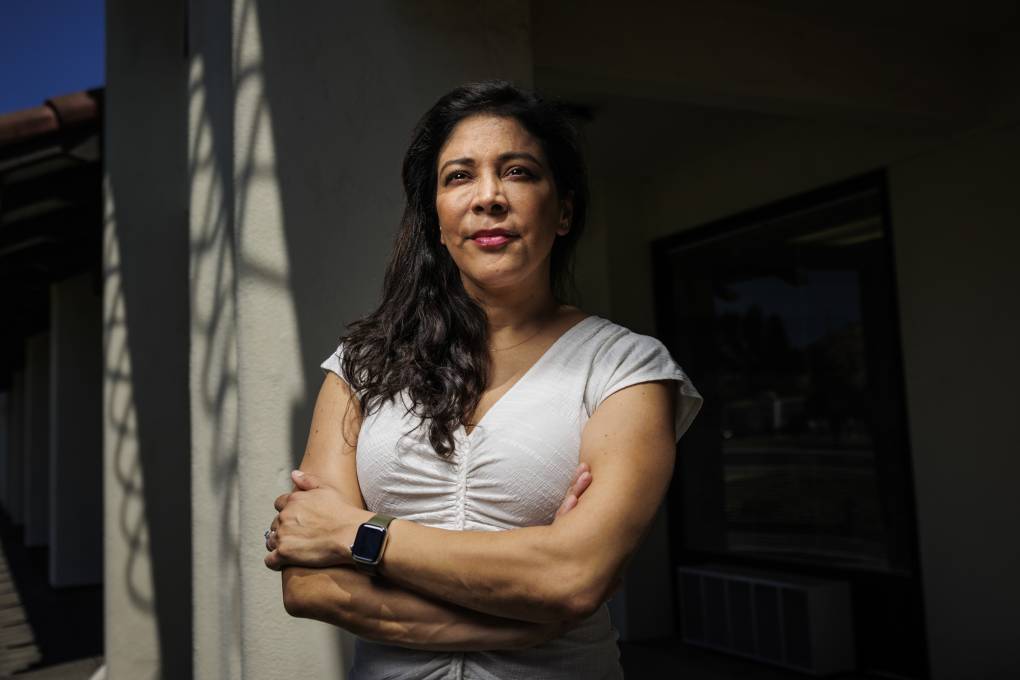
"caption": "Rocio van Nierop outside the Latinas in Tech offices in Moraga on Aug. 7, 2024.",
"credit": "Martin do Nascimento/KQED",
"altTag": null,
"description": null,
"imgSizes": {
"medium": {
"file": "https://cdn.kqed.org/wp-content/uploads/sites/10/2024/08/240807-ROCIO-VAN-NIEROP-MD-02-KQED-800x533.jpg",
"width": 800,
"height": 533,
"mimeType": "image/jpeg"
},
"large": {
"file": "https://cdn.kqed.org/wp-content/uploads/sites/10/2024/08/240807-ROCIO-VAN-NIEROP-MD-02-KQED-1020x680.jpg",
"width": 1020,
"height": 680,
"mimeType": "image/jpeg"
},
"thumbnail": {
"file": "https://cdn.kqed.org/wp-content/uploads/sites/10/2024/08/240807-ROCIO-VAN-NIEROP-MD-02-KQED-160x107.jpg",
"width": 160,
"height": 107,
"mimeType": "image/jpeg"
},
"1536x1536": {
"file": "https://cdn.kqed.org/wp-content/uploads/sites/10/2024/08/240807-ROCIO-VAN-NIEROP-MD-02-KQED-1536x1024.jpg",
"width": 1536,
"height": 1024,
"mimeType": "image/jpeg"
},
"post-thumbnail": {
"file": "https://cdn.kqed.org/wp-content/uploads/sites/10/2024/08/240807-ROCIO-VAN-NIEROP-MD-02-KQED-672x372.jpg",
"width": 672,
"height": 372,
"mimeType": "image/jpeg"
},
"twentyfourteen-full-width": {
"file": "https://cdn.kqed.org/wp-content/uploads/sites/10/2024/08/240807-ROCIO-VAN-NIEROP-MD-02-KQED-1038x576.jpg",
"width": 1038,
"height": 576,
"mimeType": "image/jpeg"
},
"full-width": {
"file": "https://cdn.kqed.org/wp-content/uploads/sites/10/2024/08/240807-ROCIO-VAN-NIEROP-MD-02-KQED-1920x1280.jpg",
"width": 1920,
"height": 1280,
"mimeType": "image/jpeg"
},
"kqedFullSize": {
"file": "https://cdn.kqed.org/wp-content/uploads/sites/10/2024/08/240807-ROCIO-VAN-NIEROP-MD-02-KQED.jpg?ver=1723160235",
"width": 2000,
"height": 1333
}
},
"isLoading": false,
"fetchFailed": false
},
"news_11999732": {
"type": "attachments",
"id": "news_11999732",
"meta": {
"index": "attachments_1716263798",
"site": "news",
"id": "11999732",
"found": true
},
"title": "SWITZERLAND-ECONOMY-DIPLOMACY-BANKING-DAVOS",
"publishDate": 1723302694,
"status": "inherit",
"parent": 11999731,
"modified": 1723302874,
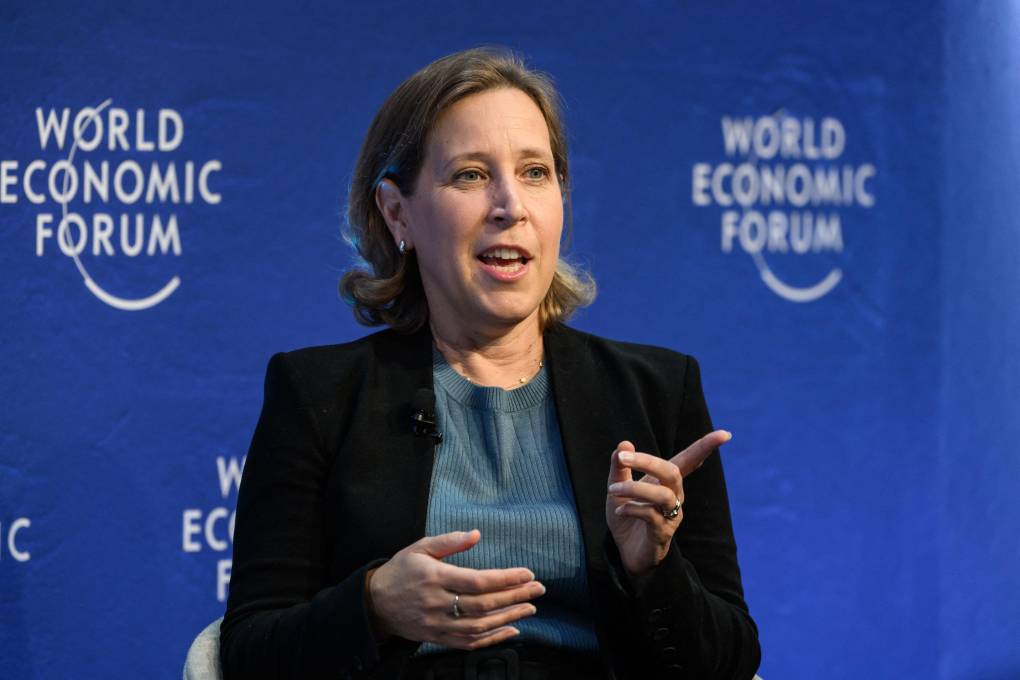
"caption": "You Tube CEO Susan Wojcicki gestures during a session at the World Economic Forum annual meeting in Davos on May 24, 2022. (Fabrice COFFRINI / AFP) ",
"credit": null,
"altTag": "A blonde woman in a black suit jacket speaks with a periwinkle background.",
"description": "You Tube CEO Susan Wojcicki gestures during a session at the World Economic Forum annual meeting in Davos on May 24, 2022. (Photo by Fabrice COFFRINI / AFP) (Photo by FABRICE COFFRINI/AFP via Getty Images)",
"imgSizes": {
"medium": {
"file": "https://cdn.kqed.org/wp-content/uploads/sites/10/2024/08/gettyimages-1240874764-800x533.jpeg",
"width": 800,
"height": 533,
"mimeType": "image/jpeg"
},
"large": {
"file": "https://cdn.kqed.org/wp-content/uploads/sites/10/2024/08/gettyimages-1240874764-1020x680.jpeg",
"width": 1020,
"height": 680,
"mimeType": "image/jpeg"
},
"thumbnail": {
"file": "https://cdn.kqed.org/wp-content/uploads/sites/10/2024/08/gettyimages-1240874764-160x107.jpeg",
"width": 160,
"height": 107,
"mimeType": "image/jpeg"
},
"1536x1536": {
"file": "https://cdn.kqed.org/wp-content/uploads/sites/10/2024/08/gettyimages-1240874764-1536x1024.jpeg",
"width": 1536,
"height": 1024,
"mimeType": "image/jpeg"
},
"2048x2048": {
"file": "https://cdn.kqed.org/wp-content/uploads/sites/10/2024/08/gettyimages-1240874764-2048x1365.jpeg",
"width": 2048,
"height": 1365,
"mimeType": "image/jpeg"
},
"post-thumbnail": {
"file": "https://cdn.kqed.org/wp-content/uploads/sites/10/2024/08/gettyimages-1240874764-672x372.jpeg",
"width": 672,
"height": 372,
"mimeType": "image/jpeg"
},
"twentyfourteen-full-width": {
"file": "https://cdn.kqed.org/wp-content/uploads/sites/10/2024/08/gettyimages-1240874764-1038x576.jpeg",
"width": 1038,
"height": 576,
"mimeType": "image/jpeg"
},
"full-width": {
"file": "https://cdn.kqed.org/wp-content/uploads/sites/10/2024/08/gettyimages-1240874764-1920x1280.jpeg",
"width": 1920,
"height": 1280,
"mimeType": "image/jpeg"
},
"kqedFullSize": {
"file": "https://cdn.kqed.org/wp-content/uploads/sites/10/2024/08/gettyimages-1240874764-scaled.jpeg",
"width": 2560,
"height": 1706
}
},
"isLoading": false,
"fetchFailed": false
},
"news_11999422": {
"type": "attachments",
"id": "news_11999422",
"meta": {
"index": "attachments_1716263798",
"site": "news",
"id": "11999422",
"found": true
},
"title": "TikTok Booth At AWE in Shanghai",
"publishDate": 1723138189,
"status": "inherit",
"parent": 11999273,
"modified": 1737226746,
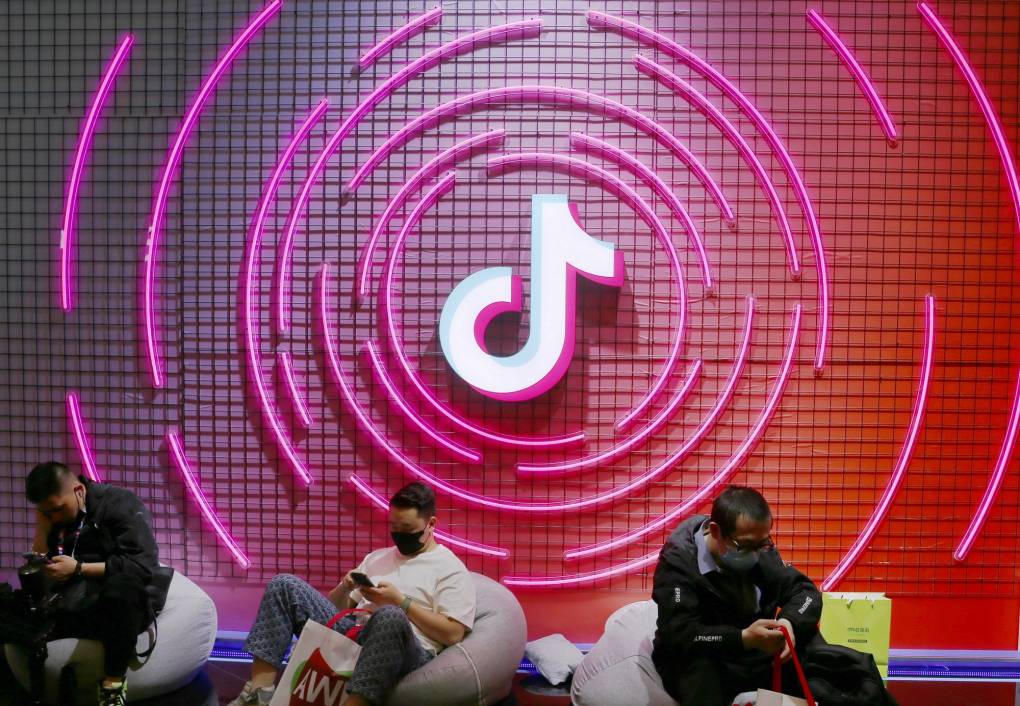
"caption": "Visitors stop by TikTok's stand at the the Appliance & Electronics World Expo (AWE) in Shanghai, China, on April 27, 2023.",
"credit": "Costfoto/NurPhoto via Getty Images",
"altTag": null,
"description": null,
"imgSizes": {
"medium": {
"file": "https://cdn.kqed.org/wp-content/uploads/sites/10/2024/08/TikTokGetty-800x554.jpg",
"width": 800,
"height": 554,
"mimeType": "image/jpeg"
},
"large": {
"file": "https://cdn.kqed.org/wp-content/uploads/sites/10/2024/08/TikTokGetty-1020x706.jpg",
"width": 1020,
"height": 706,
"mimeType": "image/jpeg"
},
"thumbnail": {
"file": "https://cdn.kqed.org/wp-content/uploads/sites/10/2024/08/TikTokGetty-160x111.jpg",
"width": 160,
"height": 111,
"mimeType": "image/jpeg"
},
"1536x1536": {
"file": "https://cdn.kqed.org/wp-content/uploads/sites/10/2024/08/TikTokGetty-1536x1063.jpg",
"width": 1536,
"height": 1063,
"mimeType": "image/jpeg"
},
"post-thumbnail": {
"file": "https://cdn.kqed.org/wp-content/uploads/sites/10/2024/08/TikTokGetty-672x372.jpg",
"width": 672,
"height": 372,
"mimeType": "image/jpeg"
},
"twentyfourteen-full-width": {
"file": "https://cdn.kqed.org/wp-content/uploads/sites/10/2024/08/TikTokGetty-1038x576.jpg",
"width": 1038,
"height": 576,
"mimeType": "image/jpeg"
},
"full-width": {
"file": "https://cdn.kqed.org/wp-content/uploads/sites/10/2024/08/TikTokGetty-1920x1329.jpg",
"width": 1920,
"height": 1329,
"mimeType": "image/jpeg"
},
"kqedFullSize": {
"file": "https://cdn.kqed.org/wp-content/uploads/sites/10/2024/08/TikTokGetty.jpg",
"width": 2000,
"height": 1384
}
},
"isLoading": false,
"fetchFailed": false
},
"news_11999267": {
"type": "attachments",
"id": "news_11999267",
"meta": {
"index": "attachments_1716263798",
"site": "news",
"id": "11999267",
"found": true
},
"title": "20240506_EVFile-2_qed",
"publishDate": 1723064389,
"status": "inherit",
"parent": 11999232,
"modified": 1723065361,
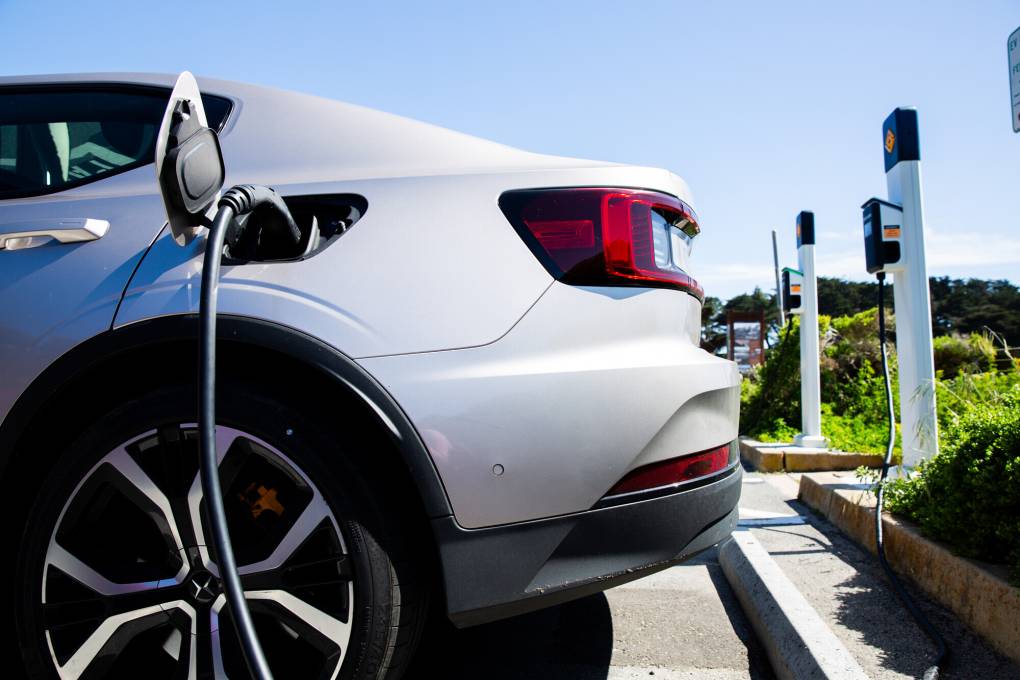
"caption": "A Polestar 2 charges at an EV charging station in San Francisco on Monday, May 6, 2024.",
"credit": "Gina Castro/KQED",
"altTag": null,
"description": null,
"imgSizes": {
"medium": {
"file": "https://cdn.kqed.org/wp-content/uploads/sites/10/2024/08/20240506_EVFile-2_qed-800x533.jpg",
"width": 800,
"height": 533,
"mimeType": "image/jpeg"
},
"large": {
"file": "https://cdn.kqed.org/wp-content/uploads/sites/10/2024/08/20240506_EVFile-2_qed-1020x680.jpg",
"width": 1020,
"height": 680,
"mimeType": "image/jpeg"
},
"thumbnail": {
"file": "https://cdn.kqed.org/wp-content/uploads/sites/10/2024/08/20240506_EVFile-2_qed-160x107.jpg",
"width": 160,
"height": 107,
"mimeType": "image/jpeg"
},
"1536x1536": {
"file": "https://cdn.kqed.org/wp-content/uploads/sites/10/2024/08/20240506_EVFile-2_qed-1536x1024.jpg",
"width": 1536,
"height": 1024,
"mimeType": "image/jpeg"
},
"post-thumbnail": {
"file": "https://cdn.kqed.org/wp-content/uploads/sites/10/2024/08/20240506_EVFile-2_qed-672x372.jpg",
"width": 672,
"height": 372,
"mimeType": "image/jpeg"
},
"twentyfourteen-full-width": {
"file": "https://cdn.kqed.org/wp-content/uploads/sites/10/2024/08/20240506_EVFile-2_qed-1038x576.jpg",
"width": 1038,
"height": 576,
"mimeType": "image/jpeg"
},
"full-width": {
"file": "https://cdn.kqed.org/wp-content/uploads/sites/10/2024/08/20240506_EVFile-2_qed-1920x1280.jpg",
"width": 1920,
"height": 1280,
"mimeType": "image/jpeg"
},
"kqedFullSize": {
"file": "https://cdn.kqed.org/wp-content/uploads/sites/10/2024/08/20240506_EVFile-2_qed.jpg",
"width": 2000,
"height": 1333
}
},
"isLoading": false,
"fetchFailed": false
},
"news_11999342": {
"type": "attachments",
"id": "news_11999342",
"meta": {
"index": "attachments_1716263798",
"site": "news",
"id": "11999342",
"found": true
},
"title": "2024 Republican National Convention TW",
"publishDate": 1723074225,
"status": "inherit",
"parent": 11999338,
"modified": 1764708406,
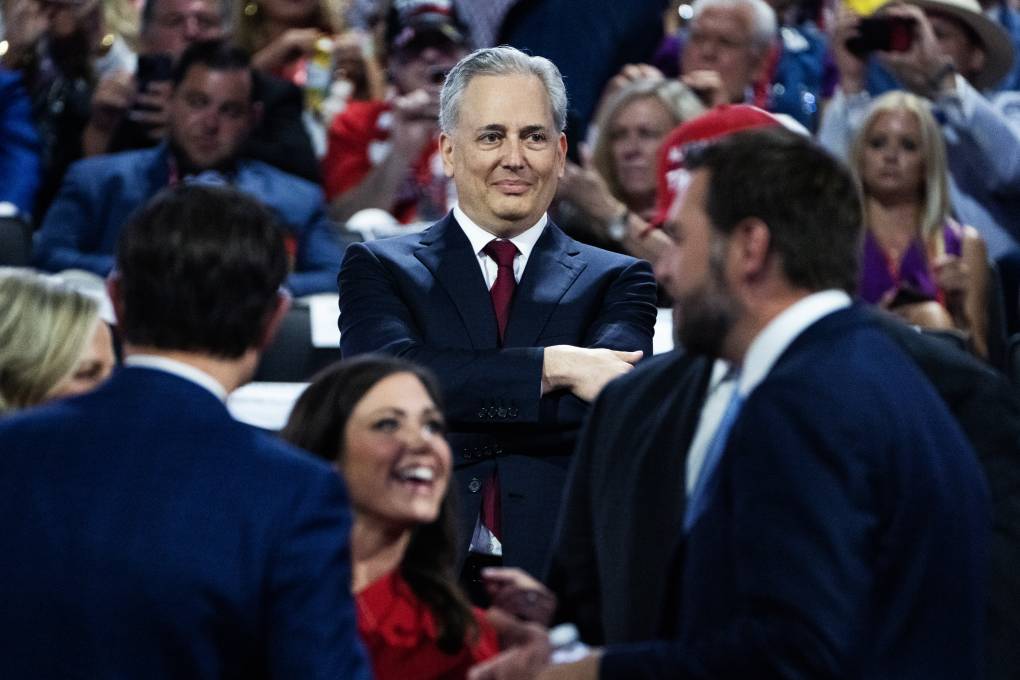
"caption": "David Sacks, a venture capitalist, and Vice President JD Vance are seen in Fiserv Forum on the first day of Republican National Convention in Milwaukee, Wis., on Monday, July 15, 2024.",
"credit": "Tom Williams/Getty Images",
"altTag": null,
"description": null,
"imgSizes": {
"medium": {
"file": "https://cdn.kqed.org/wp-content/uploads/sites/10/2024/08/GettyImages-2163834989-800x533.jpg",
"width": 800,
"height": 533,
"mimeType": "image/jpeg"
},
"large": {
"file": "https://cdn.kqed.org/wp-content/uploads/sites/10/2024/08/GettyImages-2163834989-1020x680.jpg",
"width": 1020,
"height": 680,
"mimeType": "image/jpeg"
},
"thumbnail": {
"file": "https://cdn.kqed.org/wp-content/uploads/sites/10/2024/08/GettyImages-2163834989-160x107.jpg",
"width": 160,
"height": 107,
"mimeType": "image/jpeg"
},
"1536x1536": {
"file": "https://cdn.kqed.org/wp-content/uploads/sites/10/2024/08/GettyImages-2163834989-1536x1024.jpg",
"width": 1536,
"height": 1024,
"mimeType": "image/jpeg"
},
"2048x2048": {
"file": "https://cdn.kqed.org/wp-content/uploads/sites/10/2024/08/GettyImages-2163834989-2048x1365.jpg",
"width": 2048,
"height": 1365,
"mimeType": "image/jpeg"
},
"post-thumbnail": {
"file": "https://cdn.kqed.org/wp-content/uploads/sites/10/2024/08/GettyImages-2163834989-672x372.jpg",
"width": 672,
"height": 372,
"mimeType": "image/jpeg"
},
"twentyfourteen-full-width": {
"file": "https://cdn.kqed.org/wp-content/uploads/sites/10/2024/08/GettyImages-2163834989-1038x576.jpg",
"width": 1038,
"height": 576,
"mimeType": "image/jpeg"
},
"full-width": {
"file": "https://cdn.kqed.org/wp-content/uploads/sites/10/2024/08/GettyImages-2163834989-1920x1280.jpg",
"width": 1920,
"height": 1280,
"mimeType": "image/jpeg"
},
"kqedFullSize": {
"file": "https://cdn.kqed.org/wp-content/uploads/sites/10/2024/08/GettyImages-2163834989-scaled.jpg",
"width": 2560,
"height": 1707
}
},
"isLoading": false,
"fetchFailed": false
},
"news_11999023": {
"type": "attachments",
"id": "news_11999023",
"meta": {
"index": "attachments_1716263798",
"site": "news",
"id": "11999023",
"found": true
},
"title": "Department Of Justice Expected To Launch New Anti-Trust Investigation Of Google",
"publishDate": 1722971661,
"status": "inherit",
"parent": 11999009,
"modified": 1745269612,
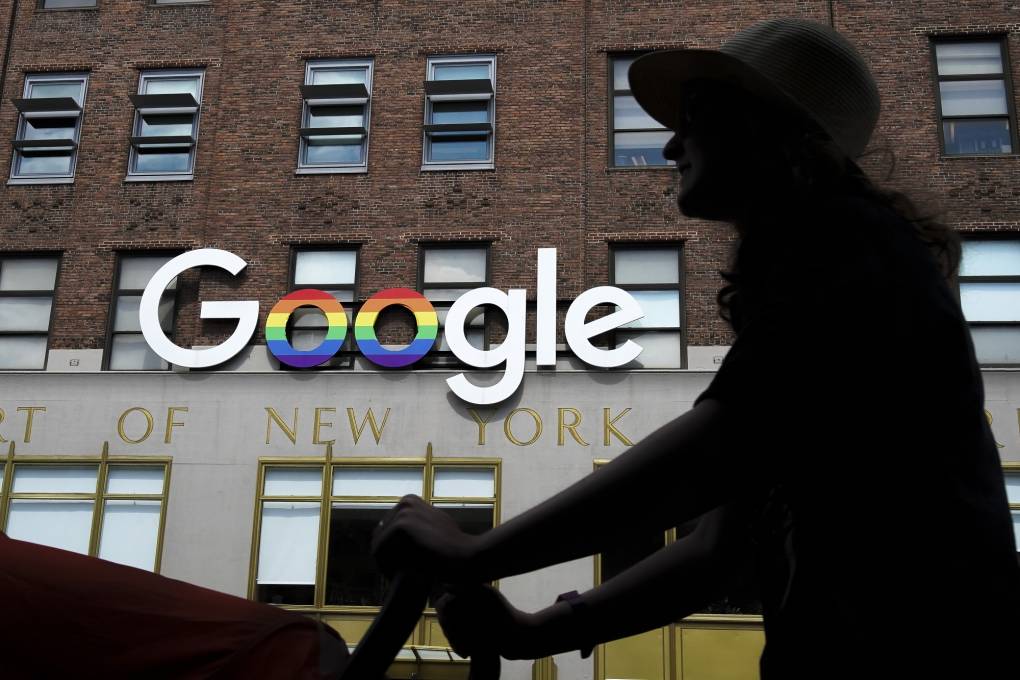
"caption": "After a judge ruled that Google held an illegal monopoly on search, legal analysts are split on whether the case will break up the company or influence other antitrust lawsuits.",
"credit": "Drew Angerer/Getty Images",
"altTag": null,
"description": null,
"imgSizes": {
"medium": {
"file": "https://cdn.kqed.org/wp-content/uploads/sites/10/2024/08/GoogleAntitrustGetty-800x533.jpg",
"width": 800,
"height": 533,
"mimeType": "image/jpeg"
},
"large": {
"file": "https://cdn.kqed.org/wp-content/uploads/sites/10/2024/08/GoogleAntitrustGetty-1020x680.jpg",
"width": 1020,
"height": 680,
"mimeType": "image/jpeg"
},
"thumbnail": {
"file": "https://cdn.kqed.org/wp-content/uploads/sites/10/2024/08/GoogleAntitrustGetty-160x107.jpg",
"width": 160,
"height": 107,
"mimeType": "image/jpeg"
},
"1536x1536": {
"file": "https://cdn.kqed.org/wp-content/uploads/sites/10/2024/08/GoogleAntitrustGetty-1536x1024.jpg",
"width": 1536,
"height": 1024,
"mimeType": "image/jpeg"
},
"post-thumbnail": {
"file": "https://cdn.kqed.org/wp-content/uploads/sites/10/2024/08/GoogleAntitrustGetty-672x372.jpg",
"width": 672,
"height": 372,
"mimeType": "image/jpeg"
},
"twentyfourteen-full-width": {
"file": "https://cdn.kqed.org/wp-content/uploads/sites/10/2024/08/GoogleAntitrustGetty-1038x576.jpg",
"width": 1038,
"height": 576,
"mimeType": "image/jpeg"
},
"full-width": {
"file": "https://cdn.kqed.org/wp-content/uploads/sites/10/2024/08/GoogleAntitrustGetty-1920x1280.jpg",
"width": 1920,
"height": 1280,
"mimeType": "image/jpeg"
},
"kqedFullSize": {
"file": "https://cdn.kqed.org/wp-content/uploads/sites/10/2024/08/GoogleAntitrustGetty.jpg",
"width": 2000,
"height": 1333
}
},
"isLoading": false,
"fetchFailed": false
},
"news_11998856": {
"type": "attachments",
"id": "news_11998856",
"meta": {
"index": "attachments_1716263798",
"site": "news",
"id": "11998856",
"found": true
},
"title": "In this photo illustration, the ChatGPT logo is displayed on",
"publishDate": 1722890738,
"status": "inherit",
"parent": 11998817,
"modified": 1722890828,
"caption": "Several bills addressing generative artificial intelligence are moving through the state Legislature in California’s piecemeal approach to regulation.",
"credit": "Jaque Silva/SOPA Images/LightRocket via Getty Images",
"altTag": null,
"description": null,
"imgSizes": {
"medium": {
"file": "https://cdn.kqed.org/wp-content/uploads/sites/10/2024/08/ChatGPTGetty-800x533.jpg",
"width": 800,
"height": 533,
"mimeType": "image/jpeg"
},
"large": {
"file": "https://cdn.kqed.org/wp-content/uploads/sites/10/2024/08/ChatGPTGetty-1020x680.jpg",
"width": 1020,
"height": 680,
"mimeType": "image/jpeg"
},
"thumbnail": {
"file": "https://cdn.kqed.org/wp-content/uploads/sites/10/2024/08/ChatGPTGetty-160x107.jpg",
"width": 160,
"height": 107,
"mimeType": "image/jpeg"
},
"1536x1536": {
"file": "https://cdn.kqed.org/wp-content/uploads/sites/10/2024/08/ChatGPTGetty-1536x1024.jpg",
"width": 1536,
"height": 1024,
"mimeType": "image/jpeg"
},
"post-thumbnail": {
"file": "https://cdn.kqed.org/wp-content/uploads/sites/10/2024/08/ChatGPTGetty-672x372.jpg",
"width": 672,
"height": 372,
"mimeType": "image/jpeg"
},
"twentyfourteen-full-width": {
"file": "https://cdn.kqed.org/wp-content/uploads/sites/10/2024/08/ChatGPTGetty-1038x576.jpg",
"width": 1038,
"height": 576,
"mimeType": "image/jpeg"
},
"full-width": {
"file": "https://cdn.kqed.org/wp-content/uploads/sites/10/2024/08/ChatGPTGetty-1920x1280.jpg",
"width": 1920,
"height": 1280,
"mimeType": "image/jpeg"
},
"kqedFullSize": {
"file": "https://cdn.kqed.org/wp-content/uploads/sites/10/2024/08/ChatGPTGetty.jpg",
"width": 2000,
"height": 1333
}
},
"isLoading": false,
"fetchFailed": false
},
"news_11998675": {
"type": "attachments",
"id": "news_11998675",
"meta": {
"index": "attachments_1716263798",
"site": "news",
"id": "11998675",
"found": true
},
"title": "240802-VTAFEDFUND-JG-1",
"publishDate": 1722635297,
"status": "inherit",
"parent": 11998646,
"modified": 1722639556,
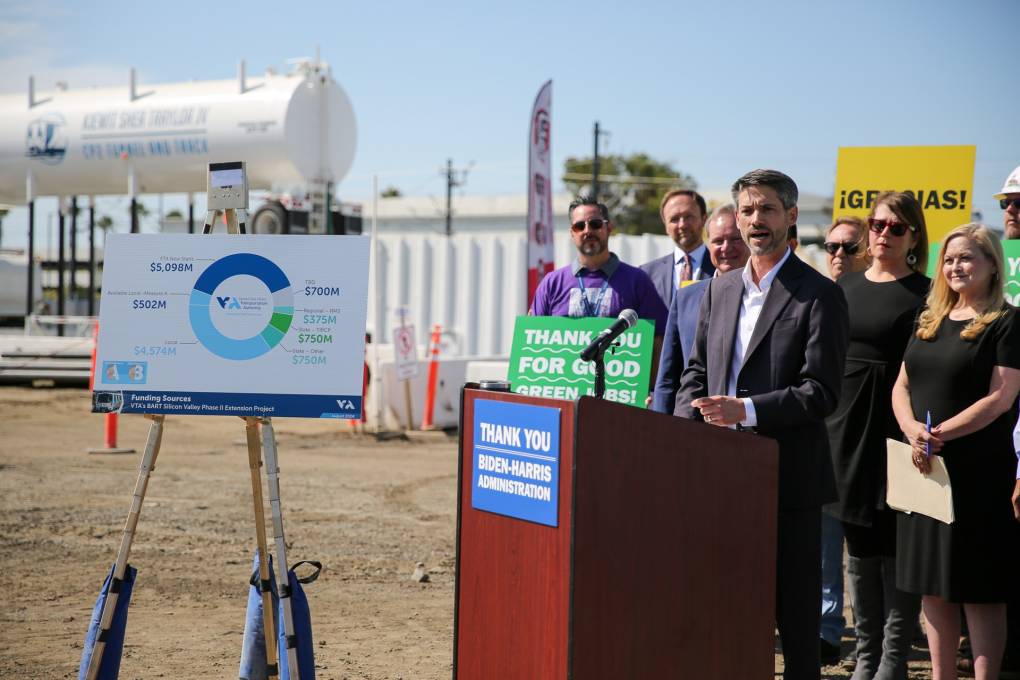
"caption": "San José Mayor Matt Mahan speaks during a gathering in Santa Clara on Aug. 2, 2024, to announce a nearly $5.1 billion funding commitment from federal transit officials toward the VTA BART Silicon Valley Phase II extension project.",
"credit": "Joseph Geha/KQED",
"altTag": "The mayor of San Jose stands behind a podium. A poster breaking down the project budget is displayed next to the speaker.",
"description": "San José Mayor Matt Mahan speaks during a gathering in Santa Clara to announce a nearly $5.1 billion funding commitment from federal transit officials toward VTA BART Silicon Valley Phase II extension project on Aug. 2, 2024.",
"imgSizes": {
"medium": {
"file": "https://cdn.kqed.org/wp-content/uploads/sites/10/2024/08/240802-VTAFEDFUND-JG-1-800x533.jpg",
"width": 800,
"height": 533,
"mimeType": "image/jpeg"
},
"large": {
"file": "https://cdn.kqed.org/wp-content/uploads/sites/10/2024/08/240802-VTAFEDFUND-JG-1-1020x680.jpg",
"width": 1020,
"height": 680,
"mimeType": "image/jpeg"
},
"thumbnail": {
"file": "https://cdn.kqed.org/wp-content/uploads/sites/10/2024/08/240802-VTAFEDFUND-JG-1-160x107.jpg",
"width": 160,
"height": 107,
"mimeType": "image/jpeg"
},
"1536x1536": {
"file": "https://cdn.kqed.org/wp-content/uploads/sites/10/2024/08/240802-VTAFEDFUND-JG-1-1536x1024.jpg",
"width": 1536,
"height": 1024,
"mimeType": "image/jpeg"
},
"post-thumbnail": {
"file": "https://cdn.kqed.org/wp-content/uploads/sites/10/2024/08/240802-VTAFEDFUND-JG-1-672x372.jpg",
"width": 672,
"height": 372,
"mimeType": "image/jpeg"
},
"twentyfourteen-full-width": {
"file": "https://cdn.kqed.org/wp-content/uploads/sites/10/2024/08/240802-VTAFEDFUND-JG-1-1038x576.jpg",
"width": 1038,
"height": 576,
"mimeType": "image/jpeg"
},
"kqedFullSize": {
"file": "https://cdn.kqed.org/wp-content/uploads/sites/10/2024/08/240802-VTAFEDFUND-JG-1.jpg",
"width": 1920,
"height": 1280
}
},
"isLoading": false,
"fetchFailed": false
},
"news_11998469": {
"type": "attachments",
"id": "news_11998469",
"meta": {
"index": "attachments_1716263798",
"site": "news",
"id": "11998469",
"found": true
},
"title": "240612-SFMayoralDebate-22-BL_qed",
"publishDate": 1722548845,
"status": "inherit",
"parent": 11998411,
"modified": 1722552532,
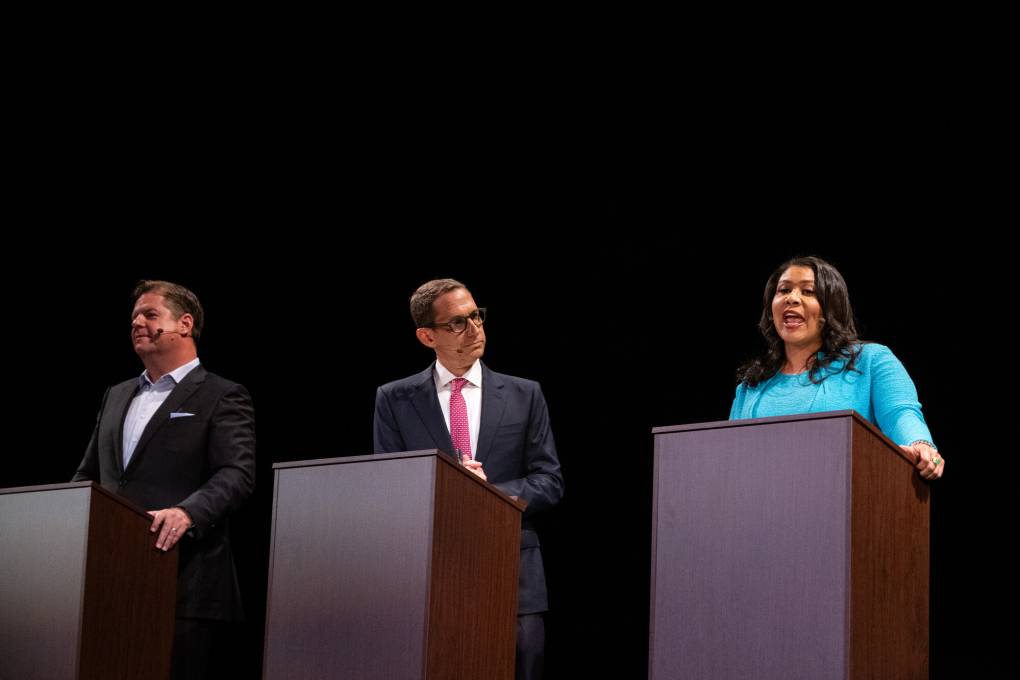
"caption": "Mayor London Breed speaks during a San Francisco mayoral debate with candidates Ahsha Safaí, former Mayor Mark Farrell, Daniel Lurie and Aaron Peskin at the Sydney Goldstein Theater on June 12, 2024.",
"credit": "Beth LaBerge/KQED",
"altTag": null,
"description": null,
"imgSizes": {
"medium": {
"file": "https://cdn.kqed.org/wp-content/uploads/sites/10/2024/08/240612-SFMayoralDebate-22-BL_qed-800x533.jpg",
"width": 800,
"height": 533,
"mimeType": "image/jpeg"
},
"large": {
"file": "https://cdn.kqed.org/wp-content/uploads/sites/10/2024/08/240612-SFMayoralDebate-22-BL_qed-1020x680.jpg",
"width": 1020,
"height": 680,
"mimeType": "image/jpeg"
},
"thumbnail": {
"file": "https://cdn.kqed.org/wp-content/uploads/sites/10/2024/08/240612-SFMayoralDebate-22-BL_qed-160x107.jpg",
"width": 160,
"height": 107,
"mimeType": "image/jpeg"
},
"1536x1536": {
"file": "https://cdn.kqed.org/wp-content/uploads/sites/10/2024/08/240612-SFMayoralDebate-22-BL_qed-1536x1024.jpg",
"width": 1536,
"height": 1024,
"mimeType": "image/jpeg"
},
"post-thumbnail": {
"file": "https://cdn.kqed.org/wp-content/uploads/sites/10/2024/08/240612-SFMayoralDebate-22-BL_qed-672x372.jpg",
"width": 672,
"height": 372,
"mimeType": "image/jpeg"
},
"twentyfourteen-full-width": {
"file": "https://cdn.kqed.org/wp-content/uploads/sites/10/2024/08/240612-SFMayoralDebate-22-BL_qed-1038x576.jpg",
"width": 1038,
"height": 576,
"mimeType": "image/jpeg"
},
"full-width": {
"file": "https://cdn.kqed.org/wp-content/uploads/sites/10/2024/08/240612-SFMayoralDebate-22-BL_qed-1920x1280.jpg",
"width": 1920,
"height": 1280,
"mimeType": "image/jpeg"
},
"kqedFullSize": {
"file": "https://cdn.kqed.org/wp-content/uploads/sites/10/2024/08/240612-SFMayoralDebate-22-BL_qed.jpg",
"width": 1999,
"height": 1333
}
},
"isLoading": false,
"fetchFailed": false
},
"news_11997842": {
"type": "attachments",
"id": "news_11997842",
"meta": {
"index": "attachments_1716263798",
"site": "news",
"id": "11997842",
"found": true
},
"title": "GettyImages-2158244120",
"publishDate": 1722279466,
"status": "inherit",
"parent": 11997819,
"modified": 1722281528,
"caption": "Elon Musk at an event on June 19, 2024, in Cannes, France. ",
"credit": "Marc Piasecki/Getty Images",
"altTag": null,
"description": null,
"imgSizes": {
"medium": {
"file": "https://cdn.kqed.org/wp-content/uploads/sites/10/2024/07/GettyImages-2158244120-800x534.jpg",
"width": 800,
"height": 534,
"mimeType": "image/jpeg"
},
"large": {
"file": "https://cdn.kqed.org/wp-content/uploads/sites/10/2024/07/GettyImages-2158244120-1020x681.jpg",
"width": 1020,
"height": 681,
"mimeType": "image/jpeg"
},
"thumbnail": {
"file": "https://cdn.kqed.org/wp-content/uploads/sites/10/2024/07/GettyImages-2158244120-160x107.jpg",
"width": 160,
"height": 107,
"mimeType": "image/jpeg"
},
"1536x1536": {
"file": "https://cdn.kqed.org/wp-content/uploads/sites/10/2024/07/GettyImages-2158244120-1536x1025.jpg",
"width": 1536,
"height": 1025,
"mimeType": "image/jpeg"
},
"post-thumbnail": {
"file": "https://cdn.kqed.org/wp-content/uploads/sites/10/2024/07/GettyImages-2158244120-672x372.jpg",
"width": 672,
"height": 372,
"mimeType": "image/jpeg"
},
"twentyfourteen-full-width": {
"file": "https://cdn.kqed.org/wp-content/uploads/sites/10/2024/07/GettyImages-2158244120-1038x576.jpg",
"width": 1038,
"height": 576,
"mimeType": "image/jpeg"
},
"kqedFullSize": {
"file": "https://cdn.kqed.org/wp-content/uploads/sites/10/2024/07/GettyImages-2158244120.jpg",
"width": 1920,
"height": 1281
}
},
"isLoading": false,
"fetchFailed": false
},
"news_11997685": {
"type": "attachments",
"id": "news_11997685",
"meta": {
"index": "attachments_1716263798",
"site": "news",
"id": "11997685",
"found": true
},
"title": "kamala-harris-brat-charli-xcx",
"publishDate": 1722037863,
"status": "inherit",
"parent": 11997647,
"modified": 1722038245,
"caption": null,
"credit": "Illustration by Darren Tu/KQED",
"altTag": null,
"description": null,
"imgSizes": {
"medium": {
"file": "https://cdn.kqed.org/wp-content/uploads/sites/10/2024/07/Kamala-Harris-meme_2-800x517.jpg",
"width": 800,
"height": 517,
"mimeType": "image/jpeg"
},
"large": {
"file": "https://cdn.kqed.org/wp-content/uploads/sites/10/2024/07/Kamala-Harris-meme_2-1020x659.jpg",
"width": 1020,
"height": 659,
"mimeType": "image/jpeg"
},
"thumbnail": {
"file": "https://cdn.kqed.org/wp-content/uploads/sites/10/2024/07/Kamala-Harris-meme_2-160x103.jpg",
"width": 160,
"height": 103,
"mimeType": "image/jpeg"
},
"1536x1536": {
"file": "https://cdn.kqed.org/wp-content/uploads/sites/10/2024/07/Kamala-Harris-meme_2-1536x992.jpg",
"width": 1536,
"height": 992,
"mimeType": "image/jpeg"
},
"post-thumbnail": {
"file": "https://cdn.kqed.org/wp-content/uploads/sites/10/2024/07/Kamala-Harris-meme_2-672x372.jpg",
"width": 672,
"height": 372,
"mimeType": "image/jpeg"
},
"twentyfourteen-full-width": {
"file": "https://cdn.kqed.org/wp-content/uploads/sites/10/2024/07/Kamala-Harris-meme_2-1038x576.jpg",
"width": 1038,
"height": 576,
"mimeType": "image/jpeg"
},
"kqedFullSize": {
"file": "https://cdn.kqed.org/wp-content/uploads/sites/10/2024/07/Kamala-Harris-meme_2.jpg",
"width": 1920,
"height": 1240
}
},
"isLoading": false,
"fetchFailed": false
},
"news_11997364": {
"type": "attachments",
"id": "news_11997364",
"meta": {
"index": "attachments_1716263798",
"site": "news",
"id": "11997364",
"found": true
},
"title": "KRISHNANHARRIS2-KQED",
"publishDate": 1721926311,
"status": "inherit",
"parent": 0,
"modified": 1722009641,
"caption": "Harini Krishnan (right) takes a photo with Vice President Kamala Harris and second gentleman Doug Emhoff on Dec. 9, 2022, at the vice president’s official residence in Washington, DC. ",
"credit": "Courtesy of Harini Krishnan",
"altTag": null,
"description": null,
"imgSizes": {
"medium": {
"file": "https://cdn.kqed.org/wp-content/uploads/sites/10/2024/07/KRISHNANHARRIS2-KQED-800x533.jpg",
"width": 800,
"height": 533,
"mimeType": "image/jpeg"
},
"large": {
"file": "https://cdn.kqed.org/wp-content/uploads/sites/10/2024/07/KRISHNANHARRIS2-KQED-1020x680.jpg",
"width": 1020,
"height": 680,
"mimeType": "image/jpeg"
},
"thumbnail": {
"file": "https://cdn.kqed.org/wp-content/uploads/sites/10/2024/07/KRISHNANHARRIS2-KQED-160x107.jpg",
"width": 160,
"height": 107,
"mimeType": "image/jpeg"
},
"1536x1536": {
"file": "https://cdn.kqed.org/wp-content/uploads/sites/10/2024/07/KRISHNANHARRIS2-KQED-1536x1024.jpg",
"width": 1536,
"height": 1024,
"mimeType": "image/jpeg"
},
"post-thumbnail": {
"file": "https://cdn.kqed.org/wp-content/uploads/sites/10/2024/07/KRISHNANHARRIS2-KQED-672x372.jpg",
"width": 672,
"height": 372,
"mimeType": "image/jpeg"
},
"twentyfourteen-full-width": {
"file": "https://cdn.kqed.org/wp-content/uploads/sites/10/2024/07/KRISHNANHARRIS2-KQED-1038x576.jpg",
"width": 1038,
"height": 576,
"mimeType": "image/jpeg"
},
"full-width": {
"file": "https://cdn.kqed.org/wp-content/uploads/sites/10/2024/07/KRISHNANHARRIS2-KQED-1920x1280.jpg",
"width": 1920,
"height": 1280,
"mimeType": "image/jpeg"
},
"kqedFullSize": {
"file": "https://cdn.kqed.org/wp-content/uploads/sites/10/2024/07/KRISHNANHARRIS2-KQED.jpg",
"width": 2000,
"height": 1333
}
},
"isLoading": false,
"fetchFailed": false
}
},
"audioPlayerReducer": {
"postId": "stream_live",
"isPaused": true,
"isPlaying": false,
"pfsActive": false,
"pledgeModalIsOpen": true,
"playerDrawerIsOpen": false,
"liveAudioPlayStartedAt": 0,
"liveAudioPlayContext": ""
},
"authorsReducer": {
"byline_news_11999731": {
"type": "authors",
"id": "byline_news_11999731",
"meta": {
"override": true
},
"slug": "byline_news_11999731",
"name": "Juliana Kim, NPR",
"isLoading": false
},
"byline_news_11997819": {
"type": "authors",
"id": "byline_news_11997819",
"meta": {
"override": true
},
"slug": "byline_news_11997819",
"name": "Ali Swenson, Associated Press",
"isLoading": false
},
"rachael-myrow": {
"type": "authors",
"id": "251",
"meta": {
"index": "authors_1716337520",
"id": "251",
"found": true
},
"name": "Rachael Myrow",
"firstName": "Rachael",
"lastName": "Myrow",
"slug": "rachael-myrow",
"email": "rmyrow@kqed.org",
"display_author_email": true,
"staff_mastheads": [
"news"
],
"title": "Senior Editor of KQED's Silicon Valley News Desk",
"bio": "• I write and edit stories about how Silicon Valley power and policies shape everyday life in California. I’m also passionate about making Bay Area history and culture more accessible to a broad public. • I’ve been a journalist for most of my life, starting in high school with The Franklin Press in Los Angeles, where I grew up. While earning my first degree in English at UC Berkeley, I got my start in public radio at KALX-FM. After completing a second degree in journalism at Cal, I landed my first professional job at Marketplace, then moved on to KPCC (now LAist), and then KQED, where I hosted The California Report for more than seven years. • My reporting has appeared on NPR, The World, WBUR’s \u003ci>Here & Now\u003c/i>, and the BBC. I also guest host for KQED’s \u003ci>Forum\u003c/i>, as well as the Commonwealth Club in San Francisco. • I speak periodically on media, democracy and technology issues, and do voiceover work for documentaries and educational video projects. • Outside of the studio, you'll find me hiking Bay Area trails and whipping up Insta-ready meals in my kitchen. • I do not accept gifts, money, or favors from anyone connected to my reporting, I don't pay people for information, and I do not support or donate to political causes. • I strive to treat the people I report on with fairness, honesty, and respect. I also recognize there are often multiple sides to a story and work to verify information through multiple sources and documentation. If I get something wrong, I correct it.",
"avatar": "https://secure.gravatar.com/avatar/3ed8a3c5f26025e4a805ba634cda8cd764906b97438a6d9ce216b044e340da4e?s=600&d=blank&r=g",
"twitter": "rachaelmyrow",
"bluesky": null,
"facebook": null,
"instagram": null,
"linkedin": "https://www.linkedin.com/in/rachaelmyrow/",
"sites": [
{
"site": "arts",
"roles": [
"administrator"
]
},
{
"site": "news",
"roles": [
"edit_others_posts",
"editor"
]
},
{
"site": "futureofyou",
"roles": [
"editor"
]
},
{
"site": "bayareabites",
"roles": [
"editor"
]
},
{
"site": "stateofhealth",
"roles": [
"editor"
]
},
{
"site": "science",
"roles": [
"editor"
]
},
{
"site": "food",
"roles": [
"editor"
]
},
{
"site": "forum",
"roles": [
"editor"
]
},
{
"site": "liveblog",
"roles": [
"author"
]
}
],
"headData": {
"title": "Rachael Myrow | KQED",
"description": "Senior Editor of KQED's Silicon Valley News Desk",
"ogImgSrc": "https://secure.gravatar.com/avatar/3ed8a3c5f26025e4a805ba634cda8cd764906b97438a6d9ce216b044e340da4e?s=600&d=blank&r=g",
"twImgSrc": "https://secure.gravatar.com/avatar/3ed8a3c5f26025e4a805ba634cda8cd764906b97438a6d9ce216b044e340da4e?s=600&d=blank&r=g"
},
"isLoading": false,
"link": "/author/rachael-myrow"
},
"scottshafer": {
"type": "authors",
"id": "255",
"meta": {
"index": "authors_1716337520",
"id": "255",
"found": true
},
"name": "Scott Shafer",
"firstName": "Scott",
"lastName": "Shafer",
"slug": "scottshafer",
"email": "sshafer@kqed.org",
"display_author_email": false,
"staff_mastheads": [
"news"
],
"title": "KQED Contributor",
"bio": "Scott Shafer is a senior editor with the KQED Politics and Government desk. He is co-host of Political Breakdown, the award-winning radio show and podcast with a personal take on the world of politics. Scott came to KQED in 1998 to host the statewide\u003cem> California Report\u003c/em>. Prior to that he had extended stints in politics and government\u003cem>.\u003c/em> He uses that inside experience at KQED in his, reporting, hosting and analysis for the politics desk. Scott collaborated \u003cem>Political Breakdown a\u003c/em>nd on \u003cem>The Political Mind of Jerry Brown, \u003c/em>an eight-part series about the life and extraordinary political career of the former governor. For fun, he plays water polo with the San Francisco Tsunami.",
"avatar": "https://secure.gravatar.com/avatar/a62ebae45b79d7aed1a39a0e3bf68104?s=600&d=blank&r=g",
"twitter": "scottshafer",
"bluesky": null,
"facebook": null,
"instagram": null,
"linkedin": null,
"sites": [
{
"site": "news",
"roles": [
"editor"
]
},
{
"site": "stateofhealth",
"roles": [
"author"
]
},
{
"site": "science",
"roles": [
"author"
]
},
{
"site": "forum",
"roles": [
"subscriber"
]
},
{
"site": "liveblog",
"roles": [
"author"
]
}
],
"headData": {
"title": "Scott Shafer | KQED",
"description": "KQED Contributor",
"ogImgSrc": "https://secure.gravatar.com/avatar/a62ebae45b79d7aed1a39a0e3bf68104?s=600&d=blank&r=g",
"twImgSrc": "https://secure.gravatar.com/avatar/a62ebae45b79d7aed1a39a0e3bf68104?s=600&d=blank&r=g"
},
"isLoading": false,
"link": "/author/scottshafer"
},
"dcronin": {
"type": "authors",
"id": "11362",
"meta": {
"index": "authors_1716337520",
"id": "11362",
"found": true
},
"name": "Dana Cronin",
"firstName": "Dana",
"lastName": "Cronin",
"slug": "dcronin",
"email": "dcronin@KQED.org",
"display_author_email": true,
"staff_mastheads": [],
"title": "KQED Contributor",
"bio": "Dana Cronin is a reporter for KQED News. She loves writing stories about climate change, environmental issues, food and agriculture. She's reported across the country, from Colorado to Washington D.C. to Illinois, and has won numerous awards for her coverage. Her work is regularly featured on national broadcasts, including NPR’s Morning Edition, All Things Considered, PBS Newshour and Science Friday. She lives in Oakland and has an avocado tree in her back yard.",
"avatar": "https://secure.gravatar.com/avatar/bcf89e3455ff7235f96ab6fa7258dd95?s=600&d=blank&r=g",
"twitter": "DanaHCronin",
"facebook": null,
"instagram": null,
"linkedin": null,
"sites": [
{
"site": "arts",
"roles": [
"author"
]
},
{
"site": "news",
"roles": [
"editor"
]
},
{
"site": "science",
"roles": [
"author"
]
},
{
"site": "liveblog",
"roles": [
"author"
]
}
],
"headData": {
"title": "Dana Cronin | KQED",
"description": "KQED Contributor",
"ogImgSrc": "https://secure.gravatar.com/avatar/bcf89e3455ff7235f96ab6fa7258dd95?s=600&d=blank&r=g",
"twImgSrc": "https://secure.gravatar.com/avatar/bcf89e3455ff7235f96ab6fa7258dd95?s=600&d=blank&r=g"
},
"isLoading": false,
"link": "/author/dcronin"
},
"btorres": {
"type": "authors",
"id": "11666",
"meta": {
"index": "authors_1716337520",
"id": "11666",
"found": true
},
"name": "Blanca Torres",
"firstName": "Blanca",
"lastName": "Torres",
"slug": "btorres",
"email": "btorres@kqed.org",
"display_author_email": true,
"staff_mastheads": [
"news"
],
"title": "Producer, Forum",
"bio": "Blanca Torres brings sharp news judgement and keen sense of lively conversation to her work as producer for Forum. She loves producing shows that leave listeners feeling like they heard distinctive voices, learned something new and gained a fresh perspective.\r\n\r\nShe joined KQED in January of 2020 after 16 years of working as a newspaper reporter most recently at the \u003cem>San Francisco Business Times,\u003c/em> where she wrote about real estate and economic development. Before that, she covered a variety of beats including crime, education, retail, workplace, the economy, consumer issues, and small business for the \u003cem>Contra Costa Times, Baltimore Sun\u003c/em> and\u003cem> The Seattle Times\u003c/em>. In addition to reporting, she worked as an editorial writer and columnist for the \u003cem>Seattle Times\u003c/em>. From 2017 to 2020, Blanca won a total of ten awards from the National Association of Real Estate Editors and won first place for land use reporting from the California News Publishers Association two years in a row. She is also a member and former board member for the National Association of Hispanic Journalists.\r\n\r\nA native of the Pacific Northwest, Blanca earned her bachelor's degree from Vanderbilt University in Nashville and a master's in fine arts in creative writing at Mills College. She lives in the East Bay with her family.",
"avatar": "https://secure.gravatar.com/avatar/50b49d19b14a1eed34f26ebf4681152cdd81574ed21851100871ccd29e578cdc?s=600&d=blank&r=g",
"twitter": "@blancawrites",
"bluesky": null,
"facebook": null,
"instagram": null,
"linkedin": null,
"sites": [
{
"site": "arts",
"roles": [
"editor"
]
},
{
"site": "news",
"roles": [
"editor"
]
},
{
"site": "forum",
"roles": [
"editor"
]
}
],
"headData": {
"title": "Blanca Torres | KQED",
"description": "Producer, Forum",
"ogImgSrc": "https://secure.gravatar.com/avatar/50b49d19b14a1eed34f26ebf4681152cdd81574ed21851100871ccd29e578cdc?s=600&d=blank&r=g",
"twImgSrc": "https://secure.gravatar.com/avatar/50b49d19b14a1eed34f26ebf4681152cdd81574ed21851100871ccd29e578cdc?s=600&d=blank&r=g"
},
"isLoading": false,
"link": "/author/btorres"
},
"ccabreralomeli": {
"type": "authors",
"id": "11708",
"meta": {
"index": "authors_1716337520",
"id": "11708",
"found": true
},
"name": "Carlos Cabrera-Lomelí",
"firstName": "Carlos",
"lastName": "Cabrera-Lomelí",
"slug": "ccabreralomeli",
"email": "ccabreralomeli@KQED.org",
"display_author_email": true,
"staff_mastheads": [
"news"
],
"title": "Community Reporter",
"bio": "Carlos Cabrera-Lomelí is a community reporter with KQED's digital engagement team. He also reports and co-produces for KQED's bilingual news hub KQED en Español. He grew up in San Francisco's Mission District and has previously worked with Univision, 48 Hills and REFORMA in Mexico City.",
"avatar": "https://secure.gravatar.com/avatar/c309be9665e484f887b818c89e273ecc673004f426f36b24d00a4d813a2e0518?s=600&d=blank&r=g",
"twitter": "@LomeliCabrera",
"bluesky": null,
"facebook": null,
"instagram": null,
"linkedin": null,
"sites": [
{
"site": "arts",
"roles": [
"editor"
]
},
{
"site": "news",
"roles": [
"editor"
]
},
{
"site": "about",
"roles": [
"editor"
]
},
{
"site": "science",
"roles": [
"editor"
]
},
{
"site": "perspectives",
"roles": [
"editor"
]
},
{
"site": "elections",
"roles": [
"editor"
]
},
{
"site": "liveblog",
"roles": [
"contributor"
]
}
],
"headData": {
"title": "Carlos Cabrera-Lomelí | KQED",
"description": "Community Reporter",
"ogImgSrc": "https://secure.gravatar.com/avatar/c309be9665e484f887b818c89e273ecc673004f426f36b24d00a4d813a2e0518?s=600&d=blank&r=g",
"twImgSrc": "https://secure.gravatar.com/avatar/c309be9665e484f887b818c89e273ecc673004f426f36b24d00a4d813a2e0518?s=600&d=blank&r=g"
},
"isLoading": false,
"link": "/author/ccabreralomeli"
},
"sjohnson": {
"type": "authors",
"id": "11840",
"meta": {
"index": "authors_1716337520",
"id": "11840",
"found": true
},
"name": "Sydney Johnson",
"firstName": "Sydney",
"lastName": "Johnson",
"slug": "sjohnson",
"email": "sjohnson@kqed.org",
"display_author_email": false,
"staff_mastheads": [
"news"
],
"title": "KQED Reporter",
"bio": "Sydney Johnson is a general assignment reporter at KQED. She previously reported on public health and city government at the San Francisco Examiner, and before that, she covered statewide education policy for EdSource. Her reporting has won multiple local, state and national awards. Sydney is a graduate of the University of California, Berkeley and lives in San Francisco.",
"avatar": "https://secure.gravatar.com/avatar/97855f2719b72ad6190b7c535fe642c8?s=600&d=blank&r=g",
"twitter": "sydneyfjohnson",
"facebook": null,
"instagram": null,
"linkedin": null,
"sites": [
{
"site": "news",
"roles": [
"editor"
]
}
],
"headData": {
"title": "Sydney Johnson | KQED",
"description": "KQED Reporter",
"ogImgSrc": "https://secure.gravatar.com/avatar/97855f2719b72ad6190b7c535fe642c8?s=600&d=blank&r=g",
"twImgSrc": "https://secure.gravatar.com/avatar/97855f2719b72ad6190b7c535fe642c8?s=600&d=blank&r=g"
},
"isLoading": false,
"link": "/author/sjohnson"
},
"jgeha": {
"type": "authors",
"id": "11906",
"meta": {
"index": "authors_1716337520",
"id": "11906",
"found": true
},
"name": "Joseph Geha",
"firstName": "Joseph",
"lastName": "Geha",
"slug": "jgeha",
"email": "jgeha@kqed.org",
"display_author_email": false,
"staff_mastheads": [
"news",
"science"
],
"title": "KQED Contributor",
"bio": null,
"avatar": "https://secure.gravatar.com/avatar/ea84d2b6dd93d6369d453edf19dd583f117cd1759d2d9c9c92f9de77017354fe?s=600&d=blank&r=g",
"twitter": null,
"bluesky": null,
"facebook": null,
"instagram": null,
"linkedin": null,
"sites": [
{
"site": "news",
"roles": [
"editor"
]
},
{
"site": "liveblog",
"roles": [
"author"
]
}
],
"headData": {
"title": "Joseph Geha | KQED",
"description": "KQED Contributor",
"ogImgSrc": "https://secure.gravatar.com/avatar/ea84d2b6dd93d6369d453edf19dd583f117cd1759d2d9c9c92f9de77017354fe?s=600&d=blank&r=g",
"twImgSrc": "https://secure.gravatar.com/avatar/ea84d2b6dd93d6369d453edf19dd583f117cd1759d2d9c9c92f9de77017354fe?s=600&d=blank&r=g"
},
"isLoading": false,
"link": "/author/jgeha"
}
},
"pagesReducer": {
"news_category_technology": {
"type": "terms",
"id": "news_248",
"meta": {
"index": "terms_1716263798",
"site": "news",
"id": "248",
"score": 10.931067
},
"featImg": null,
"name": "Technology",
"description": null,
"taxonomy": "category",
"headData": {
"twImgId": null,
"twTitle": null,
"ogTitle": null,
"ogImgId": null,
"twDescription": null,
"description": null,
"title": "Technology Archives | KQED News",
"ogDescription": null
},
"ttid": 256,
"slug": "technology",
"isLoading": false,
"title": "Technology",
"pageMeta": {
"site": "news",
"WpPageTemplate": "page-topic-editorial",
"currentPage": 24
},
"blocks": [
{
"blockName": "kqed/post-list",
"attrs": {
"layout": "cardArticle2",
"query": "posts/news?category=technology",
"seeMore": false,
"paginated": true,
"page": 24
}
},
{
"blockName": "kqed/ad"
}
]
}
},
"pfsSessionReducer": {},
"postsReducer": {
"stream_live": {
"type": "live",
"id": "stream_live",
"audioUrl": "https://streams.kqed.org/kqedradio",
"title": "Live Stream",
"excerpt": "Live Stream information currently unavailable.",
"link": "/radio",
"featImg": "",
"label": {
"name": "KQED Live",
"link": "/"
}
},
"stream_kqedNewscast": {
"type": "posts",
"id": "stream_kqedNewscast",
"audioUrl": "https://www.kqed.org/.stream/anon/radio/RDnews/newscast.mp3?_=1",
"title": "KQED Newscast",
"featImg": "",
"label": {
"name": "88.5 FM",
"link": "/"
}
},
"news_11999879": {
"type": "posts",
"id": "news_11999879",
"meta": {
"index": "posts_1716263798",
"site": "news",
"id": "11999879",
"score": null,
"sort": [
1723554048000
]
},
"guestAuthors": [],
"slug": "bay-area-leader-empowers-latinas-to-become-tech-jefas",
"title": "Bay Area Leader Empowers Latinas to Become Tech 'Jefas'",
"publishDate": 1723554048,
"format": "standard",
"headTitle": "Bay Area Leader Empowers Latinas to Become Tech ‘Jefas’ | KQED",
"labelTerm": {
"site": "news"
},
"content": "\u003cp>In the early years of her career, Rocio van Nierop used to stay late in the office of a sports betting tech company in Boston. In the evening, that’s when she saw other Latinos working in the office: the janitors.\u003c/p>\n\u003cp>When she took a job in Silicon Valley in 2013, she thought that in moving to California, a state where \u003ca href=\"https://www.ppic.org/publication/californias-population/#:~:text=No%20race%20or%20ethnic%20group,than%20half%20of%20younger%20Californians\">two in five people\u003c/a> have roots in Latin America, according to U.S. Census data, the workforce would at least reflect the region’s demographics. She was wrong. Latines were few and far between.\u003c/p>\n\u003cp>“I never had a single colleague above or even below me that were Latinos until I started hiring,” van Nierop said, referring to when she became a manager.\u003c/p>\n\u003cp>The experience cemented her belief that Latinas should not just be part of the tech industry. They need to lead it.\u003c/p>\n\u003cp>[ad fullwidth]\u003c/p>\n\u003cp>That’s why, for the past decade, she’s helped grow Latinas in Tech from a group of friends meeting for coffee into a full-fledged advocacy organization with 25 chapters in seven countries.\u003c/p>\n\u003cp>Even as Bay Area tech companies have grown to be some of the biggest corporations in the world, Latinx workers of all genders have largely been left out of the tech workforce. Latinas only represent about 2% of tech workers.\u003c/p>\n\u003cp>Now advocates like van Nierop, the CEO of Latinas in Tech, are confronting a backlash against diversity, equity and inclusion programs at a time when mass layoffs at tech firms have become commonplace.\u003c/p>\n\u003cp>A study from the Oakland-based Kapor Foundation, a nonprofit focused on making the tech sector more equitable, reported that while about one in five workers in the U.S. is Latine, only one in 10 workers in tech is Latine. In management, only 5% of executive leadership roles and 3% of tech company board seats are held by Latine professionals.\u003c/p>\n\u003cp>I shared van Nierop’s shock at the lack of Latines making inroads in the tech industry in the Bay Area and in professional fields overall. Like van Nierop, I had the experience of working late in San Francisco’s Financial District. I chatted in Spanish with Carmen, the woman who cleaned the office.\u003c/p>\n\u003cfigure id=\"attachment_11999290\" class=\"wp-caption aligncenter\" style=\"max-width: 2000px\">\u003cimg loading=\"lazy\" decoding=\"async\" class=\"size-full wp-image-11999290\" src=\"https://cdn.kqed.org/wp-content/uploads/sites/10/2024/08/240807-ROCIO-VAN-NIEROP-MD-04-KQED.jpg\" alt=\"\" width=\"2000\" height=\"1333\" srcset=\"https://cdn.kqed.org/wp-content/uploads/sites/10/2024/08/240807-ROCIO-VAN-NIEROP-MD-04-KQED.jpg 2000w, https://cdn.kqed.org/wp-content/uploads/sites/10/2024/08/240807-ROCIO-VAN-NIEROP-MD-04-KQED-800x533.jpg 800w, https://cdn.kqed.org/wp-content/uploads/sites/10/2024/08/240807-ROCIO-VAN-NIEROP-MD-04-KQED-1020x680.jpg 1020w, https://cdn.kqed.org/wp-content/uploads/sites/10/2024/08/240807-ROCIO-VAN-NIEROP-MD-04-KQED-160x107.jpg 160w, https://cdn.kqed.org/wp-content/uploads/sites/10/2024/08/240807-ROCIO-VAN-NIEROP-MD-04-KQED-1536x1024.jpg 1536w, https://cdn.kqed.org/wp-content/uploads/sites/10/2024/08/240807-ROCIO-VAN-NIEROP-MD-04-KQED-1920x1280.jpg 1920w\" sizes=\"auto, (max-width: 2000px) 100vw, 2000px\">\u003cfigcaption class=\"wp-caption-text\">Artwork from a Latinas in Tech calendar hanging on the walls of the organization’s offices in Moraga on Aug. 7, 2024. \u003ccite>(Martin do Nascimento/KQED)\u003c/cite>\u003c/figcaption>\u003c/figure>\n\u003cp>Employers often cite a lack of an adequate pipeline of workers as why their companies or industries lack diversity. Van Nierop agrees that we need more Latines graduating with degrees in science, technology, engineering and math, but said companies need to expand their pipelines as well.\u003c/p>\n\u003cp>People tend to hire people they know, she added, because if a hiring manager doesn’t have any Latinas in their network, they’re unlikely to hire them. But even when Latines can get a toehold in an industry, they often face barriers to advancement.\u003c/p>\n\u003cp>That is why van Nierop, 44, has emphasized helping Latinas become “jefas” — female bosses.\u003c/p>\n\u003cp>“When you’re a Latina in power of hiring, then somehow more Latinos come because people hire people that they get to know in their networks,” she said. “Companies have to be intentional on bringing people in at the same level of qualifications but from different backgrounds.”\u003c/p>\n\u003cp>Van Nierop was born in the U.S. and raised in San Luis Potosi, Mexico, where her parents are from. She\u003c/p>\n\u003cp>graduated with a degree in marketing from Tecnológico de Monterrey, a well-known private university in Mexico.\u003c/p>\n\u003cp>She worked for some marketing firms in Mexico before moving to Boston to work for Betclic Group, an online gambling sports betting company. She landed in the Bay Area when she took a job with presentation software company Prezi, leading its marketing in Latin America.\u003c/p>\n\u003cfigure id=\"attachment_11999291\" class=\"wp-caption aligncenter\" style=\"max-width: 2000px\">\u003cimg loading=\"lazy\" decoding=\"async\" class=\"size-full wp-image-11999291\" src=\"https://cdn.kqed.org/wp-content/uploads/sites/10/2024/08/240807-ROCIO-VAN-NIEROP-MD-05-KQED.jpg\" alt=\"\" width=\"2000\" height=\"1333\" srcset=\"https://cdn.kqed.org/wp-content/uploads/sites/10/2024/08/240807-ROCIO-VAN-NIEROP-MD-05-KQED.jpg 2000w, https://cdn.kqed.org/wp-content/uploads/sites/10/2024/08/240807-ROCIO-VAN-NIEROP-MD-05-KQED-800x533.jpg 800w, https://cdn.kqed.org/wp-content/uploads/sites/10/2024/08/240807-ROCIO-VAN-NIEROP-MD-05-KQED-1020x680.jpg 1020w, https://cdn.kqed.org/wp-content/uploads/sites/10/2024/08/240807-ROCIO-VAN-NIEROP-MD-05-KQED-160x107.jpg 160w, https://cdn.kqed.org/wp-content/uploads/sites/10/2024/08/240807-ROCIO-VAN-NIEROP-MD-05-KQED-1536x1024.jpg 1536w, https://cdn.kqed.org/wp-content/uploads/sites/10/2024/08/240807-ROCIO-VAN-NIEROP-MD-05-KQED-1920x1280.jpg 1920w\" sizes=\"auto, (max-width: 2000px) 100vw, 2000px\">\u003cfigcaption class=\"wp-caption-text\">Basdges from past Latinas in Tech conferences on a coat rack in Rocio van Nierop’s office in Moraga on Aug. 7, 2024. \u003ccite>(Martin do Nascimento/KQED)\u003c/cite>\u003c/figcaption>\u003c/figure>\n\u003cp>Van Nierop, who is married and has two children, left Prezi in 2019 to focus full-time on Latinas in Tech, an organization with about 33,000 members.\u003c/p>\n\u003cp>The organization’s membership has grown because of geographic expansion, but the share of Latinas working in tech in the U.S. has been stagnant for years. On top of that, many Latinas in the industry feel stuck in low-level roles, according to Latinas in Tech annual survey. This year’s results found that 64% of respondents were in non-managerial roles despite most of them having enough experience to move up the ranks. \u003ca href=\"https://www.kqed.org/news/11986455/for-some-latinas-in-tech-career-growth-still-remains-elusive\">Read my previous piece about that here.\u003c/a>\u003c/p>\n\u003cp>Van Nierop said tech executives have talked for years about diversity as the “right thing to do,” and yet staff and management remain mostly male and white or Asian.\u003c/p>\n\u003cp>She saw progress in the past decade as many companies added a chief diversity officer position to their executive ranks. However, now many companies are eliminating or limiting those roles after last year’s Supreme Court \u003ca href=\"https://www.kqed.org/news/11954612/u-s-supreme-court-strikes-down-affirmative-action-barring-california-private-universities-from-considering-race-in-admissions\">decision that prohibited colleges from using race\u003c/a> as a factor in admissions. The ruling does not apply to the private sector. Yet, many executives have used it as cover for not diversifying their staff.\u003c/p>\n\u003cp>\u003cspan style=\"font-weight: 400;\">[aside postID=news_11993172 hero='https://cdn.kqed.org/wp-content/uploads/sites/10/2024/06/240626-SUSANA-ROJAS-MD-04-KQED-1020x680.jpg']\u003c/span>\u003c/p>\n\u003cp>When I entered the world of professional journalism two decades ago, I heard a lot of proclamations and platitudes about the need for more diversity in newsrooms. The first company I worked for out of college distributed swag with the slogan “Diversity No Excuses.” I wonder if any publicly traded company would make such a statement now that \u003ca href=\"https://www.kqed.org/news/11990976/kqeds-approach-to-dei-challenges-in-americas-evolving-political-landscape\">DEI has become a derogatory term in political discourse\u003c/a>.\u003c/p>\n\u003cp>“Diversity and inclusion is the right thing to do, but that conversation, along with the fact that everybody’s scrubbing it and putting it under the table, is not even needed anymore,” van Nierop said, referring to the argument that hasn’t been enough to persuade companies to hire people of color.\u003c/p>\n\u003cp>Companies that don’t cater to the Latinx market will miss out on tapping into our spending power as consumers.\u003c/p>\n\u003cp>When I met with van Nierop at the Latinas in Tech headquarters in Moraga, she showed me a room filled with “jefa” branded swag — T-shirts, mouse pads and stickers. According to van Nierop, “jefa” is a mentality of delivering solid work, knowing the value you bring to your employer and having decision-making power.\u003c/p>\n\u003cp>Too many Latinas are conditioned to work hard and not call attention to themselves, van Nierop said. She chalks it up to the phrase “calladita te ves más bonita,” which roughly translates to “you look prettier with your mouth shut.”\u003c/p>\n\u003cp>“This is what we are told since we are little girls and is expected from us to maintain harmony,” she added.\u003c/p>\n\u003cp>But not speaking up holds Latinas back in the workplace. Latinas in Tech has focused on equipping its members to network, negotiate higher salaries and effectively ask for promotions.\u003c/p>\n\u003cp>“If we take ownership of that ‘jefa mode,’ we’re really changing the outcome,” van Nierop said. “We’re going to pass from a mentality of servitude to a mentality of ownership.”\u003c/p>\n\u003cp>\u003cem>This story was reported for K Onda KQED, a monthly newsletter focused on the Bay Area’s Latinx community. \u003c/em>\u003ca href=\"https://www.kqed.org/newsletters/k-onda\">\u003cem>Click here to subscribe.\u003c/em>\u003c/a>\u003c/p>\n\u003cp>[ad floatright]\u003c/p>\n",
"blocks": [],
"excerpt": "As Bay Area tech companies have grown to be some of the biggest corporations in the world, Latinx workers of all genders have largely been left out of the tech workforce. ",
"status": "publish",
"parent": 0,
"modified": 1740178966,
"stats": {
"hasAudio": false,
"hasVideo": false,
"hasChartOrMap": false,
"iframeSrcs": [],
"hasGoogleForm": false,
"hasGallery": false,
"hasHearkenModule": false,
"hasPolis": false,
"paragraphCount": 32,
"wordCount": 1285
},
"headData": {
"title": "Bay Area Leader Empowers Latinas to Become Tech 'Jefas' | KQED",
"description": "As Bay Area tech companies have grown to be some of the biggest corporations in the world, Latinx workers of all genders have largely been left out of the tech workforce. ",
"ogTitle": "",
"ogDescription": "",
"ogImgId": "",
"twTitle": "",
"twDescription": "",
"twImgId": "",
"schema": {
"@context": "https://schema.org",
"@type": "NewsArticle",
"headline": "Bay Area Leader Empowers Latinas to Become Tech 'Jefas'",
"datePublished": "2024-08-13T06:00:48-07:00",
"dateModified": "2025-02-21T15:02:46-08:00",
"image": "https://cdn.kqed.org/wp-content/uploads/2020/02/KQED-OG-Image@1x.png",
"isAccessibleForFree": "True",
"publisher": {
"@type": "NewsMediaOrganization",
"@id": "https://www.kqed.org/#organization",
"name": "KQED",
"logo": "https://cdn.kqed.org/wp-content/uploads/2020/02/KQED-OG-Image@1x.png",
"url": "https://www.kqed.org",
"sameAs": [
"https://www.facebook.com/KQED",
"https://twitter.com/KQED",
"https://www.instagram.com/kqed/",
"https://www.tiktok.com/@kqedofficial",
"https://www.linkedin.com/company/kqed",
"https://www.youtube.com/channel/UCeC0IOo7i1P_61zVUWbJ4nw"
]
}
}
},
"sticky": false,
"nprStoryId": "kqed-11999879",
"excludeFromSiteSearch": "Include",
"articleAge": "0",
"path": "/news/11999879/bay-area-leader-empowers-latinas-to-become-tech-jefas",
"audioTrackLength": null,
"parsedContent": [
{
"type": "contentString",
"content": "\u003cdiv class=\"post-body\">\u003cp>\u003cp>In the early years of her career, Rocio van Nierop used to stay late in the office of a sports betting tech company in Boston. In the evening, that’s when she saw other Latinos working in the office: the janitors.\u003c/p>\n\u003cp>When she took a job in Silicon Valley in 2013, she thought that in moving to California, a state where \u003ca href=\"https://www.ppic.org/publication/californias-population/#:~:text=No%20race%20or%20ethnic%20group,than%20half%20of%20younger%20Californians\">two in five people\u003c/a> have roots in Latin America, according to U.S. Census data, the workforce would at least reflect the region’s demographics. She was wrong. Latines were few and far between.\u003c/p>\n\u003cp>“I never had a single colleague above or even below me that were Latinos until I started hiring,” van Nierop said, referring to when she became a manager.\u003c/p>\n\u003cp>The experience cemented her belief that Latinas should not just be part of the tech industry. They need to lead it.\u003c/p>\n\u003cp>\u003c/p>\u003c/div>",
"attributes": {
"named": {},
"numeric": []
}
},
{
"type": "component",
"content": "",
"name": "ad",
"attributes": {
"named": {
"label": "fullwidth"
},
"numeric": [
"fullwidth"
]
}
},
{
"type": "contentString",
"content": "\u003cdiv class=\"post-body\">\u003cp>\u003c/p>\n\u003cp>That’s why, for the past decade, she’s helped grow Latinas in Tech from a group of friends meeting for coffee into a full-fledged advocacy organization with 25 chapters in seven countries.\u003c/p>\n\u003cp>Even as Bay Area tech companies have grown to be some of the biggest corporations in the world, Latinx workers of all genders have largely been left out of the tech workforce. Latinas only represent about 2% of tech workers.\u003c/p>\n\u003cp>Now advocates like van Nierop, the CEO of Latinas in Tech, are confronting a backlash against diversity, equity and inclusion programs at a time when mass layoffs at tech firms have become commonplace.\u003c/p>\n\u003cp>A study from the Oakland-based Kapor Foundation, a nonprofit focused on making the tech sector more equitable, reported that while about one in five workers in the U.S. is Latine, only one in 10 workers in tech is Latine. In management, only 5% of executive leadership roles and 3% of tech company board seats are held by Latine professionals.\u003c/p>\n\u003cp>I shared van Nierop’s shock at the lack of Latines making inroads in the tech industry in the Bay Area and in professional fields overall. Like van Nierop, I had the experience of working late in San Francisco’s Financial District. I chatted in Spanish with Carmen, the woman who cleaned the office.\u003c/p>\n\u003cfigure id=\"attachment_11999290\" class=\"wp-caption aligncenter\" style=\"max-width: 2000px\">\u003cimg loading=\"lazy\" decoding=\"async\" class=\"size-full wp-image-11999290\" src=\"https://cdn.kqed.org/wp-content/uploads/sites/10/2024/08/240807-ROCIO-VAN-NIEROP-MD-04-KQED.jpg\" alt=\"\" width=\"2000\" height=\"1333\" srcset=\"https://cdn.kqed.org/wp-content/uploads/sites/10/2024/08/240807-ROCIO-VAN-NIEROP-MD-04-KQED.jpg 2000w, https://cdn.kqed.org/wp-content/uploads/sites/10/2024/08/240807-ROCIO-VAN-NIEROP-MD-04-KQED-800x533.jpg 800w, https://cdn.kqed.org/wp-content/uploads/sites/10/2024/08/240807-ROCIO-VAN-NIEROP-MD-04-KQED-1020x680.jpg 1020w, https://cdn.kqed.org/wp-content/uploads/sites/10/2024/08/240807-ROCIO-VAN-NIEROP-MD-04-KQED-160x107.jpg 160w, https://cdn.kqed.org/wp-content/uploads/sites/10/2024/08/240807-ROCIO-VAN-NIEROP-MD-04-KQED-1536x1024.jpg 1536w, https://cdn.kqed.org/wp-content/uploads/sites/10/2024/08/240807-ROCIO-VAN-NIEROP-MD-04-KQED-1920x1280.jpg 1920w\" sizes=\"auto, (max-width: 2000px) 100vw, 2000px\">\u003cfigcaption class=\"wp-caption-text\">Artwork from a Latinas in Tech calendar hanging on the walls of the organization’s offices in Moraga on Aug. 7, 2024. \u003ccite>(Martin do Nascimento/KQED)\u003c/cite>\u003c/figcaption>\u003c/figure>\n\u003cp>Employers often cite a lack of an adequate pipeline of workers as why their companies or industries lack diversity. Van Nierop agrees that we need more Latines graduating with degrees in science, technology, engineering and math, but said companies need to expand their pipelines as well.\u003c/p>\n\u003cp>People tend to hire people they know, she added, because if a hiring manager doesn’t have any Latinas in their network, they’re unlikely to hire them. But even when Latines can get a toehold in an industry, they often face barriers to advancement.\u003c/p>\n\u003cp>That is why van Nierop, 44, has emphasized helping Latinas become “jefas” — female bosses.\u003c/p>\n\u003cp>“When you’re a Latina in power of hiring, then somehow more Latinos come because people hire people that they get to know in their networks,” she said. “Companies have to be intentional on bringing people in at the same level of qualifications but from different backgrounds.”\u003c/p>\n\u003cp>Van Nierop was born in the U.S. and raised in San Luis Potosi, Mexico, where her parents are from. She\u003c/p>\n\u003cp>graduated with a degree in marketing from Tecnológico de Monterrey, a well-known private university in Mexico.\u003c/p>\n\u003cp>She worked for some marketing firms in Mexico before moving to Boston to work for Betclic Group, an online gambling sports betting company. She landed in the Bay Area when she took a job with presentation software company Prezi, leading its marketing in Latin America.\u003c/p>\n\u003cfigure id=\"attachment_11999291\" class=\"wp-caption aligncenter\" style=\"max-width: 2000px\">\u003cimg loading=\"lazy\" decoding=\"async\" class=\"size-full wp-image-11999291\" src=\"https://cdn.kqed.org/wp-content/uploads/sites/10/2024/08/240807-ROCIO-VAN-NIEROP-MD-05-KQED.jpg\" alt=\"\" width=\"2000\" height=\"1333\" srcset=\"https://cdn.kqed.org/wp-content/uploads/sites/10/2024/08/240807-ROCIO-VAN-NIEROP-MD-05-KQED.jpg 2000w, https://cdn.kqed.org/wp-content/uploads/sites/10/2024/08/240807-ROCIO-VAN-NIEROP-MD-05-KQED-800x533.jpg 800w, https://cdn.kqed.org/wp-content/uploads/sites/10/2024/08/240807-ROCIO-VAN-NIEROP-MD-05-KQED-1020x680.jpg 1020w, https://cdn.kqed.org/wp-content/uploads/sites/10/2024/08/240807-ROCIO-VAN-NIEROP-MD-05-KQED-160x107.jpg 160w, https://cdn.kqed.org/wp-content/uploads/sites/10/2024/08/240807-ROCIO-VAN-NIEROP-MD-05-KQED-1536x1024.jpg 1536w, https://cdn.kqed.org/wp-content/uploads/sites/10/2024/08/240807-ROCIO-VAN-NIEROP-MD-05-KQED-1920x1280.jpg 1920w\" sizes=\"auto, (max-width: 2000px) 100vw, 2000px\">\u003cfigcaption class=\"wp-caption-text\">Basdges from past Latinas in Tech conferences on a coat rack in Rocio van Nierop’s office in Moraga on Aug. 7, 2024. \u003ccite>(Martin do Nascimento/KQED)\u003c/cite>\u003c/figcaption>\u003c/figure>\n\u003cp>Van Nierop, who is married and has two children, left Prezi in 2019 to focus full-time on Latinas in Tech, an organization with about 33,000 members.\u003c/p>\n\u003cp>The organization’s membership has grown because of geographic expansion, but the share of Latinas working in tech in the U.S. has been stagnant for years. On top of that, many Latinas in the industry feel stuck in low-level roles, according to Latinas in Tech annual survey. This year’s results found that 64% of respondents were in non-managerial roles despite most of them having enough experience to move up the ranks. \u003ca href=\"https://www.kqed.org/news/11986455/for-some-latinas-in-tech-career-growth-still-remains-elusive\">Read my previous piece about that here.\u003c/a>\u003c/p>\n\u003cp>Van Nierop said tech executives have talked for years about diversity as the “right thing to do,” and yet staff and management remain mostly male and white or Asian.\u003c/p>\n\u003cp>She saw progress in the past decade as many companies added a chief diversity officer position to their executive ranks. However, now many companies are eliminating or limiting those roles after last year’s Supreme Court \u003ca href=\"https://www.kqed.org/news/11954612/u-s-supreme-court-strikes-down-affirmative-action-barring-california-private-universities-from-considering-race-in-admissions\">decision that prohibited colleges from using race\u003c/a> as a factor in admissions. The ruling does not apply to the private sector. Yet, many executives have used it as cover for not diversifying their staff.\u003c/p>\n\u003cp>\u003cspan style=\"font-weight: 400;\">\u003c/p>\u003c/div>",
"attributes": {
"named": {},
"numeric": []
}
},
{
"type": "component",
"content": "",
"name": "aside",
"attributes": {
"named": {
"postid": "news_11993172",
"hero": "https://cdn.kqed.org/wp-content/uploads/sites/10/2024/06/240626-SUSANA-ROJAS-MD-04-KQED-1020x680.jpg",
"label": ""
},
"numeric": []
}
},
{
"type": "contentString",
"content": "\u003cdiv class=\"post-body\">\u003cp>\u003c/span>\u003c/p>\n\u003cp>When I entered the world of professional journalism two decades ago, I heard a lot of proclamations and platitudes about the need for more diversity in newsrooms. The first company I worked for out of college distributed swag with the slogan “Diversity No Excuses.” I wonder if any publicly traded company would make such a statement now that \u003ca href=\"https://www.kqed.org/news/11990976/kqeds-approach-to-dei-challenges-in-americas-evolving-political-landscape\">DEI has become a derogatory term in political discourse\u003c/a>.\u003c/p>\n\u003cp>“Diversity and inclusion is the right thing to do, but that conversation, along with the fact that everybody’s scrubbing it and putting it under the table, is not even needed anymore,” van Nierop said, referring to the argument that hasn’t been enough to persuade companies to hire people of color.\u003c/p>\n\u003cp>Companies that don’t cater to the Latinx market will miss out on tapping into our spending power as consumers.\u003c/p>\n\u003cp>When I met with van Nierop at the Latinas in Tech headquarters in Moraga, she showed me a room filled with “jefa” branded swag — T-shirts, mouse pads and stickers. According to van Nierop, “jefa” is a mentality of delivering solid work, knowing the value you bring to your employer and having decision-making power.\u003c/p>\n\u003cp>Too many Latinas are conditioned to work hard and not call attention to themselves, van Nierop said. She chalks it up to the phrase “calladita te ves más bonita,” which roughly translates to “you look prettier with your mouth shut.”\u003c/p>\n\u003cp>“This is what we are told since we are little girls and is expected from us to maintain harmony,” she added.\u003c/p>\n\u003cp>But not speaking up holds Latinas back in the workplace. Latinas in Tech has focused on equipping its members to network, negotiate higher salaries and effectively ask for promotions.\u003c/p>\n\u003cp>“If we take ownership of that ‘jefa mode,’ we’re really changing the outcome,” van Nierop said. “We’re going to pass from a mentality of servitude to a mentality of ownership.”\u003c/p>\n\u003cp>\u003cem>This story was reported for K Onda KQED, a monthly newsletter focused on the Bay Area’s Latinx community. \u003c/em>\u003ca href=\"https://www.kqed.org/newsletters/k-onda\">\u003cem>Click here to subscribe.\u003c/em>\u003c/a>\u003c/p>\n\u003cp>\u003c/p>\u003c/div>",
"attributes": {
"named": {},
"numeric": []
}
},
{
"type": "component",
"content": "",
"name": "ad",
"attributes": {
"named": {
"label": "floatright"
},
"numeric": [
"floatright"
]
}
},
{
"type": "contentString",
"content": "\u003cdiv class=\"post-body\">\u003cp>\u003c/p>\n\u003c/div>\u003c/p>",
"attributes": {
"named": {},
"numeric": []
}
}
],
"link": "/news/11999879/bay-area-leader-empowers-latinas-to-become-tech-jefas",
"authors": [
"11666"
],
"categories": [
"news_8",
"news_248"
],
"tags": [
"news_31116",
"news_27626",
"news_25409",
"news_1631"
],
"featImg": "news_11999289",
"label": "news"
},
"news_11999731": {
"type": "posts",
"id": "news_11999731",
"meta": {
"index": "posts_1716263798",
"site": "news",
"id": "11999731",
"score": null,
"sort": [
1723302991000
]
},
"guestAuthors": [],
"slug": "susan-wojcicki-former-youtube-ceo-and-silicon-valley-visionary-dies-at-56",
"title": "Susan Wojcicki, Former YouTube CEO and Silicon Valley Visionary, Dies at 56",
"publishDate": 1723302991,
"format": "standard",
"headTitle": "Susan Wojcicki, Former YouTube CEO and Silicon Valley Visionary, Dies at 56 | KQED",
"labelTerm": {},
"content": "\u003cp>Susan Wojcicki, a Silicon Valley visionary who helped shape Google and YouTube, died Friday after a two-year battle with non-small cell lung cancer, according to her husband. She was 56.\u003c/p>\n\u003cp>“Susan was not just my best friend and partner in life, but a brilliant mind, a loving mother, and a dear friend to many,” her husband, Dennis Troper, wrote in a Facebook post. “Her impact on our family and the world was immeasurable.”\u003c/p>\n\u003cp>Wojcicki, born in Santa Clara, Calif., \u003ca href=\"https://www.cnbc.com/2018/06/18/how-the-wojcickis-parents-raised-23andme-founder-youtube-ceo.html\">grew up\u003c/a> on Stanford University’s campus, where her father was a physicist. There, she developed a passion for innovation and making a difference in the world. (Her two younger sisters, Anne and Janet, also went on to become powerhouses in their own respective fields.)\u003c/p>\n\u003cp>In 1998, Wojcicki rented her garage to Larry Page and Sergey Brin, a pair of Stanford grad students on the cusp of building the search giant Google.\u003c/p>\n\u003cp>Wojcicki quickly saw the company’s potential and left her job at Intel to become Google’s first marketing manager. In the years to follow, she quickly moved up the ranks, having a hand at growing the platform’s consumer products and building its advertising business.\u003c/p>\n\u003cp>[ad fullwidth]\u003c/p>\n\u003cp>Later, Wojcicki played a major role in Google’s purchase of YouTube in 2006 when it was just a small startup. She was appointed YouTube’s CEO in 2014 and led its explosive growth over the past decade. She also oversaw the platform as it grappled with hate speech, misinformation and inappropriate content.\u003c/p>\n\u003cp>In 2023, Wojcicki announced she would step down from her role to ” start a new chapter focused on my family, health, and personal projects.”\u003c/p>\n\u003cp>“I took on each challenge that came my way because it had a mission that benefited so many people’s lives around the world: finding information, telling stories and supporting creators, artists, and small businesses. I’m so proud of everything we’ve achieved. It’s been exhilarating, meaningful, and all-consuming,” she said in a \u003ca href=\"https://blog.youtube/inside-youtube/a-personal-update-from-susan/\">blog post\u003c/a>.\u003c/p>\n\u003cp>Aside from growing two tech behemoths, Wojcicki also devoted herself to improving the workplace for women and parents. At Google, she was the first to take parental leave and continued to advocate for such policies in the workforce.\u003c/p>\n\u003cp>On Saturday, Google CEO Sundar Pichai said Wojcicki will be remembered for how she “always put others first.”\u003c/p>\n\u003cp>“I’ll never forget her kindness to me as a prospective ‘Noogler’ 20 years ago. During my Google interview she took me out for an ice cream and a walk around campus. I was sold – on Google and Susan,” he said in a \u003ca href=\"https://blog.google/inside-google/message-ceo/an-incredible-life-and-career/\">statement\u003c/a>.\u003c/p>\n\u003cp>Wojcicki was also known for her \u003ca href=\"https://hub.jhu.edu/2014/05/22/commencement-2014-wojcicki/\">compelling graduation speech\u003c/a> at John Hopkins University in 2014. There, she reflected on her career and the nature of opportunities.\u003c/p>\n\u003cp>\u003c/p>\n\u003cp>“Rarely are opportunities presented to you in the perfect way, in a nice little box with a yellow bow on top,” she said. “Opportunities, the good ones, they’re messy and confusing and hard to recognize. They’re risky. They challenge you.”\u003c/p>\n\n",
"blocks": [],
"excerpt": "Over the past three decades, Susan Wojcicki had a knack for seeing a startup's potential. Her intuition helped shape the growth of YouTube and Google. ",
"status": "publish",
"parent": 0,
"modified": 1729027046,
"stats": {
"hasAudio": false,
"hasVideo": false,
"hasChartOrMap": false,
"iframeSrcs": [],
"hasGoogleForm": false,
"hasGallery": false,
"hasHearkenModule": false,
"hasPolis": false,
"paragraphCount": 15,
"wordCount": 537
},
"headData": {
"title": "Susan Wojcicki, Former YouTube CEO and Silicon Valley Visionary, Dies at 56 | KQED",
"description": "Over the past three decades, Susan Wojcicki had a knack for seeing a startup's potential. Her intuition helped shape the growth of YouTube and Google. ",
"ogTitle": "",
"ogDescription": "",
"ogImgId": "",
"twTitle": "",
"twDescription": "",
"twImgId": "",
"schema": {
"@context": "https://schema.org",
"@type": "NewsArticle",
"headline": "Susan Wojcicki, Former YouTube CEO and Silicon Valley Visionary, Dies at 56",
"datePublished": "2024-08-10T08:16:31-07:00",
"dateModified": "2024-10-15T14:17:26-07:00",
"image": "https://cdn.kqed.org/wp-content/uploads/2020/02/KQED-OG-Image@1x.png",
"isAccessibleForFree": "True",
"publisher": {
"@type": "NewsMediaOrganization",
"@id": "https://www.kqed.org/#organization",
"name": "KQED",
"logo": "https://cdn.kqed.org/wp-content/uploads/2020/02/KQED-OG-Image@1x.png",
"url": "https://www.kqed.org",
"sameAs": [
"https://www.facebook.com/KQED",
"https://twitter.com/KQED",
"https://www.instagram.com/kqed/",
"https://www.tiktok.com/@kqedofficial",
"https://www.linkedin.com/company/kqed",
"https://www.youtube.com/channel/UCeC0IOo7i1P_61zVUWbJ4nw"
]
}
}
},
"source": "NPR",
"sourceUrl": "https://www.npr.org/",
"sticky": false,
"nprByline": "Juliana Kim, NPR",
"nprStoryId": "nx-s1-5070524",
"nprHtmlLink": "https://www.npr.org/2024/08/10/nx-s1-5070524/susan-wojcicki-youtube-dies-lung-cancer",
"nprRetrievedStory": "1",
"nprPubDate": "2024-08-10T10:38:43.556-04:00",
"nprStoryDate": "2024-08-10T10:38:43.556-04:00",
"nprLastModifiedDate": "2024-08-10T10:38:43.556-04:00",
"excludeFromSiteSearch": "Include",
"showOnAuthorArchivePages": "No",
"articleAge": "0",
"path": "/news/11999731/susan-wojcicki-former-youtube-ceo-and-silicon-valley-visionary-dies-at-56",
"audioTrackLength": null,
"parsedContent": [
{
"type": "contentString",
"content": "\u003cdiv class=\"post-body\">\u003cp>\u003cp>Susan Wojcicki, a Silicon Valley visionary who helped shape Google and YouTube, died Friday after a two-year battle with non-small cell lung cancer, according to her husband. She was 56.\u003c/p>\n\u003cp>“Susan was not just my best friend and partner in life, but a brilliant mind, a loving mother, and a dear friend to many,” her husband, Dennis Troper, wrote in a Facebook post. “Her impact on our family and the world was immeasurable.”\u003c/p>\n\u003cp>Wojcicki, born in Santa Clara, Calif., \u003ca href=\"https://www.cnbc.com/2018/06/18/how-the-wojcickis-parents-raised-23andme-founder-youtube-ceo.html\">grew up\u003c/a> on Stanford University’s campus, where her father was a physicist. There, she developed a passion for innovation and making a difference in the world. (Her two younger sisters, Anne and Janet, also went on to become powerhouses in their own respective fields.)\u003c/p>\n\u003cp>In 1998, Wojcicki rented her garage to Larry Page and Sergey Brin, a pair of Stanford grad students on the cusp of building the search giant Google.\u003c/p>\n\u003cp>Wojcicki quickly saw the company’s potential and left her job at Intel to become Google’s first marketing manager. In the years to follow, she quickly moved up the ranks, having a hand at growing the platform’s consumer products and building its advertising business.\u003c/p>\n\u003cp>\u003c/p>\u003c/div>",
"attributes": {
"named": {},
"numeric": []
}
},
{
"type": "component",
"content": "",
"name": "ad",
"attributes": {
"named": {
"label": "fullwidth"
},
"numeric": [
"fullwidth"
]
}
},
{
"type": "contentString",
"content": "\u003cdiv class=\"post-body\">\u003cp>\u003c/p>\n\u003cp>Later, Wojcicki played a major role in Google’s purchase of YouTube in 2006 when it was just a small startup. She was appointed YouTube’s CEO in 2014 and led its explosive growth over the past decade. She also oversaw the platform as it grappled with hate speech, misinformation and inappropriate content.\u003c/p>\n\u003cp>In 2023, Wojcicki announced she would step down from her role to ” start a new chapter focused on my family, health, and personal projects.”\u003c/p>\n\u003cp>“I took on each challenge that came my way because it had a mission that benefited so many people’s lives around the world: finding information, telling stories and supporting creators, artists, and small businesses. I’m so proud of everything we’ve achieved. It’s been exhilarating, meaningful, and all-consuming,” she said in a \u003ca href=\"https://blog.youtube/inside-youtube/a-personal-update-from-susan/\">blog post\u003c/a>.\u003c/p>\n\u003cp>Aside from growing two tech behemoths, Wojcicki also devoted herself to improving the workplace for women and parents. At Google, she was the first to take parental leave and continued to advocate for such policies in the workforce.\u003c/p>\n\u003cp>On Saturday, Google CEO Sundar Pichai said Wojcicki will be remembered for how she “always put others first.”\u003c/p>\n\u003cp>“I’ll never forget her kindness to me as a prospective ‘Noogler’ 20 years ago. During my Google interview she took me out for an ice cream and a walk around campus. I was sold – on Google and Susan,” he said in a \u003ca href=\"https://blog.google/inside-google/message-ceo/an-incredible-life-and-career/\">statement\u003c/a>.\u003c/p>\n\u003cp>Wojcicki was also known for her \u003ca href=\"https://hub.jhu.edu/2014/05/22/commencement-2014-wojcicki/\">compelling graduation speech\u003c/a> at John Hopkins University in 2014. There, she reflected on her career and the nature of opportunities.\u003c/p>\n\u003cp>\u003c/p>\n\u003cp>“Rarely are opportunities presented to you in the perfect way, in a nice little box with a yellow bow on top,” she said. “Opportunities, the good ones, they’re messy and confusing and hard to recognize. They’re risky. They challenge you.”\u003c/p>\n\n\u003c/div>\u003c/p>",
"attributes": {
"named": {},
"numeric": []
}
}
],
"link": "/news/11999731/susan-wojcicki-former-youtube-ceo-and-silicon-valley-visionary-dies-at-56",
"authors": [
"byline_news_11999731"
],
"categories": [
"news_8",
"news_248"
],
"tags": [
"news_93",
"news_1631",
"news_22585"
],
"featImg": "news_11999732",
"label": "source_news_11999731"
},
"news_11999273": {
"type": "posts",
"id": "news_11999273",
"meta": {
"index": "posts_1716263798",
"site": "news",
"id": "11999273",
"score": null,
"sort": [
1723143638000
]
},
"guestAuthors": [],
"slug": "tiktok-stacking-algorithms-in-chinese-governments-favor-study-claims",
"title": "TikTok Stacking Algorithms in Chinese Government’s Favor, Study Claims",
"publishDate": 1723143638,
"format": "standard",
"headTitle": "TikTok Stacking Algorithms in Chinese Government’s Favor, Study Claims | KQED",
"labelTerm": {
"site": "news"
},
"content": "\u003cp>A study published on Thursday asserts \u003ca href=\"https://www.kqed.org/news/tag/tiktok\">TikTok’s\u003c/a> algorithms promote Chinese Communist Party narratives and suppress content critical of those narratives, a claim the embattled company forcefully denied to KQED.\u003c/p>\n\u003cp>Titled “\u003ca href=\"https://networkcontagion.us/reports/the-ccps-digital-charm-offensive/\">The CCP’s Digital Charm Offensive\u003c/a>,” the study by the Rutgers University-based Network Contagion Research Institute argues that much of the pro-China content originates from state-linked entities. ByteDance, a Chinese technology company, owns TikTok.\u003c/p>\n\u003cp>Institute co-founder Joel Finkelstein wrote that includes media outlets and influencers, such as travel vloggers who post toothlessly about Chinese regions like Xinxiang, where the government has \u003ca href=\"https://www.dol.gov/agencies/ilab/against-their-will-the-situation-in-xinjiang\">imprisoned\u003c/a> more than 1 million Uyghurs and other mostly Muslim minorities.\u003c/p>\n\u003cp>“This manipulation is not just about content availability; it extends to psychological manipulation, particularly affecting Gen Z users,” Finkelstein wrote.\u003c/p>\n\u003cp>[ad fullwidth]\u003c/p>\n\u003cp>While American teenagers do not typically make geo-political decisions, Finkelstein argued a positively skewed view of China shaped by manipulation “undermines critical thinking and democratic discourse.”\u003c/p>\n\u003cp>NCRI said in its report that “our findings, which, while not definitive proof of state orchestration, present compelling and strong circumstantial evidence of TikTok’s covert content manipulation.”\u003c/p>\n\u003cp>TikTok has repeatedly said the Chinese government has no influence over its U.S. app, and proving otherwise would be difficult — something that the Department of Justice has acknowledged in \u003ca href=\"https://www.pbs.org/newshour/world/legislation-that-could-force-a-tiktok-ban-revived-as-part-of-house-foreign-aid-package\">discussions\u003c/a> over a law that could ban the app.\u003c/p>\n\u003cp>\u003cspan style=\"font-weight: 400\">[aside postID=news_11998860 hero='https://cdn.kqed.org/wp-content/uploads/sites/10/2024/08/XSFGetty-1020x598.jpg']\u003c/span>\u003c/p>\n\u003cp>NCRI’s report could add to a \u003ca href=\"https://www.techpolicy.press/transcript-tiktok-ceo-testifies-to-congress/\">surge of concern\u003c/a> in Washington, D.C. Other research outfits \u003ca href=\"https://www.nytimes.com/2023/11/17/technology/israel-hamas-war-meta-tiktok-social-media.html\">have urged\u003c/a> TikTok to give them better access to data to study things like the \u003ca href=\"https://www.amnesty.org/en/latest/news/2023/11/tiktok-risks-pushing-children-towards-harmful-content/\">mental health\u003c/a> of young users.\u003c/p>\n\u003cp>“Trying to understand how social media works from the outside is difficult and getting more difficult because social media is tightening their grip on access,” said Hany Farid of UC Berkeley’s School of Information.\u003c/p>\n\u003cp>An \u003ca href=\"https://networkcontagion.us/reports/12-21-23-a-tik-tok-in-timebomb-how-tiktoks-global-platform-anomalies-align-with-the-chinese-communist-partys-geostrategic-objectives/\">NCRI analysis\u003c/a> published in December looked at the volume of posts with certain hashtags — like “Uyghur,” “Xinjiang,” “Tibet” and “Tiananmen” — across TikTok, Instagram and YouTube. That report found anomalies in TikTok content based on its alignment with the interests of the Chinese government. For example, researchers wrote, hashtags about Tibet, Hong Kong protests and the Uyghur population appeared to be underrepresented on TikTok compared with Instagram.\u003c/p>\n\u003cp>NCRI claims that following the first report’s publication, TikTok disabled its hashtag measurement functionality in a move that made it impossible for the researchers to replicate their findings.\u003c/p>\n\u003cp>\u003cspan style=\"font-weight: 400\">[aside postID=news_11965403 hero='https://ww2.kqed.org/app/uploads/sites/10/2023/10/231019-GazaRally-011-BL-qut-1020x680.jpg']\u003c/span>\u003c/p>\n\u003cp>For its new report, NCRI researchers turned to “user journey” data, setting up 24 “sock puppet” accounts to mimic the new-to-the-platform experience of 16-year-old Americans. The accounts searched for each of four target keywords — Uyghur, Xinjiang, Tibet and Tiananmen — on TikTok, YouTube and Instagram, clicked on the first post that appeared and scrolled through subsequent videos fed by the algorithm.\u003c/p>\n\u003cp>Researchers also said they saw evidence of hashtag/keyword “hijacking,” attaching trending hashtags for topics considered highly sensitive or provocative by the Chinese government to unrelated posts in an attempt to muddy the waters and drown out genuine content. The researchers wrote, “60.3% of all content served by TikTok’s search algorithm was flagged as irrelevant in contrast to <5% for Instagram and YouTube, demonstrating the CCP influencing tactic of hashtag/keyword hijacking.”\u003c/p>\n\u003cp>In a statement, a TikTok spokesperson dismissed NCRI’s study. The spokesperson said many TikTokers use unrelated hashtags to drive traffic to their content and that it’s a practice common across all social media platforms. All platforms algorithmically promote engagement, so if a video is proving popular, TikTok’s algorithm is designed to elevate it, not bury it, the spokesperson added.\u003c/p>\n\u003cp>“This non-peer reviewed, flawed experiment was clearly engineered to reach a false, predetermined conclusion,” he wrote. “Creating fake accounts that interact with the app in a prescribed manner does not reflect real users’ experience, just as this so-called study does not reflect facts or reality.”\u003c/p>\n\u003cp>\u003c/p>\n",
"blocks": [],
"excerpt": "The report from the Network Contagion Research Institute at Rutgers University heightens concerns about how Beijing influences content on one of the most popular social media platforms with Americans under 30.",
"status": "publish",
"parent": 0,
"modified": 1740181103,
"stats": {
"hasAudio": false,
"hasVideo": false,
"hasChartOrMap": false,
"iframeSrcs": [],
"hasGoogleForm": false,
"hasGallery": false,
"hasHearkenModule": false,
"hasPolis": false,
"paragraphCount": 19,
"wordCount": 725
},
"headData": {
"title": "TikTok Stacking Algorithms in Chinese Government’s Favor, Study Claims | KQED",
"description": "The report from the Network Contagion Research Institute at Rutgers University heightens concerns about how Beijing influences content on one of the most popular social media platforms with Americans under 30.",
"ogTitle": "",
"ogDescription": "",
"ogImgId": "",
"twTitle": "",
"twDescription": "",
"twImgId": "",
"schema": {
"@context": "https://schema.org",
"@type": "NewsArticle",
"headline": "TikTok Stacking Algorithms in Chinese Government’s Favor, Study Claims",
"datePublished": "2024-08-08T12:00:38-07:00",
"dateModified": "2025-02-21T15:38:23-08:00",
"image": "https://cdn.kqed.org/wp-content/uploads/2020/02/KQED-OG-Image@1x.png",
"isAccessibleForFree": "True",
"publisher": {
"@type": "NewsMediaOrganization",
"@id": "https://www.kqed.org/#organization",
"name": "KQED",
"logo": "https://cdn.kqed.org/wp-content/uploads/2020/02/KQED-OG-Image@1x.png",
"url": "https://www.kqed.org",
"sameAs": [
"https://www.facebook.com/KQED",
"https://twitter.com/KQED",
"https://www.instagram.com/kqed/",
"https://www.tiktok.com/@kqedofficial",
"https://www.linkedin.com/company/kqed",
"https://www.youtube.com/channel/UCeC0IOo7i1P_61zVUWbJ4nw"
]
}
}
},
"sticky": false,
"nprStoryId": "kqed-11999273",
"excludeFromSiteSearch": "Include",
"articleAge": "0",
"path": "/news/11999273/tiktok-stacking-algorithms-in-chinese-governments-favor-study-claims",
"audioTrackLength": null,
"parsedContent": [
{
"type": "contentString",
"content": "\u003cdiv class=\"post-body\">\u003cp>\u003cp>A study published on Thursday asserts \u003ca href=\"https://www.kqed.org/news/tag/tiktok\">TikTok’s\u003c/a> algorithms promote Chinese Communist Party narratives and suppress content critical of those narratives, a claim the embattled company forcefully denied to KQED.\u003c/p>\n\u003cp>Titled “\u003ca href=\"https://networkcontagion.us/reports/the-ccps-digital-charm-offensive/\">The CCP’s Digital Charm Offensive\u003c/a>,” the study by the Rutgers University-based Network Contagion Research Institute argues that much of the pro-China content originates from state-linked entities. ByteDance, a Chinese technology company, owns TikTok.\u003c/p>\n\u003cp>Institute co-founder Joel Finkelstein wrote that includes media outlets and influencers, such as travel vloggers who post toothlessly about Chinese regions like Xinxiang, where the government has \u003ca href=\"https://www.dol.gov/agencies/ilab/against-their-will-the-situation-in-xinjiang\">imprisoned\u003c/a> more than 1 million Uyghurs and other mostly Muslim minorities.\u003c/p>\n\u003cp>“This manipulation is not just about content availability; it extends to psychological manipulation, particularly affecting Gen Z users,” Finkelstein wrote.\u003c/p>\n\u003cp>\u003c/p>\u003c/div>",
"attributes": {
"named": {},
"numeric": []
}
},
{
"type": "component",
"content": "",
"name": "ad",
"attributes": {
"named": {
"label": "fullwidth"
},
"numeric": [
"fullwidth"
]
}
},
{
"type": "contentString",
"content": "\u003cdiv class=\"post-body\">\u003cp>\u003c/p>\n\u003cp>While American teenagers do not typically make geo-political decisions, Finkelstein argued a positively skewed view of China shaped by manipulation “undermines critical thinking and democratic discourse.”\u003c/p>\n\u003cp>NCRI said in its report that “our findings, which, while not definitive proof of state orchestration, present compelling and strong circumstantial evidence of TikTok’s covert content manipulation.”\u003c/p>\n\u003cp>TikTok has repeatedly said the Chinese government has no influence over its U.S. app, and proving otherwise would be difficult — something that the Department of Justice has acknowledged in \u003ca href=\"https://www.pbs.org/newshour/world/legislation-that-could-force-a-tiktok-ban-revived-as-part-of-house-foreign-aid-package\">discussions\u003c/a> over a law that could ban the app.\u003c/p>\n\u003cp>\u003cspan style=\"font-weight: 400\">\u003c/p>\u003c/div>",
"attributes": {
"named": {},
"numeric": []
}
},
{
"type": "component",
"content": "",
"name": "aside",
"attributes": {
"named": {
"postid": "news_11998860",
"hero": "https://cdn.kqed.org/wp-content/uploads/sites/10/2024/08/XSFGetty-1020x598.jpg",
"label": ""
},
"numeric": []
}
},
{
"type": "contentString",
"content": "\u003cdiv class=\"post-body\">\u003cp>\u003c/span>\u003c/p>\n\u003cp>NCRI’s report could add to a \u003ca href=\"https://www.techpolicy.press/transcript-tiktok-ceo-testifies-to-congress/\">surge of concern\u003c/a> in Washington, D.C. Other research outfits \u003ca href=\"https://www.nytimes.com/2023/11/17/technology/israel-hamas-war-meta-tiktok-social-media.html\">have urged\u003c/a> TikTok to give them better access to data to study things like the \u003ca href=\"https://www.amnesty.org/en/latest/news/2023/11/tiktok-risks-pushing-children-towards-harmful-content/\">mental health\u003c/a> of young users.\u003c/p>\n\u003cp>“Trying to understand how social media works from the outside is difficult and getting more difficult because social media is tightening their grip on access,” said Hany Farid of UC Berkeley’s School of Information.\u003c/p>\n\u003cp>An \u003ca href=\"https://networkcontagion.us/reports/12-21-23-a-tik-tok-in-timebomb-how-tiktoks-global-platform-anomalies-align-with-the-chinese-communist-partys-geostrategic-objectives/\">NCRI analysis\u003c/a> published in December looked at the volume of posts with certain hashtags — like “Uyghur,” “Xinjiang,” “Tibet” and “Tiananmen” — across TikTok, Instagram and YouTube. That report found anomalies in TikTok content based on its alignment with the interests of the Chinese government. For example, researchers wrote, hashtags about Tibet, Hong Kong protests and the Uyghur population appeared to be underrepresented on TikTok compared with Instagram.\u003c/p>\n\u003cp>NCRI claims that following the first report’s publication, TikTok disabled its hashtag measurement functionality in a move that made it impossible for the researchers to replicate their findings.\u003c/p>\n\u003cp>\u003cspan style=\"font-weight: 400\">\u003c/p>\u003c/div>",
"attributes": {
"named": {},
"numeric": []
}
},
{
"type": "component",
"content": "",
"name": "aside",
"attributes": {
"named": {
"postid": "news_11965403",
"hero": "https://ww2.kqed.org/app/uploads/sites/10/2023/10/231019-GazaRally-011-BL-qut-1020x680.jpg",
"label": ""
},
"numeric": []
}
},
{
"type": "contentString",
"content": "\u003cdiv class=\"post-body\">\u003cp>\u003c/span>\u003c/p>\n\u003cp>For its new report, NCRI researchers turned to “user journey” data, setting up 24 “sock puppet” accounts to mimic the new-to-the-platform experience of 16-year-old Americans. The accounts searched for each of four target keywords — Uyghur, Xinjiang, Tibet and Tiananmen — on TikTok, YouTube and Instagram, clicked on the first post that appeared and scrolled through subsequent videos fed by the algorithm.\u003c/p>\n\u003cp>Researchers also said they saw evidence of hashtag/keyword “hijacking,” attaching trending hashtags for topics considered highly sensitive or provocative by the Chinese government to unrelated posts in an attempt to muddy the waters and drown out genuine content. The researchers wrote, “60.3% of all content served by TikTok’s search algorithm was flagged as irrelevant in contrast to <5% for Instagram and YouTube, demonstrating the CCP influencing tactic of hashtag/keyword hijacking.”\u003c/p>\n\u003cp>In a statement, a TikTok spokesperson dismissed NCRI’s study. The spokesperson said many TikTokers use unrelated hashtags to drive traffic to their content and that it’s a practice common across all social media platforms. All platforms algorithmically promote engagement, so if a video is proving popular, TikTok’s algorithm is designed to elevate it, not bury it, the spokesperson added.\u003c/p>\n\u003cp>“This non-peer reviewed, flawed experiment was clearly engineered to reach a false, predetermined conclusion,” he wrote. “Creating fake accounts that interact with the app in a prescribed manner does not reflect real users’ experience, just as this so-called study does not reflect facts or reality.”\u003c/p>\n\u003cp>\u003c/p>\n\u003c/div>\u003c/p>",
"attributes": {
"named": {},
"numeric": []
}
}
],
"link": "/news/11999273/tiktok-stacking-algorithms-in-chinese-governments-favor-study-claims",
"authors": [
"251"
],
"categories": [
"news_8",
"news_248"
],
"tags": [
"news_22844",
"news_1089",
"news_1631",
"news_29435"
],
"featImg": "news_11999422",
"label": "news"
},
"news_11999232": {
"type": "posts",
"id": "news_11999232",
"meta": {
"index": "posts_1716263798",
"site": "news",
"id": "11999232",
"score": null,
"sort": [
1723111242000
]
},
"guestAuthors": [],
"slug": "what-will-it-take-to-improve-ev-infrastructure-in-california",
"title": "What Will It Take to Improve EV Infrastructure in California?",
"publishDate": 1723111242,
"format": "standard",
"headTitle": "What Will It Take to Improve EV Infrastructure in California? | KQED",
"labelTerm": {
"term": 33523,
"site": "news"
},
"content": "\u003cp>\u003ca href=\"#episode-transcript\">\u003ci>View the full episode transcript.\u003c/i>\u003c/a>\u003c/p>\n\u003cp>You may have heard some horror stories about electric vehicle charging — long lines, lengthy waits, broken units. Sometimes even\u003cem> finding \u003c/em>a charging station is a challenge. When your car’s low on charge but no charger is available, it’s stressful. Maybe you’re halfway between San Francisco and Los Angeles and you’re stuck waiting.\u003c/p>\n\u003cp>That’s one of the big things stopping Bay Curious listener Kelly Lindberg from buying an electric car right now.\u003c/p>\n\u003cp>[baycuriouspodcastinfo]\u003c/p>\n\u003cp>“I’m hoping that by 2030, between having some years to save up and the technology getting better and cheaper, maybe that’s around the time [it] could work for our family,” she said.\u003c/p>\n\u003cp>In the meantime, Lindberg has an idea to help alleviate the charging congestion. She’s noticed a lot of empty former gas station sites around her neighborhood in Oakland and wondered, “Would it be a good idea to turn some of these spaces into electric car charging stations?”\u003c/p>\n\u003cp>In 2020, Gov. Gavin Newsom set a goal for the state to ban the sale of new gas-powered vehicles by the year 2035. So even if you’ve got a gas-powered car, and this isn’t a problem you’re facing currently, it may be soon.\u003c/p>\n\u003ch2>\u003cstrong>How to set up a charging station\u003c/strong>\u003c/h2>\n\u003cp>To find out what goes into installing a new charging station, I met up with Jonah Eidus, who oversees real estate development for electric car charging company EVgo. The company has hundreds of charging stalls across the Bay Area and thousands across the country.\u003c/p>\n\u003cp>“In general, when we’re installing new chargers, we’re looking to be in high-traffic areas where the chargers will be used for about 15 to 45 minutes,” Eidus said. “And that means we also want to have amenities nearby so people have something to do during those 15 to 45 minutes.”\u003c/p>\n\u003cp>[ad fullwidth]\u003c/p>\n\u003cp>Since charging your car takes longer than pumping gas, stations are designed with the surroundings in mind. They aim to install stations in the parking lot of a Safeway, for example, or close to a coffee shop.\u003c/p>\n\u003cp>There are many other considerations too, Eidus said, including the availability of parking stalls. Is there enough space for many cars to park? The goal, after all, is to build as many charging stalls per site as possible.\u003c/p>\n\u003cp>Does the site integrate well into the electrical grid? The product they are ultimately selling is electricity, so they have to make sure that a site \u003cem>has \u003c/em>the electricity to sell at an affordable price.\u003c/p>\n\u003cp>Additionally, is the charging station set up near those who need it most, including those who live in apartment complexes and don’t have the option to charge from their own garage? There are also city zoning regulations and safety considerations to take into account.\u003c/p>\n\u003cp>That’s not even half of what goes into establishing a charging site. In fact, EVgo has a mapping algorithm that integrates 27 different factors.\u003c/p>\n\u003cp>“Suffice to say, it is a fairly sophisticated process that we go through,” Eidus said. “When a site goes live, a lot of thought and a lot of data has gone into the decision to build that site.”\u003c/p>\n\u003ch2>\u003cstrong>Improving reliability and keeping up with demand\u003c/strong>\u003c/h2>\n\u003cp>California — particularly the Bay Area — \u003ca href=\"https://www.nytimes.com/2024/03/12/us/bay-area-electric-vehicles.html\">leads the nation\u003c/a> in electric vehicle adoption. To meet that growing demand, California has to build 1 million new chargers by the end of 2030, \u003ca href=\"https://s3.documentcloud.org/documents/24795161/assembly-bill-2127-second-electric-vehicle-charging-infrastructure-second-assessment-revised-staff-report.pdf#page=52\">according to the state’s own projections (PDF)\u003c/a>. Some experts say \u003ca href=\"https://calmatters.org/environment/climate-change/2024/07/california-electric-car-chargers-unrealistic-goals/\">that’s not feasible\u003c/a>.\u003c/p>\n\u003cp>“I would say we’re tight on the number of chargers,” said Carleen Cullen, co-founder of the environmental nonprofit Cool the Earth and a former transportation advisor to Gov. Newsom.\u003c/p>\n\u003cp>Not only are they in short supply, the ones we do have are not always reliable, Cullen said. She helped conduct a study a few years ago to test the reliability of charging stations in the Bay Area and found that a quarter of them weren’t functional, meaning the screens were broken, the payment system didn’t work or the equipment was flawed.\u003c/p>\n\u003cp>Cullen said while the infrastructure has improved a lot since then, there’s still not enough of it — despite the fact that \u003ca href=\"https://smartasset.com/data-studies/ev-chargers-2023\">California is outpacing other states\u003c/a> in both EV adoption and infrastructure. And in order to reach Newsom’s goal, we need consumers, charging companies, EV manufacturers, local governments and utility companies to work together, Cullen said.\u003c/p>\n\u003cp>“We need to move the adoption of EVs forward, we need to move the number of charging ports available as well, and we need to move the grid capacity as well,” she said.\u003c/p>\n\u003cfigure id=\"attachment_11999354\" class=\"wp-caption aligncenter\" style=\"max-width: 1999px\">\u003cimg loading=\"lazy\" decoding=\"async\" class=\"size-full wp-image-11999354\" src=\"https://cdn.kqed.org/wp-content/uploads/sites/10/2024/08/240129-EVFILE-KSM-24_qed.jpg\" alt=\"\" width=\"1999\" height=\"1333\" srcset=\"https://cdn.kqed.org/wp-content/uploads/sites/10/2024/08/240129-EVFILE-KSM-24_qed.jpg 1999w, https://cdn.kqed.org/wp-content/uploads/sites/10/2024/08/240129-EVFILE-KSM-24_qed-800x533.jpg 800w, https://cdn.kqed.org/wp-content/uploads/sites/10/2024/08/240129-EVFILE-KSM-24_qed-1020x680.jpg 1020w, https://cdn.kqed.org/wp-content/uploads/sites/10/2024/08/240129-EVFILE-KSM-24_qed-160x107.jpg 160w, https://cdn.kqed.org/wp-content/uploads/sites/10/2024/08/240129-EVFILE-KSM-24_qed-1536x1024.jpg 1536w, https://cdn.kqed.org/wp-content/uploads/sites/10/2024/08/240129-EVFILE-KSM-24_qed-1920x1280.jpg 1920w\" sizes=\"(max-width: 1999px) 100vw, 1999px\">\u003cfigcaption class=\"wp-caption-text\">Tashinda Richardson of Oakland plugs in her rented electric vehicle at an EVgo Fast Charging station in Oakland on Jan. 29. Richardson said it can be hard to find a charger when she needs one. Sometimes, she said, chargers won’t work or the plug will get stuck in the car. \u003ccite>(Kathryn Styer Martínez/KQED)\u003c/cite>\u003c/figcaption>\u003c/figure>\n\u003cp>A big hold-up right now, according to Cullen, lies with PG&E.\u003c/p>\n\u003cp>“There’s a huge lag time between when the charging station vendor requests the power and when PG&E actually delivers it,” she said.\u003c/p>\n\u003cp>For a charging station to operate, it needs to be hooked up to the power grid. That’s where PG&E comes in. And they won’t just let you set up a charging station anywhere. They have to be able to deliver enough power to that site.\u003c/p>\n\u003cp>Is the section of the grid you’re trying to connect to also connected to a big manufacturing plant, for example? Are your neighbors using a lot of electricity during certain times of the day? Then the available power is likely spoken for. Does that portion of the grid rely heavily on solar power? Then the chargers may not work when the sun goes down.\u003c/p>\n\u003cp>“We have over 600,000 EVs in our service territory. And we’ve seen EV adoption grow at about 26% of the compound annual growth rate over the last few years. That’s a significant amount of load that we’re seeing on the system,” said David Almeida, a manager within PG&E’s clean energy transportation group.\u003c/p>\n\u003cp>Almeida said the utility company underestimated electricity demand, and as a result, it doesn’t have the infrastructure to support the rapidly growing EV industry right now.\u003c/p>\n\u003cp>But they’re working on it.\u003c/p>\n\u003cp>“We are building out a forecast that doesn’t look at necessarily just historical load, but it looks at where we anticipate load growth,” he said.\u003c/p>\n\u003cp>The goal is to make electric car charging stations faster to build and more reliable once they’re up and running.\u003c/p>\n\u003cp>Despite all the work needed to bolster this transportation system overhaul, Almeida said it’s ultimately worth it.\u003c/p>\n\u003cp>Right now, California’s transportation system is by far the \u003ca href=\"https://ww2.arb.ca.gov/ghg-inventory-data\">largest contributor\u003c/a> to our greenhouse gas emissions. Transitioning away from gas-powered cars is critical to mitigating the impacts of climate change, and EVs are already helping to do that.\u003c/p>\n\u003cp>A recent \u003ca href=\"https://pubs.acs.org/doi/10.1021/acs.est.3c09642\">study\u003c/a> by scientists at UC Berkeley showed EV adoption in the Bay Area has already reduced our carbon emissions by almost 2%.\u003c/p>\n\u003cp>“I’ve been a believer from the very beginning,” Almeida said. “And it’s just very cool to see a lot of this prove out.”\u003c/p>\n\u003cp>[baycuriousquestion]\u003c/p>\n\u003ch2 id=\"episode-transcript\">Episode Transcript\u003c/h2>\n\u003cp>\u003ci>This is a computer-generated transcript. While our team has reviewed it, there may be errors.\u003c/i>\u003c/p>\n\u003cp>\u003cstrong>Olivia Allen-Price: \u003c/strong>I’m Olivia Allen-Price. This is Bay curious. And today we’re going on a little road trip.\u003c/p>\n\u003cp>\u003cem>Sounds of a car driving\u003c/em>\u003c/p>\n\u003cp>\u003cstrong>Olivia Allen-Price: \u003c/strong>Here we go. So we are driving around San Francisco in my Volkswagen E-golf, and it’s an electric vehicle. And we’re looking for a place to charge. And I’m here with Dana Cronin.\u003c/p>\n\u003cp>\u003cstrong>Dana Cronin: \u003c/strong>And how do you normally find a place to charge in the city?\u003c/p>\n\u003cp>\u003cstrong>Olivia Allen-Price:\u003c/strong> It’s pretty rare that I have to find a place to charge because I mostly charge at home. But when I do have to find a place, I pull up an app on my phone and …\u003c/p>\n\u003cp>\u003cstrong>Dana Cronin:\u003c/strong> Safely, of course, pulled over by the side of the road.\u003c/p>\n\u003cp>\u003cstrong>Olivia Allen-Price:\u003c/strong> Exactly. Let’s actually pull over real quick up here.\u003c/p>\n\u003cp>(sound of car decelerating)\u003c/p>\n\u003cp>\u003cstrong>Olivia Allen-Price: \u003c/strong>Okay, so I pull up this app on my phone and what it does is it loads all sorts of different chargers that are nearby that are owned by all sorts of different companies. The numbers mean how many charging stations are in each of these locations. Of the one that’s nearby, it looks like one is out of service; four are currently being used … but looks like one is available.\u003c/p>\n\u003cp>\u003cstrong>Dana Cronin:\u003c/strong> 0.2 miles away. That’s not too bad.\u003c/p>\n\u003cp>\u003cstrong>Olivia Allen-Price:\u003c/strong> Yeah, let’s give it a shot. Okay, so the charger is somewhere in this enormous parking lot.\u003c/p>\n\u003cp>\u003cstrong>Dana Cronin:\u003c/strong> You know that there’s a spot open right now because of your app, right? Or is it possible that it’s there but someone’s using it?\u003c/p>\n\u003cp>\u003cstrong>Olivia Allen-Price:\u003c/strong> I would … I would say I don’t feel 100% confident based on the app.\u003c/p>\n\u003cp>\u003cstrong>Dana Cronin:\u003c/strong> There’s a line of Teslas.\u003c/p>\n\u003cp>\u003cstrong>Olivia Allen-Price: \u003c/strong>So, let’s go and see if the non-Tesla chargers are near the Tesla ones, too. Oh, and here we are to the right. … This is also Tesla charging. Just kidding.\u003c/p>\n\u003cp>\u003cstrong>Olivia Allen-Price: \u003c/strong>We drove around the parking lot for a while but then finally found the chargers.\u003c/p>\n\u003cp>\u003cstrong>Dana Cronin:\u003c/strong> So, it’s full. (laughs)\u003c/p>\n\u003cp>\u003cstrong>Olivia Allen-Price:\u003c/strong> There was a little dispute with another customer over who was there first. It was totally us, but we let it go. Eventually, another stall opened up.\u003c/p>\n\u003cp>\u003cstrong>Olivia Allen-Price: \u003c/strong>Charging port here, plug it in and it looks like this one gives me the option to pay by the EVgo app, or I can pay by credit card, which is actually great. It does not seem … Oh, there we go, there we go. Okay, let’s remove the card … (pause) authorization declined. I will try a different card payment. (pause) Authorized!\u003c/p>\n\u003cp>\u003cstrong>Dana Cronin:\u003c/strong> Step one: Complete! (laughing)\u003c/p>\n\u003cp>\u003cstrong>Olivia Allen-Price: \u003c/strong>Step 7,962: pay for the charging. (laughing)\u003c/p>\n\u003cp>\u003cstrong>Dana Cronin: \u003c/strong>Generally, I would say this was not super easy, and yet it’s pretty much totally full.\u003c/p>\n\u003cp>\u003cstrong>Olivia Allen-Price\u003c/strong>: Yeah, I mean, it’s not easy. I feel really lucky most of the time. I charge at home because it is, you know, it’s a pain and it’s a little stressful, especially if you are really low on charge. Like I’ve been in situations where I’m really sweating it out because I go to one charging station and like the screen is broken or the Wi-Fi isn’t working, or sometimes they’ll have these in paid parking garages and they don’t tell you that. And it’s like $30 just to get in the garage.\u003c/p>\n\u003cp>\u003cstrong>Dana Cronin:\u003c/strong> Like it feels like you do have to have an at-home charger right now for this to be convenient and conducive to your lifestyle. Like, I can’t imagine, like fully relying on this, you know. I, for one, will probably just stick with my Subaru for now. My gas-powered Subaru, for now.\u003c/p>\n\u003cp>\u003cstrong>Olivia Allen-Price:\u003c/strong> On today’s episode of Bay Curious, we dive into the world of electric vehicles. I love driving mine, but as you saw, it’s not perfect. California currently dominates the EV market, and the state has a lofty goal of banning the sale of new gas-powered vehicles by 2035. So if you’re not driving an EV yet, you may be soon. Is your community set up for it? Is the Bay area’s current infrastructure matching up with the demand? We’ll get into all that just after a quick break.\u003c/p>\n\u003cp>\u003cem>SPONSOR\u003c/em>\u003c/p>\n\u003cp>\u003cstrong>Olivia Allen-Price: \u003c/strong>For this episode, I’m tossing to my co-pilot … reporter Dana Cronin … to explain what’s going on with the Bay Area’s EV infrastructure.\u003c/p>\n\u003cp>\u003cstrong>Dana Cronin:\u003c/strong> Like a lot of Bay Area residents … maybe you included … I want my next car to be electric. But if my 2012 Subaru Outback died tomorrow … I’m not sure I’d be ready to make the switch. Especially after that drive with Olivia.\u003c/p>\n\u003cp>Bay Curious listener Kelly Lindberg … feels the same way.\u003c/p>\n\u003cp>\u003cstrong>Kelly Lindberg:\u003c/strong> You hear those stories in the news sometimes about, like, the drive between, like, Las Vegas and Los Angeles. You know, people going in their Teslas and having a super long line at the charging station.\u003c/p>\n\u003cp>\u003cstrong>Dana Cronin: \u003c/strong>Kelly works for a climate startup accelerator, and she’s thought, “There’s gotta be a solution to this problem.”\u003c/p>\n\u003cp>One came to her… as she was driving through her neighborhood in Oakland. She’s noticed a lot of abandoned gas stations around.\u003c/p>\n\u003cp>\u003cstrong>Kelly Lindberg:\u003c/strong> Would it be a good idea to maybe turn some of these spaces into electric car charging stations?\u003c/p>\n\u003cp>\u003cstrong>Dana Cronin: \u003c/strong>I mean … sounds like a good idea to me. I, too, live in Oakland and have noticed quite a few empty lots. Whether they’re former gas stations, convenience stores, or storefronts … it seems like there’s plenty of empty space for charging stations to set up shop.\u003c/p>\n\u003cp>But, to do that, you first need a charging company. So, I met with one.\u003c/p>\n\u003cp>(sounds of loud road noise)\u003c/p>\n\u003cp>\u003cstrong>Dana Cronin: \u003c/strong>Jonah Eidus is wearing a navy-logoed polo and is parked at an EVgo charging station. He oversees EVgo’s real estate department.\u003c/p>\n\u003cp>EVgo has hundreds of charging stalls in the Bay Area … the one we’re meeting at is in Oakland’s Fruitvale neighborhood … right off of 580 on Fruitvale Avenue. It’s set up at a Shell gas station.\u003c/p>\n\u003cp>\u003cstrong>Jonah Eidus:\u003c/strong> So this site is an eight-stall, fast-charging site, capable of delivering up to 350 kW to each car. And it is definitely one of the more popular stations in Oakland.\u003c/p>\n\u003cp>\u003cstrong>Dana Cronin: \u003c/strong>That’s enough to charge most modern EVs in less than 20 minutes. And it is popular! Over the course of our interview … all eight stalls were full almost the whole time.\u003c/p>\n\u003cp>Without wasting any time, I posed Kelly’s question. Could empty lots and gas stations near her house get setups like this one?\u003c/p>\n\u003cp>\u003cstrong>Jonah Eidus:\u003c/strong> In general, when we’re installing new chargers, we’re looking to be in high-traffic areas where the chargers will be used for about 15 to 45 minutes. And that means we also want to have amenities nearby so people have something to do during those 15 to 45 minutes.\u003c/p>\n\u003cp>\u003cstrong>Dana Cronin: \u003c/strong>It takes longer to charge your car’s battery than it does to pump gas. So this charging station, for example, is right next to a Peet’s Coffee and a Farmer Joe’s grocery store. A perfect place to run some errands while you wait.\u003c/p>\n\u003cp>As we’re talking, Dave Robinson drives up in his brand new 2023 KIA EV6, backs into a stall, and plugs in.\u003c/p>\n\u003cp>\u003cstrong>Dana Cronin: \u003c/strong>What do you plan to do while you wait?\u003c/p>\n\u003cp>\u003cstrong>Dave Robinson:\u003c/strong> Just hang out. You know, if it’s going to be a while, there’s coffee shops and everything else around. So it’s easy.\u003c/p>\n\u003cp>\u003cstrong>Dana Cronin: \u003c/strong>Convenience! It’s a big factor in selecting a charging site, Jonah says. But there are lots of other factors, too.\u003c/p>\n\u003cp>\u003cstrong>Jonah Eidus: \u003c/strong>Availability of parking stalls, grid interconnection, forecasted charging demand, electricity rates and importantly, multifamily housing density nearby the charging station.\u003c/p>\n\u003cp>\u003cstrong>Dana Cronin: \u003c/strong>OK … let’s take those one at a time.\u003c/p>\n\u003cp>\u003cstrong>Jonah Eidus:\u003c/strong> Availability of parking stalls …\u003c/p>\n\u003cp>\u003cstrong>Dana Cronin: \u003c/strong>Meaning … is there enough space for cars to park here? The goal is to build as many charging stalls as possible per site.\u003c/p>\n\u003cp>\u003cstrong>Jonah Eidus:\u003c/strong> … grid interconnection …\u003c/p>\n\u003cp>\u003cstrong>Dana Cronin: \u003c/strong>This one is super important. Because after all, the product they are ultimately selling … is electricity. And they need to make sure that a specific site HAS the electricity to sell\u003c/p>\n\u003cp>\u003cstrong>Jonah Eidus:\u003c/strong> … forecasted charging demand … electricity rates …\u003c/p>\n\u003cp>\u003cstrong>Dana Cronin: \u003c/strong>How many customers do they expect, and how much will those customers have to pay to charge? The cost of electricity can \u003cem>literally \u003c/em>vary block to block.\u003c/p>\n\u003cp>\u003cstrong>Dana Cronin: \u003c/strong>And … EVGo is a for-profit company after all … so it needs to pencil out.\u003c/p>\n\u003cp>\u003cstrong>Jonah Eidus:\u003c/strong> … and importantly, multifamily housing density nearby the charging station.\u003c/p>\n\u003cp>\u003cstrong>Dana Cronin: \u003c/strong>Is the charging station set up near those who need it the most? Those who live in apartment complexes, for example, don’t have the option to charge from their own garage.\u003c/p>\n\u003cp>That’s not even \u003cem>half \u003c/em>the considerations that go into establishing a charging site. There’s also things like a city’s zoning regulations … and safety considerations.\u003c/p>\n\u003cp>In fact, EVgo has a mapping algorithm that integrates 27 different factors.\u003c/p>\n\u003cp>\u003cstrong>Jonah Eidus: \u003c/strong>Suffice to say, it is a fairly sophisticated process that we go through. And when a site goes live, a lot of thought and a lot of data has gone into the decision to build that site.\u003c/p>\n\u003cp>\u003cstrong>Dana Cronin: \u003c/strong>Jonah couldn’t say exactly whether the specific abandoned gas stations in Kelly’s neighborhood could be converted to charging sites … I guess that’s a question for the algorithm.\u003c/p>\n\u003cp>(music)\u003c/p>\n\u003cp>\u003cem> \u003c/em>So that’s how companies choose specific charging sites … and avoid others.\u003c/p>\n\u003cp>But at the \u003cem>heart \u003c/em>of Kelly’s question … is a bigger question. Clearly, we need MORE charging stations … whether at abandoned gas stations … or near coffee shops and grocery stores. So … why hasn’t the electric vehicle charging infrastructure kept up with demand?\u003c/p>\n\u003cp>To answer that question, I met up with Carleen Cullen. She’s the co-founder of the environmental nonprofit Cool the Earth and a former transportation advisor to Governor Newsom.\u003c/p>\n\u003cp>(sounds of a busy parking lot)\u003c/p>\n\u003cp>\u003cstrong>Dana Cronin: \u003c/strong>We meet up at another charging station … this one in the parking lot of a Safeway in Mill Valley. We’re chatting next to Carleen’s Chevy Bolt … which is parked in a stall, ready to charge … when, all of a sudden, another EV driver pulls up behind us and asks how long we plan to be.\u003c/p>\n\u003cp>\u003cstrong>Dana Cronin: \u003c/strong>I guess that’s part of the challenge is that there’s so few chargers that we have someone waiting on us here waiting for a charge, somewhat impatiently. So we’re going to go ahead and get charging.\u003c/p>\n\u003cp>\u003cstrong>Carleen Cullen:\u003c/strong> Let’s get started.\u003c/p>\n\u003cp>\u003cstrong>Dana Cronin: \u003c/strong>Carleen swipes her credit card, pulls the charger around to her car, plugs in, and it starts charging.\u003c/p>\n\u003cp>(sound of the high-pitched hum from the charger)\u003c/p>\n\u003cp>\u003cstrong>Carleen Cullen: \u003c/strong>So when you hear that great hum, you know that that’s happening.\u003c/p>\n\u003cp>\u003cstrong>Dana Cronin: \u003c/strong>Carleen is somewhat of an electric vehicle evangelist … an E-V-vangelist … if you will. Half the time we spent together I felt like I was in an EV infomercial. But she’s not naive. She knows the current infrastructure is flawed. In fact, she did a study a few years ago where she tested the reliability of charging stations in the Bay Area.\u003c/p>\n\u003cp>\u003cstrong>Carleen Cullen: \u003c/strong>And we found that about a quarter of the stations in the Bay area weren’t functional.\u003c/p>\n\u003cp>\u003cstrong>Dana Cronin: \u003c/strong>Meaning the screens were broken or the payment system didn’t work or the equipment was flawed. She says the infrastructure has improved a lot since then, but there’s still not enough of it.\u003c/p>\n\u003cp>\u003cstrong>Carleen Cullen: \u003c/strong>I would say we’re tight on the number of chargers. Yeah, we’re definitely tight.\u003c/p>\n\u003cp>\u003cstrong>Dana Cronin: \u003c/strong>And that’s in part because … what we’re talking about here … is a MAJOR overhaul of an entire transportation system. In 2020, Governor Newsom set a goal to ban the sale of new gas-powered vehicles in California by the year 2035. And California is outpacing other states in both EV adoption and infrastructure by a long shot. We have more chargers than any other state. But in order to reach that lofty goal … Carleen says we need three things:\u003c/p>\n\u003cp>\u003cstrong>Carleen Cullen:\u003c/strong> We need to move the adoption of EVs forward. We need to move the number of charging ports available as well, and we need to move the grid capacity as well.\u003c/p>\n\u003cp>\u003cstrong>Dana Cronin: \u003c/strong>These things all have to happen simultaneously. Consumers, charging companies, EV manufacturers, utility companies, local governments … everyone has to work in concert for this to work. Carleen says, right now, the utility companies aren’t necessarily pulling their weight.\u003c/p>\n\u003cp>\u003cstrong>Carleen Cullen: \u003c/strong>There’s a huge lag time between when the station, the charging station vendor requests the power and when PG&E actually delivers it.\u003c/p>\n\u003cp>\u003cstrong>Dana Cronin: \u003c/strong>For a charging station to operate, it needs to be hooked up to our power grid. That’s where PG&E comes in. And they won’t just let you set up a charging station ANYWHERE. They have to be able to deliver enough power to that site.\u003c/p>\n\u003cp>Is the section of the grid you’re trying to connect to also connected to a big manufacturing plant … for example? Are your neighbors using a lot of electricity during certain times of the day? Then the available power is likely spoken for. Does that portion of the grid rely heavily on solar power? Then the chargers may not work when the sun goes down.\u003c/p>\n\u003cp>These are critical considerations, says David Almeida … a manager within PG&E’s clean energy transportation group. And he says Carleen’s critique is fair. He says, yes, the utility is definitely still playing catch-up.\u003c/p>\n\u003cp>\u003cstrong>David Almeida:\u003c/strong> So we have over 600,000 EVs in our service territory. And we’ve seen EV adoption grow at about 26% of the compound annual growth rate over the last few years. That’s a significant amount of load that we’re seeing on the system.\u003c/p>\n\u003cp>\u003cstrong>Dana Cronin: \u003c/strong>He also says … they didn’t plan for that increased demand for electricity. In fact, they UNDERestimated it … and, as a result, they don’t have the infrastructure to support it right now.\u003c/p>\n\u003cp>But, he says, they’re working on it.\u003c/p>\n\u003cp>\u003cstrong>David Almeida: \u003c/strong>We are building out a forecast that doesn’t look at necessarily just historical load, but it looks at where we anticipate load growth.\u003c/p>\n\u003cp>\u003cstrong>Dana Cronin: \u003c/strong>He says their goal is to make electric car charging stations faster to build and more reliable once they’re up and running.\u003c/p>\n\u003cp>\u003cem>Music\u003c/em>\u003c/p>\n\u003cp>\u003cstrong>Dana Cronin: \u003c/strong>This all sounds like a lot of work. Overhauling our entire state’s transportation system … building thousands and thousands of new charging stations … getting utility companies on board … I’m exhausted just thinking about it.\u003c/p>\n\u003cp>But it’s important to remember WHY we’re doing this. Right now, California’s transportation system is BY FAR the largest contributor to our greenhouse gas emissions. Transitioning away from gas-powered cars is critical to mitigating the impacts of climate change.\u003c/p>\n\u003cp>And Evs are already helping to do that.\u003c/p>\n\u003cp>A recent study by scientists at UC Berkeley showed EV adoption in the Bay Area has already reduced our carbon emissions by almost 2 percent.\u003c/p>\n\u003cp>Now, obviously, to keep up that progress … the system has to work for EVERYONE. And I’m not sure we’re there yet.\u003c/p>\n\u003cp>\u003cem>Music sneaks in\u003c/em>\u003c/p>\n\u003cp>\u003cstrong>Dana Cronin:\u003c/strong> What do you think, Olivia? Any more sympathy for the cause?\u003c/p>\n\u003cp>\u003cstrong>Olivia Allen-Price:\u003c/strong> You know, yeah. I didn’t realize there were so many hurdles to getting new charging stations online. I feel really lucky that I am able to charge my car at home and so this isn’t an issue I have to deal with very often. But for folks who can’t charge overnight where they live — that’s a huge hurdle. And I’m sure it’s a non-starter for some people! It’s got to get better.\u003c/p>\n\u003cp>\u003cstrong>Dana Cronin:\u003c/strong> Yeah … 2035 is not THAT far away … and if we’re gonna reach that goal, we’re going to need more charging stations.\u003c/p>\n\u003cp>I’m kind of hoping my Subaru lasts just a couple more years …\u003c/p>\n\u003cp>\u003cstrong>Olivia Allen-Price:\u003c/strong> Dana Cronin — thank you!\u003c/p>\n\u003cp>\u003cstrong>Dana Cronin:\u003c/strong> Thank you.\u003c/p>\n\u003cp>\u003cem>Music\u003c/em>\u003c/p>\n\u003cp>\u003cstrong>Olivia Allen-Price: \u003c/strong>That was KQED’s Dana Cronin.\u003c/p>\n\u003cp>This story would not have been possible without our question-asker, Kelly Lindberg. That’s because you, our dear audience, decide what we cover by submitting questions — and then voting on which ones we should answer.\u003c/p>\n\u003cp>We have a new voting round-up at BayCurious.org with three enticing questions.\u003c/p>\n\u003cp>\u003cstrong>Voice 1:\u003c/strong> Why did Oakland International Airport become San Francisco Bay Oakland International Airport, giving us two very confusingly similar-sounding airports?\u003c/p>\n\u003cp>\u003cstrong>Voice 2:\u003c/strong> I remember going to the Berkeley dump, now Cesar Chavez Park, with my dad in the 1970s. It was pretty wild. It’d be really interesting to learn more about its evolution from dump to park.\u003c/p>\n\u003cp>\u003cstrong>Voice 3:\u003c/strong> I was walking my dog on Thornton Beach on the Daly City/SF border and found a really long tunnel coming out of the hillside around some abandoned piers. Any idea what it is?\u003c/p>\n\u003cp>\u003cstrong>Olivia Allen-Price: \u003c/strong>Voting is so easy! Just grab your phone, pull up BayCurious.org, scroll to our voting round and click on your favorite question! No registering or emails or phone numbers or anything complicated. We try to make it easy on you.\u003c/p>\n\u003cp>Bay Curious is made by Ana De Almeida Amaral, Amanda Font, Olivia Allen-Price, Christopher Beale. Special thanks to Laura Klivans, Jen Chien, Katie Sprenger, Maha Sanad, Holly Kernan and the whole KQED Family.\u003c/p>\n\u003cp>\u003cstrong>Olivia Allen-Price: \u003c/strong>I’m Olivia Allen-Price.\u003c/p>\n\u003cp>[ad floatright]\u003c/p>\n",
"blocks": [],
"excerpt": "EV owners face challenges in finding charging stations with infrastructure still lagging behind ambitious California goals. But few are aware of just how many complicated considerations go into the building charging stations.",
"status": "publish",
"parent": 0,
"modified": 1729027055,
"stats": {
"hasAudio": false,
"hasVideo": false,
"hasChartOrMap": false,
"iframeSrcs": [],
"hasGoogleForm": false,
"hasGallery": false,
"hasHearkenModule": true,
"hasPolis": false,
"paragraphCount": 148,
"wordCount": 4565
},
"headData": {
"title": "What Will It Take to Improve EV Infrastructure in California? | KQED",
"description": "EV owners face challenges in finding charging stations with infrastructure still lagging behind ambitious California goals. But few are aware of just how many complicated considerations go into the building charging stations.",
"ogTitle": "",
"ogDescription": "",
"ogImgId": "",
"twTitle": "",
"twDescription": "",
"twImgId": "",
"schema": {
"@context": "https://schema.org",
"@type": "NewsArticle",
"headline": "What Will It Take to Improve EV Infrastructure in California?",
"datePublished": "2024-08-08T03:00:42-07:00",
"dateModified": "2024-10-15T14:17:35-07:00",
"image": "https://cdn.kqed.org/wp-content/uploads/2020/02/KQED-OG-Image@1x.png",
"isAccessibleForFree": "True",
"publisher": {
"@type": "NewsMediaOrganization",
"@id": "https://www.kqed.org/#organization",
"name": "KQED",
"logo": "https://cdn.kqed.org/wp-content/uploads/2020/02/KQED-OG-Image@1x.png",
"url": "https://www.kqed.org",
"sameAs": [
"https://www.facebook.com/KQED",
"https://twitter.com/KQED",
"https://www.instagram.com/kqed/",
"https://www.tiktok.com/@kqedofficial",
"https://www.linkedin.com/company/kqed",
"https://www.youtube.com/channel/UCeC0IOo7i1P_61zVUWbJ4nw"
]
}
}
},
"audioUrl": "https://www.podtrac.com/pts/redirect.mp3/pdst.fm/e/chrt.fm/track/G6C7C3/traffic.megaphone.fm/KQINC9615068029.mp3?updated=1723057572",
"sticky": false,
"nprStoryId": "kqed-11999232",
"excludeFromSiteSearch": "Include",
"articleAge": "0",
"path": "/news/11999232/what-will-it-take-to-improve-ev-infrastructure-in-california",
"audioTrackLength": null,
"parsedContent": [
{
"type": "contentString",
"content": "\u003cdiv class=\"post-body\">\u003cp>\u003cp>\u003ca href=\"#episode-transcript\">\u003ci>View the full episode transcript.\u003c/i>\u003c/a>\u003c/p>\n\u003cp>You may have heard some horror stories about electric vehicle charging — long lines, lengthy waits, broken units. Sometimes even\u003cem> finding \u003c/em>a charging station is a challenge. When your car’s low on charge but no charger is available, it’s stressful. Maybe you’re halfway between San Francisco and Los Angeles and you’re stuck waiting.\u003c/p>\n\u003cp>That’s one of the big things stopping Bay Curious listener Kelly Lindberg from buying an electric car right now.\u003c/p>\n\u003cp>\u003c/p>\u003cp>\u003caside class=\"alignleft utils-parseShortcode-shortcodes-__bayCuriousPodcastShortcode__bayCurious\">\u003cimg src=https://cdn.kqed.org/wp-content/uploads/2023/02/bayCuriousLogo.png alt=\"Bay Curious Podcast\" loading=\"lazy\" />\n \u003ca href=\"/news/series/baycurious\">Bay Curious\u003c/a> is a podcast that answers your questions about the Bay Area.\n Subscribe on \u003ca href=\"https://itunes.apple.com/us/podcast/bay-curious/id1172473406\" target=\"_blank\" rel=\"noopener noreferrer\">Apple Podcasts\u003c/a>,\n \u003ca href=\"http://www.npr.org/podcasts/500557090/bay-curious\" target=\"_blank\" rel=\"noopener noreferrer\">NPR One\u003c/a> or your favorite podcast platform.\u003c/aside>\u003c/p>\u003cp>\u003c/p>\n\u003cp>“I’m hoping that by 2030, between having some years to save up and the technology getting better and cheaper, maybe that’s around the time [it] could work for our family,” she said.\u003c/p>\n\u003cp>In the meantime, Lindberg has an idea to help alleviate the charging congestion. She’s noticed a lot of empty former gas station sites around her neighborhood in Oakland and wondered, “Would it be a good idea to turn some of these spaces into electric car charging stations?”\u003c/p>\n\u003cp>In 2020, Gov. Gavin Newsom set a goal for the state to ban the sale of new gas-powered vehicles by the year 2035. So even if you’ve got a gas-powered car, and this isn’t a problem you’re facing currently, it may be soon.\u003c/p>\n\u003ch2>\u003cstrong>How to set up a charging station\u003c/strong>\u003c/h2>\n\u003cp>To find out what goes into installing a new charging station, I met up with Jonah Eidus, who oversees real estate development for electric car charging company EVgo. The company has hundreds of charging stalls across the Bay Area and thousands across the country.\u003c/p>\n\u003cp>“In general, when we’re installing new chargers, we’re looking to be in high-traffic areas where the chargers will be used for about 15 to 45 minutes,” Eidus said. “And that means we also want to have amenities nearby so people have something to do during those 15 to 45 minutes.”\u003c/p>\n\u003cp>\u003c/p>\u003c/div>",
"attributes": {
"named": {},
"numeric": []
}
},
{
"type": "component",
"content": "",
"name": "ad",
"attributes": {
"named": {
"label": "fullwidth"
},
"numeric": [
"fullwidth"
]
}
},
{
"type": "contentString",
"content": "\u003cdiv class=\"post-body\">\u003cp>\u003c/p>\n\u003cp>Since charging your car takes longer than pumping gas, stations are designed with the surroundings in mind. They aim to install stations in the parking lot of a Safeway, for example, or close to a coffee shop.\u003c/p>\n\u003cp>There are many other considerations too, Eidus said, including the availability of parking stalls. Is there enough space for many cars to park? The goal, after all, is to build as many charging stalls per site as possible.\u003c/p>\n\u003cp>Does the site integrate well into the electrical grid? The product they are ultimately selling is electricity, so they have to make sure that a site \u003cem>has \u003c/em>the electricity to sell at an affordable price.\u003c/p>\n\u003cp>Additionally, is the charging station set up near those who need it most, including those who live in apartment complexes and don’t have the option to charge from their own garage? There are also city zoning regulations and safety considerations to take into account.\u003c/p>\n\u003cp>That’s not even half of what goes into establishing a charging site. In fact, EVgo has a mapping algorithm that integrates 27 different factors.\u003c/p>\n\u003cp>“Suffice to say, it is a fairly sophisticated process that we go through,” Eidus said. “When a site goes live, a lot of thought and a lot of data has gone into the decision to build that site.”\u003c/p>\n\u003ch2>\u003cstrong>Improving reliability and keeping up with demand\u003c/strong>\u003c/h2>\n\u003cp>California — particularly the Bay Area — \u003ca href=\"https://www.nytimes.com/2024/03/12/us/bay-area-electric-vehicles.html\">leads the nation\u003c/a> in electric vehicle adoption. To meet that growing demand, California has to build 1 million new chargers by the end of 2030, \u003ca href=\"https://s3.documentcloud.org/documents/24795161/assembly-bill-2127-second-electric-vehicle-charging-infrastructure-second-assessment-revised-staff-report.pdf#page=52\">according to the state’s own projections (PDF)\u003c/a>. Some experts say \u003ca href=\"https://calmatters.org/environment/climate-change/2024/07/california-electric-car-chargers-unrealistic-goals/\">that’s not feasible\u003c/a>.\u003c/p>\n\u003cp>“I would say we’re tight on the number of chargers,” said Carleen Cullen, co-founder of the environmental nonprofit Cool the Earth and a former transportation advisor to Gov. Newsom.\u003c/p>\n\u003cp>Not only are they in short supply, the ones we do have are not always reliable, Cullen said. She helped conduct a study a few years ago to test the reliability of charging stations in the Bay Area and found that a quarter of them weren’t functional, meaning the screens were broken, the payment system didn’t work or the equipment was flawed.\u003c/p>\n\u003cp>Cullen said while the infrastructure has improved a lot since then, there’s still not enough of it — despite the fact that \u003ca href=\"https://smartasset.com/data-studies/ev-chargers-2023\">California is outpacing other states\u003c/a> in both EV adoption and infrastructure. And in order to reach Newsom’s goal, we need consumers, charging companies, EV manufacturers, local governments and utility companies to work together, Cullen said.\u003c/p>\n\u003cp>“We need to move the adoption of EVs forward, we need to move the number of charging ports available as well, and we need to move the grid capacity as well,” she said.\u003c/p>\n\u003cfigure id=\"attachment_11999354\" class=\"wp-caption aligncenter\" style=\"max-width: 1999px\">\u003cimg loading=\"lazy\" decoding=\"async\" class=\"size-full wp-image-11999354\" src=\"https://cdn.kqed.org/wp-content/uploads/sites/10/2024/08/240129-EVFILE-KSM-24_qed.jpg\" alt=\"\" width=\"1999\" height=\"1333\" srcset=\"https://cdn.kqed.org/wp-content/uploads/sites/10/2024/08/240129-EVFILE-KSM-24_qed.jpg 1999w, https://cdn.kqed.org/wp-content/uploads/sites/10/2024/08/240129-EVFILE-KSM-24_qed-800x533.jpg 800w, https://cdn.kqed.org/wp-content/uploads/sites/10/2024/08/240129-EVFILE-KSM-24_qed-1020x680.jpg 1020w, https://cdn.kqed.org/wp-content/uploads/sites/10/2024/08/240129-EVFILE-KSM-24_qed-160x107.jpg 160w, https://cdn.kqed.org/wp-content/uploads/sites/10/2024/08/240129-EVFILE-KSM-24_qed-1536x1024.jpg 1536w, https://cdn.kqed.org/wp-content/uploads/sites/10/2024/08/240129-EVFILE-KSM-24_qed-1920x1280.jpg 1920w\" sizes=\"(max-width: 1999px) 100vw, 1999px\">\u003cfigcaption class=\"wp-caption-text\">Tashinda Richardson of Oakland plugs in her rented electric vehicle at an EVgo Fast Charging station in Oakland on Jan. 29. Richardson said it can be hard to find a charger when she needs one. Sometimes, she said, chargers won’t work or the plug will get stuck in the car. \u003ccite>(Kathryn Styer Martínez/KQED)\u003c/cite>\u003c/figcaption>\u003c/figure>\n\u003cp>A big hold-up right now, according to Cullen, lies with PG&E.\u003c/p>\n\u003cp>“There’s a huge lag time between when the charging station vendor requests the power and when PG&E actually delivers it,” she said.\u003c/p>\n\u003cp>For a charging station to operate, it needs to be hooked up to the power grid. That’s where PG&E comes in. And they won’t just let you set up a charging station anywhere. They have to be able to deliver enough power to that site.\u003c/p>\n\u003cp>Is the section of the grid you’re trying to connect to also connected to a big manufacturing plant, for example? Are your neighbors using a lot of electricity during certain times of the day? Then the available power is likely spoken for. Does that portion of the grid rely heavily on solar power? Then the chargers may not work when the sun goes down.\u003c/p>\n\u003cp>“We have over 600,000 EVs in our service territory. And we’ve seen EV adoption grow at about 26% of the compound annual growth rate over the last few years. That’s a significant amount of load that we’re seeing on the system,” said David Almeida, a manager within PG&E’s clean energy transportation group.\u003c/p>\n\u003cp>Almeida said the utility company underestimated electricity demand, and as a result, it doesn’t have the infrastructure to support the rapidly growing EV industry right now.\u003c/p>\n\u003cp>But they’re working on it.\u003c/p>\n\u003cp>“We are building out a forecast that doesn’t look at necessarily just historical load, but it looks at where we anticipate load growth,” he said.\u003c/p>\n\u003cp>The goal is to make electric car charging stations faster to build and more reliable once they’re up and running.\u003c/p>\n\u003cp>Despite all the work needed to bolster this transportation system overhaul, Almeida said it’s ultimately worth it.\u003c/p>\n\u003cp>Right now, California’s transportation system is by far the \u003ca href=\"https://ww2.arb.ca.gov/ghg-inventory-data\">largest contributor\u003c/a> to our greenhouse gas emissions. Transitioning away from gas-powered cars is critical to mitigating the impacts of climate change, and EVs are already helping to do that.\u003c/p>\n\u003cp>A recent \u003ca href=\"https://pubs.acs.org/doi/10.1021/acs.est.3c09642\">study\u003c/a> by scientists at UC Berkeley showed EV adoption in the Bay Area has already reduced our carbon emissions by almost 2%.\u003c/p>\n\u003cp>“I’ve been a believer from the very beginning,” Almeida said. “And it’s just very cool to see a lot of this prove out.”\u003c/p>\n\u003cp>\u003c/p>\u003c/div>",
"attributes": {
"named": {},
"numeric": []
}
},
{
"type": "component",
"content": "",
"name": "baycuriousquestion",
"attributes": {
"named": {
"label": ""
},
"numeric": []
}
},
{
"type": "contentString",
"content": "\u003cdiv class=\"post-body\">\u003c/div>",
"attributes": {
"named": {},
"numeric": []
}
},
{
"type": "contentString",
"content": "\u003cdiv class=\"post-content post-body\">\u003ch2 id=\"episode-transcript\">Episode Transcript\u003c/h2>\n\u003cp>\u003ci>This is a computer-generated transcript. While our team has reviewed it, there may be errors.\u003c/i>\u003c/p>\n\u003cp>\u003cstrong>Olivia Allen-Price: \u003c/strong>I’m Olivia Allen-Price. This is Bay curious. And today we’re going on a little road trip.\u003c/p>\n\u003cp>\u003cem>Sounds of a car driving\u003c/em>\u003c/p>\n\u003cp>\u003cstrong>Olivia Allen-Price: \u003c/strong>Here we go. So we are driving around San Francisco in my Volkswagen E-golf, and it’s an electric vehicle. And we’re looking for a place to charge. And I’m here with Dana Cronin.\u003c/p>\n\u003cp>\u003cstrong>Dana Cronin: \u003c/strong>And how do you normally find a place to charge in the city?\u003c/p>\n\u003cp>\u003cstrong>Olivia Allen-Price:\u003c/strong> It’s pretty rare that I have to find a place to charge because I mostly charge at home. But when I do have to find a place, I pull up an app on my phone and …\u003c/p>\n\u003cp>\u003cstrong>Dana Cronin:\u003c/strong> Safely, of course, pulled over by the side of the road.\u003c/p>\n\u003cp>\u003cstrong>Olivia Allen-Price:\u003c/strong> Exactly. Let’s actually pull over real quick up here.\u003c/p>\n\u003cp>(sound of car decelerating)\u003c/p>\n\u003cp>\u003cstrong>Olivia Allen-Price: \u003c/strong>Okay, so I pull up this app on my phone and what it does is it loads all sorts of different chargers that are nearby that are owned by all sorts of different companies. The numbers mean how many charging stations are in each of these locations. Of the one that’s nearby, it looks like one is out of service; four are currently being used … but looks like one is available.\u003c/p>\n\u003cp>\u003cstrong>Dana Cronin:\u003c/strong> 0.2 miles away. That’s not too bad.\u003c/p>\n\u003cp>\u003cstrong>Olivia Allen-Price:\u003c/strong> Yeah, let’s give it a shot. Okay, so the charger is somewhere in this enormous parking lot.\u003c/p>\n\u003cp>\u003cstrong>Dana Cronin:\u003c/strong> You know that there’s a spot open right now because of your app, right? Or is it possible that it’s there but someone’s using it?\u003c/p>\n\u003cp>\u003cstrong>Olivia Allen-Price:\u003c/strong> I would … I would say I don’t feel 100% confident based on the app.\u003c/p>\n\u003cp>\u003cstrong>Dana Cronin:\u003c/strong> There’s a line of Teslas.\u003c/p>\n\u003cp>\u003cstrong>Olivia Allen-Price: \u003c/strong>So, let’s go and see if the non-Tesla chargers are near the Tesla ones, too. Oh, and here we are to the right. … This is also Tesla charging. Just kidding.\u003c/p>\n\u003cp>\u003cstrong>Olivia Allen-Price: \u003c/strong>We drove around the parking lot for a while but then finally found the chargers.\u003c/p>\n\u003cp>\u003cstrong>Dana Cronin:\u003c/strong> So, it’s full. (laughs)\u003c/p>\n\u003cp>\u003cstrong>Olivia Allen-Price:\u003c/strong> There was a little dispute with another customer over who was there first. It was totally us, but we let it go. Eventually, another stall opened up.\u003c/p>\n\u003cp>\u003cstrong>Olivia Allen-Price: \u003c/strong>Charging port here, plug it in and it looks like this one gives me the option to pay by the EVgo app, or I can pay by credit card, which is actually great. It does not seem … Oh, there we go, there we go. Okay, let’s remove the card … (pause) authorization declined. I will try a different card payment. (pause) Authorized!\u003c/p>\n\u003cp>\u003cstrong>Dana Cronin:\u003c/strong> Step one: Complete! (laughing)\u003c/p>\n\u003cp>\u003cstrong>Olivia Allen-Price: \u003c/strong>Step 7,962: pay for the charging. (laughing)\u003c/p>\n\u003cp>\u003cstrong>Dana Cronin: \u003c/strong>Generally, I would say this was not super easy, and yet it’s pretty much totally full.\u003c/p>\n\u003cp>\u003cstrong>Olivia Allen-Price\u003c/strong>: Yeah, I mean, it’s not easy. I feel really lucky most of the time. I charge at home because it is, you know, it’s a pain and it’s a little stressful, especially if you are really low on charge. Like I’ve been in situations where I’m really sweating it out because I go to one charging station and like the screen is broken or the Wi-Fi isn’t working, or sometimes they’ll have these in paid parking garages and they don’t tell you that. And it’s like $30 just to get in the garage.\u003c/p>\n\u003cp>\u003cstrong>Dana Cronin:\u003c/strong> Like it feels like you do have to have an at-home charger right now for this to be convenient and conducive to your lifestyle. Like, I can’t imagine, like fully relying on this, you know. I, for one, will probably just stick with my Subaru for now. My gas-powered Subaru, for now.\u003c/p>\n\u003cp>\u003cstrong>Olivia Allen-Price:\u003c/strong> On today’s episode of Bay Curious, we dive into the world of electric vehicles. I love driving mine, but as you saw, it’s not perfect. California currently dominates the EV market, and the state has a lofty goal of banning the sale of new gas-powered vehicles by 2035. So if you’re not driving an EV yet, you may be soon. Is your community set up for it? Is the Bay area’s current infrastructure matching up with the demand? We’ll get into all that just after a quick break.\u003c/p>\n\u003cp>\u003cem>SPONSOR\u003c/em>\u003c/p>\n\u003cp>\u003cstrong>Olivia Allen-Price: \u003c/strong>For this episode, I’m tossing to my co-pilot … reporter Dana Cronin … to explain what’s going on with the Bay Area’s EV infrastructure.\u003c/p>\n\u003cp>\u003cstrong>Dana Cronin:\u003c/strong> Like a lot of Bay Area residents … maybe you included … I want my next car to be electric. But if my 2012 Subaru Outback died tomorrow … I’m not sure I’d be ready to make the switch. Especially after that drive with Olivia.\u003c/p>\n\u003cp>Bay Curious listener Kelly Lindberg … feels the same way.\u003c/p>\n\u003cp>\u003cstrong>Kelly Lindberg:\u003c/strong> You hear those stories in the news sometimes about, like, the drive between, like, Las Vegas and Los Angeles. You know, people going in their Teslas and having a super long line at the charging station.\u003c/p>\n\u003cp>\u003cstrong>Dana Cronin: \u003c/strong>Kelly works for a climate startup accelerator, and she’s thought, “There’s gotta be a solution to this problem.”\u003c/p>\n\u003cp>One came to her… as she was driving through her neighborhood in Oakland. She’s noticed a lot of abandoned gas stations around.\u003c/p>\n\u003cp>\u003cstrong>Kelly Lindberg:\u003c/strong> Would it be a good idea to maybe turn some of these spaces into electric car charging stations?\u003c/p>\n\u003cp>\u003cstrong>Dana Cronin: \u003c/strong>I mean … sounds like a good idea to me. I, too, live in Oakland and have noticed quite a few empty lots. Whether they’re former gas stations, convenience stores, or storefronts … it seems like there’s plenty of empty space for charging stations to set up shop.\u003c/p>\n\u003cp>But, to do that, you first need a charging company. So, I met with one.\u003c/p>\n\u003cp>(sounds of loud road noise)\u003c/p>\n\u003cp>\u003cstrong>Dana Cronin: \u003c/strong>Jonah Eidus is wearing a navy-logoed polo and is parked at an EVgo charging station. He oversees EVgo’s real estate department.\u003c/p>\n\u003cp>EVgo has hundreds of charging stalls in the Bay Area … the one we’re meeting at is in Oakland’s Fruitvale neighborhood … right off of 580 on Fruitvale Avenue. It’s set up at a Shell gas station.\u003c/p>\n\u003cp>\u003cstrong>Jonah Eidus:\u003c/strong> So this site is an eight-stall, fast-charging site, capable of delivering up to 350 kW to each car. And it is definitely one of the more popular stations in Oakland.\u003c/p>\n\u003cp>\u003cstrong>Dana Cronin: \u003c/strong>That’s enough to charge most modern EVs in less than 20 minutes. And it is popular! Over the course of our interview … all eight stalls were full almost the whole time.\u003c/p>\n\u003cp>Without wasting any time, I posed Kelly’s question. Could empty lots and gas stations near her house get setups like this one?\u003c/p>\n\u003cp>\u003cstrong>Jonah Eidus:\u003c/strong> In general, when we’re installing new chargers, we’re looking to be in high-traffic areas where the chargers will be used for about 15 to 45 minutes. And that means we also want to have amenities nearby so people have something to do during those 15 to 45 minutes.\u003c/p>\n\u003cp>\u003cstrong>Dana Cronin: \u003c/strong>It takes longer to charge your car’s battery than it does to pump gas. So this charging station, for example, is right next to a Peet’s Coffee and a Farmer Joe’s grocery store. A perfect place to run some errands while you wait.\u003c/p>\n\u003cp>As we’re talking, Dave Robinson drives up in his brand new 2023 KIA EV6, backs into a stall, and plugs in.\u003c/p>\n\u003cp>\u003cstrong>Dana Cronin: \u003c/strong>What do you plan to do while you wait?\u003c/p>\n\u003cp>\u003cstrong>Dave Robinson:\u003c/strong> Just hang out. You know, if it’s going to be a while, there’s coffee shops and everything else around. So it’s easy.\u003c/p>\n\u003cp>\u003cstrong>Dana Cronin: \u003c/strong>Convenience! It’s a big factor in selecting a charging site, Jonah says. But there are lots of other factors, too.\u003c/p>\n\u003cp>\u003cstrong>Jonah Eidus: \u003c/strong>Availability of parking stalls, grid interconnection, forecasted charging demand, electricity rates and importantly, multifamily housing density nearby the charging station.\u003c/p>\n\u003cp>\u003cstrong>Dana Cronin: \u003c/strong>OK … let’s take those one at a time.\u003c/p>\n\u003cp>\u003cstrong>Jonah Eidus:\u003c/strong> Availability of parking stalls …\u003c/p>\n\u003cp>\u003cstrong>Dana Cronin: \u003c/strong>Meaning … is there enough space for cars to park here? The goal is to build as many charging stalls as possible per site.\u003c/p>\n\u003cp>\u003cstrong>Jonah Eidus:\u003c/strong> … grid interconnection …\u003c/p>\n\u003cp>\u003cstrong>Dana Cronin: \u003c/strong>This one is super important. Because after all, the product they are ultimately selling … is electricity. And they need to make sure that a specific site HAS the electricity to sell\u003c/p>\n\u003cp>\u003cstrong>Jonah Eidus:\u003c/strong> … forecasted charging demand … electricity rates …\u003c/p>\n\u003cp>\u003cstrong>Dana Cronin: \u003c/strong>How many customers do they expect, and how much will those customers have to pay to charge? The cost of electricity can \u003cem>literally \u003c/em>vary block to block.\u003c/p>\n\u003cp>\u003cstrong>Dana Cronin: \u003c/strong>And … EVGo is a for-profit company after all … so it needs to pencil out.\u003c/p>\n\u003cp>\u003cstrong>Jonah Eidus:\u003c/strong> … and importantly, multifamily housing density nearby the charging station.\u003c/p>\n\u003cp>\u003cstrong>Dana Cronin: \u003c/strong>Is the charging station set up near those who need it the most? Those who live in apartment complexes, for example, don’t have the option to charge from their own garage.\u003c/p>\n\u003cp>That’s not even \u003cem>half \u003c/em>the considerations that go into establishing a charging site. There’s also things like a city’s zoning regulations … and safety considerations.\u003c/p>\n\u003cp>In fact, EVgo has a mapping algorithm that integrates 27 different factors.\u003c/p>\n\u003cp>\u003cstrong>Jonah Eidus: \u003c/strong>Suffice to say, it is a fairly sophisticated process that we go through. And when a site goes live, a lot of thought and a lot of data has gone into the decision to build that site.\u003c/p>\n\u003cp>\u003cstrong>Dana Cronin: \u003c/strong>Jonah couldn’t say exactly whether the specific abandoned gas stations in Kelly’s neighborhood could be converted to charging sites … I guess that’s a question for the algorithm.\u003c/p>\n\u003cp>(music)\u003c/p>\n\u003cp>\u003cem> \u003c/em>So that’s how companies choose specific charging sites … and avoid others.\u003c/p>\n\u003cp>But at the \u003cem>heart \u003c/em>of Kelly’s question … is a bigger question. Clearly, we need MORE charging stations … whether at abandoned gas stations … or near coffee shops and grocery stores. So … why hasn’t the electric vehicle charging infrastructure kept up with demand?\u003c/p>\n\u003cp>To answer that question, I met up with Carleen Cullen. She’s the co-founder of the environmental nonprofit Cool the Earth and a former transportation advisor to Governor Newsom.\u003c/p>\n\u003cp>(sounds of a busy parking lot)\u003c/p>\n\u003cp>\u003cstrong>Dana Cronin: \u003c/strong>We meet up at another charging station … this one in the parking lot of a Safeway in Mill Valley. We’re chatting next to Carleen’s Chevy Bolt … which is parked in a stall, ready to charge … when, all of a sudden, another EV driver pulls up behind us and asks how long we plan to be.\u003c/p>\n\u003cp>\u003cstrong>Dana Cronin: \u003c/strong>I guess that’s part of the challenge is that there’s so few chargers that we have someone waiting on us here waiting for a charge, somewhat impatiently. So we’re going to go ahead and get charging.\u003c/p>\n\u003cp>\u003cstrong>Carleen Cullen:\u003c/strong> Let’s get started.\u003c/p>\n\u003cp>\u003cstrong>Dana Cronin: \u003c/strong>Carleen swipes her credit card, pulls the charger around to her car, plugs in, and it starts charging.\u003c/p>\n\u003cp>(sound of the high-pitched hum from the charger)\u003c/p>\n\u003cp>\u003cstrong>Carleen Cullen: \u003c/strong>So when you hear that great hum, you know that that’s happening.\u003c/p>\n\u003cp>\u003cstrong>Dana Cronin: \u003c/strong>Carleen is somewhat of an electric vehicle evangelist … an E-V-vangelist … if you will. Half the time we spent together I felt like I was in an EV infomercial. But she’s not naive. She knows the current infrastructure is flawed. In fact, she did a study a few years ago where she tested the reliability of charging stations in the Bay Area.\u003c/p>\n\u003cp>\u003cstrong>Carleen Cullen: \u003c/strong>And we found that about a quarter of the stations in the Bay area weren’t functional.\u003c/p>\n\u003cp>\u003cstrong>Dana Cronin: \u003c/strong>Meaning the screens were broken or the payment system didn’t work or the equipment was flawed. She says the infrastructure has improved a lot since then, but there’s still not enough of it.\u003c/p>\n\u003cp>\u003cstrong>Carleen Cullen: \u003c/strong>I would say we’re tight on the number of chargers. Yeah, we’re definitely tight.\u003c/p>\n\u003cp>\u003cstrong>Dana Cronin: \u003c/strong>And that’s in part because … what we’re talking about here … is a MAJOR overhaul of an entire transportation system. In 2020, Governor Newsom set a goal to ban the sale of new gas-powered vehicles in California by the year 2035. And California is outpacing other states in both EV adoption and infrastructure by a long shot. We have more chargers than any other state. But in order to reach that lofty goal … Carleen says we need three things:\u003c/p>\n\u003cp>\u003cstrong>Carleen Cullen:\u003c/strong> We need to move the adoption of EVs forward. We need to move the number of charging ports available as well, and we need to move the grid capacity as well.\u003c/p>\n\u003cp>\u003cstrong>Dana Cronin: \u003c/strong>These things all have to happen simultaneously. Consumers, charging companies, EV manufacturers, utility companies, local governments … everyone has to work in concert for this to work. Carleen says, right now, the utility companies aren’t necessarily pulling their weight.\u003c/p>\n\u003cp>\u003cstrong>Carleen Cullen: \u003c/strong>There’s a huge lag time between when the station, the charging station vendor requests the power and when PG&E actually delivers it.\u003c/p>\n\u003cp>\u003cstrong>Dana Cronin: \u003c/strong>For a charging station to operate, it needs to be hooked up to our power grid. That’s where PG&E comes in. And they won’t just let you set up a charging station ANYWHERE. They have to be able to deliver enough power to that site.\u003c/p>\n\u003cp>Is the section of the grid you’re trying to connect to also connected to a big manufacturing plant … for example? Are your neighbors using a lot of electricity during certain times of the day? Then the available power is likely spoken for. Does that portion of the grid rely heavily on solar power? Then the chargers may not work when the sun goes down.\u003c/p>\n\u003cp>These are critical considerations, says David Almeida … a manager within PG&E’s clean energy transportation group. And he says Carleen’s critique is fair. He says, yes, the utility is definitely still playing catch-up.\u003c/p>\n\u003cp>\u003cstrong>David Almeida:\u003c/strong> So we have over 600,000 EVs in our service territory. And we’ve seen EV adoption grow at about 26% of the compound annual growth rate over the last few years. That’s a significant amount of load that we’re seeing on the system.\u003c/p>\n\u003cp>\u003cstrong>Dana Cronin: \u003c/strong>He also says … they didn’t plan for that increased demand for electricity. In fact, they UNDERestimated it … and, as a result, they don’t have the infrastructure to support it right now.\u003c/p>\n\u003cp>But, he says, they’re working on it.\u003c/p>\n\u003cp>\u003cstrong>David Almeida: \u003c/strong>We are building out a forecast that doesn’t look at necessarily just historical load, but it looks at where we anticipate load growth.\u003c/p>\n\u003cp>\u003cstrong>Dana Cronin: \u003c/strong>He says their goal is to make electric car charging stations faster to build and more reliable once they’re up and running.\u003c/p>\n\u003cp>\u003cem>Music\u003c/em>\u003c/p>\n\u003cp>\u003cstrong>Dana Cronin: \u003c/strong>This all sounds like a lot of work. Overhauling our entire state’s transportation system … building thousands and thousands of new charging stations … getting utility companies on board … I’m exhausted just thinking about it.\u003c/p>\n\u003cp>But it’s important to remember WHY we’re doing this. Right now, California’s transportation system is BY FAR the largest contributor to our greenhouse gas emissions. Transitioning away from gas-powered cars is critical to mitigating the impacts of climate change.\u003c/p>\n\u003cp>And Evs are already helping to do that.\u003c/p>\n\u003cp>A recent study by scientists at UC Berkeley showed EV adoption in the Bay Area has already reduced our carbon emissions by almost 2 percent.\u003c/p>\n\u003cp>Now, obviously, to keep up that progress … the system has to work for EVERYONE. And I’m not sure we’re there yet.\u003c/p>\n\u003cp>\u003cem>Music sneaks in\u003c/em>\u003c/p>\n\u003cp>\u003cstrong>Dana Cronin:\u003c/strong> What do you think, Olivia? Any more sympathy for the cause?\u003c/p>\n\u003cp>\u003cstrong>Olivia Allen-Price:\u003c/strong> You know, yeah. I didn’t realize there were so many hurdles to getting new charging stations online. I feel really lucky that I am able to charge my car at home and so this isn’t an issue I have to deal with very often. But for folks who can’t charge overnight where they live — that’s a huge hurdle. And I’m sure it’s a non-starter for some people! It’s got to get better.\u003c/p>\n\u003cp>\u003cstrong>Dana Cronin:\u003c/strong> Yeah … 2035 is not THAT far away … and if we’re gonna reach that goal, we’re going to need more charging stations.\u003c/p>\n\u003cp>I’m kind of hoping my Subaru lasts just a couple more years …\u003c/p>\n\u003cp>\u003cstrong>Olivia Allen-Price:\u003c/strong> Dana Cronin — thank you!\u003c/p>\n\u003cp>\u003cstrong>Dana Cronin:\u003c/strong> Thank you.\u003c/p>\n\u003cp>\u003cem>Music\u003c/em>\u003c/p>\n\u003cp>\u003cstrong>Olivia Allen-Price: \u003c/strong>That was KQED’s Dana Cronin.\u003c/p>\n\u003cp>This story would not have been possible without our question-asker, Kelly Lindberg. That’s because you, our dear audience, decide what we cover by submitting questions — and then voting on which ones we should answer.\u003c/p>\n\u003cp>We have a new voting round-up at BayCurious.org with three enticing questions.\u003c/p>\n\u003cp>\u003cstrong>Voice 1:\u003c/strong> Why did Oakland International Airport become San Francisco Bay Oakland International Airport, giving us two very confusingly similar-sounding airports?\u003c/p>\n\u003cp>\u003cstrong>Voice 2:\u003c/strong> I remember going to the Berkeley dump, now Cesar Chavez Park, with my dad in the 1970s. It was pretty wild. It’d be really interesting to learn more about its evolution from dump to park.\u003c/p>\n\u003cp>\u003cstrong>Voice 3:\u003c/strong> I was walking my dog on Thornton Beach on the Daly City/SF border and found a really long tunnel coming out of the hillside around some abandoned piers. Any idea what it is?\u003c/p>\n\u003cp>\u003cstrong>Olivia Allen-Price: \u003c/strong>Voting is so easy! Just grab your phone, pull up BayCurious.org, scroll to our voting round and click on your favorite question! No registering or emails or phone numbers or anything complicated. We try to make it easy on you.\u003c/p>\n\u003cp>Bay Curious is made by Ana De Almeida Amaral, Amanda Font, Olivia Allen-Price, Christopher Beale. Special thanks to Laura Klivans, Jen Chien, Katie Sprenger, Maha Sanad, Holly Kernan and the whole KQED Family.\u003c/p>\n\u003cp>\u003cstrong>Olivia Allen-Price: \u003c/strong>I’m Olivia Allen-Price.\u003c/p>\n\u003cp>\u003c/p>\n\u003c/div>"
}
],
"link": "/news/11999232/what-will-it-take-to-improve-ev-infrastructure-in-california",
"authors": [
"11362"
],
"programs": [
"news_28779",
"news_34552",
"news_33523"
],
"series": [
"news_17986"
],
"categories": [
"news_31795",
"news_1758",
"news_19906",
"news_8",
"news_33520",
"news_248",
"news_1397"
],
"tags": [
"news_18426",
"news_21349",
"news_22457",
"news_21348",
"news_27626",
"news_1631"
],
"featImg": "news_11999267",
"label": "news_33523"
},
"news_11999338": {
"type": "posts",
"id": "news_11999338",
"meta": {
"index": "posts_1716263798",
"site": "news",
"id": "11999338",
"score": null,
"sort": [
1723077438000
]
},
"guestAuthors": [],
"slug": "how-silicon-valley-and-tech-issues-could-play-out-in-the-presidential-campaign",
"title": "How Silicon Valley and Tech Issues Could Play Out in the Presidential Campaign",
"publishDate": 1723077438,
"format": "audio",
"headTitle": "How Silicon Valley and Tech Issues Could Play Out in the Presidential Campaign | KQED",
"labelTerm": {},
"content": "\u003cp>The presidential election is dividing big money donors from across the political spectrum in Silicon Valley. Although some prominent venture capitalists are backing Kamala Harris, there are a handful of other tech billionaires who have recently thrown their support behind former President Donald Trump. Scott discusses this campaign battle over deep pockets in Silicon Valley with the Washington Post’s Trisha Thadani.\u003c/p>\n\u003cp>[ad fullwidth]\u003c/p>\u003cp>\u003c/p>\n",
"blocks": [],
"excerpt": null,
"status": "publish",
"parent": 0,
"modified": 1729027061,
"stats": {
"hasAudio": false,
"hasVideo": false,
"hasChartOrMap": false,
"iframeSrcs": [],
"hasGoogleForm": false,
"hasGallery": false,
"hasHearkenModule": false,
"hasPolis": false,
"paragraphCount": 3,
"wordCount": 65
},
"headData": {
"title": "How Silicon Valley and Tech Issues Could Play Out in the Presidential Campaign | KQED",
"description": "The presidential election is dividing big money donors from across the political spectrum in Silicon Valley. Although some prominent venture capitalists are backing Kamala Harris, there are a handful of other tech billionaires who have recently thrown their support behind former President Donald Trump. Scott discusses this campaign battle over deep pockets in Silicon Valley with the Washington Post's Trisha Thadani.",
"ogTitle": "",
"ogDescription": "",
"ogImgId": "",
"twTitle": "",
"twDescription": "",
"twImgId": "",
"schema": {
"@context": "https://schema.org",
"@type": "NewsArticle",
"headline": "How Silicon Valley and Tech Issues Could Play Out in the Presidential Campaign",
"datePublished": "2024-08-07T17:37:18-07:00",
"dateModified": "2024-10-15T14:17:41-07:00",
"image": "https://cdn.kqed.org/wp-content/uploads/2020/02/KQED-OG-Image@1x.png",
"isAccessibleForFree": "True",
"publisher": {
"@type": "NewsMediaOrganization",
"@id": "https://www.kqed.org/#organization",
"name": "KQED",
"logo": "https://cdn.kqed.org/wp-content/uploads/2020/02/KQED-OG-Image@1x.png",
"url": "https://www.kqed.org",
"sameAs": [
"https://www.facebook.com/KQED",
"https://twitter.com/KQED",
"https://www.instagram.com/kqed/",
"https://www.tiktok.com/@kqedofficial",
"https://www.linkedin.com/company/kqed",
"https://www.youtube.com/channel/UCeC0IOo7i1P_61zVUWbJ4nw"
]
}
}
},
"source": "Political Breakdown",
"audioUrl": "https://www.podtrac.com/pts/redirect.mp3/chrt.fm/track/G6C7C3/traffic.megaphone.fm/KQINC9808768180.mp3?updated=1723074602",
"sticky": false,
"nprStoryId": "kqed-11999338",
"excludeFromSiteSearch": "Include",
"articleAge": "0",
"path": "/news/11999338/how-silicon-valley-and-tech-issues-could-play-out-in-the-presidential-campaign",
"audioTrackLength": null,
"parsedContent": [
{
"type": "contentString",
"content": "\u003cdiv class=\"post-body\">\u003cp>\u003cp>The presidential election is dividing big money donors from across the political spectrum in Silicon Valley. Although some prominent venture capitalists are backing Kamala Harris, there are a handful of other tech billionaires who have recently thrown their support behind former President Donald Trump. Scott discusses this campaign battle over deep pockets in Silicon Valley with the Washington Post’s Trisha Thadani.\u003c/p>\n\u003cp>\u003c/p>\u003c/div>",
"attributes": {
"named": {},
"numeric": []
}
},
{
"type": "component",
"content": "",
"name": "ad",
"attributes": {
"named": {
"label": "fullwidth"
},
"numeric": [
"fullwidth"
]
}
},
{
"type": "contentString",
"content": "\u003cdiv class=\"post-body\">\u003cp>\u003c/p>\u003cp>\u003c/p>\n\u003c/div>\u003c/p>",
"attributes": {
"named": {},
"numeric": []
}
}
],
"link": "/news/11999338/how-silicon-valley-and-tech-issues-could-play-out-in-the-presidential-campaign",
"authors": [
"255"
],
"programs": [
"news_33544"
],
"categories": [
"news_33520",
"news_248",
"news_21291"
],
"tags": [
"news_32839",
"news_22235",
"news_17968",
"news_1631"
],
"featImg": "news_11999342",
"label": "source_news_11999338"
},
"news_11999009": {
"type": "posts",
"id": "news_11999009",
"meta": {
"index": "posts_1716263798",
"site": "news",
"id": "11999009",
"score": null,
"sort": [
1722972890000
]
},
"guestAuthors": [],
"slug": "landmark-google-antitrust-case-could-shake-up-silicon-valley-heres-what-to-know",
"title": "Landmark Google Antitrust Case Could Shake Up Silicon Valley. Here’s What to Know",
"publishDate": 1722972890,
"format": "standard",
"headTitle": "Landmark Google Antitrust Case Could Shake Up Silicon Valley. Here’s What to Know | KQED",
"labelTerm": {
"site": "news"
},
"content": "\u003cp>For more than a decade, a federal judge ruled this week, Google held a \u003ca href=\"https://www.kqed.org/forum/2010101894391/what-dojs-landmark-antitrust-case-against-google-could-mean-for-consumersand-big-tech\">monopoly over internet searches\u003c/a> that allowed it to inflate prices for ads, bringing in billions of dollars a year, which it used to pay for prime placement deals for its search engine — a feedback loop that gave the Mountain View tech giant “access to scale that its rivals cannot match.”\u003c/p>\n\u003cp>Legal analysts say the ruling released Monday by U.S. District Judge Amit Mehta could shake up Silicon Valley to a degree not seen in more than two decades when the Justice Department\u003ca href=\"https://www.washingtonpost.com/wp-srv/business/longterm/microsoft/basics.htm?itid=lk_inline_manual_4\"> took Microsoft to court\u003c/a> on similar charges.\u003c/p>\n\u003cp>But they’re split on whether this case is likely to influence\u003ca href=\"https://www.nytimes.com/2024/05/03/technology/google-apple-amazon-meta-antitrust.html\"> other government antitrust lawsuits\u003c/a> against Google, Apple, Amazon and Meta, the owner of Facebook, Instagram and WhatsApp.\u003c/p>\n\u003cp>Also unclear is whether this ruling will chasten Google and slow its roll as it attempts to dominate rivals in generative AI.\u003c/p>\n\u003cp>[ad fullwidth]\u003c/p>\n\u003ch2>Why this matters\u003c/h2>\n\u003cp>The government’s case relies on the Sherman Antitrust Act, a 19th-century law that made it illegal for a monopoly to engage in corporate conduct to thwart competition. But that law, designed for companies like Standard Oil, has not always succeeded with modern-day judges considering modern-day technology markets. The FTC, for instance, has\u003ca href=\"https://www.washingtonpost.com/technology/2023/07/11/microsoft-activision-ftc-decision/?itid=lk_inline_manual_36\"> had trouble\u003c/a> meeting\u003ca href=\"https://www.washingtonpost.com/technology/2023/02/01/facebook-meta-app-purchase-ruling/?itid=lk_inline_manual_36\"> thresholds of proof\u003c/a> in some of its recent efforts to rein in Silicon Valley giants.\u003c/p>\n\u003cp>The Microsoft antitrust case, which \u003ca href=\"https://www.nytimes.com/2023/11/14/business/google-antitrust-microsoft-precedent.html\">alleged that practices\u003c/a> like bullying smaller players into contracts and leveraging the popularity of its digital platform to stifle competition should be illegal, was a clear win for the Justice Department. That case, antitrust experts say, moderated the company’s behavior and prevented Microsoft from using its dominance in personal computers to establish dominance over the development of the internet.\u003c/p>\n\u003cp>While the Google ruling doesn’t set a new precedent or “fundamentally change” the use of antitrust laws, it shows they “can and do work to rein in the market power of modern technology companies … and it will encourage the DOJ and the FTC to continue bringing such cases,” according to Florian Ederer, a professor of markets, public policy and law for Boston University.\u003c/p>\n\u003ch2>What’s next?\u003c/h2>\n\u003cp>Mehta’s ruling focused solely on whether the Mountain View-based tech giant broke the law. Now, a separate trial will focus on a remedy, or perhaps more than one.\u003c/p>\n\u003cp>\u003cspan style=\"font-weight: 400\">[aside postID=news_11998817 hero='https://cdn.kqed.org/wp-content/uploads/sites/10/2024/08/ChatGPTGetty-1020x680.jpg']\u003c/span>\u003c/p>\n\u003cp>The judge might opt to force Google to separate its search engine from other parts of its business. Alternatively, Mehta could order “conduct remedies,” like requiring Google to end legally provocative deals such as the one it has with Apple, making it the default search option on iPhones. Google might also be required to license parts of its search business or present consumers with a “choice screen” that prompts users to consider a different default browser.\u003c/p>\n\u003cp>Google plans to appeal, according to Kent Walker, president of global affairs. “This decision recognizes that Google offers the best search engine but concludes that we shouldn’t be allowed to make it easily available,” he wrote in a\u003ca href=\"https://x.com/Google_Comms/status/1820558371285508123\"> post on X.\u003c/a>\u003c/p>\n\u003cp>Yale School of Management economics professor Fiona Scott Morton said the government’s case has a good chance of holding up.\u003c/p>\n\u003cp>“The reliance on the Microsoft decision was a shrewd choice by DOJ,” Scott Morton said. “In many ways, this is a mainstream decision that does not take any risks, so it should be very robust on appeal.”\u003c/p>\n\u003ch2>What experts are watching\u003c/h2>\n\u003cp>After the Microsoft ruling, a judge ordered the company to be split in two. Although that remedy was reversed on appeal, it’s being closely watched in the Google case.\u003c/p>\n\u003cp>“The remedy must match the Court’s striking verdict in this case,” Lee Hepner, senior legal counsel at the American Economic Liberties Project, said in a\u003ca href=\"https://www.economicliberties.us/press-release/aag-kanters-antitrust-division-beats-google-in-biggest-antitrust-trial-of-the-century/\"> statement\u003c/a> online praising the ruling. “At a minimum, that means an end to Google’s exclusive default agreements and breaking up business lines that have allowed Google to extend its monopoly into every corner of the internet.”\u003c/p>\n\u003cp>The DOJ’s antitrust chief, Jonathan Kanter, has expressed support for so-called structural remedies, which typically mean a break. But many antitrust experts aren’t so sure about that.\u003c/p>\n\u003cp>“A structural remedy, like a breakup of Google, is very unlikely,” wrote professor Rebecca Haw Allensworth of Vanderbilt Law School, adding that “whatever happens, it’s going to take a long time – the remedy phase will take a while, then there will be an appeal. It could be years before we know the end of the story.”\u003c/p>\n\u003ch2>Driving the story\u003c/h2>\n\u003cp>\u003cspan style=\"font-weight: 400\">[aside postID=news_11983333 hero='https://cdn.kqed.org/wp-content/uploads/sites/10/2024/04/GETTYIMAGES-2104164214-KQED-1020x680.jpg']\u003c/span>\u003c/p>\n\u003cp>Key to \u003ca href=\"https://www.washingtonpost.com/documents/d42ab8b2-e648-45f9-a4a5-0e0d147be918.pdf?utm_campaign=wp_the_technology_202&utm_medium=email&utm_source=newsletter&wpisrc=nl_technology202&itid=lk_inline_manual_3\">Mehta’s ruling\u003c/a> is Google’s position as the default search engine for many operating systems, web browsers, mobile carriers and more — an advantage that the company “pays huge sums to secure,” the judge wrote.\u003c/p>\n\u003cp>Mehta pointed to “the power of defaults,” writing, “The field of behavioral economics teaches that a consumer’s choice can be heavily influenced by how it is presented.”\u003c/p>\n\u003cp>“The finding that defaults substantially affect consumer behavior has been long known in the economics literature and has overwhelming evidence, so it’s nice to see a court find that they matter in a competition setting,” said Scott Morton, a Yale professor.\u003c/p>\n\u003ch2>Zoom out\u003c/h2>\n\u003cp>The ruling comes against the backdrop of the battle for dominance in generative artificial intelligence. “The race to become a or even the dominant player in AI is still wide open and many competitors are jostling for position,” wrote Ederer, the Boston University professor. “There has been tremendous scrutiny of all acquisitions and contracting decisions of the big tech companies in the last few years. That scrutiny will surely not diminish.”\u003c/p>\n\u003cp>Ederer added it remains unclear how this latest ruling will affect Google’s efforts in this space, depending “entirely on the sanctions and remedies imposed on Google. And at this point, we really don’t know what those will be.”\u003c/p>\n\u003cp>Professor Scott Morton argued the decision may slow down Google’s deployment of AI through its search engine “if that was a plan the company had, because its search engine distribution contracts will now have to be re-designed.”\u003c/p>\n\u003cp>[ad floatright]\u003c/p>\n",
"blocks": [],
"excerpt": "After a judge ruled that Google held an illegal monopoly on search, legal analysts are split on whether the case will break up the company or influence other antitrust lawsuits.",
"status": "publish",
"parent": 0,
"modified": 1729027066,
"stats": {
"hasAudio": false,
"hasVideo": false,
"hasChartOrMap": false,
"iframeSrcs": [],
"hasGoogleForm": false,
"hasGallery": false,
"hasHearkenModule": false,
"hasPolis": false,
"paragraphCount": 26,
"wordCount": 1123
},
"headData": {
"title": "Landmark Google Antitrust Case Could Shake Up Silicon Valley. Here’s What to Know | KQED",
"description": "After a judge ruled that Google held an illegal monopoly on search, legal analysts are split on whether the case will break up the company or influence other antitrust lawsuits.",
"ogTitle": "",
"ogDescription": "",
"ogImgId": "",
"twTitle": "",
"twDescription": "",
"twImgId": "",
"schema": {
"@context": "https://schema.org",
"@type": "NewsArticle",
"headline": "Landmark Google Antitrust Case Could Shake Up Silicon Valley. Here’s What to Know",
"datePublished": "2024-08-06T12:34:50-07:00",
"dateModified": "2024-10-15T14:17:46-07:00",
"image": "https://cdn.kqed.org/wp-content/uploads/2020/02/KQED-OG-Image@1x.png",
"isAccessibleForFree": "True",
"publisher": {
"@type": "NewsMediaOrganization",
"@id": "https://www.kqed.org/#organization",
"name": "KQED",
"logo": "https://cdn.kqed.org/wp-content/uploads/2020/02/KQED-OG-Image@1x.png",
"url": "https://www.kqed.org",
"sameAs": [
"https://www.facebook.com/KQED",
"https://twitter.com/KQED",
"https://www.instagram.com/kqed/",
"https://www.tiktok.com/@kqedofficial",
"https://www.linkedin.com/company/kqed",
"https://www.youtube.com/channel/UCeC0IOo7i1P_61zVUWbJ4nw"
]
}
}
},
"sticky": false,
"nprStoryId": "kqed-11999009",
"excludeFromSiteSearch": "Include",
"articleAge": "0",
"path": "/news/11999009/landmark-google-antitrust-case-could-shake-up-silicon-valley-heres-what-to-know",
"audioTrackLength": null,
"parsedContent": [
{
"type": "contentString",
"content": "\u003cdiv class=\"post-body\">\u003cp>\u003cp>For more than a decade, a federal judge ruled this week, Google held a \u003ca href=\"https://www.kqed.org/forum/2010101894391/what-dojs-landmark-antitrust-case-against-google-could-mean-for-consumersand-big-tech\">monopoly over internet searches\u003c/a> that allowed it to inflate prices for ads, bringing in billions of dollars a year, which it used to pay for prime placement deals for its search engine — a feedback loop that gave the Mountain View tech giant “access to scale that its rivals cannot match.”\u003c/p>\n\u003cp>Legal analysts say the ruling released Monday by U.S. District Judge Amit Mehta could shake up Silicon Valley to a degree not seen in more than two decades when the Justice Department\u003ca href=\"https://www.washingtonpost.com/wp-srv/business/longterm/microsoft/basics.htm?itid=lk_inline_manual_4\"> took Microsoft to court\u003c/a> on similar charges.\u003c/p>\n\u003cp>But they’re split on whether this case is likely to influence\u003ca href=\"https://www.nytimes.com/2024/05/03/technology/google-apple-amazon-meta-antitrust.html\"> other government antitrust lawsuits\u003c/a> against Google, Apple, Amazon and Meta, the owner of Facebook, Instagram and WhatsApp.\u003c/p>\n\u003cp>Also unclear is whether this ruling will chasten Google and slow its roll as it attempts to dominate rivals in generative AI.\u003c/p>\n\u003cp>\u003c/p>\u003c/div>",
"attributes": {
"named": {},
"numeric": []
}
},
{
"type": "component",
"content": "",
"name": "ad",
"attributes": {
"named": {
"label": "fullwidth"
},
"numeric": [
"fullwidth"
]
}
},
{
"type": "contentString",
"content": "\u003cdiv class=\"post-body\">\u003cp>\u003c/p>\n\u003ch2>Why this matters\u003c/h2>\n\u003cp>The government’s case relies on the Sherman Antitrust Act, a 19th-century law that made it illegal for a monopoly to engage in corporate conduct to thwart competition. But that law, designed for companies like Standard Oil, has not always succeeded with modern-day judges considering modern-day technology markets. The FTC, for instance, has\u003ca href=\"https://www.washingtonpost.com/technology/2023/07/11/microsoft-activision-ftc-decision/?itid=lk_inline_manual_36\"> had trouble\u003c/a> meeting\u003ca href=\"https://www.washingtonpost.com/technology/2023/02/01/facebook-meta-app-purchase-ruling/?itid=lk_inline_manual_36\"> thresholds of proof\u003c/a> in some of its recent efforts to rein in Silicon Valley giants.\u003c/p>\n\u003cp>The Microsoft antitrust case, which \u003ca href=\"https://www.nytimes.com/2023/11/14/business/google-antitrust-microsoft-precedent.html\">alleged that practices\u003c/a> like bullying smaller players into contracts and leveraging the popularity of its digital platform to stifle competition should be illegal, was a clear win for the Justice Department. That case, antitrust experts say, moderated the company’s behavior and prevented Microsoft from using its dominance in personal computers to establish dominance over the development of the internet.\u003c/p>\n\u003cp>While the Google ruling doesn’t set a new precedent or “fundamentally change” the use of antitrust laws, it shows they “can and do work to rein in the market power of modern technology companies … and it will encourage the DOJ and the FTC to continue bringing such cases,” according to Florian Ederer, a professor of markets, public policy and law for Boston University.\u003c/p>\n\u003ch2>What’s next?\u003c/h2>\n\u003cp>Mehta’s ruling focused solely on whether the Mountain View-based tech giant broke the law. Now, a separate trial will focus on a remedy, or perhaps more than one.\u003c/p>\n\u003cp>\u003cspan style=\"font-weight: 400\">\u003c/p>\u003c/div>",
"attributes": {
"named": {},
"numeric": []
}
},
{
"type": "component",
"content": "",
"name": "aside",
"attributes": {
"named": {
"postid": "news_11998817",
"hero": "https://cdn.kqed.org/wp-content/uploads/sites/10/2024/08/ChatGPTGetty-1020x680.jpg",
"label": ""
},
"numeric": []
}
},
{
"type": "contentString",
"content": "\u003cdiv class=\"post-body\">\u003cp>\u003c/span>\u003c/p>\n\u003cp>The judge might opt to force Google to separate its search engine from other parts of its business. Alternatively, Mehta could order “conduct remedies,” like requiring Google to end legally provocative deals such as the one it has with Apple, making it the default search option on iPhones. Google might also be required to license parts of its search business or present consumers with a “choice screen” that prompts users to consider a different default browser.\u003c/p>\n\u003cp>Google plans to appeal, according to Kent Walker, president of global affairs. “This decision recognizes that Google offers the best search engine but concludes that we shouldn’t be allowed to make it easily available,” he wrote in a\u003ca href=\"https://x.com/Google_Comms/status/1820558371285508123\"> post on X.\u003c/a>\u003c/p>\n\u003cp>Yale School of Management economics professor Fiona Scott Morton said the government’s case has a good chance of holding up.\u003c/p>\n\u003cp>“The reliance on the Microsoft decision was a shrewd choice by DOJ,” Scott Morton said. “In many ways, this is a mainstream decision that does not take any risks, so it should be very robust on appeal.”\u003c/p>\n\u003ch2>What experts are watching\u003c/h2>\n\u003cp>After the Microsoft ruling, a judge ordered the company to be split in two. Although that remedy was reversed on appeal, it’s being closely watched in the Google case.\u003c/p>\n\u003cp>“The remedy must match the Court’s striking verdict in this case,” Lee Hepner, senior legal counsel at the American Economic Liberties Project, said in a\u003ca href=\"https://www.economicliberties.us/press-release/aag-kanters-antitrust-division-beats-google-in-biggest-antitrust-trial-of-the-century/\"> statement\u003c/a> online praising the ruling. “At a minimum, that means an end to Google’s exclusive default agreements and breaking up business lines that have allowed Google to extend its monopoly into every corner of the internet.”\u003c/p>\n\u003cp>The DOJ’s antitrust chief, Jonathan Kanter, has expressed support for so-called structural remedies, which typically mean a break. But many antitrust experts aren’t so sure about that.\u003c/p>\n\u003cp>“A structural remedy, like a breakup of Google, is very unlikely,” wrote professor Rebecca Haw Allensworth of Vanderbilt Law School, adding that “whatever happens, it’s going to take a long time – the remedy phase will take a while, then there will be an appeal. It could be years before we know the end of the story.”\u003c/p>\n\u003ch2>Driving the story\u003c/h2>\n\u003cp>\u003cspan style=\"font-weight: 400\">\u003c/p>\u003c/div>",
"attributes": {
"named": {},
"numeric": []
}
},
{
"type": "component",
"content": "",
"name": "aside",
"attributes": {
"named": {
"postid": "news_11983333",
"hero": "https://cdn.kqed.org/wp-content/uploads/sites/10/2024/04/GETTYIMAGES-2104164214-KQED-1020x680.jpg",
"label": ""
},
"numeric": []
}
},
{
"type": "contentString",
"content": "\u003cdiv class=\"post-body\">\u003cp>\u003c/span>\u003c/p>\n\u003cp>Key to \u003ca href=\"https://www.washingtonpost.com/documents/d42ab8b2-e648-45f9-a4a5-0e0d147be918.pdf?utm_campaign=wp_the_technology_202&utm_medium=email&utm_source=newsletter&wpisrc=nl_technology202&itid=lk_inline_manual_3\">Mehta’s ruling\u003c/a> is Google’s position as the default search engine for many operating systems, web browsers, mobile carriers and more — an advantage that the company “pays huge sums to secure,” the judge wrote.\u003c/p>\n\u003cp>Mehta pointed to “the power of defaults,” writing, “The field of behavioral economics teaches that a consumer’s choice can be heavily influenced by how it is presented.”\u003c/p>\n\u003cp>“The finding that defaults substantially affect consumer behavior has been long known in the economics literature and has overwhelming evidence, so it’s nice to see a court find that they matter in a competition setting,” said Scott Morton, a Yale professor.\u003c/p>\n\u003ch2>Zoom out\u003c/h2>\n\u003cp>The ruling comes against the backdrop of the battle for dominance in generative artificial intelligence. “The race to become a or even the dominant player in AI is still wide open and many competitors are jostling for position,” wrote Ederer, the Boston University professor. “There has been tremendous scrutiny of all acquisitions and contracting decisions of the big tech companies in the last few years. That scrutiny will surely not diminish.”\u003c/p>\n\u003cp>Ederer added it remains unclear how this latest ruling will affect Google’s efforts in this space, depending “entirely on the sanctions and remedies imposed on Google. And at this point, we really don’t know what those will be.”\u003c/p>\n\u003cp>Professor Scott Morton argued the decision may slow down Google’s deployment of AI through its search engine “if that was a plan the company had, because its search engine distribution contracts will now have to be re-designed.”\u003c/p>\n\u003cp>\u003c/p>\u003c/div>",
"attributes": {
"named": {},
"numeric": []
}
},
{
"type": "component",
"content": "",
"name": "ad",
"attributes": {
"named": {
"label": "floatright"
},
"numeric": [
"floatright"
]
}
},
{
"type": "contentString",
"content": "\u003cdiv class=\"post-body\">\u003cp>\u003c/p>\n\u003c/div>\u003c/p>",
"attributes": {
"named": {},
"numeric": []
}
}
],
"link": "/news/11999009/landmark-google-antitrust-case-could-shake-up-silicon-valley-heres-what-to-know",
"authors": [
"251"
],
"categories": [
"news_8",
"news_248"
],
"tags": [
"news_23736",
"news_93",
"news_21891",
"news_638",
"news_1631"
],
"featImg": "news_11999023",
"label": "news"
},
"news_11998817": {
"type": "posts",
"id": "news_11998817",
"meta": {
"index": "posts_1716263798",
"site": "news",
"id": "11998817",
"score": null,
"sort": [
1722891175000
]
},
"guestAuthors": [],
"slug": "ai-regulation-still-in-the-mix-as-california-legislature-returns-to-session",
"title": "AI Regulation Still in the Mix as California Legislature Returns to Session",
"publishDate": 1722891175,
"format": "standard",
"headTitle": "AI Regulation Still in the Mix as California Legislature Returns to Session | KQED",
"labelTerm": {
"site": "news"
},
"content": "\u003cp>California legislators return from summer recess on Monday, and among the bills they’re considering are several that, piece by piece, aim to regulate generative \u003ca href=\"https://www.kqed.org/news/tag/artificial-intelligence\">artificial intelligence\u003c/a>.\u003c/p>\n\u003cp>Six such bills go before the crucial \u003ca href=\"https://sapro.senate.ca.gov/agenda\">Senate Appropriations Committee\u003c/a> on Monday, and all are expected to be moved to the “suspense file,” meaning the committee will take up their fates on Aug. 15. Lawmakers are optimistic about their chances; none have inspired the same level of industry backlash as SB 1047 by Sen. Scott Wiener (D-San Francisco), which is headed to the Assembly Appropriations Committee later this week.\u003c/p>\n\u003cp>“We just need to do the right thing,” said \u003ca href=\"https://a16.asmdc.org/2024-legislation\">Assemblymember Rebecca Bauer-Kahan\u003c/a> (D-Orinda), who chairs the Assembly’s Privacy and Consumer Protection Committee. She is pushing four AI bills this year, including \u003ca href=\"https://leginfo.legislature.ca.gov/faces/billNavClient.xhtml?bill_id=202320240AB1836\">AB 1836\u003c/a>, which would prohibit using “digital replicas” of a dead person in an expressive audiovisual work or sound recording without prior consent, and \u003ca href=\"https://leginfo.legislature.ca.gov/faces/billNavClient.xhtml?bill_id=202320240AB2930\">AB 2930\u003c/a>, which would prohibit the use of automated decision tools that pose a “reasonable risk” of algorithmic discrimination.\u003c/p>\n\u003cp>“I think the lawmakers are there. The public is there. This is polling at astronomical rates. Communities want to be protected from the risks of AI. And so we’re going to do it,” Bauer-Kahan said.\u003c/p>\n\u003cp>[ad fullwidth]\u003c/p>\n\u003cp>A recent poll by the Pew Research Center found\u003ca href=\"https://www.pewresearch.org/short-reads/2023/08/28/most-americans-havent-used-chatgpt-few-think-it-will-have-a-major-impact-on-their-job/\"> that 67% of Americans familiar with chatbots like ChatGPT\u003c/a> are more worried that government regulations will not go far enough than that they will go too far.\u003c/p>\n\u003cp>Bauer-Kahan added that California lawmakers are open to industry input on their bills and that Silicon Valley knows \u003cem>something\u003c/em> is likely to hit Gov. Gavin Newsom’s desk before this legislative session is over. It’s just a question of what, exactly.\u003c/p>\n\u003cp>“I think they understand that the public and lawmakers are not going to go for another go-round of no regulation,” Bauer-Kahan said.\u003c/p>\n\u003ch2>Industry responses to California bills are all over the place\u003c/h2>\n\u003cp>California dominates the\u003ca href=\"https://www.forbes.com/lists/ai50/?sh=555db8aa290f\"> Forbes AI 50 list\u003c/a>. San Francisco alone is home to 20 of what Forbes considers the most promising privately held AI companies.\u003c/p>\n\u003cp>For the most part, Silicon Valley lobbying groups have not aired their concerns about the California bills outside of Sacramento — with one notable exception: Wiener’s \u003ca href=\"https://www.kqed.org/news/11976097/california-lawmakers-take-on-ai-regulation-with-a-host-of-bills\">SB 1047\u003c/a>, which has inspired\u003ca href=\"https://static.politico.com/95/0a/a317efe44616af436ce6a4f32647/founder-led-statement-on-sb1047-june-20-2024-2.pdf\"> open letters\u003c/a> warning gravely that it “could inadvertently threaten the vibrancy of California’s technology economy.” Regardless, that bill is still in the running.\u003c/p>\n\u003cp>Some of the bills enjoy strong or qualified tech industry group support, including \u003ca href=\"https://leginfo.legislature.ca.gov/faces/billNavClient.xhtml?bill_id=202320240AB2355\">AB 2355\u003c/a>, which would require labeling of political ads made with generative AI, and \u003ca href=\"https://leginfo.legislature.ca.gov/faces/billNavClient.xhtml?bill_id=202320240AB2839\">AB 2839\u003c/a>, which would prohibit misleading election season communications.\u003c/p>\n\u003cp>Big-name venture capitalists fighting AI regulation at the state and national levels have claimed they’re\u003ca href=\"https://www.politico.com/news/2024/05/30/little-tech-startup-washington-00160815\"> worried about the little guys\u003c/a> in the AI ecosystem. But AI Tech is not a monolith.\u003c/p>\n\u003cp>“The AI revolution is already underway, and it’s as likely to be happening at your local bike store as it is with the Microsoft products on your desk,” said Morgan Reed, president of the App Association, which represents the companies that make smartphone apps.\u003c/p>\n\u003cp>In the absence of federal regulation, Reed said state lawmakers are attempting to flood the field. Something on the order of 500 bills is pending across the country, he estimated, and he said lawmakers of all stripes need to think about the tiny AI tech deployers as well as the big developers like Google, Apple and Meta.\u003c/p>\n\u003cp>“Tiny companies can have millions of records. And in that case, they’re handling millions of Californians’ data. And they need to take that just as seriously as a really large company,” Reed added.\u003c/p>\n\u003ch2>California is not in the lead vis-a-vis AI legislation\u003c/h2>\n\u003cp>While California has historically taken the global lead in some forms of comprehensive regulation, such as with air pollution and privacy, the same can’t be said when it comes to AI regulation. Other states, like Colorado, and regions, like the European Union, have moved ahead.\u003c/p>\n\u003cp>\u003cspan style=\"font-weight: 400\">[aside postID=news_11995878 hero='https://cdn.kqed.org/wp-content/uploads/sites/10/2024/07/008_SanFrancisco_Housing_07292021_qed-1020x680.jpg']\u003c/span>\u003c/p>\n\u003cp>“In light of federal inaction, we have a piecemeal approach because each state is moving legislation along separately,” said Stanford professor Daniel Ho, who focuses on the intersection of law, political science and computer science. Even at the state level in California, he said, the “attempts to plug all sorts of different holes … are not quite the kind of comprehensive approach that you’re seeing in something like the EU AI act.”\u003c/p>\n\u003cp>Colorado, experts say, tried to model its state legislation after the European Union’s AI Act. The state’s new law, which is set to go into effect in 2026, aims to protect the public from bias or discrimination embedded in AI systems and to set guardrails to make sure the technology is used ethically. The law also addresses many of the issues individual bills in California attempt to address one by one.\u003c/p>\n\u003ch2>The philosophical approach underpinning most attempts at regulation\u003c/h2>\n\u003cp>“AI is not a thing like a train or even a railway system, right?” said Ryan Calo, a professor at the University of Washington School of Law who is co-director of the UW Tech Policy Lab. “It’s best understood as a set of techniques that are aimed at approximating some aspect of human or animal cognition using machines. So you can’t regulate AI as such.”\u003c/p>\n\u003cp>Whether the legislation is comprehensive, like Colorado’s, or piecemeal, like California’s, Calo explained, lawmakers are looking to dial in on how the use of the software impacts consumers and citizens.\u003c/p>\n\u003cp>“So there may be certain things like \u003ca href=\"https://www.digitalinformationworld.com/2024/05/researchers-from-google-deepmind-found.html\">emotional manipulation\u003c/a>, or trampling on human rights, that are just not allowed,” Calo said, explaining the kind of harm or impact that lawmakers could explicitly prohibit. A second tier of legislation could focus on closely regulating software uses that have the potential to damage consumers, perhaps reducing their access to employment or healthcare.\u003c/p>\n\u003cp>Finally, Calo said, “There may be a third tier of things like spell check, Spotify playlists that may be subject to very little regulation at all.”\u003c/p>\n\u003cp>[ad floatright]\u003c/p>\n",
"blocks": [],
"excerpt": "Several bills addressing generative artificial intelligence are moving through the state Legislature in California’s piecemeal approach to regulation.",
"status": "publish",
"parent": 0,
"modified": 1729027071,
"stats": {
"hasAudio": false,
"hasVideo": false,
"hasChartOrMap": false,
"iframeSrcs": [],
"hasGoogleForm": false,
"hasGallery": false,
"hasHearkenModule": false,
"hasPolis": false,
"paragraphCount": 24,
"wordCount": 1078
},
"headData": {
"title": "AI Regulation Still in the Mix as California Legislature Returns to Session | KQED",
"description": "Several bills addressing generative artificial intelligence are moving through the state Legislature in California’s piecemeal approach to regulation.",
"ogTitle": "",
"ogDescription": "",
"ogImgId": "",
"twTitle": "",
"twDescription": "",
"twImgId": "",
"schema": {
"@context": "https://schema.org",
"@type": "NewsArticle",
"headline": "AI Regulation Still in the Mix as California Legislature Returns to Session",
"datePublished": "2024-08-05T13:52:55-07:00",
"dateModified": "2024-10-15T14:17:51-07:00",
"image": "https://cdn.kqed.org/wp-content/uploads/2020/02/KQED-OG-Image@1x.png",
"isAccessibleForFree": "True",
"publisher": {
"@type": "NewsMediaOrganization",
"@id": "https://www.kqed.org/#organization",
"name": "KQED",
"logo": "https://cdn.kqed.org/wp-content/uploads/2020/02/KQED-OG-Image@1x.png",
"url": "https://www.kqed.org",
"sameAs": [
"https://www.facebook.com/KQED",
"https://twitter.com/KQED",
"https://www.instagram.com/kqed/",
"https://www.tiktok.com/@kqedofficial",
"https://www.linkedin.com/company/kqed",
"https://www.youtube.com/channel/UCeC0IOo7i1P_61zVUWbJ4nw"
]
}
}
},
"sticky": false,
"nprStoryId": "kqed-11998817",
"excludeFromSiteSearch": "Include",
"articleAge": "0",
"path": "/news/11998817/ai-regulation-still-in-the-mix-as-california-legislature-returns-to-session",
"audioTrackLength": null,
"parsedContent": [
{
"type": "contentString",
"content": "\u003cdiv class=\"post-body\">\u003cp>\u003cp>California legislators return from summer recess on Monday, and among the bills they’re considering are several that, piece by piece, aim to regulate generative \u003ca href=\"https://www.kqed.org/news/tag/artificial-intelligence\">artificial intelligence\u003c/a>.\u003c/p>\n\u003cp>Six such bills go before the crucial \u003ca href=\"https://sapro.senate.ca.gov/agenda\">Senate Appropriations Committee\u003c/a> on Monday, and all are expected to be moved to the “suspense file,” meaning the committee will take up their fates on Aug. 15. Lawmakers are optimistic about their chances; none have inspired the same level of industry backlash as SB 1047 by Sen. Scott Wiener (D-San Francisco), which is headed to the Assembly Appropriations Committee later this week.\u003c/p>\n\u003cp>“We just need to do the right thing,” said \u003ca href=\"https://a16.asmdc.org/2024-legislation\">Assemblymember Rebecca Bauer-Kahan\u003c/a> (D-Orinda), who chairs the Assembly’s Privacy and Consumer Protection Committee. She is pushing four AI bills this year, including \u003ca href=\"https://leginfo.legislature.ca.gov/faces/billNavClient.xhtml?bill_id=202320240AB1836\">AB 1836\u003c/a>, which would prohibit using “digital replicas” of a dead person in an expressive audiovisual work or sound recording without prior consent, and \u003ca href=\"https://leginfo.legislature.ca.gov/faces/billNavClient.xhtml?bill_id=202320240AB2930\">AB 2930\u003c/a>, which would prohibit the use of automated decision tools that pose a “reasonable risk” of algorithmic discrimination.\u003c/p>\n\u003cp>“I think the lawmakers are there. The public is there. This is polling at astronomical rates. Communities want to be protected from the risks of AI. And so we’re going to do it,” Bauer-Kahan said.\u003c/p>\n\u003cp>\u003c/p>\u003c/div>",
"attributes": {
"named": {},
"numeric": []
}
},
{
"type": "component",
"content": "",
"name": "ad",
"attributes": {
"named": {
"label": "fullwidth"
},
"numeric": [
"fullwidth"
]
}
},
{
"type": "contentString",
"content": "\u003cdiv class=\"post-body\">\u003cp>\u003c/p>\n\u003cp>A recent poll by the Pew Research Center found\u003ca href=\"https://www.pewresearch.org/short-reads/2023/08/28/most-americans-havent-used-chatgpt-few-think-it-will-have-a-major-impact-on-their-job/\"> that 67% of Americans familiar with chatbots like ChatGPT\u003c/a> are more worried that government regulations will not go far enough than that they will go too far.\u003c/p>\n\u003cp>Bauer-Kahan added that California lawmakers are open to industry input on their bills and that Silicon Valley knows \u003cem>something\u003c/em> is likely to hit Gov. Gavin Newsom’s desk before this legislative session is over. It’s just a question of what, exactly.\u003c/p>\n\u003cp>“I think they understand that the public and lawmakers are not going to go for another go-round of no regulation,” Bauer-Kahan said.\u003c/p>\n\u003ch2>Industry responses to California bills are all over the place\u003c/h2>\n\u003cp>California dominates the\u003ca href=\"https://www.forbes.com/lists/ai50/?sh=555db8aa290f\"> Forbes AI 50 list\u003c/a>. San Francisco alone is home to 20 of what Forbes considers the most promising privately held AI companies.\u003c/p>\n\u003cp>For the most part, Silicon Valley lobbying groups have not aired their concerns about the California bills outside of Sacramento — with one notable exception: Wiener’s \u003ca href=\"https://www.kqed.org/news/11976097/california-lawmakers-take-on-ai-regulation-with-a-host-of-bills\">SB 1047\u003c/a>, which has inspired\u003ca href=\"https://static.politico.com/95/0a/a317efe44616af436ce6a4f32647/founder-led-statement-on-sb1047-june-20-2024-2.pdf\"> open letters\u003c/a> warning gravely that it “could inadvertently threaten the vibrancy of California’s technology economy.” Regardless, that bill is still in the running.\u003c/p>\n\u003cp>Some of the bills enjoy strong or qualified tech industry group support, including \u003ca href=\"https://leginfo.legislature.ca.gov/faces/billNavClient.xhtml?bill_id=202320240AB2355\">AB 2355\u003c/a>, which would require labeling of political ads made with generative AI, and \u003ca href=\"https://leginfo.legislature.ca.gov/faces/billNavClient.xhtml?bill_id=202320240AB2839\">AB 2839\u003c/a>, which would prohibit misleading election season communications.\u003c/p>\n\u003cp>Big-name venture capitalists fighting AI regulation at the state and national levels have claimed they’re\u003ca href=\"https://www.politico.com/news/2024/05/30/little-tech-startup-washington-00160815\"> worried about the little guys\u003c/a> in the AI ecosystem. But AI Tech is not a monolith.\u003c/p>\n\u003cp>“The AI revolution is already underway, and it’s as likely to be happening at your local bike store as it is with the Microsoft products on your desk,” said Morgan Reed, president of the App Association, which represents the companies that make smartphone apps.\u003c/p>\n\u003cp>In the absence of federal regulation, Reed said state lawmakers are attempting to flood the field. Something on the order of 500 bills is pending across the country, he estimated, and he said lawmakers of all stripes need to think about the tiny AI tech deployers as well as the big developers like Google, Apple and Meta.\u003c/p>\n\u003cp>“Tiny companies can have millions of records. And in that case, they’re handling millions of Californians’ data. And they need to take that just as seriously as a really large company,” Reed added.\u003c/p>\n\u003ch2>California is not in the lead vis-a-vis AI legislation\u003c/h2>\n\u003cp>While California has historically taken the global lead in some forms of comprehensive regulation, such as with air pollution and privacy, the same can’t be said when it comes to AI regulation. Other states, like Colorado, and regions, like the European Union, have moved ahead.\u003c/p>\n\u003cp>\u003cspan style=\"font-weight: 400\">\u003c/p>\u003c/div>",
"attributes": {
"named": {},
"numeric": []
}
},
{
"type": "component",
"content": "",
"name": "aside",
"attributes": {
"named": {
"postid": "news_11995878",
"hero": "https://cdn.kqed.org/wp-content/uploads/sites/10/2024/07/008_SanFrancisco_Housing_07292021_qed-1020x680.jpg",
"label": ""
},
"numeric": []
}
},
{
"type": "contentString",
"content": "\u003cdiv class=\"post-body\">\u003cp>\u003c/span>\u003c/p>\n\u003cp>“In light of federal inaction, we have a piecemeal approach because each state is moving legislation along separately,” said Stanford professor Daniel Ho, who focuses on the intersection of law, political science and computer science. Even at the state level in California, he said, the “attempts to plug all sorts of different holes … are not quite the kind of comprehensive approach that you’re seeing in something like the EU AI act.”\u003c/p>\n\u003cp>Colorado, experts say, tried to model its state legislation after the European Union’s AI Act. The state’s new law, which is set to go into effect in 2026, aims to protect the public from bias or discrimination embedded in AI systems and to set guardrails to make sure the technology is used ethically. The law also addresses many of the issues individual bills in California attempt to address one by one.\u003c/p>\n\u003ch2>The philosophical approach underpinning most attempts at regulation\u003c/h2>\n\u003cp>“AI is not a thing like a train or even a railway system, right?” said Ryan Calo, a professor at the University of Washington School of Law who is co-director of the UW Tech Policy Lab. “It’s best understood as a set of techniques that are aimed at approximating some aspect of human or animal cognition using machines. So you can’t regulate AI as such.”\u003c/p>\n\u003cp>Whether the legislation is comprehensive, like Colorado’s, or piecemeal, like California’s, Calo explained, lawmakers are looking to dial in on how the use of the software impacts consumers and citizens.\u003c/p>\n\u003cp>“So there may be certain things like \u003ca href=\"https://www.digitalinformationworld.com/2024/05/researchers-from-google-deepmind-found.html\">emotional manipulation\u003c/a>, or trampling on human rights, that are just not allowed,” Calo said, explaining the kind of harm or impact that lawmakers could explicitly prohibit. A second tier of legislation could focus on closely regulating software uses that have the potential to damage consumers, perhaps reducing their access to employment or healthcare.\u003c/p>\n\u003cp>Finally, Calo said, “There may be a third tier of things like spell check, Spotify playlists that may be subject to very little regulation at all.”\u003c/p>\n\u003cp>\u003c/p>\u003c/div>",
"attributes": {
"named": {},
"numeric": []
}
},
{
"type": "component",
"content": "",
"name": "ad",
"attributes": {
"named": {
"label": "floatright"
},
"numeric": [
"floatright"
]
}
},
{
"type": "contentString",
"content": "\u003cdiv class=\"post-body\">\u003cp>\u003c/p>\n\u003c/div>\u003c/p>",
"attributes": {
"named": {},
"numeric": []
}
}
],
"link": "/news/11998817/ai-regulation-still-in-the-mix-as-california-legislature-returns-to-session",
"authors": [
"251"
],
"categories": [
"news_8",
"news_248"
],
"tags": [
"news_25184",
"news_32664",
"news_1386",
"news_1631"
],
"featImg": "news_11998856",
"label": "news"
},
"news_11998646": {
"type": "posts",
"id": "news_11998646",
"meta": {
"index": "posts_1716263798",
"site": "news",
"id": "11998646",
"score": null,
"sort": [
1722639652000
]
},
"guestAuthors": [],
"slug": "feds-commit-5-1-billion-to-south-bay-bart-extension",
"title": "Feds Commit $5.1 Billion to South Bay BART Extension",
"publishDate": 1722639652,
"format": "standard",
"headTitle": "Feds Commit $5.1 Billion to South Bay BART Extension | KQED",
"labelTerm": {
"site": "news"
},
"content": "\u003cp>South Bay transit officials notched a major milestone on Friday, announcing that the federal government will commit nearly $5.1 billion to the project bringing BART through downtown San Jose and into Santa Clara.\u003c/p>\n\u003cp>The major backing from the Federal Transit Administration was celebrated by officials from the Santa Clara Valley Transportation Authority, which is responsible for planning and building the 6-mile BART extension — though a major funding gap still exists.\u003c/p>\n\u003cp>The project is currently estimated to cost $12.7 billion and is expected to be completed in 2037.\u003c/p>\n\u003cp>VTA’s origins estimate, in 2014, pegged the cost at $4.7 billion and aimed for a completion date in 2026. As recently as spring 2022, VTA still touted a $6.9 billion estimate before facing multiple schedule delays and ballooning cost increases to the current figure.\u003c/p>\n\u003cp>“This is the second-largest investment that the federal government has made in any single transportation project in the country’s history,” said Santa Clara County Supervisor Cindy Chavez, who also chairs the VTA board.\u003c/p>\n\u003cp>[ad fullwidth]\u003c/p>\n\u003cp>However, the figure from the feds falls about $1.2 billion short of what VTA officials and project boosters have been calling for from feds.\u003c/p>\n\u003cp>In recent campaigns advocating for the project, Chavez and other advocates have been calling on the FTA and U.S. Secretary of Transportation Pete Buttigieg to support the project to the tune of nearly $6.3 billion — about 49% of the total cost.\u003c/p>\n\u003cp>The rest of the project is currently slated to be paid for using billions from local tax measures, including 2000’s Measure A and 2016’s Measure B, as well as through major contributions from regional and state transportation funds.[aside postID=news_11990508 hero='https://cdn.kqed.org/wp-content/uploads/sites/10/2024/06/240614-VTAGROUNDBREAKING-JG-01_qut-1020x680.jpg']\u003c/p>\n\u003cp>“We would have loved to have gotten the $6.2 billion. But there are a lot of projects across the country that are competing for the same amount of money, and the Federal Transit Administration has to balance that all out,” Carolyn Gonot, VTA’s general manager, told KQED.\u003c/p>\n\u003cp>Gonot said her staff was keeping a close eye on other projects around the country and regionally that were getting funding at lower levels than requested, including the Transbay Downtown Rail Extension Project, which will extend Caltrain in San Francisco. That project was funded at about 41% by the FTA, she said.\u003c/p>\n\u003cp>“Working with FTA, we were aware that probably our number was not going to come in at 49.4%,” she told KQED. “So we took a preemptive step,” she said.\u003c/p>\n\u003cp>The VTA board voted in late June to approve allocating an additional $500 million from Measure A funds to the BART extension project, Gonot said. The money would come out of revenues that are expected to flow to the agency throughout the remaining life of that measure, which expires in 2036.\u003c/p>\n\u003cp>Reshuffling those funds means VTA is left with a $700 million gap for the extension’s overall funding, something Gonot and other supporters said they are confident can be closed without major cuts to the project.\u003c/p>\n\u003cp>“I’ve been working on this project for 30 years, and we have persevered, and I believe that we will figure out a way to close this funding gap. Either through efficiencies, cost savings, minor scope changes, those types of things,” Gonot said. “So, I believe it will get done.”\u003c/p>\n\u003cp>As currently planned, the project will extend BART from its current end of the line at Berryessa Station in North San José and will run west to create four new stations: 28th Street/Little Portugal near East San José, Downtown San José, Diridon Station and Santa Clara. Much of the trackway will be underground, with stations and lines dug by a massive $76 million tunnel-boring machine being assembled in Germany.[aside label=\"More VTA Coverage\" tag=\"santa-clara-valley-transportation-authority\"]Chavez, speaking during a press conference announcing the funding on Friday, said the VTA will put a 60-day freeze on any new professional spending at the agency to help close the $700 million gap. She added the agency plans to renegotiate current contracts, though she didn’t offer details.\u003c/p>\n\u003cp>“We’re going to ask everybody to help,” she said. “I am so confident that as a community, we’re going to be able to wrap our arms around this project and make it happen.”\u003c/p>\n\u003cp>Tom Maguire, the head of megaprojects for VTA, said he believes the project will still be able to meet the current time and cost estimates.\u003c/p>\n\u003cp>“It’s undoubtedly a challenge, but the $5.1 billion is great news,” Maguire said. “Now we know what we can count on. And now our funding plan, it’s a lot more concrete. We know the problem we’re trying to solve right now.”\u003c/p>\n\u003cp>Mahan, who, along with Gonot, received the call from federal officials on Thursday letting them know about the funding commitment, said it represents a historic investment.\u003c/p>\n\u003cp>“It’s a national bet on Silicon Valley, on the innovation economy,” Mahan said.\u003c/p>\n\u003cp>\u003c/p>\n\u003cp>“But more than anything, it’s a bet on the ingenuity and hard work of the people of Santa Clara County,” Mahan said. “And that’s fitting because it’s the people of Santa Clara County who got us to this point and enabled us to go secure this historic federal match.”\u003c/p>\n\n",
"blocks": [],
"excerpt": "The Federal Transit Administration told South Bay officials it would commit nearly $5.1 billion to help fund the VTA’s BART Silicon Valley Phase II extension project, falling more than $1 billion short of what project boosters were hoping for. ",
"status": "publish",
"parent": 0,
"modified": 1729027077,
"stats": {
"hasAudio": false,
"hasVideo": false,
"hasChartOrMap": false,
"iframeSrcs": [],
"hasGoogleForm": false,
"hasGallery": false,
"hasHearkenModule": false,
"hasPolis": false,
"paragraphCount": 23,
"wordCount": 948
},
"headData": {
"title": "Feds Commit $5.1 Billion to South Bay BART Extension | KQED",
"description": "The Federal Transit Administration told South Bay officials it would commit nearly $5.1 billion to help fund the VTA’s BART Silicon Valley Phase II extension project, falling more than $1 billion short of what project boosters were hoping for. ",
"ogTitle": "",
"ogDescription": "",
"ogImgId": "",
"twTitle": "",
"twDescription": "",
"twImgId": "",
"schema": {
"@context": "https://schema.org",
"@type": "NewsArticle",
"headline": "Feds Commit $5.1 Billion to South Bay BART Extension",
"datePublished": "2024-08-02T16:00:52-07:00",
"dateModified": "2024-10-15T14:17:57-07:00",
"image": "https://cdn.kqed.org/wp-content/uploads/2020/02/KQED-OG-Image@1x.png",
"isAccessibleForFree": "True",
"publisher": {
"@type": "NewsMediaOrganization",
"@id": "https://www.kqed.org/#organization",
"name": "KQED",
"logo": "https://cdn.kqed.org/wp-content/uploads/2020/02/KQED-OG-Image@1x.png",
"url": "https://www.kqed.org",
"sameAs": [
"https://www.facebook.com/KQED",
"https://twitter.com/KQED",
"https://www.instagram.com/kqed/",
"https://www.tiktok.com/@kqedofficial",
"https://www.linkedin.com/company/kqed",
"https://www.youtube.com/channel/UCeC0IOo7i1P_61zVUWbJ4nw"
]
}
}
},
"sticky": false,
"nprStoryId": "kqed-11998646",
"excludeFromSiteSearch": "Include",
"articleAge": "0",
"path": "/news/11998646/feds-commit-5-1-billion-to-south-bay-bart-extension",
"audioTrackLength": null,
"parsedContent": [
{
"type": "contentString",
"content": "\u003cdiv class=\"post-body\">\u003cp>\u003cp>South Bay transit officials notched a major milestone on Friday, announcing that the federal government will commit nearly $5.1 billion to the project bringing BART through downtown San Jose and into Santa Clara.\u003c/p>\n\u003cp>The major backing from the Federal Transit Administration was celebrated by officials from the Santa Clara Valley Transportation Authority, which is responsible for planning and building the 6-mile BART extension — though a major funding gap still exists.\u003c/p>\n\u003cp>The project is currently estimated to cost $12.7 billion and is expected to be completed in 2037.\u003c/p>\n\u003cp>VTA’s origins estimate, in 2014, pegged the cost at $4.7 billion and aimed for a completion date in 2026. As recently as spring 2022, VTA still touted a $6.9 billion estimate before facing multiple schedule delays and ballooning cost increases to the current figure.\u003c/p>\n\u003cp>“This is the second-largest investment that the federal government has made in any single transportation project in the country’s history,” said Santa Clara County Supervisor Cindy Chavez, who also chairs the VTA board.\u003c/p>\n\u003cp>\u003c/p>\u003c/div>",
"attributes": {
"named": {},
"numeric": []
}
},
{
"type": "component",
"content": "",
"name": "ad",
"attributes": {
"named": {
"label": "fullwidth"
},
"numeric": [
"fullwidth"
]
}
},
{
"type": "contentString",
"content": "\u003cdiv class=\"post-body\">\u003cp>\u003c/p>\n\u003cp>However, the figure from the feds falls about $1.2 billion short of what VTA officials and project boosters have been calling for from feds.\u003c/p>\n\u003cp>In recent campaigns advocating for the project, Chavez and other advocates have been calling on the FTA and U.S. Secretary of Transportation Pete Buttigieg to support the project to the tune of nearly $6.3 billion — about 49% of the total cost.\u003c/p>\n\u003cp>The rest of the project is currently slated to be paid for using billions from local tax measures, including 2000’s Measure A and 2016’s Measure B, as well as through major contributions from regional and state transportation funds.\u003c/p>\u003c/div>",
"attributes": {
"named": {},
"numeric": []
}
},
{
"type": "component",
"content": "",
"name": "aside",
"attributes": {
"named": {
"postid": "news_11990508",
"hero": "https://cdn.kqed.org/wp-content/uploads/sites/10/2024/06/240614-VTAGROUNDBREAKING-JG-01_qut-1020x680.jpg",
"label": ""
},
"numeric": []
}
},
{
"type": "contentString",
"content": "\u003cdiv class=\"post-body\">\u003cp>\u003c/p>\n\u003cp>“We would have loved to have gotten the $6.2 billion. But there are a lot of projects across the country that are competing for the same amount of money, and the Federal Transit Administration has to balance that all out,” Carolyn Gonot, VTA’s general manager, told KQED.\u003c/p>\n\u003cp>Gonot said her staff was keeping a close eye on other projects around the country and regionally that were getting funding at lower levels than requested, including the Transbay Downtown Rail Extension Project, which will extend Caltrain in San Francisco. That project was funded at about 41% by the FTA, she said.\u003c/p>\n\u003cp>“Working with FTA, we were aware that probably our number was not going to come in at 49.4%,” she told KQED. “So we took a preemptive step,” she said.\u003c/p>\n\u003cp>The VTA board voted in late June to approve allocating an additional $500 million from Measure A funds to the BART extension project, Gonot said. The money would come out of revenues that are expected to flow to the agency throughout the remaining life of that measure, which expires in 2036.\u003c/p>\n\u003cp>Reshuffling those funds means VTA is left with a $700 million gap for the extension’s overall funding, something Gonot and other supporters said they are confident can be closed without major cuts to the project.\u003c/p>\n\u003cp>“I’ve been working on this project for 30 years, and we have persevered, and I believe that we will figure out a way to close this funding gap. Either through efficiencies, cost savings, minor scope changes, those types of things,” Gonot said. “So, I believe it will get done.”\u003c/p>\n\u003cp>As currently planned, the project will extend BART from its current end of the line at Berryessa Station in North San José and will run west to create four new stations: 28th Street/Little Portugal near East San José, Downtown San José, Diridon Station and Santa Clara. Much of the trackway will be underground, with stations and lines dug by a massive $76 million tunnel-boring machine being assembled in Germany.\u003c/p>\u003c/div>",
"attributes": {
"named": {},
"numeric": []
}
},
{
"type": "component",
"content": "",
"name": "aside",
"attributes": {
"named": {
"label": "More VTA Coverage ",
"tag": "santa-clara-valley-transportation-authority"
},
"numeric": []
}
},
{
"type": "contentString",
"content": "\u003cdiv class=\"post-body\">\u003cp>Chavez, speaking during a press conference announcing the funding on Friday, said the VTA will put a 60-day freeze on any new professional spending at the agency to help close the $700 million gap. She added the agency plans to renegotiate current contracts, though she didn’t offer details.\u003c/p>\n\u003cp>“We’re going to ask everybody to help,” she said. “I am so confident that as a community, we’re going to be able to wrap our arms around this project and make it happen.”\u003c/p>\n\u003cp>Tom Maguire, the head of megaprojects for VTA, said he believes the project will still be able to meet the current time and cost estimates.\u003c/p>\n\u003cp>“It’s undoubtedly a challenge, but the $5.1 billion is great news,” Maguire said. “Now we know what we can count on. And now our funding plan, it’s a lot more concrete. We know the problem we’re trying to solve right now.”\u003c/p>\n\u003cp>Mahan, who, along with Gonot, received the call from federal officials on Thursday letting them know about the funding commitment, said it represents a historic investment.\u003c/p>\n\u003cp>“It’s a national bet on Silicon Valley, on the innovation economy,” Mahan said.\u003c/p>\n\u003cp>\u003c/p>\n\u003cp>“But more than anything, it’s a bet on the ingenuity and hard work of the people of Santa Clara County,” Mahan said. “And that’s fitting because it’s the people of Santa Clara County who got us to this point and enabled us to go secure this historic federal match.”\u003c/p>\n\n\u003c/div>\u003c/p>",
"attributes": {
"named": {},
"numeric": []
}
}
],
"link": "/news/11998646/feds-commit-5-1-billion-to-south-bay-bart-extension",
"authors": [
"11906"
],
"categories": [
"news_8",
"news_248",
"news_1397"
],
"tags": [
"news_269",
"news_18541",
"news_1749",
"news_29087",
"news_1631",
"news_20675"
],
"featImg": "news_11998675",
"label": "news"
},
"news_11998411": {
"type": "posts",
"id": "news_11998411",
"meta": {
"index": "posts_1716263798",
"site": "news",
"id": "11998411",
"score": null,
"sort": [
1722551734000
]
},
"guestAuthors": [],
"slug": "heres-how-much-money-san-francisco-mayoral-candidates-have-raised-this-year",
"title": "Here’s How Much Money San Francisco Mayoral Candidates Have Raised This Year",
"publishDate": 1722551734,
"format": "standard",
"headTitle": "Here’s How Much Money San Francisco Mayoral Candidates Have Raised This Year | KQED",
"labelTerm": {
"site": "news"
},
"content": "\u003cp>Candidates vying to be San Francisco’s next mayor are collectively raking in millions from everyday voters to Silicon Valley billionaires, according to campaign finance disclosures released Thursday.\u003c/p>\n\u003cp>This year’s mayoral race is already shaping up to be one of the city’s most expensive in terms of total dollars raised and spent. As the candidates’ financing profiles come into focus leading up to November, some focus on big-money donors while others are banking on a wider base of small donations.\u003c/p>\n\u003cp>Take nonprofit founder Daniel Lurie, whose campaign raised more than $894,000 from January to June, records show. Lurie, also an heir to the Levi Strauss fortune, also invested $590,000 of his own money into the campaign, bringing the total from the reporting period to more than $1.4 million.\u003c/p>\n\u003cp>[ad fullwidth]\u003c/p>\n\u003cp>The financial disclosures reported this week only represent direct contributions, which are limited to $500 per individual. Other sources of funding include public financing for candidates who qualify and political action committee contributions.\u003c/p>\n\u003cp>“This campaign is fueled by the support of thousands of donors who believe in our message of accountable leadership and share my vision for a safer, more affordable and inclusive San Francisco,” Lurie said in a statement. “We are building a citywide movement to bring a culture of accountability to City Hall and tackle our biggest challenges.”\u003c/p>\n\u003cp>So far, Lurie is the only candidate to not accept matching public financing, a move he said would save taxpayers $1.2 million.\u003c/p>\n\u003cp>\u003ciframe title=\"Total Funds Received by Top Candidates in SF Mayor's Race (as of July 31)\" aria-label=\"Stacked Bars\" id=\"datawrapper-chart-ejLZv\" src=\"https://datawrapper.dwcdn.net/ejLZv/10/\" scrolling=\"no\" frameborder=\"0\" style=\"width: 0; min-width: 100% !important; border: none;\" height=\"331\" data-external=\"1\">\u003c/iframe>\u003cscript type=\"text/javascript\">!function(){\"use strict\";window.addEventListener(\"message\",(function(a){if(void 0!==a.data[\"datawrapper-height\"]){var e=document.querySelectorAll(\"iframe\");for(var t in a.data[\"datawrapper-height\"])for(var r=0;r\u003ce.length;r++)if(e[r].contentWindow===a.source){var i=a.data[\"datawrapper-height\"][t]+\"px\";e[r].style.height=i}}}))}();\n\u003c/script>\u003c/p>\n\u003cp>Meanwhile, Mark Farrell, a former supervisor and interim mayor, raked in $654,000 over the same six-month period. Farrell has not yet received public matching funds, but his campaign said he will accept the money and is anticipating about $1.2 million through the program.\u003c/p>\n\u003cp>“We are taking nothing for granted,” Jade Tu, Farrell’s campaign manager, said in a statement. “We are laser-focused on talking directly to as many voters as possible between now and Election Day about our plans and vision to deliver real change and a better life for all of San Francisco’s families.”\u003c/p>\n\u003cp>Farrell, a moderate Democrat, has \u003ca href=\"https://www.sfchronicle.com/sf/article/s-f-mayoral-candidate-farrell-s-fundraising-19526243.php\">taken heat for accepting donations\u003c/a> from major Republican donors like Tom Coates and William Oberndorf. He has also come under increasing scrutiny for allegations of skirting campaign finance limits, like recently using a ballot measure committee backed by the moderate political group TogetherSF Action to bring in donations over the $500 limit on individual contributions.\u003c/p>\n\u003cp>Lurie and Farrell \u003ca href=\"https://x.com/DanielLurie/status/1819051324144779343\">traded barbs over fundraising on X\u003c/a>, formerly known as Twitter.\u003c/p>\n\u003cp>[aside postID=news_11992943 hero='https://cdn.kqed.org/wp-content/uploads/sites/10/2024/07/240620-AffordableHousingPresser-05-BL_qed-1020x680.jpg']\u003c/p>\n\u003cp>The campaign behind Board of Supervisors President Aaron Peskin, who entered the race in April, raised nearly $469,000 by June 30. His campaign has already received $300,000 in matching public financing and anticipates that it will grow to $937,000 after approvals by the San Francisco Ethics Commission, bringing his total to about $1.5 million.\u003c/p>\n\u003cp>Peskin decried his opponents’ wealthy backers.\u003c/p>\n\u003cp>“We raised more money per day than any of the other candidates and qualified for public financing faster than any of the other candidates,” Peskin said. “We aren’t going to outspend the billionaire and their hand-picked candidates, but we have enough money to be competitive and win.”\u003c/p>\n\u003cp>Mayor London Breed raised nearly $304,000 during the first six months of 2024 from more individual donors than any of her opponents. Donors include Donna Brazile, the former Democratic National Committee chairwoman, and fashion designer Tory Burch. The incumbent mayor also received $743,100 in public financing in the period.\u003c/p>\n\u003cp>Breed took a swing at her competitors when celebrating her fundraising achievements on Thursday.\u003c/p>\n\u003cp>“While my opponents embrace and endorse the GOP’s narrative of our city, I continue to be San Francisco’s biggest champion and defender. I will not stand for attacks on our city and our rights, whether they’re from Mark Farrell, Donald Trump or Project 2025,” Breed said in a statement. “I will earn my right to a second term instead of trying to buy the office like Daniel Lurie. My mom donated $150 to my campaign, while Lurie’s mother donated $1 million to his.”\u003c/p>\n\u003cp>Finally, Supervisor Ahsha Safaí raised around $158,000 in the first half of the year and has qualified for more than $466,000 in public financing since entering the race last year.\u003c/p>\n\u003cp>\u003c/p>\n",
"blocks": [],
"excerpt": "Candidates are duking it out over who is outspending who, and who is bringing in more donations from everyday voters versus uber wealthy donors.",
"status": "publish",
"parent": 0,
"modified": 1729027081,
"stats": {
"hasAudio": false,
"hasVideo": false,
"hasChartOrMap": true,
"iframeSrcs": [
"https://datawrapper.dwcdn.net/ejLZv/10/"
],
"hasGoogleForm": false,
"hasGallery": false,
"hasHearkenModule": false,
"hasPolis": false,
"paragraphCount": 8,
"wordCount": 288
},
"headData": {
"title": "Here’s How Much Money San Francisco Mayoral Candidates Have Raised This Year | KQED",
"description": "Candidates are duking it out over who is outspending who, and who is bringing in more donations from everyday voters versus uber wealthy donors.",
"ogTitle": "",
"ogDescription": "",
"ogImgId": "",
"twTitle": "",
"twDescription": "",
"twImgId": "",
"schema": {
"@context": "https://schema.org",
"@type": "NewsArticle",
"headline": "Here’s How Much Money San Francisco Mayoral Candidates Have Raised This Year",
"datePublished": "2024-08-01T15:35:34-07:00",
"dateModified": "2024-10-15T14:18:01-07:00",
"image": "https://cdn.kqed.org/wp-content/uploads/2020/02/KQED-OG-Image@1x.png",
"isAccessibleForFree": "True",
"publisher": {
"@type": "NewsMediaOrganization",
"@id": "https://www.kqed.org/#organization",
"name": "KQED",
"logo": "https://cdn.kqed.org/wp-content/uploads/2020/02/KQED-OG-Image@1x.png",
"url": "https://www.kqed.org",
"sameAs": [
"https://www.facebook.com/KQED",
"https://twitter.com/KQED",
"https://www.instagram.com/kqed/",
"https://www.tiktok.com/@kqedofficial",
"https://www.linkedin.com/company/kqed",
"https://www.youtube.com/channel/UCeC0IOo7i1P_61zVUWbJ4nw"
]
}
}
},
"sticky": false,
"nprStoryId": "kqed-11998411",
"excludeFromSiteSearch": "Include",
"articleAge": "0",
"path": "/news/11998411/heres-how-much-money-san-francisco-mayoral-candidates-have-raised-this-year",
"audioTrackLength": null,
"parsedContent": [
{
"type": "contentString",
"content": "\u003cdiv class=\"post-body\">\u003cp>\u003cp>Candidates vying to be San Francisco’s next mayor are collectively raking in millions from everyday voters to Silicon Valley billionaires, according to campaign finance disclosures released Thursday.\u003c/p>\n\u003cp>This year’s mayoral race is already shaping up to be one of the city’s most expensive in terms of total dollars raised and spent. As the candidates’ financing profiles come into focus leading up to November, some focus on big-money donors while others are banking on a wider base of small donations.\u003c/p>\n\u003cp>Take nonprofit founder Daniel Lurie, whose campaign raised more than $894,000 from January to June, records show. Lurie, also an heir to the Levi Strauss fortune, also invested $590,000 of his own money into the campaign, bringing the total from the reporting period to more than $1.4 million.\u003c/p>\n\u003cp>\u003c/p>\u003c/div>",
"attributes": {
"named": {},
"numeric": []
}
},
{
"type": "component",
"content": "",
"name": "ad",
"attributes": {
"named": {
"label": "fullwidth"
},
"numeric": [
"fullwidth"
]
}
},
{
"type": "contentString",
"content": "\u003cdiv class=\"post-body\">\u003cp>\u003c/p>\n\u003cp>The financial disclosures reported this week only represent direct contributions, which are limited to $500 per individual. Other sources of funding include public financing for candidates who qualify and political action committee contributions.\u003c/p>\n\u003cp>“This campaign is fueled by the support of thousands of donors who believe in our message of accountable leadership and share my vision for a safer, more affordable and inclusive San Francisco,” Lurie said in a statement. “We are building a citywide movement to bring a culture of accountability to City Hall and tackle our biggest challenges.”\u003c/p>\n\u003cp>So far, Lurie is the only candidate to not accept matching public financing, a move he said would save taxpayers $1.2 million.\u003c/p>\n\u003cp>\u003ciframe title=\"Total Funds Received by Top Candidates in SF Mayor's Race (as of July 31)\" aria-label=\"Stacked Bars\" id=\"datawrapper-chart-ejLZv\" src=\"https://datawrapper.dwcdn.net/ejLZv/10/\" scrolling=\"no\" frameborder=\"0\" style=\"width: 0; min-width: 100% !important; border: none;\" height=\"331\" data-external=\"1\">\u003c/iframe>\u003cscript type=\"text/javascript\">!function(){\"use strict\";window.addEventListener(\"message\",(function(a){if(void 0!==a.data[\"datawrapper-height\"]){var e=document.querySelectorAll(\"iframe\");for(var t in a.data[\"datawrapper-height\"])for(var r=0;r\u003ce.length;r++)if(e[r].contentWindow===a.source){var i=a.data[\"datawrapper-height\"][t]+\"px\";e[r].style.height=i}}}))}();\n\u003c/script>\u003c/p>\n\u003cp>Meanwhile, Mark Farrell, a former supervisor and interim mayor, raked in $654,000 over the same six-month period. Farrell has not yet received public matching funds, but his campaign said he will accept the money and is anticipating about $1.2 million through the program.\u003c/p>\n\u003cp>“We are taking nothing for granted,” Jade Tu, Farrell’s campaign manager, said in a statement. “We are laser-focused on talking directly to as many voters as possible between now and Election Day about our plans and vision to deliver real change and a better life for all of San Francisco’s families.”\u003c/p>\n\u003cp>Farrell, a moderate Democrat, has \u003ca href=\"https://www.sfchronicle.com/sf/article/s-f-mayoral-candidate-farrell-s-fundraising-19526243.php\">taken heat for accepting donations\u003c/a> from major Republican donors like Tom Coates and William Oberndorf. He has also come under increasing scrutiny for allegations of skirting campaign finance limits, like recently using a ballot measure committee backed by the moderate political group TogetherSF Action to bring in donations over the $500 limit on individual contributions.\u003c/p>\n\u003cp>Lurie and Farrell \u003ca href=\"https://x.com/DanielLurie/status/1819051324144779343\">traded barbs over fundraising on X\u003c/a>, formerly known as Twitter.\u003c/p>\n\u003cp>\u003c/p>\u003c/div>",
"attributes": {
"named": {},
"numeric": []
}
},
{
"type": "component",
"content": "",
"name": "aside",
"attributes": {
"named": {
"postid": "news_11992943",
"hero": "https://cdn.kqed.org/wp-content/uploads/sites/10/2024/07/240620-AffordableHousingPresser-05-BL_qed-1020x680.jpg",
"label": ""
},
"numeric": []
}
},
{
"type": "contentString",
"content": "\u003cdiv class=\"post-body\">\u003cp>\u003c/p>\n\u003cp>The campaign behind Board of Supervisors President Aaron Peskin, who entered the race in April, raised nearly $469,000 by June 30. His campaign has already received $300,000 in matching public financing and anticipates that it will grow to $937,000 after approvals by the San Francisco Ethics Commission, bringing his total to about $1.5 million.\u003c/p>\n\u003cp>Peskin decried his opponents’ wealthy backers.\u003c/p>\n\u003cp>“We raised more money per day than any of the other candidates and qualified for public financing faster than any of the other candidates,” Peskin said. “We aren’t going to outspend the billionaire and their hand-picked candidates, but we have enough money to be competitive and win.”\u003c/p>\n\u003cp>Mayor London Breed raised nearly $304,000 during the first six months of 2024 from more individual donors than any of her opponents. Donors include Donna Brazile, the former Democratic National Committee chairwoman, and fashion designer Tory Burch. The incumbent mayor also received $743,100 in public financing in the period.\u003c/p>\n\u003cp>Breed took a swing at her competitors when celebrating her fundraising achievements on Thursday.\u003c/p>\n\u003cp>“While my opponents embrace and endorse the GOP’s narrative of our city, I continue to be San Francisco’s biggest champion and defender. I will not stand for attacks on our city and our rights, whether they’re from Mark Farrell, Donald Trump or Project 2025,” Breed said in a statement. “I will earn my right to a second term instead of trying to buy the office like Daniel Lurie. My mom donated $150 to my campaign, while Lurie’s mother donated $1 million to his.”\u003c/p>\n\u003cp>Finally, Supervisor Ahsha Safaí raised around $158,000 in the first half of the year and has qualified for more than $466,000 in public financing since entering the race last year.\u003c/p>\n\u003cp>\u003c/p>\n\u003c/div>\u003c/p>",
"attributes": {
"named": {},
"numeric": []
}
}
],
"link": "/news/11998411/heres-how-much-money-san-francisco-mayoral-candidates-have-raised-this-year",
"authors": [
"11840"
],
"categories": [
"news_8",
"news_248"
],
"tags": [
"news_20118",
"news_19905",
"news_26256",
"news_27626",
"news_17968",
"news_38",
"news_34371",
"news_1631"
],
"featImg": "news_11998469",
"label": "news"
},
"news_11997819": {
"type": "posts",
"id": "news_11997819",
"meta": {
"index": "posts_1716263798",
"site": "news",
"id": "11997819",
"score": null,
"sort": [
1722281455000
]
},
"guestAuthors": [],
"slug": "elon-musks-reposting-of-kamala-harris-parody-ad-draws-concerns-about-ai-in-politics",
"title": "Elon Musk Just Shared a Parody Ad With AI-Generated Clone of Kamala Harris' Voice. Here's Why That's Stoking Serious Concern",
"publishDate": 1722281455,
"format": "standard",
"headTitle": "Elon Musk Just Shared a Parody Ad With AI-Generated Clone of Kamala Harris’ Voice. Here’s Why That’s Stoking Serious Concern | KQED",
"labelTerm": {
"site": "news"
},
"content": "\u003cp>A video that uses an \u003ca href=\"https://apnews.com/article/artificial-intelligence-elections-disinformation-chatgpt-bc283e7426402f0b4baa7df280a4c3fd\">artificial intelligence\u003c/a> voice-cloning tool to mimic the voice of \u003ca href=\"https://apnews.com/article/harris-campaign-fundraising-200-million-5db5d7c5001c87377e4ba11250fff597\">Vice President Kamala Harris\u003c/a> saying things she did not say is raising concerns about the power of AI to mislead with Election Day about three months away.\u003c/p>\n\u003cp>The video gained attention after \u003ca href=\"https://apnews.com/hub/elon-musk\">tech billionaire Elon Musk\u003c/a> shared it on his social media platform X on Friday without explicitly noting it was originally released as a parody.\u003c/p>\n\u003cp>By late Sunday, Musk had clarified the video was intended as satire, pinning the original creator’s post to his profile and using a pun to make the point that parody is not a crime.\u003c/p>\n\u003cp>[ad fullwidth]\u003c/p>\n\u003cp>The video uses many of the same visuals as a real ad that Harris, \u003ca href=\"https://apnews.com/projects/election-results-2024/ap-dnc-delegate-survey/\">the likely Democratic presidential nominee\u003c/a>, released launching her campaign. But the fake ad swaps out Harris’ voice-over audio with an AI-generated voice that convincingly impersonates Harris.\u003c/p>\n\u003cp>“I, Kamala Harris, am your Democrat candidate for president because Joe Biden finally exposed his senility at the debate,” the AI voice said in the video. It claims Harris is a “diversity hire” because she is \u003ca href=\"https://apnews.com/article/kamala-harris-president-democrat-biden-96df4c46fab767269056511037776b15\">a woman and a person of color\u003c/a>, and it said she doesn’t know “the first thing about running the country.” The video retains “Harris for President” branding. It also adds in some authentic past clips of Harris.\u003c/p>\n\u003cp>Mia Ehrenberg, a Harris campaign spokesperson, said in an email to \u003cem>The Associated Press\u003c/em>: “We believe the American people want the real freedom, opportunity and security Vice President Harris is offering; not the fake, manipulated lies of Elon Musk and Donald Trump.”\u003c/p>\n\u003cp>The widely shared video is an example of how lifelike \u003ca href=\"https://apnews.com/article/one-tech-tip-spotting-deepfakes-ai-8f7403c7e5a738488d74cf2326382d8c\">AI-generated images, videos or audio clips\u003c/a> have been utilized both to poke fun and to mislead about politics as the United States draws closer to the presidential election. It exposes how, as high-quality AI tools have become far \u003ca href=\"https://apnews.com/article/ai-2023-artificial-intelligence-chatgpt-dangers-565ff5b817b5db0d4e74829ae3d68611\">more accessible\u003c/a>, there remains a lack of significant federal action to regulate their use, leaving rules guiding AI in politics largely to states and social media platforms.\u003c/p>\n\u003cp>The video also raises questions about how to best handle content that blurs the lines of what is considered an appropriate use of AI, particularly if it falls into the category of satire.\u003c/p>\n\u003cp>The original user who posted the video, a YouTuber known as Mr Reagan, disclosed from the beginning both on YouTube and on X that the manipulated video is a parody. Yet Musk’s initial post with the video, which had far wider reach with 130 million views on X, according to the platform, only included the caption “This is amazing” with a laughing emoji.\u003c/p>\n\u003cp>Over the weekend, before Musk clarified on his profile that the video was a joke, some participants in X’s “community note” feature suggested labeling his post as manipulated. No such label has been added to it, even as Musk has separately posted about the parody video.\u003c/p>\n\u003cp>Some users online have questioned whether his initial post might violate \u003ca href=\"https://help.x.com/en/rules-and-policies/manipulated-media\">X’s policies\u003c/a>, which say users “may not share synthetic, manipulated, or out-of-context media that may deceive or confuse people and lead to harm.”\u003c/p>\n\u003cp>The policy has an exception for memes and satire as long as they do not cause “significant confusion about the authenticity of the media.”\u003c/p>\n\u003cp>Chris Kohls, the man behind the Mr Reagan online persona, pointed an AP reporter to a YouTube video he posted early Monday responding to the ordeal. In the YouTube video, he confirmed he used AI to make the fake ad and argued that it was obviously parody, with or without a label.\u003c/p>\n\u003cp>Musk endorsed Trump, the Republican former president and current nominee, earlier this month. He didn’t respond to an emailed request for comment.\u003c/p>\n\u003cp>Two experts who specialize in AI-generated media reviewed the fake ad’s audio and confirmed that much of it was generated using AI technology.\u003c/p>\n\u003cp>One of them, University of California, Berkeley, digital forensics expert Hany Farid, said the video shows the power of generative AI and deepfakes.\u003c/p>\n\u003cp>“The AI-generated voice is very good,” he said in an email. “Even though most people won’t believe it is VP Harris’ voice, the video is that much more powerful when the words are in her voice.”\u003c/p>\n\u003cp>He said generative AI companies that make voice-cloning tools and other AI tools available to the public should do better to ensure their services are not used in ways that could harm people or democracy.\u003c/p>\n\u003cp>Rob Weissman, co-president of the advocacy group Public Citizen, disagreed with Farid, saying he thought many people would be fooled by the video.\u003c/p>\n\u003cp>“I’m certain that most people looking at it don’t assume it’s a joke,” Weissman said in an interview. “The quality isn’t great, but it’s good enough. And precisely because it feeds into preexisting themes that have circulated around her, most people will believe it to be real.”\u003c/p>\n\u003cp>Weissman, whose organization has advocated for Congress, federal agencies and states to regulate generative AI, said the video is “the kind of thing that we’ve been warning about.”\u003c/p>\n\u003cp>Other generative AI deepfakes in the U.S. and elsewhere have tried to influence voters with misinformation, humor or both. In Slovakia in 2023, \u003ca href=\"https://apnews.com/article/artificial-intelligence-elections-disinformation-chatgpt-bc283e7426402f0b4baa7df280a4c3fd\">fake audio clips\u003c/a> impersonated a candidate discussing plans to rig the election and raise the price of beer days before the vote. In Louisiana in 2022, a political action committee’s \u003ca href=\"https://apnews.com/article/artificial-intelligence-local-races-deepfakes-2024-1d5080a5c916d5ff10eadd1d81f43dfd?utm_source=copy&utm_medium=share\">satirical ad\u003c/a> superimposed a Louisiana mayoral candidate’s face onto an actor, portraying him as an underachieving high school student.\u003c/p>\n\u003cp>Congress has yet to pass legislation on AI in politics, and \u003ca href=\"https://apnews.com/article/artificial-intelligence-political-ads-fec-fcc-18080082b2a81b3aad4897b4c4b5c84b\">federal agencies\u003c/a> have only taken limited steps, leaving most existing U.S. regulations to the states. More than one-third of states have \u003ca href=\"https://www.ncsl.org/elections-and-campaigns/artificial-intelligence-ai-in-elections-and-campaigns\">created their own laws\u003c/a> regulating the use of AI in campaigns and elections, according to the National Conference of State Legislatures.\u003c/p>\n\u003cp>Beyond X, other social media companies have also created policies regarding synthetic and manipulated media shared on their platforms. Users on the video platform YouTube, for example, must reveal whether they have used generative artificial intelligence to create videos \u003ca href=\"https://apnews.com/article/youtube-artitifical-intelligence-deep-fake-ai-creaters-0513fd9fddbd93af327f0411dd29ff3d?utm_source=copy&utm_medium=share\">or face suspension.\u003c/a>\u003c/p>\n\u003cp>[ad floatright]\u003c/p>\n",
"blocks": [],
"excerpt": "The video raises questions about how to best handle content that blurs the lines of what is considered an appropriate use of AI, particularly if it falls into the category of satire.",
"status": "publish",
"parent": 0,
"modified": 1743617961,
"stats": {
"hasAudio": false,
"hasVideo": false,
"hasChartOrMap": false,
"iframeSrcs": [],
"hasGoogleForm": false,
"hasGallery": false,
"hasHearkenModule": false,
"hasPolis": false,
"paragraphCount": 26,
"wordCount": 1084
},
"headData": {
"title": "Elon Musk Just Shared a Parody Ad With AI-Generated Clone of Kamala Harris' Voice. Here's Why That's Stoking Serious Concern | KQED",
"description": "The video raises questions about how to best handle content that blurs the lines of what is considered an appropriate use of AI, particularly if it falls into the category of satire.",
"ogTitle": "",
"ogDescription": "",
"ogImgId": "",
"twTitle": "",
"twDescription": "",
"twImgId": "",
"schema": {
"@context": "https://schema.org",
"@type": "NewsArticle",
"headline": "Elon Musk Just Shared a Parody Ad With AI-Generated Clone of Kamala Harris' Voice. Here's Why That's Stoking Serious Concern",
"datePublished": "2024-07-29T12:30:55-07:00",
"dateModified": "2025-04-02T11:19:21-07:00",
"image": "https://cdn.kqed.org/wp-content/uploads/2020/02/KQED-OG-Image@1x.png",
"isAccessibleForFree": "True",
"publisher": {
"@type": "NewsMediaOrganization",
"@id": "https://www.kqed.org/#organization",
"name": "KQED",
"logo": "https://cdn.kqed.org/wp-content/uploads/2020/02/KQED-OG-Image@1x.png",
"url": "https://www.kqed.org",
"sameAs": [
"https://www.facebook.com/KQED",
"https://twitter.com/KQED",
"https://www.instagram.com/kqed/",
"https://www.tiktok.com/@kqedofficial",
"https://www.linkedin.com/company/kqed",
"https://www.youtube.com/channel/UCeC0IOo7i1P_61zVUWbJ4nw"
]
}
}
},
"sticky": false,
"nprByline": "Ali Swenson, Associated Press",
"nprStoryId": "kqed-11997819",
"templateType": "standard",
"featuredImageType": "standard",
"excludeFromSiteSearch": "Include",
"showOnAuthorArchivePages": "No",
"articleAge": "0",
"path": "/news/11997819/elon-musks-reposting-of-kamala-harris-parody-ad-draws-concerns-about-ai-in-politics",
"audioTrackLength": null,
"parsedContent": [
{
"type": "contentString",
"content": "\u003cdiv class=\"post-body\">\u003cp>\u003cp>A video that uses an \u003ca href=\"https://apnews.com/article/artificial-intelligence-elections-disinformation-chatgpt-bc283e7426402f0b4baa7df280a4c3fd\">artificial intelligence\u003c/a> voice-cloning tool to mimic the voice of \u003ca href=\"https://apnews.com/article/harris-campaign-fundraising-200-million-5db5d7c5001c87377e4ba11250fff597\">Vice President Kamala Harris\u003c/a> saying things she did not say is raising concerns about the power of AI to mislead with Election Day about three months away.\u003c/p>\n\u003cp>The video gained attention after \u003ca href=\"https://apnews.com/hub/elon-musk\">tech billionaire Elon Musk\u003c/a> shared it on his social media platform X on Friday without explicitly noting it was originally released as a parody.\u003c/p>\n\u003cp>By late Sunday, Musk had clarified the video was intended as satire, pinning the original creator’s post to his profile and using a pun to make the point that parody is not a crime.\u003c/p>\n\u003cp>\u003c/p>\u003c/div>",
"attributes": {
"named": {},
"numeric": []
}
},
{
"type": "component",
"content": "",
"name": "ad",
"attributes": {
"named": {
"label": "fullwidth"
},
"numeric": [
"fullwidth"
]
}
},
{
"type": "contentString",
"content": "\u003cdiv class=\"post-body\">\u003cp>\u003c/p>\n\u003cp>The video uses many of the same visuals as a real ad that Harris, \u003ca href=\"https://apnews.com/projects/election-results-2024/ap-dnc-delegate-survey/\">the likely Democratic presidential nominee\u003c/a>, released launching her campaign. But the fake ad swaps out Harris’ voice-over audio with an AI-generated voice that convincingly impersonates Harris.\u003c/p>\n\u003cp>“I, Kamala Harris, am your Democrat candidate for president because Joe Biden finally exposed his senility at the debate,” the AI voice said in the video. It claims Harris is a “diversity hire” because she is \u003ca href=\"https://apnews.com/article/kamala-harris-president-democrat-biden-96df4c46fab767269056511037776b15\">a woman and a person of color\u003c/a>, and it said she doesn’t know “the first thing about running the country.” The video retains “Harris for President” branding. It also adds in some authentic past clips of Harris.\u003c/p>\n\u003cp>Mia Ehrenberg, a Harris campaign spokesperson, said in an email to \u003cem>The Associated Press\u003c/em>: “We believe the American people want the real freedom, opportunity and security Vice President Harris is offering; not the fake, manipulated lies of Elon Musk and Donald Trump.”\u003c/p>\n\u003cp>The widely shared video is an example of how lifelike \u003ca href=\"https://apnews.com/article/one-tech-tip-spotting-deepfakes-ai-8f7403c7e5a738488d74cf2326382d8c\">AI-generated images, videos or audio clips\u003c/a> have been utilized both to poke fun and to mislead about politics as the United States draws closer to the presidential election. It exposes how, as high-quality AI tools have become far \u003ca href=\"https://apnews.com/article/ai-2023-artificial-intelligence-chatgpt-dangers-565ff5b817b5db0d4e74829ae3d68611\">more accessible\u003c/a>, there remains a lack of significant federal action to regulate their use, leaving rules guiding AI in politics largely to states and social media platforms.\u003c/p>\n\u003cp>The video also raises questions about how to best handle content that blurs the lines of what is considered an appropriate use of AI, particularly if it falls into the category of satire.\u003c/p>\n\u003cp>The original user who posted the video, a YouTuber known as Mr Reagan, disclosed from the beginning both on YouTube and on X that the manipulated video is a parody. Yet Musk’s initial post with the video, which had far wider reach with 130 million views on X, according to the platform, only included the caption “This is amazing” with a laughing emoji.\u003c/p>\n\u003cp>Over the weekend, before Musk clarified on his profile that the video was a joke, some participants in X’s “community note” feature suggested labeling his post as manipulated. No such label has been added to it, even as Musk has separately posted about the parody video.\u003c/p>\n\u003cp>Some users online have questioned whether his initial post might violate \u003ca href=\"https://help.x.com/en/rules-and-policies/manipulated-media\">X’s policies\u003c/a>, which say users “may not share synthetic, manipulated, or out-of-context media that may deceive or confuse people and lead to harm.”\u003c/p>\n\u003cp>The policy has an exception for memes and satire as long as they do not cause “significant confusion about the authenticity of the media.”\u003c/p>\n\u003cp>Chris Kohls, the man behind the Mr Reagan online persona, pointed an AP reporter to a YouTube video he posted early Monday responding to the ordeal. In the YouTube video, he confirmed he used AI to make the fake ad and argued that it was obviously parody, with or without a label.\u003c/p>\n\u003cp>Musk endorsed Trump, the Republican former president and current nominee, earlier this month. He didn’t respond to an emailed request for comment.\u003c/p>\n\u003cp>Two experts who specialize in AI-generated media reviewed the fake ad’s audio and confirmed that much of it was generated using AI technology.\u003c/p>\n\u003cp>One of them, University of California, Berkeley, digital forensics expert Hany Farid, said the video shows the power of generative AI and deepfakes.\u003c/p>\n\u003cp>“The AI-generated voice is very good,” he said in an email. “Even though most people won’t believe it is VP Harris’ voice, the video is that much more powerful when the words are in her voice.”\u003c/p>\n\u003cp>He said generative AI companies that make voice-cloning tools and other AI tools available to the public should do better to ensure their services are not used in ways that could harm people or democracy.\u003c/p>\n\u003cp>Rob Weissman, co-president of the advocacy group Public Citizen, disagreed with Farid, saying he thought many people would be fooled by the video.\u003c/p>\n\u003cp>“I’m certain that most people looking at it don’t assume it’s a joke,” Weissman said in an interview. “The quality isn’t great, but it’s good enough. And precisely because it feeds into preexisting themes that have circulated around her, most people will believe it to be real.”\u003c/p>\n\u003cp>Weissman, whose organization has advocated for Congress, federal agencies and states to regulate generative AI, said the video is “the kind of thing that we’ve been warning about.”\u003c/p>\n\u003cp>Other generative AI deepfakes in the U.S. and elsewhere have tried to influence voters with misinformation, humor or both. In Slovakia in 2023, \u003ca href=\"https://apnews.com/article/artificial-intelligence-elections-disinformation-chatgpt-bc283e7426402f0b4baa7df280a4c3fd\">fake audio clips\u003c/a> impersonated a candidate discussing plans to rig the election and raise the price of beer days before the vote. In Louisiana in 2022, a political action committee’s \u003ca href=\"https://apnews.com/article/artificial-intelligence-local-races-deepfakes-2024-1d5080a5c916d5ff10eadd1d81f43dfd?utm_source=copy&utm_medium=share\">satirical ad\u003c/a> superimposed a Louisiana mayoral candidate’s face onto an actor, portraying him as an underachieving high school student.\u003c/p>\n\u003cp>Congress has yet to pass legislation on AI in politics, and \u003ca href=\"https://apnews.com/article/artificial-intelligence-political-ads-fec-fcc-18080082b2a81b3aad4897b4c4b5c84b\">federal agencies\u003c/a> have only taken limited steps, leaving most existing U.S. regulations to the states. More than one-third of states have \u003ca href=\"https://www.ncsl.org/elections-and-campaigns/artificial-intelligence-ai-in-elections-and-campaigns\">created their own laws\u003c/a> regulating the use of AI in campaigns and elections, according to the National Conference of State Legislatures.\u003c/p>\n\u003cp>Beyond X, other social media companies have also created policies regarding synthetic and manipulated media shared on their platforms. Users on the video platform YouTube, for example, must reveal whether they have used generative artificial intelligence to create videos \u003ca href=\"https://apnews.com/article/youtube-artitifical-intelligence-deep-fake-ai-creaters-0513fd9fddbd93af327f0411dd29ff3d?utm_source=copy&utm_medium=share\">or face suspension.\u003c/a>\u003c/p>\n\u003cp>\u003c/p>\u003c/div>",
"attributes": {
"named": {},
"numeric": []
}
},
{
"type": "component",
"content": "",
"name": "ad",
"attributes": {
"named": {
"label": "floatright"
},
"numeric": [
"floatright"
]
}
},
{
"type": "contentString",
"content": "\u003cdiv class=\"post-body\">\u003cp>\u003c/p>\n\u003c/div>\u003c/p>",
"attributes": {
"named": {},
"numeric": []
}
}
],
"link": "/news/11997819/elon-musks-reposting-of-kamala-harris-parody-ad-draws-concerns-about-ai-in-politics",
"authors": [
"byline_news_11997819"
],
"categories": [
"news_8",
"news_13",
"news_248"
],
"tags": [
"news_25184",
"news_3897"
],
"featImg": "news_11997842",
"label": "news"
},
"news_11997647": {
"type": "posts",
"id": "news_11997647",
"meta": {
"index": "posts_1716263798",
"site": "news",
"id": "11997647",
"score": null,
"sort": [
1722078006000
]
},
"guestAuthors": [],
"slug": "brat-kamala-harris-charli-xcx-coconut-tree-donald-trump",
"title": "Beyond 'Brat': Kamala Harris and the New Memes of the 2024 Race",
"publishDate": 1722078006,
"format": "standard",
"headTitle": "Beyond ‘Brat’: Kamala Harris and the New Memes of the 2024 Race | KQED",
"labelTerm": {
"site": "news"
},
"content": "\u003cp>In the spring of 2023, Vice President Kamala Harris gave a speech at a Washington, D.C. event celebrating \u003ca href=\"https://www.whitehouse.gov/briefing-room/speeches-remarks/2023/05/10/remarks-by-vice-president-harris-at-swearing-in-ceremony-of-commissioners-for-the-white-house-initiative-on-advancing-educational-equity-excellence-and-economic-opportunity-for-hispanics/\">efforts to advance opportunities for Hispanic Americans\u003c/a>. While her actual remarks were pretty short, one moment from the speech \u003ca href=\"https://www.npr.org/2024/07/25/g-s1-13327/kamala-harris-coconut-tree-meme-context-unburdened-in-the-context\">has taken over the internet in the past few days\u003c/a>.\u003c/p>\n\u003cp>As she explained the importance of providing opportunities not just to young people but to everyone around them, Harris shared something that her mother used to tell her:\u003c/p>\n\u003cp>“She would say to us, ‘I don’t know what’s wrong with you young people. You think you just fell out of a coconut tree?’”\u003c/p>\n\u003cp>https://twitter.com/evil_female/status/1755948453228683675\u003c/p>\n\u003cp>Harris took a moment to laugh and then went on to explain what her mother meant: “You exist in the context of all in which you live and what came before you.”\u003c/p>\n\u003cp>This moment soon made its way to X (formerly Twitter) where it circulated for months in different meme pages — \u003ca href=\"https://x.com/TimesNewJohann/status/1790462287083409561\">usually without the original context\u003c/a> — where users resonated with Harris’ humor and the quirkiness of the “coconut tree” expression.\u003c/p>\n\u003cp>But the clip — now a meme — gained wider recognition this week when Harris became the likely Democratic nominee on Monday \u003ca href=\"https://www.npr.org/2024/07/22/g-s1-12804/kamala-harris-delegates-nominee-dnc-vote\">after receiving the support of enough party delegates to secure the nomination\u003c/a>.\u003c/p>\n\u003cp>[ad fullwidth]\u003c/p>\n\u003cp>Unsurprisingly, right-leaning pages have used the clip, along with \u003ca href=\"https://twitter.com/libsoftiktok/status/1815112666924699853\">other videos that show Harris laughing\u003c/a>, to argue that she shouldn’t be president. But many Democrats \u003ca href=\"https://www.npr.org/2024/07/25/g-s1-13327/kamala-harris-coconut-tree-meme-context-unburdened-in-the-context\">have embraced the coconut tree imagery\u003c/a> and on TikTok and Instagram, young people are making viral videos that \u003ca href=\"https://www.instagram.com/p/C93K1pVBMUh/\">remix the coconut tree clip with songs from Charli XCX’s latest album, \u003cem>brat\u003c/em>\u003c/a>.\u003c/p>\n\u003cp>There’s already \u003ca href=\"https://www.latimes.com/politics/story/2024-07-24/kamala-harris-memes-coconut-brat-summer\">a plethora of explainers out there\u003c/a> that \u003ca href=\"https://amp.cnn.com/cnn/2024/07/24/entertainment/memes-kamala-harris\">try to explain the meaning behind the different coconut tree memes\u003c/a>, along with \u003ca href=\"https://www.nbcnews.com/tech/internet/kamala-harris-brat-meaning-mean-slang-charli-xcx-what-does-hq-rcna163026\">what links Harris with Charli XCX\u003c/a> in the first place. But in the spirit of the original speech that started it all, we wanted to understand the context of all in which these memes live in and what came before them.\u003c/p>\n\u003cp>I spoke with two other KQED journalists with deep experience in covering both politics and Gen Z culture — politics correspondent \u003ca href=\"https://www.kqed.org/author/mlagos\">Marisa Lagos\u003c/a> and host of The California Report \u003ca href=\"https://www.kqed.org/author/mbolanos\">Madi Bolaños\u003c/a> — to talk about how the state of the 2024 race, Harris’ political trajectory and questions of both gender and race brought us some of these viral Harris memes.\u003c/p>\n\u003cp>\u003cem>This conversation has been edited for length and clarity.\u003c/em>\u003c/p>\n\u003cp>\u003cstrong>Marisa, \u003c/strong>\u003ca href=\"https://www.kqed.org/news/11996837/who-is-kamala-harris-a-look-back-at-kqeds-coverage\">\u003cstrong>you’ve covered Kamala Harris for a long time\u003c/strong>\u003c/a>\u003cstrong>. Does this image of Harris laughing at herself, being genuine in these moments, square up with what you’ve seen of her over the years?\u003c/strong>\u003c/p>\n\u003cp>\u003cstrong>Lagos:\u003c/strong> Totally. She, in my experience as a reporter, was at her best, off the record when she wasn’t having to think about what she was saying because she is legitimately funny and warm. And I think that’s a hard thing sometimes, especially as a woman of color.\u003c/p>\n\u003cp>Let’s put a very fine point on it: The reason that Republicans have used her laughing and her persona to attack her [comes with the] subtext that she’s not serious enough to be a leader. It’s very clearly pointed as a dog whistle at some of her identity.\u003c/p>\n\u003cp>On the flip side, that is what makes her a good politician. I have seen her in a room with people, and she’s really good at connecting, it’s retail politics.\u003c/p>\n\u003cp>But even for people like me who have covered her for two decades, this seems way more authentic than the “serious Kamala Harris buttoned-down” politician trope. And let’s be real, she has to push [that forward] in certain situations. It is a serious job.\u003c/p>\n\u003cp>\u003cstrong>Bolaños:\u003c/strong> Marisa, to your point that Republicans have used her laughter to argue that she’s not serious. That’s what Gen Z loves about her. The word right now for Gen Z is ‘unserious.’ … Gen Z is eating that up for breakfast, lunch and dinner.\u003c/p>\n\u003cp>They really are big fans of how carefree she is. It’s interesting that what they try to use against her is what’s working in her favor right now.\u003c/p>\n\u003cp>https://twitter.com/Annie_Wu_22/status/1815470696719593909\u003c/p>\n\u003cp>\u003cstrong>Let’s talk about “seriousness” more. Part of Donald Trump’s appeal to his supporters is that he does not behave like other politicians. He can say anything he wants and that makes him a man of the people. On the other hand, female politicians who have sought the presidency, like Hillary Clinton and Elizabeth Warren, worked a lot on presenting themselves as very serious politicians to appeal to voters.\u003c/strong>\u003c/p>\n\u003cp>\u003cstrong>And now, we’re seeing certain voters respond positively to a female politician who embraces her humor and her more authentic self. Could we be seeing a shift in what’s expected of women in politics?\u003c/strong>\u003c/p>\n\u003cp>\u003cstrong>Lagos:\u003c/strong> I hope so. God, I hope so. I do think it’s too early to know because she’d have to win for that shift to really be realized.\u003c/p>\n\u003cp>If she can win, I do think that this opens new doors and avenues for female leaders to be themselves and not have to just fit in a box. What we’ve seen historically, I feel, is women being expected to act like men.\u003c/p>\n\u003cp>There’s women like Nancy Pelosi that have turned some of that on their head, especially just in the way she presents herself. She’s a very feminine person. And I think that in itself is unique because Kamala does not dress the way that Pelosi does. She’s been a prosecutor. She wore dark suits. That’s been her vibe.\u003c/p>\n\u003cp>She loosened it up on the campaign trail four years ago. She’s got that look with the blazer, jeans and Converse tennis shoes going on, which, I will say, is one of my looks when I’m out reporting. I tell people, “This is my Kamala look,” and they know what I mean.\u003c/p>\n\u003cp>\u003cstrong>Bolaños:\u003c/strong> Regardless if she wins or not, she is changing the culture of how you can present yourself in these spaces and also engaging a lot of people … who otherwise wouldn’t have cared very much.\u003c/p>\n\u003cp>My cousin who’s 18 and has \u003cem>never \u003c/em>talked to me about politics randomly, no context, sent me \u003ca href=\"https://www.tiktok.com/t/ZTNunEq6o/\">a TikTok, featuring the Charli XCX song ‘Girl, so confusing version with lorde’\u003c/a> and it has different clips of Kamala and Hillary Clinton. And again, we do not talk about anything political, ever.\u003c/p>\n\u003cblockquote class=\"tiktok-embed\" style=\"max-width: 605px;min-width: 325px\" cite=\"https://www.tiktok.com/@flextillerson/video/7389827831796157739\" data-video-id=\"7389827831796157739\">\n\u003csection>\u003ca title=\"@flextillerson\" href=\"https://www.tiktok.com/@flextillerson?refer=embed\" target=\"_blank\" rel=\"noopener\">@flextillerson\u003c/a> i hope they work it out on the remix \u003ca title=\"kamalaharris\" href=\"https://www.tiktok.com/tag/kamalaharris?refer=embed\" target=\"_blank\" rel=\"noopener\">#kamalaharris\u003c/a> \u003ca title=\"kamala\" href=\"https://www.tiktok.com/tag/kamala?refer=embed\" target=\"_blank\" rel=\"noopener\">#kamala\u003c/a> \u003ca title=\"brat\" href=\"https://www.tiktok.com/tag/brat?refer=embed\" target=\"_blank\" rel=\"noopener\">#brat\u003c/a> \u003ca title=\"bratsummer\" href=\"https://www.tiktok.com/tag/bratsummer?refer=embed\" target=\"_blank\" rel=\"noopener\">#bratsummer\u003c/a> \u003ca title=\"coconuttree\" href=\"https://www.tiktok.com/tag/coconuttree?refer=embed\" target=\"_blank\" rel=\"noopener\">#coconuttree\u003c/a> \u003ca title=\"girlsoconfusing\" href=\"https://www.tiktok.com/tag/girlsoconfusing?refer=embed\" target=\"_blank\" rel=\"noopener\">#girlsoconfusing\u003c/a> \u003ca title=\"lorde\" href=\"https://www.tiktok.com/tag/lorde?refer=embed\" target=\"_blank\" rel=\"noopener\">#lorde\u003c/a> \u003ca title=\"hillaryclinton\" href=\"https://www.tiktok.com/tag/hillaryclinton?refer=embed\" target=\"_blank\" rel=\"noopener\">#hillaryclinton\u003c/a> \u003ca title=\"♬ original sound - aly\" href=\"https://www.tiktok.com/music/original-sound-7389827861015202602?refer=embed\" target=\"_blank\" rel=\"noopener\">♬ original sound – aly\u003c/a>\u003c/section>\n\u003c/blockquote>\n\u003cp>[tiktok]\u003c/p>\n\u003cp>\u003cstrong>Let’s talk about Charli XCX. There’s so many \u003c/strong>\u003ca href=\"https://www.thecut.com/article/kamala-harris-charli-xcx-brat-memes.html\">\u003cstrong>stories out there that try to explain why young people are making these TikToks\u003c/strong>\u003c/a>\u003cstrong> remixing Harris clips with songs from \u003cem>brat\u003c/em>. Madi, when journalists try to explain Gen Z humor, what do you think is missing?\u003c/strong>\u003c/p>\n\u003cp>\u003cstrong>Bolaños:\u003c/strong> I think that it’s hilarious to see older people try to understand something that is also kind of hard to explain. It’s one of those things that “if you know, you know.” It’s a vibe. You can’t explain a vibe online.\u003c/p>\n\u003cp>\u003cstrong>You have to be online all the time.\u003c/strong>\u003c/p>\n\u003cp>\u003cstrong>Bolaños:\u003c/strong> Exactly. When it’s coming from someone who just exists in that vibe, you’re already there. You don’t have to explain anything. You can just talk about it.\u003c/p>\n\u003cp>Whereas these older people are like 20, 50 chapters behind — they’re still trying to wrap their minds around what this can be — when the conversation could be so much more forward if everyone was just on the same page.\u003c/p>\n\u003cp>With that being said, even those conversations are being turned into memes and audio sounds. One conversation with a Fox News reporter, \u003ca href=\"https://www.tiktok.com/@megagahubert/video/7394997370238323998\">people are putting that on TikTok\u003c/a> and saying, ‘this is kind of brat.’\u003c/p>\n\u003cblockquote class=\"tiktok-embed\" style=\"max-width: 605px;min-width: 325px\" cite=\"https://www.tiktok.com/@megagahubert/video/7394997370238323998\" data-video-id=\"7394997370238323998\">\n\u003csection>\u003ca title=\"@megagahubert\" href=\"https://www.tiktok.com/@megagahubert?refer=embed\" target=\"_blank\" rel=\"noopener\">@megagahubert\u003c/a> the brats are so assembling. Lfg project coconut!!! 💚 \u003ca title=\"brat\" href=\"https://www.tiktok.com/tag/brat?refer=embed\" target=\"_blank\" rel=\"noopener\">#brat\u003c/a> \u003ca title=\"kamala\" href=\"https://www.tiktok.com/tag/kamala?refer=embed\" target=\"_blank\" rel=\"noopener\">#kamala\u003c/a> \u003ca title=\"harris2024\" href=\"https://www.tiktok.com/tag/harris2024?refer=embed\" target=\"_blank\" rel=\"noopener\">#harris2024\u003c/a> \u003ca title=\"kamalaharris\" href=\"https://www.tiktok.com/tag/kamalaharris?refer=embed\" target=\"_blank\" rel=\"noopener\">#kamalaharris\u003c/a> \u003ca title=\"election\" href=\"https://www.tiktok.com/tag/election?refer=embed\" target=\"_blank\" rel=\"noopener\">#election\u003c/a> \u003ca title=\"kamalahq\" href=\"https://www.tiktok.com/tag/kamalahq?refer=embed\" target=\"_blank\" rel=\"noopener\">#kamalahq\u003c/a> \u003ca title=\"♬ brats run the world - megaga\" href=\"https://www.tiktok.com/music/brats-run-the-world-7394997349795351327?refer=embed\" target=\"_blank\" rel=\"noopener\">♬ brats run the world – megaga\u003c/a>\u003c/section>\n\u003c/blockquote>\n\u003cp>[tiktok]\u003c/p>\n\u003cp>\u003cstrong>This is also humor that takes the same thing and applies it to a different context, over and over again — which is very much a product of internet culture. And young people now have been online since elementary school.\u003c/strong>\u003c/p>\n\u003cblockquote class=\"tiktok-embed\" style=\"max-width: 605px;min-width: 325px\" cite=\"https://www.tiktok.com/@anatomyofafall/video/7390902639271169310\" data-video-id=\"7390902639271169310\">\n\u003csection>\u003ca title=\"@anatomyofafall\" href=\"https://www.tiktok.com/@anatomyofafall?refer=embed\" target=\"_blank\" rel=\"noopener\">@anatomyofafall\u003c/a> this is what will flash before your eyes the moment right before you die \u003ca title=\"foryou\" href=\"https://www.tiktok.com/tag/foryou?refer=embed\" target=\"_blank\" rel=\"noopener\">#foryou\u003c/a> \u003ca title=\"brat\" href=\"https://www.tiktok.com/tag/brat?refer=embed\" target=\"_blank\" rel=\"noopener\">#brat\u003c/a> \u003ca title=\"trending\" href=\"https://www.tiktok.com/tag/trending?refer=embed\" target=\"_blank\" rel=\"noopener\">#trending\u003c/a> \u003ca title=\"popculture\" href=\"https://www.tiktok.com/tag/popculture?refer=embed\" target=\"_blank\" rel=\"noopener\">#popculture\u003c/a> \u003ca title=\"kamalaharris\" href=\"https://www.tiktok.com/tag/kamalaharris?refer=embed\" target=\"_blank\" rel=\"noopener\">#kamalaharris\u003c/a> \u003ca title=\"biden\" href=\"https://www.tiktok.com/tag/biden?refer=embed\" target=\"_blank\" rel=\"noopener\">#biden\u003c/a> \u003ca title=\"2024election\" href=\"https://www.tiktok.com/tag/2024election?refer=embed\" target=\"_blank\" rel=\"noopener\">#2024election\u003c/a> \u003ca title=\"♬ coconut tree core - m🕺🎞️\" href=\"https://www.tiktok.com/music/coconut-tree-core-7390902669105253150?refer=embed\" target=\"_blank\" rel=\"noopener\">♬ coconut tree core – m🕺🎞️\u003c/a>\u003c/section>\n\u003c/blockquote>\n\u003cp>[tiktok]\u003c/p>\n\u003cp>\u003cstrong>Let’s stay on the topic of Charli XCX’s support for Harris. It’s been a while since celebrity endorsements made \u003cem>such \u003c/em>a splash — the only other recent example is \u003c/strong>\u003ca href=\"https://www.nbcnews.com/politics/2020-election/taylor-swift-endorses-joe-biden-president-n1242483\">\u003cstrong>Taylor Swift endorsing Joe Biden in 2020\u003c/strong>\u003c/a>\u003cstrong>. Celebrity endorsements were such a bigger deal in the 2000s and 2010s as we saw with both Obama campaigns. Marisa, how do celebrity endorsements usually play out for candidates?\u003c/strong>\u003c/p>\n\u003cp>\u003cstrong>Lagos:\u003c/strong> I think like anything in politics, the hope is: It can get you attention.\u003c/p>\n\u003cp>But it’s not enough to win, right? These things are far more complicated than that. And this isn’t going to be enough for Kamala Harris to win.\u003c/p>\n\u003cp>I think that there’s ways that you can take these pop culture references — endorsements, things like that — and play them out to engage people or to excite people. Maybe you were going to go vote for her anyway, but now you’re going to volunteer.\u003c/p>\n\u003cp>But it’s not ever going to be the silver bullet to winning the presidency. We have to remember that this is still going to be a race decided in a handful of states by a handful of people.\u003c/p>\n\u003cp>\u003cstrong>After \u003c/strong>\u003ca href=\"https://twitter.com/charli_xcx/status/1815182384066707861\">\u003cstrong>Charli XCX sent out that tweet for Harris\u003c/strong>\u003c/a>\u003cstrong>, we also had some folks react to this with some cringe:\u003c/strong>\u003c/p>\n\u003cp>https://twitter.com/lllliatttt/status/1815455947814584545\u003c/p>\n\u003cp>\u003cstrong>We’re having fun right now with this politics-pop culture crossover — at the moment, it feels like a slay — but when does a slay become cringe?\u003c/strong>\u003c/p>\n\u003cp>\u003cstrong>Bolaños:\u003c/strong> I think that it becomes a cringe when they lean into it too hard. I think Hillary [Clinton] leaned into it way too hard. There’s a way to be a part of the joke without being \u003cem>in \u003c/em>the group chat.\u003c/p>\n\u003cp>Kamala doing her thing and then having her campaign take these natural moments and make it into more memes, that’s what’s really working right now.\u003c/p>\n\u003cp>If she were to go online and say, “Hey, I’m brat,” that would get a little cringe. I don’t think she can acknowledge it too directly. She has to just keep doing what she’s doing, because that creates the memes itself.\u003c/p>\n\u003cblockquote class=\"tiktok-embed\" style=\"max-width: 605px;min-width: 325px\" cite=\"https://www.tiktok.com/@kqednews/video/7395672242350214442\" data-video-id=\"7395672242350214442\">\n\u003csection>\u003ca title=\"@kqednews\" href=\"https://www.tiktok.com/@kqednews?refer=embed\" target=\"_blank\" rel=\"noopener\">@kqednews\u003c/a>You’ve seen the memes, the fan edits, the internet discourse – Here’s a rundown of how the Internet rallied around Kamala Harris by getting to work making edits of Harris’s memorable moments set to songs from Charli XCX’s sixth album, Brat.\u003ca title=\"♬ original sound - KQED News\" href=\"https://www.tiktok.com/music/original-sound-7395672230607113003?refer=embed\" target=\"_blank\" rel=\"noopener\">♬ original sound – KQED News\u003c/a>\u003c/section>\n\u003c/blockquote>\n\u003cp>[tiktok]\u003c/p>\n\u003cp>[ad floatright]\u003c/p>\n",
"blocks": [],
"excerpt": "Talking to KQED’s Marisa Lagos and Madi Bolaños about 'unseriousness' and what happens when online culture meets the presidential race.",
"status": "publish",
"parent": 0,
"modified": 1729027086,
"stats": {
"hasAudio": false,
"hasVideo": false,
"hasChartOrMap": false,
"iframeSrcs": [],
"hasGoogleForm": false,
"hasGallery": false,
"hasHearkenModule": false,
"hasPolis": false,
"paragraphCount": 48,
"wordCount": 1938
},
"headData": {
"title": "Beyond 'Brat': Kamala Harris and the New Memes of the 2024 Race | KQED",
"description": "Talking to KQED’s Marisa Lagos and Madi Bolaños about 'unseriousness' and what happens when online culture meets the presidential race.",
"ogTitle": "",
"ogDescription": "",
"ogImgId": "",
"twTitle": "",
"twDescription": "",
"twImgId": "",
"schema": {
"@context": "https://schema.org",
"@type": "NewsArticle",
"headline": "Beyond 'Brat': Kamala Harris and the New Memes of the 2024 Race",
"datePublished": "2024-07-27T04:00:06-07:00",
"dateModified": "2024-10-15T14:18:06-07:00",
"image": "https://cdn.kqed.org/wp-content/uploads/2020/02/KQED-OG-Image@1x.png",
"isAccessibleForFree": "True",
"publisher": {
"@type": "NewsMediaOrganization",
"@id": "https://www.kqed.org/#organization",
"name": "KQED",
"logo": "https://cdn.kqed.org/wp-content/uploads/2020/02/KQED-OG-Image@1x.png",
"url": "https://www.kqed.org",
"sameAs": [
"https://www.facebook.com/KQED",
"https://twitter.com/KQED",
"https://www.instagram.com/kqed/",
"https://www.tiktok.com/@kqedofficial",
"https://www.linkedin.com/company/kqed",
"https://www.youtube.com/channel/UCeC0IOo7i1P_61zVUWbJ4nw"
]
}
}
},
"sticky": false,
"nprStoryId": "kqed-11997647",
"excludeFromSiteSearch": "Include",
"articleAge": "0",
"path": "/news/11997647/brat-kamala-harris-charli-xcx-coconut-tree-donald-trump",
"audioTrackLength": null,
"parsedContent": [
{
"type": "contentString",
"content": "\u003cdiv class=\"post-body\">\u003cp>\u003cp>In the spring of 2023, Vice President Kamala Harris gave a speech at a Washington, D.C. event celebrating \u003ca href=\"https://www.whitehouse.gov/briefing-room/speeches-remarks/2023/05/10/remarks-by-vice-president-harris-at-swearing-in-ceremony-of-commissioners-for-the-white-house-initiative-on-advancing-educational-equity-excellence-and-economic-opportunity-for-hispanics/\">efforts to advance opportunities for Hispanic Americans\u003c/a>. While her actual remarks were pretty short, one moment from the speech \u003ca href=\"https://www.npr.org/2024/07/25/g-s1-13327/kamala-harris-coconut-tree-meme-context-unburdened-in-the-context\">has taken over the internet in the past few days\u003c/a>.\u003c/p>\n\u003cp>As she explained the importance of providing opportunities not just to young people but to everyone around them, Harris shared something that her mother used to tell her:\u003c/p>\n\u003cp>“She would say to us, ‘I don’t know what’s wrong with you young people. You think you just fell out of a coconut tree?’”\u003c/p>\u003c/p>\u003c/div>",
"attributes": {
"named": {},
"numeric": []
}
},
{
"type": "component",
"content": "",
"name": "singleTwitterStatus",
"attributes": {
"named": {
"id": "1755948453228683675"
},
"numeric": []
}
},
{
"type": "contentString",
"content": "\u003cdiv class=\"post-body\">\u003cp>\n\u003cp>Harris took a moment to laugh and then went on to explain what her mother meant: “You exist in the context of all in which you live and what came before you.”\u003c/p>\n\u003cp>This moment soon made its way to X (formerly Twitter) where it circulated for months in different meme pages — \u003ca href=\"https://x.com/TimesNewJohann/status/1790462287083409561\">usually without the original context\u003c/a> — where users resonated with Harris’ humor and the quirkiness of the “coconut tree” expression.\u003c/p>\n\u003cp>But the clip — now a meme — gained wider recognition this week when Harris became the likely Democratic nominee on Monday \u003ca href=\"https://www.npr.org/2024/07/22/g-s1-12804/kamala-harris-delegates-nominee-dnc-vote\">after receiving the support of enough party delegates to secure the nomination\u003c/a>.\u003c/p>\n\u003cp>\u003c/p>\u003c/div>",
"attributes": {
"named": {},
"numeric": []
}
},
{
"type": "component",
"content": "",
"name": "ad",
"attributes": {
"named": {
"label": "fullwidth"
},
"numeric": [
"fullwidth"
]
}
},
{
"type": "contentString",
"content": "\u003cdiv class=\"post-body\">\u003cp>\u003c/p>\n\u003cp>Unsurprisingly, right-leaning pages have used the clip, along with \u003ca href=\"https://twitter.com/libsoftiktok/status/1815112666924699853\">other videos that show Harris laughing\u003c/a>, to argue that she shouldn’t be president. But many Democrats \u003ca href=\"https://www.npr.org/2024/07/25/g-s1-13327/kamala-harris-coconut-tree-meme-context-unburdened-in-the-context\">have embraced the coconut tree imagery\u003c/a> and on TikTok and Instagram, young people are making viral videos that \u003ca href=\"https://www.instagram.com/p/C93K1pVBMUh/\">remix the coconut tree clip with songs from Charli XCX’s latest album, \u003cem>brat\u003c/em>\u003c/a>.\u003c/p>\n\u003cp>There’s already \u003ca href=\"https://www.latimes.com/politics/story/2024-07-24/kamala-harris-memes-coconut-brat-summer\">a plethora of explainers out there\u003c/a> that \u003ca href=\"https://amp.cnn.com/cnn/2024/07/24/entertainment/memes-kamala-harris\">try to explain the meaning behind the different coconut tree memes\u003c/a>, along with \u003ca href=\"https://www.nbcnews.com/tech/internet/kamala-harris-brat-meaning-mean-slang-charli-xcx-what-does-hq-rcna163026\">what links Harris with Charli XCX\u003c/a> in the first place. But in the spirit of the original speech that started it all, we wanted to understand the context of all in which these memes live in and what came before them.\u003c/p>\n\u003cp>I spoke with two other KQED journalists with deep experience in covering both politics and Gen Z culture — politics correspondent \u003ca href=\"https://www.kqed.org/author/mlagos\">Marisa Lagos\u003c/a> and host of The California Report \u003ca href=\"https://www.kqed.org/author/mbolanos\">Madi Bolaños\u003c/a> — to talk about how the state of the 2024 race, Harris’ political trajectory and questions of both gender and race brought us some of these viral Harris memes.\u003c/p>\n\u003cp>\u003cem>This conversation has been edited for length and clarity.\u003c/em>\u003c/p>\n\u003cp>\u003cstrong>Marisa, \u003c/strong>\u003ca href=\"https://www.kqed.org/news/11996837/who-is-kamala-harris-a-look-back-at-kqeds-coverage\">\u003cstrong>you’ve covered Kamala Harris for a long time\u003c/strong>\u003c/a>\u003cstrong>. Does this image of Harris laughing at herself, being genuine in these moments, square up with what you’ve seen of her over the years?\u003c/strong>\u003c/p>\n\u003cp>\u003cstrong>Lagos:\u003c/strong> Totally. She, in my experience as a reporter, was at her best, off the record when she wasn’t having to think about what she was saying because she is legitimately funny and warm. And I think that’s a hard thing sometimes, especially as a woman of color.\u003c/p>\n\u003cp>Let’s put a very fine point on it: The reason that Republicans have used her laughing and her persona to attack her [comes with the] subtext that she’s not serious enough to be a leader. It’s very clearly pointed as a dog whistle at some of her identity.\u003c/p>\n\u003cp>On the flip side, that is what makes her a good politician. I have seen her in a room with people, and she’s really good at connecting, it’s retail politics.\u003c/p>\n\u003cp>But even for people like me who have covered her for two decades, this seems way more authentic than the “serious Kamala Harris buttoned-down” politician trope. And let’s be real, she has to push [that forward] in certain situations. It is a serious job.\u003c/p>\n\u003cp>\u003cstrong>Bolaños:\u003c/strong> Marisa, to your point that Republicans have used her laughter to argue that she’s not serious. That’s what Gen Z loves about her. The word right now for Gen Z is ‘unserious.’ … Gen Z is eating that up for breakfast, lunch and dinner.\u003c/p>\n\u003cp>They really are big fans of how carefree she is. It’s interesting that what they try to use against her is what’s working in her favor right now.\u003c/p>\u003c/p>\u003c/div>",
"attributes": {
"named": {},
"numeric": []
}
},
{
"type": "component",
"content": "",
"name": "singleTwitterStatus",
"attributes": {
"named": {
"id": "1815470696719593909"
},
"numeric": []
}
},
{
"type": "contentString",
"content": "\u003cdiv class=\"post-body\">\u003cp>\n\u003cp>\u003cstrong>Let’s talk about “seriousness” more. Part of Donald Trump’s appeal to his supporters is that he does not behave like other politicians. He can say anything he wants and that makes him a man of the people. On the other hand, female politicians who have sought the presidency, like Hillary Clinton and Elizabeth Warren, worked a lot on presenting themselves as very serious politicians to appeal to voters.\u003c/strong>\u003c/p>\n\u003cp>\u003cstrong>And now, we’re seeing certain voters respond positively to a female politician who embraces her humor and her more authentic self. Could we be seeing a shift in what’s expected of women in politics?\u003c/strong>\u003c/p>\n\u003cp>\u003cstrong>Lagos:\u003c/strong> I hope so. God, I hope so. I do think it’s too early to know because she’d have to win for that shift to really be realized.\u003c/p>\n\u003cp>If she can win, I do think that this opens new doors and avenues for female leaders to be themselves and not have to just fit in a box. What we’ve seen historically, I feel, is women being expected to act like men.\u003c/p>\n\u003cp>There’s women like Nancy Pelosi that have turned some of that on their head, especially just in the way she presents herself. She’s a very feminine person. And I think that in itself is unique because Kamala does not dress the way that Pelosi does. She’s been a prosecutor. She wore dark suits. That’s been her vibe.\u003c/p>\n\u003cp>She loosened it up on the campaign trail four years ago. She’s got that look with the blazer, jeans and Converse tennis shoes going on, which, I will say, is one of my looks when I’m out reporting. I tell people, “This is my Kamala look,” and they know what I mean.\u003c/p>\n\u003cp>\u003cstrong>Bolaños:\u003c/strong> Regardless if she wins or not, she is changing the culture of how you can present yourself in these spaces and also engaging a lot of people … who otherwise wouldn’t have cared very much.\u003c/p>\n\u003cp>My cousin who’s 18 and has \u003cem>never \u003c/em>talked to me about politics randomly, no context, sent me \u003ca href=\"https://www.tiktok.com/t/ZTNunEq6o/\">a TikTok, featuring the Charli XCX song ‘Girl, so confusing version with lorde’\u003c/a> and it has different clips of Kamala and Hillary Clinton. And again, we do not talk about anything political, ever.\u003c/p>\n\u003cblockquote class=\"tiktok-embed\" style=\"max-width: 605px;min-width: 325px\" cite=\"https://www.tiktok.com/@flextillerson/video/7389827831796157739\" data-video-id=\"7389827831796157739\">\n\u003csection>\u003ca title=\"@flextillerson\" href=\"https://www.tiktok.com/@flextillerson?refer=embed\" target=\"_blank\" rel=\"noopener\">@flextillerson\u003c/a> i hope they work it out on the remix \u003ca title=\"kamalaharris\" href=\"https://www.tiktok.com/tag/kamalaharris?refer=embed\" target=\"_blank\" rel=\"noopener\">#kamalaharris\u003c/a> \u003ca title=\"kamala\" href=\"https://www.tiktok.com/tag/kamala?refer=embed\" target=\"_blank\" rel=\"noopener\">#kamala\u003c/a> \u003ca title=\"brat\" href=\"https://www.tiktok.com/tag/brat?refer=embed\" target=\"_blank\" rel=\"noopener\">#brat\u003c/a> \u003ca title=\"bratsummer\" href=\"https://www.tiktok.com/tag/bratsummer?refer=embed\" target=\"_blank\" rel=\"noopener\">#bratsummer\u003c/a> \u003ca title=\"coconuttree\" href=\"https://www.tiktok.com/tag/coconuttree?refer=embed\" target=\"_blank\" rel=\"noopener\">#coconuttree\u003c/a> \u003ca title=\"girlsoconfusing\" href=\"https://www.tiktok.com/tag/girlsoconfusing?refer=embed\" target=\"_blank\" rel=\"noopener\">#girlsoconfusing\u003c/a> \u003ca title=\"lorde\" href=\"https://www.tiktok.com/tag/lorde?refer=embed\" target=\"_blank\" rel=\"noopener\">#lorde\u003c/a> \u003ca title=\"hillaryclinton\" href=\"https://www.tiktok.com/tag/hillaryclinton?refer=embed\" target=\"_blank\" rel=\"noopener\">#hillaryclinton\u003c/a> \u003ca title=\"♬ original sound - aly\" href=\"https://www.tiktok.com/music/original-sound-7389827861015202602?refer=embed\" target=\"_blank\" rel=\"noopener\">♬ original sound – aly\u003c/a>\u003c/section>\n\u003c/blockquote>\n\u003cp>\u003c/p>\u003c/div>",
"attributes": {
"named": {},
"numeric": []
}
},
{
"type": "component",
"content": "",
"name": "tiktok",
"attributes": {
"named": {
"label": ""
},
"numeric": []
}
},
{
"type": "contentString",
"content": "\u003cdiv class=\"post-body\">\u003cp>\u003c/p>\n\u003cp>\u003cstrong>Let’s talk about Charli XCX. There’s so many \u003c/strong>\u003ca href=\"https://www.thecut.com/article/kamala-harris-charli-xcx-brat-memes.html\">\u003cstrong>stories out there that try to explain why young people are making these TikToks\u003c/strong>\u003c/a>\u003cstrong> remixing Harris clips with songs from \u003cem>brat\u003c/em>. Madi, when journalists try to explain Gen Z humor, what do you think is missing?\u003c/strong>\u003c/p>\n\u003cp>\u003cstrong>Bolaños:\u003c/strong> I think that it’s hilarious to see older people try to understand something that is also kind of hard to explain. It’s one of those things that “if you know, you know.” It’s a vibe. You can’t explain a vibe online.\u003c/p>\n\u003cp>\u003cstrong>You have to be online all the time.\u003c/strong>\u003c/p>\n\u003cp>\u003cstrong>Bolaños:\u003c/strong> Exactly. When it’s coming from someone who just exists in that vibe, you’re already there. You don’t have to explain anything. You can just talk about it.\u003c/p>\n\u003cp>Whereas these older people are like 20, 50 chapters behind — they’re still trying to wrap their minds around what this can be — when the conversation could be so much more forward if everyone was just on the same page.\u003c/p>\n\u003cp>With that being said, even those conversations are being turned into memes and audio sounds. One conversation with a Fox News reporter, \u003ca href=\"https://www.tiktok.com/@megagahubert/video/7394997370238323998\">people are putting that on TikTok\u003c/a> and saying, ‘this is kind of brat.’\u003c/p>\n\u003cblockquote class=\"tiktok-embed\" style=\"max-width: 605px;min-width: 325px\" cite=\"https://www.tiktok.com/@megagahubert/video/7394997370238323998\" data-video-id=\"7394997370238323998\">\n\u003csection>\u003ca title=\"@megagahubert\" href=\"https://www.tiktok.com/@megagahubert?refer=embed\" target=\"_blank\" rel=\"noopener\">@megagahubert\u003c/a> the brats are so assembling. Lfg project coconut!!! 💚 \u003ca title=\"brat\" href=\"https://www.tiktok.com/tag/brat?refer=embed\" target=\"_blank\" rel=\"noopener\">#brat\u003c/a> \u003ca title=\"kamala\" href=\"https://www.tiktok.com/tag/kamala?refer=embed\" target=\"_blank\" rel=\"noopener\">#kamala\u003c/a> \u003ca title=\"harris2024\" href=\"https://www.tiktok.com/tag/harris2024?refer=embed\" target=\"_blank\" rel=\"noopener\">#harris2024\u003c/a> \u003ca title=\"kamalaharris\" href=\"https://www.tiktok.com/tag/kamalaharris?refer=embed\" target=\"_blank\" rel=\"noopener\">#kamalaharris\u003c/a> \u003ca title=\"election\" href=\"https://www.tiktok.com/tag/election?refer=embed\" target=\"_blank\" rel=\"noopener\">#election\u003c/a> \u003ca title=\"kamalahq\" href=\"https://www.tiktok.com/tag/kamalahq?refer=embed\" target=\"_blank\" rel=\"noopener\">#kamalahq\u003c/a> \u003ca title=\"♬ brats run the world - megaga\" href=\"https://www.tiktok.com/music/brats-run-the-world-7394997349795351327?refer=embed\" target=\"_blank\" rel=\"noopener\">♬ brats run the world – megaga\u003c/a>\u003c/section>\n\u003c/blockquote>\n\u003cp>\u003c/p>\u003c/div>",
"attributes": {
"named": {},
"numeric": []
}
},
{
"type": "component",
"content": "",
"name": "tiktok",
"attributes": {
"named": {
"label": ""
},
"numeric": []
}
},
{
"type": "contentString",
"content": "\u003cdiv class=\"post-body\">\u003cp>\u003c/p>\n\u003cp>\u003cstrong>This is also humor that takes the same thing and applies it to a different context, over and over again — which is very much a product of internet culture. And young people now have been online since elementary school.\u003c/strong>\u003c/p>\n\u003cblockquote class=\"tiktok-embed\" style=\"max-width: 605px;min-width: 325px\" cite=\"https://www.tiktok.com/@anatomyofafall/video/7390902639271169310\" data-video-id=\"7390902639271169310\">\n\u003csection>\u003ca title=\"@anatomyofafall\" href=\"https://www.tiktok.com/@anatomyofafall?refer=embed\" target=\"_blank\" rel=\"noopener\">@anatomyofafall\u003c/a> this is what will flash before your eyes the moment right before you die \u003ca title=\"foryou\" href=\"https://www.tiktok.com/tag/foryou?refer=embed\" target=\"_blank\" rel=\"noopener\">#foryou\u003c/a> \u003ca title=\"brat\" href=\"https://www.tiktok.com/tag/brat?refer=embed\" target=\"_blank\" rel=\"noopener\">#brat\u003c/a> \u003ca title=\"trending\" href=\"https://www.tiktok.com/tag/trending?refer=embed\" target=\"_blank\" rel=\"noopener\">#trending\u003c/a> \u003ca title=\"popculture\" href=\"https://www.tiktok.com/tag/popculture?refer=embed\" target=\"_blank\" rel=\"noopener\">#popculture\u003c/a> \u003ca title=\"kamalaharris\" href=\"https://www.tiktok.com/tag/kamalaharris?refer=embed\" target=\"_blank\" rel=\"noopener\">#kamalaharris\u003c/a> \u003ca title=\"biden\" href=\"https://www.tiktok.com/tag/biden?refer=embed\" target=\"_blank\" rel=\"noopener\">#biden\u003c/a> \u003ca title=\"2024election\" href=\"https://www.tiktok.com/tag/2024election?refer=embed\" target=\"_blank\" rel=\"noopener\">#2024election\u003c/a> \u003ca title=\"♬ coconut tree core - m🕺🎞️\" href=\"https://www.tiktok.com/music/coconut-tree-core-7390902669105253150?refer=embed\" target=\"_blank\" rel=\"noopener\">♬ coconut tree core – m🕺🎞️\u003c/a>\u003c/section>\n\u003c/blockquote>\n\u003cp>\u003c/p>\u003c/div>",
"attributes": {
"named": {},
"numeric": []
}
},
{
"type": "component",
"content": "",
"name": "tiktok",
"attributes": {
"named": {
"label": ""
},
"numeric": []
}
},
{
"type": "contentString",
"content": "\u003cdiv class=\"post-body\">\u003cp>\u003c/p>\n\u003cp>\u003cstrong>Let’s stay on the topic of Charli XCX’s support for Harris. It’s been a while since celebrity endorsements made \u003cem>such \u003c/em>a splash — the only other recent example is \u003c/strong>\u003ca href=\"https://www.nbcnews.com/politics/2020-election/taylor-swift-endorses-joe-biden-president-n1242483\">\u003cstrong>Taylor Swift endorsing Joe Biden in 2020\u003c/strong>\u003c/a>\u003cstrong>. Celebrity endorsements were such a bigger deal in the 2000s and 2010s as we saw with both Obama campaigns. Marisa, how do celebrity endorsements usually play out for candidates?\u003c/strong>\u003c/p>\n\u003cp>\u003cstrong>Lagos:\u003c/strong> I think like anything in politics, the hope is: It can get you attention.\u003c/p>\n\u003cp>But it’s not enough to win, right? These things are far more complicated than that. And this isn’t going to be enough for Kamala Harris to win.\u003c/p>\n\u003cp>I think that there’s ways that you can take these pop culture references — endorsements, things like that — and play them out to engage people or to excite people. Maybe you were going to go vote for her anyway, but now you’re going to volunteer.\u003c/p>\n\u003cp>But it’s not ever going to be the silver bullet to winning the presidency. We have to remember that this is still going to be a race decided in a handful of states by a handful of people.\u003c/p>\n\u003cp>\u003cstrong>After \u003c/strong>\u003ca href=\"https://twitter.com/charli_xcx/status/1815182384066707861\">\u003cstrong>Charli XCX sent out that tweet for Harris\u003c/strong>\u003c/a>\u003cstrong>, we also had some folks react to this with some cringe:\u003c/strong>\u003c/p>\u003c/p>\u003c/div>",
"attributes": {
"named": {},
"numeric": []
}
},
{
"type": "component",
"content": "",
"name": "singleTwitterStatus",
"attributes": {
"named": {
"id": "1815455947814584545"
},
"numeric": []
}
},
{
"type": "contentString",
"content": "\u003cdiv class=\"post-body\">\u003cp>\n\u003cp>\u003cstrong>We’re having fun right now with this politics-pop culture crossover — at the moment, it feels like a slay — but when does a slay become cringe?\u003c/strong>\u003c/p>\n\u003cp>\u003cstrong>Bolaños:\u003c/strong> I think that it becomes a cringe when they lean into it too hard. I think Hillary [Clinton] leaned into it way too hard. There’s a way to be a part of the joke without being \u003cem>in \u003c/em>the group chat.\u003c/p>\n\u003cp>Kamala doing her thing and then having her campaign take these natural moments and make it into more memes, that’s what’s really working right now.\u003c/p>\n\u003cp>If she were to go online and say, “Hey, I’m brat,” that would get a little cringe. I don’t think she can acknowledge it too directly. She has to just keep doing what she’s doing, because that creates the memes itself.\u003c/p>\n\u003cblockquote class=\"tiktok-embed\" style=\"max-width: 605px;min-width: 325px\" cite=\"https://www.tiktok.com/@kqednews/video/7395672242350214442\" data-video-id=\"7395672242350214442\">\n\u003csection>\u003ca title=\"@kqednews\" href=\"https://www.tiktok.com/@kqednews?refer=embed\" target=\"_blank\" rel=\"noopener\">@kqednews\u003c/a>You’ve seen the memes, the fan edits, the internet discourse – Here’s a rundown of how the Internet rallied around Kamala Harris by getting to work making edits of Harris’s memorable moments set to songs from Charli XCX’s sixth album, Brat.\u003ca title=\"♬ original sound - KQED News\" href=\"https://www.tiktok.com/music/original-sound-7395672230607113003?refer=embed\" target=\"_blank\" rel=\"noopener\">♬ original sound – KQED News\u003c/a>\u003c/section>\n\u003c/blockquote>\n\u003cp>\u003c/p>\u003c/div>",
"attributes": {
"named": {},
"numeric": []
}
},
{
"type": "component",
"content": "",
"name": "tiktok",
"attributes": {
"named": {
"label": ""
},
"numeric": []
}
},
{
"type": "contentString",
"content": "\u003cdiv class=\"post-body\">\u003cp>\u003c/p>\n\u003cp>\u003c/p>\u003c/div>",
"attributes": {
"named": {},
"numeric": []
}
},
{
"type": "component",
"content": "",
"name": "ad",
"attributes": {
"named": {
"label": "floatright"
},
"numeric": [
"floatright"
]
}
},
{
"type": "contentString",
"content": "\u003cdiv class=\"post-body\">\u003cp>\u003c/p>\n\u003c/div>\u003c/p>",
"attributes": {
"named": {},
"numeric": []
}
}
],
"link": "/news/11997647/brat-kamala-harris-charli-xcx-coconut-tree-donald-trump",
"authors": [
"11708"
],
"categories": [
"news_223",
"news_8",
"news_13",
"news_248"
],
"tags": [
"news_27626",
"news_2451",
"news_61",
"news_1089",
"news_1631",
"news_346"
],
"featImg": "news_11997685",
"label": "news"
},
"news_11997471": {
"type": "posts",
"id": "news_11997471",
"meta": {
"index": "posts_1716263798",
"site": "news",
"id": "11997471",
"score": null,
"sort": [
1721991647000
]
},
"guestAuthors": [],
"slug": "south-asians-in-silicon-valley-ready-to-campaign-for-kamala-harris",
"title": "'Representation Matters': South Asians in Silicon Valley Rally Around Kamala Harris",
"publishDate": 1721991647,
"format": "audio",
"headTitle": "‘Representation Matters’: South Asians in Silicon Valley Rally Around Kamala Harris | KQED",
"labelTerm": {
"site": "news"
},
"content": "\u003cp>\u003ca href=\"https://www.saforamerica.org/harini-krishnan\">Harini Krishnan\u003c/a> became a Democratic organizer after former President Donald Trump was elected in 2016. When she spoke to KQED on Monday, she wore a T-shirt emblazoned with “KAMALA” in rainbow colors.\u003c/p>\n\u003cp>“I’m proud to call Kamala Harris a friend, and [I’m] ready to do whatever it takes to get her across the finish line,” said Krishnan, an Indian American classical vocalist and Hillsborough resident.\u003c/p>\n\u003cp>Krishnan is an elected Democratic National Convention delegate and the national director for \u003ca href=\"https://www.instagram.com/p/C9v4guzRDLn/\">South Asians for Harris\u003c/a>. Five days ago, she led South Asians for Biden.\u003c/p>\n\u003cp>President Joe Biden exited the presidential race on July 21 and endorsed Harris, who is the Democratic Party’s likely nominee. If Harris becomes the nominee, she will be the first Black woman and the first South Asian American to top a major party’s presidential ticket.\u003c/p>\n\u003cp>[ad fullwidth]\u003c/p>\n\u003cp>Her campaign has energized Democrats, but it has especially galvanized South Asian Democrats in Silicon Valley in ways that 2024 presidential bids by former U.N. Ambassador Nikki Haley and entrepreneur Vivek Ramaswamy, both Republicans of South Asian descent, did not.\u003c/p>\n\u003cp>Krishnan pointed to polls, like the 2022 Asian American Voter Survey, that show a \u003ca href=\"https://apiavote.org/wp-content/uploads/2022-Asian-American-Voter-Survey-Report.pdf\">majority of Indian Americans nationwide (PDF)\u003c/a> identify as Democrats. Harris, who was born in Oakland, is the daughter of Indian and Jamaican immigrants.\u003c/p>\n\u003cp>“Representation matters. The first woman. The first South Asian. The first Asian American. The first African American woman. From California. All those things matter to me,” Krishnan said.\u003c/p>\n\u003cfigure id=\"attachment_11997363\" class=\"wp-caption alignleft\" style=\"max-width: 800px\">\u003cimg loading=\"lazy\" decoding=\"async\" class=\"size-medium wp-image-11997363\" src=\"https://cdn.kqed.org/wp-content/uploads/sites/10/2024/07/KRISHNANHARRIS1-KQED-800x1067.jpg\" alt=\"\" width=\"800\" height=\"1067\" srcset=\"https://cdn.kqed.org/wp-content/uploads/sites/10/2024/07/KRISHNANHARRIS1-KQED-800x1067.jpg 800w, https://cdn.kqed.org/wp-content/uploads/sites/10/2024/07/KRISHNANHARRIS1-KQED-1020x1360.jpg 1020w, https://cdn.kqed.org/wp-content/uploads/sites/10/2024/07/KRISHNANHARRIS1-KQED-160x213.jpg 160w, https://cdn.kqed.org/wp-content/uploads/sites/10/2024/07/KRISHNANHARRIS1-KQED-1152x1536.jpg 1152w, https://cdn.kqed.org/wp-content/uploads/sites/10/2024/07/KRISHNANHARRIS1-KQED.jpg 1500w\" sizes=\"(max-width: 800px) 100vw, 800px\">\u003cfigcaption class=\"wp-caption-text\">Harini Krishnan (left) with Vice President Kamala Harris at an event in Atherton in 2019. \u003ccite>(Courtesy of Harini Krishnan)\u003c/cite>\u003c/figcaption>\u003c/figure>\n\u003cp>M.R. Rangaswami, a tech executive, angel investor and philanthropist, is originally from Chennai, the same Indian city Harris’ mom emigrated from. Rangaswami, 69, said he has closely followed Harris’ political rise. “Every step of the way, she was a quick study,” he said.\u003c/p>\n\u003cp>Rangaswami, a San Francisco resident who first came to the United States in 1982, said he plans to vote for Harris. He is currently working with others to plan a fundraiser.\u003c/p>\n\u003cp>“There’s no way in my wildest dreams would some scenario like this come true,” he said. “And that’s the beauty of the United States, and that’s why I’m proud to be a U.S. citizen and have my family here. That’s the good side of America. And along with it comes challenges, but net net, it’s a positive thing.”\u003c/p>\n\u003cp>Tech executive Sunil Mehta has lived in Silicon Valley for 40 years. He co-founded \u003ca href=\"https://www.theyseeblue.org\">They See Blue\u003c/a>, which mobilizes South Asian voters to support Democrats in battleground states. The name is a play on words, pronounced by many Indians and Indian Americans as “Desi” Blue. The word “Desi” means “countryman” in Hindi or Urdu.\u003c/p>\n\u003cp>“We are agnostic in terms of who the candidate is,” Mehta said. “We don’t blindly support South Asian candidates just because they are South Asian. Now, if they happen to be South Asian, that’s a bonus.”\u003c/p>\n\u003cp>But what benefits Harris with older South Asian voters — closer to the political center than left on foreign policy, economics and the environment — may complicate her reception among Gen Z South Asian Democrats in tech.\u003c/p>\n\u003cp>Take Divya Jakatdar, who works in sales at Harmonic, an AI startup. The Los Altos Hills resident is still shaking off her dread at the prospect of Biden losing in November. Her first reaction upon hearing Harris will top the ticket?\u003c/p>\n\u003cp>“It was such a confusing feeling, because I felt relief and also stress at the same time. There was a little bit of a sigh, like, ‘OK, they’re listening,’” said Jakatdar, 21, referring to Democratic Party leaders who initially supported Biden staying in the race.\u003c/p>\n\u003cp>Jakatdar is not a single-issue voter, but she says she knows a lot of young progressive voters are. Whether the topic is abortion, Gaza or police brutality, she’s worried they’ll sit this election out or vote for Trump as a protest against another four years of a Biden-like president.\u003c/p>\n\u003cp>“I can envision all of the new rights that are going to be taken away in a couple months should we not go with her,” she said. “So I hope people remember that you would be voting against a lot of Black and brown people in the United States as well.”\u003c/p>\n\u003cp>Trump may have chosen J.D. Vance for his Silicon Valley connections, but South Asians in the Bay Area took note of the fact his wife, Usha Vance, is Indian American. South Asian Democrats watched Republican National Convention attendees hold up anti-immigration signs as she introduced her husband.\u003c/p>\n\u003cp>“The raw image was Usha Vance talking about being a child of immigrants to a sea of women holding signs that said ‘Mass Deportation Now’ — they’re telling us who they are,” Krishnan said. “Trump is an anti-immigrant xenophobe. And Vance is no different.”\u003c/p>\n\u003cp>\u003c/p>\n",
"blocks": [],
"excerpt": "Now that Kamala Harris is the Democratic Party's likely nominee for president, many South Asians in Silicon Valley are marshaling resources for her campaign. ",
"status": "publish",
"parent": 0,
"modified": 1729027093,
"stats": {
"hasAudio": false,
"hasVideo": false,
"hasChartOrMap": false,
"iframeSrcs": [],
"hasGoogleForm": false,
"hasGallery": false,
"hasHearkenModule": false,
"hasPolis": false,
"paragraphCount": 21,
"wordCount": 878
},
"headData": {
"title": "'Representation Matters': South Asians in Silicon Valley Rally Around Kamala Harris | KQED",
"description": "Now that Kamala Harris is the Democratic Party's likely nominee for president, many South Asians in Silicon Valley are marshaling resources for her campaign. ",
"ogTitle": "",
"ogDescription": "",
"ogImgId": "",
"twTitle": "",
"twDescription": "",
"twImgId": "",
"schema": {
"@context": "https://schema.org",
"@type": "NewsArticle",
"headline": "'Representation Matters': South Asians in Silicon Valley Rally Around Kamala Harris",
"datePublished": "2024-07-26T04:00:47-07:00",
"dateModified": "2024-10-15T14:18:13-07:00",
"image": "https://cdn.kqed.org/wp-content/uploads/2020/02/KQED-OG-Image@1x.png",
"isAccessibleForFree": "True",
"publisher": {
"@type": "NewsMediaOrganization",
"@id": "https://www.kqed.org/#organization",
"name": "KQED",
"logo": "https://cdn.kqed.org/wp-content/uploads/2020/02/KQED-OG-Image@1x.png",
"url": "https://www.kqed.org",
"sameAs": [
"https://www.facebook.com/KQED",
"https://twitter.com/KQED",
"https://www.instagram.com/kqed/",
"https://www.tiktok.com/@kqedofficial",
"https://www.linkedin.com/company/kqed",
"https://www.youtube.com/channel/UCeC0IOo7i1P_61zVUWbJ4nw"
]
}
}
},
"sourceUrl": "https://traffic.omny.fm/d/clips/0af137ef-751e-4b19-a055-aaef00d2d578/ffca7e9f-6831-4[…]f-aaef00f5a073/e16ab4ce-eafe-43e3-a4e4-b1b7010d2a87/audio.mp3",
"audioUrl": "https://traffic.omny.fm/d/clips/0af137ef-751e-4b19-a055-aaef00d2d578/ffca7e9f-6831-4[…]f-aaef00f5a073/e16ab4ce-eafe-43e3-a4e4-b1b7010d2a87/audio.mp3",
"sticky": false,
"nprStoryId": "kqed-11997471",
"excludeFromSiteSearch": "Include",
"articleAge": "0",
"path": "/news/11997471/south-asians-in-silicon-valley-ready-to-campaign-for-kamala-harris",
"audioTrackLength": null,
"parsedContent": [
{
"type": "contentString",
"content": "\u003cdiv class=\"post-body\">\u003cp>\u003cp>\u003ca href=\"https://www.saforamerica.org/harini-krishnan\">Harini Krishnan\u003c/a> became a Democratic organizer after former President Donald Trump was elected in 2016. When she spoke to KQED on Monday, she wore a T-shirt emblazoned with “KAMALA” in rainbow colors.\u003c/p>\n\u003cp>“I’m proud to call Kamala Harris a friend, and [I’m] ready to do whatever it takes to get her across the finish line,” said Krishnan, an Indian American classical vocalist and Hillsborough resident.\u003c/p>\n\u003cp>Krishnan is an elected Democratic National Convention delegate and the national director for \u003ca href=\"https://www.instagram.com/p/C9v4guzRDLn/\">South Asians for Harris\u003c/a>. Five days ago, she led South Asians for Biden.\u003c/p>\n\u003cp>President Joe Biden exited the presidential race on July 21 and endorsed Harris, who is the Democratic Party’s likely nominee. If Harris becomes the nominee, she will be the first Black woman and the first South Asian American to top a major party’s presidential ticket.\u003c/p>\n\u003cp>\u003c/p>\u003c/div>",
"attributes": {
"named": {},
"numeric": []
}
},
{
"type": "component",
"content": "",
"name": "ad",
"attributes": {
"named": {
"label": "fullwidth"
},
"numeric": [
"fullwidth"
]
}
},
{
"type": "contentString",
"content": "\u003cdiv class=\"post-body\">\u003cp>\u003c/p>\n\u003cp>Her campaign has energized Democrats, but it has especially galvanized South Asian Democrats in Silicon Valley in ways that 2024 presidential bids by former U.N. Ambassador Nikki Haley and entrepreneur Vivek Ramaswamy, both Republicans of South Asian descent, did not.\u003c/p>\n\u003cp>Krishnan pointed to polls, like the 2022 Asian American Voter Survey, that show a \u003ca href=\"https://apiavote.org/wp-content/uploads/2022-Asian-American-Voter-Survey-Report.pdf\">majority of Indian Americans nationwide (PDF)\u003c/a> identify as Democrats. Harris, who was born in Oakland, is the daughter of Indian and Jamaican immigrants.\u003c/p>\n\u003cp>“Representation matters. The first woman. The first South Asian. The first Asian American. The first African American woman. From California. All those things matter to me,” Krishnan said.\u003c/p>\n\u003cfigure id=\"attachment_11997363\" class=\"wp-caption alignleft\" style=\"max-width: 800px\">\u003cimg loading=\"lazy\" decoding=\"async\" class=\"size-medium wp-image-11997363\" src=\"https://cdn.kqed.org/wp-content/uploads/sites/10/2024/07/KRISHNANHARRIS1-KQED-800x1067.jpg\" alt=\"\" width=\"800\" height=\"1067\" srcset=\"https://cdn.kqed.org/wp-content/uploads/sites/10/2024/07/KRISHNANHARRIS1-KQED-800x1067.jpg 800w, https://cdn.kqed.org/wp-content/uploads/sites/10/2024/07/KRISHNANHARRIS1-KQED-1020x1360.jpg 1020w, https://cdn.kqed.org/wp-content/uploads/sites/10/2024/07/KRISHNANHARRIS1-KQED-160x213.jpg 160w, https://cdn.kqed.org/wp-content/uploads/sites/10/2024/07/KRISHNANHARRIS1-KQED-1152x1536.jpg 1152w, https://cdn.kqed.org/wp-content/uploads/sites/10/2024/07/KRISHNANHARRIS1-KQED.jpg 1500w\" sizes=\"(max-width: 800px) 100vw, 800px\">\u003cfigcaption class=\"wp-caption-text\">Harini Krishnan (left) with Vice President Kamala Harris at an event in Atherton in 2019. \u003ccite>(Courtesy of Harini Krishnan)\u003c/cite>\u003c/figcaption>\u003c/figure>\n\u003cp>M.R. Rangaswami, a tech executive, angel investor and philanthropist, is originally from Chennai, the same Indian city Harris’ mom emigrated from. Rangaswami, 69, said he has closely followed Harris’ political rise. “Every step of the way, she was a quick study,” he said.\u003c/p>\n\u003cp>Rangaswami, a San Francisco resident who first came to the United States in 1982, said he plans to vote for Harris. He is currently working with others to plan a fundraiser.\u003c/p>\n\u003cp>“There’s no way in my wildest dreams would some scenario like this come true,” he said. “And that’s the beauty of the United States, and that’s why I’m proud to be a U.S. citizen and have my family here. That’s the good side of America. And along with it comes challenges, but net net, it’s a positive thing.”\u003c/p>\n\u003cp>Tech executive Sunil Mehta has lived in Silicon Valley for 40 years. He co-founded \u003ca href=\"https://www.theyseeblue.org\">They See Blue\u003c/a>, which mobilizes South Asian voters to support Democrats in battleground states. The name is a play on words, pronounced by many Indians and Indian Americans as “Desi” Blue. The word “Desi” means “countryman” in Hindi or Urdu.\u003c/p>\n\u003cp>“We are agnostic in terms of who the candidate is,” Mehta said. “We don’t blindly support South Asian candidates just because they are South Asian. Now, if they happen to be South Asian, that’s a bonus.”\u003c/p>\n\u003cp>But what benefits Harris with older South Asian voters — closer to the political center than left on foreign policy, economics and the environment — may complicate her reception among Gen Z South Asian Democrats in tech.\u003c/p>\n\u003cp>Take Divya Jakatdar, who works in sales at Harmonic, an AI startup. The Los Altos Hills resident is still shaking off her dread at the prospect of Biden losing in November. Her first reaction upon hearing Harris will top the ticket?\u003c/p>\n\u003cp>“It was such a confusing feeling, because I felt relief and also stress at the same time. There was a little bit of a sigh, like, ‘OK, they’re listening,’” said Jakatdar, 21, referring to Democratic Party leaders who initially supported Biden staying in the race.\u003c/p>\n\u003cp>Jakatdar is not a single-issue voter, but she says she knows a lot of young progressive voters are. Whether the topic is abortion, Gaza or police brutality, she’s worried they’ll sit this election out or vote for Trump as a protest against another four years of a Biden-like president.\u003c/p>\n\u003cp>“I can envision all of the new rights that are going to be taken away in a couple months should we not go with her,” she said. “So I hope people remember that you would be voting against a lot of Black and brown people in the United States as well.”\u003c/p>\n\u003cp>Trump may have chosen J.D. Vance for his Silicon Valley connections, but South Asians in the Bay Area took note of the fact his wife, Usha Vance, is Indian American. South Asian Democrats watched Republican National Convention attendees hold up anti-immigration signs as she introduced her husband.\u003c/p>\n\u003cp>“The raw image was Usha Vance talking about being a child of immigrants to a sea of women holding signs that said ‘Mass Deportation Now’ — they’re telling us who they are,” Krishnan said. “Trump is an anti-immigrant xenophobe. And Vance is no different.”\u003c/p>\n\u003cp>\u003c/p>\n\u003c/div>\u003c/p>",
"attributes": {
"named": {},
"numeric": []
}
}
],
"link": "/news/11997471/south-asians-in-silicon-valley-ready-to-campaign-for-kamala-harris",
"authors": [
"251"
],
"categories": [
"news_31795",
"news_8",
"news_13",
"news_248"
],
"tags": [
"news_21983",
"news_27626",
"news_61",
"news_1631"
],
"featImg": "news_11997364",
"label": "news"
}
},
"podcastsReducer": {
"isFetching": false,
"fetchFailed": false,
"hasFetched": false,
"podcasts": {}
},
"radioProgramsReducer": {
"isFetching": false,
"fetchFailed": false,
"hasFetched": false,
"radioPrograms": {}
},
"radioSearchSegmentsReducer": {},
"programsReducer": {
"all-things-considered": {
"id": "all-things-considered",
"title": "All Things Considered",
"info": "Every weekday, \u003cem>All Things Considered\u003c/em> hosts Robert Siegel, Audie Cornish, Ari Shapiro, and Kelly McEvers present the program's trademark mix of news, interviews, commentaries, reviews, and offbeat features. Michel Martin hosts on the weekends.",
"airtime": "MON-FRI 1pm-2pm, 4:30pm-6:30pm\u003cbr />SAT-SUN 5pm-6pm",
"imageSrc": "https://cdn.kqed.org/wp-content/uploads/2024/04/All-Things-Considered-Podcast-Tile-360x360-1.jpg",
"officialWebsiteLink": "https://www.npr.org/programs/all-things-considered/",
"meta": {
"site": "news",
"source": "npr"
},
"link": "/radio/program/all-things-considered"
},
"american-suburb-podcast": {
"id": "american-suburb-podcast",
"title": "American Suburb: The Podcast",
"tagline": "The flip side of gentrification, told through one town",
"info": "Gentrification is changing cities across America, forcing people from neighborhoods they have long called home. Call them the displaced. Now those priced out of the Bay Area are looking for a better life in an unlikely place. American Suburb follows this migration to one California town along the Delta, 45 miles from San Francisco. But is this once sleepy suburb ready for them?",
"imageSrc": "https://cdn.kqed.org/wp-content/uploads/2024/04/American-Suburb-Podcast-Tile-703x703-1.jpg",
"officialWebsiteLink": "/news/series/american-suburb-podcast",
"meta": {
"site": "news",
"source": "kqed",
"order": 19
},
"link": "/news/series/american-suburb-podcast/",
"subscribe": {
"npr": "https://rpb3r.app.goo.gl/RBrW",
"apple": "https://itunes.apple.com/WebObjects/MZStore.woa/wa/viewPodcast?mt=2&id=1287748328",
"tuneIn": "https://tunein.com/radio/American-Suburb-p1086805/",
"rss": "https://ww2.kqed.org/news/series/american-suburb-podcast/feed/podcast",
"google": "https://podcasts.google.com/feed/aHR0cHM6Ly9mZWVkcy5tZWdhcGhvbmUuZm0vS1FJTkMzMDExODgxNjA5"
}
},
"baycurious": {
"id": "baycurious",
"title": "Bay Curious",
"tagline": "Exploring the Bay Area, one question at a time",
"info": "KQED’s new podcast, Bay Curious, gets to the bottom of the mysteries — both profound and peculiar — that give the Bay Area its unique identity. And we’ll do it with your help! You ask the questions. You decide what Bay Curious investigates. And you join us on the journey to find the answers.",
"imageSrc": "https://cdn.kqed.org/wp-content/uploads/2024/04/Bay-Curious-Podcast-Tile-703x703-1.jpg",
"imageAlt": "KQED Bay Curious",
"officialWebsiteLink": "/news/series/baycurious",
"meta": {
"site": "news",
"source": "kqed",
"order": 3
},
"link": "/podcasts/baycurious",
"subscribe": {
"apple": "https://podcasts.apple.com/us/podcast/bay-curious/id1172473406",
"npr": "https://www.npr.org/podcasts/500557090/bay-curious",
"rss": "https://ww2.kqed.org/news/category/bay-curious-podcast/feed/podcast",
"amazon": "https://music.amazon.com/podcasts/9a90d476-aa04-455d-9a4c-0871ed6216d4/bay-curious",
"stitcher": "https://www.stitcher.com/podcast/kqed/bay-curious",
"spotify": "https://open.spotify.com/show/6O76IdmhixfijmhTZLIJ8k"
}
},
"bbc-world-service": {
"id": "bbc-world-service",
"title": "BBC World Service",
"info": "The day's top stories from BBC News compiled twice daily in the week, once at weekends.",
"airtime": "MON-FRI 9pm-10pm, TUE-FRI 1am-2am",
"imageSrc": "https://cdn.kqed.org/wp-content/uploads/2024/04/BBC-World-Service-Podcast-Tile-360x360-1.jpg",
"officialWebsiteLink": "https://www.bbc.co.uk/sounds/play/live:bbc_world_service",
"meta": {
"site": "news",
"source": "BBC World Service"
},
"link": "/radio/program/bbc-world-service",
"subscribe": {
"apple": "https://itunes.apple.com/us/podcast/global-news-podcast/id135067274?mt=2",
"tuneIn": "https://tunein.com/radio/BBC-World-Service-p455581/",
"rss": "https://podcasts.files.bbci.co.uk/p02nq0gn.rss"
}
},
"californiareport": {
"id": "californiareport",
"title": "The California Report",
"tagline": "California, day by day",
"info": "KQED’s statewide radio news program providing daily coverage of issues, trends and public policy decisions.",
"imageSrc": "https://cdn.kqed.org/wp-content/uploads/2024/04/The-California-Report-Podcast-Tile-703x703-1.jpg",
"imageAlt": "KQED The California Report",
"officialWebsiteLink": "/californiareport",
"meta": {
"site": "news",
"source": "kqed",
"order": 8
},
"link": "/californiareport",
"subscribe": {
"apple": "https://podcasts.apple.com/us/podcast/kqeds-the-california-report/id79681292",
"amazon": "https://music.amazon.com/podcasts/26099305-72af-4542-9dde-ac1807fe36d5/kqed-s-the-california-report",
"npr": "https://www.npr.org/podcasts/432285393/the-california-report",
"stitcher": "https://www.stitcher.com/podcast/kqedfm-kqeds-the-california-report-podcast-8838",
"rss": "https://ww2.kqed.org/news/tag/tcram/feed/podcast"
}
},
"californiareportmagazine": {
"id": "californiareportmagazine",
"title": "The California Report Magazine",
"tagline": "Your state, your stories",
"info": "Every week, The California Report Magazine takes you on a road trip for the ears: to visit the places and meet the people who make California unique. The in-depth storytelling podcast from the California Report.",
"airtime": "FRI 4:30pm-5pm, 6:30pm-7pm, 11pm-11:30pm",
"imageSrc": "https://cdn.kqed.org/wp-content/uploads/2024/04/The-California-Report-Magazine-Podcast-Tile-703x703-1.jpg",
"imageAlt": "KQED The California Report Magazine",
"officialWebsiteLink": "/californiareportmagazine",
"meta": {
"site": "news",
"source": "kqed",
"order": 10
},
"link": "/californiareportmagazine",
"subscribe": {
"apple": "https://podcasts.apple.com/us/podcast/the-california-report-magazine/id1314750545",
"google": "https://podcasts.google.com/feed/aHR0cHM6Ly9mZWVkcy5tZWdhcGhvbmUuZm0vS1FJTkM3NjkwNjk1OTAz",
"npr": "https://www.npr.org/podcasts/564733126/the-california-report-magazine",
"stitcher": "https://www.stitcher.com/podcast/kqed/the-california-report-magazine",
"rss": "https://ww2.kqed.org/news/tag/tcrmag/feed/podcast"
}
},
"city-arts": {
"id": "city-arts",
"title": "City Arts & Lectures",
"info": "A one-hour radio program to hear celebrated writers, artists and thinkers address contemporary ideas and values, often discussing the creative process. Please note: tapes or transcripts are not available",
"imageSrc": "https://ww2.kqed.org/radio/wp-content/uploads/sites/50/2018/05/cityartsandlecture-300x300.jpg",
"officialWebsiteLink": "https://www.cityarts.net/",
"airtime": "SUN 1pm-2pm, TUE 10pm, WED 1am",
"meta": {
"site": "news",
"source": "City Arts & Lectures"
},
"link": "https://www.cityarts.net",
"subscribe": {
"tuneIn": "https://tunein.com/radio/City-Arts-and-Lectures-p692/",
"rss": "https://www.cityarts.net/feed/"
}
},
"closealltabs": {
"id": "closealltabs",
"title": "Close All Tabs",
"tagline": "Your irreverent guide to the trends redefining our world",
"info": "Close All Tabs breaks down how digital culture shapes our world through thoughtful insights and irreverent humor.",
"imageSrc": "https://cdn.kqed.org/wp-content/uploads/2025/02/CAT_2_Tile-scaled.jpg",
"imageAlt": "KQED Close All Tabs",
"officialWebsiteLink": "/podcasts/closealltabs",
"meta": {
"site": "news",
"source": "kqed",
"order": 1
},
"link": "/podcasts/closealltabs",
"subscribe": {
"apple": "https://podcasts.apple.com/us/podcast/close-all-tabs/id214663465",
"rss": "https://feeds.megaphone.fm/KQINC6993880386",
"amazon": "https://music.amazon.com/podcasts/92d9d4ac-67a3-4eed-b10a-fb45d45b1ef2/close-all-tabs",
"spotify": "https://open.spotify.com/show/6LAJFHnGK1pYXYzv6SIol6?si=deb0cae19813417c"
}
},
"code-switch-life-kit": {
"id": "code-switch-life-kit",
"title": "Code Switch / Life Kit",
"info": "\u003cem>Code Switch\u003c/em>, which listeners will hear in the first part of the hour, has fearless and much-needed conversations about race. Hosted by journalists of color, the show tackles the subject of race head-on, exploring how it impacts every part of society — from politics and pop culture to history, sports and more.\u003cbr />\u003cbr />\u003cem>Life Kit\u003c/em>, which will be in the second part of the hour, guides you through spaces and feelings no one prepares you for — from finances to mental health, from workplace microaggressions to imposter syndrome, from relationships to parenting. The show features experts with real world experience and shares their knowledge. Because everyone needs a little help being human.\u003cbr />\u003cbr />\u003ca href=\"https://www.npr.org/podcasts/510312/codeswitch\">\u003cem>Code Switch\u003c/em> offical site and podcast\u003c/a>\u003cbr />\u003ca href=\"https://www.npr.org/lifekit\">\u003cem>Life Kit\u003c/em> offical site and podcast\u003c/a>\u003cbr />",
"airtime": "SUN 9pm-10pm",
"imageSrc": "https://cdn.kqed.org/wp-content/uploads/2024/04/Code-Switch-Life-Kit-Podcast-Tile-360x360-1.jpg",
"meta": {
"site": "radio",
"source": "npr"
},
"link": "/radio/program/code-switch-life-kit",
"subscribe": {
"apple": "https://podcasts.apple.com/podcast/1112190608?mt=2&at=11l79Y&ct=nprdirectory",
"google": "https://podcasts.google.com/feed/aHR0cHM6Ly93d3cubnByLm9yZy9yc3MvcG9kY2FzdC5waHA_aWQ9NTEwMzEy",
"spotify": "https://open.spotify.com/show/3bExJ9JQpkwNhoHvaIIuyV",
"rss": "https://feeds.npr.org/510312/podcast.xml"
}
},
"commonwealth-club": {
"id": "commonwealth-club",
"title": "Commonwealth Club of California Podcast",
"info": "The Commonwealth Club of California is the nation's oldest and largest public affairs forum. As a non-partisan forum, The Club brings to the public airwaves diverse viewpoints on important topics. The Club's weekly radio broadcast - the oldest in the U.S., dating back to 1924 - is carried across the nation on public radio stations and is now podcasting. Our website archive features audio of our recent programs, as well as selected speeches from our long and distinguished history. This podcast feed is usually updated twice a week and is always un-edited.",
"airtime": "THU 10pm, FRI 1am",
"imageSrc": "https://cdn.kqed.org/wp-content/uploads/2024/04/Commonwealth-Club-Podcast-Tile-360x360-1.jpg",
"officialWebsiteLink": "https://www.commonwealthclub.org/podcasts",
"meta": {
"site": "news",
"source": "Commonwealth Club of California"
},
"link": "/radio/program/commonwealth-club",
"subscribe": {
"apple": "https://itunes.apple.com/us/podcast/commonwealth-club-of-california-podcast/id976334034?mt=2",
"google": "https://podcasts.google.com/feed/aHR0cDovL3d3dy5jb21tb253ZWFsdGhjbHViLm9yZy9hdWRpby9wb2RjYXN0L3dlZWtseS54bWw",
"tuneIn": "https://tunein.com/radio/Commonwealth-Club-of-California-p1060/"
}
},
"forum": {
"id": "forum",
"title": "Forum",
"tagline": "The conversation starts here",
"info": "KQED’s live call-in program discussing local, state, national and international issues, as well as in-depth interviews.",
"airtime": "MON-FRI 9am-11am, 10pm-11pm",
"imageSrc": "https://cdn.kqed.org/wp-content/uploads/2024/04/Forum-Podcast-Tile-703x703-1.jpg",
"imageAlt": "KQED Forum with Mina Kim and Alexis Madrigal",
"officialWebsiteLink": "/forum",
"meta": {
"site": "news",
"source": "kqed",
"order": 9
},
"link": "/forum",
"subscribe": {
"apple": "https://podcasts.apple.com/us/podcast/kqeds-forum/id73329719",
"google": "https://podcasts.google.com/feed/aHR0cHM6Ly9mZWVkcy5tZWdhcGhvbmUuZm0vS1FJTkM5NTU3MzgxNjMz",
"npr": "https://www.npr.org/podcasts/432307980/forum",
"stitcher": "https://www.stitcher.com/podcast/kqedfm-kqeds-forum-podcast",
"rss": "https://feeds.megaphone.fm/KQINC9557381633"
}
},
"freakonomics-radio": {
"id": "freakonomics-radio",
"title": "Freakonomics Radio",
"info": "Freakonomics Radio is a one-hour award-winning podcast and public-radio project hosted by Stephen Dubner, with co-author Steve Levitt as a regular guest. It is produced in partnership with WNYC.",
"imageSrc": "https://ww2.kqed.org/news/wp-content/uploads/sites/10/2018/05/freakonomicsRadio.png",
"officialWebsiteLink": "http://freakonomics.com/",
"airtime": "SUN 1am-2am, SAT 3pm-4pm",
"meta": {
"site": "radio",
"source": "WNYC"
},
"link": "/radio/program/freakonomics-radio",
"subscribe": {
"npr": "https://rpb3r.app.goo.gl/4s8b",
"apple": "https://itunes.apple.com/us/podcast/freakonomics-radio/id354668519",
"tuneIn": "https://tunein.com/podcasts/WNYC-Podcasts/Freakonomics-Radio-p272293/",
"rss": "https://feeds.feedburner.com/freakonomicsradio"
}
},
"fresh-air": {
"id": "fresh-air",
"title": "Fresh Air",
"info": "Hosted by Terry Gross, \u003cem>Fresh Air from WHYY\u003c/em> is the Peabody Award-winning weekday magazine of contemporary arts and issues. One of public radio's most popular programs, Fresh Air features intimate conversations with today's biggest luminaries.",
"airtime": "MON-FRI 7pm-8pm",
"imageSrc": "https://cdn.kqed.org/wp-content/uploads/2024/04/Fresh-Air-Podcast-Tile-360x360-1.jpg",
"officialWebsiteLink": "https://www.npr.org/programs/fresh-air/",
"meta": {
"site": "radio",
"source": "npr"
},
"link": "/radio/program/fresh-air",
"subscribe": {
"npr": "https://rpb3r.app.goo.gl/4s8b",
"apple": "https://itunes.apple.com/WebObjects/MZStore.woa/wa/viewPodcast?s=143441&mt=2&id=214089682&at=11l79Y&ct=nprdirectory",
"tuneIn": "https://tunein.com/radio/Fresh-Air-p17/",
"rss": "https://feeds.npr.org/381444908/podcast.xml"
}
},
"here-and-now": {
"id": "here-and-now",
"title": "Here & Now",
"info": "A live production of NPR and WBUR Boston, in collaboration with stations across the country, Here & Now reflects the fluid world of news as it's happening in the middle of the day, with timely, in-depth news, interviews and conversation. Hosted by Robin Young, Jeremy Hobson and Tonya Mosley.",
"airtime": "MON-THU 11am-12pm",
"imageSrc": "https://cdn.kqed.org/wp-content/uploads/2024/04/Here-And-Now-Podcast-Tile-360x360-1.jpg",
"officialWebsiteLink": "http://www.wbur.org/hereandnow",
"meta": {
"site": "news",
"source": "npr"
},
"link": "/radio/program/here-and-now",
"subsdcribe": {
"apple": "https://itunes.apple.com/WebObjects/MZStore.woa/wa/viewPodcast?mt=2&id=426698661",
"tuneIn": "https://tunein.com/radio/Here--Now-p211/",
"rss": "https://feeds.npr.org/510051/podcast.xml"
}
},
"hidden-brain": {
"id": "hidden-brain",
"title": "Hidden Brain",
"info": "Shankar Vedantam uses science and storytelling to reveal the unconscious patterns that drive human behavior, shape our choices and direct our relationships.",
"imageSrc": "https://ww2.kqed.org/radio/wp-content/uploads/sites/50/2018/05/hiddenbrain.jpg",
"officialWebsiteLink": "https://www.npr.org/series/423302056/hidden-brain",
"airtime": "SUN 7pm-8pm",
"meta": {
"site": "news",
"source": "NPR"
},
"link": "/radio/program/hidden-brain",
"subscribe": {
"apple": "https://itunes.apple.com/us/podcast/hidden-brain/id1028908750?mt=2",
"tuneIn": "https://tunein.com/podcasts/Science-Podcasts/Hidden-Brain-p787503/",
"rss": "https://feeds.npr.org/510308/podcast.xml"
}
},
"how-i-built-this": {
"id": "how-i-built-this",
"title": "How I Built This with Guy Raz",
"info": "Guy Raz dives into the stories behind some of the world's best known companies. How I Built This weaves a narrative journey about innovators, entrepreneurs and idealists—and the movements they built.",
"imageSrc": "https://ww2.kqed.org/news/wp-content/uploads/sites/10/2018/05/howIBuiltThis.png",
"officialWebsiteLink": "https://www.npr.org/podcasts/510313/how-i-built-this",
"airtime": "SUN 7:30pm-8pm",
"meta": {
"site": "news",
"source": "npr"
},
"link": "/radio/program/how-i-built-this",
"subscribe": {
"npr": "https://rpb3r.app.goo.gl/3zxy",
"apple": "https://itunes.apple.com/us/podcast/how-i-built-this-with-guy-raz/id1150510297?mt=2",
"tuneIn": "https://tunein.com/podcasts/Arts--Culture-Podcasts/How-I-Built-This-p910896/",
"rss": "https://feeds.npr.org/510313/podcast.xml"
}
},
"hyphenacion": {
"id": "hyphenacion",
"title": "Hyphenación",
"tagline": "Where conversation and cultura meet",
"info": "What kind of no sabo word is Hyphenación? For us, it’s about living within a hyphenation. Like being a third-gen Mexican-American from the Texas border now living that Bay Area Chicano life. Like Xorje! Each week we bring together a couple of hyphenated Latinos to talk all about personal life choices: family, careers, relationships, belonging … everything is on the table. ",
"imageSrc": "https://cdn.kqed.org/wp-content/uploads/2025/03/Hyphenacion_FinalAssets_PodcastTile.png",
"imageAlt": "KQED Hyphenación",
"officialWebsiteLink": "/podcasts/hyphenacion",
"meta": {
"site": "news",
"source": "kqed",
"order": 15
},
"link": "/podcasts/hyphenacion",
"subscribe": {
"apple": "https://podcasts.apple.com/us/podcast/hyphenaci%C3%B3n/id1191591838",
"spotify": "https://open.spotify.com/show/2p3Fifq96nw9BPcmFdIq0o?si=39209f7b25774f38",
"youtube": "https://www.youtube.com/c/kqedarts",
"amazon": "https://music.amazon.com/podcasts/6c3dd23c-93fb-4aab-97ba-1725fa6315f1/hyphenaci%C3%B3n",
"rss": "https://feeds.megaphone.fm/KQINC2275451163"
}
},
"jerrybrown": {
"id": "jerrybrown",
"title": "The Political Mind of Jerry Brown",
"tagline": "Lessons from a lifetime in politics",
"info": "The Political Mind of Jerry Brown brings listeners the wisdom of the former Governor, Mayor, and presidential candidate. Scott Shafer interviewed Brown for more than 40 hours, covering the former governor's life and half-century in the political game – and Brown has some lessons he'd like to share. ",
"imageSrc": "https://cdn.kqed.org/wp-content/uploads/2024/04/The-Political-Mind-of-Jerry-Brown-Podcast-Tile-703x703-1.jpg",
"imageAlt": "KQED The Political Mind of Jerry Brown",
"officialWebsiteLink": "/podcasts/jerrybrown",
"meta": {
"site": "news",
"source": "kqed",
"order": 18
},
"link": "/podcasts/jerrybrown",
"subscribe": {
"npr": "https://www.npr.org/podcasts/790253322/the-political-mind-of-jerry-brown",
"apple": "https://itunes.apple.com/us/podcast/id1492194549",
"rss": "https://ww2.kqed.org/news/series/jerrybrown/feed/podcast/",
"tuneIn": "http://tun.in/pjGcK",
"stitcher": "https://www.stitcher.com/podcast/kqed/the-political-mind-of-jerry-brown",
"spotify": "https://open.spotify.com/show/54C1dmuyFyKMFttY6X2j6r?si=K8SgRCoISNK6ZbjpXrX5-w",
"amazon": "https://music.amazon.com/podcasts/44420f75-3b0e-4301-ab3b-16da6b09e543/the-political-mind-of-jerry-brown"
}
},
"latino-usa": {
"id": "latino-usa",
"title": "Latino USA",
"airtime": "MON 1am-2am, SUN 6pm-7pm",
"info": "Latino USA, the radio journal of news and culture, is the only national, English-language radio program produced from a Latino perspective.",
"imageSrc": "https://ww2.kqed.org/radio/wp-content/uploads/sites/50/2018/04/latinoUsa.jpg",
"officialWebsiteLink": "http://latinousa.org/",
"meta": {
"site": "news",
"source": "npr"
},
"link": "/radio/program/latino-usa",
"subscribe": {
"npr": "https://rpb3r.app.goo.gl/xtTd",
"apple": "https://itunes.apple.com/WebObjects/MZStore.woa/wa/viewPodcast?s=143441&mt=2&id=79681317&at=11l79Y&ct=nprdirectory",
"tuneIn": "https://tunein.com/radio/Latino-USA-p621/",
"rss": "https://feeds.npr.org/510016/podcast.xml"
}
},
"marketplace": {
"id": "marketplace",
"title": "Marketplace",
"info": "Our flagship program, helmed by Kai Ryssdal, examines what the day in money delivered, through stories, conversations, newsworthy numbers and more. Updated Monday through Friday at about 3:30 p.m. PT.",
"airtime": "MON-FRI 4pm-4:30pm, MON-WED 6:30pm-7pm",
"imageSrc": "https://cdn.kqed.org/wp-content/uploads/2024/04/Marketplace-Podcast-Tile-360x360-1.jpg",
"officialWebsiteLink": "https://www.marketplace.org/",
"meta": {
"site": "news",
"source": "American Public Media"
},
"link": "/radio/program/marketplace",
"subscribe": {
"apple": "https://itunes.apple.com/WebObjects/MZStore.woa/wa/viewPodcast?s=143441&mt=2&id=201853034&at=11l79Y&ct=nprdirectory",
"tuneIn": "https://tunein.com/radio/APM-Marketplace-p88/",
"rss": "https://feeds.publicradio.org/public_feeds/marketplace-pm/rss/rss"
}
},
"masters-of-scale": {
"id": "masters-of-scale",
"title": "Masters of Scale",
"info": "Masters of Scale is an original podcast in which LinkedIn co-founder and Greylock Partner Reid Hoffman sets out to describe and prove theories that explain how great entrepreneurs take their companies from zero to a gazillion in ingenious fashion.",
"airtime": "Every other Wednesday June 12 through October 16 at 8pm (repeats Thursdays at 2am)",
"imageSrc": "https://cdn.kqed.org/wp-content/uploads/2024/04/Masters-of-Scale-Podcast-Tile-360x360-1.jpg",
"officialWebsiteLink": "https://mastersofscale.com/",
"meta": {
"site": "radio",
"source": "WaitWhat"
},
"link": "/radio/program/masters-of-scale",
"subscribe": {
"apple": "http://mastersofscale.app.link/",
"rss": "https://rss.art19.com/masters-of-scale"
}
},
"mindshift": {
"id": "mindshift",
"title": "MindShift",
"tagline": "A podcast about the future of learning and how we raise our kids",
"info": "The MindShift podcast explores the innovations in education that are shaping how kids learn. Hosts Ki Sung and Katrina Schwartz introduce listeners to educators, researchers, parents and students who are developing effective ways to improve how kids learn. We cover topics like how fed-up administrators are developing surprising tactics to deal with classroom disruptions; how listening to podcasts are helping kids develop reading skills; the consequences of overparenting; and why interdisciplinary learning can engage students on all ends of the traditional achievement spectrum. This podcast is part of the MindShift education site, a division of KQED News. KQED is an NPR/PBS member station based in San Francisco. You can also visit the MindShift website for episodes and supplemental blog posts or tweet us \u003ca href=\"https://twitter.com/MindShiftKQED\">@MindShiftKQED\u003c/a> or visit us at \u003ca href=\"/mindshift\">MindShift.KQED.org\u003c/a>",
"imageSrc": "https://cdn.kqed.org/wp-content/uploads/2024/04/Mindshift-Podcast-Tile-703x703-1.jpg",
"imageAlt": "KQED MindShift: How We Will Learn",
"officialWebsiteLink": "/mindshift/",
"meta": {
"site": "news",
"source": "kqed",
"order": 12
},
"link": "/podcasts/mindshift",
"subscribe": {
"apple": "https://podcasts.apple.com/us/podcast/mindshift-podcast/id1078765985",
"google": "https://podcasts.google.com/feed/aHR0cHM6Ly9mZWVkcy5tZWdhcGhvbmUuZm0vS1FJTkM1NzY0NjAwNDI5",
"npr": "https://www.npr.org/podcasts/464615685/mind-shift-podcast",
"stitcher": "https://www.stitcher.com/podcast/kqed/stories-teachers-share",
"spotify": "https://open.spotify.com/show/0MxSpNYZKNprFLCl7eEtyx"
}
},
"morning-edition": {
"id": "morning-edition",
"title": "Morning Edition",
"info": "\u003cem>Morning Edition\u003c/em> takes listeners around the country and the world with multi-faceted stories and commentaries every weekday. Hosts Steve Inskeep, David Greene and Rachel Martin bring you the latest breaking news and features to prepare you for the day.",
"airtime": "MON-FRI 3am-9am",
"imageSrc": "https://cdn.kqed.org/wp-content/uploads/2024/04/Morning-Edition-Podcast-Tile-360x360-1.jpg",
"officialWebsiteLink": "https://www.npr.org/programs/morning-edition/",
"meta": {
"site": "news",
"source": "npr"
},
"link": "/radio/program/morning-edition"
},
"onourwatch": {
"id": "onourwatch",
"title": "On Our Watch",
"tagline": "Deeply-reported investigative journalism",
"info": "For decades, the process for how police police themselves has been inconsistent – if not opaque. In some states, like California, these proceedings were completely hidden. After a new police transparency law unsealed scores of internal affairs files, our reporters set out to examine these cases and the shadow world of police discipline. On Our Watch brings listeners into the rooms where officers are questioned and witnesses are interrogated to find out who this system is really protecting. Is it the officers, or the public they've sworn to serve?",
"imageSrc": "https://cdn.kqed.org/wp-content/uploads/2024/04/On-Our-Watch-Podcast-Tile-703x703-1.jpg",
"imageAlt": "On Our Watch from NPR and KQED",
"officialWebsiteLink": "/podcasts/onourwatch",
"meta": {
"site": "news",
"source": "kqed",
"order": 11
},
"link": "/podcasts/onourwatch",
"subscribe": {
"apple": "https://podcasts.apple.com/podcast/id1567098962",
"google": "https://podcasts.google.com/feed/aHR0cHM6Ly9mZWVkcy5ucHIub3JnLzUxMDM2MC9wb2RjYXN0LnhtbD9zYz1nb29nbGVwb2RjYXN0cw",
"npr": "https://rpb3r.app.goo.gl/onourwatch",
"spotify": "https://open.spotify.com/show/0OLWoyizopu6tY1XiuX70x",
"tuneIn": "https://tunein.com/radio/On-Our-Watch-p1436229/",
"stitcher": "https://www.stitcher.com/show/on-our-watch",
"rss": "https://feeds.npr.org/510360/podcast.xml"
}
},
"on-the-media": {
"id": "on-the-media",
"title": "On The Media",
"info": "Our weekly podcast explores how the media 'sausage' is made, casts an incisive eye on fluctuations in the marketplace of ideas, and examines threats to the freedom of information and expression in America and abroad. For one hour a week, the show tries to lift the veil from the process of \"making media,\" especially news media, because it's through that lens that we see the world and the world sees us",
"airtime": "SUN 2pm-3pm, MON 12am-1am",
"imageSrc": "https://ww2.kqed.org/radio/wp-content/uploads/sites/50/2018/04/onTheMedia.png",
"officialWebsiteLink": "https://www.wnycstudios.org/shows/otm",
"meta": {
"site": "news",
"source": "wnyc"
},
"link": "/radio/program/on-the-media",
"subscribe": {
"apple": "https://itunes.apple.com/us/podcast/on-the-media/id73330715?mt=2",
"tuneIn": "https://tunein.com/radio/On-the-Media-p69/",
"rss": "http://feeds.wnyc.org/onthemedia"
}
},
"pbs-newshour": {
"id": "pbs-newshour",
"title": "PBS NewsHour",
"info": "Analysis, background reports and updates from the PBS NewsHour putting today's news in context.",
"airtime": "MON-FRI 3pm-4pm",
"imageSrc": "https://cdn.kqed.org/wp-content/uploads/2024/04/PBS-News-Hour-Podcast-Tile-360x360-1.jpg",
"officialWebsiteLink": "https://www.pbs.org/newshour/",
"meta": {
"site": "news",
"source": "pbs"
},
"link": "/radio/program/pbs-newshour",
"subscribe": {
"apple": "https://itunes.apple.com/us/podcast/pbs-newshour-full-show/id394432287?mt=2",
"tuneIn": "https://tunein.com/radio/PBS-NewsHour---Full-Show-p425698/",
"rss": "https://www.pbs.org/newshour/feeds/rss/podcasts/show"
}
},
"perspectives": {
"id": "perspectives",
"title": "Perspectives",
"tagline": "KQED's series of daily listener commentaries since 1991",
"info": "KQED's series of daily listener commentaries since 1991.",
"imageSrc": "https://cdn.kqed.org/wp-content/uploads/2025/01/Perspectives_Tile_Final.jpg",
"imageAlt": "KQED Perspectives",
"officialWebsiteLink": "/perspectives/",
"meta": {
"site": "radio",
"source": "kqed",
"order": 14
},
"link": "/perspectives",
"subscribe": {
"apple": "https://podcasts.apple.com/us/podcast/id73801135",
"npr": "https://www.npr.org/podcasts/432309616/perspectives",
"rss": "https://ww2.kqed.org/perspectives/category/perspectives/feed/",
"google": "https://podcasts.google.com/feed/aHR0cHM6Ly93dzIua3FlZC5vcmcvcGVyc3BlY3RpdmVzL2NhdGVnb3J5L3BlcnNwZWN0aXZlcy9mZWVkLw"
}
},
"planet-money": {
"id": "planet-money",
"title": "Planet Money",
"info": "The economy explained. Imagine you could call up a friend and say, Meet me at the bar and tell me what's going on with the economy. Now imagine that's actually a fun evening.",
"airtime": "SUN 3pm-4pm",
"imageSrc": "https://ww2.kqed.org/radio/wp-content/uploads/sites/50/2018/04/planetmoney.jpg",
"officialWebsiteLink": "https://www.npr.org/sections/money/",
"meta": {
"site": "news",
"source": "npr"
},
"link": "/radio/program/planet-money",
"subscribe": {
"npr": "https://rpb3r.app.goo.gl/M4f5",
"apple": "https://itunes.apple.com/us/podcast/planet-money/id290783428?mt=2",
"tuneIn": "https://tunein.com/podcasts/Business--Economics-Podcasts/Planet-Money-p164680/",
"rss": "https://feeds.npr.org/510289/podcast.xml"
}
},
"politicalbreakdown": {
"id": "politicalbreakdown",
"title": "Political Breakdown",
"tagline": "Politics from a personal perspective",
"info": "Political Breakdown is a new series that explores the political intersection of California and the nation. Each week hosts Scott Shafer and Marisa Lagos are joined with a new special guest to unpack politics -- with personality — and offer an insider’s glimpse at how politics happens.",
"airtime": "THU 6:30pm-7pm",
"imageSrc": "https://cdn.kqed.org/wp-content/uploads/2024/04/Political-Breakdown-2024-Podcast-Tile-703x703-1.jpg",
"imageAlt": "KQED Political Breakdown",
"officialWebsiteLink": "/podcasts/politicalbreakdown",
"meta": {
"site": "radio",
"source": "kqed",
"order": 5
},
"link": "/podcasts/politicalbreakdown",
"subscribe": {
"apple": "https://podcasts.apple.com/us/podcast/political-breakdown/id1327641087",
"amazon": "https://music.amazon.com/podcasts/e0c2d153-ad36-4c8d-901d-f1da6a724824/political-breakdown",
"npr": "https://www.npr.org/podcasts/572155894/political-breakdown",
"stitcher": "https://www.stitcher.com/podcast/kqed/political-breakdown",
"spotify": "https://open.spotify.com/show/07RVyIjIdk2WDuVehvBMoN",
"rss": "https://ww2.kqed.org/news/tag/political-breakdown/feed/podcast"
}
},
"possible": {
"id": "possible",
"title": "Possible",
"info": "Possible is hosted by entrepreneur Reid Hoffman and writer Aria Finger. Together in Possible, Hoffman and Finger lead enlightening discussions about building a brighter collective future. The show features interviews with visionary guests like Trevor Noah, Sam Altman and Janette Sadik-Khan. Possible paints an optimistic portrait of the world we can create through science, policy, business, art and our shared humanity. It asks: What if everything goes right for once? How can we get there? Each episode also includes a short fiction story generated by advanced AI GPT-4, serving as a thought-provoking springboard to speculate how humanity could leverage technology for good.",
"airtime": "SUN 2pm",
"imageSrc": "https://cdn.kqed.org/wp-content/uploads/2024/04/Possible-Podcast-Tile-360x360-1.jpg",
"officialWebsiteLink": "https://www.possible.fm/",
"meta": {
"site": "news",
"source": "Possible"
},
"link": "/radio/program/possible",
"subscribe": {
"apple": "https://podcasts.apple.com/us/podcast/possible/id1677184070",
"spotify": "https://open.spotify.com/show/730YpdUSNlMyPQwNnyjp4k"
}
},
"pri-the-world": {
"id": "pri-the-world",
"title": "PRI's The World: Latest Edition",
"info": "Each weekday, host Marco Werman and his team of producers bring you the world's most interesting stories in an hour of radio that reminds us just how small our planet really is.",
"airtime": "MON-FRI 2pm-3pm",
"imageSrc": "https://cdn.kqed.org/wp-content/uploads/2024/04/The-World-Podcast-Tile-360x360-1.jpg",
"officialWebsiteLink": "https://www.pri.org/programs/the-world",
"meta": {
"site": "news",
"source": "PRI"
},
"link": "/radio/program/pri-the-world",
"subscribe": {
"apple": "https://itunes.apple.com/us/podcast/pris-the-world-latest-edition/id278196007?mt=2",
"tuneIn": "https://tunein.com/podcasts/News--Politics-Podcasts/PRIs-The-World-p24/",
"rss": "http://feeds.feedburner.com/pri/theworld"
}
},
"radiolab": {
"id": "radiolab",
"title": "Radiolab",
"info": "A two-time Peabody Award-winner, Radiolab is an investigation told through sounds and stories, and centered around one big idea. In the Radiolab world, information sounds like music and science and culture collide. Hosted by Jad Abumrad and Robert Krulwich, the show is designed for listeners who demand skepticism, but appreciate wonder. WNYC Studios is the producer of other leading podcasts including Freakonomics Radio, Death, Sex & Money, On the Media and many more.",
"airtime": "SUN 12am-1am, SAT 2pm-3pm",
"imageSrc": "https://ww2.kqed.org/radio/wp-content/uploads/sites/50/2018/04/radiolab1400.png",
"officialWebsiteLink": "https://www.wnycstudios.org/shows/radiolab/",
"meta": {
"site": "science",
"source": "WNYC"
},
"link": "/radio/program/radiolab",
"subscribe": {
"apple": "https://itunes.apple.com/us/podcast/radiolab/id152249110?mt=2",
"tuneIn": "https://tunein.com/radio/RadioLab-p68032/",
"rss": "https://feeds.wnyc.org/radiolab"
}
},
"reveal": {
"id": "reveal",
"title": "Reveal",
"info": "Created by The Center for Investigative Reporting and PRX, Reveal is public radios first one-hour weekly radio show and podcast dedicated to investigative reporting. Credible, fact based and without a partisan agenda, Reveal combines the power and artistry of driveway moment storytelling with data-rich reporting on critically important issues. The result is stories that inform and inspire, arming our listeners with information to right injustices, hold the powerful accountable and improve lives.Reveal is hosted by Al Letson and showcases the award-winning work of CIR and newsrooms large and small across the nation. In a radio and podcast market crowded with choices, Reveal focuses on important and often surprising stories that illuminate the world for our listeners.",
"airtime": "SAT 4pm-5pm",
"imageSrc": "https://ww2.kqed.org/radio/wp-content/uploads/sites/50/2018/04/reveal300px.png",
"officialWebsiteLink": "https://www.revealnews.org/episodes/",
"meta": {
"site": "news",
"source": "npr"
},
"link": "/radio/program/reveal",
"subscribe": {
"apple": "https://itunes.apple.com/us/podcast/reveal/id886009669",
"tuneIn": "https://tunein.com/radio/Reveal-p679597/",
"rss": "http://feeds.revealradio.org/revealpodcast"
}
},
"rightnowish": {
"id": "rightnowish",
"title": "Rightnowish",
"tagline": "Art is where you find it",
"info": "Rightnowish digs into life in the Bay Area right now… ish. Journalist Pendarvis Harshaw takes us to galleries painted on the sides of liquor stores in West Oakland. We'll dance in warehouses in the Bayview, make smoothies with kids in South Berkeley, and listen to classical music in a 1984 Cutlass Supreme in Richmond. Every week, Pen talks to movers and shakers about how the Bay Area shapes what they create, and how they shape the place we call home.",
"imageSrc": "https://cdn.kqed.org/wp-content/uploads/2024/04/Rightnowish-Podcast-Tile-500x500-1.jpg",
"imageAlt": "KQED Rightnowish with Pendarvis Harshaw",
"officialWebsiteLink": "/podcasts/rightnowish",
"meta": {
"site": "arts",
"source": "kqed",
"order": 16
},
"link": "/podcasts/rightnowish",
"subscribe": {
"npr": "https://www.npr.org/podcasts/721590300/rightnowish",
"rss": "https://ww2.kqed.org/arts/programs/rightnowish/feed/podcast",
"apple": "https://podcasts.apple.com/us/podcast/rightnowish/id1482187648",
"stitcher": "https://www.stitcher.com/podcast/kqed/rightnowish",
"google": "https://podcasts.google.com/feed/aHR0cHM6Ly9mZWVkcy5tZWdhcGhvbmUuZm0vS1FJTkMxMjU5MTY3NDc4",
"spotify": "https://open.spotify.com/show/7kEJuafTzTVan7B78ttz1I"
}
},
"science-friday": {
"id": "science-friday",
"title": "Science Friday",
"info": "Science Friday is a weekly science talk show, broadcast live over public radio stations nationwide. Each week, the show focuses on science topics that are in the news and tries to bring an educated, balanced discussion to bear on the scientific issues at hand. Panels of expert guests join host Ira Flatow, a veteran science journalist, to discuss science and to take questions from listeners during the call-in portion of the program.",
"airtime": "FRI 11am-1pm",
"imageSrc": "https://cdn.kqed.org/wp-content/uploads/2024/04/Science-Friday-Podcast-Tile-360x360-1.jpg",
"officialWebsiteLink": "https://www.wnycstudios.org/shows/science-friday",
"meta": {
"site": "news",
"source": "npr"
},
"link": "/radio/program/science-friday",
"subscribe": {
"apple": "https://itunes.apple.com/WebObjects/MZStore.woa/wa/viewPodcast?s=143441&mt=2&id=73329284&at=11l79Y&ct=nprdirectory",
"tuneIn": "https://tunein.com/radio/Science-Friday-p394/",
"rss": "http://feeds.wnyc.org/science-friday"
}
},
"snap-judgment": {
"id": "snap-judgment",
"title": "Snap Judgment",
"tagline": "Real stories with killer beats",
"info": "The Snap Judgment radio show and podcast mixes real stories with killer beats to produce cinematic, dramatic radio. Snap's musical brand of storytelling dares listeners to see the world through the eyes of another. This is storytelling... with a BEAT!! Snap first aired on public radio stations nationwide in July 2010. Today, Snap Judgment airs on over 450 public radio stations and is brought to the airwaves by KQED & PRX.",
"airtime": "SAT 1pm-2pm, 9pm-10pm",
"imageSrc": "https://cdn.kqed.org/wp-content/uploads/2024/05/Snap-Judgment-Podcast-Tile-703x703-1.jpg",
"imageAlt": "KQED Snap Judgment",
"officialWebsiteLink": "https://snapjudgment.org",
"meta": {
"site": "arts",
"source": "kqed",
"order": 4
},
"link": "https://snapjudgment.org",
"subscribe": {
"apple": "https://podcasts.apple.com/us/podcast/snap-judgment/id283657561",
"npr": "https://www.npr.org/podcasts/449018144/snap-judgment",
"stitcher": "https://www.pandora.com/podcast/snap-judgment/PC:241?source=stitcher-sunset",
"spotify": "https://open.spotify.com/show/3Cct7ZWmxHNAtLgBTqjC5v",
"rss": "https://snap.feed.snapjudgment.org/"
}
},
"soldout": {
"id": "soldout",
"title": "SOLD OUT: Rethinking Housing in America",
"tagline": "A new future for housing",
"info": "Sold Out: Rethinking Housing in America",
"imageSrc": "https://cdn.kqed.org/wp-content/uploads/2024/04/Sold-Out-Podcast-Tile-703x703-1.jpg",
"imageAlt": "KQED Sold Out: Rethinking Housing in America",
"officialWebsiteLink": "/podcasts/soldout",
"meta": {
"site": "news",
"source": "kqed",
"order": 13
},
"link": "/podcasts/soldout",
"subscribe": {
"npr": "https://www.npr.org/podcasts/911586047/s-o-l-d-o-u-t-a-new-future-for-housing",
"apple": "https://podcasts.apple.com/us/podcast/introducing-sold-out-rethinking-housing-in-america/id1531354937",
"rss": "https://feeds.megaphone.fm/soldout",
"spotify": "https://open.spotify.com/show/38dTBSk2ISFoPiyYNoKn1X",
"stitcher": "https://www.stitcher.com/podcast/kqed/sold-out-rethinking-housing-in-america",
"tunein": "https://tunein.com/radio/SOLD-OUT-Rethinking-Housing-in-America-p1365871/"
}
},
"spooked": {
"id": "spooked",
"title": "Spooked",
"tagline": "True-life supernatural stories",
"info": "",
"imageSrc": "https://cdn.kqed.org/wp-content/uploads/2024/10/Spooked-Podcast-Tile-703x703-1.jpg",
"imageAlt": "KQED Spooked",
"officialWebsiteLink": "https://spookedpodcast.org/",
"meta": {
"site": "news",
"source": "kqed",
"order": 7
},
"link": "https://spookedpodcast.org/",
"subscribe": {
"apple": "https://podcasts.apple.com/us/podcast/spooked/id1279361017",
"npr": "https://www.npr.org/podcasts/549547848/snap-judgment-presents-spooked",
"spotify": "https://open.spotify.com/show/76571Rfl3m7PLJQZKQIGCT",
"rss": "https://feeds.simplecast.com/TBotaapn"
}
},
"tech-nation": {
"id": "tech-nation",
"title": "Tech Nation Radio Podcast",
"info": "Tech Nation is a weekly public radio program, hosted by Dr. Moira Gunn. Founded in 1993, it has grown from a simple interview show to a multi-faceted production, featuring conversations with noted technology and science leaders, and a weekly science and technology-related commentary.",
"airtime": "FRI 10pm",
"imageSrc": "https://cdn.kqed.org/wp-content/uploads/2024/04/Tech-Nation-Radio-Podcast-Tile-360x360-1.jpg",
"officialWebsiteLink": "http://technation.podomatic.com/",
"meta": {
"site": "science",
"source": "Tech Nation Media"
},
"link": "/radio/program/tech-nation",
"subscribe": {
"rss": "https://technation.podomatic.com/rss2.xml"
}
},
"ted-radio-hour": {
"id": "ted-radio-hour",
"title": "TED Radio Hour",
"info": "The TED Radio Hour is a journey through fascinating ideas, astonishing inventions, fresh approaches to old problems, and new ways to think and create.",
"airtime": "SUN 3pm-4pm, SAT 10pm-11pm",
"imageSrc": "https://ww2.kqed.org/radio/wp-content/uploads/sites/50/2018/04/tedRadioHour.jpg",
"officialWebsiteLink": "https://www.npr.org/programs/ted-radio-hour/?showDate=2018-06-22",
"meta": {
"site": "news",
"source": "npr"
},
"link": "/radio/program/ted-radio-hour",
"subscribe": {
"npr": "https://rpb3r.app.goo.gl/8vsS",
"apple": "https://itunes.apple.com/WebObjects/MZStore.woa/wa/viewPodcast?s=143441&mt=2&id=523121474&at=11l79Y&ct=nprdirectory",
"tuneIn": "https://tunein.com/radio/TED-Radio-Hour-p418021/",
"rss": "https://feeds.npr.org/510298/podcast.xml"
}
},
"thebay": {
"id": "thebay",
"title": "The Bay",
"tagline": "Local news to keep you rooted",
"info": "Host Devin Katayama walks you through the biggest story of the day with reporters and newsmakers.",
"imageSrc": "https://cdn.kqed.org/wp-content/uploads/2024/04/The-Bay-Podcast-Tile-703x703-1.jpg",
"imageAlt": "KQED The Bay",
"officialWebsiteLink": "/podcasts/thebay",
"meta": {
"site": "radio",
"source": "kqed",
"order": 2
},
"link": "/podcasts/thebay",
"subscribe": {
"apple": "https://podcasts.apple.com/us/podcast/the-bay/id1350043452",
"amazon": "https://music.amazon.com/podcasts/d800ea4c-7a2c-42f2-b861-edaf78a5db0b/the-bay",
"npr": "https://www.npr.org/podcasts/586725995/the-bay",
"stitcher": "https://www.stitcher.com/podcast/kqed/the-bay",
"spotify": "https://open.spotify.com/show/4BIKBKIujizLHlIlBNaAqQ",
"rss": "https://feeds.megaphone.fm/KQINC8259786327"
}
},
"thelatest": {
"id": "thelatest",
"title": "The Latest",
"tagline": "Trusted local news in real time",
"info": "",
"imageSrc": "https://cdn.kqed.org/wp-content/uploads/2025/05/The-Latest-2025-Podcast-Tile-703x703-1.jpg",
"imageAlt": "KQED The Latest",
"officialWebsiteLink": "/thelatest",
"meta": {
"site": "news",
"source": "kqed",
"order": 6
},
"link": "/thelatest",
"subscribe": {
"apple": "https://podcasts.apple.com/us/podcast/the-latest-from-kqed/id1197721799",
"npr": "https://www.npr.org/podcasts/1257949365/the-latest-from-k-q-e-d",
"spotify": "https://open.spotify.com/show/5KIIXMgM9GTi5AepwOYvIZ?si=bd3053fec7244dba",
"rss": "https://feeds.megaphone.fm/KQINC9137121918"
}
},
"theleap": {
"id": "theleap",
"title": "The Leap",
"tagline": "What if you closed your eyes, and jumped?",
"info": "Stories about people making dramatic, risky changes, told by award-winning public radio reporter Judy Campbell.",
"imageSrc": "https://cdn.kqed.org/wp-content/uploads/2024/04/The-Leap-Podcast-Tile-703x703-1.jpg",
"imageAlt": "KQED The Leap",
"officialWebsiteLink": "/podcasts/theleap",
"meta": {
"site": "news",
"source": "kqed",
"order": 17
},
"link": "/podcasts/theleap",
"subscribe": {
"apple": "https://podcasts.apple.com/us/podcast/the-leap/id1046668171",
"npr": "https://www.npr.org/podcasts/447248267/the-leap",
"stitcher": "https://www.stitcher.com/podcast/kqed/the-leap",
"spotify": "https://open.spotify.com/show/3sSlVHHzU0ytLwuGs1SD1U",
"rss": "https://ww2.kqed.org/news/programs/the-leap/feed/podcast"
}
},
"the-moth-radio-hour": {
"id": "the-moth-radio-hour",
"title": "The Moth Radio Hour",
"info": "Since its launch in 1997, The Moth has presented thousands of true stories, told live and without notes, to standing-room-only crowds worldwide. Moth storytellers stand alone, under a spotlight, with only a microphone and a roomful of strangers. The storyteller and the audience embark on a high-wire act of shared experience which is both terrifying and exhilarating. Since 2008, The Moth podcast has featured many of our favorite stories told live on Moth stages around the country. For information on all of our programs and live events, visit themoth.org.",
"airtime": "SAT 8pm-9pm and SUN 11am-12pm",
"imageSrc": "https://ww2.kqed.org/radio/wp-content/uploads/sites/50/2018/04/theMoth.jpg",
"officialWebsiteLink": "https://themoth.org/",
"meta": {
"site": "arts",
"source": "prx"
},
"link": "/radio/program/the-moth-radio-hour",
"subscribe": {
"apple": "https://itunes.apple.com/us/podcast/the-moth-podcast/id275699983?mt=2",
"tuneIn": "https://tunein.com/radio/The-Moth-p273888/",
"rss": "http://feeds.themoth.org/themothpodcast"
}
},
"the-new-yorker-radio-hour": {
"id": "the-new-yorker-radio-hour",
"title": "The New Yorker Radio Hour",
"info": "The New Yorker Radio Hour is a weekly program presented by the magazine's editor, David Remnick, and produced by WNYC Studios and The New Yorker. Each episode features a diverse mix of interviews, profiles, storytelling, and an occasional burst of humor inspired by the magazine, and shaped by its writers, artists, and editors. This isn't a radio version of a magazine, but something all its own, reflecting the rich possibilities of audio storytelling and conversation. Theme music for the show was composed and performed by Merrill Garbus of tUnE-YArDs.",
"airtime": "SAT 10am-11am",
"imageSrc": "https://cdn.kqed.org/wp-content/uploads/2024/04/The-New-Yorker-Podcast-Tile-360x360-1.jpg",
"officialWebsiteLink": "https://www.wnycstudios.org/shows/tnyradiohour",
"meta": {
"site": "arts",
"source": "WNYC"
},
"link": "/radio/program/the-new-yorker-radio-hour",
"subscribe": {
"apple": "https://itunes.apple.com/us/podcast/id1050430296",
"tuneIn": "https://tunein.com/podcasts/WNYC-Podcasts/New-Yorker-Radio-Hour-p803804/",
"rss": "https://feeds.feedburner.com/newyorkerradiohour"
}
},
"the-sam-sanders-show": {
"id": "the-sam-sanders-show",
"title": "The Sam Sanders Show",
"info": "One of public radio's most dynamic voices, Sam Sanders helped launch The NPR Politics Podcast and hosted NPR's hit show It's Been A Minute. Now, the award-winning host returns with something brand new, The Sam Sanders Show. Every week, Sam Sanders and friends dig into the culture that shapes our lives: what's driving the biggest trends, how artists really think, and even the memes you can't stop scrolling past. Sam is beloved for his way of unpacking the world and bringing you up close to fresh currents and engaging conversations. The Sam Sanders Show is smart, funny and always a good time.",
"airtime": "FRI 12-1pm AND SAT 11am-12pm",
"imageSrc": "https://cdn.kqed.org/wp-content/uploads/2025/11/The-Sam-Sanders-Show-Podcast-Tile-400x400-1.jpg",
"officialWebsiteLink": "https://www.kcrw.com/shows/the-sam-sanders-show/latest",
"meta": {
"site": "arts",
"source": "KCRW"
},
"link": "https://www.kcrw.com/shows/the-sam-sanders-show/latest",
"subscribe": {
"rss": "https://feed.cdnstream1.com/zjb/feed/download/ac/28/59/ac28594c-e1d0-4231-8728-61865cdc80e8.xml"
}
},
"the-splendid-table": {
"id": "the-splendid-table",
"title": "The Splendid Table",
"info": "\u003cem>The Splendid Table\u003c/em> hosts our nation's conversations about cooking, sustainability and food culture.",
"imageSrc": "https://cdn.kqed.org/wp-content/uploads/2024/04/The-Splendid-Table-Podcast-Tile-360x360-1.jpg",
"officialWebsiteLink": "https://www.splendidtable.org/",
"airtime": "SUN 10-11 pm",
"meta": {
"site": "radio",
"source": "npr"
},
"link": "/radio/program/the-splendid-table"
},
"this-american-life": {
"id": "this-american-life",
"title": "This American Life",
"info": "This American Life is a weekly public radio show, heard by 2.2 million people on more than 500 stations. Another 2.5 million people download the weekly podcast. It is hosted by Ira Glass, produced in collaboration with Chicago Public Media, delivered to stations by PRX The Public Radio Exchange, and has won all of the major broadcasting awards.",
"airtime": "SAT 12pm-1pm, 7pm-8pm",
"imageSrc": "https://ww2.kqed.org/radio/wp-content/uploads/sites/50/2018/04/thisAmericanLife.png",
"officialWebsiteLink": "https://www.thisamericanlife.org/",
"meta": {
"site": "news",
"source": "wbez"
},
"link": "/radio/program/this-american-life",
"subscribe": {
"apple": "https://itunes.apple.com/WebObjects/MZStore.woa/wa/viewPodcast?s=143441&mt=2&id=201671138&at=11l79Y&ct=nprdirectory",
"rss": "https://www.thisamericanlife.org/podcast/rss.xml"
}
},
"tinydeskradio": {
"id": "tinydeskradio",
"title": "Tiny Desk Radio",
"info": "We're bringing the best of Tiny Desk to the airwaves, only on public radio.",
"airtime": "SUN 8pm and SAT 9pm",
"imageSrc": "https://cdn.kqed.org/wp-content/uploads/2025/04/300x300-For-Member-Station-Logo-Tiny-Desk-Radio-@2x.png",
"officialWebsiteLink": "https://www.npr.org/series/g-s1-52030/tiny-desk-radio",
"meta": {
"site": "news",
"source": "npr"
},
"link": "/radio/program/tinydeskradio",
"subscribe": {
"rss": "https://feeds.npr.org/g-s1-52030/rss.xml"
}
},
"wait-wait-dont-tell-me": {
"id": "wait-wait-dont-tell-me",
"title": "Wait Wait... Don't Tell Me!",
"info": "Peter Sagal and Bill Kurtis host the weekly NPR News quiz show alongside some of the best and brightest news and entertainment personalities.",
"airtime": "SUN 10am-11am, SAT 11am-12pm, SAT 6pm-7pm",
"imageSrc": "https://cdn.kqed.org/wp-content/uploads/2024/04/Wait-Wait-Podcast-Tile-300x300-1.jpg",
"officialWebsiteLink": "https://www.npr.org/programs/wait-wait-dont-tell-me/",
"meta": {
"site": "news",
"source": "npr"
},
"link": "/radio/program/wait-wait-dont-tell-me",
"subscribe": {
"npr": "https://rpb3r.app.goo.gl/Xogv",
"apple": "https://itunes.apple.com/WebObjects/MZStore.woa/wa/viewPodcast?s=143441&mt=2&id=121493804&at=11l79Y&ct=nprdirectory",
"tuneIn": "https://tunein.com/radio/Wait-Wait-Dont-Tell-Me-p46/",
"rss": "https://feeds.npr.org/344098539/podcast.xml"
}
},
"weekend-edition-saturday": {
"id": "weekend-edition-saturday",
"title": "Weekend Edition Saturday",
"info": "Weekend Edition Saturday wraps up the week's news and offers a mix of analysis and features on a wide range of topics, including arts, sports, entertainment, and human interest stories. The two-hour program is hosted by NPR's Peabody Award-winning Scott Simon.",
"airtime": "SAT 5am-10am",
"imageSrc": "https://cdn.kqed.org/wp-content/uploads/2024/04/Weekend-Edition-Podcast-Tile-360x360-1.jpg",
"officialWebsiteLink": "https://www.npr.org/programs/weekend-edition-saturday/",
"meta": {
"site": "news",
"source": "npr"
},
"link": "/radio/program/weekend-edition-saturday"
},
"weekend-edition-sunday": {
"id": "weekend-edition-sunday",
"title": "Weekend Edition Sunday",
"info": "Weekend Edition Sunday features interviews with newsmakers, artists, scientists, politicians, musicians, writers, theologians and historians. The program has covered news events from Nelson Mandela's 1990 release from a South African prison to the capture of Saddam Hussein.",
"airtime": "SUN 5am-10am",
"imageSrc": "https://cdn.kqed.org/wp-content/uploads/2024/04/Weekend-Edition-Podcast-Tile-360x360-1.jpg",
"officialWebsiteLink": "https://www.npr.org/programs/weekend-edition-sunday/",
"meta": {
"site": "news",
"source": "npr"
},
"link": "/radio/program/weekend-edition-sunday"
}
},
"racesReducer": {},
"racesGenElectionReducer": {},
"racesGenElection2026Reducer": {},
"racesGenElection2026PresidentialReducer": {},
"radioSchedulesReducer": {},
"listsReducer": {
"posts/news?category=technology": {
"isFetching": false,
"latestQuery": {
"from": 276,
"size": 12
},
"vitalsOnly": false,
"totalRequested": 12,
"isLoading": false,
"isLoadingMore": true,
"total": {
"value": 2460,
"relation": "eq"
},
"items": [
"news_11999879",
"news_11999731",
"news_11999273",
"news_11999232",
"news_11999338",
"news_11999009",
"news_11998817",
"news_11998646",
"news_11998411",
"news_11997819",
"news_11997647",
"news_11997471"
],
"complete": true
}
},
"recallGuideReducer": {
"intros": {},
"policy": {},
"candidates": {}
},
"savedArticleReducer": {
"articles": [],
"status": {}
},
"newslettersReducer": {
"isFetching": false,
"fetchFailed": false,
"hasFetched": false,
"newsletters": {},
"isSubscribing": false,
"isUnsubscribing": false,
"subscribedNewsletters": {}
},
"termsReducer": {
"about": {
"name": "About",
"type": "terms",
"id": "about",
"slug": "about",
"link": "/about",
"taxonomy": "site"
},
"arts": {
"name": "Arts & Culture",
"grouping": [
"arts",
"pop",
"trulyca"
],
"description": "KQED Arts provides daily in-depth coverage of the Bay Area's music, art, film, performing arts, literature and arts news, as well as cultural commentary and criticism.",
"type": "terms",
"id": "arts",
"slug": "arts",
"link": "/arts",
"taxonomy": "site"
},
"artschool": {
"name": "Art School",
"parent": "arts",
"type": "terms",
"id": "artschool",
"slug": "artschool",
"link": "/artschool",
"taxonomy": "site"
},
"bayareabites": {
"name": "KQED food",
"grouping": [
"food",
"bayareabites",
"checkplease"
],
"parent": "food",
"type": "terms",
"id": "bayareabites",
"slug": "bayareabites",
"link": "/food",
"taxonomy": "site"
},
"bayareahiphop": {
"name": "Bay Area Hiphop",
"type": "terms",
"id": "bayareahiphop",
"slug": "bayareahiphop",
"link": "/bayareahiphop",
"taxonomy": "site"
},
"campaign21": {
"name": "Campaign 21",
"type": "terms",
"id": "campaign21",
"slug": "campaign21",
"link": "/campaign21",
"taxonomy": "site"
},
"careers": {
"name": "Careers",
"type": "terms",
"id": "careers",
"slug": "careers",
"link": "/careers",
"taxonomy": "site"
},
"checkplease": {
"name": "KQED food",
"grouping": [
"food",
"bayareabites",
"checkplease"
],
"parent": "food",
"type": "terms",
"id": "checkplease",
"slug": "checkplease",
"link": "/food",
"taxonomy": "site"
},
"education": {
"name": "Education",
"grouping": [
"education"
],
"type": "terms",
"id": "education",
"slug": "education",
"link": "/education",
"taxonomy": "site"
},
"elections": {
"name": "Elections",
"type": "terms",
"id": "elections",
"slug": "elections",
"link": "/elections",
"taxonomy": "site"
},
"events": {
"name": "Events",
"type": "terms",
"id": "events",
"slug": "events",
"link": "/events",
"taxonomy": "site"
},
"event": {
"name": "Event",
"alias": "events",
"type": "terms",
"id": "event",
"slug": "event",
"link": "/event",
"taxonomy": "site"
},
"filmschoolshorts": {
"name": "Film School Shorts",
"type": "terms",
"id": "filmschoolshorts",
"slug": "filmschoolshorts",
"link": "/filmschoolshorts",
"taxonomy": "site"
},
"food": {
"name": "KQED food",
"grouping": [
"food",
"bayareabites",
"checkplease"
],
"type": "terms",
"id": "food",
"slug": "food",
"link": "/food",
"taxonomy": "site"
},
"forum": {
"name": "Forum",
"relatedContentQuery": "posts/forum?",
"parent": "news",
"type": "terms",
"id": "forum",
"slug": "forum",
"link": "/forum",
"taxonomy": "site"
},
"futureofyou": {
"name": "Future of You",
"grouping": [
"science",
"futureofyou"
],
"parent": "science",
"type": "terms",
"id": "futureofyou",
"slug": "futureofyou",
"link": "/futureofyou",
"taxonomy": "site"
},
"jpepinheart": {
"name": "KQED food",
"relatedContentQuery": "posts/food,bayareabites,checkplease",
"parent": "food",
"type": "terms",
"id": "jpepinheart",
"slug": "jpepinheart",
"link": "/food",
"taxonomy": "site"
},
"liveblog": {
"name": "Live Blog",
"type": "terms",
"id": "liveblog",
"slug": "liveblog",
"link": "/liveblog",
"taxonomy": "site"
},
"livetv": {
"name": "Live TV",
"parent": "tv",
"type": "terms",
"id": "livetv",
"slug": "livetv",
"link": "/livetv",
"taxonomy": "site"
},
"lowdown": {
"name": "The Lowdown",
"relatedContentQuery": "posts/lowdown?",
"parent": "news",
"type": "terms",
"id": "lowdown",
"slug": "lowdown",
"link": "/lowdown",
"taxonomy": "site"
},
"mindshift": {
"name": "Mindshift",
"parent": "news",
"description": "MindShift explores the future of education by highlighting the innovative – and sometimes counterintuitive – ways educators and parents are helping all children succeed.",
"type": "terms",
"id": "mindshift",
"slug": "mindshift",
"link": "/mindshift",
"taxonomy": "site"
},
"news": {
"name": "News",
"grouping": [
"news",
"forum"
],
"type": "terms",
"id": "news",
"slug": "news",
"link": "/news",
"taxonomy": "site"
},
"newsletters": {
"name": "newsletters",
"type": "terms",
"id": "newsletters",
"slug": "newsletters",
"link": "/newsletters",
"taxonomy": "site"
},
"perspectives": {
"name": "Perspectives",
"parent": "radio",
"type": "terms",
"id": "perspectives",
"slug": "perspectives",
"link": "/perspectives",
"taxonomy": "site"
},
"podcasts": {
"name": "Podcasts",
"type": "terms",
"id": "podcasts",
"slug": "podcasts",
"link": "/podcasts",
"taxonomy": "site"
},
"pop": {
"name": "Pop",
"parent": "arts",
"type": "terms",
"id": "pop",
"slug": "pop",
"link": "/pop",
"taxonomy": "site"
},
"pressroom": {
"name": "Pressroom",
"type": "terms",
"id": "pressroom",
"slug": "pressroom",
"link": "/pressroom",
"taxonomy": "site"
},
"quest": {
"name": "Quest",
"parent": "science",
"type": "terms",
"id": "quest",
"slug": "quest",
"link": "/quest",
"taxonomy": "site"
},
"radio": {
"name": "Radio",
"grouping": [
"forum",
"perspectives"
],
"description": "Listen to KQED Public Radio – home of Forum and The California Report – on 88.5 FM in San Francisco, 89.3 FM in Sacramento, 88.3 FM in Santa Rosa and 88.1 FM in Martinez.",
"type": "terms",
"id": "radio",
"slug": "radio",
"link": "/radio",
"taxonomy": "site"
},
"root": {
"name": "KQED",
"image": "https://ww2.kqed.org/app/uploads/2020/02/KQED-OG-Image@1x.png",
"imageWidth": 1200,
"imageHeight": 630,
"headData": {
"title": "KQED | News, Radio, Podcasts, TV | Public Media for Northern California",
"description": "KQED provides public radio, television, and independent reporting on issues that matter to the Bay Area. We’re the NPR and PBS member station for Northern California."
},
"type": "terms",
"id": "root",
"slug": "root",
"link": "/root",
"taxonomy": "site"
},
"science": {
"name": "Science",
"grouping": [
"science",
"futureofyou"
],
"description": "KQED Science brings you award-winning science and environment coverage from the Bay Area and beyond.",
"type": "terms",
"id": "science",
"slug": "science",
"link": "/science",
"taxonomy": "site"
},
"stateofhealth": {
"name": "State of Health",
"parent": "science",
"type": "terms",
"id": "stateofhealth",
"slug": "stateofhealth",
"link": "/stateofhealth",
"taxonomy": "site"
},
"support": {
"name": "Support",
"type": "terms",
"id": "support",
"slug": "support",
"link": "/support",
"taxonomy": "site"
},
"thedolist": {
"name": "The Do List",
"parent": "arts",
"type": "terms",
"id": "thedolist",
"slug": "thedolist",
"link": "/thedolist",
"taxonomy": "site"
},
"trulyca": {
"name": "Truly CA",
"grouping": [
"arts",
"pop",
"trulyca"
],
"parent": "arts",
"type": "terms",
"id": "trulyca",
"slug": "trulyca",
"link": "/trulyca",
"taxonomy": "site"
},
"tv": {
"name": "TV",
"type": "terms",
"id": "tv",
"slug": "tv",
"link": "/tv",
"taxonomy": "site"
},
"voterguide": {
"name": "Voter Guide",
"parent": "elections",
"alias": "elections",
"type": "terms",
"id": "voterguide",
"slug": "voterguide",
"link": "/voterguide",
"taxonomy": "site"
},
"guiaelectoral": {
"name": "Guia Electoral",
"parent": "elections",
"alias": "elections",
"type": "terms",
"id": "guiaelectoral",
"slug": "guiaelectoral",
"link": "/guiaelectoral",
"taxonomy": "site"
},
"news_category_technology": {
"isLoading": true
},
"news_248": {
"type": "terms",
"id": "news_248",
"meta": {
"index": "terms_1716263798",
"site": "news",
"id": "248",
"found": true
},
"relationships": {},
"featImg": null,
"name": "Technology",
"description": null,
"taxonomy": "category",
"headData": {
"twImgId": null,
"twTitle": null,
"ogTitle": null,
"ogImgId": null,
"twDescription": null,
"description": null,
"title": "Technology Archives | KQED News",
"ogDescription": null
},
"ttid": 256,
"slug": "technology",
"isLoading": false,
"link": "/news/category/technology"
},
"source_news_11999731": {
"type": "terms",
"id": "source_news_11999731",
"meta": {
"override": true
},
"name": "NPR",
"link": "https://www.npr.org/",
"isLoading": false
},
"source_news_11999338": {
"type": "terms",
"id": "source_news_11999338",
"meta": {
"override": true
},
"name": "Political Breakdown",
"isLoading": false
},
"news_8": {
"type": "terms",
"id": "news_8",
"meta": {
"index": "terms_1716263798",
"site": "news",
"id": "8",
"found": true
},
"relationships": {},
"featImg": null,
"name": "News",
"description": null,
"taxonomy": "category",
"headData": {
"twImgId": null,
"twTitle": null,
"ogTitle": null,
"ogImgId": null,
"twDescription": null,
"description": null,
"title": "News Archives | KQED News",
"ogDescription": null
},
"ttid": 8,
"slug": "news",
"isLoading": false,
"link": "/news/category/news"
},
"news_31116": {
"type": "terms",
"id": "news_31116",
"meta": {
"index": "terms_1716263798",
"site": "news",
"id": "31116",
"found": true
},
"relationships": {},
"featImg": null,
"name": "commentary",
"description": null,
"taxonomy": "tag",
"headData": {
"twImgId": null,
"twTitle": null,
"ogTitle": null,
"ogImgId": null,
"twDescription": null,
"description": null,
"title": "commentary Archives | KQED News",
"ogDescription": null
},
"ttid": 31133,
"slug": "commentary",
"isLoading": false,
"link": "/news/tag/commentary"
},
"news_27626": {
"type": "terms",
"id": "news_27626",
"meta": {
"index": "terms_1716263798",
"site": "news",
"id": "27626",
"found": true
},
"relationships": {},
"featImg": null,
"name": "featured-news",
"description": null,
"taxonomy": "tag",
"headData": {
"twImgId": null,
"twTitle": null,
"ogTitle": null,
"ogImgId": null,
"twDescription": null,
"description": null,
"title": "featured-news Archives | KQED News",
"ogDescription": null
},
"ttid": 27643,
"slug": "featured-news",
"isLoading": false,
"link": "/news/tag/featured-news"
},
"news_25409": {
"type": "terms",
"id": "news_25409",
"meta": {
"index": "terms_1716263798",
"site": "news",
"id": "25409",
"found": true
},
"relationships": {},
"featImg": null,
"name": "Latinx",
"description": null,
"taxonomy": "tag",
"headData": {
"twImgId": null,
"twTitle": null,
"ogTitle": null,
"ogImgId": null,
"twDescription": null,
"description": null,
"title": "Latinx Archives | KQED News",
"ogDescription": null
},
"ttid": 25426,
"slug": "latinx",
"isLoading": false,
"link": "/news/tag/latinx"
},
"news_1631": {
"type": "terms",
"id": "news_1631",
"meta": {
"index": "terms_1716263798",
"site": "news",
"id": "1631",
"found": true
},
"relationships": {},
"name": "Technology",
"slug": "technology",
"taxonomy": "tag",
"description": null,
"featImg": null,
"headData": {
"title": "Technology | KQED News",
"description": null,
"ogTitle": null,
"ogDescription": null,
"ogImgId": null,
"twTitle": null,
"twDescription": null,
"twImgId": null
},
"ttid": 1643,
"isLoading": false,
"link": "/news/tag/technology"
},
"news_33748": {
"type": "terms",
"id": "news_33748",
"meta": {
"index": "terms_1716263798",
"site": "news",
"id": "33748",
"found": true
},
"relationships": {},
"featImg": null,
"name": "Immigration",
"description": null,
"taxonomy": "interest",
"headData": {
"twImgId": null,
"twTitle": null,
"ogTitle": null,
"ogImgId": null,
"twDescription": null,
"description": null,
"title": "Immigration Archives | KQED News",
"ogDescription": null
},
"ttid": 33765,
"slug": "immigration",
"isLoading": false,
"link": "/news/interest/immigration"
},
"news_33733": {
"type": "terms",
"id": "news_33733",
"meta": {
"index": "terms_1716263798",
"site": "news",
"id": "33733",
"found": true
},
"relationships": {},
"featImg": null,
"name": "News",
"description": null,
"taxonomy": "interest",
"headData": {
"twImgId": null,
"twTitle": null,
"ogTitle": null,
"ogImgId": null,
"twDescription": null,
"description": null,
"title": "News Archives | KQED News",
"ogDescription": null
},
"ttid": 33750,
"slug": "news",
"isLoading": false,
"link": "/news/interest/news"
},
"news_33732": {
"type": "terms",
"id": "news_33732",
"meta": {
"index": "terms_1716263798",
"site": "news",
"id": "33732",
"found": true
},
"relationships": {},
"featImg": null,
"name": "Technology",
"description": null,
"taxonomy": "interest",
"headData": {
"twImgId": null,
"twTitle": null,
"ogTitle": null,
"ogImgId": null,
"twDescription": null,
"description": null,
"title": "Technology Archives | KQED News",
"ogDescription": null
},
"ttid": 33749,
"slug": "technology",
"isLoading": false,
"link": "/news/interest/technology"
},
"news_93": {
"type": "terms",
"id": "news_93",
"meta": {
"index": "terms_1716263798",
"site": "news",
"id": "93",
"found": true
},
"relationships": {},
"featImg": null,
"name": "Google",
"description": null,
"taxonomy": "tag",
"headData": {
"twImgId": null,
"twTitle": null,
"ogTitle": null,
"ogImgId": null,
"twDescription": null,
"description": null,
"title": "Google Archives | KQED News",
"ogDescription": null
},
"ttid": 96,
"slug": "google",
"isLoading": false,
"link": "/news/tag/google"
},
"news_22585": {
"type": "terms",
"id": "news_22585",
"meta": {
"index": "terms_1716263798",
"site": "news",
"id": "22585",
"found": true
},
"relationships": {},
"featImg": null,
"name": "YouTube",
"description": null,
"taxonomy": "tag",
"headData": {
"twImgId": null,
"twTitle": null,
"ogTitle": null,
"ogImgId": null,
"twDescription": null,
"description": null,
"title": "YouTube Archives | KQED News",
"ogDescription": null
},
"ttid": 22602,
"slug": "youtube",
"isLoading": false,
"link": "/news/tag/youtube"
},
"news_33738": {
"type": "terms",
"id": "news_33738",
"meta": {
"index": "terms_1716263798",
"site": "news",
"id": "33738",
"found": true
},
"relationships": {},
"featImg": null,
"name": "California",
"description": null,
"taxonomy": "interest",
"headData": {
"twImgId": null,
"twTitle": null,
"ogTitle": null,
"ogImgId": null,
"twDescription": null,
"description": null,
"title": "California Archives | KQED News",
"ogDescription": null
},
"ttid": 33755,
"slug": "california",
"isLoading": false,
"link": "/news/interest/california"
},
"news_22844": {
"type": "terms",
"id": "news_22844",
"meta": {
"index": "terms_1716263798",
"site": "news",
"id": "22844",
"found": true
},
"relationships": {},
"featImg": null,
"name": "Data Privacy",
"description": null,
"taxonomy": "tag",
"headData": {
"twImgId": null,
"twTitle": null,
"ogTitle": null,
"ogImgId": null,
"twDescription": null,
"description": null,
"title": "Data Privacy Archives | KQED News",
"ogDescription": null
},
"ttid": 22861,
"slug": "data-privacy",
"isLoading": false,
"link": "/news/tag/data-privacy"
},
"news_1089": {
"type": "terms",
"id": "news_1089",
"meta": {
"index": "terms_1716263798",
"site": "news",
"id": "1089",
"found": true
},
"relationships": {},
"featImg": null,
"name": "social media",
"description": null,
"taxonomy": "tag",
"headData": {
"twImgId": null,
"twTitle": null,
"ogTitle": null,
"ogImgId": null,
"twDescription": null,
"description": null,
"title": "social media Archives | KQED News",
"ogDescription": null
},
"ttid": 1100,
"slug": "social-media",
"isLoading": false,
"link": "/news/tag/social-media"
},
"news_29435": {
"type": "terms",
"id": "news_29435",
"meta": {
"index": "terms_1716263798",
"site": "news",
"id": "29435",
"found": true
},
"relationships": {},
"featImg": null,
"name": "tiktok",
"description": null,
"taxonomy": "tag",
"headData": {
"twImgId": null,
"twTitle": null,
"ogTitle": null,
"ogImgId": null,
"twDescription": null,
"description": null,
"title": "tiktok Archives | KQED News",
"ogDescription": null
},
"ttid": 29452,
"slug": "tiktok",
"isLoading": false,
"link": "/news/tag/tiktok"
},
"news_33731": {
"type": "terms",
"id": "news_33731",
"meta": {
"index": "terms_1716263798",
"site": "news",
"id": "33731",
"found": true
},
"relationships": {},
"featImg": null,
"name": "South Bay",
"description": null,
"taxonomy": "interest",
"headData": {
"twImgId": null,
"twTitle": null,
"ogTitle": null,
"ogImgId": null,
"twDescription": null,
"description": null,
"title": "South Bay Archives | KQED News",
"ogDescription": null
},
"ttid": 33748,
"slug": "south-bay",
"isLoading": false,
"link": "/news/interest/south-bay"
},
"news_28779": {
"type": "terms",
"id": "news_28779",
"meta": {
"index": "terms_1716263798",
"site": "news",
"id": "28779",
"found": true
},
"relationships": {},
"featImg": null,
"name": "The Bay",
"description": null,
"taxonomy": "program",
"headData": {
"twImgId": null,
"twTitle": null,
"ogTitle": null,
"ogImgId": null,
"twDescription": null,
"description": "The Bay is a daily news and culture program from KQED that covers the latest headlines, trends, and stories that matter to the Bay Area.",
"title": "The Bay Area Archives | KQED",
"ogDescription": null
},
"ttid": 28796,
"slug": "the-bay",
"isLoading": false,
"link": "/news/program/the-bay"
},
"news_34552": {
"type": "terms",
"id": "news_34552",
"meta": {
"index": "terms_1716263798",
"site": "news",
"id": "34552",
"found": true
},
"relationships": {},
"name": "baycurious",
"slug": "baycurious",
"taxonomy": "program",
"description": null,
"featImg": null,
"headData": {
"title": "baycurious | KQED News",
"description": null,
"ogTitle": null,
"ogDescription": null,
"ogImgId": null,
"twTitle": null,
"twDescription": null,
"twImgId": null
},
"ttid": 34569,
"isLoading": false,
"link": "/news/program/baycurious"
},
"news_33523": {
"type": "terms",
"id": "news_33523",
"meta": {
"index": "terms_1716263798",
"site": "news",
"id": "33523",
"found": true
},
"relationships": {},
"featImg": null,
"name": "Bay Curious",
"description": null,
"taxonomy": "program",
"headData": {
"twImgId": null,
"twTitle": null,
"ogTitle": null,
"ogImgId": null,
"twDescription": null,
"description": null,
"title": "Bay Curious Archives | KQED News",
"ogDescription": null
},
"ttid": 33540,
"slug": "bay-curious",
"isLoading": false,
"link": "/news/program/bay-curious"
},
"news_17986": {
"type": "terms",
"id": "news_17986",
"meta": {
"index": "terms_1716263798",
"site": "news",
"id": "17986",
"found": true
},
"relationships": {},
"featImg": "https://ww2.kqed.org/app/uploads/sites/10/2016/11/BayCuriousLogoFinal01-e1493662037229.png",
"name": "Bay Curious",
"description": "\u003ch2>A podcast exploring the Bay Area one question at a time\u003c/h2>\r\n\r\n\u003caside>\r\n\u003cdiv style=\"width: 100%; padding-right: 20px;\">\r\n\r\nKQED’s \u003cstrong>Bay Curious\u003c/strong> gets to the bottom of the mysteries — both profound and peculiar — that give the Bay Area its unique identity. And we’ll do it with your help! You ask the questions. You decide what Bay Curious investigates. And you join us on the journey to find the answers.\r\n\u003cbr />\r\n\u003cspan class=\"alignleft\">\u003ca href=\"https://itunes.apple.com/us/podcast/id1172473406\">\u003cimg width=\"75px\" src=\"https://ww2.kqed.org/news/wp-content/uploads/sites/10/2016/11/DownloadOniTunes_100x100.png\">\u003c/a> \u003ca href=\"https://goo.gl/app/playmusic?ibi=com.google.PlayMusic&isi=691797987&ius=googleplaymusic&link=https://play.google.com/music/m/Ipi2mc5aqfen4nr2daayiziiyuy?t%3DBay_Curious\">\u003cimg width=\"75px\" src=\"https://ww2.kqed.org/news/wp-content/uploads/sites/10/2016/11/Google_Play_100x100.png\">\u003c/a>\u003c/span>\u003c/div>\r\n\u003c/aside> \r\n\u003ch2>What's your question?\u003c/h2>\r\n\u003cdiv id=\"huxq6\" class=\"curiosity-module\" data-pym-src=\"//modules.wearehearken.com/kqed/curiosity_modules/133\">\u003c/div>\r\n\u003cscript src=\"//assets.wearehearken.com/production/thirdparty/p.m.js\">\u003c/script>\r\n\u003ch2>Bay Curious monthly newsletter\u003c/h2>\r\nWe're launching it soon! \u003ca href=\"https://docs.google.com/forms/d/e/1FAIpQLSdEtzbyNbSQkRHCCAkKhoGiAl3Bd0zWxhk0ZseJ1KH_o_ZDjQ/viewform\" target=\"_blank\">Sign up\u003c/a> so you don't miss it when it drops.\r\n",
"taxonomy": "series",
"headData": {
"twImgId": null,
"twTitle": null,
"ogTitle": null,
"ogImgId": null,
"twDescription": null,
"description": "A podcast exploring the Bay Area one question at a time KQED’s Bay Curious gets to the bottom of the mysteries — both profound and peculiar — that give the Bay Area its unique identity. And we’ll do it with your help! You ask the questions. You decide what Bay Curious investigates. And you join us on the journey to find the answers. What's your question? Bay Curious monthly newsletter We're launching it soon! Sign up so you don't miss it when it drops.",
"title": "Bay Curious Archives | KQED News",
"ogDescription": null
},
"ttid": 18020,
"slug": "baycurious",
"isLoading": false,
"link": "/news/series/baycurious"
},
"news_31795": {
"type": "terms",
"id": "news_31795",
"meta": {
"index": "terms_1716263798",
"site": "news",
"id": "31795",
"found": true
},
"relationships": {},
"featImg": null,
"name": "California",
"description": null,
"taxonomy": "category",
"headData": {
"twImgId": null,
"twTitle": null,
"ogTitle": null,
"ogImgId": null,
"twDescription": null,
"description": null,
"title": "California Archives | KQED News",
"ogDescription": null
},
"ttid": 31812,
"slug": "california",
"isLoading": false,
"link": "/news/category/california"
},
"news_1758": {
"type": "terms",
"id": "news_1758",
"meta": {
"index": "terms_1716263798",
"site": "news",
"id": "1758",
"found": true
},
"relationships": {},
"featImg": null,
"name": "Economy",
"description": null,
"taxonomy": "category",
"headData": {
"twImgId": null,
"twTitle": null,
"ogTitle": null,
"ogImgId": null,
"twDescription": null,
"description": "Full coverage of the economy",
"title": "Economy Archives | KQED News",
"ogDescription": null
},
"ttid": 2648,
"slug": "economy",
"isLoading": false,
"link": "/news/category/economy"
},
"news_19906": {
"type": "terms",
"id": "news_19906",
"meta": {
"index": "terms_1716263798",
"site": "news",
"id": "19906",
"found": true
},
"relationships": {},
"featImg": null,
"name": "Environment",
"description": null,
"taxonomy": "category",
"headData": {
"twImgId": null,
"twTitle": null,
"ogTitle": null,
"ogImgId": null,
"twDescription": null,
"description": null,
"title": "Environment Archives | KQED News",
"ogDescription": null
},
"ttid": 19923,
"slug": "environment",
"isLoading": false,
"link": "/news/category/environment"
},
"news_33520": {
"type": "terms",
"id": "news_33520",
"meta": {
"index": "terms_1716263798",
"site": "news",
"id": "33520",
"found": true
},
"relationships": {},
"featImg": null,
"name": "Podcast",
"description": null,
"taxonomy": "category",
"headData": {
"twImgId": null,
"twTitle": null,
"ogTitle": null,
"ogImgId": null,
"twDescription": null,
"description": null,
"title": "Podcast Archives | KQED News",
"ogDescription": null
},
"ttid": 33537,
"slug": "podcast",
"isLoading": false,
"link": "/news/category/podcast"
},
"news_1397": {
"type": "terms",
"id": "news_1397",
"meta": {
"index": "terms_1716263798",
"site": "news",
"id": "1397",
"found": true
},
"relationships": {},
"featImg": null,
"name": "Transportation",
"description": null,
"taxonomy": "category",
"headData": {
"twImgId": null,
"twTitle": null,
"ogTitle": null,
"ogImgId": null,
"twDescription": null,
"description": null,
"title": "Transportation Archives | KQED News",
"ogDescription": null
},
"ttid": 1409,
"slug": "transportation",
"isLoading": false,
"link": "/news/category/transportation"
},
"news_18426": {
"type": "terms",
"id": "news_18426",
"meta": {
"index": "terms_1716263798",
"site": "news",
"id": "18426",
"found": true
},
"relationships": {},
"featImg": null,
"name": "Bay Curious",
"description": null,
"taxonomy": "tag",
"headData": {
"twImgId": null,
"twTitle": null,
"ogTitle": null,
"ogImgId": null,
"twDescription": null,
"description": null,
"title": "Bay Curious Archives | KQED News",
"ogDescription": null
},
"ttid": 18460,
"slug": "bay-curious",
"isLoading": false,
"link": "/news/tag/bay-curious"
},
"news_21349": {
"type": "terms",
"id": "news_21349",
"meta": {
"index": "terms_1716263798",
"site": "news",
"id": "21349",
"found": true
},
"relationships": {},
"featImg": null,
"name": "clean energy",
"description": null,
"taxonomy": "tag",
"headData": {
"twImgId": null,
"twTitle": null,
"ogTitle": null,
"ogImgId": null,
"twDescription": null,
"description": null,
"title": "clean energy Archives | KQED News",
"ogDescription": null
},
"ttid": 21366,
"slug": "clean-energy",
"isLoading": false,
"link": "/news/tag/clean-energy"
},
"news_22457": {
"type": "terms",
"id": "news_22457",
"meta": {
"index": "terms_1716263798",
"site": "news",
"id": "22457",
"found": true
},
"relationships": {},
"featImg": null,
"name": "electric cars",
"description": null,
"taxonomy": "tag",
"headData": {
"twImgId": null,
"twTitle": null,
"ogTitle": null,
"ogImgId": null,
"twDescription": null,
"description": null,
"title": "electric cars Archives | KQED News",
"ogDescription": null
},
"ttid": 22474,
"slug": "electric-cars",
"isLoading": false,
"link": "/news/tag/electric-cars"
},
"news_21348": {
"type": "terms",
"id": "news_21348",
"meta": {
"index": "terms_1716263798",
"site": "news",
"id": "21348",
"found": true
},
"relationships": {},
"featImg": null,
"name": "electric vehicles;",
"description": null,
"taxonomy": "tag",
"headData": {
"twImgId": null,
"twTitle": null,
"ogTitle": null,
"ogImgId": null,
"twDescription": null,
"description": null,
"title": "electric vehicles; Archives | KQED News",
"ogDescription": null
},
"ttid": 21365,
"slug": "electric-vehicles",
"isLoading": false,
"link": "/news/tag/electric-vehicles"
},
"news_33737": {
"type": "terms",
"id": "news_33737",
"meta": {
"index": "terms_1716263798",
"site": "news",
"id": "33737",
"found": true
},
"relationships": {},
"featImg": null,
"name": "Science",
"description": null,
"taxonomy": "interest",
"headData": {
"twImgId": null,
"twTitle": null,
"ogTitle": null,
"ogImgId": null,
"twDescription": null,
"description": null,
"title": "Science Archives | KQED News",
"ogDescription": null
},
"ttid": 33754,
"slug": "science",
"isLoading": false,
"link": "/news/interest/science"
},
"news_33544": {
"type": "terms",
"id": "news_33544",
"meta": {
"index": "terms_1716263798",
"site": "news",
"id": "33544",
"found": true
},
"relationships": {},
"featImg": null,
"name": "Political Breakdown",
"description": null,
"taxonomy": "program",
"headData": {
"twImgId": null,
"twTitle": null,
"ogTitle": null,
"ogImgId": null,
"twDescription": null,
"description": null,
"title": "Political Breakdown Archives | KQED News",
"ogDescription": null
},
"ttid": 33561,
"slug": "political-breakdown",
"isLoading": false,
"link": "/news/program/political-breakdown"
},
"news_21291": {
"type": "terms",
"id": "news_21291",
"meta": {
"index": "terms_1716263798",
"site": "news",
"id": "21291",
"found": true
},
"relationships": {},
"featImg": null,
"name": "Uncategorized",
"description": null,
"taxonomy": "category",
"headData": {
"twImgId": null,
"twTitle": null,
"ogTitle": null,
"ogImgId": null,
"twDescription": null,
"description": null,
"title": "Uncategorized Archives | KQED News",
"ogDescription": null
},
"ttid": 21308,
"slug": "uncategorized",
"isLoading": false,
"link": "/news/category/uncategorized"
},
"news_32839": {
"type": "terms",
"id": "news_32839",
"meta": {
"index": "terms_1716263798",
"site": "news",
"id": "32839",
"found": true
},
"relationships": {},
"featImg": null,
"name": "Election 2024",
"description": null,
"taxonomy": "tag",
"headData": {
"twImgId": null,
"twTitle": null,
"ogTitle": null,
"ogImgId": null,
"twDescription": null,
"description": null,
"title": "Election 2024 Archives | KQED News",
"ogDescription": null
},
"ttid": 32856,
"slug": "election-2024",
"isLoading": false,
"link": "/news/tag/election-2024"
},
"news_22235": {
"type": "terms",
"id": "news_22235",
"meta": {
"index": "terms_1716263798",
"site": "news",
"id": "22235",
"found": true
},
"relationships": {},
"featImg": null,
"name": "Political Breakdown",
"description": "\u003cimg class=\"alignnone size-medium wp-image-11638190\" src=\"https://ww2.kqed.org/news/wp-content/uploads/sites/10/2018/01/PB-for-FB-links.png\" alt=\"\" />\r\n\r\nJoin hosts\u003cstrong> Scott Shafer\u003c/strong> and \u003cstrong>Marisa Lagos\u003c/strong> as they unpack the week in politics with a California perspective. Featuring interviews with reporters and other insiders involved in the craft of politics—including elected officials, candidates, pollsters, campaign managers, fundraisers, and other political players—\u003ci>Political Breakdown \u003c/i>pulls back the curtain to offer an insider’s glimpse at how politics works today.\r\n\r\n\u003ca href=\"https://itunes.apple.com/us/podcast/political-breakdown/id1327641087?mt=2\">\u003cimg src=\"https://ww2.kqed.org/news/wp-content/uploads/sites/10/2018/01/Listen_on_Apple_Podcasts_sRGB_US-e1515635079510.png\" />\u003c/a>",
"taxonomy": "tag",
"headData": {
"twImgId": null,
"twTitle": null,
"ogTitle": null,
"ogImgId": null,
"twDescription": null,
"description": "Join hosts Scott Shafer and Marisa Lagos as they unpack the week in politics with a California perspective. Featuring interviews with reporters and other insiders involved in the craft of politics—including elected officials, candidates, pollsters, campaign managers, fundraisers, and other political players—Political Breakdown pulls back the curtain to offer an insider’s glimpse at how politics works today.",
"title": "Political Breakdown Archives | KQED News",
"ogDescription": null
},
"ttid": 22252,
"slug": "political-breakdown",
"isLoading": false,
"link": "/news/tag/political-breakdown"
},
"news_17968": {
"type": "terms",
"id": "news_17968",
"meta": {
"index": "terms_1716263798",
"site": "news",
"id": "17968",
"found": true
},
"relationships": {},
"name": "Politics",
"slug": "politics",
"taxonomy": "tag",
"description": null,
"featImg": null,
"headData": {
"title": "Politics | KQED News",
"description": null,
"ogTitle": null,
"ogDescription": null,
"ogImgId": null,
"twTitle": null,
"twDescription": null,
"twImgId": null
},
"ttid": 18002,
"isLoading": false,
"link": "/news/tag/politics"
},
"news_23736": {
"type": "terms",
"id": "news_23736",
"meta": {
"index": "terms_1716263798",
"site": "news",
"id": "23736",
"found": true
},
"relationships": {},
"featImg": null,
"name": "antitrust",
"description": null,
"taxonomy": "tag",
"headData": {
"twImgId": null,
"twTitle": null,
"ogTitle": null,
"ogImgId": null,
"twDescription": null,
"description": null,
"title": "antitrust Archives | KQED News",
"ogDescription": null
},
"ttid": 23753,
"slug": "antitrust",
"isLoading": false,
"link": "/news/tag/antitrust"
},
"news_21891": {
"type": "terms",
"id": "news_21891",
"meta": {
"index": "terms_1716263798",
"site": "news",
"id": "21891",
"found": true
},
"relationships": {},
"featImg": null,
"name": "lawsuits",
"description": null,
"taxonomy": "tag",
"headData": {
"twImgId": null,
"twTitle": null,
"ogTitle": null,
"ogImgId": null,
"twDescription": null,
"description": null,
"title": "lawsuits Archives | KQED News",
"ogDescription": null
},
"ttid": 21908,
"slug": "lawsuits",
"isLoading": false,
"link": "/news/tag/lawsuits"
},
"news_638": {
"type": "terms",
"id": "news_638",
"meta": {
"index": "terms_1716263798",
"site": "news",
"id": "638",
"found": true
},
"relationships": {},
"featImg": null,
"name": "Mountain View",
"description": null,
"taxonomy": "tag",
"headData": {
"twImgId": null,
"twTitle": null,
"ogTitle": null,
"ogImgId": null,
"twDescription": null,
"description": null,
"title": "Mountain View Archives | KQED News",
"ogDescription": null
},
"ttid": 647,
"slug": "mountain-view",
"isLoading": false,
"link": "/news/tag/mountain-view"
},
"news_25184": {
"type": "terms",
"id": "news_25184",
"meta": {
"index": "terms_1716263798",
"site": "news",
"id": "25184",
"found": true
},
"relationships": {},
"featImg": null,
"name": "AI",
"description": null,
"taxonomy": "tag",
"headData": {
"twImgId": null,
"twTitle": null,
"ogTitle": null,
"ogImgId": null,
"twDescription": null,
"description": null,
"title": "AI Archives | KQED News",
"ogDescription": null
},
"ttid": 25201,
"slug": "ai",
"isLoading": false,
"link": "/news/tag/ai"
},
"news_32664": {
"type": "terms",
"id": "news_32664",
"meta": {
"index": "terms_1716263798",
"site": "news",
"id": "32664",
"found": true
},
"relationships": {},
"name": "AI software",
"slug": "ai-software",
"taxonomy": "tag",
"description": null,
"featImg": null,
"headData": {
"title": "AI software | KQED News",
"description": null,
"ogTitle": null,
"ogDescription": null,
"ogImgId": null,
"twTitle": null,
"twDescription": null,
"twImgId": null
},
"ttid": 32681,
"isLoading": false,
"link": "/news/tag/ai-software"
},
"news_1386": {
"type": "terms",
"id": "news_1386",
"meta": {
"index": "terms_1716263798",
"site": "news",
"id": "1386",
"found": true
},
"relationships": {},
"featImg": null,
"name": "Bay Area",
"description": null,
"taxonomy": "tag",
"headData": {
"twImgId": null,
"twTitle": null,
"ogTitle": null,
"ogImgId": null,
"twDescription": null,
"description": null,
"title": "Bay Area Archives | KQED News",
"ogDescription": null
},
"ttid": 1398,
"slug": "bay-area",
"isLoading": false,
"link": "/news/tag/bay-area"
},
"news_269": {
"type": "terms",
"id": "news_269",
"meta": {
"index": "terms_1716263798",
"site": "news",
"id": "269",
"found": true
},
"relationships": {},
"featImg": null,
"name": "BART",
"description": null,
"taxonomy": "tag",
"headData": {
"twImgId": null,
"twTitle": null,
"ogTitle": null,
"ogImgId": null,
"twDescription": null,
"description": null,
"title": "BART Archives | KQED News",
"ogDescription": null
},
"ttid": 277,
"slug": "bart",
"isLoading": false,
"link": "/news/tag/bart"
},
"news_18541": {
"type": "terms",
"id": "news_18541",
"meta": {
"index": "terms_1716263798",
"site": "news",
"id": "18541",
"found": true
},
"relationships": {},
"featImg": null,
"name": "San Jose",
"description": null,
"taxonomy": "tag",
"headData": {
"twImgId": null,
"twTitle": null,
"ogTitle": null,
"ogImgId": null,
"twDescription": null,
"description": null,
"title": "San Jose Archives | KQED News",
"ogDescription": null
},
"ttid": 91,
"slug": "san-jose",
"isLoading": false,
"link": "/news/tag/san-jose"
},
"news_1749": {
"type": "terms",
"id": "news_1749",
"meta": {
"index": "terms_1716263798",
"site": "news",
"id": "1749",
"found": true
},
"relationships": {},
"featImg": null,
"name": "Santa Clara",
"description": null,
"taxonomy": "tag",
"headData": {
"twImgId": null,
"twTitle": null,
"ogTitle": null,
"ogImgId": null,
"twDescription": null,
"description": null,
"title": "Santa Clara Archives | KQED News",
"ogDescription": null
},
"ttid": 1761,
"slug": "santa-clara",
"isLoading": false,
"link": "/news/tag/santa-clara"
},
"news_29087": {
"type": "terms",
"id": "news_29087",
"meta": {
"index": "terms_1716263798",
"site": "news",
"id": "29087",
"found": true
},
"relationships": {},
"featImg": null,
"name": "Santa Clara Valley Transportation Authority",
"description": null,
"taxonomy": "tag",
"headData": {
"twImgId": null,
"twTitle": null,
"ogTitle": null,
"ogImgId": null,
"twDescription": null,
"description": null,
"title": "Santa Clara Valley Transportation Authority Archives | KQED News",
"ogDescription": null
},
"ttid": 29104,
"slug": "santa-clara-valley-transportation-authority",
"isLoading": false,
"link": "/news/tag/santa-clara-valley-transportation-authority"
},
"news_20675": {
"type": "terms",
"id": "news_20675",
"meta": {
"index": "terms_1716263798",
"site": "news",
"id": "20675",
"found": true
},
"relationships": {},
"featImg": null,
"name": "VTA",
"description": null,
"taxonomy": "tag",
"headData": {
"twImgId": null,
"twTitle": null,
"ogTitle": null,
"ogImgId": null,
"twDescription": null,
"description": null,
"title": "VTA Archives | KQED News",
"ogDescription": null
},
"ttid": 20692,
"slug": "vta",
"isLoading": false,
"link": "/news/tag/vta"
},
"news_20118": {
"type": "terms",
"id": "news_20118",
"meta": {
"index": "terms_1716263798",
"site": "news",
"id": "20118",
"found": true
},
"relationships": {},
"featImg": null,
"name": "campaign contributions",
"description": null,
"taxonomy": "tag",
"headData": {
"twImgId": null,
"twTitle": null,
"ogTitle": null,
"ogImgId": null,
"twDescription": null,
"description": null,
"title": "campaign contributions Archives | KQED News",
"ogDescription": null
},
"ttid": 20135,
"slug": "campaign-contributions",
"isLoading": false,
"link": "/news/tag/campaign-contributions"
},
"news_19905": {
"type": "terms",
"id": "news_19905",
"meta": {
"index": "terms_1716263798",
"site": "news",
"id": "19905",
"found": true
},
"relationships": {},
"featImg": null,
"name": "campaign finance",
"description": null,
"taxonomy": "tag",
"headData": {
"twImgId": null,
"twTitle": null,
"ogTitle": null,
"ogImgId": null,
"twDescription": null,
"description": null,
"title": "campaign finance Archives | KQED News",
"ogDescription": null
},
"ttid": 19922,
"slug": "campaign-finance",
"isLoading": false,
"link": "/news/tag/campaign-finance"
},
"news_26256": {
"type": "terms",
"id": "news_26256",
"meta": {
"index": "terms_1716263798",
"site": "news",
"id": "26256",
"found": true
},
"relationships": {},
"featImg": null,
"name": "campaign fundraising",
"description": null,
"taxonomy": "tag",
"headData": {
"twImgId": null,
"twTitle": null,
"ogTitle": null,
"ogImgId": null,
"twDescription": null,
"description": null,
"title": "campaign fundraising Archives | KQED News",
"ogDescription": null
},
"ttid": 26273,
"slug": "campaign-fundraising",
"isLoading": false,
"link": "/news/tag/campaign-fundraising"
},
"news_38": {
"type": "terms",
"id": "news_38",
"meta": {
"index": "terms_1716263798",
"site": "news",
"id": "38",
"found": true
},
"relationships": {},
"featImg": null,
"name": "San Francisco",
"description": null,
"taxonomy": "tag",
"headData": {
"twImgId": null,
"twTitle": null,
"ogTitle": null,
"ogImgId": null,
"twDescription": null,
"description": null,
"title": "San Francisco Archives | KQED News",
"ogDescription": null
},
"ttid": 58,
"slug": "san-francisco",
"isLoading": false,
"link": "/news/tag/san-francisco"
},
"news_34371": {
"type": "terms",
"id": "news_34371",
"meta": {
"index": "terms_1716263798",
"site": "news",
"id": "34371",
"found": true
},
"relationships": {},
"name": "San Francisco Mayor Election",
"slug": "san-francisco-mayor-election",
"taxonomy": "tag",
"description": null,
"featImg": null,
"headData": {
"title": "San Francisco Mayor Election Archives | KQED News",
"description": null,
"ogTitle": null,
"ogDescription": null,
"ogImgId": null,
"twTitle": null,
"twDescription": null,
"twImgId": null
},
"ttid": 34388,
"isLoading": false,
"link": "/news/tag/san-francisco-mayor-election"
},
"news_33734": {
"type": "terms",
"id": "news_33734",
"meta": {
"index": "terms_1716263798",
"site": "news",
"id": "33734",
"found": true
},
"relationships": {},
"featImg": null,
"name": "Local Politics",
"description": null,
"taxonomy": "interest",
"headData": {
"twImgId": null,
"twTitle": null,
"ogTitle": null,
"ogImgId": null,
"twDescription": null,
"description": null,
"title": "Local Politics Archives | KQED News",
"ogDescription": null
},
"ttid": 33751,
"slug": "local-politics",
"isLoading": false,
"link": "/news/interest/local-politics"
},
"news_33729": {
"type": "terms",
"id": "news_33729",
"meta": {
"index": "terms_1716263798",
"site": "news",
"id": "33729",
"found": true
},
"relationships": {},
"featImg": null,
"name": "San Francisco",
"description": null,
"taxonomy": "interest",
"headData": {
"twImgId": null,
"twTitle": null,
"ogTitle": null,
"ogImgId": null,
"twDescription": null,
"description": null,
"title": "San Francisco Archives | KQED News",
"ogDescription": null
},
"ttid": 33746,
"slug": "san-francisco",
"isLoading": false,
"link": "/news/interest/san-francisco"
},
"news_13": {
"type": "terms",
"id": "news_13",
"meta": {
"index": "terms_1716263798",
"site": "news",
"id": "13",
"found": true
},
"relationships": {},
"name": "Politics",
"slug": "politics",
"taxonomy": "category",
"description": null,
"featImg": null,
"headData": {
"title": "Politics | KQED News",
"description": null,
"ogTitle": null,
"ogDescription": null,
"ogImgId": null,
"twTitle": null,
"twDescription": null,
"twImgId": null
},
"ttid": 13,
"isLoading": false,
"link": "/news/category/politics"
},
"news_3897": {
"type": "terms",
"id": "news_3897",
"meta": {
"index": "terms_1716263798",
"site": "news",
"id": "3897",
"found": true
},
"relationships": {},
"featImg": null,
"name": "Elon Musk",
"description": null,
"taxonomy": "tag",
"headData": {
"twImgId": null,
"twTitle": null,
"ogTitle": null,
"ogImgId": null,
"twDescription": null,
"description": null,
"title": "Elon Musk Archives | KQED News",
"ogDescription": null
},
"ttid": 3916,
"slug": "elon-musk",
"isLoading": false,
"link": "/news/tag/elon-musk"
},
"news_223": {
"type": "terms",
"id": "news_223",
"meta": {
"index": "terms_1716263798",
"site": "news",
"id": "223",
"found": true
},
"relationships": {},
"featImg": null,
"name": "Arts and Culture",
"description": null,
"taxonomy": "category",
"headData": {
"twImgId": null,
"twTitle": null,
"ogTitle": null,
"ogImgId": null,
"twDescription": null,
"description": null,
"title": "Arts and Culture Archives | KQED News",
"ogDescription": null
},
"ttid": 231,
"slug": "arts-and-culture",
"isLoading": false,
"link": "/news/category/arts-and-culture"
},
"news_2451": {
"type": "terms",
"id": "news_2451",
"meta": {
"index": "terms_1716263798",
"site": "news",
"id": "2451",
"found": true
},
"relationships": {},
"featImg": null,
"name": "Instagram",
"description": null,
"taxonomy": "tag",
"headData": {
"twImgId": null,
"twTitle": null,
"ogTitle": null,
"ogImgId": null,
"twDescription": null,
"description": null,
"title": "Instagram Archives | KQED News",
"ogDescription": null
},
"ttid": 2466,
"slug": "instagram",
"isLoading": false,
"link": "/news/tag/instagram"
},
"news_61": {
"type": "terms",
"id": "news_61",
"meta": {
"index": "terms_1716263798",
"site": "news",
"id": "61",
"found": true
},
"relationships": {},
"name": "Kamala Harris",
"slug": "kamala-harris",
"taxonomy": "tag",
"description": "Browse all our stories on Vice President Kamala Harris, including archive coverage of her accomplishments — and controversies — during her time in Bay Area and California politics before 2020.\r\n\r\nThe Oakland-born, Berkeley-raised Harris was San Francisco district attorney from 2004–10, California attorney general from 2011–17 and United States senator for California from 2017–21. In 2020, she became the first woman, the first Black woman and the first South Asian woman to be elected to vice president.",
"featImg": null,
"headData": {
"title": "Kamala Harris Archives | KQED News",
"description": "Browse all our stories on Vice President Kamala Harris, including archive coverage of her accomplishments — and controversies — during her time in Bay Area and California politics before 2020. The Oakland-born, Berkeley-raised Harris was San Francisco district attorney from 2004–10, California attorney general from 2011–17 and United States senator for California from 2017–21. In 2020, she became the first woman, the first Black woman and the first South Asian woman to be elected to vice president.",
"ogTitle": null,
"ogDescription": null,
"ogImgId": null,
"twTitle": null,
"twDescription": null,
"twImgId": null
},
"ttid": 62,
"isLoading": false,
"link": "/news/tag/kamala-harris"
},
"news_346": {
"type": "terms",
"id": "news_346",
"meta": {
"index": "terms_1716263798",
"site": "news",
"id": "346",
"found": true
},
"relationships": {},
"featImg": null,
"name": "Twitter",
"description": null,
"taxonomy": "tag",
"headData": {
"twImgId": null,
"twTitle": null,
"ogTitle": null,
"ogImgId": null,
"twDescription": null,
"description": null,
"title": "Twitter Archives | KQED News",
"ogDescription": null
},
"ttid": 354,
"slug": "twitter",
"isLoading": false,
"link": "/news/tag/twitter"
},
"news_33736": {
"type": "terms",
"id": "news_33736",
"meta": {
"index": "terms_1716263798",
"site": "news",
"id": "33736",
"found": true
},
"relationships": {},
"featImg": null,
"name": "Arts and Culture",
"description": null,
"taxonomy": "interest",
"headData": {
"twImgId": null,
"twTitle": null,
"ogTitle": null,
"ogImgId": null,
"twDescription": null,
"description": null,
"title": "Arts and Culture Archives | KQED News",
"ogDescription": null
},
"ttid": 33753,
"slug": "arts-and-culture",
"isLoading": false,
"link": "/news/interest/arts-and-culture"
},
"news_21983": {
"type": "terms",
"id": "news_21983",
"meta": {
"index": "terms_1716263798",
"site": "news",
"id": "21983",
"found": true
},
"relationships": {},
"featImg": null,
"name": "democratic party",
"description": null,
"taxonomy": "tag",
"headData": {
"twImgId": null,
"twTitle": null,
"ogTitle": null,
"ogImgId": null,
"twDescription": null,
"description": null,
"title": "democratic party Archives | KQED News",
"ogDescription": null
},
"ttid": 22000,
"slug": "democratic-party",
"isLoading": false,
"link": "/news/tag/democratic-party"
},
"news_33744": {
"type": "terms",
"id": "news_33744",
"meta": {
"index": "terms_1716263798",
"site": "news",
"id": "33744",
"found": true
},
"relationships": {},
"featImg": null,
"name": "Peninsula",
"description": null,
"taxonomy": "interest",
"headData": {
"twImgId": null,
"twTitle": null,
"ogTitle": null,
"ogImgId": null,
"twDescription": null,
"description": null,
"title": "Peninsula Archives | KQED News",
"ogDescription": null
},
"ttid": 33761,
"slug": "peninsula",
"isLoading": false,
"link": "/news/interest/peninsula"
}
},
"userPermissionsReducer": {
"wpLoggedIn": false
},
"eventsReducer": {},
"fssReducer": {},
"tvDailyScheduleReducer": {},
"tvWeeklyScheduleReducer": {},
"tvPrimetimeScheduleReducer": {},
"tvMonthlyScheduleReducer": {},
"userAccountReducer": {
"user": {
"email": null,
"emailStatus": "EMAIL_UNVALIDATED",
"loggedStatus": "LOGGED_OUT",
"loggingChecked": false,
"articles": [],
"firstName": null,
"lastName": null,
"phoneNumber": null,
"fetchingMembership": false,
"membershipError": false,
"memberships": [
{
"id": null,
"startDate": null,
"firstName": null,
"lastName": null,
"familyNumber": null,
"memberNumber": null,
"memberSince": null,
"expirationDate": null,
"pfsEligible": false,
"isSustaining": false,
"membershipLevel": "Prospect",
"membershipStatus": "Non Member",
"lastGiftDate": null,
"renewalDate": null,
"lastDonationAmount": null
}
]
},
"authModal": {
"isOpen": false,
"view": "LANDING_VIEW"
},
"error": null
},
"youthMediaReducer": {},
"checkPleaseReducer": {
"filterData": {
"region": {
"key": "Restaurant Region",
"filters": [
"Any Region"
]
},
"cuisine": {
"key": "Restaurant Cuisine",
"filters": [
"Any Cuisine"
]
}
},
"restaurantDataById": {},
"restaurantIdsSorted": [],
"error": null
},
"userAgentReducer": {
"userAgent": "Mozilla/5.0 AppleWebKit/537.36 (KHTML, like Gecko; compatible; ClaudeBot/1.0; +claudebot@anthropic.com)",
"isBot": true
},
"requestOutcomesReducer": {
"notFound": []
}
}