window.__IS_SSR__=true
window.__INITIAL_STATE__={
"attachmentsReducer": {
"audio_0": {
"type": "attachments",
"id": "audio_0",
"imgSizes": {
"kqedFullSize": {
"file": "https://ww2.kqed.org/news/wp-content/themes/KQED-unified/img/audio_bgs/background0.jpg"
}
}
},
"audio_1": {
"type": "attachments",
"id": "audio_1",
"imgSizes": {
"kqedFullSize": {
"file": "https://ww2.kqed.org/news/wp-content/themes/KQED-unified/img/audio_bgs/background1.jpg"
}
}
},
"audio_2": {
"type": "attachments",
"id": "audio_2",
"imgSizes": {
"kqedFullSize": {
"file": "https://ww2.kqed.org/news/wp-content/themes/KQED-unified/img/audio_bgs/background2.jpg"
}
}
},
"audio_3": {
"type": "attachments",
"id": "audio_3",
"imgSizes": {
"kqedFullSize": {
"file": "https://ww2.kqed.org/news/wp-content/themes/KQED-unified/img/audio_bgs/background3.jpg"
}
}
},
"audio_4": {
"type": "attachments",
"id": "audio_4",
"imgSizes": {
"kqedFullSize": {
"file": "https://ww2.kqed.org/news/wp-content/themes/KQED-unified/img/audio_bgs/background4.jpg"
}
}
},
"placeholder": {
"type": "attachments",
"id": "placeholder",
"imgSizes": {
"thumbnail": {
"file": "https://cdn.kqed.org/wp-content/uploads/2024/12/KQED-Default-Image-816638274-2000x1333-1-160x107.jpg",
"width": 160,
"height": 107,
"mimeType": "image/jpeg"
},
"medium": {
"file": "https://cdn.kqed.org/wp-content/uploads/2024/12/KQED-Default-Image-816638274-2000x1333-1-800x533.jpg",
"width": 800,
"height": 533,
"mimeType": "image/jpeg"
},
"medium_large": {
"file": "https://cdn.kqed.org/wp-content/uploads/2024/12/KQED-Default-Image-816638274-2000x1333-1-768x512.jpg",
"width": 768,
"height": 512,
"mimeType": "image/jpeg"
},
"large": {
"file": "https://cdn.kqed.org/wp-content/uploads/2024/12/KQED-Default-Image-816638274-2000x1333-1-1020x680.jpg",
"width": 1020,
"height": 680,
"mimeType": "image/jpeg"
},
"1536x1536": {
"file": "https://cdn.kqed.org/wp-content/uploads/2024/12/KQED-Default-Image-816638274-2000x1333-1-1536x1024.jpg",
"width": 1536,
"height": 1024,
"mimeType": "image/jpeg"
},
"fd-lrg": {
"file": "https://cdn.kqed.org/wp-content/uploads/2024/12/KQED-Default-Image-816638274-2000x1333-1-1536x1024.jpg",
"width": 1536,
"height": 1024,
"mimeType": "image/jpeg"
},
"fd-med": {
"file": "https://cdn.kqed.org/wp-content/uploads/2024/12/KQED-Default-Image-816638274-2000x1333-1-1020x680.jpg",
"width": 1020,
"height": 680,
"mimeType": "image/jpeg"
},
"fd-sm": {
"file": "https://cdn.kqed.org/wp-content/uploads/2024/12/KQED-Default-Image-816638274-2000x1333-1-800x533.jpg",
"width": 800,
"height": 533,
"mimeType": "image/jpeg"
},
"post-thumbnail": {
"file": "https://cdn.kqed.org/wp-content/uploads/2024/12/KQED-Default-Image-816638274-2000x1333-1-672x372.jpg",
"width": 672,
"height": 372,
"mimeType": "image/jpeg"
},
"twentyfourteen-full-width": {
"file": "https://cdn.kqed.org/wp-content/uploads/2024/12/KQED-Default-Image-816638274-2000x1333-1-1038x576.jpg",
"width": 1038,
"height": 576,
"mimeType": "image/jpeg"
},
"xxsmall": {
"file": "https://cdn.kqed.org/wp-content/uploads/2024/12/KQED-Default-Image-816638274-2000x1333-1-160x107.jpg",
"width": 160,
"height": 107,
"mimeType": "image/jpeg"
},
"xsmall": {
"file": "https://cdn.kqed.org/wp-content/uploads/2024/12/KQED-Default-Image-816638274-2000x1333-1-672x372.jpg",
"width": 672,
"height": 372,
"mimeType": "image/jpeg"
},
"small": {
"file": "https://cdn.kqed.org/wp-content/uploads/2024/12/KQED-Default-Image-816638274-2000x1333-1-672x372.jpg",
"width": 672,
"height": 372,
"mimeType": "image/jpeg"
},
"xlarge": {
"file": "https://cdn.kqed.org/wp-content/uploads/2024/12/KQED-Default-Image-816638274-2000x1333-1-1020x680.jpg",
"width": 1020,
"height": 680,
"mimeType": "image/jpeg"
},
"full-width": {
"file": "https://cdn.kqed.org/wp-content/uploads/2024/12/KQED-Default-Image-816638274-2000x1333-1-1920x1280.jpg",
"width": 1920,
"height": 1280,
"mimeType": "image/jpeg"
},
"guest-author-32": {
"file": "https://cdn.kqed.org/wp-content/uploads/2025/01/KQED-Default-Image-816638274-1333x1333-1-160x160.jpg",
"width": 32,
"height": 32,
"mimeType": "image/jpeg"
},
"guest-author-50": {
"file": "https://cdn.kqed.org/wp-content/uploads/2025/01/KQED-Default-Image-816638274-1333x1333-1-160x160.jpg",
"width": 50,
"height": 50,
"mimeType": "image/jpeg"
},
"guest-author-64": {
"file": "https://cdn.kqed.org/wp-content/uploads/2025/01/KQED-Default-Image-816638274-1333x1333-1-160x160.jpg",
"width": 64,
"height": 64,
"mimeType": "image/jpeg"
},
"guest-author-96": {
"file": "https://cdn.kqed.org/wp-content/uploads/2025/01/KQED-Default-Image-816638274-1333x1333-1-160x160.jpg",
"width": 96,
"height": 96,
"mimeType": "image/jpeg"
},
"guest-author-128": {
"file": "https://cdn.kqed.org/wp-content/uploads/2025/01/KQED-Default-Image-816638274-1333x1333-1-160x160.jpg",
"width": 128,
"height": 128,
"mimeType": "image/jpeg"
},
"detail": {
"file": "https://cdn.kqed.org/wp-content/uploads/2025/01/KQED-Default-Image-816638274-1333x1333-1-160x160.jpg",
"width": 160,
"height": 160,
"mimeType": "image/jpeg"
},
"kqedFullSize": {
"file": "https://cdn.kqed.org/wp-content/uploads/2024/12/KQED-Default-Image-816638274-2000x1333-1.jpg",
"width": 2000,
"height": 1333
}
}
},
"news_12003282": {
"type": "attachments",
"id": "news_12003282",
"meta": {
"index": "attachments_1716263798",
"site": "news",
"id": "12003282",
"found": true
},
"title": "240717-ShengThao-16-BL_qed",
"publishDate": 1725567631,
"status": "inherit",
"parent": 12003276,
"modified": 1725576208,
"caption": "Oakland Mayor Sheng Thao on July 17, 2024. On Thursday, Mayor Thao held a press conference on the first major upgrade to the city’s 911 dispatch system in 20 years, following years of issues and funding risks.",
"credit": "Beth LaBerge/KQED",
"altTag": null,
"description": null,
"imgSizes": {
"medium": {
"file": "https://cdn.kqed.org/wp-content/uploads/sites/10/2024/09/240717-ShengThao-16-BL_qed-800x533.jpg",
"width": 800,
"height": 533,
"mimeType": "image/jpeg"
},
"large": {
"file": "https://cdn.kqed.org/wp-content/uploads/sites/10/2024/09/240717-ShengThao-16-BL_qed-1020x680.jpg",
"width": 1020,
"height": 680,
"mimeType": "image/jpeg"
},
"thumbnail": {
"file": "https://cdn.kqed.org/wp-content/uploads/sites/10/2024/09/240717-ShengThao-16-BL_qed-160x107.jpg",
"width": 160,
"height": 107,
"mimeType": "image/jpeg"
},
"1536x1536": {
"file": "https://cdn.kqed.org/wp-content/uploads/sites/10/2024/09/240717-ShengThao-16-BL_qed-1536x1024.jpg",
"width": 1536,
"height": 1024,
"mimeType": "image/jpeg"
},
"post-thumbnail": {
"file": "https://cdn.kqed.org/wp-content/uploads/sites/10/2024/09/240717-ShengThao-16-BL_qed-672x372.jpg",
"width": 672,
"height": 372,
"mimeType": "image/jpeg"
},
"twentyfourteen-full-width": {
"file": "https://cdn.kqed.org/wp-content/uploads/sites/10/2024/09/240717-ShengThao-16-BL_qed-1038x576.jpg",
"width": 1038,
"height": 576,
"mimeType": "image/jpeg"
},
"full-width": {
"file": "https://cdn.kqed.org/wp-content/uploads/sites/10/2024/09/240717-ShengThao-16-BL_qed-1920x1280.jpg",
"width": 1920,
"height": 1280,
"mimeType": "image/jpeg"
},
"kqedFullSize": {
"file": "https://cdn.kqed.org/wp-content/uploads/sites/10/2024/09/240717-ShengThao-16-BL_qed.jpg",
"width": 1999,
"height": 1333
}
},
"isLoading": false,
"fetchFailed": false
},
"news_12003260": {
"type": "attachments",
"id": "news_12003260",
"meta": {
"index": "attachments_1716263798",
"site": "news",
"id": "12003260",
"found": true
},
"title": "GettyImages-1938578486",
"publishDate": 1725560850,
"status": "inherit",
"parent": 12003239,
"modified": 1742431140,
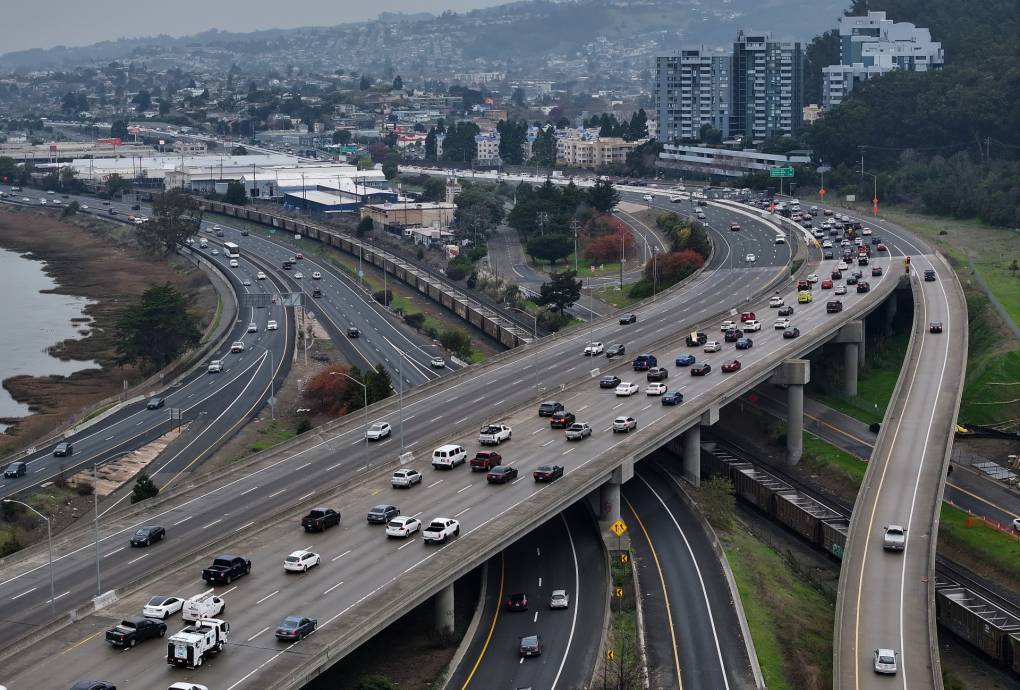
"caption": "An aerial view, cars travel along Interstate 80 on Jan. 16, 2024, in Berkeley.",
"credit": "Justin Sullivan/Getty Images",
"altTag": null,
"description": null,
"imgSizes": {
"medium": {
"file": "https://cdn.kqed.org/wp-content/uploads/sites/10/2024/09/GettyImages-1938578486-800x541.jpg",
"width": 800,
"height": 541,
"mimeType": "image/jpeg"
},
"large": {
"file": "https://cdn.kqed.org/wp-content/uploads/sites/10/2024/09/GettyImages-1938578486-1020x690.jpg",
"width": 1020,
"height": 690,
"mimeType": "image/jpeg"
},
"thumbnail": {
"file": "https://cdn.kqed.org/wp-content/uploads/sites/10/2024/09/GettyImages-1938578486-160x108.jpg",
"width": 160,
"height": 108,
"mimeType": "image/jpeg"
},
"1536x1536": {
"file": "https://cdn.kqed.org/wp-content/uploads/sites/10/2024/09/GettyImages-1938578486-1536x1038.jpg",
"width": 1536,
"height": 1038,
"mimeType": "image/jpeg"
},
"post-thumbnail": {
"file": "https://cdn.kqed.org/wp-content/uploads/sites/10/2024/09/GettyImages-1938578486-672x372.jpg",
"width": 672,
"height": 372,
"mimeType": "image/jpeg"
},
"twentyfourteen-full-width": {
"file": "https://cdn.kqed.org/wp-content/uploads/sites/10/2024/09/GettyImages-1938578486-1038x576.jpg",
"width": 1038,
"height": 576,
"mimeType": "image/jpeg"
},
"kqedFullSize": {
"file": "https://cdn.kqed.org/wp-content/uploads/sites/10/2024/09/GettyImages-1938578486.jpg",
"width": 1920,
"height": 1298
}
},
"isLoading": false,
"fetchFailed": false
},
"news_11945707": {
"type": "attachments",
"id": "news_11945707",
"meta": {
"index": "attachments_1716263798",
"site": "news",
"id": "11945707",
"found": true
},
"title": "016_KQED_InternetArchiveOffices_03242023",
"publishDate": 1680647942,
"status": "inherit",
"parent": 11945533,
"modified": 1725487402,
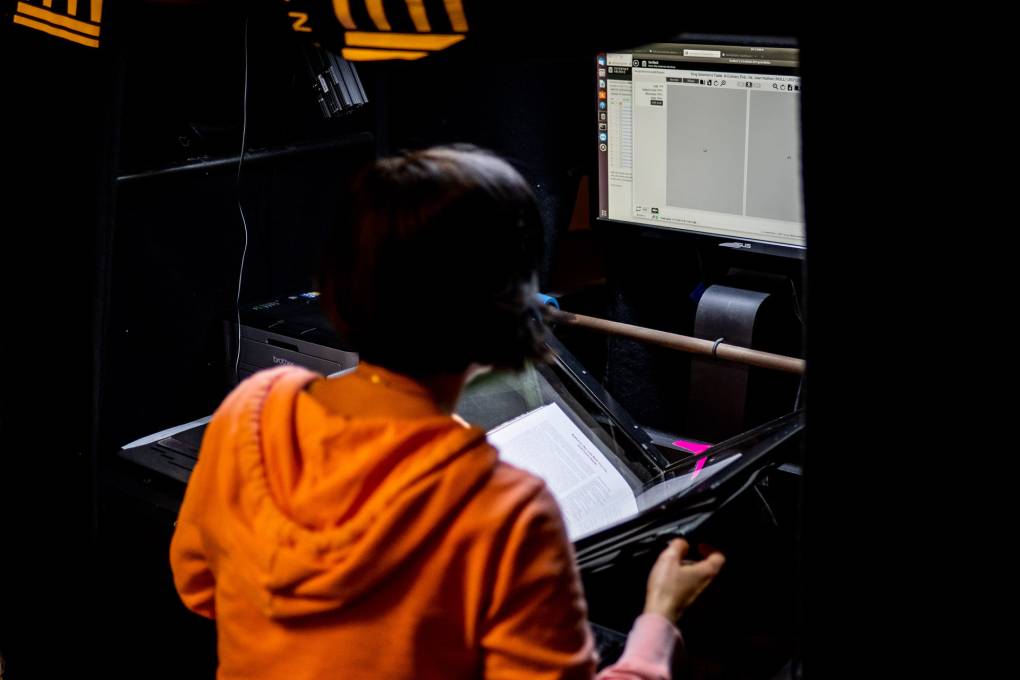
"caption": "Eliza Zhang scans books at the Internet Archive offices in San Francisco.",
"credit": "Beth LaBerge/KQED",
"altTag": "Someone wearing a bright orange hoodie sits at an archiving station, holding an open book and facing a computer screen.",
"description": null,
"imgSizes": {
"medium": {
"file": "https://cdn.kqed.org/wp-content/uploads/sites/10/2023/04/016_KQED_InternetArchiveOffices_03242023-800x533.jpg",
"width": 800,
"height": 533,
"mimeType": "image/jpeg"
},
"large": {
"file": "https://cdn.kqed.org/wp-content/uploads/sites/10/2023/04/016_KQED_InternetArchiveOffices_03242023-1020x680.jpg",
"width": 1020,
"height": 680,
"mimeType": "image/jpeg"
},
"thumbnail": {
"file": "https://cdn.kqed.org/wp-content/uploads/sites/10/2023/04/016_KQED_InternetArchiveOffices_03242023-160x107.jpg",
"width": 160,
"height": 107,
"mimeType": "image/jpeg"
},
"1536x1536": {
"file": "https://cdn.kqed.org/wp-content/uploads/sites/10/2023/04/016_KQED_InternetArchiveOffices_03242023-1536x1024.jpg",
"width": 1536,
"height": 1024,
"mimeType": "image/jpeg"
},
"post-thumbnail": {
"file": "https://cdn.kqed.org/wp-content/uploads/sites/10/2023/04/016_KQED_InternetArchiveOffices_03242023-672x372.jpg",
"width": 672,
"height": 372,
"mimeType": "image/jpeg"
},
"twentyfourteen-full-width": {
"file": "https://cdn.kqed.org/wp-content/uploads/sites/10/2023/04/016_KQED_InternetArchiveOffices_03242023-1038x576.jpg",
"width": 1038,
"height": 576,
"mimeType": "image/jpeg"
},
"kqedFullSize": {
"file": "https://cdn.kqed.org/wp-content/uploads/sites/10/2023/04/016_KQED_InternetArchiveOffices_03242023.jpg",
"width": 1920,
"height": 1280
}
},
"isLoading": false,
"fetchFailed": false
},
"news_12002546": {
"type": "attachments",
"id": "news_12002546",
"meta": {
"index": "attachments_1716263798",
"site": "news",
"id": "12002546",
"found": true
},
"title": "103020_Emergency-Alert_AP_CM_01 copy",
"publishDate": 1725043031,
"status": "inherit",
"parent": 12002545,
"modified": 1725043054,
"caption": "An emergency alert displayed on a cellphone. ",
"credit": "Susan Montoya Bryan/AP Photo",
"altTag": null,
"description": null,
"imgSizes": {
"medium": {
"file": "https://cdn.kqed.org/wp-content/uploads/sites/10/2024/08/103020_Emergency-Alert_AP_CM_01-copy-800x533.jpg",
"width": 800,
"height": 533,
"mimeType": "image/jpeg"
},
"large": {
"file": "https://cdn.kqed.org/wp-content/uploads/sites/10/2024/08/103020_Emergency-Alert_AP_CM_01-copy-1020x680.jpg",
"width": 1020,
"height": 680,
"mimeType": "image/jpeg"
},
"thumbnail": {
"file": "https://cdn.kqed.org/wp-content/uploads/sites/10/2024/08/103020_Emergency-Alert_AP_CM_01-copy-160x107.jpg",
"width": 160,
"height": 107,
"mimeType": "image/jpeg"
},
"1536x1536": {
"file": "https://cdn.kqed.org/wp-content/uploads/sites/10/2024/08/103020_Emergency-Alert_AP_CM_01-copy-1536x1024.jpg",
"width": 1536,
"height": 1024,
"mimeType": "image/jpeg"
},
"post-thumbnail": {
"file": "https://cdn.kqed.org/wp-content/uploads/sites/10/2024/08/103020_Emergency-Alert_AP_CM_01-copy-672x372.jpg",
"width": 672,
"height": 372,
"mimeType": "image/jpeg"
},
"twentyfourteen-full-width": {
"file": "https://cdn.kqed.org/wp-content/uploads/sites/10/2024/08/103020_Emergency-Alert_AP_CM_01-copy-1038x576.jpg",
"width": 1038,
"height": 576,
"mimeType": "image/jpeg"
},
"full-width": {
"file": "https://cdn.kqed.org/wp-content/uploads/sites/10/2024/08/103020_Emergency-Alert_AP_CM_01-copy-1920x1280.jpg",
"width": 1920,
"height": 1280,
"mimeType": "image/jpeg"
},
"kqedFullSize": {
"file": "https://cdn.kqed.org/wp-content/uploads/sites/10/2024/08/103020_Emergency-Alert_AP_CM_01-copy.jpg",
"width": 2000,
"height": 1333
}
},
"isLoading": false,
"fetchFailed": false
},
"news_12002257": {
"type": "attachments",
"id": "news_12002257",
"meta": {
"index": "attachments_1716263798",
"site": "news",
"id": "12002257",
"found": true
},
"title": "California AI Regulations",
"publishDate": 1724886851,
"status": "inherit",
"parent": 12002254,
"modified": 1724960738,
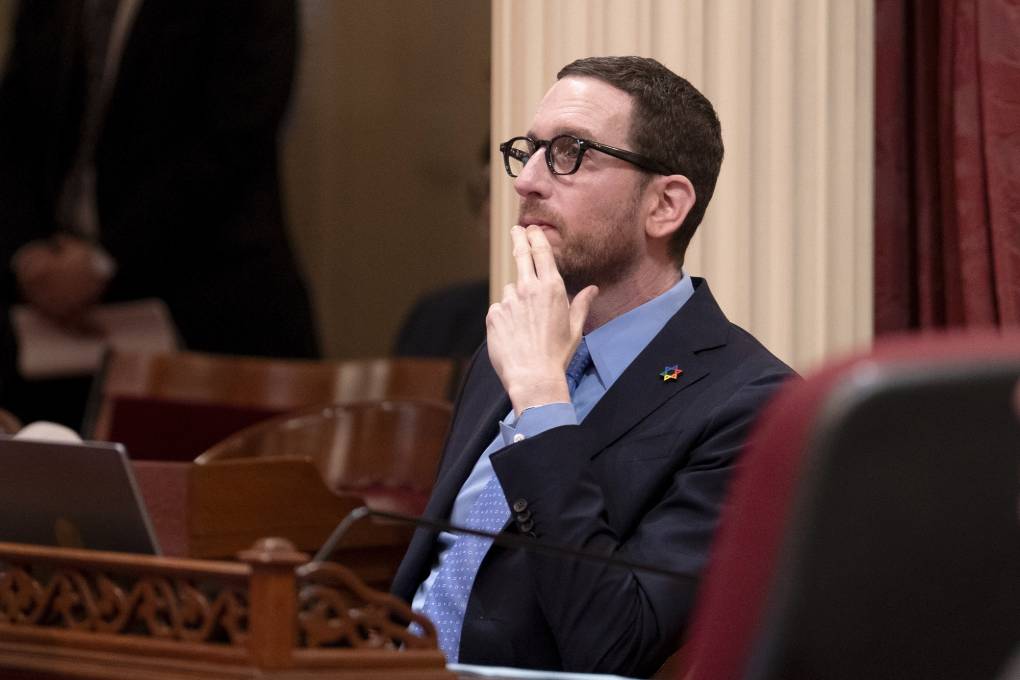
"caption": "Sen. Scott Wiener watches as the Senate votes on a measure at the Capitol in Sacramento, California, on April 11, 2024. On Wednesday, SB 1047, a bill he authored, passed 41–9.",
"credit": "Rich Pedroncelli/AP Photo",
"altTag": null,
"description": null,
"imgSizes": {
"medium": {
"file": "https://cdn.kqed.org/wp-content/uploads/sites/10/2024/08/ScottWienerAP1-800x533.jpg",
"width": 800,
"height": 533,
"mimeType": "image/jpeg"
},
"large": {
"file": "https://cdn.kqed.org/wp-content/uploads/sites/10/2024/08/ScottWienerAP1-1020x680.jpg",
"width": 1020,
"height": 680,
"mimeType": "image/jpeg"
},
"thumbnail": {
"file": "https://cdn.kqed.org/wp-content/uploads/sites/10/2024/08/ScottWienerAP1-160x107.jpg",
"width": 160,
"height": 107,
"mimeType": "image/jpeg"
},
"1536x1536": {
"file": "https://cdn.kqed.org/wp-content/uploads/sites/10/2024/08/ScottWienerAP1-1536x1024.jpg",
"width": 1536,
"height": 1024,
"mimeType": "image/jpeg"
},
"post-thumbnail": {
"file": "https://cdn.kqed.org/wp-content/uploads/sites/10/2024/08/ScottWienerAP1-672x372.jpg",
"width": 672,
"height": 372,
"mimeType": "image/jpeg"
},
"twentyfourteen-full-width": {
"file": "https://cdn.kqed.org/wp-content/uploads/sites/10/2024/08/ScottWienerAP1-1038x576.jpg",
"width": 1038,
"height": 576,
"mimeType": "image/jpeg"
},
"full-width": {
"file": "https://cdn.kqed.org/wp-content/uploads/sites/10/2024/08/ScottWienerAP1-1920x1280.jpg",
"width": 1920,
"height": 1280,
"mimeType": "image/jpeg"
},
"kqedFullSize": {
"file": "https://cdn.kqed.org/wp-content/uploads/sites/10/2024/08/ScottWienerAP1.jpg",
"width": 2000,
"height": 1333
}
},
"isLoading": false,
"fetchFailed": false
},
"news_12001827": {
"type": "attachments",
"id": "news_12001827",
"meta": {
"index": "attachments_1716263798",
"site": "news",
"id": "12001827",
"found": true
},
"title": "Boeing Astronaut Launch",
"publishDate": 1724688542,
"status": "inherit",
"parent": 12001825,
"modified": 1724688616,
"caption": "Boeing Crew Flight Test astronauts Butch Wilmore, left, and Suni Williams pose for a portrait inside the vestibule between the forward port on the International Space Station's Harmony module and Boeing's Starliner spacecraft on June 13, 2024.",
"credit": "NASA via AP",
"altTag": null,
"description": null,
"imgSizes": {
"medium": {
"file": "https://cdn.kqed.org/wp-content/uploads/sites/10/2024/08/NASAAstronautsAP1-800x533.jpg",
"width": 800,
"height": 533,
"mimeType": "image/jpeg"
},
"large": {
"file": "https://cdn.kqed.org/wp-content/uploads/sites/10/2024/08/NASAAstronautsAP1-1020x680.jpg",
"width": 1020,
"height": 680,
"mimeType": "image/jpeg"
},
"thumbnail": {
"file": "https://cdn.kqed.org/wp-content/uploads/sites/10/2024/08/NASAAstronautsAP1-160x107.jpg",
"width": 160,
"height": 107,
"mimeType": "image/jpeg"
},
"1536x1536": {
"file": "https://cdn.kqed.org/wp-content/uploads/sites/10/2024/08/NASAAstronautsAP1-1536x1024.jpg",
"width": 1536,
"height": 1024,
"mimeType": "image/jpeg"
},
"post-thumbnail": {
"file": "https://cdn.kqed.org/wp-content/uploads/sites/10/2024/08/NASAAstronautsAP1-672x372.jpg",
"width": 672,
"height": 372,
"mimeType": "image/jpeg"
},
"twentyfourteen-full-width": {
"file": "https://cdn.kqed.org/wp-content/uploads/sites/10/2024/08/NASAAstronautsAP1-1038x576.jpg",
"width": 1038,
"height": 576,
"mimeType": "image/jpeg"
},
"full-width": {
"file": "https://cdn.kqed.org/wp-content/uploads/sites/10/2024/08/NASAAstronautsAP1-1920x1280.jpg",
"width": 1920,
"height": 1280,
"mimeType": "image/jpeg"
},
"kqedFullSize": {
"file": "https://cdn.kqed.org/wp-content/uploads/sites/10/2024/08/NASAAstronautsAP1.jpg",
"width": 2000,
"height": 1333
}
},
"isLoading": false,
"fetchFailed": false
},
"news_11991978": {
"type": "attachments",
"id": "news_11991978",
"meta": {
"index": "attachments_1716263798",
"site": "news",
"id": "11991978",
"found": true
},
"title": "240625-SOLANO COUNTY BOARD OF SUPES-MD-09-KQED",
"publishDate": 1719363419,
"status": "inherit",
"parent": 11991788,
"modified": 1723669182,
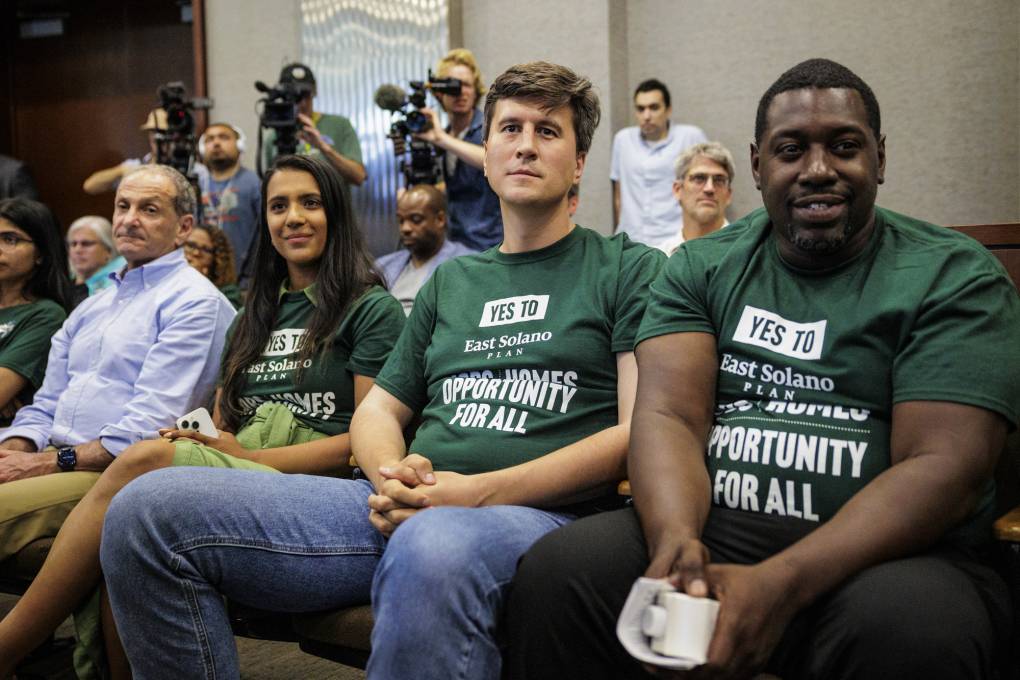
"caption": "Jan Sramek (second from right), CEO of California Forever listens to public comments during a Solano County Board of Supervisors meeting in Fairfield on June 25, 2024.",
"credit": "Martin do Nascimento/KQED",
"altTag": "Men and women wearing green shirts sit inside a building facing the camera with several people in the background.",
"description": null,
"imgSizes": {
"medium": {
"file": "https://cdn.kqed.org/wp-content/uploads/sites/10/2024/06/240625-SOLANO-COUNTY-BOARD-OF-SUPES-MD-09-KQED-800x533.jpg",
"width": 800,
"height": 533,
"mimeType": "image/jpeg"
},
"large": {
"file": "https://cdn.kqed.org/wp-content/uploads/sites/10/2024/06/240625-SOLANO-COUNTY-BOARD-OF-SUPES-MD-09-KQED-1020x680.jpg",
"width": 1020,
"height": 680,
"mimeType": "image/jpeg"
},
"thumbnail": {
"file": "https://cdn.kqed.org/wp-content/uploads/sites/10/2024/06/240625-SOLANO-COUNTY-BOARD-OF-SUPES-MD-09-KQED-160x107.jpg",
"width": 160,
"height": 107,
"mimeType": "image/jpeg"
},
"1536x1536": {
"file": "https://cdn.kqed.org/wp-content/uploads/sites/10/2024/06/240625-SOLANO-COUNTY-BOARD-OF-SUPES-MD-09-KQED-1536x1024.jpg",
"width": 1536,
"height": 1024,
"mimeType": "image/jpeg"
},
"post-thumbnail": {
"file": "https://cdn.kqed.org/wp-content/uploads/sites/10/2024/06/240625-SOLANO-COUNTY-BOARD-OF-SUPES-MD-09-KQED-672x372.jpg",
"width": 672,
"height": 372,
"mimeType": "image/jpeg"
},
"twentyfourteen-full-width": {
"file": "https://cdn.kqed.org/wp-content/uploads/sites/10/2024/06/240625-SOLANO-COUNTY-BOARD-OF-SUPES-MD-09-KQED-1038x576.jpg",
"width": 1038,
"height": 576,
"mimeType": "image/jpeg"
},
"full-width": {
"file": "https://cdn.kqed.org/wp-content/uploads/sites/10/2024/06/240625-SOLANO-COUNTY-BOARD-OF-SUPES-MD-09-KQED-1920x1280.jpg",
"width": 1920,
"height": 1280,
"mimeType": "image/jpeg"
},
"kqedFullSize": {
"file": "https://cdn.kqed.org/wp-content/uploads/sites/10/2024/06/240625-SOLANO-COUNTY-BOARD-OF-SUPES-MD-09-KQED.jpg",
"width": 2000,
"height": 1333
}
},
"isLoading": false,
"fetchFailed": false
},
"news_12001241": {
"type": "attachments",
"id": "news_12001241",
"meta": {
"index": "attachments_1716263798",
"site": "news",
"id": "12001241",
"found": true
},
"title": "Google's Bay View Campus In Silicon Valley",
"publishDate": 1724277349,
"status": "inherit",
"parent": 12055854,
"modified": 1757720142,
"caption": "Google's Bay View campus in Mountain View on June 16, 2022.",
"credit": "Zhang Yi/VCG via Getty Images",
"altTag": null,
"description": null,
"imgSizes": {
"medium": {
"file": "https://cdn.kqed.org/wp-content/uploads/sites/10/2024/08/GETTYIMAGES-1411232503-KQED-800x533.jpg",
"width": 800,
"height": 533,
"mimeType": "image/jpeg"
},
"large": {
"file": "https://cdn.kqed.org/wp-content/uploads/sites/10/2024/08/GETTYIMAGES-1411232503-KQED-1020x680.jpg",
"width": 1020,
"height": 680,
"mimeType": "image/jpeg"
},
"thumbnail": {
"file": "https://cdn.kqed.org/wp-content/uploads/sites/10/2024/08/GETTYIMAGES-1411232503-KQED-160x107.jpg",
"width": 160,
"height": 107,
"mimeType": "image/jpeg"
},
"1536x1536": {
"file": "https://cdn.kqed.org/wp-content/uploads/sites/10/2024/08/GETTYIMAGES-1411232503-KQED-1536x1024.jpg",
"width": 1536,
"height": 1024,
"mimeType": "image/jpeg"
},
"post-thumbnail": {
"file": "https://cdn.kqed.org/wp-content/uploads/sites/10/2024/08/GETTYIMAGES-1411232503-KQED-672x372.jpg",
"width": 672,
"height": 372,
"mimeType": "image/jpeg"
},
"twentyfourteen-full-width": {
"file": "https://cdn.kqed.org/wp-content/uploads/sites/10/2024/08/GETTYIMAGES-1411232503-KQED-1038x576.jpg",
"width": 1038,
"height": 576,
"mimeType": "image/jpeg"
},
"full-width": {
"file": "https://cdn.kqed.org/wp-content/uploads/sites/10/2024/08/GETTYIMAGES-1411232503-KQED-1920x1280.jpg",
"width": 1920,
"height": 1280,
"mimeType": "image/jpeg"
},
"kqedFullSize": {
"file": "https://cdn.kqed.org/wp-content/uploads/sites/10/2024/08/GETTYIMAGES-1411232503-KQED.jpg",
"width": 2000,
"height": 1333
}
},
"isLoading": false,
"fetchFailed": false
},
"news_12001180": {
"type": "attachments",
"id": "news_12001180",
"meta": {
"index": "attachments_1716263798",
"site": "news",
"id": "12001180",
"found": true
},
"title": "California State Senator Scott Wiener adddresses the SF Chronicle Editorial Board on Thursday, Jan. 18, 2018 in San Francisco, Calif.",
"publishDate": 1724269970,
"status": "inherit",
"parent": 0,
"modified": 1724270090,
"caption": "Senator Scott Wiener introduced SB 1047, a bill that would mandate safety testing for developers of the largest AI models.",
"credit": "Russell Yip/San Francisco Chronicle via Getty Images",
"altTag": null,
"description": null,
"imgSizes": {
"medium": {
"file": "https://cdn.kqed.org/wp-content/uploads/sites/10/2024/08/GETTYIMAGES-1298883374-KQED-800x533.jpg",
"width": 800,
"height": 533,
"mimeType": "image/jpeg"
},
"large": {
"file": "https://cdn.kqed.org/wp-content/uploads/sites/10/2024/08/GETTYIMAGES-1298883374-KQED-1020x680.jpg",
"width": 1020,
"height": 680,
"mimeType": "image/jpeg"
},
"thumbnail": {
"file": "https://cdn.kqed.org/wp-content/uploads/sites/10/2024/08/GETTYIMAGES-1298883374-KQED-160x107.jpg",
"width": 160,
"height": 107,
"mimeType": "image/jpeg"
},
"1536x1536": {
"file": "https://cdn.kqed.org/wp-content/uploads/sites/10/2024/08/GETTYIMAGES-1298883374-KQED-1536x1024.jpg",
"width": 1536,
"height": 1024,
"mimeType": "image/jpeg"
},
"post-thumbnail": {
"file": "https://cdn.kqed.org/wp-content/uploads/sites/10/2024/08/GETTYIMAGES-1298883374-KQED-672x372.jpg",
"width": 672,
"height": 372,
"mimeType": "image/jpeg"
},
"twentyfourteen-full-width": {
"file": "https://cdn.kqed.org/wp-content/uploads/sites/10/2024/08/GETTYIMAGES-1298883374-KQED-1038x576.jpg",
"width": 1038,
"height": 576,
"mimeType": "image/jpeg"
},
"full-width": {
"file": "https://cdn.kqed.org/wp-content/uploads/sites/10/2024/08/GETTYIMAGES-1298883374-KQED-1920x1280.jpg",
"width": 1920,
"height": 1280,
"mimeType": "image/jpeg"
},
"kqedFullSize": {
"file": "https://cdn.kqed.org/wp-content/uploads/sites/10/2024/08/GETTYIMAGES-1298883374-KQED.jpg",
"width": 2000,
"height": 1333
}
},
"isLoading": false,
"fetchFailed": false
},
"news_12000959": {
"type": "attachments",
"id": "news_12000959",
"meta": {
"index": "attachments_1716263798",
"site": "news",
"id": "12000959",
"found": true
},
"title": "Cellphone-Ban_AH_CM_01 copy",
"publishDate": 1724184184,
"status": "inherit",
"parent": 12000954,
"modified": 1724184207,
"caption": null,
"credit": "Illustration by Adriana Heldiz/CalMatters; iStock",
"altTag": null,
"description": null,
"imgSizes": {
"medium": {
"file": "https://cdn.kqed.org/wp-content/uploads/sites/10/2024/08/Cellphone-Ban_AH_CM_01-copy-800x533.jpg",
"width": 800,
"height": 533,
"mimeType": "image/jpeg"
},
"large": {
"file": "https://cdn.kqed.org/wp-content/uploads/sites/10/2024/08/Cellphone-Ban_AH_CM_01-copy-1020x680.jpg",
"width": 1020,
"height": 680,
"mimeType": "image/jpeg"
},
"thumbnail": {
"file": "https://cdn.kqed.org/wp-content/uploads/sites/10/2024/08/Cellphone-Ban_AH_CM_01-copy-160x107.jpg",
"width": 160,
"height": 107,
"mimeType": "image/jpeg"
},
"1536x1536": {
"file": "https://cdn.kqed.org/wp-content/uploads/sites/10/2024/08/Cellphone-Ban_AH_CM_01-copy-1536x1024.jpg",
"width": 1536,
"height": 1024,
"mimeType": "image/jpeg"
},
"post-thumbnail": {
"file": "https://cdn.kqed.org/wp-content/uploads/sites/10/2024/08/Cellphone-Ban_AH_CM_01-copy-672x372.jpg",
"width": 672,
"height": 372,
"mimeType": "image/jpeg"
},
"twentyfourteen-full-width": {
"file": "https://cdn.kqed.org/wp-content/uploads/sites/10/2024/08/Cellphone-Ban_AH_CM_01-copy-1038x576.jpg",
"width": 1038,
"height": 576,
"mimeType": "image/jpeg"
},
"full-width": {
"file": "https://cdn.kqed.org/wp-content/uploads/sites/10/2024/08/Cellphone-Ban_AH_CM_01-copy-1920x1280.jpg",
"width": 1920,
"height": 1280,
"mimeType": "image/jpeg"
},
"kqedFullSize": {
"file": "https://cdn.kqed.org/wp-content/uploads/sites/10/2024/08/Cellphone-Ban_AH_CM_01-copy.jpg",
"width": 2000,
"height": 1333
}
},
"isLoading": false,
"fetchFailed": false
},
"news_12000413": {
"type": "attachments",
"id": "news_12000413",
"meta": {
"index": "attachments_1716263798",
"site": "news",
"id": "12000413",
"found": true
},
"title": "240815-CITYATTORNEYDEEPFAKES-06-BL-KQED",
"publishDate": 1723748842,
"status": "inherit",
"parent": 12046379,
"modified": 1751062554,
"caption": "City Attorney David Chiu speaks during a press conference at City Hall in San Francisco on Aug. 15, 2024.",
"credit": "Beth LaBerge/KQED",
"altTag": null,
"description": null,
"imgSizes": {
"medium": {
"file": "https://cdn.kqed.org/wp-content/uploads/sites/10/2024/08/240815-CITYATTORNEYDEEPFAKES-06-BL-KQED-800x533.jpg",
"width": 800,
"height": 533,
"mimeType": "image/jpeg"
},
"large": {
"file": "https://cdn.kqed.org/wp-content/uploads/sites/10/2024/08/240815-CITYATTORNEYDEEPFAKES-06-BL-KQED-1020x680.jpg",
"width": 1020,
"height": 680,
"mimeType": "image/jpeg"
},
"thumbnail": {
"file": "https://cdn.kqed.org/wp-content/uploads/sites/10/2024/08/240815-CITYATTORNEYDEEPFAKES-06-BL-KQED-160x107.jpg",
"width": 160,
"height": 107,
"mimeType": "image/jpeg"
},
"1536x1536": {
"file": "https://cdn.kqed.org/wp-content/uploads/sites/10/2024/08/240815-CITYATTORNEYDEEPFAKES-06-BL-KQED-1536x1024.jpg",
"width": 1536,
"height": 1024,
"mimeType": "image/jpeg"
},
"post-thumbnail": {
"file": "https://cdn.kqed.org/wp-content/uploads/sites/10/2024/08/240815-CITYATTORNEYDEEPFAKES-06-BL-KQED-672x372.jpg",
"width": 672,
"height": 372,
"mimeType": "image/jpeg"
},
"twentyfourteen-full-width": {
"file": "https://cdn.kqed.org/wp-content/uploads/sites/10/2024/08/240815-CITYATTORNEYDEEPFAKES-06-BL-KQED-1038x576.jpg",
"width": 1038,
"height": 576,
"mimeType": "image/jpeg"
},
"full-width": {
"file": "https://cdn.kqed.org/wp-content/uploads/sites/10/2024/08/240815-CITYATTORNEYDEEPFAKES-06-BL-KQED-1920x1280.jpg",
"width": 1920,
"height": 1280,
"mimeType": "image/jpeg"
},
"kqedFullSize": {
"file": "https://cdn.kqed.org/wp-content/uploads/sites/10/2024/08/240815-CITYATTORNEYDEEPFAKES-06-BL-KQED.jpg",
"width": 2000,
"height": 1333
}
},
"isLoading": false,
"fetchFailed": false
},
"news_11999962": {
"type": "attachments",
"id": "news_11999962",
"meta": {
"index": "attachments_1716263798",
"site": "news",
"id": "11999962",
"found": true
},
"title": "240812-HCAVIGIL-JG-3",
"publishDate": 1723567616,
"status": "inherit",
"parent": 0,
"modified": 1723569725,
"caption": "Residents and advocates rally outside Good Samaritan Hospital, owned by HCA Healthcare, in West San José on Monday. The group is trying to bring attention to cuts to the trauma center and other critical health services at another HCA hospital, Regional Medical Center in East San José.",
"credit": "Joseph Geha/KQED",
"altTag": null,
"description": null,
"imgSizes": {
"medium": {
"file": "https://cdn.kqed.org/wp-content/uploads/sites/10/2024/08/240812-HCAVIGIL-JG-3-800x533.jpg",
"width": 800,
"height": 533,
"mimeType": "image/jpeg"
},
"large": {
"file": "https://cdn.kqed.org/wp-content/uploads/sites/10/2024/08/240812-HCAVIGIL-JG-3-1020x680.jpg",
"width": 1020,
"height": 680,
"mimeType": "image/jpeg"
},
"thumbnail": {
"file": "https://cdn.kqed.org/wp-content/uploads/sites/10/2024/08/240812-HCAVIGIL-JG-3-160x107.jpg",
"width": 160,
"height": 107,
"mimeType": "image/jpeg"
},
"1536x1536": {
"file": "https://cdn.kqed.org/wp-content/uploads/sites/10/2024/08/240812-HCAVIGIL-JG-3-1536x1024.jpg",
"width": 1536,
"height": 1024,
"mimeType": "image/jpeg"
},
"post-thumbnail": {
"file": "https://cdn.kqed.org/wp-content/uploads/sites/10/2024/08/240812-HCAVIGIL-JG-3-672x372.jpg",
"width": 672,
"height": 372,
"mimeType": "image/jpeg"
},
"twentyfourteen-full-width": {
"file": "https://cdn.kqed.org/wp-content/uploads/sites/10/2024/08/240812-HCAVIGIL-JG-3-1038x576.jpg",
"width": 1038,
"height": 576,
"mimeType": "image/jpeg"
},
"full-width": {
"file": "https://cdn.kqed.org/wp-content/uploads/sites/10/2024/08/240812-HCAVIGIL-JG-3-1920x1280.jpg",
"width": 1920,
"height": 1280,
"mimeType": "image/jpeg"
},
"kqedFullSize": {
"file": "https://cdn.kqed.org/wp-content/uploads/sites/10/2024/08/240812-HCAVIGIL-JG-3.jpg",
"width": 2000,
"height": 1333
}
},
"isLoading": false,
"fetchFailed": false
}
},
"audioPlayerReducer": {
"postId": "stream_live",
"isPaused": true,
"isPlaying": false,
"pfsActive": false,
"pledgeModalIsOpen": true,
"playerDrawerIsOpen": false,
"liveAudioPlayStartedAt": 0,
"liveAudioPlayContext": ""
},
"authorsReducer": {
"byline_news_12003239": {
"type": "authors",
"id": "byline_news_12003239",
"meta": {
"override": true
},
"slug": "byline_news_12003239",
"name": "Joel Rose, NPR",
"isLoading": false
},
"byline_news_12003100": {
"type": "authors",
"id": "byline_news_12003100",
"meta": {
"override": true
},
"slug": "byline_news_12003100",
"name": "Hillel Italie, The Associated Press",
"isLoading": false
},
"byline_news_12002545": {
"type": "authors",
"id": "byline_news_12002545",
"meta": {
"override": true
},
"slug": "byline_news_12002545",
"name": "\u003ca href=\"https://calmatters.org/author/natasha-uzcategui-liggett/\">Natasha Uzcátegui-Liggett\u003c/a>, CalMatters",
"isLoading": false
},
"byline_news_12000954": {
"type": "authors",
"id": "byline_news_12000954",
"meta": {
"override": true
},
"slug": "byline_news_12000954",
"name": "\u003ca href=\"https://calmatters.org/author/carolyn-jones/\">Carolyn Jones\u003c/a> and \u003ca href=\"https://calmatters.org/author/khari-johnson/\">Khari Johnson\u003c/a>, CalMatters",
"isLoading": false
},
"rachael-myrow": {
"type": "authors",
"id": "251",
"meta": {
"index": "authors_1716337520",
"id": "251",
"found": true
},
"name": "Rachael Myrow",
"firstName": "Rachael",
"lastName": "Myrow",
"slug": "rachael-myrow",
"email": "rmyrow@kqed.org",
"display_author_email": true,
"staff_mastheads": [
"news"
],
"title": "Senior Editor of KQED's Silicon Valley News Desk",
"bio": "• I write and edit stories about how Silicon Valley power and policies shape everyday life in California. I’m also passionate about making Bay Area history and culture more accessible to a broad public. • I’ve been a journalist for most of my life, starting in high school with The Franklin Press in Los Angeles, where I grew up. While earning my first degree in English at UC Berkeley, I got my start in public radio at KALX-FM. After completing a second degree in journalism at Cal, I landed my first professional job at Marketplace, then moved on to KPCC (now LAist), and then KQED, where I hosted The California Report for more than seven years. • My reporting has appeared on NPR, The World, WBUR’s \u003ci>Here & Now\u003c/i>, and the BBC. I also guest host for KQED’s \u003ci>Forum\u003c/i>, as well as the Commonwealth Club in San Francisco. • I speak periodically on media, democracy and technology issues, and do voiceover work for documentaries and educational video projects. • Outside of the studio, you'll find me hiking Bay Area trails and whipping up Insta-ready meals in my kitchen. • I do not accept gifts, money, or favors from anyone connected to my reporting, I don't pay people for information, and I do not support or donate to political causes. • I strive to treat the people I report on with fairness, honesty, and respect. I also recognize there are often multiple sides to a story and work to verify information through multiple sources and documentation. If I get something wrong, I correct it.",
"avatar": "https://secure.gravatar.com/avatar/3ed8a3c5f26025e4a805ba634cda8cd764906b97438a6d9ce216b044e340da4e?s=600&d=blank&r=g",
"twitter": "rachaelmyrow",
"bluesky": null,
"facebook": null,
"instagram": null,
"linkedin": "https://www.linkedin.com/in/rachaelmyrow/",
"sites": [
{
"site": "arts",
"roles": [
"administrator"
]
},
{
"site": "news",
"roles": [
"edit_others_posts",
"editor"
]
},
{
"site": "futureofyou",
"roles": [
"editor"
]
},
{
"site": "bayareabites",
"roles": [
"editor"
]
},
{
"site": "stateofhealth",
"roles": [
"editor"
]
},
{
"site": "science",
"roles": [
"editor"
]
},
{
"site": "food",
"roles": [
"editor"
]
},
{
"site": "forum",
"roles": [
"editor"
]
},
{
"site": "liveblog",
"roles": [
"author"
]
}
],
"headData": {
"title": "Rachael Myrow | KQED",
"description": "Senior Editor of KQED's Silicon Valley News Desk",
"ogImgSrc": "https://secure.gravatar.com/avatar/3ed8a3c5f26025e4a805ba634cda8cd764906b97438a6d9ce216b044e340da4e?s=600&d=blank&r=g",
"twImgSrc": "https://secure.gravatar.com/avatar/3ed8a3c5f26025e4a805ba634cda8cd764906b97438a6d9ce216b044e340da4e?s=600&d=blank&r=g"
},
"isLoading": false,
"link": "/author/rachael-myrow"
},
"ecruzguevarra": {
"type": "authors",
"id": "8654",
"meta": {
"index": "authors_1716337520",
"id": "8654",
"found": true
},
"name": "Ericka Cruz Guevarra",
"firstName": "Ericka",
"lastName": "Cruz Guevarra",
"slug": "ecruzguevarra",
"email": "ecruzguevarra@kqed.org",
"display_author_email": true,
"staff_mastheads": [
"news"
],
"title": "Producer, The Bay Podcast",
"bio": "Ericka Cruz Guevarra is host of \u003ca href=\"https://www.kqed.org/podcasts/thebay\">\u003cem>The Bay\u003c/em>\u003c/a> podcast at KQED. Before host, she was the show’s producer. Her work in that capacity includes a three-part reported series on policing in Vallejo, which won a 2020 excellence in journalism award from the Society of Professional Journalists. Ericka has worked as a breaking news reporter at Oregon Public Broadcasting, helped produce the Code Switch podcast, and was KQED’s inaugural Raul Ramirez Diversity Fund intern. She’s also an alumna of NPR’s Next Generation Radio program. Send her an email if you have strong feelings about whether Fairfield and Suisun City are the Bay. Ericka is represented by SAG-AFTRA.",
"avatar": "https://secure.gravatar.com/avatar/accefc1de4bafc7e234b69bcb9b6f6536c130fd84709bc3069ef11a78787e1bb?s=600&d=blank&r=g",
"twitter": "NotoriousECG",
"bluesky": null,
"facebook": null,
"instagram": null,
"linkedin": null,
"sites": [
{
"site": "arts",
"roles": [
"subscriber"
]
},
{
"site": "news",
"roles": [
"editor",
"manage_categories"
]
},
{
"site": "futureofyou",
"roles": [
"subscriber"
]
},
{
"site": "stateofhealth",
"roles": [
"subscriber"
]
},
{
"site": "science",
"roles": [
"editor"
]
},
{
"site": "forum",
"roles": [
"subscriber"
]
}
],
"headData": {
"title": "Ericka Cruz Guevarra | KQED",
"description": "Producer, The Bay Podcast",
"ogImgSrc": "https://secure.gravatar.com/avatar/accefc1de4bafc7e234b69bcb9b6f6536c130fd84709bc3069ef11a78787e1bb?s=600&d=blank&r=g",
"twImgSrc": "https://secure.gravatar.com/avatar/accefc1de4bafc7e234b69bcb9b6f6536c130fd84709bc3069ef11a78787e1bb?s=600&d=blank&r=g"
},
"isLoading": false,
"link": "/author/ecruzguevarra"
},
"amontecillo": {
"type": "authors",
"id": "11649",
"meta": {
"index": "authors_1716337520",
"id": "11649",
"found": true
},
"name": "Alan Montecillo",
"firstName": "Alan",
"lastName": "Montecillo",
"slug": "amontecillo",
"email": "amontecillo@kqed.org",
"display_author_email": false,
"staff_mastheads": [
"news"
],
"title": "KQED Contributor",
"bio": "Alan Montecillo is the senior editor of \u003cem>\u003ca href=\"http://kqed.org/thebay\">The Bay\u003c/a>, \u003c/em> KQED's local news podcast. Before moving to the Bay Area, he worked as a senior talk show producer for WILL in Champaign-Urbana, Illinois and at Oregon Public Broadcasting in Portland, Oregon. He has won journalism awards from the Society of Professional Journalists Northern California, the Public Media Journalists Association, The Signal Awards, and has also received a regional Edward R. Murrow award. Alan is a Filipino American from Hong Kong and a graduate of Reed College.",
"avatar": "https://secure.gravatar.com/avatar/268f53a2066899ea9efdd8a5900218b17c822d9862cbc9326cccec53ef41d349?s=600&d=blank&r=g",
"twitter": "alanmontecillo",
"bluesky": null,
"facebook": null,
"instagram": null,
"linkedin": null,
"sites": [
{
"site": "",
"roles": [
"editor"
]
},
{
"site": "news",
"roles": [
"editor",
"manage_categories"
]
}
],
"headData": {
"title": "Alan Montecillo | KQED",
"description": "KQED Contributor",
"ogImgSrc": "https://secure.gravatar.com/avatar/268f53a2066899ea9efdd8a5900218b17c822d9862cbc9326cccec53ef41d349?s=600&d=blank&r=g",
"twImgSrc": "https://secure.gravatar.com/avatar/268f53a2066899ea9efdd8a5900218b17c822d9862cbc9326cccec53ef41d349?s=600&d=blank&r=g"
},
"isLoading": false,
"link": "/author/amontecillo"
},
"abandlamudi": {
"type": "authors",
"id": "11672",
"meta": {
"index": "authors_1716337520",
"id": "11672",
"found": true
},
"name": "Adhiti Bandlamudi",
"firstName": "Adhiti",
"lastName": "Bandlamudi",
"slug": "abandlamudi",
"email": "abandlamudi@kqed.org",
"display_author_email": false,
"staff_mastheads": [
"news"
],
"title": "KQED Housing Reporter",
"bio": "Adhiti Bandlamudi reports for KQED's Housing desk. She focuses on how housing gets built across the Bay Area. Before joining KQED in 2020, she reported for WUNC in Durham, North Carolina, WABE in Atlanta, Georgia and Capital Public Radio in Sacramento. In 2017, she was awarded a Kroc Fellowship at NPR where she reported on everything from sprinkles to the Golden State Killer's arrest. When she's not reporting, she's baking new recipes in her kitchen or watching movies with friends and family. She's originally from Georgia and has strong opinions about Great British Bake Off.",
"avatar": "https://secure.gravatar.com/avatar/868129c8b257bb99a3500e2c86a65400?s=600&d=mm&r=g",
"twitter": "oddity_adhiti",
"facebook": null,
"instagram": null,
"linkedin": null,
"sites": [
{
"site": "arts",
"roles": [
"author"
]
},
{
"site": "news",
"roles": [
"editor"
]
},
{
"site": "liveblog",
"roles": [
"author"
]
}
],
"headData": {
"title": "Adhiti Bandlamudi | KQED",
"description": "KQED Housing Reporter",
"ogImgSrc": "https://secure.gravatar.com/avatar/868129c8b257bb99a3500e2c86a65400?s=600&d=mm&r=g",
"twImgSrc": "https://secure.gravatar.com/avatar/868129c8b257bb99a3500e2c86a65400?s=600&d=mm&r=g"
},
"isLoading": false,
"link": "/author/abandlamudi"
},
"jgeha": {
"type": "authors",
"id": "11906",
"meta": {
"index": "authors_1716337520",
"id": "11906",
"found": true
},
"name": "Joseph Geha",
"firstName": "Joseph",
"lastName": "Geha",
"slug": "jgeha",
"email": "jgeha@kqed.org",
"display_author_email": false,
"staff_mastheads": [
"news",
"science"
],
"title": "KQED Contributor",
"bio": null,
"avatar": "https://secure.gravatar.com/avatar/ea84d2b6dd93d6369d453edf19dd583f117cd1759d2d9c9c92f9de77017354fe?s=600&d=blank&r=g",
"twitter": null,
"bluesky": null,
"facebook": null,
"instagram": null,
"linkedin": null,
"sites": [
{
"site": "news",
"roles": [
"editor"
]
},
{
"site": "liveblog",
"roles": [
"author"
]
}
],
"headData": {
"title": "Joseph Geha | KQED",
"description": "KQED Contributor",
"ogImgSrc": "https://secure.gravatar.com/avatar/ea84d2b6dd93d6369d453edf19dd583f117cd1759d2d9c9c92f9de77017354fe?s=600&d=blank&r=g",
"twImgSrc": "https://secure.gravatar.com/avatar/ea84d2b6dd93d6369d453edf19dd583f117cd1759d2d9c9c92f9de77017354fe?s=600&d=blank&r=g"
},
"isLoading": false,
"link": "/author/jgeha"
},
"kdebenedetti": {
"type": "authors",
"id": "11913",
"meta": {
"index": "authors_1716337520",
"id": "11913",
"found": true
},
"name": "Katie DeBenedetti",
"firstName": "Katie",
"lastName": "DeBenedetti",
"slug": "kdebenedetti",
"email": "kdebenedetti@kqed.org",
"display_author_email": false,
"staff_mastheads": [
"news",
"science"
],
"title": "KQED Contributor",
"bio": "Katie DeBenedetti is a digital reporter covering daily news for the Express Desk. Prior to joining KQED as a culture reporting intern in January 2024, she covered education and city government for the Napa Valley Register.",
"avatar": "https://secure.gravatar.com/avatar/6e31073cb8f7e4214ab03f42771d0f45?s=600&d=blank&r=g",
"twitter": null,
"facebook": null,
"instagram": null,
"linkedin": null,
"sites": [
{
"site": "news",
"roles": [
"author"
]
},
{
"site": "science",
"roles": [
"author"
]
},
{
"site": "liveblog",
"roles": [
"author"
]
}
],
"headData": {
"title": "Katie DeBenedetti | KQED",
"description": "KQED Contributor",
"ogImgSrc": "https://secure.gravatar.com/avatar/6e31073cb8f7e4214ab03f42771d0f45?s=600&d=blank&r=g",
"twImgSrc": "https://secure.gravatar.com/avatar/6e31073cb8f7e4214ab03f42771d0f45?s=600&d=blank&r=g"
},
"isLoading": false,
"link": "/author/kdebenedetti"
}
},
"pagesReducer": {
"news_category_technology": {
"type": "terms",
"id": "news_248",
"meta": {
"index": "terms_1716263798",
"site": "news",
"id": "248",
"score": 10.93111
},
"featImg": null,
"name": "Technology",
"description": null,
"taxonomy": "category",
"headData": {
"twImgId": null,
"twTitle": null,
"ogTitle": null,
"ogImgId": null,
"twDescription": null,
"description": null,
"title": "Technology Archives | KQED News",
"ogDescription": null
},
"ttid": 256,
"slug": "technology",
"isLoading": false,
"title": "Technology",
"pageMeta": {
"site": "news",
"WpPageTemplate": "page-topic-editorial",
"currentPage": 23
},
"blocks": [
{
"blockName": "kqed/post-list",
"attrs": {
"layout": "cardArticle2",
"query": "posts/news?category=technology",
"seeMore": false,
"paginated": true,
"page": 23
}
},
{
"blockName": "kqed/ad"
}
]
}
},
"pfsSessionReducer": {},
"postsReducer": {
"stream_live": {
"type": "live",
"id": "stream_live",
"audioUrl": "https://streams.kqed.org/kqedradio",
"title": "Live Stream",
"excerpt": "Live Stream information currently unavailable.",
"link": "/radio",
"featImg": "",
"label": {
"name": "KQED Live",
"link": "/"
}
},
"stream_kqedNewscast": {
"type": "posts",
"id": "stream_kqedNewscast",
"audioUrl": "https://www.kqed.org/.stream/anon/radio/RDnews/newscast.mp3?_=1",
"title": "KQED Newscast",
"featImg": "",
"label": {
"name": "88.5 FM",
"link": "/"
}
},
"news_12003276": {
"type": "posts",
"id": "news_12003276",
"meta": {
"index": "posts_1716263798",
"site": "news",
"id": "12003276",
"score": null,
"sort": [
1725575579000
]
},
"guestAuthors": [],
"slug": "oaklands-beleaguered-911-dispatch-still-far-behind-state-standards-but-improving",
"title": "Oakland’s Beleaguered 911 Dispatch Still Far Behind State Standards But Improving",
"publishDate": 1725575579,
"format": "standard",
"headTitle": "Oakland’s Beleaguered 911 Dispatch Still Far Behind State Standards But Improving | KQED",
"labelTerm": {
"site": "news"
},
"content": "\u003cp>After \u003ca href=\"https://www.kqed.org/news/tag/oakland\">Oakland\u003c/a> was given a year to improve its struggling 911 dispatch system or risk losing state funding, Mayor \u003ca href=\"https://www.kqed.org/news/tag/sheng-thao\">Sheng Thao\u003c/a> said she believes it could meet the mandated response standards in 2025 — at least a year and a half later.\u003c/p>\n\u003cp>The warning from California’s Office of Emergency Services came in July 2023, as Oakland’s 911 dispatch program was plagued by reports of slow response times, overworked employees and high vacancy rates in recent years. On Thursday, Thao reported that although the Oakland Police Department’s response rate is still significantly below California standards, it is increasing staffing and making the first major upgrade to its computer-aided dispatch in decades.\u003c/p>\n\u003cp>“We are only going to see our call times actually improve,” Thao said at a press conference on Thursday. “They’ll be a positive impact, that 51% [of calls answered in 15 seconds] will increase. And, of course, our goal is to meet the state standard.”\u003c/p>\n\u003cp>Cal OES mandates that 90% of dispatch calls be answered within 15 seconds and 95% within 20. Oakland’s rate of 15-second answers was recently as low as 37% before rebounding to around 51%.\u003c/p>\n\u003cp>[ad fullwidth]\u003c/p>\n\u003cp>Although Oakland missed the state’s deadline to come into compliance by July of this year, Cal OES said in a follow-up letter that OPD has made “noticeable improvement” and that it will continue to work with them collaboratively.\u003c/p>\n\u003cp>City leaders said that a new, more reliable computer-aided dispatch from Motorola, announced Thursday, will replace a system that is more than 20 years old and no longer supported by the company. The new software will improve the department’s reliability and efficiency and give dispatchers access to more information to help navigate officers or firefighters to the scene, according to Thao.\u003c/p>\n\u003cp>[aside postID=news_12000598 hero='https://cdn.kqed.org/wp-content/uploads/sites/10/2024/08/IMG_0478-1020x765.jpeg']\u003c/p>\n\u003cp>“We’ve taken huge steps towards implementing reliable, secure, resilient infrastructure that our public safety agencies can use to continue delivering the high levels of service that the City of Oakland residents want and deserve,” Oakland chief information officer Tony Batalla said.\u003c/p>\n\u003cp>Oakland’s dispatch has struggled with staffing and retention. A grand jury report from 2023, the latest of two recent inquiries that looked into the program, found that “staff shortages, hiring difficulties, attrition, and mandated overtime” remain issues.\u003c/p>\n\u003cp>Last September, the city announced a $2.5 million investment in dispatch over two years, which included improving staffing and the CAD software. At the time, there were 16 vacancies.\u003c/p>\n\u003cp>As of this week, Thao said that the department has nine vacancies. Twenty positions are filled by trainees who are working in tandem with another employee, and the department is also continuing to train and certify trainees on a rolling basis.\u003c/p>\n\u003cp>“In the near future — I would probably say about five or six months, give or take — these dispatchers will be able to dispatch on their own,” Thao said. “Going through the common sense process of it, if they’re able to answer calls on their own, then we can multiply the people who are answering the phone calls.”\u003c/p>\n\u003cp>OPD reported receiving more than 1 million calls for service for the first time in 2022, which averages out to more than 2,700 a day.\u003c/p>\n\u003cp>\u003c/p>\n",
"blocks": [],
"excerpt": "Oakland missed California’s deadline to bring 911 response times into compliance by July, but Mayor Sheng Thao said it is making major upgrades and increasing staffing.",
"status": "publish",
"parent": 0,
"modified": 1730492314,
"stats": {
"hasAudio": false,
"hasVideo": false,
"hasChartOrMap": false,
"iframeSrcs": [],
"hasGoogleForm": false,
"hasGallery": false,
"hasHearkenModule": false,
"hasPolis": false,
"paragraphCount": 15,
"wordCount": 579
},
"headData": {
"title": "Oakland’s Beleaguered 911 Dispatch Still Far Behind State Standards But Improving | KQED",
"description": "Oakland missed California’s deadline to bring 911 response times into compliance by July, but Mayor Sheng Thao said it is making major upgrades and increasing staffing.",
"ogTitle": "",
"ogDescription": "",
"ogImgId": "",
"twTitle": "",
"twDescription": "",
"twImgId": "",
"schema": {
"@context": "https://schema.org",
"@type": "NewsArticle",
"headline": "Oakland’s Beleaguered 911 Dispatch Still Far Behind State Standards But Improving",
"datePublished": "2024-09-05T15:32:59-07:00",
"dateModified": "2024-11-01T13:18:34-07:00",
"image": "https://cdn.kqed.org/wp-content/uploads/2020/02/KQED-OG-Image@1x.png",
"isAccessibleForFree": "True",
"publisher": {
"@type": "NewsMediaOrganization",
"@id": "https://www.kqed.org/#organization",
"name": "KQED",
"logo": "https://cdn.kqed.org/wp-content/uploads/2020/02/KQED-OG-Image@1x.png",
"url": "https://www.kqed.org",
"sameAs": [
"https://www.facebook.com/KQED",
"https://twitter.com/KQED",
"https://www.instagram.com/kqed/",
"https://www.tiktok.com/@kqedofficial",
"https://www.linkedin.com/company/kqed",
"https://www.youtube.com/channel/UCeC0IOo7i1P_61zVUWbJ4nw"
]
}
}
},
"sticky": false,
"nprStoryId": "kqed-12003276",
"excludeFromSiteSearch": "Include",
"articleAge": "0",
"path": "/news/12003276/oaklands-beleaguered-911-dispatch-still-far-behind-state-standards-but-improving",
"audioTrackLength": null,
"parsedContent": [
{
"type": "contentString",
"content": "\u003cdiv class=\"post-body\">\u003cp>\u003cp>After \u003ca href=\"https://www.kqed.org/news/tag/oakland\">Oakland\u003c/a> was given a year to improve its struggling 911 dispatch system or risk losing state funding, Mayor \u003ca href=\"https://www.kqed.org/news/tag/sheng-thao\">Sheng Thao\u003c/a> said she believes it could meet the mandated response standards in 2025 — at least a year and a half later.\u003c/p>\n\u003cp>The warning from California’s Office of Emergency Services came in July 2023, as Oakland’s 911 dispatch program was plagued by reports of slow response times, overworked employees and high vacancy rates in recent years. On Thursday, Thao reported that although the Oakland Police Department’s response rate is still significantly below California standards, it is increasing staffing and making the first major upgrade to its computer-aided dispatch in decades.\u003c/p>\n\u003cp>“We are only going to see our call times actually improve,” Thao said at a press conference on Thursday. “They’ll be a positive impact, that 51% [of calls answered in 15 seconds] will increase. And, of course, our goal is to meet the state standard.”\u003c/p>\n\u003cp>Cal OES mandates that 90% of dispatch calls be answered within 15 seconds and 95% within 20. Oakland’s rate of 15-second answers was recently as low as 37% before rebounding to around 51%.\u003c/p>\n\u003cp>\u003c/p>\u003c/div>",
"attributes": {
"named": {},
"numeric": []
}
},
{
"type": "component",
"content": "",
"name": "ad",
"attributes": {
"named": {
"label": "fullwidth"
},
"numeric": [
"fullwidth"
]
}
},
{
"type": "contentString",
"content": "\u003cdiv class=\"post-body\">\u003cp>\u003c/p>\n\u003cp>Although Oakland missed the state’s deadline to come into compliance by July of this year, Cal OES said in a follow-up letter that OPD has made “noticeable improvement” and that it will continue to work with them collaboratively.\u003c/p>\n\u003cp>City leaders said that a new, more reliable computer-aided dispatch from Motorola, announced Thursday, will replace a system that is more than 20 years old and no longer supported by the company. The new software will improve the department’s reliability and efficiency and give dispatchers access to more information to help navigate officers or firefighters to the scene, according to Thao.\u003c/p>\n\u003cp>\u003c/p>\u003c/div>",
"attributes": {
"named": {},
"numeric": []
}
},
{
"type": "component",
"content": "",
"name": "aside",
"attributes": {
"named": {
"postid": "news_12000598",
"hero": "https://cdn.kqed.org/wp-content/uploads/sites/10/2024/08/IMG_0478-1020x765.jpeg",
"label": ""
},
"numeric": []
}
},
{
"type": "contentString",
"content": "\u003cdiv class=\"post-body\">\u003cp>\u003c/p>\n\u003cp>“We’ve taken huge steps towards implementing reliable, secure, resilient infrastructure that our public safety agencies can use to continue delivering the high levels of service that the City of Oakland residents want and deserve,” Oakland chief information officer Tony Batalla said.\u003c/p>\n\u003cp>Oakland’s dispatch has struggled with staffing and retention. A grand jury report from 2023, the latest of two recent inquiries that looked into the program, found that “staff shortages, hiring difficulties, attrition, and mandated overtime” remain issues.\u003c/p>\n\u003cp>Last September, the city announced a $2.5 million investment in dispatch over two years, which included improving staffing and the CAD software. At the time, there were 16 vacancies.\u003c/p>\n\u003cp>As of this week, Thao said that the department has nine vacancies. Twenty positions are filled by trainees who are working in tandem with another employee, and the department is also continuing to train and certify trainees on a rolling basis.\u003c/p>\n\u003cp>“In the near future — I would probably say about five or six months, give or take — these dispatchers will be able to dispatch on their own,” Thao said. “Going through the common sense process of it, if they’re able to answer calls on their own, then we can multiply the people who are answering the phone calls.”\u003c/p>\n\u003cp>OPD reported receiving more than 1 million calls for service for the first time in 2022, which averages out to more than 2,700 a day.\u003c/p>\n\u003cp>\u003c/p>\n\u003c/div>\u003c/p>",
"attributes": {
"named": {},
"numeric": []
}
}
],
"link": "/news/12003276/oaklands-beleaguered-911-dispatch-still-far-behind-state-standards-but-improving",
"authors": [
"11913"
],
"categories": [
"news_31795",
"news_8",
"news_248"
],
"tags": [
"news_18538",
"news_17626",
"news_17725",
"news_34054",
"news_416",
"news_31962",
"news_1631"
],
"featImg": "news_12003282",
"label": "news"
},
"news_12003239": {
"type": "posts",
"id": "news_12003239",
"meta": {
"index": "posts_1716263798",
"site": "news",
"id": "12003239",
"score": null,
"sort": [
1725564621000
]
},
"guestAuthors": [],
"slug": "should-your-car-warn-you-that-youre-speeding-california-lawmakers-vote-yes",
"title": "Should Your Car Warn You That You’re Speeding? California Lawmakers Vote Yes",
"publishDate": 1725564621,
"format": "standard",
"headTitle": "Should Your Car Warn You That You’re Speeding? California Lawmakers Vote Yes | KQED",
"labelTerm": {},
"content": "\u003cp>When California state Sen. Scott Wiener \u003ca href=\"https://leginfo.legislature.ca.gov/faces/billTextClient.xhtml?bill_id=202320240SB961\">introduced a bill\u003c/a> to limit speeding earlier this year, he expected some pushback.\u003c/p>\n\u003cp>Still, the intensity of that response caught the Democratic lawmaker from San Francisco by surprise.\u003c/p>\n\u003cp>“It did touch a nerve,” Weiner said in an interview. “The day that I announced the original version of the bill, one of my very best friends in the world texted me to tell me what a terrible idea it was. And then 10 minutes later, his boyfriend texted me to say, ‘Thank you for getting my boyfriend to slow down.’”\u003c/p>\n\u003cp>Your car probably tells you when you’re running out of gas. It might alert you when you drift out of your lane. Now, California lawmakers want to go a step further, requiring technology in your car to warn you when you’re speeding.\u003c/p>\n\u003cp>Safety advocates say \u003ca href=\"https://www.npr.org/2023/12/06/1216557190/car-crash-accident-speeding-technology-slow-down-speed-assistance\">speed assistance technology\u003c/a> can reduce traffic deaths, but critics say California is moving too fast.\u003c/p>\n\u003cp>“What they’re trying to do is to impose their will on the rest of the country,” said Jay Beeber with the \u003ca href=\"https://ww2.motorists.org/\">National Motorists Association\u003c/a>, a driver advocacy group.[ad fullwidth]\u003c/p>\n\u003cp>To understand why Wiener’s bill has been so divisive, it helps to know how speed assistance technology works. There’s an “active” version, which can physically stop drivers from exceeding the speed limit. But there’s also a “passive” version of speed assistance that only warns the driver when they’re going too fast.\u003c/p>\n\u003cp>After the initial pushback, Wiener changed his bill from active to passive speed assistance. And while some safety advocates might be disappointed, Wiener defends the decision.\u003c/p>\n\u003cp>“We listened and we heard,” Wiener said. “Once we looked at the studies, we saw that the passive speed limiter is also highly effective. And so I was comfortable making that change.”[aside label=\"Related Stories\" tag=\"california-legislature\"]\u003c/p>\n\u003cp>There were political calculations involved, as well.\u003c/p>\n\u003cp>“The bill would not have passed with the active speed limiter,” Wiener conceded. “And it did pass with the passive speed limiter.”\u003c/p>\n\u003cp>The bill \u003ca href=\"https://sd11.senate.ca.gov/news/senator-wieners-first-nation-bill-require-cars-warn-speeding-drivers-heads-governor\">approved by the California legislature\u003c/a> over the weekend would require all new cars sold in the state to warn drivers if they’re going more than 10 miles per hour over the speed limit. California would be the first state in the country to mandate speed assistance technology, starting with the 2030 model year.\u003c/p>\n\u003cp>The bill has some big backers, including the National Transportation Safety Board.\u003c/p>\n\u003cp>“Broad deployment of intelligent speed assistance would reduce the frequency of speeding and speeding-related crashes… saving lives and preventing injuries,” the NTSB \u003ca href=\"https://leginfo.legislature.ca.gov/faces/billAnalysisClient.xhtml?bill_id=202320240SB961#\">\u003cu>wrote in support of the California bill\u003c/u>\u003c/a>, “and we applaud you for pursuing this policy.”\u003c/p>\n\u003cp>The NTSB can make recommendations, but it cannot force automakers to add speed assistance.\u003c/p>\n\u003cp>Critics of California’s bill say it’s too much, too soon.\u003c/p>\n\u003cp>“The technology is not perfect,” Beeber said in an interview. “You’re gonna have a lot of false positives.”\u003c/p>\n\u003cfigure id=\"attachment_12003240\" class=\"wp-caption aligncenter\" style=\"max-width: 1024px\">\u003cimg loading=\"lazy\" decoding=\"async\" class=\"size-full wp-image-12003240\" src=\"https://cdn.kqed.org/wp-content/uploads/sites/10/2024/09/gettyimages-1239092726.jpeg\" alt=\"\" width=\"1024\" height=\"683\" srcset=\"https://cdn.kqed.org/wp-content/uploads/sites/10/2024/09/gettyimages-1239092726.jpeg 1024w, https://cdn.kqed.org/wp-content/uploads/sites/10/2024/09/gettyimages-1239092726-800x534.jpeg 800w, https://cdn.kqed.org/wp-content/uploads/sites/10/2024/09/gettyimages-1239092726-1020x680.jpeg 1020w, https://cdn.kqed.org/wp-content/uploads/sites/10/2024/09/gettyimages-1239092726-160x107.jpeg 160w\" sizes=\"(max-width: 1024px) 100vw, 1024px\">\u003cfigcaption class=\"wp-caption-text\">In a long exposure image, cars, trucks, and sport utility vehicles (SUVs) drive on the 405 Freeway during rush hour traffic as oil and gasoline fuel prices experienced an increase on March 10, 2022, in Los Angeles, California. \u003ccite>(Patrick T. Fallon/AFP/Getty Images)\u003c/cite>\u003c/figcaption>\u003c/figure>\n\u003cp>It’s easy for speed assistance technology to get confused, Beeber said, especially between highways and nearby surface streets with vastly different speed limits. He thinks that will annoy and potentially distract drivers.\u003c/p>\n\u003cp>“Unfortunately, our cars right now are kind of in the business of distracting us,” Beeber said. “I think this increases distracted driving.”\u003c/p>\n\u003cp>The auto industry doesn’t like the speed assistance bill, either.\u003c/p>\n\u003cp>Speed assistance systems “rely on clear and visible speed limit signs placed at regular intervals to function properly,” wrote the Alliance for Automotive Innovation, an industry trade group, \u003ca href=\"https://leginfo.legislature.ca.gov/faces/billAnalysisClient.xhtml?bill_id=202320240SB961#\">in comments opposing the bill\u003c/a>.\u003c/p>\n\u003cp>“That sort of infrastructure is in place in Europe,” where passive speed assistance is already mandatory. “But it is severely lacking in the U.S. As a result, many/most intelligent speed assist systems are glitchy and unreliable in the U.S.,” the group wrote.[aside label=\"More Coverage\" tag=\"national-transportation-safety-board\"]\u003c/p>\n\u003cp>“It’s another example of California’s overreach,” said Karen Bailey-Chapman, with the \u003ca href=\"https://www.sema.org/\">Specialty Equipment Market Association\u003c/a>, an industry trade group, in an interview.\u003c/p>\n\u003cp>California is a huge market for carmakers, and Bailey-Chapman said the state is trying to bully its way into setting policy for the whole country.\u003c/p>\n\u003cp>“We believe that the authority for regulations stands firmly within the federal government,” she said.\u003c/p>\n\u003cp>But the bill’s sponsor, Scott Wiener, said California can’t wait for federal regulators.\u003c/p>\n\u003cp>“I would love for the federal government to require this technology nationally,” he said. “But there is no indication — no real indication — that the federal government’s going to do that.”\u003c/p>\n\u003cp>Wiener compares the situation to the early 1960s when Wisconsin moved to require seat belts more than six years before the federal government did.\u003c/p>\n\u003cp>“How many lives have been saved because Wisconsin stepped out ahead of the federal government in 1962 and required seatbelts, which started a domino effect nationally?” he asked.\u003c/p>\n\u003cp>California’s speed assistance bill now heads to the desk of Gov. Gavin Newsom, who has until the end of the month to decide whether he’ll sign it into law.\u003c/p>\n\u003cp>\u003c/p>\n",
"blocks": [],
"excerpt": "California could become the first state to require technology in cars that warns drivers when they're going 10 miles per hour over the speed limit. But critics say lawmakers are moving too fast.",
"status": "publish",
"parent": 0,
"modified": 1725567433,
"stats": {
"hasAudio": false,
"hasVideo": false,
"hasChartOrMap": false,
"iframeSrcs": [],
"hasGoogleForm": false,
"hasGallery": false,
"hasHearkenModule": false,
"hasPolis": false,
"paragraphCount": 31,
"wordCount": 960
},
"headData": {
"title": "Should Your Car Warn You That You’re Speeding? California Lawmakers Vote Yes | KQED",
"description": "California could become the first state to require technology in cars that warns drivers when they're going 10 miles per hour over the speed limit. But critics say lawmakers are moving too fast.",
"ogTitle": "",
"ogDescription": "",
"ogImgId": "",
"twTitle": "",
"twDescription": "",
"twImgId": "",
"schema": {
"@context": "https://schema.org",
"@type": "NewsArticle",
"headline": "Should Your Car Warn You That You’re Speeding? California Lawmakers Vote Yes",
"datePublished": "2024-09-05T12:30:21-07:00",
"dateModified": "2024-09-05T13:17:13-07:00",
"image": "https://cdn.kqed.org/wp-content/uploads/2020/02/KQED-OG-Image@1x.png",
"isAccessibleForFree": "True",
"publisher": {
"@type": "NewsMediaOrganization",
"@id": "https://www.kqed.org/#organization",
"name": "KQED",
"logo": "https://cdn.kqed.org/wp-content/uploads/2020/02/KQED-OG-Image@1x.png",
"url": "https://www.kqed.org",
"sameAs": [
"https://www.facebook.com/KQED",
"https://twitter.com/KQED",
"https://www.instagram.com/kqed/",
"https://www.tiktok.com/@kqedofficial",
"https://www.linkedin.com/company/kqed",
"https://www.youtube.com/channel/UCeC0IOo7i1P_61zVUWbJ4nw"
]
}
}
},
"source": "NPR",
"sourceUrl": "https://www.npr.org/2024/09/05/nx-s1-5099205/california-technology-speeding-drivers",
"sticky": false,
"nprByline": "Joel Rose, NPR",
"nprStoryId": "nx-s1-5099205",
"nprHtmlLink": "https://www.npr.org/2024/09/05/nx-s1-5099205/california-technology-speeding-drivers",
"nprRetrievedStory": "1",
"nprPubDate": "2024-09-05T05:00:00-04:00",
"nprStoryDate": "2024-09-05T05:00:00-04:00",
"nprLastModifiedDate": "2024-09-05T12:41:16.715-04:00",
"nprAudio": "https://ondemand.npr.org/anon.npr-mp3/npr/atc/2024/09/20240904_atc_california_could_require_technology_in_cars_to_warn_speeding_drivers.mp3?size=3409756&d=213079&e=nx-s1-5099205",
"excludeFromSiteSearch": "Include",
"showOnAuthorArchivePages": "No",
"articleAge": "0",
"path": "/news/12003239/should-your-car-warn-you-that-youre-speeding-california-lawmakers-vote-yes",
"audioUrl": "https://ondemand.npr.org/anon.npr-mp3/npr/atc/2024/09/20240904_atc_california_could_require_technology_in_cars_to_warn_speeding_drivers.mp3?size=3409756&d=213079&e=nx-s1-5099205",
"audioTrackLength": null,
"parsedContent": [
{
"type": "contentString",
"content": "\u003cdiv class=\"post-body\">\u003cp>\u003cp>When California state Sen. Scott Wiener \u003ca href=\"https://leginfo.legislature.ca.gov/faces/billTextClient.xhtml?bill_id=202320240SB961\">introduced a bill\u003c/a> to limit speeding earlier this year, he expected some pushback.\u003c/p>\n\u003cp>Still, the intensity of that response caught the Democratic lawmaker from San Francisco by surprise.\u003c/p>\n\u003cp>“It did touch a nerve,” Weiner said in an interview. “The day that I announced the original version of the bill, one of my very best friends in the world texted me to tell me what a terrible idea it was. And then 10 minutes later, his boyfriend texted me to say, ‘Thank you for getting my boyfriend to slow down.’”\u003c/p>\n\u003cp>Your car probably tells you when you’re running out of gas. It might alert you when you drift out of your lane. Now, California lawmakers want to go a step further, requiring technology in your car to warn you when you’re speeding.\u003c/p>\n\u003cp>Safety advocates say \u003ca href=\"https://www.npr.org/2023/12/06/1216557190/car-crash-accident-speeding-technology-slow-down-speed-assistance\">speed assistance technology\u003c/a> can reduce traffic deaths, but critics say California is moving too fast.\u003c/p>\n\u003cp>“What they’re trying to do is to impose their will on the rest of the country,” said Jay Beeber with the \u003ca href=\"https://ww2.motorists.org/\">National Motorists Association\u003c/a>, a driver advocacy group.\u003c/p>\u003c/div>",
"attributes": {
"named": {},
"numeric": []
}
},
{
"type": "component",
"content": "",
"name": "ad",
"attributes": {
"named": {
"label": "fullwidth"
},
"numeric": [
"fullwidth"
]
}
},
{
"type": "contentString",
"content": "\u003cdiv class=\"post-body\">\u003cp>\u003c/p>\n\u003cp>To understand why Wiener’s bill has been so divisive, it helps to know how speed assistance technology works. There’s an “active” version, which can physically stop drivers from exceeding the speed limit. But there’s also a “passive” version of speed assistance that only warns the driver when they’re going too fast.\u003c/p>\n\u003cp>After the initial pushback, Wiener changed his bill from active to passive speed assistance. And while some safety advocates might be disappointed, Wiener defends the decision.\u003c/p>\n\u003cp>“We listened and we heard,” Wiener said. “Once we looked at the studies, we saw that the passive speed limiter is also highly effective. And so I was comfortable making that change.”\u003c/p>\u003c/div>",
"attributes": {
"named": {},
"numeric": []
}
},
{
"type": "component",
"content": "",
"name": "aside",
"attributes": {
"named": {
"label": "Related Stories ",
"tag": "california-legislature"
},
"numeric": []
}
},
{
"type": "contentString",
"content": "\u003cdiv class=\"post-body\">\u003cp>\u003c/p>\n\u003cp>There were political calculations involved, as well.\u003c/p>\n\u003cp>“The bill would not have passed with the active speed limiter,” Wiener conceded. “And it did pass with the passive speed limiter.”\u003c/p>\n\u003cp>The bill \u003ca href=\"https://sd11.senate.ca.gov/news/senator-wieners-first-nation-bill-require-cars-warn-speeding-drivers-heads-governor\">approved by the California legislature\u003c/a> over the weekend would require all new cars sold in the state to warn drivers if they’re going more than 10 miles per hour over the speed limit. California would be the first state in the country to mandate speed assistance technology, starting with the 2030 model year.\u003c/p>\n\u003cp>The bill has some big backers, including the National Transportation Safety Board.\u003c/p>\n\u003cp>“Broad deployment of intelligent speed assistance would reduce the frequency of speeding and speeding-related crashes… saving lives and preventing injuries,” the NTSB \u003ca href=\"https://leginfo.legislature.ca.gov/faces/billAnalysisClient.xhtml?bill_id=202320240SB961#\">\u003cu>wrote in support of the California bill\u003c/u>\u003c/a>, “and we applaud you for pursuing this policy.”\u003c/p>\n\u003cp>The NTSB can make recommendations, but it cannot force automakers to add speed assistance.\u003c/p>\n\u003cp>Critics of California’s bill say it’s too much, too soon.\u003c/p>\n\u003cp>“The technology is not perfect,” Beeber said in an interview. “You’re gonna have a lot of false positives.”\u003c/p>\n\u003cfigure id=\"attachment_12003240\" class=\"wp-caption aligncenter\" style=\"max-width: 1024px\">\u003cimg loading=\"lazy\" decoding=\"async\" class=\"size-full wp-image-12003240\" src=\"https://cdn.kqed.org/wp-content/uploads/sites/10/2024/09/gettyimages-1239092726.jpeg\" alt=\"\" width=\"1024\" height=\"683\" srcset=\"https://cdn.kqed.org/wp-content/uploads/sites/10/2024/09/gettyimages-1239092726.jpeg 1024w, https://cdn.kqed.org/wp-content/uploads/sites/10/2024/09/gettyimages-1239092726-800x534.jpeg 800w, https://cdn.kqed.org/wp-content/uploads/sites/10/2024/09/gettyimages-1239092726-1020x680.jpeg 1020w, https://cdn.kqed.org/wp-content/uploads/sites/10/2024/09/gettyimages-1239092726-160x107.jpeg 160w\" sizes=\"(max-width: 1024px) 100vw, 1024px\">\u003cfigcaption class=\"wp-caption-text\">In a long exposure image, cars, trucks, and sport utility vehicles (SUVs) drive on the 405 Freeway during rush hour traffic as oil and gasoline fuel prices experienced an increase on March 10, 2022, in Los Angeles, California. \u003ccite>(Patrick T. Fallon/AFP/Getty Images)\u003c/cite>\u003c/figcaption>\u003c/figure>\n\u003cp>It’s easy for speed assistance technology to get confused, Beeber said, especially between highways and nearby surface streets with vastly different speed limits. He thinks that will annoy and potentially distract drivers.\u003c/p>\n\u003cp>“Unfortunately, our cars right now are kind of in the business of distracting us,” Beeber said. “I think this increases distracted driving.”\u003c/p>\n\u003cp>The auto industry doesn’t like the speed assistance bill, either.\u003c/p>\n\u003cp>Speed assistance systems “rely on clear and visible speed limit signs placed at regular intervals to function properly,” wrote the Alliance for Automotive Innovation, an industry trade group, \u003ca href=\"https://leginfo.legislature.ca.gov/faces/billAnalysisClient.xhtml?bill_id=202320240SB961#\">in comments opposing the bill\u003c/a>.\u003c/p>\n\u003cp>“That sort of infrastructure is in place in Europe,” where passive speed assistance is already mandatory. “But it is severely lacking in the U.S. As a result, many/most intelligent speed assist systems are glitchy and unreliable in the U.S.,” the group wrote.\u003c/p>\u003c/div>",
"attributes": {
"named": {},
"numeric": []
}
},
{
"type": "component",
"content": "",
"name": "aside",
"attributes": {
"named": {
"label": "More Coverage ",
"tag": "national-transportation-safety-board"
},
"numeric": []
}
},
{
"type": "contentString",
"content": "\u003cdiv class=\"post-body\">\u003cp>\u003c/p>\n\u003cp>“It’s another example of California’s overreach,” said Karen Bailey-Chapman, with the \u003ca href=\"https://www.sema.org/\">Specialty Equipment Market Association\u003c/a>, an industry trade group, in an interview.\u003c/p>\n\u003cp>California is a huge market for carmakers, and Bailey-Chapman said the state is trying to bully its way into setting policy for the whole country.\u003c/p>\n\u003cp>“We believe that the authority for regulations stands firmly within the federal government,” she said.\u003c/p>\n\u003cp>But the bill’s sponsor, Scott Wiener, said California can’t wait for federal regulators.\u003c/p>\n\u003cp>“I would love for the federal government to require this technology nationally,” he said. “But there is no indication — no real indication — that the federal government’s going to do that.”\u003c/p>\n\u003cp>Wiener compares the situation to the early 1960s when Wisconsin moved to require seat belts more than six years before the federal government did.\u003c/p>\n\u003cp>“How many lives have been saved because Wisconsin stepped out ahead of the federal government in 1962 and required seatbelts, which started a domino effect nationally?” he asked.\u003c/p>\n\u003cp>California’s speed assistance bill now heads to the desk of Gov. Gavin Newsom, who has until the end of the month to decide whether he’ll sign it into law.\u003c/p>\n\u003cp>\u003c/p>\n\u003c/div>\u003c/p>",
"attributes": {
"named": {},
"numeric": []
}
}
],
"link": "/news/12003239/should-your-car-warn-you-that-youre-speeding-california-lawmakers-vote-yes",
"authors": [
"byline_news_12003239"
],
"categories": [
"news_31795",
"news_8",
"news_248"
],
"tags": [
"news_2704",
"news_949",
"news_23282"
],
"featImg": "news_12003260",
"label": "source_news_12003239"
},
"news_12003100": {
"type": "posts",
"id": "news_12003100",
"meta": {
"index": "posts_1716263798",
"site": "news",
"id": "12003100",
"score": null,
"sort": [
1725486323000
]
},
"guestAuthors": [],
"slug": "internet-archive-loses-appeal-in-major-copyright-case",
"title": "Internet Archive Loses Appeal in Major Copyright Case",
"publishDate": 1725486323,
"format": "standard",
"headTitle": "Internet Archive Loses Appeal in Major Copyright Case | KQED",
"labelTerm": {
"site": "news"
},
"content": "\u003cp>An appeals court has upheld an earlier finding that the \u003ca href=\"https://www.kqed.org/news/11945533/sf-based-internet-archive-is-fighting-a-ruling-that-could-change-the-future-of-digital-libraries\">San Francisco-based Internet Archive\u003c/a> violated copyright law by scanning and sharing digital books without the publishers’ permission.\u003c/p>\n\u003cp>Four major publishers — Hachette Book Group, HarperCollins Publishers, John Wiley & Sons and Penguin Random House — had sued the Archive in 2020, alleging that it had illegally offered free copies of more than 100 books, including fiction by Toni Morrison and J.D. Salinger. The Archive had countered that it was protected by fair use law.\u003c/p>\n\u003cp>[ad fullwidth]\u003c/p>\n\u003cp>In 2023, a judge for the U.S. District Court in Manhattan decided in the publishers’ favor and granted them a permanent injunction. On Wednesday, the U.S. Court of Appeals for the Second Circuit concurred, asking the question: Was the Internet Archive’s lending program, a “National Emergency Library” launched early in the pandemic, an example of fair use?\u003c/p>\n\u003cp>“Applying the relevant provisions of the Copyright Act as well as binding Supreme Court and Second Circuit precedent, we conclude the answer is no,” the appeals court ruled.\u003c/p>\n\u003cp>[aside postID=news_11945533]\u003c/p>\n\u003cp>In a statement on Wednesday, the president and CEO of the Association of American Publishers, Maria Pallante, called the decision a victory for the publishing community.\u003c/p>\n\u003cp>“Today’s appellate decision upholds the rights of authors and publishers to license and be compensated for their books and other creative works and reminds us in no uncertain terms that infringement is both costly and antithetical to the public interest,” Pallante said.\u003c/p>\n\u003cp>The Archive’s director of library services, Chris Freeland, called the ruling a disappointment.\u003c/p>\n\u003cp>“We are reviewing the court’s opinion and will continue to defend the rights of libraries to own, lend, and preserve books,” he said in a statement.\u003c/p>\n\u003cp>\u003c/p>\n",
"blocks": [],
"excerpt": "An appeals court upheld a ruling that the San Francisco-based Internet Archive violated copyright law by scanning and sharing digital books without publishers’ permission.",
"status": "publish",
"parent": 0,
"modified": 1725487833,
"stats": {
"hasAudio": false,
"hasVideo": false,
"hasChartOrMap": false,
"iframeSrcs": [],
"hasGoogleForm": false,
"hasGallery": false,
"hasHearkenModule": false,
"hasPolis": false,
"paragraphCount": 11,
"wordCount": 303
},
"headData": {
"title": "Internet Archive Loses Appeal in Major Copyright Case | KQED",
"description": "An appeals court upheld a ruling that the San Francisco-based Internet Archive violated copyright law by scanning and sharing digital books without publishers’ permission.",
"ogTitle": "",
"ogDescription": "",
"ogImgId": "",
"twTitle": "",
"twDescription": "",
"twImgId": "",
"schema": {
"@context": "https://schema.org",
"@type": "NewsArticle",
"headline": "Internet Archive Loses Appeal in Major Copyright Case",
"datePublished": "2024-09-04T14:45:23-07:00",
"dateModified": "2024-09-04T15:10:33-07:00",
"image": "https://cdn.kqed.org/wp-content/uploads/2020/02/KQED-OG-Image@1x.png",
"isAccessibleForFree": "True",
"publisher": {
"@type": "NewsMediaOrganization",
"@id": "https://www.kqed.org/#organization",
"name": "KQED",
"logo": "https://cdn.kqed.org/wp-content/uploads/2020/02/KQED-OG-Image@1x.png",
"url": "https://www.kqed.org",
"sameAs": [
"https://www.facebook.com/KQED",
"https://twitter.com/KQED",
"https://www.instagram.com/kqed/",
"https://www.tiktok.com/@kqedofficial",
"https://www.linkedin.com/company/kqed",
"https://www.youtube.com/channel/UCeC0IOo7i1P_61zVUWbJ4nw"
]
}
}
},
"sticky": false,
"nprByline": "Hillel Italie, The Associated Press",
"nprStoryId": "kqed-12003100",
"excludeFromSiteSearch": "Include",
"showOnAuthorArchivePages": "No",
"articleAge": "0",
"path": "/news/12003100/internet-archive-loses-appeal-in-major-copyright-case",
"audioTrackLength": null,
"parsedContent": [
{
"type": "contentString",
"content": "\u003cdiv class=\"post-body\">\u003cp>\u003cp>An appeals court has upheld an earlier finding that the \u003ca href=\"https://www.kqed.org/news/11945533/sf-based-internet-archive-is-fighting-a-ruling-that-could-change-the-future-of-digital-libraries\">San Francisco-based Internet Archive\u003c/a> violated copyright law by scanning and sharing digital books without the publishers’ permission.\u003c/p>\n\u003cp>Four major publishers — Hachette Book Group, HarperCollins Publishers, John Wiley & Sons and Penguin Random House — had sued the Archive in 2020, alleging that it had illegally offered free copies of more than 100 books, including fiction by Toni Morrison and J.D. Salinger. The Archive had countered that it was protected by fair use law.\u003c/p>\n\u003cp>\u003c/p>\u003c/div>",
"attributes": {
"named": {},
"numeric": []
}
},
{
"type": "component",
"content": "",
"name": "ad",
"attributes": {
"named": {
"label": "fullwidth"
},
"numeric": [
"fullwidth"
]
}
},
{
"type": "contentString",
"content": "\u003cdiv class=\"post-body\">\u003cp>\u003c/p>\n\u003cp>In 2023, a judge for the U.S. District Court in Manhattan decided in the publishers’ favor and granted them a permanent injunction. On Wednesday, the U.S. Court of Appeals for the Second Circuit concurred, asking the question: Was the Internet Archive’s lending program, a “National Emergency Library” launched early in the pandemic, an example of fair use?\u003c/p>\n\u003cp>“Applying the relevant provisions of the Copyright Act as well as binding Supreme Court and Second Circuit precedent, we conclude the answer is no,” the appeals court ruled.\u003c/p>\n\u003cp>\u003c/p>\u003c/div>",
"attributes": {
"named": {},
"numeric": []
}
},
{
"type": "component",
"content": "",
"name": "aside",
"attributes": {
"named": {
"postid": "news_11945533",
"label": ""
},
"numeric": []
}
},
{
"type": "contentString",
"content": "\u003cdiv class=\"post-body\">\u003cp>\u003c/p>\n\u003cp>In a statement on Wednesday, the president and CEO of the Association of American Publishers, Maria Pallante, called the decision a victory for the publishing community.\u003c/p>\n\u003cp>“Today’s appellate decision upholds the rights of authors and publishers to license and be compensated for their books and other creative works and reminds us in no uncertain terms that infringement is both costly and antithetical to the public interest,” Pallante said.\u003c/p>\n\u003cp>The Archive’s director of library services, Chris Freeland, called the ruling a disappointment.\u003c/p>\n\u003cp>“We are reviewing the court’s opinion and will continue to defend the rights of libraries to own, lend, and preserve books,” he said in a statement.\u003c/p>\n\u003cp>\u003c/p>\n\u003c/div>\u003c/p>",
"attributes": {
"named": {},
"numeric": []
}
}
],
"link": "/news/12003100/internet-archive-loses-appeal-in-major-copyright-case",
"authors": [
"byline_news_12003100"
],
"categories": [
"news_223",
"news_6188",
"news_8",
"news_248"
],
"tags": [
"news_17879",
"news_38",
"news_1631"
],
"featImg": "news_11945707",
"label": "news"
},
"news_12002545": {
"type": "posts",
"id": "news_12002545",
"meta": {
"index": "posts_1716263798",
"site": "news",
"id": "12002545",
"score": null,
"sort": [
1725115259000
]
},
"guestAuthors": [],
"slug": "will-you-get-the-emergency-alerts-you-need-heres-how-to-sign-up-in-your-county",
"title": "Will You Get the Emergency Alerts You Need? Here's How to Sign Up in Your County",
"publishDate": 1725115259,
"format": "standard",
"headTitle": "Will You Get the Emergency Alerts You Need? Here’s How to Sign Up in Your County | KQED",
"labelTerm": {
"term": 18481,
"site": "news"
},
"content": "\u003cp>Natural disasters \u003ca href=\"https://www.fema.gov/disaster/how-declared\">have affected\u003c/a> nearly \u003ca href=\"https://www.forbes.com/advisor/homeowners-insurance/counties-most-at-risk-for-natural-disasters/\">90% of U.S. counties\u003c/a> since 2013, and while many households know about preparing emergency kits, a \u003ca href=\"https://community.fema.gov/PreparednessConnect/s/article/Results-from-the-2023-National-Household-Survey-on-Disaster-Preparedness\">recent FEMA survey\u003c/a> found a large drop in how many people are signed up to receive emergency alerts and warnings.\u003c/p>\n\u003cp>Early warning systems \u003ca href=\"https://www.un.org/en/climatechange/early-warnings-for-all#:~:text=Early%20warning%20systems%20have%20proven,%243%20to%20%2416%20billion%20annually\">save lives during disasters\u003c/a>. To ensure you can receive these warnings via your phone, text, or email, we recommend turning on your phone’s alerts and signing up for your county’s emergency alert system.\u003c/p>\n\u003cp>\u003cstrong>QUICK LINKS\u003c/strong>: \u003ca href=\"https://calmatters.org/environment/2024/08/california-emergency-alerts/#on-iphones\">Turn on your iPhone’s Wireless Emergency Alerts\u003c/a> | \u003ca href=\"https://calmatters.org/environment/2024/08/california-emergency-alerts/#on-androids\">Turn on your Android’s Wireless Emergency Alerts\u003c/a> | \u003ca href=\"https://calmatters.org/environment/2024/08/california-emergency-alerts/#how-to-sign-up-for-your-countys-alerts\">Sign up for your county’s alerts\u003c/a>\u003c/p>\n\u003ch2>Turn on your phone’s emergency alerts\u003c/h2>\n\u003cp>Wireless Emergency Alerts (\u003ca href=\"https://www.fcc.gov/consumers/guides/wireless-emergency-alerts-wea\">WEAs\u003c/a>) are one-way authorities spread information to the community during an emergency. Most mobile phones are \u003ca href=\"https://www.verizon.com/support/wireless-emergency-alerts-compatible-devices/\">WEA-capable devices\u003c/a>, and alerts are typically enabled by default. But if you’ve ever received an alert or test alert, there’s a chance you may have disabled them after hearing their signature alarm: an insistent and loud blare, accompanied by vibrations, that goes off on every phone in your vicinity. You can turn off some of the alerts you don’t want while receiving the ones you do, so it’s worth checking your phone’s settings.\u003c/p>\n\u003cp>[ad fullwidth]\u003c/p>\n\u003cp>WEAs use cell towers to send notifications to all WEA-capable mobile phones within a specified target area, meaning you receive alerts for your current location, not your home address. WEAs may also occasionally reach some community members \u003ca href=\"https://www.fema.gov/emergency-managers/practitioners/integrated-public-alert-warning-system/public/wireless-emergency-alerts/geographic-accuracy-wea\">outside the target area\u003c/a>, depending on the phones’ technology.\u003c/p>\n\u003cp>Here’s how to make sure your phone can receive WEAs.\u003c/p>\n\u003ch2>On iPhones\u003c/h2>\n\u003col class=\"wp-block-list\">\n\u003cli>Navigate to iPhone \u003cstrong>Settings\u003c/strong>.\u003c/li>\n\u003cli>Select \u003cstrong>Notifications\u003c/strong>.\u003c/li>\n\u003cli>Scroll to the bottom of the \u003cstrong>Notifications\u003c/strong> section to \u003cstrong>GOVERNMENT ALERTS\u003c/strong>.\u003c/li>\n\u003cli>Next to \u003cstrong>Public Safety Alerts\u003c/strong>, toggle the button on (it turns green). These alerts \u003ca href=\"https://www.fcc.gov/consumers/guides/wireless-emergency-alerts-wea\">convey\u003c/a> “recommendations for saving lives and property.”\u003c/li>\n\u003cli>Select \u003cstrong>Emergency Alerts\u003c/strong>.\u003c/li>\n\u003cli>On the following screen, ensure that \u003cstrong>Emergency Alerts\u003c/strong> are toggled on.\u003c/li>\n\u003cli>The \u003cstrong>Local Awareness\u003c/strong> option improves the timeliness and accuracy of emergency alerts in the United States, \u003ca href=\"https://support.apple.com/en-us/102516\">according to Apple\u003c/a>. Toggle to enable or disable.\u003c/li>\n\u003c/ol>\n\u003cp>Here’s \u003ca href=\"https://support.apple.com/en-us/102516\">Apple’s page\u003c/a> on how to turn on emergency alerts.\u003c/p>\n\u003ch2>On Androids\u003c/h2>\n\u003col class=\"wp-block-list\">\n\u003cli>Navigate to Android \u003cstrong>Settings\u003c/strong>.\u003c/li>\n\u003cli>Scroll down and select \u003cstrong>Safety & emergency\u003c/strong>.\u003c/li>\n\u003cli>Select \u003cstrong>Wireless emergency alerts \u003c/strong>at the bottom of the screen.\u003c/li>\n\u003cli>On the following screen, ensure that \u003cstrong>Allow alerts\u003c/strong> is toggled on.\u003c/li>\n\u003cli>Toggle \u003cstrong>Extreme threats\u003c/strong> and \u003cstrong>Severe threats\u003c/strong> to enable or disable alerts for threats to life and property.\u003c/li>\n\u003cli>Toggle \u003cstrong>Public safety messages\u003c/strong> to enable or disable alerts with recommended actions to save lives or property.\u003c/li>\n\u003c/ol>\n\u003cp>You can also visit this \u003ca href=\"https://support.google.com/android/answer/9319337?hl=en#zippy=\">“Android Help”\u003c/a> page and select the blue “Control emergency broadcast notifications” option for instructions on how to manage WEA alert settings on Android.\u003c/p>\n\u003ch2>Local text or email alerts\u003c/h2>\n\u003cp>Authorities may not always use WEAs to circulate information, so it’s also important to enroll in your local government’s emergency alert system. During the deadly 2018 Camp Fire in California, authorities issued evacuation orders through Butte County’s emergency alerts, door-knocking, vehicle-mounted speakers, and social media posts — but did not send any WEAs. At the time, fewer than 40% of residents in \u003ca href=\"https://calmatters.org/environment/2019/10/paradise-california-camp-fire-anniversary-cleanup/\">Paradise, one of the towns destroyed in the fire\u003c/a>, had signed up for the county’s alerts, according to a \u003ca href=\"https://nvlpubs.nist.gov/nistpubs/TechnicalNotes/NIST.TN.2252.pdf\">2023 report (PDF)\u003c/a>.\u003c/p>\n\u003cp>According to \u003ca href=\"https://riversideca.gov/readyriverside/be-informed/alerts-warnings/alerts-warnings\">Riverside County’s alerts and warnings page\u003c/a>, “Wireless Emergency Alerts are important, but some of the most locally-specific and timely information can come from opt-in mass notification services like RiversideAlert.” Although some of these systems automatically enroll landline numbers, Californians must opt in to receive notifications on their mobile devices or via email.\u003c/p>\n\u003cp>There is no standardized emergency alert system across the United States; the enrollment process and your notification system’s features differ based on where you live. Different governments’ mass notification systems may include different types of alerts. Some only notify you in extreme situations, such as disaster evacuations, while others may also send alerts for missing persons or police activity. Note what kind of alerts your local system offers before signing up, and keep in mind you can often choose what type of alerts you’d like to receive.\u003c/p>\n\u003cp>[aside label=\"Related Stories\" postID=\"news_11999982,news_11971374,news_11834901\"]\u003c/p>\n\u003cp>Users will typically be asked to provide their mobile number, email, and street address. Many emergency alert systems have the option to register multiple street addresses, allowing you to keep tabs on other significant locations like your workplace or kids’ schools. Some also allow you to customize whether you’d like to receive alerts via phone call, text message, or email and offer language and accessibility options. If customization options are not offered during initial enrollment, you may be able to log in after enrolling to change your settings and add additional information.\u003c/p>\n\u003cp>Emergency alert systems are often run through third parties. Common ones include OnSolve CodeRED, Everbridge, Rave Mobile Safety’s Smart 911, and Genasys. If your local government uses a third-party system, you will generally be directed to that company’s website to enroll. Once you receive an emergency alert (or a signup confirmation), we recommend that you save the number to your Contacts and \u003ca href=\"https://www.theverge.com/2019/9/26/20883331/iphone-do-not-disturb-mode-exceptions-how-to\">exclude it from being blocked\u003c/a> when using your cell phone’s Do Not Disturb features.\u003c/p>\n\u003cp>Even if you’ve signed up for alerts previously, it’s worth checking to make sure you’re still registered with your county. Some \u003ca href=\"https://www.shastacounty.gov/community/page/alertshasta-shasta-countys-new-public-warning-system\">governments\u003c/a> may have \u003ca href=\"https://humboldtgov.org/2014/Emergency-Notifications\">transitioned\u003c/a> to new systems and might not have migrated residents’ information.\u003c/p>\n\u003ch2>\u003cspan style=\"color: #000000\">How to sign up for your county’s alerts\u003c/span>\u003c/h2>\n\u003cp>Follow our instructions below to sign up for the most up-to-date alerts as of August 2024.\u003c/p>\n\u003cp>\u003cspan style=\"color: #000000\">The list only includes information for California counties’ primary emergency alert systems. Some local governments may offer additional alerts through systems like Nixle or Notify Me, but no county in California uses either of these as its primary emergency alert system. If you are only registered with Nixle or Notify Me, you may miss crucial emergency alerts.\u003c/span>\u003c/p>\n\u003cp>\u003cspan style=\"color: #000000\">\u003cstrong>Find your county\u003c/strong>\u003c/span>\u003c/p>\n\u003cp>\u003cspan style=\"color: #000000\">\u003cstrong>\u003ca style=\"color: #000000\" href=\"https://www.acgov.org/ready/connect.htm\">Alameda County\u003c/a>:\u003c/strong> In the black “AC ALERT” box, click on the yellow “Subscribe” button to get to an Everbridge registration portal. Follow instructions to enroll.\u003c/span>\u003c/p>\n\u003cp>\u003cspan style=\"color: #000000\">\u003cstrong>\u003ca style=\"color: #000000\" href=\"https://www.alpinecountyca.gov/204/Sheriff\">Alpine County\u003c/a>:\u003c/strong> In the “SIGN UP FOR REVERSE 911” section, follow the blue Douglas County link, then click “Proceed to Site.” Check the box next to “Yes, I agree” to agree to the terms, then click “Continue” to proceed to the Douglas County, Nev. registration portal. Enter your information to enroll. Alpine County Public Information Officer JT Chevallier confirmed to CalMatters that the county uses the Douglas County system to send emergency alerts.\u003c/span>\u003c/p>\n\u003cp>\u003cspan style=\"color: #000000\">\u003cstrong>\u003ca style=\"color: #000000\" href=\"https://www.amadorgov.org/departments/office-of-emergency-services/amador-county-emergency-alerts\">Amador County\u003c/a>:\u003c/strong> Click on the blue “Amador County Emergency Alerts” link toward the bottom of the page to get to the Smart911 registration portal. Click on the green “SIGN UP NOW” button to create an account. If you previously registered with the CodeRED system, Amador County encourages you to register with the current system, Amador County Emergency Alerts, to continue receiving emergency notifications.\u003c/span>\u003c/p>\n\u003cp>\u003cspan style=\"color: #000000\">\u003cstrong>\u003ca style=\"color: #000000\" href=\"https://www.buttecounty.net/1757/Be-Prepared\">Butte County\u003c/a>:\u003c/strong> Click on the green “Sign up for BCSO CodeRED Notifications” link and select the “Proceed to Site” button to get to the CodeRED registration portal. Creating a managed account allows you to change notification settings in the future and add additional addresses. You can also create a guest account. In addition to emergency notifications, you can choose to receive “General Notifications” and severe weather alerts.\u003c/span>\u003c/p>\n\u003cp>\u003cspan style=\"color: #000000\">\u003cstrong>\u003ca style=\"color: #000000\" href=\"https://fireprevention.calaverasgov.us/Emergency-Alerts\">Calaveras County\u003c/a>:\u003c/strong> Click on the “SIGN UP FOR CALAVERAS ALERT” image to get to the Everbridge registration portal. Click the blue “SIGN UP HERE” link to create a new account. You can choose to receive severe weather alerts and customize the alert delivery method.\u003c/span>\u003c/p>\n\u003cp>\u003cspan style=\"color: #000000\">\u003cstrong>\u003ca style=\"color: #000000\" href=\"https://countyofcolusa.org/64/Emergency-Alert\">Colusa County\u003c/a>:\u003c/strong> Under the “Our Emergency Alerts” section, click the green “Sign up for Emergency alerts from RAVE Mobile” link to get to the Rave registration portal. Click on the green “REGISTER” button in the upper right-hand corner. Follow the instructions to register.\u003c/span>\u003c/p>\n\u003cp>\u003cspan style=\"color: #000000\">\u003cstrong>\u003ca style=\"color: #000000\" href=\"https://www.contracosta.ca.gov/5435/Public-Safety-Emergency-Info\">Contra Costa County\u003c/a>:\u003c/strong> Click on the “Community Warning System” link. In the black box with a yellow alert icon, click “Register to Receive Emergency Alerts” to get to the emergency alert system site. Click “Acknowledge” to proceed, then enter your information to register.\u003c/span>\u003c/p>\n\u003cp>\u003cspan style=\"color: #000000\">\u003cstrong>\u003ca style=\"color: #000000\" href=\"https://www.co.del-norte.ca.us/CommunityAlertSystem\">Del Norte County\u003c/a>:\u003c/strong> Click the “SIGN UP NOW!” link in the Del Norte Community Alert System Section to get to the Everbridge registration portal. Create an account, then follow instructions to register.\u003c/span>\u003c/p>\n\u003cp>\u003cspan style=\"color: #000000\">\u003cstrong>\u003ca style=\"color: #000000\" href=\"https://www.eldoradocounty.ca.gov/Home/Tabs/Emergency-Alert-System\">El Dorado County\u003c/a>:\u003c/strong> Click the blue “Alert Notification System ‘RAVE’” link to get to the sign-up instructions page. Update your Contacts with the emergency alerts phone number listed under the “Save El Dorado County Emergency Alerts in your Contacts” section. Under “New Users,” select the “CLICK HERE” link to proceed to a Smart911 registration portal. Follow the instructions to register.\u003c/span>\u003c/p>\n\u003cp>\u003cspan style=\"color: #000000\">\u003cstrong>\u003ca style=\"color: #000000\" href=\"https://www.fresnocountyca.gov/Resources/Fresno-County-Emergency\">Fresno County\u003c/a>:\u003c/strong> Scroll down to the black “Register to receive Emergency Alerts” button, located in a red box. Click the button to proceed to the Everbridge registration portal. Create an account, then follow instructions to enroll.\u003c/span>\u003c/p>\n\u003cp>\u003cspan style=\"color: #000000\">\u003cstrong>\u003ca style=\"color: #000000\" href=\"https://www.countyofglenn.net/government/departments/sheriff/office-emergency-services\">Glenn County\u003c/a>:\u003c/strong> Scroll down to the blue “Sign up for CodeRed Emergency Alerts” link. Click the link, then click “OK” to proceed to the CodeRED registration portal. Creating a managed account that allows you to change notification settings in the future and add additional addresses. You can also create a guest account. In addition to emergency notifications, you can choose to receive “General Notifications” and severe weather alerts. Alerts can be received in English or Spanish.\u003c/span>\u003c/p>\n\u003cp>\u003cspan style=\"color: #000000\">\u003cstrong>\u003ca style=\"color: #000000\" href=\"https://humboldtgov.org/2014/Emergency-Notifications\">Humboldt County\u003c/a>:\u003c/strong> Scroll down to read Humboldt Alert Sign Up Instructions or click on the “SIGN UP FOR NOTIFICATIONS” button to proceed to the Everbridge registration portal. Click on the red “SIGN UP HERE” link to create a new account. You can add up to five addresses, include pertinent information about family members’ needs, and choose how you would like alerts delivered. If you previously registered with VESTA Alert, you need to register for the current system, Humboldt ALERT, to continue to receive notifications.\u003c/span>\u003c/p>\n\u003cp>\u003cspan style=\"color: #000000\">\u003cstrong>\u003ca style=\"color: #000000\" href=\"https://imperialcotens.onthealert.com/Terms/Index/?ReturnUrl=%2f\">Imperial County:\u003c/a>\u003c/strong> Check the box next to “Yes, I agree” to agree to the terms, then click “Continue” to proceed to the registration page. Follow instructions to enroll. As of publication, the Imperial County Public Health Department’s Reverse 911 website has a registration link that does not work. Imperial County Public Information Officer Eddie Lopez provided the alternative registration link and said the county is working on making updates to the outdated county page.\u003c/span>\u003c/p>\n\u003cp>\u003cspan style=\"color: #000000\">\u003cstrong>\u003ca style=\"color: #000000\" href=\"https://www.inyocounty.us/services/emergency-services/emergency-alerts-and-warnings\">Inyo County\u003c/a>:\u003c/strong> At the bottom of the page, click on the blue link following “Sign up for CodeRED automatic alerts here” to get to a CodeRED registration portal. Creating a managed account allows you to change notification settings in the future and add additional addresses. You can also create a guest account. In addition to emergency notifications, you can choose to receive “General Notifications.”\u003c/span>\u003c/p>\n\u003cp>\u003cspan style=\"color: #000000\">\u003cstrong>\u003ca style=\"color: #000000\" href=\"https://kerncountyfire.org/education-safety/ready-kern/\">Kern County\u003c/a>:\u003c/strong> Scroll to the bottom of the page, in the blue “Sign Up for Emergency Alerts” section, click the “CLICK HERE TO REGISTER” button to get to the Everbridge registration portal; follow instructions to enroll.\u003c/span>\u003c/p>\n\u003cp>\u003cspan style=\"color: #000000\">\u003cstrong>\u003ca style=\"color: #000000\" href=\"https://www.kingsoes.com/alert\">Kings County\u003c/a>:\u003c/strong> Click the “SIGN UP HERE” link, located in the red button. This will redirect you to a Smart911 registration portal. Click the green “SIGN UP NOW” button to create a new account. Follow instructions to enroll. As of publication, King County’s Office of Emergency Management website contains a registration link that does not work.\u003c/span>\u003c/p>\n\u003cp>\u003cspan style=\"color: #000000\">\u003cstrong>\u003ca style=\"color: #000000\" href=\"https://www.lakecountyca.gov/869/LakeCoAlerts\">Lake County\u003c/a>:\u003c/strong> Click the green “Register for LakeCoAlerts” link, then select the “Proceed to Site” button to get to the Everbridge registration portal. Select the “Sign Up” option in the upper right-hand corner to create an account. In your account, you can register up to five addresses and choose how you want notifications delivered to you. The \u003ca style=\"color: #000000\" href=\"https://www.lakecountyca.gov/869/LakeCoAlerts\">LakeCoAlerts page\u003c/a> lists the numbers used by LakeCoAlerts, which you should save to your Contacts.\u003c/span>\u003c/p>\n\u003cp>\u003cspan style=\"color: #000000\">\u003cstrong>\u003ca style=\"color: #000000\" href=\"https://www.lassencounty.org/alerts\">Lassen County\u003c/a>:\u003c/strong> Under “Click Below to register to receive alerts,” click the “BE PREPARED Before an Emergency Strikes” banner to get to a Genasys registration portal; follow instructions to enroll. In your account portal, click the bell icon in the menu on the left to control which types of notifications you receive.\u003c/span>\u003c/p>\n\u003cp>\u003cspan style=\"color: #000000\">\u003cstrong>\u003ca style=\"color: #000000\" href=\"https://ready.lacounty.gov/alerts/\">Los Angeles County\u003c/a>:\u003c/strong> Click the green “REGISTER FOR ALERT LA COUNTY” button to get to a CodeRED registration portal. Creating a managed account allows you to change notification settings in the future and add additional addresses. You can also create a guest account. In addition to emergency notifications, you can choose to receive “General Notifications” and severe weather alerts.\u003c/span>\u003c/p>\n\u003cp>\u003cspan style=\"color: #000000\">\u003cstrong>\u003ca style=\"color: #000000\" href=\"https://www.maderacounty.com/government/sheriff/office-of-emergency-services/summer-heat\">Madera County\u003c/a>:\u003c/strong> Follow the blue “www.mcalert.org” link to get to an Everbridge registration portal. Click the “Sign Up” option to create a new account. Follow instructions to enroll. You can choose to receive “Weather Notifications” and “Non-Emergency Notifications” in addition to emergency alerts.\u003c/span>\u003c/p>\n\u003cp>\u003cspan style=\"color: #000000\">\u003cstrong>\u003ca style=\"color: #000000\" href=\"https://emergency.marincounty.org/pages/alertmarin\">Marin County\u003c/a>:\u003c/strong> Click the blue “Sign-up for AlertMarin” link to get to an Everbridge registration portal. Follow instructions to enroll.\u003c/span>\u003c/p>\n\u003cp>\u003cspan style=\"color: #000000\">\u003cstrong>\u003ca style=\"color: #000000\" href=\"https://www.mariposacounty.org/1795/Office-of-Emergency-Services\">Mariposa County\u003c/a>:\u003c/strong> In the beige menu (on the left side of the page on desktop and closer to the bottom third of the page on mobile), select “Emergency Alerts Sign-up” to get to an Everbridge registration portal. Click the blue “SIGN UP HERE” link or select the “Sign Up” option in the upper right-hand menu.\u003c/span>\u003c/p>\n\u003cp>\u003cspan style=\"color: #000000\">\u003cstrong>\u003ca style=\"color: #000000\" href=\"https://www.mendocinocounty.gov/government/executive-office/office-of-emergency-services/emergency-notifications-and-alerts\">Mendocino County\u003c/a>:\u003c/strong> In the “How to Sign Up” section, follow the green “Visit the Everbridge Registration page to Sign up for the MendoAlert, the Mendocino County Emergency Notification and Alert System” link to get to an Everbridge registration portal. Follow instructions to create an account. In your account, you will be able to register multiple addresses and have the option to add information about your family’s access or functional needs.\u003c/span>\u003c/p>\n\u003cp>\u003cspan style=\"color: #000000\">\u003cstrong>\u003ca style=\"color: #000000\" href=\"https://www.countyofmerced.com/1922/Merced-County-Emergency-Notification-Sys\">Merced County\u003c/a>:\u003c/strong> Click on the red “Register for the Merced County Emergency Notification System” button to get to an Everbridge registration portal. Click the red “SIGN UP HERE” link to create a new account. Follow instructions to register.\u003c/span>\u003c/p>\n\u003cp>\u003cspan style=\"color: #000000\">\u003cstrong>\u003ca style=\"color: #000000\" href=\"https://www.modocsheriff.us/office-emergency-services\">Modoc County\u003c/a>:\u003c/strong> In the menu (on the left side of the page on desktop and near the bottom of the page on mobile), select “Genasys Emergency Notification” to get to a Genasys login page. Select the green “Click here to register” link located beneath the “Log In” button. Follow instructions to enroll.\u003c/span>\u003c/p>\n\u003cp>\u003cspan style=\"color: #000000\">\u003cstrong>\u003ca style=\"color: #000000\" href=\"https://ready.mono.ca.gov/\">Mono County\u003c/a>:\u003c/strong> Click on the white “Sign Up for Emergency Alerts” link to get to a Genasys registration portal. Follow instructions to enroll.\u003c/span>\u003c/p>\n\u003cp>\u003cspan style=\"color: #000000\">\u003cstrong>\u003ca style=\"color: #000000\" href=\"https://www.readymontereycounty.org/prepare/stay-informed\">Monterey County\u003c/a>:\u003c/strong> Click the green “Sign Up for Alerts” button to get to a Genasys registration portal. Take note of the phone numbers and emails the emergency alert notifications will be coming from and save them to your Contacts. Scroll to the bottom of the page and select “Click here to register” to create a new account. Follow instructions to enroll.\u003c/span>\u003c/p>\n\u003cp>\u003cspan style=\"color: #000000\">\u003cstrong>\u003ca style=\"color: #000000\" href=\"https://readynapacounty.org/214/ALERT-Napa-County\">Napa County\u003c/a>:\u003c/strong> Click the blue “Sign Up” button to get to an Everbridge registration portal. Follow instructions to enroll. You can choose to receive notifications from various agencies.\u003c/span>\u003c/p>\n\u003cp>\u003cspan style=\"color: #000000\">\u003cstrong>\u003ca style=\"color: #000000\" href=\"https://www.nevadacountyca.gov/3780/Emergency-Alerts\">Nevada County\u003c/a>:\u003c/strong> The page lists emergency alert numbers to save to your Contacts. Click the red “Register CodeRed” button on the right-hand side of the page to get to a CodeRED registration portal. Creating a managed account allows you to change notification settings in the future and add additional addresses. You can also create a guest account. In addition to emergency notifications, you can choose to receive “General Notifications” and severe weather alerts.\u003c/span>\u003c/p>\n\u003cp>\u003cspan style=\"color: #000000\">\u003cstrong>\u003ca style=\"color: #000000\" href=\"https://www.ocgov.com/about-county/emergency\">Orange County\u003c/a>:\u003c/strong> In the “Register Alternate Phone Numbers with AlertOC” section, follow the blue “AlertOC” link to get to an Everbridge registration portal. Select the “Sign Up” option from the menu in the top right-hand corner of the page to create a new account. Follow instructions to enroll.\u003c/span>\u003c/p>\n\u003cp>\u003cspan style=\"color: #000000\">\u003cstrong>\u003ca style=\"color: #000000\" href=\"https://www.placer.ca.gov/2426/Placer-Alert\">Placer County\u003c/a>:\u003c/strong> On the “Placer Alert” page, click the “Citizen Alert Notification Sign Up” button or follow the green “Placer Alert system” link. Either of these will redirect you to the Everbridge registration portal. Select the “Sign Up” option from the menu to create a new account. Follow instructions to enroll.\u003c/span>\u003c/p>\n\u003cp>\u003cspan style=\"color: #000000\">\u003cstrong>\u003ca style=\"color: #000000\" href=\"https://www.plumascounty.us/2163/Genasys-Emergency-Alert-System\">Plumas County\u003c/a>:\u003c/strong> Scroll down to the red “Rapid Emergency Notification System — Register Now” link. Follow this link to the Genasys registration portal, or continue scrolling down for detailed registration steps. On the Genasys registration portal, select the “Click here to register” link below the “LOG IN” button to create a new account. Follow instructions to enroll.\u003c/span>\u003c/p>\n\u003cp>\u003cspan style=\"color: #000000\">\u003cstrong>\u003ca style=\"color: #000000\" href=\"https://rivcoready.org/alert-rivco\">Riverside County\u003c/a>:\u003c/strong> Scroll down to the Alert RivCo registration form. Enter your information here to enroll. After enrolling, log in to your account to register your address with the system. You can choose to receive general notifications in addition to emergency notifications.\u003c/span>\u003c/p>\n\u003cp>\u003cspan style=\"color: #000000\">\u003cstrong>\u003ca style=\"color: #000000\" href=\"https://sacramentoready.saccounty.gov/Pages/Emergency-Alerts-Notification-System.aspx\">Sacramento County\u003c/a>:\u003c/strong> Click on the blue “Sign up now on the Emergency Alerts website” link to proceed to the Smart911 registration portal. Select the green “SIGN UP NOW” button to enroll. In your account, you can add additional addresses and include medical, access, and functional needs of your family. You may also choose which types of alerts you’d like to receive and customize the delivery method.\u003c/span>\u003c/p>\n\u003cp>\u003cspan style=\"color: #000000\">\u003cstrong>\u003ca style=\"color: #000000\" href=\"https://www.sanbenitocountyca.gov/departments/office-of-emergency-services-oes-and-emergency-medical-services\">San Benito County\u003c/a>:\u003c/strong> Scroll down to the “Register with Genasys to Stay Informed!” section. Click on the orange link next to the SBC alert icon to proceed to the Genasys registration portal. This page lists the emergency alert numbers to save to your Contacts. Select the “Click here to register” link at the bottom of the page beneath the “LOG IN” button to create a new account. Follow instructions to enroll.\u003c/span>\u003c/p>\n\u003cp>\u003cspan style=\"color: #000000\">\u003cstrong>\u003ca style=\"color: #000000\" href=\"https://wp.sbcounty.gov/sheriff/alerts/\">San Bernardino County\u003c/a>:\u003c/strong> In the “TENS” section, click the blue “Register today” link to get to a Smart911 login page. Click the green “SIGN UP NOW” button to create a new account. Follow instructions to enroll.\u003c/span>\u003c/p>\n\u003cp>\u003cspan style=\"color: #000000\">\u003cstrong>\u003ca style=\"color: #000000\" href=\"https://www.sandiegocounty.gov/\">San Diego County\u003c/a>:\u003c/strong> Scroll down to the orange “AlertSanDiego” box and click the white “Register for emergency alerts” link to get to the Alert San Diego website. Click the green “Register for Emergency Alerts” option in the menu at the top of the page. Enter your information to enroll.\u003c/span>\u003c/p>\n\u003cp>\u003cspan style=\"color: #000000\">\u003cstrong>\u003ca style=\"color: #000000\" href=\"https://www.sf.gov/information/be-know-official-emergency-alerts\">San Francisco County\u003c/a>:\u003c/strong> In the “Sign up for AlertSF” section, click the blue “alertsf.org” link, which will redirect you to an Everbridge registration portal. Select the “Sign Up” option in the menu in the top right-hand corner. Follow instructions to enroll.\u003c/span>\u003c/p>\n\u003cp>\u003cspan style=\"color: #000000\">\u003cstrong>\u003ca style=\"color: #000000\" href=\"https://sjready.org/stay-informed\">San Joaquin County\u003c/a>:\u003c/strong> Click the orange “SIGN UP FOR SJREADY” button in the “SJReady — Community Notification System” section to get to theEverbridge registration portal. Click the blue “SIGN UP HERE” link to create an account. Follow instructions to enroll.\u003c/span>\u003c/p>\n\u003cp>\u003cspan style=\"color: #000000\">\u003cstrong>\u003ca style=\"color: #000000\" href=\"https://www.prepareslo.org/en/reverse-9-1-1.aspx\">San Luis Obispo County\u003c/a>:\u003c/strong> Scroll down to the “Register” button outlined in blue. Click this to proceed to a Smart911 registration portal. Follow instructions to enroll. The county switched to this alert system in October 2023 and recommends you re-register with the new system if you were enrolled with the previous one.\u003c/span>\u003c/p>\n\u003cp>\u003cspan style=\"color: #000000\">\u003cstrong>\u003ca style=\"color: #000000\" href=\"https://www.smcgov.org/dem/smc-alert\">San Mateo County\u003c/a>:\u003c/strong> Scroll down to the blue “Register Now” button near the bottom. Click the button to proceed to the Smart911 registration portal. Follow instructions to enroll. You can opt in to receive precautionary warnings in addition to emergency alerts.\u003c/span>\u003c/p>\n\u003cp>\u003cspan style=\"color: #000000\">\u003cstrong>\u003ca style=\"color: #000000\" href=\"https://www.readysbc.org/\">Santa Barbara County\u003c/a>:\u003c/strong> Click the “Sign Up for ReadySBC Alerts” link in the orange box to get to the Everbridge registration portal. Follow instructions to enroll.\u003c/span>\u003c/p>\n\u003cp>\u003cspan style=\"color: #000000\">\u003cstrong>\u003ca style=\"color: #000000\" href=\"https://emergencymanagement.sccgov.org/AlertSCC\">Santa Clara County\u003c/a>:\u003c/strong> Scroll down to the “Sign Up Today!” section and click on the blue “Sign Up” button to get to the Everbridge registration portal. Follow instructions to enroll.\u003c/span>\u003c/p>\n\u003cp>\u003cspan style=\"color: #000000\">\u003cstrong>\u003ca style=\"color: #000000\" href=\"https://www.santacruzcountyca.gov/OR3/Response/PlanandPrepare/AlertNotificationApplication.aspx\">Santa Cruz County\u003c/a>:\u003c/strong> Click the blue “Cruz Aware Registration” link to get to the Genasys login page. Save the emergency alerts phone numbers to your Contacts. Select the “Click here to register” link under the “LOG IN” button to create a new account. Follow instructions to register. After registering, click the bell icon in the menu to customize which types of notifications you’d like to receive. Santa Cruz County is no longer using the CodeRED system; you should register with the new system if you had enrolled previously.\u003c/span>\u003c/p>\n\u003cp>\u003cspan style=\"color: #000000\">\u003cstrong>\u003ca style=\"color: #000000\" href=\"https://www.shastacounty.gov/ready/page/wildfire-overview\">Shasta County\u003c/a>:\u003c/strong> In the “Resources” section, follow the blue “Alert Shasta” link to get to the Genasys registration portal. Save the emergency alerts phone numbers to your Contacts. Under the “LOG IN” button, select the “Click here to register” link to create a new account. Follow instructions to register. Shasta County switched to a new emergency alert system on May 1, 2024, and asks that you register with the new system even if you were registered with the previous CodeRED system.\u003c/span>\u003c/p>\n\u003cp>\u003cspan style=\"color: #000000\">\u003cstrong>\u003ca style=\"color: #000000\" href=\"https://www.sierracounty.ca.gov/676/Emergency-Alerts\">Sierra County\u003c/a>:\u003c/strong> Under the “Stay Informed” section, follow the blue “Everbridge Emergency Alert System” link, then click the “Proceed to Site” button to access the Everbridge registration portal. Select the “Sign Up” option in the top right corner to create a new account. Follow instructions to register.\u003c/span>\u003c/p>\n\u003cp>\u003cspan style=\"color: #000000\">\u003cstrong>\u003ca style=\"color: #000000\" href=\"https://www.co.siskiyou.ca.us/publichealth/page/siskiyou-county-emergency-preparedness-guide-stay-informed\">Siskiyou County\u003c/a>:\u003c/strong> Click the “ReadySiskiyou-Alerts (Smart911)” link to get to the Smart911 registration portal. Click the green “SIGN UP NOW” button. Follow instructions to register.\u003c/span>\u003c/p>\n\u003cp>\u003cspan style=\"color: #000000\">\u003cstrong>\u003ca style=\"color: #000000\" href=\"https://www.solanocounty.com/depts/oes/alertsolano/information.asp\">Solano County\u003c/a>:\u003c/strong> Follow the blue “CLICK HERE TO REGISTER” link in the white box to get to the Everbridge registration page. Follow instructions to enroll.\u003c/span>\u003c/p>\n\u003cp>\u003cspan style=\"color: #000000\">\u003cstrong>\u003ca style=\"color: #000000\" href=\"https://sonomacounty.ca.gov/administrative-support-and-fiscal-services/emergency-management/resources/soco-alert\">Sonoma County\u003c/a>:\u003c/strong> Click the blue “Sign up for SoCoAlert Today!” link near the bottom of the page to get to the CodeRED registration portal. Creating a managed account allows you to change notification settings in the future and add additional addresses. You can also create a guest account. In addition to emergency notifications, you can choose to receive “General Notifications” and severe weather alerts.\u003c/span>\u003c/p>\n\u003cp>\u003cspan style=\"color: #000000\">\u003cstrong>\u003ca style=\"color: #000000\" href=\"https://www.stanoes.com/stanemergency/register-for-alerts\">Stanislaus County\u003c/a>:\u003c/strong> Scroll down to the blue “Everbridge Member Portal” link. Click this link and wait until it redirects you to the Everbridge registration portal. Follow instructions to register.\u003c/span>\u003c/p>\n\u003cp>\u003cspan style=\"color: #000000\">\u003cstrong>\u003ca style=\"color: #000000\" href=\"https://www.suttercounty.org/government/county-departments/office-of-emergency-services\">Sutter County\u003c/a>:\u003c/strong> Scroll down to the blue “CODE RED” button at the bottom of the page. Click on this button to proceed to the CodeRED registration portal. Creating a managed account allows you to change notification settings in the future and add additional addresses. You can also create a guest account. In addition to emergency notifications, you can choose to receive “General Notifications.”\u003c/span>\u003c/p>\n\u003cp>\u003cspan style=\"color: #000000\">\u003cstrong>\u003ca style=\"color: #000000\" href=\"https://tehamaso.org/tehama-alert/\">Tehama County\u003c/a>:\u003c/strong> In the yellow “Tehama Alert” box near the bottom of the page, click on the green “Sign up for Tehama Alert” button to get to an Everbridge registration portal. Follow instructions to register.\u003c/span>\u003c/p>\n\u003cp>\u003cspan style=\"color: #000000\">\u003cstrong>\u003ca style=\"color: #000000\" href=\"https://www.trinitycounty.org/oes/codered\">Trinity County\u003c/a>:\u003c/strong> Click the blue CodeRED link next to “CodeRED Signup” and select“OK” to proceed to the CodeRED registration portal. Creating a managed account allows you to change notification settings in the future and add additional addresses. You can also create a guest account. In addition to emergency notifications, you can choose to receive “General Notifications” and severe weather alerts.\u003c/span>\u003c/p>\n\u003cp>\u003cspan style=\"color: #000000\">\u003cstrong>\u003ca style=\"color: #000000\" href=\"https://oes.tularecounty.ca.gov/oes/preparedness/be-informed/stay-informed/\">Tulare County\u003c/a>:\u003c/strong> Click the “Register with AlertTC” image or click the blue “www.AlertTC.com” link to get to the AlertTC website. Next, click the blue “Register Now or Login Here” link to proceed to the Everbridge registration portal. Select the “Sign Up” option from the menu in the upper right-hand corner to create a new account. Follow instructions to enroll.\u003c/span>\u003c/p>\n\u003cp>\u003cspan style=\"color: #000000\">\u003cstrong>\u003ca style=\"color: #000000\" href=\"https://www.tuolumnecounty.ca.gov/1170/Emergency-Alerts\">Tuolumne County\u003c/a>:\u003c/strong> Scroll down until you see the words “CLICK HERE TO REGISTER” in large, green font. Follow the “HERE” link to proceed to the Everbridge registration portal. Select the “Sign Up” option from the menu in the upper right-hand corner. Follow instructions to enroll.\u003c/span>\u003c/p>\n\u003cp>\u003cspan style=\"color: #000000\">\u003cstrong>\u003ca style=\"color: #000000\" href=\"https://www.readyventuracounty.org/vc-alert/\">Ventura County\u003c/a>:\u003c/strong> Click the red “REGISTER HERE” button on the right-hand side of the page to get to an Everbridge registration portal. Select the “Sign Up” option from the menu in the upper right-hand corner of the page. Follow instructions to register.\u003c/span>\u003c/p>\n\u003cp>\u003cspan style=\"color: #000000\">\u003cstrong>\u003ca style=\"color: #000000\" href=\"https://www.yolocounty.gov/government/general-government-departments/office-of-emergency-services/alerts\">Yolo County\u003c/a>:\u003c/strong> In the “Sign up for Alerts” section, click the blue “Alert Yolo” link to get to the Everbridge registration portal. Select the “Sign Up” option from the menu in the upper right-hand corner of the page. Follow instructions to register.\u003c/span>\u003c/p>\n\u003cp>\u003cspan style=\"color: #000000\">\u003cstrong>\u003ca style=\"color: #000000\" href=\"https://www.yuba.org/departments/emergency_services/BePreparedYuba.php\">Yuba County\u003c/a>:\u003c/strong> In the yellow “STAY CONNECTED!” box, click the “Click here to register for CodeRED” button to get to the registration portal. Creating a managed account allows you to change notification settings in the future and add additional addresses. You can also create a guest account. In addition to emergency notifications, you can choose to receive “General Notifications.”\u003c/span>\u003c/p>\n\u003cp>One note: Listos California, part of the Governor’s Office of Emergency Services, provides a \u003ca href=\"https://www.listoscalifornia.org/alerts/\">look-up tool\u003c/a> to find alerts in California. Daniel Gutiérrez, Project Manager at Listos California, said that the office relies on counties to reach out when they change alert systems. This may occasionally lead to the tool providing outdated information.\u003c/p>\n\u003cp>Signing up for emergency alerts is a crucial first step in preparing for a natural disaster, but it’s not the last. Alerts delivered via phone or email rely on some combination of phone service, internet, and power, all of which could go down during a natural disaster. Government agencies, however, have also used non-electronic emergency alerts for a long time, including door-to-door knocking or vehicle-mounted speakers. But you may find yourself in a position where you need to evacuate an area before an official order has even been issued. So don’t forget to develop a comprehensive \u003ca href=\"https://www.ready.gov/plan\">disaster plan\u003c/a> and review it with your household.\u003c/p>\n\u003cp>[ad floatright]\u003c/p>\n",
"blocks": [],
"excerpt": "Early warning systems save lives during disasters like wildfires. But a recent FEMA survey found that only a third of people are signed up. Use this resource to find your county’s emergency alert sign-up page.",
"status": "publish",
"parent": 0,
"modified": 1725114767,
"stats": {
"hasAudio": false,
"hasVideo": false,
"hasChartOrMap": false,
"iframeSrcs": [],
"hasGoogleForm": false,
"hasGallery": false,
"hasHearkenModule": false,
"hasPolis": false,
"paragraphCount": 80,
"wordCount": 4520
},
"headData": {
"title": "Will You Get the Emergency Alerts You Need? Here's How to Sign Up in Your County | KQED",
"description": "Early warning systems save lives during disasters like wildfires. But a recent FEMA survey found that only a third of people are signed up. Use this resource to find your county’s emergency alert sign-up page.",
"ogTitle": "",
"ogDescription": "",
"ogImgId": "",
"twTitle": "",
"twDescription": "",
"twImgId": "",
"schema": {
"@context": "https://schema.org",
"@type": "NewsArticle",
"headline": "Will You Get the Emergency Alerts You Need? Here's How to Sign Up in Your County",
"datePublished": "2024-08-31T07:40:59-07:00",
"dateModified": "2024-08-31T07:32:47-07:00",
"image": "https://cdn.kqed.org/wp-content/uploads/2020/02/KQED-OG-Image@1x.png",
"isAccessibleForFree": "True",
"publisher": {
"@type": "NewsMediaOrganization",
"@id": "https://www.kqed.org/#organization",
"name": "KQED",
"logo": "https://cdn.kqed.org/wp-content/uploads/2020/02/KQED-OG-Image@1x.png",
"url": "https://www.kqed.org",
"sameAs": [
"https://www.facebook.com/KQED",
"https://twitter.com/KQED",
"https://www.instagram.com/kqed/",
"https://www.tiktok.com/@kqedofficial",
"https://www.linkedin.com/company/kqed",
"https://www.youtube.com/channel/UCeC0IOo7i1P_61zVUWbJ4nw"
]
}
}
},
"sticky": false,
"nprByline": "\u003ca href=\"https://calmatters.org/author/natasha-uzcategui-liggett/\">Natasha Uzcátegui-Liggett\u003c/a>, CalMatters",
"excludeFromSiteSearch": "Include",
"showOnAuthorArchivePages": "No",
"articleAge": "0",
"path": "/news/12002545/will-you-get-the-emergency-alerts-you-need-heres-how-to-sign-up-in-your-county",
"audioTrackLength": null,
"parsedContent": [
{
"type": "contentString",
"content": "\u003cdiv class=\"post-body\">\u003cp>\u003cp>Natural disasters \u003ca href=\"https://www.fema.gov/disaster/how-declared\">have affected\u003c/a> nearly \u003ca href=\"https://www.forbes.com/advisor/homeowners-insurance/counties-most-at-risk-for-natural-disasters/\">90% of U.S. counties\u003c/a> since 2013, and while many households know about preparing emergency kits, a \u003ca href=\"https://community.fema.gov/PreparednessConnect/s/article/Results-from-the-2023-National-Household-Survey-on-Disaster-Preparedness\">recent FEMA survey\u003c/a> found a large drop in how many people are signed up to receive emergency alerts and warnings.\u003c/p>\n\u003cp>Early warning systems \u003ca href=\"https://www.un.org/en/climatechange/early-warnings-for-all#:~:text=Early%20warning%20systems%20have%20proven,%243%20to%20%2416%20billion%20annually\">save lives during disasters\u003c/a>. To ensure you can receive these warnings via your phone, text, or email, we recommend turning on your phone’s alerts and signing up for your county’s emergency alert system.\u003c/p>\n\u003cp>\u003cstrong>QUICK LINKS\u003c/strong>: \u003ca href=\"https://calmatters.org/environment/2024/08/california-emergency-alerts/#on-iphones\">Turn on your iPhone’s Wireless Emergency Alerts\u003c/a> | \u003ca href=\"https://calmatters.org/environment/2024/08/california-emergency-alerts/#on-androids\">Turn on your Android’s Wireless Emergency Alerts\u003c/a> | \u003ca href=\"https://calmatters.org/environment/2024/08/california-emergency-alerts/#how-to-sign-up-for-your-countys-alerts\">Sign up for your county’s alerts\u003c/a>\u003c/p>\n\u003ch2>Turn on your phone’s emergency alerts\u003c/h2>\n\u003cp>Wireless Emergency Alerts (\u003ca href=\"https://www.fcc.gov/consumers/guides/wireless-emergency-alerts-wea\">WEAs\u003c/a>) are one-way authorities spread information to the community during an emergency. Most mobile phones are \u003ca href=\"https://www.verizon.com/support/wireless-emergency-alerts-compatible-devices/\">WEA-capable devices\u003c/a>, and alerts are typically enabled by default. But if you’ve ever received an alert or test alert, there’s a chance you may have disabled them after hearing their signature alarm: an insistent and loud blare, accompanied by vibrations, that goes off on every phone in your vicinity. You can turn off some of the alerts you don’t want while receiving the ones you do, so it’s worth checking your phone’s settings.\u003c/p>\n\u003cp>\u003c/p>\u003c/div>",
"attributes": {
"named": {},
"numeric": []
}
},
{
"type": "component",
"content": "",
"name": "ad",
"attributes": {
"named": {
"label": "fullwidth"
},
"numeric": [
"fullwidth"
]
}
},
{
"type": "contentString",
"content": "\u003cdiv class=\"post-body\">\u003cp>\u003c/p>\n\u003cp>WEAs use cell towers to send notifications to all WEA-capable mobile phones within a specified target area, meaning you receive alerts for your current location, not your home address. WEAs may also occasionally reach some community members \u003ca href=\"https://www.fema.gov/emergency-managers/practitioners/integrated-public-alert-warning-system/public/wireless-emergency-alerts/geographic-accuracy-wea\">outside the target area\u003c/a>, depending on the phones’ technology.\u003c/p>\n\u003cp>Here’s how to make sure your phone can receive WEAs.\u003c/p>\n\u003ch2>On iPhones\u003c/h2>\n\u003col class=\"wp-block-list\">\n\u003cli>Navigate to iPhone \u003cstrong>Settings\u003c/strong>.\u003c/li>\n\u003cli>Select \u003cstrong>Notifications\u003c/strong>.\u003c/li>\n\u003cli>Scroll to the bottom of the \u003cstrong>Notifications\u003c/strong> section to \u003cstrong>GOVERNMENT ALERTS\u003c/strong>.\u003c/li>\n\u003cli>Next to \u003cstrong>Public Safety Alerts\u003c/strong>, toggle the button on (it turns green). These alerts \u003ca href=\"https://www.fcc.gov/consumers/guides/wireless-emergency-alerts-wea\">convey\u003c/a> “recommendations for saving lives and property.”\u003c/li>\n\u003cli>Select \u003cstrong>Emergency Alerts\u003c/strong>.\u003c/li>\n\u003cli>On the following screen, ensure that \u003cstrong>Emergency Alerts\u003c/strong> are toggled on.\u003c/li>\n\u003cli>The \u003cstrong>Local Awareness\u003c/strong> option improves the timeliness and accuracy of emergency alerts in the United States, \u003ca href=\"https://support.apple.com/en-us/102516\">according to Apple\u003c/a>. Toggle to enable or disable.\u003c/li>\n\u003c/ol>\n\u003cp>Here’s \u003ca href=\"https://support.apple.com/en-us/102516\">Apple’s page\u003c/a> on how to turn on emergency alerts.\u003c/p>\n\u003ch2>On Androids\u003c/h2>\n\u003col class=\"wp-block-list\">\n\u003cli>Navigate to Android \u003cstrong>Settings\u003c/strong>.\u003c/li>\n\u003cli>Scroll down and select \u003cstrong>Safety & emergency\u003c/strong>.\u003c/li>\n\u003cli>Select \u003cstrong>Wireless emergency alerts \u003c/strong>at the bottom of the screen.\u003c/li>\n\u003cli>On the following screen, ensure that \u003cstrong>Allow alerts\u003c/strong> is toggled on.\u003c/li>\n\u003cli>Toggle \u003cstrong>Extreme threats\u003c/strong> and \u003cstrong>Severe threats\u003c/strong> to enable or disable alerts for threats to life and property.\u003c/li>\n\u003cli>Toggle \u003cstrong>Public safety messages\u003c/strong> to enable or disable alerts with recommended actions to save lives or property.\u003c/li>\n\u003c/ol>\n\u003cp>You can also visit this \u003ca href=\"https://support.google.com/android/answer/9319337?hl=en#zippy=\">“Android Help”\u003c/a> page and select the blue “Control emergency broadcast notifications” option for instructions on how to manage WEA alert settings on Android.\u003c/p>\n\u003ch2>Local text or email alerts\u003c/h2>\n\u003cp>Authorities may not always use WEAs to circulate information, so it’s also important to enroll in your local government’s emergency alert system. During the deadly 2018 Camp Fire in California, authorities issued evacuation orders through Butte County’s emergency alerts, door-knocking, vehicle-mounted speakers, and social media posts — but did not send any WEAs. At the time, fewer than 40% of residents in \u003ca href=\"https://calmatters.org/environment/2019/10/paradise-california-camp-fire-anniversary-cleanup/\">Paradise, one of the towns destroyed in the fire\u003c/a>, had signed up for the county’s alerts, according to a \u003ca href=\"https://nvlpubs.nist.gov/nistpubs/TechnicalNotes/NIST.TN.2252.pdf\">2023 report (PDF)\u003c/a>.\u003c/p>\n\u003cp>According to \u003ca href=\"https://riversideca.gov/readyriverside/be-informed/alerts-warnings/alerts-warnings\">Riverside County’s alerts and warnings page\u003c/a>, “Wireless Emergency Alerts are important, but some of the most locally-specific and timely information can come from opt-in mass notification services like RiversideAlert.” Although some of these systems automatically enroll landline numbers, Californians must opt in to receive notifications on their mobile devices or via email.\u003c/p>\n\u003cp>There is no standardized emergency alert system across the United States; the enrollment process and your notification system’s features differ based on where you live. Different governments’ mass notification systems may include different types of alerts. Some only notify you in extreme situations, such as disaster evacuations, while others may also send alerts for missing persons or police activity. Note what kind of alerts your local system offers before signing up, and keep in mind you can often choose what type of alerts you’d like to receive.\u003c/p>\n\u003cp>\u003c/p>\u003c/div>",
"attributes": {
"named": {},
"numeric": []
}
},
{
"type": "component",
"content": "",
"name": "aside",
"attributes": {
"named": {
"label": "Related Stories ",
"postid": "news_11999982,news_11971374,news_11834901"
},
"numeric": []
}
},
{
"type": "contentString",
"content": "\u003cdiv class=\"post-body\">\u003cp>\u003c/p>\n\u003cp>Users will typically be asked to provide their mobile number, email, and street address. Many emergency alert systems have the option to register multiple street addresses, allowing you to keep tabs on other significant locations like your workplace or kids’ schools. Some also allow you to customize whether you’d like to receive alerts via phone call, text message, or email and offer language and accessibility options. If customization options are not offered during initial enrollment, you may be able to log in after enrolling to change your settings and add additional information.\u003c/p>\n\u003cp>Emergency alert systems are often run through third parties. Common ones include OnSolve CodeRED, Everbridge, Rave Mobile Safety’s Smart 911, and Genasys. If your local government uses a third-party system, you will generally be directed to that company’s website to enroll. Once you receive an emergency alert (or a signup confirmation), we recommend that you save the number to your Contacts and \u003ca href=\"https://www.theverge.com/2019/9/26/20883331/iphone-do-not-disturb-mode-exceptions-how-to\">exclude it from being blocked\u003c/a> when using your cell phone’s Do Not Disturb features.\u003c/p>\n\u003cp>Even if you’ve signed up for alerts previously, it’s worth checking to make sure you’re still registered with your county. Some \u003ca href=\"https://www.shastacounty.gov/community/page/alertshasta-shasta-countys-new-public-warning-system\">governments\u003c/a> may have \u003ca href=\"https://humboldtgov.org/2014/Emergency-Notifications\">transitioned\u003c/a> to new systems and might not have migrated residents’ information.\u003c/p>\n\u003ch2>\u003cspan style=\"color: #000000\">How to sign up for your county’s alerts\u003c/span>\u003c/h2>\n\u003cp>Follow our instructions below to sign up for the most up-to-date alerts as of August 2024.\u003c/p>\n\u003cp>\u003cspan style=\"color: #000000\">The list only includes information for California counties’ primary emergency alert systems. Some local governments may offer additional alerts through systems like Nixle or Notify Me, but no county in California uses either of these as its primary emergency alert system. If you are only registered with Nixle or Notify Me, you may miss crucial emergency alerts.\u003c/span>\u003c/p>\n\u003cp>\u003cspan style=\"color: #000000\">\u003cstrong>Find your county\u003c/strong>\u003c/span>\u003c/p>\n\u003cp>\u003cspan style=\"color: #000000\">\u003cstrong>\u003ca style=\"color: #000000\" href=\"https://www.acgov.org/ready/connect.htm\">Alameda County\u003c/a>:\u003c/strong> In the black “AC ALERT” box, click on the yellow “Subscribe” button to get to an Everbridge registration portal. Follow instructions to enroll.\u003c/span>\u003c/p>\n\u003cp>\u003cspan style=\"color: #000000\">\u003cstrong>\u003ca style=\"color: #000000\" href=\"https://www.alpinecountyca.gov/204/Sheriff\">Alpine County\u003c/a>:\u003c/strong> In the “SIGN UP FOR REVERSE 911” section, follow the blue Douglas County link, then click “Proceed to Site.” Check the box next to “Yes, I agree” to agree to the terms, then click “Continue” to proceed to the Douglas County, Nev. registration portal. Enter your information to enroll. Alpine County Public Information Officer JT Chevallier confirmed to CalMatters that the county uses the Douglas County system to send emergency alerts.\u003c/span>\u003c/p>\n\u003cp>\u003cspan style=\"color: #000000\">\u003cstrong>\u003ca style=\"color: #000000\" href=\"https://www.amadorgov.org/departments/office-of-emergency-services/amador-county-emergency-alerts\">Amador County\u003c/a>:\u003c/strong> Click on the blue “Amador County Emergency Alerts” link toward the bottom of the page to get to the Smart911 registration portal. Click on the green “SIGN UP NOW” button to create an account. If you previously registered with the CodeRED system, Amador County encourages you to register with the current system, Amador County Emergency Alerts, to continue receiving emergency notifications.\u003c/span>\u003c/p>\n\u003cp>\u003cspan style=\"color: #000000\">\u003cstrong>\u003ca style=\"color: #000000\" href=\"https://www.buttecounty.net/1757/Be-Prepared\">Butte County\u003c/a>:\u003c/strong> Click on the green “Sign up for BCSO CodeRED Notifications” link and select the “Proceed to Site” button to get to the CodeRED registration portal. Creating a managed account allows you to change notification settings in the future and add additional addresses. You can also create a guest account. In addition to emergency notifications, you can choose to receive “General Notifications” and severe weather alerts.\u003c/span>\u003c/p>\n\u003cp>\u003cspan style=\"color: #000000\">\u003cstrong>\u003ca style=\"color: #000000\" href=\"https://fireprevention.calaverasgov.us/Emergency-Alerts\">Calaveras County\u003c/a>:\u003c/strong> Click on the “SIGN UP FOR CALAVERAS ALERT” image to get to the Everbridge registration portal. Click the blue “SIGN UP HERE” link to create a new account. You can choose to receive severe weather alerts and customize the alert delivery method.\u003c/span>\u003c/p>\n\u003cp>\u003cspan style=\"color: #000000\">\u003cstrong>\u003ca style=\"color: #000000\" href=\"https://countyofcolusa.org/64/Emergency-Alert\">Colusa County\u003c/a>:\u003c/strong> Under the “Our Emergency Alerts” section, click the green “Sign up for Emergency alerts from RAVE Mobile” link to get to the Rave registration portal. Click on the green “REGISTER” button in the upper right-hand corner. Follow the instructions to register.\u003c/span>\u003c/p>\n\u003cp>\u003cspan style=\"color: #000000\">\u003cstrong>\u003ca style=\"color: #000000\" href=\"https://www.contracosta.ca.gov/5435/Public-Safety-Emergency-Info\">Contra Costa County\u003c/a>:\u003c/strong> Click on the “Community Warning System” link. In the black box with a yellow alert icon, click “Register to Receive Emergency Alerts” to get to the emergency alert system site. Click “Acknowledge” to proceed, then enter your information to register.\u003c/span>\u003c/p>\n\u003cp>\u003cspan style=\"color: #000000\">\u003cstrong>\u003ca style=\"color: #000000\" href=\"https://www.co.del-norte.ca.us/CommunityAlertSystem\">Del Norte County\u003c/a>:\u003c/strong> Click the “SIGN UP NOW!” link in the Del Norte Community Alert System Section to get to the Everbridge registration portal. Create an account, then follow instructions to register.\u003c/span>\u003c/p>\n\u003cp>\u003cspan style=\"color: #000000\">\u003cstrong>\u003ca style=\"color: #000000\" href=\"https://www.eldoradocounty.ca.gov/Home/Tabs/Emergency-Alert-System\">El Dorado County\u003c/a>:\u003c/strong> Click the blue “Alert Notification System ‘RAVE’” link to get to the sign-up instructions page. Update your Contacts with the emergency alerts phone number listed under the “Save El Dorado County Emergency Alerts in your Contacts” section. Under “New Users,” select the “CLICK HERE” link to proceed to a Smart911 registration portal. Follow the instructions to register.\u003c/span>\u003c/p>\n\u003cp>\u003cspan style=\"color: #000000\">\u003cstrong>\u003ca style=\"color: #000000\" href=\"https://www.fresnocountyca.gov/Resources/Fresno-County-Emergency\">Fresno County\u003c/a>:\u003c/strong> Scroll down to the black “Register to receive Emergency Alerts” button, located in a red box. Click the button to proceed to the Everbridge registration portal. Create an account, then follow instructions to enroll.\u003c/span>\u003c/p>\n\u003cp>\u003cspan style=\"color: #000000\">\u003cstrong>\u003ca style=\"color: #000000\" href=\"https://www.countyofglenn.net/government/departments/sheriff/office-emergency-services\">Glenn County\u003c/a>:\u003c/strong> Scroll down to the blue “Sign up for CodeRed Emergency Alerts” link. Click the link, then click “OK” to proceed to the CodeRED registration portal. Creating a managed account that allows you to change notification settings in the future and add additional addresses. You can also create a guest account. In addition to emergency notifications, you can choose to receive “General Notifications” and severe weather alerts. Alerts can be received in English or Spanish.\u003c/span>\u003c/p>\n\u003cp>\u003cspan style=\"color: #000000\">\u003cstrong>\u003ca style=\"color: #000000\" href=\"https://humboldtgov.org/2014/Emergency-Notifications\">Humboldt County\u003c/a>:\u003c/strong> Scroll down to read Humboldt Alert Sign Up Instructions or click on the “SIGN UP FOR NOTIFICATIONS” button to proceed to the Everbridge registration portal. Click on the red “SIGN UP HERE” link to create a new account. You can add up to five addresses, include pertinent information about family members’ needs, and choose how you would like alerts delivered. If you previously registered with VESTA Alert, you need to register for the current system, Humboldt ALERT, to continue to receive notifications.\u003c/span>\u003c/p>\n\u003cp>\u003cspan style=\"color: #000000\">\u003cstrong>\u003ca style=\"color: #000000\" href=\"https://imperialcotens.onthealert.com/Terms/Index/?ReturnUrl=%2f\">Imperial County:\u003c/a>\u003c/strong> Check the box next to “Yes, I agree” to agree to the terms, then click “Continue” to proceed to the registration page. Follow instructions to enroll. As of publication, the Imperial County Public Health Department’s Reverse 911 website has a registration link that does not work. Imperial County Public Information Officer Eddie Lopez provided the alternative registration link and said the county is working on making updates to the outdated county page.\u003c/span>\u003c/p>\n\u003cp>\u003cspan style=\"color: #000000\">\u003cstrong>\u003ca style=\"color: #000000\" href=\"https://www.inyocounty.us/services/emergency-services/emergency-alerts-and-warnings\">Inyo County\u003c/a>:\u003c/strong> At the bottom of the page, click on the blue link following “Sign up for CodeRED automatic alerts here” to get to a CodeRED registration portal. Creating a managed account allows you to change notification settings in the future and add additional addresses. You can also create a guest account. In addition to emergency notifications, you can choose to receive “General Notifications.”\u003c/span>\u003c/p>\n\u003cp>\u003cspan style=\"color: #000000\">\u003cstrong>\u003ca style=\"color: #000000\" href=\"https://kerncountyfire.org/education-safety/ready-kern/\">Kern County\u003c/a>:\u003c/strong> Scroll to the bottom of the page, in the blue “Sign Up for Emergency Alerts” section, click the “CLICK HERE TO REGISTER” button to get to the Everbridge registration portal; follow instructions to enroll.\u003c/span>\u003c/p>\n\u003cp>\u003cspan style=\"color: #000000\">\u003cstrong>\u003ca style=\"color: #000000\" href=\"https://www.kingsoes.com/alert\">Kings County\u003c/a>:\u003c/strong> Click the “SIGN UP HERE” link, located in the red button. This will redirect you to a Smart911 registration portal. Click the green “SIGN UP NOW” button to create a new account. Follow instructions to enroll. As of publication, King County’s Office of Emergency Management website contains a registration link that does not work.\u003c/span>\u003c/p>\n\u003cp>\u003cspan style=\"color: #000000\">\u003cstrong>\u003ca style=\"color: #000000\" href=\"https://www.lakecountyca.gov/869/LakeCoAlerts\">Lake County\u003c/a>:\u003c/strong> Click the green “Register for LakeCoAlerts” link, then select the “Proceed to Site” button to get to the Everbridge registration portal. Select the “Sign Up” option in the upper right-hand corner to create an account. In your account, you can register up to five addresses and choose how you want notifications delivered to you. The \u003ca style=\"color: #000000\" href=\"https://www.lakecountyca.gov/869/LakeCoAlerts\">LakeCoAlerts page\u003c/a> lists the numbers used by LakeCoAlerts, which you should save to your Contacts.\u003c/span>\u003c/p>\n\u003cp>\u003cspan style=\"color: #000000\">\u003cstrong>\u003ca style=\"color: #000000\" href=\"https://www.lassencounty.org/alerts\">Lassen County\u003c/a>:\u003c/strong> Under “Click Below to register to receive alerts,” click the “BE PREPARED Before an Emergency Strikes” banner to get to a Genasys registration portal; follow instructions to enroll. In your account portal, click the bell icon in the menu on the left to control which types of notifications you receive.\u003c/span>\u003c/p>\n\u003cp>\u003cspan style=\"color: #000000\">\u003cstrong>\u003ca style=\"color: #000000\" href=\"https://ready.lacounty.gov/alerts/\">Los Angeles County\u003c/a>:\u003c/strong> Click the green “REGISTER FOR ALERT LA COUNTY” button to get to a CodeRED registration portal. Creating a managed account allows you to change notification settings in the future and add additional addresses. You can also create a guest account. In addition to emergency notifications, you can choose to receive “General Notifications” and severe weather alerts.\u003c/span>\u003c/p>\n\u003cp>\u003cspan style=\"color: #000000\">\u003cstrong>\u003ca style=\"color: #000000\" href=\"https://www.maderacounty.com/government/sheriff/office-of-emergency-services/summer-heat\">Madera County\u003c/a>:\u003c/strong> Follow the blue “www.mcalert.org” link to get to an Everbridge registration portal. Click the “Sign Up” option to create a new account. Follow instructions to enroll. You can choose to receive “Weather Notifications” and “Non-Emergency Notifications” in addition to emergency alerts.\u003c/span>\u003c/p>\n\u003cp>\u003cspan style=\"color: #000000\">\u003cstrong>\u003ca style=\"color: #000000\" href=\"https://emergency.marincounty.org/pages/alertmarin\">Marin County\u003c/a>:\u003c/strong> Click the blue “Sign-up for AlertMarin” link to get to an Everbridge registration portal. Follow instructions to enroll.\u003c/span>\u003c/p>\n\u003cp>\u003cspan style=\"color: #000000\">\u003cstrong>\u003ca style=\"color: #000000\" href=\"https://www.mariposacounty.org/1795/Office-of-Emergency-Services\">Mariposa County\u003c/a>:\u003c/strong> In the beige menu (on the left side of the page on desktop and closer to the bottom third of the page on mobile), select “Emergency Alerts Sign-up” to get to an Everbridge registration portal. Click the blue “SIGN UP HERE” link or select the “Sign Up” option in the upper right-hand menu.\u003c/span>\u003c/p>\n\u003cp>\u003cspan style=\"color: #000000\">\u003cstrong>\u003ca style=\"color: #000000\" href=\"https://www.mendocinocounty.gov/government/executive-office/office-of-emergency-services/emergency-notifications-and-alerts\">Mendocino County\u003c/a>:\u003c/strong> In the “How to Sign Up” section, follow the green “Visit the Everbridge Registration page to Sign up for the MendoAlert, the Mendocino County Emergency Notification and Alert System” link to get to an Everbridge registration portal. Follow instructions to create an account. In your account, you will be able to register multiple addresses and have the option to add information about your family’s access or functional needs.\u003c/span>\u003c/p>\n\u003cp>\u003cspan style=\"color: #000000\">\u003cstrong>\u003ca style=\"color: #000000\" href=\"https://www.countyofmerced.com/1922/Merced-County-Emergency-Notification-Sys\">Merced County\u003c/a>:\u003c/strong> Click on the red “Register for the Merced County Emergency Notification System” button to get to an Everbridge registration portal. Click the red “SIGN UP HERE” link to create a new account. Follow instructions to register.\u003c/span>\u003c/p>\n\u003cp>\u003cspan style=\"color: #000000\">\u003cstrong>\u003ca style=\"color: #000000\" href=\"https://www.modocsheriff.us/office-emergency-services\">Modoc County\u003c/a>:\u003c/strong> In the menu (on the left side of the page on desktop and near the bottom of the page on mobile), select “Genasys Emergency Notification” to get to a Genasys login page. Select the green “Click here to register” link located beneath the “Log In” button. Follow instructions to enroll.\u003c/span>\u003c/p>\n\u003cp>\u003cspan style=\"color: #000000\">\u003cstrong>\u003ca style=\"color: #000000\" href=\"https://ready.mono.ca.gov/\">Mono County\u003c/a>:\u003c/strong> Click on the white “Sign Up for Emergency Alerts” link to get to a Genasys registration portal. Follow instructions to enroll.\u003c/span>\u003c/p>\n\u003cp>\u003cspan style=\"color: #000000\">\u003cstrong>\u003ca style=\"color: #000000\" href=\"https://www.readymontereycounty.org/prepare/stay-informed\">Monterey County\u003c/a>:\u003c/strong> Click the green “Sign Up for Alerts” button to get to a Genasys registration portal. Take note of the phone numbers and emails the emergency alert notifications will be coming from and save them to your Contacts. Scroll to the bottom of the page and select “Click here to register” to create a new account. Follow instructions to enroll.\u003c/span>\u003c/p>\n\u003cp>\u003cspan style=\"color: #000000\">\u003cstrong>\u003ca style=\"color: #000000\" href=\"https://readynapacounty.org/214/ALERT-Napa-County\">Napa County\u003c/a>:\u003c/strong> Click the blue “Sign Up” button to get to an Everbridge registration portal. Follow instructions to enroll. You can choose to receive notifications from various agencies.\u003c/span>\u003c/p>\n\u003cp>\u003cspan style=\"color: #000000\">\u003cstrong>\u003ca style=\"color: #000000\" href=\"https://www.nevadacountyca.gov/3780/Emergency-Alerts\">Nevada County\u003c/a>:\u003c/strong> The page lists emergency alert numbers to save to your Contacts. Click the red “Register CodeRed” button on the right-hand side of the page to get to a CodeRED registration portal. Creating a managed account allows you to change notification settings in the future and add additional addresses. You can also create a guest account. In addition to emergency notifications, you can choose to receive “General Notifications” and severe weather alerts.\u003c/span>\u003c/p>\n\u003cp>\u003cspan style=\"color: #000000\">\u003cstrong>\u003ca style=\"color: #000000\" href=\"https://www.ocgov.com/about-county/emergency\">Orange County\u003c/a>:\u003c/strong> In the “Register Alternate Phone Numbers with AlertOC” section, follow the blue “AlertOC” link to get to an Everbridge registration portal. Select the “Sign Up” option from the menu in the top right-hand corner of the page to create a new account. Follow instructions to enroll.\u003c/span>\u003c/p>\n\u003cp>\u003cspan style=\"color: #000000\">\u003cstrong>\u003ca style=\"color: #000000\" href=\"https://www.placer.ca.gov/2426/Placer-Alert\">Placer County\u003c/a>:\u003c/strong> On the “Placer Alert” page, click the “Citizen Alert Notification Sign Up” button or follow the green “Placer Alert system” link. Either of these will redirect you to the Everbridge registration portal. Select the “Sign Up” option from the menu to create a new account. Follow instructions to enroll.\u003c/span>\u003c/p>\n\u003cp>\u003cspan style=\"color: #000000\">\u003cstrong>\u003ca style=\"color: #000000\" href=\"https://www.plumascounty.us/2163/Genasys-Emergency-Alert-System\">Plumas County\u003c/a>:\u003c/strong> Scroll down to the red “Rapid Emergency Notification System — Register Now” link. Follow this link to the Genasys registration portal, or continue scrolling down for detailed registration steps. On the Genasys registration portal, select the “Click here to register” link below the “LOG IN” button to create a new account. Follow instructions to enroll.\u003c/span>\u003c/p>\n\u003cp>\u003cspan style=\"color: #000000\">\u003cstrong>\u003ca style=\"color: #000000\" href=\"https://rivcoready.org/alert-rivco\">Riverside County\u003c/a>:\u003c/strong> Scroll down to the Alert RivCo registration form. Enter your information here to enroll. After enrolling, log in to your account to register your address with the system. You can choose to receive general notifications in addition to emergency notifications.\u003c/span>\u003c/p>\n\u003cp>\u003cspan style=\"color: #000000\">\u003cstrong>\u003ca style=\"color: #000000\" href=\"https://sacramentoready.saccounty.gov/Pages/Emergency-Alerts-Notification-System.aspx\">Sacramento County\u003c/a>:\u003c/strong> Click on the blue “Sign up now on the Emergency Alerts website” link to proceed to the Smart911 registration portal. Select the green “SIGN UP NOW” button to enroll. In your account, you can add additional addresses and include medical, access, and functional needs of your family. You may also choose which types of alerts you’d like to receive and customize the delivery method.\u003c/span>\u003c/p>\n\u003cp>\u003cspan style=\"color: #000000\">\u003cstrong>\u003ca style=\"color: #000000\" href=\"https://www.sanbenitocountyca.gov/departments/office-of-emergency-services-oes-and-emergency-medical-services\">San Benito County\u003c/a>:\u003c/strong> Scroll down to the “Register with Genasys to Stay Informed!” section. Click on the orange link next to the SBC alert icon to proceed to the Genasys registration portal. This page lists the emergency alert numbers to save to your Contacts. Select the “Click here to register” link at the bottom of the page beneath the “LOG IN” button to create a new account. Follow instructions to enroll.\u003c/span>\u003c/p>\n\u003cp>\u003cspan style=\"color: #000000\">\u003cstrong>\u003ca style=\"color: #000000\" href=\"https://wp.sbcounty.gov/sheriff/alerts/\">San Bernardino County\u003c/a>:\u003c/strong> In the “TENS” section, click the blue “Register today” link to get to a Smart911 login page. Click the green “SIGN UP NOW” button to create a new account. Follow instructions to enroll.\u003c/span>\u003c/p>\n\u003cp>\u003cspan style=\"color: #000000\">\u003cstrong>\u003ca style=\"color: #000000\" href=\"https://www.sandiegocounty.gov/\">San Diego County\u003c/a>:\u003c/strong> Scroll down to the orange “AlertSanDiego” box and click the white “Register for emergency alerts” link to get to the Alert San Diego website. Click the green “Register for Emergency Alerts” option in the menu at the top of the page. Enter your information to enroll.\u003c/span>\u003c/p>\n\u003cp>\u003cspan style=\"color: #000000\">\u003cstrong>\u003ca style=\"color: #000000\" href=\"https://www.sf.gov/information/be-know-official-emergency-alerts\">San Francisco County\u003c/a>:\u003c/strong> In the “Sign up for AlertSF” section, click the blue “alertsf.org” link, which will redirect you to an Everbridge registration portal. Select the “Sign Up” option in the menu in the top right-hand corner. Follow instructions to enroll.\u003c/span>\u003c/p>\n\u003cp>\u003cspan style=\"color: #000000\">\u003cstrong>\u003ca style=\"color: #000000\" href=\"https://sjready.org/stay-informed\">San Joaquin County\u003c/a>:\u003c/strong> Click the orange “SIGN UP FOR SJREADY” button in the “SJReady — Community Notification System” section to get to theEverbridge registration portal. Click the blue “SIGN UP HERE” link to create an account. Follow instructions to enroll.\u003c/span>\u003c/p>\n\u003cp>\u003cspan style=\"color: #000000\">\u003cstrong>\u003ca style=\"color: #000000\" href=\"https://www.prepareslo.org/en/reverse-9-1-1.aspx\">San Luis Obispo County\u003c/a>:\u003c/strong> Scroll down to the “Register” button outlined in blue. Click this to proceed to a Smart911 registration portal. Follow instructions to enroll. The county switched to this alert system in October 2023 and recommends you re-register with the new system if you were enrolled with the previous one.\u003c/span>\u003c/p>\n\u003cp>\u003cspan style=\"color: #000000\">\u003cstrong>\u003ca style=\"color: #000000\" href=\"https://www.smcgov.org/dem/smc-alert\">San Mateo County\u003c/a>:\u003c/strong> Scroll down to the blue “Register Now” button near the bottom. Click the button to proceed to the Smart911 registration portal. Follow instructions to enroll. You can opt in to receive precautionary warnings in addition to emergency alerts.\u003c/span>\u003c/p>\n\u003cp>\u003cspan style=\"color: #000000\">\u003cstrong>\u003ca style=\"color: #000000\" href=\"https://www.readysbc.org/\">Santa Barbara County\u003c/a>:\u003c/strong> Click the “Sign Up for ReadySBC Alerts” link in the orange box to get to the Everbridge registration portal. Follow instructions to enroll.\u003c/span>\u003c/p>\n\u003cp>\u003cspan style=\"color: #000000\">\u003cstrong>\u003ca style=\"color: #000000\" href=\"https://emergencymanagement.sccgov.org/AlertSCC\">Santa Clara County\u003c/a>:\u003c/strong> Scroll down to the “Sign Up Today!” section and click on the blue “Sign Up” button to get to the Everbridge registration portal. Follow instructions to enroll.\u003c/span>\u003c/p>\n\u003cp>\u003cspan style=\"color: #000000\">\u003cstrong>\u003ca style=\"color: #000000\" href=\"https://www.santacruzcountyca.gov/OR3/Response/PlanandPrepare/AlertNotificationApplication.aspx\">Santa Cruz County\u003c/a>:\u003c/strong> Click the blue “Cruz Aware Registration” link to get to the Genasys login page. Save the emergency alerts phone numbers to your Contacts. Select the “Click here to register” link under the “LOG IN” button to create a new account. Follow instructions to register. After registering, click the bell icon in the menu to customize which types of notifications you’d like to receive. Santa Cruz County is no longer using the CodeRED system; you should register with the new system if you had enrolled previously.\u003c/span>\u003c/p>\n\u003cp>\u003cspan style=\"color: #000000\">\u003cstrong>\u003ca style=\"color: #000000\" href=\"https://www.shastacounty.gov/ready/page/wildfire-overview\">Shasta County\u003c/a>:\u003c/strong> In the “Resources” section, follow the blue “Alert Shasta” link to get to the Genasys registration portal. Save the emergency alerts phone numbers to your Contacts. Under the “LOG IN” button, select the “Click here to register” link to create a new account. Follow instructions to register. Shasta County switched to a new emergency alert system on May 1, 2024, and asks that you register with the new system even if you were registered with the previous CodeRED system.\u003c/span>\u003c/p>\n\u003cp>\u003cspan style=\"color: #000000\">\u003cstrong>\u003ca style=\"color: #000000\" href=\"https://www.sierracounty.ca.gov/676/Emergency-Alerts\">Sierra County\u003c/a>:\u003c/strong> Under the “Stay Informed” section, follow the blue “Everbridge Emergency Alert System” link, then click the “Proceed to Site” button to access the Everbridge registration portal. Select the “Sign Up” option in the top right corner to create a new account. Follow instructions to register.\u003c/span>\u003c/p>\n\u003cp>\u003cspan style=\"color: #000000\">\u003cstrong>\u003ca style=\"color: #000000\" href=\"https://www.co.siskiyou.ca.us/publichealth/page/siskiyou-county-emergency-preparedness-guide-stay-informed\">Siskiyou County\u003c/a>:\u003c/strong> Click the “ReadySiskiyou-Alerts (Smart911)” link to get to the Smart911 registration portal. Click the green “SIGN UP NOW” button. Follow instructions to register.\u003c/span>\u003c/p>\n\u003cp>\u003cspan style=\"color: #000000\">\u003cstrong>\u003ca style=\"color: #000000\" href=\"https://www.solanocounty.com/depts/oes/alertsolano/information.asp\">Solano County\u003c/a>:\u003c/strong> Follow the blue “CLICK HERE TO REGISTER” link in the white box to get to the Everbridge registration page. Follow instructions to enroll.\u003c/span>\u003c/p>\n\u003cp>\u003cspan style=\"color: #000000\">\u003cstrong>\u003ca style=\"color: #000000\" href=\"https://sonomacounty.ca.gov/administrative-support-and-fiscal-services/emergency-management/resources/soco-alert\">Sonoma County\u003c/a>:\u003c/strong> Click the blue “Sign up for SoCoAlert Today!” link near the bottom of the page to get to the CodeRED registration portal. Creating a managed account allows you to change notification settings in the future and add additional addresses. You can also create a guest account. In addition to emergency notifications, you can choose to receive “General Notifications” and severe weather alerts.\u003c/span>\u003c/p>\n\u003cp>\u003cspan style=\"color: #000000\">\u003cstrong>\u003ca style=\"color: #000000\" href=\"https://www.stanoes.com/stanemergency/register-for-alerts\">Stanislaus County\u003c/a>:\u003c/strong> Scroll down to the blue “Everbridge Member Portal” link. Click this link and wait until it redirects you to the Everbridge registration portal. Follow instructions to register.\u003c/span>\u003c/p>\n\u003cp>\u003cspan style=\"color: #000000\">\u003cstrong>\u003ca style=\"color: #000000\" href=\"https://www.suttercounty.org/government/county-departments/office-of-emergency-services\">Sutter County\u003c/a>:\u003c/strong> Scroll down to the blue “CODE RED” button at the bottom of the page. Click on this button to proceed to the CodeRED registration portal. Creating a managed account allows you to change notification settings in the future and add additional addresses. You can also create a guest account. In addition to emergency notifications, you can choose to receive “General Notifications.”\u003c/span>\u003c/p>\n\u003cp>\u003cspan style=\"color: #000000\">\u003cstrong>\u003ca style=\"color: #000000\" href=\"https://tehamaso.org/tehama-alert/\">Tehama County\u003c/a>:\u003c/strong> In the yellow “Tehama Alert” box near the bottom of the page, click on the green “Sign up for Tehama Alert” button to get to an Everbridge registration portal. Follow instructions to register.\u003c/span>\u003c/p>\n\u003cp>\u003cspan style=\"color: #000000\">\u003cstrong>\u003ca style=\"color: #000000\" href=\"https://www.trinitycounty.org/oes/codered\">Trinity County\u003c/a>:\u003c/strong> Click the blue CodeRED link next to “CodeRED Signup” and select“OK” to proceed to the CodeRED registration portal. Creating a managed account allows you to change notification settings in the future and add additional addresses. You can also create a guest account. In addition to emergency notifications, you can choose to receive “General Notifications” and severe weather alerts.\u003c/span>\u003c/p>\n\u003cp>\u003cspan style=\"color: #000000\">\u003cstrong>\u003ca style=\"color: #000000\" href=\"https://oes.tularecounty.ca.gov/oes/preparedness/be-informed/stay-informed/\">Tulare County\u003c/a>:\u003c/strong> Click the “Register with AlertTC” image or click the blue “www.AlertTC.com” link to get to the AlertTC website. Next, click the blue “Register Now or Login Here” link to proceed to the Everbridge registration portal. Select the “Sign Up” option from the menu in the upper right-hand corner to create a new account. Follow instructions to enroll.\u003c/span>\u003c/p>\n\u003cp>\u003cspan style=\"color: #000000\">\u003cstrong>\u003ca style=\"color: #000000\" href=\"https://www.tuolumnecounty.ca.gov/1170/Emergency-Alerts\">Tuolumne County\u003c/a>:\u003c/strong> Scroll down until you see the words “CLICK HERE TO REGISTER” in large, green font. Follow the “HERE” link to proceed to the Everbridge registration portal. Select the “Sign Up” option from the menu in the upper right-hand corner. Follow instructions to enroll.\u003c/span>\u003c/p>\n\u003cp>\u003cspan style=\"color: #000000\">\u003cstrong>\u003ca style=\"color: #000000\" href=\"https://www.readyventuracounty.org/vc-alert/\">Ventura County\u003c/a>:\u003c/strong> Click the red “REGISTER HERE” button on the right-hand side of the page to get to an Everbridge registration portal. Select the “Sign Up” option from the menu in the upper right-hand corner of the page. Follow instructions to register.\u003c/span>\u003c/p>\n\u003cp>\u003cspan style=\"color: #000000\">\u003cstrong>\u003ca style=\"color: #000000\" href=\"https://www.yolocounty.gov/government/general-government-departments/office-of-emergency-services/alerts\">Yolo County\u003c/a>:\u003c/strong> In the “Sign up for Alerts” section, click the blue “Alert Yolo” link to get to the Everbridge registration portal. Select the “Sign Up” option from the menu in the upper right-hand corner of the page. Follow instructions to register.\u003c/span>\u003c/p>\n\u003cp>\u003cspan style=\"color: #000000\">\u003cstrong>\u003ca style=\"color: #000000\" href=\"https://www.yuba.org/departments/emergency_services/BePreparedYuba.php\">Yuba County\u003c/a>:\u003c/strong> In the yellow “STAY CONNECTED!” box, click the “Click here to register for CodeRED” button to get to the registration portal. Creating a managed account allows you to change notification settings in the future and add additional addresses. You can also create a guest account. In addition to emergency notifications, you can choose to receive “General Notifications.”\u003c/span>\u003c/p>\n\u003cp>One note: Listos California, part of the Governor’s Office of Emergency Services, provides a \u003ca href=\"https://www.listoscalifornia.org/alerts/\">look-up tool\u003c/a> to find alerts in California. Daniel Gutiérrez, Project Manager at Listos California, said that the office relies on counties to reach out when they change alert systems. This may occasionally lead to the tool providing outdated information.\u003c/p>\n\u003cp>Signing up for emergency alerts is a crucial first step in preparing for a natural disaster, but it’s not the last. Alerts delivered via phone or email rely on some combination of phone service, internet, and power, all of which could go down during a natural disaster. Government agencies, however, have also used non-electronic emergency alerts for a long time, including door-to-door knocking or vehicle-mounted speakers. But you may find yourself in a position where you need to evacuate an area before an official order has even been issued. So don’t forget to develop a comprehensive \u003ca href=\"https://www.ready.gov/plan\">disaster plan\u003c/a> and review it with your household.\u003c/p>\n\u003cp>\u003c/p>\u003c/div>",
"attributes": {
"named": {},
"numeric": []
}
},
{
"type": "component",
"content": "",
"name": "ad",
"attributes": {
"named": {
"label": "floatright"
},
"numeric": [
"floatright"
]
}
},
{
"type": "contentString",
"content": "\u003cdiv class=\"post-body\">\u003cp>\u003c/p>\n\u003c/div>\u003c/p>",
"attributes": {
"named": {},
"numeric": []
}
}
],
"link": "/news/12002545/will-you-get-the-emergency-alerts-you-need-heres-how-to-sign-up-in-your-county",
"authors": [
"byline_news_12002545"
],
"categories": [
"news_8",
"news_248"
],
"tags": [
"news_2958",
"news_24504",
"news_4950"
],
"affiliates": [
"news_18481"
],
"featImg": "news_12002546",
"label": "news_18481"
},
"news_12002254": {
"type": "posts",
"id": "news_12002254",
"meta": {
"index": "posts_1716263798",
"site": "news",
"id": "12002254",
"score": null,
"sort": [
1724957580000
]
},
"guestAuthors": [],
"slug": "california-bill-to-regulate-catastrophic-effects-of-ai-heads-to-newsoms-desk",
"title": "Pelosi Blasts California AI Bill Heading to Newsom’s Desk as ‘Ill-Informed’",
"publishDate": 1724957580,
"format": "standard",
"headTitle": "Pelosi Blasts California AI Bill Heading to Newsom’s Desk as ‘Ill-Informed’ | KQED",
"labelTerm": {
"site": "news"
},
"content": "\u003cp>\u003cem>Updated 11:50 a.m. Thursday\u003c/em>\u003c/p>\n\u003cp>A bill that would mandate safety testing for companies that develop the largest generative AI models has passed the state Assembly by a \u003ca href=\"https://leginfo.legislature.ca.gov/faces/billVotesClient.xhtml?bill_id=202320240SB1047\">vote of 41 to 16\u003c/a>. \u003cspan style=\"font-weight: 400\">But critics, including Speaker Emerita Nancy Pelosi, continue to raise objections as the bill makes its way to Gov. Gavin Newsom’s desk.\u003c/span>\u003c/p>\n\u003cp>“It’s been an enormous amount of work and collaboration and working with people who like the bill and people who don’t like the bill,” said state Sen. Scott Wiener (D-San Francisco), who introduced \u003ca href=\"https://leginfo.legislature.ca.gov/faces/billNavClient.xhtml?bill_id=202320240SB1047\">SB 1047\u003c/a>. “I’m really, really proud of our coalition and grateful to my colleagues for understanding that, when it comes to technology, innovation and safety are not mutually exclusive. They complement each other.”\u003c/p>\n\u003cp>\u003cspan style=\"font-weight: 400\">The bill would enact safeguards to prevent AI from being used to conduct cyberattacks on critical infrastructure or develop chemical, nuclear or biological weapons. After passing the assembly and getting another stamp of approval from the senate, the bill goes to Gov. Gavin Newsom, who has until Sept. 30 to sign or veto it. \u003c/span>\u003c/p>\n\u003cp>Wiener has spent the last year in a \u003ca href=\"https://www.kqed.org/news/12000892/ai-safety-testing-bill-heads-for-a-floor-vote-in-sacramento-taking-heavy-fire-from-silicon-valley\">pitched battle\u003c/a> with some of the most prominent figures in the AI industry, including many who warned the measure could stifle the growth of the technology in California.\u003c/p>\n\u003cp>[ad fullwidth]\u003c/p>\n\u003cp>Three Silicon Valley Congress members — Rep. Zoe Lofgren, Rep. Ro Khanna and Pelosi — also spoke out in an effort to kill the bill. Even Wiener’s longtime ally, San Francisco Mayor London Breed, wrote in an \u003ca href=\"https://x.com/martin_casado/status/1828467847720509652\">open letter\u003c/a> that “more work needs to be done to bring together industry, government, and community stakeholders before moving forward with a legislative solution that doesn’t add unnecessary bureaucracy.”\u003c/p>\n\u003cp>\u003cspan style=\"font-weight: 400\">Speaking on \u003c/span>\u003ca href=\"https://www.kqed.org/forum/2010101906876/nancy-pelosi-explains-the-art-of-power\">\u003cspan style=\"font-weight: 400\">KQED’s Forum\u003c/span>\u003c/a>\u003cspan style=\"font-weight: 400\"> on Thursday, Pelosi criticized the bill again.\u003c/span>\u003c/p>\n\u003cp>\u003cspan style=\"font-weight: 400\">“California is the home, the birthplace of AI. In our view. It has the knowledge, the technological knowledge, it has the entrepreneurship, and it has the responsibility to do the right thing, not to pass a bill that does not do the job because it is as well-intentioned as it is ill-informed.”\u003c/span>\u003c/p>\n\u003cp>\u003cspan style=\"font-weight: 400\">She also pushed back against the idea that she was speaking out against Wiener’s bill because he might face Pelosi’s daughter in a run for her seat once she leaves office. \u003c/span>\u003c/p>\n\u003cp>\u003cspan style=\"font-weight: 400\">“They don’t know what they’re talking about,” she said about \u003c/span>\u003ca href=\"https://www.politico.com/newsletters/california-playbook/2024/08/19/ai-pelosi-house-seat-00174542\">\u003cspan style=\"font-weight: 400\">Politico\u003c/span>\u003c/a>\u003cspan style=\"font-weight: 400\">, which first reported the story. “I don’t want California going down a bad path on something this serious and has nothing to do with elections.\u003c/span>\u003ci>\u003cspan style=\"font-weight: 400\">”\u003c/span>\u003c/i>\u003c/p>\n\u003cp>SB 1047 has also attracted high-profile supporters, including Elon Musk, who on Monday \u003ca href=\"https://x.com/elonmusk/status/1828205685386936567?ref_src=twsrc%5Etfw%7Ctwcamp%5Etweetembed%7Ctwterm%5E1828205685386936567%7Ctwgr%5Eefeda0f975043ebdda2707011f803c34424e4ba0%7Ctwcon%5Es1_&ref_url=https%3A%2F%2Fsfstandard.com%2F2024%2F08%2F26%2Felon-musk-openai-scott-wiener-sb1046%2F\">posted on social media site X,\u003c/a> “This is a tough call and will make some people upset, but, all things considered, I think California should probably pass the SB 1047 AI safety bill. For over 20 years, I have been an advocate for AI regulation, just as we regulate any product/technology that is a potential risk to the public.”\u003c/p>\n\u003cp>Wiener acknowledged his unlikely ally. “Elon Musk is not a fan of me, and I’m not a fan of Elon Musk,” Wiener said. “But even people who have very strong disagreements can still find common ground. And, in this area, Elon and I have common ground. He has long, long been an advocate for AI safety. And so this position is very consistent with his long history.”\u003c/p>\n\u003cp>Wiener said he amended the measure to reflect counsel from leaders in the AI space, including safety groups, academics, startups and developers like Amazon-backed Anthropic. The bill no longer allows California’s attorney general to sue AI companies for negligent safety practices before a catastrophic event has occurred. Also, the original text, which would have established a division within the California Department of Technology “to ensure continuous oversight and enforcement,” is gone.\u003c/p>\n\u003cp>Wiener, who heads the Senate Budget Committee, told KQED the changes were made in large part to improve the bill’s chances with lawmakers and Gov. Gavin Newsom, given that California is facing a \u003ca href=\"https://www.kqed.org/news/11985932/newsoms-solution-to-a-45-billion-budget-deficit\">massive budget deficit\u003c/a>. “My experience with Gov. Newsom is he gives bills a fair shake and he listens to arguments. He speaks to people who support and people who oppose, and he makes an informed choice. And I’m confident he will do that here.”\u003c/p>\n\u003cp>SB 1047 would only affect companies building AI systems that cost more than $100 million to train. However, critics argue the mere threat of legal action from the state attorney general will stifle innovation by discouraging big tech companies from sharing open-source software with smaller ones.\u003c/p>\n\u003cp>Last month, Anthropic warned in an open letter addressed to Wiener that it could not support the bill unless it was amended to “respect the evolving nature of risk reduction practices while minimizing rigid, ambiguous, or burdensome rules.” Anthropic was the first major generative AI developer to publicly signal a willingness to work with Wiener on SB 1047.\u003c/p>\n\u003cp>“SB 1047 establishes clear, predictable, common sense legal standards for the developers of the biggest, most powerful AI systems to efficiently build in safety across the AI ecosystem startups build on,” wrote Nathan Calvin, Senior Policy Counsel at the Center for AI Safety Action Fund, the lobbying arm of the Center for AI Safety, which is one of SB 1047’s co-sponsors.\u003c/p>\n\u003cp>Critics of the bill, however, sounded another alarm, including Andrew Ng, the Stanford professor and former Google executive who detailed his concerns in a \u003ca href=\"https://www.deeplearning.ai/the-batch/issue-252/\">post\u003c/a> viewed by more than 1 million people on \u003ca href=\"https://x.com/andrewyng/status/1798753608974139779?s=61\">X\u003c/a>. “SB 1047 will stifle open source AI and hinder AI innovation,” Ng wrote KQED. “It makes a fundamental mistake of trying to regulate AI technology rather than address harmful applications. Worse, by making it harder for developers to release open AI models, it will hamper researchers’ ability to study cutting-edge AI and spot problems, and therefore will make AI less safe.”\u003c/p>\n\u003cp>When asked why California lawmakers have pursued dozens of AI bills focused on discrete issues, compared to the European Union and the state of Colorado, which opted for comprehensive legislation, Wiener said, “California’s system is different than these other jurisdictions. We don’t tend to pick a subject matter and do ten different issues combined. We introduce individual bills. We work very hard to harmonize them,”\u003c/p>\n\u003cp>He acknowledged the pros and cons of this approach.\u003c/p>\n\u003cp>[ad floatright]\u003c/p>\n\u003cp>“But doing it this way does allow us to take a more methodical approach, in terms of not having to solve everything all at once, but addressing specific issues.”\u003c/p>\n\n",
"blocks": [],
"excerpt": "The AI safety bill, authored by state Sen. Scott Wiener, has divided tech leaders and high-profile California politicians, including Pelosi.",
"status": "publish",
"parent": 0,
"modified": 1729027010,
"stats": {
"hasAudio": false,
"hasVideo": false,
"hasChartOrMap": false,
"iframeSrcs": [],
"hasGoogleForm": false,
"hasGallery": false,
"hasHearkenModule": false,
"hasPolis": false,
"paragraphCount": 23,
"wordCount": 1145
},
"headData": {
"title": "Pelosi Blasts California AI Bill Heading to Newsom’s Desk as ‘Ill-Informed’ | KQED",
"description": "The AI safety bill, authored by state Sen. Scott Wiener, has divided tech leaders and high-profile California politicians, including Pelosi.",
"ogTitle": "",
"ogDescription": "",
"ogImgId": "",
"twTitle": "",
"twDescription": "",
"twImgId": "",
"schema": {
"@context": "https://schema.org",
"@type": "NewsArticle",
"headline": "Pelosi Blasts California AI Bill Heading to Newsom’s Desk as ‘Ill-Informed’",
"datePublished": "2024-08-29T11:53:00-07:00",
"dateModified": "2024-10-15T14:16:50-07:00",
"image": "https://cdn.kqed.org/wp-content/uploads/2020/02/KQED-OG-Image@1x.png",
"isAccessibleForFree": "True",
"publisher": {
"@type": "NewsMediaOrganization",
"@id": "https://www.kqed.org/#organization",
"name": "KQED",
"logo": "https://cdn.kqed.org/wp-content/uploads/2020/02/KQED-OG-Image@1x.png",
"url": "https://www.kqed.org",
"sameAs": [
"https://www.facebook.com/KQED",
"https://twitter.com/KQED",
"https://www.instagram.com/kqed/",
"https://www.tiktok.com/@kqedofficial",
"https://www.linkedin.com/company/kqed",
"https://www.youtube.com/channel/UCeC0IOo7i1P_61zVUWbJ4nw"
]
}
}
},
"sticky": false,
"nprStoryId": "kqed-12002254",
"excludeFromSiteSearch": "Include",
"articleAge": "0",
"path": "/news/12002254/california-bill-to-regulate-catastrophic-effects-of-ai-heads-to-newsoms-desk",
"audioTrackLength": null,
"parsedContent": [
{
"type": "contentString",
"content": "\u003cdiv class=\"post-body\">\u003cp>\u003cp>\u003cem>Updated 11:50 a.m. Thursday\u003c/em>\u003c/p>\n\u003cp>A bill that would mandate safety testing for companies that develop the largest generative AI models has passed the state Assembly by a \u003ca href=\"https://leginfo.legislature.ca.gov/faces/billVotesClient.xhtml?bill_id=202320240SB1047\">vote of 41 to 16\u003c/a>. \u003cspan style=\"font-weight: 400\">But critics, including Speaker Emerita Nancy Pelosi, continue to raise objections as the bill makes its way to Gov. Gavin Newsom’s desk.\u003c/span>\u003c/p>\n\u003cp>“It’s been an enormous amount of work and collaboration and working with people who like the bill and people who don’t like the bill,” said state Sen. Scott Wiener (D-San Francisco), who introduced \u003ca href=\"https://leginfo.legislature.ca.gov/faces/billNavClient.xhtml?bill_id=202320240SB1047\">SB 1047\u003c/a>. “I’m really, really proud of our coalition and grateful to my colleagues for understanding that, when it comes to technology, innovation and safety are not mutually exclusive. They complement each other.”\u003c/p>\n\u003cp>\u003cspan style=\"font-weight: 400\">The bill would enact safeguards to prevent AI from being used to conduct cyberattacks on critical infrastructure or develop chemical, nuclear or biological weapons. After passing the assembly and getting another stamp of approval from the senate, the bill goes to Gov. Gavin Newsom, who has until Sept. 30 to sign or veto it. \u003c/span>\u003c/p>\n\u003cp>Wiener has spent the last year in a \u003ca href=\"https://www.kqed.org/news/12000892/ai-safety-testing-bill-heads-for-a-floor-vote-in-sacramento-taking-heavy-fire-from-silicon-valley\">pitched battle\u003c/a> with some of the most prominent figures in the AI industry, including many who warned the measure could stifle the growth of the technology in California.\u003c/p>\n\u003cp>\u003c/p>\u003c/div>",
"attributes": {
"named": {},
"numeric": []
}
},
{
"type": "component",
"content": "",
"name": "ad",
"attributes": {
"named": {
"label": "fullwidth"
},
"numeric": [
"fullwidth"
]
}
},
{
"type": "contentString",
"content": "\u003cdiv class=\"post-body\">\u003cp>\u003c/p>\n\u003cp>Three Silicon Valley Congress members — Rep. Zoe Lofgren, Rep. Ro Khanna and Pelosi — also spoke out in an effort to kill the bill. Even Wiener’s longtime ally, San Francisco Mayor London Breed, wrote in an \u003ca href=\"https://x.com/martin_casado/status/1828467847720509652\">open letter\u003c/a> that “more work needs to be done to bring together industry, government, and community stakeholders before moving forward with a legislative solution that doesn’t add unnecessary bureaucracy.”\u003c/p>\n\u003cp>\u003cspan style=\"font-weight: 400\">Speaking on \u003c/span>\u003ca href=\"https://www.kqed.org/forum/2010101906876/nancy-pelosi-explains-the-art-of-power\">\u003cspan style=\"font-weight: 400\">KQED’s Forum\u003c/span>\u003c/a>\u003cspan style=\"font-weight: 400\"> on Thursday, Pelosi criticized the bill again.\u003c/span>\u003c/p>\n\u003cp>\u003cspan style=\"font-weight: 400\">“California is the home, the birthplace of AI. In our view. It has the knowledge, the technological knowledge, it has the entrepreneurship, and it has the responsibility to do the right thing, not to pass a bill that does not do the job because it is as well-intentioned as it is ill-informed.”\u003c/span>\u003c/p>\n\u003cp>\u003cspan style=\"font-weight: 400\">She also pushed back against the idea that she was speaking out against Wiener’s bill because he might face Pelosi’s daughter in a run for her seat once she leaves office. \u003c/span>\u003c/p>\n\u003cp>\u003cspan style=\"font-weight: 400\">“They don’t know what they’re talking about,” she said about \u003c/span>\u003ca href=\"https://www.politico.com/newsletters/california-playbook/2024/08/19/ai-pelosi-house-seat-00174542\">\u003cspan style=\"font-weight: 400\">Politico\u003c/span>\u003c/a>\u003cspan style=\"font-weight: 400\">, which first reported the story. “I don’t want California going down a bad path on something this serious and has nothing to do with elections.\u003c/span>\u003ci>\u003cspan style=\"font-weight: 400\">”\u003c/span>\u003c/i>\u003c/p>\n\u003cp>SB 1047 has also attracted high-profile supporters, including Elon Musk, who on Monday \u003ca href=\"https://x.com/elonmusk/status/1828205685386936567?ref_src=twsrc%5Etfw%7Ctwcamp%5Etweetembed%7Ctwterm%5E1828205685386936567%7Ctwgr%5Eefeda0f975043ebdda2707011f803c34424e4ba0%7Ctwcon%5Es1_&ref_url=https%3A%2F%2Fsfstandard.com%2F2024%2F08%2F26%2Felon-musk-openai-scott-wiener-sb1046%2F\">posted on social media site X,\u003c/a> “This is a tough call and will make some people upset, but, all things considered, I think California should probably pass the SB 1047 AI safety bill. For over 20 years, I have been an advocate for AI regulation, just as we regulate any product/technology that is a potential risk to the public.”\u003c/p>\n\u003cp>Wiener acknowledged his unlikely ally. “Elon Musk is not a fan of me, and I’m not a fan of Elon Musk,” Wiener said. “But even people who have very strong disagreements can still find common ground. And, in this area, Elon and I have common ground. He has long, long been an advocate for AI safety. And so this position is very consistent with his long history.”\u003c/p>\n\u003cp>Wiener said he amended the measure to reflect counsel from leaders in the AI space, including safety groups, academics, startups and developers like Amazon-backed Anthropic. The bill no longer allows California’s attorney general to sue AI companies for negligent safety practices before a catastrophic event has occurred. Also, the original text, which would have established a division within the California Department of Technology “to ensure continuous oversight and enforcement,” is gone.\u003c/p>\n\u003cp>Wiener, who heads the Senate Budget Committee, told KQED the changes were made in large part to improve the bill’s chances with lawmakers and Gov. Gavin Newsom, given that California is facing a \u003ca href=\"https://www.kqed.org/news/11985932/newsoms-solution-to-a-45-billion-budget-deficit\">massive budget deficit\u003c/a>. “My experience with Gov. Newsom is he gives bills a fair shake and he listens to arguments. He speaks to people who support and people who oppose, and he makes an informed choice. And I’m confident he will do that here.”\u003c/p>\n\u003cp>SB 1047 would only affect companies building AI systems that cost more than $100 million to train. However, critics argue the mere threat of legal action from the state attorney general will stifle innovation by discouraging big tech companies from sharing open-source software with smaller ones.\u003c/p>\n\u003cp>Last month, Anthropic warned in an open letter addressed to Wiener that it could not support the bill unless it was amended to “respect the evolving nature of risk reduction practices while minimizing rigid, ambiguous, or burdensome rules.” Anthropic was the first major generative AI developer to publicly signal a willingness to work with Wiener on SB 1047.\u003c/p>\n\u003cp>“SB 1047 establishes clear, predictable, common sense legal standards for the developers of the biggest, most powerful AI systems to efficiently build in safety across the AI ecosystem startups build on,” wrote Nathan Calvin, Senior Policy Counsel at the Center for AI Safety Action Fund, the lobbying arm of the Center for AI Safety, which is one of SB 1047’s co-sponsors.\u003c/p>\n\u003cp>Critics of the bill, however, sounded another alarm, including Andrew Ng, the Stanford professor and former Google executive who detailed his concerns in a \u003ca href=\"https://www.deeplearning.ai/the-batch/issue-252/\">post\u003c/a> viewed by more than 1 million people on \u003ca href=\"https://x.com/andrewyng/status/1798753608974139779?s=61\">X\u003c/a>. “SB 1047 will stifle open source AI and hinder AI innovation,” Ng wrote KQED. “It makes a fundamental mistake of trying to regulate AI technology rather than address harmful applications. Worse, by making it harder for developers to release open AI models, it will hamper researchers’ ability to study cutting-edge AI and spot problems, and therefore will make AI less safe.”\u003c/p>\n\u003cp>When asked why California lawmakers have pursued dozens of AI bills focused on discrete issues, compared to the European Union and the state of Colorado, which opted for comprehensive legislation, Wiener said, “California’s system is different than these other jurisdictions. We don’t tend to pick a subject matter and do ten different issues combined. We introduce individual bills. We work very hard to harmonize them,”\u003c/p>\n\u003cp>He acknowledged the pros and cons of this approach.\u003c/p>\n\u003cp>\u003c/p>\u003c/div>",
"attributes": {
"named": {},
"numeric": []
}
},
{
"type": "component",
"content": "",
"name": "ad",
"attributes": {
"named": {
"label": "floatright"
},
"numeric": [
"floatright"
]
}
},
{
"type": "contentString",
"content": "\u003cdiv class=\"post-body\">\u003cp>\u003c/p>\n\u003cp>“But doing it this way does allow us to take a more methodical approach, in terms of not having to solve everything all at once, but addressing specific issues.”\u003c/p>\n\n\u003c/div>\u003c/p>",
"attributes": {
"named": {},
"numeric": []
}
}
],
"link": "/news/12002254/california-bill-to-regulate-catastrophic-effects-of-ai-heads-to-newsoms-desk",
"authors": [
"251"
],
"categories": [
"news_31795",
"news_8",
"news_248"
],
"tags": [
"news_25184",
"news_32664",
"news_18538",
"news_22307",
"news_6931",
"news_177",
"news_1217",
"news_1631"
],
"featImg": "news_12002257",
"label": "news"
},
"news_12001825": {
"type": "posts",
"id": "news_12001825",
"meta": {
"index": "posts_1716263798",
"site": "news",
"id": "12001825",
"score": null,
"sort": [
1724712337000
]
},
"guestAuthors": [],
"slug": "two-astronauts-are-stuck-in-space-a-bay-area-congresswoman-wants-answers",
"title": "2 Astronauts Are Stuck in Space. A Bay Area Congresswoman Wants Answers",
"publishDate": 1724712337,
"format": "standard",
"headTitle": "2 Astronauts Are Stuck in Space. A Bay Area Congresswoman Wants Answers | KQED",
"labelTerm": {
"site": "news"
},
"content": "\u003cp>U.S. Rep. Zoe Lofgren wants to know what led to two astronauts being stuck at the International Space Station until next year after problems with the Boeing spacecraft that brought them into orbit.\u003c/p>\n\u003cp>Lofgren (D-San José), the top Democrat on the House Committee on Science, Space and Technology, \u003ca href=\"https://democrats-science.house.gov/news/press-releases/ranking-members-lofgren-and-sorensen-statement-on-nasa-decision-to-return-starliner-to-earth-uncrewed\">announced on Monday\u003c/a> that she wants to understand exactly what went wrong with Boeing’s Starliner spacecraft, whether space station operations will be affected and whether NASA should reassess its partnership with Boeing.\u003c/p>\n\u003cp>Barry “Butch” Wilmore and Sunita “Suni” Williams were the first people to ride Starliner, which took off for the International Space Station on June 5 and was supposed to return eight days later.\u003c/p>\n\u003cp>[ad fullwidth]\u003c/p>\n\u003cp>But after a series of glitches, including helium leaks and issues with the spacecraft’s thrusters, \u003ca href=\"https://www.nasa.gov/news-release/nasa-decides-to-bring-starliner-spacecraft-back-to-earth-without-crew/\" target=\"_blank\" rel=\"noopener\">NASA officials announced Friday\u003c/a> that they would keep the astronauts at the station until February when a SpaceX Dragon capsule will return from a trip to the station launching in September. Starliner will return without a crew.\u003c/p>\n\u003cp>“We will continue the analysis with Boeing, but obviously, there is a problem here,” Lofgren said. “Everybody is aware that there have been other problems with aircraft at Boeing — we’re not blind to that. But the main issue for us now is the safety of the crew.”\u003c/p>\n\u003cfigure id=\"attachment_11934029\" class=\"wp-caption alignnone\" style=\"max-width: 1024px\">\u003cimg loading=\"lazy\" decoding=\"async\" class=\"wp-image-11934029 size-full\" style=\"font-weight: bold;background-color: transparent;color: #767676\" src=\"https://cdn.kqed.org/wp-content/uploads/sites/10/2022/12/GettyImages-1433168029.jpg\" alt=\"An older white woman with a blue suit dress and wearing glasses.\" width=\"1024\" height=\"683\" srcset=\"https://cdn.kqed.org/wp-content/uploads/sites/10/2022/12/GettyImages-1433168029.jpg 1024w, https://cdn.kqed.org/wp-content/uploads/sites/10/2022/12/GettyImages-1433168029-800x534.jpg 800w, https://cdn.kqed.org/wp-content/uploads/sites/10/2022/12/GettyImages-1433168029-1020x680.jpg 1020w, https://cdn.kqed.org/wp-content/uploads/sites/10/2022/12/GettyImages-1433168029-160x107.jpg 160w\" sizes=\"(max-width: 1024px) 100vw, 1024px\">\u003cfigcaption class=\"wp-caption-text\">Rep. Zoe Lofgren wants Congress to look into issues with the Boeing Starliner that led to two astronauts getting stuck at the International Space Station for months longer than planned. \u003ccite>(Alex Wong/Getty Images)\u003c/cite>\u003c/figcaption>\u003c/figure>\n\u003cp>Starliner completed an uncrewed flight test in 2022 but also experienced issues with its thrusters then. Despite the snag, Boeing officials celebrated the launch and \u003ca href=\"https://boeing.mediaroom.com/2024-06-05-Boeing-Starliner-Spacecraft-Completes-Successful-Launch\">said \u003c/a>it represented “the beginning of a new era of space exploration.”\u003c/p>\n\u003cp>“Boeing continues to focus, first and foremost, on the safety of the crew and spacecraft,” Connor Greenwood, a spokesperson for the company, said in a statement to KQED. “We are preparing the spacecraft for a safe and successful uncrewed return.”\u003c/p>\n\u003cp>[aside postID=news_11998860 hero='https://cdn.kqed.org/wp-content/uploads/sites/10/2024/08/XSFGetty-1020x598.jpg']\u003c/p>\n\u003cp>The Starliner missteps are stepping up scrutiny on Boeing, which has also faced problems with its commercial aircraft, including two fatal crashes involving its 737 Max 8 in 2018 and 2019 and, most recently, a midair blowout of a door-sized fuselage panel on an Alaska Airlines 737 Max 9 in January.\u003c/p>\n\u003cp>Congress is in recess, but Lofgren said she intends to discuss the issues with her colleagues when they reconvene after Labor Day.\u003c/p>\n\u003cp>When asked if Congress might urge NASA to reconsider its $2.6 billion contract with SpaceX, Lofgren said it wouldn’t be negotiated in the press, but she does have mixed feelings about the company’s owner, Elon Musk.\u003c/p>\n\u003cp>“I will say, although I’m not a big fan of the owner of SpaceX, the vehicle has performed well,” she said. “My level of confidence is much higher with that craft.”\u003c/p>\n\u003cp>\u003c/p>\n",
"blocks": [],
"excerpt": "Rep. Zoe Lofgren wants Congress to look into issues with the Boeing Starliner that led to two astronauts getting stuck at the International Space Station for months longer than planned.",
"status": "publish",
"parent": 0,
"modified": 1724716286,
"stats": {
"hasAudio": false,
"hasVideo": false,
"hasChartOrMap": false,
"iframeSrcs": [],
"hasGoogleForm": false,
"hasGallery": false,
"hasHearkenModule": false,
"hasPolis": false,
"paragraphCount": 14,
"wordCount": 521
},
"headData": {
"title": "2 Astronauts Are Stuck in Space. A Bay Area Congresswoman Wants Answers | KQED",
"description": "Rep. Zoe Lofgren wants Congress to look into issues with the Boeing Starliner that led to two astronauts getting stuck at the International Space Station for months longer than planned.",
"ogTitle": "",
"ogDescription": "",
"ogImgId": "",
"twTitle": "",
"twDescription": "",
"twImgId": "",
"schema": {
"@context": "https://schema.org",
"@type": "NewsArticle",
"headline": "2 Astronauts Are Stuck in Space. A Bay Area Congresswoman Wants Answers",
"datePublished": "2024-08-26T15:45:37-07:00",
"dateModified": "2024-08-26T16:51:26-07:00",
"image": "https://cdn.kqed.org/wp-content/uploads/2020/02/KQED-OG-Image@1x.png",
"isAccessibleForFree": "True",
"publisher": {
"@type": "NewsMediaOrganization",
"@id": "https://www.kqed.org/#organization",
"name": "KQED",
"logo": "https://cdn.kqed.org/wp-content/uploads/2020/02/KQED-OG-Image@1x.png",
"url": "https://www.kqed.org",
"sameAs": [
"https://www.facebook.com/KQED",
"https://twitter.com/KQED",
"https://www.instagram.com/kqed/",
"https://www.tiktok.com/@kqedofficial",
"https://www.linkedin.com/company/kqed",
"https://www.youtube.com/channel/UCeC0IOo7i1P_61zVUWbJ4nw"
]
}
}
},
"sticky": false,
"nprStoryId": "kqed-12001825",
"excludeFromSiteSearch": "Include",
"articleAge": "0",
"path": "/news/12001825/two-astronauts-are-stuck-in-space-a-bay-area-congresswoman-wants-answers",
"audioTrackLength": null,
"parsedContent": [
{
"type": "contentString",
"content": "\u003cdiv class=\"post-body\">\u003cp>\u003cp>U.S. Rep. Zoe Lofgren wants to know what led to two astronauts being stuck at the International Space Station until next year after problems with the Boeing spacecraft that brought them into orbit.\u003c/p>\n\u003cp>Lofgren (D-San José), the top Democrat on the House Committee on Science, Space and Technology, \u003ca href=\"https://democrats-science.house.gov/news/press-releases/ranking-members-lofgren-and-sorensen-statement-on-nasa-decision-to-return-starliner-to-earth-uncrewed\">announced on Monday\u003c/a> that she wants to understand exactly what went wrong with Boeing’s Starliner spacecraft, whether space station operations will be affected and whether NASA should reassess its partnership with Boeing.\u003c/p>\n\u003cp>Barry “Butch” Wilmore and Sunita “Suni” Williams were the first people to ride Starliner, which took off for the International Space Station on June 5 and was supposed to return eight days later.\u003c/p>\n\u003cp>\u003c/p>\u003c/div>",
"attributes": {
"named": {},
"numeric": []
}
},
{
"type": "component",
"content": "",
"name": "ad",
"attributes": {
"named": {
"label": "fullwidth"
},
"numeric": [
"fullwidth"
]
}
},
{
"type": "contentString",
"content": "\u003cdiv class=\"post-body\">\u003cp>\u003c/p>\n\u003cp>But after a series of glitches, including helium leaks and issues with the spacecraft’s thrusters, \u003ca href=\"https://www.nasa.gov/news-release/nasa-decides-to-bring-starliner-spacecraft-back-to-earth-without-crew/\" target=\"_blank\" rel=\"noopener\">NASA officials announced Friday\u003c/a> that they would keep the astronauts at the station until February when a SpaceX Dragon capsule will return from a trip to the station launching in September. Starliner will return without a crew.\u003c/p>\n\u003cp>“We will continue the analysis with Boeing, but obviously, there is a problem here,” Lofgren said. “Everybody is aware that there have been other problems with aircraft at Boeing — we’re not blind to that. But the main issue for us now is the safety of the crew.”\u003c/p>\n\u003cfigure id=\"attachment_11934029\" class=\"wp-caption alignnone\" style=\"max-width: 1024px\">\u003cimg loading=\"lazy\" decoding=\"async\" class=\"wp-image-11934029 size-full\" style=\"font-weight: bold;background-color: transparent;color: #767676\" src=\"https://cdn.kqed.org/wp-content/uploads/sites/10/2022/12/GettyImages-1433168029.jpg\" alt=\"An older white woman with a blue suit dress and wearing glasses.\" width=\"1024\" height=\"683\" srcset=\"https://cdn.kqed.org/wp-content/uploads/sites/10/2022/12/GettyImages-1433168029.jpg 1024w, https://cdn.kqed.org/wp-content/uploads/sites/10/2022/12/GettyImages-1433168029-800x534.jpg 800w, https://cdn.kqed.org/wp-content/uploads/sites/10/2022/12/GettyImages-1433168029-1020x680.jpg 1020w, https://cdn.kqed.org/wp-content/uploads/sites/10/2022/12/GettyImages-1433168029-160x107.jpg 160w\" sizes=\"(max-width: 1024px) 100vw, 1024px\">\u003cfigcaption class=\"wp-caption-text\">Rep. Zoe Lofgren wants Congress to look into issues with the Boeing Starliner that led to two astronauts getting stuck at the International Space Station for months longer than planned. \u003ccite>(Alex Wong/Getty Images)\u003c/cite>\u003c/figcaption>\u003c/figure>\n\u003cp>Starliner completed an uncrewed flight test in 2022 but also experienced issues with its thrusters then. Despite the snag, Boeing officials celebrated the launch and \u003ca href=\"https://boeing.mediaroom.com/2024-06-05-Boeing-Starliner-Spacecraft-Completes-Successful-Launch\">said \u003c/a>it represented “the beginning of a new era of space exploration.”\u003c/p>\n\u003cp>“Boeing continues to focus, first and foremost, on the safety of the crew and spacecraft,” Connor Greenwood, a spokesperson for the company, said in a statement to KQED. “We are preparing the spacecraft for a safe and successful uncrewed return.”\u003c/p>\n\u003cp>\u003c/p>\u003c/div>",
"attributes": {
"named": {},
"numeric": []
}
},
{
"type": "component",
"content": "",
"name": "aside",
"attributes": {
"named": {
"postid": "news_11998860",
"hero": "https://cdn.kqed.org/wp-content/uploads/sites/10/2024/08/XSFGetty-1020x598.jpg",
"label": ""
},
"numeric": []
}
},
{
"type": "contentString",
"content": "\u003cdiv class=\"post-body\">\u003cp>\u003c/p>\n\u003cp>The Starliner missteps are stepping up scrutiny on Boeing, which has also faced problems with its commercial aircraft, including two fatal crashes involving its 737 Max 8 in 2018 and 2019 and, most recently, a midair blowout of a door-sized fuselage panel on an Alaska Airlines 737 Max 9 in January.\u003c/p>\n\u003cp>Congress is in recess, but Lofgren said she intends to discuss the issues with her colleagues when they reconvene after Labor Day.\u003c/p>\n\u003cp>When asked if Congress might urge NASA to reconsider its $2.6 billion contract with SpaceX, Lofgren said it wouldn’t be negotiated in the press, but she does have mixed feelings about the company’s owner, Elon Musk.\u003c/p>\n\u003cp>“I will say, although I’m not a big fan of the owner of SpaceX, the vehicle has performed well,” she said. “My level of confidence is much higher with that craft.”\u003c/p>\n\u003cp>\u003c/p>\n\u003c/div>\u003c/p>",
"attributes": {
"named": {},
"numeric": []
}
}
],
"link": "/news/12001825/two-astronauts-are-stuck-in-space-a-bay-area-congresswoman-wants-answers",
"authors": [
"11672"
],
"categories": [
"news_8",
"news_356",
"news_248"
],
"tags": [
"news_18538",
"news_3897",
"news_27626",
"news_355",
"news_3187",
"news_1770",
"news_6022",
"news_1631"
],
"featImg": "news_12001827",
"label": "news"
},
"news_12001435": {
"type": "posts",
"id": "news_12001435",
"meta": {
"index": "posts_1716263798",
"site": "news",
"id": "12001435",
"score": null,
"sort": [
1724666406000
]
},
"guestAuthors": [],
"slug": "california-forever-pulls-ballot-measure-to-build-new-city-in-solano-county-for-now",
"title": "California Forever Pulls Ballot Measure to Build New City in Solano County — For Now",
"publishDate": 1724666406,
"format": "audio",
"headTitle": "California Forever Pulls Ballot Measure to Build New City in Solano County — For Now | KQED",
"labelTerm": {},
"content": "\u003cp class=\"p1\">\u003ca href=\"#episode-transcript\">\u003ci>View the full episode transcript.\u003c/i>\u003c/a>\u003c/p>\n\u003cp>\u003cspan style=\"font-weight: 400\">It seemed like California Forever, the billionaire-backed company intent on building a brand new city in Solano County, was going full speed ahead with a ballot measure that would have authorized construction. \u003c/span>\u003c/p>\n\u003cp>\u003cspan style=\"font-weight: 400\">But late last month, the group abruptly pulled the measure, promising to bring it back in 2026. So what changed?\u003c/span>\u003c/p>\n\u003cdiv class=\"card card--enclosed grey\">\n\u003cp id=\"embed-code\" class=\"inconsolata\">\n\u003c!-- iframe plugin v.4.3 wordpress.org/plugins/iframe/ -->\u003cbr>\n\u003ciframe loading=\"lazy\" frameborder=\"0\" height=\"200\" scrolling=\"no\" src=\"https://playlist.megaphone.fm/?e=KQINC6742424972&light=true\" width=\"100%\" class=\"iframe-class\">\u003c/iframe>\n\u003c/p>\n\u003c/div>\n\u003ch2 id=\"episode-transcript\">Episode Transcript\u003c/h2>\n\u003cp>\u003ci>This is a computer-generated transcript. While our team has reviewed it, there may be errors.\u003c/i>\u003c/p>\n\u003cp>\u003cstrong>Ericka Cruz Guevarra: \u003c/strong>I’m Ericka Cruz Guevarra and welcome to the Bay. Local news to keep you rooted. For a while it seemed like nothing could stop California forever from plowing ahead with its billionaire backed idea to build a brand new city in Solano County.\u003c/p>\n\u003cp>[ad fullwidth]\u003c/p>\n\u003cp>\u003cstrong>Ericka Cruz Guevarra: \u003c/strong>That was until late last month, when the group sort of out of nowhere pooled the ballot measure set to go before voters this November to approve their plan. But make no mistake, we’re going to be hearing about this plan again pretty soon.\u003c/p>\n\u003cp>\u003cstrong>Jan Sramek: \u003c/strong>I do think it’s going to be a vote on the future of Solano County, but it is also going to be a referendum on California more broadly.\u003c/p>\n\u003cp>\u003cstrong>Ericka Cruz Guevarra: \u003c/strong>California forever CEO, Jan Sramek says he’s going to spend the next two years trying to get more people on board with the East L.A. plan before bringing it again before voters. Today, why California forever changed course?\u003c/p>\n\u003cp>\u003cstrong>Adhiti Bandlamudi: \u003c/strong>I remember the moment that I heard the news.\u003c/p>\n\u003cp>\u003cstrong>Ericka Cruz Guevarra: \u003c/strong>Adhiti Bandlamudi is a housing reporter for KQED.\u003c/p>\n\u003cp>\u003cstrong>Adhiti Bandlamudi: \u003c/strong>I was actually working on a story about their housing portion of the plan. I had all my interviews ready. I was preparing for the Board of Supervisors meeting the next day where the board was going to formally place it on the ballot. And then I remember seeing the news in the morning and it was a complete shock.\u003c/p>\n\u003cp>\u003cstrong>Ericka Cruz Guevarra: \u003c/strong>You have been spending months really reporting on the East L.A. plan, reporting on California forever. And it seemed like they were just sort of plowing forward with this idea. But then they make this announcement. I mean, what was their rationale at the time for just dropping the idea so suddenly?\u003c/p>\n\u003cp>\u003cstrong>Adhiti Bandlamudi: \u003c/strong>We now know, based on campaign finance records, that they spent $9 million to get this on the ballot when they gave their explanation as to why they were making the sudden change. They said that there were two things that they kept hearing from Solano voters. They wanted to see an environmental impact report and a development agreement.\u003c/p>\n\u003cp>\u003cstrong>Adhiti Bandlamudi: \u003c/strong>The environmental impact report would have basically laid out how the new city would impact the vernal pools and the Jepson prairie. These like very important habitats that are in that area. And it would have also laid out important things like how the new city would get its water.\u003c/p>\n\u003cp>\u003cstrong>Adhiti Bandlamudi: \u003c/strong>The development agreement is sort of like a report which would show how the county would hold the company accountable, basically for making good on the many promises that were tacked on to this plan, including bringing 15,000 good paying jobs to the county, things like that.\u003c/p>\n\u003cp>\u003cstrong>Adhiti Bandlamudi: \u003c/strong>Based on their timeline, they were anyway going to spend the next two years working on those reports. So they said they would basically flip the timeline a bit, release the environmental impact report and the development agreement over the next two years, and then have the voters decide the fate of the new city in 2026.\u003c/p>\n\u003cp>\u003cstrong>Ericka Cruz Guevarra: \u003c/strong>That is what California forever was saying in July when they announced that they were dropping this ballot measure. But you actually spent the last couple of weeks reporting to really understand what was going on behind the scenes a little bit more, how they sort of went from going full speed ahead on this idea to this sort of screeching halt. First, how did you go about trying to answer this question of why California forever suddenly dropped this idea from the ballot?\u003c/p>\n\u003cp>\u003cstrong>Adhiti Bandlamudi: \u003c/strong>I was not satisfied with the company’s initial answer that it was just because people were calling for these reports because arguably people had been calling for these reports for months. So I called a few people who had worked with the campaign who agreed to speak off the record and include their perspective in my story, but only anonymously.\u003c/p>\n\u003cp>\u003cstrong>Adhiti Bandlamudi: \u003c/strong>And then I spoke to people on the record to sort of see if they agreed or if those if those sentiments were similar. And then I posed questions to California forever to sort of like get their reaction to those comments. And what I learned is that the story goes way deeper.\u003c/p>\n\u003cp>\u003cstrong>Ericka Cruz Guevarra: \u003c/strong>Yeah. What did you would you find?\u003c/p>\n\u003cp>\u003cstrong>Adhiti Bandlamudi: \u003c/strong>Right in the beginning, I think they started off on the wrong foot. You know, I talked to so many people about the project and the thing that kept coming up is that they bought the land in secret since 2017.\u003c/p>\n\u003cp>\u003cstrong>News cast: \u003c/strong>The group only revealed this summer that they are, in fact, a collection of Silicon Valley billionaires looking to build a new city. They call the project California Forever.\u003c/p>\n\u003cp>\u003cstrong>Adhiti Bandlamudi: \u003c/strong>I mean, we didn’t even know who was buying up the land until The New York Times broke the story in August of last year. I think it just rubbed people the wrong way. And I even talked to people at California forever who agreed that the land purchase was not a great look, though it might have made business sense to, like, purchase it in secret.\u003c/p>\n\u003cp>\u003cstrong>Ericka Cruz Guevarra: \u003c/strong>It strikes me that it’s been a year since we actually found out who was behind former Lee Flannery Associates. What we now know is California forever. Did they go too fast here?\u003c/p>\n\u003cp>\u003cstrong>Adhiti Bandlamudi: \u003c/strong>That’s a big part of the problem.\u003c/p>\n\u003cp>\u003cstrong>Jan Sramek: \u003c/strong>I mean, I think we went we went a little bit too quickly.\u003c/p>\n\u003cp>\u003cstrong>Adhiti Bandlamudi: \u003c/strong>When I spoke with Jan Sramek:, he was basically saying that by putting it on this aggressive timeline of going to November and not really having a lot of time to talk to people and build those really important relationships, it not only made the project incredibly politicized, so much so that people didn’t want to be associated with it.\u003c/p>\n\u003cp>\u003cstrong>Adhiti Bandlamudi: \u003c/strong>And he said that that really hindered the company’s ability to talk with people. And I think in speaking with county officials and just like people in general, they felt like the timeline was incredibly aggressive and it made it difficult to kind of include other perspectives in that eventual vision.\u003c/p>\n\u003cp>\u003cstrong>Jan Sramek: \u003c/strong>We didn’t fully appreciate the extent to which putting this on the ballot would make it harder for people to work with us locally. And so we excited to kind of improve that dramatically.\u003c/p>\n\u003cp>\u003cstrong>Ericka Cruz Guevarra: \u003c/strong>I know you also heard from some people about the culture of the campaign, especially CEO John Shrum. Six inner circle. What can you tell us about that?\u003c/p>\n\u003cp>\u003cstrong>Adhiti Bandlamudi: \u003c/strong>I had also heard from some people who had worked on the campaign who agreed to sort of speak with me anonymously, that the company had this sort of like. White male bro culture that ultimately affected how they were able to, you know, kind of like interact and connect with the the very diverse community that is Solano County.\u003c/p>\n\u003cp>\u003cstrong>Adhiti Bandlamudi: \u003c/strong>Many of them are, you know, people who came from bigger cities who want to sort of like build this dense urbanist vision for a new city. Solano County especially. And I even found this amongst the like. Supporters of the project are very diverse, like especially young families of color. So many people of color like love this project.\u003c/p>\n\u003cp>\u003cstrong>Adhiti Bandlamudi: \u003c/strong>And I got I heard so much support from them, but I didn’t necessarily see, you know, those people involved in like the leadership positions. I did talk to someone who worked with the campaign who basically said, you know, many of the decisions were sort of made by this like group of like white men.\u003c/p>\n\u003cp>\u003cstrong>Adhiti Bandlamudi: \u003c/strong>And it was difficult to include other perspectives necessarily in those like, big decisions. I opposed this to California forever. Too young trying to ask, like what he has to say to this criticism. And he did agree that, you know, the company can do better.\u003c/p>\n\u003cp>\u003cstrong>Adhiti Bandlamudi: \u003c/strong>He pointed to the like community advisory committee that is very diverse and filled with Solano residents. But it’s not necessarily clear to me how much power those individuals really had in shaping what the town would be.\u003c/p>\n\u003cp>\u003cstrong>Ericka Cruz Guevarra: \u003c/strong>Coming up, who California forever needs to win over to build their new city.\u003c/p>\n\u003cp>\u003cstrong>Ericka Cruz Guevarra: \u003c/strong>So what has this combination of moving too fast and also not getting enough people at the table meant for public opinion among people in Solano County when it comes to California Forever’s grand idea?\u003c/p>\n\u003cp>\u003cstrong>Adhiti Bandlamudi: \u003c/strong>They didn’t have enough support from local elected officials. They just like could not get anyone to sign on to this plan. When you’re developing housing or building a city from scratch, it ultimately requires county approval.\u003c/p>\n\u003cp>\u003cstrong>Adhiti Bandlamudi: \u003c/strong>Even if California forever won the November election, let’s just say that they got all the votes they needed, they would still need county approval to build the roads and the underlying infrastructure for the city.\u003c/p>\n\u003cp>\u003cstrong>Adhiti Bandlamudi: \u003c/strong>If they wanted to use public funding to finance some of the roads and you know that highway expansion they were promising of expanding highways 12 and 113 they would need county approval to do that. And it’s way harder to get those approvals if the elected officials in charge don’t trust you or like the project that you’re working on.\u003c/p>\n\u003cp>\u003cstrong>Mitch Mashburn: \u003c/strong>So I still am not in favor of the project as proposed in the initiative.\u003c/p>\n\u003cp>\u003cstrong>Adhiti Bandlamudi: \u003c/strong>I spoke with Supervisor Mitch Mashburn. He’s the chair of the Board of Supervisors in Solano, and he was saying that he doesn’t like the project the way that it stands.\u003c/p>\n\u003cp>\u003cstrong>Mitch Mashburn: \u003c/strong>Based on empirical data. Show us how this is a plan to do no harm, how it’s planned to truly help and not hinder or hurt in our county.\u003c/p>\n\u003cp>\u003cstrong>Adhiti Bandlamudi: \u003c/strong>He will need to see significant changes in order to sign off on it and, you know, really get behind what California forever wants to build.\u003c/p>\n\u003cp>\u003cstrong>Mitch Mashburn: \u003c/strong>It was the best possibility for the residents of our county moving forward to have a chance to get a true understanding of what the impacts of this project would be.\u003c/p>\n\u003cp>\u003cstrong>Ericka Cruz Guevarra: \u003c/strong>Well, what is your sense of public opinion at this point?\u003c/p>\n\u003cp>\u003cstrong>Adhiti Bandlamudi: \u003c/strong>This topic is really divisive. There are people that either love it or hate it. And I think a large group of people are still trying to figure out how they feel about it, especially since there are a lot of questions that are remaining. I’ve spoken to a number of groups, including like Artists Against Billionaires, Solano Together.\u003c/p>\n\u003cp>\u003cstrong>Adhiti Bandlamudi: \u003c/strong>Both organizations say they’re going to keep on urging the company to answer some of these questions and hold the company accountable. I also heard from people who are sort of keeping an open mind about the project, who in the meantime want to see the company investing moneys into the city is that exist almost as a way of showing goodwill that they genuinely care about the county?\u003c/p>\n\u003cp>\u003cstrong>Anthony Summers: \u003c/strong>As a pastor, many of my congregants who wanted to buy a home for the first time have had to move to Sacramento, and then the choice of them commuting back to Vallejo to be a part of that.\u003c/p>\n\u003cp>\u003cstrong>Adhiti Bandlamudi: \u003c/strong>I was talking to Anthony Summers. He’s a pastor in Vallejo, and he said that he wants to see investment in his local community and also how the company can be held accountable for all these promises that they’re, you know, saying that they’re going to bring to this new city.\u003c/p>\n\u003cp>\u003cstrong>Anthony Summers: \u003c/strong>I believe it’s a it’s a fresh idea. Right. And a chance to revitalize this area. You know, and so, again, from Vallejo growing up, you know, we just have to make sure that the partnership is such that people are afforded the opportunities that are being talked about and hold the the founders of the company accountable.\u003c/p>\n\u003cp>\u003cstrong>Ericka Cruz Guevarra: \u003c/strong>What does this decision authority to drop the ballot measure actually mean? Like, how do you think this changes things? Now.\u003c/p>\n\u003cp>\u003cstrong>Adhiti Bandlamudi: \u003c/strong>This project is not dead. They have a lot of work ahead of them. First off, they say that they’re going to get their environmental impact report and development agreement done in two years. Those things usually take like two decades for a project of this size to complete.\u003c/p>\n\u003cp>\u003cstrong>Adhiti Bandlamudi: \u003c/strong>So if they can get all those reports done in two years, that alone will be a feat. They’ll also need to make up a lot of ground amongst people who still do not trust them. Definitely more conversations with locals. They’ll need more officials on board with their plan who will be willing to work with them.\u003c/p>\n\u003cp>\u003cstrong>Ericka Cruz Guevarra: \u003c/strong>Probably more schmoozing going on. Do you think we’re going to see more billboards?\u003c/p>\n\u003cp>\u003cstrong>Adhiti Bandlamudi: \u003c/strong>We definitely might see more billboards. We might see more schmoozing. But I will say, I think the billboards were, you know, focused around this like, ballot initiative, like coming to the voters in November. And now it’s more of a soft skill that the company is going to have to flex a bit. For sure.\u003c/p>\n\u003cp>\u003cstrong>Adhiti Bandlamudi: \u003c/strong>There’s going to have to be more like earnest conversations with people who live, you know, in Rio Vista and in Sassoon, like kind of close to the new city, but also just people who they’re going to need votes from in 2026.\u003c/p>\n\u003cp>\u003cstrong>Adhiti Bandlamudi: \u003c/strong>In California. For better or for worse, we have passed a myriad of legislation to kind of make sure that developers take into consideration the environment, what people want, how water is going to get there, how many people will live there, how affordable it’ll be. And California forever ran into that. They ultimately needed community support and they will need it in order to pass this thing in two years or whenever they bring it back to the voters.\u003c/p>\n\u003cp>\u003cstrong>Ericka Cruz Guevarra: \u003c/strong>Adhiti, thank you so much.\u003c/p>\n\u003cp>\u003cstrong>Adhiti Bandlamudi: \u003c/strong>Thanks for having me.\u003c/p>\n\u003cp>\u003cstrong>Ericka Cruz Guevarra: \u003c/strong>On Friday afternoon, TechCrunch reported that the family of Marc Andresen, one of the billionaire investors behind California forever, is preparing to build a separate development of more than a thousand homes in Vacaville. The subdivision would be ten miles away from the proposed California Forever project. It will still need city approval.\u003c/p>\n\u003cp>[ad floatright]\u003c/p>\n\u003cp>\u003cstrong>Ericka Cruz Guevarra: \u003c/strong>That was Adhiti Bandlamudi, a housing reporter for KQED. This 30 minute conversation with Adhiti was cut down and edited by senior editor Alan Montecillo. I produced this episode, scored it, and added all the tape music courtesy of Audio Network. I’m Ericka Cruz Guevarra. Thanks so much for listening. Talk to you next time.\u003c/p>\n\n",
"blocks": [],
"excerpt": "It seemed like California Forever, the billionaire-backed company intent on building a brand new city in Solano County, was going full speed ahead with a ballot measure that would have authorized construction. ",
"status": "publish",
"parent": 0,
"modified": 1729886220,
"stats": {
"hasAudio": true,
"hasVideo": false,
"hasChartOrMap": false,
"iframeSrcs": [],
"hasGoogleForm": false,
"hasGallery": false,
"hasHearkenModule": false,
"hasPolis": false,
"paragraphCount": 63,
"wordCount": 2657
},
"headData": {
"title": "California Forever Pulls Ballot Measure to Build New City in Solano County — For Now | KQED",
"description": "It seemed like California Forever, the billionaire-backed company intent on building a brand new city in Solano County, was going full speed ahead with a ballot measure that would have authorized construction. ",
"ogTitle": "",
"ogDescription": "",
"ogImgId": "",
"twTitle": "",
"twDescription": "",
"twImgId": "",
"schema": {
"@context": "https://schema.org",
"@type": "NewsArticle",
"headline": "California Forever Pulls Ballot Measure to Build New City in Solano County — For Now",
"datePublished": "2024-08-26T03:00:06-07:00",
"dateModified": "2024-10-25T12:57:00-07:00",
"image": "https://cdn.kqed.org/wp-content/uploads/2020/02/KQED-OG-Image@1x.png",
"isAccessibleForFree": "True",
"publisher": {
"@type": "NewsMediaOrganization",
"@id": "https://www.kqed.org/#organization",
"name": "KQED",
"logo": "https://cdn.kqed.org/wp-content/uploads/2020/02/KQED-OG-Image@1x.png",
"url": "https://www.kqed.org",
"sameAs": [
"https://www.facebook.com/KQED",
"https://twitter.com/KQED",
"https://www.instagram.com/kqed/",
"https://www.tiktok.com/@kqedofficial",
"https://www.linkedin.com/company/kqed",
"https://www.youtube.com/channel/UCeC0IOo7i1P_61zVUWbJ4nw"
]
}
}
},
"source": "The Bay",
"sourceUrl": "https://www.kqed.org/podcasts/thebay",
"audioUrl": "https://www.podtrac.com/pts/redirect.mp3/chrt.fm/track/G6C7C3/traffic.megaphone.fm/KQINC6742424972.mp3?updated=1724364092",
"sticky": false,
"nprStoryId": "kqed-12001435",
"excludeFromSiteSearch": "Include",
"articleAge": "0",
"path": "/news/12001435/california-forever-pulls-ballot-measure-to-build-new-city-in-solano-county-for-now",
"audioTrackLength": null,
"parsedContent": [
{
"type": "contentString",
"content": "\u003cdiv class=\"post-body\">\u003cp>\u003cp class=\"p1\">\u003ca href=\"#episode-transcript\">\u003ci>View the full episode transcript.\u003c/i>\u003c/a>\u003c/p>\n\u003cp>\u003cspan style=\"font-weight: 400\">It seemed like California Forever, the billionaire-backed company intent on building a brand new city in Solano County, was going full speed ahead with a ballot measure that would have authorized construction. \u003c/span>\u003c/p>\n\u003cp>\u003cspan style=\"font-weight: 400\">But late last month, the group abruptly pulled the measure, promising to bring it back in 2026. So what changed?\u003c/span>\u003c/p>\n\u003cdiv class=\"card card--enclosed grey\">\n\u003cp id=\"embed-code\" class=\"inconsolata\">\n\u003c!-- iframe plugin v.4.3 wordpress.org/plugins/iframe/ -->\u003cbr>\n\u003ciframe loading=\"lazy\" frameborder=\"0\" height=\"200\" scrolling=\"no\" src=\"https://playlist.megaphone.fm/?e=KQINC6742424972&light=true\" width=\"100%\" class=\"iframe-class\">\u003c/iframe>\n\u003c/p>\n\u003c/div>\u003c/div>",
"attributes": {
"named": {},
"numeric": []
}
},
{
"type": "contentString",
"content": "\u003cdiv class=\"post-content post-body\">\u003ch2 id=\"episode-transcript\">Episode Transcript\u003c/h2>\n\u003cp>\u003ci>This is a computer-generated transcript. While our team has reviewed it, there may be errors.\u003c/i>\u003c/p>\n\u003cp>\u003cstrong>Ericka Cruz Guevarra: \u003c/strong>I’m Ericka Cruz Guevarra and welcome to the Bay. Local news to keep you rooted. For a while it seemed like nothing could stop California forever from plowing ahead with its billionaire backed idea to build a brand new city in Solano County.\u003c/p>\n\u003cp>\u003c/p>\n\u003cp>\u003cstrong>Ericka Cruz Guevarra: \u003c/strong>That was until late last month, when the group sort of out of nowhere pooled the ballot measure set to go before voters this November to approve their plan. But make no mistake, we’re going to be hearing about this plan again pretty soon.\u003c/p>\n\u003cp>\u003cstrong>Jan Sramek: \u003c/strong>I do think it’s going to be a vote on the future of Solano County, but it is also going to be a referendum on California more broadly.\u003c/p>\n\u003cp>\u003cstrong>Ericka Cruz Guevarra: \u003c/strong>California forever CEO, Jan Sramek says he’s going to spend the next two years trying to get more people on board with the East L.A. plan before bringing it again before voters. Today, why California forever changed course?\u003c/p>\n\u003cp>\u003cstrong>Adhiti Bandlamudi: \u003c/strong>I remember the moment that I heard the news.\u003c/p>\n\u003cp>\u003cstrong>Ericka Cruz Guevarra: \u003c/strong>Adhiti Bandlamudi is a housing reporter for KQED.\u003c/p>\n\u003cp>\u003cstrong>Adhiti Bandlamudi: \u003c/strong>I was actually working on a story about their housing portion of the plan. I had all my interviews ready. I was preparing for the Board of Supervisors meeting the next day where the board was going to formally place it on the ballot. And then I remember seeing the news in the morning and it was a complete shock.\u003c/p>\n\u003cp>\u003cstrong>Ericka Cruz Guevarra: \u003c/strong>You have been spending months really reporting on the East L.A. plan, reporting on California forever. And it seemed like they were just sort of plowing forward with this idea. But then they make this announcement. I mean, what was their rationale at the time for just dropping the idea so suddenly?\u003c/p>\n\u003cp>\u003cstrong>Adhiti Bandlamudi: \u003c/strong>We now know, based on campaign finance records, that they spent $9 million to get this on the ballot when they gave their explanation as to why they were making the sudden change. They said that there were two things that they kept hearing from Solano voters. They wanted to see an environmental impact report and a development agreement.\u003c/p>\n\u003cp>\u003cstrong>Adhiti Bandlamudi: \u003c/strong>The environmental impact report would have basically laid out how the new city would impact the vernal pools and the Jepson prairie. These like very important habitats that are in that area. And it would have also laid out important things like how the new city would get its water.\u003c/p>\n\u003cp>\u003cstrong>Adhiti Bandlamudi: \u003c/strong>The development agreement is sort of like a report which would show how the county would hold the company accountable, basically for making good on the many promises that were tacked on to this plan, including bringing 15,000 good paying jobs to the county, things like that.\u003c/p>\n\u003cp>\u003cstrong>Adhiti Bandlamudi: \u003c/strong>Based on their timeline, they were anyway going to spend the next two years working on those reports. So they said they would basically flip the timeline a bit, release the environmental impact report and the development agreement over the next two years, and then have the voters decide the fate of the new city in 2026.\u003c/p>\n\u003cp>\u003cstrong>Ericka Cruz Guevarra: \u003c/strong>That is what California forever was saying in July when they announced that they were dropping this ballot measure. But you actually spent the last couple of weeks reporting to really understand what was going on behind the scenes a little bit more, how they sort of went from going full speed ahead on this idea to this sort of screeching halt. First, how did you go about trying to answer this question of why California forever suddenly dropped this idea from the ballot?\u003c/p>\n\u003cp>\u003cstrong>Adhiti Bandlamudi: \u003c/strong>I was not satisfied with the company’s initial answer that it was just because people were calling for these reports because arguably people had been calling for these reports for months. So I called a few people who had worked with the campaign who agreed to speak off the record and include their perspective in my story, but only anonymously.\u003c/p>\n\u003cp>\u003cstrong>Adhiti Bandlamudi: \u003c/strong>And then I spoke to people on the record to sort of see if they agreed or if those if those sentiments were similar. And then I posed questions to California forever to sort of like get their reaction to those comments. And what I learned is that the story goes way deeper.\u003c/p>\n\u003cp>\u003cstrong>Ericka Cruz Guevarra: \u003c/strong>Yeah. What did you would you find?\u003c/p>\n\u003cp>\u003cstrong>Adhiti Bandlamudi: \u003c/strong>Right in the beginning, I think they started off on the wrong foot. You know, I talked to so many people about the project and the thing that kept coming up is that they bought the land in secret since 2017.\u003c/p>\n\u003cp>\u003cstrong>News cast: \u003c/strong>The group only revealed this summer that they are, in fact, a collection of Silicon Valley billionaires looking to build a new city. They call the project California Forever.\u003c/p>\n\u003cp>\u003cstrong>Adhiti Bandlamudi: \u003c/strong>I mean, we didn’t even know who was buying up the land until The New York Times broke the story in August of last year. I think it just rubbed people the wrong way. And I even talked to people at California forever who agreed that the land purchase was not a great look, though it might have made business sense to, like, purchase it in secret.\u003c/p>\n\u003cp>\u003cstrong>Ericka Cruz Guevarra: \u003c/strong>It strikes me that it’s been a year since we actually found out who was behind former Lee Flannery Associates. What we now know is California forever. Did they go too fast here?\u003c/p>\n\u003cp>\u003cstrong>Adhiti Bandlamudi: \u003c/strong>That’s a big part of the problem.\u003c/p>\n\u003cp>\u003cstrong>Jan Sramek: \u003c/strong>I mean, I think we went we went a little bit too quickly.\u003c/p>\n\u003cp>\u003cstrong>Adhiti Bandlamudi: \u003c/strong>When I spoke with Jan Sramek:, he was basically saying that by putting it on this aggressive timeline of going to November and not really having a lot of time to talk to people and build those really important relationships, it not only made the project incredibly politicized, so much so that people didn’t want to be associated with it.\u003c/p>\n\u003cp>\u003cstrong>Adhiti Bandlamudi: \u003c/strong>And he said that that really hindered the company’s ability to talk with people. And I think in speaking with county officials and just like people in general, they felt like the timeline was incredibly aggressive and it made it difficult to kind of include other perspectives in that eventual vision.\u003c/p>\n\u003cp>\u003cstrong>Jan Sramek: \u003c/strong>We didn’t fully appreciate the extent to which putting this on the ballot would make it harder for people to work with us locally. And so we excited to kind of improve that dramatically.\u003c/p>\n\u003cp>\u003cstrong>Ericka Cruz Guevarra: \u003c/strong>I know you also heard from some people about the culture of the campaign, especially CEO John Shrum. Six inner circle. What can you tell us about that?\u003c/p>\n\u003cp>\u003cstrong>Adhiti Bandlamudi: \u003c/strong>I had also heard from some people who had worked on the campaign who agreed to sort of speak with me anonymously, that the company had this sort of like. White male bro culture that ultimately affected how they were able to, you know, kind of like interact and connect with the the very diverse community that is Solano County.\u003c/p>\n\u003cp>\u003cstrong>Adhiti Bandlamudi: \u003c/strong>Many of them are, you know, people who came from bigger cities who want to sort of like build this dense urbanist vision for a new city. Solano County especially. And I even found this amongst the like. Supporters of the project are very diverse, like especially young families of color. So many people of color like love this project.\u003c/p>\n\u003cp>\u003cstrong>Adhiti Bandlamudi: \u003c/strong>And I got I heard so much support from them, but I didn’t necessarily see, you know, those people involved in like the leadership positions. I did talk to someone who worked with the campaign who basically said, you know, many of the decisions were sort of made by this like group of like white men.\u003c/p>\n\u003cp>\u003cstrong>Adhiti Bandlamudi: \u003c/strong>And it was difficult to include other perspectives necessarily in those like, big decisions. I opposed this to California forever. Too young trying to ask, like what he has to say to this criticism. And he did agree that, you know, the company can do better.\u003c/p>\n\u003cp>\u003cstrong>Adhiti Bandlamudi: \u003c/strong>He pointed to the like community advisory committee that is very diverse and filled with Solano residents. But it’s not necessarily clear to me how much power those individuals really had in shaping what the town would be.\u003c/p>\n\u003cp>\u003cstrong>Ericka Cruz Guevarra: \u003c/strong>Coming up, who California forever needs to win over to build their new city.\u003c/p>\n\u003cp>\u003cstrong>Ericka Cruz Guevarra: \u003c/strong>So what has this combination of moving too fast and also not getting enough people at the table meant for public opinion among people in Solano County when it comes to California Forever’s grand idea?\u003c/p>\n\u003cp>\u003cstrong>Adhiti Bandlamudi: \u003c/strong>They didn’t have enough support from local elected officials. They just like could not get anyone to sign on to this plan. When you’re developing housing or building a city from scratch, it ultimately requires county approval.\u003c/p>\n\u003cp>\u003cstrong>Adhiti Bandlamudi: \u003c/strong>Even if California forever won the November election, let’s just say that they got all the votes they needed, they would still need county approval to build the roads and the underlying infrastructure for the city.\u003c/p>\n\u003cp>\u003cstrong>Adhiti Bandlamudi: \u003c/strong>If they wanted to use public funding to finance some of the roads and you know that highway expansion they were promising of expanding highways 12 and 113 they would need county approval to do that. And it’s way harder to get those approvals if the elected officials in charge don’t trust you or like the project that you’re working on.\u003c/p>\n\u003cp>\u003cstrong>Mitch Mashburn: \u003c/strong>So I still am not in favor of the project as proposed in the initiative.\u003c/p>\n\u003cp>\u003cstrong>Adhiti Bandlamudi: \u003c/strong>I spoke with Supervisor Mitch Mashburn. He’s the chair of the Board of Supervisors in Solano, and he was saying that he doesn’t like the project the way that it stands.\u003c/p>\n\u003cp>\u003cstrong>Mitch Mashburn: \u003c/strong>Based on empirical data. Show us how this is a plan to do no harm, how it’s planned to truly help and not hinder or hurt in our county.\u003c/p>\n\u003cp>\u003cstrong>Adhiti Bandlamudi: \u003c/strong>He will need to see significant changes in order to sign off on it and, you know, really get behind what California forever wants to build.\u003c/p>\n\u003cp>\u003cstrong>Mitch Mashburn: \u003c/strong>It was the best possibility for the residents of our county moving forward to have a chance to get a true understanding of what the impacts of this project would be.\u003c/p>\n\u003cp>\u003cstrong>Ericka Cruz Guevarra: \u003c/strong>Well, what is your sense of public opinion at this point?\u003c/p>\n\u003cp>\u003cstrong>Adhiti Bandlamudi: \u003c/strong>This topic is really divisive. There are people that either love it or hate it. And I think a large group of people are still trying to figure out how they feel about it, especially since there are a lot of questions that are remaining. I’ve spoken to a number of groups, including like Artists Against Billionaires, Solano Together.\u003c/p>\n\u003cp>\u003cstrong>Adhiti Bandlamudi: \u003c/strong>Both organizations say they’re going to keep on urging the company to answer some of these questions and hold the company accountable. I also heard from people who are sort of keeping an open mind about the project, who in the meantime want to see the company investing moneys into the city is that exist almost as a way of showing goodwill that they genuinely care about the county?\u003c/p>\n\u003cp>\u003cstrong>Anthony Summers: \u003c/strong>As a pastor, many of my congregants who wanted to buy a home for the first time have had to move to Sacramento, and then the choice of them commuting back to Vallejo to be a part of that.\u003c/p>\n\u003cp>\u003cstrong>Adhiti Bandlamudi: \u003c/strong>I was talking to Anthony Summers. He’s a pastor in Vallejo, and he said that he wants to see investment in his local community and also how the company can be held accountable for all these promises that they’re, you know, saying that they’re going to bring to this new city.\u003c/p>\n\u003cp>\u003cstrong>Anthony Summers: \u003c/strong>I believe it’s a it’s a fresh idea. Right. And a chance to revitalize this area. You know, and so, again, from Vallejo growing up, you know, we just have to make sure that the partnership is such that people are afforded the opportunities that are being talked about and hold the the founders of the company accountable.\u003c/p>\n\u003cp>\u003cstrong>Ericka Cruz Guevarra: \u003c/strong>What does this decision authority to drop the ballot measure actually mean? Like, how do you think this changes things? Now.\u003c/p>\n\u003cp>\u003cstrong>Adhiti Bandlamudi: \u003c/strong>This project is not dead. They have a lot of work ahead of them. First off, they say that they’re going to get their environmental impact report and development agreement done in two years. Those things usually take like two decades for a project of this size to complete.\u003c/p>\n\u003cp>\u003cstrong>Adhiti Bandlamudi: \u003c/strong>So if they can get all those reports done in two years, that alone will be a feat. They’ll also need to make up a lot of ground amongst people who still do not trust them. Definitely more conversations with locals. They’ll need more officials on board with their plan who will be willing to work with them.\u003c/p>\n\u003cp>\u003cstrong>Ericka Cruz Guevarra: \u003c/strong>Probably more schmoozing going on. Do you think we’re going to see more billboards?\u003c/p>\n\u003cp>\u003cstrong>Adhiti Bandlamudi: \u003c/strong>We definitely might see more billboards. We might see more schmoozing. But I will say, I think the billboards were, you know, focused around this like, ballot initiative, like coming to the voters in November. And now it’s more of a soft skill that the company is going to have to flex a bit. For sure.\u003c/p>\n\u003cp>\u003cstrong>Adhiti Bandlamudi: \u003c/strong>There’s going to have to be more like earnest conversations with people who live, you know, in Rio Vista and in Sassoon, like kind of close to the new city, but also just people who they’re going to need votes from in 2026.\u003c/p>\n\u003cp>\u003cstrong>Adhiti Bandlamudi: \u003c/strong>In California. For better or for worse, we have passed a myriad of legislation to kind of make sure that developers take into consideration the environment, what people want, how water is going to get there, how many people will live there, how affordable it’ll be. And California forever ran into that. They ultimately needed community support and they will need it in order to pass this thing in two years or whenever they bring it back to the voters.\u003c/p>\n\u003cp>\u003cstrong>Ericka Cruz Guevarra: \u003c/strong>Adhiti, thank you so much.\u003c/p>\n\u003cp>\u003cstrong>Adhiti Bandlamudi: \u003c/strong>Thanks for having me.\u003c/p>\n\u003cp>\u003cstrong>Ericka Cruz Guevarra: \u003c/strong>On Friday afternoon, TechCrunch reported that the family of Marc Andresen, one of the billionaire investors behind California forever, is preparing to build a separate development of more than a thousand homes in Vacaville. The subdivision would be ten miles away from the proposed California Forever project. It will still need city approval.\u003c/p>\n\u003cp>\u003c/p>\n\u003cp>\u003cstrong>Ericka Cruz Guevarra: \u003c/strong>That was Adhiti Bandlamudi, a housing reporter for KQED. This 30 minute conversation with Adhiti was cut down and edited by senior editor Alan Montecillo. I produced this episode, scored it, and added all the tape music courtesy of Audio Network. I’m Ericka Cruz Guevarra. Thanks so much for listening. Talk to you next time.\u003c/p>\n\n\u003c/div>"
}
],
"link": "/news/12001435/california-forever-pulls-ballot-measure-to-build-new-city-in-solano-county-for-now",
"authors": [
"8654",
"11672",
"11649"
],
"programs": [
"news_28779"
],
"categories": [
"news_6266",
"news_8",
"news_33520",
"news_248"
],
"tags": [
"news_33689",
"news_1775",
"news_33812",
"news_23938",
"news_1631",
"news_22598"
],
"featImg": "news_11991978",
"label": "source_news_12001435"
},
"news_12001227": {
"type": "posts",
"id": "news_12001227",
"meta": {
"index": "posts_1716263798",
"site": "news",
"id": "12001227",
"score": null,
"sort": [
1724283393000
]
},
"guestAuthors": [],
"slug": "newsom-strikes-deal-with-google-and-openai-to-support-california-newsrooms",
"title": "California's Deal With Big Tech on Newsroom Funding Kills Revenue-Sharing Legislation",
"publishDate": 1724283393,
"format": "standard",
"headTitle": "California’s Deal With Big Tech on Newsroom Funding Kills Revenue-Sharing Legislation | KQED",
"labelTerm": {
"site": "news"
},
"content": "\u003cp>The Newsom administration, news publishers and major tech players, most notably Google and OpenAI, have reached a deal that will kill two state bills that would have forced tech platforms to share ad revenues with news organizations.\u003c/p>\n\u003cp>The $250 million agreement promises to provide funding over the next five years to newsrooms across California and launch a “National AI Innovation Accelerator.” The accelerator would provide financial resources “and other support” to enable newsrooms to experiment with AI to bolster their work.\u003c/p>\n\u003cp>In a statement, Gov. Gavin Newsom wrote the agreement leverages “substantial tech industry resources without imposing new taxes on Californians.” As part of the deal, the Newsom administration is committing $70 million from the state’s general fund.\u003c/p>\n\u003cp>“You know, politics is about the art of the possible,” said Assemblymember Buffy Wicks (D-Oakland), whose bill, \u003ca href=\"https://leginfo.legislature.ca.gov/faces/billNavClient.xhtml?bill_id=202320240AB886\">AB 886\u003c/a>, would have forced large tech platforms to pay California newsrooms a portion of their online advertising revenues in exchange for using their content. \u003ca href=\"https://leginfo.legislature.ca.gov/faces/billNavClient.xhtml?bill_id=202320240SB1327\">SB 1327\u003c/a>, by state Sen. Steve Glazer (D-East Bay), would have levied a 7.25% tax on digital advertising revenue to create a tax credit for newsrooms. This deal effectively tables both bills less than two weeks before the deadline for both to make it to the governor’s desk.\u003c/p>\n\u003cp>“I did not want to do something that was going to spend five years in the courts being litigated,” Wicks told KQED. “I’ve taken on tech before, and I’ve had other bills sit in court cases for a long time and in the court system.” \u003c/p>\n\u003cp>[ad fullwidth]\u003c/p>\n\u003cp>She added that the state of California is losing newsrooms “every single day. We don’t have time for that. This really, I think, will enable us to get resources into newsrooms quickly.”\u003c/p>\n\u003cp>But Glazer was less conciliatory. “This agreement, unfortunately, seriously undercuts our work toward a long term solution to rescue independent journalism,” he wrote in a statement. “There is a stark absence in this announcement of any support for journalism from Meta and Amazon. These platforms have captured the intimate data from Californians without paying for it. Their use of that data in advertising is the harm to news outlets that this agreement should mitigate.”\u003c/p>\n\u003cp>The “News Transformation Fund” established by the deal will be administered by the UC Berkeley School of Journalism, which would distribute funding to California-based state and local news organizations, particularly those serving “news deserts” and underserved and underrepresented communities. “The University and specifically the UC Berkeley School of Journalism stand ready to support this endeavor,” UC President Michael V. Drake said.\u003c/p>\n\u003cp>In the first year, Google will deposit $15 million into the new journalism fund, $5 million into the AI accelerator and $10 million toward existing journalism grants.\u003c/p>\n\u003cp>In a statement, Kent Walker, president of global affairs and chief legal officer for Alphabet, the umbrella company that owns Google, wrote, “California lawmakers have worked with the tech and news sectors to develop a collaborative framework to accelerate AI innovation and support local and national businesses and nonprofit organizations.”\u003c/p>\n\u003cp>Google ran an aggressive lobbying campaign against both bills in Sacramento and\u003ca href=\"https://www.kqed.org/news/11983333/why-is-google-removing-news-links-for-some-californians\"> even temporarily removed news links\u003c/a> from its search engine in California in reaction to AB 886.\u003c/p>\n\u003cp>The company made similar threats in both \u003ca href=\"https://apnews.com/article/google-news-canada-0c12334603bad9d150e6a7ade7002eb1\">Canada\u003c/a> and \u003ca href=\"https://www.bbc.com/news/world-australia-55760673#\">Australia\u003c/a> before coming to agreements to contribute to news organizations in both countries.\u003c/p>\n\u003cp>Meta followed through on threats to remove news links in both Australia and Canada in response to specific legislative actions in order to influence the terms of legislation. Meta did not respond to a request for comment.\u003c/p>\n\u003cp>The agreement has the support of the California News Publishers Association, which represents 700-plus member newsrooms. “This is a first step toward what we hope will become a comprehensive program to sustain local news in the long term, and we will push to see it grow in future years,” CEO Chuck Champion and Board Chair Julie Makinen wrote.\u003c/p>\n\u003cp>But the deal has critics, including Free Press Action Co-CEO Jessica J. Gonzàlez, who wrote: “We are disappointed in this outcome and this process. Good policy is made out in the open, where people can see and participate in the democratic process.” \u003c/p>\n\u003cp>The group said the agreement fails to address the harms Silicon Valley has done to journalism in California, noting that “Since 2004, the state has lost 25 percent of its newspapers, total news circulation has plummeted more than 50 percent, and many ethnic media outlets and nonprofit newsrooms have struggled to survive.”\u003c/p>\n\u003cp>\u003c/p>\n\u003cp>Work will begin immediately to set up the AI accelerator and the UC Berkeley-administered fund, with plans to go live in 2025.\u003c/p>\n\n",
"blocks": [],
"excerpt": "The agreement effectively tables two legislative efforts that would have forced Silicon Valley to offset the damage done to journalism in the state by the loss of ad revenue.",
"status": "publish",
"parent": 0,
"modified": 1729027022,
"stats": {
"hasAudio": false,
"hasVideo": false,
"hasChartOrMap": false,
"iframeSrcs": [],
"hasGoogleForm": false,
"hasGallery": false,
"hasHearkenModule": false,
"hasPolis": false,
"paragraphCount": 19,
"wordCount": 812
},
"headData": {
"title": "California's Deal With Big Tech on Newsroom Funding Kills Revenue-Sharing Legislation | KQED",
"description": "The agreement effectively tables two legislative efforts that would have forced Silicon Valley to offset the damage done to journalism in the state by the loss of ad revenue.",
"ogTitle": "",
"ogDescription": "",
"ogImgId": "",
"twTitle": "",
"twDescription": "",
"twImgId": "",
"schema": {
"@context": "https://schema.org",
"@type": "NewsArticle",
"headline": "California's Deal With Big Tech on Newsroom Funding Kills Revenue-Sharing Legislation",
"datePublished": "2024-08-21T16:36:33-07:00",
"dateModified": "2024-10-15T14:17:02-07:00",
"image": "https://cdn.kqed.org/wp-content/uploads/2020/02/KQED-OG-Image@1x.png",
"isAccessibleForFree": "True",
"publisher": {
"@type": "NewsMediaOrganization",
"@id": "https://www.kqed.org/#organization",
"name": "KQED",
"logo": "https://cdn.kqed.org/wp-content/uploads/2020/02/KQED-OG-Image@1x.png",
"url": "https://www.kqed.org",
"sameAs": [
"https://www.facebook.com/KQED",
"https://twitter.com/KQED",
"https://www.instagram.com/kqed/",
"https://www.tiktok.com/@kqedofficial",
"https://www.linkedin.com/company/kqed",
"https://www.youtube.com/channel/UCeC0IOo7i1P_61zVUWbJ4nw"
]
}
}
},
"sticky": false,
"nprStoryId": "kqed-12001227",
"excludeFromSiteSearch": "Include",
"articleAge": "0",
"path": "/news/12001227/newsom-strikes-deal-with-google-and-openai-to-support-california-newsrooms",
"audioTrackLength": null,
"parsedContent": [
{
"type": "contentString",
"content": "\u003cdiv class=\"post-body\">\u003cp>\u003cp>The Newsom administration, news publishers and major tech players, most notably Google and OpenAI, have reached a deal that will kill two state bills that would have forced tech platforms to share ad revenues with news organizations.\u003c/p>\n\u003cp>The $250 million agreement promises to provide funding over the next five years to newsrooms across California and launch a “National AI Innovation Accelerator.” The accelerator would provide financial resources “and other support” to enable newsrooms to experiment with AI to bolster their work.\u003c/p>\n\u003cp>In a statement, Gov. Gavin Newsom wrote the agreement leverages “substantial tech industry resources without imposing new taxes on Californians.” As part of the deal, the Newsom administration is committing $70 million from the state’s general fund.\u003c/p>\n\u003cp>“You know, politics is about the art of the possible,” said Assemblymember Buffy Wicks (D-Oakland), whose bill, \u003ca href=\"https://leginfo.legislature.ca.gov/faces/billNavClient.xhtml?bill_id=202320240AB886\">AB 886\u003c/a>, would have forced large tech platforms to pay California newsrooms a portion of their online advertising revenues in exchange for using their content. \u003ca href=\"https://leginfo.legislature.ca.gov/faces/billNavClient.xhtml?bill_id=202320240SB1327\">SB 1327\u003c/a>, by state Sen. Steve Glazer (D-East Bay), would have levied a 7.25% tax on digital advertising revenue to create a tax credit for newsrooms. This deal effectively tables both bills less than two weeks before the deadline for both to make it to the governor’s desk.\u003c/p>\n\u003cp>“I did not want to do something that was going to spend five years in the courts being litigated,” Wicks told KQED. “I’ve taken on tech before, and I’ve had other bills sit in court cases for a long time and in the court system.” \u003c/p>\n\u003cp>\u003c/p>\u003c/div>",
"attributes": {
"named": {},
"numeric": []
}
},
{
"type": "component",
"content": "",
"name": "ad",
"attributes": {
"named": {
"label": "fullwidth"
},
"numeric": [
"fullwidth"
]
}
},
{
"type": "contentString",
"content": "\u003cdiv class=\"post-body\">\u003cp>\u003c/p>\n\u003cp>She added that the state of California is losing newsrooms “every single day. We don’t have time for that. This really, I think, will enable us to get resources into newsrooms quickly.”\u003c/p>\n\u003cp>But Glazer was less conciliatory. “This agreement, unfortunately, seriously undercuts our work toward a long term solution to rescue independent journalism,” he wrote in a statement. “There is a stark absence in this announcement of any support for journalism from Meta and Amazon. These platforms have captured the intimate data from Californians without paying for it. Their use of that data in advertising is the harm to news outlets that this agreement should mitigate.”\u003c/p>\n\u003cp>The “News Transformation Fund” established by the deal will be administered by the UC Berkeley School of Journalism, which would distribute funding to California-based state and local news organizations, particularly those serving “news deserts” and underserved and underrepresented communities. “The University and specifically the UC Berkeley School of Journalism stand ready to support this endeavor,” UC President Michael V. Drake said.\u003c/p>\n\u003cp>In the first year, Google will deposit $15 million into the new journalism fund, $5 million into the AI accelerator and $10 million toward existing journalism grants.\u003c/p>\n\u003cp>In a statement, Kent Walker, president of global affairs and chief legal officer for Alphabet, the umbrella company that owns Google, wrote, “California lawmakers have worked with the tech and news sectors to develop a collaborative framework to accelerate AI innovation and support local and national businesses and nonprofit organizations.”\u003c/p>\n\u003cp>Google ran an aggressive lobbying campaign against both bills in Sacramento and\u003ca href=\"https://www.kqed.org/news/11983333/why-is-google-removing-news-links-for-some-californians\"> even temporarily removed news links\u003c/a> from its search engine in California in reaction to AB 886.\u003c/p>\n\u003cp>The company made similar threats in both \u003ca href=\"https://apnews.com/article/google-news-canada-0c12334603bad9d150e6a7ade7002eb1\">Canada\u003c/a> and \u003ca href=\"https://www.bbc.com/news/world-australia-55760673#\">Australia\u003c/a> before coming to agreements to contribute to news organizations in both countries.\u003c/p>\n\u003cp>Meta followed through on threats to remove news links in both Australia and Canada in response to specific legislative actions in order to influence the terms of legislation. Meta did not respond to a request for comment.\u003c/p>\n\u003cp>The agreement has the support of the California News Publishers Association, which represents 700-plus member newsrooms. “This is a first step toward what we hope will become a comprehensive program to sustain local news in the long term, and we will push to see it grow in future years,” CEO Chuck Champion and Board Chair Julie Makinen wrote.\u003c/p>\n\u003cp>But the deal has critics, including Free Press Action Co-CEO Jessica J. Gonzàlez, who wrote: “We are disappointed in this outcome and this process. Good policy is made out in the open, where people can see and participate in the democratic process.” \u003c/p>\n\u003cp>The group said the agreement fails to address the harms Silicon Valley has done to journalism in California, noting that “Since 2004, the state has lost 25 percent of its newspapers, total news circulation has plummeted more than 50 percent, and many ethnic media outlets and nonprofit newsrooms have struggled to survive.”\u003c/p>\n\u003cp>\u003c/p>\n\u003cp>Work will begin immediately to set up the AI accelerator and the UC Berkeley-administered fund, with plans to go live in 2025.\u003c/p>\n\n\u003c/div>\u003c/p>",
"attributes": {
"named": {},
"numeric": []
}
}
],
"link": "/news/12001227/newsom-strikes-deal-with-google-and-openai-to-support-california-newsrooms",
"authors": [
"251"
],
"categories": [
"news_31795",
"news_8",
"news_248"
],
"tags": [
"news_20179",
"news_16",
"news_93",
"news_2670",
"news_33542",
"news_1631"
],
"featImg": "news_12001241",
"label": "news"
},
"news_12000892": {
"type": "posts",
"id": "news_12000892",
"meta": {
"index": "posts_1716263798",
"site": "news",
"id": "12000892",
"score": null,
"sort": [
1724250640000
]
},
"guestAuthors": [],
"slug": "ai-safety-testing-bill-heads-for-a-floor-vote-in-sacramento-taking-heavy-fire-from-silicon-valley",
"title": "California's Most Contested AI Bill Is Up for a Vote",
"publishDate": 1724250640,
"format": "standard",
"headTitle": "California’s Most Contested AI Bill Is Up for a Vote | KQED",
"labelTerm": {
"site": "news"
},
"content": "\u003cp>Remember when, in March of 2023, more than a thousand technology leaders and researchers warned that generative AI could pose “profound risks to society and humanity”? Two months later, some of the industry’s biggest backers promised international leaders they’d be game to build necessary safeguards. A similar pledge was made last month at the White House.\u003c/p>\n\u003cp>Now, some prominent figures in the AI industry, including many who have raised safety concerns, are dismissing those worries as science fiction as they pitch an open battle against \u003ca href=\"https://leginfo.legislature.ca.gov/faces/billNavClient.xhtml?bill_id=202320240SB1047\">SB 1047\u003c/a>, a bill that would mandate safety testing for developers of the largest AI models. That measure is on the state Assembly floor for a vote after passing through the Assembly Appropriations Committee along party lines.\u003c/p>\n\u003cp>Proponents of AI have warned that SB 1047 could stifle the growth of the technology in California. And they’ve rallied three Silicon Valley Congress members — Rep. Zoe Lofgren, Rep. Ro Khanna and Speaker Emerita Nancy Pelosi — to aid their efforts to kill the bill.\u003c/p>\n\u003cp>“The view of many of us in Congress is that SB 1047 is well-intentioned but ill informed,” Pelosi wrote in an \u003ca href=\"https://pelosi.house.gov/news/press-releases/pelosi-statement-opposition-california-senate-bill-1047\">open letter\u003c/a> published last week.\u003c/p>\n\u003cp>“We’re simply requiring these labs to perform the safety testing that they have repeatedly and publicly committed to perform,” said state Sen. Scott Wiener (D-San Francisco), who\u003ca href=\"https://www.kqed.org/news/11976097/california-lawmakers-take-on-ai-regulation-with-a-host-of-bills\"> introduced\u003c/a> the bill and is expected to run to fill Pelosi’s seat once she retires, possibly against her daughter Christine Pelosi.\u003c/p>\n\u003cp>[ad fullwidth]\u003c/p>\n\u003cp>Wiener said he amended the measure to reflect counsel from leaders in the AI space, including safety groups, academics, startups and developers like Amazon-backed Anthropic. A key amendment is that the bill no longer allows California’s attorney general to sue AI companies for negligent safety practices before a catastrophic event has occurred. Also, the original text, which would have established a division within the California Department of Technology “to ensure continuous oversight and enforcement,” is gone.\u003c/p>\n\u003cp>Wiener, who heads the Senate Budget Committee, told KQED the changes were made in large part to improve the bill’s chances with lawmakers and Gov. Gavin Newsom, given that California is facing a\u003ca href=\"https://www.kqed.org/news/11985932/newsoms-solution-to-a-45-billion-budget-deficit\"> massive budget deficit\u003c/a>.\u003c/p>\n\u003cp>But, he added, “I’m not interested in passing a symbolic bill. I would not agree to amendments that would make it weak.”\u003c/p>\n\u003cp>Last month, Anthropic warned in an open letter addressed to Wiener that it could not support the bill unless it was amended to “respect the evolving nature of risk reduction practices while minimizing rigid, ambiguous, or burdensome rules.” Anthropic is the first major generative AI developer to publicly signal a willingness to work with Wiener on SB 1047.[aside label=\"Related Stories\" tag=\"ai\"]\u003c/p>\n\u003cp>Microsoft told KQED it has not taken a position on the bill. Robyn Hines, senior director of state government affairs, wrote that the company would prefer federal legislation but “will continue to work with Senator Wiener and others on legislation that will help harness AI’s full potential and advance sensible safety and security protections.”\u003c/p>\n\u003cp>In recent months, Wiener’s measure has received public criticism from respected industry voices like Andrew Ng, the Stanford professor and former Google executive who detailed his concerns in a\u003ca href=\"https://www.deeplearning.ai/the-batch/issue-252/\"> post\u003c/a> viewed by more than 1 million people\u003ca href=\"https://x.com/andrewyng/status/1798753608974139779?s=61\"> on X\u003c/a>, the social media app formerly known as Twitter.\u003c/p>\n\u003cp>“I’m glad that we’re exploring paths to the make the bill less bad because a bad bill is better than a very bad bill, but I feel that fundamentally, by regulating hypothetical risks of the technology rather than concrete risks of actual applications, I don’t think this bill will make AI safer,” Ng told KQED.\u003c/p>\n\u003cp>SB 1047 would only affect companies building the next generation of AI systems that cost more than $100 million to train. However, critics like Ng, who is the managing general partner of AI Funds, argue the mere threat of legal action from the state attorney general will discourage big tech companies from sharing open-source software with smaller ones.\u003c/p>\n\u003cp>“Here in Silicon Valley, do we want startups spending money to write code and build products for people? Or do we want those startups hiring lawyers and hiring auditors and hiring consultants to clarify legal ambiguity to guard against purely hypothetical risks?” Ng said.\u003c/p>\n\u003cp>There is a substantial faction of the AI community, though, that is concerned about hypothetical risks. In an\u003ca href=\"https://safesecureai.org/experts\"> open letter\u003c/a>, four prominent tech policy thinkers praised SB 1047. “Relative to the scale of risks we are facing, this is a remarkably light-touch piece of legislation,” they wrote.[aside label=\"Technology Coverage\" tag=\"technology\"]\u003c/p>\n\u003cp>“We have a lot of really eminent scientists who are worried and are taking these risks seriously,” said Nathan Calvin, senior policy counsel at the Center for AI Safety Action Fund, the lobbying arm of the Center for AI Safety, which is one of SB 1047’s co-sponsors.\u003c/p>\n\u003cp>People don’t need to believe the “AI-terminator-wakes-up-and-kills-everyone scenarios are plausible in order to support this bill,” Calvin said, adding that generative AI is capable of relatively banal catastrophic impacts, like enabling hackers and foreign states to take down critical infrastructure or designing and deploying bio-weapons.\u003c/p>\n\u003cp>Supporters of Wiener’s bill say opponents are asking Californians to trust Silicon Valley to self-regulate despite a demonstrated history of failing to do so, especially in regard to \u003ca href=\"https://www.kqed.org/news/11844163/proposition-24-californians-say-yes-to-expanding-on-nations-toughest-data-privacy-law\" target=\"_blank\" rel=\"noopener\">data privacy\u003c/a> and monitoring hate speech on \u003ca href=\"https://www.kqed.org/news/11702239/why-its-so-hard-to-scrub-hate-speech-off-social-media\" target=\"_blank\" rel=\"noopener\">social media\u003c/a>.\u003c/p>\n\u003cp>\u003c/p>\n\u003cp>“Innovation and safety are not mutually exclusive,” Wiener said. “We can do both, and the public wants us to do both. The public wants the benefits of AI and wants to reduce the risks of AI, and that is exactly what SB 1047 does.”\u003c/p>\n\n",
"blocks": [],
"excerpt": "As the state Assembly prepares to weigh a bill that would require safety training for AI models, prominent industry figures warn it could stifle growth.\r\n",
"status": "publish",
"parent": 0,
"modified": 1729027026,
"stats": {
"hasAudio": false,
"hasVideo": false,
"hasChartOrMap": false,
"iframeSrcs": [],
"hasGoogleForm": false,
"hasGallery": false,
"hasHearkenModule": false,
"hasPolis": false,
"paragraphCount": 21,
"wordCount": 1003
},
"headData": {
"title": "California's Most Contested AI Bill Is Up for a Vote | KQED",
"description": "As the state Assembly prepares to weigh a bill that would require safety training for AI models, prominent industry figures warn it could stifle growth.\r\n",
"ogTitle": "",
"ogDescription": "",
"ogImgId": "",
"twTitle": "",
"twDescription": "",
"twImgId": "",
"schema": {
"@context": "https://schema.org",
"@type": "NewsArticle",
"headline": "California's Most Contested AI Bill Is Up for a Vote",
"datePublished": "2024-08-21T07:30:40-07:00",
"dateModified": "2024-10-15T14:17:06-07:00",
"image": "https://cdn.kqed.org/wp-content/uploads/2020/02/KQED-OG-Image@1x.png",
"isAccessibleForFree": "True",
"publisher": {
"@type": "NewsMediaOrganization",
"@id": "https://www.kqed.org/#organization",
"name": "KQED",
"logo": "https://cdn.kqed.org/wp-content/uploads/2020/02/KQED-OG-Image@1x.png",
"url": "https://www.kqed.org",
"sameAs": [
"https://www.facebook.com/KQED",
"https://twitter.com/KQED",
"https://www.instagram.com/kqed/",
"https://www.tiktok.com/@kqedofficial",
"https://www.linkedin.com/company/kqed",
"https://www.youtube.com/channel/UCeC0IOo7i1P_61zVUWbJ4nw"
]
}
}
},
"sticky": false,
"nprStoryId": "kqed-12000892",
"excludeFromSiteSearch": "Include",
"articleAge": "0",
"path": "/news/12000892/ai-safety-testing-bill-heads-for-a-floor-vote-in-sacramento-taking-heavy-fire-from-silicon-valley",
"audioTrackLength": null,
"parsedContent": [
{
"type": "contentString",
"content": "\u003cdiv class=\"post-body\">\u003cp>\u003cp>Remember when, in March of 2023, more than a thousand technology leaders and researchers warned that generative AI could pose “profound risks to society and humanity”? Two months later, some of the industry’s biggest backers promised international leaders they’d be game to build necessary safeguards. A similar pledge was made last month at the White House.\u003c/p>\n\u003cp>Now, some prominent figures in the AI industry, including many who have raised safety concerns, are dismissing those worries as science fiction as they pitch an open battle against \u003ca href=\"https://leginfo.legislature.ca.gov/faces/billNavClient.xhtml?bill_id=202320240SB1047\">SB 1047\u003c/a>, a bill that would mandate safety testing for developers of the largest AI models. That measure is on the state Assembly floor for a vote after passing through the Assembly Appropriations Committee along party lines.\u003c/p>\n\u003cp>Proponents of AI have warned that SB 1047 could stifle the growth of the technology in California. And they’ve rallied three Silicon Valley Congress members — Rep. Zoe Lofgren, Rep. Ro Khanna and Speaker Emerita Nancy Pelosi — to aid their efforts to kill the bill.\u003c/p>\n\u003cp>“The view of many of us in Congress is that SB 1047 is well-intentioned but ill informed,” Pelosi wrote in an \u003ca href=\"https://pelosi.house.gov/news/press-releases/pelosi-statement-opposition-california-senate-bill-1047\">open letter\u003c/a> published last week.\u003c/p>\n\u003cp>“We’re simply requiring these labs to perform the safety testing that they have repeatedly and publicly committed to perform,” said state Sen. Scott Wiener (D-San Francisco), who\u003ca href=\"https://www.kqed.org/news/11976097/california-lawmakers-take-on-ai-regulation-with-a-host-of-bills\"> introduced\u003c/a> the bill and is expected to run to fill Pelosi’s seat once she retires, possibly against her daughter Christine Pelosi.\u003c/p>\n\u003cp>\u003c/p>\u003c/div>",
"attributes": {
"named": {},
"numeric": []
}
},
{
"type": "component",
"content": "",
"name": "ad",
"attributes": {
"named": {
"label": "fullwidth"
},
"numeric": [
"fullwidth"
]
}
},
{
"type": "contentString",
"content": "\u003cdiv class=\"post-body\">\u003cp>\u003c/p>\n\u003cp>Wiener said he amended the measure to reflect counsel from leaders in the AI space, including safety groups, academics, startups and developers like Amazon-backed Anthropic. A key amendment is that the bill no longer allows California’s attorney general to sue AI companies for negligent safety practices before a catastrophic event has occurred. Also, the original text, which would have established a division within the California Department of Technology “to ensure continuous oversight and enforcement,” is gone.\u003c/p>\n\u003cp>Wiener, who heads the Senate Budget Committee, told KQED the changes were made in large part to improve the bill’s chances with lawmakers and Gov. Gavin Newsom, given that California is facing a\u003ca href=\"https://www.kqed.org/news/11985932/newsoms-solution-to-a-45-billion-budget-deficit\"> massive budget deficit\u003c/a>.\u003c/p>\n\u003cp>But, he added, “I’m not interested in passing a symbolic bill. I would not agree to amendments that would make it weak.”\u003c/p>\n\u003cp>Last month, Anthropic warned in an open letter addressed to Wiener that it could not support the bill unless it was amended to “respect the evolving nature of risk reduction practices while minimizing rigid, ambiguous, or burdensome rules.” Anthropic is the first major generative AI developer to publicly signal a willingness to work with Wiener on SB 1047.\u003c/p>\u003c/div>",
"attributes": {
"named": {},
"numeric": []
}
},
{
"type": "component",
"content": "",
"name": "aside",
"attributes": {
"named": {
"label": "Related Stories ",
"tag": "ai"
},
"numeric": []
}
},
{
"type": "contentString",
"content": "\u003cdiv class=\"post-body\">\u003cp>\u003c/p>\n\u003cp>Microsoft told KQED it has not taken a position on the bill. Robyn Hines, senior director of state government affairs, wrote that the company would prefer federal legislation but “will continue to work with Senator Wiener and others on legislation that will help harness AI’s full potential and advance sensible safety and security protections.”\u003c/p>\n\u003cp>In recent months, Wiener’s measure has received public criticism from respected industry voices like Andrew Ng, the Stanford professor and former Google executive who detailed his concerns in a\u003ca href=\"https://www.deeplearning.ai/the-batch/issue-252/\"> post\u003c/a> viewed by more than 1 million people\u003ca href=\"https://x.com/andrewyng/status/1798753608974139779?s=61\"> on X\u003c/a>, the social media app formerly known as Twitter.\u003c/p>\n\u003cp>“I’m glad that we’re exploring paths to the make the bill less bad because a bad bill is better than a very bad bill, but I feel that fundamentally, by regulating hypothetical risks of the technology rather than concrete risks of actual applications, I don’t think this bill will make AI safer,” Ng told KQED.\u003c/p>\n\u003cp>SB 1047 would only affect companies building the next generation of AI systems that cost more than $100 million to train. However, critics like Ng, who is the managing general partner of AI Funds, argue the mere threat of legal action from the state attorney general will discourage big tech companies from sharing open-source software with smaller ones.\u003c/p>\n\u003cp>“Here in Silicon Valley, do we want startups spending money to write code and build products for people? Or do we want those startups hiring lawyers and hiring auditors and hiring consultants to clarify legal ambiguity to guard against purely hypothetical risks?” Ng said.\u003c/p>\n\u003cp>There is a substantial faction of the AI community, though, that is concerned about hypothetical risks. In an\u003ca href=\"https://safesecureai.org/experts\"> open letter\u003c/a>, four prominent tech policy thinkers praised SB 1047. “Relative to the scale of risks we are facing, this is a remarkably light-touch piece of legislation,” they wrote.\u003c/p>\u003c/div>",
"attributes": {
"named": {},
"numeric": []
}
},
{
"type": "component",
"content": "",
"name": "aside",
"attributes": {
"named": {
"label": "Technology Coverage ",
"tag": "technology"
},
"numeric": []
}
},
{
"type": "contentString",
"content": "\u003cdiv class=\"post-body\">\u003cp>\u003c/p>\n\u003cp>“We have a lot of really eminent scientists who are worried and are taking these risks seriously,” said Nathan Calvin, senior policy counsel at the Center for AI Safety Action Fund, the lobbying arm of the Center for AI Safety, which is one of SB 1047’s co-sponsors.\u003c/p>\n\u003cp>People don’t need to believe the “AI-terminator-wakes-up-and-kills-everyone scenarios are plausible in order to support this bill,” Calvin said, adding that generative AI is capable of relatively banal catastrophic impacts, like enabling hackers and foreign states to take down critical infrastructure or designing and deploying bio-weapons.\u003c/p>\n\u003cp>Supporters of Wiener’s bill say opponents are asking Californians to trust Silicon Valley to self-regulate despite a demonstrated history of failing to do so, especially in regard to \u003ca href=\"https://www.kqed.org/news/11844163/proposition-24-californians-say-yes-to-expanding-on-nations-toughest-data-privacy-law\" target=\"_blank\" rel=\"noopener\">data privacy\u003c/a> and monitoring hate speech on \u003ca href=\"https://www.kqed.org/news/11702239/why-its-so-hard-to-scrub-hate-speech-off-social-media\" target=\"_blank\" rel=\"noopener\">social media\u003c/a>.\u003c/p>\n\u003cp>\u003c/p>\n\u003cp>“Innovation and safety are not mutually exclusive,” Wiener said. “We can do both, and the public wants us to do both. The public wants the benefits of AI and wants to reduce the risks of AI, and that is exactly what SB 1047 does.”\u003c/p>\n\n\u003c/div>\u003c/p>",
"attributes": {
"named": {},
"numeric": []
}
}
],
"link": "/news/12000892/ai-safety-testing-bill-heads-for-a-floor-vote-in-sacramento-taking-heavy-fire-from-silicon-valley",
"authors": [
"251"
],
"categories": [
"news_31795",
"news_8",
"news_248"
],
"tags": [
"news_25184",
"news_27626",
"news_177",
"news_1217",
"news_1631",
"news_2013"
],
"featImg": "news_12001180",
"label": "news"
},
"news_12000954": {
"type": "posts",
"id": "news_12000954",
"meta": {
"index": "posts_1716263798",
"site": "news",
"id": "12000954",
"score": null,
"sort": [
1724250603000
]
},
"guestAuthors": [],
"slug": "smartphone-bans-havent-worked-in-california-schools-but-some-districts-share-advice-on-what-may-work",
"title": "More California Schools Are Banning Smartphones, but Kids Keep Bringing Them",
"publishDate": 1724250603,
"format": "standard",
"headTitle": "More California Schools Are Banning Smartphones, but Kids Keep Bringing Them | KQED",
"labelTerm": {
"term": 18481,
"site": "news"
},
"content": "\u003cp>At Bullard High School in Fresno, it’s easy to see the benefits of banning students’ cellphones. Bullying is down and socialization is up, principal Armen Torigian said.\u003c/p>\n\u003cp>Enforcing the smartphone restrictions? That’s been harder.\u003c/p>\n\u003cp>Instead of putting their devices in magnetically locked pouches, like they’re supposed to, some kids will stick something else in there instead, like a disused old phone, a calculator, a glue bottle or just the phone case. Others attack the pouch, pulling at stitches, cutting the bottom, or defacing it so it looks closed when it’s really open. Most students comply, but those who don’t create disproportionate chaos.\u003c/p>\n\u003cp>[ad fullwidth]\u003c/p>\n\u003cp>“You should see how bad it is,” Torigian said. “It’s great to say no phones, but I don’t think people realize the addiction of the phones and what students will go to to tell you ‘No, you’re not taking my phone.’”\u003c/p>\n\u003cp>Bullard, which began restricting phones two years ago, is a step ahead of other schools around the state that have moved recently to prohibit cellphones in classrooms. Bullard and other pioneering schools offer a preview of how such bans might play out as they become more common. Educators who have enacted the smartphone restrictions said they help bolster student participation and reduce bullying but also raise challenges, like how to effectively keep phones locked up against determined students and how to identify and treat kids truly addicted to their devices.\u003c/p>\n\u003cp>Citing Bullard as an example, Gov. Gavin Newsom last week \u003ca href=\"https://mclist.us7.list-manage.com/track/click?u=afffa58af0d1d42fee9a20e55&id=c17c816541&e=5c1534d153\">urged school districts statewide to “act now”\u003c/a> and adopt similar restrictions on smartphone use, reminding them that a \u003ca href=\"https://leginfo.legislature.ca.gov/faces/billTextClient.xhtml?bill_id=201920200AB272\">2019 law\u003c/a> gives them the authority to do so. Los Angeles Unified, the nation’s second-largest school district, recently approved plans to \u003ca href=\"https://www.latimes.com/california/story/2024-06-18/lausd-board-approved-strict-cell-phone-ban\">ban phones\u003c/a> in January. \u003ca href=\"https://digitaldemocracy.calmatters.org/bills/ca_202320240ab3216?slug=CA_202320240AB3216\">One bill before the state Legislature\u003c/a> would impose similar limits statewide while another would \u003ca href=\"https://digitaldemocracy.calmatters.org/bills/ca_202320240sb1283?slug=CA_202320240SB1283\">ban the use of social media at school\u003c/a>. \u003ca href=\"https://digitaldemocracy.calmatters.org/bills/ca_202320240sb976\">Another would prevent\u003c/a> social media companies from sending notifications during school hours as part of a broader set of regulations intended to disrupt social media addiction.\u003c/p>\n\u003cp>Calls to limit how students use smartphones are driven in part by concerned educators. A Pew Research Center \u003ca href=\"https://www.pewresearch.org/short-reads/2024/06/12/72-percent-of-us-high-school-teachers-say-cellphone-distraction-is-a-major-problem-in-the-classroom/\">survey released in June\u003c/a> found that 1 in 3 middle school teachers and nearly 3 in 4 high school teachers call smartphones a major problem. During school hours in a single day, the average student receives 60 notifications and spends 43 minutes — roughly the length of a classroom period — on their phone, according to \u003ca href=\"https://www.commonsensemedia.org/sites/default/files/research/report/2023-cs-smartphone-research-report_final-for-web.pdf\">a 2023 study (PDF)\u003c/a> by Common Sense Media.\u003c/p>\n\u003cp>There is growing pressure to protect young people from excessive screen time generally:\u003c/p>\n\u003cul class=\"wp-block-list\">\n\u003cli>In June, U.S. Surgeon General Dr. Vivek Murthy \u003ca href=\"https://www.nytimes.com/2024/06/17/opinion/social-media-health-warning.html\">urged Congress\u003c/a> to require social media companies to place warning labels on their content in order to protect young people.\u003c/li>\n\u003cli>Attorneys general \u003ca href=\"https://www.nytimes.com/2024/06/22/technology/zuckerberg-instagram-child-safety-lawsuits.html\">from 45 U.S. states filed lawsuits\u003c/a> against Meta for failing to protect children.\u003c/li>\n\u003cli>Released in March, the popular book \u003ca href=\"https://www.anxiousgeneration.com/\">\u003cem>The Anxious Generation\u003c/em>\u003c/a> correlates declining mental health among young people with smartphone adoption and encourages parents to demand school districts ban smartphones until high school.\u003c/li>\n\u003c/ul>\n\u003cfigure id=\"attachment_12000960\" class=\"wp-caption alignnone\" style=\"max-width: 1536px\">\u003cimg loading=\"lazy\" decoding=\"async\" class=\"size-full wp-image-12000960\" src=\"https://cdn.kqed.org/wp-content/uploads/sites/10/2024/08/031524_Wellness-Center_MO_CM_03-copy.jpg\" alt=\"\" width=\"1536\" height=\"1024\" srcset=\"https://cdn.kqed.org/wp-content/uploads/sites/10/2024/08/031524_Wellness-Center_MO_CM_03-copy.jpg 1536w, https://cdn.kqed.org/wp-content/uploads/sites/10/2024/08/031524_Wellness-Center_MO_CM_03-copy-800x533.jpg 800w, https://cdn.kqed.org/wp-content/uploads/sites/10/2024/08/031524_Wellness-Center_MO_CM_03-copy-1020x680.jpg 1020w, https://cdn.kqed.org/wp-content/uploads/sites/10/2024/08/031524_Wellness-Center_MO_CM_03-copy-160x107.jpg 160w\" sizes=\"(max-width: 1536px) 100vw, 1536px\">\u003cfigcaption class=\"wp-caption-text\">College Park High School students relax in the Wellness Center, which provides a quiet environment as well as meditation, peer support and social services for students. Pleasant Hill on March 15, 2024. \u003ccite>(Manuel Orbegozo for CalMatters)\u003c/cite>\u003c/figcaption>\u003c/figure>\n\u003cp>The moves to limit smartphone use in California put it near the forefront of an increasingly national trend. In New York, Gov. Kathy Hochul \u003ca href=\"https://nymag.com/intelligencer/article/ban-cell-phones-schools-nyc-new-york-kathy-hochul-plan.html\">has reportedly been mulling\u003c/a> a statewide school smartphone ban \u003ca href=\"https://www.chalkbeat.org/newyork/2024/05/30/kathy-hochul-considers-smartphone-ban-amid-student-mental-health-concerns/\">for several months\u003c/a> now. Florida, Ohio, and Indiana have all \u003ca href=\"https://www.usatoday.com/story/news/education/2024/06/09/cell-phone-school-laws/73975232007/\">imposed some degree of statewide restrictions on phones in schools, and several other states\u003c/a> have introduced similar legislation. Education Week in June said \u003ca href=\"https://www.edweek.org/technology/which-states-ban-or-restrict-cellphones-in-schools/2024/06\">11 states either restrict or encourage school districts to restrict\u003c/a> student phone use.\u003c/p>\n\u003ch2 id=\"h-in-san-bernardino-ban-leads-to-higher-teacher-satisfaction\" class=\"wp-block-heading\">In San Bernardino, ban leads to higher teacher satisfaction\u003c/h2>\n\u003cp>Teachers have had classroom phone policies for years; what’s new at schools like Bullard are that their bans are blanket, campus-wide restrictions. Many of the schools that moved early to adopt such bans are smaller and charter schools, like Soar Academy, a TK–8 charter school with 430 mostly low-income students in San Bernardino. Like Bullard, it also found enforcement of its ban was tough. Suspending students wasn’t an option. Neither was yanking phones from students’ hands. That left an honor system, which relied on students’ willingness to accept that smartphones and social media are harmful to their mental health and a distraction from learning.\u003c/p>\n\u003cp>“The key was that we needed 100% buy-in from teachers. There couldn’t be a weak link,” said Soar principal Trisha Lancaster. “It was scary, because we weren’t sure it was going to work. But we were determined to try.”\u003c/p>\n\u003cp>Lancaster said it also helped not to give parents or students a choice in the matter. The school simply presented the new policy, \u003ca href=\"https://www.ncbi.nlm.nih.gov/pmc/articles/PMC7012622/#:~:text=Evidence%20from%20a%20variety%20of,to%20be%20greatest%20among%20girls.\">alongside ample research\u003c/a> on the harmful effects of cellphones and social media on young people, and made it clear what the punishments would be.\u003c/p>\n\u003cp>For the first violation, staff would keep a student’s phone for the day and call their parents. Punishments would escalate until the sixth offense, when a student would have to meet with the school board, whose members might suggest the student enroll elsewhere.\u003c/p>\n\u003cp>At Soar, the idea originated at the end of the 2022–23 school year, when teachers said they were fed up with distracted students and an overall dispiriting school climate. Students, Lancaster said, “had lost their social skills.”\u003c/p>\n\u003cp>So the staff decided to ban phones during class, at recess, at lunch and after school — essentially, all times except when in a special area where parents or others can pick them up from school. Students must keep phones off and in backpacks when they are not permitted.\u003c/p>\n\u003cp>The first year of the ban went smoother than expected, Lancaster said. Some students and parents protested, but most understood the policy was in students’ best interests. Test scores didn’t budge much, but at the end of the school year, a survey of teachers showed much higher job satisfaction than they recorded previously. And walking across campus, the improvements are obvious, Lancaster said.\u003c/p>\n\u003cp>“Everyone on campus is so much happier. You see kids actually socializing, problem solving, enjoying themselves,” Lancaster said, choking up as she described the school atmosphere. “It’s true, it’s one more thing to enforce. But education matters, and now kids are learning. That’s the No. 1 reason we did this.”\u003c/p>\n\u003ch2 id=\"h-bans-from-san-mateo-to-san-diego\" class=\"wp-block-heading\">Bans from San Mateo to San Diego\u003c/h2>\n\u003cp>Soar’s experience has been mirrored on a larger scale in the San Mateo-Foster City School District, which serves 10,000 students at 21 TK–8 schools south of San Francisco. After a full-time return to campus in 2022, teachers in the district found many students were “interacting intensely with cellphones in a way we didn’t see before the pandemic,” said superintendent Diego Ochoa, and so the school district adopted a smartphone ban for four middle schools in 2022.\u003c/p>\n\u003cp>Administrators were convinced to do so following a trip to a nearby high school with a smartphone ban. There, they saw students speaking to each other and looking at one another during break time instead of their phones.\u003c/p>\n\u003cp>Ochoa said the benefits of locking smartphones away is evident from improved test scores and an anonymous annual student survey that found a decline in depression, bullying, and fights in the 2023–24 school year relative to prior years. But saying the smartphone ban led to those benefits is tricky because they could have also been caused by other policy changes that happened at the same time, including a \u003ca href=\"https://www.edutopia.org/article/using-restorative-practices-high-school/\">”restorative” approach to discipline\u003c/a> that relied less on detention and suspension and more on support from counselors. Still, when students were surveyed specifically about the policy and the biggest difference in their education since it was put into place, they said that they pay more attention in class.\u003c/p>\n\u003cfigure id=\"attachment_12000961\" class=\"wp-caption alignnone\" style=\"max-width: 1536px\">\u003cimg loading=\"lazy\" decoding=\"async\" class=\"size-full wp-image-12000961\" src=\"https://cdn.kqed.org/wp-content/uploads/sites/10/2024/08/050324_School-AI-San-Diego_AH_CM_31-copy.jpg\" alt=\"\" width=\"1536\" height=\"1024\" srcset=\"https://cdn.kqed.org/wp-content/uploads/sites/10/2024/08/050324_School-AI-San-Diego_AH_CM_31-copy.jpg 1536w, https://cdn.kqed.org/wp-content/uploads/sites/10/2024/08/050324_School-AI-San-Diego_AH_CM_31-copy-800x533.jpg 800w, https://cdn.kqed.org/wp-content/uploads/sites/10/2024/08/050324_School-AI-San-Diego_AH_CM_31-copy-1020x680.jpg 1020w, https://cdn.kqed.org/wp-content/uploads/sites/10/2024/08/050324_School-AI-San-Diego_AH_CM_31-copy-160x107.jpg 160w\" sizes=\"(max-width: 1536px) 100vw, 1536px\">\u003cfigcaption class=\"wp-caption-text\">A sign that reads “no phone zone” in English teacher Jen Roberts’ class at Point Loma High School in San Diego on May 3, 2024. \u003ccite>(Adriana Heldiz/CalMatters)\u003c/cite>\u003c/figcaption>\u003c/figure>\n\u003cp>Ron Dyste also implemented a smartphone ban and, like Ochoa, recommends them. Dyste is principal at Urban Discovery Academy, a TK–12 charter school in San Diego, which banned cellphones during the 2023–24 academic year amid an uptick in bullying, harassment and anxiety among students, staff told CalMatters. Nearly 90% of discipline cases, across Urban Discovery Academy and a school where he worked previously, could be traced to misuse of phones or social media, including students filming fights, spreading nude photos of classmates and encouraging students to kill themselves.\u003c/p>\n\u003cp>“I may never get some of those images out of my head. It’s horrible, what kids can do to each other,” Dyste said. “The damage to our kids and our communities is real.”\u003c/p>\n\u003cp>Dyste got the idea to ban phones when he and his wife went to a Dave Chapelle performance where audience members were required to secure their phones in locked pouches.\u003c/p>\n\u003cp>“My wife said, why don’t we do this in schools?” he said. “We knew we had to do something.”\u003c/p>\n\u003cp>Over last summer, the school sent out notices to families about the new policy, explaining the rationale. Some students complained, but parents were thrilled, Dyste said. And the improvements in campus climate were almost immediate.\u003c/p>\n\u003cp>Instead of “hiding away with their screens,” said Jenni Owen, the school’s chief operations officer, students spent their breaks talking, dancing, playing volleyball, and having fun. They developed empathy and a sense of community, she said.\u003c/p>\n\u003cp>At the end of the academic year, the school logged zero fights. The previous year, the school’s suspension rate was 13.5%, almost four times the state average.\u003c/p>\n\u003cp>“For schools that are wondering if they should take this on, I think the answer is, we have to,” Dyste said. “If we don’t educate kids on how and when to use this technology, we’re going to continue seeing a rise in suicide, sexual harassment, and anxiety.”\u003c/p>\n\u003cp>State legislators have recognized the importance of healthier technology use among children. California students are \u003ca href=\"https://leginfo.legislature.ca.gov/faces/billTextClient.xhtml?bill_id=202320240AB873\">supposed to learn about\u003c/a> “appropriate, responsible, and healthy behavior … related to current technology” under a \u003ca href=\"https://calmatters.org/education/k-12-education/2023/11/fake-news-california-school/\">media literacy law passed in October\u003c/a>.\u003c/p>\n\u003ch2 id=\"h-to-pouch-or-not-to-pouch\" class=\"wp-block-heading\">To pouch or not to pouch\u003c/h2>\n\u003cp>To enforce smartphone bans, some schools rely on smartphone lockers or locked pouches like the kind Dyste saw in use at the Dave Chappelle show.\u003c/p>\n\u003cp>He tried using locked pouches from the Los Angeles-based company Yondr but encountered numerous issues. Some kids were breaking and smashing the pouches to open them, or they’d listen to music all day by connecting their earbuds to their locked-away phones using Bluetooth.\u003c/p>\n\u003cp>[aside label=\"Related Stories\" postID=\"news_11999993,mindshift_64133,news_11977206\"]\u003c/p>\n\u003cp>“We had to return what was left of the equipment,” he said. Instead of going with Yondr, which wanted $6,000 to cover 110 kids, Dyste found clear, plastic phone lockers on Amazon that cost $50 each and put one in each classroom.\u003c/p>\n\u003cp>Yondr told CalMatters: “Our pouches are designed to withstand heavy-duty usage, and we are continuously working to improve the durability of our solution. However, there will always be students who try to push boundaries, especially when policies are initially rolled out. For this reason, it is critical that our team works directly with districts and administrators in rolling out the Yondr Program, to ensure that the most effective policies and procedures are implemented for successful school-wide adoption. Without adherence to strong policies, schools may struggle with student compliance.”\u003c/p>\n\u003cp>Soar Academy also considered purchasing Yondr phone pouches but was discouraged by the $19,000 price tag.\u003c/p>\n\u003cp>The San Mateo-Foster City School District paid $50,000 to obtain Yondr pouches for roughly 3,000 students. To use them, staff hand out pouches at school entryways each morning, then students swab the pouch over a demagnetizer to unlock the pouch at the end of the day. Kids who want an exception to the rule — for a family emergency for example — must come to the school front office and ask for permission.\u003c/p>\n\u003cp>Yondr pouches come with a hefty price tag, Ochoa said, but he thinks it’s worth it to improve student focus.\u003c/p>\n\u003cp>“Call up five random superintendents, I don’t care where they’re at and ask them, how much would you spend to have your students pay more attention? It’s worth millions,” he said.\u003c/p>\n\u003ch2 id=\"h-mixed-feelings-among-students\" class=\"wp-block-heading\">Mixed feelings among students\u003c/h2>\n\u003cp>Whether phones get locked in a clear box or a silver pouch, Oakland High School senior Leah West said she finds it punitive to require students to lock their phones away before they have broken any rules with the devices. While Oakland High School does not have a blanket smartphone ban, her former English teacher sometimes locked student phones in Yondr pouches.\u003c/p>\n\u003cp>“We should be given a chance to prove ourselves,” she said, adding that such an approach can motivate a rebellious streak in students like her who like freedom and don’t like when she isn’t trusted to make a responsible decision.\u003c/p>\n\u003cp>Louisa Perry-Picciotto, who graduated from high school in Alameda in June, said students with jobs rely on their phones for work updates and all teens use their phones to communicate with their friends.\u003c/p>\n\u003cp>Still, she’s grateful her parents didn’t get her a smartphone until she was in eighth grade.\u003c/p>\n\u003cp>“I get distracted easily, and without a phone I was a lot more connected to the world,” she said.\u003c/p>\n\u003cfigure id=\"attachment_12000964\" class=\"wp-caption alignnone\" style=\"max-width: 1536px\">\u003cimg loading=\"lazy\" decoding=\"async\" class=\"size-full wp-image-12000964\" src=\"https://cdn.kqed.org/wp-content/uploads/sites/10/2024/08/081624_CellPhoneBan_FM_CM_03-copy.jpg\" alt=\"\" width=\"1536\" height=\"1025\" srcset=\"https://cdn.kqed.org/wp-content/uploads/sites/10/2024/08/081624_CellPhoneBan_FM_CM_03-copy.jpg 1536w, https://cdn.kqed.org/wp-content/uploads/sites/10/2024/08/081624_CellPhoneBan_FM_CM_03-copy-800x534.jpg 800w, https://cdn.kqed.org/wp-content/uploads/sites/10/2024/08/081624_CellPhoneBan_FM_CM_03-copy-1020x681.jpg 1020w, https://cdn.kqed.org/wp-content/uploads/sites/10/2024/08/081624_CellPhoneBan_FM_CM_03-copy-160x107.jpg 160w\" sizes=\"(max-width: 1536px) 100vw, 1536px\">\u003cfigcaption class=\"wp-caption-text\">Leah West, 17, in Oakland on Aug. 16, 2024, is in 12th grade at Oakland High School. \u003ccite>(Florence Middleton/CalMatters)\u003c/cite>\u003c/figcaption>\u003c/figure>\n\u003cp>Edamevoh Ajayi, who is a junior at Oakland Technical High School, said there’s no question some students don’t pay attention in class because they’re busy texting or playing games. Those students would definitely benefit from rules surrounding cellphone use like the kind being implemented at her school this year.\u003c/p>\n\u003cp>But she feels like she has a strong sense of self-control and a desire to learn, and doesn’t need a phone ban.\u003c/p>\n\u003cp>“When they take away my belongings, I feel like I’m being treated like a child,” she said. At her school, policies vary by classroom. In general, students are free to use their phones between classes and at lunch.\u003c/p>\n\u003cp>When students use their phones in class it can be frustrating for everyone else, said Fremont High School science teacher Chris Jackson. It puts teachers in a tough position: Either ignore that student and carry on for the sake of the students who are listening or disrupt learning for all students and confront them.\u003c/p>\n\u003cp>In the long run, Jackson said he’s worried that Black and brown students, who have historically faced \u003ca href=\"https://www.vox.com/identities/2018/4/5/17199810/school-discipline-race-racism-gao\">higher rates of punishment than other students\u003c/a>, will again bear the brunt of disciplinary actions related to smartphone bans. Rather than punishment, Jackson would prefer to see solutions that address root issues like addiction that lead students to use their devices in violation of the rules. So no matter what policy school districts adopt, he wants the focus to remain on teaching students digital literacy and how social media can be a risk to their health.\u003c/p>\n\u003ch2 id=\"h-course-corrections\" class=\"wp-block-heading\">Course corrections\u003c/h2>\n\u003cp>Some schools who helped pioneer smartphone bans have reassessed their initial approach.\u003c/p>\n\u003cp>This year, Bullard is changing its policy to allow students to access their smartphones at lunch time. Torigian said school administrators wanted to make room for important communications, for example by allowing students who pick up younger siblings to text with their parents. They also hoped the looser rules would encourage more students to comply with the ban.\u003c/p>\n\u003cp>If kids don’t comply, teachers call parents, and if they still refuse they’re sent to what the school calls the re-engagement center. Starting last month, California \u003ca href=\"https://sd09.senate.ca.gov/news/20231010-california-law-will-make-student-suspensions-willful-defiance-illegal\">began prohibiting suspensions for “willful defiance\u003c/a>.” Torigian believes that schools need an exemption from the policy in order to enforce smartphone restrictions. He wants it back because he said he needs a way to hold kids accountable.\u003c/p>\n\u003cp>“That’s why the governor’s got to give us some leeway on this willful defiance; you can’t do one [smartphone restrictions] without the other.”\u003c/p>\n\u003cp>Ochoa said if he had to do it over again in San Mateo-Foster City he would devote more time to explaining to students why they adopted such a policy before putting it into place. Getting a smartphone is a big deal for middle school students, a milestone for adolescents that represents more freedom and autonomy, and it’s counterproductive for the school environment if they feel punished or something they value is taken away with little explanation.\u003c/p>\n\u003cp>“Our teenagers told us, ‘you forgot to explain why we’re doing this,’” he said, adding that even if a small percentage of kids violate the policy it can be really harmful academically and to school culture. “Even with your conviction to implement a policy like this, spend the time developing the language around the policy and explaining it to your students.”\u003c/p>\n\u003cp>Common Sense Media CEO Jim Steyer, whose nonprofit is focused on how children use media and technology, agreed that it works best to explain to kids why a rule to limit smartphone access at school is necessary. Parents and teachers need the same explanation so that they can help enforce some restrictions in order to keep kids safe and healthy.\u003c/p>\n\u003cp>“Any even remotely engaged parent is going to want their kid to do well in school, and is going to want them to understand why phones and social media platforms get in the way of learning and can be really distracting and can affect your mental health,” he said.\u003c/p>\n\u003cp>[ad floatright]\u003c/p>\n",
"blocks": [],
"excerpt": "Schools that banned phones a few years ago have advice for other districts as Gov. Gavin Newsom calls for a crackdown.",
"status": "publish",
"parent": 0,
"modified": 1724197242,
"stats": {
"hasAudio": false,
"hasVideo": false,
"hasChartOrMap": false,
"iframeSrcs": [],
"hasGoogleForm": false,
"hasGallery": false,
"hasHearkenModule": false,
"hasPolis": false,
"paragraphCount": 58,
"wordCount": 3123
},
"headData": {
"title": "More California Schools Are Banning Smartphones, but Kids Keep Bringing Them | KQED",
"description": "Schools that banned phones a few years ago have advice for other districts as Gov. Gavin Newsom calls for a crackdown.",
"ogTitle": "",
"ogDescription": "",
"ogImgId": "",
"twTitle": "",
"twDescription": "",
"twImgId": "",
"schema": {
"@context": "https://schema.org",
"@type": "NewsArticle",
"headline": "More California Schools Are Banning Smartphones, but Kids Keep Bringing Them",
"datePublished": "2024-08-21T07:30:03-07:00",
"dateModified": "2024-08-20T16:40:42-07:00",
"image": "https://cdn.kqed.org/wp-content/uploads/2020/02/KQED-OG-Image@1x.png",
"isAccessibleForFree": "True",
"publisher": {
"@type": "NewsMediaOrganization",
"@id": "https://www.kqed.org/#organization",
"name": "KQED",
"logo": "https://cdn.kqed.org/wp-content/uploads/2020/02/KQED-OG-Image@1x.png",
"url": "https://www.kqed.org",
"sameAs": [
"https://www.facebook.com/KQED",
"https://twitter.com/KQED",
"https://www.instagram.com/kqed/",
"https://www.tiktok.com/@kqedofficial",
"https://www.linkedin.com/company/kqed",
"https://www.youtube.com/channel/UCeC0IOo7i1P_61zVUWbJ4nw"
]
}
}
},
"sticky": false,
"nprByline": "\u003ca href=\"https://calmatters.org/author/carolyn-jones/\">Carolyn Jones\u003c/a> and \u003ca href=\"https://calmatters.org/author/khari-johnson/\">Khari Johnson\u003c/a>, CalMatters",
"excludeFromSiteSearch": "Include",
"showOnAuthorArchivePages": "No",
"articleAge": "0",
"path": "/news/12000954/smartphone-bans-havent-worked-in-california-schools-but-some-districts-share-advice-on-what-may-work",
"audioTrackLength": null,
"parsedContent": [
{
"type": "contentString",
"content": "\u003cdiv class=\"post-body\">\u003cp>\u003cp>At Bullard High School in Fresno, it’s easy to see the benefits of banning students’ cellphones. Bullying is down and socialization is up, principal Armen Torigian said.\u003c/p>\n\u003cp>Enforcing the smartphone restrictions? That’s been harder.\u003c/p>\n\u003cp>Instead of putting their devices in magnetically locked pouches, like they’re supposed to, some kids will stick something else in there instead, like a disused old phone, a calculator, a glue bottle or just the phone case. Others attack the pouch, pulling at stitches, cutting the bottom, or defacing it so it looks closed when it’s really open. Most students comply, but those who don’t create disproportionate chaos.\u003c/p>\n\u003cp>\u003c/p>\u003c/div>",
"attributes": {
"named": {},
"numeric": []
}
},
{
"type": "component",
"content": "",
"name": "ad",
"attributes": {
"named": {
"label": "fullwidth"
},
"numeric": [
"fullwidth"
]
}
},
{
"type": "contentString",
"content": "\u003cdiv class=\"post-body\">\u003cp>\u003c/p>\n\u003cp>“You should see how bad it is,” Torigian said. “It’s great to say no phones, but I don’t think people realize the addiction of the phones and what students will go to to tell you ‘No, you’re not taking my phone.’”\u003c/p>\n\u003cp>Bullard, which began restricting phones two years ago, is a step ahead of other schools around the state that have moved recently to prohibit cellphones in classrooms. Bullard and other pioneering schools offer a preview of how such bans might play out as they become more common. Educators who have enacted the smartphone restrictions said they help bolster student participation and reduce bullying but also raise challenges, like how to effectively keep phones locked up against determined students and how to identify and treat kids truly addicted to their devices.\u003c/p>\n\u003cp>Citing Bullard as an example, Gov. Gavin Newsom last week \u003ca href=\"https://mclist.us7.list-manage.com/track/click?u=afffa58af0d1d42fee9a20e55&id=c17c816541&e=5c1534d153\">urged school districts statewide to “act now”\u003c/a> and adopt similar restrictions on smartphone use, reminding them that a \u003ca href=\"https://leginfo.legislature.ca.gov/faces/billTextClient.xhtml?bill_id=201920200AB272\">2019 law\u003c/a> gives them the authority to do so. Los Angeles Unified, the nation’s second-largest school district, recently approved plans to \u003ca href=\"https://www.latimes.com/california/story/2024-06-18/lausd-board-approved-strict-cell-phone-ban\">ban phones\u003c/a> in January. \u003ca href=\"https://digitaldemocracy.calmatters.org/bills/ca_202320240ab3216?slug=CA_202320240AB3216\">One bill before the state Legislature\u003c/a> would impose similar limits statewide while another would \u003ca href=\"https://digitaldemocracy.calmatters.org/bills/ca_202320240sb1283?slug=CA_202320240SB1283\">ban the use of social media at school\u003c/a>. \u003ca href=\"https://digitaldemocracy.calmatters.org/bills/ca_202320240sb976\">Another would prevent\u003c/a> social media companies from sending notifications during school hours as part of a broader set of regulations intended to disrupt social media addiction.\u003c/p>\n\u003cp>Calls to limit how students use smartphones are driven in part by concerned educators. A Pew Research Center \u003ca href=\"https://www.pewresearch.org/short-reads/2024/06/12/72-percent-of-us-high-school-teachers-say-cellphone-distraction-is-a-major-problem-in-the-classroom/\">survey released in June\u003c/a> found that 1 in 3 middle school teachers and nearly 3 in 4 high school teachers call smartphones a major problem. During school hours in a single day, the average student receives 60 notifications and spends 43 minutes — roughly the length of a classroom period — on their phone, according to \u003ca href=\"https://www.commonsensemedia.org/sites/default/files/research/report/2023-cs-smartphone-research-report_final-for-web.pdf\">a 2023 study (PDF)\u003c/a> by Common Sense Media.\u003c/p>\n\u003cp>There is growing pressure to protect young people from excessive screen time generally:\u003c/p>\n\u003cul class=\"wp-block-list\">\n\u003cli>In June, U.S. Surgeon General Dr. Vivek Murthy \u003ca href=\"https://www.nytimes.com/2024/06/17/opinion/social-media-health-warning.html\">urged Congress\u003c/a> to require social media companies to place warning labels on their content in order to protect young people.\u003c/li>\n\u003cli>Attorneys general \u003ca href=\"https://www.nytimes.com/2024/06/22/technology/zuckerberg-instagram-child-safety-lawsuits.html\">from 45 U.S. states filed lawsuits\u003c/a> against Meta for failing to protect children.\u003c/li>\n\u003cli>Released in March, the popular book \u003ca href=\"https://www.anxiousgeneration.com/\">\u003cem>The Anxious Generation\u003c/em>\u003c/a> correlates declining mental health among young people with smartphone adoption and encourages parents to demand school districts ban smartphones until high school.\u003c/li>\n\u003c/ul>\n\u003cfigure id=\"attachment_12000960\" class=\"wp-caption alignnone\" style=\"max-width: 1536px\">\u003cimg loading=\"lazy\" decoding=\"async\" class=\"size-full wp-image-12000960\" src=\"https://cdn.kqed.org/wp-content/uploads/sites/10/2024/08/031524_Wellness-Center_MO_CM_03-copy.jpg\" alt=\"\" width=\"1536\" height=\"1024\" srcset=\"https://cdn.kqed.org/wp-content/uploads/sites/10/2024/08/031524_Wellness-Center_MO_CM_03-copy.jpg 1536w, https://cdn.kqed.org/wp-content/uploads/sites/10/2024/08/031524_Wellness-Center_MO_CM_03-copy-800x533.jpg 800w, https://cdn.kqed.org/wp-content/uploads/sites/10/2024/08/031524_Wellness-Center_MO_CM_03-copy-1020x680.jpg 1020w, https://cdn.kqed.org/wp-content/uploads/sites/10/2024/08/031524_Wellness-Center_MO_CM_03-copy-160x107.jpg 160w\" sizes=\"(max-width: 1536px) 100vw, 1536px\">\u003cfigcaption class=\"wp-caption-text\">College Park High School students relax in the Wellness Center, which provides a quiet environment as well as meditation, peer support and social services for students. Pleasant Hill on March 15, 2024. \u003ccite>(Manuel Orbegozo for CalMatters)\u003c/cite>\u003c/figcaption>\u003c/figure>\n\u003cp>The moves to limit smartphone use in California put it near the forefront of an increasingly national trend. In New York, Gov. Kathy Hochul \u003ca href=\"https://nymag.com/intelligencer/article/ban-cell-phones-schools-nyc-new-york-kathy-hochul-plan.html\">has reportedly been mulling\u003c/a> a statewide school smartphone ban \u003ca href=\"https://www.chalkbeat.org/newyork/2024/05/30/kathy-hochul-considers-smartphone-ban-amid-student-mental-health-concerns/\">for several months\u003c/a> now. Florida, Ohio, and Indiana have all \u003ca href=\"https://www.usatoday.com/story/news/education/2024/06/09/cell-phone-school-laws/73975232007/\">imposed some degree of statewide restrictions on phones in schools, and several other states\u003c/a> have introduced similar legislation. Education Week in June said \u003ca href=\"https://www.edweek.org/technology/which-states-ban-or-restrict-cellphones-in-schools/2024/06\">11 states either restrict or encourage school districts to restrict\u003c/a> student phone use.\u003c/p>\n\u003ch2 id=\"h-in-san-bernardino-ban-leads-to-higher-teacher-satisfaction\" class=\"wp-block-heading\">In San Bernardino, ban leads to higher teacher satisfaction\u003c/h2>\n\u003cp>Teachers have had classroom phone policies for years; what’s new at schools like Bullard are that their bans are blanket, campus-wide restrictions. Many of the schools that moved early to adopt such bans are smaller and charter schools, like Soar Academy, a TK–8 charter school with 430 mostly low-income students in San Bernardino. Like Bullard, it also found enforcement of its ban was tough. Suspending students wasn’t an option. Neither was yanking phones from students’ hands. That left an honor system, which relied on students’ willingness to accept that smartphones and social media are harmful to their mental health and a distraction from learning.\u003c/p>\n\u003cp>“The key was that we needed 100% buy-in from teachers. There couldn’t be a weak link,” said Soar principal Trisha Lancaster. “It was scary, because we weren’t sure it was going to work. But we were determined to try.”\u003c/p>\n\u003cp>Lancaster said it also helped not to give parents or students a choice in the matter. The school simply presented the new policy, \u003ca href=\"https://www.ncbi.nlm.nih.gov/pmc/articles/PMC7012622/#:~:text=Evidence%20from%20a%20variety%20of,to%20be%20greatest%20among%20girls.\">alongside ample research\u003c/a> on the harmful effects of cellphones and social media on young people, and made it clear what the punishments would be.\u003c/p>\n\u003cp>For the first violation, staff would keep a student’s phone for the day and call their parents. Punishments would escalate until the sixth offense, when a student would have to meet with the school board, whose members might suggest the student enroll elsewhere.\u003c/p>\n\u003cp>At Soar, the idea originated at the end of the 2022–23 school year, when teachers said they were fed up with distracted students and an overall dispiriting school climate. Students, Lancaster said, “had lost their social skills.”\u003c/p>\n\u003cp>So the staff decided to ban phones during class, at recess, at lunch and after school — essentially, all times except when in a special area where parents or others can pick them up from school. Students must keep phones off and in backpacks when they are not permitted.\u003c/p>\n\u003cp>The first year of the ban went smoother than expected, Lancaster said. Some students and parents protested, but most understood the policy was in students’ best interests. Test scores didn’t budge much, but at the end of the school year, a survey of teachers showed much higher job satisfaction than they recorded previously. And walking across campus, the improvements are obvious, Lancaster said.\u003c/p>\n\u003cp>“Everyone on campus is so much happier. You see kids actually socializing, problem solving, enjoying themselves,” Lancaster said, choking up as she described the school atmosphere. “It’s true, it’s one more thing to enforce. But education matters, and now kids are learning. That’s the No. 1 reason we did this.”\u003c/p>\n\u003ch2 id=\"h-bans-from-san-mateo-to-san-diego\" class=\"wp-block-heading\">Bans from San Mateo to San Diego\u003c/h2>\n\u003cp>Soar’s experience has been mirrored on a larger scale in the San Mateo-Foster City School District, which serves 10,000 students at 21 TK–8 schools south of San Francisco. After a full-time return to campus in 2022, teachers in the district found many students were “interacting intensely with cellphones in a way we didn’t see before the pandemic,” said superintendent Diego Ochoa, and so the school district adopted a smartphone ban for four middle schools in 2022.\u003c/p>\n\u003cp>Administrators were convinced to do so following a trip to a nearby high school with a smartphone ban. There, they saw students speaking to each other and looking at one another during break time instead of their phones.\u003c/p>\n\u003cp>Ochoa said the benefits of locking smartphones away is evident from improved test scores and an anonymous annual student survey that found a decline in depression, bullying, and fights in the 2023–24 school year relative to prior years. But saying the smartphone ban led to those benefits is tricky because they could have also been caused by other policy changes that happened at the same time, including a \u003ca href=\"https://www.edutopia.org/article/using-restorative-practices-high-school/\">”restorative” approach to discipline\u003c/a> that relied less on detention and suspension and more on support from counselors. Still, when students were surveyed specifically about the policy and the biggest difference in their education since it was put into place, they said that they pay more attention in class.\u003c/p>\n\u003cfigure id=\"attachment_12000961\" class=\"wp-caption alignnone\" style=\"max-width: 1536px\">\u003cimg loading=\"lazy\" decoding=\"async\" class=\"size-full wp-image-12000961\" src=\"https://cdn.kqed.org/wp-content/uploads/sites/10/2024/08/050324_School-AI-San-Diego_AH_CM_31-copy.jpg\" alt=\"\" width=\"1536\" height=\"1024\" srcset=\"https://cdn.kqed.org/wp-content/uploads/sites/10/2024/08/050324_School-AI-San-Diego_AH_CM_31-copy.jpg 1536w, https://cdn.kqed.org/wp-content/uploads/sites/10/2024/08/050324_School-AI-San-Diego_AH_CM_31-copy-800x533.jpg 800w, https://cdn.kqed.org/wp-content/uploads/sites/10/2024/08/050324_School-AI-San-Diego_AH_CM_31-copy-1020x680.jpg 1020w, https://cdn.kqed.org/wp-content/uploads/sites/10/2024/08/050324_School-AI-San-Diego_AH_CM_31-copy-160x107.jpg 160w\" sizes=\"(max-width: 1536px) 100vw, 1536px\">\u003cfigcaption class=\"wp-caption-text\">A sign that reads “no phone zone” in English teacher Jen Roberts’ class at Point Loma High School in San Diego on May 3, 2024. \u003ccite>(Adriana Heldiz/CalMatters)\u003c/cite>\u003c/figcaption>\u003c/figure>\n\u003cp>Ron Dyste also implemented a smartphone ban and, like Ochoa, recommends them. Dyste is principal at Urban Discovery Academy, a TK–12 charter school in San Diego, which banned cellphones during the 2023–24 academic year amid an uptick in bullying, harassment and anxiety among students, staff told CalMatters. Nearly 90% of discipline cases, across Urban Discovery Academy and a school where he worked previously, could be traced to misuse of phones or social media, including students filming fights, spreading nude photos of classmates and encouraging students to kill themselves.\u003c/p>\n\u003cp>“I may never get some of those images out of my head. It’s horrible, what kids can do to each other,” Dyste said. “The damage to our kids and our communities is real.”\u003c/p>\n\u003cp>Dyste got the idea to ban phones when he and his wife went to a Dave Chapelle performance where audience members were required to secure their phones in locked pouches.\u003c/p>\n\u003cp>“My wife said, why don’t we do this in schools?” he said. “We knew we had to do something.”\u003c/p>\n\u003cp>Over last summer, the school sent out notices to families about the new policy, explaining the rationale. Some students complained, but parents were thrilled, Dyste said. And the improvements in campus climate were almost immediate.\u003c/p>\n\u003cp>Instead of “hiding away with their screens,” said Jenni Owen, the school’s chief operations officer, students spent their breaks talking, dancing, playing volleyball, and having fun. They developed empathy and a sense of community, she said.\u003c/p>\n\u003cp>At the end of the academic year, the school logged zero fights. The previous year, the school’s suspension rate was 13.5%, almost four times the state average.\u003c/p>\n\u003cp>“For schools that are wondering if they should take this on, I think the answer is, we have to,” Dyste said. “If we don’t educate kids on how and when to use this technology, we’re going to continue seeing a rise in suicide, sexual harassment, and anxiety.”\u003c/p>\n\u003cp>State legislators have recognized the importance of healthier technology use among children. California students are \u003ca href=\"https://leginfo.legislature.ca.gov/faces/billTextClient.xhtml?bill_id=202320240AB873\">supposed to learn about\u003c/a> “appropriate, responsible, and healthy behavior … related to current technology” under a \u003ca href=\"https://calmatters.org/education/k-12-education/2023/11/fake-news-california-school/\">media literacy law passed in October\u003c/a>.\u003c/p>\n\u003ch2 id=\"h-to-pouch-or-not-to-pouch\" class=\"wp-block-heading\">To pouch or not to pouch\u003c/h2>\n\u003cp>To enforce smartphone bans, some schools rely on smartphone lockers or locked pouches like the kind Dyste saw in use at the Dave Chappelle show.\u003c/p>\n\u003cp>He tried using locked pouches from the Los Angeles-based company Yondr but encountered numerous issues. Some kids were breaking and smashing the pouches to open them, or they’d listen to music all day by connecting their earbuds to their locked-away phones using Bluetooth.\u003c/p>\n\u003cp>\u003c/p>\u003c/div>",
"attributes": {
"named": {},
"numeric": []
}
},
{
"type": "component",
"content": "",
"name": "aside",
"attributes": {
"named": {
"label": "Related Stories ",
"postid": "news_11999993,mindshift_64133,news_11977206"
},
"numeric": []
}
},
{
"type": "contentString",
"content": "\u003cdiv class=\"post-body\">\u003cp>\u003c/p>\n\u003cp>“We had to return what was left of the equipment,” he said. Instead of going with Yondr, which wanted $6,000 to cover 110 kids, Dyste found clear, plastic phone lockers on Amazon that cost $50 each and put one in each classroom.\u003c/p>\n\u003cp>Yondr told CalMatters: “Our pouches are designed to withstand heavy-duty usage, and we are continuously working to improve the durability of our solution. However, there will always be students who try to push boundaries, especially when policies are initially rolled out. For this reason, it is critical that our team works directly with districts and administrators in rolling out the Yondr Program, to ensure that the most effective policies and procedures are implemented for successful school-wide adoption. Without adherence to strong policies, schools may struggle with student compliance.”\u003c/p>\n\u003cp>Soar Academy also considered purchasing Yondr phone pouches but was discouraged by the $19,000 price tag.\u003c/p>\n\u003cp>The San Mateo-Foster City School District paid $50,000 to obtain Yondr pouches for roughly 3,000 students. To use them, staff hand out pouches at school entryways each morning, then students swab the pouch over a demagnetizer to unlock the pouch at the end of the day. Kids who want an exception to the rule — for a family emergency for example — must come to the school front office and ask for permission.\u003c/p>\n\u003cp>Yondr pouches come with a hefty price tag, Ochoa said, but he thinks it’s worth it to improve student focus.\u003c/p>\n\u003cp>“Call up five random superintendents, I don’t care where they’re at and ask them, how much would you spend to have your students pay more attention? It’s worth millions,” he said.\u003c/p>\n\u003ch2 id=\"h-mixed-feelings-among-students\" class=\"wp-block-heading\">Mixed feelings among students\u003c/h2>\n\u003cp>Whether phones get locked in a clear box or a silver pouch, Oakland High School senior Leah West said she finds it punitive to require students to lock their phones away before they have broken any rules with the devices. While Oakland High School does not have a blanket smartphone ban, her former English teacher sometimes locked student phones in Yondr pouches.\u003c/p>\n\u003cp>“We should be given a chance to prove ourselves,” she said, adding that such an approach can motivate a rebellious streak in students like her who like freedom and don’t like when she isn’t trusted to make a responsible decision.\u003c/p>\n\u003cp>Louisa Perry-Picciotto, who graduated from high school in Alameda in June, said students with jobs rely on their phones for work updates and all teens use their phones to communicate with their friends.\u003c/p>\n\u003cp>Still, she’s grateful her parents didn’t get her a smartphone until she was in eighth grade.\u003c/p>\n\u003cp>“I get distracted easily, and without a phone I was a lot more connected to the world,” she said.\u003c/p>\n\u003cfigure id=\"attachment_12000964\" class=\"wp-caption alignnone\" style=\"max-width: 1536px\">\u003cimg loading=\"lazy\" decoding=\"async\" class=\"size-full wp-image-12000964\" src=\"https://cdn.kqed.org/wp-content/uploads/sites/10/2024/08/081624_CellPhoneBan_FM_CM_03-copy.jpg\" alt=\"\" width=\"1536\" height=\"1025\" srcset=\"https://cdn.kqed.org/wp-content/uploads/sites/10/2024/08/081624_CellPhoneBan_FM_CM_03-copy.jpg 1536w, https://cdn.kqed.org/wp-content/uploads/sites/10/2024/08/081624_CellPhoneBan_FM_CM_03-copy-800x534.jpg 800w, https://cdn.kqed.org/wp-content/uploads/sites/10/2024/08/081624_CellPhoneBan_FM_CM_03-copy-1020x681.jpg 1020w, https://cdn.kqed.org/wp-content/uploads/sites/10/2024/08/081624_CellPhoneBan_FM_CM_03-copy-160x107.jpg 160w\" sizes=\"(max-width: 1536px) 100vw, 1536px\">\u003cfigcaption class=\"wp-caption-text\">Leah West, 17, in Oakland on Aug. 16, 2024, is in 12th grade at Oakland High School. \u003ccite>(Florence Middleton/CalMatters)\u003c/cite>\u003c/figcaption>\u003c/figure>\n\u003cp>Edamevoh Ajayi, who is a junior at Oakland Technical High School, said there’s no question some students don’t pay attention in class because they’re busy texting or playing games. Those students would definitely benefit from rules surrounding cellphone use like the kind being implemented at her school this year.\u003c/p>\n\u003cp>But she feels like she has a strong sense of self-control and a desire to learn, and doesn’t need a phone ban.\u003c/p>\n\u003cp>“When they take away my belongings, I feel like I’m being treated like a child,” she said. At her school, policies vary by classroom. In general, students are free to use their phones between classes and at lunch.\u003c/p>\n\u003cp>When students use their phones in class it can be frustrating for everyone else, said Fremont High School science teacher Chris Jackson. It puts teachers in a tough position: Either ignore that student and carry on for the sake of the students who are listening or disrupt learning for all students and confront them.\u003c/p>\n\u003cp>In the long run, Jackson said he’s worried that Black and brown students, who have historically faced \u003ca href=\"https://www.vox.com/identities/2018/4/5/17199810/school-discipline-race-racism-gao\">higher rates of punishment than other students\u003c/a>, will again bear the brunt of disciplinary actions related to smartphone bans. Rather than punishment, Jackson would prefer to see solutions that address root issues like addiction that lead students to use their devices in violation of the rules. So no matter what policy school districts adopt, he wants the focus to remain on teaching students digital literacy and how social media can be a risk to their health.\u003c/p>\n\u003ch2 id=\"h-course-corrections\" class=\"wp-block-heading\">Course corrections\u003c/h2>\n\u003cp>Some schools who helped pioneer smartphone bans have reassessed their initial approach.\u003c/p>\n\u003cp>This year, Bullard is changing its policy to allow students to access their smartphones at lunch time. Torigian said school administrators wanted to make room for important communications, for example by allowing students who pick up younger siblings to text with their parents. They also hoped the looser rules would encourage more students to comply with the ban.\u003c/p>\n\u003cp>If kids don’t comply, teachers call parents, and if they still refuse they’re sent to what the school calls the re-engagement center. Starting last month, California \u003ca href=\"https://sd09.senate.ca.gov/news/20231010-california-law-will-make-student-suspensions-willful-defiance-illegal\">began prohibiting suspensions for “willful defiance\u003c/a>.” Torigian believes that schools need an exemption from the policy in order to enforce smartphone restrictions. He wants it back because he said he needs a way to hold kids accountable.\u003c/p>\n\u003cp>“That’s why the governor’s got to give us some leeway on this willful defiance; you can’t do one [smartphone restrictions] without the other.”\u003c/p>\n\u003cp>Ochoa said if he had to do it over again in San Mateo-Foster City he would devote more time to explaining to students why they adopted such a policy before putting it into place. Getting a smartphone is a big deal for middle school students, a milestone for adolescents that represents more freedom and autonomy, and it’s counterproductive for the school environment if they feel punished or something they value is taken away with little explanation.\u003c/p>\n\u003cp>“Our teenagers told us, ‘you forgot to explain why we’re doing this,’” he said, adding that even if a small percentage of kids violate the policy it can be really harmful academically and to school culture. “Even with your conviction to implement a policy like this, spend the time developing the language around the policy and explaining it to your students.”\u003c/p>\n\u003cp>Common Sense Media CEO Jim Steyer, whose nonprofit is focused on how children use media and technology, agreed that it works best to explain to kids why a rule to limit smartphone access at school is necessary. Parents and teachers need the same explanation so that they can help enforce some restrictions in order to keep kids safe and healthy.\u003c/p>\n\u003cp>“Any even remotely engaged parent is going to want their kid to do well in school, and is going to want them to understand why phones and social media platforms get in the way of learning and can be really distracting and can affect your mental health,” he said.\u003c/p>\n\u003cp>\u003c/p>\u003c/div>",
"attributes": {
"named": {},
"numeric": []
}
},
{
"type": "component",
"content": "",
"name": "ad",
"attributes": {
"named": {
"label": "floatright"
},
"numeric": [
"floatright"
]
}
},
{
"type": "contentString",
"content": "\u003cdiv class=\"post-body\">\u003cp>\u003c/p>\n\u003c/div>\u003c/p>",
"attributes": {
"named": {},
"numeric": []
}
}
],
"link": "/news/12000954/smartphone-bans-havent-worked-in-california-schools-but-some-districts-share-advice-on-what-may-work",
"authors": [
"byline_news_12000954"
],
"categories": [
"news_18540",
"news_8",
"news_248"
],
"tags": [
"news_20013",
"news_16",
"news_1651",
"news_1631"
],
"affiliates": [
"news_18481"
],
"featImg": "news_12000959",
"label": "news_18481"
},
"news_12000310": {
"type": "posts",
"id": "news_12000310",
"meta": {
"index": "posts_1716263798",
"site": "news",
"id": "12000310",
"score": null,
"sort": [
1723736193000
]
},
"guestAuthors": [],
"slug": "san-francisco-takes-on-makers-ai-generated-deepfake-pornography-landmark-lawsuit",
"title": "San Francisco Takes on Makers of AI-Generated ‘Deepfake’ Pornography in Landmark Lawsuit",
"publishDate": 1723736193,
"format": "standard",
"headTitle": "San Francisco Takes on Makers of AI-Generated ‘Deepfake’ Pornography in Landmark Lawsuit | KQED",
"labelTerm": {
"site": "news"
},
"content": "\u003cp>\u003cem>Updated 1:55 p.m. Thursday\u003c/em>\u003c/p>\n\u003cp>As \u003ca href=\"https://www.kqed.org/news/tag/artificial-intelligence\">artificial intelligence\u003c/a> booms, the technology has also given rise to “deepfake” pictures, including manipulated images of young, nude women and children.\u003c/p>\n\u003cp>Nonconsensual pornographic photos of anyone, including celebrities like Taylor Swift and pre-teens in California, can be generated in a few clicks. In February, faked nude pictures of 16 eighth-grade girls went around a Beverly Hills middle school, prompting expulsions of five fellow students accused of making them.\u003c/p>\n\u003cp>The movement has left many people, including San Francisco City Attorney David Chiu, “horrified.” On Wednesday, he announced that his office had filed a groundbreaking lawsuit against 16 of the largest websites that create and distribute nonconsensual AI-generated pornography, setting up a major test of the laws that currently govern the burgeoning technology.\u003c/p>\n\u003cp>[ad fullwidth]\u003c/p>\n\u003cp>“We have to be very clear that this is not innovation — this is sexual abuse,” Chiu said in a statement shared with KQED. “This is a big, multi-faceted problem that we, as a society, need to solve as soon as possible. We all need to do our part to crack down on bad actors using AI to exploit and abuse real people, including children.”\u003c/p>\n\u003cp>Chief Deputy City Attorney Yvonne Meré first brought the issue to Chiu this year after seeing news coverage of young girls who were targeted by these deepfake images.\u003c/p>\n\u003cp>She was “horrified and fearful thinking of my own 15-year-old daughter and how she would feel if her autonomy was stripped from her, her image distorted, her privacy wholly disregarded,” Meré said during a press conference Wednesday. “And as a lawyer I was frustrated. How can it be that this pernicious practice can go on?”\u003c/p>\n\u003cfigure id=\"attachment_12000417\" class=\"wp-caption aligncenter\" style=\"max-width: 2000px\">\u003cimg loading=\"lazy\" decoding=\"async\" class=\"size-full wp-image-12000417\" src=\"https://cdn.kqed.org/wp-content/uploads/sites/10/2024/08/240815-CityAttorneyDeepfakes-13-BL_qed.jpg\" alt=\"\" width=\"2000\" height=\"1333\" srcset=\"https://cdn.kqed.org/wp-content/uploads/sites/10/2024/08/240815-CityAttorneyDeepfakes-13-BL_qed.jpg 2000w, https://cdn.kqed.org/wp-content/uploads/sites/10/2024/08/240815-CityAttorneyDeepfakes-13-BL_qed-800x533.jpg 800w, https://cdn.kqed.org/wp-content/uploads/sites/10/2024/08/240815-CityAttorneyDeepfakes-13-BL_qed-1020x680.jpg 1020w, https://cdn.kqed.org/wp-content/uploads/sites/10/2024/08/240815-CityAttorneyDeepfakes-13-BL_qed-160x107.jpg 160w, https://cdn.kqed.org/wp-content/uploads/sites/10/2024/08/240815-CityAttorneyDeepfakes-13-BL_qed-1536x1024.jpg 1536w, https://cdn.kqed.org/wp-content/uploads/sites/10/2024/08/240815-CityAttorneyDeepfakes-13-BL_qed-1920x1280.jpg 1920w\" sizes=\"(max-width: 2000px) 100vw, 2000px\">\u003cfigcaption class=\"wp-caption-text\">Deputy City Attorney Yvonne Meré speaks during a press conference at City Hall in San Francisco on Aug. 15, 2024, about a lawsuit against websites that create and distribute nonconsensual AI-generated pornography. \u003ccite>(Beth LaBerge/KQED)\u003c/cite>\u003c/figcaption>\u003c/figure>\n\u003cp>The suit, which Chiu’s team believes is the first government lawsuit of its kind, hopes to stamp out websites that allow users to create “nonconsensual sexually explicit images” or “undress” women — and, in some cases, children.\u003c/p>\n\u003cp>“The real novelty here is that they’re focusing on the companies that create this stuff and not individuals,” Jennifer King, the privacy and data policy fellow at the Stanford Institute for Human-Centered Artificial Intelligence, told KQED.\u003c/p>\n\u003cp>While individuals targeted by falsified nude images have pursued legal action before, the goal is generally to get the images scrubbed from the internet or hold the person who created them accountable.\u003c/p>\n\u003cp>“The real difference here is that San Francisco’s going after the actual companies that enable the creation of the material,” King said.\u003c/p>\n\u003cp>The companies being sued by San Francisco took no effort to hide the nonconsensual nature of the explicit material their users could create, according to the city attorney’s office. One of the websites says: “Imagine wasting time taking her out on dates when you can just use [website] to get her nudes.” Another asks users: “Have someone to undress?”\u003c/p>\n\u003cp>The sites make use of open-source generative AI models that are available to the public to adapt and train on specific content, according to the city attorney’s office.\u003c/p>\n\u003cp>“Even where the creators of these open-source models subsequently incorporate safeguards into new releases of the model, earlier releases — and fine-tuned versions trained to generate pornographic content — continue to circulate online,” the complaint reads.\u003c/p>\n\u003cp>Chiu’s office alleges the companies violate state and federal laws against deepfake, revenge and child pornography. While several states have proposed or enacted legislation to criminalize such nonconsensual AI-generated images, the lawsuit asks the San Francisco Superior Court to order the sites to shut down.\u003c/p>\n\u003cp>[aside postID=news_11998817 hero='https://cdn.kqed.org/wp-content/uploads/sites/10/2024/08/ChatGPTGetty-1020x680.jpg']\u003c/p>\n\u003cp>Whether this is possible remains to be seen, said professor Colleen Chien, co-director of the Berkeley Center for Law and Technology.\u003c/p>\n\u003cp>In bringing the complaint in state court, the city attorney’s office alleges that the website operators engaged in unlawful and unfair business practices in San Francisco and elsewhere in California. Chien expects the defendants to fight the notion that their violation of laws in San Francisco’s jurisdiction can force them to shutter worldwide.\u003c/p>\n\u003cp>Even if the suit is successful, King said, it likely cannot prevent the creation of this kind of material by private users, since the technology already exists. But it could set a new legal framework for fighting the issue. The design of the suit will test how effective existing laws surrounding AI are at blocking the companies that make this technology.\u003c/p>\n\u003cp>“What this highlights is that though there have been a flurry of new laws, what it might actually need is more law enforcement,” Chien said. “These laws that they’re drawing upon have been out there, but it’s not proven how much they will actually provide protection.”\u003c/p>\n\u003cp>California was one of the first states to pass anti-deepfake legislation in 2019, before the current frenzy over AI: one bill dealing with pornography and the other with political elections. Currently, state lawmakers are set to decide Thursday whether \u003ca href=\"https://leginfo.legislature.ca.gov/faces/billTextClient.xhtml?bill_id=202320240AB1831\">Assembly Bill 1831\u003c/a>, which would expand the scope of these provisions to include material altered or generated with AI, lives to face a floor vote in the Senate or dies. They’ll also decide if Senate Bill 1047, a far-reaching proposal that would require developers of the largest AI models to safety test their technology, will go to an Assembly floor vote or be killed.\u003c/p>\n\u003cp>The San Francisco complaint targets two U.S. companies, one based in England and two based in Estonia, as well as a resident of Estonia and 50 unnamed John Doe defendants whose true identities are not yet known. All operate websites that produce nonconsensual AI-generated images; the entities have been visited a combined 200 million times through the end of June, according to the city attorney’s office.\u003c/p>\n\u003cp>“While the defendants are all over the place — they’re in England, they’re in Estonia and they’re in other places — the plaintiffs are in California,” Chien said. “And you also obviously have the biggest platforms sort of releasing the open source tools that are underlying these businesses in California.”\u003c/p>\n\u003cp>In addition to shutting down the sites, the city attorney’s office is seeking a court order for the defendants to pay the cost of the lawsuit and a civil penalty of $2,500 for each violation of state law against unfair business acts and practices.\u003c/p>\n\u003cp>“It’s really tough and it’s really unfair. It just shouldn’t be possible,” King said. “This is being done to teenage girls at school. … It impacts them in real life in a very focused way. It’s not just like, ‘random people think I’m naked on the internet.’ It’s my entire peer group.”\u003c/p>\n\u003cp>\u003cem>KQED’s \u003ca href=\"https://www.kqed.org/author/rachael-myrow\">Rachael Myrow\u003c/a> contributed to this report.\u003c/em>\u003c/p>\n\u003cp>[ad floatright]\u003c/p>\n",
"blocks": [],
"excerpt": "The lawsuit, believed to be the first of its kind, targets websites that have been used to make nonconsensual images of women and young girls.",
"status": "publish",
"parent": 0,
"modified": 1726245009,
"stats": {
"hasAudio": false,
"hasVideo": false,
"hasChartOrMap": false,
"iframeSrcs": [],
"hasGoogleForm": false,
"hasGallery": false,
"hasHearkenModule": false,
"hasPolis": false,
"paragraphCount": 28,
"wordCount": 1238
},
"headData": {
"title": "San Francisco Takes on Makers of AI-Generated ‘Deepfake’ Pornography in Landmark Lawsuit | KQED",
"description": "The lawsuit, believed to be the first of its kind, targets websites that have been used to make nonconsensual images of women and young girls.",
"ogTitle": "",
"ogDescription": "",
"ogImgId": "",
"twTitle": "",
"twDescription": "",
"twImgId": "",
"schema": {
"@context": "https://schema.org",
"@type": "NewsArticle",
"headline": "San Francisco Takes on Makers of AI-Generated ‘Deepfake’ Pornography in Landmark Lawsuit",
"datePublished": "2024-08-15T08:36:33-07:00",
"dateModified": "2024-09-13T09:30:09-07:00",
"image": "https://cdn.kqed.org/wp-content/uploads/2020/02/KQED-OG-Image@1x.png",
"isAccessibleForFree": "True",
"publisher": {
"@type": "NewsMediaOrganization",
"@id": "https://www.kqed.org/#organization",
"name": "KQED",
"logo": "https://cdn.kqed.org/wp-content/uploads/2020/02/KQED-OG-Image@1x.png",
"url": "https://www.kqed.org",
"sameAs": [
"https://www.facebook.com/KQED",
"https://twitter.com/KQED",
"https://www.instagram.com/kqed/",
"https://www.tiktok.com/@kqedofficial",
"https://www.linkedin.com/company/kqed",
"https://www.youtube.com/channel/UCeC0IOo7i1P_61zVUWbJ4nw"
]
}
}
},
"sticky": false,
"WpOldSlug": "san-francisco-sues-makers-of-ai-generated-deepfake-pornography",
"nprStoryId": "kqed-12000310",
"excludeFromSiteSearch": "Include",
"articleAge": "0",
"path": "/news/12000310/san-francisco-takes-on-makers-ai-generated-deepfake-pornography-landmark-lawsuit",
"audioTrackLength": null,
"parsedContent": [
{
"type": "contentString",
"content": "\u003cdiv class=\"post-body\">\u003cp>\u003cp>\u003cem>Updated 1:55 p.m. Thursday\u003c/em>\u003c/p>\n\u003cp>As \u003ca href=\"https://www.kqed.org/news/tag/artificial-intelligence\">artificial intelligence\u003c/a> booms, the technology has also given rise to “deepfake” pictures, including manipulated images of young, nude women and children.\u003c/p>\n\u003cp>Nonconsensual pornographic photos of anyone, including celebrities like Taylor Swift and pre-teens in California, can be generated in a few clicks. In February, faked nude pictures of 16 eighth-grade girls went around a Beverly Hills middle school, prompting expulsions of five fellow students accused of making them.\u003c/p>\n\u003cp>The movement has left many people, including San Francisco City Attorney David Chiu, “horrified.” On Wednesday, he announced that his office had filed a groundbreaking lawsuit against 16 of the largest websites that create and distribute nonconsensual AI-generated pornography, setting up a major test of the laws that currently govern the burgeoning technology.\u003c/p>\n\u003cp>\u003c/p>\u003c/div>",
"attributes": {
"named": {},
"numeric": []
}
},
{
"type": "component",
"content": "",
"name": "ad",
"attributes": {
"named": {
"label": "fullwidth"
},
"numeric": [
"fullwidth"
]
}
},
{
"type": "contentString",
"content": "\u003cdiv class=\"post-body\">\u003cp>\u003c/p>\n\u003cp>“We have to be very clear that this is not innovation — this is sexual abuse,” Chiu said in a statement shared with KQED. “This is a big, multi-faceted problem that we, as a society, need to solve as soon as possible. We all need to do our part to crack down on bad actors using AI to exploit and abuse real people, including children.”\u003c/p>\n\u003cp>Chief Deputy City Attorney Yvonne Meré first brought the issue to Chiu this year after seeing news coverage of young girls who were targeted by these deepfake images.\u003c/p>\n\u003cp>She was “horrified and fearful thinking of my own 15-year-old daughter and how she would feel if her autonomy was stripped from her, her image distorted, her privacy wholly disregarded,” Meré said during a press conference Wednesday. “And as a lawyer I was frustrated. How can it be that this pernicious practice can go on?”\u003c/p>\n\u003cfigure id=\"attachment_12000417\" class=\"wp-caption aligncenter\" style=\"max-width: 2000px\">\u003cimg loading=\"lazy\" decoding=\"async\" class=\"size-full wp-image-12000417\" src=\"https://cdn.kqed.org/wp-content/uploads/sites/10/2024/08/240815-CityAttorneyDeepfakes-13-BL_qed.jpg\" alt=\"\" width=\"2000\" height=\"1333\" srcset=\"https://cdn.kqed.org/wp-content/uploads/sites/10/2024/08/240815-CityAttorneyDeepfakes-13-BL_qed.jpg 2000w, https://cdn.kqed.org/wp-content/uploads/sites/10/2024/08/240815-CityAttorneyDeepfakes-13-BL_qed-800x533.jpg 800w, https://cdn.kqed.org/wp-content/uploads/sites/10/2024/08/240815-CityAttorneyDeepfakes-13-BL_qed-1020x680.jpg 1020w, https://cdn.kqed.org/wp-content/uploads/sites/10/2024/08/240815-CityAttorneyDeepfakes-13-BL_qed-160x107.jpg 160w, https://cdn.kqed.org/wp-content/uploads/sites/10/2024/08/240815-CityAttorneyDeepfakes-13-BL_qed-1536x1024.jpg 1536w, https://cdn.kqed.org/wp-content/uploads/sites/10/2024/08/240815-CityAttorneyDeepfakes-13-BL_qed-1920x1280.jpg 1920w\" sizes=\"(max-width: 2000px) 100vw, 2000px\">\u003cfigcaption class=\"wp-caption-text\">Deputy City Attorney Yvonne Meré speaks during a press conference at City Hall in San Francisco on Aug. 15, 2024, about a lawsuit against websites that create and distribute nonconsensual AI-generated pornography. \u003ccite>(Beth LaBerge/KQED)\u003c/cite>\u003c/figcaption>\u003c/figure>\n\u003cp>The suit, which Chiu’s team believes is the first government lawsuit of its kind, hopes to stamp out websites that allow users to create “nonconsensual sexually explicit images” or “undress” women — and, in some cases, children.\u003c/p>\n\u003cp>“The real novelty here is that they’re focusing on the companies that create this stuff and not individuals,” Jennifer King, the privacy and data policy fellow at the Stanford Institute for Human-Centered Artificial Intelligence, told KQED.\u003c/p>\n\u003cp>While individuals targeted by falsified nude images have pursued legal action before, the goal is generally to get the images scrubbed from the internet or hold the person who created them accountable.\u003c/p>\n\u003cp>“The real difference here is that San Francisco’s going after the actual companies that enable the creation of the material,” King said.\u003c/p>\n\u003cp>The companies being sued by San Francisco took no effort to hide the nonconsensual nature of the explicit material their users could create, according to the city attorney’s office. One of the websites says: “Imagine wasting time taking her out on dates when you can just use [website] to get her nudes.” Another asks users: “Have someone to undress?”\u003c/p>\n\u003cp>The sites make use of open-source generative AI models that are available to the public to adapt and train on specific content, according to the city attorney’s office.\u003c/p>\n\u003cp>“Even where the creators of these open-source models subsequently incorporate safeguards into new releases of the model, earlier releases — and fine-tuned versions trained to generate pornographic content — continue to circulate online,” the complaint reads.\u003c/p>\n\u003cp>Chiu’s office alleges the companies violate state and federal laws against deepfake, revenge and child pornography. While several states have proposed or enacted legislation to criminalize such nonconsensual AI-generated images, the lawsuit asks the San Francisco Superior Court to order the sites to shut down.\u003c/p>\n\u003cp>\u003c/p>\u003c/div>",
"attributes": {
"named": {},
"numeric": []
}
},
{
"type": "component",
"content": "",
"name": "aside",
"attributes": {
"named": {
"postid": "news_11998817",
"hero": "https://cdn.kqed.org/wp-content/uploads/sites/10/2024/08/ChatGPTGetty-1020x680.jpg",
"label": ""
},
"numeric": []
}
},
{
"type": "contentString",
"content": "\u003cdiv class=\"post-body\">\u003cp>\u003c/p>\n\u003cp>Whether this is possible remains to be seen, said professor Colleen Chien, co-director of the Berkeley Center for Law and Technology.\u003c/p>\n\u003cp>In bringing the complaint in state court, the city attorney’s office alleges that the website operators engaged in unlawful and unfair business practices in San Francisco and elsewhere in California. Chien expects the defendants to fight the notion that their violation of laws in San Francisco’s jurisdiction can force them to shutter worldwide.\u003c/p>\n\u003cp>Even if the suit is successful, King said, it likely cannot prevent the creation of this kind of material by private users, since the technology already exists. But it could set a new legal framework for fighting the issue. The design of the suit will test how effective existing laws surrounding AI are at blocking the companies that make this technology.\u003c/p>\n\u003cp>“What this highlights is that though there have been a flurry of new laws, what it might actually need is more law enforcement,” Chien said. “These laws that they’re drawing upon have been out there, but it’s not proven how much they will actually provide protection.”\u003c/p>\n\u003cp>California was one of the first states to pass anti-deepfake legislation in 2019, before the current frenzy over AI: one bill dealing with pornography and the other with political elections. Currently, state lawmakers are set to decide Thursday whether \u003ca href=\"https://leginfo.legislature.ca.gov/faces/billTextClient.xhtml?bill_id=202320240AB1831\">Assembly Bill 1831\u003c/a>, which would expand the scope of these provisions to include material altered or generated with AI, lives to face a floor vote in the Senate or dies. They’ll also decide if Senate Bill 1047, a far-reaching proposal that would require developers of the largest AI models to safety test their technology, will go to an Assembly floor vote or be killed.\u003c/p>\n\u003cp>The San Francisco complaint targets two U.S. companies, one based in England and two based in Estonia, as well as a resident of Estonia and 50 unnamed John Doe defendants whose true identities are not yet known. All operate websites that produce nonconsensual AI-generated images; the entities have been visited a combined 200 million times through the end of June, according to the city attorney’s office.\u003c/p>\n\u003cp>“While the defendants are all over the place — they’re in England, they’re in Estonia and they’re in other places — the plaintiffs are in California,” Chien said. “And you also obviously have the biggest platforms sort of releasing the open source tools that are underlying these businesses in California.”\u003c/p>\n\u003cp>In addition to shutting down the sites, the city attorney’s office is seeking a court order for the defendants to pay the cost of the lawsuit and a civil penalty of $2,500 for each violation of state law against unfair business acts and practices.\u003c/p>\n\u003cp>“It’s really tough and it’s really unfair. It just shouldn’t be possible,” King said. “This is being done to teenage girls at school. … It impacts them in real life in a very focused way. It’s not just like, ‘random people think I’m naked on the internet.’ It’s my entire peer group.”\u003c/p>\n\u003cp>\u003cem>KQED’s \u003ca href=\"https://www.kqed.org/author/rachael-myrow\">Rachael Myrow\u003c/a> contributed to this report.\u003c/em>\u003c/p>\n\u003cp>\u003c/p>\u003c/div>",
"attributes": {
"named": {},
"numeric": []
}
},
{
"type": "component",
"content": "",
"name": "ad",
"attributes": {
"named": {
"label": "floatright"
},
"numeric": [
"floatright"
]
}
},
{
"type": "contentString",
"content": "\u003cdiv class=\"post-body\">\u003cp>\u003c/p>\n\u003c/div>\u003c/p>",
"attributes": {
"named": {},
"numeric": []
}
}
],
"link": "/news/12000310/san-francisco-takes-on-makers-ai-generated-deepfake-pornography-landmark-lawsuit",
"authors": [
"11913"
],
"categories": [
"news_34167",
"news_8",
"news_248"
],
"tags": [
"news_25184",
"news_17725",
"news_167",
"news_4837",
"news_38",
"news_1631"
],
"featImg": "news_12000413",
"label": "news"
},
"news_11999936": {
"type": "posts",
"id": "news_11999936",
"meta": {
"index": "posts_1716263798",
"site": "news",
"id": "11999936",
"score": null,
"sort": [
1723570247000
]
},
"guestAuthors": [],
"slug": "cuts-at-east-san-jose-hospital-will-harm-vulnerable-residents-advocates-say",
"title": "Cuts at East San José Hospital Will Harm Vulnerable Residents, Advocates Say",
"publishDate": 1723570247,
"format": "standard",
"headTitle": "Cuts at East San José Hospital Will Harm Vulnerable Residents, Advocates Say | KQED",
"labelTerm": {
"site": "news"
},
"content": "\u003cp>Late Monday afternoon — on the same day \u003ca href=\"https://www.kqed.org/news/11996422/hospital-operator-backs-off-closure-of-east-san-jose-trauma-center-after-public-outcry\">Regional Medical Center in East San José planned to downgrade its trauma center\u003c/a> and cut back other critical health care services — residents and advocates held a vigil to mourn what they called an irresponsible divestment from a largely working-class community.\u003c/p>\n\u003cp>The action was the latest in a \u003ca href=\"https://www.kqed.org/news/11990284/doctors-community-leaders-ramp-up-efforts-to-halt-closure-of-east-san-jose-trauma-center\">series of rallies and protests\u003c/a> since May by a coalition of medical workers, community members and patient advocates who were angered by cutbacks enacted by HCA Healthcare — the parent company of Regional Medical Center.\u003c/p>\n\u003cp>“We’re here mourning their disregard for our lives,” said Darcie Green, the executive director of health nonprofit Latinas Contra Cancer, who joined about a dozen other members of the coalition at the vigil.\u003c/p>\n\u003cp>They held their vigil outside Good Samaritan Hospital in the more affluent West San José area, another facility owned by HCA Healthcare — where the company is pursuing a major expansion.\u003c/p>\n\u003cp>The group shared stories of their experiences with Regional Medical Center and their concerns, marched and chanted in front of Good Samaritan, and lit candles, leaving them on the edge of the facility’s east entrance driveway.\u003c/p>\n\u003cp>[ad fullwidth]\u003c/p>\n\u003cp>“As these candles are lit, they are a reminder that this fire is still burning. We’re not stopping today,” Green said. “We’re going to continue on this fight because all communities deserve to have full access to health care.”\u003c/p>\n\u003cp>In February, HCA announced it planned to close the Regional Medical Center’s trauma center, eliminate its severe heart attack services and reduce stroke services on Aug. 12.\u003c/p>\n\u003cp>However, following months of protests by the coalition, the company \u003ca href=\"https://www.kqed.org/news/11996422/hospital-operator-backs-off-closure-of-east-san-jose-trauma-center-after-public-outcry\">backed off the closures in mid-July\u003c/a>.\u003c/p>\n\u003cp>Instead, hospital officials said the company plans to downgrade its trauma center from a Level II to a Level III, which offers lower levels of care, doesn’t require specialists to be on-site around the clock, and leans more on transferring patients with serious needs to other facilities after stabilizing them.\u003c/p>\n\u003cp>The company said that instead of eliminating its ST-elevation myocardial infarction (STEMI) program, which handles severe heart attacks, it will reduce services. For example, the hospital’s around-the-clock catheterization laboratory, where cardiologists insert catheters to help diagnose heart issues, will now only be staffed in the daytime.\u003c/p>\n\u003cp>Stroke services will also be reduced from “comprehensive” to just above “primary” levels, which the company said will still be able to serve 97% of patients.\u003c/p>\n\u003cfigure id=\"attachment_11999961\" class=\"wp-caption aligncenter\" style=\"max-width: 2000px\">\u003cimg loading=\"lazy\" decoding=\"async\" class=\"size-full wp-image-11999961\" src=\"https://cdn.kqed.org/wp-content/uploads/sites/10/2024/08/240812-HCAVIGIL-JG-7.jpg\" alt=\"\" width=\"2000\" height=\"1333\" srcset=\"https://cdn.kqed.org/wp-content/uploads/sites/10/2024/08/240812-HCAVIGIL-JG-7.jpg 2000w, https://cdn.kqed.org/wp-content/uploads/sites/10/2024/08/240812-HCAVIGIL-JG-7-800x533.jpg 800w, https://cdn.kqed.org/wp-content/uploads/sites/10/2024/08/240812-HCAVIGIL-JG-7-1020x680.jpg 1020w, https://cdn.kqed.org/wp-content/uploads/sites/10/2024/08/240812-HCAVIGIL-JG-7-160x107.jpg 160w, https://cdn.kqed.org/wp-content/uploads/sites/10/2024/08/240812-HCAVIGIL-JG-7-1536x1024.jpg 1536w, https://cdn.kqed.org/wp-content/uploads/sites/10/2024/08/240812-HCAVIGIL-JG-7-1920x1280.jpg 1920w\" sizes=\"(max-width: 2000px) 100vw, 2000px\">\u003cfigcaption class=\"wp-caption-text\">Darcie Green, executive director of the health nonprofit Latinas Contra Cancer, speaks during a vigil held outside of Good Samaritan Hospital in West San José on Monday. \u003ccite>(Joseph Geha/KQED)\u003c/cite>\u003c/figcaption>\u003c/figure>\n\u003cp>Until the changes, Regional Medical Center was the only comprehensive stroke center on the entire eastern side of Santa Clara County — a \u003ca href=\"https://files.santaclaracounty.gov/2024-05/impact-assessment-final.pdf?VersionId=76kKMmMNBS.DDrTkkIa.TB08YZkvCUqI\">previous report\u003c/a> released in April said 20% of the county’s stroke patients arrive there.\u003c/p>\n\u003cp>Coalition members said they plan to continue pushing back against the changes.\u003c/p>\n\u003cp>“So HCA would have you believe that the move from downgrading to a Level II to a Level III is a big win for us because at least our trauma center is still open,” Green said at the vigil. “But in reality, there is a very, very, very large gap between a Level II and a Level III trauma center, and in that gap will fall the lives of patients.”\u003c/p>\n\u003cp>Advocates said the cuts will disproportionately affect people who already face challenges accessing health care, including people of color, older people, and those who are uninsured or underinsured.\u003c/p>\n\u003cp>The group is trying to bring attention to what they call an inequitable investment strategy by HCA, which is the largest for-profit hospital operator in the nation.\u003c/p>\n\u003cp>As cutbacks are being made at Regional Medical Center in the city’s East Side, the company is in the midst of a multi-year effort to get major expansion plans approved for Good Samaritan, which includes two new hospital wings and a medical office building.\u003c/p>\n\u003cp>While the primary reason for the new construction at Good Samaritan is due to state seismic safety requirements, the hospital company is also adding more beds and more space to upgrade technology and add private rooms, as well as keep up with accessibility requirements.\u003c/p>\n\u003cp>\u003cspan style=\"font-weight: 400\">[aside postID=news_11996422 hero='https://cdn.kqed.org/wp-content/uploads/sites/10/2024/06/SanJoseRegionalMedCenter-1020x679.jpg']\u003c/span>\u003c/p>\n\u003cp>A spokesperson for HCA said claims of inequity are false, noting that HCA invested hundreds of millions of dollars in seismically upgrading Regional Medical Center facilities and buildings in 2014 and nearly $200 million since in ongoing equipment and facilities upgrades.\u003c/p>\n\u003cp>The company also plans to expand the Regional Medical Center emergency department from 43 beds to 63 beds in the coming year, costing about $10 million.\u003c/p>\n\u003cp>The spokesperson said the company is making decisions based on the long-term financial viability of the hospital, balanced with the health care needs of the community.\u003c/p>\n\u003cp>Some of the company’s critics have questioned the decision to pull back on services on the East Side when the Nashville-based conglomerate is earning significant profits, with its stock price around an all-time high.\u003c/p>\n\u003cp>In its second-quarter \u003ca href=\"https://investor.hcahealthcare.com/news/news-details/2024/HCA-Healthcare-Reports-Second-Quarter-2024-Results/default.aspx#:~:text=Revenues%20in%20the%20second%20quarter,the%20second%20quarter%20of%202023.\">earnings report\u003c/a> for 2024, HCA said its net income totaled $1.461 billion, and it expects to earn nearly $6 billion over the course of the year.\u003c/p>\n\u003cp>“In terms of the care, we’re trying to provide that but also do that in a sustainable way so that the institution itself doesn’t start going down a slippery slope because we haven’t managed the finances required to provide that care,” the spokesperson said.\u003c/p>\n\u003cp>“For the most part, not much will change in terms of what the public will experience,” the spokesperson said.\u003c/p>\n\u003cfigure id=\"attachment_11987728\" class=\"wp-caption aligncenter\" style=\"max-width: 1920px\">\u003cimg loading=\"lazy\" decoding=\"async\" class=\"size-full wp-image-11987728\" src=\"https://cdn.kqed.org/wp-content/uploads/sites/10/2024/05/240524-REGIONALMEDICAL-JG-6_qut.jpg\" alt=\"\" width=\"1920\" height=\"1280\" srcset=\"https://cdn.kqed.org/wp-content/uploads/sites/10/2024/05/240524-REGIONALMEDICAL-JG-6_qut.jpg 1920w, https://cdn.kqed.org/wp-content/uploads/sites/10/2024/05/240524-REGIONALMEDICAL-JG-6_qut-800x533.jpg 800w, https://cdn.kqed.org/wp-content/uploads/sites/10/2024/05/240524-REGIONALMEDICAL-JG-6_qut-1020x680.jpg 1020w, https://cdn.kqed.org/wp-content/uploads/sites/10/2024/05/240524-REGIONALMEDICAL-JG-6_qut-160x107.jpg 160w, https://cdn.kqed.org/wp-content/uploads/sites/10/2024/05/240524-REGIONALMEDICAL-JG-6_qut-1536x1024.jpg 1536w\" sizes=\"(max-width: 1920px) 100vw, 1920px\">\u003cfigcaption class=\"wp-caption-text\">Santa Clara County Supervisor Cindy Chavez speaks during a rally outside of Regional Medical Center in East San José on May 24. Chavez and others called on Attorney General Rob Bonta to halt service cuts planned by the hospital’s ownership. \u003ccite>(Joseph Geha/KQED)\u003c/cite>\u003c/figcaption>\u003c/figure>\n\u003cp>Santa Clara County Supervisor Cindy Chavez said it’s “ridiculous” and “dishonest” to suggest that cuts won’t be impactful.\u003c/p>\n\u003cp>“They’re not looking out for patient care. They’re looking out for their business interests,” Chavez said.\u003c/p>\n\u003cp>“What they’re saying is they’re looking out for their bottom line. And our obligation is to look out for the people who live, work, play, learn and worship here,” Chavez said.\u003c/p>\n\u003cp>[ad floatright]\u003c/p>\n\u003cp>“My expectation is that corporations that care deeply about the community try to share in that responsibility. I’m not seeing HCA do that,” she said.\u003c/p>\n\n",
"blocks": [],
"excerpt": "East San José residents and advocates held a vigil on Monday evening to mourn Regional Medical Center's reduction in services — something they called an irresponsible divestment from a largely working-class community.",
"status": "publish",
"parent": 0,
"modified": 1729027031,
"stats": {
"hasAudio": false,
"hasVideo": false,
"hasChartOrMap": false,
"iframeSrcs": [],
"hasGoogleForm": false,
"hasGallery": false,
"hasHearkenModule": false,
"hasPolis": false,
"paragraphCount": 32,
"wordCount": 1148
},
"headData": {
"title": "Cuts at East San José Hospital Will Harm Vulnerable Residents, Advocates Say | KQED",
"description": "East San José residents and advocates held a vigil on Monday evening to mourn Regional Medical Center's reduction in services — something they called an irresponsible divestment from a largely working-class community.",
"ogTitle": "",
"ogDescription": "",
"ogImgId": "",
"twTitle": "",
"twDescription": "",
"twImgId": "",
"schema": {
"@context": "https://schema.org",
"@type": "NewsArticle",
"headline": "Cuts at East San José Hospital Will Harm Vulnerable Residents, Advocates Say",
"datePublished": "2024-08-13T10:30:47-07:00",
"dateModified": "2024-10-15T14:17:11-07:00",
"image": "https://cdn.kqed.org/wp-content/uploads/2020/02/KQED-OG-Image@1x.png",
"isAccessibleForFree": "True",
"publisher": {
"@type": "NewsMediaOrganization",
"@id": "https://www.kqed.org/#organization",
"name": "KQED",
"logo": "https://cdn.kqed.org/wp-content/uploads/2020/02/KQED-OG-Image@1x.png",
"url": "https://www.kqed.org",
"sameAs": [
"https://www.facebook.com/KQED",
"https://twitter.com/KQED",
"https://www.instagram.com/kqed/",
"https://www.tiktok.com/@kqedofficial",
"https://www.linkedin.com/company/kqed",
"https://www.youtube.com/channel/UCeC0IOo7i1P_61zVUWbJ4nw"
]
}
}
},
"sticky": false,
"nprStoryId": "kqed-11999936",
"excludeFromSiteSearch": "Include",
"articleAge": "0",
"path": "/news/11999936/cuts-at-east-san-jose-hospital-will-harm-vulnerable-residents-advocates-say",
"audioTrackLength": null,
"parsedContent": [
{
"type": "contentString",
"content": "\u003cdiv class=\"post-body\">\u003cp>\u003cp>Late Monday afternoon — on the same day \u003ca href=\"https://www.kqed.org/news/11996422/hospital-operator-backs-off-closure-of-east-san-jose-trauma-center-after-public-outcry\">Regional Medical Center in East San José planned to downgrade its trauma center\u003c/a> and cut back other critical health care services — residents and advocates held a vigil to mourn what they called an irresponsible divestment from a largely working-class community.\u003c/p>\n\u003cp>The action was the latest in a \u003ca href=\"https://www.kqed.org/news/11990284/doctors-community-leaders-ramp-up-efforts-to-halt-closure-of-east-san-jose-trauma-center\">series of rallies and protests\u003c/a> since May by a coalition of medical workers, community members and patient advocates who were angered by cutbacks enacted by HCA Healthcare — the parent company of Regional Medical Center.\u003c/p>\n\u003cp>“We’re here mourning their disregard for our lives,” said Darcie Green, the executive director of health nonprofit Latinas Contra Cancer, who joined about a dozen other members of the coalition at the vigil.\u003c/p>\n\u003cp>They held their vigil outside Good Samaritan Hospital in the more affluent West San José area, another facility owned by HCA Healthcare — where the company is pursuing a major expansion.\u003c/p>\n\u003cp>The group shared stories of their experiences with Regional Medical Center and their concerns, marched and chanted in front of Good Samaritan, and lit candles, leaving them on the edge of the facility’s east entrance driveway.\u003c/p>\n\u003cp>\u003c/p>\u003c/div>",
"attributes": {
"named": {},
"numeric": []
}
},
{
"type": "component",
"content": "",
"name": "ad",
"attributes": {
"named": {
"label": "fullwidth"
},
"numeric": [
"fullwidth"
]
}
},
{
"type": "contentString",
"content": "\u003cdiv class=\"post-body\">\u003cp>\u003c/p>\n\u003cp>“As these candles are lit, they are a reminder that this fire is still burning. We’re not stopping today,” Green said. “We’re going to continue on this fight because all communities deserve to have full access to health care.”\u003c/p>\n\u003cp>In February, HCA announced it planned to close the Regional Medical Center’s trauma center, eliminate its severe heart attack services and reduce stroke services on Aug. 12.\u003c/p>\n\u003cp>However, following months of protests by the coalition, the company \u003ca href=\"https://www.kqed.org/news/11996422/hospital-operator-backs-off-closure-of-east-san-jose-trauma-center-after-public-outcry\">backed off the closures in mid-July\u003c/a>.\u003c/p>\n\u003cp>Instead, hospital officials said the company plans to downgrade its trauma center from a Level II to a Level III, which offers lower levels of care, doesn’t require specialists to be on-site around the clock, and leans more on transferring patients with serious needs to other facilities after stabilizing them.\u003c/p>\n\u003cp>The company said that instead of eliminating its ST-elevation myocardial infarction (STEMI) program, which handles severe heart attacks, it will reduce services. For example, the hospital’s around-the-clock catheterization laboratory, where cardiologists insert catheters to help diagnose heart issues, will now only be staffed in the daytime.\u003c/p>\n\u003cp>Stroke services will also be reduced from “comprehensive” to just above “primary” levels, which the company said will still be able to serve 97% of patients.\u003c/p>\n\u003cfigure id=\"attachment_11999961\" class=\"wp-caption aligncenter\" style=\"max-width: 2000px\">\u003cimg loading=\"lazy\" decoding=\"async\" class=\"size-full wp-image-11999961\" src=\"https://cdn.kqed.org/wp-content/uploads/sites/10/2024/08/240812-HCAVIGIL-JG-7.jpg\" alt=\"\" width=\"2000\" height=\"1333\" srcset=\"https://cdn.kqed.org/wp-content/uploads/sites/10/2024/08/240812-HCAVIGIL-JG-7.jpg 2000w, https://cdn.kqed.org/wp-content/uploads/sites/10/2024/08/240812-HCAVIGIL-JG-7-800x533.jpg 800w, https://cdn.kqed.org/wp-content/uploads/sites/10/2024/08/240812-HCAVIGIL-JG-7-1020x680.jpg 1020w, https://cdn.kqed.org/wp-content/uploads/sites/10/2024/08/240812-HCAVIGIL-JG-7-160x107.jpg 160w, https://cdn.kqed.org/wp-content/uploads/sites/10/2024/08/240812-HCAVIGIL-JG-7-1536x1024.jpg 1536w, https://cdn.kqed.org/wp-content/uploads/sites/10/2024/08/240812-HCAVIGIL-JG-7-1920x1280.jpg 1920w\" sizes=\"(max-width: 2000px) 100vw, 2000px\">\u003cfigcaption class=\"wp-caption-text\">Darcie Green, executive director of the health nonprofit Latinas Contra Cancer, speaks during a vigil held outside of Good Samaritan Hospital in West San José on Monday. \u003ccite>(Joseph Geha/KQED)\u003c/cite>\u003c/figcaption>\u003c/figure>\n\u003cp>Until the changes, Regional Medical Center was the only comprehensive stroke center on the entire eastern side of Santa Clara County — a \u003ca href=\"https://files.santaclaracounty.gov/2024-05/impact-assessment-final.pdf?VersionId=76kKMmMNBS.DDrTkkIa.TB08YZkvCUqI\">previous report\u003c/a> released in April said 20% of the county’s stroke patients arrive there.\u003c/p>\n\u003cp>Coalition members said they plan to continue pushing back against the changes.\u003c/p>\n\u003cp>“So HCA would have you believe that the move from downgrading to a Level II to a Level III is a big win for us because at least our trauma center is still open,” Green said at the vigil. “But in reality, there is a very, very, very large gap between a Level II and a Level III trauma center, and in that gap will fall the lives of patients.”\u003c/p>\n\u003cp>Advocates said the cuts will disproportionately affect people who already face challenges accessing health care, including people of color, older people, and those who are uninsured or underinsured.\u003c/p>\n\u003cp>The group is trying to bring attention to what they call an inequitable investment strategy by HCA, which is the largest for-profit hospital operator in the nation.\u003c/p>\n\u003cp>As cutbacks are being made at Regional Medical Center in the city’s East Side, the company is in the midst of a multi-year effort to get major expansion plans approved for Good Samaritan, which includes two new hospital wings and a medical office building.\u003c/p>\n\u003cp>While the primary reason for the new construction at Good Samaritan is due to state seismic safety requirements, the hospital company is also adding more beds and more space to upgrade technology and add private rooms, as well as keep up with accessibility requirements.\u003c/p>\n\u003cp>\u003cspan style=\"font-weight: 400\">\u003c/p>\u003c/div>",
"attributes": {
"named": {},
"numeric": []
}
},
{
"type": "component",
"content": "",
"name": "aside",
"attributes": {
"named": {
"postid": "news_11996422",
"hero": "https://cdn.kqed.org/wp-content/uploads/sites/10/2024/06/SanJoseRegionalMedCenter-1020x679.jpg",
"label": ""
},
"numeric": []
}
},
{
"type": "contentString",
"content": "\u003cdiv class=\"post-body\">\u003cp>\u003c/span>\u003c/p>\n\u003cp>A spokesperson for HCA said claims of inequity are false, noting that HCA invested hundreds of millions of dollars in seismically upgrading Regional Medical Center facilities and buildings in 2014 and nearly $200 million since in ongoing equipment and facilities upgrades.\u003c/p>\n\u003cp>The company also plans to expand the Regional Medical Center emergency department from 43 beds to 63 beds in the coming year, costing about $10 million.\u003c/p>\n\u003cp>The spokesperson said the company is making decisions based on the long-term financial viability of the hospital, balanced with the health care needs of the community.\u003c/p>\n\u003cp>Some of the company’s critics have questioned the decision to pull back on services on the East Side when the Nashville-based conglomerate is earning significant profits, with its stock price around an all-time high.\u003c/p>\n\u003cp>In its second-quarter \u003ca href=\"https://investor.hcahealthcare.com/news/news-details/2024/HCA-Healthcare-Reports-Second-Quarter-2024-Results/default.aspx#:~:text=Revenues%20in%20the%20second%20quarter,the%20second%20quarter%20of%202023.\">earnings report\u003c/a> for 2024, HCA said its net income totaled $1.461 billion, and it expects to earn nearly $6 billion over the course of the year.\u003c/p>\n\u003cp>“In terms of the care, we’re trying to provide that but also do that in a sustainable way so that the institution itself doesn’t start going down a slippery slope because we haven’t managed the finances required to provide that care,” the spokesperson said.\u003c/p>\n\u003cp>“For the most part, not much will change in terms of what the public will experience,” the spokesperson said.\u003c/p>\n\u003cfigure id=\"attachment_11987728\" class=\"wp-caption aligncenter\" style=\"max-width: 1920px\">\u003cimg loading=\"lazy\" decoding=\"async\" class=\"size-full wp-image-11987728\" src=\"https://cdn.kqed.org/wp-content/uploads/sites/10/2024/05/240524-REGIONALMEDICAL-JG-6_qut.jpg\" alt=\"\" width=\"1920\" height=\"1280\" srcset=\"https://cdn.kqed.org/wp-content/uploads/sites/10/2024/05/240524-REGIONALMEDICAL-JG-6_qut.jpg 1920w, https://cdn.kqed.org/wp-content/uploads/sites/10/2024/05/240524-REGIONALMEDICAL-JG-6_qut-800x533.jpg 800w, https://cdn.kqed.org/wp-content/uploads/sites/10/2024/05/240524-REGIONALMEDICAL-JG-6_qut-1020x680.jpg 1020w, https://cdn.kqed.org/wp-content/uploads/sites/10/2024/05/240524-REGIONALMEDICAL-JG-6_qut-160x107.jpg 160w, https://cdn.kqed.org/wp-content/uploads/sites/10/2024/05/240524-REGIONALMEDICAL-JG-6_qut-1536x1024.jpg 1536w\" sizes=\"(max-width: 1920px) 100vw, 1920px\">\u003cfigcaption class=\"wp-caption-text\">Santa Clara County Supervisor Cindy Chavez speaks during a rally outside of Regional Medical Center in East San José on May 24. Chavez and others called on Attorney General Rob Bonta to halt service cuts planned by the hospital’s ownership. \u003ccite>(Joseph Geha/KQED)\u003c/cite>\u003c/figcaption>\u003c/figure>\n\u003cp>Santa Clara County Supervisor Cindy Chavez said it’s “ridiculous” and “dishonest” to suggest that cuts won’t be impactful.\u003c/p>\n\u003cp>“They’re not looking out for patient care. They’re looking out for their business interests,” Chavez said.\u003c/p>\n\u003cp>“What they’re saying is they’re looking out for their bottom line. And our obligation is to look out for the people who live, work, play, learn and worship here,” Chavez said.\u003c/p>\n\u003cp>\u003c/p>\u003c/div>",
"attributes": {
"named": {},
"numeric": []
}
},
{
"type": "component",
"content": "",
"name": "ad",
"attributes": {
"named": {
"label": "floatright"
},
"numeric": [
"floatright"
]
}
},
{
"type": "contentString",
"content": "\u003cdiv class=\"post-body\">\u003cp>\u003c/p>\n\u003cp>“My expectation is that corporations that care deeply about the community try to share in that responsibility. I’m not seeing HCA do that,” she said.\u003c/p>\n\n\u003c/div>\u003c/p>",
"attributes": {
"named": {},
"numeric": []
}
}
],
"link": "/news/11999936/cuts-at-east-san-jose-hospital-will-harm-vulnerable-residents-advocates-say",
"authors": [
"11906"
],
"categories": [
"news_457",
"news_8",
"news_248"
],
"tags": [
"news_31196",
"news_18543",
"news_18541",
"news_21285"
],
"featImg": "news_11999962",
"label": "news"
}
},
"podcastsReducer": {
"isFetching": false,
"fetchFailed": false,
"hasFetched": false,
"podcasts": {}
},
"radioProgramsReducer": {
"isFetching": false,
"fetchFailed": false,
"hasFetched": false,
"radioPrograms": {}
},
"radioSearchSegmentsReducer": {},
"programsReducer": {
"all-things-considered": {
"id": "all-things-considered",
"title": "All Things Considered",
"info": "Every weekday, \u003cem>All Things Considered\u003c/em> hosts Robert Siegel, Audie Cornish, Ari Shapiro, and Kelly McEvers present the program's trademark mix of news, interviews, commentaries, reviews, and offbeat features. Michel Martin hosts on the weekends.",
"airtime": "MON-FRI 1pm-2pm, 4:30pm-6:30pm\u003cbr />SAT-SUN 5pm-6pm",
"imageSrc": "https://cdn.kqed.org/wp-content/uploads/2024/04/All-Things-Considered-Podcast-Tile-360x360-1.jpg",
"officialWebsiteLink": "https://www.npr.org/programs/all-things-considered/",
"meta": {
"site": "news",
"source": "npr"
},
"link": "/radio/program/all-things-considered"
},
"american-suburb-podcast": {
"id": "american-suburb-podcast",
"title": "American Suburb: The Podcast",
"tagline": "The flip side of gentrification, told through one town",
"info": "Gentrification is changing cities across America, forcing people from neighborhoods they have long called home. Call them the displaced. Now those priced out of the Bay Area are looking for a better life in an unlikely place. American Suburb follows this migration to one California town along the Delta, 45 miles from San Francisco. But is this once sleepy suburb ready for them?",
"imageSrc": "https://cdn.kqed.org/wp-content/uploads/2024/04/American-Suburb-Podcast-Tile-703x703-1.jpg",
"officialWebsiteLink": "/news/series/american-suburb-podcast",
"meta": {
"site": "news",
"source": "kqed",
"order": 19
},
"link": "/news/series/american-suburb-podcast/",
"subscribe": {
"npr": "https://rpb3r.app.goo.gl/RBrW",
"apple": "https://itunes.apple.com/WebObjects/MZStore.woa/wa/viewPodcast?mt=2&id=1287748328",
"tuneIn": "https://tunein.com/radio/American-Suburb-p1086805/",
"rss": "https://ww2.kqed.org/news/series/american-suburb-podcast/feed/podcast",
"google": "https://podcasts.google.com/feed/aHR0cHM6Ly9mZWVkcy5tZWdhcGhvbmUuZm0vS1FJTkMzMDExODgxNjA5"
}
},
"baycurious": {
"id": "baycurious",
"title": "Bay Curious",
"tagline": "Exploring the Bay Area, one question at a time",
"info": "KQED’s new podcast, Bay Curious, gets to the bottom of the mysteries — both profound and peculiar — that give the Bay Area its unique identity. And we’ll do it with your help! You ask the questions. You decide what Bay Curious investigates. And you join us on the journey to find the answers.",
"imageSrc": "https://cdn.kqed.org/wp-content/uploads/2024/04/Bay-Curious-Podcast-Tile-703x703-1.jpg",
"imageAlt": "KQED Bay Curious",
"officialWebsiteLink": "/news/series/baycurious",
"meta": {
"site": "news",
"source": "kqed",
"order": 3
},
"link": "/podcasts/baycurious",
"subscribe": {
"apple": "https://podcasts.apple.com/us/podcast/bay-curious/id1172473406",
"npr": "https://www.npr.org/podcasts/500557090/bay-curious",
"rss": "https://ww2.kqed.org/news/category/bay-curious-podcast/feed/podcast",
"amazon": "https://music.amazon.com/podcasts/9a90d476-aa04-455d-9a4c-0871ed6216d4/bay-curious",
"stitcher": "https://www.stitcher.com/podcast/kqed/bay-curious",
"spotify": "https://open.spotify.com/show/6O76IdmhixfijmhTZLIJ8k"
}
},
"bbc-world-service": {
"id": "bbc-world-service",
"title": "BBC World Service",
"info": "The day's top stories from BBC News compiled twice daily in the week, once at weekends.",
"airtime": "MON-FRI 9pm-10pm, TUE-FRI 1am-2am",
"imageSrc": "https://cdn.kqed.org/wp-content/uploads/2024/04/BBC-World-Service-Podcast-Tile-360x360-1.jpg",
"officialWebsiteLink": "https://www.bbc.co.uk/sounds/play/live:bbc_world_service",
"meta": {
"site": "news",
"source": "BBC World Service"
},
"link": "/radio/program/bbc-world-service",
"subscribe": {
"apple": "https://itunes.apple.com/us/podcast/global-news-podcast/id135067274?mt=2",
"tuneIn": "https://tunein.com/radio/BBC-World-Service-p455581/",
"rss": "https://podcasts.files.bbci.co.uk/p02nq0gn.rss"
}
},
"californiareport": {
"id": "californiareport",
"title": "The California Report",
"tagline": "California, day by day",
"info": "KQED’s statewide radio news program providing daily coverage of issues, trends and public policy decisions.",
"imageSrc": "https://cdn.kqed.org/wp-content/uploads/2024/04/The-California-Report-Podcast-Tile-703x703-1.jpg",
"imageAlt": "KQED The California Report",
"officialWebsiteLink": "/californiareport",
"meta": {
"site": "news",
"source": "kqed",
"order": 8
},
"link": "/californiareport",
"subscribe": {
"apple": "https://podcasts.apple.com/us/podcast/kqeds-the-california-report/id79681292",
"amazon": "https://music.amazon.com/podcasts/26099305-72af-4542-9dde-ac1807fe36d5/kqed-s-the-california-report",
"npr": "https://www.npr.org/podcasts/432285393/the-california-report",
"stitcher": "https://www.stitcher.com/podcast/kqedfm-kqeds-the-california-report-podcast-8838",
"rss": "https://ww2.kqed.org/news/tag/tcram/feed/podcast"
}
},
"californiareportmagazine": {
"id": "californiareportmagazine",
"title": "The California Report Magazine",
"tagline": "Your state, your stories",
"info": "Every week, The California Report Magazine takes you on a road trip for the ears: to visit the places and meet the people who make California unique. The in-depth storytelling podcast from the California Report.",
"airtime": "FRI 4:30pm-5pm, 6:30pm-7pm, 11pm-11:30pm",
"imageSrc": "https://cdn.kqed.org/wp-content/uploads/2024/04/The-California-Report-Magazine-Podcast-Tile-703x703-1.jpg",
"imageAlt": "KQED The California Report Magazine",
"officialWebsiteLink": "/californiareportmagazine",
"meta": {
"site": "news",
"source": "kqed",
"order": 10
},
"link": "/californiareportmagazine",
"subscribe": {
"apple": "https://podcasts.apple.com/us/podcast/the-california-report-magazine/id1314750545",
"google": "https://podcasts.google.com/feed/aHR0cHM6Ly9mZWVkcy5tZWdhcGhvbmUuZm0vS1FJTkM3NjkwNjk1OTAz",
"npr": "https://www.npr.org/podcasts/564733126/the-california-report-magazine",
"stitcher": "https://www.stitcher.com/podcast/kqed/the-california-report-magazine",
"rss": "https://ww2.kqed.org/news/tag/tcrmag/feed/podcast"
}
},
"city-arts": {
"id": "city-arts",
"title": "City Arts & Lectures",
"info": "A one-hour radio program to hear celebrated writers, artists and thinkers address contemporary ideas and values, often discussing the creative process. Please note: tapes or transcripts are not available",
"imageSrc": "https://ww2.kqed.org/radio/wp-content/uploads/sites/50/2018/05/cityartsandlecture-300x300.jpg",
"officialWebsiteLink": "https://www.cityarts.net/",
"airtime": "SUN 1pm-2pm, TUE 10pm, WED 1am",
"meta": {
"site": "news",
"source": "City Arts & Lectures"
},
"link": "https://www.cityarts.net",
"subscribe": {
"tuneIn": "https://tunein.com/radio/City-Arts-and-Lectures-p692/",
"rss": "https://www.cityarts.net/feed/"
}
},
"closealltabs": {
"id": "closealltabs",
"title": "Close All Tabs",
"tagline": "Your irreverent guide to the trends redefining our world",
"info": "Close All Tabs breaks down how digital culture shapes our world through thoughtful insights and irreverent humor.",
"imageSrc": "https://cdn.kqed.org/wp-content/uploads/2025/02/CAT_2_Tile-scaled.jpg",
"imageAlt": "KQED Close All Tabs",
"officialWebsiteLink": "/podcasts/closealltabs",
"meta": {
"site": "news",
"source": "kqed",
"order": 1
},
"link": "/podcasts/closealltabs",
"subscribe": {
"apple": "https://podcasts.apple.com/us/podcast/close-all-tabs/id214663465",
"rss": "https://feeds.megaphone.fm/KQINC6993880386",
"amazon": "https://music.amazon.com/podcasts/92d9d4ac-67a3-4eed-b10a-fb45d45b1ef2/close-all-tabs",
"spotify": "https://open.spotify.com/show/6LAJFHnGK1pYXYzv6SIol6?si=deb0cae19813417c"
}
},
"code-switch-life-kit": {
"id": "code-switch-life-kit",
"title": "Code Switch / Life Kit",
"info": "\u003cem>Code Switch\u003c/em>, which listeners will hear in the first part of the hour, has fearless and much-needed conversations about race. Hosted by journalists of color, the show tackles the subject of race head-on, exploring how it impacts every part of society — from politics and pop culture to history, sports and more.\u003cbr />\u003cbr />\u003cem>Life Kit\u003c/em>, which will be in the second part of the hour, guides you through spaces and feelings no one prepares you for — from finances to mental health, from workplace microaggressions to imposter syndrome, from relationships to parenting. The show features experts with real world experience and shares their knowledge. Because everyone needs a little help being human.\u003cbr />\u003cbr />\u003ca href=\"https://www.npr.org/podcasts/510312/codeswitch\">\u003cem>Code Switch\u003c/em> offical site and podcast\u003c/a>\u003cbr />\u003ca href=\"https://www.npr.org/lifekit\">\u003cem>Life Kit\u003c/em> offical site and podcast\u003c/a>\u003cbr />",
"airtime": "SUN 9pm-10pm",
"imageSrc": "https://cdn.kqed.org/wp-content/uploads/2024/04/Code-Switch-Life-Kit-Podcast-Tile-360x360-1.jpg",
"meta": {
"site": "radio",
"source": "npr"
},
"link": "/radio/program/code-switch-life-kit",
"subscribe": {
"apple": "https://podcasts.apple.com/podcast/1112190608?mt=2&at=11l79Y&ct=nprdirectory",
"google": "https://podcasts.google.com/feed/aHR0cHM6Ly93d3cubnByLm9yZy9yc3MvcG9kY2FzdC5waHA_aWQ9NTEwMzEy",
"spotify": "https://open.spotify.com/show/3bExJ9JQpkwNhoHvaIIuyV",
"rss": "https://feeds.npr.org/510312/podcast.xml"
}
},
"commonwealth-club": {
"id": "commonwealth-club",
"title": "Commonwealth Club of California Podcast",
"info": "The Commonwealth Club of California is the nation's oldest and largest public affairs forum. As a non-partisan forum, The Club brings to the public airwaves diverse viewpoints on important topics. The Club's weekly radio broadcast - the oldest in the U.S., dating back to 1924 - is carried across the nation on public radio stations and is now podcasting. Our website archive features audio of our recent programs, as well as selected speeches from our long and distinguished history. This podcast feed is usually updated twice a week and is always un-edited.",
"airtime": "THU 10pm, FRI 1am",
"imageSrc": "https://cdn.kqed.org/wp-content/uploads/2024/04/Commonwealth-Club-Podcast-Tile-360x360-1.jpg",
"officialWebsiteLink": "https://www.commonwealthclub.org/podcasts",
"meta": {
"site": "news",
"source": "Commonwealth Club of California"
},
"link": "/radio/program/commonwealth-club",
"subscribe": {
"apple": "https://itunes.apple.com/us/podcast/commonwealth-club-of-california-podcast/id976334034?mt=2",
"google": "https://podcasts.google.com/feed/aHR0cDovL3d3dy5jb21tb253ZWFsdGhjbHViLm9yZy9hdWRpby9wb2RjYXN0L3dlZWtseS54bWw",
"tuneIn": "https://tunein.com/radio/Commonwealth-Club-of-California-p1060/"
}
},
"forum": {
"id": "forum",
"title": "Forum",
"tagline": "The conversation starts here",
"info": "KQED’s live call-in program discussing local, state, national and international issues, as well as in-depth interviews.",
"airtime": "MON-FRI 9am-11am, 10pm-11pm",
"imageSrc": "https://cdn.kqed.org/wp-content/uploads/2024/04/Forum-Podcast-Tile-703x703-1.jpg",
"imageAlt": "KQED Forum with Mina Kim and Alexis Madrigal",
"officialWebsiteLink": "/forum",
"meta": {
"site": "news",
"source": "kqed",
"order": 9
},
"link": "/forum",
"subscribe": {
"apple": "https://podcasts.apple.com/us/podcast/kqeds-forum/id73329719",
"google": "https://podcasts.google.com/feed/aHR0cHM6Ly9mZWVkcy5tZWdhcGhvbmUuZm0vS1FJTkM5NTU3MzgxNjMz",
"npr": "https://www.npr.org/podcasts/432307980/forum",
"stitcher": "https://www.stitcher.com/podcast/kqedfm-kqeds-forum-podcast",
"rss": "https://feeds.megaphone.fm/KQINC9557381633"
}
},
"freakonomics-radio": {
"id": "freakonomics-radio",
"title": "Freakonomics Radio",
"info": "Freakonomics Radio is a one-hour award-winning podcast and public-radio project hosted by Stephen Dubner, with co-author Steve Levitt as a regular guest. It is produced in partnership with WNYC.",
"imageSrc": "https://ww2.kqed.org/news/wp-content/uploads/sites/10/2018/05/freakonomicsRadio.png",
"officialWebsiteLink": "http://freakonomics.com/",
"airtime": "SUN 1am-2am, SAT 3pm-4pm",
"meta": {
"site": "radio",
"source": "WNYC"
},
"link": "/radio/program/freakonomics-radio",
"subscribe": {
"npr": "https://rpb3r.app.goo.gl/4s8b",
"apple": "https://itunes.apple.com/us/podcast/freakonomics-radio/id354668519",
"tuneIn": "https://tunein.com/podcasts/WNYC-Podcasts/Freakonomics-Radio-p272293/",
"rss": "https://feeds.feedburner.com/freakonomicsradio"
}
},
"fresh-air": {
"id": "fresh-air",
"title": "Fresh Air",
"info": "Hosted by Terry Gross, \u003cem>Fresh Air from WHYY\u003c/em> is the Peabody Award-winning weekday magazine of contemporary arts and issues. One of public radio's most popular programs, Fresh Air features intimate conversations with today's biggest luminaries.",
"airtime": "MON-FRI 7pm-8pm",
"imageSrc": "https://cdn.kqed.org/wp-content/uploads/2024/04/Fresh-Air-Podcast-Tile-360x360-1.jpg",
"officialWebsiteLink": "https://www.npr.org/programs/fresh-air/",
"meta": {
"site": "radio",
"source": "npr"
},
"link": "/radio/program/fresh-air",
"subscribe": {
"npr": "https://rpb3r.app.goo.gl/4s8b",
"apple": "https://itunes.apple.com/WebObjects/MZStore.woa/wa/viewPodcast?s=143441&mt=2&id=214089682&at=11l79Y&ct=nprdirectory",
"tuneIn": "https://tunein.com/radio/Fresh-Air-p17/",
"rss": "https://feeds.npr.org/381444908/podcast.xml"
}
},
"here-and-now": {
"id": "here-and-now",
"title": "Here & Now",
"info": "A live production of NPR and WBUR Boston, in collaboration with stations across the country, Here & Now reflects the fluid world of news as it's happening in the middle of the day, with timely, in-depth news, interviews and conversation. Hosted by Robin Young, Jeremy Hobson and Tonya Mosley.",
"airtime": "MON-THU 11am-12pm",
"imageSrc": "https://cdn.kqed.org/wp-content/uploads/2024/04/Here-And-Now-Podcast-Tile-360x360-1.jpg",
"officialWebsiteLink": "http://www.wbur.org/hereandnow",
"meta": {
"site": "news",
"source": "npr"
},
"link": "/radio/program/here-and-now",
"subsdcribe": {
"apple": "https://itunes.apple.com/WebObjects/MZStore.woa/wa/viewPodcast?mt=2&id=426698661",
"tuneIn": "https://tunein.com/radio/Here--Now-p211/",
"rss": "https://feeds.npr.org/510051/podcast.xml"
}
},
"hidden-brain": {
"id": "hidden-brain",
"title": "Hidden Brain",
"info": "Shankar Vedantam uses science and storytelling to reveal the unconscious patterns that drive human behavior, shape our choices and direct our relationships.",
"imageSrc": "https://ww2.kqed.org/radio/wp-content/uploads/sites/50/2018/05/hiddenbrain.jpg",
"officialWebsiteLink": "https://www.npr.org/series/423302056/hidden-brain",
"airtime": "SUN 7pm-8pm",
"meta": {
"site": "news",
"source": "NPR"
},
"link": "/radio/program/hidden-brain",
"subscribe": {
"apple": "https://itunes.apple.com/us/podcast/hidden-brain/id1028908750?mt=2",
"tuneIn": "https://tunein.com/podcasts/Science-Podcasts/Hidden-Brain-p787503/",
"rss": "https://feeds.npr.org/510308/podcast.xml"
}
},
"how-i-built-this": {
"id": "how-i-built-this",
"title": "How I Built This with Guy Raz",
"info": "Guy Raz dives into the stories behind some of the world's best known companies. How I Built This weaves a narrative journey about innovators, entrepreneurs and idealists—and the movements they built.",
"imageSrc": "https://ww2.kqed.org/news/wp-content/uploads/sites/10/2018/05/howIBuiltThis.png",
"officialWebsiteLink": "https://www.npr.org/podcasts/510313/how-i-built-this",
"airtime": "SUN 7:30pm-8pm",
"meta": {
"site": "news",
"source": "npr"
},
"link": "/radio/program/how-i-built-this",
"subscribe": {
"npr": "https://rpb3r.app.goo.gl/3zxy",
"apple": "https://itunes.apple.com/us/podcast/how-i-built-this-with-guy-raz/id1150510297?mt=2",
"tuneIn": "https://tunein.com/podcasts/Arts--Culture-Podcasts/How-I-Built-This-p910896/",
"rss": "https://feeds.npr.org/510313/podcast.xml"
}
},
"hyphenacion": {
"id": "hyphenacion",
"title": "Hyphenación",
"tagline": "Where conversation and cultura meet",
"info": "What kind of no sabo word is Hyphenación? For us, it’s about living within a hyphenation. Like being a third-gen Mexican-American from the Texas border now living that Bay Area Chicano life. Like Xorje! Each week we bring together a couple of hyphenated Latinos to talk all about personal life choices: family, careers, relationships, belonging … everything is on the table. ",
"imageSrc": "https://cdn.kqed.org/wp-content/uploads/2025/03/Hyphenacion_FinalAssets_PodcastTile.png",
"imageAlt": "KQED Hyphenación",
"officialWebsiteLink": "/podcasts/hyphenacion",
"meta": {
"site": "news",
"source": "kqed",
"order": 15
},
"link": "/podcasts/hyphenacion",
"subscribe": {
"apple": "https://podcasts.apple.com/us/podcast/hyphenaci%C3%B3n/id1191591838",
"spotify": "https://open.spotify.com/show/2p3Fifq96nw9BPcmFdIq0o?si=39209f7b25774f38",
"youtube": "https://www.youtube.com/c/kqedarts",
"amazon": "https://music.amazon.com/podcasts/6c3dd23c-93fb-4aab-97ba-1725fa6315f1/hyphenaci%C3%B3n",
"rss": "https://feeds.megaphone.fm/KQINC2275451163"
}
},
"jerrybrown": {
"id": "jerrybrown",
"title": "The Political Mind of Jerry Brown",
"tagline": "Lessons from a lifetime in politics",
"info": "The Political Mind of Jerry Brown brings listeners the wisdom of the former Governor, Mayor, and presidential candidate. Scott Shafer interviewed Brown for more than 40 hours, covering the former governor's life and half-century in the political game – and Brown has some lessons he'd like to share. ",
"imageSrc": "https://cdn.kqed.org/wp-content/uploads/2024/04/The-Political-Mind-of-Jerry-Brown-Podcast-Tile-703x703-1.jpg",
"imageAlt": "KQED The Political Mind of Jerry Brown",
"officialWebsiteLink": "/podcasts/jerrybrown",
"meta": {
"site": "news",
"source": "kqed",
"order": 18
},
"link": "/podcasts/jerrybrown",
"subscribe": {
"npr": "https://www.npr.org/podcasts/790253322/the-political-mind-of-jerry-brown",
"apple": "https://itunes.apple.com/us/podcast/id1492194549",
"rss": "https://ww2.kqed.org/news/series/jerrybrown/feed/podcast/",
"tuneIn": "http://tun.in/pjGcK",
"stitcher": "https://www.stitcher.com/podcast/kqed/the-political-mind-of-jerry-brown",
"spotify": "https://open.spotify.com/show/54C1dmuyFyKMFttY6X2j6r?si=K8SgRCoISNK6ZbjpXrX5-w",
"amazon": "https://music.amazon.com/podcasts/44420f75-3b0e-4301-ab3b-16da6b09e543/the-political-mind-of-jerry-brown"
}
},
"latino-usa": {
"id": "latino-usa",
"title": "Latino USA",
"airtime": "MON 1am-2am, SUN 6pm-7pm",
"info": "Latino USA, the radio journal of news and culture, is the only national, English-language radio program produced from a Latino perspective.",
"imageSrc": "https://ww2.kqed.org/radio/wp-content/uploads/sites/50/2018/04/latinoUsa.jpg",
"officialWebsiteLink": "http://latinousa.org/",
"meta": {
"site": "news",
"source": "npr"
},
"link": "/radio/program/latino-usa",
"subscribe": {
"npr": "https://rpb3r.app.goo.gl/xtTd",
"apple": "https://itunes.apple.com/WebObjects/MZStore.woa/wa/viewPodcast?s=143441&mt=2&id=79681317&at=11l79Y&ct=nprdirectory",
"tuneIn": "https://tunein.com/radio/Latino-USA-p621/",
"rss": "https://feeds.npr.org/510016/podcast.xml"
}
},
"marketplace": {
"id": "marketplace",
"title": "Marketplace",
"info": "Our flagship program, helmed by Kai Ryssdal, examines what the day in money delivered, through stories, conversations, newsworthy numbers and more. Updated Monday through Friday at about 3:30 p.m. PT.",
"airtime": "MON-FRI 4pm-4:30pm, MON-WED 6:30pm-7pm",
"imageSrc": "https://cdn.kqed.org/wp-content/uploads/2024/04/Marketplace-Podcast-Tile-360x360-1.jpg",
"officialWebsiteLink": "https://www.marketplace.org/",
"meta": {
"site": "news",
"source": "American Public Media"
},
"link": "/radio/program/marketplace",
"subscribe": {
"apple": "https://itunes.apple.com/WebObjects/MZStore.woa/wa/viewPodcast?s=143441&mt=2&id=201853034&at=11l79Y&ct=nprdirectory",
"tuneIn": "https://tunein.com/radio/APM-Marketplace-p88/",
"rss": "https://feeds.publicradio.org/public_feeds/marketplace-pm/rss/rss"
}
},
"masters-of-scale": {
"id": "masters-of-scale",
"title": "Masters of Scale",
"info": "Masters of Scale is an original podcast in which LinkedIn co-founder and Greylock Partner Reid Hoffman sets out to describe and prove theories that explain how great entrepreneurs take their companies from zero to a gazillion in ingenious fashion.",
"airtime": "Every other Wednesday June 12 through October 16 at 8pm (repeats Thursdays at 2am)",
"imageSrc": "https://cdn.kqed.org/wp-content/uploads/2024/04/Masters-of-Scale-Podcast-Tile-360x360-1.jpg",
"officialWebsiteLink": "https://mastersofscale.com/",
"meta": {
"site": "radio",
"source": "WaitWhat"
},
"link": "/radio/program/masters-of-scale",
"subscribe": {
"apple": "http://mastersofscale.app.link/",
"rss": "https://rss.art19.com/masters-of-scale"
}
},
"mindshift": {
"id": "mindshift",
"title": "MindShift",
"tagline": "A podcast about the future of learning and how we raise our kids",
"info": "The MindShift podcast explores the innovations in education that are shaping how kids learn. Hosts Ki Sung and Katrina Schwartz introduce listeners to educators, researchers, parents and students who are developing effective ways to improve how kids learn. We cover topics like how fed-up administrators are developing surprising tactics to deal with classroom disruptions; how listening to podcasts are helping kids develop reading skills; the consequences of overparenting; and why interdisciplinary learning can engage students on all ends of the traditional achievement spectrum. This podcast is part of the MindShift education site, a division of KQED News. KQED is an NPR/PBS member station based in San Francisco. You can also visit the MindShift website for episodes and supplemental blog posts or tweet us \u003ca href=\"https://twitter.com/MindShiftKQED\">@MindShiftKQED\u003c/a> or visit us at \u003ca href=\"/mindshift\">MindShift.KQED.org\u003c/a>",
"imageSrc": "https://cdn.kqed.org/wp-content/uploads/2024/04/Mindshift-Podcast-Tile-703x703-1.jpg",
"imageAlt": "KQED MindShift: How We Will Learn",
"officialWebsiteLink": "/mindshift/",
"meta": {
"site": "news",
"source": "kqed",
"order": 12
},
"link": "/podcasts/mindshift",
"subscribe": {
"apple": "https://podcasts.apple.com/us/podcast/mindshift-podcast/id1078765985",
"google": "https://podcasts.google.com/feed/aHR0cHM6Ly9mZWVkcy5tZWdhcGhvbmUuZm0vS1FJTkM1NzY0NjAwNDI5",
"npr": "https://www.npr.org/podcasts/464615685/mind-shift-podcast",
"stitcher": "https://www.stitcher.com/podcast/kqed/stories-teachers-share",
"spotify": "https://open.spotify.com/show/0MxSpNYZKNprFLCl7eEtyx"
}
},
"morning-edition": {
"id": "morning-edition",
"title": "Morning Edition",
"info": "\u003cem>Morning Edition\u003c/em> takes listeners around the country and the world with multi-faceted stories and commentaries every weekday. Hosts Steve Inskeep, David Greene and Rachel Martin bring you the latest breaking news and features to prepare you for the day.",
"airtime": "MON-FRI 3am-9am",
"imageSrc": "https://cdn.kqed.org/wp-content/uploads/2024/04/Morning-Edition-Podcast-Tile-360x360-1.jpg",
"officialWebsiteLink": "https://www.npr.org/programs/morning-edition/",
"meta": {
"site": "news",
"source": "npr"
},
"link": "/radio/program/morning-edition"
},
"onourwatch": {
"id": "onourwatch",
"title": "On Our Watch",
"tagline": "Deeply-reported investigative journalism",
"info": "For decades, the process for how police police themselves has been inconsistent – if not opaque. In some states, like California, these proceedings were completely hidden. After a new police transparency law unsealed scores of internal affairs files, our reporters set out to examine these cases and the shadow world of police discipline. On Our Watch brings listeners into the rooms where officers are questioned and witnesses are interrogated to find out who this system is really protecting. Is it the officers, or the public they've sworn to serve?",
"imageSrc": "https://cdn.kqed.org/wp-content/uploads/2024/04/On-Our-Watch-Podcast-Tile-703x703-1.jpg",
"imageAlt": "On Our Watch from NPR and KQED",
"officialWebsiteLink": "/podcasts/onourwatch",
"meta": {
"site": "news",
"source": "kqed",
"order": 11
},
"link": "/podcasts/onourwatch",
"subscribe": {
"apple": "https://podcasts.apple.com/podcast/id1567098962",
"google": "https://podcasts.google.com/feed/aHR0cHM6Ly9mZWVkcy5ucHIub3JnLzUxMDM2MC9wb2RjYXN0LnhtbD9zYz1nb29nbGVwb2RjYXN0cw",
"npr": "https://rpb3r.app.goo.gl/onourwatch",
"spotify": "https://open.spotify.com/show/0OLWoyizopu6tY1XiuX70x",
"tuneIn": "https://tunein.com/radio/On-Our-Watch-p1436229/",
"stitcher": "https://www.stitcher.com/show/on-our-watch",
"rss": "https://feeds.npr.org/510360/podcast.xml"
}
},
"on-the-media": {
"id": "on-the-media",
"title": "On The Media",
"info": "Our weekly podcast explores how the media 'sausage' is made, casts an incisive eye on fluctuations in the marketplace of ideas, and examines threats to the freedom of information and expression in America and abroad. For one hour a week, the show tries to lift the veil from the process of \"making media,\" especially news media, because it's through that lens that we see the world and the world sees us",
"airtime": "SUN 2pm-3pm, MON 12am-1am",
"imageSrc": "https://ww2.kqed.org/radio/wp-content/uploads/sites/50/2018/04/onTheMedia.png",
"officialWebsiteLink": "https://www.wnycstudios.org/shows/otm",
"meta": {
"site": "news",
"source": "wnyc"
},
"link": "/radio/program/on-the-media",
"subscribe": {
"apple": "https://itunes.apple.com/us/podcast/on-the-media/id73330715?mt=2",
"tuneIn": "https://tunein.com/radio/On-the-Media-p69/",
"rss": "http://feeds.wnyc.org/onthemedia"
}
},
"pbs-newshour": {
"id": "pbs-newshour",
"title": "PBS NewsHour",
"info": "Analysis, background reports and updates from the PBS NewsHour putting today's news in context.",
"airtime": "MON-FRI 3pm-4pm",
"imageSrc": "https://cdn.kqed.org/wp-content/uploads/2024/04/PBS-News-Hour-Podcast-Tile-360x360-1.jpg",
"officialWebsiteLink": "https://www.pbs.org/newshour/",
"meta": {
"site": "news",
"source": "pbs"
},
"link": "/radio/program/pbs-newshour",
"subscribe": {
"apple": "https://itunes.apple.com/us/podcast/pbs-newshour-full-show/id394432287?mt=2",
"tuneIn": "https://tunein.com/radio/PBS-NewsHour---Full-Show-p425698/",
"rss": "https://www.pbs.org/newshour/feeds/rss/podcasts/show"
}
},
"perspectives": {
"id": "perspectives",
"title": "Perspectives",
"tagline": "KQED's series of daily listener commentaries since 1991",
"info": "KQED's series of daily listener commentaries since 1991.",
"imageSrc": "https://cdn.kqed.org/wp-content/uploads/2025/01/Perspectives_Tile_Final.jpg",
"imageAlt": "KQED Perspectives",
"officialWebsiteLink": "/perspectives/",
"meta": {
"site": "radio",
"source": "kqed",
"order": 14
},
"link": "/perspectives",
"subscribe": {
"apple": "https://podcasts.apple.com/us/podcast/id73801135",
"npr": "https://www.npr.org/podcasts/432309616/perspectives",
"rss": "https://ww2.kqed.org/perspectives/category/perspectives/feed/",
"google": "https://podcasts.google.com/feed/aHR0cHM6Ly93dzIua3FlZC5vcmcvcGVyc3BlY3RpdmVzL2NhdGVnb3J5L3BlcnNwZWN0aXZlcy9mZWVkLw"
}
},
"planet-money": {
"id": "planet-money",
"title": "Planet Money",
"info": "The economy explained. Imagine you could call up a friend and say, Meet me at the bar and tell me what's going on with the economy. Now imagine that's actually a fun evening.",
"airtime": "SUN 3pm-4pm",
"imageSrc": "https://ww2.kqed.org/radio/wp-content/uploads/sites/50/2018/04/planetmoney.jpg",
"officialWebsiteLink": "https://www.npr.org/sections/money/",
"meta": {
"site": "news",
"source": "npr"
},
"link": "/radio/program/planet-money",
"subscribe": {
"npr": "https://rpb3r.app.goo.gl/M4f5",
"apple": "https://itunes.apple.com/us/podcast/planet-money/id290783428?mt=2",
"tuneIn": "https://tunein.com/podcasts/Business--Economics-Podcasts/Planet-Money-p164680/",
"rss": "https://feeds.npr.org/510289/podcast.xml"
}
},
"politicalbreakdown": {
"id": "politicalbreakdown",
"title": "Political Breakdown",
"tagline": "Politics from a personal perspective",
"info": "Political Breakdown is a new series that explores the political intersection of California and the nation. Each week hosts Scott Shafer and Marisa Lagos are joined with a new special guest to unpack politics -- with personality — and offer an insider’s glimpse at how politics happens.",
"airtime": "THU 6:30pm-7pm",
"imageSrc": "https://cdn.kqed.org/wp-content/uploads/2024/04/Political-Breakdown-2024-Podcast-Tile-703x703-1.jpg",
"imageAlt": "KQED Political Breakdown",
"officialWebsiteLink": "/podcasts/politicalbreakdown",
"meta": {
"site": "radio",
"source": "kqed",
"order": 5
},
"link": "/podcasts/politicalbreakdown",
"subscribe": {
"apple": "https://podcasts.apple.com/us/podcast/political-breakdown/id1327641087",
"amazon": "https://music.amazon.com/podcasts/e0c2d153-ad36-4c8d-901d-f1da6a724824/political-breakdown",
"npr": "https://www.npr.org/podcasts/572155894/political-breakdown",
"stitcher": "https://www.stitcher.com/podcast/kqed/political-breakdown",
"spotify": "https://open.spotify.com/show/07RVyIjIdk2WDuVehvBMoN",
"rss": "https://ww2.kqed.org/news/tag/political-breakdown/feed/podcast"
}
},
"possible": {
"id": "possible",
"title": "Possible",
"info": "Possible is hosted by entrepreneur Reid Hoffman and writer Aria Finger. Together in Possible, Hoffman and Finger lead enlightening discussions about building a brighter collective future. The show features interviews with visionary guests like Trevor Noah, Sam Altman and Janette Sadik-Khan. Possible paints an optimistic portrait of the world we can create through science, policy, business, art and our shared humanity. It asks: What if everything goes right for once? How can we get there? Each episode also includes a short fiction story generated by advanced AI GPT-4, serving as a thought-provoking springboard to speculate how humanity could leverage technology for good.",
"airtime": "SUN 2pm",
"imageSrc": "https://cdn.kqed.org/wp-content/uploads/2024/04/Possible-Podcast-Tile-360x360-1.jpg",
"officialWebsiteLink": "https://www.possible.fm/",
"meta": {
"site": "news",
"source": "Possible"
},
"link": "/radio/program/possible",
"subscribe": {
"apple": "https://podcasts.apple.com/us/podcast/possible/id1677184070",
"spotify": "https://open.spotify.com/show/730YpdUSNlMyPQwNnyjp4k"
}
},
"pri-the-world": {
"id": "pri-the-world",
"title": "PRI's The World: Latest Edition",
"info": "Each weekday, host Marco Werman and his team of producers bring you the world's most interesting stories in an hour of radio that reminds us just how small our planet really is.",
"airtime": "MON-FRI 2pm-3pm",
"imageSrc": "https://cdn.kqed.org/wp-content/uploads/2024/04/The-World-Podcast-Tile-360x360-1.jpg",
"officialWebsiteLink": "https://www.pri.org/programs/the-world",
"meta": {
"site": "news",
"source": "PRI"
},
"link": "/radio/program/pri-the-world",
"subscribe": {
"apple": "https://itunes.apple.com/us/podcast/pris-the-world-latest-edition/id278196007?mt=2",
"tuneIn": "https://tunein.com/podcasts/News--Politics-Podcasts/PRIs-The-World-p24/",
"rss": "http://feeds.feedburner.com/pri/theworld"
}
},
"radiolab": {
"id": "radiolab",
"title": "Radiolab",
"info": "A two-time Peabody Award-winner, Radiolab is an investigation told through sounds and stories, and centered around one big idea. In the Radiolab world, information sounds like music and science and culture collide. Hosted by Jad Abumrad and Robert Krulwich, the show is designed for listeners who demand skepticism, but appreciate wonder. WNYC Studios is the producer of other leading podcasts including Freakonomics Radio, Death, Sex & Money, On the Media and many more.",
"airtime": "SUN 12am-1am, SAT 2pm-3pm",
"imageSrc": "https://ww2.kqed.org/radio/wp-content/uploads/sites/50/2018/04/radiolab1400.png",
"officialWebsiteLink": "https://www.wnycstudios.org/shows/radiolab/",
"meta": {
"site": "science",
"source": "WNYC"
},
"link": "/radio/program/radiolab",
"subscribe": {
"apple": "https://itunes.apple.com/us/podcast/radiolab/id152249110?mt=2",
"tuneIn": "https://tunein.com/radio/RadioLab-p68032/",
"rss": "https://feeds.wnyc.org/radiolab"
}
},
"reveal": {
"id": "reveal",
"title": "Reveal",
"info": "Created by The Center for Investigative Reporting and PRX, Reveal is public radios first one-hour weekly radio show and podcast dedicated to investigative reporting. Credible, fact based and without a partisan agenda, Reveal combines the power and artistry of driveway moment storytelling with data-rich reporting on critically important issues. The result is stories that inform and inspire, arming our listeners with information to right injustices, hold the powerful accountable and improve lives.Reveal is hosted by Al Letson and showcases the award-winning work of CIR and newsrooms large and small across the nation. In a radio and podcast market crowded with choices, Reveal focuses on important and often surprising stories that illuminate the world for our listeners.",
"airtime": "SAT 4pm-5pm",
"imageSrc": "https://ww2.kqed.org/radio/wp-content/uploads/sites/50/2018/04/reveal300px.png",
"officialWebsiteLink": "https://www.revealnews.org/episodes/",
"meta": {
"site": "news",
"source": "npr"
},
"link": "/radio/program/reveal",
"subscribe": {
"apple": "https://itunes.apple.com/us/podcast/reveal/id886009669",
"tuneIn": "https://tunein.com/radio/Reveal-p679597/",
"rss": "http://feeds.revealradio.org/revealpodcast"
}
},
"rightnowish": {
"id": "rightnowish",
"title": "Rightnowish",
"tagline": "Art is where you find it",
"info": "Rightnowish digs into life in the Bay Area right now… ish. Journalist Pendarvis Harshaw takes us to galleries painted on the sides of liquor stores in West Oakland. We'll dance in warehouses in the Bayview, make smoothies with kids in South Berkeley, and listen to classical music in a 1984 Cutlass Supreme in Richmond. Every week, Pen talks to movers and shakers about how the Bay Area shapes what they create, and how they shape the place we call home.",
"imageSrc": "https://cdn.kqed.org/wp-content/uploads/2024/04/Rightnowish-Podcast-Tile-500x500-1.jpg",
"imageAlt": "KQED Rightnowish with Pendarvis Harshaw",
"officialWebsiteLink": "/podcasts/rightnowish",
"meta": {
"site": "arts",
"source": "kqed",
"order": 16
},
"link": "/podcasts/rightnowish",
"subscribe": {
"npr": "https://www.npr.org/podcasts/721590300/rightnowish",
"rss": "https://ww2.kqed.org/arts/programs/rightnowish/feed/podcast",
"apple": "https://podcasts.apple.com/us/podcast/rightnowish/id1482187648",
"stitcher": "https://www.stitcher.com/podcast/kqed/rightnowish",
"google": "https://podcasts.google.com/feed/aHR0cHM6Ly9mZWVkcy5tZWdhcGhvbmUuZm0vS1FJTkMxMjU5MTY3NDc4",
"spotify": "https://open.spotify.com/show/7kEJuafTzTVan7B78ttz1I"
}
},
"science-friday": {
"id": "science-friday",
"title": "Science Friday",
"info": "Science Friday is a weekly science talk show, broadcast live over public radio stations nationwide. Each week, the show focuses on science topics that are in the news and tries to bring an educated, balanced discussion to bear on the scientific issues at hand. Panels of expert guests join host Ira Flatow, a veteran science journalist, to discuss science and to take questions from listeners during the call-in portion of the program.",
"airtime": "FRI 11am-1pm",
"imageSrc": "https://cdn.kqed.org/wp-content/uploads/2024/04/Science-Friday-Podcast-Tile-360x360-1.jpg",
"officialWebsiteLink": "https://www.wnycstudios.org/shows/science-friday",
"meta": {
"site": "news",
"source": "npr"
},
"link": "/radio/program/science-friday",
"subscribe": {
"apple": "https://itunes.apple.com/WebObjects/MZStore.woa/wa/viewPodcast?s=143441&mt=2&id=73329284&at=11l79Y&ct=nprdirectory",
"tuneIn": "https://tunein.com/radio/Science-Friday-p394/",
"rss": "http://feeds.wnyc.org/science-friday"
}
},
"snap-judgment": {
"id": "snap-judgment",
"title": "Snap Judgment",
"tagline": "Real stories with killer beats",
"info": "The Snap Judgment radio show and podcast mixes real stories with killer beats to produce cinematic, dramatic radio. Snap's musical brand of storytelling dares listeners to see the world through the eyes of another. This is storytelling... with a BEAT!! Snap first aired on public radio stations nationwide in July 2010. Today, Snap Judgment airs on over 450 public radio stations and is brought to the airwaves by KQED & PRX.",
"airtime": "SAT 1pm-2pm, 9pm-10pm",
"imageSrc": "https://cdn.kqed.org/wp-content/uploads/2024/05/Snap-Judgment-Podcast-Tile-703x703-1.jpg",
"imageAlt": "KQED Snap Judgment",
"officialWebsiteLink": "https://snapjudgment.org",
"meta": {
"site": "arts",
"source": "kqed",
"order": 4
},
"link": "https://snapjudgment.org",
"subscribe": {
"apple": "https://podcasts.apple.com/us/podcast/snap-judgment/id283657561",
"npr": "https://www.npr.org/podcasts/449018144/snap-judgment",
"stitcher": "https://www.pandora.com/podcast/snap-judgment/PC:241?source=stitcher-sunset",
"spotify": "https://open.spotify.com/show/3Cct7ZWmxHNAtLgBTqjC5v",
"rss": "https://snap.feed.snapjudgment.org/"
}
},
"soldout": {
"id": "soldout",
"title": "SOLD OUT: Rethinking Housing in America",
"tagline": "A new future for housing",
"info": "Sold Out: Rethinking Housing in America",
"imageSrc": "https://cdn.kqed.org/wp-content/uploads/2024/04/Sold-Out-Podcast-Tile-703x703-1.jpg",
"imageAlt": "KQED Sold Out: Rethinking Housing in America",
"officialWebsiteLink": "/podcasts/soldout",
"meta": {
"site": "news",
"source": "kqed",
"order": 13
},
"link": "/podcasts/soldout",
"subscribe": {
"npr": "https://www.npr.org/podcasts/911586047/s-o-l-d-o-u-t-a-new-future-for-housing",
"apple": "https://podcasts.apple.com/us/podcast/introducing-sold-out-rethinking-housing-in-america/id1531354937",
"rss": "https://feeds.megaphone.fm/soldout",
"spotify": "https://open.spotify.com/show/38dTBSk2ISFoPiyYNoKn1X",
"stitcher": "https://www.stitcher.com/podcast/kqed/sold-out-rethinking-housing-in-america",
"tunein": "https://tunein.com/radio/SOLD-OUT-Rethinking-Housing-in-America-p1365871/"
}
},
"spooked": {
"id": "spooked",
"title": "Spooked",
"tagline": "True-life supernatural stories",
"info": "",
"imageSrc": "https://cdn.kqed.org/wp-content/uploads/2024/10/Spooked-Podcast-Tile-703x703-1.jpg",
"imageAlt": "KQED Spooked",
"officialWebsiteLink": "https://spookedpodcast.org/",
"meta": {
"site": "news",
"source": "kqed",
"order": 7
},
"link": "https://spookedpodcast.org/",
"subscribe": {
"apple": "https://podcasts.apple.com/us/podcast/spooked/id1279361017",
"npr": "https://www.npr.org/podcasts/549547848/snap-judgment-presents-spooked",
"spotify": "https://open.spotify.com/show/76571Rfl3m7PLJQZKQIGCT",
"rss": "https://feeds.simplecast.com/TBotaapn"
}
},
"tech-nation": {
"id": "tech-nation",
"title": "Tech Nation Radio Podcast",
"info": "Tech Nation is a weekly public radio program, hosted by Dr. Moira Gunn. Founded in 1993, it has grown from a simple interview show to a multi-faceted production, featuring conversations with noted technology and science leaders, and a weekly science and technology-related commentary.",
"airtime": "FRI 10pm",
"imageSrc": "https://cdn.kqed.org/wp-content/uploads/2024/04/Tech-Nation-Radio-Podcast-Tile-360x360-1.jpg",
"officialWebsiteLink": "http://technation.podomatic.com/",
"meta": {
"site": "science",
"source": "Tech Nation Media"
},
"link": "/radio/program/tech-nation",
"subscribe": {
"rss": "https://technation.podomatic.com/rss2.xml"
}
},
"ted-radio-hour": {
"id": "ted-radio-hour",
"title": "TED Radio Hour",
"info": "The TED Radio Hour is a journey through fascinating ideas, astonishing inventions, fresh approaches to old problems, and new ways to think and create.",
"airtime": "SUN 3pm-4pm, SAT 10pm-11pm",
"imageSrc": "https://ww2.kqed.org/radio/wp-content/uploads/sites/50/2018/04/tedRadioHour.jpg",
"officialWebsiteLink": "https://www.npr.org/programs/ted-radio-hour/?showDate=2018-06-22",
"meta": {
"site": "news",
"source": "npr"
},
"link": "/radio/program/ted-radio-hour",
"subscribe": {
"npr": "https://rpb3r.app.goo.gl/8vsS",
"apple": "https://itunes.apple.com/WebObjects/MZStore.woa/wa/viewPodcast?s=143441&mt=2&id=523121474&at=11l79Y&ct=nprdirectory",
"tuneIn": "https://tunein.com/radio/TED-Radio-Hour-p418021/",
"rss": "https://feeds.npr.org/510298/podcast.xml"
}
},
"thebay": {
"id": "thebay",
"title": "The Bay",
"tagline": "Local news to keep you rooted",
"info": "Host Devin Katayama walks you through the biggest story of the day with reporters and newsmakers.",
"imageSrc": "https://cdn.kqed.org/wp-content/uploads/2024/04/The-Bay-Podcast-Tile-703x703-1.jpg",
"imageAlt": "KQED The Bay",
"officialWebsiteLink": "/podcasts/thebay",
"meta": {
"site": "radio",
"source": "kqed",
"order": 2
},
"link": "/podcasts/thebay",
"subscribe": {
"apple": "https://podcasts.apple.com/us/podcast/the-bay/id1350043452",
"amazon": "https://music.amazon.com/podcasts/d800ea4c-7a2c-42f2-b861-edaf78a5db0b/the-bay",
"npr": "https://www.npr.org/podcasts/586725995/the-bay",
"stitcher": "https://www.stitcher.com/podcast/kqed/the-bay",
"spotify": "https://open.spotify.com/show/4BIKBKIujizLHlIlBNaAqQ",
"rss": "https://feeds.megaphone.fm/KQINC8259786327"
}
},
"thelatest": {
"id": "thelatest",
"title": "The Latest",
"tagline": "Trusted local news in real time",
"info": "",
"imageSrc": "https://cdn.kqed.org/wp-content/uploads/2025/05/The-Latest-2025-Podcast-Tile-703x703-1.jpg",
"imageAlt": "KQED The Latest",
"officialWebsiteLink": "/thelatest",
"meta": {
"site": "news",
"source": "kqed",
"order": 6
},
"link": "/thelatest",
"subscribe": {
"apple": "https://podcasts.apple.com/us/podcast/the-latest-from-kqed/id1197721799",
"npr": "https://www.npr.org/podcasts/1257949365/the-latest-from-k-q-e-d",
"spotify": "https://open.spotify.com/show/5KIIXMgM9GTi5AepwOYvIZ?si=bd3053fec7244dba",
"rss": "https://feeds.megaphone.fm/KQINC9137121918"
}
},
"theleap": {
"id": "theleap",
"title": "The Leap",
"tagline": "What if you closed your eyes, and jumped?",
"info": "Stories about people making dramatic, risky changes, told by award-winning public radio reporter Judy Campbell.",
"imageSrc": "https://cdn.kqed.org/wp-content/uploads/2024/04/The-Leap-Podcast-Tile-703x703-1.jpg",
"imageAlt": "KQED The Leap",
"officialWebsiteLink": "/podcasts/theleap",
"meta": {
"site": "news",
"source": "kqed",
"order": 17
},
"link": "/podcasts/theleap",
"subscribe": {
"apple": "https://podcasts.apple.com/us/podcast/the-leap/id1046668171",
"npr": "https://www.npr.org/podcasts/447248267/the-leap",
"stitcher": "https://www.stitcher.com/podcast/kqed/the-leap",
"spotify": "https://open.spotify.com/show/3sSlVHHzU0ytLwuGs1SD1U",
"rss": "https://ww2.kqed.org/news/programs/the-leap/feed/podcast"
}
},
"the-moth-radio-hour": {
"id": "the-moth-radio-hour",
"title": "The Moth Radio Hour",
"info": "Since its launch in 1997, The Moth has presented thousands of true stories, told live and without notes, to standing-room-only crowds worldwide. Moth storytellers stand alone, under a spotlight, with only a microphone and a roomful of strangers. The storyteller and the audience embark on a high-wire act of shared experience which is both terrifying and exhilarating. Since 2008, The Moth podcast has featured many of our favorite stories told live on Moth stages around the country. For information on all of our programs and live events, visit themoth.org.",
"airtime": "SAT 8pm-9pm and SUN 11am-12pm",
"imageSrc": "https://ww2.kqed.org/radio/wp-content/uploads/sites/50/2018/04/theMoth.jpg",
"officialWebsiteLink": "https://themoth.org/",
"meta": {
"site": "arts",
"source": "prx"
},
"link": "/radio/program/the-moth-radio-hour",
"subscribe": {
"apple": "https://itunes.apple.com/us/podcast/the-moth-podcast/id275699983?mt=2",
"tuneIn": "https://tunein.com/radio/The-Moth-p273888/",
"rss": "http://feeds.themoth.org/themothpodcast"
}
},
"the-new-yorker-radio-hour": {
"id": "the-new-yorker-radio-hour",
"title": "The New Yorker Radio Hour",
"info": "The New Yorker Radio Hour is a weekly program presented by the magazine's editor, David Remnick, and produced by WNYC Studios and The New Yorker. Each episode features a diverse mix of interviews, profiles, storytelling, and an occasional burst of humor inspired by the magazine, and shaped by its writers, artists, and editors. This isn't a radio version of a magazine, but something all its own, reflecting the rich possibilities of audio storytelling and conversation. Theme music for the show was composed and performed by Merrill Garbus of tUnE-YArDs.",
"airtime": "SAT 10am-11am",
"imageSrc": "https://cdn.kqed.org/wp-content/uploads/2024/04/The-New-Yorker-Podcast-Tile-360x360-1.jpg",
"officialWebsiteLink": "https://www.wnycstudios.org/shows/tnyradiohour",
"meta": {
"site": "arts",
"source": "WNYC"
},
"link": "/radio/program/the-new-yorker-radio-hour",
"subscribe": {
"apple": "https://itunes.apple.com/us/podcast/id1050430296",
"tuneIn": "https://tunein.com/podcasts/WNYC-Podcasts/New-Yorker-Radio-Hour-p803804/",
"rss": "https://feeds.feedburner.com/newyorkerradiohour"
}
},
"the-sam-sanders-show": {
"id": "the-sam-sanders-show",
"title": "The Sam Sanders Show",
"info": "One of public radio's most dynamic voices, Sam Sanders helped launch The NPR Politics Podcast and hosted NPR's hit show It's Been A Minute. Now, the award-winning host returns with something brand new, The Sam Sanders Show. Every week, Sam Sanders and friends dig into the culture that shapes our lives: what's driving the biggest trends, how artists really think, and even the memes you can't stop scrolling past. Sam is beloved for his way of unpacking the world and bringing you up close to fresh currents and engaging conversations. The Sam Sanders Show is smart, funny and always a good time.",
"airtime": "FRI 12-1pm AND SAT 11am-12pm",
"imageSrc": "https://cdn.kqed.org/wp-content/uploads/2025/11/The-Sam-Sanders-Show-Podcast-Tile-400x400-1.jpg",
"officialWebsiteLink": "https://www.kcrw.com/shows/the-sam-sanders-show/latest",
"meta": {
"site": "arts",
"source": "KCRW"
},
"link": "https://www.kcrw.com/shows/the-sam-sanders-show/latest",
"subscribe": {
"rss": "https://feed.cdnstream1.com/zjb/feed/download/ac/28/59/ac28594c-e1d0-4231-8728-61865cdc80e8.xml"
}
},
"the-splendid-table": {
"id": "the-splendid-table",
"title": "The Splendid Table",
"info": "\u003cem>The Splendid Table\u003c/em> hosts our nation's conversations about cooking, sustainability and food culture.",
"imageSrc": "https://cdn.kqed.org/wp-content/uploads/2024/04/The-Splendid-Table-Podcast-Tile-360x360-1.jpg",
"officialWebsiteLink": "https://www.splendidtable.org/",
"airtime": "SUN 10-11 pm",
"meta": {
"site": "radio",
"source": "npr"
},
"link": "/radio/program/the-splendid-table"
},
"this-american-life": {
"id": "this-american-life",
"title": "This American Life",
"info": "This American Life is a weekly public radio show, heard by 2.2 million people on more than 500 stations. Another 2.5 million people download the weekly podcast. It is hosted by Ira Glass, produced in collaboration with Chicago Public Media, delivered to stations by PRX The Public Radio Exchange, and has won all of the major broadcasting awards.",
"airtime": "SAT 12pm-1pm, 7pm-8pm",
"imageSrc": "https://ww2.kqed.org/radio/wp-content/uploads/sites/50/2018/04/thisAmericanLife.png",
"officialWebsiteLink": "https://www.thisamericanlife.org/",
"meta": {
"site": "news",
"source": "wbez"
},
"link": "/radio/program/this-american-life",
"subscribe": {
"apple": "https://itunes.apple.com/WebObjects/MZStore.woa/wa/viewPodcast?s=143441&mt=2&id=201671138&at=11l79Y&ct=nprdirectory",
"rss": "https://www.thisamericanlife.org/podcast/rss.xml"
}
},
"tinydeskradio": {
"id": "tinydeskradio",
"title": "Tiny Desk Radio",
"info": "We're bringing the best of Tiny Desk to the airwaves, only on public radio.",
"airtime": "SUN 8pm and SAT 9pm",
"imageSrc": "https://cdn.kqed.org/wp-content/uploads/2025/04/300x300-For-Member-Station-Logo-Tiny-Desk-Radio-@2x.png",
"officialWebsiteLink": "https://www.npr.org/series/g-s1-52030/tiny-desk-radio",
"meta": {
"site": "news",
"source": "npr"
},
"link": "/radio/program/tinydeskradio",
"subscribe": {
"rss": "https://feeds.npr.org/g-s1-52030/rss.xml"
}
},
"wait-wait-dont-tell-me": {
"id": "wait-wait-dont-tell-me",
"title": "Wait Wait... Don't Tell Me!",
"info": "Peter Sagal and Bill Kurtis host the weekly NPR News quiz show alongside some of the best and brightest news and entertainment personalities.",
"airtime": "SUN 10am-11am, SAT 11am-12pm, SAT 6pm-7pm",
"imageSrc": "https://cdn.kqed.org/wp-content/uploads/2024/04/Wait-Wait-Podcast-Tile-300x300-1.jpg",
"officialWebsiteLink": "https://www.npr.org/programs/wait-wait-dont-tell-me/",
"meta": {
"site": "news",
"source": "npr"
},
"link": "/radio/program/wait-wait-dont-tell-me",
"subscribe": {
"npr": "https://rpb3r.app.goo.gl/Xogv",
"apple": "https://itunes.apple.com/WebObjects/MZStore.woa/wa/viewPodcast?s=143441&mt=2&id=121493804&at=11l79Y&ct=nprdirectory",
"tuneIn": "https://tunein.com/radio/Wait-Wait-Dont-Tell-Me-p46/",
"rss": "https://feeds.npr.org/344098539/podcast.xml"
}
},
"weekend-edition-saturday": {
"id": "weekend-edition-saturday",
"title": "Weekend Edition Saturday",
"info": "Weekend Edition Saturday wraps up the week's news and offers a mix of analysis and features on a wide range of topics, including arts, sports, entertainment, and human interest stories. The two-hour program is hosted by NPR's Peabody Award-winning Scott Simon.",
"airtime": "SAT 5am-10am",
"imageSrc": "https://cdn.kqed.org/wp-content/uploads/2024/04/Weekend-Edition-Podcast-Tile-360x360-1.jpg",
"officialWebsiteLink": "https://www.npr.org/programs/weekend-edition-saturday/",
"meta": {
"site": "news",
"source": "npr"
},
"link": "/radio/program/weekend-edition-saturday"
},
"weekend-edition-sunday": {
"id": "weekend-edition-sunday",
"title": "Weekend Edition Sunday",
"info": "Weekend Edition Sunday features interviews with newsmakers, artists, scientists, politicians, musicians, writers, theologians and historians. The program has covered news events from Nelson Mandela's 1990 release from a South African prison to the capture of Saddam Hussein.",
"airtime": "SUN 5am-10am",
"imageSrc": "https://cdn.kqed.org/wp-content/uploads/2024/04/Weekend-Edition-Podcast-Tile-360x360-1.jpg",
"officialWebsiteLink": "https://www.npr.org/programs/weekend-edition-sunday/",
"meta": {
"site": "news",
"source": "npr"
},
"link": "/radio/program/weekend-edition-sunday"
}
},
"racesReducer": {},
"racesGenElectionReducer": {},
"racesGenElection2026Reducer": {},
"racesGenElection2026PresidentialReducer": {},
"radioSchedulesReducer": {},
"listsReducer": {
"posts/news?category=technology": {
"isFetching": false,
"latestQuery": {
"from": 264,
"size": 12
},
"vitalsOnly": false,
"totalRequested": 12,
"isLoading": false,
"isLoadingMore": true,
"total": {
"value": 2460,
"relation": "eq"
},
"items": [
"news_12003276",
"news_12003239",
"news_12003100",
"news_12002545",
"news_12002254",
"news_12001825",
"news_12001435",
"news_12001227",
"news_12000892",
"news_12000954",
"news_12000310",
"news_11999936"
],
"complete": true
}
},
"recallGuideReducer": {
"intros": {},
"policy": {},
"candidates": {}
},
"savedArticleReducer": {
"articles": [],
"status": {}
},
"newslettersReducer": {
"isFetching": false,
"fetchFailed": false,
"hasFetched": false,
"newsletters": {},
"isSubscribing": false,
"isUnsubscribing": false,
"subscribedNewsletters": {}
},
"termsReducer": {
"about": {
"name": "About",
"type": "terms",
"id": "about",
"slug": "about",
"link": "/about",
"taxonomy": "site"
},
"arts": {
"name": "Arts & Culture",
"grouping": [
"arts",
"pop",
"trulyca"
],
"description": "KQED Arts provides daily in-depth coverage of the Bay Area's music, art, film, performing arts, literature and arts news, as well as cultural commentary and criticism.",
"type": "terms",
"id": "arts",
"slug": "arts",
"link": "/arts",
"taxonomy": "site"
},
"artschool": {
"name": "Art School",
"parent": "arts",
"type": "terms",
"id": "artschool",
"slug": "artschool",
"link": "/artschool",
"taxonomy": "site"
},
"bayareabites": {
"name": "KQED food",
"grouping": [
"food",
"bayareabites",
"checkplease"
],
"parent": "food",
"type": "terms",
"id": "bayareabites",
"slug": "bayareabites",
"link": "/food",
"taxonomy": "site"
},
"bayareahiphop": {
"name": "Bay Area Hiphop",
"type": "terms",
"id": "bayareahiphop",
"slug": "bayareahiphop",
"link": "/bayareahiphop",
"taxonomy": "site"
},
"campaign21": {
"name": "Campaign 21",
"type": "terms",
"id": "campaign21",
"slug": "campaign21",
"link": "/campaign21",
"taxonomy": "site"
},
"careers": {
"name": "Careers",
"type": "terms",
"id": "careers",
"slug": "careers",
"link": "/careers",
"taxonomy": "site"
},
"checkplease": {
"name": "KQED food",
"grouping": [
"food",
"bayareabites",
"checkplease"
],
"parent": "food",
"type": "terms",
"id": "checkplease",
"slug": "checkplease",
"link": "/food",
"taxonomy": "site"
},
"education": {
"name": "Education",
"grouping": [
"education"
],
"type": "terms",
"id": "education",
"slug": "education",
"link": "/education",
"taxonomy": "site"
},
"elections": {
"name": "Elections",
"type": "terms",
"id": "elections",
"slug": "elections",
"link": "/elections",
"taxonomy": "site"
},
"events": {
"name": "Events",
"type": "terms",
"id": "events",
"slug": "events",
"link": "/events",
"taxonomy": "site"
},
"event": {
"name": "Event",
"alias": "events",
"type": "terms",
"id": "event",
"slug": "event",
"link": "/event",
"taxonomy": "site"
},
"filmschoolshorts": {
"name": "Film School Shorts",
"type": "terms",
"id": "filmschoolshorts",
"slug": "filmschoolshorts",
"link": "/filmschoolshorts",
"taxonomy": "site"
},
"food": {
"name": "KQED food",
"grouping": [
"food",
"bayareabites",
"checkplease"
],
"type": "terms",
"id": "food",
"slug": "food",
"link": "/food",
"taxonomy": "site"
},
"forum": {
"name": "Forum",
"relatedContentQuery": "posts/forum?",
"parent": "news",
"type": "terms",
"id": "forum",
"slug": "forum",
"link": "/forum",
"taxonomy": "site"
},
"futureofyou": {
"name": "Future of You",
"grouping": [
"science",
"futureofyou"
],
"parent": "science",
"type": "terms",
"id": "futureofyou",
"slug": "futureofyou",
"link": "/futureofyou",
"taxonomy": "site"
},
"jpepinheart": {
"name": "KQED food",
"relatedContentQuery": "posts/food,bayareabites,checkplease",
"parent": "food",
"type": "terms",
"id": "jpepinheart",
"slug": "jpepinheart",
"link": "/food",
"taxonomy": "site"
},
"liveblog": {
"name": "Live Blog",
"type": "terms",
"id": "liveblog",
"slug": "liveblog",
"link": "/liveblog",
"taxonomy": "site"
},
"livetv": {
"name": "Live TV",
"parent": "tv",
"type": "terms",
"id": "livetv",
"slug": "livetv",
"link": "/livetv",
"taxonomy": "site"
},
"lowdown": {
"name": "The Lowdown",
"relatedContentQuery": "posts/lowdown?",
"parent": "news",
"type": "terms",
"id": "lowdown",
"slug": "lowdown",
"link": "/lowdown",
"taxonomy": "site"
},
"mindshift": {
"name": "Mindshift",
"parent": "news",
"description": "MindShift explores the future of education by highlighting the innovative – and sometimes counterintuitive – ways educators and parents are helping all children succeed.",
"type": "terms",
"id": "mindshift",
"slug": "mindshift",
"link": "/mindshift",
"taxonomy": "site"
},
"news": {
"name": "News",
"grouping": [
"news",
"forum"
],
"type": "terms",
"id": "news",
"slug": "news",
"link": "/news",
"taxonomy": "site"
},
"newsletters": {
"name": "newsletters",
"type": "terms",
"id": "newsletters",
"slug": "newsletters",
"link": "/newsletters",
"taxonomy": "site"
},
"perspectives": {
"name": "Perspectives",
"parent": "radio",
"type": "terms",
"id": "perspectives",
"slug": "perspectives",
"link": "/perspectives",
"taxonomy": "site"
},
"podcasts": {
"name": "Podcasts",
"type": "terms",
"id": "podcasts",
"slug": "podcasts",
"link": "/podcasts",
"taxonomy": "site"
},
"pop": {
"name": "Pop",
"parent": "arts",
"type": "terms",
"id": "pop",
"slug": "pop",
"link": "/pop",
"taxonomy": "site"
},
"pressroom": {
"name": "Pressroom",
"type": "terms",
"id": "pressroom",
"slug": "pressroom",
"link": "/pressroom",
"taxonomy": "site"
},
"quest": {
"name": "Quest",
"parent": "science",
"type": "terms",
"id": "quest",
"slug": "quest",
"link": "/quest",
"taxonomy": "site"
},
"radio": {
"name": "Radio",
"grouping": [
"forum",
"perspectives"
],
"description": "Listen to KQED Public Radio – home of Forum and The California Report – on 88.5 FM in San Francisco, 89.3 FM in Sacramento, 88.3 FM in Santa Rosa and 88.1 FM in Martinez.",
"type": "terms",
"id": "radio",
"slug": "radio",
"link": "/radio",
"taxonomy": "site"
},
"root": {
"name": "KQED",
"image": "https://ww2.kqed.org/app/uploads/2020/02/KQED-OG-Image@1x.png",
"imageWidth": 1200,
"imageHeight": 630,
"headData": {
"title": "KQED | News, Radio, Podcasts, TV | Public Media for Northern California",
"description": "KQED provides public radio, television, and independent reporting on issues that matter to the Bay Area. We’re the NPR and PBS member station for Northern California."
},
"type": "terms",
"id": "root",
"slug": "root",
"link": "/root",
"taxonomy": "site"
},
"science": {
"name": "Science",
"grouping": [
"science",
"futureofyou"
],
"description": "KQED Science brings you award-winning science and environment coverage from the Bay Area and beyond.",
"type": "terms",
"id": "science",
"slug": "science",
"link": "/science",
"taxonomy": "site"
},
"stateofhealth": {
"name": "State of Health",
"parent": "science",
"type": "terms",
"id": "stateofhealth",
"slug": "stateofhealth",
"link": "/stateofhealth",
"taxonomy": "site"
},
"support": {
"name": "Support",
"type": "terms",
"id": "support",
"slug": "support",
"link": "/support",
"taxonomy": "site"
},
"thedolist": {
"name": "The Do List",
"parent": "arts",
"type": "terms",
"id": "thedolist",
"slug": "thedolist",
"link": "/thedolist",
"taxonomy": "site"
},
"trulyca": {
"name": "Truly CA",
"grouping": [
"arts",
"pop",
"trulyca"
],
"parent": "arts",
"type": "terms",
"id": "trulyca",
"slug": "trulyca",
"link": "/trulyca",
"taxonomy": "site"
},
"tv": {
"name": "TV",
"type": "terms",
"id": "tv",
"slug": "tv",
"link": "/tv",
"taxonomy": "site"
},
"voterguide": {
"name": "Voter Guide",
"parent": "elections",
"alias": "elections",
"type": "terms",
"id": "voterguide",
"slug": "voterguide",
"link": "/voterguide",
"taxonomy": "site"
},
"guiaelectoral": {
"name": "Guia Electoral",
"parent": "elections",
"alias": "elections",
"type": "terms",
"id": "guiaelectoral",
"slug": "guiaelectoral",
"link": "/guiaelectoral",
"taxonomy": "site"
},
"news_category_technology": {
"isLoading": true
},
"news_248": {
"type": "terms",
"id": "news_248",
"meta": {
"index": "terms_1716263798",
"site": "news",
"id": "248",
"found": true
},
"relationships": {},
"featImg": null,
"name": "Technology",
"description": null,
"taxonomy": "category",
"headData": {
"twImgId": null,
"twTitle": null,
"ogTitle": null,
"ogImgId": null,
"twDescription": null,
"description": null,
"title": "Technology Archives | KQED News",
"ogDescription": null
},
"ttid": 256,
"slug": "technology",
"isLoading": false,
"link": "/news/category/technology"
},
"source_news_12003239": {
"type": "terms",
"id": "source_news_12003239",
"meta": {
"override": true
},
"name": "NPR",
"link": "https://www.npr.org/2024/09/05/nx-s1-5099205/california-technology-speeding-drivers",
"isLoading": false
},
"source_news_12001435": {
"type": "terms",
"id": "source_news_12001435",
"meta": {
"override": true
},
"name": "The Bay",
"link": "https://www.kqed.org/podcasts/thebay",
"isLoading": false
},
"news_31795": {
"type": "terms",
"id": "news_31795",
"meta": {
"index": "terms_1716263798",
"site": "news",
"id": "31795",
"found": true
},
"relationships": {},
"featImg": null,
"name": "California",
"description": null,
"taxonomy": "category",
"headData": {
"twImgId": null,
"twTitle": null,
"ogTitle": null,
"ogImgId": null,
"twDescription": null,
"description": null,
"title": "California Archives | KQED News",
"ogDescription": null
},
"ttid": 31812,
"slug": "california",
"isLoading": false,
"link": "/news/category/california"
},
"news_8": {
"type": "terms",
"id": "news_8",
"meta": {
"index": "terms_1716263798",
"site": "news",
"id": "8",
"found": true
},
"relationships": {},
"featImg": null,
"name": "News",
"description": null,
"taxonomy": "category",
"headData": {
"twImgId": null,
"twTitle": null,
"ogTitle": null,
"ogImgId": null,
"twDescription": null,
"description": null,
"title": "News Archives | KQED News",
"ogDescription": null
},
"ttid": 8,
"slug": "news",
"isLoading": false,
"link": "/news/category/news"
},
"news_18538": {
"type": "terms",
"id": "news_18538",
"meta": {
"index": "terms_1716263798",
"site": "news",
"id": "18538",
"found": true
},
"relationships": {},
"featImg": null,
"name": "California",
"description": null,
"taxonomy": "tag",
"headData": {
"twImgId": null,
"twTitle": null,
"ogTitle": null,
"ogImgId": null,
"twDescription": null,
"description": null,
"title": "California Archives | KQED News",
"ogDescription": null
},
"ttid": 31,
"slug": "california",
"isLoading": false,
"link": "/news/tag/california"
},
"news_17626": {
"type": "terms",
"id": "news_17626",
"meta": {
"index": "terms_1716263798",
"site": "news",
"id": "17626",
"found": true
},
"relationships": {},
"featImg": null,
"name": "crime",
"description": null,
"taxonomy": "tag",
"headData": {
"twImgId": null,
"twTitle": null,
"ogTitle": null,
"ogImgId": null,
"twDescription": null,
"description": null,
"title": "crime Archives | KQED News",
"ogDescription": null
},
"ttid": 17660,
"slug": "crime",
"isLoading": false,
"link": "/news/tag/crime"
},
"news_17725": {
"type": "terms",
"id": "news_17725",
"meta": {
"index": "terms_1716263798",
"site": "news",
"id": "17725",
"found": true
},
"relationships": {},
"featImg": null,
"name": "criminal justice",
"description": null,
"taxonomy": "tag",
"headData": {
"twImgId": null,
"twTitle": null,
"ogTitle": null,
"ogImgId": null,
"twDescription": null,
"description": null,
"title": "criminal justice Archives | KQED News",
"ogDescription": null
},
"ttid": 17759,
"slug": "criminal-justice",
"isLoading": false,
"link": "/news/tag/criminal-justice"
},
"news_34054": {
"type": "terms",
"id": "news_34054",
"meta": {
"index": "terms_1716263798",
"site": "news",
"id": "34054",
"found": true
},
"relationships": {},
"featImg": null,
"name": "oakland",
"description": null,
"taxonomy": "tag",
"headData": {
"twImgId": null,
"twTitle": null,
"ogTitle": null,
"ogImgId": null,
"twDescription": null,
"description": null,
"title": "oakland Archives | KQED News",
"ogDescription": null
},
"ttid": 34071,
"slug": "oakland",
"isLoading": false,
"link": "/news/tag/oakland"
},
"news_416": {
"type": "terms",
"id": "news_416",
"meta": {
"index": "terms_1716263798",
"site": "news",
"id": "416",
"found": true
},
"relationships": {},
"featImg": null,
"name": "Oakland Police Department",
"description": null,
"taxonomy": "tag",
"headData": {
"twImgId": null,
"twTitle": null,
"ogTitle": null,
"ogImgId": null,
"twDescription": null,
"description": null,
"title": "Oakland Police Department Archives | KQED News",
"ogDescription": null
},
"ttid": 425,
"slug": "oakland-police-department",
"isLoading": false,
"link": "/news/tag/oakland-police-department"
},
"news_31962": {
"type": "terms",
"id": "news_31962",
"meta": {
"index": "terms_1716263798",
"site": "news",
"id": "31962",
"found": true
},
"relationships": {},
"name": "Sheng Thao",
"slug": "sheng-thao",
"taxonomy": "tag",
"description": null,
"featImg": null,
"headData": {
"title": "Sheng Thao Archives | KQED News",
"description": null,
"ogTitle": null,
"ogDescription": null,
"ogImgId": null,
"twTitle": null,
"twDescription": null,
"twImgId": null
},
"ttid": 31979,
"isLoading": false,
"link": "/news/tag/sheng-thao"
},
"news_1631": {
"type": "terms",
"id": "news_1631",
"meta": {
"index": "terms_1716263798",
"site": "news",
"id": "1631",
"found": true
},
"relationships": {},
"name": "Technology",
"slug": "technology",
"taxonomy": "tag",
"description": null,
"featImg": null,
"headData": {
"title": "Technology | KQED News",
"description": null,
"ogTitle": null,
"ogDescription": null,
"ogImgId": null,
"twTitle": null,
"twDescription": null,
"twImgId": null
},
"ttid": 1643,
"isLoading": false,
"link": "/news/tag/technology"
},
"news_33741": {
"type": "terms",
"id": "news_33741",
"meta": {
"index": "terms_1716263798",
"site": "news",
"id": "33741",
"found": true
},
"relationships": {},
"featImg": null,
"name": "East Bay",
"description": null,
"taxonomy": "interest",
"headData": {
"twImgId": null,
"twTitle": null,
"ogTitle": null,
"ogImgId": null,
"twDescription": null,
"description": null,
"title": "East Bay Archives | KQED News",
"ogDescription": null
},
"ttid": 33758,
"slug": "east-bay",
"isLoading": false,
"link": "/news/interest/east-bay"
},
"news_33733": {
"type": "terms",
"id": "news_33733",
"meta": {
"index": "terms_1716263798",
"site": "news",
"id": "33733",
"found": true
},
"relationships": {},
"featImg": null,
"name": "News",
"description": null,
"taxonomy": "interest",
"headData": {
"twImgId": null,
"twTitle": null,
"ogTitle": null,
"ogImgId": null,
"twDescription": null,
"description": null,
"title": "News Archives | KQED News",
"ogDescription": null
},
"ttid": 33750,
"slug": "news",
"isLoading": false,
"link": "/news/interest/news"
},
"news_33730": {
"type": "terms",
"id": "news_33730",
"meta": {
"index": "terms_1716263798",
"site": "news",
"id": "33730",
"found": true
},
"relationships": {},
"featImg": null,
"name": "Oakland",
"description": null,
"taxonomy": "interest",
"headData": {
"twImgId": null,
"twTitle": null,
"ogTitle": null,
"ogImgId": null,
"twDescription": null,
"description": null,
"title": "Oakland Archives | KQED News",
"ogDescription": null
},
"ttid": 33747,
"slug": "oakland",
"isLoading": false,
"link": "/news/interest/oakland"
},
"news_2704": {
"type": "terms",
"id": "news_2704",
"meta": {
"index": "terms_1716263798",
"site": "news",
"id": "2704",
"found": true
},
"relationships": {},
"featImg": null,
"name": "California Legislature",
"description": null,
"taxonomy": "tag",
"headData": {
"twImgId": null,
"twTitle": null,
"ogTitle": null,
"ogImgId": null,
"twDescription": null,
"description": null,
"title": "California Legislature Archives | KQED News",
"ogDescription": null
},
"ttid": 2722,
"slug": "california-legislature",
"isLoading": false,
"link": "/news/tag/california-legislature"
},
"news_949": {
"type": "terms",
"id": "news_949",
"meta": {
"index": "terms_1716263798",
"site": "news",
"id": "949",
"found": true
},
"relationships": {},
"featImg": null,
"name": "National Transportation Safety Board",
"description": null,
"taxonomy": "tag",
"headData": {
"twImgId": null,
"twTitle": null,
"ogTitle": null,
"ogImgId": null,
"twDescription": null,
"description": null,
"title": "National Transportation Safety Board Archives | KQED News",
"ogDescription": null
},
"ttid": 959,
"slug": "national-transportation-safety-board",
"isLoading": false,
"link": "/news/tag/national-transportation-safety-board"
},
"news_23282": {
"type": "terms",
"id": "news_23282",
"meta": {
"index": "terms_1716263798",
"site": "news",
"id": "23282",
"found": true
},
"relationships": {},
"featImg": null,
"name": "Sen. Scott Wiener",
"description": null,
"taxonomy": "tag",
"headData": {
"twImgId": null,
"twTitle": null,
"ogTitle": null,
"ogImgId": null,
"twDescription": null,
"description": null,
"title": "Sen. Scott Wiener Archives | KQED News",
"ogDescription": null
},
"ttid": 23299,
"slug": "sen-scott-wiener",
"isLoading": false,
"link": "/news/tag/sen-scott-wiener"
},
"news_33738": {
"type": "terms",
"id": "news_33738",
"meta": {
"index": "terms_1716263798",
"site": "news",
"id": "33738",
"found": true
},
"relationships": {},
"featImg": null,
"name": "California",
"description": null,
"taxonomy": "interest",
"headData": {
"twImgId": null,
"twTitle": null,
"ogTitle": null,
"ogImgId": null,
"twDescription": null,
"description": null,
"title": "California Archives | KQED News",
"ogDescription": null
},
"ttid": 33755,
"slug": "california",
"isLoading": false,
"link": "/news/interest/california"
},
"news_33732": {
"type": "terms",
"id": "news_33732",
"meta": {
"index": "terms_1716263798",
"site": "news",
"id": "33732",
"found": true
},
"relationships": {},
"featImg": null,
"name": "Technology",
"description": null,
"taxonomy": "interest",
"headData": {
"twImgId": null,
"twTitle": null,
"ogTitle": null,
"ogImgId": null,
"twDescription": null,
"description": null,
"title": "Technology Archives | KQED News",
"ogDescription": null
},
"ttid": 33749,
"slug": "technology",
"isLoading": false,
"link": "/news/interest/technology"
},
"news_223": {
"type": "terms",
"id": "news_223",
"meta": {
"index": "terms_1716263798",
"site": "news",
"id": "223",
"found": true
},
"relationships": {},
"featImg": null,
"name": "Arts and Culture",
"description": null,
"taxonomy": "category",
"headData": {
"twImgId": null,
"twTitle": null,
"ogTitle": null,
"ogImgId": null,
"twDescription": null,
"description": null,
"title": "Arts and Culture Archives | KQED News",
"ogDescription": null
},
"ttid": 231,
"slug": "arts-and-culture",
"isLoading": false,
"link": "/news/category/arts-and-culture"
},
"news_6188": {
"type": "terms",
"id": "news_6188",
"meta": {
"index": "terms_1716263798",
"site": "news",
"id": "6188",
"found": true
},
"relationships": {},
"featImg": null,
"name": "Law and Justice",
"description": null,
"taxonomy": "category",
"headData": {
"twImgId": null,
"twTitle": null,
"ogTitle": null,
"ogImgId": null,
"twDescription": null,
"description": null,
"title": "Law and Justice Archives | KQED News",
"ogDescription": null
},
"ttid": 6212,
"slug": "law-and-justice",
"isLoading": false,
"link": "/news/category/law-and-justice"
},
"news_17879": {
"type": "terms",
"id": "news_17879",
"meta": {
"index": "terms_1716263798",
"site": "news",
"id": "17879",
"found": true
},
"relationships": {},
"featImg": null,
"name": "copyright",
"description": null,
"taxonomy": "tag",
"headData": {
"twImgId": null,
"twTitle": null,
"ogTitle": null,
"ogImgId": null,
"twDescription": null,
"description": null,
"title": "copyright Archives | KQED News",
"ogDescription": null
},
"ttid": 17913,
"slug": "copyright",
"isLoading": false,
"link": "/news/tag/copyright"
},
"news_38": {
"type": "terms",
"id": "news_38",
"meta": {
"index": "terms_1716263798",
"site": "news",
"id": "38",
"found": true
},
"relationships": {},
"featImg": null,
"name": "San Francisco",
"description": null,
"taxonomy": "tag",
"headData": {
"twImgId": null,
"twTitle": null,
"ogTitle": null,
"ogImgId": null,
"twDescription": null,
"description": null,
"title": "San Francisco Archives | KQED News",
"ogDescription": null
},
"ttid": 58,
"slug": "san-francisco",
"isLoading": false,
"link": "/news/tag/san-francisco"
},
"news_33736": {
"type": "terms",
"id": "news_33736",
"meta": {
"index": "terms_1716263798",
"site": "news",
"id": "33736",
"found": true
},
"relationships": {},
"featImg": null,
"name": "Arts and Culture",
"description": null,
"taxonomy": "interest",
"headData": {
"twImgId": null,
"twTitle": null,
"ogTitle": null,
"ogImgId": null,
"twDescription": null,
"description": null,
"title": "Arts and Culture Archives | KQED News",
"ogDescription": null
},
"ttid": 33753,
"slug": "arts-and-culture",
"isLoading": false,
"link": "/news/interest/arts-and-culture"
},
"news_33729": {
"type": "terms",
"id": "news_33729",
"meta": {
"index": "terms_1716263798",
"site": "news",
"id": "33729",
"found": true
},
"relationships": {},
"featImg": null,
"name": "San Francisco",
"description": null,
"taxonomy": "interest",
"headData": {
"twImgId": null,
"twTitle": null,
"ogTitle": null,
"ogImgId": null,
"twDescription": null,
"description": null,
"title": "San Francisco Archives | KQED News",
"ogDescription": null
},
"ttid": 33746,
"slug": "san-francisco",
"isLoading": false,
"link": "/news/interest/san-francisco"
},
"news_2958": {
"type": "terms",
"id": "news_2958",
"meta": {
"index": "terms_1716263798",
"site": "news",
"id": "2958",
"found": true
},
"relationships": {},
"featImg": null,
"name": "cell phones",
"description": null,
"taxonomy": "tag",
"headData": {
"twImgId": null,
"twTitle": null,
"ogTitle": null,
"ogImgId": null,
"twDescription": null,
"description": null,
"title": "cell phones Archives | KQED News",
"ogDescription": null
},
"ttid": 2976,
"slug": "cell-phones",
"isLoading": false,
"link": "/news/tag/cell-phones"
},
"news_24504": {
"type": "terms",
"id": "news_24504",
"meta": {
"index": "terms_1716263798",
"site": "news",
"id": "24504",
"found": true
},
"relationships": {},
"featImg": null,
"name": "emergency alerts",
"description": null,
"taxonomy": "tag",
"headData": {
"twImgId": null,
"twTitle": null,
"ogTitle": null,
"ogImgId": null,
"twDescription": null,
"description": null,
"title": "emergency alerts Archives | KQED News",
"ogDescription": null
},
"ttid": 24521,
"slug": "emergency-alerts",
"isLoading": false,
"link": "/news/tag/emergency-alerts"
},
"news_4950": {
"type": "terms",
"id": "news_4950",
"meta": {
"index": "terms_1716263798",
"site": "news",
"id": "4950",
"found": true
},
"relationships": {},
"featImg": null,
"name": "smartphones",
"description": null,
"taxonomy": "tag",
"headData": {
"twImgId": null,
"twTitle": null,
"ogTitle": null,
"ogImgId": null,
"twDescription": null,
"description": null,
"title": "smartphones Archives | KQED News",
"ogDescription": null
},
"ttid": 4969,
"slug": "smartphones",
"isLoading": false,
"link": "/news/tag/smartphones"
},
"news_18481": {
"type": "terms",
"id": "news_18481",
"meta": {
"index": "terms_1716263798",
"site": "news",
"id": "18481",
"found": true
},
"relationships": {},
"featImg": null,
"name": "CALmatters",
"description": null,
"taxonomy": "affiliate",
"headData": {
"twImgId": null,
"twTitle": null,
"ogTitle": null,
"ogImgId": null,
"twDescription": null,
"description": null,
"title": "CALmatters Archives | KQED Arts",
"ogDescription": null
},
"ttid": 18515,
"slug": "calmatters",
"isLoading": false,
"link": "/news/affiliate/calmatters"
},
"news_25184": {
"type": "terms",
"id": "news_25184",
"meta": {
"index": "terms_1716263798",
"site": "news",
"id": "25184",
"found": true
},
"relationships": {},
"featImg": null,
"name": "AI",
"description": null,
"taxonomy": "tag",
"headData": {
"twImgId": null,
"twTitle": null,
"ogTitle": null,
"ogImgId": null,
"twDescription": null,
"description": null,
"title": "AI Archives | KQED News",
"ogDescription": null
},
"ttid": 25201,
"slug": "ai",
"isLoading": false,
"link": "/news/tag/ai"
},
"news_32664": {
"type": "terms",
"id": "news_32664",
"meta": {
"index": "terms_1716263798",
"site": "news",
"id": "32664",
"found": true
},
"relationships": {},
"name": "AI software",
"slug": "ai-software",
"taxonomy": "tag",
"description": null,
"featImg": null,
"headData": {
"title": "AI software | KQED News",
"description": null,
"ogTitle": null,
"ogDescription": null,
"ogImgId": null,
"twTitle": null,
"twDescription": null,
"twImgId": null
},
"ttid": 32681,
"isLoading": false,
"link": "/news/tag/ai-software"
},
"news_22307": {
"type": "terms",
"id": "news_22307",
"meta": {
"index": "terms_1716263798",
"site": "news",
"id": "22307",
"found": true
},
"relationships": {},
"featImg": null,
"name": "california laws",
"description": null,
"taxonomy": "tag",
"headData": {
"twImgId": null,
"twTitle": null,
"ogTitle": null,
"ogImgId": null,
"twDescription": null,
"description": null,
"title": "california laws Archives | KQED News",
"ogDescription": null
},
"ttid": 22324,
"slug": "california-laws",
"isLoading": false,
"link": "/news/tag/california-laws"
},
"news_6931": {
"type": "terms",
"id": "news_6931",
"meta": {
"index": "terms_1716263798",
"site": "news",
"id": "6931",
"found": true
},
"relationships": {},
"featImg": null,
"name": "London Breed",
"description": null,
"taxonomy": "tag",
"headData": {
"twImgId": null,
"twTitle": null,
"ogTitle": null,
"ogImgId": null,
"twDescription": null,
"description": null,
"title": "London Breed Archives | KQED News",
"ogDescription": null
},
"ttid": 6955,
"slug": "london-breed",
"isLoading": false,
"link": "/news/tag/london-breed"
},
"news_177": {
"type": "terms",
"id": "news_177",
"meta": {
"index": "terms_1716263798",
"site": "news",
"id": "177",
"found": true
},
"relationships": {},
"featImg": null,
"name": "Nancy Pelosi",
"description": null,
"taxonomy": "tag",
"headData": {
"twImgId": null,
"twTitle": null,
"ogTitle": null,
"ogImgId": null,
"twDescription": null,
"description": null,
"title": "Nancy Pelosi Archives | KQED News",
"ogDescription": null
},
"ttid": 184,
"slug": "nancy-pelosi",
"isLoading": false,
"link": "/news/tag/nancy-pelosi"
},
"news_1217": {
"type": "terms",
"id": "news_1217",
"meta": {
"index": "terms_1716263798",
"site": "news",
"id": "1217",
"found": true
},
"relationships": {},
"featImg": null,
"name": "Scott Wiener",
"description": null,
"taxonomy": "tag",
"headData": {
"twImgId": null,
"twTitle": null,
"ogTitle": null,
"ogImgId": null,
"twDescription": null,
"description": null,
"title": "Scott Wiener Archives | KQED News",
"ogDescription": null
},
"ttid": 1229,
"slug": "scott-wiener",
"isLoading": false,
"link": "/news/tag/scott-wiener"
},
"news_356": {
"type": "terms",
"id": "news_356",
"meta": {
"index": "terms_1716263798",
"site": "news",
"id": "356",
"found": true
},
"relationships": {},
"featImg": null,
"name": "Science",
"description": null,
"taxonomy": "category",
"headData": {
"twImgId": null,
"twTitle": null,
"ogTitle": null,
"ogImgId": null,
"twDescription": null,
"description": null,
"title": "Science Archives | KQED News",
"ogDescription": null
},
"ttid": 364,
"slug": "science",
"isLoading": false,
"link": "/news/category/science"
},
"news_3897": {
"type": "terms",
"id": "news_3897",
"meta": {
"index": "terms_1716263798",
"site": "news",
"id": "3897",
"found": true
},
"relationships": {},
"featImg": null,
"name": "Elon Musk",
"description": null,
"taxonomy": "tag",
"headData": {
"twImgId": null,
"twTitle": null,
"ogTitle": null,
"ogImgId": null,
"twDescription": null,
"description": null,
"title": "Elon Musk Archives | KQED News",
"ogDescription": null
},
"ttid": 3916,
"slug": "elon-musk",
"isLoading": false,
"link": "/news/tag/elon-musk"
},
"news_27626": {
"type": "terms",
"id": "news_27626",
"meta": {
"index": "terms_1716263798",
"site": "news",
"id": "27626",
"found": true
},
"relationships": {},
"featImg": null,
"name": "featured-news",
"description": null,
"taxonomy": "tag",
"headData": {
"twImgId": null,
"twTitle": null,
"ogTitle": null,
"ogImgId": null,
"twDescription": null,
"description": null,
"title": "featured-news Archives | KQED News",
"ogDescription": null
},
"ttid": 27643,
"slug": "featured-news",
"isLoading": false,
"link": "/news/tag/featured-news"
},
"news_355": {
"type": "terms",
"id": "news_355",
"meta": {
"index": "terms_1716263798",
"site": "news",
"id": "355",
"found": true
},
"relationships": {},
"featImg": null,
"name": "NASA",
"description": null,
"taxonomy": "tag",
"headData": {
"twImgId": null,
"twTitle": null,
"ogTitle": null,
"ogImgId": null,
"twDescription": null,
"description": null,
"title": "NASA Archives | KQED News",
"ogDescription": null
},
"ttid": 363,
"slug": "nasa",
"isLoading": false,
"link": "/news/tag/nasa"
},
"news_3187": {
"type": "terms",
"id": "news_3187",
"meta": {
"index": "terms_1716263798",
"site": "news",
"id": "3187",
"found": true
},
"relationships": {},
"featImg": null,
"name": "science",
"description": null,
"taxonomy": "tag",
"headData": {
"twImgId": null,
"twTitle": null,
"ogTitle": null,
"ogImgId": null,
"twDescription": null,
"description": null,
"title": "science Archives | KQED News",
"ogDescription": null
},
"ttid": 3205,
"slug": "science-2",
"isLoading": false,
"link": "/news/tag/science-2"
},
"news_1770": {
"type": "terms",
"id": "news_1770",
"meta": {
"index": "terms_1716263798",
"site": "news",
"id": "1770",
"found": true
},
"relationships": {},
"featImg": null,
"name": "space",
"description": null,
"taxonomy": "tag",
"headData": {
"twImgId": null,
"twTitle": null,
"ogTitle": null,
"ogImgId": null,
"twDescription": null,
"description": null,
"title": "space Archives | KQED News",
"ogDescription": null
},
"ttid": 1785,
"slug": "space",
"isLoading": false,
"link": "/news/tag/space"
},
"news_6022": {
"type": "terms",
"id": "news_6022",
"meta": {
"index": "terms_1716263798",
"site": "news",
"id": "6022",
"found": true
},
"relationships": {},
"featImg": null,
"name": "SpaceX",
"description": null,
"taxonomy": "tag",
"headData": {
"twImgId": null,
"twTitle": null,
"ogTitle": null,
"ogImgId": null,
"twDescription": null,
"description": null,
"title": "SpaceX Archives | KQED News",
"ogDescription": null
},
"ttid": 6046,
"slug": "spacex",
"isLoading": false,
"link": "/news/tag/spacex"
},
"news_33737": {
"type": "terms",
"id": "news_33737",
"meta": {
"index": "terms_1716263798",
"site": "news",
"id": "33737",
"found": true
},
"relationships": {},
"featImg": null,
"name": "Science",
"description": null,
"taxonomy": "interest",
"headData": {
"twImgId": null,
"twTitle": null,
"ogTitle": null,
"ogImgId": null,
"twDescription": null,
"description": null,
"title": "Science Archives | KQED News",
"ogDescription": null
},
"ttid": 33754,
"slug": "science",
"isLoading": false,
"link": "/news/interest/science"
},
"news_28779": {
"type": "terms",
"id": "news_28779",
"meta": {
"index": "terms_1716263798",
"site": "news",
"id": "28779",
"found": true
},
"relationships": {},
"featImg": null,
"name": "The Bay",
"description": null,
"taxonomy": "program",
"headData": {
"twImgId": null,
"twTitle": null,
"ogTitle": null,
"ogImgId": null,
"twDescription": null,
"description": "The Bay is a daily news and culture program from KQED that covers the latest headlines, trends, and stories that matter to the Bay Area.",
"title": "The Bay Area Archives | KQED",
"ogDescription": null
},
"ttid": 28796,
"slug": "the-bay",
"isLoading": false,
"link": "/news/program/the-bay"
},
"news_6266": {
"type": "terms",
"id": "news_6266",
"meta": {
"index": "terms_1716263798",
"site": "news",
"id": "6266",
"found": true
},
"relationships": {},
"featImg": null,
"name": "Housing",
"description": null,
"taxonomy": "category",
"headData": {
"twImgId": null,
"twTitle": null,
"ogTitle": null,
"ogImgId": null,
"twDescription": null,
"description": null,
"title": "Housing Archives | KQED News",
"ogDescription": null
},
"ttid": 6290,
"slug": "housing",
"isLoading": false,
"link": "/news/category/housing"
},
"news_33520": {
"type": "terms",
"id": "news_33520",
"meta": {
"index": "terms_1716263798",
"site": "news",
"id": "33520",
"found": true
},
"relationships": {},
"featImg": null,
"name": "Podcast",
"description": null,
"taxonomy": "category",
"headData": {
"twImgId": null,
"twTitle": null,
"ogTitle": null,
"ogImgId": null,
"twDescription": null,
"description": null,
"title": "Podcast Archives | KQED News",
"ogDescription": null
},
"ttid": 33537,
"slug": "podcast",
"isLoading": false,
"link": "/news/category/podcast"
},
"news_33689": {
"type": "terms",
"id": "news_33689",
"meta": {
"index": "terms_1716263798",
"site": "news",
"id": "33689",
"found": true
},
"relationships": {},
"featImg": null,
"name": "california forever",
"description": null,
"taxonomy": "tag",
"headData": {
"twImgId": null,
"twTitle": null,
"ogTitle": null,
"ogImgId": null,
"twDescription": null,
"description": null,
"title": "california forever Archives | KQED News",
"ogDescription": null
},
"ttid": 33706,
"slug": "california-forever",
"isLoading": false,
"link": "/news/tag/california-forever"
},
"news_1775": {
"type": "terms",
"id": "news_1775",
"meta": {
"index": "terms_1716263798",
"site": "news",
"id": "1775",
"found": true
},
"relationships": {},
"featImg": null,
"name": "housing",
"description": null,
"taxonomy": "tag",
"headData": {
"twImgId": null,
"twTitle": null,
"ogTitle": null,
"ogImgId": null,
"twDescription": null,
"description": null,
"title": "housing Archives | KQED News",
"ogDescription": null
},
"ttid": 1790,
"slug": "housing",
"isLoading": false,
"link": "/news/tag/housing"
},
"news_33812": {
"type": "terms",
"id": "news_33812",
"meta": {
"index": "terms_1716263798",
"site": "news",
"id": "33812",
"found": true
},
"relationships": {},
"featImg": null,
"name": "Interests",
"description": null,
"taxonomy": "tag",
"headData": {
"twImgId": null,
"twTitle": null,
"ogTitle": null,
"ogImgId": null,
"twDescription": null,
"description": null,
"title": "Interests Archives | KQED News",
"ogDescription": null
},
"ttid": 33829,
"slug": "interests",
"isLoading": false,
"link": "/news/tag/interests"
},
"news_23938": {
"type": "terms",
"id": "news_23938",
"meta": {
"index": "terms_1716263798",
"site": "news",
"id": "23938",
"found": true
},
"relationships": {},
"featImg": null,
"name": "Solano County",
"description": null,
"taxonomy": "tag",
"headData": {
"twImgId": null,
"twTitle": null,
"ogTitle": null,
"ogImgId": null,
"twDescription": null,
"description": null,
"title": "Solano County Archives | KQED News",
"ogDescription": null
},
"ttid": 23955,
"slug": "solano-county",
"isLoading": false,
"link": "/news/tag/solano-county"
},
"news_22598": {
"type": "terms",
"id": "news_22598",
"meta": {
"index": "terms_1716263798",
"site": "news",
"id": "22598",
"found": true
},
"relationships": {},
"featImg": null,
"name": "The Bay",
"description": "\u003cimg class=\"alignnone size-medium wp-image-11638190\" src=\"https://ww2.kqed.org/news/wp-content/uploads/sites/10/2018/02/TheBay_1200x6301.png\" alt=\"\" />\r\n\u003cbr/>\r\n\r\nEvery good story starts local. So that’s where we start. \u003ci>The Bay\u003c/i> is storytelling for daily news. KQED host Devin Katayama talks with reporters to help us make sense of what’s happening in the Bay Area. One story. One conversation. One idea.\r\n\r\n\u003cstrong>Subscribe to The Bay:\u003c/strong>\r\n\r\n\u003ca href=\"https://itunes.apple.com/us/podcast/the-bay/id1350043452?mt=2\">\u003cimg src=\"https://ww2.kqed.org/news/wp-content/uploads/sites/10/2018/01/Listen_on_Apple_Podcasts_sRGB_US-e1515635079510.png\" />\u003c/a>",
"taxonomy": "tag",
"headData": {
"twImgId": null,
"twTitle": null,
"ogTitle": null,
"ogImgId": null,
"twDescription": null,
"description": "Every good story starts local. So that’s where we start. The Bay is storytelling for daily news. KQED host Devin Katayama talks with reporters to help us make sense of what’s happening in the Bay Area. One story. One conversation. One idea. Subscribe to The Bay:",
"title": "The Bay Archives | KQED News",
"ogDescription": null
},
"ttid": 22615,
"slug": "the-bay",
"isLoading": false,
"link": "/news/tag/the-bay"
},
"news_20179": {
"type": "terms",
"id": "news_20179",
"meta": {
"index": "terms_1716263798",
"site": "news",
"id": "20179",
"found": true
},
"relationships": {},
"featImg": null,
"name": "Buffy Wicks",
"description": null,
"taxonomy": "tag",
"headData": {
"twImgId": null,
"twTitle": null,
"ogTitle": null,
"ogImgId": null,
"twDescription": null,
"description": null,
"title": "Buffy Wicks Archives | KQED News",
"ogDescription": null
},
"ttid": 20196,
"slug": "buffy-wicks",
"isLoading": false,
"link": "/news/tag/buffy-wicks"
},
"news_16": {
"type": "terms",
"id": "news_16",
"meta": {
"index": "terms_1716263798",
"site": "news",
"id": "16",
"found": true
},
"relationships": {},
"featImg": null,
"name": "Gavin Newsom",
"description": null,
"taxonomy": "tag",
"headData": {
"twImgId": null,
"twTitle": null,
"ogTitle": null,
"ogImgId": null,
"twDescription": null,
"description": null,
"title": "Gavin Newsom Archives | KQED News",
"ogDescription": null
},
"ttid": 16,
"slug": "gavin-newsom",
"isLoading": false,
"link": "/news/tag/gavin-newsom"
},
"news_93": {
"type": "terms",
"id": "news_93",
"meta": {
"index": "terms_1716263798",
"site": "news",
"id": "93",
"found": true
},
"relationships": {},
"featImg": null,
"name": "Google",
"description": null,
"taxonomy": "tag",
"headData": {
"twImgId": null,
"twTitle": null,
"ogTitle": null,
"ogImgId": null,
"twDescription": null,
"description": null,
"title": "Google Archives | KQED News",
"ogDescription": null
},
"ttid": 96,
"slug": "google",
"isLoading": false,
"link": "/news/tag/google"
},
"news_2670": {
"type": "terms",
"id": "news_2670",
"meta": {
"index": "terms_1716263798",
"site": "news",
"id": "2670",
"found": true
},
"relationships": {},
"featImg": null,
"name": "journalism",
"description": null,
"taxonomy": "tag",
"headData": {
"twImgId": null,
"twTitle": null,
"ogTitle": null,
"ogImgId": null,
"twDescription": null,
"description": null,
"title": "journalism Archives | KQED News",
"ogDescription": null
},
"ttid": 2687,
"slug": "journalism",
"isLoading": false,
"link": "/news/tag/journalism"
},
"news_33542": {
"type": "terms",
"id": "news_33542",
"meta": {
"index": "terms_1716263798",
"site": "news",
"id": "33542",
"found": true
},
"relationships": {},
"featImg": null,
"name": "OpenAI",
"description": null,
"taxonomy": "tag",
"headData": {
"twImgId": null,
"twTitle": null,
"ogTitle": null,
"ogImgId": null,
"twDescription": null,
"description": null,
"title": "OpenAI Archives | KQED News",
"ogDescription": null
},
"ttid": 33559,
"slug": "openai",
"isLoading": false,
"link": "/news/tag/openai"
},
"news_2013": {
"type": "terms",
"id": "news_2013",
"meta": {
"index": "terms_1716263798",
"site": "news",
"id": "2013",
"found": true
},
"relationships": {},
"featImg": null,
"name": "Zoe Lofgren",
"description": null,
"taxonomy": "tag",
"headData": {
"twImgId": null,
"twTitle": null,
"ogTitle": null,
"ogImgId": null,
"twDescription": null,
"description": null,
"title": "Zoe Lofgren Archives | KQED News",
"ogDescription": null
},
"ttid": 2028,
"slug": "zoe-lofgren",
"isLoading": false,
"link": "/news/tag/zoe-lofgren"
},
"news_18540": {
"type": "terms",
"id": "news_18540",
"meta": {
"index": "terms_1716263798",
"site": "news",
"id": "18540",
"found": true
},
"relationships": {},
"featImg": null,
"name": "Education",
"description": null,
"taxonomy": "category",
"headData": {
"twImgId": null,
"twTitle": null,
"ogTitle": null,
"ogImgId": null,
"twDescription": null,
"description": null,
"title": "Education Archives | KQED News",
"ogDescription": null
},
"ttid": 2595,
"slug": "education",
"isLoading": false,
"link": "/news/category/education"
},
"news_20013": {
"type": "terms",
"id": "news_20013",
"meta": {
"index": "terms_1716263798",
"site": "news",
"id": "20013",
"found": true
},
"relationships": {},
"featImg": null,
"name": "education",
"description": null,
"taxonomy": "tag",
"headData": {
"twImgId": null,
"twTitle": null,
"ogTitle": null,
"ogImgId": null,
"twDescription": null,
"description": null,
"title": "education Archives | KQED News",
"ogDescription": null
},
"ttid": 20030,
"slug": "education",
"isLoading": false,
"link": "/news/tag/education"
},
"news_1651": {
"type": "terms",
"id": "news_1651",
"meta": {
"index": "terms_1716263798",
"site": "news",
"id": "1651",
"found": true
},
"relationships": {},
"featImg": null,
"name": "smart phones",
"description": null,
"taxonomy": "tag",
"headData": {
"twImgId": null,
"twTitle": null,
"ogTitle": null,
"ogImgId": null,
"twDescription": null,
"description": null,
"title": "smart phones Archives | KQED News",
"ogDescription": null
},
"ttid": 1663,
"slug": "smart-phones",
"isLoading": false,
"link": "/news/tag/smart-phones"
},
"news_33746": {
"type": "terms",
"id": "news_33746",
"meta": {
"index": "terms_1716263798",
"site": "news",
"id": "33746",
"found": true
},
"relationships": {},
"featImg": null,
"name": "Education",
"description": null,
"taxonomy": "interest",
"headData": {
"twImgId": null,
"twTitle": null,
"ogTitle": null,
"ogImgId": null,
"twDescription": null,
"description": null,
"title": "Education Archives | KQED News",
"ogDescription": null
},
"ttid": 33763,
"slug": "education",
"isLoading": false,
"link": "/news/interest/education"
},
"news_34167": {
"type": "terms",
"id": "news_34167",
"meta": {
"index": "terms_1716263798",
"site": "news",
"id": "34167",
"found": true
},
"relationships": {},
"name": "Criminal Justice",
"slug": "criminal-justice",
"taxonomy": "category",
"description": null,
"featImg": null,
"headData": {
"title": "Criminal Justice Archives | KQED News",
"description": null,
"ogTitle": null,
"ogDescription": null,
"ogImgId": null,
"twTitle": null,
"twDescription": null,
"twImgId": null
},
"ttid": 34184,
"isLoading": false,
"link": "/news/category/criminal-justice"
},
"news_167": {
"type": "terms",
"id": "news_167",
"meta": {
"index": "terms_1716263798",
"site": "news",
"id": "167",
"found": true
},
"relationships": {},
"featImg": null,
"name": "David Chiu",
"description": null,
"taxonomy": "tag",
"headData": {
"twImgId": null,
"twTitle": null,
"ogTitle": null,
"ogImgId": null,
"twDescription": null,
"description": null,
"title": "David Chiu Archives | KQED News",
"ogDescription": null
},
"ttid": 174,
"slug": "david-chiu",
"isLoading": false,
"link": "/news/tag/david-chiu"
},
"news_4837": {
"type": "terms",
"id": "news_4837",
"meta": {
"index": "terms_1716263798",
"site": "news",
"id": "4837",
"found": true
},
"relationships": {},
"featImg": null,
"name": "revenge porn",
"description": null,
"taxonomy": "tag",
"headData": {
"twImgId": null,
"twTitle": null,
"ogTitle": null,
"ogImgId": null,
"twDescription": null,
"description": null,
"title": "revenge porn Archives | KQED News",
"ogDescription": null
},
"ttid": 4856,
"slug": "revenge-porn",
"isLoading": false,
"link": "/news/tag/revenge-porn"
},
"news_457": {
"type": "terms",
"id": "news_457",
"meta": {
"index": "terms_1716263798",
"site": "news",
"id": "457",
"found": true
},
"relationships": {},
"featImg": null,
"name": "Health",
"description": null,
"taxonomy": "category",
"headData": {
"twImgId": null,
"twTitle": null,
"ogTitle": null,
"ogImgId": null,
"twDescription": null,
"description": null,
"title": "Health Archives | KQED News",
"ogDescription": null
},
"ttid": 16998,
"slug": "health",
"isLoading": false,
"link": "/news/category/health"
},
"news_31196": {
"type": "terms",
"id": "news_31196",
"meta": {
"index": "terms_1716263798",
"site": "news",
"id": "31196",
"found": true
},
"relationships": {},
"featImg": null,
"name": "cindy chavez",
"description": null,
"taxonomy": "tag",
"headData": {
"twImgId": null,
"twTitle": null,
"ogTitle": null,
"ogImgId": null,
"twDescription": null,
"description": null,
"title": "cindy chavez Archives | KQED News",
"ogDescription": null
},
"ttid": 31213,
"slug": "cindy-chavez",
"isLoading": false,
"link": "/news/tag/cindy-chavez"
},
"news_18543": {
"type": "terms",
"id": "news_18543",
"meta": {
"index": "terms_1716263798",
"site": "news",
"id": "18543",
"found": true
},
"relationships": {},
"featImg": null,
"name": "Health",
"description": null,
"taxonomy": "tag",
"headData": {
"twImgId": null,
"twTitle": null,
"ogTitle": null,
"ogImgId": null,
"twDescription": null,
"description": null,
"title": "Health Archives | KQED News",
"ogDescription": null
},
"ttid": 466,
"slug": "health",
"isLoading": false,
"link": "/news/tag/health"
},
"news_18541": {
"type": "terms",
"id": "news_18541",
"meta": {
"index": "terms_1716263798",
"site": "news",
"id": "18541",
"found": true
},
"relationships": {},
"featImg": null,
"name": "San Jose",
"description": null,
"taxonomy": "tag",
"headData": {
"twImgId": null,
"twTitle": null,
"ogTitle": null,
"ogImgId": null,
"twDescription": null,
"description": null,
"title": "San Jose Archives | KQED News",
"ogDescription": null
},
"ttid": 91,
"slug": "san-jose",
"isLoading": false,
"link": "/news/tag/san-jose"
},
"news_21285": {
"type": "terms",
"id": "news_21285",
"meta": {
"index": "terms_1716263798",
"site": "news",
"id": "21285",
"found": true
},
"relationships": {},
"featImg": null,
"name": "South Bay",
"description": null,
"taxonomy": "tag",
"headData": {
"twImgId": null,
"twTitle": null,
"ogTitle": null,
"ogImgId": null,
"twDescription": null,
"description": null,
"title": "South Bay Archives | KQED News",
"ogDescription": null
},
"ttid": 21302,
"slug": "south-bay",
"isLoading": false,
"link": "/news/tag/south-bay"
},
"news_33747": {
"type": "terms",
"id": "news_33747",
"meta": {
"index": "terms_1716263798",
"site": "news",
"id": "33747",
"found": true
},
"relationships": {},
"featImg": null,
"name": "Health",
"description": null,
"taxonomy": "interest",
"headData": {
"twImgId": null,
"twTitle": null,
"ogTitle": null,
"ogImgId": null,
"twDescription": null,
"description": null,
"title": "Health Archives | KQED News",
"ogDescription": null
},
"ttid": 33764,
"slug": "health",
"isLoading": false,
"link": "/news/interest/health"
},
"news_33731": {
"type": "terms",
"id": "news_33731",
"meta": {
"index": "terms_1716263798",
"site": "news",
"id": "33731",
"found": true
},
"relationships": {},
"featImg": null,
"name": "South Bay",
"description": null,
"taxonomy": "interest",
"headData": {
"twImgId": null,
"twTitle": null,
"ogTitle": null,
"ogImgId": null,
"twDescription": null,
"description": null,
"title": "South Bay Archives | KQED News",
"ogDescription": null
},
"ttid": 33748,
"slug": "south-bay",
"isLoading": false,
"link": "/news/interest/south-bay"
}
},
"userPermissionsReducer": {
"wpLoggedIn": false
},
"eventsReducer": {},
"fssReducer": {},
"tvDailyScheduleReducer": {},
"tvWeeklyScheduleReducer": {},
"tvPrimetimeScheduleReducer": {},
"tvMonthlyScheduleReducer": {},
"userAccountReducer": {
"user": {
"email": null,
"emailStatus": "EMAIL_UNVALIDATED",
"loggedStatus": "LOGGED_OUT",
"loggingChecked": false,
"articles": [],
"firstName": null,
"lastName": null,
"phoneNumber": null,
"fetchingMembership": false,
"membershipError": false,
"memberships": [
{
"id": null,
"startDate": null,
"firstName": null,
"lastName": null,
"familyNumber": null,
"memberNumber": null,
"memberSince": null,
"expirationDate": null,
"pfsEligible": false,
"isSustaining": false,
"membershipLevel": "Prospect",
"membershipStatus": "Non Member",
"lastGiftDate": null,
"renewalDate": null,
"lastDonationAmount": null
}
]
},
"authModal": {
"isOpen": false,
"view": "LANDING_VIEW"
},
"error": null
},
"youthMediaReducer": {},
"checkPleaseReducer": {
"filterData": {
"region": {
"key": "Restaurant Region",
"filters": [
"Any Region"
]
},
"cuisine": {
"key": "Restaurant Cuisine",
"filters": [
"Any Cuisine"
]
}
},
"restaurantDataById": {},
"restaurantIdsSorted": [],
"error": null
},
"userAgentReducer": {
"userAgent": "Mozilla/5.0 AppleWebKit/537.36 (KHTML, like Gecko; compatible; ClaudeBot/1.0; +claudebot@anthropic.com)",
"isBot": true
},
"requestOutcomesReducer": {
"notFound": []
}
}