window.__IS_SSR__=true
window.__INITIAL_STATE__={
"attachmentsReducer": {
"audio_0": {
"type": "attachments",
"id": "audio_0",
"imgSizes": {
"kqedFullSize": {
"file": "https://ww2.kqed.org/news/wp-content/themes/KQED-unified/img/audio_bgs/background0.jpg"
}
}
},
"audio_1": {
"type": "attachments",
"id": "audio_1",
"imgSizes": {
"kqedFullSize": {
"file": "https://ww2.kqed.org/news/wp-content/themes/KQED-unified/img/audio_bgs/background1.jpg"
}
}
},
"audio_2": {
"type": "attachments",
"id": "audio_2",
"imgSizes": {
"kqedFullSize": {
"file": "https://ww2.kqed.org/news/wp-content/themes/KQED-unified/img/audio_bgs/background2.jpg"
}
}
},
"audio_3": {
"type": "attachments",
"id": "audio_3",
"imgSizes": {
"kqedFullSize": {
"file": "https://ww2.kqed.org/news/wp-content/themes/KQED-unified/img/audio_bgs/background3.jpg"
}
}
},
"audio_4": {
"type": "attachments",
"id": "audio_4",
"imgSizes": {
"kqedFullSize": {
"file": "https://ww2.kqed.org/news/wp-content/themes/KQED-unified/img/audio_bgs/background4.jpg"
}
}
},
"placeholder": {
"type": "attachments",
"id": "placeholder",
"imgSizes": {
"thumbnail": {
"file": "https://cdn.kqed.org/wp-content/uploads/2024/12/KQED-Default-Image-816638274-2000x1333-1-160x107.jpg",
"width": 160,
"height": 107,
"mimeType": "image/jpeg"
},
"medium": {
"file": "https://cdn.kqed.org/wp-content/uploads/2024/12/KQED-Default-Image-816638274-2000x1333-1-800x533.jpg",
"width": 800,
"height": 533,
"mimeType": "image/jpeg"
},
"medium_large": {
"file": "https://cdn.kqed.org/wp-content/uploads/2024/12/KQED-Default-Image-816638274-2000x1333-1-768x512.jpg",
"width": 768,
"height": 512,
"mimeType": "image/jpeg"
},
"large": {
"file": "https://cdn.kqed.org/wp-content/uploads/2024/12/KQED-Default-Image-816638274-2000x1333-1-1020x680.jpg",
"width": 1020,
"height": 680,
"mimeType": "image/jpeg"
},
"1536x1536": {
"file": "https://cdn.kqed.org/wp-content/uploads/2024/12/KQED-Default-Image-816638274-2000x1333-1-1536x1024.jpg",
"width": 1536,
"height": 1024,
"mimeType": "image/jpeg"
},
"fd-lrg": {
"file": "https://cdn.kqed.org/wp-content/uploads/2024/12/KQED-Default-Image-816638274-2000x1333-1-1536x1024.jpg",
"width": 1536,
"height": 1024,
"mimeType": "image/jpeg"
},
"fd-med": {
"file": "https://cdn.kqed.org/wp-content/uploads/2024/12/KQED-Default-Image-816638274-2000x1333-1-1020x680.jpg",
"width": 1020,
"height": 680,
"mimeType": "image/jpeg"
},
"fd-sm": {
"file": "https://cdn.kqed.org/wp-content/uploads/2024/12/KQED-Default-Image-816638274-2000x1333-1-800x533.jpg",
"width": 800,
"height": 533,
"mimeType": "image/jpeg"
},
"post-thumbnail": {
"file": "https://cdn.kqed.org/wp-content/uploads/2024/12/KQED-Default-Image-816638274-2000x1333-1-672x372.jpg",
"width": 672,
"height": 372,
"mimeType": "image/jpeg"
},
"twentyfourteen-full-width": {
"file": "https://cdn.kqed.org/wp-content/uploads/2024/12/KQED-Default-Image-816638274-2000x1333-1-1038x576.jpg",
"width": 1038,
"height": 576,
"mimeType": "image/jpeg"
},
"xxsmall": {
"file": "https://cdn.kqed.org/wp-content/uploads/2024/12/KQED-Default-Image-816638274-2000x1333-1-160x107.jpg",
"width": 160,
"height": 107,
"mimeType": "image/jpeg"
},
"xsmall": {
"file": "https://cdn.kqed.org/wp-content/uploads/2024/12/KQED-Default-Image-816638274-2000x1333-1-672x372.jpg",
"width": 672,
"height": 372,
"mimeType": "image/jpeg"
},
"small": {
"file": "https://cdn.kqed.org/wp-content/uploads/2024/12/KQED-Default-Image-816638274-2000x1333-1-672x372.jpg",
"width": 672,
"height": 372,
"mimeType": "image/jpeg"
},
"xlarge": {
"file": "https://cdn.kqed.org/wp-content/uploads/2024/12/KQED-Default-Image-816638274-2000x1333-1-1020x680.jpg",
"width": 1020,
"height": 680,
"mimeType": "image/jpeg"
},
"full-width": {
"file": "https://cdn.kqed.org/wp-content/uploads/2024/12/KQED-Default-Image-816638274-2000x1333-1-1920x1280.jpg",
"width": 1920,
"height": 1280,
"mimeType": "image/jpeg"
},
"guest-author-32": {
"file": "https://cdn.kqed.org/wp-content/uploads/2025/01/KQED-Default-Image-816638274-1333x1333-1-160x160.jpg",
"width": 32,
"height": 32,
"mimeType": "image/jpeg"
},
"guest-author-50": {
"file": "https://cdn.kqed.org/wp-content/uploads/2025/01/KQED-Default-Image-816638274-1333x1333-1-160x160.jpg",
"width": 50,
"height": 50,
"mimeType": "image/jpeg"
},
"guest-author-64": {
"file": "https://cdn.kqed.org/wp-content/uploads/2025/01/KQED-Default-Image-816638274-1333x1333-1-160x160.jpg",
"width": 64,
"height": 64,
"mimeType": "image/jpeg"
},
"guest-author-96": {
"file": "https://cdn.kqed.org/wp-content/uploads/2025/01/KQED-Default-Image-816638274-1333x1333-1-160x160.jpg",
"width": 96,
"height": 96,
"mimeType": "image/jpeg"
},
"guest-author-128": {
"file": "https://cdn.kqed.org/wp-content/uploads/2025/01/KQED-Default-Image-816638274-1333x1333-1-160x160.jpg",
"width": 128,
"height": 128,
"mimeType": "image/jpeg"
},
"detail": {
"file": "https://cdn.kqed.org/wp-content/uploads/2025/01/KQED-Default-Image-816638274-1333x1333-1-160x160.jpg",
"width": 160,
"height": 160,
"mimeType": "image/jpeg"
},
"kqedFullSize": {
"file": "https://cdn.kqed.org/wp-content/uploads/2024/12/KQED-Default-Image-816638274-2000x1333-1.jpg",
"width": 2000,
"height": 1333
}
}
},
"news_11966666": {
"type": "attachments",
"id": "news_11966666",
"meta": {
"index": "attachments_1716263798",
"site": "news",
"id": "11966666",
"found": true
},
"parent": 11966517,
"imgSizes": {
"twentyfourteen-full-width": {
"file": "https://cdn.kqed.org/wp-content/uploads/sites/10/2023/11/230921-TaxiDriver-10-BL-1038x576.jpg",
"width": 1038,
"mimeType": "image/jpeg",
"height": 576
},
"thumbnail": {
"file": "https://cdn.kqed.org/wp-content/uploads/sites/10/2023/11/230921-TaxiDriver-10-BL-160x107.jpg",
"width": 160,
"mimeType": "image/jpeg",
"height": 107
},
"post-thumbnail": {
"file": "https://cdn.kqed.org/wp-content/uploads/sites/10/2023/11/230921-TaxiDriver-10-BL-672x372.jpg",
"width": 672,
"mimeType": "image/jpeg",
"height": 372
},
"kqedFullSize": {
"file": "https://cdn.kqed.org/wp-content/uploads/sites/10/2023/11/230921-TaxiDriver-10-BL.jpg",
"width": 1920,
"height": 1280
},
"large": {
"file": "https://cdn.kqed.org/wp-content/uploads/sites/10/2023/11/230921-TaxiDriver-10-BL-1020x680.jpg",
"width": 1020,
"mimeType": "image/jpeg",
"height": 680
},
"1536x1536": {
"file": "https://cdn.kqed.org/wp-content/uploads/sites/10/2023/11/230921-TaxiDriver-10-BL-1536x1024.jpg",
"width": 1536,
"mimeType": "image/jpeg",
"height": 1024
},
"medium": {
"file": "https://cdn.kqed.org/wp-content/uploads/sites/10/2023/11/230921-TaxiDriver-10-BL-800x533.jpg",
"width": 800,
"mimeType": "image/jpeg",
"height": 533
}
},
"publishDate": 1699389847,
"modified": 1706648308,
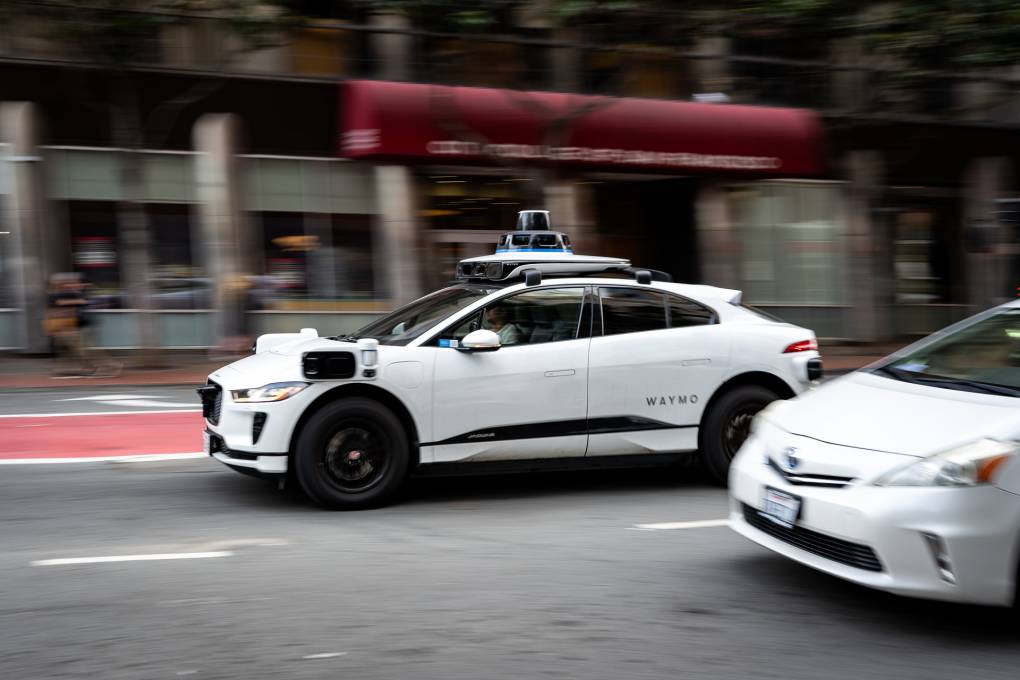
"caption": "A Waymo vehicle drives through downtown San Francisco on Nov. 2, 2023.",
"description": null,
"title": "231102-TaxiDriver-BethLaBerge-11",
"credit": "Beth LaBerge/KQED",
"status": "inherit",
"altTag": "A white driverless vehicle drives on a city street.",
"isLoading": false,
"fetchFailed": false
},
"news_12000982": {
"type": "attachments",
"id": "news_12000982",
"meta": {
"index": "attachments_1716263798",
"site": "news",
"id": "12000982",
"found": true
},
"title": "Senator Scott Wiener comes in to talk to the editorial board at the Chronicle on Friday, Jan. 10, 2020, in San Francisco, Calif.",
"publishDate": 1724187287,
"status": "inherit",
"parent": 0,
"modified": 1724187370,
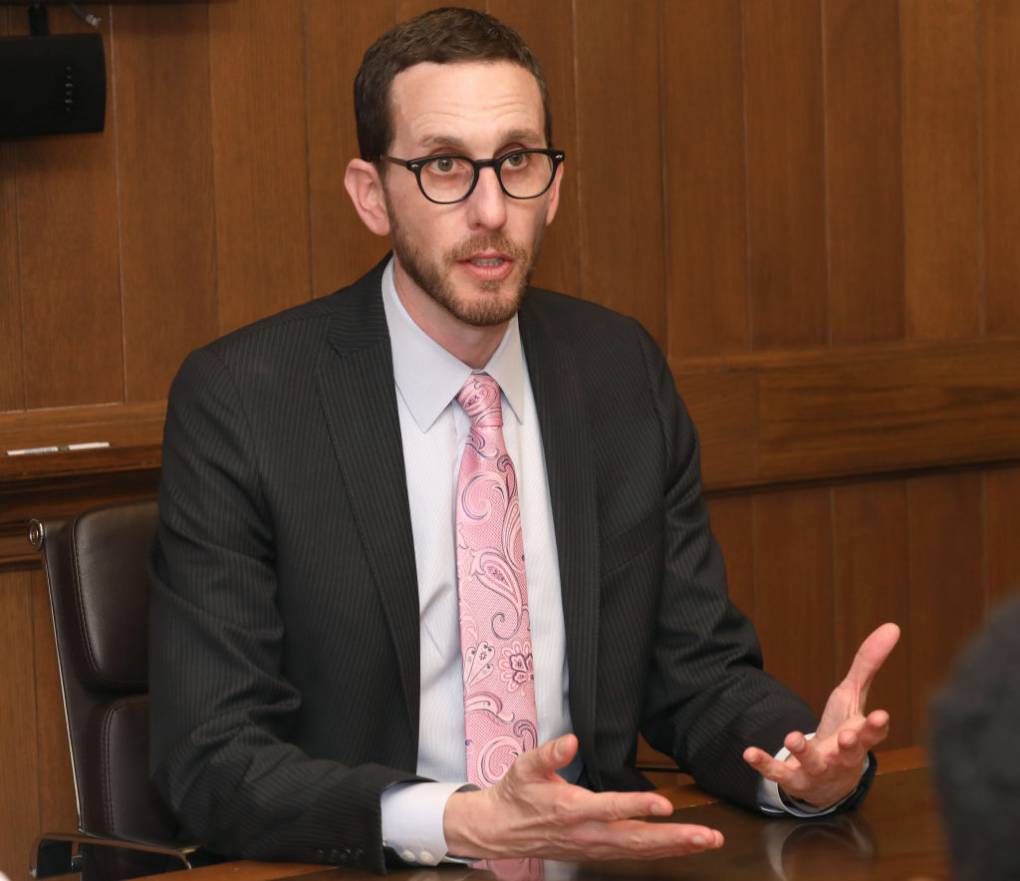
"caption": "Senator Scott Wiener introduced SB 1047, a bill that would mandate safety testing for developers of the largest AI models.",
"credit": "Liz Hafalia/The San Francisco Chronicle via Getty Images",
"altTag": null,
"description": null,
"imgSizes": {
"medium": {
"file": "https://cdn.kqed.org/wp-content/uploads/sites/10/2024/08/GettyImages-1321791737-800x691.jpg",
"width": 800,
"height": 691,
"mimeType": "image/jpeg"
},
"large": {
"file": "https://cdn.kqed.org/wp-content/uploads/sites/10/2024/08/GettyImages-1321791737-1020x881.jpg",
"width": 1020,
"height": 881,
"mimeType": "image/jpeg"
},
"thumbnail": {
"file": "https://cdn.kqed.org/wp-content/uploads/sites/10/2024/08/GettyImages-1321791737-160x138.jpg",
"width": 160,
"height": 138,
"mimeType": "image/jpeg"
},
"post-thumbnail": {
"file": "https://cdn.kqed.org/wp-content/uploads/sites/10/2024/08/GettyImages-1321791737-672x372.jpg",
"width": 672,
"height": 372,
"mimeType": "image/jpeg"
},
"twentyfourteen-full-width": {
"file": "https://cdn.kqed.org/wp-content/uploads/sites/10/2024/08/GettyImages-1321791737-1024x576.jpg",
"width": 1024,
"height": 576,
"mimeType": "image/jpeg"
},
"kqedFullSize": {
"file": "https://cdn.kqed.org/wp-content/uploads/sites/10/2024/08/GettyImages-1321791737.jpg",
"width": 1024,
"height": 884
}
},
"isLoading": false,
"fetchFailed": false
},
"news_12007088": {
"type": "attachments",
"id": "news_12007088",
"meta": {
"index": "attachments_1716263798",
"site": "news",
"id": "12007088",
"found": true
},
"title": "ABC News Hosts Presidential Debate Between Donald Trump And VP Kamala Harris At The National Constitution Center In Philadelphia",
"publishDate": 1727660065,
"status": "inherit",
"parent": 12007087,
"modified": 1727660138,
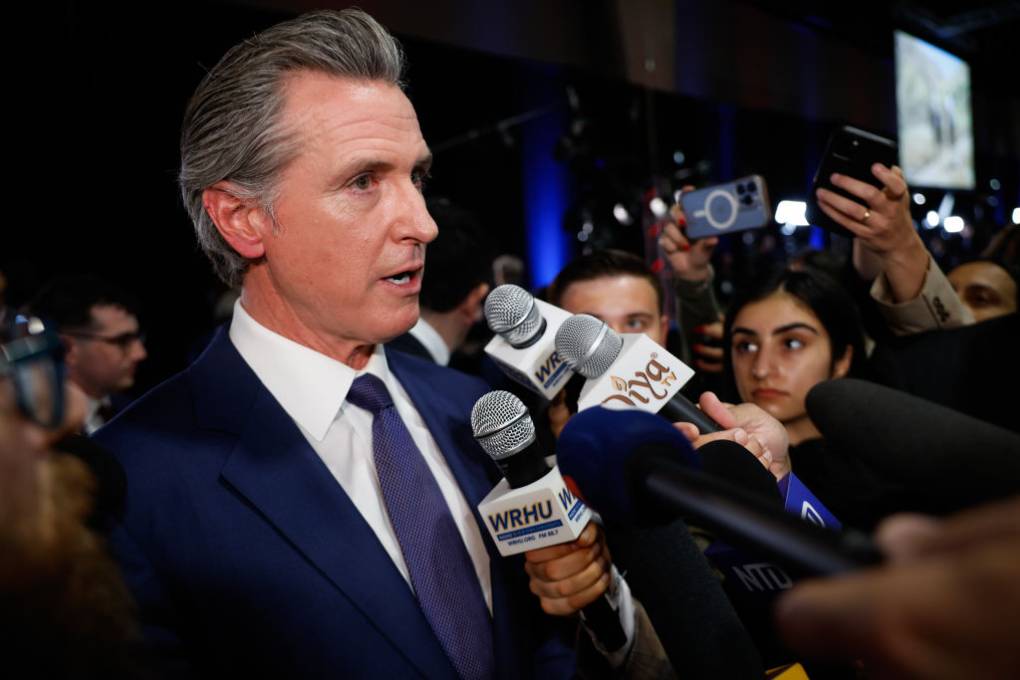
"caption": "Gov. Gavin Newsom speaks to reporters in the spin room following the presidential debate between Republican presidential nominee, former US President Donald Trump and Democratic presidential nominee, U.S. Vice President Kamala Harris at The National Constitution Center on Sept. 10, 2024 in Philadelphia, Pennsylvania. ",
"credit": "Chip Somodevilla/Getty Images",
"altTag": null,
"description": null,
"imgSizes": {
"medium": {
"file": "https://cdn.kqed.org/wp-content/uploads/sites/10/2024/09/GettyImages-2171266139-800x534.jpg",
"width": 800,
"height": 534,
"mimeType": "image/jpeg"
},
"large": {
"file": "https://cdn.kqed.org/wp-content/uploads/sites/10/2024/09/GettyImages-2171266139-1020x680.jpg",
"width": 1020,
"height": 680,
"mimeType": "image/jpeg"
},
"thumbnail": {
"file": "https://cdn.kqed.org/wp-content/uploads/sites/10/2024/09/GettyImages-2171266139-160x107.jpg",
"width": 160,
"height": 107,
"mimeType": "image/jpeg"
},
"post-thumbnail": {
"file": "https://cdn.kqed.org/wp-content/uploads/sites/10/2024/09/GettyImages-2171266139-672x372.jpg",
"width": 672,
"height": 372,
"mimeType": "image/jpeg"
},
"twentyfourteen-full-width": {
"file": "https://cdn.kqed.org/wp-content/uploads/sites/10/2024/09/GettyImages-2171266139-1024x576.jpg",
"width": 1024,
"height": 576,
"mimeType": "image/jpeg"
},
"kqedFullSize": {
"file": "https://cdn.kqed.org/wp-content/uploads/sites/10/2024/09/GettyImages-2171266139.jpg",
"width": 1024,
"height": 683
}
},
"isLoading": false,
"fetchFailed": false
},
"news_12007063": {
"type": "attachments",
"id": "news_12007063",
"meta": {
"index": "attachments_1716263798",
"site": "news",
"id": "12007063",
"found": true
},
"title": "\"The ABC News Presidential Debate: Race for the White House\"",
"publishDate": 1727644834,
"status": "inherit",
"parent": 12007061,
"modified": 1727644918,
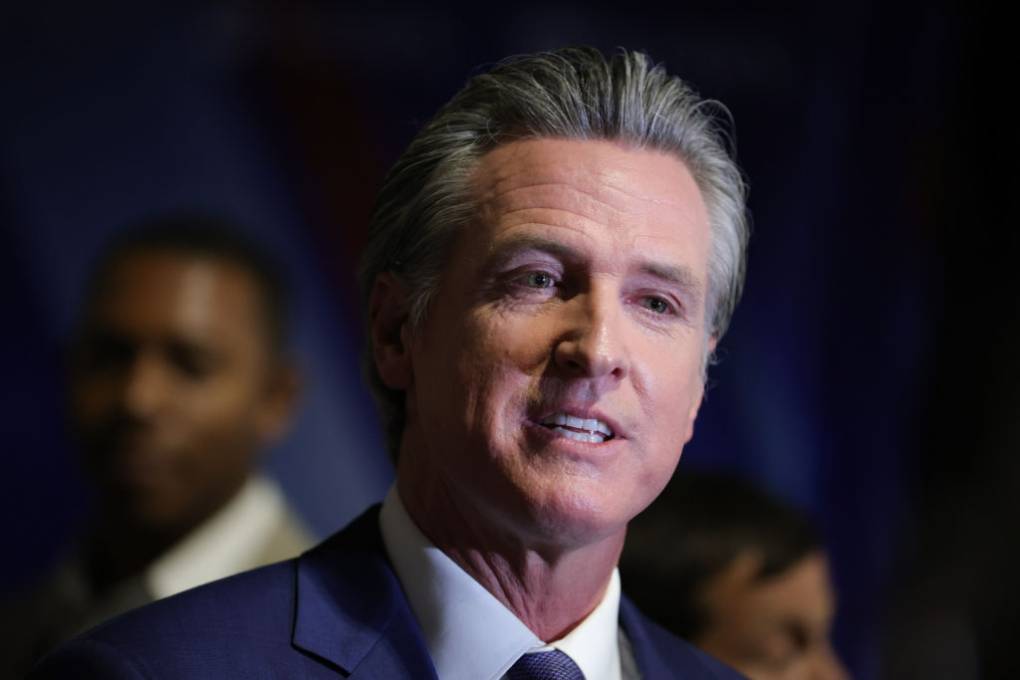
"caption": "California Gov. Gavin Newsom speaks during a live debate held at the National Constitution Center on Sept. 10, 2024 in Philadelphia, Pennsylvania. ",
"credit": "Bryan Dozier/Variety via Getty Images",
"altTag": null,
"description": null,
"imgSizes": {
"medium": {
"file": "https://cdn.kqed.org/wp-content/uploads/sites/10/2024/09/GettyImages-2170580015-800x534.jpg",
"width": 800,
"height": 534,
"mimeType": "image/jpeg"
},
"large": {
"file": "https://cdn.kqed.org/wp-content/uploads/sites/10/2024/09/GettyImages-2170580015-1020x680.jpg",
"width": 1020,
"height": 680,
"mimeType": "image/jpeg"
},
"thumbnail": {
"file": "https://cdn.kqed.org/wp-content/uploads/sites/10/2024/09/GettyImages-2170580015-160x107.jpg",
"width": 160,
"height": 107,
"mimeType": "image/jpeg"
},
"post-thumbnail": {
"file": "https://cdn.kqed.org/wp-content/uploads/sites/10/2024/09/GettyImages-2170580015-672x372.jpg",
"width": 672,
"height": 372,
"mimeType": "image/jpeg"
},
"twentyfourteen-full-width": {
"file": "https://cdn.kqed.org/wp-content/uploads/sites/10/2024/09/GettyImages-2170580015-1024x576.jpg",
"width": 1024,
"height": 576,
"mimeType": "image/jpeg"
},
"kqedFullSize": {
"file": "https://cdn.kqed.org/wp-content/uploads/sites/10/2024/09/GettyImages-2170580015.jpg",
"width": 1024,
"height": 683
}
},
"isLoading": false,
"fetchFailed": false
},
"news_12005985": {
"type": "attachments",
"id": "news_12005985",
"meta": {
"index": "attachments_1716263798",
"site": "news",
"id": "12005985",
"found": true
},
"title": "Close Up Of A Line Of High School Students Using Mobile Phones",
"publishDate": 1727131198,
"status": "inherit",
"parent": 12005967,
"modified": 1760395231,
"caption": "Close Up Of A Line Of High School Students Using Mobile Phones",
"credit": "Monkey Business Images/iStock via Getty Images Plus",
"altTag": "A close up of a line of students using mobile phones.",
"description": null,
"imgSizes": {
"medium": {
"file": "https://cdn.kqed.org/wp-content/uploads/sites/10/2024/09/GettyImages-999231414-800x533.jpg",
"width": 800,
"height": 533,
"mimeType": "image/jpeg"
},
"large": {
"file": "https://cdn.kqed.org/wp-content/uploads/sites/10/2024/09/GettyImages-999231414-1020x680.jpg",
"width": 1020,
"height": 680,
"mimeType": "image/jpeg"
},
"thumbnail": {
"file": "https://cdn.kqed.org/wp-content/uploads/sites/10/2024/09/GettyImages-999231414-160x107.jpg",
"width": 160,
"height": 107,
"mimeType": "image/jpeg"
},
"1536x1536": {
"file": "https://cdn.kqed.org/wp-content/uploads/sites/10/2024/09/GettyImages-999231414-1536x1024.jpg",
"width": 1536,
"height": 1024,
"mimeType": "image/jpeg"
},
"2048x2048": {
"file": "https://cdn.kqed.org/wp-content/uploads/sites/10/2024/09/GettyImages-999231414-2048x1365.jpg",
"width": 2048,
"height": 1365,
"mimeType": "image/jpeg"
},
"post-thumbnail": {
"file": "https://cdn.kqed.org/wp-content/uploads/sites/10/2024/09/GettyImages-999231414-672x372.jpg",
"width": 672,
"height": 372,
"mimeType": "image/jpeg"
},
"twentyfourteen-full-width": {
"file": "https://cdn.kqed.org/wp-content/uploads/sites/10/2024/09/GettyImages-999231414-1038x576.jpg",
"width": 1038,
"height": 576,
"mimeType": "image/jpeg"
},
"full-width": {
"file": "https://cdn.kqed.org/wp-content/uploads/sites/10/2024/09/GettyImages-999231414-1920x1280.jpg",
"width": 1920,
"height": 1280,
"mimeType": "image/jpeg"
},
"kqedFullSize": {
"file": "https://cdn.kqed.org/wp-content/uploads/sites/10/2024/09/GettyImages-999231414-e1760395192990.jpg",
"width": 2000,
"height": 1333
}
},
"isLoading": false,
"fetchFailed": false
},
"news_12005552": {
"type": "attachments",
"id": "news_12005552",
"meta": {
"index": "attachments_1716263798",
"site": "news",
"id": "12005552",
"found": true
},
"title": "San Francisco Deploys License-Plate Reading Cameras To Catch Offenders",
"publishDate": 1726786577,
"status": "inherit",
"parent": 12005347,
"modified": 1726853688,
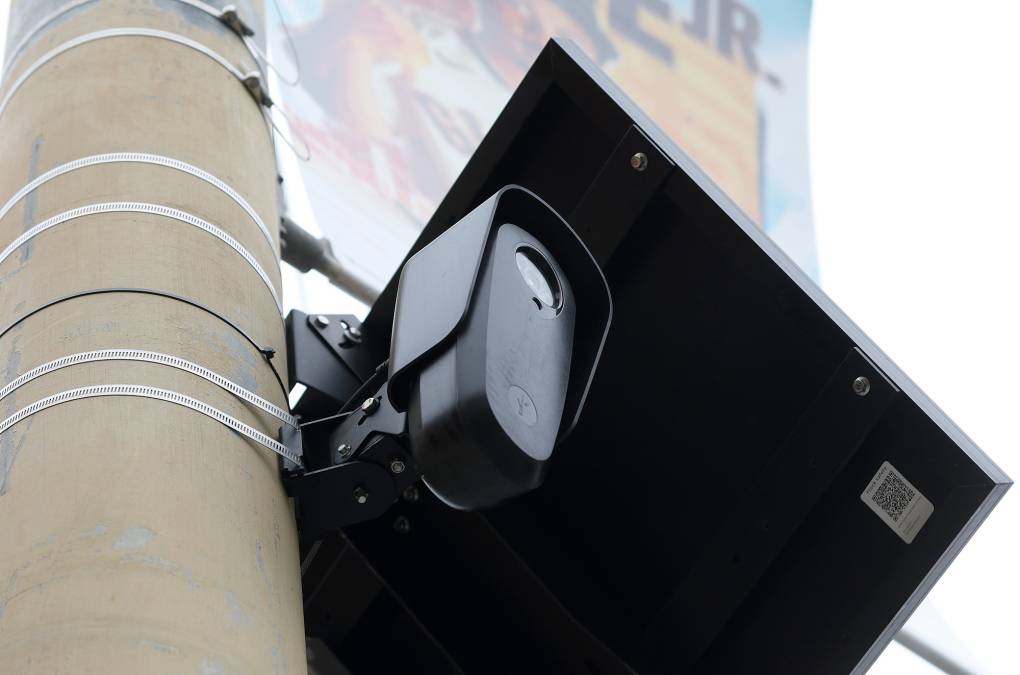
"caption": "An automated license plate reader is seen mounted on a pole on June 13, 2024, in San Francisco, California. Just across the Bay Bridge, Oakland is installing new automated license plate readers from the state.",
"credit": "Justin Sullivan/Getty Images",
"altTag": null,
"description": null,
"imgSizes": {
"medium": {
"file": "https://cdn.kqed.org/wp-content/uploads/sites/10/2024/09/SFLicensePlateReader-800x529.jpg",
"width": 800,
"height": 529,
"mimeType": "image/jpeg"
},
"large": {
"file": "https://cdn.kqed.org/wp-content/uploads/sites/10/2024/09/SFLicensePlateReader-1020x675.jpg",
"width": 1020,
"height": 675,
"mimeType": "image/jpeg"
},
"thumbnail": {
"file": "https://cdn.kqed.org/wp-content/uploads/sites/10/2024/09/SFLicensePlateReader-160x106.jpg",
"width": 160,
"height": 106,
"mimeType": "image/jpeg"
},
"1536x1536": {
"file": "https://cdn.kqed.org/wp-content/uploads/sites/10/2024/09/SFLicensePlateReader-1536x1016.jpg",
"width": 1536,
"height": 1016,
"mimeType": "image/jpeg"
},
"post-thumbnail": {
"file": "https://cdn.kqed.org/wp-content/uploads/sites/10/2024/09/SFLicensePlateReader-672x372.jpg",
"width": 672,
"height": 372,
"mimeType": "image/jpeg"
},
"twentyfourteen-full-width": {
"file": "https://cdn.kqed.org/wp-content/uploads/sites/10/2024/09/SFLicensePlateReader-1038x576.jpg",
"width": 1038,
"height": 576,
"mimeType": "image/jpeg"
},
"full-width": {
"file": "https://cdn.kqed.org/wp-content/uploads/sites/10/2024/09/SFLicensePlateReader-1920x1270.jpg",
"width": 1920,
"height": 1270,
"mimeType": "image/jpeg"
},
"kqedFullSize": {
"file": "https://cdn.kqed.org/wp-content/uploads/sites/10/2024/09/SFLicensePlateReader.jpg",
"width": 2000,
"height": 1323
}
},
"isLoading": false,
"fetchFailed": false
},
"news_12005278": {
"type": "attachments",
"id": "news_12005278",
"meta": {
"index": "attachments_1716263798",
"site": "news",
"id": "12005278",
"found": true
},
"title": "Close up female hands with blue manicure using pink smartphone outdoors",
"publishDate": 1726690637,
"status": "inherit",
"parent": 12005269,
"modified": 1726694263,
"caption": "Research shows that about 70% of teens use at least one kind of AI tool.",
"credit": "Tatiana Meteleva/Getty Images",
"altTag": "Close-up female hands with a blue manicure using pink smartphone outdoors.",
"description": null,
"imgSizes": {
"medium": {
"file": "https://cdn.kqed.org/wp-content/uploads/sites/10/2024/09/GettyImages-1460098524-800x533.jpg",
"width": 800,
"height": 533,
"mimeType": "image/jpeg"
},
"large": {
"file": "https://cdn.kqed.org/wp-content/uploads/sites/10/2024/09/GettyImages-1460098524-1020x680.jpg",
"width": 1020,
"height": 680,
"mimeType": "image/jpeg"
},
"thumbnail": {
"file": "https://cdn.kqed.org/wp-content/uploads/sites/10/2024/09/GettyImages-1460098524-160x107.jpg",
"width": 160,
"height": 107,
"mimeType": "image/jpeg"
},
"1536x1536": {
"file": "https://cdn.kqed.org/wp-content/uploads/sites/10/2024/09/GettyImages-1460098524-1536x1024.jpg",
"width": 1536,
"height": 1024,
"mimeType": "image/jpeg"
},
"2048x2048": {
"file": "https://cdn.kqed.org/wp-content/uploads/sites/10/2024/09/GettyImages-1460098524-2048x1365.jpg",
"width": 2048,
"height": 1365,
"mimeType": "image/jpeg"
},
"post-thumbnail": {
"file": "https://cdn.kqed.org/wp-content/uploads/sites/10/2024/09/GettyImages-1460098524-672x372.jpg",
"width": 672,
"height": 372,
"mimeType": "image/jpeg"
},
"twentyfourteen-full-width": {
"file": "https://cdn.kqed.org/wp-content/uploads/sites/10/2024/09/GettyImages-1460098524-1038x576.jpg",
"width": 1038,
"height": 576,
"mimeType": "image/jpeg"
},
"full-width": {
"file": "https://cdn.kqed.org/wp-content/uploads/sites/10/2024/09/GettyImages-1460098524-1920x1280.jpg",
"width": 1920,
"height": 1280,
"mimeType": "image/jpeg"
},
"kqedFullSize": {
"file": "https://cdn.kqed.org/wp-content/uploads/sites/10/2024/09/GettyImages-1460098524.jpg",
"width": 2121,
"height": 1414
}
},
"isLoading": false,
"fetchFailed": false
},
"news_12005196": {
"type": "attachments",
"id": "news_12005196",
"meta": {
"index": "attachments_1716263798",
"site": "news",
"id": "12005196",
"found": true
},
"title": "US-EU-POLITICS-TRADE-TECHNOLOGY",
"publishDate": 1726680451,
"status": "inherit",
"parent": 12005186,
"modified": 1726680515,
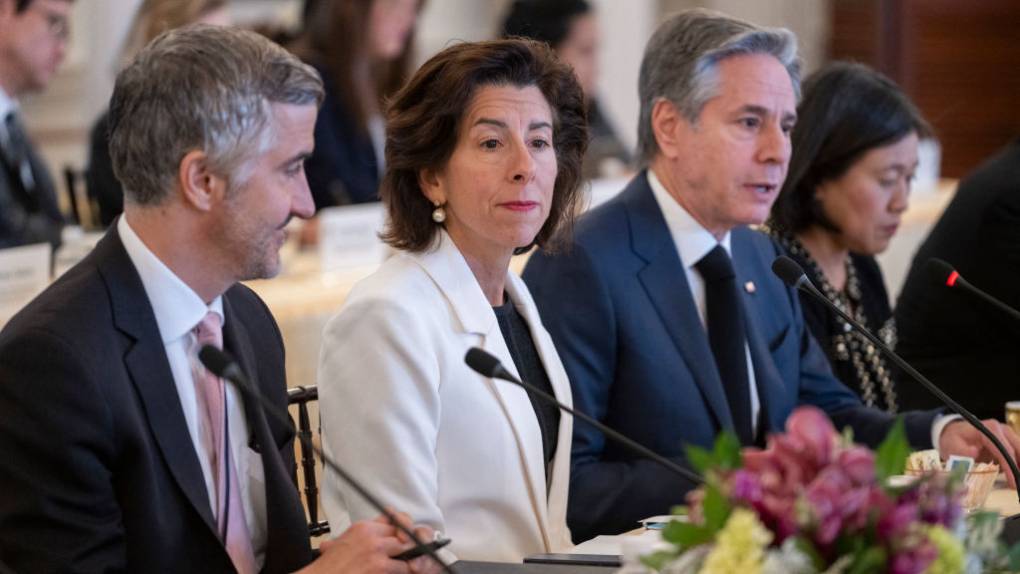
"caption": "US Secretary of Commerce Gina Raimondo (second from left)), with Secretary of State Antony Blinken (third from left)), at the 5th US-EU Trade and Technology Council Ministerial Meeting at the US State Department in Washington, DC, Jan. 30, 2024. ",
"credit": null,
"altTag": null,
"description": null,
"imgSizes": {
"medium": {
"file": "https://cdn.kqed.org/wp-content/uploads/sites/10/2024/09/GettyImages-1965911310-800x450.jpg",
"width": 800,
"height": 450,
"mimeType": "image/jpeg"
},
"large": {
"file": "https://cdn.kqed.org/wp-content/uploads/sites/10/2024/09/GettyImages-1965911310-1020x574.jpg",
"width": 1020,
"height": 574,
"mimeType": "image/jpeg"
},
"thumbnail": {
"file": "https://cdn.kqed.org/wp-content/uploads/sites/10/2024/09/GettyImages-1965911310-160x90.jpg",
"width": 160,
"height": 90,
"mimeType": "image/jpeg"
},
"post-thumbnail": {
"file": "https://cdn.kqed.org/wp-content/uploads/sites/10/2024/09/GettyImages-1965911310-672x372.jpg",
"width": 672,
"height": 372,
"mimeType": "image/jpeg"
},
"kqedFullSize": {
"file": "https://cdn.kqed.org/wp-content/uploads/sites/10/2024/09/GettyImages-1965911310.jpg",
"width": 1024,
"height": 576
}
},
"isLoading": false,
"fetchFailed": false
},
"news_12004902": {
"type": "attachments",
"id": "news_12004902",
"meta": {
"index": "attachments_1716263798",
"site": "news",
"id": "12004902",
"found": true
},
"title": "LondonBreedSFPDTech",
"publishDate": 1726519477,
"status": "inherit",
"parent": 12004882,
"modified": 1726600671,
"caption": "Mayor London Breed speaks at the San Francisco Police Department press conference alongside District Attorney Brooke Jenkins and SFPD Chief of Police William Scott, discussing new AI surveillance structures to be installed across the city.",
"credit": "Gilare Zada/KQED",
"altTag": null,
"description": null,
"imgSizes": {
"medium": {
"file": "https://cdn.kqed.org/wp-content/uploads/sites/10/2024/09/LondonBreedSFPDTech-800x575.jpg",
"width": 800,
"height": 575,
"mimeType": "image/jpeg"
},
"large": {
"file": "https://cdn.kqed.org/wp-content/uploads/sites/10/2024/09/LondonBreedSFPDTech-1020x733.jpg",
"width": 1020,
"height": 733,
"mimeType": "image/jpeg"
},
"thumbnail": {
"file": "https://cdn.kqed.org/wp-content/uploads/sites/10/2024/09/LondonBreedSFPDTech-160x115.jpg",
"width": 160,
"height": 115,
"mimeType": "image/jpeg"
},
"1536x1536": {
"file": "https://cdn.kqed.org/wp-content/uploads/sites/10/2024/09/LondonBreedSFPDTech-1536x1104.jpg",
"width": 1536,
"height": 1104,
"mimeType": "image/jpeg"
},
"post-thumbnail": {
"file": "https://cdn.kqed.org/wp-content/uploads/sites/10/2024/09/LondonBreedSFPDTech-672x372.jpg",
"width": 672,
"height": 372,
"mimeType": "image/jpeg"
},
"twentyfourteen-full-width": {
"file": "https://cdn.kqed.org/wp-content/uploads/sites/10/2024/09/LondonBreedSFPDTech-1038x576.jpg",
"width": 1038,
"height": 576,
"mimeType": "image/jpeg"
},
"full-width": {
"file": "https://cdn.kqed.org/wp-content/uploads/sites/10/2024/09/LondonBreedSFPDTech-1920x1380.jpg",
"width": 1920,
"height": 1380,
"mimeType": "image/jpeg"
},
"kqedFullSize": {
"file": "https://cdn.kqed.org/wp-content/uploads/sites/10/2024/09/LondonBreedSFPDTech.jpg",
"width": 2000,
"height": 1437
}
},
"isLoading": false,
"fetchFailed": false
},
"news_12004622": {
"type": "attachments",
"id": "news_12004622",
"meta": {
"index": "attachments_1716263798",
"site": "news",
"id": "12004622",
"found": true
},
"title": "Illustration Sora",
"publishDate": 1726186123,
"status": "inherit",
"parent": 12004542,
"modified": 1726186206,
"caption": "Archival producers, who play a crucial role in documentary filmmaking, warn that using Sora and similar generative AI programs could muddy the historical record irrevocably. The Archival Producers Alliance released a set of “best practices” to keep generative AI from destroying the integrity and authenticity of documentaries on Sept. 13, 2024.",
"credit": "Photo Illustration by Costfoto/NurPhoto via Getty Images",
"altTag": "A hand holds a tablet with an image of a woman walking through a city street at night with the Open AI logo in the background.",
"description": null,
"imgSizes": {
"medium": {
"file": "https://cdn.kqed.org/wp-content/uploads/sites/10/2024/09/GettyImages-2013768377-800x600.jpg",
"width": 800,
"height": 600,
"mimeType": "image/jpeg"
},
"large": {
"file": "https://cdn.kqed.org/wp-content/uploads/sites/10/2024/09/GettyImages-2013768377-1020x765.jpg",
"width": 1020,
"height": 765,
"mimeType": "image/jpeg"
},
"thumbnail": {
"file": "https://cdn.kqed.org/wp-content/uploads/sites/10/2024/09/GettyImages-2013768377-160x120.jpg",
"width": 160,
"height": 120,
"mimeType": "image/jpeg"
},
"post-thumbnail": {
"file": "https://cdn.kqed.org/wp-content/uploads/sites/10/2024/09/GettyImages-2013768377-672x372.jpg",
"width": 672,
"height": 372,
"mimeType": "image/jpeg"
},
"twentyfourteen-full-width": {
"file": "https://cdn.kqed.org/wp-content/uploads/sites/10/2024/09/GettyImages-2013768377-1024x576.jpg",
"width": 1024,
"height": 576,
"mimeType": "image/jpeg"
},
"kqedFullSize": {
"file": "https://cdn.kqed.org/wp-content/uploads/sites/10/2024/09/GettyImages-2013768377.jpg",
"width": 1024,
"height": 768
}
},
"isLoading": false,
"fetchFailed": false
},
"news_12003841": {
"type": "attachments",
"id": "news_12003841",
"meta": {
"index": "attachments_1716263798",
"site": "news",
"id": "12003841",
"found": true
},
"title": "045_KQED_InternetArchiveOffices_03242023_qed",
"publishDate": 1725995889,
"status": "inherit",
"parent": 12003819,
"modified": 1725995929,
"caption": "The Internet Archive's servers, photographed at their offices in San Francisco on March 24, 2023.",
"credit": "Beth LaBerge/KQED",
"altTag": null,
"description": null,
"imgSizes": {
"medium": {
"file": "https://cdn.kqed.org/wp-content/uploads/sites/10/2024/09/045_KQED_InternetArchiveOffices_03242023_qed-800x533.jpg",
"width": 800,
"height": 533,
"mimeType": "image/jpeg"
},
"large": {
"file": "https://cdn.kqed.org/wp-content/uploads/sites/10/2024/09/045_KQED_InternetArchiveOffices_03242023_qed-1020x680.jpg",
"width": 1020,
"height": 680,
"mimeType": "image/jpeg"
},
"thumbnail": {
"file": "https://cdn.kqed.org/wp-content/uploads/sites/10/2024/09/045_KQED_InternetArchiveOffices_03242023_qed-160x107.jpg",
"width": 160,
"height": 107,
"mimeType": "image/jpeg"
},
"1536x1536": {
"file": "https://cdn.kqed.org/wp-content/uploads/sites/10/2024/09/045_KQED_InternetArchiveOffices_03242023_qed-1536x1024.jpg",
"width": 1536,
"height": 1024,
"mimeType": "image/jpeg"
},
"post-thumbnail": {
"file": "https://cdn.kqed.org/wp-content/uploads/sites/10/2024/09/045_KQED_InternetArchiveOffices_03242023_qed-672x372.jpg",
"width": 672,
"height": 372,
"mimeType": "image/jpeg"
},
"twentyfourteen-full-width": {
"file": "https://cdn.kqed.org/wp-content/uploads/sites/10/2024/09/045_KQED_InternetArchiveOffices_03242023_qed-1038x576.jpg",
"width": 1038,
"height": 576,
"mimeType": "image/jpeg"
},
"full-width": {
"file": "https://cdn.kqed.org/wp-content/uploads/sites/10/2024/09/045_KQED_InternetArchiveOffices_03242023_qed-1920x1280.jpg",
"width": 1920,
"height": 1280,
"mimeType": "image/jpeg"
},
"kqedFullSize": {
"file": "https://cdn.kqed.org/wp-content/uploads/sites/10/2024/09/045_KQED_InternetArchiveOffices_03242023_qed.jpg",
"width": 2000,
"height": 1333
}
},
"isLoading": false,
"fetchFailed": false
},
"news_12003546": {
"type": "attachments",
"id": "news_12003546",
"meta": {
"index": "attachments_1716263798",
"site": "news",
"id": "12003546",
"found": true
},
"title": "AI Chatbot",
"publishDate": 1725826306,
"status": "inherit",
"parent": 12003542,
"modified": 1725826347,
"caption": null,
"credit": "Andriy Onufriyenko/Getty Images",
"altTag": "A digital generated image of abstract AI data chat icons flying over digital surface with codes.",
"description": null,
"imgSizes": {
"medium": {
"file": "https://cdn.kqed.org/wp-content/uploads/sites/10/2024/09/GettyImages-2080972792-800x533.jpg",
"width": 800,
"height": 533,
"mimeType": "image/jpeg"
},
"large": {
"file": "https://cdn.kqed.org/wp-content/uploads/sites/10/2024/09/GettyImages-2080972792-1020x680.jpg",
"width": 1020,
"height": 680,
"mimeType": "image/jpeg"
},
"thumbnail": {
"file": "https://cdn.kqed.org/wp-content/uploads/sites/10/2024/09/GettyImages-2080972792-160x107.jpg",
"width": 160,
"height": 107,
"mimeType": "image/jpeg"
},
"1536x1536": {
"file": "https://cdn.kqed.org/wp-content/uploads/sites/10/2024/09/GettyImages-2080972792-1536x1024.jpg",
"width": 1536,
"height": 1024,
"mimeType": "image/jpeg"
},
"2048x2048": {
"file": "https://cdn.kqed.org/wp-content/uploads/sites/10/2024/09/GettyImages-2080972792-2048x1365.jpg",
"width": 2048,
"height": 1365,
"mimeType": "image/jpeg"
},
"post-thumbnail": {
"file": "https://cdn.kqed.org/wp-content/uploads/sites/10/2024/09/GettyImages-2080972792-672x372.jpg",
"width": 672,
"height": 372,
"mimeType": "image/jpeg"
},
"twentyfourteen-full-width": {
"file": "https://cdn.kqed.org/wp-content/uploads/sites/10/2024/09/GettyImages-2080972792-1038x576.jpg",
"width": 1038,
"height": 576,
"mimeType": "image/jpeg"
},
"full-width": {
"file": "https://cdn.kqed.org/wp-content/uploads/sites/10/2024/09/GettyImages-2080972792-1920x1280.jpg",
"width": 1920,
"height": 1280,
"mimeType": "image/jpeg"
},
"kqedFullSize": {
"file": "https://cdn.kqed.org/wp-content/uploads/sites/10/2024/09/GettyImages-2080972792.jpg",
"width": 2121,
"height": 1414
}
},
"isLoading": false,
"fetchFailed": false
}
},
"audioPlayerReducer": {
"postId": "stream_live",
"isPaused": true,
"isPlaying": false,
"pfsActive": false,
"pledgeModalIsOpen": true,
"playerDrawerIsOpen": false,
"liveAudioPlayStartedAt": 0,
"liveAudioPlayContext": ""
},
"authorsReducer": {
"byline_news_12007061": {
"type": "authors",
"id": "byline_news_12007061",
"meta": {
"override": true
},
"slug": "byline_news_12007061",
"name": "Trân Nguyễn, Associated Press",
"isLoading": false
},
"byline_news_12005967": {
"type": "authors",
"id": "byline_news_12005967",
"meta": {
"override": true
},
"slug": "byline_news_12005967",
"name": "\u003ca href=\"https://edsource.org/author/lfreedberg\">Louis Freedberg, \u003c/a>EdSource",
"isLoading": false
},
"byline_news_12005186": {
"type": "authors",
"id": "byline_news_12005186",
"meta": {
"override": true
},
"slug": "byline_news_12005186",
"name": "Matt O'Brien, Associated Press",
"isLoading": false
},
"byline_news_12003542": {
"type": "authors",
"id": "byline_news_12003542",
"meta": {
"override": true
},
"slug": "byline_news_12003542",
"name": "\u003ca href=\"https://calmatters.org/author/khari-johnson\">Khari Johnson, \u003c/a>CalMatters",
"isLoading": false
},
"rachael-myrow": {
"type": "authors",
"id": "251",
"meta": {
"index": "authors_1716337520",
"id": "251",
"found": true
},
"name": "Rachael Myrow",
"firstName": "Rachael",
"lastName": "Myrow",
"slug": "rachael-myrow",
"email": "rmyrow@kqed.org",
"display_author_email": true,
"staff_mastheads": [
"news"
],
"title": "Senior Editor of KQED's Silicon Valley News Desk",
"bio": "• I write and edit stories about how Silicon Valley power and policies shape everyday life in California. I’m also passionate about making Bay Area history and culture more accessible to a broad public. • I’ve been a journalist for most of my life, starting in high school with The Franklin Press in Los Angeles, where I grew up. While earning my first degree in English at UC Berkeley, I got my start in public radio at KALX-FM. After completing a second degree in journalism at Cal, I landed my first professional job at Marketplace, then moved on to KPCC (now LAist), and then KQED, where I hosted The California Report for more than seven years. • My reporting has appeared on NPR, The World, WBUR’s \u003ci>Here & Now\u003c/i>, and the BBC. I also guest host for KQED’s \u003ci>Forum\u003c/i>, as well as the Commonwealth Club in San Francisco. • I speak periodically on media, democracy and technology issues, and do voiceover work for documentaries and educational video projects. • Outside of the studio, you'll find me hiking Bay Area trails and whipping up Insta-ready meals in my kitchen. • I do not accept gifts, money, or favors from anyone connected to my reporting, I don't pay people for information, and I do not support or donate to political causes. • I strive to treat the people I report on with fairness, honesty, and respect. I also recognize there are often multiple sides to a story and work to verify information through multiple sources and documentation. If I get something wrong, I correct it.",
"avatar": "https://secure.gravatar.com/avatar/3ed8a3c5f26025e4a805ba634cda8cd764906b97438a6d9ce216b044e340da4e?s=600&d=blank&r=g",
"twitter": "rachaelmyrow",
"bluesky": null,
"facebook": null,
"instagram": null,
"linkedin": "https://www.linkedin.com/in/rachaelmyrow/",
"sites": [
{
"site": "arts",
"roles": [
"administrator"
]
},
{
"site": "news",
"roles": [
"edit_others_posts",
"editor"
]
},
{
"site": "futureofyou",
"roles": [
"editor"
]
},
{
"site": "bayareabites",
"roles": [
"editor"
]
},
{
"site": "stateofhealth",
"roles": [
"editor"
]
},
{
"site": "science",
"roles": [
"editor"
]
},
{
"site": "food",
"roles": [
"editor"
]
},
{
"site": "forum",
"roles": [
"editor"
]
},
{
"site": "liveblog",
"roles": [
"author"
]
}
],
"headData": {
"title": "Rachael Myrow | KQED",
"description": "Senior Editor of KQED's Silicon Valley News Desk",
"ogImgSrc": "https://secure.gravatar.com/avatar/3ed8a3c5f26025e4a805ba634cda8cd764906b97438a6d9ce216b044e340da4e?s=600&d=blank&r=g",
"twImgSrc": "https://secure.gravatar.com/avatar/3ed8a3c5f26025e4a805ba634cda8cd764906b97438a6d9ce216b044e340da4e?s=600&d=blank&r=g"
},
"isLoading": false,
"link": "/author/rachael-myrow"
},
"scottshafer": {
"type": "authors",
"id": "255",
"meta": {
"index": "authors_1716337520",
"id": "255",
"found": true
},
"name": "Scott Shafer",
"firstName": "Scott",
"lastName": "Shafer",
"slug": "scottshafer",
"email": "sshafer@kqed.org",
"display_author_email": false,
"staff_mastheads": [
"news"
],
"title": "KQED Contributor",
"bio": "Scott Shafer is a senior editor with the KQED Politics and Government desk. He is co-host of Political Breakdown, the award-winning radio show and podcast with a personal take on the world of politics. Scott came to KQED in 1998 to host the statewide\u003cem> California Report\u003c/em>. Prior to that he had extended stints in politics and government\u003cem>.\u003c/em> He uses that inside experience at KQED in his, reporting, hosting and analysis for the politics desk. Scott collaborated \u003cem>Political Breakdown a\u003c/em>nd on \u003cem>The Political Mind of Jerry Brown, \u003c/em>an eight-part series about the life and extraordinary political career of the former governor. For fun, he plays water polo with the San Francisco Tsunami.",
"avatar": "https://secure.gravatar.com/avatar/a62ebae45b79d7aed1a39a0e3bf68104?s=600&d=blank&r=g",
"twitter": "scottshafer",
"bluesky": null,
"facebook": null,
"instagram": null,
"linkedin": null,
"sites": [
{
"site": "news",
"roles": [
"editor"
]
},
{
"site": "stateofhealth",
"roles": [
"author"
]
},
{
"site": "science",
"roles": [
"author"
]
},
{
"site": "forum",
"roles": [
"subscriber"
]
},
{
"site": "liveblog",
"roles": [
"author"
]
}
],
"headData": {
"title": "Scott Shafer | KQED",
"description": "KQED Contributor",
"ogImgSrc": "https://secure.gravatar.com/avatar/a62ebae45b79d7aed1a39a0e3bf68104?s=600&d=blank&r=g",
"twImgSrc": "https://secure.gravatar.com/avatar/a62ebae45b79d7aed1a39a0e3bf68104?s=600&d=blank&r=g"
},
"isLoading": false,
"link": "/author/scottshafer"
},
"sjohnson": {
"type": "authors",
"id": "11840",
"meta": {
"index": "authors_1716337520",
"id": "11840",
"found": true
},
"name": "Sydney Johnson",
"firstName": "Sydney",
"lastName": "Johnson",
"slug": "sjohnson",
"email": "sjohnson@kqed.org",
"display_author_email": false,
"staff_mastheads": [
"news"
],
"title": "KQED Reporter",
"bio": "Sydney Johnson is a general assignment reporter at KQED. She previously reported on public health and city government at the San Francisco Examiner, and before that, she covered statewide education policy for EdSource. Her reporting has won multiple local, state and national awards. Sydney is a graduate of the University of California, Berkeley and lives in San Francisco.",
"avatar": "https://secure.gravatar.com/avatar/97855f2719b72ad6190b7c535fe642c8?s=600&d=blank&r=g",
"twitter": "sydneyfjohnson",
"facebook": null,
"instagram": null,
"linkedin": null,
"sites": [
{
"site": "news",
"roles": [
"editor"
]
}
],
"headData": {
"title": "Sydney Johnson | KQED",
"description": "KQED Reporter",
"ogImgSrc": "https://secure.gravatar.com/avatar/97855f2719b72ad6190b7c535fe642c8?s=600&d=blank&r=g",
"twImgSrc": "https://secure.gravatar.com/avatar/97855f2719b72ad6190b7c535fe642c8?s=600&d=blank&r=g"
},
"isLoading": false,
"link": "/author/sjohnson"
},
"kdebenedetti": {
"type": "authors",
"id": "11913",
"meta": {
"index": "authors_1716337520",
"id": "11913",
"found": true
},
"name": "Katie DeBenedetti",
"firstName": "Katie",
"lastName": "DeBenedetti",
"slug": "kdebenedetti",
"email": "kdebenedetti@kqed.org",
"display_author_email": false,
"staff_mastheads": [
"news",
"science"
],
"title": "KQED Contributor",
"bio": "Katie DeBenedetti is a digital reporter covering daily news for the Express Desk. Prior to joining KQED as a culture reporting intern in January 2024, she covered education and city government for the Napa Valley Register.",
"avatar": "https://secure.gravatar.com/avatar/6e31073cb8f7e4214ab03f42771d0f45?s=600&d=blank&r=g",
"twitter": null,
"facebook": null,
"instagram": null,
"linkedin": null,
"sites": [
{
"site": "news",
"roles": [
"author"
]
},
{
"site": "science",
"roles": [
"author"
]
},
{
"site": "liveblog",
"roles": [
"author"
]
}
],
"headData": {
"title": "Katie DeBenedetti | KQED",
"description": "KQED Contributor",
"ogImgSrc": "https://secure.gravatar.com/avatar/6e31073cb8f7e4214ab03f42771d0f45?s=600&d=blank&r=g",
"twImgSrc": "https://secure.gravatar.com/avatar/6e31073cb8f7e4214ab03f42771d0f45?s=600&d=blank&r=g"
},
"isLoading": false,
"link": "/author/kdebenedetti"
},
"emanoukian": {
"type": "authors",
"id": "11925",
"meta": {
"index": "authors_1716337520",
"id": "11925",
"found": true
},
"name": "Elize Manoukian",
"firstName": "Elize",
"lastName": "Manoukian",
"slug": "emanoukian",
"email": "emanoukian@KQED.org",
"display_author_email": false,
"staff_mastheads": [
"news"
],
"title": "Digital News Editor",
"bio": "Elize Manoukian is an award-winning audio producer and Senior Editor on the Express Desk, KQED's digital news platform. Her work has appeared on KPFA, Interlochen Public Radio, Oregon Public Broadcast, the New York Daily News, LA Times and the San Diego Union-Tribune.",
"avatar": "https://secure.gravatar.com/avatar/4525f1a8e46ccb30933b32653d9772064cfefe3fa655eb45b3b3a80341f6bdad?s=600&d=blank&r=g",
"twitter": null,
"bluesky": null,
"facebook": null,
"instagram": null,
"linkedin": null,
"sites": [
{
"site": "arts",
"roles": [
"editor"
]
},
{
"site": "news",
"roles": [
"editor"
]
},
{
"site": "science",
"roles": [
"editor"
]
}
],
"headData": {
"title": "Elize Manoukian | KQED",
"description": "Digital News Editor",
"ogImgSrc": "https://secure.gravatar.com/avatar/4525f1a8e46ccb30933b32653d9772064cfefe3fa655eb45b3b3a80341f6bdad?s=600&d=blank&r=g",
"twImgSrc": "https://secure.gravatar.com/avatar/4525f1a8e46ccb30933b32653d9772064cfefe3fa655eb45b3b3a80341f6bdad?s=600&d=blank&r=g"
},
"isLoading": false,
"link": "/author/emanoukian"
},
"gzada": {
"type": "authors",
"id": "11929",
"meta": {
"index": "authors_1716337520",
"id": "11929",
"found": true
},
"name": "Gilare Zada",
"firstName": "Gilare",
"lastName": "Zada",
"slug": "gzada",
"email": "gzada@kqed.org",
"display_author_email": true,
"staff_mastheads": [
"news"
],
"title": null,
"bio": "Gilare Zada is a Kurdish-American from San Diego, CA. Storytelling, fitness, and binge reading are some of her passions outside of news reporting. Her work has appeared in Mission Local, the Peninsula Press, the San Francisco Press Club, and more. She also writes as a class correspondent for the Stanford Magazine - go Card!",
"avatar": "https://secure.gravatar.com/avatar/33a75f2b947669a488a805edec3fbf3838c1cedaedda710e983770633b4d6a75?s=600&d=blank&r=g",
"twitter": null,
"bluesky": null,
"facebook": null,
"instagram": null,
"linkedin": null,
"sites": [
{
"site": "",
"roles": [
"editor"
]
},
{
"site": "arts",
"roles": [
"editor"
]
},
{
"site": "news",
"roles": [
"administrator"
]
},
{
"site": "science",
"roles": [
"editor"
]
}
],
"headData": {
"title": "Gilare Zada | KQED",
"description": null,
"ogImgSrc": "https://secure.gravatar.com/avatar/33a75f2b947669a488a805edec3fbf3838c1cedaedda710e983770633b4d6a75?s=600&d=blank&r=g",
"twImgSrc": "https://secure.gravatar.com/avatar/33a75f2b947669a488a805edec3fbf3838c1cedaedda710e983770633b4d6a75?s=600&d=blank&r=g"
},
"isLoading": false,
"link": "/author/gzada"
}
},
"pagesReducer": {
"news_category_technology": {
"type": "terms",
"id": "news_248",
"meta": {
"index": "terms_1716263798",
"site": "news",
"id": "248",
"score": 10.93111
},
"featImg": null,
"name": "Technology",
"description": null,
"taxonomy": "category",
"headData": {
"twImgId": null,
"twTitle": null,
"ogTitle": null,
"ogImgId": null,
"twDescription": null,
"description": null,
"title": "Technology Archives | KQED News",
"ogDescription": null
},
"ttid": 256,
"slug": "technology",
"isLoading": false,
"title": "Technology",
"pageMeta": {
"site": "news",
"WpPageTemplate": "page-topic-editorial",
"currentPage": 22
},
"blocks": [
{
"blockName": "kqed/post-list",
"attrs": {
"layout": "cardArticle2",
"query": "posts/news?category=technology",
"seeMore": false,
"paginated": true,
"page": 22
}
},
{
"blockName": "kqed/ad"
}
]
}
},
"pfsSessionReducer": {},
"postsReducer": {
"stream_live": {
"type": "live",
"id": "stream_live",
"audioUrl": "https://streams.kqed.org/kqedradio",
"title": "Live Stream",
"excerpt": "Live Stream information currently unavailable.",
"link": "/radio",
"featImg": "",
"label": {
"name": "KQED Live",
"link": "/"
}
},
"stream_kqedNewscast": {
"type": "posts",
"id": "stream_kqedNewscast",
"audioUrl": "https://www.kqed.org/.stream/anon/radio/RDnews/newscast.mp3?_=1",
"title": "KQED Newscast",
"featImg": "",
"label": {
"name": "88.5 FM",
"link": "/"
}
},
"news_12007471": {
"type": "posts",
"id": "news_12007471",
"meta": {
"index": "posts_1716263798",
"site": "news",
"id": "12007471",
"score": null,
"sort": [
1727900378000
]
},
"guestAuthors": [],
"slug": "sf-waymo-riders-viral-video-shows-men-blocking-her-car-to-demand-her-number",
"title": "SF Waymo Rider’s Viral Video Shows Men Blocking Her Car to Demand Her Number",
"publishDate": 1727900378,
"format": "standard",
"headTitle": "SF Waymo Rider’s Viral Video Shows Men Blocking Her Car to Demand Her Number | KQED",
"labelTerm": {
"site": "news"
},
"content": "\u003cp>San Franciscans have gotten fairly used to seeing driverless vehicles cruising in the lane next to them, but a viral video of a woman trapped in a Waymo by two men demanding her phone number is raising new concerns about passenger safety in the \u003ca href=\"https://www.kqed.org/news/tag/autonomous-vehicles\">autonomous vehicles\u003c/a>.\u003c/p>\n\u003cp>The woman, who identified herself as Amina V., posted the video of her frightening experience in the front passenger seat of a Waymo stalled on Mission Street after a man approached it at a red light.\u003c/p>\n\u003cp>“Warning to women in SF,” she wrote Monday in a \u003ca href=\"https://x.com/Amina_io/status/1840759345354809414\">post on social media platform X\u003c/a> accompanying the minute-long video, which shows two men standing in front of the car and gesturing to her, requesting her phone number. Amina asks them to move repeatedly, saying, “Get out of the way” and “Please stop. You’re holding traffic.”\u003c/p>\n\u003cp>[ad fullwidth]\u003c/p>\n\u003cp>She said via email that the whole exchange lasted a few minutes, during which a message appeared on the vehicle’s internal display that said something along the lines of “We will help you shortly.”\u003c/p>\n\u003cp>Amina said Waymo’s team reached out to her numerous times during and following the incident.\u003c/p>\n\u003cp>https://twitter.com/Amina_io/status/1840759345354809414\u003c/p>\n\u003cp>Waymo said in an email that “the trust and safety of our riders and community is our top priority, and we promptly connected with the rider to ensure their well-being.”\u003c/p>\n\u003cp>“In an instance like this, our riders have 24/7 access to Rider Support agents who will help them navigate the situation in real-time and coordinate closely with law enforcement officers to provide further assistance as needed,” Waymo said.\u003c/p>\n\u003cp>The company added that these situations are “exceedingly rare,” noting that it records about 100,000 rides a week in San Francisco, Los Angeles and Phoenix.\u003c/p>\n\u003cp>Amina’s experience is the second video of a San Francisco Waymo ride gone wrong to circulate in the past few weeks. Another video picked up by TikTok users \u003ca href=\"https://www.tiktok.com/@2urbangirls/video/7418298419674008875?q=waymo%20grafitti&t=1727882742484\">shows a man and his dog\u003c/a> in a stalled Waymo as two people tag the vehicle with markers.\u003c/p>\n\u003cp>Amina said that before she started filming, one of the two men in her video approached the vehicle and stood in front of it while she was stopped at a red light. He left and returned with a second man, and the two of them demanded her number.\u003c/p>\n\u003cp>[aside postID=news_12001637 hero='https://cdn.kqed.org/wp-content/uploads/sites/10/2024/08/231214-CRUISE-MD-06_qed-1020x680.jpg']\u003c/p>\n\u003cp>She said she was “afraid more men would crowd around, which thankfully didn’t happen.”\u003c/p>\n\u003cp>After the men moved, the car remained stalled, and Amina clicked an “in-car support” button.\u003c/p>\n\u003cp>“They seemed to be aware of the issue. They asked if I was OK, and the car began to drive towards my location. They asked if I needed police support, and I said no,” she said.\u003c/p>\n\u003cp>When she was nearing her destination, the support team called again to ask her if she was OK. She said she was in a rush to get to her hair appointment, which she was now running late to because of the incident, but assured them that she was fine. They reached out again hours later and let her know she would receive at least one free ride.\u003c/p>\n\u003cp>Amina said she is a fan of autonomous vehicles and might ride in one again despite the experience. She said she has anxiety about driving due to a serious car accident as a child and has been looking forward to this kind of technology for years.\u003c/p>\n\u003cp>How Waymo and other autonomous vehicle companies deal with “the human factor,” though, could be difficult, she told KQED.\u003c/p>\n\u003cp>“On Waymo’s side of things — they can encourage the cars to avoid driving in the Tenderloin or certain areas of SOMA. Having lived in SF for a while, I know that certain areas have a higher amount of people running in the streets, which would probably increase incidents like this happening,” she said.\u003c/p>\n\u003cp>\u003c/p>\n",
"blocks": [],
"excerpt": "The San Francisco woman’s video raises new concerns about passenger safety in driverless vehicles when they’re blocked.",
"status": "publish",
"parent": 0,
"modified": 1727901949,
"stats": {
"hasAudio": false,
"hasVideo": false,
"hasChartOrMap": false,
"iframeSrcs": [],
"hasGoogleForm": false,
"hasGallery": false,
"hasHearkenModule": false,
"hasPolis": false,
"paragraphCount": 20,
"wordCount": 696
},
"headData": {
"title": "SF Waymo Rider’s Viral Video Shows Men Blocking Her Car to Demand Her Number | KQED",
"description": "The San Francisco woman’s video raises new concerns about passenger safety in driverless vehicles when they’re blocked.",
"ogTitle": "",
"ogDescription": "",
"ogImgId": "",
"twTitle": "",
"twDescription": "",
"twImgId": "",
"schema": {
"@context": "https://schema.org",
"@type": "NewsArticle",
"headline": "SF Waymo Rider’s Viral Video Shows Men Blocking Her Car to Demand Her Number",
"datePublished": "2024-10-02T13:19:38-07:00",
"dateModified": "2024-10-02T13:45:49-07:00",
"image": "https://cdn.kqed.org/wp-content/uploads/2020/02/KQED-OG-Image@1x.png",
"isAccessibleForFree": "True",
"publisher": {
"@type": "NewsMediaOrganization",
"@id": "https://www.kqed.org/#organization",
"name": "KQED",
"logo": "https://cdn.kqed.org/wp-content/uploads/2020/02/KQED-OG-Image@1x.png",
"url": "https://www.kqed.org",
"sameAs": [
"https://www.facebook.com/KQED",
"https://twitter.com/KQED",
"https://www.instagram.com/kqed/",
"https://www.tiktok.com/@kqedofficial",
"https://www.linkedin.com/company/kqed",
"https://www.youtube.com/channel/UCeC0IOo7i1P_61zVUWbJ4nw"
]
}
}
},
"sticky": false,
"nprStoryId": "kqed-12007471",
"excludeFromSiteSearch": "Include",
"articleAge": "0",
"path": "/news/12007471/sf-waymo-riders-viral-video-shows-men-blocking-her-car-to-demand-her-number",
"audioTrackLength": null,
"parsedContent": [
{
"type": "contentString",
"content": "\u003cdiv class=\"post-body\">\u003cp>\u003cp>San Franciscans have gotten fairly used to seeing driverless vehicles cruising in the lane next to them, but a viral video of a woman trapped in a Waymo by two men demanding her phone number is raising new concerns about passenger safety in the \u003ca href=\"https://www.kqed.org/news/tag/autonomous-vehicles\">autonomous vehicles\u003c/a>.\u003c/p>\n\u003cp>The woman, who identified herself as Amina V., posted the video of her frightening experience in the front passenger seat of a Waymo stalled on Mission Street after a man approached it at a red light.\u003c/p>\n\u003cp>“Warning to women in SF,” she wrote Monday in a \u003ca href=\"https://x.com/Amina_io/status/1840759345354809414\">post on social media platform X\u003c/a> accompanying the minute-long video, which shows two men standing in front of the car and gesturing to her, requesting her phone number. Amina asks them to move repeatedly, saying, “Get out of the way” and “Please stop. You’re holding traffic.”\u003c/p>\n\u003cp>\u003c/p>\u003c/div>",
"attributes": {
"named": {},
"numeric": []
}
},
{
"type": "component",
"content": "",
"name": "ad",
"attributes": {
"named": {
"label": "fullwidth"
},
"numeric": [
"fullwidth"
]
}
},
{
"type": "contentString",
"content": "\u003cdiv class=\"post-body\">\u003cp>\u003c/p>\n\u003cp>She said via email that the whole exchange lasted a few minutes, during which a message appeared on the vehicle’s internal display that said something along the lines of “We will help you shortly.”\u003c/p>\n\u003cp>Amina said Waymo’s team reached out to her numerous times during and following the incident.\u003c/p>\u003c/p>\u003c/div>",
"attributes": {
"named": {},
"numeric": []
}
},
{
"type": "component",
"content": "",
"name": "singleTwitterStatus",
"attributes": {
"named": {
"id": "1840759345354809414"
},
"numeric": []
}
},
{
"type": "contentString",
"content": "\u003cdiv class=\"post-body\">\u003cp>\n\u003cp>Waymo said in an email that “the trust and safety of our riders and community is our top priority, and we promptly connected with the rider to ensure their well-being.”\u003c/p>\n\u003cp>“In an instance like this, our riders have 24/7 access to Rider Support agents who will help them navigate the situation in real-time and coordinate closely with law enforcement officers to provide further assistance as needed,” Waymo said.\u003c/p>\n\u003cp>The company added that these situations are “exceedingly rare,” noting that it records about 100,000 rides a week in San Francisco, Los Angeles and Phoenix.\u003c/p>\n\u003cp>Amina’s experience is the second video of a San Francisco Waymo ride gone wrong to circulate in the past few weeks. Another video picked up by TikTok users \u003ca href=\"https://www.tiktok.com/@2urbangirls/video/7418298419674008875?q=waymo%20grafitti&t=1727882742484\">shows a man and his dog\u003c/a> in a stalled Waymo as two people tag the vehicle with markers.\u003c/p>\n\u003cp>Amina said that before she started filming, one of the two men in her video approached the vehicle and stood in front of it while she was stopped at a red light. He left and returned with a second man, and the two of them demanded her number.\u003c/p>\n\u003cp>\u003c/p>\u003c/div>",
"attributes": {
"named": {},
"numeric": []
}
},
{
"type": "component",
"content": "",
"name": "aside",
"attributes": {
"named": {
"postid": "news_12001637",
"hero": "https://cdn.kqed.org/wp-content/uploads/sites/10/2024/08/231214-CRUISE-MD-06_qed-1020x680.jpg",
"label": ""
},
"numeric": []
}
},
{
"type": "contentString",
"content": "\u003cdiv class=\"post-body\">\u003cp>\u003c/p>\n\u003cp>She said she was “afraid more men would crowd around, which thankfully didn’t happen.”\u003c/p>\n\u003cp>After the men moved, the car remained stalled, and Amina clicked an “in-car support” button.\u003c/p>\n\u003cp>“They seemed to be aware of the issue. They asked if I was OK, and the car began to drive towards my location. They asked if I needed police support, and I said no,” she said.\u003c/p>\n\u003cp>When she was nearing her destination, the support team called again to ask her if she was OK. She said she was in a rush to get to her hair appointment, which she was now running late to because of the incident, but assured them that she was fine. They reached out again hours later and let her know she would receive at least one free ride.\u003c/p>\n\u003cp>Amina said she is a fan of autonomous vehicles and might ride in one again despite the experience. She said she has anxiety about driving due to a serious car accident as a child and has been looking forward to this kind of technology for years.\u003c/p>\n\u003cp>How Waymo and other autonomous vehicle companies deal with “the human factor,” though, could be difficult, she told KQED.\u003c/p>\n\u003cp>“On Waymo’s side of things — they can encourage the cars to avoid driving in the Tenderloin or certain areas of SOMA. Having lived in SF for a while, I know that certain areas have a higher amount of people running in the streets, which would probably increase incidents like this happening,” she said.\u003c/p>\n\u003cp>\u003c/p>\n\u003c/div>\u003c/p>",
"attributes": {
"named": {},
"numeric": []
}
}
],
"link": "/news/12007471/sf-waymo-riders-viral-video-shows-men-blocking-her-car-to-demand-her-number",
"authors": [
"11913"
],
"categories": [
"news_31795",
"news_8",
"news_248"
],
"tags": [
"news_34043",
"news_1386",
"news_18538",
"news_22456",
"news_34535",
"news_38",
"news_1631",
"news_20576"
],
"featImg": "news_11966666",
"label": "news"
},
"news_12007323": {
"type": "posts",
"id": "news_12007323",
"meta": {
"index": "posts_1716263798",
"site": "news",
"id": "12007323",
"score": null,
"sort": [
1727827548000
]
},
"guestAuthors": [],
"slug": "can-california-still-lead-on-ai-regulation-following-newsoms-veto-of-ai-safety-bill",
"title": "Can California Still Lead on AI Regulation Following Newsom’s Veto of AI Safety Bill?",
"publishDate": 1727827548,
"format": "audio",
"headTitle": "Can California Still Lead on AI Regulation Following Newsom’s Veto of AI Safety Bill? | KQED",
"labelTerm": {},
"content": "\u003cp>Governor Gavin Newsom vetoed a high profile bill aimed at regulating the artificial intelligence industry. Senate Bill 1047 would have implemented rules for AI developers and was aimed at preventing catastrophes like an attack on the power grid. The bill divided Silicon Valley, with tech titans on both sides of the issue. Scott and senior editor of KQED’s Silicon Valley news desk Rachael Myrow talk with state Senator Scott Wiener, who authored the legislation\u003c/p>\n\u003cp>[ad fullwidth]\u003c/p>\u003cp>\u003c/p>\n",
"blocks": [],
"excerpt": null,
"status": "publish",
"parent": 0,
"modified": 1729132976,
"stats": {
"hasAudio": false,
"hasVideo": false,
"hasChartOrMap": false,
"iframeSrcs": [],
"hasGoogleForm": false,
"hasGallery": false,
"hasHearkenModule": false,
"hasPolis": false,
"paragraphCount": 3,
"wordCount": 80
},
"headData": {
"title": "Can California Still Lead on AI Regulation Following Newsom’s Veto of AI Safety Bill? | KQED",
"description": "Governor Gavin Newsom vetoed a high profile bill aimed at regulating the artificial intelligence industry. Senate Bill 1047 would have implemented rules for AI developers and was aimed at preventing catastrophes like an attack on the power grid. The bill divided Silicon Valley, with tech titans on both sides of the issue. Scott and senior editor of KQED’s Silicon Valley news desk Rachael Myrow talk with state Senator Scott Wiener, who authored the legislation",
"ogTitle": "",
"ogDescription": "",
"ogImgId": "",
"twTitle": "",
"twDescription": "",
"twImgId": "",
"schema": {
"@context": "https://schema.org",
"@type": "NewsArticle",
"headline": "Can California Still Lead on AI Regulation Following Newsom’s Veto of AI Safety Bill?",
"datePublished": "2024-10-01T17:05:48-07:00",
"dateModified": "2024-10-16T19:42:56-07:00",
"image": "https://cdn.kqed.org/wp-content/uploads/2020/02/KQED-OG-Image@1x.png",
"isAccessibleForFree": "True",
"publisher": {
"@type": "NewsMediaOrganization",
"@id": "https://www.kqed.org/#organization",
"name": "KQED",
"logo": "https://cdn.kqed.org/wp-content/uploads/2020/02/KQED-OG-Image@1x.png",
"url": "https://www.kqed.org",
"sameAs": [
"https://www.facebook.com/KQED",
"https://twitter.com/KQED",
"https://www.instagram.com/kqed/",
"https://www.tiktok.com/@kqedofficial",
"https://www.linkedin.com/company/kqed",
"https://www.youtube.com/channel/UCeC0IOo7i1P_61zVUWbJ4nw"
]
}
}
},
"source": "Political Breakdown",
"audioUrl": "https://www.podtrac.com/pts/redirect.mp3/chrt.fm/track/G6C7C3/traffic.megaphone.fm/KQINC4562129437.mp3?updated=1727821493",
"sticky": false,
"nprStoryId": "kqed-12007323",
"excludeFromSiteSearch": "Include",
"articleAge": "0",
"path": "/news/12007323/can-california-still-lead-on-ai-regulation-following-newsoms-veto-of-ai-safety-bill",
"audioTrackLength": null,
"parsedContent": [
{
"type": "contentString",
"content": "\u003cdiv class=\"post-body\">\u003cp>\u003cp>Governor Gavin Newsom vetoed a high profile bill aimed at regulating the artificial intelligence industry. Senate Bill 1047 would have implemented rules for AI developers and was aimed at preventing catastrophes like an attack on the power grid. The bill divided Silicon Valley, with tech titans on both sides of the issue. Scott and senior editor of KQED’s Silicon Valley news desk Rachael Myrow talk with state Senator Scott Wiener, who authored the legislation\u003c/p>\n\u003cp>\u003c/p>\u003c/div>",
"attributes": {
"named": {},
"numeric": []
}
},
{
"type": "component",
"content": "",
"name": "ad",
"attributes": {
"named": {
"label": "fullwidth"
},
"numeric": [
"fullwidth"
]
}
},
{
"type": "contentString",
"content": "\u003cdiv class=\"post-body\">\u003cp>\u003c/p>\u003cp>\u003c/p>\n\u003c/div>\u003c/p>",
"attributes": {
"named": {},
"numeric": []
}
}
],
"link": "/news/12007323/can-california-still-lead-on-ai-regulation-following-newsoms-veto-of-ai-safety-bill",
"authors": [
"255",
"251"
],
"programs": [
"news_33544"
],
"categories": [
"news_8",
"news_33520",
"news_13",
"news_248"
],
"tags": [
"news_25184",
"news_32839",
"news_34377",
"news_22235",
"news_17968",
"news_23282",
"news_34586"
],
"featImg": "news_12000982",
"label": "source_news_12007323"
},
"news_12007087": {
"type": "posts",
"id": "news_12007087",
"meta": {
"index": "posts_1716263798",
"site": "news",
"id": "12007087",
"score": null,
"sort": [
1727667351000
]
},
"guestAuthors": [],
"slug": "california-blinks-governor-newsom-vetoes-ai-bill-aimed-at-catastrophic-harms",
"title": "California Blinks: Governor Newsom Vetoes AI Bill Aimed at Catastrophic Harms",
"publishDate": 1727667351,
"format": "standard",
"headTitle": "California Blinks: Governor Newsom Vetoes AI Bill Aimed at Catastrophic Harms | KQED",
"labelTerm": {
"site": "news"
},
"content": "\u003cp>In an 11th hour decision, Governor Gavin Newsom has vetoed a bill widely seen as one of the most ambitious efforts to regulate the generative AI industry. SB 1047 was one of hundreds of bills floated around the country in the absence of meaningful action from Congress to address potentially catastrophic impacts of the software.\u003c/p>\n\u003cp>SB 1047 would have required developers to submit their safety plans to the state attorney general, who could hold them liable if AI models they directly control were to cause harm or imminent threats to public safety.\u003c/p>\n\u003cp>“The harms at issue in SB 1047 are harms that people are trying to perpetrate today,” state Senator Scott Wiener (D-San Francisco) told KQED. “The question is, are we going to allow large AI models to make it even easier and smoother for people to do things like shut down the electric grid or build a chemical weapon? It’s not science fiction at all.”\u003c/p>\n\u003cp>In his \u003ca href=\"http://chrome-extension://efaidnbmnnnibpcajpcglclefindmkaj/https://s3.documentcloud.org/documents/25178071/sb-1047-veto-message.pdf\">veto message\u003c/a> on the \u003ca href=\"https://leginfo.legislature.ca.gov/faces/billNavClient.xhtml?bill_id=202320240SB1047\">Safe and Secure Innovation for Frontier Artificial Intelligence Models Act\u003c/a>, Newsom made it clear that he’s not averse to regulating AI companies, noting that he’s already approved more than a dozen bills around specific risks of harm to democracy, online privacy, and critical infrastructure. But he criticized SB 1047’s limited focus on the most expensive and large-scale models, saying it “establishes a regulatory framework that could give the public a false sense of security about controlling this fast-moving technology.”\u003c/p>\n\u003cp>Wiener spent the last year in a \u003ca href=\"https://www.kqed.org/news/12000892/ai-safety-testing-bill-heads-for-a-floor-vote-in-sacramento-taking-heavy-fire-from-silicon-valley\">pitched battle\u003c/a> with some of the most prominent figures in the AI industry, including many who warned the measure could stifle the growth of the technology in California. Wiener said he amended the measure to reflect counsel from leaders in the AI space, including safety groups, academics, startups and developers like Amazon-backed Anthropic.\u003c/p>\n\u003cp>[ad fullwidth]\u003c/p>\n\u003cp>Jack Clark, co-founder of Anthropic, tweeted Sunday that, “While the final version of SB 1047 was not perfect, it was a promising first step towards mitigating potentially severe and far reaching risks associated with AI development.”\u003c/p>\n\u003cp>https://twitter.com/jackclarkSF/status/1840509202352984550\u003c/p>\n\u003cp>Wiener eliminated text that would have allowed California’s attorney general to sue AI companies for negligent safety practices before a catastrophic event has occurred, along with plans to establish a division within the California Department of Technology that would have provided oversight and enforcement.\u003c/p>\n\u003cp>Compared to the original language of the bill, what landed on the governor’s desk was substantially weaker, according to Gary Marcus, a scientist, entrepreneur and author of \u003ca href=\"https://www.amazon.com/Taming-Silicon-Valley-Ensure-Works/dp/0262551063/ref=sr_1_1?crid=3A88EX2BVWA8H&dib=eyJ2IjoiMSJ9.F31swn2jM8u95GwAae9mH9FtgLBwUwaWK0GYU8T73IeQzBQQZgNmHvqkTzpmOdLL3Cl3xGckiQPC0QdJAKKOYoriPQEYkLaDfuMKFNOAOAYq85KJ5JOQU8s7XYTGk5qGUWMGp2mOorCYamVYxtwjzw.F1IisiErR1kWYZw0nuDn_CLFRvoRFMUlti7pxm2y61Q&dib_tag=se&keywords=Taming+Silicon+Valley&qid=1727652464&sprefix=taming+silicon+valley%2Caps%2C145&sr=8-1\">Taming Silicon Valley\u003c/a>, a book highly critical of generative AI. “The bill was watered down,” Marcus said, adding he feels its value was primarily symbolic, and that Newsom’s decision signaled to Silicon Valley that it can “cause enormous chaos, and probably nobody’s going to make them fix it.”\u003c/p>\n\u003cp>As with other measures before Newsom, the governor had a month to consider whether to sign SB 1047 or veto it, and during that time, his office was lobbied heavily by industry insiders on both sides, as well as local \u003ca href=\"https://www.kqed.org/news/12002254/california-bill-to-regulate-catastrophic-effects-of-ai-heads-to-newsoms-desk\">congressional representatives\u003c/a> and \u003ca href=\"https://www.latimes.com/entertainment-arts/business/story/2024-09-24/mark-hamill-jane-fonda-joseph-gordon-levitt-sign-letter-in-support-of-ai-safety-bill-sb-1047\">Hollywood celebrities\u003c/a>.\u003c/p>\n\u003cp>“I don’t have the technical capacity to perfectly predict how [SB 1047] would have affected the AI industry,” said Thad Kousser, a political science professor at UC San Diego. “Many people in Sacramento don’t have that ability. Maybe they just decided to err on the side of caution, thinking, ‘Wow, there’s so many industry voices saying this particular bill is dangerous and could have a chilling effect.’ Not really knowing 100%, maybe the safer step is just vetoing,” Kousser said.\u003c/p>\n\u003cp>Wiener said the governor’s office did not engage with his office as the bill made its way through the state Assembly and Senate. “I personally met with some of the most vocal opponents of the bill, with the Andreessen Horowitz firm, with several of the Stanford professors who were opposing the bill, with the large tech companies that were opposing the bill. I also met with individuals and businesses that had constructive criticism of the bill. And we made significant changes to the bill in response to those constructive critiques.”\u003c/p>\n\u003cp>Those changes were not enough for many critics, including Congresswoman Zoe Lofgren of San José, who wrote, “Any AI risk framework should be based on empirical data and fit for purpose. I also believe this is an issue that should be handled at the federal level. Congress and the Administration are both moving on AI governance. I look forward to working with the Governor as we move forward.”\u003c/p>\n\u003cp>Lofgren is the ranking member of the \u003ca href=\"https://science.house.gov/committee-members\">House Science, Space and Technology Committee\u003c/a>, which has in recent weeks moved nine bills forward, but all \u003ca href=\"https://www.dlapiper.com/en-us/insights/publications/ai-outlook/2024/ai-legislation-advances-in-us-house-of-representatives\">face an uncertain future\u003c/a> in the House of Representatives. Nothing addressing the scope and scale of SB 1047 has passed out of any committee. But Lina Khan of the Federal Trade Commission has said that federal regulators are keen to use \u003ca href=\"http://chrome-extension://efaidnbmnnnibpcajpcglclefindmkaj/https://www.ftc.gov/system/files/ftc_gov/pdf/remarks-of-chair-lina-m-khan-re-joint-interagency-statement-on-ai.pdf\">existing laws (PDF)\u003c/a> to go after bad behavior in Silicon Valley and elsewhere.\u003c/p>\n\u003cp>Unlike the \u003ca href=\"https://www.kqed.org/news/11987803/how-california-and-the-eu-work-together-to-regulate-artificial-intelligence\">European Union\u003c/a> and Colorado, both of which passed comprehensive laws, California lawmakers have largely focused on discrete bills addressing specific issues with generative AI. Gov. Newsom signed 17 of these bills this year, as he noted in his veto message, and California is among a host of states taking steps to regulate generative AI.\u003c/p>\n\u003cp>Given the inertia in Washington, D.C., most political analysts see the state level as the only hope for aggressive regulation of technology.\u003c/p>\n\u003cp>In the race for the White House this year, both Kamala Harris and Donald Trump have sought the support of Silicon Valley’s most powerful players. Newsom’s presidential ambitions are presumably on hold for the foreseeable future, but given the national profile of SB 1047, some have wondered if he might be loath to make enemies among those profiting from the rise of generative artificial intelligence.\u003c/p>\n\u003cp>“I think, like any good politician who’s ascended to the heights Gavin Newsom has, you’ve got to be thinking about ‘How will I be judged today, tomorrow, in 5 or 10 years,” said Professor Kousser. “That forward thinking has guided his decisions on many bills throughout his governorship. He’s been on the right side of history in many of the strong policy stands he has taken, as mayor and as governor — and he’s hoping that he’ll be on the right side of history on this one.”\u003c/p>\n\u003cp>[ad floatright]\u003c/p>\n\u003cp>Industry critics like Marcus argue something much more cynical: that the biggest of the big Silicon Valley companies have become so wealthy and powerful that few U.S. politicians appear willing to go up against them. “Existing laws didn’t anticipate the AI era, and so there are lots of gaps in those laws. We don’t really have clarity about what to do about copyright. We don’t have clarity about what to do with machines when they go out of control in some way.”\u003c/p>\n\n",
"blocks": [],
"excerpt": "SB 1047 was widely considered weakened by the time it hit Newsom’s desk, but many saw it as an indicator of whether he was keen to lead in regulating generative AI.",
"status": "publish",
"parent": 0,
"modified": 1729026974,
"stats": {
"hasAudio": false,
"hasVideo": false,
"hasChartOrMap": false,
"iframeSrcs": [],
"hasGoogleForm": false,
"hasGallery": false,
"hasHearkenModule": false,
"hasPolis": false,
"paragraphCount": 20,
"wordCount": 1220
},
"headData": {
"title": "California Blinks: Governor Newsom Vetoes AI Bill Aimed at Catastrophic Harms | KQED",
"description": "SB 1047 was widely considered weakened by the time it hit Newsom’s desk, but many saw it as an indicator of whether he was keen to lead in regulating generative AI.",
"ogTitle": "",
"ogDescription": "",
"ogImgId": "",
"twTitle": "",
"twDescription": "",
"twImgId": "",
"schema": {
"@context": "https://schema.org",
"@type": "NewsArticle",
"headline": "California Blinks: Governor Newsom Vetoes AI Bill Aimed at Catastrophic Harms",
"datePublished": "2024-09-29T20:35:51-07:00",
"dateModified": "2024-10-15T14:16:14-07:00",
"image": "https://cdn.kqed.org/wp-content/uploads/2020/02/KQED-OG-Image@1x.png",
"isAccessibleForFree": "True",
"publisher": {
"@type": "NewsMediaOrganization",
"@id": "https://www.kqed.org/#organization",
"name": "KQED",
"logo": "https://cdn.kqed.org/wp-content/uploads/2020/02/KQED-OG-Image@1x.png",
"url": "https://www.kqed.org",
"sameAs": [
"https://www.facebook.com/KQED",
"https://twitter.com/KQED",
"https://www.instagram.com/kqed/",
"https://www.tiktok.com/@kqedofficial",
"https://www.linkedin.com/company/kqed",
"https://www.youtube.com/channel/UCeC0IOo7i1P_61zVUWbJ4nw"
]
}
}
},
"sticky": false,
"nprStoryId": "kqed-12007087",
"excludeFromSiteSearch": "Include",
"articleAge": "0",
"path": "/news/12007087/california-blinks-governor-newsom-vetoes-ai-bill-aimed-at-catastrophic-harms",
"audioTrackLength": null,
"parsedContent": [
{
"type": "contentString",
"content": "\u003cdiv class=\"post-body\">\u003cp>\u003cp>In an 11th hour decision, Governor Gavin Newsom has vetoed a bill widely seen as one of the most ambitious efforts to regulate the generative AI industry. SB 1047 was one of hundreds of bills floated around the country in the absence of meaningful action from Congress to address potentially catastrophic impacts of the software.\u003c/p>\n\u003cp>SB 1047 would have required developers to submit their safety plans to the state attorney general, who could hold them liable if AI models they directly control were to cause harm or imminent threats to public safety.\u003c/p>\n\u003cp>“The harms at issue in SB 1047 are harms that people are trying to perpetrate today,” state Senator Scott Wiener (D-San Francisco) told KQED. “The question is, are we going to allow large AI models to make it even easier and smoother for people to do things like shut down the electric grid or build a chemical weapon? It’s not science fiction at all.”\u003c/p>\n\u003cp>In his \u003ca href=\"http://chrome-extension://efaidnbmnnnibpcajpcglclefindmkaj/https://s3.documentcloud.org/documents/25178071/sb-1047-veto-message.pdf\">veto message\u003c/a> on the \u003ca href=\"https://leginfo.legislature.ca.gov/faces/billNavClient.xhtml?bill_id=202320240SB1047\">Safe and Secure Innovation for Frontier Artificial Intelligence Models Act\u003c/a>, Newsom made it clear that he’s not averse to regulating AI companies, noting that he’s already approved more than a dozen bills around specific risks of harm to democracy, online privacy, and critical infrastructure. But he criticized SB 1047’s limited focus on the most expensive and large-scale models, saying it “establishes a regulatory framework that could give the public a false sense of security about controlling this fast-moving technology.”\u003c/p>\n\u003cp>Wiener spent the last year in a \u003ca href=\"https://www.kqed.org/news/12000892/ai-safety-testing-bill-heads-for-a-floor-vote-in-sacramento-taking-heavy-fire-from-silicon-valley\">pitched battle\u003c/a> with some of the most prominent figures in the AI industry, including many who warned the measure could stifle the growth of the technology in California. Wiener said he amended the measure to reflect counsel from leaders in the AI space, including safety groups, academics, startups and developers like Amazon-backed Anthropic.\u003c/p>\n\u003cp>\u003c/p>\u003c/div>",
"attributes": {
"named": {},
"numeric": []
}
},
{
"type": "component",
"content": "",
"name": "ad",
"attributes": {
"named": {
"label": "fullwidth"
},
"numeric": [
"fullwidth"
]
}
},
{
"type": "contentString",
"content": "\u003cdiv class=\"post-body\">\u003cp>\u003c/p>\n\u003cp>Jack Clark, co-founder of Anthropic, tweeted Sunday that, “While the final version of SB 1047 was not perfect, it was a promising first step towards mitigating potentially severe and far reaching risks associated with AI development.”\u003c/p>\u003c/p>\u003c/div>",
"attributes": {
"named": {},
"numeric": []
}
},
{
"type": "component",
"content": "",
"name": "singleTwitterStatus",
"attributes": {
"named": {
"id": "1840509202352984550"
},
"numeric": []
}
},
{
"type": "contentString",
"content": "\u003cdiv class=\"post-body\">\u003cp>\n\u003cp>Wiener eliminated text that would have allowed California’s attorney general to sue AI companies for negligent safety practices before a catastrophic event has occurred, along with plans to establish a division within the California Department of Technology that would have provided oversight and enforcement.\u003c/p>\n\u003cp>Compared to the original language of the bill, what landed on the governor’s desk was substantially weaker, according to Gary Marcus, a scientist, entrepreneur and author of \u003ca href=\"https://www.amazon.com/Taming-Silicon-Valley-Ensure-Works/dp/0262551063/ref=sr_1_1?crid=3A88EX2BVWA8H&dib=eyJ2IjoiMSJ9.F31swn2jM8u95GwAae9mH9FtgLBwUwaWK0GYU8T73IeQzBQQZgNmHvqkTzpmOdLL3Cl3xGckiQPC0QdJAKKOYoriPQEYkLaDfuMKFNOAOAYq85KJ5JOQU8s7XYTGk5qGUWMGp2mOorCYamVYxtwjzw.F1IisiErR1kWYZw0nuDn_CLFRvoRFMUlti7pxm2y61Q&dib_tag=se&keywords=Taming+Silicon+Valley&qid=1727652464&sprefix=taming+silicon+valley%2Caps%2C145&sr=8-1\">Taming Silicon Valley\u003c/a>, a book highly critical of generative AI. “The bill was watered down,” Marcus said, adding he feels its value was primarily symbolic, and that Newsom’s decision signaled to Silicon Valley that it can “cause enormous chaos, and probably nobody’s going to make them fix it.”\u003c/p>\n\u003cp>As with other measures before Newsom, the governor had a month to consider whether to sign SB 1047 or veto it, and during that time, his office was lobbied heavily by industry insiders on both sides, as well as local \u003ca href=\"https://www.kqed.org/news/12002254/california-bill-to-regulate-catastrophic-effects-of-ai-heads-to-newsoms-desk\">congressional representatives\u003c/a> and \u003ca href=\"https://www.latimes.com/entertainment-arts/business/story/2024-09-24/mark-hamill-jane-fonda-joseph-gordon-levitt-sign-letter-in-support-of-ai-safety-bill-sb-1047\">Hollywood celebrities\u003c/a>.\u003c/p>\n\u003cp>“I don’t have the technical capacity to perfectly predict how [SB 1047] would have affected the AI industry,” said Thad Kousser, a political science professor at UC San Diego. “Many people in Sacramento don’t have that ability. Maybe they just decided to err on the side of caution, thinking, ‘Wow, there’s so many industry voices saying this particular bill is dangerous and could have a chilling effect.’ Not really knowing 100%, maybe the safer step is just vetoing,” Kousser said.\u003c/p>\n\u003cp>Wiener said the governor’s office did not engage with his office as the bill made its way through the state Assembly and Senate. “I personally met with some of the most vocal opponents of the bill, with the Andreessen Horowitz firm, with several of the Stanford professors who were opposing the bill, with the large tech companies that were opposing the bill. I also met with individuals and businesses that had constructive criticism of the bill. And we made significant changes to the bill in response to those constructive critiques.”\u003c/p>\n\u003cp>Those changes were not enough for many critics, including Congresswoman Zoe Lofgren of San José, who wrote, “Any AI risk framework should be based on empirical data and fit for purpose. I also believe this is an issue that should be handled at the federal level. Congress and the Administration are both moving on AI governance. I look forward to working with the Governor as we move forward.”\u003c/p>\n\u003cp>Lofgren is the ranking member of the \u003ca href=\"https://science.house.gov/committee-members\">House Science, Space and Technology Committee\u003c/a>, which has in recent weeks moved nine bills forward, but all \u003ca href=\"https://www.dlapiper.com/en-us/insights/publications/ai-outlook/2024/ai-legislation-advances-in-us-house-of-representatives\">face an uncertain future\u003c/a> in the House of Representatives. Nothing addressing the scope and scale of SB 1047 has passed out of any committee. But Lina Khan of the Federal Trade Commission has said that federal regulators are keen to use \u003ca href=\"http://chrome-extension://efaidnbmnnnibpcajpcglclefindmkaj/https://www.ftc.gov/system/files/ftc_gov/pdf/remarks-of-chair-lina-m-khan-re-joint-interagency-statement-on-ai.pdf\">existing laws (PDF)\u003c/a> to go after bad behavior in Silicon Valley and elsewhere.\u003c/p>\n\u003cp>Unlike the \u003ca href=\"https://www.kqed.org/news/11987803/how-california-and-the-eu-work-together-to-regulate-artificial-intelligence\">European Union\u003c/a> and Colorado, both of which passed comprehensive laws, California lawmakers have largely focused on discrete bills addressing specific issues with generative AI. Gov. Newsom signed 17 of these bills this year, as he noted in his veto message, and California is among a host of states taking steps to regulate generative AI.\u003c/p>\n\u003cp>Given the inertia in Washington, D.C., most political analysts see the state level as the only hope for aggressive regulation of technology.\u003c/p>\n\u003cp>In the race for the White House this year, both Kamala Harris and Donald Trump have sought the support of Silicon Valley’s most powerful players. Newsom’s presidential ambitions are presumably on hold for the foreseeable future, but given the national profile of SB 1047, some have wondered if he might be loath to make enemies among those profiting from the rise of generative artificial intelligence.\u003c/p>\n\u003cp>“I think, like any good politician who’s ascended to the heights Gavin Newsom has, you’ve got to be thinking about ‘How will I be judged today, tomorrow, in 5 or 10 years,” said Professor Kousser. “That forward thinking has guided his decisions on many bills throughout his governorship. He’s been on the right side of history in many of the strong policy stands he has taken, as mayor and as governor — and he’s hoping that he’ll be on the right side of history on this one.”\u003c/p>\n\u003cp>\u003c/p>\u003c/div>",
"attributes": {
"named": {},
"numeric": []
}
},
{
"type": "component",
"content": "",
"name": "ad",
"attributes": {
"named": {
"label": "floatright"
},
"numeric": [
"floatright"
]
}
},
{
"type": "contentString",
"content": "\u003cdiv class=\"post-body\">\u003cp>\u003c/p>\n\u003cp>Industry critics like Marcus argue something much more cynical: that the biggest of the big Silicon Valley companies have become so wealthy and powerful that few U.S. politicians appear willing to go up against them. “Existing laws didn’t anticipate the AI era, and so there are lots of gaps in those laws. We don’t really have clarity about what to do about copyright. We don’t have clarity about what to do with machines when they go out of control in some way.”\u003c/p>\n\n\u003c/div>\u003c/p>",
"attributes": {
"named": {},
"numeric": []
}
}
],
"link": "/news/12007087/california-blinks-governor-newsom-vetoes-ai-bill-aimed-at-catastrophic-harms",
"authors": [
"251"
],
"categories": [
"news_8",
"news_13",
"news_248"
],
"tags": [
"news_25184"
],
"featImg": "news_12007088",
"label": "news"
},
"news_12007061": {
"type": "posts",
"id": "news_12007061",
"meta": {
"index": "posts_1716263798",
"site": "news",
"id": "12007061",
"score": null,
"sort": [
1727644986000
]
},
"guestAuthors": [],
"slug": "newsom-vetoes-bill-to-create-first-in-nation-ai-safety-measures",
"title": "Newsom Vetoes Bill to Create First-in-Nation AI Safety Measures",
"publishDate": 1727644986,
"format": "standard",
"headTitle": "Newsom Vetoes Bill to Create First-in-Nation AI Safety Measures | KQED",
"labelTerm": {
"site": "news"
},
"content": "\u003cp>\u003cem>Updated 4:30 p.m. Sunday\u003c/em>\u003c/p>\n\u003cp>Gov. Gavin Newsom vetoed a landmark bill aimed at establishing first-in-the-nation \u003ca href=\"https://apnews.com/article/california-ai-regulation-bill-vote-cf581ef29fe47df8ce2ae3b979e07f73\">safety measures\u003c/a> for large artificial intelligence models Sunday.\u003c/p>\n\u003cp>The decision is a major blow to efforts attempting to rein in the homegrown industry that is rapidly evolving with little oversight. The bill would have established some of the first regulations on large-scale AI models in the nation and paved the way for AI safety regulations across the country, supporters said.\u003c/p>\n\u003cp>Earlier this month, the Democratic governor told an audience at Dreamforce, an annual conference hosted by software giant Salesforce, that California must lead in regulating AI in the face of federal inaction but that \u003ca href=\"https://apnews.com/article/california-meta-google-ai-regulation-fight-e3a9c25b597b5f469fe0de149572f87e\">the proposal\u003c/a> “can have a chilling effect on the industry.”\u003c/p>\n\u003cp>[ad fullwidth]\u003c/p>\n\u003cp>The proposal, which drew fierce opposition from startups, tech giants and several Democratic House members, could have hurt the homegrown industry by establishing rigid requirements, Newsom said.\u003c/p>\n\u003cp>“While well-intentioned, SB 1047 does not take into account whether an AI system is deployed in high-risk environments, involves critical decision-making or the use of sensitive data,” Newsom said in a statement. “Instead, the bill applies stringent standards to even the most basic functions — so long as a large system deploys it. I do not believe this is the best approach to protecting the public from real threats posed by the technology.”\u003c/p>\n\u003cp>Newsom on Sunday instead announced that the state will partner with several industry experts, including AI pioneer \u003ca href=\"https://apnews.com/article/ai-pioneer-feifei-li-stanford-computer-vision-imagenet-702717c10defd89feabf01e6c1566a4b\">Fei-Fei Li\u003c/a>, to develop guardrails around powerful AI models. Li opposed the AI safety proposal.\u003c/p>\n\u003cp>The author of SB 1047, state Sen. Scott Wiener of San Francisco, told KQED Sunday said it was a major missed opportunity for California to lead on tech regulation and on AI safety.\u003c/p>\n\u003cp>“\u003cb>\u003c/b>This bill was meticulously put together. We worked with some of the most brilliant AI experts in the world. We worked with technology companies. We we worked with a huge coalition on this bill and it deserved to be signed,” Wiener said. “The governor obviously disagreed, and it’s a missed opportunity.”\u003c/p>\n\u003cp>The measure, aimed at reducing potential risks created by AI, would have required companies to test their models and publicly disclose their safety protocols to prevent the models from being manipulated to, for example, wipe out the state’s electric grid or help build chemical weapons. Experts say those scenarios could be possible in the future as the industry continues to rapidly advance. It also would have provided whistleblower protections to workers.\u003c/p>\n\u003cp>The legislation is among \u003ca href=\"https://apnews.com/article/california-ai-election-deepfakes-safety-regulations-eb6bbc80e346744dbb250f931ebca9f3\">a host of bills\u003c/a> passed by the Legislature this year to regulate AI, \u003ca href=\"https://apnews.com/article/california-artificial-intelligence-deepfakes-election-0e70cb32b06d9187eaef5bdacaba6d77\">fight deepfakes\u003c/a> and \u003ca href=\"https://apnews.com/article/california-hollywood-actors-ai-protections-artificial-intelligence-d3d53135ee76849c2da1388efcfc8975\">protect workers\u003c/a>. State lawmakers said California must take actions this year, citing hard lessons they learned from failing to rein in social media companies when they might have had a chance.\u003c/p>\n\u003cp>Proponents of the measure, including Elon Musk and Anthropic, said the proposal could have injected some levels of transparency and accountability around large-scale AI models, as developers and experts say they still don’t have a full understanding of how AI models behave and why.\u003c/p>\n\u003cp>The bill targeted systems that require \u003ca href=\"https://apnews.com/article/measuring-ai-safety-risk-flops-california-1047-6d556799683b02aa192b821462422aa2\">more than $100 million\u003c/a> to build. No current AI models have hit that threshold, but some experts said that could change within the next year.\u003c/p>\n\u003cp>“This is because of the massive investment scale-up within the industry,” said Daniel Kokotajlo, a former OpenAI researcher who resigned in April over what he saw as the company’s disregard for AI risks. “This is a crazy amount of power to have any private company control unaccountably, and it’s also incredibly risky.”\u003c/p>\n\u003cp>The United States is already behind \u003ca href=\"https://apnews.com/article/european-union-artificial-intelligence-8ed875df104fbc254b3dd09f348255e8\">Europe in regulating AI\u003c/a> to limit risks. The California proposal wasn’t as comprehensive as regulations in Europe, but it would have been a good first step to set guardrails around the rapidly growing technology that is raising concerns about job loss, misinformation, invasions of privacy and \u003ca href=\"https://apnews.com/article/artificial-intelligence-ai-explained-policy-technology-regulations-discrimination-d3226c9139d3d06af263e7ff467d0666\">automation bias\u003c/a>, supporters said.\u003c/p>\n\u003cp>A number of leading AI companies last year \u003ca href=\"https://apnews.com/article/artificial-intelligence-safeguards-joe-biden-kamala-harris-4caf02b94275429f764b06840897436c\">voluntarily agreed\u003c/a> to follow safeguards set by the White House, such as testing and sharing information about their models. The California bill would have mandated AI developers to follow requirements similar to those commitments, said the measure’s supporters.\u003c/p>\n\u003cp>[aside label=\"Related Stories\" postID=\"news_12002254,news_12003542,forum_2010101906887,news_12005269\"]\u003c/p>\n\u003cp>But critics, including former U.S. House Speaker Nancy Pelosi, argued that the bill would “kill California tech” and stifle innovation. It would have discouraged AI developers from investing in large models or sharing open-source software, they said.\u003c/p>\n\u003cp>Newsom’s decision to veto the bill marks another win in California for big tech companies and AI developers, many of whom spent the past year lobbying alongside the California Chamber of Commerce to sway the governor and lawmakers from advancing AI regulations.\u003c/p>\n\u003cp>Two other sweeping AI proposals, which also faced mounting opposition from the tech industry and others, died ahead of a legislative deadline last month. The bills would have required AI developers to label AI-generated content and \u003ca href=\"https://apnews.com/article/artificial-intelligence-bias-discrimination-regulation-ai-ff1d0860663723079aac3666b38f2320\">ban discrimination from AI tools\u003c/a> used to make employment decisions.\u003c/p>\n\u003cp>The governor said earlier this summer he wanted to protect California’s status as a global leader in AI, noting that 32 of the world’s top 50 AI companies are located in the state.\u003c/p>\n\u003cp>He has promoted California as an early adopter as the state \u003ca href=\"https://apnews.com/article/california-ai-generative-artificial-intelligence-contracts-c178a60b679193ca03168d053f3b811b\">could soon deploy generative AI tools\u003c/a> to address highway congestion, provide tax guidance and streamline homelessness programs. The state also announced last month \u003ca href=\"https://apnews.com/article/nvidia-artificial-intelligence-ai-california-0958f43b6aecbdb7617dfcb78bad7319\">a voluntary partnership\u003c/a> with AI giant Nvidia to help train students, college faculty, developers and data scientists. California is also considering new rules against AI discrimination in hiring practices.\u003c/p>\n\u003cp>Earlier this month, Newsom signed some of the toughest laws in the country to crack down on \u003ca href=\"https://apnews.com/article/california-artificial-intelligence-deepfakes-election-0e70cb32b06d9187eaef5bdacaba6d77\">election deepfakes\u003c/a> and measures to \u003ca href=\"https://apnews.com/article/california-hollywood-actors-ai-protections-artificial-intelligence-d3d53135ee76849c2da1388efcfc8975\">protect Hollywood workers\u003c/a> from unauthorized AI use.\u003c/p>\n\u003cp>But even with Newsom’s veto, the California safety proposal is inspiring lawmakers in other states to take up similar measures, said Tatiana Rice, deputy director of the Future of Privacy Forum, a nonprofit that works with lawmakers on technology and privacy proposals.\u003c/p>\n\u003cp>“They are going to potentially either copy it or do something similar next legislative session,” Rice said. “So it’s not going away.”\u003c/p>\n\u003cp>\u003cem>KQED’s Nik Altenberg contributed reporting to this story. The Associated Press and OpenAI have \u003ca href=\"https://apnews.com/article/openai-chatgpt-associated-press-ap-f86f84c5bcc2f3b98074b38521f5f75a\">a licensing and technology agreement\u003c/a> that allows OpenAI access to part of AP’s text archives.\u003c/em>\u003c/p>\n\u003cp>[ad floatright]\u003c/p>\n",
"blocks": [],
"excerpt": "In an interview with KQED, state Sen. Scott Wiener — who authored the bill — said Gov. Newsom's veto is 'a major missed opportunity for California.'",
"status": "publish",
"parent": 0,
"modified": 1729026984,
"stats": {
"hasAudio": false,
"hasVideo": false,
"hasChartOrMap": false,
"iframeSrcs": [],
"hasGoogleForm": false,
"hasGallery": false,
"hasHearkenModule": false,
"hasPolis": false,
"paragraphCount": 28,
"wordCount": 1132
},
"headData": {
"title": "Newsom Vetoes Bill to Create First-in-Nation AI Safety Measures | KQED",
"description": "In an interview with KQED, state Sen. Scott Wiener — who authored the bill — said Gov. Newsom's veto is 'a major missed opportunity for California.'",
"ogTitle": "",
"ogDescription": "",
"ogImgId": "",
"twTitle": "",
"twDescription": "",
"twImgId": "",
"schema": {
"@context": "https://schema.org",
"@type": "NewsArticle",
"headline": "Newsom Vetoes Bill to Create First-in-Nation AI Safety Measures",
"datePublished": "2024-09-29T14:23:06-07:00",
"dateModified": "2024-10-15T14:16:24-07:00",
"image": "https://cdn.kqed.org/wp-content/uploads/2020/02/KQED-OG-Image@1x.png",
"isAccessibleForFree": "True",
"publisher": {
"@type": "NewsMediaOrganization",
"@id": "https://www.kqed.org/#organization",
"name": "KQED",
"logo": "https://cdn.kqed.org/wp-content/uploads/2020/02/KQED-OG-Image@1x.png",
"url": "https://www.kqed.org",
"sameAs": [
"https://www.facebook.com/KQED",
"https://twitter.com/KQED",
"https://www.instagram.com/kqed/",
"https://www.tiktok.com/@kqedofficial",
"https://www.linkedin.com/company/kqed",
"https://www.youtube.com/channel/UCeC0IOo7i1P_61zVUWbJ4nw"
]
}
}
},
"sticky": false,
"nprByline": "Trân Nguyễn, Associated Press",
"nprStoryId": "kqed-12007061",
"excludeFromSiteSearch": "Include",
"showOnAuthorArchivePages": "No",
"articleAge": "0",
"path": "/news/12007061/newsom-vetoes-bill-to-create-first-in-nation-ai-safety-measures",
"audioTrackLength": null,
"parsedContent": [
{
"type": "contentString",
"content": "\u003cdiv class=\"post-body\">\u003cp>\u003cp>\u003cem>Updated 4:30 p.m. Sunday\u003c/em>\u003c/p>\n\u003cp>Gov. Gavin Newsom vetoed a landmark bill aimed at establishing first-in-the-nation \u003ca href=\"https://apnews.com/article/california-ai-regulation-bill-vote-cf581ef29fe47df8ce2ae3b979e07f73\">safety measures\u003c/a> for large artificial intelligence models Sunday.\u003c/p>\n\u003cp>The decision is a major blow to efforts attempting to rein in the homegrown industry that is rapidly evolving with little oversight. The bill would have established some of the first regulations on large-scale AI models in the nation and paved the way for AI safety regulations across the country, supporters said.\u003c/p>\n\u003cp>Earlier this month, the Democratic governor told an audience at Dreamforce, an annual conference hosted by software giant Salesforce, that California must lead in regulating AI in the face of federal inaction but that \u003ca href=\"https://apnews.com/article/california-meta-google-ai-regulation-fight-e3a9c25b597b5f469fe0de149572f87e\">the proposal\u003c/a> “can have a chilling effect on the industry.”\u003c/p>\n\u003cp>\u003c/p>\u003c/div>",
"attributes": {
"named": {},
"numeric": []
}
},
{
"type": "component",
"content": "",
"name": "ad",
"attributes": {
"named": {
"label": "fullwidth"
},
"numeric": [
"fullwidth"
]
}
},
{
"type": "contentString",
"content": "\u003cdiv class=\"post-body\">\u003cp>\u003c/p>\n\u003cp>The proposal, which drew fierce opposition from startups, tech giants and several Democratic House members, could have hurt the homegrown industry by establishing rigid requirements, Newsom said.\u003c/p>\n\u003cp>“While well-intentioned, SB 1047 does not take into account whether an AI system is deployed in high-risk environments, involves critical decision-making or the use of sensitive data,” Newsom said in a statement. “Instead, the bill applies stringent standards to even the most basic functions — so long as a large system deploys it. I do not believe this is the best approach to protecting the public from real threats posed by the technology.”\u003c/p>\n\u003cp>Newsom on Sunday instead announced that the state will partner with several industry experts, including AI pioneer \u003ca href=\"https://apnews.com/article/ai-pioneer-feifei-li-stanford-computer-vision-imagenet-702717c10defd89feabf01e6c1566a4b\">Fei-Fei Li\u003c/a>, to develop guardrails around powerful AI models. Li opposed the AI safety proposal.\u003c/p>\n\u003cp>The author of SB 1047, state Sen. Scott Wiener of San Francisco, told KQED Sunday said it was a major missed opportunity for California to lead on tech regulation and on AI safety.\u003c/p>\n\u003cp>“\u003cb>\u003c/b>This bill was meticulously put together. We worked with some of the most brilliant AI experts in the world. We worked with technology companies. We we worked with a huge coalition on this bill and it deserved to be signed,” Wiener said. “The governor obviously disagreed, and it’s a missed opportunity.”\u003c/p>\n\u003cp>The measure, aimed at reducing potential risks created by AI, would have required companies to test their models and publicly disclose their safety protocols to prevent the models from being manipulated to, for example, wipe out the state’s electric grid or help build chemical weapons. Experts say those scenarios could be possible in the future as the industry continues to rapidly advance. It also would have provided whistleblower protections to workers.\u003c/p>\n\u003cp>The legislation is among \u003ca href=\"https://apnews.com/article/california-ai-election-deepfakes-safety-regulations-eb6bbc80e346744dbb250f931ebca9f3\">a host of bills\u003c/a> passed by the Legislature this year to regulate AI, \u003ca href=\"https://apnews.com/article/california-artificial-intelligence-deepfakes-election-0e70cb32b06d9187eaef5bdacaba6d77\">fight deepfakes\u003c/a> and \u003ca href=\"https://apnews.com/article/california-hollywood-actors-ai-protections-artificial-intelligence-d3d53135ee76849c2da1388efcfc8975\">protect workers\u003c/a>. State lawmakers said California must take actions this year, citing hard lessons they learned from failing to rein in social media companies when they might have had a chance.\u003c/p>\n\u003cp>Proponents of the measure, including Elon Musk and Anthropic, said the proposal could have injected some levels of transparency and accountability around large-scale AI models, as developers and experts say they still don’t have a full understanding of how AI models behave and why.\u003c/p>\n\u003cp>The bill targeted systems that require \u003ca href=\"https://apnews.com/article/measuring-ai-safety-risk-flops-california-1047-6d556799683b02aa192b821462422aa2\">more than $100 million\u003c/a> to build. No current AI models have hit that threshold, but some experts said that could change within the next year.\u003c/p>\n\u003cp>“This is because of the massive investment scale-up within the industry,” said Daniel Kokotajlo, a former OpenAI researcher who resigned in April over what he saw as the company’s disregard for AI risks. “This is a crazy amount of power to have any private company control unaccountably, and it’s also incredibly risky.”\u003c/p>\n\u003cp>The United States is already behind \u003ca href=\"https://apnews.com/article/european-union-artificial-intelligence-8ed875df104fbc254b3dd09f348255e8\">Europe in regulating AI\u003c/a> to limit risks. The California proposal wasn’t as comprehensive as regulations in Europe, but it would have been a good first step to set guardrails around the rapidly growing technology that is raising concerns about job loss, misinformation, invasions of privacy and \u003ca href=\"https://apnews.com/article/artificial-intelligence-ai-explained-policy-technology-regulations-discrimination-d3226c9139d3d06af263e7ff467d0666\">automation bias\u003c/a>, supporters said.\u003c/p>\n\u003cp>A number of leading AI companies last year \u003ca href=\"https://apnews.com/article/artificial-intelligence-safeguards-joe-biden-kamala-harris-4caf02b94275429f764b06840897436c\">voluntarily agreed\u003c/a> to follow safeguards set by the White House, such as testing and sharing information about their models. The California bill would have mandated AI developers to follow requirements similar to those commitments, said the measure’s supporters.\u003c/p>\n\u003cp>\u003c/p>\u003c/div>",
"attributes": {
"named": {},
"numeric": []
}
},
{
"type": "component",
"content": "",
"name": "aside",
"attributes": {
"named": {
"label": "Related Stories ",
"postid": "news_12002254,news_12003542,forum_2010101906887,news_12005269"
},
"numeric": []
}
},
{
"type": "contentString",
"content": "\u003cdiv class=\"post-body\">\u003cp>\u003c/p>\n\u003cp>But critics, including former U.S. House Speaker Nancy Pelosi, argued that the bill would “kill California tech” and stifle innovation. It would have discouraged AI developers from investing in large models or sharing open-source software, they said.\u003c/p>\n\u003cp>Newsom’s decision to veto the bill marks another win in California for big tech companies and AI developers, many of whom spent the past year lobbying alongside the California Chamber of Commerce to sway the governor and lawmakers from advancing AI regulations.\u003c/p>\n\u003cp>Two other sweeping AI proposals, which also faced mounting opposition from the tech industry and others, died ahead of a legislative deadline last month. The bills would have required AI developers to label AI-generated content and \u003ca href=\"https://apnews.com/article/artificial-intelligence-bias-discrimination-regulation-ai-ff1d0860663723079aac3666b38f2320\">ban discrimination from AI tools\u003c/a> used to make employment decisions.\u003c/p>\n\u003cp>The governor said earlier this summer he wanted to protect California’s status as a global leader in AI, noting that 32 of the world’s top 50 AI companies are located in the state.\u003c/p>\n\u003cp>He has promoted California as an early adopter as the state \u003ca href=\"https://apnews.com/article/california-ai-generative-artificial-intelligence-contracts-c178a60b679193ca03168d053f3b811b\">could soon deploy generative AI tools\u003c/a> to address highway congestion, provide tax guidance and streamline homelessness programs. The state also announced last month \u003ca href=\"https://apnews.com/article/nvidia-artificial-intelligence-ai-california-0958f43b6aecbdb7617dfcb78bad7319\">a voluntary partnership\u003c/a> with AI giant Nvidia to help train students, college faculty, developers and data scientists. California is also considering new rules against AI discrimination in hiring practices.\u003c/p>\n\u003cp>Earlier this month, Newsom signed some of the toughest laws in the country to crack down on \u003ca href=\"https://apnews.com/article/california-artificial-intelligence-deepfakes-election-0e70cb32b06d9187eaef5bdacaba6d77\">election deepfakes\u003c/a> and measures to \u003ca href=\"https://apnews.com/article/california-hollywood-actors-ai-protections-artificial-intelligence-d3d53135ee76849c2da1388efcfc8975\">protect Hollywood workers\u003c/a> from unauthorized AI use.\u003c/p>\n\u003cp>But even with Newsom’s veto, the California safety proposal is inspiring lawmakers in other states to take up similar measures, said Tatiana Rice, deputy director of the Future of Privacy Forum, a nonprofit that works with lawmakers on technology and privacy proposals.\u003c/p>\n\u003cp>“They are going to potentially either copy it or do something similar next legislative session,” Rice said. “So it’s not going away.”\u003c/p>\n\u003cp>\u003cem>KQED’s Nik Altenberg contributed reporting to this story. The Associated Press and OpenAI have \u003ca href=\"https://apnews.com/article/openai-chatgpt-associated-press-ap-f86f84c5bcc2f3b98074b38521f5f75a\">a licensing and technology agreement\u003c/a> that allows OpenAI access to part of AP’s text archives.\u003c/em>\u003c/p>\n\u003cp>\u003c/p>\u003c/div>",
"attributes": {
"named": {},
"numeric": []
}
},
{
"type": "component",
"content": "",
"name": "ad",
"attributes": {
"named": {
"label": "floatright"
},
"numeric": [
"floatright"
]
}
},
{
"type": "contentString",
"content": "\u003cdiv class=\"post-body\">\u003cp>\u003c/p>\n\u003c/div>\u003c/p>",
"attributes": {
"named": {},
"numeric": []
}
}
],
"link": "/news/12007061/newsom-vetoes-bill-to-create-first-in-nation-ai-safety-measures",
"authors": [
"byline_news_12007061"
],
"categories": [
"news_31795",
"news_8",
"news_13",
"news_356",
"news_248"
],
"tags": [
"news_25184",
"news_27626"
],
"featImg": "news_12007063",
"label": "news"
},
"news_12005967": {
"type": "posts",
"id": "news_12005967",
"meta": {
"index": "posts_1716263798",
"site": "news",
"id": "12005967",
"score": null,
"sort": [
1727188237000
]
},
"guestAuthors": [],
"slug": "california-acts-to-protect-children-from-addictive-social-media",
"title": "California Acts to Protect Children From ‘Addictive’ Social Media",
"publishDate": 1727188237,
"format": "standard",
"headTitle": "California Acts to Protect Children From ‘Addictive’ Social Media | KQED",
"labelTerm": {},
"content": "\u003cp>Ratcheting up efforts in California to protect children from the negative effects of social media, Gov. Gavin Newsom has \u003ca class=\"external\" href=\"https://www.gov.ca.gov/2024/09/20/governor-newsom-signs-landmark-bill-to-protect-kids-from-social-media-addiction-takes-action-on-other-measures/\" target=\"_blank\" rel=\"noopener\">signed landmark legislation\u003c/a> to combat the powerful “addictive” strategies tech companies use to keep children online, often for hours on end.\u003c/p>\n\u003cp>The legislation is the second of its kind in the nation and is similar to \u003ca class=\"external\" href=\"https://www.governor.ny.gov/news/what-they-are-saying-governor-hochul-signs-nation-leading-legislation-restrict-addictive#:~:text=users%20under%2018.-,Legislation%20S.,the%20purpose%20of%20the%20website.\" target=\"_blank\" rel=\"noopener\">a New York law\u003c/a> signed by Gov. Kathy Hochul earlier this year.\u003c/p>\n\u003cp>The bill will prohibit online platforms, which are not named in the legislation, from knowingly providing minors with what is called in the industry “addictive feeds” without parental consent.\u003c/p>\n\u003cp>The bill also prohibits social media platforms from sending notifications to minors during school hours and late at night.\u003c/p>\n\u003cp>“Every parent knows the harm social media addiction can inflict on their children — isolation from human contact, stress and anxiety, and endless hours wasted late into the night,” Newsom said in a statement issued over the weekend. “With this bill, California is helping protect children and teenagers from purposely designed features that feed these destructive habits.”\u003c/p>\n\u003cp>[ad fullwidth]\u003c/p>\n\u003cp>Still on Newsom’s desk for his signature is a bill requiring school districts \u003ca href=\"https://edsource.org/2024/california-passes-bill-to-limit-student-cell-phone-use-on-k-12-campuses/718314#:~:text=Assembly%20Bill%203216%2C%20renamed%20the,smartphones%20by%20July%201%2C%202026.\">to limit student access to cellphones\u003c/a> during school hours. Because Newsom called for school districts to do just that earlier this year, there is a strong possibility that he will also sign that legislation.\u003c/p>\n\u003cp>Authored by Sen. Nancy Skinner (D-Berkeley), the legislation Newsom signed marks a growing effort to rein in the impact of all-encompassing technology that has revolutionized ways of communicating and brought significant benefits — but whose harmful effects on children are only now becoming clearer.\u003c/p>\n\u003cp>It is almost certainly the case that few parents, and even fewer children, are aware of the complex, and hugely effective, systems tech companies employ to keep users on their platforms, often for hours on end.\u003c/p>\n\u003cp>Addictive feeds are generated by automated systems known as algorithms and are intended to keep users engaged by suggesting content based on groups, friends, topics or headlines they may have clicked on in the past.\u003c/p>\n\u003cp>Instead, the law would make “chronological feeds” the default setting on social media platforms accessed by children. These feeds are generated only by posts from people they follow in the order they were uploaded.\u003c/p>\n\u003cp>“Social media companies will no longer have the right to addict our kids to their platforms, sending them harmful and sensational content that our kids don’t want and haven’t searched for,” Skinner said.\u003c/p>\n\u003cp>The legislation follows Newsom’s signing of the \u003ca class=\"external\" href=\"https://leginfo.legislature.ca.gov/faces/billCompareClient.xhtml?bill_id=202120220AB2273&showamends=false\" target=\"_blank\" rel=\"noopener\">California Age-Appropriate Design Code Act\u003c/a> two years ago. Authored by Assemblymember Buffy Wicks (D-Oakland), it requires online platforms to consider the best interest of child users and to establish default privacy and safety settings in order to safeguard children’s mental and physical health and well-being.\u003c/p>\n\u003cp>The law expands on previous legislation approved by Congress in 1998, the\u003ca class=\"external\" href=\"https://consumercal.org/about-cfc/cfc-education-foundation/childrens-online-privacy-protection-act-coppa/\" target=\"_blank\" rel=\"noopener\"> Children’s Online Privacy Protection Act (COPPA)\u003c/a> and California’s \u003ca class=\"external\" href=\"https://digitaldemocracy.calmatters.org/bills/ca_201720180ab2511\" target=\"_blank\" rel=\"noopener\">Parent Accountability and Child Protection Act\u003c/a>(AB 2511), approved by the Legislature in 2018.\u003c/p>\n\u003cp>The 2022 bill requires businesses with an online presence to complete a Data Protection Impact Assessment before offering new online services, products or features likely to be accessed by children.\u003c/p>\n\u003cp>It also prohibits companies that provide online services from using a child’s personal information, collecting, selling or retaining a child’s physical location, profiling a child by default, and leading or encouraging children to provide personal information.[aside postID=\"news_12005803,news_11990672,mindshift_62233\" label=\"Related Stories\"]\u003c/p>\n\u003cp>But its passage underscored the headwinds that efforts to regulate social media can run into. Immediately on passage of the 2022 law, NetChoice, a national trade association of online businesses, including giants like Amazon, Google, Meta and TikTok, \u003ca class=\"external\" href=\"https://www.jenner.com/en/news-insights/publications/federal-court-blocks-implementation-californias-new-age-appropriate-design-code-act\" target=\"_blank\" rel=\"noopener\">filed a lawsuit\u003c/a> to prevent its implementation. It \u003ca class=\"external\" href=\"https://californiaglobe.com/fr/governor-newsom-condemns-lawsuit-against-ab-2273-online-law/\" target=\"_blank\" rel=\"noopener\">argued\u003c/a> that the law violated the First Amendment by restricting free speech and that companies would be limited in their editorial decisions over what content they could put out on their sites. A district court issued \u003ca class=\"external\" href=\"https://digitaldemocracy.calmatters.org/bills/ca_201720180ab2511\" target=\"_blank\" rel=\"noopener\">a preliminary injunction \u003c/a>against the entire law. The state appealed its decision to the Ninth Circuit Court of Appeals, which \u003ca class=\"external\" href=\"https://frblaw.com/ninth-circuit-partially-blocks-california-child-privacy-law/\" target=\"_blank\" rel=\"noopener\">upheld parts of the lower court’s ruling\u003c/a> but allowed other parts of the law to go into effect.\u003c/p>\n\u003cp>\u003c/p>\n\u003cp>It is not known whether tech companies will similarly challenge Skinner’s legislation.\u003c/p>\n\n",
"blocks": [],
"excerpt": "The bill, signed by Gov. Gavin Newsom, is part of a wider effort to restrict the impact of digital technology on kids.",
"status": "publish",
"parent": 0,
"modified": 1731691166,
"stats": {
"hasAudio": false,
"hasVideo": false,
"hasChartOrMap": false,
"iframeSrcs": [],
"hasGoogleForm": false,
"hasGallery": false,
"hasHearkenModule": false,
"hasPolis": false,
"paragraphCount": 19,
"wordCount": 737
},
"headData": {
"title": "California Acts to Protect Children From ‘Addictive’ Social Media | KQED",
"description": "The bill, signed by Gov. Gavin Newsom, is part of a wider effort to restrict the impact of digital technology on kids.",
"ogTitle": "",
"ogDescription": "",
"ogImgId": "",
"twTitle": "",
"twDescription": "",
"twImgId": "",
"schema": {
"@context": "https://schema.org",
"@type": "NewsArticle",
"headline": "California Acts to Protect Children From ‘Addictive’ Social Media",
"datePublished": "2024-09-24T07:30:37-07:00",
"dateModified": "2024-11-15T09:19:26-08:00",
"image": "https://cdn.kqed.org/wp-content/uploads/2020/02/KQED-OG-Image@1x.png",
"isAccessibleForFree": "True",
"publisher": {
"@type": "NewsMediaOrganization",
"@id": "https://www.kqed.org/#organization",
"name": "KQED",
"logo": "https://cdn.kqed.org/wp-content/uploads/2020/02/KQED-OG-Image@1x.png",
"url": "https://www.kqed.org",
"sameAs": [
"https://www.facebook.com/KQED",
"https://twitter.com/KQED",
"https://www.instagram.com/kqed/",
"https://www.tiktok.com/@kqedofficial",
"https://www.linkedin.com/company/kqed",
"https://www.youtube.com/channel/UCeC0IOo7i1P_61zVUWbJ4nw"
]
}
}
},
"source": "EdSource",
"sourceUrl": "https://edsource.org",
"sticky": false,
"nprByline": "\u003ca href=\"https://edsource.org/author/lfreedberg\">Louis Freedberg, \u003c/a>EdSource",
"excludeFromSiteSearch": "Include",
"showOnAuthorArchivePages": "No",
"articleAge": "0",
"path": "/news/12005967/california-acts-to-protect-children-from-addictive-social-media",
"audioTrackLength": null,
"parsedContent": [
{
"type": "contentString",
"content": "\u003cdiv class=\"post-body\">\u003cp>\u003cp>Ratcheting up efforts in California to protect children from the negative effects of social media, Gov. Gavin Newsom has \u003ca class=\"external\" href=\"https://www.gov.ca.gov/2024/09/20/governor-newsom-signs-landmark-bill-to-protect-kids-from-social-media-addiction-takes-action-on-other-measures/\" target=\"_blank\" rel=\"noopener\">signed landmark legislation\u003c/a> to combat the powerful “addictive” strategies tech companies use to keep children online, often for hours on end.\u003c/p>\n\u003cp>The legislation is the second of its kind in the nation and is similar to \u003ca class=\"external\" href=\"https://www.governor.ny.gov/news/what-they-are-saying-governor-hochul-signs-nation-leading-legislation-restrict-addictive#:~:text=users%20under%2018.-,Legislation%20S.,the%20purpose%20of%20the%20website.\" target=\"_blank\" rel=\"noopener\">a New York law\u003c/a> signed by Gov. Kathy Hochul earlier this year.\u003c/p>\n\u003cp>The bill will prohibit online platforms, which are not named in the legislation, from knowingly providing minors with what is called in the industry “addictive feeds” without parental consent.\u003c/p>\n\u003cp>The bill also prohibits social media platforms from sending notifications to minors during school hours and late at night.\u003c/p>\n\u003cp>“Every parent knows the harm social media addiction can inflict on their children — isolation from human contact, stress and anxiety, and endless hours wasted late into the night,” Newsom said in a statement issued over the weekend. “With this bill, California is helping protect children and teenagers from purposely designed features that feed these destructive habits.”\u003c/p>\n\u003cp>\u003c/p>\u003c/div>",
"attributes": {
"named": {},
"numeric": []
}
},
{
"type": "component",
"content": "",
"name": "ad",
"attributes": {
"named": {
"label": "fullwidth"
},
"numeric": [
"fullwidth"
]
}
},
{
"type": "contentString",
"content": "\u003cdiv class=\"post-body\">\u003cp>\u003c/p>\n\u003cp>Still on Newsom’s desk for his signature is a bill requiring school districts \u003ca href=\"https://edsource.org/2024/california-passes-bill-to-limit-student-cell-phone-use-on-k-12-campuses/718314#:~:text=Assembly%20Bill%203216%2C%20renamed%20the,smartphones%20by%20July%201%2C%202026.\">to limit student access to cellphones\u003c/a> during school hours. Because Newsom called for school districts to do just that earlier this year, there is a strong possibility that he will also sign that legislation.\u003c/p>\n\u003cp>Authored by Sen. Nancy Skinner (D-Berkeley), the legislation Newsom signed marks a growing effort to rein in the impact of all-encompassing technology that has revolutionized ways of communicating and brought significant benefits — but whose harmful effects on children are only now becoming clearer.\u003c/p>\n\u003cp>It is almost certainly the case that few parents, and even fewer children, are aware of the complex, and hugely effective, systems tech companies employ to keep users on their platforms, often for hours on end.\u003c/p>\n\u003cp>Addictive feeds are generated by automated systems known as algorithms and are intended to keep users engaged by suggesting content based on groups, friends, topics or headlines they may have clicked on in the past.\u003c/p>\n\u003cp>Instead, the law would make “chronological feeds” the default setting on social media platforms accessed by children. These feeds are generated only by posts from people they follow in the order they were uploaded.\u003c/p>\n\u003cp>“Social media companies will no longer have the right to addict our kids to their platforms, sending them harmful and sensational content that our kids don’t want and haven’t searched for,” Skinner said.\u003c/p>\n\u003cp>The legislation follows Newsom’s signing of the \u003ca class=\"external\" href=\"https://leginfo.legislature.ca.gov/faces/billCompareClient.xhtml?bill_id=202120220AB2273&showamends=false\" target=\"_blank\" rel=\"noopener\">California Age-Appropriate Design Code Act\u003c/a> two years ago. Authored by Assemblymember Buffy Wicks (D-Oakland), it requires online platforms to consider the best interest of child users and to establish default privacy and safety settings in order to safeguard children’s mental and physical health and well-being.\u003c/p>\n\u003cp>The law expands on previous legislation approved by Congress in 1998, the\u003ca class=\"external\" href=\"https://consumercal.org/about-cfc/cfc-education-foundation/childrens-online-privacy-protection-act-coppa/\" target=\"_blank\" rel=\"noopener\"> Children’s Online Privacy Protection Act (COPPA)\u003c/a> and California’s \u003ca class=\"external\" href=\"https://digitaldemocracy.calmatters.org/bills/ca_201720180ab2511\" target=\"_blank\" rel=\"noopener\">Parent Accountability and Child Protection Act\u003c/a>(AB 2511), approved by the Legislature in 2018.\u003c/p>\n\u003cp>The 2022 bill requires businesses with an online presence to complete a Data Protection Impact Assessment before offering new online services, products or features likely to be accessed by children.\u003c/p>\n\u003cp>It also prohibits companies that provide online services from using a child’s personal information, collecting, selling or retaining a child’s physical location, profiling a child by default, and leading or encouraging children to provide personal information.\u003c/p>\u003c/div>",
"attributes": {
"named": {},
"numeric": []
}
},
{
"type": "component",
"content": "",
"name": "aside",
"attributes": {
"named": {
"postid": "news_12005803,news_11990672,mindshift_62233",
"label": "Related Stories "
},
"numeric": []
}
},
{
"type": "contentString",
"content": "\u003cdiv class=\"post-body\">\u003cp>\u003c/p>\n\u003cp>But its passage underscored the headwinds that efforts to regulate social media can run into. Immediately on passage of the 2022 law, NetChoice, a national trade association of online businesses, including giants like Amazon, Google, Meta and TikTok, \u003ca class=\"external\" href=\"https://www.jenner.com/en/news-insights/publications/federal-court-blocks-implementation-californias-new-age-appropriate-design-code-act\" target=\"_blank\" rel=\"noopener\">filed a lawsuit\u003c/a> to prevent its implementation. It \u003ca class=\"external\" href=\"https://californiaglobe.com/fr/governor-newsom-condemns-lawsuit-against-ab-2273-online-law/\" target=\"_blank\" rel=\"noopener\">argued\u003c/a> that the law violated the First Amendment by restricting free speech and that companies would be limited in their editorial decisions over what content they could put out on their sites. A district court issued \u003ca class=\"external\" href=\"https://digitaldemocracy.calmatters.org/bills/ca_201720180ab2511\" target=\"_blank\" rel=\"noopener\">a preliminary injunction \u003c/a>against the entire law. The state appealed its decision to the Ninth Circuit Court of Appeals, which \u003ca class=\"external\" href=\"https://frblaw.com/ninth-circuit-partially-blocks-california-child-privacy-law/\" target=\"_blank\" rel=\"noopener\">upheld parts of the lower court’s ruling\u003c/a> but allowed other parts of the law to go into effect.\u003c/p>\n\u003cp>\u003c/p>\n\u003cp>It is not known whether tech companies will similarly challenge Skinner’s legislation.\u003c/p>\n\n\u003c/div>\u003c/p>",
"attributes": {
"named": {},
"numeric": []
}
}
],
"link": "/news/12005967/california-acts-to-protect-children-from-addictive-social-media",
"authors": [
"byline_news_12005967"
],
"categories": [
"news_18540",
"news_8",
"news_248"
],
"tags": [
"news_21434",
"news_2043",
"news_2960",
"news_1089",
"news_1631"
],
"featImg": "news_12005985",
"label": "source_news_12005967"
},
"news_12005347": {
"type": "posts",
"id": "news_12005347",
"meta": {
"index": "posts_1716263798",
"site": "news",
"id": "12005347",
"score": null,
"sort": [
1726842651000
]
},
"guestAuthors": [],
"slug": "the-east-bay-has-hundreds-of-new-surveillance-cameras-and-more-are-on-the-way",
"title": "The East Bay Has Hundreds of New Surveillance Cameras, and More Are On the Way",
"publishDate": 1726842651,
"format": "standard",
"headTitle": "The East Bay Has Hundreds of New Surveillance Cameras, and More Are On the Way | KQED",
"labelTerm": {
"site": "news"
},
"content": "\u003cp>Matt Cagle was driving his daughter to the Oakland Zoo this week when he noticed some new eyes in the sky.\u003c/p>\n\u003cp>“I noticed them at the on and off ramps of 580, suddenly,” said Cagle, a senior staff attorney at the ACLU of Northern California. “They look like small digital cameras with a solar panel attached. It visually struck me as an Oakland resident.”\u003c/p>\n\u003cp>The cameras are among more than 300 automatic license plate readers that have been installed on city streets and state highways to thwart violence and freeway crime, according to Gov. Gavin Newsom and Oakland officials. The state-purchased cameras are part of a surge in California Highway Patrol operations in Oakland as local authorities face criticism over crime and public safety.\u003c/p>\n\u003cp>“This is going to be a game changer,” Oakland Mayor Sheng Thao said. “If you’re going to commit a crime in Oakland, just know that we have the data that is needed now to ensure that we apprehend those who are causing havoc in our communities.”\u003c/p>\n\u003cp>Flock Safety, the Atlanta company that makes the cameras, was contracted to provide 480 automatic license plate readers as part of the initiative, with 190 to be installed on highways and state right-of-ways and 290 on city streets. Last week, Newsom said, the CHP’s installation on state highways was completed.\u003c/p>\n\u003cp>[ad fullwidth]\u003c/p>\n\u003cp>Oakland has installed 126 on city streets so far and plans to finish with the rest by early November, Thao and police officials announced Thursday.\u003c/p>\n\u003cp>The cameras can capture key identifying details including car type, color, license plate state, make, bumper stickers and decals, and whether a vehicle has a missing or covered plate, according to Flock Safety. They scan cars for information and then compare the data with a crime database maintained by the FBI. If a vehicle is suspected of being linked to a crime, an automatic alert is sent to the CHP and Oakland Police Department in real time.\u003c/p>\n\u003cp>The footage obtained is stored and searchable within the cloud for 30 days and then purged, according to Flock Safety spokesperson Holly Beilin, and the state has said that only law enforcement will have access.\u003c/p>\n\u003cp>“Flock Safety is really committed to solving crime, improving public safety, but also balancing privacy protections,” Beilin said. “We have found that 30 days is a good balance between being able to help investigators actually solve crime, but also ensure that data isn’t being kept for longer than it necessarily needs to be kept.”\u003c/p>\n\u003cp>However, criminal justice advocates have called for more guardrails around the implementation of license plate reader technology, which often outpaces law enforcement and the public understanding of its use.\u003c/p>\n\u003cp>Cagle, from the ACLU of Northern California, said the cameras aren’t actually proven to reduce crime and instead create massive logs with intimate portraits of individuals — even those who haven’t committed crimes — and their movement.\u003c/p>\n\u003cp>“We think this latest expansion of surveillance in Oakland is yet another expansion based on thin evidence that it will truly prevent crime and bring about real public safety,” Cagle said.\u003c/p>\n\u003cp>Beryl Lipton, senior investigative researcher for the Electronic Frontier Foundation, worried about how long the data would be retained and how it could be shared across law enforcement agencies.\u003c/p>\n\u003cp>“We’ve seen that a lot of this information doesn’t need to be held indefinitely or even for days or weeks or months in order to be useful to law enforcement,” Lipton said. “At a certain point, it is just actually opening up opportunities for harm as opposed to supplementing the public safety mission of law enforcement.”\u003c/p>\n\u003cp>Earlier this year, the EFF revealed that dozens of California law enforcement agencies shared license plate information gathered by automatic readers with states with anti-abortion laws without a warrant, despite a state order prohibiting that data from being shared with states that could use the information to track people seeking or providing abortions.\u003c/p>\n\u003cp>Lipton called it “pretty troubling” to find that “there have been multiple police departments that — because of the ways these systems are set up — don’t realize or don’t care that they are sharing this type of information across the country.”\u003c/p>\n\u003cp>To address concerns, Oakland officials said they worked with the Privacy Advisory Commission, which advises the city on best practices to protect Oaklanders’ privacy rights, to create a use policy surrounding the technology.\u003c/p>\n\u003cp>“We will not be sharing this data with Homeland Security or any other organization,” Thao said. “We will be keeping it here just for the sake of any crimes. The only time we will share with another agency is if we are doing the work together to solve a particular crime.”\u003c/p>\n\u003cp>However, while Oakland PD may not choose to share the information directly with ICE or DHS, “having that information makes an agency vulnerable to demands from outsiders,” Cagle said.\u003c/p>\n\u003cp>At Thursday’s conference, OPD touted some of the early results of the cameras as a success. Officer Omar Daza-Quiroz said there were multiple success stories, including apprehending suspects from shootings earlier this month.\u003c/p>\n\u003cp>Other cities have taken similar measures to step up the use of technology in recent months. In June, San Francisco announced that 100 public safety cameras were installed at city intersections to combat retail and auto theft, and multiple arrests were made with the technology. San Jose aimed to have 500 cameras installed around the city by summer.\u003c/p>\n\u003cp>\u003c/p>\n\u003cp>\u003cem>KQED’s Alex Hall contributed to this report.\u003c/em>\u003c/p>\n\n",
"blocks": [],
"excerpt": "The automatic license plate readers, installed by CHP and Oakland police on highways and city streets, have drawn criticism from privacy advocates.",
"status": "publish",
"parent": 0,
"modified": 1726853692,
"stats": {
"hasAudio": false,
"hasVideo": false,
"hasChartOrMap": false,
"iframeSrcs": [],
"hasGoogleForm": false,
"hasGallery": false,
"hasHearkenModule": false,
"hasPolis": false,
"paragraphCount": 24,
"wordCount": 957
},
"headData": {
"title": "The East Bay Has Hundreds of New Surveillance Cameras, and More Are On the Way | KQED",
"description": "The automatic license plate readers, installed by CHP and Oakland police on highways and city streets, have drawn criticism from privacy advocates.",
"ogTitle": "",
"ogDescription": "",
"ogImgId": "",
"twTitle": "",
"twDescription": "",
"twImgId": "",
"schema": {
"@context": "https://schema.org",
"@type": "NewsArticle",
"headline": "The East Bay Has Hundreds of New Surveillance Cameras, and More Are On the Way",
"datePublished": "2024-09-20T07:30:51-07:00",
"dateModified": "2024-09-20T10:34:52-07:00",
"image": "https://cdn.kqed.org/wp-content/uploads/2020/02/KQED-OG-Image@1x.png",
"isAccessibleForFree": "True",
"publisher": {
"@type": "NewsMediaOrganization",
"@id": "https://www.kqed.org/#organization",
"name": "KQED",
"logo": "https://cdn.kqed.org/wp-content/uploads/2020/02/KQED-OG-Image@1x.png",
"url": "https://www.kqed.org",
"sameAs": [
"https://www.facebook.com/KQED",
"https://twitter.com/KQED",
"https://www.instagram.com/kqed/",
"https://www.tiktok.com/@kqedofficial",
"https://www.linkedin.com/company/kqed",
"https://www.youtube.com/channel/UCeC0IOo7i1P_61zVUWbJ4nw"
]
}
}
},
"sticky": false,
"nprStoryId": "kqed-12005347",
"excludeFromSiteSearch": "Include",
"articleAge": "0",
"path": "/news/12005347/the-east-bay-has-hundreds-of-new-surveillance-cameras-and-more-are-on-the-way",
"audioTrackLength": null,
"parsedContent": [
{
"type": "contentString",
"content": "\u003cdiv class=\"post-body\">\u003cp>\u003cp>Matt Cagle was driving his daughter to the Oakland Zoo this week when he noticed some new eyes in the sky.\u003c/p>\n\u003cp>“I noticed them at the on and off ramps of 580, suddenly,” said Cagle, a senior staff attorney at the ACLU of Northern California. “They look like small digital cameras with a solar panel attached. It visually struck me as an Oakland resident.”\u003c/p>\n\u003cp>The cameras are among more than 300 automatic license plate readers that have been installed on city streets and state highways to thwart violence and freeway crime, according to Gov. Gavin Newsom and Oakland officials. The state-purchased cameras are part of a surge in California Highway Patrol operations in Oakland as local authorities face criticism over crime and public safety.\u003c/p>\n\u003cp>“This is going to be a game changer,” Oakland Mayor Sheng Thao said. “If you’re going to commit a crime in Oakland, just know that we have the data that is needed now to ensure that we apprehend those who are causing havoc in our communities.”\u003c/p>\n\u003cp>Flock Safety, the Atlanta company that makes the cameras, was contracted to provide 480 automatic license plate readers as part of the initiative, with 190 to be installed on highways and state right-of-ways and 290 on city streets. Last week, Newsom said, the CHP’s installation on state highways was completed.\u003c/p>\n\u003cp>\u003c/p>\u003c/div>",
"attributes": {
"named": {},
"numeric": []
}
},
{
"type": "component",
"content": "",
"name": "ad",
"attributes": {
"named": {
"label": "fullwidth"
},
"numeric": [
"fullwidth"
]
}
},
{
"type": "contentString",
"content": "\u003cdiv class=\"post-body\">\u003cp>\u003c/p>\n\u003cp>Oakland has installed 126 on city streets so far and plans to finish with the rest by early November, Thao and police officials announced Thursday.\u003c/p>\n\u003cp>The cameras can capture key identifying details including car type, color, license plate state, make, bumper stickers and decals, and whether a vehicle has a missing or covered plate, according to Flock Safety. They scan cars for information and then compare the data with a crime database maintained by the FBI. If a vehicle is suspected of being linked to a crime, an automatic alert is sent to the CHP and Oakland Police Department in real time.\u003c/p>\n\u003cp>The footage obtained is stored and searchable within the cloud for 30 days and then purged, according to Flock Safety spokesperson Holly Beilin, and the state has said that only law enforcement will have access.\u003c/p>\n\u003cp>“Flock Safety is really committed to solving crime, improving public safety, but also balancing privacy protections,” Beilin said. “We have found that 30 days is a good balance between being able to help investigators actually solve crime, but also ensure that data isn’t being kept for longer than it necessarily needs to be kept.”\u003c/p>\n\u003cp>However, criminal justice advocates have called for more guardrails around the implementation of license plate reader technology, which often outpaces law enforcement and the public understanding of its use.\u003c/p>\n\u003cp>Cagle, from the ACLU of Northern California, said the cameras aren’t actually proven to reduce crime and instead create massive logs with intimate portraits of individuals — even those who haven’t committed crimes — and their movement.\u003c/p>\n\u003cp>“We think this latest expansion of surveillance in Oakland is yet another expansion based on thin evidence that it will truly prevent crime and bring about real public safety,” Cagle said.\u003c/p>\n\u003cp>Beryl Lipton, senior investigative researcher for the Electronic Frontier Foundation, worried about how long the data would be retained and how it could be shared across law enforcement agencies.\u003c/p>\n\u003cp>“We’ve seen that a lot of this information doesn’t need to be held indefinitely or even for days or weeks or months in order to be useful to law enforcement,” Lipton said. “At a certain point, it is just actually opening up opportunities for harm as opposed to supplementing the public safety mission of law enforcement.”\u003c/p>\n\u003cp>Earlier this year, the EFF revealed that dozens of California law enforcement agencies shared license plate information gathered by automatic readers with states with anti-abortion laws without a warrant, despite a state order prohibiting that data from being shared with states that could use the information to track people seeking or providing abortions.\u003c/p>\n\u003cp>Lipton called it “pretty troubling” to find that “there have been multiple police departments that — because of the ways these systems are set up — don’t realize or don’t care that they are sharing this type of information across the country.”\u003c/p>\n\u003cp>To address concerns, Oakland officials said they worked with the Privacy Advisory Commission, which advises the city on best practices to protect Oaklanders’ privacy rights, to create a use policy surrounding the technology.\u003c/p>\n\u003cp>“We will not be sharing this data with Homeland Security or any other organization,” Thao said. “We will be keeping it here just for the sake of any crimes. The only time we will share with another agency is if we are doing the work together to solve a particular crime.”\u003c/p>\n\u003cp>However, while Oakland PD may not choose to share the information directly with ICE or DHS, “having that information makes an agency vulnerable to demands from outsiders,” Cagle said.\u003c/p>\n\u003cp>At Thursday’s conference, OPD touted some of the early results of the cameras as a success. Officer Omar Daza-Quiroz said there were multiple success stories, including apprehending suspects from shootings earlier this month.\u003c/p>\n\u003cp>Other cities have taken similar measures to step up the use of technology in recent months. In June, San Francisco announced that 100 public safety cameras were installed at city intersections to combat retail and auto theft, and multiple arrests were made with the technology. San Jose aimed to have 500 cameras installed around the city by summer.\u003c/p>\n\u003cp>\u003c/p>\n\u003cp>\u003cem>KQED’s Alex Hall contributed to this report.\u003c/em>\u003c/p>\n\n\u003c/div>\u003c/p>",
"attributes": {
"named": {},
"numeric": []
}
}
],
"link": "/news/12005347/the-east-bay-has-hundreds-of-new-surveillance-cameras-and-more-are-on-the-way",
"authors": [
"11925"
],
"categories": [
"news_34167",
"news_8",
"news_248"
],
"tags": [
"news_17725",
"news_19903",
"news_34054",
"news_412",
"news_416",
"news_1631"
],
"featImg": "news_12005552",
"label": "news"
},
"news_12005269": {
"type": "posts",
"id": "news_12005269",
"meta": {
"index": "posts_1716263798",
"site": "news",
"id": "12005269",
"score": null,
"sort": [
1726696844000
]
},
"guestAuthors": [],
"slug": "us-parents-educators-out-of-the-loop-as-teens-experiment-with-gen-ai-study-finds",
"title": "Parents, Educators 'Out of the Loop' as Teens Experiment With Generative AI, Study Finds",
"publishDate": 1726696844,
"format": "standard",
"headTitle": "Parents, Educators ‘Out of the Loop’ as Teens Experiment With Generative AI, Study Finds | KQED",
"labelTerm": {
"site": "news"
},
"content": "\u003cp>New research from the nonprofit Common Sense Media reveals that teenagers are using a wide range of AI tools to study and help with their homework, whether or not the grown-ups in their lives are aware of it. However, the research also finds that when schools and parents engage with children and educate them about the benefits and risks of AI, those children take note.\u003c/p>\n\u003cp>The report, \u003cem>\u003ca href=\"https://www.commonsensemedia.org/research/the-dawn-of-the-ai-era-teens-parents-and-the-adoption-of-generative-ai-at-home-and-school\">The Dawn of the AI Era: Teens, Parents, and the Adoption of Generative AI at Home and School\u003c/a>\u003c/em>, is based on a nationwide survey conducted from March to May of 1,045 adults who are parents or guardians of one or more teens aged 13 to 18, as well as responses from 1,045 teens.\u003c/p>\n\u003cp>[ad fullwidth]\u003c/p>\n\u003cp>“We really wanted to first start with the landscape, which is, what are adolescents doing? What platforms are they using, and what is the purpose to which they put them?” said Amanda Lenhart, head of research at Common Sense, which examines the impact of technology on young people. “Then we wanted to drill a little bit more specifically into educational uses. So how are they using it for school? How are teachers talking about it? How are schools talking about it with parents?”\u003c/p>\n\u003cp>This study did not talk to educators, but it sheds refracted light on several key educational questions through the experiences of parents and teenagers.\u003cimg loading=\"lazy\" decoding=\"async\" class=\"aligncenter size-full wp-image-12005292\" src=\"https://cdn.kqed.org/wp-content/uploads/sites/10/2024/09/2024-the-dawn-of-the-ai-era_chart-pg-7-3.jpg\" alt=\"\" width=\"2000\" height=\"1277\" srcset=\"https://cdn.kqed.org/wp-content/uploads/sites/10/2024/09/2024-the-dawn-of-the-ai-era_chart-pg-7-3.jpg 2000w, https://cdn.kqed.org/wp-content/uploads/sites/10/2024/09/2024-the-dawn-of-the-ai-era_chart-pg-7-3-800x511.jpg 800w, https://cdn.kqed.org/wp-content/uploads/sites/10/2024/09/2024-the-dawn-of-the-ai-era_chart-pg-7-3-1020x651.jpg 1020w, https://cdn.kqed.org/wp-content/uploads/sites/10/2024/09/2024-the-dawn-of-the-ai-era_chart-pg-7-3-160x102.jpg 160w, https://cdn.kqed.org/wp-content/uploads/sites/10/2024/09/2024-the-dawn-of-the-ai-era_chart-pg-7-3-1536x981.jpg 1536w, https://cdn.kqed.org/wp-content/uploads/sites/10/2024/09/2024-the-dawn-of-the-ai-era_chart-pg-7-3-1920x1226.jpg 1920w\" sizes=\"(max-width: 2000px) 100vw, 2000px\">\u003c/p>\n\u003cp>About 70% of teens have used at least one kind of AI tool. A little over half — 51% — have used chatbots or text generators like ChatGPT, Microsoft Copilot and Google’s Gemini, Common Sense found. More than half (53%) of students say they use AI for homework.\u003c/p>\n\u003cp>“They don’t have the guidance to know what it is they’re supposed to be doing,” Lenhart said. “Thirty-seven percent say they don’t even know if there are rules at their school. That leaves parents who are starting to walk into experimenting and using AI in their own lives really at sea about what their kids are doing.” She added that about a quarter of parents don’t think their kids are using AI, even though those very same children told Common Sense that they are.\u003c/p>\n\u003cp>“I’m super sympathetic to the challenges that teachers and administrators find themselves in. But we need to talk about this.”\u003cimg loading=\"lazy\" decoding=\"async\" class=\"aligncenter size-full wp-image-12005293\" src=\"https://cdn.kqed.org/wp-content/uploads/sites/10/2024/09/2024-the-dawn-of-the-ai-era_chart-pg-7-horizontal.jpg\" alt=\"\" width=\"2000\" height=\"1024\" srcset=\"https://cdn.kqed.org/wp-content/uploads/sites/10/2024/09/2024-the-dawn-of-the-ai-era_chart-pg-7-horizontal.jpg 2000w, https://cdn.kqed.org/wp-content/uploads/sites/10/2024/09/2024-the-dawn-of-the-ai-era_chart-pg-7-horizontal-800x410.jpg 800w, https://cdn.kqed.org/wp-content/uploads/sites/10/2024/09/2024-the-dawn-of-the-ai-era_chart-pg-7-horizontal-1020x522.jpg 1020w, https://cdn.kqed.org/wp-content/uploads/sites/10/2024/09/2024-the-dawn-of-the-ai-era_chart-pg-7-horizontal-160x82.jpg 160w, https://cdn.kqed.org/wp-content/uploads/sites/10/2024/09/2024-the-dawn-of-the-ai-era_chart-pg-7-horizontal-1536x786.jpg 1536w, https://cdn.kqed.org/wp-content/uploads/sites/10/2024/09/2024-the-dawn-of-the-ai-era_chart-pg-7-horizontal-1920x983.jpg 1920w\" sizes=\"(max-width: 2000px) 100vw, 2000px\">In response to the Common Sense Media study, teacher Melissa Donnelly-Gowdy, who is currently at River City High School in West Sacramento, wrote KQED that she may be referencing it during her English 11 rhetoric unit next term.\u003c/p>\n\u003cp>“I use AI everyday — mainly ChatGPT or Google Search AI in class with students and to prepare lesson plans, differentiate instruction, or get sample writing based on my assignments,” wrote Donnelly-Gowdy, who has been teaching for more than 15 years. “I want students to use AI because it’s not going away, but I also want them to grow in their integrity and critical thinking skills.”\u003c/p>\n\u003cp>Donnelly-Gowdy said earlier this week students could use ChatGPT if they wanted or needed to in a hybrid assignment for a Modern Barbie Doll Pitch. She said most of the students used AI, but that a few “more storyteller-inclined” students created their own stories. She explained to them this was one example of how AI could be used as a tool and a starting point for assignments.\u003c/p>\n\u003cp>Addressing concerns about AI being used to cheat, Donnelly-Gowdy said, “I have graded AI work and passed it through because I couldn’t find a way to prove it, but for the most part AI work is easy for me to identify. Students are going to use it to cheat, just like they have been using other things to cheat.”\u003c/p>\n\u003cp>[aside label=\"Related Stories\" postID=\"mindshift_64014,arts_13819045,forum_2010101893064\"]\u003c/p>\n\u003cp>Students who did have guidance reported that they approached AI tools with more skepticism. \u003cspan style=\"margin: 0px;padding: 0px\">Fifty-five percent of the teens who reported they talked about AI’s benefits and pitfalls in school fact-checked the information they received because they learned about generative AI’s tendency to “\u003ca href=\"https://www.kqed.org/mindshift/64532/researchers-combat-ai-hallucinations-in-math\" target=\"_blank\" rel=\"noopener\">hallucinate\u003c/a>” or deliver inaccurate or biased information.\u003c/span> That compares with 43% of teens who had not discussed AI’s strengths and weaknesses.\u003c/p>\n\u003cp>Another pair of surprising insights: Black students are substantially more likely than their white or Latinx peers to have their writing incorrectly flagged as the work of AI, but parents of Black teens are also more optimistic about the potential for generative AI to soften systemic inequalities in education.\u003c/p>\n\u003cp>Black teens were \u003cem>more than twice as likely\u003c/em> as white or Latino teens to say that teachers flagged their schoolwork as being created by generative AI when it was not (20% vs. 7% and 10%), according to the study.\u003c/p>\n\u003cp>Despite this clear indicator of bias, “A larger percentage of Black parents are more likely to say, ‘I think this is going to help my child with skill acquisition. I think it’s going to help them in their future career paths.’ They just generally have a more positive sense of what AI can do,” Lenhart said.\u003c/p>\n\u003cp>\u003c/p>\n",
"blocks": [],
"excerpt": "San Francisco-based Common Sense Media has released a national survey of 1,045 teens and their parents, asking about their use of generative AI at home and school. Nearly three-quarters of teens have used at least one type of generative AI tool, typically for homework.",
"status": "publish",
"parent": 0,
"modified": 1729026989,
"stats": {
"hasAudio": false,
"hasVideo": false,
"hasChartOrMap": false,
"iframeSrcs": [],
"hasGoogleForm": false,
"hasGallery": false,
"hasHearkenModule": false,
"hasPolis": false,
"paragraphCount": 17,
"wordCount": 888
},
"headData": {
"title": "Parents, Educators 'Out of the Loop' as Teens Experiment With Generative AI, Study Finds | KQED",
"description": "San Francisco-based Common Sense Media has released a national survey of 1,045 teens and their parents, asking about their use of generative AI at home and school. Nearly three-quarters of teens have used at least one type of generative AI tool, typically for homework.",
"ogTitle": "",
"ogDescription": "",
"ogImgId": "",
"twTitle": "",
"twDescription": "",
"twImgId": "",
"schema": {
"@context": "https://schema.org",
"@type": "NewsArticle",
"headline": "Parents, Educators 'Out of the Loop' as Teens Experiment With Generative AI, Study Finds",
"datePublished": "2024-09-18T15:00:44-07:00",
"dateModified": "2024-10-15T14:16:29-07:00",
"image": "https://cdn.kqed.org/wp-content/uploads/2020/02/KQED-OG-Image@1x.png",
"isAccessibleForFree": "True",
"publisher": {
"@type": "NewsMediaOrganization",
"@id": "https://www.kqed.org/#organization",
"name": "KQED",
"logo": "https://cdn.kqed.org/wp-content/uploads/2020/02/KQED-OG-Image@1x.png",
"url": "https://www.kqed.org",
"sameAs": [
"https://www.facebook.com/KQED",
"https://twitter.com/KQED",
"https://www.instagram.com/kqed/",
"https://www.tiktok.com/@kqedofficial",
"https://www.linkedin.com/company/kqed",
"https://www.youtube.com/channel/UCeC0IOo7i1P_61zVUWbJ4nw"
]
}
}
},
"sticky": false,
"nprStoryId": "kqed-12005269",
"excludeFromSiteSearch": "Include",
"articleAge": "0",
"path": "/news/12005269/us-parents-educators-out-of-the-loop-as-teens-experiment-with-gen-ai-study-finds",
"audioTrackLength": null,
"parsedContent": [
{
"type": "contentString",
"content": "\u003cdiv class=\"post-body\">\u003cp>\u003cp>New research from the nonprofit Common Sense Media reveals that teenagers are using a wide range of AI tools to study and help with their homework, whether or not the grown-ups in their lives are aware of it. However, the research also finds that when schools and parents engage with children and educate them about the benefits and risks of AI, those children take note.\u003c/p>\n\u003cp>The report, \u003cem>\u003ca href=\"https://www.commonsensemedia.org/research/the-dawn-of-the-ai-era-teens-parents-and-the-adoption-of-generative-ai-at-home-and-school\">The Dawn of the AI Era: Teens, Parents, and the Adoption of Generative AI at Home and School\u003c/a>\u003c/em>, is based on a nationwide survey conducted from March to May of 1,045 adults who are parents or guardians of one or more teens aged 13 to 18, as well as responses from 1,045 teens.\u003c/p>\n\u003cp>\u003c/p>\u003c/div>",
"attributes": {
"named": {},
"numeric": []
}
},
{
"type": "component",
"content": "",
"name": "ad",
"attributes": {
"named": {
"label": "fullwidth"
},
"numeric": [
"fullwidth"
]
}
},
{
"type": "contentString",
"content": "\u003cdiv class=\"post-body\">\u003cp>\u003c/p>\n\u003cp>“We really wanted to first start with the landscape, which is, what are adolescents doing? What platforms are they using, and what is the purpose to which they put them?” said Amanda Lenhart, head of research at Common Sense, which examines the impact of technology on young people. “Then we wanted to drill a little bit more specifically into educational uses. So how are they using it for school? How are teachers talking about it? How are schools talking about it with parents?”\u003c/p>\n\u003cp>This study did not talk to educators, but it sheds refracted light on several key educational questions through the experiences of parents and teenagers.\u003cimg loading=\"lazy\" decoding=\"async\" class=\"aligncenter size-full wp-image-12005292\" src=\"https://cdn.kqed.org/wp-content/uploads/sites/10/2024/09/2024-the-dawn-of-the-ai-era_chart-pg-7-3.jpg\" alt=\"\" width=\"2000\" height=\"1277\" srcset=\"https://cdn.kqed.org/wp-content/uploads/sites/10/2024/09/2024-the-dawn-of-the-ai-era_chart-pg-7-3.jpg 2000w, https://cdn.kqed.org/wp-content/uploads/sites/10/2024/09/2024-the-dawn-of-the-ai-era_chart-pg-7-3-800x511.jpg 800w, https://cdn.kqed.org/wp-content/uploads/sites/10/2024/09/2024-the-dawn-of-the-ai-era_chart-pg-7-3-1020x651.jpg 1020w, https://cdn.kqed.org/wp-content/uploads/sites/10/2024/09/2024-the-dawn-of-the-ai-era_chart-pg-7-3-160x102.jpg 160w, https://cdn.kqed.org/wp-content/uploads/sites/10/2024/09/2024-the-dawn-of-the-ai-era_chart-pg-7-3-1536x981.jpg 1536w, https://cdn.kqed.org/wp-content/uploads/sites/10/2024/09/2024-the-dawn-of-the-ai-era_chart-pg-7-3-1920x1226.jpg 1920w\" sizes=\"(max-width: 2000px) 100vw, 2000px\">\u003c/p>\n\u003cp>About 70% of teens have used at least one kind of AI tool. A little over half — 51% — have used chatbots or text generators like ChatGPT, Microsoft Copilot and Google’s Gemini, Common Sense found. More than half (53%) of students say they use AI for homework.\u003c/p>\n\u003cp>“They don’t have the guidance to know what it is they’re supposed to be doing,” Lenhart said. “Thirty-seven percent say they don’t even know if there are rules at their school. That leaves parents who are starting to walk into experimenting and using AI in their own lives really at sea about what their kids are doing.” She added that about a quarter of parents don’t think their kids are using AI, even though those very same children told Common Sense that they are.\u003c/p>\n\u003cp>“I’m super sympathetic to the challenges that teachers and administrators find themselves in. But we need to talk about this.”\u003cimg loading=\"lazy\" decoding=\"async\" class=\"aligncenter size-full wp-image-12005293\" src=\"https://cdn.kqed.org/wp-content/uploads/sites/10/2024/09/2024-the-dawn-of-the-ai-era_chart-pg-7-horizontal.jpg\" alt=\"\" width=\"2000\" height=\"1024\" srcset=\"https://cdn.kqed.org/wp-content/uploads/sites/10/2024/09/2024-the-dawn-of-the-ai-era_chart-pg-7-horizontal.jpg 2000w, https://cdn.kqed.org/wp-content/uploads/sites/10/2024/09/2024-the-dawn-of-the-ai-era_chart-pg-7-horizontal-800x410.jpg 800w, https://cdn.kqed.org/wp-content/uploads/sites/10/2024/09/2024-the-dawn-of-the-ai-era_chart-pg-7-horizontal-1020x522.jpg 1020w, https://cdn.kqed.org/wp-content/uploads/sites/10/2024/09/2024-the-dawn-of-the-ai-era_chart-pg-7-horizontal-160x82.jpg 160w, https://cdn.kqed.org/wp-content/uploads/sites/10/2024/09/2024-the-dawn-of-the-ai-era_chart-pg-7-horizontal-1536x786.jpg 1536w, https://cdn.kqed.org/wp-content/uploads/sites/10/2024/09/2024-the-dawn-of-the-ai-era_chart-pg-7-horizontal-1920x983.jpg 1920w\" sizes=\"(max-width: 2000px) 100vw, 2000px\">In response to the Common Sense Media study, teacher Melissa Donnelly-Gowdy, who is currently at River City High School in West Sacramento, wrote KQED that she may be referencing it during her English 11 rhetoric unit next term.\u003c/p>\n\u003cp>“I use AI everyday — mainly ChatGPT or Google Search AI in class with students and to prepare lesson plans, differentiate instruction, or get sample writing based on my assignments,” wrote Donnelly-Gowdy, who has been teaching for more than 15 years. “I want students to use AI because it’s not going away, but I also want them to grow in their integrity and critical thinking skills.”\u003c/p>\n\u003cp>Donnelly-Gowdy said earlier this week students could use ChatGPT if they wanted or needed to in a hybrid assignment for a Modern Barbie Doll Pitch. She said most of the students used AI, but that a few “more storyteller-inclined” students created their own stories. She explained to them this was one example of how AI could be used as a tool and a starting point for assignments.\u003c/p>\n\u003cp>Addressing concerns about AI being used to cheat, Donnelly-Gowdy said, “I have graded AI work and passed it through because I couldn’t find a way to prove it, but for the most part AI work is easy for me to identify. Students are going to use it to cheat, just like they have been using other things to cheat.”\u003c/p>\n\u003cp>\u003c/p>\u003c/div>",
"attributes": {
"named": {},
"numeric": []
}
},
{
"type": "component",
"content": "",
"name": "aside",
"attributes": {
"named": {
"label": "Related Stories ",
"postid": "mindshift_64014,arts_13819045,forum_2010101893064"
},
"numeric": []
}
},
{
"type": "contentString",
"content": "\u003cdiv class=\"post-body\">\u003cp>\u003c/p>\n\u003cp>Students who did have guidance reported that they approached AI tools with more skepticism. \u003cspan style=\"margin: 0px;padding: 0px\">Fifty-five percent of the teens who reported they talked about AI’s benefits and pitfalls in school fact-checked the information they received because they learned about generative AI’s tendency to “\u003ca href=\"https://www.kqed.org/mindshift/64532/researchers-combat-ai-hallucinations-in-math\" target=\"_blank\" rel=\"noopener\">hallucinate\u003c/a>” or deliver inaccurate or biased information.\u003c/span> That compares with 43% of teens who had not discussed AI’s strengths and weaknesses.\u003c/p>\n\u003cp>Another pair of surprising insights: Black students are substantially more likely than their white or Latinx peers to have their writing incorrectly flagged as the work of AI, but parents of Black teens are also more optimistic about the potential for generative AI to soften systemic inequalities in education.\u003c/p>\n\u003cp>Black teens were \u003cem>more than twice as likely\u003c/em> as white or Latino teens to say that teachers flagged their schoolwork as being created by generative AI when it was not (20% vs. 7% and 10%), according to the study.\u003c/p>\n\u003cp>Despite this clear indicator of bias, “A larger percentage of Black parents are more likely to say, ‘I think this is going to help my child with skill acquisition. I think it’s going to help them in their future career paths.’ They just generally have a more positive sense of what AI can do,” Lenhart said.\u003c/p>\n\u003cp>\u003c/p>\n\u003c/div>\u003c/p>",
"attributes": {
"named": {},
"numeric": []
}
}
],
"link": "/news/12005269/us-parents-educators-out-of-the-loop-as-teens-experiment-with-gen-ai-study-finds",
"authors": [
"251"
],
"categories": [
"news_8",
"news_356",
"news_248"
],
"tags": [
"news_25184",
"news_1631"
],
"featImg": "news_12005278",
"label": "news"
},
"news_12005186": {
"type": "posts",
"id": "news_12005186",
"meta": {
"index": "posts_1716263798",
"site": "news",
"id": "12005186",
"score": null,
"sort": [
1726684226000
]
},
"guestAuthors": [],
"slug": "biden-administration-to-host-international-ai-safety-meeting-in-san-francisco-after-election",
"title": "San Francisco to Host International AI Safety Summit After Election, Biden Administration Says",
"publishDate": 1726684226,
"format": "standard",
"headTitle": "San Francisco to Host International AI Safety Summit After Election, Biden Administration Says | KQED",
"labelTerm": {
"site": "news"
},
"content": "\u003cp>Government scientists and artificial intelligence experts from at least nine countries and the European Union will meet in San Francisco after the U.S. elections to coordinate on safely developing AI technology and averting its dangers.\u003c/p>\n\u003cp>President Joe Biden’s administration on Wednesday announced a two-day international AI safety gathering planned for Nov. 20 and 21. It will happen just over a year after delegates at an \u003ca href=\"https://apnews.com/article/artificial-intelligence-risks-uk-summit-kamala-harris-885d09550b0ad19f7a1cdfbd6e2b910b\">AI Safety Summit\u003c/a> in the United Kingdom pledged to work together to contain the potentially catastrophic risks posed by AI advances.\u003c/p>\n\u003cp>U.S. Commerce Secretary Gina Raimondo told The Associated Press it will be the “first get-down-to-work meeting” after the UK summit and a May \u003ca href=\"https://apnews.com/article/south-korea-seoul-ai-summit-uk-2cc2b297872d860edc60545d5a5cf598\">follow-up in South Korea\u003c/a> that sparked a network of publicly backed safety institutes to advance research and testing of the technology.\u003c/p>\n\u003cp>[ad fullwidth]\u003c/p>\n\u003cp>Among the urgent topics likely to confront experts is the steady rise of AI-generated fakery but also the tricky problem of knowing when an AI system is so widely capable or dangerous that it needs guardrails.\u003c/p>\n\u003cp>“We’re going to think about how do we work with countries to set standards as it relates to the risks of synthetic content, the risks of AI being used maliciously by malicious actors,” Raimondo said in an interview. “Because if we keep a lid on the risks, it’s incredible to think about what we could achieve.”\u003c/p>\n\u003cp>Situated in a city that’s become a hub of the current wave of \u003ca href=\"https://apnews.com/hub/generative-ai\">generative AI technology\u003c/a>, the San Francisco meetings are designed as a technical collaboration on safety measures ahead of a broader AI summit set for February in Paris. It will occur about two weeks after a presidential election between Vice President Kamala Harris — \u003ca href=\"https://apnews.com/article/ai-artificial-intelligence-kamala-harris-trump-vance-1c94ba2ee6a1410e61d980faa51b19e4\">who helped craft the\u003c/a> U.S. stance on AI risks — and former President Donald Trump, who \u003ca href=\"https://apnews.com/article/ai-artificial-intelligence-kamala-harris-trump-vance-1c94ba2ee6a1410e61d980faa51b19e4\">has vowed to undo\u003c/a> Biden’s signature AI policy.\u003c/p>\n\u003cp>Raimondo and Secretary of State Antony Blinken announced that their agencies would co-host the convening, which taps into a network of newly formed national AI safety \u003ca href=\"https://apnews.com/article/biden-ai-artificial-intelligence-safety-057831b8dfb72ce6c52f5e3490f49070\">institutes in the U.S.\u003c/a> and UK, as well as Australia, Canada, France, Japan, Kenya, South Korea, Singapore and the 27-nation European Union.\u003c/p>\n\u003cp>The biggest AI powerhouse missing from the list of participants is China, which isn’t part of the network, though Raimondo said, “We’re still trying to figure out exactly who else might come in terms of scientists.”\u003c/p>\n\u003cp>“I think that there are certain risks that we are aligned in wanting to avoid, like AIs applied to nuclear weapons, AIs applied to bioterrorism,” she said. “Every country in the world ought to be able to agree that those are bad things, and we ought to be able to work together to prevent them.”\u003c/p>\n\u003cp>Many governments have pledged to safeguard AI technology, but they’ve taken different approaches, with the EU the first to \u003ca href=\"https://apnews.com/article/ai-act-european-union-chatbots-155157e2be2e42d0f1acca33983d8c82\">enact a sweeping AI law\u003c/a> that sets the strongest restrictions on the riskiest applications.\u003c/p>\n\u003cp>[aside label=\"Related Stories\" postID=\"forum_2010101906887,news_12004542,news_12003542\"]\u003c/p>\n\u003cp>Biden last October signed an executive order on AI requiring developers of the \u003ca href=\"https://apnews.com/article/measuring-ai-safety-risk-flops-california-1047-6d556799683b02aa192b821462422aa2\">most powerful AI systems\u003c/a> to share safety test results and other information with the government. It also delegated the Commerce Department to create standards to ensure AI tools are safe and secure before public release.\u003c/p>\n\u003cp>San Francisco-based OpenAI, maker of ChatGPT, said last week that before releasing its latest model, called o1, it granted early access to the U.S. and UK national AI safety institutes. The new product goes beyond the company’s famous chatbot in being able to “perform complex reasoning” and produce a “long internal chain of thought” when answering a query and poses a “medium risk” in the category of weapons of mass destruction, the company has said.\u003c/p>\n\u003cp>Since generative AI tools began captivating the world in late 2022, the Biden administration has been pushing AI companies to commit to testing their most sophisticated models before they’re let out into the world.\u003c/p>\n\u003cp>“That is the right model,” Raimondo said. “That being said, right now, it’s all voluntary. I think we probably need to move beyond a voluntary system. And we need Congress to take action.”\u003c/p>\n\u003cp>Tech companies have mostly agreed, in principle, on the need for AI regulation, but some have chafed at proposals they argue could stifle innovation. In California, Gov. Gavin Newsom on Tuesday \u003ca href=\"https://apnews.com/article/california-artificial-intelligence-deepfakes-election-0e70cb32b06d9187eaef5bdacaba6d77\">signed three landmark bills\u003c/a> to crack down on political deepfakes ahead of the 2024 election but has yet to sign or veto a more controversial measure that would regulate extremely powerful AI models that don’t yet exist but could pose grave risks if they’re built.\u003c/p>\n\u003cp>\u003c/p>\n",
"blocks": [],
"excerpt": "President Biden’s administration on Wednesday announced a two-day international AI safety gathering planned for Nov. 20 and 21. ",
"status": "publish",
"parent": 0,
"modified": 1729026997,
"stats": {
"hasAudio": false,
"hasVideo": false,
"hasChartOrMap": false,
"iframeSrcs": [],
"hasGoogleForm": false,
"hasGallery": false,
"hasHearkenModule": false,
"hasPolis": false,
"paragraphCount": 18,
"wordCount": 824
},
"headData": {
"title": "San Francisco to Host International AI Safety Summit After Election, Biden Administration Says | KQED",
"description": "President Biden’s administration on Wednesday announced a two-day international AI safety gathering planned for Nov. 20 and 21. ",
"ogTitle": "",
"ogDescription": "",
"ogImgId": "",
"twTitle": "",
"twDescription": "",
"twImgId": "",
"schema": {
"@context": "https://schema.org",
"@type": "NewsArticle",
"headline": "San Francisco to Host International AI Safety Summit After Election, Biden Administration Says",
"datePublished": "2024-09-18T11:30:26-07:00",
"dateModified": "2024-10-15T14:16:37-07:00",
"image": "https://cdn.kqed.org/wp-content/uploads/2020/02/KQED-OG-Image@1x.png",
"isAccessibleForFree": "True",
"publisher": {
"@type": "NewsMediaOrganization",
"@id": "https://www.kqed.org/#organization",
"name": "KQED",
"logo": "https://cdn.kqed.org/wp-content/uploads/2020/02/KQED-OG-Image@1x.png",
"url": "https://www.kqed.org",
"sameAs": [
"https://www.facebook.com/KQED",
"https://twitter.com/KQED",
"https://www.instagram.com/kqed/",
"https://www.tiktok.com/@kqedofficial",
"https://www.linkedin.com/company/kqed",
"https://www.youtube.com/channel/UCeC0IOo7i1P_61zVUWbJ4nw"
]
}
}
},
"sticky": false,
"nprByline": "Matt O'Brien, Associated Press",
"nprStoryId": "kqed-12005186",
"excludeFromSiteSearch": "Include",
"showOnAuthorArchivePages": "No",
"articleAge": "0",
"path": "/news/12005186/biden-administration-to-host-international-ai-safety-meeting-in-san-francisco-after-election",
"audioTrackLength": null,
"parsedContent": [
{
"type": "contentString",
"content": "\u003cdiv class=\"post-body\">\u003cp>\u003cp>Government scientists and artificial intelligence experts from at least nine countries and the European Union will meet in San Francisco after the U.S. elections to coordinate on safely developing AI technology and averting its dangers.\u003c/p>\n\u003cp>President Joe Biden’s administration on Wednesday announced a two-day international AI safety gathering planned for Nov. 20 and 21. It will happen just over a year after delegates at an \u003ca href=\"https://apnews.com/article/artificial-intelligence-risks-uk-summit-kamala-harris-885d09550b0ad19f7a1cdfbd6e2b910b\">AI Safety Summit\u003c/a> in the United Kingdom pledged to work together to contain the potentially catastrophic risks posed by AI advances.\u003c/p>\n\u003cp>U.S. Commerce Secretary Gina Raimondo told The Associated Press it will be the “first get-down-to-work meeting” after the UK summit and a May \u003ca href=\"https://apnews.com/article/south-korea-seoul-ai-summit-uk-2cc2b297872d860edc60545d5a5cf598\">follow-up in South Korea\u003c/a> that sparked a network of publicly backed safety institutes to advance research and testing of the technology.\u003c/p>\n\u003cp>\u003c/p>\u003c/div>",
"attributes": {
"named": {},
"numeric": []
}
},
{
"type": "component",
"content": "",
"name": "ad",
"attributes": {
"named": {
"label": "fullwidth"
},
"numeric": [
"fullwidth"
]
}
},
{
"type": "contentString",
"content": "\u003cdiv class=\"post-body\">\u003cp>\u003c/p>\n\u003cp>Among the urgent topics likely to confront experts is the steady rise of AI-generated fakery but also the tricky problem of knowing when an AI system is so widely capable or dangerous that it needs guardrails.\u003c/p>\n\u003cp>“We’re going to think about how do we work with countries to set standards as it relates to the risks of synthetic content, the risks of AI being used maliciously by malicious actors,” Raimondo said in an interview. “Because if we keep a lid on the risks, it’s incredible to think about what we could achieve.”\u003c/p>\n\u003cp>Situated in a city that’s become a hub of the current wave of \u003ca href=\"https://apnews.com/hub/generative-ai\">generative AI technology\u003c/a>, the San Francisco meetings are designed as a technical collaboration on safety measures ahead of a broader AI summit set for February in Paris. It will occur about two weeks after a presidential election between Vice President Kamala Harris — \u003ca href=\"https://apnews.com/article/ai-artificial-intelligence-kamala-harris-trump-vance-1c94ba2ee6a1410e61d980faa51b19e4\">who helped craft the\u003c/a> U.S. stance on AI risks — and former President Donald Trump, who \u003ca href=\"https://apnews.com/article/ai-artificial-intelligence-kamala-harris-trump-vance-1c94ba2ee6a1410e61d980faa51b19e4\">has vowed to undo\u003c/a> Biden’s signature AI policy.\u003c/p>\n\u003cp>Raimondo and Secretary of State Antony Blinken announced that their agencies would co-host the convening, which taps into a network of newly formed national AI safety \u003ca href=\"https://apnews.com/article/biden-ai-artificial-intelligence-safety-057831b8dfb72ce6c52f5e3490f49070\">institutes in the U.S.\u003c/a> and UK, as well as Australia, Canada, France, Japan, Kenya, South Korea, Singapore and the 27-nation European Union.\u003c/p>\n\u003cp>The biggest AI powerhouse missing from the list of participants is China, which isn’t part of the network, though Raimondo said, “We’re still trying to figure out exactly who else might come in terms of scientists.”\u003c/p>\n\u003cp>“I think that there are certain risks that we are aligned in wanting to avoid, like AIs applied to nuclear weapons, AIs applied to bioterrorism,” she said. “Every country in the world ought to be able to agree that those are bad things, and we ought to be able to work together to prevent them.”\u003c/p>\n\u003cp>Many governments have pledged to safeguard AI technology, but they’ve taken different approaches, with the EU the first to \u003ca href=\"https://apnews.com/article/ai-act-european-union-chatbots-155157e2be2e42d0f1acca33983d8c82\">enact a sweeping AI law\u003c/a> that sets the strongest restrictions on the riskiest applications.\u003c/p>\n\u003cp>\u003c/p>\u003c/div>",
"attributes": {
"named": {},
"numeric": []
}
},
{
"type": "component",
"content": "",
"name": "aside",
"attributes": {
"named": {
"label": "Related Stories ",
"postid": "forum_2010101906887,news_12004542,news_12003542"
},
"numeric": []
}
},
{
"type": "contentString",
"content": "\u003cdiv class=\"post-body\">\u003cp>\u003c/p>\n\u003cp>Biden last October signed an executive order on AI requiring developers of the \u003ca href=\"https://apnews.com/article/measuring-ai-safety-risk-flops-california-1047-6d556799683b02aa192b821462422aa2\">most powerful AI systems\u003c/a> to share safety test results and other information with the government. It also delegated the Commerce Department to create standards to ensure AI tools are safe and secure before public release.\u003c/p>\n\u003cp>San Francisco-based OpenAI, maker of ChatGPT, said last week that before releasing its latest model, called o1, it granted early access to the U.S. and UK national AI safety institutes. The new product goes beyond the company’s famous chatbot in being able to “perform complex reasoning” and produce a “long internal chain of thought” when answering a query and poses a “medium risk” in the category of weapons of mass destruction, the company has said.\u003c/p>\n\u003cp>Since generative AI tools began captivating the world in late 2022, the Biden administration has been pushing AI companies to commit to testing their most sophisticated models before they’re let out into the world.\u003c/p>\n\u003cp>“That is the right model,” Raimondo said. “That being said, right now, it’s all voluntary. I think we probably need to move beyond a voluntary system. And we need Congress to take action.”\u003c/p>\n\u003cp>Tech companies have mostly agreed, in principle, on the need for AI regulation, but some have chafed at proposals they argue could stifle innovation. In California, Gov. Gavin Newsom on Tuesday \u003ca href=\"https://apnews.com/article/california-artificial-intelligence-deepfakes-election-0e70cb32b06d9187eaef5bdacaba6d77\">signed three landmark bills\u003c/a> to crack down on political deepfakes ahead of the 2024 election but has yet to sign or veto a more controversial measure that would regulate extremely powerful AI models that don’t yet exist but could pose grave risks if they’re built.\u003c/p>\n\u003cp>\u003c/p>\n\u003c/div>\u003c/p>",
"attributes": {
"named": {},
"numeric": []
}
}
],
"link": "/news/12005186/biden-administration-to-host-international-ai-safety-meeting-in-san-francisco-after-election",
"authors": [
"byline_news_12005186"
],
"categories": [
"news_8",
"news_356",
"news_248"
],
"tags": [
"news_25184",
"news_717",
"news_38",
"news_1631"
],
"featImg": "news_12005196",
"label": "news"
},
"news_12004882": {
"type": "posts",
"id": "news_12004882",
"meta": {
"index": "posts_1716263798",
"site": "news",
"id": "12004882",
"score": null,
"sort": [
1726600448000
]
},
"guestAuthors": [],
"slug": "san-francisco-to-deploy-mobile-surveillance-units-in-latest-expansion-of-police-tech",
"title": "San Francisco to Deploy Mobile Surveillance Units in Latest Expansion of Police Tech",
"publishDate": 1726600448,
"format": "standard",
"headTitle": "San Francisco to Deploy Mobile Surveillance Units in Latest Expansion of Police Tech | KQED",
"labelTerm": {
"site": "news"
},
"content": "\u003cp>\u003ca href=\"https://www.kqed.org/news/tag/san-francisco\">San Francisco\u003c/a> is set to continue its expansion of police technology by rolling out automated surveillance cameras across the city as part of a new public safety program.\u003c/p>\n\u003cp>The announcement comes as San Francisco supervisors are set to vote Tuesday afternoon on whether to allow police to keep using privately owned surveillance cameras and expand the use of drones for investigations after \u003ca href=\"https://www.kqed.org/news/11978236/propositions-e-and-f-in-san-francisco-appear-headed-for-victory\">voters granted police expanded powers\u003c/a> in March.\u003c/p>\n\u003cp>Mayor London Breed joined District Attorney Brooke Jenkins and other city officials at a press conference on Monday on the Embarcadero to introduce the new round-the-clock surveillance units, which they said will start to launch in the next few weeks.\u003c/p>\n\u003cp>[ad fullwidth]\u003c/p>\n\u003cp>The mobile units include a 22-foot mast with three cameras, a speaker, floodlights and strobes, similar to those that have been placed in some grocery store parking lots and work sites. They will first be deployed to the Mission District, where residents have complained about illegal sex work and related problems, and to the Mid-Market area downtown, where the city has aimed to \u003ca href=\"https://www.kqed.org/news/11989112/can-san-francisco-arrest-its-way-out-of-tenderloins-drug-crisis\">crack down on open-air drug markets\u003c/a>.\u003c/p>\n\u003cp>Those locations were chosen based on community feedback, according to Police Chief Bill Scott, who said that law enforcement has “been really relentless in addressing open-air drug use and drug sales.”\u003c/p>\n\u003cp>The developments follow \u003ca href=\"https://www.kqed.org/news/11978707/san-francisco-moderates-win-big\">the passage of Proposition E\u003c/a>, which gave San Francisco law enforcement officers more access to technological tools such as drones, automated license plate readers and surveillance and facial recognition cameras.\u003c/p>\n\u003cp>“We are in the tech capital of the world here in Silicon Valley, and we have to make sure that we are not behind the curve in using technology to our full advantage,” Jenkins said.\u003c/p>\n\u003cp>However, the fleet of mobile units could spark \u003ca href=\"https://www.kqed.org/news/11977185/police-want-drones-in-car-chases-how-sfs-prop-e-could-affect-that\">further backlash\u003c/a> over the potential repercussions of Proposition E, whose critics questioned the implications it could hold for privacy violations and predictive policing among communities of color.\u003c/p>\n\u003cp>[aside postID=news_12002515 hero='https://cdn.kqed.org/wp-content/uploads/sites/10/2024/08/240830-SFSIDESHOWLEGISLATION-07-BL-KQED-1020x680.jpg']\u003c/p>\n\u003cp>“Subjecting some of the most vulnerable populations in San Francisco to this dragnet surveillance is a ‘kitchen sink’ approach to public safety that capitalizes on residents’ fear of crime,” Matthew Guariglia, senior policy analyst at the Electronic Frontier Foundation, said in a statement. “The city must be clear about how it plans to use these technologies and the protections it will give residents.”\u003c/p>\n\u003cp>Nicole Ozer, technology and civil liberties director for the ACLU of Northern California, echoed Guariglia’s sentiments, calling for the city to “stop rolling out expensive and invasive surveillance gadgets and instead get serious about improving the services that actually get people healthy and housed.”\u003c/p>\n\u003cp>Police and city officials said they believe the surveillance units and other technology will help to suppress crime rates and support the work of patrol officers.\u003c/p>\n\u003cp>“This is yet another piece of technology, another tool for our officers that we can use in the spirit of having our officers identify crime when it happens — sometimes before it happens — so we can go out and be proactive,” Scott said.\u003c/p>\n\u003cp>LiveView Technologies will supply the units. The company’s Chief Revenue Officer Mark Cranny gave a live demonstration of how the units work, emphasizing their cloud-based capacity for 24/7 recording, live streaming, and use of artificial intelligence to monitor and report suspicious activity.\u003c/p>\n\u003cp>Cranny added that law enforcement would be readily able to access the cameras in real-time and retrieve “evidence of a crime or incident that’s been committed during or after it’s taken place.” Operators can also talk remotely through the units’ speakers, which could be used to deescalate a situation before police are dispatched, Cranny said.\u003c/p>\n\u003cp>Scott invited feedback from residents and others about the plan.\u003c/p>\n\u003cp>“Please get in touch with us. We want to do this right, and we want to make this right,” he said.\u003c/p>\n\u003cp>\u003c/p>\n",
"blocks": [],
"excerpt": "The announcement comes as supervisors are set to vote on whether to allow SFPD to keep using privately owned surveillance cameras and expand the use of drones.",
"status": "publish",
"parent": 0,
"modified": 1729709670,
"stats": {
"hasAudio": false,
"hasVideo": false,
"hasChartOrMap": false,
"iframeSrcs": [],
"hasGoogleForm": false,
"hasGallery": false,
"hasHearkenModule": false,
"hasPolis": false,
"paragraphCount": 19,
"wordCount": 678
},
"headData": {
"title": "San Francisco to Deploy Mobile Surveillance Units in Latest Expansion of Police Tech | KQED",
"description": "The announcement comes as supervisors are set to vote on whether to allow SFPD to keep using privately owned surveillance cameras and expand the use of drones.",
"ogTitle": "",
"ogDescription": "",
"ogImgId": "",
"twTitle": "",
"twDescription": "",
"twImgId": "",
"schema": {
"@context": "https://schema.org",
"@type": "NewsArticle",
"headline": "San Francisco to Deploy Mobile Surveillance Units in Latest Expansion of Police Tech",
"datePublished": "2024-09-17T12:14:08-07:00",
"dateModified": "2024-10-23T11:54:30-07:00",
"image": "https://cdn.kqed.org/wp-content/uploads/2020/02/KQED-OG-Image@1x.png",
"isAccessibleForFree": "True",
"publisher": {
"@type": "NewsMediaOrganization",
"@id": "https://www.kqed.org/#organization",
"name": "KQED",
"logo": "https://cdn.kqed.org/wp-content/uploads/2020/02/KQED-OG-Image@1x.png",
"url": "https://www.kqed.org",
"sameAs": [
"https://www.facebook.com/KQED",
"https://twitter.com/KQED",
"https://www.instagram.com/kqed/",
"https://www.tiktok.com/@kqedofficial",
"https://www.linkedin.com/company/kqed",
"https://www.youtube.com/channel/UCeC0IOo7i1P_61zVUWbJ4nw"
]
}
}
},
"sticky": false,
"nprStoryId": "kqed-12004882",
"excludeFromSiteSearch": "Include",
"showOnAuthorArchivePages": "No",
"articleAge": "0",
"path": "/news/12004882/san-francisco-to-deploy-mobile-surveillance-units-in-latest-expansion-of-police-tech",
"audioTrackLength": null,
"parsedContent": [
{
"type": "contentString",
"content": "\u003cdiv class=\"post-body\">\u003cp>\u003cp>\u003ca href=\"https://www.kqed.org/news/tag/san-francisco\">San Francisco\u003c/a> is set to continue its expansion of police technology by rolling out automated surveillance cameras across the city as part of a new public safety program.\u003c/p>\n\u003cp>The announcement comes as San Francisco supervisors are set to vote Tuesday afternoon on whether to allow police to keep using privately owned surveillance cameras and expand the use of drones for investigations after \u003ca href=\"https://www.kqed.org/news/11978236/propositions-e-and-f-in-san-francisco-appear-headed-for-victory\">voters granted police expanded powers\u003c/a> in March.\u003c/p>\n\u003cp>Mayor London Breed joined District Attorney Brooke Jenkins and other city officials at a press conference on Monday on the Embarcadero to introduce the new round-the-clock surveillance units, which they said will start to launch in the next few weeks.\u003c/p>\n\u003cp>\u003c/p>\u003c/div>",
"attributes": {
"named": {},
"numeric": []
}
},
{
"type": "component",
"content": "",
"name": "ad",
"attributes": {
"named": {
"label": "fullwidth"
},
"numeric": [
"fullwidth"
]
}
},
{
"type": "contentString",
"content": "\u003cdiv class=\"post-body\">\u003cp>\u003c/p>\n\u003cp>The mobile units include a 22-foot mast with three cameras, a speaker, floodlights and strobes, similar to those that have been placed in some grocery store parking lots and work sites. They will first be deployed to the Mission District, where residents have complained about illegal sex work and related problems, and to the Mid-Market area downtown, where the city has aimed to \u003ca href=\"https://www.kqed.org/news/11989112/can-san-francisco-arrest-its-way-out-of-tenderloins-drug-crisis\">crack down on open-air drug markets\u003c/a>.\u003c/p>\n\u003cp>Those locations were chosen based on community feedback, according to Police Chief Bill Scott, who said that law enforcement has “been really relentless in addressing open-air drug use and drug sales.”\u003c/p>\n\u003cp>The developments follow \u003ca href=\"https://www.kqed.org/news/11978707/san-francisco-moderates-win-big\">the passage of Proposition E\u003c/a>, which gave San Francisco law enforcement officers more access to technological tools such as drones, automated license plate readers and surveillance and facial recognition cameras.\u003c/p>\n\u003cp>“We are in the tech capital of the world here in Silicon Valley, and we have to make sure that we are not behind the curve in using technology to our full advantage,” Jenkins said.\u003c/p>\n\u003cp>However, the fleet of mobile units could spark \u003ca href=\"https://www.kqed.org/news/11977185/police-want-drones-in-car-chases-how-sfs-prop-e-could-affect-that\">further backlash\u003c/a> over the potential repercussions of Proposition E, whose critics questioned the implications it could hold for privacy violations and predictive policing among communities of color.\u003c/p>\n\u003cp>\u003c/p>\u003c/div>",
"attributes": {
"named": {},
"numeric": []
}
},
{
"type": "component",
"content": "",
"name": "aside",
"attributes": {
"named": {
"postid": "news_12002515",
"hero": "https://cdn.kqed.org/wp-content/uploads/sites/10/2024/08/240830-SFSIDESHOWLEGISLATION-07-BL-KQED-1020x680.jpg",
"label": ""
},
"numeric": []
}
},
{
"type": "contentString",
"content": "\u003cdiv class=\"post-body\">\u003cp>\u003c/p>\n\u003cp>“Subjecting some of the most vulnerable populations in San Francisco to this dragnet surveillance is a ‘kitchen sink’ approach to public safety that capitalizes on residents’ fear of crime,” Matthew Guariglia, senior policy analyst at the Electronic Frontier Foundation, said in a statement. “The city must be clear about how it plans to use these technologies and the protections it will give residents.”\u003c/p>\n\u003cp>Nicole Ozer, technology and civil liberties director for the ACLU of Northern California, echoed Guariglia’s sentiments, calling for the city to “stop rolling out expensive and invasive surveillance gadgets and instead get serious about improving the services that actually get people healthy and housed.”\u003c/p>\n\u003cp>Police and city officials said they believe the surveillance units and other technology will help to suppress crime rates and support the work of patrol officers.\u003c/p>\n\u003cp>“This is yet another piece of technology, another tool for our officers that we can use in the spirit of having our officers identify crime when it happens — sometimes before it happens — so we can go out and be proactive,” Scott said.\u003c/p>\n\u003cp>LiveView Technologies will supply the units. The company’s Chief Revenue Officer Mark Cranny gave a live demonstration of how the units work, emphasizing their cloud-based capacity for 24/7 recording, live streaming, and use of artificial intelligence to monitor and report suspicious activity.\u003c/p>\n\u003cp>Cranny added that law enforcement would be readily able to access the cameras in real-time and retrieve “evidence of a crime or incident that’s been committed during or after it’s taken place.” Operators can also talk remotely through the units’ speakers, which could be used to deescalate a situation before police are dispatched, Cranny said.\u003c/p>\n\u003cp>Scott invited feedback from residents and others about the plan.\u003c/p>\n\u003cp>“Please get in touch with us. We want to do this right, and we want to make this right,” he said.\u003c/p>\n\u003cp>\u003c/p>\n\u003c/div>\u003c/p>",
"attributes": {
"named": {},
"numeric": []
}
}
],
"link": "/news/12004882/san-francisco-to-deploy-mobile-surveillance-units-in-latest-expansion-of-police-tech",
"authors": [
"11929"
],
"categories": [
"news_34167",
"news_8",
"news_248"
],
"tags": [
"news_25782",
"news_27626",
"news_6931",
"news_116",
"news_22456",
"news_38",
"news_545",
"news_1631",
"news_20441"
],
"featImg": "news_12004902",
"label": "news"
},
"news_12004542": {
"type": "posts",
"id": "news_12004542",
"meta": {
"index": "posts_1716263798",
"site": "news",
"id": "12004542",
"score": null,
"sort": [
1726225245000
]
},
"guestAuthors": [],
"slug": "how-ai-could-ruin-documentary-film-by-polluting-the-truth",
"title": "How AI Could Ruin Documentary Film by Polluting the Truth",
"publishDate": 1726225245,
"format": "standard",
"headTitle": "How AI Could Ruin Documentary Film by Polluting the Truth | KQED",
"labelTerm": {
"site": "news"
},
"content": "\u003cp>Most of us expect documentaries to deliver facts about the past or present, even if the truth is delivered with a point of view. Most of us expect documentary filmmakers to be transparent about their source material, like videos, photos and newspapers.\u003c/p>\n\u003cp>Before generative AI came on the scene, it was fairly obvious when a documentary delivered a re-creation of something that happened or might have happened. Post-generative AI, nothing is necessarily obvious, and as the technology improves, it’s near-certain that fake bits in documentaries will proliferate.\u003c/p>\n\u003cp>Archival producers, who play a crucial role in documentary filmmaking, warn there’s a clear and present danger that the fakery will muddy the historical record irrevocably. On Friday, the \u003ca href=\"https://www.archivalproducersalliance.com/\">Archival Producers Alliance\u003c/a> is releasing a set of “best practices” to keep generative AI from destroying the integrity and authenticity of documentaries.\u003c/p>\n\u003cp>The collective of more than 400 people from 25 countries specializes in archives. Many of them help filmmakers put together stories, and some are documentary filmmakers themselves.\u003c/p>\n\u003cp>Alliance co-director Rachel Antell of Berkeley said she hopes the new, voluntary guidelines will get Hollywood and Silicon Valley talking in a serious way about the integrity of history that belongs to all of us.\u003c/p>\n\u003cp>[ad fullwidth]\u003c/p>\n\u003cp>“The two things we always struggle with are not enough money and not enough time, and especially not enough money. AI comes in and seemingly offers solutions to both those existential issues, but really, it doesn’t. I think the question that we always need to be asking is ‘At what cost?’” said Antell, who has worked in documentary film for about 25 years, producing work that’s run on HBO, Netflix and Hulu.\u003c/p>\n\u003cp>Antell and others in the Alliance say they already see documentaries using AI-generated voices of dead people, often to read something they wrote but never recorded. Consider the 2021 documentary \u003ca href=\"https://www.google.com/search?client=safari&sca_esv=7301607fefdb0770&rls=en&q=Anthony+Bourdain+doc+Roadrunner&tbm=vid&source=lnms&fbs=AEQNm0Aa4sjWe7Rqy32pFwRj0UkWd8nbOJfsBGGB5IQQO6L3J_86uWOeqwdnV0yaSF-x2jrJh7Dt5wV71ckxEPe_0GQyc61_Jkg5ZI9z4zNW20fWd2tUn_HrTAULuFP7u75dytEkiWC15l7moHi_nYsx6bYU7gYxjHncfuRcjwgxByi-2dbm91Px5JKg1Jotj8vdUSEMemJ8XA6RB42LqHkYBEFrl5n20w&sa=X&ved=2ahUKEwjDsYLcxbuIAxX3D1kFHVl9BMsQ0pQJegQIExAB&biw=526&bih=680&dpr=2#fpstate=ive&vld=cid:cec62118,vid:ihEEjwRlghQ,st:0\">Roadrunner\u003c/a>, featuring an AI-generated Anthony Bourdain reading his email without disclosing it to viewers. “We can have a documentary-ethics panel about it later,” the filmmaker Morgan Neville told the\u003cem> \u003ca href=\"https://www.newyorker.com/culture/annals-of-gastronomy/the-haunting-afterlife-of-anthony-bourdain\" target=\"_blank\" rel=\"noopener\">New Yorker\u003c/a>\u003c/em>, prompting Bourdain’s second wife, Ottavia Busia-Bourdain, to \u003ca href=\"https://x.com/OttaviaBourdain/status/1415889455005716485?s=20\" target=\"_blank\" rel=\"noopener\">tweet\u003c/a> at the time, “I certainly was NOT the one who said Tony would have been cool with that.”\u003c/p>\n\u003cp>Documentaries have long used recreations or animations to cinematically evoke historical people, places or things. However, a number of people in the industry cringed when OpenAI introduced its video generation model Sora with clips, including “Historical Footage” of a \u003ca href=\"https://www.youtube.com/watch?v=luFoA1Qg5qw\">California Gold Rush Era town\u003c/a>.\u003c/p>\n\u003cp>It looks like a blurry, color drone shot of a Hollywood set for a Western town, inexplicably free of women and children, or any non-white people, sitting alongside a brook free of garbage and gold mining pollution common in the mid-19th century. Such a clip might add a vaguely evocative touch to a documentary, but this AI-generated vision veers quite far from what an actual California Gold Rush town would look like.\u003c/p>\n\u003cp>“Some things that are legal are not necessarily ethical,” said Alliance Co-Director Stephanie Jenkins, a documentary and archival producer in Hudson, New York, who’s primarily worked on historical documentaries for PBS, as well as the New York Times series Op-Docs and WNYC’s Radiolab. “Some things that are ethical aren’t necessarily legal. Part of our work is educating documentary filmmakers about where those lines are currently and how they may change.”\u003c/p>\n\u003cp>The guidelines are not concerned with minor alterations, like retouching, restoration, or playing with the resolution of individual items. Rather, the Alliance is concerned with alterations that could “mislead the audience” and introduce noise into the historical record.\u003c/p>\n\u003cp>The Alliance is also concerned with the potential for a massive data grab, similar to what’s happening to the field of journalism.\u003c/p>\n\u003cp>“Most of what archives have is not digitally accessible,” Antell said, noting that companies developing the large language models are “going to the archives and saying, ‘We’ll digitize your material for free in exchange for being able to scrape it.’ It’s an immediate gain for the archives, which are mainly small and struggling for their survival. But it’s very shortsighted. It’s a Faustian bargain. Their metadata, that’s much more valuable than the actual material, and so, their long-term ability to survive is really compromised.”\u003c/p>\n\u003cp>[aside label='Related Coverage' tag='ai']\u003c/p>\n\u003cp>Others are less concerned about generative AI’s incursion into archival materials. “I’ve found that sometimes, the gatekeepers of archival collections protect their domain of archival material so tightly that they forget that the goal is the public \u003ci>see \u003c/i>the footage or images, that it is re-surfaced as often as possible and discussed; that it is \u003ci>accessible,” \u003c/i>Oakland producer Charlotte Buchen Khadra said. “Perhaps AI can help make various archives easier to search, for example. I’m hopeful.”\u003c/p>\n\u003cp>The Alliance is not calling for documentary filmmakers to stop using generative AI altogether. They say there are plenty of examples of beneficial uses, like in the HBO doc \u003ca href=\"https://www.youtube.com/watch?v=_2KMm49B6pE\">Welcome to Chechnya\u003c/a>, which overlaid the faces of volunteers on top of people facing anti-LGBTQ persecution in Russia to protect them from identification.\u003c/p>\n\u003cp>Primarily, the Alliance guidelines beg for transparency. That message is being received with open arms by many old-timers in the field.\u003c/p>\n\u003cp>“My students have said it is a wonderfully economical way to deal with the expense of animation, and assuming that the prompts are accurate, which is a big if, it can be very helpful,” wrote June Cross, at Columbia University’s Graduate School of Journalism. “What troubles me about it is that people can take orphan photos or even copyrighted photos and make animation out of them, thereby stealing the work of the original creator and also making people think that this is an accurate representation…I know that a lot of people don’t give a darn about accuracy these days, but some of us still care about whether the picture shows a ‘58 or ‘64 Cadillac.”\u003c/p>\n\u003cp>“Documentary filmmakers don’t follow a single code of ethics,” wrote Stacey Woelfel, director of the Documentary Journalism Center at the Missouri School of Journalism. “So there’s no set of commandments to be handed down to tell filmmakers what they can and cannot do.”\u003c/p>\n\u003cp>[ad floatright]\u003c/p>\n\u003cp>Given that, the Alliance plans to host a series of talks, \u003ca href=\"https://pointsnorthinstitute.org/ciff/forum-pitch/\">panels\u003c/a> and workshops in the coming months to spread the word about its findings and concerns. The group also plans to develop a tool kit to provide filmmakers with things like AI crediting guidelines and a cue sheet, insider lingo for a detailed outline of everything in a program, including, in this instance, software versions, prompts used, and the like. Otherwise, Antell and Jenkins warn that public trust in documentaries will be lost forever.\u003c/p>\n\n",
"blocks": [],
"excerpt": "With generative AI evolving at an exponential pace, the Archival Producers Alliance is releasing a set of “best practices” on Friday … to keep AI from destroying the credibility of documentaries. ",
"status": "publish",
"parent": 0,
"modified": 1727136395,
"stats": {
"hasAudio": false,
"hasVideo": false,
"hasChartOrMap": false,
"iframeSrcs": [],
"hasGoogleForm": false,
"hasGallery": false,
"hasHearkenModule": false,
"hasPolis": false,
"paragraphCount": 22,
"wordCount": 1191
},
"headData": {
"title": "How AI Could Ruin Documentary Film by Polluting the Truth | KQED",
"description": "With generative AI evolving at an exponential pace, the Archival Producers Alliance is releasing a set of “best practices” on Friday … to keep AI from destroying the credibility of documentaries. ",
"ogTitle": "",
"ogDescription": "",
"ogImgId": "",
"twTitle": "",
"twDescription": "",
"twImgId": "",
"schema": {
"@context": "https://schema.org",
"@type": "NewsArticle",
"headline": "How AI Could Ruin Documentary Film by Polluting the Truth",
"datePublished": "2024-09-13T04:00:45-07:00",
"dateModified": "2024-09-23T17:06:35-07:00",
"image": "https://cdn.kqed.org/wp-content/uploads/2020/02/KQED-OG-Image@1x.png",
"isAccessibleForFree": "True",
"publisher": {
"@type": "NewsMediaOrganization",
"@id": "https://www.kqed.org/#organization",
"name": "KQED",
"logo": "https://cdn.kqed.org/wp-content/uploads/2020/02/KQED-OG-Image@1x.png",
"url": "https://www.kqed.org",
"sameAs": [
"https://www.facebook.com/KQED",
"https://twitter.com/KQED",
"https://www.instagram.com/kqed/",
"https://www.tiktok.com/@kqedofficial",
"https://www.linkedin.com/company/kqed",
"https://www.youtube.com/channel/UCeC0IOo7i1P_61zVUWbJ4nw"
]
}
}
},
"audioUrl": "https://traffic.omny.fm/d/clips/0af137ef-751e-4b19-a055-aaef00d2d578/ffca7e9f-6831-41c5-bcaf-aaef00f5a073/5837834e-12d8-4c66-ab73-b1ea010e6480/audio.mp3",
"sticky": false,
"nprStoryId": "kqed-12004542",
"excludeFromSiteSearch": "Include",
"articleAge": "0",
"path": "/news/12004542/how-ai-could-ruin-documentary-film-by-polluting-the-truth",
"audioTrackLength": null,
"parsedContent": [
{
"type": "contentString",
"content": "\u003cdiv class=\"post-body\">\u003cp>\u003cp>Most of us expect documentaries to deliver facts about the past or present, even if the truth is delivered with a point of view. Most of us expect documentary filmmakers to be transparent about their source material, like videos, photos and newspapers.\u003c/p>\n\u003cp>Before generative AI came on the scene, it was fairly obvious when a documentary delivered a re-creation of something that happened or might have happened. Post-generative AI, nothing is necessarily obvious, and as the technology improves, it’s near-certain that fake bits in documentaries will proliferate.\u003c/p>\n\u003cp>Archival producers, who play a crucial role in documentary filmmaking, warn there’s a clear and present danger that the fakery will muddy the historical record irrevocably. On Friday, the \u003ca href=\"https://www.archivalproducersalliance.com/\">Archival Producers Alliance\u003c/a> is releasing a set of “best practices” to keep generative AI from destroying the integrity and authenticity of documentaries.\u003c/p>\n\u003cp>The collective of more than 400 people from 25 countries specializes in archives. Many of them help filmmakers put together stories, and some are documentary filmmakers themselves.\u003c/p>\n\u003cp>Alliance co-director Rachel Antell of Berkeley said she hopes the new, voluntary guidelines will get Hollywood and Silicon Valley talking in a serious way about the integrity of history that belongs to all of us.\u003c/p>\n\u003cp>\u003c/p>\u003c/div>",
"attributes": {
"named": {},
"numeric": []
}
},
{
"type": "component",
"content": "",
"name": "ad",
"attributes": {
"named": {
"label": "fullwidth"
},
"numeric": [
"fullwidth"
]
}
},
{
"type": "contentString",
"content": "\u003cdiv class=\"post-body\">\u003cp>\u003c/p>\n\u003cp>“The two things we always struggle with are not enough money and not enough time, and especially not enough money. AI comes in and seemingly offers solutions to both those existential issues, but really, it doesn’t. I think the question that we always need to be asking is ‘At what cost?’” said Antell, who has worked in documentary film for about 25 years, producing work that’s run on HBO, Netflix and Hulu.\u003c/p>\n\u003cp>Antell and others in the Alliance say they already see documentaries using AI-generated voices of dead people, often to read something they wrote but never recorded. Consider the 2021 documentary \u003ca href=\"https://www.google.com/search?client=safari&sca_esv=7301607fefdb0770&rls=en&q=Anthony+Bourdain+doc+Roadrunner&tbm=vid&source=lnms&fbs=AEQNm0Aa4sjWe7Rqy32pFwRj0UkWd8nbOJfsBGGB5IQQO6L3J_86uWOeqwdnV0yaSF-x2jrJh7Dt5wV71ckxEPe_0GQyc61_Jkg5ZI9z4zNW20fWd2tUn_HrTAULuFP7u75dytEkiWC15l7moHi_nYsx6bYU7gYxjHncfuRcjwgxByi-2dbm91Px5JKg1Jotj8vdUSEMemJ8XA6RB42LqHkYBEFrl5n20w&sa=X&ved=2ahUKEwjDsYLcxbuIAxX3D1kFHVl9BMsQ0pQJegQIExAB&biw=526&bih=680&dpr=2#fpstate=ive&vld=cid:cec62118,vid:ihEEjwRlghQ,st:0\">Roadrunner\u003c/a>, featuring an AI-generated Anthony Bourdain reading his email without disclosing it to viewers. “We can have a documentary-ethics panel about it later,” the filmmaker Morgan Neville told the\u003cem> \u003ca href=\"https://www.newyorker.com/culture/annals-of-gastronomy/the-haunting-afterlife-of-anthony-bourdain\" target=\"_blank\" rel=\"noopener\">New Yorker\u003c/a>\u003c/em>, prompting Bourdain’s second wife, Ottavia Busia-Bourdain, to \u003ca href=\"https://x.com/OttaviaBourdain/status/1415889455005716485?s=20\" target=\"_blank\" rel=\"noopener\">tweet\u003c/a> at the time, “I certainly was NOT the one who said Tony would have been cool with that.”\u003c/p>\n\u003cp>Documentaries have long used recreations or animations to cinematically evoke historical people, places or things. However, a number of people in the industry cringed when OpenAI introduced its video generation model Sora with clips, including “Historical Footage” of a \u003ca href=\"https://www.youtube.com/watch?v=luFoA1Qg5qw\">California Gold Rush Era town\u003c/a>.\u003c/p>\n\u003cp>It looks like a blurry, color drone shot of a Hollywood set for a Western town, inexplicably free of women and children, or any non-white people, sitting alongside a brook free of garbage and gold mining pollution common in the mid-19th century. Such a clip might add a vaguely evocative touch to a documentary, but this AI-generated vision veers quite far from what an actual California Gold Rush town would look like.\u003c/p>\n\u003cp>“Some things that are legal are not necessarily ethical,” said Alliance Co-Director Stephanie Jenkins, a documentary and archival producer in Hudson, New York, who’s primarily worked on historical documentaries for PBS, as well as the New York Times series Op-Docs and WNYC’s Radiolab. “Some things that are ethical aren’t necessarily legal. Part of our work is educating documentary filmmakers about where those lines are currently and how they may change.”\u003c/p>\n\u003cp>The guidelines are not concerned with minor alterations, like retouching, restoration, or playing with the resolution of individual items. Rather, the Alliance is concerned with alterations that could “mislead the audience” and introduce noise into the historical record.\u003c/p>\n\u003cp>The Alliance is also concerned with the potential for a massive data grab, similar to what’s happening to the field of journalism.\u003c/p>\n\u003cp>“Most of what archives have is not digitally accessible,” Antell said, noting that companies developing the large language models are “going to the archives and saying, ‘We’ll digitize your material for free in exchange for being able to scrape it.’ It’s an immediate gain for the archives, which are mainly small and struggling for their survival. But it’s very shortsighted. It’s a Faustian bargain. Their metadata, that’s much more valuable than the actual material, and so, their long-term ability to survive is really compromised.”\u003c/p>\n\u003cp>\u003c/p>\u003c/div>",
"attributes": {
"named": {},
"numeric": []
}
},
{
"type": "component",
"content": "",
"name": "aside",
"attributes": {
"named": {
"label": "Related Coverage ",
"tag": "ai"
},
"numeric": []
}
},
{
"type": "contentString",
"content": "\u003cdiv class=\"post-body\">\u003cp>\u003c/p>\n\u003cp>Others are less concerned about generative AI’s incursion into archival materials. “I’ve found that sometimes, the gatekeepers of archival collections protect their domain of archival material so tightly that they forget that the goal is the public \u003ci>see \u003c/i>the footage or images, that it is re-surfaced as often as possible and discussed; that it is \u003ci>accessible,” \u003c/i>Oakland producer Charlotte Buchen Khadra said. “Perhaps AI can help make various archives easier to search, for example. I’m hopeful.”\u003c/p>\n\u003cp>The Alliance is not calling for documentary filmmakers to stop using generative AI altogether. They say there are plenty of examples of beneficial uses, like in the HBO doc \u003ca href=\"https://www.youtube.com/watch?v=_2KMm49B6pE\">Welcome to Chechnya\u003c/a>, which overlaid the faces of volunteers on top of people facing anti-LGBTQ persecution in Russia to protect them from identification.\u003c/p>\n\u003cp>Primarily, the Alliance guidelines beg for transparency. That message is being received with open arms by many old-timers in the field.\u003c/p>\n\u003cp>“My students have said it is a wonderfully economical way to deal with the expense of animation, and assuming that the prompts are accurate, which is a big if, it can be very helpful,” wrote June Cross, at Columbia University’s Graduate School of Journalism. “What troubles me about it is that people can take orphan photos or even copyrighted photos and make animation out of them, thereby stealing the work of the original creator and also making people think that this is an accurate representation…I know that a lot of people don’t give a darn about accuracy these days, but some of us still care about whether the picture shows a ‘58 or ‘64 Cadillac.”\u003c/p>\n\u003cp>“Documentary filmmakers don’t follow a single code of ethics,” wrote Stacey Woelfel, director of the Documentary Journalism Center at the Missouri School of Journalism. “So there’s no set of commandments to be handed down to tell filmmakers what they can and cannot do.”\u003c/p>\n\u003cp>\u003c/p>\u003c/div>",
"attributes": {
"named": {},
"numeric": []
}
},
{
"type": "component",
"content": "",
"name": "ad",
"attributes": {
"named": {
"label": "floatright"
},
"numeric": [
"floatright"
]
}
},
{
"type": "contentString",
"content": "\u003cdiv class=\"post-body\">\u003cp>\u003c/p>\n\u003cp>Given that, the Alliance plans to host a series of talks, \u003ca href=\"https://pointsnorthinstitute.org/ciff/forum-pitch/\">panels\u003c/a> and workshops in the coming months to spread the word about its findings and concerns. The group also plans to develop a tool kit to provide filmmakers with things like AI crediting guidelines and a cue sheet, insider lingo for a detailed outline of everything in a program, including, in this instance, software versions, prompts used, and the like. Otherwise, Antell and Jenkins warn that public trust in documentaries will be lost forever.\u003c/p>\n\n\u003c/div>\u003c/p>",
"attributes": {
"named": {},
"numeric": []
}
}
],
"link": "/news/12004542/how-ai-could-ruin-documentary-film-by-polluting-the-truth",
"authors": [
"251"
],
"categories": [
"news_223",
"news_8",
"news_248"
],
"tags": [
"news_25184",
"news_1631"
],
"featImg": "news_12004622",
"label": "news"
},
"news_12003819": {
"type": "posts",
"id": "news_12003819",
"meta": {
"index": "posts_1716263798",
"site": "news",
"id": "12003819",
"score": null,
"sort": [
1725996639000
]
},
"guestAuthors": [],
"slug": "internet-archives-open-library-faces-uncertain-future-after-court-sides-with-publishers",
"title": "Internet Archive’s Open Library Faces Uncertain Future After Court Sides With Publishers",
"publishDate": 1725996639,
"format": "standard",
"headTitle": "Internet Archive’s Open Library Faces Uncertain Future After Court Sides With Publishers | KQED",
"labelTerm": {
"site": "news"
},
"content": "\u003cp>Attorneys representing the \u003ca href=\"https://www.kqed.org/news/11945533/sf-based-internet-archive-is-fighting-a-ruling-that-could-change-the-future-of-digital-libraries\">Internet Archive\u003c/a> are determining their next steps to try to save the website’s free e-book lending program after an appeals court \u003ca href=\"https://www.kqed.org/news/12003100/internet-archive-loses-appeal-in-major-copyright-case\">recently upheld an earlier ruling\u003c/a> that it violated copyright laws.\u003c/p>\n\u003cp>Four major publishers sued the San Francisco-based Archive in 2020 when the website temporarily removed waitlists so more than one person at a time could borrow an e-book in its collection during the pandemic. The publishers — Hachette Book Group, HarperCollins Publishers, John Wiley & Sons and Penguin Random House — alleged that by doing so, the Archive illegally offered free e-books, including famous works by authors such as Sylvia Plath and Toni Morrison.\u003c/p>\n\u003cp>The Internet Archive later reinstated its waitlists and returned to its one-to-one book rental model, known as “controlled digital lending,” where a library owns a book, scans it digitally and loans the digital copy to one user at a time. The Archive owns physical copies of all of the books it lends digitally, stored in a warehouse in Richmond, California. Since the lawsuit started, however, it has had to remove more than 500,000 titles online.\u003c/p>\n\u003cp>Now that the court has sided with the publishers in the appeal case, the Internet Archive is determining what direction the fight might go next.\u003c/p>\n\u003cp>“We are reviewing the court’s opinion and will continue to defend the rights of libraries to own, lend, and preserve books,” Chris Freeland, director of library services at the Internet Archive, wrote online in response to the opinion.\u003c/p>\n\u003cp>[ad fullwidth]\u003c/p>\n\u003cp>The organization in June \u003ca href=\"https://www.change.org/p/let-readers-read-an-open-letter-to-the-publishers-in-hachette-v-internet-archive\">launched an online petition\u003c/a> to restore the hundreds of thousands of titles that were removed from its online collection. As of Monday, it had 110,000 signatures.\u003c/p>\n\u003cp>“It’s growing by the minute,” Freeland told KQED. “The public has spoken, and they are really upset that those books are no longer available for them to borrow.”\u003c/p>\n\u003cfigure id=\"attachment_12003843\" class=\"wp-caption aligncenter\" style=\"max-width: 2000px\">\u003cimg loading=\"lazy\" decoding=\"async\" class=\"size-full wp-image-12003843\" src=\"https://cdn.kqed.org/wp-content/uploads/sites/10/2024/09/024_KQED_InternetArchiveWarehouse_03302023_qed.jpg\" alt=\"\" width=\"2000\" height=\"1333\" srcset=\"https://cdn.kqed.org/wp-content/uploads/sites/10/2024/09/024_KQED_InternetArchiveWarehouse_03302023_qed.jpg 2000w, https://cdn.kqed.org/wp-content/uploads/sites/10/2024/09/024_KQED_InternetArchiveWarehouse_03302023_qed-800x533.jpg 800w, https://cdn.kqed.org/wp-content/uploads/sites/10/2024/09/024_KQED_InternetArchiveWarehouse_03302023_qed-1020x680.jpg 1020w, https://cdn.kqed.org/wp-content/uploads/sites/10/2024/09/024_KQED_InternetArchiveWarehouse_03302023_qed-160x107.jpg 160w, https://cdn.kqed.org/wp-content/uploads/sites/10/2024/09/024_KQED_InternetArchiveWarehouse_03302023_qed-1536x1024.jpg 1536w, https://cdn.kqed.org/wp-content/uploads/sites/10/2024/09/024_KQED_InternetArchiveWarehouse_03302023_qed-1920x1280.jpg 1920w\" sizes=\"(max-width: 2000px) 100vw, 2000px\">\u003cfigcaption class=\"wp-caption-text\">Brewster Kahle, the founder of the Internet Archive, closes a storage container with books from a county public library at an Internet Archive storage facility in Richmond on March 30, 2023. \u003ccite>(Beth LaBerge/KQED)\u003c/cite>\u003c/figcaption>\u003c/figure>\n\u003cp>As for legal next steps, the Archive has two pathways it may choose to take, according to Cara Gagliano, senior staff attorney for the Electronic Frontier Foundation, which is representing the Archive in court. They can either petition for a rehearing, or petition the U.S. Supreme Court to hear the case, an even more intense process, since the court only takes a handful of cases per year.\u003c/p>\n\u003cp>“We think the Internet Archive really was serving a transformative purpose and doing what libraries have always done: Loaning out books that they owned to one person at a time,” Gagliano said. “Our take is that it’s absurd that the Internet Archive is allowed to mail me a physical book it owns. The physical publishers can’t stop that. But [the Archive] can’t give me the same content in digital form.”\u003c/p>\n\u003cp>[aside postID=news_12003100,news_11945533 label='Related Coverage']\u003c/p>\n\u003cp>The recent ruling will not disrupt the Internet Archive’s other major service, \u003ca href=\"https://web.archive.org/\">the Wayback Machine\u003c/a>, which saves webpages from across the internet over decades. However, groups representing librarians, authors and open-source advocates say that losing the e-book lending program is a blow to free educational access.\u003c/p>\n\u003cp>“We think this decision will result in a meaningful reduction in access to knowledge. This is sad news for many authors who have relied on Internet Archive’s Open Library for research and discovery, and for readers who have used Open Library to find authors’ works,” \u003ca href=\"https://www.authorsalliance.org/2024/09/05/hachette-v-internet-archive-update-second-circuit-court-of-appeals-rules-against-internet-archive/\">wrote the Authors Alliance in a blog post responding to the ruling\u003c/a>.\u003c/p>\n\u003cp>Marshall Breeding, a consultant on library technology who has been following the Hachette v. Internet Archive case, has a different take. E-book lending is already a widespread practice at public libraries across the country “in a big way already, and that has nothing to do with the Internet Archive,” Breeding said. “This is not the end of libraries.”\u003c/p>\n\u003cp>Publishers and authors agreeing with them meanwhile celebrated the ruling.\u003c/p>\n\u003cp>\u003c/p>\n\u003cp>“Today’s appellate decision upholds the rights of authors and publishers to license and be compensated for their books and other creative works and reminds us in no uncertain terms that infringement is both costly and antithetical to the public interest,” said Maria A. Pallante, President and CEO, Association of American Publishers, in a statement following the decision.\u003c/p>\n\n",
"blocks": [],
"excerpt": "The San Francisco-based nonprofit is weighing next steps as an online petition to restore hundreds of thousands of titles that were removed from its online collection gathers steam.",
"status": "publish",
"parent": 0,
"modified": 1729027004,
"stats": {
"hasAudio": false,
"hasVideo": false,
"hasChartOrMap": false,
"iframeSrcs": [],
"hasGoogleForm": false,
"hasGallery": false,
"hasHearkenModule": false,
"hasPolis": false,
"paragraphCount": 17,
"wordCount": 763
},
"headData": {
"title": "Internet Archive’s Open Library Faces Uncertain Future After Court Sides With Publishers | KQED",
"description": "The San Francisco-based nonprofit is weighing next steps as an online petition to restore hundreds of thousands of titles that were removed from its online collection gathers steam.",
"ogTitle": "",
"ogDescription": "",
"ogImgId": "",
"twTitle": "",
"twDescription": "",
"twImgId": "",
"schema": {
"@context": "https://schema.org",
"@type": "NewsArticle",
"headline": "Internet Archive’s Open Library Faces Uncertain Future After Court Sides With Publishers",
"datePublished": "2024-09-10T12:30:39-07:00",
"dateModified": "2024-10-15T14:16:44-07:00",
"image": "https://cdn.kqed.org/wp-content/uploads/2020/02/KQED-OG-Image@1x.png",
"isAccessibleForFree": "True",
"publisher": {
"@type": "NewsMediaOrganization",
"@id": "https://www.kqed.org/#organization",
"name": "KQED",
"logo": "https://cdn.kqed.org/wp-content/uploads/2020/02/KQED-OG-Image@1x.png",
"url": "https://www.kqed.org",
"sameAs": [
"https://www.facebook.com/KQED",
"https://twitter.com/KQED",
"https://www.instagram.com/kqed/",
"https://www.tiktok.com/@kqedofficial",
"https://www.linkedin.com/company/kqed",
"https://www.youtube.com/channel/UCeC0IOo7i1P_61zVUWbJ4nw"
]
}
}
},
"sticky": false,
"nprStoryId": "kqed-12003819",
"excludeFromSiteSearch": "Include",
"articleAge": "0",
"path": "/news/12003819/internet-archives-open-library-faces-uncertain-future-after-court-sides-with-publishers",
"audioTrackLength": null,
"parsedContent": [
{
"type": "contentString",
"content": "\u003cdiv class=\"post-body\">\u003cp>\u003cp>Attorneys representing the \u003ca href=\"https://www.kqed.org/news/11945533/sf-based-internet-archive-is-fighting-a-ruling-that-could-change-the-future-of-digital-libraries\">Internet Archive\u003c/a> are determining their next steps to try to save the website’s free e-book lending program after an appeals court \u003ca href=\"https://www.kqed.org/news/12003100/internet-archive-loses-appeal-in-major-copyright-case\">recently upheld an earlier ruling\u003c/a> that it violated copyright laws.\u003c/p>\n\u003cp>Four major publishers sued the San Francisco-based Archive in 2020 when the website temporarily removed waitlists so more than one person at a time could borrow an e-book in its collection during the pandemic. The publishers — Hachette Book Group, HarperCollins Publishers, John Wiley & Sons and Penguin Random House — alleged that by doing so, the Archive illegally offered free e-books, including famous works by authors such as Sylvia Plath and Toni Morrison.\u003c/p>\n\u003cp>The Internet Archive later reinstated its waitlists and returned to its one-to-one book rental model, known as “controlled digital lending,” where a library owns a book, scans it digitally and loans the digital copy to one user at a time. The Archive owns physical copies of all of the books it lends digitally, stored in a warehouse in Richmond, California. Since the lawsuit started, however, it has had to remove more than 500,000 titles online.\u003c/p>\n\u003cp>Now that the court has sided with the publishers in the appeal case, the Internet Archive is determining what direction the fight might go next.\u003c/p>\n\u003cp>“We are reviewing the court’s opinion and will continue to defend the rights of libraries to own, lend, and preserve books,” Chris Freeland, director of library services at the Internet Archive, wrote online in response to the opinion.\u003c/p>\n\u003cp>\u003c/p>\u003c/div>",
"attributes": {
"named": {},
"numeric": []
}
},
{
"type": "component",
"content": "",
"name": "ad",
"attributes": {
"named": {
"label": "fullwidth"
},
"numeric": [
"fullwidth"
]
}
},
{
"type": "contentString",
"content": "\u003cdiv class=\"post-body\">\u003cp>\u003c/p>\n\u003cp>The organization in June \u003ca href=\"https://www.change.org/p/let-readers-read-an-open-letter-to-the-publishers-in-hachette-v-internet-archive\">launched an online petition\u003c/a> to restore the hundreds of thousands of titles that were removed from its online collection. As of Monday, it had 110,000 signatures.\u003c/p>\n\u003cp>“It’s growing by the minute,” Freeland told KQED. “The public has spoken, and they are really upset that those books are no longer available for them to borrow.”\u003c/p>\n\u003cfigure id=\"attachment_12003843\" class=\"wp-caption aligncenter\" style=\"max-width: 2000px\">\u003cimg loading=\"lazy\" decoding=\"async\" class=\"size-full wp-image-12003843\" src=\"https://cdn.kqed.org/wp-content/uploads/sites/10/2024/09/024_KQED_InternetArchiveWarehouse_03302023_qed.jpg\" alt=\"\" width=\"2000\" height=\"1333\" srcset=\"https://cdn.kqed.org/wp-content/uploads/sites/10/2024/09/024_KQED_InternetArchiveWarehouse_03302023_qed.jpg 2000w, https://cdn.kqed.org/wp-content/uploads/sites/10/2024/09/024_KQED_InternetArchiveWarehouse_03302023_qed-800x533.jpg 800w, https://cdn.kqed.org/wp-content/uploads/sites/10/2024/09/024_KQED_InternetArchiveWarehouse_03302023_qed-1020x680.jpg 1020w, https://cdn.kqed.org/wp-content/uploads/sites/10/2024/09/024_KQED_InternetArchiveWarehouse_03302023_qed-160x107.jpg 160w, https://cdn.kqed.org/wp-content/uploads/sites/10/2024/09/024_KQED_InternetArchiveWarehouse_03302023_qed-1536x1024.jpg 1536w, https://cdn.kqed.org/wp-content/uploads/sites/10/2024/09/024_KQED_InternetArchiveWarehouse_03302023_qed-1920x1280.jpg 1920w\" sizes=\"(max-width: 2000px) 100vw, 2000px\">\u003cfigcaption class=\"wp-caption-text\">Brewster Kahle, the founder of the Internet Archive, closes a storage container with books from a county public library at an Internet Archive storage facility in Richmond on March 30, 2023. \u003ccite>(Beth LaBerge/KQED)\u003c/cite>\u003c/figcaption>\u003c/figure>\n\u003cp>As for legal next steps, the Archive has two pathways it may choose to take, according to Cara Gagliano, senior staff attorney for the Electronic Frontier Foundation, which is representing the Archive in court. They can either petition for a rehearing, or petition the U.S. Supreme Court to hear the case, an even more intense process, since the court only takes a handful of cases per year.\u003c/p>\n\u003cp>“We think the Internet Archive really was serving a transformative purpose and doing what libraries have always done: Loaning out books that they owned to one person at a time,” Gagliano said. “Our take is that it’s absurd that the Internet Archive is allowed to mail me a physical book it owns. The physical publishers can’t stop that. But [the Archive] can’t give me the same content in digital form.”\u003c/p>\n\u003cp>\u003c/p>\u003c/div>",
"attributes": {
"named": {},
"numeric": []
}
},
{
"type": "component",
"content": "",
"name": "aside",
"attributes": {
"named": {
"postid": "news_12003100,news_11945533",
"label": "Related Coverage "
},
"numeric": []
}
},
{
"type": "contentString",
"content": "\u003cdiv class=\"post-body\">\u003cp>\u003c/p>\n\u003cp>The recent ruling will not disrupt the Internet Archive’s other major service, \u003ca href=\"https://web.archive.org/\">the Wayback Machine\u003c/a>, which saves webpages from across the internet over decades. However, groups representing librarians, authors and open-source advocates say that losing the e-book lending program is a blow to free educational access.\u003c/p>\n\u003cp>“We think this decision will result in a meaningful reduction in access to knowledge. This is sad news for many authors who have relied on Internet Archive’s Open Library for research and discovery, and for readers who have used Open Library to find authors’ works,” \u003ca href=\"https://www.authorsalliance.org/2024/09/05/hachette-v-internet-archive-update-second-circuit-court-of-appeals-rules-against-internet-archive/\">wrote the Authors Alliance in a blog post responding to the ruling\u003c/a>.\u003c/p>\n\u003cp>Marshall Breeding, a consultant on library technology who has been following the Hachette v. Internet Archive case, has a different take. E-book lending is already a widespread practice at public libraries across the country “in a big way already, and that has nothing to do with the Internet Archive,” Breeding said. “This is not the end of libraries.”\u003c/p>\n\u003cp>Publishers and authors agreeing with them meanwhile celebrated the ruling.\u003c/p>\n\u003cp>\u003c/p>\n\u003cp>“Today’s appellate decision upholds the rights of authors and publishers to license and be compensated for their books and other creative works and reminds us in no uncertain terms that infringement is both costly and antithetical to the public interest,” said Maria A. Pallante, President and CEO, Association of American Publishers, in a statement following the decision.\u003c/p>\n\n\u003c/div>\u003c/p>",
"attributes": {
"named": {},
"numeric": []
}
}
],
"link": "/news/12003819/internet-archives-open-library-faces-uncertain-future-after-court-sides-with-publishers",
"authors": [
"11840"
],
"categories": [
"news_223",
"news_18540",
"news_6188",
"news_8",
"news_248"
],
"tags": [
"news_17879",
"news_18179",
"news_38",
"news_1631"
],
"featImg": "news_12003841",
"label": "news"
},
"news_12003542": {
"type": "posts",
"id": "news_12003542",
"meta": {
"index": "posts_1716263798",
"site": "news",
"id": "12003542",
"score": null,
"sort": [
1725829240000
]
},
"guestAuthors": [],
"slug": "how-california-lawmakers-ai-bills-could-set-a-new-code-of-conduct",
"title": "How California Lawmakers' AI Bills Could Set a New 'Code' of Conduct",
"publishDate": 1725829240,
"format": "standard",
"headTitle": "How California Lawmakers’ AI Bills Could Set a New ‘Code’ of Conduct | KQED",
"labelTerm": {
"term": 18481,
"site": "news"
},
"content": "\u003cp>California legislators just sent Gov. Gavin Newsom more than a dozen bills regulating artificial intelligence, testing for threats to critical infrastructure, curbing the use of algorithms on children, limiting the use of deepfakes, and more.\u003c/p>\n\u003cp>But people in and around the AI industry say the proposed laws fail to stop some of the most worrisome harms of the technology, like discrimination by businesses and government entities. At the same time, the observers say, whether passed bills get vetoed or signed into law may depend heavily on industry pressure, in particular \u003ca href=\"https://calmatters.org/economy/technology/2024/08/ai-regulation-showdown/\" target=\"_blank\" rel=\"noreferrer noopener\">accusations that the state is regulating itself out of competitiveness in a hot field\u003c/a>.\u003c/p>\n\u003cp>Debates over the bills, and decisions by the governor on whether to sign each of them, are particularly important because California is at the epicenter of AI development, with many legislators \u003ca href=\"https://www.kqed.org/news/11983391/meet-the-o-c-state-senator-guiding-californias-ai-regulations\">making pledges\u003c/a> this year to regulate the technology and \u003ca href=\"https://calmatters.org/economy/technology/2024/05/ca-eu-ai-regulation/\">put the state at the forefront\u003c/a> of protecting people from AI around the world.\u003c/p>\n\u003cp>Without question, \u003ca href=\"https://calmatters.org/economy/technology/2024/08/ai-safety-bill-california-legislature/\">Senate Bill 1047\u003c/a> got more attention than any other AI regulation bill this year — and after it \u003ca href=\"https://calmatters.org/economy/technology/2024/08/ai-safety-bill-california-legislature/\">passed both chambers\u003c/a> of the legislature by wide margins, industry and consumer advocates are closely watching to see whether Newsom signs it into law.\u003c/p>\n\u003cp>Introduced by San Francisco Democratic Sen. Scott Wiener, the bill addresses huge potential threats posed by AI, requiring developers of advanced AI models to test them for their ability to enable attacks on digital and physical infrastructure and help non-experts make chemical, biological, radioactive, and nuclear weapons. It also protects whistleblowers who want to report such threats from inside tech companies.\u003c/p>\n\u003cp>[ad fullwidth]\u003c/p>\n\u003cp>But what if the most concerning harms from AI are commonplace rather than apocalyptic? That’s the view of people like Alex Hanna, head of research at Distributed AI Research, a nonprofit organization created by former Google ethical AI researchers based in California. Hanna said 1047 shows how California lawmakers focused too much on existential risk and not enough on preventing specific forms of discrimination. She would much rather lawmakers consider banning the use of \u003ca href=\"https://calmatters.org/economy/technology/2024/06/face-recognition-technology-california/\">facial recognition in criminal investigations\u003c/a> since that application of AI has already been shown to lead to racial discrimination. She would also like to see government standards around potentially discriminatory technology adopted by contractors.\u003c/p>\n\u003cp>“I think 1047 got the most noise for God knows what reason but they’re certainly not leading the world or trying to match what Europe has in this legislation,” she said of California’s legislators.\u003c/p>\n\u003ch3>Bill against AI discrimination is stripped\u003c/h3>\n\u003cp>One bill that did address discriminatory AI was gutted and then shelved this year. \u003ca href=\"https://digitaldemocracy.calmatters.org/bills/ca_202320240ab2930?slug=CA_202320240AB2930\">Assembly Bill 2930\u003c/a> would have required AI developers perform impact assessments and submit them to the Civil Rights Department and would have made use of discriminatory AI illegal and subject to a $25,000 fine for each violation.\u003c/p>\n\u003cp>The original bill sought to make use of discriminatory AI illegal in key sectors of the economy including housing, finance, insurance, and health care. But author Rebecca Bauer-Kahan, a San Ramon Democrat, yanked it after the Senate Appropriations Committee limited the bill to assessing AI in employment. That sort of discrimination is already expected to be curbed by rules that \u003ca href=\"https://calmatters.org/economy/technology/2024/06/workplace-ai-regulation-proposal/\">the California Civil Rights Department\u003c/a> and \u003ca href=\"https://calmatters.org/economy/technology/2024/03/california-ai-rules-business/\">California Privacy Protection Agency are drafting\u003c/a>. Bauer-Kahan told CalMatters she plans to put forward a stronger bill next year, adding, “We have strong anti-discrimination protections but under these systems we need more information.”\u003c/p>\n\u003cp>Like Wiener’s bill, Bauer-Kahan’s was subject to lobbying by opponents in the tech industry, including Google, Meta, Microsoft and OpenAI, which hired its first lobbyist ever in Sacramento this spring. Unlike Wiener’s bill, it also attracted opposition from nearly 100 companies from a wide range of industries, including Blue Shield of California, dating app company Bumble, biotech company Genentech, and pharmaceutical company Pfizer.\u003c/p>\n\u003cp>The failure of the AI discrimination bill is one reason there are still “gaping holes” in California’s AI regulation, according to Samantha Gordon, chief program officer at TechEquity, which lobbied in favor of the bill. Gordon, who co-organized a working group on AI with privacy, labor, and human rights groups, believes the state still needs legislation to address “ discrimination, disclosure, transparency, and which use cases deserve a ban because they have demonstrated an ability to harm people.”\u003c/p>\n\u003cp>Still, Gordon said, the passage of Wiener’s bill marked important progress, as did the passage of \u003ca href=\"https://digitaldemocracy.calmatters.org/bills/ca_202320240sb892\">Senate Bill 892,\u003c/a> which sets the standards for contracts government agencies sign for AI services. Doing so, \u003ca href=\"https://www.youtube.com/watch?v=8jtprP4tJEU&list=PL7ZZjNmMAwA2WXXJekM3qe8zKBQLGx1ya&index=2\">author and Chula Vista Democratic Sen. Steve Padilla told CalMatters earlier this year\u003c/a>, leverages the government’s buying power to encourage safer and more ethical AI services.\u003c/p>\n\u003cp>While some experts criticized Wiener’s bill for what it failed to do, the tech industry has gone after it for what it does. The measure’s testing requirements and associated enforcement mechanisms will kneecap fast-moving tech companies and create a chilling effect on code sharing that inhibits innovation, big tech companies like Google and Meta have said.\u003c/p>\n\u003cp>Given the industry’s power in California, this criticism is the proverbial elephant in the room, said Joep Meindertsma, CEO of Pause.ai. Pause.ai is a proponent of regulating AI, endorsing Wiener’s bill and even organizing protests at the offices of California-based companies including Meta and OpenAI. So Meindertsma was happy to see so many regulatory bills clear the legislature this year. But he worries they will be undermined by the tension between a desire to regulate AI and a desire to win the race — among not jut companies but entire countries — to have the best AI. Regulators in California and elsewhere, he said, want to have it both ways.\u003c/p>\n\u003cp>“The market dynamic between countries that are trying to stay ahead of the competition, trying to avoid regulating their companies too much over fear of slowing down while the others keep racing, that dynamic is the issue that I feel is the most toxic in the entire situation,” he said.\u003c/p>\n\u003cp>There are already signs that industry pressure could prevail, at least against Wiener’s bill.\u003c/p>\n\u003cp>Several Democratic members of California’s Congressional delegation have called on Newsom to veto the bill. Former House Speaker Nancy Pelosi, who represents San Francisco, has also come out against it.\u003c/p>\n\u003cp>In recent weeks, Newsom seems to have leaned into AI, raising questions over how much appetite he has to regulate it. The governor showed great interest in using AI to solve problems in the state of California, signing an agreement with AI powerhouse Nvidia last month, launching an \u003ca href=\"https://calmatters.org/economy/technology/2024/02/cdtfa-generative-ai/\">AI for tax advice pilot program in February\u003c/a>, and on Thursday introducing an AI solution aimed at connecting homeless people with services. When asked directly about Wiener’s bill in May, Newsom equivocated, saying that lawmakers must strike a balance between responding to calls for regulation and overdoing it.\u003c/p>\n\u003ch3>The sleeper hits of this year’s AI legislation\u003c/h3>\n\u003cp>Some bills that were more targeted — and significantly less publicized — than Wiener’s 1047 did find success in the legislature.\u003c/p>\n\u003cp>\u003ca href=\"https://digitaldemocracy.calmatters.org/bills/ca_202320240sb942?slug=CA_202320240SB942\">SB 942,\u003c/a> would require companies to supply AI detection tools at no charge to the public so they can tell the difference between AI and reality. It was introduced by Democratic Sen. Josh Becker of Menlo Park.\u003c/p>\n\u003cp>\u003ca href=\"https://digitaldemocracy.calmatters.org/bills/ca_202320240sb896\">SB 896\u003c/a> by Democratic Sen. Bill Dodd of Napa would force government agencies to assess the risk of using generative AI and disclose when the technology is used.\u003c/p>\n\u003cp>Other AI bills passed this legislative session are designed to protect children, including one that \u003ca href=\"https://digitaldemocracy.calmatters.org/bills/ca_202320240ab1831\">makes it a crime to create child pornography with generative AI\u003c/a> and another that requires the makers of social media apps to \u003ca href=\"https://digitaldemocracy.calmatters.org/bills/ca_202320240sb976\">turn off algorithmic curation of content\u003c/a> to users under age 18 unless they get permission from a parent or guardian. Children would instead by default see a chronological stream of recent posts from accounts they follow. The bill also limits notifications from social media apps during school hours and between midnight and 6 am.\u003c/p>\n\u003cp>A trio of bills passed last week aim to protect voters from deceptive audio, imagery, and video known as deepfakes. One bill \u003ca href=\"https://digitaldemocracy.calmatters.org/bills/ca_202320240ab2839?slug=CA_202320240AB2839\">goes after individuals\u003c/a> who create or publish deceptive content made with AI and allows a judge to order an injunction requiring them to either take down the content or pay damages.\u003ca href=\"https://digitaldemocracy.calmatters.org/bills/ca_202320240ab2655?slug=CA_202320240AB2655\"> Another bill \u003c/a>requires large online platforms such as Facebook to \u003ca href=\"https://digitaldemocracy.calmatters.org/bills/ca_202320240ab2655?slug=CA_202320240AB2655\">remove or label deepfakes within 72 hours\u003c/a> of a user reporting it, while yet another \u003ca href=\"https://digitaldemocracy.calmatters.org/bills/ca_202320240ab2355?slug=CA_202320240AB2355\">requires political campaigns to disclose use of AI in advertising\u003c/a>.\u003c/p>\n\u003cp>Also on Newsom’s desk are bills that would require creatives to get \u003ca href=\"https://digitaldemocracy.calmatters.org/bills/ca_202320240ab1836\">permission before using the likeness of a dead person\u003c/a> and \u003ca href=\"https://digitaldemocracy.calmatters.org/bills/ca_202320240ab2602\">prohibit use of digital replicas\u003c/a> in some instances. Both of those bills were supported by the actors union SAG-AFTRA.\u003c/p>\n\u003ch3>Which bills didn’t pass\u003c/h3>\n\u003cp>In lawmaking what fails to pass, like Bauer-Kahan’s anti AI discrimination bill, is often just as important as what advances.\u003c/p>\n\u003cp>Case in point: \u003ca href=\"https://digitaldemocracy.calmatters.org/bills/ca_202320240ab3211\">AB 3211\u003c/a>, which would have required AI makers to label AI-generated content. It sputtered out despite support from companies including Adobe, Microsoft, and OpenAI. In a statement\u003ca href=\"https://x.com/BuffyWicks/status/1831095971566248441\"> shared in social media on Tuesday\u003c/a>, bill author Democratic Assemblymember Buffy Wicks of Oakland said it’s unfortunate that the California Senate did not take up her bill that “was model policy for the rest of the nation.” She said she plans to reintroduce it next year.\u003c/p>\n\u003cp>The labeling bill and Bauer-Kahan’s bill are two of three measures flagged as key by European Union officials who advised California lawmakers behind the scenes to adopt AI regulation in line with the EU’s AI Act, which took five years to create and went into effect this spring. Gerard de Graaf, director of the San Francisco EU office, visited the California Legislature to visit with authors of AB 3211, AB 2930, and SB 1047 in pursuit of the goal of aligning regulation between Sacramento and Brussels.\u003c/p>\n\u003cp>In an \u003ca href=\"https://calmatters.org/economy/technology/2024/05/ca-eu-ai-regulation/\">interview with CalMatters this spring\u003c/a>, de Graaf said those three laws would accomplish the majority of what the AI Act seeks to do. This week, de Graaf had high praise for his California counterparts, saying he thinks state lawmakers did some serious work to pass so many different AI regulation bills, that they’re at the top of their game, and that they succeeded in being a world leader in AI regulation this year.\u003c/p>\n\u003cp>“This requires a thorough understanding and that’s not present in many legislatures around the world and in that sense California is a leader,” he said. “The fact that California achieved as much as it did in a year is not an insignificant feat and this will presumably continue.” [aside postID=\"news_12000310,news_11987803,news_11998121\" label=\"Related Stories\"]\u003c/p>\n\u003cp>Despite advising lawmakers about two bills that failed to pass the possibility of Senate Bill 1047 facing a veto, de Graaf said he sees convergence with EU AI policy in the passage of a bill that requires AI developers to \u003ca href=\"https://digitaldemocracy.calmatters.org/bills/ca_202320240ab2013\">disclose information about datasets used to train AI models\u003c/a>.\u003c/p>\n\u003cp>The fact that the bill meant to protect citizens from discriminatory AI didn’t pass is a really disappointing reflection of the power of tech capital in California politics, said UC Irvine School of Law professor Veena Dubal, whose \u003ca href=\"https://www.law.uci.edu/faculty/full-time/dubal/\">research\u003c/a> has dealt with technology and marginalized workers.\u003c/p>\n\u003cp>“It really feels like our legislature has been captured by tech companies who by their very structure don’t have the interest of the public at the forefront of their own advocacy or decision making, because they’re profit making machines,” she said.\u003c/p>\n\u003cp>She thinks events of the past legislative session show that California will not be a leader in regulating generative AI because the power of tech companies is too unwieldy, but she does see signs of promise in bills passed to protect kids from AI. She’s encouraged by digital replica bills supported by SAG-AFTRA passed, a reflection of worker strikes in 2022, and that lawmakers made clear that using generative AI to make child pornography and curate content for kids without parental consent should be illegal. What’s more challenging it seems is passing laws that require any degree of accountability. It shouldn’t be debatable whether people deserve protections from civil rights violations, and she wants lawmakers to label other uses of AI unacceptable, like using AI to evaluate people in the workplace.\u003c/p>\n\u003cp>[ad floatright]\u003c/p>\n\u003cp>“The fact that those laws (protecting kids) passed isn’t surprising, and my hope is that their passage paves a way for stopping or banning use of AI or automated decisionmaking in other areas of our lives in which it is clearly already wrecking harm,” she said.\u003c/p>\n\n",
"blocks": [],
"excerpt": "The California Legislature passed more than a dozen bills to regulate artificial intelligence in recent days, though some ambitions fell short.",
"status": "publish",
"parent": 0,
"modified": 1725829542,
"stats": {
"hasAudio": false,
"hasVideo": false,
"hasChartOrMap": false,
"iframeSrcs": [],
"hasGoogleForm": false,
"hasGallery": false,
"hasHearkenModule": false,
"hasPolis": false,
"paragraphCount": 36,
"wordCount": 2172
},
"headData": {
"title": "How California Lawmakers' AI Bills Could Set a New 'Code' of Conduct | KQED",
"description": "The California Legislature passed more than a dozen bills to regulate artificial intelligence in recent days, though some ambitions fell short.",
"ogTitle": "",
"ogDescription": "",
"ogImgId": "",
"twTitle": "",
"twDescription": "",
"twImgId": "",
"schema": {
"@context": "https://schema.org",
"@type": "NewsArticle",
"headline": "How California Lawmakers' AI Bills Could Set a New 'Code' of Conduct",
"datePublished": "2024-09-08T14:00:40-07:00",
"dateModified": "2024-09-08T14:05:42-07:00",
"image": "https://cdn.kqed.org/wp-content/uploads/2020/02/KQED-OG-Image@1x.png",
"isAccessibleForFree": "True",
"publisher": {
"@type": "NewsMediaOrganization",
"@id": "https://www.kqed.org/#organization",
"name": "KQED",
"logo": "https://cdn.kqed.org/wp-content/uploads/2020/02/KQED-OG-Image@1x.png",
"url": "https://www.kqed.org",
"sameAs": [
"https://www.facebook.com/KQED",
"https://twitter.com/KQED",
"https://www.instagram.com/kqed/",
"https://www.tiktok.com/@kqedofficial",
"https://www.linkedin.com/company/kqed",
"https://www.youtube.com/channel/UCeC0IOo7i1P_61zVUWbJ4nw"
]
}
}
},
"sticky": false,
"nprByline": "\u003ca href=\"https://calmatters.org/author/khari-johnson\">Khari Johnson, \u003c/a>CalMatters",
"excludeFromSiteSearch": "Include",
"showOnAuthorArchivePages": "No",
"articleAge": "0",
"path": "/news/12003542/how-california-lawmakers-ai-bills-could-set-a-new-code-of-conduct",
"audioTrackLength": null,
"parsedContent": [
{
"type": "contentString",
"content": "\u003cdiv class=\"post-body\">\u003cp>\u003cp>California legislators just sent Gov. Gavin Newsom more than a dozen bills regulating artificial intelligence, testing for threats to critical infrastructure, curbing the use of algorithms on children, limiting the use of deepfakes, and more.\u003c/p>\n\u003cp>But people in and around the AI industry say the proposed laws fail to stop some of the most worrisome harms of the technology, like discrimination by businesses and government entities. At the same time, the observers say, whether passed bills get vetoed or signed into law may depend heavily on industry pressure, in particular \u003ca href=\"https://calmatters.org/economy/technology/2024/08/ai-regulation-showdown/\" target=\"_blank\" rel=\"noreferrer noopener\">accusations that the state is regulating itself out of competitiveness in a hot field\u003c/a>.\u003c/p>\n\u003cp>Debates over the bills, and decisions by the governor on whether to sign each of them, are particularly important because California is at the epicenter of AI development, with many legislators \u003ca href=\"https://www.kqed.org/news/11983391/meet-the-o-c-state-senator-guiding-californias-ai-regulations\">making pledges\u003c/a> this year to regulate the technology and \u003ca href=\"https://calmatters.org/economy/technology/2024/05/ca-eu-ai-regulation/\">put the state at the forefront\u003c/a> of protecting people from AI around the world.\u003c/p>\n\u003cp>Without question, \u003ca href=\"https://calmatters.org/economy/technology/2024/08/ai-safety-bill-california-legislature/\">Senate Bill 1047\u003c/a> got more attention than any other AI regulation bill this year — and after it \u003ca href=\"https://calmatters.org/economy/technology/2024/08/ai-safety-bill-california-legislature/\">passed both chambers\u003c/a> of the legislature by wide margins, industry and consumer advocates are closely watching to see whether Newsom signs it into law.\u003c/p>\n\u003cp>Introduced by San Francisco Democratic Sen. Scott Wiener, the bill addresses huge potential threats posed by AI, requiring developers of advanced AI models to test them for their ability to enable attacks on digital and physical infrastructure and help non-experts make chemical, biological, radioactive, and nuclear weapons. It also protects whistleblowers who want to report such threats from inside tech companies.\u003c/p>\n\u003cp>\u003c/p>\u003c/div>",
"attributes": {
"named": {},
"numeric": []
}
},
{
"type": "component",
"content": "",
"name": "ad",
"attributes": {
"named": {
"label": "fullwidth"
},
"numeric": [
"fullwidth"
]
}
},
{
"type": "contentString",
"content": "\u003cdiv class=\"post-body\">\u003cp>\u003c/p>\n\u003cp>But what if the most concerning harms from AI are commonplace rather than apocalyptic? That’s the view of people like Alex Hanna, head of research at Distributed AI Research, a nonprofit organization created by former Google ethical AI researchers based in California. Hanna said 1047 shows how California lawmakers focused too much on existential risk and not enough on preventing specific forms of discrimination. She would much rather lawmakers consider banning the use of \u003ca href=\"https://calmatters.org/economy/technology/2024/06/face-recognition-technology-california/\">facial recognition in criminal investigations\u003c/a> since that application of AI has already been shown to lead to racial discrimination. She would also like to see government standards around potentially discriminatory technology adopted by contractors.\u003c/p>\n\u003cp>“I think 1047 got the most noise for God knows what reason but they’re certainly not leading the world or trying to match what Europe has in this legislation,” she said of California’s legislators.\u003c/p>\n\u003ch3>Bill against AI discrimination is stripped\u003c/h3>\n\u003cp>One bill that did address discriminatory AI was gutted and then shelved this year. \u003ca href=\"https://digitaldemocracy.calmatters.org/bills/ca_202320240ab2930?slug=CA_202320240AB2930\">Assembly Bill 2930\u003c/a> would have required AI developers perform impact assessments and submit them to the Civil Rights Department and would have made use of discriminatory AI illegal and subject to a $25,000 fine for each violation.\u003c/p>\n\u003cp>The original bill sought to make use of discriminatory AI illegal in key sectors of the economy including housing, finance, insurance, and health care. But author Rebecca Bauer-Kahan, a San Ramon Democrat, yanked it after the Senate Appropriations Committee limited the bill to assessing AI in employment. That sort of discrimination is already expected to be curbed by rules that \u003ca href=\"https://calmatters.org/economy/technology/2024/06/workplace-ai-regulation-proposal/\">the California Civil Rights Department\u003c/a> and \u003ca href=\"https://calmatters.org/economy/technology/2024/03/california-ai-rules-business/\">California Privacy Protection Agency are drafting\u003c/a>. Bauer-Kahan told CalMatters she plans to put forward a stronger bill next year, adding, “We have strong anti-discrimination protections but under these systems we need more information.”\u003c/p>\n\u003cp>Like Wiener’s bill, Bauer-Kahan’s was subject to lobbying by opponents in the tech industry, including Google, Meta, Microsoft and OpenAI, which hired its first lobbyist ever in Sacramento this spring. Unlike Wiener’s bill, it also attracted opposition from nearly 100 companies from a wide range of industries, including Blue Shield of California, dating app company Bumble, biotech company Genentech, and pharmaceutical company Pfizer.\u003c/p>\n\u003cp>The failure of the AI discrimination bill is one reason there are still “gaping holes” in California’s AI regulation, according to Samantha Gordon, chief program officer at TechEquity, which lobbied in favor of the bill. Gordon, who co-organized a working group on AI with privacy, labor, and human rights groups, believes the state still needs legislation to address “ discrimination, disclosure, transparency, and which use cases deserve a ban because they have demonstrated an ability to harm people.”\u003c/p>\n\u003cp>Still, Gordon said, the passage of Wiener’s bill marked important progress, as did the passage of \u003ca href=\"https://digitaldemocracy.calmatters.org/bills/ca_202320240sb892\">Senate Bill 892,\u003c/a> which sets the standards for contracts government agencies sign for AI services. Doing so, \u003ca href=\"https://www.youtube.com/watch?v=8jtprP4tJEU&list=PL7ZZjNmMAwA2WXXJekM3qe8zKBQLGx1ya&index=2\">author and Chula Vista Democratic Sen. Steve Padilla told CalMatters earlier this year\u003c/a>, leverages the government’s buying power to encourage safer and more ethical AI services.\u003c/p>\n\u003cp>While some experts criticized Wiener’s bill for what it failed to do, the tech industry has gone after it for what it does. The measure’s testing requirements and associated enforcement mechanisms will kneecap fast-moving tech companies and create a chilling effect on code sharing that inhibits innovation, big tech companies like Google and Meta have said.\u003c/p>\n\u003cp>Given the industry’s power in California, this criticism is the proverbial elephant in the room, said Joep Meindertsma, CEO of Pause.ai. Pause.ai is a proponent of regulating AI, endorsing Wiener’s bill and even organizing protests at the offices of California-based companies including Meta and OpenAI. So Meindertsma was happy to see so many regulatory bills clear the legislature this year. But he worries they will be undermined by the tension between a desire to regulate AI and a desire to win the race — among not jut companies but entire countries — to have the best AI. Regulators in California and elsewhere, he said, want to have it both ways.\u003c/p>\n\u003cp>“The market dynamic between countries that are trying to stay ahead of the competition, trying to avoid regulating their companies too much over fear of slowing down while the others keep racing, that dynamic is the issue that I feel is the most toxic in the entire situation,” he said.\u003c/p>\n\u003cp>There are already signs that industry pressure could prevail, at least against Wiener’s bill.\u003c/p>\n\u003cp>Several Democratic members of California’s Congressional delegation have called on Newsom to veto the bill. Former House Speaker Nancy Pelosi, who represents San Francisco, has also come out against it.\u003c/p>\n\u003cp>In recent weeks, Newsom seems to have leaned into AI, raising questions over how much appetite he has to regulate it. The governor showed great interest in using AI to solve problems in the state of California, signing an agreement with AI powerhouse Nvidia last month, launching an \u003ca href=\"https://calmatters.org/economy/technology/2024/02/cdtfa-generative-ai/\">AI for tax advice pilot program in February\u003c/a>, and on Thursday introducing an AI solution aimed at connecting homeless people with services. When asked directly about Wiener’s bill in May, Newsom equivocated, saying that lawmakers must strike a balance between responding to calls for regulation and overdoing it.\u003c/p>\n\u003ch3>The sleeper hits of this year’s AI legislation\u003c/h3>\n\u003cp>Some bills that were more targeted — and significantly less publicized — than Wiener’s 1047 did find success in the legislature.\u003c/p>\n\u003cp>\u003ca href=\"https://digitaldemocracy.calmatters.org/bills/ca_202320240sb942?slug=CA_202320240SB942\">SB 942,\u003c/a> would require companies to supply AI detection tools at no charge to the public so they can tell the difference between AI and reality. It was introduced by Democratic Sen. Josh Becker of Menlo Park.\u003c/p>\n\u003cp>\u003ca href=\"https://digitaldemocracy.calmatters.org/bills/ca_202320240sb896\">SB 896\u003c/a> by Democratic Sen. Bill Dodd of Napa would force government agencies to assess the risk of using generative AI and disclose when the technology is used.\u003c/p>\n\u003cp>Other AI bills passed this legislative session are designed to protect children, including one that \u003ca href=\"https://digitaldemocracy.calmatters.org/bills/ca_202320240ab1831\">makes it a crime to create child pornography with generative AI\u003c/a> and another that requires the makers of social media apps to \u003ca href=\"https://digitaldemocracy.calmatters.org/bills/ca_202320240sb976\">turn off algorithmic curation of content\u003c/a> to users under age 18 unless they get permission from a parent or guardian. Children would instead by default see a chronological stream of recent posts from accounts they follow. The bill also limits notifications from social media apps during school hours and between midnight and 6 am.\u003c/p>\n\u003cp>A trio of bills passed last week aim to protect voters from deceptive audio, imagery, and video known as deepfakes. One bill \u003ca href=\"https://digitaldemocracy.calmatters.org/bills/ca_202320240ab2839?slug=CA_202320240AB2839\">goes after individuals\u003c/a> who create or publish deceptive content made with AI and allows a judge to order an injunction requiring them to either take down the content or pay damages.\u003ca href=\"https://digitaldemocracy.calmatters.org/bills/ca_202320240ab2655?slug=CA_202320240AB2655\"> Another bill \u003c/a>requires large online platforms such as Facebook to \u003ca href=\"https://digitaldemocracy.calmatters.org/bills/ca_202320240ab2655?slug=CA_202320240AB2655\">remove or label deepfakes within 72 hours\u003c/a> of a user reporting it, while yet another \u003ca href=\"https://digitaldemocracy.calmatters.org/bills/ca_202320240ab2355?slug=CA_202320240AB2355\">requires political campaigns to disclose use of AI in advertising\u003c/a>.\u003c/p>\n\u003cp>Also on Newsom’s desk are bills that would require creatives to get \u003ca href=\"https://digitaldemocracy.calmatters.org/bills/ca_202320240ab1836\">permission before using the likeness of a dead person\u003c/a> and \u003ca href=\"https://digitaldemocracy.calmatters.org/bills/ca_202320240ab2602\">prohibit use of digital replicas\u003c/a> in some instances. Both of those bills were supported by the actors union SAG-AFTRA.\u003c/p>\n\u003ch3>Which bills didn’t pass\u003c/h3>\n\u003cp>In lawmaking what fails to pass, like Bauer-Kahan’s anti AI discrimination bill, is often just as important as what advances.\u003c/p>\n\u003cp>Case in point: \u003ca href=\"https://digitaldemocracy.calmatters.org/bills/ca_202320240ab3211\">AB 3211\u003c/a>, which would have required AI makers to label AI-generated content. It sputtered out despite support from companies including Adobe, Microsoft, and OpenAI. In a statement\u003ca href=\"https://x.com/BuffyWicks/status/1831095971566248441\"> shared in social media on Tuesday\u003c/a>, bill author Democratic Assemblymember Buffy Wicks of Oakland said it’s unfortunate that the California Senate did not take up her bill that “was model policy for the rest of the nation.” She said she plans to reintroduce it next year.\u003c/p>\n\u003cp>The labeling bill and Bauer-Kahan’s bill are two of three measures flagged as key by European Union officials who advised California lawmakers behind the scenes to adopt AI regulation in line with the EU’s AI Act, which took five years to create and went into effect this spring. Gerard de Graaf, director of the San Francisco EU office, visited the California Legislature to visit with authors of AB 3211, AB 2930, and SB 1047 in pursuit of the goal of aligning regulation between Sacramento and Brussels.\u003c/p>\n\u003cp>In an \u003ca href=\"https://calmatters.org/economy/technology/2024/05/ca-eu-ai-regulation/\">interview with CalMatters this spring\u003c/a>, de Graaf said those three laws would accomplish the majority of what the AI Act seeks to do. This week, de Graaf had high praise for his California counterparts, saying he thinks state lawmakers did some serious work to pass so many different AI regulation bills, that they’re at the top of their game, and that they succeeded in being a world leader in AI regulation this year.\u003c/p>\n\u003cp>“This requires a thorough understanding and that’s not present in many legislatures around the world and in that sense California is a leader,” he said. “The fact that California achieved as much as it did in a year is not an insignificant feat and this will presumably continue.” \u003c/p>\u003c/div>",
"attributes": {
"named": {},
"numeric": []
}
},
{
"type": "component",
"content": "",
"name": "aside",
"attributes": {
"named": {
"postid": "news_12000310,news_11987803,news_11998121",
"label": "Related Stories "
},
"numeric": []
}
},
{
"type": "contentString",
"content": "\u003cdiv class=\"post-body\">\u003cp>\u003c/p>\n\u003cp>Despite advising lawmakers about two bills that failed to pass the possibility of Senate Bill 1047 facing a veto, de Graaf said he sees convergence with EU AI policy in the passage of a bill that requires AI developers to \u003ca href=\"https://digitaldemocracy.calmatters.org/bills/ca_202320240ab2013\">disclose information about datasets used to train AI models\u003c/a>.\u003c/p>\n\u003cp>The fact that the bill meant to protect citizens from discriminatory AI didn’t pass is a really disappointing reflection of the power of tech capital in California politics, said UC Irvine School of Law professor Veena Dubal, whose \u003ca href=\"https://www.law.uci.edu/faculty/full-time/dubal/\">research\u003c/a> has dealt with technology and marginalized workers.\u003c/p>\n\u003cp>“It really feels like our legislature has been captured by tech companies who by their very structure don’t have the interest of the public at the forefront of their own advocacy or decision making, because they’re profit making machines,” she said.\u003c/p>\n\u003cp>She thinks events of the past legislative session show that California will not be a leader in regulating generative AI because the power of tech companies is too unwieldy, but she does see signs of promise in bills passed to protect kids from AI. She’s encouraged by digital replica bills supported by SAG-AFTRA passed, a reflection of worker strikes in 2022, and that lawmakers made clear that using generative AI to make child pornography and curate content for kids without parental consent should be illegal. What’s more challenging it seems is passing laws that require any degree of accountability. It shouldn’t be debatable whether people deserve protections from civil rights violations, and she wants lawmakers to label other uses of AI unacceptable, like using AI to evaluate people in the workplace.\u003c/p>\n\u003cp>\u003c/p>\u003c/div>",
"attributes": {
"named": {},
"numeric": []
}
},
{
"type": "component",
"content": "",
"name": "ad",
"attributes": {
"named": {
"label": "floatright"
},
"numeric": [
"floatright"
]
}
},
{
"type": "contentString",
"content": "\u003cdiv class=\"post-body\">\u003cp>\u003c/p>\n\u003cp>“The fact that those laws (protecting kids) passed isn’t surprising, and my hope is that their passage paves a way for stopping or banning use of AI or automated decisionmaking in other areas of our lives in which it is clearly already wrecking harm,” she said.\u003c/p>\n\n\u003c/div>\u003c/p>",
"attributes": {
"named": {},
"numeric": []
}
}
],
"link": "/news/12003542/how-california-lawmakers-ai-bills-could-set-a-new-code-of-conduct",
"authors": [
"byline_news_12003542"
],
"categories": [
"news_8",
"news_248"
],
"tags": [
"news_3195"
],
"affiliates": [
"news_18481"
],
"featImg": "news_12003546",
"label": "news_18481"
}
},
"podcastsReducer": {
"isFetching": false,
"fetchFailed": false,
"hasFetched": false,
"podcasts": {}
},
"radioProgramsReducer": {
"isFetching": false,
"fetchFailed": false,
"hasFetched": false,
"radioPrograms": {}
},
"radioSearchSegmentsReducer": {},
"programsReducer": {
"all-things-considered": {
"id": "all-things-considered",
"title": "All Things Considered",
"info": "Every weekday, \u003cem>All Things Considered\u003c/em> hosts Robert Siegel, Audie Cornish, Ari Shapiro, and Kelly McEvers present the program's trademark mix of news, interviews, commentaries, reviews, and offbeat features. Michel Martin hosts on the weekends.",
"airtime": "MON-FRI 1pm-2pm, 4:30pm-6:30pm\u003cbr />SAT-SUN 5pm-6pm",
"imageSrc": "https://cdn.kqed.org/wp-content/uploads/2024/04/All-Things-Considered-Podcast-Tile-360x360-1.jpg",
"officialWebsiteLink": "https://www.npr.org/programs/all-things-considered/",
"meta": {
"site": "news",
"source": "npr"
},
"link": "/radio/program/all-things-considered"
},
"american-suburb-podcast": {
"id": "american-suburb-podcast",
"title": "American Suburb: The Podcast",
"tagline": "The flip side of gentrification, told through one town",
"info": "Gentrification is changing cities across America, forcing people from neighborhoods they have long called home. Call them the displaced. Now those priced out of the Bay Area are looking for a better life in an unlikely place. American Suburb follows this migration to one California town along the Delta, 45 miles from San Francisco. But is this once sleepy suburb ready for them?",
"imageSrc": "https://cdn.kqed.org/wp-content/uploads/2024/04/American-Suburb-Podcast-Tile-703x703-1.jpg",
"officialWebsiteLink": "/news/series/american-suburb-podcast",
"meta": {
"site": "news",
"source": "kqed",
"order": 19
},
"link": "/news/series/american-suburb-podcast/",
"subscribe": {
"npr": "https://rpb3r.app.goo.gl/RBrW",
"apple": "https://itunes.apple.com/WebObjects/MZStore.woa/wa/viewPodcast?mt=2&id=1287748328",
"tuneIn": "https://tunein.com/radio/American-Suburb-p1086805/",
"rss": "https://ww2.kqed.org/news/series/american-suburb-podcast/feed/podcast",
"google": "https://podcasts.google.com/feed/aHR0cHM6Ly9mZWVkcy5tZWdhcGhvbmUuZm0vS1FJTkMzMDExODgxNjA5"
}
},
"baycurious": {
"id": "baycurious",
"title": "Bay Curious",
"tagline": "Exploring the Bay Area, one question at a time",
"info": "KQED’s new podcast, Bay Curious, gets to the bottom of the mysteries — both profound and peculiar — that give the Bay Area its unique identity. And we’ll do it with your help! You ask the questions. You decide what Bay Curious investigates. And you join us on the journey to find the answers.",
"imageSrc": "https://cdn.kqed.org/wp-content/uploads/2024/04/Bay-Curious-Podcast-Tile-703x703-1.jpg",
"imageAlt": "KQED Bay Curious",
"officialWebsiteLink": "/news/series/baycurious",
"meta": {
"site": "news",
"source": "kqed",
"order": 3
},
"link": "/podcasts/baycurious",
"subscribe": {
"apple": "https://podcasts.apple.com/us/podcast/bay-curious/id1172473406",
"npr": "https://www.npr.org/podcasts/500557090/bay-curious",
"rss": "https://ww2.kqed.org/news/category/bay-curious-podcast/feed/podcast",
"amazon": "https://music.amazon.com/podcasts/9a90d476-aa04-455d-9a4c-0871ed6216d4/bay-curious",
"stitcher": "https://www.stitcher.com/podcast/kqed/bay-curious",
"spotify": "https://open.spotify.com/show/6O76IdmhixfijmhTZLIJ8k"
}
},
"bbc-world-service": {
"id": "bbc-world-service",
"title": "BBC World Service",
"info": "The day's top stories from BBC News compiled twice daily in the week, once at weekends.",
"airtime": "MON-FRI 9pm-10pm, TUE-FRI 1am-2am",
"imageSrc": "https://cdn.kqed.org/wp-content/uploads/2024/04/BBC-World-Service-Podcast-Tile-360x360-1.jpg",
"officialWebsiteLink": "https://www.bbc.co.uk/sounds/play/live:bbc_world_service",
"meta": {
"site": "news",
"source": "BBC World Service"
},
"link": "/radio/program/bbc-world-service",
"subscribe": {
"apple": "https://itunes.apple.com/us/podcast/global-news-podcast/id135067274?mt=2",
"tuneIn": "https://tunein.com/radio/BBC-World-Service-p455581/",
"rss": "https://podcasts.files.bbci.co.uk/p02nq0gn.rss"
}
},
"californiareport": {
"id": "californiareport",
"title": "The California Report",
"tagline": "California, day by day",
"info": "KQED’s statewide radio news program providing daily coverage of issues, trends and public policy decisions.",
"imageSrc": "https://cdn.kqed.org/wp-content/uploads/2024/04/The-California-Report-Podcast-Tile-703x703-1.jpg",
"imageAlt": "KQED The California Report",
"officialWebsiteLink": "/californiareport",
"meta": {
"site": "news",
"source": "kqed",
"order": 8
},
"link": "/californiareport",
"subscribe": {
"apple": "https://podcasts.apple.com/us/podcast/kqeds-the-california-report/id79681292",
"amazon": "https://music.amazon.com/podcasts/26099305-72af-4542-9dde-ac1807fe36d5/kqed-s-the-california-report",
"npr": "https://www.npr.org/podcasts/432285393/the-california-report",
"stitcher": "https://www.stitcher.com/podcast/kqedfm-kqeds-the-california-report-podcast-8838",
"rss": "https://ww2.kqed.org/news/tag/tcram/feed/podcast"
}
},
"californiareportmagazine": {
"id": "californiareportmagazine",
"title": "The California Report Magazine",
"tagline": "Your state, your stories",
"info": "Every week, The California Report Magazine takes you on a road trip for the ears: to visit the places and meet the people who make California unique. The in-depth storytelling podcast from the California Report.",
"airtime": "FRI 4:30pm-5pm, 6:30pm-7pm, 11pm-11:30pm",
"imageSrc": "https://cdn.kqed.org/wp-content/uploads/2024/04/The-California-Report-Magazine-Podcast-Tile-703x703-1.jpg",
"imageAlt": "KQED The California Report Magazine",
"officialWebsiteLink": "/californiareportmagazine",
"meta": {
"site": "news",
"source": "kqed",
"order": 10
},
"link": "/californiareportmagazine",
"subscribe": {
"apple": "https://podcasts.apple.com/us/podcast/the-california-report-magazine/id1314750545",
"google": "https://podcasts.google.com/feed/aHR0cHM6Ly9mZWVkcy5tZWdhcGhvbmUuZm0vS1FJTkM3NjkwNjk1OTAz",
"npr": "https://www.npr.org/podcasts/564733126/the-california-report-magazine",
"stitcher": "https://www.stitcher.com/podcast/kqed/the-california-report-magazine",
"rss": "https://ww2.kqed.org/news/tag/tcrmag/feed/podcast"
}
},
"city-arts": {
"id": "city-arts",
"title": "City Arts & Lectures",
"info": "A one-hour radio program to hear celebrated writers, artists and thinkers address contemporary ideas and values, often discussing the creative process. Please note: tapes or transcripts are not available",
"imageSrc": "https://ww2.kqed.org/radio/wp-content/uploads/sites/50/2018/05/cityartsandlecture-300x300.jpg",
"officialWebsiteLink": "https://www.cityarts.net/",
"airtime": "SUN 1pm-2pm, TUE 10pm, WED 1am",
"meta": {
"site": "news",
"source": "City Arts & Lectures"
},
"link": "https://www.cityarts.net",
"subscribe": {
"tuneIn": "https://tunein.com/radio/City-Arts-and-Lectures-p692/",
"rss": "https://www.cityarts.net/feed/"
}
},
"closealltabs": {
"id": "closealltabs",
"title": "Close All Tabs",
"tagline": "Your irreverent guide to the trends redefining our world",
"info": "Close All Tabs breaks down how digital culture shapes our world through thoughtful insights and irreverent humor.",
"imageSrc": "https://cdn.kqed.org/wp-content/uploads/2025/02/CAT_2_Tile-scaled.jpg",
"imageAlt": "KQED Close All Tabs",
"officialWebsiteLink": "/podcasts/closealltabs",
"meta": {
"site": "news",
"source": "kqed",
"order": 1
},
"link": "/podcasts/closealltabs",
"subscribe": {
"apple": "https://podcasts.apple.com/us/podcast/close-all-tabs/id214663465",
"rss": "https://feeds.megaphone.fm/KQINC6993880386",
"amazon": "https://music.amazon.com/podcasts/92d9d4ac-67a3-4eed-b10a-fb45d45b1ef2/close-all-tabs",
"spotify": "https://open.spotify.com/show/6LAJFHnGK1pYXYzv6SIol6?si=deb0cae19813417c"
}
},
"code-switch-life-kit": {
"id": "code-switch-life-kit",
"title": "Code Switch / Life Kit",
"info": "\u003cem>Code Switch\u003c/em>, which listeners will hear in the first part of the hour, has fearless and much-needed conversations about race. Hosted by journalists of color, the show tackles the subject of race head-on, exploring how it impacts every part of society — from politics and pop culture to history, sports and more.\u003cbr />\u003cbr />\u003cem>Life Kit\u003c/em>, which will be in the second part of the hour, guides you through spaces and feelings no one prepares you for — from finances to mental health, from workplace microaggressions to imposter syndrome, from relationships to parenting. The show features experts with real world experience and shares their knowledge. Because everyone needs a little help being human.\u003cbr />\u003cbr />\u003ca href=\"https://www.npr.org/podcasts/510312/codeswitch\">\u003cem>Code Switch\u003c/em> offical site and podcast\u003c/a>\u003cbr />\u003ca href=\"https://www.npr.org/lifekit\">\u003cem>Life Kit\u003c/em> offical site and podcast\u003c/a>\u003cbr />",
"airtime": "SUN 9pm-10pm",
"imageSrc": "https://cdn.kqed.org/wp-content/uploads/2024/04/Code-Switch-Life-Kit-Podcast-Tile-360x360-1.jpg",
"meta": {
"site": "radio",
"source": "npr"
},
"link": "/radio/program/code-switch-life-kit",
"subscribe": {
"apple": "https://podcasts.apple.com/podcast/1112190608?mt=2&at=11l79Y&ct=nprdirectory",
"google": "https://podcasts.google.com/feed/aHR0cHM6Ly93d3cubnByLm9yZy9yc3MvcG9kY2FzdC5waHA_aWQ9NTEwMzEy",
"spotify": "https://open.spotify.com/show/3bExJ9JQpkwNhoHvaIIuyV",
"rss": "https://feeds.npr.org/510312/podcast.xml"
}
},
"commonwealth-club": {
"id": "commonwealth-club",
"title": "Commonwealth Club of California Podcast",
"info": "The Commonwealth Club of California is the nation's oldest and largest public affairs forum. As a non-partisan forum, The Club brings to the public airwaves diverse viewpoints on important topics. The Club's weekly radio broadcast - the oldest in the U.S., dating back to 1924 - is carried across the nation on public radio stations and is now podcasting. Our website archive features audio of our recent programs, as well as selected speeches from our long and distinguished history. This podcast feed is usually updated twice a week and is always un-edited.",
"airtime": "THU 10pm, FRI 1am",
"imageSrc": "https://cdn.kqed.org/wp-content/uploads/2024/04/Commonwealth-Club-Podcast-Tile-360x360-1.jpg",
"officialWebsiteLink": "https://www.commonwealthclub.org/podcasts",
"meta": {
"site": "news",
"source": "Commonwealth Club of California"
},
"link": "/radio/program/commonwealth-club",
"subscribe": {
"apple": "https://itunes.apple.com/us/podcast/commonwealth-club-of-california-podcast/id976334034?mt=2",
"google": "https://podcasts.google.com/feed/aHR0cDovL3d3dy5jb21tb253ZWFsdGhjbHViLm9yZy9hdWRpby9wb2RjYXN0L3dlZWtseS54bWw",
"tuneIn": "https://tunein.com/radio/Commonwealth-Club-of-California-p1060/"
}
},
"forum": {
"id": "forum",
"title": "Forum",
"tagline": "The conversation starts here",
"info": "KQED’s live call-in program discussing local, state, national and international issues, as well as in-depth interviews.",
"airtime": "MON-FRI 9am-11am, 10pm-11pm",
"imageSrc": "https://cdn.kqed.org/wp-content/uploads/2024/04/Forum-Podcast-Tile-703x703-1.jpg",
"imageAlt": "KQED Forum with Mina Kim and Alexis Madrigal",
"officialWebsiteLink": "/forum",
"meta": {
"site": "news",
"source": "kqed",
"order": 9
},
"link": "/forum",
"subscribe": {
"apple": "https://podcasts.apple.com/us/podcast/kqeds-forum/id73329719",
"google": "https://podcasts.google.com/feed/aHR0cHM6Ly9mZWVkcy5tZWdhcGhvbmUuZm0vS1FJTkM5NTU3MzgxNjMz",
"npr": "https://www.npr.org/podcasts/432307980/forum",
"stitcher": "https://www.stitcher.com/podcast/kqedfm-kqeds-forum-podcast",
"rss": "https://feeds.megaphone.fm/KQINC9557381633"
}
},
"freakonomics-radio": {
"id": "freakonomics-radio",
"title": "Freakonomics Radio",
"info": "Freakonomics Radio is a one-hour award-winning podcast and public-radio project hosted by Stephen Dubner, with co-author Steve Levitt as a regular guest. It is produced in partnership with WNYC.",
"imageSrc": "https://ww2.kqed.org/news/wp-content/uploads/sites/10/2018/05/freakonomicsRadio.png",
"officialWebsiteLink": "http://freakonomics.com/",
"airtime": "SUN 1am-2am, SAT 3pm-4pm",
"meta": {
"site": "radio",
"source": "WNYC"
},
"link": "/radio/program/freakonomics-radio",
"subscribe": {
"npr": "https://rpb3r.app.goo.gl/4s8b",
"apple": "https://itunes.apple.com/us/podcast/freakonomics-radio/id354668519",
"tuneIn": "https://tunein.com/podcasts/WNYC-Podcasts/Freakonomics-Radio-p272293/",
"rss": "https://feeds.feedburner.com/freakonomicsradio"
}
},
"fresh-air": {
"id": "fresh-air",
"title": "Fresh Air",
"info": "Hosted by Terry Gross, \u003cem>Fresh Air from WHYY\u003c/em> is the Peabody Award-winning weekday magazine of contemporary arts and issues. One of public radio's most popular programs, Fresh Air features intimate conversations with today's biggest luminaries.",
"airtime": "MON-FRI 7pm-8pm",
"imageSrc": "https://cdn.kqed.org/wp-content/uploads/2024/04/Fresh-Air-Podcast-Tile-360x360-1.jpg",
"officialWebsiteLink": "https://www.npr.org/programs/fresh-air/",
"meta": {
"site": "radio",
"source": "npr"
},
"link": "/radio/program/fresh-air",
"subscribe": {
"npr": "https://rpb3r.app.goo.gl/4s8b",
"apple": "https://itunes.apple.com/WebObjects/MZStore.woa/wa/viewPodcast?s=143441&mt=2&id=214089682&at=11l79Y&ct=nprdirectory",
"tuneIn": "https://tunein.com/radio/Fresh-Air-p17/",
"rss": "https://feeds.npr.org/381444908/podcast.xml"
}
},
"here-and-now": {
"id": "here-and-now",
"title": "Here & Now",
"info": "A live production of NPR and WBUR Boston, in collaboration with stations across the country, Here & Now reflects the fluid world of news as it's happening in the middle of the day, with timely, in-depth news, interviews and conversation. Hosted by Robin Young, Jeremy Hobson and Tonya Mosley.",
"airtime": "MON-THU 11am-12pm",
"imageSrc": "https://cdn.kqed.org/wp-content/uploads/2024/04/Here-And-Now-Podcast-Tile-360x360-1.jpg",
"officialWebsiteLink": "http://www.wbur.org/hereandnow",
"meta": {
"site": "news",
"source": "npr"
},
"link": "/radio/program/here-and-now",
"subsdcribe": {
"apple": "https://itunes.apple.com/WebObjects/MZStore.woa/wa/viewPodcast?mt=2&id=426698661",
"tuneIn": "https://tunein.com/radio/Here--Now-p211/",
"rss": "https://feeds.npr.org/510051/podcast.xml"
}
},
"hidden-brain": {
"id": "hidden-brain",
"title": "Hidden Brain",
"info": "Shankar Vedantam uses science and storytelling to reveal the unconscious patterns that drive human behavior, shape our choices and direct our relationships.",
"imageSrc": "https://ww2.kqed.org/radio/wp-content/uploads/sites/50/2018/05/hiddenbrain.jpg",
"officialWebsiteLink": "https://www.npr.org/series/423302056/hidden-brain",
"airtime": "SUN 7pm-8pm",
"meta": {
"site": "news",
"source": "NPR"
},
"link": "/radio/program/hidden-brain",
"subscribe": {
"apple": "https://itunes.apple.com/us/podcast/hidden-brain/id1028908750?mt=2",
"tuneIn": "https://tunein.com/podcasts/Science-Podcasts/Hidden-Brain-p787503/",
"rss": "https://feeds.npr.org/510308/podcast.xml"
}
},
"how-i-built-this": {
"id": "how-i-built-this",
"title": "How I Built This with Guy Raz",
"info": "Guy Raz dives into the stories behind some of the world's best known companies. How I Built This weaves a narrative journey about innovators, entrepreneurs and idealists—and the movements they built.",
"imageSrc": "https://ww2.kqed.org/news/wp-content/uploads/sites/10/2018/05/howIBuiltThis.png",
"officialWebsiteLink": "https://www.npr.org/podcasts/510313/how-i-built-this",
"airtime": "SUN 7:30pm-8pm",
"meta": {
"site": "news",
"source": "npr"
},
"link": "/radio/program/how-i-built-this",
"subscribe": {
"npr": "https://rpb3r.app.goo.gl/3zxy",
"apple": "https://itunes.apple.com/us/podcast/how-i-built-this-with-guy-raz/id1150510297?mt=2",
"tuneIn": "https://tunein.com/podcasts/Arts--Culture-Podcasts/How-I-Built-This-p910896/",
"rss": "https://feeds.npr.org/510313/podcast.xml"
}
},
"hyphenacion": {
"id": "hyphenacion",
"title": "Hyphenación",
"tagline": "Where conversation and cultura meet",
"info": "What kind of no sabo word is Hyphenación? For us, it’s about living within a hyphenation. Like being a third-gen Mexican-American from the Texas border now living that Bay Area Chicano life. Like Xorje! Each week we bring together a couple of hyphenated Latinos to talk all about personal life choices: family, careers, relationships, belonging … everything is on the table. ",
"imageSrc": "https://cdn.kqed.org/wp-content/uploads/2025/03/Hyphenacion_FinalAssets_PodcastTile.png",
"imageAlt": "KQED Hyphenación",
"officialWebsiteLink": "/podcasts/hyphenacion",
"meta": {
"site": "news",
"source": "kqed",
"order": 15
},
"link": "/podcasts/hyphenacion",
"subscribe": {
"apple": "https://podcasts.apple.com/us/podcast/hyphenaci%C3%B3n/id1191591838",
"spotify": "https://open.spotify.com/show/2p3Fifq96nw9BPcmFdIq0o?si=39209f7b25774f38",
"youtube": "https://www.youtube.com/c/kqedarts",
"amazon": "https://music.amazon.com/podcasts/6c3dd23c-93fb-4aab-97ba-1725fa6315f1/hyphenaci%C3%B3n",
"rss": "https://feeds.megaphone.fm/KQINC2275451163"
}
},
"jerrybrown": {
"id": "jerrybrown",
"title": "The Political Mind of Jerry Brown",
"tagline": "Lessons from a lifetime in politics",
"info": "The Political Mind of Jerry Brown brings listeners the wisdom of the former Governor, Mayor, and presidential candidate. Scott Shafer interviewed Brown for more than 40 hours, covering the former governor's life and half-century in the political game – and Brown has some lessons he'd like to share. ",
"imageSrc": "https://cdn.kqed.org/wp-content/uploads/2024/04/The-Political-Mind-of-Jerry-Brown-Podcast-Tile-703x703-1.jpg",
"imageAlt": "KQED The Political Mind of Jerry Brown",
"officialWebsiteLink": "/podcasts/jerrybrown",
"meta": {
"site": "news",
"source": "kqed",
"order": 18
},
"link": "/podcasts/jerrybrown",
"subscribe": {
"npr": "https://www.npr.org/podcasts/790253322/the-political-mind-of-jerry-brown",
"apple": "https://itunes.apple.com/us/podcast/id1492194549",
"rss": "https://ww2.kqed.org/news/series/jerrybrown/feed/podcast/",
"tuneIn": "http://tun.in/pjGcK",
"stitcher": "https://www.stitcher.com/podcast/kqed/the-political-mind-of-jerry-brown",
"spotify": "https://open.spotify.com/show/54C1dmuyFyKMFttY6X2j6r?si=K8SgRCoISNK6ZbjpXrX5-w",
"amazon": "https://music.amazon.com/podcasts/44420f75-3b0e-4301-ab3b-16da6b09e543/the-political-mind-of-jerry-brown"
}
},
"latino-usa": {
"id": "latino-usa",
"title": "Latino USA",
"airtime": "MON 1am-2am, SUN 6pm-7pm",
"info": "Latino USA, the radio journal of news and culture, is the only national, English-language radio program produced from a Latino perspective.",
"imageSrc": "https://ww2.kqed.org/radio/wp-content/uploads/sites/50/2018/04/latinoUsa.jpg",
"officialWebsiteLink": "http://latinousa.org/",
"meta": {
"site": "news",
"source": "npr"
},
"link": "/radio/program/latino-usa",
"subscribe": {
"npr": "https://rpb3r.app.goo.gl/xtTd",
"apple": "https://itunes.apple.com/WebObjects/MZStore.woa/wa/viewPodcast?s=143441&mt=2&id=79681317&at=11l79Y&ct=nprdirectory",
"tuneIn": "https://tunein.com/radio/Latino-USA-p621/",
"rss": "https://feeds.npr.org/510016/podcast.xml"
}
},
"marketplace": {
"id": "marketplace",
"title": "Marketplace",
"info": "Our flagship program, helmed by Kai Ryssdal, examines what the day in money delivered, through stories, conversations, newsworthy numbers and more. Updated Monday through Friday at about 3:30 p.m. PT.",
"airtime": "MON-FRI 4pm-4:30pm, MON-WED 6:30pm-7pm",
"imageSrc": "https://cdn.kqed.org/wp-content/uploads/2024/04/Marketplace-Podcast-Tile-360x360-1.jpg",
"officialWebsiteLink": "https://www.marketplace.org/",
"meta": {
"site": "news",
"source": "American Public Media"
},
"link": "/radio/program/marketplace",
"subscribe": {
"apple": "https://itunes.apple.com/WebObjects/MZStore.woa/wa/viewPodcast?s=143441&mt=2&id=201853034&at=11l79Y&ct=nprdirectory",
"tuneIn": "https://tunein.com/radio/APM-Marketplace-p88/",
"rss": "https://feeds.publicradio.org/public_feeds/marketplace-pm/rss/rss"
}
},
"masters-of-scale": {
"id": "masters-of-scale",
"title": "Masters of Scale",
"info": "Masters of Scale is an original podcast in which LinkedIn co-founder and Greylock Partner Reid Hoffman sets out to describe and prove theories that explain how great entrepreneurs take their companies from zero to a gazillion in ingenious fashion.",
"airtime": "Every other Wednesday June 12 through October 16 at 8pm (repeats Thursdays at 2am)",
"imageSrc": "https://cdn.kqed.org/wp-content/uploads/2024/04/Masters-of-Scale-Podcast-Tile-360x360-1.jpg",
"officialWebsiteLink": "https://mastersofscale.com/",
"meta": {
"site": "radio",
"source": "WaitWhat"
},
"link": "/radio/program/masters-of-scale",
"subscribe": {
"apple": "http://mastersofscale.app.link/",
"rss": "https://rss.art19.com/masters-of-scale"
}
},
"mindshift": {
"id": "mindshift",
"title": "MindShift",
"tagline": "A podcast about the future of learning and how we raise our kids",
"info": "The MindShift podcast explores the innovations in education that are shaping how kids learn. Hosts Ki Sung and Katrina Schwartz introduce listeners to educators, researchers, parents and students who are developing effective ways to improve how kids learn. We cover topics like how fed-up administrators are developing surprising tactics to deal with classroom disruptions; how listening to podcasts are helping kids develop reading skills; the consequences of overparenting; and why interdisciplinary learning can engage students on all ends of the traditional achievement spectrum. This podcast is part of the MindShift education site, a division of KQED News. KQED is an NPR/PBS member station based in San Francisco. You can also visit the MindShift website for episodes and supplemental blog posts or tweet us \u003ca href=\"https://twitter.com/MindShiftKQED\">@MindShiftKQED\u003c/a> or visit us at \u003ca href=\"/mindshift\">MindShift.KQED.org\u003c/a>",
"imageSrc": "https://cdn.kqed.org/wp-content/uploads/2024/04/Mindshift-Podcast-Tile-703x703-1.jpg",
"imageAlt": "KQED MindShift: How We Will Learn",
"officialWebsiteLink": "/mindshift/",
"meta": {
"site": "news",
"source": "kqed",
"order": 12
},
"link": "/podcasts/mindshift",
"subscribe": {
"apple": "https://podcasts.apple.com/us/podcast/mindshift-podcast/id1078765985",
"google": "https://podcasts.google.com/feed/aHR0cHM6Ly9mZWVkcy5tZWdhcGhvbmUuZm0vS1FJTkM1NzY0NjAwNDI5",
"npr": "https://www.npr.org/podcasts/464615685/mind-shift-podcast",
"stitcher": "https://www.stitcher.com/podcast/kqed/stories-teachers-share",
"spotify": "https://open.spotify.com/show/0MxSpNYZKNprFLCl7eEtyx"
}
},
"morning-edition": {
"id": "morning-edition",
"title": "Morning Edition",
"info": "\u003cem>Morning Edition\u003c/em> takes listeners around the country and the world with multi-faceted stories and commentaries every weekday. Hosts Steve Inskeep, David Greene and Rachel Martin bring you the latest breaking news and features to prepare you for the day.",
"airtime": "MON-FRI 3am-9am",
"imageSrc": "https://cdn.kqed.org/wp-content/uploads/2024/04/Morning-Edition-Podcast-Tile-360x360-1.jpg",
"officialWebsiteLink": "https://www.npr.org/programs/morning-edition/",
"meta": {
"site": "news",
"source": "npr"
},
"link": "/radio/program/morning-edition"
},
"onourwatch": {
"id": "onourwatch",
"title": "On Our Watch",
"tagline": "Deeply-reported investigative journalism",
"info": "For decades, the process for how police police themselves has been inconsistent – if not opaque. In some states, like California, these proceedings were completely hidden. After a new police transparency law unsealed scores of internal affairs files, our reporters set out to examine these cases and the shadow world of police discipline. On Our Watch brings listeners into the rooms where officers are questioned and witnesses are interrogated to find out who this system is really protecting. Is it the officers, or the public they've sworn to serve?",
"imageSrc": "https://cdn.kqed.org/wp-content/uploads/2024/04/On-Our-Watch-Podcast-Tile-703x703-1.jpg",
"imageAlt": "On Our Watch from NPR and KQED",
"officialWebsiteLink": "/podcasts/onourwatch",
"meta": {
"site": "news",
"source": "kqed",
"order": 11
},
"link": "/podcasts/onourwatch",
"subscribe": {
"apple": "https://podcasts.apple.com/podcast/id1567098962",
"google": "https://podcasts.google.com/feed/aHR0cHM6Ly9mZWVkcy5ucHIub3JnLzUxMDM2MC9wb2RjYXN0LnhtbD9zYz1nb29nbGVwb2RjYXN0cw",
"npr": "https://rpb3r.app.goo.gl/onourwatch",
"spotify": "https://open.spotify.com/show/0OLWoyizopu6tY1XiuX70x",
"tuneIn": "https://tunein.com/radio/On-Our-Watch-p1436229/",
"stitcher": "https://www.stitcher.com/show/on-our-watch",
"rss": "https://feeds.npr.org/510360/podcast.xml"
}
},
"on-the-media": {
"id": "on-the-media",
"title": "On The Media",
"info": "Our weekly podcast explores how the media 'sausage' is made, casts an incisive eye on fluctuations in the marketplace of ideas, and examines threats to the freedom of information and expression in America and abroad. For one hour a week, the show tries to lift the veil from the process of \"making media,\" especially news media, because it's through that lens that we see the world and the world sees us",
"airtime": "SUN 2pm-3pm, MON 12am-1am",
"imageSrc": "https://ww2.kqed.org/radio/wp-content/uploads/sites/50/2018/04/onTheMedia.png",
"officialWebsiteLink": "https://www.wnycstudios.org/shows/otm",
"meta": {
"site": "news",
"source": "wnyc"
},
"link": "/radio/program/on-the-media",
"subscribe": {
"apple": "https://itunes.apple.com/us/podcast/on-the-media/id73330715?mt=2",
"tuneIn": "https://tunein.com/radio/On-the-Media-p69/",
"rss": "http://feeds.wnyc.org/onthemedia"
}
},
"pbs-newshour": {
"id": "pbs-newshour",
"title": "PBS NewsHour",
"info": "Analysis, background reports and updates from the PBS NewsHour putting today's news in context.",
"airtime": "MON-FRI 3pm-4pm",
"imageSrc": "https://cdn.kqed.org/wp-content/uploads/2024/04/PBS-News-Hour-Podcast-Tile-360x360-1.jpg",
"officialWebsiteLink": "https://www.pbs.org/newshour/",
"meta": {
"site": "news",
"source": "pbs"
},
"link": "/radio/program/pbs-newshour",
"subscribe": {
"apple": "https://itunes.apple.com/us/podcast/pbs-newshour-full-show/id394432287?mt=2",
"tuneIn": "https://tunein.com/radio/PBS-NewsHour---Full-Show-p425698/",
"rss": "https://www.pbs.org/newshour/feeds/rss/podcasts/show"
}
},
"perspectives": {
"id": "perspectives",
"title": "Perspectives",
"tagline": "KQED's series of daily listener commentaries since 1991",
"info": "KQED's series of daily listener commentaries since 1991.",
"imageSrc": "https://cdn.kqed.org/wp-content/uploads/2025/01/Perspectives_Tile_Final.jpg",
"imageAlt": "KQED Perspectives",
"officialWebsiteLink": "/perspectives/",
"meta": {
"site": "radio",
"source": "kqed",
"order": 14
},
"link": "/perspectives",
"subscribe": {
"apple": "https://podcasts.apple.com/us/podcast/id73801135",
"npr": "https://www.npr.org/podcasts/432309616/perspectives",
"rss": "https://ww2.kqed.org/perspectives/category/perspectives/feed/",
"google": "https://podcasts.google.com/feed/aHR0cHM6Ly93dzIua3FlZC5vcmcvcGVyc3BlY3RpdmVzL2NhdGVnb3J5L3BlcnNwZWN0aXZlcy9mZWVkLw"
}
},
"planet-money": {
"id": "planet-money",
"title": "Planet Money",
"info": "The economy explained. Imagine you could call up a friend and say, Meet me at the bar and tell me what's going on with the economy. Now imagine that's actually a fun evening.",
"airtime": "SUN 3pm-4pm",
"imageSrc": "https://ww2.kqed.org/radio/wp-content/uploads/sites/50/2018/04/planetmoney.jpg",
"officialWebsiteLink": "https://www.npr.org/sections/money/",
"meta": {
"site": "news",
"source": "npr"
},
"link": "/radio/program/planet-money",
"subscribe": {
"npr": "https://rpb3r.app.goo.gl/M4f5",
"apple": "https://itunes.apple.com/us/podcast/planet-money/id290783428?mt=2",
"tuneIn": "https://tunein.com/podcasts/Business--Economics-Podcasts/Planet-Money-p164680/",
"rss": "https://feeds.npr.org/510289/podcast.xml"
}
},
"politicalbreakdown": {
"id": "politicalbreakdown",
"title": "Political Breakdown",
"tagline": "Politics from a personal perspective",
"info": "Political Breakdown is a new series that explores the political intersection of California and the nation. Each week hosts Scott Shafer and Marisa Lagos are joined with a new special guest to unpack politics -- with personality — and offer an insider’s glimpse at how politics happens.",
"airtime": "THU 6:30pm-7pm",
"imageSrc": "https://cdn.kqed.org/wp-content/uploads/2024/04/Political-Breakdown-2024-Podcast-Tile-703x703-1.jpg",
"imageAlt": "KQED Political Breakdown",
"officialWebsiteLink": "/podcasts/politicalbreakdown",
"meta": {
"site": "radio",
"source": "kqed",
"order": 5
},
"link": "/podcasts/politicalbreakdown",
"subscribe": {
"apple": "https://podcasts.apple.com/us/podcast/political-breakdown/id1327641087",
"amazon": "https://music.amazon.com/podcasts/e0c2d153-ad36-4c8d-901d-f1da6a724824/political-breakdown",
"npr": "https://www.npr.org/podcasts/572155894/political-breakdown",
"stitcher": "https://www.stitcher.com/podcast/kqed/political-breakdown",
"spotify": "https://open.spotify.com/show/07RVyIjIdk2WDuVehvBMoN",
"rss": "https://ww2.kqed.org/news/tag/political-breakdown/feed/podcast"
}
},
"possible": {
"id": "possible",
"title": "Possible",
"info": "Possible is hosted by entrepreneur Reid Hoffman and writer Aria Finger. Together in Possible, Hoffman and Finger lead enlightening discussions about building a brighter collective future. The show features interviews with visionary guests like Trevor Noah, Sam Altman and Janette Sadik-Khan. Possible paints an optimistic portrait of the world we can create through science, policy, business, art and our shared humanity. It asks: What if everything goes right for once? How can we get there? Each episode also includes a short fiction story generated by advanced AI GPT-4, serving as a thought-provoking springboard to speculate how humanity could leverage technology for good.",
"airtime": "SUN 2pm",
"imageSrc": "https://cdn.kqed.org/wp-content/uploads/2024/04/Possible-Podcast-Tile-360x360-1.jpg",
"officialWebsiteLink": "https://www.possible.fm/",
"meta": {
"site": "news",
"source": "Possible"
},
"link": "/radio/program/possible",
"subscribe": {
"apple": "https://podcasts.apple.com/us/podcast/possible/id1677184070",
"spotify": "https://open.spotify.com/show/730YpdUSNlMyPQwNnyjp4k"
}
},
"pri-the-world": {
"id": "pri-the-world",
"title": "PRI's The World: Latest Edition",
"info": "Each weekday, host Marco Werman and his team of producers bring you the world's most interesting stories in an hour of radio that reminds us just how small our planet really is.",
"airtime": "MON-FRI 2pm-3pm",
"imageSrc": "https://cdn.kqed.org/wp-content/uploads/2024/04/The-World-Podcast-Tile-360x360-1.jpg",
"officialWebsiteLink": "https://www.pri.org/programs/the-world",
"meta": {
"site": "news",
"source": "PRI"
},
"link": "/radio/program/pri-the-world",
"subscribe": {
"apple": "https://itunes.apple.com/us/podcast/pris-the-world-latest-edition/id278196007?mt=2",
"tuneIn": "https://tunein.com/podcasts/News--Politics-Podcasts/PRIs-The-World-p24/",
"rss": "http://feeds.feedburner.com/pri/theworld"
}
},
"radiolab": {
"id": "radiolab",
"title": "Radiolab",
"info": "A two-time Peabody Award-winner, Radiolab is an investigation told through sounds and stories, and centered around one big idea. In the Radiolab world, information sounds like music and science and culture collide. Hosted by Jad Abumrad and Robert Krulwich, the show is designed for listeners who demand skepticism, but appreciate wonder. WNYC Studios is the producer of other leading podcasts including Freakonomics Radio, Death, Sex & Money, On the Media and many more.",
"airtime": "SUN 12am-1am, SAT 2pm-3pm",
"imageSrc": "https://ww2.kqed.org/radio/wp-content/uploads/sites/50/2018/04/radiolab1400.png",
"officialWebsiteLink": "https://www.wnycstudios.org/shows/radiolab/",
"meta": {
"site": "science",
"source": "WNYC"
},
"link": "/radio/program/radiolab",
"subscribe": {
"apple": "https://itunes.apple.com/us/podcast/radiolab/id152249110?mt=2",
"tuneIn": "https://tunein.com/radio/RadioLab-p68032/",
"rss": "https://feeds.wnyc.org/radiolab"
}
},
"reveal": {
"id": "reveal",
"title": "Reveal",
"info": "Created by The Center for Investigative Reporting and PRX, Reveal is public radios first one-hour weekly radio show and podcast dedicated to investigative reporting. Credible, fact based and without a partisan agenda, Reveal combines the power and artistry of driveway moment storytelling with data-rich reporting on critically important issues. The result is stories that inform and inspire, arming our listeners with information to right injustices, hold the powerful accountable and improve lives.Reveal is hosted by Al Letson and showcases the award-winning work of CIR and newsrooms large and small across the nation. In a radio and podcast market crowded with choices, Reveal focuses on important and often surprising stories that illuminate the world for our listeners.",
"airtime": "SAT 4pm-5pm",
"imageSrc": "https://ww2.kqed.org/radio/wp-content/uploads/sites/50/2018/04/reveal300px.png",
"officialWebsiteLink": "https://www.revealnews.org/episodes/",
"meta": {
"site": "news",
"source": "npr"
},
"link": "/radio/program/reveal",
"subscribe": {
"apple": "https://itunes.apple.com/us/podcast/reveal/id886009669",
"tuneIn": "https://tunein.com/radio/Reveal-p679597/",
"rss": "http://feeds.revealradio.org/revealpodcast"
}
},
"rightnowish": {
"id": "rightnowish",
"title": "Rightnowish",
"tagline": "Art is where you find it",
"info": "Rightnowish digs into life in the Bay Area right now… ish. Journalist Pendarvis Harshaw takes us to galleries painted on the sides of liquor stores in West Oakland. We'll dance in warehouses in the Bayview, make smoothies with kids in South Berkeley, and listen to classical music in a 1984 Cutlass Supreme in Richmond. Every week, Pen talks to movers and shakers about how the Bay Area shapes what they create, and how they shape the place we call home.",
"imageSrc": "https://cdn.kqed.org/wp-content/uploads/2024/04/Rightnowish-Podcast-Tile-500x500-1.jpg",
"imageAlt": "KQED Rightnowish with Pendarvis Harshaw",
"officialWebsiteLink": "/podcasts/rightnowish",
"meta": {
"site": "arts",
"source": "kqed",
"order": 16
},
"link": "/podcasts/rightnowish",
"subscribe": {
"npr": "https://www.npr.org/podcasts/721590300/rightnowish",
"rss": "https://ww2.kqed.org/arts/programs/rightnowish/feed/podcast",
"apple": "https://podcasts.apple.com/us/podcast/rightnowish/id1482187648",
"stitcher": "https://www.stitcher.com/podcast/kqed/rightnowish",
"google": "https://podcasts.google.com/feed/aHR0cHM6Ly9mZWVkcy5tZWdhcGhvbmUuZm0vS1FJTkMxMjU5MTY3NDc4",
"spotify": "https://open.spotify.com/show/7kEJuafTzTVan7B78ttz1I"
}
},
"science-friday": {
"id": "science-friday",
"title": "Science Friday",
"info": "Science Friday is a weekly science talk show, broadcast live over public radio stations nationwide. Each week, the show focuses on science topics that are in the news and tries to bring an educated, balanced discussion to bear on the scientific issues at hand. Panels of expert guests join host Ira Flatow, a veteran science journalist, to discuss science and to take questions from listeners during the call-in portion of the program.",
"airtime": "FRI 11am-1pm",
"imageSrc": "https://cdn.kqed.org/wp-content/uploads/2024/04/Science-Friday-Podcast-Tile-360x360-1.jpg",
"officialWebsiteLink": "https://www.wnycstudios.org/shows/science-friday",
"meta": {
"site": "news",
"source": "npr"
},
"link": "/radio/program/science-friday",
"subscribe": {
"apple": "https://itunes.apple.com/WebObjects/MZStore.woa/wa/viewPodcast?s=143441&mt=2&id=73329284&at=11l79Y&ct=nprdirectory",
"tuneIn": "https://tunein.com/radio/Science-Friday-p394/",
"rss": "http://feeds.wnyc.org/science-friday"
}
},
"snap-judgment": {
"id": "snap-judgment",
"title": "Snap Judgment",
"tagline": "Real stories with killer beats",
"info": "The Snap Judgment radio show and podcast mixes real stories with killer beats to produce cinematic, dramatic radio. Snap's musical brand of storytelling dares listeners to see the world through the eyes of another. This is storytelling... with a BEAT!! Snap first aired on public radio stations nationwide in July 2010. Today, Snap Judgment airs on over 450 public radio stations and is brought to the airwaves by KQED & PRX.",
"airtime": "SAT 1pm-2pm, 9pm-10pm",
"imageSrc": "https://cdn.kqed.org/wp-content/uploads/2024/05/Snap-Judgment-Podcast-Tile-703x703-1.jpg",
"imageAlt": "KQED Snap Judgment",
"officialWebsiteLink": "https://snapjudgment.org",
"meta": {
"site": "arts",
"source": "kqed",
"order": 4
},
"link": "https://snapjudgment.org",
"subscribe": {
"apple": "https://podcasts.apple.com/us/podcast/snap-judgment/id283657561",
"npr": "https://www.npr.org/podcasts/449018144/snap-judgment",
"stitcher": "https://www.pandora.com/podcast/snap-judgment/PC:241?source=stitcher-sunset",
"spotify": "https://open.spotify.com/show/3Cct7ZWmxHNAtLgBTqjC5v",
"rss": "https://snap.feed.snapjudgment.org/"
}
},
"soldout": {
"id": "soldout",
"title": "SOLD OUT: Rethinking Housing in America",
"tagline": "A new future for housing",
"info": "Sold Out: Rethinking Housing in America",
"imageSrc": "https://cdn.kqed.org/wp-content/uploads/2024/04/Sold-Out-Podcast-Tile-703x703-1.jpg",
"imageAlt": "KQED Sold Out: Rethinking Housing in America",
"officialWebsiteLink": "/podcasts/soldout",
"meta": {
"site": "news",
"source": "kqed",
"order": 13
},
"link": "/podcasts/soldout",
"subscribe": {
"npr": "https://www.npr.org/podcasts/911586047/s-o-l-d-o-u-t-a-new-future-for-housing",
"apple": "https://podcasts.apple.com/us/podcast/introducing-sold-out-rethinking-housing-in-america/id1531354937",
"rss": "https://feeds.megaphone.fm/soldout",
"spotify": "https://open.spotify.com/show/38dTBSk2ISFoPiyYNoKn1X",
"stitcher": "https://www.stitcher.com/podcast/kqed/sold-out-rethinking-housing-in-america",
"tunein": "https://tunein.com/radio/SOLD-OUT-Rethinking-Housing-in-America-p1365871/"
}
},
"spooked": {
"id": "spooked",
"title": "Spooked",
"tagline": "True-life supernatural stories",
"info": "",
"imageSrc": "https://cdn.kqed.org/wp-content/uploads/2024/10/Spooked-Podcast-Tile-703x703-1.jpg",
"imageAlt": "KQED Spooked",
"officialWebsiteLink": "https://spookedpodcast.org/",
"meta": {
"site": "news",
"source": "kqed",
"order": 7
},
"link": "https://spookedpodcast.org/",
"subscribe": {
"apple": "https://podcasts.apple.com/us/podcast/spooked/id1279361017",
"npr": "https://www.npr.org/podcasts/549547848/snap-judgment-presents-spooked",
"spotify": "https://open.spotify.com/show/76571Rfl3m7PLJQZKQIGCT",
"rss": "https://feeds.simplecast.com/TBotaapn"
}
},
"tech-nation": {
"id": "tech-nation",
"title": "Tech Nation Radio Podcast",
"info": "Tech Nation is a weekly public radio program, hosted by Dr. Moira Gunn. Founded in 1993, it has grown from a simple interview show to a multi-faceted production, featuring conversations with noted technology and science leaders, and a weekly science and technology-related commentary.",
"airtime": "FRI 10pm",
"imageSrc": "https://cdn.kqed.org/wp-content/uploads/2024/04/Tech-Nation-Radio-Podcast-Tile-360x360-1.jpg",
"officialWebsiteLink": "http://technation.podomatic.com/",
"meta": {
"site": "science",
"source": "Tech Nation Media"
},
"link": "/radio/program/tech-nation",
"subscribe": {
"rss": "https://technation.podomatic.com/rss2.xml"
}
},
"ted-radio-hour": {
"id": "ted-radio-hour",
"title": "TED Radio Hour",
"info": "The TED Radio Hour is a journey through fascinating ideas, astonishing inventions, fresh approaches to old problems, and new ways to think and create.",
"airtime": "SUN 3pm-4pm, SAT 10pm-11pm",
"imageSrc": "https://ww2.kqed.org/radio/wp-content/uploads/sites/50/2018/04/tedRadioHour.jpg",
"officialWebsiteLink": "https://www.npr.org/programs/ted-radio-hour/?showDate=2018-06-22",
"meta": {
"site": "news",
"source": "npr"
},
"link": "/radio/program/ted-radio-hour",
"subscribe": {
"npr": "https://rpb3r.app.goo.gl/8vsS",
"apple": "https://itunes.apple.com/WebObjects/MZStore.woa/wa/viewPodcast?s=143441&mt=2&id=523121474&at=11l79Y&ct=nprdirectory",
"tuneIn": "https://tunein.com/radio/TED-Radio-Hour-p418021/",
"rss": "https://feeds.npr.org/510298/podcast.xml"
}
},
"thebay": {
"id": "thebay",
"title": "The Bay",
"tagline": "Local news to keep you rooted",
"info": "Host Devin Katayama walks you through the biggest story of the day with reporters and newsmakers.",
"imageSrc": "https://cdn.kqed.org/wp-content/uploads/2024/04/The-Bay-Podcast-Tile-703x703-1.jpg",
"imageAlt": "KQED The Bay",
"officialWebsiteLink": "/podcasts/thebay",
"meta": {
"site": "radio",
"source": "kqed",
"order": 2
},
"link": "/podcasts/thebay",
"subscribe": {
"apple": "https://podcasts.apple.com/us/podcast/the-bay/id1350043452",
"amazon": "https://music.amazon.com/podcasts/d800ea4c-7a2c-42f2-b861-edaf78a5db0b/the-bay",
"npr": "https://www.npr.org/podcasts/586725995/the-bay",
"stitcher": "https://www.stitcher.com/podcast/kqed/the-bay",
"spotify": "https://open.spotify.com/show/4BIKBKIujizLHlIlBNaAqQ",
"rss": "https://feeds.megaphone.fm/KQINC8259786327"
}
},
"thelatest": {
"id": "thelatest",
"title": "The Latest",
"tagline": "Trusted local news in real time",
"info": "",
"imageSrc": "https://cdn.kqed.org/wp-content/uploads/2025/05/The-Latest-2025-Podcast-Tile-703x703-1.jpg",
"imageAlt": "KQED The Latest",
"officialWebsiteLink": "/thelatest",
"meta": {
"site": "news",
"source": "kqed",
"order": 6
},
"link": "/thelatest",
"subscribe": {
"apple": "https://podcasts.apple.com/us/podcast/the-latest-from-kqed/id1197721799",
"npr": "https://www.npr.org/podcasts/1257949365/the-latest-from-k-q-e-d",
"spotify": "https://open.spotify.com/show/5KIIXMgM9GTi5AepwOYvIZ?si=bd3053fec7244dba",
"rss": "https://feeds.megaphone.fm/KQINC9137121918"
}
},
"theleap": {
"id": "theleap",
"title": "The Leap",
"tagline": "What if you closed your eyes, and jumped?",
"info": "Stories about people making dramatic, risky changes, told by award-winning public radio reporter Judy Campbell.",
"imageSrc": "https://cdn.kqed.org/wp-content/uploads/2024/04/The-Leap-Podcast-Tile-703x703-1.jpg",
"imageAlt": "KQED The Leap",
"officialWebsiteLink": "/podcasts/theleap",
"meta": {
"site": "news",
"source": "kqed",
"order": 17
},
"link": "/podcasts/theleap",
"subscribe": {
"apple": "https://podcasts.apple.com/us/podcast/the-leap/id1046668171",
"npr": "https://www.npr.org/podcasts/447248267/the-leap",
"stitcher": "https://www.stitcher.com/podcast/kqed/the-leap",
"spotify": "https://open.spotify.com/show/3sSlVHHzU0ytLwuGs1SD1U",
"rss": "https://ww2.kqed.org/news/programs/the-leap/feed/podcast"
}
},
"the-moth-radio-hour": {
"id": "the-moth-radio-hour",
"title": "The Moth Radio Hour",
"info": "Since its launch in 1997, The Moth has presented thousands of true stories, told live and without notes, to standing-room-only crowds worldwide. Moth storytellers stand alone, under a spotlight, with only a microphone and a roomful of strangers. The storyteller and the audience embark on a high-wire act of shared experience which is both terrifying and exhilarating. Since 2008, The Moth podcast has featured many of our favorite stories told live on Moth stages around the country. For information on all of our programs and live events, visit themoth.org.",
"airtime": "SAT 8pm-9pm and SUN 11am-12pm",
"imageSrc": "https://ww2.kqed.org/radio/wp-content/uploads/sites/50/2018/04/theMoth.jpg",
"officialWebsiteLink": "https://themoth.org/",
"meta": {
"site": "arts",
"source": "prx"
},
"link": "/radio/program/the-moth-radio-hour",
"subscribe": {
"apple": "https://itunes.apple.com/us/podcast/the-moth-podcast/id275699983?mt=2",
"tuneIn": "https://tunein.com/radio/The-Moth-p273888/",
"rss": "http://feeds.themoth.org/themothpodcast"
}
},
"the-new-yorker-radio-hour": {
"id": "the-new-yorker-radio-hour",
"title": "The New Yorker Radio Hour",
"info": "The New Yorker Radio Hour is a weekly program presented by the magazine's editor, David Remnick, and produced by WNYC Studios and The New Yorker. Each episode features a diverse mix of interviews, profiles, storytelling, and an occasional burst of humor inspired by the magazine, and shaped by its writers, artists, and editors. This isn't a radio version of a magazine, but something all its own, reflecting the rich possibilities of audio storytelling and conversation. Theme music for the show was composed and performed by Merrill Garbus of tUnE-YArDs.",
"airtime": "SAT 10am-11am",
"imageSrc": "https://cdn.kqed.org/wp-content/uploads/2024/04/The-New-Yorker-Podcast-Tile-360x360-1.jpg",
"officialWebsiteLink": "https://www.wnycstudios.org/shows/tnyradiohour",
"meta": {
"site": "arts",
"source": "WNYC"
},
"link": "/radio/program/the-new-yorker-radio-hour",
"subscribe": {
"apple": "https://itunes.apple.com/us/podcast/id1050430296",
"tuneIn": "https://tunein.com/podcasts/WNYC-Podcasts/New-Yorker-Radio-Hour-p803804/",
"rss": "https://feeds.feedburner.com/newyorkerradiohour"
}
},
"the-sam-sanders-show": {
"id": "the-sam-sanders-show",
"title": "The Sam Sanders Show",
"info": "One of public radio's most dynamic voices, Sam Sanders helped launch The NPR Politics Podcast and hosted NPR's hit show It's Been A Minute. Now, the award-winning host returns with something brand new, The Sam Sanders Show. Every week, Sam Sanders and friends dig into the culture that shapes our lives: what's driving the biggest trends, how artists really think, and even the memes you can't stop scrolling past. Sam is beloved for his way of unpacking the world and bringing you up close to fresh currents and engaging conversations. The Sam Sanders Show is smart, funny and always a good time.",
"airtime": "FRI 12-1pm AND SAT 11am-12pm",
"imageSrc": "https://cdn.kqed.org/wp-content/uploads/2025/11/The-Sam-Sanders-Show-Podcast-Tile-400x400-1.jpg",
"officialWebsiteLink": "https://www.kcrw.com/shows/the-sam-sanders-show/latest",
"meta": {
"site": "arts",
"source": "KCRW"
},
"link": "https://www.kcrw.com/shows/the-sam-sanders-show/latest",
"subscribe": {
"rss": "https://feed.cdnstream1.com/zjb/feed/download/ac/28/59/ac28594c-e1d0-4231-8728-61865cdc80e8.xml"
}
},
"the-splendid-table": {
"id": "the-splendid-table",
"title": "The Splendid Table",
"info": "\u003cem>The Splendid Table\u003c/em> hosts our nation's conversations about cooking, sustainability and food culture.",
"imageSrc": "https://cdn.kqed.org/wp-content/uploads/2024/04/The-Splendid-Table-Podcast-Tile-360x360-1.jpg",
"officialWebsiteLink": "https://www.splendidtable.org/",
"airtime": "SUN 10-11 pm",
"meta": {
"site": "radio",
"source": "npr"
},
"link": "/radio/program/the-splendid-table"
},
"this-american-life": {
"id": "this-american-life",
"title": "This American Life",
"info": "This American Life is a weekly public radio show, heard by 2.2 million people on more than 500 stations. Another 2.5 million people download the weekly podcast. It is hosted by Ira Glass, produced in collaboration with Chicago Public Media, delivered to stations by PRX The Public Radio Exchange, and has won all of the major broadcasting awards.",
"airtime": "SAT 12pm-1pm, 7pm-8pm",
"imageSrc": "https://ww2.kqed.org/radio/wp-content/uploads/sites/50/2018/04/thisAmericanLife.png",
"officialWebsiteLink": "https://www.thisamericanlife.org/",
"meta": {
"site": "news",
"source": "wbez"
},
"link": "/radio/program/this-american-life",
"subscribe": {
"apple": "https://itunes.apple.com/WebObjects/MZStore.woa/wa/viewPodcast?s=143441&mt=2&id=201671138&at=11l79Y&ct=nprdirectory",
"rss": "https://www.thisamericanlife.org/podcast/rss.xml"
}
},
"tinydeskradio": {
"id": "tinydeskradio",
"title": "Tiny Desk Radio",
"info": "We're bringing the best of Tiny Desk to the airwaves, only on public radio.",
"airtime": "SUN 8pm and SAT 9pm",
"imageSrc": "https://cdn.kqed.org/wp-content/uploads/2025/04/300x300-For-Member-Station-Logo-Tiny-Desk-Radio-@2x.png",
"officialWebsiteLink": "https://www.npr.org/series/g-s1-52030/tiny-desk-radio",
"meta": {
"site": "news",
"source": "npr"
},
"link": "/radio/program/tinydeskradio",
"subscribe": {
"rss": "https://feeds.npr.org/g-s1-52030/rss.xml"
}
},
"wait-wait-dont-tell-me": {
"id": "wait-wait-dont-tell-me",
"title": "Wait Wait... Don't Tell Me!",
"info": "Peter Sagal and Bill Kurtis host the weekly NPR News quiz show alongside some of the best and brightest news and entertainment personalities.",
"airtime": "SUN 10am-11am, SAT 11am-12pm, SAT 6pm-7pm",
"imageSrc": "https://cdn.kqed.org/wp-content/uploads/2024/04/Wait-Wait-Podcast-Tile-300x300-1.jpg",
"officialWebsiteLink": "https://www.npr.org/programs/wait-wait-dont-tell-me/",
"meta": {
"site": "news",
"source": "npr"
},
"link": "/radio/program/wait-wait-dont-tell-me",
"subscribe": {
"npr": "https://rpb3r.app.goo.gl/Xogv",
"apple": "https://itunes.apple.com/WebObjects/MZStore.woa/wa/viewPodcast?s=143441&mt=2&id=121493804&at=11l79Y&ct=nprdirectory",
"tuneIn": "https://tunein.com/radio/Wait-Wait-Dont-Tell-Me-p46/",
"rss": "https://feeds.npr.org/344098539/podcast.xml"
}
},
"weekend-edition-saturday": {
"id": "weekend-edition-saturday",
"title": "Weekend Edition Saturday",
"info": "Weekend Edition Saturday wraps up the week's news and offers a mix of analysis and features on a wide range of topics, including arts, sports, entertainment, and human interest stories. The two-hour program is hosted by NPR's Peabody Award-winning Scott Simon.",
"airtime": "SAT 5am-10am",
"imageSrc": "https://cdn.kqed.org/wp-content/uploads/2024/04/Weekend-Edition-Podcast-Tile-360x360-1.jpg",
"officialWebsiteLink": "https://www.npr.org/programs/weekend-edition-saturday/",
"meta": {
"site": "news",
"source": "npr"
},
"link": "/radio/program/weekend-edition-saturday"
},
"weekend-edition-sunday": {
"id": "weekend-edition-sunday",
"title": "Weekend Edition Sunday",
"info": "Weekend Edition Sunday features interviews with newsmakers, artists, scientists, politicians, musicians, writers, theologians and historians. The program has covered news events from Nelson Mandela's 1990 release from a South African prison to the capture of Saddam Hussein.",
"airtime": "SUN 5am-10am",
"imageSrc": "https://cdn.kqed.org/wp-content/uploads/2024/04/Weekend-Edition-Podcast-Tile-360x360-1.jpg",
"officialWebsiteLink": "https://www.npr.org/programs/weekend-edition-sunday/",
"meta": {
"site": "news",
"source": "npr"
},
"link": "/radio/program/weekend-edition-sunday"
}
},
"racesReducer": {},
"racesGenElectionReducer": {},
"racesGenElection2026Reducer": {},
"racesGenElection2026PresidentialReducer": {},
"radioSchedulesReducer": {},
"listsReducer": {
"posts/news?category=technology": {
"isFetching": false,
"latestQuery": {
"from": 252,
"size": 12
},
"vitalsOnly": false,
"totalRequested": 12,
"isLoading": false,
"isLoadingMore": true,
"total": {
"value": 2460,
"relation": "eq"
},
"items": [
"news_12007471",
"news_12007323",
"news_12007087",
"news_12007061",
"news_12005967",
"news_12005347",
"news_12005269",
"news_12005186",
"news_12004882",
"news_12004542",
"news_12003819",
"news_12003542"
],
"complete": true
}
},
"recallGuideReducer": {
"intros": {},
"policy": {},
"candidates": {}
},
"savedArticleReducer": {
"articles": [],
"status": {}
},
"newslettersReducer": {
"isFetching": false,
"fetchFailed": false,
"hasFetched": false,
"newsletters": {},
"isSubscribing": false,
"isUnsubscribing": false,
"subscribedNewsletters": {}
},
"termsReducer": {
"about": {
"name": "About",
"type": "terms",
"id": "about",
"slug": "about",
"link": "/about",
"taxonomy": "site"
},
"arts": {
"name": "Arts & Culture",
"grouping": [
"arts",
"pop",
"trulyca"
],
"description": "KQED Arts provides daily in-depth coverage of the Bay Area's music, art, film, performing arts, literature and arts news, as well as cultural commentary and criticism.",
"type": "terms",
"id": "arts",
"slug": "arts",
"link": "/arts",
"taxonomy": "site"
},
"artschool": {
"name": "Art School",
"parent": "arts",
"type": "terms",
"id": "artschool",
"slug": "artschool",
"link": "/artschool",
"taxonomy": "site"
},
"bayareabites": {
"name": "KQED food",
"grouping": [
"food",
"bayareabites",
"checkplease"
],
"parent": "food",
"type": "terms",
"id": "bayareabites",
"slug": "bayareabites",
"link": "/food",
"taxonomy": "site"
},
"bayareahiphop": {
"name": "Bay Area Hiphop",
"type": "terms",
"id": "bayareahiphop",
"slug": "bayareahiphop",
"link": "/bayareahiphop",
"taxonomy": "site"
},
"campaign21": {
"name": "Campaign 21",
"type": "terms",
"id": "campaign21",
"slug": "campaign21",
"link": "/campaign21",
"taxonomy": "site"
},
"careers": {
"name": "Careers",
"type": "terms",
"id": "careers",
"slug": "careers",
"link": "/careers",
"taxonomy": "site"
},
"checkplease": {
"name": "KQED food",
"grouping": [
"food",
"bayareabites",
"checkplease"
],
"parent": "food",
"type": "terms",
"id": "checkplease",
"slug": "checkplease",
"link": "/food",
"taxonomy": "site"
},
"education": {
"name": "Education",
"grouping": [
"education"
],
"type": "terms",
"id": "education",
"slug": "education",
"link": "/education",
"taxonomy": "site"
},
"elections": {
"name": "Elections",
"type": "terms",
"id": "elections",
"slug": "elections",
"link": "/elections",
"taxonomy": "site"
},
"events": {
"name": "Events",
"type": "terms",
"id": "events",
"slug": "events",
"link": "/events",
"taxonomy": "site"
},
"event": {
"name": "Event",
"alias": "events",
"type": "terms",
"id": "event",
"slug": "event",
"link": "/event",
"taxonomy": "site"
},
"filmschoolshorts": {
"name": "Film School Shorts",
"type": "terms",
"id": "filmschoolshorts",
"slug": "filmschoolshorts",
"link": "/filmschoolshorts",
"taxonomy": "site"
},
"food": {
"name": "KQED food",
"grouping": [
"food",
"bayareabites",
"checkplease"
],
"type": "terms",
"id": "food",
"slug": "food",
"link": "/food",
"taxonomy": "site"
},
"forum": {
"name": "Forum",
"relatedContentQuery": "posts/forum?",
"parent": "news",
"type": "terms",
"id": "forum",
"slug": "forum",
"link": "/forum",
"taxonomy": "site"
},
"futureofyou": {
"name": "Future of You",
"grouping": [
"science",
"futureofyou"
],
"parent": "science",
"type": "terms",
"id": "futureofyou",
"slug": "futureofyou",
"link": "/futureofyou",
"taxonomy": "site"
},
"jpepinheart": {
"name": "KQED food",
"relatedContentQuery": "posts/food,bayareabites,checkplease",
"parent": "food",
"type": "terms",
"id": "jpepinheart",
"slug": "jpepinheart",
"link": "/food",
"taxonomy": "site"
},
"liveblog": {
"name": "Live Blog",
"type": "terms",
"id": "liveblog",
"slug": "liveblog",
"link": "/liveblog",
"taxonomy": "site"
},
"livetv": {
"name": "Live TV",
"parent": "tv",
"type": "terms",
"id": "livetv",
"slug": "livetv",
"link": "/livetv",
"taxonomy": "site"
},
"lowdown": {
"name": "The Lowdown",
"relatedContentQuery": "posts/lowdown?",
"parent": "news",
"type": "terms",
"id": "lowdown",
"slug": "lowdown",
"link": "/lowdown",
"taxonomy": "site"
},
"mindshift": {
"name": "Mindshift",
"parent": "news",
"description": "MindShift explores the future of education by highlighting the innovative – and sometimes counterintuitive – ways educators and parents are helping all children succeed.",
"type": "terms",
"id": "mindshift",
"slug": "mindshift",
"link": "/mindshift",
"taxonomy": "site"
},
"news": {
"name": "News",
"grouping": [
"news",
"forum"
],
"type": "terms",
"id": "news",
"slug": "news",
"link": "/news",
"taxonomy": "site"
},
"newsletters": {
"name": "newsletters",
"type": "terms",
"id": "newsletters",
"slug": "newsletters",
"link": "/newsletters",
"taxonomy": "site"
},
"perspectives": {
"name": "Perspectives",
"parent": "radio",
"type": "terms",
"id": "perspectives",
"slug": "perspectives",
"link": "/perspectives",
"taxonomy": "site"
},
"podcasts": {
"name": "Podcasts",
"type": "terms",
"id": "podcasts",
"slug": "podcasts",
"link": "/podcasts",
"taxonomy": "site"
},
"pop": {
"name": "Pop",
"parent": "arts",
"type": "terms",
"id": "pop",
"slug": "pop",
"link": "/pop",
"taxonomy": "site"
},
"pressroom": {
"name": "Pressroom",
"type": "terms",
"id": "pressroom",
"slug": "pressroom",
"link": "/pressroom",
"taxonomy": "site"
},
"quest": {
"name": "Quest",
"parent": "science",
"type": "terms",
"id": "quest",
"slug": "quest",
"link": "/quest",
"taxonomy": "site"
},
"radio": {
"name": "Radio",
"grouping": [
"forum",
"perspectives"
],
"description": "Listen to KQED Public Radio – home of Forum and The California Report – on 88.5 FM in San Francisco, 89.3 FM in Sacramento, 88.3 FM in Santa Rosa and 88.1 FM in Martinez.",
"type": "terms",
"id": "radio",
"slug": "radio",
"link": "/radio",
"taxonomy": "site"
},
"root": {
"name": "KQED",
"image": "https://ww2.kqed.org/app/uploads/2020/02/KQED-OG-Image@1x.png",
"imageWidth": 1200,
"imageHeight": 630,
"headData": {
"title": "KQED | News, Radio, Podcasts, TV | Public Media for Northern California",
"description": "KQED provides public radio, television, and independent reporting on issues that matter to the Bay Area. We’re the NPR and PBS member station for Northern California."
},
"type": "terms",
"id": "root",
"slug": "root",
"link": "/root",
"taxonomy": "site"
},
"science": {
"name": "Science",
"grouping": [
"science",
"futureofyou"
],
"description": "KQED Science brings you award-winning science and environment coverage from the Bay Area and beyond.",
"type": "terms",
"id": "science",
"slug": "science",
"link": "/science",
"taxonomy": "site"
},
"stateofhealth": {
"name": "State of Health",
"parent": "science",
"type": "terms",
"id": "stateofhealth",
"slug": "stateofhealth",
"link": "/stateofhealth",
"taxonomy": "site"
},
"support": {
"name": "Support",
"type": "terms",
"id": "support",
"slug": "support",
"link": "/support",
"taxonomy": "site"
},
"thedolist": {
"name": "The Do List",
"parent": "arts",
"type": "terms",
"id": "thedolist",
"slug": "thedolist",
"link": "/thedolist",
"taxonomy": "site"
},
"trulyca": {
"name": "Truly CA",
"grouping": [
"arts",
"pop",
"trulyca"
],
"parent": "arts",
"type": "terms",
"id": "trulyca",
"slug": "trulyca",
"link": "/trulyca",
"taxonomy": "site"
},
"tv": {
"name": "TV",
"type": "terms",
"id": "tv",
"slug": "tv",
"link": "/tv",
"taxonomy": "site"
},
"voterguide": {
"name": "Voter Guide",
"parent": "elections",
"alias": "elections",
"type": "terms",
"id": "voterguide",
"slug": "voterguide",
"link": "/voterguide",
"taxonomy": "site"
},
"guiaelectoral": {
"name": "Guia Electoral",
"parent": "elections",
"alias": "elections",
"type": "terms",
"id": "guiaelectoral",
"slug": "guiaelectoral",
"link": "/guiaelectoral",
"taxonomy": "site"
},
"news_category_technology": {
"isLoading": true
},
"news_248": {
"type": "terms",
"id": "news_248",
"meta": {
"index": "terms_1716263798",
"site": "news",
"id": "248",
"found": true
},
"relationships": {},
"featImg": null,
"name": "Technology",
"description": null,
"taxonomy": "category",
"headData": {
"twImgId": null,
"twTitle": null,
"ogTitle": null,
"ogImgId": null,
"twDescription": null,
"description": null,
"title": "Technology Archives | KQED News",
"ogDescription": null
},
"ttid": 256,
"slug": "technology",
"isLoading": false,
"link": "/news/category/technology"
},
"source_news_12007323": {
"type": "terms",
"id": "source_news_12007323",
"meta": {
"override": true
},
"name": "Political Breakdown",
"isLoading": false
},
"source_news_12005967": {
"type": "terms",
"id": "source_news_12005967",
"meta": {
"override": true
},
"name": "EdSource",
"link": "https://edsource.org",
"isLoading": false
},
"news_31795": {
"type": "terms",
"id": "news_31795",
"meta": {
"index": "terms_1716263798",
"site": "news",
"id": "31795",
"found": true
},
"relationships": {},
"featImg": null,
"name": "California",
"description": null,
"taxonomy": "category",
"headData": {
"twImgId": null,
"twTitle": null,
"ogTitle": null,
"ogImgId": null,
"twDescription": null,
"description": null,
"title": "California Archives | KQED News",
"ogDescription": null
},
"ttid": 31812,
"slug": "california",
"isLoading": false,
"link": "/news/category/california"
},
"news_8": {
"type": "terms",
"id": "news_8",
"meta": {
"index": "terms_1716263798",
"site": "news",
"id": "8",
"found": true
},
"relationships": {},
"featImg": null,
"name": "News",
"description": null,
"taxonomy": "category",
"headData": {
"twImgId": null,
"twTitle": null,
"ogTitle": null,
"ogImgId": null,
"twDescription": null,
"description": null,
"title": "News Archives | KQED News",
"ogDescription": null
},
"ttid": 8,
"slug": "news",
"isLoading": false,
"link": "/news/category/news"
},
"news_34043": {
"type": "terms",
"id": "news_34043",
"meta": {
"index": "terms_1716263798",
"site": "news",
"id": "34043",
"found": true
},
"relationships": {},
"featImg": null,
"name": "autonomous vehicles",
"description": null,
"taxonomy": "tag",
"headData": {
"twImgId": null,
"twTitle": null,
"ogTitle": null,
"ogImgId": null,
"twDescription": null,
"description": null,
"title": "autonomous vehicles Archives | KQED News",
"ogDescription": null
},
"ttid": 34060,
"slug": "autonomous-vehicles",
"isLoading": false,
"link": "/news/tag/autonomous-vehicles"
},
"news_1386": {
"type": "terms",
"id": "news_1386",
"meta": {
"index": "terms_1716263798",
"site": "news",
"id": "1386",
"found": true
},
"relationships": {},
"featImg": null,
"name": "Bay Area",
"description": null,
"taxonomy": "tag",
"headData": {
"twImgId": null,
"twTitle": null,
"ogTitle": null,
"ogImgId": null,
"twDescription": null,
"description": null,
"title": "Bay Area Archives | KQED News",
"ogDescription": null
},
"ttid": 1398,
"slug": "bay-area",
"isLoading": false,
"link": "/news/tag/bay-area"
},
"news_18538": {
"type": "terms",
"id": "news_18538",
"meta": {
"index": "terms_1716263798",
"site": "news",
"id": "18538",
"found": true
},
"relationships": {},
"featImg": null,
"name": "California",
"description": null,
"taxonomy": "tag",
"headData": {
"twImgId": null,
"twTitle": null,
"ogTitle": null,
"ogImgId": null,
"twDescription": null,
"description": null,
"title": "California Archives | KQED News",
"ogDescription": null
},
"ttid": 31,
"slug": "california",
"isLoading": false,
"link": "/news/tag/california"
},
"news_22456": {
"type": "terms",
"id": "news_22456",
"meta": {
"index": "terms_1716263798",
"site": "news",
"id": "22456",
"found": true
},
"relationships": {},
"featImg": null,
"name": "public safety",
"description": null,
"taxonomy": "tag",
"headData": {
"twImgId": null,
"twTitle": null,
"ogTitle": null,
"ogImgId": null,
"twDescription": null,
"description": null,
"title": "public safety Archives | KQED News",
"ogDescription": null
},
"ttid": 22473,
"slug": "public-safety",
"isLoading": false,
"link": "/news/tag/public-safety"
},
"news_34535": {
"type": "terms",
"id": "news_34535",
"meta": {
"index": "terms_1716263798",
"site": "news",
"id": "34535",
"found": true
},
"relationships": {},
"name": "road safety",
"slug": "road-safety",
"taxonomy": "tag",
"description": null,
"featImg": null,
"headData": {
"title": "road safety | KQED News",
"description": null,
"ogTitle": null,
"ogDescription": null,
"ogImgId": null,
"twTitle": null,
"twDescription": null,
"twImgId": null,
"metaRobotsNoIndex": "noindex"
},
"ttid": 34552,
"isLoading": false,
"link": "/news/tag/road-safety"
},
"news_38": {
"type": "terms",
"id": "news_38",
"meta": {
"index": "terms_1716263798",
"site": "news",
"id": "38",
"found": true
},
"relationships": {},
"featImg": null,
"name": "San Francisco",
"description": null,
"taxonomy": "tag",
"headData": {
"twImgId": null,
"twTitle": null,
"ogTitle": null,
"ogImgId": null,
"twDescription": null,
"description": null,
"title": "San Francisco Archives | KQED News",
"ogDescription": null
},
"ttid": 58,
"slug": "san-francisco",
"isLoading": false,
"link": "/news/tag/san-francisco"
},
"news_1631": {
"type": "terms",
"id": "news_1631",
"meta": {
"index": "terms_1716263798",
"site": "news",
"id": "1631",
"found": true
},
"relationships": {},
"name": "Technology",
"slug": "technology",
"taxonomy": "tag",
"description": null,
"featImg": null,
"headData": {
"title": "Technology | KQED News",
"description": null,
"ogTitle": null,
"ogDescription": null,
"ogImgId": null,
"twTitle": null,
"twDescription": null,
"twImgId": null
},
"ttid": 1643,
"isLoading": false,
"link": "/news/tag/technology"
},
"news_20576": {
"type": "terms",
"id": "news_20576",
"meta": {
"index": "terms_1716263798",
"site": "news",
"id": "20576",
"found": true
},
"relationships": {},
"featImg": null,
"name": "Waymo",
"description": null,
"taxonomy": "tag",
"headData": {
"twImgId": null,
"twTitle": null,
"ogTitle": null,
"ogImgId": null,
"twDescription": null,
"description": null,
"title": "Waymo Archives | KQED News",
"ogDescription": null
},
"ttid": 20593,
"slug": "waymo",
"isLoading": false,
"link": "/news/tag/waymo"
},
"news_33733": {
"type": "terms",
"id": "news_33733",
"meta": {
"index": "terms_1716263798",
"site": "news",
"id": "33733",
"found": true
},
"relationships": {},
"featImg": null,
"name": "News",
"description": null,
"taxonomy": "interest",
"headData": {
"twImgId": null,
"twTitle": null,
"ogTitle": null,
"ogImgId": null,
"twDescription": null,
"description": null,
"title": "News Archives | KQED News",
"ogDescription": null
},
"ttid": 33750,
"slug": "news",
"isLoading": false,
"link": "/news/interest/news"
},
"news_33729": {
"type": "terms",
"id": "news_33729",
"meta": {
"index": "terms_1716263798",
"site": "news",
"id": "33729",
"found": true
},
"relationships": {},
"featImg": null,
"name": "San Francisco",
"description": null,
"taxonomy": "interest",
"headData": {
"twImgId": null,
"twTitle": null,
"ogTitle": null,
"ogImgId": null,
"twDescription": null,
"description": null,
"title": "San Francisco Archives | KQED News",
"ogDescription": null
},
"ttid": 33746,
"slug": "san-francisco",
"isLoading": false,
"link": "/news/interest/san-francisco"
},
"news_33732": {
"type": "terms",
"id": "news_33732",
"meta": {
"index": "terms_1716263798",
"site": "news",
"id": "33732",
"found": true
},
"relationships": {},
"featImg": null,
"name": "Technology",
"description": null,
"taxonomy": "interest",
"headData": {
"twImgId": null,
"twTitle": null,
"ogTitle": null,
"ogImgId": null,
"twDescription": null,
"description": null,
"title": "Technology Archives | KQED News",
"ogDescription": null
},
"ttid": 33749,
"slug": "technology",
"isLoading": false,
"link": "/news/interest/technology"
},
"news_33544": {
"type": "terms",
"id": "news_33544",
"meta": {
"index": "terms_1716263798",
"site": "news",
"id": "33544",
"found": true
},
"relationships": {},
"featImg": null,
"name": "Political Breakdown",
"description": null,
"taxonomy": "program",
"headData": {
"twImgId": null,
"twTitle": null,
"ogTitle": null,
"ogImgId": null,
"twDescription": null,
"description": null,
"title": "Political Breakdown Archives | KQED News",
"ogDescription": null
},
"ttid": 33561,
"slug": "political-breakdown",
"isLoading": false,
"link": "/news/program/political-breakdown"
},
"news_33520": {
"type": "terms",
"id": "news_33520",
"meta": {
"index": "terms_1716263798",
"site": "news",
"id": "33520",
"found": true
},
"relationships": {},
"featImg": null,
"name": "Podcast",
"description": null,
"taxonomy": "category",
"headData": {
"twImgId": null,
"twTitle": null,
"ogTitle": null,
"ogImgId": null,
"twDescription": null,
"description": null,
"title": "Podcast Archives | KQED News",
"ogDescription": null
},
"ttid": 33537,
"slug": "podcast",
"isLoading": false,
"link": "/news/category/podcast"
},
"news_13": {
"type": "terms",
"id": "news_13",
"meta": {
"index": "terms_1716263798",
"site": "news",
"id": "13",
"found": true
},
"relationships": {},
"name": "Politics",
"slug": "politics",
"taxonomy": "category",
"description": null,
"featImg": null,
"headData": {
"title": "Politics | KQED News",
"description": null,
"ogTitle": null,
"ogDescription": null,
"ogImgId": null,
"twTitle": null,
"twDescription": null,
"twImgId": null
},
"ttid": 13,
"isLoading": false,
"link": "/news/category/politics"
},
"news_25184": {
"type": "terms",
"id": "news_25184",
"meta": {
"index": "terms_1716263798",
"site": "news",
"id": "25184",
"found": true
},
"relationships": {},
"featImg": null,
"name": "AI",
"description": null,
"taxonomy": "tag",
"headData": {
"twImgId": null,
"twTitle": null,
"ogTitle": null,
"ogImgId": null,
"twDescription": null,
"description": null,
"title": "AI Archives | KQED News",
"ogDescription": null
},
"ttid": 25201,
"slug": "ai",
"isLoading": false,
"link": "/news/tag/ai"
},
"news_32839": {
"type": "terms",
"id": "news_32839",
"meta": {
"index": "terms_1716263798",
"site": "news",
"id": "32839",
"found": true
},
"relationships": {},
"featImg": null,
"name": "Election 2024",
"description": null,
"taxonomy": "tag",
"headData": {
"twImgId": null,
"twTitle": null,
"ogTitle": null,
"ogImgId": null,
"twDescription": null,
"description": null,
"title": "Election 2024 Archives | KQED News",
"ogDescription": null
},
"ttid": 32856,
"slug": "election-2024",
"isLoading": false,
"link": "/news/tag/election-2024"
},
"news_34377": {
"type": "terms",
"id": "news_34377",
"meta": {
"index": "terms_1716263798",
"site": "news",
"id": "34377",
"found": true
},
"relationships": {},
"name": "featured-politics",
"slug": "featured-politics",
"taxonomy": "tag",
"description": null,
"featImg": null,
"headData": {
"title": "featured-politics Archives | KQED News",
"description": null,
"ogTitle": null,
"ogDescription": null,
"ogImgId": null,
"twTitle": null,
"twDescription": null,
"twImgId": null
},
"ttid": 34394,
"isLoading": false,
"link": "/news/tag/featured-politics"
},
"news_22235": {
"type": "terms",
"id": "news_22235",
"meta": {
"index": "terms_1716263798",
"site": "news",
"id": "22235",
"found": true
},
"relationships": {},
"featImg": null,
"name": "Political Breakdown",
"description": "\u003cimg class=\"alignnone size-medium wp-image-11638190\" src=\"https://ww2.kqed.org/news/wp-content/uploads/sites/10/2018/01/PB-for-FB-links.png\" alt=\"\" />\r\n\r\nJoin hosts\u003cstrong> Scott Shafer\u003c/strong> and \u003cstrong>Marisa Lagos\u003c/strong> as they unpack the week in politics with a California perspective. Featuring interviews with reporters and other insiders involved in the craft of politics—including elected officials, candidates, pollsters, campaign managers, fundraisers, and other political players—\u003ci>Political Breakdown \u003c/i>pulls back the curtain to offer an insider’s glimpse at how politics works today.\r\n\r\n\u003ca href=\"https://itunes.apple.com/us/podcast/political-breakdown/id1327641087?mt=2\">\u003cimg src=\"https://ww2.kqed.org/news/wp-content/uploads/sites/10/2018/01/Listen_on_Apple_Podcasts_sRGB_US-e1515635079510.png\" />\u003c/a>",
"taxonomy": "tag",
"headData": {
"twImgId": null,
"twTitle": null,
"ogTitle": null,
"ogImgId": null,
"twDescription": null,
"description": "Join hosts Scott Shafer and Marisa Lagos as they unpack the week in politics with a California perspective. Featuring interviews with reporters and other insiders involved in the craft of politics—including elected officials, candidates, pollsters, campaign managers, fundraisers, and other political players—Political Breakdown pulls back the curtain to offer an insider’s glimpse at how politics works today.",
"title": "Political Breakdown Archives | KQED News",
"ogDescription": null
},
"ttid": 22252,
"slug": "political-breakdown",
"isLoading": false,
"link": "/news/tag/political-breakdown"
},
"news_17968": {
"type": "terms",
"id": "news_17968",
"meta": {
"index": "terms_1716263798",
"site": "news",
"id": "17968",
"found": true
},
"relationships": {},
"name": "Politics",
"slug": "politics",
"taxonomy": "tag",
"description": null,
"featImg": null,
"headData": {
"title": "Politics | KQED News",
"description": null,
"ogTitle": null,
"ogDescription": null,
"ogImgId": null,
"twTitle": null,
"twDescription": null,
"twImgId": null
},
"ttid": 18002,
"isLoading": false,
"link": "/news/tag/politics"
},
"news_23282": {
"type": "terms",
"id": "news_23282",
"meta": {
"index": "terms_1716263798",
"site": "news",
"id": "23282",
"found": true
},
"relationships": {},
"featImg": null,
"name": "Sen. Scott Wiener",
"description": null,
"taxonomy": "tag",
"headData": {
"twImgId": null,
"twTitle": null,
"ogTitle": null,
"ogImgId": null,
"twDescription": null,
"description": null,
"title": "Sen. Scott Wiener Archives | KQED News",
"ogDescription": null
},
"ttid": 23299,
"slug": "sen-scott-wiener",
"isLoading": false,
"link": "/news/tag/sen-scott-wiener"
},
"news_34586": {
"type": "terms",
"id": "news_34586",
"meta": {
"index": "terms_1716263798",
"site": "news",
"id": "34586",
"found": true
},
"relationships": {},
"name": "Silicon Valley",
"slug": "silicon-valley",
"taxonomy": "tag",
"description": null,
"featImg": null,
"headData": {
"title": "Silicon Valley | KQED News",
"description": null,
"ogTitle": null,
"ogDescription": null,
"ogImgId": null,
"twTitle": null,
"twDescription": null,
"twImgId": null
},
"ttid": 34603,
"isLoading": false,
"link": "/news/tag/silicon-valley"
},
"news_33737": {
"type": "terms",
"id": "news_33737",
"meta": {
"index": "terms_1716263798",
"site": "news",
"id": "33737",
"found": true
},
"relationships": {},
"featImg": null,
"name": "Science",
"description": null,
"taxonomy": "interest",
"headData": {
"twImgId": null,
"twTitle": null,
"ogTitle": null,
"ogImgId": null,
"twDescription": null,
"description": null,
"title": "Science Archives | KQED News",
"ogDescription": null
},
"ttid": 33754,
"slug": "science",
"isLoading": false,
"link": "/news/interest/science"
},
"news_356": {
"type": "terms",
"id": "news_356",
"meta": {
"index": "terms_1716263798",
"site": "news",
"id": "356",
"found": true
},
"relationships": {},
"featImg": null,
"name": "Science",
"description": null,
"taxonomy": "category",
"headData": {
"twImgId": null,
"twTitle": null,
"ogTitle": null,
"ogImgId": null,
"twDescription": null,
"description": null,
"title": "Science Archives | KQED News",
"ogDescription": null
},
"ttid": 364,
"slug": "science",
"isLoading": false,
"link": "/news/category/science"
},
"news_27626": {
"type": "terms",
"id": "news_27626",
"meta": {
"index": "terms_1716263798",
"site": "news",
"id": "27626",
"found": true
},
"relationships": {},
"featImg": null,
"name": "featured-news",
"description": null,
"taxonomy": "tag",
"headData": {
"twImgId": null,
"twTitle": null,
"ogTitle": null,
"ogImgId": null,
"twDescription": null,
"description": null,
"title": "featured-news Archives | KQED News",
"ogDescription": null
},
"ttid": 27643,
"slug": "featured-news",
"isLoading": false,
"link": "/news/tag/featured-news"
},
"news_33738": {
"type": "terms",
"id": "news_33738",
"meta": {
"index": "terms_1716263798",
"site": "news",
"id": "33738",
"found": true
},
"relationships": {},
"featImg": null,
"name": "California",
"description": null,
"taxonomy": "interest",
"headData": {
"twImgId": null,
"twTitle": null,
"ogTitle": null,
"ogImgId": null,
"twDescription": null,
"description": null,
"title": "California Archives | KQED News",
"ogDescription": null
},
"ttid": 33755,
"slug": "california",
"isLoading": false,
"link": "/news/interest/california"
},
"news_18540": {
"type": "terms",
"id": "news_18540",
"meta": {
"index": "terms_1716263798",
"site": "news",
"id": "18540",
"found": true
},
"relationships": {},
"featImg": null,
"name": "Education",
"description": null,
"taxonomy": "category",
"headData": {
"twImgId": null,
"twTitle": null,
"ogTitle": null,
"ogImgId": null,
"twDescription": null,
"description": null,
"title": "Education Archives | KQED News",
"ogDescription": null
},
"ttid": 2595,
"slug": "education",
"isLoading": false,
"link": "/news/category/education"
},
"news_21434": {
"type": "terms",
"id": "news_21434",
"meta": {
"index": "terms_1716263798",
"site": "news",
"id": "21434",
"found": true
},
"relationships": {},
"featImg": null,
"name": "addiction",
"description": null,
"taxonomy": "tag",
"headData": {
"twImgId": null,
"twTitle": null,
"ogTitle": null,
"ogImgId": null,
"twDescription": null,
"description": null,
"title": "addiction Archives | KQED News",
"ogDescription": null
},
"ttid": 21451,
"slug": "addiction",
"isLoading": false,
"link": "/news/tag/addiction"
},
"news_2043": {
"type": "terms",
"id": "news_2043",
"meta": {
"index": "terms_1716263798",
"site": "news",
"id": "2043",
"found": true
},
"relationships": {},
"featImg": null,
"name": "children",
"description": null,
"taxonomy": "tag",
"headData": {
"twImgId": null,
"twTitle": null,
"ogTitle": null,
"ogImgId": null,
"twDescription": null,
"description": null,
"title": "children Archives | KQED News",
"ogDescription": null
},
"ttid": 2058,
"slug": "children",
"isLoading": false,
"link": "/news/tag/children"
},
"news_2960": {
"type": "terms",
"id": "news_2960",
"meta": {
"index": "terms_1716263798",
"site": "news",
"id": "2960",
"found": true
},
"relationships": {},
"featImg": null,
"name": "legislation",
"description": null,
"taxonomy": "tag",
"headData": {
"twImgId": null,
"twTitle": null,
"ogTitle": null,
"ogImgId": null,
"twDescription": null,
"description": null,
"title": "legislation Archives | KQED News",
"ogDescription": null
},
"ttid": 2978,
"slug": "legislation",
"isLoading": false,
"link": "/news/tag/legislation"
},
"news_1089": {
"type": "terms",
"id": "news_1089",
"meta": {
"index": "terms_1716263798",
"site": "news",
"id": "1089",
"found": true
},
"relationships": {},
"featImg": null,
"name": "social media",
"description": null,
"taxonomy": "tag",
"headData": {
"twImgId": null,
"twTitle": null,
"ogTitle": null,
"ogImgId": null,
"twDescription": null,
"description": null,
"title": "social media Archives | KQED News",
"ogDescription": null
},
"ttid": 1100,
"slug": "social-media",
"isLoading": false,
"link": "/news/tag/social-media"
},
"news_33746": {
"type": "terms",
"id": "news_33746",
"meta": {
"index": "terms_1716263798",
"site": "news",
"id": "33746",
"found": true
},
"relationships": {},
"featImg": null,
"name": "Education",
"description": null,
"taxonomy": "interest",
"headData": {
"twImgId": null,
"twTitle": null,
"ogTitle": null,
"ogImgId": null,
"twDescription": null,
"description": null,
"title": "Education Archives | KQED News",
"ogDescription": null
},
"ttid": 33763,
"slug": "education",
"isLoading": false,
"link": "/news/interest/education"
},
"news_34167": {
"type": "terms",
"id": "news_34167",
"meta": {
"index": "terms_1716263798",
"site": "news",
"id": "34167",
"found": true
},
"relationships": {},
"name": "Criminal Justice",
"slug": "criminal-justice",
"taxonomy": "category",
"description": null,
"featImg": null,
"headData": {
"title": "Criminal Justice Archives | KQED News",
"description": null,
"ogTitle": null,
"ogDescription": null,
"ogImgId": null,
"twTitle": null,
"twDescription": null,
"twImgId": null
},
"ttid": 34184,
"isLoading": false,
"link": "/news/category/criminal-justice"
},
"news_17725": {
"type": "terms",
"id": "news_17725",
"meta": {
"index": "terms_1716263798",
"site": "news",
"id": "17725",
"found": true
},
"relationships": {},
"featImg": null,
"name": "criminal justice",
"description": null,
"taxonomy": "tag",
"headData": {
"twImgId": null,
"twTitle": null,
"ogTitle": null,
"ogImgId": null,
"twDescription": null,
"description": null,
"title": "criminal justice Archives | KQED News",
"ogDescription": null
},
"ttid": 17759,
"slug": "criminal-justice",
"isLoading": false,
"link": "/news/tag/criminal-justice"
},
"news_19903": {
"type": "terms",
"id": "news_19903",
"meta": {
"index": "terms_1716263798",
"site": "news",
"id": "19903",
"found": true
},
"relationships": {},
"featImg": null,
"name": "law enforcement",
"description": null,
"taxonomy": "tag",
"headData": {
"twImgId": null,
"twTitle": null,
"ogTitle": null,
"ogImgId": null,
"twDescription": null,
"description": null,
"title": "law enforcement Archives | KQED News",
"ogDescription": null
},
"ttid": 19920,
"slug": "law-enforcement",
"isLoading": false,
"link": "/news/tag/law-enforcement"
},
"news_34054": {
"type": "terms",
"id": "news_34054",
"meta": {
"index": "terms_1716263798",
"site": "news",
"id": "34054",
"found": true
},
"relationships": {},
"featImg": null,
"name": "oakland",
"description": null,
"taxonomy": "tag",
"headData": {
"twImgId": null,
"twTitle": null,
"ogTitle": null,
"ogImgId": null,
"twDescription": null,
"description": null,
"title": "oakland Archives | KQED News",
"ogDescription": null
},
"ttid": 34071,
"slug": "oakland",
"isLoading": false,
"link": "/news/tag/oakland"
},
"news_412": {
"type": "terms",
"id": "news_412",
"meta": {
"index": "terms_1716263798",
"site": "news",
"id": "412",
"found": true
},
"relationships": {},
"featImg": null,
"name": "Oakland police",
"description": null,
"taxonomy": "tag",
"headData": {
"twImgId": null,
"twTitle": null,
"ogTitle": null,
"ogImgId": null,
"twDescription": null,
"description": null,
"title": "Oakland police Archives | KQED News",
"ogDescription": null
},
"ttid": 421,
"slug": "oakland-police",
"isLoading": false,
"link": "/news/tag/oakland-police"
},
"news_416": {
"type": "terms",
"id": "news_416",
"meta": {
"index": "terms_1716263798",
"site": "news",
"id": "416",
"found": true
},
"relationships": {},
"featImg": null,
"name": "Oakland Police Department",
"description": null,
"taxonomy": "tag",
"headData": {
"twImgId": null,
"twTitle": null,
"ogTitle": null,
"ogImgId": null,
"twDescription": null,
"description": null,
"title": "Oakland Police Department Archives | KQED News",
"ogDescription": null
},
"ttid": 425,
"slug": "oakland-police-department",
"isLoading": false,
"link": "/news/tag/oakland-police-department"
},
"news_33745": {
"type": "terms",
"id": "news_33745",
"meta": {
"index": "terms_1716263798",
"site": "news",
"id": "33745",
"found": true
},
"relationships": {},
"featImg": null,
"name": "Criminal Justice",
"description": null,
"taxonomy": "interest",
"headData": {
"twImgId": null,
"twTitle": null,
"ogTitle": null,
"ogImgId": null,
"twDescription": null,
"description": null,
"title": "Criminal Justice Archives | KQED News",
"ogDescription": null
},
"ttid": 33762,
"slug": "criminal-justice",
"isLoading": false,
"link": "/news/interest/criminal-justice"
},
"news_33730": {
"type": "terms",
"id": "news_33730",
"meta": {
"index": "terms_1716263798",
"site": "news",
"id": "33730",
"found": true
},
"relationships": {},
"featImg": null,
"name": "Oakland",
"description": null,
"taxonomy": "interest",
"headData": {
"twImgId": null,
"twTitle": null,
"ogTitle": null,
"ogImgId": null,
"twDescription": null,
"description": null,
"title": "Oakland Archives | KQED News",
"ogDescription": null
},
"ttid": 33747,
"slug": "oakland",
"isLoading": false,
"link": "/news/interest/oakland"
},
"news_717": {
"type": "terms",
"id": "news_717",
"meta": {
"index": "terms_1716263798",
"site": "news",
"id": "717",
"found": true
},
"relationships": {},
"featImg": null,
"name": "Joe Biden",
"description": null,
"taxonomy": "tag",
"headData": {
"twImgId": null,
"twTitle": null,
"ogTitle": null,
"ogImgId": null,
"twDescription": null,
"description": null,
"title": "Joe Biden Archives | KQED News",
"ogDescription": null
},
"ttid": 726,
"slug": "joe-biden",
"isLoading": false,
"link": "/news/tag/joe-biden"
},
"news_25782": {
"type": "terms",
"id": "news_25782",
"meta": {
"index": "terms_1716263798",
"site": "news",
"id": "25782",
"found": true
},
"relationships": {},
"featImg": null,
"name": "Bill Scott",
"description": null,
"taxonomy": "tag",
"headData": {
"twImgId": null,
"twTitle": null,
"ogTitle": null,
"ogImgId": null,
"twDescription": null,
"description": null,
"title": "Bill Scott Archives | KQED News",
"ogDescription": null
},
"ttid": 25799,
"slug": "bill-scott",
"isLoading": false,
"link": "/news/tag/bill-scott"
},
"news_6931": {
"type": "terms",
"id": "news_6931",
"meta": {
"index": "terms_1716263798",
"site": "news",
"id": "6931",
"found": true
},
"relationships": {},
"featImg": null,
"name": "London Breed",
"description": null,
"taxonomy": "tag",
"headData": {
"twImgId": null,
"twTitle": null,
"ogTitle": null,
"ogImgId": null,
"twDescription": null,
"description": null,
"title": "London Breed Archives | KQED News",
"ogDescription": null
},
"ttid": 6955,
"slug": "london-breed",
"isLoading": false,
"link": "/news/tag/london-breed"
},
"news_116": {
"type": "terms",
"id": "news_116",
"meta": {
"index": "terms_1716263798",
"site": "news",
"id": "116",
"found": true
},
"relationships": {},
"featImg": null,
"name": "police",
"description": null,
"taxonomy": "tag",
"headData": {
"twImgId": null,
"twTitle": null,
"ogTitle": null,
"ogImgId": null,
"twDescription": null,
"description": null,
"title": "police Archives | KQED News",
"ogDescription": null
},
"ttid": 120,
"slug": "police",
"isLoading": false,
"link": "/news/tag/police"
},
"news_545": {
"type": "terms",
"id": "news_545",
"meta": {
"index": "terms_1716263798",
"site": "news",
"id": "545",
"found": true
},
"relationships": {},
"featImg": null,
"name": "San Francisco Police Department",
"description": null,
"taxonomy": "tag",
"headData": {
"twImgId": null,
"twTitle": null,
"ogTitle": null,
"ogImgId": null,
"twDescription": null,
"description": null,
"title": "San Francisco Police Department Archives | KQED News",
"ogDescription": null
},
"ttid": 554,
"slug": "san-francisco-police-department",
"isLoading": false,
"link": "/news/tag/san-francisco-police-department"
},
"news_20441": {
"type": "terms",
"id": "news_20441",
"meta": {
"index": "terms_1716263798",
"site": "news",
"id": "20441",
"found": true
},
"relationships": {},
"featImg": null,
"name": "William Scott",
"description": null,
"taxonomy": "tag",
"headData": {
"twImgId": null,
"twTitle": null,
"ogTitle": null,
"ogImgId": null,
"twDescription": null,
"description": null,
"title": "William Scott Archives | KQED News",
"ogDescription": null
},
"ttid": 20458,
"slug": "william-scott",
"isLoading": false,
"link": "/news/tag/william-scott"
},
"news_223": {
"type": "terms",
"id": "news_223",
"meta": {
"index": "terms_1716263798",
"site": "news",
"id": "223",
"found": true
},
"relationships": {},
"featImg": null,
"name": "Arts and Culture",
"description": null,
"taxonomy": "category",
"headData": {
"twImgId": null,
"twTitle": null,
"ogTitle": null,
"ogImgId": null,
"twDescription": null,
"description": null,
"title": "Arts and Culture Archives | KQED News",
"ogDescription": null
},
"ttid": 231,
"slug": "arts-and-culture",
"isLoading": false,
"link": "/news/category/arts-and-culture"
},
"news_33736": {
"type": "terms",
"id": "news_33736",
"meta": {
"index": "terms_1716263798",
"site": "news",
"id": "33736",
"found": true
},
"relationships": {},
"featImg": null,
"name": "Arts and Culture",
"description": null,
"taxonomy": "interest",
"headData": {
"twImgId": null,
"twTitle": null,
"ogTitle": null,
"ogImgId": null,
"twDescription": null,
"description": null,
"title": "Arts and Culture Archives | KQED News",
"ogDescription": null
},
"ttid": 33753,
"slug": "arts-and-culture",
"isLoading": false,
"link": "/news/interest/arts-and-culture"
},
"news_6188": {
"type": "terms",
"id": "news_6188",
"meta": {
"index": "terms_1716263798",
"site": "news",
"id": "6188",
"found": true
},
"relationships": {},
"featImg": null,
"name": "Law and Justice",
"description": null,
"taxonomy": "category",
"headData": {
"twImgId": null,
"twTitle": null,
"ogTitle": null,
"ogImgId": null,
"twDescription": null,
"description": null,
"title": "Law and Justice Archives | KQED News",
"ogDescription": null
},
"ttid": 6212,
"slug": "law-and-justice",
"isLoading": false,
"link": "/news/category/law-and-justice"
},
"news_17879": {
"type": "terms",
"id": "news_17879",
"meta": {
"index": "terms_1716263798",
"site": "news",
"id": "17879",
"found": true
},
"relationships": {},
"featImg": null,
"name": "copyright",
"description": null,
"taxonomy": "tag",
"headData": {
"twImgId": null,
"twTitle": null,
"ogTitle": null,
"ogImgId": null,
"twDescription": null,
"description": null,
"title": "copyright Archives | KQED News",
"ogDescription": null
},
"ttid": 17913,
"slug": "copyright",
"isLoading": false,
"link": "/news/tag/copyright"
},
"news_18179": {
"type": "terms",
"id": "news_18179",
"meta": {
"index": "terms_1716263798",
"site": "news",
"id": "18179",
"found": true
},
"relationships": {},
"featImg": null,
"name": "libraries",
"description": null,
"taxonomy": "tag",
"headData": {
"twImgId": null,
"twTitle": null,
"ogTitle": null,
"ogImgId": null,
"twDescription": null,
"description": null,
"title": "libraries Archives | KQED News",
"ogDescription": null
},
"ttid": 18213,
"slug": "libraries",
"isLoading": false,
"link": "/news/tag/libraries"
},
"news_3195": {
"type": "terms",
"id": "news_3195",
"meta": {
"index": "terms_1716263798",
"site": "news",
"id": "3195",
"found": true
},
"relationships": {},
"featImg": null,
"name": "regulation",
"description": null,
"taxonomy": "tag",
"headData": {
"twImgId": null,
"twTitle": null,
"ogTitle": null,
"ogImgId": null,
"twDescription": null,
"description": null,
"title": "regulation Archives | KQED News",
"ogDescription": null
},
"ttid": 3213,
"slug": "regulation",
"isLoading": false,
"link": "/news/tag/regulation"
},
"news_18481": {
"type": "terms",
"id": "news_18481",
"meta": {
"index": "terms_1716263798",
"site": "news",
"id": "18481",
"found": true
},
"relationships": {},
"featImg": null,
"name": "CALmatters",
"description": null,
"taxonomy": "affiliate",
"headData": {
"twImgId": null,
"twTitle": null,
"ogTitle": null,
"ogImgId": null,
"twDescription": null,
"description": null,
"title": "CALmatters Archives | KQED Arts",
"ogDescription": null
},
"ttid": 18515,
"slug": "calmatters",
"isLoading": false,
"link": "/news/affiliate/calmatters"
}
},
"userPermissionsReducer": {
"wpLoggedIn": false
},
"eventsReducer": {},
"fssReducer": {},
"tvDailyScheduleReducer": {},
"tvWeeklyScheduleReducer": {},
"tvPrimetimeScheduleReducer": {},
"tvMonthlyScheduleReducer": {},
"userAccountReducer": {
"user": {
"email": null,
"emailStatus": "EMAIL_UNVALIDATED",
"loggedStatus": "LOGGED_OUT",
"loggingChecked": false,
"articles": [],
"firstName": null,
"lastName": null,
"phoneNumber": null,
"fetchingMembership": false,
"membershipError": false,
"memberships": [
{
"id": null,
"startDate": null,
"firstName": null,
"lastName": null,
"familyNumber": null,
"memberNumber": null,
"memberSince": null,
"expirationDate": null,
"pfsEligible": false,
"isSustaining": false,
"membershipLevel": "Prospect",
"membershipStatus": "Non Member",
"lastGiftDate": null,
"renewalDate": null,
"lastDonationAmount": null
}
]
},
"authModal": {
"isOpen": false,
"view": "LANDING_VIEW"
},
"error": null
},
"youthMediaReducer": {},
"checkPleaseReducer": {
"filterData": {
"region": {
"key": "Restaurant Region",
"filters": [
"Any Region"
]
},
"cuisine": {
"key": "Restaurant Cuisine",
"filters": [
"Any Cuisine"
]
}
},
"restaurantDataById": {},
"restaurantIdsSorted": [],
"error": null
},
"userAgentReducer": {
"userAgent": "Mozilla/5.0 AppleWebKit/537.36 (KHTML, like Gecko; compatible; ClaudeBot/1.0; +claudebot@anthropic.com)",
"isBot": true
},
"requestOutcomesReducer": {
"notFound": []
}
}