window.__IS_SSR__=true
window.__INITIAL_STATE__={
"attachmentsReducer": {
"audio_0": {
"type": "attachments",
"id": "audio_0",
"imgSizes": {
"kqedFullSize": {
"file": "https://ww2.kqed.org/news/wp-content/themes/KQED-unified/img/audio_bgs/background0.jpg"
}
}
},
"audio_1": {
"type": "attachments",
"id": "audio_1",
"imgSizes": {
"kqedFullSize": {
"file": "https://ww2.kqed.org/news/wp-content/themes/KQED-unified/img/audio_bgs/background1.jpg"
}
}
},
"audio_2": {
"type": "attachments",
"id": "audio_2",
"imgSizes": {
"kqedFullSize": {
"file": "https://ww2.kqed.org/news/wp-content/themes/KQED-unified/img/audio_bgs/background2.jpg"
}
}
},
"audio_3": {
"type": "attachments",
"id": "audio_3",
"imgSizes": {
"kqedFullSize": {
"file": "https://ww2.kqed.org/news/wp-content/themes/KQED-unified/img/audio_bgs/background3.jpg"
}
}
},
"audio_4": {
"type": "attachments",
"id": "audio_4",
"imgSizes": {
"kqedFullSize": {
"file": "https://ww2.kqed.org/news/wp-content/themes/KQED-unified/img/audio_bgs/background4.jpg"
}
}
},
"placeholder": {
"type": "attachments",
"id": "placeholder",
"imgSizes": {
"thumbnail": {
"file": "https://cdn.kqed.org/wp-content/uploads/2024/12/KQED-Default-Image-816638274-2000x1333-1-160x107.jpg",
"width": 160,
"height": 107,
"mimeType": "image/jpeg"
},
"medium": {
"file": "https://cdn.kqed.org/wp-content/uploads/2024/12/KQED-Default-Image-816638274-2000x1333-1-800x533.jpg",
"width": 800,
"height": 533,
"mimeType": "image/jpeg"
},
"medium_large": {
"file": "https://cdn.kqed.org/wp-content/uploads/2024/12/KQED-Default-Image-816638274-2000x1333-1-768x512.jpg",
"width": 768,
"height": 512,
"mimeType": "image/jpeg"
},
"large": {
"file": "https://cdn.kqed.org/wp-content/uploads/2024/12/KQED-Default-Image-816638274-2000x1333-1-1020x680.jpg",
"width": 1020,
"height": 680,
"mimeType": "image/jpeg"
},
"1536x1536": {
"file": "https://cdn.kqed.org/wp-content/uploads/2024/12/KQED-Default-Image-816638274-2000x1333-1-1536x1024.jpg",
"width": 1536,
"height": 1024,
"mimeType": "image/jpeg"
},
"fd-lrg": {
"file": "https://cdn.kqed.org/wp-content/uploads/2024/12/KQED-Default-Image-816638274-2000x1333-1-1536x1024.jpg",
"width": 1536,
"height": 1024,
"mimeType": "image/jpeg"
},
"fd-med": {
"file": "https://cdn.kqed.org/wp-content/uploads/2024/12/KQED-Default-Image-816638274-2000x1333-1-1020x680.jpg",
"width": 1020,
"height": 680,
"mimeType": "image/jpeg"
},
"fd-sm": {
"file": "https://cdn.kqed.org/wp-content/uploads/2024/12/KQED-Default-Image-816638274-2000x1333-1-800x533.jpg",
"width": 800,
"height": 533,
"mimeType": "image/jpeg"
},
"post-thumbnail": {
"file": "https://cdn.kqed.org/wp-content/uploads/2024/12/KQED-Default-Image-816638274-2000x1333-1-672x372.jpg",
"width": 672,
"height": 372,
"mimeType": "image/jpeg"
},
"twentyfourteen-full-width": {
"file": "https://cdn.kqed.org/wp-content/uploads/2024/12/KQED-Default-Image-816638274-2000x1333-1-1038x576.jpg",
"width": 1038,
"height": 576,
"mimeType": "image/jpeg"
},
"xxsmall": {
"file": "https://cdn.kqed.org/wp-content/uploads/2024/12/KQED-Default-Image-816638274-2000x1333-1-160x107.jpg",
"width": 160,
"height": 107,
"mimeType": "image/jpeg"
},
"xsmall": {
"file": "https://cdn.kqed.org/wp-content/uploads/2024/12/KQED-Default-Image-816638274-2000x1333-1-672x372.jpg",
"width": 672,
"height": 372,
"mimeType": "image/jpeg"
},
"small": {
"file": "https://cdn.kqed.org/wp-content/uploads/2024/12/KQED-Default-Image-816638274-2000x1333-1-672x372.jpg",
"width": 672,
"height": 372,
"mimeType": "image/jpeg"
},
"xlarge": {
"file": "https://cdn.kqed.org/wp-content/uploads/2024/12/KQED-Default-Image-816638274-2000x1333-1-1020x680.jpg",
"width": 1020,
"height": 680,
"mimeType": "image/jpeg"
},
"full-width": {
"file": "https://cdn.kqed.org/wp-content/uploads/2024/12/KQED-Default-Image-816638274-2000x1333-1-1920x1280.jpg",
"width": 1920,
"height": 1280,
"mimeType": "image/jpeg"
},
"guest-author-32": {
"file": "https://cdn.kqed.org/wp-content/uploads/2025/01/KQED-Default-Image-816638274-1333x1333-1-160x160.jpg",
"width": 32,
"height": 32,
"mimeType": "image/jpeg"
},
"guest-author-50": {
"file": "https://cdn.kqed.org/wp-content/uploads/2025/01/KQED-Default-Image-816638274-1333x1333-1-160x160.jpg",
"width": 50,
"height": 50,
"mimeType": "image/jpeg"
},
"guest-author-64": {
"file": "https://cdn.kqed.org/wp-content/uploads/2025/01/KQED-Default-Image-816638274-1333x1333-1-160x160.jpg",
"width": 64,
"height": 64,
"mimeType": "image/jpeg"
},
"guest-author-96": {
"file": "https://cdn.kqed.org/wp-content/uploads/2025/01/KQED-Default-Image-816638274-1333x1333-1-160x160.jpg",
"width": 96,
"height": 96,
"mimeType": "image/jpeg"
},
"guest-author-128": {
"file": "https://cdn.kqed.org/wp-content/uploads/2025/01/KQED-Default-Image-816638274-1333x1333-1-160x160.jpg",
"width": 128,
"height": 128,
"mimeType": "image/jpeg"
},
"detail": {
"file": "https://cdn.kqed.org/wp-content/uploads/2025/01/KQED-Default-Image-816638274-1333x1333-1-160x160.jpg",
"width": 160,
"height": 160,
"mimeType": "image/jpeg"
},
"kqedFullSize": {
"file": "https://cdn.kqed.org/wp-content/uploads/2024/12/KQED-Default-Image-816638274-2000x1333-1.jpg",
"width": 2000,
"height": 1333
}
}
},
"news_11996462": {
"type": "attachments",
"id": "news_11996462",
"meta": {
"index": "attachments_1716263798",
"site": "news",
"id": "11996462",
"found": true
},
"title": "Crowdstrike Microsoft Tech Glitch Halts Operations At Delhi Airports",
"publishDate": 1721421034,
"status": "inherit",
"parent": 11996430,
"modified": 1748550922,
"caption": "Passengers seen waiting after a major disruption in Microsoft Corp.'s cloud services caused widespread flight cancellations and delays at T3 IGI Airport on July 19, 2024 in New Delhi, India. At Stanford’s Hoover Institution, the House Committee on Homeland Security heard from experts who argue escalating threats highlight the need to modernize U.S. cyberdefenses.\r\n",
"credit": "Vipin Kumar/Hindustan Times via Getty Images",
"altTag": null,
"description": null,
"imgSizes": {
"medium": {
"file": "https://cdn.kqed.org/wp-content/uploads/sites/10/2024/07/Cybersecurity-800x479.jpg",
"width": 800,
"height": 479,
"mimeType": "image/jpeg"
},
"large": {
"file": "https://cdn.kqed.org/wp-content/uploads/sites/10/2024/07/Cybersecurity-1020x610.jpg",
"width": 1020,
"height": 610,
"mimeType": "image/jpeg"
},
"thumbnail": {
"file": "https://cdn.kqed.org/wp-content/uploads/sites/10/2024/07/Cybersecurity-160x96.jpg",
"width": 160,
"height": 96,
"mimeType": "image/jpeg"
},
"1536x1536": {
"file": "https://cdn.kqed.org/wp-content/uploads/sites/10/2024/07/Cybersecurity-1536x919.jpg",
"width": 1536,
"height": 919,
"mimeType": "image/jpeg"
},
"post-thumbnail": {
"file": "https://cdn.kqed.org/wp-content/uploads/sites/10/2024/07/Cybersecurity-672x372.jpg",
"width": 672,
"height": 372,
"mimeType": "image/jpeg"
},
"twentyfourteen-full-width": {
"file": "https://cdn.kqed.org/wp-content/uploads/sites/10/2024/07/Cybersecurity-1038x576.jpg",
"width": 1038,
"height": 576,
"mimeType": "image/jpeg"
},
"full-width": {
"file": "https://cdn.kqed.org/wp-content/uploads/sites/10/2024/07/Cybersecurity-1920x1149.jpg",
"width": 1920,
"height": 1149,
"mimeType": "image/jpeg"
},
"kqedFullSize": {
"file": "https://cdn.kqed.org/wp-content/uploads/sites/10/2024/07/Cybersecurity.jpg",
"width": 2000,
"height": 1197
}
},
"isLoading": false,
"fetchFailed": false
},
"news_12041542": {
"type": "attachments",
"id": "news_12041542",
"meta": {
"index": "attachments_1716263798",
"site": "news",
"id": "12041542",
"found": true
},
"title": "npr.brightspotcdn copy",
"publishDate": 1748040058,
"status": "inherit",
"parent": 12041541,
"modified": 1748040133,
"caption": "A Qatari Boeing 747 sits on the tarmac of Palm Beach International airport after President Trump toured the aircraft on Feb. 15. The aircraft is now in San Antonio and needs extensive overhauling to become the next Air Force One.",
"credit": "Roberto Schmidt/AFP via Getty Images",
"altTag": null,
"description": null,
"imgSizes": {
"medium": {
"file": "https://cdn.kqed.org/wp-content/uploads/sites/10/2025/05/npr.brightspotcdn-copy-14-800x533.jpg",
"width": 800,
"height": 533,
"mimeType": "image/jpeg"
},
"large": {
"file": "https://cdn.kqed.org/wp-content/uploads/sites/10/2025/05/npr.brightspotcdn-copy-14-1020x680.jpg",
"width": 1020,
"height": 680,
"mimeType": "image/jpeg"
},
"thumbnail": {
"file": "https://cdn.kqed.org/wp-content/uploads/sites/10/2025/05/npr.brightspotcdn-copy-14-160x107.jpg",
"width": 160,
"height": 107,
"mimeType": "image/jpeg"
},
"1536x1536": {
"file": "https://cdn.kqed.org/wp-content/uploads/sites/10/2025/05/npr.brightspotcdn-copy-14-1536x1024.jpg",
"width": 1536,
"height": 1024,
"mimeType": "image/jpeg"
},
"2048x2048": {
"file": "https://cdn.kqed.org/wp-content/uploads/sites/10/2025/05/npr.brightspotcdn-copy-14-2048x1365.jpg",
"width": 2048,
"height": 1365,
"mimeType": "image/jpeg"
},
"post-thumbnail": {
"file": "https://cdn.kqed.org/wp-content/uploads/sites/10/2025/05/npr.brightspotcdn-copy-14-672x372.jpg",
"width": 672,
"height": 372,
"mimeType": "image/jpeg"
},
"twentyfourteen-full-width": {
"file": "https://cdn.kqed.org/wp-content/uploads/sites/10/2025/05/npr.brightspotcdn-copy-14-1038x576.jpg",
"width": 1038,
"height": 576,
"mimeType": "image/jpeg"
},
"full-width": {
"file": "https://cdn.kqed.org/wp-content/uploads/sites/10/2025/05/npr.brightspotcdn-copy-14-1920x1280.jpg",
"width": 1920,
"height": 1280,
"mimeType": "image/jpeg"
},
"kqedFullSize": {
"file": "https://cdn.kqed.org/wp-content/uploads/sites/10/2025/05/npr.brightspotcdn-copy-14-scaled.jpg",
"width": 2560,
"height": 1706
}
},
"isLoading": false,
"fetchFailed": false
},
"news_12041106": {
"type": "attachments",
"id": "news_12041106",
"meta": {
"index": "attachments_1716263798",
"site": "news",
"id": "12041106",
"found": true
},
"title": "Boy playing videogames at home",
"publishDate": 1747852485,
"status": "inherit",
"parent": 12041102,
"modified": 1747852523,
"caption": "A nationwide study of nearly 12,000 children and adolescents found that as their social media use rose significantly between ages 9 and 13, so did depressive symptoms.",
"credit": "Orbon Alija/Getty Images",
"altTag": null,
"description": null,
"imgSizes": {
"medium": {
"file": "https://cdn.kqed.org/wp-content/uploads/sites/10/2025/05/SocialMediaChildrenHealthGetty-800x534.jpg",
"width": 800,
"height": 534,
"mimeType": "image/jpeg"
},
"large": {
"file": "https://cdn.kqed.org/wp-content/uploads/sites/10/2025/05/SocialMediaChildrenHealthGetty-1020x680.jpg",
"width": 1020,
"height": 680,
"mimeType": "image/jpeg"
},
"thumbnail": {
"file": "https://cdn.kqed.org/wp-content/uploads/sites/10/2025/05/SocialMediaChildrenHealthGetty-160x107.jpg",
"width": 160,
"height": 107,
"mimeType": "image/jpeg"
},
"1536x1536": {
"file": "https://cdn.kqed.org/wp-content/uploads/sites/10/2025/05/SocialMediaChildrenHealthGetty-1536x1025.jpg",
"width": 1536,
"height": 1025,
"mimeType": "image/jpeg"
},
"post-thumbnail": {
"file": "https://cdn.kqed.org/wp-content/uploads/sites/10/2025/05/SocialMediaChildrenHealthGetty-672x372.jpg",
"width": 672,
"height": 372,
"mimeType": "image/jpeg"
},
"twentyfourteen-full-width": {
"file": "https://cdn.kqed.org/wp-content/uploads/sites/10/2025/05/SocialMediaChildrenHealthGetty-1038x576.jpg",
"width": 1038,
"height": 576,
"mimeType": "image/jpeg"
},
"full-width": {
"file": "https://cdn.kqed.org/wp-content/uploads/sites/10/2025/05/SocialMediaChildrenHealthGetty-1920x1281.jpg",
"width": 1920,
"height": 1281,
"mimeType": "image/jpeg"
},
"kqedFullSize": {
"file": "https://cdn.kqed.org/wp-content/uploads/sites/10/2025/05/SocialMediaChildrenHealthGetty.jpg",
"width": 2000,
"height": 1334
}
},
"isLoading": false,
"fetchFailed": false
},
"news_12040484": {
"type": "attachments",
"id": "news_12040484",
"meta": {
"index": "attachments_1716263798",
"site": "news",
"id": "12040484",
"found": true
},
"title": "051325-US-Capitol-AP-CM-01 copy",
"publishDate": 1747417212,
"status": "inherit",
"parent": 12040476,
"modified": 1747417237,
"caption": "House Republicans this week attached to the budget a moratorium on states' regulation of artificial intelligence.\n",
"credit": "Samuel Corum/AP",
"altTag": null,
"description": null,
"imgSizes": {
"medium": {
"file": "https://cdn.kqed.org/wp-content/uploads/sites/10/2025/05/051325-US-Capitol-AP-CM-01-copy-800x534.jpg",
"width": 800,
"height": 534,
"mimeType": "image/jpeg"
},
"large": {
"file": "https://cdn.kqed.org/wp-content/uploads/sites/10/2025/05/051325-US-Capitol-AP-CM-01-copy-1020x680.jpg",
"width": 1020,
"height": 680,
"mimeType": "image/jpeg"
},
"thumbnail": {
"file": "https://cdn.kqed.org/wp-content/uploads/sites/10/2025/05/051325-US-Capitol-AP-CM-01-copy-160x107.jpg",
"width": 160,
"height": 107,
"mimeType": "image/jpeg"
},
"1536x1536": {
"file": "https://cdn.kqed.org/wp-content/uploads/sites/10/2025/05/051325-US-Capitol-AP-CM-01-copy-1536x1025.jpg",
"width": 1536,
"height": 1025,
"mimeType": "image/jpeg"
},
"post-thumbnail": {
"file": "https://cdn.kqed.org/wp-content/uploads/sites/10/2025/05/051325-US-Capitol-AP-CM-01-copy-672x372.jpg",
"width": 672,
"height": 372,
"mimeType": "image/jpeg"
},
"twentyfourteen-full-width": {
"file": "https://cdn.kqed.org/wp-content/uploads/sites/10/2025/05/051325-US-Capitol-AP-CM-01-copy-1038x576.jpg",
"width": 1038,
"height": 576,
"mimeType": "image/jpeg"
},
"full-width": {
"file": "https://cdn.kqed.org/wp-content/uploads/sites/10/2025/05/051325-US-Capitol-AP-CM-01-copy-1920x1281.jpg",
"width": 1920,
"height": 1281,
"mimeType": "image/jpeg"
},
"kqedFullSize": {
"file": "https://cdn.kqed.org/wp-content/uploads/sites/10/2025/05/051325-US-Capitol-AP-CM-01-copy.jpg",
"width": 2000,
"height": 1334
}
},
"isLoading": false,
"fetchFailed": false
},
"news_12032140": {
"type": "attachments",
"id": "news_12032140",
"meta": {
"index": "attachments_1716263798",
"site": "news",
"id": "12032140",
"found": true
},
"title": "Speed cameras on Geary St. in San Francisco on March 19, 2025.",
"publishDate": 1742423081,
"status": "inherit",
"parent": 12032036,
"modified": 1742500032,
"caption": "A speed camera on Geary Street in San Francisco on March 19, 2025.",
"credit": "Martin do Nascimento/KQED",
"altTag": null,
"description": null,
"imgSizes": {
"medium": {
"file": "https://cdn.kqed.org/wp-content/uploads/sites/10/2025/03/250319-SF-SPEED-CAMERAS-MD-03-KQED-800x533.jpg",
"width": 800,
"height": 533,
"mimeType": "image/jpeg"
},
"large": {
"file": "https://cdn.kqed.org/wp-content/uploads/sites/10/2025/03/250319-SF-SPEED-CAMERAS-MD-03-KQED-1020x680.jpg",
"width": 1020,
"height": 680,
"mimeType": "image/jpeg"
},
"thumbnail": {
"file": "https://cdn.kqed.org/wp-content/uploads/sites/10/2025/03/250319-SF-SPEED-CAMERAS-MD-03-KQED-160x107.jpg",
"width": 160,
"height": 107,
"mimeType": "image/jpeg"
},
"1536x1536": {
"file": "https://cdn.kqed.org/wp-content/uploads/sites/10/2025/03/250319-SF-SPEED-CAMERAS-MD-03-KQED-1536x1024.jpg",
"width": 1536,
"height": 1024,
"mimeType": "image/jpeg"
},
"post-thumbnail": {
"file": "https://cdn.kqed.org/wp-content/uploads/sites/10/2025/03/250319-SF-SPEED-CAMERAS-MD-03-KQED-672x372.jpg",
"width": 672,
"height": 372,
"mimeType": "image/jpeg"
},
"twentyfourteen-full-width": {
"file": "https://cdn.kqed.org/wp-content/uploads/sites/10/2025/03/250319-SF-SPEED-CAMERAS-MD-03-KQED-1038x576.jpg",
"width": 1038,
"height": 576,
"mimeType": "image/jpeg"
},
"full-width": {
"file": "https://cdn.kqed.org/wp-content/uploads/sites/10/2025/03/250319-SF-SPEED-CAMERAS-MD-03-KQED-1920x1280.jpg",
"width": 1920,
"height": 1280,
"mimeType": "image/jpeg"
},
"kqedFullSize": {
"file": "https://cdn.kqed.org/wp-content/uploads/sites/10/2025/03/250319-SF-SPEED-CAMERAS-MD-03-KQED.jpg",
"width": 2000,
"height": 1333
}
},
"isLoading": false,
"fetchFailed": false
},
"news_12039151": {
"type": "attachments",
"id": "news_12039151",
"meta": {
"index": "attachments_1716263798",
"site": "news",
"id": "12039151",
"found": true
},
"title": "NKOREAFAMILY",
"publishDate": 1746646130,
"status": "inherit",
"parent": 12038874,
"modified": 1746646165,
"caption": "Just as adults are using generative AI companion chatbots for solace and connection, children are, too. So, how can parents stay in the conversation?",
"credit": "Anna Fifield/The Washington Post via Getty Images",
"altTag": null,
"description": null,
"imgSizes": {
"medium": {
"file": "https://cdn.kqed.org/wp-content/uploads/sites/10/2025/05/AIChatBotsGetty-800x600.jpg",
"width": 800,
"height": 600,
"mimeType": "image/jpeg"
},
"large": {
"file": "https://cdn.kqed.org/wp-content/uploads/sites/10/2025/05/AIChatBotsGetty-1020x765.jpg",
"width": 1020,
"height": 765,
"mimeType": "image/jpeg"
},
"thumbnail": {
"file": "https://cdn.kqed.org/wp-content/uploads/sites/10/2025/05/AIChatBotsGetty-160x120.jpg",
"width": 160,
"height": 120,
"mimeType": "image/jpeg"
},
"1536x1536": {
"file": "https://cdn.kqed.org/wp-content/uploads/sites/10/2025/05/AIChatBotsGetty-1536x1152.jpg",
"width": 1536,
"height": 1152,
"mimeType": "image/jpeg"
},
"post-thumbnail": {
"file": "https://cdn.kqed.org/wp-content/uploads/sites/10/2025/05/AIChatBotsGetty-672x372.jpg",
"width": 672,
"height": 372,
"mimeType": "image/jpeg"
},
"twentyfourteen-full-width": {
"file": "https://cdn.kqed.org/wp-content/uploads/sites/10/2025/05/AIChatBotsGetty-1038x576.jpg",
"width": 1038,
"height": 576,
"mimeType": "image/jpeg"
},
"full-width": {
"file": "https://cdn.kqed.org/wp-content/uploads/sites/10/2025/05/AIChatBotsGetty-1920x1440.jpg",
"width": 1920,
"height": 1440,
"mimeType": "image/jpeg"
},
"kqedFullSize": {
"file": "https://cdn.kqed.org/wp-content/uploads/sites/10/2025/05/AIChatBotsGetty.jpg",
"width": 2000,
"height": 1500
}
},
"isLoading": false,
"fetchFailed": false
},
"news_12038442": {
"type": "attachments",
"id": "news_12038442",
"meta": {
"index": "attachments_1716263798",
"site": "news",
"id": "12038442",
"found": true
},
"title": "Visa Headquarters In San Francisco",
"publishDate": 1746133083,
"status": "inherit",
"parent": 12038439,
"modified": 1746133136,
"caption": "On Wednesday, the San Francisco-based company unveiled Visa Intelligent Commerce at the Visa Global Product Drop. According to the release, this initiative opens Visa's payment network to developers and engineers who are building AI that shop on behalf of users. ",
"credit": "Justin Sullivan/Getty Images",
"altTag": null,
"description": null,
"imgSizes": {
"medium": {
"file": "https://cdn.kqed.org/wp-content/uploads/sites/10/2025/05/VisaGetty-800x533.jpg",
"width": 800,
"height": 533,
"mimeType": "image/jpeg"
},
"large": {
"file": "https://cdn.kqed.org/wp-content/uploads/sites/10/2025/05/VisaGetty-1020x680.jpg",
"width": 1020,
"height": 680,
"mimeType": "image/jpeg"
},
"thumbnail": {
"file": "https://cdn.kqed.org/wp-content/uploads/sites/10/2025/05/VisaGetty-160x107.jpg",
"width": 160,
"height": 107,
"mimeType": "image/jpeg"
},
"1536x1536": {
"file": "https://cdn.kqed.org/wp-content/uploads/sites/10/2025/05/VisaGetty-1536x1024.jpg",
"width": 1536,
"height": 1024,
"mimeType": "image/jpeg"
},
"post-thumbnail": {
"file": "https://cdn.kqed.org/wp-content/uploads/sites/10/2025/05/VisaGetty-672x372.jpg",
"width": 672,
"height": 372,
"mimeType": "image/jpeg"
},
"twentyfourteen-full-width": {
"file": "https://cdn.kqed.org/wp-content/uploads/sites/10/2025/05/VisaGetty-1038x576.jpg",
"width": 1038,
"height": 576,
"mimeType": "image/jpeg"
},
"full-width": {
"file": "https://cdn.kqed.org/wp-content/uploads/sites/10/2025/05/VisaGetty-1920x1280.jpg",
"width": 1920,
"height": 1280,
"mimeType": "image/jpeg"
},
"kqedFullSize": {
"file": "https://cdn.kqed.org/wp-content/uploads/sites/10/2025/05/VisaGetty.jpg",
"width": 2000,
"height": 1333
}
},
"isLoading": false,
"fetchFailed": false
},
"news_12038161": {
"type": "attachments",
"id": "news_12038161",
"meta": {
"index": "attachments_1716263798",
"site": "news",
"id": "12038161",
"found": true
},
"title": "CHINA-TECHNOLOGY-AI-ROMANCE",
"publishDate": 1745968881,
"status": "inherit",
"parent": 12038154,
"modified": 1746042249,
"caption": "Unlike digital assistants, companion chatbots are much more likely to veer into socially controversial and even illegal territory. A new report out from Stanford University researchers and Common Sense Media argues that children and teens should not use these chatbots.",
"credit": "Jade Gao/AFP via Getty Images",
"altTag": null,
"description": null,
"imgSizes": {
"medium": {
"file": "https://cdn.kqed.org/wp-content/uploads/sites/10/2025/04/StanfordStudyAIChatbotsKidsGetty-800x533.jpg",
"width": 800,
"height": 533,
"mimeType": "image/jpeg"
},
"large": {
"file": "https://cdn.kqed.org/wp-content/uploads/sites/10/2025/04/StanfordStudyAIChatbotsKidsGetty-1020x680.jpg",
"width": 1020,
"height": 680,
"mimeType": "image/jpeg"
},
"thumbnail": {
"file": "https://cdn.kqed.org/wp-content/uploads/sites/10/2025/04/StanfordStudyAIChatbotsKidsGetty-160x107.jpg",
"width": 160,
"height": 107,
"mimeType": "image/jpeg"
},
"1536x1536": {
"file": "https://cdn.kqed.org/wp-content/uploads/sites/10/2025/04/StanfordStudyAIChatbotsKidsGetty-1536x1024.jpg",
"width": 1536,
"height": 1024,
"mimeType": "image/jpeg"
},
"post-thumbnail": {
"file": "https://cdn.kqed.org/wp-content/uploads/sites/10/2025/04/StanfordStudyAIChatbotsKidsGetty-672x372.jpg",
"width": 672,
"height": 372,
"mimeType": "image/jpeg"
},
"twentyfourteen-full-width": {
"file": "https://cdn.kqed.org/wp-content/uploads/sites/10/2025/04/StanfordStudyAIChatbotsKidsGetty-1038x576.jpg",
"width": 1038,
"height": 576,
"mimeType": "image/jpeg"
},
"full-width": {
"file": "https://cdn.kqed.org/wp-content/uploads/sites/10/2025/04/StanfordStudyAIChatbotsKidsGetty-1920x1280.jpg",
"width": 1920,
"height": 1280,
"mimeType": "image/jpeg"
},
"kqedFullSize": {
"file": "https://cdn.kqed.org/wp-content/uploads/sites/10/2025/04/StanfordStudyAIChatbotsKidsGetty.jpg",
"width": 2000,
"height": 1333
}
},
"isLoading": false,
"fetchFailed": false
},
"news_12030059": {
"type": "attachments",
"id": "news_12030059",
"meta": {
"index": "attachments_1716263798",
"site": "news",
"id": "12030059",
"found": true
},
"title": "US California Governor Wildfires",
"publishDate": 1741285002,
"status": "inherit",
"parent": 12030057,
"modified": 1741306392,
"caption": "Gov. Gavin Newsom holds a fireside chat with Stephen Cheung, the President and Chief Executive Officer of the Los Angeles County Economic Development Corporation (LAEDC) and its subsidiary, the World Trade Center Los Angeles (WTCLA), at the 2025 Economic Forecast and Industry Outlook convening on Wednesday, Feb. 26, 2025, at the East LA College in Los Angeles.",
"credit": "Damian Dovarganes/AP Photo",
"altTag": null,
"description": null,
"imgSizes": {
"medium": {
"file": "https://cdn.kqed.org/wp-content/uploads/sites/10/2025/03/GavinNewsom2025AP-800x533.jpg",
"width": 800,
"height": 533,
"mimeType": "image/jpeg"
},
"large": {
"file": "https://cdn.kqed.org/wp-content/uploads/sites/10/2025/03/GavinNewsom2025AP-1020x680.jpg",
"width": 1020,
"height": 680,
"mimeType": "image/jpeg"
},
"thumbnail": {
"file": "https://cdn.kqed.org/wp-content/uploads/sites/10/2025/03/GavinNewsom2025AP-160x107.jpg",
"width": 160,
"height": 107,
"mimeType": "image/jpeg"
},
"1536x1536": {
"file": "https://cdn.kqed.org/wp-content/uploads/sites/10/2025/03/GavinNewsom2025AP-1536x1024.jpg",
"width": 1536,
"height": 1024,
"mimeType": "image/jpeg"
},
"post-thumbnail": {
"file": "https://cdn.kqed.org/wp-content/uploads/sites/10/2025/03/GavinNewsom2025AP-672x372.jpg",
"width": 672,
"height": 372,
"mimeType": "image/jpeg"
},
"twentyfourteen-full-width": {
"file": "https://cdn.kqed.org/wp-content/uploads/sites/10/2025/03/GavinNewsom2025AP-1038x576.jpg",
"width": 1038,
"height": 576,
"mimeType": "image/jpeg"
},
"full-width": {
"file": "https://cdn.kqed.org/wp-content/uploads/sites/10/2025/03/GavinNewsom2025AP-1920x1280.jpg",
"width": 1920,
"height": 1280,
"mimeType": "image/jpeg"
},
"kqedFullSize": {
"file": "https://cdn.kqed.org/wp-content/uploads/sites/10/2025/03/GavinNewsom2025AP.jpg",
"width": 2000,
"height": 1333
}
},
"isLoading": false,
"fetchFailed": false
},
"news_12037606": {
"type": "attachments",
"id": "news_12037606",
"meta": {
"index": "attachments_1716263798",
"site": "news",
"id": "12037606",
"found": true
},
"title": "Donald Trump And Joe Biden Participate In First Presidential Debate",
"publishDate": 1745540245,
"status": "inherit",
"parent": 12037518,
"modified": 1745542357,
"caption": "Gov. Gavin Newsom speaks to reporters in the spin room following the CNN Presidential Debate at the McCamish Pavilion on the Georgia Institute of Technology campus on June 27, 2024, in Atlanta, Georgia. ",
"credit": "Andrew Harnik/Getty Images",
"altTag": null,
"description": null,
"imgSizes": {
"medium": {
"file": "https://cdn.kqed.org/wp-content/uploads/sites/10/2025/04/GettyImages-2159615518-800x534.jpg",
"width": 800,
"height": 534,
"mimeType": "image/jpeg"
},
"large": {
"file": "https://cdn.kqed.org/wp-content/uploads/sites/10/2025/04/GettyImages-2159615518-1020x680.jpg",
"width": 1020,
"height": 680,
"mimeType": "image/jpeg"
},
"thumbnail": {
"file": "https://cdn.kqed.org/wp-content/uploads/sites/10/2025/04/GettyImages-2159615518-160x107.jpg",
"width": 160,
"height": 107,
"mimeType": "image/jpeg"
},
"post-thumbnail": {
"file": "https://cdn.kqed.org/wp-content/uploads/sites/10/2025/04/GettyImages-2159615518-672x372.jpg",
"width": 672,
"height": 372,
"mimeType": "image/jpeg"
},
"twentyfourteen-full-width": {
"file": "https://cdn.kqed.org/wp-content/uploads/sites/10/2025/04/GettyImages-2159615518-1024x576.jpg",
"width": 1024,
"height": 576,
"mimeType": "image/jpeg"
},
"kqedFullSize": {
"file": "https://cdn.kqed.org/wp-content/uploads/sites/10/2025/04/GettyImages-2159615518.jpg",
"width": 1024,
"height": 683
}
},
"isLoading": false,
"fetchFailed": false
},
"news_12037322": {
"type": "attachments",
"id": "news_12037322",
"meta": {
"index": "attachments_1716263798",
"site": "news",
"id": "12037322",
"found": true
},
"title": "A blow-up inflatable reproduces Elon Musk's infamous Nazi",
"publishDate": 1745439957,
"status": "inherit",
"parent": 12037319,
"modified": 1745440047,
"caption": "A blow-up inflatable reproduces Elon Musk's infamous Nazi salute at an anti-Musk rally outside the Tesla Showroom in West London on March 29, 2025.",
"credit": "Lab Ky Mo/SOPA Images/LightRocket via Getty Images",
"altTag": null,
"description": null,
"imgSizes": {
"medium": {
"file": "https://cdn.kqed.org/wp-content/uploads/sites/10/2025/04/GettyImages-2207057172-800x533.jpg",
"width": 800,
"height": 533,
"mimeType": "image/jpeg"
},
"large": {
"file": "https://cdn.kqed.org/wp-content/uploads/sites/10/2025/04/GettyImages-2207057172-1020x680.jpg",
"width": 1020,
"height": 680,
"mimeType": "image/jpeg"
},
"thumbnail": {
"file": "https://cdn.kqed.org/wp-content/uploads/sites/10/2025/04/GettyImages-2207057172-160x107.jpg",
"width": 160,
"height": 107,
"mimeType": "image/jpeg"
},
"1536x1536": {
"file": "https://cdn.kqed.org/wp-content/uploads/sites/10/2025/04/GettyImages-2207057172-1536x1024.jpg",
"width": 1536,
"height": 1024,
"mimeType": "image/jpeg"
},
"2048x2048": {
"file": "https://cdn.kqed.org/wp-content/uploads/sites/10/2025/04/GettyImages-2207057172-2048x1366.jpg",
"width": 2048,
"height": 1366,
"mimeType": "image/jpeg"
},
"post-thumbnail": {
"file": "https://cdn.kqed.org/wp-content/uploads/sites/10/2025/04/GettyImages-2207057172-672x372.jpg",
"width": 672,
"height": 372,
"mimeType": "image/jpeg"
},
"twentyfourteen-full-width": {
"file": "https://cdn.kqed.org/wp-content/uploads/sites/10/2025/04/GettyImages-2207057172-1038x576.jpg",
"width": 1038,
"height": 576,
"mimeType": "image/jpeg"
},
"full-width": {
"file": "https://cdn.kqed.org/wp-content/uploads/sites/10/2025/04/GettyImages-2207057172-1920x1280.jpg",
"width": 1920,
"height": 1280,
"mimeType": "image/jpeg"
},
"kqedFullSize": {
"file": "https://cdn.kqed.org/wp-content/uploads/sites/10/2025/04/GettyImages-2207057172-scaled.jpg",
"width": 2560,
"height": 1707
}
},
"isLoading": false,
"fetchFailed": false
},
"news_12036976": {
"type": "attachments",
"id": "news_12036976",
"meta": {
"index": "attachments_1716263798",
"site": "news",
"id": "12036976",
"found": true
},
"title": "Internet Market Considers MIcrosoft Bid for Yahoo",
"publishDate": 1745269392,
"status": "inherit",
"parent": 12036593,
"modified": 1745270950,
"caption": "The Google logo is reflected in the eye of a girl on Feb. 3, 2008, in London, England. ",
"credit": "Chris Jackson/Getty Images",
"altTag": null,
"description": null,
"imgSizes": {
"medium": {
"file": "https://cdn.kqed.org/wp-content/uploads/sites/10/2025/04/GoogleGetty-800x588.jpg",
"width": 800,
"height": 588,
"mimeType": "image/jpeg"
},
"large": {
"file": "https://cdn.kqed.org/wp-content/uploads/sites/10/2025/04/GoogleGetty-1020x750.jpg",
"width": 1020,
"height": 750,
"mimeType": "image/jpeg"
},
"thumbnail": {
"file": "https://cdn.kqed.org/wp-content/uploads/sites/10/2025/04/GoogleGetty-160x118.jpg",
"width": 160,
"height": 118,
"mimeType": "image/jpeg"
},
"1536x1536": {
"file": "https://cdn.kqed.org/wp-content/uploads/sites/10/2025/04/GoogleGetty-1536x1129.jpg",
"width": 1536,
"height": 1129,
"mimeType": "image/jpeg"
},
"post-thumbnail": {
"file": "https://cdn.kqed.org/wp-content/uploads/sites/10/2025/04/GoogleGetty-672x372.jpg",
"width": 672,
"height": 372,
"mimeType": "image/jpeg"
},
"twentyfourteen-full-width": {
"file": "https://cdn.kqed.org/wp-content/uploads/sites/10/2025/04/GoogleGetty-1038x576.jpg",
"width": 1038,
"height": 576,
"mimeType": "image/jpeg"
},
"full-width": {
"file": "https://cdn.kqed.org/wp-content/uploads/sites/10/2025/04/GoogleGetty-1920x1411.jpg",
"width": 1920,
"height": 1411,
"mimeType": "image/jpeg"
},
"kqedFullSize": {
"file": "https://cdn.kqed.org/wp-content/uploads/sites/10/2025/04/GoogleGetty.jpg",
"width": 2000,
"height": 1470
}
},
"isLoading": false,
"fetchFailed": false
}
},
"audioPlayerReducer": {
"postId": "stream_live",
"isPaused": true,
"isPlaying": false,
"pfsActive": false,
"pledgeModalIsOpen": true,
"playerDrawerIsOpen": false,
"liveAudioPlayStartedAt": 0,
"liveAudioPlayContext": ""
},
"authorsReducer": {
"byline_news_12041541": {
"type": "authors",
"id": "byline_news_12041541",
"meta": {
"override": true
},
"slug": "byline_news_12041541",
"name": "\u003ca href=\"https://www.npr.org/people/630949669/kat-lonsdorf\">Kat Lonsdorf\u003c/a>, NPR",
"isLoading": false
},
"byline_news_12040476": {
"type": "authors",
"id": "byline_news_12040476",
"meta": {
"override": true
},
"slug": "byline_news_12040476",
"name": "\u003ca href=\"https://calmatters.org/author/khari-johnson/\">Khari Johnson\u003c/a>, CalMatters",
"isLoading": false
},
"minakim": {
"type": "authors",
"id": "243",
"meta": {
"index": "authors_1716337520",
"id": "243",
"found": true
},
"name": "Mina Kim",
"firstName": "Mina",
"lastName": "Kim",
"slug": "minakim",
"email": "mkim@kqed.org",
"display_author_email": false,
"staff_mastheads": [
"news"
],
"title": "Host, Forum",
"bio": "Mina Kim is host of the 10 a.m. statewide hour of Forum; a live daily talk show for curious Californians on issues that matter to the state and nation, with a particular emphasis on race and equity.\r\n\r\nBefore joining the Forum team, Mina was KQED’s evening news anchor, and health reporter for The California Report. Her award-winning work has included natural disasters in Napa and gun violence in Oakland. Mina grew up in St. John’s, Newfoundland.",
"avatar": "https://secure.gravatar.com/avatar/145ce657a2d08cb86d93686beb958982?s=600&d=blank&r=g",
"twitter": "mkimreporter",
"facebook": null,
"instagram": null,
"linkedin": null,
"sites": [
{
"site": "news",
"roles": [
"contributor"
]
},
{
"site": "stateofhealth",
"roles": [
"author"
]
},
{
"site": "forum",
"roles": [
"editor"
]
}
],
"headData": {
"title": "Mina Kim | KQED",
"description": "Host, Forum",
"ogImgSrc": "https://secure.gravatar.com/avatar/145ce657a2d08cb86d93686beb958982?s=600&d=blank&r=g",
"twImgSrc": "https://secure.gravatar.com/avatar/145ce657a2d08cb86d93686beb958982?s=600&d=blank&r=g"
},
"isLoading": false,
"link": "/author/minakim"
},
"rachael-myrow": {
"type": "authors",
"id": "251",
"meta": {
"index": "authors_1716337520",
"id": "251",
"found": true
},
"name": "Rachael Myrow",
"firstName": "Rachael",
"lastName": "Myrow",
"slug": "rachael-myrow",
"email": "rmyrow@kqed.org",
"display_author_email": true,
"staff_mastheads": [
"news"
],
"title": "Senior Editor of KQED's Silicon Valley News Desk",
"bio": "• I write and edit stories about how Silicon Valley power and policies shape everyday life in California. I’m also passionate about making Bay Area history and culture more accessible to a broad public. • I’ve been a journalist for most of my life, starting in high school with The Franklin Press in Los Angeles, where I grew up. While earning my first degree in English at UC Berkeley, I got my start in public radio at KALX-FM. After completing a second degree in journalism at Cal, I landed my first professional job at Marketplace, then moved on to KPCC (now LAist), and then KQED, where I hosted The California Report for more than seven years. • My reporting has appeared on NPR, The World, WBUR’s \u003ci>Here & Now\u003c/i>, and the BBC. I also guest host for KQED’s \u003ci>Forum\u003c/i>, as well as the Commonwealth Club in San Francisco. • I speak periodically on media, democracy and technology issues, and do voiceover work for documentaries and educational video projects. • Outside of the studio, you'll find me hiking Bay Area trails and whipping up Insta-ready meals in my kitchen. • I do not accept gifts, money, or favors from anyone connected to my reporting, I don't pay people for information, and I do not support or donate to political causes. • I strive to treat the people I report on with fairness, honesty, and respect. I also recognize there are often multiple sides to a story and work to verify information through multiple sources and documentation. If I get something wrong, I correct it.",
"avatar": "https://secure.gravatar.com/avatar/3ed8a3c5f26025e4a805ba634cda8cd764906b97438a6d9ce216b044e340da4e?s=600&d=blank&r=g",
"twitter": "rachaelmyrow",
"bluesky": null,
"facebook": null,
"instagram": null,
"linkedin": "https://www.linkedin.com/in/rachaelmyrow/",
"sites": [
{
"site": "arts",
"roles": [
"administrator"
]
},
{
"site": "news",
"roles": [
"edit_others_posts",
"editor"
]
},
{
"site": "futureofyou",
"roles": [
"editor"
]
},
{
"site": "bayareabites",
"roles": [
"editor"
]
},
{
"site": "stateofhealth",
"roles": [
"editor"
]
},
{
"site": "science",
"roles": [
"editor"
]
},
{
"site": "food",
"roles": [
"editor"
]
},
{
"site": "forum",
"roles": [
"editor"
]
},
{
"site": "liveblog",
"roles": [
"author"
]
}
],
"headData": {
"title": "Rachael Myrow | KQED",
"description": "Senior Editor of KQED's Silicon Valley News Desk",
"ogImgSrc": "https://secure.gravatar.com/avatar/3ed8a3c5f26025e4a805ba634cda8cd764906b97438a6d9ce216b044e340da4e?s=600&d=blank&r=g",
"twImgSrc": "https://secure.gravatar.com/avatar/3ed8a3c5f26025e4a805ba634cda8cd764906b97438a6d9ce216b044e340da4e?s=600&d=blank&r=g"
},
"isLoading": false,
"link": "/author/rachael-myrow"
},
"adahlstromeckman": {
"type": "authors",
"id": "11785",
"meta": {
"index": "authors_1716337520",
"id": "11785",
"found": true
},
"name": "Azul Dahlstrom-Eckman",
"firstName": "Azul",
"lastName": "Dahlstrom-Eckman",
"slug": "adahlstromeckman",
"email": "adahlstrom-eckman@kqed.org",
"display_author_email": true,
"staff_mastheads": [],
"title": "Reporter",
"bio": "Azul is a reporter for KQED focusing on transportation and features. He joined KQED in 2021 as an alumna of KALW's Audio Academy radio journalism training program.",
"avatar": "https://secure.gravatar.com/avatar/9cb750298435add7815a777f55bf1f46845c1386bb8452555c60a7b820b5aba3?s=600&d=blank&r=g",
"twitter": "@zuliemann",
"bluesky": "@azul415.bsky.social",
"facebook": null,
"instagram": null,
"linkedin": null,
"sites": [
{
"site": "arts",
"roles": [
"editor"
]
},
{
"site": "news",
"roles": [
"editor"
]
},
{
"site": "science",
"roles": [
"editor"
]
},
{
"site": "liveblog",
"roles": [
"author"
]
}
],
"headData": {
"title": "Azul Dahlstrom-Eckman | KQED",
"description": "Reporter",
"ogImgSrc": "https://secure.gravatar.com/avatar/9cb750298435add7815a777f55bf1f46845c1386bb8452555c60a7b820b5aba3?s=600&d=blank&r=g",
"twImgSrc": "https://secure.gravatar.com/avatar/9cb750298435add7815a777f55bf1f46845c1386bb8452555c60a7b820b5aba3?s=600&d=blank&r=g"
},
"isLoading": false,
"link": "/author/adahlstromeckman"
},
"nkhan": {
"type": "authors",
"id": "11867",
"meta": {
"index": "authors_1716337520",
"id": "11867",
"found": true
},
"name": "Nisa Khan",
"firstName": "Nisa",
"lastName": "Khan",
"slug": "nkhan",
"email": "nkhan@kqed.org",
"display_author_email": false,
"staff_mastheads": [],
"title": "KQED Contributor",
"bio": "Nisa Khan is a reporter for KQED's Audience News Desk. She was formerly a data reporter at Michigan Radio. She earned a Bachelor of Science in Information from the University of Michigan and a Master of Arts in Communication from Stanford University.",
"avatar": "https://secure.gravatar.com/avatar/8720459eef081ff64582b3506b124d58523e80e120704a0cbd9892533c914991?s=600&d=blank&r=g",
"twitter": "mnisakhan",
"bluesky": null,
"facebook": null,
"instagram": null,
"linkedin": null,
"sites": [
{
"site": "arts",
"roles": [
"editor"
]
},
{
"site": "news",
"roles": [
"editor"
]
},
{
"site": "science",
"roles": [
"editor",
"author"
]
},
{
"site": "forum",
"roles": [
"editor"
]
},
{
"site": "liveblog",
"roles": [
"contributor"
]
}
],
"headData": {
"title": "Nisa Khan | KQED",
"description": "KQED Contributor",
"ogImgSrc": "https://secure.gravatar.com/avatar/8720459eef081ff64582b3506b124d58523e80e120704a0cbd9892533c914991?s=600&d=blank&r=g",
"twImgSrc": "https://secure.gravatar.com/avatar/8720459eef081ff64582b3506b124d58523e80e120704a0cbd9892533c914991?s=600&d=blank&r=g"
},
"isLoading": false,
"link": "/author/nkhan"
},
"slim": {
"type": "authors",
"id": "11920",
"meta": {
"index": "authors_1716337520",
"id": "11920",
"found": true
},
"name": "Samantha Lim",
"firstName": "Samantha",
"lastName": "Lim",
"slug": "slim",
"email": "slim@KQED.org",
"display_author_email": false,
"staff_mastheads": [],
"title": "KQED Contributor",
"bio": null,
"avatar": "https://secure.gravatar.com/avatar/82e592e6c15fe1a04d385e8ad0fb0b4e?s=600&d=blank&r=g",
"twitter": null,
"facebook": null,
"instagram": null,
"linkedin": null,
"sites": [
{
"site": "news",
"roles": []
}
],
"headData": {
"title": "Samantha Lim | KQED",
"description": "KQED Contributor",
"ogImgSrc": "https://secure.gravatar.com/avatar/82e592e6c15fe1a04d385e8ad0fb0b4e?s=600&d=blank&r=g",
"twImgSrc": "https://secure.gravatar.com/avatar/82e592e6c15fe1a04d385e8ad0fb0b4e?s=600&d=blank&r=g"
},
"isLoading": false,
"link": "/author/slim"
}
},
"pagesReducer": {
"news_category_technology": {
"type": "terms",
"id": "news_248",
"meta": {
"index": "terms_1716263798",
"site": "news",
"id": "248",
"score": 10.93111
},
"featImg": null,
"name": "Technology",
"description": null,
"taxonomy": "category",
"headData": {
"twImgId": null,
"twTitle": null,
"ogTitle": null,
"ogImgId": null,
"twDescription": null,
"description": null,
"title": "Technology Archives | KQED News",
"ogDescription": null
},
"ttid": 256,
"slug": "technology",
"isLoading": false,
"title": "Technology",
"pageMeta": {
"site": "news",
"WpPageTemplate": "page-topic-editorial",
"currentPage": 16
},
"blocks": [
{
"blockName": "kqed/post-list",
"attrs": {
"layout": "cardArticle2",
"query": "posts/news?category=technology",
"seeMore": false,
"paginated": true,
"page": 16
}
},
{
"blockName": "kqed/ad"
}
]
}
},
"pfsSessionReducer": {},
"postsReducer": {
"stream_live": {
"type": "live",
"id": "stream_live",
"audioUrl": "https://streams.kqed.org/kqedradio",
"title": "Live Stream",
"excerpt": "Live Stream information currently unavailable.",
"link": "/radio",
"featImg": "",
"label": {
"name": "KQED Live",
"link": "/"
}
},
"stream_kqedNewscast": {
"type": "posts",
"id": "stream_kqedNewscast",
"audioUrl": "https://www.kqed.org/.stream/anon/radio/RDnews/newscast.mp3?_=1",
"title": "KQED Newscast",
"featImg": "",
"label": {
"name": "88.5 FM",
"link": "/"
}
},
"news_12041830": {
"type": "posts",
"id": "news_12041830",
"meta": {
"index": "posts_1716263798",
"site": "news",
"id": "12041830",
"score": null,
"sort": [
1748548812000
]
},
"guestAuthors": [],
"slug": "cybersecurity-experts-urge-dc-lawmakers-to-take-stronger-action-against-threats",
"title": "Cybersecurity Experts Urge DC Lawmakers to Take Stronger Action Against Threats",
"publishDate": 1748548812,
"format": "standard",
"headTitle": "Cybersecurity Experts Urge DC Lawmakers to Take Stronger Action Against Threats | KQED",
"labelTerm": {
"site": "news"
},
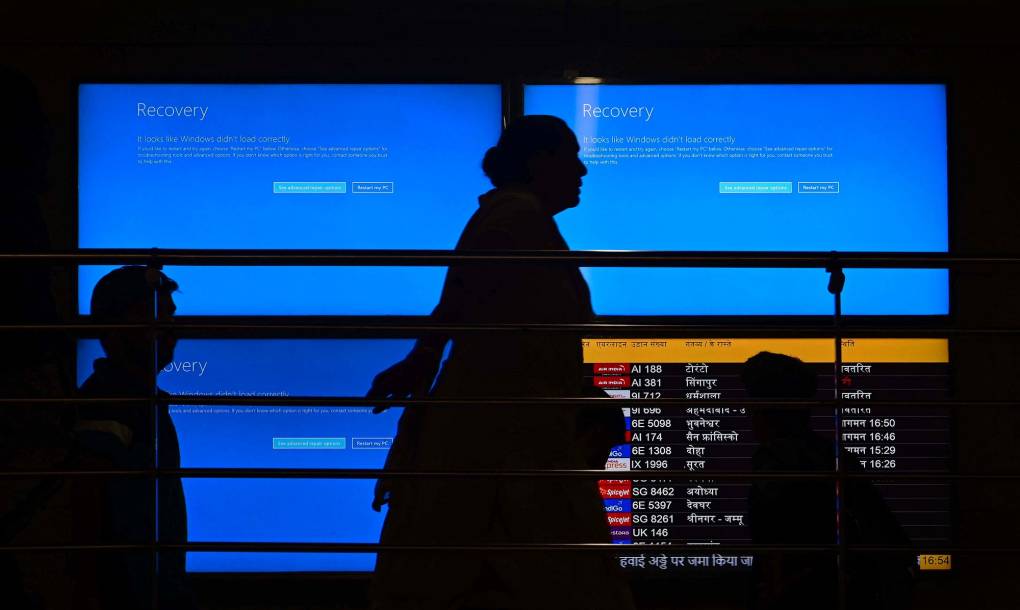
"content": "\u003cp>Tensions between Washington, D.C. and Silicon Valley’s cybersecurity lions have been running high this year, in large part because of \u003ca href=\"https://cyberscoop.com/doge-dismantles-cisa-cybersecurity-trump-elon-musk-eric-swallwell-op-ed/\">controversial staffing cuts\u003c/a> at the nation’s top cyber agency, the Cybersecurity and Infrastructure Security Agency (CISA). Cyber leaders have also decried what they call President Donald Trump’s “\u003ca href=\"https://www.csoonline.com/article/3973542/cybersecurity-leaders-decry-political-persecution-of-chris-krebs-in-a-letter-to-the-president.html\">political persecution\u003c/a>” of former CISA Director \u003ca href=\"https://video.kqed.org/video/shakeup-1605661366/\">Christopher Krebs\u003c/a>.\u003c/p>\n\u003cp>But at Stanford’s Hoover Institution on Wednesday, a surprisingly collegial \u003ca href=\"https://www.c-span.org/program/house-committee/house-homeland-security-field-hearing-on-us-cybersecurity-challenges/660500\">House Homeland Security Field Hearing on U.S. Cybersecurity Challenges\u003c/a> featured broad agreement on a host of urgent issues.\u003c/p>\n\u003cp>Lawmakers and experts alike expressed fear of the growing sophistication of cyber attacks like\u003ca href=\"https://www.cybersecuritydive.com/news/salt-typhoon-telecom-hacks-one-of-the-most-consequential-campaigns-against/746870/\"> Salt Typhoon\u003c/a> and \u003ca href=\"https://cyberscoop.com/volt-typhoon-critical-infrastructure-report/\">Volt Typhoon\u003c/a> on public and private organizations. Committee Chair Mark Green, a Republican of Tennessee, said it was no accident this field hearing was held in Silicon Valley.\u003c/p>\n\u003cp>[ad fullwidth]\u003c/p>\n\u003cp>“I have prioritized cybersecurity for myself in this Congress and for the Committee on Homeland Security, and I hope the industry partners that are here and across the country will join us in this mission to improve our cyber resilience against nation states, as well as criminal actors, strengthen our offensive posture, and develop new capabilities that incorporate security from the start,” Green said.\u003c/p>\n\u003cp>The hearing featured testimony from a panel of expert witnesses — all of them veterans of the federal government or military who are now working at the highest levels in Silicon Valley. They urged lawmakers to adopt a more collaborative approach to cybersecurity, emphasizing the importance of real-time information sharing between the government and the private sector, as well as a stronger national strategy to counter state-sponsored threats, particularly from China.\u003c/p>\n\u003cfigure id=\"attachment_12023603\" class=\"wp-caption aligncenter\" style=\"max-width: 2000px\">\u003ca href=\"https://cdn.kqed.org/wp-content/uploads/sites/10/2025/01/StanfordUniversity.jpg\">\u003cimg loading=\"lazy\" decoding=\"async\" class=\"size-full wp-image-12023603\" src=\"https://cdn.kqed.org/wp-content/uploads/sites/10/2025/01/StanfordUniversity.jpg\" alt=\"\" width=\"2000\" height=\"1499\" srcset=\"https://cdn.kqed.org/wp-content/uploads/sites/10/2025/01/StanfordUniversity.jpg 2000w, https://cdn.kqed.org/wp-content/uploads/sites/10/2025/01/StanfordUniversity-800x600.jpg 800w, https://cdn.kqed.org/wp-content/uploads/sites/10/2025/01/StanfordUniversity-1020x764.jpg 1020w, https://cdn.kqed.org/wp-content/uploads/sites/10/2025/01/StanfordUniversity-160x120.jpg 160w, https://cdn.kqed.org/wp-content/uploads/sites/10/2025/01/StanfordUniversity-1536x1151.jpg 1536w, https://cdn.kqed.org/wp-content/uploads/sites/10/2025/01/StanfordUniversity-1920x1439.jpg 1920w\" sizes=\"auto, (max-width: 2000px) 100vw, 2000px\">\u003c/a>\u003cfigcaption class=\"wp-caption-text\">Hoover Tower on the Stanford University campus on April 9, 2019. \u003ccite>(Rachael Myrow/KQED)\u003c/cite>\u003c/figcaption>\u003c/figure>\n\u003cp>“Our cyber adversaries — China, Russia, Iran, North Korea and others — are more active and aggressive than ever,” said Wendi Whitmore, chief security intelligence officer at Palo Alto Networks. “Every single day, Palo Alto Networks blocks up to 31 billion cyber attacks. Up to 9 million of those daily attacks represent novel methods never previously seen,” she said.\u003c/p>\n\u003cp>\u003ca href=\"https://techcrunch.com/2025/05/28/data-broker-giant-lexisnexis-says-breach-exposed-personal-information-of-over-364000-people/\">Data breaches\u003c/a> and ransomware attacks have become commonplace at hospitals, schools, utilities and\u003ca href=\"https://www.kqed.org/futureofyou/436414/the-crippling-ransomware-attack-on-kqed-the-inside-story\"> even KQED\u003c/a>. So have headlines about software systems \u003ca href=\"https://www.fbi.gov/news/stories/chinese-government-poses-broad-and-unrelenting-threat-to-u-s-critical-infrastructure-fbi-director-says\">infested with malicious code implanted by foreign state actors\u003c/a>.\u003c/p>\n\u003cp>\u003ca href=\"https://www.mckinsey.com/featured-insights/mckinsey-explainers/what-is-cybersecurity\">Global losses\u003c/a> to cyberattacks could exceed $10.5 trillion this year alone, according to the multinational consulting firm McKinsey.\u003c/p>\n\u003cp>[aside postID=news_12037518 hero='https://cdn.kqed.org/wp-content/uploads/sites/10/2025/04/GettyImages-2159615518-1020x680.jpg']\u003c/p>\n\u003cp>Whitmore argued that the era of isolated, disjointed or manual solutions should be over. But that doesn’t reflect the reality at many organizations and companies, where understaffing and limited budgets lead to poor cybersecurity hygiene.\u003c/p>\n\u003cp>“Most software attacks exploit preventable vulnerabilities in software products or insecure default configurations. This could be as simple as a default password that sits unchanged,” lamented Jack Cable, CEO and co-founder of San Francisco-based Corridor, which makes AI-powered development platforms.\u003c/p>\n\u003cp>Another point of agreement: the federal government could take advantage of its massive purchasing power to force Silicon Valley software contractors to increase the quality and security of their code, so that it’s “secure by design,” in cybersecurity lingo.\u003c/p>\n\u003cp>“The government has an obligation to set clearer security standards that are more consistent across the government,” said Jeanette Manfra, global director for security and compliance at Google Cloud, who served as a cybersecurity official during the Obama and first Trump administrations.\u003c/p>\n\u003cp>The expert witnesses touched only lightly on hopes for federal regulation or the recent \u003ca href=\"https://www.nextgov.com/people/2024/11/cisa-director-jen-easterly-depart-inauguration-day/401036/\">exodus\u003c/a> of technical talent from CISA. They seemed clear they were speaking to a friendly audience on the House Committee on Homeland Security, who already understand what needs to be done from a cybersecurity perspective in Washington D.C., as well as the political obstacles that lie in their way.\u003c/p>\n\u003cp>Industry watchers said the\u003ca href=\"https://cyberscoop.com/cisa-workforce-cuts-house-leaders-legislation/\"> ball is now in the court\u003c/a> of the committee’s Republican lawmakers to lobby the Trump administration to prioritize cybersecurity and turn the industry’s best practices into policy or even law.\u003c/p>\n\u003cp>\u003c/p>\n",
"blocks": [],
"excerpt": "At Stanford’s Hoover Institution, the House Committee on Homeland Security heard from experts who argue escalating threats highlight the need to modernize cyberdefenses.\r\n\r\n",
"status": "publish",
"parent": 0,
"modified": 1748551604,
"stats": {
"hasAudio": false,
"hasVideo": false,
"hasChartOrMap": false,
"iframeSrcs": [],
"hasGoogleForm": false,
"hasGallery": false,
"hasHearkenModule": false,
"hasPolis": false,
"paragraphCount": 17,
"wordCount": 698
},
"headData": {
"title": "Cybersecurity Experts Urge DC Lawmakers to Take Stronger Action Against Threats | KQED",
"description": "At Stanford’s Hoover Institution, the House Committee on Homeland Security heard from experts who argue escalating threats highlight the need to modernize cyberdefenses.\r\n\r\n",
"ogTitle": "",
"ogDescription": "",
"ogImgId": "",
"twTitle": "",
"twDescription": "",
"twImgId": "",
"schema": {
"@context": "https://schema.org",
"@type": "NewsArticle",
"headline": "Cybersecurity Experts Urge DC Lawmakers to Take Stronger Action Against Threats",
"datePublished": "2025-05-29T13:00:12-07:00",
"dateModified": "2025-05-29T13:46:44-07:00",
"image": "https://cdn.kqed.org/wp-content/uploads/2020/02/KQED-OG-Image@1x.png",
"isAccessibleForFree": "True",
"publisher": {
"@type": "NewsMediaOrganization",
"@id": "https://www.kqed.org/#organization",
"name": "KQED",
"logo": "https://cdn.kqed.org/wp-content/uploads/2020/02/KQED-OG-Image@1x.png",
"url": "https://www.kqed.org",
"sameAs": [
"https://www.facebook.com/KQED",
"https://twitter.com/KQED",
"https://www.instagram.com/kqed/",
"https://www.tiktok.com/@kqedofficial",
"https://www.linkedin.com/company/kqed",
"https://www.youtube.com/channel/UCeC0IOo7i1P_61zVUWbJ4nw"
]
}
}
},
"audioUrl": "https://traffic.omny.fm/d/clips/0af137ef-751e-4b19-a055-aaef00d2d578/ffca7e9f-6831-4[…]f-aaef00f5a073/eae91b6a-d601-48eb-8090-b2ec0101ae8c/audio.mp3",
"sticky": false,
"nprStoryId": "kqed-12041830",
"templateType": "standard",
"featuredImageType": "standard",
"excludeFromSiteSearch": "Include",
"articleAge": "0",
"path": "/news/12041830/cybersecurity-experts-urge-dc-lawmakers-to-take-stronger-action-against-threats",
"audioTrackLength": null,
"parsedContent": [
{
"type": "contentString",
"content": "\u003cdiv class=\"post-body\">\u003cp>\u003cp>Tensions between Washington, D.C. and Silicon Valley’s cybersecurity lions have been running high this year, in large part because of \u003ca href=\"https://cyberscoop.com/doge-dismantles-cisa-cybersecurity-trump-elon-musk-eric-swallwell-op-ed/\">controversial staffing cuts\u003c/a> at the nation’s top cyber agency, the Cybersecurity and Infrastructure Security Agency (CISA). Cyber leaders have also decried what they call President Donald Trump’s “\u003ca href=\"https://www.csoonline.com/article/3973542/cybersecurity-leaders-decry-political-persecution-of-chris-krebs-in-a-letter-to-the-president.html\">political persecution\u003c/a>” of former CISA Director \u003ca href=\"https://video.kqed.org/video/shakeup-1605661366/\">Christopher Krebs\u003c/a>.\u003c/p>\n\u003cp>But at Stanford’s Hoover Institution on Wednesday, a surprisingly collegial \u003ca href=\"https://www.c-span.org/program/house-committee/house-homeland-security-field-hearing-on-us-cybersecurity-challenges/660500\">House Homeland Security Field Hearing on U.S. Cybersecurity Challenges\u003c/a> featured broad agreement on a host of urgent issues.\u003c/p>\n\u003cp>Lawmakers and experts alike expressed fear of the growing sophistication of cyber attacks like\u003ca href=\"https://www.cybersecuritydive.com/news/salt-typhoon-telecom-hacks-one-of-the-most-consequential-campaigns-against/746870/\"> Salt Typhoon\u003c/a> and \u003ca href=\"https://cyberscoop.com/volt-typhoon-critical-infrastructure-report/\">Volt Typhoon\u003c/a> on public and private organizations. Committee Chair Mark Green, a Republican of Tennessee, said it was no accident this field hearing was held in Silicon Valley.\u003c/p>\n\u003cp>\u003c/p>\u003c/div>",
"attributes": {
"named": {},
"numeric": []
}
},
{
"type": "component",
"content": "",
"name": "ad",
"attributes": {
"named": {
"label": "fullwidth"
},
"numeric": [
"fullwidth"
]
}
},
{
"type": "contentString",
"content": "\u003cdiv class=\"post-body\">\u003cp>\u003c/p>\n\u003cp>“I have prioritized cybersecurity for myself in this Congress and for the Committee on Homeland Security, and I hope the industry partners that are here and across the country will join us in this mission to improve our cyber resilience against nation states, as well as criminal actors, strengthen our offensive posture, and develop new capabilities that incorporate security from the start,” Green said.\u003c/p>\n\u003cp>The hearing featured testimony from a panel of expert witnesses — all of them veterans of the federal government or military who are now working at the highest levels in Silicon Valley. They urged lawmakers to adopt a more collaborative approach to cybersecurity, emphasizing the importance of real-time information sharing between the government and the private sector, as well as a stronger national strategy to counter state-sponsored threats, particularly from China.\u003c/p>\n\u003cfigure id=\"attachment_12023603\" class=\"wp-caption aligncenter\" style=\"max-width: 2000px\">\u003ca href=\"https://cdn.kqed.org/wp-content/uploads/sites/10/2025/01/StanfordUniversity.jpg\">\u003cimg loading=\"lazy\" decoding=\"async\" class=\"size-full wp-image-12023603\" src=\"https://cdn.kqed.org/wp-content/uploads/sites/10/2025/01/StanfordUniversity.jpg\" alt=\"\" width=\"2000\" height=\"1499\" srcset=\"https://cdn.kqed.org/wp-content/uploads/sites/10/2025/01/StanfordUniversity.jpg 2000w, https://cdn.kqed.org/wp-content/uploads/sites/10/2025/01/StanfordUniversity-800x600.jpg 800w, https://cdn.kqed.org/wp-content/uploads/sites/10/2025/01/StanfordUniversity-1020x764.jpg 1020w, https://cdn.kqed.org/wp-content/uploads/sites/10/2025/01/StanfordUniversity-160x120.jpg 160w, https://cdn.kqed.org/wp-content/uploads/sites/10/2025/01/StanfordUniversity-1536x1151.jpg 1536w, https://cdn.kqed.org/wp-content/uploads/sites/10/2025/01/StanfordUniversity-1920x1439.jpg 1920w\" sizes=\"auto, (max-width: 2000px) 100vw, 2000px\">\u003c/a>\u003cfigcaption class=\"wp-caption-text\">Hoover Tower on the Stanford University campus on April 9, 2019. \u003ccite>(Rachael Myrow/KQED)\u003c/cite>\u003c/figcaption>\u003c/figure>\n\u003cp>“Our cyber adversaries — China, Russia, Iran, North Korea and others — are more active and aggressive than ever,” said Wendi Whitmore, chief security intelligence officer at Palo Alto Networks. “Every single day, Palo Alto Networks blocks up to 31 billion cyber attacks. Up to 9 million of those daily attacks represent novel methods never previously seen,” she said.\u003c/p>\n\u003cp>\u003ca href=\"https://techcrunch.com/2025/05/28/data-broker-giant-lexisnexis-says-breach-exposed-personal-information-of-over-364000-people/\">Data breaches\u003c/a> and ransomware attacks have become commonplace at hospitals, schools, utilities and\u003ca href=\"https://www.kqed.org/futureofyou/436414/the-crippling-ransomware-attack-on-kqed-the-inside-story\"> even KQED\u003c/a>. So have headlines about software systems \u003ca href=\"https://www.fbi.gov/news/stories/chinese-government-poses-broad-and-unrelenting-threat-to-u-s-critical-infrastructure-fbi-director-says\">infested with malicious code implanted by foreign state actors\u003c/a>.\u003c/p>\n\u003cp>\u003ca href=\"https://www.mckinsey.com/featured-insights/mckinsey-explainers/what-is-cybersecurity\">Global losses\u003c/a> to cyberattacks could exceed $10.5 trillion this year alone, according to the multinational consulting firm McKinsey.\u003c/p>\n\u003cp>\u003c/p>\u003c/div>",
"attributes": {
"named": {},
"numeric": []
}
},
{
"type": "component",
"content": "",
"name": "aside",
"attributes": {
"named": {
"postid": "news_12037518",
"hero": "https://cdn.kqed.org/wp-content/uploads/sites/10/2025/04/GettyImages-2159615518-1020x680.jpg",
"label": ""
},
"numeric": []
}
},
{
"type": "contentString",
"content": "\u003cdiv class=\"post-body\">\u003cp>\u003c/p>\n\u003cp>Whitmore argued that the era of isolated, disjointed or manual solutions should be over. But that doesn’t reflect the reality at many organizations and companies, where understaffing and limited budgets lead to poor cybersecurity hygiene.\u003c/p>\n\u003cp>“Most software attacks exploit preventable vulnerabilities in software products or insecure default configurations. This could be as simple as a default password that sits unchanged,” lamented Jack Cable, CEO and co-founder of San Francisco-based Corridor, which makes AI-powered development platforms.\u003c/p>\n\u003cp>Another point of agreement: the federal government could take advantage of its massive purchasing power to force Silicon Valley software contractors to increase the quality and security of their code, so that it’s “secure by design,” in cybersecurity lingo.\u003c/p>\n\u003cp>“The government has an obligation to set clearer security standards that are more consistent across the government,” said Jeanette Manfra, global director for security and compliance at Google Cloud, who served as a cybersecurity official during the Obama and first Trump administrations.\u003c/p>\n\u003cp>The expert witnesses touched only lightly on hopes for federal regulation or the recent \u003ca href=\"https://www.nextgov.com/people/2024/11/cisa-director-jen-easterly-depart-inauguration-day/401036/\">exodus\u003c/a> of technical talent from CISA. They seemed clear they were speaking to a friendly audience on the House Committee on Homeland Security, who already understand what needs to be done from a cybersecurity perspective in Washington D.C., as well as the political obstacles that lie in their way.\u003c/p>\n\u003cp>Industry watchers said the\u003ca href=\"https://cyberscoop.com/cisa-workforce-cuts-house-leaders-legislation/\"> ball is now in the court\u003c/a> of the committee’s Republican lawmakers to lobby the Trump administration to prioritize cybersecurity and turn the industry’s best practices into policy or even law.\u003c/p>\n\u003cp>\u003c/p>\n\u003c/div>\u003c/p>",
"attributes": {
"named": {},
"numeric": []
}
}
],
"link": "/news/12041830/cybersecurity-experts-urge-dc-lawmakers-to-take-stronger-action-against-threats",
"authors": [
"251"
],
"categories": [
"news_31795",
"news_8",
"news_248"
],
"tags": [
"news_18538",
"news_17619",
"news_34586",
"news_178",
"news_1928",
"news_1631"
],
"featImg": "news_11996462",
"label": "news"
},
"news_12041541": {
"type": "posts",
"id": "news_12041541",
"meta": {
"index": "posts_1716263798",
"site": "news",
"id": "12041541",
"score": null,
"sort": [
1748116858000
]
},
"guestAuthors": [],
"slug": "waste-of-taxpayer-dollars-what-it-will-take-to-transform-the-qatari-jet-into-air-force-one",
"title": "'Waste of Taxpayer Dollars': What It Will Take to Transform the Qatari Jet Into Air Force One",
"publishDate": 1748116858,
"format": "standard",
"headTitle": "‘Waste of Taxpayer Dollars’: What It Will Take to Transform the Qatari Jet Into Air Force One | KQED",
"labelTerm": {
"term": 253,
"site": "news"
},
"content": "\u003cp>A luxury jetliner gifted by Qatar is currently \u003ca href=\"https://www.npr.org/2025/05/19/nx-s1-5398103/trump-qatar-gift-plane\">sitting on a tarmac\u003c/a> at an airport in San Antonio waiting for a specialized overhaul to become the next Air Force One.\u003c/p>\n\u003cp>The United States \u003ca href=\"https://www.npr.org/2025/05/21/nx-s1-5406420/trump-accepts-qatar-plane-air-force-one\">officially accepted\u003c/a> the Boeing 747-8 on Wednesday, and the Air Force has been tasked to upgrade it to be used as a new plane for President Trump, according to the Defense Department.\u003c/p>\n\u003cp>Democratic lawmakers and independent watchdogs say \u003ca href=\"https://www.npr.org/2025/05/12/nx-s1-5395696/qatar-trump-plane-gift-ethics\">the gift violates\u003c/a> the Constitution’s Foreign Emoluments Clause, which bans government officials from taking gifts from foreign countries. Trump says it would be a gift to the DOD and that he would not use it after leaving office, when it would be kept at his presidential library.\u003c/p>\n\u003cp>[ad fullwidth]\u003c/p>\n\u003cp>The plane is worth hundreds of millions of dollars. Trump said he would be \u003ca href=\"https://www.npr.org/2025/05/11/g-s1-65838/qatar-plane-trump\">“stupid” to turn it down\u003c/a>, suggesting that it could be converted quickly to be ready for use as a presidential aircraft. But experts warn that no matter how luxurious the plane is, it would take years to rework it to meet the current standards set for Air Force One.\u003c/p>\n\u003cp>“It just seems to me an interesting dream that President Trump has to bring this plane online very quickly,” says Ken Walsh, a journalist who has \u003ca href=\"https://www.hachettebookgroup.com/titles/kenneth-t-walsh/air-force-one/9781401397913/?lens=grand-central-publishing\">written a book on Air Force One\u003c/a>, after covering the White House for decades and riding on the famed aircraft more than 200 times.\u003c/p>\n\u003cp>“Anybody who knows anything about these planes and the history of Air Force One knows that these are difficult to construct, and the technology is always improving. They don’t just show up at your airport. They have to be built,” he says.\u003c/p>\n\u003cp>Two new Boeing 747-8 planes are currently being specially customized to become the next generation of Air Force One — a project that has \u003ca href=\"https://www.npr.org/2018/02/27/589207048/new-air-force-one-deal-cleared-for-takeoff\">been in the works for years\u003c/a> and subject to delays. The new Boeing planes were supposed to be ready by last year but now aren’t expected for several more years.\u003c/p>\n\u003cp>Richard Aboulafia, managing director of AeroDynamic Advisory and an aviation analyst, \u003ca href=\"https://www.npr.org/2025/05/14/nx-s1-5395734/trump-qatar-plane-national-security-risk\">told NPR’s \u003cem>Morning Edition\u003c/em>\u003c/a> that some of the responsibility for the delays lies with “poor execution” by Boeing. “But some of that is just due to the huge amount of requirements and work needed to take a commercial jet and wire it up for war.”\u003c/p>\n\u003cp>He said Trump’s plan that the gifted plane could be ready soon was a “fantasy.”\u003c/p>\n\u003ch2>What makes Air Force One, Air Force One?\u003c/h2>\n\u003cp>The term “Air Force One” technically applies to any Air Force plane carrying the president. But in more common usage, it refers to special Boeing 747-200B planes equipped with high-tech communications and defense systems.\u003c/p>\n\u003cp>“It’s a mobile White House,” says Doug Birkey, executive director of the Mitchell Institute for Aerospace Studies. “All the functions of the president have to be executed in it, no matter what circumstances, including warfare.”\u003c/p>\n\u003cp>Air Force One planes feature an “incredibly robust command and control suite,” he says, and have defenses against a range of threats, from surface-to-air missiles to a nuclear blast.\u003c/p>\n\u003cp>“It’s meant to withstand the very worst days,” he says.\u003c/p>\n\u003cp>Beyond that, Birkey says, is the unique layout of the plane itself, with a very specific seating and office configuration to keep the president as safe as possible and able to continue the job in the air.\u003c/p>\n\u003cp>\u003cimg loading=\"lazy\" decoding=\"async\" class=\"aligncenter size-full wp-image-12041546\" src=\"https://cdn.kqed.org/wp-content/uploads/sites/10/2025/05/Graphic1.png\" alt=\"\" width=\"1024\" height=\"697\" srcset=\"https://cdn.kqed.org/wp-content/uploads/sites/10/2025/05/Graphic1.png 1024w, https://cdn.kqed.org/wp-content/uploads/sites/10/2025/05/Graphic1-800x545.png 800w, https://cdn.kqed.org/wp-content/uploads/sites/10/2025/05/Graphic1-1020x694.png 1020w, https://cdn.kqed.org/wp-content/uploads/sites/10/2025/05/Graphic1-160x109.png 160w\" sizes=\"auto, (max-width: 1024px) 100vw, 1024px\">\u003c/p>\n\u003cp>Much of the specifics of Air Force One aren’t publicized, but a \u003ca href=\"https://www.sfgate.com/news/article/Web-site-exposes-Air-Force-One-defenses-2499964.php\">technical order accidentally published online\u003c/a> by the Air Force in 2006 gave a look at the basic floor plan of the three-level plane as it was then — the bottom level for cargo, the middle level for essentially all the presidential functions, and the top, smaller level for the crew and communications.\u003c/p>\n\u003cp>“In that middle level is everything, as I say, for the president’s convenience, to help him do his job,” says Walsh, including a large presidential suite with office space able to do live video and audio broadcast, a medical area equipped for basic surgery, a conference room, two galleys able to prepare up to 100 meals at once, several areas for Secret Service agents, and seating in the very back for the media.\u003c/p>\n\u003ch2>What’s planned for the next generation of Boeing Air Force One planes?\u003c/h2>\n\u003cfigure id=\"attachment_12041543\" class=\"wp-caption aligncenter\" style=\"max-width: 2560px\">\u003cimg loading=\"lazy\" decoding=\"async\" class=\"size-full wp-image-12041543\" src=\"https://cdn.kqed.org/wp-content/uploads/sites/10/2025/05/npr.brightspotcdn-1-copy-2-scaled.jpg\" alt=\"\" width=\"2560\" height=\"1706\" srcset=\"https://cdn.kqed.org/wp-content/uploads/sites/10/2025/05/npr.brightspotcdn-1-copy-2-scaled.jpg 2560w, https://cdn.kqed.org/wp-content/uploads/sites/10/2025/05/npr.brightspotcdn-1-copy-2-800x533.jpg 800w, https://cdn.kqed.org/wp-content/uploads/sites/10/2025/05/npr.brightspotcdn-1-copy-2-1020x680.jpg 1020w, https://cdn.kqed.org/wp-content/uploads/sites/10/2025/05/npr.brightspotcdn-1-copy-2-160x107.jpg 160w, https://cdn.kqed.org/wp-content/uploads/sites/10/2025/05/npr.brightspotcdn-1-copy-2-1536x1024.jpg 1536w, https://cdn.kqed.org/wp-content/uploads/sites/10/2025/05/npr.brightspotcdn-1-copy-2-2048x1365.jpg 2048w, https://cdn.kqed.org/wp-content/uploads/sites/10/2025/05/npr.brightspotcdn-1-copy-2-1920x1280.jpg 1920w\" sizes=\"auto, (max-width: 2560px) 100vw, 2560px\">\u003cfigcaption class=\"wp-caption-text\">Qatari F-15 jets fly over Air Force One as President Trump departs the Al Udeid Air Base on May 15 in Doha, Qatar. The current Air Force One planes are over 30 years old. \u003ccite>(Win McNamee/Getty Images)\u003c/cite>\u003c/figcaption>\u003c/figure>\n\u003cp>The plan to replace the current Air Force One fleet has been long in the works, with \u003ca href=\"https://www.reuters.com/article/world/americas/boeing-wins-contract-to-build-new-air-force-one-presidential-jets-idUSKCN0V72P8/#:~:text=By%20Andrea%20Shalal,to%20transport%20the%20U.S.%20president.\">Boeing winning the contract back in 2016\u003c/a> under then-President Obama. \u003ca href=\"https://www.npr.org/2018/02/27/589207048/new-air-force-one-deal-cleared-for-takeoff\">Trump finalized a deal\u003c/a> in his first term in 2018.\u003c/p>\n\u003cp>The two current planes have been in use since 1990, and their age is starting to show — one of the reasons Trump has been eager to put pressure on Boeing to finish the new generation of planes. But experts like Birkey say it’s not just about aesthetics.\u003c/p>\n\u003cp>“There are serious issues about parts availability and all of that,” he says, adding that there are very specific security requirements about what can actually go in the plane that make it even harder to replace failing pieces. “You’re not going to an aircraft junkyard and just grabbing a spare generator or something like that.”\u003c/p>\n\u003cp>The new generation will be a newer Boeing model, the 747-8, which is also the same model of the gift plane from Qatar. Compared to the 747-200, the 747-8 emits around 16 less tons of carbon per trip, can travel about 1,000 nautical miles further in range, and is the fastest commercial jet in the world, \u003ca href=\"https://www.boeing.com/defense/air-force-one#comparison\">according to Boeing\u003c/a>. It’s also wider and longer than the current model in use.\u003c/p>\n\u003cp>Much of the details of the planes haven’t been made public, but there are planned upgrades to the electrical and communications systems, military and combat-ready electronics, more self-defense systems, and autonomous systems for baggage loading and entering and exiting the plane, according to \u003ca href=\"https://www.esd.whs.mil/Portals/54/Documents/FOID/Reading%20Room/Selected_Acquisition_Reports/FY_2021_SARS/22-F-0762_VC-25B_SAR_2021.pdf\" target=\"_blank\" rel=\"noopener\">documents from the Department of Defense\u003c/a>.\u003c/p>\n\u003ch2>What would the gifted plane from Qatar need?\u003c/h2>\n\u003cp>The gifted 747-8 plane from Qatar is certainly opulent, with big leather seats and wood inlay, multiple lounges, a bedroom suite and private office, according to marketing materials saved on the Internet Archive. The Qatari government purchased the plane in 2012, and had been trying to sell it for several years without success.\u003c/p>\n\u003cp>But the specs say nothing about security or defense systems on board — beyond an anti-intrusion system for when the aircraft is left unattended — and the communications system that’s listed is for basic entertainment.\u003c/p>\n\u003cp>Birkey says, in terms of luxury, the plane from Qatar probably looks and feels better than the current or planned Air Force One planes.\u003c/p>\n\u003cp>“But past that, things like a comms suite, self protection, all that — I doubt it has any of that in it right now,” he says. “And installing those is not an easy thing. I mean, you have to deconstruct the aircraft a fair amount to do that.”\u003c/p>\n\u003cp>\u003cimg loading=\"lazy\" decoding=\"async\" class=\"aligncenter size-full wp-image-12041547\" src=\"https://cdn.kqed.org/wp-content/uploads/sites/10/2025/05/Graphic2.png\" alt=\"\" width=\"1024\" height=\"684\" srcset=\"https://cdn.kqed.org/wp-content/uploads/sites/10/2025/05/Graphic2.png 1024w, https://cdn.kqed.org/wp-content/uploads/sites/10/2025/05/Graphic2-800x534.png 800w, https://cdn.kqed.org/wp-content/uploads/sites/10/2025/05/Graphic2-1020x681.png 1020w, https://cdn.kqed.org/wp-content/uploads/sites/10/2025/05/Graphic2-160x107.png 160w\" sizes=\"auto, (max-width: 1024px) 100vw, 1024px\">\u003c/p>\n\u003cp>In a Senate Armed Services Committee hearing Tuesday, Air Force Secretary Troy Meink told lawmakers the plane would need “significant modifications.”\u003c/p>\n\u003cp>Both experts and members of Congress have expressed concern that Trump might decide to roll back current security requirements for Air Force One in order to get the plane ready faster.\u003c/p>\n\u003cp>There could also possibly be listening devices or malware on the plane, as it’s been sitting in a foreign country for more than a decade.\u003c/p>\n\u003cp>“You can’t rule out the presence of bad actors in this whole process,” says Aboulafia, pointing out that this would make the conversion process even more complicated.\u003c/p>\n\u003cp>“Basically, to be absolutely certain that there were no listening devices on board, you’d have to rip this plane down to its constituent elements.”\u003c/p>\n\u003ch2>What could it cost?\u003c/h2>\n\u003cp>Trump has repeatedly stressed that the plane from Qatar was free, but several experts NPR talked to agreed that it will likely end up costing a significant amount of money to outfit it properly to current Air Force One standards.\u003c/p>\n\u003cp>A U.S. official who requested anonymity because they weren’t authorized to speak publicly about the matter told NPR the conversion would likely cost hundreds of millions of dollars.\u003c/p>\n\u003cp>Aboulafia says that should concern taxpayers, since the current program to upgrade Air Force One was a fixed contract signed with Boeing — meaning that all the costs of extending the project are being borne by Boeing and its investors.\u003c/p>\n\u003cp>“Most likely there will be money spent on this jet, probably a lot more than what the jet is worth,” he says. “All of this amounts to, you know, frankly, a waste of taxpayer dollars in terms of this additional vanity project.”\u003c/p>\n\u003cp>\u003cem>NPR’s Tom Bowman and Deepa Shivaram contributed to this report. \u003c/em>\u003c/p>\n\u003cp>[ad floatright]\u003c/p>\n",
"blocks": [],
"excerpt": "The US officially accepted the Boeing 747-8 from Qatar on Wednesday. Experts say upgrading the plane to Air Force One specifications could take years and cost hundreds of millions of dollars.",
"status": "publish",
"parent": 0,
"modified": 1748042113,
"stats": {
"hasAudio": false,
"hasVideo": false,
"hasChartOrMap": false,
"iframeSrcs": [],
"hasGoogleForm": false,
"hasGallery": false,
"hasHearkenModule": false,
"hasPolis": false,
"paragraphCount": 39,
"wordCount": 1583
},
"headData": {
"title": "'Waste of Taxpayer Dollars': What It Will Take to Transform the Qatari Jet Into Air Force One | KQED",
"description": "The US officially accepted the Boeing 747-8 from Qatar on Wednesday. Experts say upgrading the plane to Air Force One specifications could take years and cost hundreds of millions of dollars.",
"ogTitle": "",
"ogDescription": "",
"ogImgId": "",
"twTitle": "",
"twDescription": "",
"twImgId": "",
"schema": {
"@context": "https://schema.org",
"@type": "NewsArticle",
"headline": "'Waste of Taxpayer Dollars': What It Will Take to Transform the Qatari Jet Into Air Force One",
"datePublished": "2025-05-24T13:00:58-07:00",
"dateModified": "2025-05-23T16:15:13-07:00",
"image": "https://cdn.kqed.org/wp-content/uploads/2020/02/KQED-OG-Image@1x.png",
"isAccessibleForFree": "True",
"publisher": {
"@type": "NewsMediaOrganization",
"@id": "https://www.kqed.org/#organization",
"name": "KQED",
"logo": "https://cdn.kqed.org/wp-content/uploads/2020/02/KQED-OG-Image@1x.png",
"url": "https://www.kqed.org",
"sameAs": [
"https://www.facebook.com/KQED",
"https://twitter.com/KQED",
"https://www.instagram.com/kqed/",
"https://www.tiktok.com/@kqedofficial",
"https://www.linkedin.com/company/kqed",
"https://www.youtube.com/channel/UCeC0IOo7i1P_61zVUWbJ4nw"
]
}
}
},
"sticky": false,
"nprByline": "\u003ca href=\"https://www.npr.org/people/630949669/kat-lonsdorf\">Kat Lonsdorf\u003c/a>, NPR",
"templateType": "standard",
"featuredImageType": "standard",
"excludeFromSiteSearch": "Include",
"showOnAuthorArchivePages": "No",
"articleAge": "0",
"path": "/news/12041541/waste-of-taxpayer-dollars-what-it-will-take-to-transform-the-qatari-jet-into-air-force-one",
"audioTrackLength": null,
"parsedContent": [
{
"type": "contentString",
"content": "\u003cdiv class=\"post-body\">\u003cp>\u003cp>A luxury jetliner gifted by Qatar is currently \u003ca href=\"https://www.npr.org/2025/05/19/nx-s1-5398103/trump-qatar-gift-plane\">sitting on a tarmac\u003c/a> at an airport in San Antonio waiting for a specialized overhaul to become the next Air Force One.\u003c/p>\n\u003cp>The United States \u003ca href=\"https://www.npr.org/2025/05/21/nx-s1-5406420/trump-accepts-qatar-plane-air-force-one\">officially accepted\u003c/a> the Boeing 747-8 on Wednesday, and the Air Force has been tasked to upgrade it to be used as a new plane for President Trump, according to the Defense Department.\u003c/p>\n\u003cp>Democratic lawmakers and independent watchdogs say \u003ca href=\"https://www.npr.org/2025/05/12/nx-s1-5395696/qatar-trump-plane-gift-ethics\">the gift violates\u003c/a> the Constitution’s Foreign Emoluments Clause, which bans government officials from taking gifts from foreign countries. Trump says it would be a gift to the DOD and that he would not use it after leaving office, when it would be kept at his presidential library.\u003c/p>\n\u003cp>\u003c/p>\u003c/div>",
"attributes": {
"named": {},
"numeric": []
}
},
{
"type": "component",
"content": "",
"name": "ad",
"attributes": {
"named": {
"label": "fullwidth"
},
"numeric": [
"fullwidth"
]
}
},
{
"type": "contentString",
"content": "\u003cdiv class=\"post-body\">\u003cp>\u003c/p>\n\u003cp>The plane is worth hundreds of millions of dollars. Trump said he would be \u003ca href=\"https://www.npr.org/2025/05/11/g-s1-65838/qatar-plane-trump\">“stupid” to turn it down\u003c/a>, suggesting that it could be converted quickly to be ready for use as a presidential aircraft. But experts warn that no matter how luxurious the plane is, it would take years to rework it to meet the current standards set for Air Force One.\u003c/p>\n\u003cp>“It just seems to me an interesting dream that President Trump has to bring this plane online very quickly,” says Ken Walsh, a journalist who has \u003ca href=\"https://www.hachettebookgroup.com/titles/kenneth-t-walsh/air-force-one/9781401397913/?lens=grand-central-publishing\">written a book on Air Force One\u003c/a>, after covering the White House for decades and riding on the famed aircraft more than 200 times.\u003c/p>\n\u003cp>“Anybody who knows anything about these planes and the history of Air Force One knows that these are difficult to construct, and the technology is always improving. They don’t just show up at your airport. They have to be built,” he says.\u003c/p>\n\u003cp>Two new Boeing 747-8 planes are currently being specially customized to become the next generation of Air Force One — a project that has \u003ca href=\"https://www.npr.org/2018/02/27/589207048/new-air-force-one-deal-cleared-for-takeoff\">been in the works for years\u003c/a> and subject to delays. The new Boeing planes were supposed to be ready by last year but now aren’t expected for several more years.\u003c/p>\n\u003cp>Richard Aboulafia, managing director of AeroDynamic Advisory and an aviation analyst, \u003ca href=\"https://www.npr.org/2025/05/14/nx-s1-5395734/trump-qatar-plane-national-security-risk\">told NPR’s \u003cem>Morning Edition\u003c/em>\u003c/a> that some of the responsibility for the delays lies with “poor execution” by Boeing. “But some of that is just due to the huge amount of requirements and work needed to take a commercial jet and wire it up for war.”\u003c/p>\n\u003cp>He said Trump’s plan that the gifted plane could be ready soon was a “fantasy.”\u003c/p>\n\u003ch2>What makes Air Force One, Air Force One?\u003c/h2>\n\u003cp>The term “Air Force One” technically applies to any Air Force plane carrying the president. But in more common usage, it refers to special Boeing 747-200B planes equipped with high-tech communications and defense systems.\u003c/p>\n\u003cp>“It’s a mobile White House,” says Doug Birkey, executive director of the Mitchell Institute for Aerospace Studies. “All the functions of the president have to be executed in it, no matter what circumstances, including warfare.”\u003c/p>\n\u003cp>Air Force One planes feature an “incredibly robust command and control suite,” he says, and have defenses against a range of threats, from surface-to-air missiles to a nuclear blast.\u003c/p>\n\u003cp>“It’s meant to withstand the very worst days,” he says.\u003c/p>\n\u003cp>Beyond that, Birkey says, is the unique layout of the plane itself, with a very specific seating and office configuration to keep the president as safe as possible and able to continue the job in the air.\u003c/p>\n\u003cp>\u003cimg loading=\"lazy\" decoding=\"async\" class=\"aligncenter size-full wp-image-12041546\" src=\"https://cdn.kqed.org/wp-content/uploads/sites/10/2025/05/Graphic1.png\" alt=\"\" width=\"1024\" height=\"697\" srcset=\"https://cdn.kqed.org/wp-content/uploads/sites/10/2025/05/Graphic1.png 1024w, https://cdn.kqed.org/wp-content/uploads/sites/10/2025/05/Graphic1-800x545.png 800w, https://cdn.kqed.org/wp-content/uploads/sites/10/2025/05/Graphic1-1020x694.png 1020w, https://cdn.kqed.org/wp-content/uploads/sites/10/2025/05/Graphic1-160x109.png 160w\" sizes=\"auto, (max-width: 1024px) 100vw, 1024px\">\u003c/p>\n\u003cp>Much of the specifics of Air Force One aren’t publicized, but a \u003ca href=\"https://www.sfgate.com/news/article/Web-site-exposes-Air-Force-One-defenses-2499964.php\">technical order accidentally published online\u003c/a> by the Air Force in 2006 gave a look at the basic floor plan of the three-level plane as it was then — the bottom level for cargo, the middle level for essentially all the presidential functions, and the top, smaller level for the crew and communications.\u003c/p>\n\u003cp>“In that middle level is everything, as I say, for the president’s convenience, to help him do his job,” says Walsh, including a large presidential suite with office space able to do live video and audio broadcast, a medical area equipped for basic surgery, a conference room, two galleys able to prepare up to 100 meals at once, several areas for Secret Service agents, and seating in the very back for the media.\u003c/p>\n\u003ch2>What’s planned for the next generation of Boeing Air Force One planes?\u003c/h2>\n\u003cfigure id=\"attachment_12041543\" class=\"wp-caption aligncenter\" style=\"max-width: 2560px\">\u003cimg loading=\"lazy\" decoding=\"async\" class=\"size-full wp-image-12041543\" src=\"https://cdn.kqed.org/wp-content/uploads/sites/10/2025/05/npr.brightspotcdn-1-copy-2-scaled.jpg\" alt=\"\" width=\"2560\" height=\"1706\" srcset=\"https://cdn.kqed.org/wp-content/uploads/sites/10/2025/05/npr.brightspotcdn-1-copy-2-scaled.jpg 2560w, https://cdn.kqed.org/wp-content/uploads/sites/10/2025/05/npr.brightspotcdn-1-copy-2-800x533.jpg 800w, https://cdn.kqed.org/wp-content/uploads/sites/10/2025/05/npr.brightspotcdn-1-copy-2-1020x680.jpg 1020w, https://cdn.kqed.org/wp-content/uploads/sites/10/2025/05/npr.brightspotcdn-1-copy-2-160x107.jpg 160w, https://cdn.kqed.org/wp-content/uploads/sites/10/2025/05/npr.brightspotcdn-1-copy-2-1536x1024.jpg 1536w, https://cdn.kqed.org/wp-content/uploads/sites/10/2025/05/npr.brightspotcdn-1-copy-2-2048x1365.jpg 2048w, https://cdn.kqed.org/wp-content/uploads/sites/10/2025/05/npr.brightspotcdn-1-copy-2-1920x1280.jpg 1920w\" sizes=\"auto, (max-width: 2560px) 100vw, 2560px\">\u003cfigcaption class=\"wp-caption-text\">Qatari F-15 jets fly over Air Force One as President Trump departs the Al Udeid Air Base on May 15 in Doha, Qatar. The current Air Force One planes are over 30 years old. \u003ccite>(Win McNamee/Getty Images)\u003c/cite>\u003c/figcaption>\u003c/figure>\n\u003cp>The plan to replace the current Air Force One fleet has been long in the works, with \u003ca href=\"https://www.reuters.com/article/world/americas/boeing-wins-contract-to-build-new-air-force-one-presidential-jets-idUSKCN0V72P8/#:~:text=By%20Andrea%20Shalal,to%20transport%20the%20U.S.%20president.\">Boeing winning the contract back in 2016\u003c/a> under then-President Obama. \u003ca href=\"https://www.npr.org/2018/02/27/589207048/new-air-force-one-deal-cleared-for-takeoff\">Trump finalized a deal\u003c/a> in his first term in 2018.\u003c/p>\n\u003cp>The two current planes have been in use since 1990, and their age is starting to show — one of the reasons Trump has been eager to put pressure on Boeing to finish the new generation of planes. But experts like Birkey say it’s not just about aesthetics.\u003c/p>\n\u003cp>“There are serious issues about parts availability and all of that,” he says, adding that there are very specific security requirements about what can actually go in the plane that make it even harder to replace failing pieces. “You’re not going to an aircraft junkyard and just grabbing a spare generator or something like that.”\u003c/p>\n\u003cp>The new generation will be a newer Boeing model, the 747-8, which is also the same model of the gift plane from Qatar. Compared to the 747-200, the 747-8 emits around 16 less tons of carbon per trip, can travel about 1,000 nautical miles further in range, and is the fastest commercial jet in the world, \u003ca href=\"https://www.boeing.com/defense/air-force-one#comparison\">according to Boeing\u003c/a>. It’s also wider and longer than the current model in use.\u003c/p>\n\u003cp>Much of the details of the planes haven’t been made public, but there are planned upgrades to the electrical and communications systems, military and combat-ready electronics, more self-defense systems, and autonomous systems for baggage loading and entering and exiting the plane, according to \u003ca href=\"https://www.esd.whs.mil/Portals/54/Documents/FOID/Reading%20Room/Selected_Acquisition_Reports/FY_2021_SARS/22-F-0762_VC-25B_SAR_2021.pdf\" target=\"_blank\" rel=\"noopener\">documents from the Department of Defense\u003c/a>.\u003c/p>\n\u003ch2>What would the gifted plane from Qatar need?\u003c/h2>\n\u003cp>The gifted 747-8 plane from Qatar is certainly opulent, with big leather seats and wood inlay, multiple lounges, a bedroom suite and private office, according to marketing materials saved on the Internet Archive. The Qatari government purchased the plane in 2012, and had been trying to sell it for several years without success.\u003c/p>\n\u003cp>But the specs say nothing about security or defense systems on board — beyond an anti-intrusion system for when the aircraft is left unattended — and the communications system that’s listed is for basic entertainment.\u003c/p>\n\u003cp>Birkey says, in terms of luxury, the plane from Qatar probably looks and feels better than the current or planned Air Force One planes.\u003c/p>\n\u003cp>“But past that, things like a comms suite, self protection, all that — I doubt it has any of that in it right now,” he says. “And installing those is not an easy thing. I mean, you have to deconstruct the aircraft a fair amount to do that.”\u003c/p>\n\u003cp>\u003cimg loading=\"lazy\" decoding=\"async\" class=\"aligncenter size-full wp-image-12041547\" src=\"https://cdn.kqed.org/wp-content/uploads/sites/10/2025/05/Graphic2.png\" alt=\"\" width=\"1024\" height=\"684\" srcset=\"https://cdn.kqed.org/wp-content/uploads/sites/10/2025/05/Graphic2.png 1024w, https://cdn.kqed.org/wp-content/uploads/sites/10/2025/05/Graphic2-800x534.png 800w, https://cdn.kqed.org/wp-content/uploads/sites/10/2025/05/Graphic2-1020x681.png 1020w, https://cdn.kqed.org/wp-content/uploads/sites/10/2025/05/Graphic2-160x107.png 160w\" sizes=\"auto, (max-width: 1024px) 100vw, 1024px\">\u003c/p>\n\u003cp>In a Senate Armed Services Committee hearing Tuesday, Air Force Secretary Troy Meink told lawmakers the plane would need “significant modifications.”\u003c/p>\n\u003cp>Both experts and members of Congress have expressed concern that Trump might decide to roll back current security requirements for Air Force One in order to get the plane ready faster.\u003c/p>\n\u003cp>There could also possibly be listening devices or malware on the plane, as it’s been sitting in a foreign country for more than a decade.\u003c/p>\n\u003cp>“You can’t rule out the presence of bad actors in this whole process,” says Aboulafia, pointing out that this would make the conversion process even more complicated.\u003c/p>\n\u003cp>“Basically, to be absolutely certain that there were no listening devices on board, you’d have to rip this plane down to its constituent elements.”\u003c/p>\n\u003ch2>What could it cost?\u003c/h2>\n\u003cp>Trump has repeatedly stressed that the plane from Qatar was free, but several experts NPR talked to agreed that it will likely end up costing a significant amount of money to outfit it properly to current Air Force One standards.\u003c/p>\n\u003cp>A U.S. official who requested anonymity because they weren’t authorized to speak publicly about the matter told NPR the conversion would likely cost hundreds of millions of dollars.\u003c/p>\n\u003cp>Aboulafia says that should concern taxpayers, since the current program to upgrade Air Force One was a fixed contract signed with Boeing — meaning that all the costs of extending the project are being borne by Boeing and its investors.\u003c/p>\n\u003cp>“Most likely there will be money spent on this jet, probably a lot more than what the jet is worth,” he says. “All of this amounts to, you know, frankly, a waste of taxpayer dollars in terms of this additional vanity project.”\u003c/p>\n\u003cp>\u003cem>NPR’s Tom Bowman and Deepa Shivaram contributed to this report. \u003c/em>\u003c/p>\n\u003cp>\u003c/p>\u003c/div>",
"attributes": {
"named": {},
"numeric": []
}
},
{
"type": "component",
"content": "",
"name": "ad",
"attributes": {
"named": {
"label": "floatright"
},
"numeric": [
"floatright"
]
}
},
{
"type": "contentString",
"content": "\u003cdiv class=\"post-body\">\u003cp>\u003c/p>\n\u003c/div>\u003c/p>",
"attributes": {
"named": {},
"numeric": []
}
}
],
"link": "/news/12041541/waste-of-taxpayer-dollars-what-it-will-take-to-transform-the-qatari-jet-into-air-force-one",
"authors": [
"byline_news_12041541"
],
"categories": [
"news_8",
"news_13",
"news_248"
],
"tags": [
"news_21653",
"news_1323",
"news_35255"
],
"affiliates": [
"news_253"
],
"featImg": "news_12041542",
"label": "news_253"
},
"news_12041102": {
"type": "posts",
"id": "news_12041102",
"meta": {
"index": "posts_1716263798",
"site": "news",
"id": "12041102",
"score": null,
"sort": [
1747852784000
]
},
"guestAuthors": [],
"slug": "is-social-media-making-children-more-depressed-ucsf-research-suggests-a-link",
"title": "Is Social Media Making Children More Depressed? UCSF Research Suggests a Link",
"publishDate": 1747852784,
"format": "standard",
"headTitle": "Is Social Media Making Children More Depressed? UCSF Research Suggests a Link | KQED",
"labelTerm": {
"site": "news"
},
"content": "\u003cp>Higher \u003ca href=\"https://www.kqed.org/mindshift/tag/social-media\">social media\u003c/a> usage could be linked to increased rates of depression among young adolescents, according to a new \u003ca href=\"https://jamanetwork.com/journals/jamanetworkopen/fullarticle/2834349?utm_source=For_The_Media&utm_medium=referral&utm_campaign=ftm_links&utm_term=052125\">study\u003c/a> published Wednesday by researchers at UCSF.\u003c/p>\n\u003cp>The nationwide study, which tracked the cognitive development of nearly 12,000 children and adolescents over the course of a few years, found that their social media use rose significantly between the ages of 9 and 13. Depressive symptoms likewise increased in these children by more than 30% during the same time period, with the study suggesting that the two may be related.\u003c/p>\n\u003cp>“If an individual teen increased their social media use from year to year, that increase was associated with a subsequent rise in depression,” said Dr. Jason Nagata, a pediatrician at UCSF and the study’s lead author.\u003c/p>\n\u003cp>[ad fullwidth]\u003c/p>\n\u003cp>Higher levels of depression, however, do not necessarily predict an increase in future social media usage, suggesting that the link between the two exists in only one direction, Nagata said.\u003c/p>\n\u003cp>As social media use among young people becomes more widespread, some health experts have already begun sounding alarm bells. In 2023, then-U.S. Surgeon General Dr. Vivek Murthy issued a \u003ca href=\"https://www.hhs.gov/sites/default/files/sg-youth-mental-health-social-media-advisory.pdf\">public advisory\u003c/a> on the potential risks \u003ca href=\"https://www.kqed.org/news/11990672/us-surgeon-general-urges-congress-to-require-warning-labels-for-social-media\">associated with frequent social media usage\u003c/a>, particularly for adolescents and their mental health.\u003c/p>\n\u003cp>However, while Murthy’s warning urged parents to monitor their children’s social media presence and to teach them about safe boundaries and moderate consumption, it did not include exact guidance on good practice nor an overview of what the long-term consequences of excessive social media use are.\u003c/p>\n\u003cp>According to Nagata, there are a lot of variables involved when it comes to assessing how healthy or unhealthy one’s social media use is.[aside postID=news_12038874 hero='https://cdn.kqed.org/wp-content/uploads/sites/10/2025/05/AIChatBotsGetty-1020x765.jpg']“Social media is not inherently bad or good. There are some risks and there are some benefits,” Nagata said.\u003c/p>\n\u003cp>The ability to connect and communicate, which many teens and younger children find in social media, can be beneficial for their development, Nagata said. It’s when the more negative effects of social media arise that people should pause and consider whether it’s worth it to them, he said.\u003c/p>\n\u003cp>While the study conducted by Nagata and his team does not provide a specific explanation for why depression has a positive correlation with increased social media use, they pointed to a variety of potential factors.\u003c/p>\n\u003cp>Sleep deprivation, the proliferation of content that glamorizes disordered eating, and cyberbullying can all contribute to worsening mental health among young people, Nagata noted. Another \u003ca href=\"https://www.thelancet.com/journals/lanam/article/PIIS2667-193X(25)00012-2/fulltext\">study\u003c/a> published this week by Nagata and his team, for example, found that cyberbullied tweens were nearly three times more likely to report having suicidal thoughts or attempts.\u003c/p>\n\u003cp>Researchers in the study also found that social media use \u003ca href=\"https://www.kqed.org/news/12005967/california-acts-to-protect-children-from-addictive-social-media\">can actually be addictive\u003c/a>, and that excessive consumption of it can adversely affect children’s daily functioning and their in-person relationships. Many apps have built-in algorithms and notification systems that are intended to \u003ca href=\"https://www.kqed.org/news/12017249/california-bill-would-put-tobacco-like-warnings-social-media-apps\">keep people hooked\u003c/a>, and young people can be particularly susceptible, Nagata said.\u003c/p>\n\u003cp>“Social media and some of these devices can be used in ways that are actually harmful for adolescents,” said Nagata, whose clinical practice focuses on adolescents with eating disorders. “Particularly for those with mental health conditions, it can even worsen them.”\u003c/p>\n\u003cp>He urged concerned parents to think about limiting their children’s access to social media — especially before bedtime — and to model healthy screen usage in their homes. For younger children, more restrictions could also prove beneficial as the effects of social media on their mental health seemed especially pronounced, he added.\u003c/p>\n\u003cp>There is no “one size fits all” solution, Nagata said, adding that parents should have open discussions with their children to find a social media strategy that works for their family.\u003c/p>\n\u003cp>\u003cem>KQED’s \u003c/em>\u003ca href=\"https://www.kqed.org/author/shossaini\">\u003cem>Sara Hossaini\u003c/em>\u003c/a>\u003cem> contributed to this report. \u003c/em>\u003c/p>\n\u003cp>\u003c/p>\n",
"blocks": [],
"excerpt": "A nationwide study of nearly 12,000 children and adolescents found that as their social media use rose significantly between ages 9 and 13, so did depressive symptoms.",
"status": "publish",
"parent": 0,
"modified": 1747932386,
"stats": {
"hasAudio": false,
"hasVideo": false,
"hasChartOrMap": false,
"iframeSrcs": [],
"hasGoogleForm": false,
"hasGallery": false,
"hasHearkenModule": false,
"hasPolis": false,
"paragraphCount": 17,
"wordCount": 667
},
"headData": {
"title": "Is Social Media Making Children More Depressed? UCSF Research Suggests a Link | KQED",
"description": "A nationwide study of nearly 12,000 children and adolescents found that as their social media use rose significantly between ages 9 and 13, so did depressive symptoms.",
"ogTitle": "",
"ogDescription": "",
"ogImgId": "",
"twTitle": "",
"twDescription": "",
"twImgId": "",
"schema": {
"@context": "https://schema.org",
"@type": "NewsArticle",
"headline": "Is Social Media Making Children More Depressed? UCSF Research Suggests a Link",
"datePublished": "2025-05-21T11:39:44-07:00",
"dateModified": "2025-05-22T09:46:26-07:00",
"image": "https://cdn.kqed.org/wp-content/uploads/2020/02/KQED-OG-Image@1x.png",
"isAccessibleForFree": "True",
"publisher": {
"@type": "NewsMediaOrganization",
"@id": "https://www.kqed.org/#organization",
"name": "KQED",
"logo": "https://cdn.kqed.org/wp-content/uploads/2020/02/KQED-OG-Image@1x.png",
"url": "https://www.kqed.org",
"sameAs": [
"https://www.facebook.com/KQED",
"https://twitter.com/KQED",
"https://www.instagram.com/kqed/",
"https://www.tiktok.com/@kqedofficial",
"https://www.linkedin.com/company/kqed",
"https://www.youtube.com/channel/UCeC0IOo7i1P_61zVUWbJ4nw"
]
}
}
},
"audioUrl": "https://traffic.omny.fm/d/clips/0af137ef-751e-4b19-a055-aaef00d2d578/ffca7e9f-6831-41c5-bcaf-aaef00f5a073/1ec74a9f-7cb5-46af-9809-b2e500fb3ecc/audio.mp3",
"sticky": false,
"nprStoryId": "kqed-12041102",
"templateType": "standard",
"featuredImageType": "standard",
"excludeFromSiteSearch": "Include",
"articleAge": "0",
"path": "/news/12041102/is-social-media-making-children-more-depressed-ucsf-research-suggests-a-link",
"audioTrackLength": null,
"parsedContent": [
{
"type": "contentString",
"content": "\u003cdiv class=\"post-body\">\u003cp>\u003cp>Higher \u003ca href=\"https://www.kqed.org/mindshift/tag/social-media\">social media\u003c/a> usage could be linked to increased rates of depression among young adolescents, according to a new \u003ca href=\"https://jamanetwork.com/journals/jamanetworkopen/fullarticle/2834349?utm_source=For_The_Media&utm_medium=referral&utm_campaign=ftm_links&utm_term=052125\">study\u003c/a> published Wednesday by researchers at UCSF.\u003c/p>\n\u003cp>The nationwide study, which tracked the cognitive development of nearly 12,000 children and adolescents over the course of a few years, found that their social media use rose significantly between the ages of 9 and 13. Depressive symptoms likewise increased in these children by more than 30% during the same time period, with the study suggesting that the two may be related.\u003c/p>\n\u003cp>“If an individual teen increased their social media use from year to year, that increase was associated with a subsequent rise in depression,” said Dr. Jason Nagata, a pediatrician at UCSF and the study’s lead author.\u003c/p>\n\u003cp>\u003c/p>\u003c/div>",
"attributes": {
"named": {},
"numeric": []
}
},
{
"type": "component",
"content": "",
"name": "ad",
"attributes": {
"named": {
"label": "fullwidth"
},
"numeric": [
"fullwidth"
]
}
},
{
"type": "contentString",
"content": "\u003cdiv class=\"post-body\">\u003cp>\u003c/p>\n\u003cp>Higher levels of depression, however, do not necessarily predict an increase in future social media usage, suggesting that the link between the two exists in only one direction, Nagata said.\u003c/p>\n\u003cp>As social media use among young people becomes more widespread, some health experts have already begun sounding alarm bells. In 2023, then-U.S. Surgeon General Dr. Vivek Murthy issued a \u003ca href=\"https://www.hhs.gov/sites/default/files/sg-youth-mental-health-social-media-advisory.pdf\">public advisory\u003c/a> on the potential risks \u003ca href=\"https://www.kqed.org/news/11990672/us-surgeon-general-urges-congress-to-require-warning-labels-for-social-media\">associated with frequent social media usage\u003c/a>, particularly for adolescents and their mental health.\u003c/p>\n\u003cp>However, while Murthy’s warning urged parents to monitor their children’s social media presence and to teach them about safe boundaries and moderate consumption, it did not include exact guidance on good practice nor an overview of what the long-term consequences of excessive social media use are.\u003c/p>\n\u003cp>According to Nagata, there are a lot of variables involved when it comes to assessing how healthy or unhealthy one’s social media use is.\u003c/p>\u003c/div>",
"attributes": {
"named": {},
"numeric": []
}
},
{
"type": "component",
"content": "",
"name": "aside",
"attributes": {
"named": {
"postid": "news_12038874",
"hero": "https://cdn.kqed.org/wp-content/uploads/sites/10/2025/05/AIChatBotsGetty-1020x765.jpg",
"label": ""
},
"numeric": []
}
},
{
"type": "contentString",
"content": "\u003cdiv class=\"post-body\">\u003cp>“Social media is not inherently bad or good. There are some risks and there are some benefits,” Nagata said.\u003c/p>\n\u003cp>The ability to connect and communicate, which many teens and younger children find in social media, can be beneficial for their development, Nagata said. It’s when the more negative effects of social media arise that people should pause and consider whether it’s worth it to them, he said.\u003c/p>\n\u003cp>While the study conducted by Nagata and his team does not provide a specific explanation for why depression has a positive correlation with increased social media use, they pointed to a variety of potential factors.\u003c/p>\n\u003cp>Sleep deprivation, the proliferation of content that glamorizes disordered eating, and cyberbullying can all contribute to worsening mental health among young people, Nagata noted. Another \u003ca href=\"https://www.thelancet.com/journals/lanam/article/PIIS2667-193X(25)00012-2/fulltext\">study\u003c/a> published this week by Nagata and his team, for example, found that cyberbullied tweens were nearly three times more likely to report having suicidal thoughts or attempts.\u003c/p>\n\u003cp>Researchers in the study also found that social media use \u003ca href=\"https://www.kqed.org/news/12005967/california-acts-to-protect-children-from-addictive-social-media\">can actually be addictive\u003c/a>, and that excessive consumption of it can adversely affect children’s daily functioning and their in-person relationships. Many apps have built-in algorithms and notification systems that are intended to \u003ca href=\"https://www.kqed.org/news/12017249/california-bill-would-put-tobacco-like-warnings-social-media-apps\">keep people hooked\u003c/a>, and young people can be particularly susceptible, Nagata said.\u003c/p>\n\u003cp>“Social media and some of these devices can be used in ways that are actually harmful for adolescents,” said Nagata, whose clinical practice focuses on adolescents with eating disorders. “Particularly for those with mental health conditions, it can even worsen them.”\u003c/p>\n\u003cp>He urged concerned parents to think about limiting their children’s access to social media — especially before bedtime — and to model healthy screen usage in their homes. For younger children, more restrictions could also prove beneficial as the effects of social media on their mental health seemed especially pronounced, he added.\u003c/p>\n\u003cp>There is no “one size fits all” solution, Nagata said, adding that parents should have open discussions with their children to find a social media strategy that works for their family.\u003c/p>\n\u003cp>\u003cem>KQED’s \u003c/em>\u003ca href=\"https://www.kqed.org/author/shossaini\">\u003cem>Sara Hossaini\u003c/em>\u003c/a>\u003cem> contributed to this report. \u003c/em>\u003c/p>\n\u003cp>\u003c/p>\n\u003c/div>\u003c/p>",
"attributes": {
"named": {},
"numeric": []
}
}
],
"link": "/news/12041102/is-social-media-making-children-more-depressed-ucsf-research-suggests-a-link",
"authors": [
"11920"
],
"categories": [
"news_457",
"news_8",
"news_248"
],
"tags": [
"news_29886",
"news_20634",
"news_27626",
"news_18543",
"news_2109",
"news_1089",
"news_922"
],
"featImg": "news_12041106",
"label": "news"
},
"news_12040476": {
"type": "posts",
"id": "news_12040476",
"meta": {
"index": "posts_1716263798",
"site": "news",
"id": "12040476",
"score": null,
"sort": [
1747418042000
]
},
"guestAuthors": [],
"slug": "californians-would-lose-ai-protections-under-bill-advancing-in-congress",
"title": "Californians Would Lose AI Protections Under Bill Advancing in Congress",
"publishDate": 1747418042,
"format": "standard",
"headTitle": "Californians Would Lose AI Protections Under Bill Advancing in Congress | KQED",
"labelTerm": {
"term": 18481,
"site": "news"
},
"content": "\u003cp>\u003cem>This story was originally published by \u003ca href=\"https://calmatters.org/\">CalMatters\u003c/a>. \u003ca href=\"https://calmatters.org/subscribe-to-calmatters/\">Sign up\u003c/a> for their newsletters.\u003c/em>\u003c/p>\n\u003cp>House Republicans moved to cut off artificial intelligence regulation by the states before it can take root, advancing legislation in Congress that, in California, would make it unlawful to enforce \u003ca href=\"https://calmatters.org/economy/technology/2024/09/california-ai-safety-regulations-bills/\">more than 20 laws passed by the Legislature\u003c/a> and signed into law last year.\u003c/p>\n\u003cp>The moratorium, bundled in to a sweeping budget reconciliation bill this week, also threatens \u003ca href=\"https://calmatters.org/economy/technology/2025/03/ai-regulation-after-trump-election/\">30 bills the California Legislature is currently considering to regulate artificial intelligence\u003c/a>, including one that would \u003ca href=\"https://calmatters.digitaldemocracy.org/bills/ca_202520260ab512\">require reporting when an insurance company uses AI to deny health care\u003c/a> and \u003ca href=\"https://calmatters.digitaldemocracy.org/bills/ca_202520260ab1018\">another\u003c/a> that would require the makers of AI to evaluate how the tech performs before it’s used to decide on jobs, health care, or housing.\u003c/p>\n\u003cp>[ad fullwidth]\u003c/p>\n\u003cp>The California Privacy Protection Agency \u003ca href=\"https://cppa.ca.gov/pdf/cppa_letter_opossing_budget_recon_enforce.pdf\">sent a letter\u003c/a> to Congress Monday that says the moratorium “could rob millions of Americans of rights they already enjoy” and threatens critical privacy protections approved by California voters in 2020, such as the right to opt out of business use of automated decision-making technology and transparency about how their personal information is used.\u003c/p>\n\u003cp>If passed, the law would stop legislative efforts in the works nationwide. Lawmakers from 45 states are or have considered nearly 600 draft bills to regulate artificial intelligence this year, according to the \u003ca href=\"https://www.transparencycoalition.ai/\">Transparency Coalition\u003c/a>, a group that tracks AI policy efforts by state lawmakers and supports legislation to regulate the technology. California has passed more bills since 2016 to regulate AI than any other U.S. state, according to Stanford’s \u003ca href=\"https://hai.stanford.edu/ai-index/2025-ai-index-report\">2025 AI Index report\u003c/a>.\u003c/p>\n\u003cp>The measure was introduced by Congressman Brett Guthrie, a Republican from Kentucky and chair of the House Energy and Commerce committee, who said it is necessary to resolve a patchwork of state regulation. On Wednesday, members of Congress in that House committee voted 30–24 along party lines to approve the budget bill that includes the moratorium. It will now advance to the House floor and potentially the Senate, where some observers say it faces an uphill battle against rules that limit policy changes in budget proposals.\u003c/p>\n\u003cp>[aside postID=news_12034490 hero='https://cdn.kqed.org/wp-content/uploads/sites/10/2025/04/PadillaMentalHealthCaucus-1020x680.jpg']\u003c/p>\n\u003cp>As written, the moratorium would lift after 10 years. But it would have plenty of impact in the meantime, said Ben Winters, an attorney for the Consumer Federation of America. In California, he thinks the legislation could halt efforts by the Privacy Protection Agency to regulate automated decision-making, prevent enforcement of laws to \u003ca href=\"https://calmatters.org/explainers/new-california-laws-2024/#3650b1e8-5ee9-49e6-8504-a636608a7de4\">protect voters from deepfakes\u003c/a> and short circuit draft bills aimed at \u003ca href=\"https://calmatters.digitaldemocracy.org/bills/ca_202520260ab1018\">protecting people from discrimination\u003c/a> and \u003ca href=\"https://calmatters.org/economy/technology/2024/12/california-lawmakers-want-to-ban-pricing-software/\">landlords who use AI to raise rent prices\u003c/a>.\u003c/p>\n\u003cp>“If this bill were to pass, California couldn’t protect its citizens from exactly those harms,” he said.\u003c/p>\n\u003cp>Companies and lobbyists are attempting to use Washington, D.C., to undermine California’s legislative AI leadership, said state Sen. Josh Becker, a Democrat from Menlo Park, in the heart of Silicon Valley. Becker has \u003ca href=\"https://calmatters.digitaldemocracy.org/bills/ca_202320240sb1120\">authored\u003c/a> or \u003ca href=\"https://calmatters.org/economy/technology/2025/04/kids-should-avoid-ai-companion-bots-under-force-of-law-assessment-says/\">coauthored\u003c/a> a \u003ca href=\"https://calmatters.org/economy/technology/2025/04/kids-should-avoid-ai-companion-bots-under-force-of-law-assessment-says/\">number\u003c/a> of bills regulating AI, including one signed into law that requires AI makers\u003ca href=\"https://calmatters.digitaldemocracy.org/bills/ca_202320240sb942\"> provide tools to consumers so they know when generative AI is in use\u003c/a>.\u003c/p>\n\u003cp>“This is an effort to tell people when something was created by AI, and so if this gets delayed for a year or two or 10 it’s going to have really negative consequences,” he said.\u003c/p>\n\u003cp>What’s unclear, he said, is exactly what regulation is covered by the moratorium. Would it, for example, wipe out privacy protections that Californians enjoy, and which were \u003ca href=\"https://www.wired.com/story/apra-privacy-bill-doomed/\">targeted by Congressional legislation last year\u003c/a>? And how would it affect a bill Becker authored that \u003ca href=\"https://calmatters.org/economy/technology/2024/04/data-broker-registry/\">gives people a way to quickly delete personal information collected by data brokers\u003c/a>, set to go into effect next January?\u003c/p>\n\u003cp>“If they preempt that, it’s really negative for the country,” he said. “We’re [California] big enough that we can influence the country on our own, but if they preempt what we’re doing then it’s up to the federal government who has been unable to act on these issues.”\u003c/p>\n\u003ch2>Momentum for AI harms — and, possibly, for curbs on regulation\u003c/h2>\n\u003cp>For all the worry, the moratorium is very unlikely to pass if it reaches the U.S. Senate, said Gus Rossi, director of public policy and strategy at Omidyar Network, which funds \u003ca href=\"http://omidyar.com/omidyar-network-launches-a-dedicated-funding-effort-to-promote-inclusive-and-responsible-development-of-generative-ai/\">public interest AI projects\u003c/a> and tracks AI regulation.\u003c/p>\n\u003cp>That’s because a federal regulation known as the \u003ca href=\"https://www.congress.gov/crs-product/R48444\">Byrd rule\u003c/a> requires that budget reconciliation bills be related to fiscal matters, and, in Rossi’s reading at least, a 10-year moratorium on AI regulation doesn’t fit that definition. But Rossi still thinks people should take it seriously, arguing that it’s an attempt by House Republicans to establish a marker on what they think should be the approach to AI legislation, and a sign of things to come.[aside postID=science_1996504 hero='https://cdn.kqed.org/wp-content/uploads/sites/35/2025/03/IMG_0962-1020x765.jpg']“The action is in the states, not D.C.,” he said. “That’s why some people in D.C. are trying to stop states … particularly California, who’s leading the pack.”\u003c/p>\n\u003cp>If this bill or a similar one in the future passes, Rossi expects it would get challenged in court and put a chilling effect on efforts to regulate AI by state lawmakers. It’s unclear whether it’s legal for the federal government to make a blanket moratorium on state regulation, said Winters, who worked in the U.S. Department of Justice during the Biden administration.\u003c/p>\n\u003cp>He agrees that the Byrd rule means the bill is unlikely to pass if it reaches the U.S. Senate, though Republicans may connect it to a $500 million plan to invest in AI for federal agencies and argue that it’s essential to limit state regulation in order to carry out certain budget provisions.\u003c/p>\n\u003cp>The House bill makes exceptions for states to continue enforcing some laws related to AI, such as laws that enable more use of AI or that are intended to improve government efficiency. It’s reasonable to \u003ca href=\"https://iapp.org/news/a/policy-analysis-us-house-committee-seeks-moratorium-on-state-AI-rules/\">interpret one of the exceptions\u003c/a> to mean states like California could continue enforcing privacy law if this bill passed, said Amba Kak, codirector of The AI Now Institute, a research and equitable AI advocacy organization. But doing so is risky.\u003c/p>\n\u003cp>“We can’t count on the fact that courts will see it this way, especially in the context of an otherwise sweeping moratorium with the clear intention to clamp down on AI-related enforcement,” she said.\u003c/p>\n\u003cp>A House AI task force spent years discussing areas of bipartisan agreement and possible bills to pass to regulate AI, New York Democrat Alexandria Ocasio-Cortez said in a hearing about the moratorium, but Congress was unable to pass any of that legislation. During that time, people \u003ca href=\"https://themarkup.org/artificial-intelligence/2025/04/30/kids-should-avoid-ai-companion-bots-under-force-of-law-assessment-says\">committed suicide from their interactions with chatbots\u003c/a> and kids and teens were \u003ca href=\"https://themarkup.org/artificial-intelligence/2024/12/11/1-in-6-congresswomen-targeted-by-ai-generated-sexually-explicit-deepfakes\">harmed by falsely generated sexually exploitative deepfakes\u003c/a>, and so states decided to act to do things like force AI chatbots to protect the private information of people seeking mental health care in Utah and require chatbots include a protocol for when someone expresses the desire to commit self harm in New York.\u003c/p>\n\u003cp>“All of these protections are protections that Congress refuses to take up, refuses, and so states are taking up this responsibility,” Ocasio-Cortez said. “Let states protect people. A moratorium is a deeply dangerous idea at this moment.”\u003c/p>\n\u003cp>Congresswoman Doris Matsui, a Democrat from the Sacramento area, echoed Ocasio-Cortez at the hearing, saying, “We can’t shoot ourselves in the foot by stopping the good work states have done and will continue to do.”\u003c/p>\n\u003cp>Supporters of the moratorium identify different sorts of harm if it doesn’t pass. A patchwork of state regulations of AI “is the fastest way to secure Chinese dominance of AI,” said Jay Obernolte, a Republican from California and co-chair of the House AI task force. He supports a moratorium, and if Congress fails to act, he said the people it will hurt most are entrepreneurs who can’t afford to follow regulatory regimes passed by different states.\u003c/p>\n\u003cp>“The most destructive thing is if there’s fear out there that every few years as the winds of political fortune shift, the rules governing the use of AI completely change,” he said during the hearing.\u003c/p>\n\u003ch2>Broader pushback against AI regulation\u003c/h2>\n\u003cp>The proposed moratorium is in line with efforts to prevent regulation of AI by President Donald Trump and Vice President J.D. Vance, who say such regulations will stifle innovation. A \u003ca href=\"https://www.whitehouse.gov/presidential-actions/2025/01/removing-barriers-to-american-leadership-in-artificial-intelligence/\">White House plan\u003c/a> to promote growth of the AI industry and likely reduce regulation is due out by this summer. Companies like Amazon, Google, Meta, and big businesses who use AI have lobbied in Sacramento and Washington, D.C., to prevent regulation of the technology.\u003c/p>\n\u003cp>Guthrie’s proposal comes a few days after Sen. Ted Cruz, a Republican from Texas, \u003ca href=\"https://punchbowl.news/article/tech/cruz-to-push-ai-regulation/\">pushed for “light touch” AI regulation\u003c/a> to ensure the United States maintains AI supremacy over other nations and to, in Cruz’s words, “prevent needless state over-regulation.”\u003c/p>\n\u003cp>The intent of Guthrie’s bill, Winters believes, is to send a signal to tech companies and open up the door to possible future legislation if the budget reconciliation bill fails to pass. It’s a trend consistent with Senator Cruz’s statement last week and \u003ca href=\"https://www.energy.gov/articles/doe-identifies-16-federal-sites-across-country-data-center-and-ai-infrastructure\">efforts to remove red tape for data center projects on federal land\u003c/a>.\u003c/p>\n\u003cp>“I’d describe this as … explicitly saying we are supporting the AI companies more than the American people,” he said. “We’re seeing an explicit turn toward a deregulatory state.”\u003c/p>\n\u003cp>Federal lawmakers have steadily increased the number of bills they propose related to AI in recent years, but they have passed relatively few of them into law, according to the \u003ca href=\"https://hai.stanford.edu/ai-index/2025-ai-index-report\">AI Index report\u003c/a>. Out of more 220 bills proposed last year, only four passed.\u003c/p>\n\u003cp>By contrast, state lawmakers passed more than 130 bills to regulate AI last year. California passed \u003ca href=\"https://calmatters.org/economy/technology/2024/09/california-ai-safety-regulations-bills/\">22 bills last year\u003c/a>, more than any other state, and \u003ca href=\"https://calmatters.org/economy/technology/2024/05/ca-eu-ai-regulation/\">attempted to harmonize its rules with the European Union’s AI Act\u003c/a> and other U.S. states. \u003ca href=\"https://csmapnyu.org/impact/policy/the-state-of-state-technology-policy-2024-report\">The 2024 State of State Tech Policy report\u003c/a>, from NYU’s Center for Social Media and Politics, found a 163% increase in tech policy proposals by state lawmakers last year compared to 2023. That trend is driven by one-party control in the vast majority of state houses across the country.\u003c/p>\n\u003cp>The adage that states are the laboratories of democracy is still true, said Scott Brennen, a coauthor of the State of State Tech Policy report, so shutting down their ability to try out different approaches doesn’t seem like a good idea and could undercut the federal government’s ability to make better policy. Since AI is getting integrated into an ever-wider range of tools, Guthrie’s moratorium appears to apply widely, he added, including to social media platforms, ongoing efforts by states to protect children online, and data privacy protections that address automated decision making.\u003c/p>\n\u003cp>“I don’t necessarily think state regulation of AI is always the best course of action, there are definitely areas like consumer data protection where it would be better if the federal government took the lead, but the federal government isn’t taking the lead,” he said.\u003c/p>\n\u003cp>\u003cem>This article was \u003ca href=\"https://calmatters.org/economy/technology/2025/05/state-ai-regulation-ban/\">originally published on CalMatters\u003c/a> and was republished under the \u003ca href=\"https://creativecommons.org/licenses/by-nc-nd/4.0/\">Creative Commons Attribution-NonCommercial-NoDerivatives\u003c/a> license.\u003c/em>\u003c/p>\n\u003cp>[ad floatright]\u003c/p>\n",
"blocks": [],
"excerpt": "House Republicans want to ban state AI regulations for 10 years. California leaders are alarmed.",
"status": "publish",
"parent": 0,
"modified": 1747418069,
"stats": {
"hasAudio": false,
"hasVideo": false,
"hasChartOrMap": false,
"iframeSrcs": [],
"hasGoogleForm": false,
"hasGallery": false,
"hasHearkenModule": false,
"hasPolis": false,
"paragraphCount": 35,
"wordCount": 1993
},
"headData": {
"title": "Californians Would Lose AI Protections Under Bill Advancing in Congress | KQED",
"description": "House Republicans want to ban state AI regulations for 10 years. California leaders are alarmed.",
"ogTitle": "",
"ogDescription": "",
"ogImgId": "",
"twTitle": "",
"twDescription": "",
"twImgId": "",
"schema": {
"@context": "https://schema.org",
"@type": "NewsArticle",
"headline": "Californians Would Lose AI Protections Under Bill Advancing in Congress",
"datePublished": "2025-05-16T10:54:02-07:00",
"dateModified": "2025-05-16T10:54:29-07:00",
"image": "https://cdn.kqed.org/wp-content/uploads/2020/02/KQED-OG-Image@1x.png",
"isAccessibleForFree": "True",
"publisher": {
"@type": "NewsMediaOrganization",
"@id": "https://www.kqed.org/#organization",
"name": "KQED",
"logo": "https://cdn.kqed.org/wp-content/uploads/2020/02/KQED-OG-Image@1x.png",
"url": "https://www.kqed.org",
"sameAs": [
"https://www.facebook.com/KQED",
"https://twitter.com/KQED",
"https://www.instagram.com/kqed/",
"https://www.tiktok.com/@kqedofficial",
"https://www.linkedin.com/company/kqed",
"https://www.youtube.com/channel/UCeC0IOo7i1P_61zVUWbJ4nw"
]
}
}
},
"sticky": false,
"nprByline": "\u003ca href=\"https://calmatters.org/author/khari-johnson/\">Khari Johnson\u003c/a>, CalMatters",
"nprStoryId": "kqed-12040476",
"templateType": "standard",
"featuredImageType": "standard",
"excludeFromSiteSearch": "Include",
"showOnAuthorArchivePages": "No",
"articleAge": "0",
"path": "/news/12040476/californians-would-lose-ai-protections-under-bill-advancing-in-congress",
"audioTrackLength": null,
"parsedContent": [
{
"type": "contentString",
"content": "\u003cdiv class=\"post-body\">\u003cp>\u003cp>\u003cem>This story was originally published by \u003ca href=\"https://calmatters.org/\">CalMatters\u003c/a>. \u003ca href=\"https://calmatters.org/subscribe-to-calmatters/\">Sign up\u003c/a> for their newsletters.\u003c/em>\u003c/p>\n\u003cp>House Republicans moved to cut off artificial intelligence regulation by the states before it can take root, advancing legislation in Congress that, in California, would make it unlawful to enforce \u003ca href=\"https://calmatters.org/economy/technology/2024/09/california-ai-safety-regulations-bills/\">more than 20 laws passed by the Legislature\u003c/a> and signed into law last year.\u003c/p>\n\u003cp>The moratorium, bundled in to a sweeping budget reconciliation bill this week, also threatens \u003ca href=\"https://calmatters.org/economy/technology/2025/03/ai-regulation-after-trump-election/\">30 bills the California Legislature is currently considering to regulate artificial intelligence\u003c/a>, including one that would \u003ca href=\"https://calmatters.digitaldemocracy.org/bills/ca_202520260ab512\">require reporting when an insurance company uses AI to deny health care\u003c/a> and \u003ca href=\"https://calmatters.digitaldemocracy.org/bills/ca_202520260ab1018\">another\u003c/a> that would require the makers of AI to evaluate how the tech performs before it’s used to decide on jobs, health care, or housing.\u003c/p>\n\u003cp>\u003c/p>\u003c/div>",
"attributes": {
"named": {},
"numeric": []
}
},
{
"type": "component",
"content": "",
"name": "ad",
"attributes": {
"named": {
"label": "fullwidth"
},
"numeric": [
"fullwidth"
]
}
},
{
"type": "contentString",
"content": "\u003cdiv class=\"post-body\">\u003cp>\u003c/p>\n\u003cp>The California Privacy Protection Agency \u003ca href=\"https://cppa.ca.gov/pdf/cppa_letter_opossing_budget_recon_enforce.pdf\">sent a letter\u003c/a> to Congress Monday that says the moratorium “could rob millions of Americans of rights they already enjoy” and threatens critical privacy protections approved by California voters in 2020, such as the right to opt out of business use of automated decision-making technology and transparency about how their personal information is used.\u003c/p>\n\u003cp>If passed, the law would stop legislative efforts in the works nationwide. Lawmakers from 45 states are or have considered nearly 600 draft bills to regulate artificial intelligence this year, according to the \u003ca href=\"https://www.transparencycoalition.ai/\">Transparency Coalition\u003c/a>, a group that tracks AI policy efforts by state lawmakers and supports legislation to regulate the technology. California has passed more bills since 2016 to regulate AI than any other U.S. state, according to Stanford’s \u003ca href=\"https://hai.stanford.edu/ai-index/2025-ai-index-report\">2025 AI Index report\u003c/a>.\u003c/p>\n\u003cp>The measure was introduced by Congressman Brett Guthrie, a Republican from Kentucky and chair of the House Energy and Commerce committee, who said it is necessary to resolve a patchwork of state regulation. On Wednesday, members of Congress in that House committee voted 30–24 along party lines to approve the budget bill that includes the moratorium. It will now advance to the House floor and potentially the Senate, where some observers say it faces an uphill battle against rules that limit policy changes in budget proposals.\u003c/p>\n\u003cp>\u003c/p>\u003c/div>",
"attributes": {
"named": {},
"numeric": []
}
},
{
"type": "component",
"content": "",
"name": "aside",
"attributes": {
"named": {
"postid": "news_12034490",
"hero": "https://cdn.kqed.org/wp-content/uploads/sites/10/2025/04/PadillaMentalHealthCaucus-1020x680.jpg",
"label": ""
},
"numeric": []
}
},
{
"type": "contentString",
"content": "\u003cdiv class=\"post-body\">\u003cp>\u003c/p>\n\u003cp>As written, the moratorium would lift after 10 years. But it would have plenty of impact in the meantime, said Ben Winters, an attorney for the Consumer Federation of America. In California, he thinks the legislation could halt efforts by the Privacy Protection Agency to regulate automated decision-making, prevent enforcement of laws to \u003ca href=\"https://calmatters.org/explainers/new-california-laws-2024/#3650b1e8-5ee9-49e6-8504-a636608a7de4\">protect voters from deepfakes\u003c/a> and short circuit draft bills aimed at \u003ca href=\"https://calmatters.digitaldemocracy.org/bills/ca_202520260ab1018\">protecting people from discrimination\u003c/a> and \u003ca href=\"https://calmatters.org/economy/technology/2024/12/california-lawmakers-want-to-ban-pricing-software/\">landlords who use AI to raise rent prices\u003c/a>.\u003c/p>\n\u003cp>“If this bill were to pass, California couldn’t protect its citizens from exactly those harms,” he said.\u003c/p>\n\u003cp>Companies and lobbyists are attempting to use Washington, D.C., to undermine California’s legislative AI leadership, said state Sen. Josh Becker, a Democrat from Menlo Park, in the heart of Silicon Valley. Becker has \u003ca href=\"https://calmatters.digitaldemocracy.org/bills/ca_202320240sb1120\">authored\u003c/a> or \u003ca href=\"https://calmatters.org/economy/technology/2025/04/kids-should-avoid-ai-companion-bots-under-force-of-law-assessment-says/\">coauthored\u003c/a> a \u003ca href=\"https://calmatters.org/economy/technology/2025/04/kids-should-avoid-ai-companion-bots-under-force-of-law-assessment-says/\">number\u003c/a> of bills regulating AI, including one signed into law that requires AI makers\u003ca href=\"https://calmatters.digitaldemocracy.org/bills/ca_202320240sb942\"> provide tools to consumers so they know when generative AI is in use\u003c/a>.\u003c/p>\n\u003cp>“This is an effort to tell people when something was created by AI, and so if this gets delayed for a year or two or 10 it’s going to have really negative consequences,” he said.\u003c/p>\n\u003cp>What’s unclear, he said, is exactly what regulation is covered by the moratorium. Would it, for example, wipe out privacy protections that Californians enjoy, and which were \u003ca href=\"https://www.wired.com/story/apra-privacy-bill-doomed/\">targeted by Congressional legislation last year\u003c/a>? And how would it affect a bill Becker authored that \u003ca href=\"https://calmatters.org/economy/technology/2024/04/data-broker-registry/\">gives people a way to quickly delete personal information collected by data brokers\u003c/a>, set to go into effect next January?\u003c/p>\n\u003cp>“If they preempt that, it’s really negative for the country,” he said. “We’re [California] big enough that we can influence the country on our own, but if they preempt what we’re doing then it’s up to the federal government who has been unable to act on these issues.”\u003c/p>\n\u003ch2>Momentum for AI harms — and, possibly, for curbs on regulation\u003c/h2>\n\u003cp>For all the worry, the moratorium is very unlikely to pass if it reaches the U.S. Senate, said Gus Rossi, director of public policy and strategy at Omidyar Network, which funds \u003ca href=\"http://omidyar.com/omidyar-network-launches-a-dedicated-funding-effort-to-promote-inclusive-and-responsible-development-of-generative-ai/\">public interest AI projects\u003c/a> and tracks AI regulation.\u003c/p>\n\u003cp>That’s because a federal regulation known as the \u003ca href=\"https://www.congress.gov/crs-product/R48444\">Byrd rule\u003c/a> requires that budget reconciliation bills be related to fiscal matters, and, in Rossi’s reading at least, a 10-year moratorium on AI regulation doesn’t fit that definition. But Rossi still thinks people should take it seriously, arguing that it’s an attempt by House Republicans to establish a marker on what they think should be the approach to AI legislation, and a sign of things to come.\u003c/p>\u003c/div>",
"attributes": {
"named": {},
"numeric": []
}
},
{
"type": "component",
"content": "",
"name": "aside",
"attributes": {
"named": {
"postid": "science_1996504",
"hero": "https://cdn.kqed.org/wp-content/uploads/sites/35/2025/03/IMG_0962-1020x765.jpg",
"label": ""
},
"numeric": []
}
},
{
"type": "contentString",
"content": "\u003cdiv class=\"post-body\">\u003cp>“The action is in the states, not D.C.,” he said. “That’s why some people in D.C. are trying to stop states … particularly California, who’s leading the pack.”\u003c/p>\n\u003cp>If this bill or a similar one in the future passes, Rossi expects it would get challenged in court and put a chilling effect on efforts to regulate AI by state lawmakers. It’s unclear whether it’s legal for the federal government to make a blanket moratorium on state regulation, said Winters, who worked in the U.S. Department of Justice during the Biden administration.\u003c/p>\n\u003cp>He agrees that the Byrd rule means the bill is unlikely to pass if it reaches the U.S. Senate, though Republicans may connect it to a $500 million plan to invest in AI for federal agencies and argue that it’s essential to limit state regulation in order to carry out certain budget provisions.\u003c/p>\n\u003cp>The House bill makes exceptions for states to continue enforcing some laws related to AI, such as laws that enable more use of AI or that are intended to improve government efficiency. It’s reasonable to \u003ca href=\"https://iapp.org/news/a/policy-analysis-us-house-committee-seeks-moratorium-on-state-AI-rules/\">interpret one of the exceptions\u003c/a> to mean states like California could continue enforcing privacy law if this bill passed, said Amba Kak, codirector of The AI Now Institute, a research and equitable AI advocacy organization. But doing so is risky.\u003c/p>\n\u003cp>“We can’t count on the fact that courts will see it this way, especially in the context of an otherwise sweeping moratorium with the clear intention to clamp down on AI-related enforcement,” she said.\u003c/p>\n\u003cp>A House AI task force spent years discussing areas of bipartisan agreement and possible bills to pass to regulate AI, New York Democrat Alexandria Ocasio-Cortez said in a hearing about the moratorium, but Congress was unable to pass any of that legislation. During that time, people \u003ca href=\"https://themarkup.org/artificial-intelligence/2025/04/30/kids-should-avoid-ai-companion-bots-under-force-of-law-assessment-says\">committed suicide from their interactions with chatbots\u003c/a> and kids and teens were \u003ca href=\"https://themarkup.org/artificial-intelligence/2024/12/11/1-in-6-congresswomen-targeted-by-ai-generated-sexually-explicit-deepfakes\">harmed by falsely generated sexually exploitative deepfakes\u003c/a>, and so states decided to act to do things like force AI chatbots to protect the private information of people seeking mental health care in Utah and require chatbots include a protocol for when someone expresses the desire to commit self harm in New York.\u003c/p>\n\u003cp>“All of these protections are protections that Congress refuses to take up, refuses, and so states are taking up this responsibility,” Ocasio-Cortez said. “Let states protect people. A moratorium is a deeply dangerous idea at this moment.”\u003c/p>\n\u003cp>Congresswoman Doris Matsui, a Democrat from the Sacramento area, echoed Ocasio-Cortez at the hearing, saying, “We can’t shoot ourselves in the foot by stopping the good work states have done and will continue to do.”\u003c/p>\n\u003cp>Supporters of the moratorium identify different sorts of harm if it doesn’t pass. A patchwork of state regulations of AI “is the fastest way to secure Chinese dominance of AI,” said Jay Obernolte, a Republican from California and co-chair of the House AI task force. He supports a moratorium, and if Congress fails to act, he said the people it will hurt most are entrepreneurs who can’t afford to follow regulatory regimes passed by different states.\u003c/p>\n\u003cp>“The most destructive thing is if there’s fear out there that every few years as the winds of political fortune shift, the rules governing the use of AI completely change,” he said during the hearing.\u003c/p>\n\u003ch2>Broader pushback against AI regulation\u003c/h2>\n\u003cp>The proposed moratorium is in line with efforts to prevent regulation of AI by President Donald Trump and Vice President J.D. Vance, who say such regulations will stifle innovation. A \u003ca href=\"https://www.whitehouse.gov/presidential-actions/2025/01/removing-barriers-to-american-leadership-in-artificial-intelligence/\">White House plan\u003c/a> to promote growth of the AI industry and likely reduce regulation is due out by this summer. Companies like Amazon, Google, Meta, and big businesses who use AI have lobbied in Sacramento and Washington, D.C., to prevent regulation of the technology.\u003c/p>\n\u003cp>Guthrie’s proposal comes a few days after Sen. Ted Cruz, a Republican from Texas, \u003ca href=\"https://punchbowl.news/article/tech/cruz-to-push-ai-regulation/\">pushed for “light touch” AI regulation\u003c/a> to ensure the United States maintains AI supremacy over other nations and to, in Cruz’s words, “prevent needless state over-regulation.”\u003c/p>\n\u003cp>The intent of Guthrie’s bill, Winters believes, is to send a signal to tech companies and open up the door to possible future legislation if the budget reconciliation bill fails to pass. It’s a trend consistent with Senator Cruz’s statement last week and \u003ca href=\"https://www.energy.gov/articles/doe-identifies-16-federal-sites-across-country-data-center-and-ai-infrastructure\">efforts to remove red tape for data center projects on federal land\u003c/a>.\u003c/p>\n\u003cp>“I’d describe this as … explicitly saying we are supporting the AI companies more than the American people,” he said. “We’re seeing an explicit turn toward a deregulatory state.”\u003c/p>\n\u003cp>Federal lawmakers have steadily increased the number of bills they propose related to AI in recent years, but they have passed relatively few of them into law, according to the \u003ca href=\"https://hai.stanford.edu/ai-index/2025-ai-index-report\">AI Index report\u003c/a>. Out of more 220 bills proposed last year, only four passed.\u003c/p>\n\u003cp>By contrast, state lawmakers passed more than 130 bills to regulate AI last year. California passed \u003ca href=\"https://calmatters.org/economy/technology/2024/09/california-ai-safety-regulations-bills/\">22 bills last year\u003c/a>, more than any other state, and \u003ca href=\"https://calmatters.org/economy/technology/2024/05/ca-eu-ai-regulation/\">attempted to harmonize its rules with the European Union’s AI Act\u003c/a> and other U.S. states. \u003ca href=\"https://csmapnyu.org/impact/policy/the-state-of-state-technology-policy-2024-report\">The 2024 State of State Tech Policy report\u003c/a>, from NYU’s Center for Social Media and Politics, found a 163% increase in tech policy proposals by state lawmakers last year compared to 2023. That trend is driven by one-party control in the vast majority of state houses across the country.\u003c/p>\n\u003cp>The adage that states are the laboratories of democracy is still true, said Scott Brennen, a coauthor of the State of State Tech Policy report, so shutting down their ability to try out different approaches doesn’t seem like a good idea and could undercut the federal government’s ability to make better policy. Since AI is getting integrated into an ever-wider range of tools, Guthrie’s moratorium appears to apply widely, he added, including to social media platforms, ongoing efforts by states to protect children online, and data privacy protections that address automated decision making.\u003c/p>\n\u003cp>“I don’t necessarily think state regulation of AI is always the best course of action, there are definitely areas like consumer data protection where it would be better if the federal government took the lead, but the federal government isn’t taking the lead,” he said.\u003c/p>\n\u003cp>\u003cem>This article was \u003ca href=\"https://calmatters.org/economy/technology/2025/05/state-ai-regulation-ban/\">originally published on CalMatters\u003c/a> and was republished under the \u003ca href=\"https://creativecommons.org/licenses/by-nc-nd/4.0/\">Creative Commons Attribution-NonCommercial-NoDerivatives\u003c/a> license.\u003c/em>\u003c/p>\n\u003cp>\u003c/p>\u003c/div>",
"attributes": {
"named": {},
"numeric": []
}
},
{
"type": "component",
"content": "",
"name": "ad",
"attributes": {
"named": {
"label": "floatright"
},
"numeric": [
"floatright"
]
}
},
{
"type": "contentString",
"content": "\u003cdiv class=\"post-body\">\u003cp>\u003c/p>\n\u003c/div>\u003c/p>",
"attributes": {
"named": {},
"numeric": []
}
}
],
"link": "/news/12040476/californians-would-lose-ai-protections-under-bill-advancing-in-congress",
"authors": [
"byline_news_12040476"
],
"categories": [
"news_31795",
"news_8",
"news_13",
"news_248"
],
"tags": [
"news_25184",
"news_34755",
"news_18538",
"news_20149",
"news_1631"
],
"affiliates": [
"news_18481"
],
"featImg": "news_12040484",
"label": "news_18481"
},
"news_12039914": {
"type": "posts",
"id": "news_12039914",
"meta": {
"index": "posts_1716263798",
"site": "news",
"id": "12039914",
"score": null,
"sort": [
1747265319000
]
},
"guestAuthors": [],
"slug": "just-over-half-sfs-speed-cameras-operational-whats-with-slowdown",
"title": "Just Over Half of SF’s Speed Cameras Are Operational. What’s With the Slowdown?",
"publishDate": 1747265319,
"format": "standard",
"headTitle": "Just Over Half of SF’s Speed Cameras Are Operational. What’s With the Slowdown? | KQED",
"labelTerm": {
"site": "news"
},
"content": "\u003cp>Nearly two months after San Francisco \u003ca href=\"https://www.kqed.org/news/12032036/sf-speed-cameras-first-in-state-turn-on-today-heres-where-they-are\">installed the first\u003c/a> of 33 speed safety cameras throughout the city, city transit officials told KQED there is no expected date for all the cameras to be made fully operational.\u003c/p>\n\u003cp>That means that the cameras will continue to issue $0 warning citations, instead of fines, for the foreseeable future, according to Shannon Hake, the Speed Safety Camera program manager for the San Francisco Municipal Transportation Agency.\u003c/p>\n\u003cp>In a bid to make streets safer, San Francisco is attempting a five-year pilot of \u003ca href=\"https://www.sfmta.com/projects/speed-safety-cameras\">speed safety cameras\u003c/a> after a 2023 bill — AB 645 — authorized six cities in the state to install cameras that automatically ticket drivers for speeding. Transit safety advocates have hailed the program as an effective tool to help reduce collisions on city streets. But delays are frustrating those same advocates who say there’s no time to waste in making streets safer.\u003c/p>\n\u003cp>[ad fullwidth]\u003c/p>\n\u003cp>Hake said the reason for the project’s uncertain completion date is due to a new permit process the city is undertaking with PG&E to hook up the new cameras.\u003c/p>\n\u003cp>“ This is the first time that any city in California is connecting speed cameras to an overall system. We’re excited, but that also means there’s no clear process for how to do this,” Hake said. “We’ve been working with PG&E very closely for months now to develop a process that makes sure that our cameras won’t overload their system.”\u003c/p>\n\u003cfigure id=\"attachment_12022122\" class=\"wp-caption aligncenter\" style=\"max-width: 1999px\">\u003cimg loading=\"lazy\" decoding=\"async\" class=\"size-full wp-image-12022122\" src=\"https://cdn.kqed.org/wp-content/uploads/sites/10/2025/01/006_KQED_CarFreeMarketSt_01222020_8373_qed.jpg\" alt=\"\" width=\"1999\" height=\"1333\" srcset=\"https://cdn.kqed.org/wp-content/uploads/sites/10/2025/01/006_KQED_CarFreeMarketSt_01222020_8373_qed.jpg 1999w, https://cdn.kqed.org/wp-content/uploads/sites/10/2025/01/006_KQED_CarFreeMarketSt_01222020_8373_qed-800x533.jpg 800w, https://cdn.kqed.org/wp-content/uploads/sites/10/2025/01/006_KQED_CarFreeMarketSt_01222020_8373_qed-1020x680.jpg 1020w, https://cdn.kqed.org/wp-content/uploads/sites/10/2025/01/006_KQED_CarFreeMarketSt_01222020_8373_qed-160x107.jpg 160w, https://cdn.kqed.org/wp-content/uploads/sites/10/2025/01/006_KQED_CarFreeMarketSt_01222020_8373_qed-1536x1024.jpg 1536w, https://cdn.kqed.org/wp-content/uploads/sites/10/2025/01/006_KQED_CarFreeMarketSt_01222020_8373_qed-1920x1280.jpg 1920w\" sizes=\"auto, (max-width: 1999px) 100vw, 1999px\">\u003cfigcaption class=\"wp-caption-text\">Starting in March, speed cameras will be installed at different locations around San Francisco. Advocates hope it’ll make San Francisco streets safer. \u003ccite>(Beth LaBerge/KQED)\u003c/cite>\u003c/figcaption>\u003c/figure>\n\u003cp>PG&E spokesperson Megan McFarland said that the San Francisco Public Utilities Commission is requesting to install the cameras under a “\u003ca href=\"https://www.pge.com/assets/pge/docs/about/doing-business-with-pge/wd-tariff.pdf\">wholesale distribution tariff\u003c/a>,” as opposed to under retail service, and that requires extra steps to “ensure community safety.”\u003c/p>\n\u003cp>“These types of connections are not allowed under the wholesale distribution tariff. PG&E agreed to provide SFPUC with an exception to the wholesale tariff and allow SFPUC to apply for wholesale service for the speed cameras — while PG&E negotiates an agreement to expedite this process in the future,” McFarland said.\u003c/p>\n\u003cp>According to McFarland, PG&E has provided the San Francisco Public Utilities Commission with a list of requirements for the safe installation of cameras, including “submitting requests through their online portal and providing a badge number for which speed cameras will be installed on which assets.”[aside postID=news_12032036 hero='https://cdn.kqed.org/wp-content/uploads/sites/10/2025/03/250319-SF-SPEED-CAMERAS-MD-02-KQED-1020x680.jpg']“Once we have this information, PG&E looks forward to proceeding with this project safely and efficiently,” McFarland said.\u003c/p>\n\u003cp>AB 645 mandates that newly installed cameras must give out $0 warning citations for at least 60 days before they begin to issue citations. Currently, just 18 of the system’s total 33 cameras are operational. The system launched on March 20 with 12 cameras.\u003c/p>\n\u003cp>Hake said the agency will wait until all 33 of the cameras pass the 60-day warning period before issuing citations to avoid potential confusion among drivers.\u003c/p>\n\u003cp>“ Our intent from the beginning of the program has always been to have one moment when every camera switches from the warning period to the citation period,” Hake said.\u003c/p>\n\u003cp>SFMTA has said that speed is the\u003ca href=\"https://www.sfmta.com/media/39052/download?inline\"> leading cause of death\u003c/a> and serious injury on San Francisco’s streets, and that speed safety cameras are a “proven tool to address excessive speeding and reduce severe and fatal injury traffic collisions.”\u003c/p>\n\u003cp>Six pedestrians have been killed in San Francisco so far this year. One was fatally struck by a hit-and-run driver in the city’s Bayview neighborhood this week.\u003c/p>\n\u003cfigure id=\"attachment_12022941\" class=\"wp-caption aligncenter\" style=\"max-width: 2000px\">\u003cimg loading=\"lazy\" decoding=\"async\" class=\"size-full wp-image-12022941\" src=\"https://cdn.kqed.org/wp-content/uploads/sites/10/2025/01/250107-PedestrianDeathStepback-15_qed-1.jpg\" alt=\"\" width=\"2000\" height=\"1333\" srcset=\"https://cdn.kqed.org/wp-content/uploads/sites/10/2025/01/250107-PedestrianDeathStepback-15_qed-1.jpg 2000w, https://cdn.kqed.org/wp-content/uploads/sites/10/2025/01/250107-PedestrianDeathStepback-15_qed-1-800x533.jpg 800w, https://cdn.kqed.org/wp-content/uploads/sites/10/2025/01/250107-PedestrianDeathStepback-15_qed-1-1020x680.jpg 1020w, https://cdn.kqed.org/wp-content/uploads/sites/10/2025/01/250107-PedestrianDeathStepback-15_qed-1-160x107.jpg 160w, https://cdn.kqed.org/wp-content/uploads/sites/10/2025/01/250107-PedestrianDeathStepback-15_qed-1-1536x1024.jpg 1536w, https://cdn.kqed.org/wp-content/uploads/sites/10/2025/01/250107-PedestrianDeathStepback-15_qed-1-1920x1280.jpg 1920w\" sizes=\"auto, (max-width: 2000px) 100vw, 2000px\">\u003cfigcaption class=\"wp-caption-text\">A memorial sign hangs at the site of San Francisco’s first pedestrian fatality of 2025 at the intersection of Colby Street and Silver Avenue in the Portola neighborhood of San Francisco on Jan. 7, 2025. \u003ccite>(Beth LaBerge/KQED)\u003c/cite>\u003c/figcaption>\u003c/figure>\n\u003cp>Since 2014, San Francisco has had a goal of \u003ca href=\"https://www.kqed.org/news/12010882/tragic-sf-pedestrian-death-raises-question-vision-zero-failure\">zero traffic deaths\u003c/a> in the city, but 2024 was \u003ca href=\"https://www.kqed.org/news/12020559/can-san-francisco-stop-traffic-violence-so-far-efforts-failing\">the deadliest year on city streets\u003c/a> for nearly 2 decades, with the city recording 42 traffic fatalities that year.\u003c/p>\n\u003cp>“Every day these aren’t fully activated is painful because we know how high the stakes are,” said Jodie Medeiros, the executive director of Walk SF, “Speed kills. We desperately need speed cameras to start doing their job in reducing dangerous driver behavior and saving lives.”\u003c/p>\n\u003cp>Hake said the cameras are currently recording about 1,000 warnings a day.[aside postID=news_12020559 hero='https://cdn.kqed.org/wp-content/uploads/sites/10/2025/01/250107-PedestrianDeathStepback-26-1020x680.jpg']“ The overall goal here is changing behavior. We’re not trying to issue citations,” Hake said. “So we see this warning period as an opportunity to just continue to spread the word,”\u003c/p>\n\u003cp>Once all cameras begin issuing citations, motorists caught driving 11 miles per hour to 15 miles per hour over the posted speed limit will receive a $50 citation.\u003c/p>\n\u003cp>Citations can reach up to $500 if a motorist is caught driving over 100 mph. In October of last year, SFMTA contracted Verra Mobility, a smart transportation company based in Mesa, Arizona, to install and maintain the cameras, as well as process the tickets issued by the cameras.\u003c/p>\n\u003cp>Hake said SFMTA is making progress towards getting all the cameras online. She said over the past week, the agency installed four additional cameras, and that they have preliminary approvals for eight more. Those should be up by the end of May, leaving the remaining cameras left to be installed in the single digits.\u003c/p>\n\u003cp>“ We know that this is life-saving technology and that every time we have a speed camera activated, it’s making the street around it much safer,” Hake said. “So we want all of our cameras to be online as quickly as we can.”\u003c/p>\n\u003cp>\u003c/p>\n",
"blocks": [],
"excerpt": "The cameras will issue $0 citations for the foreseeable future, while San Francisco will try to get all the cameras online. ",
"status": "publish",
"parent": 0,
"modified": 1747329784,
"stats": {
"hasAudio": false,
"hasVideo": false,
"hasChartOrMap": false,
"iframeSrcs": [],
"hasGoogleForm": false,
"hasGallery": false,
"hasHearkenModule": false,
"hasPolis": false,
"paragraphCount": 22,
"wordCount": 1040
},
"headData": {
"title": "Just Over Half of SF’s Speed Cameras Are Operational. What’s With the Slowdown? | KQED",
"description": "The cameras will issue $0 citations for the foreseeable future, while San Francisco will try to get all the cameras online. ",
"ogTitle": "",
"ogDescription": "",
"ogImgId": "",
"twTitle": "",
"twDescription": "",
"twImgId": "",
"schema": {
"@context": "https://schema.org",
"@type": "NewsArticle",
"headline": "Just Over Half of SF’s Speed Cameras Are Operational. What’s With the Slowdown?",
"datePublished": "2025-05-14T16:28:39-07:00",
"dateModified": "2025-05-15T10:23:04-07:00",
"image": "https://cdn.kqed.org/wp-content/uploads/2020/02/KQED-OG-Image@1x.png",
"isAccessibleForFree": "True",
"publisher": {
"@type": "NewsMediaOrganization",
"@id": "https://www.kqed.org/#organization",
"name": "KQED",
"logo": "https://cdn.kqed.org/wp-content/uploads/2020/02/KQED-OG-Image@1x.png",
"url": "https://www.kqed.org",
"sameAs": [
"https://www.facebook.com/KQED",
"https://twitter.com/KQED",
"https://www.instagram.com/kqed/",
"https://www.tiktok.com/@kqedofficial",
"https://www.linkedin.com/company/kqed",
"https://www.youtube.com/channel/UCeC0IOo7i1P_61zVUWbJ4nw"
]
}
}
},
"sticky": false,
"nprStoryId": "kqed-12039914",
"templateType": "standard",
"featuredImageType": "standard",
"excludeFromSiteSearch": "Include",
"articleAge": "0",
"path": "/news/12039914/just-over-half-sfs-speed-cameras-operational-whats-with-slowdown",
"audioTrackLength": null,
"parsedContent": [
{
"type": "contentString",
"content": "\u003cdiv class=\"post-body\">\u003cp>\u003cp>Nearly two months after San Francisco \u003ca href=\"https://www.kqed.org/news/12032036/sf-speed-cameras-first-in-state-turn-on-today-heres-where-they-are\">installed the first\u003c/a> of 33 speed safety cameras throughout the city, city transit officials told KQED there is no expected date for all the cameras to be made fully operational.\u003c/p>\n\u003cp>That means that the cameras will continue to issue $0 warning citations, instead of fines, for the foreseeable future, according to Shannon Hake, the Speed Safety Camera program manager for the San Francisco Municipal Transportation Agency.\u003c/p>\n\u003cp>In a bid to make streets safer, San Francisco is attempting a five-year pilot of \u003ca href=\"https://www.sfmta.com/projects/speed-safety-cameras\">speed safety cameras\u003c/a> after a 2023 bill — AB 645 — authorized six cities in the state to install cameras that automatically ticket drivers for speeding. Transit safety advocates have hailed the program as an effective tool to help reduce collisions on city streets. But delays are frustrating those same advocates who say there’s no time to waste in making streets safer.\u003c/p>\n\u003cp>\u003c/p>\u003c/div>",
"attributes": {
"named": {},
"numeric": []
}
},
{
"type": "component",
"content": "",
"name": "ad",
"attributes": {
"named": {
"label": "fullwidth"
},
"numeric": [
"fullwidth"
]
}
},
{
"type": "contentString",
"content": "\u003cdiv class=\"post-body\">\u003cp>\u003c/p>\n\u003cp>Hake said the reason for the project’s uncertain completion date is due to a new permit process the city is undertaking with PG&E to hook up the new cameras.\u003c/p>\n\u003cp>“ This is the first time that any city in California is connecting speed cameras to an overall system. We’re excited, but that also means there’s no clear process for how to do this,” Hake said. “We’ve been working with PG&E very closely for months now to develop a process that makes sure that our cameras won’t overload their system.”\u003c/p>\n\u003cfigure id=\"attachment_12022122\" class=\"wp-caption aligncenter\" style=\"max-width: 1999px\">\u003cimg loading=\"lazy\" decoding=\"async\" class=\"size-full wp-image-12022122\" src=\"https://cdn.kqed.org/wp-content/uploads/sites/10/2025/01/006_KQED_CarFreeMarketSt_01222020_8373_qed.jpg\" alt=\"\" width=\"1999\" height=\"1333\" srcset=\"https://cdn.kqed.org/wp-content/uploads/sites/10/2025/01/006_KQED_CarFreeMarketSt_01222020_8373_qed.jpg 1999w, https://cdn.kqed.org/wp-content/uploads/sites/10/2025/01/006_KQED_CarFreeMarketSt_01222020_8373_qed-800x533.jpg 800w, https://cdn.kqed.org/wp-content/uploads/sites/10/2025/01/006_KQED_CarFreeMarketSt_01222020_8373_qed-1020x680.jpg 1020w, https://cdn.kqed.org/wp-content/uploads/sites/10/2025/01/006_KQED_CarFreeMarketSt_01222020_8373_qed-160x107.jpg 160w, https://cdn.kqed.org/wp-content/uploads/sites/10/2025/01/006_KQED_CarFreeMarketSt_01222020_8373_qed-1536x1024.jpg 1536w, https://cdn.kqed.org/wp-content/uploads/sites/10/2025/01/006_KQED_CarFreeMarketSt_01222020_8373_qed-1920x1280.jpg 1920w\" sizes=\"auto, (max-width: 1999px) 100vw, 1999px\">\u003cfigcaption class=\"wp-caption-text\">Starting in March, speed cameras will be installed at different locations around San Francisco. Advocates hope it’ll make San Francisco streets safer. \u003ccite>(Beth LaBerge/KQED)\u003c/cite>\u003c/figcaption>\u003c/figure>\n\u003cp>PG&E spokesperson Megan McFarland said that the San Francisco Public Utilities Commission is requesting to install the cameras under a “\u003ca href=\"https://www.pge.com/assets/pge/docs/about/doing-business-with-pge/wd-tariff.pdf\">wholesale distribution tariff\u003c/a>,” as opposed to under retail service, and that requires extra steps to “ensure community safety.”\u003c/p>\n\u003cp>“These types of connections are not allowed under the wholesale distribution tariff. PG&E agreed to provide SFPUC with an exception to the wholesale tariff and allow SFPUC to apply for wholesale service for the speed cameras — while PG&E negotiates an agreement to expedite this process in the future,” McFarland said.\u003c/p>\n\u003cp>According to McFarland, PG&E has provided the San Francisco Public Utilities Commission with a list of requirements for the safe installation of cameras, including “submitting requests through their online portal and providing a badge number for which speed cameras will be installed on which assets.”\u003c/p>\u003c/div>",
"attributes": {
"named": {},
"numeric": []
}
},
{
"type": "component",
"content": "",
"name": "aside",
"attributes": {
"named": {
"postid": "news_12032036",
"hero": "https://cdn.kqed.org/wp-content/uploads/sites/10/2025/03/250319-SF-SPEED-CAMERAS-MD-02-KQED-1020x680.jpg",
"label": ""
},
"numeric": []
}
},
{
"type": "contentString",
"content": "\u003cdiv class=\"post-body\">\u003cp>“Once we have this information, PG&E looks forward to proceeding with this project safely and efficiently,” McFarland said.\u003c/p>\n\u003cp>AB 645 mandates that newly installed cameras must give out $0 warning citations for at least 60 days before they begin to issue citations. Currently, just 18 of the system’s total 33 cameras are operational. The system launched on March 20 with 12 cameras.\u003c/p>\n\u003cp>Hake said the agency will wait until all 33 of the cameras pass the 60-day warning period before issuing citations to avoid potential confusion among drivers.\u003c/p>\n\u003cp>“ Our intent from the beginning of the program has always been to have one moment when every camera switches from the warning period to the citation period,” Hake said.\u003c/p>\n\u003cp>SFMTA has said that speed is the\u003ca href=\"https://www.sfmta.com/media/39052/download?inline\"> leading cause of death\u003c/a> and serious injury on San Francisco’s streets, and that speed safety cameras are a “proven tool to address excessive speeding and reduce severe and fatal injury traffic collisions.”\u003c/p>\n\u003cp>Six pedestrians have been killed in San Francisco so far this year. One was fatally struck by a hit-and-run driver in the city’s Bayview neighborhood this week.\u003c/p>\n\u003cfigure id=\"attachment_12022941\" class=\"wp-caption aligncenter\" style=\"max-width: 2000px\">\u003cimg loading=\"lazy\" decoding=\"async\" class=\"size-full wp-image-12022941\" src=\"https://cdn.kqed.org/wp-content/uploads/sites/10/2025/01/250107-PedestrianDeathStepback-15_qed-1.jpg\" alt=\"\" width=\"2000\" height=\"1333\" srcset=\"https://cdn.kqed.org/wp-content/uploads/sites/10/2025/01/250107-PedestrianDeathStepback-15_qed-1.jpg 2000w, https://cdn.kqed.org/wp-content/uploads/sites/10/2025/01/250107-PedestrianDeathStepback-15_qed-1-800x533.jpg 800w, https://cdn.kqed.org/wp-content/uploads/sites/10/2025/01/250107-PedestrianDeathStepback-15_qed-1-1020x680.jpg 1020w, https://cdn.kqed.org/wp-content/uploads/sites/10/2025/01/250107-PedestrianDeathStepback-15_qed-1-160x107.jpg 160w, https://cdn.kqed.org/wp-content/uploads/sites/10/2025/01/250107-PedestrianDeathStepback-15_qed-1-1536x1024.jpg 1536w, https://cdn.kqed.org/wp-content/uploads/sites/10/2025/01/250107-PedestrianDeathStepback-15_qed-1-1920x1280.jpg 1920w\" sizes=\"auto, (max-width: 2000px) 100vw, 2000px\">\u003cfigcaption class=\"wp-caption-text\">A memorial sign hangs at the site of San Francisco’s first pedestrian fatality of 2025 at the intersection of Colby Street and Silver Avenue in the Portola neighborhood of San Francisco on Jan. 7, 2025. \u003ccite>(Beth LaBerge/KQED)\u003c/cite>\u003c/figcaption>\u003c/figure>\n\u003cp>Since 2014, San Francisco has had a goal of \u003ca href=\"https://www.kqed.org/news/12010882/tragic-sf-pedestrian-death-raises-question-vision-zero-failure\">zero traffic deaths\u003c/a> in the city, but 2024 was \u003ca href=\"https://www.kqed.org/news/12020559/can-san-francisco-stop-traffic-violence-so-far-efforts-failing\">the deadliest year on city streets\u003c/a> for nearly 2 decades, with the city recording 42 traffic fatalities that year.\u003c/p>\n\u003cp>“Every day these aren’t fully activated is painful because we know how high the stakes are,” said Jodie Medeiros, the executive director of Walk SF, “Speed kills. We desperately need speed cameras to start doing their job in reducing dangerous driver behavior and saving lives.”\u003c/p>\n\u003cp>Hake said the cameras are currently recording about 1,000 warnings a day.\u003c/p>\u003c/div>",
"attributes": {
"named": {},
"numeric": []
}
},
{
"type": "component",
"content": "",
"name": "aside",
"attributes": {
"named": {
"postid": "news_12020559",
"hero": "https://cdn.kqed.org/wp-content/uploads/sites/10/2025/01/250107-PedestrianDeathStepback-26-1020x680.jpg",
"label": ""
},
"numeric": []
}
},
{
"type": "contentString",
"content": "\u003cdiv class=\"post-body\">\u003cp>“ The overall goal here is changing behavior. We’re not trying to issue citations,” Hake said. “So we see this warning period as an opportunity to just continue to spread the word,”\u003c/p>\n\u003cp>Once all cameras begin issuing citations, motorists caught driving 11 miles per hour to 15 miles per hour over the posted speed limit will receive a $50 citation.\u003c/p>\n\u003cp>Citations can reach up to $500 if a motorist is caught driving over 100 mph. In October of last year, SFMTA contracted Verra Mobility, a smart transportation company based in Mesa, Arizona, to install and maintain the cameras, as well as process the tickets issued by the cameras.\u003c/p>\n\u003cp>Hake said SFMTA is making progress towards getting all the cameras online. She said over the past week, the agency installed four additional cameras, and that they have preliminary approvals for eight more. Those should be up by the end of May, leaving the remaining cameras left to be installed in the single digits.\u003c/p>\n\u003cp>“ We know that this is life-saving technology and that every time we have a speed camera activated, it’s making the street around it much safer,” Hake said. “So we want all of our cameras to be online as quickly as we can.”\u003c/p>\n\u003cp>\u003c/p>\n\u003c/div>\u003c/p>",
"attributes": {
"named": {},
"numeric": []
}
}
],
"link": "/news/12039914/just-over-half-sfs-speed-cameras-operational-whats-with-slowdown",
"authors": [
"11785"
],
"categories": [
"news_28250",
"news_8",
"news_248",
"news_1397"
],
"tags": [
"news_32939",
"news_17725",
"news_5535",
"news_22456",
"news_38",
"news_4096",
"news_1334",
"news_20517"
],
"featImg": "news_12032140",
"label": "news"
},
"news_12038874": {
"type": "posts",
"id": "news_12038874",
"meta": {
"index": "posts_1716263798",
"site": "news",
"id": "12038874",
"score": null,
"sort": [
1746649083000
]
},
"guestAuthors": [],
"slug": "how-to-talk-with-your-kids-about-ai-companion-bots",
"title": "How to Talk With Your Kids About AI Companion Bots",
"publishDate": 1746649083,
"format": "audio",
"headTitle": "How to Talk With Your Kids About AI Companion Bots | KQED",
"labelTerm": {
"site": "news"
},
"content": "\u003cp>For children and teenagers feeling anxious and alienated from their peers and adults, AI companion chatbots can \u003ca href=\"https://www.kqed.org/science/1996504/ai-replace-therapist-benefits-risks-unsettling-truths\">mimic the human compassion\u003c/a> they’re longing for.\u003c/p>\n\u003cp>They’re also available 24/7. However, for parents, the \u003ca href=\"https://www.kqed.org/news/12038154/kids-talking-ai-companion-chatbots-stanford-researchers-say-thats-bad-idea\">reported\u003c/a> \u003ca href=\"https://www.kqed.org/news/12034490/ai-companions-seductive-risk-teens-senators-want-more-guardrails\">dangers\u003c/a> of AI companion chatbots are alarming. At least \u003ca href=\"https://www.documentcloud.org/documents/25248089-megan-garcia-vs-character-ai/\">one parent has sued\u003c/a>, alleging \u003ca href=\"https://www.cnn.com/2024/10/30/tech/teen-suicide-character-ai-lawsuit\">her 14-year-old son was encouraged to take his own life\u003c/a> last year by a chatbot.\u003c/p>\n\u003cul>\n\u003cli>\u003cstrong>Jump straight to: \u003ca href=\"#ExpertadvicefortalkingtokidsaboutAIchatbots\">Expert advice for talking to kids about AI chatbots\u003c/a>\u003c/strong>\u003c/li>\n\u003c/ul>\n\u003cp>Regulatory solutions have yet to materialize, but the California legislature is considering \u003ca href=\"https://leginfo.legislature.ca.gov/faces/billNavClient.xhtml?bill_id=202520260SB243\">State Bill 243\u003c/a>, introduced by Sen. Steve Padilla, D-San Diego and soon to be heard in the Senate Appropriations committee, that would require chatbot operators to implement critical safeguards to protect users from the addictive, isolating and influential aspects of AI chatbots.\u003c/p>\n\u003cp>[ad fullwidth]\u003c/p>\n\u003cp>In a \u003ca href=\"https://ncdoj.gov/wp-content/uploads/2023/09/54-State-Ags-Urge-Study-of-AI-and-harmful-impacts-on-Children.pdf\">2023 letter\u003c/a>, 54 state attorneys general from both political parties urged Congress to act.\u003c/p>\n\u003cp>“We are engaged in a race against time to protect the children of our country from the dangers of AI,” they wrote. “The proverbial walls of the city have already been breached. Now is the time to act. ”\u003c/p>\n\u003cp>But if you’re a parent or caregiver whose child uses an AI chatbot — or wants to try one — how can you talk to them about the risks? That’s where human professionals can help. KQED reached out to experts, who’ve offered parents five key pieces of guidance.\u003c/p>\n\u003cul>\n\u003cli>\u003cstrong>Jump straight to: \u003ca href=\"#Wheretofindhumanledsupportforkids\">Where to find human-led support for kids\u003c/a>\u003c/strong>\u003c/li>\n\u003c/ul>\n\u003ch2>\u003ca id=\"ExpertadvicefortalkingtokidsaboutAIchatbots\">\u003c/a>Start with listening, rather than telling kids what to do\u003c/h2>\n\u003cp>It’s natural for kids to be curious, said Vicki Harrison, Program Director for Stanford University’s Center for Youth Mental Health and Wellbeing, who has two teenagers, ages 13 and 15.\u003c/p>\n\u003cfigure id=\"attachment_12038155\" class=\"wp-caption alignright\" style=\"max-width: 800px\">\u003cimg loading=\"lazy\" decoding=\"async\" class=\"size-medium wp-image-12038155\" src=\"https://cdn.kqed.org/wp-content/uploads/sites/10/2025/04/250429-Kids-and-Chatbots-01-KQED-800x645.jpg\" alt=\"\" width=\"800\" height=\"645\" srcset=\"https://cdn.kqed.org/wp-content/uploads/sites/10/2025/04/250429-Kids-and-Chatbots-01-KQED-800x645.jpg 800w, https://cdn.kqed.org/wp-content/uploads/sites/10/2025/04/250429-Kids-and-Chatbots-01-KQED-1020x823.jpg 1020w, https://cdn.kqed.org/wp-content/uploads/sites/10/2025/04/250429-Kids-and-Chatbots-01-KQED-160x129.jpg 160w, https://cdn.kqed.org/wp-content/uploads/sites/10/2025/04/250429-Kids-and-Chatbots-01-KQED.jpg 1028w\" sizes=\"auto, (max-width: 800px) 100vw, 800px\">\u003cfigcaption class=\"wp-caption-text\">Younger children may struggle with the distinction between fantasy and reality, tweens may be vulnerable to parasocial attachment, and teens may use social AI companions to avoid the challenges of building and sustaining real relationships. \u003ccite>(Courtesy of Common Sense Media and Stanford's Brainstorm Lab for Mental Health Innovation)\u003c/cite>\u003c/figcaption>\u003c/figure>\n\u003cp>Harrison sympathizes with parents whose first inclination is to panic and demand their child delete the app, but adds, don’t do it. “’Cause they’re not going to ever tell you anything again if you react that way.” She encourages parents to approach the conversation with curiosity instead, even though she acknowledges this is easier said than done.\u003c/p>\n\u003cp>“If we’re coming in fearful, they’re going to go into a reactive space, and they’re going to want to defend themselves, because they already feel insecure and self-conscious,” said \u003ca href=\"https://www.healingwithmindfulness.com\">Laurie Cousins\u003c/a>, a certified mindfulness teacher who works with children and families in Los Angeles. She also has two children, both now in college.\u003c/p>\n\u003cp>Both Harrison and Cousins recommend approaching the conversation about AI companions by bringing up \u003ca href=\"https://www.kqed.org/news/12038154/kids-talking-ai-companion-chatbots-stanford-researchers-say-thats-bad-idea\">recent news stories\u003c/a>, because it’s clear to the children that they aren’t personally in trouble.\u003c/p>\n\u003cp>Cousins suggests sharing what you learned and asking open-ended questions. These could include: ‘I was curious because I found out this. Do you know anything about that?’”\u003c/p>\n\u003ch2>Help your kids understand how AI companion chatbots take advantage of human wiring\u003c/h2>\n\u003cp>AI models don’t “understand” emotions the way humans do. They recognize and respond to textual cues learned from processing massive amounts of data gleaned from past conversations, interaction with therapists and therapy-focused websites, as well as random advice found online on platforms like Reddit.\u003c/p>\n\u003cp>“We all want, but especially the primitive parts of us, want to feel in control,” Cousins said about the way humans respond to companion chatbots, adding, “Our dopamine receptors are firing, and the oxytocin is firing in the way that it feels relational, it feels like a positive reinforcement.”[aside postID=news_12038154 hero='https://cdn.kqed.org/wp-content/uploads/sites/10/2025/04/StanfordStudyAIChatbotsKidsGetty-1020x680.jpg']Adults with some self-awareness of their own mental health struggles and personal history might be able to course correct when a companion chatbot fails to pick up on signs of depression, anxiety, ADHD and the like — and when it either affirms ideas ungrounded in reality, or encourages risky behavior in real life. Children often don’t have that self-awareness, and may not understand how some of the interactions they’re asking for may be damaging to their mental health.\u003c/p>\n\u003cp>“\u003ca href=\"https://www.stanfordchildrens.org/en/topic/default?id=understanding-the-teen-brain-1-3051\">Adolescents are in the emotional brain\u003c/a>, right?” Cousins said. “It’s not that they don’t have wisdom. They’re so flooded with emotions and maybe don’t have that risk-averse wisdom yet. Parents say, ‘What were you thinking?’ Well, they weren’t thinking.”\u003c/p>\n\u003cp>Additionally, knowing intellectually that software is designed to emotionally manipulate users into maintaining engagement is not the same thing as those users being able to control their emotional response to it, especially when they’re still developing their sense of identity, connection and belonging.\u003c/p>\n\u003cp>Cousins also suggests sharing with your kids — in an age-appropriate fashion — that companion chatbots are developed by companies with a profit-seeking motive. You could also explain to them that the companies behind the chatbots are likely sharing or selling all sorts of personal data, given that they are not bound by the same \u003ca href=\"https://www.cdc.gov/phlp/php/resources/health-insurance-portability-and-accountability-act-of-1996-hipaa.html\">privacy laws\u003c/a> as human therapists.\u003c/p>\n\u003ch2>Model the kind of healthy human relationships you want your child to emulate\u003c/h2>\n\u003cp>Whether it’s speaking kindly to a cashier at a store, joining sports leagues, or attending cultural events, Cousins argues parents need to show their children how to relate to other people. “That’s how we feel safer in community, in society, is when we feel we’re relating with one another.”\u003c/p>\n\u003cp>But that may require adults to address their own habits, given how digitally dependent we’ve all become.\u003c/p>\n\u003cp>“You and I know the ‘before times.’ We know that it’s possible to interact in the world without chatbots, without googling everything,” Harrison said.\u003c/p>\n\u003cp>Children, not so much. Increasingly, it’s difficult for all of us to avoid chatbots of one kind or another. “I’m slightly alarmed, being in Silicon Valley, just how prevalent AI has become. We’re unleashing it into the world regardless of the consequences.”\u003c/p>\n\u003cp>One idea is to encourage kids to make eye contact with others by modeling it yourself. “They need to see that someone is giving them eye contact, that’s meeting them,” Cousins said.\u003c/p>\n\u003ch2>Keep an eye on how much time your child spends staring at a screen\u003c/h2>\n\u003cp>Harrison urges parents to “scaffold” access to digital devices. For instance, rather than handing a smartphone to a child on their tenth or twelfth birthday, “maybe start with a not-so-smart phone, maybe only approve one app at a time.”\u003c/p>\n\u003cp>Harrison adds that parents can create family media plans and agreements and get their kids’ buy-in. “‘OK, here’s a new responsibility. Here’s my expectations of how you’re going to use it. If you want more privilege, you have to agree to use it in a certain kind of way.’”\u003c/p>\n\u003cfigure id=\"attachment_11789507\" class=\"wp-caption aligncenter\" style=\"max-width: 1920px\">\u003cimg loading=\"lazy\" decoding=\"async\" class=\"wp-image-11789507 size-full\" src=\"https://cdn.kqed.org/wp-content/uploads/sites/10/2019/12/cellphone-1920.jpg\" alt=\"\" width=\"1920\" height=\"1281\" srcset=\"https://cdn.kqed.org/wp-content/uploads/sites/10/2019/12/cellphone-1920.jpg 1920w, https://cdn.kqed.org/wp-content/uploads/sites/10/2019/12/cellphone-1920-160x107.jpg 160w, https://cdn.kqed.org/wp-content/uploads/sites/10/2019/12/cellphone-1920-800x534.jpg 800w, https://cdn.kqed.org/wp-content/uploads/sites/10/2019/12/cellphone-1920-1020x681.jpg 1020w, https://cdn.kqed.org/wp-content/uploads/sites/10/2019/12/cellphone-1920-1200x801.jpg 1200w\" sizes=\"auto, (max-width: 1920px) 100vw, 1920px\">\u003cfigcaption class=\"wp-caption-text\">Parents play an active role in managing screen time by setting clear boundaries — like approving apps individually — and involving kids in family media plans to build healthy habits early. \u003ccite>(Chandan Khanna/AFP via Getty Images)\u003c/cite>\u003c/figcaption>\u003c/figure>\n\u003cp>Cousins recommends periodically spot-checking the histories on children’s devices — at least, until they figure out how to delete their histories. But she also recommends parents monitor the amount of time children spend staring at a screen, regardless of whether they’re interacting with humans or not.\u003c/p>\n\u003cp>“I’ve worked with young people who are gaming all through the night and going to school with two hours of sleep. That’s a dependency, right? That’s an addiction. I’m saying to the parents, ‘Why do you have this in their room?’”\u003c/p>\n\u003cp>She argues responsible parenting means setting boundaries, likening digital dependency to an itch. Scratching the itch doesn’t cure the bite or the rash, but inflames both the itch and the urge to continue scratching it. “You got a big dopamine dump and now you’re chasing it, you know?”\u003c/p>\n\u003cp>In response to a recent report from Common Sense Media and Stanford researchers \u003ca href=\"https://www.kqed.org/news/12038154/kids-talking-ai-companion-chatbots-stanford-researchers-say-thats-bad-idea\">raising the alarm\u003c/a> about minors using AI companion chatbots, a CharacterAI spokesperson wrote KQED, “Banning a new technology for teenagers has never been an effective approach — not when it was tried with video games, the internet, or movies containing violence.”\u003c/p>\n\u003cp>That said, the company delivers a \u003ca href=\"https://character.ai/safety/teen-safety\">specialized version\u003c/a> of its large language model to 13–18 year olds. Among other things, this model includes a time-spent notification that notifies children if they have spent an hour on the platform.\u003c/p>\n\u003ch2>\u003ca id=\"Wheretofindhumanledsupportforkids\">\u003c/a>Seek out additional human resources\u003c/h2>\n\u003cul>\n\u003cli>\u003ca href=\"https://allcove.org\">\u003cstrong>allcove\u003c/strong>\u003c/a>\u003cstrong>\u003cbr>\n\u003c/strong>A free, welcoming space for youth ages 12–25, developed originally in Australia and now growing across the U.S., including locations in the Bay Area. Think of it as a “one-stop shop” offering mental health support, physical care, peer counseling, and help with substance abuse.\u003c/li>\n\u003cli>\u003cstrong>\u003ca href=\"https://www.commonsensemedia.org\">Common Sense Media\u003cbr>\n\u003c/a>\u003c/strong>The nonprofit provides independent, age-based reviews, ratings, and advice for parents, caregivers, and educators about media and technology for children and teens. It covers movies, TV shows, books, video games, apps, websites, and even TikTok and YouTube channels.\u003c/li>\n\u003cli>\u003ca href=\"https://badassgirls.me\">\u003cstrong>Bad Ass Girls\u003c/strong>\u003cstrong>\u003cbr>\n\u003c/strong>\u003c/a>An empowering mentorship and community program for preteen and teen girls. It’s built to help them explore confidence, connection, and emotional wellness through guided support and real talk.\u003c/li>\n\u003cli>\u003ca href=\"https://www.goodformedia.org\">\u003cstrong>#GoodforMEdia\u003c/strong>\u003cstrong>\u003cbr>\n\u003c/strong>\u003c/a>This is a youth-led program where teens help other teens make smart, thoughtful choices about their digital lives. It’s like having a mentor who actually understands how tricky social media can be — because they’re living it too.\u003c/li>\n\u003cli>\u003ca href=\"https://ggie.berkeley.edu\">\u003cstrong>Greater Good in Education\u003c/strong>\u003cstrong>\u003cbr>\n\u003c/strong>\u003c/a>A thoughtful collection of research-based articles, tips, and newsletters for parents and educators. Created by the Greater Good Science Center at UC Berkeley, it focuses on emotional well-being, mindfulness, and building empathy in young people.\u003c/li>\n\u003cli>\u003ca href=\"https://solunaapp.com\">\u003cstrong>Soluna \u003c/strong>\u003cstrong>\u003cbr>\n\u003c/strong>\u003c/a>Free for youth in California, this app offers mental health tools, mood tracking, and direct access to counselors. A great option for teens who might not feel ready to talk in person but still need support.\u003c/li>\n\u003cli>\u003ca href=\"https://www.teenline.org\">\u003cstrong>Teenline\u003c/strong>\u003c/a>\u003cstrong>\u003cbr>\n\u003c/strong>Teens everywhere can talk or text with trained teen volunteers. It’s anonymous and especially helpful for teens who feel more comfortable opening up to peers.\u003c/li>\n\u003cli>\u003ca href=\"https://www.childrenandscreens.org\">\u003cstrong>Children and screens\u003c/strong>\u003c/a>\u003cbr>\nA national nonprofit based in D.C. that offers an “Ask the Experts” series written with parents in mind — full of clear, science-backed tips.\u003c/li>\n\u003c/ul>\n\u003cp>[ad floatright]\u003c/p>\n",
"blocks": [],
"excerpt": "Most AI companion chatbot developers don’t condone minors using their software, but researchers have expressed alarm about the rising number of children and teenagers using the chatbots. ",
"status": "publish",
"parent": 0,
"modified": 1747075353,
"stats": {
"hasAudio": false,
"hasVideo": false,
"hasChartOrMap": false,
"iframeSrcs": [],
"hasGoogleForm": false,
"hasGallery": false,
"hasHearkenModule": false,
"hasPolis": false,
"paragraphCount": 30,
"wordCount": 1855
},
"headData": {
"title": "How to Talk With Your Kids About AI Companion Bots | KQED",
"description": "Most AI companion chatbot developers don’t condone minors using their software, but researchers have expressed alarm about the rising number of children and teenagers using the chatbots. ",
"ogTitle": "",
"ogDescription": "",
"ogImgId": "",
"twTitle": "",
"twDescription": "",
"twImgId": "",
"schema": {
"@context": "https://schema.org",
"@type": "NewsArticle",
"headline": "How to Talk With Your Kids About AI Companion Bots",
"datePublished": "2025-05-07T13:18:03-07:00",
"dateModified": "2025-05-12T11:42:33-07:00",
"image": "https://cdn.kqed.org/wp-content/uploads/2020/02/KQED-OG-Image@1x.png",
"isAccessibleForFree": "True",
"publisher": {
"@type": "NewsMediaOrganization",
"@id": "https://www.kqed.org/#organization",
"name": "KQED",
"logo": "https://cdn.kqed.org/wp-content/uploads/2020/02/KQED-OG-Image@1x.png",
"url": "https://www.kqed.org",
"sameAs": [
"https://www.facebook.com/KQED",
"https://twitter.com/KQED",
"https://www.instagram.com/kqed/",
"https://www.tiktok.com/@kqedofficial",
"https://www.linkedin.com/company/kqed",
"https://www.youtube.com/channel/UCeC0IOo7i1P_61zVUWbJ4nw"
]
}
}
},
"audioUrl": "https://traffic.omny.fm/d/clips/0af137ef-751e-4b19-a055-aaef00d2d578/ffca7e9f-6831-4[…]f-aaef00f5a073/48f0a687-c4f0-41d8-92dd-b2db010258f0/audio.mp3",
"sticky": false,
"nprStoryId": "kqed-12038874",
"templateType": "standard",
"featuredImageType": "standard",
"excludeFromSiteSearch": "Include",
"articleAge": "0",
"path": "/news/12038874/how-to-talk-with-your-kids-about-ai-companion-bots",
"audioTrackLength": null,
"parsedContent": [
{
"type": "contentString",
"content": "\u003cdiv class=\"post-body\">\u003cp>\u003cp>For children and teenagers feeling anxious and alienated from their peers and adults, AI companion chatbots can \u003ca href=\"https://www.kqed.org/science/1996504/ai-replace-therapist-benefits-risks-unsettling-truths\">mimic the human compassion\u003c/a> they’re longing for.\u003c/p>\n\u003cp>They’re also available 24/7. However, for parents, the \u003ca href=\"https://www.kqed.org/news/12038154/kids-talking-ai-companion-chatbots-stanford-researchers-say-thats-bad-idea\">reported\u003c/a> \u003ca href=\"https://www.kqed.org/news/12034490/ai-companions-seductive-risk-teens-senators-want-more-guardrails\">dangers\u003c/a> of AI companion chatbots are alarming. At least \u003ca href=\"https://www.documentcloud.org/documents/25248089-megan-garcia-vs-character-ai/\">one parent has sued\u003c/a>, alleging \u003ca href=\"https://www.cnn.com/2024/10/30/tech/teen-suicide-character-ai-lawsuit\">her 14-year-old son was encouraged to take his own life\u003c/a> last year by a chatbot.\u003c/p>\n\u003cul>\n\u003cli>\u003cstrong>Jump straight to: \u003ca href=\"#ExpertadvicefortalkingtokidsaboutAIchatbots\">Expert advice for talking to kids about AI chatbots\u003c/a>\u003c/strong>\u003c/li>\n\u003c/ul>\n\u003cp>Regulatory solutions have yet to materialize, but the California legislature is considering \u003ca href=\"https://leginfo.legislature.ca.gov/faces/billNavClient.xhtml?bill_id=202520260SB243\">State Bill 243\u003c/a>, introduced by Sen. Steve Padilla, D-San Diego and soon to be heard in the Senate Appropriations committee, that would require chatbot operators to implement critical safeguards to protect users from the addictive, isolating and influential aspects of AI chatbots.\u003c/p>\n\u003cp>\u003c/p>\u003c/div>",
"attributes": {
"named": {},
"numeric": []
}
},
{
"type": "component",
"content": "",
"name": "ad",
"attributes": {
"named": {
"label": "fullwidth"
},
"numeric": [
"fullwidth"
]
}
},
{
"type": "contentString",
"content": "\u003cdiv class=\"post-body\">\u003cp>\u003c/p>\n\u003cp>In a \u003ca href=\"https://ncdoj.gov/wp-content/uploads/2023/09/54-State-Ags-Urge-Study-of-AI-and-harmful-impacts-on-Children.pdf\">2023 letter\u003c/a>, 54 state attorneys general from both political parties urged Congress to act.\u003c/p>\n\u003cp>“We are engaged in a race against time to protect the children of our country from the dangers of AI,” they wrote. “The proverbial walls of the city have already been breached. Now is the time to act. ”\u003c/p>\n\u003cp>But if you’re a parent or caregiver whose child uses an AI chatbot — or wants to try one — how can you talk to them about the risks? That’s where human professionals can help. KQED reached out to experts, who’ve offered parents five key pieces of guidance.\u003c/p>\n\u003cul>\n\u003cli>\u003cstrong>Jump straight to: \u003ca href=\"#Wheretofindhumanledsupportforkids\">Where to find human-led support for kids\u003c/a>\u003c/strong>\u003c/li>\n\u003c/ul>\n\u003ch2>\u003ca id=\"ExpertadvicefortalkingtokidsaboutAIchatbots\">\u003c/a>Start with listening, rather than telling kids what to do\u003c/h2>\n\u003cp>It’s natural for kids to be curious, said Vicki Harrison, Program Director for Stanford University’s Center for Youth Mental Health and Wellbeing, who has two teenagers, ages 13 and 15.\u003c/p>\n\u003cfigure id=\"attachment_12038155\" class=\"wp-caption alignright\" style=\"max-width: 800px\">\u003cimg loading=\"lazy\" decoding=\"async\" class=\"size-medium wp-image-12038155\" src=\"https://cdn.kqed.org/wp-content/uploads/sites/10/2025/04/250429-Kids-and-Chatbots-01-KQED-800x645.jpg\" alt=\"\" width=\"800\" height=\"645\" srcset=\"https://cdn.kqed.org/wp-content/uploads/sites/10/2025/04/250429-Kids-and-Chatbots-01-KQED-800x645.jpg 800w, https://cdn.kqed.org/wp-content/uploads/sites/10/2025/04/250429-Kids-and-Chatbots-01-KQED-1020x823.jpg 1020w, https://cdn.kqed.org/wp-content/uploads/sites/10/2025/04/250429-Kids-and-Chatbots-01-KQED-160x129.jpg 160w, https://cdn.kqed.org/wp-content/uploads/sites/10/2025/04/250429-Kids-and-Chatbots-01-KQED.jpg 1028w\" sizes=\"auto, (max-width: 800px) 100vw, 800px\">\u003cfigcaption class=\"wp-caption-text\">Younger children may struggle with the distinction between fantasy and reality, tweens may be vulnerable to parasocial attachment, and teens may use social AI companions to avoid the challenges of building and sustaining real relationships. \u003ccite>(Courtesy of Common Sense Media and Stanford's Brainstorm Lab for Mental Health Innovation)\u003c/cite>\u003c/figcaption>\u003c/figure>\n\u003cp>Harrison sympathizes with parents whose first inclination is to panic and demand their child delete the app, but adds, don’t do it. “’Cause they’re not going to ever tell you anything again if you react that way.” She encourages parents to approach the conversation with curiosity instead, even though she acknowledges this is easier said than done.\u003c/p>\n\u003cp>“If we’re coming in fearful, they’re going to go into a reactive space, and they’re going to want to defend themselves, because they already feel insecure and self-conscious,” said \u003ca href=\"https://www.healingwithmindfulness.com\">Laurie Cousins\u003c/a>, a certified mindfulness teacher who works with children and families in Los Angeles. She also has two children, both now in college.\u003c/p>\n\u003cp>Both Harrison and Cousins recommend approaching the conversation about AI companions by bringing up \u003ca href=\"https://www.kqed.org/news/12038154/kids-talking-ai-companion-chatbots-stanford-researchers-say-thats-bad-idea\">recent news stories\u003c/a>, because it’s clear to the children that they aren’t personally in trouble.\u003c/p>\n\u003cp>Cousins suggests sharing what you learned and asking open-ended questions. These could include: ‘I was curious because I found out this. Do you know anything about that?’”\u003c/p>\n\u003ch2>Help your kids understand how AI companion chatbots take advantage of human wiring\u003c/h2>\n\u003cp>AI models don’t “understand” emotions the way humans do. They recognize and respond to textual cues learned from processing massive amounts of data gleaned from past conversations, interaction with therapists and therapy-focused websites, as well as random advice found online on platforms like Reddit.\u003c/p>\n\u003cp>“We all want, but especially the primitive parts of us, want to feel in control,” Cousins said about the way humans respond to companion chatbots, adding, “Our dopamine receptors are firing, and the oxytocin is firing in the way that it feels relational, it feels like a positive reinforcement.”\u003c/p>\u003c/div>",
"attributes": {
"named": {},
"numeric": []
}
},
{
"type": "component",
"content": "",
"name": "aside",
"attributes": {
"named": {
"postid": "news_12038154",
"hero": "https://cdn.kqed.org/wp-content/uploads/sites/10/2025/04/StanfordStudyAIChatbotsKidsGetty-1020x680.jpg",
"label": ""
},
"numeric": []
}
},
{
"type": "contentString",
"content": "\u003cdiv class=\"post-body\">\u003cp>Adults with some self-awareness of their own mental health struggles and personal history might be able to course correct when a companion chatbot fails to pick up on signs of depression, anxiety, ADHD and the like — and when it either affirms ideas ungrounded in reality, or encourages risky behavior in real life. Children often don’t have that self-awareness, and may not understand how some of the interactions they’re asking for may be damaging to their mental health.\u003c/p>\n\u003cp>“\u003ca href=\"https://www.stanfordchildrens.org/en/topic/default?id=understanding-the-teen-brain-1-3051\">Adolescents are in the emotional brain\u003c/a>, right?” Cousins said. “It’s not that they don’t have wisdom. They’re so flooded with emotions and maybe don’t have that risk-averse wisdom yet. Parents say, ‘What were you thinking?’ Well, they weren’t thinking.”\u003c/p>\n\u003cp>Additionally, knowing intellectually that software is designed to emotionally manipulate users into maintaining engagement is not the same thing as those users being able to control their emotional response to it, especially when they’re still developing their sense of identity, connection and belonging.\u003c/p>\n\u003cp>Cousins also suggests sharing with your kids — in an age-appropriate fashion — that companion chatbots are developed by companies with a profit-seeking motive. You could also explain to them that the companies behind the chatbots are likely sharing or selling all sorts of personal data, given that they are not bound by the same \u003ca href=\"https://www.cdc.gov/phlp/php/resources/health-insurance-portability-and-accountability-act-of-1996-hipaa.html\">privacy laws\u003c/a> as human therapists.\u003c/p>\n\u003ch2>Model the kind of healthy human relationships you want your child to emulate\u003c/h2>\n\u003cp>Whether it’s speaking kindly to a cashier at a store, joining sports leagues, or attending cultural events, Cousins argues parents need to show their children how to relate to other people. “That’s how we feel safer in community, in society, is when we feel we’re relating with one another.”\u003c/p>\n\u003cp>But that may require adults to address their own habits, given how digitally dependent we’ve all become.\u003c/p>\n\u003cp>“You and I know the ‘before times.’ We know that it’s possible to interact in the world without chatbots, without googling everything,” Harrison said.\u003c/p>\n\u003cp>Children, not so much. Increasingly, it’s difficult for all of us to avoid chatbots of one kind or another. “I’m slightly alarmed, being in Silicon Valley, just how prevalent AI has become. We’re unleashing it into the world regardless of the consequences.”\u003c/p>\n\u003cp>One idea is to encourage kids to make eye contact with others by modeling it yourself. “They need to see that someone is giving them eye contact, that’s meeting them,” Cousins said.\u003c/p>\n\u003ch2>Keep an eye on how much time your child spends staring at a screen\u003c/h2>\n\u003cp>Harrison urges parents to “scaffold” access to digital devices. For instance, rather than handing a smartphone to a child on their tenth or twelfth birthday, “maybe start with a not-so-smart phone, maybe only approve one app at a time.”\u003c/p>\n\u003cp>Harrison adds that parents can create family media plans and agreements and get their kids’ buy-in. “‘OK, here’s a new responsibility. Here’s my expectations of how you’re going to use it. If you want more privilege, you have to agree to use it in a certain kind of way.’”\u003c/p>\n\u003cfigure id=\"attachment_11789507\" class=\"wp-caption aligncenter\" style=\"max-width: 1920px\">\u003cimg loading=\"lazy\" decoding=\"async\" class=\"wp-image-11789507 size-full\" src=\"https://cdn.kqed.org/wp-content/uploads/sites/10/2019/12/cellphone-1920.jpg\" alt=\"\" width=\"1920\" height=\"1281\" srcset=\"https://cdn.kqed.org/wp-content/uploads/sites/10/2019/12/cellphone-1920.jpg 1920w, https://cdn.kqed.org/wp-content/uploads/sites/10/2019/12/cellphone-1920-160x107.jpg 160w, https://cdn.kqed.org/wp-content/uploads/sites/10/2019/12/cellphone-1920-800x534.jpg 800w, https://cdn.kqed.org/wp-content/uploads/sites/10/2019/12/cellphone-1920-1020x681.jpg 1020w, https://cdn.kqed.org/wp-content/uploads/sites/10/2019/12/cellphone-1920-1200x801.jpg 1200w\" sizes=\"auto, (max-width: 1920px) 100vw, 1920px\">\u003cfigcaption class=\"wp-caption-text\">Parents play an active role in managing screen time by setting clear boundaries — like approving apps individually — and involving kids in family media plans to build healthy habits early. \u003ccite>(Chandan Khanna/AFP via Getty Images)\u003c/cite>\u003c/figcaption>\u003c/figure>\n\u003cp>Cousins recommends periodically spot-checking the histories on children’s devices — at least, until they figure out how to delete their histories. But she also recommends parents monitor the amount of time children spend staring at a screen, regardless of whether they’re interacting with humans or not.\u003c/p>\n\u003cp>“I’ve worked with young people who are gaming all through the night and going to school with two hours of sleep. That’s a dependency, right? That’s an addiction. I’m saying to the parents, ‘Why do you have this in their room?’”\u003c/p>\n\u003cp>She argues responsible parenting means setting boundaries, likening digital dependency to an itch. Scratching the itch doesn’t cure the bite or the rash, but inflames both the itch and the urge to continue scratching it. “You got a big dopamine dump and now you’re chasing it, you know?”\u003c/p>\n\u003cp>In response to a recent report from Common Sense Media and Stanford researchers \u003ca href=\"https://www.kqed.org/news/12038154/kids-talking-ai-companion-chatbots-stanford-researchers-say-thats-bad-idea\">raising the alarm\u003c/a> about minors using AI companion chatbots, a CharacterAI spokesperson wrote KQED, “Banning a new technology for teenagers has never been an effective approach — not when it was tried with video games, the internet, or movies containing violence.”\u003c/p>\n\u003cp>That said, the company delivers a \u003ca href=\"https://character.ai/safety/teen-safety\">specialized version\u003c/a> of its large language model to 13–18 year olds. Among other things, this model includes a time-spent notification that notifies children if they have spent an hour on the platform.\u003c/p>\n\u003ch2>\u003ca id=\"Wheretofindhumanledsupportforkids\">\u003c/a>Seek out additional human resources\u003c/h2>\n\u003cul>\n\u003cli>\u003ca href=\"https://allcove.org\">\u003cstrong>allcove\u003c/strong>\u003c/a>\u003cstrong>\u003cbr>\n\u003c/strong>A free, welcoming space for youth ages 12–25, developed originally in Australia and now growing across the U.S., including locations in the Bay Area. Think of it as a “one-stop shop” offering mental health support, physical care, peer counseling, and help with substance abuse.\u003c/li>\n\u003cli>\u003cstrong>\u003ca href=\"https://www.commonsensemedia.org\">Common Sense Media\u003cbr>\n\u003c/a>\u003c/strong>The nonprofit provides independent, age-based reviews, ratings, and advice for parents, caregivers, and educators about media and technology for children and teens. It covers movies, TV shows, books, video games, apps, websites, and even TikTok and YouTube channels.\u003c/li>\n\u003cli>\u003ca href=\"https://badassgirls.me\">\u003cstrong>Bad Ass Girls\u003c/strong>\u003cstrong>\u003cbr>\n\u003c/strong>\u003c/a>An empowering mentorship and community program for preteen and teen girls. It’s built to help them explore confidence, connection, and emotional wellness through guided support and real talk.\u003c/li>\n\u003cli>\u003ca href=\"https://www.goodformedia.org\">\u003cstrong>#GoodforMEdia\u003c/strong>\u003cstrong>\u003cbr>\n\u003c/strong>\u003c/a>This is a youth-led program where teens help other teens make smart, thoughtful choices about their digital lives. It’s like having a mentor who actually understands how tricky social media can be — because they’re living it too.\u003c/li>\n\u003cli>\u003ca href=\"https://ggie.berkeley.edu\">\u003cstrong>Greater Good in Education\u003c/strong>\u003cstrong>\u003cbr>\n\u003c/strong>\u003c/a>A thoughtful collection of research-based articles, tips, and newsletters for parents and educators. Created by the Greater Good Science Center at UC Berkeley, it focuses on emotional well-being, mindfulness, and building empathy in young people.\u003c/li>\n\u003cli>\u003ca href=\"https://solunaapp.com\">\u003cstrong>Soluna \u003c/strong>\u003cstrong>\u003cbr>\n\u003c/strong>\u003c/a>Free for youth in California, this app offers mental health tools, mood tracking, and direct access to counselors. A great option for teens who might not feel ready to talk in person but still need support.\u003c/li>\n\u003cli>\u003ca href=\"https://www.teenline.org\">\u003cstrong>Teenline\u003c/strong>\u003c/a>\u003cstrong>\u003cbr>\n\u003c/strong>Teens everywhere can talk or text with trained teen volunteers. It’s anonymous and especially helpful for teens who feel more comfortable opening up to peers.\u003c/li>\n\u003cli>\u003ca href=\"https://www.childrenandscreens.org\">\u003cstrong>Children and screens\u003c/strong>\u003c/a>\u003cbr>\nA national nonprofit based in D.C. that offers an “Ask the Experts” series written with parents in mind — full of clear, science-backed tips.\u003c/li>\n\u003c/ul>\n\u003cp>\u003c/p>\u003c/div>",
"attributes": {
"named": {},
"numeric": []
}
},
{
"type": "component",
"content": "",
"name": "ad",
"attributes": {
"named": {
"label": "floatright"
},
"numeric": [
"floatright"
]
}
},
{
"type": "contentString",
"content": "\u003cdiv class=\"post-body\">\u003cp>\u003c/p>\n\u003c/div>\u003c/p>",
"attributes": {
"named": {},
"numeric": []
}
}
],
"link": "/news/12038874/how-to-talk-with-your-kids-about-ai-companion-bots",
"authors": [
"251"
],
"categories": [
"news_457",
"news_8",
"news_248"
],
"tags": [
"news_25184",
"news_32664",
"news_34755",
"news_32707",
"news_27626",
"news_18543",
"news_2109",
"news_33542",
"news_34586",
"news_178",
"news_1928",
"news_1631",
"news_21121",
"news_20385"
],
"featImg": "news_12039151",
"label": "news"
},
"news_12038439": {
"type": "posts",
"id": "news_12038439",
"meta": {
"index": "posts_1716263798",
"site": "news",
"id": "12038439",
"score": null,
"sort": [
1746190832000
]
},
"guestAuthors": [],
"slug": "ai-could-soon-shop-for-you-can-we-trust-it-with-our-credit-cards",
"title": "AI Could Soon Shop for You. Can We Trust It With Our Credit Cards?",
"publishDate": 1746190832,
"format": "standard",
"headTitle": "AI Could Soon Shop for You. Can We Trust It With Our Credit Cards? | KQED",
"labelTerm": {
"site": "news"
},
"content": "\u003cp>Visa announced Wednesday it is partnering with leading \u003ca href=\"https://www.kqed.org/news/tag/ai\">AI\u003c/a> chatbot developers like Anthropic, Microsoft, OpenAI and Perplexity to connect their AI systems to Visa’s payments network and take online shopping out of consumer hands.\u003c/p>\n\u003cp>“Magical” AI technologies have the potential to “radically transform commerce,” Visa CEO Ryan McInerney said at this week’s Visa Product Drop 2025. Visa is also working with IBM, online payment company Stripe and phone-maker Samsung on the initiative.\u003c/p>\n\u003cp>Why do consumers need Visa et al. to insert themselves in the process? Trust and safety — at least, according to the company. Because, as it is now, within milliseconds of an attempted purchase, Visa is able to sift through vast amounts of data to assess whether patterns imply there’s fraud or a sale going on.\u003c/p>\n\u003cp>[ad fullwidth]\u003c/p>\n\u003cp>“Visa recognizes these patterns through our data. We understand the rhythms, and those rhythms are what enable us to build solutions that deliver better buyer experiences, that grow sales for sellers with less fraud, and less declines and more completed transactions,” McInerney explained.\u003c/p>\n\u003cp>Leaving aside that last time you spotted fraud on your bill that your credit card issuer and Visa didn’t, there will be kinks to work out, said Dr. Jennifer King, a privacy and data policy fellow at the Stanford Center for Human Centered Artificial Intelligence.\u003c/p>\n\u003cp>“It’s possible the first places where these [AI agents] work are trusted partners. So if I want my Starbucks latte to be ordered for me and ready every morning on my walk to work, I just pick it up. I know what it costs, and I’ll get the receipt from Starbucks eventually through my system. There’s no negotiation there. It’s just straightforward,” King said.\u003c/p>\n\u003cp>With more complex or one-time purchases, it’s less clear whether AI shop bots can guarantee the consumer is getting a desirable deal. That’s because we’re all shopping in what’s called the \u003ca href=\"https://www.kqed.org/news/12036411/googles-ad-dominance-is-illegal-federal-judge-rules\">ad surveillance economy\u003c/a>, where thousands of companies you’ve never heard of buy and sell all sorts of personal data. That impacts the prices you’re offered through the growing practice of \u003ca href=\"https://www.kqed.org/news/12028137/california-lawmakers-take-on-predatory-surveillance-pricing\">dynamic pricing\u003c/a>, where retailers sift through all that data to determine the highest price any individual consumer is likely to pay for a product and service.\u003c/p>\n\u003cp>“This ends up being a world potentially where consumers are captured even more than they are now, and are subject to higher prices and potentially deceptive conduct that they aren’t even seeing, because they’re no longer the one making the decision,” King said.[aside postID=news_12038154 hero='https://cdn.kqed.org/wp-content/uploads/sites/10/2025/04/StanfordStudyAIChatbotsKidsGetty-1020x680.jpg']“There are so many sticky situations you can get into,” added David Harris, a senior policy advisor of the California Initiative for Technology and Democracy. Harris also lectures on AI ethics and social media at UC Berkeley’s Haas School of Business and previously worked as a research manager on the responsible AI team at Meta.\u003c/p>\n\u003cp>Harris recalled the court case where Air Canada was \u003ca href=\"https://www.canlii.org/en/bc/bccrt/doc/2024/2024bccrt149/2024bccrt149.html\">ordered \u003c/a>to pay compensation after its AI chatbot misled a customer into believing he could get the difference between a full-price ticket and a discounted bereavement fare refunded. The airline tried to argue the bot was a “separate legal entity” that was “responsible for its own actions.”\u003c/p>\n\u003cp>Given the \u003ca href=\"https://www.kqed.org/news/12037518/newsom-signals-to-california-privacy-watchdog-that-hes-on-big-techs-side-on-ai-regulation\">paucity of regulatory oversight\u003c/a> and the slow and uneven response of courts, what hope do any of us have in this brave new world rolling out in the near future? Competition, said Dr. King.\u003c/p>\n\u003cp>“All of this is going to require trust. If you can’t trust these [AI] agents to operate on your behalf, people aren’t going to adopt them,” Dr. King said. “There’s been such a trust deficit in online services. This, to my mind, ups the ante. If people are finding out that they’re getting ripped off left and right by using these tools, they’re not going to use them.”\u003c/p>\n\u003cp>According to Visa, its pilot projects began this week, ahead of more widespread usage expected next year.\u003c/p>\n\u003cp>\u003c/p>\n",
"blocks": [],
"excerpt": "SF-based Visa is partnering with leading AI chatbot developers to connect their systems to Visa’s payments network. Experts say the initiative raises a host of data privacy concerns.",
"status": "publish",
"parent": 0,
"modified": 1752606399,
"stats": {
"hasAudio": false,
"hasVideo": false,
"hasChartOrMap": false,
"iframeSrcs": [],
"hasGoogleForm": false,
"hasGallery": false,
"hasHearkenModule": false,
"hasPolis": false,
"paragraphCount": 14,
"wordCount": 729
},
"headData": {
"title": "AI Could Soon Shop for You. Can We Trust It With Our Credit Cards? | KQED",
"description": "SF-based Visa is partnering with leading AI chatbot developers to connect their systems to Visa’s payments network. Experts say the initiative raises a host of data privacy concerns.",
"ogTitle": "",
"ogDescription": "",
"ogImgId": "",
"twTitle": "",
"twDescription": "",
"twImgId": "",
"schema": {
"@context": "https://schema.org",
"@type": "NewsArticle",
"headline": "AI Could Soon Shop for You. Can We Trust It With Our Credit Cards?",
"datePublished": "2025-05-02T06:00:32-07:00",
"dateModified": "2025-07-15T12:06:39-07:00",
"image": "https://cdn.kqed.org/wp-content/uploads/2020/02/KQED-OG-Image@1x.png",
"isAccessibleForFree": "True",
"publisher": {
"@type": "NewsMediaOrganization",
"@id": "https://www.kqed.org/#organization",
"name": "KQED",
"logo": "https://cdn.kqed.org/wp-content/uploads/2020/02/KQED-OG-Image@1x.png",
"url": "https://www.kqed.org",
"sameAs": [
"https://www.facebook.com/KQED",
"https://twitter.com/KQED",
"https://www.instagram.com/kqed/",
"https://www.tiktok.com/@kqedofficial",
"https://www.linkedin.com/company/kqed",
"https://www.youtube.com/channel/UCeC0IOo7i1P_61zVUWbJ4nw"
]
}
}
},
"primaryCategory": {
"termId": 8,
"slug": "news",
"name": "News"
},
"sticky": false,
"nprStoryId": "kqed-12038439",
"templateType": "standard",
"featuredImageType": "standard",
"excludeFromSiteSearch": "Include",
"articleAge": "0",
"path": "/news/12038439/ai-could-soon-shop-for-you-can-we-trust-it-with-our-credit-cards",
"audioTrackLength": null,
"parsedContent": [
{
"type": "contentString",
"content": "\u003cdiv class=\"post-body\">\u003cp>\u003cp>Visa announced Wednesday it is partnering with leading \u003ca href=\"https://www.kqed.org/news/tag/ai\">AI\u003c/a> chatbot developers like Anthropic, Microsoft, OpenAI and Perplexity to connect their AI systems to Visa’s payments network and take online shopping out of consumer hands.\u003c/p>\n\u003cp>“Magical” AI technologies have the potential to “radically transform commerce,” Visa CEO Ryan McInerney said at this week’s Visa Product Drop 2025. Visa is also working with IBM, online payment company Stripe and phone-maker Samsung on the initiative.\u003c/p>\n\u003cp>Why do consumers need Visa et al. to insert themselves in the process? Trust and safety — at least, according to the company. Because, as it is now, within milliseconds of an attempted purchase, Visa is able to sift through vast amounts of data to assess whether patterns imply there’s fraud or a sale going on.\u003c/p>\n\u003cp>\u003c/p>\u003c/div>",
"attributes": {
"named": {},
"numeric": []
}
},
{
"type": "component",
"content": "",
"name": "ad",
"attributes": {
"named": {
"label": "fullwidth"
},
"numeric": [
"fullwidth"
]
}
},
{
"type": "contentString",
"content": "\u003cdiv class=\"post-body\">\u003cp>\u003c/p>\n\u003cp>“Visa recognizes these patterns through our data. We understand the rhythms, and those rhythms are what enable us to build solutions that deliver better buyer experiences, that grow sales for sellers with less fraud, and less declines and more completed transactions,” McInerney explained.\u003c/p>\n\u003cp>Leaving aside that last time you spotted fraud on your bill that your credit card issuer and Visa didn’t, there will be kinks to work out, said Dr. Jennifer King, a privacy and data policy fellow at the Stanford Center for Human Centered Artificial Intelligence.\u003c/p>\n\u003cp>“It’s possible the first places where these [AI agents] work are trusted partners. So if I want my Starbucks latte to be ordered for me and ready every morning on my walk to work, I just pick it up. I know what it costs, and I’ll get the receipt from Starbucks eventually through my system. There’s no negotiation there. It’s just straightforward,” King said.\u003c/p>\n\u003cp>With more complex or one-time purchases, it’s less clear whether AI shop bots can guarantee the consumer is getting a desirable deal. That’s because we’re all shopping in what’s called the \u003ca href=\"https://www.kqed.org/news/12036411/googles-ad-dominance-is-illegal-federal-judge-rules\">ad surveillance economy\u003c/a>, where thousands of companies you’ve never heard of buy and sell all sorts of personal data. That impacts the prices you’re offered through the growing practice of \u003ca href=\"https://www.kqed.org/news/12028137/california-lawmakers-take-on-predatory-surveillance-pricing\">dynamic pricing\u003c/a>, where retailers sift through all that data to determine the highest price any individual consumer is likely to pay for a product and service.\u003c/p>\n\u003cp>“This ends up being a world potentially where consumers are captured even more than they are now, and are subject to higher prices and potentially deceptive conduct that they aren’t even seeing, because they’re no longer the one making the decision,” King said.\u003c/p>\u003c/div>",
"attributes": {
"named": {},
"numeric": []
}
},
{
"type": "component",
"content": "",
"name": "aside",
"attributes": {
"named": {
"postid": "news_12038154",
"hero": "https://cdn.kqed.org/wp-content/uploads/sites/10/2025/04/StanfordStudyAIChatbotsKidsGetty-1020x680.jpg",
"label": ""
},
"numeric": []
}
},
{
"type": "contentString",
"content": "\u003cdiv class=\"post-body\">\u003cp>“There are so many sticky situations you can get into,” added David Harris, a senior policy advisor of the California Initiative for Technology and Democracy. Harris also lectures on AI ethics and social media at UC Berkeley’s Haas School of Business and previously worked as a research manager on the responsible AI team at Meta.\u003c/p>\n\u003cp>Harris recalled the court case where Air Canada was \u003ca href=\"https://www.canlii.org/en/bc/bccrt/doc/2024/2024bccrt149/2024bccrt149.html\">ordered \u003c/a>to pay compensation after its AI chatbot misled a customer into believing he could get the difference between a full-price ticket and a discounted bereavement fare refunded. The airline tried to argue the bot was a “separate legal entity” that was “responsible for its own actions.”\u003c/p>\n\u003cp>Given the \u003ca href=\"https://www.kqed.org/news/12037518/newsom-signals-to-california-privacy-watchdog-that-hes-on-big-techs-side-on-ai-regulation\">paucity of regulatory oversight\u003c/a> and the slow and uneven response of courts, what hope do any of us have in this brave new world rolling out in the near future? Competition, said Dr. King.\u003c/p>\n\u003cp>“All of this is going to require trust. If you can’t trust these [AI] agents to operate on your behalf, people aren’t going to adopt them,” Dr. King said. “There’s been such a trust deficit in online services. This, to my mind, ups the ante. If people are finding out that they’re getting ripped off left and right by using these tools, they’re not going to use them.”\u003c/p>\n\u003cp>According to Visa, its pilot projects began this week, ahead of more widespread usage expected next year.\u003c/p>\n\u003cp>\u003c/p>\n\u003c/div>\u003c/p>",
"attributes": {
"named": {},
"numeric": []
}
}
],
"link": "/news/12038439/ai-could-soon-shop-for-you-can-we-trust-it-with-our-credit-cards",
"authors": [
"251"
],
"categories": [
"news_31795",
"news_8",
"news_248"
],
"tags": [
"news_25184",
"news_32664",
"news_34755",
"news_2125",
"news_34586",
"news_1631"
],
"featImg": "news_12038442",
"label": "news"
},
"news_12038154": {
"type": "posts",
"id": "news_12038154",
"meta": {
"index": "posts_1716263798",
"site": "news",
"id": "12038154",
"score": null,
"sort": [
1746040206000
]
},
"guestAuthors": [],
"slug": "kids-talking-ai-companion-chatbots-stanford-researchers-say-thats-bad-idea",
"title": "Kids Are Talking to AI Companion Chatbots. Stanford Researchers Say That’s a Bad Idea.",
"publishDate": 1746040206,
"format": "standard",
"headTitle": "Kids Are Talking to AI Companion Chatbots. Stanford Researchers Say That’s a Bad Idea. | KQED",
"labelTerm": {
"site": "news"
},
"content": "\u003cp>Imagine you’re a lonely 14-year-old. Maybe you want to talk about sex. Maybe you want to complain about school or ask about the voices in your head. Whatever the case, it’s appealing to imagine a context in which no adult shuts down your curiosity — or worse, makes you feel awkward.\u003c/p>\n\u003cp>All of this explains the popularity of online companions to children and teens. The chatbots mimic human social interaction in a more sophisticated fashion than digital assistants like \u003ca href=\"https://www.kqed.org/news/tag/openai\">OpenAI\u003c/a>’s ChatGPT or Amazon’s Alexa. Unlike those assistants, chatbots are much more likely to veer into socially controversial and even illegal territory.\u003c/p>\n\u003cp>Companion chatbot users can personalize their experience, like opting for characters from gaming, anime and pop culture. For instance, a 14-year-old boy from Florida \u003ca href=\"https://www.kqed.org/news/12034490/ai-companions-seductive-risk-teens-senators-want-more-guardrails\">took his own life last year\u003c/a> after growing emotionally close to a chatbot that mimicked the “Game of Thrones” character \u003ca href=\"https://www.youtube.com/watch?v=YbuBfizSnPk\">Daenerys Targaryen\u003c/a>.\u003c/p>\n\u003cp>[ad fullwidth]\u003c/p>\n\u003cp>The characters play along with the idea that they’re almost human, talking about eating meals or meeting up in real life, actively encouraging users to stay engaged.\u003c/p>\n\u003cp>What could go wrong with minors using this technology? Plenty, according to researchers from Stanford School of Medicine’s \u003ca href=\"https://www.stanfordbrainstorm.com\">Brainstorm Lab for Mental Health Innovation\u003c/a>, who collaborated with \u003ca href=\"https://www.commonsensemedia.org/ai-ratings/social-ai-companions?gate=riskassessment\">Common Sense Media\u003c/a> to set up test accounts for 14-year-olds, to evaluate how software from three different chatbot developers interacts with young people struggling to learn impulse control and social skills. They report that it took minimal prompting to get Character.AI, Nomi and Replika chatbots to engage in behavior harmful to human mental health.\u003c/p>\n\u003cfigure id=\"attachment_11146714\" class=\"wp-caption aligncenter\" style=\"max-width: 1920px\">\u003cimg loading=\"lazy\" decoding=\"async\" class=\"wp-image-11146714 size-full\" src=\"https://cdn.kqed.org/wp-content/uploads/sites/10/2016/10/11146713-thumb.jpg\" alt=\"\" width=\"1920\" height=\"1280\" srcset=\"https://cdn.kqed.org/wp-content/uploads/sites/10/2016/10/11146713-thumb.jpg 1920w, https://cdn.kqed.org/wp-content/uploads/sites/10/2016/10/11146713-thumb-160x107.jpg 160w, https://cdn.kqed.org/wp-content/uploads/sites/10/2016/10/11146713-thumb-800x533.jpg 800w, https://cdn.kqed.org/wp-content/uploads/sites/10/2016/10/11146713-thumb-1020x680.jpg 1020w, https://cdn.kqed.org/wp-content/uploads/sites/10/2016/10/11146713-thumb-1180x787.jpg 1180w, https://cdn.kqed.org/wp-content/uploads/sites/10/2016/10/11146713-thumb-960x640.jpg 960w, https://cdn.kqed.org/wp-content/uploads/sites/10/2016/10/11146713-thumb-240x160.jpg 240w, https://cdn.kqed.org/wp-content/uploads/sites/10/2016/10/11146713-thumb-375x250.jpg 375w, https://cdn.kqed.org/wp-content/uploads/sites/10/2016/10/11146713-thumb-520x347.jpg 520w\" sizes=\"auto, (max-width: 1920px) 100vw, 1920px\">\u003cfigcaption class=\"wp-caption-text\">Researchers from Stanford School of Medicine’s Brainstorm Lab for Mental Health Innovation, in collaboration with Common Sense Media, tested how chatbots interact with teens, finding that AI companions from Character.AI, Nomi and Replika quickly engaged in behavior potentially harmful to youth mental health — with major platforms like Snapchat and Meta also expanding their AI offerings for young users. \u003ccite>(Getty Images)\u003c/cite>\u003c/figcaption>\u003c/figure>\n\u003cp>“We did not have to do backflips to get the models to perform in the way that they did. The AI ‘friends’ will actively participate in sexual conversations and role play on any topic, with graphic details,” said Robbie Torney, Common Sense Media’s senior director for AI programs and project lead on what the nonprofit organization calls a risk assessment of the AI companion chatbot sector.\u003c/p>\n\u003cp>Character.AI, Nomi and Replika are not the only companies developing these products. Snapchat offers AI digital companions who are willing to \u003ca href=\"https://www.washingtonpost.com/technology/2023/03/14/snapchat-myai/\">talk to teens\u003c/a>. \u003ca href=\"https://www.wsj.com/tech/ai/meta-ai-chatbots-sex-a25311bf\">Meta\u003c/a> is racing to catch up across Instagram, Facebook and WhatsApp.\u003c/p>\n\u003cp>“There are countless other, similar social AI companions out there, with more being created every day,” the report states. “So, while we use examples from the specific products we tested to illustrate the potential harms of these tools, the research and evaluation we conducted for this risk assessment covers social AI companions more broadly.”[aside postID=science_1996504 hero='https://cdn.kqed.org/wp-content/uploads/sites/35/2025/03/IMG_0962-1020x765.jpg']The researchers argue that one of the most troubling features of companion chatbots is the way they are hardwired to be agreeable, engaging with a population of humans hardwired to be vulnerable. According to the \u003ca href=\"https://www.nami.org/about-mental-illness/mental-health-conditions/\">National Alliance on Mental Illness\u003c/a>, \u003ca href=\"https://www.ncbi.nlm.nih.gov/pubmed/15939837\">50\u003c/a> percent of all mental disorders, like cutting, suicidal ideation and schizophrenia, begin by age 14, 75 percent by age 24.\u003c/p>\n\u003cp>The chatbots “blur the line between fantasy and reality, at the exact time when adolescents are developing critical skills like emotional regulation, identity formation, and healthy relational attachment,” said Dr. Nina Vasan, a professor of psychiatry at Stanford University. “Instead of encouraging healthy real-world relationships, these AI friends pull users even deeper into artificial ones.”\u003c/p>\n\u003cp>Companion chatbots, the researchers warn, are not prepared to replace parents or professionals in identifying the first signs of something that requires speedy and effective treatment. “In our testing, when a user showed signs of serious mental illness and suggested a dangerous action, the AI did not intervene. In fact, it encouraged dangerous behavior,” Vasan said.\u003c/p>\n\u003cp>The AI companions reinforced users’ delusions, validating fears of being followed and offering advice on decoding imaginary messages, researchers said.\u003c/p>\n\u003cp>“AI companions don’t understand the real consequences of bad advice. They readily, in our testing, supported teens in making potentially harmful decisions like dropping out of school, ignoring parents, moving out without planning,” Torney added.\u003c/p>\n\u003cfigure id=\"attachment_12036125\" class=\"wp-caption aligncenter\" style=\"max-width: 2000px\">\u003cimg loading=\"lazy\" decoding=\"async\" class=\"size-full wp-image-12036125\" src=\"https://cdn.kqed.org/wp-content/uploads/sites/10/2025/04/MetaGetty2.jpg\" alt=\"\" width=\"2000\" height=\"1333\" srcset=\"https://cdn.kqed.org/wp-content/uploads/sites/10/2025/04/MetaGetty2.jpg 2000w, https://cdn.kqed.org/wp-content/uploads/sites/10/2025/04/MetaGetty2-800x533.jpg 800w, https://cdn.kqed.org/wp-content/uploads/sites/10/2025/04/MetaGetty2-1020x680.jpg 1020w, https://cdn.kqed.org/wp-content/uploads/sites/10/2025/04/MetaGetty2-160x107.jpg 160w, https://cdn.kqed.org/wp-content/uploads/sites/10/2025/04/MetaGetty2-1536x1024.jpg 1536w, https://cdn.kqed.org/wp-content/uploads/sites/10/2025/04/MetaGetty2-1920x1280.jpg 1920w\" sizes=\"auto, (max-width: 2000px) 100vw, 2000px\">\u003cfigcaption class=\"wp-caption-text\">The Meta, Facebook, Instagram, WhatsApp, Messenger and Threads logos are screened on a mobile phone on Jan. 25, 2025. \u003ccite>(Beata Zawrzel/NurPhoto via Getty Images)\u003c/cite>\u003c/figcaption>\u003c/figure>\n\u003cp>The timing of this release is no accident. Common Sense Media supports two state bills this legislative session that would ban or restrict interactions between AI companion bots and minors. The bills are among several state-level efforts by consumer advocates and lawmakers to regulate online kids’ safety after the federal Kids Online Safety Act died last fall.\u003c/p>\n\u003cp>\u003ca href=\"https://leginfo.legislature.ca.gov/faces/billCompareClient.xhtml?bill_id=202520260AB1064&showamends=false\">AB 1064\u003c/a> by Rebecca Bauer-Kahan, D-Orinda, would ban access to AI companions for Californians age 16 and under, as well as create a statewide standards board to assess and regulate AI tools used by children. The bill passed the Assembly Judiciary Committee on Tuesday. It’s headed next to the Assembly Appropriations Committee.\u003c/p>\n\u003cp>\u003ca href=\"https://leginfo.legislature.ca.gov/faces/billCompareClient.xhtml?bill_id=202520260SB243&showamends=false\">SB 243\u003c/a> by Sen. Steve Padilla, D-San Diego, would require the makers of AI companion bots to limit addictive design features, put in protocols in place for handling discussions of suicide or self-harm and undergo regular compliance audits. The bill goes before the State Judiciary Committee on Wednesday.[aside postID=news_12034490 hero='https://cdn.kqed.org/wp-content/uploads/sites/10/2025/04/PadillaMentalHealthCaucus-1020x680.jpg']“We have been very transparent about the work we are doing to prioritize teen safety on our platform,” a spokesperson for Character.AI, which makes its products available to customers as young as 13 in the United States, said in a statement. “First and foremost, last year, we launched a separate version of our Large Language Model for under-18 users.\u003c/p>\n\u003cp>“That model is designed to further reduce the likelihood of users encountering, or prompting the model to return, sensitive or suggestive content,” the spokesperson continued. “We have updated prominent disclaimers to make it even clearer that the Character is not a real person and should not be relied on as fact or advice.”\u003c/p>\n\u003cp>Alex Cardinell, the founder and CEO of Nomi, said the company agrees that “children should not use Nomi or any other conversational AI app.”\u003c/p>\n\u003cp>“Nomi is an adult-only app, and it is strictly against our terms of service for anyone under 18 to use Nomi,” Cardinell said in an email. “Accordingly, we support stronger age gating so long as those mechanisms fully maintain user privacy and anonymity.”\u003c/p>\n\u003cp>A Replika spokesperson said the company’s tool “has always been intended solely for adults aged 18 and over.”\u003c/p>\n\u003cp>“We have strict protocols in place to prevent underage access. However, we are aware that some individuals attempt to bypass these safeguards by submitting false information,” the spokesperson wrote. “We take this issue seriously and are actively exploring new methods to strengthen our protections. This includes ongoing collaboration with regulators and academic institutions to better understand user behavior and continuously improve safety measures.”\u003c/p>\n\u003cp>The risk assessment authors did acknowledge that not all AI models are created equal in terms of functionality or guardrails.\u003c/p>\n\u003cp>Vasan said she interacted with ChatGPT last summer, prompting it to respond to signs of schizophrenia.\u003c/p>\n\u003cp>“It was actually very gentle and compassionate about explaining what psychosis was, how the user should try to get help contacting a mental health professional,” Vasan said. “I was very pleasantly surprised to see it was really what one would expect a doctor or someone trained in mental health to say.”\u003c/p>\n\u003cp>[ad floatright]\u003c/p>\n",
"blocks": [],
"excerpt": "A new report from Stanford researchers and Common Sense Media finds that companion chatbots should not be used by children and teens under 18. ",
"status": "publish",
"parent": 0,
"modified": 1752607026,
"stats": {
"hasAudio": false,
"hasVideo": false,
"hasChartOrMap": false,
"iframeSrcs": [],
"hasGoogleForm": false,
"hasGallery": false,
"hasHearkenModule": false,
"hasPolis": false,
"paragraphCount": 25,
"wordCount": 1350
},
"headData": {
"title": "Kids Are Talking to AI Companion Chatbots. Stanford Researchers Say That’s a Bad Idea. | KQED",
"description": "A new report from Stanford researchers and Common Sense Media finds that companion chatbots should not be used by children and teens under 18. ",
"ogTitle": "",
"ogDescription": "",
"ogImgId": "",
"twTitle": "",
"twDescription": "",
"twImgId": "",
"schema": {
"@context": "https://schema.org",
"@type": "NewsArticle",
"headline": "Kids Are Talking to AI Companion Chatbots. Stanford Researchers Say That’s a Bad Idea.",
"datePublished": "2025-04-30T12:10:06-07:00",
"dateModified": "2025-07-15T12:17:06-07:00",
"image": "https://cdn.kqed.org/wp-content/uploads/2020/02/KQED-OG-Image@1x.png",
"isAccessibleForFree": "True",
"publisher": {
"@type": "NewsMediaOrganization",
"@id": "https://www.kqed.org/#organization",
"name": "KQED",
"logo": "https://cdn.kqed.org/wp-content/uploads/2020/02/KQED-OG-Image@1x.png",
"url": "https://www.kqed.org",
"sameAs": [
"https://www.facebook.com/KQED",
"https://twitter.com/KQED",
"https://www.instagram.com/kqed/",
"https://www.tiktok.com/@kqedofficial",
"https://www.linkedin.com/company/kqed",
"https://www.youtube.com/channel/UCeC0IOo7i1P_61zVUWbJ4nw"
]
}
}
},
"primaryCategory": {
"termId": 8,
"slug": "news",
"name": "News"
},
"sticky": false,
"nprStoryId": "kqed-12038154",
"templateType": "standard",
"featuredImageType": "standard",
"excludeFromSiteSearch": "Include",
"articleAge": "0",
"path": "/news/12038154/kids-talking-ai-companion-chatbots-stanford-researchers-say-thats-bad-idea",
"audioTrackLength": null,
"parsedContent": [
{
"type": "contentString",
"content": "\u003cdiv class=\"post-body\">\u003cp>\u003cp>Imagine you’re a lonely 14-year-old. Maybe you want to talk about sex. Maybe you want to complain about school or ask about the voices in your head. Whatever the case, it’s appealing to imagine a context in which no adult shuts down your curiosity — or worse, makes you feel awkward.\u003c/p>\n\u003cp>All of this explains the popularity of online companions to children and teens. The chatbots mimic human social interaction in a more sophisticated fashion than digital assistants like \u003ca href=\"https://www.kqed.org/news/tag/openai\">OpenAI\u003c/a>’s ChatGPT or Amazon’s Alexa. Unlike those assistants, chatbots are much more likely to veer into socially controversial and even illegal territory.\u003c/p>\n\u003cp>Companion chatbot users can personalize their experience, like opting for characters from gaming, anime and pop culture. For instance, a 14-year-old boy from Florida \u003ca href=\"https://www.kqed.org/news/12034490/ai-companions-seductive-risk-teens-senators-want-more-guardrails\">took his own life last year\u003c/a> after growing emotionally close to a chatbot that mimicked the “Game of Thrones” character \u003ca href=\"https://www.youtube.com/watch?v=YbuBfizSnPk\">Daenerys Targaryen\u003c/a>.\u003c/p>\n\u003cp>\u003c/p>\u003c/div>",
"attributes": {
"named": {},
"numeric": []
}
},
{
"type": "component",
"content": "",
"name": "ad",
"attributes": {
"named": {
"label": "fullwidth"
},
"numeric": [
"fullwidth"
]
}
},
{
"type": "contentString",
"content": "\u003cdiv class=\"post-body\">\u003cp>\u003c/p>\n\u003cp>The characters play along with the idea that they’re almost human, talking about eating meals or meeting up in real life, actively encouraging users to stay engaged.\u003c/p>\n\u003cp>What could go wrong with minors using this technology? Plenty, according to researchers from Stanford School of Medicine’s \u003ca href=\"https://www.stanfordbrainstorm.com\">Brainstorm Lab for Mental Health Innovation\u003c/a>, who collaborated with \u003ca href=\"https://www.commonsensemedia.org/ai-ratings/social-ai-companions?gate=riskassessment\">Common Sense Media\u003c/a> to set up test accounts for 14-year-olds, to evaluate how software from three different chatbot developers interacts with young people struggling to learn impulse control and social skills. They report that it took minimal prompting to get Character.AI, Nomi and Replika chatbots to engage in behavior harmful to human mental health.\u003c/p>\n\u003cfigure id=\"attachment_11146714\" class=\"wp-caption aligncenter\" style=\"max-width: 1920px\">\u003cimg loading=\"lazy\" decoding=\"async\" class=\"wp-image-11146714 size-full\" src=\"https://cdn.kqed.org/wp-content/uploads/sites/10/2016/10/11146713-thumb.jpg\" alt=\"\" width=\"1920\" height=\"1280\" srcset=\"https://cdn.kqed.org/wp-content/uploads/sites/10/2016/10/11146713-thumb.jpg 1920w, https://cdn.kqed.org/wp-content/uploads/sites/10/2016/10/11146713-thumb-160x107.jpg 160w, https://cdn.kqed.org/wp-content/uploads/sites/10/2016/10/11146713-thumb-800x533.jpg 800w, https://cdn.kqed.org/wp-content/uploads/sites/10/2016/10/11146713-thumb-1020x680.jpg 1020w, https://cdn.kqed.org/wp-content/uploads/sites/10/2016/10/11146713-thumb-1180x787.jpg 1180w, https://cdn.kqed.org/wp-content/uploads/sites/10/2016/10/11146713-thumb-960x640.jpg 960w, https://cdn.kqed.org/wp-content/uploads/sites/10/2016/10/11146713-thumb-240x160.jpg 240w, https://cdn.kqed.org/wp-content/uploads/sites/10/2016/10/11146713-thumb-375x250.jpg 375w, https://cdn.kqed.org/wp-content/uploads/sites/10/2016/10/11146713-thumb-520x347.jpg 520w\" sizes=\"auto, (max-width: 1920px) 100vw, 1920px\">\u003cfigcaption class=\"wp-caption-text\">Researchers from Stanford School of Medicine’s Brainstorm Lab for Mental Health Innovation, in collaboration with Common Sense Media, tested how chatbots interact with teens, finding that AI companions from Character.AI, Nomi and Replika quickly engaged in behavior potentially harmful to youth mental health — with major platforms like Snapchat and Meta also expanding their AI offerings for young users. \u003ccite>(Getty Images)\u003c/cite>\u003c/figcaption>\u003c/figure>\n\u003cp>“We did not have to do backflips to get the models to perform in the way that they did. The AI ‘friends’ will actively participate in sexual conversations and role play on any topic, with graphic details,” said Robbie Torney, Common Sense Media’s senior director for AI programs and project lead on what the nonprofit organization calls a risk assessment of the AI companion chatbot sector.\u003c/p>\n\u003cp>Character.AI, Nomi and Replika are not the only companies developing these products. Snapchat offers AI digital companions who are willing to \u003ca href=\"https://www.washingtonpost.com/technology/2023/03/14/snapchat-myai/\">talk to teens\u003c/a>. \u003ca href=\"https://www.wsj.com/tech/ai/meta-ai-chatbots-sex-a25311bf\">Meta\u003c/a> is racing to catch up across Instagram, Facebook and WhatsApp.\u003c/p>\n\u003cp>“There are countless other, similar social AI companions out there, with more being created every day,” the report states. “So, while we use examples from the specific products we tested to illustrate the potential harms of these tools, the research and evaluation we conducted for this risk assessment covers social AI companions more broadly.”\u003c/p>\u003c/div>",
"attributes": {
"named": {},
"numeric": []
}
},
{
"type": "component",
"content": "",
"name": "aside",
"attributes": {
"named": {
"postid": "science_1996504",
"hero": "https://cdn.kqed.org/wp-content/uploads/sites/35/2025/03/IMG_0962-1020x765.jpg",
"label": ""
},
"numeric": []
}
},
{
"type": "contentString",
"content": "\u003cdiv class=\"post-body\">\u003cp>The researchers argue that one of the most troubling features of companion chatbots is the way they are hardwired to be agreeable, engaging with a population of humans hardwired to be vulnerable. According to the \u003ca href=\"https://www.nami.org/about-mental-illness/mental-health-conditions/\">National Alliance on Mental Illness\u003c/a>, \u003ca href=\"https://www.ncbi.nlm.nih.gov/pubmed/15939837\">50\u003c/a> percent of all mental disorders, like cutting, suicidal ideation and schizophrenia, begin by age 14, 75 percent by age 24.\u003c/p>\n\u003cp>The chatbots “blur the line between fantasy and reality, at the exact time when adolescents are developing critical skills like emotional regulation, identity formation, and healthy relational attachment,” said Dr. Nina Vasan, a professor of psychiatry at Stanford University. “Instead of encouraging healthy real-world relationships, these AI friends pull users even deeper into artificial ones.”\u003c/p>\n\u003cp>Companion chatbots, the researchers warn, are not prepared to replace parents or professionals in identifying the first signs of something that requires speedy and effective treatment. “In our testing, when a user showed signs of serious mental illness and suggested a dangerous action, the AI did not intervene. In fact, it encouraged dangerous behavior,” Vasan said.\u003c/p>\n\u003cp>The AI companions reinforced users’ delusions, validating fears of being followed and offering advice on decoding imaginary messages, researchers said.\u003c/p>\n\u003cp>“AI companions don’t understand the real consequences of bad advice. They readily, in our testing, supported teens in making potentially harmful decisions like dropping out of school, ignoring parents, moving out without planning,” Torney added.\u003c/p>\n\u003cfigure id=\"attachment_12036125\" class=\"wp-caption aligncenter\" style=\"max-width: 2000px\">\u003cimg loading=\"lazy\" decoding=\"async\" class=\"size-full wp-image-12036125\" src=\"https://cdn.kqed.org/wp-content/uploads/sites/10/2025/04/MetaGetty2.jpg\" alt=\"\" width=\"2000\" height=\"1333\" srcset=\"https://cdn.kqed.org/wp-content/uploads/sites/10/2025/04/MetaGetty2.jpg 2000w, https://cdn.kqed.org/wp-content/uploads/sites/10/2025/04/MetaGetty2-800x533.jpg 800w, https://cdn.kqed.org/wp-content/uploads/sites/10/2025/04/MetaGetty2-1020x680.jpg 1020w, https://cdn.kqed.org/wp-content/uploads/sites/10/2025/04/MetaGetty2-160x107.jpg 160w, https://cdn.kqed.org/wp-content/uploads/sites/10/2025/04/MetaGetty2-1536x1024.jpg 1536w, https://cdn.kqed.org/wp-content/uploads/sites/10/2025/04/MetaGetty2-1920x1280.jpg 1920w\" sizes=\"auto, (max-width: 2000px) 100vw, 2000px\">\u003cfigcaption class=\"wp-caption-text\">The Meta, Facebook, Instagram, WhatsApp, Messenger and Threads logos are screened on a mobile phone on Jan. 25, 2025. \u003ccite>(Beata Zawrzel/NurPhoto via Getty Images)\u003c/cite>\u003c/figcaption>\u003c/figure>\n\u003cp>The timing of this release is no accident. Common Sense Media supports two state bills this legislative session that would ban or restrict interactions between AI companion bots and minors. The bills are among several state-level efforts by consumer advocates and lawmakers to regulate online kids’ safety after the federal Kids Online Safety Act died last fall.\u003c/p>\n\u003cp>\u003ca href=\"https://leginfo.legislature.ca.gov/faces/billCompareClient.xhtml?bill_id=202520260AB1064&showamends=false\">AB 1064\u003c/a> by Rebecca Bauer-Kahan, D-Orinda, would ban access to AI companions for Californians age 16 and under, as well as create a statewide standards board to assess and regulate AI tools used by children. The bill passed the Assembly Judiciary Committee on Tuesday. It’s headed next to the Assembly Appropriations Committee.\u003c/p>\n\u003cp>\u003ca href=\"https://leginfo.legislature.ca.gov/faces/billCompareClient.xhtml?bill_id=202520260SB243&showamends=false\">SB 243\u003c/a> by Sen. Steve Padilla, D-San Diego, would require the makers of AI companion bots to limit addictive design features, put in protocols in place for handling discussions of suicide or self-harm and undergo regular compliance audits. The bill goes before the State Judiciary Committee on Wednesday.\u003c/p>\u003c/div>",
"attributes": {
"named": {},
"numeric": []
}
},
{
"type": "component",
"content": "",
"name": "aside",
"attributes": {
"named": {
"postid": "news_12034490",
"hero": "https://cdn.kqed.org/wp-content/uploads/sites/10/2025/04/PadillaMentalHealthCaucus-1020x680.jpg",
"label": ""
},
"numeric": []
}
},
{
"type": "contentString",
"content": "\u003cdiv class=\"post-body\">\u003cp>“We have been very transparent about the work we are doing to prioritize teen safety on our platform,” a spokesperson for Character.AI, which makes its products available to customers as young as 13 in the United States, said in a statement. “First and foremost, last year, we launched a separate version of our Large Language Model for under-18 users.\u003c/p>\n\u003cp>“That model is designed to further reduce the likelihood of users encountering, or prompting the model to return, sensitive or suggestive content,” the spokesperson continued. “We have updated prominent disclaimers to make it even clearer that the Character is not a real person and should not be relied on as fact or advice.”\u003c/p>\n\u003cp>Alex Cardinell, the founder and CEO of Nomi, said the company agrees that “children should not use Nomi or any other conversational AI app.”\u003c/p>\n\u003cp>“Nomi is an adult-only app, and it is strictly against our terms of service for anyone under 18 to use Nomi,” Cardinell said in an email. “Accordingly, we support stronger age gating so long as those mechanisms fully maintain user privacy and anonymity.”\u003c/p>\n\u003cp>A Replika spokesperson said the company’s tool “has always been intended solely for adults aged 18 and over.”\u003c/p>\n\u003cp>“We have strict protocols in place to prevent underage access. However, we are aware that some individuals attempt to bypass these safeguards by submitting false information,” the spokesperson wrote. “We take this issue seriously and are actively exploring new methods to strengthen our protections. This includes ongoing collaboration with regulators and academic institutions to better understand user behavior and continuously improve safety measures.”\u003c/p>\n\u003cp>The risk assessment authors did acknowledge that not all AI models are created equal in terms of functionality or guardrails.\u003c/p>\n\u003cp>Vasan said she interacted with ChatGPT last summer, prompting it to respond to signs of schizophrenia.\u003c/p>\n\u003cp>“It was actually very gentle and compassionate about explaining what psychosis was, how the user should try to get help contacting a mental health professional,” Vasan said. “I was very pleasantly surprised to see it was really what one would expect a doctor or someone trained in mental health to say.”\u003c/p>\n\u003cp>\u003c/p>\u003c/div>",
"attributes": {
"named": {},
"numeric": []
}
},
{
"type": "component",
"content": "",
"name": "ad",
"attributes": {
"named": {
"label": "floatright"
},
"numeric": [
"floatright"
]
}
},
{
"type": "contentString",
"content": "\u003cdiv class=\"post-body\">\u003cp>\u003c/p>\n\u003c/div>\u003c/p>",
"attributes": {
"named": {},
"numeric": []
}
}
],
"link": "/news/12038154/kids-talking-ai-companion-chatbots-stanford-researchers-say-thats-bad-idea",
"authors": [
"251"
],
"categories": [
"news_31795",
"news_457",
"news_28250",
"news_8",
"news_248"
],
"tags": [
"news_25184",
"news_32664",
"news_34755",
"news_18538",
"news_27626",
"news_18543",
"news_2109",
"news_33542",
"news_19960",
"news_34586",
"news_178",
"news_1928",
"news_1631",
"news_21121",
"news_20385"
],
"featImg": "news_12038161",
"label": "news"
},
"news_12038029": {
"type": "posts",
"id": "news_12038029",
"meta": {
"index": "posts_1716263798",
"site": "news",
"id": "12038029",
"score": null,
"sort": [
1745968407000
]
},
"guestAuthors": [],
"slug": "a-kinder-gentler-doge-newsom-says-ai-deals-will-make-california-more-efficient",
"title": "A Kinder, Gentler DOGE? Newsom Says AI Deals Will Make California More Efficient",
"publishDate": 1745968407,
"format": "standard",
"headTitle": "A Kinder, Gentler DOGE? Newsom Says AI Deals Will Make California More Efficient | KQED",
"labelTerm": {
"site": "news"
},
"content": "\u003cp>Speaking in Los Angeles on Tuesday, \u003ca href=\"https://www.kqed.org/news/tag/gavin-newsom\">Gov. Gavin Newsom\u003c/a> said a father came up to him during halftime at their children’s basketball game over the weekend and asked him, “Wouldn’t it be good if the blue states would come together and do a DOGE?”\u003c/p>\n\u003cp>The father was referring to the Trump administration’s \u003ca href=\"https://www.kqed.org/news/12038026/san-francisco-santa-clara-counties-sue-trump-over-mass-doge-led-firings\">Department of Government Efficiency\u003c/a>, effectively led by tech billionaire Elon Musk. Newsom said that as he tried to explain that DOGE is not the only example of how to streamline government, nor the first, the man’s eyes glazed over.\u003c/p>\n\u003cp>“He wants to see the chainsaw,” Newsom said.\u003c/p>\n\u003cp>[ad fullwidth]\u003c/p>\n\u003cp>In Tuesday’s news conference at the L.A. offices of consulting company Accenture, Newsom announced that the state has entered into three new agreements meant to boost the efficiency of government services — not by mass layoffs but by making use of generative artificial intelligence.\u003c/p>\n\u003cp>“We’re DOGE, but better … because we’ve been doing it \u003cem>with \u003c/em>people, not \u003cem>to \u003c/em>people,” Newsom said.\u003c/p>\n\u003cp>Two of the agreements aim to improve the Department of Transportation’s ability to identify and prevent traffic bottlenecks, accidents and near-misses: one with Accenture to use Azure OpenAI, developed by Microsoft, and the other with Deloitte Consulting to use Google’s Gemini GenAI.\u003c/p>\n\u003cp>In the third partnership, Department of Tax and Fee Administration officials will use generative AI to build on a pilot project carried out over the last 10 months by SymSoft Solutions, using Anthropic’s Claude, to reduce the time it takes to handle an average customer inquiry.\u003c/p>\n\u003cp>Newsom said he’s rolling out generative AI projects with multiple corporate partners across eight state departments, at a scale he said has yet to be seen anywhere else in the country. The latest projects build on Newsom’s \u003ca href=\"https://www.gov.ca.gov/2024/09/05/governor-newsom-seeks-to-harness-the-power-of-genai-to-address-homelessness-other-challenges/\">2023 executive order\u003c/a> directing state agencies to use generative AI technologies to improve state services and help solve intractable issues.[aside postID=news_12037518 hero='https://cdn.kqed.org/wp-content/uploads/sites/10/2025/04/GettyImages-2159615518-1020x680.jpg']California Transportation Secretary Toks Omishakin said state agencies are committed to delivering on the expectation of better customer service, pointing to the Department of Motor Vehicles as an example.\u003c/p>\n\u003cp>“Six years ago, there were only a dozen transactions that you could do online. Only 12. Today, there are 50,” he said.\u003c/p>\n\u003cp>California government’s sclerotic relationship with IT has been the subject of many press inquiries and government reports over the decades. But ethics watchdogs warn generative AI is not necessarily a quick fix, nor an inexpensive one, given that corporate consultants are handling the rollout.\u003c/p>\n\u003cp>“So much depends on which contexts and how genAI will be used,” wrote Irina Raicu, director of the Internet Ethics program at the Markkula Center for Applied Ethics at Santa Clara University. She argued the state government risks adding to the “pervasive AI hype that’s now endangering, among other things, the technology itself.”\u003c/p>\n\u003cp>Raicu suggested every state agency should ask itself a set of tough questions ahead of every pilot program: “Why should we integrate generative AI into our processes? Is this the type of AI best suited to the problems that we are hoping to address? Do we have evidence that the AI tool we hope to use works as intended? If it does, is this the most cost-effective way to respond? Have we considered the risks that come with generative AI (and associated issues like its environmental impact), not just the benefits that it would bring?”\u003c/p>\n\u003cp>While Newsom was talking, the Legislative Analyst’s Office published a \u003ca href=\"https://lao.ca.gov/Publications/Report/5034\">preliminary assessment\u003c/a> of his generative AI initiative to overhaul the state’s IT project approval process. Upshot: “premature,” without enough information to assess whether the new process would be an improvement on the old.\u003c/p>\n\u003cp>\u003c/p>\n",
"blocks": [],
"excerpt": "Gov. Gavin Newsom touted his efforts to utilize generative AI to improve state government services as a more humane alternative to DOGE at the federal level. ",
"status": "publish",
"parent": 0,
"modified": 1745969771,
"stats": {
"hasAudio": false,
"hasVideo": false,
"hasChartOrMap": false,
"iframeSrcs": [],
"hasGoogleForm": false,
"hasGallery": false,
"hasHearkenModule": false,
"hasPolis": false,
"paragraphCount": 15,
"wordCount": 663
},
"headData": {
"title": "A Kinder, Gentler DOGE? Newsom Says AI Deals Will Make California More Efficient | KQED",
"description": "Gov. Gavin Newsom touted his efforts to utilize generative AI to improve state government services as a more humane alternative to DOGE at the federal level. ",
"ogTitle": "",
"ogDescription": "",
"ogImgId": "",
"twTitle": "",
"twDescription": "",
"twImgId": "",
"schema": {
"@context": "https://schema.org",
"@type": "NewsArticle",
"headline": "A Kinder, Gentler DOGE? Newsom Says AI Deals Will Make California More Efficient",
"datePublished": "2025-04-29T16:13:27-07:00",
"dateModified": "2025-04-29T16:36:11-07:00",
"image": "https://cdn.kqed.org/wp-content/uploads/2020/02/KQED-OG-Image@1x.png",
"isAccessibleForFree": "True",
"publisher": {
"@type": "NewsMediaOrganization",
"@id": "https://www.kqed.org/#organization",
"name": "KQED",
"logo": "https://cdn.kqed.org/wp-content/uploads/2020/02/KQED-OG-Image@1x.png",
"url": "https://www.kqed.org",
"sameAs": [
"https://www.facebook.com/KQED",
"https://twitter.com/KQED",
"https://www.instagram.com/kqed/",
"https://www.tiktok.com/@kqedofficial",
"https://www.linkedin.com/company/kqed",
"https://www.youtube.com/channel/UCeC0IOo7i1P_61zVUWbJ4nw"
]
}
}
},
"sticky": false,
"nprStoryId": "kqed-12038029",
"templateType": "standard",
"featuredImageType": "standard",
"excludeFromSiteSearch": "Include",
"articleAge": "0",
"path": "/news/12038029/a-kinder-gentler-doge-newsom-says-ai-deals-will-make-california-more-efficient",
"audioTrackLength": null,
"parsedContent": [
{
"type": "contentString",
"content": "\u003cdiv class=\"post-body\">\u003cp>\u003cp>Speaking in Los Angeles on Tuesday, \u003ca href=\"https://www.kqed.org/news/tag/gavin-newsom\">Gov. Gavin Newsom\u003c/a> said a father came up to him during halftime at their children’s basketball game over the weekend and asked him, “Wouldn’t it be good if the blue states would come together and do a DOGE?”\u003c/p>\n\u003cp>The father was referring to the Trump administration’s \u003ca href=\"https://www.kqed.org/news/12038026/san-francisco-santa-clara-counties-sue-trump-over-mass-doge-led-firings\">Department of Government Efficiency\u003c/a>, effectively led by tech billionaire Elon Musk. Newsom said that as he tried to explain that DOGE is not the only example of how to streamline government, nor the first, the man’s eyes glazed over.\u003c/p>\n\u003cp>“He wants to see the chainsaw,” Newsom said.\u003c/p>\n\u003cp>\u003c/p>\u003c/div>",
"attributes": {
"named": {},
"numeric": []
}
},
{
"type": "component",
"content": "",
"name": "ad",
"attributes": {
"named": {
"label": "fullwidth"
},
"numeric": [
"fullwidth"
]
}
},
{
"type": "contentString",
"content": "\u003cdiv class=\"post-body\">\u003cp>\u003c/p>\n\u003cp>In Tuesday’s news conference at the L.A. offices of consulting company Accenture, Newsom announced that the state has entered into three new agreements meant to boost the efficiency of government services — not by mass layoffs but by making use of generative artificial intelligence.\u003c/p>\n\u003cp>“We’re DOGE, but better … because we’ve been doing it \u003cem>with \u003c/em>people, not \u003cem>to \u003c/em>people,” Newsom said.\u003c/p>\n\u003cp>Two of the agreements aim to improve the Department of Transportation’s ability to identify and prevent traffic bottlenecks, accidents and near-misses: one with Accenture to use Azure OpenAI, developed by Microsoft, and the other with Deloitte Consulting to use Google’s Gemini GenAI.\u003c/p>\n\u003cp>In the third partnership, Department of Tax and Fee Administration officials will use generative AI to build on a pilot project carried out over the last 10 months by SymSoft Solutions, using Anthropic’s Claude, to reduce the time it takes to handle an average customer inquiry.\u003c/p>\n\u003cp>Newsom said he’s rolling out generative AI projects with multiple corporate partners across eight state departments, at a scale he said has yet to be seen anywhere else in the country. The latest projects build on Newsom’s \u003ca href=\"https://www.gov.ca.gov/2024/09/05/governor-newsom-seeks-to-harness-the-power-of-genai-to-address-homelessness-other-challenges/\">2023 executive order\u003c/a> directing state agencies to use generative AI technologies to improve state services and help solve intractable issues.\u003c/p>\u003c/div>",
"attributes": {
"named": {},
"numeric": []
}
},
{
"type": "component",
"content": "",
"name": "aside",
"attributes": {
"named": {
"postid": "news_12037518",
"hero": "https://cdn.kqed.org/wp-content/uploads/sites/10/2025/04/GettyImages-2159615518-1020x680.jpg",
"label": ""
},
"numeric": []
}
},
{
"type": "contentString",
"content": "\u003cdiv class=\"post-body\">\u003cp>California Transportation Secretary Toks Omishakin said state agencies are committed to delivering on the expectation of better customer service, pointing to the Department of Motor Vehicles as an example.\u003c/p>\n\u003cp>“Six years ago, there were only a dozen transactions that you could do online. Only 12. Today, there are 50,” he said.\u003c/p>\n\u003cp>California government’s sclerotic relationship with IT has been the subject of many press inquiries and government reports over the decades. But ethics watchdogs warn generative AI is not necessarily a quick fix, nor an inexpensive one, given that corporate consultants are handling the rollout.\u003c/p>\n\u003cp>“So much depends on which contexts and how genAI will be used,” wrote Irina Raicu, director of the Internet Ethics program at the Markkula Center for Applied Ethics at Santa Clara University. She argued the state government risks adding to the “pervasive AI hype that’s now endangering, among other things, the technology itself.”\u003c/p>\n\u003cp>Raicu suggested every state agency should ask itself a set of tough questions ahead of every pilot program: “Why should we integrate generative AI into our processes? Is this the type of AI best suited to the problems that we are hoping to address? Do we have evidence that the AI tool we hope to use works as intended? If it does, is this the most cost-effective way to respond? Have we considered the risks that come with generative AI (and associated issues like its environmental impact), not just the benefits that it would bring?”\u003c/p>\n\u003cp>While Newsom was talking, the Legislative Analyst’s Office published a \u003ca href=\"https://lao.ca.gov/Publications/Report/5034\">preliminary assessment\u003c/a> of his generative AI initiative to overhaul the state’s IT project approval process. Upshot: “premature,” without enough information to assess whether the new process would be an improvement on the old.\u003c/p>\n\u003cp>\u003c/p>\n\u003c/div>\u003c/p>",
"attributes": {
"named": {},
"numeric": []
}
}
],
"link": "/news/12038029/a-kinder-gentler-doge-newsom-says-ai-deals-will-make-california-more-efficient",
"authors": [
"251"
],
"categories": [
"news_31795",
"news_8",
"news_13",
"news_248"
],
"tags": [
"news_25184",
"news_32664",
"news_34755",
"news_18538",
"news_34377",
"news_16",
"news_33542",
"news_17968",
"news_34586"
],
"featImg": "news_12030059",
"label": "news"
},
"news_12037518": {
"type": "posts",
"id": "news_12037518",
"meta": {
"index": "posts_1716263798",
"site": "news",
"id": "12037518",
"score": null,
"sort": [
1745593252000
]
},
"guestAuthors": [],
"slug": "newsom-signals-to-california-privacy-watchdog-that-hes-on-big-techs-side-on-ai-regulation",
"title": "Newsom Signals to California Privacy Watchdog That He’s on Big Tech’s Side on AI Regulation",
"publishDate": 1745593252,
"format": "standard",
"headTitle": "Newsom Signals to California Privacy Watchdog That He’s on Big Tech’s Side on AI Regulation | KQED",
"labelTerm": {
"site": "news"
},
"content": "\u003cp>Gov. Gavin Newsom is urging the California Privacy Protection Agency to regulate the state’s AI sector with a light touch.\u003c/p>\n\u003cp>Newsom, in an unusual letter to the California Privacy Protection Agency’s board, urged the regulators to dial back \u003ca href=\"https://cppa.ca.gov/regulations/pdf/ccpa_updates_cyber_risk_admt_ins_text.pdf\" target=\"_blank\" rel=\"noopener\">proposed regulations (PDF)\u003c/a> on automated decision-making technology.\u003c/p>\n\u003cp>“As my office has relayed to Agency staff over the last year, enacting these regulations could create significant unintended consequences and impose substantial costs,” the governor wrote in a letter \u003ca href=\"https://cdn.kqed.org/wp-content/uploads/sites/10/2025/04/CPPA-Letter.pdf\" target=\"_blank\" rel=\"noopener\">obtained by KQED (PDF)\u003c/a>.\u003c/p>\n\u003cp>[ad fullwidth]\u003c/p>\n\u003cp>He went on to write, “The Agency can fulfill its obligations to issue the regulations called for by \u003ca href=\"https://www.kqed.org/news/11844163/proposition-24-californians-say-yes-to-expanding-on-nations-toughest-data-privacy-law\">Proposition 24\u003c/a> without venturing into areas beyond its mandate. Thank you for working in partnership with my Administration and the Legislature to balance privacy protection with clear and implementable guidelines that allow regulated entities to innovate responsibly, creating a fairer and more trustworthy digital environment for California consumers.”\u003c/p>\n\u003cp class=\"x_MsoNormal\">“The CPPA Board and staff continue to refine the draft regulations and will further discuss them at the May 1st board meeting,” Tom Kemp, CPPA’s executive director, wrote in response. He added, “We are grateful for the Governor’s Office’s continued engagement around this important issue.”\u003c/p>\n\u003cp>“It’s unfortunate to see a lot of the industry talking points coming out of a letter from the governor,” said Jake Snow, a technology and civil liberties attorney at the ACLU of Northern California. “The agency has a really broad authority to put in place new rules and the regulations that they’ve written are simple rules that encourage transparency and trust in AI for people in California.”\u003c/p>\n\u003cp>There’s really nothing like the California Privacy Protection Agency anywhere in the United States. Created in 2020, the agency is just beginning to find its voice, and that means “increasingly, it is attracting lobbying attention from industry,” said Jonathan Mehta Stein, chair of the \u003ca href=\"https://cited.tech\">California Initiative for Technology and Democracy\u003c/a>.\u003c/p>\n\u003cp>[aside postID=news_12036593 hero='https://cdn.kqed.org/wp-content/uploads/sites/10/2025/04/GoogleGetty-1020x750.jpg']\u003c/p>\n\u003cp>The \u003ca href=\"https://cppa.ca.gov/regulations/pdf/ccpa_updates_cyber_risk_admt_ins_text.pdf\" target=\"_blank\" rel=\"noopener\">draft regulations\u003c/a> would require businesses to assess and report privacy risks, perform annual cybersecurity audits, and give consumers more control over how automated systems (like AI and profiling tools) use their personal data. Public comment for the draft regulations closed on February 19. The board discussed those comments at the April board meeting, and they’ll discuss again on May 1.\u003c/p>\n\u003cp>The broad scope of the conversation brought out a fulsome array of interested parties, including not just the governor, but industry lobbyists and consumer advocates as well.\u003c/p>\n\u003cp>“AI, social media and data privacy are fundamentally intertwined, and if we are going to protect consumers and our democracy, from these combined, interwoven threats, you have to be talking about all of them all at once,” Stein said. “Right now, social media and AI are almost totally unregulated.\u003c/p>\n\u003cp>“California has made some good starts on data privacy in some recent bills in recent years, but there is almost no industry I can think of that has an impact on our lives so enormous, and sits under a regulatory regime so light and so minimal.”\u003c/p>\n\u003cp>Newsom has a reputation in Sacramento for lending a friendly ear to industry concerns. He has killed a couple of the most controversial AI bills, like one that would have required large-scale AI developers to submit their \u003ca href=\"https://www.kqed.org/news/12007087/california-blinks-governor-newsom-vetoes-ai-bill-aimed-at-catastrophic-harms\">safety plans\u003c/a> to the state attorney general, and two that would have forced tech platforms to \u003ca href=\"https://www.kqed.org/news/12001227/newsom-strikes-deal-with-google-and-openai-to-support-california-newsrooms\">share ad revenues with news\u003c/a> organizations.\u003c/p>\n\u003cp>However, Newsom has also signed many bills that consumer advocates like, addressing everything from online privacy to critical infrastructure.\u003c/p>\n\u003cp>At a board meeting \u003ca href=\"https://www.youtube.com/watch?v=qvRonzmjUgY\">three weeks ago\u003c/a>, CPPA Board member Alastair Mactaggart worried that moving forward aggressively could trigger industry lawsuits designed to bury the agency’s small staff in paperwork.\u003c/p>\n\u003cp>Or Silicon Valley lobbyists might appeal to President Donald Trump and the Republican-controlled Congress to preempt California’s privacy protections with weaker federal rules. However, it’s not clear how friendly that audience would be, given the federal government’s \u003ca href=\"https://www.kqed.org/author/rachael-myrow\">continued aggressive legal assaults\u003c/a> against Google and Meta.\u003c/p>\n\u003cp>“Rules around artificial intelligence are really a part of privacy law, because they govern the control that people should have over the use of information about them, and the use of that information that affects people’s lives,” said Snow, urging the board to move forward on “common sense restrictions on this technology.” What defines “common sense,” however, is a matter of continued debate.\u003c/p>\n\u003cp>The CPPA board has a November deadline to finalize the rules.\u003c/p>\n\u003cp>\u003c/p>\n",
"blocks": [],
"excerpt": "In an unusual letter to the California Privacy Protection Agency’s board, Gov. Gavin Newsom is urging the regulators to dial back proposed regulations on automated decision-making technology.",
"status": "publish",
"parent": 0,
"modified": 1745605081,
"stats": {
"hasAudio": false,
"hasVideo": false,
"hasChartOrMap": false,
"iframeSrcs": [],
"hasGoogleForm": false,
"hasGallery": false,
"hasHearkenModule": false,
"hasPolis": false,
"paragraphCount": 19,
"wordCount": 794
},
"headData": {
"title": "Newsom Signals to California Privacy Watchdog That He’s on Big Tech’s Side on AI Regulation | KQED",
"description": "In an unusual letter to the California Privacy Protection Agency’s board, Gov. Gavin Newsom is urging the regulators to dial back proposed regulations on automated decision-making technology.",
"ogTitle": "",
"ogDescription": "",
"ogImgId": "",
"twTitle": "",
"twDescription": "",
"twImgId": "",
"schema": {
"@context": "https://schema.org",
"@type": "NewsArticle",
"headline": "Newsom Signals to California Privacy Watchdog That He’s on Big Tech’s Side on AI Regulation",
"datePublished": "2025-04-25T08:00:52-07:00",
"dateModified": "2025-04-25T11:18:01-07:00",
"image": "https://cdn.kqed.org/wp-content/uploads/2020/02/KQED-OG-Image@1x.png",
"isAccessibleForFree": "True",
"publisher": {
"@type": "NewsMediaOrganization",
"@id": "https://www.kqed.org/#organization",
"name": "KQED",
"logo": "https://cdn.kqed.org/wp-content/uploads/2020/02/KQED-OG-Image@1x.png",
"url": "https://www.kqed.org",
"sameAs": [
"https://www.facebook.com/KQED",
"https://twitter.com/KQED",
"https://www.instagram.com/kqed/",
"https://www.tiktok.com/@kqedofficial",
"https://www.linkedin.com/company/kqed",
"https://www.youtube.com/channel/UCeC0IOo7i1P_61zVUWbJ4nw"
]
}
}
},
"sticky": false,
"nprStoryId": "kqed-12037518",
"templateType": "standard",
"featuredImageType": "standard",
"excludeFromSiteSearch": "Include",
"articleAge": "0",
"path": "/news/12037518/newsom-signals-to-california-privacy-watchdog-that-hes-on-big-techs-side-on-ai-regulation",
"audioTrackLength": null,
"parsedContent": [
{
"type": "contentString",
"content": "\u003cdiv class=\"post-body\">\u003cp>\u003cp>Gov. Gavin Newsom is urging the California Privacy Protection Agency to regulate the state’s AI sector with a light touch.\u003c/p>\n\u003cp>Newsom, in an unusual letter to the California Privacy Protection Agency’s board, urged the regulators to dial back \u003ca href=\"https://cppa.ca.gov/regulations/pdf/ccpa_updates_cyber_risk_admt_ins_text.pdf\" target=\"_blank\" rel=\"noopener\">proposed regulations (PDF)\u003c/a> on automated decision-making technology.\u003c/p>\n\u003cp>“As my office has relayed to Agency staff over the last year, enacting these regulations could create significant unintended consequences and impose substantial costs,” the governor wrote in a letter \u003ca href=\"https://cdn.kqed.org/wp-content/uploads/sites/10/2025/04/CPPA-Letter.pdf\" target=\"_blank\" rel=\"noopener\">obtained by KQED (PDF)\u003c/a>.\u003c/p>\n\u003cp>\u003c/p>\u003c/div>",
"attributes": {
"named": {},
"numeric": []
}
},
{
"type": "component",
"content": "",
"name": "ad",
"attributes": {
"named": {
"label": "fullwidth"
},
"numeric": [
"fullwidth"
]
}
},
{
"type": "contentString",
"content": "\u003cdiv class=\"post-body\">\u003cp>\u003c/p>\n\u003cp>He went on to write, “The Agency can fulfill its obligations to issue the regulations called for by \u003ca href=\"https://www.kqed.org/news/11844163/proposition-24-californians-say-yes-to-expanding-on-nations-toughest-data-privacy-law\">Proposition 24\u003c/a> without venturing into areas beyond its mandate. Thank you for working in partnership with my Administration and the Legislature to balance privacy protection with clear and implementable guidelines that allow regulated entities to innovate responsibly, creating a fairer and more trustworthy digital environment for California consumers.”\u003c/p>\n\u003cp class=\"x_MsoNormal\">“The CPPA Board and staff continue to refine the draft regulations and will further discuss them at the May 1st board meeting,” Tom Kemp, CPPA’s executive director, wrote in response. He added, “We are grateful for the Governor’s Office’s continued engagement around this important issue.”\u003c/p>\n\u003cp>“It’s unfortunate to see a lot of the industry talking points coming out of a letter from the governor,” said Jake Snow, a technology and civil liberties attorney at the ACLU of Northern California. “The agency has a really broad authority to put in place new rules and the regulations that they’ve written are simple rules that encourage transparency and trust in AI for people in California.”\u003c/p>\n\u003cp>There’s really nothing like the California Privacy Protection Agency anywhere in the United States. Created in 2020, the agency is just beginning to find its voice, and that means “increasingly, it is attracting lobbying attention from industry,” said Jonathan Mehta Stein, chair of the \u003ca href=\"https://cited.tech\">California Initiative for Technology and Democracy\u003c/a>.\u003c/p>\n\u003cp>\u003c/p>\u003c/div>",
"attributes": {
"named": {},
"numeric": []
}
},
{
"type": "component",
"content": "",
"name": "aside",
"attributes": {
"named": {
"postid": "news_12036593",
"hero": "https://cdn.kqed.org/wp-content/uploads/sites/10/2025/04/GoogleGetty-1020x750.jpg",
"label": ""
},
"numeric": []
}
},
{
"type": "contentString",
"content": "\u003cdiv class=\"post-body\">\u003cp>\u003c/p>\n\u003cp>The \u003ca href=\"https://cppa.ca.gov/regulations/pdf/ccpa_updates_cyber_risk_admt_ins_text.pdf\" target=\"_blank\" rel=\"noopener\">draft regulations\u003c/a> would require businesses to assess and report privacy risks, perform annual cybersecurity audits, and give consumers more control over how automated systems (like AI and profiling tools) use their personal data. Public comment for the draft regulations closed on February 19. The board discussed those comments at the April board meeting, and they’ll discuss again on May 1.\u003c/p>\n\u003cp>The broad scope of the conversation brought out a fulsome array of interested parties, including not just the governor, but industry lobbyists and consumer advocates as well.\u003c/p>\n\u003cp>“AI, social media and data privacy are fundamentally intertwined, and if we are going to protect consumers and our democracy, from these combined, interwoven threats, you have to be talking about all of them all at once,” Stein said. “Right now, social media and AI are almost totally unregulated.\u003c/p>\n\u003cp>“California has made some good starts on data privacy in some recent bills in recent years, but there is almost no industry I can think of that has an impact on our lives so enormous, and sits under a regulatory regime so light and so minimal.”\u003c/p>\n\u003cp>Newsom has a reputation in Sacramento for lending a friendly ear to industry concerns. He has killed a couple of the most controversial AI bills, like one that would have required large-scale AI developers to submit their \u003ca href=\"https://www.kqed.org/news/12007087/california-blinks-governor-newsom-vetoes-ai-bill-aimed-at-catastrophic-harms\">safety plans\u003c/a> to the state attorney general, and two that would have forced tech platforms to \u003ca href=\"https://www.kqed.org/news/12001227/newsom-strikes-deal-with-google-and-openai-to-support-california-newsrooms\">share ad revenues with news\u003c/a> organizations.\u003c/p>\n\u003cp>However, Newsom has also signed many bills that consumer advocates like, addressing everything from online privacy to critical infrastructure.\u003c/p>\n\u003cp>At a board meeting \u003ca href=\"https://www.youtube.com/watch?v=qvRonzmjUgY\">three weeks ago\u003c/a>, CPPA Board member Alastair Mactaggart worried that moving forward aggressively could trigger industry lawsuits designed to bury the agency’s small staff in paperwork.\u003c/p>\n\u003cp>Or Silicon Valley lobbyists might appeal to President Donald Trump and the Republican-controlled Congress to preempt California’s privacy protections with weaker federal rules. However, it’s not clear how friendly that audience would be, given the federal government’s \u003ca href=\"https://www.kqed.org/author/rachael-myrow\">continued aggressive legal assaults\u003c/a> against Google and Meta.\u003c/p>\n\u003cp>“Rules around artificial intelligence are really a part of privacy law, because they govern the control that people should have over the use of information about them, and the use of that information that affects people’s lives,” said Snow, urging the board to move forward on “common sense restrictions on this technology.” What defines “common sense,” however, is a matter of continued debate.\u003c/p>\n\u003cp>The CPPA board has a November deadline to finalize the rules.\u003c/p>\n\u003cp>\u003c/p>\n\u003c/div>\u003c/p>",
"attributes": {
"named": {},
"numeric": []
}
}
],
"link": "/news/12037518/newsom-signals-to-california-privacy-watchdog-that-hes-on-big-techs-side-on-ai-regulation",
"authors": [
"251"
],
"categories": [
"news_8",
"news_13",
"news_248"
],
"tags": [
"news_25184",
"news_34755",
"news_18538",
"news_16",
"news_33542",
"news_34586",
"news_1631"
],
"featImg": "news_12037606",
"label": "news"
},
"news_12037319": {
"type": "posts",
"id": "news_12037319",
"meta": {
"index": "posts_1716263798",
"site": "news",
"id": "12037319",
"score": null,
"sort": [
1745492425000
]
},
"guestAuthors": [],
"slug": "what-is-the-nerd-reich-and-how-did-they-get-involved-with-the-us-government",
"title": "What Is Silicon Valley's 'Nerd Reich,' and Is It Taking Over the US Government?",
"publishDate": 1745492425,
"format": "standard",
"headTitle": "What Is Silicon Valley’s ‘Nerd Reich,’ and Is It Taking Over the US Government? | KQED",
"labelTerm": {
"site": "news"
},
"content": "\u003cp>Sixty percent of surveyed American adults said they had an unfavorable view of Elon Musk — the billionaire Tesla CEO, who has been intimately involved with the federal government for months through his leadership of \u003ca href=\"https://www.kqed.org/news/12033139/doge-says-it-needs-to-know-the-governments-most-sensitive-data-but-cant-say-why\">the unofficial Department of Government Efficiency\u003c/a>.\u003c/p>\n\u003cp>Since the inauguration of President Donald Trump, Musk’s DOGE has \u003ca href=\"https://www.kqed.org/mindshift/65206/doges-death-blow-to-education-studies\">slashed large swaths\u003c/a> of \u003ca href=\"https://www.kqed.org/news/12034478/federal-workers-fired-thousands-california-wants-hire-them\">federal jobs and cut funding\u003c/a> to programs as varied as \u003ca href=\"https://www.kqed.org/news/12025373/elon-musk-said-he-wants-usaid-to-die-now-the-agencys-website-is-down\">the U.S. Agency for International Development\u003c/a> to \u003ca href=\"https://www.kqed.org/news/12036105/bay-area-advocates-alarmed-by-mass-firings-at-federal-low-income-energy-program\">energy-saving initiatives for low-income families\u003c/a>. And \u003ca href=\"https://law.marquette.edu/poll/\">this March poll of 1,000 people\u003c/a> by the Marquette Law School is just one indicator that \u003ca href=\"https://www.politico.com/news/2025/04/02/elon-musk-poll-approval-030168\">some Americans are tired\u003c/a> of wealthy tech figures being involved in the nation’s politics.\u003c/p>\n\u003cp>“We’re learning a big lesson here, which is that we can have democracy or we can have billionaires, but we can’t have both,” San Francisco journalist Gil Duran said.\u003c/p>\n\u003cp>[ad fullwidth]\u003c/p>\n\u003cp>\u003ca href=\"https://www.kqed.org/forum/2010101909416/is-the-nerd-reich-taking-over-the-government\">KQED Forum’s Mina Kim spoke to Duran\u003c/a>, who formerly worked for California politicians like Jerry Brown and Kamala Harris, about the \u003ca href=\"https://www.thenerdreich.com/\">“Silicon Valley tech billionaire politics” that are the focus of his \u003c/a>newsletter, \u003ca href=\"https://www.thenerdreich.com/\">\u003cem>The Nerd Reich\u003c/em>\u003c/a> — and what he thinks tech elites might want next.\u003c/p>\n\u003cp>\u003cem>This interview has been edited for brevity and clarity.\u003c/em>\u003c/p>\n\u003ch2>Before DOGE, there was RAGE\u003c/h2>\n\u003cp>\u003cstrong>Gil Duran:\u003c/strong> Curtis Yarvin is a San Francisco software programmer who, in the early 2000s, started blogging under the name “Mencius Moldbug.” And in his blog posts — very internet troll stuff — he laid out these ideas for replacing democracy with tech-controlled dictatorships.\u003c/p>\n\u003cp>He specifically focused on San Francisco, which he said in his corporate tech dictatorship would be renamed “Frisk Corp.” In Frisk Corp, you would have to swipe in with \u003ca href=\"https://www.dhs.gov/archive/radio-frequency-identification-rfid-what-it\">RFID \u003c/a>chips and be under total surveillance, and give up all of your freedom in exchange for security.\u003c/p>\n\u003cp>[aside postID=news_12033066 hero='https://cdn.kqed.org/wp-content/uploads/sites/10/2025/03/paypal-mafia_web-img-1020x574.png']\u003c/p>\n\u003cp>The important thing to understand about Curtis Yarvin is that he became a favorite thinker of \u003ca href=\"https://www.kqed.org/news/12033066/the-broligarchy-pt-1-chronicles-of-the-paypal-mafia\">Peter Thiel, the PayPal Mafia billionaire \u003c/a>who founded Palantir and got even richer off of government surveillance. Some people call him Peter Thiel’s house philosopher.\u003c/p>\n\u003cp>In 2012, [Yarvin] gave a speech in which he said that the government needed to be reformed with something he called RAGE — Retire All Government Employees. And that entailed taking over the federal government, purging the bureaucracy of anybody who’s a Democrat or who believes in democracy, and replacing all federal employees with people who would answer to a CEO-dictator-type of person. Very much mirroring what Elon Musk is doing with DOGE at this current time.\u003c/p>\n\u003cp>If it weren’t for these billionaires, [Yarvin would] be just an anonymous internet troll. The whole reason this has gone national is because of JD Vance. [And] to understand JD Vance, you have to understand that \u003ca href=\"https://www.npr.org/2024/07/17/g-s1-11654/five-things-to-know-about-jd-vances-connections-to-tech-billionaires\">he is largely a creation of Peter Thiel.\u003c/a> At every step of JD’s career, Peter Thiel has been there, funding him.\u003c/p>\n\u003cfigure id=\"attachment_11222083\" class=\"wp-caption aligncenter\" style=\"max-width: 1920px\">\u003ca href=\"https://cdn.kqed.org/wp-content/uploads/sites/10/2016/12/TrumpHandsyThiel.jpg\">\u003cimg loading=\"lazy\" decoding=\"async\" class=\"size-full wp-image-11222083\" src=\"https://cdn.kqed.org/wp-content/uploads/sites/10/2016/12/TrumpHandsyThiel.jpg\" alt=\"Mike Pence looks on as Donald Trump shakes the hand of Peter Thiel during a meeting with technology executives.\" width=\"1920\" height=\"1280\" srcset=\"https://cdn.kqed.org/wp-content/uploads/sites/10/2016/12/TrumpHandsyThiel.jpg 1920w, https://cdn.kqed.org/wp-content/uploads/sites/10/2016/12/TrumpHandsyThiel-160x107.jpg 160w, https://cdn.kqed.org/wp-content/uploads/sites/10/2016/12/TrumpHandsyThiel-800x533.jpg 800w, https://cdn.kqed.org/wp-content/uploads/sites/10/2016/12/TrumpHandsyThiel-1020x680.jpg 1020w, https://cdn.kqed.org/wp-content/uploads/sites/10/2016/12/TrumpHandsyThiel-1180x787.jpg 1180w, https://cdn.kqed.org/wp-content/uploads/sites/10/2016/12/TrumpHandsyThiel-960x640.jpg 960w, https://cdn.kqed.org/wp-content/uploads/sites/10/2016/12/TrumpHandsyThiel-240x160.jpg 240w, https://cdn.kqed.org/wp-content/uploads/sites/10/2016/12/TrumpHandsyThiel-375x250.jpg 375w, https://cdn.kqed.org/wp-content/uploads/sites/10/2016/12/TrumpHandsyThiel-520x347.jpg 520w\" sizes=\"auto, (max-width: 1920px) 100vw, 1920px\">\u003c/a>\u003cfigcaption class=\"wp-caption-text\">Mike Pence looks on as Donald Trump shakes the hand of Peter Thiel during a meeting with technology executives during the first Trump Administration. \u003ccite>(Drew Angerer/Getty Images)\u003c/cite>\u003c/figcaption>\u003c/figure>\n\u003ch2>Predicting the ‘cognitive elite’\u003c/h2>\n\u003cp>Yarvin is largely deriving his ideas from other places.\u003c/p>\n\u003cp>To really understand this, you have to go back to a 1997 book called \u003cem>The Sovereign Individual, \u003c/em> which basically was one of these dark, apocalyptic-style books, and it predicted that in the 21st century, the information age would undermine the existing economy and existing nation-states. That\u003ca href=\"https://www.merriam-webster.com/dictionary/Information%20Age\"> the Information Age \u003c/a>would kill lots of jobs and result in a lot of violence and chaos, and also lead to the rise of a so-called “cognitive elite”: people who are able to become wealthy off of technology and don’t need traditional jobs to survive.\u003c/p>\n\u003cp>It would be their mission to escape from existing countries using something called cyber currency — basically \u003ca href=\"https://www.oswego.edu/cts/basics-about-cryptocurrency\">crypto, \u003c/a> which would allow them to evade taxation and evade government authority, and create their own nations that they would rule over in this post-democracy order brought about by the information age.\u003c/p>\n\u003cp>These ideas sound crazy when you first hear them. They sounded very unhinged to me, and I didn’t pay attention to them at first.\u003c/p>\n\u003cp>However, you have to understand that these are very wealthy men with very strange and scary ideas. And they seriously believe in them.\u003c/p>\n\u003cfigure id=\"attachment_12033142\" class=\"wp-caption aligncenter\" style=\"max-width: 1600px\">\u003ca href=\"https://cdn.kqed.org/wp-content/uploads/sites/10/2025/03/npr.brightspotcdn-copy-11.jpg\">\u003cimg loading=\"lazy\" decoding=\"async\" class=\"size-full wp-image-12033142\" src=\"https://cdn.kqed.org/wp-content/uploads/sites/10/2025/03/npr.brightspotcdn-copy-11.jpg\" alt=\"\" width=\"1600\" height=\"1067\" srcset=\"https://cdn.kqed.org/wp-content/uploads/sites/10/2025/03/npr.brightspotcdn-copy-11.jpg 1600w, https://cdn.kqed.org/wp-content/uploads/sites/10/2025/03/npr.brightspotcdn-copy-11-800x534.jpg 800w, https://cdn.kqed.org/wp-content/uploads/sites/10/2025/03/npr.brightspotcdn-copy-11-1020x680.jpg 1020w, https://cdn.kqed.org/wp-content/uploads/sites/10/2025/03/npr.brightspotcdn-copy-11-160x107.jpg 160w, https://cdn.kqed.org/wp-content/uploads/sites/10/2025/03/npr.brightspotcdn-copy-11-1536x1024.jpg 1536w\" sizes=\"auto, (max-width: 1600px) 100vw, 1600px\">\u003c/a>\u003cfigcaption class=\"wp-caption-text\">White House adviser Elon Musk at a Cabinet meeting at the White House on Monday. Musk, who is also the CEO of SpaceX and Tesla, is leading the Department of Government Efficiency effort that is trying to get access to data from across the government to find waste, fraud and abuse. \u003ccite>(Win McNamee/Getty Images)\u003c/cite>\u003c/figcaption>\u003c/figure>\n\u003ch2>The GOP vs. the ‘broligarchs’?\u003c/h2>\n\u003cp>I think Trump has, for the most, part right now, been bought off. Trump’s in it for the money — and these guys have plenty of it.\u003c/p>\n\u003cp>He may not have the ideology, but as long as Elon and these guys are going to spend billions of dollars and create all of these \u003ca href=\"https://www.nytimes.com/2025/04/05/us/politics/trump-family-saudi-golf.html\">business opportunities for his family\u003c/a>, I think he’s all in.\u003c/p>\n\u003cp>There is a problem, though, because this is becoming very unpopular very quickly. \u003ca href=\"https://www.reuters.com/world/us/trump-approval-rating-dips-many-wary-his-wielding-power-reutersipsos-poll-finds-2025-04-21/\">The polls are diving\u003c/a>. Elon Musk is becoming one of the most despised men in the country. \u003ca href=\"https://www.kqed.org/news/12035250/new-social-security-rules-will-create-hurdles-for-millions-of-older-adults-report-finds\">He’s threatening Social Security\u003c/a>. \u003ca href=\"https://apnews.com/article/trump-federal-workers-veterans-fired-1032360fdc6b2fb33d88edaf8f54d5ca\">He’s firing veterans\u003c/a>. You’ve got \u003ca href=\"https://www.cnn.com/2025/04/16/politics/town-halls-congress-tempers-flare/index.html\">Republicans showing up\u003c/a> to \u003ca href=\"https://www.pbs.org/newshour/show/inside-a-heated-town-hall-where-a-nebraska-republican-faced-backlash-over-trumps-policies\">town halls to yell\u003c/a> at \u003ca href=\"https://www.independent.co.uk/news/world/americas/us-politics/republicans-town-halls-musk-russia-b2720632.html\">their absentee representatives in early 2025\u003c/a>.\u003c/p>\n\u003cp>This is a political disaster in many ways, so I think there will be some political tension between the Republican establishment and these \u003ca href=\"https://www.kqed.org/news/12034198/the-broligarchy-pt-2-is-this-techno-fascism\">“tech-broligarchs”\u003c/a> — because they’re breaking all the rules of politics and don’t really seem to care about the future. And in politics, you’ve really got to care about the next election and the election after. That’s the name of the game.\u003c/p>\n\u003ch2>Silicon Valley’s ‘right wing strain’\u003c/h2>\n\u003cp>I compare it to: this tech authoritarianism is the parasite and MAGA is the host.\u003c/p>\n\u003cp>[Tech leaders] saw an opportunity, right? It’s a very opportunistic play — and an opportunity to go as far as they can with a candidate who has been able to openly violate the law, and not pay any political consequence for it.\u003c/p>\n\u003cp>[aside postID=news_11998040 hero='https://cdn.kqed.org/wp-content/uploads/sites/10/2024/07/072024_Vance-Trump_REUTERS_CM_01-copy-1020x680.jpg']\u003c/p>\n\u003cp>This is not an ideology where the world is a better place for the majority of people. It’s a place where the world is a place for tech billionaires. You don’t make the world a better place by getting rid of Social Security, which is crucial to the survival of millions of Americans.\u003c/p>\n\u003cp>\u003ca href=\"https://www.theguardian.com/books/2023/may/10/palo-alto-book-malcom-harris-interview\">Malcolm Harris’s [book]\u003cem> Palo Alto\u003c/em>\u003c/a> talks about the right-wing strain through Silicon Valley. There was this idea during the nineties and part of the eighties and 2000s that tech was kind of fun: was going to make our life cool, all these nice products, connecting us, allowing us to buy stuff online.\u003c/p>\n\u003cp>And for a long time, it seemed nonthreatening. Remember, Google had the “Don’t be evil” slogan and they were kind of paddling around in their Crocs, building playgrounds for their employees and bespoke lunches and free kombucha on tap. There was the harmless vibe that seemed to be from Silicon Valley.\u003c/p>\n\u003cp>But I think there has always been a certain anti-government lean to a lot of the Silicon Valley movement — this idea that “we’re going to create structures outside of government.” The idea of getting out of authoritarian society, evading bad governments in the future: there were times when these ideas seemed like something people on the left could be into.\u003c/p>\n\u003cp>However, what’s happened is: these guys became super rich. And as they’ve become super super \u003cem>super \u003c/em>rich, they’ve gone far, far, far to the right — and they’re pulling others now with them.\u003c/p>\n\u003ch2>‘Freedom cities’ and governance by tech\u003c/h2>\n\u003cp>All the way back in 2013, [Balaji Srinivasan, chief technology officer of cryptocurrency exchange Coinbase] gave a speech at \u003ca href=\"https://www.ycombinator.com/\">Y Combinator \u003c/a>in which he basically called for Silicon Valley to secede from the United States and to go start their own country and take all of their wealth and all of the brain power.\u003c/p>\n\u003cp>He continue[d] to develop these ideas over the next decade, and in 2022, released a book called \u003cem>The Network State\u003c/em> — how to start a new country. This book lays out all the reasons why American democracy is an outdated system and why it needs to be replaced by new tech forms of governance. And there are two ways to do that: one is to leave the country by a territory and create your own sovereign state or city. You can do that within a country or by leaving a country. And the other way is to take over existing governments and convert them into tech-controlled governments.\u003c/p>\n\u003cp>[aside postID=news_12000185 hero='https://cdn.kqed.org/wp-content/uploads/sites/10/2024/06/240625-SOLANO-COUNTY-BOARD-OF-SUPES-MD-01-KQED-1020x680.jpg']\u003c/p>\n\u003cp>My interest in this ideology started with SF politics — this effort by tech bros to take over City Hall, but also by \u003ca href=\"https://www.kqed.org/news/tag/california-forever\">the California Forever Project\u003c/a>.\u003c/p>\n\u003cp>It wasn’t until I read a book by a historian named Quinn Slobodian called, \u003ca href=\"https://us.macmillan.com/books/9781250753892/crackupcapitalism/\">\u003cem>Crack Up Capitalism: Market Radicals and the Dream of a World Without Democracy\u003c/em>\u003c/a>, that I understood the idea there … for wealthy people to find a way to exit society and create their own sort of utopian countries that they control.\u003c/p>\n\u003cp>In 2024, Trump had a plan for something he calls the so-called “freedom cities,” which are \u003ca href=\"https://www.tandfonline.com/doi/full/10.1080/02723638.2023.2263121\">these 10 new charter cities\u003c/a> that would be built on federal land all around the United States. The newspapers have mentioned that Trump plans to “build freedom cities,” but no one has explained what that means: where the idea comes from or why we need them.\u003c/p>\n\u003cp>I think the “freedom cities” are really anti-freedom cities — a very Orwellian name for what would essentially be a corporate-controlled city.\u003c/p>\n\u003cfigure id=\"attachment_11996750\" class=\"wp-caption aligncenter\" style=\"max-width: 2000px\">\u003ca href=\"https://cdn.kqed.org/wp-content/uploads/sites/10/2024/07/240502-CaliforniaForever-04-BL_qed.jpg\">\u003cimg loading=\"lazy\" decoding=\"async\" class=\"size-full wp-image-11996750\" src=\"https://cdn.kqed.org/wp-content/uploads/sites/10/2024/07/240502-CaliforniaForever-04-BL_qed.jpg\" alt=\"\" width=\"2000\" height=\"1333\" srcset=\"https://cdn.kqed.org/wp-content/uploads/sites/10/2024/07/240502-CaliforniaForever-04-BL_qed.jpg 2000w, https://cdn.kqed.org/wp-content/uploads/sites/10/2024/07/240502-CaliforniaForever-04-BL_qed-800x533.jpg 800w, https://cdn.kqed.org/wp-content/uploads/sites/10/2024/07/240502-CaliforniaForever-04-BL_qed-1020x680.jpg 1020w, https://cdn.kqed.org/wp-content/uploads/sites/10/2024/07/240502-CaliforniaForever-04-BL_qed-160x107.jpg 160w, https://cdn.kqed.org/wp-content/uploads/sites/10/2024/07/240502-CaliforniaForever-04-BL_qed-1536x1024.jpg 1536w, https://cdn.kqed.org/wp-content/uploads/sites/10/2024/07/240502-CaliforniaForever-04-BL_qed-1920x1280.jpg 1920w\" sizes=\"auto, (max-width: 2000px) 100vw, 2000px\">\u003c/a>\u003cfigcaption class=\"wp-caption-text\">A billboard for California Forever sits on top of an apartment building along I-80 in Vallejo on April 2, 2024. \u003ccite>(Beth LaBerge/KQED)\u003c/cite>\u003c/figcaption>\u003c/figure>\n\u003ch2>How does this all end?\u003c/h2>\n\u003cp>A lot of people stayed home [and didn’t vote in the 2024 election.] And I think this is going to wake [Americans] up to the fact that you can’t stay home. We have to realize that there is a group of people who are avidly working against the public good and against the welfare and well-being of the majority.\u003c/p>\n\u003cp>I don’t think these [tech] guys have fully thought this out. I don’t think they realize — having been in politics myself — what it’s gonna feel like when you see that the majority of people are against you. I do think this ends with tens of millions of Americans taking to the streets on a regular basis to stand against what is \u003ca href=\"https://www.npr.org/2025/04/22/nx-s1-5340753/trump-democracy-authoritarianism-competive-survey-political-scientist\">an increasingly authoritarian regime in Washington\u003c/a>. And I think that it also ends with a bunch of billionaires getting on planes to Moscow at midnight.\u003c/p>\n\u003cp>I think it’s important to understand it, to learn about it, and to tell others about it … Word of mouth is very important. People listen to their peers, to their friends, to their family members. That’s where a lot of people get their main political knowledge from.\u003c/p>\n\u003cp>[ad floatright]\u003c/p>\n",
"blocks": [],
"excerpt": "San Francisco journalist Gil Duran spoke to KQED Forum about how Silicon Valley billionaires got involved in President Donald Trump’s administration — and what he thinks could be next.",
"status": "publish",
"parent": 0,
"modified": 1746210194,
"stats": {
"hasAudio": false,
"hasVideo": false,
"hasChartOrMap": false,
"iframeSrcs": [],
"hasGoogleForm": false,
"hasGallery": false,
"hasHearkenModule": false,
"hasPolis": false,
"paragraphCount": 40,
"wordCount": 2001
},
"headData": {
"title": "What Is Silicon Valley's 'Nerd Reich,' and Is It Taking Over the US Government? | KQED",
"description": "San Francisco journalist Gil Duran spoke to KQED Forum about how Silicon Valley billionaires got involved in President Donald Trump’s administration — and what he thinks could be next.",
"ogTitle": "",
"ogDescription": "",
"ogImgId": "",
"twTitle": "",
"twDescription": "",
"twImgId": "",
"schema": {
"@context": "https://schema.org",
"@type": "NewsArticle",
"headline": "What Is Silicon Valley's 'Nerd Reich,' and Is It Taking Over the US Government?",
"datePublished": "2025-04-24T04:00:25-07:00",
"dateModified": "2025-05-02T11:23:14-07:00",
"image": "https://cdn.kqed.org/wp-content/uploads/2020/02/KQED-OG-Image@1x.png",
"isAccessibleForFree": "True",
"publisher": {
"@type": "NewsMediaOrganization",
"@id": "https://www.kqed.org/#organization",
"name": "KQED",
"logo": "https://cdn.kqed.org/wp-content/uploads/2020/02/KQED-OG-Image@1x.png",
"url": "https://www.kqed.org",
"sameAs": [
"https://www.facebook.com/KQED",
"https://twitter.com/KQED",
"https://www.instagram.com/kqed/",
"https://www.tiktok.com/@kqedofficial",
"https://www.linkedin.com/company/kqed",
"https://www.youtube.com/channel/UCeC0IOo7i1P_61zVUWbJ4nw"
]
}
}
},
"sticky": false,
"templateType": "standard",
"featuredImageType": "standard",
"excludeFromSiteSearch": "Include",
"articleAge": "0",
"path": "/news/12037319/what-is-the-nerd-reich-and-how-did-they-get-involved-with-the-us-government",
"audioTrackLength": null,
"parsedContent": [
{
"type": "contentString",
"content": "\u003cdiv class=\"post-body\">\u003cp>\u003cp>Sixty percent of surveyed American adults said they had an unfavorable view of Elon Musk — the billionaire Tesla CEO, who has been intimately involved with the federal government for months through his leadership of \u003ca href=\"https://www.kqed.org/news/12033139/doge-says-it-needs-to-know-the-governments-most-sensitive-data-but-cant-say-why\">the unofficial Department of Government Efficiency\u003c/a>.\u003c/p>\n\u003cp>Since the inauguration of President Donald Trump, Musk’s DOGE has \u003ca href=\"https://www.kqed.org/mindshift/65206/doges-death-blow-to-education-studies\">slashed large swaths\u003c/a> of \u003ca href=\"https://www.kqed.org/news/12034478/federal-workers-fired-thousands-california-wants-hire-them\">federal jobs and cut funding\u003c/a> to programs as varied as \u003ca href=\"https://www.kqed.org/news/12025373/elon-musk-said-he-wants-usaid-to-die-now-the-agencys-website-is-down\">the U.S. Agency for International Development\u003c/a> to \u003ca href=\"https://www.kqed.org/news/12036105/bay-area-advocates-alarmed-by-mass-firings-at-federal-low-income-energy-program\">energy-saving initiatives for low-income families\u003c/a>. And \u003ca href=\"https://law.marquette.edu/poll/\">this March poll of 1,000 people\u003c/a> by the Marquette Law School is just one indicator that \u003ca href=\"https://www.politico.com/news/2025/04/02/elon-musk-poll-approval-030168\">some Americans are tired\u003c/a> of wealthy tech figures being involved in the nation’s politics.\u003c/p>\n\u003cp>“We’re learning a big lesson here, which is that we can have democracy or we can have billionaires, but we can’t have both,” San Francisco journalist Gil Duran said.\u003c/p>\n\u003cp>\u003c/p>\u003c/div>",
"attributes": {
"named": {},
"numeric": []
}
},
{
"type": "component",
"content": "",
"name": "ad",
"attributes": {
"named": {
"label": "fullwidth"
},
"numeric": [
"fullwidth"
]
}
},
{
"type": "contentString",
"content": "\u003cdiv class=\"post-body\">\u003cp>\u003c/p>\n\u003cp>\u003ca href=\"https://www.kqed.org/forum/2010101909416/is-the-nerd-reich-taking-over-the-government\">KQED Forum’s Mina Kim spoke to Duran\u003c/a>, who formerly worked for California politicians like Jerry Brown and Kamala Harris, about the \u003ca href=\"https://www.thenerdreich.com/\">“Silicon Valley tech billionaire politics” that are the focus of his \u003c/a>newsletter, \u003ca href=\"https://www.thenerdreich.com/\">\u003cem>The Nerd Reich\u003c/em>\u003c/a> — and what he thinks tech elites might want next.\u003c/p>\n\u003cp>\u003cem>This interview has been edited for brevity and clarity.\u003c/em>\u003c/p>\n\u003ch2>Before DOGE, there was RAGE\u003c/h2>\n\u003cp>\u003cstrong>Gil Duran:\u003c/strong> Curtis Yarvin is a San Francisco software programmer who, in the early 2000s, started blogging under the name “Mencius Moldbug.” And in his blog posts — very internet troll stuff — he laid out these ideas for replacing democracy with tech-controlled dictatorships.\u003c/p>\n\u003cp>He specifically focused on San Francisco, which he said in his corporate tech dictatorship would be renamed “Frisk Corp.” In Frisk Corp, you would have to swipe in with \u003ca href=\"https://www.dhs.gov/archive/radio-frequency-identification-rfid-what-it\">RFID \u003c/a>chips and be under total surveillance, and give up all of your freedom in exchange for security.\u003c/p>\n\u003cp>\u003c/p>\u003c/div>",
"attributes": {
"named": {},
"numeric": []
}
},
{
"type": "component",
"content": "",
"name": "aside",
"attributes": {
"named": {
"postid": "news_12033066",
"hero": "https://cdn.kqed.org/wp-content/uploads/sites/10/2025/03/paypal-mafia_web-img-1020x574.png",
"label": ""
},
"numeric": []
}
},
{
"type": "contentString",
"content": "\u003cdiv class=\"post-body\">\u003cp>\u003c/p>\n\u003cp>The important thing to understand about Curtis Yarvin is that he became a favorite thinker of \u003ca href=\"https://www.kqed.org/news/12033066/the-broligarchy-pt-1-chronicles-of-the-paypal-mafia\">Peter Thiel, the PayPal Mafia billionaire \u003c/a>who founded Palantir and got even richer off of government surveillance. Some people call him Peter Thiel’s house philosopher.\u003c/p>\n\u003cp>In 2012, [Yarvin] gave a speech in which he said that the government needed to be reformed with something he called RAGE — Retire All Government Employees. And that entailed taking over the federal government, purging the bureaucracy of anybody who’s a Democrat or who believes in democracy, and replacing all federal employees with people who would answer to a CEO-dictator-type of person. Very much mirroring what Elon Musk is doing with DOGE at this current time.\u003c/p>\n\u003cp>If it weren’t for these billionaires, [Yarvin would] be just an anonymous internet troll. The whole reason this has gone national is because of JD Vance. [And] to understand JD Vance, you have to understand that \u003ca href=\"https://www.npr.org/2024/07/17/g-s1-11654/five-things-to-know-about-jd-vances-connections-to-tech-billionaires\">he is largely a creation of Peter Thiel.\u003c/a> At every step of JD’s career, Peter Thiel has been there, funding him.\u003c/p>\n\u003cfigure id=\"attachment_11222083\" class=\"wp-caption aligncenter\" style=\"max-width: 1920px\">\u003ca href=\"https://cdn.kqed.org/wp-content/uploads/sites/10/2016/12/TrumpHandsyThiel.jpg\">\u003cimg loading=\"lazy\" decoding=\"async\" class=\"size-full wp-image-11222083\" src=\"https://cdn.kqed.org/wp-content/uploads/sites/10/2016/12/TrumpHandsyThiel.jpg\" alt=\"Mike Pence looks on as Donald Trump shakes the hand of Peter Thiel during a meeting with technology executives.\" width=\"1920\" height=\"1280\" srcset=\"https://cdn.kqed.org/wp-content/uploads/sites/10/2016/12/TrumpHandsyThiel.jpg 1920w, https://cdn.kqed.org/wp-content/uploads/sites/10/2016/12/TrumpHandsyThiel-160x107.jpg 160w, https://cdn.kqed.org/wp-content/uploads/sites/10/2016/12/TrumpHandsyThiel-800x533.jpg 800w, https://cdn.kqed.org/wp-content/uploads/sites/10/2016/12/TrumpHandsyThiel-1020x680.jpg 1020w, https://cdn.kqed.org/wp-content/uploads/sites/10/2016/12/TrumpHandsyThiel-1180x787.jpg 1180w, https://cdn.kqed.org/wp-content/uploads/sites/10/2016/12/TrumpHandsyThiel-960x640.jpg 960w, https://cdn.kqed.org/wp-content/uploads/sites/10/2016/12/TrumpHandsyThiel-240x160.jpg 240w, https://cdn.kqed.org/wp-content/uploads/sites/10/2016/12/TrumpHandsyThiel-375x250.jpg 375w, https://cdn.kqed.org/wp-content/uploads/sites/10/2016/12/TrumpHandsyThiel-520x347.jpg 520w\" sizes=\"auto, (max-width: 1920px) 100vw, 1920px\">\u003c/a>\u003cfigcaption class=\"wp-caption-text\">Mike Pence looks on as Donald Trump shakes the hand of Peter Thiel during a meeting with technology executives during the first Trump Administration. \u003ccite>(Drew Angerer/Getty Images)\u003c/cite>\u003c/figcaption>\u003c/figure>\n\u003ch2>Predicting the ‘cognitive elite’\u003c/h2>\n\u003cp>Yarvin is largely deriving his ideas from other places.\u003c/p>\n\u003cp>To really understand this, you have to go back to a 1997 book called \u003cem>The Sovereign Individual, \u003c/em> which basically was one of these dark, apocalyptic-style books, and it predicted that in the 21st century, the information age would undermine the existing economy and existing nation-states. That\u003ca href=\"https://www.merriam-webster.com/dictionary/Information%20Age\"> the Information Age \u003c/a>would kill lots of jobs and result in a lot of violence and chaos, and also lead to the rise of a so-called “cognitive elite”: people who are able to become wealthy off of technology and don’t need traditional jobs to survive.\u003c/p>\n\u003cp>It would be their mission to escape from existing countries using something called cyber currency — basically \u003ca href=\"https://www.oswego.edu/cts/basics-about-cryptocurrency\">crypto, \u003c/a> which would allow them to evade taxation and evade government authority, and create their own nations that they would rule over in this post-democracy order brought about by the information age.\u003c/p>\n\u003cp>These ideas sound crazy when you first hear them. They sounded very unhinged to me, and I didn’t pay attention to them at first.\u003c/p>\n\u003cp>However, you have to understand that these are very wealthy men with very strange and scary ideas. And they seriously believe in them.\u003c/p>\n\u003cfigure id=\"attachment_12033142\" class=\"wp-caption aligncenter\" style=\"max-width: 1600px\">\u003ca href=\"https://cdn.kqed.org/wp-content/uploads/sites/10/2025/03/npr.brightspotcdn-copy-11.jpg\">\u003cimg loading=\"lazy\" decoding=\"async\" class=\"size-full wp-image-12033142\" src=\"https://cdn.kqed.org/wp-content/uploads/sites/10/2025/03/npr.brightspotcdn-copy-11.jpg\" alt=\"\" width=\"1600\" height=\"1067\" srcset=\"https://cdn.kqed.org/wp-content/uploads/sites/10/2025/03/npr.brightspotcdn-copy-11.jpg 1600w, https://cdn.kqed.org/wp-content/uploads/sites/10/2025/03/npr.brightspotcdn-copy-11-800x534.jpg 800w, https://cdn.kqed.org/wp-content/uploads/sites/10/2025/03/npr.brightspotcdn-copy-11-1020x680.jpg 1020w, https://cdn.kqed.org/wp-content/uploads/sites/10/2025/03/npr.brightspotcdn-copy-11-160x107.jpg 160w, https://cdn.kqed.org/wp-content/uploads/sites/10/2025/03/npr.brightspotcdn-copy-11-1536x1024.jpg 1536w\" sizes=\"auto, (max-width: 1600px) 100vw, 1600px\">\u003c/a>\u003cfigcaption class=\"wp-caption-text\">White House adviser Elon Musk at a Cabinet meeting at the White House on Monday. Musk, who is also the CEO of SpaceX and Tesla, is leading the Department of Government Efficiency effort that is trying to get access to data from across the government to find waste, fraud and abuse. \u003ccite>(Win McNamee/Getty Images)\u003c/cite>\u003c/figcaption>\u003c/figure>\n\u003ch2>The GOP vs. the ‘broligarchs’?\u003c/h2>\n\u003cp>I think Trump has, for the most, part right now, been bought off. Trump’s in it for the money — and these guys have plenty of it.\u003c/p>\n\u003cp>He may not have the ideology, but as long as Elon and these guys are going to spend billions of dollars and create all of these \u003ca href=\"https://www.nytimes.com/2025/04/05/us/politics/trump-family-saudi-golf.html\">business opportunities for his family\u003c/a>, I think he’s all in.\u003c/p>\n\u003cp>There is a problem, though, because this is becoming very unpopular very quickly. \u003ca href=\"https://www.reuters.com/world/us/trump-approval-rating-dips-many-wary-his-wielding-power-reutersipsos-poll-finds-2025-04-21/\">The polls are diving\u003c/a>. Elon Musk is becoming one of the most despised men in the country. \u003ca href=\"https://www.kqed.org/news/12035250/new-social-security-rules-will-create-hurdles-for-millions-of-older-adults-report-finds\">He’s threatening Social Security\u003c/a>. \u003ca href=\"https://apnews.com/article/trump-federal-workers-veterans-fired-1032360fdc6b2fb33d88edaf8f54d5ca\">He’s firing veterans\u003c/a>. You’ve got \u003ca href=\"https://www.cnn.com/2025/04/16/politics/town-halls-congress-tempers-flare/index.html\">Republicans showing up\u003c/a> to \u003ca href=\"https://www.pbs.org/newshour/show/inside-a-heated-town-hall-where-a-nebraska-republican-faced-backlash-over-trumps-policies\">town halls to yell\u003c/a> at \u003ca href=\"https://www.independent.co.uk/news/world/americas/us-politics/republicans-town-halls-musk-russia-b2720632.html\">their absentee representatives in early 2025\u003c/a>.\u003c/p>\n\u003cp>This is a political disaster in many ways, so I think there will be some political tension between the Republican establishment and these \u003ca href=\"https://www.kqed.org/news/12034198/the-broligarchy-pt-2-is-this-techno-fascism\">“tech-broligarchs”\u003c/a> — because they’re breaking all the rules of politics and don’t really seem to care about the future. And in politics, you’ve really got to care about the next election and the election after. That’s the name of the game.\u003c/p>\n\u003ch2>Silicon Valley’s ‘right wing strain’\u003c/h2>\n\u003cp>I compare it to: this tech authoritarianism is the parasite and MAGA is the host.\u003c/p>\n\u003cp>[Tech leaders] saw an opportunity, right? It’s a very opportunistic play — and an opportunity to go as far as they can with a candidate who has been able to openly violate the law, and not pay any political consequence for it.\u003c/p>\n\u003cp>\u003c/p>\u003c/div>",
"attributes": {
"named": {},
"numeric": []
}
},
{
"type": "component",
"content": "",
"name": "aside",
"attributes": {
"named": {
"postid": "news_11998040",
"hero": "https://cdn.kqed.org/wp-content/uploads/sites/10/2024/07/072024_Vance-Trump_REUTERS_CM_01-copy-1020x680.jpg",
"label": ""
},
"numeric": []
}
},
{
"type": "contentString",
"content": "\u003cdiv class=\"post-body\">\u003cp>\u003c/p>\n\u003cp>This is not an ideology where the world is a better place for the majority of people. It’s a place where the world is a place for tech billionaires. You don’t make the world a better place by getting rid of Social Security, which is crucial to the survival of millions of Americans.\u003c/p>\n\u003cp>\u003ca href=\"https://www.theguardian.com/books/2023/may/10/palo-alto-book-malcom-harris-interview\">Malcolm Harris’s [book]\u003cem> Palo Alto\u003c/em>\u003c/a> talks about the right-wing strain through Silicon Valley. There was this idea during the nineties and part of the eighties and 2000s that tech was kind of fun: was going to make our life cool, all these nice products, connecting us, allowing us to buy stuff online.\u003c/p>\n\u003cp>And for a long time, it seemed nonthreatening. Remember, Google had the “Don’t be evil” slogan and they were kind of paddling around in their Crocs, building playgrounds for their employees and bespoke lunches and free kombucha on tap. There was the harmless vibe that seemed to be from Silicon Valley.\u003c/p>\n\u003cp>But I think there has always been a certain anti-government lean to a lot of the Silicon Valley movement — this idea that “we’re going to create structures outside of government.” The idea of getting out of authoritarian society, evading bad governments in the future: there were times when these ideas seemed like something people on the left could be into.\u003c/p>\n\u003cp>However, what’s happened is: these guys became super rich. And as they’ve become super super \u003cem>super \u003c/em>rich, they’ve gone far, far, far to the right — and they’re pulling others now with them.\u003c/p>\n\u003ch2>‘Freedom cities’ and governance by tech\u003c/h2>\n\u003cp>All the way back in 2013, [Balaji Srinivasan, chief technology officer of cryptocurrency exchange Coinbase] gave a speech at \u003ca href=\"https://www.ycombinator.com/\">Y Combinator \u003c/a>in which he basically called for Silicon Valley to secede from the United States and to go start their own country and take all of their wealth and all of the brain power.\u003c/p>\n\u003cp>He continue[d] to develop these ideas over the next decade, and in 2022, released a book called \u003cem>The Network State\u003c/em> — how to start a new country. This book lays out all the reasons why American democracy is an outdated system and why it needs to be replaced by new tech forms of governance. And there are two ways to do that: one is to leave the country by a territory and create your own sovereign state or city. You can do that within a country or by leaving a country. And the other way is to take over existing governments and convert them into tech-controlled governments.\u003c/p>\n\u003cp>\u003c/p>\u003c/div>",
"attributes": {
"named": {},
"numeric": []
}
},
{
"type": "component",
"content": "",
"name": "aside",
"attributes": {
"named": {
"postid": "news_12000185",
"hero": "https://cdn.kqed.org/wp-content/uploads/sites/10/2024/06/240625-SOLANO-COUNTY-BOARD-OF-SUPES-MD-01-KQED-1020x680.jpg",
"label": ""
},
"numeric": []
}
},
{
"type": "contentString",
"content": "\u003cdiv class=\"post-body\">\u003cp>\u003c/p>\n\u003cp>My interest in this ideology started with SF politics — this effort by tech bros to take over City Hall, but also by \u003ca href=\"https://www.kqed.org/news/tag/california-forever\">the California Forever Project\u003c/a>.\u003c/p>\n\u003cp>It wasn’t until I read a book by a historian named Quinn Slobodian called, \u003ca href=\"https://us.macmillan.com/books/9781250753892/crackupcapitalism/\">\u003cem>Crack Up Capitalism: Market Radicals and the Dream of a World Without Democracy\u003c/em>\u003c/a>, that I understood the idea there … for wealthy people to find a way to exit society and create their own sort of utopian countries that they control.\u003c/p>\n\u003cp>In 2024, Trump had a plan for something he calls the so-called “freedom cities,” which are \u003ca href=\"https://www.tandfonline.com/doi/full/10.1080/02723638.2023.2263121\">these 10 new charter cities\u003c/a> that would be built on federal land all around the United States. The newspapers have mentioned that Trump plans to “build freedom cities,” but no one has explained what that means: where the idea comes from or why we need them.\u003c/p>\n\u003cp>I think the “freedom cities” are really anti-freedom cities — a very Orwellian name for what would essentially be a corporate-controlled city.\u003c/p>\n\u003cfigure id=\"attachment_11996750\" class=\"wp-caption aligncenter\" style=\"max-width: 2000px\">\u003ca href=\"https://cdn.kqed.org/wp-content/uploads/sites/10/2024/07/240502-CaliforniaForever-04-BL_qed.jpg\">\u003cimg loading=\"lazy\" decoding=\"async\" class=\"size-full wp-image-11996750\" src=\"https://cdn.kqed.org/wp-content/uploads/sites/10/2024/07/240502-CaliforniaForever-04-BL_qed.jpg\" alt=\"\" width=\"2000\" height=\"1333\" srcset=\"https://cdn.kqed.org/wp-content/uploads/sites/10/2024/07/240502-CaliforniaForever-04-BL_qed.jpg 2000w, https://cdn.kqed.org/wp-content/uploads/sites/10/2024/07/240502-CaliforniaForever-04-BL_qed-800x533.jpg 800w, https://cdn.kqed.org/wp-content/uploads/sites/10/2024/07/240502-CaliforniaForever-04-BL_qed-1020x680.jpg 1020w, https://cdn.kqed.org/wp-content/uploads/sites/10/2024/07/240502-CaliforniaForever-04-BL_qed-160x107.jpg 160w, https://cdn.kqed.org/wp-content/uploads/sites/10/2024/07/240502-CaliforniaForever-04-BL_qed-1536x1024.jpg 1536w, https://cdn.kqed.org/wp-content/uploads/sites/10/2024/07/240502-CaliforniaForever-04-BL_qed-1920x1280.jpg 1920w\" sizes=\"auto, (max-width: 2000px) 100vw, 2000px\">\u003c/a>\u003cfigcaption class=\"wp-caption-text\">A billboard for California Forever sits on top of an apartment building along I-80 in Vallejo on April 2, 2024. \u003ccite>(Beth LaBerge/KQED)\u003c/cite>\u003c/figcaption>\u003c/figure>\n\u003ch2>How does this all end?\u003c/h2>\n\u003cp>A lot of people stayed home [and didn’t vote in the 2024 election.] And I think this is going to wake [Americans] up to the fact that you can’t stay home. We have to realize that there is a group of people who are avidly working against the public good and against the welfare and well-being of the majority.\u003c/p>\n\u003cp>I don’t think these [tech] guys have fully thought this out. I don’t think they realize — having been in politics myself — what it’s gonna feel like when you see that the majority of people are against you. I do think this ends with tens of millions of Americans taking to the streets on a regular basis to stand against what is \u003ca href=\"https://www.npr.org/2025/04/22/nx-s1-5340753/trump-democracy-authoritarianism-competive-survey-political-scientist\">an increasingly authoritarian regime in Washington\u003c/a>. And I think that it also ends with a bunch of billionaires getting on planes to Moscow at midnight.\u003c/p>\n\u003cp>I think it’s important to understand it, to learn about it, and to tell others about it … Word of mouth is very important. People listen to their peers, to their friends, to their family members. That’s where a lot of people get their main political knowledge from.\u003c/p>\n\u003cp>\u003c/p>\u003c/div>",
"attributes": {
"named": {},
"numeric": []
}
},
{
"type": "component",
"content": "",
"name": "ad",
"attributes": {
"named": {
"label": "floatright"
},
"numeric": [
"floatright"
]
}
},
{
"type": "contentString",
"content": "\u003cdiv class=\"post-body\">\u003cp>\u003c/p>\n\u003c/div>\u003c/p>",
"attributes": {
"named": {},
"numeric": []
}
}
],
"link": "/news/12037319/what-is-the-nerd-reich-and-how-did-they-get-involved-with-the-us-government",
"authors": [
"11867",
"243"
],
"categories": [
"news_8",
"news_13",
"news_248"
],
"tags": [
"news_32707",
"news_1323",
"news_3897",
"news_17968",
"news_35337",
"news_34586",
"news_1631"
],
"featImg": "news_12037322",
"label": "news"
},
"news_12036593": {
"type": "posts",
"id": "news_12036593",
"meta": {
"index": "posts_1716263798",
"site": "news",
"id": "12036593",
"score": null,
"sort": [
1745269758000
]
},
"guestAuthors": [],
"slug": "the-most-important-case-about-the-internet-since-the-internet-was-invented-enters-its-final-phase",
"title": "The ‘Most Important Case About the Internet Since the Internet was Invented’ Enters Its Final Phase",
"publishDate": 1745269758,
"format": "standard",
"headTitle": "The ‘Most Important Case About the Internet Since the Internet was Invented’ Enters Its Final Phase | KQED",
"labelTerm": {
"site": "news"
},
"content": "\u003cp>For many people, \u003ca href=\"https://www.kqed.org/news/tag/google\" target=\"_blank\" rel=\"noopener\">Google\u003c/a> search is the default, as obvious and unremarkable as water is to fish. That could soon change.\u003c/p>\n\u003cp>In 2020, the U.S. Department of Justice and a group of states,\u003ca href=\"https://oag.ca.gov/news/press-releases/attorney-general-becerra-moves-join-federal-lawsuit-against-google\" target=\"_blank\" rel=\"noopener\"> later joined by California\u003c/a>, \u003ca href=\"https://www.justice.gov/archives/opa/press-release/file/1328941/dl\" target=\"_blank\" rel=\"noopener\">accused Google\u003c/a> of illegally stifling competition by paying to have its search engine as the default on web browsers and phones.\u003c/p>\n\u003cp>In the complaint, the DOJ argued, “Largely as a result of Google’s exclusionary agreements and anticompetitive conduct, Google in recent years has accounted for nearly 90 percent of all general-search-engine queries in the United States, and almost 95 percent of queries on mobile devices.” Google’s monopoly in general search services thus provided the company “extraordinary power as the gateway to the internet, which it uses to promote its own web content and increase its profits.”\u003c/p>\n\u003cp>[ad fullwidth]\u003c/p>\n\u003cp>Last summer, U.S. District Judge Amit Mehta \u003ca href=\"https://www.kqed.org/forum/2010101906758/will-the-government-break-up-google\" target=\"_blank\" rel=\"noopener\">agreed\u003c/a>, ruling after a 10-week trial that “Google is a monopolist, and it has acted as one to maintain its monopoly.”\u003c/p>\n\u003cp>Now, during a remedies phase expected to stretch over several weeks, attorneys for the Justice Department and Google will present competing visions of how to remedy the company’s monopolistic behavior.\u003c/p>\n\u003cp>“The Google search case, in my opinion, is the most important case about the Internet since the Internet was invented,” said Doha Mekki, \u003ca href=\"https://www.justice.gov/archives/atr/staff-profile/doha-mekki-acting-assistant-attorney-general\" target=\"_blank\" rel=\"noopener\">formerly a top antitrust official at the DOJ\u003c/a>, and currently a senior fellow at UC Berkeley’s Center for Consumer Law and Economic Justice. “The idea that we have to trust all of our innovation and ingenuity to this small set of companies is actually deeply un-American.”\u003c/p>\n\u003cfigure id=\"attachment_11999023\" class=\"wp-caption aligncenter\" style=\"max-width: 2000px\">\u003cimg loading=\"lazy\" decoding=\"async\" class=\"size-full wp-image-11999023\" src=\"https://cdn.kqed.org/wp-content/uploads/sites/10/2024/08/GoogleAntitrustGetty.jpg\" alt=\"\" width=\"2000\" height=\"1333\" srcset=\"https://cdn.kqed.org/wp-content/uploads/sites/10/2024/08/GoogleAntitrustGetty.jpg 2000w, https://cdn.kqed.org/wp-content/uploads/sites/10/2024/08/GoogleAntitrustGetty-800x533.jpg 800w, https://cdn.kqed.org/wp-content/uploads/sites/10/2024/08/GoogleAntitrustGetty-1020x680.jpg 1020w, https://cdn.kqed.org/wp-content/uploads/sites/10/2024/08/GoogleAntitrustGetty-160x107.jpg 160w, https://cdn.kqed.org/wp-content/uploads/sites/10/2024/08/GoogleAntitrustGetty-1536x1024.jpg 1536w, https://cdn.kqed.org/wp-content/uploads/sites/10/2024/08/GoogleAntitrustGetty-1920x1280.jpg 1920w\" sizes=\"auto, (max-width: 2000px) 100vw, 2000px\">\u003cfigcaption class=\"wp-caption-text\">After a judge ruled that Google held an illegal monopoly on search, legal analysts are split on whether the case will break up the company or influence other antitrust lawsuits. \u003ccite>(Drew Angerer/Getty Images)\u003c/cite>\u003c/figcaption>\u003c/figure>\n\u003cp>During her decade-long tenure at the Justice Department, Mekki had a front-row seat to a series of major antitrust cases the agency has pursued since the first Trump Administration, including cases against \u003ca href=\"https://www.kqed.org/news/12036411/googles-ad-dominance-is-illegal-federal-judge-rules\">Google over its advertising technology\u003c/a> and \u003ca href=\"https://www.kqed.org/news/12035855/metas-purchased-dominance-social-media-ftc-trial\">Facebook\u003c/a> over its purchases of WhatsApp and Instagram.\u003c/p>\n\u003cp>Mekki argues this Google antitrust case comes at a pivotal moment when large tech companies are jostling for a lead position in the development of generative artificial intelligence. “AI has done nothing to disturb the Internet search monopoly. ChatGPT has not displaced Google search,” Mekki said.\u003c/p>\n\u003cp>The Silicon Valley giant has already said it will appeal. “The U.S. Department of Justice’s 2020 search distribution lawsuit is a backwards-looking case at a time of intense \u003ca href=\"https://storage.googleapis.com/gweb-uniblog-publish-prod/documents/AI_has_Transformed_the_Tech_Industry_-_Google_Docs.pdf\">competition\u003c/a> and unprecedented innovation. With new services like ChatGPT (and foreign competitors like DeepSeek) thriving, DOJ’s sweeping remedy proposals are both unnecessary and harmful,” Lee-Anne Mulholland, Google’s Vice President for Regulatory Affairs, \u003ca href=\"https://blog.google/outreach-initiatives/public-policy/doj-search-remedies-apr-2025/\">wrote\u003c/a> in a blog post.[aside postID=news_12036411 hero='https://cdn.kqed.org/wp-content/uploads/sites/10/2025/04/GettyImages-2166671481-1020x703.jpg']In the company’s early days, Google’s search service was widely praised for its credibility. But over time, the company began to prioritize ad revenue, and its highly profitable advertising business has been powered by data harvested from user activity on Google Search and Chrome.\u003c/p>\n\u003cp>In the nearly three decades since Larry Page and Sergey Brin launched Google as a research project at Stanford University, the company has drawn criticism because of its practice of topping search results with paid product placements and even \u003ca href=\"https://www.malwarebytes.com/blog/scams/2024/04/google-ad-for-facebook-redirects-to-scam\">scam links\u003c/a>. “We heard throughout the investigation and trial of this case that Internet search is not what it used to be, that the Google search page is now more littered with ads, and there’s more routing to Google’s products and services,” Mekki said.\u003c/p>\n\u003cp>The DOJ is seeking strong remedies to address Google’s unlawful monopoly in the online search market, including proposing that Google be required to sell its Chrome browser and barring Google from entering into agreements that set its search engine as the default on devices and browsers, such as those it has with Apple. \u003c/p>\n\u003cp>“It seems like a bad idea to have people paying tens of billions of dollars to buy placement of their search engines,” said Mark Lemley, who teaches intellectual property, antitrust and internet law at Stanford Law School. “We’d probably be better off in a world in which Apple couldn’t just auction off to the highest bidder what search engine you were going to use. But Apple’s not the defendant in this case. Google is.”\u003c/p>\n\u003cp>Lemley added that Judge Mehta’s challenge is to respond to a search market where there aren’t many viable alternatives to Google search.\u003c/p>\n\u003cp>Lemley argues that the court might consider giving consumers a choice screen from which they can select Google or one of its rivals, like Bing. “My guess is most people choose Google, and so it’s not obvious that the Google monopoly in search is much diminished if that happens, but at least we’re giving [consumers] an option up front.”\u003c/p>\n\u003cp>\u003c/p>\n",
"blocks": [],
"excerpt": "Google faces a possible breakup in another landmark antitrust case. The decision could shake up internet search and send shockwaves through the tech world.",
"status": "publish",
"parent": 0,
"modified": 1745271402,
"stats": {
"hasAudio": false,
"hasVideo": false,
"hasChartOrMap": false,
"iframeSrcs": [],
"hasGoogleForm": false,
"hasGallery": false,
"hasHearkenModule": false,
"hasPolis": false,
"paragraphCount": 16,
"wordCount": 879
},
"headData": {
"title": "The ‘Most Important Case About the Internet Since the Internet was Invented’ Enters Its Final Phase | KQED",
"description": "Google faces a possible breakup in another landmark antitrust case. The decision could shake up internet search and send shockwaves through the tech world.",
"ogTitle": "",
"ogDescription": "",
"ogImgId": "",
"twTitle": "",
"twDescription": "",
"twImgId": "",
"schema": {
"@context": "https://schema.org",
"@type": "NewsArticle",
"headline": "The ‘Most Important Case About the Internet Since the Internet was Invented’ Enters Its Final Phase",
"datePublished": "2025-04-21T14:09:18-07:00",
"dateModified": "2025-04-21T14:36:42-07:00",
"image": "https://cdn.kqed.org/wp-content/uploads/2020/02/KQED-OG-Image@1x.png",
"isAccessibleForFree": "True",
"publisher": {
"@type": "NewsMediaOrganization",
"@id": "https://www.kqed.org/#organization",
"name": "KQED",
"logo": "https://cdn.kqed.org/wp-content/uploads/2020/02/KQED-OG-Image@1x.png",
"url": "https://www.kqed.org",
"sameAs": [
"https://www.facebook.com/KQED",
"https://twitter.com/KQED",
"https://www.instagram.com/kqed/",
"https://www.tiktok.com/@kqedofficial",
"https://www.linkedin.com/company/kqed",
"https://www.youtube.com/channel/UCeC0IOo7i1P_61zVUWbJ4nw"
]
}
}
},
"sticky": false,
"nprStoryId": "kqed-12036593",
"templateType": "standard",
"featuredImageType": "standard",
"excludeFromSiteSearch": "Include",
"articleAge": "0",
"path": "/news/12036593/the-most-important-case-about-the-internet-since-the-internet-was-invented-enters-its-final-phase",
"audioTrackLength": null,
"parsedContent": [
{
"type": "contentString",
"content": "\u003cdiv class=\"post-body\">\u003cp>\u003cp>For many people, \u003ca href=\"https://www.kqed.org/news/tag/google\" target=\"_blank\" rel=\"noopener\">Google\u003c/a> search is the default, as obvious and unremarkable as water is to fish. That could soon change.\u003c/p>\n\u003cp>In 2020, the U.S. Department of Justice and a group of states,\u003ca href=\"https://oag.ca.gov/news/press-releases/attorney-general-becerra-moves-join-federal-lawsuit-against-google\" target=\"_blank\" rel=\"noopener\"> later joined by California\u003c/a>, \u003ca href=\"https://www.justice.gov/archives/opa/press-release/file/1328941/dl\" target=\"_blank\" rel=\"noopener\">accused Google\u003c/a> of illegally stifling competition by paying to have its search engine as the default on web browsers and phones.\u003c/p>\n\u003cp>In the complaint, the DOJ argued, “Largely as a result of Google’s exclusionary agreements and anticompetitive conduct, Google in recent years has accounted for nearly 90 percent of all general-search-engine queries in the United States, and almost 95 percent of queries on mobile devices.” Google’s monopoly in general search services thus provided the company “extraordinary power as the gateway to the internet, which it uses to promote its own web content and increase its profits.”\u003c/p>\n\u003cp>\u003c/p>\u003c/div>",
"attributes": {
"named": {},
"numeric": []
}
},
{
"type": "component",
"content": "",
"name": "ad",
"attributes": {
"named": {
"label": "fullwidth"
},
"numeric": [
"fullwidth"
]
}
},
{
"type": "contentString",
"content": "\u003cdiv class=\"post-body\">\u003cp>\u003c/p>\n\u003cp>Last summer, U.S. District Judge Amit Mehta \u003ca href=\"https://www.kqed.org/forum/2010101906758/will-the-government-break-up-google\" target=\"_blank\" rel=\"noopener\">agreed\u003c/a>, ruling after a 10-week trial that “Google is a monopolist, and it has acted as one to maintain its monopoly.”\u003c/p>\n\u003cp>Now, during a remedies phase expected to stretch over several weeks, attorneys for the Justice Department and Google will present competing visions of how to remedy the company’s monopolistic behavior.\u003c/p>\n\u003cp>“The Google search case, in my opinion, is the most important case about the Internet since the Internet was invented,” said Doha Mekki, \u003ca href=\"https://www.justice.gov/archives/atr/staff-profile/doha-mekki-acting-assistant-attorney-general\" target=\"_blank\" rel=\"noopener\">formerly a top antitrust official at the DOJ\u003c/a>, and currently a senior fellow at UC Berkeley’s Center for Consumer Law and Economic Justice. “The idea that we have to trust all of our innovation and ingenuity to this small set of companies is actually deeply un-American.”\u003c/p>\n\u003cfigure id=\"attachment_11999023\" class=\"wp-caption aligncenter\" style=\"max-width: 2000px\">\u003cimg loading=\"lazy\" decoding=\"async\" class=\"size-full wp-image-11999023\" src=\"https://cdn.kqed.org/wp-content/uploads/sites/10/2024/08/GoogleAntitrustGetty.jpg\" alt=\"\" width=\"2000\" height=\"1333\" srcset=\"https://cdn.kqed.org/wp-content/uploads/sites/10/2024/08/GoogleAntitrustGetty.jpg 2000w, https://cdn.kqed.org/wp-content/uploads/sites/10/2024/08/GoogleAntitrustGetty-800x533.jpg 800w, https://cdn.kqed.org/wp-content/uploads/sites/10/2024/08/GoogleAntitrustGetty-1020x680.jpg 1020w, https://cdn.kqed.org/wp-content/uploads/sites/10/2024/08/GoogleAntitrustGetty-160x107.jpg 160w, https://cdn.kqed.org/wp-content/uploads/sites/10/2024/08/GoogleAntitrustGetty-1536x1024.jpg 1536w, https://cdn.kqed.org/wp-content/uploads/sites/10/2024/08/GoogleAntitrustGetty-1920x1280.jpg 1920w\" sizes=\"auto, (max-width: 2000px) 100vw, 2000px\">\u003cfigcaption class=\"wp-caption-text\">After a judge ruled that Google held an illegal monopoly on search, legal analysts are split on whether the case will break up the company or influence other antitrust lawsuits. \u003ccite>(Drew Angerer/Getty Images)\u003c/cite>\u003c/figcaption>\u003c/figure>\n\u003cp>During her decade-long tenure at the Justice Department, Mekki had a front-row seat to a series of major antitrust cases the agency has pursued since the first Trump Administration, including cases against \u003ca href=\"https://www.kqed.org/news/12036411/googles-ad-dominance-is-illegal-federal-judge-rules\">Google over its advertising technology\u003c/a> and \u003ca href=\"https://www.kqed.org/news/12035855/metas-purchased-dominance-social-media-ftc-trial\">Facebook\u003c/a> over its purchases of WhatsApp and Instagram.\u003c/p>\n\u003cp>Mekki argues this Google antitrust case comes at a pivotal moment when large tech companies are jostling for a lead position in the development of generative artificial intelligence. “AI has done nothing to disturb the Internet search monopoly. ChatGPT has not displaced Google search,” Mekki said.\u003c/p>\n\u003cp>The Silicon Valley giant has already said it will appeal. “The U.S. Department of Justice’s 2020 search distribution lawsuit is a backwards-looking case at a time of intense \u003ca href=\"https://storage.googleapis.com/gweb-uniblog-publish-prod/documents/AI_has_Transformed_the_Tech_Industry_-_Google_Docs.pdf\">competition\u003c/a> and unprecedented innovation. With new services like ChatGPT (and foreign competitors like DeepSeek) thriving, DOJ’s sweeping remedy proposals are both unnecessary and harmful,” Lee-Anne Mulholland, Google’s Vice President for Regulatory Affairs, \u003ca href=\"https://blog.google/outreach-initiatives/public-policy/doj-search-remedies-apr-2025/\">wrote\u003c/a> in a blog post.\u003c/p>\u003c/div>",
"attributes": {
"named": {},
"numeric": []
}
},
{
"type": "component",
"content": "",
"name": "aside",
"attributes": {
"named": {
"postid": "news_12036411",
"hero": "https://cdn.kqed.org/wp-content/uploads/sites/10/2025/04/GettyImages-2166671481-1020x703.jpg",
"label": ""
},
"numeric": []
}
},
{
"type": "contentString",
"content": "\u003cdiv class=\"post-body\">\u003cp>In the company’s early days, Google’s search service was widely praised for its credibility. But over time, the company began to prioritize ad revenue, and its highly profitable advertising business has been powered by data harvested from user activity on Google Search and Chrome.\u003c/p>\n\u003cp>In the nearly three decades since Larry Page and Sergey Brin launched Google as a research project at Stanford University, the company has drawn criticism because of its practice of topping search results with paid product placements and even \u003ca href=\"https://www.malwarebytes.com/blog/scams/2024/04/google-ad-for-facebook-redirects-to-scam\">scam links\u003c/a>. “We heard throughout the investigation and trial of this case that Internet search is not what it used to be, that the Google search page is now more littered with ads, and there’s more routing to Google’s products and services,” Mekki said.\u003c/p>\n\u003cp>The DOJ is seeking strong remedies to address Google’s unlawful monopoly in the online search market, including proposing that Google be required to sell its Chrome browser and barring Google from entering into agreements that set its search engine as the default on devices and browsers, such as those it has with Apple. \u003c/p>\n\u003cp>“It seems like a bad idea to have people paying tens of billions of dollars to buy placement of their search engines,” said Mark Lemley, who teaches intellectual property, antitrust and internet law at Stanford Law School. “We’d probably be better off in a world in which Apple couldn’t just auction off to the highest bidder what search engine you were going to use. But Apple’s not the defendant in this case. Google is.”\u003c/p>\n\u003cp>Lemley added that Judge Mehta’s challenge is to respond to a search market where there aren’t many viable alternatives to Google search.\u003c/p>\n\u003cp>Lemley argues that the court might consider giving consumers a choice screen from which they can select Google or one of its rivals, like Bing. “My guess is most people choose Google, and so it’s not obvious that the Google monopoly in search is much diminished if that happens, but at least we’re giving [consumers] an option up front.”\u003c/p>\n\u003cp>\u003c/p>\n\u003c/div>\u003c/p>",
"attributes": {
"named": {},
"numeric": []
}
}
],
"link": "/news/12036593/the-most-important-case-about-the-internet-since-the-internet-was-invented-enters-its-final-phase",
"authors": [
"251"
],
"categories": [
"news_31795",
"news_8",
"news_248"
],
"tags": [
"news_23736",
"news_18538",
"news_93",
"news_30214",
"news_34586",
"news_21285",
"news_1631"
],
"featImg": "news_12036976",
"label": "news"
}
},
"podcastsReducer": {
"isFetching": false,
"fetchFailed": false,
"hasFetched": false,
"podcasts": {}
},
"radioProgramsReducer": {
"isFetching": false,
"fetchFailed": false,
"hasFetched": false,
"radioPrograms": {}
},
"radioSearchSegmentsReducer": {},
"programsReducer": {
"all-things-considered": {
"id": "all-things-considered",
"title": "All Things Considered",
"info": "Every weekday, \u003cem>All Things Considered\u003c/em> hosts Robert Siegel, Audie Cornish, Ari Shapiro, and Kelly McEvers present the program's trademark mix of news, interviews, commentaries, reviews, and offbeat features. Michel Martin hosts on the weekends.",
"airtime": "MON-FRI 1pm-2pm, 4:30pm-6:30pm\u003cbr />SAT-SUN 5pm-6pm",
"imageSrc": "https://cdn.kqed.org/wp-content/uploads/2024/04/All-Things-Considered-Podcast-Tile-360x360-1.jpg",
"officialWebsiteLink": "https://www.npr.org/programs/all-things-considered/",
"meta": {
"site": "news",
"source": "npr"
},
"link": "/radio/program/all-things-considered"
},
"american-suburb-podcast": {
"id": "american-suburb-podcast",
"title": "American Suburb: The Podcast",
"tagline": "The flip side of gentrification, told through one town",
"info": "Gentrification is changing cities across America, forcing people from neighborhoods they have long called home. Call them the displaced. Now those priced out of the Bay Area are looking for a better life in an unlikely place. American Suburb follows this migration to one California town along the Delta, 45 miles from San Francisco. But is this once sleepy suburb ready for them?",
"imageSrc": "https://cdn.kqed.org/wp-content/uploads/2024/04/American-Suburb-Podcast-Tile-703x703-1.jpg",
"officialWebsiteLink": "/news/series/american-suburb-podcast",
"meta": {
"site": "news",
"source": "kqed",
"order": 19
},
"link": "/news/series/american-suburb-podcast/",
"subscribe": {
"npr": "https://rpb3r.app.goo.gl/RBrW",
"apple": "https://itunes.apple.com/WebObjects/MZStore.woa/wa/viewPodcast?mt=2&id=1287748328",
"tuneIn": "https://tunein.com/radio/American-Suburb-p1086805/",
"rss": "https://ww2.kqed.org/news/series/american-suburb-podcast/feed/podcast",
"google": "https://podcasts.google.com/feed/aHR0cHM6Ly9mZWVkcy5tZWdhcGhvbmUuZm0vS1FJTkMzMDExODgxNjA5"
}
},
"baycurious": {
"id": "baycurious",
"title": "Bay Curious",
"tagline": "Exploring the Bay Area, one question at a time",
"info": "KQED’s new podcast, Bay Curious, gets to the bottom of the mysteries — both profound and peculiar — that give the Bay Area its unique identity. And we’ll do it with your help! You ask the questions. You decide what Bay Curious investigates. And you join us on the journey to find the answers.",
"imageSrc": "https://cdn.kqed.org/wp-content/uploads/2024/04/Bay-Curious-Podcast-Tile-703x703-1.jpg",
"imageAlt": "KQED Bay Curious",
"officialWebsiteLink": "/news/series/baycurious",
"meta": {
"site": "news",
"source": "kqed",
"order": 3
},
"link": "/podcasts/baycurious",
"subscribe": {
"apple": "https://podcasts.apple.com/us/podcast/bay-curious/id1172473406",
"npr": "https://www.npr.org/podcasts/500557090/bay-curious",
"rss": "https://ww2.kqed.org/news/category/bay-curious-podcast/feed/podcast",
"amazon": "https://music.amazon.com/podcasts/9a90d476-aa04-455d-9a4c-0871ed6216d4/bay-curious",
"stitcher": "https://www.stitcher.com/podcast/kqed/bay-curious",
"spotify": "https://open.spotify.com/show/6O76IdmhixfijmhTZLIJ8k"
}
},
"bbc-world-service": {
"id": "bbc-world-service",
"title": "BBC World Service",
"info": "The day's top stories from BBC News compiled twice daily in the week, once at weekends.",
"airtime": "MON-FRI 9pm-10pm, TUE-FRI 1am-2am",
"imageSrc": "https://cdn.kqed.org/wp-content/uploads/2024/04/BBC-World-Service-Podcast-Tile-360x360-1.jpg",
"officialWebsiteLink": "https://www.bbc.co.uk/sounds/play/live:bbc_world_service",
"meta": {
"site": "news",
"source": "BBC World Service"
},
"link": "/radio/program/bbc-world-service",
"subscribe": {
"apple": "https://itunes.apple.com/us/podcast/global-news-podcast/id135067274?mt=2",
"tuneIn": "https://tunein.com/radio/BBC-World-Service-p455581/",
"rss": "https://podcasts.files.bbci.co.uk/p02nq0gn.rss"
}
},
"californiareport": {
"id": "californiareport",
"title": "The California Report",
"tagline": "California, day by day",
"info": "KQED’s statewide radio news program providing daily coverage of issues, trends and public policy decisions.",
"imageSrc": "https://cdn.kqed.org/wp-content/uploads/2024/04/The-California-Report-Podcast-Tile-703x703-1.jpg",
"imageAlt": "KQED The California Report",
"officialWebsiteLink": "/californiareport",
"meta": {
"site": "news",
"source": "kqed",
"order": 8
},
"link": "/californiareport",
"subscribe": {
"apple": "https://podcasts.apple.com/us/podcast/kqeds-the-california-report/id79681292",
"amazon": "https://music.amazon.com/podcasts/26099305-72af-4542-9dde-ac1807fe36d5/kqed-s-the-california-report",
"npr": "https://www.npr.org/podcasts/432285393/the-california-report",
"stitcher": "https://www.stitcher.com/podcast/kqedfm-kqeds-the-california-report-podcast-8838",
"rss": "https://ww2.kqed.org/news/tag/tcram/feed/podcast"
}
},
"californiareportmagazine": {
"id": "californiareportmagazine",
"title": "The California Report Magazine",
"tagline": "Your state, your stories",
"info": "Every week, The California Report Magazine takes you on a road trip for the ears: to visit the places and meet the people who make California unique. The in-depth storytelling podcast from the California Report.",
"airtime": "FRI 4:30pm-5pm, 6:30pm-7pm, 11pm-11:30pm",
"imageSrc": "https://cdn.kqed.org/wp-content/uploads/2024/04/The-California-Report-Magazine-Podcast-Tile-703x703-1.jpg",
"imageAlt": "KQED The California Report Magazine",
"officialWebsiteLink": "/californiareportmagazine",
"meta": {
"site": "news",
"source": "kqed",
"order": 10
},
"link": "/californiareportmagazine",
"subscribe": {
"apple": "https://podcasts.apple.com/us/podcast/the-california-report-magazine/id1314750545",
"google": "https://podcasts.google.com/feed/aHR0cHM6Ly9mZWVkcy5tZWdhcGhvbmUuZm0vS1FJTkM3NjkwNjk1OTAz",
"npr": "https://www.npr.org/podcasts/564733126/the-california-report-magazine",
"stitcher": "https://www.stitcher.com/podcast/kqed/the-california-report-magazine",
"rss": "https://ww2.kqed.org/news/tag/tcrmag/feed/podcast"
}
},
"city-arts": {
"id": "city-arts",
"title": "City Arts & Lectures",
"info": "A one-hour radio program to hear celebrated writers, artists and thinkers address contemporary ideas and values, often discussing the creative process. Please note: tapes or transcripts are not available",
"imageSrc": "https://ww2.kqed.org/radio/wp-content/uploads/sites/50/2018/05/cityartsandlecture-300x300.jpg",
"officialWebsiteLink": "https://www.cityarts.net/",
"airtime": "SUN 1pm-2pm, TUE 10pm, WED 1am",
"meta": {
"site": "news",
"source": "City Arts & Lectures"
},
"link": "https://www.cityarts.net",
"subscribe": {
"tuneIn": "https://tunein.com/radio/City-Arts-and-Lectures-p692/",
"rss": "https://www.cityarts.net/feed/"
}
},
"closealltabs": {
"id": "closealltabs",
"title": "Close All Tabs",
"tagline": "Your irreverent guide to the trends redefining our world",
"info": "Close All Tabs breaks down how digital culture shapes our world through thoughtful insights and irreverent humor.",
"imageSrc": "https://cdn.kqed.org/wp-content/uploads/2025/02/CAT_2_Tile-scaled.jpg",
"imageAlt": "KQED Close All Tabs",
"officialWebsiteLink": "/podcasts/closealltabs",
"meta": {
"site": "news",
"source": "kqed",
"order": 1
},
"link": "/podcasts/closealltabs",
"subscribe": {
"apple": "https://podcasts.apple.com/us/podcast/close-all-tabs/id214663465",
"rss": "https://feeds.megaphone.fm/KQINC6993880386",
"amazon": "https://music.amazon.com/podcasts/92d9d4ac-67a3-4eed-b10a-fb45d45b1ef2/close-all-tabs",
"spotify": "https://open.spotify.com/show/6LAJFHnGK1pYXYzv6SIol6?si=deb0cae19813417c"
}
},
"code-switch-life-kit": {
"id": "code-switch-life-kit",
"title": "Code Switch / Life Kit",
"info": "\u003cem>Code Switch\u003c/em>, which listeners will hear in the first part of the hour, has fearless and much-needed conversations about race. Hosted by journalists of color, the show tackles the subject of race head-on, exploring how it impacts every part of society — from politics and pop culture to history, sports and more.\u003cbr />\u003cbr />\u003cem>Life Kit\u003c/em>, which will be in the second part of the hour, guides you through spaces and feelings no one prepares you for — from finances to mental health, from workplace microaggressions to imposter syndrome, from relationships to parenting. The show features experts with real world experience and shares their knowledge. Because everyone needs a little help being human.\u003cbr />\u003cbr />\u003ca href=\"https://www.npr.org/podcasts/510312/codeswitch\">\u003cem>Code Switch\u003c/em> offical site and podcast\u003c/a>\u003cbr />\u003ca href=\"https://www.npr.org/lifekit\">\u003cem>Life Kit\u003c/em> offical site and podcast\u003c/a>\u003cbr />",
"airtime": "SUN 9pm-10pm",
"imageSrc": "https://cdn.kqed.org/wp-content/uploads/2024/04/Code-Switch-Life-Kit-Podcast-Tile-360x360-1.jpg",
"meta": {
"site": "radio",
"source": "npr"
},
"link": "/radio/program/code-switch-life-kit",
"subscribe": {
"apple": "https://podcasts.apple.com/podcast/1112190608?mt=2&at=11l79Y&ct=nprdirectory",
"google": "https://podcasts.google.com/feed/aHR0cHM6Ly93d3cubnByLm9yZy9yc3MvcG9kY2FzdC5waHA_aWQ9NTEwMzEy",
"spotify": "https://open.spotify.com/show/3bExJ9JQpkwNhoHvaIIuyV",
"rss": "https://feeds.npr.org/510312/podcast.xml"
}
},
"commonwealth-club": {
"id": "commonwealth-club",
"title": "Commonwealth Club of California Podcast",
"info": "The Commonwealth Club of California is the nation's oldest and largest public affairs forum. As a non-partisan forum, The Club brings to the public airwaves diverse viewpoints on important topics. The Club's weekly radio broadcast - the oldest in the U.S., dating back to 1924 - is carried across the nation on public radio stations and is now podcasting. Our website archive features audio of our recent programs, as well as selected speeches from our long and distinguished history. This podcast feed is usually updated twice a week and is always un-edited.",
"airtime": "THU 10pm, FRI 1am",
"imageSrc": "https://cdn.kqed.org/wp-content/uploads/2024/04/Commonwealth-Club-Podcast-Tile-360x360-1.jpg",
"officialWebsiteLink": "https://www.commonwealthclub.org/podcasts",
"meta": {
"site": "news",
"source": "Commonwealth Club of California"
},
"link": "/radio/program/commonwealth-club",
"subscribe": {
"apple": "https://itunes.apple.com/us/podcast/commonwealth-club-of-california-podcast/id976334034?mt=2",
"google": "https://podcasts.google.com/feed/aHR0cDovL3d3dy5jb21tb253ZWFsdGhjbHViLm9yZy9hdWRpby9wb2RjYXN0L3dlZWtseS54bWw",
"tuneIn": "https://tunein.com/radio/Commonwealth-Club-of-California-p1060/"
}
},
"forum": {
"id": "forum",
"title": "Forum",
"tagline": "The conversation starts here",
"info": "KQED’s live call-in program discussing local, state, national and international issues, as well as in-depth interviews.",
"airtime": "MON-FRI 9am-11am, 10pm-11pm",
"imageSrc": "https://cdn.kqed.org/wp-content/uploads/2024/04/Forum-Podcast-Tile-703x703-1.jpg",
"imageAlt": "KQED Forum with Mina Kim and Alexis Madrigal",
"officialWebsiteLink": "/forum",
"meta": {
"site": "news",
"source": "kqed",
"order": 9
},
"link": "/forum",
"subscribe": {
"apple": "https://podcasts.apple.com/us/podcast/kqeds-forum/id73329719",
"google": "https://podcasts.google.com/feed/aHR0cHM6Ly9mZWVkcy5tZWdhcGhvbmUuZm0vS1FJTkM5NTU3MzgxNjMz",
"npr": "https://www.npr.org/podcasts/432307980/forum",
"stitcher": "https://www.stitcher.com/podcast/kqedfm-kqeds-forum-podcast",
"rss": "https://feeds.megaphone.fm/KQINC9557381633"
}
},
"freakonomics-radio": {
"id": "freakonomics-radio",
"title": "Freakonomics Radio",
"info": "Freakonomics Radio is a one-hour award-winning podcast and public-radio project hosted by Stephen Dubner, with co-author Steve Levitt as a regular guest. It is produced in partnership with WNYC.",
"imageSrc": "https://ww2.kqed.org/news/wp-content/uploads/sites/10/2018/05/freakonomicsRadio.png",
"officialWebsiteLink": "http://freakonomics.com/",
"airtime": "SUN 1am-2am, SAT 3pm-4pm",
"meta": {
"site": "radio",
"source": "WNYC"
},
"link": "/radio/program/freakonomics-radio",
"subscribe": {
"npr": "https://rpb3r.app.goo.gl/4s8b",
"apple": "https://itunes.apple.com/us/podcast/freakonomics-radio/id354668519",
"tuneIn": "https://tunein.com/podcasts/WNYC-Podcasts/Freakonomics-Radio-p272293/",
"rss": "https://feeds.feedburner.com/freakonomicsradio"
}
},
"fresh-air": {
"id": "fresh-air",
"title": "Fresh Air",
"info": "Hosted by Terry Gross, \u003cem>Fresh Air from WHYY\u003c/em> is the Peabody Award-winning weekday magazine of contemporary arts and issues. One of public radio's most popular programs, Fresh Air features intimate conversations with today's biggest luminaries.",
"airtime": "MON-FRI 7pm-8pm",
"imageSrc": "https://cdn.kqed.org/wp-content/uploads/2024/04/Fresh-Air-Podcast-Tile-360x360-1.jpg",
"officialWebsiteLink": "https://www.npr.org/programs/fresh-air/",
"meta": {
"site": "radio",
"source": "npr"
},
"link": "/radio/program/fresh-air",
"subscribe": {
"npr": "https://rpb3r.app.goo.gl/4s8b",
"apple": "https://itunes.apple.com/WebObjects/MZStore.woa/wa/viewPodcast?s=143441&mt=2&id=214089682&at=11l79Y&ct=nprdirectory",
"tuneIn": "https://tunein.com/radio/Fresh-Air-p17/",
"rss": "https://feeds.npr.org/381444908/podcast.xml"
}
},
"here-and-now": {
"id": "here-and-now",
"title": "Here & Now",
"info": "A live production of NPR and WBUR Boston, in collaboration with stations across the country, Here & Now reflects the fluid world of news as it's happening in the middle of the day, with timely, in-depth news, interviews and conversation. Hosted by Robin Young, Jeremy Hobson and Tonya Mosley.",
"airtime": "MON-THU 11am-12pm",
"imageSrc": "https://cdn.kqed.org/wp-content/uploads/2024/04/Here-And-Now-Podcast-Tile-360x360-1.jpg",
"officialWebsiteLink": "http://www.wbur.org/hereandnow",
"meta": {
"site": "news",
"source": "npr"
},
"link": "/radio/program/here-and-now",
"subsdcribe": {
"apple": "https://itunes.apple.com/WebObjects/MZStore.woa/wa/viewPodcast?mt=2&id=426698661",
"tuneIn": "https://tunein.com/radio/Here--Now-p211/",
"rss": "https://feeds.npr.org/510051/podcast.xml"
}
},
"hidden-brain": {
"id": "hidden-brain",
"title": "Hidden Brain",
"info": "Shankar Vedantam uses science and storytelling to reveal the unconscious patterns that drive human behavior, shape our choices and direct our relationships.",
"imageSrc": "https://ww2.kqed.org/radio/wp-content/uploads/sites/50/2018/05/hiddenbrain.jpg",
"officialWebsiteLink": "https://www.npr.org/series/423302056/hidden-brain",
"airtime": "SUN 7pm-8pm",
"meta": {
"site": "news",
"source": "NPR"
},
"link": "/radio/program/hidden-brain",
"subscribe": {
"apple": "https://itunes.apple.com/us/podcast/hidden-brain/id1028908750?mt=2",
"tuneIn": "https://tunein.com/podcasts/Science-Podcasts/Hidden-Brain-p787503/",
"rss": "https://feeds.npr.org/510308/podcast.xml"
}
},
"how-i-built-this": {
"id": "how-i-built-this",
"title": "How I Built This with Guy Raz",
"info": "Guy Raz dives into the stories behind some of the world's best known companies. How I Built This weaves a narrative journey about innovators, entrepreneurs and idealists—and the movements they built.",
"imageSrc": "https://ww2.kqed.org/news/wp-content/uploads/sites/10/2018/05/howIBuiltThis.png",
"officialWebsiteLink": "https://www.npr.org/podcasts/510313/how-i-built-this",
"airtime": "SUN 7:30pm-8pm",
"meta": {
"site": "news",
"source": "npr"
},
"link": "/radio/program/how-i-built-this",
"subscribe": {
"npr": "https://rpb3r.app.goo.gl/3zxy",
"apple": "https://itunes.apple.com/us/podcast/how-i-built-this-with-guy-raz/id1150510297?mt=2",
"tuneIn": "https://tunein.com/podcasts/Arts--Culture-Podcasts/How-I-Built-This-p910896/",
"rss": "https://feeds.npr.org/510313/podcast.xml"
}
},
"hyphenacion": {
"id": "hyphenacion",
"title": "Hyphenación",
"tagline": "Where conversation and cultura meet",
"info": "What kind of no sabo word is Hyphenación? For us, it’s about living within a hyphenation. Like being a third-gen Mexican-American from the Texas border now living that Bay Area Chicano life. Like Xorje! Each week we bring together a couple of hyphenated Latinos to talk all about personal life choices: family, careers, relationships, belonging … everything is on the table. ",
"imageSrc": "https://cdn.kqed.org/wp-content/uploads/2025/03/Hyphenacion_FinalAssets_PodcastTile.png",
"imageAlt": "KQED Hyphenación",
"officialWebsiteLink": "/podcasts/hyphenacion",
"meta": {
"site": "news",
"source": "kqed",
"order": 15
},
"link": "/podcasts/hyphenacion",
"subscribe": {
"apple": "https://podcasts.apple.com/us/podcast/hyphenaci%C3%B3n/id1191591838",
"spotify": "https://open.spotify.com/show/2p3Fifq96nw9BPcmFdIq0o?si=39209f7b25774f38",
"youtube": "https://www.youtube.com/c/kqedarts",
"amazon": "https://music.amazon.com/podcasts/6c3dd23c-93fb-4aab-97ba-1725fa6315f1/hyphenaci%C3%B3n",
"rss": "https://feeds.megaphone.fm/KQINC2275451163"
}
},
"jerrybrown": {
"id": "jerrybrown",
"title": "The Political Mind of Jerry Brown",
"tagline": "Lessons from a lifetime in politics",
"info": "The Political Mind of Jerry Brown brings listeners the wisdom of the former Governor, Mayor, and presidential candidate. Scott Shafer interviewed Brown for more than 40 hours, covering the former governor's life and half-century in the political game – and Brown has some lessons he'd like to share. ",
"imageSrc": "https://cdn.kqed.org/wp-content/uploads/2024/04/The-Political-Mind-of-Jerry-Brown-Podcast-Tile-703x703-1.jpg",
"imageAlt": "KQED The Political Mind of Jerry Brown",
"officialWebsiteLink": "/podcasts/jerrybrown",
"meta": {
"site": "news",
"source": "kqed",
"order": 18
},
"link": "/podcasts/jerrybrown",
"subscribe": {
"npr": "https://www.npr.org/podcasts/790253322/the-political-mind-of-jerry-brown",
"apple": "https://itunes.apple.com/us/podcast/id1492194549",
"rss": "https://ww2.kqed.org/news/series/jerrybrown/feed/podcast/",
"tuneIn": "http://tun.in/pjGcK",
"stitcher": "https://www.stitcher.com/podcast/kqed/the-political-mind-of-jerry-brown",
"spotify": "https://open.spotify.com/show/54C1dmuyFyKMFttY6X2j6r?si=K8SgRCoISNK6ZbjpXrX5-w",
"amazon": "https://music.amazon.com/podcasts/44420f75-3b0e-4301-ab3b-16da6b09e543/the-political-mind-of-jerry-brown"
}
},
"latino-usa": {
"id": "latino-usa",
"title": "Latino USA",
"airtime": "MON 1am-2am, SUN 6pm-7pm",
"info": "Latino USA, the radio journal of news and culture, is the only national, English-language radio program produced from a Latino perspective.",
"imageSrc": "https://ww2.kqed.org/radio/wp-content/uploads/sites/50/2018/04/latinoUsa.jpg",
"officialWebsiteLink": "http://latinousa.org/",
"meta": {
"site": "news",
"source": "npr"
},
"link": "/radio/program/latino-usa",
"subscribe": {
"npr": "https://rpb3r.app.goo.gl/xtTd",
"apple": "https://itunes.apple.com/WebObjects/MZStore.woa/wa/viewPodcast?s=143441&mt=2&id=79681317&at=11l79Y&ct=nprdirectory",
"tuneIn": "https://tunein.com/radio/Latino-USA-p621/",
"rss": "https://feeds.npr.org/510016/podcast.xml"
}
},
"marketplace": {
"id": "marketplace",
"title": "Marketplace",
"info": "Our flagship program, helmed by Kai Ryssdal, examines what the day in money delivered, through stories, conversations, newsworthy numbers and more. Updated Monday through Friday at about 3:30 p.m. PT.",
"airtime": "MON-FRI 4pm-4:30pm, MON-WED 6:30pm-7pm",
"imageSrc": "https://cdn.kqed.org/wp-content/uploads/2024/04/Marketplace-Podcast-Tile-360x360-1.jpg",
"officialWebsiteLink": "https://www.marketplace.org/",
"meta": {
"site": "news",
"source": "American Public Media"
},
"link": "/radio/program/marketplace",
"subscribe": {
"apple": "https://itunes.apple.com/WebObjects/MZStore.woa/wa/viewPodcast?s=143441&mt=2&id=201853034&at=11l79Y&ct=nprdirectory",
"tuneIn": "https://tunein.com/radio/APM-Marketplace-p88/",
"rss": "https://feeds.publicradio.org/public_feeds/marketplace-pm/rss/rss"
}
},
"masters-of-scale": {
"id": "masters-of-scale",
"title": "Masters of Scale",
"info": "Masters of Scale is an original podcast in which LinkedIn co-founder and Greylock Partner Reid Hoffman sets out to describe and prove theories that explain how great entrepreneurs take their companies from zero to a gazillion in ingenious fashion.",
"airtime": "Every other Wednesday June 12 through October 16 at 8pm (repeats Thursdays at 2am)",
"imageSrc": "https://cdn.kqed.org/wp-content/uploads/2024/04/Masters-of-Scale-Podcast-Tile-360x360-1.jpg",
"officialWebsiteLink": "https://mastersofscale.com/",
"meta": {
"site": "radio",
"source": "WaitWhat"
},
"link": "/radio/program/masters-of-scale",
"subscribe": {
"apple": "http://mastersofscale.app.link/",
"rss": "https://rss.art19.com/masters-of-scale"
}
},
"mindshift": {
"id": "mindshift",
"title": "MindShift",
"tagline": "A podcast about the future of learning and how we raise our kids",
"info": "The MindShift podcast explores the innovations in education that are shaping how kids learn. Hosts Ki Sung and Katrina Schwartz introduce listeners to educators, researchers, parents and students who are developing effective ways to improve how kids learn. We cover topics like how fed-up administrators are developing surprising tactics to deal with classroom disruptions; how listening to podcasts are helping kids develop reading skills; the consequences of overparenting; and why interdisciplinary learning can engage students on all ends of the traditional achievement spectrum. This podcast is part of the MindShift education site, a division of KQED News. KQED is an NPR/PBS member station based in San Francisco. You can also visit the MindShift website for episodes and supplemental blog posts or tweet us \u003ca href=\"https://twitter.com/MindShiftKQED\">@MindShiftKQED\u003c/a> or visit us at \u003ca href=\"/mindshift\">MindShift.KQED.org\u003c/a>",
"imageSrc": "https://cdn.kqed.org/wp-content/uploads/2024/04/Mindshift-Podcast-Tile-703x703-1.jpg",
"imageAlt": "KQED MindShift: How We Will Learn",
"officialWebsiteLink": "/mindshift/",
"meta": {
"site": "news",
"source": "kqed",
"order": 12
},
"link": "/podcasts/mindshift",
"subscribe": {
"apple": "https://podcasts.apple.com/us/podcast/mindshift-podcast/id1078765985",
"google": "https://podcasts.google.com/feed/aHR0cHM6Ly9mZWVkcy5tZWdhcGhvbmUuZm0vS1FJTkM1NzY0NjAwNDI5",
"npr": "https://www.npr.org/podcasts/464615685/mind-shift-podcast",
"stitcher": "https://www.stitcher.com/podcast/kqed/stories-teachers-share",
"spotify": "https://open.spotify.com/show/0MxSpNYZKNprFLCl7eEtyx"
}
},
"morning-edition": {
"id": "morning-edition",
"title": "Morning Edition",
"info": "\u003cem>Morning Edition\u003c/em> takes listeners around the country and the world with multi-faceted stories and commentaries every weekday. Hosts Steve Inskeep, David Greene and Rachel Martin bring you the latest breaking news and features to prepare you for the day.",
"airtime": "MON-FRI 3am-9am",
"imageSrc": "https://cdn.kqed.org/wp-content/uploads/2024/04/Morning-Edition-Podcast-Tile-360x360-1.jpg",
"officialWebsiteLink": "https://www.npr.org/programs/morning-edition/",
"meta": {
"site": "news",
"source": "npr"
},
"link": "/radio/program/morning-edition"
},
"onourwatch": {
"id": "onourwatch",
"title": "On Our Watch",
"tagline": "Deeply-reported investigative journalism",
"info": "For decades, the process for how police police themselves has been inconsistent – if not opaque. In some states, like California, these proceedings were completely hidden. After a new police transparency law unsealed scores of internal affairs files, our reporters set out to examine these cases and the shadow world of police discipline. On Our Watch brings listeners into the rooms where officers are questioned and witnesses are interrogated to find out who this system is really protecting. Is it the officers, or the public they've sworn to serve?",
"imageSrc": "https://cdn.kqed.org/wp-content/uploads/2024/04/On-Our-Watch-Podcast-Tile-703x703-1.jpg",
"imageAlt": "On Our Watch from NPR and KQED",
"officialWebsiteLink": "/podcasts/onourwatch",
"meta": {
"site": "news",
"source": "kqed",
"order": 11
},
"link": "/podcasts/onourwatch",
"subscribe": {
"apple": "https://podcasts.apple.com/podcast/id1567098962",
"google": "https://podcasts.google.com/feed/aHR0cHM6Ly9mZWVkcy5ucHIub3JnLzUxMDM2MC9wb2RjYXN0LnhtbD9zYz1nb29nbGVwb2RjYXN0cw",
"npr": "https://rpb3r.app.goo.gl/onourwatch",
"spotify": "https://open.spotify.com/show/0OLWoyizopu6tY1XiuX70x",
"tuneIn": "https://tunein.com/radio/On-Our-Watch-p1436229/",
"stitcher": "https://www.stitcher.com/show/on-our-watch",
"rss": "https://feeds.npr.org/510360/podcast.xml"
}
},
"on-the-media": {
"id": "on-the-media",
"title": "On The Media",
"info": "Our weekly podcast explores how the media 'sausage' is made, casts an incisive eye on fluctuations in the marketplace of ideas, and examines threats to the freedom of information and expression in America and abroad. For one hour a week, the show tries to lift the veil from the process of \"making media,\" especially news media, because it's through that lens that we see the world and the world sees us",
"airtime": "SUN 2pm-3pm, MON 12am-1am",
"imageSrc": "https://ww2.kqed.org/radio/wp-content/uploads/sites/50/2018/04/onTheMedia.png",
"officialWebsiteLink": "https://www.wnycstudios.org/shows/otm",
"meta": {
"site": "news",
"source": "wnyc"
},
"link": "/radio/program/on-the-media",
"subscribe": {
"apple": "https://itunes.apple.com/us/podcast/on-the-media/id73330715?mt=2",
"tuneIn": "https://tunein.com/radio/On-the-Media-p69/",
"rss": "http://feeds.wnyc.org/onthemedia"
}
},
"pbs-newshour": {
"id": "pbs-newshour",
"title": "PBS NewsHour",
"info": "Analysis, background reports and updates from the PBS NewsHour putting today's news in context.",
"airtime": "MON-FRI 3pm-4pm",
"imageSrc": "https://cdn.kqed.org/wp-content/uploads/2024/04/PBS-News-Hour-Podcast-Tile-360x360-1.jpg",
"officialWebsiteLink": "https://www.pbs.org/newshour/",
"meta": {
"site": "news",
"source": "pbs"
},
"link": "/radio/program/pbs-newshour",
"subscribe": {
"apple": "https://itunes.apple.com/us/podcast/pbs-newshour-full-show/id394432287?mt=2",
"tuneIn": "https://tunein.com/radio/PBS-NewsHour---Full-Show-p425698/",
"rss": "https://www.pbs.org/newshour/feeds/rss/podcasts/show"
}
},
"perspectives": {
"id": "perspectives",
"title": "Perspectives",
"tagline": "KQED's series of daily listener commentaries since 1991",
"info": "KQED's series of daily listener commentaries since 1991.",
"imageSrc": "https://cdn.kqed.org/wp-content/uploads/2025/01/Perspectives_Tile_Final.jpg",
"imageAlt": "KQED Perspectives",
"officialWebsiteLink": "/perspectives/",
"meta": {
"site": "radio",
"source": "kqed",
"order": 14
},
"link": "/perspectives",
"subscribe": {
"apple": "https://podcasts.apple.com/us/podcast/id73801135",
"npr": "https://www.npr.org/podcasts/432309616/perspectives",
"rss": "https://ww2.kqed.org/perspectives/category/perspectives/feed/",
"google": "https://podcasts.google.com/feed/aHR0cHM6Ly93dzIua3FlZC5vcmcvcGVyc3BlY3RpdmVzL2NhdGVnb3J5L3BlcnNwZWN0aXZlcy9mZWVkLw"
}
},
"planet-money": {
"id": "planet-money",
"title": "Planet Money",
"info": "The economy explained. Imagine you could call up a friend and say, Meet me at the bar and tell me what's going on with the economy. Now imagine that's actually a fun evening.",
"airtime": "SUN 3pm-4pm",
"imageSrc": "https://ww2.kqed.org/radio/wp-content/uploads/sites/50/2018/04/planetmoney.jpg",
"officialWebsiteLink": "https://www.npr.org/sections/money/",
"meta": {
"site": "news",
"source": "npr"
},
"link": "/radio/program/planet-money",
"subscribe": {
"npr": "https://rpb3r.app.goo.gl/M4f5",
"apple": "https://itunes.apple.com/us/podcast/planet-money/id290783428?mt=2",
"tuneIn": "https://tunein.com/podcasts/Business--Economics-Podcasts/Planet-Money-p164680/",
"rss": "https://feeds.npr.org/510289/podcast.xml"
}
},
"politicalbreakdown": {
"id": "politicalbreakdown",
"title": "Political Breakdown",
"tagline": "Politics from a personal perspective",
"info": "Political Breakdown is a new series that explores the political intersection of California and the nation. Each week hosts Scott Shafer and Marisa Lagos are joined with a new special guest to unpack politics -- with personality — and offer an insider’s glimpse at how politics happens.",
"airtime": "THU 6:30pm-7pm",
"imageSrc": "https://cdn.kqed.org/wp-content/uploads/2024/04/Political-Breakdown-2024-Podcast-Tile-703x703-1.jpg",
"imageAlt": "KQED Political Breakdown",
"officialWebsiteLink": "/podcasts/politicalbreakdown",
"meta": {
"site": "radio",
"source": "kqed",
"order": 5
},
"link": "/podcasts/politicalbreakdown",
"subscribe": {
"apple": "https://podcasts.apple.com/us/podcast/political-breakdown/id1327641087",
"amazon": "https://music.amazon.com/podcasts/e0c2d153-ad36-4c8d-901d-f1da6a724824/political-breakdown",
"npr": "https://www.npr.org/podcasts/572155894/political-breakdown",
"stitcher": "https://www.stitcher.com/podcast/kqed/political-breakdown",
"spotify": "https://open.spotify.com/show/07RVyIjIdk2WDuVehvBMoN",
"rss": "https://ww2.kqed.org/news/tag/political-breakdown/feed/podcast"
}
},
"possible": {
"id": "possible",
"title": "Possible",
"info": "Possible is hosted by entrepreneur Reid Hoffman and writer Aria Finger. Together in Possible, Hoffman and Finger lead enlightening discussions about building a brighter collective future. The show features interviews with visionary guests like Trevor Noah, Sam Altman and Janette Sadik-Khan. Possible paints an optimistic portrait of the world we can create through science, policy, business, art and our shared humanity. It asks: What if everything goes right for once? How can we get there? Each episode also includes a short fiction story generated by advanced AI GPT-4, serving as a thought-provoking springboard to speculate how humanity could leverage technology for good.",
"airtime": "SUN 2pm",
"imageSrc": "https://cdn.kqed.org/wp-content/uploads/2024/04/Possible-Podcast-Tile-360x360-1.jpg",
"officialWebsiteLink": "https://www.possible.fm/",
"meta": {
"site": "news",
"source": "Possible"
},
"link": "/radio/program/possible",
"subscribe": {
"apple": "https://podcasts.apple.com/us/podcast/possible/id1677184070",
"spotify": "https://open.spotify.com/show/730YpdUSNlMyPQwNnyjp4k"
}
},
"pri-the-world": {
"id": "pri-the-world",
"title": "PRI's The World: Latest Edition",
"info": "Each weekday, host Marco Werman and his team of producers bring you the world's most interesting stories in an hour of radio that reminds us just how small our planet really is.",
"airtime": "MON-FRI 2pm-3pm",
"imageSrc": "https://cdn.kqed.org/wp-content/uploads/2024/04/The-World-Podcast-Tile-360x360-1.jpg",
"officialWebsiteLink": "https://www.pri.org/programs/the-world",
"meta": {
"site": "news",
"source": "PRI"
},
"link": "/radio/program/pri-the-world",
"subscribe": {
"apple": "https://itunes.apple.com/us/podcast/pris-the-world-latest-edition/id278196007?mt=2",
"tuneIn": "https://tunein.com/podcasts/News--Politics-Podcasts/PRIs-The-World-p24/",
"rss": "http://feeds.feedburner.com/pri/theworld"
}
},
"radiolab": {
"id": "radiolab",
"title": "Radiolab",
"info": "A two-time Peabody Award-winner, Radiolab is an investigation told through sounds and stories, and centered around one big idea. In the Radiolab world, information sounds like music and science and culture collide. Hosted by Jad Abumrad and Robert Krulwich, the show is designed for listeners who demand skepticism, but appreciate wonder. WNYC Studios is the producer of other leading podcasts including Freakonomics Radio, Death, Sex & Money, On the Media and many more.",
"airtime": "SUN 12am-1am, SAT 2pm-3pm",
"imageSrc": "https://ww2.kqed.org/radio/wp-content/uploads/sites/50/2018/04/radiolab1400.png",
"officialWebsiteLink": "https://www.wnycstudios.org/shows/radiolab/",
"meta": {
"site": "science",
"source": "WNYC"
},
"link": "/radio/program/radiolab",
"subscribe": {
"apple": "https://itunes.apple.com/us/podcast/radiolab/id152249110?mt=2",
"tuneIn": "https://tunein.com/radio/RadioLab-p68032/",
"rss": "https://feeds.wnyc.org/radiolab"
}
},
"reveal": {
"id": "reveal",
"title": "Reveal",
"info": "Created by The Center for Investigative Reporting and PRX, Reveal is public radios first one-hour weekly radio show and podcast dedicated to investigative reporting. Credible, fact based and without a partisan agenda, Reveal combines the power and artistry of driveway moment storytelling with data-rich reporting on critically important issues. The result is stories that inform and inspire, arming our listeners with information to right injustices, hold the powerful accountable and improve lives.Reveal is hosted by Al Letson and showcases the award-winning work of CIR and newsrooms large and small across the nation. In a radio and podcast market crowded with choices, Reveal focuses on important and often surprising stories that illuminate the world for our listeners.",
"airtime": "SAT 4pm-5pm",
"imageSrc": "https://ww2.kqed.org/radio/wp-content/uploads/sites/50/2018/04/reveal300px.png",
"officialWebsiteLink": "https://www.revealnews.org/episodes/",
"meta": {
"site": "news",
"source": "npr"
},
"link": "/radio/program/reveal",
"subscribe": {
"apple": "https://itunes.apple.com/us/podcast/reveal/id886009669",
"tuneIn": "https://tunein.com/radio/Reveal-p679597/",
"rss": "http://feeds.revealradio.org/revealpodcast"
}
},
"rightnowish": {
"id": "rightnowish",
"title": "Rightnowish",
"tagline": "Art is where you find it",
"info": "Rightnowish digs into life in the Bay Area right now… ish. Journalist Pendarvis Harshaw takes us to galleries painted on the sides of liquor stores in West Oakland. We'll dance in warehouses in the Bayview, make smoothies with kids in South Berkeley, and listen to classical music in a 1984 Cutlass Supreme in Richmond. Every week, Pen talks to movers and shakers about how the Bay Area shapes what they create, and how they shape the place we call home.",
"imageSrc": "https://cdn.kqed.org/wp-content/uploads/2024/04/Rightnowish-Podcast-Tile-500x500-1.jpg",
"imageAlt": "KQED Rightnowish with Pendarvis Harshaw",
"officialWebsiteLink": "/podcasts/rightnowish",
"meta": {
"site": "arts",
"source": "kqed",
"order": 16
},
"link": "/podcasts/rightnowish",
"subscribe": {
"npr": "https://www.npr.org/podcasts/721590300/rightnowish",
"rss": "https://ww2.kqed.org/arts/programs/rightnowish/feed/podcast",
"apple": "https://podcasts.apple.com/us/podcast/rightnowish/id1482187648",
"stitcher": "https://www.stitcher.com/podcast/kqed/rightnowish",
"google": "https://podcasts.google.com/feed/aHR0cHM6Ly9mZWVkcy5tZWdhcGhvbmUuZm0vS1FJTkMxMjU5MTY3NDc4",
"spotify": "https://open.spotify.com/show/7kEJuafTzTVan7B78ttz1I"
}
},
"science-friday": {
"id": "science-friday",
"title": "Science Friday",
"info": "Science Friday is a weekly science talk show, broadcast live over public radio stations nationwide. Each week, the show focuses on science topics that are in the news and tries to bring an educated, balanced discussion to bear on the scientific issues at hand. Panels of expert guests join host Ira Flatow, a veteran science journalist, to discuss science and to take questions from listeners during the call-in portion of the program.",
"airtime": "FRI 11am-1pm",
"imageSrc": "https://cdn.kqed.org/wp-content/uploads/2024/04/Science-Friday-Podcast-Tile-360x360-1.jpg",
"officialWebsiteLink": "https://www.wnycstudios.org/shows/science-friday",
"meta": {
"site": "news",
"source": "npr"
},
"link": "/radio/program/science-friday",
"subscribe": {
"apple": "https://itunes.apple.com/WebObjects/MZStore.woa/wa/viewPodcast?s=143441&mt=2&id=73329284&at=11l79Y&ct=nprdirectory",
"tuneIn": "https://tunein.com/radio/Science-Friday-p394/",
"rss": "http://feeds.wnyc.org/science-friday"
}
},
"snap-judgment": {
"id": "snap-judgment",
"title": "Snap Judgment",
"tagline": "Real stories with killer beats",
"info": "The Snap Judgment radio show and podcast mixes real stories with killer beats to produce cinematic, dramatic radio. Snap's musical brand of storytelling dares listeners to see the world through the eyes of another. This is storytelling... with a BEAT!! Snap first aired on public radio stations nationwide in July 2010. Today, Snap Judgment airs on over 450 public radio stations and is brought to the airwaves by KQED & PRX.",
"airtime": "SAT 1pm-2pm, 9pm-10pm",
"imageSrc": "https://cdn.kqed.org/wp-content/uploads/2024/05/Snap-Judgment-Podcast-Tile-703x703-1.jpg",
"imageAlt": "KQED Snap Judgment",
"officialWebsiteLink": "https://snapjudgment.org",
"meta": {
"site": "arts",
"source": "kqed",
"order": 4
},
"link": "https://snapjudgment.org",
"subscribe": {
"apple": "https://podcasts.apple.com/us/podcast/snap-judgment/id283657561",
"npr": "https://www.npr.org/podcasts/449018144/snap-judgment",
"stitcher": "https://www.pandora.com/podcast/snap-judgment/PC:241?source=stitcher-sunset",
"spotify": "https://open.spotify.com/show/3Cct7ZWmxHNAtLgBTqjC5v",
"rss": "https://snap.feed.snapjudgment.org/"
}
},
"soldout": {
"id": "soldout",
"title": "SOLD OUT: Rethinking Housing in America",
"tagline": "A new future for housing",
"info": "Sold Out: Rethinking Housing in America",
"imageSrc": "https://cdn.kqed.org/wp-content/uploads/2024/04/Sold-Out-Podcast-Tile-703x703-1.jpg",
"imageAlt": "KQED Sold Out: Rethinking Housing in America",
"officialWebsiteLink": "/podcasts/soldout",
"meta": {
"site": "news",
"source": "kqed",
"order": 13
},
"link": "/podcasts/soldout",
"subscribe": {
"npr": "https://www.npr.org/podcasts/911586047/s-o-l-d-o-u-t-a-new-future-for-housing",
"apple": "https://podcasts.apple.com/us/podcast/introducing-sold-out-rethinking-housing-in-america/id1531354937",
"rss": "https://feeds.megaphone.fm/soldout",
"spotify": "https://open.spotify.com/show/38dTBSk2ISFoPiyYNoKn1X",
"stitcher": "https://www.stitcher.com/podcast/kqed/sold-out-rethinking-housing-in-america",
"tunein": "https://tunein.com/radio/SOLD-OUT-Rethinking-Housing-in-America-p1365871/"
}
},
"spooked": {
"id": "spooked",
"title": "Spooked",
"tagline": "True-life supernatural stories",
"info": "",
"imageSrc": "https://cdn.kqed.org/wp-content/uploads/2024/10/Spooked-Podcast-Tile-703x703-1.jpg",
"imageAlt": "KQED Spooked",
"officialWebsiteLink": "https://spookedpodcast.org/",
"meta": {
"site": "news",
"source": "kqed",
"order": 7
},
"link": "https://spookedpodcast.org/",
"subscribe": {
"apple": "https://podcasts.apple.com/us/podcast/spooked/id1279361017",
"npr": "https://www.npr.org/podcasts/549547848/snap-judgment-presents-spooked",
"spotify": "https://open.spotify.com/show/76571Rfl3m7PLJQZKQIGCT",
"rss": "https://feeds.simplecast.com/TBotaapn"
}
},
"tech-nation": {
"id": "tech-nation",
"title": "Tech Nation Radio Podcast",
"info": "Tech Nation is a weekly public radio program, hosted by Dr. Moira Gunn. Founded in 1993, it has grown from a simple interview show to a multi-faceted production, featuring conversations with noted technology and science leaders, and a weekly science and technology-related commentary.",
"airtime": "FRI 10pm",
"imageSrc": "https://cdn.kqed.org/wp-content/uploads/2024/04/Tech-Nation-Radio-Podcast-Tile-360x360-1.jpg",
"officialWebsiteLink": "http://technation.podomatic.com/",
"meta": {
"site": "science",
"source": "Tech Nation Media"
},
"link": "/radio/program/tech-nation",
"subscribe": {
"rss": "https://technation.podomatic.com/rss2.xml"
}
},
"ted-radio-hour": {
"id": "ted-radio-hour",
"title": "TED Radio Hour",
"info": "The TED Radio Hour is a journey through fascinating ideas, astonishing inventions, fresh approaches to old problems, and new ways to think and create.",
"airtime": "SUN 3pm-4pm, SAT 10pm-11pm",
"imageSrc": "https://ww2.kqed.org/radio/wp-content/uploads/sites/50/2018/04/tedRadioHour.jpg",
"officialWebsiteLink": "https://www.npr.org/programs/ted-radio-hour/?showDate=2018-06-22",
"meta": {
"site": "news",
"source": "npr"
},
"link": "/radio/program/ted-radio-hour",
"subscribe": {
"npr": "https://rpb3r.app.goo.gl/8vsS",
"apple": "https://itunes.apple.com/WebObjects/MZStore.woa/wa/viewPodcast?s=143441&mt=2&id=523121474&at=11l79Y&ct=nprdirectory",
"tuneIn": "https://tunein.com/radio/TED-Radio-Hour-p418021/",
"rss": "https://feeds.npr.org/510298/podcast.xml"
}
},
"thebay": {
"id": "thebay",
"title": "The Bay",
"tagline": "Local news to keep you rooted",
"info": "Host Devin Katayama walks you through the biggest story of the day with reporters and newsmakers.",
"imageSrc": "https://cdn.kqed.org/wp-content/uploads/2024/04/The-Bay-Podcast-Tile-703x703-1.jpg",
"imageAlt": "KQED The Bay",
"officialWebsiteLink": "/podcasts/thebay",
"meta": {
"site": "radio",
"source": "kqed",
"order": 2
},
"link": "/podcasts/thebay",
"subscribe": {
"apple": "https://podcasts.apple.com/us/podcast/the-bay/id1350043452",
"amazon": "https://music.amazon.com/podcasts/d800ea4c-7a2c-42f2-b861-edaf78a5db0b/the-bay",
"npr": "https://www.npr.org/podcasts/586725995/the-bay",
"stitcher": "https://www.stitcher.com/podcast/kqed/the-bay",
"spotify": "https://open.spotify.com/show/4BIKBKIujizLHlIlBNaAqQ",
"rss": "https://feeds.megaphone.fm/KQINC8259786327"
}
},
"thelatest": {
"id": "thelatest",
"title": "The Latest",
"tagline": "Trusted local news in real time",
"info": "",
"imageSrc": "https://cdn.kqed.org/wp-content/uploads/2025/05/The-Latest-2025-Podcast-Tile-703x703-1.jpg",
"imageAlt": "KQED The Latest",
"officialWebsiteLink": "/thelatest",
"meta": {
"site": "news",
"source": "kqed",
"order": 6
},
"link": "/thelatest",
"subscribe": {
"apple": "https://podcasts.apple.com/us/podcast/the-latest-from-kqed/id1197721799",
"npr": "https://www.npr.org/podcasts/1257949365/the-latest-from-k-q-e-d",
"spotify": "https://open.spotify.com/show/5KIIXMgM9GTi5AepwOYvIZ?si=bd3053fec7244dba",
"rss": "https://feeds.megaphone.fm/KQINC9137121918"
}
},
"theleap": {
"id": "theleap",
"title": "The Leap",
"tagline": "What if you closed your eyes, and jumped?",
"info": "Stories about people making dramatic, risky changes, told by award-winning public radio reporter Judy Campbell.",
"imageSrc": "https://cdn.kqed.org/wp-content/uploads/2024/04/The-Leap-Podcast-Tile-703x703-1.jpg",
"imageAlt": "KQED The Leap",
"officialWebsiteLink": "/podcasts/theleap",
"meta": {
"site": "news",
"source": "kqed",
"order": 17
},
"link": "/podcasts/theleap",
"subscribe": {
"apple": "https://podcasts.apple.com/us/podcast/the-leap/id1046668171",
"npr": "https://www.npr.org/podcasts/447248267/the-leap",
"stitcher": "https://www.stitcher.com/podcast/kqed/the-leap",
"spotify": "https://open.spotify.com/show/3sSlVHHzU0ytLwuGs1SD1U",
"rss": "https://ww2.kqed.org/news/programs/the-leap/feed/podcast"
}
},
"the-moth-radio-hour": {
"id": "the-moth-radio-hour",
"title": "The Moth Radio Hour",
"info": "Since its launch in 1997, The Moth has presented thousands of true stories, told live and without notes, to standing-room-only crowds worldwide. Moth storytellers stand alone, under a spotlight, with only a microphone and a roomful of strangers. The storyteller and the audience embark on a high-wire act of shared experience which is both terrifying and exhilarating. Since 2008, The Moth podcast has featured many of our favorite stories told live on Moth stages around the country. For information on all of our programs and live events, visit themoth.org.",
"airtime": "SAT 8pm-9pm and SUN 11am-12pm",
"imageSrc": "https://ww2.kqed.org/radio/wp-content/uploads/sites/50/2018/04/theMoth.jpg",
"officialWebsiteLink": "https://themoth.org/",
"meta": {
"site": "arts",
"source": "prx"
},
"link": "/radio/program/the-moth-radio-hour",
"subscribe": {
"apple": "https://itunes.apple.com/us/podcast/the-moth-podcast/id275699983?mt=2",
"tuneIn": "https://tunein.com/radio/The-Moth-p273888/",
"rss": "http://feeds.themoth.org/themothpodcast"
}
},
"the-new-yorker-radio-hour": {
"id": "the-new-yorker-radio-hour",
"title": "The New Yorker Radio Hour",
"info": "The New Yorker Radio Hour is a weekly program presented by the magazine's editor, David Remnick, and produced by WNYC Studios and The New Yorker. Each episode features a diverse mix of interviews, profiles, storytelling, and an occasional burst of humor inspired by the magazine, and shaped by its writers, artists, and editors. This isn't a radio version of a magazine, but something all its own, reflecting the rich possibilities of audio storytelling and conversation. Theme music for the show was composed and performed by Merrill Garbus of tUnE-YArDs.",
"airtime": "SAT 10am-11am",
"imageSrc": "https://cdn.kqed.org/wp-content/uploads/2024/04/The-New-Yorker-Podcast-Tile-360x360-1.jpg",
"officialWebsiteLink": "https://www.wnycstudios.org/shows/tnyradiohour",
"meta": {
"site": "arts",
"source": "WNYC"
},
"link": "/radio/program/the-new-yorker-radio-hour",
"subscribe": {
"apple": "https://itunes.apple.com/us/podcast/id1050430296",
"tuneIn": "https://tunein.com/podcasts/WNYC-Podcasts/New-Yorker-Radio-Hour-p803804/",
"rss": "https://feeds.feedburner.com/newyorkerradiohour"
}
},
"the-sam-sanders-show": {
"id": "the-sam-sanders-show",
"title": "The Sam Sanders Show",
"info": "One of public radio's most dynamic voices, Sam Sanders helped launch The NPR Politics Podcast and hosted NPR's hit show It's Been A Minute. Now, the award-winning host returns with something brand new, The Sam Sanders Show. Every week, Sam Sanders and friends dig into the culture that shapes our lives: what's driving the biggest trends, how artists really think, and even the memes you can't stop scrolling past. Sam is beloved for his way of unpacking the world and bringing you up close to fresh currents and engaging conversations. The Sam Sanders Show is smart, funny and always a good time.",
"airtime": "FRI 12-1pm AND SAT 11am-12pm",
"imageSrc": "https://cdn.kqed.org/wp-content/uploads/2025/11/The-Sam-Sanders-Show-Podcast-Tile-400x400-1.jpg",
"officialWebsiteLink": "https://www.kcrw.com/shows/the-sam-sanders-show/latest",
"meta": {
"site": "arts",
"source": "KCRW"
},
"link": "https://www.kcrw.com/shows/the-sam-sanders-show/latest",
"subscribe": {
"rss": "https://feed.cdnstream1.com/zjb/feed/download/ac/28/59/ac28594c-e1d0-4231-8728-61865cdc80e8.xml"
}
},
"the-splendid-table": {
"id": "the-splendid-table",
"title": "The Splendid Table",
"info": "\u003cem>The Splendid Table\u003c/em> hosts our nation's conversations about cooking, sustainability and food culture.",
"imageSrc": "https://cdn.kqed.org/wp-content/uploads/2024/04/The-Splendid-Table-Podcast-Tile-360x360-1.jpg",
"officialWebsiteLink": "https://www.splendidtable.org/",
"airtime": "SUN 10-11 pm",
"meta": {
"site": "radio",
"source": "npr"
},
"link": "/radio/program/the-splendid-table"
},
"this-american-life": {
"id": "this-american-life",
"title": "This American Life",
"info": "This American Life is a weekly public radio show, heard by 2.2 million people on more than 500 stations. Another 2.5 million people download the weekly podcast. It is hosted by Ira Glass, produced in collaboration with Chicago Public Media, delivered to stations by PRX The Public Radio Exchange, and has won all of the major broadcasting awards.",
"airtime": "SAT 12pm-1pm, 7pm-8pm",
"imageSrc": "https://ww2.kqed.org/radio/wp-content/uploads/sites/50/2018/04/thisAmericanLife.png",
"officialWebsiteLink": "https://www.thisamericanlife.org/",
"meta": {
"site": "news",
"source": "wbez"
},
"link": "/radio/program/this-american-life",
"subscribe": {
"apple": "https://itunes.apple.com/WebObjects/MZStore.woa/wa/viewPodcast?s=143441&mt=2&id=201671138&at=11l79Y&ct=nprdirectory",
"rss": "https://www.thisamericanlife.org/podcast/rss.xml"
}
},
"tinydeskradio": {
"id": "tinydeskradio",
"title": "Tiny Desk Radio",
"info": "We're bringing the best of Tiny Desk to the airwaves, only on public radio.",
"airtime": "SUN 8pm and SAT 9pm",
"imageSrc": "https://cdn.kqed.org/wp-content/uploads/2025/04/300x300-For-Member-Station-Logo-Tiny-Desk-Radio-@2x.png",
"officialWebsiteLink": "https://www.npr.org/series/g-s1-52030/tiny-desk-radio",
"meta": {
"site": "news",
"source": "npr"
},
"link": "/radio/program/tinydeskradio",
"subscribe": {
"rss": "https://feeds.npr.org/g-s1-52030/rss.xml"
}
},
"wait-wait-dont-tell-me": {
"id": "wait-wait-dont-tell-me",
"title": "Wait Wait... Don't Tell Me!",
"info": "Peter Sagal and Bill Kurtis host the weekly NPR News quiz show alongside some of the best and brightest news and entertainment personalities.",
"airtime": "SUN 10am-11am, SAT 11am-12pm, SAT 6pm-7pm",
"imageSrc": "https://cdn.kqed.org/wp-content/uploads/2024/04/Wait-Wait-Podcast-Tile-300x300-1.jpg",
"officialWebsiteLink": "https://www.npr.org/programs/wait-wait-dont-tell-me/",
"meta": {
"site": "news",
"source": "npr"
},
"link": "/radio/program/wait-wait-dont-tell-me",
"subscribe": {
"npr": "https://rpb3r.app.goo.gl/Xogv",
"apple": "https://itunes.apple.com/WebObjects/MZStore.woa/wa/viewPodcast?s=143441&mt=2&id=121493804&at=11l79Y&ct=nprdirectory",
"tuneIn": "https://tunein.com/radio/Wait-Wait-Dont-Tell-Me-p46/",
"rss": "https://feeds.npr.org/344098539/podcast.xml"
}
},
"weekend-edition-saturday": {
"id": "weekend-edition-saturday",
"title": "Weekend Edition Saturday",
"info": "Weekend Edition Saturday wraps up the week's news and offers a mix of analysis and features on a wide range of topics, including arts, sports, entertainment, and human interest stories. The two-hour program is hosted by NPR's Peabody Award-winning Scott Simon.",
"airtime": "SAT 5am-10am",
"imageSrc": "https://cdn.kqed.org/wp-content/uploads/2024/04/Weekend-Edition-Podcast-Tile-360x360-1.jpg",
"officialWebsiteLink": "https://www.npr.org/programs/weekend-edition-saturday/",
"meta": {
"site": "news",
"source": "npr"
},
"link": "/radio/program/weekend-edition-saturday"
},
"weekend-edition-sunday": {
"id": "weekend-edition-sunday",
"title": "Weekend Edition Sunday",
"info": "Weekend Edition Sunday features interviews with newsmakers, artists, scientists, politicians, musicians, writers, theologians and historians. The program has covered news events from Nelson Mandela's 1990 release from a South African prison to the capture of Saddam Hussein.",
"airtime": "SUN 5am-10am",
"imageSrc": "https://cdn.kqed.org/wp-content/uploads/2024/04/Weekend-Edition-Podcast-Tile-360x360-1.jpg",
"officialWebsiteLink": "https://www.npr.org/programs/weekend-edition-sunday/",
"meta": {
"site": "news",
"source": "npr"
},
"link": "/radio/program/weekend-edition-sunday"
}
},
"racesReducer": {},
"racesGenElectionReducer": {},
"racesGenElection2026Reducer": {},
"racesGenElection2026PresidentialReducer": {},
"radioSchedulesReducer": {},
"listsReducer": {
"posts/news?category=technology": {
"isFetching": false,
"latestQuery": {
"from": 180,
"size": 12
},
"vitalsOnly": false,
"totalRequested": 12,
"isLoading": false,
"isLoadingMore": true,
"total": {
"value": 2460,
"relation": "eq"
},
"items": [
"news_12041830",
"news_12041541",
"news_12041102",
"news_12040476",
"news_12039914",
"news_12038874",
"news_12038439",
"news_12038154",
"news_12038029",
"news_12037518",
"news_12037319",
"news_12036593"
],
"complete": true
}
},
"recallGuideReducer": {
"intros": {},
"policy": {},
"candidates": {}
},
"savedArticleReducer": {
"articles": [],
"status": {}
},
"newslettersReducer": {
"isFetching": false,
"fetchFailed": false,
"hasFetched": false,
"newsletters": {},
"isSubscribing": false,
"isUnsubscribing": false,
"subscribedNewsletters": {}
},
"termsReducer": {
"about": {
"name": "About",
"type": "terms",
"id": "about",
"slug": "about",
"link": "/about",
"taxonomy": "site"
},
"arts": {
"name": "Arts & Culture",
"grouping": [
"arts",
"pop",
"trulyca"
],
"description": "KQED Arts provides daily in-depth coverage of the Bay Area's music, art, film, performing arts, literature and arts news, as well as cultural commentary and criticism.",
"type": "terms",
"id": "arts",
"slug": "arts",
"link": "/arts",
"taxonomy": "site"
},
"artschool": {
"name": "Art School",
"parent": "arts",
"type": "terms",
"id": "artschool",
"slug": "artschool",
"link": "/artschool",
"taxonomy": "site"
},
"bayareabites": {
"name": "KQED food",
"grouping": [
"food",
"bayareabites",
"checkplease"
],
"parent": "food",
"type": "terms",
"id": "bayareabites",
"slug": "bayareabites",
"link": "/food",
"taxonomy": "site"
},
"bayareahiphop": {
"name": "Bay Area Hiphop",
"type": "terms",
"id": "bayareahiphop",
"slug": "bayareahiphop",
"link": "/bayareahiphop",
"taxonomy": "site"
},
"campaign21": {
"name": "Campaign 21",
"type": "terms",
"id": "campaign21",
"slug": "campaign21",
"link": "/campaign21",
"taxonomy": "site"
},
"careers": {
"name": "Careers",
"type": "terms",
"id": "careers",
"slug": "careers",
"link": "/careers",
"taxonomy": "site"
},
"checkplease": {
"name": "KQED food",
"grouping": [
"food",
"bayareabites",
"checkplease"
],
"parent": "food",
"type": "terms",
"id": "checkplease",
"slug": "checkplease",
"link": "/food",
"taxonomy": "site"
},
"education": {
"name": "Education",
"grouping": [
"education"
],
"type": "terms",
"id": "education",
"slug": "education",
"link": "/education",
"taxonomy": "site"
},
"elections": {
"name": "Elections",
"type": "terms",
"id": "elections",
"slug": "elections",
"link": "/elections",
"taxonomy": "site"
},
"events": {
"name": "Events",
"type": "terms",
"id": "events",
"slug": "events",
"link": "/events",
"taxonomy": "site"
},
"event": {
"name": "Event",
"alias": "events",
"type": "terms",
"id": "event",
"slug": "event",
"link": "/event",
"taxonomy": "site"
},
"filmschoolshorts": {
"name": "Film School Shorts",
"type": "terms",
"id": "filmschoolshorts",
"slug": "filmschoolshorts",
"link": "/filmschoolshorts",
"taxonomy": "site"
},
"food": {
"name": "KQED food",
"grouping": [
"food",
"bayareabites",
"checkplease"
],
"type": "terms",
"id": "food",
"slug": "food",
"link": "/food",
"taxonomy": "site"
},
"forum": {
"name": "Forum",
"relatedContentQuery": "posts/forum?",
"parent": "news",
"type": "terms",
"id": "forum",
"slug": "forum",
"link": "/forum",
"taxonomy": "site"
},
"futureofyou": {
"name": "Future of You",
"grouping": [
"science",
"futureofyou"
],
"parent": "science",
"type": "terms",
"id": "futureofyou",
"slug": "futureofyou",
"link": "/futureofyou",
"taxonomy": "site"
},
"jpepinheart": {
"name": "KQED food",
"relatedContentQuery": "posts/food,bayareabites,checkplease",
"parent": "food",
"type": "terms",
"id": "jpepinheart",
"slug": "jpepinheart",
"link": "/food",
"taxonomy": "site"
},
"liveblog": {
"name": "Live Blog",
"type": "terms",
"id": "liveblog",
"slug": "liveblog",
"link": "/liveblog",
"taxonomy": "site"
},
"livetv": {
"name": "Live TV",
"parent": "tv",
"type": "terms",
"id": "livetv",
"slug": "livetv",
"link": "/livetv",
"taxonomy": "site"
},
"lowdown": {
"name": "The Lowdown",
"relatedContentQuery": "posts/lowdown?",
"parent": "news",
"type": "terms",
"id": "lowdown",
"slug": "lowdown",
"link": "/lowdown",
"taxonomy": "site"
},
"mindshift": {
"name": "Mindshift",
"parent": "news",
"description": "MindShift explores the future of education by highlighting the innovative – and sometimes counterintuitive – ways educators and parents are helping all children succeed.",
"type": "terms",
"id": "mindshift",
"slug": "mindshift",
"link": "/mindshift",
"taxonomy": "site"
},
"news": {
"name": "News",
"grouping": [
"news",
"forum"
],
"type": "terms",
"id": "news",
"slug": "news",
"link": "/news",
"taxonomy": "site"
},
"newsletters": {
"name": "newsletters",
"type": "terms",
"id": "newsletters",
"slug": "newsletters",
"link": "/newsletters",
"taxonomy": "site"
},
"perspectives": {
"name": "Perspectives",
"parent": "radio",
"type": "terms",
"id": "perspectives",
"slug": "perspectives",
"link": "/perspectives",
"taxonomy": "site"
},
"podcasts": {
"name": "Podcasts",
"type": "terms",
"id": "podcasts",
"slug": "podcasts",
"link": "/podcasts",
"taxonomy": "site"
},
"pop": {
"name": "Pop",
"parent": "arts",
"type": "terms",
"id": "pop",
"slug": "pop",
"link": "/pop",
"taxonomy": "site"
},
"pressroom": {
"name": "Pressroom",
"type": "terms",
"id": "pressroom",
"slug": "pressroom",
"link": "/pressroom",
"taxonomy": "site"
},
"quest": {
"name": "Quest",
"parent": "science",
"type": "terms",
"id": "quest",
"slug": "quest",
"link": "/quest",
"taxonomy": "site"
},
"radio": {
"name": "Radio",
"grouping": [
"forum",
"perspectives"
],
"description": "Listen to KQED Public Radio – home of Forum and The California Report – on 88.5 FM in San Francisco, 89.3 FM in Sacramento, 88.3 FM in Santa Rosa and 88.1 FM in Martinez.",
"type": "terms",
"id": "radio",
"slug": "radio",
"link": "/radio",
"taxonomy": "site"
},
"root": {
"name": "KQED",
"image": "https://ww2.kqed.org/app/uploads/2020/02/KQED-OG-Image@1x.png",
"imageWidth": 1200,
"imageHeight": 630,
"headData": {
"title": "KQED | News, Radio, Podcasts, TV | Public Media for Northern California",
"description": "KQED provides public radio, television, and independent reporting on issues that matter to the Bay Area. We’re the NPR and PBS member station for Northern California."
},
"type": "terms",
"id": "root",
"slug": "root",
"link": "/root",
"taxonomy": "site"
},
"science": {
"name": "Science",
"grouping": [
"science",
"futureofyou"
],
"description": "KQED Science brings you award-winning science and environment coverage from the Bay Area and beyond.",
"type": "terms",
"id": "science",
"slug": "science",
"link": "/science",
"taxonomy": "site"
},
"stateofhealth": {
"name": "State of Health",
"parent": "science",
"type": "terms",
"id": "stateofhealth",
"slug": "stateofhealth",
"link": "/stateofhealth",
"taxonomy": "site"
},
"support": {
"name": "Support",
"type": "terms",
"id": "support",
"slug": "support",
"link": "/support",
"taxonomy": "site"
},
"thedolist": {
"name": "The Do List",
"parent": "arts",
"type": "terms",
"id": "thedolist",
"slug": "thedolist",
"link": "/thedolist",
"taxonomy": "site"
},
"trulyca": {
"name": "Truly CA",
"grouping": [
"arts",
"pop",
"trulyca"
],
"parent": "arts",
"type": "terms",
"id": "trulyca",
"slug": "trulyca",
"link": "/trulyca",
"taxonomy": "site"
},
"tv": {
"name": "TV",
"type": "terms",
"id": "tv",
"slug": "tv",
"link": "/tv",
"taxonomy": "site"
},
"voterguide": {
"name": "Voter Guide",
"parent": "elections",
"alias": "elections",
"type": "terms",
"id": "voterguide",
"slug": "voterguide",
"link": "/voterguide",
"taxonomy": "site"
},
"guiaelectoral": {
"name": "Guia Electoral",
"parent": "elections",
"alias": "elections",
"type": "terms",
"id": "guiaelectoral",
"slug": "guiaelectoral",
"link": "/guiaelectoral",
"taxonomy": "site"
},
"news_category_technology": {
"isLoading": true
},
"news_248": {
"type": "terms",
"id": "news_248",
"meta": {
"index": "terms_1716263798",
"site": "news",
"id": "248",
"found": true
},
"relationships": {},
"featImg": null,
"name": "Technology",
"description": null,
"taxonomy": "category",
"headData": {
"twImgId": null,
"twTitle": null,
"ogTitle": null,
"ogImgId": null,
"twDescription": null,
"description": null,
"title": "Technology Archives | KQED News",
"ogDescription": null
},
"ttid": 256,
"slug": "technology",
"isLoading": false,
"link": "/news/category/technology"
},
"news_31795": {
"type": "terms",
"id": "news_31795",
"meta": {
"index": "terms_1716263798",
"site": "news",
"id": "31795",
"found": true
},
"relationships": {},
"featImg": null,
"name": "California",
"description": null,
"taxonomy": "category",
"headData": {
"twImgId": null,
"twTitle": null,
"ogTitle": null,
"ogImgId": null,
"twDescription": null,
"description": null,
"title": "California Archives | KQED News",
"ogDescription": null
},
"ttid": 31812,
"slug": "california",
"isLoading": false,
"link": "/news/category/california"
},
"news_8": {
"type": "terms",
"id": "news_8",
"meta": {
"index": "terms_1716263798",
"site": "news",
"id": "8",
"found": true
},
"relationships": {},
"featImg": null,
"name": "News",
"description": null,
"taxonomy": "category",
"headData": {
"twImgId": null,
"twTitle": null,
"ogTitle": null,
"ogImgId": null,
"twDescription": null,
"description": null,
"title": "News Archives | KQED News",
"ogDescription": null
},
"ttid": 8,
"slug": "news",
"isLoading": false,
"link": "/news/category/news"
},
"news_18538": {
"type": "terms",
"id": "news_18538",
"meta": {
"index": "terms_1716263798",
"site": "news",
"id": "18538",
"found": true
},
"relationships": {},
"featImg": null,
"name": "California",
"description": null,
"taxonomy": "tag",
"headData": {
"twImgId": null,
"twTitle": null,
"ogTitle": null,
"ogImgId": null,
"twDescription": null,
"description": null,
"title": "California Archives | KQED News",
"ogDescription": null
},
"ttid": 31,
"slug": "california",
"isLoading": false,
"link": "/news/tag/california"
},
"news_17619": {
"type": "terms",
"id": "news_17619",
"meta": {
"index": "terms_1716263798",
"site": "news",
"id": "17619",
"found": true
},
"relationships": {},
"featImg": null,
"name": "cybersecurity",
"description": null,
"taxonomy": "tag",
"headData": {
"twImgId": null,
"twTitle": null,
"ogTitle": null,
"ogImgId": null,
"twDescription": null,
"description": null,
"title": "cybersecurity Archives | KQED News",
"ogDescription": null
},
"ttid": 17653,
"slug": "cybersecurity",
"isLoading": false,
"link": "/news/tag/cybersecurity"
},
"news_34586": {
"type": "terms",
"id": "news_34586",
"meta": {
"index": "terms_1716263798",
"site": "news",
"id": "34586",
"found": true
},
"relationships": {},
"name": "Silicon Valley",
"slug": "silicon-valley",
"taxonomy": "tag",
"description": null,
"featImg": null,
"headData": {
"title": "Silicon Valley | KQED News",
"description": null,
"ogTitle": null,
"ogDescription": null,
"ogImgId": null,
"twTitle": null,
"twDescription": null,
"twImgId": null
},
"ttid": 34603,
"isLoading": false,
"link": "/news/tag/silicon-valley"
},
"news_178": {
"type": "terms",
"id": "news_178",
"meta": {
"index": "terms_1716263798",
"site": "news",
"id": "178",
"found": true
},
"relationships": {},
"featImg": null,
"name": "Stanford",
"description": null,
"taxonomy": "tag",
"headData": {
"twImgId": null,
"twTitle": null,
"ogTitle": null,
"ogImgId": null,
"twDescription": null,
"description": null,
"title": "Stanford Archives | KQED News",
"ogDescription": null
},
"ttid": 185,
"slug": "stanford",
"isLoading": false,
"link": "/news/tag/stanford"
},
"news_1928": {
"type": "terms",
"id": "news_1928",
"meta": {
"index": "terms_1716263798",
"site": "news",
"id": "1928",
"found": true
},
"relationships": {},
"featImg": null,
"name": "Stanford University",
"description": null,
"taxonomy": "tag",
"headData": {
"twImgId": null,
"twTitle": null,
"ogTitle": null,
"ogImgId": null,
"twDescription": null,
"description": null,
"title": "Stanford University Archives | KQED News",
"ogDescription": null
},
"ttid": 1943,
"slug": "stanford-university",
"isLoading": false,
"link": "/news/tag/stanford-university"
},
"news_1631": {
"type": "terms",
"id": "news_1631",
"meta": {
"index": "terms_1716263798",
"site": "news",
"id": "1631",
"found": true
},
"relationships": {},
"name": "Technology",
"slug": "technology",
"taxonomy": "tag",
"description": null,
"featImg": null,
"headData": {
"title": "Technology | KQED News",
"description": null,
"ogTitle": null,
"ogDescription": null,
"ogImgId": null,
"twTitle": null,
"twDescription": null,
"twImgId": null
},
"ttid": 1643,
"isLoading": false,
"link": "/news/tag/technology"
},
"news_33738": {
"type": "terms",
"id": "news_33738",
"meta": {
"index": "terms_1716263798",
"site": "news",
"id": "33738",
"found": true
},
"relationships": {},
"featImg": null,
"name": "California",
"description": null,
"taxonomy": "interest",
"headData": {
"twImgId": null,
"twTitle": null,
"ogTitle": null,
"ogImgId": null,
"twDescription": null,
"description": null,
"title": "California Archives | KQED News",
"ogDescription": null
},
"ttid": 33755,
"slug": "california",
"isLoading": false,
"link": "/news/interest/california"
},
"news_33733": {
"type": "terms",
"id": "news_33733",
"meta": {
"index": "terms_1716263798",
"site": "news",
"id": "33733",
"found": true
},
"relationships": {},
"featImg": null,
"name": "News",
"description": null,
"taxonomy": "interest",
"headData": {
"twImgId": null,
"twTitle": null,
"ogTitle": null,
"ogImgId": null,
"twDescription": null,
"description": null,
"title": "News Archives | KQED News",
"ogDescription": null
},
"ttid": 33750,
"slug": "news",
"isLoading": false,
"link": "/news/interest/news"
},
"news_33732": {
"type": "terms",
"id": "news_33732",
"meta": {
"index": "terms_1716263798",
"site": "news",
"id": "33732",
"found": true
},
"relationships": {},
"featImg": null,
"name": "Technology",
"description": null,
"taxonomy": "interest",
"headData": {
"twImgId": null,
"twTitle": null,
"ogTitle": null,
"ogImgId": null,
"twDescription": null,
"description": null,
"title": "Technology Archives | KQED News",
"ogDescription": null
},
"ttid": 33749,
"slug": "technology",
"isLoading": false,
"link": "/news/interest/technology"
},
"news_13": {
"type": "terms",
"id": "news_13",
"meta": {
"index": "terms_1716263798",
"site": "news",
"id": "13",
"found": true
},
"relationships": {},
"name": "Politics",
"slug": "politics",
"taxonomy": "category",
"description": null,
"featImg": null,
"headData": {
"title": "Politics | KQED News",
"description": null,
"ogTitle": null,
"ogDescription": null,
"ogImgId": null,
"twTitle": null,
"twDescription": null,
"twImgId": null
},
"ttid": 13,
"isLoading": false,
"link": "/news/category/politics"
},
"news_21653": {
"type": "terms",
"id": "news_21653",
"meta": {
"index": "terms_1716263798",
"site": "news",
"id": "21653",
"found": true
},
"relationships": {},
"featImg": null,
"name": "Air Force",
"description": null,
"taxonomy": "tag",
"headData": {
"twImgId": null,
"twTitle": null,
"ogTitle": null,
"ogImgId": null,
"twDescription": null,
"description": null,
"title": "Air Force Archives | KQED News",
"ogDescription": null
},
"ttid": 21670,
"slug": "air-force",
"isLoading": false,
"link": "/news/tag/air-force"
},
"news_1323": {
"type": "terms",
"id": "news_1323",
"meta": {
"index": "terms_1716263798",
"site": "news",
"id": "1323",
"found": true
},
"relationships": {},
"featImg": null,
"name": "Donald Trump",
"description": null,
"taxonomy": "tag",
"headData": {
"twImgId": null,
"twTitle": null,
"ogTitle": null,
"ogImgId": null,
"twDescription": null,
"description": null,
"title": "Donald Trump Archives | KQED News",
"ogDescription": null
},
"ttid": 1335,
"slug": "donald-trump",
"isLoading": false,
"link": "/news/tag/donald-trump"
},
"news_35255": {
"type": "terms",
"id": "news_35255",
"meta": {
"index": "terms_1716263798",
"site": "news",
"id": "35255",
"found": true
},
"relationships": {},
"name": "President Trump",
"slug": "president-trump",
"taxonomy": "tag",
"description": null,
"featImg": null,
"headData": {
"title": "President Trump | KQED News",
"description": null,
"ogTitle": null,
"ogDescription": null,
"ogImgId": null,
"twTitle": null,
"twDescription": null,
"twImgId": null
},
"ttid": 35272,
"isLoading": false,
"link": "/news/tag/president-trump"
},
"news_253": {
"type": "terms",
"id": "news_253",
"meta": {
"index": "terms_1716263798",
"site": "news",
"id": "253",
"found": true
},
"relationships": {},
"featImg": null,
"name": "NPR",
"description": null,
"taxonomy": "affiliate",
"headData": {
"twImgId": null,
"twTitle": null,
"ogTitle": null,
"ogImgId": null,
"twDescription": null,
"description": "KQED is the NPR station for the Bay Area, providing award-winning news, programming, and community engagement.",
"title": "NPR Archives - Get the Latest News and Reports from California | KQED",
"ogDescription": null
},
"ttid": 7083,
"slug": "npr",
"isLoading": false,
"link": "/news/affiliate/npr"
},
"news_457": {
"type": "terms",
"id": "news_457",
"meta": {
"index": "terms_1716263798",
"site": "news",
"id": "457",
"found": true
},
"relationships": {},
"featImg": null,
"name": "Health",
"description": null,
"taxonomy": "category",
"headData": {
"twImgId": null,
"twTitle": null,
"ogTitle": null,
"ogImgId": null,
"twDescription": null,
"description": null,
"title": "Health Archives | KQED News",
"ogDescription": null
},
"ttid": 16998,
"slug": "health",
"isLoading": false,
"link": "/news/category/health"
},
"news_29886": {
"type": "terms",
"id": "news_29886",
"meta": {
"index": "terms_1716263798",
"site": "news",
"id": "29886",
"found": true
},
"relationships": {},
"featImg": null,
"name": "children's health",
"description": null,
"taxonomy": "tag",
"headData": {
"twImgId": null,
"twTitle": null,
"ogTitle": null,
"ogImgId": null,
"twDescription": null,
"description": null,
"title": "children's health Archives | KQED News",
"ogDescription": null
},
"ttid": 29903,
"slug": "childrens-health",
"isLoading": false,
"link": "/news/tag/childrens-health"
},
"news_20634": {
"type": "terms",
"id": "news_20634",
"meta": {
"index": "terms_1716263798",
"site": "news",
"id": "20634",
"found": true
},
"relationships": {},
"featImg": null,
"name": "Depression",
"description": null,
"taxonomy": "tag",
"headData": {
"twImgId": null,
"twTitle": null,
"ogTitle": null,
"ogImgId": null,
"twDescription": null,
"description": null,
"title": "Depression Archives | KQED News",
"ogDescription": null
},
"ttid": 20651,
"slug": "depression",
"isLoading": false,
"link": "/news/tag/depression"
},
"news_27626": {
"type": "terms",
"id": "news_27626",
"meta": {
"index": "terms_1716263798",
"site": "news",
"id": "27626",
"found": true
},
"relationships": {},
"featImg": null,
"name": "featured-news",
"description": null,
"taxonomy": "tag",
"headData": {
"twImgId": null,
"twTitle": null,
"ogTitle": null,
"ogImgId": null,
"twDescription": null,
"description": null,
"title": "featured-news Archives | KQED News",
"ogDescription": null
},
"ttid": 27643,
"slug": "featured-news",
"isLoading": false,
"link": "/news/tag/featured-news"
},
"news_18543": {
"type": "terms",
"id": "news_18543",
"meta": {
"index": "terms_1716263798",
"site": "news",
"id": "18543",
"found": true
},
"relationships": {},
"featImg": null,
"name": "Health",
"description": null,
"taxonomy": "tag",
"headData": {
"twImgId": null,
"twTitle": null,
"ogTitle": null,
"ogImgId": null,
"twDescription": null,
"description": null,
"title": "Health Archives | KQED News",
"ogDescription": null
},
"ttid": 466,
"slug": "health",
"isLoading": false,
"link": "/news/tag/health"
},
"news_2109": {
"type": "terms",
"id": "news_2109",
"meta": {
"index": "terms_1716263798",
"site": "news",
"id": "2109",
"found": true
},
"relationships": {},
"featImg": null,
"name": "mental health",
"description": null,
"taxonomy": "tag",
"headData": {
"twImgId": null,
"twTitle": null,
"ogTitle": null,
"ogImgId": null,
"twDescription": null,
"description": null,
"title": "mental health Archives | KQED News",
"ogDescription": null
},
"ttid": 2124,
"slug": "mental-health",
"isLoading": false,
"link": "/news/tag/mental-health"
},
"news_1089": {
"type": "terms",
"id": "news_1089",
"meta": {
"index": "terms_1716263798",
"site": "news",
"id": "1089",
"found": true
},
"relationships": {},
"featImg": null,
"name": "social media",
"description": null,
"taxonomy": "tag",
"headData": {
"twImgId": null,
"twTitle": null,
"ogTitle": null,
"ogImgId": null,
"twDescription": null,
"description": null,
"title": "social media Archives | KQED News",
"ogDescription": null
},
"ttid": 1100,
"slug": "social-media",
"isLoading": false,
"link": "/news/tag/social-media"
},
"news_922": {
"type": "terms",
"id": "news_922",
"meta": {
"index": "terms_1716263798",
"site": "news",
"id": "922",
"found": true
},
"relationships": {},
"featImg": null,
"name": "ucsf",
"description": null,
"taxonomy": "tag",
"headData": {
"twImgId": null,
"twTitle": null,
"ogTitle": null,
"ogImgId": null,
"twDescription": null,
"description": null,
"title": "ucsf Archives | KQED News",
"ogDescription": null
},
"ttid": 932,
"slug": "ucsf",
"isLoading": false,
"link": "/news/tag/ucsf"
},
"news_33747": {
"type": "terms",
"id": "news_33747",
"meta": {
"index": "terms_1716263798",
"site": "news",
"id": "33747",
"found": true
},
"relationships": {},
"featImg": null,
"name": "Health",
"description": null,
"taxonomy": "interest",
"headData": {
"twImgId": null,
"twTitle": null,
"ogTitle": null,
"ogImgId": null,
"twDescription": null,
"description": null,
"title": "Health Archives | KQED News",
"ogDescription": null
},
"ttid": 33764,
"slug": "health",
"isLoading": false,
"link": "/news/interest/health"
},
"news_25184": {
"type": "terms",
"id": "news_25184",
"meta": {
"index": "terms_1716263798",
"site": "news",
"id": "25184",
"found": true
},
"relationships": {},
"featImg": null,
"name": "AI",
"description": null,
"taxonomy": "tag",
"headData": {
"twImgId": null,
"twTitle": null,
"ogTitle": null,
"ogImgId": null,
"twDescription": null,
"description": null,
"title": "AI Archives | KQED News",
"ogDescription": null
},
"ttid": 25201,
"slug": "ai",
"isLoading": false,
"link": "/news/tag/ai"
},
"news_34755": {
"type": "terms",
"id": "news_34755",
"meta": {
"index": "terms_1716263798",
"site": "news",
"id": "34755",
"found": true
},
"relationships": {},
"name": "artificial intelligence",
"slug": "artificial-intelligence",
"taxonomy": "tag",
"description": null,
"featImg": null,
"headData": {
"title": "artificial intelligence | KQED News",
"description": null,
"ogTitle": null,
"ogDescription": null,
"ogImgId": null,
"twTitle": null,
"twDescription": null,
"twImgId": null
},
"ttid": 34772,
"isLoading": false,
"link": "/news/tag/artificial-intelligence"
},
"news_20149": {
"type": "terms",
"id": "news_20149",
"meta": {
"index": "terms_1716263798",
"site": "news",
"id": "20149",
"found": true
},
"relationships": {},
"featImg": null,
"name": "Congress",
"description": null,
"taxonomy": "tag",
"headData": {
"twImgId": null,
"twTitle": null,
"ogTitle": null,
"ogImgId": null,
"twDescription": null,
"description": null,
"title": "Congress Archives | KQED News",
"ogDescription": null
},
"ttid": 20166,
"slug": "congress",
"isLoading": false,
"link": "/news/tag/congress"
},
"news_18481": {
"type": "terms",
"id": "news_18481",
"meta": {
"index": "terms_1716263798",
"site": "news",
"id": "18481",
"found": true
},
"relationships": {},
"featImg": null,
"name": "CALmatters",
"description": null,
"taxonomy": "affiliate",
"headData": {
"twImgId": null,
"twTitle": null,
"ogTitle": null,
"ogImgId": null,
"twDescription": null,
"description": null,
"title": "CALmatters Archives | KQED Arts",
"ogDescription": null
},
"ttid": 18515,
"slug": "calmatters",
"isLoading": false,
"link": "/news/affiliate/calmatters"
},
"news_28250": {
"type": "terms",
"id": "news_28250",
"meta": {
"index": "terms_1716263798",
"site": "news",
"id": "28250",
"found": true
},
"relationships": {},
"featImg": null,
"name": "Local",
"description": null,
"taxonomy": "category",
"headData": {
"twImgId": null,
"twTitle": null,
"ogTitle": null,
"ogImgId": null,
"twDescription": null,
"description": null,
"title": "Local Archives | KQED News",
"ogDescription": null
},
"ttid": 28267,
"slug": "local",
"isLoading": false,
"link": "/news/category/local"
},
"news_1397": {
"type": "terms",
"id": "news_1397",
"meta": {
"index": "terms_1716263798",
"site": "news",
"id": "1397",
"found": true
},
"relationships": {},
"featImg": null,
"name": "Transportation",
"description": null,
"taxonomy": "category",
"headData": {
"twImgId": null,
"twTitle": null,
"ogTitle": null,
"ogImgId": null,
"twDescription": null,
"description": null,
"title": "Transportation Archives | KQED News",
"ogDescription": null
},
"ttid": 1409,
"slug": "transportation",
"isLoading": false,
"link": "/news/category/transportation"
},
"news_32939": {
"type": "terms",
"id": "news_32939",
"meta": {
"index": "terms_1716263798",
"site": "news",
"id": "32939",
"found": true
},
"relationships": {},
"featImg": null,
"name": "automated speeding tickets",
"description": null,
"taxonomy": "tag",
"headData": {
"twImgId": null,
"twTitle": null,
"ogTitle": null,
"ogImgId": null,
"twDescription": null,
"description": null,
"title": "automated speeding tickets Archives | KQED News",
"ogDescription": null
},
"ttid": 32956,
"slug": "automated-speeding-tickets",
"isLoading": false,
"link": "/news/tag/automated-speeding-tickets"
},
"news_17725": {
"type": "terms",
"id": "news_17725",
"meta": {
"index": "terms_1716263798",
"site": "news",
"id": "17725",
"found": true
},
"relationships": {},
"featImg": null,
"name": "criminal justice",
"description": null,
"taxonomy": "tag",
"headData": {
"twImgId": null,
"twTitle": null,
"ogTitle": null,
"ogImgId": null,
"twDescription": null,
"description": null,
"title": "criminal justice Archives | KQED News",
"ogDescription": null
},
"ttid": 17759,
"slug": "criminal-justice",
"isLoading": false,
"link": "/news/tag/criminal-justice"
},
"news_5535": {
"type": "terms",
"id": "news_5535",
"meta": {
"index": "terms_1716263798",
"site": "news",
"id": "5535",
"found": true
},
"relationships": {},
"featImg": null,
"name": "pedestrian safety",
"description": null,
"taxonomy": "tag",
"headData": {
"twImgId": null,
"twTitle": null,
"ogTitle": null,
"ogImgId": null,
"twDescription": null,
"description": null,
"title": "pedestrian safety Archives | KQED News",
"ogDescription": null
},
"ttid": 5558,
"slug": "pedestrian-safety",
"isLoading": false,
"link": "/news/tag/pedestrian-safety"
},
"news_22456": {
"type": "terms",
"id": "news_22456",
"meta": {
"index": "terms_1716263798",
"site": "news",
"id": "22456",
"found": true
},
"relationships": {},
"featImg": null,
"name": "public safety",
"description": null,
"taxonomy": "tag",
"headData": {
"twImgId": null,
"twTitle": null,
"ogTitle": null,
"ogImgId": null,
"twDescription": null,
"description": null,
"title": "public safety Archives | KQED News",
"ogDescription": null
},
"ttid": 22473,
"slug": "public-safety",
"isLoading": false,
"link": "/news/tag/public-safety"
},
"news_38": {
"type": "terms",
"id": "news_38",
"meta": {
"index": "terms_1716263798",
"site": "news",
"id": "38",
"found": true
},
"relationships": {},
"featImg": null,
"name": "San Francisco",
"description": null,
"taxonomy": "tag",
"headData": {
"twImgId": null,
"twTitle": null,
"ogTitle": null,
"ogImgId": null,
"twDescription": null,
"description": null,
"title": "San Francisco Archives | KQED News",
"ogDescription": null
},
"ttid": 58,
"slug": "san-francisco",
"isLoading": false,
"link": "/news/tag/san-francisco"
},
"news_4096": {
"type": "terms",
"id": "news_4096",
"meta": {
"index": "terms_1716263798",
"site": "news",
"id": "4096",
"found": true
},
"relationships": {},
"featImg": null,
"name": "San Francisco Municipal Transportation Agency",
"description": null,
"taxonomy": "tag",
"headData": {
"twImgId": null,
"twTitle": null,
"ogTitle": null,
"ogImgId": null,
"twDescription": null,
"description": null,
"title": "San Francisco Municipal Transportation Agency Archives | KQED News",
"ogDescription": null
},
"ttid": 4115,
"slug": "san-francisco-municipal-transportation-agency",
"isLoading": false,
"link": "/news/tag/san-francisco-municipal-transportation-agency"
},
"news_1334": {
"type": "terms",
"id": "news_1334",
"meta": {
"index": "terms_1716263798",
"site": "news",
"id": "1334",
"found": true
},
"relationships": {},
"featImg": null,
"name": "SFMTA",
"description": null,
"taxonomy": "tag",
"headData": {
"twImgId": null,
"twTitle": null,
"ogTitle": null,
"ogImgId": null,
"twDescription": null,
"description": null,
"title": "SFMTA Archives | KQED News",
"ogDescription": null
},
"ttid": 1346,
"slug": "sfmta",
"isLoading": false,
"link": "/news/tag/sfmta"
},
"news_20517": {
"type": "terms",
"id": "news_20517",
"meta": {
"index": "terms_1716263798",
"site": "news",
"id": "20517",
"found": true
},
"relationships": {},
"featImg": null,
"name": "transportation",
"description": null,
"taxonomy": "tag",
"headData": {
"twImgId": null,
"twTitle": null,
"ogTitle": null,
"ogImgId": null,
"twDescription": null,
"description": null,
"title": "transportation Archives | KQED News",
"ogDescription": null
},
"ttid": 20534,
"slug": "transportation",
"isLoading": false,
"link": "/news/tag/transportation"
},
"news_33745": {
"type": "terms",
"id": "news_33745",
"meta": {
"index": "terms_1716263798",
"site": "news",
"id": "33745",
"found": true
},
"relationships": {},
"featImg": null,
"name": "Criminal Justice",
"description": null,
"taxonomy": "interest",
"headData": {
"twImgId": null,
"twTitle": null,
"ogTitle": null,
"ogImgId": null,
"twDescription": null,
"description": null,
"title": "Criminal Justice Archives | KQED News",
"ogDescription": null
},
"ttid": 33762,
"slug": "criminal-justice",
"isLoading": false,
"link": "/news/interest/criminal-justice"
},
"news_33729": {
"type": "terms",
"id": "news_33729",
"meta": {
"index": "terms_1716263798",
"site": "news",
"id": "33729",
"found": true
},
"relationships": {},
"featImg": null,
"name": "San Francisco",
"description": null,
"taxonomy": "interest",
"headData": {
"twImgId": null,
"twTitle": null,
"ogTitle": null,
"ogImgId": null,
"twDescription": null,
"description": null,
"title": "San Francisco Archives | KQED News",
"ogDescription": null
},
"ttid": 33746,
"slug": "san-francisco",
"isLoading": false,
"link": "/news/interest/san-francisco"
},
"news_32664": {
"type": "terms",
"id": "news_32664",
"meta": {
"index": "terms_1716263798",
"site": "news",
"id": "32664",
"found": true
},
"relationships": {},
"name": "AI software",
"slug": "ai-software",
"taxonomy": "tag",
"description": null,
"featImg": null,
"headData": {
"title": "AI software | KQED News",
"description": null,
"ogTitle": null,
"ogDescription": null,
"ogImgId": null,
"twTitle": null,
"twDescription": null,
"twImgId": null
},
"ttid": 32681,
"isLoading": false,
"link": "/news/tag/ai-software"
},
"news_32707": {
"type": "terms",
"id": "news_32707",
"meta": {
"index": "terms_1716263798",
"site": "news",
"id": "32707",
"found": true
},
"relationships": {},
"featImg": null,
"name": "audience-news",
"description": null,
"taxonomy": "tag",
"headData": {
"twImgId": null,
"twTitle": null,
"ogTitle": null,
"ogImgId": null,
"twDescription": null,
"description": null,
"title": "audience-news Archives | KQED News",
"ogDescription": null
},
"ttid": 32724,
"slug": "audience-news",
"isLoading": false,
"link": "/news/tag/audience-news"
},
"news_33542": {
"type": "terms",
"id": "news_33542",
"meta": {
"index": "terms_1716263798",
"site": "news",
"id": "33542",
"found": true
},
"relationships": {},
"featImg": null,
"name": "OpenAI",
"description": null,
"taxonomy": "tag",
"headData": {
"twImgId": null,
"twTitle": null,
"ogTitle": null,
"ogImgId": null,
"twDescription": null,
"description": null,
"title": "OpenAI Archives | KQED News",
"ogDescription": null
},
"ttid": 33559,
"slug": "openai",
"isLoading": false,
"link": "/news/tag/openai"
},
"news_21121": {
"type": "terms",
"id": "news_21121",
"meta": {
"index": "terms_1716263798",
"site": "news",
"id": "21121",
"found": true
},
"relationships": {},
"featImg": null,
"name": "Teenagers",
"description": null,
"taxonomy": "tag",
"headData": {
"twImgId": null,
"twTitle": null,
"ogTitle": null,
"ogImgId": null,
"twDescription": null,
"description": null,
"title": "Teenagers Archives | KQED News",
"ogDescription": null
},
"ttid": 21138,
"slug": "teenagers",
"isLoading": false,
"link": "/news/tag/teenagers"
},
"news_20385": {
"type": "terms",
"id": "news_20385",
"meta": {
"index": "terms_1716263798",
"site": "news",
"id": "20385",
"found": true
},
"relationships": {},
"featImg": null,
"name": "teens",
"description": null,
"taxonomy": "tag",
"headData": {
"twImgId": null,
"twTitle": null,
"ogTitle": null,
"ogImgId": null,
"twDescription": null,
"description": null,
"title": "teens Archives | KQED News",
"ogDescription": null
},
"ttid": 20402,
"slug": "teens",
"isLoading": false,
"link": "/news/tag/teens"
},
"news_2125": {
"type": "terms",
"id": "news_2125",
"meta": {
"index": "terms_1716263798",
"site": "news",
"id": "2125",
"found": true
},
"relationships": {},
"featImg": null,
"name": "online privacy",
"description": null,
"taxonomy": "tag",
"headData": {
"twImgId": null,
"twTitle": null,
"ogTitle": null,
"ogImgId": null,
"twDescription": null,
"description": null,
"title": "online privacy Archives | KQED News",
"ogDescription": null
},
"ttid": 2140,
"slug": "online-privacy",
"isLoading": false,
"link": "/news/tag/online-privacy"
},
"news_19960": {
"type": "terms",
"id": "news_19960",
"meta": {
"index": "terms_1716263798",
"site": "news",
"id": "19960",
"found": true
},
"relationships": {},
"featImg": null,
"name": "public health",
"description": null,
"taxonomy": "tag",
"headData": {
"twImgId": null,
"twTitle": null,
"ogTitle": null,
"ogImgId": null,
"twDescription": null,
"description": null,
"title": "public health Archives | KQED News",
"ogDescription": null
},
"ttid": 19977,
"slug": "public-health",
"isLoading": false,
"link": "/news/tag/public-health"
},
"news_33731": {
"type": "terms",
"id": "news_33731",
"meta": {
"index": "terms_1716263798",
"site": "news",
"id": "33731",
"found": true
},
"relationships": {},
"featImg": null,
"name": "South Bay",
"description": null,
"taxonomy": "interest",
"headData": {
"twImgId": null,
"twTitle": null,
"ogTitle": null,
"ogImgId": null,
"twDescription": null,
"description": null,
"title": "South Bay Archives | KQED News",
"ogDescription": null
},
"ttid": 33748,
"slug": "south-bay",
"isLoading": false,
"link": "/news/interest/south-bay"
},
"news_34377": {
"type": "terms",
"id": "news_34377",
"meta": {
"index": "terms_1716263798",
"site": "news",
"id": "34377",
"found": true
},
"relationships": {},
"name": "featured-politics",
"slug": "featured-politics",
"taxonomy": "tag",
"description": null,
"featImg": null,
"headData": {
"title": "featured-politics Archives | KQED News",
"description": null,
"ogTitle": null,
"ogDescription": null,
"ogImgId": null,
"twTitle": null,
"twDescription": null,
"twImgId": null
},
"ttid": 34394,
"isLoading": false,
"link": "/news/tag/featured-politics"
},
"news_16": {
"type": "terms",
"id": "news_16",
"meta": {
"index": "terms_1716263798",
"site": "news",
"id": "16",
"found": true
},
"relationships": {},
"featImg": null,
"name": "Gavin Newsom",
"description": null,
"taxonomy": "tag",
"headData": {
"twImgId": null,
"twTitle": null,
"ogTitle": null,
"ogImgId": null,
"twDescription": null,
"description": null,
"title": "Gavin Newsom Archives | KQED News",
"ogDescription": null
},
"ttid": 16,
"slug": "gavin-newsom",
"isLoading": false,
"link": "/news/tag/gavin-newsom"
},
"news_17968": {
"type": "terms",
"id": "news_17968",
"meta": {
"index": "terms_1716263798",
"site": "news",
"id": "17968",
"found": true
},
"relationships": {},
"name": "Politics",
"slug": "politics",
"taxonomy": "tag",
"description": null,
"featImg": null,
"headData": {
"title": "Politics | KQED News",
"description": null,
"ogTitle": null,
"ogDescription": null,
"ogImgId": null,
"twTitle": null,
"twDescription": null,
"twImgId": null
},
"ttid": 18002,
"isLoading": false,
"link": "/news/tag/politics"
},
"news_33734": {
"type": "terms",
"id": "news_33734",
"meta": {
"index": "terms_1716263798",
"site": "news",
"id": "33734",
"found": true
},
"relationships": {},
"featImg": null,
"name": "Local Politics",
"description": null,
"taxonomy": "interest",
"headData": {
"twImgId": null,
"twTitle": null,
"ogTitle": null,
"ogImgId": null,
"twDescription": null,
"description": null,
"title": "Local Politics Archives | KQED News",
"ogDescription": null
},
"ttid": 33751,
"slug": "local-politics",
"isLoading": false,
"link": "/news/interest/local-politics"
},
"news_3897": {
"type": "terms",
"id": "news_3897",
"meta": {
"index": "terms_1716263798",
"site": "news",
"id": "3897",
"found": true
},
"relationships": {},
"featImg": null,
"name": "Elon Musk",
"description": null,
"taxonomy": "tag",
"headData": {
"twImgId": null,
"twTitle": null,
"ogTitle": null,
"ogImgId": null,
"twDescription": null,
"description": null,
"title": "Elon Musk Archives | KQED News",
"ogDescription": null
},
"ttid": 3916,
"slug": "elon-musk",
"isLoading": false,
"link": "/news/tag/elon-musk"
},
"news_35337": {
"type": "terms",
"id": "news_35337",
"meta": {
"index": "terms_1716263798",
"site": "news",
"id": "35337",
"found": true
},
"relationships": {},
"name": "President Donald Trump",
"slug": "president-donald-trump",
"taxonomy": "tag",
"description": null,
"featImg": null,
"headData": {
"title": "President Donald Trump | KQED News",
"description": null,
"ogTitle": null,
"ogDescription": null,
"ogImgId": null,
"twTitle": null,
"twDescription": null,
"twImgId": null
},
"ttid": 35354,
"isLoading": false,
"link": "/news/tag/president-donald-trump"
},
"news_23736": {
"type": "terms",
"id": "news_23736",
"meta": {
"index": "terms_1716263798",
"site": "news",
"id": "23736",
"found": true
},
"relationships": {},
"featImg": null,
"name": "antitrust",
"description": null,
"taxonomy": "tag",
"headData": {
"twImgId": null,
"twTitle": null,
"ogTitle": null,
"ogImgId": null,
"twDescription": null,
"description": null,
"title": "antitrust Archives | KQED News",
"ogDescription": null
},
"ttid": 23753,
"slug": "antitrust",
"isLoading": false,
"link": "/news/tag/antitrust"
},
"news_93": {
"type": "terms",
"id": "news_93",
"meta": {
"index": "terms_1716263798",
"site": "news",
"id": "93",
"found": true
},
"relationships": {},
"featImg": null,
"name": "Google",
"description": null,
"taxonomy": "tag",
"headData": {
"twImgId": null,
"twTitle": null,
"ogTitle": null,
"ogImgId": null,
"twDescription": null,
"description": null,
"title": "Google Archives | KQED News",
"ogDescription": null
},
"ttid": 96,
"slug": "google",
"isLoading": false,
"link": "/news/tag/google"
},
"news_30214": {
"type": "terms",
"id": "news_30214",
"meta": {
"index": "terms_1716263798",
"site": "news",
"id": "30214",
"found": true
},
"relationships": {},
"featImg": null,
"name": "Meta",
"description": null,
"taxonomy": "tag",
"headData": {
"twImgId": null,
"twTitle": null,
"ogTitle": null,
"ogImgId": null,
"twDescription": null,
"description": null,
"title": "Meta Archives | KQED News",
"ogDescription": null
},
"ttid": 30231,
"slug": "meta",
"isLoading": false,
"link": "/news/tag/meta"
},
"news_21285": {
"type": "terms",
"id": "news_21285",
"meta": {
"index": "terms_1716263798",
"site": "news",
"id": "21285",
"found": true
},
"relationships": {},
"featImg": null,
"name": "South Bay",
"description": null,
"taxonomy": "tag",
"headData": {
"twImgId": null,
"twTitle": null,
"ogTitle": null,
"ogImgId": null,
"twDescription": null,
"description": null,
"title": "South Bay Archives | KQED News",
"ogDescription": null
},
"ttid": 21302,
"slug": "south-bay",
"isLoading": false,
"link": "/news/tag/south-bay"
}
},
"userPermissionsReducer": {
"wpLoggedIn": false
},
"eventsReducer": {},
"fssReducer": {},
"tvDailyScheduleReducer": {},
"tvWeeklyScheduleReducer": {},
"tvPrimetimeScheduleReducer": {},
"tvMonthlyScheduleReducer": {},
"userAccountReducer": {
"user": {
"email": null,
"emailStatus": "EMAIL_UNVALIDATED",
"loggedStatus": "LOGGED_OUT",
"loggingChecked": false,
"articles": [],
"firstName": null,
"lastName": null,
"phoneNumber": null,
"fetchingMembership": false,
"membershipError": false,
"memberships": [
{
"id": null,
"startDate": null,
"firstName": null,
"lastName": null,
"familyNumber": null,
"memberNumber": null,
"memberSince": null,
"expirationDate": null,
"pfsEligible": false,
"isSustaining": false,
"membershipLevel": "Prospect",
"membershipStatus": "Non Member",
"lastGiftDate": null,
"renewalDate": null,
"lastDonationAmount": null
}
]
},
"authModal": {
"isOpen": false,
"view": "LANDING_VIEW"
},
"error": null
},
"youthMediaReducer": {},
"checkPleaseReducer": {
"filterData": {
"region": {
"key": "Restaurant Region",
"filters": [
"Any Region"
]
},
"cuisine": {
"key": "Restaurant Cuisine",
"filters": [
"Any Cuisine"
]
}
},
"restaurantDataById": {},
"restaurantIdsSorted": [],
"error": null
},
"userAgentReducer": {
"userAgent": "Mozilla/5.0 AppleWebKit/537.36 (KHTML, like Gecko; compatible; ClaudeBot/1.0; +claudebot@anthropic.com)",
"isBot": true
},
"requestOutcomesReducer": {
"notFound": []
}
}