window.__IS_SSR__=true
window.__INITIAL_STATE__={
"attachmentsReducer": {
"audio_0": {
"type": "attachments",
"id": "audio_0",
"imgSizes": {
"kqedFullSize": {
"file": "https://ww2.kqed.org/news/wp-content/themes/KQED-unified/img/audio_bgs/background0.jpg"
}
}
},
"audio_1": {
"type": "attachments",
"id": "audio_1",
"imgSizes": {
"kqedFullSize": {
"file": "https://ww2.kqed.org/news/wp-content/themes/KQED-unified/img/audio_bgs/background1.jpg"
}
}
},
"audio_2": {
"type": "attachments",
"id": "audio_2",
"imgSizes": {
"kqedFullSize": {
"file": "https://ww2.kqed.org/news/wp-content/themes/KQED-unified/img/audio_bgs/background2.jpg"
}
}
},
"audio_3": {
"type": "attachments",
"id": "audio_3",
"imgSizes": {
"kqedFullSize": {
"file": "https://ww2.kqed.org/news/wp-content/themes/KQED-unified/img/audio_bgs/background3.jpg"
}
}
},
"audio_4": {
"type": "attachments",
"id": "audio_4",
"imgSizes": {
"kqedFullSize": {
"file": "https://ww2.kqed.org/news/wp-content/themes/KQED-unified/img/audio_bgs/background4.jpg"
}
}
},
"placeholder": {
"type": "attachments",
"id": "placeholder",
"imgSizes": {
"thumbnail": {
"file": "https://cdn.kqed.org/wp-content/uploads/2024/12/KQED-Default-Image-816638274-2000x1333-1-160x107.jpg",
"width": 160,
"height": 107,
"mimeType": "image/jpeg"
},
"medium": {
"file": "https://cdn.kqed.org/wp-content/uploads/2024/12/KQED-Default-Image-816638274-2000x1333-1-800x533.jpg",
"width": 800,
"height": 533,
"mimeType": "image/jpeg"
},
"medium_large": {
"file": "https://cdn.kqed.org/wp-content/uploads/2024/12/KQED-Default-Image-816638274-2000x1333-1-768x512.jpg",
"width": 768,
"height": 512,
"mimeType": "image/jpeg"
},
"large": {
"file": "https://cdn.kqed.org/wp-content/uploads/2024/12/KQED-Default-Image-816638274-2000x1333-1-1020x680.jpg",
"width": 1020,
"height": 680,
"mimeType": "image/jpeg"
},
"1536x1536": {
"file": "https://cdn.kqed.org/wp-content/uploads/2024/12/KQED-Default-Image-816638274-2000x1333-1-1536x1024.jpg",
"width": 1536,
"height": 1024,
"mimeType": "image/jpeg"
},
"fd-lrg": {
"file": "https://cdn.kqed.org/wp-content/uploads/2024/12/KQED-Default-Image-816638274-2000x1333-1-1536x1024.jpg",
"width": 1536,
"height": 1024,
"mimeType": "image/jpeg"
},
"fd-med": {
"file": "https://cdn.kqed.org/wp-content/uploads/2024/12/KQED-Default-Image-816638274-2000x1333-1-1020x680.jpg",
"width": 1020,
"height": 680,
"mimeType": "image/jpeg"
},
"fd-sm": {
"file": "https://cdn.kqed.org/wp-content/uploads/2024/12/KQED-Default-Image-816638274-2000x1333-1-800x533.jpg",
"width": 800,
"height": 533,
"mimeType": "image/jpeg"
},
"post-thumbnail": {
"file": "https://cdn.kqed.org/wp-content/uploads/2024/12/KQED-Default-Image-816638274-2000x1333-1-672x372.jpg",
"width": 672,
"height": 372,
"mimeType": "image/jpeg"
},
"twentyfourteen-full-width": {
"file": "https://cdn.kqed.org/wp-content/uploads/2024/12/KQED-Default-Image-816638274-2000x1333-1-1038x576.jpg",
"width": 1038,
"height": 576,
"mimeType": "image/jpeg"
},
"xxsmall": {
"file": "https://cdn.kqed.org/wp-content/uploads/2024/12/KQED-Default-Image-816638274-2000x1333-1-160x107.jpg",
"width": 160,
"height": 107,
"mimeType": "image/jpeg"
},
"xsmall": {
"file": "https://cdn.kqed.org/wp-content/uploads/2024/12/KQED-Default-Image-816638274-2000x1333-1-672x372.jpg",
"width": 672,
"height": 372,
"mimeType": "image/jpeg"
},
"small": {
"file": "https://cdn.kqed.org/wp-content/uploads/2024/12/KQED-Default-Image-816638274-2000x1333-1-672x372.jpg",
"width": 672,
"height": 372,
"mimeType": "image/jpeg"
},
"xlarge": {
"file": "https://cdn.kqed.org/wp-content/uploads/2024/12/KQED-Default-Image-816638274-2000x1333-1-1020x680.jpg",
"width": 1020,
"height": 680,
"mimeType": "image/jpeg"
},
"full-width": {
"file": "https://cdn.kqed.org/wp-content/uploads/2024/12/KQED-Default-Image-816638274-2000x1333-1-1920x1280.jpg",
"width": 1920,
"height": 1280,
"mimeType": "image/jpeg"
},
"guest-author-32": {
"file": "https://cdn.kqed.org/wp-content/uploads/2025/01/KQED-Default-Image-816638274-1333x1333-1-160x160.jpg",
"width": 32,
"height": 32,
"mimeType": "image/jpeg"
},
"guest-author-50": {
"file": "https://cdn.kqed.org/wp-content/uploads/2025/01/KQED-Default-Image-816638274-1333x1333-1-160x160.jpg",
"width": 50,
"height": 50,
"mimeType": "image/jpeg"
},
"guest-author-64": {
"file": "https://cdn.kqed.org/wp-content/uploads/2025/01/KQED-Default-Image-816638274-1333x1333-1-160x160.jpg",
"width": 64,
"height": 64,
"mimeType": "image/jpeg"
},
"guest-author-96": {
"file": "https://cdn.kqed.org/wp-content/uploads/2025/01/KQED-Default-Image-816638274-1333x1333-1-160x160.jpg",
"width": 96,
"height": 96,
"mimeType": "image/jpeg"
},
"guest-author-128": {
"file": "https://cdn.kqed.org/wp-content/uploads/2025/01/KQED-Default-Image-816638274-1333x1333-1-160x160.jpg",
"width": 128,
"height": 128,
"mimeType": "image/jpeg"
},
"detail": {
"file": "https://cdn.kqed.org/wp-content/uploads/2025/01/KQED-Default-Image-816638274-1333x1333-1-160x160.jpg",
"width": 160,
"height": 160,
"mimeType": "image/jpeg"
},
"kqedFullSize": {
"file": "https://cdn.kqed.org/wp-content/uploads/2024/12/KQED-Default-Image-816638274-2000x1333-1.jpg",
"width": 2000,
"height": 1333
}
}
},
"news_12036523": {
"type": "attachments",
"id": "news_12036523",
"meta": {
"index": "attachments_1716263798",
"site": "news",
"id": "12036523",
"found": true
},
"title": "california-e-bike-incentive-project-2025",
"publishDate": 1744932706,
"status": "inherit",
"parent": 12036516,
"modified": 1744933705,
"caption": "A bicyclist rides on the Valencia Street center running bike lane in San Francisco's Mission District on Aug. 23, 2024.",
"credit": "Beth LaBerge/KQED",
"altTag": null,
"description": null,
"imgSizes": {
"medium": {
"file": "https://cdn.kqed.org/wp-content/uploads/sites/10/2025/04/240823-ValenciaTelegraphBikeLanes-33-BL_qed-800x533.jpg",
"width": 800,
"height": 533,
"mimeType": "image/jpeg"
},
"large": {
"file": "https://cdn.kqed.org/wp-content/uploads/sites/10/2025/04/240823-ValenciaTelegraphBikeLanes-33-BL_qed-1020x680.jpg",
"width": 1020,
"height": 680,
"mimeType": "image/jpeg"
},
"thumbnail": {
"file": "https://cdn.kqed.org/wp-content/uploads/sites/10/2025/04/240823-ValenciaTelegraphBikeLanes-33-BL_qed-160x107.jpg",
"width": 160,
"height": 107,
"mimeType": "image/jpeg"
},
"1536x1536": {
"file": "https://cdn.kqed.org/wp-content/uploads/sites/10/2025/04/240823-ValenciaTelegraphBikeLanes-33-BL_qed-1536x1024.jpg",
"width": 1536,
"height": 1024,
"mimeType": "image/jpeg"
},
"post-thumbnail": {
"file": "https://cdn.kqed.org/wp-content/uploads/sites/10/2025/04/240823-ValenciaTelegraphBikeLanes-33-BL_qed-672x372.jpg",
"width": 672,
"height": 372,
"mimeType": "image/jpeg"
},
"twentyfourteen-full-width": {
"file": "https://cdn.kqed.org/wp-content/uploads/sites/10/2025/04/240823-ValenciaTelegraphBikeLanes-33-BL_qed-1038x576.jpg",
"width": 1038,
"height": 576,
"mimeType": "image/jpeg"
},
"full-width": {
"file": "https://cdn.kqed.org/wp-content/uploads/sites/10/2025/04/240823-ValenciaTelegraphBikeLanes-33-BL_qed-1920x1280.jpg",
"width": 1920,
"height": 1280,
"mimeType": "image/jpeg"
},
"kqedFullSize": {
"file": "https://cdn.kqed.org/wp-content/uploads/sites/10/2025/04/240823-ValenciaTelegraphBikeLanes-33-BL_qed.jpg",
"width": 2000,
"height": 1333
}
},
"isLoading": false,
"fetchFailed": false
},
"news_12036476": {
"type": "attachments",
"id": "news_12036476",
"meta": {
"index": "attachments_1716263798",
"site": "news",
"id": "12036476",
"found": true
},
"title": "Google Launches New Products At \"Made By Google\" Event",
"publishDate": 1744926888,
"status": "inherit",
"parent": 12036411,
"modified": 1744926924,
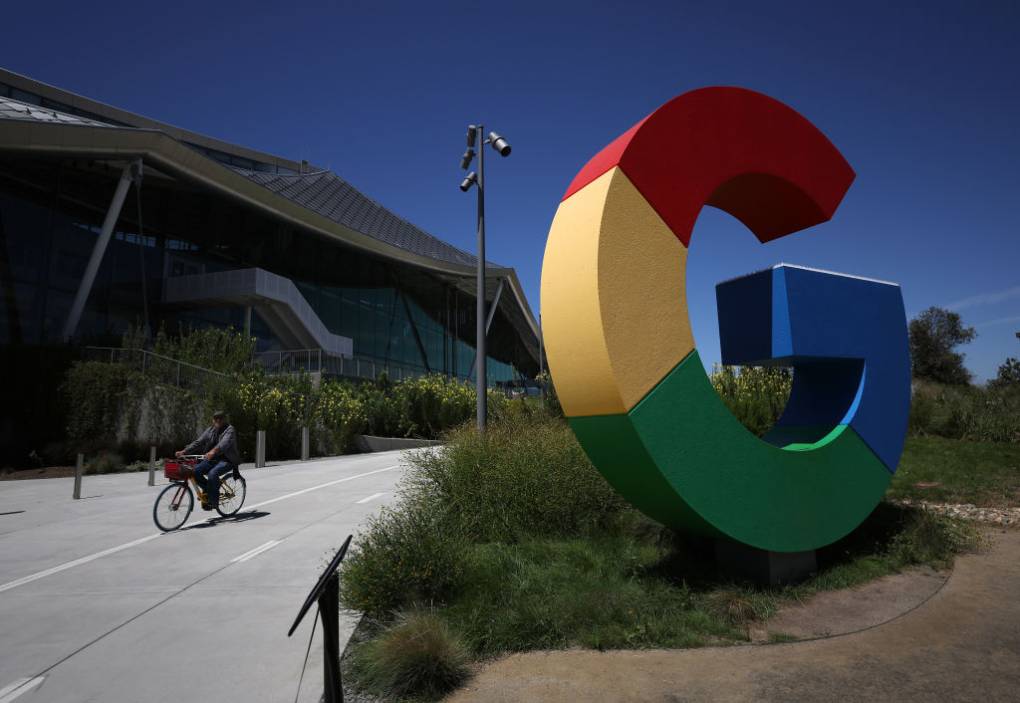
"caption": "The Google logo is displayed in front of company headquarters during the Made By Google event on August 13, 2024 in Mountain View, California. Google announced new Pixel phones, watches and AI features at the event. ",
"credit": "Justin Sullivan/Getty Images",
"altTag": null,
"description": null,
"imgSizes": {
"medium": {
"file": "https://cdn.kqed.org/wp-content/uploads/sites/10/2025/04/GettyImages-2166671481-800x552.jpg",
"width": 800,
"height": 552,
"mimeType": "image/jpeg"
},
"large": {
"file": "https://cdn.kqed.org/wp-content/uploads/sites/10/2025/04/GettyImages-2166671481-1020x703.jpg",
"width": 1020,
"height": 703,
"mimeType": "image/jpeg"
},
"thumbnail": {
"file": "https://cdn.kqed.org/wp-content/uploads/sites/10/2025/04/GettyImages-2166671481-160x110.jpg",
"width": 160,
"height": 110,
"mimeType": "image/jpeg"
},
"post-thumbnail": {
"file": "https://cdn.kqed.org/wp-content/uploads/sites/10/2025/04/GettyImages-2166671481-672x372.jpg",
"width": 672,
"height": 372,
"mimeType": "image/jpeg"
},
"twentyfourteen-full-width": {
"file": "https://cdn.kqed.org/wp-content/uploads/sites/10/2025/04/GettyImages-2166671481-1024x576.jpg",
"width": 1024,
"height": 576,
"mimeType": "image/jpeg"
},
"kqedFullSize": {
"file": "https://cdn.kqed.org/wp-content/uploads/sites/10/2025/04/GettyImages-2166671481.jpg",
"width": 1024,
"height": 706
}
},
"isLoading": false,
"fetchFailed": false
},
"news_12036125": {
"type": "attachments",
"id": "news_12036125",
"meta": {
"index": "attachments_1716263798",
"site": "news",
"id": "12036125",
"found": true
},
"title": "Meta Logo Illustrations",
"publishDate": 1744761425,
"status": "inherit",
"parent": 12036068,
"modified": 1744761498,
"caption": "The Meta, Facebook, Instagram, WhatsApp, Messenger and Threads logos are screened on a mobile phone on Jan. 25, 2025. ",
"credit": "Beata Zawrzel/NurPhoto via Getty Images",
"altTag": null,
"description": null,
"imgSizes": {
"medium": {
"file": "https://cdn.kqed.org/wp-content/uploads/sites/10/2025/04/MetaGetty2-800x533.jpg",
"width": 800,
"height": 533,
"mimeType": "image/jpeg"
},
"large": {
"file": "https://cdn.kqed.org/wp-content/uploads/sites/10/2025/04/MetaGetty2-1020x680.jpg",
"width": 1020,
"height": 680,
"mimeType": "image/jpeg"
},
"thumbnail": {
"file": "https://cdn.kqed.org/wp-content/uploads/sites/10/2025/04/MetaGetty2-160x107.jpg",
"width": 160,
"height": 107,
"mimeType": "image/jpeg"
},
"1536x1536": {
"file": "https://cdn.kqed.org/wp-content/uploads/sites/10/2025/04/MetaGetty2-1536x1024.jpg",
"width": 1536,
"height": 1024,
"mimeType": "image/jpeg"
},
"post-thumbnail": {
"file": "https://cdn.kqed.org/wp-content/uploads/sites/10/2025/04/MetaGetty2-672x372.jpg",
"width": 672,
"height": 372,
"mimeType": "image/jpeg"
},
"twentyfourteen-full-width": {
"file": "https://cdn.kqed.org/wp-content/uploads/sites/10/2025/04/MetaGetty2-1038x576.jpg",
"width": 1038,
"height": 576,
"mimeType": "image/jpeg"
},
"full-width": {
"file": "https://cdn.kqed.org/wp-content/uploads/sites/10/2025/04/MetaGetty2-1920x1280.jpg",
"width": 1920,
"height": 1280,
"mimeType": "image/jpeg"
},
"kqedFullSize": {
"file": "https://cdn.kqed.org/wp-content/uploads/sites/10/2025/04/MetaGetty2.jpg",
"width": 2000,
"height": 1333
}
},
"isLoading": false,
"fetchFailed": false
},
"news_12035915": {
"type": "attachments",
"id": "news_12035915",
"meta": {
"index": "attachments_1716263798",
"site": "news",
"id": "12035915",
"found": true
},
"title": "US-POLITICS-TRUMP-INAUGURATION",
"publishDate": 1744661677,
"status": "inherit",
"parent": 12035855,
"modified": 1744663114,
"caption": "CEO of Meta, Mark Zuckerberg (center), attends the inauguration ceremony of Donald Trump as he swears in as the 47th U.S. President in the U.S. Capitol Rotunda in Washington, D.C., on Jan. 20, 2025.",
"credit": "Kenny Holston/AFP via Getty Images",
"altTag": null,
"description": null,
"imgSizes": {
"medium": {
"file": "https://cdn.kqed.org/wp-content/uploads/sites/10/2025/04/MetaGetty-800x533.jpg",
"width": 800,
"height": 533,
"mimeType": "image/jpeg"
},
"large": {
"file": "https://cdn.kqed.org/wp-content/uploads/sites/10/2025/04/MetaGetty-1020x680.jpg",
"width": 1020,
"height": 680,
"mimeType": "image/jpeg"
},
"thumbnail": {
"file": "https://cdn.kqed.org/wp-content/uploads/sites/10/2025/04/MetaGetty-160x107.jpg",
"width": 160,
"height": 107,
"mimeType": "image/jpeg"
},
"1536x1536": {
"file": "https://cdn.kqed.org/wp-content/uploads/sites/10/2025/04/MetaGetty-1536x1024.jpg",
"width": 1536,
"height": 1024,
"mimeType": "image/jpeg"
},
"post-thumbnail": {
"file": "https://cdn.kqed.org/wp-content/uploads/sites/10/2025/04/MetaGetty-672x372.jpg",
"width": 672,
"height": 372,
"mimeType": "image/jpeg"
},
"twentyfourteen-full-width": {
"file": "https://cdn.kqed.org/wp-content/uploads/sites/10/2025/04/MetaGetty-1038x576.jpg",
"width": 1038,
"height": 576,
"mimeType": "image/jpeg"
},
"full-width": {
"file": "https://cdn.kqed.org/wp-content/uploads/sites/10/2025/04/MetaGetty-1920x1280.jpg",
"width": 1920,
"height": 1280,
"mimeType": "image/jpeg"
},
"kqedFullSize": {
"file": "https://cdn.kqed.org/wp-content/uploads/sites/10/2025/04/MetaGetty.jpg",
"width": 2000,
"height": 1333
}
},
"isLoading": false,
"fetchFailed": false
},
"news_11976118": {
"type": "attachments",
"id": "news_11976118",
"meta": {
"index": "attachments_1716263798",
"site": "news",
"id": "11976118",
"found": true
},
"title": "OpenAI CEO Samuel Altman Testifies To Senate Committee On Rules For Artificial Intelligence",
"publishDate": 1708040236,
"status": "inherit",
"parent": 11976097,
"modified": 1761950561,
"caption": "Sam Altman, CEO of OpenAI, testifies before the Senate Judiciary Subcommittee on Privacy, Technology, and the Law on May 16, 2023, in Washington, D.C. The committee held an oversight hearing to examine AI, focusing on rules for artificial intelligence. ",
"credit": "Win McNamee/Getty Images",
"altTag": "A white man in a blue suit and tie gestures as he speaks in a congressional room surrounded by people.",
"description": "A white man in a blue suit and tie gestures as he speaks in a congressional room surrounded by people.",
"imgSizes": {
"medium": {
"file": "https://cdn.kqed.org/wp-content/uploads/sites/10/2024/02/GettyImages-1490690177-800x534.jpg",
"width": 800,
"height": 534,
"mimeType": "image/jpeg"
},
"large": {
"file": "https://cdn.kqed.org/wp-content/uploads/sites/10/2024/02/GettyImages-1490690177-1020x680.jpg",
"width": 1020,
"height": 680,
"mimeType": "image/jpeg"
},
"thumbnail": {
"file": "https://cdn.kqed.org/wp-content/uploads/sites/10/2024/02/GettyImages-1490690177-160x107.jpg",
"width": 160,
"height": 107,
"mimeType": "image/jpeg"
},
"post-thumbnail": {
"file": "https://cdn.kqed.org/wp-content/uploads/sites/10/2024/02/GettyImages-1490690177-672x372.jpg",
"width": 672,
"height": 372,
"mimeType": "image/jpeg"
},
"twentyfourteen-full-width": {
"file": "https://cdn.kqed.org/wp-content/uploads/sites/10/2024/02/GettyImages-1490690177-1024x576.jpg",
"width": 1024,
"height": 576,
"mimeType": "image/jpeg"
},
"kqedFullSize": {
"file": "https://cdn.kqed.org/wp-content/uploads/sites/10/2024/02/GettyImages-1490690177.jpg",
"width": 1024,
"height": 683
}
},
"isLoading": false,
"fetchFailed": false
},
"news_12034620": {
"type": "attachments",
"id": "news_12034620",
"meta": {
"index": "attachments_1716263798",
"site": "news",
"id": "12034620",
"found": true
},
"title": "PadillaMentalHealthCaucus",
"publishDate": 1743803641,
"status": "inherit",
"parent": 12034490,
"modified": 1743803685,
"caption": "U.S. Sens. Alex Padilla (center), Tina Smith (left) and Thom Tillis at the launch of the bipartisan Senate Mental Health Caucus in October 2023. Padilla is one of two caucus members calling for tighter regulation of AI chatbots aimed at teenagers.",
"credit": "Courtesy of U.S. Sen. Alex Padilla",
"altTag": null,
"description": null,
"imgSizes": {
"medium": {
"file": "https://cdn.kqed.org/wp-content/uploads/sites/10/2025/04/PadillaMentalHealthCaucus-800x533.jpg",
"width": 800,
"height": 533,
"mimeType": "image/jpeg"
},
"large": {
"file": "https://cdn.kqed.org/wp-content/uploads/sites/10/2025/04/PadillaMentalHealthCaucus-1020x680.jpg",
"width": 1020,
"height": 680,
"mimeType": "image/jpeg"
},
"thumbnail": {
"file": "https://cdn.kqed.org/wp-content/uploads/sites/10/2025/04/PadillaMentalHealthCaucus-160x107.jpg",
"width": 160,
"height": 107,
"mimeType": "image/jpeg"
},
"1536x1536": {
"file": "https://cdn.kqed.org/wp-content/uploads/sites/10/2025/04/PadillaMentalHealthCaucus-1536x1024.jpg",
"width": 1536,
"height": 1024,
"mimeType": "image/jpeg"
},
"post-thumbnail": {
"file": "https://cdn.kqed.org/wp-content/uploads/sites/10/2025/04/PadillaMentalHealthCaucus-672x372.jpg",
"width": 672,
"height": 372,
"mimeType": "image/jpeg"
},
"twentyfourteen-full-width": {
"file": "https://cdn.kqed.org/wp-content/uploads/sites/10/2025/04/PadillaMentalHealthCaucus-1038x576.jpg",
"width": 1038,
"height": 576,
"mimeType": "image/jpeg"
},
"full-width": {
"file": "https://cdn.kqed.org/wp-content/uploads/sites/10/2025/04/PadillaMentalHealthCaucus-1920x1280.jpg",
"width": 1920,
"height": 1280,
"mimeType": "image/jpeg"
},
"kqedFullSize": {
"file": "https://cdn.kqed.org/wp-content/uploads/sites/10/2025/04/PadillaMentalHealthCaucus.jpg",
"width": 2000,
"height": 1333
}
},
"isLoading": false,
"fetchFailed": false
},
"news_12033428": {
"type": "attachments",
"id": "news_12033428",
"meta": {
"index": "attachments_1716263798",
"site": "news",
"id": "12033428",
"found": true
},
"title": "alisonyin.com",
"publishDate": 1743111983,
"status": "inherit",
"parent": 12033427,
"modified": 1743112130,
"caption": "Third graders participate in the STEAM (Science, Technology, Engineering, Art and Math) workshop at Redwood Heights Elementary School in Oakland, Wednesday, May 17, 2017. ",
"credit": "Alison Yin/EdSource",
"altTag": "Students in a classroom on computers or writing in notebooks. Sunlight streams in through the windows, the children look happy.",
"description": null,
"imgSizes": {
"medium": {
"file": "https://cdn.kqed.org/wp-content/uploads/sites/10/2025/03/Redwood_Elem_170-scaled-1-800x533.jpg",
"width": 800,
"height": 533,
"mimeType": "image/jpeg"
},
"large": {
"file": "https://cdn.kqed.org/wp-content/uploads/sites/10/2025/03/Redwood_Elem_170-scaled-1-1020x680.jpg",
"width": 1020,
"height": 680,
"mimeType": "image/jpeg"
},
"thumbnail": {
"file": "https://cdn.kqed.org/wp-content/uploads/sites/10/2025/03/Redwood_Elem_170-scaled-1-160x107.jpg",
"width": 160,
"height": 107,
"mimeType": "image/jpeg"
},
"1536x1536": {
"file": "https://cdn.kqed.org/wp-content/uploads/sites/10/2025/03/Redwood_Elem_170-scaled-1-1536x1024.jpg",
"width": 1536,
"height": 1024,
"mimeType": "image/jpeg"
},
"2048x2048": {
"file": "https://cdn.kqed.org/wp-content/uploads/sites/10/2025/03/Redwood_Elem_170-scaled-1-2048x1365.jpg",
"width": 2048,
"height": 1365,
"mimeType": "image/jpeg"
},
"post-thumbnail": {
"file": "https://cdn.kqed.org/wp-content/uploads/sites/10/2025/03/Redwood_Elem_170-scaled-1-672x372.jpg",
"width": 672,
"height": 372,
"mimeType": "image/jpeg"
},
"twentyfourteen-full-width": {
"file": "https://cdn.kqed.org/wp-content/uploads/sites/10/2025/03/Redwood_Elem_170-scaled-1-1038x576.jpg",
"width": 1038,
"height": 576,
"mimeType": "image/jpeg"
},
"full-width": {
"file": "https://cdn.kqed.org/wp-content/uploads/sites/10/2025/03/Redwood_Elem_170-scaled-1-1920x1280.jpg",
"width": 1920,
"height": 1280,
"mimeType": "image/jpeg"
},
"kqedFullSize": {
"file": "https://cdn.kqed.org/wp-content/uploads/sites/10/2025/03/Redwood_Elem_170-scaled-1.jpg",
"width": 2560,
"height": 1706
}
},
"isLoading": false,
"fetchFailed": false
},
"news_12033069": {
"type": "attachments",
"id": "news_12033069",
"meta": {
"index": "attachments_1716263798",
"site": "news",
"id": "12033069",
"found": true
},
"title": "paypal mafia_web img",
"publishDate": 1742956510,
"status": "inherit",
"parent": 12033066,
"modified": 1742957348,
"caption": "From left, Elon Musk, Peter Thiel and David Sacks — prominent members of the so-called “PayPal Mafia,” a group of former PayPal executives who became influential in Silicon Valley. (Photos by Theo Wargo/Getty Images, Nordin Catic/Getty Images, and Romain Maurice/Getty Images)",
"credit": null,
"altTag": "Black-and-white composite image of three white men shown in separate headshots, positioned side by side. On the left is Elon Musk, smiling slightly, with short, slicked-back hair and light stubble, wearing a white button-down shirt and a dark blazer. In the center is Peter Thiel, looking directly at the camera with a neutral expression, close-cropped hair, and wearing a dark suit jacket over a white shirt. On the right is David Sacks, smiling with his teeth visible, with short, neatly combed gray hair, wearing a black shirt and a light zip-up jacket. In the bottom right corner of the image, the text “CLOSE ALL TABS” appears in a pixelated, video game-style font.",
"description": null,
"imgSizes": {
"medium": {
"file": "https://cdn.kqed.org/wp-content/uploads/sites/10/2025/03/paypal-mafia_web-img-800x450.png",
"width": 800,
"height": 450,
"mimeType": "image/png"
},
"large": {
"file": "https://cdn.kqed.org/wp-content/uploads/sites/10/2025/03/paypal-mafia_web-img-1020x574.png",
"width": 1020,
"height": 574,
"mimeType": "image/png"
},
"thumbnail": {
"file": "https://cdn.kqed.org/wp-content/uploads/sites/10/2025/03/paypal-mafia_web-img-160x90.png",
"width": 160,
"height": 90,
"mimeType": "image/png"
},
"1536x1536": {
"file": "https://cdn.kqed.org/wp-content/uploads/sites/10/2025/03/paypal-mafia_web-img-1536x864.png",
"width": 1536,
"height": 864,
"mimeType": "image/png"
},
"post-thumbnail": {
"file": "https://cdn.kqed.org/wp-content/uploads/sites/10/2025/03/paypal-mafia_web-img-672x372.png",
"width": 672,
"height": 372,
"mimeType": "image/png"
},
"twentyfourteen-full-width": {
"file": "https://cdn.kqed.org/wp-content/uploads/sites/10/2025/03/paypal-mafia_web-img-1038x576.png",
"width": 1038,
"height": 576,
"mimeType": "image/png"
},
"kqedFullSize": {
"file": "https://cdn.kqed.org/wp-content/uploads/sites/10/2025/03/paypal-mafia_web-img.png",
"width": 1920,
"height": 1080
}
},
"isLoading": false,
"fetchFailed": false
},
"news_11676905": {
"type": "attachments",
"id": "news_11676905",
"meta": {
"index": "attachments_1716263798",
"site": "news",
"id": "11676905",
"found": true
},
"title": "2017 Streamy Awards - Inside",
"publishDate": 1529876432,
"status": "inherit",
"parent": 11676881,
"modified": 1742862528,
"caption": "23andMe CEO Anne Wojcicki said the company would offer the use of its genetic testing services amid concerns that immigration officials lacked the records necessary to connect parents with their children.",
"credit": "Matt Winkelmeyer/Getty Images for dick clark productions",
"altTag": null,
"description": "23andMe CEO Anne Wojcicki said the company would offer the use of its genetic testing services amid concerns that immigration officials lacked the records necessary to connect parents with their children.",
"imgSizes": {
"thumbnail": {
"file": "https://cdn.kqed.org/wp-content/uploads/sites/10/2018/06/GettyImages-854491752-160x118.jpg",
"width": 160,
"height": 118,
"mimeType": "image/jpeg"
},
"medium": {
"file": "https://cdn.kqed.org/wp-content/uploads/sites/10/2018/06/GettyImages-854491752-800x588.jpg",
"width": 800,
"height": 588,
"mimeType": "image/jpeg"
},
"large": {
"file": "https://cdn.kqed.org/wp-content/uploads/sites/10/2018/06/GettyImages-854491752-1020x749.jpg",
"width": 1020,
"height": 749,
"mimeType": "image/jpeg"
},
"complete_open_graph": {
"file": "https://cdn.kqed.org/wp-content/uploads/sites/10/2018/06/GettyImages-854491752-1200x882.jpg",
"width": 1200,
"height": 882,
"mimeType": "image/jpeg"
},
"fd-lrg": {
"file": "https://cdn.kqed.org/wp-content/uploads/sites/10/2018/06/GettyImages-854491752-1920x1411.jpg",
"width": 1920,
"height": 1411,
"mimeType": "image/jpeg"
},
"fd-med": {
"file": "https://cdn.kqed.org/wp-content/uploads/sites/10/2018/06/GettyImages-854491752-1180x867.jpg",
"width": 1180,
"height": 867,
"mimeType": "image/jpeg"
},
"fd-sm": {
"file": "https://cdn.kqed.org/wp-content/uploads/sites/10/2018/06/GettyImages-854491752-960x705.jpg",
"width": 960,
"height": 705,
"mimeType": "image/jpeg"
},
"post-thumbnail": {
"file": "https://cdn.kqed.org/wp-content/uploads/sites/10/2018/06/GettyImages-854491752-672x372.jpg",
"width": 672,
"height": 372,
"mimeType": "image/jpeg"
},
"twentyfourteen-full-width": {
"file": "https://cdn.kqed.org/wp-content/uploads/sites/10/2018/06/GettyImages-854491752-1038x576.jpg",
"width": 1038,
"height": 576,
"mimeType": "image/jpeg"
},
"xxsmall": {
"file": "https://cdn.kqed.org/wp-content/uploads/sites/10/2018/06/GettyImages-854491752-240x176.jpg",
"width": 240,
"height": 176,
"mimeType": "image/jpeg"
},
"xsmall": {
"file": "https://cdn.kqed.org/wp-content/uploads/sites/10/2018/06/GettyImages-854491752-375x276.jpg",
"width": 375,
"height": 276,
"mimeType": "image/jpeg"
},
"small": {
"file": "https://cdn.kqed.org/wp-content/uploads/sites/10/2018/06/GettyImages-854491752-520x382.jpg",
"width": 520,
"height": 382,
"mimeType": "image/jpeg"
},
"xlarge": {
"file": "https://cdn.kqed.org/wp-content/uploads/sites/10/2018/06/GettyImages-854491752-1180x867.jpg",
"width": 1180,
"height": 867,
"mimeType": "image/jpeg"
},
"full-width": {
"file": "https://cdn.kqed.org/wp-content/uploads/sites/10/2018/06/GettyImages-854491752-1920x1411.jpg",
"width": 1920,
"height": 1411,
"mimeType": "image/jpeg"
},
"guest-author-32": {
"file": "https://cdn.kqed.org/wp-content/uploads/sites/10/2018/06/GettyImages-854491752-32x32.jpg",
"width": 32,
"height": 32,
"mimeType": "image/jpeg"
},
"guest-author-50": {
"file": "https://cdn.kqed.org/wp-content/uploads/sites/10/2018/06/GettyImages-854491752-50x50.jpg",
"width": 50,
"height": 50,
"mimeType": "image/jpeg"
},
"guest-author-64": {
"file": "https://cdn.kqed.org/wp-content/uploads/sites/10/2018/06/GettyImages-854491752-64x64.jpg",
"width": 64,
"height": 64,
"mimeType": "image/jpeg"
},
"guest-author-96": {
"file": "https://cdn.kqed.org/wp-content/uploads/sites/10/2018/06/GettyImages-854491752-96x96.jpg",
"width": 96,
"height": 96,
"mimeType": "image/jpeg"
},
"guest-author-128": {
"file": "https://cdn.kqed.org/wp-content/uploads/sites/10/2018/06/GettyImages-854491752-128x128.jpg",
"width": 128,
"height": 128,
"mimeType": "image/jpeg"
},
"detail": {
"file": "https://cdn.kqed.org/wp-content/uploads/sites/10/2018/06/GettyImages-854491752-150x150.jpg",
"width": 150,
"height": 150,
"mimeType": "image/jpeg"
},
"kqedFullSize": {
"file": "https://cdn.kqed.org/wp-content/uploads/sites/10/2018/06/GettyImages-854491752-e1529876490584.jpg",
"width": 1920,
"height": 1411
}
},
"isLoading": false,
"fetchFailed": false
},
"news_12032018": {
"type": "attachments",
"id": "news_12032018",
"meta": {
"index": "attachments_1716263798",
"site": "news",
"id": "12032018",
"found": true
},
"title": "97th Annual Oscars - Arrivals",
"publishDate": 1742401584,
"status": "inherit",
"parent": 12031810,
"modified": 1742401606,
"caption": "The actress Scarlett Johansson is one of a growing list of artists who have taken generative AI developers to task for allegedly copying and imitating her voice after she refused to license it to the company. The dispute is at the heart of new state legislation by Assemblymember Rebecca Bauer-Kahan (D-Orinda).",
"credit": "Jeff Kravitz/FilmMagic",
"altTag": null,
"description": null,
"imgSizes": {
"medium": {
"file": "https://cdn.kqed.org/wp-content/uploads/sites/10/2025/03/ScarletGetty-800x533.jpg",
"width": 800,
"height": 533,
"mimeType": "image/jpeg"
},
"large": {
"file": "https://cdn.kqed.org/wp-content/uploads/sites/10/2025/03/ScarletGetty-1020x679.jpg",
"width": 1020,
"height": 679,
"mimeType": "image/jpeg"
},
"thumbnail": {
"file": "https://cdn.kqed.org/wp-content/uploads/sites/10/2025/03/ScarletGetty-160x107.jpg",
"width": 160,
"height": 107,
"mimeType": "image/jpeg"
},
"1536x1536": {
"file": "https://cdn.kqed.org/wp-content/uploads/sites/10/2025/03/ScarletGetty-1536x1023.jpg",
"width": 1536,
"height": 1023,
"mimeType": "image/jpeg"
},
"post-thumbnail": {
"file": "https://cdn.kqed.org/wp-content/uploads/sites/10/2025/03/ScarletGetty-672x372.jpg",
"width": 672,
"height": 372,
"mimeType": "image/jpeg"
},
"twentyfourteen-full-width": {
"file": "https://cdn.kqed.org/wp-content/uploads/sites/10/2025/03/ScarletGetty-1038x576.jpg",
"width": 1038,
"height": 576,
"mimeType": "image/jpeg"
},
"full-width": {
"file": "https://cdn.kqed.org/wp-content/uploads/sites/10/2025/03/ScarletGetty-1920x1279.jpg",
"width": 1920,
"height": 1279,
"mimeType": "image/jpeg"
},
"kqedFullSize": {
"file": "https://cdn.kqed.org/wp-content/uploads/sites/10/2025/03/ScarletGetty.jpg",
"width": 2000,
"height": 1332
}
},
"isLoading": false,
"fetchFailed": false
},
"news_12031557": {
"type": "attachments",
"id": "news_12031557",
"meta": {
"index": "attachments_1716263798",
"site": "news",
"id": "12031557",
"found": true
},
"title": "1-COVER-PHOTO-CG-@-CSULB",
"publishDate": 1742153978,
"status": "inherit",
"parent": 12031556,
"modified": 1742154068,
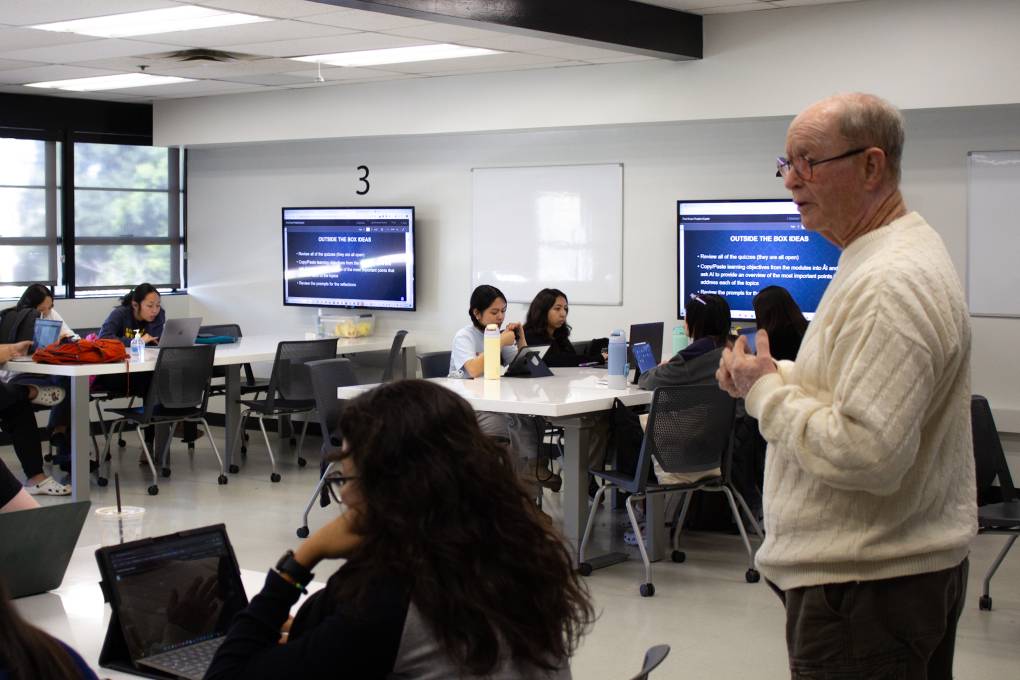
"caption": "Cal State Long Beach lecturer Casey Goeller wants his students to know how to use AI before they enter the workforce.",
"credit": "Tasmin McGill/EdSource",
"altTag": "A white man wearing glasses and a light colored sweater stands near seated students at desks with laptops and computer monitors on the walls in a classroom.",
"description": null,
"imgSizes": {
"medium": {
"file": "https://cdn.kqed.org/wp-content/uploads/sites/10/2025/03/1-COVER-PHOTO-CG-@-CSULB-800x533.jpeg",
"width": 800,
"height": 533,
"mimeType": "image/jpeg"
},
"large": {
"file": "https://cdn.kqed.org/wp-content/uploads/sites/10/2025/03/1-COVER-PHOTO-CG-@-CSULB-1020x680.jpeg",
"width": 1020,
"height": 680,
"mimeType": "image/jpeg"
},
"thumbnail": {
"file": "https://cdn.kqed.org/wp-content/uploads/sites/10/2025/03/1-COVER-PHOTO-CG-@-CSULB-160x107.jpeg",
"width": 160,
"height": 107,
"mimeType": "image/jpeg"
},
"1536x1536": {
"file": "https://cdn.kqed.org/wp-content/uploads/sites/10/2025/03/1-COVER-PHOTO-CG-@-CSULB-1536x1024.jpeg",
"width": 1536,
"height": 1024,
"mimeType": "image/jpeg"
},
"post-thumbnail": {
"file": "https://cdn.kqed.org/wp-content/uploads/sites/10/2025/03/1-COVER-PHOTO-CG-@-CSULB-672x372.jpeg",
"width": 672,
"height": 372,
"mimeType": "image/jpeg"
},
"twentyfourteen-full-width": {
"file": "https://cdn.kqed.org/wp-content/uploads/sites/10/2025/03/1-COVER-PHOTO-CG-@-CSULB-1038x576.jpeg",
"width": 1038,
"height": 576,
"mimeType": "image/jpeg"
},
"full-width": {
"file": "https://cdn.kqed.org/wp-content/uploads/sites/10/2025/03/1-COVER-PHOTO-CG-@-CSULB-1920x1280.jpeg",
"width": 1920,
"height": 1280,
"mimeType": "image/jpeg"
},
"kqedFullSize": {
"file": "https://cdn.kqed.org/wp-content/uploads/sites/10/2025/03/1-COVER-PHOTO-CG-@-CSULB.jpeg",
"width": 2048,
"height": 1365
}
},
"isLoading": false,
"fetchFailed": false
},
"news_12028939": {
"type": "attachments",
"id": "news_12028939",
"meta": {
"index": "attachments_1716263798",
"site": "news",
"id": "12028939",
"found": true
},
"title": "At McClymonds High School in Oakland on Feb. 6, 2025.",
"publishDate": 1740672046,
"status": "inherit",
"parent": 0,
"modified": 1740672401,
"caption": "At McClymonds High School in Oakland on Feb. 6, 2025.",
"credit": "Gina Castro/KQED",
"altTag": null,
"description": null,
"imgSizes": {
"medium": {
"file": "https://cdn.kqed.org/wp-content/uploads/sites/10/2025/02/20250206_OUSDChromebooks_GC-33-800x533.jpg",
"width": 800,
"height": 533,
"mimeType": "image/jpeg"
},
"large": {
"file": "https://cdn.kqed.org/wp-content/uploads/sites/10/2025/02/20250206_OUSDChromebooks_GC-33-1020x680.jpg",
"width": 1020,
"height": 680,
"mimeType": "image/jpeg"
},
"thumbnail": {
"file": "https://cdn.kqed.org/wp-content/uploads/sites/10/2025/02/20250206_OUSDChromebooks_GC-33-160x107.jpg",
"width": 160,
"height": 107,
"mimeType": "image/jpeg"
},
"1536x1536": {
"file": "https://cdn.kqed.org/wp-content/uploads/sites/10/2025/02/20250206_OUSDChromebooks_GC-33-1536x1024.jpg",
"width": 1536,
"height": 1024,
"mimeType": "image/jpeg"
},
"post-thumbnail": {
"file": "https://cdn.kqed.org/wp-content/uploads/sites/10/2025/02/20250206_OUSDChromebooks_GC-33-672x372.jpg",
"width": 672,
"height": 372,
"mimeType": "image/jpeg"
},
"twentyfourteen-full-width": {
"file": "https://cdn.kqed.org/wp-content/uploads/sites/10/2025/02/20250206_OUSDChromebooks_GC-33-1038x576.jpg",
"width": 1038,
"height": 576,
"mimeType": "image/jpeg"
},
"full-width": {
"file": "https://cdn.kqed.org/wp-content/uploads/sites/10/2025/02/20250206_OUSDChromebooks_GC-33-1920x1280.jpg",
"width": 1920,
"height": 1280,
"mimeType": "image/jpeg"
},
"kqedFullSize": {
"file": "https://cdn.kqed.org/wp-content/uploads/sites/10/2025/02/20250206_OUSDChromebooks_GC-33.jpg",
"width": 2000,
"height": 1333
}
},
"isLoading": false,
"fetchFailed": false
},
"news_12028936": {
"type": "attachments",
"id": "news_12028936",
"meta": {
"index": "attachments_1716263798",
"site": "news",
"id": "12028936",
"found": true
},
"title": "20250206_OUSDChromebooks_GC-19",
"publishDate": 1740672029,
"status": "inherit",
"parent": 12028948,
"modified": 1741035054,
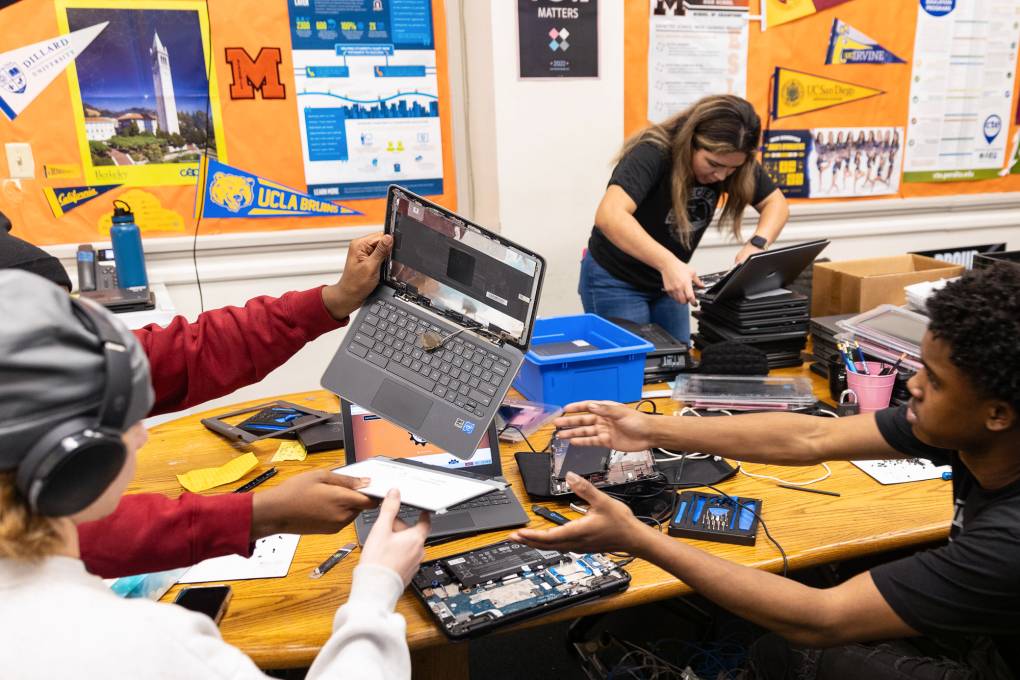
"caption": "David Anderson, a junior at McClymonds High School, holds a Chromebook’s bezel in Oakland on Feb. 6, 2025. David is one of three paid interns at McClymonds High, under Oakland Unified’s student-led Chromebook repair program, where students are hired to repair the devices during the school year.",
"credit": "Gina Castro/KQED",
"altTag": null,
"description": null,
"imgSizes": {
"medium": {
"file": "https://cdn.kqed.org/wp-content/uploads/sites/10/2025/02/20250206_OUSDChromebooks_GC-19-800x533.jpg",
"width": 800,
"height": 533,
"mimeType": "image/jpeg"
},
"large": {
"file": "https://cdn.kqed.org/wp-content/uploads/sites/10/2025/02/20250206_OUSDChromebooks_GC-19-1020x680.jpg",
"width": 1020,
"height": 680,
"mimeType": "image/jpeg"
},
"thumbnail": {
"file": "https://cdn.kqed.org/wp-content/uploads/sites/10/2025/02/20250206_OUSDChromebooks_GC-19-160x107.jpg",
"width": 160,
"height": 107,
"mimeType": "image/jpeg"
},
"1536x1536": {
"file": "https://cdn.kqed.org/wp-content/uploads/sites/10/2025/02/20250206_OUSDChromebooks_GC-19-1536x1024.jpg",
"width": 1536,
"height": 1024,
"mimeType": "image/jpeg"
},
"post-thumbnail": {
"file": "https://cdn.kqed.org/wp-content/uploads/sites/10/2025/02/20250206_OUSDChromebooks_GC-19-672x372.jpg",
"width": 672,
"height": 372,
"mimeType": "image/jpeg"
},
"twentyfourteen-full-width": {
"file": "https://cdn.kqed.org/wp-content/uploads/sites/10/2025/02/20250206_OUSDChromebooks_GC-19-1038x576.jpg",
"width": 1038,
"height": 576,
"mimeType": "image/jpeg"
},
"full-width": {
"file": "https://cdn.kqed.org/wp-content/uploads/sites/10/2025/02/20250206_OUSDChromebooks_GC-19-1920x1280.jpg",
"width": 1920,
"height": 1280,
"mimeType": "image/jpeg"
},
"kqedFullSize": {
"file": "https://cdn.kqed.org/wp-content/uploads/sites/10/2025/02/20250206_OUSDChromebooks_GC-19.jpg",
"width": 2000,
"height": 1333
}
},
"isLoading": false,
"fetchFailed": false
}
},
"audioPlayerReducer": {
"postId": "stream_live",
"isPaused": true,
"isPlaying": false,
"pfsActive": false,
"pledgeModalIsOpen": true,
"playerDrawerIsOpen": false,
"liveAudioPlayStartedAt": 0,
"liveAudioPlayContext": ""
},
"authorsReducer": {
"byline_news_12033427": {
"type": "authors",
"id": "byline_news_12033427",
"meta": {
"override": true
},
"slug": "byline_news_12033427",
"name": "\u003ca href=\"https://edsource.org/author/dlambert\">Diana Lambert\u003c/a>, EdSource",
"isLoading": false
},
"byline_news_12031556": {
"type": "authors",
"id": "byline_news_12031556",
"meta": {
"override": true
},
"slug": "byline_news_12031556",
"name": "Thomas Murphy, Tasmin McGill, Teagan Davidge, Natalia Montero Acevedo, Christina Chkarboul, Calista Stocker and Abbie Phillips ",
"isLoading": false
},
"rachael-myrow": {
"type": "authors",
"id": "251",
"meta": {
"index": "authors_1716337520",
"id": "251",
"found": true
},
"name": "Rachael Myrow",
"firstName": "Rachael",
"lastName": "Myrow",
"slug": "rachael-myrow",
"email": "rmyrow@kqed.org",
"display_author_email": true,
"staff_mastheads": [
"news"
],
"title": "Senior Editor of KQED's Silicon Valley News Desk",
"bio": "• I write and edit stories about how Silicon Valley power and policies shape everyday life in California. I’m also passionate about making Bay Area history and culture more accessible to a broad public. • I’ve been a journalist for most of my life, starting in high school with The Franklin Press in Los Angeles, where I grew up. While earning my first degree in English at UC Berkeley, I got my start in public radio at KALX-FM. After completing a second degree in journalism at Cal, I landed my first professional job at Marketplace, then moved on to KPCC (now LAist), and then KQED, where I hosted The California Report for more than seven years. • My reporting has appeared on NPR, The World, WBUR’s \u003ci>Here & Now\u003c/i>, and the BBC. I also guest host for KQED’s \u003ci>Forum\u003c/i>, as well as the Commonwealth Club in San Francisco. • I speak periodically on media, democracy and technology issues, and do voiceover work for documentaries and educational video projects. • Outside of the studio, you'll find me hiking Bay Area trails and whipping up Insta-ready meals in my kitchen. • I do not accept gifts, money, or favors from anyone connected to my reporting, I don't pay people for information, and I do not support or donate to political causes. • I strive to treat the people I report on with fairness, honesty, and respect. I also recognize there are often multiple sides to a story and work to verify information through multiple sources and documentation. If I get something wrong, I correct it.",
"avatar": "https://secure.gravatar.com/avatar/3ed8a3c5f26025e4a805ba634cda8cd764906b97438a6d9ce216b044e340da4e?s=600&d=blank&r=g",
"twitter": "rachaelmyrow",
"bluesky": null,
"facebook": null,
"instagram": null,
"linkedin": "https://www.linkedin.com/in/rachaelmyrow/",
"sites": [
{
"site": "arts",
"roles": [
"administrator"
]
},
{
"site": "news",
"roles": [
"edit_others_posts",
"editor"
]
},
{
"site": "futureofyou",
"roles": [
"editor"
]
},
{
"site": "bayareabites",
"roles": [
"editor"
]
},
{
"site": "stateofhealth",
"roles": [
"editor"
]
},
{
"site": "science",
"roles": [
"editor"
]
},
{
"site": "food",
"roles": [
"editor"
]
},
{
"site": "forum",
"roles": [
"editor"
]
},
{
"site": "liveblog",
"roles": [
"author"
]
}
],
"headData": {
"title": "Rachael Myrow | KQED",
"description": "Senior Editor of KQED's Silicon Valley News Desk",
"ogImgSrc": "https://secure.gravatar.com/avatar/3ed8a3c5f26025e4a805ba634cda8cd764906b97438a6d9ce216b044e340da4e?s=600&d=blank&r=g",
"twImgSrc": "https://secure.gravatar.com/avatar/3ed8a3c5f26025e4a805ba634cda8cd764906b97438a6d9ce216b044e340da4e?s=600&d=blank&r=g"
},
"isLoading": false,
"link": "/author/rachael-myrow"
},
"matthewgreen": {
"type": "authors",
"id": "1263",
"meta": {
"index": "authors_1716337520",
"id": "1263",
"found": true
},
"name": "Matthew Green",
"firstName": "Matthew",
"lastName": "Green",
"slug": "matthewgreen",
"email": "mgreen@kqed.org",
"display_author_email": false,
"staff_mastheads": [],
"title": "KQED Editor/Reporter",
"bio": "Matthew Green is a digital media producer for KQED News. He previously produced \u003ca href=\"http://www.kqed.org/lowdown\">The Lowdown\u003c/a>, KQED’s multimedia news education blog. Matthew's written for numerous Bay Area publications, including the Oakland Tribune and San Francisco Chronicle. He also taught journalism classes at Fremont High School in East Oakland.\r\n\r\nEmail: mgreen@kqed.org; Twitter: @MGreenKQED",
"avatar": "https://secure.gravatar.com/avatar/3bf498d1267ca02c8494f33d8cfc575e?s=600&d=blank&r=g",
"twitter": "MGreenKQED",
"facebook": null,
"instagram": null,
"linkedin": null,
"sites": [
{
"site": "news",
"roles": []
},
{
"site": "lowdown",
"roles": []
},
{
"site": "science",
"roles": []
},
{
"site": "education",
"roles": []
},
{
"site": "quest",
"roles": []
},
{
"site": "liveblog",
"roles": []
}
],
"headData": {
"title": "Matthew Green | KQED",
"description": "KQED Editor/Reporter",
"ogImgSrc": "https://secure.gravatar.com/avatar/3bf498d1267ca02c8494f33d8cfc575e?s=600&d=blank&r=g",
"twImgSrc": "https://secure.gravatar.com/avatar/3bf498d1267ca02c8494f33d8cfc575e?s=600&d=blank&r=g"
},
"isLoading": false,
"link": "/author/matthewgreen"
},
"ccabreralomeli": {
"type": "authors",
"id": "11708",
"meta": {
"index": "authors_1716337520",
"id": "11708",
"found": true
},
"name": "Carlos Cabrera-Lomelí",
"firstName": "Carlos",
"lastName": "Cabrera-Lomelí",
"slug": "ccabreralomeli",
"email": "ccabreralomeli@KQED.org",
"display_author_email": true,
"staff_mastheads": [
"news"
],
"title": "Community Reporter",
"bio": "Carlos Cabrera-Lomelí is a community reporter with KQED's digital engagement team. He also reports and co-produces for KQED's bilingual news hub KQED en Español. He grew up in San Francisco's Mission District and has previously worked with Univision, 48 Hills and REFORMA in Mexico City.",
"avatar": "https://secure.gravatar.com/avatar/c309be9665e484f887b818c89e273ecc673004f426f36b24d00a4d813a2e0518?s=600&d=blank&r=g",
"twitter": "@LomeliCabrera",
"bluesky": null,
"facebook": null,
"instagram": null,
"linkedin": null,
"sites": [
{
"site": "arts",
"roles": [
"editor"
]
},
{
"site": "news",
"roles": [
"editor"
]
},
{
"site": "about",
"roles": [
"editor"
]
},
{
"site": "science",
"roles": [
"editor"
]
},
{
"site": "perspectives",
"roles": [
"editor"
]
},
{
"site": "elections",
"roles": [
"editor"
]
},
{
"site": "liveblog",
"roles": [
"contributor"
]
}
],
"headData": {
"title": "Carlos Cabrera-Lomelí | KQED",
"description": "Community Reporter",
"ogImgSrc": "https://secure.gravatar.com/avatar/c309be9665e484f887b818c89e273ecc673004f426f36b24d00a4d813a2e0518?s=600&d=blank&r=g",
"twImgSrc": "https://secure.gravatar.com/avatar/c309be9665e484f887b818c89e273ecc673004f426f36b24d00a4d813a2e0518?s=600&d=blank&r=g"
},
"isLoading": false,
"link": "/author/ccabreralomeli"
},
"adahlstromeckman": {
"type": "authors",
"id": "11785",
"meta": {
"index": "authors_1716337520",
"id": "11785",
"found": true
},
"name": "Azul Dahlstrom-Eckman",
"firstName": "Azul",
"lastName": "Dahlstrom-Eckman",
"slug": "adahlstromeckman",
"email": "adahlstrom-eckman@kqed.org",
"display_author_email": true,
"staff_mastheads": [],
"title": "Reporter",
"bio": "Azul is a reporter for KQED focusing on transportation and features. He joined KQED in 2021 as an alumna of KALW's Audio Academy radio journalism training program.",
"avatar": "https://secure.gravatar.com/avatar/9cb750298435add7815a777f55bf1f46845c1386bb8452555c60a7b820b5aba3?s=600&d=blank&r=g",
"twitter": "@zuliemann",
"bluesky": "@azul415.bsky.social",
"facebook": null,
"instagram": null,
"linkedin": null,
"sites": [
{
"site": "arts",
"roles": [
"editor"
]
},
{
"site": "news",
"roles": [
"editor"
]
},
{
"site": "science",
"roles": [
"editor"
]
},
{
"site": "liveblog",
"roles": [
"author"
]
}
],
"headData": {
"title": "Azul Dahlstrom-Eckman | KQED",
"description": "Reporter",
"ogImgSrc": "https://secure.gravatar.com/avatar/9cb750298435add7815a777f55bf1f46845c1386bb8452555c60a7b820b5aba3?s=600&d=blank&r=g",
"twImgSrc": "https://secure.gravatar.com/avatar/9cb750298435add7815a777f55bf1f46845c1386bb8452555c60a7b820b5aba3?s=600&d=blank&r=g"
},
"isLoading": false,
"link": "/author/adahlstromeckman"
},
"cegusa": {
"type": "authors",
"id": "11869",
"meta": {
"index": "authors_1716337520",
"id": "11869",
"found": true
},
"name": "Chris Egusa",
"firstName": "Chris",
"lastName": "Egusa",
"slug": "cegusa",
"email": "cegusa@kqed.org",
"display_author_email": false,
"staff_mastheads": [],
"title": "KQED Contributor",
"bio": null,
"avatar": "https://secure.gravatar.com/avatar/3562ed52747313a4c94017da88ea89f9e85cd901f63ebc056a7d5e0adf4a03da?s=600&d=blank&r=g",
"twitter": null,
"bluesky": null,
"facebook": null,
"instagram": null,
"linkedin": null,
"sites": [
{
"site": "arts",
"roles": [
"editor"
]
},
{
"site": "news",
"roles": [
"editor"
]
}
],
"headData": {
"title": "Chris Egusa | KQED",
"description": "KQED Contributor",
"ogImgSrc": "https://secure.gravatar.com/avatar/3562ed52747313a4c94017da88ea89f9e85cd901f63ebc056a7d5e0adf4a03da?s=600&d=blank&r=g",
"twImgSrc": "https://secure.gravatar.com/avatar/3562ed52747313a4c94017da88ea89f9e85cd901f63ebc056a7d5e0adf4a03da?s=600&d=blank&r=g"
},
"isLoading": false,
"link": "/author/cegusa"
},
"gcastro": {
"type": "authors",
"id": "11908",
"meta": {
"index": "authors_1716337520",
"id": "11908",
"found": true
},
"name": "Gina Castro",
"firstName": "Gina",
"lastName": "Castro",
"slug": "gcastro",
"email": "gcastro@kqed.org",
"display_author_email": false,
"staff_mastheads": [
"news"
],
"title": "KQED Contributor",
"bio": null,
"avatar": "https://secure.gravatar.com/avatar/27b36c9ac0b86aced91deb0fc63fc510307488fa6761ac6062ac2eb798ed123f?s=600&d=blank&r=g",
"twitter": null,
"bluesky": null,
"facebook": null,
"instagram": null,
"linkedin": null,
"sites": [
{
"site": "arts",
"roles": [
"editor"
]
},
{
"site": "news",
"roles": [
"editor",
"manage_categories"
]
},
{
"site": "science",
"roles": [
"editor"
]
},
{
"site": "perspectives",
"roles": [
"editor"
]
}
],
"headData": {
"title": "Gina Castro | KQED",
"description": "KQED Contributor",
"ogImgSrc": "https://secure.gravatar.com/avatar/27b36c9ac0b86aced91deb0fc63fc510307488fa6761ac6062ac2eb798ed123f?s=600&d=blank&r=g",
"twImgSrc": "https://secure.gravatar.com/avatar/27b36c9ac0b86aced91deb0fc63fc510307488fa6761ac6062ac2eb798ed123f?s=600&d=blank&r=g"
},
"isLoading": false,
"link": "/author/gcastro"
},
"mcueva": {
"type": "authors",
"id": "11943",
"meta": {
"index": "authors_1716337520",
"id": "11943",
"found": true
},
"name": "Maya Cueva",
"firstName": "Maya",
"lastName": "Cueva",
"slug": "mcueva",
"email": "mcueva@kqed.org",
"display_author_email": false,
"staff_mastheads": [],
"title": "KQED Contributor",
"bio": null,
"avatar": "https://secure.gravatar.com/avatar/238c7aba67c4b6b7b891965ba8cc9e9a4928b5dbdeaf4bde6a81c13e87f49b49?s=600&d=blank&r=g",
"twitter": null,
"bluesky": null,
"facebook": null,
"instagram": null,
"linkedin": null,
"sites": [
{
"site": "news",
"roles": [
"editor"
]
}
],
"headData": {
"title": "Maya Cueva | KQED",
"description": "KQED Contributor",
"ogImgSrc": "https://secure.gravatar.com/avatar/238c7aba67c4b6b7b891965ba8cc9e9a4928b5dbdeaf4bde6a81c13e87f49b49?s=600&d=blank&r=g",
"twImgSrc": "https://secure.gravatar.com/avatar/238c7aba67c4b6b7b891965ba8cc9e9a4928b5dbdeaf4bde6a81c13e87f49b49?s=600&d=blank&r=g"
},
"isLoading": false,
"link": "/author/mcueva"
},
"msung": {
"type": "authors",
"id": "11944",
"meta": {
"index": "authors_1716337520",
"id": "11944",
"found": true
},
"name": "Morgan Sung",
"firstName": "Morgan",
"lastName": "Sung",
"slug": "msung",
"email": "msung@kqed.org",
"display_author_email": false,
"staff_mastheads": [],
"title": "Close All Tabs Host",
"bio": null,
"avatar": "https://secure.gravatar.com/avatar/34033b8d232ee6c987ca6f0a1a28f0e5?s=600&d=blank&r=g",
"twitter": null,
"facebook": null,
"instagram": null,
"linkedin": null,
"sites": [
{
"site": "news",
"roles": [
"editor"
]
}
],
"headData": {
"title": "Morgan Sung | KQED",
"description": "Close All Tabs Host",
"ogImgSrc": "https://secure.gravatar.com/avatar/34033b8d232ee6c987ca6f0a1a28f0e5?s=600&d=blank&r=g",
"twImgSrc": "https://secure.gravatar.com/avatar/34033b8d232ee6c987ca6f0a1a28f0e5?s=600&d=blank&r=g"
},
"isLoading": false,
"link": "/author/msung"
}
},
"pagesReducer": {
"news_category_technology": {
"type": "terms",
"id": "news_248",
"meta": {
"index": "terms_1716263798",
"site": "news",
"id": "248",
"score": 10.93111
},
"featImg": null,
"name": "Technology",
"description": null,
"taxonomy": "category",
"headData": {
"twImgId": null,
"twTitle": null,
"ogTitle": null,
"ogImgId": null,
"twDescription": null,
"description": null,
"title": "Technology Archives | KQED News",
"ogDescription": null
},
"ttid": 256,
"slug": "technology",
"isLoading": false,
"title": "Technology",
"pageMeta": {
"site": "news",
"WpPageTemplate": "page-topic-editorial",
"currentPage": 17
},
"blocks": [
{
"blockName": "kqed/post-list",
"attrs": {
"layout": "cardArticle2",
"query": "posts/news?category=technology",
"seeMore": false,
"paginated": true,
"page": 17
}
},
{
"blockName": "kqed/ad"
}
]
}
},
"pfsSessionReducer": {},
"postsReducer": {
"stream_live": {
"type": "live",
"id": "stream_live",
"audioUrl": "https://streams.kqed.org/kqedradio",
"title": "Live Stream",
"excerpt": "Live Stream information currently unavailable.",
"link": "/radio",
"featImg": "",
"label": {
"name": "KQED Live",
"link": "/"
}
},
"stream_kqedNewscast": {
"type": "posts",
"id": "stream_kqedNewscast",
"audioUrl": "https://www.kqed.org/.stream/anon/radio/RDnews/newscast.mp3?_=1",
"title": "KQED Newscast",
"featImg": "",
"label": {
"name": "88.5 FM",
"link": "/"
}
},
"news_12036516": {
"type": "posts",
"id": "news_12036516",
"meta": {
"index": "posts_1716263798",
"site": "news",
"id": "12036516",
"score": null,
"sort": [
1744990220000
]
},
"guestAuthors": [],
"slug": "california-ebike-incentive-project-voucher-lottery-when-do-applications-open-2025-april",
"title": "California Could Give You Up To $2,000 for an E-Bike Again. Here’s When 2025 Applications Open",
"publishDate": 1744990220,
"format": "standard",
"headTitle": "California Could Give You Up To $2,000 for an E-Bike Again. Here’s When 2025 Applications Open | KQED",
"labelTerm": {
"site": "news"
},
"content": "\u003cp>May\u003cstrong> 9 update: The California Air Resources Board (CARB) — the agency that manages the E-Bike Incentive Project — has confirmed that May 29, 2025 will be the new date to apply for the program’s second round after CARB’s website experienced technical issues on the original April 29 application date.\u003c/strong>\u003c/p>\n\u003cp>The multimillion-dollar state fund that \u003ca href=\"https://www.kqed.org/news/12018160/california-will-give-you-up-to-2000-for-an-e-bike-if-youre-eligible\">offers Californians up to $2,000 each to buy a brand new electric bicycle\u003c/a> will once again start \u003ca href=\"https://www.ebikeincentives.org/apply/\">accepting applications on April 29 at 5 p.m. PT\u003c/a>.\u003c/p>\n\u003cp>This is the second round of the California E-Bike Incentive Project, which is distributing $7.5 million to help lower- and middle-income families buy an e-bike — a purchase which can help riders with faster commutes and make it easier to transport young kids or groceries.\u003c/p>\n\u003cp>“Having an e-bike makes longer distances much more achievable,” said Kendra Ramsey, executive director of the California Bicycle Coalition (CalBike), which helped design and promote the voucher program. But while an e-bike is cheaper than a car, she acknowledged it’s still a pricey purchase for many people — and the E-Bike Incentive Project gets bikes “in the hands of folks who otherwise wouldn’t be able to afford them.”\u003c/p>\n\u003cp>[ad fullwidth]\u003c/p>\n\u003cp>“And for every e-bike trip on the road, that is one car trip someone’s not taking,” she said, “making sure that the air we breathe in our communities is cleaner and is safer.”\u003c/p>\n\u003cp>The California E-Bike Incentive Project, \u003ca href=\"https://www.kqed.org/news/12018160/california-will-give-you-up-to-2000-for-an-e-bike-if-youre-eligible\">launched by the California Air Resources Board (CARB) back in 2024\u003c/a>, \u003ca href=\"https://www.ebikeincentives.org/\">offers $1,750 in vouchers to each qualifying individual\u003c/a> — along with an extra $250 if they meet additional income requirements. The voucher can be used at hundreds of participating e-bike retailers all over the state to cover the cost of an e-bike, with the program covering a wide range of e-bikes to match the needs of each rider.\u003c/p>\n\u003cp>[aside postID=news_12035335 hero='https://cdn.kqed.org/wp-content/uploads/sites/10/2025/04/20250415_BIKETARIFF_GC-3-KQED-1020x680.jpg']\u003c/p>\n\u003cp>During the program’s first round in December, state officials set aside 1,500 vouchers, or about 10% of the total money in the program. But this time, only 1,000 vouchers will be given out.\u003c/p>\n\u003cp>As well as a third fewer vouchers being available, the rules to apply are also slightly different this year. On April 29 — which falls on a Tuesday — applicants will have to join a “virtual waiting room” from 5 p.m. to 6 p.m. PT in order to even get the \u003cem>chance \u003c/em>to apply.\u003c/p>\n\u003cp>Keep reading for everything you need to know about applying for the second round of California’s e-bike voucher program when applications open later this month, including who qualifies for the money and what kinds of e-bikes can be purchased.\u003c/p>\n\u003ch2>\u003cstrong>Who is eligible to apply for an e-bike voucher through the California E-Bike Incentive Project?\u003c/strong>\u003c/h2>\n\u003cp>There are only two requirements to apply for the voucher program \u003ca href=\"https://ebikeincentives.org/apply/\">starting Wednesday, April. 25 at 5 p.m.\u003c/a>:\u003c/p>\n\u003cul>\n\u003cli>You must be a California resident 18 years of age or older.\u003c/li>\n\u003cli>You must report a household income of 300% of the Federal Poverty Level (FPL) or less.\u003c/li>\n\u003c/ul>\n\u003cp>You can provide your residency with a state ID, like a \u003ca href=\"https://www.kqed.org/news/12027050/apply-for-real-id-deadline-may-7-can-i-fly-without\">driver’s license\u003c/a>. For the income requirement, keep in mind that the program takes into account how many people are in your household — including your spouse, kids, parents or roommates. You can check if you qualify using this chart below from CARB:\u003c/p>\n\u003cp>\u003cimg loading=\"lazy\" decoding=\"async\" class=\"aligncenter size-full wp-image-12036518\" src=\"https://cdn.kqed.org/wp-content/uploads/sites/10/2025/04/Image-12-13-24-at-11.30%E2%80%AFAM-scaled-e1734118378975-1020x796-1.jpg\" alt=\"\" width=\"1020\" height=\"796\" srcset=\"https://cdn.kqed.org/wp-content/uploads/sites/10/2025/04/Image-12-13-24-at-11.30 AM-scaled-e1734118378975-1020x796-1.jpg 1020w, https://cdn.kqed.org/wp-content/uploads/sites/10/2025/04/Image-12-13-24-at-11.30 AM-scaled-e1734118378975-1020x796-1-800x624.jpg 800w, https://cdn.kqed.org/wp-content/uploads/sites/10/2025/04/Image-12-13-24-at-11.30 AM-scaled-e1734118378975-1020x796-1-160x125.jpg 160w\" sizes=\"auto, (max-width: 1020px) 100vw, 1020px\">\u003c/p>\n\u003cp>As for proving your income when completing the application, the preferred way is to upload your IRS tax transcript: A document that includes only the most essential information you’ll find on your 1040. To access your IRS tax transcript, you’ll need to make an IRS Individual Online Account at irs.gov.\u003c/p>\n\u003cp>You can also upload other types of documents for this requirement, including:\u003c/p>\n\u003cul>\n\u003cli>Your W-2 or pay stubs for the past three months.\u003c/li>\n\u003cli>A 1099 if you are self-employed.\u003c/li>\n\u003cli>An award letter confirming you’re unemployed and are receiving benefits from a state or federal agency.\u003c/li>\n\u003c/ul>\n\u003cp>If you did not file taxes last year, the program provides \u003ca href=\"https://www.ebikeincentives.org/wp-content/uploads/2025/04/Income-Verification-Flowchart-and-List.pdf\">a list of other documents you can provide to check off this requirement (PDF)\u003c/a> — and remember, you just need to provide one of these documents.\u003c/p>\n\u003ch2>\u003cstrong>\u003ca id=\"apply-for-california-ebike-incentive\">\u003c/a>How can I apply for the California E-Bike Incentive Project this time around?\u003c/strong>\u003c/h2>\n\u003cp>For the second round of the program, officials are encouraging applicants to \u003ca href=\"https://www.ebikeincentives.org/apply/\">visit the E-Bike Incentive Project’s website\u003c/a> on April 29 between 5 p.m. and 6 p.m. During that time, you can join the virtual waiting room by clicking the “APPLY” button at the upper right corner of the website. (This waiting room process might be familiar to you if you’ve ever purchased tickets online for a super-popular event or concert.)[aside postID=forum_2010101908121 hero='https://cdn.kqed.org/wp-content/uploads/sites/43/2024/12/GettyImages-2164252533-1-1020x574.jpg']When you’re admitted to the waiting room, don’t navigate away from this page — because at 6 p.m., everyone who is in the waiting room will be randomly assigned a number which will show on your screen.\u003c/p>\n\u003cp>If you receive a number between 1 and 1,000, you’ll then be able to move out of the waiting room and begin your application. If your number you’re given is higher than 1,000, you can stick around in the waiting room and wait to see if your number gets called later — which could happen if other people ahead of you in line drop out of the application process.\u003c/p>\n\u003cp>“If you’re number 50,000 in line, you … can probably just log off because there will not be a voucher for you at that time,” said Ramsey from CalBike. “But say you’re number 1,500, or number 1,900: You may want to wait for an additional hour or so and see, because not everyone who started an application last time finished.”\u003c/p>\n\u003cp>And while she encouraged folks to apply, Ramsey noted that “this program is not funded in a way that everyone who is eligible will get a voucher.”\u003c/p>\n\u003cp>Even if you are able to get a good, low number and reach the application process, she said, “it’s a little more like a lottery than a guaranteed ticket to get something.”\u003c/p>\n\u003cp>Because the demand for this program is so high, Ramsey recommends that applicants have all their documents ready ahead of entering the waiting room at 5 p.m. on April 29.\u003c/p>\n\u003cp>CalBike will also be \u003ca href=\"https://zoom.us/webinar/register/WN_eOlTZzqURM2Ik_QE3N54sg#/registration\">hosting a webinar over Zoom at 12 p.m. on April 22\u003c/a> which will walk people through the application process. The session will be recorded and \u003ca href=\"https://www.calbike.org/what-to-know-about-the-next-california-e-bike-voucher-application-window/\">be available later that day on CalBike’s website\u003c/a>.\u003c/p>\n\u003cfigure id=\"attachment_12036526\" class=\"wp-caption aligncenter\" style=\"max-width: 1024px\">\u003cimg loading=\"lazy\" decoding=\"async\" class=\"size-full wp-image-12036526\" src=\"https://cdn.kqed.org/wp-content/uploads/sites/10/2025/04/GettyImages-2206292184.jpg\" alt=\"\" width=\"1024\" height=\"683\" srcset=\"https://cdn.kqed.org/wp-content/uploads/sites/10/2025/04/GettyImages-2206292184.jpg 1024w, https://cdn.kqed.org/wp-content/uploads/sites/10/2025/04/GettyImages-2206292184-800x534.jpg 800w, https://cdn.kqed.org/wp-content/uploads/sites/10/2025/04/GettyImages-2206292184-1020x680.jpg 1020w, https://cdn.kqed.org/wp-content/uploads/sites/10/2025/04/GettyImages-2206292184-160x107.jpg 160w\" sizes=\"auto, (max-width: 1024px) 100vw, 1024px\">\u003cfigcaption class=\"wp-caption-text\">An electric bicycle with cargo basket secured to a sidewalk rack in San Francisco on March 18, 2025. \u003ccite>(Smith Collection/Gado/Getty Images)\u003c/cite>\u003c/figcaption>\u003c/figure>\n\u003ch2>\u003cstrong>If I’m able to complete an application, when can I get my e-bike?\u003c/strong>\u003c/h2>\n\u003cp>Once CARB has your application, they’ll take several weeks to process it and let you know if you’ve been selected to receive a voucher — or if there’s anything missing from your materials. According to the agency, this process could take up to 60 days, so it’s likely that you may have to wait till summer for your new ride.\u003c/p>\n\u003cp>If everything looks good on your application and you’re chosen to receive a voucher, you’ll receive information through the email address you provided that explains how to make your purchase.\u003c/p>\n\u003ch2>If I do get a California E-Bike Incentive Project voucher, can I buy an e-bike wherever I want?\u003c/h2>\n\u003cp>Not necessarily. The program has a list of hundreds of bike shops, athletic stores and other businesses all over California that are approved retailers for the program. You can find a store that’s closest to you \u003ca href=\"https://www.ebikeincentives.org/approved-retailer-map/\">using this map and see what’s available\u003c/a>, including approved home delivery, based on your zip code.\u003c/p>\n\u003cp>Not all bikes at an approved retailer are included in the program, either — because your voucher only covers the cost of three types of e-bikes:\u003c/p>\n\u003cul>\n\u003cli>Class 1–3 e-bikes, with top speeds of 28 miles per hour.\u003c/li>\n\u003cli>Cargo e-bikes.\u003c/li>\n\u003cli>Adaptive e-bikes (adult electric trikes, handcycles, recumbents, wheelchair tandems).[aside postID=news_11910495 hero='https://cdn.kqed.org/wp-content/uploads/sites/10/2022/04/RS55017_GettyImages-1387412608-qut.jpg']There is also \u003ca href=\"https://www.ebikeincentives.org/wp-content/uploads/2025/03/Eligible-Ebike-List-3.6.25.pdf\">a full list of approved e-bike brands and models\u003c/a>. But don’t worry: “You don’t have to know what bikes you’re going to purchase before you apply for the voucher,” Ramsey said. “So you do have some time.”\u003c/li>\n\u003c/ul>\n\u003cp>She recommends visiting a local bike shop — ideally one already approved by the program — and talking to staff about what type of e-bike would work best for your own needs. “Let them know what types of things you’ll be doing,” she said, adding that she uses her e-bike to pick up her child from school. “You might need cargo space if you’re taking trips to school, like I do.” \u003ca href=\"https://www.ebikeincentives.org/eligible-e-bikes/\">Read more about which e-bikes are eligible in the program.\u003c/a>\u003c/p>\n\u003cp>Something else to keep in mind: \u003ca href=\"https://www.scmp.com/economy/global-economy/article/3283879/chinas-e-bikes-delight-consumers-roil-governments-overseas-competitors\">a large portion of e-bikes sold in the U.S. are either imported from China\u003c/a> or require key parts — like batteries — manufactured in that country. The Trump administration announced on April 15 that Chinese goods coming into the U.S. \u003ca href=\"https://www.whitehouse.gov/fact-sheets/2025/04/fact-sheet-president-donald-j-trump-ensures-national-security-and-economic-resilience-through-section-232-actions-on-processed-critical-minerals-and-derivative-products/\">will now be charged tariffs as high as 245%\u003c/a>. Newsite Electrek reports that e-bike companies \u003ca href=\"https://electrek.co/2025/04/10/trumps-massive-tariffs-and-sudden-backtrack-bring-chaos-to-e-bike-prices/\">are preparing for higher costs when selling in the U.S.\u003c/a>, which could mean higher prices when looking for your e-bike.\u003c/p>\n\u003cp>Brad Branan, a spokesperson for CARB, told KQED that this agency is monitoring the impact of global tariffs on e-bike prices, but confirmed that the existing cash amounts provided by the voucher program remain unchanged.\u003c/p>\n\u003ch2>\u003cstrong>I submitted an application but wasn’t awarded the voucher. What are my options?\u003c/strong>\u003c/h2>\n\u003cp>If you weren’t chosen this time around, it’s likely you didn’t meet one of \u003ca href=\"https://www.ebikeincentives.org/eligibility/\">the state’s very specific income requirements for the e-bike program\u003c/a>. But even among the folks who \u003cem>do \u003c/em>qualify under those restrictions, the need for these e-bikes is “far greater” than the program can actually meet, said Ramsey.\u003c/p>\n\u003cp>All over California, there are still other regional programs and community groups that offer affordable alternatives to get people moving on bicycles and e-bikes.\u003c/p>\n\u003cp>In the Bay Area, San Francisco, San José, Oakland, Berkeley and Emeryville are part of the \u003ca href=\"https://www.lyft.com/bikes/bay-wheels/bike-share-for-all\">Bike Share for All program\u003c/a>, which in partnership with Lyft, provides unlimited 60-minute rides in the bikes you see stationed throughout these cities. You may be eligible for this program if you qualify for CalFresh, SFMTA Lifeline Pass, or PG&E CARE. Members pay $5 for the whole first year and then $5 per month after that.\u003c/p>\n\u003cp>Community groups like \u003ca href=\"https://bikeeastbay.org/\">Bike East Bay\u003c/a> or \u003ca href=\"https://www.instagram.com/bicisdelpueblo/\">Bicis del Pueblo\u003c/a> in San Francisco also offer weekly bike repair workshops and opportunities for members to build their own bicycles.\u003c/p>\n\u003cp>\u003cem>This story includes reporting from KQED’s Azul Dahlstrom-Eckman.\u003c/em>\u003c/p>\n\u003cp>[ad floatright]\u003c/p>\n",
"blocks": [],
"excerpt": "The California E-Bike Incentive Project is taking applications once again on April 29. But this time around, applying for this money looks different.",
"status": "publish",
"parent": 0,
"modified": 1746897732,
"stats": {
"hasAudio": false,
"hasVideo": false,
"hasChartOrMap": false,
"iframeSrcs": [],
"hasGoogleForm": false,
"hasGallery": false,
"hasHearkenModule": false,
"hasPolis": false,
"paragraphCount": 37,
"wordCount": 1970
},
"headData": {
"title": "California Could Give You Up To $2,000 for an E-Bike Again. Here’s When 2025 Applications Open | KQED",
"description": "The California E-Bike Incentive Project is taking applications once again on April 29. But this time around, applying for this money looks different.",
"ogTitle": "",
"ogDescription": "",
"ogImgId": "",
"twTitle": "",
"twDescription": "",
"twImgId": "",
"schema": {
"@context": "https://schema.org",
"@type": "NewsArticle",
"headline": "California Could Give You Up To $2,000 for an E-Bike Again. Here’s When 2025 Applications Open",
"datePublished": "2025-04-18T08:30:20-07:00",
"dateModified": "2025-05-10T10:22:12-07:00",
"image": "https://cdn.kqed.org/wp-content/uploads/2020/02/KQED-OG-Image@1x.png",
"isAccessibleForFree": "True",
"publisher": {
"@type": "NewsMediaOrganization",
"@id": "https://www.kqed.org/#organization",
"name": "KQED",
"logo": "https://cdn.kqed.org/wp-content/uploads/2020/02/KQED-OG-Image@1x.png",
"url": "https://www.kqed.org",
"sameAs": [
"https://www.facebook.com/KQED",
"https://twitter.com/KQED",
"https://www.instagram.com/kqed/",
"https://www.tiktok.com/@kqedofficial",
"https://www.linkedin.com/company/kqed",
"https://www.youtube.com/channel/UCeC0IOo7i1P_61zVUWbJ4nw"
]
}
}
},
"sticky": false,
"nprStoryId": "kqed-12036516",
"templateType": "standard",
"featuredImageType": "standard",
"excludeFromSiteSearch": "Include",
"articleAge": "0",
"path": "/news/12036516/california-ebike-incentive-project-voucher-lottery-when-do-applications-open-2025-april",
"audioTrackLength": null,
"parsedContent": [
{
"type": "contentString",
"content": "\u003cdiv class=\"post-body\">\u003cp>\u003cp>May\u003cstrong> 9 update: The California Air Resources Board (CARB) — the agency that manages the E-Bike Incentive Project — has confirmed that May 29, 2025 will be the new date to apply for the program’s second round after CARB’s website experienced technical issues on the original April 29 application date.\u003c/strong>\u003c/p>\n\u003cp>The multimillion-dollar state fund that \u003ca href=\"https://www.kqed.org/news/12018160/california-will-give-you-up-to-2000-for-an-e-bike-if-youre-eligible\">offers Californians up to $2,000 each to buy a brand new electric bicycle\u003c/a> will once again start \u003ca href=\"https://www.ebikeincentives.org/apply/\">accepting applications on April 29 at 5 p.m. PT\u003c/a>.\u003c/p>\n\u003cp>This is the second round of the California E-Bike Incentive Project, which is distributing $7.5 million to help lower- and middle-income families buy an e-bike — a purchase which can help riders with faster commutes and make it easier to transport young kids or groceries.\u003c/p>\n\u003cp>“Having an e-bike makes longer distances much more achievable,” said Kendra Ramsey, executive director of the California Bicycle Coalition (CalBike), which helped design and promote the voucher program. But while an e-bike is cheaper than a car, she acknowledged it’s still a pricey purchase for many people — and the E-Bike Incentive Project gets bikes “in the hands of folks who otherwise wouldn’t be able to afford them.”\u003c/p>\n\u003cp>\u003c/p>\u003c/div>",
"attributes": {
"named": {},
"numeric": []
}
},
{
"type": "component",
"content": "",
"name": "ad",
"attributes": {
"named": {
"label": "fullwidth"
},
"numeric": [
"fullwidth"
]
}
},
{
"type": "contentString",
"content": "\u003cdiv class=\"post-body\">\u003cp>\u003c/p>\n\u003cp>“And for every e-bike trip on the road, that is one car trip someone’s not taking,” she said, “making sure that the air we breathe in our communities is cleaner and is safer.”\u003c/p>\n\u003cp>The California E-Bike Incentive Project, \u003ca href=\"https://www.kqed.org/news/12018160/california-will-give-you-up-to-2000-for-an-e-bike-if-youre-eligible\">launched by the California Air Resources Board (CARB) back in 2024\u003c/a>, \u003ca href=\"https://www.ebikeincentives.org/\">offers $1,750 in vouchers to each qualifying individual\u003c/a> — along with an extra $250 if they meet additional income requirements. The voucher can be used at hundreds of participating e-bike retailers all over the state to cover the cost of an e-bike, with the program covering a wide range of e-bikes to match the needs of each rider.\u003c/p>\n\u003cp>\u003c/p>\u003c/div>",
"attributes": {
"named": {},
"numeric": []
}
},
{
"type": "component",
"content": "",
"name": "aside",
"attributes": {
"named": {
"postid": "news_12035335",
"hero": "https://cdn.kqed.org/wp-content/uploads/sites/10/2025/04/20250415_BIKETARIFF_GC-3-KQED-1020x680.jpg",
"label": ""
},
"numeric": []
}
},
{
"type": "contentString",
"content": "\u003cdiv class=\"post-body\">\u003cp>\u003c/p>\n\u003cp>During the program’s first round in December, state officials set aside 1,500 vouchers, or about 10% of the total money in the program. But this time, only 1,000 vouchers will be given out.\u003c/p>\n\u003cp>As well as a third fewer vouchers being available, the rules to apply are also slightly different this year. On April 29 — which falls on a Tuesday — applicants will have to join a “virtual waiting room” from 5 p.m. to 6 p.m. PT in order to even get the \u003cem>chance \u003c/em>to apply.\u003c/p>\n\u003cp>Keep reading for everything you need to know about applying for the second round of California’s e-bike voucher program when applications open later this month, including who qualifies for the money and what kinds of e-bikes can be purchased.\u003c/p>\n\u003ch2>\u003cstrong>Who is eligible to apply for an e-bike voucher through the California E-Bike Incentive Project?\u003c/strong>\u003c/h2>\n\u003cp>There are only two requirements to apply for the voucher program \u003ca href=\"https://ebikeincentives.org/apply/\">starting Wednesday, April. 25 at 5 p.m.\u003c/a>:\u003c/p>\n\u003cul>\n\u003cli>You must be a California resident 18 years of age or older.\u003c/li>\n\u003cli>You must report a household income of 300% of the Federal Poverty Level (FPL) or less.\u003c/li>\n\u003c/ul>\n\u003cp>You can provide your residency with a state ID, like a \u003ca href=\"https://www.kqed.org/news/12027050/apply-for-real-id-deadline-may-7-can-i-fly-without\">driver’s license\u003c/a>. For the income requirement, keep in mind that the program takes into account how many people are in your household — including your spouse, kids, parents or roommates. You can check if you qualify using this chart below from CARB:\u003c/p>\n\u003cp>\u003cimg loading=\"lazy\" decoding=\"async\" class=\"aligncenter size-full wp-image-12036518\" src=\"https://cdn.kqed.org/wp-content/uploads/sites/10/2025/04/Image-12-13-24-at-11.30%E2%80%AFAM-scaled-e1734118378975-1020x796-1.jpg\" alt=\"\" width=\"1020\" height=\"796\" srcset=\"https://cdn.kqed.org/wp-content/uploads/sites/10/2025/04/Image-12-13-24-at-11.30 AM-scaled-e1734118378975-1020x796-1.jpg 1020w, https://cdn.kqed.org/wp-content/uploads/sites/10/2025/04/Image-12-13-24-at-11.30 AM-scaled-e1734118378975-1020x796-1-800x624.jpg 800w, https://cdn.kqed.org/wp-content/uploads/sites/10/2025/04/Image-12-13-24-at-11.30 AM-scaled-e1734118378975-1020x796-1-160x125.jpg 160w\" sizes=\"auto, (max-width: 1020px) 100vw, 1020px\">\u003c/p>\n\u003cp>As for proving your income when completing the application, the preferred way is to upload your IRS tax transcript: A document that includes only the most essential information you’ll find on your 1040. To access your IRS tax transcript, you’ll need to make an IRS Individual Online Account at irs.gov.\u003c/p>\n\u003cp>You can also upload other types of documents for this requirement, including:\u003c/p>\n\u003cul>\n\u003cli>Your W-2 or pay stubs for the past three months.\u003c/li>\n\u003cli>A 1099 if you are self-employed.\u003c/li>\n\u003cli>An award letter confirming you’re unemployed and are receiving benefits from a state or federal agency.\u003c/li>\n\u003c/ul>\n\u003cp>If you did not file taxes last year, the program provides \u003ca href=\"https://www.ebikeincentives.org/wp-content/uploads/2025/04/Income-Verification-Flowchart-and-List.pdf\">a list of other documents you can provide to check off this requirement (PDF)\u003c/a> — and remember, you just need to provide one of these documents.\u003c/p>\n\u003ch2>\u003cstrong>\u003ca id=\"apply-for-california-ebike-incentive\">\u003c/a>How can I apply for the California E-Bike Incentive Project this time around?\u003c/strong>\u003c/h2>\n\u003cp>For the second round of the program, officials are encouraging applicants to \u003ca href=\"https://www.ebikeincentives.org/apply/\">visit the E-Bike Incentive Project’s website\u003c/a> on April 29 between 5 p.m. and 6 p.m. During that time, you can join the virtual waiting room by clicking the “APPLY” button at the upper right corner of the website. (This waiting room process might be familiar to you if you’ve ever purchased tickets online for a super-popular event or concert.)\u003c/p>\u003c/div>",
"attributes": {
"named": {},
"numeric": []
}
},
{
"type": "component",
"content": "",
"name": "aside",
"attributes": {
"named": {
"postid": "forum_2010101908121",
"hero": "https://cdn.kqed.org/wp-content/uploads/sites/43/2024/12/GettyImages-2164252533-1-1020x574.jpg",
"label": ""
},
"numeric": []
}
},
{
"type": "contentString",
"content": "\u003cdiv class=\"post-body\">\u003cp>When you’re admitted to the waiting room, don’t navigate away from this page — because at 6 p.m., everyone who is in the waiting room will be randomly assigned a number which will show on your screen.\u003c/p>\n\u003cp>If you receive a number between 1 and 1,000, you’ll then be able to move out of the waiting room and begin your application. If your number you’re given is higher than 1,000, you can stick around in the waiting room and wait to see if your number gets called later — which could happen if other people ahead of you in line drop out of the application process.\u003c/p>\n\u003cp>“If you’re number 50,000 in line, you … can probably just log off because there will not be a voucher for you at that time,” said Ramsey from CalBike. “But say you’re number 1,500, or number 1,900: You may want to wait for an additional hour or so and see, because not everyone who started an application last time finished.”\u003c/p>\n\u003cp>And while she encouraged folks to apply, Ramsey noted that “this program is not funded in a way that everyone who is eligible will get a voucher.”\u003c/p>\n\u003cp>Even if you are able to get a good, low number and reach the application process, she said, “it’s a little more like a lottery than a guaranteed ticket to get something.”\u003c/p>\n\u003cp>Because the demand for this program is so high, Ramsey recommends that applicants have all their documents ready ahead of entering the waiting room at 5 p.m. on April 29.\u003c/p>\n\u003cp>CalBike will also be \u003ca href=\"https://zoom.us/webinar/register/WN_eOlTZzqURM2Ik_QE3N54sg#/registration\">hosting a webinar over Zoom at 12 p.m. on April 22\u003c/a> which will walk people through the application process. The session will be recorded and \u003ca href=\"https://www.calbike.org/what-to-know-about-the-next-california-e-bike-voucher-application-window/\">be available later that day on CalBike’s website\u003c/a>.\u003c/p>\n\u003cfigure id=\"attachment_12036526\" class=\"wp-caption aligncenter\" style=\"max-width: 1024px\">\u003cimg loading=\"lazy\" decoding=\"async\" class=\"size-full wp-image-12036526\" src=\"https://cdn.kqed.org/wp-content/uploads/sites/10/2025/04/GettyImages-2206292184.jpg\" alt=\"\" width=\"1024\" height=\"683\" srcset=\"https://cdn.kqed.org/wp-content/uploads/sites/10/2025/04/GettyImages-2206292184.jpg 1024w, https://cdn.kqed.org/wp-content/uploads/sites/10/2025/04/GettyImages-2206292184-800x534.jpg 800w, https://cdn.kqed.org/wp-content/uploads/sites/10/2025/04/GettyImages-2206292184-1020x680.jpg 1020w, https://cdn.kqed.org/wp-content/uploads/sites/10/2025/04/GettyImages-2206292184-160x107.jpg 160w\" sizes=\"auto, (max-width: 1024px) 100vw, 1024px\">\u003cfigcaption class=\"wp-caption-text\">An electric bicycle with cargo basket secured to a sidewalk rack in San Francisco on March 18, 2025. \u003ccite>(Smith Collection/Gado/Getty Images)\u003c/cite>\u003c/figcaption>\u003c/figure>\n\u003ch2>\u003cstrong>If I’m able to complete an application, when can I get my e-bike?\u003c/strong>\u003c/h2>\n\u003cp>Once CARB has your application, they’ll take several weeks to process it and let you know if you’ve been selected to receive a voucher — or if there’s anything missing from your materials. According to the agency, this process could take up to 60 days, so it’s likely that you may have to wait till summer for your new ride.\u003c/p>\n\u003cp>If everything looks good on your application and you’re chosen to receive a voucher, you’ll receive information through the email address you provided that explains how to make your purchase.\u003c/p>\n\u003ch2>If I do get a California E-Bike Incentive Project voucher, can I buy an e-bike wherever I want?\u003c/h2>\n\u003cp>Not necessarily. The program has a list of hundreds of bike shops, athletic stores and other businesses all over California that are approved retailers for the program. You can find a store that’s closest to you \u003ca href=\"https://www.ebikeincentives.org/approved-retailer-map/\">using this map and see what’s available\u003c/a>, including approved home delivery, based on your zip code.\u003c/p>\n\u003cp>Not all bikes at an approved retailer are included in the program, either — because your voucher only covers the cost of three types of e-bikes:\u003c/p>\n\u003cul>\n\u003cli>Class 1–3 e-bikes, with top speeds of 28 miles per hour.\u003c/li>\n\u003cli>Cargo e-bikes.\u003c/li>\n\u003cli>Adaptive e-bikes (adult electric trikes, handcycles, recumbents, wheelchair tandems).\u003c/p>\u003c/div>",
"attributes": {
"named": {},
"numeric": []
}
},
{
"type": "component",
"content": "",
"name": "aside",
"attributes": {
"named": {
"postid": "news_11910495",
"hero": "https://cdn.kqed.org/wp-content/uploads/sites/10/2022/04/RS55017_GettyImages-1387412608-qut.jpg",
"label": ""
},
"numeric": []
}
},
{
"type": "contentString",
"content": "\u003cdiv class=\"post-body\">\u003cp>There is also \u003ca href=\"https://www.ebikeincentives.org/wp-content/uploads/2025/03/Eligible-Ebike-List-3.6.25.pdf\">a full list of approved e-bike brands and models\u003c/a>. But don’t worry: “You don’t have to know what bikes you’re going to purchase before you apply for the voucher,” Ramsey said. “So you do have some time.”\u003c/li>\n\u003c/ul>\n\u003cp>She recommends visiting a local bike shop — ideally one already approved by the program — and talking to staff about what type of e-bike would work best for your own needs. “Let them know what types of things you’ll be doing,” she said, adding that she uses her e-bike to pick up her child from school. “You might need cargo space if you’re taking trips to school, like I do.” \u003ca href=\"https://www.ebikeincentives.org/eligible-e-bikes/\">Read more about which e-bikes are eligible in the program.\u003c/a>\u003c/p>\n\u003cp>Something else to keep in mind: \u003ca href=\"https://www.scmp.com/economy/global-economy/article/3283879/chinas-e-bikes-delight-consumers-roil-governments-overseas-competitors\">a large portion of e-bikes sold in the U.S. are either imported from China\u003c/a> or require key parts — like batteries — manufactured in that country. The Trump administration announced on April 15 that Chinese goods coming into the U.S. \u003ca href=\"https://www.whitehouse.gov/fact-sheets/2025/04/fact-sheet-president-donald-j-trump-ensures-national-security-and-economic-resilience-through-section-232-actions-on-processed-critical-minerals-and-derivative-products/\">will now be charged tariffs as high as 245%\u003c/a>. Newsite Electrek reports that e-bike companies \u003ca href=\"https://electrek.co/2025/04/10/trumps-massive-tariffs-and-sudden-backtrack-bring-chaos-to-e-bike-prices/\">are preparing for higher costs when selling in the U.S.\u003c/a>, which could mean higher prices when looking for your e-bike.\u003c/p>\n\u003cp>Brad Branan, a spokesperson for CARB, told KQED that this agency is monitoring the impact of global tariffs on e-bike prices, but confirmed that the existing cash amounts provided by the voucher program remain unchanged.\u003c/p>\n\u003ch2>\u003cstrong>I submitted an application but wasn’t awarded the voucher. What are my options?\u003c/strong>\u003c/h2>\n\u003cp>If you weren’t chosen this time around, it’s likely you didn’t meet one of \u003ca href=\"https://www.ebikeincentives.org/eligibility/\">the state’s very specific income requirements for the e-bike program\u003c/a>. But even among the folks who \u003cem>do \u003c/em>qualify under those restrictions, the need for these e-bikes is “far greater” than the program can actually meet, said Ramsey.\u003c/p>\n\u003cp>All over California, there are still other regional programs and community groups that offer affordable alternatives to get people moving on bicycles and e-bikes.\u003c/p>\n\u003cp>In the Bay Area, San Francisco, San José, Oakland, Berkeley and Emeryville are part of the \u003ca href=\"https://www.lyft.com/bikes/bay-wheels/bike-share-for-all\">Bike Share for All program\u003c/a>, which in partnership with Lyft, provides unlimited 60-minute rides in the bikes you see stationed throughout these cities. You may be eligible for this program if you qualify for CalFresh, SFMTA Lifeline Pass, or PG&E CARE. Members pay $5 for the whole first year and then $5 per month after that.\u003c/p>\n\u003cp>Community groups like \u003ca href=\"https://bikeeastbay.org/\">Bike East Bay\u003c/a> or \u003ca href=\"https://www.instagram.com/bicisdelpueblo/\">Bicis del Pueblo\u003c/a> in San Francisco also offer weekly bike repair workshops and opportunities for members to build their own bicycles.\u003c/p>\n\u003cp>\u003cem>This story includes reporting from KQED’s Azul Dahlstrom-Eckman.\u003c/em>\u003c/p>\n\u003cp>\u003c/p>\u003c/div>",
"attributes": {
"named": {},
"numeric": []
}
},
{
"type": "component",
"content": "",
"name": "ad",
"attributes": {
"named": {
"label": "floatright"
},
"numeric": [
"floatright"
]
}
},
{
"type": "contentString",
"content": "\u003cdiv class=\"post-body\">\u003cp>\u003c/p>\n\u003c/div>\u003c/p>",
"attributes": {
"named": {},
"numeric": []
}
}
],
"link": "/news/12036516/california-ebike-incentive-project-voucher-lottery-when-do-applications-open-2025-april",
"authors": [
"11708"
],
"categories": [
"news_19906",
"news_8",
"news_248",
"news_1397"
],
"tags": [
"news_32707",
"news_578",
"news_2852",
"news_23716",
"news_30777"
],
"featImg": "news_12036523",
"label": "news"
},
"news_12036411": {
"type": "posts",
"id": "news_12036411",
"meta": {
"index": "posts_1716263798",
"site": "news",
"id": "12036411",
"score": null,
"sort": [
1744927238000
]
},
"guestAuthors": [],
"slug": "googles-ad-dominance-is-illegal-federal-judge-rules",
"title": "Google’s Ad Dominance Is Illegal, Federal Judge Rules",
"publishDate": 1744927238,
"format": "audio",
"headTitle": "Google’s Ad Dominance Is Illegal, Federal Judge Rules | KQED",
"labelTerm": {
"site": "news"
},
"content": "\u003cp>Google has illegally built “monopoly power” with its \u003ca href=\"https://www.npr.org/2024/09/10/nx-s1-5106389/google-is-back-in-court-this-time-over-its-digital-advertising-technology\">web advertising business\u003c/a>, a federal judge in Virginia \u003ca href=\"https://oag.ca.gov/system/files/attachments/press-docs/Google%20AdTech%20decision.pdf\" target=\"_blank\" rel=\"noopener\">ruled (PDF)\u003c/a> on Thursday, siding with the Department of Justice in a landmark case against the tech giant that could reshape the basic economics of running a modern website.\u003c/p>\n\u003cp>In her ruling in the case, brought by the DOJ, the District of Columbia and 17 states including California, Judge Leonie Brinkema of the U.S. District Court for the Eastern District of Virginia mostly agreed with the argument that Google’s monopoly in online advertising allowed it to charge higher prices and take a bigger cut of each ad sale. The Mountain View-based giant now faces the prospect of being forced to sell off some of its ad business, which brings in the lion’s share of its profits.\u003c/p>\n\u003cp>Judge Brinkema’s ruling addresses the technology “stack” that determines what banner ads appear on countless sites across the web. She found that Google’s monopoly in ad exchanges and server markets violated the Sherman Antitrust Act, harming advertisers and consumers, and conditioning access to one product on paying for another.\u003c/p>\n\u003cp>[ad fullwidth]\u003c/p>\n\u003cp>“In addition to depriving rivals of the ability to compete,” the judge wrote, “this exclusionary conduct substantially harmed Google’s publisher customers, the competitive process, and, ultimately, consumers of information on the open web.”\u003c/p>\n\u003cp>The ruling is the latest in a series of antitrust challenges against Google, which together could force the company to undergo drastic restructuring.\u003c/p>\n\u003cp>\u003ca href=\"https://www.kqed.org/news/11999009/landmark-google-antitrust-case-could-shake-up-silicon-valley-heres-what-to-know\">Another case\u003c/a> might force it to sell off part of its search business, including its Chrome browser. A third antitrust case threatens yet another part of its empire: the Google Play Store. Filed by a coalition of state attorneys general and led by Epic Games, that case alleges Google engaged in exclusionary practices to maintain its dominance over Android app distribution and in-app payments.\u003c/p>\n\u003cp>Taken together, the three lawsuits represent the most sweeping antitrust challenge Google has faced since its founding in 1998.\u003c/p>\n\u003cp>In this latest lawsuit, the Justice Department didn’t win on all of its legal claims. The judge rejected the government’s position that Google unlawfully monopolized a third market within the ad tech industry: the market for networks that help advertisers buy display ads across the open web.\u003c/p>\n\u003cp>[aside postID=news_11999009 hero='https://cdn.kqed.org/wp-content/uploads/sites/10/2024/08/GoogleAntitrustGetty-1020x680.jpg']\u003c/p>\n\u003cp>Nonetheless, California Attorney General Bonta declared victory.\u003cstrong> \u003c/strong>\u003c/p>\n\u003cp>“Advertising is key to a business’s success, and Google has been playing unfairly in the advertising space,” he wrote in a statement. “As the fifth largest economy in the world, California has an outsized role in protecting competition and a vibrant economy where business can thrive on merits, not on illegal business practices — today, we’ve done just that.”\u003c/p>\n\u003cp>Google’s parent company, Alphabet’s shares fell in Thursday morning trading, but company lawyers are declaring the ruling a partial win.\u003c/p>\n\u003cp>“We won half of this case and we will appeal the other half,” Lee-Anne Mulholland, Google’s Vice President of Regulatory Affairs, \u003ca href=\"https://x.com/NewsFromGoogle/status/1912892999047971152\">wrote on X\u003c/a>. “The Court found that our advertiser tools and our acquisitions, such as DoubleClick, don’t harm competition. We disagree with the Court’s decision regarding our publisher tools. Publishers have many options, and they choose Google because our ad tech tools are simple, affordable and effective.”\u003c/p>\n\u003cp>The Silicon Valley giant’s hope for salvation may ultimately lie with the conservative-leaning U.S. Supreme Court. However, even though Republican appointees now control the Justice Department and Federal Trade Commission, they have signaled an intent to continue pursuing Big Tech in the courts.\u003c/p>\n\u003cp>For example, this week, Meta’s trial got \u003ca href=\"https://www.kqed.org/news/12035855/metas-purchased-dominance-social-media-ftc-trial\">underway\u003c/a> with CEO Mark Zuckerberg taking the stand to defend the company against claims it bought its competition to maintain dominance in social media. The Justice Department has also sued Apple, arguing that the company made it difficult for consumers to leave its tightly knit universe of devices and software. Meanwhile, the Federal Trade Commission is investigating \u003ca href=\"https://www.kqed.org/news/11925651/california-sues-amazon-alleging-antitrust-and-unfair-competition-law-violations\">Amazon\u003c/a>‘s $3.9 billion acquisition of the primary health organization One Medical as well as the sign-up and cancellation practices of Amazon Prime, the company’s paid subscription service.\u003c/p>\n\u003cp>Consumer advocates say this is a long time coming.\u003c/p>\n\u003cp>“We’re excited to see such enthusiasm,” said Alison Rice with \u003ca href=\"https://accountabletech.org/about/\">Accountable Tech\u003c/a>, which targets the industry’s \u003ca href=\"https://www.youtube.com/watch?v=BjDyqZoVwMA\">surveillance advertising business model\u003c/a>. “The mechanism and the model that Big Tech has been using is taking advantage of the power that they have over this entire ecosystem to leverage nefarious designs and \u003ca href=\"https://www.kqed.org/news/12028137/california-lawmakers-take-on-predatory-surveillance-pricing\">weaponize\u003c/a> them in order to drive profits.”\u003c/p>\n\u003cp>\u003c/p>\n",
"blocks": [],
"excerpt": "A federal judge ruled Thursday that Google is operating an illegal monopoly in online advertising technology.",
"status": "publish",
"parent": 0,
"modified": 1745264944,
"stats": {
"hasAudio": false,
"hasVideo": false,
"hasChartOrMap": false,
"iframeSrcs": [],
"hasGoogleForm": false,
"hasGallery": false,
"hasHearkenModule": false,
"hasPolis": false,
"paragraphCount": 19,
"wordCount": 809
},
"headData": {
"title": "Google’s Ad Dominance Is Illegal, Federal Judge Rules | KQED",
"description": "A federal judge ruled Thursday that Google is operating an illegal monopoly in online advertising technology.",
"ogTitle": "",
"ogDescription": "",
"ogImgId": "",
"twTitle": "",
"twDescription": "",
"twImgId": "",
"schema": {
"@context": "https://schema.org",
"@type": "NewsArticle",
"headline": "Google’s Ad Dominance Is Illegal, Federal Judge Rules",
"datePublished": "2025-04-17T15:00:38-07:00",
"dateModified": "2025-04-21T12:49:04-07:00",
"image": "https://cdn.kqed.org/wp-content/uploads/2020/02/KQED-OG-Image@1x.png",
"isAccessibleForFree": "True",
"publisher": {
"@type": "NewsMediaOrganization",
"@id": "https://www.kqed.org/#organization",
"name": "KQED",
"logo": "https://cdn.kqed.org/wp-content/uploads/2020/02/KQED-OG-Image@1x.png",
"url": "https://www.kqed.org",
"sameAs": [
"https://www.facebook.com/KQED",
"https://twitter.com/KQED",
"https://www.instagram.com/kqed/",
"https://www.tiktok.com/@kqedofficial",
"https://www.linkedin.com/company/kqed",
"https://www.youtube.com/channel/UCeC0IOo7i1P_61zVUWbJ4nw"
]
}
}
},
"sourceUrl": "https://traffic.omny.fm/d/clips/0af137ef-751e-4b19-a055-aaef00d2d578/ffca7e9f-6831-4[…]f-aaef00f5a073/3b70497b-e965-48fc-ab49-b2c300fe7453/audio.mp3",
"audioUrl": "https://traffic.omny.fm/d/clips/0af137ef-751e-4b19-a055-aaef00d2d578/ffca7e9f-6831-4[…]f-aaef00f5a073/3b70497b-e965-48fc-ab49-b2c300fe7453/audio.mp3",
"sticky": false,
"nprStoryId": "kqed-12036411",
"templateType": "standard",
"featuredImageType": "standard",
"excludeFromSiteSearch": "Include",
"articleAge": "0",
"path": "/news/12036411/googles-ad-dominance-is-illegal-federal-judge-rules",
"audioTrackLength": null,
"parsedContent": [
{
"type": "contentString",
"content": "\u003cdiv class=\"post-body\">\u003cp>\u003cp>Google has illegally built “monopoly power” with its \u003ca href=\"https://www.npr.org/2024/09/10/nx-s1-5106389/google-is-back-in-court-this-time-over-its-digital-advertising-technology\">web advertising business\u003c/a>, a federal judge in Virginia \u003ca href=\"https://oag.ca.gov/system/files/attachments/press-docs/Google%20AdTech%20decision.pdf\" target=\"_blank\" rel=\"noopener\">ruled (PDF)\u003c/a> on Thursday, siding with the Department of Justice in a landmark case against the tech giant that could reshape the basic economics of running a modern website.\u003c/p>\n\u003cp>In her ruling in the case, brought by the DOJ, the District of Columbia and 17 states including California, Judge Leonie Brinkema of the U.S. District Court for the Eastern District of Virginia mostly agreed with the argument that Google’s monopoly in online advertising allowed it to charge higher prices and take a bigger cut of each ad sale. The Mountain View-based giant now faces the prospect of being forced to sell off some of its ad business, which brings in the lion’s share of its profits.\u003c/p>\n\u003cp>Judge Brinkema’s ruling addresses the technology “stack” that determines what banner ads appear on countless sites across the web. She found that Google’s monopoly in ad exchanges and server markets violated the Sherman Antitrust Act, harming advertisers and consumers, and conditioning access to one product on paying for another.\u003c/p>\n\u003cp>\u003c/p>\u003c/div>",
"attributes": {
"named": {},
"numeric": []
}
},
{
"type": "component",
"content": "",
"name": "ad",
"attributes": {
"named": {
"label": "fullwidth"
},
"numeric": [
"fullwidth"
]
}
},
{
"type": "contentString",
"content": "\u003cdiv class=\"post-body\">\u003cp>\u003c/p>\n\u003cp>“In addition to depriving rivals of the ability to compete,” the judge wrote, “this exclusionary conduct substantially harmed Google’s publisher customers, the competitive process, and, ultimately, consumers of information on the open web.”\u003c/p>\n\u003cp>The ruling is the latest in a series of antitrust challenges against Google, which together could force the company to undergo drastic restructuring.\u003c/p>\n\u003cp>\u003ca href=\"https://www.kqed.org/news/11999009/landmark-google-antitrust-case-could-shake-up-silicon-valley-heres-what-to-know\">Another case\u003c/a> might force it to sell off part of its search business, including its Chrome browser. A third antitrust case threatens yet another part of its empire: the Google Play Store. Filed by a coalition of state attorneys general and led by Epic Games, that case alleges Google engaged in exclusionary practices to maintain its dominance over Android app distribution and in-app payments.\u003c/p>\n\u003cp>Taken together, the three lawsuits represent the most sweeping antitrust challenge Google has faced since its founding in 1998.\u003c/p>\n\u003cp>In this latest lawsuit, the Justice Department didn’t win on all of its legal claims. The judge rejected the government’s position that Google unlawfully monopolized a third market within the ad tech industry: the market for networks that help advertisers buy display ads across the open web.\u003c/p>\n\u003cp>\u003c/p>\u003c/div>",
"attributes": {
"named": {},
"numeric": []
}
},
{
"type": "component",
"content": "",
"name": "aside",
"attributes": {
"named": {
"postid": "news_11999009",
"hero": "https://cdn.kqed.org/wp-content/uploads/sites/10/2024/08/GoogleAntitrustGetty-1020x680.jpg",
"label": ""
},
"numeric": []
}
},
{
"type": "contentString",
"content": "\u003cdiv class=\"post-body\">\u003cp>\u003c/p>\n\u003cp>Nonetheless, California Attorney General Bonta declared victory.\u003cstrong> \u003c/strong>\u003c/p>\n\u003cp>“Advertising is key to a business’s success, and Google has been playing unfairly in the advertising space,” he wrote in a statement. “As the fifth largest economy in the world, California has an outsized role in protecting competition and a vibrant economy where business can thrive on merits, not on illegal business practices — today, we’ve done just that.”\u003c/p>\n\u003cp>Google’s parent company, Alphabet’s shares fell in Thursday morning trading, but company lawyers are declaring the ruling a partial win.\u003c/p>\n\u003cp>“We won half of this case and we will appeal the other half,” Lee-Anne Mulholland, Google’s Vice President of Regulatory Affairs, \u003ca href=\"https://x.com/NewsFromGoogle/status/1912892999047971152\">wrote on X\u003c/a>. “The Court found that our advertiser tools and our acquisitions, such as DoubleClick, don’t harm competition. We disagree with the Court’s decision regarding our publisher tools. Publishers have many options, and they choose Google because our ad tech tools are simple, affordable and effective.”\u003c/p>\n\u003cp>The Silicon Valley giant’s hope for salvation may ultimately lie with the conservative-leaning U.S. Supreme Court. However, even though Republican appointees now control the Justice Department and Federal Trade Commission, they have signaled an intent to continue pursuing Big Tech in the courts.\u003c/p>\n\u003cp>For example, this week, Meta’s trial got \u003ca href=\"https://www.kqed.org/news/12035855/metas-purchased-dominance-social-media-ftc-trial\">underway\u003c/a> with CEO Mark Zuckerberg taking the stand to defend the company against claims it bought its competition to maintain dominance in social media. The Justice Department has also sued Apple, arguing that the company made it difficult for consumers to leave its tightly knit universe of devices and software. Meanwhile, the Federal Trade Commission is investigating \u003ca href=\"https://www.kqed.org/news/11925651/california-sues-amazon-alleging-antitrust-and-unfair-competition-law-violations\">Amazon\u003c/a>‘s $3.9 billion acquisition of the primary health organization One Medical as well as the sign-up and cancellation practices of Amazon Prime, the company’s paid subscription service.\u003c/p>\n\u003cp>Consumer advocates say this is a long time coming.\u003c/p>\n\u003cp>“We’re excited to see such enthusiasm,” said Alison Rice with \u003ca href=\"https://accountabletech.org/about/\">Accountable Tech\u003c/a>, which targets the industry’s \u003ca href=\"https://www.youtube.com/watch?v=BjDyqZoVwMA\">surveillance advertising business model\u003c/a>. “The mechanism and the model that Big Tech has been using is taking advantage of the power that they have over this entire ecosystem to leverage nefarious designs and \u003ca href=\"https://www.kqed.org/news/12028137/california-lawmakers-take-on-predatory-surveillance-pricing\">weaponize\u003c/a> them in order to drive profits.”\u003c/p>\n\u003cp>\u003c/p>\n\u003c/div>\u003c/p>",
"attributes": {
"named": {},
"numeric": []
}
}
],
"link": "/news/12036411/googles-ad-dominance-is-illegal-federal-judge-rules",
"authors": [
"251"
],
"categories": [
"news_31795",
"news_8",
"news_248"
],
"tags": [
"news_21267",
"news_18538",
"news_93",
"news_34586",
"news_21285",
"news_1631",
"news_20058"
],
"featImg": "news_12036476",
"label": "news"
},
"news_12036068": {
"type": "posts",
"id": "news_12036068",
"meta": {
"index": "posts_1716263798",
"site": "news",
"id": "12036068",
"score": null,
"sort": [
1744808427000
]
},
"guestAuthors": [],
"slug": "black-market-groups-facebook-sell-thousands-fake-uber-delivery-accounts",
"title": "Black Market Groups on Facebook Sell Thousands of Fake Uber, Delivery Accounts",
"publishDate": 1744808427,
"format": "audio",
"headTitle": "Black Market Groups on Facebook Sell Thousands of Fake Uber, Delivery Accounts | KQED",
"labelTerm": {
"site": "news"
},
"content": "\u003cp>The other day, I logged into \u003ca href=\"https://www.kqed.org/news/tag/facebook\">Facebook\u003c/a> and searched for ride-share and delivery accounts for sale. As the cartoon dog \u003cem>Scooby Doo\u003c/em> likes to say: “Ruh-roh.”\u003c/p>\n\u003cp>A \u003ca href=\"https://www.techtransparencyproject.org/articles/for-sale-on-facebook-fraudulent-uber-driver-accounts\">report \u003c/a>out this week from the non-profit watchdog Tech Transparency Project identified 80 Facebook groups with more than 800,000 users collectively that trade in driver accounts for Uber, DoorDash and other ride-share and delivery apps.\u003c/p>\n\u003cp>“This black market allows people to acquire driver accounts for Uber and other services without going through the required screening process or even having a valid driver’s license,” the researchers wrote. “Meta is failing to meet its \u003ca href=\"https://www.kqed.org/news/12020606/meta-ends-fact-checking-ahead-of-2nd-trump-term\">new, lowered bar\u003c/a> for policy enforcement by hosting a thriving trade in fraudulent Uber driver accounts.”\u003c/p>\n\u003cp>[ad fullwidth]\u003c/p>\n\u003cp>For the report, TPP researchers created a new Facebook account and began typing “uber account” into the platform’s search bar. Before the words had been fully typed in, Facebook auto-populated “uber account for rent” as the first suggested search term.\u003c/p>\n\u003cp>That led researchers to dozens of Facebook groups where users sought or offered up active Uber, DoorDash or Deliveroo accounts. Prices vary, but accounts commonly go for $350- 430 for sale or $115 for rent every 30 days, according to the report. Users often posted publicly in the groups to advertise or ask for an account. Once they received a response, the requesters often suggested moving the conversation out of public view to direct messages.\u003c/p>\n\u003cfigure id=\"attachment_12008321\" class=\"wp-caption aligncenter\" style=\"max-width: 2000px\">\u003cimg loading=\"lazy\" decoding=\"async\" class=\"size-full wp-image-12008321\" src=\"https://cdn.kqed.org/wp-content/uploads/sites/10/2024/10/SFLyftDriverAP.jpg\" alt=\"\" width=\"2000\" height=\"1240\" srcset=\"https://cdn.kqed.org/wp-content/uploads/sites/10/2024/10/SFLyftDriverAP.jpg 2000w, https://cdn.kqed.org/wp-content/uploads/sites/10/2024/10/SFLyftDriverAP-800x496.jpg 800w, https://cdn.kqed.org/wp-content/uploads/sites/10/2024/10/SFLyftDriverAP-1020x632.jpg 1020w, https://cdn.kqed.org/wp-content/uploads/sites/10/2024/10/SFLyftDriverAP-160x99.jpg 160w, https://cdn.kqed.org/wp-content/uploads/sites/10/2024/10/SFLyftDriverAP-1536x952.jpg 1536w, https://cdn.kqed.org/wp-content/uploads/sites/10/2024/10/SFLyftDriverAP-1920x1190.jpg 1920w\" sizes=\"auto, (max-width: 2000px) 100vw, 2000px\">\u003cfigcaption class=\"wp-caption-text\">A Lyft car crosses Market Street in San Francisco on Feb. 8, 2018. \u003ccite>(Jeff Chiu/AP Photo)\u003c/cite>\u003c/figcaption>\u003c/figure>\n\u003cp>“It’s particularly concerning when you think about the fact that many of the people that engage in these groups or are looking to rent accounts are people that would not be able to pass a background check or a criminal check to get an account to drive Uber,” said Katie Paul, director of TPP, which has been researching black markets on social media for several years. “It really thwarts a lot of the safeguards that companies like Uber, DoorDash and others have in place to try to protect consumers.”\u003c/p>\n\u003cp>Meta did not get back to KQED with a comment in time for this story, but the company does have a publicly posted \u003ca href=\"https://transparency.meta.com/policies/community-standards/fraud-scams\">Fraud, Scams, and Deceptive Practices policy\u003c/a> that promises the removal of content that “purposefully employs deceptive means — such as wilful misrepresentation, stolen information and exaggerated claims — to either scam or defraud users and businesses, or to drive engagement.”\u003c/p>\n\u003cp>In a January post by Joel Kaplan, Meta’s chief global affairs officer, announcing looser rules governing political content, \u003ca href=\"https://about.fb.com/news/2025/01/meta-more-speech-fewer-mistakes/\">he wrote\u003c/a>: “We have been using automated systems to scan for all policy violations, but this has resulted in too many mistakes and too much content being censored that shouldn’t have been. So, we’re going to continue to focus these systems on tackling illegal and high-severity violations, like terrorism, child sexual exploitation, drugs, fraud and scams.”[aside postID=news_11895742 hero='https://ww2.kqed.org/app/uploads/sites/10/2021/11/GettyImages-1236188328-1-1020x568.jpg']Paul argued that the infiltration of the black market in account fraud extends beyond posts on Facebook. It’s also in the advertising, Meta’s primary revenue driver.\u003c/p>\n\u003cp>“Ads are notable because they’re one of the only things on the platform that are actually reviewed and approved before they are run,” Paul said. “Even if they later removed them, the company had still made their money in the process. The fact that they haven’t addressed this is largely because there are no regulations in place that require them to do so. So as we’re seeing a failure of regulatory enforcement or efforts on the part of Congress, we see these companies becoming more and more lax in the way that they moderate explicitly illegal or harmful content on their platforms.”\u003c/p>\n\u003cp>Paul also argues that Facebook is structurally worse than other social media platforms in terms of enabling black market behavior because of the platform’s global reach, and the ease of finding groups, which she describes as “the perfect digital toolkit for these black market traffickers of, really, anything you can think of, whether it’s human smuggling, account trafficking, antiquities trafficking. You can easily search — name the bad thing — and the words for sale, and dozens of groups pop up immediately.”\u003c/p>\n\u003cp>From there, Paul adds, the actors move transactional conversations to more secure apps like WhatsApp or Facebook Messenger, which are both also owned by Meta.\u003c/p>\n\u003cfigure id=\"attachment_11951943\" class=\"wp-caption aligncenter\" style=\"max-width: 1920px\">\u003cimg loading=\"lazy\" decoding=\"async\" class=\"size-full wp-image-11951943\" src=\"https://cdn.kqed.org/wp-content/uploads/sites/10/2023/06/060123-Meta-Facebook-Instagram-AP-JC-KQED.jpg\" alt=\"The Meta booth at the Game Developers Conference 2023 in San Francisco.\" width=\"1920\" height=\"1280\" srcset=\"https://cdn.kqed.org/wp-content/uploads/sites/10/2023/06/060123-Meta-Facebook-Instagram-AP-JC-KQED.jpg 1920w, https://cdn.kqed.org/wp-content/uploads/sites/10/2023/06/060123-Meta-Facebook-Instagram-AP-JC-KQED-800x533.jpg 800w, https://cdn.kqed.org/wp-content/uploads/sites/10/2023/06/060123-Meta-Facebook-Instagram-AP-JC-KQED-1020x680.jpg 1020w, https://cdn.kqed.org/wp-content/uploads/sites/10/2023/06/060123-Meta-Facebook-Instagram-AP-JC-KQED-160x107.jpg 160w, https://cdn.kqed.org/wp-content/uploads/sites/10/2023/06/060123-Meta-Facebook-Instagram-AP-JC-KQED-1536x1024.jpg 1536w\" sizes=\"auto, (max-width: 1920px) 100vw, 1920px\">\u003cfigcaption class=\"wp-caption-text\">Despite heavy lobbying by Mark Zuckerberg to avoid a trial, the Federal Trade Commission’s case against Meta began Monday, alleging the company violated competition laws with its acquisitions of Instagram and WhatsApp. \u003ccite>(Jeff Chiu/AP Photo)\u003c/cite>\u003c/figcaption>\u003c/figure>\n\u003cp>“Meta really owns the entire cycle of the issue there, including the final communications for delivery of whatever that black market trade is. With Google, if you’re talking about search ads, for instance, they could direct you to a website, but you’re not going to get that same level of anonymity or the kind of protected functionality that you see on Facebook,” Paul said.\u003c/p>\n\u003cp>Food delivery services, in particular, have faced regulatory scrutiny over concerns about unauthorized account sharing. As of March 1, 2025, \u003ca href=\"https://leginfo.legislature.ca.gov/faces/billNavClient.xhtml?bill_id=202320240AB375\">AB-375\u003c/a> requires third-party food delivery platforms like San Francisco-based DoorDash and UberEats to provide the customer with the first name and photo of their driver.\u003c/p>\n\u003cp>“We’re deactivating more fraudulent accounts, conducting more real-time identity checks and preventing more offenders from returning,” DoorDash spokesperson Julian Crowley wrote KQED in a statement. Even before the new state law came into effect, DoorDash introduced a more robust system for flagging unauthorized drivers in Los Angeles, Denver, Seattle and other cities late last year.[aside postID=news_11965403 hero='https://ww2.kqed.org/app/uploads/sites/10/2023/10/231019-GazaRally-011-BL-qut-1020x680.jpg']Crowley added, “While many of these ‘ads’ are scams for accounts that don’t actually exist, we take all fraud seriously. Our teams actively monitor for suspicious activity — including ads for fraudulent accounts — and take action. We’ve reached out to Meta to collaborate in dismantling these groups and stand ready to work with enforcement to hold fraudsters accountable.”\u003c/p>\n\u003cp>“Account sharing is never allowed, and we have robust safeguards in place from account creation to trip completion designed to help verify that the person using an account is the rightful owner,” an Uber spokesperson said in an email. “In the US, all drivers and couriers must pass a background check, provide a valid photo ID and Social Security Number, and regularly verify their identity through our Real-Time ID Check, which uses selfies to confirm that the person behind the wheel or making a delivery is the same person that passed our multi-step screening process.”\u003c/p>\n\u003cp>Last year, Wired\u003ca href=\"https://www.wired.com/story/priscila-queen-of-the-rideshare-mafia/\"> profiled\u003c/a> a woman who made thousands of dollars fraudulently renting out Uber and DoorDash accounts before being arrested after Uber tipped off the FBI.\u003c/p>\n\u003cp>“\u003ca href=\"https://www.lyft.com/terms\">Lyft’s\u003c/a> Terms of Service strictly prohibit fraudulent activity of any kind, including account sharing or buying and selling Lyft accounts, and such behavior can and does lead to a permanent ban from the platform,” a Lyft spokesperson wrote KQED. “We have robust policies in place—including rigorous and thorough background checks and screenings for every driver—to help prevent fraudulent activity.”\u003c/p>\n\u003cp>“We have led the industry in taking action to secure our platform, and were the first major delivery platform to roll out direct right to work checks, a registration process, daily identity verification and now additional device checks for riders, including substitutes,” wrote a Deliveroo spokesperson.\u003c/p>\n\u003cp>While the California attorney general’s office, sometimes in conjunction with city or district attorneys, has cracked down on ride-share and food delivery companies in the recent past, it’s been for issues like \u003ca href=\"https://oag.ca.gov/news/press-releases/attorney-general-becerra-and-city-attorneys-los-angeles-san-diego-and-san-0\">classification \u003c/a>of workers, \u003ca href=\"https://oag.ca.gov/news/press-releases/california-attorney-general-becerra-san-francisco-district-attorney-gasc%C3%B3n\">data breach\u003c/a> cover-ups and \u003ca href=\"https://oag.ca.gov/news/press-releases/attorney-general-bonta-announces-settlement-doordash-investigation-finds-company#:~:text=The%20investigation%20by%20the%20California%20Department%20of,violation%20of%20both%20the%20CCPA%20and%20CalOPPA.\">consumer privacy\u003c/a>, not unauthorized account access. When queried directly about that issue, a spokesman for the AG’s office wrote, “To protect their integrity, we’re unable to comment on, even to confirm or deny, any potential or ongoing investigations.”\u003c/p>\n\u003cp>[ad floatright]\u003c/p>\n",
"blocks": [],
"excerpt": "Facebook is host to dozens of black market groups that sell or rent driver accounts, giving people a way to work for ride-share services under false identities and putting riders at risk, a report says. ",
"status": "publish",
"parent": 0,
"modified": 1744837260,
"stats": {
"hasAudio": false,
"hasVideo": false,
"hasChartOrMap": false,
"iframeSrcs": [],
"hasGoogleForm": false,
"hasGallery": false,
"hasHearkenModule": false,
"hasPolis": false,
"paragraphCount": 21,
"wordCount": 1426
},
"headData": {
"title": "Black Market Groups on Facebook Sell Thousands of Fake Uber, Delivery Accounts | KQED",
"description": "Facebook is host to dozens of black market groups that sell or rent driver accounts, giving people a way to work for ride-share services under false identities and putting riders at risk, a report says. ",
"ogTitle": "",
"ogDescription": "",
"ogImgId": "",
"twTitle": "",
"twDescription": "",
"twImgId": "",
"schema": {
"@context": "https://schema.org",
"@type": "NewsArticle",
"headline": "Black Market Groups on Facebook Sell Thousands of Fake Uber, Delivery Accounts",
"datePublished": "2025-04-16T06:00:27-07:00",
"dateModified": "2025-04-16T14:01:00-07:00",
"image": "https://cdn.kqed.org/wp-content/uploads/2020/02/KQED-OG-Image@1x.png",
"isAccessibleForFree": "True",
"publisher": {
"@type": "NewsMediaOrganization",
"@id": "https://www.kqed.org/#organization",
"name": "KQED",
"logo": "https://cdn.kqed.org/wp-content/uploads/2020/02/KQED-OG-Image@1x.png",
"url": "https://www.kqed.org",
"sameAs": [
"https://www.facebook.com/KQED",
"https://twitter.com/KQED",
"https://www.instagram.com/kqed/",
"https://www.tiktok.com/@kqedofficial",
"https://www.linkedin.com/company/kqed",
"https://www.youtube.com/channel/UCeC0IOo7i1P_61zVUWbJ4nw"
]
}
}
},
"sourceUrl": "https://traffic.omny.fm/d/clips/0af137ef-751e-4b19-a055-aaef00d2d578/ffca7e9f-6831-4[…]f-aaef00f5a073/48683b01-57e9-4f91-b46c-b2c101021125/audio.mp3",
"audioUrl": "https://traffic.omny.fm/d/clips/0af137ef-751e-4b19-a055-aaef00d2d578/ffca7e9f-6831-4[…]f-aaef00f5a073/48683b01-57e9-4f91-b46c-b2c101021125/audio.mp3",
"sticky": false,
"nprStoryId": "kqed-12036068",
"templateType": "standard",
"featuredImageType": "standard",
"excludeFromSiteSearch": "Include",
"articleAge": "0",
"path": "/news/12036068/black-market-groups-facebook-sell-thousands-fake-uber-delivery-accounts",
"audioTrackLength": null,
"parsedContent": [
{
"type": "contentString",
"content": "\u003cdiv class=\"post-body\">\u003cp>\u003cp>The other day, I logged into \u003ca href=\"https://www.kqed.org/news/tag/facebook\">Facebook\u003c/a> and searched for ride-share and delivery accounts for sale. As the cartoon dog \u003cem>Scooby Doo\u003c/em> likes to say: “Ruh-roh.”\u003c/p>\n\u003cp>A \u003ca href=\"https://www.techtransparencyproject.org/articles/for-sale-on-facebook-fraudulent-uber-driver-accounts\">report \u003c/a>out this week from the non-profit watchdog Tech Transparency Project identified 80 Facebook groups with more than 800,000 users collectively that trade in driver accounts for Uber, DoorDash and other ride-share and delivery apps.\u003c/p>\n\u003cp>“This black market allows people to acquire driver accounts for Uber and other services without going through the required screening process or even having a valid driver’s license,” the researchers wrote. “Meta is failing to meet its \u003ca href=\"https://www.kqed.org/news/12020606/meta-ends-fact-checking-ahead-of-2nd-trump-term\">new, lowered bar\u003c/a> for policy enforcement by hosting a thriving trade in fraudulent Uber driver accounts.”\u003c/p>\n\u003cp>\u003c/p>\u003c/div>",
"attributes": {
"named": {},
"numeric": []
}
},
{
"type": "component",
"content": "",
"name": "ad",
"attributes": {
"named": {
"label": "fullwidth"
},
"numeric": [
"fullwidth"
]
}
},
{
"type": "contentString",
"content": "\u003cdiv class=\"post-body\">\u003cp>\u003c/p>\n\u003cp>For the report, TPP researchers created a new Facebook account and began typing “uber account” into the platform’s search bar. Before the words had been fully typed in, Facebook auto-populated “uber account for rent” as the first suggested search term.\u003c/p>\n\u003cp>That led researchers to dozens of Facebook groups where users sought or offered up active Uber, DoorDash or Deliveroo accounts. Prices vary, but accounts commonly go for $350- 430 for sale or $115 for rent every 30 days, according to the report. Users often posted publicly in the groups to advertise or ask for an account. Once they received a response, the requesters often suggested moving the conversation out of public view to direct messages.\u003c/p>\n\u003cfigure id=\"attachment_12008321\" class=\"wp-caption aligncenter\" style=\"max-width: 2000px\">\u003cimg loading=\"lazy\" decoding=\"async\" class=\"size-full wp-image-12008321\" src=\"https://cdn.kqed.org/wp-content/uploads/sites/10/2024/10/SFLyftDriverAP.jpg\" alt=\"\" width=\"2000\" height=\"1240\" srcset=\"https://cdn.kqed.org/wp-content/uploads/sites/10/2024/10/SFLyftDriverAP.jpg 2000w, https://cdn.kqed.org/wp-content/uploads/sites/10/2024/10/SFLyftDriverAP-800x496.jpg 800w, https://cdn.kqed.org/wp-content/uploads/sites/10/2024/10/SFLyftDriverAP-1020x632.jpg 1020w, https://cdn.kqed.org/wp-content/uploads/sites/10/2024/10/SFLyftDriverAP-160x99.jpg 160w, https://cdn.kqed.org/wp-content/uploads/sites/10/2024/10/SFLyftDriverAP-1536x952.jpg 1536w, https://cdn.kqed.org/wp-content/uploads/sites/10/2024/10/SFLyftDriverAP-1920x1190.jpg 1920w\" sizes=\"auto, (max-width: 2000px) 100vw, 2000px\">\u003cfigcaption class=\"wp-caption-text\">A Lyft car crosses Market Street in San Francisco on Feb. 8, 2018. \u003ccite>(Jeff Chiu/AP Photo)\u003c/cite>\u003c/figcaption>\u003c/figure>\n\u003cp>“It’s particularly concerning when you think about the fact that many of the people that engage in these groups or are looking to rent accounts are people that would not be able to pass a background check or a criminal check to get an account to drive Uber,” said Katie Paul, director of TPP, which has been researching black markets on social media for several years. “It really thwarts a lot of the safeguards that companies like Uber, DoorDash and others have in place to try to protect consumers.”\u003c/p>\n\u003cp>Meta did not get back to KQED with a comment in time for this story, but the company does have a publicly posted \u003ca href=\"https://transparency.meta.com/policies/community-standards/fraud-scams\">Fraud, Scams, and Deceptive Practices policy\u003c/a> that promises the removal of content that “purposefully employs deceptive means — such as wilful misrepresentation, stolen information and exaggerated claims — to either scam or defraud users and businesses, or to drive engagement.”\u003c/p>\n\u003cp>In a January post by Joel Kaplan, Meta’s chief global affairs officer, announcing looser rules governing political content, \u003ca href=\"https://about.fb.com/news/2025/01/meta-more-speech-fewer-mistakes/\">he wrote\u003c/a>: “We have been using automated systems to scan for all policy violations, but this has resulted in too many mistakes and too much content being censored that shouldn’t have been. So, we’re going to continue to focus these systems on tackling illegal and high-severity violations, like terrorism, child sexual exploitation, drugs, fraud and scams.”\u003c/p>\u003c/div>",
"attributes": {
"named": {},
"numeric": []
}
},
{
"type": "component",
"content": "",
"name": "aside",
"attributes": {
"named": {
"postid": "news_11895742",
"hero": "https://ww2.kqed.org/app/uploads/sites/10/2021/11/GettyImages-1236188328-1-1020x568.jpg",
"label": ""
},
"numeric": []
}
},
{
"type": "contentString",
"content": "\u003cdiv class=\"post-body\">\u003cp>Paul argued that the infiltration of the black market in account fraud extends beyond posts on Facebook. It’s also in the advertising, Meta’s primary revenue driver.\u003c/p>\n\u003cp>“Ads are notable because they’re one of the only things on the platform that are actually reviewed and approved before they are run,” Paul said. “Even if they later removed them, the company had still made their money in the process. The fact that they haven’t addressed this is largely because there are no regulations in place that require them to do so. So as we’re seeing a failure of regulatory enforcement or efforts on the part of Congress, we see these companies becoming more and more lax in the way that they moderate explicitly illegal or harmful content on their platforms.”\u003c/p>\n\u003cp>Paul also argues that Facebook is structurally worse than other social media platforms in terms of enabling black market behavior because of the platform’s global reach, and the ease of finding groups, which she describes as “the perfect digital toolkit for these black market traffickers of, really, anything you can think of, whether it’s human smuggling, account trafficking, antiquities trafficking. You can easily search — name the bad thing — and the words for sale, and dozens of groups pop up immediately.”\u003c/p>\n\u003cp>From there, Paul adds, the actors move transactional conversations to more secure apps like WhatsApp or Facebook Messenger, which are both also owned by Meta.\u003c/p>\n\u003cfigure id=\"attachment_11951943\" class=\"wp-caption aligncenter\" style=\"max-width: 1920px\">\u003cimg loading=\"lazy\" decoding=\"async\" class=\"size-full wp-image-11951943\" src=\"https://cdn.kqed.org/wp-content/uploads/sites/10/2023/06/060123-Meta-Facebook-Instagram-AP-JC-KQED.jpg\" alt=\"The Meta booth at the Game Developers Conference 2023 in San Francisco.\" width=\"1920\" height=\"1280\" srcset=\"https://cdn.kqed.org/wp-content/uploads/sites/10/2023/06/060123-Meta-Facebook-Instagram-AP-JC-KQED.jpg 1920w, https://cdn.kqed.org/wp-content/uploads/sites/10/2023/06/060123-Meta-Facebook-Instagram-AP-JC-KQED-800x533.jpg 800w, https://cdn.kqed.org/wp-content/uploads/sites/10/2023/06/060123-Meta-Facebook-Instagram-AP-JC-KQED-1020x680.jpg 1020w, https://cdn.kqed.org/wp-content/uploads/sites/10/2023/06/060123-Meta-Facebook-Instagram-AP-JC-KQED-160x107.jpg 160w, https://cdn.kqed.org/wp-content/uploads/sites/10/2023/06/060123-Meta-Facebook-Instagram-AP-JC-KQED-1536x1024.jpg 1536w\" sizes=\"auto, (max-width: 1920px) 100vw, 1920px\">\u003cfigcaption class=\"wp-caption-text\">Despite heavy lobbying by Mark Zuckerberg to avoid a trial, the Federal Trade Commission’s case against Meta began Monday, alleging the company violated competition laws with its acquisitions of Instagram and WhatsApp. \u003ccite>(Jeff Chiu/AP Photo)\u003c/cite>\u003c/figcaption>\u003c/figure>\n\u003cp>“Meta really owns the entire cycle of the issue there, including the final communications for delivery of whatever that black market trade is. With Google, if you’re talking about search ads, for instance, they could direct you to a website, but you’re not going to get that same level of anonymity or the kind of protected functionality that you see on Facebook,” Paul said.\u003c/p>\n\u003cp>Food delivery services, in particular, have faced regulatory scrutiny over concerns about unauthorized account sharing. As of March 1, 2025, \u003ca href=\"https://leginfo.legislature.ca.gov/faces/billNavClient.xhtml?bill_id=202320240AB375\">AB-375\u003c/a> requires third-party food delivery platforms like San Francisco-based DoorDash and UberEats to provide the customer with the first name and photo of their driver.\u003c/p>\n\u003cp>“We’re deactivating more fraudulent accounts, conducting more real-time identity checks and preventing more offenders from returning,” DoorDash spokesperson Julian Crowley wrote KQED in a statement. Even before the new state law came into effect, DoorDash introduced a more robust system for flagging unauthorized drivers in Los Angeles, Denver, Seattle and other cities late last year.\u003c/p>\u003c/div>",
"attributes": {
"named": {},
"numeric": []
}
},
{
"type": "component",
"content": "",
"name": "aside",
"attributes": {
"named": {
"postid": "news_11965403",
"hero": "https://ww2.kqed.org/app/uploads/sites/10/2023/10/231019-GazaRally-011-BL-qut-1020x680.jpg",
"label": ""
},
"numeric": []
}
},
{
"type": "contentString",
"content": "\u003cdiv class=\"post-body\">\u003cp>Crowley added, “While many of these ‘ads’ are scams for accounts that don’t actually exist, we take all fraud seriously. Our teams actively monitor for suspicious activity — including ads for fraudulent accounts — and take action. We’ve reached out to Meta to collaborate in dismantling these groups and stand ready to work with enforcement to hold fraudsters accountable.”\u003c/p>\n\u003cp>“Account sharing is never allowed, and we have robust safeguards in place from account creation to trip completion designed to help verify that the person using an account is the rightful owner,” an Uber spokesperson said in an email. “In the US, all drivers and couriers must pass a background check, provide a valid photo ID and Social Security Number, and regularly verify their identity through our Real-Time ID Check, which uses selfies to confirm that the person behind the wheel or making a delivery is the same person that passed our multi-step screening process.”\u003c/p>\n\u003cp>Last year, Wired\u003ca href=\"https://www.wired.com/story/priscila-queen-of-the-rideshare-mafia/\"> profiled\u003c/a> a woman who made thousands of dollars fraudulently renting out Uber and DoorDash accounts before being arrested after Uber tipped off the FBI.\u003c/p>\n\u003cp>“\u003ca href=\"https://www.lyft.com/terms\">Lyft’s\u003c/a> Terms of Service strictly prohibit fraudulent activity of any kind, including account sharing or buying and selling Lyft accounts, and such behavior can and does lead to a permanent ban from the platform,” a Lyft spokesperson wrote KQED. “We have robust policies in place—including rigorous and thorough background checks and screenings for every driver—to help prevent fraudulent activity.”\u003c/p>\n\u003cp>“We have led the industry in taking action to secure our platform, and were the first major delivery platform to roll out direct right to work checks, a registration process, daily identity verification and now additional device checks for riders, including substitutes,” wrote a Deliveroo spokesperson.\u003c/p>\n\u003cp>While the California attorney general’s office, sometimes in conjunction with city or district attorneys, has cracked down on ride-share and food delivery companies in the recent past, it’s been for issues like \u003ca href=\"https://oag.ca.gov/news/press-releases/attorney-general-becerra-and-city-attorneys-los-angeles-san-diego-and-san-0\">classification \u003c/a>of workers, \u003ca href=\"https://oag.ca.gov/news/press-releases/california-attorney-general-becerra-san-francisco-district-attorney-gasc%C3%B3n\">data breach\u003c/a> cover-ups and \u003ca href=\"https://oag.ca.gov/news/press-releases/attorney-general-bonta-announces-settlement-doordash-investigation-finds-company#:~:text=The%20investigation%20by%20the%20California%20Department%20of,violation%20of%20both%20the%20CCPA%20and%20CalOPPA.\">consumer privacy\u003c/a>, not unauthorized account access. When queried directly about that issue, a spokesman for the AG’s office wrote, “To protect their integrity, we’re unable to comment on, even to confirm or deny, any potential or ongoing investigations.”\u003c/p>\n\u003cp>\u003c/p>\u003c/div>",
"attributes": {
"named": {},
"numeric": []
}
},
{
"type": "component",
"content": "",
"name": "ad",
"attributes": {
"named": {
"label": "floatright"
},
"numeric": [
"floatright"
]
}
},
{
"type": "contentString",
"content": "\u003cdiv class=\"post-body\">\u003cp>\u003c/p>\n\u003c/div>\u003c/p>",
"attributes": {
"named": {},
"numeric": []
}
}
],
"link": "/news/12036068/black-market-groups-facebook-sell-thousands-fake-uber-delivery-accounts",
"authors": [
"251"
],
"categories": [
"news_8",
"news_248",
"news_1397"
],
"tags": [
"news_18538",
"news_23052",
"news_34164",
"news_26585",
"news_19904",
"news_35207",
"news_23667",
"news_34586",
"news_4523"
],
"featImg": "news_12036125",
"label": "news"
},
"news_12035855": {
"type": "posts",
"id": "news_12035855",
"meta": {
"index": "posts_1716263798",
"site": "news",
"id": "12035855",
"score": null,
"sort": [
1744662804000
]
},
"guestAuthors": [],
"slug": "metas-purchased-dominance-social-media-ftc-trial",
"title": "‘Better to Buy Than Compete’: US Challenges Meta’s Market Dominance in Court",
"publishDate": 1744662804,
"format": "audio",
"headTitle": "‘Better to Buy Than Compete’: US Challenges Meta’s Market Dominance in Court | KQED",
"labelTerm": {
"site": "news"
},
"content": "\u003cp>In 2012, Facebook announced a \u003ca href=\"https://www.kqed.org/news/61601/facebook-to-buy-instagram-for-1-billion\">$1 billion deal\u003c/a> to buy Instagram, and the Federal Trade Commission approved. Two years later, Facebook \u003ca href=\"https://www.kqed.org/news/127028/facebooks-purchase-of-whatsapp-is-about-reaching-its-next-5-billion-users\">paid $19 billion\u003c/a> to take over WhatsApp, and once again, antitrust regulators signed off.\u003c/p>\n\u003cp>But that wasn’t the end of the story for federal regulators, who observed the fallout from those corporate deals, investigated and brought a case against the Menlo-Park based \u003ca href=\"https://www.kqed.org/news/tag/mark-zuckerberg\">social media juggernaut\u003c/a>. Their primary argument: that Meta used those acquisitions to build and maintain a monopoly in the ad surveillance economy that the social media giant helped create.\u003c/p>\n\u003cp>At stake is Meta’s $1.4 trillion advertising business and the prospect of a corporate breakup the likes of which has not been seen since AT&T’s telephone monopoly was forced to split apart more than 40 years ago.\u003c/p>\n\u003cp>[ad fullwidth]\u003c/p>\n\u003cp>In his opening statement in court on Monday, FTC attorney Daniel Matheson said Meta used its size to crush rivals. “They decided that competition was too hard, and it would be easier to buy out their rivals rather than compete with them.”\u003c/p>\n\u003cp>Meta’s lawyer, Mark Hansen, countered that the quality of Meta’s apps “has improved on every objective measure,” adding that people use more of something when it becomes better. “That’s economics 101.”\u003c/p>\n\u003cfigure id=\"attachment_11951943\" class=\"wp-caption aligncenter\" style=\"max-width: 1920px\">\u003cimg loading=\"lazy\" decoding=\"async\" class=\"size-full wp-image-11951943\" src=\"https://cdn.kqed.org/wp-content/uploads/sites/10/2023/06/060123-Meta-Facebook-Instagram-AP-JC-KQED.jpg\" alt=\"The Meta booth at the Game Developers Conference 2023 in San Francisco.\" width=\"1920\" height=\"1280\" srcset=\"https://cdn.kqed.org/wp-content/uploads/sites/10/2023/06/060123-Meta-Facebook-Instagram-AP-JC-KQED.jpg 1920w, https://cdn.kqed.org/wp-content/uploads/sites/10/2023/06/060123-Meta-Facebook-Instagram-AP-JC-KQED-800x533.jpg 800w, https://cdn.kqed.org/wp-content/uploads/sites/10/2023/06/060123-Meta-Facebook-Instagram-AP-JC-KQED-1020x680.jpg 1020w, https://cdn.kqed.org/wp-content/uploads/sites/10/2023/06/060123-Meta-Facebook-Instagram-AP-JC-KQED-160x107.jpg 160w, https://cdn.kqed.org/wp-content/uploads/sites/10/2023/06/060123-Meta-Facebook-Instagram-AP-JC-KQED-1536x1024.jpg 1536w\" sizes=\"auto, (max-width: 1920px) 100vw, 1920px\">\u003cfigcaption class=\"wp-caption-text\">Despite heavy lobbying by Mark Zuckerberg to avoid a trial, the Federal Trade Commission’s case against Meta began Monday, alleging the company violated competition laws with its acquisitions of Instagram and WhatsApp. \u003ccite>(Jeff Chiu/AP Photo)\u003c/cite>\u003c/figcaption>\u003c/figure>\n\u003cp>Meta does not charge consumers money for its services, so there are no consumer price hikes to demonstrate what many consider direct evidence of monopoly power. However, the FTC will attempt to demonstrate that market power allowed Meta to diminish the quality of its product for consumers.\u003c/p>\n\u003cp>Journalist Cory Doctorow famously coined a term for this pattern, which he calls “\u003ca href=\"https://www.wired.com/story/tiktok-platforms-cory-doctorow/\">enshittification\u003c/a>.” In short, Doctorow argues that tech platforms start with a compellingly enjoyable service to build their consumer base and achieve scale. But over time, platforms inevitably try to maximize profits by stuffing their products with as much advertising as possible.[aside postID=news_12031294 hero='https://cdn.kqed.org/wp-content/uploads/sites/10/2025/03/GettyImages-1327685501-1020x720.jpg']By that point, Doctorow explains, that both users and advertisers are locked in to continued use of the platform; advertisers, because they value the market share the company dominates; consumers, because it’s difficult to replicate their social network elsewhere and they’ve posted a lot of personal history that can’t easily be shifted elsewhere.\u003c/p>\n\u003cp>“Imagine Meta is a castle, and they want to maintain their kingdom, so they build this moat around their monopoly, so no one else can access their users or take them away,” said Jen Howard, who was chief of staff at the FTC under former chair Lina Khan. Before that, Howard was at the agency when the case was opened under Joe Simons, the FTC chair during the first Trump Administration.\u003c/p>\n\u003cp>In the transition from desktop to mobile, Facebook was caught “flat-footed,” Howard argues.\u003c/p>\n\u003cp>“They didn’t have the technical talent to make Facebook a popular mobile app,” Howard said. “They panicked, absolutely panicked, and they decided to buy their way to the top.”\u003c/p>\n\u003cp>Meta, for its part, argues the FTC’s case “ignores how the market actually works and chases a theory that doesn’t hold up in the real world.”\u003c/p>\n\u003cp>Jennifer Newstead, Meta’s chief legal officer, posting on Sunday, wrote that the company has invested vast technical resources into making Instagram and WhatsApp better products, and “in reality, more time is spent on TikTok and YouTube than on either Facebook or Instagram — if you only add TikTok and YouTube into the FTC’s social media market definition, Meta has <30% market share.”\u003c/p>\n\u003cp>https://twitter.com/TrumpDailyPosts/status/1864361511776395438?ref_src=twsrc%5Etfw\u003c/p>\n\u003cp>There has been speculation that President Trump could be convinced to abandon the trial and force federal regulators to settle with Meta after CEO Mark Zuckerberg donated $1 million to Trump’s inaugural committee. Zuckerberg \u003ca href=\"https://www.npr.org/2025/01/29/nx-s1-5279570/meta-trump-settlement-facebook-instagram-suspensions\">agreed to pay\u003c/a> Trump $25 million to settle a suit Trump filed for being suspended from Facebook and Instagram in the wake of \u003ca href=\"https://www.kqed.org/news/12020383/looking-back-on-january-6-insurrection-four-years-later\">Jan. 6\u003c/a>. Zuckerberg ended fact-checking on Facebook and Instagram and dialed back diversity, equity and inclusion programs. The CEO has also repeatedly visited Trump’s White House and the Mar-a-Lago club in recent months.\u003c/p>\n\u003cp>But so far, there’s no indication that Trump is responding to the lobbying. And not just for Meta, but for Google, which \u003ca href=\"https://apnews.com/article/google-antitrust-search-engine-verdict-apple-319a61f20fb11510097845a30abaefd8\">also faces an antitrust case\u003c/a> launched during Trump’s first term. Next week, in the same courthouse where Meta’s case is happening, Alphabet’s Google will argue why it shouldn’t face a breakup after a judge found it illegally monopolized the online search market.\u003c/p>\n\u003cp>Howard calls the case a “reckoning” for Meta — and a sign the president meant what he posted when he announced Gail Slater his pick to head the Department of Justice, writing on X: “Big Tech has run wild for years, stifling competition in our most innovative sector and, as we all know, using its market power to crack down on the rights of so many Americans, as well as those of Little Tech! I was proud to fight these abuses in my First Term, and our Department of Justice’s antitrust team will continue that work.”\u003c/p>\n\u003cp>“We’re not going to be competitive if we allow these big, bloated bureaucratic businesses to continue to stifle the next generation of innovation,” Howard told KQED. “Certainly, it’s not going to come from here if we continue to protect them by allowing them to do this sort of moating of monopolies. China’s going to come, and come with something better.”\u003c/p>\n\u003cp>On that score, Howard noted, antitrust advocates on both sides of the political divide have something they can agree on.\u003c/p>\n\u003cp>\u003c/p>\n",
"blocks": [],
"excerpt": "Despite Mark Zuckerberg's heavy lobbying to avoid a trial, the Federal Trade Commission’s effort to prosecute Meta began on Monday, alleging that the social media broke competition laws in acquiring Instagram and WhatsApp.",
"status": "publish",
"parent": 0,
"modified": 1744737561,
"stats": {
"hasAudio": false,
"hasVideo": false,
"hasChartOrMap": false,
"iframeSrcs": [],
"hasGoogleForm": false,
"hasGallery": false,
"hasHearkenModule": false,
"hasPolis": false,
"paragraphCount": 19,
"wordCount": 1042
},
"headData": {
"title": "‘Better to Buy Than Compete’: US Challenges Meta’s Market Dominance in Court | KQED",
"description": "Despite Mark Zuckerberg's heavy lobbying to avoid a trial, the Federal Trade Commission’s effort to prosecute Meta began on Monday, alleging that the social media broke competition laws in acquiring Instagram and WhatsApp.",
"ogTitle": "",
"ogDescription": "",
"ogImgId": "",
"twTitle": "",
"twDescription": "",
"twImgId": "",
"schema": {
"@context": "https://schema.org",
"@type": "NewsArticle",
"headline": "‘Better to Buy Than Compete’: US Challenges Meta’s Market Dominance in Court",
"datePublished": "2025-04-14T13:33:24-07:00",
"dateModified": "2025-04-15T10:19:21-07:00",
"image": "https://cdn.kqed.org/wp-content/uploads/2020/02/KQED-OG-Image@1x.png",
"isAccessibleForFree": "True",
"publisher": {
"@type": "NewsMediaOrganization",
"@id": "https://www.kqed.org/#organization",
"name": "KQED",
"logo": "https://cdn.kqed.org/wp-content/uploads/2020/02/KQED-OG-Image@1x.png",
"url": "https://www.kqed.org",
"sameAs": [
"https://www.facebook.com/KQED",
"https://twitter.com/KQED",
"https://www.instagram.com/kqed/",
"https://www.tiktok.com/@kqedofficial",
"https://www.linkedin.com/company/kqed",
"https://www.youtube.com/channel/UCeC0IOo7i1P_61zVUWbJ4nw"
]
}
}
},
"sourceUrl": "https://traffic.omny.fm/d/clips/0af137ef-751e-4b19-a055-aaef00d2d578/ffca7e9f-6831-4[…]f-aaef00f5a073/74ea76b7-12d2-4a72-b122-b2c0010c0fd4/audio.mp3",
"audioUrl": "https://traffic.omny.fm/d/clips/0af137ef-751e-4b19-a055-aaef00d2d578/ffca7e9f-6831-4[…]f-aaef00f5a073/74ea76b7-12d2-4a72-b122-b2c0010c0fd4/audio.mp3",
"sticky": false,
"nprStoryId": "kqed-12035855",
"templateType": "standard",
"featuredImageType": "standard",
"excludeFromSiteSearch": "Include",
"articleAge": "0",
"path": "/news/12035855/metas-purchased-dominance-social-media-ftc-trial",
"audioTrackLength": null,
"parsedContent": [
{
"type": "contentString",
"content": "\u003cdiv class=\"post-body\">\u003cp>\u003cp>In 2012, Facebook announced a \u003ca href=\"https://www.kqed.org/news/61601/facebook-to-buy-instagram-for-1-billion\">$1 billion deal\u003c/a> to buy Instagram, and the Federal Trade Commission approved. Two years later, Facebook \u003ca href=\"https://www.kqed.org/news/127028/facebooks-purchase-of-whatsapp-is-about-reaching-its-next-5-billion-users\">paid $19 billion\u003c/a> to take over WhatsApp, and once again, antitrust regulators signed off.\u003c/p>\n\u003cp>But that wasn’t the end of the story for federal regulators, who observed the fallout from those corporate deals, investigated and brought a case against the Menlo-Park based \u003ca href=\"https://www.kqed.org/news/tag/mark-zuckerberg\">social media juggernaut\u003c/a>. Their primary argument: that Meta used those acquisitions to build and maintain a monopoly in the ad surveillance economy that the social media giant helped create.\u003c/p>\n\u003cp>At stake is Meta’s $1.4 trillion advertising business and the prospect of a corporate breakup the likes of which has not been seen since AT&T’s telephone monopoly was forced to split apart more than 40 years ago.\u003c/p>\n\u003cp>\u003c/p>\u003c/div>",
"attributes": {
"named": {},
"numeric": []
}
},
{
"type": "component",
"content": "",
"name": "ad",
"attributes": {
"named": {
"label": "fullwidth"
},
"numeric": [
"fullwidth"
]
}
},
{
"type": "contentString",
"content": "\u003cdiv class=\"post-body\">\u003cp>\u003c/p>\n\u003cp>In his opening statement in court on Monday, FTC attorney Daniel Matheson said Meta used its size to crush rivals. “They decided that competition was too hard, and it would be easier to buy out their rivals rather than compete with them.”\u003c/p>\n\u003cp>Meta’s lawyer, Mark Hansen, countered that the quality of Meta’s apps “has improved on every objective measure,” adding that people use more of something when it becomes better. “That’s economics 101.”\u003c/p>\n\u003cfigure id=\"attachment_11951943\" class=\"wp-caption aligncenter\" style=\"max-width: 1920px\">\u003cimg loading=\"lazy\" decoding=\"async\" class=\"size-full wp-image-11951943\" src=\"https://cdn.kqed.org/wp-content/uploads/sites/10/2023/06/060123-Meta-Facebook-Instagram-AP-JC-KQED.jpg\" alt=\"The Meta booth at the Game Developers Conference 2023 in San Francisco.\" width=\"1920\" height=\"1280\" srcset=\"https://cdn.kqed.org/wp-content/uploads/sites/10/2023/06/060123-Meta-Facebook-Instagram-AP-JC-KQED.jpg 1920w, https://cdn.kqed.org/wp-content/uploads/sites/10/2023/06/060123-Meta-Facebook-Instagram-AP-JC-KQED-800x533.jpg 800w, https://cdn.kqed.org/wp-content/uploads/sites/10/2023/06/060123-Meta-Facebook-Instagram-AP-JC-KQED-1020x680.jpg 1020w, https://cdn.kqed.org/wp-content/uploads/sites/10/2023/06/060123-Meta-Facebook-Instagram-AP-JC-KQED-160x107.jpg 160w, https://cdn.kqed.org/wp-content/uploads/sites/10/2023/06/060123-Meta-Facebook-Instagram-AP-JC-KQED-1536x1024.jpg 1536w\" sizes=\"auto, (max-width: 1920px) 100vw, 1920px\">\u003cfigcaption class=\"wp-caption-text\">Despite heavy lobbying by Mark Zuckerberg to avoid a trial, the Federal Trade Commission’s case against Meta began Monday, alleging the company violated competition laws with its acquisitions of Instagram and WhatsApp. \u003ccite>(Jeff Chiu/AP Photo)\u003c/cite>\u003c/figcaption>\u003c/figure>\n\u003cp>Meta does not charge consumers money for its services, so there are no consumer price hikes to demonstrate what many consider direct evidence of monopoly power. However, the FTC will attempt to demonstrate that market power allowed Meta to diminish the quality of its product for consumers.\u003c/p>\n\u003cp>Journalist Cory Doctorow famously coined a term for this pattern, which he calls “\u003ca href=\"https://www.wired.com/story/tiktok-platforms-cory-doctorow/\">enshittification\u003c/a>.” In short, Doctorow argues that tech platforms start with a compellingly enjoyable service to build their consumer base and achieve scale. But over time, platforms inevitably try to maximize profits by stuffing their products with as much advertising as possible.\u003c/p>\u003c/div>",
"attributes": {
"named": {},
"numeric": []
}
},
{
"type": "component",
"content": "",
"name": "aside",
"attributes": {
"named": {
"postid": "news_12031294",
"hero": "https://cdn.kqed.org/wp-content/uploads/sites/10/2025/03/GettyImages-1327685501-1020x720.jpg",
"label": ""
},
"numeric": []
}
},
{
"type": "contentString",
"content": "\u003cdiv class=\"post-body\">\u003cp>By that point, Doctorow explains, that both users and advertisers are locked in to continued use of the platform; advertisers, because they value the market share the company dominates; consumers, because it’s difficult to replicate their social network elsewhere and they’ve posted a lot of personal history that can’t easily be shifted elsewhere.\u003c/p>\n\u003cp>“Imagine Meta is a castle, and they want to maintain their kingdom, so they build this moat around their monopoly, so no one else can access their users or take them away,” said Jen Howard, who was chief of staff at the FTC under former chair Lina Khan. Before that, Howard was at the agency when the case was opened under Joe Simons, the FTC chair during the first Trump Administration.\u003c/p>\n\u003cp>In the transition from desktop to mobile, Facebook was caught “flat-footed,” Howard argues.\u003c/p>\n\u003cp>“They didn’t have the technical talent to make Facebook a popular mobile app,” Howard said. “They panicked, absolutely panicked, and they decided to buy their way to the top.”\u003c/p>\n\u003cp>Meta, for its part, argues the FTC’s case “ignores how the market actually works and chases a theory that doesn’t hold up in the real world.”\u003c/p>\n\u003cp>Jennifer Newstead, Meta’s chief legal officer, posting on Sunday, wrote that the company has invested vast technical resources into making Instagram and WhatsApp better products, and “in reality, more time is spent on TikTok and YouTube than on either Facebook or Instagram — if you only add TikTok and YouTube into the FTC’s social media market definition, Meta has <30% market share.”\u003c/p>\u003c/p>\u003c/div>",
"attributes": {
"named": {},
"numeric": []
}
},
{
"type": "component",
"content": "",
"name": "singleTwitterStatus",
"attributes": {
"named": {
"id": "1864361511776395438"
},
"numeric": []
}
},
{
"type": "contentString",
"content": "\u003cdiv class=\"post-body\">\u003cp>\n\u003cp>There has been speculation that President Trump could be convinced to abandon the trial and force federal regulators to settle with Meta after CEO Mark Zuckerberg donated $1 million to Trump’s inaugural committee. Zuckerberg \u003ca href=\"https://www.npr.org/2025/01/29/nx-s1-5279570/meta-trump-settlement-facebook-instagram-suspensions\">agreed to pay\u003c/a> Trump $25 million to settle a suit Trump filed for being suspended from Facebook and Instagram in the wake of \u003ca href=\"https://www.kqed.org/news/12020383/looking-back-on-january-6-insurrection-four-years-later\">Jan. 6\u003c/a>. Zuckerberg ended fact-checking on Facebook and Instagram and dialed back diversity, equity and inclusion programs. The CEO has also repeatedly visited Trump’s White House and the Mar-a-Lago club in recent months.\u003c/p>\n\u003cp>But so far, there’s no indication that Trump is responding to the lobbying. And not just for Meta, but for Google, which \u003ca href=\"https://apnews.com/article/google-antitrust-search-engine-verdict-apple-319a61f20fb11510097845a30abaefd8\">also faces an antitrust case\u003c/a> launched during Trump’s first term. Next week, in the same courthouse where Meta’s case is happening, Alphabet’s Google will argue why it shouldn’t face a breakup after a judge found it illegally monopolized the online search market.\u003c/p>\n\u003cp>Howard calls the case a “reckoning” for Meta — and a sign the president meant what he posted when he announced Gail Slater his pick to head the Department of Justice, writing on X: “Big Tech has run wild for years, stifling competition in our most innovative sector and, as we all know, using its market power to crack down on the rights of so many Americans, as well as those of Little Tech! I was proud to fight these abuses in my First Term, and our Department of Justice’s antitrust team will continue that work.”\u003c/p>\n\u003cp>“We’re not going to be competitive if we allow these big, bloated bureaucratic businesses to continue to stifle the next generation of innovation,” Howard told KQED. “Certainly, it’s not going to come from here if we continue to protect them by allowing them to do this sort of moating of monopolies. China’s going to come, and come with something better.”\u003c/p>\n\u003cp>On that score, Howard noted, antitrust advocates on both sides of the political divide have something they can agree on.\u003c/p>\n\u003cp>\u003c/p>\n\u003c/div>\u003c/p>",
"attributes": {
"named": {},
"numeric": []
}
}
],
"link": "/news/12035855/metas-purchased-dominance-social-media-ftc-trial",
"authors": [
"251"
],
"categories": [
"news_8",
"news_13",
"news_248"
],
"tags": [
"news_23736",
"news_1323",
"news_34377",
"news_2103",
"news_93",
"news_30214",
"news_17968",
"news_34586",
"news_1631",
"news_20058"
],
"featImg": "news_12035915",
"label": "news"
},
"news_12034916": {
"type": "posts",
"id": "news_12034916",
"meta": {
"index": "posts_1716263798",
"site": "news",
"id": "12034916",
"score": null,
"sort": [
1744214458000
]
},
"guestAuthors": [],
"slug": "about-benefiting-humanity-calls-grow-for-openai-to-make-good-on-its-promises",
"title": "Calls Grow for OpenAI to Make Good on Its Promises to Serve Public Good",
"publishDate": 1744214458,
"format": "audio",
"headTitle": "Calls Grow for OpenAI to Make Good on Its Promises to Serve Public Good | KQED",
"labelTerm": {
"site": "news"
},
"content": "\u003cp>More than 50 California labor and nonprofit organizations are asking Attorney General Rob Bonta to make sure OpenAI properly accounts for the public good as it seeks to transition from a nonprofit to a for-profit company.\u003c/p>\n\u003cp>“Artificial intelligence institution OpenAI, Inc. is a nonprofit entity that has failed to protect its charitable assets, allowing these charitable assets to be diverted for private profit and subverting its charitable mission to advance safe artificial intelligence,” reads the letter, released on Wednesday. “Petitioners request that the Attorney General act now in the instant case to again protect billions of dollars that are under threat as profit-driven hunger for power yields conflicts of interest.”\u003c/p>\n\u003cp>[ad fullwidth]\u003c/p>\n\u003cp>OpenAI’s conversion bid was launched to cash in on tens of billions of dollars promised by the \u003ca href=\"https://www.theguardian.com/technology/2025/apr/01/openai-raises-up-to-us40bn-in-deal-with-softbank\">SoftBank Group\u003c/a>, contingent on OpenAI transforming itself into a for-profit corporation.\u003c/p>\n\u003cp>“As we enter 2025, we will have to become more than a lab and a startup — we have to become an enduring company,” the company wrote in a \u003ca href=\"https://openai.com/index/why-our-structure-must-evolve-to-advance-our-mission/?utm_source=chatgpt.com\">blog post\u003c/a> last December. “Our plan is to transform our existing for-profit into a Delaware Public Benefit Corporation (PBC) with ordinary shares of stock and the OpenAI mission as its public benefit interest. The PBC is a \u003ca href=\"https://www.theinformation.com/articles/musks-xai-incorporates-as-benefit-corporation-with-positive-impact-goal\">structure\u003c/a> \u003ca href=\"https://openai.com/index/elon-musk-wanted-an-openai-for-profit/\">used\u003c/a> \u003ca href=\"https://en.wikipedia.org/wiki/Inflection_AI\">by\u003c/a> \u003ca href=\"https://www.anthropic.com/company\">many\u003c/a> \u003ca href=\"https://corpgov.law.harvard.edu/2022/02/18/converting-to-a-delaware-public-benefit-corporation-lessons-from-experience/\">others\u003c/a> that requires the company to balance shareholder interests, stakeholder interests, and a public benefit interest in its decision-making. It will enable us to raise the necessary capital with conventional terms like others in this space.”\u003c/p>\n\u003cp>It’s a controversial deal, and the subject of at least one lawsuit, \u003ca href=\"https://www.nytimes.com/2025/03/05/technology/elon-musk-openai-profit-lawsuit.html\">from Elon Musk\u003c/a>.\u003c/p>\n\u003cp>But Fred Blackwell, CEO of the San Francisco Foundation, said he just wants OpenAI to follow through on its original promise to benefit humanity. “We are not opposed to any conversion of nonprofit to for-profit. Nor are we wagging our fingers around the good or bad of AI,” said Blackwell, who heads one of the largest community foundations in the country. “We really just want to make sure that the assets are properly accounted for in this conversion. And that it’s an independent entity that comes out the other end.”\u003c/p>\n\u003cp>[aside postID=news_12034490 hero='https://cdn.kqed.org/wp-content/uploads/sites/10/2025/04/PadillaMentalHealthCaucus-1020x680.jpg']\u003c/p>\n\u003cp>In response to the letter, an Open AI spokesman wrote, “Our Board has been very clear that we intend to strengthen the non-profit so that it can deliver on its mission for the long term. We’re not selling it, we’re doubling down on its work. We look forward to the input and advice from leaders who have experience in community-based organizations on how we can help them achieve their missions, \u003ca href=\"https://url.us.m.mimecastprotect.com/s/RGZyCJ6PLru1rWp2TVfjcy1U6u?domain=openai.com\">as recently announced\u003c/a> by the creation of our advisory Commission.”\u003c/p>\n\u003cp>The AG’s office is already investigating. \u003ca href=\"https://oag.ca.gov/system/files/attachments/press-docs/Letter%20to%20OpenAI%20Inc%20.pdf\">In a letter sent to the ChatGPT maker\u003c/a> last December, Deputy Attorney General Christopher Lamerdin cited clauses in OpenAI’s articles of incorporation under which “OpenAI’s assets are irrevocably dedicated to its charitable purpose.”\u003c/p>\n\u003cp>Samuel Altman, CEO of OpenAI, testified during a Senate Judiciary Subcommittee on Privacy, Technology, and the Law oversight hearing on AI in 2023.\u003c/p>\n\u003cp>At the time, Altman urged U.S. senators to \u003ca href=\"https://www.npr.org/2024/02/21/1233024001/as-congress-lags-california-lawmakers-take-on-ai-regulations\">pass laws\u003c/a> to force accountability from the big players like Amazon, Google and OpenAI investor Microsoft. “There needs to be incredible scrutiny on us and our competitors,” Altman said. More recently, OpenAI has increased spending on \u003ca href=\"https://www.technologyreview.com/2025/01/21/1110260/openai-ups-its-lobbying-efforts-nearly-seven-fold/\">lobbying Congress sevenfold \u003c/a>and, for the \u003ca href=\"https://calmatters.org/economy/technology/2024/09/california-ai-safety-regulations-bills/\">first time, hired lobbyists\u003c/a> to oppose bills to regulate AI in Sacramento.\u003c/p>\n\u003cp>A state bill (\u003ca href=\"https://leginfo.legislature.ca.gov/faces/billNavClient.xhtml?bill_id=202520260AB501\">AB 501\u003c/a>) that would have blocked the conversion has been amended to focus on aircraft liens instead. “In the process of developing the legislation and doing the due diligence, it was determined that due to the complexity of the policy, additional time and resources to vet it and gather input were necessary,” David Burruto, district director for Assemblymember Diane Papan (D-San Mateo), wrote KQED.\u003c/p>\n\u003cp>“You have to smell lobbyists behind the scene trying to cut it down in some way or another,” said Gary Marcus, a leading AI expert, who testified to the Senate sitting next to Altman. He’s also written a blog post \u003ca href=\"https://garymarcus.substack.com/p/breaking-bill-that-would-have-blocked?r=8tdk6&utm_campaign=post&utm_medium=web&triedRedirect=true\">objecting\u003c/a> to the \u003ca href=\"https://www.sfexaminer.com/news/technology/california-bill-barring-openai-for-profit-transition-dead/article_27250d39-7577-47cc-a414-a7b13e5f6ce0.html\">gut-and-amend\u003c/a> of AB 501. “He said he was for regulation. And then, OpenAI has been lobbying behind the scenes against many regulations. So there’s a long history of this company making promises that I don’t think really have anything to do with reality. I’m not sure they ever meant them.”\u003c/p>\n\u003cp>\u003c/p>\n",
"blocks": [],
"excerpt": "As OpenAI converts from a nonprofit to a for-profit model, labor and nonprofit organizations are raising concerns and calling on Attorney General Rob Bonta to hold OpenAI accountable to its promise to benefit humanity.",
"status": "publish",
"parent": 0,
"modified": 1744311254,
"stats": {
"hasAudio": false,
"hasVideo": false,
"hasChartOrMap": false,
"iframeSrcs": [],
"hasGoogleForm": false,
"hasGallery": false,
"hasHearkenModule": false,
"hasPolis": false,
"paragraphCount": 15,
"wordCount": 800
},
"headData": {
"title": "Calls Grow for OpenAI to Make Good on Its Promises to Serve Public Good | KQED",
"description": "As OpenAI converts from a nonprofit to a for-profit model, labor and nonprofit organizations are raising concerns and calling on Attorney General Rob Bonta to hold OpenAI accountable to its promise to benefit humanity.",
"ogTitle": "",
"ogDescription": "",
"ogImgId": "",
"twTitle": "",
"twDescription": "",
"twImgId": "",
"schema": {
"@context": "https://schema.org",
"@type": "NewsArticle",
"headline": "Calls Grow for OpenAI to Make Good on Its Promises to Serve Public Good",
"datePublished": "2025-04-09T09:00:58-07:00",
"dateModified": "2025-04-10T11:54:14-07:00",
"image": "https://cdn.kqed.org/wp-content/uploads/2020/02/KQED-OG-Image@1x.png",
"isAccessibleForFree": "True",
"publisher": {
"@type": "NewsMediaOrganization",
"@id": "https://www.kqed.org/#organization",
"name": "KQED",
"logo": "https://cdn.kqed.org/wp-content/uploads/2020/02/KQED-OG-Image@1x.png",
"url": "https://www.kqed.org",
"sameAs": [
"https://www.facebook.com/KQED",
"https://twitter.com/KQED",
"https://www.instagram.com/kqed/",
"https://www.tiktok.com/@kqedofficial",
"https://www.linkedin.com/company/kqed",
"https://www.youtube.com/channel/UCeC0IOo7i1P_61zVUWbJ4nw"
]
}
}
},
"sourceUrl": "https://traffic.omny.fm/d/clips/0af137ef-751e-4b19-a055-aaef00d2d578/ffca7e9f-6831-4[…]f-aaef00f5a073/912cd12b-b28a-4933-ba05-b2bb011b000b/audio.mp3",
"audioUrl": "https://traffic.omny.fm/d/clips/0af137ef-751e-4b19-a055-aaef00d2d578/ffca7e9f-6831-4[…]f-aaef00f5a073/912cd12b-b28a-4933-ba05-b2bb011b000b/audio.mp3",
"sticky": false,
"nprStoryId": "kqed-12034916",
"templateType": "standard",
"featuredImageType": "standard",
"excludeFromSiteSearch": "Include",
"articleAge": "0",
"path": "/news/12034916/about-benefiting-humanity-calls-grow-for-openai-to-make-good-on-its-promises",
"audioTrackLength": null,
"parsedContent": [
{
"type": "contentString",
"content": "\u003cdiv class=\"post-body\">\u003cp>\u003cp>More than 50 California labor and nonprofit organizations are asking Attorney General Rob Bonta to make sure OpenAI properly accounts for the public good as it seeks to transition from a nonprofit to a for-profit company.\u003c/p>\n\u003cp>“Artificial intelligence institution OpenAI, Inc. is a nonprofit entity that has failed to protect its charitable assets, allowing these charitable assets to be diverted for private profit and subverting its charitable mission to advance safe artificial intelligence,” reads the letter, released on Wednesday. “Petitioners request that the Attorney General act now in the instant case to again protect billions of dollars that are under threat as profit-driven hunger for power yields conflicts of interest.”\u003c/p>\n\u003cp>\u003c/p>\u003c/div>",
"attributes": {
"named": {},
"numeric": []
}
},
{
"type": "component",
"content": "",
"name": "ad",
"attributes": {
"named": {
"label": "fullwidth"
},
"numeric": [
"fullwidth"
]
}
},
{
"type": "contentString",
"content": "\u003cdiv class=\"post-body\">\u003cp>\u003c/p>\n\u003cp>OpenAI’s conversion bid was launched to cash in on tens of billions of dollars promised by the \u003ca href=\"https://www.theguardian.com/technology/2025/apr/01/openai-raises-up-to-us40bn-in-deal-with-softbank\">SoftBank Group\u003c/a>, contingent on OpenAI transforming itself into a for-profit corporation.\u003c/p>\n\u003cp>“As we enter 2025, we will have to become more than a lab and a startup — we have to become an enduring company,” the company wrote in a \u003ca href=\"https://openai.com/index/why-our-structure-must-evolve-to-advance-our-mission/?utm_source=chatgpt.com\">blog post\u003c/a> last December. “Our plan is to transform our existing for-profit into a Delaware Public Benefit Corporation (PBC) with ordinary shares of stock and the OpenAI mission as its public benefit interest. The PBC is a \u003ca href=\"https://www.theinformation.com/articles/musks-xai-incorporates-as-benefit-corporation-with-positive-impact-goal\">structure\u003c/a> \u003ca href=\"https://openai.com/index/elon-musk-wanted-an-openai-for-profit/\">used\u003c/a> \u003ca href=\"https://en.wikipedia.org/wiki/Inflection_AI\">by\u003c/a> \u003ca href=\"https://www.anthropic.com/company\">many\u003c/a> \u003ca href=\"https://corpgov.law.harvard.edu/2022/02/18/converting-to-a-delaware-public-benefit-corporation-lessons-from-experience/\">others\u003c/a> that requires the company to balance shareholder interests, stakeholder interests, and a public benefit interest in its decision-making. It will enable us to raise the necessary capital with conventional terms like others in this space.”\u003c/p>\n\u003cp>It’s a controversial deal, and the subject of at least one lawsuit, \u003ca href=\"https://www.nytimes.com/2025/03/05/technology/elon-musk-openai-profit-lawsuit.html\">from Elon Musk\u003c/a>.\u003c/p>\n\u003cp>But Fred Blackwell, CEO of the San Francisco Foundation, said he just wants OpenAI to follow through on its original promise to benefit humanity. “We are not opposed to any conversion of nonprofit to for-profit. Nor are we wagging our fingers around the good or bad of AI,” said Blackwell, who heads one of the largest community foundations in the country. “We really just want to make sure that the assets are properly accounted for in this conversion. And that it’s an independent entity that comes out the other end.”\u003c/p>\n\u003cp>\u003c/p>\u003c/div>",
"attributes": {
"named": {},
"numeric": []
}
},
{
"type": "component",
"content": "",
"name": "aside",
"attributes": {
"named": {
"postid": "news_12034490",
"hero": "https://cdn.kqed.org/wp-content/uploads/sites/10/2025/04/PadillaMentalHealthCaucus-1020x680.jpg",
"label": ""
},
"numeric": []
}
},
{
"type": "contentString",
"content": "\u003cdiv class=\"post-body\">\u003cp>\u003c/p>\n\u003cp>In response to the letter, an Open AI spokesman wrote, “Our Board has been very clear that we intend to strengthen the non-profit so that it can deliver on its mission for the long term. We’re not selling it, we’re doubling down on its work. We look forward to the input and advice from leaders who have experience in community-based organizations on how we can help them achieve their missions, \u003ca href=\"https://url.us.m.mimecastprotect.com/s/RGZyCJ6PLru1rWp2TVfjcy1U6u?domain=openai.com\">as recently announced\u003c/a> by the creation of our advisory Commission.”\u003c/p>\n\u003cp>The AG’s office is already investigating. \u003ca href=\"https://oag.ca.gov/system/files/attachments/press-docs/Letter%20to%20OpenAI%20Inc%20.pdf\">In a letter sent to the ChatGPT maker\u003c/a> last December, Deputy Attorney General Christopher Lamerdin cited clauses in OpenAI’s articles of incorporation under which “OpenAI’s assets are irrevocably dedicated to its charitable purpose.”\u003c/p>\n\u003cp>Samuel Altman, CEO of OpenAI, testified during a Senate Judiciary Subcommittee on Privacy, Technology, and the Law oversight hearing on AI in 2023.\u003c/p>\n\u003cp>At the time, Altman urged U.S. senators to \u003ca href=\"https://www.npr.org/2024/02/21/1233024001/as-congress-lags-california-lawmakers-take-on-ai-regulations\">pass laws\u003c/a> to force accountability from the big players like Amazon, Google and OpenAI investor Microsoft. “There needs to be incredible scrutiny on us and our competitors,” Altman said. More recently, OpenAI has increased spending on \u003ca href=\"https://www.technologyreview.com/2025/01/21/1110260/openai-ups-its-lobbying-efforts-nearly-seven-fold/\">lobbying Congress sevenfold \u003c/a>and, for the \u003ca href=\"https://calmatters.org/economy/technology/2024/09/california-ai-safety-regulations-bills/\">first time, hired lobbyists\u003c/a> to oppose bills to regulate AI in Sacramento.\u003c/p>\n\u003cp>A state bill (\u003ca href=\"https://leginfo.legislature.ca.gov/faces/billNavClient.xhtml?bill_id=202520260AB501\">AB 501\u003c/a>) that would have blocked the conversion has been amended to focus on aircraft liens instead. “In the process of developing the legislation and doing the due diligence, it was determined that due to the complexity of the policy, additional time and resources to vet it and gather input were necessary,” David Burruto, district director for Assemblymember Diane Papan (D-San Mateo), wrote KQED.\u003c/p>\n\u003cp>“You have to smell lobbyists behind the scene trying to cut it down in some way or another,” said Gary Marcus, a leading AI expert, who testified to the Senate sitting next to Altman. He’s also written a blog post \u003ca href=\"https://garymarcus.substack.com/p/breaking-bill-that-would-have-blocked?r=8tdk6&utm_campaign=post&utm_medium=web&triedRedirect=true\">objecting\u003c/a> to the \u003ca href=\"https://www.sfexaminer.com/news/technology/california-bill-barring-openai-for-profit-transition-dead/article_27250d39-7577-47cc-a414-a7b13e5f6ce0.html\">gut-and-amend\u003c/a> of AB 501. “He said he was for regulation. And then, OpenAI has been lobbying behind the scenes against many regulations. So there’s a long history of this company making promises that I don’t think really have anything to do with reality. I’m not sure they ever meant them.”\u003c/p>\n\u003cp>\u003c/p>\n\u003c/div>\u003c/p>",
"attributes": {
"named": {},
"numeric": []
}
}
],
"link": "/news/12034916/about-benefiting-humanity-calls-grow-for-openai-to-make-good-on-its-promises",
"authors": [
"251"
],
"categories": [
"news_31795",
"news_8",
"news_248"
],
"tags": [
"news_32664",
"news_1386",
"news_3424",
"news_33542",
"news_34586",
"news_21285",
"news_1631"
],
"featImg": "news_11976118",
"label": "news"
},
"news_12034490": {
"type": "posts",
"id": "news_12034490",
"meta": {
"index": "posts_1716263798",
"site": "news",
"id": "12034490",
"score": null,
"sort": [
1743804122000
]
},
"guestAuthors": [],
"slug": "ai-companions-seductive-risk-teens-senators-want-more-guardrails",
"title": "AI Companions Can Be a Seductive Risk for Teens. Senators Want More Guardrails.",
"publishDate": 1743804122,
"format": "audio",
"headTitle": "AI Companions Can Be a Seductive Risk for Teens. Senators Want More Guardrails. | KQED",
"labelTerm": {
"site": "news"
},
"content": "\u003cp>After Megan Garcia’s 14-year-old son died by suicide last year, she said she thought he was spending the bulk of the time on his phone “talking to friends, playing games, looking at sports: the regular things that \u003ca href=\"https://www.kqed.org/news/12000954/smartphone-bans-havent-worked-in-california-schools-but-some-districts-share-advice-on-what-may-work\">teenagers do on their cellphones\u003c/a>.”\u003c/p>\n\u003cp>Instead, the Florida teen was having conversations with an artificial intelligence chatbot — and growing emotionally connected to it. \u003ca href=\"https://youtu.be/FCXWgZjybm0?si=khMUy1ByyRr6R9YI\">Speaking to “CBS Mornings”\u003c/a> shortly after suing Bay Area-based \u003ca href=\"http://character.ai\">Character.AI\u003c/a> (C.AI) and Google last fall, Garcia said she was blindsided by the intensity of the interactions her son had with C.AI’s chatbot shortly before his death.\u003c/p>\n\u003cp>“I didn’t know that he was talking to a very human-like AI chatbot that has the ability to mimic human emotion and human sentiment,” said Garcia, who is a lawyer. “It makes me sad that this was my child’s first experience being in love or romance. That’s saddening to me.”\u003c/p>\n\u003cp>Garcia blames C.AI for her son’s death.\u003c/p>\n\u003cp>[ad fullwidth]\u003c/p>\n\u003cp>This week, U.S. Sen. Alex Padilla, D-Calif., co-founder of the bipartisan \u003ca href=\"https://www.padilla.senate.gov/mhc/\">Senate Mental Health Caucus\u003c/a>, and Sen. Peter Welch, D-Vt., sent letters to the CEOs of the companies behind C.AI and two other leading AI chatbots, Chai and Replika, urging them to do more to ensure their products do not contribute to self-harm or suicide among young users.\u003c/p>\n\u003cp>Although a couple of the companies recently announced new safety features, Padilla and Welch insist the reliability of these systems is unclear. That’s even though surveys show teens are looking to AI for answers about their \u003ca href=\"https://www.kqed.org/mindshift/64014/teens-are-looking-to-ai-for-answers-about-their-personal-lives-not-just-homework-help\">personal lives\u003c/a>, not just help with homework.\u003c/p>\n\u003cp>“The synthetic attention users receive from these chatbots (e.g., streams of expressive messages, sycophantic and agreeable responses, AI-generated selfies, and convincing voice calls) can, and has already, led to dangerous levels of attachment and unearned trust,” the senators wrote in the letters to \u003ca href=\"https://www.padilla.senate.gov/wp-content/uploads/AI-Chatbot-Safety-Character-Technologies.pdf\">Character Technologies\u003c/a> of Menlo Park, \u003ca href=\"https://www.padilla.senate.gov/wp-content/uploads/AI-Chatbot-Safety-Chai.pdf\">Chai Research\u003c/a> of Palo Alto, and \u003ca href=\"https://www.padilla.senate.gov/wp-content/uploads/AI-Chatbot-Safety-Replika.pdf\">Luka\u003c/a> of San Francisco.[aside postID=science_1996504 hero='https://cdn.kqed.org/wp-content/uploads/sites/35/2025/03/IMG_0962-1020x765.jpg']“Policymakers, parents, and their kids deserve to know what your companies are doing to protect users from these known risks,” the senators wrote, “given that young people are accessing your products — where the average user spends approximately 60–90 minutes per day interacting with these AI chatbots.”\u003c/p>\n\u003cp>AI companionship apps tend to be more permissive than better-known general apps like ChatGPT, Claude and Gemini. That’s because companionship app users are often looking to engage with them as sexual and/or romantic partners. On the Character.AI \u003ca href=\"https://www.reddit.com/r/CharacterAI/\">subreddit\u003c/a>, it doesn’t take a long search to find questions like: “How many of you here use character.ai for loneliness? I’ve had no friends or social life for about 10 years and rarely leave my house, character.ai has really helped me feel a little bit better.”\u003c/p>\n\u003cp>On Character.AI, users can create their own chatbots and give them directions about how they should act. They can also select from chatbots created by others that mimic historical figures and celebrities. The Florida teen, for instance, used a bot mimicking the “Game of Thrones” character \u003ca href=\"https://www.youtube.com/watch?v=YbuBfizSnPk\">Daenerys Targaryen\u003c/a>.\u003c/p>\n\u003cp>“AI companions are kind of a sleeper issue for a lot of Americans,” said Danny Weiss, the chief advocacy officer for Common Sense Media. “Many parents don’t even know that their kids might be developing relationships with machines.”\u003c/p>\n\u003cp>Chelsea Harrison, head of communications at Character.AI, told KQED that the company welcomes working with regulators and lawmakers and has been in contact with Padilla’s and Welch’s offices.\u003c/p>\n\u003cp>“Over the past year, we’ve rolled out many safety features on the platform, including \u003ca href=\"https://blog.character.ai/introducing-parental-insights-enhanced-safety-for-teens/\">Parental Insights\u003c/a>, which provides parents and guardians access to a summary of their teen’s activity on the platform,” Harrison wrote.\u003c/p>\n\u003cp>Harrison added that the company serves a separate experience to teenagers “that is designed to further reduce the likelihood of users encountering, or prompting the model to return, sensitive or suggestive content.”\u003c/p>\n\u003cp>While it’s unlikely Democratic lawmakers will be able to move the Republican-led Congress to regulate AI, Weiss applauded Padilla and Welch for drawing attention to the issue and noted the dozens of AI-related bills introduced in Sacramento have a greater chance of making it into law.\u003c/p>\n\u003cp>“Right now, there are no guardrails on artificial intelligence companions,” Weiss said. “That is ridiculous. This technology is amazingly powerful. It’s seductive. It’s exciting.”\u003c/p>\n\u003cp>Assemblymember Rebecca Bauer-Kahan, in partnership with Common Sense, introduced \u003ca href=\"https://leginfo.legislature.ca.gov/faces/billNavClient.xhtml?bill_id=202520260AB1064\">AB 1064\u003c/a>, which would establish a standards board to assess and regulate AI technologies used by children.\u003c/p>\n\u003cp>\u003ca href=\"https://leginfo.legislature.ca.gov/faces/billNavClient.xhtml?bill_id=202520260SB243\">Senate Bill 243\u003c/a>, introduced by Sen. Steve Padilla, D-San Diego, will be heard by the Senate Judiciary Committee this Tuesday. The measure, which Common Sense also supports, would require chatbot operators to implement critical safeguards to protect users from the addictive, isolating and influential aspects of AI chatbots.\u003c/p>\n\u003cp>Ahead of the hearing, Padilla will promote the bill with a press conference, where he’ll be joined by the bereft Florida mother, Megan Garcia.\u003c/p>\n\u003cp>\u003cem>To help a young person who may be struggling with depression or anxiety, dial 988 to reach the national Suicide and Crisis Lifeline\u003c/em>.\u003c/p>\n\u003cp>\u003c/p>\n",
"blocks": [],
"excerpt": "The two senators’ letters to Bay Area AI companies come after several families — including a Florida mom whose son died by suicide — sued Menlo Park startup Character.AI.",
"status": "publish",
"parent": 0,
"modified": 1752606738,
"stats": {
"hasAudio": false,
"hasVideo": false,
"hasChartOrMap": false,
"iframeSrcs": [],
"hasGoogleForm": false,
"hasGallery": false,
"hasHearkenModule": false,
"hasPolis": false,
"paragraphCount": 21,
"wordCount": 931
},
"headData": {
"title": "AI Companions Can Be a Seductive Risk for Teens. Senators Want More Guardrails. | KQED",
"description": "The two senators’ letters to Bay Area AI companies come after several families — including a Florida mom whose son died by suicide — sued Menlo Park startup Character.AI.",
"ogTitle": "",
"ogDescription": "",
"ogImgId": "",
"twTitle": "",
"twDescription": "",
"twImgId": "",
"schema": {
"@context": "https://schema.org",
"@type": "NewsArticle",
"headline": "AI Companions Can Be a Seductive Risk for Teens. Senators Want More Guardrails.",
"datePublished": "2025-04-04T15:02:02-07:00",
"dateModified": "2025-07-15T12:12:18-07:00",
"image": "https://cdn.kqed.org/wp-content/uploads/2020/02/KQED-OG-Image@1x.png",
"isAccessibleForFree": "True",
"publisher": {
"@type": "NewsMediaOrganization",
"@id": "https://www.kqed.org/#organization",
"name": "KQED",
"logo": "https://cdn.kqed.org/wp-content/uploads/2020/02/KQED-OG-Image@1x.png",
"url": "https://www.kqed.org",
"sameAs": [
"https://www.facebook.com/KQED",
"https://twitter.com/KQED",
"https://www.instagram.com/kqed/",
"https://www.tiktok.com/@kqedofficial",
"https://www.linkedin.com/company/kqed",
"https://www.youtube.com/channel/UCeC0IOo7i1P_61zVUWbJ4nw"
]
}
}
},
"primaryCategory": {
"termId": 8,
"slug": "news",
"name": "News"
},
"sourceUrl": "https://traffic.omny.fm/d/clips/0af137ef-751e-4b19-a055-aaef00d2d578/ffca7e9f-6831-4[…]f-aaef00f5a073/99267ba1-c565-4f8d-9d66-b2b801047bd4/audio.mp3",
"audioUrl": "https://traffic.omny.fm/d/clips/0af137ef-751e-4b19-a055-aaef00d2d578/ffca7e9f-6831-4[…]f-aaef00f5a073/99267ba1-c565-4f8d-9d66-b2b801047bd4/audio.mp3",
"sticky": false,
"nprStoryId": "kqed-12034490",
"templateType": "standard",
"featuredImageType": "standard",
"excludeFromSiteSearch": "Include",
"articleAge": "0",
"path": "/news/12034490/ai-companions-seductive-risk-teens-senators-want-more-guardrails",
"audioTrackLength": null,
"parsedContent": [
{
"type": "contentString",
"content": "\u003cdiv class=\"post-body\">\u003cp>\u003cp>After Megan Garcia’s 14-year-old son died by suicide last year, she said she thought he was spending the bulk of the time on his phone “talking to friends, playing games, looking at sports: the regular things that \u003ca href=\"https://www.kqed.org/news/12000954/smartphone-bans-havent-worked-in-california-schools-but-some-districts-share-advice-on-what-may-work\">teenagers do on their cellphones\u003c/a>.”\u003c/p>\n\u003cp>Instead, the Florida teen was having conversations with an artificial intelligence chatbot — and growing emotionally connected to it. \u003ca href=\"https://youtu.be/FCXWgZjybm0?si=khMUy1ByyRr6R9YI\">Speaking to “CBS Mornings”\u003c/a> shortly after suing Bay Area-based \u003ca href=\"http://character.ai\">Character.AI\u003c/a> (C.AI) and Google last fall, Garcia said she was blindsided by the intensity of the interactions her son had with C.AI’s chatbot shortly before his death.\u003c/p>\n\u003cp>“I didn’t know that he was talking to a very human-like AI chatbot that has the ability to mimic human emotion and human sentiment,” said Garcia, who is a lawyer. “It makes me sad that this was my child’s first experience being in love or romance. That’s saddening to me.”\u003c/p>\n\u003cp>Garcia blames C.AI for her son’s death.\u003c/p>\n\u003cp>\u003c/p>\u003c/div>",
"attributes": {
"named": {},
"numeric": []
}
},
{
"type": "component",
"content": "",
"name": "ad",
"attributes": {
"named": {
"label": "fullwidth"
},
"numeric": [
"fullwidth"
]
}
},
{
"type": "contentString",
"content": "\u003cdiv class=\"post-body\">\u003cp>\u003c/p>\n\u003cp>This week, U.S. Sen. Alex Padilla, D-Calif., co-founder of the bipartisan \u003ca href=\"https://www.padilla.senate.gov/mhc/\">Senate Mental Health Caucus\u003c/a>, and Sen. Peter Welch, D-Vt., sent letters to the CEOs of the companies behind C.AI and two other leading AI chatbots, Chai and Replika, urging them to do more to ensure their products do not contribute to self-harm or suicide among young users.\u003c/p>\n\u003cp>Although a couple of the companies recently announced new safety features, Padilla and Welch insist the reliability of these systems is unclear. That’s even though surveys show teens are looking to AI for answers about their \u003ca href=\"https://www.kqed.org/mindshift/64014/teens-are-looking-to-ai-for-answers-about-their-personal-lives-not-just-homework-help\">personal lives\u003c/a>, not just help with homework.\u003c/p>\n\u003cp>“The synthetic attention users receive from these chatbots (e.g., streams of expressive messages, sycophantic and agreeable responses, AI-generated selfies, and convincing voice calls) can, and has already, led to dangerous levels of attachment and unearned trust,” the senators wrote in the letters to \u003ca href=\"https://www.padilla.senate.gov/wp-content/uploads/AI-Chatbot-Safety-Character-Technologies.pdf\">Character Technologies\u003c/a> of Menlo Park, \u003ca href=\"https://www.padilla.senate.gov/wp-content/uploads/AI-Chatbot-Safety-Chai.pdf\">Chai Research\u003c/a> of Palo Alto, and \u003ca href=\"https://www.padilla.senate.gov/wp-content/uploads/AI-Chatbot-Safety-Replika.pdf\">Luka\u003c/a> of San Francisco.\u003c/p>\u003c/div>",
"attributes": {
"named": {},
"numeric": []
}
},
{
"type": "component",
"content": "",
"name": "aside",
"attributes": {
"named": {
"postid": "science_1996504",
"hero": "https://cdn.kqed.org/wp-content/uploads/sites/35/2025/03/IMG_0962-1020x765.jpg",
"label": ""
},
"numeric": []
}
},
{
"type": "contentString",
"content": "\u003cdiv class=\"post-body\">\u003cp>“Policymakers, parents, and their kids deserve to know what your companies are doing to protect users from these known risks,” the senators wrote, “given that young people are accessing your products — where the average user spends approximately 60–90 minutes per day interacting with these AI chatbots.”\u003c/p>\n\u003cp>AI companionship apps tend to be more permissive than better-known general apps like ChatGPT, Claude and Gemini. That’s because companionship app users are often looking to engage with them as sexual and/or romantic partners. On the Character.AI \u003ca href=\"https://www.reddit.com/r/CharacterAI/\">subreddit\u003c/a>, it doesn’t take a long search to find questions like: “How many of you here use character.ai for loneliness? I’ve had no friends or social life for about 10 years and rarely leave my house, character.ai has really helped me feel a little bit better.”\u003c/p>\n\u003cp>On Character.AI, users can create their own chatbots and give them directions about how they should act. They can also select from chatbots created by others that mimic historical figures and celebrities. The Florida teen, for instance, used a bot mimicking the “Game of Thrones” character \u003ca href=\"https://www.youtube.com/watch?v=YbuBfizSnPk\">Daenerys Targaryen\u003c/a>.\u003c/p>\n\u003cp>“AI companions are kind of a sleeper issue for a lot of Americans,” said Danny Weiss, the chief advocacy officer for Common Sense Media. “Many parents don’t even know that their kids might be developing relationships with machines.”\u003c/p>\n\u003cp>Chelsea Harrison, head of communications at Character.AI, told KQED that the company welcomes working with regulators and lawmakers and has been in contact with Padilla’s and Welch’s offices.\u003c/p>\n\u003cp>“Over the past year, we’ve rolled out many safety features on the platform, including \u003ca href=\"https://blog.character.ai/introducing-parental-insights-enhanced-safety-for-teens/\">Parental Insights\u003c/a>, which provides parents and guardians access to a summary of their teen’s activity on the platform,” Harrison wrote.\u003c/p>\n\u003cp>Harrison added that the company serves a separate experience to teenagers “that is designed to further reduce the likelihood of users encountering, or prompting the model to return, sensitive or suggestive content.”\u003c/p>\n\u003cp>While it’s unlikely Democratic lawmakers will be able to move the Republican-led Congress to regulate AI, Weiss applauded Padilla and Welch for drawing attention to the issue and noted the dozens of AI-related bills introduced in Sacramento have a greater chance of making it into law.\u003c/p>\n\u003cp>“Right now, there are no guardrails on artificial intelligence companions,” Weiss said. “That is ridiculous. This technology is amazingly powerful. It’s seductive. It’s exciting.”\u003c/p>\n\u003cp>Assemblymember Rebecca Bauer-Kahan, in partnership with Common Sense, introduced \u003ca href=\"https://leginfo.legislature.ca.gov/faces/billNavClient.xhtml?bill_id=202520260AB1064\">AB 1064\u003c/a>, which would establish a standards board to assess and regulate AI technologies used by children.\u003c/p>\n\u003cp>\u003ca href=\"https://leginfo.legislature.ca.gov/faces/billNavClient.xhtml?bill_id=202520260SB243\">Senate Bill 243\u003c/a>, introduced by Sen. Steve Padilla, D-San Diego, will be heard by the Senate Judiciary Committee this Tuesday. The measure, which Common Sense also supports, would require chatbot operators to implement critical safeguards to protect users from the addictive, isolating and influential aspects of AI chatbots.\u003c/p>\n\u003cp>Ahead of the hearing, Padilla will promote the bill with a press conference, where he’ll be joined by the bereft Florida mother, Megan Garcia.\u003c/p>\n\u003cp>\u003cem>To help a young person who may be struggling with depression or anxiety, dial 988 to reach the national Suicide and Crisis Lifeline\u003c/em>.\u003c/p>\n\u003cp>\u003c/p>\n\u003c/div>\u003c/p>",
"attributes": {
"named": {},
"numeric": []
}
}
],
"link": "/news/12034490/ai-companions-seductive-risk-teens-senators-want-more-guardrails",
"authors": [
"251"
],
"categories": [
"news_31795",
"news_8",
"news_248"
],
"tags": [
"news_25184",
"news_32664",
"news_19112",
"news_18538",
"news_32668",
"news_33542",
"news_34586",
"news_1631"
],
"featImg": "news_12034620",
"label": "news"
},
"news_12033427": {
"type": "posts",
"id": "news_12033427",
"meta": {
"index": "posts_1716263798",
"site": "news",
"id": "12033427",
"score": null,
"sort": [
1743354028000
]
},
"guestAuthors": [],
"slug": "how-covid-changed-teaching-in-california-fewer-pencils-more-technology",
"title": "How COVID Changed Teaching in California: Fewer Pencils, More Technology",
"publishDate": 1743354028,
"format": "standard",
"headTitle": "How COVID Changed Teaching in California: Fewer Pencils, More Technology | KQED",
"labelTerm": {
"term": 33681,
"site": "news"
},
"content": "\u003cp>The COVID-19 pandemic has significantly changed how students and teachers spend their time in the classroom. Now, instead of writing with paper and pencil, students use computers for most assignments.\u003c/p>\n\u003cp>Teachers lecture less and spend more time on individualized instruction, social-emotional learning and relationship building.\u003c/p>\n\u003cp>\u003ca href=\"https://edsource.org/2025/covids-long-shadow-in-california-chronic-absences-student-depression-and-the-limits-of-money/728640\">The last five years\u003c/a> have not been easy. Students returned to campuses in the spring of 2021, after spending more than a year learning alone from home on computers. They had knowledge gaps, and many felt isolated and unsure, often resulting in chronic absenteeism and bad behavior.\u003c/p>\n\u003cp>[ad fullwidth]\u003c/p>\n\u003cp>\u003ca href=\"https://edsource.org/2022/covid-challenges-bad-student-behavior-push-teachers-to-the-limit-and-out-the-door/673124\">Thousands of California teachers\u003c/a>, discouraged by disciplinary problems, quit the profession.\u003c/p>\n\u003cp>But others doubled down on individualized instruction and social-emotional support, spending a good portion of class time reacquainting their students with how to behave in the classroom and encouraging them to socialize with their peers.\u003c/p>\n\u003cp>Now, five years after COVID closed schools, student scores on the state’s standardized \u003ca href=\"https://edsource.org/2024/state-test-scores-inch-up-but-still-lag-pre-covid-numbers/720392\">Smarter Balanced\u003c/a> tests have improved slightly, although achievement is still not back to pre-COVID levels.\u003c/p>\n\u003cp>California teachers interviewed by EdSource are optimistic, reporting that interventions are working and that student discipline is improving.\u003c/p>\n\u003cp>“They don’t miss their houses,” said Erika Cedeno, who teaches Spanish at Golden Valley High School in Santa Clarita. “They don’t miss anything related to COVID. They want to be at school, and they are enjoying sports. They are playing tennis and swimming. It’s very different. I think we are probably getting to the point that we were before COVID.”\u003c/p>\n\u003ch2 class=\"wp-block-heading\">More personalized learning\u003c/h2>\n\u003cp>Teachers report placing a greater emphasis on small-group instruction and personalized learning to accommodate students who returned from school closures with diverse learning needs, according to “\u003ca class=\"external\" href=\"https://www.brookings.edu/articles/rewiring-the-classroom-how-the-covid-19-pandemic-transformed-k-12-education/\" target=\"_blank\" rel=\"noopener\">Rewiring the classroom\u003c/a>: How the COVID-19 pandemic transformed K–12 education,” released in August by the Brookings Institution.\u003c/p>\n\u003cp>[aside postID=news_12028948 hero='https://cdn.kqed.org/wp-content/uploads/sites/10/2025/02/20250206_OUSDChromebooks_GC-33-1020x680.jpg']\u003c/p>\n\u003cp>The spring 2023 survey of 1,000 K–12 teachers and administrators across the country revealed that students now spend less time in lectures and more time working on educational software tailored to their needs. The increased use of technology by students, teachers and parents is the biggest change in the classroom since COVID-19 closures, said Brian Jacob, who co-authored the Brookings report.\u003c/p>\n\u003cp>After months of working on educational software during pandemic school closures, teachers are now more likely to incorporate it into their classrooms, according to the report. In early 2023, 70% of all students and 80% of all middle and high school students in the United States had a personal computing device.\u003c/p>\n\u003cp>“I use technology more freely in the classroom now, and it’s an expected part of the day,” Todd Shadbourne, a sixth grade teacher at Foulks Ranch Elementary School in Elk Grove, told EdSource.\u003c/p>\n\u003cp>“We used to do a research project and everybody had to go to the library and get a book, and hope they could get a book,” Shadbourne said. “And we couldn’t study biographies when my neighboring class was doing biographies because there’s only so many books. … Now you have other resources because you have a computer in front of you.”\u003c/p>\n\u003ch3 class=\"wp-block-heading\">Too much technology isn’t good\u003c/h3>\n\u003cp>There are some drawbacks to the increased use of technology in schools, however. \u003ca class=\"external\" href=\"https://journals.sagepub.com/stoken/default+domain/ZWGEZIZQHS3RHNPCJDVD/full\" target=\"_blank\" rel=\"noopener\">Research shows\u003c/a> that reading comprehension is better when students read printed texts instead of online materials, Jacob said. Students also struggle with writing and spelling because all their school work is done on computers equipped with programs that correct spelling and grammar, he said.\u003c/p>\n\u003cp>“School officials and researchers really need to look at that carefully and determine how much time students are spending on devices, and how is that going?” Jacob said.\u003c/p>\n\u003cp>Some California teachers try to limit their students’ screen time and require them to spend more time reading text, writing with pencil and paper and collaborating with their classmates.\u003c/p>\n\u003cp>San Diego special education teacher Carly Bresee says the use of technology by students outside the classroom has also increased, prompting her to use less technology in class than before the pandemic.\u003c/p>\n\u003cp>“I know that general ed teachers are kind of facing that question,” Bresee said. “How much computer use is healthy and positive for the students? They are having difficulty with that balance, knowing what the best formula is for learning.”\u003c/p>\n\u003ch2 class=\"wp-block-heading\">Back to classroom carts at some schools\u003c/h2>\n\u003cp>School officials at James Lick Middle School have decided to go back to classroom computer carts because the school, in financially strapped San Francisco Unified, could no longer afford to maintain and replace student computers that are broken, lost or outdated.\u003c/p>\n\u003cp>“Kids have broken them on purpose,” said Keith Carames, who teaches theater arts and English at the school. “Kids have lost them. Kids have dropped them.”\u003c/p>\n\u003cp>That move away from technology is a big disappointment to Carames, who became a convert after spending three months learning how to use Zoom, Google Classroom and other online education programs.\u003c/p>\n\u003cp>“I saw the light,” Carames said. “I can edit stuff online with them (the students). I can post videos. I have resources that are accessible. If they are absent, they can get work. There are letters that you can send to the family and newsletters and interactive things. It changed my practice as an educator. ”\u003c/p>\n\u003cp>Carames calls the transition back to paper and pen “a nightmare.”\u003c/p>\n\u003cp>“There are some kids who don’t even know how to spell their own first name,” he said.\u003c/p>\n\u003ch2 class=\"wp-block-heading\">Changing views on school attendance\u003c/h2>\n\u003cp>The biggest change for Elk Grove’s Shadbourne since COVID is the perception among some students and parents that attending school is optional. Students go on vacation during the school year or decide to work from home on a given day because they think they can get assignments on Google Classroom and email them to the teacher.\u003c/p>\n\u003cp>“And the social benefits of school, and the problem-solving that we do as a group, and the common culture we hope to create, it’s hard to do that when people are gone,” Shadbourne said.\u003c/p>\n\u003cp>The impact of absences is amplified in special education, where a student might make progress one day, miss a day of school, and lose that progress, Bresee said.\u003c/p>\n\u003ch2 class=\"wp-block-heading\">Students need social-emotional support\u003c/h2>\n\u003cp>Since schools reopened in 2020, California teachers have been spending more time greeting their students at the door, sending them notes and planning activities that encourage communication and help build relationships. Making these connections helps students develop social-emotional skills and encourages them to come to school.\u003c/p>\n\u003cp>“In special education, we saw a huge increase in maladaptive behaviors, and that was really difficult both for the students, the support staff and for teachers,” said Bresee, a TK–1 special education teacher at Perkins K-8 School. “… It was hard to maintain a regular routine because it felt like we were more frequently in crisis mode.”\u003c/p>\n\u003cp>Students, especially younger ones, had to learn how to play and communicate effectively with others. That meant more time was set aside for adult-facilitated playtime than before the pandemic, Bresee said.\u003c/p>\n\u003cp>“It became, in my eyes, an even more important part of the day, right up there with our literacy and math lessons,” Breese said.\u003c/p>\n\u003cp>The effort seems to be paying off. This year, student behavior has improved, and the class routine is back on track, according to Bresee.\u003c/p>\n\u003cp>Social-emotional support and building connections between students and their teachers and classmates are equally important for older students.\u003c/p>\n\u003cp>Cedeno greets her Spanish students at the door every day and then spends roughly seven minutes at the beginning of each class asking questions to draw students into conversations meant to help them connect with her and their classmates.\u003c/p>\n\u003cp>“Cuál es tu color favorito (What is your favorite color)?” she asks one day. “Cuál es tu dulce favorito (What is your favorite candy)?” she asks on another day.\u003c/p>\n\u003cp>Cedeno also invites students to have lunch in her classroom if they need a safe space to relax and a microwave to heat their food.\u003c/p>\n\u003cp>“We are trying to rebuild this step by step,” Cedeno said. “We are not there yet. But I think we are going to get there if we put in a lot of effort, a lot of compassion and empathy, because these kids, they need this.”\u003c/p>\n\u003cp>\u003ca href=\"https://edsource.org/2025/how-covid-changed-teaching-fewer-pencils-more-technology/729158\">\u003cem>This story originally appeared in EdSource.\u003c/em>\u003c/a>\u003c/p>\n\u003cp>[ad floatright]\u003c/p>\n",
"blocks": [],
"excerpt": "Social-emotional supports improving student behavior",
"status": "publish",
"parent": 0,
"modified": 1743116372,
"stats": {
"hasAudio": false,
"hasVideo": false,
"hasChartOrMap": false,
"iframeSrcs": [],
"hasGoogleForm": false,
"hasGallery": false,
"hasHearkenModule": false,
"hasPolis": false,
"paragraphCount": 41,
"wordCount": 1467
},
"headData": {
"title": "How COVID Changed Teaching in California: Fewer Pencils, More Technology | KQED",
"description": "Social-emotional supports improving student behavior",
"ogTitle": "",
"ogDescription": "",
"ogImgId": "",
"twTitle": "",
"twDescription": "",
"twImgId": "",
"schema": {
"@context": "https://schema.org",
"@type": "NewsArticle",
"headline": "How COVID Changed Teaching in California: Fewer Pencils, More Technology",
"datePublished": "2025-03-30T10:00:28-07:00",
"dateModified": "2025-03-27T15:59:32-07:00",
"image": "https://cdn.kqed.org/wp-content/uploads/2020/02/KQED-OG-Image@1x.png",
"isAccessibleForFree": "True",
"publisher": {
"@type": "NewsMediaOrganization",
"@id": "https://www.kqed.org/#organization",
"name": "KQED",
"logo": "https://cdn.kqed.org/wp-content/uploads/2020/02/KQED-OG-Image@1x.png",
"url": "https://www.kqed.org",
"sameAs": [
"https://www.facebook.com/KQED",
"https://twitter.com/KQED",
"https://www.instagram.com/kqed/",
"https://www.tiktok.com/@kqedofficial",
"https://www.linkedin.com/company/kqed",
"https://www.youtube.com/channel/UCeC0IOo7i1P_61zVUWbJ4nw"
]
}
}
},
"sticky": false,
"nprByline": "\u003ca href=\"https://edsource.org/author/dlambert\">Diana Lambert\u003c/a>, EdSource",
"templateType": "standard",
"featuredImageType": "standard",
"excludeFromSiteSearch": "Include",
"showOnAuthorArchivePages": "No",
"articleAge": "0",
"path": "/news/12033427/how-covid-changed-teaching-in-california-fewer-pencils-more-technology",
"audioTrackLength": null,
"parsedContent": [
{
"type": "contentString",
"content": "\u003cdiv class=\"post-body\">\u003cp>\u003cp>The COVID-19 pandemic has significantly changed how students and teachers spend their time in the classroom. Now, instead of writing with paper and pencil, students use computers for most assignments.\u003c/p>\n\u003cp>Teachers lecture less and spend more time on individualized instruction, social-emotional learning and relationship building.\u003c/p>\n\u003cp>\u003ca href=\"https://edsource.org/2025/covids-long-shadow-in-california-chronic-absences-student-depression-and-the-limits-of-money/728640\">The last five years\u003c/a> have not been easy. Students returned to campuses in the spring of 2021, after spending more than a year learning alone from home on computers. They had knowledge gaps, and many felt isolated and unsure, often resulting in chronic absenteeism and bad behavior.\u003c/p>\n\u003cp>\u003c/p>\u003c/div>",
"attributes": {
"named": {},
"numeric": []
}
},
{
"type": "component",
"content": "",
"name": "ad",
"attributes": {
"named": {
"label": "fullwidth"
},
"numeric": [
"fullwidth"
]
}
},
{
"type": "contentString",
"content": "\u003cdiv class=\"post-body\">\u003cp>\u003c/p>\n\u003cp>\u003ca href=\"https://edsource.org/2022/covid-challenges-bad-student-behavior-push-teachers-to-the-limit-and-out-the-door/673124\">Thousands of California teachers\u003c/a>, discouraged by disciplinary problems, quit the profession.\u003c/p>\n\u003cp>But others doubled down on individualized instruction and social-emotional support, spending a good portion of class time reacquainting their students with how to behave in the classroom and encouraging them to socialize with their peers.\u003c/p>\n\u003cp>Now, five years after COVID closed schools, student scores on the state’s standardized \u003ca href=\"https://edsource.org/2024/state-test-scores-inch-up-but-still-lag-pre-covid-numbers/720392\">Smarter Balanced\u003c/a> tests have improved slightly, although achievement is still not back to pre-COVID levels.\u003c/p>\n\u003cp>California teachers interviewed by EdSource are optimistic, reporting that interventions are working and that student discipline is improving.\u003c/p>\n\u003cp>“They don’t miss their houses,” said Erika Cedeno, who teaches Spanish at Golden Valley High School in Santa Clarita. “They don’t miss anything related to COVID. They want to be at school, and they are enjoying sports. They are playing tennis and swimming. It’s very different. I think we are probably getting to the point that we were before COVID.”\u003c/p>\n\u003ch2 class=\"wp-block-heading\">More personalized learning\u003c/h2>\n\u003cp>Teachers report placing a greater emphasis on small-group instruction and personalized learning to accommodate students who returned from school closures with diverse learning needs, according to “\u003ca class=\"external\" href=\"https://www.brookings.edu/articles/rewiring-the-classroom-how-the-covid-19-pandemic-transformed-k-12-education/\" target=\"_blank\" rel=\"noopener\">Rewiring the classroom\u003c/a>: How the COVID-19 pandemic transformed K–12 education,” released in August by the Brookings Institution.\u003c/p>\n\u003cp>\u003c/p>\u003c/div>",
"attributes": {
"named": {},
"numeric": []
}
},
{
"type": "component",
"content": "",
"name": "aside",
"attributes": {
"named": {
"postid": "news_12028948",
"hero": "https://cdn.kqed.org/wp-content/uploads/sites/10/2025/02/20250206_OUSDChromebooks_GC-33-1020x680.jpg",
"label": ""
},
"numeric": []
}
},
{
"type": "contentString",
"content": "\u003cdiv class=\"post-body\">\u003cp>\u003c/p>\n\u003cp>The spring 2023 survey of 1,000 K–12 teachers and administrators across the country revealed that students now spend less time in lectures and more time working on educational software tailored to their needs. The increased use of technology by students, teachers and parents is the biggest change in the classroom since COVID-19 closures, said Brian Jacob, who co-authored the Brookings report.\u003c/p>\n\u003cp>After months of working on educational software during pandemic school closures, teachers are now more likely to incorporate it into their classrooms, according to the report. In early 2023, 70% of all students and 80% of all middle and high school students in the United States had a personal computing device.\u003c/p>\n\u003cp>“I use technology more freely in the classroom now, and it’s an expected part of the day,” Todd Shadbourne, a sixth grade teacher at Foulks Ranch Elementary School in Elk Grove, told EdSource.\u003c/p>\n\u003cp>“We used to do a research project and everybody had to go to the library and get a book, and hope they could get a book,” Shadbourne said. “And we couldn’t study biographies when my neighboring class was doing biographies because there’s only so many books. … Now you have other resources because you have a computer in front of you.”\u003c/p>\n\u003ch3 class=\"wp-block-heading\">Too much technology isn’t good\u003c/h3>\n\u003cp>There are some drawbacks to the increased use of technology in schools, however. \u003ca class=\"external\" href=\"https://journals.sagepub.com/stoken/default+domain/ZWGEZIZQHS3RHNPCJDVD/full\" target=\"_blank\" rel=\"noopener\">Research shows\u003c/a> that reading comprehension is better when students read printed texts instead of online materials, Jacob said. Students also struggle with writing and spelling because all their school work is done on computers equipped with programs that correct spelling and grammar, he said.\u003c/p>\n\u003cp>“School officials and researchers really need to look at that carefully and determine how much time students are spending on devices, and how is that going?” Jacob said.\u003c/p>\n\u003cp>Some California teachers try to limit their students’ screen time and require them to spend more time reading text, writing with pencil and paper and collaborating with their classmates.\u003c/p>\n\u003cp>San Diego special education teacher Carly Bresee says the use of technology by students outside the classroom has also increased, prompting her to use less technology in class than before the pandemic.\u003c/p>\n\u003cp>“I know that general ed teachers are kind of facing that question,” Bresee said. “How much computer use is healthy and positive for the students? They are having difficulty with that balance, knowing what the best formula is for learning.”\u003c/p>\n\u003ch2 class=\"wp-block-heading\">Back to classroom carts at some schools\u003c/h2>\n\u003cp>School officials at James Lick Middle School have decided to go back to classroom computer carts because the school, in financially strapped San Francisco Unified, could no longer afford to maintain and replace student computers that are broken, lost or outdated.\u003c/p>\n\u003cp>“Kids have broken them on purpose,” said Keith Carames, who teaches theater arts and English at the school. “Kids have lost them. Kids have dropped them.”\u003c/p>\n\u003cp>That move away from technology is a big disappointment to Carames, who became a convert after spending three months learning how to use Zoom, Google Classroom and other online education programs.\u003c/p>\n\u003cp>“I saw the light,” Carames said. “I can edit stuff online with them (the students). I can post videos. I have resources that are accessible. If they are absent, they can get work. There are letters that you can send to the family and newsletters and interactive things. It changed my practice as an educator. ”\u003c/p>\n\u003cp>Carames calls the transition back to paper and pen “a nightmare.”\u003c/p>\n\u003cp>“There are some kids who don’t even know how to spell their own first name,” he said.\u003c/p>\n\u003ch2 class=\"wp-block-heading\">Changing views on school attendance\u003c/h2>\n\u003cp>The biggest change for Elk Grove’s Shadbourne since COVID is the perception among some students and parents that attending school is optional. Students go on vacation during the school year or decide to work from home on a given day because they think they can get assignments on Google Classroom and email them to the teacher.\u003c/p>\n\u003cp>“And the social benefits of school, and the problem-solving that we do as a group, and the common culture we hope to create, it’s hard to do that when people are gone,” Shadbourne said.\u003c/p>\n\u003cp>The impact of absences is amplified in special education, where a student might make progress one day, miss a day of school, and lose that progress, Bresee said.\u003c/p>\n\u003ch2 class=\"wp-block-heading\">Students need social-emotional support\u003c/h2>\n\u003cp>Since schools reopened in 2020, California teachers have been spending more time greeting their students at the door, sending them notes and planning activities that encourage communication and help build relationships. Making these connections helps students develop social-emotional skills and encourages them to come to school.\u003c/p>\n\u003cp>“In special education, we saw a huge increase in maladaptive behaviors, and that was really difficult both for the students, the support staff and for teachers,” said Bresee, a TK–1 special education teacher at Perkins K-8 School. “… It was hard to maintain a regular routine because it felt like we were more frequently in crisis mode.”\u003c/p>\n\u003cp>Students, especially younger ones, had to learn how to play and communicate effectively with others. That meant more time was set aside for adult-facilitated playtime than before the pandemic, Bresee said.\u003c/p>\n\u003cp>“It became, in my eyes, an even more important part of the day, right up there with our literacy and math lessons,” Breese said.\u003c/p>\n\u003cp>The effort seems to be paying off. This year, student behavior has improved, and the class routine is back on track, according to Bresee.\u003c/p>\n\u003cp>Social-emotional support and building connections between students and their teachers and classmates are equally important for older students.\u003c/p>\n\u003cp>Cedeno greets her Spanish students at the door every day and then spends roughly seven minutes at the beginning of each class asking questions to draw students into conversations meant to help them connect with her and their classmates.\u003c/p>\n\u003cp>“Cuál es tu color favorito (What is your favorite color)?” she asks one day. “Cuál es tu dulce favorito (What is your favorite candy)?” she asks on another day.\u003c/p>\n\u003cp>Cedeno also invites students to have lunch in her classroom if they need a safe space to relax and a microwave to heat their food.\u003c/p>\n\u003cp>“We are trying to rebuild this step by step,” Cedeno said. “We are not there yet. But I think we are going to get there if we put in a lot of effort, a lot of compassion and empathy, because these kids, they need this.”\u003c/p>\n\u003cp>\u003ca href=\"https://edsource.org/2025/how-covid-changed-teaching-fewer-pencils-more-technology/729158\">\u003cem>This story originally appeared in EdSource.\u003c/em>\u003c/a>\u003c/p>\n\u003cp>\u003c/p>\u003c/div>",
"attributes": {
"named": {},
"numeric": []
}
},
{
"type": "component",
"content": "",
"name": "ad",
"attributes": {
"named": {
"label": "floatright"
},
"numeric": [
"floatright"
]
}
},
{
"type": "contentString",
"content": "\u003cdiv class=\"post-body\">\u003cp>\u003c/p>\n\u003c/div>\u003c/p>",
"attributes": {
"named": {},
"numeric": []
}
}
],
"link": "/news/12033427/how-covid-changed-teaching-in-california-fewer-pencils-more-technology",
"authors": [
"byline_news_12033427"
],
"categories": [
"news_18540",
"news_8",
"news_248"
],
"tags": [
"news_31933",
"news_30911",
"news_1631"
],
"affiliates": [
"news_33681"
],
"featImg": "news_12033428",
"label": "news_33681"
},
"news_12033066": {
"type": "posts",
"id": "news_12033066",
"meta": {
"index": "posts_1716263798",
"site": "news",
"id": "12033066",
"score": null,
"sort": [
1742983202000
]
},
"guestAuthors": [],
"slug": "the-broligarchy-pt-1-chronicles-of-the-paypal-mafia",
"title": "The Broligarchy Pt 1: Chronicles of the PayPal Mafia",
"publishDate": 1742983202,
"format": "audio",
"headTitle": "The Broligarchy Pt 1: Chronicles of the PayPal Mafia | KQED",
"labelTerm": {},
"content": "\u003cp>The term “broligarchy” refers to the Silicon Valley elite tech leaders who have accumulated vast amounts of wealth, power, and now, political control over the last quarter century. In the first of a two-part series, Morgan dives deep into one highly influential subset of this “broligarchy,” the so-called PayPal Mafia. Joined by The Guardian reporter Chris McGreal, we explore this group’s rise to political prominence, and look at some of its members’ roots in an oppressive political regime.\u003c/p>\n\u003cp>\u003c!-- iframe plugin v.4.3 wordpress.org/plugins/iframe/ -->\u003cbr>\n\u003ciframe loading=\"lazy\" frameborder=\"0\" height=\"200\" scrolling=\"no\" src=\"https://playlist.megaphone.fm/?e=KQINC4594835433\" width=\"100%\" class=\"iframe-class\">\u003c/iframe>\u003c/p>\n\u003cp>\u003cspan style=\"font-weight: 400\">Guests:\u003c/span>\u003c/p>\n\u003cul>\n\u003cli style=\"font-weight: 400\">\u003ca href=\"https://www.theguardian.com/profile/chrismcgreal\">\u003cspan style=\"font-weight: 400\">Chris McGreal\u003c/span>\u003c/a>\u003cspan style=\"font-weight: 400\">, Reporter for \u003c/span>\u003ci>\u003cspan style=\"font-weight: 400\">The Guardian\u003c/span>\u003c/i>\u003c/li>\n\u003c/ul>\n\u003cp>\u003cspan style=\"font-weight: 400\">Further reading:\u003c/span>\u003c/p>\n\u003cul>\n\u003cli>\u003ca href=\"https://www.theguardian.com/technology/2025/jan/26/elon-musk-peter-thiel-apartheid-south-africa\">\u003cspan style=\"font-weight: 400\">“How the roots of the ‘PayPal mafia’ extend to apartheid South Africa”\u003c/span>\u003c/a>\u003cspan style=\"font-weight: 400\"> — Chris McGreal, \u003cem>The Guardian\u003c/em>\u003c/span>\u003c/li>\n\u003cli>\u003ca href=\"https://www.theguardian.com/us-news/2025/feb/14/trump-musk-south-africa-afriforum\">\u003cspan style=\"font-weight: 400\">“‘White supremacists in suits and ties’: the rightwing Afrikaner group in Trump’s ear”\u003c/span>\u003c/a>\u003cspan style=\"font-weight: 400\"> — Chris McGreal, \u003cem>The Guardian\u003c/em>\u003c/span>\u003c/li>\n\u003cli>\u003ca href=\"https://www.aljazeera.com/news/2025/2/5/is-south-africa-confiscating-land-targeting-some-groups-as-trump-claims\">“Is South Africa ‘confiscating land’, targeting some groups as Trump claims?”\u003c/a> — Qaanitah Hunter, \u003cem>Al Jazeera\u003c/em>\u003c/li>\n\u003c/ul>\n\u003cp>Want to give us feedback on the show? Shoot us an email at \u003ca href=\"mailto:CloseAllTabs@KQED.org\">CloseAllTabs@KQED.org\u003c/a>\u003c/p>\n\u003cp>\u003ca href=\"https://www.instagram.com/closealltabspod/\">Follow us on Instagram\u003c/a>\u003c/p>\n\u003cp>[ad fullwidth]\u003c/p>\n\u003ch2>\u003c/h2>\n\u003ch2 id=\"episode-transcript\">Episode Transcript\u003c/h2>\n\u003cp>\u003ci data-stringify-type=\"italic\">This is a computer-generated transcript. While our team has reviewed it, there may be errors.\u003c/i>\u003c/p>\n\u003cp>\u003cb>Morgan Sung: \u003c/b>\u003cspan style=\"font-weight: 400\">Guys, I think we need to talk about the broligarchy. \u003c/span>\u003c/p>\n\u003cp>\u003cb>News Anchor 1 \u003c/b>\u003cspan style=\"font-weight: 400\">We’re seeing a rise in what I guess we’ll call the broligarchy. \u003c/span>\u003c/p>\n\u003cp>\u003cb>News Anchor 2 \u003c/b>\u003cspan style=\"font-weight: 400\">The broligarchs really have an explicit political agenda. \u003c/span>\u003c/p>\n\u003cp>\u003cb>News Anchor 3 \u003c/b>\u003cspan style=\"font-weight: 400\">How do you survive the broligarchy? \u003c/span>\u003c/p>\n\u003cp>\u003cb>Morgan Sung: \u003c/b>\u003cspan style=\"font-weight: 400\">You may have heard this word more and more often in the past few months as rich, well-connected tech bros gain power and influence in the current presidential administration. Think of the tech CEOs at inauguration. Mark Zuckerberg, Elon Musk, Sundar Pichai, Jeff Bezos, all lined up and ready to get cozy with the White House. They may be some of the most public-facing broligarchs, but there are a lot of highly influential tech dudes working behind the scenes. And today, we’re gonna look into a specific subset of these guys who are all deeply embedded or invested in the federal government. And they all seem to know each other. \u003c/span>\u003c/p>\n\u003cp>\u003cspan style=\"font-weight: 400\">So imagine a cork board with a bunch of photos on it, and I’ve got some red string in my hands. Let’s see how they’re all connected. Ready? So at the top of the board, there’s Elon Musk. Maybe you’ve heard of him. He’s the billionaire Tesla CEO who bought Twitter and turned it into X. He’s also leading the charge at the Department of Government Efficiency, also known as DOGE, the organization slashing government agencies left and right. \u003c/span>\u003c/p>\n\u003cp>\u003cspan style=\"font-weight: 400\">Okay, let’s connect that to this guy on the right. There’s David Sachs, venture capitalist, famed angel investor, and recently appointed White House AI and Crypto Czar. And then a little lower, there’s Ken Howery, another billionaire VC and the former ambassador to Sweden during Trump’s first term. He’s the current pick for ambassador to Denmark. So if Trump actually tries to colonize Greenland, Ken Howery will be involved. Keeping track of those strings? Good, because here’s another one on the other side of the board, Jacob Helberg, a tech advisor married to tech investor, Keith Rabois. Jacob Helberg is a nominee for undersecretary of state for economic growth, energy, and the environment. \u003c/span>\u003c/p>\n\u003cp>\u003cspan style=\"font-weight: 400\">And at the center of all of this is Peter Thiel, the elusive billionaire, tech titan, and big time Republican donor. He’s the one who introduced JD Vance to Trump in 2021. And through his Silicon Valley connections, he brought a whole bunch of other people into the White House orbit. So what do all of the guys in this web we’ve created have in common? And how are they using their proximity to the president to shape US policy? \u003c/span>\u003c/p>\n\u003cp>\u003cspan style=\"font-weight: 400\">This group’s ties to Silicon Valley are widely known, but what’s less public is that some of them have roots in an especially oppressive political regime. That’s what we’re getting into on the show today. Let’s dive in. \u003c/span>\u003c/p>\n\u003cp>\u003cspan style=\"font-weight: 400\">This is Close All Tabs. I’m Morgan Sung, tech journalist and your chronically online friend, here to open as many browser tabs as it takes to help you understand how the digital world affects our real lives. Let’s get into it. \u003c/span>\u003c/p>\n\u003cp>\u003cspan style=\"font-weight: 400\">Okay, so let’s get back to this cork board. Musk, Sacks, Howery, Helberg, Thiel, what’s the red thread connecting all of them? Well, they were involved in PayPal during its earliest years before the company went public and made everyone very rich. Or in Jacob Helberg’s case, married to a former PayPal executive who became very rich. This group is so well connected and so influential within Silicon Valley, that they’re known by this one nickname. \u003c/span>\u003c/p>\n\u003cp>\u003cb>News Anchor 4: \u003c/b>\u003cspan style=\"font-weight: 400\">the PayPal Mafia \u003c/span>\u003c/p>\n\u003cp>\u003cb>News Anchor 5: \u003c/b>\u003cspan style=\"font-weight: 400\">Who are the PayPal Mafia? \u003c/span>\u003c/p>\n\u003cp>\u003cb>News Anchor 6: \u003c/b>\u003cspan style=\"font-weight: 400\">The PayPal Mafia has laid the foundation for a new era of power. \u003c/span>\u003c/p>\n\u003cp>\u003cb>Morgan Sung: \u003c/b>\u003cspan style=\"font-weight: 400\">Let me get my big red Sharpie out. Within the PayPal mafia, there’s another subset of this group that we’re gonna draw a circle around today. And we’ll talk about that in a minute. But first, you know how this goes. We start with a new tab. What is the PayPal Mafia? \u003c/span>\u003c/p>\n\u003cp>\u003cb>Countdown Announcer: \u003c/b>\u003cspan style=\"font-weight: 400\">Three, two, one, happy 2000! \u003c/span>\u003c/p>\n\u003cp>\u003cb>Morgan Sung: \u003c/b>\u003cspan style=\"font-weight: 400\">It’s the year 2000. \u003c/span>\u003c/p>\n\u003cp>\u003cb>AOL: \u003c/b>\u003cspan style=\"font-weight: 400\">You’ve got mail. \u003c/span>\u003c/p>\n\u003cp>\u003cb>Morgan Sung: \u003c/b>\u003cspan style=\"font-weight: 400\">X.com, the online bank service, not the shell of Twitter, has just merged with a software company, Confinity. Elon Musk co-founded X.Com, and Peter Thiel co-founded Confinity. This merged company is rebranded as PayPal. It’s a game changer, and the company’s secure online payment system becomes a massive success. Two years later, PayPal goes public. Then, eBay buys the company for $1.5 billion, giving everyone with a stake in PayPal a pretty hefty chunk of money. \u003c/span>\u003c/p>\n\u003cp>\u003cspan style=\"font-weight: 400\">Now, a lot of PayPal’s co-founders, executives, engineers, and other employees leave the company very quickly after eBay’s acquisition, but they keep in touch. They stay close. And in the years following, PayPal alumni, those co-founders, executives, engineers, and other employers, they go off and start other companies — YouTube, Tesla, LinkedIn, Yelp, and so many more. They also start investing in each other’s companies, attending each others’ parties, advising each other, sitting on each others’ boards, and co-founding more companies with each other. They become super influential within Silicon Valley. If you wanted to get your foot in the door in the tech industry, you needed to get good with the PayPal mafia. \u003c/span>\u003c/p>\n\u003cp>\u003cspan style=\"font-weight: 400\">The name comes from a 2007 Fortune magazine feature that literally called them the PayPal Mafia in the headline. The cover photo features 13 of them, all men, of course, cosplaying as seedy New Jersey mobsters. They’re dressed in track suits, leather jackets, or big boxy sports coats with the shoulder pads. They’ve got the chunky gold chains, of course, and their hair is slicked back, and they’re surrounded by poker chips and glasses of whiskey. A few of them are puffing on cigars. It’s a scene straight out of \u003cem>The Sopranos\u003c/em>. \u003c/span>\u003c/p>\n\u003cp>\u003cb>Tony Soprano: \u003c/b>\u003cspan style=\"font-weight: 400\">It’s a stereotype, and it’s offensive. There is no mafia. \u003c/span>\u003c/p>\n\u003cp>\u003cb>Morgan Sung: \u003c/b>\u003cspan style=\"font-weight: 400\">Today, this photo shoot might be considered an offensive caricature of Italian-American gangsters, but it’s 2007. It was a direct reference to the biggest show on TV at the time. And the godfather of the PayPal Mafia, front and center of the photo shoot is Peter Thiel. \u003c/span>\u003c/p>\n\u003cp>\u003cb>Morgan Sung: \u003c/b>\u003cspan style=\"font-weight: 400\">After PayPal, he co-founded Palantir Technologies, a big data company that has major contracts with the Department of Defense and U.S. intelligence agencies. And then he co-founded Founders Fund, this massive venture capital fund that was a super early investor in SpaceX and Facebook. He’s known as the godfather because he’s so well connected within both Silicon Valley and the U.S. government. And because he’s used his network to invest in companies and in people. Remember, he’s the one who put JD Vance on the map. He funded Vance’s Ohio Senate campaign and then orchestrated his first meeting with Trump. Thiel has been such a prominent figure within the tech industry that there’s a whole character, Peter Gregory, based off of him in the HBO show, Silicon Valley. \u003c/span>\u003c/p>\n\u003cp>\u003cb>Richard Hendricks: \u003c/b>\u003cspan style=\"font-weight: 400\">Well, that is before I just give up and go back to college. \u003c/span>\u003c/p>\n\u003cp>\u003cb>Peter Gregory: \u003c/b>\u003cspan style=\"font-weight: 400\">Do not do that. Go work at Burger King. Go into the woods and forage for nuts and berries. Do not go back to college. \u003c/span>\u003c/p>\n\u003cp>\u003cb>Morgan Sung: \u003c/b>\u003cspan style=\"font-weight: 400\">Now, Thiel’s actual beliefs are all over the place. Like his TV counterpart, he has said that university education holds back innovation. In the ’90s, he and David Sacks co-authored a book about how multiculturalism and political correctness were ruining academia. And he’s also been really into building offshore, independent, libertarian islands where tech innovation can happen outside of any government oversight. But he’s got influence and some of his ideology seems to be spreading among the power players of the tech industry. Politically speaking, he’s endorsed and funded Republican candidates since the early 2000s and has been described as techno-libertarian, but his comments and writing veer toward what a lot of critics say is just fascist. His biographer, Max Chafkin, said that Thiel is, quote, “hostile to the idea of democracy.” \u003c/span>\u003c/p>\n\u003cp>\u003cspan style=\"font-weight: 400\">Anyway, Thiel has been one of Trump’s earliest political supporters. He backed Trump in 2016, and although he declined to fund the 2024 campaign, he also hosted an inauguration party back in January with a ton of Silicon Valley insiders. \u003c/span>\u003c/p>\n\u003cp>\u003cspan style=\"font-weight: 400\">Many other members of the PayPal mafia up on my corkboard either haven’t been visibly involved in politics or have supported Democrats. Reid Hoffman, who was PayPal’s chief operating officer before he co-founded LinkedIn, was a major Democratic donor in 2024. And Elon Musk and David Sacks both endorsed Hillary Clinton in 2016. \u003c/span>\u003c/p>\n\u003cp>\u003cspan style=\"font-weight: 400\">But today, Musk and Sacks are both known to be very conservative, bordering on extremist. They’re also core members of the PayPal Mafia in this red circle we’ve drawn. But why are these three guys grouped together like this? There’s a lesser-known commonality linking them together. They have roots in apartheid-era South Africa. \u003c/span>\u003c/p>\n\u003cp>\u003cspan style=\"font-weight: 400\">Well, that’s a new tab. PayPal Mafia and apartheid. \u003c/span>\u003c/p>\n\u003cp>\u003cspan style=\"font-weight: 400\">During a speech on President Trump’s second inauguration day, Elon Musk did a gesture that looked a lot like a Nazi salute. \u003c/span>\u003c/p>\n\u003cp>\u003cb>Elon Musk: \u003c/b>\u003cspan style=\"font-weight: 400\">Thank you. My heart goes out to you. \u003c/span>\u003c/p>\n\u003cp>\u003cb>Morgan Sung: \u003c/b>\u003cspan style=\"font-weight: 400\">And then he turned around and did it again. \u003c/span>\u003c/p>\n\u003cp>\u003cb>Elon Musk: \u003c/b>\u003cspan style=\"font-weight: 400\">This is what victory feels like. Yeah!\u003c/span>\u003c/p>\n\u003cp>\u003cb>Morgan Sung: \u003c/b>\u003cspan style=\"font-weight: 400\">It was that Inauguration Day incident that piqued journalist Chris McGreal’s curiosity about Elon Musk and his upbringing. It turns out that Musk, along with several other members of the PayPal mafia, spent at least some of their formative years in South Africa, a place Chris knew well. \u003c/span>\u003c/p>\n\u003cp>\u003cb>Chris McGreal: \u003c/b>\u003cspan style=\"font-weight: 400\">South Africa’s apartheid system had, you know, roots, close links to fascism in Europe. So people started to ask, well, is there a connection? And that’s what we went to look at. \u003c/span>\u003c/p>\n\u003cp>\u003cb>Morgan Sung: \u003c/b>\u003cspan style=\"font-weight: 400\">So Chris has been a foreign correspondent for \u003cem>The Guardian\u003c/em> for decades, covering Africa, the Middle East, and Central America. And a little over 30 years ago, he was actually based in Johannesburg, covering the last years of South African apartheid. \u003c/span>\u003c/p>\n\u003cp>\u003cb>Chris McGreal: \u003c/b>\u003cspan style=\"font-weight: 400\">So apartheid was a system that essentially came to being in 1948. There’d always been racial discrimination, but the system that’s introduced in 1948 is a very rigid system of segregation. \u003c/span>\u003c/p>\n\u003cp>\u003cb>Morgan Sung: \u003c/b>\u003cspan style=\"font-weight: 400\">Under the system, all South Africans were registered and assigned to one of four racial groups — white, Asian, Native, which meant Black, or Colored, which lumped everyone who was mixed race into one group. \u003c/span>\u003c/p>\n\u003cp>\u003cb>Chris McGreal: \u003c/b>\u003cspan style=\"font-weight: 400\">They were only allowed to marry or have sex with people of their same race. And they introduced legislation. It was called job reservation, which meant that the best jobs and the best land and the best everything were reserved for white people. This was a very rigid system of segregation that went far beyond what had existed, say, in the southern United States. And in some ways, it had its roots in fascism in 1930s Europe. \u003c/span>\u003c/p>\n\u003cp>\u003cb>Morgan Sung: \u003c/b>\u003cspan style=\"font-weight: 400\">When Elon Musk was born in Pretoria in 1971, the Prime Minister of South Africa was a man named John Vorster. In the 1930s, Vorster had been part of a South African fascist militia that was wildly anti-Semitic and openly pro-Nazi. \u003c/span>\u003c/p>\n\u003cp>\u003cb>Chris McGreal: \u003c/b>\u003cspan style=\"font-weight: 400\">Vorster famously said that the system that they were promoting in South Africa was called Christian nationalism. And he said, in Germany, they call it Nazism, in Italy, they called it fascism. We call it Christian nationalism, but it’s essentially all the same thing. \u003c/span>\u003c/p>\n\u003cp>\u003cb>Morgan Sung: \u003c/b>\u003cspan style=\"font-weight: 400\">So that sets the stage for the kind of political environment that these core members of the PayPal mafia grew up in. Let’s take a closer look. There’s David Sacks, the White House AI and Crypto Czar. \u003c/span>\u003c/p>\n\u003cp>\u003cb>Chris McGreal: \u003c/b>\u003cspan style=\"font-weight: 400\">So he was born in Cape Town, but at a relatively young age, five years old, I think, his family moves to Tennessee where he grows up. So he’s less directly affected by apartheid on the frontline at the coalface of apartheid. But you know he grew up in a white diaspora, white South African diaspora family, and remained very closely tied to South Africa. So you would have had those influences, but they wouldn’t have been quite so direct. \u003c/span>\u003c/p>\n\u003cp>\u003cb>Morgan Sung: \u003c/b>\u003cspan style=\"font-weight: 400\">And then Peter Thiel, PayPal Mafia godfather and kingmaker of Silicon Valley. And Chris noted that the area where Thiel spent his adolescence was openly supportive of the Nazis. \u003c/span>\u003c/p>\n\u003cp>\u003cb>Chris McGreal: \u003c/b>\u003cspan style=\"font-weight: 400\">Peter Thiel’s father was in the mining business. They initially moved to Johannesburg. The white population was mostly of German descent. And even in the 1970s and ’80s, there was still open support for the Nazis. They still celebrated Hitler’s birthday every May. You could go into gift shops and buy swastika flags. I found a \u003cem>New York Times\u003c/em> article from 1975 where the reporter describes driving into a gas station and being met by an attendant who gives a Nazi salute and says Hitler died. That’s in the ’70s when Thiel’s at school in that city. \u003c/span>\u003c/p>\n\u003cp>\u003cb>Morgan Sung: \u003c/b>\u003cspan style=\"font-weight: 400\">And lastly, Elon Musk. We know who he is by now. \u003c/span>\u003c/p>\n\u003cp>\u003cb>Chris McGreal: \u003c/b>\u003cspan style=\"font-weight: 400\">Musk’s father was a mine owner. He grew up in incredible wealth, even by the standards of white South Africa, which would have meant that he was surrounded by black servants and he certainly wouldn’t have wanted for anything that he needed. Musk, again, is perhaps the most interesting case. \u003c/span>\u003c/p>\n\u003cp>\u003cb>Morgan Sung: \u003c/b>\u003cspan style=\"font-weight: 400\">Chris says that because Musk’s maternal grandfather, Joshua Haldeman, was actually deeply involved in a movement in Canada called Technocracy Incorporated. They pushed for abolishing democracy in favor of letting technical and scientific experts run the government. Under Haldeman’s leadership, the organization became increasingly fascist. And during World War II, the Canadian government banned the organization and arrested Haldemen for his opposition to the country’s fight against Hitler. Yes, you heard that correctly. Haldeman opposed the country’s fight against Hitler. \u003c/span>\u003c/p>\n\u003cp>\u003cb>Chris McGreal: \u003c/b>\u003cspan style=\"font-weight: 400\">We get apartheid in South Africa in 1948, and Joshua Haldeman likes the look of that. He thinks that that’s a … that looks like a good system. So in 1950, he moves to South Africa where he can go on essentially living the fascist dream. \u003c/span>\u003c/p>\n\u003cp>\u003cb>Morgan Sung: \u003c/b>\u003cspan style=\"font-weight: 400\">So Haldeman, Musk’s grandfather, moves to South Africa. Not because he has any ties to the country, but because he likes the idea of apartheid. \u003c/span>\u003c/p>\n\u003cp>\u003cb>Chris McGreal: \u003c/b>\u003cspan style=\"font-weight: 400\">Now, the grandfather dies when Musk himself is very young, but the ideas live on inside that branch of the family. And Musk’s father, Errol, has described his kind of parents-in-law as openly neo-Nazi. So one of the things you’ll notice Musk ends up going to a high school called Pretoria Boys High, which under South Africa’s laws is racially segregated. \u003c/span>\u003c/p>\n\u003cp>\u003cspan style=\"font-weight: 400\">One of the complications of South Africa is that the white population isn’t homogenous. You’ve got the Afrikaners and they’re the people who were descended from the Dutch, and they are the people, who essentially ran the country politically. They were the people behind the National Party and apartheid. The other half of the population, white population, was English speakers, descendants of British colonists. These two white groups are actually in conflict quite a lot. \u003c/span>\u003c/p>\n\u003cp>\u003cspan style=\"font-weight: 400\">Pretoria of Boys High was mostly English speakers. So inside that school, there were actually quite a lot of people who were resistant to apartheid and the Afrikaners and the National Party. \u003c/span>\u003c/p>\n\u003cp>\u003cb>Morgan Sung: \u003c/b>\u003cspan style=\"font-weight: 400\">Those classmates who went on to resist apartheid include Edwin Cameron, who became a Supreme Court Justice under the post-apartheid system, and Peter Hain, who led the anti-apartheid movement in Britain. \u003c/span>\u003c/p>\n\u003cp>\u003cb>Chris McGreal: \u003c/b>\u003cspan style=\"font-weight: 400\">So those kinds of people were in that school with Musk. But we don’t see any evidence, or we’ve never heard any evidence that he took a stand on apartheid. One of the things you can safely say about South Africa at that time, it’s no matter what your background and education, if you were white, you were growing up in immense privilege, surrounded by people who were treated as second, third and fourth class citizens compared to you by law. \u003c/span>\u003c/p>\n\u003cp>\u003cspan style=\"font-weight: 400\">In the end, you still imbue some of that system, some of the racism, some with that privilege, even if you don’t recognize it at the time. I think that that’s probably true of Musk in particular. Perhaps some of the other men we’ve talked about less because they left South Africa at a younger age, but it’s hard to imagine that Musk wasn’t influenced by that in this way. \u003c/span>\u003c/p>\n\u003cp>\u003cb>Morgan Sung: \u003c/b>\u003cspan style=\"font-weight: 400\">Like Chris said, others who grew up in the same environment, in the same place of privilege during apartheid, actually went on to espouse very different ideas and actively work against racism. So there isn’t always a direct line between someone’s upbringing and their politics as an adult. \u003c/span>\u003c/p>\n\u003cp>\u003cspan style=\"font-weight: 400\">However, there are some connections here between these men’s backgrounds, their current anti-DEI stances, and the policies that they’re trying to influence both in the U.S. and abroad. And President Trump seems to be on that same wavelength, especially around U.S. policy toward South Africa. But that is a new tab after a quick break. \u003c/span>\u003c/p>\n\u003cp>\u003cspan style=\"font-weight: 400\">Okay, so we just learned about how some core members of the PayPal mafia were all born in South Africa during this horrifically oppressive time called apartheid. So what does all this have to do with Trump’s fixation on South Africa? And that is a new tab. Trump, South Africa, and Elon Musk. \u003c/span>\u003c/p>\n\u003cp>\u003cb>News Anchor 7: \u003c/b>\u003cspan style=\"font-weight: 400\">There’s an escalating dispute between President Trump and South Africa over a new land policy that he says discriminates against the country’s white minority. \u003c/span>\u003c/p>\n\u003cp>\u003cb>Morgan Sung: \u003c/b>\u003cspan style=\"font-weight: 400\">Since getting back into the Oval Office, Trump has been paying a lot of attention to South Africa. First, he signed an executive order stopping all aid to South African and offering refugee status to white South Africans. And then he’s been posting about it over and over again on Truth Social, the right-leaning Twitter clone that he owns. So what’s this all about? \u003c/span>\u003c/p>\n\u003cp>\u003cb>Chris McGreal: \u003c/b>\u003cspan style=\"font-weight: 400\">It’s about several things. One has nothing to do with the subject at hand, which is that South Africa took Israel to the International Court of Justice over what has been described as the genocide in Gaza. And there are a lot of people who have been very angered in the U.S. and in Washington by that and have been pressing Trump to punish South Africa for that. So that’s one part of it. \u003c/span>\u003c/p>\n\u003cp>\u003cspan style=\"font-weight: 400\">But a second part is, what’s happening in South Africa fits the narrative that you hear on the right in this country, particularly amongst white supremacists, about white genocide, about the Great Replacement Theory, all of those things which suggest that the white population of the United States and the white populations around the world is somehow under some kind threat from other races. \u003c/span>\u003c/p>\n\u003cp>\u003cb>News Anchor 8: \u003c/b>\u003cspan style=\"font-weight: 400\">We begin with the latest on U.S.-South African tensions. Pretoria has pushed back as it continues to face strong allegations of racism from U. S. President Donald Trump and his South African-born ally Elon Musk. \u003c/span>\u003c/p>\n\u003cp>\u003cb>Chris McGreal: \u003c/b>\u003cspan style=\"font-weight: 400\">You can see Trump first become aware of it in 2018, during his first presidency, when a group of Afrikaners who run an organization called AfriForum, and they’re pressing the idea that in South Africa, white farmers are being murdered for their land. What they’re portraying is that South Africa in the years after apartheid has essentially become a new kind of racist country, that now it’s black people persecuting white and instead of white people persecuting black people. \u003c/span>\u003c/p>\n\u003cp>\u003cspan style=\"font-weight: 400\">This, of course, fits very much with a lot of the kind of stuff we hear from Trump and the people around him. And so it paints whites as victims. But AfriForum turned up in America in 2018, pushing this idea that there was this essentially white genocide going on. One of their number appears on Tucker Carlson on Fox News and starts talking about this. \u003c/span>\u003c/p>\n\u003cp>\u003cb>Tucker Carlson \u003c/b>\u003cspan style=\"font-weight: 400\">South Africa is a diverse country, but the South African government would like to make it much less diverse. \u003c/span>\u003c/p>\n\u003cp>\u003cb>AfriForum Member \u003c/b>\u003cspan style=\"font-weight: 400\">Basically threatening white farmers that if they do not voluntarily hand over their land to black people, then there would be a violent takeover. \u003c/span>\u003c/p>\n\u003cp>\u003cb>Chris McGreal: \u003c/b>\u003cspan style=\"font-weight: 400\">And Trump is watching and Trump tweets to his then Secretary of State Mike Pompeo. \u003c/span>\u003c/p>\n\u003cp>\u003cb>News Anchor 3 \u003c/b>\u003cspan style=\"font-weight: 400\">In a late night tweet, Trump said he’d asked Secretary of State Mike Pompeo to study South Africa’s land and farm seizures in addition to expropriations and large-scale killing of farmers. \u003c/span>\u003c/p>\n\u003cp>\u003cb>Chris McGreal: \u003c/b>\u003cspan style=\"font-weight: 400\">When Trump comes back to power in January, it happens to coincide with a new law in South Africa, which is about redistribution of land. \u003c/span>\u003c/p>\n\u003cp>\u003cb>News Anchor 9 \u003c/b>F\u003cspan style=\"font-weight: 400\">rustration over the slow pace of land reform in South Africa has been mounting and the new expropriation act aims to accelerate the redistribution of land in the country. \u003c/span>\u003c/p>\n\u003cp>\u003cb>Chris McGreal: \u003c/b>\u003cspan style=\"font-weight: 400\">Seventy percent of the land in South Africa, the agricultural land, is still in the hands of white people who only account for 7% of population. \u003c/span>\u003c/p>\n\u003cp>\u003cb>Morgan Sung: \u003c/b>\u003cspan style=\"font-weight: 400\">Remember, during apartheid, black South Africans were subjected to extremely rigid segregation. The 1913 Natives Land Act designated the majority of South Africa as white and forbade the black indigenous population from owning land beyond a tiny amount that was set aside in special reserves. Black South Africans who were already living in those white areas were evicted en masse and had to relocate to poor townships or work as farm laborers. Either way, they were forced into poverty. \u003c/span>\u003c/p>\n\u003cp>\u003cspan style=\"font-weight: 400\">The Expropriation Act, signed into South African law this year, sets up a legal framework to redistribute land and address ownership imbalance within the country. The government isn’t just seizing land left and right. There’s a whole process involved that also includes paying landowners a fair price. A lot of the backlash to the new law is over one clause that allows the South African government to take land without compensation, but only in very specific circumstances. Like if the land was abandoned or if the owner isn’t actually using it and is just holding onto it until the property value goes up. \u003c/span>\u003c/p>\n\u003cp>\u003cb>Chris McGreal: \u003c/b>\u003cspan style=\"font-weight: 400\">This was leapt on by the white right as evidence of essentially a new form of racism that white people were going to lose their land, including Musk. Musk for a while had been pressing the idea that affirmative action laws, that black empowerment laws in South Africa, were somehow a new formal apartheid. The idea of uplifting people who had been persecuted and discriminated against was actually a new form of apartheid. He was trying to turn the system on its head and say that whites are now the victims, which is plainly not the case. They remain economically dominant in South Africa and very much in a place of privilege. But that was the line that Musk was pushing. And it’s clear that Trump has been steered towards a direct confrontation with South Africa. I doubt he would have paid much attention on his own. I doubt he’s got into office this time and suddenly thought, I must go and deal with the South Africa situation. \u003c/span>\u003c/p>\n\u003cp>\u003cb>News Anchor 9: \u003c/b>\u003cspan style=\"font-weight: 400\">Now in a social media post directly offering South African farmers and their families safe refuge in the U.S. and an expedited pathway to citizenship, erroneously stating that their land and farms were being confiscated. \u003c/span>\u003c/p>\n\u003cp>\u003cb>Morgan Sung: \u003c/b>\u003cspan style=\"font-weight: 400\">And there’s another link here between Trump’s renewed crusade against South African reparations for black citizens, the actual victims of apartheid, and Musk’s business interests. Specifically, his satellite internet service company, Starlink. \u003c/span>\u003c/p>\n\u003cp>\u003cb>Chris McGreal: \u003c/b>\u003cspan style=\"font-weight: 400\">Musk has been in dispute with South Africa and government over affirmative action, over black empowerment for a couple of years now, and it seems to be rooted in part in his desire to get Starlink into South Africa. \u003c/span>\u003c/p>\n\u003cp>\u003cb>Morgan Sung: \u003c/b>\u003cspan style=\"font-weight: 400\">Under South Africa’s Black empowerment initiatives, the country mandates that foreign investors in the telecoms industry have to have at least 30% black ownership in any local operations. Musk has been pushing back on this requirement, claiming that he’s standing up for white people against discrimination. And he has AfriForum lobbying on his behalf within South Africa. \u003c/span>\u003c/p>\n\u003cp>\u003cb>Chris McGreal: \u003c/b>\u003cspan style=\"font-weight: 400\">I think essentially what we’re seeing here, at least in part, because there are other forces of work at this as well, but in terms of Musk’s thing, I think, you know, he’s trying to pile on the pressure and Trump’s executive order is part of this on South Africa to back down on affirmative action laws on Black empowerment requirements for his businesses. \u003c/span>\u003c/p>\n\u003cp>\u003cb>Morgan Sung: \u003c/b>\u003cspan style=\"font-weight: 400\">Musk has been on a similar crusade here in the U.S. He’s been openly critical of diversity, equity, and inclusion programs, and has said that DEI is just another word for racism. And although he isn’t technically a federal employee, he has been the public face of DOGE, which has slashed DEI programs and gutted federal agencies. \u003c/span>\u003c/p>\n\u003cp>\u003cspan style=\"font-weight: 400\">In just a few months, they’ve canceled millions of dollars of federal grants for affordable housing programs, health research in marginalized communities, and education programs to help low-income students. DOGE also fired all employees in DEI positions who are disproportionately black, indigenous, or people of color. \u003c/span>\u003c/p>\n\u003cp>\u003cspan style=\"font-weight: 400\">Big picture here. I mean, the situation with Elon Musk in South Africa is just one example of how an unelected billionaire can sway policy. How else can you see this group of technocrats, as you said, how else do you see them influence U.S. politics going forward? \u003c/span>\u003c/p>\n\u003cp>\u003cb>Chris McGreal: \u003c/b>\u003cspan style=\"font-weight: 400\">Well, I think, you know, what we should look at very closely is they want to strip back regulation. They want to step back accountability. They essentially want a totally free market in which they can do what they want. And I think that’s actually where the real influence will lie. Now, as we know, in American politics, since the Citizens United ruling by the Supreme Court, money talks a lot and they’ve got money. So I would imagine that they will be ensuring that the people who get elected to Congress are people sympathetic to that. \u003c/span>\u003c/p>\n\u003cp>\u003cb>Morgan Sung: \u003c/b>\u003cspan style=\"font-weight: 400\">So we’ve been looking at the PayPal mafia in South Africa, but let’s zoom out a bit and open one last tab. The rise of the broligarchy. Now, the PayPal mafia is not the only tech power group to exist. The broligarchy — and the power that they have — runs deep within American politics beyond the tech industry. Just look at the Citizens United ruling that Chris pointed out. This 2010 Supreme Court case redefined American elections by overhauling campaign finance laws. It struck down the limit on how much a corporation can directly spend on a political campaign, and set the stage for the creation of super PACs. \u003c/span>\u003c/p>\n\u003cp>\u003cspan style=\"font-weight: 400\">This ruling is what allowed former New York City Mayor Mike Bloomberg, a former Republican turned Democrat, to donate nearly $100 million to various super PACS funding the 2024 Democratic presidential campaign. It’s also directly linked to Elon Musk launching his own super PAC and spending over a quarter of a billion dollars funding Donald Trump’s campaign. The concept of the American oligarchy is not new. It’s just that now the tech bros are at the forefront. \u003c/span>\u003c/p>\n\u003cp>\u003cb>Chris McGreal: \u003c/b>\u003cspan style=\"font-weight: 400\">We kind of get hung up on these guys because they’re obviously of the moment, and that’s important. But, you know, it’s worth looking at what’s been happening in the United States over the past 40 years. And it’s an oligarchy that has been developing. I mean, we’ve seen some very powerful interests in this country essentially taking control of politics, and I think these guys have moved to the fore over recent years because of the role that technology has come to play, and then they may be pushing it in new directions. But, you know, it’s not like they are the original oligarchs in this country; these are guys who’ve emerged at the most kind of fundamental time with Trump in power. They are, in many ways, you know, like oligarchs everywhere, right? They’re serving their own interests and they are hijacking politics to do it. \u003c/span>\u003c/p>\n\u003cp>\u003cb>Morgan Sung: \u003c/b>\u003cspan style=\"font-weight: 400\">We’ve been living at the whims of billionaires throughout American history. It’s just that in the past it wasn’t as obvious. \u003c/span>\u003c/p>\n\u003cp>\u003cb>Chris McGreal: \u003c/b>\u003cspan style=\"font-weight: 400\">We’ve seen the results of 40 years of deregulation, 40 years of being told that government is bad and big business is good. I mean, it’s clear in the United States that people’s lives are, you know, really quite directly controlled in lots of ways by corporations. American lives have been greatly influenced by this kind of control. The difference I think with, as you say, the broligarchy is that they’re more visible. They’re hungry. In the past, they’ve been hungry for money, and I think now they’re hungry for power. \u003c/span>\u003c/p>\n\u003cp>\u003cb>Morgan Sung: \u003c/b>\u003cspan style=\"font-weight: 400\">And it’s not just that the PayPal mafia and other members of the broligarchy are rich and powerful. A lot of them have also expressed some pretty fascist white supremacist views. So what does it mean for democracy if this group of broligarchs has this much power? Is there any historic precedent for this dystopia that we’re currently living through? \u003c/span>\u003c/p>\n\u003cp>\u003cspan style=\"font-weight: 400\">Okay, that is a separate deep dive. So you’ll have to come back next week when we dig further into the broligarchy. We’re gonna figure out if the rumors are true. Are we really slouching toward techno-fascism? Or are we already in it? And what does techno-fascism even mean? For now, let’s close these tabs. \u003c/span>\u003c/p>\n\u003cp>\u003cspan style=\"font-weight: 400\">Close All Tabs is a production of KQED Studios and is reported and hosted by me, Morgan Sung. Our producer is Maya Cueva. Chris Egusa is our Senior Editor. Jen Chien is KQED’s director of podcasts and helps edit the show. Sound design by Maya Cueva. Original music by Chris Egusa, with additional music by APM. Mixing and mastering by Brendan Willard. \u003c/span>\u003c/p>\n\u003cp>\u003cspan style=\"font-weight: 400\">Audience engagement support from Maha Sanad and Alana Walker. Katie Sprenger is our Podcast Operations Manager, and Holly Kernan is our Chief Content Officer. Support for this program comes from Birong Hu and supporters of the KQED Studios Fund. \u003c/span>\u003c/p>\n\u003cp>\u003cspan style=\"font-weight: 400\">Some members of the KQED podcast team are represented by the Screen Actors Guild, American Federation of Television and Radio Artists, San Francisco, Northern California Local. Keyboard sounds were recorded on my purple and pink Dust Silver K84 Wired Mechanical Keyboard with Gateron Red switches. \u003c/span>\u003c/p>\n\u003cp>\u003cspan style=\"font-weight: 400\">If you have feedback or a topic you think we should cover, hit us up at CloseAllTabs at kqed.org. Follow us on Instagram @CloseAllTabsPod. And if you’re enjoying the show, give us a rating on Apple podcasts or whatever platform you use. Thanks for listening!\u003c/span>\u003c/p>\n\u003cp>[ad floatright]\u003c/p>\n",
"blocks": [],
"excerpt": "The so-called \"PayPal Mafia\" is group of influential tech executives, some of whom have roots in an oppressive political regime.",
"status": "publish",
"parent": 0,
"modified": 1743539459,
"stats": {
"hasAudio": true,
"hasVideo": false,
"hasChartOrMap": false,
"iframeSrcs": [],
"hasGoogleForm": false,
"hasGallery": false,
"hasHearkenModule": false,
"hasPolis": false,
"paragraphCount": 107,
"wordCount": 5790
},
"headData": {
"title": "The Broligarchy Pt 1: Chronicles of the PayPal Mafia | KQED",
"description": "The term “broligarchy” refers to the Silicon Valley elite tech leaders who have accumulated vast amounts of wealth, power, and now, political control over the last quarter century. In the first of a two-part series, Morgan dives deep into one highly influential subset of this “broligarchy,” the so-called PayPal Mafia. Joined by The Guardian reporter Chris McGreal, we explore this group’s rise to political prominence, and look at some of its members' roots in an oppressive political regime.",
"ogTitle": "",
"ogDescription": "",
"ogImgId": "",
"twTitle": "",
"twDescription": "",
"twImgId": "",
"socialDescription": "The term “broligarchy” refers to the Silicon Valley elite tech leaders who have accumulated vast amounts of wealth, power, and now, political control over the last quarter century. In the first of a two-part series, Morgan dives deep into one highly influential subset of this “broligarchy,” the so-called PayPal Mafia. Joined by The Guardian reporter Chris McGreal, we explore this group’s rise to political prominence, and look at some of its members' roots in an oppressive political regime.",
"schema": {
"@context": "https://schema.org",
"@type": "NewsArticle",
"headline": "The Broligarchy Pt 1: Chronicles of the PayPal Mafia",
"datePublished": "2025-03-26T03:00:02-07:00",
"dateModified": "2025-04-01T13:30:59-07:00",
"image": "https://cdn.kqed.org/wp-content/uploads/2020/02/KQED-OG-Image@1x.png",
"isAccessibleForFree": "True",
"publisher": {
"@type": "NewsMediaOrganization",
"@id": "https://www.kqed.org/#organization",
"name": "KQED",
"logo": "https://cdn.kqed.org/wp-content/uploads/2020/02/KQED-OG-Image@1x.png",
"url": "https://www.kqed.org",
"sameAs": [
"https://www.facebook.com/KQED",
"https://twitter.com/KQED",
"https://www.instagram.com/kqed/",
"https://www.tiktok.com/@kqedofficial",
"https://www.linkedin.com/company/kqed",
"https://www.youtube.com/channel/UCeC0IOo7i1P_61zVUWbJ4nw"
]
}
}
},
"source": "Close All Tabs",
"sourceUrl": "https://www.kqed.org/podcasts/closealltabs",
"audioUrl": "https://chrt.fm/track/G6C7C3/traffic.megaphone.fm/KQINC4594835433.mp3?updated=1742956400",
"sticky": false,
"nprStoryId": "kqed-12033066",
"templateType": "standard",
"featuredImageType": "standard",
"excludeFromSiteSearch": "Include",
"articleAge": "0",
"path": "/news/12033066/the-broligarchy-pt-1-chronicles-of-the-paypal-mafia",
"audioTrackLength": null,
"parsedContent": [
{
"type": "contentString",
"content": "\u003cdiv class=\"post-body\">\u003cp>\u003cp>The term “broligarchy” refers to the Silicon Valley elite tech leaders who have accumulated vast amounts of wealth, power, and now, political control over the last quarter century. In the first of a two-part series, Morgan dives deep into one highly influential subset of this “broligarchy,” the so-called PayPal Mafia. Joined by The Guardian reporter Chris McGreal, we explore this group’s rise to political prominence, and look at some of its members’ roots in an oppressive political regime.\u003c/p>\n\u003cp>\u003c!-- iframe plugin v.4.3 wordpress.org/plugins/iframe/ -->\u003cbr>\n\u003ciframe loading=\"lazy\" frameborder=\"0\" height=\"200\" scrolling=\"no\" src=\"https://playlist.megaphone.fm/?e=KQINC4594835433\" width=\"100%\" class=\"iframe-class\">\u003c/iframe>\u003c/p>\n\u003cp>\u003cspan style=\"font-weight: 400\">Guests:\u003c/span>\u003c/p>\n\u003cul>\n\u003cli style=\"font-weight: 400\">\u003ca href=\"https://www.theguardian.com/profile/chrismcgreal\">\u003cspan style=\"font-weight: 400\">Chris McGreal\u003c/span>\u003c/a>\u003cspan style=\"font-weight: 400\">, Reporter for \u003c/span>\u003ci>\u003cspan style=\"font-weight: 400\">The Guardian\u003c/span>\u003c/i>\u003c/li>\n\u003c/ul>\n\u003cp>\u003cspan style=\"font-weight: 400\">Further reading:\u003c/span>\u003c/p>\n\u003cul>\n\u003cli>\u003ca href=\"https://www.theguardian.com/technology/2025/jan/26/elon-musk-peter-thiel-apartheid-south-africa\">\u003cspan style=\"font-weight: 400\">“How the roots of the ‘PayPal mafia’ extend to apartheid South Africa”\u003c/span>\u003c/a>\u003cspan style=\"font-weight: 400\"> — Chris McGreal, \u003cem>The Guardian\u003c/em>\u003c/span>\u003c/li>\n\u003cli>\u003ca href=\"https://www.theguardian.com/us-news/2025/feb/14/trump-musk-south-africa-afriforum\">\u003cspan style=\"font-weight: 400\">“‘White supremacists in suits and ties’: the rightwing Afrikaner group in Trump’s ear”\u003c/span>\u003c/a>\u003cspan style=\"font-weight: 400\"> — Chris McGreal, \u003cem>The Guardian\u003c/em>\u003c/span>\u003c/li>\n\u003cli>\u003ca href=\"https://www.aljazeera.com/news/2025/2/5/is-south-africa-confiscating-land-targeting-some-groups-as-trump-claims\">“Is South Africa ‘confiscating land’, targeting some groups as Trump claims?”\u003c/a> — Qaanitah Hunter, \u003cem>Al Jazeera\u003c/em>\u003c/li>\n\u003c/ul>\n\u003cp>Want to give us feedback on the show? Shoot us an email at \u003ca href=\"mailto:CloseAllTabs@KQED.org\">CloseAllTabs@KQED.org\u003c/a>\u003c/p>\n\u003cp>\u003ca href=\"https://www.instagram.com/closealltabspod/\">Follow us on Instagram\u003c/a>\u003c/p>\n\u003cp>\u003c/p>\u003c/div>",
"attributes": {
"named": {},
"numeric": []
}
},
{
"type": "component",
"content": "",
"name": "ad",
"attributes": {
"named": {
"label": "fullwidth"
},
"numeric": [
"fullwidth"
]
}
},
{
"type": "contentString",
"content": "\u003cdiv class=\"post-body\">\u003cp>\u003c/p>\n\u003ch2>\u003c/h2>\u003c/div>",
"attributes": {
"named": {},
"numeric": []
}
},
{
"type": "contentString",
"content": "\u003cdiv class=\"post-content post-body\">\u003ch2 id=\"episode-transcript\">Episode Transcript\u003c/h2>\n\u003cp>\u003ci data-stringify-type=\"italic\">This is a computer-generated transcript. While our team has reviewed it, there may be errors.\u003c/i>\u003c/p>\n\u003cp>\u003cb>Morgan Sung: \u003c/b>\u003cspan style=\"font-weight: 400\">Guys, I think we need to talk about the broligarchy. \u003c/span>\u003c/p>\n\u003cp>\u003cb>News Anchor 1 \u003c/b>\u003cspan style=\"font-weight: 400\">We’re seeing a rise in what I guess we’ll call the broligarchy. \u003c/span>\u003c/p>\n\u003cp>\u003cb>News Anchor 2 \u003c/b>\u003cspan style=\"font-weight: 400\">The broligarchs really have an explicit political agenda. \u003c/span>\u003c/p>\n\u003cp>\u003cb>News Anchor 3 \u003c/b>\u003cspan style=\"font-weight: 400\">How do you survive the broligarchy? \u003c/span>\u003c/p>\n\u003cp>\u003cb>Morgan Sung: \u003c/b>\u003cspan style=\"font-weight: 400\">You may have heard this word more and more often in the past few months as rich, well-connected tech bros gain power and influence in the current presidential administration. Think of the tech CEOs at inauguration. Mark Zuckerberg, Elon Musk, Sundar Pichai, Jeff Bezos, all lined up and ready to get cozy with the White House. They may be some of the most public-facing broligarchs, but there are a lot of highly influential tech dudes working behind the scenes. And today, we’re gonna look into a specific subset of these guys who are all deeply embedded or invested in the federal government. And they all seem to know each other. \u003c/span>\u003c/p>\n\u003cp>\u003cspan style=\"font-weight: 400\">So imagine a cork board with a bunch of photos on it, and I’ve got some red string in my hands. Let’s see how they’re all connected. Ready? So at the top of the board, there’s Elon Musk. Maybe you’ve heard of him. He’s the billionaire Tesla CEO who bought Twitter and turned it into X. He’s also leading the charge at the Department of Government Efficiency, also known as DOGE, the organization slashing government agencies left and right. \u003c/span>\u003c/p>\n\u003cp>\u003cspan style=\"font-weight: 400\">Okay, let’s connect that to this guy on the right. There’s David Sachs, venture capitalist, famed angel investor, and recently appointed White House AI and Crypto Czar. And then a little lower, there’s Ken Howery, another billionaire VC and the former ambassador to Sweden during Trump’s first term. He’s the current pick for ambassador to Denmark. So if Trump actually tries to colonize Greenland, Ken Howery will be involved. Keeping track of those strings? Good, because here’s another one on the other side of the board, Jacob Helberg, a tech advisor married to tech investor, Keith Rabois. Jacob Helberg is a nominee for undersecretary of state for economic growth, energy, and the environment. \u003c/span>\u003c/p>\n\u003cp>\u003cspan style=\"font-weight: 400\">And at the center of all of this is Peter Thiel, the elusive billionaire, tech titan, and big time Republican donor. He’s the one who introduced JD Vance to Trump in 2021. And through his Silicon Valley connections, he brought a whole bunch of other people into the White House orbit. So what do all of the guys in this web we’ve created have in common? And how are they using their proximity to the president to shape US policy? \u003c/span>\u003c/p>\n\u003cp>\u003cspan style=\"font-weight: 400\">This group’s ties to Silicon Valley are widely known, but what’s less public is that some of them have roots in an especially oppressive political regime. That’s what we’re getting into on the show today. Let’s dive in. \u003c/span>\u003c/p>\n\u003cp>\u003cspan style=\"font-weight: 400\">This is Close All Tabs. I’m Morgan Sung, tech journalist and your chronically online friend, here to open as many browser tabs as it takes to help you understand how the digital world affects our real lives. Let’s get into it. \u003c/span>\u003c/p>\n\u003cp>\u003cspan style=\"font-weight: 400\">Okay, so let’s get back to this cork board. Musk, Sacks, Howery, Helberg, Thiel, what’s the red thread connecting all of them? Well, they were involved in PayPal during its earliest years before the company went public and made everyone very rich. Or in Jacob Helberg’s case, married to a former PayPal executive who became very rich. This group is so well connected and so influential within Silicon Valley, that they’re known by this one nickname. \u003c/span>\u003c/p>\n\u003cp>\u003cb>News Anchor 4: \u003c/b>\u003cspan style=\"font-weight: 400\">the PayPal Mafia \u003c/span>\u003c/p>\n\u003cp>\u003cb>News Anchor 5: \u003c/b>\u003cspan style=\"font-weight: 400\">Who are the PayPal Mafia? \u003c/span>\u003c/p>\n\u003cp>\u003cb>News Anchor 6: \u003c/b>\u003cspan style=\"font-weight: 400\">The PayPal Mafia has laid the foundation for a new era of power. \u003c/span>\u003c/p>\n\u003cp>\u003cb>Morgan Sung: \u003c/b>\u003cspan style=\"font-weight: 400\">Let me get my big red Sharpie out. Within the PayPal mafia, there’s another subset of this group that we’re gonna draw a circle around today. And we’ll talk about that in a minute. But first, you know how this goes. We start with a new tab. What is the PayPal Mafia? \u003c/span>\u003c/p>\n\u003cp>\u003cb>Countdown Announcer: \u003c/b>\u003cspan style=\"font-weight: 400\">Three, two, one, happy 2000! \u003c/span>\u003c/p>\n\u003cp>\u003cb>Morgan Sung: \u003c/b>\u003cspan style=\"font-weight: 400\">It’s the year 2000. \u003c/span>\u003c/p>\n\u003cp>\u003cb>AOL: \u003c/b>\u003cspan style=\"font-weight: 400\">You’ve got mail. \u003c/span>\u003c/p>\n\u003cp>\u003cb>Morgan Sung: \u003c/b>\u003cspan style=\"font-weight: 400\">X.com, the online bank service, not the shell of Twitter, has just merged with a software company, Confinity. Elon Musk co-founded X.Com, and Peter Thiel co-founded Confinity. This merged company is rebranded as PayPal. It’s a game changer, and the company’s secure online payment system becomes a massive success. Two years later, PayPal goes public. Then, eBay buys the company for $1.5 billion, giving everyone with a stake in PayPal a pretty hefty chunk of money. \u003c/span>\u003c/p>\n\u003cp>\u003cspan style=\"font-weight: 400\">Now, a lot of PayPal’s co-founders, executives, engineers, and other employees leave the company very quickly after eBay’s acquisition, but they keep in touch. They stay close. And in the years following, PayPal alumni, those co-founders, executives, engineers, and other employers, they go off and start other companies — YouTube, Tesla, LinkedIn, Yelp, and so many more. They also start investing in each other’s companies, attending each others’ parties, advising each other, sitting on each others’ boards, and co-founding more companies with each other. They become super influential within Silicon Valley. If you wanted to get your foot in the door in the tech industry, you needed to get good with the PayPal mafia. \u003c/span>\u003c/p>\n\u003cp>\u003cspan style=\"font-weight: 400\">The name comes from a 2007 Fortune magazine feature that literally called them the PayPal Mafia in the headline. The cover photo features 13 of them, all men, of course, cosplaying as seedy New Jersey mobsters. They’re dressed in track suits, leather jackets, or big boxy sports coats with the shoulder pads. They’ve got the chunky gold chains, of course, and their hair is slicked back, and they’re surrounded by poker chips and glasses of whiskey. A few of them are puffing on cigars. It’s a scene straight out of \u003cem>The Sopranos\u003c/em>. \u003c/span>\u003c/p>\n\u003cp>\u003cb>Tony Soprano: \u003c/b>\u003cspan style=\"font-weight: 400\">It’s a stereotype, and it’s offensive. There is no mafia. \u003c/span>\u003c/p>\n\u003cp>\u003cb>Morgan Sung: \u003c/b>\u003cspan style=\"font-weight: 400\">Today, this photo shoot might be considered an offensive caricature of Italian-American gangsters, but it’s 2007. It was a direct reference to the biggest show on TV at the time. And the godfather of the PayPal Mafia, front and center of the photo shoot is Peter Thiel. \u003c/span>\u003c/p>\n\u003cp>\u003cb>Morgan Sung: \u003c/b>\u003cspan style=\"font-weight: 400\">After PayPal, he co-founded Palantir Technologies, a big data company that has major contracts with the Department of Defense and U.S. intelligence agencies. And then he co-founded Founders Fund, this massive venture capital fund that was a super early investor in SpaceX and Facebook. He’s known as the godfather because he’s so well connected within both Silicon Valley and the U.S. government. And because he’s used his network to invest in companies and in people. Remember, he’s the one who put JD Vance on the map. He funded Vance’s Ohio Senate campaign and then orchestrated his first meeting with Trump. Thiel has been such a prominent figure within the tech industry that there’s a whole character, Peter Gregory, based off of him in the HBO show, Silicon Valley. \u003c/span>\u003c/p>\n\u003cp>\u003cb>Richard Hendricks: \u003c/b>\u003cspan style=\"font-weight: 400\">Well, that is before I just give up and go back to college. \u003c/span>\u003c/p>\n\u003cp>\u003cb>Peter Gregory: \u003c/b>\u003cspan style=\"font-weight: 400\">Do not do that. Go work at Burger King. Go into the woods and forage for nuts and berries. Do not go back to college. \u003c/span>\u003c/p>\n\u003cp>\u003cb>Morgan Sung: \u003c/b>\u003cspan style=\"font-weight: 400\">Now, Thiel’s actual beliefs are all over the place. Like his TV counterpart, he has said that university education holds back innovation. In the ’90s, he and David Sacks co-authored a book about how multiculturalism and political correctness were ruining academia. And he’s also been really into building offshore, independent, libertarian islands where tech innovation can happen outside of any government oversight. But he’s got influence and some of his ideology seems to be spreading among the power players of the tech industry. Politically speaking, he’s endorsed and funded Republican candidates since the early 2000s and has been described as techno-libertarian, but his comments and writing veer toward what a lot of critics say is just fascist. His biographer, Max Chafkin, said that Thiel is, quote, “hostile to the idea of democracy.” \u003c/span>\u003c/p>\n\u003cp>\u003cspan style=\"font-weight: 400\">Anyway, Thiel has been one of Trump’s earliest political supporters. He backed Trump in 2016, and although he declined to fund the 2024 campaign, he also hosted an inauguration party back in January with a ton of Silicon Valley insiders. \u003c/span>\u003c/p>\n\u003cp>\u003cspan style=\"font-weight: 400\">Many other members of the PayPal mafia up on my corkboard either haven’t been visibly involved in politics or have supported Democrats. Reid Hoffman, who was PayPal’s chief operating officer before he co-founded LinkedIn, was a major Democratic donor in 2024. And Elon Musk and David Sacks both endorsed Hillary Clinton in 2016. \u003c/span>\u003c/p>\n\u003cp>\u003cspan style=\"font-weight: 400\">But today, Musk and Sacks are both known to be very conservative, bordering on extremist. They’re also core members of the PayPal Mafia in this red circle we’ve drawn. But why are these three guys grouped together like this? There’s a lesser-known commonality linking them together. They have roots in apartheid-era South Africa. \u003c/span>\u003c/p>\n\u003cp>\u003cspan style=\"font-weight: 400\">Well, that’s a new tab. PayPal Mafia and apartheid. \u003c/span>\u003c/p>\n\u003cp>\u003cspan style=\"font-weight: 400\">During a speech on President Trump’s second inauguration day, Elon Musk did a gesture that looked a lot like a Nazi salute. \u003c/span>\u003c/p>\n\u003cp>\u003cb>Elon Musk: \u003c/b>\u003cspan style=\"font-weight: 400\">Thank you. My heart goes out to you. \u003c/span>\u003c/p>\n\u003cp>\u003cb>Morgan Sung: \u003c/b>\u003cspan style=\"font-weight: 400\">And then he turned around and did it again. \u003c/span>\u003c/p>\n\u003cp>\u003cb>Elon Musk: \u003c/b>\u003cspan style=\"font-weight: 400\">This is what victory feels like. Yeah!\u003c/span>\u003c/p>\n\u003cp>\u003cb>Morgan Sung: \u003c/b>\u003cspan style=\"font-weight: 400\">It was that Inauguration Day incident that piqued journalist Chris McGreal’s curiosity about Elon Musk and his upbringing. It turns out that Musk, along with several other members of the PayPal mafia, spent at least some of their formative years in South Africa, a place Chris knew well. \u003c/span>\u003c/p>\n\u003cp>\u003cb>Chris McGreal: \u003c/b>\u003cspan style=\"font-weight: 400\">South Africa’s apartheid system had, you know, roots, close links to fascism in Europe. So people started to ask, well, is there a connection? And that’s what we went to look at. \u003c/span>\u003c/p>\n\u003cp>\u003cb>Morgan Sung: \u003c/b>\u003cspan style=\"font-weight: 400\">So Chris has been a foreign correspondent for \u003cem>The Guardian\u003c/em> for decades, covering Africa, the Middle East, and Central America. And a little over 30 years ago, he was actually based in Johannesburg, covering the last years of South African apartheid. \u003c/span>\u003c/p>\n\u003cp>\u003cb>Chris McGreal: \u003c/b>\u003cspan style=\"font-weight: 400\">So apartheid was a system that essentially came to being in 1948. There’d always been racial discrimination, but the system that’s introduced in 1948 is a very rigid system of segregation. \u003c/span>\u003c/p>\n\u003cp>\u003cb>Morgan Sung: \u003c/b>\u003cspan style=\"font-weight: 400\">Under the system, all South Africans were registered and assigned to one of four racial groups — white, Asian, Native, which meant Black, or Colored, which lumped everyone who was mixed race into one group. \u003c/span>\u003c/p>\n\u003cp>\u003cb>Chris McGreal: \u003c/b>\u003cspan style=\"font-weight: 400\">They were only allowed to marry or have sex with people of their same race. And they introduced legislation. It was called job reservation, which meant that the best jobs and the best land and the best everything were reserved for white people. This was a very rigid system of segregation that went far beyond what had existed, say, in the southern United States. And in some ways, it had its roots in fascism in 1930s Europe. \u003c/span>\u003c/p>\n\u003cp>\u003cb>Morgan Sung: \u003c/b>\u003cspan style=\"font-weight: 400\">When Elon Musk was born in Pretoria in 1971, the Prime Minister of South Africa was a man named John Vorster. In the 1930s, Vorster had been part of a South African fascist militia that was wildly anti-Semitic and openly pro-Nazi. \u003c/span>\u003c/p>\n\u003cp>\u003cb>Chris McGreal: \u003c/b>\u003cspan style=\"font-weight: 400\">Vorster famously said that the system that they were promoting in South Africa was called Christian nationalism. And he said, in Germany, they call it Nazism, in Italy, they called it fascism. We call it Christian nationalism, but it’s essentially all the same thing. \u003c/span>\u003c/p>\n\u003cp>\u003cb>Morgan Sung: \u003c/b>\u003cspan style=\"font-weight: 400\">So that sets the stage for the kind of political environment that these core members of the PayPal mafia grew up in. Let’s take a closer look. There’s David Sacks, the White House AI and Crypto Czar. \u003c/span>\u003c/p>\n\u003cp>\u003cb>Chris McGreal: \u003c/b>\u003cspan style=\"font-weight: 400\">So he was born in Cape Town, but at a relatively young age, five years old, I think, his family moves to Tennessee where he grows up. So he’s less directly affected by apartheid on the frontline at the coalface of apartheid. But you know he grew up in a white diaspora, white South African diaspora family, and remained very closely tied to South Africa. So you would have had those influences, but they wouldn’t have been quite so direct. \u003c/span>\u003c/p>\n\u003cp>\u003cb>Morgan Sung: \u003c/b>\u003cspan style=\"font-weight: 400\">And then Peter Thiel, PayPal Mafia godfather and kingmaker of Silicon Valley. And Chris noted that the area where Thiel spent his adolescence was openly supportive of the Nazis. \u003c/span>\u003c/p>\n\u003cp>\u003cb>Chris McGreal: \u003c/b>\u003cspan style=\"font-weight: 400\">Peter Thiel’s father was in the mining business. They initially moved to Johannesburg. The white population was mostly of German descent. And even in the 1970s and ’80s, there was still open support for the Nazis. They still celebrated Hitler’s birthday every May. You could go into gift shops and buy swastika flags. I found a \u003cem>New York Times\u003c/em> article from 1975 where the reporter describes driving into a gas station and being met by an attendant who gives a Nazi salute and says Hitler died. That’s in the ’70s when Thiel’s at school in that city. \u003c/span>\u003c/p>\n\u003cp>\u003cb>Morgan Sung: \u003c/b>\u003cspan style=\"font-weight: 400\">And lastly, Elon Musk. We know who he is by now. \u003c/span>\u003c/p>\n\u003cp>\u003cb>Chris McGreal: \u003c/b>\u003cspan style=\"font-weight: 400\">Musk’s father was a mine owner. He grew up in incredible wealth, even by the standards of white South Africa, which would have meant that he was surrounded by black servants and he certainly wouldn’t have wanted for anything that he needed. Musk, again, is perhaps the most interesting case. \u003c/span>\u003c/p>\n\u003cp>\u003cb>Morgan Sung: \u003c/b>\u003cspan style=\"font-weight: 400\">Chris says that because Musk’s maternal grandfather, Joshua Haldeman, was actually deeply involved in a movement in Canada called Technocracy Incorporated. They pushed for abolishing democracy in favor of letting technical and scientific experts run the government. Under Haldeman’s leadership, the organization became increasingly fascist. And during World War II, the Canadian government banned the organization and arrested Haldemen for his opposition to the country’s fight against Hitler. Yes, you heard that correctly. Haldeman opposed the country’s fight against Hitler. \u003c/span>\u003c/p>\n\u003cp>\u003cb>Chris McGreal: \u003c/b>\u003cspan style=\"font-weight: 400\">We get apartheid in South Africa in 1948, and Joshua Haldeman likes the look of that. He thinks that that’s a … that looks like a good system. So in 1950, he moves to South Africa where he can go on essentially living the fascist dream. \u003c/span>\u003c/p>\n\u003cp>\u003cb>Morgan Sung: \u003c/b>\u003cspan style=\"font-weight: 400\">So Haldeman, Musk’s grandfather, moves to South Africa. Not because he has any ties to the country, but because he likes the idea of apartheid. \u003c/span>\u003c/p>\n\u003cp>\u003cb>Chris McGreal: \u003c/b>\u003cspan style=\"font-weight: 400\">Now, the grandfather dies when Musk himself is very young, but the ideas live on inside that branch of the family. And Musk’s father, Errol, has described his kind of parents-in-law as openly neo-Nazi. So one of the things you’ll notice Musk ends up going to a high school called Pretoria Boys High, which under South Africa’s laws is racially segregated. \u003c/span>\u003c/p>\n\u003cp>\u003cspan style=\"font-weight: 400\">One of the complications of South Africa is that the white population isn’t homogenous. You’ve got the Afrikaners and they’re the people who were descended from the Dutch, and they are the people, who essentially ran the country politically. They were the people behind the National Party and apartheid. The other half of the population, white population, was English speakers, descendants of British colonists. These two white groups are actually in conflict quite a lot. \u003c/span>\u003c/p>\n\u003cp>\u003cspan style=\"font-weight: 400\">Pretoria of Boys High was mostly English speakers. So inside that school, there were actually quite a lot of people who were resistant to apartheid and the Afrikaners and the National Party. \u003c/span>\u003c/p>\n\u003cp>\u003cb>Morgan Sung: \u003c/b>\u003cspan style=\"font-weight: 400\">Those classmates who went on to resist apartheid include Edwin Cameron, who became a Supreme Court Justice under the post-apartheid system, and Peter Hain, who led the anti-apartheid movement in Britain. \u003c/span>\u003c/p>\n\u003cp>\u003cb>Chris McGreal: \u003c/b>\u003cspan style=\"font-weight: 400\">So those kinds of people were in that school with Musk. But we don’t see any evidence, or we’ve never heard any evidence that he took a stand on apartheid. One of the things you can safely say about South Africa at that time, it’s no matter what your background and education, if you were white, you were growing up in immense privilege, surrounded by people who were treated as second, third and fourth class citizens compared to you by law. \u003c/span>\u003c/p>\n\u003cp>\u003cspan style=\"font-weight: 400\">In the end, you still imbue some of that system, some of the racism, some with that privilege, even if you don’t recognize it at the time. I think that that’s probably true of Musk in particular. Perhaps some of the other men we’ve talked about less because they left South Africa at a younger age, but it’s hard to imagine that Musk wasn’t influenced by that in this way. \u003c/span>\u003c/p>\n\u003cp>\u003cb>Morgan Sung: \u003c/b>\u003cspan style=\"font-weight: 400\">Like Chris said, others who grew up in the same environment, in the same place of privilege during apartheid, actually went on to espouse very different ideas and actively work against racism. So there isn’t always a direct line between someone’s upbringing and their politics as an adult. \u003c/span>\u003c/p>\n\u003cp>\u003cspan style=\"font-weight: 400\">However, there are some connections here between these men’s backgrounds, their current anti-DEI stances, and the policies that they’re trying to influence both in the U.S. and abroad. And President Trump seems to be on that same wavelength, especially around U.S. policy toward South Africa. But that is a new tab after a quick break. \u003c/span>\u003c/p>\n\u003cp>\u003cspan style=\"font-weight: 400\">Okay, so we just learned about how some core members of the PayPal mafia were all born in South Africa during this horrifically oppressive time called apartheid. So what does all this have to do with Trump’s fixation on South Africa? And that is a new tab. Trump, South Africa, and Elon Musk. \u003c/span>\u003c/p>\n\u003cp>\u003cb>News Anchor 7: \u003c/b>\u003cspan style=\"font-weight: 400\">There’s an escalating dispute between President Trump and South Africa over a new land policy that he says discriminates against the country’s white minority. \u003c/span>\u003c/p>\n\u003cp>\u003cb>Morgan Sung: \u003c/b>\u003cspan style=\"font-weight: 400\">Since getting back into the Oval Office, Trump has been paying a lot of attention to South Africa. First, he signed an executive order stopping all aid to South African and offering refugee status to white South Africans. And then he’s been posting about it over and over again on Truth Social, the right-leaning Twitter clone that he owns. So what’s this all about? \u003c/span>\u003c/p>\n\u003cp>\u003cb>Chris McGreal: \u003c/b>\u003cspan style=\"font-weight: 400\">It’s about several things. One has nothing to do with the subject at hand, which is that South Africa took Israel to the International Court of Justice over what has been described as the genocide in Gaza. And there are a lot of people who have been very angered in the U.S. and in Washington by that and have been pressing Trump to punish South Africa for that. So that’s one part of it. \u003c/span>\u003c/p>\n\u003cp>\u003cspan style=\"font-weight: 400\">But a second part is, what’s happening in South Africa fits the narrative that you hear on the right in this country, particularly amongst white supremacists, about white genocide, about the Great Replacement Theory, all of those things which suggest that the white population of the United States and the white populations around the world is somehow under some kind threat from other races. \u003c/span>\u003c/p>\n\u003cp>\u003cb>News Anchor 8: \u003c/b>\u003cspan style=\"font-weight: 400\">We begin with the latest on U.S.-South African tensions. Pretoria has pushed back as it continues to face strong allegations of racism from U. S. President Donald Trump and his South African-born ally Elon Musk. \u003c/span>\u003c/p>\n\u003cp>\u003cb>Chris McGreal: \u003c/b>\u003cspan style=\"font-weight: 400\">You can see Trump first become aware of it in 2018, during his first presidency, when a group of Afrikaners who run an organization called AfriForum, and they’re pressing the idea that in South Africa, white farmers are being murdered for their land. What they’re portraying is that South Africa in the years after apartheid has essentially become a new kind of racist country, that now it’s black people persecuting white and instead of white people persecuting black people. \u003c/span>\u003c/p>\n\u003cp>\u003cspan style=\"font-weight: 400\">This, of course, fits very much with a lot of the kind of stuff we hear from Trump and the people around him. And so it paints whites as victims. But AfriForum turned up in America in 2018, pushing this idea that there was this essentially white genocide going on. One of their number appears on Tucker Carlson on Fox News and starts talking about this. \u003c/span>\u003c/p>\n\u003cp>\u003cb>Tucker Carlson \u003c/b>\u003cspan style=\"font-weight: 400\">South Africa is a diverse country, but the South African government would like to make it much less diverse. \u003c/span>\u003c/p>\n\u003cp>\u003cb>AfriForum Member \u003c/b>\u003cspan style=\"font-weight: 400\">Basically threatening white farmers that if they do not voluntarily hand over their land to black people, then there would be a violent takeover. \u003c/span>\u003c/p>\n\u003cp>\u003cb>Chris McGreal: \u003c/b>\u003cspan style=\"font-weight: 400\">And Trump is watching and Trump tweets to his then Secretary of State Mike Pompeo. \u003c/span>\u003c/p>\n\u003cp>\u003cb>News Anchor 3 \u003c/b>\u003cspan style=\"font-weight: 400\">In a late night tweet, Trump said he’d asked Secretary of State Mike Pompeo to study South Africa’s land and farm seizures in addition to expropriations and large-scale killing of farmers. \u003c/span>\u003c/p>\n\u003cp>\u003cb>Chris McGreal: \u003c/b>\u003cspan style=\"font-weight: 400\">When Trump comes back to power in January, it happens to coincide with a new law in South Africa, which is about redistribution of land. \u003c/span>\u003c/p>\n\u003cp>\u003cb>News Anchor 9 \u003c/b>F\u003cspan style=\"font-weight: 400\">rustration over the slow pace of land reform in South Africa has been mounting and the new expropriation act aims to accelerate the redistribution of land in the country. \u003c/span>\u003c/p>\n\u003cp>\u003cb>Chris McGreal: \u003c/b>\u003cspan style=\"font-weight: 400\">Seventy percent of the land in South Africa, the agricultural land, is still in the hands of white people who only account for 7% of population. \u003c/span>\u003c/p>\n\u003cp>\u003cb>Morgan Sung: \u003c/b>\u003cspan style=\"font-weight: 400\">Remember, during apartheid, black South Africans were subjected to extremely rigid segregation. The 1913 Natives Land Act designated the majority of South Africa as white and forbade the black indigenous population from owning land beyond a tiny amount that was set aside in special reserves. Black South Africans who were already living in those white areas were evicted en masse and had to relocate to poor townships or work as farm laborers. Either way, they were forced into poverty. \u003c/span>\u003c/p>\n\u003cp>\u003cspan style=\"font-weight: 400\">The Expropriation Act, signed into South African law this year, sets up a legal framework to redistribute land and address ownership imbalance within the country. The government isn’t just seizing land left and right. There’s a whole process involved that also includes paying landowners a fair price. A lot of the backlash to the new law is over one clause that allows the South African government to take land without compensation, but only in very specific circumstances. Like if the land was abandoned or if the owner isn’t actually using it and is just holding onto it until the property value goes up. \u003c/span>\u003c/p>\n\u003cp>\u003cb>Chris McGreal: \u003c/b>\u003cspan style=\"font-weight: 400\">This was leapt on by the white right as evidence of essentially a new form of racism that white people were going to lose their land, including Musk. Musk for a while had been pressing the idea that affirmative action laws, that black empowerment laws in South Africa, were somehow a new formal apartheid. The idea of uplifting people who had been persecuted and discriminated against was actually a new form of apartheid. He was trying to turn the system on its head and say that whites are now the victims, which is plainly not the case. They remain economically dominant in South Africa and very much in a place of privilege. But that was the line that Musk was pushing. And it’s clear that Trump has been steered towards a direct confrontation with South Africa. I doubt he would have paid much attention on his own. I doubt he’s got into office this time and suddenly thought, I must go and deal with the South Africa situation. \u003c/span>\u003c/p>\n\u003cp>\u003cb>News Anchor 9: \u003c/b>\u003cspan style=\"font-weight: 400\">Now in a social media post directly offering South African farmers and their families safe refuge in the U.S. and an expedited pathway to citizenship, erroneously stating that their land and farms were being confiscated. \u003c/span>\u003c/p>\n\u003cp>\u003cb>Morgan Sung: \u003c/b>\u003cspan style=\"font-weight: 400\">And there’s another link here between Trump’s renewed crusade against South African reparations for black citizens, the actual victims of apartheid, and Musk’s business interests. Specifically, his satellite internet service company, Starlink. \u003c/span>\u003c/p>\n\u003cp>\u003cb>Chris McGreal: \u003c/b>\u003cspan style=\"font-weight: 400\">Musk has been in dispute with South Africa and government over affirmative action, over black empowerment for a couple of years now, and it seems to be rooted in part in his desire to get Starlink into South Africa. \u003c/span>\u003c/p>\n\u003cp>\u003cb>Morgan Sung: \u003c/b>\u003cspan style=\"font-weight: 400\">Under South Africa’s Black empowerment initiatives, the country mandates that foreign investors in the telecoms industry have to have at least 30% black ownership in any local operations. Musk has been pushing back on this requirement, claiming that he’s standing up for white people against discrimination. And he has AfriForum lobbying on his behalf within South Africa. \u003c/span>\u003c/p>\n\u003cp>\u003cb>Chris McGreal: \u003c/b>\u003cspan style=\"font-weight: 400\">I think essentially what we’re seeing here, at least in part, because there are other forces of work at this as well, but in terms of Musk’s thing, I think, you know, he’s trying to pile on the pressure and Trump’s executive order is part of this on South Africa to back down on affirmative action laws on Black empowerment requirements for his businesses. \u003c/span>\u003c/p>\n\u003cp>\u003cb>Morgan Sung: \u003c/b>\u003cspan style=\"font-weight: 400\">Musk has been on a similar crusade here in the U.S. He’s been openly critical of diversity, equity, and inclusion programs, and has said that DEI is just another word for racism. And although he isn’t technically a federal employee, he has been the public face of DOGE, which has slashed DEI programs and gutted federal agencies. \u003c/span>\u003c/p>\n\u003cp>\u003cspan style=\"font-weight: 400\">In just a few months, they’ve canceled millions of dollars of federal grants for affordable housing programs, health research in marginalized communities, and education programs to help low-income students. DOGE also fired all employees in DEI positions who are disproportionately black, indigenous, or people of color. \u003c/span>\u003c/p>\n\u003cp>\u003cspan style=\"font-weight: 400\">Big picture here. I mean, the situation with Elon Musk in South Africa is just one example of how an unelected billionaire can sway policy. How else can you see this group of technocrats, as you said, how else do you see them influence U.S. politics going forward? \u003c/span>\u003c/p>\n\u003cp>\u003cb>Chris McGreal: \u003c/b>\u003cspan style=\"font-weight: 400\">Well, I think, you know, what we should look at very closely is they want to strip back regulation. They want to step back accountability. They essentially want a totally free market in which they can do what they want. And I think that’s actually where the real influence will lie. Now, as we know, in American politics, since the Citizens United ruling by the Supreme Court, money talks a lot and they’ve got money. So I would imagine that they will be ensuring that the people who get elected to Congress are people sympathetic to that. \u003c/span>\u003c/p>\n\u003cp>\u003cb>Morgan Sung: \u003c/b>\u003cspan style=\"font-weight: 400\">So we’ve been looking at the PayPal mafia in South Africa, but let’s zoom out a bit and open one last tab. The rise of the broligarchy. Now, the PayPal mafia is not the only tech power group to exist. The broligarchy — and the power that they have — runs deep within American politics beyond the tech industry. Just look at the Citizens United ruling that Chris pointed out. This 2010 Supreme Court case redefined American elections by overhauling campaign finance laws. It struck down the limit on how much a corporation can directly spend on a political campaign, and set the stage for the creation of super PACs. \u003c/span>\u003c/p>\n\u003cp>\u003cspan style=\"font-weight: 400\">This ruling is what allowed former New York City Mayor Mike Bloomberg, a former Republican turned Democrat, to donate nearly $100 million to various super PACS funding the 2024 Democratic presidential campaign. It’s also directly linked to Elon Musk launching his own super PAC and spending over a quarter of a billion dollars funding Donald Trump’s campaign. The concept of the American oligarchy is not new. It’s just that now the tech bros are at the forefront. \u003c/span>\u003c/p>\n\u003cp>\u003cb>Chris McGreal: \u003c/b>\u003cspan style=\"font-weight: 400\">We kind of get hung up on these guys because they’re obviously of the moment, and that’s important. But, you know, it’s worth looking at what’s been happening in the United States over the past 40 years. And it’s an oligarchy that has been developing. I mean, we’ve seen some very powerful interests in this country essentially taking control of politics, and I think these guys have moved to the fore over recent years because of the role that technology has come to play, and then they may be pushing it in new directions. But, you know, it’s not like they are the original oligarchs in this country; these are guys who’ve emerged at the most kind of fundamental time with Trump in power. They are, in many ways, you know, like oligarchs everywhere, right? They’re serving their own interests and they are hijacking politics to do it. \u003c/span>\u003c/p>\n\u003cp>\u003cb>Morgan Sung: \u003c/b>\u003cspan style=\"font-weight: 400\">We’ve been living at the whims of billionaires throughout American history. It’s just that in the past it wasn’t as obvious. \u003c/span>\u003c/p>\n\u003cp>\u003cb>Chris McGreal: \u003c/b>\u003cspan style=\"font-weight: 400\">We’ve seen the results of 40 years of deregulation, 40 years of being told that government is bad and big business is good. I mean, it’s clear in the United States that people’s lives are, you know, really quite directly controlled in lots of ways by corporations. American lives have been greatly influenced by this kind of control. The difference I think with, as you say, the broligarchy is that they’re more visible. They’re hungry. In the past, they’ve been hungry for money, and I think now they’re hungry for power. \u003c/span>\u003c/p>\n\u003cp>\u003cb>Morgan Sung: \u003c/b>\u003cspan style=\"font-weight: 400\">And it’s not just that the PayPal mafia and other members of the broligarchy are rich and powerful. A lot of them have also expressed some pretty fascist white supremacist views. So what does it mean for democracy if this group of broligarchs has this much power? Is there any historic precedent for this dystopia that we’re currently living through? \u003c/span>\u003c/p>\n\u003cp>\u003cspan style=\"font-weight: 400\">Okay, that is a separate deep dive. So you’ll have to come back next week when we dig further into the broligarchy. We’re gonna figure out if the rumors are true. Are we really slouching toward techno-fascism? Or are we already in it? And what does techno-fascism even mean? For now, let’s close these tabs. \u003c/span>\u003c/p>\n\u003cp>\u003cspan style=\"font-weight: 400\">Close All Tabs is a production of KQED Studios and is reported and hosted by me, Morgan Sung. Our producer is Maya Cueva. Chris Egusa is our Senior Editor. Jen Chien is KQED’s director of podcasts and helps edit the show. Sound design by Maya Cueva. Original music by Chris Egusa, with additional music by APM. Mixing and mastering by Brendan Willard. \u003c/span>\u003c/p>\n\u003cp>\u003cspan style=\"font-weight: 400\">Audience engagement support from Maha Sanad and Alana Walker. Katie Sprenger is our Podcast Operations Manager, and Holly Kernan is our Chief Content Officer. Support for this program comes from Birong Hu and supporters of the KQED Studios Fund. \u003c/span>\u003c/p>\n\u003cp>\u003cspan style=\"font-weight: 400\">Some members of the KQED podcast team are represented by the Screen Actors Guild, American Federation of Television and Radio Artists, San Francisco, Northern California Local. Keyboard sounds were recorded on my purple and pink Dust Silver K84 Wired Mechanical Keyboard with Gateron Red switches. \u003c/span>\u003c/p>\n\u003cp>\u003cspan style=\"font-weight: 400\">If you have feedback or a topic you think we should cover, hit us up at CloseAllTabs at kqed.org. Follow us on Instagram @CloseAllTabsPod. And if you’re enjoying the show, give us a rating on Apple podcasts or whatever platform you use. Thanks for listening!\u003c/span>\u003c/p>\n\u003cp>\u003c/p>\n\u003c/div>"
}
],
"link": "/news/12033066/the-broligarchy-pt-1-chronicles-of-the-paypal-mafia",
"authors": [
"11944",
"11943",
"11869"
],
"programs": [
"news_35082"
],
"categories": [
"news_33520",
"news_248"
],
"tags": [
"news_22973",
"news_1323",
"news_3897",
"news_3137",
"news_34586",
"news_1631"
],
"featImg": "news_12033069",
"label": "source_news_12033066"
},
"news_12032768": {
"type": "posts",
"id": "news_12032768",
"meta": {
"index": "posts_1716263798",
"site": "news",
"id": "12032768",
"score": null,
"sort": [
1742904001000
]
},
"guestAuthors": [],
"slug": "whats-next-23andme-bankruptcy-filing-raises-questions-data-security",
"title": "What’s Next for 23andMe? Bankruptcy Filing Raises Questions About Data Security",
"publishDate": 1742904001,
"format": "standard",
"headTitle": "What’s Next for 23andMe? Bankruptcy Filing Raises Questions About Data Security | KQED",
"labelTerm": {
"site": "news"
},
"content": "\u003cp>\u003ca href=\"https://www.kqed.org/pop/104710/how-dna-tests-like-23andme-are-exposing-family-secrets\">23andMe\u003c/a>, the South San Francisco-based biotech giant that pioneered at-home genetic testing, filed for Chapter 11 bankruptcy, stoking privacy concerns for many of its more than 15 million customers.\u003c/p>\n\u003cp>The company \u003ca href=\"https://www.globenewswire.com/news-release/2025/03/24/3047517/0/en/23andMe-Initiates-Voluntary-Chapter-11-Process-to-Maximize-Stakeholder-Value-Through-Court-Supervised-Sale-Process.html\">announced\u003c/a> Sunday that it plans to sell “substantially all of its assets” through a court-approved reorganization plan and said its CEO, Anne Wojcicki, who co-founded the company nearly two decades ago, is stepping down effective immediately but will remain on the company’s board.\u003c/p>\n\u003cp>As the company’s bankruptcy filing appeared imminent last week, California Attorney General Rob Bonta \u003ca href=\"https://oag.ca.gov/news/press-releases/attorney-general-bonta-urgently-issues-consumer-alert-23andme-customers\">issued a consumer alert\u003c/a> informing the company’s roughly 1.7 million customers in California of their right to delete the trove of genetic information collected about them.\u003c/p>\n\u003cp>[ad fullwidth]\u003c/p>\n\u003cp>“I want to remind people of their rights given this moment,” Bonta told KQED on Monday, a day after the company submitted its filing in a Missouri bankruptcy court. “They may not have the same guardrails and protections in place for privacy … as they do now.”\u003c/p>\n\u003cp>Bonta said he’s not going as far as telling customers to delete their data but that, as a 23andMe customer himself, he’s already begun the process of deleting his own data.\u003c/p>\n\u003cfigure id=\"attachment_11959336\" class=\"wp-caption aligncenter\" style=\"max-width: 2000px\">\u003cimg loading=\"lazy\" decoding=\"async\" class=\"size-full wp-image-11959336\" src=\"https://cdn.kqed.org/wp-content/uploads/sites/10/2023/08/230828-ROB-BONTA-AP-MJS-KQED.jpg\" alt=\"California's Attorney General Rob Bonta speaks into a microphone.\" width=\"2000\" height=\"1333\" srcset=\"https://cdn.kqed.org/wp-content/uploads/sites/10/2023/08/230828-ROB-BONTA-AP-MJS-KQED.jpg 2000w, https://cdn.kqed.org/wp-content/uploads/sites/10/2023/08/230828-ROB-BONTA-AP-MJS-KQED-800x533.jpg 800w, https://cdn.kqed.org/wp-content/uploads/sites/10/2023/08/230828-ROB-BONTA-AP-MJS-KQED-1020x680.jpg 1020w, https://cdn.kqed.org/wp-content/uploads/sites/10/2023/08/230828-ROB-BONTA-AP-MJS-KQED-160x107.jpg 160w, https://cdn.kqed.org/wp-content/uploads/sites/10/2023/08/230828-ROB-BONTA-AP-MJS-KQED-1536x1024.jpg 1536w, https://cdn.kqed.org/wp-content/uploads/sites/10/2023/08/230828-ROB-BONTA-AP-MJS-KQED-1920x1280.jpg 1920w\" sizes=\"auto, (max-width: 2000px) 100vw, 2000px\">\u003cfigcaption class=\"wp-caption-text\">California Attorney General Rob Bonta fields questions during a press conference on Monday, Aug. 28, 2023, in Los Angeles. \u003ccite>(Marcio Jose Sanchez/AP Photo)\u003c/cite>\u003c/figcaption>\u003c/figure>\n\u003cp>“It’s totally their decision about how they value their private data, what kind of risk they want to take on and are willing to absorb,” he said. “So that’s up to them, but I’m just reminding them of their unique rights here in California.”\u003c/p>\n\u003cp>The bankruptcy filing marks a striking reversal of fortune for the company, which just four years ago had a \u003ca href=\"https://finance.yahoo.com/news/23andmes-journey-dna-testing-pioneer-171858532.html\">market value of $6 billion\u003c/a> but has since struggled to contain mounting financial and operational challenges.\u003c/p>\n\u003cul>\n\u003cli>\u003cstrong>\u003ca href=\"#Todeletegeneticdatafrom23andMe\">Skip to a step-by-step guide on how to delete your 23andMe data\u003c/a> \u003c/strong>\u003c/li>\n\u003c/ul>\n\u003cp>Since it went public in 2021, 23andMe has struggled to find a profitable business model, which was made more challenging after a massive data breach in 2023 that spooked investors and customers.\u003c/p>\n\u003cp>“I’m concerned because of the past conduct of 23andMe,” Bonta said. “Even when they were operating at full capacity, having a massive data breach that affected half of their customers — seven million customers, 850,000 Californians — that’s a red flag, that’s a concern.”\u003c/p>\n\u003cp>Beyond the “inherent injury” in someone’s privacy being violated, breached data could be used by scammers in nefarious ways, including identity theft, someone posing as a relative and asking for money or targeting individuals based on their race or ethnicity.[aside postID=pop_104710 hero='https://ww2.kqed.org/app/uploads/sites/12/2018/07/dna-kit-23andme-ancestry-family-secret-1180x664.jpg']Founded in 2006, the company is best known for its saliva-based DNA mail-in testing kits that quickly drew millions of customers eager to learn more about their ancestry. More recently, the company delved further into health research and drug development.\u003c/p>\n\u003cp>But amid ongoing financial woes, the company announced in November that it was laying off more than 200 employees — about 40% of its workforce — and would discontinue its therapeutics division.\u003c/p>\n\u003cp>Shares of the company have shed nearly all their value since last spring and plunged even farther after Sunday’s bankruptcy filing, trading at less than $1 as of midday Monday.\u003c/p>\n\u003cp>In recent securities filings, 23andMe continued to warn about its “ability to continue as a going concern.” In its Chapter 11 bankruptcy filing, the company reported total debts of nearly $215 million as of the end of last year.\u003c/p>\n\u003cp>In a statement on Sunday, Board Chair Mark Jensen said the court-supervised bankruptcy process was “the best path forward to maximize the value of the business.”\u003c/p>\n\u003cfigure id=\"attachment_11676897\" class=\"wp-caption aligncenter\" style=\"max-width: 1600px\">\u003cimg loading=\"lazy\" decoding=\"async\" class=\"wp-image-11676897 size-full\" src=\"https://cdn.kqed.org/wp-content/uploads/sites/10/2018/06/RS10205_3129766406_3f62c12d6a_o.jpg\" alt=\"\" width=\"1600\" height=\"1066\" srcset=\"https://cdn.kqed.org/wp-content/uploads/sites/10/2018/06/RS10205_3129766406_3f62c12d6a_o.jpg 1600w, https://cdn.kqed.org/wp-content/uploads/sites/10/2018/06/RS10205_3129766406_3f62c12d6a_o-160x107.jpg 160w, https://cdn.kqed.org/wp-content/uploads/sites/10/2018/06/RS10205_3129766406_3f62c12d6a_o-800x533.jpg 800w, https://cdn.kqed.org/wp-content/uploads/sites/10/2018/06/RS10205_3129766406_3f62c12d6a_o-1020x680.jpg 1020w, https://cdn.kqed.org/wp-content/uploads/sites/10/2018/06/RS10205_3129766406_3f62c12d6a_o-1200x800.jpg 1200w, https://cdn.kqed.org/wp-content/uploads/sites/10/2018/06/RS10205_3129766406_3f62c12d6a_o-1180x786.jpg 1180w, https://cdn.kqed.org/wp-content/uploads/sites/10/2018/06/RS10205_3129766406_3f62c12d6a_o-960x640.jpg 960w, https://cdn.kqed.org/wp-content/uploads/sites/10/2018/06/RS10205_3129766406_3f62c12d6a_o-240x160.jpg 240w, https://cdn.kqed.org/wp-content/uploads/sites/10/2018/06/RS10205_3129766406_3f62c12d6a_o-375x250.jpg 375w, https://cdn.kqed.org/wp-content/uploads/sites/10/2018/06/RS10205_3129766406_3f62c12d6a_o-520x346.jpg 520w\" sizes=\"auto, (max-width: 1600px) 100vw, 1600px\">\u003cfigcaption class=\"wp-caption-text\">23andMe, the South San Francisco-based company that pioneered at-home genetic testing, holds a trove of sensitive genetic data on its 15 million customers. \u003ccite>(Hong Chang Bum/Flickr)\u003c/cite>\u003c/figcaption>\u003c/figure>\n\u003cp>The company said it expects to continue regular business operations during the bankruptcy process but is also seeking court approval to reject lease contracts, including for properties in San Francisco and Sunnyvale, in an effort to reduce expenses.\u003c/p>\n\u003cp>The company assured customers that its bankruptcy filing will not change the way it stores or protects data.\u003c/p>\n\u003cp>23andMe “is committed to continuing to safeguard customer data and being transparent about the management of user data going forward,” Jensen added.\u003c/p>\n\u003cp>John Bringardner of Debtwire notes that a prospective buyer of 23andMe will have to comply with regulatory approvals that ensure “customer data won’t end up in unscrupulous hands.”\u003c/p>\n\u003cp>“Personal data collected by 23andme has always been at risk,” Bringardner wrote in an email on Monday, referencing the 2023 data breach.[aside postID=news_12030969 hero='https://cdn.kqed.org/wp-content/uploads/sites/10/2025/03/Honda-1020x765.jpg']Litigation spanning from the aftermath of the breach helped drive up liabilities, eventually contributing to the bankruptcy, he said. Last year, 23andMe agreed to pay $30 million in cash to settle a class-action lawsuit accusing it of failing to protect customers whose personal information was exposed in this breach.\u003c/p>\n\u003cp>On Sunday, the company said it plans to use the bankruptcy proceedings to “resolve all outstanding legal liabilities” stemming from the 2023 incident.\u003c/p>\n\u003cp>Hank Greely, a Stanford law professor, said it’s quite likely that customer data will be compromised as the company goes through bankruptcy and ultimately sells its assets. But in most cases, he doesn’t think the consequences will be all that significant.\u003c/p>\n\u003cp>“There is the non-concrete side of privacy violations. Even though it might not hurt me in any way, if somebody posted on the internet a photo of me sitting on the toilet, I would be more than annoyed,” he said. “There’s a violation of the privacy side to this. But the actual concrete applications, I think, of having the kind of genetic information that 23andMe has … are likely to be relatively small.”\u003c/p>\n\u003cp>Greely said there are few privacy protections in place when customer data is sold from one company to another, as is expected to happen during a bankruptcy proceeding. The privacy agreement between 23andMe and its customers, he said, only holds weight if the company continues to own the data.\u003c/p>\n\u003cp>But “if their assets get sold to a different company, the different company doesn’t necessarily have to follow the agreement,” he said, adding, in this case, the asset could be worth more if there are few privacy protections in place.\u003c/p>\n\u003cp>“And the asset being worth more is something bankruptcy courts are supposed to try to achieve,” he said.\u003c/p>\n\u003ch2>\u003ca id=\"Todeletegeneticdatafrom23andMe\">\u003c/a>To delete genetic data from 23andMe\u003c/h2>\n\u003col>\n\u003cli>Log into your 23andMe account on their website.\u003c/li>\n\u003cli>Go to the “Settings” section of your profile.\u003c/li>\n\u003cli>Scroll to a section labeled “23andMe Data” at the bottom of the page.\u003c/li>\n\u003cli>Click “View” next to “23andMe Data.”\u003c/li>\n\u003cli>Download your data: If you want a copy of your genetic data for personal storage, choose the option to download it to your device before proceeding.\u003c/li>\n\u003cli>Scroll to the “Delete Data” section.\u003c/li>\n\u003cli>Click “Permanently Delete Data.”\u003c/li>\n\u003c/ol>\n\u003cp>Confirm your request: You’ll receive an email from 23andMe; follow the link in the email to confirm your deletion request.\u003c/p>\n\u003ch2>To destroy your 23andMe test sample:\u003c/h2>\n\u003cp>If you previously opted to have your saliva sample and DNA stored by 23andMe but want to change that preference, you can do so from your account settings page under “Preferences.”\u003c/p>\n\u003ch2>To revoke permission for your genetic data to be used for research:\u003c/h2>\n\u003cp>If you previously consented to 23andMe and third-party researchers to use your genetic data and sample for research, you may withdraw consent from the account settings page under “Research and Product Consents.”\u003c/p>\n\u003cp>Under the \u003ca href=\"https://leginfo.legislature.ca.gov/faces/billTextClient.xhtml?bill_id=202120220SB41\">Genetic Information Privacy Act\u003c/a>, California consumers can delete their account and genetic data and have their biological sample destroyed. In addition, GIPA permits California consumers to revoke consent that they provided a genetic testing company to collect, use and disclose genetic data, as well as to store biological samples after the initial testing has been completed.\u003c/p>\n\u003cp>The \u003ca href=\"https://oag.ca.gov/privacy/ccpa\">Consumer Protection Act\u003c/a> also vests California consumers with the right to delete personal information, including genetic data, from businesses that collect personal information from the consumer.\u003c/p>\n\u003cp>\u003cem>This story includes reporting from the Associated Press\u003c/em>.\u003c/p>\n\u003cp>[ad floatright]\u003c/p>\n",
"blocks": [],
"excerpt": "The South San Francisco-based company, which pioneered at-home genetic testing, holds a trove of sensitive genetic data on its 15 million customers. ",
"status": "publish",
"parent": 0,
"modified": 1742864247,
"stats": {
"hasAudio": false,
"hasVideo": false,
"hasChartOrMap": false,
"iframeSrcs": [],
"hasGoogleForm": false,
"hasGallery": false,
"hasHearkenModule": false,
"hasPolis": false,
"paragraphCount": 33,
"wordCount": 1460
},
"headData": {
"title": "What’s Next for 23andMe? Bankruptcy Filing Raises Questions About Data Security | KQED",
"description": "The South San Francisco-based company, which pioneered at-home genetic testing, holds a trove of sensitive genetic data on its 15 million customers. ",
"ogTitle": "",
"ogDescription": "",
"ogImgId": "",
"twTitle": "",
"twDescription": "",
"twImgId": "",
"schema": {
"@context": "https://schema.org",
"@type": "NewsArticle",
"headline": "What’s Next for 23andMe? Bankruptcy Filing Raises Questions About Data Security",
"datePublished": "2025-03-25T05:00:01-07:00",
"dateModified": "2025-03-24T17:57:27-07:00",
"image": "https://cdn.kqed.org/wp-content/uploads/2020/02/KQED-OG-Image@1x.png",
"isAccessibleForFree": "True",
"publisher": {
"@type": "NewsMediaOrganization",
"@id": "https://www.kqed.org/#organization",
"name": "KQED",
"logo": "https://cdn.kqed.org/wp-content/uploads/2020/02/KQED-OG-Image@1x.png",
"url": "https://www.kqed.org",
"sameAs": [
"https://www.facebook.com/KQED",
"https://twitter.com/KQED",
"https://www.instagram.com/kqed/",
"https://www.tiktok.com/@kqedofficial",
"https://www.linkedin.com/company/kqed",
"https://www.youtube.com/channel/UCeC0IOo7i1P_61zVUWbJ4nw"
]
}
}
},
"sticky": false,
"templateType": "standard",
"featuredImageType": "standard",
"excludeFromSiteSearch": "Include",
"articleAge": "0",
"path": "/news/12032768/whats-next-23andme-bankruptcy-filing-raises-questions-data-security",
"audioTrackLength": null,
"parsedContent": [
{
"type": "contentString",
"content": "\u003cdiv class=\"post-body\">\u003cp>\u003cp>\u003ca href=\"https://www.kqed.org/pop/104710/how-dna-tests-like-23andme-are-exposing-family-secrets\">23andMe\u003c/a>, the South San Francisco-based biotech giant that pioneered at-home genetic testing, filed for Chapter 11 bankruptcy, stoking privacy concerns for many of its more than 15 million customers.\u003c/p>\n\u003cp>The company \u003ca href=\"https://www.globenewswire.com/news-release/2025/03/24/3047517/0/en/23andMe-Initiates-Voluntary-Chapter-11-Process-to-Maximize-Stakeholder-Value-Through-Court-Supervised-Sale-Process.html\">announced\u003c/a> Sunday that it plans to sell “substantially all of its assets” through a court-approved reorganization plan and said its CEO, Anne Wojcicki, who co-founded the company nearly two decades ago, is stepping down effective immediately but will remain on the company’s board.\u003c/p>\n\u003cp>As the company’s bankruptcy filing appeared imminent last week, California Attorney General Rob Bonta \u003ca href=\"https://oag.ca.gov/news/press-releases/attorney-general-bonta-urgently-issues-consumer-alert-23andme-customers\">issued a consumer alert\u003c/a> informing the company’s roughly 1.7 million customers in California of their right to delete the trove of genetic information collected about them.\u003c/p>\n\u003cp>\u003c/p>\u003c/div>",
"attributes": {
"named": {},
"numeric": []
}
},
{
"type": "component",
"content": "",
"name": "ad",
"attributes": {
"named": {
"label": "fullwidth"
},
"numeric": [
"fullwidth"
]
}
},
{
"type": "contentString",
"content": "\u003cdiv class=\"post-body\">\u003cp>\u003c/p>\n\u003cp>“I want to remind people of their rights given this moment,” Bonta told KQED on Monday, a day after the company submitted its filing in a Missouri bankruptcy court. “They may not have the same guardrails and protections in place for privacy … as they do now.”\u003c/p>\n\u003cp>Bonta said he’s not going as far as telling customers to delete their data but that, as a 23andMe customer himself, he’s already begun the process of deleting his own data.\u003c/p>\n\u003cfigure id=\"attachment_11959336\" class=\"wp-caption aligncenter\" style=\"max-width: 2000px\">\u003cimg loading=\"lazy\" decoding=\"async\" class=\"size-full wp-image-11959336\" src=\"https://cdn.kqed.org/wp-content/uploads/sites/10/2023/08/230828-ROB-BONTA-AP-MJS-KQED.jpg\" alt=\"California's Attorney General Rob Bonta speaks into a microphone.\" width=\"2000\" height=\"1333\" srcset=\"https://cdn.kqed.org/wp-content/uploads/sites/10/2023/08/230828-ROB-BONTA-AP-MJS-KQED.jpg 2000w, https://cdn.kqed.org/wp-content/uploads/sites/10/2023/08/230828-ROB-BONTA-AP-MJS-KQED-800x533.jpg 800w, https://cdn.kqed.org/wp-content/uploads/sites/10/2023/08/230828-ROB-BONTA-AP-MJS-KQED-1020x680.jpg 1020w, https://cdn.kqed.org/wp-content/uploads/sites/10/2023/08/230828-ROB-BONTA-AP-MJS-KQED-160x107.jpg 160w, https://cdn.kqed.org/wp-content/uploads/sites/10/2023/08/230828-ROB-BONTA-AP-MJS-KQED-1536x1024.jpg 1536w, https://cdn.kqed.org/wp-content/uploads/sites/10/2023/08/230828-ROB-BONTA-AP-MJS-KQED-1920x1280.jpg 1920w\" sizes=\"auto, (max-width: 2000px) 100vw, 2000px\">\u003cfigcaption class=\"wp-caption-text\">California Attorney General Rob Bonta fields questions during a press conference on Monday, Aug. 28, 2023, in Los Angeles. \u003ccite>(Marcio Jose Sanchez/AP Photo)\u003c/cite>\u003c/figcaption>\u003c/figure>\n\u003cp>“It’s totally their decision about how they value their private data, what kind of risk they want to take on and are willing to absorb,” he said. “So that’s up to them, but I’m just reminding them of their unique rights here in California.”\u003c/p>\n\u003cp>The bankruptcy filing marks a striking reversal of fortune for the company, which just four years ago had a \u003ca href=\"https://finance.yahoo.com/news/23andmes-journey-dna-testing-pioneer-171858532.html\">market value of $6 billion\u003c/a> but has since struggled to contain mounting financial and operational challenges.\u003c/p>\n\u003cul>\n\u003cli>\u003cstrong>\u003ca href=\"#Todeletegeneticdatafrom23andMe\">Skip to a step-by-step guide on how to delete your 23andMe data\u003c/a> \u003c/strong>\u003c/li>\n\u003c/ul>\n\u003cp>Since it went public in 2021, 23andMe has struggled to find a profitable business model, which was made more challenging after a massive data breach in 2023 that spooked investors and customers.\u003c/p>\n\u003cp>“I’m concerned because of the past conduct of 23andMe,” Bonta said. “Even when they were operating at full capacity, having a massive data breach that affected half of their customers — seven million customers, 850,000 Californians — that’s a red flag, that’s a concern.”\u003c/p>\n\u003cp>Beyond the “inherent injury” in someone’s privacy being violated, breached data could be used by scammers in nefarious ways, including identity theft, someone posing as a relative and asking for money or targeting individuals based on their race or ethnicity.\u003c/p>\u003c/div>",
"attributes": {
"named": {},
"numeric": []
}
},
{
"type": "component",
"content": "",
"name": "aside",
"attributes": {
"named": {
"postid": "pop_104710",
"hero": "https://ww2.kqed.org/app/uploads/sites/12/2018/07/dna-kit-23andme-ancestry-family-secret-1180x664.jpg",
"label": ""
},
"numeric": []
}
},
{
"type": "contentString",
"content": "\u003cdiv class=\"post-body\">\u003cp>Founded in 2006, the company is best known for its saliva-based DNA mail-in testing kits that quickly drew millions of customers eager to learn more about their ancestry. More recently, the company delved further into health research and drug development.\u003c/p>\n\u003cp>But amid ongoing financial woes, the company announced in November that it was laying off more than 200 employees — about 40% of its workforce — and would discontinue its therapeutics division.\u003c/p>\n\u003cp>Shares of the company have shed nearly all their value since last spring and plunged even farther after Sunday’s bankruptcy filing, trading at less than $1 as of midday Monday.\u003c/p>\n\u003cp>In recent securities filings, 23andMe continued to warn about its “ability to continue as a going concern.” In its Chapter 11 bankruptcy filing, the company reported total debts of nearly $215 million as of the end of last year.\u003c/p>\n\u003cp>In a statement on Sunday, Board Chair Mark Jensen said the court-supervised bankruptcy process was “the best path forward to maximize the value of the business.”\u003c/p>\n\u003cfigure id=\"attachment_11676897\" class=\"wp-caption aligncenter\" style=\"max-width: 1600px\">\u003cimg loading=\"lazy\" decoding=\"async\" class=\"wp-image-11676897 size-full\" src=\"https://cdn.kqed.org/wp-content/uploads/sites/10/2018/06/RS10205_3129766406_3f62c12d6a_o.jpg\" alt=\"\" width=\"1600\" height=\"1066\" srcset=\"https://cdn.kqed.org/wp-content/uploads/sites/10/2018/06/RS10205_3129766406_3f62c12d6a_o.jpg 1600w, https://cdn.kqed.org/wp-content/uploads/sites/10/2018/06/RS10205_3129766406_3f62c12d6a_o-160x107.jpg 160w, https://cdn.kqed.org/wp-content/uploads/sites/10/2018/06/RS10205_3129766406_3f62c12d6a_o-800x533.jpg 800w, https://cdn.kqed.org/wp-content/uploads/sites/10/2018/06/RS10205_3129766406_3f62c12d6a_o-1020x680.jpg 1020w, https://cdn.kqed.org/wp-content/uploads/sites/10/2018/06/RS10205_3129766406_3f62c12d6a_o-1200x800.jpg 1200w, https://cdn.kqed.org/wp-content/uploads/sites/10/2018/06/RS10205_3129766406_3f62c12d6a_o-1180x786.jpg 1180w, https://cdn.kqed.org/wp-content/uploads/sites/10/2018/06/RS10205_3129766406_3f62c12d6a_o-960x640.jpg 960w, https://cdn.kqed.org/wp-content/uploads/sites/10/2018/06/RS10205_3129766406_3f62c12d6a_o-240x160.jpg 240w, https://cdn.kqed.org/wp-content/uploads/sites/10/2018/06/RS10205_3129766406_3f62c12d6a_o-375x250.jpg 375w, https://cdn.kqed.org/wp-content/uploads/sites/10/2018/06/RS10205_3129766406_3f62c12d6a_o-520x346.jpg 520w\" sizes=\"auto, (max-width: 1600px) 100vw, 1600px\">\u003cfigcaption class=\"wp-caption-text\">23andMe, the South San Francisco-based company that pioneered at-home genetic testing, holds a trove of sensitive genetic data on its 15 million customers. \u003ccite>(Hong Chang Bum/Flickr)\u003c/cite>\u003c/figcaption>\u003c/figure>\n\u003cp>The company said it expects to continue regular business operations during the bankruptcy process but is also seeking court approval to reject lease contracts, including for properties in San Francisco and Sunnyvale, in an effort to reduce expenses.\u003c/p>\n\u003cp>The company assured customers that its bankruptcy filing will not change the way it stores or protects data.\u003c/p>\n\u003cp>23andMe “is committed to continuing to safeguard customer data and being transparent about the management of user data going forward,” Jensen added.\u003c/p>\n\u003cp>John Bringardner of Debtwire notes that a prospective buyer of 23andMe will have to comply with regulatory approvals that ensure “customer data won’t end up in unscrupulous hands.”\u003c/p>\n\u003cp>“Personal data collected by 23andme has always been at risk,” Bringardner wrote in an email on Monday, referencing the 2023 data breach.\u003c/p>\u003c/div>",
"attributes": {
"named": {},
"numeric": []
}
},
{
"type": "component",
"content": "",
"name": "aside",
"attributes": {
"named": {
"postid": "news_12030969",
"hero": "https://cdn.kqed.org/wp-content/uploads/sites/10/2025/03/Honda-1020x765.jpg",
"label": ""
},
"numeric": []
}
},
{
"type": "contentString",
"content": "\u003cdiv class=\"post-body\">\u003cp>Litigation spanning from the aftermath of the breach helped drive up liabilities, eventually contributing to the bankruptcy, he said. Last year, 23andMe agreed to pay $30 million in cash to settle a class-action lawsuit accusing it of failing to protect customers whose personal information was exposed in this breach.\u003c/p>\n\u003cp>On Sunday, the company said it plans to use the bankruptcy proceedings to “resolve all outstanding legal liabilities” stemming from the 2023 incident.\u003c/p>\n\u003cp>Hank Greely, a Stanford law professor, said it’s quite likely that customer data will be compromised as the company goes through bankruptcy and ultimately sells its assets. But in most cases, he doesn’t think the consequences will be all that significant.\u003c/p>\n\u003cp>“There is the non-concrete side of privacy violations. Even though it might not hurt me in any way, if somebody posted on the internet a photo of me sitting on the toilet, I would be more than annoyed,” he said. “There’s a violation of the privacy side to this. But the actual concrete applications, I think, of having the kind of genetic information that 23andMe has … are likely to be relatively small.”\u003c/p>\n\u003cp>Greely said there are few privacy protections in place when customer data is sold from one company to another, as is expected to happen during a bankruptcy proceeding. The privacy agreement between 23andMe and its customers, he said, only holds weight if the company continues to own the data.\u003c/p>\n\u003cp>But “if their assets get sold to a different company, the different company doesn’t necessarily have to follow the agreement,” he said, adding, in this case, the asset could be worth more if there are few privacy protections in place.\u003c/p>\n\u003cp>“And the asset being worth more is something bankruptcy courts are supposed to try to achieve,” he said.\u003c/p>\n\u003ch2>\u003ca id=\"Todeletegeneticdatafrom23andMe\">\u003c/a>To delete genetic data from 23andMe\u003c/h2>\n\u003col>\n\u003cli>Log into your 23andMe account on their website.\u003c/li>\n\u003cli>Go to the “Settings” section of your profile.\u003c/li>\n\u003cli>Scroll to a section labeled “23andMe Data” at the bottom of the page.\u003c/li>\n\u003cli>Click “View” next to “23andMe Data.”\u003c/li>\n\u003cli>Download your data: If you want a copy of your genetic data for personal storage, choose the option to download it to your device before proceeding.\u003c/li>\n\u003cli>Scroll to the “Delete Data” section.\u003c/li>\n\u003cli>Click “Permanently Delete Data.”\u003c/li>\n\u003c/ol>\n\u003cp>Confirm your request: You’ll receive an email from 23andMe; follow the link in the email to confirm your deletion request.\u003c/p>\n\u003ch2>To destroy your 23andMe test sample:\u003c/h2>\n\u003cp>If you previously opted to have your saliva sample and DNA stored by 23andMe but want to change that preference, you can do so from your account settings page under “Preferences.”\u003c/p>\n\u003ch2>To revoke permission for your genetic data to be used for research:\u003c/h2>\n\u003cp>If you previously consented to 23andMe and third-party researchers to use your genetic data and sample for research, you may withdraw consent from the account settings page under “Research and Product Consents.”\u003c/p>\n\u003cp>Under the \u003ca href=\"https://leginfo.legislature.ca.gov/faces/billTextClient.xhtml?bill_id=202120220SB41\">Genetic Information Privacy Act\u003c/a>, California consumers can delete their account and genetic data and have their biological sample destroyed. In addition, GIPA permits California consumers to revoke consent that they provided a genetic testing company to collect, use and disclose genetic data, as well as to store biological samples after the initial testing has been completed.\u003c/p>\n\u003cp>The \u003ca href=\"https://oag.ca.gov/privacy/ccpa\">Consumer Protection Act\u003c/a> also vests California consumers with the right to delete personal information, including genetic data, from businesses that collect personal information from the consumer.\u003c/p>\n\u003cp>\u003cem>This story includes reporting from the Associated Press\u003c/em>.\u003c/p>\n\u003cp>\u003c/p>\u003c/div>",
"attributes": {
"named": {},
"numeric": []
}
},
{
"type": "component",
"content": "",
"name": "ad",
"attributes": {
"named": {
"label": "floatright"
},
"numeric": [
"floatright"
]
}
},
{
"type": "contentString",
"content": "\u003cdiv class=\"post-body\">\u003cp>\u003c/p>\n\u003c/div>\u003c/p>",
"attributes": {
"named": {},
"numeric": []
}
}
],
"link": "/news/12032768/whats-next-23andme-bankruptcy-filing-raises-questions-data-security",
"authors": [
"1263"
],
"categories": [
"news_8",
"news_356",
"news_248"
],
"tags": [
"news_35194",
"news_32707",
"news_2632",
"news_18538",
"news_22844",
"news_2331",
"news_28199",
"news_18543",
"news_1859",
"news_3187",
"news_1460",
"news_1631"
],
"featImg": "news_11676905",
"label": "news"
},
"news_12031810": {
"type": "posts",
"id": "news_12031810",
"meta": {
"index": "posts_1716263798",
"site": "news",
"id": "12031810",
"score": null,
"sort": [
1742401853000
]
},
"guestAuthors": [],
"slug": "hollywood-actors-take-fight-against-ai-sacramento",
"title": "Hollywood Actors Take the Fight Against AI to Sacramento",
"publishDate": 1742401853,
"format": "audio",
"headTitle": "Hollywood Actors Take the Fight Against AI to Sacramento | KQED",
"labelTerm": {
"site": "news"
},
"content": "\u003cp>It’s no secret that artificial intelligence developers train their models on books, music, movies and other copyrighted materials without obtaining consent or \u003ca href=\"https://www.kqed.org/news/11958785/how-silicon-valley-ate-hollywood\">providing credit and compensation\u003c/a>.\u003c/p>\n\u003cp>Just last week,\u003ca href=\"https://arstechnica.com/tech-policy/2025/03/openai-urges-trump-either-settle-ai-copyright-debate-or-lose-ai-race-to-china/\"> OpenAI\u003c/a> and\u003ca href=\"https://blog.google/outreach-initiatives/public-policy/google-us-ai-action-plan-comments/\"> Google\u003c/a> publicly argued copyright protections should not apply to AI development because the software uses existing works to create something new and different. Both companies were seen to be signaling to the Trump administration that they wanted disruptive changes to copyright law, some form of which existed since\u003ca href=\"https://www.copyright.gov/history/copyright-exhibit/beginnings/#:~:text=Congress%20implemented%20the%20intellectual%20property,law%20on%20May%2031,%201790.\"> 1790\u003c/a> when it was signed into law by President George Washington.\u003c/p>\n\u003cp>“We’ll need the right policy frameworks to secure America’s position as an AI powerhouse and support a new era of opportunity,” wrote Kent Walker, President of Global Affairs for Google and its parent company, Alphabet.\u003c/p>\n\u003cp>A Bay Area lawmaker, backed by the union that represents Hollywood actors, is wading into the fight over copyright.\u003c/p>\n\u003cp>[ad fullwidth]\u003c/p>\n\u003cp>The AI Copyright Transparency Act,\u003ca href=\"https://leginfo.legislature.ca.gov/faces/billNavClient.xhtml?bill_id=202520260AB412\"> AB 412\u003c/a>, introduced by Assemblymember Rebecca Bauer-Kahan (D-Orinda), doesn’t promise to address the fundamental disagreement over what constitutes fair use, which is still working its way\u003ca href=\"https://www.bakerlaw.com/services/artificial-intelligence-ai/case-tracker-artificial-intelligence-copyrights-and-class-actions/\"> through the courts\u003c/a> in multiple lawsuits.\u003c/p>\n\u003cp>The legislation would require AI developers to disclose when copyrighted materials are used to train generative artificial intelligence models.\u003c/p>\n\u003cp>AB 412 “merely provides the copyright holder with notice,” Bauer-Kahan said in the measure’s first legislative hearing before the Privacy And Consumer Protection committee she chairs in the California Assembly.\u003c/p>\n\u003cp>“When Scarlett Johansson’s voice is coming out of an AI model, the people that own the copyrights to the movies and the works she was in have a right to know, ‘Is that why it sounds like Scarlett Johansson?’” Bauer-Kahan said, referring to the widely publicized battle between the\u003ca href=\"https://www.hollywoodreporter.com/business/business-news/scarlett-johansson-ai-legal-threat-1235905899/\"> actor and OpenAI\u003c/a> for allegedly copying and imitating her voice after she refused to license it to the company.\u003c/p>\n\u003cp>The bill is sponsored by the Screen Actors Guild – American Federation of Television and Radio Artists (SAG-AFTRA) and co-sponsored by the Creative Artists Agency and the National Association of Voice Actors.\u003c/p>\n\u003cp>[aside postID=news_11958785 hero='https://ww2.kqed.org/app/uploads/sites/10/2023/08/GettyImages-1558852156-1020x699.jpg']\u003c/p>\n\u003cp>Joely Fisher, SAG-AFTRA Secretary-Treasurer and chair of its government affairs and public policy committee, said the fight over AI was at the heart of \u003ca href=\"https://www.kqed.org/news/11956178/its-now-or-never-writers-and-actors-see-conflict-with-big-tech-as-existential\">the union’s strike\u003c/a> against the Alliance of Motion Picture and Television Producers that ran 118 days in 2023. The language about AI in the contract wasn’t approved until the 11th hour, she said, “always knowing that we needed legislation to enforce some of the things that we talked about and our studio partners agreed to.”\u003c/p>\n\u003cp>The technology is advancing rapidly, she added. Just a few years ago, it was remarkable that her half-sister Carrie Fisher appeared posthumously in Star Wars: The Rise of Skywalker with a composite of unused footage from The Force Awakens and archival footage from the original trilogy. In that case, there was consent and compensation for the family.\u003c/p>\n\u003cp>“They were able to use a synthetic performer, which is, like, terrible to even have that come out of my mouth,” Fisher said. But now, she continued, the more likely threat to creative artists is a synthesis of their work and others’ work. “We could all be put into one of the blenders, and they could spit out a character that is a little bit of all of us.”\u003c/p>\n\u003cp>Electronic Frontier Foundation and the California Chamber of Commerce oppose the legislation.\u003c/p>\n\u003cp>“AB 412 imposes an impossible new regulatory regime that would cause devastating collateral damage for research and innovation,” said Becca Kramer of Kaiser Advocacy, testifying on behalf of the Electronic Frontier Foundation. She also warned the bill could unintentionally advantage Silicon Valley’s reigning giants. “Big Tech can afford the content licensing and legal teams to handle litigation over whether they made the reasonable efforts required by, but not defined, in the bill.”\u003c/p>\n\u003cp>The Assembly Privacy and Consumer Protection Committee approved AB 412, passing it to the Assembly Judiciary Committee.\u003c/p>\n\u003cp>As chair of the consumer privacy and protection committee, Bauer-Kahan is in a pole position to push her bill and others regulating AI through to the governor’s desk. She and other California lawmakers, like state senate budget chair Scott Wiener (D-San Francisco), have fired off a\u003ca href=\"https://calmatters.org/economy/technology/2025/03/ai-regulation-after-trump-election/\"> salvo of 30 bills\u003c/a> since the start of the legislative session.\u003c/p>\n\u003cp>It’s a follow-up to last year when Gov. Gavin Newsom signed more than 20 AI laws but vetoed others, including the\u003ca href=\"https://www.kqed.org/news/12007087/california-blinks-governor-newsom-vetoes-ai-bill-aimed-at-catastrophic-harms\"> most high-profile bill by Wiener\u003c/a>.\u003c/p>\n\u003cp>At the time, Newsom convened the Joint California Policy Working Group on AI Frontier Models, which has just released an\u003ca href=\"https://www.cafrontieraigov.org\"> interim report\u003c/a> presenting a framework for the governance of AI models in California.\u003c/p>\n\u003cp>“This report affirms with cutting-edge research that the rapid pace of technological advancement in AI means policymakers must act with haste to impose reasonable guardrails to mitigate foreseeable risks,” Sen. Wiener wrote in response, indicating another fight is underway between two of California’s most successful homegrown industries, with state lawmakers in the middle.\u003c/p>\n\u003cp>\u003cem>KQED reporters and producers are represented by SAG-AFTRA.\u003c/em>\u003c/p>\n\u003cp>\u003c/p>\n",
"blocks": [],
"excerpt": "SAG-AFTRA, the union representing actors, is supporting a bill that would require AI developers to disclose when models are trained on copyrighted material. ",
"status": "publish",
"parent": 0,
"modified": 1742424848,
"stats": {
"hasAudio": false,
"hasVideo": false,
"hasChartOrMap": false,
"iframeSrcs": [],
"hasGoogleForm": false,
"hasGallery": false,
"hasHearkenModule": false,
"hasPolis": false,
"paragraphCount": 23,
"wordCount": 894
},
"headData": {
"title": "Hollywood Actors Take the Fight Against AI to Sacramento | KQED",
"description": "SAG-AFTRA, the union representing actors, is supporting a bill that would require AI developers to disclose when models are trained on copyrighted material. ",
"ogTitle": "",
"ogDescription": "",
"ogImgId": "",
"twTitle": "",
"twDescription": "",
"twImgId": "",
"schema": {
"@context": "https://schema.org",
"@type": "NewsArticle",
"headline": "Hollywood Actors Take the Fight Against AI to Sacramento",
"datePublished": "2025-03-19T09:30:53-07:00",
"dateModified": "2025-03-19T15:54:08-07:00",
"image": "https://cdn.kqed.org/wp-content/uploads/2020/02/KQED-OG-Image@1x.png",
"isAccessibleForFree": "True",
"publisher": {
"@type": "NewsMediaOrganization",
"@id": "https://www.kqed.org/#organization",
"name": "KQED",
"logo": "https://cdn.kqed.org/wp-content/uploads/2020/02/KQED-OG-Image@1x.png",
"url": "https://www.kqed.org",
"sameAs": [
"https://www.facebook.com/KQED",
"https://twitter.com/KQED",
"https://www.instagram.com/kqed/",
"https://www.tiktok.com/@kqedofficial",
"https://www.linkedin.com/company/kqed",
"https://www.youtube.com/channel/UCeC0IOo7i1P_61zVUWbJ4nw"
]
}
}
},
"audioUrl": "https://traffic.omny.fm/d/clips/0af137ef-751e-4b19-a055-aaef00d2d578/ffca7e9f-6831-4[…]f-aaef00f5a073/8f2d0460-e094-46d2-b4b5-b2a50107a936/audio.mp3",
"sticky": false,
"nprStoryId": "kqed-12031810",
"templateType": "standard",
"featuredImageType": "standard",
"excludeFromSiteSearch": "Include",
"articleAge": "0",
"path": "/news/12031810/hollywood-actors-take-fight-against-ai-sacramento",
"audioTrackLength": null,
"parsedContent": [
{
"type": "contentString",
"content": "\u003cdiv class=\"post-body\">\u003cp>\u003cp>It’s no secret that artificial intelligence developers train their models on books, music, movies and other copyrighted materials without obtaining consent or \u003ca href=\"https://www.kqed.org/news/11958785/how-silicon-valley-ate-hollywood\">providing credit and compensation\u003c/a>.\u003c/p>\n\u003cp>Just last week,\u003ca href=\"https://arstechnica.com/tech-policy/2025/03/openai-urges-trump-either-settle-ai-copyright-debate-or-lose-ai-race-to-china/\"> OpenAI\u003c/a> and\u003ca href=\"https://blog.google/outreach-initiatives/public-policy/google-us-ai-action-plan-comments/\"> Google\u003c/a> publicly argued copyright protections should not apply to AI development because the software uses existing works to create something new and different. Both companies were seen to be signaling to the Trump administration that they wanted disruptive changes to copyright law, some form of which existed since\u003ca href=\"https://www.copyright.gov/history/copyright-exhibit/beginnings/#:~:text=Congress%20implemented%20the%20intellectual%20property,law%20on%20May%2031,%201790.\"> 1790\u003c/a> when it was signed into law by President George Washington.\u003c/p>\n\u003cp>“We’ll need the right policy frameworks to secure America’s position as an AI powerhouse and support a new era of opportunity,” wrote Kent Walker, President of Global Affairs for Google and its parent company, Alphabet.\u003c/p>\n\u003cp>A Bay Area lawmaker, backed by the union that represents Hollywood actors, is wading into the fight over copyright.\u003c/p>\n\u003cp>\u003c/p>\u003c/div>",
"attributes": {
"named": {},
"numeric": []
}
},
{
"type": "component",
"content": "",
"name": "ad",
"attributes": {
"named": {
"label": "fullwidth"
},
"numeric": [
"fullwidth"
]
}
},
{
"type": "contentString",
"content": "\u003cdiv class=\"post-body\">\u003cp>\u003c/p>\n\u003cp>The AI Copyright Transparency Act,\u003ca href=\"https://leginfo.legislature.ca.gov/faces/billNavClient.xhtml?bill_id=202520260AB412\"> AB 412\u003c/a>, introduced by Assemblymember Rebecca Bauer-Kahan (D-Orinda), doesn’t promise to address the fundamental disagreement over what constitutes fair use, which is still working its way\u003ca href=\"https://www.bakerlaw.com/services/artificial-intelligence-ai/case-tracker-artificial-intelligence-copyrights-and-class-actions/\"> through the courts\u003c/a> in multiple lawsuits.\u003c/p>\n\u003cp>The legislation would require AI developers to disclose when copyrighted materials are used to train generative artificial intelligence models.\u003c/p>\n\u003cp>AB 412 “merely provides the copyright holder with notice,” Bauer-Kahan said in the measure’s first legislative hearing before the Privacy And Consumer Protection committee she chairs in the California Assembly.\u003c/p>\n\u003cp>“When Scarlett Johansson’s voice is coming out of an AI model, the people that own the copyrights to the movies and the works she was in have a right to know, ‘Is that why it sounds like Scarlett Johansson?’” Bauer-Kahan said, referring to the widely publicized battle between the\u003ca href=\"https://www.hollywoodreporter.com/business/business-news/scarlett-johansson-ai-legal-threat-1235905899/\"> actor and OpenAI\u003c/a> for allegedly copying and imitating her voice after she refused to license it to the company.\u003c/p>\n\u003cp>The bill is sponsored by the Screen Actors Guild – American Federation of Television and Radio Artists (SAG-AFTRA) and co-sponsored by the Creative Artists Agency and the National Association of Voice Actors.\u003c/p>\n\u003cp>\u003c/p>\u003c/div>",
"attributes": {
"named": {},
"numeric": []
}
},
{
"type": "component",
"content": "",
"name": "aside",
"attributes": {
"named": {
"postid": "news_11958785",
"hero": "https://ww2.kqed.org/app/uploads/sites/10/2023/08/GettyImages-1558852156-1020x699.jpg",
"label": ""
},
"numeric": []
}
},
{
"type": "contentString",
"content": "\u003cdiv class=\"post-body\">\u003cp>\u003c/p>\n\u003cp>Joely Fisher, SAG-AFTRA Secretary-Treasurer and chair of its government affairs and public policy committee, said the fight over AI was at the heart of \u003ca href=\"https://www.kqed.org/news/11956178/its-now-or-never-writers-and-actors-see-conflict-with-big-tech-as-existential\">the union’s strike\u003c/a> against the Alliance of Motion Picture and Television Producers that ran 118 days in 2023. The language about AI in the contract wasn’t approved until the 11th hour, she said, “always knowing that we needed legislation to enforce some of the things that we talked about and our studio partners agreed to.”\u003c/p>\n\u003cp>The technology is advancing rapidly, she added. Just a few years ago, it was remarkable that her half-sister Carrie Fisher appeared posthumously in Star Wars: The Rise of Skywalker with a composite of unused footage from The Force Awakens and archival footage from the original trilogy. In that case, there was consent and compensation for the family.\u003c/p>\n\u003cp>“They were able to use a synthetic performer, which is, like, terrible to even have that come out of my mouth,” Fisher said. But now, she continued, the more likely threat to creative artists is a synthesis of their work and others’ work. “We could all be put into one of the blenders, and they could spit out a character that is a little bit of all of us.”\u003c/p>\n\u003cp>Electronic Frontier Foundation and the California Chamber of Commerce oppose the legislation.\u003c/p>\n\u003cp>“AB 412 imposes an impossible new regulatory regime that would cause devastating collateral damage for research and innovation,” said Becca Kramer of Kaiser Advocacy, testifying on behalf of the Electronic Frontier Foundation. She also warned the bill could unintentionally advantage Silicon Valley’s reigning giants. “Big Tech can afford the content licensing and legal teams to handle litigation over whether they made the reasonable efforts required by, but not defined, in the bill.”\u003c/p>\n\u003cp>The Assembly Privacy and Consumer Protection Committee approved AB 412, passing it to the Assembly Judiciary Committee.\u003c/p>\n\u003cp>As chair of the consumer privacy and protection committee, Bauer-Kahan is in a pole position to push her bill and others regulating AI through to the governor’s desk. She and other California lawmakers, like state senate budget chair Scott Wiener (D-San Francisco), have fired off a\u003ca href=\"https://calmatters.org/economy/technology/2025/03/ai-regulation-after-trump-election/\"> salvo of 30 bills\u003c/a> since the start of the legislative session.\u003c/p>\n\u003cp>It’s a follow-up to last year when Gov. Gavin Newsom signed more than 20 AI laws but vetoed others, including the\u003ca href=\"https://www.kqed.org/news/12007087/california-blinks-governor-newsom-vetoes-ai-bill-aimed-at-catastrophic-harms\"> most high-profile bill by Wiener\u003c/a>.\u003c/p>\n\u003cp>At the time, Newsom convened the Joint California Policy Working Group on AI Frontier Models, which has just released an\u003ca href=\"https://www.cafrontieraigov.org\"> interim report\u003c/a> presenting a framework for the governance of AI models in California.\u003c/p>\n\u003cp>“This report affirms with cutting-edge research that the rapid pace of technological advancement in AI means policymakers must act with haste to impose reasonable guardrails to mitigate foreseeable risks,” Sen. Wiener wrote in response, indicating another fight is underway between two of California’s most successful homegrown industries, with state lawmakers in the middle.\u003c/p>\n\u003cp>\u003cem>KQED reporters and producers are represented by SAG-AFTRA.\u003c/em>\u003c/p>\n\u003cp>\u003c/p>\n\u003c/div>\u003c/p>",
"attributes": {
"named": {},
"numeric": []
}
}
],
"link": "/news/12031810/hollywood-actors-take-fight-against-ai-sacramento",
"authors": [
"251"
],
"categories": [
"news_31795",
"news_8",
"news_248"
],
"tags": [
"news_25184",
"news_32664",
"news_34755",
"news_1386",
"news_18538",
"news_17879",
"news_17968",
"news_28389",
"news_34586",
"news_1631"
],
"featImg": "news_12032018",
"label": "news"
},
"news_12031556": {
"type": "posts",
"id": "news_12031556",
"meta": {
"index": "posts_1716263798",
"site": "news",
"id": "12031556",
"score": null,
"sort": [
1742160649000
]
},
"guestAuthors": [],
"slug": "california-college-professors-divided-on-ais-role-in-education",
"title": "California College Professors Divided on AI's Role in Education",
"publishDate": 1742160649,
"format": "standard",
"headTitle": "California College Professors Divided on AI’s Role in Education | KQED",
"labelTerm": {
"term": 33681,
"site": "news"
},
"content": "\u003cp>Since Open AI’s release of ChatGPT in \u003ca class=\"external\" href=\"https://www.forbes.com/sites/bernardmarr/2023/05/19/a-short-history-of-chatgpt-how-we-got-to-where-we-are-today/\" target=\"_blank\" rel=\"noopener\">2022\u003c/a>, artificial intelligence (AI) chatbots and models have found their way into the California college systems. These AI tools include language models and image generators that provide responses and images based on user prompts.\u003c/p>\n\u003cp>Many college professors have spoken out against AI’s use in college coursework, citing concerns of cheating, inaccurate responses, student overreliance on the tool, and, as a consequence, diminished critical thinking. Universities across the U.S. have implemented AI-detecting software like Turnitin to prevent cheating through the use of AI tools.\u003c/p>\n\u003cp>However, some professors have embraced the use of generative AI and envision its integration into curricula and research in various disciplines. To these professors, students learning how to use AI is critical to their future careers.\u003c/p>\n\u003cp>An \u003ca class=\"external\" href=\"https://download.ssrn.com/2024/10/3/4975641.pdf?response-content-disposition=inline&X-Amz-Security-Token=IQoJb3JpZ2luX2VjELz%2F%2F%2F%2F%2F%2F%2F%2F%2F%2FwEaCXVzLWVhc3QtMSJGMEQCIHLuqU0DaQLRK6M1yiufsr%2F1Z5wAMUKEjgjmvTx7iiHvAiALhEtG9jfPo4wMuZ59kEDc7Jlb9PvBxDf77xud9kzIHyq%2BBQg1EAQaDDMwODQ3NTMwMTI1NyIMCc0%2B3BMQmaWNpRuRKpsFGH%2BdsoeYDZ%2BPuW8%2F44BhO5S1XA%2FRvuE5yBpxzjdfg%2FANfFCWooqO2sin1fsAQDnBhCRXH1ke3YwUPgb1tqIX5zqHYX8jcyrMWND1Tsy2Uf2E%2FPcOETSQ1d68BMD2z%2BFAXVeqMGJevA8S3QGBDV4sI25C%2FGQKgEYztawZJttF%2F7l5IsiqG6SQw4ax396C6hZ%2FfddItLxK0wV0lRVmpK8Tm0JmeoXBE79glrT1rvB%2Bu%2BLaEU1GluAK9kgxElBEEhi9rFjdVzt2zYvCh%2Fx663ZzuwYvYL4X5luknfgmWcyM3JvBqt1SyYh5bLDUyiLviAB9BJ7vsJKdrj6Y4FqaOjNoVx4hBUxfJnbpNkSXg4Ci8cSwBG217uCz3loqCtFirS1DA3m5YC293uEEk1EOGaDmJd92FuLyNhjfWaREtK4oYKRdwlkrT6MyvcqvP%2FTUekqxE4jkbJ6r9B4WvXhZM%2B2gDHWI91qvThqrueSWDM%2FLs9Ed5yGZXLtlKTpqgXmcstlVukxBIZ05fZnmv1UkqdGnmkS4iAREuEUXJMf3B5oJ7g7c%2FecV8zAB%2F6S2T5kKBdqPL78rCV5pZuIpaw7XaGLaErwMMMHFGK4KRAD5iYdVhn8yVYZwW5s4Z88WqmOIjrTAQAkHP3R3riK1XcUyHh5HgWXRrIxNd57WAywPLGpVWYyUzlh7BTQskKQzJsiRM2xdXFZh1Y9rzDOzLv%2BdtIQZLGQ9FAO%2B1OpM4uCddGIFeFv2FUzI1e1aFCfP32Cxo4AsANw%2FaCGCqbA6MujSRK8aYOjUawIePW3c8zZt%2Bt1EH%2FtHkhqaUvE3%2FVQrSzXy1142rbWbeJKQIoWuy63c1oYzs2MqHiZG6VKXLZcyA67H1RaBQOKwZjETClHq2jDwpfq4BjqyAa2LhxG78J%2FEelsAHSF2S8%2F8G3CsuRwNk7lfYJkgYYuUzq0mznwEC2YGvA2VY695TXGwRe%2Bv%2FAaoRR6JmjWp0E%2FdPoYYYj8l7vU0nt0scV4XGOhcNPA4eJQ7sgqhpbb8cJeZsiR8k6InUTlkCP6dAS2UWAo3J4ggJ4MwmPxsyAOypaoYD3YuKxak94h2vuyskCY1zXgybj6c4G56NnRgehfqXsSXy2Rl9%2BP5cvaaDzjQ5sE%3D&X-Amz-Algorithm=AWS4-HMAC-SHA256&X-Amz-Date=20241027T200507Z&X-Amz-SignedHeaders=host&X-Amz-Expires=300&X-Amz-Credential=ASIAUPUUPRWE2N5VVOEM%2F20241027%2Fus-east-1%2Fs3%2Faws4_request&X-Amz-Signature=26c4d42e6232c9bb5b2bc6e9e1347b44fbbfe34fd748b8b68eda4648958bf75c&abstractId=4975641\" target=\"_blank\" rel=\"noopener\">October 2024 report\u003c/a> from the University of Southern California’s Marshall School of Business found that 38% of the school’s faculty use AI in their classrooms.\u003c/p>\n\u003cp>Ramandeep Randhawa, professor of business administration and data science at USC, was one of the report’s 26 co-authors and organized the effort.\u003c/p>\n\u003cp>[ad fullwidth]\u003c/p>\n\u003cp>“As companies increasingly integrate AI into their workflows, it is critical to prepare students for this AI-first environment by enabling them to use this technology meaningfully and ethically,” Randhawa said. “Universities, as bastions of knowledge, must lead the way by incorporating AI into their curricula.”\u003c/p>\n\u003ch2 class=\"wp-block-heading\">All in on AI\u003c/h2>\n\u003cp>At California State University, Long Beach, gerontology lecturer Casey Goeller has incorporated AI into his course assignments since fall 2023.\u003c/p>\n\u003cp>Students enter Goeller’s Perspectives on Gerontology course with various levels of experience with AI. By asking students for a show of hands, Goeller estimates the class is usually evenly split, with some students having no experience, others having dabbled with it and some who have used it extensively.\u003c/p>\n\u003cp>Goeller aims to help students understand how AI can be beneficial to them academically, whether it be assisting with brainstorming, organizing, or acting as a 24/7 on-call tutor.\u003c/p>\n\u003cp>To achieve this, Goeller’s assignments include students using an AI tool of their choice to address his feedback on their essays based on criteria such as content, flow and plagiarism concerns. Another assignment, worth 15% of their grade, emphasizes the importance of prompt engineering by having students use AI-generated questions to interview an older person in their life.\u003c/p>\n\u003cp>While Goeller gets a lot of questions from fellow faculty members about how AI works and how to implement it, he also hears plenty of hesitation.\u003c/p>\n\u003cp>“There’s a lot of faculty who’s still riding a horse to work, I call it,” Goeller said. “One of them said, ‘I am never going to use AI. It’s just not going to happen.’ I said, ‘What you should do if you think you can get away with that is tomorrow morning, get up really early and stop the sun from coming up, because that’s how inevitable AI is.’”\u003c/p>\n\u003cp>Goeller heeds the difficulties in establishing a conclusive way to incorporate AI into curricula due to different academic disciplines and styles of learning, but he does recognize the growing presence of AI in the workforce. Today, AI is filling various roles across industries, from analyzing trends in newsrooms and grocery stores, to generating entertainment, a point of contention for SAG-AFTRA members during 2023’s Hollywood strikes.\u003c/p>\n\u003cp>“If we don’t help our students understand AI before they escape this place, they’re going to get into the workforce where it’s there,” Goeller said. “If they don’t know anything about it or are uncomfortable with it, they’re at a disadvantage compared to a student with the same degree and knowledge of AI.”\u003c/p>\n\u003cp>California State University, Northridge, journalism lecturer Marta Valier has students use ChatGPT to write headlines, interview questions and video captions in her Multimedia Storytelling and Multi-platform Storytelling classes due to the inevitability of AI in the workforce.\u003c/p>\n\u003cp>The goal of the implementation is to teach students how AI algorithms operate and how journalists can use AI to assist their work. Not using it, she said, “would be like not using ink.”\u003c/p>\n\u003cp>“I absolutely want students to experiment with AI because, in newsrooms, it is used. In offices, it is used,” Valier said. “It’s just a matter of understanding which tools are useful, for what and where human creativity is still the best and where AI can help.”\u003c/p>\n\u003cp>AI tools such as ChatGPT and Copilot are frequently \u003ca class=\"external\" href=\"https://help.openai.com/en/articles/6825453-chatgpt-release-notes\" target=\"_blank\" rel=\"noopener\">updated\u003c/a>, so Valier emphasizes flexibility when teaching about these technological topics.\u003c/p>\n\u003cp>“I basically change my curriculum every day,” Valier said. “I think it reminds me as a professional that you need to constantly adapt to new technology because it’s going to change very fast. It’s very important to be open, to be curious about what technology can bring us and how it can help us.”\u003c/p>\n\u003cp>However, Valier acknowledges the issues of AI in terms of data privacy and providing factual responses. She reminds students that it is their responsibility to make sure the information ChatGPT provides is accurate by doing their own research or rechecking results, and to avoid reliance on the platform. [aside postID=\"news_12031237,mindshift_64575,mindshift_65296\" label=\"Related Stories\"]\u003c/p>\n\u003cp>“Be very careful with personal information,” Valier said. “Especially if you have sources, or people that you want to protect, be very careful putting names and information that is sensitive.”\u003c/p>\n\u003cp>Valier sees a clear difference in the quality of work produced by students who combine AI with their own skills, versus those who rely entirely on artificial intelligence.\u003c/p>\n\u003cp>“You can tell when the person uses ChatGPT and stays on top of it, and when GPT takes over,” Valier said. “What I am really interested in is the point of view of the student, so when GPT takes over, there is no point of view. Even if [a student] doesn’t have the best writing, the ideas are still there.”\u003c/p>\n\u003ch2>Balancing AI use in the classroom\u003c/h2>\n\u003cp>Many AI-friendly instructors seek to strike a balance between AI-enriched assignments and AI-free assignments.\u003c/p>\n\u003cp>At USC, professors are encouraged to develop AI policies for each of their classes. Professors can choose between two approaches, as laid out in the school’s \u003ca class=\"external\" href=\"https://academicsenate.usc.edu/wp-content/uploads/sites/6/2023/02/CIS-Generative-AI-Guidelines-20230214.pdf\" target=\"_blank\" rel=\"noopener\">instructor guidelines for AI use\u003c/a>: “Embrace and Enhance” or “Discourage and Detect.” \u003c/p>\n\u003cp>Bobby Carnes, an associate professor of clinical accounting at USC, has adopted a balance between both approaches while teaching Introduction to Financial Accounting.\u003c/p>\n\u003cp>“I use it all the time, so it doesn’t make sense to tell (students) they can’t use it,” Carnes said.\u003c/p>\n\u003cfigure id=\"attachment_12031558\" class=\"wp-caption aligncenter\" style=\"max-width: 2560px\">\u003ca href=\"https://cdn.kqed.org/wp-content/uploads/sites/10/2025/03/6-Bobby-Carnes-@-USC-scaled-1.jpeg\">\u003cimg loading=\"lazy\" decoding=\"async\" class=\"size-full wp-image-12031558\" src=\"https://cdn.kqed.org/wp-content/uploads/sites/10/2025/03/6-Bobby-Carnes-@-USC-scaled-1.jpeg\" alt=\"A white man wearing a red vest sits on a desk chair in front of a desk with three computer monitors.\" width=\"2560\" height=\"1707\" srcset=\"https://cdn.kqed.org/wp-content/uploads/sites/10/2025/03/6-Bobby-Carnes-@-USC-scaled-1.jpeg 2560w, https://cdn.kqed.org/wp-content/uploads/sites/10/2025/03/6-Bobby-Carnes-@-USC-scaled-1-800x533.jpeg 800w, https://cdn.kqed.org/wp-content/uploads/sites/10/2025/03/6-Bobby-Carnes-@-USC-scaled-1-1020x680.jpeg 1020w, https://cdn.kqed.org/wp-content/uploads/sites/10/2025/03/6-Bobby-Carnes-@-USC-scaled-1-160x107.jpeg 160w, https://cdn.kqed.org/wp-content/uploads/sites/10/2025/03/6-Bobby-Carnes-@-USC-scaled-1-1536x1024.jpeg 1536w, https://cdn.kqed.org/wp-content/uploads/sites/10/2025/03/6-Bobby-Carnes-@-USC-scaled-1-2048x1366.jpeg 2048w, https://cdn.kqed.org/wp-content/uploads/sites/10/2025/03/6-Bobby-Carnes-@-USC-scaled-1-1920x1280.jpeg 1920w\" sizes=\"auto, (max-width: 2560px) 100vw, 2560px\">\u003c/a>\u003cfigcaption class=\"wp-caption-text\">An avid user of AI tools like ChatGPT, USC associate professor of clinical accounting Bobby Carnes encourages AI experimentation for some assignments, but prohibits students from using it on exams. \u003ccite>(Christina Chkarboul/EdSource)\u003c/cite>\u003c/figcaption>\u003c/figure>\n\u003cp class=\"has-text-align-left\">Carnes uses AI to refine his grammar in personal and professional work and to develop questions for tests.\u003c/p>\n\u003cp>“I give ChatGPT the information that I taught in the class, and then I can ask, ‘What topics haven’t I covered with these exam questions?’ It can help provide a more rich or robust exam,” Carnes said.\u003c/p>\n\u003cp>He doesn’t allow students to use AI in exams that test for practical accounting skills, though.\u003c/p>\n\u003cp>“You need that baseline, but we’re trying to get students to be at that next level, to see the big picture,” he said.\u003c/p>\n\u003cp>Carnes said he wants his students to take advantage of AI tools that are already changing the field, while mastering the foundational skills they’ll need to become financial managers and leaders.\u003c/p>\n\u003cp>“The nice thing about accounting is that the jobs just become more interesting (with AI), where there’s not as much remedial tasks,” Carnes said.\u003c/p>\n\u003ch2>Preserving foundational learning\u003c/h2>\n\u003cp>Olivia Obeso, professor of education and literacy at California State Polytechnic University, San Luis Obispo, believes establishing foundational knowledge and critical thinking skills through AI-free teaching is non-negotiable.\u003c/p>\n\u003cp>Obeso enforces her own no ChatGPT/AI usage policy in her Foundations of K-8 Literacy Teaching class to prepare her students for challenges in their post-collegiate life.\u003c/p>\n\u003cp>“AI takes out the opportunity to engage in that productive struggle,” Obeso said. “That means my students won’t necessarily understand the topics as deeply or develop the skills they need.”\u003c/p>\n\u003cp>Obeso is also concerned about ChatGPT’s environmental impact: For an in-class activity at the start of the fall 2024 semester, she asked students to research the software’s energy and water use.\u003c/p>\n\u003cp>The energy required to power ChatGPT emits 8.4 tons of carbon dioxide per year, according to \u003ca class=\"external\" href=\"http://earth.org/\" target=\"_blank\" rel=\"noopener\">Earth.Org\u003c/a>. The average passenger vehicle produces 5 tons per year. Asking ChatGPT 20-50 questions uses \u003ca class=\"external\" href=\"http://earth.org/\" target=\"_blank\" rel=\"noopener\">500 millliters (16.9) ounces of water\u003c/a>, the size of a standard plastic water bottle.\u003c/p>\n\u003cp>By the end of the exercise, Obeso said her students became “experts” on ethical considerations concerning AI, sharing their findings with the class through a discussion on what they read, how they felt and whether they had new concerns about using AI.\u003c/p>\n\u003cp>“You are a student and you are learning how to operate in this world, hold yourselves accountable,” Obeso said.\u003c/p>\n\u003cp>Jessica Odden, a senior majoring in child development, said Obeso’s class helped them understand AI use in the classroom as an aspiring teacher.\u003c/p>\n\u003cp>“For people that are using (AI) in the wrong ways, it makes people reassess how people might be using it, especially in classes like this where we are training to become teachers,” Odden said. “What are you going to do when you actually have to lesson-plan yourself?”\u003c/p>\n\u003cp>Odden makes sure she sticks to learning the fundamentals of teaching herself so that she will be prepared for her first job.\u003c/p>\n\u003ch2>AI in curricula\u003c/h2>\n\u003cp>At the University of California, San Diego, some faculty members have echoed a concern for AI’s infringement upon independent learning.\u003c/p>\n\u003cp>Academic coordinator Eberly Barnes is interested in finding a middle ground that incorporates AI into curricula where it complements students’ critical thinking, rather than replaces it.\u003c/p>\n\u003cp>Barnes oversees the analytical writing program, Making of the Modern World (MMW), where her responsibilities include revising the course’s policy of AI use in student work.\u003c/p>\n\u003cp>The current policy enables students to use AI to stimulate their thinking, reading and writing for their assignments. However, it explicitly prohibits the use of the software to replace any of the aforementioned skills or the elaboration of the written piece itself.\u003c/p>\n\u003cp>Despite the encouraged use of AI, Barnes expressed her own hesitancy about the role of AI in the field of social sciences and the research and writing skills needed to work within it.\u003c/p>\n\u003cp>“One of the goals in MMW is to teach critical thinking and also to teach academic writing. And the writing is embedded in the curriculum. You’re not going to learn to write if you’re just going to machine,” Barnes said. “The policy is inspired by the fact that we don’t think there’s any way to stop generative AI use.”\u003c/p>\n\u003cp>When Barnes designs the writing prompts for the second and third series in the MMW program, she collaborates with teaching assistants to make assignment prompts incompatible with AI analysis and reduce the likelihood that students will seek out AI’s help for passing grades.\u003c/p>\n\u003cp>“Students feel absolutely obsessed with grades and are very pressured to compete,” Barnes said. “That’s been around. I mean it is definitely worse here at UCSD than it was at other colleges and universities that I’ve been at.”\u003c/p>\n\u003ch2>A tool, not a cheat code\u003c/h2>\n\u003cp>Celeste Pilegard is a professor of cognitive science and educational psychology at UCSD. She has been teaching introductory research methods since 2019, focusing on foundational topics that will prepare students for higher-level topics in the field.\u003c/p>\n\u003cp>Educators like Pilegard have been struggling to adapt after the widespread adoption of AI tools.\u003c/p>\n\u003cp>“For me and a lot of professors, there’s fear,” Pilegard said. “We’re holding onto the last vestiges, hoping this isn’t going to become the thing everyone is using.”\u003c/p>\n\u003cp>Pilegard is concerned that students rely on AI tools to easily pass their intro-level courses, leaving them without a firm understanding of the content and an inability to properly assess AI’s accuracy.\u003c/p>\n\u003cp>“It’s hard to notice what is real and what is fake, what is helpful and what is misguided,” Pilegard said. “When you have enough expertise in an area, it’s possible to use ChatGPT as a thinking tool because you can detect its shortcomings.”\u003c/p>\n\u003cp>However, Pilegard does believe AI can assist in learning. She likens the current situation with AI to the advent of statistical analysis software back in the 1970s, which eliminated the need to do calculations by hand.\u003c/p>\n\u003cp>At that time, many professors argued for the importance of students doing work manually to comprehend the foundations. However, these tools are now regularly used in the classroom with the acceptance and guidance of educators.\u003c/p>\n\u003cp>”I don’t want to be the stick in the mud in terms of artificial intelligence,” Pilegard said. “Maybe there are some things that aren’t important for students to be doing themselves. But when the thing you’re offloading onto the computer is building the connections that help you build expertise, you’re really missing an opportunity to be learning deeply.”\u003c/p>\n\u003cp>[ad floatright]\u003c/p>\n\u003cp>\u003cem>This article featured reporting from the California Student Journalism Corps, EdSource’s journalism mentoring and support initiative.\u003c/em>\u003c/p>\n\n",
"blocks": [],
"excerpt": "Some educators see AI as a tool to enhance learning efficiency and personalize education, while others express concerns about potential overreliance on technology and its impact on critical thinking skills. ",
"status": "publish",
"parent": 0,
"modified": 1742156353,
"stats": {
"hasAudio": false,
"hasVideo": false,
"hasChartOrMap": false,
"iframeSrcs": [],
"hasGoogleForm": false,
"hasGallery": false,
"hasHearkenModule": false,
"hasPolis": false,
"paragraphCount": 61,
"wordCount": 2365
},
"headData": {
"title": "California College Professors Divided on AI's Role in Education | KQED",
"description": "Some educators see AI as a tool to enhance learning efficiency and personalize education, while others express concerns about potential overreliance on technology and its impact on critical thinking skills. ",
"ogTitle": "",
"ogDescription": "",
"ogImgId": "",
"twTitle": "",
"twDescription": "",
"twImgId": "",
"schema": {
"@context": "https://schema.org",
"@type": "NewsArticle",
"headline": "California College Professors Divided on AI's Role in Education",
"datePublished": "2025-03-16T14:30:49-07:00",
"dateModified": "2025-03-16T13:19:13-07:00",
"image": "https://cdn.kqed.org/wp-content/uploads/2020/02/KQED-OG-Image@1x.png",
"isAccessibleForFree": "True",
"publisher": {
"@type": "NewsMediaOrganization",
"@id": "https://www.kqed.org/#organization",
"name": "KQED",
"logo": "https://cdn.kqed.org/wp-content/uploads/2020/02/KQED-OG-Image@1x.png",
"url": "https://www.kqed.org",
"sameAs": [
"https://www.facebook.com/KQED",
"https://twitter.com/KQED",
"https://www.instagram.com/kqed/",
"https://www.tiktok.com/@kqedofficial",
"https://www.linkedin.com/company/kqed",
"https://www.youtube.com/channel/UCeC0IOo7i1P_61zVUWbJ4nw"
]
}
}
},
"sticky": false,
"nprByline": "Thomas Murphy, Tasmin McGill, Teagan Davidge, Natalia Montero Acevedo, Christina Chkarboul, Calista Stocker and Abbie Phillips ",
"templateType": "standard",
"featuredImageType": "standard",
"excludeFromSiteSearch": "Include",
"showOnAuthorArchivePages": "No",
"articleAge": "0",
"path": "/news/12031556/california-college-professors-divided-on-ais-role-in-education",
"audioTrackLength": null,
"parsedContent": [
{
"type": "contentString",
"content": "\u003cdiv class=\"post-body\">\u003cp>\u003cp>Since Open AI’s release of ChatGPT in \u003ca class=\"external\" href=\"https://www.forbes.com/sites/bernardmarr/2023/05/19/a-short-history-of-chatgpt-how-we-got-to-where-we-are-today/\" target=\"_blank\" rel=\"noopener\">2022\u003c/a>, artificial intelligence (AI) chatbots and models have found their way into the California college systems. These AI tools include language models and image generators that provide responses and images based on user prompts.\u003c/p>\n\u003cp>Many college professors have spoken out against AI’s use in college coursework, citing concerns of cheating, inaccurate responses, student overreliance on the tool, and, as a consequence, diminished critical thinking. Universities across the U.S. have implemented AI-detecting software like Turnitin to prevent cheating through the use of AI tools.\u003c/p>\n\u003cp>However, some professors have embraced the use of generative AI and envision its integration into curricula and research in various disciplines. To these professors, students learning how to use AI is critical to their future careers.\u003c/p>\n\u003cp>An \u003ca class=\"external\" href=\"https://download.ssrn.com/2024/10/3/4975641.pdf?response-content-disposition=inline&X-Amz-Security-Token=IQoJb3JpZ2luX2VjELz%2F%2F%2F%2F%2F%2F%2F%2F%2F%2FwEaCXVzLWVhc3QtMSJGMEQCIHLuqU0DaQLRK6M1yiufsr%2F1Z5wAMUKEjgjmvTx7iiHvAiALhEtG9jfPo4wMuZ59kEDc7Jlb9PvBxDf77xud9kzIHyq%2BBQg1EAQaDDMwODQ3NTMwMTI1NyIMCc0%2B3BMQmaWNpRuRKpsFGH%2BdsoeYDZ%2BPuW8%2F44BhO5S1XA%2FRvuE5yBpxzjdfg%2FANfFCWooqO2sin1fsAQDnBhCRXH1ke3YwUPgb1tqIX5zqHYX8jcyrMWND1Tsy2Uf2E%2FPcOETSQ1d68BMD2z%2BFAXVeqMGJevA8S3QGBDV4sI25C%2FGQKgEYztawZJttF%2F7l5IsiqG6SQw4ax396C6hZ%2FfddItLxK0wV0lRVmpK8Tm0JmeoXBE79glrT1rvB%2Bu%2BLaEU1GluAK9kgxElBEEhi9rFjdVzt2zYvCh%2Fx663ZzuwYvYL4X5luknfgmWcyM3JvBqt1SyYh5bLDUyiLviAB9BJ7vsJKdrj6Y4FqaOjNoVx4hBUxfJnbpNkSXg4Ci8cSwBG217uCz3loqCtFirS1DA3m5YC293uEEk1EOGaDmJd92FuLyNhjfWaREtK4oYKRdwlkrT6MyvcqvP%2FTUekqxE4jkbJ6r9B4WvXhZM%2B2gDHWI91qvThqrueSWDM%2FLs9Ed5yGZXLtlKTpqgXmcstlVukxBIZ05fZnmv1UkqdGnmkS4iAREuEUXJMf3B5oJ7g7c%2FecV8zAB%2F6S2T5kKBdqPL78rCV5pZuIpaw7XaGLaErwMMMHFGK4KRAD5iYdVhn8yVYZwW5s4Z88WqmOIjrTAQAkHP3R3riK1XcUyHh5HgWXRrIxNd57WAywPLGpVWYyUzlh7BTQskKQzJsiRM2xdXFZh1Y9rzDOzLv%2BdtIQZLGQ9FAO%2B1OpM4uCddGIFeFv2FUzI1e1aFCfP32Cxo4AsANw%2FaCGCqbA6MujSRK8aYOjUawIePW3c8zZt%2Bt1EH%2FtHkhqaUvE3%2FVQrSzXy1142rbWbeJKQIoWuy63c1oYzs2MqHiZG6VKXLZcyA67H1RaBQOKwZjETClHq2jDwpfq4BjqyAa2LhxG78J%2FEelsAHSF2S8%2F8G3CsuRwNk7lfYJkgYYuUzq0mznwEC2YGvA2VY695TXGwRe%2Bv%2FAaoRR6JmjWp0E%2FdPoYYYj8l7vU0nt0scV4XGOhcNPA4eJQ7sgqhpbb8cJeZsiR8k6InUTlkCP6dAS2UWAo3J4ggJ4MwmPxsyAOypaoYD3YuKxak94h2vuyskCY1zXgybj6c4G56NnRgehfqXsSXy2Rl9%2BP5cvaaDzjQ5sE%3D&X-Amz-Algorithm=AWS4-HMAC-SHA256&X-Amz-Date=20241027T200507Z&X-Amz-SignedHeaders=host&X-Amz-Expires=300&X-Amz-Credential=ASIAUPUUPRWE2N5VVOEM%2F20241027%2Fus-east-1%2Fs3%2Faws4_request&X-Amz-Signature=26c4d42e6232c9bb5b2bc6e9e1347b44fbbfe34fd748b8b68eda4648958bf75c&abstractId=4975641\" target=\"_blank\" rel=\"noopener\">October 2024 report\u003c/a> from the University of Southern California’s Marshall School of Business found that 38% of the school’s faculty use AI in their classrooms.\u003c/p>\n\u003cp>Ramandeep Randhawa, professor of business administration and data science at USC, was one of the report’s 26 co-authors and organized the effort.\u003c/p>\n\u003cp>\u003c/p>\u003c/div>",
"attributes": {
"named": {},
"numeric": []
}
},
{
"type": "component",
"content": "",
"name": "ad",
"attributes": {
"named": {
"label": "fullwidth"
},
"numeric": [
"fullwidth"
]
}
},
{
"type": "contentString",
"content": "\u003cdiv class=\"post-body\">\u003cp>\u003c/p>\n\u003cp>“As companies increasingly integrate AI into their workflows, it is critical to prepare students for this AI-first environment by enabling them to use this technology meaningfully and ethically,” Randhawa said. “Universities, as bastions of knowledge, must lead the way by incorporating AI into their curricula.”\u003c/p>\n\u003ch2 class=\"wp-block-heading\">All in on AI\u003c/h2>\n\u003cp>At California State University, Long Beach, gerontology lecturer Casey Goeller has incorporated AI into his course assignments since fall 2023.\u003c/p>\n\u003cp>Students enter Goeller’s Perspectives on Gerontology course with various levels of experience with AI. By asking students for a show of hands, Goeller estimates the class is usually evenly split, with some students having no experience, others having dabbled with it and some who have used it extensively.\u003c/p>\n\u003cp>Goeller aims to help students understand how AI can be beneficial to them academically, whether it be assisting with brainstorming, organizing, or acting as a 24/7 on-call tutor.\u003c/p>\n\u003cp>To achieve this, Goeller’s assignments include students using an AI tool of their choice to address his feedback on their essays based on criteria such as content, flow and plagiarism concerns. Another assignment, worth 15% of their grade, emphasizes the importance of prompt engineering by having students use AI-generated questions to interview an older person in their life.\u003c/p>\n\u003cp>While Goeller gets a lot of questions from fellow faculty members about how AI works and how to implement it, he also hears plenty of hesitation.\u003c/p>\n\u003cp>“There’s a lot of faculty who’s still riding a horse to work, I call it,” Goeller said. “One of them said, ‘I am never going to use AI. It’s just not going to happen.’ I said, ‘What you should do if you think you can get away with that is tomorrow morning, get up really early and stop the sun from coming up, because that’s how inevitable AI is.’”\u003c/p>\n\u003cp>Goeller heeds the difficulties in establishing a conclusive way to incorporate AI into curricula due to different academic disciplines and styles of learning, but he does recognize the growing presence of AI in the workforce. Today, AI is filling various roles across industries, from analyzing trends in newsrooms and grocery stores, to generating entertainment, a point of contention for SAG-AFTRA members during 2023’s Hollywood strikes.\u003c/p>\n\u003cp>“If we don’t help our students understand AI before they escape this place, they’re going to get into the workforce where it’s there,” Goeller said. “If they don’t know anything about it or are uncomfortable with it, they’re at a disadvantage compared to a student with the same degree and knowledge of AI.”\u003c/p>\n\u003cp>California State University, Northridge, journalism lecturer Marta Valier has students use ChatGPT to write headlines, interview questions and video captions in her Multimedia Storytelling and Multi-platform Storytelling classes due to the inevitability of AI in the workforce.\u003c/p>\n\u003cp>The goal of the implementation is to teach students how AI algorithms operate and how journalists can use AI to assist their work. Not using it, she said, “would be like not using ink.”\u003c/p>\n\u003cp>“I absolutely want students to experiment with AI because, in newsrooms, it is used. In offices, it is used,” Valier said. “It’s just a matter of understanding which tools are useful, for what and where human creativity is still the best and where AI can help.”\u003c/p>\n\u003cp>AI tools such as ChatGPT and Copilot are frequently \u003ca class=\"external\" href=\"https://help.openai.com/en/articles/6825453-chatgpt-release-notes\" target=\"_blank\" rel=\"noopener\">updated\u003c/a>, so Valier emphasizes flexibility when teaching about these technological topics.\u003c/p>\n\u003cp>“I basically change my curriculum every day,” Valier said. “I think it reminds me as a professional that you need to constantly adapt to new technology because it’s going to change very fast. It’s very important to be open, to be curious about what technology can bring us and how it can help us.”\u003c/p>\n\u003cp>However, Valier acknowledges the issues of AI in terms of data privacy and providing factual responses. She reminds students that it is their responsibility to make sure the information ChatGPT provides is accurate by doing their own research or rechecking results, and to avoid reliance on the platform. \u003c/p>\u003c/div>",
"attributes": {
"named": {},
"numeric": []
}
},
{
"type": "component",
"content": "",
"name": "aside",
"attributes": {
"named": {
"postid": "news_12031237,mindshift_64575,mindshift_65296",
"label": "Related Stories "
},
"numeric": []
}
},
{
"type": "contentString",
"content": "\u003cdiv class=\"post-body\">\u003cp>\u003c/p>\n\u003cp>“Be very careful with personal information,” Valier said. “Especially if you have sources, or people that you want to protect, be very careful putting names and information that is sensitive.”\u003c/p>\n\u003cp>Valier sees a clear difference in the quality of work produced by students who combine AI with their own skills, versus those who rely entirely on artificial intelligence.\u003c/p>\n\u003cp>“You can tell when the person uses ChatGPT and stays on top of it, and when GPT takes over,” Valier said. “What I am really interested in is the point of view of the student, so when GPT takes over, there is no point of view. Even if [a student] doesn’t have the best writing, the ideas are still there.”\u003c/p>\n\u003ch2>Balancing AI use in the classroom\u003c/h2>\n\u003cp>Many AI-friendly instructors seek to strike a balance between AI-enriched assignments and AI-free assignments.\u003c/p>\n\u003cp>At USC, professors are encouraged to develop AI policies for each of their classes. Professors can choose between two approaches, as laid out in the school’s \u003ca class=\"external\" href=\"https://academicsenate.usc.edu/wp-content/uploads/sites/6/2023/02/CIS-Generative-AI-Guidelines-20230214.pdf\" target=\"_blank\" rel=\"noopener\">instructor guidelines for AI use\u003c/a>: “Embrace and Enhance” or “Discourage and Detect.” \u003c/p>\n\u003cp>Bobby Carnes, an associate professor of clinical accounting at USC, has adopted a balance between both approaches while teaching Introduction to Financial Accounting.\u003c/p>\n\u003cp>“I use it all the time, so it doesn’t make sense to tell (students) they can’t use it,” Carnes said.\u003c/p>\n\u003cfigure id=\"attachment_12031558\" class=\"wp-caption aligncenter\" style=\"max-width: 2560px\">\u003ca href=\"https://cdn.kqed.org/wp-content/uploads/sites/10/2025/03/6-Bobby-Carnes-@-USC-scaled-1.jpeg\">\u003cimg loading=\"lazy\" decoding=\"async\" class=\"size-full wp-image-12031558\" src=\"https://cdn.kqed.org/wp-content/uploads/sites/10/2025/03/6-Bobby-Carnes-@-USC-scaled-1.jpeg\" alt=\"A white man wearing a red vest sits on a desk chair in front of a desk with three computer monitors.\" width=\"2560\" height=\"1707\" srcset=\"https://cdn.kqed.org/wp-content/uploads/sites/10/2025/03/6-Bobby-Carnes-@-USC-scaled-1.jpeg 2560w, https://cdn.kqed.org/wp-content/uploads/sites/10/2025/03/6-Bobby-Carnes-@-USC-scaled-1-800x533.jpeg 800w, https://cdn.kqed.org/wp-content/uploads/sites/10/2025/03/6-Bobby-Carnes-@-USC-scaled-1-1020x680.jpeg 1020w, https://cdn.kqed.org/wp-content/uploads/sites/10/2025/03/6-Bobby-Carnes-@-USC-scaled-1-160x107.jpeg 160w, https://cdn.kqed.org/wp-content/uploads/sites/10/2025/03/6-Bobby-Carnes-@-USC-scaled-1-1536x1024.jpeg 1536w, https://cdn.kqed.org/wp-content/uploads/sites/10/2025/03/6-Bobby-Carnes-@-USC-scaled-1-2048x1366.jpeg 2048w, https://cdn.kqed.org/wp-content/uploads/sites/10/2025/03/6-Bobby-Carnes-@-USC-scaled-1-1920x1280.jpeg 1920w\" sizes=\"auto, (max-width: 2560px) 100vw, 2560px\">\u003c/a>\u003cfigcaption class=\"wp-caption-text\">An avid user of AI tools like ChatGPT, USC associate professor of clinical accounting Bobby Carnes encourages AI experimentation for some assignments, but prohibits students from using it on exams. \u003ccite>(Christina Chkarboul/EdSource)\u003c/cite>\u003c/figcaption>\u003c/figure>\n\u003cp class=\"has-text-align-left\">Carnes uses AI to refine his grammar in personal and professional work and to develop questions for tests.\u003c/p>\n\u003cp>“I give ChatGPT the information that I taught in the class, and then I can ask, ‘What topics haven’t I covered with these exam questions?’ It can help provide a more rich or robust exam,” Carnes said.\u003c/p>\n\u003cp>He doesn’t allow students to use AI in exams that test for practical accounting skills, though.\u003c/p>\n\u003cp>“You need that baseline, but we’re trying to get students to be at that next level, to see the big picture,” he said.\u003c/p>\n\u003cp>Carnes said he wants his students to take advantage of AI tools that are already changing the field, while mastering the foundational skills they’ll need to become financial managers and leaders.\u003c/p>\n\u003cp>“The nice thing about accounting is that the jobs just become more interesting (with AI), where there’s not as much remedial tasks,” Carnes said.\u003c/p>\n\u003ch2>Preserving foundational learning\u003c/h2>\n\u003cp>Olivia Obeso, professor of education and literacy at California State Polytechnic University, San Luis Obispo, believes establishing foundational knowledge and critical thinking skills through AI-free teaching is non-negotiable.\u003c/p>\n\u003cp>Obeso enforces her own no ChatGPT/AI usage policy in her Foundations of K-8 Literacy Teaching class to prepare her students for challenges in their post-collegiate life.\u003c/p>\n\u003cp>“AI takes out the opportunity to engage in that productive struggle,” Obeso said. “That means my students won’t necessarily understand the topics as deeply or develop the skills they need.”\u003c/p>\n\u003cp>Obeso is also concerned about ChatGPT’s environmental impact: For an in-class activity at the start of the fall 2024 semester, she asked students to research the software’s energy and water use.\u003c/p>\n\u003cp>The energy required to power ChatGPT emits 8.4 tons of carbon dioxide per year, according to \u003ca class=\"external\" href=\"http://earth.org/\" target=\"_blank\" rel=\"noopener\">Earth.Org\u003c/a>. The average passenger vehicle produces 5 tons per year. Asking ChatGPT 20-50 questions uses \u003ca class=\"external\" href=\"http://earth.org/\" target=\"_blank\" rel=\"noopener\">500 millliters (16.9) ounces of water\u003c/a>, the size of a standard plastic water bottle.\u003c/p>\n\u003cp>By the end of the exercise, Obeso said her students became “experts” on ethical considerations concerning AI, sharing their findings with the class through a discussion on what they read, how they felt and whether they had new concerns about using AI.\u003c/p>\n\u003cp>“You are a student and you are learning how to operate in this world, hold yourselves accountable,” Obeso said.\u003c/p>\n\u003cp>Jessica Odden, a senior majoring in child development, said Obeso’s class helped them understand AI use in the classroom as an aspiring teacher.\u003c/p>\n\u003cp>“For people that are using (AI) in the wrong ways, it makes people reassess how people might be using it, especially in classes like this where we are training to become teachers,” Odden said. “What are you going to do when you actually have to lesson-plan yourself?”\u003c/p>\n\u003cp>Odden makes sure she sticks to learning the fundamentals of teaching herself so that she will be prepared for her first job.\u003c/p>\n\u003ch2>AI in curricula\u003c/h2>\n\u003cp>At the University of California, San Diego, some faculty members have echoed a concern for AI’s infringement upon independent learning.\u003c/p>\n\u003cp>Academic coordinator Eberly Barnes is interested in finding a middle ground that incorporates AI into curricula where it complements students’ critical thinking, rather than replaces it.\u003c/p>\n\u003cp>Barnes oversees the analytical writing program, Making of the Modern World (MMW), where her responsibilities include revising the course’s policy of AI use in student work.\u003c/p>\n\u003cp>The current policy enables students to use AI to stimulate their thinking, reading and writing for their assignments. However, it explicitly prohibits the use of the software to replace any of the aforementioned skills or the elaboration of the written piece itself.\u003c/p>\n\u003cp>Despite the encouraged use of AI, Barnes expressed her own hesitancy about the role of AI in the field of social sciences and the research and writing skills needed to work within it.\u003c/p>\n\u003cp>“One of the goals in MMW is to teach critical thinking and also to teach academic writing. And the writing is embedded in the curriculum. You’re not going to learn to write if you’re just going to machine,” Barnes said. “The policy is inspired by the fact that we don’t think there’s any way to stop generative AI use.”\u003c/p>\n\u003cp>When Barnes designs the writing prompts for the second and third series in the MMW program, she collaborates with teaching assistants to make assignment prompts incompatible with AI analysis and reduce the likelihood that students will seek out AI’s help for passing grades.\u003c/p>\n\u003cp>“Students feel absolutely obsessed with grades and are very pressured to compete,” Barnes said. “That’s been around. I mean it is definitely worse here at UCSD than it was at other colleges and universities that I’ve been at.”\u003c/p>\n\u003ch2>A tool, not a cheat code\u003c/h2>\n\u003cp>Celeste Pilegard is a professor of cognitive science and educational psychology at UCSD. She has been teaching introductory research methods since 2019, focusing on foundational topics that will prepare students for higher-level topics in the field.\u003c/p>\n\u003cp>Educators like Pilegard have been struggling to adapt after the widespread adoption of AI tools.\u003c/p>\n\u003cp>“For me and a lot of professors, there’s fear,” Pilegard said. “We’re holding onto the last vestiges, hoping this isn’t going to become the thing everyone is using.”\u003c/p>\n\u003cp>Pilegard is concerned that students rely on AI tools to easily pass their intro-level courses, leaving them without a firm understanding of the content and an inability to properly assess AI’s accuracy.\u003c/p>\n\u003cp>“It’s hard to notice what is real and what is fake, what is helpful and what is misguided,” Pilegard said. “When you have enough expertise in an area, it’s possible to use ChatGPT as a thinking tool because you can detect its shortcomings.”\u003c/p>\n\u003cp>However, Pilegard does believe AI can assist in learning. She likens the current situation with AI to the advent of statistical analysis software back in the 1970s, which eliminated the need to do calculations by hand.\u003c/p>\n\u003cp>At that time, many professors argued for the importance of students doing work manually to comprehend the foundations. However, these tools are now regularly used in the classroom with the acceptance and guidance of educators.\u003c/p>\n\u003cp>”I don’t want to be the stick in the mud in terms of artificial intelligence,” Pilegard said. “Maybe there are some things that aren’t important for students to be doing themselves. But when the thing you’re offloading onto the computer is building the connections that help you build expertise, you’re really missing an opportunity to be learning deeply.”\u003c/p>\n\u003cp>\u003c/p>\u003c/div>",
"attributes": {
"named": {},
"numeric": []
}
},
{
"type": "component",
"content": "",
"name": "ad",
"attributes": {
"named": {
"label": "floatright"
},
"numeric": [
"floatright"
]
}
},
{
"type": "contentString",
"content": "\u003cdiv class=\"post-body\">\u003cp>\u003c/p>\n\u003cp>\u003cem>This article featured reporting from the California Student Journalism Corps, EdSource’s journalism mentoring and support initiative.\u003c/em>\u003c/p>\n\n\u003c/div>\u003c/p>",
"attributes": {
"named": {},
"numeric": []
}
}
],
"link": "/news/12031556/california-college-professors-divided-on-ais-role-in-education",
"authors": [
"byline_news_12031556"
],
"categories": [
"news_18540",
"news_8",
"news_248"
],
"tags": [
"news_34755",
"news_30911",
"news_32668",
"news_18085",
"news_20013"
],
"affiliates": [
"news_33681"
],
"featImg": "news_12031557",
"label": "news_33681"
},
"news_12028948": {
"type": "posts",
"id": "news_12028948",
"meta": {
"index": "posts_1716263798",
"site": "news",
"id": "12028948",
"score": null,
"sort": [
1742144447000
]
},
"guestAuthors": [],
"slug": "oakland-students-repair-school-laptops-hands-on-tech-program",
"title": "When Oakland Students’ Laptops Break, Their Peers Get Paid To Fix Them",
"publishDate": 1742144447,
"format": "standard",
"headTitle": "When Oakland Students’ Laptops Break, Their Peers Get Paid To Fix Them | KQED",
"labelTerm": {
"site": "news"
},
"content": "\u003cp>David Anderson has a knack for fixing computers. He’s gotten a lot of practice at McClymonds High School in \u003ca href=\"https://www.kqed.org/news/tag/west-oakland\">West Oakland\u003c/a>.\u003c/p>\n\u003cp>On a recent afternoon, the 17-year-old junior quickly replaced a screen. There were laptops from all over the school district marked with sticky notes with messages such as “charger not working” or “screen cracked.”\u003c/p>\n\u003cp>“ You get to learn the layout of a computer and how they work,” Anderson said. “It gives people the skills to actually repair their own things.”\u003c/p>\n\u003cp>[ad fullwidth]\u003c/p>\n\u003cp>Anderson is one of three paid student interns at McClymonds High School who help repair and maintain the 41,000 Chromebooks used by more than 33,000 Oakland Unified School District students.\u003c/p>\n\u003cp>The program, called OUSD Tech Repair Hub, started in the summer of 2021 as the district navigated remote learning in response to COVID-19, which the World Health Organization \u003ca href=\"https://www.kqed.org/news/11864254/march-11-2020-the-day-everything-changed\">declared a global pandemic\u003c/a> five years ago Tuesday.\u003c/p>\n\u003cfigure id=\"attachment_12028942\" class=\"wp-caption aligncenter\" style=\"max-width: 2000px\">\u003ca href=\"https://cdn.kqed.org/wp-content/uploads/sites/10/2025/02/20250211_OUSDChromebooks_GC-2.jpg\">\u003cimg loading=\"lazy\" decoding=\"async\" class=\"size-full wp-image-12028942\" src=\"https://cdn.kqed.org/wp-content/uploads/sites/10/2025/02/20250211_OUSDChromebooks_GC-2.jpg\" alt=\"\" width=\"2000\" height=\"1333\" srcset=\"https://cdn.kqed.org/wp-content/uploads/sites/10/2025/02/20250211_OUSDChromebooks_GC-2.jpg 2000w, https://cdn.kqed.org/wp-content/uploads/sites/10/2025/02/20250211_OUSDChromebooks_GC-2-800x533.jpg 800w, https://cdn.kqed.org/wp-content/uploads/sites/10/2025/02/20250211_OUSDChromebooks_GC-2-1020x680.jpg 1020w, https://cdn.kqed.org/wp-content/uploads/sites/10/2025/02/20250211_OUSDChromebooks_GC-2-160x107.jpg 160w, https://cdn.kqed.org/wp-content/uploads/sites/10/2025/02/20250211_OUSDChromebooks_GC-2-1536x1024.jpg 1536w, https://cdn.kqed.org/wp-content/uploads/sites/10/2025/02/20250211_OUSDChromebooks_GC-2-1920x1280.jpg 1920w\" sizes=\"auto, (max-width: 2000px) 100vw, 2000px\">\u003c/a>\u003cfigcaption class=\"wp-caption-text\">David Anderson, a junior at McClymonds High School, works through a stack of broken Chromebooks at his job as one of three paid interns at his high school under Oakland Unified’s student-led Chromebook repair program, where students are hired to repair the devices during the school year. \u003ccite>(Gina Castro/KQED)\u003c/cite>\u003c/figcaption>\u003c/figure>\n\u003cfigure id=\"attachment_12028951\" class=\"wp-caption aligncenter\" style=\"max-width: 2000px\">\u003ca href=\"https://cdn.kqed.org/wp-content/uploads/sites/10/2025/02/20250206_OUSDChromebooks_GC-29_duo.jpg\">\u003cimg loading=\"lazy\" decoding=\"async\" class=\"size-full wp-image-12028951\" src=\"https://cdn.kqed.org/wp-content/uploads/sites/10/2025/02/20250206_OUSDChromebooks_GC-29_duo.jpg\" alt=\"\" width=\"2000\" height=\"660\" srcset=\"https://cdn.kqed.org/wp-content/uploads/sites/10/2025/02/20250206_OUSDChromebooks_GC-29_duo.jpg 2000w, https://cdn.kqed.org/wp-content/uploads/sites/10/2025/02/20250206_OUSDChromebooks_GC-29_duo-800x264.jpg 800w, https://cdn.kqed.org/wp-content/uploads/sites/10/2025/02/20250206_OUSDChromebooks_GC-29_duo-1020x337.jpg 1020w, https://cdn.kqed.org/wp-content/uploads/sites/10/2025/02/20250206_OUSDChromebooks_GC-29_duo-160x53.jpg 160w, https://cdn.kqed.org/wp-content/uploads/sites/10/2025/02/20250206_OUSDChromebooks_GC-29_duo-1536x507.jpg 1536w, https://cdn.kqed.org/wp-content/uploads/sites/10/2025/02/20250206_OUSDChromebooks_GC-29_duo-1920x634.jpg 1920w\" sizes=\"auto, (max-width: 2000px) 100vw, 2000px\">\u003c/a>\u003cfigcaption class=\"wp-caption-text\">The district maintains 41,000 Chromebooks, many of them repaired by students. \u003ccite>(Gina Castro/KQED)\u003c/cite>\u003c/figcaption>\u003c/figure>\n\u003cfigure id=\"attachment_12028933\" class=\"wp-caption aligncenter\" style=\"max-width: 2000px\">\u003ca href=\"https://cdn.kqed.org/wp-content/uploads/sites/10/2025/02/20250206_OUSDChromebooks_GC-7.jpg\">\u003cimg loading=\"lazy\" decoding=\"async\" class=\"size-full wp-image-12028933\" src=\"https://cdn.kqed.org/wp-content/uploads/sites/10/2025/02/20250206_OUSDChromebooks_GC-7.jpg\" alt=\"\" width=\"2000\" height=\"1333\" srcset=\"https://cdn.kqed.org/wp-content/uploads/sites/10/2025/02/20250206_OUSDChromebooks_GC-7.jpg 2000w, https://cdn.kqed.org/wp-content/uploads/sites/10/2025/02/20250206_OUSDChromebooks_GC-7-800x533.jpg 800w, https://cdn.kqed.org/wp-content/uploads/sites/10/2025/02/20250206_OUSDChromebooks_GC-7-1020x680.jpg 1020w, https://cdn.kqed.org/wp-content/uploads/sites/10/2025/02/20250206_OUSDChromebooks_GC-7-160x107.jpg 160w, https://cdn.kqed.org/wp-content/uploads/sites/10/2025/02/20250206_OUSDChromebooks_GC-7-1536x1024.jpg 1536w, https://cdn.kqed.org/wp-content/uploads/sites/10/2025/02/20250206_OUSDChromebooks_GC-7-1920x1280.jpg 1920w\" sizes=\"auto, (max-width: 2000px) 100vw, 2000px\">\u003c/a>\u003cfigcaption class=\"wp-caption-text\">A Chromebook with a removed bezel is ready to be repaired by one of the students who work up to eight hours a week during the school year and receive $18/hr. \u003ccite>(Gina Castro/KQED)\u003c/cite>\u003c/figcaption>\u003c/figure>\n\u003cp>OUSD’s Technology Services teach the student interns, who are paid $18 an hour, to repair keyboards, screens and batteries. The program also relies heavily on peer-to-peer education, with more experienced students teaching those who are new to the program.\u003c/p>\n\u003cp>https://www.youtube.com/watch?v=4SDnOjqusgA\u003c/p>\n\u003cp>The students at McClymonds work during their free periods for up to eight hours a week during the school year. The district also operates repair hubs at Oakland High School and Fremont High School. According to OUSD, the hubs have repaired over 800 devices so far this school year.\u003c/p>\n\u003cfigure id=\"attachment_12028943\" class=\"wp-caption aligncenter\" style=\"max-width: 2000px\">\u003ca href=\"https://cdn.kqed.org/wp-content/uploads/sites/10/2025/02/20250211_OUSDChromebooks_GC-11.jpg\">\u003cimg loading=\"lazy\" decoding=\"async\" class=\"size-full wp-image-12028943\" src=\"https://cdn.kqed.org/wp-content/uploads/sites/10/2025/02/20250211_OUSDChromebooks_GC-11.jpg\" alt=\"\" width=\"2000\" height=\"1333\" srcset=\"https://cdn.kqed.org/wp-content/uploads/sites/10/2025/02/20250211_OUSDChromebooks_GC-11.jpg 2000w, https://cdn.kqed.org/wp-content/uploads/sites/10/2025/02/20250211_OUSDChromebooks_GC-11-800x533.jpg 800w, https://cdn.kqed.org/wp-content/uploads/sites/10/2025/02/20250211_OUSDChromebooks_GC-11-1020x680.jpg 1020w, https://cdn.kqed.org/wp-content/uploads/sites/10/2025/02/20250211_OUSDChromebooks_GC-11-160x107.jpg 160w, https://cdn.kqed.org/wp-content/uploads/sites/10/2025/02/20250211_OUSDChromebooks_GC-11-1536x1024.jpg 1536w, https://cdn.kqed.org/wp-content/uploads/sites/10/2025/02/20250211_OUSDChromebooks_GC-11-1920x1280.jpg 1920w\" sizes=\"auto, (max-width: 2000px) 100vw, 2000px\">\u003c/a>\u003cfigcaption class=\"wp-caption-text\">From left, interns David Anderson and Gavin Armstrong, along with Colleen Piper, a college readiness manager, and Samantha Nuñez, an IT program manager, organize stacks of Chromebooks that need to be repaired. \u003ccite>(Gina Castro/KQED)\u003c/cite>\u003c/figcaption>\u003c/figure>\n\u003cfigure id=\"attachment_12028946\" class=\"wp-caption aligncenter\" style=\"max-width: 2000px\">\u003ca href=\"https://cdn.kqed.org/wp-content/uploads/sites/10/2025/02/20250211_OUSDChromebooks_GC-19.jpg\">\u003cimg loading=\"lazy\" decoding=\"async\" class=\"size-full wp-image-12028946\" src=\"https://cdn.kqed.org/wp-content/uploads/sites/10/2025/02/20250211_OUSDChromebooks_GC-19.jpg\" alt=\"\" width=\"2000\" height=\"1348\" srcset=\"https://cdn.kqed.org/wp-content/uploads/sites/10/2025/02/20250211_OUSDChromebooks_GC-19.jpg 2000w, https://cdn.kqed.org/wp-content/uploads/sites/10/2025/02/20250211_OUSDChromebooks_GC-19-800x539.jpg 800w, https://cdn.kqed.org/wp-content/uploads/sites/10/2025/02/20250211_OUSDChromebooks_GC-19-1020x687.jpg 1020w, https://cdn.kqed.org/wp-content/uploads/sites/10/2025/02/20250211_OUSDChromebooks_GC-19-160x108.jpg 160w, https://cdn.kqed.org/wp-content/uploads/sites/10/2025/02/20250211_OUSDChromebooks_GC-19-1536x1035.jpg 1536w, https://cdn.kqed.org/wp-content/uploads/sites/10/2025/02/20250211_OUSDChromebooks_GC-19-1920x1294.jpg 1920w\" sizes=\"auto, (max-width: 2000px) 100vw, 2000px\">\u003c/a>\u003cfigcaption class=\"wp-caption-text\">From left, interns and high school juniors Gavin Armstrong and David Anderson look at a broken Chromebook during their free period. This internship programs helps reduce OUSD’s carbon footprint in addition to saving the district money with each repair. \u003ccite>(Gina Castro/KQED)\u003c/cite>\u003c/figcaption>\u003c/figure>\n\u003cp>During the summer, the program employs 15 interns who work 30 hours a week.\u003c/p>\n\u003cp>“ We always thought that this was something that students would be able to do, and it frees up OUSD’s Tech Services to do more complicated repairs,” said Sam Berg, OUSD’s computer science coordinator.\u003c/p>\n\u003cp>Berg estimates the program saves OUSD about $240 for every Chromebook repair. The program also helps reduce OUSD’s carbon footprint. When a Chromebook breaks, the interns harvest reusable parts to be used to keep other Chromebooks in service.\u003c/p>\n\u003cfigure id=\"attachment_12028960\" class=\"wp-caption aligncenter\" style=\"max-width: 2000px\">\u003ca href=\"https://cdn.kqed.org/wp-content/uploads/sites/10/2025/02/20250211_OUSDChromebooks_GC-14_duo.jpg\">\u003cimg loading=\"lazy\" decoding=\"async\" class=\"wp-image-12028960 size-full\" src=\"https://cdn.kqed.org/wp-content/uploads/sites/10/2025/02/20250211_OUSDChromebooks_GC-14_duo.jpg\" alt=\"\" width=\"2000\" height=\"1235\" srcset=\"https://cdn.kqed.org/wp-content/uploads/sites/10/2025/02/20250211_OUSDChromebooks_GC-14_duo.jpg 2000w, https://cdn.kqed.org/wp-content/uploads/sites/10/2025/02/20250211_OUSDChromebooks_GC-14_duo-800x494.jpg 800w, https://cdn.kqed.org/wp-content/uploads/sites/10/2025/02/20250211_OUSDChromebooks_GC-14_duo-1020x630.jpg 1020w, https://cdn.kqed.org/wp-content/uploads/sites/10/2025/02/20250211_OUSDChromebooks_GC-14_duo-160x99.jpg 160w, https://cdn.kqed.org/wp-content/uploads/sites/10/2025/02/20250211_OUSDChromebooks_GC-14_duo-1536x948.jpg 1536w, https://cdn.kqed.org/wp-content/uploads/sites/10/2025/02/20250211_OUSDChromebooks_GC-14_duo-1920x1186.jpg 1920w\" sizes=\"auto, (max-width: 2000px) 100vw, 2000px\">\u003c/a>\u003cfigcaption class=\"wp-caption-text\">California is one of several states that have passed “right-to-repair” legislation in recent years. \u003ccite>(Gina Castro/KQED)\u003c/cite>\u003c/figcaption>\u003c/figure>\n\u003cfigure id=\"attachment_12028936\" class=\"wp-caption aligncenter\" style=\"max-width: 2000px\">\u003ca href=\"https://cdn.kqed.org/wp-content/uploads/sites/10/2025/02/20250206_OUSDChromebooks_GC-19.jpg\">\u003cimg loading=\"lazy\" decoding=\"async\" class=\"size-full wp-image-12028936\" src=\"https://cdn.kqed.org/wp-content/uploads/sites/10/2025/02/20250206_OUSDChromebooks_GC-19.jpg\" alt=\"\" width=\"2000\" height=\"1333\" srcset=\"https://cdn.kqed.org/wp-content/uploads/sites/10/2025/02/20250206_OUSDChromebooks_GC-19.jpg 2000w, https://cdn.kqed.org/wp-content/uploads/sites/10/2025/02/20250206_OUSDChromebooks_GC-19-800x533.jpg 800w, https://cdn.kqed.org/wp-content/uploads/sites/10/2025/02/20250206_OUSDChromebooks_GC-19-1020x680.jpg 1020w, https://cdn.kqed.org/wp-content/uploads/sites/10/2025/02/20250206_OUSDChromebooks_GC-19-160x107.jpg 160w, https://cdn.kqed.org/wp-content/uploads/sites/10/2025/02/20250206_OUSDChromebooks_GC-19-1536x1024.jpg 1536w, https://cdn.kqed.org/wp-content/uploads/sites/10/2025/02/20250206_OUSDChromebooks_GC-19-1920x1280.jpg 1920w\" sizes=\"auto, (max-width: 2000px) 100vw, 2000px\">\u003c/a>\u003cfigcaption class=\"wp-caption-text\">Anderson says his internship with the \u003cspan style=\"font-weight: 400\">OUSD Tech Repair Hub\u003c/span> “\u003cspan style=\"font-weight: 400\">gives people the skills to actually repair their own things.”\u003c/span> \u003ccite>(Gina Castro/KQED)\u003c/cite>\u003c/figcaption>\u003c/figure>\n\u003cp>Last June, California joined a small but growing list of states that have passed \u003ca href=\"https://www.kqed.org/news/11976367/bay-areas-fix-it-culture-thrives-as-right-to-repair-law-takes-effect-soon\">“right-to-repair” legislation\u003c/a>. The law is boosting programs like OUSD’s by requiring manufacturers of appliances and electronics to provide consumers with parts, tools, and information needed for repairs.\u003c/p>\n\u003cp>Nehemiah Cody, a senior at McClymonds, will be the school’s eighth intern to graduate from the program. He said the internship has inspired him to consider pursuing biomedical engineering in college.\u003c/p>\n\u003cp>“This internship opened a lot of doors for me,” Cody, 17, said. “ Anytime I see something broken, I feel like I can fix it.”\u003c/p>\n\u003cp>\u003c/p>\n",
"blocks": [],
"excerpt": "Oakland Unified students in a paid tech internship repair school laptops, saving OUSD $240 per fix and supporting 41,000 Chromebooks for more than 33,000 students.",
"status": "publish",
"parent": 0,
"modified": 1742142101,
"stats": {
"hasAudio": false,
"hasVideo": true,
"hasChartOrMap": false,
"iframeSrcs": [],
"hasGoogleForm": false,
"hasGallery": false,
"hasHearkenModule": false,
"hasPolis": false,
"paragraphCount": 15,
"wordCount": 698
},
"headData": {
"title": "When Oakland Students’ Laptops Break, Their Peers Get Paid To Fix Them | KQED",
"description": "Oakland Unified students in a paid tech internship repair school laptops, saving OUSD $240 per fix and supporting 41,000 Chromebooks for more than 33,000 students.",
"ogTitle": "",
"ogDescription": "",
"ogImgId": "news_12028936",
"twTitle": "",
"twDescription": "",
"twImgId": "news_12028936",
"schema": {
"@context": "https://schema.org",
"@type": "NewsArticle",
"headline": "When Oakland Students’ Laptops Break, Their Peers Get Paid To Fix Them",
"datePublished": "2025-03-16T10:00:47-07:00",
"dateModified": "2025-03-16T09:21:41-07:00",
"image": "https://cdn.kqed.org/wp-content/uploads/2020/02/KQED-OG-Image@1x.png",
"isAccessibleForFree": "True",
"publisher": {
"@type": "NewsMediaOrganization",
"@id": "https://www.kqed.org/#organization",
"name": "KQED",
"logo": "https://cdn.kqed.org/wp-content/uploads/2020/02/KQED-OG-Image@1x.png",
"url": "https://www.kqed.org",
"sameAs": [
"https://www.facebook.com/KQED",
"https://twitter.com/KQED",
"https://www.instagram.com/kqed/",
"https://www.tiktok.com/@kqedofficial",
"https://www.linkedin.com/company/kqed",
"https://www.youtube.com/channel/UCeC0IOo7i1P_61zVUWbJ4nw"
]
}
}
},
"audioUrl": "https://traffic.omny.fm/d/clips/0af137ef-751e-4b19-a055-aaef00d2d578/ffca7e9f-6831-4[…]f-aaef00f5a073/b3c369ed-3478-4593-b560-b29e01058d87/audio.mp3",
"sticky": false,
"nprStoryId": "kqed-12028948",
"templateType": "standard",
"featuredImageType": "standard",
"excludeFromSiteSearch": "Include",
"articleAge": "0",
"path": "/news/12028948/oakland-students-repair-school-laptops-hands-on-tech-program",
"audioTrackLength": null,
"parsedContent": [
{
"type": "contentString",
"content": "\u003cdiv class=\"post-body\">\u003cp>\u003cp>David Anderson has a knack for fixing computers. He’s gotten a lot of practice at McClymonds High School in \u003ca href=\"https://www.kqed.org/news/tag/west-oakland\">West Oakland\u003c/a>.\u003c/p>\n\u003cp>On a recent afternoon, the 17-year-old junior quickly replaced a screen. There were laptops from all over the school district marked with sticky notes with messages such as “charger not working” or “screen cracked.”\u003c/p>\n\u003cp>“ You get to learn the layout of a computer and how they work,” Anderson said. “It gives people the skills to actually repair their own things.”\u003c/p>\n\u003cp>\u003c/p>\u003c/div>",
"attributes": {
"named": {},
"numeric": []
}
},
{
"type": "component",
"content": "",
"name": "ad",
"attributes": {
"named": {
"label": "fullwidth"
},
"numeric": [
"fullwidth"
]
}
},
{
"type": "contentString",
"content": "\u003cdiv class=\"post-body\">\u003cp>\u003c/p>\n\u003cp>Anderson is one of three paid student interns at McClymonds High School who help repair and maintain the 41,000 Chromebooks used by more than 33,000 Oakland Unified School District students.\u003c/p>\n\u003cp>The program, called OUSD Tech Repair Hub, started in the summer of 2021 as the district navigated remote learning in response to COVID-19, which the World Health Organization \u003ca href=\"https://www.kqed.org/news/11864254/march-11-2020-the-day-everything-changed\">declared a global pandemic\u003c/a> five years ago Tuesday.\u003c/p>\n\u003cfigure id=\"attachment_12028942\" class=\"wp-caption aligncenter\" style=\"max-width: 2000px\">\u003ca href=\"https://cdn.kqed.org/wp-content/uploads/sites/10/2025/02/20250211_OUSDChromebooks_GC-2.jpg\">\u003cimg loading=\"lazy\" decoding=\"async\" class=\"size-full wp-image-12028942\" src=\"https://cdn.kqed.org/wp-content/uploads/sites/10/2025/02/20250211_OUSDChromebooks_GC-2.jpg\" alt=\"\" width=\"2000\" height=\"1333\" srcset=\"https://cdn.kqed.org/wp-content/uploads/sites/10/2025/02/20250211_OUSDChromebooks_GC-2.jpg 2000w, https://cdn.kqed.org/wp-content/uploads/sites/10/2025/02/20250211_OUSDChromebooks_GC-2-800x533.jpg 800w, https://cdn.kqed.org/wp-content/uploads/sites/10/2025/02/20250211_OUSDChromebooks_GC-2-1020x680.jpg 1020w, https://cdn.kqed.org/wp-content/uploads/sites/10/2025/02/20250211_OUSDChromebooks_GC-2-160x107.jpg 160w, https://cdn.kqed.org/wp-content/uploads/sites/10/2025/02/20250211_OUSDChromebooks_GC-2-1536x1024.jpg 1536w, https://cdn.kqed.org/wp-content/uploads/sites/10/2025/02/20250211_OUSDChromebooks_GC-2-1920x1280.jpg 1920w\" sizes=\"auto, (max-width: 2000px) 100vw, 2000px\">\u003c/a>\u003cfigcaption class=\"wp-caption-text\">David Anderson, a junior at McClymonds High School, works through a stack of broken Chromebooks at his job as one of three paid interns at his high school under Oakland Unified’s student-led Chromebook repair program, where students are hired to repair the devices during the school year. \u003ccite>(Gina Castro/KQED)\u003c/cite>\u003c/figcaption>\u003c/figure>\n\u003cfigure id=\"attachment_12028951\" class=\"wp-caption aligncenter\" style=\"max-width: 2000px\">\u003ca href=\"https://cdn.kqed.org/wp-content/uploads/sites/10/2025/02/20250206_OUSDChromebooks_GC-29_duo.jpg\">\u003cimg loading=\"lazy\" decoding=\"async\" class=\"size-full wp-image-12028951\" src=\"https://cdn.kqed.org/wp-content/uploads/sites/10/2025/02/20250206_OUSDChromebooks_GC-29_duo.jpg\" alt=\"\" width=\"2000\" height=\"660\" srcset=\"https://cdn.kqed.org/wp-content/uploads/sites/10/2025/02/20250206_OUSDChromebooks_GC-29_duo.jpg 2000w, https://cdn.kqed.org/wp-content/uploads/sites/10/2025/02/20250206_OUSDChromebooks_GC-29_duo-800x264.jpg 800w, https://cdn.kqed.org/wp-content/uploads/sites/10/2025/02/20250206_OUSDChromebooks_GC-29_duo-1020x337.jpg 1020w, https://cdn.kqed.org/wp-content/uploads/sites/10/2025/02/20250206_OUSDChromebooks_GC-29_duo-160x53.jpg 160w, https://cdn.kqed.org/wp-content/uploads/sites/10/2025/02/20250206_OUSDChromebooks_GC-29_duo-1536x507.jpg 1536w, https://cdn.kqed.org/wp-content/uploads/sites/10/2025/02/20250206_OUSDChromebooks_GC-29_duo-1920x634.jpg 1920w\" sizes=\"auto, (max-width: 2000px) 100vw, 2000px\">\u003c/a>\u003cfigcaption class=\"wp-caption-text\">The district maintains 41,000 Chromebooks, many of them repaired by students. \u003ccite>(Gina Castro/KQED)\u003c/cite>\u003c/figcaption>\u003c/figure>\n\u003cfigure id=\"attachment_12028933\" class=\"wp-caption aligncenter\" style=\"max-width: 2000px\">\u003ca href=\"https://cdn.kqed.org/wp-content/uploads/sites/10/2025/02/20250206_OUSDChromebooks_GC-7.jpg\">\u003cimg loading=\"lazy\" decoding=\"async\" class=\"size-full wp-image-12028933\" src=\"https://cdn.kqed.org/wp-content/uploads/sites/10/2025/02/20250206_OUSDChromebooks_GC-7.jpg\" alt=\"\" width=\"2000\" height=\"1333\" srcset=\"https://cdn.kqed.org/wp-content/uploads/sites/10/2025/02/20250206_OUSDChromebooks_GC-7.jpg 2000w, https://cdn.kqed.org/wp-content/uploads/sites/10/2025/02/20250206_OUSDChromebooks_GC-7-800x533.jpg 800w, https://cdn.kqed.org/wp-content/uploads/sites/10/2025/02/20250206_OUSDChromebooks_GC-7-1020x680.jpg 1020w, https://cdn.kqed.org/wp-content/uploads/sites/10/2025/02/20250206_OUSDChromebooks_GC-7-160x107.jpg 160w, https://cdn.kqed.org/wp-content/uploads/sites/10/2025/02/20250206_OUSDChromebooks_GC-7-1536x1024.jpg 1536w, https://cdn.kqed.org/wp-content/uploads/sites/10/2025/02/20250206_OUSDChromebooks_GC-7-1920x1280.jpg 1920w\" sizes=\"auto, (max-width: 2000px) 100vw, 2000px\">\u003c/a>\u003cfigcaption class=\"wp-caption-text\">A Chromebook with a removed bezel is ready to be repaired by one of the students who work up to eight hours a week during the school year and receive $18/hr. \u003ccite>(Gina Castro/KQED)\u003c/cite>\u003c/figcaption>\u003c/figure>\n\u003cp>OUSD’s Technology Services teach the student interns, who are paid $18 an hour, to repair keyboards, screens and batteries. The program also relies heavily on peer-to-peer education, with more experienced students teaching those who are new to the program.\u003c/p>\u003c/p>\u003cp>\u003cspan class='utils-parseShortcode-shortcodes-__youtubeShortcode__embedYoutube'>\n \u003cspan class='utils-parseShortcode-shortcodes-__youtubeShortcode__embedYoutubeInside'>\n \u003ciframe\n loading='lazy'\n class='utils-parseShortcode-shortcodes-__youtubeShortcode__youtubePlayer'\n type='text/html'\n src='//www.youtube.com/embed/4SDnOjqusgA'\n title='//www.youtube.com/embed/4SDnOjqusgA'\n allowfullscreen='true'\n style='border:0;'>\u003c/iframe>\n \u003c/span>\n \u003c/span>\u003c/p>\u003cp>\u003cp>The students at McClymonds work during their free periods for up to eight hours a week during the school year. The district also operates repair hubs at Oakland High School and Fremont High School. According to OUSD, the hubs have repaired over 800 devices so far this school year.\u003c/p>\n\u003cfigure id=\"attachment_12028943\" class=\"wp-caption aligncenter\" style=\"max-width: 2000px\">\u003ca href=\"https://cdn.kqed.org/wp-content/uploads/sites/10/2025/02/20250211_OUSDChromebooks_GC-11.jpg\">\u003cimg loading=\"lazy\" decoding=\"async\" class=\"size-full wp-image-12028943\" src=\"https://cdn.kqed.org/wp-content/uploads/sites/10/2025/02/20250211_OUSDChromebooks_GC-11.jpg\" alt=\"\" width=\"2000\" height=\"1333\" srcset=\"https://cdn.kqed.org/wp-content/uploads/sites/10/2025/02/20250211_OUSDChromebooks_GC-11.jpg 2000w, https://cdn.kqed.org/wp-content/uploads/sites/10/2025/02/20250211_OUSDChromebooks_GC-11-800x533.jpg 800w, https://cdn.kqed.org/wp-content/uploads/sites/10/2025/02/20250211_OUSDChromebooks_GC-11-1020x680.jpg 1020w, https://cdn.kqed.org/wp-content/uploads/sites/10/2025/02/20250211_OUSDChromebooks_GC-11-160x107.jpg 160w, https://cdn.kqed.org/wp-content/uploads/sites/10/2025/02/20250211_OUSDChromebooks_GC-11-1536x1024.jpg 1536w, https://cdn.kqed.org/wp-content/uploads/sites/10/2025/02/20250211_OUSDChromebooks_GC-11-1920x1280.jpg 1920w\" sizes=\"auto, (max-width: 2000px) 100vw, 2000px\">\u003c/a>\u003cfigcaption class=\"wp-caption-text\">From left, interns David Anderson and Gavin Armstrong, along with Colleen Piper, a college readiness manager, and Samantha Nuñez, an IT program manager, organize stacks of Chromebooks that need to be repaired. \u003ccite>(Gina Castro/KQED)\u003c/cite>\u003c/figcaption>\u003c/figure>\n\u003cfigure id=\"attachment_12028946\" class=\"wp-caption aligncenter\" style=\"max-width: 2000px\">\u003ca href=\"https://cdn.kqed.org/wp-content/uploads/sites/10/2025/02/20250211_OUSDChromebooks_GC-19.jpg\">\u003cimg loading=\"lazy\" decoding=\"async\" class=\"size-full wp-image-12028946\" src=\"https://cdn.kqed.org/wp-content/uploads/sites/10/2025/02/20250211_OUSDChromebooks_GC-19.jpg\" alt=\"\" width=\"2000\" height=\"1348\" srcset=\"https://cdn.kqed.org/wp-content/uploads/sites/10/2025/02/20250211_OUSDChromebooks_GC-19.jpg 2000w, https://cdn.kqed.org/wp-content/uploads/sites/10/2025/02/20250211_OUSDChromebooks_GC-19-800x539.jpg 800w, https://cdn.kqed.org/wp-content/uploads/sites/10/2025/02/20250211_OUSDChromebooks_GC-19-1020x687.jpg 1020w, https://cdn.kqed.org/wp-content/uploads/sites/10/2025/02/20250211_OUSDChromebooks_GC-19-160x108.jpg 160w, https://cdn.kqed.org/wp-content/uploads/sites/10/2025/02/20250211_OUSDChromebooks_GC-19-1536x1035.jpg 1536w, https://cdn.kqed.org/wp-content/uploads/sites/10/2025/02/20250211_OUSDChromebooks_GC-19-1920x1294.jpg 1920w\" sizes=\"auto, (max-width: 2000px) 100vw, 2000px\">\u003c/a>\u003cfigcaption class=\"wp-caption-text\">From left, interns and high school juniors Gavin Armstrong and David Anderson look at a broken Chromebook during their free period. This internship programs helps reduce OUSD’s carbon footprint in addition to saving the district money with each repair. \u003ccite>(Gina Castro/KQED)\u003c/cite>\u003c/figcaption>\u003c/figure>\n\u003cp>During the summer, the program employs 15 interns who work 30 hours a week.\u003c/p>\n\u003cp>“ We always thought that this was something that students would be able to do, and it frees up OUSD’s Tech Services to do more complicated repairs,” said Sam Berg, OUSD’s computer science coordinator.\u003c/p>\n\u003cp>Berg estimates the program saves OUSD about $240 for every Chromebook repair. The program also helps reduce OUSD’s carbon footprint. When a Chromebook breaks, the interns harvest reusable parts to be used to keep other Chromebooks in service.\u003c/p>\n\u003cfigure id=\"attachment_12028960\" class=\"wp-caption aligncenter\" style=\"max-width: 2000px\">\u003ca href=\"https://cdn.kqed.org/wp-content/uploads/sites/10/2025/02/20250211_OUSDChromebooks_GC-14_duo.jpg\">\u003cimg loading=\"lazy\" decoding=\"async\" class=\"wp-image-12028960 size-full\" src=\"https://cdn.kqed.org/wp-content/uploads/sites/10/2025/02/20250211_OUSDChromebooks_GC-14_duo.jpg\" alt=\"\" width=\"2000\" height=\"1235\" srcset=\"https://cdn.kqed.org/wp-content/uploads/sites/10/2025/02/20250211_OUSDChromebooks_GC-14_duo.jpg 2000w, https://cdn.kqed.org/wp-content/uploads/sites/10/2025/02/20250211_OUSDChromebooks_GC-14_duo-800x494.jpg 800w, https://cdn.kqed.org/wp-content/uploads/sites/10/2025/02/20250211_OUSDChromebooks_GC-14_duo-1020x630.jpg 1020w, https://cdn.kqed.org/wp-content/uploads/sites/10/2025/02/20250211_OUSDChromebooks_GC-14_duo-160x99.jpg 160w, https://cdn.kqed.org/wp-content/uploads/sites/10/2025/02/20250211_OUSDChromebooks_GC-14_duo-1536x948.jpg 1536w, https://cdn.kqed.org/wp-content/uploads/sites/10/2025/02/20250211_OUSDChromebooks_GC-14_duo-1920x1186.jpg 1920w\" sizes=\"auto, (max-width: 2000px) 100vw, 2000px\">\u003c/a>\u003cfigcaption class=\"wp-caption-text\">California is one of several states that have passed “right-to-repair” legislation in recent years. \u003ccite>(Gina Castro/KQED)\u003c/cite>\u003c/figcaption>\u003c/figure>\n\u003cfigure id=\"attachment_12028936\" class=\"wp-caption aligncenter\" style=\"max-width: 2000px\">\u003ca href=\"https://cdn.kqed.org/wp-content/uploads/sites/10/2025/02/20250206_OUSDChromebooks_GC-19.jpg\">\u003cimg loading=\"lazy\" decoding=\"async\" class=\"size-full wp-image-12028936\" src=\"https://cdn.kqed.org/wp-content/uploads/sites/10/2025/02/20250206_OUSDChromebooks_GC-19.jpg\" alt=\"\" width=\"2000\" height=\"1333\" srcset=\"https://cdn.kqed.org/wp-content/uploads/sites/10/2025/02/20250206_OUSDChromebooks_GC-19.jpg 2000w, https://cdn.kqed.org/wp-content/uploads/sites/10/2025/02/20250206_OUSDChromebooks_GC-19-800x533.jpg 800w, https://cdn.kqed.org/wp-content/uploads/sites/10/2025/02/20250206_OUSDChromebooks_GC-19-1020x680.jpg 1020w, https://cdn.kqed.org/wp-content/uploads/sites/10/2025/02/20250206_OUSDChromebooks_GC-19-160x107.jpg 160w, https://cdn.kqed.org/wp-content/uploads/sites/10/2025/02/20250206_OUSDChromebooks_GC-19-1536x1024.jpg 1536w, https://cdn.kqed.org/wp-content/uploads/sites/10/2025/02/20250206_OUSDChromebooks_GC-19-1920x1280.jpg 1920w\" sizes=\"auto, (max-width: 2000px) 100vw, 2000px\">\u003c/a>\u003cfigcaption class=\"wp-caption-text\">Anderson says his internship with the \u003cspan style=\"font-weight: 400\">OUSD Tech Repair Hub\u003c/span> “\u003cspan style=\"font-weight: 400\">gives people the skills to actually repair their own things.”\u003c/span> \u003ccite>(Gina Castro/KQED)\u003c/cite>\u003c/figcaption>\u003c/figure>\n\u003cp>Last June, California joined a small but growing list of states that have passed \u003ca href=\"https://www.kqed.org/news/11976367/bay-areas-fix-it-culture-thrives-as-right-to-repair-law-takes-effect-soon\">“right-to-repair” legislation\u003c/a>. The law is boosting programs like OUSD’s by requiring manufacturers of appliances and electronics to provide consumers with parts, tools, and information needed for repairs.\u003c/p>\n\u003cp>Nehemiah Cody, a senior at McClymonds, will be the school’s eighth intern to graduate from the program. He said the internship has inspired him to consider pursuing biomedical engineering in college.\u003c/p>\n\u003cp>“This internship opened a lot of doors for me,” Cody, 17, said. “ Anytime I see something broken, I feel like I can fix it.”\u003c/p>\n\u003cp>\u003c/p>\n\u003c/div>\u003c/p>",
"attributes": {
"named": {},
"numeric": []
}
}
],
"link": "/news/12028948/oakland-students-repair-school-laptops-hands-on-tech-program",
"authors": [
"11785",
"11908"
],
"categories": [
"news_18540",
"news_8",
"news_248"
],
"tags": [
"news_18352",
"news_20013",
"news_27626",
"news_34054",
"news_1826",
"news_3366",
"news_2672",
"news_1631"
],
"featImg": "news_12028939",
"label": "news"
}
},
"podcastsReducer": {
"isFetching": false,
"fetchFailed": false,
"hasFetched": false,
"podcasts": {}
},
"radioProgramsReducer": {
"isFetching": false,
"fetchFailed": false,
"hasFetched": false,
"radioPrograms": {}
},
"radioSearchSegmentsReducer": {},
"programsReducer": {
"all-things-considered": {
"id": "all-things-considered",
"title": "All Things Considered",
"info": "Every weekday, \u003cem>All Things Considered\u003c/em> hosts Robert Siegel, Audie Cornish, Ari Shapiro, and Kelly McEvers present the program's trademark mix of news, interviews, commentaries, reviews, and offbeat features. Michel Martin hosts on the weekends.",
"airtime": "MON-FRI 1pm-2pm, 4:30pm-6:30pm\u003cbr />SAT-SUN 5pm-6pm",
"imageSrc": "https://cdn.kqed.org/wp-content/uploads/2024/04/All-Things-Considered-Podcast-Tile-360x360-1.jpg",
"officialWebsiteLink": "https://www.npr.org/programs/all-things-considered/",
"meta": {
"site": "news",
"source": "npr"
},
"link": "/radio/program/all-things-considered"
},
"american-suburb-podcast": {
"id": "american-suburb-podcast",
"title": "American Suburb: The Podcast",
"tagline": "The flip side of gentrification, told through one town",
"info": "Gentrification is changing cities across America, forcing people from neighborhoods they have long called home. Call them the displaced. Now those priced out of the Bay Area are looking for a better life in an unlikely place. American Suburb follows this migration to one California town along the Delta, 45 miles from San Francisco. But is this once sleepy suburb ready for them?",
"imageSrc": "https://cdn.kqed.org/wp-content/uploads/2024/04/American-Suburb-Podcast-Tile-703x703-1.jpg",
"officialWebsiteLink": "/news/series/american-suburb-podcast",
"meta": {
"site": "news",
"source": "kqed",
"order": 19
},
"link": "/news/series/american-suburb-podcast/",
"subscribe": {
"npr": "https://rpb3r.app.goo.gl/RBrW",
"apple": "https://itunes.apple.com/WebObjects/MZStore.woa/wa/viewPodcast?mt=2&id=1287748328",
"tuneIn": "https://tunein.com/radio/American-Suburb-p1086805/",
"rss": "https://ww2.kqed.org/news/series/american-suburb-podcast/feed/podcast",
"google": "https://podcasts.google.com/feed/aHR0cHM6Ly9mZWVkcy5tZWdhcGhvbmUuZm0vS1FJTkMzMDExODgxNjA5"
}
},
"baycurious": {
"id": "baycurious",
"title": "Bay Curious",
"tagline": "Exploring the Bay Area, one question at a time",
"info": "KQED’s new podcast, Bay Curious, gets to the bottom of the mysteries — both profound and peculiar — that give the Bay Area its unique identity. And we’ll do it with your help! You ask the questions. You decide what Bay Curious investigates. And you join us on the journey to find the answers.",
"imageSrc": "https://cdn.kqed.org/wp-content/uploads/2024/04/Bay-Curious-Podcast-Tile-703x703-1.jpg",
"imageAlt": "KQED Bay Curious",
"officialWebsiteLink": "/news/series/baycurious",
"meta": {
"site": "news",
"source": "kqed",
"order": 3
},
"link": "/podcasts/baycurious",
"subscribe": {
"apple": "https://podcasts.apple.com/us/podcast/bay-curious/id1172473406",
"npr": "https://www.npr.org/podcasts/500557090/bay-curious",
"rss": "https://ww2.kqed.org/news/category/bay-curious-podcast/feed/podcast",
"amazon": "https://music.amazon.com/podcasts/9a90d476-aa04-455d-9a4c-0871ed6216d4/bay-curious",
"stitcher": "https://www.stitcher.com/podcast/kqed/bay-curious",
"spotify": "https://open.spotify.com/show/6O76IdmhixfijmhTZLIJ8k"
}
},
"bbc-world-service": {
"id": "bbc-world-service",
"title": "BBC World Service",
"info": "The day's top stories from BBC News compiled twice daily in the week, once at weekends.",
"airtime": "MON-FRI 9pm-10pm, TUE-FRI 1am-2am",
"imageSrc": "https://cdn.kqed.org/wp-content/uploads/2024/04/BBC-World-Service-Podcast-Tile-360x360-1.jpg",
"officialWebsiteLink": "https://www.bbc.co.uk/sounds/play/live:bbc_world_service",
"meta": {
"site": "news",
"source": "BBC World Service"
},
"link": "/radio/program/bbc-world-service",
"subscribe": {
"apple": "https://itunes.apple.com/us/podcast/global-news-podcast/id135067274?mt=2",
"tuneIn": "https://tunein.com/radio/BBC-World-Service-p455581/",
"rss": "https://podcasts.files.bbci.co.uk/p02nq0gn.rss"
}
},
"californiareport": {
"id": "californiareport",
"title": "The California Report",
"tagline": "California, day by day",
"info": "KQED’s statewide radio news program providing daily coverage of issues, trends and public policy decisions.",
"imageSrc": "https://cdn.kqed.org/wp-content/uploads/2024/04/The-California-Report-Podcast-Tile-703x703-1.jpg",
"imageAlt": "KQED The California Report",
"officialWebsiteLink": "/californiareport",
"meta": {
"site": "news",
"source": "kqed",
"order": 8
},
"link": "/californiareport",
"subscribe": {
"apple": "https://podcasts.apple.com/us/podcast/kqeds-the-california-report/id79681292",
"amazon": "https://music.amazon.com/podcasts/26099305-72af-4542-9dde-ac1807fe36d5/kqed-s-the-california-report",
"npr": "https://www.npr.org/podcasts/432285393/the-california-report",
"stitcher": "https://www.stitcher.com/podcast/kqedfm-kqeds-the-california-report-podcast-8838",
"rss": "https://ww2.kqed.org/news/tag/tcram/feed/podcast"
}
},
"californiareportmagazine": {
"id": "californiareportmagazine",
"title": "The California Report Magazine",
"tagline": "Your state, your stories",
"info": "Every week, The California Report Magazine takes you on a road trip for the ears: to visit the places and meet the people who make California unique. The in-depth storytelling podcast from the California Report.",
"airtime": "FRI 4:30pm-5pm, 6:30pm-7pm, 11pm-11:30pm",
"imageSrc": "https://cdn.kqed.org/wp-content/uploads/2024/04/The-California-Report-Magazine-Podcast-Tile-703x703-1.jpg",
"imageAlt": "KQED The California Report Magazine",
"officialWebsiteLink": "/californiareportmagazine",
"meta": {
"site": "news",
"source": "kqed",
"order": 10
},
"link": "/californiareportmagazine",
"subscribe": {
"apple": "https://podcasts.apple.com/us/podcast/the-california-report-magazine/id1314750545",
"google": "https://podcasts.google.com/feed/aHR0cHM6Ly9mZWVkcy5tZWdhcGhvbmUuZm0vS1FJTkM3NjkwNjk1OTAz",
"npr": "https://www.npr.org/podcasts/564733126/the-california-report-magazine",
"stitcher": "https://www.stitcher.com/podcast/kqed/the-california-report-magazine",
"rss": "https://ww2.kqed.org/news/tag/tcrmag/feed/podcast"
}
},
"city-arts": {
"id": "city-arts",
"title": "City Arts & Lectures",
"info": "A one-hour radio program to hear celebrated writers, artists and thinkers address contemporary ideas and values, often discussing the creative process. Please note: tapes or transcripts are not available",
"imageSrc": "https://ww2.kqed.org/radio/wp-content/uploads/sites/50/2018/05/cityartsandlecture-300x300.jpg",
"officialWebsiteLink": "https://www.cityarts.net/",
"airtime": "SUN 1pm-2pm, TUE 10pm, WED 1am",
"meta": {
"site": "news",
"source": "City Arts & Lectures"
},
"link": "https://www.cityarts.net",
"subscribe": {
"tuneIn": "https://tunein.com/radio/City-Arts-and-Lectures-p692/",
"rss": "https://www.cityarts.net/feed/"
}
},
"closealltabs": {
"id": "closealltabs",
"title": "Close All Tabs",
"tagline": "Your irreverent guide to the trends redefining our world",
"info": "Close All Tabs breaks down how digital culture shapes our world through thoughtful insights and irreverent humor.",
"imageSrc": "https://cdn.kqed.org/wp-content/uploads/2025/02/CAT_2_Tile-scaled.jpg",
"imageAlt": "KQED Close All Tabs",
"officialWebsiteLink": "/podcasts/closealltabs",
"meta": {
"site": "news",
"source": "kqed",
"order": 1
},
"link": "/podcasts/closealltabs",
"subscribe": {
"apple": "https://podcasts.apple.com/us/podcast/close-all-tabs/id214663465",
"rss": "https://feeds.megaphone.fm/KQINC6993880386",
"amazon": "https://music.amazon.com/podcasts/92d9d4ac-67a3-4eed-b10a-fb45d45b1ef2/close-all-tabs",
"spotify": "https://open.spotify.com/show/6LAJFHnGK1pYXYzv6SIol6?si=deb0cae19813417c"
}
},
"code-switch-life-kit": {
"id": "code-switch-life-kit",
"title": "Code Switch / Life Kit",
"info": "\u003cem>Code Switch\u003c/em>, which listeners will hear in the first part of the hour, has fearless and much-needed conversations about race. Hosted by journalists of color, the show tackles the subject of race head-on, exploring how it impacts every part of society — from politics and pop culture to history, sports and more.\u003cbr />\u003cbr />\u003cem>Life Kit\u003c/em>, which will be in the second part of the hour, guides you through spaces and feelings no one prepares you for — from finances to mental health, from workplace microaggressions to imposter syndrome, from relationships to parenting. The show features experts with real world experience and shares their knowledge. Because everyone needs a little help being human.\u003cbr />\u003cbr />\u003ca href=\"https://www.npr.org/podcasts/510312/codeswitch\">\u003cem>Code Switch\u003c/em> offical site and podcast\u003c/a>\u003cbr />\u003ca href=\"https://www.npr.org/lifekit\">\u003cem>Life Kit\u003c/em> offical site and podcast\u003c/a>\u003cbr />",
"airtime": "SUN 9pm-10pm",
"imageSrc": "https://cdn.kqed.org/wp-content/uploads/2024/04/Code-Switch-Life-Kit-Podcast-Tile-360x360-1.jpg",
"meta": {
"site": "radio",
"source": "npr"
},
"link": "/radio/program/code-switch-life-kit",
"subscribe": {
"apple": "https://podcasts.apple.com/podcast/1112190608?mt=2&at=11l79Y&ct=nprdirectory",
"google": "https://podcasts.google.com/feed/aHR0cHM6Ly93d3cubnByLm9yZy9yc3MvcG9kY2FzdC5waHA_aWQ9NTEwMzEy",
"spotify": "https://open.spotify.com/show/3bExJ9JQpkwNhoHvaIIuyV",
"rss": "https://feeds.npr.org/510312/podcast.xml"
}
},
"commonwealth-club": {
"id": "commonwealth-club",
"title": "Commonwealth Club of California Podcast",
"info": "The Commonwealth Club of California is the nation's oldest and largest public affairs forum. As a non-partisan forum, The Club brings to the public airwaves diverse viewpoints on important topics. The Club's weekly radio broadcast - the oldest in the U.S., dating back to 1924 - is carried across the nation on public radio stations and is now podcasting. Our website archive features audio of our recent programs, as well as selected speeches from our long and distinguished history. This podcast feed is usually updated twice a week and is always un-edited.",
"airtime": "THU 10pm, FRI 1am",
"imageSrc": "https://cdn.kqed.org/wp-content/uploads/2024/04/Commonwealth-Club-Podcast-Tile-360x360-1.jpg",
"officialWebsiteLink": "https://www.commonwealthclub.org/podcasts",
"meta": {
"site": "news",
"source": "Commonwealth Club of California"
},
"link": "/radio/program/commonwealth-club",
"subscribe": {
"apple": "https://itunes.apple.com/us/podcast/commonwealth-club-of-california-podcast/id976334034?mt=2",
"google": "https://podcasts.google.com/feed/aHR0cDovL3d3dy5jb21tb253ZWFsdGhjbHViLm9yZy9hdWRpby9wb2RjYXN0L3dlZWtseS54bWw",
"tuneIn": "https://tunein.com/radio/Commonwealth-Club-of-California-p1060/"
}
},
"forum": {
"id": "forum",
"title": "Forum",
"tagline": "The conversation starts here",
"info": "KQED’s live call-in program discussing local, state, national and international issues, as well as in-depth interviews.",
"airtime": "MON-FRI 9am-11am, 10pm-11pm",
"imageSrc": "https://cdn.kqed.org/wp-content/uploads/2024/04/Forum-Podcast-Tile-703x703-1.jpg",
"imageAlt": "KQED Forum with Mina Kim and Alexis Madrigal",
"officialWebsiteLink": "/forum",
"meta": {
"site": "news",
"source": "kqed",
"order": 9
},
"link": "/forum",
"subscribe": {
"apple": "https://podcasts.apple.com/us/podcast/kqeds-forum/id73329719",
"google": "https://podcasts.google.com/feed/aHR0cHM6Ly9mZWVkcy5tZWdhcGhvbmUuZm0vS1FJTkM5NTU3MzgxNjMz",
"npr": "https://www.npr.org/podcasts/432307980/forum",
"stitcher": "https://www.stitcher.com/podcast/kqedfm-kqeds-forum-podcast",
"rss": "https://feeds.megaphone.fm/KQINC9557381633"
}
},
"freakonomics-radio": {
"id": "freakonomics-radio",
"title": "Freakonomics Radio",
"info": "Freakonomics Radio is a one-hour award-winning podcast and public-radio project hosted by Stephen Dubner, with co-author Steve Levitt as a regular guest. It is produced in partnership with WNYC.",
"imageSrc": "https://ww2.kqed.org/news/wp-content/uploads/sites/10/2018/05/freakonomicsRadio.png",
"officialWebsiteLink": "http://freakonomics.com/",
"airtime": "SUN 1am-2am, SAT 3pm-4pm",
"meta": {
"site": "radio",
"source": "WNYC"
},
"link": "/radio/program/freakonomics-radio",
"subscribe": {
"npr": "https://rpb3r.app.goo.gl/4s8b",
"apple": "https://itunes.apple.com/us/podcast/freakonomics-radio/id354668519",
"tuneIn": "https://tunein.com/podcasts/WNYC-Podcasts/Freakonomics-Radio-p272293/",
"rss": "https://feeds.feedburner.com/freakonomicsradio"
}
},
"fresh-air": {
"id": "fresh-air",
"title": "Fresh Air",
"info": "Hosted by Terry Gross, \u003cem>Fresh Air from WHYY\u003c/em> is the Peabody Award-winning weekday magazine of contemporary arts and issues. One of public radio's most popular programs, Fresh Air features intimate conversations with today's biggest luminaries.",
"airtime": "MON-FRI 7pm-8pm",
"imageSrc": "https://cdn.kqed.org/wp-content/uploads/2024/04/Fresh-Air-Podcast-Tile-360x360-1.jpg",
"officialWebsiteLink": "https://www.npr.org/programs/fresh-air/",
"meta": {
"site": "radio",
"source": "npr"
},
"link": "/radio/program/fresh-air",
"subscribe": {
"npr": "https://rpb3r.app.goo.gl/4s8b",
"apple": "https://itunes.apple.com/WebObjects/MZStore.woa/wa/viewPodcast?s=143441&mt=2&id=214089682&at=11l79Y&ct=nprdirectory",
"tuneIn": "https://tunein.com/radio/Fresh-Air-p17/",
"rss": "https://feeds.npr.org/381444908/podcast.xml"
}
},
"here-and-now": {
"id": "here-and-now",
"title": "Here & Now",
"info": "A live production of NPR and WBUR Boston, in collaboration with stations across the country, Here & Now reflects the fluid world of news as it's happening in the middle of the day, with timely, in-depth news, interviews and conversation. Hosted by Robin Young, Jeremy Hobson and Tonya Mosley.",
"airtime": "MON-THU 11am-12pm",
"imageSrc": "https://cdn.kqed.org/wp-content/uploads/2024/04/Here-And-Now-Podcast-Tile-360x360-1.jpg",
"officialWebsiteLink": "http://www.wbur.org/hereandnow",
"meta": {
"site": "news",
"source": "npr"
},
"link": "/radio/program/here-and-now",
"subsdcribe": {
"apple": "https://itunes.apple.com/WebObjects/MZStore.woa/wa/viewPodcast?mt=2&id=426698661",
"tuneIn": "https://tunein.com/radio/Here--Now-p211/",
"rss": "https://feeds.npr.org/510051/podcast.xml"
}
},
"hidden-brain": {
"id": "hidden-brain",
"title": "Hidden Brain",
"info": "Shankar Vedantam uses science and storytelling to reveal the unconscious patterns that drive human behavior, shape our choices and direct our relationships.",
"imageSrc": "https://ww2.kqed.org/radio/wp-content/uploads/sites/50/2018/05/hiddenbrain.jpg",
"officialWebsiteLink": "https://www.npr.org/series/423302056/hidden-brain",
"airtime": "SUN 7pm-8pm",
"meta": {
"site": "news",
"source": "NPR"
},
"link": "/radio/program/hidden-brain",
"subscribe": {
"apple": "https://itunes.apple.com/us/podcast/hidden-brain/id1028908750?mt=2",
"tuneIn": "https://tunein.com/podcasts/Science-Podcasts/Hidden-Brain-p787503/",
"rss": "https://feeds.npr.org/510308/podcast.xml"
}
},
"how-i-built-this": {
"id": "how-i-built-this",
"title": "How I Built This with Guy Raz",
"info": "Guy Raz dives into the stories behind some of the world's best known companies. How I Built This weaves a narrative journey about innovators, entrepreneurs and idealists—and the movements they built.",
"imageSrc": "https://ww2.kqed.org/news/wp-content/uploads/sites/10/2018/05/howIBuiltThis.png",
"officialWebsiteLink": "https://www.npr.org/podcasts/510313/how-i-built-this",
"airtime": "SUN 7:30pm-8pm",
"meta": {
"site": "news",
"source": "npr"
},
"link": "/radio/program/how-i-built-this",
"subscribe": {
"npr": "https://rpb3r.app.goo.gl/3zxy",
"apple": "https://itunes.apple.com/us/podcast/how-i-built-this-with-guy-raz/id1150510297?mt=2",
"tuneIn": "https://tunein.com/podcasts/Arts--Culture-Podcasts/How-I-Built-This-p910896/",
"rss": "https://feeds.npr.org/510313/podcast.xml"
}
},
"hyphenacion": {
"id": "hyphenacion",
"title": "Hyphenación",
"tagline": "Where conversation and cultura meet",
"info": "What kind of no sabo word is Hyphenación? For us, it’s about living within a hyphenation. Like being a third-gen Mexican-American from the Texas border now living that Bay Area Chicano life. Like Xorje! Each week we bring together a couple of hyphenated Latinos to talk all about personal life choices: family, careers, relationships, belonging … everything is on the table. ",
"imageSrc": "https://cdn.kqed.org/wp-content/uploads/2025/03/Hyphenacion_FinalAssets_PodcastTile.png",
"imageAlt": "KQED Hyphenación",
"officialWebsiteLink": "/podcasts/hyphenacion",
"meta": {
"site": "news",
"source": "kqed",
"order": 15
},
"link": "/podcasts/hyphenacion",
"subscribe": {
"apple": "https://podcasts.apple.com/us/podcast/hyphenaci%C3%B3n/id1191591838",
"spotify": "https://open.spotify.com/show/2p3Fifq96nw9BPcmFdIq0o?si=39209f7b25774f38",
"youtube": "https://www.youtube.com/c/kqedarts",
"amazon": "https://music.amazon.com/podcasts/6c3dd23c-93fb-4aab-97ba-1725fa6315f1/hyphenaci%C3%B3n",
"rss": "https://feeds.megaphone.fm/KQINC2275451163"
}
},
"jerrybrown": {
"id": "jerrybrown",
"title": "The Political Mind of Jerry Brown",
"tagline": "Lessons from a lifetime in politics",
"info": "The Political Mind of Jerry Brown brings listeners the wisdom of the former Governor, Mayor, and presidential candidate. Scott Shafer interviewed Brown for more than 40 hours, covering the former governor's life and half-century in the political game – and Brown has some lessons he'd like to share. ",
"imageSrc": "https://cdn.kqed.org/wp-content/uploads/2024/04/The-Political-Mind-of-Jerry-Brown-Podcast-Tile-703x703-1.jpg",
"imageAlt": "KQED The Political Mind of Jerry Brown",
"officialWebsiteLink": "/podcasts/jerrybrown",
"meta": {
"site": "news",
"source": "kqed",
"order": 18
},
"link": "/podcasts/jerrybrown",
"subscribe": {
"npr": "https://www.npr.org/podcasts/790253322/the-political-mind-of-jerry-brown",
"apple": "https://itunes.apple.com/us/podcast/id1492194549",
"rss": "https://ww2.kqed.org/news/series/jerrybrown/feed/podcast/",
"tuneIn": "http://tun.in/pjGcK",
"stitcher": "https://www.stitcher.com/podcast/kqed/the-political-mind-of-jerry-brown",
"spotify": "https://open.spotify.com/show/54C1dmuyFyKMFttY6X2j6r?si=K8SgRCoISNK6ZbjpXrX5-w",
"amazon": "https://music.amazon.com/podcasts/44420f75-3b0e-4301-ab3b-16da6b09e543/the-political-mind-of-jerry-brown"
}
},
"latino-usa": {
"id": "latino-usa",
"title": "Latino USA",
"airtime": "MON 1am-2am, SUN 6pm-7pm",
"info": "Latino USA, the radio journal of news and culture, is the only national, English-language radio program produced from a Latino perspective.",
"imageSrc": "https://ww2.kqed.org/radio/wp-content/uploads/sites/50/2018/04/latinoUsa.jpg",
"officialWebsiteLink": "http://latinousa.org/",
"meta": {
"site": "news",
"source": "npr"
},
"link": "/radio/program/latino-usa",
"subscribe": {
"npr": "https://rpb3r.app.goo.gl/xtTd",
"apple": "https://itunes.apple.com/WebObjects/MZStore.woa/wa/viewPodcast?s=143441&mt=2&id=79681317&at=11l79Y&ct=nprdirectory",
"tuneIn": "https://tunein.com/radio/Latino-USA-p621/",
"rss": "https://feeds.npr.org/510016/podcast.xml"
}
},
"marketplace": {
"id": "marketplace",
"title": "Marketplace",
"info": "Our flagship program, helmed by Kai Ryssdal, examines what the day in money delivered, through stories, conversations, newsworthy numbers and more. Updated Monday through Friday at about 3:30 p.m. PT.",
"airtime": "MON-FRI 4pm-4:30pm, MON-WED 6:30pm-7pm",
"imageSrc": "https://cdn.kqed.org/wp-content/uploads/2024/04/Marketplace-Podcast-Tile-360x360-1.jpg",
"officialWebsiteLink": "https://www.marketplace.org/",
"meta": {
"site": "news",
"source": "American Public Media"
},
"link": "/radio/program/marketplace",
"subscribe": {
"apple": "https://itunes.apple.com/WebObjects/MZStore.woa/wa/viewPodcast?s=143441&mt=2&id=201853034&at=11l79Y&ct=nprdirectory",
"tuneIn": "https://tunein.com/radio/APM-Marketplace-p88/",
"rss": "https://feeds.publicradio.org/public_feeds/marketplace-pm/rss/rss"
}
},
"masters-of-scale": {
"id": "masters-of-scale",
"title": "Masters of Scale",
"info": "Masters of Scale is an original podcast in which LinkedIn co-founder and Greylock Partner Reid Hoffman sets out to describe and prove theories that explain how great entrepreneurs take their companies from zero to a gazillion in ingenious fashion.",
"airtime": "Every other Wednesday June 12 through October 16 at 8pm (repeats Thursdays at 2am)",
"imageSrc": "https://cdn.kqed.org/wp-content/uploads/2024/04/Masters-of-Scale-Podcast-Tile-360x360-1.jpg",
"officialWebsiteLink": "https://mastersofscale.com/",
"meta": {
"site": "radio",
"source": "WaitWhat"
},
"link": "/radio/program/masters-of-scale",
"subscribe": {
"apple": "http://mastersofscale.app.link/",
"rss": "https://rss.art19.com/masters-of-scale"
}
},
"mindshift": {
"id": "mindshift",
"title": "MindShift",
"tagline": "A podcast about the future of learning and how we raise our kids",
"info": "The MindShift podcast explores the innovations in education that are shaping how kids learn. Hosts Ki Sung and Katrina Schwartz introduce listeners to educators, researchers, parents and students who are developing effective ways to improve how kids learn. We cover topics like how fed-up administrators are developing surprising tactics to deal with classroom disruptions; how listening to podcasts are helping kids develop reading skills; the consequences of overparenting; and why interdisciplinary learning can engage students on all ends of the traditional achievement spectrum. This podcast is part of the MindShift education site, a division of KQED News. KQED is an NPR/PBS member station based in San Francisco. You can also visit the MindShift website for episodes and supplemental blog posts or tweet us \u003ca href=\"https://twitter.com/MindShiftKQED\">@MindShiftKQED\u003c/a> or visit us at \u003ca href=\"/mindshift\">MindShift.KQED.org\u003c/a>",
"imageSrc": "https://cdn.kqed.org/wp-content/uploads/2024/04/Mindshift-Podcast-Tile-703x703-1.jpg",
"imageAlt": "KQED MindShift: How We Will Learn",
"officialWebsiteLink": "/mindshift/",
"meta": {
"site": "news",
"source": "kqed",
"order": 12
},
"link": "/podcasts/mindshift",
"subscribe": {
"apple": "https://podcasts.apple.com/us/podcast/mindshift-podcast/id1078765985",
"google": "https://podcasts.google.com/feed/aHR0cHM6Ly9mZWVkcy5tZWdhcGhvbmUuZm0vS1FJTkM1NzY0NjAwNDI5",
"npr": "https://www.npr.org/podcasts/464615685/mind-shift-podcast",
"stitcher": "https://www.stitcher.com/podcast/kqed/stories-teachers-share",
"spotify": "https://open.spotify.com/show/0MxSpNYZKNprFLCl7eEtyx"
}
},
"morning-edition": {
"id": "morning-edition",
"title": "Morning Edition",
"info": "\u003cem>Morning Edition\u003c/em> takes listeners around the country and the world with multi-faceted stories and commentaries every weekday. Hosts Steve Inskeep, David Greene and Rachel Martin bring you the latest breaking news and features to prepare you for the day.",
"airtime": "MON-FRI 3am-9am",
"imageSrc": "https://cdn.kqed.org/wp-content/uploads/2024/04/Morning-Edition-Podcast-Tile-360x360-1.jpg",
"officialWebsiteLink": "https://www.npr.org/programs/morning-edition/",
"meta": {
"site": "news",
"source": "npr"
},
"link": "/radio/program/morning-edition"
},
"onourwatch": {
"id": "onourwatch",
"title": "On Our Watch",
"tagline": "Deeply-reported investigative journalism",
"info": "For decades, the process for how police police themselves has been inconsistent – if not opaque. In some states, like California, these proceedings were completely hidden. After a new police transparency law unsealed scores of internal affairs files, our reporters set out to examine these cases and the shadow world of police discipline. On Our Watch brings listeners into the rooms where officers are questioned and witnesses are interrogated to find out who this system is really protecting. Is it the officers, or the public they've sworn to serve?",
"imageSrc": "https://cdn.kqed.org/wp-content/uploads/2024/04/On-Our-Watch-Podcast-Tile-703x703-1.jpg",
"imageAlt": "On Our Watch from NPR and KQED",
"officialWebsiteLink": "/podcasts/onourwatch",
"meta": {
"site": "news",
"source": "kqed",
"order": 11
},
"link": "/podcasts/onourwatch",
"subscribe": {
"apple": "https://podcasts.apple.com/podcast/id1567098962",
"google": "https://podcasts.google.com/feed/aHR0cHM6Ly9mZWVkcy5ucHIub3JnLzUxMDM2MC9wb2RjYXN0LnhtbD9zYz1nb29nbGVwb2RjYXN0cw",
"npr": "https://rpb3r.app.goo.gl/onourwatch",
"spotify": "https://open.spotify.com/show/0OLWoyizopu6tY1XiuX70x",
"tuneIn": "https://tunein.com/radio/On-Our-Watch-p1436229/",
"stitcher": "https://www.stitcher.com/show/on-our-watch",
"rss": "https://feeds.npr.org/510360/podcast.xml"
}
},
"on-the-media": {
"id": "on-the-media",
"title": "On The Media",
"info": "Our weekly podcast explores how the media 'sausage' is made, casts an incisive eye on fluctuations in the marketplace of ideas, and examines threats to the freedom of information and expression in America and abroad. For one hour a week, the show tries to lift the veil from the process of \"making media,\" especially news media, because it's through that lens that we see the world and the world sees us",
"airtime": "SUN 2pm-3pm, MON 12am-1am",
"imageSrc": "https://ww2.kqed.org/radio/wp-content/uploads/sites/50/2018/04/onTheMedia.png",
"officialWebsiteLink": "https://www.wnycstudios.org/shows/otm",
"meta": {
"site": "news",
"source": "wnyc"
},
"link": "/radio/program/on-the-media",
"subscribe": {
"apple": "https://itunes.apple.com/us/podcast/on-the-media/id73330715?mt=2",
"tuneIn": "https://tunein.com/radio/On-the-Media-p69/",
"rss": "http://feeds.wnyc.org/onthemedia"
}
},
"pbs-newshour": {
"id": "pbs-newshour",
"title": "PBS NewsHour",
"info": "Analysis, background reports and updates from the PBS NewsHour putting today's news in context.",
"airtime": "MON-FRI 3pm-4pm",
"imageSrc": "https://cdn.kqed.org/wp-content/uploads/2024/04/PBS-News-Hour-Podcast-Tile-360x360-1.jpg",
"officialWebsiteLink": "https://www.pbs.org/newshour/",
"meta": {
"site": "news",
"source": "pbs"
},
"link": "/radio/program/pbs-newshour",
"subscribe": {
"apple": "https://itunes.apple.com/us/podcast/pbs-newshour-full-show/id394432287?mt=2",
"tuneIn": "https://tunein.com/radio/PBS-NewsHour---Full-Show-p425698/",
"rss": "https://www.pbs.org/newshour/feeds/rss/podcasts/show"
}
},
"perspectives": {
"id": "perspectives",
"title": "Perspectives",
"tagline": "KQED's series of daily listener commentaries since 1991",
"info": "KQED's series of daily listener commentaries since 1991.",
"imageSrc": "https://cdn.kqed.org/wp-content/uploads/2025/01/Perspectives_Tile_Final.jpg",
"imageAlt": "KQED Perspectives",
"officialWebsiteLink": "/perspectives/",
"meta": {
"site": "radio",
"source": "kqed",
"order": 14
},
"link": "/perspectives",
"subscribe": {
"apple": "https://podcasts.apple.com/us/podcast/id73801135",
"npr": "https://www.npr.org/podcasts/432309616/perspectives",
"rss": "https://ww2.kqed.org/perspectives/category/perspectives/feed/",
"google": "https://podcasts.google.com/feed/aHR0cHM6Ly93dzIua3FlZC5vcmcvcGVyc3BlY3RpdmVzL2NhdGVnb3J5L3BlcnNwZWN0aXZlcy9mZWVkLw"
}
},
"planet-money": {
"id": "planet-money",
"title": "Planet Money",
"info": "The economy explained. Imagine you could call up a friend and say, Meet me at the bar and tell me what's going on with the economy. Now imagine that's actually a fun evening.",
"airtime": "SUN 3pm-4pm",
"imageSrc": "https://ww2.kqed.org/radio/wp-content/uploads/sites/50/2018/04/planetmoney.jpg",
"officialWebsiteLink": "https://www.npr.org/sections/money/",
"meta": {
"site": "news",
"source": "npr"
},
"link": "/radio/program/planet-money",
"subscribe": {
"npr": "https://rpb3r.app.goo.gl/M4f5",
"apple": "https://itunes.apple.com/us/podcast/planet-money/id290783428?mt=2",
"tuneIn": "https://tunein.com/podcasts/Business--Economics-Podcasts/Planet-Money-p164680/",
"rss": "https://feeds.npr.org/510289/podcast.xml"
}
},
"politicalbreakdown": {
"id": "politicalbreakdown",
"title": "Political Breakdown",
"tagline": "Politics from a personal perspective",
"info": "Political Breakdown is a new series that explores the political intersection of California and the nation. Each week hosts Scott Shafer and Marisa Lagos are joined with a new special guest to unpack politics -- with personality — and offer an insider’s glimpse at how politics happens.",
"airtime": "THU 6:30pm-7pm",
"imageSrc": "https://cdn.kqed.org/wp-content/uploads/2024/04/Political-Breakdown-2024-Podcast-Tile-703x703-1.jpg",
"imageAlt": "KQED Political Breakdown",
"officialWebsiteLink": "/podcasts/politicalbreakdown",
"meta": {
"site": "radio",
"source": "kqed",
"order": 5
},
"link": "/podcasts/politicalbreakdown",
"subscribe": {
"apple": "https://podcasts.apple.com/us/podcast/political-breakdown/id1327641087",
"amazon": "https://music.amazon.com/podcasts/e0c2d153-ad36-4c8d-901d-f1da6a724824/political-breakdown",
"npr": "https://www.npr.org/podcasts/572155894/political-breakdown",
"stitcher": "https://www.stitcher.com/podcast/kqed/political-breakdown",
"spotify": "https://open.spotify.com/show/07RVyIjIdk2WDuVehvBMoN",
"rss": "https://ww2.kqed.org/news/tag/political-breakdown/feed/podcast"
}
},
"possible": {
"id": "possible",
"title": "Possible",
"info": "Possible is hosted by entrepreneur Reid Hoffman and writer Aria Finger. Together in Possible, Hoffman and Finger lead enlightening discussions about building a brighter collective future. The show features interviews with visionary guests like Trevor Noah, Sam Altman and Janette Sadik-Khan. Possible paints an optimistic portrait of the world we can create through science, policy, business, art and our shared humanity. It asks: What if everything goes right for once? How can we get there? Each episode also includes a short fiction story generated by advanced AI GPT-4, serving as a thought-provoking springboard to speculate how humanity could leverage technology for good.",
"airtime": "SUN 2pm",
"imageSrc": "https://cdn.kqed.org/wp-content/uploads/2024/04/Possible-Podcast-Tile-360x360-1.jpg",
"officialWebsiteLink": "https://www.possible.fm/",
"meta": {
"site": "news",
"source": "Possible"
},
"link": "/radio/program/possible",
"subscribe": {
"apple": "https://podcasts.apple.com/us/podcast/possible/id1677184070",
"spotify": "https://open.spotify.com/show/730YpdUSNlMyPQwNnyjp4k"
}
},
"pri-the-world": {
"id": "pri-the-world",
"title": "PRI's The World: Latest Edition",
"info": "Each weekday, host Marco Werman and his team of producers bring you the world's most interesting stories in an hour of radio that reminds us just how small our planet really is.",
"airtime": "MON-FRI 2pm-3pm",
"imageSrc": "https://cdn.kqed.org/wp-content/uploads/2024/04/The-World-Podcast-Tile-360x360-1.jpg",
"officialWebsiteLink": "https://www.pri.org/programs/the-world",
"meta": {
"site": "news",
"source": "PRI"
},
"link": "/radio/program/pri-the-world",
"subscribe": {
"apple": "https://itunes.apple.com/us/podcast/pris-the-world-latest-edition/id278196007?mt=2",
"tuneIn": "https://tunein.com/podcasts/News--Politics-Podcasts/PRIs-The-World-p24/",
"rss": "http://feeds.feedburner.com/pri/theworld"
}
},
"radiolab": {
"id": "radiolab",
"title": "Radiolab",
"info": "A two-time Peabody Award-winner, Radiolab is an investigation told through sounds and stories, and centered around one big idea. In the Radiolab world, information sounds like music and science and culture collide. Hosted by Jad Abumrad and Robert Krulwich, the show is designed for listeners who demand skepticism, but appreciate wonder. WNYC Studios is the producer of other leading podcasts including Freakonomics Radio, Death, Sex & Money, On the Media and many more.",
"airtime": "SUN 12am-1am, SAT 2pm-3pm",
"imageSrc": "https://ww2.kqed.org/radio/wp-content/uploads/sites/50/2018/04/radiolab1400.png",
"officialWebsiteLink": "https://www.wnycstudios.org/shows/radiolab/",
"meta": {
"site": "science",
"source": "WNYC"
},
"link": "/radio/program/radiolab",
"subscribe": {
"apple": "https://itunes.apple.com/us/podcast/radiolab/id152249110?mt=2",
"tuneIn": "https://tunein.com/radio/RadioLab-p68032/",
"rss": "https://feeds.wnyc.org/radiolab"
}
},
"reveal": {
"id": "reveal",
"title": "Reveal",
"info": "Created by The Center for Investigative Reporting and PRX, Reveal is public radios first one-hour weekly radio show and podcast dedicated to investigative reporting. Credible, fact based and without a partisan agenda, Reveal combines the power and artistry of driveway moment storytelling with data-rich reporting on critically important issues. The result is stories that inform and inspire, arming our listeners with information to right injustices, hold the powerful accountable and improve lives.Reveal is hosted by Al Letson and showcases the award-winning work of CIR and newsrooms large and small across the nation. In a radio and podcast market crowded with choices, Reveal focuses on important and often surprising stories that illuminate the world for our listeners.",
"airtime": "SAT 4pm-5pm",
"imageSrc": "https://ww2.kqed.org/radio/wp-content/uploads/sites/50/2018/04/reveal300px.png",
"officialWebsiteLink": "https://www.revealnews.org/episodes/",
"meta": {
"site": "news",
"source": "npr"
},
"link": "/radio/program/reveal",
"subscribe": {
"apple": "https://itunes.apple.com/us/podcast/reveal/id886009669",
"tuneIn": "https://tunein.com/radio/Reveal-p679597/",
"rss": "http://feeds.revealradio.org/revealpodcast"
}
},
"rightnowish": {
"id": "rightnowish",
"title": "Rightnowish",
"tagline": "Art is where you find it",
"info": "Rightnowish digs into life in the Bay Area right now… ish. Journalist Pendarvis Harshaw takes us to galleries painted on the sides of liquor stores in West Oakland. We'll dance in warehouses in the Bayview, make smoothies with kids in South Berkeley, and listen to classical music in a 1984 Cutlass Supreme in Richmond. Every week, Pen talks to movers and shakers about how the Bay Area shapes what they create, and how they shape the place we call home.",
"imageSrc": "https://cdn.kqed.org/wp-content/uploads/2024/04/Rightnowish-Podcast-Tile-500x500-1.jpg",
"imageAlt": "KQED Rightnowish with Pendarvis Harshaw",
"officialWebsiteLink": "/podcasts/rightnowish",
"meta": {
"site": "arts",
"source": "kqed",
"order": 16
},
"link": "/podcasts/rightnowish",
"subscribe": {
"npr": "https://www.npr.org/podcasts/721590300/rightnowish",
"rss": "https://ww2.kqed.org/arts/programs/rightnowish/feed/podcast",
"apple": "https://podcasts.apple.com/us/podcast/rightnowish/id1482187648",
"stitcher": "https://www.stitcher.com/podcast/kqed/rightnowish",
"google": "https://podcasts.google.com/feed/aHR0cHM6Ly9mZWVkcy5tZWdhcGhvbmUuZm0vS1FJTkMxMjU5MTY3NDc4",
"spotify": "https://open.spotify.com/show/7kEJuafTzTVan7B78ttz1I"
}
},
"science-friday": {
"id": "science-friday",
"title": "Science Friday",
"info": "Science Friday is a weekly science talk show, broadcast live over public radio stations nationwide. Each week, the show focuses on science topics that are in the news and tries to bring an educated, balanced discussion to bear on the scientific issues at hand. Panels of expert guests join host Ira Flatow, a veteran science journalist, to discuss science and to take questions from listeners during the call-in portion of the program.",
"airtime": "FRI 11am-1pm",
"imageSrc": "https://cdn.kqed.org/wp-content/uploads/2024/04/Science-Friday-Podcast-Tile-360x360-1.jpg",
"officialWebsiteLink": "https://www.wnycstudios.org/shows/science-friday",
"meta": {
"site": "news",
"source": "npr"
},
"link": "/radio/program/science-friday",
"subscribe": {
"apple": "https://itunes.apple.com/WebObjects/MZStore.woa/wa/viewPodcast?s=143441&mt=2&id=73329284&at=11l79Y&ct=nprdirectory",
"tuneIn": "https://tunein.com/radio/Science-Friday-p394/",
"rss": "http://feeds.wnyc.org/science-friday"
}
},
"snap-judgment": {
"id": "snap-judgment",
"title": "Snap Judgment",
"tagline": "Real stories with killer beats",
"info": "The Snap Judgment radio show and podcast mixes real stories with killer beats to produce cinematic, dramatic radio. Snap's musical brand of storytelling dares listeners to see the world through the eyes of another. This is storytelling... with a BEAT!! Snap first aired on public radio stations nationwide in July 2010. Today, Snap Judgment airs on over 450 public radio stations and is brought to the airwaves by KQED & PRX.",
"airtime": "SAT 1pm-2pm, 9pm-10pm",
"imageSrc": "https://cdn.kqed.org/wp-content/uploads/2024/05/Snap-Judgment-Podcast-Tile-703x703-1.jpg",
"imageAlt": "KQED Snap Judgment",
"officialWebsiteLink": "https://snapjudgment.org",
"meta": {
"site": "arts",
"source": "kqed",
"order": 4
},
"link": "https://snapjudgment.org",
"subscribe": {
"apple": "https://podcasts.apple.com/us/podcast/snap-judgment/id283657561",
"npr": "https://www.npr.org/podcasts/449018144/snap-judgment",
"stitcher": "https://www.pandora.com/podcast/snap-judgment/PC:241?source=stitcher-sunset",
"spotify": "https://open.spotify.com/show/3Cct7ZWmxHNAtLgBTqjC5v",
"rss": "https://snap.feed.snapjudgment.org/"
}
},
"soldout": {
"id": "soldout",
"title": "SOLD OUT: Rethinking Housing in America",
"tagline": "A new future for housing",
"info": "Sold Out: Rethinking Housing in America",
"imageSrc": "https://cdn.kqed.org/wp-content/uploads/2024/04/Sold-Out-Podcast-Tile-703x703-1.jpg",
"imageAlt": "KQED Sold Out: Rethinking Housing in America",
"officialWebsiteLink": "/podcasts/soldout",
"meta": {
"site": "news",
"source": "kqed",
"order": 13
},
"link": "/podcasts/soldout",
"subscribe": {
"npr": "https://www.npr.org/podcasts/911586047/s-o-l-d-o-u-t-a-new-future-for-housing",
"apple": "https://podcasts.apple.com/us/podcast/introducing-sold-out-rethinking-housing-in-america/id1531354937",
"rss": "https://feeds.megaphone.fm/soldout",
"spotify": "https://open.spotify.com/show/38dTBSk2ISFoPiyYNoKn1X",
"stitcher": "https://www.stitcher.com/podcast/kqed/sold-out-rethinking-housing-in-america",
"tunein": "https://tunein.com/radio/SOLD-OUT-Rethinking-Housing-in-America-p1365871/"
}
},
"spooked": {
"id": "spooked",
"title": "Spooked",
"tagline": "True-life supernatural stories",
"info": "",
"imageSrc": "https://cdn.kqed.org/wp-content/uploads/2024/10/Spooked-Podcast-Tile-703x703-1.jpg",
"imageAlt": "KQED Spooked",
"officialWebsiteLink": "https://spookedpodcast.org/",
"meta": {
"site": "news",
"source": "kqed",
"order": 7
},
"link": "https://spookedpodcast.org/",
"subscribe": {
"apple": "https://podcasts.apple.com/us/podcast/spooked/id1279361017",
"npr": "https://www.npr.org/podcasts/549547848/snap-judgment-presents-spooked",
"spotify": "https://open.spotify.com/show/76571Rfl3m7PLJQZKQIGCT",
"rss": "https://feeds.simplecast.com/TBotaapn"
}
},
"tech-nation": {
"id": "tech-nation",
"title": "Tech Nation Radio Podcast",
"info": "Tech Nation is a weekly public radio program, hosted by Dr. Moira Gunn. Founded in 1993, it has grown from a simple interview show to a multi-faceted production, featuring conversations with noted technology and science leaders, and a weekly science and technology-related commentary.",
"airtime": "FRI 10pm",
"imageSrc": "https://cdn.kqed.org/wp-content/uploads/2024/04/Tech-Nation-Radio-Podcast-Tile-360x360-1.jpg",
"officialWebsiteLink": "http://technation.podomatic.com/",
"meta": {
"site": "science",
"source": "Tech Nation Media"
},
"link": "/radio/program/tech-nation",
"subscribe": {
"rss": "https://technation.podomatic.com/rss2.xml"
}
},
"ted-radio-hour": {
"id": "ted-radio-hour",
"title": "TED Radio Hour",
"info": "The TED Radio Hour is a journey through fascinating ideas, astonishing inventions, fresh approaches to old problems, and new ways to think and create.",
"airtime": "SUN 3pm-4pm, SAT 10pm-11pm",
"imageSrc": "https://ww2.kqed.org/radio/wp-content/uploads/sites/50/2018/04/tedRadioHour.jpg",
"officialWebsiteLink": "https://www.npr.org/programs/ted-radio-hour/?showDate=2018-06-22",
"meta": {
"site": "news",
"source": "npr"
},
"link": "/radio/program/ted-radio-hour",
"subscribe": {
"npr": "https://rpb3r.app.goo.gl/8vsS",
"apple": "https://itunes.apple.com/WebObjects/MZStore.woa/wa/viewPodcast?s=143441&mt=2&id=523121474&at=11l79Y&ct=nprdirectory",
"tuneIn": "https://tunein.com/radio/TED-Radio-Hour-p418021/",
"rss": "https://feeds.npr.org/510298/podcast.xml"
}
},
"thebay": {
"id": "thebay",
"title": "The Bay",
"tagline": "Local news to keep you rooted",
"info": "Host Devin Katayama walks you through the biggest story of the day with reporters and newsmakers.",
"imageSrc": "https://cdn.kqed.org/wp-content/uploads/2024/04/The-Bay-Podcast-Tile-703x703-1.jpg",
"imageAlt": "KQED The Bay",
"officialWebsiteLink": "/podcasts/thebay",
"meta": {
"site": "radio",
"source": "kqed",
"order": 2
},
"link": "/podcasts/thebay",
"subscribe": {
"apple": "https://podcasts.apple.com/us/podcast/the-bay/id1350043452",
"amazon": "https://music.amazon.com/podcasts/d800ea4c-7a2c-42f2-b861-edaf78a5db0b/the-bay",
"npr": "https://www.npr.org/podcasts/586725995/the-bay",
"stitcher": "https://www.stitcher.com/podcast/kqed/the-bay",
"spotify": "https://open.spotify.com/show/4BIKBKIujizLHlIlBNaAqQ",
"rss": "https://feeds.megaphone.fm/KQINC8259786327"
}
},
"thelatest": {
"id": "thelatest",
"title": "The Latest",
"tagline": "Trusted local news in real time",
"info": "",
"imageSrc": "https://cdn.kqed.org/wp-content/uploads/2025/05/The-Latest-2025-Podcast-Tile-703x703-1.jpg",
"imageAlt": "KQED The Latest",
"officialWebsiteLink": "/thelatest",
"meta": {
"site": "news",
"source": "kqed",
"order": 6
},
"link": "/thelatest",
"subscribe": {
"apple": "https://podcasts.apple.com/us/podcast/the-latest-from-kqed/id1197721799",
"npr": "https://www.npr.org/podcasts/1257949365/the-latest-from-k-q-e-d",
"spotify": "https://open.spotify.com/show/5KIIXMgM9GTi5AepwOYvIZ?si=bd3053fec7244dba",
"rss": "https://feeds.megaphone.fm/KQINC9137121918"
}
},
"theleap": {
"id": "theleap",
"title": "The Leap",
"tagline": "What if you closed your eyes, and jumped?",
"info": "Stories about people making dramatic, risky changes, told by award-winning public radio reporter Judy Campbell.",
"imageSrc": "https://cdn.kqed.org/wp-content/uploads/2024/04/The-Leap-Podcast-Tile-703x703-1.jpg",
"imageAlt": "KQED The Leap",
"officialWebsiteLink": "/podcasts/theleap",
"meta": {
"site": "news",
"source": "kqed",
"order": 17
},
"link": "/podcasts/theleap",
"subscribe": {
"apple": "https://podcasts.apple.com/us/podcast/the-leap/id1046668171",
"npr": "https://www.npr.org/podcasts/447248267/the-leap",
"stitcher": "https://www.stitcher.com/podcast/kqed/the-leap",
"spotify": "https://open.spotify.com/show/3sSlVHHzU0ytLwuGs1SD1U",
"rss": "https://ww2.kqed.org/news/programs/the-leap/feed/podcast"
}
},
"the-moth-radio-hour": {
"id": "the-moth-radio-hour",
"title": "The Moth Radio Hour",
"info": "Since its launch in 1997, The Moth has presented thousands of true stories, told live and without notes, to standing-room-only crowds worldwide. Moth storytellers stand alone, under a spotlight, with only a microphone and a roomful of strangers. The storyteller and the audience embark on a high-wire act of shared experience which is both terrifying and exhilarating. Since 2008, The Moth podcast has featured many of our favorite stories told live on Moth stages around the country. For information on all of our programs and live events, visit themoth.org.",
"airtime": "SAT 8pm-9pm and SUN 11am-12pm",
"imageSrc": "https://ww2.kqed.org/radio/wp-content/uploads/sites/50/2018/04/theMoth.jpg",
"officialWebsiteLink": "https://themoth.org/",
"meta": {
"site": "arts",
"source": "prx"
},
"link": "/radio/program/the-moth-radio-hour",
"subscribe": {
"apple": "https://itunes.apple.com/us/podcast/the-moth-podcast/id275699983?mt=2",
"tuneIn": "https://tunein.com/radio/The-Moth-p273888/",
"rss": "http://feeds.themoth.org/themothpodcast"
}
},
"the-new-yorker-radio-hour": {
"id": "the-new-yorker-radio-hour",
"title": "The New Yorker Radio Hour",
"info": "The New Yorker Radio Hour is a weekly program presented by the magazine's editor, David Remnick, and produced by WNYC Studios and The New Yorker. Each episode features a diverse mix of interviews, profiles, storytelling, and an occasional burst of humor inspired by the magazine, and shaped by its writers, artists, and editors. This isn't a radio version of a magazine, but something all its own, reflecting the rich possibilities of audio storytelling and conversation. Theme music for the show was composed and performed by Merrill Garbus of tUnE-YArDs.",
"airtime": "SAT 10am-11am",
"imageSrc": "https://cdn.kqed.org/wp-content/uploads/2024/04/The-New-Yorker-Podcast-Tile-360x360-1.jpg",
"officialWebsiteLink": "https://www.wnycstudios.org/shows/tnyradiohour",
"meta": {
"site": "arts",
"source": "WNYC"
},
"link": "/radio/program/the-new-yorker-radio-hour",
"subscribe": {
"apple": "https://itunes.apple.com/us/podcast/id1050430296",
"tuneIn": "https://tunein.com/podcasts/WNYC-Podcasts/New-Yorker-Radio-Hour-p803804/",
"rss": "https://feeds.feedburner.com/newyorkerradiohour"
}
},
"the-sam-sanders-show": {
"id": "the-sam-sanders-show",
"title": "The Sam Sanders Show",
"info": "One of public radio's most dynamic voices, Sam Sanders helped launch The NPR Politics Podcast and hosted NPR's hit show It's Been A Minute. Now, the award-winning host returns with something brand new, The Sam Sanders Show. Every week, Sam Sanders and friends dig into the culture that shapes our lives: what's driving the biggest trends, how artists really think, and even the memes you can't stop scrolling past. Sam is beloved for his way of unpacking the world and bringing you up close to fresh currents and engaging conversations. The Sam Sanders Show is smart, funny and always a good time.",
"airtime": "FRI 12-1pm AND SAT 11am-12pm",
"imageSrc": "https://cdn.kqed.org/wp-content/uploads/2025/11/The-Sam-Sanders-Show-Podcast-Tile-400x400-1.jpg",
"officialWebsiteLink": "https://www.kcrw.com/shows/the-sam-sanders-show/latest",
"meta": {
"site": "arts",
"source": "KCRW"
},
"link": "https://www.kcrw.com/shows/the-sam-sanders-show/latest",
"subscribe": {
"rss": "https://feed.cdnstream1.com/zjb/feed/download/ac/28/59/ac28594c-e1d0-4231-8728-61865cdc80e8.xml"
}
},
"the-splendid-table": {
"id": "the-splendid-table",
"title": "The Splendid Table",
"info": "\u003cem>The Splendid Table\u003c/em> hosts our nation's conversations about cooking, sustainability and food culture.",
"imageSrc": "https://cdn.kqed.org/wp-content/uploads/2024/04/The-Splendid-Table-Podcast-Tile-360x360-1.jpg",
"officialWebsiteLink": "https://www.splendidtable.org/",
"airtime": "SUN 10-11 pm",
"meta": {
"site": "radio",
"source": "npr"
},
"link": "/radio/program/the-splendid-table"
},
"this-american-life": {
"id": "this-american-life",
"title": "This American Life",
"info": "This American Life is a weekly public radio show, heard by 2.2 million people on more than 500 stations. Another 2.5 million people download the weekly podcast. It is hosted by Ira Glass, produced in collaboration with Chicago Public Media, delivered to stations by PRX The Public Radio Exchange, and has won all of the major broadcasting awards.",
"airtime": "SAT 12pm-1pm, 7pm-8pm",
"imageSrc": "https://ww2.kqed.org/radio/wp-content/uploads/sites/50/2018/04/thisAmericanLife.png",
"officialWebsiteLink": "https://www.thisamericanlife.org/",
"meta": {
"site": "news",
"source": "wbez"
},
"link": "/radio/program/this-american-life",
"subscribe": {
"apple": "https://itunes.apple.com/WebObjects/MZStore.woa/wa/viewPodcast?s=143441&mt=2&id=201671138&at=11l79Y&ct=nprdirectory",
"rss": "https://www.thisamericanlife.org/podcast/rss.xml"
}
},
"tinydeskradio": {
"id": "tinydeskradio",
"title": "Tiny Desk Radio",
"info": "We're bringing the best of Tiny Desk to the airwaves, only on public radio.",
"airtime": "SUN 8pm and SAT 9pm",
"imageSrc": "https://cdn.kqed.org/wp-content/uploads/2025/04/300x300-For-Member-Station-Logo-Tiny-Desk-Radio-@2x.png",
"officialWebsiteLink": "https://www.npr.org/series/g-s1-52030/tiny-desk-radio",
"meta": {
"site": "news",
"source": "npr"
},
"link": "/radio/program/tinydeskradio",
"subscribe": {
"rss": "https://feeds.npr.org/g-s1-52030/rss.xml"
}
},
"wait-wait-dont-tell-me": {
"id": "wait-wait-dont-tell-me",
"title": "Wait Wait... Don't Tell Me!",
"info": "Peter Sagal and Bill Kurtis host the weekly NPR News quiz show alongside some of the best and brightest news and entertainment personalities.",
"airtime": "SUN 10am-11am, SAT 11am-12pm, SAT 6pm-7pm",
"imageSrc": "https://cdn.kqed.org/wp-content/uploads/2024/04/Wait-Wait-Podcast-Tile-300x300-1.jpg",
"officialWebsiteLink": "https://www.npr.org/programs/wait-wait-dont-tell-me/",
"meta": {
"site": "news",
"source": "npr"
},
"link": "/radio/program/wait-wait-dont-tell-me",
"subscribe": {
"npr": "https://rpb3r.app.goo.gl/Xogv",
"apple": "https://itunes.apple.com/WebObjects/MZStore.woa/wa/viewPodcast?s=143441&mt=2&id=121493804&at=11l79Y&ct=nprdirectory",
"tuneIn": "https://tunein.com/radio/Wait-Wait-Dont-Tell-Me-p46/",
"rss": "https://feeds.npr.org/344098539/podcast.xml"
}
},
"weekend-edition-saturday": {
"id": "weekend-edition-saturday",
"title": "Weekend Edition Saturday",
"info": "Weekend Edition Saturday wraps up the week's news and offers a mix of analysis and features on a wide range of topics, including arts, sports, entertainment, and human interest stories. The two-hour program is hosted by NPR's Peabody Award-winning Scott Simon.",
"airtime": "SAT 5am-10am",
"imageSrc": "https://cdn.kqed.org/wp-content/uploads/2024/04/Weekend-Edition-Podcast-Tile-360x360-1.jpg",
"officialWebsiteLink": "https://www.npr.org/programs/weekend-edition-saturday/",
"meta": {
"site": "news",
"source": "npr"
},
"link": "/radio/program/weekend-edition-saturday"
},
"weekend-edition-sunday": {
"id": "weekend-edition-sunday",
"title": "Weekend Edition Sunday",
"info": "Weekend Edition Sunday features interviews with newsmakers, artists, scientists, politicians, musicians, writers, theologians and historians. The program has covered news events from Nelson Mandela's 1990 release from a South African prison to the capture of Saddam Hussein.",
"airtime": "SUN 5am-10am",
"imageSrc": "https://cdn.kqed.org/wp-content/uploads/2024/04/Weekend-Edition-Podcast-Tile-360x360-1.jpg",
"officialWebsiteLink": "https://www.npr.org/programs/weekend-edition-sunday/",
"meta": {
"site": "news",
"source": "npr"
},
"link": "/radio/program/weekend-edition-sunday"
}
},
"racesReducer": {},
"racesGenElectionReducer": {},
"racesGenElection2026Reducer": {},
"racesGenElection2026PresidentialReducer": {},
"radioSchedulesReducer": {},
"listsReducer": {
"posts/news?category=technology": {
"isFetching": false,
"latestQuery": {
"from": 192,
"size": 12
},
"vitalsOnly": false,
"totalRequested": 12,
"isLoading": false,
"isLoadingMore": true,
"total": {
"value": 2460,
"relation": "eq"
},
"items": [
"news_12036516",
"news_12036411",
"news_12036068",
"news_12035855",
"news_12034916",
"news_12034490",
"news_12033427",
"news_12033066",
"news_12032768",
"news_12031810",
"news_12031556",
"news_12028948"
],
"complete": true
}
},
"recallGuideReducer": {
"intros": {},
"policy": {},
"candidates": {}
},
"savedArticleReducer": {
"articles": [],
"status": {}
},
"newslettersReducer": {
"isFetching": false,
"fetchFailed": false,
"hasFetched": false,
"newsletters": {},
"isSubscribing": false,
"isUnsubscribing": false,
"subscribedNewsletters": {}
},
"termsReducer": {
"about": {
"name": "About",
"type": "terms",
"id": "about",
"slug": "about",
"link": "/about",
"taxonomy": "site"
},
"arts": {
"name": "Arts & Culture",
"grouping": [
"arts",
"pop",
"trulyca"
],
"description": "KQED Arts provides daily in-depth coverage of the Bay Area's music, art, film, performing arts, literature and arts news, as well as cultural commentary and criticism.",
"type": "terms",
"id": "arts",
"slug": "arts",
"link": "/arts",
"taxonomy": "site"
},
"artschool": {
"name": "Art School",
"parent": "arts",
"type": "terms",
"id": "artschool",
"slug": "artschool",
"link": "/artschool",
"taxonomy": "site"
},
"bayareabites": {
"name": "KQED food",
"grouping": [
"food",
"bayareabites",
"checkplease"
],
"parent": "food",
"type": "terms",
"id": "bayareabites",
"slug": "bayareabites",
"link": "/food",
"taxonomy": "site"
},
"bayareahiphop": {
"name": "Bay Area Hiphop",
"type": "terms",
"id": "bayareahiphop",
"slug": "bayareahiphop",
"link": "/bayareahiphop",
"taxonomy": "site"
},
"campaign21": {
"name": "Campaign 21",
"type": "terms",
"id": "campaign21",
"slug": "campaign21",
"link": "/campaign21",
"taxonomy": "site"
},
"careers": {
"name": "Careers",
"type": "terms",
"id": "careers",
"slug": "careers",
"link": "/careers",
"taxonomy": "site"
},
"checkplease": {
"name": "KQED food",
"grouping": [
"food",
"bayareabites",
"checkplease"
],
"parent": "food",
"type": "terms",
"id": "checkplease",
"slug": "checkplease",
"link": "/food",
"taxonomy": "site"
},
"education": {
"name": "Education",
"grouping": [
"education"
],
"type": "terms",
"id": "education",
"slug": "education",
"link": "/education",
"taxonomy": "site"
},
"elections": {
"name": "Elections",
"type": "terms",
"id": "elections",
"slug": "elections",
"link": "/elections",
"taxonomy": "site"
},
"events": {
"name": "Events",
"type": "terms",
"id": "events",
"slug": "events",
"link": "/events",
"taxonomy": "site"
},
"event": {
"name": "Event",
"alias": "events",
"type": "terms",
"id": "event",
"slug": "event",
"link": "/event",
"taxonomy": "site"
},
"filmschoolshorts": {
"name": "Film School Shorts",
"type": "terms",
"id": "filmschoolshorts",
"slug": "filmschoolshorts",
"link": "/filmschoolshorts",
"taxonomy": "site"
},
"food": {
"name": "KQED food",
"grouping": [
"food",
"bayareabites",
"checkplease"
],
"type": "terms",
"id": "food",
"slug": "food",
"link": "/food",
"taxonomy": "site"
},
"forum": {
"name": "Forum",
"relatedContentQuery": "posts/forum?",
"parent": "news",
"type": "terms",
"id": "forum",
"slug": "forum",
"link": "/forum",
"taxonomy": "site"
},
"futureofyou": {
"name": "Future of You",
"grouping": [
"science",
"futureofyou"
],
"parent": "science",
"type": "terms",
"id": "futureofyou",
"slug": "futureofyou",
"link": "/futureofyou",
"taxonomy": "site"
},
"jpepinheart": {
"name": "KQED food",
"relatedContentQuery": "posts/food,bayareabites,checkplease",
"parent": "food",
"type": "terms",
"id": "jpepinheart",
"slug": "jpepinheart",
"link": "/food",
"taxonomy": "site"
},
"liveblog": {
"name": "Live Blog",
"type": "terms",
"id": "liveblog",
"slug": "liveblog",
"link": "/liveblog",
"taxonomy": "site"
},
"livetv": {
"name": "Live TV",
"parent": "tv",
"type": "terms",
"id": "livetv",
"slug": "livetv",
"link": "/livetv",
"taxonomy": "site"
},
"lowdown": {
"name": "The Lowdown",
"relatedContentQuery": "posts/lowdown?",
"parent": "news",
"type": "terms",
"id": "lowdown",
"slug": "lowdown",
"link": "/lowdown",
"taxonomy": "site"
},
"mindshift": {
"name": "Mindshift",
"parent": "news",
"description": "MindShift explores the future of education by highlighting the innovative – and sometimes counterintuitive – ways educators and parents are helping all children succeed.",
"type": "terms",
"id": "mindshift",
"slug": "mindshift",
"link": "/mindshift",
"taxonomy": "site"
},
"news": {
"name": "News",
"grouping": [
"news",
"forum"
],
"type": "terms",
"id": "news",
"slug": "news",
"link": "/news",
"taxonomy": "site"
},
"newsletters": {
"name": "newsletters",
"type": "terms",
"id": "newsletters",
"slug": "newsletters",
"link": "/newsletters",
"taxonomy": "site"
},
"perspectives": {
"name": "Perspectives",
"parent": "radio",
"type": "terms",
"id": "perspectives",
"slug": "perspectives",
"link": "/perspectives",
"taxonomy": "site"
},
"podcasts": {
"name": "Podcasts",
"type": "terms",
"id": "podcasts",
"slug": "podcasts",
"link": "/podcasts",
"taxonomy": "site"
},
"pop": {
"name": "Pop",
"parent": "arts",
"type": "terms",
"id": "pop",
"slug": "pop",
"link": "/pop",
"taxonomy": "site"
},
"pressroom": {
"name": "Pressroom",
"type": "terms",
"id": "pressroom",
"slug": "pressroom",
"link": "/pressroom",
"taxonomy": "site"
},
"quest": {
"name": "Quest",
"parent": "science",
"type": "terms",
"id": "quest",
"slug": "quest",
"link": "/quest",
"taxonomy": "site"
},
"radio": {
"name": "Radio",
"grouping": [
"forum",
"perspectives"
],
"description": "Listen to KQED Public Radio – home of Forum and The California Report – on 88.5 FM in San Francisco, 89.3 FM in Sacramento, 88.3 FM in Santa Rosa and 88.1 FM in Martinez.",
"type": "terms",
"id": "radio",
"slug": "radio",
"link": "/radio",
"taxonomy": "site"
},
"root": {
"name": "KQED",
"image": "https://ww2.kqed.org/app/uploads/2020/02/KQED-OG-Image@1x.png",
"imageWidth": 1200,
"imageHeight": 630,
"headData": {
"title": "KQED | News, Radio, Podcasts, TV | Public Media for Northern California",
"description": "KQED provides public radio, television, and independent reporting on issues that matter to the Bay Area. We’re the NPR and PBS member station for Northern California."
},
"type": "terms",
"id": "root",
"slug": "root",
"link": "/root",
"taxonomy": "site"
},
"science": {
"name": "Science",
"grouping": [
"science",
"futureofyou"
],
"description": "KQED Science brings you award-winning science and environment coverage from the Bay Area and beyond.",
"type": "terms",
"id": "science",
"slug": "science",
"link": "/science",
"taxonomy": "site"
},
"stateofhealth": {
"name": "State of Health",
"parent": "science",
"type": "terms",
"id": "stateofhealth",
"slug": "stateofhealth",
"link": "/stateofhealth",
"taxonomy": "site"
},
"support": {
"name": "Support",
"type": "terms",
"id": "support",
"slug": "support",
"link": "/support",
"taxonomy": "site"
},
"thedolist": {
"name": "The Do List",
"parent": "arts",
"type": "terms",
"id": "thedolist",
"slug": "thedolist",
"link": "/thedolist",
"taxonomy": "site"
},
"trulyca": {
"name": "Truly CA",
"grouping": [
"arts",
"pop",
"trulyca"
],
"parent": "arts",
"type": "terms",
"id": "trulyca",
"slug": "trulyca",
"link": "/trulyca",
"taxonomy": "site"
},
"tv": {
"name": "TV",
"type": "terms",
"id": "tv",
"slug": "tv",
"link": "/tv",
"taxonomy": "site"
},
"voterguide": {
"name": "Voter Guide",
"parent": "elections",
"alias": "elections",
"type": "terms",
"id": "voterguide",
"slug": "voterguide",
"link": "/voterguide",
"taxonomy": "site"
},
"guiaelectoral": {
"name": "Guia Electoral",
"parent": "elections",
"alias": "elections",
"type": "terms",
"id": "guiaelectoral",
"slug": "guiaelectoral",
"link": "/guiaelectoral",
"taxonomy": "site"
},
"news_category_technology": {
"isLoading": true
},
"news_248": {
"type": "terms",
"id": "news_248",
"meta": {
"index": "terms_1716263798",
"site": "news",
"id": "248",
"found": true
},
"relationships": {},
"featImg": null,
"name": "Technology",
"description": null,
"taxonomy": "category",
"headData": {
"twImgId": null,
"twTitle": null,
"ogTitle": null,
"ogImgId": null,
"twDescription": null,
"description": null,
"title": "Technology Archives | KQED News",
"ogDescription": null
},
"ttid": 256,
"slug": "technology",
"isLoading": false,
"link": "/news/category/technology"
},
"source_news_12033066": {
"type": "terms",
"id": "source_news_12033066",
"meta": {
"override": true
},
"name": "Close All Tabs",
"link": "https://www.kqed.org/podcasts/closealltabs",
"isLoading": false
},
"news_19906": {
"type": "terms",
"id": "news_19906",
"meta": {
"index": "terms_1716263798",
"site": "news",
"id": "19906",
"found": true
},
"relationships": {},
"featImg": null,
"name": "Environment",
"description": null,
"taxonomy": "category",
"headData": {
"twImgId": null,
"twTitle": null,
"ogTitle": null,
"ogImgId": null,
"twDescription": null,
"description": null,
"title": "Environment Archives | KQED News",
"ogDescription": null
},
"ttid": 19923,
"slug": "environment",
"isLoading": false,
"link": "/news/category/environment"
},
"news_8": {
"type": "terms",
"id": "news_8",
"meta": {
"index": "terms_1716263798",
"site": "news",
"id": "8",
"found": true
},
"relationships": {},
"featImg": null,
"name": "News",
"description": null,
"taxonomy": "category",
"headData": {
"twImgId": null,
"twTitle": null,
"ogTitle": null,
"ogImgId": null,
"twDescription": null,
"description": null,
"title": "News Archives | KQED News",
"ogDescription": null
},
"ttid": 8,
"slug": "news",
"isLoading": false,
"link": "/news/category/news"
},
"news_1397": {
"type": "terms",
"id": "news_1397",
"meta": {
"index": "terms_1716263798",
"site": "news",
"id": "1397",
"found": true
},
"relationships": {},
"featImg": null,
"name": "Transportation",
"description": null,
"taxonomy": "category",
"headData": {
"twImgId": null,
"twTitle": null,
"ogTitle": null,
"ogImgId": null,
"twDescription": null,
"description": null,
"title": "Transportation Archives | KQED News",
"ogDescription": null
},
"ttid": 1409,
"slug": "transportation",
"isLoading": false,
"link": "/news/category/transportation"
},
"news_32707": {
"type": "terms",
"id": "news_32707",
"meta": {
"index": "terms_1716263798",
"site": "news",
"id": "32707",
"found": true
},
"relationships": {},
"featImg": null,
"name": "audience-news",
"description": null,
"taxonomy": "tag",
"headData": {
"twImgId": null,
"twTitle": null,
"ogTitle": null,
"ogImgId": null,
"twDescription": null,
"description": null,
"title": "audience-news Archives | KQED News",
"ogDescription": null
},
"ttid": 32724,
"slug": "audience-news",
"isLoading": false,
"link": "/news/tag/audience-news"
},
"news_578": {
"type": "terms",
"id": "news_578",
"meta": {
"index": "terms_1716263798",
"site": "news",
"id": "578",
"found": true
},
"relationships": {},
"featImg": null,
"name": "bicycles",
"description": null,
"taxonomy": "tag",
"headData": {
"twImgId": null,
"twTitle": null,
"ogTitle": null,
"ogImgId": null,
"twDescription": null,
"description": null,
"title": "bicycles Archives | KQED News",
"ogDescription": null
},
"ttid": 587,
"slug": "bicycles",
"isLoading": false,
"link": "/news/tag/bicycles"
},
"news_2852": {
"type": "terms",
"id": "news_2852",
"meta": {
"index": "terms_1716263798",
"site": "news",
"id": "2852",
"found": true
},
"relationships": {},
"featImg": null,
"name": "bikes",
"description": null,
"taxonomy": "tag",
"headData": {
"twImgId": null,
"twTitle": null,
"ogTitle": null,
"ogImgId": null,
"twDescription": null,
"description": null,
"title": "bikes Archives | KQED News",
"ogDescription": null
},
"ttid": 2870,
"slug": "bikes",
"isLoading": false,
"link": "/news/tag/bikes"
},
"news_23716": {
"type": "terms",
"id": "news_23716",
"meta": {
"index": "terms_1716263798",
"site": "news",
"id": "23716",
"found": true
},
"relationships": {},
"featImg": null,
"name": "carbon emissions",
"description": null,
"taxonomy": "tag",
"headData": {
"twImgId": null,
"twTitle": null,
"ogTitle": null,
"ogImgId": null,
"twDescription": null,
"description": null,
"title": "carbon emissions Archives | KQED News",
"ogDescription": null
},
"ttid": 23733,
"slug": "carbon-emissions",
"isLoading": false,
"link": "/news/tag/carbon-emissions"
},
"news_30777": {
"type": "terms",
"id": "news_30777",
"meta": {
"index": "terms_1716263798",
"site": "news",
"id": "30777",
"found": true
},
"relationships": {},
"featImg": null,
"name": "vouchers",
"description": null,
"taxonomy": "tag",
"headData": {
"twImgId": null,
"twTitle": null,
"ogTitle": null,
"ogImgId": null,
"twDescription": null,
"description": null,
"title": "vouchers Archives | KQED News",
"ogDescription": null
},
"ttid": 30794,
"slug": "vouchers",
"isLoading": false,
"link": "/news/tag/vouchers"
},
"news_33738": {
"type": "terms",
"id": "news_33738",
"meta": {
"index": "terms_1716263798",
"site": "news",
"id": "33738",
"found": true
},
"relationships": {},
"featImg": null,
"name": "California",
"description": null,
"taxonomy": "interest",
"headData": {
"twImgId": null,
"twTitle": null,
"ogTitle": null,
"ogImgId": null,
"twDescription": null,
"description": null,
"title": "California Archives | KQED News",
"ogDescription": null
},
"ttid": 33755,
"slug": "california",
"isLoading": false,
"link": "/news/interest/california"
},
"news_33733": {
"type": "terms",
"id": "news_33733",
"meta": {
"index": "terms_1716263798",
"site": "news",
"id": "33733",
"found": true
},
"relationships": {},
"featImg": null,
"name": "News",
"description": null,
"taxonomy": "interest",
"headData": {
"twImgId": null,
"twTitle": null,
"ogTitle": null,
"ogImgId": null,
"twDescription": null,
"description": null,
"title": "News Archives | KQED News",
"ogDescription": null
},
"ttid": 33750,
"slug": "news",
"isLoading": false,
"link": "/news/interest/news"
},
"news_33732": {
"type": "terms",
"id": "news_33732",
"meta": {
"index": "terms_1716263798",
"site": "news",
"id": "33732",
"found": true
},
"relationships": {},
"featImg": null,
"name": "Technology",
"description": null,
"taxonomy": "interest",
"headData": {
"twImgId": null,
"twTitle": null,
"ogTitle": null,
"ogImgId": null,
"twDescription": null,
"description": null,
"title": "Technology Archives | KQED News",
"ogDescription": null
},
"ttid": 33749,
"slug": "technology",
"isLoading": false,
"link": "/news/interest/technology"
},
"news_31795": {
"type": "terms",
"id": "news_31795",
"meta": {
"index": "terms_1716263798",
"site": "news",
"id": "31795",
"found": true
},
"relationships": {},
"featImg": null,
"name": "California",
"description": null,
"taxonomy": "category",
"headData": {
"twImgId": null,
"twTitle": null,
"ogTitle": null,
"ogImgId": null,
"twDescription": null,
"description": null,
"title": "California Archives | KQED News",
"ogDescription": null
},
"ttid": 31812,
"slug": "california",
"isLoading": false,
"link": "/news/category/california"
},
"news_21267": {
"type": "terms",
"id": "news_21267",
"meta": {
"index": "terms_1716263798",
"site": "news",
"id": "21267",
"found": true
},
"relationships": {},
"featImg": null,
"name": "Advertising",
"description": null,
"taxonomy": "tag",
"headData": {
"twImgId": null,
"twTitle": null,
"ogTitle": null,
"ogImgId": null,
"twDescription": null,
"description": null,
"title": "Advertising Archives | KQED News",
"ogDescription": null
},
"ttid": 21284,
"slug": "advertising",
"isLoading": false,
"link": "/news/tag/advertising"
},
"news_18538": {
"type": "terms",
"id": "news_18538",
"meta": {
"index": "terms_1716263798",
"site": "news",
"id": "18538",
"found": true
},
"relationships": {},
"featImg": null,
"name": "California",
"description": null,
"taxonomy": "tag",
"headData": {
"twImgId": null,
"twTitle": null,
"ogTitle": null,
"ogImgId": null,
"twDescription": null,
"description": null,
"title": "California Archives | KQED News",
"ogDescription": null
},
"ttid": 31,
"slug": "california",
"isLoading": false,
"link": "/news/tag/california"
},
"news_93": {
"type": "terms",
"id": "news_93",
"meta": {
"index": "terms_1716263798",
"site": "news",
"id": "93",
"found": true
},
"relationships": {},
"featImg": null,
"name": "Google",
"description": null,
"taxonomy": "tag",
"headData": {
"twImgId": null,
"twTitle": null,
"ogTitle": null,
"ogImgId": null,
"twDescription": null,
"description": null,
"title": "Google Archives | KQED News",
"ogDescription": null
},
"ttid": 96,
"slug": "google",
"isLoading": false,
"link": "/news/tag/google"
},
"news_34586": {
"type": "terms",
"id": "news_34586",
"meta": {
"index": "terms_1716263798",
"site": "news",
"id": "34586",
"found": true
},
"relationships": {},
"name": "Silicon Valley",
"slug": "silicon-valley",
"taxonomy": "tag",
"description": null,
"featImg": null,
"headData": {
"title": "Silicon Valley | KQED News",
"description": null,
"ogTitle": null,
"ogDescription": null,
"ogImgId": null,
"twTitle": null,
"twDescription": null,
"twImgId": null
},
"ttid": 34603,
"isLoading": false,
"link": "/news/tag/silicon-valley"
},
"news_21285": {
"type": "terms",
"id": "news_21285",
"meta": {
"index": "terms_1716263798",
"site": "news",
"id": "21285",
"found": true
},
"relationships": {},
"featImg": null,
"name": "South Bay",
"description": null,
"taxonomy": "tag",
"headData": {
"twImgId": null,
"twTitle": null,
"ogTitle": null,
"ogImgId": null,
"twDescription": null,
"description": null,
"title": "South Bay Archives | KQED News",
"ogDescription": null
},
"ttid": 21302,
"slug": "south-bay",
"isLoading": false,
"link": "/news/tag/south-bay"
},
"news_1631": {
"type": "terms",
"id": "news_1631",
"meta": {
"index": "terms_1716263798",
"site": "news",
"id": "1631",
"found": true
},
"relationships": {},
"name": "Technology",
"slug": "technology",
"taxonomy": "tag",
"description": null,
"featImg": null,
"headData": {
"title": "Technology | KQED News",
"description": null,
"ogTitle": null,
"ogDescription": null,
"ogImgId": null,
"twTitle": null,
"twDescription": null,
"twImgId": null
},
"ttid": 1643,
"isLoading": false,
"link": "/news/tag/technology"
},
"news_20058": {
"type": "terms",
"id": "news_20058",
"meta": {
"index": "terms_1716263798",
"site": "news",
"id": "20058",
"found": true
},
"relationships": {},
"featImg": null,
"name": "U.S. Department of Justice",
"description": null,
"taxonomy": "tag",
"headData": {
"twImgId": null,
"twTitle": null,
"ogTitle": null,
"ogImgId": null,
"twDescription": null,
"description": null,
"title": "U.S. Department of Justice Archives | KQED News",
"ogDescription": null
},
"ttid": 20075,
"slug": "u-s-department-of-justice",
"isLoading": false,
"link": "/news/tag/u-s-department-of-justice"
},
"news_33731": {
"type": "terms",
"id": "news_33731",
"meta": {
"index": "terms_1716263798",
"site": "news",
"id": "33731",
"found": true
},
"relationships": {},
"featImg": null,
"name": "South Bay",
"description": null,
"taxonomy": "interest",
"headData": {
"twImgId": null,
"twTitle": null,
"ogTitle": null,
"ogImgId": null,
"twDescription": null,
"description": null,
"title": "South Bay Archives | KQED News",
"ogDescription": null
},
"ttid": 33748,
"slug": "south-bay",
"isLoading": false,
"link": "/news/interest/south-bay"
},
"news_23052": {
"type": "terms",
"id": "news_23052",
"meta": {
"index": "terms_1716263798",
"site": "news",
"id": "23052",
"found": true
},
"relationships": {},
"featImg": null,
"name": "fraud",
"description": null,
"taxonomy": "tag",
"headData": {
"twImgId": null,
"twTitle": null,
"ogTitle": null,
"ogImgId": null,
"twDescription": null,
"description": null,
"title": "fraud Archives | KQED News",
"ogDescription": null
},
"ttid": 23069,
"slug": "fraud",
"isLoading": false,
"link": "/news/tag/fraud"
},
"news_34164": {
"type": "terms",
"id": "news_34164",
"meta": {
"index": "terms_1716263798",
"site": "news",
"id": "34164",
"found": true
},
"relationships": {},
"name": "gig companies",
"slug": "gig-companies",
"taxonomy": "tag",
"description": null,
"featImg": null,
"headData": {
"title": "gig companies Archives | KQED News",
"description": null,
"ogTitle": null,
"ogDescription": null,
"ogImgId": null,
"twTitle": null,
"twDescription": null,
"twImgId": null
},
"ttid": 34181,
"isLoading": false,
"link": "/news/tag/gig-companies"
},
"news_26585": {
"type": "terms",
"id": "news_26585",
"meta": {
"index": "terms_1716263798",
"site": "news",
"id": "26585",
"found": true
},
"relationships": {},
"featImg": null,
"name": "gig workers",
"description": null,
"taxonomy": "tag",
"headData": {
"twImgId": null,
"twTitle": null,
"ogTitle": null,
"ogImgId": null,
"twDescription": null,
"description": null,
"title": "gig workers Archives | KQED News",
"ogDescription": null
},
"ttid": 26602,
"slug": "gig-workers",
"isLoading": false,
"link": "/news/tag/gig-workers"
},
"news_19904": {
"type": "terms",
"id": "news_19904",
"meta": {
"index": "terms_1716263798",
"site": "news",
"id": "19904",
"found": true
},
"relationships": {},
"name": "Labor",
"slug": "labor",
"taxonomy": "tag",
"description": null,
"featImg": null,
"headData": {
"title": "Labor | KQED News",
"description": null,
"ogTitle": null,
"ogDescription": null,
"ogImgId": null,
"twTitle": null,
"twDescription": null,
"twImgId": null
},
"ttid": 19921,
"isLoading": false,
"link": "/news/tag/labor"
},
"news_35207": {
"type": "terms",
"id": "news_35207",
"meta": {
"index": "terms_1716263798",
"site": "news",
"id": "35207",
"found": true
},
"relationships": {},
"name": "ride hail drivers",
"slug": "ride-hail-drivers",
"taxonomy": "tag",
"description": null,
"featImg": null,
"headData": {
"title": "ride hail drivers | KQED News",
"description": null,
"ogTitle": null,
"ogDescription": null,
"ogImgId": null,
"twTitle": null,
"twDescription": null,
"twImgId": null
},
"ttid": 35224,
"isLoading": false,
"link": "/news/tag/ride-hail-drivers"
},
"news_23667": {
"type": "terms",
"id": "news_23667",
"meta": {
"index": "terms_1716263798",
"site": "news",
"id": "23667",
"found": true
},
"relationships": {},
"featImg": null,
"name": "ride-hailing",
"description": null,
"taxonomy": "tag",
"headData": {
"twImgId": null,
"twTitle": null,
"ogTitle": null,
"ogImgId": null,
"twDescription": null,
"description": null,
"title": "ride-hailing Archives | KQED News",
"ogDescription": null
},
"ttid": 23684,
"slug": "ride-hailing",
"isLoading": false,
"link": "/news/tag/ride-hailing"
},
"news_4523": {
"type": "terms",
"id": "news_4523",
"meta": {
"index": "terms_1716263798",
"site": "news",
"id": "4523",
"found": true
},
"relationships": {},
"featImg": null,
"name": "Uber",
"description": null,
"taxonomy": "tag",
"headData": {
"twImgId": null,
"twTitle": null,
"ogTitle": null,
"ogImgId": null,
"twDescription": null,
"description": null,
"title": "Uber Archives | KQED News",
"ogDescription": null
},
"ttid": 4542,
"slug": "uber",
"isLoading": false,
"link": "/news/tag/uber"
},
"news_13": {
"type": "terms",
"id": "news_13",
"meta": {
"index": "terms_1716263798",
"site": "news",
"id": "13",
"found": true
},
"relationships": {},
"name": "Politics",
"slug": "politics",
"taxonomy": "category",
"description": null,
"featImg": null,
"headData": {
"title": "Politics | KQED News",
"description": null,
"ogTitle": null,
"ogDescription": null,
"ogImgId": null,
"twTitle": null,
"twDescription": null,
"twImgId": null
},
"ttid": 13,
"isLoading": false,
"link": "/news/category/politics"
},
"news_23736": {
"type": "terms",
"id": "news_23736",
"meta": {
"index": "terms_1716263798",
"site": "news",
"id": "23736",
"found": true
},
"relationships": {},
"featImg": null,
"name": "antitrust",
"description": null,
"taxonomy": "tag",
"headData": {
"twImgId": null,
"twTitle": null,
"ogTitle": null,
"ogImgId": null,
"twDescription": null,
"description": null,
"title": "antitrust Archives | KQED News",
"ogDescription": null
},
"ttid": 23753,
"slug": "antitrust",
"isLoading": false,
"link": "/news/tag/antitrust"
},
"news_1323": {
"type": "terms",
"id": "news_1323",
"meta": {
"index": "terms_1716263798",
"site": "news",
"id": "1323",
"found": true
},
"relationships": {},
"featImg": null,
"name": "Donald Trump",
"description": null,
"taxonomy": "tag",
"headData": {
"twImgId": null,
"twTitle": null,
"ogTitle": null,
"ogImgId": null,
"twDescription": null,
"description": null,
"title": "Donald Trump Archives | KQED News",
"ogDescription": null
},
"ttid": 1335,
"slug": "donald-trump",
"isLoading": false,
"link": "/news/tag/donald-trump"
},
"news_34377": {
"type": "terms",
"id": "news_34377",
"meta": {
"index": "terms_1716263798",
"site": "news",
"id": "34377",
"found": true
},
"relationships": {},
"name": "featured-politics",
"slug": "featured-politics",
"taxonomy": "tag",
"description": null,
"featImg": null,
"headData": {
"title": "featured-politics Archives | KQED News",
"description": null,
"ogTitle": null,
"ogDescription": null,
"ogImgId": null,
"twTitle": null,
"twDescription": null,
"twImgId": null
},
"ttid": 34394,
"isLoading": false,
"link": "/news/tag/featured-politics"
},
"news_2103": {
"type": "terms",
"id": "news_2103",
"meta": {
"index": "terms_1716263798",
"site": "news",
"id": "2103",
"found": true
},
"relationships": {},
"featImg": null,
"name": "Federal Trade Commission",
"description": null,
"taxonomy": "tag",
"headData": {
"twImgId": null,
"twTitle": null,
"ogTitle": null,
"ogImgId": null,
"twDescription": null,
"description": null,
"title": "Federal Trade Commission Archives | KQED News",
"ogDescription": null
},
"ttid": 2118,
"slug": "federal-trade-commission",
"isLoading": false,
"link": "/news/tag/federal-trade-commission"
},
"news_30214": {
"type": "terms",
"id": "news_30214",
"meta": {
"index": "terms_1716263798",
"site": "news",
"id": "30214",
"found": true
},
"relationships": {},
"featImg": null,
"name": "Meta",
"description": null,
"taxonomy": "tag",
"headData": {
"twImgId": null,
"twTitle": null,
"ogTitle": null,
"ogImgId": null,
"twDescription": null,
"description": null,
"title": "Meta Archives | KQED News",
"ogDescription": null
},
"ttid": 30231,
"slug": "meta",
"isLoading": false,
"link": "/news/tag/meta"
},
"news_17968": {
"type": "terms",
"id": "news_17968",
"meta": {
"index": "terms_1716263798",
"site": "news",
"id": "17968",
"found": true
},
"relationships": {},
"name": "Politics",
"slug": "politics",
"taxonomy": "tag",
"description": null,
"featImg": null,
"headData": {
"title": "Politics | KQED News",
"description": null,
"ogTitle": null,
"ogDescription": null,
"ogImgId": null,
"twTitle": null,
"twDescription": null,
"twImgId": null
},
"ttid": 18002,
"isLoading": false,
"link": "/news/tag/politics"
},
"news_33734": {
"type": "terms",
"id": "news_33734",
"meta": {
"index": "terms_1716263798",
"site": "news",
"id": "33734",
"found": true
},
"relationships": {},
"featImg": null,
"name": "Local Politics",
"description": null,
"taxonomy": "interest",
"headData": {
"twImgId": null,
"twTitle": null,
"ogTitle": null,
"ogImgId": null,
"twDescription": null,
"description": null,
"title": "Local Politics Archives | KQED News",
"ogDescription": null
},
"ttid": 33751,
"slug": "local-politics",
"isLoading": false,
"link": "/news/interest/local-politics"
},
"news_32664": {
"type": "terms",
"id": "news_32664",
"meta": {
"index": "terms_1716263798",
"site": "news",
"id": "32664",
"found": true
},
"relationships": {},
"name": "AI software",
"slug": "ai-software",
"taxonomy": "tag",
"description": null,
"featImg": null,
"headData": {
"title": "AI software | KQED News",
"description": null,
"ogTitle": null,
"ogDescription": null,
"ogImgId": null,
"twTitle": null,
"twDescription": null,
"twImgId": null
},
"ttid": 32681,
"isLoading": false,
"link": "/news/tag/ai-software"
},
"news_1386": {
"type": "terms",
"id": "news_1386",
"meta": {
"index": "terms_1716263798",
"site": "news",
"id": "1386",
"found": true
},
"relationships": {},
"featImg": null,
"name": "Bay Area",
"description": null,
"taxonomy": "tag",
"headData": {
"twImgId": null,
"twTitle": null,
"ogTitle": null,
"ogImgId": null,
"twDescription": null,
"description": null,
"title": "Bay Area Archives | KQED News",
"ogDescription": null
},
"ttid": 1398,
"slug": "bay-area",
"isLoading": false,
"link": "/news/tag/bay-area"
},
"news_3424": {
"type": "terms",
"id": "news_3424",
"meta": {
"index": "terms_1716263798",
"site": "news",
"id": "3424",
"found": true
},
"relationships": {},
"featImg": null,
"name": "nonprofits",
"description": null,
"taxonomy": "tag",
"headData": {
"twImgId": null,
"twTitle": null,
"ogTitle": null,
"ogImgId": null,
"twDescription": null,
"description": null,
"title": "nonprofits Archives | KQED News",
"ogDescription": null
},
"ttid": 3442,
"slug": "nonprofits",
"isLoading": false,
"link": "/news/tag/nonprofits"
},
"news_33542": {
"type": "terms",
"id": "news_33542",
"meta": {
"index": "terms_1716263798",
"site": "news",
"id": "33542",
"found": true
},
"relationships": {},
"featImg": null,
"name": "OpenAI",
"description": null,
"taxonomy": "tag",
"headData": {
"twImgId": null,
"twTitle": null,
"ogTitle": null,
"ogImgId": null,
"twDescription": null,
"description": null,
"title": "OpenAI Archives | KQED News",
"ogDescription": null
},
"ttid": 33559,
"slug": "openai",
"isLoading": false,
"link": "/news/tag/openai"
},
"news_25184": {
"type": "terms",
"id": "news_25184",
"meta": {
"index": "terms_1716263798",
"site": "news",
"id": "25184",
"found": true
},
"relationships": {},
"featImg": null,
"name": "AI",
"description": null,
"taxonomy": "tag",
"headData": {
"twImgId": null,
"twTitle": null,
"ogTitle": null,
"ogImgId": null,
"twDescription": null,
"description": null,
"title": "AI Archives | KQED News",
"ogDescription": null
},
"ttid": 25201,
"slug": "ai",
"isLoading": false,
"link": "/news/tag/ai"
},
"news_19112": {
"type": "terms",
"id": "news_19112",
"meta": {
"index": "terms_1716263798",
"site": "news",
"id": "19112",
"found": true
},
"relationships": {},
"featImg": null,
"name": "Alex Padilla",
"description": null,
"taxonomy": "tag",
"headData": {
"twImgId": null,
"twTitle": null,
"ogTitle": null,
"ogImgId": null,
"twDescription": null,
"description": null,
"title": "Alex Padilla Archives | KQED News",
"ogDescription": null
},
"ttid": 19129,
"slug": "alex-padilla",
"isLoading": false,
"link": "/news/tag/alex-padilla"
},
"news_32668": {
"type": "terms",
"id": "news_32668",
"meta": {
"index": "terms_1716263798",
"site": "news",
"id": "32668",
"found": true
},
"relationships": {},
"featImg": null,
"name": "ChatGPT",
"description": null,
"taxonomy": "tag",
"headData": {
"twImgId": null,
"twTitle": null,
"ogTitle": null,
"ogImgId": null,
"twDescription": null,
"description": null,
"title": "ChatGPT Archives | KQED News",
"ogDescription": null
},
"ttid": 32685,
"slug": "chatgpt",
"isLoading": false,
"link": "/news/tag/chatgpt"
},
"news_18540": {
"type": "terms",
"id": "news_18540",
"meta": {
"index": "terms_1716263798",
"site": "news",
"id": "18540",
"found": true
},
"relationships": {},
"featImg": null,
"name": "Education",
"description": null,
"taxonomy": "category",
"headData": {
"twImgId": null,
"twTitle": null,
"ogTitle": null,
"ogImgId": null,
"twDescription": null,
"description": null,
"title": "Education Archives | KQED News",
"ogDescription": null
},
"ttid": 2595,
"slug": "education",
"isLoading": false,
"link": "/news/category/education"
},
"news_31933": {
"type": "terms",
"id": "news_31933",
"meta": {
"index": "terms_1716263798",
"site": "news",
"id": "31933",
"found": true
},
"relationships": {},
"featImg": null,
"name": "California education",
"description": null,
"taxonomy": "tag",
"headData": {
"twImgId": null,
"twTitle": null,
"ogTitle": null,
"ogImgId": null,
"twDescription": null,
"description": null,
"title": "California education Archives | KQED News",
"ogDescription": null
},
"ttid": 31950,
"slug": "california-education",
"isLoading": false,
"link": "/news/tag/california-education"
},
"news_30911": {
"type": "terms",
"id": "news_30911",
"meta": {
"index": "terms_1716263798",
"site": "news",
"id": "30911",
"found": true
},
"relationships": {},
"featImg": null,
"name": "california schools",
"description": null,
"taxonomy": "tag",
"headData": {
"twImgId": null,
"twTitle": null,
"ogTitle": null,
"ogImgId": null,
"twDescription": null,
"description": null,
"title": "california schools Archives | KQED News",
"ogDescription": null
},
"ttid": 30928,
"slug": "california-schools",
"isLoading": false,
"link": "/news/tag/california-schools"
},
"news_33681": {
"type": "terms",
"id": "news_33681",
"meta": {
"index": "terms_1716263798",
"site": "news",
"id": "33681",
"found": true
},
"relationships": {},
"featImg": null,
"name": "EdSource",
"description": null,
"taxonomy": "affiliate",
"headData": {
"twImgId": null,
"twTitle": null,
"ogTitle": null,
"ogImgId": null,
"twDescription": null,
"description": null,
"title": "EdSource Archives | KQED News",
"ogDescription": null
},
"ttid": 33698,
"slug": "edsource",
"isLoading": false,
"link": "/news/affiliate/edsource"
},
"news_33746": {
"type": "terms",
"id": "news_33746",
"meta": {
"index": "terms_1716263798",
"site": "news",
"id": "33746",
"found": true
},
"relationships": {},
"featImg": null,
"name": "Education",
"description": null,
"taxonomy": "interest",
"headData": {
"twImgId": null,
"twTitle": null,
"ogTitle": null,
"ogImgId": null,
"twDescription": null,
"description": null,
"title": "Education Archives | KQED News",
"ogDescription": null
},
"ttid": 33763,
"slug": "education",
"isLoading": false,
"link": "/news/interest/education"
},
"news_35082": {
"type": "terms",
"id": "news_35082",
"meta": {
"index": "terms_1716263798",
"site": "news",
"id": "35082",
"found": true
},
"relationships": {},
"name": "Close All Tabs",
"slug": "close-all-tabs",
"taxonomy": "program",
"description": null,
"featImg": null,
"headData": {
"title": "Close All Tabs | KQED News",
"description": null,
"ogTitle": null,
"ogDescription": null,
"ogImgId": null,
"twTitle": null,
"twDescription": null,
"twImgId": null
},
"ttid": 35099,
"isLoading": false,
"link": "/news/program/close-all-tabs"
},
"news_33520": {
"type": "terms",
"id": "news_33520",
"meta": {
"index": "terms_1716263798",
"site": "news",
"id": "33520",
"found": true
},
"relationships": {},
"featImg": null,
"name": "Podcast",
"description": null,
"taxonomy": "category",
"headData": {
"twImgId": null,
"twTitle": null,
"ogTitle": null,
"ogImgId": null,
"twDescription": null,
"description": null,
"title": "Podcast Archives | KQED News",
"ogDescription": null
},
"ttid": 33537,
"slug": "podcast",
"isLoading": false,
"link": "/news/category/podcast"
},
"news_22973": {
"type": "terms",
"id": "news_22973",
"meta": {
"index": "terms_1716263798",
"site": "news",
"id": "22973",
"found": true
},
"relationships": {},
"featImg": null,
"name": "culture",
"description": null,
"taxonomy": "tag",
"headData": {
"twImgId": null,
"twTitle": null,
"ogTitle": null,
"ogImgId": null,
"twDescription": null,
"description": null,
"title": "culture Archives | KQED News",
"ogDescription": null
},
"ttid": 22990,
"slug": "culture",
"isLoading": false,
"link": "/news/tag/culture"
},
"news_3897": {
"type": "terms",
"id": "news_3897",
"meta": {
"index": "terms_1716263798",
"site": "news",
"id": "3897",
"found": true
},
"relationships": {},
"featImg": null,
"name": "Elon Musk",
"description": null,
"taxonomy": "tag",
"headData": {
"twImgId": null,
"twTitle": null,
"ogTitle": null,
"ogImgId": null,
"twDescription": null,
"description": null,
"title": "Elon Musk Archives | KQED News",
"ogDescription": null
},
"ttid": 3916,
"slug": "elon-musk",
"isLoading": false,
"link": "/news/tag/elon-musk"
},
"news_3137": {
"type": "terms",
"id": "news_3137",
"meta": {
"index": "terms_1716263798",
"site": "news",
"id": "3137",
"found": true
},
"relationships": {},
"featImg": null,
"name": "internet",
"description": null,
"taxonomy": "tag",
"headData": {
"twImgId": null,
"twTitle": null,
"ogTitle": null,
"ogImgId": null,
"twDescription": null,
"description": null,
"title": "internet Archives | KQED News",
"ogDescription": null
},
"ttid": 3155,
"slug": "internet",
"isLoading": false,
"link": "/news/tag/internet"
},
"news_356": {
"type": "terms",
"id": "news_356",
"meta": {
"index": "terms_1716263798",
"site": "news",
"id": "356",
"found": true
},
"relationships": {},
"featImg": null,
"name": "Science",
"description": null,
"taxonomy": "category",
"headData": {
"twImgId": null,
"twTitle": null,
"ogTitle": null,
"ogImgId": null,
"twDescription": null,
"description": null,
"title": "Science Archives | KQED News",
"ogDescription": null
},
"ttid": 364,
"slug": "science",
"isLoading": false,
"link": "/news/category/science"
},
"news_35194": {
"type": "terms",
"id": "news_35194",
"meta": {
"index": "terms_1716263798",
"site": "news",
"id": "35194",
"found": true
},
"relationships": {},
"name": "23andMe",
"slug": "23andme",
"taxonomy": "tag",
"description": null,
"featImg": null,
"headData": {
"title": "23andMe | KQED News",
"description": null,
"ogTitle": null,
"ogDescription": null,
"ogImgId": null,
"twTitle": null,
"twDescription": null,
"twImgId": null
},
"ttid": 35211,
"isLoading": false,
"link": "/news/tag/23andme"
},
"news_2632": {
"type": "terms",
"id": "news_2632",
"meta": {
"index": "terms_1716263798",
"site": "news",
"id": "2632",
"found": true
},
"relationships": {},
"featImg": null,
"name": "bankruptcy",
"description": null,
"taxonomy": "tag",
"headData": {
"twImgId": null,
"twTitle": null,
"ogTitle": null,
"ogImgId": null,
"twDescription": null,
"description": null,
"title": "bankruptcy Archives | KQED News",
"ogDescription": null
},
"ttid": 2649,
"slug": "bankruptcy",
"isLoading": false,
"link": "/news/tag/bankruptcy"
},
"news_22844": {
"type": "terms",
"id": "news_22844",
"meta": {
"index": "terms_1716263798",
"site": "news",
"id": "22844",
"found": true
},
"relationships": {},
"featImg": null,
"name": "Data Privacy",
"description": null,
"taxonomy": "tag",
"headData": {
"twImgId": null,
"twTitle": null,
"ogTitle": null,
"ogImgId": null,
"twDescription": null,
"description": null,
"title": "Data Privacy Archives | KQED News",
"ogDescription": null
},
"ttid": 22861,
"slug": "data-privacy",
"isLoading": false,
"link": "/news/tag/data-privacy"
},
"news_2331": {
"type": "terms",
"id": "news_2331",
"meta": {
"index": "terms_1716263798",
"site": "news",
"id": "2331",
"found": true
},
"relationships": {},
"featImg": null,
"name": "DNA",
"description": null,
"taxonomy": "tag",
"headData": {
"twImgId": null,
"twTitle": null,
"ogTitle": null,
"ogImgId": null,
"twDescription": null,
"description": null,
"title": "DNA Archives | KQED News",
"ogDescription": null
},
"ttid": 2346,
"slug": "dna",
"isLoading": false,
"link": "/news/tag/dna"
},
"news_28199": {
"type": "terms",
"id": "news_28199",
"meta": {
"index": "terms_1716263798",
"site": "news",
"id": "28199",
"found": true
},
"relationships": {},
"featImg": null,
"name": "featured-science",
"description": null,
"taxonomy": "tag",
"headData": {
"twImgId": null,
"twTitle": null,
"ogTitle": null,
"ogImgId": null,
"twDescription": null,
"description": null,
"title": "featured-science Archives | KQED News",
"ogDescription": null
},
"ttid": 28216,
"slug": "featured-science",
"isLoading": false,
"link": "/news/tag/featured-science"
},
"news_18543": {
"type": "terms",
"id": "news_18543",
"meta": {
"index": "terms_1716263798",
"site": "news",
"id": "18543",
"found": true
},
"relationships": {},
"featImg": null,
"name": "Health",
"description": null,
"taxonomy": "tag",
"headData": {
"twImgId": null,
"twTitle": null,
"ogTitle": null,
"ogImgId": null,
"twDescription": null,
"description": null,
"title": "Health Archives | KQED News",
"ogDescription": null
},
"ttid": 466,
"slug": "health",
"isLoading": false,
"link": "/news/tag/health"
},
"news_1859": {
"type": "terms",
"id": "news_1859",
"meta": {
"index": "terms_1716263798",
"site": "news",
"id": "1859",
"found": true
},
"relationships": {},
"featImg": null,
"name": "privacy",
"description": null,
"taxonomy": "tag",
"headData": {
"twImgId": null,
"twTitle": null,
"ogTitle": null,
"ogImgId": null,
"twDescription": null,
"description": null,
"title": "privacy Archives | KQED News",
"ogDescription": null
},
"ttid": 1874,
"slug": "privacy",
"isLoading": false,
"link": "/news/tag/privacy"
},
"news_3187": {
"type": "terms",
"id": "news_3187",
"meta": {
"index": "terms_1716263798",
"site": "news",
"id": "3187",
"found": true
},
"relationships": {},
"featImg": null,
"name": "science",
"description": null,
"taxonomy": "tag",
"headData": {
"twImgId": null,
"twTitle": null,
"ogTitle": null,
"ogImgId": null,
"twDescription": null,
"description": null,
"title": "science Archives | KQED News",
"ogDescription": null
},
"ttid": 3205,
"slug": "science-2",
"isLoading": false,
"link": "/news/tag/science-2"
},
"news_1460": {
"type": "terms",
"id": "news_1460",
"meta": {
"index": "terms_1716263798",
"site": "news",
"id": "1460",
"found": true
},
"relationships": {},
"featImg": null,
"name": "South San Francisco",
"description": null,
"taxonomy": "tag",
"headData": {
"twImgId": null,
"twTitle": null,
"ogTitle": null,
"ogImgId": null,
"twDescription": null,
"description": null,
"title": "South San Francisco Archives | KQED News",
"ogDescription": null
},
"ttid": 1472,
"slug": "south-san-francisco",
"isLoading": false,
"link": "/news/tag/south-san-francisco"
},
"news_33737": {
"type": "terms",
"id": "news_33737",
"meta": {
"index": "terms_1716263798",
"site": "news",
"id": "33737",
"found": true
},
"relationships": {},
"featImg": null,
"name": "Science",
"description": null,
"taxonomy": "interest",
"headData": {
"twImgId": null,
"twTitle": null,
"ogTitle": null,
"ogImgId": null,
"twDescription": null,
"description": null,
"title": "Science Archives | KQED News",
"ogDescription": null
},
"ttid": 33754,
"slug": "science",
"isLoading": false,
"link": "/news/interest/science"
},
"news_34755": {
"type": "terms",
"id": "news_34755",
"meta": {
"index": "terms_1716263798",
"site": "news",
"id": "34755",
"found": true
},
"relationships": {},
"name": "artificial intelligence",
"slug": "artificial-intelligence",
"taxonomy": "tag",
"description": null,
"featImg": null,
"headData": {
"title": "artificial intelligence | KQED News",
"description": null,
"ogTitle": null,
"ogDescription": null,
"ogImgId": null,
"twTitle": null,
"twDescription": null,
"twImgId": null
},
"ttid": 34772,
"isLoading": false,
"link": "/news/tag/artificial-intelligence"
},
"news_17879": {
"type": "terms",
"id": "news_17879",
"meta": {
"index": "terms_1716263798",
"site": "news",
"id": "17879",
"found": true
},
"relationships": {},
"featImg": null,
"name": "copyright",
"description": null,
"taxonomy": "tag",
"headData": {
"twImgId": null,
"twTitle": null,
"ogTitle": null,
"ogImgId": null,
"twDescription": null,
"description": null,
"title": "copyright Archives | KQED News",
"ogDescription": null
},
"ttid": 17913,
"slug": "copyright",
"isLoading": false,
"link": "/news/tag/copyright"
},
"news_28389": {
"type": "terms",
"id": "news_28389",
"meta": {
"index": "terms_1716263798",
"site": "news",
"id": "28389",
"found": true
},
"relationships": {},
"featImg": null,
"name": "SAG AFTRA",
"description": null,
"taxonomy": "tag",
"headData": {
"twImgId": null,
"twTitle": null,
"ogTitle": null,
"ogImgId": null,
"twDescription": null,
"description": null,
"title": "SAG AFTRA Archives | KQED News",
"ogDescription": null
},
"ttid": 28406,
"slug": "sag-aftra",
"isLoading": false,
"link": "/news/tag/sag-aftra"
},
"news_18085": {
"type": "terms",
"id": "news_18085",
"meta": {
"index": "terms_1716263798",
"site": "news",
"id": "18085",
"found": true
},
"relationships": {},
"name": "College",
"slug": "college",
"taxonomy": "tag",
"description": null,
"featImg": null,
"headData": {
"title": "College | KQED News",
"description": null,
"ogTitle": null,
"ogDescription": null,
"ogImgId": null,
"twTitle": null,
"twDescription": null,
"twImgId": null
},
"ttid": 18119,
"isLoading": false,
"link": "/news/tag/college"
},
"news_20013": {
"type": "terms",
"id": "news_20013",
"meta": {
"index": "terms_1716263798",
"site": "news",
"id": "20013",
"found": true
},
"relationships": {},
"featImg": null,
"name": "education",
"description": null,
"taxonomy": "tag",
"headData": {
"twImgId": null,
"twTitle": null,
"ogTitle": null,
"ogImgId": null,
"twDescription": null,
"description": null,
"title": "education Archives | KQED News",
"ogDescription": null
},
"ttid": 20030,
"slug": "education",
"isLoading": false,
"link": "/news/tag/education"
},
"news_18352": {
"type": "terms",
"id": "news_18352",
"meta": {
"index": "terms_1716263798",
"site": "news",
"id": "18352",
"found": true
},
"relationships": {},
"featImg": null,
"name": "East Bay",
"description": null,
"taxonomy": "tag",
"headData": {
"twImgId": null,
"twTitle": null,
"ogTitle": null,
"ogImgId": null,
"twDescription": null,
"description": null,
"title": "East Bay Archives | KQED News",
"ogDescription": null
},
"ttid": 18386,
"slug": "east-bay",
"isLoading": false,
"link": "/news/tag/east-bay"
},
"news_27626": {
"type": "terms",
"id": "news_27626",
"meta": {
"index": "terms_1716263798",
"site": "news",
"id": "27626",
"found": true
},
"relationships": {},
"featImg": null,
"name": "featured-news",
"description": null,
"taxonomy": "tag",
"headData": {
"twImgId": null,
"twTitle": null,
"ogTitle": null,
"ogImgId": null,
"twDescription": null,
"description": null,
"title": "featured-news Archives | KQED News",
"ogDescription": null
},
"ttid": 27643,
"slug": "featured-news",
"isLoading": false,
"link": "/news/tag/featured-news"
},
"news_34054": {
"type": "terms",
"id": "news_34054",
"meta": {
"index": "terms_1716263798",
"site": "news",
"id": "34054",
"found": true
},
"relationships": {},
"featImg": null,
"name": "oakland",
"description": null,
"taxonomy": "tag",
"headData": {
"twImgId": null,
"twTitle": null,
"ogTitle": null,
"ogImgId": null,
"twDescription": null,
"description": null,
"title": "oakland Archives | KQED News",
"ogDescription": null
},
"ttid": 34071,
"slug": "oakland",
"isLoading": false,
"link": "/news/tag/oakland"
},
"news_1826": {
"type": "terms",
"id": "news_1826",
"meta": {
"index": "terms_1716263798",
"site": "news",
"id": "1826",
"found": true
},
"relationships": {},
"featImg": null,
"name": "Oakland Unified School District",
"description": null,
"taxonomy": "tag",
"headData": {
"twImgId": null,
"twTitle": null,
"ogTitle": null,
"ogImgId": null,
"twDescription": null,
"description": null,
"title": "Oakland Unified School District Archives | KQED News",
"ogDescription": null
},
"ttid": 1841,
"slug": "oakland-unified-school-district",
"isLoading": false,
"link": "/news/tag/oakland-unified-school-district"
},
"news_3366": {
"type": "terms",
"id": "news_3366",
"meta": {
"index": "terms_1716263798",
"site": "news",
"id": "3366",
"found": true
},
"relationships": {},
"featImg": null,
"name": "OUSD",
"description": null,
"taxonomy": "tag",
"headData": {
"twImgId": null,
"twTitle": null,
"ogTitle": null,
"ogImgId": null,
"twDescription": null,
"description": null,
"title": "OUSD Archives | KQED News",
"ogDescription": null
},
"ttid": 3384,
"slug": "ousd",
"isLoading": false,
"link": "/news/tag/ousd"
},
"news_2672": {
"type": "terms",
"id": "news_2672",
"meta": {
"index": "terms_1716263798",
"site": "news",
"id": "2672",
"found": true
},
"relationships": {},
"featImg": null,
"name": "Photography",
"description": "Witness the Bay Area through captivating images and compelling narratives. Explore the latest visually-driven storytelling by KQED and immerse yourself in the heart of our community.",
"taxonomy": "tag",
"headData": {
"twImgId": null,
"twTitle": null,
"ogTitle": null,
"ogImgId": null,
"twDescription": null,
"description": "Witness the Bay Area through captivating images and compelling narratives. Explore the latest visually-driven storytelling by KQED and immerse yourself in the heart of our community.",
"title": "Photography Archives | KQED News",
"ogDescription": null
},
"ttid": 2689,
"slug": "photography",
"isLoading": false,
"link": "/news/tag/photography"
},
"news_33730": {
"type": "terms",
"id": "news_33730",
"meta": {
"index": "terms_1716263798",
"site": "news",
"id": "33730",
"found": true
},
"relationships": {},
"featImg": null,
"name": "Oakland",
"description": null,
"taxonomy": "interest",
"headData": {
"twImgId": null,
"twTitle": null,
"ogTitle": null,
"ogImgId": null,
"twDescription": null,
"description": null,
"title": "Oakland Archives | KQED News",
"ogDescription": null
},
"ttid": 33747,
"slug": "oakland",
"isLoading": false,
"link": "/news/interest/oakland"
}
},
"userPermissionsReducer": {
"wpLoggedIn": false
},
"eventsReducer": {},
"fssReducer": {},
"tvDailyScheduleReducer": {},
"tvWeeklyScheduleReducer": {},
"tvPrimetimeScheduleReducer": {},
"tvMonthlyScheduleReducer": {},
"userAccountReducer": {
"user": {
"email": null,
"emailStatus": "EMAIL_UNVALIDATED",
"loggedStatus": "LOGGED_OUT",
"loggingChecked": false,
"articles": [],
"firstName": null,
"lastName": null,
"phoneNumber": null,
"fetchingMembership": false,
"membershipError": false,
"memberships": [
{
"id": null,
"startDate": null,
"firstName": null,
"lastName": null,
"familyNumber": null,
"memberNumber": null,
"memberSince": null,
"expirationDate": null,
"pfsEligible": false,
"isSustaining": false,
"membershipLevel": "Prospect",
"membershipStatus": "Non Member",
"lastGiftDate": null,
"renewalDate": null,
"lastDonationAmount": null
}
]
},
"authModal": {
"isOpen": false,
"view": "LANDING_VIEW"
},
"error": null
},
"youthMediaReducer": {},
"checkPleaseReducer": {
"filterData": {
"region": {
"key": "Restaurant Region",
"filters": [
"Any Region"
]
},
"cuisine": {
"key": "Restaurant Cuisine",
"filters": [
"Any Cuisine"
]
}
},
"restaurantDataById": {},
"restaurantIdsSorted": [],
"error": null
},
"userAgentReducer": {
"userAgent": "Mozilla/5.0 AppleWebKit/537.36 (KHTML, like Gecko; compatible; ClaudeBot/1.0; +claudebot@anthropic.com)",
"isBot": true
},
"requestOutcomesReducer": {
"notFound": []
}
}