window.__IS_SSR__=true
window.__INITIAL_STATE__={
"attachmentsReducer": {
"audio_0": {
"type": "attachments",
"id": "audio_0",
"imgSizes": {
"kqedFullSize": {
"file": "https://ww2.kqed.org/news/wp-content/themes/KQED-unified/img/audio_bgs/background0.jpg"
}
}
},
"audio_1": {
"type": "attachments",
"id": "audio_1",
"imgSizes": {
"kqedFullSize": {
"file": "https://ww2.kqed.org/news/wp-content/themes/KQED-unified/img/audio_bgs/background1.jpg"
}
}
},
"audio_2": {
"type": "attachments",
"id": "audio_2",
"imgSizes": {
"kqedFullSize": {
"file": "https://ww2.kqed.org/news/wp-content/themes/KQED-unified/img/audio_bgs/background2.jpg"
}
}
},
"audio_3": {
"type": "attachments",
"id": "audio_3",
"imgSizes": {
"kqedFullSize": {
"file": "https://ww2.kqed.org/news/wp-content/themes/KQED-unified/img/audio_bgs/background3.jpg"
}
}
},
"audio_4": {
"type": "attachments",
"id": "audio_4",
"imgSizes": {
"kqedFullSize": {
"file": "https://ww2.kqed.org/news/wp-content/themes/KQED-unified/img/audio_bgs/background4.jpg"
}
}
},
"placeholder": {
"type": "attachments",
"id": "placeholder",
"imgSizes": {
"thumbnail": {
"file": "https://cdn.kqed.org/wp-content/uploads/2024/12/KQED-Default-Image-816638274-2000x1333-1-160x107.jpg",
"width": 160,
"height": 107,
"mimeType": "image/jpeg"
},
"medium": {
"file": "https://cdn.kqed.org/wp-content/uploads/2024/12/KQED-Default-Image-816638274-2000x1333-1-800x533.jpg",
"width": 800,
"height": 533,
"mimeType": "image/jpeg"
},
"medium_large": {
"file": "https://cdn.kqed.org/wp-content/uploads/2024/12/KQED-Default-Image-816638274-2000x1333-1-768x512.jpg",
"width": 768,
"height": 512,
"mimeType": "image/jpeg"
},
"large": {
"file": "https://cdn.kqed.org/wp-content/uploads/2024/12/KQED-Default-Image-816638274-2000x1333-1-1020x680.jpg",
"width": 1020,
"height": 680,
"mimeType": "image/jpeg"
},
"1536x1536": {
"file": "https://cdn.kqed.org/wp-content/uploads/2024/12/KQED-Default-Image-816638274-2000x1333-1-1536x1024.jpg",
"width": 1536,
"height": 1024,
"mimeType": "image/jpeg"
},
"fd-lrg": {
"file": "https://cdn.kqed.org/wp-content/uploads/2024/12/KQED-Default-Image-816638274-2000x1333-1-1536x1024.jpg",
"width": 1536,
"height": 1024,
"mimeType": "image/jpeg"
},
"fd-med": {
"file": "https://cdn.kqed.org/wp-content/uploads/2024/12/KQED-Default-Image-816638274-2000x1333-1-1020x680.jpg",
"width": 1020,
"height": 680,
"mimeType": "image/jpeg"
},
"fd-sm": {
"file": "https://cdn.kqed.org/wp-content/uploads/2024/12/KQED-Default-Image-816638274-2000x1333-1-800x533.jpg",
"width": 800,
"height": 533,
"mimeType": "image/jpeg"
},
"post-thumbnail": {
"file": "https://cdn.kqed.org/wp-content/uploads/2024/12/KQED-Default-Image-816638274-2000x1333-1-672x372.jpg",
"width": 672,
"height": 372,
"mimeType": "image/jpeg"
},
"twentyfourteen-full-width": {
"file": "https://cdn.kqed.org/wp-content/uploads/2024/12/KQED-Default-Image-816638274-2000x1333-1-1038x576.jpg",
"width": 1038,
"height": 576,
"mimeType": "image/jpeg"
},
"xxsmall": {
"file": "https://cdn.kqed.org/wp-content/uploads/2024/12/KQED-Default-Image-816638274-2000x1333-1-160x107.jpg",
"width": 160,
"height": 107,
"mimeType": "image/jpeg"
},
"xsmall": {
"file": "https://cdn.kqed.org/wp-content/uploads/2024/12/KQED-Default-Image-816638274-2000x1333-1-672x372.jpg",
"width": 672,
"height": 372,
"mimeType": "image/jpeg"
},
"small": {
"file": "https://cdn.kqed.org/wp-content/uploads/2024/12/KQED-Default-Image-816638274-2000x1333-1-672x372.jpg",
"width": 672,
"height": 372,
"mimeType": "image/jpeg"
},
"xlarge": {
"file": "https://cdn.kqed.org/wp-content/uploads/2024/12/KQED-Default-Image-816638274-2000x1333-1-1020x680.jpg",
"width": 1020,
"height": 680,
"mimeType": "image/jpeg"
},
"full-width": {
"file": "https://cdn.kqed.org/wp-content/uploads/2024/12/KQED-Default-Image-816638274-2000x1333-1-1920x1280.jpg",
"width": 1920,
"height": 1280,
"mimeType": "image/jpeg"
},
"guest-author-32": {
"file": "https://cdn.kqed.org/wp-content/uploads/2025/01/KQED-Default-Image-816638274-1333x1333-1-160x160.jpg",
"width": 32,
"height": 32,
"mimeType": "image/jpeg"
},
"guest-author-50": {
"file": "https://cdn.kqed.org/wp-content/uploads/2025/01/KQED-Default-Image-816638274-1333x1333-1-160x160.jpg",
"width": 50,
"height": 50,
"mimeType": "image/jpeg"
},
"guest-author-64": {
"file": "https://cdn.kqed.org/wp-content/uploads/2025/01/KQED-Default-Image-816638274-1333x1333-1-160x160.jpg",
"width": 64,
"height": 64,
"mimeType": "image/jpeg"
},
"guest-author-96": {
"file": "https://cdn.kqed.org/wp-content/uploads/2025/01/KQED-Default-Image-816638274-1333x1333-1-160x160.jpg",
"width": 96,
"height": 96,
"mimeType": "image/jpeg"
},
"guest-author-128": {
"file": "https://cdn.kqed.org/wp-content/uploads/2025/01/KQED-Default-Image-816638274-1333x1333-1-160x160.jpg",
"width": 128,
"height": 128,
"mimeType": "image/jpeg"
},
"detail": {
"file": "https://cdn.kqed.org/wp-content/uploads/2025/01/KQED-Default-Image-816638274-1333x1333-1-160x160.jpg",
"width": 160,
"height": 160,
"mimeType": "image/jpeg"
},
"kqedFullSize": {
"file": "https://cdn.kqed.org/wp-content/uploads/2024/12/KQED-Default-Image-816638274-2000x1333-1.jpg",
"width": 2000,
"height": 1333
}
}
},
"news_10435644": {
"type": "attachments",
"id": "news_10435644",
"meta": {
"index": "attachments_1716263798",
"site": "news",
"id": "10435644",
"found": true
},
"parent": 10435609,
"imgSizes": {
"twentyfourteen-full-width": {
"file": "https://ww2.kqed.org/app/uploads/sites/10/2015/02/ECR_BRT-Dedicated-PIc-1-1038x576.jpg",
"width": 1038,
"mimeType": "image/jpeg",
"height": 576
},
"thumbnail": {
"file": "https://ww2.kqed.org/app/uploads/sites/10/2015/02/ECR_BRT-Dedicated-PIc-1-400x177.jpg",
"width": 400,
"mimeType": "image/jpeg",
"height": 177
},
"post-thumbnail": {
"file": "https://ww2.kqed.org/app/uploads/sites/10/2015/02/ECR_BRT-Dedicated-PIc-1-672x372.jpg",
"width": 672,
"mimeType": "image/jpeg",
"height": 372
},
"kqedFullSize": {
"file": "https://ww2.kqed.org/app/uploads/sites/10/2015/02/ECR_BRT-Dedicated-PIc-1.jpg",
"width": 1581,
"height": 700
},
"large": {
"file": "https://ww2.kqed.org/app/uploads/sites/10/2015/02/ECR_BRT-Dedicated-PIc-1-1440x638.jpg",
"width": 1440,
"mimeType": "image/jpeg",
"height": 638
},
"guest-author-96": {
"file": "https://ww2.kqed.org/app/uploads/sites/10/2015/02/ECR_BRT-Dedicated-PIc-1-96x96.jpg",
"width": 96,
"mimeType": "image/jpeg",
"height": 96
},
"medium": {
"file": "https://ww2.kqed.org/app/uploads/sites/10/2015/02/ECR_BRT-Dedicated-PIc-1-800x354.jpg",
"width": 800,
"mimeType": "image/jpeg",
"height": 354
},
"guest-author-64": {
"file": "https://ww2.kqed.org/app/uploads/sites/10/2015/02/ECR_BRT-Dedicated-PIc-1-64x64.jpg",
"width": 64,
"mimeType": "image/jpeg",
"height": 64
},
"detail": {
"file": "https://ww2.kqed.org/app/uploads/sites/10/2015/02/ECR_BRT-Dedicated-PIc-1-75x75.jpg",
"width": 75,
"mimeType": "image/jpeg",
"height": 75
},
"guest-author-32": {
"file": "https://ww2.kqed.org/app/uploads/sites/10/2015/02/ECR_BRT-Dedicated-PIc-1-32x32.jpg",
"width": 32,
"mimeType": "image/jpeg",
"height": 32
},
"guest-author-128": {
"file": "https://ww2.kqed.org/app/uploads/sites/10/2015/02/ECR_BRT-Dedicated-PIc-1-128x128.jpg",
"width": 128,
"mimeType": "image/jpeg",
"height": 128
}
},
"publishDate": 1424211929,
"modified": 1424211985,
"caption": "The Valley Transportation Authority's bus rapid transit plan would speed buses along El Camino Real, from San Jose to Palo Alto. ",
"description": null,
"title": "Bus rapid transit",
"credit": "Courtesy of the Valley Transportation Authority. ",
"status": "inherit",
"isLoading": false,
"fetchFailed": false
},
"news_10442519": {
"type": "attachments",
"id": "news_10442519",
"meta": {
"index": "attachments_1716263798",
"site": "news",
"id": "10442519",
"found": true
},
"parent": 10442478,
"imgSizes": {
"twentyfourteen-full-width": {
"file": "https://ww2.kqed.org/app/uploads/sites/10/2015/02/Looking_West_from_UC_Hastings_City_Hall_and_CA_State_Courts_San_Francisco-1038x576.jpg",
"width": 1038,
"mimeType": "image/jpeg",
"height": 576
},
"thumbnail": {
"file": "https://ww2.kqed.org/app/uploads/sites/10/2015/02/Looking_West_from_UC_Hastings_City_Hall_and_CA_State_Courts_San_Francisco-400x251.jpg",
"width": 400,
"mimeType": "image/jpeg",
"height": 251
},
"post-thumbnail": {
"file": "https://ww2.kqed.org/app/uploads/sites/10/2015/02/Looking_West_from_UC_Hastings_City_Hall_and_CA_State_Courts_San_Francisco-672x372.jpg",
"width": 672,
"mimeType": "image/jpeg",
"height": 372
},
"kqedFullSize": {
"file": "https://ww2.kqed.org/app/uploads/sites/10/2015/02/Looking_West_from_UC_Hastings_City_Hall_and_CA_State_Courts_San_Francisco.jpg",
"width": 1920,
"height": 1207
},
"large": {
"file": "https://ww2.kqed.org/app/uploads/sites/10/2015/02/Looking_West_from_UC_Hastings_City_Hall_and_CA_State_Courts_San_Francisco-1440x905.jpg",
"width": 1440,
"mimeType": "image/jpeg",
"height": 905
},
"guest-author-96": {
"file": "https://ww2.kqed.org/app/uploads/sites/10/2015/02/Looking_West_from_UC_Hastings_City_Hall_and_CA_State_Courts_San_Francisco-96x96.jpg",
"width": 96,
"mimeType": "image/jpeg",
"height": 96
},
"medium": {
"file": "https://ww2.kqed.org/app/uploads/sites/10/2015/02/Looking_West_from_UC_Hastings_City_Hall_and_CA_State_Courts_San_Francisco-800x503.jpg",
"width": 800,
"mimeType": "image/jpeg",
"height": 503
},
"guest-author-64": {
"file": "https://ww2.kqed.org/app/uploads/sites/10/2015/02/Looking_West_from_UC_Hastings_City_Hall_and_CA_State_Courts_San_Francisco-64x64.jpg",
"width": 64,
"mimeType": "image/jpeg",
"height": 64
},
"detail": {
"file": "https://ww2.kqed.org/app/uploads/sites/10/2015/02/Looking_West_from_UC_Hastings_City_Hall_and_CA_State_Courts_San_Francisco-75x75.jpg",
"width": 75,
"mimeType": "image/jpeg",
"height": 75
},
"guest-author-32": {
"file": "https://ww2.kqed.org/app/uploads/sites/10/2015/02/Looking_West_from_UC_Hastings_City_Hall_and_CA_State_Courts_San_Francisco-32x32.jpg",
"width": 32,
"mimeType": "image/jpeg",
"height": 32
},
"guest-author-128": {
"file": "https://ww2.kqed.org/app/uploads/sites/10/2015/02/Looking_West_from_UC_Hastings_City_Hall_and_CA_State_Courts_San_Francisco-128x128.jpg",
"width": 128,
"mimeType": "image/jpeg",
"height": 128
}
},
"publishDate": 1424828771,
"modified": 1424828810,
"caption": "Superior Court of San Francisco. ",
"description": "Superior Court of San Francisco. ",
"title": "Looking_West_from_UC_Hastings,_City_Hall_and_CA_State_Courts,_San_Francisco",
"credit": "Adam Engelhart/Flickr",
"status": "inherit",
"isLoading": false,
"fetchFailed": false
},
"news_10442385": {
"type": "attachments",
"id": "news_10442385",
"meta": {
"index": "attachments_1716263798",
"site": "news",
"id": "10442385",
"found": true
},
"parent": 0,
"imgSizes": {
"twentyfourteen-full-width": {
"file": "https://ww2.kqed.org/app/uploads/sites/10/2015/02/RS14374_464314110-qut-1038x576.jpg",
"width": 1038,
"mimeType": "image/jpeg",
"height": 576
},
"thumbnail": {
"file": "https://ww2.kqed.org/app/uploads/sites/10/2015/02/RS14374_464314110-qut-400x267.jpg",
"width": 400,
"mimeType": "image/jpeg",
"height": 267
},
"post-thumbnail": {
"file": "https://ww2.kqed.org/app/uploads/sites/10/2015/02/RS14374_464314110-qut-672x372.jpg",
"width": 672,
"mimeType": "image/jpeg",
"height": 372
},
"kqedFullSize": {
"file": "https://ww2.kqed.org/app/uploads/sites/10/2015/02/RS14374_464314110-qut.jpg",
"width": 1920,
"height": 1280
},
"large": {
"file": "https://ww2.kqed.org/app/uploads/sites/10/2015/02/RS14374_464314110-qut-1440x960.jpg",
"width": 1440,
"mimeType": "image/jpeg",
"height": 960
},
"guest-author-96": {
"file": "https://ww2.kqed.org/app/uploads/sites/10/2015/02/RS14374_464314110-qut-96x96.jpg",
"width": 96,
"mimeType": "image/jpeg",
"height": 96
},
"medium": {
"file": "https://ww2.kqed.org/app/uploads/sites/10/2015/02/RS14374_464314110-qut-800x533.jpg",
"width": 800,
"mimeType": "image/jpeg",
"height": 533
},
"guest-author-64": {
"file": "https://ww2.kqed.org/app/uploads/sites/10/2015/02/RS14374_464314110-qut-64x64.jpg",
"width": 64,
"mimeType": "image/jpeg",
"height": 64
},
"detail": {
"file": "https://ww2.kqed.org/app/uploads/sites/10/2015/02/RS14374_464314110-qut-75x75.jpg",
"width": 75,
"mimeType": "image/jpeg",
"height": 75
},
"guest-author-32": {
"file": "https://ww2.kqed.org/app/uploads/sites/10/2015/02/RS14374_464314110-qut-32x32.jpg",
"width": 32,
"mimeType": "image/jpeg",
"height": 32
},
"guest-author-128": {
"file": "https://ww2.kqed.org/app/uploads/sites/10/2015/02/RS14374_464314110-qut-128x128.jpg",
"width": 128,
"mimeType": "image/jpeg",
"height": 128
}
},
"publishDate": 1424819107,
"modified": 1424822142,
"caption": "General view of the atmosphere during Lead On: Watermark Silicon Valley Conference For Women at Santa Clara Convention Center on Feb. 24, 2015.",
"description": null,
"title": "RS14374_464314110-qut",
"credit": "Courtesy LeadOn. Marla Aufmuth/Getty Images",
"status": "inherit",
"isLoading": false,
"fetchFailed": false
},
"news_10436817": {
"type": "attachments",
"id": "news_10436817",
"meta": {
"index": "attachments_1716263798",
"site": "news",
"id": "10436817",
"found": true
},
"parent": 10436648,
"imgSizes": {
"twentyfourteen-full-width": {
"file": "https://ww2.kqed.org/app/uploads/sites/10/2015/02/RS14272_20150213_Michael_johnson_jt_010-qut-1038x576.jpg",
"width": 1038,
"mimeType": "image/jpeg",
"height": 576
},
"thumbnail": {
"file": "https://ww2.kqed.org/app/uploads/sites/10/2015/02/RS14272_20150213_Michael_johnson_jt_010-qut-400x267.jpg",
"width": 400,
"mimeType": "image/jpeg",
"height": 267
},
"post-thumbnail": {
"file": "https://ww2.kqed.org/app/uploads/sites/10/2015/02/RS14272_20150213_Michael_johnson_jt_010-qut-672x372.jpg",
"width": 672,
"mimeType": "image/jpeg",
"height": 372
},
"kqedFullSize": {
"file": "https://ww2.kqed.org/app/uploads/sites/10/2015/02/RS14272_20150213_Michael_johnson_jt_010-qut.jpg",
"width": 1440,
"height": 961
},
"large": {
"file": "https://ww2.kqed.org/app/uploads/sites/10/2015/02/RS14272_20150213_Michael_johnson_jt_010-qut-1440x961.jpg",
"width": 1440,
"mimeType": "image/jpeg",
"height": 961
},
"guest-author-96": {
"file": "https://ww2.kqed.org/app/uploads/sites/10/2015/02/RS14272_20150213_Michael_johnson_jt_010-qut-96x96.jpg",
"width": 96,
"mimeType": "image/jpeg",
"height": 96
},
"medium": {
"file": "https://ww2.kqed.org/app/uploads/sites/10/2015/02/RS14272_20150213_Michael_johnson_jt_010-qut-800x534.jpg",
"width": 800,
"mimeType": "image/jpeg",
"height": 534
},
"guest-author-64": {
"file": "https://ww2.kqed.org/app/uploads/sites/10/2015/02/RS14272_20150213_Michael_johnson_jt_010-qut-64x64.jpg",
"width": 64,
"mimeType": "image/jpeg",
"height": 64
},
"detail": {
"file": "https://ww2.kqed.org/app/uploads/sites/10/2015/02/RS14272_20150213_Michael_johnson_jt_010-qut-75x75.jpg",
"width": 75,
"mimeType": "image/jpeg",
"height": 75
},
"guest-author-32": {
"file": "https://ww2.kqed.org/app/uploads/sites/10/2015/02/RS14272_20150213_Michael_johnson_jt_010-qut-32x32.jpg",
"width": 32,
"mimeType": "image/jpeg",
"height": 32
},
"guest-author-128": {
"file": "https://ww2.kqed.org/app/uploads/sites/10/2015/02/RS14272_20150213_Michael_johnson_jt_010-qut-128x128.jpg",
"width": 128,
"mimeType": "image/jpeg",
"height": 128
}
},
"publishDate": 1424302265,
"modified": 1424309227,
"caption": "Michael Johnson at home in San Jose. Working full time as a security guard, he is unable to afford more than a room to rent in a friend's apartment. ",
"description": "Michael Johnson at home in San Jose. Working full time as a security guard, he is unable to afford more than a room to rent in a friend's apartment. ",
"title": "RS14272_20150213_Michael_johnson_jt_010-qut",
"credit": "James Tensuan/KQED",
"status": "inherit",
"isLoading": false,
"fetchFailed": false
},
"news_10439047": {
"type": "attachments",
"id": "news_10439047",
"meta": {
"index": "attachments_1716263798",
"site": "news",
"id": "10439047",
"found": true
},
"parent": 10438943,
"imgSizes": {
"twentyfourteen-full-width": {
"file": "https://ww2.kqed.org/app/uploads/sites/10/2015/02/RS14356_photo-qut-1038x576.jpg",
"width": 1038,
"mimeType": "image/jpeg",
"height": 576
},
"thumbnail": {
"file": "https://ww2.kqed.org/app/uploads/sites/10/2015/02/RS14356_photo-qut-400x300.jpg",
"width": 400,
"mimeType": "image/jpeg",
"height": 300
},
"post-thumbnail": {
"file": "https://ww2.kqed.org/app/uploads/sites/10/2015/02/RS14356_photo-qut-672x372.jpg",
"width": 672,
"mimeType": "image/jpeg",
"height": 372
},
"kqedFullSize": {
"file": "https://ww2.kqed.org/app/uploads/sites/10/2015/02/RS14356_photo-qut.jpg",
"width": 1920,
"height": 1440
},
"large": {
"file": "https://ww2.kqed.org/app/uploads/sites/10/2015/02/RS14356_photo-qut-1440x1080.jpg",
"width": 1440,
"mimeType": "image/jpeg",
"height": 1080
},
"guest-author-96": {
"file": "https://ww2.kqed.org/app/uploads/sites/10/2015/02/RS14356_photo-qut-96x96.jpg",
"width": 96,
"mimeType": "image/jpeg",
"height": 96
},
"medium": {
"file": "https://ww2.kqed.org/app/uploads/sites/10/2015/02/RS14356_photo-qut-800x600.jpg",
"width": 800,
"mimeType": "image/jpeg",
"height": 600
},
"guest-author-64": {
"file": "https://ww2.kqed.org/app/uploads/sites/10/2015/02/RS14356_photo-qut-64x64.jpg",
"width": 64,
"mimeType": "image/jpeg",
"height": 64
},
"detail": {
"file": "https://ww2.kqed.org/app/uploads/sites/10/2015/02/RS14356_photo-qut-75x75.jpg",
"width": 75,
"mimeType": "image/jpeg",
"height": 75
},
"guest-author-32": {
"file": "https://ww2.kqed.org/app/uploads/sites/10/2015/02/RS14356_photo-qut-32x32.jpg",
"width": 32,
"mimeType": "image/jpeg",
"height": 32
},
"guest-author-128": {
"file": "https://ww2.kqed.org/app/uploads/sites/10/2015/02/RS14356_photo-qut-128x128.jpg",
"width": 128,
"mimeType": "image/jpeg",
"height": 128
}
},
"publishDate": 1424485663,
"modified": 1424485683,
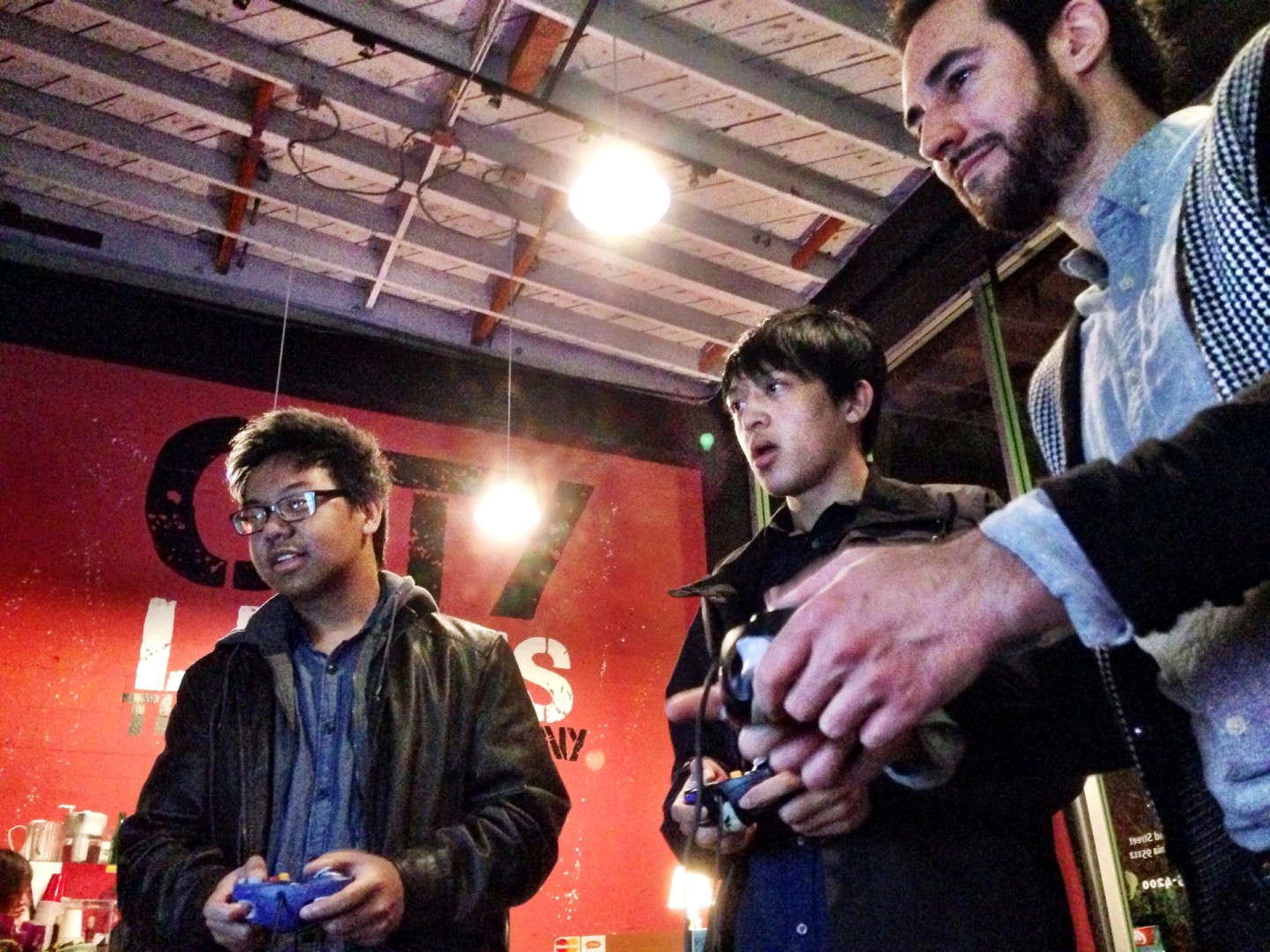
"caption": "Students Brandon and Christian de la Cruz and Rockage founder Eric Fanali playing video games at the theater.",
"description": "Students Brandon and Christian de la Cruz and Rockage founder Eric Fanali playing video games at the theater.",
"title": "RS14356_photo-qut",
"credit": "Cy Musiker/KQED",
"status": "inherit",
"isLoading": false,
"fetchFailed": false
},
"news_10431687": {
"type": "attachments",
"id": "news_10431687",
"meta": {
"index": "attachments_1716263798",
"site": "news",
"id": "10431687",
"found": true
},
"parent": 10431627,
"imgSizes": {
"twentyfourteen-full-width": {
"file": "https://ww2.kqed.org/app/uploads/sites/10/2015/02/461493558-1038x576.jpg",
"width": 1038,
"mimeType": "image/jpeg",
"height": 576
},
"thumbnail": {
"file": "https://ww2.kqed.org/app/uploads/sites/10/2015/02/461493558-400x267.jpg",
"width": 400,
"mimeType": "image/jpeg",
"height": 267
},
"post-thumbnail": {
"file": "https://ww2.kqed.org/app/uploads/sites/10/2015/02/461493558-672x372.jpg",
"width": 672,
"mimeType": "image/jpeg",
"height": 372
},
"kqedFullSize": {
"file": "https://ww2.kqed.org/app/uploads/sites/10/2015/02/461493558.jpg",
"width": 3100,
"height": 2067
},
"large": {
"file": "https://ww2.kqed.org/app/uploads/sites/10/2015/02/461493558-1440x960.jpg",
"width": 1440,
"mimeType": "image/jpeg",
"height": 960
},
"guest-author-96": {
"file": "https://ww2.kqed.org/app/uploads/sites/10/2015/02/461493558-96x96.jpg",
"width": 96,
"mimeType": "image/jpeg",
"height": 96
},
"medium": {
"file": "https://ww2.kqed.org/app/uploads/sites/10/2015/02/461493558-800x533.jpg",
"width": 800,
"mimeType": "image/jpeg",
"height": 533
},
"guest-author-64": {
"file": "https://ww2.kqed.org/app/uploads/sites/10/2015/02/461493558-64x64.jpg",
"width": 64,
"mimeType": "image/jpeg",
"height": 64
},
"detail": {
"file": "https://ww2.kqed.org/app/uploads/sites/10/2015/02/461493558-75x75.jpg",
"width": 75,
"mimeType": "image/jpeg",
"height": 75
},
"guest-author-32": {
"file": "https://ww2.kqed.org/app/uploads/sites/10/2015/02/461493558-32x32.jpg",
"width": 32,
"mimeType": "image/jpeg",
"height": 32
},
"guest-author-128": {
"file": "https://ww2.kqed.org/app/uploads/sites/10/2015/02/461493558-128x128.jpg",
"width": 128,
"mimeType": "image/jpeg",
"height": 128
}
},
"publishDate": 1423792901,
"modified": 1423793081,
"caption": "U.S. President Barack Obama delivers remarks at the National Cybersecurity and Communications Integration Center (NCCIC) on January 13, 2015, in Arlington, Virginia.",
"description": "ARLINGTON, VA - JANUARY 13: U.S. President Barack Obama delivers remarks at the National Cybersecurity and Communications Integration Center (NCCIC) on January 13, 2015, in Arlington, Virginia. President Obama discussed efforts to improve the government's ability to collaborate with industry to combat cyber threats. (Photo by Kristoffer Tripplaar-Pool/Getty Images)",
"title": "President Obama Delivers Remarks On Cyber Security",
"credit": "Kristoffer Tripplaar-Pool/Getty Images",
"status": "inherit",
"isLoading": false,
"fetchFailed": false
},
"news_10428824": {
"type": "attachments",
"id": "news_10428824",
"meta": {
"index": "attachments_1716263798",
"site": "news",
"id": "10428824",
"found": true
},
"parent": 10428762,
"imgSizes": {
"twentyfourteen-full-width": {
"file": "https://ww2.kqed.org/app/uploads/sites/10/2015/02/14204_transform-1038x576.jpg",
"width": 1038,
"mimeType": "image/jpeg",
"height": 576
},
"thumbnail": {
"file": "https://ww2.kqed.org/app/uploads/sites/10/2015/02/14204_transform-400x308.jpg",
"width": 400,
"mimeType": "image/jpeg",
"height": 308
},
"post-thumbnail": {
"file": "https://ww2.kqed.org/app/uploads/sites/10/2015/02/14204_transform-672x372.jpg",
"width": 672,
"mimeType": "image/jpeg",
"height": 372
},
"kqedFullSize": {
"file": "https://ww2.kqed.org/app/uploads/sites/10/2015/02/14204_transform.jpg",
"width": 1440,
"height": 1108
},
"large": {
"file": "https://ww2.kqed.org/app/uploads/sites/10/2015/02/14204_transform-1440x1108.jpg",
"width": 1440,
"mimeType": "image/jpeg",
"height": 1108
},
"guest-author-96": {
"file": "https://ww2.kqed.org/app/uploads/sites/10/2015/02/14204_transform-96x96.jpg",
"width": 96,
"mimeType": "image/jpeg",
"height": 96
},
"medium": {
"file": "https://ww2.kqed.org/app/uploads/sites/10/2015/02/14204_transform-800x616.jpg",
"width": 800,
"mimeType": "image/jpeg",
"height": 616
},
"guest-author-64": {
"file": "https://ww2.kqed.org/app/uploads/sites/10/2015/02/14204_transform-64x64.jpg",
"width": 64,
"mimeType": "image/jpeg",
"height": 64
},
"detail": {
"file": "https://ww2.kqed.org/app/uploads/sites/10/2015/02/14204_transform-75x75.jpg",
"width": 75,
"mimeType": "image/jpeg",
"height": 75
},
"guest-author-32": {
"file": "https://ww2.kqed.org/app/uploads/sites/10/2015/02/14204_transform-32x32.jpg",
"width": 32,
"mimeType": "image/jpeg",
"height": 32
},
"guest-author-128": {
"file": "https://ww2.kqed.org/app/uploads/sites/10/2015/02/14204_transform-128x128.jpg",
"width": 128,
"mimeType": "image/jpeg",
"height": 128
}
},
"publishDate": 1423533563,
"modified": 1423598425,
"caption": "The upside of a good working relationship? You also have a great wingman, says Mike Prestano, right, of Jon Chintanaroad, left. (April Dembosky/KQED)",
"description": "The upside of a good working relationship? You also have a great wingman, says Mike Prestano, right, of Jon Chintanaroad, left. (April Dembosky/KQED)",
"title": "14204_transform",
"credit": null,
"status": "inherit",
"isLoading": false,
"fetchFailed": false
},
"news_10431393": {
"type": "attachments",
"id": "news_10431393",
"meta": {
"index": "attachments_1716263798",
"site": "news",
"id": "10431393",
"found": true
},
"parent": 10431390,
"imgSizes": {
"thumbnail": {
"file": "https://ww2.kqed.org/app/uploads/sites/10/2015/02/spacex-400x195.jpg",
"width": 400,
"mimeType": "image/jpeg",
"height": 195
},
"post-thumbnail": {
"file": "https://ww2.kqed.org/app/uploads/sites/10/2015/02/spacex-672x359.jpg",
"width": 672,
"mimeType": "image/jpeg",
"height": 359
},
"kqedFullSize": {
"file": "https://ww2.kqed.org/app/uploads/sites/10/2015/02/spacex.jpg",
"width": 738,
"height": 359
},
"guest-author-96": {
"file": "https://ww2.kqed.org/app/uploads/sites/10/2015/02/spacex-96x96.jpg",
"width": 96,
"mimeType": "image/jpeg",
"height": 96
},
"guest-author-64": {
"file": "https://ww2.kqed.org/app/uploads/sites/10/2015/02/spacex-64x64.jpg",
"width": 64,
"mimeType": "image/jpeg",
"height": 64
},
"detail": {
"file": "https://ww2.kqed.org/app/uploads/sites/10/2015/02/spacex-75x75.jpg",
"width": 75,
"mimeType": "image/jpeg",
"height": 75
},
"guest-author-32": {
"file": "https://ww2.kqed.org/app/uploads/sites/10/2015/02/spacex-32x32.jpg",
"width": 32,
"mimeType": "image/jpeg",
"height": 32
},
"guest-author-128": {
"file": "https://ww2.kqed.org/app/uploads/sites/10/2015/02/spacex-128x128.jpg",
"width": 128,
"mimeType": "image/jpeg",
"height": 128
}
},
"publishDate": 1423769168,
"modified": 1423769248,
"caption": "A SpaceX Falcon 9 rocket lifts off from Cape Canaveral, Florida, on Wednesday, carrying NASA's DSCOVR solar weather monitoring satellite into space. ",
"description": null,
"title": "SpaceX-DSCOVR",
"credit": "SpaceX",
"status": "inherit",
"isLoading": false,
"fetchFailed": false
},
"news_10429503": {
"type": "attachments",
"id": "news_10429503",
"meta": {
"index": "attachments_1716263798",
"site": "news",
"id": "10429503",
"found": true
},
"parent": 10429466,
"imgSizes": {
"twentyfourteen-full-width": {
"file": "https://ww2.kqed.org/app/uploads/sites/10/2015/02/income-inequality-1038x576.jpg",
"width": 1038,
"mimeType": "image/jpeg",
"height": 576
},
"thumbnail": {
"file": "https://ww2.kqed.org/app/uploads/sites/10/2015/02/income-inequality-400x267.jpg",
"width": 400,
"mimeType": "image/jpeg",
"height": 267
},
"post-thumbnail": {
"file": "https://ww2.kqed.org/app/uploads/sites/10/2015/02/income-inequality-672x372.jpg",
"width": 672,
"mimeType": "image/jpeg",
"height": 372
},
"kqedFullSize": {
"file": "https://ww2.kqed.org/app/uploads/sites/10/2015/02/income-inequality.jpg",
"width": 2881,
"height": 1920
},
"large": {
"file": "https://ww2.kqed.org/app/uploads/sites/10/2015/02/income-inequality-1440x960.jpg",
"width": 1440,
"mimeType": "image/jpeg",
"height": 960
},
"guest-author-96": {
"file": "https://ww2.kqed.org/app/uploads/sites/10/2015/02/income-inequality-96x96.jpg",
"width": 96,
"mimeType": "image/jpeg",
"height": 96
},
"medium": {
"file": "https://ww2.kqed.org/app/uploads/sites/10/2015/02/income-inequality-800x533.jpg",
"width": 800,
"mimeType": "image/jpeg",
"height": 533
},
"guest-author-64": {
"file": "https://ww2.kqed.org/app/uploads/sites/10/2015/02/income-inequality-64x64.jpg",
"width": 64,
"mimeType": "image/jpeg",
"height": 64
},
"detail": {
"file": "https://ww2.kqed.org/app/uploads/sites/10/2015/02/income-inequality-75x75.jpg",
"width": 75,
"mimeType": "image/jpeg",
"height": 75
},
"guest-author-32": {
"file": "https://ww2.kqed.org/app/uploads/sites/10/2015/02/income-inequality-32x32.jpg",
"width": 32,
"mimeType": "image/jpeg",
"height": 32
},
"guest-author-128": {
"file": "https://ww2.kqed.org/app/uploads/sites/10/2015/02/income-inequality-128x128.jpg",
"width": 128,
"mimeType": "image/jpeg",
"height": 128
}
},
"publishDate": 1423596366,
"modified": 1423596386,
"caption": "Rana Foroohar, assistant managing editor of Time Magazine, spoke at Joint Venture Silicon Valley’s annual State of the Valley conference Wednesday on the need for the public and private sector to work together to fight income inequality.",
"description": null,
"title": "income inequality",
"credit": "Carolina Wilson/Peninsula Press",
"status": "inherit",
"isLoading": false,
"fetchFailed": false
},
"news_10426093": {
"type": "attachments",
"id": "news_10426093",
"meta": {
"index": "attachments_1716263798",
"site": "news",
"id": "10426093",
"found": true
},
"parent": 10424716,
"imgSizes": {
"twentyfourteen-full-width": {
"file": "https://ww2.kqed.org/app/uploads/sites/10/2016/02/rideshare1-1038x576.jpg",
"width": 1038,
"mimeType": "image/jpeg",
"height": 576
},
"thumbnail": {
"file": "https://ww2.kqed.org/app/uploads/sites/10/2016/02/rideshare1-400x225.jpg",
"width": 400,
"mimeType": "image/jpeg",
"height": 225
},
"post-thumbnail": {
"file": "https://ww2.kqed.org/app/uploads/sites/10/2016/02/rideshare1-672x372.jpg",
"width": 672,
"mimeType": "image/jpeg",
"height": 372
},
"kqedFullSize": {
"file": "https://ww2.kqed.org/app/uploads/sites/10/2016/02/rideshare1.jpg",
"width": 1440,
"height": 810
},
"large": {
"file": "https://ww2.kqed.org/app/uploads/sites/10/2016/02/rideshare1-1440x810.jpg",
"width": 1440,
"mimeType": "image/jpeg",
"height": 810
},
"guest-author-96": {
"file": "https://ww2.kqed.org/app/uploads/sites/10/2016/02/rideshare1-96x96.jpg",
"width": 96,
"mimeType": "image/jpeg",
"height": 96
},
"medium": {
"file": "https://ww2.kqed.org/app/uploads/sites/10/2016/02/rideshare1-800x450.jpg",
"width": 800,
"mimeType": "image/jpeg",
"height": 450
},
"guest-author-64": {
"file": "https://ww2.kqed.org/app/uploads/sites/10/2016/02/rideshare1-64x64.jpg",
"width": 64,
"mimeType": "image/jpeg",
"height": 64
},
"detail": {
"file": "https://ww2.kqed.org/app/uploads/sites/10/2016/02/rideshare1-75x75.jpg",
"width": 75,
"mimeType": "image/jpeg",
"height": 75
},
"guest-author-32": {
"file": "https://ww2.kqed.org/app/uploads/sites/10/2016/02/rideshare1-32x32.jpg",
"width": 32,
"mimeType": "image/jpeg",
"height": 32
},
"guest-author-128": {
"file": "https://ww2.kqed.org/app/uploads/sites/10/2016/02/rideshare1-128x128.jpg",
"width": 128,
"mimeType": "image/jpeg",
"height": 128
}
},
"publishDate": 1423254419,
"modified": 1423254517,
"caption": "Looking back through one of the sideview mirrors on John Han's taxicab. (Adam Grossberg/KQED)",
"description": null,
"title": "rideshare1",
"credit": null,
"status": "inherit",
"isLoading": false,
"fetchFailed": false
},
"news_10426212": {
"type": "attachments",
"id": "news_10426212",
"meta": {
"index": "attachments_1716263798",
"site": "news",
"id": "10426212",
"found": true
},
"parent": 10426117,
"imgSizes": {
"twentyfourteen-full-width": {
"file": "https://ww2.kqed.org/app/uploads/sites/10/2015/02/ponoplayer-1038x576.jpg",
"width": 1038,
"mimeType": "image/jpeg",
"height": 576
},
"thumbnail": {
"file": "https://ww2.kqed.org/app/uploads/sites/10/2015/02/ponoplayer-400x299.jpg",
"width": 400,
"mimeType": "image/jpeg",
"height": 299
},
"post-thumbnail": {
"file": "https://ww2.kqed.org/app/uploads/sites/10/2015/02/ponoplayer-672x372.jpg",
"width": 672,
"mimeType": "image/jpeg",
"height": 372
},
"kqedFullSize": {
"file": "https://ww2.kqed.org/app/uploads/sites/10/2015/02/ponoplayer.jpg",
"width": 1440,
"height": 1078
},
"large": {
"file": "https://ww2.kqed.org/app/uploads/sites/10/2015/02/ponoplayer-1440x1078.jpg",
"width": 1440,
"mimeType": "image/jpeg",
"height": 1078
},
"guest-author-96": {
"file": "https://ww2.kqed.org/app/uploads/sites/10/2015/02/ponoplayer-96x96.jpg",
"width": 96,
"mimeType": "image/jpeg",
"height": 96
},
"medium": {
"file": "https://ww2.kqed.org/app/uploads/sites/10/2015/02/ponoplayer-800x599.jpg",
"width": 800,
"mimeType": "image/jpeg",
"height": 599
},
"guest-author-64": {
"file": "https://ww2.kqed.org/app/uploads/sites/10/2015/02/ponoplayer-64x64.jpg",
"width": 64,
"mimeType": "image/jpeg",
"height": 64
},
"detail": {
"file": "https://ww2.kqed.org/app/uploads/sites/10/2015/02/ponoplayer-75x75.jpg",
"width": 75,
"mimeType": "image/jpeg",
"height": 75
},
"guest-author-32": {
"file": "https://ww2.kqed.org/app/uploads/sites/10/2015/02/ponoplayer-32x32.jpg",
"width": 32,
"mimeType": "image/jpeg",
"height": 32
},
"guest-author-128": {
"file": "https://ww2.kqed.org/app/uploads/sites/10/2015/02/ponoplayer-128x128.jpg",
"width": 128,
"mimeType": "image/jpeg",
"height": 128
}
},
"publishDate": 1423260587,
"modified": 1423260619,
"caption": "PonoPlayers",
"description": null,
"title": "ponoplayer",
"credit": "Dirk Haun/Flickr",
"status": "inherit",
"isLoading": false,
"fetchFailed": false
},
"news_10426380": {
"type": "attachments",
"id": "news_10426380",
"meta": {
"index": "attachments_1716263798",
"site": "news",
"id": "10426380",
"found": true
},
"parent": 10426119,
"imgSizes": {
"twentyfourteen-full-width": {
"file": "https://ww2.kqed.org/app/uploads/sites/10/2015/02/twitter-1038x576.jpg",
"width": 1038,
"mimeType": "image/jpeg",
"height": 576
},
"thumbnail": {
"file": "https://ww2.kqed.org/app/uploads/sites/10/2015/02/twitter-400x266.jpg",
"width": 400,
"mimeType": "image/jpeg",
"height": 266
},
"post-thumbnail": {
"file": "https://ww2.kqed.org/app/uploads/sites/10/2015/02/twitter-672x372.jpg",
"width": 672,
"mimeType": "image/jpeg",
"height": 372
},
"kqedFullSize": {
"file": "https://ww2.kqed.org/app/uploads/sites/10/2015/02/twitter-e1423268547556.jpg",
"width": 1440,
"height": 958
},
"large": {
"file": "https://ww2.kqed.org/app/uploads/sites/10/2015/02/twitter-1440x958.jpg",
"width": 1440,
"mimeType": "image/jpeg",
"height": 958
},
"guest-author-96": {
"file": "https://ww2.kqed.org/app/uploads/sites/10/2015/02/twitter-96x96.jpg",
"width": 96,
"mimeType": "image/jpeg",
"height": 96
},
"medium": {
"file": "https://ww2.kqed.org/app/uploads/sites/10/2015/02/twitter-800x532.jpg",
"width": 800,
"mimeType": "image/jpeg",
"height": 532
},
"guest-author-64": {
"file": "https://ww2.kqed.org/app/uploads/sites/10/2015/02/twitter-64x64.jpg",
"width": 64,
"mimeType": "image/jpeg",
"height": 64
},
"detail": {
"file": "https://ww2.kqed.org/app/uploads/sites/10/2015/02/twitter-75x75.jpg",
"width": 75,
"mimeType": "image/jpeg",
"height": 75
},
"guest-author-32": {
"file": "https://ww2.kqed.org/app/uploads/sites/10/2015/02/twitter-32x32.jpg",
"width": 32,
"mimeType": "image/jpeg",
"height": 32
},
"guest-author-128": {
"file": "https://ww2.kqed.org/app/uploads/sites/10/2015/02/twitter-128x128.jpg",
"width": 128,
"mimeType": "image/jpeg",
"height": 128
}
},
"publishDate": 1423268502,
"modified": 1423268538,
"caption": null,
"description": null,
"title": "twitter",
"credit": "ASUYOSHI CHIBA/AFP/Getty Images",
"status": "inherit",
"isLoading": false,
"fetchFailed": false
}
},
"audioPlayerReducer": {
"postId": "stream_live",
"isPaused": true,
"isPlaying": false,
"pfsActive": false,
"pledgeModalIsOpen": true,
"playerDrawerIsOpen": false,
"liveAudioPlayStartedAt": 0,
"liveAudioPlayContext": ""
},
"authorsReducer": {
"byline_news_10431390": {
"type": "authors",
"id": "byline_news_10431390",
"meta": {
"override": true
},
"slug": "byline_news_10431390",
"name": "Eyder Peralta",
"isLoading": false
},
"byline_news_10429466": {
"type": "authors",
"id": "byline_news_10429466",
"meta": {
"override": true
},
"slug": "byline_news_10429466",
"name": "\u003ca href=\"http://peninsulapress.com/author/katharineschwab/\">Katharine Schwab\u003c/a>\u003cbr>Peninsula Press",
"isLoading": false
},
"byline_news_10426117": {
"type": "authors",
"id": "byline_news_10426117",
"meta": {
"override": true
},
"slug": "byline_news_10426117",
"name": "Joanne Elgart Jennings",
"isLoading": false
},
"cmusiker": {
"type": "authors",
"id": "32",
"meta": {
"index": "authors_1716337520",
"id": "32",
"found": true
},
"name": "Cy Musiker",
"firstName": "Cy",
"lastName": "Musiker",
"slug": "cmusiker",
"email": "cmusiker@kqed.org",
"display_author_email": false,
"staff_mastheads": [],
"title": "KQED Contributor",
"bio": "Cy Musiker is a former co-host of The Do List and a former reporter covering the arts for KQED News and The California Report. He loves live performance, especially great theater, jazz, roots music, anything by Mahler. Cy has an MJ from UC Berkeley's School of Journalism, and got his BA from Hampshire College. His work has been recognized by the Society for Professional Journalists with their Sigma Delta Chi Award for Public Service in Journalism. When he can, Cy likes to swim in Tomales Bay, run with his dog in the East Bay Hills, and hike the Sierra.",
"avatar": "https://secure.gravatar.com/avatar/05eaba5c5696ce8f062e4ea2df428a43?s=600&d=blank&r=g",
"twitter": null,
"facebook": null,
"instagram": null,
"linkedin": null,
"sites": [
{
"site": "arts",
"roles": [
"Contributor",
"subscriber"
]
},
{
"site": "news",
"roles": [
"author"
]
},
{
"site": "bayareabites",
"roles": [
"contributor"
]
}
],
"headData": {
"title": "Cy Musiker | KQED",
"description": "KQED Contributor",
"ogImgSrc": "https://secure.gravatar.com/avatar/05eaba5c5696ce8f062e4ea2df428a43?s=600&d=blank&r=g",
"twImgSrc": "https://secure.gravatar.com/avatar/05eaba5c5696ce8f062e4ea2df428a43?s=600&d=blank&r=g"
},
"isLoading": false,
"link": "/author/cmusiker"
},
"jbrooks": {
"type": "authors",
"id": "80",
"meta": {
"index": "authors_1716337520",
"id": "80",
"found": true
},
"name": "Jon Brooks",
"firstName": "Jon",
"lastName": "Brooks",
"slug": "jbrooks",
"email": "jbrooks@kqed.org",
"display_author_email": true,
"staff_mastheads": [
"science"
],
"title": "Digital Editor",
"bio": "Jon Brooks is a former Digital Editor for KQED Science. He is the former editor of KQED’s daily news blog, News Fix. In 2014, he won a California Journalism Award for his coverage of ride services like Uber and Lyft and the taxi industry. A veteran blogger, he previously worked for Yahoo! in various news writing and editing roles. Jon is also a playwright whose work has been produced in San Francisco, New York, Italy, and around the U.S. He has written about film for his own blog and studied film at Boston University.",
"avatar": "https://secure.gravatar.com/avatar/98887f7ed1c876ed414d4c915e969584?s=600&d=blank&r=g",
"twitter": "jbrooksfoy",
"facebook": null,
"instagram": null,
"linkedin": null,
"sites": [
{
"site": "arts",
"roles": [
"Contributor",
"editor"
]
},
{
"site": "news",
"roles": [
"author"
]
},
{
"site": "futureofyou",
"roles": [
"administrator"
]
},
{
"site": "mindshift",
"roles": [
"editor"
]
},
{
"site": "stateofhealth",
"roles": [
"editor"
]
},
{
"site": "science",
"roles": [
"administrator"
]
},
{
"site": "quest",
"roles": [
"editor"
]
}
],
"headData": {
"title": "Jon Brooks | KQED",
"description": "Digital Editor",
"ogImgSrc": "https://secure.gravatar.com/avatar/98887f7ed1c876ed414d4c915e969584?s=600&d=blank&r=g",
"twImgSrc": "https://secure.gravatar.com/avatar/98887f7ed1c876ed414d4c915e969584?s=600&d=blank&r=g"
},
"isLoading": false,
"link": "/author/jbrooks"
},
"agrossberg": {
"type": "authors",
"id": "188",
"meta": {
"index": "authors_1716337520",
"id": "188",
"found": true
},
"name": "Adam Grossberg",
"firstName": "Adam",
"lastName": "Grossberg",
"slug": "agrossberg",
"email": "agrossberg@KQED.org",
"display_author_email": false,
"staff_mastheads": [],
"title": "KQED Contributor",
"bio": "Adam Grossberg is a former video producer at KQED News. Prior to coming to KQED, he produced videos for PBS, The New York Times, Current TV and The Center for Investigative Reporting. His work has received an Excellence in Journalism award from the Society of Professional Journalists, a regional Murrow award and two Northern California Emmy awards. He is a graduate of the UC Berkeley Graduate School of Journalism.",
"avatar": "https://secure.gravatar.com/avatar/8e96dbdaaf98f5959a2c778289e0f9b5?s=600&d=blank&r=g",
"twitter": null,
"facebook": null,
"instagram": null,
"linkedin": null,
"sites": [
{
"site": "arts",
"roles": [
"contributor"
]
},
{
"site": "news",
"roles": [
"subscriber"
]
},
{
"site": "stateofhealth",
"roles": [
"editor"
]
},
{
"site": "science",
"roles": [
"editor"
]
}
],
"headData": {
"title": "Adam Grossberg | KQED",
"description": "KQED Contributor",
"ogImgSrc": "https://secure.gravatar.com/avatar/8e96dbdaaf98f5959a2c778289e0f9b5?s=600&d=blank&r=g",
"twImgSrc": "https://secure.gravatar.com/avatar/8e96dbdaaf98f5959a2c778289e0f9b5?s=600&d=blank&r=g"
},
"isLoading": false,
"link": "/author/agrossberg"
},
"lisapickoffwhite-2": {
"type": "authors",
"id": "199",
"meta": {
"index": "authors_1716337520",
"id": "199",
"found": true
},
"name": "Lisa Pickoff-White",
"firstName": "Lisa",
"lastName": "Pickoff-White",
"slug": "lisapickoffwhite-2",
"email": "lpickoffwhite@kqed.org",
"display_author_email": false,
"staff_mastheads": [
"news"
],
"title": "Data Journalist, Senior Producer",
"bio": "Lisa Pickoff-White is KQED's data reporter. Lisa specializes in simplifying complex topics and bringing them to life through compelling visuals, including photography and data visualizations. She previously has worked at the Center for Investigative Reporting and other national outlets. Her work has been honored with awards from the Online News Association, Investigative Reporters and Editors, the Society of Professional Journalists and SXSW Interactive. \u003cstrong> \u003c/strong>",
"avatar": "https://secure.gravatar.com/avatar/5513c5f3967df792aa65bee2501e84d6?s=600&d=blank&r=g",
"twitter": "pickoffwhite",
"facebook": null,
"instagram": null,
"linkedin": null,
"sites": [
{
"site": "",
"roles": [
"editor"
]
},
{
"site": "arts",
"roles": []
},
{
"site": "news",
"roles": [
"administrator"
]
},
{
"site": "about",
"roles": [
"editor"
]
},
{
"site": "stateofhealth",
"roles": [
"administrator"
]
},
{
"site": "science",
"roles": [
"editor"
]
},
{
"site": "quest",
"roles": [
"editor"
]
},
{
"site": "forum",
"roles": [
"editor"
]
}
],
"headData": {
"title": "Lisa Pickoff-White | KQED",
"description": "Data Journalist, Senior Producer",
"ogImgSrc": "https://secure.gravatar.com/avatar/5513c5f3967df792aa65bee2501e84d6?s=600&d=blank&r=g",
"twImgSrc": "https://secure.gravatar.com/avatar/5513c5f3967df792aa65bee2501e84d6?s=600&d=blank&r=g"
},
"isLoading": false,
"link": "/author/lisapickoffwhite-2"
},
"bgoebel": {
"type": "authors",
"id": "214",
"meta": {
"index": "authors_1716337520",
"id": "214",
"found": true
},
"name": "Bryan Goebel",
"firstName": "Bryan",
"lastName": "Goebel",
"slug": "bgoebel",
"email": "bgoebel@kqed.org",
"display_author_email": false,
"staff_mastheads": [],
"title": null,
"bio": "Bryan Goebel is a reporter focused on transportation and housing issues. He was previously the editor of Streetsblog San Francisco, and an anchor/editor at KCBS Radio. He's a lifelong Californian and has also worked at radio stations in Barstow, Redding and Sacramento.",
"avatar": "https://secure.gravatar.com/avatar/7fdd6b065bfe9a23a71bcfa80848df88?s=600&d=blank&r=g",
"twitter": "velobry",
"facebook": null,
"instagram": null,
"linkedin": null,
"sites": [
{
"site": "news",
"roles": [
"subscriber"
]
},
{
"site": "stateofhealth",
"roles": [
"subscriber"
]
}
],
"headData": {
"title": "Bryan Goebel | KQED",
"description": null,
"ogImgSrc": "https://secure.gravatar.com/avatar/7fdd6b065bfe9a23a71bcfa80848df88?s=600&d=blank&r=g",
"twImgSrc": "https://secure.gravatar.com/avatar/7fdd6b065bfe9a23a71bcfa80848df88?s=600&d=blank&r=g"
},
"isLoading": false,
"link": "/author/bgoebel"
},
"minakim": {
"type": "authors",
"id": "243",
"meta": {
"index": "authors_1716337520",
"id": "243",
"found": true
},
"name": "Mina Kim",
"firstName": "Mina",
"lastName": "Kim",
"slug": "minakim",
"email": "mkim@kqed.org",
"display_author_email": false,
"staff_mastheads": [
"news"
],
"title": "Host, Forum",
"bio": "Mina Kim is host of the 10 a.m. statewide hour of Forum; a live daily talk show for curious Californians on issues that matter to the state and nation, with a particular emphasis on race and equity.\r\n\r\nBefore joining the Forum team, Mina was KQED’s evening news anchor, and health reporter for The California Report. Her award-winning work has included natural disasters in Napa and gun violence in Oakland. Mina grew up in St. John’s, Newfoundland.",
"avatar": "https://secure.gravatar.com/avatar/145ce657a2d08cb86d93686beb958982?s=600&d=blank&r=g",
"twitter": "mkimreporter",
"facebook": null,
"instagram": null,
"linkedin": null,
"sites": [
{
"site": "news",
"roles": [
"contributor"
]
},
{
"site": "stateofhealth",
"roles": [
"author"
]
},
{
"site": "forum",
"roles": [
"editor"
]
}
],
"headData": {
"title": "Mina Kim | KQED",
"description": "Host, Forum",
"ogImgSrc": "https://secure.gravatar.com/avatar/145ce657a2d08cb86d93686beb958982?s=600&d=blank&r=g",
"twImgSrc": "https://secure.gravatar.com/avatar/145ce657a2d08cb86d93686beb958982?s=600&d=blank&r=g"
},
"isLoading": false,
"link": "/author/minakim"
},
"petejonshuler": {
"type": "authors",
"id": "248",
"meta": {
"index": "authors_1716337520",
"id": "248",
"found": true
},
"name": "Peter Jon Shuler",
"firstName": "Peter",
"lastName": "Jon Shuler",
"slug": "petejonshuler",
"email": "pshuler@kqed.org",
"display_author_email": false,
"staff_mastheads": [
"news"
],
"title": "KQED Contributor",
"bio": null,
"avatar": "https://secure.gravatar.com/avatar/4bcbeaf7cf49fec98284db283a33a47b?s=600&d=blank&r=g",
"twitter": null,
"facebook": null,
"instagram": null,
"linkedin": null,
"sites": [
{
"site": "news",
"roles": [
"contributor"
]
}
],
"headData": {
"title": "Peter Jon Shuler | KQED",
"description": "KQED Contributor",
"ogImgSrc": "https://secure.gravatar.com/avatar/4bcbeaf7cf49fec98284db283a33a47b?s=600&d=blank&r=g",
"twImgSrc": "https://secure.gravatar.com/avatar/4bcbeaf7cf49fec98284db283a33a47b?s=600&d=blank&r=g"
},
"isLoading": false,
"link": "/author/petejonshuler"
},
"rachael-myrow": {
"type": "authors",
"id": "251",
"meta": {
"index": "authors_1716337520",
"id": "251",
"found": true
},
"name": "Rachael Myrow",
"firstName": "Rachael",
"lastName": "Myrow",
"slug": "rachael-myrow",
"email": "rmyrow@kqed.org",
"display_author_email": true,
"staff_mastheads": [
"news"
],
"title": "Senior Editor of KQED's Silicon Valley News Desk",
"bio": "• I write and edit stories about how Silicon Valley power and policies shape everyday life in California. I’m also passionate about making Bay Area history and culture more accessible to a broad public. • I’ve been a journalist for most of my life, starting in high school with The Franklin Press in Los Angeles, where I grew up. While earning my first degree in English at UC Berkeley, I got my start in public radio at KALX-FM. After completing a second degree in journalism at Cal, I landed my first professional job at Marketplace, then moved on to KPCC (now LAist), and then KQED, where I hosted The California Report for more than seven years. • My reporting has appeared on NPR, The World, WBUR’s \u003ci>Here & Now\u003c/i>, and the BBC. I also guest host for KQED’s \u003ci>Forum\u003c/i>, as well as the Commonwealth Club in San Francisco. • I speak periodically on media, democracy and technology issues, and do voiceover work for documentaries and educational video projects. • Outside of the studio, you'll find me hiking Bay Area trails and whipping up Insta-ready meals in my kitchen. • I do not accept gifts, money, or favors from anyone connected to my reporting, I don't pay people for information, and I do not support or donate to political causes. • I strive to treat the people I report on with fairness, honesty, and respect. I also recognize there are often multiple sides to a story and work to verify information through multiple sources and documentation. If I get something wrong, I correct it.",
"avatar": "https://secure.gravatar.com/avatar/3ed8a3c5f26025e4a805ba634cda8cd764906b97438a6d9ce216b044e340da4e?s=600&d=blank&r=g",
"twitter": "rachaelmyrow",
"bluesky": null,
"facebook": null,
"instagram": null,
"linkedin": "https://www.linkedin.com/in/rachaelmyrow/",
"sites": [
{
"site": "arts",
"roles": [
"administrator"
]
},
{
"site": "news",
"roles": [
"edit_others_posts",
"editor"
]
},
{
"site": "futureofyou",
"roles": [
"editor"
]
},
{
"site": "bayareabites",
"roles": [
"editor"
]
},
{
"site": "stateofhealth",
"roles": [
"editor"
]
},
{
"site": "science",
"roles": [
"editor"
]
},
{
"site": "food",
"roles": [
"editor"
]
},
{
"site": "forum",
"roles": [
"editor"
]
},
{
"site": "liveblog",
"roles": [
"author"
]
}
],
"headData": {
"title": "Rachael Myrow | KQED",
"description": "Senior Editor of KQED's Silicon Valley News Desk",
"ogImgSrc": "https://secure.gravatar.com/avatar/3ed8a3c5f26025e4a805ba634cda8cd764906b97438a6d9ce216b044e340da4e?s=600&d=blank&r=g",
"twImgSrc": "https://secure.gravatar.com/avatar/3ed8a3c5f26025e4a805ba634cda8cd764906b97438a6d9ce216b044e340da4e?s=600&d=blank&r=g"
},
"isLoading": false,
"link": "/author/rachael-myrow"
},
"scottshafer": {
"type": "authors",
"id": "255",
"meta": {
"index": "authors_1716337520",
"id": "255",
"found": true
},
"name": "Scott Shafer",
"firstName": "Scott",
"lastName": "Shafer",
"slug": "scottshafer",
"email": "sshafer@kqed.org",
"display_author_email": false,
"staff_mastheads": [
"news"
],
"title": "KQED Contributor",
"bio": "Scott Shafer is a senior editor with the KQED Politics and Government desk. He is co-host of Political Breakdown, the award-winning radio show and podcast with a personal take on the world of politics. Scott came to KQED in 1998 to host the statewide\u003cem> California Report\u003c/em>. Prior to that he had extended stints in politics and government\u003cem>.\u003c/em> He uses that inside experience at KQED in his, reporting, hosting and analysis for the politics desk. Scott collaborated \u003cem>Political Breakdown a\u003c/em>nd on \u003cem>The Political Mind of Jerry Brown, \u003c/em>an eight-part series about the life and extraordinary political career of the former governor. For fun, he plays water polo with the San Francisco Tsunami.",
"avatar": "https://secure.gravatar.com/avatar/a62ebae45b79d7aed1a39a0e3bf68104?s=600&d=blank&r=g",
"twitter": "scottshafer",
"bluesky": null,
"facebook": null,
"instagram": null,
"linkedin": null,
"sites": [
{
"site": "news",
"roles": [
"editor"
]
},
{
"site": "stateofhealth",
"roles": [
"author"
]
},
{
"site": "science",
"roles": [
"author"
]
},
{
"site": "forum",
"roles": [
"subscriber"
]
},
{
"site": "liveblog",
"roles": [
"author"
]
}
],
"headData": {
"title": "Scott Shafer | KQED",
"description": "KQED Contributor",
"ogImgSrc": "https://secure.gravatar.com/avatar/a62ebae45b79d7aed1a39a0e3bf68104?s=600&d=blank&r=g",
"twImgSrc": "https://secure.gravatar.com/avatar/a62ebae45b79d7aed1a39a0e3bf68104?s=600&d=blank&r=g"
},
"isLoading": false,
"link": "/author/scottshafer"
},
"adembosky": {
"type": "authors",
"id": "3205",
"meta": {
"index": "authors_1716337520",
"id": "3205",
"found": true
},
"name": "April Dembosky",
"firstName": "April",
"lastName": "Dembosky",
"slug": "adembosky",
"email": "adembosky@kqed.org",
"display_author_email": false,
"staff_mastheads": [
"news",
"science"
],
"title": "KQED Health Correspondent",
"bio": "April Dembosky is the health correspondent for KQED News and a regular contributor to NPR. She specializes in covering altered states of mind, from postpartum depression to methamphetamine-induced psychosis to the insanity defense. Her investigative series on insurance companies sidestepping mental health laws won multiple awards, including first place in beat reporting from the national Association of Health Care Journalists. She is the recipient of numerous other prizes and fellowships, including a national Edward R. Murrow award for investigative reporting, a Society of Professional Journalists award for long-form storytelling, and a Carter Center Fellowship for Mental Health Journalism.\r\n\r\nDembosky reported and produced \u003cem>Soundtrack of Silence\u003c/em>, an audio documentary about music and memory that is currently being made into a feature film by Paramount Pictures.\r\n\r\nBefore joining KQED in 2013, Dembosky covered technology and Silicon Valley for \u003cem>The Financial Times of London,\u003c/em> and contributed business and arts stories to \u003cem>Marketplace \u003c/em>and \u003cem>The New York Times.\u003c/em> She got her undergraduate degree in philosophy from Smith College and her master's in journalism from the University of California, Berkeley. She is a classically trained violinist and proud alum of the first symphony orchestra at Burning Man.",
"avatar": "https://secure.gravatar.com/avatar/d6593cd737b732102fe0b6250b5351c2d3bc9b2987566514aa3c9a106494d684?s=600&d=blank&r=g",
"twitter": "adembosky",
"bluesky": null,
"facebook": null,
"instagram": null,
"linkedin": null,
"sites": [
{
"site": "arts",
"roles": [
"author"
]
},
{
"site": "news",
"roles": [
"editor"
]
},
{
"site": "futureofyou",
"roles": [
"author"
]
},
{
"site": "stateofhealth",
"roles": [
"editor"
]
},
{
"site": "science",
"roles": [
"editor"
]
},
{
"site": "forum",
"roles": [
"editor"
]
}
],
"headData": {
"title": "April Dembosky | KQED",
"description": "KQED Health Correspondent",
"ogImgSrc": "https://secure.gravatar.com/avatar/d6593cd737b732102fe0b6250b5351c2d3bc9b2987566514aa3c9a106494d684?s=600&d=blank&r=g",
"twImgSrc": "https://secure.gravatar.com/avatar/d6593cd737b732102fe0b6250b5351c2d3bc9b2987566514aa3c9a106494d684?s=600&d=blank&r=g"
},
"isLoading": false,
"link": "/author/adembosky"
},
"mlagos": {
"type": "authors",
"id": "3239",
"meta": {
"index": "authors_1716337520",
"id": "3239",
"found": true
},
"name": "Marisa Lagos",
"firstName": "Marisa",
"lastName": "Lagos",
"slug": "mlagos",
"email": "mlagos@kqed.org",
"display_author_email": false,
"staff_mastheads": [
"news"
],
"title": "KQED Contributor",
"bio": "Marisa Lagos is a correspondent for KQED’s California Politics and Government Desk and co-hosts the award-winning show and podcast, Political Breakdown. At KQED, Lagos also conducts reporting, analysis and investigations into state, local and national politics for radio, TV, online and onstage. In 2022, she and co-host, Scott Shafer, moderated the only gubernatorial debate in California. In 2020, the \u003ci>Washington Post\u003c/i> named her one of the top political journalists in California; she was nominated for a Peabody and won several other awards for her work investigating the 2017 California wildfires. She has worked at the \u003ci>San Francisco Chronicle\u003c/i>, \u003ci>San Francisco Examiner\u003c/i> and \u003ci>Los Angeles Times\u003c/i>. A UC Santa Barbara graduate, she lives in San Francisco with her two sons and husband.",
"avatar": "https://secure.gravatar.com/avatar/a261a0d3696fc066871ef96b85b5e7d2?s=600&d=blank&r=g",
"twitter": "@mlagos",
"facebook": null,
"instagram": null,
"linkedin": null,
"sites": [
{
"site": "arts",
"roles": [
"author"
]
},
{
"site": "news",
"roles": [
"editor"
]
},
{
"site": "science",
"roles": [
"editor"
]
},
{
"site": "forum",
"roles": [
"author"
]
},
{
"site": "liveblog",
"roles": [
"author"
]
}
],
"headData": {
"title": "Marisa Lagos | KQED",
"description": "KQED Contributor",
"ogImgSrc": "https://secure.gravatar.com/avatar/a261a0d3696fc066871ef96b85b5e7d2?s=600&d=blank&r=g",
"twImgSrc": "https://secure.gravatar.com/avatar/a261a0d3696fc066871ef96b85b5e7d2?s=600&d=blank&r=g"
},
"isLoading": false,
"link": "/author/mlagos"
}
},
"pagesReducer": {
"news_category_technology": {
"type": "terms",
"id": "news_248",
"meta": {
"index": "terms_1716263798",
"site": "news",
"id": "248",
"score": 10.931152
},
"featImg": null,
"name": "Technology",
"description": null,
"taxonomy": "category",
"headData": {
"twImgId": null,
"twTitle": null,
"ogTitle": null,
"ogImgId": null,
"twDescription": null,
"description": null,
"title": "Technology Archives | KQED News",
"ogDescription": null
},
"ttid": 256,
"slug": "technology",
"isLoading": false,
"title": "Technology",
"pageMeta": {
"site": "news",
"WpPageTemplate": "page-topic-editorial",
"currentPage": 147
},
"blocks": [
{
"blockName": "kqed/post-list",
"attrs": {
"layout": "cardArticle2",
"query": "posts/news?category=technology",
"seeMore": false,
"paginated": true,
"page": 147
}
},
{
"blockName": "kqed/ad"
}
]
}
},
"pfsSessionReducer": {},
"postsReducer": {
"stream_live": {
"type": "live",
"id": "stream_live",
"audioUrl": "https://streams.kqed.org/kqedradio",
"title": "Live Stream",
"excerpt": "Live Stream information currently unavailable.",
"link": "/radio",
"featImg": "",
"label": {
"name": "KQED Live",
"link": "/"
}
},
"stream_kqedNewscast": {
"type": "posts",
"id": "stream_kqedNewscast",
"audioUrl": "https://www.kqed.org/.stream/anon/radio/RDnews/newscast.mp3?_=1",
"title": "KQED Newscast",
"featImg": "",
"label": {
"name": "88.5 FM",
"link": "/"
}
},
"news_10435609": {
"type": "posts",
"id": "news_10435609",
"meta": {
"index": "posts_1716263798",
"site": "news",
"id": "10435609",
"score": null,
"sort": [
1424968244000
]
},
"guestAuthors": [],
"slug": "fast-bus-service-is-proving-to-be-a-tough-political-sell-in-silicon-valley",
"title": "Fast Bus Service a Tough Sell in Car-Centric Silicon Valley",
"publishDate": 1424968244,
"format": "standard",
"headTitle": "Fast Bus Service a Tough Sell in Car-Centric Silicon Valley | KQED",
"labelTerm": {
"term": 6944,
"site": "news"
},
"content": "\u003cp>\u003cstrong>Update, Feb. 26: \u003c/strong>The Sunnyvale City Council has voted against a crucial component of a plan to create a bus rapid transit system in the heart of Silicon Valley. \u003c/p>\n\u003cp>After four hours of public comment and debate Tuesday night, the council voted against a plan for dedicated bus lanes on El Camino Real through the city. Under a proposal from the Santa Clara Valley Transportation Authority, the bus-only lanes would allow dramatically speeded-up transit service along El Camino from Palo Alto to downtown San Jose. \u003c/p>\n\u003cp>In a 4-3 vote, the council passed a resolution backing an alternative idea: having the VTA’s enhanced bus service travel in “mixed flow” lanes along a corridor that would include improved “bulbout” bus stops. The new stops would allow buses to pick up and drop off passengers without pulling to the curb, which would improve travel times somewhat.\u003c/p>\n\u003cp>Tuesday night’s vote was advisory, and Sunnyvale is just one of five cities along the proposed bus rapid transit route that must ultimately decide whether they support the effort or not. \u003c/p>\n\u003cp>The VTA is expected to decide on the details of the project later this year. \u003c/p>\n\u003cp>[ad fullwidth]\u003c/p>\n\u003cp>\u003cstrong>\u003cbr>\nOriginal post:\u003c/strong> U.S. Transportation Secretary Anthony Foxx \u003ca href=\"http://www.mercurynews.com/business/ci_27445216/u-s-transportation-chief-visits-google-unveil-30\">came to Silicon Valley \u003c/a>earlier this month to announce the administration’s transportation vision for the next three decades. That future includes faster public transit, and Foxx’s 2016 budget recommends \u003ca href=\"http://www.dot.gov/briefing-room/us-transportation-secretary-foxx-recommends-32-billion-expand-transit-options-improve\">a chunk of federal dollars \u003c/a>to help cities build bus rapid transit systems.\u003c/p>\n\u003cp>This speedier form of bus travel, set to debut in San Jose, Oakland and San Francisco over the next few years, is becoming popular in cities all over the world. Buses have their own dedicated lanes, priority at traffic signals, low floors for easy boarding, prepaid ticketing, Wi-Fi and other amenities.\u003c/p>\n\u003cp>Officials at the Valley Transportation Authority would \u003ca href=\"http://www.vta.org/projects-and-programs/brt-el-camino-real-brt-project\">like to build such a system\u003c/a> — tentatively called Breeze — along El Camino Real, Silicon Valley’s busiest bus corridor, to better serve its thousands of daily riders and attract newcomers who will be part of a projected population boom.\u003c/p>\n\u003cp>[contextly_sidebar id=”SaAEyhX08cJtupWdjzmuU53TBQ0tkDHO”]\u003c/p>\n\u003cp>The VTA is in line to receive $75 million in federal funds as part of a $233 million bus rapid transit project that would make the buses run faster than cars.\u003c/p>\n\u003cp>There’s just one big problem.\u003c/p>\n\u003cp>None of the cities that run along the corridor, other than San Jose, have embraced it over fears it will make traffic worse, according to transportation officials and transit advocates. The center of tech innovation is also a region where the car is king, and having a fast public bus system is a tough political sell.\u003c/p>\n\u003cp>[soundcloud url=”https://api.soundcloud.com/tracks/192825592″ params=”color=ff5500&auto_play=false&hide_related=false&show_comments=true&show_user=true&show_reposts=false” width=”100%” height=”166″ iframe=”true” /]\u003c/p>\n\u003cp>“There are very entrenched interests that don’t want to see this project happen, or want to see it watered down,” says Chris Lepe, a senior community planner for the transit advocacy group \u003ca href=\"http://www.transformca.org/\">TransForm.\u003c/a>\u003c/p>\n\u003cp>Palo Alto is backing an alternative to dedicated lanes: a mixed-flow proposal that VTA officials say falls short of true bus rapid transit. Tonight, the Sunnyvale City Council is expected to take an official position, and there is pressure to oppose dedicated lanes.\u003c/p>\n\u003cp>VTA officials fear the lesser alternatives will put the project’s federal funding at risk because it won’t be a competitive project.\u003c/p>\n\u003cp>\u003cstrong>The Plan\u003c/strong>\u003c/p>\n\u003cfigure id=\"attachment_10442130\" class=\"wp-caption aligncenter\" style=\"max-width: 788px\">\u003ca href=\"http://ww2.kqed.org/news/wp-content/uploads/sites/10/2015/02/Screen-Shot-2015-02-24-at-8.06.20-AM.png\">\u003cimg loading=\"lazy\" decoding=\"async\" class=\"size-full wp-image-10442130\" src=\"http://ww2.kqed.org/news/wp-content/uploads/sites/10/2015/02/Screen-Shot-2015-02-24-at-8.06.20-AM.png\" alt='The new bus rapid transit system in Silicon Valley is tentatively being called \"Breeze.\" ' width=\"788\" height=\"346\" srcset=\"https://cdn.kqed.org/wp-content/uploads/sites/10/2015/02/Screen-Shot-2015-02-24-at-8.06.20-AM.png 788w, https://cdn.kqed.org/wp-content/uploads/sites/10/2015/02/Screen-Shot-2015-02-24-at-8.06.20-AM-400x176.png 400w\" sizes=\"(max-width: 788px) 100vw, 788px\">\u003c/a>\u003cfigcaption class=\"wp-caption-text\">The proposed bus rapid transit system in Silicon Valley is tentatively being called Breeze. \u003ccite>(Courtesy of the Valley Transportation Authority )\u003c/cite>\u003c/figcaption>\u003c/figure>\n\u003cp>The 17-mile rapid bus route from San Jose to Palo Alto would run in dedicated lanes along the current 522 rapid bus route, starting at Diridon station in San Jose, and then onto El Camino Real through Santa Clara, Sunnyvale, Los Altos, Mountain View and Palo Alto.\u003c/p>\n\u003cp>This busy bus corridor currently accounts for 20,000 daily trips. Under bus rapid transit, VTA officials estimate more than 10,000 additional riders would hop aboard by 2040.\u003c/p>\n\u003cp>Every year on El Camino Real, because of worsening traffic congestion, the buses slow down by an average of two minutes. That means today the buses are 30 minutes slower than they were in 2000.\u003c/p>\n\u003cp>Under bus rapid transit, a ride from San Jose to Palo Alto is expected to take 40 minutes. Right now, it’s a 90-minute ride.\u003c/p>\n\u003cp>“The bottom line with these buses is to make them fast, frequent and reliable,” says John Ristow, the senior planner on the project for the VTA. “In order to do that, we’ve got to actually find ways to allow them to move rapidly because they have to make stops and pick people up.”\u003c/p>\n\u003cp>The new low-floor buses would have more comfortable seating and Wi-Fi, and people of all abilities would be able to board quickly.\u003c/p>\n\u003cp>\u003cstrong>The Riders \u003c/strong>\u003c/p>\n\u003cfigure id=\"attachment_10442133\" class=\"wp-caption aligncenter\" style=\"max-width: 800px\">\u003ca href=\"http://ww2.kqed.org/news/wp-content/uploads/sites/10/2015/02/522-bus-.jpg\">\u003cimg loading=\"lazy\" decoding=\"async\" class=\"size-medium wp-image-10442133\" src=\"http://ww2.kqed.org/news/wp-content/uploads/sites/10/2015/02/522-bus--800x531.jpg\" alt=\"A survey of 500 bus riders found they most are low-income working families and people of color who make an average household income of $38,000 a year. \" width=\"800\" height=\"531\" srcset=\"https://cdn.kqed.org/wp-content/uploads/sites/10/2015/02/522-bus--800x531.jpg 800w, https://cdn.kqed.org/wp-content/uploads/sites/10/2015/02/522-bus--400x266.jpg 400w, https://cdn.kqed.org/wp-content/uploads/sites/10/2015/02/522-bus-.jpg 1024w\" sizes=\"(max-width: 800px) 100vw, 800px\">\u003c/a>\u003cfigcaption class=\"wp-caption-text\">Recent rider surveys found most are low-income, working families and people of color under the age of 35 who make an average household income of $38,000 a year. \u003ccite>(Courtesy of the Valley Transportation Authority )\u003c/cite>\u003c/figcaption>\u003c/figure>\n\u003cp>Sneha Rajkumar is a software engineering student who lives in Sunnyvale and takes the bus to school in San Jose. Her husband takes their car because there is no transit connection to his job. It’s the bus ride home that pains her the most.\u003c/p>\n\u003cp>“It stops at each and every signal, then at each and every stop,” Rajkumar says. “You lose patience when it’s already 9:45 p.m. and you gotta get home, cook dinner and see your family.”\u003c/p>\n\u003cp>Her experience is similar to 500 bus riders along the corridor who were recently surveyed by the group \u003ca href=\"http://www.wpusa.org/\">Working Partnerships USA\u003c/a>. Their average travel time on the bus is 50 minutes, but some had commutes as long as two hours, says Charisse Ma Lebron, the group’s director of health policy and community development.\u003c/p>\n\u003cp>The research showed that bus riders are predominantly working families, people of color, students and people from other underserved populations. VTA’s 2013 on-board survey found riders’ average household income was $38,000, says Lebron.\u003c/p>\n\u003cp>\u003cstrong>‘Carmageddon’ Fears \u003c/strong>\u003c/p>\n\u003cp>VTA officials say Sunnyvale residents and businesses have sent the most letters opposing dedicated bus lanes. Over the weekend, a group called the El Camino Coalition took out \u003ca href=\"http://ads.mercurynews.com/san-jose-ca/communication/newspaper/san-jose-mercury-news/2015-02-22-1603722-the-vta-s-ill-conceived-dedicated-lane-bus-rapid-transit-proposal-for-el-camino-real-due-to-an-insufficient-and-one-sided-public-awareness-campaign-most-santa-clara-county-residents-are-unclear-of-the-ramifications-or-unaware-entirely-of\">a one-page ad in the Mercury News\u003c/a> decrying the “ill-conceived” lanes.\u003c/p>\n\u003cp>Most of the opposition is being organized by car dealerships along El Camino Real.\u003c/p>\n\u003cp>“We’re not opposed to transit,” says Ryan Hopkins, the general manager of the Honda dealership. “We feel that if you block off a lane on El Camino … it’s just going to create more traffic and congestion, and it’s going to divert traffic to the other streets.”\u003c/p>\n\u003cp>But VTA officials say they studied the potential traffic impact at more than 80 intersections along El Camino, and concluded it would not worsen traffic. And Lepe of TransForm says fears about traffic congestion have not materialized from bus rapid transit projects in cities like Cleveland and Los Angeles.\u003c/p>\n\u003cp class=\"x_MsoNormal\">“The kind of carmageddon that folks fear might happen hasn’t manifested with these projects,” says Lepe. “Why? Because you have a mode shift that takes place. When people start seeing the bus traveling faster than cars, they say ‘Hey, maybe I should jump on that.’ “\u003c/p>\n\u003cp>Still, Sunnyvale City Councilman David Whittum, who also sits on the VTA Board of Directors, says businesses along El Camino Real, which pull in 20 percent of city tax revenue, are concerned it will affect their bottom line.\u003c/p>\n\u003cp>Says Whittum: “If somebody comes and says, ‘Hey, I’m going to take away two lanes, but don’t worry, everything will be fine,’ my question would be: So what is your experience in doing that in some of these business communities, and can you show me examples of where everything is fine?”\u003c/p>\n\u003cp>He says merchants are also concerned about disruptions that would be caused during construction.\u003c/p>\n\u003cp class=\"x_MsoNormal\">\u003cb> A Safer Street\u003c/b>\u003c/p>\n\u003cp class=\"x_MsoNormal\">El Camino Real is Sunnyvale’s most dangerous street for cyclists and pedestrians. When I visited the corridor, I found more than a few people biking and walking, especially transit riders on their way to and from bus stops.\u003c/p>\n\u003cp class=\"x_MsoNormal\">“I have to ride as if people don’t see me, and I have no rights,” Tony McToy explains. I had spotted him pedaling slowly down El Camino, dressed casually, with a Popeyes bag hanging from his handlebars.\u003c/p>\n\u003cp class=\"x_MsoNormal\">“There’s no bike lane. So, whenever I can, and there’s no pedestrians on the sidewalk, I get on the sidewalk. Then if I see a pedestrian, I yield, but I have to watch my back,” he says.\u003c/p>\n\u003cp class=\"x_MsoNormal\">The bus rapid transit plan calls for protected green bike lanes on El Camino Real, which transportation officials say would make the street safer for people like McToy. Officials would also install them along other parts of the corridor, along with pedestrian safety improvements.\u003c/p>\n\u003cp class=\"x_MsoNormal\">\u003cstrong>Political Will\u003c/strong>\u003c/p>\n\u003cp class=\"x_MsoNormal\">It will be up to the board of the Valley Transportation Authority to decide whether to implement bus rapid transit, but if the cities don’t support the project it will likely die, say transit advocates.\u003c/p>\n\u003cp>“We have to remember that population and job growth are inevitable in Silicon Valley, and doing nothing is not an option,” says Lebron.\u003c/p>\n\u003cp>She points out that many of the bus riders who would benefit from the project don’t always have time to attend meetings and voice their support.\u003c/p>\n\u003cp>“It’s not uncommon that the needs of traditionally underserved, underrepresented populations are excluded from the policymaking process,” she says.\u003c/p>\n\u003cp>Ultimately, says Lepe, it’s a question of political will. Whether Silicon Valley elected officials will get behind bus rapid transit remains to be seen.\u003c/p>\n\u003cp>[ad floatright]\u003c/p>\n\u003cp>\u003cem>Curious about the boom/bust cycle that is reshaping the Bay Area? Check out our \u003ca href=\"http://kqed.org/boomtown\" target=\"_blank\" rel=\"noopener\">Boomtown series.\u003c/a>\u003c/em>\u003c/p>\n\n",
"blocks": [],
"excerpt": "Dedicated bus lanes on busy El Camino Real could slash travel times by more than half. ",
"status": "publish",
"parent": 0,
"modified": 1729029739,
"stats": {
"hasAudio": false,
"hasVideo": false,
"hasChartOrMap": false,
"iframeSrcs": [],
"hasGoogleForm": false,
"hasGallery": false,
"hasHearkenModule": false,
"hasPolis": false,
"paragraphCount": 43,
"wordCount": 1742
},
"headData": {
"title": "Fast Bus Service a Tough Sell in Car-Centric Silicon Valley | KQED",
"description": "Dedicated bus lanes on busy El Camino Real could slash travel times by more than half. ",
"ogTitle": "",
"ogDescription": "",
"ogImgId": "",
"twTitle": "",
"twDescription": "",
"twImgId": "",
"schema": {
"@context": "https://schema.org",
"@type": "NewsArticle",
"headline": "Fast Bus Service a Tough Sell in Car-Centric Silicon Valley",
"datePublished": "2015-02-26T08:30:44-08:00",
"dateModified": "2024-10-15T15:02:19-07:00",
"image": "https://cdn.kqed.org/wp-content/uploads/2020/02/KQED-OG-Image@1x.png",
"isAccessibleForFree": "True",
"publisher": {
"@type": "NewsMediaOrganization",
"@id": "https://www.kqed.org/#organization",
"name": "KQED",
"logo": "https://cdn.kqed.org/wp-content/uploads/2020/02/KQED-OG-Image@1x.png",
"url": "https://www.kqed.org",
"sameAs": [
"https://www.facebook.com/KQED",
"https://twitter.com/KQED",
"https://www.instagram.com/kqed/",
"https://www.tiktok.com/@kqedofficial",
"https://www.linkedin.com/company/kqed",
"https://www.youtube.com/channel/UCeC0IOo7i1P_61zVUWbJ4nw"
]
}
}
},
"sticky": false,
"customPermalink": "2015/02/24/fast-bus-service-is-proving-to-be-a-tough-political-sell-in-silicon-valley/",
"path": "/news/10435609/fast-bus-service-is-proving-to-be-a-tough-political-sell-in-silicon-valley",
"audioTrackLength": null,
"parsedContent": [
{
"type": "contentString",
"content": "\u003cdiv class=\"post-body\">\u003cp>\u003cp>\u003cstrong>Update, Feb. 26: \u003c/strong>The Sunnyvale City Council has voted against a crucial component of a plan to create a bus rapid transit system in the heart of Silicon Valley. \u003c/p>\n\u003cp>After four hours of public comment and debate Tuesday night, the council voted against a plan for dedicated bus lanes on El Camino Real through the city. Under a proposal from the Santa Clara Valley Transportation Authority, the bus-only lanes would allow dramatically speeded-up transit service along El Camino from Palo Alto to downtown San Jose. \u003c/p>\n\u003cp>In a 4-3 vote, the council passed a resolution backing an alternative idea: having the VTA’s enhanced bus service travel in “mixed flow” lanes along a corridor that would include improved “bulbout” bus stops. The new stops would allow buses to pick up and drop off passengers without pulling to the curb, which would improve travel times somewhat.\u003c/p>\n\u003cp>Tuesday night’s vote was advisory, and Sunnyvale is just one of five cities along the proposed bus rapid transit route that must ultimately decide whether they support the effort or not. \u003c/p>\n\u003cp>The VTA is expected to decide on the details of the project later this year. \u003c/p>\n\u003cp>\u003c/p>\u003c/div>",
"attributes": {
"named": {},
"numeric": []
}
},
{
"type": "component",
"content": "",
"name": "ad",
"attributes": {
"named": {
"label": "fullwidth"
},
"numeric": [
"fullwidth"
]
}
},
{
"type": "contentString",
"content": "\u003cdiv class=\"post-body\">\u003cp>\u003c/p>\n\u003cp>\u003cstrong>\u003cbr>\nOriginal post:\u003c/strong> U.S. Transportation Secretary Anthony Foxx \u003ca href=\"http://www.mercurynews.com/business/ci_27445216/u-s-transportation-chief-visits-google-unveil-30\">came to Silicon Valley \u003c/a>earlier this month to announce the administration’s transportation vision for the next three decades. That future includes faster public transit, and Foxx’s 2016 budget recommends \u003ca href=\"http://www.dot.gov/briefing-room/us-transportation-secretary-foxx-recommends-32-billion-expand-transit-options-improve\">a chunk of federal dollars \u003c/a>to help cities build bus rapid transit systems.\u003c/p>\n\u003cp>This speedier form of bus travel, set to debut in San Jose, Oakland and San Francisco over the next few years, is becoming popular in cities all over the world. Buses have their own dedicated lanes, priority at traffic signals, low floors for easy boarding, prepaid ticketing, Wi-Fi and other amenities.\u003c/p>\n\u003cp>Officials at the Valley Transportation Authority would \u003ca href=\"http://www.vta.org/projects-and-programs/brt-el-camino-real-brt-project\">like to build such a system\u003c/a> — tentatively called Breeze — along El Camino Real, Silicon Valley’s busiest bus corridor, to better serve its thousands of daily riders and attract newcomers who will be part of a projected population boom.\u003c/p>\n\u003cp>\u003c/p>\u003cp>\u003c/p>\u003cp>\u003c/p>\n\u003cp>The VTA is in line to receive $75 million in federal funds as part of a $233 million bus rapid transit project that would make the buses run faster than cars.\u003c/p>\n\u003cp>There’s just one big problem.\u003c/p>\n\u003cp>None of the cities that run along the corridor, other than San Jose, have embraced it over fears it will make traffic worse, according to transportation officials and transit advocates. The center of tech innovation is also a region where the car is king, and having a fast public bus system is a tough political sell.\u003c/p>\n\u003cp>\u003c/p>\u003cp>\u003cdiv class='utils-parseShortcode-shortcodes-__shortcodes__shortcodeWrapper'>\n \u003ciframe width='”100%”' height='”166″'\n scrolling='no' frameborder='no'\n src='https://w.soundcloud.com/player/?url=”https://api.soundcloud.com/tracks/192825592″&visual=true&”color=ff5500&auto_play=false&hide_related=false&show_comments=true&show_user=true&show_reposts=false”'\n title='”https://api.soundcloud.com/tracks/192825592″'>\n \u003c/iframe>\n \u003c/div>\u003c/p>\u003cp>\u003c/p>\n\u003cp>“There are very entrenched interests that don’t want to see this project happen, or want to see it watered down,” says Chris Lepe, a senior community planner for the transit advocacy group \u003ca href=\"http://www.transformca.org/\">TransForm.\u003c/a>\u003c/p>\n\u003cp>Palo Alto is backing an alternative to dedicated lanes: a mixed-flow proposal that VTA officials say falls short of true bus rapid transit. Tonight, the Sunnyvale City Council is expected to take an official position, and there is pressure to oppose dedicated lanes.\u003c/p>\n\u003cp>VTA officials fear the lesser alternatives will put the project’s federal funding at risk because it won’t be a competitive project.\u003c/p>\n\u003cp>\u003cstrong>The Plan\u003c/strong>\u003c/p>\n\u003cfigure id=\"attachment_10442130\" class=\"wp-caption aligncenter\" style=\"max-width: 788px\">\u003ca href=\"http://ww2.kqed.org/news/wp-content/uploads/sites/10/2015/02/Screen-Shot-2015-02-24-at-8.06.20-AM.png\">\u003cimg loading=\"lazy\" decoding=\"async\" class=\"size-full wp-image-10442130\" src=\"http://ww2.kqed.org/news/wp-content/uploads/sites/10/2015/02/Screen-Shot-2015-02-24-at-8.06.20-AM.png\" alt='The new bus rapid transit system in Silicon Valley is tentatively being called \"Breeze.\" ' width=\"788\" height=\"346\" srcset=\"https://cdn.kqed.org/wp-content/uploads/sites/10/2015/02/Screen-Shot-2015-02-24-at-8.06.20-AM.png 788w, https://cdn.kqed.org/wp-content/uploads/sites/10/2015/02/Screen-Shot-2015-02-24-at-8.06.20-AM-400x176.png 400w\" sizes=\"(max-width: 788px) 100vw, 788px\">\u003c/a>\u003cfigcaption class=\"wp-caption-text\">The proposed bus rapid transit system in Silicon Valley is tentatively being called Breeze. \u003ccite>(Courtesy of the Valley Transportation Authority )\u003c/cite>\u003c/figcaption>\u003c/figure>\n\u003cp>The 17-mile rapid bus route from San Jose to Palo Alto would run in dedicated lanes along the current 522 rapid bus route, starting at Diridon station in San Jose, and then onto El Camino Real through Santa Clara, Sunnyvale, Los Altos, Mountain View and Palo Alto.\u003c/p>\n\u003cp>This busy bus corridor currently accounts for 20,000 daily trips. Under bus rapid transit, VTA officials estimate more than 10,000 additional riders would hop aboard by 2040.\u003c/p>\n\u003cp>Every year on El Camino Real, because of worsening traffic congestion, the buses slow down by an average of two minutes. That means today the buses are 30 minutes slower than they were in 2000.\u003c/p>\n\u003cp>Under bus rapid transit, a ride from San Jose to Palo Alto is expected to take 40 minutes. Right now, it’s a 90-minute ride.\u003c/p>\n\u003cp>“The bottom line with these buses is to make them fast, frequent and reliable,” says John Ristow, the senior planner on the project for the VTA. “In order to do that, we’ve got to actually find ways to allow them to move rapidly because they have to make stops and pick people up.”\u003c/p>\n\u003cp>The new low-floor buses would have more comfortable seating and Wi-Fi, and people of all abilities would be able to board quickly.\u003c/p>\n\u003cp>\u003cstrong>The Riders \u003c/strong>\u003c/p>\n\u003cfigure id=\"attachment_10442133\" class=\"wp-caption aligncenter\" style=\"max-width: 800px\">\u003ca href=\"http://ww2.kqed.org/news/wp-content/uploads/sites/10/2015/02/522-bus-.jpg\">\u003cimg loading=\"lazy\" decoding=\"async\" class=\"size-medium wp-image-10442133\" src=\"http://ww2.kqed.org/news/wp-content/uploads/sites/10/2015/02/522-bus--800x531.jpg\" alt=\"A survey of 500 bus riders found they most are low-income working families and people of color who make an average household income of $38,000 a year. \" width=\"800\" height=\"531\" srcset=\"https://cdn.kqed.org/wp-content/uploads/sites/10/2015/02/522-bus--800x531.jpg 800w, https://cdn.kqed.org/wp-content/uploads/sites/10/2015/02/522-bus--400x266.jpg 400w, https://cdn.kqed.org/wp-content/uploads/sites/10/2015/02/522-bus-.jpg 1024w\" sizes=\"(max-width: 800px) 100vw, 800px\">\u003c/a>\u003cfigcaption class=\"wp-caption-text\">Recent rider surveys found most are low-income, working families and people of color under the age of 35 who make an average household income of $38,000 a year. \u003ccite>(Courtesy of the Valley Transportation Authority )\u003c/cite>\u003c/figcaption>\u003c/figure>\n\u003cp>Sneha Rajkumar is a software engineering student who lives in Sunnyvale and takes the bus to school in San Jose. Her husband takes their car because there is no transit connection to his job. It’s the bus ride home that pains her the most.\u003c/p>\n\u003cp>“It stops at each and every signal, then at each and every stop,” Rajkumar says. “You lose patience when it’s already 9:45 p.m. and you gotta get home, cook dinner and see your family.”\u003c/p>\n\u003cp>Her experience is similar to 500 bus riders along the corridor who were recently surveyed by the group \u003ca href=\"http://www.wpusa.org/\">Working Partnerships USA\u003c/a>. Their average travel time on the bus is 50 minutes, but some had commutes as long as two hours, says Charisse Ma Lebron, the group’s director of health policy and community development.\u003c/p>\n\u003cp>The research showed that bus riders are predominantly working families, people of color, students and people from other underserved populations. VTA’s 2013 on-board survey found riders’ average household income was $38,000, says Lebron.\u003c/p>\n\u003cp>\u003cstrong>‘Carmageddon’ Fears \u003c/strong>\u003c/p>\n\u003cp>VTA officials say Sunnyvale residents and businesses have sent the most letters opposing dedicated bus lanes. Over the weekend, a group called the El Camino Coalition took out \u003ca href=\"http://ads.mercurynews.com/san-jose-ca/communication/newspaper/san-jose-mercury-news/2015-02-22-1603722-the-vta-s-ill-conceived-dedicated-lane-bus-rapid-transit-proposal-for-el-camino-real-due-to-an-insufficient-and-one-sided-public-awareness-campaign-most-santa-clara-county-residents-are-unclear-of-the-ramifications-or-unaware-entirely-of\">a one-page ad in the Mercury News\u003c/a> decrying the “ill-conceived” lanes.\u003c/p>\n\u003cp>Most of the opposition is being organized by car dealerships along El Camino Real.\u003c/p>\n\u003cp>“We’re not opposed to transit,” says Ryan Hopkins, the general manager of the Honda dealership. “We feel that if you block off a lane on El Camino … it’s just going to create more traffic and congestion, and it’s going to divert traffic to the other streets.”\u003c/p>\n\u003cp>But VTA officials say they studied the potential traffic impact at more than 80 intersections along El Camino, and concluded it would not worsen traffic. And Lepe of TransForm says fears about traffic congestion have not materialized from bus rapid transit projects in cities like Cleveland and Los Angeles.\u003c/p>\n\u003cp class=\"x_MsoNormal\">“The kind of carmageddon that folks fear might happen hasn’t manifested with these projects,” says Lepe. “Why? Because you have a mode shift that takes place. When people start seeing the bus traveling faster than cars, they say ‘Hey, maybe I should jump on that.’ “\u003c/p>\n\u003cp>Still, Sunnyvale City Councilman David Whittum, who also sits on the VTA Board of Directors, says businesses along El Camino Real, which pull in 20 percent of city tax revenue, are concerned it will affect their bottom line.\u003c/p>\n\u003cp>Says Whittum: “If somebody comes and says, ‘Hey, I’m going to take away two lanes, but don’t worry, everything will be fine,’ my question would be: So what is your experience in doing that in some of these business communities, and can you show me examples of where everything is fine?”\u003c/p>\n\u003cp>He says merchants are also concerned about disruptions that would be caused during construction.\u003c/p>\n\u003cp class=\"x_MsoNormal\">\u003cb> A Safer Street\u003c/b>\u003c/p>\n\u003cp class=\"x_MsoNormal\">El Camino Real is Sunnyvale’s most dangerous street for cyclists and pedestrians. When I visited the corridor, I found more than a few people biking and walking, especially transit riders on their way to and from bus stops.\u003c/p>\n\u003cp class=\"x_MsoNormal\">“I have to ride as if people don’t see me, and I have no rights,” Tony McToy explains. I had spotted him pedaling slowly down El Camino, dressed casually, with a Popeyes bag hanging from his handlebars.\u003c/p>\n\u003cp class=\"x_MsoNormal\">“There’s no bike lane. So, whenever I can, and there’s no pedestrians on the sidewalk, I get on the sidewalk. Then if I see a pedestrian, I yield, but I have to watch my back,” he says.\u003c/p>\n\u003cp class=\"x_MsoNormal\">The bus rapid transit plan calls for protected green bike lanes on El Camino Real, which transportation officials say would make the street safer for people like McToy. Officials would also install them along other parts of the corridor, along with pedestrian safety improvements.\u003c/p>\n\u003cp class=\"x_MsoNormal\">\u003cstrong>Political Will\u003c/strong>\u003c/p>\n\u003cp class=\"x_MsoNormal\">It will be up to the board of the Valley Transportation Authority to decide whether to implement bus rapid transit, but if the cities don’t support the project it will likely die, say transit advocates.\u003c/p>\n\u003cp>“We have to remember that population and job growth are inevitable in Silicon Valley, and doing nothing is not an option,” says Lebron.\u003c/p>\n\u003cp>She points out that many of the bus riders who would benefit from the project don’t always have time to attend meetings and voice their support.\u003c/p>\n\u003cp>“It’s not uncommon that the needs of traditionally underserved, underrepresented populations are excluded from the policymaking process,” she says.\u003c/p>\n\u003cp>Ultimately, says Lepe, it’s a question of political will. Whether Silicon Valley elected officials will get behind bus rapid transit remains to be seen.\u003c/p>\n\u003cp>\u003c/p>\u003c/div>",
"attributes": {
"named": {},
"numeric": []
}
},
{
"type": "component",
"content": "",
"name": "ad",
"attributes": {
"named": {
"label": "floatright"
},
"numeric": [
"floatright"
]
}
},
{
"type": "contentString",
"content": "\u003cdiv class=\"post-body\">\u003cp>\u003c/p>\n\u003cp>\u003cem>Curious about the boom/bust cycle that is reshaping the Bay Area? Check out our \u003ca href=\"http://kqed.org/boomtown\" target=\"_blank\" rel=\"noopener\">Boomtown series.\u003c/a>\u003c/em>\u003c/p>\n\n\u003c/div>\u003c/p>",
"attributes": {
"named": {},
"numeric": []
}
}
],
"link": "/news/10435609/fast-bus-service-is-proving-to-be-a-tough-political-sell-in-silicon-valley",
"authors": [
"214"
],
"programs": [
"news_6944"
],
"series": [
"news_17411"
],
"categories": [
"news_8",
"news_248",
"news_1397"
],
"tags": [
"news_1631",
"news_2684"
],
"featImg": "news_10435644",
"label": "news_6944"
},
"news_10442478": {
"type": "posts",
"id": "news_10442478",
"meta": {
"index": "posts_1716263798",
"site": "news",
"id": "10442478",
"score": null,
"sort": [
1424832463000
]
},
"parent": 0,
"labelTerm": {
"site": "news",
"term": 6944
},
"blocks": [],
"publishDate": 1424832463,
"format": "standard",
"disqusTitle": "Trial Begins in Silicon Valley Gender Discrimination Suit",
"title": "Trial Begins in Silicon Valley Gender Discrimination Suit",
"headTitle": "News Fix | KQED News",
"content": "\u003cp>A closely watched gender discrimination trial over a lawsuit against a top Menlo Park venture capital firm began in San Francisco Superior Court Tuesday morning.\u003c/p>\n\u003cp>Opening arguments portrayed Ellen Pao as a victim of retaliation while a partner at Kleiner, Perkins, Caufield & Byers, when she broke off an affair with a married colleague. But the firm's attorneys said Pao didn't have the skills necessary for the job.\u003c/p>\n\u003cp>In his opening trial statement, attorney Alan Exelrod described a male-dominated culture at Kleiner, Perkins, Caufield & Byers.\u003c/p>\n\u003cp>Exelrod said his client, 45-year-old Ellen Pao, had received erotic poetry and sketches of nude women from a senior partner at the firm, and another male employee had interfered with her work when Pao broke off an affair with him.\u003c/p>\n\u003caside class=\"alignright\">\u003ca href=\"#lawsuit\">Read the lawsuit\u003c/a>\u003cbr>\n\u003ca href=\"#lawsuit\">\u003cimg class=\"alignright size-full wp-image-10442562\" src=\"http://ww2.kqed.org/news/wp-content/uploads/sites/10/2015/02/Screen-Shot-2015-02-24-at-6.22.04-PM.png\" alt=\"Screen Shot 2015-02-24 at 6.22.04 PM\" width=\"337\" height=\"425\">\u003c/a>\u003c/aside>\n\u003cp>\"Kleiner Perkins used Ellen Pao's many talents for six years, but when it came time to pick who would be the next generation of investing leaders at Kleiner Perkins, Kleiner only picked men,\" the attorney told jurors.\u003c/p>\n\u003cp>[ad fullwidth]\u003c/p>\n\u003cp>The firm has denied wrongdoing and says Pao was a poor performer who didn't get along with her colleagues.\u003c/p>\n\u003cp>\"Ellen Pao did not succeed at Kleiner Perkins as an investing professional because she did not have the necessary skills for that job,\" said KPCB's attorney, Lynne Hermle. \"She did not come close.\"\u003c/p>\n\u003cp>In addition, Hermle said in her opening statement that the company has been a leader in recruiting and supporting women in technology.\u003c/p>\n\u003cp>Pao is seeking $16 million in damages. The firm is seeking to limit any possible damages by arguing that Pao is well compensated in her current position as interim CEO of the popular social media company Reddit and hasn't suffered financially since leaving Kleiner after filing her lawsuit.\u003c/p>\n\u003cp>\u003cstrong>Venture Capital's Reputation\u003c/strong>\u003c/p>\n\u003cp>Venture capital firms provide much of the startup funds for tech companies and have a reputation of being even more insular and male-dominated than the companies they help launch. Kleiner Perkins helped build companies like Amazon, Netscape, Genentech and Google.\u003c/p>\n\u003cp>\"In general, it's a culture that has not been welcome to women,\" said Deborah Rhode, a Stanford law professor who teaches gender equity law.\u003c/p>\n\u003cp>[soundcloud url=\"https://api.soundcloud.com/tracks/192888715\" params=\"color=ff5500&auto_play=false&hide_related=false&show_comments=true&show_user=true&show_reposts=false\" width=\"100%\" height=\"166\" iframe=\"true\" /]\u003c/p>\n\u003cp>A study released last year by Babson College in Massachusetts found that women filled just 6 percent of the partner-level positions at 139 venture capital firms in 2013, down from 10 percent in 1999. Kleiner Perkins does have more female partners than many of its competitors, almost 20 percent.\u003c/p>\n\u003cp>Even if Pao loses, Rhode thinks that the case puts venture capital firms \"on notice that they're going to be held accountable.\"\u003c/p>\n\u003cp>It's rare for a Silicon Valley discrimination case to make it to trial, though, giving the public a glimpse into venture capital culture.\u003c/p>\n\u003cp>\"We'll get to make our own decisions about whether a man would have been treated in the same way she was treated in some of these contexts,\" Rhode said.\u003c/p>\n\u003caside class=\"pullquote alignleft\">'We'll get to make our own decisions about whether a man would have been treated in the same way she was treated in some of these contexts.'\u003ccite>Stanford Law Professor Deborah Rhode\u003c/cite>\u003c/aside>\n\u003cp>Kleiner fired Pao in 2012 — six months after she filed her lawsuit. She had been hired in 2005 to serve as chief of staff for senior partner John Doerr, who helped direct early investments in Google and Amazon.\u003c/p>\n\u003cp>Pao left the administrative position with Doerr in 2010 to become a junior partner with full-time investment duties.\u003c/p>\n\u003cp>Exelrod said she was excluded from a dinner at the home of former Vice President Al Gore -- a partner at the firm -- after another Kleiner partner told her \"women killed the buzz,\" and also was subjected to a conversation about pornography that a senior Kleiner partner did not stop, the lawyer said.\u003c/p>\n\u003cp>Hermle, however, said Pao \"repeatedly and consistently seeks to twist facts, circumstances and events.\"\u003c/p>\n\u003cp>The trial, in front of a jury of five men and seven women, could last four weeks.\u003c/p>\n\u003cp>\u003cstrong>Pao Changes Reddit Culture\u003c/strong>\u003c/p>\n\u003cp>Pao became interim CEO of Reddit \u003ca href=\"http://fortune.com/2013/04/11/ellen-pao-has-landed-at-reddit/\" target=\"_blank\">in November\u003c/a>. The company announced a new privacy policy on Tuesday under which it will remove photos, videos and links with explicit content if the person in the image hasn't given permission for it to be posted.\u003c/p>\n\u003cp>It's a big shift from the online venue's hands-off approach to privacy, under which its 160 million users have largely policed their own forums within certain guidelines, such as no child pornography or spam.\u003c/p>\n\u003cp>The change came about six months after hackers obtained nude photos of Jennifer Lawrence and other celebrities and posted them to social media sites, including Reddit.\u003c/p>\n\u003cp>\u003cstrong>\u003ca name=\"lawsuit\">\u003c/a>Read the lawsuit\u003c/strong>\u003c/p>\n\u003cp>\u003c!-- iframe plugin v.4.3 wordpress.org/plugins/iframe/ -->\u003cbr>\n\u003ciframe class=\"scribd_iframe_embed\" src=\"https://www.scribd.com/embeds/94428235/content?start_page=1&view_mode=scroll&show_recommendations=true\" data-auto-height=\"false\" data-aspect-ratio=\"undefined\" scrolling=\"no\" id=\"doc_64211\" width=\"100%\" height=\"600\" frameborder=\"0\">\u003c/iframe>\u003c/p>\n\u003cp>\u003c/p>\n\u003cp>\u003cem>Sudhin Thanawala and Michael Liedtke of the Associated Press contributed to this report.\u003c/em>\u003c/p>\n\n",
"disqusIdentifier": "10442478 http://ww2.kqed.org/news/?p=10442478",
"disqusUrl": "https://ww2.kqed.org/news/2015/02/24/trial-begins-in-silicon-valley-gender-discrimination-suit/",
"stats": {
"hasVideo": false,
"hasChartOrMap": false,
"hasAudio": false,
"hasPolis": false,
"wordCount": 829,
"hasGoogleForm": false,
"hasGallery": false,
"hasHearkenModule": false,
"iframeSrcs": [],
"paragraphCount": 31
},
"modified": 1424904595,
"excerpt": "Lawsuit against Kleiner, Perkins, Caufield & Byers brings venture capital culture into the public eye.",
"headData": {
"twImgId": "",
"twTitle": "",
"ogTitle": "",
"ogImgId": "",
"twDescription": "",
"description": "Lawsuit against Kleiner, Perkins, Caufield & Byers brings venture capital culture into the public eye.",
"title": "Trial Begins in Silicon Valley Gender Discrimination Suit | KQED",
"ogDescription": "",
"schema": {
"@context": "https://schema.org",
"@type": "NewsArticle",
"headline": "Trial Begins in Silicon Valley Gender Discrimination Suit",
"datePublished": "2015-02-24T18:47:43-08:00",
"dateModified": "2015-02-25T14:49:55-08:00",
"image": "https://cdn.kqed.org/wp-content/uploads/2020/02/KQED-OG-Image@1x.png",
"isAccessibleForFree": "True",
"publisher": {
"@type": "NewsMediaOrganization",
"@id": "https://www.kqed.org/#organization",
"name": "KQED",
"logo": "https://cdn.kqed.org/wp-content/uploads/2020/02/KQED-OG-Image@1x.png",
"url": "https://www.kqed.org",
"sameAs": [
"https://www.facebook.com/KQED",
"https://twitter.com/KQED",
"https://www.instagram.com/kqed/",
"https://www.tiktok.com/@kqedofficial",
"https://www.linkedin.com/company/kqed",
"https://www.youtube.com/channel/UCeC0IOo7i1P_61zVUWbJ4nw"
]
}
}
},
"guestAuthors": [],
"slug": "trial-begins-in-silicon-valley-gender-discrimination-suit",
"status": "publish",
"path": "/news/10442478/trial-begins-in-silicon-valley-gender-discrimination-suit",
"audioTrackLength": null,
"parsedContent": [
{
"type": "contentString",
"content": "\u003cdiv class=\"post-body\">\u003cp>\u003cp>A closely watched gender discrimination trial over a lawsuit against a top Menlo Park venture capital firm began in San Francisco Superior Court Tuesday morning.\u003c/p>\n\u003cp>Opening arguments portrayed Ellen Pao as a victim of retaliation while a partner at Kleiner, Perkins, Caufield & Byers, when she broke off an affair with a married colleague. But the firm's attorneys said Pao didn't have the skills necessary for the job.\u003c/p>\n\u003cp>In his opening trial statement, attorney Alan Exelrod described a male-dominated culture at Kleiner, Perkins, Caufield & Byers.\u003c/p>\n\u003cp>Exelrod said his client, 45-year-old Ellen Pao, had received erotic poetry and sketches of nude women from a senior partner at the firm, and another male employee had interfered with her work when Pao broke off an affair with him.\u003c/p>\n\u003caside class=\"alignright\">\u003ca href=\"#lawsuit\">Read the lawsuit\u003c/a>\u003cbr>\n\u003ca href=\"#lawsuit\">\u003cimg class=\"alignright size-full wp-image-10442562\" src=\"http://ww2.kqed.org/news/wp-content/uploads/sites/10/2015/02/Screen-Shot-2015-02-24-at-6.22.04-PM.png\" alt=\"Screen Shot 2015-02-24 at 6.22.04 PM\" width=\"337\" height=\"425\">\u003c/a>\u003c/aside>\n\u003cp>\"Kleiner Perkins used Ellen Pao's many talents for six years, but when it came time to pick who would be the next generation of investing leaders at Kleiner Perkins, Kleiner only picked men,\" the attorney told jurors.\u003c/p>\n\u003cp>\u003c/p>\u003c/div>",
"attributes": {
"named": {},
"numeric": []
}
},
{
"type": "component",
"content": "",
"name": "ad",
"attributes": {
"named": {
"label": "fullwidth"
},
"numeric": [
"fullwidth"
]
}
},
{
"type": "contentString",
"content": "\u003cdiv class=\"post-body\">\u003cp>\u003c/p>\n\u003cp>The firm has denied wrongdoing and says Pao was a poor performer who didn't get along with her colleagues.\u003c/p>\n\u003cp>\"Ellen Pao did not succeed at Kleiner Perkins as an investing professional because she did not have the necessary skills for that job,\" said KPCB's attorney, Lynne Hermle. \"She did not come close.\"\u003c/p>\n\u003cp>In addition, Hermle said in her opening statement that the company has been a leader in recruiting and supporting women in technology.\u003c/p>\n\u003cp>Pao is seeking $16 million in damages. The firm is seeking to limit any possible damages by arguing that Pao is well compensated in her current position as interim CEO of the popular social media company Reddit and hasn't suffered financially since leaving Kleiner after filing her lawsuit.\u003c/p>\n\u003cp>\u003cstrong>Venture Capital's Reputation\u003c/strong>\u003c/p>\n\u003cp>Venture capital firms provide much of the startup funds for tech companies and have a reputation of being even more insular and male-dominated than the companies they help launch. Kleiner Perkins helped build companies like Amazon, Netscape, Genentech and Google.\u003c/p>\n\u003cp>\"In general, it's a culture that has not been welcome to women,\" said Deborah Rhode, a Stanford law professor who teaches gender equity law.\u003c/p>\n\u003cp>\u003c/p>\u003cp>\u003cdiv class='utils-parseShortcode-shortcodes-__shortcodes__shortcodeWrapper'>\n \u003ciframe width='100%' height='166'\n scrolling='no' frameborder='no'\n src='https://w.soundcloud.com/player/?url=https://api.soundcloud.com/tracks/192888715&visual=true&color=ff5500&auto_play=false&hide_related=false&show_comments=true&show_user=true&show_reposts=false'\n title='https://api.soundcloud.com/tracks/192888715'>\n \u003c/iframe>\n \u003c/div>\u003c/p>\u003cp>\u003c/p>\n\u003cp>A study released last year by Babson College in Massachusetts found that women filled just 6 percent of the partner-level positions at 139 venture capital firms in 2013, down from 10 percent in 1999. Kleiner Perkins does have more female partners than many of its competitors, almost 20 percent.\u003c/p>\n\u003cp>Even if Pao loses, Rhode thinks that the case puts venture capital firms \"on notice that they're going to be held accountable.\"\u003c/p>\n\u003cp>It's rare for a Silicon Valley discrimination case to make it to trial, though, giving the public a glimpse into venture capital culture.\u003c/p>\n\u003cp>\"We'll get to make our own decisions about whether a man would have been treated in the same way she was treated in some of these contexts,\" Rhode said.\u003c/p>\n\u003caside class=\"pullquote alignleft\">'We'll get to make our own decisions about whether a man would have been treated in the same way she was treated in some of these contexts.'\u003ccite>Stanford Law Professor Deborah Rhode\u003c/cite>\u003c/aside>\n\u003cp>Kleiner fired Pao in 2012 — six months after she filed her lawsuit. She had been hired in 2005 to serve as chief of staff for senior partner John Doerr, who helped direct early investments in Google and Amazon.\u003c/p>\n\u003cp>Pao left the administrative position with Doerr in 2010 to become a junior partner with full-time investment duties.\u003c/p>\n\u003cp>Exelrod said she was excluded from a dinner at the home of former Vice President Al Gore -- a partner at the firm -- after another Kleiner partner told her \"women killed the buzz,\" and also was subjected to a conversation about pornography that a senior Kleiner partner did not stop, the lawyer said.\u003c/p>\n\u003cp>Hermle, however, said Pao \"repeatedly and consistently seeks to twist facts, circumstances and events.\"\u003c/p>\n\u003cp>The trial, in front of a jury of five men and seven women, could last four weeks.\u003c/p>\n\u003cp>\u003cstrong>Pao Changes Reddit Culture\u003c/strong>\u003c/p>\n\u003cp>Pao became interim CEO of Reddit \u003ca href=\"http://fortune.com/2013/04/11/ellen-pao-has-landed-at-reddit/\" target=\"_blank\">in November\u003c/a>. The company announced a new privacy policy on Tuesday under which it will remove photos, videos and links with explicit content if the person in the image hasn't given permission for it to be posted.\u003c/p>\n\u003cp>It's a big shift from the online venue's hands-off approach to privacy, under which its 160 million users have largely policed their own forums within certain guidelines, such as no child pornography or spam.\u003c/p>\n\u003cp>The change came about six months after hackers obtained nude photos of Jennifer Lawrence and other celebrities and posted them to social media sites, including Reddit.\u003c/p>\n\u003cp>\u003cstrong>\u003ca name=\"lawsuit\">\u003c/a>Read the lawsuit\u003c/strong>\u003c/p>\n\u003cp>\u003c!-- iframe plugin v.4.3 wordpress.org/plugins/iframe/ -->\u003cbr>\n\u003ciframe class=\"scribd_iframe_embed\" src=\"https://www.scribd.com/embeds/94428235/content?start_page=1&view_mode=scroll&show_recommendations=true\" data-auto-height=\"false\" data-aspect-ratio=\"undefined\" scrolling=\"no\" id=\"doc_64211\" width=\"100%\" height=\"600\" frameborder=\"0\">\u003c/iframe>\u003c/p>\n\u003cp>\u003c/p>\n\u003cp>\u003cem>Sudhin Thanawala and Michael Liedtke of the Associated Press contributed to this report.\u003c/em>\u003c/p>\n\n\u003c/div>\u003c/p>",
"attributes": {
"named": {},
"numeric": []
}
}
],
"link": "/news/10442478/trial-begins-in-silicon-valley-gender-discrimination-suit",
"authors": [
"199",
"243",
"248"
],
"programs": [
"news_6944"
],
"categories": [
"news_6188",
"news_8",
"news_248"
],
"tags": [
"news_851",
"news_2838"
],
"featImg": "news_10442519",
"label": "news_6944"
},
"news_10442287": {
"type": "posts",
"id": "news_10442287",
"meta": {
"index": "posts_1716263798",
"site": "news",
"id": "10442287",
"score": null,
"sort": [
1424822539000
]
},
"parent": 0,
"labelTerm": {
"site": "news",
"term": 7051
},
"blocks": [],
"publishDate": 1424822539,
"format": "standard",
"disqusTitle": "Hillary Clinton Urges Gender Equality at Silicon Valley Women's Conference",
"title": "Hillary Clinton Urges Gender Equality at Silicon Valley Women's Conference",
"headTitle": "FaultLines | KQED News",
"content": "\u003cp>Hillary Clinton knows her audience: At a\u003ca href=\"https://www.leadonca.org/\" target=\"_blank\"> women's leadership conference\u003c/a> in Silicon Valley Tuesday, she hit hard on gender inequality and family leave policies, leaning on a long list of statistics to underscore her points.\u003c/p>\n\u003cp>Clinton -- a former U.S. senator, secretary of state and first lady -- is widely expected to announce a 2016 bid for president, but she wouldn't answer the question Tuesday, telling journalist Kara Swisher it would come \"in good time.\"\u003c/p>\n\u003cp>Clinton told an enthusiastic audience of about 5,000 (most of them women) that she is a list-maker and still has a few items to check off that list before deciding on a run.\u003c/p>\n\u003cp>But she said that having a woman in the White House would make a difference, noting that in the 1970s and '80s, when there were few women in Senate, the federal government didn't conduct medical tests on female subjects.\u003c/p>\n\u003cp>\"Big trials on breast cancer did not include female subjects -- then along came \u003ca href=\"http://www.mikulski.senate.gov/newsroom/speeches/mikulski-inducted-into-national-womens-hall-of-fame\" target=\"_blank\">women like Barbara Mikulski and they changed that\u003c/a>,\" she said.\u003c/p>\n\u003cp>[ad fullwidth]\u003c/p>\n\u003cp>During a 30-minute speech before her Q&A with Swisher, Clinton ticked off data point after data point to make her point: That there's still a lot of work to be done on gender issues, particularly in Silicon Valley.\u003c/p>\n\u003caside class=\"pullquote alignright\">'We are going backwards in a field that’s supposed to be all about moving forward.' \u003ccite>Hillary Clinton\u003c/cite>\u003c/aside>\n\u003cp>\"You live it every day, you bump your heads on the glass ceiling in the tech industry,\" she said, noting that only 11 percent of executives in Silicon Valley and 20 percent of software developers are women. \"You can literally count on one hand the number of women who have been able to come here and turn their dreams into billion-dollar businesses. ... We are going backwards in a field that's supposed to be all about moving forward.\"\u003c/p>\n\u003cp>Clinton expanded the message beyond gender, however, noting the U.S. as a country still lacks paid family leave and affordable child-care options.\u003c/p>\n\u003cp>She also got personal, talking about how these issues became more real to her with the\u003ca href=\"http://www.nytimes.com/2014/09/28/us/politics/chelsea-clinton-gives-birth-to-a-daughter-charlotte.html?_r=0\" target=\"_blank\"> birth of her first granddaughter last year\u003c/a>. And she garnered applause and laughter while recalling her experience with maternity leave decades ago.\u003c/p>\n\u003cp>\"When I was a young lawyer and was pregnant, I worked in a small law firm and there was no family leave policy. It had never come up before. I was the first woman to be a partner in the law firm,\" she said. \"So nobody said anything -- I just kept getting bigger and bigger and bigger ... and some men would avert their eyes when I walked down the hall.\"\u003c/p>\n\u003cp>After she gave birth, Clinton said, the firm's lead partner called and congratulated her and asked when she was coming back to work.\u003c/p>\n\u003cp>\"I said maybe in four months,\" she said, adding that he appeared shocked.\u003c/p>\n\u003cp>\u003c/p>\n\u003cp>\"He didn't know.\"\u003c/p>\n\n",
"disqusIdentifier": "10442287 http://ww2.kqed.org/news/?p=10442287",
"disqusUrl": "https://ww2.kqed.org/news/2015/02/24/hillary-clinton-urges-gender-equality-at-silicon-valley-womens-conference/",
"stats": {
"hasVideo": false,
"hasChartOrMap": false,
"hasAudio": false,
"hasPolis": false,
"wordCount": 504,
"hasGoogleForm": false,
"hasGallery": false,
"hasHearkenModule": false,
"iframeSrcs": [],
"paragraphCount": 15
},
"modified": 1432324269,
"excerpt": "Former senator and potential presidential candidate also talks about family leave policies.",
"headData": {
"twImgId": "",
"twTitle": "",
"ogTitle": "",
"ogImgId": "",
"twDescription": "",
"description": "Former senator and potential presidential candidate also talks about family leave policies.",
"title": "Hillary Clinton Urges Gender Equality at Silicon Valley Women's Conference | KQED",
"ogDescription": "",
"schema": {
"@context": "https://schema.org",
"@type": "NewsArticle",
"headline": "Hillary Clinton Urges Gender Equality at Silicon Valley Women's Conference",
"datePublished": "2015-02-24T16:02:19-08:00",
"dateModified": "2015-05-22T12:51:09-07:00",
"image": "https://cdn.kqed.org/wp-content/uploads/2020/02/KQED-OG-Image@1x.png",
"isAccessibleForFree": "True",
"publisher": {
"@type": "NewsMediaOrganization",
"@id": "https://www.kqed.org/#organization",
"name": "KQED",
"logo": "https://cdn.kqed.org/wp-content/uploads/2020/02/KQED-OG-Image@1x.png",
"url": "https://www.kqed.org",
"sameAs": [
"https://www.facebook.com/KQED",
"https://twitter.com/KQED",
"https://www.instagram.com/kqed/",
"https://www.tiktok.com/@kqedofficial",
"https://www.linkedin.com/company/kqed",
"https://www.youtube.com/channel/UCeC0IOo7i1P_61zVUWbJ4nw"
]
}
}
},
"guestAuthors": [],
"slug": "hillary-clinton-urges-gender-equality-at-silicon-valley-womens-conference",
"status": "publish",
"customPermalink": "2015/02/24/hillary-clinton-takes-on-gender-equality/",
"path": "/news/10442287/hillary-clinton-urges-gender-equality-at-silicon-valley-womens-conference",
"audioTrackLength": null,
"parsedContent": [
{
"type": "contentString",
"content": "\u003cdiv class=\"post-body\">\u003cp>\u003cp>Hillary Clinton knows her audience: At a\u003ca href=\"https://www.leadonca.org/\" target=\"_blank\"> women's leadership conference\u003c/a> in Silicon Valley Tuesday, she hit hard on gender inequality and family leave policies, leaning on a long list of statistics to underscore her points.\u003c/p>\n\u003cp>Clinton -- a former U.S. senator, secretary of state and first lady -- is widely expected to announce a 2016 bid for president, but she wouldn't answer the question Tuesday, telling journalist Kara Swisher it would come \"in good time.\"\u003c/p>\n\u003cp>Clinton told an enthusiastic audience of about 5,000 (most of them women) that she is a list-maker and still has a few items to check off that list before deciding on a run.\u003c/p>\n\u003cp>But she said that having a woman in the White House would make a difference, noting that in the 1970s and '80s, when there were few women in Senate, the federal government didn't conduct medical tests on female subjects.\u003c/p>\n\u003cp>\"Big trials on breast cancer did not include female subjects -- then along came \u003ca href=\"http://www.mikulski.senate.gov/newsroom/speeches/mikulski-inducted-into-national-womens-hall-of-fame\" target=\"_blank\">women like Barbara Mikulski and they changed that\u003c/a>,\" she said.\u003c/p>\n\u003cp>\u003c/p>\u003c/div>",
"attributes": {
"named": {},
"numeric": []
}
},
{
"type": "component",
"content": "",
"name": "ad",
"attributes": {
"named": {
"label": "fullwidth"
},
"numeric": [
"fullwidth"
]
}
},
{
"type": "contentString",
"content": "\u003cdiv class=\"post-body\">\u003cp>\u003c/p>\n\u003cp>During a 30-minute speech before her Q&A with Swisher, Clinton ticked off data point after data point to make her point: That there's still a lot of work to be done on gender issues, particularly in Silicon Valley.\u003c/p>\n\u003caside class=\"pullquote alignright\">'We are going backwards in a field that’s supposed to be all about moving forward.' \u003ccite>Hillary Clinton\u003c/cite>\u003c/aside>\n\u003cp>\"You live it every day, you bump your heads on the glass ceiling in the tech industry,\" she said, noting that only 11 percent of executives in Silicon Valley and 20 percent of software developers are women. \"You can literally count on one hand the number of women who have been able to come here and turn their dreams into billion-dollar businesses. ... We are going backwards in a field that's supposed to be all about moving forward.\"\u003c/p>\n\u003cp>Clinton expanded the message beyond gender, however, noting the U.S. as a country still lacks paid family leave and affordable child-care options.\u003c/p>\n\u003cp>She also got personal, talking about how these issues became more real to her with the\u003ca href=\"http://www.nytimes.com/2014/09/28/us/politics/chelsea-clinton-gives-birth-to-a-daughter-charlotte.html?_r=0\" target=\"_blank\"> birth of her first granddaughter last year\u003c/a>. And she garnered applause and laughter while recalling her experience with maternity leave decades ago.\u003c/p>\n\u003cp>\"When I was a young lawyer and was pregnant, I worked in a small law firm and there was no family leave policy. It had never come up before. I was the first woman to be a partner in the law firm,\" she said. \"So nobody said anything -- I just kept getting bigger and bigger and bigger ... and some men would avert their eyes when I walked down the hall.\"\u003c/p>\n\u003cp>After she gave birth, Clinton said, the firm's lead partner called and congratulated her and asked when she was coming back to work.\u003c/p>\n\u003cp>\"I said maybe in four months,\" she said, adding that he appeared shocked.\u003c/p>\n\u003cp>\u003c/p>\n\u003cp>\"He didn't know.\"\u003c/p>\n\n\u003c/div>\u003c/p>",
"attributes": {
"named": {},
"numeric": []
}
}
],
"link": "/news/10442287/hillary-clinton-urges-gender-equality-at-silicon-valley-womens-conference",
"authors": [
"3239"
],
"programs": [
"news_7051"
],
"categories": [
"news_8",
"news_13",
"news_248"
],
"tags": [
"news_1866",
"news_2833"
],
"featImg": "news_10442385",
"label": "news_7051"
},
"news_10436648": {
"type": "posts",
"id": "news_10436648",
"meta": {
"index": "posts_1716263798",
"site": "news",
"id": "10436648",
"score": null,
"sort": [
1424620803000
]
},
"guestAuthors": [],
"slug": "working-class-struggles-in-silicon-valley",
"title": "Working Class Struggles in Silicon Valley",
"publishDate": 1424620803,
"format": "standard",
"headTitle": "Working Class Struggles in Silicon Valley | KQED",
"labelTerm": {
"term": 72,
"site": "news"
},
"content": "\u003cp>When we think of Silicon Valley, a lot of us think of hard-working people living high on the corporate hog: high-end restaurants on campus, on-site gyms, concierge services, et cetera.\u003c/p>\n\u003cp>But this fabulous work world full of people dreaming up new ways of doing business sits on a base of people doing business the Old-Fashioned Way. Many of those service workers, the ones chopping carrots and mowing lawns, are working for subcontractors, and those workers are struggling to survive.\u003c/p>\n\u003cp>The nonprofit Joint Venture Silicon Valley has tracked local economic trends for the last 20 years. This year’s \u003ca href=\"http://www.jointventure.org/index.php?option=com_content&view=article&id=157&Itemid=182%20\" target=\"_blank\" rel=\"noopener\">Silicon Valley Index\u003c/a> reported the income gap is wider than ever, and wider in Silicon Valley than elsewhere in the San Francisco Bay Area or California.\u003c/p>\n\u003cp>Joint Venture divides the workforce into three different “tiers.” For high-skilled, high-wage jobs, Tier 1 in Silicon Valley, the median wage is $119,000 a year. For low-skilled, low-wage jobs, or Tier 3, the median is $27,000.\u003c/p>\n\u003cp>“Thirty percent of our population is living below the self-sufficiency standard,” says Joint Venture Vice President Rachel Massaro. “That means they can’t survive without public or informal private assistance.”\u003c/p>\n\u003caside class=\"pullquote alignright\">‘Thirty percent of our population is living below the self-sufficiency standard. That means they can’t survive without public or informal, private assistance.’\u003ccite> Rachel Massaro,\u003cbr>\nVP, Joint Venture Silicon Valley\u003c/cite>\u003c/aside>\n\u003cp>\u003cstrong>Housing Costs a Major Strain\u003c/strong>\u003c/p>\n\u003cp>[ad fullwidth]\u003c/p>\n\u003cp>Joshua Hugg, with the Housing Leadership Council of San Mateo County, says what many economic analysts do, that the \u003cem>housing\u003c/em> boom that has come along with the latest tech boom has made it much harder for anybody making a modest salary to survive.\u003c/p>\n\u003cp>“Because of our chronic underproduction [of housing] for decades now, we are in such a huge hole that even that addition of affordable housing, that addition of market rate housing, is not enough to move the needle here,” Hugg says. “When you have two to three, some say four to five, service-level jobs being created for every tech job, that’s a burden and a responsibility that the community has to bear.”\u003c/p>\n\u003cp>But aside from some government mandates requiring developers to set aside a small percentage of new units for affordable housing, individuals are largely left to their own devices.\u003c/p>\n\u003cp>Massaro at Joint Venture says, “One of the definitions of informal private assistance is living with a relative or a friend. That’s what a lot of people are doing here to get by.\u003cstrong>“\u003c/strong>\u003c/p>\n\u003cp>\u003cstrong>Getting By in One Room\u003c/strong>\u003c/p>\n\u003cp>That would describe how Michael Johnson is getting by. He rents a room in the San Jose apartment of a friend he used to be in a band with years ago. In between boxes stuffed to the gills with his belongings, there’s just enough room for Johnson’s bed, desk, chair and three bass guitars.\u003c/p>\n\u003cfigure id=\"attachment_10436818\" class=\"wp-caption aligncenter\" style=\"max-width: 800px\">\u003ca href=\"http://ww2.kqed.org/news/wp-content/uploads/sites/10/2015/02/RS14270_20150213_Michael_johnson_jt_032-qut.jpg\">\u003cimg loading=\"lazy\" decoding=\"async\" class=\"wp-image-10436818 size-medium\" src=\"http://ww2.kqed.org/news/wp-content/uploads/sites/10/2015/02/RS14270_20150213_Michael_johnson_jt_032-qut-800x534.jpg\" alt=\"Michael Johnson was an engineer once. Since he was laid off in the dot.com bust, he has been unable to get back into tech. 'It’s not enough to survive. We’re not here to survive. We’re here to live. You know, and possibly even give back.'\" width=\"800\" height=\"534\" srcset=\"https://cdn.kqed.org/wp-content/uploads/sites/10/2015/02/RS14270_20150213_Michael_johnson_jt_032-qut-800x534.jpg 800w, https://cdn.kqed.org/wp-content/uploads/sites/10/2015/02/RS14270_20150213_Michael_johnson_jt_032-qut-400x267.jpg 400w, https://cdn.kqed.org/wp-content/uploads/sites/10/2015/02/RS14270_20150213_Michael_johnson_jt_032-qut.jpg 1440w\" sizes=\"(max-width: 800px) 100vw, 800px\">\u003c/a>\u003cfigcaption class=\"wp-caption-text\">Michael Johnson worked as an engineer until he was laid off in the dot.com bust. He has been unable to get back into tech. ‘It’s not enough to survive. We’re not here to survive. We’re here to live. You know, and possibly even give back.’ \u003ccite>(James Tensuan/KQED)\u003c/cite>\u003c/figcaption>\u003c/figure>\n\u003cp>As a security guard making less than $20 an hour, this is all he can afford. “There’s no place to go except to move out of the valley, and a lot of us have families here.”\u003c/p>\n\u003cp>Johnson is 52 years old, divorced, with three kids, two of them in local colleges, the other just graduated. He’s working full time, but unless he finds a more lucrative line of work, it’s hard to see how his life is going to improve soon. Or for that matter, the lives of people like him working in service jobs across the region.\u003c/p>\n\u003cp>\u003cstrong>Once We Were Young, And Engineers\u003cbr>\n\u003c/strong>\u003c/p>\n\u003cp>Turn up Tuesday mornings at 7:30 outside a certain tech office in Santa Clara, and you’ll spot Johnson waiting for a weekly delivery from his buddy, Norman Meeks.\u003c/p>\n\u003cp>Silicon Valley tech companies are famous for lavish food at catered events and campus restaurants. There are a lot of leftovers. No use in that food going to waste, Meeks thinks. So, with permission, he distributes it to other security guards and janitors. Today, Meeks has chicken wings and bok choy, a kind of Chinese cabbage.\u003c/p>\n\u003cp>“If someone’s in a situation, you know, hey, pitch in and try to help,” Meeks says. Both men work at \u003ca href=\"http://www.universalpro.com/\" target=\"_blank\" rel=\"noopener\">Universal Protection Service\u003c/a>, a major security subcontractor. That’s where they met. But that’s not where either of them started. Johnson says both men know what it is to be on the sunny side of Silicon Valley’s economy.\u003c/p>\n\u003cp>“You’re looking at two black engineers,” Johnson says. “I’m a communications engineer. I just finished my master’s in information security. I have 15 years experience. We both have project management experience. All of that.”\u003c/p>\n\u003caside class=\"pullquote alignleft\">‘You’re looking at two black engineers. I’m a communications engineer. I just finished my master’s in information security. I have 15 years experience. We both have project management experience. All of that.’\u003ccite> Michael Johnson,\u003cbr>\nsecurity guard\u003c/cite>\u003c/aside>\n\u003cp>Remember the dot.com bust about 15 years ago? Both men got laid off, and neither man recovered, not fully. Meeks was a field engineer. “It took me almost a year to find something, and then I got laid off again. I had a friend that said ‘Why don’t you try security?’ ”\u003c/p>\n\u003cp>The security guard gigs were supposed to be temporary, but that’s not how it’s worked out. “Once you get out of the workforce, it’s hard to get back in,” Meeks says.\u003c/p>\n\u003cp>Johnson says human resources people who \u003cem>do\u003c/em> call him about his job applications ask why he’s looking for something in tech when he’s been in security for 10 years. He suspects it doesn’t help that he’s 52 and black, even though Silicon Valley companies are under pressure to diversify their employee base.\u003c/p>\n\u003cp>\u003cstrong>Talk of a Union\u003cbr>\n\u003c/strong>\u003c/p>\n\u003cp>Johnson is doing better than many in security. He works \u003cem>full\u003c/em> time, and his company provides benefits, although the package is a lot thinner than it used to be. “You know, when I started in security in 2004, we used to have better medical benefits. We had paid time off. Yeah, my benefit package was really comparable. The big difference was stock. When I was an IT person, I had stock options and all that.”\u003c/p>\n\u003cp>That was before security firms started cutting costs to compete during the Great Recession, about seven years back. Universal Protection Service does offer \u003ca href=\"http://www.universalpro.com/documents/2010BenefitGuide.pdf\" target=\"_blank\" rel=\"noopener\">health coverage\u003c/a>, but Johnson can’t afford it. It would cost him 40 percent of his take-home pay.\u003c/p>\n\u003cp>Johnson doesn’t blame his employer or security contractors in general. He blames their customers, the tech companies. “The truth of the matter is, they determine how much we earn. They determine our benefits. They determine the whole thing. Our contract agencies will do whatever they say do.”\u003cstrong>\u003cbr>\n\u003c/strong>\u003c/p>\n\u003cp>“I think Elizabeth Warren said it best,” he adds, referring to the liberal Democratic senator from Massachusetts. “She said, ‘If you don’t have a seat at the table, it’s because you’re on the menu.’ ”\u003c/p>\n\u003caside class=\"pullquote alignright\">“I think Elizabeth Warren said it best. ‘If you don’t have a seat at the table, it’s because you’re on the menu.’ “\u003ccite> Michael Johnson,\u003cbr>\nsecurity guard\u003c/cite>\u003c/aside>\n\u003cp>But security guards will never make what engineers do. I press him to make an elevator pitch to a CEO worried about defending himself before shareholders who want to know why he would pay security guards a penny more than he has to.\u003c/p>\n\u003cp>“All these companies are now setting record profits!” Johnson says. “When is that going to trickle down to the rest of us? That were in the boat with you. That tightened up our belts along with you. That have participated in your success. Why can’t we participate in your prosperity? When are you going to open the door for the rest of us?”\u003c/p>\n\u003cp>He’s still shopping his IT resume on \u003ca href=\"https://www.linkedin.com/pub/michael-johnson/6/218/202\" target=\"_blank\" rel=\"noopener\">LinkedIn\u003c/a>, but whether he breaks out of security or not, he’s now involved in an effort to unionize security officers in Silicon Valley. Security officers are unionized in San Francisco and the East Bay, but not in San Mateo or Santa Clara counties.\u003c/p>\n\u003cp>Ben Field is executive officer of the South Bay Labor Council, which represents 93 local unions. Field says Johnson’s comment about losing ground in the recession applies more broadly. “I think that’s been the case not just in security, but in service work generally. The wages and benefits haven’t recovered.”\u003c/p>\n\u003cp>There is a union contract for janitorial services in Silicon Valley, but Field and his cohorts are still working on trying to organize security officers, bus drivers and cafeteria workers. Once there are contracts, the next challenge is getting one tech firm after another to agree to play ball.\u003c/p>\n\u003cp>Field muses, “You know, it seems like such a revolutionary idea that workers should be paid enough to live on.”\u003c/p>\n\u003cp>[ad floatright]\u003c/p>\n\u003cp>\u003cem>Curious about the boom/bust cycle that is reshaping the Bay Area? Check out our \u003ca href=\"http://kqed.org/boomtown\" target=\"_blank\" rel=\"noopener\">Boomtown series.\u003c/a>\u003c/em>\u003c/p>\n\n",
"blocks": [],
"excerpt": "Income gap is widening, and housing boom makes it even harder for those with modest salaries to survive.",
"status": "publish",
"parent": 0,
"modified": 1729029794,
"stats": {
"hasAudio": false,
"hasVideo": false,
"hasChartOrMap": false,
"iframeSrcs": [],
"hasGoogleForm": false,
"hasGallery": false,
"hasHearkenModule": false,
"hasPolis": false,
"paragraphCount": 36,
"wordCount": 1644
},
"headData": {
"title": "Working Class Struggles in Silicon Valley | KQED",
"description": "Income gap is widening, and housing boom makes it even harder for those with modest salaries to survive.",
"ogTitle": "",
"ogDescription": "",
"ogImgId": "",
"twTitle": "",
"twDescription": "",
"twImgId": "",
"schema": {
"@context": "https://schema.org",
"@type": "NewsArticle",
"headline": "Working Class Struggles in Silicon Valley",
"datePublished": "2015-02-22T08:00:03-08:00",
"dateModified": "2024-10-15T15:03:14-07:00",
"image": "https://cdn.kqed.org/wp-content/uploads/2020/02/KQED-OG-Image@1x.png",
"isAccessibleForFree": "True",
"publisher": {
"@type": "NewsMediaOrganization",
"@id": "https://www.kqed.org/#organization",
"name": "KQED",
"logo": "https://cdn.kqed.org/wp-content/uploads/2020/02/KQED-OG-Image@1x.png",
"url": "https://www.kqed.org",
"sameAs": [
"https://www.facebook.com/KQED",
"https://twitter.com/KQED",
"https://www.instagram.com/kqed/",
"https://www.tiktok.com/@kqedofficial",
"https://www.linkedin.com/company/kqed",
"https://www.youtube.com/channel/UCeC0IOo7i1P_61zVUWbJ4nw"
]
}
}
},
"sticky": false,
"customPermalink": "2015/02/22/working-class-struggles-in-silicon-valley/",
"nprStoryId": "kqed-10436648",
"excludeFromSiteSearch": "Include",
"articleAge": "0",
"path": "/news/10436648/working-class-struggles-in-silicon-valley",
"audioTrackLength": null,
"parsedContent": [
{
"type": "contentString",
"content": "\u003cdiv class=\"post-body\">\u003cp>\u003cp>When we think of Silicon Valley, a lot of us think of hard-working people living high on the corporate hog: high-end restaurants on campus, on-site gyms, concierge services, et cetera.\u003c/p>\n\u003cp>But this fabulous work world full of people dreaming up new ways of doing business sits on a base of people doing business the Old-Fashioned Way. Many of those service workers, the ones chopping carrots and mowing lawns, are working for subcontractors, and those workers are struggling to survive.\u003c/p>\n\u003cp>The nonprofit Joint Venture Silicon Valley has tracked local economic trends for the last 20 years. This year’s \u003ca href=\"http://www.jointventure.org/index.php?option=com_content&view=article&id=157&Itemid=182%20\" target=\"_blank\" rel=\"noopener\">Silicon Valley Index\u003c/a> reported the income gap is wider than ever, and wider in Silicon Valley than elsewhere in the San Francisco Bay Area or California.\u003c/p>\n\u003cp>Joint Venture divides the workforce into three different “tiers.” For high-skilled, high-wage jobs, Tier 1 in Silicon Valley, the median wage is $119,000 a year. For low-skilled, low-wage jobs, or Tier 3, the median is $27,000.\u003c/p>\n\u003cp>“Thirty percent of our population is living below the self-sufficiency standard,” says Joint Venture Vice President Rachel Massaro. “That means they can’t survive without public or informal private assistance.”\u003c/p>\n\u003caside class=\"pullquote alignright\">‘Thirty percent of our population is living below the self-sufficiency standard. That means they can’t survive without public or informal, private assistance.’\u003ccite> Rachel Massaro,\u003cbr>\nVP, Joint Venture Silicon Valley\u003c/cite>\u003c/aside>\n\u003cp>\u003cstrong>Housing Costs a Major Strain\u003c/strong>\u003c/p>\n\u003cp>\u003c/p>\u003c/div>",
"attributes": {
"named": {},
"numeric": []
}
},
{
"type": "component",
"content": "",
"name": "ad",
"attributes": {
"named": {
"label": "fullwidth"
},
"numeric": [
"fullwidth"
]
}
},
{
"type": "contentString",
"content": "\u003cdiv class=\"post-body\">\u003cp>\u003c/p>\n\u003cp>Joshua Hugg, with the Housing Leadership Council of San Mateo County, says what many economic analysts do, that the \u003cem>housing\u003c/em> boom that has come along with the latest tech boom has made it much harder for anybody making a modest salary to survive.\u003c/p>\n\u003cp>“Because of our chronic underproduction [of housing] for decades now, we are in such a huge hole that even that addition of affordable housing, that addition of market rate housing, is not enough to move the needle here,” Hugg says. “When you have two to three, some say four to five, service-level jobs being created for every tech job, that’s a burden and a responsibility that the community has to bear.”\u003c/p>\n\u003cp>But aside from some government mandates requiring developers to set aside a small percentage of new units for affordable housing, individuals are largely left to their own devices.\u003c/p>\n\u003cp>Massaro at Joint Venture says, “One of the definitions of informal private assistance is living with a relative or a friend. That’s what a lot of people are doing here to get by.\u003cstrong>“\u003c/strong>\u003c/p>\n\u003cp>\u003cstrong>Getting By in One Room\u003c/strong>\u003c/p>\n\u003cp>That would describe how Michael Johnson is getting by. He rents a room in the San Jose apartment of a friend he used to be in a band with years ago. In between boxes stuffed to the gills with his belongings, there’s just enough room for Johnson’s bed, desk, chair and three bass guitars.\u003c/p>\n\u003cfigure id=\"attachment_10436818\" class=\"wp-caption aligncenter\" style=\"max-width: 800px\">\u003ca href=\"http://ww2.kqed.org/news/wp-content/uploads/sites/10/2015/02/RS14270_20150213_Michael_johnson_jt_032-qut.jpg\">\u003cimg loading=\"lazy\" decoding=\"async\" class=\"wp-image-10436818 size-medium\" src=\"http://ww2.kqed.org/news/wp-content/uploads/sites/10/2015/02/RS14270_20150213_Michael_johnson_jt_032-qut-800x534.jpg\" alt=\"Michael Johnson was an engineer once. Since he was laid off in the dot.com bust, he has been unable to get back into tech. 'It’s not enough to survive. We’re not here to survive. We’re here to live. You know, and possibly even give back.'\" width=\"800\" height=\"534\" srcset=\"https://cdn.kqed.org/wp-content/uploads/sites/10/2015/02/RS14270_20150213_Michael_johnson_jt_032-qut-800x534.jpg 800w, https://cdn.kqed.org/wp-content/uploads/sites/10/2015/02/RS14270_20150213_Michael_johnson_jt_032-qut-400x267.jpg 400w, https://cdn.kqed.org/wp-content/uploads/sites/10/2015/02/RS14270_20150213_Michael_johnson_jt_032-qut.jpg 1440w\" sizes=\"(max-width: 800px) 100vw, 800px\">\u003c/a>\u003cfigcaption class=\"wp-caption-text\">Michael Johnson worked as an engineer until he was laid off in the dot.com bust. He has been unable to get back into tech. ‘It’s not enough to survive. We’re not here to survive. We’re here to live. You know, and possibly even give back.’ \u003ccite>(James Tensuan/KQED)\u003c/cite>\u003c/figcaption>\u003c/figure>\n\u003cp>As a security guard making less than $20 an hour, this is all he can afford. “There’s no place to go except to move out of the valley, and a lot of us have families here.”\u003c/p>\n\u003cp>Johnson is 52 years old, divorced, with three kids, two of them in local colleges, the other just graduated. He’s working full time, but unless he finds a more lucrative line of work, it’s hard to see how his life is going to improve soon. Or for that matter, the lives of people like him working in service jobs across the region.\u003c/p>\n\u003cp>\u003cstrong>Once We Were Young, And Engineers\u003cbr>\n\u003c/strong>\u003c/p>\n\u003cp>Turn up Tuesday mornings at 7:30 outside a certain tech office in Santa Clara, and you’ll spot Johnson waiting for a weekly delivery from his buddy, Norman Meeks.\u003c/p>\n\u003cp>Silicon Valley tech companies are famous for lavish food at catered events and campus restaurants. There are a lot of leftovers. No use in that food going to waste, Meeks thinks. So, with permission, he distributes it to other security guards and janitors. Today, Meeks has chicken wings and bok choy, a kind of Chinese cabbage.\u003c/p>\n\u003cp>“If someone’s in a situation, you know, hey, pitch in and try to help,” Meeks says. Both men work at \u003ca href=\"http://www.universalpro.com/\" target=\"_blank\" rel=\"noopener\">Universal Protection Service\u003c/a>, a major security subcontractor. That’s where they met. But that’s not where either of them started. Johnson says both men know what it is to be on the sunny side of Silicon Valley’s economy.\u003c/p>\n\u003cp>“You’re looking at two black engineers,” Johnson says. “I’m a communications engineer. I just finished my master’s in information security. I have 15 years experience. We both have project management experience. All of that.”\u003c/p>\n\u003caside class=\"pullquote alignleft\">‘You’re looking at two black engineers. I’m a communications engineer. I just finished my master’s in information security. I have 15 years experience. We both have project management experience. All of that.’\u003ccite> Michael Johnson,\u003cbr>\nsecurity guard\u003c/cite>\u003c/aside>\n\u003cp>Remember the dot.com bust about 15 years ago? Both men got laid off, and neither man recovered, not fully. Meeks was a field engineer. “It took me almost a year to find something, and then I got laid off again. I had a friend that said ‘Why don’t you try security?’ ”\u003c/p>\n\u003cp>The security guard gigs were supposed to be temporary, but that’s not how it’s worked out. “Once you get out of the workforce, it’s hard to get back in,” Meeks says.\u003c/p>\n\u003cp>Johnson says human resources people who \u003cem>do\u003c/em> call him about his job applications ask why he’s looking for something in tech when he’s been in security for 10 years. He suspects it doesn’t help that he’s 52 and black, even though Silicon Valley companies are under pressure to diversify their employee base.\u003c/p>\n\u003cp>\u003cstrong>Talk of a Union\u003cbr>\n\u003c/strong>\u003c/p>\n\u003cp>Johnson is doing better than many in security. He works \u003cem>full\u003c/em> time, and his company provides benefits, although the package is a lot thinner than it used to be. “You know, when I started in security in 2004, we used to have better medical benefits. We had paid time off. Yeah, my benefit package was really comparable. The big difference was stock. When I was an IT person, I had stock options and all that.”\u003c/p>\n\u003cp>That was before security firms started cutting costs to compete during the Great Recession, about seven years back. Universal Protection Service does offer \u003ca href=\"http://www.universalpro.com/documents/2010BenefitGuide.pdf\" target=\"_blank\" rel=\"noopener\">health coverage\u003c/a>, but Johnson can’t afford it. It would cost him 40 percent of his take-home pay.\u003c/p>\n\u003cp>Johnson doesn’t blame his employer or security contractors in general. He blames their customers, the tech companies. “The truth of the matter is, they determine how much we earn. They determine our benefits. They determine the whole thing. Our contract agencies will do whatever they say do.”\u003cstrong>\u003cbr>\n\u003c/strong>\u003c/p>\n\u003cp>“I think Elizabeth Warren said it best,” he adds, referring to the liberal Democratic senator from Massachusetts. “She said, ‘If you don’t have a seat at the table, it’s because you’re on the menu.’ ”\u003c/p>\n\u003caside class=\"pullquote alignright\">“I think Elizabeth Warren said it best. ‘If you don’t have a seat at the table, it’s because you’re on the menu.’ “\u003ccite> Michael Johnson,\u003cbr>\nsecurity guard\u003c/cite>\u003c/aside>\n\u003cp>But security guards will never make what engineers do. I press him to make an elevator pitch to a CEO worried about defending himself before shareholders who want to know why he would pay security guards a penny more than he has to.\u003c/p>\n\u003cp>“All these companies are now setting record profits!” Johnson says. “When is that going to trickle down to the rest of us? That were in the boat with you. That tightened up our belts along with you. That have participated in your success. Why can’t we participate in your prosperity? When are you going to open the door for the rest of us?”\u003c/p>\n\u003cp>He’s still shopping his IT resume on \u003ca href=\"https://www.linkedin.com/pub/michael-johnson/6/218/202\" target=\"_blank\" rel=\"noopener\">LinkedIn\u003c/a>, but whether he breaks out of security or not, he’s now involved in an effort to unionize security officers in Silicon Valley. Security officers are unionized in San Francisco and the East Bay, but not in San Mateo or Santa Clara counties.\u003c/p>\n\u003cp>Ben Field is executive officer of the South Bay Labor Council, which represents 93 local unions. Field says Johnson’s comment about losing ground in the recession applies more broadly. “I think that’s been the case not just in security, but in service work generally. The wages and benefits haven’t recovered.”\u003c/p>\n\u003cp>There is a union contract for janitorial services in Silicon Valley, but Field and his cohorts are still working on trying to organize security officers, bus drivers and cafeteria workers. Once there are contracts, the next challenge is getting one tech firm after another to agree to play ball.\u003c/p>\n\u003cp>Field muses, “You know, it seems like such a revolutionary idea that workers should be paid enough to live on.”\u003c/p>\n\u003cp>\u003c/p>\u003c/div>",
"attributes": {
"named": {},
"numeric": []
}
},
{
"type": "component",
"content": "",
"name": "ad",
"attributes": {
"named": {
"label": "floatright"
},
"numeric": [
"floatright"
]
}
},
{
"type": "contentString",
"content": "\u003cdiv class=\"post-body\">\u003cp>\u003c/p>\n\u003cp>\u003cem>Curious about the boom/bust cycle that is reshaping the Bay Area? Check out our \u003ca href=\"http://kqed.org/boomtown\" target=\"_blank\" rel=\"noopener\">Boomtown series.\u003c/a>\u003c/em>\u003c/p>\n\n\u003c/div>\u003c/p>",
"attributes": {
"named": {},
"numeric": []
}
}
],
"link": "/news/10436648/working-class-struggles-in-silicon-valley",
"authors": [
"251"
],
"programs": [
"news_6944",
"news_72"
],
"series": [
"news_17411"
],
"categories": [
"news_1758",
"news_8",
"news_33520",
"news_248"
],
"tags": [
"news_17687",
"news_18541",
"news_17286",
"news_1631",
"news_17041",
"news_794"
],
"featImg": "news_10436817",
"label": "news_72"
},
"news_10438943": {
"type": "posts",
"id": "news_10438943",
"meta": {
"index": "posts_1716263798",
"site": "news",
"id": "10438943",
"score": null,
"sort": [
1424534455000
]
},
"parent": 0,
"labelTerm": {
"site": "news",
"term": 72
},
"blocks": [],
"publishDate": 1424534455,
"format": "standard",
"disqusTitle": "Luring Techies to the Theater in Silicon Valley",
"title": "Luring Techies to the Theater in Silicon Valley",
"headTitle": "Boomtown | The California Report | KQED News",
"content": "\u003cp>Arts organizations in the South Bay have often struggled for survival in a region where people sometimes seem too busy with their jobs for an evening of entertainment.\u003c/p>\n\u003cp>So what happens when San Jose’s \u003ca href=\"http://cltc.org/\" target=\"_blank\">City Lights Theater Company\u003c/a> tries to get techies interested in theater with a play called \"Build,\" by \u003ca href=\"http://www.michaelgolamco.com/\" target=\"_blank\">Michael Golamco\u003c/a>, about two video game designers?\u003c/p>\n\u003cp>[soundcloud url=\"https://api.soundcloud.com/tracks/192651878\" params=\"color=ff5500&auto_play=false&hide_related=false&show_comments=true&show_user=true&show_reposts=false\" width=\"100%\" height=\"166\" iframe=\"true\" /]\u003c/p>\n\u003cp>“I always ask myself when we’re choosing plays: Are we speaking to our community?” says Lisa Mallette. She’s executive artistic director for City Lights, and she directed this production.\u003c/p>\n\u003cp>“We’re in the heart of Silicon Valley, and this play is about video game programmers and artificial intelligence. And it speaks directly to those people in their language.”\u003c/p>\n\u003cp>[ad fullwidth]\u003c/p>\n\u003cp>\"Build\" gives us two programmers, one in a bathrobe, the other in a designer suit, mostly in front of their computers at a kitchen table in a Palo Alto ranch house, trying to beat a deadline. Meanwhile, one of the programmers is in love with an artificial intelligence program he’s created to simulate his late wife.\u003c/p>\n\u003cp>(Golamco wrote this human-AI love story a year before the 2013 release of \"\u003ca href=\"http://www.imdb.com/title/tt1798709/\" target=\"_blank\">Her\u003c/a>,\" the Spike Jonze film with a similar theme.)\u003c/p>\n\u003cfigure id=\"attachment_10439050\" class=\"wp-caption alignright\" style=\"max-width: 800px\">\u003ca href=\"http://ww2.kqed.org/news/wp-content/uploads/sites/10/2015/02/RS14354_photo-qut.jpg\">\u003cimg src=\"http://ww2.kqed.org/news/wp-content/uploads/sites/10/2015/02/RS14354_photo-qut-800x600.jpg\" alt=\"Lisa Mallette, Executive Artistic Director City Lights Theater Company\" width=\"800\" height=\"600\" class=\"size-medium wp-image-10439050\" srcset=\"https://ww2.kqed.org/app/uploads/sites/10/2015/02/RS14354_photo-qut-800x600.jpg 800w, https://ww2.kqed.org/app/uploads/sites/10/2015/02/RS14354_photo-qut-400x300.jpg 400w, https://ww2.kqed.org/app/uploads/sites/10/2015/02/RS14354_photo-qut-1440x1080.jpg 1440w, https://ww2.kqed.org/app/uploads/sites/10/2015/02/RS14354_photo-qut.jpg 1920w\" sizes=\"(max-width: 800px) 100vw, 800px\">\u003c/a>\u003cfigcaption class=\"wp-caption-text\">Lisa Mallette, Executive Artistic Director City Lights Theater Company. \u003ccite>(Cy Musiker/KQED)\u003c/cite>\u003c/figcaption>\u003c/figure>\n\u003cp>The play and another audience-building strategy made for an unique pre-show experience on a recent night.\u003c/p>\n\u003cp>City Lights had partnered with \u003ca href=\"http://rockagesj.com/\" target=\"_blank\">Rockage,\u003c/a> a vintage video game festival, and founder Eric Fanali set up a few games in the theater lobby before curtain time, including Super Nintendo’s \"Teenage Mutant Ninja Turtles\" from 1991.\u003c/p>\n\u003cp>Fanali says the cliche of techies too busy with work to do anything else is often all too real.\u003c/p>\n\u003cp>“There’s a big interest, and people are all about supporting the arts down here. It’s just a matter of getting people away from their busy schedules and jobs enough to do it,” he says.\u003c/p>\n\u003cp>Gaming culture got at least one audience member in the door. Brandon de la Cruz is a freshman at \u003ca href=\"http://www.deanza.edu/\" target=\"_blank\">De Anza College\u003c/a> attending his first play ever, to fulfill a class requirement.\u003c/p>\n\u003cp>“ 'Cause I’m a big gamer myself,” de la Cruz says, with his eyes glued on a monitor and his fingers flicking a game controller, “and I was really interested that I can see a play, my first play would be about games. So that really hooked me on.”\u003c/p>\n\u003cp>De la Cruz’s attendance may not seem like a big win, but South Bay arts groups are fighting for audience members just like him, part of a changing demographic, younger, more Latino, more Asian.\u003c/p>\n\u003cp>But even a full house doesn’t guarantee success. Ticket sales rarely make up more than 50 percent of a company’s revenue. The rest comes from donations and grants, and that has often been a frustrating process for City Lights, said development manager Anne Younan.\u003c/p>\n\u003cp>“There are a lot of high-tech companies in this area with a lot of money,” she says.\u003c/p>\n\u003cp>But Younan says tech companies often tell City Lights they’re focusing their philanthropy on what’s called STEM (science, technology, engineering, mathematics).\u003c/p>\n\u003cp>For instance, San Disk stopped funding City Lights' student education program a few years ago\u003c/p>\n\u003caside class=\"pullquote alignleft\">I always ask myself when we’re choosing plays: Are we speaking to our community? \u003ccite>Lisa Mallette, executive artistic director for City Lights\u003c/cite>\u003c/aside>\n\u003cp>“We submitted our grant,” Younan says, “and got the response, ‘Sorry, we aren’t doing that anymore. We’re pulling the arts and culture out of our funding priorities, and we’re just sticking to STEM.’ \"\u003c/p>\n\u003cp>“That was a big blow.” Younan says. “That was $10,000 annually that we won’t get anymore.”\u003c/p>\n\u003cp>City Lights also submitted a grant to Adobe to pay for software and a microphone used in the production of \"Build,\" but was turned down.\u003c/p>\n\u003cp>KQED emailed spokespeople at Adobe and San Disk last week, but didn't hear back in time for this story.\u003c/p>\n\u003cp>Back at the theater, the cast and staff were handing out cheese and wine for the after-show party.\u003c/p>\n\u003cp>“I’m not much of an arts guy myself. I’m an engineer,” says Steven Meredith, a not-so-young white techie, an engineering vice president at Citrix in Santa Clara. “I had a long week this week at the office, and this is something that’s very different for me. And it’s a real change, a real break from what I do. So, I really enjoy it.”\u003c/p>\n\u003cp>\u003c/p>\n\u003cp>Meredith says his wife had to drag him to the theater, but he adds that he’ll be back.\u003c/p>\n\n",
"disqusIdentifier": "10438943 http://ww2.kqed.org/news/?p=10438943",
"disqusUrl": "https://ww2.kqed.org/news/2015/02/21/luring-techies-to-the-theater-in-silicon-valley/",
"stats": {
"hasVideo": false,
"hasChartOrMap": false,
"hasAudio": false,
"hasPolis": false,
"wordCount": 856,
"hasGoogleForm": false,
"hasGallery": false,
"hasHearkenModule": false,
"iframeSrcs": [],
"paragraphCount": 27
},
"modified": 1424722116,
"excerpt": "\"Build,\" a play about two video game designers, aims to speak to people in their own language.",
"headData": {
"twImgId": "",
"twTitle": "",
"ogTitle": "",
"ogImgId": "",
"twDescription": "",
"description": ""Build," a play about two video game designers, aims to speak to people in their own language.",
"title": "Luring Techies to the Theater in Silicon Valley | KQED",
"ogDescription": "",
"schema": {
"@context": "https://schema.org",
"@type": "NewsArticle",
"headline": "Luring Techies to the Theater in Silicon Valley",
"datePublished": "2015-02-21T08:00:55-08:00",
"dateModified": "2015-02-23T12:08:36-08:00",
"image": "https://cdn.kqed.org/wp-content/uploads/2020/02/KQED-OG-Image@1x.png",
"isAccessibleForFree": "True",
"publisher": {
"@type": "NewsMediaOrganization",
"@id": "https://www.kqed.org/#organization",
"name": "KQED",
"logo": "https://cdn.kqed.org/wp-content/uploads/2020/02/KQED-OG-Image@1x.png",
"url": "https://www.kqed.org",
"sameAs": [
"https://www.facebook.com/KQED",
"https://twitter.com/KQED",
"https://www.instagram.com/kqed/",
"https://www.tiktok.com/@kqedofficial",
"https://www.linkedin.com/company/kqed",
"https://www.youtube.com/channel/UCeC0IOo7i1P_61zVUWbJ4nw"
]
}
}
},
"guestAuthors": [],
"slug": "luring-techies-to-the-theater-in-silicon-valley",
"status": "publish",
"customPermalink": "2014/02/21/luring-techies-to-the-theater-in-silicon-valley/",
"path": "/news/10438943/luring-techies-to-the-theater-in-silicon-valley",
"audioTrackLength": null,
"parsedContent": [
{
"type": "contentString",
"content": "\u003cdiv class=\"post-body\">\u003cp>\u003cp>Arts organizations in the South Bay have often struggled for survival in a region where people sometimes seem too busy with their jobs for an evening of entertainment.\u003c/p>\n\u003cp>So what happens when San Jose’s \u003ca href=\"http://cltc.org/\" target=\"_blank\">City Lights Theater Company\u003c/a> tries to get techies interested in theater with a play called \"Build,\" by \u003ca href=\"http://www.michaelgolamco.com/\" target=\"_blank\">Michael Golamco\u003c/a>, about two video game designers?\u003c/p>\n\u003cp>\u003c/p>\u003cp>\u003cdiv class='utils-parseShortcode-shortcodes-__shortcodes__shortcodeWrapper'>\n \u003ciframe width='100%' height='166'\n scrolling='no' frameborder='no'\n src='https://w.soundcloud.com/player/?url=https://api.soundcloud.com/tracks/192651878&visual=true&color=ff5500&auto_play=false&hide_related=false&show_comments=true&show_user=true&show_reposts=false'\n title='https://api.soundcloud.com/tracks/192651878'>\n \u003c/iframe>\n \u003c/div>\u003c/p>\u003cp>\u003c/p>\n\u003cp>“I always ask myself when we’re choosing plays: Are we speaking to our community?” says Lisa Mallette. She’s executive artistic director for City Lights, and she directed this production.\u003c/p>\n\u003cp>“We’re in the heart of Silicon Valley, and this play is about video game programmers and artificial intelligence. And it speaks directly to those people in their language.”\u003c/p>\n\u003cp>\u003c/p>\u003c/div>",
"attributes": {
"named": {},
"numeric": []
}
},
{
"type": "component",
"content": "",
"name": "ad",
"attributes": {
"named": {
"label": "fullwidth"
},
"numeric": [
"fullwidth"
]
}
},
{
"type": "contentString",
"content": "\u003cdiv class=\"post-body\">\u003cp>\u003c/p>\n\u003cp>\"Build\" gives us two programmers, one in a bathrobe, the other in a designer suit, mostly in front of their computers at a kitchen table in a Palo Alto ranch house, trying to beat a deadline. Meanwhile, one of the programmers is in love with an artificial intelligence program he’s created to simulate his late wife.\u003c/p>\n\u003cp>(Golamco wrote this human-AI love story a year before the 2013 release of \"\u003ca href=\"http://www.imdb.com/title/tt1798709/\" target=\"_blank\">Her\u003c/a>,\" the Spike Jonze film with a similar theme.)\u003c/p>\n\u003cfigure id=\"attachment_10439050\" class=\"wp-caption alignright\" style=\"max-width: 800px\">\u003ca href=\"http://ww2.kqed.org/news/wp-content/uploads/sites/10/2015/02/RS14354_photo-qut.jpg\">\u003cimg src=\"http://ww2.kqed.org/news/wp-content/uploads/sites/10/2015/02/RS14354_photo-qut-800x600.jpg\" alt=\"Lisa Mallette, Executive Artistic Director City Lights Theater Company\" width=\"800\" height=\"600\" class=\"size-medium wp-image-10439050\" srcset=\"https://ww2.kqed.org/app/uploads/sites/10/2015/02/RS14354_photo-qut-800x600.jpg 800w, https://ww2.kqed.org/app/uploads/sites/10/2015/02/RS14354_photo-qut-400x300.jpg 400w, https://ww2.kqed.org/app/uploads/sites/10/2015/02/RS14354_photo-qut-1440x1080.jpg 1440w, https://ww2.kqed.org/app/uploads/sites/10/2015/02/RS14354_photo-qut.jpg 1920w\" sizes=\"(max-width: 800px) 100vw, 800px\">\u003c/a>\u003cfigcaption class=\"wp-caption-text\">Lisa Mallette, Executive Artistic Director City Lights Theater Company. \u003ccite>(Cy Musiker/KQED)\u003c/cite>\u003c/figcaption>\u003c/figure>\n\u003cp>The play and another audience-building strategy made for an unique pre-show experience on a recent night.\u003c/p>\n\u003cp>City Lights had partnered with \u003ca href=\"http://rockagesj.com/\" target=\"_blank\">Rockage,\u003c/a> a vintage video game festival, and founder Eric Fanali set up a few games in the theater lobby before curtain time, including Super Nintendo’s \"Teenage Mutant Ninja Turtles\" from 1991.\u003c/p>\n\u003cp>Fanali says the cliche of techies too busy with work to do anything else is often all too real.\u003c/p>\n\u003cp>“There’s a big interest, and people are all about supporting the arts down here. It’s just a matter of getting people away from their busy schedules and jobs enough to do it,” he says.\u003c/p>\n\u003cp>Gaming culture got at least one audience member in the door. Brandon de la Cruz is a freshman at \u003ca href=\"http://www.deanza.edu/\" target=\"_blank\">De Anza College\u003c/a> attending his first play ever, to fulfill a class requirement.\u003c/p>\n\u003cp>“ 'Cause I’m a big gamer myself,” de la Cruz says, with his eyes glued on a monitor and his fingers flicking a game controller, “and I was really interested that I can see a play, my first play would be about games. So that really hooked me on.”\u003c/p>\n\u003cp>De la Cruz’s attendance may not seem like a big win, but South Bay arts groups are fighting for audience members just like him, part of a changing demographic, younger, more Latino, more Asian.\u003c/p>\n\u003cp>But even a full house doesn’t guarantee success. Ticket sales rarely make up more than 50 percent of a company’s revenue. The rest comes from donations and grants, and that has often been a frustrating process for City Lights, said development manager Anne Younan.\u003c/p>\n\u003cp>“There are a lot of high-tech companies in this area with a lot of money,” she says.\u003c/p>\n\u003cp>But Younan says tech companies often tell City Lights they’re focusing their philanthropy on what’s called STEM (science, technology, engineering, mathematics).\u003c/p>\n\u003cp>For instance, San Disk stopped funding City Lights' student education program a few years ago\u003c/p>\n\u003caside class=\"pullquote alignleft\">I always ask myself when we’re choosing plays: Are we speaking to our community? \u003ccite>Lisa Mallette, executive artistic director for City Lights\u003c/cite>\u003c/aside>\n\u003cp>“We submitted our grant,” Younan says, “and got the response, ‘Sorry, we aren’t doing that anymore. We’re pulling the arts and culture out of our funding priorities, and we’re just sticking to STEM.’ \"\u003c/p>\n\u003cp>“That was a big blow.” Younan says. “That was $10,000 annually that we won’t get anymore.”\u003c/p>\n\u003cp>City Lights also submitted a grant to Adobe to pay for software and a microphone used in the production of \"Build,\" but was turned down.\u003c/p>\n\u003cp>KQED emailed spokespeople at Adobe and San Disk last week, but didn't hear back in time for this story.\u003c/p>\n\u003cp>Back at the theater, the cast and staff were handing out cheese and wine for the after-show party.\u003c/p>\n\u003cp>“I’m not much of an arts guy myself. I’m an engineer,” says Steven Meredith, a not-so-young white techie, an engineering vice president at Citrix in Santa Clara. “I had a long week this week at the office, and this is something that’s very different for me. And it’s a real change, a real break from what I do. So, I really enjoy it.”\u003c/p>\n\u003cp>\u003c/p>\n\u003cp>Meredith says his wife had to drag him to the theater, but he adds that he’ll be back.\u003c/p>\n\n\u003c/div>\u003c/p>",
"attributes": {
"named": {},
"numeric": []
}
}
],
"link": "/news/10438943/luring-techies-to-the-theater-in-silicon-valley",
"authors": [
"32"
],
"programs": [
"news_72"
],
"series": [
"news_17411"
],
"categories": [
"news_223",
"news_8",
"news_248"
],
"tags": [
"news_2114",
"news_17286",
"news_4731",
"news_5702"
],
"featImg": "news_10439047",
"label": "news_72"
},
"news_10431627": {
"type": "posts",
"id": "news_10431627",
"meta": {
"index": "posts_1716263798",
"site": "news",
"id": "10431627",
"score": null,
"sort": [
1423843209000
]
},
"parent": 0,
"labelTerm": {
"site": "news",
"term": 72
},
"blocks": [],
"publishDate": 1423843209,
"format": "standard",
"disqusTitle": "Stanford Summit on the 'Evil Layer Cake' of Cyberthreats",
"title": "Stanford Summit on the 'Evil Layer Cake' of Cyberthreats",
"headTitle": "The California Report | KQED News",
"content": "\u003cp>The recent breach of Anthem’s health insurance computer network provides a compelling backdrop for President Barack Obama’s Friday appearance at a White House cybersecurity conference on the Stanford campus.\u003c/p>\n\u003cp>The high-profile attacks on Sony Pictures, Target and Home Depot, to name just a few, show the various ways corporations and their customers are vulnerable.\u003c/p>\n\u003cp>In an \u003ca href=\"http://www.cbsnews.com/news/fbi-director-james-comey-on-privacy-and-surveillance/\" target=\"_blank\">interview\u003c/a> with CBS’ “60 Minutes” last year, FBI Chief James Comey described the international threat posed by cyberhackers as “an evil layer cake.” At the top are nation-state actors, most notably the Chinese, along with terrorists and international crime syndicates. Then you’ve got your garden-variety hacktavists.\u003c/p>\n\u003cp>[soundcloud url=\"https://api.soundcloud.com/tracks/191027744\" params=\"color=ff5500&auto_play=false&hide_related=false&show_comments=true&show_user=true&show_reposts=false\" width=\"100%\" height=\"166\" iframe=\"true\" /]\u003c/p>\n\u003cp>Yeah, the Internet has turned into a pretty rough neighborhood. And the bad guys are pretty much everywhere. And even if you \u003cem>think\u003c/em> you're not vulnerable, well, you \u003cem>are\u003c/em>. We \u003cem>all \u003c/em>are, really.\u003c/p>\n\u003cp>[ad fullwidth]\u003c/p>\n\u003cp>On San Francisco's Valencia Street this week, there were mixed reactions to the question, “Do you feel that your information online is safe?\"\u003c/p>\n\u003cp>\"Not really, not really,\" said Robert Fujii. \"I've always felt that it's inevitable, so we just need to come up with a better security system. But, no, I never feel that it's safe, my information.”\u003c/p>\n\u003cp>Fujii's biggest concern? \"That they might hack into our cars, things we cannot have any control over, that's what I'm very, very concerned about. But big companies, I think they do have their backup. I think we're doing pretty well with security in this country. So I'm not really that paranoid, but I know it's not safe.\"\u003c/p>\n\u003cp>John Martin of San Francisco was also somewhat sanguine.\u003c/p>\n\u003cp>\"I can't say I worry about it [getting hacked], but I can say it's a real possibility,\" Martin said. \"The way I manage it is, I'm pretty good about passwords, I'm pretty good about keeping passwords different for different websites. Either you participate in this world that has a lot of stuff happening online or you don't. And I prefer to participate.”\u003c/p>\n\u003cp>That said, Martin admitted he's on the lookout for vulnerabilities.\u003c/p>\n\u003cp>\"If I go to a restaurant and hand somebody my credit card, what’s going to happen to the credit card, you know?,\" Martin said. \"I think if you're going to live in a world where you're not paying with cash in this kind of an exchange, then there's a certain amount of risk and you have to accept that risk. It's inevitable.\"\u003c/p>\n\u003cp>Near the top of Obama’s agenda at the Friday summit on cybersecurity is getting companies that are hacked to share that information with the federal government and each other. The idea: a coordinated effort to prevent cybercriminals from disrupting their networks.\u003c/p>\n\u003cp>But Jennifer Granick, with the \u003ca href=\"http://cyberlaw.stanford.edu/\" target=\"_blank\">Center for Internet and Society at Stanford Law School, \u003c/a>says before that can happen the president needs to build trust. She sees a huge disconnect between Washington and California.\u003c/p>\n\u003cp>“When I talk to people in D.C.,” Granick said, “they really do approach the cybersecurity issue with a default belief that government has something to offer and that government's going to be helping. And when you talk to people out here in Silicon Valley, they approach it with the default belief that the government has no idea what they're doing when it comes to computer security and can't be trusted.”\u003c/p>\n\u003cp>Exhibits A & B -- that little debacle called healthcare.gov and the disastrous rollout of the Affordable Care Act website, and revelations by Edward Snowden, the former NSA contractor, that one of the biggest cyberhackers around is the federal government.\u003c/p>\n\u003cp>“The tech libertarian instincts about government have been reinforced by the government's inability to improve its own security and by the news that the NSA is hacking American Internet companies,” Granick notes.\u003c/p>\n\u003cp>The Stanford law professor says the White House needs to convince tech companies that if they share information, the government will use it \u003cem>responsibly\u003c/em>. In other words, be part of the solution and not part of the problem.\u003c/p>\n\u003cp>Of course, not everyone sees the government as a hostile threat. Hitesh Sheth, CEO of \u003ca href=\"http://www.vectranetworks.com/\" target=\"_blank\">Vectra Networks \u003c/a>in San Jose, thinks the federal government -- with all its reach and resources -- can add a lot of muscle in the fight against cyberattacks.\u003c/p>\n\u003cp>“That said, we should not for a second delude ourselves into thinking that the government is going to be the answer to this problem,” Hitesh adds. “It really is not. Ultimately, the people that are going to have to solve this are going to be the private enterprise.\"\u003c/p>\n\u003cp>\u003cem> \u003c/em>Sheth, whose company helps clients understand and combat their cybervulnerabilities, says there are basically two kinds of companies: those that have been hacked, and those that have been hacked but don't know it.\u003c/p>\n\u003cp>“People like Sony and Home Depot and Target, they hired smart people,” Sheth says. “It's not like the security organizations they had were inept. On the contrary, they were really hard-working, smart people. But fundamentally, they are completely outgunned.”\u003c/p>\n\u003cp>Let alone, says Sheth, small- and medium-size companies that are also vulnerable to hackers but don't have the ability to defend themselves.\u003c/p>\n\u003cp>“And they will never have either the resources or the means to hire an army of cybersecurity experts,” Sheth notes. “What are they to do?”\u003c/p>\n\u003cp>And what are \u003cem>we\u003c/em> to do, since many of those corporate vulnerabilities trickle down to us? Sheth compares our personal vulnerability to a social disease that finds its way into our lives not just from enemies but also via clueless friends whose networks are infected without knowing it.\u003c/p>\n\u003cp>\u003c/p>\n\u003cp>Nonetheless, Sheth is confident this problem represents such a huge business opportunity for Silicon Valley companies that they’ll find an innovative solution to make this global neighborhood safer.\u003c/p>\n\n",
"disqusIdentifier": "10431627 http://ww2.kqed.org/news/?p=10431627",
"disqusUrl": "https://ww2.kqed.org/news/2015/02/13/stanford-summit-on-the-evil-layer-cake-of-cyber-threats/",
"stats": {
"hasVideo": false,
"hasChartOrMap": false,
"hasAudio": false,
"hasPolis": false,
"wordCount": 1043,
"hasGoogleForm": false,
"hasGallery": false,
"hasHearkenModule": false,
"iframeSrcs": [],
"paragraphCount": 27
},
"modified": 1423875492,
"excerpt": "President Obama will appear at Stanford Summit on Cybersecurity and Consumer Protection. ",
"headData": {
"twImgId": "",
"twTitle": "",
"ogTitle": "",
"ogImgId": "",
"twDescription": "",
"description": "President Obama will appear at Stanford Summit on Cybersecurity and Consumer Protection. ",
"title": "Stanford Summit on the 'Evil Layer Cake' of Cyberthreats | KQED",
"ogDescription": "",
"schema": {
"@context": "https://schema.org",
"@type": "NewsArticle",
"headline": "Stanford Summit on the 'Evil Layer Cake' of Cyberthreats",
"datePublished": "2015-02-13T08:00:09-08:00",
"dateModified": "2015-02-13T16:58:12-08:00",
"image": "https://cdn.kqed.org/wp-content/uploads/2020/02/KQED-OG-Image@1x.png",
"isAccessibleForFree": "True",
"publisher": {
"@type": "NewsMediaOrganization",
"@id": "https://www.kqed.org/#organization",
"name": "KQED",
"logo": "https://cdn.kqed.org/wp-content/uploads/2020/02/KQED-OG-Image@1x.png",
"url": "https://www.kqed.org",
"sameAs": [
"https://www.facebook.com/KQED",
"https://twitter.com/KQED",
"https://www.instagram.com/kqed/",
"https://www.tiktok.com/@kqedofficial",
"https://www.linkedin.com/company/kqed",
"https://www.youtube.com/channel/UCeC0IOo7i1P_61zVUWbJ4nw"
]
}
}
},
"guestAuthors": [],
"slug": "stanford-summit-on-the-evil-layer-cake-of-cyber-threats",
"status": "publish",
"customPermalink": "2015/02/13/stanford-summit-on-evil-layer-cake-of-cyber-threats/",
"path": "/news/10431627/stanford-summit-on-the-evil-layer-cake-of-cyber-threats",
"audioTrackLength": null,
"parsedContent": [
{
"type": "contentString",
"content": "\u003cdiv class=\"post-body\">\u003cp>\u003cp>The recent breach of Anthem’s health insurance computer network provides a compelling backdrop for President Barack Obama’s Friday appearance at a White House cybersecurity conference on the Stanford campus.\u003c/p>\n\u003cp>The high-profile attacks on Sony Pictures, Target and Home Depot, to name just a few, show the various ways corporations and their customers are vulnerable.\u003c/p>\n\u003cp>In an \u003ca href=\"http://www.cbsnews.com/news/fbi-director-james-comey-on-privacy-and-surveillance/\" target=\"_blank\">interview\u003c/a> with CBS’ “60 Minutes” last year, FBI Chief James Comey described the international threat posed by cyberhackers as “an evil layer cake.” At the top are nation-state actors, most notably the Chinese, along with terrorists and international crime syndicates. Then you’ve got your garden-variety hacktavists.\u003c/p>\n\u003cp>\u003c/p>\u003cp>\u003cdiv class='utils-parseShortcode-shortcodes-__shortcodes__shortcodeWrapper'>\n \u003ciframe width='100%' height='166'\n scrolling='no' frameborder='no'\n src='https://w.soundcloud.com/player/?url=https://api.soundcloud.com/tracks/191027744&visual=true&color=ff5500&auto_play=false&hide_related=false&show_comments=true&show_user=true&show_reposts=false'\n title='https://api.soundcloud.com/tracks/191027744'>\n \u003c/iframe>\n \u003c/div>\u003c/p>\u003cp>\u003c/p>\n\u003cp>Yeah, the Internet has turned into a pretty rough neighborhood. And the bad guys are pretty much everywhere. And even if you \u003cem>think\u003c/em> you're not vulnerable, well, you \u003cem>are\u003c/em>. We \u003cem>all \u003c/em>are, really.\u003c/p>\n\u003cp>\u003c/p>\u003c/div>",
"attributes": {
"named": {},
"numeric": []
}
},
{
"type": "component",
"content": "",
"name": "ad",
"attributes": {
"named": {
"label": "fullwidth"
},
"numeric": [
"fullwidth"
]
}
},
{
"type": "contentString",
"content": "\u003cdiv class=\"post-body\">\u003cp>\u003c/p>\n\u003cp>On San Francisco's Valencia Street this week, there were mixed reactions to the question, “Do you feel that your information online is safe?\"\u003c/p>\n\u003cp>\"Not really, not really,\" said Robert Fujii. \"I've always felt that it's inevitable, so we just need to come up with a better security system. But, no, I never feel that it's safe, my information.”\u003c/p>\n\u003cp>Fujii's biggest concern? \"That they might hack into our cars, things we cannot have any control over, that's what I'm very, very concerned about. But big companies, I think they do have their backup. I think we're doing pretty well with security in this country. So I'm not really that paranoid, but I know it's not safe.\"\u003c/p>\n\u003cp>John Martin of San Francisco was also somewhat sanguine.\u003c/p>\n\u003cp>\"I can't say I worry about it [getting hacked], but I can say it's a real possibility,\" Martin said. \"The way I manage it is, I'm pretty good about passwords, I'm pretty good about keeping passwords different for different websites. Either you participate in this world that has a lot of stuff happening online or you don't. And I prefer to participate.”\u003c/p>\n\u003cp>That said, Martin admitted he's on the lookout for vulnerabilities.\u003c/p>\n\u003cp>\"If I go to a restaurant and hand somebody my credit card, what’s going to happen to the credit card, you know?,\" Martin said. \"I think if you're going to live in a world where you're not paying with cash in this kind of an exchange, then there's a certain amount of risk and you have to accept that risk. It's inevitable.\"\u003c/p>\n\u003cp>Near the top of Obama’s agenda at the Friday summit on cybersecurity is getting companies that are hacked to share that information with the federal government and each other. The idea: a coordinated effort to prevent cybercriminals from disrupting their networks.\u003c/p>\n\u003cp>But Jennifer Granick, with the \u003ca href=\"http://cyberlaw.stanford.edu/\" target=\"_blank\">Center for Internet and Society at Stanford Law School, \u003c/a>says before that can happen the president needs to build trust. She sees a huge disconnect between Washington and California.\u003c/p>\n\u003cp>“When I talk to people in D.C.,” Granick said, “they really do approach the cybersecurity issue with a default belief that government has something to offer and that government's going to be helping. And when you talk to people out here in Silicon Valley, they approach it with the default belief that the government has no idea what they're doing when it comes to computer security and can't be trusted.”\u003c/p>\n\u003cp>Exhibits A & B -- that little debacle called healthcare.gov and the disastrous rollout of the Affordable Care Act website, and revelations by Edward Snowden, the former NSA contractor, that one of the biggest cyberhackers around is the federal government.\u003c/p>\n\u003cp>“The tech libertarian instincts about government have been reinforced by the government's inability to improve its own security and by the news that the NSA is hacking American Internet companies,” Granick notes.\u003c/p>\n\u003cp>The Stanford law professor says the White House needs to convince tech companies that if they share information, the government will use it \u003cem>responsibly\u003c/em>. In other words, be part of the solution and not part of the problem.\u003c/p>\n\u003cp>Of course, not everyone sees the government as a hostile threat. Hitesh Sheth, CEO of \u003ca href=\"http://www.vectranetworks.com/\" target=\"_blank\">Vectra Networks \u003c/a>in San Jose, thinks the federal government -- with all its reach and resources -- can add a lot of muscle in the fight against cyberattacks.\u003c/p>\n\u003cp>“That said, we should not for a second delude ourselves into thinking that the government is going to be the answer to this problem,” Hitesh adds. “It really is not. Ultimately, the people that are going to have to solve this are going to be the private enterprise.\"\u003c/p>\n\u003cp>\u003cem> \u003c/em>Sheth, whose company helps clients understand and combat their cybervulnerabilities, says there are basically two kinds of companies: those that have been hacked, and those that have been hacked but don't know it.\u003c/p>\n\u003cp>“People like Sony and Home Depot and Target, they hired smart people,” Sheth says. “It's not like the security organizations they had were inept. On the contrary, they were really hard-working, smart people. But fundamentally, they are completely outgunned.”\u003c/p>\n\u003cp>Let alone, says Sheth, small- and medium-size companies that are also vulnerable to hackers but don't have the ability to defend themselves.\u003c/p>\n\u003cp>“And they will never have either the resources or the means to hire an army of cybersecurity experts,” Sheth notes. “What are they to do?”\u003c/p>\n\u003cp>And what are \u003cem>we\u003c/em> to do, since many of those corporate vulnerabilities trickle down to us? Sheth compares our personal vulnerability to a social disease that finds its way into our lives not just from enemies but also via clueless friends whose networks are infected without knowing it.\u003c/p>\n\u003cp>\u003c/p>\n\u003cp>Nonetheless, Sheth is confident this problem represents such a huge business opportunity for Silicon Valley companies that they’ll find an innovative solution to make this global neighborhood safer.\u003c/p>\n\n\u003c/div>\u003c/p>",
"attributes": {
"named": {},
"numeric": []
}
}
],
"link": "/news/10431627/stanford-summit-on-the-evil-layer-cake-of-cyber-threats",
"authors": [
"255"
],
"programs": [
"news_6944",
"news_72"
],
"categories": [
"news_8",
"news_13",
"news_248"
],
"tags": [
"news_335",
"news_17619",
"news_3706",
"news_17286",
"news_17041"
],
"featImg": "news_10431687",
"label": "news_72"
},
"news_10428762": {
"type": "posts",
"id": "news_10428762",
"meta": {
"index": "posts_1716263798",
"site": "news",
"id": "10428762",
"score": null,
"sort": [
1423836042000
]
},
"guestAuthors": [],
"slug": "couples-counseling-for-tech-co-founders-its-a-thing",
"title": "Couples Counseling for Tech Co-Founders? It’s Actually a Thing",
"publishDate": 1423836042,
"format": "standard",
"headTitle": "Couples Counseling for Tech Co-Founders? It’s Actually a Thing | KQED",
"labelTerm": {
"term": 72,
"site": "news"
},
"content": "\u003cp>Startups fail for a lot of reasons: bad product, wrong timing. But sometimes, it’s just \u003cem>you\u003c/em>.\u003c/p>\n\u003cp>Relationship problems between co-founders are one of the biggest reasons companies don’t make it. Increasingly in Silicon Valley, business partners are looking for help before things go downhill — they’re signing up for couples counseling.\u003c/p>\n\u003cp>[soundcloud url=”https://api.soundcloud.com/tracks/191028116″ params=”color=ff5500&auto_play=false&hide_related=false&show_comments=true&show_user=true&show_reposts=false” width=”100%” height=”166″ iframe=”true” /]\u003c/p>\n\u003cp>“It felt like a marriage,” Jon Chintanaroad says of his business partnership with his friend, Mike Prestano. They launched a tech recruiting startup, \u003ca href=\"https://www.linkedin.com/company/aspire-recruiting-llc\" target=\"_blank\" rel=\"noopener\">Aspire Recruiting\u003c/a>, in 2013.\u003c/p>\n\u003cp>“My joke was, during the day, Mike was my wife No. 1 and my girlfriend was my wife No. 2,” Chintanaroad says. “I would see her at night, and I see him all day.”\u003c/p>\n\u003cp>[ad fullwidth]\u003c/p>\n\u003cp>The two were friends for four years before they went into business together. Chintanaroad says their work styles really complemented one another.\u003c/p>\n\u003cp>[contextly_sidebar id=”Fod694NB9icpYf75ZqZ4ygMJNfKOTTzs”]\u003c/p>\n\u003cp>“I’m very transactional-based, I’m kind of a Type-A personality, I just want to get it done,” Chintanaroad says. “Whereas Mike will listen to their whole life story and really cultivate that relationship. When we had both, we started to win over new clients and things went from there.”\u003c/p>\n\u003cp>The business took off right away, and the money came rolling in. But a year into it, they hit some rough patches. They missed some key customer acquisitions. Revenues dipped.\u003c/p>\n\u003cp>And that’s when their differences became less complementary and more problematic.\u003c/p>\n\u003cp>“It’s like any sports team. If you lose — you should have scored this touchdown, you should have scored that basket. You should have passed to here instead of there,” Prestano says. “Those aren’t easy conversations.”\u003c/p>\n\u003cp>They started fighting a lot. Mike thought Jon spent too much money. Jon thought Mike wasn’t pulling his weight. Mike says they worried the business problems were starting to threaten their friendship.\u003c/p>\n\u003cp>“I think we both agree upon, no matter what happens with the business, if we keep doing it, or it stops, we still keep our friendship,” Prestano says.\u003c/p>\n\u003cp>They decided to try couples counseling — though most therapists who work with co-founders call it “partnership coaching.”\u003c/p>\n\u003cp>It’s something more and more startup founders are doing. Jonathan Horowitz is a psychologist with offices in San Francisco and San Mateo. He says the requests he’s gotten for co-founder counseling have doubled in the last year. A lot of times, people call when things have already gotten really ugly.\u003c/p>\n\u003cp>“The company’s dead, something went horribly wrong in the relationship and they’re picking up the pieces afterwards,” he says.\u003c/p>\n\u003caside class=\"pullquote alignright\">‘It’s good to do this work while it’s actually unfolding in the organizations, and set these things right before they go horribly wrong.’\u003ccite>Jonathan Horowitz, psychologist\u003c/cite>\u003c/aside>\n\u003cp>Many startups, especially in the tech industry, are founded by young guys — friends who met in college, got an apartment together and started working on their laptops around the clock to get a business off the ground. When things go well, co-founders can suddenly find themselves in complicated business situations with a lot of money — and power — on the line. They have to decide who’s going to be CEO. They have to answer to investors. These pressures test the relationship.\u003c/p>\n\u003cp>Most of the time, it’s usually lawyers getting called in to mediate heated disputes or to force one of the founders out of the company. Or to declare bankruptcy if the business failed.\u003c/p>\n\u003cp>“It’s good to do this work while it’s actually unfolding in the organizations, and set these things right before they go horribly wrong,” Horowitz says.\u003c/p>\n\u003cp>He says in a lot of business partnerships, there’s often one founder who is more dominant, even domineering, “and you have the other founder who might not feel like they’re being heard or respected. An imbalance like that can be insidious.”\u003c/p>\n\u003cp>In cases like that, good ideas get dismissed, opportunities are lost. Horowitz says his job is to help build trust, communication and empathy.\u003c/p>\n\u003cp>“All those things are important if you’re going to run a business with someone for years and years, just like a marriage,” he says.\u003c/p>\n\u003cp>It’s not just startups that have picked up on the idea. Couples counselors say larger companies like Cisco and Google have hired them to work with managers who aren’t getting along. Stanford Business School offers a group therapy course, where required reading includes “The Seven Principles for Making Marriage Work.” The students call it the “touchy-feely” class.\u003c/p>\n\u003cp>For Jon Chintanaroad and Mike Prestano, a few sessions with a therapist made them both feel like they had permission to talk about their feelings.\u003c/p>\n\u003cp>“I think overall it resulted in both of us being more aware, as people, and balanced,” Chintanaroad says.\u003c/p>\n\u003cp>Chintanaroad worked on listening more. Prestano learned when to speak up if something was bothering him.\u003c/p>\n\u003cp>“Those things that were bottling up, I talked to Jon about it, expressed how I feel, and he took no offense, and actually he’s shown some compassion,” he says.\u003c/p>\n\u003cp>Their tech recruiting business is back on track — and that leaves more energy for social recruiting. After a couple drinks on Friday, Chintanaroad asks Prestano to help him scout for a new girlfriend.\u003c/p>\n\u003cp>“He can be my wingman,” Chintanaroad says.\u003c/p>\n\u003cp>Prestano says the sales psychology they use at the office works just as well at the bar.\u003c/p>\n\u003cp>\u003c/p>\n\u003cp>\u003cem>Curious about the boom/bust cycle that is reshaping the Bay Area? Check out our \u003ca href=\"http://www.kqed.org/boomtown\" target=\"_blank\" rel=\"noopener\">Boomtown series.\u003c/a>\u003c/em>\u003c/p>\n\n",
"blocks": [],
"excerpt": "With friendship and cash on the line, some business partners turn to therapy for relationship problems.",
"status": "publish",
"parent": 0,
"modified": 1729029800,
"stats": {
"hasAudio": false,
"hasVideo": false,
"hasChartOrMap": false,
"iframeSrcs": [],
"hasGoogleForm": false,
"hasGallery": false,
"hasHearkenModule": false,
"hasPolis": false,
"paragraphCount": 33,
"wordCount": 1025
},
"headData": {
"title": "Couples Counseling for Tech Co-Founders? It’s Actually a Thing | KQED",
"description": "With friendship and cash on the line, some business partners turn to therapy for relationship problems.",
"ogTitle": "",
"ogDescription": "",
"ogImgId": "",
"twTitle": "",
"twDescription": "",
"twImgId": "",
"schema": {
"@context": "https://schema.org",
"@type": "NewsArticle",
"headline": "Couples Counseling for Tech Co-Founders? It’s Actually a Thing",
"datePublished": "2015-02-13T06:00:42-08:00",
"dateModified": "2024-10-15T15:03:20-07:00",
"image": "https://cdn.kqed.org/wp-content/uploads/2020/02/KQED-OG-Image@1x.png",
"isAccessibleForFree": "True",
"publisher": {
"@type": "NewsMediaOrganization",
"@id": "https://www.kqed.org/#organization",
"name": "KQED",
"logo": "https://cdn.kqed.org/wp-content/uploads/2020/02/KQED-OG-Image@1x.png",
"url": "https://www.kqed.org",
"sameAs": [
"https://www.facebook.com/KQED",
"https://twitter.com/KQED",
"https://www.instagram.com/kqed/",
"https://www.tiktok.com/@kqedofficial",
"https://www.linkedin.com/company/kqed",
"https://www.youtube.com/channel/UCeC0IOo7i1P_61zVUWbJ4nw"
]
}
}
},
"sticky": false,
"customPermalink": "2015/02/10/couples-counseling-for-tech-co-founders-its-a-thing/",
"path": "/news/10428762/couples-counseling-for-tech-co-founders-its-a-thing",
"audioTrackLength": null,
"parsedContent": [
{
"type": "contentString",
"content": "\u003cdiv class=\"post-body\">\u003cp>\u003cp>Startups fail for a lot of reasons: bad product, wrong timing. But sometimes, it’s just \u003cem>you\u003c/em>.\u003c/p>\n\u003cp>Relationship problems between co-founders are one of the biggest reasons companies don’t make it. Increasingly in Silicon Valley, business partners are looking for help before things go downhill — they’re signing up for couples counseling.\u003c/p>\n\u003cp>\u003c/p>\u003cp>\u003cdiv class='utils-parseShortcode-shortcodes-__shortcodes__shortcodeWrapper'>\n \u003ciframe width='”100%”' height='”166″'\n scrolling='no' frameborder='no'\n src='https://w.soundcloud.com/player/?url=”https://api.soundcloud.com/tracks/191028116″&visual=true&”color=ff5500&auto_play=false&hide_related=false&show_comments=true&show_user=true&show_reposts=false”'\n title='”https://api.soundcloud.com/tracks/191028116″'>\n \u003c/iframe>\n \u003c/div>\u003c/p>\u003cp>\u003c/p>\n\u003cp>“It felt like a marriage,” Jon Chintanaroad says of his business partnership with his friend, Mike Prestano. They launched a tech recruiting startup, \u003ca href=\"https://www.linkedin.com/company/aspire-recruiting-llc\" target=\"_blank\" rel=\"noopener\">Aspire Recruiting\u003c/a>, in 2013.\u003c/p>\n\u003cp>“My joke was, during the day, Mike was my wife No. 1 and my girlfriend was my wife No. 2,” Chintanaroad says. “I would see her at night, and I see him all day.”\u003c/p>\n\u003cp>\u003c/p>\u003c/div>",
"attributes": {
"named": {},
"numeric": []
}
},
{
"type": "component",
"content": "",
"name": "ad",
"attributes": {
"named": {
"label": "fullwidth"
},
"numeric": [
"fullwidth"
]
}
},
{
"type": "contentString",
"content": "\u003cdiv class=\"post-body\">\u003cp>\u003c/p>\n\u003cp>The two were friends for four years before they went into business together. Chintanaroad says their work styles really complemented one another.\u003c/p>\n\u003cp>\u003c/p>\u003cp>\u003c/p>\u003cp>\u003c/p>\n\u003cp>“I’m very transactional-based, I’m kind of a Type-A personality, I just want to get it done,” Chintanaroad says. “Whereas Mike will listen to their whole life story and really cultivate that relationship. When we had both, we started to win over new clients and things went from there.”\u003c/p>\n\u003cp>The business took off right away, and the money came rolling in. But a year into it, they hit some rough patches. They missed some key customer acquisitions. Revenues dipped.\u003c/p>\n\u003cp>And that’s when their differences became less complementary and more problematic.\u003c/p>\n\u003cp>“It’s like any sports team. If you lose — you should have scored this touchdown, you should have scored that basket. You should have passed to here instead of there,” Prestano says. “Those aren’t easy conversations.”\u003c/p>\n\u003cp>They started fighting a lot. Mike thought Jon spent too much money. Jon thought Mike wasn’t pulling his weight. Mike says they worried the business problems were starting to threaten their friendship.\u003c/p>\n\u003cp>“I think we both agree upon, no matter what happens with the business, if we keep doing it, or it stops, we still keep our friendship,” Prestano says.\u003c/p>\n\u003cp>They decided to try couples counseling — though most therapists who work with co-founders call it “partnership coaching.”\u003c/p>\n\u003cp>It’s something more and more startup founders are doing. Jonathan Horowitz is a psychologist with offices in San Francisco and San Mateo. He says the requests he’s gotten for co-founder counseling have doubled in the last year. A lot of times, people call when things have already gotten really ugly.\u003c/p>\n\u003cp>“The company’s dead, something went horribly wrong in the relationship and they’re picking up the pieces afterwards,” he says.\u003c/p>\n\u003caside class=\"pullquote alignright\">‘It’s good to do this work while it’s actually unfolding in the organizations, and set these things right before they go horribly wrong.’\u003ccite>Jonathan Horowitz, psychologist\u003c/cite>\u003c/aside>\n\u003cp>Many startups, especially in the tech industry, are founded by young guys — friends who met in college, got an apartment together and started working on their laptops around the clock to get a business off the ground. When things go well, co-founders can suddenly find themselves in complicated business situations with a lot of money — and power — on the line. They have to decide who’s going to be CEO. They have to answer to investors. These pressures test the relationship.\u003c/p>\n\u003cp>Most of the time, it’s usually lawyers getting called in to mediate heated disputes or to force one of the founders out of the company. Or to declare bankruptcy if the business failed.\u003c/p>\n\u003cp>“It’s good to do this work while it’s actually unfolding in the organizations, and set these things right before they go horribly wrong,” Horowitz says.\u003c/p>\n\u003cp>He says in a lot of business partnerships, there’s often one founder who is more dominant, even domineering, “and you have the other founder who might not feel like they’re being heard or respected. An imbalance like that can be insidious.”\u003c/p>\n\u003cp>In cases like that, good ideas get dismissed, opportunities are lost. Horowitz says his job is to help build trust, communication and empathy.\u003c/p>\n\u003cp>“All those things are important if you’re going to run a business with someone for years and years, just like a marriage,” he says.\u003c/p>\n\u003cp>It’s not just startups that have picked up on the idea. Couples counselors say larger companies like Cisco and Google have hired them to work with managers who aren’t getting along. Stanford Business School offers a group therapy course, where required reading includes “The Seven Principles for Making Marriage Work.” The students call it the “touchy-feely” class.\u003c/p>\n\u003cp>For Jon Chintanaroad and Mike Prestano, a few sessions with a therapist made them both feel like they had permission to talk about their feelings.\u003c/p>\n\u003cp>“I think overall it resulted in both of us being more aware, as people, and balanced,” Chintanaroad says.\u003c/p>\n\u003cp>Chintanaroad worked on listening more. Prestano learned when to speak up if something was bothering him.\u003c/p>\n\u003cp>“Those things that were bottling up, I talked to Jon about it, expressed how I feel, and he took no offense, and actually he’s shown some compassion,” he says.\u003c/p>\n\u003cp>Their tech recruiting business is back on track — and that leaves more energy for social recruiting. After a couple drinks on Friday, Chintanaroad asks Prestano to help him scout for a new girlfriend.\u003c/p>\n\u003cp>“He can be my wingman,” Chintanaroad says.\u003c/p>\n\u003cp>Prestano says the sales psychology they use at the office works just as well at the bar.\u003c/p>\n\u003cp>\u003c/p>\n\u003cp>\u003cem>Curious about the boom/bust cycle that is reshaping the Bay Area? Check out our \u003ca href=\"http://www.kqed.org/boomtown\" target=\"_blank\" rel=\"noopener\">Boomtown series.\u003c/a>\u003c/em>\u003c/p>\n\n\u003c/div>\u003c/p>",
"attributes": {
"named": {},
"numeric": []
}
}
],
"link": "/news/10428762/couples-counseling-for-tech-co-founders-its-a-thing",
"authors": [
"3205"
],
"programs": [
"news_6944",
"news_72"
],
"series": [
"news_17411"
],
"categories": [
"news_457",
"news_33520",
"news_248"
],
"tags": [
"news_17286",
"news_1631",
"news_17041"
],
"featImg": "news_10428824",
"label": "news_72"
},
"news_10431390": {
"type": "posts",
"id": "news_10431390",
"meta": {
"index": "posts_1716263798",
"site": "news",
"id": "10431390",
"score": null,
"sort": [
1423769499000
]
},
"guestAuthors": [],
"slug": "after-plenty-of-starts-and-stops-satellite-dscovr-starts-million-mile-journey",
"title": "After Plenty of Starts and Stops, Satellite DSCOVR Begins Million-Mile Journey",
"publishDate": 1423769499,
"format": "standard",
"headTitle": "After Plenty of Starts and Stops, Satellite DSCOVR Begins Million-Mile Journey | KQED",
"labelTerm": {
"term": 6944,
"site": "news"
},
"content": "\u003cp>After a 17-year back story that involved politics and agency peacemaking, the Deep Space Climate Observatory, or DSCOVR, has now begun a million-mile journey that will take it to a place where the gravitational forces between the sun and Earth are balanced.\u003c/p>\n\u003cp>Riding a SpaceX Falcon rocket, DSCOVR took off at 6:03 p.m. EST Wednesday from Cape Canaveral, Florida.\u003c/p>\n\u003cp>This launch is important for Southern California-based SpaceX because it is its first deep-space launch. And it’s fascinating because the project emerged from an idea proposed by Al Gore in 1998.\u003c/p>\n\u003cp>\u003ca href=\"http://www.npr.org/2015/02/06/383618359/satellite-set-to-stream-daily-images-of-earth-from-space\">As NPR’s Joe Palca explained\u003c/a>, Gore had been fascinated by the stunning pictures of Earth from space, and he wondered if the U.S. could launch a satellite that would beam pictures of the Earth on a daily basis.\u003c/p>\n\u003cp>Politics became involved as the White House shifted parties and the satellite was thrown into a hangar.\u003c/p>\n\u003cp>[ad fullwidth]\u003c/p>\n\u003cp>But 17 years later — after NOAA and the Air Force found they could use a satellite that measures sunstorms — DSCOVR got a new life.\u003c/p>\n\u003cp>And now it’s finally in space.\u003c/p>\n\u003cp>\u003c/p>\n\u003cp>(A postscript: With this launch, SpaceX was going to try to recover the first stage of the Falcon 9 rocket by trying to land it on a platform in the middle of the ocean. Space X \u003ca href=\"http://www.npr.org/2015/01/10/376297290/spacex-launches-rocket-but-misses-the-landing\">tried and failed \u003c/a>to do this back in January. Unfortunately, \u003ca href=\"http://www.spacex.com/press/2015/02/11/dscovr-launch-update\">the company said\u003c/a>, they had to call off the attempt yesterday because the waves in the Atlantic were “reaching up to three stories in height.”)\u003c/p>\n\u003cdiv class=\"fullattribution\">Copyright 2015 NPR. To see more, visit http://www.npr.org/.\u003cimg decoding=\"async\" src=\"http://www.google-analytics.com/__utm.gif?utmac=UA-5828686-4&utmdt=After+Plenty+Of+Starts+And+Stops%2C+Satellite+DSCOVR+Starts+Its+Million-Mile+Journey&utme=8(APIKey)9(MDAxOTAwOTE4MDEyMTkxMDAzNjczZDljZA004)\" alt=\"\">\u003c/div>\n\n",
"blocks": [],
"excerpt": "Satellite will monitor solar weather and is expected to stream back images of Earth on a daily basis. ",
"status": "publish",
"parent": 0,
"modified": 1721107921,
"stats": {
"hasAudio": false,
"hasVideo": false,
"hasChartOrMap": false,
"iframeSrcs": [],
"hasGoogleForm": false,
"hasGallery": false,
"hasHearkenModule": false,
"hasPolis": false,
"paragraphCount": 10,
"wordCount": 276
},
"headData": {
"title": "After Plenty of Starts and Stops, Satellite DSCOVR Begins Million-Mile Journey | KQED",
"description": "Satellite will monitor solar weather and is expected to stream back images of Earth on a daily basis. ",
"ogTitle": "",
"ogDescription": "",
"ogImgId": "",
"twTitle": "",
"twDescription": "",
"twImgId": "",
"schema": {
"@context": "https://schema.org",
"@type": "NewsArticle",
"headline": "After Plenty of Starts and Stops, Satellite DSCOVR Begins Million-Mile Journey",
"datePublished": "2015-02-12T11:31:39-08:00",
"dateModified": "2024-07-15T22:32:01-07:00",
"image": "https://cdn.kqed.org/wp-content/uploads/2020/02/KQED-OG-Image@1x.png",
"isAccessibleForFree": "True",
"publisher": {
"@type": "NewsMediaOrganization",
"@id": "https://www.kqed.org/#organization",
"name": "KQED",
"logo": "https://cdn.kqed.org/wp-content/uploads/2020/02/KQED-OG-Image@1x.png",
"url": "https://www.kqed.org",
"sameAs": [
"https://www.facebook.com/KQED",
"https://twitter.com/KQED",
"https://www.instagram.com/kqed/",
"https://www.tiktok.com/@kqedofficial",
"https://www.linkedin.com/company/kqed",
"https://www.youtube.com/channel/UCeC0IOo7i1P_61zVUWbJ4nw"
]
}
}
},
"sticky": false,
"nprByline": "Eyder Peralta",
"nprStoryId": "385559189",
"nprApiLink": "http://api.npr.org/query?id=385559189&apiKey=MDAxOTAwOTE4MDEyMTkxMDAzNjczZDljZA004",
"nprHtmlLink": "http://www.npr.org/blogs/thetwo-way/2015/02/11/385559189/after-plenty-of-starts-and-stops-satellite-dscovr-starts-its-million-mile-journe?ft=nprml&f=385559189",
"nprRetrievedStory": "1",
"nprPubDate": "Wed, 11 Feb 2015 22:29:00 -0500",
"nprStoryDate": "Wed, 11 Feb 2015 19:02:00 -0500",
"nprLastModifiedDate": "Wed, 11 Feb 2015 22:29:42 -0500",
"path": "/news/10431390/after-plenty-of-starts-and-stops-satellite-dscovr-starts-million-mile-journey",
"audioTrackLength": null,
"parsedContent": [
{
"type": "contentString",
"content": "\u003cdiv class=\"post-body\">\u003cp>\u003cp>After a 17-year back story that involved politics and agency peacemaking, the Deep Space Climate Observatory, or DSCOVR, has now begun a million-mile journey that will take it to a place where the gravitational forces between the sun and Earth are balanced.\u003c/p>\n\u003cp>Riding a SpaceX Falcon rocket, DSCOVR took off at 6:03 p.m. EST Wednesday from Cape Canaveral, Florida.\u003c/p>\n\u003cp>This launch is important for Southern California-based SpaceX because it is its first deep-space launch. And it’s fascinating because the project emerged from an idea proposed by Al Gore in 1998.\u003c/p>\n\u003cp>\u003ca href=\"http://www.npr.org/2015/02/06/383618359/satellite-set-to-stream-daily-images-of-earth-from-space\">As NPR’s Joe Palca explained\u003c/a>, Gore had been fascinated by the stunning pictures of Earth from space, and he wondered if the U.S. could launch a satellite that would beam pictures of the Earth on a daily basis.\u003c/p>\n\u003cp>Politics became involved as the White House shifted parties and the satellite was thrown into a hangar.\u003c/p>\n\u003cp>\u003c/p>\u003c/div>",
"attributes": {
"named": {},
"numeric": []
}
},
{
"type": "component",
"content": "",
"name": "ad",
"attributes": {
"named": {
"label": "fullwidth"
},
"numeric": [
"fullwidth"
]
}
},
{
"type": "contentString",
"content": "\u003cdiv class=\"post-body\">\u003cp>\u003c/p>\n\u003cp>But 17 years later — after NOAA and the Air Force found they could use a satellite that measures sunstorms — DSCOVR got a new life.\u003c/p>\n\u003cp>And now it’s finally in space.\u003c/p>\n\u003cp>\u003c/p>\n\u003cp>(A postscript: With this launch, SpaceX was going to try to recover the first stage of the Falcon 9 rocket by trying to land it on a platform in the middle of the ocean. Space X \u003ca href=\"http://www.npr.org/2015/01/10/376297290/spacex-launches-rocket-but-misses-the-landing\">tried and failed \u003c/a>to do this back in January. Unfortunately, \u003ca href=\"http://www.spacex.com/press/2015/02/11/dscovr-launch-update\">the company said\u003c/a>, they had to call off the attempt yesterday because the waves in the Atlantic were “reaching up to three stories in height.”)\u003c/p>\n\u003cdiv class=\"fullattribution\">Copyright 2015 NPR. To see more, visit http://www.npr.org/.\u003cimg decoding=\"async\" src=\"http://www.google-analytics.com/__utm.gif?utmac=UA-5828686-4&utmdt=After+Plenty+Of+Starts+And+Stops%2C+Satellite+DSCOVR+Starts+Its+Million-Mile+Journey&utme=8(APIKey)9(MDAxOTAwOTE4MDEyMTkxMDAzNjczZDljZA004)\" alt=\"\">\u003c/div>\n\n\u003c/div>\u003c/p>",
"attributes": {
"named": {},
"numeric": []
}
}
],
"link": "/news/10431390/after-plenty-of-starts-and-stops-satellite-dscovr-starts-million-mile-journey",
"authors": [
"byline_news_10431390"
],
"programs": [
"news_6944"
],
"categories": [
"news_356",
"news_248"
],
"tags": [
"news_355",
"news_1770",
"news_6022"
],
"featImg": "news_10431393",
"label": "news_6944"
},
"news_10429466": {
"type": "posts",
"id": "news_10429466",
"meta": {
"index": "posts_1716263798",
"site": "news",
"id": "10429466",
"score": null,
"sort": [
1423661405000
]
},
"guestAuthors": [],
"slug": "could-public-private-collaboration-help-reduce-income-inequality",
"title": "Could Public-Private Collaboration Help Reduce Income Inequality?",
"publishDate": 1423661405,
"format": "standard",
"headTitle": "Could Public-Private Collaboration Help Reduce Income Inequality? | KQED",
"labelTerm": {
"term": 6944,
"site": "news"
},
"content": "\u003cp>The income gap in Silicon Valley is now the widest in the nation, according to the 2015 State of the Valley Index, an annual report released Tuesday.\u003c/p>\n\u003cp>The 2015 Index, published by Joint Venture Silicon Valley, a regional organization of government and industry leaders, indicated the top-tier income in Silicon Valley averages $119,000 per year and the bottom about $27,000 per year. This compares with a high of $94,000 and low of $24,000 in California, the index reported.\u003c/p>\n\u003cp>Nationally, the top-tier income averages about $81,000 and the bottom averages about $23,000, according to EMSI occupation employee statistics and the American Community Survey.\u003c/p>\n\u003caside class=\"pullquote alignright\">‘The truth is that it’s going to take more than Washington, it’s going to take more than government, to fix these things.’\u003ccite>Rana Foroohar, assistant managing editor of Time Magazine\u003c/cite>\u003c/aside>\n\u003cp>Income inequality is rising nationally, according to a\u003ca href=\"http://www.pewresearch.org/fact-tank/2013/12/05/u-s-income-inequality-on-rise-for-decades-is-now-highest-since-1928/\" target=\"_blank\" rel=\"noopener\"> Pew study\u003c/a>, and with it the need for collaboration between private companies and the public sector is growing, according to Rana Foroohar, assistant managing editor of Time Magazine, who spoke at Joint Venture Silicon Valley’s annual State of the Valley conference Wednesday.\u003c/p>\n\u003cp>“This is an idea that is taking hold, that we are in a world that is bifurcated and will become ever more bifurcated, that things are going to be getting more unequal in society before they become less so,” Foroohar said. “The truth is that it’s going to take more than Washington, it’s going to take more than government, to fix these things.”\u003c/p>\n\u003cp>[ad fullwidth]\u003c/p>\n\u003cp>Foroohar said she thinks reforming education through collaboration between the private and public sectors is one possible way to address income inequality. She added that her reporting shows that companies aren’t finding enough qualified individuals to fill middle-tier jobs, while there is a large talent pool for both high-paying jobs and low-end positions.\u003c/p>\n\u003cp>[contextly_sidebar id=”OWwUfEaQMa35C5bP89Pv8CzXJpYPvlzd”]\u003c/p>\n\u003cp>“We do not do such a good job in this country of connecting the dots between job creators and educators,” Foroohar said to a roomful of public officials and industry leaders. “The educational system, except at a very high level, is churning out skills that aren’t necessarily required.”\u003c/p>\n\u003cp>Foroohar said that 60 percent of new jobs that will be created over the next three years will require a two- or four-year degree, making education vital to the success of companies.\u003c/p>\n\u003cp>Foroohar said she believes the private sector can help improve education and the bottom line. In her talk, she cited Starbucks Corp. and IBM Corp. as examples of corporations that are investing in secondary and higher education in order to improve their respective talent pools.\u003c/p>\n\u003cp>After a companywide poll revealed that 70 percent of Starbucks’ workforce hadn’t finished their college degrees, the coffee giant announced in June 2014 that it would \u003ca href=\"http://www.starbucks.com/careers/college-plan\" target=\"_blank\" rel=\"noopener\">pay for its employees to complete their degrees online\u003c/a> through \u003ca href=\"https://asuonline.asu.edu/starbucks-and-arizona-state-university/\" target=\"_blank\" rel=\"noopener\">Arizona State University\u003c/a>. While Starbucks has not released the cost of its education program, Forbes reports that if only 3 percent of employees take up the company’s offer, the investment could cost Starbucks about $50 million annually.\u003c/p>\n\u003cp>Based on her reporting, Foroohar said that Starbucks already is experiencing lower retention costs and the program has become a recruiting tool.\u003c/p>\n\u003cp>IBM is another corporation attempting to address business weaknesses through education. In order to address the problem of finding middle-tier talent, the company started the \u003ca href=\"http://www.ptechnyc.org/site/default.aspx?PageID=1\" target=\"_blank\" rel=\"noopener\">Pathways in Technology Early College High School (P-TECH)\u003c/a> in Brooklyn, New York. \u003ca href=\"http://www.pbs.org/newshour/updates/six-years-high-school-two-extra-years-catching/\" target=\"_blank\" rel=\"noopener\">Participating students\u003c/a> can graduate with a high school diploma and an associate degree in applied science. IBM guarantees job interviews to qualified graduates of IBM-affiliated P-TECH schools, according to a company news release.\u003c/p>\n\u003cp>Five other P-TECH schools have since opened in Chicago with IBM, Cisco Systems Inc., Verizon Communications Inc., Microsoft Corp. and Motorola Inc. serving as industry partners. Since 2013, 20 more P-TECH model schools have opened in New York and by September 2016, the number of P-TECH schools in New York will triple, according to IBM.\u003c/p>\n\u003cp>In his 2013 State of the Union address, \u003ca href=\"http://www.bloomberg.com/bw/articles/2013-02-13/why-obama-praised-ibms-brooklyn-education-model\" target=\"_blank\" rel=\"noopener\">President Barack Obama pointed to P-TECH\u003c/a> as an example of the kind of programs the country needs.\u003c/p>\n\u003cp>“We need to give every American student opportunities like this,” he said. “We’ll reward schools that develop new partnerships with colleges and employers and create classes that focus on science, technology, engineering and math, the skills today’s employers are looking for to fill the jobs that are there right now and will be there in the future.”\u003c/p>\n\u003cp>The White House has said that money from the Health Care and Education Reconciliation Act is intended to help colleges build relationships with businesses in order to create training that is relevant to the skill sets employers need.\u003c/p>\n\u003cp>Foroohar said she hoped examples like Starbucks and IBM would inspire Silicon Valley’s industry leaders to take similar steps toward improving education.\u003c/p>\n\u003cp>She called it “localnomics” — initiatives designed to bring together members of the private and public sectors to work together on local and regional issues.\u003c/p>\n\u003cp>Lia Bolden, a U.S. Census Bureau data dissemination specialist who attended Wednesday’s Joint Venture conference, said the idea of companies helping their employees complete their education isn’t new. Indeed, there was a time when more companies were doing so.\u003c/p>\n\u003cp>“I’m in complete agreement with the public and private sector sharing of the public load,” Bolden said. “The government can’t, nor should it, do everything.”\u003c/p>\n\u003cp>Borth Trudi Ryan, planning officer for Sunnyvale, and Aarti Shrivastava, assistant city manager of Cupertino, said they were primarily concerned with how public and private sector collaboration could address infrastructural issues. These include high housing costs and congested transportation.\u003c/p>\n\u003cp>They said they hoped the private sector could engage with the public sector to help solve their communities’ problems.\u003c/p>\n\u003cp>“Boy, would I love to work with businesses,” Shrivastava said.\u003c/p>\n\u003cp>Private sector conference attendees also expressed similar desires to work with the public sector to find common ground, but said they were concerned about having the time to commit to civic causes.\u003c/p>\n\u003cp>David Belgum, chief financial officer of cloud infrastructure company LeoNovus Inc., said he was worried about how a company focused on running a day-to-day business could fully participate in collaboration with local governments on community issues.\u003c/p>\n\u003cp>Leon Beauchman, a consultant for AT&T and a member of the Santa Clara County Board of Education, said there was an imbalance between the lack of resources in the public sector and the lack of time companies have to invest in civic solutions.\u003c/p>\n\u003cp>“The public [sector] feels more of a sense of urgency and this is because of the resources they don’t have,” Beauchman said. “We need to have more people at the table.”\u003c/p>\n\u003cp>Jim Bowes, a managing director at Accenture, said his company is always urging its clients to follow more sustainable models of development.\u003c/p>\n\u003cp>“We think there’s a high correlation in serving the people in the world and growing the business,” he said. “It’s the special sauce.”\u003c/p>\n\u003cp>\u003cem>Peninsula Press’ Ileana Najarro and Katie Kramon contributed reporting to this story.\u003c/em>\u003c/p>\n\u003cp>[ad floatright]\u003c/p>\n\u003cp>\u003cem>This article originally appeared on KQED’s News Associate site Peninsula Press.\u003c/em>\u003c/p>\n\n",
"blocks": [],
"excerpt": "Entrepreneurs acknowledge government can't solve the problem alone.",
"status": "publish",
"parent": 0,
"modified": 1729029802,
"stats": {
"hasAudio": false,
"hasVideo": false,
"hasChartOrMap": false,
"iframeSrcs": [],
"hasGoogleForm": false,
"hasGallery": false,
"hasHearkenModule": false,
"hasPolis": false,
"paragraphCount": 34,
"wordCount": 1259
},
"headData": {
"title": "Could Public-Private Collaboration Help Reduce Income Inequality? | KQED",
"description": "Entrepreneurs acknowledge government can't solve the problem alone.",
"ogTitle": "",
"ogDescription": "",
"ogImgId": "",
"twTitle": "",
"twDescription": "",
"twImgId": "",
"schema": {
"@context": "https://schema.org",
"@type": "NewsArticle",
"headline": "Could Public-Private Collaboration Help Reduce Income Inequality?",
"datePublished": "2015-02-11T05:30:05-08:00",
"dateModified": "2024-10-15T15:03:22-07:00",
"image": "https://cdn.kqed.org/wp-content/uploads/2020/02/KQED-OG-Image@1x.png",
"isAccessibleForFree": "True",
"publisher": {
"@type": "NewsMediaOrganization",
"@id": "https://www.kqed.org/#organization",
"name": "KQED",
"logo": "https://cdn.kqed.org/wp-content/uploads/2020/02/KQED-OG-Image@1x.png",
"url": "https://www.kqed.org",
"sameAs": [
"https://www.facebook.com/KQED",
"https://twitter.com/KQED",
"https://www.instagram.com/kqed/",
"https://www.tiktok.com/@kqedofficial",
"https://www.linkedin.com/company/kqed",
"https://www.youtube.com/channel/UCeC0IOo7i1P_61zVUWbJ4nw"
]
}
}
},
"sticky": false,
"nprByline": "\u003ca href=\"http://peninsulapress.com/author/katharineschwab/\">Katharine Schwab\u003c/a>\u003cbr>Peninsula Press",
"path": "/news/10429466/could-public-private-collaboration-help-reduce-income-inequality",
"audioTrackLength": null,
"parsedContent": [
{
"type": "contentString",
"content": "\u003cdiv class=\"post-body\">\u003cp>\u003cp>The income gap in Silicon Valley is now the widest in the nation, according to the 2015 State of the Valley Index, an annual report released Tuesday.\u003c/p>\n\u003cp>The 2015 Index, published by Joint Venture Silicon Valley, a regional organization of government and industry leaders, indicated the top-tier income in Silicon Valley averages $119,000 per year and the bottom about $27,000 per year. This compares with a high of $94,000 and low of $24,000 in California, the index reported.\u003c/p>\n\u003cp>Nationally, the top-tier income averages about $81,000 and the bottom averages about $23,000, according to EMSI occupation employee statistics and the American Community Survey.\u003c/p>\n\u003caside class=\"pullquote alignright\">‘The truth is that it’s going to take more than Washington, it’s going to take more than government, to fix these things.’\u003ccite>Rana Foroohar, assistant managing editor of Time Magazine\u003c/cite>\u003c/aside>\n\u003cp>Income inequality is rising nationally, according to a\u003ca href=\"http://www.pewresearch.org/fact-tank/2013/12/05/u-s-income-inequality-on-rise-for-decades-is-now-highest-since-1928/\" target=\"_blank\" rel=\"noopener\"> Pew study\u003c/a>, and with it the need for collaboration between private companies and the public sector is growing, according to Rana Foroohar, assistant managing editor of Time Magazine, who spoke at Joint Venture Silicon Valley’s annual State of the Valley conference Wednesday.\u003c/p>\n\u003cp>“This is an idea that is taking hold, that we are in a world that is bifurcated and will become ever more bifurcated, that things are going to be getting more unequal in society before they become less so,” Foroohar said. “The truth is that it’s going to take more than Washington, it’s going to take more than government, to fix these things.”\u003c/p>\n\u003cp>\u003c/p>\u003c/div>",
"attributes": {
"named": {},
"numeric": []
}
},
{
"type": "component",
"content": "",
"name": "ad",
"attributes": {
"named": {
"label": "fullwidth"
},
"numeric": [
"fullwidth"
]
}
},
{
"type": "contentString",
"content": "\u003cdiv class=\"post-body\">\u003cp>\u003c/p>\n\u003cp>Foroohar said she thinks reforming education through collaboration between the private and public sectors is one possible way to address income inequality. She added that her reporting shows that companies aren’t finding enough qualified individuals to fill middle-tier jobs, while there is a large talent pool for both high-paying jobs and low-end positions.\u003c/p>\n\u003cp>\u003c/p>\u003cp>\u003c/p>\u003cp>\u003c/p>\n\u003cp>“We do not do such a good job in this country of connecting the dots between job creators and educators,” Foroohar said to a roomful of public officials and industry leaders. “The educational system, except at a very high level, is churning out skills that aren’t necessarily required.”\u003c/p>\n\u003cp>Foroohar said that 60 percent of new jobs that will be created over the next three years will require a two- or four-year degree, making education vital to the success of companies.\u003c/p>\n\u003cp>Foroohar said she believes the private sector can help improve education and the bottom line. In her talk, she cited Starbucks Corp. and IBM Corp. as examples of corporations that are investing in secondary and higher education in order to improve their respective talent pools.\u003c/p>\n\u003cp>After a companywide poll revealed that 70 percent of Starbucks’ workforce hadn’t finished their college degrees, the coffee giant announced in June 2014 that it would \u003ca href=\"http://www.starbucks.com/careers/college-plan\" target=\"_blank\" rel=\"noopener\">pay for its employees to complete their degrees online\u003c/a> through \u003ca href=\"https://asuonline.asu.edu/starbucks-and-arizona-state-university/\" target=\"_blank\" rel=\"noopener\">Arizona State University\u003c/a>. While Starbucks has not released the cost of its education program, Forbes reports that if only 3 percent of employees take up the company’s offer, the investment could cost Starbucks about $50 million annually.\u003c/p>\n\u003cp>Based on her reporting, Foroohar said that Starbucks already is experiencing lower retention costs and the program has become a recruiting tool.\u003c/p>\n\u003cp>IBM is another corporation attempting to address business weaknesses through education. In order to address the problem of finding middle-tier talent, the company started the \u003ca href=\"http://www.ptechnyc.org/site/default.aspx?PageID=1\" target=\"_blank\" rel=\"noopener\">Pathways in Technology Early College High School (P-TECH)\u003c/a> in Brooklyn, New York. \u003ca href=\"http://www.pbs.org/newshour/updates/six-years-high-school-two-extra-years-catching/\" target=\"_blank\" rel=\"noopener\">Participating students\u003c/a> can graduate with a high school diploma and an associate degree in applied science. IBM guarantees job interviews to qualified graduates of IBM-affiliated P-TECH schools, according to a company news release.\u003c/p>\n\u003cp>Five other P-TECH schools have since opened in Chicago with IBM, Cisco Systems Inc., Verizon Communications Inc., Microsoft Corp. and Motorola Inc. serving as industry partners. Since 2013, 20 more P-TECH model schools have opened in New York and by September 2016, the number of P-TECH schools in New York will triple, according to IBM.\u003c/p>\n\u003cp>In his 2013 State of the Union address, \u003ca href=\"http://www.bloomberg.com/bw/articles/2013-02-13/why-obama-praised-ibms-brooklyn-education-model\" target=\"_blank\" rel=\"noopener\">President Barack Obama pointed to P-TECH\u003c/a> as an example of the kind of programs the country needs.\u003c/p>\n\u003cp>“We need to give every American student opportunities like this,” he said. “We’ll reward schools that develop new partnerships with colleges and employers and create classes that focus on science, technology, engineering and math, the skills today’s employers are looking for to fill the jobs that are there right now and will be there in the future.”\u003c/p>\n\u003cp>The White House has said that money from the Health Care and Education Reconciliation Act is intended to help colleges build relationships with businesses in order to create training that is relevant to the skill sets employers need.\u003c/p>\n\u003cp>Foroohar said she hoped examples like Starbucks and IBM would inspire Silicon Valley’s industry leaders to take similar steps toward improving education.\u003c/p>\n\u003cp>She called it “localnomics” — initiatives designed to bring together members of the private and public sectors to work together on local and regional issues.\u003c/p>\n\u003cp>Lia Bolden, a U.S. Census Bureau data dissemination specialist who attended Wednesday’s Joint Venture conference, said the idea of companies helping their employees complete their education isn’t new. Indeed, there was a time when more companies were doing so.\u003c/p>\n\u003cp>“I’m in complete agreement with the public and private sector sharing of the public load,” Bolden said. “The government can’t, nor should it, do everything.”\u003c/p>\n\u003cp>Borth Trudi Ryan, planning officer for Sunnyvale, and Aarti Shrivastava, assistant city manager of Cupertino, said they were primarily concerned with how public and private sector collaboration could address infrastructural issues. These include high housing costs and congested transportation.\u003c/p>\n\u003cp>They said they hoped the private sector could engage with the public sector to help solve their communities’ problems.\u003c/p>\n\u003cp>“Boy, would I love to work with businesses,” Shrivastava said.\u003c/p>\n\u003cp>Private sector conference attendees also expressed similar desires to work with the public sector to find common ground, but said they were concerned about having the time to commit to civic causes.\u003c/p>\n\u003cp>David Belgum, chief financial officer of cloud infrastructure company LeoNovus Inc., said he was worried about how a company focused on running a day-to-day business could fully participate in collaboration with local governments on community issues.\u003c/p>\n\u003cp>Leon Beauchman, a consultant for AT&T and a member of the Santa Clara County Board of Education, said there was an imbalance between the lack of resources in the public sector and the lack of time companies have to invest in civic solutions.\u003c/p>\n\u003cp>“The public [sector] feels more of a sense of urgency and this is because of the resources they don’t have,” Beauchman said. “We need to have more people at the table.”\u003c/p>\n\u003cp>Jim Bowes, a managing director at Accenture, said his company is always urging its clients to follow more sustainable models of development.\u003c/p>\n\u003cp>“We think there’s a high correlation in serving the people in the world and growing the business,” he said. “It’s the special sauce.”\u003c/p>\n\u003cp>\u003cem>Peninsula Press’ Ileana Najarro and Katie Kramon contributed reporting to this story.\u003c/em>\u003c/p>\n\u003cp>\u003c/p>\u003c/div>",
"attributes": {
"named": {},
"numeric": []
}
},
{
"type": "component",
"content": "",
"name": "ad",
"attributes": {
"named": {
"label": "floatright"
},
"numeric": [
"floatright"
]
}
},
{
"type": "contentString",
"content": "\u003cdiv class=\"post-body\">\u003cp>\u003c/p>\n\u003cp>\u003cem>This article originally appeared on KQED’s News Associate site Peninsula Press.\u003c/em>\u003c/p>\n\n\u003c/div>\u003c/p>",
"attributes": {
"named": {},
"numeric": []
}
}
],
"link": "/news/10429466/could-public-private-collaboration-help-reduce-income-inequality",
"authors": [
"byline_news_10429466"
],
"programs": [
"news_6944"
],
"categories": [
"news_18540",
"news_8",
"news_248"
],
"tags": [
"news_5096",
"news_1631"
],
"affiliates": [
"news_5933"
],
"featImg": "news_10429503",
"label": "news_6944"
},
"news_10424716": {
"type": "posts",
"id": "news_10424716",
"meta": {
"index": "posts_1716263798",
"site": "news",
"id": "10424716",
"score": null,
"sort": [
1423591241000
]
},
"parent": 0,
"labelTerm": {
"site": "news",
"term": 6944
},
"blocks": [],
"publishDate": 1423591241,
"format": "video",
"disqusTitle": "Taxi vs. Lyft: Come Along for the Ride (Video)",
"title": "Taxi vs. Lyft: Come Along for the Ride (Video)",
"headTitle": "Boomtown | News Fix | KQED News",
"content": "\u003cp>Here's our \"day in the life\" video comparing the experiences of driving a taxi and driving for Lyft. You'll see that the drivers comment on many of the issues in the ongoing \u003ca href=\"http://ww2.kqed.org/news/2013/11/07/taxis-lyft-ride-service-war-on-streets-of-san-francisco\" target=\"_blank\">battle between taxis and ride services\u003c/a>: the loss of business for the taxis, the lack of insurance for the ride-service drivers, and how Lyft and Uber have been able to exploit the weaknesses of the taxi industry.\u003c/p>\n\u003cp>One of the many interesting things about covering this story for a couple of years now is seeing the evolution of attitudes on the part of those on the front lines of the conflict.\u003c/p>\n\u003cp>To be sure, many cab drivers still despise Uber/Lyft and the part-time workers who have scooped up a substantial portion of their customers by driving their own vehicles, no less. And it’s true that some cab drivers would still rather pick up a drunken, carsick barbershop quartet than try to stake a claim in the “sharing economy.”\u003c/p>\n\u003cfigure id=\"attachment_10426093\" class=\"wp-caption alignright\" style=\"max-width: 800px\">\u003ca href=\"http://ww2.kqed.org/news/wp-content/uploads/sites/10/2016/02/rideshare1.jpg\">\u003cimg class=\"size-medium wp-image-10426093\" src=\"http://ww2.kqed.org/news/wp-content/uploads/sites/10/2016/02/rideshare1-800x450.jpg\" alt=\"Looking back through one of the sideview mirrors on John Han's taxicab. (Adam Grossberg/KQED)\" width=\"800\" height=\"450\" srcset=\"https://ww2.kqed.org/app/uploads/sites/10/2016/02/rideshare1-800x450.jpg 800w, https://ww2.kqed.org/app/uploads/sites/10/2016/02/rideshare1-400x225.jpg 400w, https://ww2.kqed.org/app/uploads/sites/10/2016/02/rideshare1.jpg 1440w\" sizes=\"(max-width: 800px) 100vw, 800px\">\u003c/a>\u003cfigcaption class=\"wp-caption-text\">Looking back through one of the sideview mirrors on John Han's taxicab. (Adam Grossberg/KQED)\u003c/figcaption>\u003c/figure>\n\u003cp>But over the past year, many who used to drive taxis have been jumping ship to the upstart companies, leaving their former employers struggling to fill shifts. Obviously, many think they'll get a better deal working on their own. (You'll see in the video that cab drivers start every day in the hole, since they are responsible for renting the cab.)\u003c/p>\n\u003cp>On the ride-service side, when I talked to a group of Lyft drivers in 2013, just about every one felt like like they’d stumbled upon the greatest part-time job in the world. Good pay -- $25-40 per hour -- plus a cherished ability to literally work whenever they want with absolutely no notice required.\u003c/p>\n\u003cp>[ad fullwidth]\u003c/p>\n\u003cp>\u003cstrong>Troubles Mount for TNCs\u003c/strong>\u003c/p>\n\u003cp>Eighteen months later, while the honeymoon may not be completely over, it’s at least on the return flight home where they're skimping on the peanuts. \u003ca href=\"http://ww2.kqed.org/news/2014/01/02/122446/\" target=\"_blank\">Fatal accidents\u003c/a>, \u003ca href=\"http://ww2.kqed.org/news/2013/11/14/who-pays-when-ride-share-driver-crashes\" target=\"_blank\">insurance gaps\u003c/a>, \u003ca href=\"http://www.bloomberg.com/news/articles/2015-01-30/uber-drivers-may-have-employee-status-judge-says\" target=\"_blank\">lawsuits\u003c/a>, \u003ca href=\"http://www.thesmokinggun.com/buster/battery/uber-driver-arrested-for-groping-passenger-897561\" target=\"_blank\">criminal incidents\u003c/a>, \u003ca href=\"http://ww2.kqed.org/news/2014/11/13/as-regulatory-battles-continue-uber-and-lyft-win-some-lose-some\" target=\"_blank\">regulatory hassles\u003c/a> and an influx of drivers leading to \u003ca href=\"http://www.vox.com/2014/12/17/7402311/lyft-driver-pay\" target=\"_blank\">diminished pay\u003c/a>, not to mention the grind of driving hour upon hour day after day, have -- as some cab drivers had predicted would happen -- combed a few hairs out of the famous pink mustache.\u003c/p>\n\u003cfigure id=\"attachment_10426091\" class=\"wp-caption alignleft\" style=\"max-width: 400px\">\u003ca href=\"http://ww2.kqed.org/news/wp-content/uploads/sites/10/2016/02/john_cab.jpg\">\u003cimg class=\"size-thumbnail wp-image-10426091\" src=\"http://ww2.kqed.org/news/wp-content/uploads/sites/10/2016/02/john_cab-400x225.jpg\" alt=\"John Han has been a cab driver in San Francisco for 13 years. (Adam Grossberg/KQED)\" width=\"400\" height=\"225\" srcset=\"https://ww2.kqed.org/app/uploads/sites/10/2016/02/john_cab-400x225.jpg 400w, https://ww2.kqed.org/app/uploads/sites/10/2016/02/john_cab-800x450.jpg 800w, https://ww2.kqed.org/app/uploads/sites/10/2016/02/john_cab.jpg 1440w\" sizes=\"(max-width: 400px) 100vw, 400px\">\u003c/a>\u003cfigcaption class=\"wp-caption-text\">John Han has been a cab driver in San Francisco for 13 years. (Adam Grossberg/KQED)\u003c/figcaption>\u003c/figure>\n\u003cp>We picked John Han of Yellow Cab to follow around for several reasons. A former blogger on taxi issues, he’s as well versed on the issues concerning cabs, TNCs and how the twain have met as most journalists who cover the issue.\u003c/p>\n\u003cp>He’s also not an ideologue when it comes to the subject of TNCs -- he used to drive for Uber Taxi, a service that connects riders with cabs. And he attempted to join UberX by buying a car financed through an Uber program, but abandoned the effort when he couldn’t find the appropriate insurance.\u003c/p>\n\u003cfigure id=\"attachment_10426092\" class=\"wp-caption alignright\" style=\"max-width: 400px\">\u003ca href=\"http://ww2.kqed.org/news/wp-content/uploads/sites/10/2016/02/mike_lyft.jpg\">\u003cimg class=\"size-thumbnail wp-image-10426092\" src=\"http://ww2.kqed.org/news/wp-content/uploads/sites/10/2016/02/mike_lyft-400x225.jpg\" alt=\"Mike Banko has been a driver for Lyft since December 2012. (Adam Grossberg/KQED)\" width=\"400\" height=\"225\" srcset=\"https://ww2.kqed.org/app/uploads/sites/10/2016/02/mike_lyft-400x225.jpg 400w, https://ww2.kqed.org/app/uploads/sites/10/2016/02/mike_lyft-800x450.jpg 800w, https://ww2.kqed.org/app/uploads/sites/10/2016/02/mike_lyft.jpg 1440w\" sizes=\"(max-width: 400px) 100vw, 400px\">\u003c/a>\u003cfigcaption class=\"wp-caption-text\">Mike Banko has been a driver for Lyft since December 2012. (Adam Grossberg/KQED)\u003c/figcaption>\u003c/figure>\n\u003cp>Insurance factored into our choice of Lyft driver Mike Banko. He’s just about the only ride-service driver we’ve met who’s willing to be named in an interview, let alone in a video. That’s because so many drivers are fearful their personal auto coverage will be canceled if their insurer finds out they’re using their vehicle for ride-service work. You’ll see in the video that Mike tells us straight up he hasn’t informed his insurance company about his job.\u003c/p>\n\u003cp>One thing you won't see in the video, but is an important part of any day in the life of someone who hauls passengers for a living: When we accompanied the drivers on their shifts, it was easy to see how dangerous driving in this crowded city has become. Both these guys appeared to drive very safely, yet traversing the city streets, dodging pedestrians, bikes and vehicles, it was not hard at all to imagine something occurring that would forever change multiple lives in the blink of an eye.\u003c/p>\n\u003cp>\u003c/p>\n\u003cp>I'm not sure the TNC drivers fully understood that when they originally signed up -- but I think those who have stuck with it now do.\u003c/p>\n\n",
"disqusIdentifier": "10424716 http://ww2.kqed.org/news/?p=10424716",
"disqusUrl": "https://ww2.kqed.org/news/2015/02/10/taxi-vs-lyft-come-along-for-the-ride-video/",
"stats": {
"hasVideo": false,
"hasChartOrMap": false,
"hasAudio": false,
"hasPolis": false,
"wordCount": 740,
"hasGoogleForm": false,
"hasGallery": false,
"hasHearkenModule": false,
"iframeSrcs": [],
"paragraphCount": 14
},
"modified": 1423609086,
"excerpt": "A day in the life of two drivers in San Francisco who haul around passengers for a living. ",
"headData": {
"twImgId": "",
"twTitle": "",
"ogTitle": "",
"ogImgId": "",
"twDescription": "",
"description": "A day in the life of two drivers in San Francisco who haul around passengers for a living. ",
"title": "Taxi vs. Lyft: Come Along for the Ride (Video) | KQED",
"ogDescription": "",
"schema": {
"@context": "https://schema.org",
"@type": "NewsArticle",
"headline": "Taxi vs. Lyft: Come Along for the Ride (Video)",
"datePublished": "2015-02-10T10:00:41-08:00",
"dateModified": "2015-02-10T14:58:06-08:00",
"image": "https://cdn.kqed.org/wp-content/uploads/2020/02/KQED-OG-Image@1x.png",
"isAccessibleForFree": "True",
"publisher": {
"@type": "NewsMediaOrganization",
"@id": "https://www.kqed.org/#organization",
"name": "KQED",
"logo": "https://cdn.kqed.org/wp-content/uploads/2020/02/KQED-OG-Image@1x.png",
"url": "https://www.kqed.org",
"sameAs": [
"https://www.facebook.com/KQED",
"https://twitter.com/KQED",
"https://www.instagram.com/kqed/",
"https://www.tiktok.com/@kqedofficial",
"https://www.linkedin.com/company/kqed",
"https://www.youtube.com/channel/UCeC0IOo7i1P_61zVUWbJ4nw"
]
}
}
},
"guestAuthors": [],
"slug": "taxi-vs-lyft-come-along-for-the-ride-video",
"status": "publish",
"videoEmbed": "https://vimeo.com/118773885",
"path": "/news/10424716/taxi-vs-lyft-come-along-for-the-ride-video",
"audioTrackLength": null,
"parsedContent": [
{
"type": "contentString",
"content": "\u003cdiv class=\"post-body\">\u003cp>\u003cp>Here's our \"day in the life\" video comparing the experiences of driving a taxi and driving for Lyft. You'll see that the drivers comment on many of the issues in the ongoing \u003ca href=\"http://ww2.kqed.org/news/2013/11/07/taxis-lyft-ride-service-war-on-streets-of-san-francisco\" target=\"_blank\">battle between taxis and ride services\u003c/a>: the loss of business for the taxis, the lack of insurance for the ride-service drivers, and how Lyft and Uber have been able to exploit the weaknesses of the taxi industry.\u003c/p>\n\u003cp>One of the many interesting things about covering this story for a couple of years now is seeing the evolution of attitudes on the part of those on the front lines of the conflict.\u003c/p>\n\u003cp>To be sure, many cab drivers still despise Uber/Lyft and the part-time workers who have scooped up a substantial portion of their customers by driving their own vehicles, no less. And it’s true that some cab drivers would still rather pick up a drunken, carsick barbershop quartet than try to stake a claim in the “sharing economy.”\u003c/p>\n\u003cfigure id=\"attachment_10426093\" class=\"wp-caption alignright\" style=\"max-width: 800px\">\u003ca href=\"http://ww2.kqed.org/news/wp-content/uploads/sites/10/2016/02/rideshare1.jpg\">\u003cimg class=\"size-medium wp-image-10426093\" src=\"http://ww2.kqed.org/news/wp-content/uploads/sites/10/2016/02/rideshare1-800x450.jpg\" alt=\"Looking back through one of the sideview mirrors on John Han's taxicab. (Adam Grossberg/KQED)\" width=\"800\" height=\"450\" srcset=\"https://ww2.kqed.org/app/uploads/sites/10/2016/02/rideshare1-800x450.jpg 800w, https://ww2.kqed.org/app/uploads/sites/10/2016/02/rideshare1-400x225.jpg 400w, https://ww2.kqed.org/app/uploads/sites/10/2016/02/rideshare1.jpg 1440w\" sizes=\"(max-width: 800px) 100vw, 800px\">\u003c/a>\u003cfigcaption class=\"wp-caption-text\">Looking back through one of the sideview mirrors on John Han's taxicab. (Adam Grossberg/KQED)\u003c/figcaption>\u003c/figure>\n\u003cp>But over the past year, many who used to drive taxis have been jumping ship to the upstart companies, leaving their former employers struggling to fill shifts. Obviously, many think they'll get a better deal working on their own. (You'll see in the video that cab drivers start every day in the hole, since they are responsible for renting the cab.)\u003c/p>\n\u003cp>On the ride-service side, when I talked to a group of Lyft drivers in 2013, just about every one felt like like they’d stumbled upon the greatest part-time job in the world. Good pay -- $25-40 per hour -- plus a cherished ability to literally work whenever they want with absolutely no notice required.\u003c/p>\n\u003cp>\u003c/p>\u003c/div>",
"attributes": {
"named": {},
"numeric": []
}
},
{
"type": "component",
"content": "",
"name": "ad",
"attributes": {
"named": {
"label": "fullwidth"
},
"numeric": [
"fullwidth"
]
}
},
{
"type": "contentString",
"content": "\u003cdiv class=\"post-body\">\u003cp>\u003c/p>\n\u003cp>\u003cstrong>Troubles Mount for TNCs\u003c/strong>\u003c/p>\n\u003cp>Eighteen months later, while the honeymoon may not be completely over, it’s at least on the return flight home where they're skimping on the peanuts. \u003ca href=\"http://ww2.kqed.org/news/2014/01/02/122446/\" target=\"_blank\">Fatal accidents\u003c/a>, \u003ca href=\"http://ww2.kqed.org/news/2013/11/14/who-pays-when-ride-share-driver-crashes\" target=\"_blank\">insurance gaps\u003c/a>, \u003ca href=\"http://www.bloomberg.com/news/articles/2015-01-30/uber-drivers-may-have-employee-status-judge-says\" target=\"_blank\">lawsuits\u003c/a>, \u003ca href=\"http://www.thesmokinggun.com/buster/battery/uber-driver-arrested-for-groping-passenger-897561\" target=\"_blank\">criminal incidents\u003c/a>, \u003ca href=\"http://ww2.kqed.org/news/2014/11/13/as-regulatory-battles-continue-uber-and-lyft-win-some-lose-some\" target=\"_blank\">regulatory hassles\u003c/a> and an influx of drivers leading to \u003ca href=\"http://www.vox.com/2014/12/17/7402311/lyft-driver-pay\" target=\"_blank\">diminished pay\u003c/a>, not to mention the grind of driving hour upon hour day after day, have -- as some cab drivers had predicted would happen -- combed a few hairs out of the famous pink mustache.\u003c/p>\n\u003cfigure id=\"attachment_10426091\" class=\"wp-caption alignleft\" style=\"max-width: 400px\">\u003ca href=\"http://ww2.kqed.org/news/wp-content/uploads/sites/10/2016/02/john_cab.jpg\">\u003cimg class=\"size-thumbnail wp-image-10426091\" src=\"http://ww2.kqed.org/news/wp-content/uploads/sites/10/2016/02/john_cab-400x225.jpg\" alt=\"John Han has been a cab driver in San Francisco for 13 years. (Adam Grossberg/KQED)\" width=\"400\" height=\"225\" srcset=\"https://ww2.kqed.org/app/uploads/sites/10/2016/02/john_cab-400x225.jpg 400w, https://ww2.kqed.org/app/uploads/sites/10/2016/02/john_cab-800x450.jpg 800w, https://ww2.kqed.org/app/uploads/sites/10/2016/02/john_cab.jpg 1440w\" sizes=\"(max-width: 400px) 100vw, 400px\">\u003c/a>\u003cfigcaption class=\"wp-caption-text\">John Han has been a cab driver in San Francisco for 13 years. (Adam Grossberg/KQED)\u003c/figcaption>\u003c/figure>\n\u003cp>We picked John Han of Yellow Cab to follow around for several reasons. A former blogger on taxi issues, he’s as well versed on the issues concerning cabs, TNCs and how the twain have met as most journalists who cover the issue.\u003c/p>\n\u003cp>He’s also not an ideologue when it comes to the subject of TNCs -- he used to drive for Uber Taxi, a service that connects riders with cabs. And he attempted to join UberX by buying a car financed through an Uber program, but abandoned the effort when he couldn’t find the appropriate insurance.\u003c/p>\n\u003cfigure id=\"attachment_10426092\" class=\"wp-caption alignright\" style=\"max-width: 400px\">\u003ca href=\"http://ww2.kqed.org/news/wp-content/uploads/sites/10/2016/02/mike_lyft.jpg\">\u003cimg class=\"size-thumbnail wp-image-10426092\" src=\"http://ww2.kqed.org/news/wp-content/uploads/sites/10/2016/02/mike_lyft-400x225.jpg\" alt=\"Mike Banko has been a driver for Lyft since December 2012. (Adam Grossberg/KQED)\" width=\"400\" height=\"225\" srcset=\"https://ww2.kqed.org/app/uploads/sites/10/2016/02/mike_lyft-400x225.jpg 400w, https://ww2.kqed.org/app/uploads/sites/10/2016/02/mike_lyft-800x450.jpg 800w, https://ww2.kqed.org/app/uploads/sites/10/2016/02/mike_lyft.jpg 1440w\" sizes=\"(max-width: 400px) 100vw, 400px\">\u003c/a>\u003cfigcaption class=\"wp-caption-text\">Mike Banko has been a driver for Lyft since December 2012. (Adam Grossberg/KQED)\u003c/figcaption>\u003c/figure>\n\u003cp>Insurance factored into our choice of Lyft driver Mike Banko. He’s just about the only ride-service driver we’ve met who’s willing to be named in an interview, let alone in a video. That’s because so many drivers are fearful their personal auto coverage will be canceled if their insurer finds out they’re using their vehicle for ride-service work. You’ll see in the video that Mike tells us straight up he hasn’t informed his insurance company about his job.\u003c/p>\n\u003cp>One thing you won't see in the video, but is an important part of any day in the life of someone who hauls passengers for a living: When we accompanied the drivers on their shifts, it was easy to see how dangerous driving in this crowded city has become. Both these guys appeared to drive very safely, yet traversing the city streets, dodging pedestrians, bikes and vehicles, it was not hard at all to imagine something occurring that would forever change multiple lives in the blink of an eye.\u003c/p>\n\u003cp>\u003c/p>\n\u003cp>I'm not sure the TNC drivers fully understood that when they originally signed up -- but I think those who have stuck with it now do.\u003c/p>\n\n\u003c/div>\u003c/p>",
"attributes": {
"named": {},
"numeric": []
}
}
],
"link": "/news/10424716/taxi-vs-lyft-come-along-for-the-ride-video",
"authors": [
"80",
"188"
],
"programs": [
"news_6944"
],
"series": [
"news_17411"
],
"categories": [
"news_8",
"news_248",
"news_1397"
],
"tags": [
"news_4524",
"news_4940"
],
"featImg": "news_10426093",
"label": "news_6944"
},
"news_10426117": {
"type": "posts",
"id": "news_10426117",
"meta": {
"index": "posts_1716263798",
"site": "news",
"id": "10426117",
"score": null,
"sort": [
1423324809000
]
},
"parent": 0,
"labelTerm": {
"site": "news",
"term": 72
},
"blocks": [],
"publishDate": 1423324809,
"format": "standard",
"disqusTitle": "Neil Young's PonoPlayer: Can You Hear the Difference?",
"title": "Neil Young's PonoPlayer: Can You Hear the Difference?",
"headTitle": "The California Report | KQED News",
"content": "\u003cp>Rock legend Neil Young has been popping up everywhere these days. Earlier this week, he joined “Tonight Show” host Jimmy Fallon on stage for a \u003ca href=\"https://www.youtube.com/watch?v=H6otmy3DAK8&feature=youtu.be\">duo performance of “Old Man.”\u003c/a>\u003c/p>\n\u003cp>Dressed identically, down to matching cowboy hats, it was still easy to tell the “Two Neils” apart. But how easy is it to tell the difference between MP3s and high-resolution music files? That’s what Neil Young’s been talking about lately. Last month, his company, Pono, unveiled a $399 high-fidelity music player and downloading service.\u003c/p>\n\u003cp>[soundcloud url=\"https://api.soundcloud.com/tracks/190320953\" params=\"color=ff5500&auto_play=false&hide_related=false&show_comments=true&show_user=true&show_reposts=false\" width=\"100%\" height=\"166\" iframe=\"true\" /]\u003c/p>\n\u003cp>Criticism from some in the tech community has been harsh. Yahoo Tech's David Pogue declared “\u003ca href=\"https://www.yahoo.com/tech/it-was-one-of-kickstarters-most-successful-109496883039.html\">the emperor has no clothes\u003c/a>,” and advised people not to buy the player. He pointed to some scientific research suggesting that the human ear can’t even discern a difference beyond CD-quality sound.\u003c/p>\n\u003cp>But many musicians and avid music lovers who have long been dissatisfied with the sound quality of MP3s have been extremely receptive to Pono.\u003c/p>\n\u003cfigure id=\"attachment_10426189\" class=\"wp-caption alignleft\" style=\"max-width: 240px\">\u003ca href=\"http://ww2.kqed.org/news/wp-content/uploads/sites/10/2015/02/Pono-player.jpg\">\u003cimg class=\"wp-image-10426189 size-full\" src=\"http://ww2.kqed.org/news/wp-content/uploads/sites/10/2015/02/Pono-player.jpg\" alt=\"Leila Easa checks out a PonoPlayer at a listening party at the AudioVision SF store in San Francisco.\" width=\"240\" height=\"320\">\u003c/a>\u003cfigcaption class=\"wp-caption-text\">Leila Easa checks out a PonoPlayer at a listening party at the AudioVision SF store in San Francisco. \u003ccite>(Audiovision SF)\u003c/cite>\u003c/figcaption>\u003c/figure>\n\u003cp>Joe Shockman and Jeff Howe were among several self-described audiophiles at a listening party at AudioVision SF's store in downtown San Francisco.\u003c/p>\n\u003cp>[ad fullwidth]\u003c/p>\n\u003cp>In response to hearing a Daft Punk recording of “Get Lucky” on the PonoPlayer, Shockman, an engineer for Google, noted, “There was a chuckle in there I had never heard before. I mean, you hear subtlety in the making of the music.”\u003c/p>\n\u003cp>Howe, a building designer by day and a musician and DJ by night, gushed after hearing Neil Young’s “Heart of Gold.” “Actually being able to get source material -- and being able to carry around a player that can deliver that source in that quality -- was mind-blowing to me,\" Howe said. \"I'm kind of looking forward to getting one and going to parties where people are listening to iPods and other MP3 players. Unplug that and plug in a Pono, and show them what real digital audio can sound like.”\u003c/p>\n\u003cp>High-fidelity music has long been the domain of audiophiles willing to shell out big bucks for expensive niche equipment, but the Pono system is one of the first serious attempts to push high-resolution audio into the mainstream, says Pedram Abrari, Pono’s senior vice president of technology.\u003c/p>\n\u003cp>“Pono is an end-to-end high-res music ecosystem,\" Abrari says, \"kind of similar to the original iTunes iPod, if you will, but it's all for hi-res music.”\u003c/p>\n\u003cp>The objective of Pono, he says, is to turn the tide on compressed music and restore the “feeling” back into the music. This is a word you hear often from Pono proponents, including Neil Young.\u003c/p>\n\u003cp>In an interview with John Horn for KPCC’s “\u003ca href=\"http://www.scpr.org/programs/the-frame/2015/01/14/41111/neil-young-is-on-a-mission-to-restore-the-history/\" target=\"_blank\">The Frame\u003c/a>,” Young said, “Do you want to hear all of the music that you can recognize on your iPod? You want to feel it? Do you want it to be a visceral experience? Do you want to get goose bumps? Do you want to cry? Do you want to laugh?\u003c/p>\n\u003cp>Young says that we’ve lost a visceral, soulful connection to music, which most of us now listen to in a compressed form. “I think MP3s, basically, are too much of a compromise. As an artist, I look at it that way. I think it’s the low bar for music.” He says it’s time to shift the focus back to quality.\u003c/p>\n\u003cp>When audio engineers talk about digital sound quality, they usually focus on bit and sampling rates. The more bits of data per instant of sound, the better the quality. Think of it like pixels on a television screen; the more you have, the clearer the video.\u003c/p>\n\u003cp>Abrari says, “It’s very easy for people to look at hi-res video and standard-def video on two TVs and say, 'Oh, that's better.' \"When it comes to audio, he says it’s a little bit harder to detect. “It's almost like trying to detect a difference between fine wine and wine out of a box. Once you develop a palate for it, the feeling that fine wine gives you when you drink it is very different than a feeling that really cheap wine gives you.\"\u003c/p>\n\u003cfigure id=\"attachment_10426190\" class=\"wp-caption alignright\" style=\"max-width: 320px\">\u003ca href=\"http://ww2.kqed.org/news/wp-content/uploads/sites/10/2015/02/Neil-Young.png\">\u003cimg class=\"size-full wp-image-10426190\" src=\"http://ww2.kqed.org/news/wp-content/uploads/sites/10/2015/02/Neil-Young.png\" alt=\"Neil Young behind the wheel of his Cadillac El Dorado outfitted with a PonoPlayer.\" width=\"320\" height=\"200\">\u003c/a>\u003cfigcaption class=\"wp-caption-text\">Neil Young behind the wheel of his Cadillac Eldorado outfitted with a PonoPlayer. \u003ccite>(PonoMusic Kickstarter Video)\u003c/cite>\u003c/figcaption>\u003c/figure>\n\u003cp>Not surprisingly, that’s what a lot of professional musicians have said about hi-res audio. Dozens of high-profile artists praised the Pono system in a highly successful\u003ca href=\"https://www.kickstarter.com/projects/1003614822/ponomusic-where-your-soul-rediscovers-music\"> Kickstarter campaign\u003c/a>, which raked in $6.2 million. In the video, they’re shown riding with Neil Young in his Cadillac Eldorado outfitted with a Pono sound system.\u003c/p>\n\u003cp>After listening, Norah Jones exclaims, “That music made me feel good; much better than I’ve felt in a long time listening to music.”\u003c/p>\n\u003cp>Dave Matthews adds, “It’s really a difference. I don’t know … curved and round and there’s a dynamic. It doesn’t seem like it just hits a wall.”\u003c/p>\n\u003cp>Young says he turned to crowdsourcing after most venture capitalists he approached in Silicon Valley declined to invest. Again speaking with KPCC, he said, “The reason we went to Kickstarter is because the venture capitalists didn’t have the vision to see what this was. They have no interest in rescuing an art form. That sounds like a waste of money.”\u003c/p>\n\u003cp>But, Young says, the success of the campaign proved there’s an appetite among consumers for higher-quality sound. But will they be willing to spend almost $400 on a player and about $2 per song?\u003c/p>\n\u003cp>I borrowed a PonoPlayer for a week and tested it out with family and friends. We thought we could hear a difference, but I wanted another opinion. So I turned to Adam Savage, co-host of the TV program \"MythBusters.\" He tests scientific theories for a living.\u003c/p>\n\u003cfigure id=\"attachment_10426193\" class=\"wp-caption alignleft\" style=\"max-width: 320px\">\u003ca href=\"http://ww2.kqed.org/news/wp-content/uploads/sites/10/2015/02/Adam-Savage.jpg\">\u003cimg class=\"size-full wp-image-10426193\" src=\"http://ww2.kqed.org/news/wp-content/uploads/sites/10/2015/02/Adam-Savage.jpg\" alt='Adam Savage, co-host of \"Myth Busters,\" in his \"cave.\"' width=\"320\" height=\"240\">\u003c/a>\u003cfigcaption class=\"wp-caption-text\">Adam Savage, co-host of 'MythBusters,' in his 'cave.' \u003ccite>(Joanne Jennings)\u003c/cite>\u003c/figcaption>\u003c/figure>\n\u003cp>As it happens, Savage and his production team are developing a show about high-fidelity sound. Speaking in his “cave,” a personal workshop, Savage said, “I appreciate Neil being a studio musician, listening to his tracks the way he intended to record them and for all the decades he's been so great at what he does, having a goal for the listener to hear what he hears. But I also think that people can go a little overboard in terms of the compression ratios -- and from what I understand of the PonoPlayer, it's going into sound frequencies that dogs cannot even hear.”\u003c/p>\n\u003cp>So, with that in mind, he conducted an informal test. “So, we got a hold of a PonoPlayer and I thought, 'I want to find out if there's anything to this.' So rather than test on my own ears -- I did have a listen -- I enlisted the help of my son. He's almost 16.\"\u003c/p>\n\u003cp>They played “Harvest Moon,” by Neil Young on three different devices; the PonoPlayer, an iPhone and a laptop computer with a totally uncompressed file called a “FLAC.”\u003c/p>\n\u003cp>“We listened to those and cycled them several times through his ears, without telling him the order they were going in. So, each time, I tested, I gave him a series of three listens to the beginning, the first minute or so of the song. And I asked him to assess: What was the best? What was the worst? What did you notice?\"\u003c/p>\n\u003cp>Savage’s son said the PonoPlayer came out on top two out of three times. “These differences are very, very subtle and very minor,\" explains Savage, who adds that the PonoPlayer's quality was most apparent in the complex harmonics. \"That is stuff where the crispness really does matter. The crispness of drumbeats against silence.”\u003c/p>\n\u003cp>But listening to music can be a very subjective experience, says Jay Kadis, an audio engineer at Stanford’s Center for Computer Research in Music and Acoustics and author of \u003cem>The Science of Sound Recording.\u003c/em>\u003c/p>\n\u003cp>Because it’s so subjective, Kadis says measuring how the brain and nervous system experience music is very complex. “In order to get really meaningful, statistically meaningful responses, you have to do an immense number of tests and it's really impractical. What you think you hear is what you hear and that is one of the confounding variables, that the brain is doing the processing.”\u003c/p>\n\u003cp>When we listen to music, Kadis says, we’re also getting influenced by everything else that’s happening around us -- what we see, touch and smell. “And all awareness interacts, so it's very difficult to isolate just our response to the auditory system.”\u003c/p>\n\u003cp>[ad floatright]\u003c/p>\n\u003cp>That might explain why there’s so much passion on both sides of this debate about high-resolution music.\u003c/p>\n\n",
"disqusIdentifier": "10426117 http://ww2.kqed.org/news/?p=10426117",
"disqusUrl": "https://ww2.kqed.org/news/2015/02/07/neil-youngs-ponoplayer-can-you-hear-the-difference/",
"stats": {
"hasVideo": false,
"hasChartOrMap": false,
"hasAudio": false,
"hasPolis": false,
"wordCount": 1585,
"hasGoogleForm": false,
"hasGallery": false,
"hasHearkenModule": false,
"iframeSrcs": [],
"paragraphCount": 32
},
"modified": 1423520384,
"excerpt": "The Pono system is one of the first serious attempts to push high-resolution audio into the mainstream.",
"headData": {
"twImgId": "",
"twTitle": "",
"ogTitle": "",
"ogImgId": "",
"twDescription": "",
"description": "The Pono system is one of the first serious attempts to push high-resolution audio into the mainstream.",
"title": "Neil Young's PonoPlayer: Can You Hear the Difference? | KQED",
"ogDescription": "",
"schema": {
"@context": "https://schema.org",
"@type": "NewsArticle",
"headline": "Neil Young's PonoPlayer: Can You Hear the Difference?",
"datePublished": "2015-02-07T08:00:09-08:00",
"dateModified": "2015-02-09T14:19:44-08:00",
"image": "https://cdn.kqed.org/wp-content/uploads/2020/02/KQED-OG-Image@1x.png",
"isAccessibleForFree": "True",
"publisher": {
"@type": "NewsMediaOrganization",
"@id": "https://www.kqed.org/#organization",
"name": "KQED",
"logo": "https://cdn.kqed.org/wp-content/uploads/2020/02/KQED-OG-Image@1x.png",
"url": "https://www.kqed.org",
"sameAs": [
"https://www.facebook.com/KQED",
"https://twitter.com/KQED",
"https://www.instagram.com/kqed/",
"https://www.tiktok.com/@kqedofficial",
"https://www.linkedin.com/company/kqed",
"https://www.youtube.com/channel/UCeC0IOo7i1P_61zVUWbJ4nw"
]
}
}
},
"guestAuthors": [],
"slug": "neil-youngs-ponoplayer-can-you-hear-the-difference",
"status": "publish",
"nprByline": "Joanne Elgart Jennings",
"path": "/news/10426117/neil-youngs-ponoplayer-can-you-hear-the-difference",
"audioTrackLength": null,
"parsedContent": [
{
"type": "contentString",
"content": "\u003cdiv class=\"post-body\">\u003cp>\u003cp>Rock legend Neil Young has been popping up everywhere these days. Earlier this week, he joined “Tonight Show” host Jimmy Fallon on stage for a \u003ca href=\"https://www.youtube.com/watch?v=H6otmy3DAK8&feature=youtu.be\">duo performance of “Old Man.”\u003c/a>\u003c/p>\n\u003cp>Dressed identically, down to matching cowboy hats, it was still easy to tell the “Two Neils” apart. But how easy is it to tell the difference between MP3s and high-resolution music files? That’s what Neil Young’s been talking about lately. Last month, his company, Pono, unveiled a $399 high-fidelity music player and downloading service.\u003c/p>\n\u003cp>\u003c/p>\u003cp>\u003cdiv class='utils-parseShortcode-shortcodes-__shortcodes__shortcodeWrapper'>\n \u003ciframe width='100%' height='166'\n scrolling='no' frameborder='no'\n src='https://w.soundcloud.com/player/?url=https://api.soundcloud.com/tracks/190320953&visual=true&color=ff5500&auto_play=false&hide_related=false&show_comments=true&show_user=true&show_reposts=false'\n title='https://api.soundcloud.com/tracks/190320953'>\n \u003c/iframe>\n \u003c/div>\u003c/p>\u003cp>\u003c/p>\n\u003cp>Criticism from some in the tech community has been harsh. Yahoo Tech's David Pogue declared “\u003ca href=\"https://www.yahoo.com/tech/it-was-one-of-kickstarters-most-successful-109496883039.html\">the emperor has no clothes\u003c/a>,” and advised people not to buy the player. He pointed to some scientific research suggesting that the human ear can’t even discern a difference beyond CD-quality sound.\u003c/p>\n\u003cp>But many musicians and avid music lovers who have long been dissatisfied with the sound quality of MP3s have been extremely receptive to Pono.\u003c/p>\n\u003cfigure id=\"attachment_10426189\" class=\"wp-caption alignleft\" style=\"max-width: 240px\">\u003ca href=\"http://ww2.kqed.org/news/wp-content/uploads/sites/10/2015/02/Pono-player.jpg\">\u003cimg class=\"wp-image-10426189 size-full\" src=\"http://ww2.kqed.org/news/wp-content/uploads/sites/10/2015/02/Pono-player.jpg\" alt=\"Leila Easa checks out a PonoPlayer at a listening party at the AudioVision SF store in San Francisco.\" width=\"240\" height=\"320\">\u003c/a>\u003cfigcaption class=\"wp-caption-text\">Leila Easa checks out a PonoPlayer at a listening party at the AudioVision SF store in San Francisco. \u003ccite>(Audiovision SF)\u003c/cite>\u003c/figcaption>\u003c/figure>\n\u003cp>Joe Shockman and Jeff Howe were among several self-described audiophiles at a listening party at AudioVision SF's store in downtown San Francisco.\u003c/p>\n\u003cp>\u003c/p>\u003c/div>",
"attributes": {
"named": {},
"numeric": []
}
},
{
"type": "component",
"content": "",
"name": "ad",
"attributes": {
"named": {
"label": "fullwidth"
},
"numeric": [
"fullwidth"
]
}
},
{
"type": "contentString",
"content": "\u003cdiv class=\"post-body\">\u003cp>\u003c/p>\n\u003cp>In response to hearing a Daft Punk recording of “Get Lucky” on the PonoPlayer, Shockman, an engineer for Google, noted, “There was a chuckle in there I had never heard before. I mean, you hear subtlety in the making of the music.”\u003c/p>\n\u003cp>Howe, a building designer by day and a musician and DJ by night, gushed after hearing Neil Young’s “Heart of Gold.” “Actually being able to get source material -- and being able to carry around a player that can deliver that source in that quality -- was mind-blowing to me,\" Howe said. \"I'm kind of looking forward to getting one and going to parties where people are listening to iPods and other MP3 players. Unplug that and plug in a Pono, and show them what real digital audio can sound like.”\u003c/p>\n\u003cp>High-fidelity music has long been the domain of audiophiles willing to shell out big bucks for expensive niche equipment, but the Pono system is one of the first serious attempts to push high-resolution audio into the mainstream, says Pedram Abrari, Pono’s senior vice president of technology.\u003c/p>\n\u003cp>“Pono is an end-to-end high-res music ecosystem,\" Abrari says, \"kind of similar to the original iTunes iPod, if you will, but it's all for hi-res music.”\u003c/p>\n\u003cp>The objective of Pono, he says, is to turn the tide on compressed music and restore the “feeling” back into the music. This is a word you hear often from Pono proponents, including Neil Young.\u003c/p>\n\u003cp>In an interview with John Horn for KPCC’s “\u003ca href=\"http://www.scpr.org/programs/the-frame/2015/01/14/41111/neil-young-is-on-a-mission-to-restore-the-history/\" target=\"_blank\">The Frame\u003c/a>,” Young said, “Do you want to hear all of the music that you can recognize on your iPod? You want to feel it? Do you want it to be a visceral experience? Do you want to get goose bumps? Do you want to cry? Do you want to laugh?\u003c/p>\n\u003cp>Young says that we’ve lost a visceral, soulful connection to music, which most of us now listen to in a compressed form. “I think MP3s, basically, are too much of a compromise. As an artist, I look at it that way. I think it’s the low bar for music.” He says it’s time to shift the focus back to quality.\u003c/p>\n\u003cp>When audio engineers talk about digital sound quality, they usually focus on bit and sampling rates. The more bits of data per instant of sound, the better the quality. Think of it like pixels on a television screen; the more you have, the clearer the video.\u003c/p>\n\u003cp>Abrari says, “It’s very easy for people to look at hi-res video and standard-def video on two TVs and say, 'Oh, that's better.' \"When it comes to audio, he says it’s a little bit harder to detect. “It's almost like trying to detect a difference between fine wine and wine out of a box. Once you develop a palate for it, the feeling that fine wine gives you when you drink it is very different than a feeling that really cheap wine gives you.\"\u003c/p>\n\u003cfigure id=\"attachment_10426190\" class=\"wp-caption alignright\" style=\"max-width: 320px\">\u003ca href=\"http://ww2.kqed.org/news/wp-content/uploads/sites/10/2015/02/Neil-Young.png\">\u003cimg class=\"size-full wp-image-10426190\" src=\"http://ww2.kqed.org/news/wp-content/uploads/sites/10/2015/02/Neil-Young.png\" alt=\"Neil Young behind the wheel of his Cadillac El Dorado outfitted with a PonoPlayer.\" width=\"320\" height=\"200\">\u003c/a>\u003cfigcaption class=\"wp-caption-text\">Neil Young behind the wheel of his Cadillac Eldorado outfitted with a PonoPlayer. \u003ccite>(PonoMusic Kickstarter Video)\u003c/cite>\u003c/figcaption>\u003c/figure>\n\u003cp>Not surprisingly, that’s what a lot of professional musicians have said about hi-res audio. Dozens of high-profile artists praised the Pono system in a highly successful\u003ca href=\"https://www.kickstarter.com/projects/1003614822/ponomusic-where-your-soul-rediscovers-music\"> Kickstarter campaign\u003c/a>, which raked in $6.2 million. In the video, they’re shown riding with Neil Young in his Cadillac Eldorado outfitted with a Pono sound system.\u003c/p>\n\u003cp>After listening, Norah Jones exclaims, “That music made me feel good; much better than I’ve felt in a long time listening to music.”\u003c/p>\n\u003cp>Dave Matthews adds, “It’s really a difference. I don’t know … curved and round and there’s a dynamic. It doesn’t seem like it just hits a wall.”\u003c/p>\n\u003cp>Young says he turned to crowdsourcing after most venture capitalists he approached in Silicon Valley declined to invest. Again speaking with KPCC, he said, “The reason we went to Kickstarter is because the venture capitalists didn’t have the vision to see what this was. They have no interest in rescuing an art form. That sounds like a waste of money.”\u003c/p>\n\u003cp>But, Young says, the success of the campaign proved there’s an appetite among consumers for higher-quality sound. But will they be willing to spend almost $400 on a player and about $2 per song?\u003c/p>\n\u003cp>I borrowed a PonoPlayer for a week and tested it out with family and friends. We thought we could hear a difference, but I wanted another opinion. So I turned to Adam Savage, co-host of the TV program \"MythBusters.\" He tests scientific theories for a living.\u003c/p>\n\u003cfigure id=\"attachment_10426193\" class=\"wp-caption alignleft\" style=\"max-width: 320px\">\u003ca href=\"http://ww2.kqed.org/news/wp-content/uploads/sites/10/2015/02/Adam-Savage.jpg\">\u003cimg class=\"size-full wp-image-10426193\" src=\"http://ww2.kqed.org/news/wp-content/uploads/sites/10/2015/02/Adam-Savage.jpg\" alt='Adam Savage, co-host of \"Myth Busters,\" in his \"cave.\"' width=\"320\" height=\"240\">\u003c/a>\u003cfigcaption class=\"wp-caption-text\">Adam Savage, co-host of 'MythBusters,' in his 'cave.' \u003ccite>(Joanne Jennings)\u003c/cite>\u003c/figcaption>\u003c/figure>\n\u003cp>As it happens, Savage and his production team are developing a show about high-fidelity sound. Speaking in his “cave,” a personal workshop, Savage said, “I appreciate Neil being a studio musician, listening to his tracks the way he intended to record them and for all the decades he's been so great at what he does, having a goal for the listener to hear what he hears. But I also think that people can go a little overboard in terms of the compression ratios -- and from what I understand of the PonoPlayer, it's going into sound frequencies that dogs cannot even hear.”\u003c/p>\n\u003cp>So, with that in mind, he conducted an informal test. “So, we got a hold of a PonoPlayer and I thought, 'I want to find out if there's anything to this.' So rather than test on my own ears -- I did have a listen -- I enlisted the help of my son. He's almost 16.\"\u003c/p>\n\u003cp>They played “Harvest Moon,” by Neil Young on three different devices; the PonoPlayer, an iPhone and a laptop computer with a totally uncompressed file called a “FLAC.”\u003c/p>\n\u003cp>“We listened to those and cycled them several times through his ears, without telling him the order they were going in. So, each time, I tested, I gave him a series of three listens to the beginning, the first minute or so of the song. And I asked him to assess: What was the best? What was the worst? What did you notice?\"\u003c/p>\n\u003cp>Savage’s son said the PonoPlayer came out on top two out of three times. “These differences are very, very subtle and very minor,\" explains Savage, who adds that the PonoPlayer's quality was most apparent in the complex harmonics. \"That is stuff where the crispness really does matter. The crispness of drumbeats against silence.”\u003c/p>\n\u003cp>But listening to music can be a very subjective experience, says Jay Kadis, an audio engineer at Stanford’s Center for Computer Research in Music and Acoustics and author of \u003cem>The Science of Sound Recording.\u003c/em>\u003c/p>\n\u003cp>Because it’s so subjective, Kadis says measuring how the brain and nervous system experience music is very complex. “In order to get really meaningful, statistically meaningful responses, you have to do an immense number of tests and it's really impractical. What you think you hear is what you hear and that is one of the confounding variables, that the brain is doing the processing.”\u003c/p>\n\u003cp>When we listen to music, Kadis says, we’re also getting influenced by everything else that’s happening around us -- what we see, touch and smell. “And all awareness interacts, so it's very difficult to isolate just our response to the auditory system.”\u003c/p>\n\u003cp>\u003c/p>\u003c/div>",
"attributes": {
"named": {},
"numeric": []
}
},
{
"type": "component",
"content": "",
"name": "ad",
"attributes": {
"named": {
"label": "floatright"
},
"numeric": [
"floatright"
]
}
},
{
"type": "contentString",
"content": "\u003cdiv class=\"post-body\">\u003cp>\u003c/p>\n\u003cp>That might explain why there’s so much passion on both sides of this debate about high-resolution music.\u003c/p>\n\n\u003c/div>\u003c/p>",
"attributes": {
"named": {},
"numeric": []
}
}
],
"link": "/news/10426117/neil-youngs-ponoplayer-can-you-hear-the-difference",
"authors": [
"byline_news_10426117"
],
"programs": [
"news_72"
],
"categories": [
"news_8",
"news_248"
],
"tags": [
"news_17286"
],
"featImg": "news_10426212",
"label": "news_72"
},
"news_10426119": {
"type": "posts",
"id": "news_10426119",
"meta": {
"index": "posts_1716263798",
"site": "news",
"id": "10426119",
"score": null,
"sort": [
1423269056000
]
},
"parent": 0,
"labelTerm": {
"site": "news",
"term": 6944
},
"blocks": [],
"publishDate": 1423269056,
"format": "standard",
"disqusTitle": "Twitter Tries to Deal With People Hating On People",
"title": "Twitter Tries to Deal With People Hating On People",
"headTitle": "News Fix | KQED News",
"content": "\u003cp>On Thursday, Twitter reported a loss of $125 million, or 20 cents per share, on revenue of $479 million. That's up from $243 million a year ago. But the \u003ca href=\"http://www.bostonglobe.com/business/2015/02/06/twitter-revenue-beats-forecasts-but-user-numbers-fall-short/dnVAaaTOxqQel4fdR3d9WK/story.html\" target=\"_blank\">New York Times\u003c/a> called the company's top-line growth \"a faint glimmer of good news,\" focusing instead on the platform's addition of an anemic 4 million users in the quarter, representing an increase of barely over 1 percent.\u003c/p>\n\u003cp>Investors did not agree with the Times. They sent shares \u003ca href=\"http://finance.yahoo.com/q?s=TWTR\" target=\"_blank\">up over 16 percent\u003c/a> today.\u003c/p>\n\u003cp>But whatever you think of the company's financial prospects, none other than its own CEO thinks it can do much better on a topic that's garnered a lot of press lately: Twitter trolls chasing users away.\u003c/p>\n\u003cp>Two days ago, The Verge \u003ca href=\"http://www.theverge.com/2015/2/4/7982099/twitter-ceo-sent-memo-taking-personal-responsibility-for-the\" target=\"_blank\">obtained an internal memo\u003c/a> from CEO Dick Costolo lamenting the company's inability to deal effectively with those Twitterers who harass other users on the site. In response to an employee's question on an online forum about cyberbullying, Costolo responded:\u003c/p>\n\u003cblockquote>\u003cp>We suck at dealing with abuse and trolls on the platform and we've sucked at it for years. It's no secret and the rest of the world talks about it every day. We lose core user after core user by not addressing simple trolling issues that they face every day.\u003c/p>\n\u003cp>I'm frankly ashamed of how poorly we've dealt with this issue during my tenure as CEO. It's absurd. There's no excuse for it. I take full responsibility for not being more aggressive on this front. It's nobody else's fault but mine, and it's embarrassing.\u003cbr>\nWe're going to start kicking these people off right and left and making sure that when they issue their ridiculous attacks, nobody hears them.\u003c/p>\n\u003cp>Everybody on the leadership team knows this is vital.\u003c/p>\u003c/blockquote>\n\u003cp>In a followup message, Costolo wrote:\u003c/p>\n\u003cblockquote>\u003cp>We HAVE to be able to tell each other the truth, and the truth that everybody in the world knows is that we have not effectively dealt with this problem even remotely to the degree we should have by now, and that's on me and nobody else. So now we're going to fix it, and I'm going to take full responsibility for making sure that the people working night and day on this have the resources they need to address the issue, that there are clear lines of responsibility and accountability, and that we don't equivocate in our decisions and choices.\u003c/p>\u003c/blockquote>\n\u003cp>Carolyn Petit agrees with Costolo that Twitter sucks at dealing with abuse. Petit is the former editor of the site GameSpot. (She has also written for KQED Arts.) In September 2013 she wrote a \u003ca href=\"http://www.gamespot.com/reviews/grand-theft-auto-v-review/1900-6414475/\" target=\"_blank\">review of Grand Theft Auto 5\u003c/a> that talked about the virtues of the game but also its \"unnecessary strain of misogynistic nastiness.\" In a sort of prelude to the \u003ca href=\"http://en.wikipedia.org/wiki/Gamergate_controversy\" target=\"_blank\">GamerGate\u003c/a> controversy, the review drew more than 22,000 comments, including many that attacked Petit for her opinions. The negative comments also bled over to her Twitter feed, where, she says, she fielded death threats among the other attacks.\u003c/p>\n\u003cp>[ad fullwidth]\u003c/p>\n\u003cp>As a transgender woman, Petit says, \"it is not unusual for me to get hateful and harassing messages here and there on Twitter, but this review was the catalyst for a tremendous influx of hateful harassing tweets,\" including many slurs around her gender identity and appearance.\u003c/p>\n\u003cp>She mostly responded by blocking the abusive Tweeters from sending her messages. \"That's often the only immediately effective response to trolls on Twitter,\" she says. \"The only problem is it doesn't acknowledge the fact that sometimes there are things that may need to be taken more seriously, like death threats that need to be looked into by law enforcement, (the users) that Twitter has the responsibility to step in and shut down in immediate and more effective ways than they do.\"\u003c/p>\n\u003cp>She says her reports of abuse using Twitter's online form resulted in automated replies. Many times, she said, she'd get a followup email that the Tweeter was not in violation of Twitter's user policy, so the company was not taking any action, and that the best response on her part was to block him or her.\u003c/p>\n\u003cp>\"These were really just disgusting Tweets about me,\" she says of the messages she reported. \"Things about me being transgender, really vile comments.\"\u003c/p>\n\u003cp>A recent \"\u003ca href=\"http://www.thisamericanlife.org/radio-archives/episode/545/transcript\" target=\"_blank\">This American Life\u003c/a>\" featuring writer \u003ca href=\"http://lindywest.net/bio\" target=\"_blank\">Lindsey West\u003c/a> echoes Petit's complaints about trolls. From the segment's transcript:\u003c/p>\n\u003cblockquote>\u003cp>One midsummer afternoon in 2013, I got a message on Twitter from my dead dad. I don't remember what it said exactly. And I didn't keep a copy for my scrapbook. But it was mean.\u003c/p>\n\u003cp>And my dad was never mean. So it couldn't really be from him. Also, he was dead. Just 18 months earlier, I'd watched him turn gray and drown in his own lungs. So I was like 80% sure.\u003c/p>\n\u003cp>And I don't believe in heaven. And even if I did, I'd hope to god they don't have fucking Twitter there. It's heaven. Go play chocolate badminton on a cloud with Jerry Orbach and your childhood cat.\u003c/p>\n\u003cp>But there it was, a message. Some context-- in the summer of 2013, in certain circles of the internet, comedians and feminists were at war over rape jokes. Being both a comedy writer and a committed feminist killjoy, I weighed in with an article in which I said that I think a lot of male comedians are careless with the subject of rape.\u003c/p>\n\u003cp>Here's just a sample of the responses I got on social media. A quick warning, these are internet comments about rape, so it's going to suck.\u003c/p>\n\u003cp>\"I love how the bitch complaining about rape is the exact kind of bitch that would never be raped.\" \"Holes like this make me want to commit rape out of anger.\" \"I just want to rape her with a traffic cone.\" \"No one would want to rape that fat disgusting mess.\" \"Kill yourself.\" \"I want to put an apple into that mouth of yours and take a huge stick and slide it through your body and roast you.\" \"That big bitch is bitter that no one wants to rape her.\"\u003c/p>\n\u003cp>It went on like that for weeks. It's something I'm used to. I have to be. Being insulted and threatened online is part of my job, which is not to say it doesn't hurt. It does. It feels-- well, exactly like you would imagine it would feel to have someone call you a fat cunt every day of your life.\u003c/p>\u003c/blockquote>\n\u003cp>West's story has a happy ending, of sorts. She ends up entering into a dialogue with her harasser and forgiving him.\u003c/p>\n\u003cp>But that is not going to happen very much, and Petit thinks Twitter should institute more of a zero-tolerance approach to harassment over topics like gender identity, religion and sexual orientation.\u003c/p>\n\u003cp>She has never thought of ditching Twitter altogether because it's \"really an important social network for me and many other people professionally. It's also a way that me and many other people connect with and interact with out friends. To (leave) Twitter due to psychological harassment would feel like a real loss. We shouldn't be the ones who are driven out.\"\u003c/p>\n\u003cp>[ad floatright]\u003c/p>\n\u003cp>Twitter has not yet responded to an email for comment we sent around 2:40 p.m.\u003c/p>\n\n",
"disqusIdentifier": "10426119 http://ww2.kqed.org/news/?p=10426119",
"disqusUrl": "https://ww2.kqed.org/news/2015/02/06/twitter-tries-to-deal-with-people-hating-on-people/",
"stats": {
"hasVideo": false,
"hasChartOrMap": false,
"hasAudio": false,
"hasPolis": false,
"wordCount": 1255,
"hasGoogleForm": false,
"hasGallery": false,
"hasHearkenModule": false,
"iframeSrcs": [],
"paragraphCount": 28
},
"modified": 1423277637,
"excerpt": "Social media company tries to get a handle on trolls that the company's CEO admits have alienated users.",
"headData": {
"twImgId": "",
"twTitle": "",
"ogTitle": "",
"ogImgId": "",
"twDescription": "",
"description": "Social media company tries to get a handle on trolls that the company's CEO admits have alienated users.",
"title": "Twitter Tries to Deal With People Hating On People | KQED",
"ogDescription": "",
"schema": {
"@context": "https://schema.org",
"@type": "NewsArticle",
"headline": "Twitter Tries to Deal With People Hating On People",
"datePublished": "2015-02-06T16:30:56-08:00",
"dateModified": "2015-02-06T18:53:57-08:00",
"image": "https://cdn.kqed.org/wp-content/uploads/2020/02/KQED-OG-Image@1x.png",
"isAccessibleForFree": "True",
"publisher": {
"@type": "NewsMediaOrganization",
"@id": "https://www.kqed.org/#organization",
"name": "KQED",
"logo": "https://cdn.kqed.org/wp-content/uploads/2020/02/KQED-OG-Image@1x.png",
"url": "https://www.kqed.org",
"sameAs": [
"https://www.facebook.com/KQED",
"https://twitter.com/KQED",
"https://www.instagram.com/kqed/",
"https://www.tiktok.com/@kqedofficial",
"https://www.linkedin.com/company/kqed",
"https://www.youtube.com/channel/UCeC0IOo7i1P_61zVUWbJ4nw"
]
}
}
},
"guestAuthors": [],
"slug": "twitter-tries-to-deal-with-people-hating-on-people",
"status": "publish",
"path": "/news/10426119/twitter-tries-to-deal-with-people-hating-on-people",
"audioTrackLength": null,
"parsedContent": [
{
"type": "contentString",
"content": "\u003cdiv class=\"post-body\">\u003cp>\u003cp>On Thursday, Twitter reported a loss of $125 million, or 20 cents per share, on revenue of $479 million. That's up from $243 million a year ago. But the \u003ca href=\"http://www.bostonglobe.com/business/2015/02/06/twitter-revenue-beats-forecasts-but-user-numbers-fall-short/dnVAaaTOxqQel4fdR3d9WK/story.html\" target=\"_blank\">New York Times\u003c/a> called the company's top-line growth \"a faint glimmer of good news,\" focusing instead on the platform's addition of an anemic 4 million users in the quarter, representing an increase of barely over 1 percent.\u003c/p>\n\u003cp>Investors did not agree with the Times. They sent shares \u003ca href=\"http://finance.yahoo.com/q?s=TWTR\" target=\"_blank\">up over 16 percent\u003c/a> today.\u003c/p>\n\u003cp>But whatever you think of the company's financial prospects, none other than its own CEO thinks it can do much better on a topic that's garnered a lot of press lately: Twitter trolls chasing users away.\u003c/p>\n\u003cp>Two days ago, The Verge \u003ca href=\"http://www.theverge.com/2015/2/4/7982099/twitter-ceo-sent-memo-taking-personal-responsibility-for-the\" target=\"_blank\">obtained an internal memo\u003c/a> from CEO Dick Costolo lamenting the company's inability to deal effectively with those Twitterers who harass other users on the site. In response to an employee's question on an online forum about cyberbullying, Costolo responded:\u003c/p>\n\u003cblockquote>\u003cp>We suck at dealing with abuse and trolls on the platform and we've sucked at it for years. It's no secret and the rest of the world talks about it every day. We lose core user after core user by not addressing simple trolling issues that they face every day.\u003c/p>\n\u003cp>I'm frankly ashamed of how poorly we've dealt with this issue during my tenure as CEO. It's absurd. There's no excuse for it. I take full responsibility for not being more aggressive on this front. It's nobody else's fault but mine, and it's embarrassing.\u003cbr>\nWe're going to start kicking these people off right and left and making sure that when they issue their ridiculous attacks, nobody hears them.\u003c/p>\n\u003cp>Everybody on the leadership team knows this is vital.\u003c/p>\u003c/blockquote>\n\u003cp>In a followup message, Costolo wrote:\u003c/p>\n\u003cblockquote>\u003cp>We HAVE to be able to tell each other the truth, and the truth that everybody in the world knows is that we have not effectively dealt with this problem even remotely to the degree we should have by now, and that's on me and nobody else. So now we're going to fix it, and I'm going to take full responsibility for making sure that the people working night and day on this have the resources they need to address the issue, that there are clear lines of responsibility and accountability, and that we don't equivocate in our decisions and choices.\u003c/p>\u003c/blockquote>\n\u003cp>Carolyn Petit agrees with Costolo that Twitter sucks at dealing with abuse. Petit is the former editor of the site GameSpot. (She has also written for KQED Arts.) In September 2013 she wrote a \u003ca href=\"http://www.gamespot.com/reviews/grand-theft-auto-v-review/1900-6414475/\" target=\"_blank\">review of Grand Theft Auto 5\u003c/a> that talked about the virtues of the game but also its \"unnecessary strain of misogynistic nastiness.\" In a sort of prelude to the \u003ca href=\"http://en.wikipedia.org/wiki/Gamergate_controversy\" target=\"_blank\">GamerGate\u003c/a> controversy, the review drew more than 22,000 comments, including many that attacked Petit for her opinions. The negative comments also bled over to her Twitter feed, where, she says, she fielded death threats among the other attacks.\u003c/p>\n\u003cp>\u003c/p>\u003c/div>",
"attributes": {
"named": {},
"numeric": []
}
},
{
"type": "component",
"content": "",
"name": "ad",
"attributes": {
"named": {
"label": "fullwidth"
},
"numeric": [
"fullwidth"
]
}
},
{
"type": "contentString",
"content": "\u003cdiv class=\"post-body\">\u003cp>\u003c/p>\n\u003cp>As a transgender woman, Petit says, \"it is not unusual for me to get hateful and harassing messages here and there on Twitter, but this review was the catalyst for a tremendous influx of hateful harassing tweets,\" including many slurs around her gender identity and appearance.\u003c/p>\n\u003cp>She mostly responded by blocking the abusive Tweeters from sending her messages. \"That's often the only immediately effective response to trolls on Twitter,\" she says. \"The only problem is it doesn't acknowledge the fact that sometimes there are things that may need to be taken more seriously, like death threats that need to be looked into by law enforcement, (the users) that Twitter has the responsibility to step in and shut down in immediate and more effective ways than they do.\"\u003c/p>\n\u003cp>She says her reports of abuse using Twitter's online form resulted in automated replies. Many times, she said, she'd get a followup email that the Tweeter was not in violation of Twitter's user policy, so the company was not taking any action, and that the best response on her part was to block him or her.\u003c/p>\n\u003cp>\"These were really just disgusting Tweets about me,\" she says of the messages she reported. \"Things about me being transgender, really vile comments.\"\u003c/p>\n\u003cp>A recent \"\u003ca href=\"http://www.thisamericanlife.org/radio-archives/episode/545/transcript\" target=\"_blank\">This American Life\u003c/a>\" featuring writer \u003ca href=\"http://lindywest.net/bio\" target=\"_blank\">Lindsey West\u003c/a> echoes Petit's complaints about trolls. From the segment's transcript:\u003c/p>\n\u003cblockquote>\u003cp>One midsummer afternoon in 2013, I got a message on Twitter from my dead dad. I don't remember what it said exactly. And I didn't keep a copy for my scrapbook. But it was mean.\u003c/p>\n\u003cp>And my dad was never mean. So it couldn't really be from him. Also, he was dead. Just 18 months earlier, I'd watched him turn gray and drown in his own lungs. So I was like 80% sure.\u003c/p>\n\u003cp>And I don't believe in heaven. And even if I did, I'd hope to god they don't have fucking Twitter there. It's heaven. Go play chocolate badminton on a cloud with Jerry Orbach and your childhood cat.\u003c/p>\n\u003cp>But there it was, a message. Some context-- in the summer of 2013, in certain circles of the internet, comedians and feminists were at war over rape jokes. Being both a comedy writer and a committed feminist killjoy, I weighed in with an article in which I said that I think a lot of male comedians are careless with the subject of rape.\u003c/p>\n\u003cp>Here's just a sample of the responses I got on social media. A quick warning, these are internet comments about rape, so it's going to suck.\u003c/p>\n\u003cp>\"I love how the bitch complaining about rape is the exact kind of bitch that would never be raped.\" \"Holes like this make me want to commit rape out of anger.\" \"I just want to rape her with a traffic cone.\" \"No one would want to rape that fat disgusting mess.\" \"Kill yourself.\" \"I want to put an apple into that mouth of yours and take a huge stick and slide it through your body and roast you.\" \"That big bitch is bitter that no one wants to rape her.\"\u003c/p>\n\u003cp>It went on like that for weeks. It's something I'm used to. I have to be. Being insulted and threatened online is part of my job, which is not to say it doesn't hurt. It does. It feels-- well, exactly like you would imagine it would feel to have someone call you a fat cunt every day of your life.\u003c/p>\u003c/blockquote>\n\u003cp>West's story has a happy ending, of sorts. She ends up entering into a dialogue with her harasser and forgiving him.\u003c/p>\n\u003cp>But that is not going to happen very much, and Petit thinks Twitter should institute more of a zero-tolerance approach to harassment over topics like gender identity, religion and sexual orientation.\u003c/p>\n\u003cp>She has never thought of ditching Twitter altogether because it's \"really an important social network for me and many other people professionally. It's also a way that me and many other people connect with and interact with out friends. To (leave) Twitter due to psychological harassment would feel like a real loss. We shouldn't be the ones who are driven out.\"\u003c/p>\n\u003cp>\u003c/p>\u003c/div>",
"attributes": {
"named": {},
"numeric": []
}
},
{
"type": "component",
"content": "",
"name": "ad",
"attributes": {
"named": {
"label": "floatright"
},
"numeric": [
"floatright"
]
}
},
{
"type": "contentString",
"content": "\u003cdiv class=\"post-body\">\u003cp>\u003c/p>\n\u003cp>Twitter has not yet responded to an email for comment we sent around 2:40 p.m.\u003c/p>\n\n\u003c/div>\u003c/p>",
"attributes": {
"named": {},
"numeric": []
}
}
],
"link": "/news/10426119/twitter-tries-to-deal-with-people-hating-on-people",
"authors": [
"80"
],
"programs": [
"news_6944"
],
"categories": [
"news_8",
"news_248"
],
"tags": [
"news_346"
],
"featImg": "news_10426380",
"label": "news_6944"
}
},
"podcastsReducer": {
"isFetching": false,
"fetchFailed": false,
"hasFetched": false,
"podcasts": {}
},
"radioProgramsReducer": {
"isFetching": false,
"fetchFailed": false,
"hasFetched": false,
"radioPrograms": {}
},
"radioSearchSegmentsReducer": {},
"programsReducer": {
"all-things-considered": {
"id": "all-things-considered",
"title": "All Things Considered",
"info": "Every weekday, \u003cem>All Things Considered\u003c/em> hosts Robert Siegel, Audie Cornish, Ari Shapiro, and Kelly McEvers present the program's trademark mix of news, interviews, commentaries, reviews, and offbeat features. Michel Martin hosts on the weekends.",
"airtime": "MON-FRI 1pm-2pm, 4:30pm-6:30pm\u003cbr />SAT-SUN 5pm-6pm",
"imageSrc": "https://cdn.kqed.org/wp-content/uploads/2024/04/All-Things-Considered-Podcast-Tile-360x360-1.jpg",
"officialWebsiteLink": "https://www.npr.org/programs/all-things-considered/",
"meta": {
"site": "news",
"source": "npr"
},
"link": "/radio/program/all-things-considered"
},
"american-suburb-podcast": {
"id": "american-suburb-podcast",
"title": "American Suburb: The Podcast",
"tagline": "The flip side of gentrification, told through one town",
"info": "Gentrification is changing cities across America, forcing people from neighborhoods they have long called home. Call them the displaced. Now those priced out of the Bay Area are looking for a better life in an unlikely place. American Suburb follows this migration to one California town along the Delta, 45 miles from San Francisco. But is this once sleepy suburb ready for them?",
"imageSrc": "https://cdn.kqed.org/wp-content/uploads/2024/04/American-Suburb-Podcast-Tile-703x703-1.jpg",
"officialWebsiteLink": "/news/series/american-suburb-podcast",
"meta": {
"site": "news",
"source": "kqed",
"order": 19
},
"link": "/news/series/american-suburb-podcast/",
"subscribe": {
"npr": "https://rpb3r.app.goo.gl/RBrW",
"apple": "https://itunes.apple.com/WebObjects/MZStore.woa/wa/viewPodcast?mt=2&id=1287748328",
"tuneIn": "https://tunein.com/radio/American-Suburb-p1086805/",
"rss": "https://ww2.kqed.org/news/series/american-suburb-podcast/feed/podcast",
"google": "https://podcasts.google.com/feed/aHR0cHM6Ly9mZWVkcy5tZWdhcGhvbmUuZm0vS1FJTkMzMDExODgxNjA5"
}
},
"baycurious": {
"id": "baycurious",
"title": "Bay Curious",
"tagline": "Exploring the Bay Area, one question at a time",
"info": "KQED’s new podcast, Bay Curious, gets to the bottom of the mysteries — both profound and peculiar — that give the Bay Area its unique identity. And we’ll do it with your help! You ask the questions. You decide what Bay Curious investigates. And you join us on the journey to find the answers.",
"imageSrc": "https://cdn.kqed.org/wp-content/uploads/2024/04/Bay-Curious-Podcast-Tile-703x703-1.jpg",
"imageAlt": "KQED Bay Curious",
"officialWebsiteLink": "/news/series/baycurious",
"meta": {
"site": "news",
"source": "kqed",
"order": 3
},
"link": "/podcasts/baycurious",
"subscribe": {
"apple": "https://podcasts.apple.com/us/podcast/bay-curious/id1172473406",
"npr": "https://www.npr.org/podcasts/500557090/bay-curious",
"rss": "https://ww2.kqed.org/news/category/bay-curious-podcast/feed/podcast",
"amazon": "https://music.amazon.com/podcasts/9a90d476-aa04-455d-9a4c-0871ed6216d4/bay-curious",
"stitcher": "https://www.stitcher.com/podcast/kqed/bay-curious",
"spotify": "https://open.spotify.com/show/6O76IdmhixfijmhTZLIJ8k"
}
},
"bbc-world-service": {
"id": "bbc-world-service",
"title": "BBC World Service",
"info": "The day's top stories from BBC News compiled twice daily in the week, once at weekends.",
"airtime": "MON-FRI 9pm-10pm, TUE-FRI 1am-2am",
"imageSrc": "https://cdn.kqed.org/wp-content/uploads/2024/04/BBC-World-Service-Podcast-Tile-360x360-1.jpg",
"officialWebsiteLink": "https://www.bbc.co.uk/sounds/play/live:bbc_world_service",
"meta": {
"site": "news",
"source": "BBC World Service"
},
"link": "/radio/program/bbc-world-service",
"subscribe": {
"apple": "https://itunes.apple.com/us/podcast/global-news-podcast/id135067274?mt=2",
"tuneIn": "https://tunein.com/radio/BBC-World-Service-p455581/",
"rss": "https://podcasts.files.bbci.co.uk/p02nq0gn.rss"
}
},
"californiareport": {
"id": "californiareport",
"title": "The California Report",
"tagline": "California, day by day",
"info": "KQED’s statewide radio news program providing daily coverage of issues, trends and public policy decisions.",
"imageSrc": "https://cdn.kqed.org/wp-content/uploads/2024/04/The-California-Report-Podcast-Tile-703x703-1.jpg",
"imageAlt": "KQED The California Report",
"officialWebsiteLink": "/californiareport",
"meta": {
"site": "news",
"source": "kqed",
"order": 8
},
"link": "/californiareport",
"subscribe": {
"apple": "https://podcasts.apple.com/us/podcast/kqeds-the-california-report/id79681292",
"amazon": "https://music.amazon.com/podcasts/26099305-72af-4542-9dde-ac1807fe36d5/kqed-s-the-california-report",
"npr": "https://www.npr.org/podcasts/432285393/the-california-report",
"stitcher": "https://www.stitcher.com/podcast/kqedfm-kqeds-the-california-report-podcast-8838",
"rss": "https://ww2.kqed.org/news/tag/tcram/feed/podcast"
}
},
"californiareportmagazine": {
"id": "californiareportmagazine",
"title": "The California Report Magazine",
"tagline": "Your state, your stories",
"info": "Every week, The California Report Magazine takes you on a road trip for the ears: to visit the places and meet the people who make California unique. The in-depth storytelling podcast from the California Report.",
"airtime": "FRI 4:30pm-5pm, 6:30pm-7pm, 11pm-11:30pm",
"imageSrc": "https://cdn.kqed.org/wp-content/uploads/2024/04/The-California-Report-Magazine-Podcast-Tile-703x703-1.jpg",
"imageAlt": "KQED The California Report Magazine",
"officialWebsiteLink": "/californiareportmagazine",
"meta": {
"site": "news",
"source": "kqed",
"order": 10
},
"link": "/californiareportmagazine",
"subscribe": {
"apple": "https://podcasts.apple.com/us/podcast/the-california-report-magazine/id1314750545",
"google": "https://podcasts.google.com/feed/aHR0cHM6Ly9mZWVkcy5tZWdhcGhvbmUuZm0vS1FJTkM3NjkwNjk1OTAz",
"npr": "https://www.npr.org/podcasts/564733126/the-california-report-magazine",
"stitcher": "https://www.stitcher.com/podcast/kqed/the-california-report-magazine",
"rss": "https://ww2.kqed.org/news/tag/tcrmag/feed/podcast"
}
},
"city-arts": {
"id": "city-arts",
"title": "City Arts & Lectures",
"info": "A one-hour radio program to hear celebrated writers, artists and thinkers address contemporary ideas and values, often discussing the creative process. Please note: tapes or transcripts are not available",
"imageSrc": "https://ww2.kqed.org/radio/wp-content/uploads/sites/50/2018/05/cityartsandlecture-300x300.jpg",
"officialWebsiteLink": "https://www.cityarts.net/",
"airtime": "SUN 1pm-2pm, TUE 10pm, WED 1am",
"meta": {
"site": "news",
"source": "City Arts & Lectures"
},
"link": "https://www.cityarts.net",
"subscribe": {
"tuneIn": "https://tunein.com/radio/City-Arts-and-Lectures-p692/",
"rss": "https://www.cityarts.net/feed/"
}
},
"closealltabs": {
"id": "closealltabs",
"title": "Close All Tabs",
"tagline": "Your irreverent guide to the trends redefining our world",
"info": "Close All Tabs breaks down how digital culture shapes our world through thoughtful insights and irreverent humor.",
"imageSrc": "https://cdn.kqed.org/wp-content/uploads/2025/02/CAT_2_Tile-scaled.jpg",
"imageAlt": "KQED Close All Tabs",
"officialWebsiteLink": "/podcasts/closealltabs",
"meta": {
"site": "news",
"source": "kqed",
"order": 1
},
"link": "/podcasts/closealltabs",
"subscribe": {
"apple": "https://podcasts.apple.com/us/podcast/close-all-tabs/id214663465",
"rss": "https://feeds.megaphone.fm/KQINC6993880386",
"amazon": "https://music.amazon.com/podcasts/92d9d4ac-67a3-4eed-b10a-fb45d45b1ef2/close-all-tabs",
"spotify": "https://open.spotify.com/show/6LAJFHnGK1pYXYzv6SIol6?si=deb0cae19813417c"
}
},
"code-switch-life-kit": {
"id": "code-switch-life-kit",
"title": "Code Switch / Life Kit",
"info": "\u003cem>Code Switch\u003c/em>, which listeners will hear in the first part of the hour, has fearless and much-needed conversations about race. Hosted by journalists of color, the show tackles the subject of race head-on, exploring how it impacts every part of society — from politics and pop culture to history, sports and more.\u003cbr />\u003cbr />\u003cem>Life Kit\u003c/em>, which will be in the second part of the hour, guides you through spaces and feelings no one prepares you for — from finances to mental health, from workplace microaggressions to imposter syndrome, from relationships to parenting. The show features experts with real world experience and shares their knowledge. Because everyone needs a little help being human.\u003cbr />\u003cbr />\u003ca href=\"https://www.npr.org/podcasts/510312/codeswitch\">\u003cem>Code Switch\u003c/em> offical site and podcast\u003c/a>\u003cbr />\u003ca href=\"https://www.npr.org/lifekit\">\u003cem>Life Kit\u003c/em> offical site and podcast\u003c/a>\u003cbr />",
"airtime": "SUN 9pm-10pm",
"imageSrc": "https://cdn.kqed.org/wp-content/uploads/2024/04/Code-Switch-Life-Kit-Podcast-Tile-360x360-1.jpg",
"meta": {
"site": "radio",
"source": "npr"
},
"link": "/radio/program/code-switch-life-kit",
"subscribe": {
"apple": "https://podcasts.apple.com/podcast/1112190608?mt=2&at=11l79Y&ct=nprdirectory",
"google": "https://podcasts.google.com/feed/aHR0cHM6Ly93d3cubnByLm9yZy9yc3MvcG9kY2FzdC5waHA_aWQ9NTEwMzEy",
"spotify": "https://open.spotify.com/show/3bExJ9JQpkwNhoHvaIIuyV",
"rss": "https://feeds.npr.org/510312/podcast.xml"
}
},
"commonwealth-club": {
"id": "commonwealth-club",
"title": "Commonwealth Club of California Podcast",
"info": "The Commonwealth Club of California is the nation's oldest and largest public affairs forum. As a non-partisan forum, The Club brings to the public airwaves diverse viewpoints on important topics. The Club's weekly radio broadcast - the oldest in the U.S., dating back to 1924 - is carried across the nation on public radio stations and is now podcasting. Our website archive features audio of our recent programs, as well as selected speeches from our long and distinguished history. This podcast feed is usually updated twice a week and is always un-edited.",
"airtime": "THU 10pm, FRI 1am",
"imageSrc": "https://cdn.kqed.org/wp-content/uploads/2024/04/Commonwealth-Club-Podcast-Tile-360x360-1.jpg",
"officialWebsiteLink": "https://www.commonwealthclub.org/podcasts",
"meta": {
"site": "news",
"source": "Commonwealth Club of California"
},
"link": "/radio/program/commonwealth-club",
"subscribe": {
"apple": "https://itunes.apple.com/us/podcast/commonwealth-club-of-california-podcast/id976334034?mt=2",
"google": "https://podcasts.google.com/feed/aHR0cDovL3d3dy5jb21tb253ZWFsdGhjbHViLm9yZy9hdWRpby9wb2RjYXN0L3dlZWtseS54bWw",
"tuneIn": "https://tunein.com/radio/Commonwealth-Club-of-California-p1060/"
}
},
"forum": {
"id": "forum",
"title": "Forum",
"tagline": "The conversation starts here",
"info": "KQED’s live call-in program discussing local, state, national and international issues, as well as in-depth interviews.",
"airtime": "MON-FRI 9am-11am, 10pm-11pm",
"imageSrc": "https://cdn.kqed.org/wp-content/uploads/2024/04/Forum-Podcast-Tile-703x703-1.jpg",
"imageAlt": "KQED Forum with Mina Kim and Alexis Madrigal",
"officialWebsiteLink": "/forum",
"meta": {
"site": "news",
"source": "kqed",
"order": 9
},
"link": "/forum",
"subscribe": {
"apple": "https://podcasts.apple.com/us/podcast/kqeds-forum/id73329719",
"google": "https://podcasts.google.com/feed/aHR0cHM6Ly9mZWVkcy5tZWdhcGhvbmUuZm0vS1FJTkM5NTU3MzgxNjMz",
"npr": "https://www.npr.org/podcasts/432307980/forum",
"stitcher": "https://www.stitcher.com/podcast/kqedfm-kqeds-forum-podcast",
"rss": "https://feeds.megaphone.fm/KQINC9557381633"
}
},
"freakonomics-radio": {
"id": "freakonomics-radio",
"title": "Freakonomics Radio",
"info": "Freakonomics Radio is a one-hour award-winning podcast and public-radio project hosted by Stephen Dubner, with co-author Steve Levitt as a regular guest. It is produced in partnership with WNYC.",
"imageSrc": "https://ww2.kqed.org/news/wp-content/uploads/sites/10/2018/05/freakonomicsRadio.png",
"officialWebsiteLink": "http://freakonomics.com/",
"airtime": "SUN 1am-2am, SAT 3pm-4pm",
"meta": {
"site": "radio",
"source": "WNYC"
},
"link": "/radio/program/freakonomics-radio",
"subscribe": {
"npr": "https://rpb3r.app.goo.gl/4s8b",
"apple": "https://itunes.apple.com/us/podcast/freakonomics-radio/id354668519",
"tuneIn": "https://tunein.com/podcasts/WNYC-Podcasts/Freakonomics-Radio-p272293/",
"rss": "https://feeds.feedburner.com/freakonomicsradio"
}
},
"fresh-air": {
"id": "fresh-air",
"title": "Fresh Air",
"info": "Hosted by Terry Gross, \u003cem>Fresh Air from WHYY\u003c/em> is the Peabody Award-winning weekday magazine of contemporary arts and issues. One of public radio's most popular programs, Fresh Air features intimate conversations with today's biggest luminaries.",
"airtime": "MON-FRI 7pm-8pm",
"imageSrc": "https://cdn.kqed.org/wp-content/uploads/2024/04/Fresh-Air-Podcast-Tile-360x360-1.jpg",
"officialWebsiteLink": "https://www.npr.org/programs/fresh-air/",
"meta": {
"site": "radio",
"source": "npr"
},
"link": "/radio/program/fresh-air",
"subscribe": {
"npr": "https://rpb3r.app.goo.gl/4s8b",
"apple": "https://itunes.apple.com/WebObjects/MZStore.woa/wa/viewPodcast?s=143441&mt=2&id=214089682&at=11l79Y&ct=nprdirectory",
"tuneIn": "https://tunein.com/radio/Fresh-Air-p17/",
"rss": "https://feeds.npr.org/381444908/podcast.xml"
}
},
"here-and-now": {
"id": "here-and-now",
"title": "Here & Now",
"info": "A live production of NPR and WBUR Boston, in collaboration with stations across the country, Here & Now reflects the fluid world of news as it's happening in the middle of the day, with timely, in-depth news, interviews and conversation. Hosted by Robin Young, Jeremy Hobson and Tonya Mosley.",
"airtime": "MON-THU 11am-12pm",
"imageSrc": "https://cdn.kqed.org/wp-content/uploads/2024/04/Here-And-Now-Podcast-Tile-360x360-1.jpg",
"officialWebsiteLink": "http://www.wbur.org/hereandnow",
"meta": {
"site": "news",
"source": "npr"
},
"link": "/radio/program/here-and-now",
"subsdcribe": {
"apple": "https://itunes.apple.com/WebObjects/MZStore.woa/wa/viewPodcast?mt=2&id=426698661",
"tuneIn": "https://tunein.com/radio/Here--Now-p211/",
"rss": "https://feeds.npr.org/510051/podcast.xml"
}
},
"hidden-brain": {
"id": "hidden-brain",
"title": "Hidden Brain",
"info": "Shankar Vedantam uses science and storytelling to reveal the unconscious patterns that drive human behavior, shape our choices and direct our relationships.",
"imageSrc": "https://ww2.kqed.org/radio/wp-content/uploads/sites/50/2018/05/hiddenbrain.jpg",
"officialWebsiteLink": "https://www.npr.org/series/423302056/hidden-brain",
"airtime": "SUN 7pm-8pm",
"meta": {
"site": "news",
"source": "NPR"
},
"link": "/radio/program/hidden-brain",
"subscribe": {
"apple": "https://itunes.apple.com/us/podcast/hidden-brain/id1028908750?mt=2",
"tuneIn": "https://tunein.com/podcasts/Science-Podcasts/Hidden-Brain-p787503/",
"rss": "https://feeds.npr.org/510308/podcast.xml"
}
},
"how-i-built-this": {
"id": "how-i-built-this",
"title": "How I Built This with Guy Raz",
"info": "Guy Raz dives into the stories behind some of the world's best known companies. How I Built This weaves a narrative journey about innovators, entrepreneurs and idealists—and the movements they built.",
"imageSrc": "https://ww2.kqed.org/news/wp-content/uploads/sites/10/2018/05/howIBuiltThis.png",
"officialWebsiteLink": "https://www.npr.org/podcasts/510313/how-i-built-this",
"airtime": "SUN 7:30pm-8pm",
"meta": {
"site": "news",
"source": "npr"
},
"link": "/radio/program/how-i-built-this",
"subscribe": {
"npr": "https://rpb3r.app.goo.gl/3zxy",
"apple": "https://itunes.apple.com/us/podcast/how-i-built-this-with-guy-raz/id1150510297?mt=2",
"tuneIn": "https://tunein.com/podcasts/Arts--Culture-Podcasts/How-I-Built-This-p910896/",
"rss": "https://feeds.npr.org/510313/podcast.xml"
}
},
"hyphenacion": {
"id": "hyphenacion",
"title": "Hyphenación",
"tagline": "Where conversation and cultura meet",
"info": "What kind of no sabo word is Hyphenación? For us, it’s about living within a hyphenation. Like being a third-gen Mexican-American from the Texas border now living that Bay Area Chicano life. Like Xorje! Each week we bring together a couple of hyphenated Latinos to talk all about personal life choices: family, careers, relationships, belonging … everything is on the table. ",
"imageSrc": "https://cdn.kqed.org/wp-content/uploads/2025/03/Hyphenacion_FinalAssets_PodcastTile.png",
"imageAlt": "KQED Hyphenación",
"officialWebsiteLink": "/podcasts/hyphenacion",
"meta": {
"site": "news",
"source": "kqed",
"order": 15
},
"link": "/podcasts/hyphenacion",
"subscribe": {
"apple": "https://podcasts.apple.com/us/podcast/hyphenaci%C3%B3n/id1191591838",
"spotify": "https://open.spotify.com/show/2p3Fifq96nw9BPcmFdIq0o?si=39209f7b25774f38",
"youtube": "https://www.youtube.com/c/kqedarts",
"amazon": "https://music.amazon.com/podcasts/6c3dd23c-93fb-4aab-97ba-1725fa6315f1/hyphenaci%C3%B3n",
"rss": "https://feeds.megaphone.fm/KQINC2275451163"
}
},
"jerrybrown": {
"id": "jerrybrown",
"title": "The Political Mind of Jerry Brown",
"tagline": "Lessons from a lifetime in politics",
"info": "The Political Mind of Jerry Brown brings listeners the wisdom of the former Governor, Mayor, and presidential candidate. Scott Shafer interviewed Brown for more than 40 hours, covering the former governor's life and half-century in the political game – and Brown has some lessons he'd like to share. ",
"imageSrc": "https://cdn.kqed.org/wp-content/uploads/2024/04/The-Political-Mind-of-Jerry-Brown-Podcast-Tile-703x703-1.jpg",
"imageAlt": "KQED The Political Mind of Jerry Brown",
"officialWebsiteLink": "/podcasts/jerrybrown",
"meta": {
"site": "news",
"source": "kqed",
"order": 18
},
"link": "/podcasts/jerrybrown",
"subscribe": {
"npr": "https://www.npr.org/podcasts/790253322/the-political-mind-of-jerry-brown",
"apple": "https://itunes.apple.com/us/podcast/id1492194549",
"rss": "https://ww2.kqed.org/news/series/jerrybrown/feed/podcast/",
"tuneIn": "http://tun.in/pjGcK",
"stitcher": "https://www.stitcher.com/podcast/kqed/the-political-mind-of-jerry-brown",
"spotify": "https://open.spotify.com/show/54C1dmuyFyKMFttY6X2j6r?si=K8SgRCoISNK6ZbjpXrX5-w",
"amazon": "https://music.amazon.com/podcasts/44420f75-3b0e-4301-ab3b-16da6b09e543/the-political-mind-of-jerry-brown"
}
},
"latino-usa": {
"id": "latino-usa",
"title": "Latino USA",
"airtime": "MON 1am-2am, SUN 6pm-7pm",
"info": "Latino USA, the radio journal of news and culture, is the only national, English-language radio program produced from a Latino perspective.",
"imageSrc": "https://ww2.kqed.org/radio/wp-content/uploads/sites/50/2018/04/latinoUsa.jpg",
"officialWebsiteLink": "http://latinousa.org/",
"meta": {
"site": "news",
"source": "npr"
},
"link": "/radio/program/latino-usa",
"subscribe": {
"npr": "https://rpb3r.app.goo.gl/xtTd",
"apple": "https://itunes.apple.com/WebObjects/MZStore.woa/wa/viewPodcast?s=143441&mt=2&id=79681317&at=11l79Y&ct=nprdirectory",
"tuneIn": "https://tunein.com/radio/Latino-USA-p621/",
"rss": "https://feeds.npr.org/510016/podcast.xml"
}
},
"marketplace": {
"id": "marketplace",
"title": "Marketplace",
"info": "Our flagship program, helmed by Kai Ryssdal, examines what the day in money delivered, through stories, conversations, newsworthy numbers and more. Updated Monday through Friday at about 3:30 p.m. PT.",
"airtime": "MON-FRI 4pm-4:30pm, MON-WED 6:30pm-7pm",
"imageSrc": "https://cdn.kqed.org/wp-content/uploads/2024/04/Marketplace-Podcast-Tile-360x360-1.jpg",
"officialWebsiteLink": "https://www.marketplace.org/",
"meta": {
"site": "news",
"source": "American Public Media"
},
"link": "/radio/program/marketplace",
"subscribe": {
"apple": "https://itunes.apple.com/WebObjects/MZStore.woa/wa/viewPodcast?s=143441&mt=2&id=201853034&at=11l79Y&ct=nprdirectory",
"tuneIn": "https://tunein.com/radio/APM-Marketplace-p88/",
"rss": "https://feeds.publicradio.org/public_feeds/marketplace-pm/rss/rss"
}
},
"masters-of-scale": {
"id": "masters-of-scale",
"title": "Masters of Scale",
"info": "Masters of Scale is an original podcast in which LinkedIn co-founder and Greylock Partner Reid Hoffman sets out to describe and prove theories that explain how great entrepreneurs take their companies from zero to a gazillion in ingenious fashion.",
"airtime": "Every other Wednesday June 12 through October 16 at 8pm (repeats Thursdays at 2am)",
"imageSrc": "https://cdn.kqed.org/wp-content/uploads/2024/04/Masters-of-Scale-Podcast-Tile-360x360-1.jpg",
"officialWebsiteLink": "https://mastersofscale.com/",
"meta": {
"site": "radio",
"source": "WaitWhat"
},
"link": "/radio/program/masters-of-scale",
"subscribe": {
"apple": "http://mastersofscale.app.link/",
"rss": "https://rss.art19.com/masters-of-scale"
}
},
"mindshift": {
"id": "mindshift",
"title": "MindShift",
"tagline": "A podcast about the future of learning and how we raise our kids",
"info": "The MindShift podcast explores the innovations in education that are shaping how kids learn. Hosts Ki Sung and Katrina Schwartz introduce listeners to educators, researchers, parents and students who are developing effective ways to improve how kids learn. We cover topics like how fed-up administrators are developing surprising tactics to deal with classroom disruptions; how listening to podcasts are helping kids develop reading skills; the consequences of overparenting; and why interdisciplinary learning can engage students on all ends of the traditional achievement spectrum. This podcast is part of the MindShift education site, a division of KQED News. KQED is an NPR/PBS member station based in San Francisco. You can also visit the MindShift website for episodes and supplemental blog posts or tweet us \u003ca href=\"https://twitter.com/MindShiftKQED\">@MindShiftKQED\u003c/a> or visit us at \u003ca href=\"/mindshift\">MindShift.KQED.org\u003c/a>",
"imageSrc": "https://cdn.kqed.org/wp-content/uploads/2024/04/Mindshift-Podcast-Tile-703x703-1.jpg",
"imageAlt": "KQED MindShift: How We Will Learn",
"officialWebsiteLink": "/mindshift/",
"meta": {
"site": "news",
"source": "kqed",
"order": 12
},
"link": "/podcasts/mindshift",
"subscribe": {
"apple": "https://podcasts.apple.com/us/podcast/mindshift-podcast/id1078765985",
"google": "https://podcasts.google.com/feed/aHR0cHM6Ly9mZWVkcy5tZWdhcGhvbmUuZm0vS1FJTkM1NzY0NjAwNDI5",
"npr": "https://www.npr.org/podcasts/464615685/mind-shift-podcast",
"stitcher": "https://www.stitcher.com/podcast/kqed/stories-teachers-share",
"spotify": "https://open.spotify.com/show/0MxSpNYZKNprFLCl7eEtyx"
}
},
"morning-edition": {
"id": "morning-edition",
"title": "Morning Edition",
"info": "\u003cem>Morning Edition\u003c/em> takes listeners around the country and the world with multi-faceted stories and commentaries every weekday. Hosts Steve Inskeep, David Greene and Rachel Martin bring you the latest breaking news and features to prepare you for the day.",
"airtime": "MON-FRI 3am-9am",
"imageSrc": "https://cdn.kqed.org/wp-content/uploads/2024/04/Morning-Edition-Podcast-Tile-360x360-1.jpg",
"officialWebsiteLink": "https://www.npr.org/programs/morning-edition/",
"meta": {
"site": "news",
"source": "npr"
},
"link": "/radio/program/morning-edition"
},
"onourwatch": {
"id": "onourwatch",
"title": "On Our Watch",
"tagline": "Deeply-reported investigative journalism",
"info": "For decades, the process for how police police themselves has been inconsistent – if not opaque. In some states, like California, these proceedings were completely hidden. After a new police transparency law unsealed scores of internal affairs files, our reporters set out to examine these cases and the shadow world of police discipline. On Our Watch brings listeners into the rooms where officers are questioned and witnesses are interrogated to find out who this system is really protecting. Is it the officers, or the public they've sworn to serve?",
"imageSrc": "https://cdn.kqed.org/wp-content/uploads/2024/04/On-Our-Watch-Podcast-Tile-703x703-1.jpg",
"imageAlt": "On Our Watch from NPR and KQED",
"officialWebsiteLink": "/podcasts/onourwatch",
"meta": {
"site": "news",
"source": "kqed",
"order": 11
},
"link": "/podcasts/onourwatch",
"subscribe": {
"apple": "https://podcasts.apple.com/podcast/id1567098962",
"google": "https://podcasts.google.com/feed/aHR0cHM6Ly9mZWVkcy5ucHIub3JnLzUxMDM2MC9wb2RjYXN0LnhtbD9zYz1nb29nbGVwb2RjYXN0cw",
"npr": "https://rpb3r.app.goo.gl/onourwatch",
"spotify": "https://open.spotify.com/show/0OLWoyizopu6tY1XiuX70x",
"tuneIn": "https://tunein.com/radio/On-Our-Watch-p1436229/",
"stitcher": "https://www.stitcher.com/show/on-our-watch",
"rss": "https://feeds.npr.org/510360/podcast.xml"
}
},
"on-the-media": {
"id": "on-the-media",
"title": "On The Media",
"info": "Our weekly podcast explores how the media 'sausage' is made, casts an incisive eye on fluctuations in the marketplace of ideas, and examines threats to the freedom of information and expression in America and abroad. For one hour a week, the show tries to lift the veil from the process of \"making media,\" especially news media, because it's through that lens that we see the world and the world sees us",
"airtime": "SUN 2pm-3pm, MON 12am-1am",
"imageSrc": "https://ww2.kqed.org/radio/wp-content/uploads/sites/50/2018/04/onTheMedia.png",
"officialWebsiteLink": "https://www.wnycstudios.org/shows/otm",
"meta": {
"site": "news",
"source": "wnyc"
},
"link": "/radio/program/on-the-media",
"subscribe": {
"apple": "https://itunes.apple.com/us/podcast/on-the-media/id73330715?mt=2",
"tuneIn": "https://tunein.com/radio/On-the-Media-p69/",
"rss": "http://feeds.wnyc.org/onthemedia"
}
},
"pbs-newshour": {
"id": "pbs-newshour",
"title": "PBS NewsHour",
"info": "Analysis, background reports and updates from the PBS NewsHour putting today's news in context.",
"airtime": "MON-FRI 3pm-4pm",
"imageSrc": "https://cdn.kqed.org/wp-content/uploads/2024/04/PBS-News-Hour-Podcast-Tile-360x360-1.jpg",
"officialWebsiteLink": "https://www.pbs.org/newshour/",
"meta": {
"site": "news",
"source": "pbs"
},
"link": "/radio/program/pbs-newshour",
"subscribe": {
"apple": "https://itunes.apple.com/us/podcast/pbs-newshour-full-show/id394432287?mt=2",
"tuneIn": "https://tunein.com/radio/PBS-NewsHour---Full-Show-p425698/",
"rss": "https://www.pbs.org/newshour/feeds/rss/podcasts/show"
}
},
"perspectives": {
"id": "perspectives",
"title": "Perspectives",
"tagline": "KQED's series of daily listener commentaries since 1991",
"info": "KQED's series of daily listener commentaries since 1991.",
"imageSrc": "https://cdn.kqed.org/wp-content/uploads/2025/01/Perspectives_Tile_Final.jpg",
"imageAlt": "KQED Perspectives",
"officialWebsiteLink": "/perspectives/",
"meta": {
"site": "radio",
"source": "kqed",
"order": 14
},
"link": "/perspectives",
"subscribe": {
"apple": "https://podcasts.apple.com/us/podcast/id73801135",
"npr": "https://www.npr.org/podcasts/432309616/perspectives",
"rss": "https://ww2.kqed.org/perspectives/category/perspectives/feed/",
"google": "https://podcasts.google.com/feed/aHR0cHM6Ly93dzIua3FlZC5vcmcvcGVyc3BlY3RpdmVzL2NhdGVnb3J5L3BlcnNwZWN0aXZlcy9mZWVkLw"
}
},
"planet-money": {
"id": "planet-money",
"title": "Planet Money",
"info": "The economy explained. Imagine you could call up a friend and say, Meet me at the bar and tell me what's going on with the economy. Now imagine that's actually a fun evening.",
"airtime": "SUN 3pm-4pm",
"imageSrc": "https://ww2.kqed.org/radio/wp-content/uploads/sites/50/2018/04/planetmoney.jpg",
"officialWebsiteLink": "https://www.npr.org/sections/money/",
"meta": {
"site": "news",
"source": "npr"
},
"link": "/radio/program/planet-money",
"subscribe": {
"npr": "https://rpb3r.app.goo.gl/M4f5",
"apple": "https://itunes.apple.com/us/podcast/planet-money/id290783428?mt=2",
"tuneIn": "https://tunein.com/podcasts/Business--Economics-Podcasts/Planet-Money-p164680/",
"rss": "https://feeds.npr.org/510289/podcast.xml"
}
},
"politicalbreakdown": {
"id": "politicalbreakdown",
"title": "Political Breakdown",
"tagline": "Politics from a personal perspective",
"info": "Political Breakdown is a new series that explores the political intersection of California and the nation. Each week hosts Scott Shafer and Marisa Lagos are joined with a new special guest to unpack politics -- with personality — and offer an insider’s glimpse at how politics happens.",
"airtime": "THU 6:30pm-7pm",
"imageSrc": "https://cdn.kqed.org/wp-content/uploads/2024/04/Political-Breakdown-2024-Podcast-Tile-703x703-1.jpg",
"imageAlt": "KQED Political Breakdown",
"officialWebsiteLink": "/podcasts/politicalbreakdown",
"meta": {
"site": "radio",
"source": "kqed",
"order": 5
},
"link": "/podcasts/politicalbreakdown",
"subscribe": {
"apple": "https://podcasts.apple.com/us/podcast/political-breakdown/id1327641087",
"amazon": "https://music.amazon.com/podcasts/e0c2d153-ad36-4c8d-901d-f1da6a724824/political-breakdown",
"npr": "https://www.npr.org/podcasts/572155894/political-breakdown",
"stitcher": "https://www.stitcher.com/podcast/kqed/political-breakdown",
"spotify": "https://open.spotify.com/show/07RVyIjIdk2WDuVehvBMoN",
"rss": "https://ww2.kqed.org/news/tag/political-breakdown/feed/podcast"
}
},
"possible": {
"id": "possible",
"title": "Possible",
"info": "Possible is hosted by entrepreneur Reid Hoffman and writer Aria Finger. Together in Possible, Hoffman and Finger lead enlightening discussions about building a brighter collective future. The show features interviews with visionary guests like Trevor Noah, Sam Altman and Janette Sadik-Khan. Possible paints an optimistic portrait of the world we can create through science, policy, business, art and our shared humanity. It asks: What if everything goes right for once? How can we get there? Each episode also includes a short fiction story generated by advanced AI GPT-4, serving as a thought-provoking springboard to speculate how humanity could leverage technology for good.",
"airtime": "SUN 2pm",
"imageSrc": "https://cdn.kqed.org/wp-content/uploads/2024/04/Possible-Podcast-Tile-360x360-1.jpg",
"officialWebsiteLink": "https://www.possible.fm/",
"meta": {
"site": "news",
"source": "Possible"
},
"link": "/radio/program/possible",
"subscribe": {
"apple": "https://podcasts.apple.com/us/podcast/possible/id1677184070",
"spotify": "https://open.spotify.com/show/730YpdUSNlMyPQwNnyjp4k"
}
},
"pri-the-world": {
"id": "pri-the-world",
"title": "PRI's The World: Latest Edition",
"info": "Each weekday, host Marco Werman and his team of producers bring you the world's most interesting stories in an hour of radio that reminds us just how small our planet really is.",
"airtime": "MON-FRI 2pm-3pm",
"imageSrc": "https://cdn.kqed.org/wp-content/uploads/2024/04/The-World-Podcast-Tile-360x360-1.jpg",
"officialWebsiteLink": "https://www.pri.org/programs/the-world",
"meta": {
"site": "news",
"source": "PRI"
},
"link": "/radio/program/pri-the-world",
"subscribe": {
"apple": "https://itunes.apple.com/us/podcast/pris-the-world-latest-edition/id278196007?mt=2",
"tuneIn": "https://tunein.com/podcasts/News--Politics-Podcasts/PRIs-The-World-p24/",
"rss": "http://feeds.feedburner.com/pri/theworld"
}
},
"radiolab": {
"id": "radiolab",
"title": "Radiolab",
"info": "A two-time Peabody Award-winner, Radiolab is an investigation told through sounds and stories, and centered around one big idea. In the Radiolab world, information sounds like music and science and culture collide. Hosted by Jad Abumrad and Robert Krulwich, the show is designed for listeners who demand skepticism, but appreciate wonder. WNYC Studios is the producer of other leading podcasts including Freakonomics Radio, Death, Sex & Money, On the Media and many more.",
"airtime": "SUN 12am-1am, SAT 2pm-3pm",
"imageSrc": "https://ww2.kqed.org/radio/wp-content/uploads/sites/50/2018/04/radiolab1400.png",
"officialWebsiteLink": "https://www.wnycstudios.org/shows/radiolab/",
"meta": {
"site": "science",
"source": "WNYC"
},
"link": "/radio/program/radiolab",
"subscribe": {
"apple": "https://itunes.apple.com/us/podcast/radiolab/id152249110?mt=2",
"tuneIn": "https://tunein.com/radio/RadioLab-p68032/",
"rss": "https://feeds.wnyc.org/radiolab"
}
},
"reveal": {
"id": "reveal",
"title": "Reveal",
"info": "Created by The Center for Investigative Reporting and PRX, Reveal is public radios first one-hour weekly radio show and podcast dedicated to investigative reporting. Credible, fact based and without a partisan agenda, Reveal combines the power and artistry of driveway moment storytelling with data-rich reporting on critically important issues. The result is stories that inform and inspire, arming our listeners with information to right injustices, hold the powerful accountable and improve lives.Reveal is hosted by Al Letson and showcases the award-winning work of CIR and newsrooms large and small across the nation. In a radio and podcast market crowded with choices, Reveal focuses on important and often surprising stories that illuminate the world for our listeners.",
"airtime": "SAT 4pm-5pm",
"imageSrc": "https://ww2.kqed.org/radio/wp-content/uploads/sites/50/2018/04/reveal300px.png",
"officialWebsiteLink": "https://www.revealnews.org/episodes/",
"meta": {
"site": "news",
"source": "npr"
},
"link": "/radio/program/reveal",
"subscribe": {
"apple": "https://itunes.apple.com/us/podcast/reveal/id886009669",
"tuneIn": "https://tunein.com/radio/Reveal-p679597/",
"rss": "http://feeds.revealradio.org/revealpodcast"
}
},
"rightnowish": {
"id": "rightnowish",
"title": "Rightnowish",
"tagline": "Art is where you find it",
"info": "Rightnowish digs into life in the Bay Area right now… ish. Journalist Pendarvis Harshaw takes us to galleries painted on the sides of liquor stores in West Oakland. We'll dance in warehouses in the Bayview, make smoothies with kids in South Berkeley, and listen to classical music in a 1984 Cutlass Supreme in Richmond. Every week, Pen talks to movers and shakers about how the Bay Area shapes what they create, and how they shape the place we call home.",
"imageSrc": "https://cdn.kqed.org/wp-content/uploads/2024/04/Rightnowish-Podcast-Tile-500x500-1.jpg",
"imageAlt": "KQED Rightnowish with Pendarvis Harshaw",
"officialWebsiteLink": "/podcasts/rightnowish",
"meta": {
"site": "arts",
"source": "kqed",
"order": 16
},
"link": "/podcasts/rightnowish",
"subscribe": {
"npr": "https://www.npr.org/podcasts/721590300/rightnowish",
"rss": "https://ww2.kqed.org/arts/programs/rightnowish/feed/podcast",
"apple": "https://podcasts.apple.com/us/podcast/rightnowish/id1482187648",
"stitcher": "https://www.stitcher.com/podcast/kqed/rightnowish",
"google": "https://podcasts.google.com/feed/aHR0cHM6Ly9mZWVkcy5tZWdhcGhvbmUuZm0vS1FJTkMxMjU5MTY3NDc4",
"spotify": "https://open.spotify.com/show/7kEJuafTzTVan7B78ttz1I"
}
},
"science-friday": {
"id": "science-friday",
"title": "Science Friday",
"info": "Science Friday is a weekly science talk show, broadcast live over public radio stations nationwide. Each week, the show focuses on science topics that are in the news and tries to bring an educated, balanced discussion to bear on the scientific issues at hand. Panels of expert guests join host Ira Flatow, a veteran science journalist, to discuss science and to take questions from listeners during the call-in portion of the program.",
"airtime": "FRI 11am-1pm",
"imageSrc": "https://cdn.kqed.org/wp-content/uploads/2024/04/Science-Friday-Podcast-Tile-360x360-1.jpg",
"officialWebsiteLink": "https://www.wnycstudios.org/shows/science-friday",
"meta": {
"site": "news",
"source": "npr"
},
"link": "/radio/program/science-friday",
"subscribe": {
"apple": "https://itunes.apple.com/WebObjects/MZStore.woa/wa/viewPodcast?s=143441&mt=2&id=73329284&at=11l79Y&ct=nprdirectory",
"tuneIn": "https://tunein.com/radio/Science-Friday-p394/",
"rss": "http://feeds.wnyc.org/science-friday"
}
},
"snap-judgment": {
"id": "snap-judgment",
"title": "Snap Judgment",
"tagline": "Real stories with killer beats",
"info": "The Snap Judgment radio show and podcast mixes real stories with killer beats to produce cinematic, dramatic radio. Snap's musical brand of storytelling dares listeners to see the world through the eyes of another. This is storytelling... with a BEAT!! Snap first aired on public radio stations nationwide in July 2010. Today, Snap Judgment airs on over 450 public radio stations and is brought to the airwaves by KQED & PRX.",
"airtime": "SAT 1pm-2pm, 9pm-10pm",
"imageSrc": "https://cdn.kqed.org/wp-content/uploads/2024/05/Snap-Judgment-Podcast-Tile-703x703-1.jpg",
"imageAlt": "KQED Snap Judgment",
"officialWebsiteLink": "https://snapjudgment.org",
"meta": {
"site": "arts",
"source": "kqed",
"order": 4
},
"link": "https://snapjudgment.org",
"subscribe": {
"apple": "https://podcasts.apple.com/us/podcast/snap-judgment/id283657561",
"npr": "https://www.npr.org/podcasts/449018144/snap-judgment",
"stitcher": "https://www.pandora.com/podcast/snap-judgment/PC:241?source=stitcher-sunset",
"spotify": "https://open.spotify.com/show/3Cct7ZWmxHNAtLgBTqjC5v",
"rss": "https://snap.feed.snapjudgment.org/"
}
},
"soldout": {
"id": "soldout",
"title": "SOLD OUT: Rethinking Housing in America",
"tagline": "A new future for housing",
"info": "Sold Out: Rethinking Housing in America",
"imageSrc": "https://cdn.kqed.org/wp-content/uploads/2024/04/Sold-Out-Podcast-Tile-703x703-1.jpg",
"imageAlt": "KQED Sold Out: Rethinking Housing in America",
"officialWebsiteLink": "/podcasts/soldout",
"meta": {
"site": "news",
"source": "kqed",
"order": 13
},
"link": "/podcasts/soldout",
"subscribe": {
"npr": "https://www.npr.org/podcasts/911586047/s-o-l-d-o-u-t-a-new-future-for-housing",
"apple": "https://podcasts.apple.com/us/podcast/introducing-sold-out-rethinking-housing-in-america/id1531354937",
"rss": "https://feeds.megaphone.fm/soldout",
"spotify": "https://open.spotify.com/show/38dTBSk2ISFoPiyYNoKn1X",
"stitcher": "https://www.stitcher.com/podcast/kqed/sold-out-rethinking-housing-in-america",
"tunein": "https://tunein.com/radio/SOLD-OUT-Rethinking-Housing-in-America-p1365871/"
}
},
"spooked": {
"id": "spooked",
"title": "Spooked",
"tagline": "True-life supernatural stories",
"info": "",
"imageSrc": "https://cdn.kqed.org/wp-content/uploads/2024/10/Spooked-Podcast-Tile-703x703-1.jpg",
"imageAlt": "KQED Spooked",
"officialWebsiteLink": "https://spookedpodcast.org/",
"meta": {
"site": "news",
"source": "kqed",
"order": 7
},
"link": "https://spookedpodcast.org/",
"subscribe": {
"apple": "https://podcasts.apple.com/us/podcast/spooked/id1279361017",
"npr": "https://www.npr.org/podcasts/549547848/snap-judgment-presents-spooked",
"spotify": "https://open.spotify.com/show/76571Rfl3m7PLJQZKQIGCT",
"rss": "https://feeds.simplecast.com/TBotaapn"
}
},
"tech-nation": {
"id": "tech-nation",
"title": "Tech Nation Radio Podcast",
"info": "Tech Nation is a weekly public radio program, hosted by Dr. Moira Gunn. Founded in 1993, it has grown from a simple interview show to a multi-faceted production, featuring conversations with noted technology and science leaders, and a weekly science and technology-related commentary.",
"airtime": "FRI 10pm",
"imageSrc": "https://cdn.kqed.org/wp-content/uploads/2024/04/Tech-Nation-Radio-Podcast-Tile-360x360-1.jpg",
"officialWebsiteLink": "http://technation.podomatic.com/",
"meta": {
"site": "science",
"source": "Tech Nation Media"
},
"link": "/radio/program/tech-nation",
"subscribe": {
"rss": "https://technation.podomatic.com/rss2.xml"
}
},
"ted-radio-hour": {
"id": "ted-radio-hour",
"title": "TED Radio Hour",
"info": "The TED Radio Hour is a journey through fascinating ideas, astonishing inventions, fresh approaches to old problems, and new ways to think and create.",
"airtime": "SUN 3pm-4pm, SAT 10pm-11pm",
"imageSrc": "https://ww2.kqed.org/radio/wp-content/uploads/sites/50/2018/04/tedRadioHour.jpg",
"officialWebsiteLink": "https://www.npr.org/programs/ted-radio-hour/?showDate=2018-06-22",
"meta": {
"site": "news",
"source": "npr"
},
"link": "/radio/program/ted-radio-hour",
"subscribe": {
"npr": "https://rpb3r.app.goo.gl/8vsS",
"apple": "https://itunes.apple.com/WebObjects/MZStore.woa/wa/viewPodcast?s=143441&mt=2&id=523121474&at=11l79Y&ct=nprdirectory",
"tuneIn": "https://tunein.com/radio/TED-Radio-Hour-p418021/",
"rss": "https://feeds.npr.org/510298/podcast.xml"
}
},
"thebay": {
"id": "thebay",
"title": "The Bay",
"tagline": "Local news to keep you rooted",
"info": "Host Devin Katayama walks you through the biggest story of the day with reporters and newsmakers.",
"imageSrc": "https://cdn.kqed.org/wp-content/uploads/2024/04/The-Bay-Podcast-Tile-703x703-1.jpg",
"imageAlt": "KQED The Bay",
"officialWebsiteLink": "/podcasts/thebay",
"meta": {
"site": "radio",
"source": "kqed",
"order": 2
},
"link": "/podcasts/thebay",
"subscribe": {
"apple": "https://podcasts.apple.com/us/podcast/the-bay/id1350043452",
"amazon": "https://music.amazon.com/podcasts/d800ea4c-7a2c-42f2-b861-edaf78a5db0b/the-bay",
"npr": "https://www.npr.org/podcasts/586725995/the-bay",
"stitcher": "https://www.stitcher.com/podcast/kqed/the-bay",
"spotify": "https://open.spotify.com/show/4BIKBKIujizLHlIlBNaAqQ",
"rss": "https://feeds.megaphone.fm/KQINC8259786327"
}
},
"thelatest": {
"id": "thelatest",
"title": "The Latest",
"tagline": "Trusted local news in real time",
"info": "",
"imageSrc": "https://cdn.kqed.org/wp-content/uploads/2025/05/The-Latest-2025-Podcast-Tile-703x703-1.jpg",
"imageAlt": "KQED The Latest",
"officialWebsiteLink": "/thelatest",
"meta": {
"site": "news",
"source": "kqed",
"order": 6
},
"link": "/thelatest",
"subscribe": {
"apple": "https://podcasts.apple.com/us/podcast/the-latest-from-kqed/id1197721799",
"npr": "https://www.npr.org/podcasts/1257949365/the-latest-from-k-q-e-d",
"spotify": "https://open.spotify.com/show/5KIIXMgM9GTi5AepwOYvIZ?si=bd3053fec7244dba",
"rss": "https://feeds.megaphone.fm/KQINC9137121918"
}
},
"theleap": {
"id": "theleap",
"title": "The Leap",
"tagline": "What if you closed your eyes, and jumped?",
"info": "Stories about people making dramatic, risky changes, told by award-winning public radio reporter Judy Campbell.",
"imageSrc": "https://cdn.kqed.org/wp-content/uploads/2024/04/The-Leap-Podcast-Tile-703x703-1.jpg",
"imageAlt": "KQED The Leap",
"officialWebsiteLink": "/podcasts/theleap",
"meta": {
"site": "news",
"source": "kqed",
"order": 17
},
"link": "/podcasts/theleap",
"subscribe": {
"apple": "https://podcasts.apple.com/us/podcast/the-leap/id1046668171",
"npr": "https://www.npr.org/podcasts/447248267/the-leap",
"stitcher": "https://www.stitcher.com/podcast/kqed/the-leap",
"spotify": "https://open.spotify.com/show/3sSlVHHzU0ytLwuGs1SD1U",
"rss": "https://ww2.kqed.org/news/programs/the-leap/feed/podcast"
}
},
"the-moth-radio-hour": {
"id": "the-moth-radio-hour",
"title": "The Moth Radio Hour",
"info": "Since its launch in 1997, The Moth has presented thousands of true stories, told live and without notes, to standing-room-only crowds worldwide. Moth storytellers stand alone, under a spotlight, with only a microphone and a roomful of strangers. The storyteller and the audience embark on a high-wire act of shared experience which is both terrifying and exhilarating. Since 2008, The Moth podcast has featured many of our favorite stories told live on Moth stages around the country. For information on all of our programs and live events, visit themoth.org.",
"airtime": "SAT 8pm-9pm and SUN 11am-12pm",
"imageSrc": "https://ww2.kqed.org/radio/wp-content/uploads/sites/50/2018/04/theMoth.jpg",
"officialWebsiteLink": "https://themoth.org/",
"meta": {
"site": "arts",
"source": "prx"
},
"link": "/radio/program/the-moth-radio-hour",
"subscribe": {
"apple": "https://itunes.apple.com/us/podcast/the-moth-podcast/id275699983?mt=2",
"tuneIn": "https://tunein.com/radio/The-Moth-p273888/",
"rss": "http://feeds.themoth.org/themothpodcast"
}
},
"the-new-yorker-radio-hour": {
"id": "the-new-yorker-radio-hour",
"title": "The New Yorker Radio Hour",
"info": "The New Yorker Radio Hour is a weekly program presented by the magazine's editor, David Remnick, and produced by WNYC Studios and The New Yorker. Each episode features a diverse mix of interviews, profiles, storytelling, and an occasional burst of humor inspired by the magazine, and shaped by its writers, artists, and editors. This isn't a radio version of a magazine, but something all its own, reflecting the rich possibilities of audio storytelling and conversation. Theme music for the show was composed and performed by Merrill Garbus of tUnE-YArDs.",
"airtime": "SAT 10am-11am",
"imageSrc": "https://cdn.kqed.org/wp-content/uploads/2024/04/The-New-Yorker-Podcast-Tile-360x360-1.jpg",
"officialWebsiteLink": "https://www.wnycstudios.org/shows/tnyradiohour",
"meta": {
"site": "arts",
"source": "WNYC"
},
"link": "/radio/program/the-new-yorker-radio-hour",
"subscribe": {
"apple": "https://itunes.apple.com/us/podcast/id1050430296",
"tuneIn": "https://tunein.com/podcasts/WNYC-Podcasts/New-Yorker-Radio-Hour-p803804/",
"rss": "https://feeds.feedburner.com/newyorkerradiohour"
}
},
"the-sam-sanders-show": {
"id": "the-sam-sanders-show",
"title": "The Sam Sanders Show",
"info": "One of public radio's most dynamic voices, Sam Sanders helped launch The NPR Politics Podcast and hosted NPR's hit show It's Been A Minute. Now, the award-winning host returns with something brand new, The Sam Sanders Show. Every week, Sam Sanders and friends dig into the culture that shapes our lives: what's driving the biggest trends, how artists really think, and even the memes you can't stop scrolling past. Sam is beloved for his way of unpacking the world and bringing you up close to fresh currents and engaging conversations. The Sam Sanders Show is smart, funny and always a good time.",
"airtime": "FRI 12-1pm AND SAT 11am-12pm",
"imageSrc": "https://cdn.kqed.org/wp-content/uploads/2025/11/The-Sam-Sanders-Show-Podcast-Tile-400x400-1.jpg",
"officialWebsiteLink": "https://www.kcrw.com/shows/the-sam-sanders-show/latest",
"meta": {
"site": "arts",
"source": "KCRW"
},
"link": "https://www.kcrw.com/shows/the-sam-sanders-show/latest",
"subscribe": {
"rss": "https://feed.cdnstream1.com/zjb/feed/download/ac/28/59/ac28594c-e1d0-4231-8728-61865cdc80e8.xml"
}
},
"the-splendid-table": {
"id": "the-splendid-table",
"title": "The Splendid Table",
"info": "\u003cem>The Splendid Table\u003c/em> hosts our nation's conversations about cooking, sustainability and food culture.",
"imageSrc": "https://cdn.kqed.org/wp-content/uploads/2024/04/The-Splendid-Table-Podcast-Tile-360x360-1.jpg",
"officialWebsiteLink": "https://www.splendidtable.org/",
"airtime": "SUN 10-11 pm",
"meta": {
"site": "radio",
"source": "npr"
},
"link": "/radio/program/the-splendid-table"
},
"this-american-life": {
"id": "this-american-life",
"title": "This American Life",
"info": "This American Life is a weekly public radio show, heard by 2.2 million people on more than 500 stations. Another 2.5 million people download the weekly podcast. It is hosted by Ira Glass, produced in collaboration with Chicago Public Media, delivered to stations by PRX The Public Radio Exchange, and has won all of the major broadcasting awards.",
"airtime": "SAT 12pm-1pm, 7pm-8pm",
"imageSrc": "https://ww2.kqed.org/radio/wp-content/uploads/sites/50/2018/04/thisAmericanLife.png",
"officialWebsiteLink": "https://www.thisamericanlife.org/",
"meta": {
"site": "news",
"source": "wbez"
},
"link": "/radio/program/this-american-life",
"subscribe": {
"apple": "https://itunes.apple.com/WebObjects/MZStore.woa/wa/viewPodcast?s=143441&mt=2&id=201671138&at=11l79Y&ct=nprdirectory",
"rss": "https://www.thisamericanlife.org/podcast/rss.xml"
}
},
"tinydeskradio": {
"id": "tinydeskradio",
"title": "Tiny Desk Radio",
"info": "We're bringing the best of Tiny Desk to the airwaves, only on public radio.",
"airtime": "SUN 8pm and SAT 9pm",
"imageSrc": "https://cdn.kqed.org/wp-content/uploads/2025/04/300x300-For-Member-Station-Logo-Tiny-Desk-Radio-@2x.png",
"officialWebsiteLink": "https://www.npr.org/series/g-s1-52030/tiny-desk-radio",
"meta": {
"site": "news",
"source": "npr"
},
"link": "/radio/program/tinydeskradio",
"subscribe": {
"rss": "https://feeds.npr.org/g-s1-52030/rss.xml"
}
},
"wait-wait-dont-tell-me": {
"id": "wait-wait-dont-tell-me",
"title": "Wait Wait... Don't Tell Me!",
"info": "Peter Sagal and Bill Kurtis host the weekly NPR News quiz show alongside some of the best and brightest news and entertainment personalities.",
"airtime": "SUN 10am-11am, SAT 11am-12pm, SAT 6pm-7pm",
"imageSrc": "https://cdn.kqed.org/wp-content/uploads/2024/04/Wait-Wait-Podcast-Tile-300x300-1.jpg",
"officialWebsiteLink": "https://www.npr.org/programs/wait-wait-dont-tell-me/",
"meta": {
"site": "news",
"source": "npr"
},
"link": "/radio/program/wait-wait-dont-tell-me",
"subscribe": {
"npr": "https://rpb3r.app.goo.gl/Xogv",
"apple": "https://itunes.apple.com/WebObjects/MZStore.woa/wa/viewPodcast?s=143441&mt=2&id=121493804&at=11l79Y&ct=nprdirectory",
"tuneIn": "https://tunein.com/radio/Wait-Wait-Dont-Tell-Me-p46/",
"rss": "https://feeds.npr.org/344098539/podcast.xml"
}
},
"weekend-edition-saturday": {
"id": "weekend-edition-saturday",
"title": "Weekend Edition Saturday",
"info": "Weekend Edition Saturday wraps up the week's news and offers a mix of analysis and features on a wide range of topics, including arts, sports, entertainment, and human interest stories. The two-hour program is hosted by NPR's Peabody Award-winning Scott Simon.",
"airtime": "SAT 5am-10am",
"imageSrc": "https://cdn.kqed.org/wp-content/uploads/2024/04/Weekend-Edition-Podcast-Tile-360x360-1.jpg",
"officialWebsiteLink": "https://www.npr.org/programs/weekend-edition-saturday/",
"meta": {
"site": "news",
"source": "npr"
},
"link": "/radio/program/weekend-edition-saturday"
},
"weekend-edition-sunday": {
"id": "weekend-edition-sunday",
"title": "Weekend Edition Sunday",
"info": "Weekend Edition Sunday features interviews with newsmakers, artists, scientists, politicians, musicians, writers, theologians and historians. The program has covered news events from Nelson Mandela's 1990 release from a South African prison to the capture of Saddam Hussein.",
"airtime": "SUN 5am-10am",
"imageSrc": "https://cdn.kqed.org/wp-content/uploads/2024/04/Weekend-Edition-Podcast-Tile-360x360-1.jpg",
"officialWebsiteLink": "https://www.npr.org/programs/weekend-edition-sunday/",
"meta": {
"site": "news",
"source": "npr"
},
"link": "/radio/program/weekend-edition-sunday"
}
},
"racesReducer": {},
"racesGenElectionReducer": {},
"racesGenElection2026Reducer": {},
"racesGenElection2026PresidentialReducer": {},
"radioSchedulesReducer": {},
"listsReducer": {
"posts/news?category=technology": {
"isFetching": false,
"latestQuery": {
"from": 1752,
"size": 12
},
"vitalsOnly": false,
"totalRequested": 12,
"isLoading": false,
"isLoadingMore": true,
"total": {
"value": 2461,
"relation": "eq"
},
"items": [
"news_10435609",
"news_10442478",
"news_10442287",
"news_10436648",
"news_10438943",
"news_10431627",
"news_10428762",
"news_10431390",
"news_10429466",
"news_10424716",
"news_10426117",
"news_10426119"
],
"complete": true
}
},
"recallGuideReducer": {
"intros": {},
"policy": {},
"candidates": {}
},
"savedArticleReducer": {
"articles": [],
"status": {}
},
"newslettersReducer": {
"isFetching": false,
"fetchFailed": false,
"hasFetched": false,
"newsletters": {},
"isSubscribing": false,
"isUnsubscribing": false,
"subscribedNewsletters": {}
},
"termsReducer": {
"about": {
"name": "About",
"type": "terms",
"id": "about",
"slug": "about",
"link": "/about",
"taxonomy": "site"
},
"arts": {
"name": "Arts & Culture",
"grouping": [
"arts",
"pop",
"trulyca"
],
"description": "KQED Arts provides daily in-depth coverage of the Bay Area's music, art, film, performing arts, literature and arts news, as well as cultural commentary and criticism.",
"type": "terms",
"id": "arts",
"slug": "arts",
"link": "/arts",
"taxonomy": "site"
},
"artschool": {
"name": "Art School",
"parent": "arts",
"type": "terms",
"id": "artschool",
"slug": "artschool",
"link": "/artschool",
"taxonomy": "site"
},
"bayareabites": {
"name": "KQED food",
"grouping": [
"food",
"bayareabites",
"checkplease"
],
"parent": "food",
"type": "terms",
"id": "bayareabites",
"slug": "bayareabites",
"link": "/food",
"taxonomy": "site"
},
"bayareahiphop": {
"name": "Bay Area Hiphop",
"type": "terms",
"id": "bayareahiphop",
"slug": "bayareahiphop",
"link": "/bayareahiphop",
"taxonomy": "site"
},
"campaign21": {
"name": "Campaign 21",
"type": "terms",
"id": "campaign21",
"slug": "campaign21",
"link": "/campaign21",
"taxonomy": "site"
},
"careers": {
"name": "Careers",
"type": "terms",
"id": "careers",
"slug": "careers",
"link": "/careers",
"taxonomy": "site"
},
"checkplease": {
"name": "KQED food",
"grouping": [
"food",
"bayareabites",
"checkplease"
],
"parent": "food",
"type": "terms",
"id": "checkplease",
"slug": "checkplease",
"link": "/food",
"taxonomy": "site"
},
"education": {
"name": "Education",
"grouping": [
"education"
],
"type": "terms",
"id": "education",
"slug": "education",
"link": "/education",
"taxonomy": "site"
},
"elections": {
"name": "Elections",
"type": "terms",
"id": "elections",
"slug": "elections",
"link": "/elections",
"taxonomy": "site"
},
"events": {
"name": "Events",
"type": "terms",
"id": "events",
"slug": "events",
"link": "/events",
"taxonomy": "site"
},
"event": {
"name": "Event",
"alias": "events",
"type": "terms",
"id": "event",
"slug": "event",
"link": "/event",
"taxonomy": "site"
},
"filmschoolshorts": {
"name": "Film School Shorts",
"type": "terms",
"id": "filmschoolshorts",
"slug": "filmschoolshorts",
"link": "/filmschoolshorts",
"taxonomy": "site"
},
"food": {
"name": "KQED food",
"grouping": [
"food",
"bayareabites",
"checkplease"
],
"type": "terms",
"id": "food",
"slug": "food",
"link": "/food",
"taxonomy": "site"
},
"forum": {
"name": "Forum",
"relatedContentQuery": "posts/forum?",
"parent": "news",
"type": "terms",
"id": "forum",
"slug": "forum",
"link": "/forum",
"taxonomy": "site"
},
"futureofyou": {
"name": "Future of You",
"grouping": [
"science",
"futureofyou"
],
"parent": "science",
"type": "terms",
"id": "futureofyou",
"slug": "futureofyou",
"link": "/futureofyou",
"taxonomy": "site"
},
"jpepinheart": {
"name": "KQED food",
"relatedContentQuery": "posts/food,bayareabites,checkplease",
"parent": "food",
"type": "terms",
"id": "jpepinheart",
"slug": "jpepinheart",
"link": "/food",
"taxonomy": "site"
},
"liveblog": {
"name": "Live Blog",
"type": "terms",
"id": "liveblog",
"slug": "liveblog",
"link": "/liveblog",
"taxonomy": "site"
},
"livetv": {
"name": "Live TV",
"parent": "tv",
"type": "terms",
"id": "livetv",
"slug": "livetv",
"link": "/livetv",
"taxonomy": "site"
},
"lowdown": {
"name": "The Lowdown",
"relatedContentQuery": "posts/lowdown?",
"parent": "news",
"type": "terms",
"id": "lowdown",
"slug": "lowdown",
"link": "/lowdown",
"taxonomy": "site"
},
"mindshift": {
"name": "Mindshift",
"parent": "news",
"description": "MindShift explores the future of education by highlighting the innovative – and sometimes counterintuitive – ways educators and parents are helping all children succeed.",
"type": "terms",
"id": "mindshift",
"slug": "mindshift",
"link": "/mindshift",
"taxonomy": "site"
},
"news": {
"name": "News",
"grouping": [
"news",
"forum"
],
"type": "terms",
"id": "news",
"slug": "news",
"link": "/news",
"taxonomy": "site"
},
"newsletters": {
"name": "newsletters",
"type": "terms",
"id": "newsletters",
"slug": "newsletters",
"link": "/newsletters",
"taxonomy": "site"
},
"perspectives": {
"name": "Perspectives",
"parent": "radio",
"type": "terms",
"id": "perspectives",
"slug": "perspectives",
"link": "/perspectives",
"taxonomy": "site"
},
"podcasts": {
"name": "Podcasts",
"type": "terms",
"id": "podcasts",
"slug": "podcasts",
"link": "/podcasts",
"taxonomy": "site"
},
"pop": {
"name": "Pop",
"parent": "arts",
"type": "terms",
"id": "pop",
"slug": "pop",
"link": "/pop",
"taxonomy": "site"
},
"pressroom": {
"name": "Pressroom",
"type": "terms",
"id": "pressroom",
"slug": "pressroom",
"link": "/pressroom",
"taxonomy": "site"
},
"quest": {
"name": "Quest",
"parent": "science",
"type": "terms",
"id": "quest",
"slug": "quest",
"link": "/quest",
"taxonomy": "site"
},
"radio": {
"name": "Radio",
"grouping": [
"forum",
"perspectives"
],
"description": "Listen to KQED Public Radio – home of Forum and The California Report – on 88.5 FM in San Francisco, 89.3 FM in Sacramento, 88.3 FM in Santa Rosa and 88.1 FM in Martinez.",
"type": "terms",
"id": "radio",
"slug": "radio",
"link": "/radio",
"taxonomy": "site"
},
"root": {
"name": "KQED",
"image": "https://ww2.kqed.org/app/uploads/2020/02/KQED-OG-Image@1x.png",
"imageWidth": 1200,
"imageHeight": 630,
"headData": {
"title": "KQED | News, Radio, Podcasts, TV | Public Media for Northern California",
"description": "KQED provides public radio, television, and independent reporting on issues that matter to the Bay Area. We’re the NPR and PBS member station for Northern California."
},
"type": "terms",
"id": "root",
"slug": "root",
"link": "/root",
"taxonomy": "site"
},
"science": {
"name": "Science",
"grouping": [
"science",
"futureofyou"
],
"description": "KQED Science brings you award-winning science and environment coverage from the Bay Area and beyond.",
"type": "terms",
"id": "science",
"slug": "science",
"link": "/science",
"taxonomy": "site"
},
"stateofhealth": {
"name": "State of Health",
"parent": "science",
"type": "terms",
"id": "stateofhealth",
"slug": "stateofhealth",
"link": "/stateofhealth",
"taxonomy": "site"
},
"support": {
"name": "Support",
"type": "terms",
"id": "support",
"slug": "support",
"link": "/support",
"taxonomy": "site"
},
"thedolist": {
"name": "The Do List",
"parent": "arts",
"type": "terms",
"id": "thedolist",
"slug": "thedolist",
"link": "/thedolist",
"taxonomy": "site"
},
"trulyca": {
"name": "Truly CA",
"grouping": [
"arts",
"pop",
"trulyca"
],
"parent": "arts",
"type": "terms",
"id": "trulyca",
"slug": "trulyca",
"link": "/trulyca",
"taxonomy": "site"
},
"tv": {
"name": "TV",
"type": "terms",
"id": "tv",
"slug": "tv",
"link": "/tv",
"taxonomy": "site"
},
"voterguide": {
"name": "Voter Guide",
"parent": "elections",
"alias": "elections",
"type": "terms",
"id": "voterguide",
"slug": "voterguide",
"link": "/voterguide",
"taxonomy": "site"
},
"guiaelectoral": {
"name": "Guia Electoral",
"parent": "elections",
"alias": "elections",
"type": "terms",
"id": "guiaelectoral",
"slug": "guiaelectoral",
"link": "/guiaelectoral",
"taxonomy": "site"
},
"news_category_technology": {
"isLoading": true
},
"news_248": {
"type": "terms",
"id": "news_248",
"meta": {
"index": "terms_1716263798",
"site": "news",
"id": "248",
"found": true
},
"relationships": {},
"featImg": null,
"name": "Technology",
"description": null,
"taxonomy": "category",
"headData": {
"twImgId": null,
"twTitle": null,
"ogTitle": null,
"ogImgId": null,
"twDescription": null,
"description": null,
"title": "Technology Archives | KQED News",
"ogDescription": null
},
"ttid": 256,
"slug": "technology",
"isLoading": false,
"link": "/news/category/technology"
},
"news_6944": {
"type": "terms",
"id": "news_6944",
"meta": {
"index": "terms_1716263798",
"site": "news",
"id": "6944",
"found": true
},
"relationships": {},
"featImg": "https://ww2.kqed.org/app/uploads/sites/10/2014/10/News-Fix-Logo-Web-Banners-04.png",
"name": "News Fix",
"description": null,
"taxonomy": "program",
"headData": {
"twImgId": null,
"twTitle": null,
"ogTitle": null,
"ogImgId": null,
"twDescription": null,
"description": "The News Fix is a daily news podcast from KQED that breaks down the latest headlines and provides in-depth analysis of the stories that matter to the Bay Area.",
"title": "News Fix - Daily Dose of Bay Area News | KQED",
"ogDescription": null
},
"ttid": 6968,
"slug": "news-fix",
"isLoading": false,
"link": "/news/program/news-fix"
},
"news_17411": {
"type": "terms",
"id": "news_17411",
"meta": {
"index": "terms_1716263798",
"site": "news",
"id": "17411",
"found": true
},
"relationships": {},
"featImg": "https://ww2.kqed.org/app/uploads/sites/10/2014/12/boomtown-logo-series.jpg",
"name": "Boomtown",
"description": "Boom-bust. Starting with the Gold Rush in 1849, the Bay Area has experienced dramatic up-and-down cycles that generate tremendous new wealth for some and trouble for others. Exhibit A is the current tech boom.\r\n\r\nKQED’s “Boomtown” series seeks to identify not only what is happening in real time in this boom but drawing out the causes and possible solutions to the conflicts and pressures between the old and the new.",
"taxonomy": "series",
"headData": {
"twImgId": null,
"twTitle": null,
"ogTitle": null,
"ogImgId": null,
"twDescription": null,
"description": "Boom-bust. Starting with the Gold Rush in 1849, the Bay Area has experienced dramatic up-and-down cycles that generate tremendous new wealth for some and trouble for others. Exhibit A is the current tech boom. KQED’s “Boomtown” series seeks to identify not only what is happening in real time in this boom but drawing out the causes and possible solutions to the conflicts and pressures between the old and the new.",
"title": "Boomtown Archives | KQED News",
"ogDescription": null
},
"ttid": 17444,
"slug": "boomtown",
"isLoading": false,
"link": "/news/series/boomtown"
},
"news_8": {
"type": "terms",
"id": "news_8",
"meta": {
"index": "terms_1716263798",
"site": "news",
"id": "8",
"found": true
},
"relationships": {},
"featImg": null,
"name": "News",
"description": null,
"taxonomy": "category",
"headData": {
"twImgId": null,
"twTitle": null,
"ogTitle": null,
"ogImgId": null,
"twDescription": null,
"description": null,
"title": "News Archives | KQED News",
"ogDescription": null
},
"ttid": 8,
"slug": "news",
"isLoading": false,
"link": "/news/category/news"
},
"news_1397": {
"type": "terms",
"id": "news_1397",
"meta": {
"index": "terms_1716263798",
"site": "news",
"id": "1397",
"found": true
},
"relationships": {},
"featImg": null,
"name": "Transportation",
"description": null,
"taxonomy": "category",
"headData": {
"twImgId": null,
"twTitle": null,
"ogTitle": null,
"ogImgId": null,
"twDescription": null,
"description": null,
"title": "Transportation Archives | KQED News",
"ogDescription": null
},
"ttid": 1409,
"slug": "transportation",
"isLoading": false,
"link": "/news/category/transportation"
},
"news_1631": {
"type": "terms",
"id": "news_1631",
"meta": {
"index": "terms_1716263798",
"site": "news",
"id": "1631",
"found": true
},
"relationships": {},
"name": "Technology",
"slug": "technology",
"taxonomy": "tag",
"description": null,
"featImg": null,
"headData": {
"title": "Technology | KQED News",
"description": null,
"ogTitle": null,
"ogDescription": null,
"ogImgId": null,
"twTitle": null,
"twDescription": null,
"twImgId": null
},
"ttid": 1643,
"isLoading": false,
"link": "/news/tag/technology"
},
"news_2684": {
"type": "terms",
"id": "news_2684",
"meta": {
"index": "terms_1716263798",
"site": "news",
"id": "2684",
"found": true
},
"relationships": {},
"featImg": null,
"name": "transit",
"description": null,
"taxonomy": "tag",
"headData": {
"twImgId": null,
"twTitle": null,
"ogTitle": null,
"ogImgId": null,
"twDescription": null,
"description": null,
"title": "transit Archives | KQED News",
"ogDescription": null
},
"ttid": 2701,
"slug": "transit",
"isLoading": false,
"link": "/news/tag/transit"
},
"news_6188": {
"type": "terms",
"id": "news_6188",
"meta": {
"index": "terms_1716263798",
"site": "news",
"id": "6188",
"found": true
},
"relationships": {},
"featImg": null,
"name": "Law and Justice",
"description": null,
"taxonomy": "category",
"headData": {
"twImgId": null,
"twTitle": null,
"ogTitle": null,
"ogImgId": null,
"twDescription": null,
"description": null,
"title": "Law and Justice Archives | KQED News",
"ogDescription": null
},
"ttid": 6212,
"slug": "law-and-justice",
"isLoading": false,
"link": "/news/category/law-and-justice"
},
"news_851": {
"type": "terms",
"id": "news_851",
"meta": {
"index": "terms_1716263798",
"site": "news",
"id": "851",
"found": true
},
"relationships": {},
"featImg": null,
"name": "Gender Issues",
"description": null,
"taxonomy": "tag",
"headData": {
"twImgId": null,
"twTitle": null,
"ogTitle": null,
"ogImgId": null,
"twDescription": null,
"description": null,
"title": "Gender Issues Archives | KQED News",
"ogDescription": null
},
"ttid": 861,
"slug": "gender-issues",
"isLoading": false,
"link": "/news/tag/gender-issues"
},
"news_2838": {
"type": "terms",
"id": "news_2838",
"meta": {
"index": "terms_1716263798",
"site": "news",
"id": "2838",
"found": true
},
"relationships": {},
"featImg": null,
"name": "sexual harassment",
"description": null,
"taxonomy": "tag",
"headData": {
"twImgId": null,
"twTitle": null,
"ogTitle": null,
"ogImgId": null,
"twDescription": null,
"description": null,
"title": "sexual harassment Archives | KQED News",
"ogDescription": null
},
"ttid": 2856,
"slug": "sexual-harassment",
"isLoading": false,
"link": "/news/tag/sexual-harassment"
},
"news_7051": {
"type": "terms",
"id": "news_7051",
"meta": {
"index": "terms_1716263798",
"site": "news",
"id": "7051",
"found": true
},
"relationships": {},
"featImg": "https://ww2.kqed.org/app/uploads/sites/10/2014/10/Faultlines-2.png",
"name": "FaultLines",
"description": null,
"taxonomy": "program",
"headData": {
"twImgId": null,
"twTitle": null,
"ogTitle": null,
"ogImgId": null,
"twDescription": null,
"description": null,
"title": "FaultLines Archives | KQED News",
"ogDescription": null
},
"ttid": 7077,
"slug": "faultlines",
"isLoading": false,
"link": "/news/program/faultlines"
},
"news_13": {
"type": "terms",
"id": "news_13",
"meta": {
"index": "terms_1716263798",
"site": "news",
"id": "13",
"found": true
},
"relationships": {},
"name": "Politics",
"slug": "politics",
"taxonomy": "category",
"description": null,
"featImg": null,
"headData": {
"title": "Politics | KQED News",
"description": null,
"ogTitle": null,
"ogDescription": null,
"ogImgId": null,
"twTitle": null,
"twDescription": null,
"twImgId": null
},
"ttid": 13,
"isLoading": false,
"link": "/news/category/politics"
},
"news_1866": {
"type": "terms",
"id": "news_1866",
"meta": {
"index": "terms_1716263798",
"site": "news",
"id": "1866",
"found": true
},
"relationships": {},
"featImg": null,
"name": "Hillary Clinton",
"description": null,
"taxonomy": "tag",
"headData": {
"twImgId": null,
"twTitle": null,
"ogTitle": null,
"ogImgId": null,
"twDescription": null,
"description": null,
"title": "Hillary Clinton Archives | KQED News",
"ogDescription": null
},
"ttid": 1881,
"slug": "hillary-clinton",
"isLoading": false,
"link": "/news/tag/hillary-clinton"
},
"news_2833": {
"type": "terms",
"id": "news_2833",
"meta": {
"index": "terms_1716263798",
"site": "news",
"id": "2833",
"found": true
},
"relationships": {},
"featImg": null,
"name": "women",
"description": null,
"taxonomy": "tag",
"headData": {
"twImgId": null,
"twTitle": null,
"ogTitle": null,
"ogImgId": null,
"twDescription": null,
"description": null,
"title": "women Archives | KQED News",
"ogDescription": null
},
"ttid": 2851,
"slug": "women",
"isLoading": false,
"link": "/news/tag/women"
},
"news_72": {
"type": "terms",
"id": "news_72",
"meta": {
"index": "terms_1716263798",
"site": "news",
"id": "72",
"found": true
},
"relationships": {},
"featImg": "https://ww2.kqed.org/app/uploads/sites/10/2014/10/TCR-2-Logo-Web-Banners-03.png",
"name": "The California Report",
"description": null,
"taxonomy": "program",
"headData": {
"twImgId": null,
"twTitle": null,
"ogTitle": null,
"ogImgId": null,
"twDescription": null,
"description": null,
"title": "The California Report Archives | KQED News",
"ogDescription": null
},
"ttid": 6969,
"slug": "the-california-report",
"isLoading": false,
"link": "/news/program/the-california-report"
},
"news_1758": {
"type": "terms",
"id": "news_1758",
"meta": {
"index": "terms_1716263798",
"site": "news",
"id": "1758",
"found": true
},
"relationships": {},
"featImg": null,
"name": "Economy",
"description": null,
"taxonomy": "category",
"headData": {
"twImgId": null,
"twTitle": null,
"ogTitle": null,
"ogImgId": null,
"twDescription": null,
"description": "Full coverage of the economy",
"title": "Economy Archives | KQED News",
"ogDescription": null
},
"ttid": 2648,
"slug": "economy",
"isLoading": false,
"link": "/news/category/economy"
},
"news_33520": {
"type": "terms",
"id": "news_33520",
"meta": {
"index": "terms_1716263798",
"site": "news",
"id": "33520",
"found": true
},
"relationships": {},
"featImg": null,
"name": "Podcast",
"description": null,
"taxonomy": "category",
"headData": {
"twImgId": null,
"twTitle": null,
"ogTitle": null,
"ogImgId": null,
"twDescription": null,
"description": null,
"title": "Podcast Archives | KQED News",
"ogDescription": null
},
"ttid": 33537,
"slug": "podcast",
"isLoading": false,
"link": "/news/category/podcast"
},
"news_17687": {
"type": "terms",
"id": "news_17687",
"meta": {
"index": "terms_1716263798",
"site": "news",
"id": "17687",
"found": true
},
"relationships": {},
"featImg": null,
"name": "diversity",
"description": null,
"taxonomy": "tag",
"headData": {
"twImgId": null,
"twTitle": null,
"ogTitle": null,
"ogImgId": null,
"twDescription": null,
"description": null,
"title": "diversity Archives | KQED News",
"ogDescription": null
},
"ttid": 17721,
"slug": "diversity",
"isLoading": false,
"link": "/news/tag/diversity"
},
"news_18541": {
"type": "terms",
"id": "news_18541",
"meta": {
"index": "terms_1716263798",
"site": "news",
"id": "18541",
"found": true
},
"relationships": {},
"featImg": null,
"name": "San Jose",
"description": null,
"taxonomy": "tag",
"headData": {
"twImgId": null,
"twTitle": null,
"ogTitle": null,
"ogImgId": null,
"twDescription": null,
"description": null,
"title": "San Jose Archives | KQED News",
"ogDescription": null
},
"ttid": 91,
"slug": "san-jose",
"isLoading": false,
"link": "/news/tag/san-jose"
},
"news_17286": {
"type": "terms",
"id": "news_17286",
"meta": {
"index": "terms_1716263798",
"site": "news",
"id": "17286",
"found": true
},
"relationships": {},
"featImg": null,
"name": "tcr",
"description": null,
"taxonomy": "tag",
"headData": {
"twImgId": null,
"twTitle": null,
"ogTitle": null,
"ogImgId": null,
"twDescription": null,
"description": null,
"title": "tcr Archives | KQED News",
"ogDescription": null
},
"ttid": 17318,
"slug": "tcr",
"isLoading": false,
"link": "/news/tag/tcr"
},
"news_17041": {
"type": "terms",
"id": "news_17041",
"meta": {
"index": "terms_1716263798",
"site": "news",
"id": "17041",
"found": true
},
"relationships": {},
"featImg": null,
"name": "the-california-report-featured",
"description": null,
"taxonomy": "tag",
"headData": {
"twImgId": null,
"twTitle": null,
"ogTitle": null,
"ogImgId": null,
"twDescription": null,
"description": null,
"title": "the-california-report-featured Archives | KQED News",
"ogDescription": null
},
"ttid": 17067,
"slug": "the-california-report-featured",
"isLoading": false,
"link": "/news/tag/the-california-report-featured"
},
"news_794": {
"type": "terms",
"id": "news_794",
"meta": {
"index": "terms_1716263798",
"site": "news",
"id": "794",
"found": true
},
"relationships": {},
"name": "Unions",
"slug": "unions",
"taxonomy": "tag",
"description": null,
"featImg": null,
"headData": {
"title": "Unions | KQED News",
"description": null,
"ogTitle": null,
"ogDescription": null,
"ogImgId": null,
"twTitle": null,
"twDescription": null,
"twImgId": null
},
"ttid": 804,
"isLoading": false,
"link": "/news/tag/unions"
},
"news_223": {
"type": "terms",
"id": "news_223",
"meta": {
"index": "terms_1716263798",
"site": "news",
"id": "223",
"found": true
},
"relationships": {},
"featImg": null,
"name": "Arts and Culture",
"description": null,
"taxonomy": "category",
"headData": {
"twImgId": null,
"twTitle": null,
"ogTitle": null,
"ogImgId": null,
"twDescription": null,
"description": null,
"title": "Arts and Culture Archives | KQED News",
"ogDescription": null
},
"ttid": 231,
"slug": "arts-and-culture",
"isLoading": false,
"link": "/news/category/arts-and-culture"
},
"news_4731": {
"type": "terms",
"id": "news_4731",
"meta": {
"index": "terms_1716263798",
"site": "news",
"id": "4731",
"found": true
},
"relationships": {},
"featImg": null,
"name": "Theater",
"description": null,
"taxonomy": "tag",
"headData": {
"twImgId": null,
"twTitle": null,
"ogTitle": null,
"ogImgId": null,
"twDescription": null,
"description": null,
"title": "Theater Archives | KQED News",
"ogDescription": null
},
"ttid": 4750,
"slug": "theater",
"isLoading": false,
"link": "/news/tag/theater"
},
"news_5702": {
"type": "terms",
"id": "news_5702",
"meta": {
"index": "terms_1716263798",
"site": "news",
"id": "5702",
"found": true
},
"relationships": {},
"featImg": null,
"name": "video games",
"description": null,
"taxonomy": "tag",
"headData": {
"twImgId": null,
"twTitle": null,
"ogTitle": null,
"ogImgId": null,
"twDescription": null,
"description": null,
"title": "video games Archives | KQED News",
"ogDescription": null
},
"ttid": 5726,
"slug": "video-games",
"isLoading": false,
"link": "/news/tag/video-games"
},
"news_335": {
"type": "terms",
"id": "news_335",
"meta": {
"index": "terms_1716263798",
"site": "news",
"id": "335",
"found": true
},
"relationships": {},
"featImg": null,
"name": "Barack Obama",
"description": null,
"taxonomy": "tag",
"headData": {
"twImgId": null,
"twTitle": null,
"ogTitle": null,
"ogImgId": null,
"twDescription": null,
"description": null,
"title": "Barack Obama Archives | KQED News",
"ogDescription": null
},
"ttid": 343,
"slug": "barack-obama",
"isLoading": false,
"link": "/news/tag/barack-obama"
},
"news_17619": {
"type": "terms",
"id": "news_17619",
"meta": {
"index": "terms_1716263798",
"site": "news",
"id": "17619",
"found": true
},
"relationships": {},
"featImg": null,
"name": "cybersecurity",
"description": null,
"taxonomy": "tag",
"headData": {
"twImgId": null,
"twTitle": null,
"ogTitle": null,
"ogImgId": null,
"twDescription": null,
"description": null,
"title": "cybersecurity Archives | KQED News",
"ogDescription": null
},
"ttid": 17653,
"slug": "cybersecurity",
"isLoading": false,
"link": "/news/tag/cybersecurity"
},
"news_3706": {
"type": "terms",
"id": "news_3706",
"meta": {
"index": "terms_1716263798",
"site": "news",
"id": "3706",
"found": true
},
"relationships": {},
"featImg": null,
"name": "hacking",
"description": null,
"taxonomy": "tag",
"headData": {
"twImgId": null,
"twTitle": null,
"ogTitle": null,
"ogImgId": null,
"twDescription": null,
"description": null,
"title": "hacking Archives | KQED News",
"ogDescription": null
},
"ttid": 3724,
"slug": "hacking",
"isLoading": false,
"link": "/news/tag/hacking"
},
"news_457": {
"type": "terms",
"id": "news_457",
"meta": {
"index": "terms_1716263798",
"site": "news",
"id": "457",
"found": true
},
"relationships": {},
"featImg": null,
"name": "Health",
"description": null,
"taxonomy": "category",
"headData": {
"twImgId": null,
"twTitle": null,
"ogTitle": null,
"ogImgId": null,
"twDescription": null,
"description": null,
"title": "Health Archives | KQED News",
"ogDescription": null
},
"ttid": 16998,
"slug": "health",
"isLoading": false,
"link": "/news/category/health"
},
"news_356": {
"type": "terms",
"id": "news_356",
"meta": {
"index": "terms_1716263798",
"site": "news",
"id": "356",
"found": true
},
"relationships": {},
"featImg": null,
"name": "Science",
"description": null,
"taxonomy": "category",
"headData": {
"twImgId": null,
"twTitle": null,
"ogTitle": null,
"ogImgId": null,
"twDescription": null,
"description": null,
"title": "Science Archives | KQED News",
"ogDescription": null
},
"ttid": 364,
"slug": "science",
"isLoading": false,
"link": "/news/category/science"
},
"news_355": {
"type": "terms",
"id": "news_355",
"meta": {
"index": "terms_1716263798",
"site": "news",
"id": "355",
"found": true
},
"relationships": {},
"featImg": null,
"name": "NASA",
"description": null,
"taxonomy": "tag",
"headData": {
"twImgId": null,
"twTitle": null,
"ogTitle": null,
"ogImgId": null,
"twDescription": null,
"description": null,
"title": "NASA Archives | KQED News",
"ogDescription": null
},
"ttid": 363,
"slug": "nasa",
"isLoading": false,
"link": "/news/tag/nasa"
},
"news_1770": {
"type": "terms",
"id": "news_1770",
"meta": {
"index": "terms_1716263798",
"site": "news",
"id": "1770",
"found": true
},
"relationships": {},
"featImg": null,
"name": "space",
"description": null,
"taxonomy": "tag",
"headData": {
"twImgId": null,
"twTitle": null,
"ogTitle": null,
"ogImgId": null,
"twDescription": null,
"description": null,
"title": "space Archives | KQED News",
"ogDescription": null
},
"ttid": 1785,
"slug": "space",
"isLoading": false,
"link": "/news/tag/space"
},
"news_6022": {
"type": "terms",
"id": "news_6022",
"meta": {
"index": "terms_1716263798",
"site": "news",
"id": "6022",
"found": true
},
"relationships": {},
"featImg": null,
"name": "SpaceX",
"description": null,
"taxonomy": "tag",
"headData": {
"twImgId": null,
"twTitle": null,
"ogTitle": null,
"ogImgId": null,
"twDescription": null,
"description": null,
"title": "SpaceX Archives | KQED News",
"ogDescription": null
},
"ttid": 6046,
"slug": "spacex",
"isLoading": false,
"link": "/news/tag/spacex"
},
"news_18540": {
"type": "terms",
"id": "news_18540",
"meta": {
"index": "terms_1716263798",
"site": "news",
"id": "18540",
"found": true
},
"relationships": {},
"featImg": null,
"name": "Education",
"description": null,
"taxonomy": "category",
"headData": {
"twImgId": null,
"twTitle": null,
"ogTitle": null,
"ogImgId": null,
"twDescription": null,
"description": null,
"title": "Education Archives | KQED News",
"ogDescription": null
},
"ttid": 2595,
"slug": "education",
"isLoading": false,
"link": "/news/category/education"
},
"news_5096": {
"type": "terms",
"id": "news_5096",
"meta": {
"index": "terms_1716263798",
"site": "news",
"id": "5096",
"found": true
},
"relationships": {},
"featImg": null,
"name": "income inequality",
"description": null,
"taxonomy": "tag",
"headData": {
"twImgId": null,
"twTitle": null,
"ogTitle": null,
"ogImgId": null,
"twDescription": null,
"description": null,
"title": "income inequality Archives | KQED News",
"ogDescription": null
},
"ttid": 5117,
"slug": "income-inequality",
"isLoading": false,
"link": "/news/tag/income-inequality"
},
"news_5933": {
"type": "terms",
"id": "news_5933",
"meta": {
"index": "terms_1716263798",
"site": "news",
"id": "5933",
"found": true
},
"relationships": {},
"featImg": null,
"name": "Peninsula Press",
"description": null,
"taxonomy": "affiliate",
"headData": {
"twImgId": null,
"twTitle": null,
"ogTitle": null,
"ogImgId": null,
"twDescription": null,
"description": null,
"title": "Peninsula Press Archives | KQED Arts",
"ogDescription": null
},
"ttid": 7088,
"slug": "peninsula-press",
"isLoading": false,
"link": "/news/affiliate/peninsula-press"
},
"news_4524": {
"type": "terms",
"id": "news_4524",
"meta": {
"index": "terms_1716263798",
"site": "news",
"id": "4524",
"found": true
},
"relationships": {},
"featImg": null,
"name": "Lyft",
"description": null,
"taxonomy": "tag",
"headData": {
"twImgId": null,
"twTitle": null,
"ogTitle": null,
"ogImgId": null,
"twDescription": null,
"description": null,
"title": "Lyft Archives | KQED News",
"ogDescription": null
},
"ttid": 4543,
"slug": "lyft",
"isLoading": false,
"link": "/news/tag/lyft"
},
"news_4940": {
"type": "terms",
"id": "news_4940",
"meta": {
"index": "terms_1716263798",
"site": "news",
"id": "4940",
"found": true
},
"relationships": {},
"featImg": null,
"name": "San Francisco taxis",
"description": null,
"taxonomy": "tag",
"headData": {
"twImgId": null,
"twTitle": null,
"ogTitle": null,
"ogImgId": null,
"twDescription": null,
"description": null,
"title": "San Francisco taxis Archives | KQED News",
"ogDescription": null
},
"ttid": 4959,
"slug": "san-francisco-taxis",
"isLoading": false,
"link": "/news/tag/san-francisco-taxis"
},
"news_346": {
"type": "terms",
"id": "news_346",
"meta": {
"index": "terms_1716263798",
"site": "news",
"id": "346",
"found": true
},
"relationships": {},
"featImg": null,
"name": "Twitter",
"description": null,
"taxonomy": "tag",
"headData": {
"twImgId": null,
"twTitle": null,
"ogTitle": null,
"ogImgId": null,
"twDescription": null,
"description": null,
"title": "Twitter Archives | KQED News",
"ogDescription": null
},
"ttid": 354,
"slug": "twitter",
"isLoading": false,
"link": "/news/tag/twitter"
}
},
"userPermissionsReducer": {
"wpLoggedIn": false
},
"eventsReducer": {},
"fssReducer": {},
"tvDailyScheduleReducer": {},
"tvWeeklyScheduleReducer": {},
"tvPrimetimeScheduleReducer": {},
"tvMonthlyScheduleReducer": {},
"userAccountReducer": {
"user": {
"email": null,
"emailStatus": "EMAIL_UNVALIDATED",
"loggedStatus": "LOGGED_OUT",
"loggingChecked": false,
"articles": [],
"firstName": null,
"lastName": null,
"phoneNumber": null,
"fetchingMembership": false,
"membershipError": false,
"memberships": [
{
"id": null,
"startDate": null,
"firstName": null,
"lastName": null,
"familyNumber": null,
"memberNumber": null,
"memberSince": null,
"expirationDate": null,
"pfsEligible": false,
"isSustaining": false,
"membershipLevel": "Prospect",
"membershipStatus": "Non Member",
"lastGiftDate": null,
"renewalDate": null,
"lastDonationAmount": null
}
]
},
"authModal": {
"isOpen": false,
"view": "LANDING_VIEW"
},
"error": null
},
"youthMediaReducer": {},
"checkPleaseReducer": {
"filterData": {
"region": {
"key": "Restaurant Region",
"filters": [
"Any Region"
]
},
"cuisine": {
"key": "Restaurant Cuisine",
"filters": [
"Any Cuisine"
]
}
},
"restaurantDataById": {},
"restaurantIdsSorted": [],
"error": null
},
"userAgentReducer": {
"userAgent": "Mozilla/5.0 AppleWebKit/537.36 (KHTML, like Gecko; compatible; ClaudeBot/1.0; +claudebot@anthropic.com)",
"isBot": true
},
"requestOutcomesReducer": {
"notFound": []
}
}