window.__IS_SSR__=true
window.__INITIAL_STATE__={
"attachmentsReducer": {
"audio_0": {
"type": "attachments",
"id": "audio_0",
"imgSizes": {
"kqedFullSize": {
"file": "https://ww2.kqed.org/news/wp-content/themes/KQED-unified/img/audio_bgs/background0.jpg"
}
}
},
"audio_1": {
"type": "attachments",
"id": "audio_1",
"imgSizes": {
"kqedFullSize": {
"file": "https://ww2.kqed.org/news/wp-content/themes/KQED-unified/img/audio_bgs/background1.jpg"
}
}
},
"audio_2": {
"type": "attachments",
"id": "audio_2",
"imgSizes": {
"kqedFullSize": {
"file": "https://ww2.kqed.org/news/wp-content/themes/KQED-unified/img/audio_bgs/background2.jpg"
}
}
},
"audio_3": {
"type": "attachments",
"id": "audio_3",
"imgSizes": {
"kqedFullSize": {
"file": "https://ww2.kqed.org/news/wp-content/themes/KQED-unified/img/audio_bgs/background3.jpg"
}
}
},
"audio_4": {
"type": "attachments",
"id": "audio_4",
"imgSizes": {
"kqedFullSize": {
"file": "https://ww2.kqed.org/news/wp-content/themes/KQED-unified/img/audio_bgs/background4.jpg"
}
}
},
"placeholder": {
"type": "attachments",
"id": "placeholder",
"imgSizes": {
"thumbnail": {
"file": "https://cdn.kqed.org/wp-content/uploads/2024/12/KQED-Default-Image-816638274-2000x1333-1-160x107.jpg",
"width": 160,
"height": 107,
"mimeType": "image/jpeg"
},
"medium": {
"file": "https://cdn.kqed.org/wp-content/uploads/2024/12/KQED-Default-Image-816638274-2000x1333-1-800x533.jpg",
"width": 800,
"height": 533,
"mimeType": "image/jpeg"
},
"medium_large": {
"file": "https://cdn.kqed.org/wp-content/uploads/2024/12/KQED-Default-Image-816638274-2000x1333-1-768x512.jpg",
"width": 768,
"height": 512,
"mimeType": "image/jpeg"
},
"large": {
"file": "https://cdn.kqed.org/wp-content/uploads/2024/12/KQED-Default-Image-816638274-2000x1333-1-1020x680.jpg",
"width": 1020,
"height": 680,
"mimeType": "image/jpeg"
},
"1536x1536": {
"file": "https://cdn.kqed.org/wp-content/uploads/2024/12/KQED-Default-Image-816638274-2000x1333-1-1536x1024.jpg",
"width": 1536,
"height": 1024,
"mimeType": "image/jpeg"
},
"fd-lrg": {
"file": "https://cdn.kqed.org/wp-content/uploads/2024/12/KQED-Default-Image-816638274-2000x1333-1-1536x1024.jpg",
"width": 1536,
"height": 1024,
"mimeType": "image/jpeg"
},
"fd-med": {
"file": "https://cdn.kqed.org/wp-content/uploads/2024/12/KQED-Default-Image-816638274-2000x1333-1-1020x680.jpg",
"width": 1020,
"height": 680,
"mimeType": "image/jpeg"
},
"fd-sm": {
"file": "https://cdn.kqed.org/wp-content/uploads/2024/12/KQED-Default-Image-816638274-2000x1333-1-800x533.jpg",
"width": 800,
"height": 533,
"mimeType": "image/jpeg"
},
"post-thumbnail": {
"file": "https://cdn.kqed.org/wp-content/uploads/2024/12/KQED-Default-Image-816638274-2000x1333-1-672x372.jpg",
"width": 672,
"height": 372,
"mimeType": "image/jpeg"
},
"twentyfourteen-full-width": {
"file": "https://cdn.kqed.org/wp-content/uploads/2024/12/KQED-Default-Image-816638274-2000x1333-1-1038x576.jpg",
"width": 1038,
"height": 576,
"mimeType": "image/jpeg"
},
"xxsmall": {
"file": "https://cdn.kqed.org/wp-content/uploads/2024/12/KQED-Default-Image-816638274-2000x1333-1-160x107.jpg",
"width": 160,
"height": 107,
"mimeType": "image/jpeg"
},
"xsmall": {
"file": "https://cdn.kqed.org/wp-content/uploads/2024/12/KQED-Default-Image-816638274-2000x1333-1-672x372.jpg",
"width": 672,
"height": 372,
"mimeType": "image/jpeg"
},
"small": {
"file": "https://cdn.kqed.org/wp-content/uploads/2024/12/KQED-Default-Image-816638274-2000x1333-1-672x372.jpg",
"width": 672,
"height": 372,
"mimeType": "image/jpeg"
},
"xlarge": {
"file": "https://cdn.kqed.org/wp-content/uploads/2024/12/KQED-Default-Image-816638274-2000x1333-1-1020x680.jpg",
"width": 1020,
"height": 680,
"mimeType": "image/jpeg"
},
"full-width": {
"file": "https://cdn.kqed.org/wp-content/uploads/2024/12/KQED-Default-Image-816638274-2000x1333-1-1920x1280.jpg",
"width": 1920,
"height": 1280,
"mimeType": "image/jpeg"
},
"guest-author-32": {
"file": "https://cdn.kqed.org/wp-content/uploads/2025/01/KQED-Default-Image-816638274-1333x1333-1-160x160.jpg",
"width": 32,
"height": 32,
"mimeType": "image/jpeg"
},
"guest-author-50": {
"file": "https://cdn.kqed.org/wp-content/uploads/2025/01/KQED-Default-Image-816638274-1333x1333-1-160x160.jpg",
"width": 50,
"height": 50,
"mimeType": "image/jpeg"
},
"guest-author-64": {
"file": "https://cdn.kqed.org/wp-content/uploads/2025/01/KQED-Default-Image-816638274-1333x1333-1-160x160.jpg",
"width": 64,
"height": 64,
"mimeType": "image/jpeg"
},
"guest-author-96": {
"file": "https://cdn.kqed.org/wp-content/uploads/2025/01/KQED-Default-Image-816638274-1333x1333-1-160x160.jpg",
"width": 96,
"height": 96,
"mimeType": "image/jpeg"
},
"guest-author-128": {
"file": "https://cdn.kqed.org/wp-content/uploads/2025/01/KQED-Default-Image-816638274-1333x1333-1-160x160.jpg",
"width": 128,
"height": 128,
"mimeType": "image/jpeg"
},
"detail": {
"file": "https://cdn.kqed.org/wp-content/uploads/2025/01/KQED-Default-Image-816638274-1333x1333-1-160x160.jpg",
"width": 160,
"height": 160,
"mimeType": "image/jpeg"
},
"kqedFullSize": {
"file": "https://cdn.kqed.org/wp-content/uploads/2024/12/KQED-Default-Image-816638274-2000x1333-1.jpg",
"width": 2000,
"height": 1333
}
}
},
"news_137366": {
"type": "attachments",
"id": "news_137366",
"meta": {
"index": "attachments_1716263798",
"site": "news",
"id": "137366",
"found": true
},
"parent": 137357,
"imgSizes": {
"kqedFullSize": {
"file": "https://ww2.kqed.org/app/uploads/sites/10/2014/05/RS8537_IMG_9782-scr-e1405355033607.jpg",
"width": 640,
"height": 427
}
},
"publishDate": 1401314841,
"modified": 1487805998,
"caption": "Tech workers board a shuttle bus in San Francisco. ",
"description": "Tech workers board a shuttle bus in San Francisco. (Mark Andrew Boyer/KQED)",
"title": "Tech Workers-Google Buses",
"credit": "Mark Andrew Boyer/KQED",
"status": "inherit",
"isLoading": false,
"fetchFailed": false
},
"futureofyou_1264": {
"type": "attachments",
"id": "futureofyou_1264",
"meta": {
"index": "attachments_1716263798",
"site": "futureofyou",
"id": "1264",
"found": true
},
"parent": 1254,
"imgSizes": {
"twentyfourteen-full-width": {
"file": "https://ww2.kqed.org/app/uploads/sites/13/2015/04/Health-games_featured-1038x576.png",
"width": 1038,
"mimeType": "image/png",
"height": 576
},
"thumbnail": {
"file": "https://ww2.kqed.org/app/uploads/sites/13/2015/04/Health-games_featured-400x282.png",
"width": 400,
"mimeType": "image/png",
"height": 282
},
"fd-sm": {
"file": "https://ww2.kqed.org/app/uploads/sites/13/2015/04/Health-games_featured-320x225.png",
"width": 320,
"mimeType": "image/png",
"height": 225
},
"post-thumbnail": {
"file": "https://ww2.kqed.org/app/uploads/sites/13/2015/04/Health-games_featured-672x372.png",
"width": 672,
"mimeType": "image/png",
"height": 372
},
"kqedFullSize": {
"file": "https://ww2.kqed.org/app/uploads/sites/13/2015/04/Health-games_featured.png",
"width": 2063,
"height": 1453
},
"large": {
"file": "https://ww2.kqed.org/app/uploads/sites/13/2015/04/Health-games_featured-1180x831.png",
"width": 1180,
"mimeType": "image/png",
"height": 831
},
"guest-author-96": {
"file": "https://ww2.kqed.org/app/uploads/sites/13/2015/04/Health-games_featured-96x96.png",
"width": 96,
"mimeType": "image/png",
"height": 96
},
"medium": {
"file": "https://ww2.kqed.org/app/uploads/sites/13/2015/04/Health-games_featured-800x563.png",
"width": 800,
"mimeType": "image/png",
"height": 563
},
"guest-author-64": {
"file": "https://ww2.kqed.org/app/uploads/sites/13/2015/04/Health-games_featured-64x64.png",
"width": 64,
"mimeType": "image/png",
"height": 64
},
"guest-author-32": {
"file": "https://ww2.kqed.org/app/uploads/sites/13/2015/04/Health-games_featured-32x32.png",
"width": 32,
"mimeType": "image/png",
"height": 32
},
"fd-lrg": {
"file": "https://ww2.kqed.org/app/uploads/sites/13/2015/04/Health-games_featured-1180x831.png",
"width": 1180,
"mimeType": "image/png",
"height": 831
},
"fd-med": {
"file": "https://ww2.kqed.org/app/uploads/sites/13/2015/04/Health-games_featured-768x541.png",
"width": 768,
"mimeType": "image/png",
"height": 541
},
"detail": {
"file": "https://ww2.kqed.org/app/uploads/sites/13/2015/04/Health-games_featured-75x75.png",
"width": 75,
"mimeType": "image/png",
"height": 75
},
"guest-author-128": {
"file": "https://ww2.kqed.org/app/uploads/sites/13/2015/04/Health-games_featured-128x128.png",
"width": 128,
"mimeType": "image/png",
"height": 128
}
},
"publishDate": 1428103565,
"modified": 1428109007,
"caption": "A girl plays Project: Evo, a video game neuroscientists believe could be used to treat ADHD, autism, and other conditions. (Courtesy Akili)",
"description": null,
"title": "Health games_featured",
"credit": null,
"status": "inherit",
"isLoading": false,
"fetchFailed": false
},
"news_10472875": {
"type": "attachments",
"id": "news_10472875",
"meta": {
"index": "attachments_1716263798",
"site": "news",
"id": "10472875",
"found": true
},
"parent": 10472869,
"imgSizes": {
"twentyfourteen-full-width": {
"file": "https://ww2.kqed.org/app/uploads/sites/10/2015/03/RS14674_peopleinbus-qut-1038x576.jpg",
"width": 1038,
"mimeType": "image/jpeg",
"height": 576
},
"thumbnail": {
"file": "https://ww2.kqed.org/app/uploads/sites/10/2015/03/RS14674_peopleinbus-qut-400x239.jpg",
"width": 400,
"mimeType": "image/jpeg",
"height": 239
},
"fd-sm": {
"file": "https://ww2.kqed.org/app/uploads/sites/10/2015/03/RS14674_peopleinbus-qut-320x191.jpg",
"width": 320,
"mimeType": "image/jpeg",
"height": 191
},
"post-thumbnail": {
"file": "https://ww2.kqed.org/app/uploads/sites/10/2015/03/RS14674_peopleinbus-qut-672x372.jpg",
"width": 672,
"mimeType": "image/jpeg",
"height": 372
},
"kqedFullSize": {
"file": "https://ww2.kqed.org/app/uploads/sites/10/2015/03/RS14674_peopleinbus-qut.jpg",
"width": 1920,
"height": 1147
},
"large": {
"file": "https://ww2.kqed.org/app/uploads/sites/10/2015/03/RS14674_peopleinbus-qut-1440x860.jpg",
"width": 1440,
"mimeType": "image/jpeg",
"height": 860
},
"guest-author-96": {
"file": "https://ww2.kqed.org/app/uploads/sites/10/2015/03/RS14674_peopleinbus-qut-96x96.jpg",
"width": 96,
"mimeType": "image/jpeg",
"height": 96
},
"medium": {
"file": "https://ww2.kqed.org/app/uploads/sites/10/2015/03/RS14674_peopleinbus-qut-800x478.jpg",
"width": 800,
"mimeType": "image/jpeg",
"height": 478
},
"guest-author-64": {
"file": "https://ww2.kqed.org/app/uploads/sites/10/2015/03/RS14674_peopleinbus-qut-64x64.jpg",
"width": 64,
"mimeType": "image/jpeg",
"height": 64
},
"guest-author-32": {
"file": "https://ww2.kqed.org/app/uploads/sites/10/2015/03/RS14674_peopleinbus-qut-32x32.jpg",
"width": 32,
"mimeType": "image/jpeg",
"height": 32
},
"fd-lrg": {
"file": "https://ww2.kqed.org/app/uploads/sites/10/2015/03/RS14674_peopleinbus-qut-1180x705.jpg",
"width": 1180,
"mimeType": "image/jpeg",
"height": 705
},
"fd-med": {
"file": "https://ww2.kqed.org/app/uploads/sites/10/2015/03/RS14674_peopleinbus-qut-768x459.jpg",
"width": 768,
"mimeType": "image/jpeg",
"height": 459
},
"detail": {
"file": "https://ww2.kqed.org/app/uploads/sites/10/2015/03/RS14674_peopleinbus-qut-75x75.jpg",
"width": 75,
"mimeType": "image/jpeg",
"height": 75
},
"guest-author-128": {
"file": "https://ww2.kqed.org/app/uploads/sites/10/2015/03/RS14674_peopleinbus-qut-128x128.jpg",
"width": 128,
"mimeType": "image/jpeg",
"height": 128
}
},
"publishDate": 1427846121,
"modified": 1428010483,
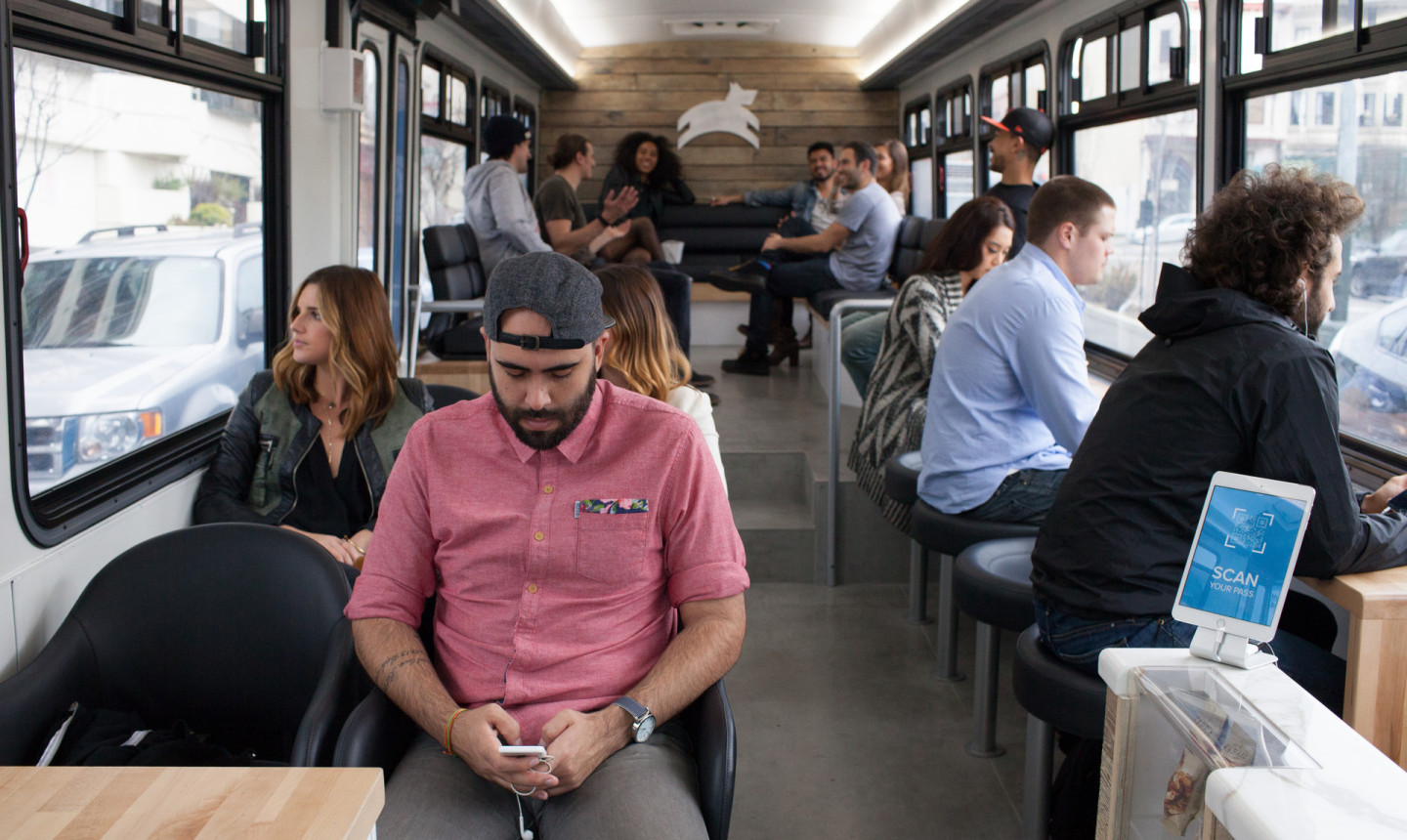
"caption": "Leap shuttles follow a public bus route from downtown San Francisco to the Marina District.",
"description": null,
"title": "RS14674_peopleinbus-qut",
"credit": "Courtesy of Leap",
"status": "inherit",
"isLoading": false,
"fetchFailed": false
},
"news_10471648": {
"type": "attachments",
"id": "news_10471648",
"meta": {
"index": "attachments_1716263798",
"site": "news",
"id": "10471648",
"found": true
},
"parent": 10469150,
"imgSizes": {
"twentyfourteen-full-width": {
"file": "https://ww2.kqed.org/app/uploads/sites/10/2015/03/WomenExecs-1038x576.jpg",
"width": 1038,
"mimeType": "image/jpeg",
"height": 576
},
"thumbnail": {
"file": "https://ww2.kqed.org/app/uploads/sites/10/2015/03/WomenExecs-400x271.jpg",
"width": 400,
"mimeType": "image/jpeg",
"height": 271
},
"fd-sm": {
"file": "https://ww2.kqed.org/app/uploads/sites/10/2015/03/WomenExecs-320x217.jpg",
"width": 320,
"mimeType": "image/jpeg",
"height": 217
},
"post-thumbnail": {
"file": "https://ww2.kqed.org/app/uploads/sites/10/2015/03/WomenExecs-672x372.jpg",
"width": 672,
"mimeType": "image/jpeg",
"height": 372
},
"kqedFullSize": {
"file": "https://ww2.kqed.org/app/uploads/sites/10/2015/03/WomenExecs.jpg",
"width": 1920,
"height": 1302
},
"large": {
"file": "https://ww2.kqed.org/app/uploads/sites/10/2015/03/WomenExecs-1440x977.jpg",
"width": 1440,
"mimeType": "image/jpeg",
"height": 977
},
"guest-author-96": {
"file": "https://ww2.kqed.org/app/uploads/sites/10/2015/03/WomenExecs-96x96.jpg",
"width": 96,
"mimeType": "image/jpeg",
"height": 96
},
"medium": {
"file": "https://ww2.kqed.org/app/uploads/sites/10/2015/03/WomenExecs-800x543.jpg",
"width": 800,
"mimeType": "image/jpeg",
"height": 543
},
"guest-author-64": {
"file": "https://ww2.kqed.org/app/uploads/sites/10/2015/03/WomenExecs-64x64.jpg",
"width": 64,
"mimeType": "image/jpeg",
"height": 64
},
"guest-author-32": {
"file": "https://ww2.kqed.org/app/uploads/sites/10/2015/03/WomenExecs-32x32.jpg",
"width": 32,
"mimeType": "image/jpeg",
"height": 32
},
"fd-lrg": {
"file": "https://ww2.kqed.org/app/uploads/sites/10/2015/03/WomenExecs-1180x800.jpg",
"width": 1180,
"mimeType": "image/jpeg",
"height": 800
},
"fd-med": {
"file": "https://ww2.kqed.org/app/uploads/sites/10/2015/03/WomenExecs-768x521.jpg",
"width": 768,
"mimeType": "image/jpeg",
"height": 521
},
"detail": {
"file": "https://ww2.kqed.org/app/uploads/sites/10/2015/03/WomenExecs-75x75.jpg",
"width": 75,
"mimeType": "image/jpeg",
"height": 75
},
"guest-author-128": {
"file": "https://ww2.kqed.org/app/uploads/sites/10/2015/03/WomenExecs-128x128.jpg",
"width": 128,
"mimeType": "image/jpeg",
"height": 128
}
},
"publishDate": 1427763394,
"modified": 1427763436,
"caption": "Entrepreneurs Rachel Fierberg, Fran Maier, Anna Zornosa and Lisa Pickney (L-R).",
"description": "Entrepreneurs Rachel Fierberg, Fran Maier, Anna Zornosa and Lisa Pickney (L-R).",
"title": "WomenExecs",
"credit": "Rebecca Bowe/KQED",
"status": "inherit",
"isLoading": false,
"fetchFailed": false
},
"news_10467047": {
"type": "attachments",
"id": "news_10467047",
"meta": {
"index": "attachments_1716263798",
"site": "news",
"id": "10467047",
"found": true
},
"parent": 10467044,
"imgSizes": {
"twentyfourteen-full-width": {
"file": "https://ww2.kqed.org/app/uploads/sites/10/2015/03/Ronnie-Thomas-1038x576.jpg",
"width": 1038,
"mimeType": "image/jpeg",
"height": 576
},
"thumbnail": {
"file": "https://ww2.kqed.org/app/uploads/sites/10/2015/03/Ronnie-Thomas-400x300.jpg",
"width": 400,
"mimeType": "image/jpeg",
"height": 300
},
"fd-sm": {
"file": "https://ww2.kqed.org/app/uploads/sites/10/2015/03/Ronnie-Thomas-320x240.jpg",
"width": 320,
"mimeType": "image/jpeg",
"height": 240
},
"post-thumbnail": {
"file": "https://ww2.kqed.org/app/uploads/sites/10/2015/03/Ronnie-Thomas-672x372.jpg",
"width": 672,
"mimeType": "image/jpeg",
"height": 372
},
"kqedFullSize": {
"file": "https://ww2.kqed.org/app/uploads/sites/10/2015/03/Ronnie-Thomas.jpg",
"width": 3264,
"height": 2448
},
"large": {
"file": "https://ww2.kqed.org/app/uploads/sites/10/2015/03/Ronnie-Thomas-1440x1080.jpg",
"width": 1440,
"mimeType": "image/jpeg",
"height": 1080
},
"guest-author-96": {
"file": "https://ww2.kqed.org/app/uploads/sites/10/2015/03/Ronnie-Thomas-96x96.jpg",
"width": 96,
"mimeType": "image/jpeg",
"height": 96
},
"medium": {
"file": "https://ww2.kqed.org/app/uploads/sites/10/2015/03/Ronnie-Thomas-800x600.jpg",
"width": 800,
"mimeType": "image/jpeg",
"height": 600
},
"guest-author-64": {
"file": "https://ww2.kqed.org/app/uploads/sites/10/2015/03/Ronnie-Thomas-64x64.jpg",
"width": 64,
"mimeType": "image/jpeg",
"height": 64
},
"guest-author-32": {
"file": "https://ww2.kqed.org/app/uploads/sites/10/2015/03/Ronnie-Thomas-32x32.jpg",
"width": 32,
"mimeType": "image/jpeg",
"height": 32
},
"fd-lrg": {
"file": "https://ww2.kqed.org/app/uploads/sites/10/2015/03/Ronnie-Thomas-1180x885.jpg",
"width": 1180,
"mimeType": "image/jpeg",
"height": 885
},
"fd-med": {
"file": "https://ww2.kqed.org/app/uploads/sites/10/2015/03/Ronnie-Thomas-768x576.jpg",
"width": 768,
"mimeType": "image/jpeg",
"height": 576
},
"detail": {
"file": "https://ww2.kqed.org/app/uploads/sites/10/2015/03/Ronnie-Thomas-75x75.jpg",
"width": 75,
"mimeType": "image/jpeg",
"height": 75
},
"guest-author-128": {
"file": "https://ww2.kqed.org/app/uploads/sites/10/2015/03/Ronnie-Thomas-128x128.jpg",
"width": 128,
"mimeType": "image/jpeg",
"height": 128
}
},
"publishDate": 1427406320,
"modified": 1427406447,
"caption": "Ronnie Thomas works for Stanford University Dining, a six-hour round trip commute on bus, bike and train from his home in Stockton.",
"description": null,
"title": "Ronnie Thomas",
"credit": "Sabrina Greenway/Peninsula Press",
"status": "inherit",
"isLoading": false,
"fetchFailed": false
},
"news_10464803": {
"type": "attachments",
"id": "news_10464803",
"meta": {
"index": "attachments_1716263798",
"site": "news",
"id": "10464803",
"found": true
},
"parent": 10464757,
"imgSizes": {
"twentyfourteen-full-width": {
"file": "https://ww2.kqed.org/app/uploads/sites/10/2015/03/465789420-1038x576.jpg",
"width": 1038,
"mimeType": "image/jpeg",
"height": 576
},
"thumbnail": {
"file": "https://ww2.kqed.org/app/uploads/sites/10/2015/03/465789420-400x277.jpg",
"width": 400,
"mimeType": "image/jpeg",
"height": 277
},
"fd-sm": {
"file": "https://ww2.kqed.org/app/uploads/sites/10/2015/03/465789420-320x222.jpg",
"width": 320,
"mimeType": "image/jpeg",
"height": 222
},
"post-thumbnail": {
"file": "https://ww2.kqed.org/app/uploads/sites/10/2015/03/465789420-672x372.jpg",
"width": 672,
"mimeType": "image/jpeg",
"height": 372
},
"kqedFullSize": {
"file": "https://ww2.kqed.org/app/uploads/sites/10/2015/03/465789420-e1427223863301.jpg",
"width": 1920,
"height": 1330
},
"large": {
"file": "https://ww2.kqed.org/app/uploads/sites/10/2015/03/465789420-1440x997.jpg",
"width": 1440,
"mimeType": "image/jpeg",
"height": 997
},
"guest-author-96": {
"file": "https://ww2.kqed.org/app/uploads/sites/10/2015/03/465789420-96x96.jpg",
"width": 96,
"mimeType": "image/jpeg",
"height": 96
},
"medium": {
"file": "https://ww2.kqed.org/app/uploads/sites/10/2015/03/465789420-800x554.jpg",
"width": 800,
"mimeType": "image/jpeg",
"height": 554
},
"guest-author-64": {
"file": "https://ww2.kqed.org/app/uploads/sites/10/2015/03/465789420-64x64.jpg",
"width": 64,
"mimeType": "image/jpeg",
"height": 64
},
"guest-author-32": {
"file": "https://ww2.kqed.org/app/uploads/sites/10/2015/03/465789420-32x32.jpg",
"width": 32,
"mimeType": "image/jpeg",
"height": 32
},
"fd-lrg": {
"file": "https://ww2.kqed.org/app/uploads/sites/10/2015/03/465789420-1180x817.jpg",
"width": 1180,
"mimeType": "image/jpeg",
"height": 817
},
"fd-med": {
"file": "https://ww2.kqed.org/app/uploads/sites/10/2015/03/465789420-768x532.jpg",
"width": 768,
"mimeType": "image/jpeg",
"height": 532
},
"detail": {
"file": "https://ww2.kqed.org/app/uploads/sites/10/2015/03/465789420-75x75.jpg",
"width": 75,
"mimeType": "image/jpeg",
"height": 75
},
"guest-author-128": {
"file": "https://ww2.kqed.org/app/uploads/sites/10/2015/03/465789420-128x128.jpg",
"width": 128,
"mimeType": "image/jpeg",
"height": 128
}
},
"publishDate": 1427223235,
"modified": 1441913850,
"caption": "Ellen Pao has decided not to pursue an appeal in her gender discrimination case against Kleiner Perkins.",
"description": "Ellen Pao has decided not to pursue an appeal in her gender discrimination case against Kleiner Perkins.",
"title": "Ellen Pao",
"credit": "Justin Sullivan/Getty Images",
"status": "inherit",
"isLoading": false,
"fetchFailed": false
},
"news_10467140": {
"type": "attachments",
"id": "news_10467140",
"meta": {
"index": "attachments_1716263798",
"site": "news",
"id": "10467140",
"found": true
},
"parent": 10467124,
"imgSizes": {
"twentyfourteen-full-width": {
"file": "https://ww2.kqed.org/app/uploads/sites/10/2015/03/bay-area-60s-1038x576.jpg",
"width": 1038,
"mimeType": "image/jpeg",
"height": 576
},
"thumbnail": {
"file": "https://ww2.kqed.org/app/uploads/sites/10/2015/03/bay-area-60s-400x225.jpg",
"width": 400,
"mimeType": "image/jpeg",
"height": 225
},
"fd-sm": {
"file": "https://ww2.kqed.org/app/uploads/sites/10/2015/03/bay-area-60s-320x180.jpg",
"width": 320,
"mimeType": "image/jpeg",
"height": 180
},
"post-thumbnail": {
"file": "https://ww2.kqed.org/app/uploads/sites/10/2015/03/bay-area-60s-672x372.jpg",
"width": 672,
"mimeType": "image/jpeg",
"height": 372
},
"kqedFullSize": {
"file": "https://ww2.kqed.org/app/uploads/sites/10/2015/03/bay-area-60s.jpg",
"width": 2560,
"height": 1440
},
"large": {
"file": "https://ww2.kqed.org/app/uploads/sites/10/2015/03/bay-area-60s-1440x810.jpg",
"width": 1440,
"mimeType": "image/jpeg",
"height": 810
},
"guest-author-96": {
"file": "https://ww2.kqed.org/app/uploads/sites/10/2015/03/bay-area-60s-96x96.jpg",
"width": 96,
"mimeType": "image/jpeg",
"height": 96
},
"medium": {
"file": "https://ww2.kqed.org/app/uploads/sites/10/2015/03/bay-area-60s-800x450.jpg",
"width": 800,
"mimeType": "image/jpeg",
"height": 450
},
"guest-author-64": {
"file": "https://ww2.kqed.org/app/uploads/sites/10/2015/03/bay-area-60s-64x64.jpg",
"width": 64,
"mimeType": "image/jpeg",
"height": 64
},
"guest-author-32": {
"file": "https://ww2.kqed.org/app/uploads/sites/10/2015/03/bay-area-60s-32x32.jpg",
"width": 32,
"mimeType": "image/jpeg",
"height": 32
},
"fd-lrg": {
"file": "https://ww2.kqed.org/app/uploads/sites/10/2015/03/bay-area-60s-1180x664.jpg",
"width": 1180,
"mimeType": "image/jpeg",
"height": 664
},
"fd-med": {
"file": "https://ww2.kqed.org/app/uploads/sites/10/2015/03/bay-area-60s-768x432.jpg",
"width": 768,
"mimeType": "image/jpeg",
"height": 432
},
"detail": {
"file": "https://ww2.kqed.org/app/uploads/sites/10/2015/03/bay-area-60s-75x75.jpg",
"width": 75,
"mimeType": "image/jpeg",
"height": 75
},
"guest-author-128": {
"file": "https://ww2.kqed.org/app/uploads/sites/10/2015/03/bay-area-60s-128x128.jpg",
"width": 128,
"mimeType": "image/jpeg",
"height": 128
}
},
"publishDate": 1427410526,
"modified": 1427410566,
"caption": "The San Francisco Bay Area is now home to more than 7 and a half million people. (Adam Grossberg/KQED)",
"description": null,
"title": "bay-area-60s",
"credit": null,
"status": "inherit",
"isLoading": false,
"fetchFailed": false
},
"futureofyou_600": {
"type": "attachments",
"id": "futureofyou_600",
"meta": {
"index": "attachments_1716263798",
"site": "futureofyou",
"id": "600",
"found": true
},
"parent": 593,
"imgSizes": {
"thumbnail": {
"file": "https://ww2.kqed.org/app/uploads/sites/13/2015/03/Precision-medicine-400x227.jpg",
"width": 400,
"mimeType": "image/jpeg",
"height": 227
},
"fd-sm": {
"file": "https://ww2.kqed.org/app/uploads/sites/13/2015/03/Precision-medicine-320x182.jpg",
"width": 320,
"mimeType": "image/jpeg",
"height": 182
},
"kqedFullSize": {
"file": "https://ww2.kqed.org/app/uploads/sites/13/2015/03/Precision-medicine.jpg",
"width": 520,
"height": 295
},
"guest-author-96": {
"file": "https://ww2.kqed.org/app/uploads/sites/13/2015/03/Precision-medicine-96x96.jpg",
"width": 96,
"mimeType": "image/jpeg",
"height": 96
},
"guest-author-64": {
"file": "https://ww2.kqed.org/app/uploads/sites/13/2015/03/Precision-medicine-64x64.jpg",
"width": 64,
"mimeType": "image/jpeg",
"height": 64
},
"detail": {
"file": "https://ww2.kqed.org/app/uploads/sites/13/2015/03/Precision-medicine-75x75.jpg",
"width": 75,
"mimeType": "image/jpeg",
"height": 75
},
"guest-author-32": {
"file": "https://ww2.kqed.org/app/uploads/sites/13/2015/03/Precision-medicine-32x32.jpg",
"width": 32,
"mimeType": "image/jpeg",
"height": 32
},
"guest-author-128": {
"file": "https://ww2.kqed.org/app/uploads/sites/13/2015/03/Precision-medicine-128x128.jpg",
"width": 128,
"mimeType": "image/jpeg",
"height": 128
}
},
"publishDate": 1426870495,
"modified": 1426871835,
"caption": "Precision medicine, which has gained support from President Obama, is a developing science that takes into account each person’s lifestyle, environment, and the variability of individual genes. (the White House)",
"description": null,
"title": "Precision medicine",
"credit": null,
"status": "inherit",
"isLoading": false,
"fetchFailed": false
},
"news_10380908": {
"type": "attachments",
"id": "news_10380908",
"meta": {
"index": "attachments_1716263798",
"site": "news",
"id": "10380908",
"found": true
},
"parent": 10380892,
"imgSizes": {
"twentyfourteen-full-width": {
"file": "https://ww2.kqed.org/app/uploads/sites/10/2014/12/495316169-1038x576.jpg",
"width": 1038,
"mimeType": "image/jpeg",
"height": 576
},
"thumbnail": {
"file": "https://ww2.kqed.org/app/uploads/sites/10/2014/12/495316169-400x274.jpg",
"width": 400,
"mimeType": "image/jpeg",
"height": 274
},
"post-thumbnail": {
"file": "https://ww2.kqed.org/app/uploads/sites/10/2014/12/495316169-672x372.jpg",
"width": 672,
"mimeType": "image/jpeg",
"height": 372
},
"kqedFullSize": {
"file": "https://ww2.kqed.org/app/uploads/sites/10/2014/12/495316169-e1418766152691.jpg",
"width": 1440,
"height": 988
},
"large": {
"file": "https://ww2.kqed.org/app/uploads/sites/10/2014/12/495316169-1440x987.jpg",
"width": 1440,
"mimeType": "image/jpeg",
"height": 987
},
"guest-author-96": {
"file": "https://ww2.kqed.org/app/uploads/sites/10/2014/12/495316169-96x96.jpg",
"width": 96,
"mimeType": "image/jpeg",
"height": 96
},
"medium": {
"file": "https://ww2.kqed.org/app/uploads/sites/10/2014/12/495316169-800x548.jpg",
"width": 800,
"mimeType": "image/jpeg",
"height": 548
},
"guest-author-64": {
"file": "https://ww2.kqed.org/app/uploads/sites/10/2014/12/495316169-64x64.jpg",
"width": 64,
"mimeType": "image/jpeg",
"height": 64
},
"detail": {
"file": "https://ww2.kqed.org/app/uploads/sites/10/2014/12/495316169-75x75.jpg",
"width": 75,
"mimeType": "image/jpeg",
"height": 75
},
"guest-author-32": {
"file": "https://ww2.kqed.org/app/uploads/sites/10/2014/12/495316169-32x32.jpg",
"width": 32,
"mimeType": "image/jpeg",
"height": 32
},
"guest-author-128": {
"file": "https://ww2.kqed.org/app/uploads/sites/10/2014/12/495316169-128x128.jpg",
"width": 128,
"mimeType": "image/jpeg",
"height": 128
}
},
"publishDate": 1418766083,
"modified": 1425950551,
"caption": "Apple announced a foray into personal health data collection and medical research today.",
"description": "SAN FRANCISCO, CA - JUNE 02: Attendees gather at the Apple Worldwide Developers Conference at the Moscone West center on June 2, 2014 in San Francisco, California. Apple CEO Tim Cook kicked off the annual WWDC which is typically a showcase for upcoming updates to Apple hardware and software. The conference runs through June 6. (Photo by Justin Sullivan/Getty Images)",
"title": "Apple Logo",
"credit": "(Justin Sullivan /Getty Images)",
"status": "inherit",
"isLoading": false,
"fetchFailed": false
},
"futureofyou_287": {
"type": "attachments",
"id": "futureofyou_287",
"meta": {
"index": "attachments_1716263798",
"site": "futureofyou",
"id": "287",
"found": true
},
"parent": 276,
"imgSizes": {
"twentyfourteen-full-width": {
"file": "https://ww2.kqed.org/app/uploads/sites/13/2015/03/FOY-documentary-e1426121525641-1038x576.jpg",
"width": 1038,
"mimeType": "image/jpeg",
"height": 576
},
"thumbnail": {
"file": "https://ww2.kqed.org/app/uploads/sites/13/2015/03/FOY-documentary-e1426121556910-400x225.jpg",
"width": 400,
"mimeType": "image/jpeg",
"height": 225
},
"fd-sm": {
"file": "https://ww2.kqed.org/app/uploads/sites/13/2015/03/FOY-documentary-e1426121556910-320x180.jpg",
"width": 320,
"mimeType": "image/jpeg",
"height": 180
},
"post-thumbnail": {
"file": "https://ww2.kqed.org/app/uploads/sites/13/2015/03/FOY-documentary-e1426121525641-672x372.jpg",
"width": 672,
"mimeType": "image/jpeg",
"height": 372
},
"kqedFullSize": {
"file": "https://ww2.kqed.org/app/uploads/sites/13/2015/03/FOY-documentary-e1426121556910.jpg",
"width": 640,
"height": 360
},
"large": {
"file": "https://ww2.kqed.org/app/uploads/sites/13/2015/03/FOY-documentary-e1426121525641-1180x663.jpg",
"width": 1180,
"mimeType": "image/jpeg",
"height": 663
},
"guest-author-96": {
"file": "https://ww2.kqed.org/app/uploads/sites/13/2015/03/FOY-documentary-e1426121556910-96x96.jpg",
"width": 96,
"mimeType": "image/jpeg",
"height": 96
},
"medium": {
"file": "https://ww2.kqed.org/app/uploads/sites/13/2015/03/FOY-documentary-e1426121525641-800x449.jpg",
"width": 800,
"mimeType": "image/jpeg",
"height": 449
},
"guest-author-64": {
"file": "https://ww2.kqed.org/app/uploads/sites/13/2015/03/FOY-documentary-e1426121556910-64x64.jpg",
"width": 64,
"mimeType": "image/jpeg",
"height": 64
},
"guest-author-32": {
"file": "https://ww2.kqed.org/app/uploads/sites/13/2015/03/FOY-documentary-e1426121556910-32x32.jpg",
"width": 32,
"mimeType": "image/jpeg",
"height": 32
},
"fd-lrg": {
"file": "https://ww2.kqed.org/app/uploads/sites/13/2015/03/FOY-documentary-e1426121525641-1180x663.jpg",
"width": 1180,
"mimeType": "image/jpeg",
"height": 663
},
"fd-med": {
"file": "https://ww2.kqed.org/app/uploads/sites/13/2015/03/FOY-documentary-e1426121525641-768x432.jpg",
"width": 768,
"mimeType": "image/jpeg",
"height": 432
},
"detail": {
"file": "https://ww2.kqed.org/app/uploads/sites/13/2015/03/FOY-documentary-e1426121556910-75x75.jpg",
"width": 75,
"mimeType": "image/jpeg",
"height": 75
},
"guest-author-128": {
"file": "https://ww2.kqed.org/app/uploads/sites/13/2015/03/FOY-documentary-e1426121556910-128x128.jpg",
"width": 128,
"mimeType": "image/jpeg",
"height": 128
}
},
"publishDate": 1426121503,
"modified": 1426121503,
"caption": null,
"description": "SAN FRANCISCO, CA - JUNE 02: Attendees gather at the Apple Worldwide Developers Conference at the Moscone West center on June 2, 2014 in San Francisco, California. Apple CEO Tim Cook kicked off the annual WWDC which is typically a showcase for upcoming updates to Apple hardware and software. The conference runs through June 6. (Photo by Justin Sullivan/Getty Images)",
"title": "Apple Hosts Its Worldwide Developers Conference",
"credit": null,
"status": "inherit",
"isLoading": false,
"fetchFailed": false
},
"news_10442244": {
"type": "attachments",
"id": "news_10442244",
"meta": {
"index": "attachments_1716263798",
"site": "news",
"id": "10442244",
"found": true
},
"parent": 10441462,
"imgSizes": {
"twentyfourteen-full-width": {
"file": "https://ww2.kqed.org/app/uploads/sites/10/2015/02/11213_transform-1038x576.jpg",
"width": 1038,
"mimeType": "image/jpeg",
"height": 576
},
"thumbnail": {
"file": "https://ww2.kqed.org/app/uploads/sites/10/2015/02/11213_transform-400x291.jpg",
"width": 400,
"mimeType": "image/jpeg",
"height": 291
},
"post-thumbnail": {
"file": "https://ww2.kqed.org/app/uploads/sites/10/2015/02/11213_transform-672x372.jpg",
"width": 672,
"mimeType": "image/jpeg",
"height": 372
},
"kqedFullSize": {
"file": "https://ww2.kqed.org/app/uploads/sites/10/2015/02/11213_transform.jpg",
"width": 1920,
"height": 1399
},
"large": {
"file": "https://ww2.kqed.org/app/uploads/sites/10/2015/02/11213_transform-1440x1049.jpg",
"width": 1440,
"mimeType": "image/jpeg",
"height": 1049
},
"guest-author-96": {
"file": "https://ww2.kqed.org/app/uploads/sites/10/2015/02/11213_transform-96x96.jpg",
"width": 96,
"mimeType": "image/jpeg",
"height": 96
},
"medium": {
"file": "https://ww2.kqed.org/app/uploads/sites/10/2015/02/11213_transform-800x583.jpg",
"width": 800,
"mimeType": "image/jpeg",
"height": 583
},
"guest-author-64": {
"file": "https://ww2.kqed.org/app/uploads/sites/10/2015/02/11213_transform-64x64.jpg",
"width": 64,
"mimeType": "image/jpeg",
"height": 64
},
"detail": {
"file": "https://ww2.kqed.org/app/uploads/sites/10/2015/02/11213_transform-75x75.jpg",
"width": 75,
"mimeType": "image/jpeg",
"height": 75
},
"guest-author-32": {
"file": "https://ww2.kqed.org/app/uploads/sites/10/2015/02/11213_transform-32x32.jpg",
"width": 32,
"mimeType": "image/jpeg",
"height": 32
},
"guest-author-128": {
"file": "https://ww2.kqed.org/app/uploads/sites/10/2015/02/11213_transform-128x128.jpg",
"width": 128,
"mimeType": "image/jpeg",
"height": 128
}
},
"publishDate": 1424807711,
"modified": 1425081631,
"caption": " 'We're at risk of becoming a country of isolated individual workers who are scrambling to piece together a few hours of low-wage, hourlong gigs that lack our most basic labor protections.' -Rebecca Smith, National Employment Law Project",
"description": null,
"title": "working on devices",
"credit": "Getty Images",
"status": "inherit",
"isLoading": false,
"fetchFailed": false
},
"news_10443886": {
"type": "attachments",
"id": "news_10443886",
"meta": {
"index": "attachments_1716263798",
"site": "news",
"id": "10443886",
"found": true
},
"parent": 10443885,
"imgSizes": {
"twentyfourteen-full-width": {
"file": "https://ww2.kqed.org/app/uploads/sites/10/2015/02/fcc-net-neutrality_wide-91cb48ed6e00c1ee2ef20d017e094aa3aa547712-1038x576.jpg",
"width": 1038,
"mimeType": "image/jpeg",
"height": 576
},
"thumbnail": {
"file": "https://ww2.kqed.org/app/uploads/sites/10/2015/02/fcc-net-neutrality_wide-91cb48ed6e00c1ee2ef20d017e094aa3aa547712-400x225.jpg",
"width": 400,
"mimeType": "image/jpeg",
"height": 225
},
"fd-sm": {
"file": "https://ww2.kqed.org/app/uploads/sites/10/2015/02/fcc-net-neutrality_wide-91cb48ed6e00c1ee2ef20d017e094aa3aa547712-320x180.jpg",
"width": 320,
"mimeType": "image/jpeg",
"height": 180
},
"post-thumbnail": {
"file": "https://ww2.kqed.org/app/uploads/sites/10/2015/02/fcc-net-neutrality_wide-91cb48ed6e00c1ee2ef20d017e094aa3aa547712-672x372.jpg",
"width": 672,
"mimeType": "image/jpeg",
"height": 372
},
"kqedFullSize": {
"file": "https://ww2.kqed.org/app/uploads/sites/10/2015/02/fcc-net-neutrality_wide-91cb48ed6e00c1ee2ef20d017e094aa3aa547712.jpg",
"width": 4673,
"height": 2628
},
"large": {
"file": "https://ww2.kqed.org/app/uploads/sites/10/2015/02/fcc-net-neutrality_wide-91cb48ed6e00c1ee2ef20d017e094aa3aa547712-1440x810.jpg",
"width": 1440,
"mimeType": "image/jpeg",
"height": 810
},
"guest-author-96": {
"file": "https://ww2.kqed.org/app/uploads/sites/10/2015/02/fcc-net-neutrality_wide-91cb48ed6e00c1ee2ef20d017e094aa3aa547712-96x96.jpg",
"width": 96,
"mimeType": "image/jpeg",
"height": 96
},
"medium": {
"file": "https://ww2.kqed.org/app/uploads/sites/10/2015/02/fcc-net-neutrality_wide-91cb48ed6e00c1ee2ef20d017e094aa3aa547712-800x450.jpg",
"width": 800,
"mimeType": "image/jpeg",
"height": 450
},
"guest-author-64": {
"file": "https://ww2.kqed.org/app/uploads/sites/10/2015/02/fcc-net-neutrality_wide-91cb48ed6e00c1ee2ef20d017e094aa3aa547712-64x64.jpg",
"width": 64,
"mimeType": "image/jpeg",
"height": 64
},
"guest-author-32": {
"file": "https://ww2.kqed.org/app/uploads/sites/10/2015/02/fcc-net-neutrality_wide-91cb48ed6e00c1ee2ef20d017e094aa3aa547712-32x32.jpg",
"width": 32,
"mimeType": "image/jpeg",
"height": 32
},
"fd-lrg": {
"file": "https://ww2.kqed.org/app/uploads/sites/10/2015/02/fcc-net-neutrality_wide-91cb48ed6e00c1ee2ef20d017e094aa3aa547712-1180x664.jpg",
"width": 1180,
"mimeType": "image/jpeg",
"height": 664
},
"fd-med": {
"file": "https://ww2.kqed.org/app/uploads/sites/10/2015/02/fcc-net-neutrality_wide-91cb48ed6e00c1ee2ef20d017e094aa3aa547712-768x432.jpg",
"width": 768,
"mimeType": "image/jpeg",
"height": 432
},
"detail": {
"file": "https://ww2.kqed.org/app/uploads/sites/10/2015/02/fcc-net-neutrality_wide-91cb48ed6e00c1ee2ef20d017e094aa3aa547712-75x75.jpg",
"width": 75,
"mimeType": "image/jpeg",
"height": 75
},
"guest-author-128": {
"file": "https://ww2.kqed.org/app/uploads/sites/10/2015/02/fcc-net-neutrality_wide-91cb48ed6e00c1ee2ef20d017e094aa3aa547712-128x128.jpg",
"width": 128,
"mimeType": "image/jpeg",
"height": 128
}
},
"publishDate": 1424980611,
"modified": 1424980611,
"caption": null,
"description": "At the start of a meeting to decide the issue of net neutrality, Federal Communications Commission Chairman Tom Wheeler (center) holds hands with FCC Commissioners Mignon Clyburn (left) and Jessica Rosenworcel at the FCC headquarters Thu",
"title": "At the start of a meeting to decide the issue of net neutrality, Federal Communications Commission Chairman Tom Wheeler, center, holds hands with FCC Commissioners Mignon Clyburn, left, and Jessica Rosenworcel at the FCC headquarters Thursday.",
"credit": null,
"status": "inherit",
"isLoading": false,
"fetchFailed": false
}
},
"audioPlayerReducer": {
"postId": "stream_live",
"isPaused": true,
"isPlaying": false,
"pfsActive": false,
"pledgeModalIsOpen": true,
"playerDrawerIsOpen": false,
"liveAudioPlayStartedAt": 0,
"liveAudioPlayContext": ""
},
"authorsReducer": {
"byline_news_10467044": {
"type": "authors",
"id": "byline_news_10467044",
"meta": {
"override": true
},
"slug": "byline_news_10467044",
"name": "Sabrina Greenway\u003cbr>Peninsula Press",
"isLoading": false
},
"byline_news_10441462": {
"type": "authors",
"id": "byline_news_10441462",
"meta": {
"override": true
},
"slug": "byline_news_10441462",
"name": "Sam Harnett",
"isLoading": false
},
"byline_news_10443885": {
"type": "authors",
"id": "byline_news_10443885",
"meta": {
"override": true
},
"slug": "byline_news_10443885",
"name": "\u003ca href=\"https://twitter.com/publicbill\">Bill Chappell, \u003c/a>\u003cbr />NPR",
"isLoading": false
},
"agrossberg": {
"type": "authors",
"id": "188",
"meta": {
"index": "authors_1716337520",
"id": "188",
"found": true
},
"name": "Adam Grossberg",
"firstName": "Adam",
"lastName": "Grossberg",
"slug": "agrossberg",
"email": "agrossberg@KQED.org",
"display_author_email": false,
"staff_mastheads": [],
"title": "KQED Contributor",
"bio": "Adam Grossberg is a former video producer at KQED News. Prior to coming to KQED, he produced videos for PBS, The New York Times, Current TV and The Center for Investigative Reporting. His work has received an Excellence in Journalism award from the Society of Professional Journalists, a regional Murrow award and two Northern California Emmy awards. He is a graduate of the UC Berkeley Graduate School of Journalism.",
"avatar": "https://secure.gravatar.com/avatar/8e96dbdaaf98f5959a2c778289e0f9b5?s=600&d=blank&r=g",
"twitter": null,
"facebook": null,
"instagram": null,
"linkedin": null,
"sites": [
{
"site": "arts",
"roles": [
"contributor"
]
},
{
"site": "news",
"roles": [
"subscriber"
]
},
{
"site": "stateofhealth",
"roles": [
"editor"
]
},
{
"site": "science",
"roles": [
"editor"
]
}
],
"headData": {
"title": "Adam Grossberg | KQED",
"description": "KQED Contributor",
"ogImgSrc": "https://secure.gravatar.com/avatar/8e96dbdaaf98f5959a2c778289e0f9b5?s=600&d=blank&r=g",
"twImgSrc": "https://secure.gravatar.com/avatar/8e96dbdaaf98f5959a2c778289e0f9b5?s=600&d=blank&r=g"
},
"isLoading": false,
"link": "/author/agrossberg"
},
"danbrekke": {
"type": "authors",
"id": "222",
"meta": {
"index": "authors_1716337520",
"id": "222",
"found": true
},
"name": "Dan Brekke",
"firstName": "Dan",
"lastName": "Brekke",
"slug": "danbrekke",
"email": "dbrekke@kqed.org",
"display_author_email": true,
"staff_mastheads": [
"news",
"science"
],
"title": "KQED Editor and Reporter",
"bio": "Dan Brekke is a reporter and editor for KQED News, responsible for coverage of topics ranging from California water issues to the Bay Area's transportation challenges. In a newsroom career that began in Chicago in 1972, Dan has worked for \u003cem>The San Francisco Examiner,\u003c/em> Wired and TechTV and has been published in The New York Times, The New York Times Magazine, Business 2.0, Salon and elsewhere.\r\n\r\nSince joining KQED in 2007, Dan has reported, edited and produced both radio and online features and breaking news pieces. He has shared as both editor and reporter in four Society of Professional Journalists Norcal Excellence in Journalism awards and one Edward R. Murrow regional award. He was chosen for a spring 2017 residency at the Mesa Refuge to advance his research on California salmon.\r\n\r\nEmail Dan at: \u003ca href=\"mailto:dbrekke@kqed.org\">dbrekke@kqed.org\u003c/a>\r\n\r\n\u003cstrong>Twitter:\u003c/strong> \u003ca href=\"https://twitter.com/danbrekke\" rel=\"noopener noreferrer\">twitter.com/danbrekke\u003c/a>\r\n\u003cstrong>Facebook:\u003c/strong> \u003ca href=\"https://www.facebook.com/danbrekke\" rel=\"noopener noreferrer\">www.facebook.com/danbrekke\u003c/a>\r\n\u003cstrong>LinkedIn:\u003c/strong> \u003ca href=\"https://www.linkedin.com/in/danbrekke\" rel=\"noopener noreferrer\">www.linkedin.com/in/danbrekke\u003c/a>",
"avatar": "https://secure.gravatar.com/avatar/8f1f0d2a978fb3b23426c922c7e2af558fa36905b49c4ce76a97dc3c72d27226?s=600&d=mm&r=g",
"twitter": "danbrekke",
"bluesky": null,
"facebook": null,
"instagram": "https://www.instagram.com/dan.brekke/",
"linkedin": "https://www.linkedin.com/in/danbrekke/",
"sites": [
{
"site": "news",
"roles": [
"administrator",
"create_posts"
]
},
{
"site": "stateofhealth",
"roles": [
"editor"
]
},
{
"site": "science",
"roles": [
"editor"
]
},
{
"site": "quest",
"roles": [
"contributor"
]
},
{
"site": "food",
"roles": [
"contributor"
]
},
{
"site": "forum",
"roles": [
"contributor"
]
},
{
"site": "elections",
"roles": [
"editor"
]
},
{
"site": "liveblog",
"roles": [
"editor"
]
}
],
"headData": {
"title": "Dan Brekke | KQED",
"description": "KQED Editor and Reporter",
"ogImgSrc": "https://secure.gravatar.com/avatar/8f1f0d2a978fb3b23426c922c7e2af558fa36905b49c4ce76a97dc3c72d27226?s=600&d=mm&r=g",
"twImgSrc": "https://secure.gravatar.com/avatar/8f1f0d2a978fb3b23426c922c7e2af558fa36905b49c4ce76a97dc3c72d27226?s=600&d=mm&r=g"
},
"isLoading": false,
"link": "/author/danbrekke"
},
"kqed": {
"type": "authors",
"id": "236",
"meta": {
"index": "authors_1716337520",
"id": "236",
"found": true
},
"name": "KQED News Staff",
"firstName": "KQED News Staff",
"lastName": null,
"slug": "kqed",
"email": "faq@kqed.org",
"display_author_email": false,
"staff_mastheads": [],
"title": null,
"bio": null,
"avatar": "https://secure.gravatar.com/avatar/ef0e801a68c4c54afa9180db14084167?s=600&d=blank&r=g",
"twitter": null,
"facebook": null,
"instagram": null,
"linkedin": null,
"sites": [
{
"site": "arts",
"roles": [
"contributor"
]
},
{
"site": "news",
"roles": [
"editor"
]
},
{
"site": "futureofyou",
"roles": [
"author"
]
}
],
"headData": {
"title": "KQED News Staff | KQED",
"description": null,
"ogImgSrc": "https://secure.gravatar.com/avatar/ef0e801a68c4c54afa9180db14084167?s=600&d=blank&r=g",
"twImgSrc": "https://secure.gravatar.com/avatar/ef0e801a68c4c54afa9180db14084167?s=600&d=blank&r=g"
},
"isLoading": false,
"link": "/author/kqed"
},
"samharnett": {
"type": "authors",
"id": "253",
"meta": {
"index": "authors_1716337520",
"id": "253",
"found": true
},
"name": "Sam Harnett",
"firstName": "Sam",
"lastName": "Harnett",
"slug": "samharnett",
"email": "samharnett@gmail.com",
"display_author_email": false,
"staff_mastheads": [],
"title": "KQED Contributor",
"bio": "Sam Harnett covered tech and work at KQED. He is the co-creator of \u003cem>\u003ca href=\"http://www.theworldaccordingtosound.org\">The World According to Sound\u003c/a>,\u003c/em> a 90-second podcast that features different sounds and the stories behind them.\r\n\r\nBefore coming to KQED, Sam worked as an independent reporter who contributed regularly to \u003cem>The California Report, Marketplace,\u003c/em> \u003cem>The World \u003c/em>and NPR.",
"avatar": "https://secure.gravatar.com/avatar/2538b972ac02f2b9546c7a6c59a0f3d0?s=600&d=blank&r=g",
"twitter": "Samwharnett",
"facebook": null,
"instagram": null,
"linkedin": null,
"sites": [
{
"site": "news",
"roles": [
"edit_others_posts",
"subscriber"
]
},
{
"site": "stateofhealth",
"roles": [
"author"
]
},
{
"site": "science",
"roles": [
"editor"
]
},
{
"site": "quest",
"roles": [
"subscriber"
]
}
],
"headData": {
"title": "Sam Harnett | KQED",
"description": "KQED Contributor",
"ogImgSrc": "https://secure.gravatar.com/avatar/2538b972ac02f2b9546c7a6c59a0f3d0?s=600&d=blank&r=g",
"twImgSrc": "https://secure.gravatar.com/avatar/2538b972ac02f2b9546c7a6c59a0f3d0?s=600&d=blank&r=g"
},
"isLoading": false,
"link": "/author/samharnett"
},
"adembosky": {
"type": "authors",
"id": "3205",
"meta": {
"index": "authors_1716337520",
"id": "3205",
"found": true
},
"name": "April Dembosky",
"firstName": "April",
"lastName": "Dembosky",
"slug": "adembosky",
"email": "adembosky@kqed.org",
"display_author_email": false,
"staff_mastheads": [
"news",
"science"
],
"title": "KQED Health Correspondent",
"bio": "April Dembosky is the health correspondent for KQED News and a regular contributor to NPR. She specializes in covering altered states of mind, from postpartum depression to methamphetamine-induced psychosis to the insanity defense. Her investigative series on insurance companies sidestepping mental health laws won multiple awards, including first place in beat reporting from the national Association of Health Care Journalists. She is the recipient of numerous other prizes and fellowships, including a national Edward R. Murrow award for investigative reporting, a Society of Professional Journalists award for long-form storytelling, and a Carter Center Fellowship for Mental Health Journalism.\r\n\r\nDembosky reported and produced \u003cem>Soundtrack of Silence\u003c/em>, an audio documentary about music and memory that is currently being made into a feature film by Paramount Pictures.\r\n\r\nBefore joining KQED in 2013, Dembosky covered technology and Silicon Valley for \u003cem>The Financial Times of London,\u003c/em> and contributed business and arts stories to \u003cem>Marketplace \u003c/em>and \u003cem>The New York Times.\u003c/em> She got her undergraduate degree in philosophy from Smith College and her master's in journalism from the University of California, Berkeley. She is a classically trained violinist and proud alum of the first symphony orchestra at Burning Man.",
"avatar": "https://secure.gravatar.com/avatar/d6593cd737b732102fe0b6250b5351c2d3bc9b2987566514aa3c9a106494d684?s=600&d=blank&r=g",
"twitter": "adembosky",
"bluesky": null,
"facebook": null,
"instagram": null,
"linkedin": null,
"sites": [
{
"site": "arts",
"roles": [
"author"
]
},
{
"site": "news",
"roles": [
"editor"
]
},
{
"site": "futureofyou",
"roles": [
"author"
]
},
{
"site": "stateofhealth",
"roles": [
"editor"
]
},
{
"site": "science",
"roles": [
"editor"
]
},
{
"site": "forum",
"roles": [
"editor"
]
}
],
"headData": {
"title": "April Dembosky | KQED",
"description": "KQED Health Correspondent",
"ogImgSrc": "https://secure.gravatar.com/avatar/d6593cd737b732102fe0b6250b5351c2d3bc9b2987566514aa3c9a106494d684?s=600&d=blank&r=g",
"twImgSrc": "https://secure.gravatar.com/avatar/d6593cd737b732102fe0b6250b5351c2d3bc9b2987566514aa3c9a106494d684?s=600&d=blank&r=g"
},
"isLoading": false,
"link": "/author/adembosky"
},
"rbowe": {
"type": "authors",
"id": "3231",
"meta": {
"index": "authors_1716337520",
"id": "3231",
"found": true
},
"name": "Rebecca Bowe",
"firstName": "Rebecca",
"lastName": "Bowe",
"slug": "rbowe",
"email": "rbowe@kqed.org",
"display_author_email": false,
"staff_mastheads": [],
"title": null,
"bio": "Rebecca Bowe is a journalist based in San Francisco. She's covered Bay Area news since 2009, and previously served as News Editor of the San Francisco Bay Guardian. Follow her on Twitter @ByRebeccaBowe.",
"avatar": "https://secure.gravatar.com/avatar/50e1da0639521639108e89c123a76c9c?s=600&d=blank&r=g",
"twitter": null,
"facebook": null,
"instagram": null,
"linkedin": null,
"sites": [
{
"site": "news",
"roles": [
"subscriber"
]
},
{
"site": "science",
"roles": [
"editor"
]
}
],
"headData": {
"title": "Rebecca Bowe | KQED",
"description": null,
"ogImgSrc": "https://secure.gravatar.com/avatar/50e1da0639521639108e89c123a76c9c?s=600&d=blank&r=g",
"twImgSrc": "https://secure.gravatar.com/avatar/50e1da0639521639108e89c123a76c9c?s=600&d=blank&r=g"
},
"isLoading": false,
"link": "/author/rbowe"
},
"cfarr": {
"type": "authors",
"id": "3252",
"meta": {
"index": "authors_1716337520",
"id": "3252",
"found": true
},
"name": "Christina Farr",
"firstName": "Christina",
"lastName": "Farr",
"slug": "cfarr",
"email": "cfarr@kqed.org",
"display_author_email": false,
"staff_mastheads": [],
"title": "KQED Contributor",
"bio": "Christina Farr (\u003ca href=\"https://twitter.com/chrissyfarr\">@chrissyfarr\u003c/a>) is the former editor and host of Future of You. She was previously with Reuters, covering digital health and Apple and before that, she reported for Venture Beat. Christina was born and raised in London and has graduate degrees from University of London and the Stanford School of Journalism. Farr’s work has appeared in a variety of publications, including the New York Times, the Daily Telegraph, the Bay Citizen and SFGate.com. She has appeared as a featured expert on NBC, ABC and Reuters TV, among others, and frequently speaks at health and technology conferences. She is also co-founder of Ladies Who Vino, a networking group for women in technology and business.",
"avatar": "https://secure.gravatar.com/avatar/22c63869a7901c61c15e204391c1261d?s=600&d=blank&r=g",
"twitter": null,
"facebook": null,
"instagram": null,
"linkedin": null,
"sites": [
{
"site": "futureofyou",
"roles": [
"administrator"
]
},
{
"site": "stateofhealth",
"roles": [
"author"
]
},
{
"site": "science",
"roles": []
}
],
"headData": {
"title": "Christina Farr | KQED",
"description": "KQED Contributor",
"ogImgSrc": "https://secure.gravatar.com/avatar/22c63869a7901c61c15e204391c1261d?s=600&d=blank&r=g",
"twImgSrc": "https://secure.gravatar.com/avatar/22c63869a7901c61c15e204391c1261d?s=600&d=blank&r=g"
},
"isLoading": false,
"link": "/author/cfarr"
}
},
"pagesReducer": {
"news_category_technology": {
"type": "terms",
"id": "news_248",
"meta": {
"index": "terms_1716263798",
"site": "news",
"id": "248",
"score": 10.931532
},
"featImg": null,
"name": "Technology",
"description": null,
"taxonomy": "category",
"headData": {
"twImgId": null,
"twTitle": null,
"ogTitle": null,
"ogImgId": null,
"twDescription": null,
"description": null,
"title": "Technology Archives | KQED News",
"ogDescription": null
},
"ttid": 256,
"slug": "technology",
"isLoading": false,
"title": "Technology",
"pageMeta": {
"site": "news",
"WpPageTemplate": "page-topic-editorial",
"currentPage": 146
},
"blocks": [
{
"blockName": "kqed/post-list",
"attrs": {
"layout": "cardArticle2",
"query": "posts/news?category=technology",
"seeMore": false,
"paginated": true,
"page": 146
}
},
{
"blockName": "kqed/ad"
}
]
}
},
"pfsSessionReducer": {},
"postsReducer": {
"stream_live": {
"type": "live",
"id": "stream_live",
"audioUrl": "https://streams.kqed.org/kqedradio",
"title": "Live Stream",
"excerpt": "Live Stream information currently unavailable.",
"link": "/radio",
"featImg": "",
"label": {
"name": "KQED Live",
"link": "/"
}
},
"stream_kqedNewscast": {
"type": "posts",
"id": "stream_kqedNewscast",
"audioUrl": "https://www.kqed.org/.stream/anon/radio/RDnews/newscast.mp3?_=1",
"title": "KQED Newscast",
"featImg": "",
"label": {
"name": "88.5 FM",
"link": "/"
}
},
"news_10475415": {
"type": "posts",
"id": "news_10475415",
"meta": {
"index": "posts_1716263798",
"site": "news",
"id": "10475415",
"score": null,
"sort": [
1428588050000
]
},
"guestAuthors": [],
"slug": "wary-employers-stigma-have-some-tech-workers-keeping-low-profile",
"title": "Wary Employers, Stigma Have Some Tech Workers Keeping Low Profile",
"publishDate": 1428588050,
"format": "standard",
"headTitle": "Wary Employers, Stigma Have Some Tech Workers Keeping Low Profile | KQED",
"labelTerm": {
"term": 6944,
"site": "news"
},
"content": "\u003cp>Erin McElroy runs the \u003ca href=\"http://www.antievictionmappingproject.net/\">anti-eviction mapping project\u003c/a> in San Francisco, and she has a problem.\u003c/p>\n\u003cp>McElroy would like to collaborate more with tech employees on issues like evictions, income inequality and the industry’s lack of diversity. But she says tech workers are disconnected and hard to reach.\u003c/p>\n\u003caside class=\"pullquote alignright\">‘It’s really hard to disaggregate and even understand who works in tech when we can’t hear from them.’ \u003ccite>Erin McElroy, Anti-eviction Mapping Project\u003c/cite>\u003c/aside>\n\u003cp>That’s not so much because of the workers, she says, but their companies.\u003c/p>\n\u003cp>McElroy says tech firms have erected walls around their employees, both physically, with private shuttles and remote campuses, and logistically, with corporate policies that discourage communication with the press.\u003c/p>\n\u003cp>The situation reinforces the image of tech employees as disconnected and homogeneous, McElroy says. “It’s really hard to disaggregate and even understand who works in tech when we can’t hear from them.”\u003c/p>\n\u003cp>[ad fullwidth]\u003c/p>\n\u003cp>So, who are tech workers, and are their companies really that reluctant to let them talk?\u003c/p>\n\u003cp>I spoke with some software engineers, and they said any interviews had to go through their company’s press office. This is pretty standard corporate policy. So, I started contacting big and well-known firms.\u003c/p>\n\u003cp>I asked to interview employees, particularly programmers. I said I wanted to hear their individual stories — where they come from and why they got into tech. I also wanted to talk about issues like gentrification, the shuttle buses and the label of “tech worker.”\u003c/p>\n\u003cp>I reached out to 12 companies: Google, Facebook, Twitter, Apple, Dropbox, Uber, eBay, Square, Yahoo, Oracle, Cisco and Adobe. All but one declined or did not respond.\u003c/p>\n\u003cp>One company pressured an employee to recant an interview we had already done. The PR team told me that story could be “weaponized” against the company, which was “under a microscope.”\u003c/p>\n\u003cfigure id=\"attachment_10476875\" class=\"wp-caption alignright\" style=\"max-width: 800px\">\u003ca href=\"http://ww2.kqed.org/news/wp-content/uploads/sites/10/2015/04/RS14737_IMG_2504.JPG-qut.jpg\">\u003cimg loading=\"lazy\" decoding=\"async\" class=\"wp-image-10476875 size-medium\" src=\"http://ww2.kqed.org/news/wp-content/uploads/sites/10/2015/04/RS14737_IMG_2504.JPG-qut-800x600.jpg\" alt=\"Anti-gentrification signs in the city target tech workers.\" width=\"800\" height=\"600\" srcset=\"https://cdn.kqed.org/wp-content/uploads/sites/10/2015/04/RS14737_IMG_2504.JPG-qut-800x600.jpg 800w, https://cdn.kqed.org/wp-content/uploads/sites/10/2015/04/RS14737_IMG_2504.JPG-qut-400x300.jpg 400w, https://cdn.kqed.org/wp-content/uploads/sites/10/2015/04/RS14737_IMG_2504.JPG-qut-1440x1080.jpg 1440w, https://cdn.kqed.org/wp-content/uploads/sites/10/2015/04/RS14737_IMG_2504.JPG-qut-1180x885.jpg 1180w, https://cdn.kqed.org/wp-content/uploads/sites/10/2015/04/RS14737_IMG_2504.JPG-qut-768x576.jpg 768w, https://cdn.kqed.org/wp-content/uploads/sites/10/2015/04/RS14737_IMG_2504.JPG-qut-320x240.jpg 320w, https://cdn.kqed.org/wp-content/uploads/sites/10/2015/04/RS14737_IMG_2504.JPG-qut.jpg 1920w\" sizes=\"auto, (max-width: 800px) 100vw, 800px\">\u003c/a>\u003cfigcaption class=\"wp-caption-text\">Anti-gentrification signs in the city target tech workers. \u003ccite>(Sam Harnett/KQED)\u003c/cite>\u003c/figcaption>\u003c/figure>\n\u003cp>There has been a well-covered backlash against tech, particularly in regard to gentrification and the growing class divide. Tech workers are getting blamed as tensions intensify. Thus, software engineer Luca Pellicoro says, the mentality at large tech companies is to keep a tight lid on employees when it comes to the press.\u003c/p>\n\u003cp>Pellicoro worked at several big firms before switching to a small startup. Part of the reason was he wanted more freedom.\u003c/p>\n\u003cp>Tech workers do not live their lives as free and clear as one might assume, Pellicoro says. At larger companies, high wages and perks abound, but you also have long commutes, long hours and have to watch what you say.\u003c/p>\n\u003cp>Pellicoro says, “If you are younger and just starting out, you don’t see those restrictions. Maybe you are more excited about the free food and the pingpong table.”\u003c/p>\n\u003cp>Pellicoro is originally from France and just became a U.S. citizen. Now he considers San Francisco his home.\u003c/p>\n\u003cp>Programming is his passion, but he doesn’t like to be called a tech worker. He says it feels derogatory, like an accusation. In San Francisco’s Mission neighborhood, where he lives, there are signs and graffiti targeting tech workers. So even though his company does not prevent him, he does not always volunteer his occupation.\u003c/p>\n\u003cfigure id=\"attachment_10476881\" class=\"wp-caption alignleft\" style=\"max-width: 800px\">\u003ca href=\"http://ww2.kqed.org/news/wp-content/uploads/sites/10/2015/04/RS14738_22614-001.JPG-qut-e1428108100457.jpg\">\u003cimg loading=\"lazy\" decoding=\"async\" class=\"wp-image-10476881 size-medium\" src=\"http://ww2.kqed.org/news/wp-content/uploads/sites/10/2015/04/RS14738_22614-001.JPG-qut-e1428108100457-800x557.jpg\" alt=\"Graffiti in The Mission District targeting tech workers.\" width=\"800\" height=\"557\" srcset=\"https://cdn.kqed.org/wp-content/uploads/sites/10/2015/04/RS14738_22614-001.JPG-qut-e1428108100457-800x557.jpg 800w, https://cdn.kqed.org/wp-content/uploads/sites/10/2015/04/RS14738_22614-001.JPG-qut-e1428108100457-400x279.jpg 400w, https://cdn.kqed.org/wp-content/uploads/sites/10/2015/04/RS14738_22614-001.JPG-qut-e1428108100457-1440x1003.jpg 1440w, https://cdn.kqed.org/wp-content/uploads/sites/10/2015/04/RS14738_22614-001.JPG-qut-e1428108100457-1180x822.jpg 1180w, https://cdn.kqed.org/wp-content/uploads/sites/10/2015/04/RS14738_22614-001.JPG-qut-e1428108100457-768x535.jpg 768w, https://cdn.kqed.org/wp-content/uploads/sites/10/2015/04/RS14738_22614-001.JPG-qut-e1428108100457-320x223.jpg 320w, https://cdn.kqed.org/wp-content/uploads/sites/10/2015/04/RS14738_22614-001.JPG-qut-e1428108100457.jpg 1867w\" sizes=\"auto, (max-width: 800px) 100vw, 800px\">\u003c/a>\u003cfigcaption class=\"wp-caption-text\">Graffiti in the Mission District targeting tech workers. \u003ccite>(Sam Harnett/KQED)\u003c/cite>\u003c/figcaption>\u003c/figure>\n\u003cp>“Depending on what social circle I am in, I will almost hide it and not be proud of it. I will just under my breath say what I do and feel ashamed.”\u003c/p>\n\u003cp>We do have statistics that paint a general picture of tech workers. In San Francisco, they \u003ca href=\"http://ww2.kqed.org/news/2014/05/28/the-good-news-about-working-in-the-bay-area-for-some-wages-are-very-high\">earn on average\u003c/a> a little over a hundred grand a year—which, by the way, is not considered \u003ca href=\"http://ww2.kqed.org/news/2015/03/09/you-need-to-earn-142000-dollars-to-buy-a-home-in-san-francisco\">enough to buy a median-priced\u003c/a> house in the city.\u003c/p>\n\u003cp>\u003ca href=\"http://www.slate.com/blogs/moneybox/2014/06/27/tech_diversity_data_facebook_follows_google_yahoo_in_releasing_the_stats.html\">Demographics released by companies\u003c/a> show that programmers are mostly white males. But in terms of age, San Francisco Business Times found \u003ca href=\"http://www.bizjournals.com/sanfrancisco/blog/techflash/2015/03/largest-sf-tech-employers-jobs-salesforce-twitter.html\">the average worker\u003c/a> at the city’s biggest tech companies is about 31, not 20-something, as the stereotype might suggest.\u003c/p>\n\u003cp>Even with all these stats, you could miss a tech worker right in front of you, like programmer Dave Brown.\u003c/p>\n\u003cp>“It’s not tattooed on my forehead or in any of my clothing that I am a techie or a programmer,” Brown says, “so it doesn’t really come up in my daily interactions with the community.”\u003c/p>\n\u003cp>Brown works at Cisco. It’s the only one of the 12 companies I contacted that allowed interviews.\u003c/p>\n\u003cp>Before we start talking, he forewarns me that his story is not that sensational. “I consider myself ordinary,” he says, “I might stop just short of boring.”\u003c/p>\n\u003caside class=\"pullquote alignright\">‘I consider myself ordinary. I might stop just short of boring.’ \u003ccite>Dave Brown, Software Engineer\u003c/cite>\u003c/aside>\n\u003cp>Brown says he is not one of the young startup entrepreneurs trying to make millions with the next big app. He consider himself a worker, albeit a relatively highly paid one.\u003c/p>\n\u003cp>Brown is 43 and came to San Francisco almost 20 years ago. He and his wife have two kids and plan to stay here.\u003c/p>\n\u003cp>“This is my home,” Brown says, “I intend to die here many decades from now.”\u003c/p>\n\u003cp>\u003c/p>\n\u003cp>Brown is not ashamed of his career, even if it means being called a “tech worker.” He is happy to tell his story and give his opinions, as long as the bosses say it’s OK.\u003c/p>\n\n",
"blocks": [],
"excerpt": "Most tech companies are notoriously reluctant to give the media access to their employees.",
"status": "publish",
"parent": 0,
"modified": 1740180822,
"stats": {
"hasAudio": false,
"hasVideo": false,
"hasChartOrMap": false,
"iframeSrcs": [],
"hasGoogleForm": false,
"hasGallery": false,
"hasHearkenModule": false,
"hasPolis": false,
"paragraphCount": 29,
"wordCount": 942
},
"headData": {
"title": "Wary Employers, Stigma Have Some Tech Workers Keeping Low Profile | KQED",
"description": "Most tech companies are notoriously reluctant to give the media access to their employees.",
"ogTitle": "",
"ogDescription": "",
"ogImgId": "",
"twTitle": "",
"twDescription": "",
"twImgId": "",
"schema": {
"@context": "https://schema.org",
"@type": "NewsArticle",
"headline": "Wary Employers, Stigma Have Some Tech Workers Keeping Low Profile",
"datePublished": "2015-04-09T07:00:50-07:00",
"dateModified": "2025-02-21T15:33:42-08:00",
"image": "https://cdn.kqed.org/wp-content/uploads/2020/02/KQED-OG-Image@1x.png",
"isAccessibleForFree": "True",
"publisher": {
"@type": "NewsMediaOrganization",
"@id": "https://www.kqed.org/#organization",
"name": "KQED",
"logo": "https://cdn.kqed.org/wp-content/uploads/2020/02/KQED-OG-Image@1x.png",
"url": "https://www.kqed.org",
"sameAs": [
"https://www.facebook.com/KQED",
"https://twitter.com/KQED",
"https://www.instagram.com/kqed/",
"https://www.tiktok.com/@kqedofficial",
"https://www.linkedin.com/company/kqed",
"https://www.youtube.com/channel/UCeC0IOo7i1P_61zVUWbJ4nw"
]
}
}
},
"sticky": false,
"path": "/news/10475415/wary-employers-stigma-have-some-tech-workers-keeping-low-profile",
"audioTrackLength": null,
"parsedContent": [
{
"type": "contentString",
"content": "\u003cdiv class=\"post-body\">\u003cp>\u003cp>Erin McElroy runs the \u003ca href=\"http://www.antievictionmappingproject.net/\">anti-eviction mapping project\u003c/a> in San Francisco, and she has a problem.\u003c/p>\n\u003cp>McElroy would like to collaborate more with tech employees on issues like evictions, income inequality and the industry’s lack of diversity. But she says tech workers are disconnected and hard to reach.\u003c/p>\n\u003caside class=\"pullquote alignright\">‘It’s really hard to disaggregate and even understand who works in tech when we can’t hear from them.’ \u003ccite>Erin McElroy, Anti-eviction Mapping Project\u003c/cite>\u003c/aside>\n\u003cp>That’s not so much because of the workers, she says, but their companies.\u003c/p>\n\u003cp>McElroy says tech firms have erected walls around their employees, both physically, with private shuttles and remote campuses, and logistically, with corporate policies that discourage communication with the press.\u003c/p>\n\u003cp>The situation reinforces the image of tech employees as disconnected and homogeneous, McElroy says. “It’s really hard to disaggregate and even understand who works in tech when we can’t hear from them.”\u003c/p>\n\u003cp>\u003c/p>\u003c/div>",
"attributes": {
"named": {},
"numeric": []
}
},
{
"type": "component",
"content": "",
"name": "ad",
"attributes": {
"named": {
"label": "fullwidth"
},
"numeric": [
"fullwidth"
]
}
},
{
"type": "contentString",
"content": "\u003cdiv class=\"post-body\">\u003cp>\u003c/p>\n\u003cp>So, who are tech workers, and are their companies really that reluctant to let them talk?\u003c/p>\n\u003cp>I spoke with some software engineers, and they said any interviews had to go through their company’s press office. This is pretty standard corporate policy. So, I started contacting big and well-known firms.\u003c/p>\n\u003cp>I asked to interview employees, particularly programmers. I said I wanted to hear their individual stories — where they come from and why they got into tech. I also wanted to talk about issues like gentrification, the shuttle buses and the label of “tech worker.”\u003c/p>\n\u003cp>I reached out to 12 companies: Google, Facebook, Twitter, Apple, Dropbox, Uber, eBay, Square, Yahoo, Oracle, Cisco and Adobe. All but one declined or did not respond.\u003c/p>\n\u003cp>One company pressured an employee to recant an interview we had already done. The PR team told me that story could be “weaponized” against the company, which was “under a microscope.”\u003c/p>\n\u003cfigure id=\"attachment_10476875\" class=\"wp-caption alignright\" style=\"max-width: 800px\">\u003ca href=\"http://ww2.kqed.org/news/wp-content/uploads/sites/10/2015/04/RS14737_IMG_2504.JPG-qut.jpg\">\u003cimg loading=\"lazy\" decoding=\"async\" class=\"wp-image-10476875 size-medium\" src=\"http://ww2.kqed.org/news/wp-content/uploads/sites/10/2015/04/RS14737_IMG_2504.JPG-qut-800x600.jpg\" alt=\"Anti-gentrification signs in the city target tech workers.\" width=\"800\" height=\"600\" srcset=\"https://cdn.kqed.org/wp-content/uploads/sites/10/2015/04/RS14737_IMG_2504.JPG-qut-800x600.jpg 800w, https://cdn.kqed.org/wp-content/uploads/sites/10/2015/04/RS14737_IMG_2504.JPG-qut-400x300.jpg 400w, https://cdn.kqed.org/wp-content/uploads/sites/10/2015/04/RS14737_IMG_2504.JPG-qut-1440x1080.jpg 1440w, https://cdn.kqed.org/wp-content/uploads/sites/10/2015/04/RS14737_IMG_2504.JPG-qut-1180x885.jpg 1180w, https://cdn.kqed.org/wp-content/uploads/sites/10/2015/04/RS14737_IMG_2504.JPG-qut-768x576.jpg 768w, https://cdn.kqed.org/wp-content/uploads/sites/10/2015/04/RS14737_IMG_2504.JPG-qut-320x240.jpg 320w, https://cdn.kqed.org/wp-content/uploads/sites/10/2015/04/RS14737_IMG_2504.JPG-qut.jpg 1920w\" sizes=\"auto, (max-width: 800px) 100vw, 800px\">\u003c/a>\u003cfigcaption class=\"wp-caption-text\">Anti-gentrification signs in the city target tech workers. \u003ccite>(Sam Harnett/KQED)\u003c/cite>\u003c/figcaption>\u003c/figure>\n\u003cp>There has been a well-covered backlash against tech, particularly in regard to gentrification and the growing class divide. Tech workers are getting blamed as tensions intensify. Thus, software engineer Luca Pellicoro says, the mentality at large tech companies is to keep a tight lid on employees when it comes to the press.\u003c/p>\n\u003cp>Pellicoro worked at several big firms before switching to a small startup. Part of the reason was he wanted more freedom.\u003c/p>\n\u003cp>Tech workers do not live their lives as free and clear as one might assume, Pellicoro says. At larger companies, high wages and perks abound, but you also have long commutes, long hours and have to watch what you say.\u003c/p>\n\u003cp>Pellicoro says, “If you are younger and just starting out, you don’t see those restrictions. Maybe you are more excited about the free food and the pingpong table.”\u003c/p>\n\u003cp>Pellicoro is originally from France and just became a U.S. citizen. Now he considers San Francisco his home.\u003c/p>\n\u003cp>Programming is his passion, but he doesn’t like to be called a tech worker. He says it feels derogatory, like an accusation. In San Francisco’s Mission neighborhood, where he lives, there are signs and graffiti targeting tech workers. So even though his company does not prevent him, he does not always volunteer his occupation.\u003c/p>\n\u003cfigure id=\"attachment_10476881\" class=\"wp-caption alignleft\" style=\"max-width: 800px\">\u003ca href=\"http://ww2.kqed.org/news/wp-content/uploads/sites/10/2015/04/RS14738_22614-001.JPG-qut-e1428108100457.jpg\">\u003cimg loading=\"lazy\" decoding=\"async\" class=\"wp-image-10476881 size-medium\" src=\"http://ww2.kqed.org/news/wp-content/uploads/sites/10/2015/04/RS14738_22614-001.JPG-qut-e1428108100457-800x557.jpg\" alt=\"Graffiti in The Mission District targeting tech workers.\" width=\"800\" height=\"557\" srcset=\"https://cdn.kqed.org/wp-content/uploads/sites/10/2015/04/RS14738_22614-001.JPG-qut-e1428108100457-800x557.jpg 800w, https://cdn.kqed.org/wp-content/uploads/sites/10/2015/04/RS14738_22614-001.JPG-qut-e1428108100457-400x279.jpg 400w, https://cdn.kqed.org/wp-content/uploads/sites/10/2015/04/RS14738_22614-001.JPG-qut-e1428108100457-1440x1003.jpg 1440w, https://cdn.kqed.org/wp-content/uploads/sites/10/2015/04/RS14738_22614-001.JPG-qut-e1428108100457-1180x822.jpg 1180w, https://cdn.kqed.org/wp-content/uploads/sites/10/2015/04/RS14738_22614-001.JPG-qut-e1428108100457-768x535.jpg 768w, https://cdn.kqed.org/wp-content/uploads/sites/10/2015/04/RS14738_22614-001.JPG-qut-e1428108100457-320x223.jpg 320w, https://cdn.kqed.org/wp-content/uploads/sites/10/2015/04/RS14738_22614-001.JPG-qut-e1428108100457.jpg 1867w\" sizes=\"auto, (max-width: 800px) 100vw, 800px\">\u003c/a>\u003cfigcaption class=\"wp-caption-text\">Graffiti in the Mission District targeting tech workers. \u003ccite>(Sam Harnett/KQED)\u003c/cite>\u003c/figcaption>\u003c/figure>\n\u003cp>“Depending on what social circle I am in, I will almost hide it and not be proud of it. I will just under my breath say what I do and feel ashamed.”\u003c/p>\n\u003cp>We do have statistics that paint a general picture of tech workers. In San Francisco, they \u003ca href=\"http://ww2.kqed.org/news/2014/05/28/the-good-news-about-working-in-the-bay-area-for-some-wages-are-very-high\">earn on average\u003c/a> a little over a hundred grand a year—which, by the way, is not considered \u003ca href=\"http://ww2.kqed.org/news/2015/03/09/you-need-to-earn-142000-dollars-to-buy-a-home-in-san-francisco\">enough to buy a median-priced\u003c/a> house in the city.\u003c/p>\n\u003cp>\u003ca href=\"http://www.slate.com/blogs/moneybox/2014/06/27/tech_diversity_data_facebook_follows_google_yahoo_in_releasing_the_stats.html\">Demographics released by companies\u003c/a> show that programmers are mostly white males. But in terms of age, San Francisco Business Times found \u003ca href=\"http://www.bizjournals.com/sanfrancisco/blog/techflash/2015/03/largest-sf-tech-employers-jobs-salesforce-twitter.html\">the average worker\u003c/a> at the city’s biggest tech companies is about 31, not 20-something, as the stereotype might suggest.\u003c/p>\n\u003cp>Even with all these stats, you could miss a tech worker right in front of you, like programmer Dave Brown.\u003c/p>\n\u003cp>“It’s not tattooed on my forehead or in any of my clothing that I am a techie or a programmer,” Brown says, “so it doesn’t really come up in my daily interactions with the community.”\u003c/p>\n\u003cp>Brown works at Cisco. It’s the only one of the 12 companies I contacted that allowed interviews.\u003c/p>\n\u003cp>Before we start talking, he forewarns me that his story is not that sensational. “I consider myself ordinary,” he says, “I might stop just short of boring.”\u003c/p>\n\u003caside class=\"pullquote alignright\">‘I consider myself ordinary. I might stop just short of boring.’ \u003ccite>Dave Brown, Software Engineer\u003c/cite>\u003c/aside>\n\u003cp>Brown says he is not one of the young startup entrepreneurs trying to make millions with the next big app. He consider himself a worker, albeit a relatively highly paid one.\u003c/p>\n\u003cp>Brown is 43 and came to San Francisco almost 20 years ago. He and his wife have two kids and plan to stay here.\u003c/p>\n\u003cp>“This is my home,” Brown says, “I intend to die here many decades from now.”\u003c/p>\n\u003cp>\u003c/p>\n\u003cp>Brown is not ashamed of his career, even if it means being called a “tech worker.” He is happy to tell his story and give his opinions, as long as the bosses say it’s OK.\u003c/p>\n\n\u003c/div>\u003c/p>",
"attributes": {
"named": {},
"numeric": []
}
}
],
"link": "/news/10475415/wary-employers-stigma-have-some-tech-workers-keeping-low-profile",
"authors": [
"253"
],
"programs": [
"news_6944"
],
"categories": [
"news_8",
"news_248"
],
"tags": [
"news_19904",
"news_17286"
],
"featImg": "news_137366",
"label": "news_6944"
},
"futureofyou_1254": {
"type": "posts",
"id": "futureofyou_1254",
"meta": {
"index": "posts_1716263798",
"site": "futureofyou",
"id": "1254",
"score": null,
"sort": [
1428325237000
]
},
"parent": 0,
"labelTerm": {
"site": "futureofyou"
},
"blocks": [],
"publishDate": 1428325237,
"format": "standard",
"disqusTitle": "Play This Video Game and Call Me in the Morning",
"title": "Play This Video Game and Call Me in the Morning",
"headTitle": "KQED Future of You | KQED Science",
"content": "\u003cp>http://www.kqed.org/.stream/anon/radio/science/2015/04/20150406science.mp3\u003cbr>\nI’m driving through a frozen world, where the roads are paved in ice. As I swerve left to avoid a mini iceberg, a red fish flashes at the top of my screen. I’m supposed to tap all the red fish that pop up, but not the green fish or the blue birds. And I have to do this without crashing the car.\u003c/p>\n\u003cp>“Doing one thing at a time is easy, but doing them both at the same time is where the magic happens!” says the omnipresent gamemeister– an unidentifiable animal with an unidentifiable accent wearing a white doctor’s coat.\u003c/p>\n\u003cp>The better I do at tagging the red fish and ignoring the green ones, the more excited the doctor on screen gets.\u003c/p>\n\u003cp>“A-mazing!” he says.\u003c/p>\n\u003cp>As I get better at the game, my brain is being trained to ignore distractions and stay focused in real life. Or at least that’s the hypothesis of the neuroscientists who designed the game.\u003c/p>\n\u003cp>[ad fullwidth]\u003c/p>\n\u003cp>The brain network that controls multitasking connects with networks that control memory and attention span. So by playing the game, some \u003ca href=\"http://blogs.kqed.org/science/2014/03/06/new-ucsf-lab-studies-how-video-games-affect-our-brains/\">scientists believe\u003c/a> you can improve cognitive skills, and by extension, relieve a range of symptoms associated with attention deficit disorder, and other conditions.\u003c/p>\n\u003caside class=\"pullquote alignleft\">“There will definitely come a time when games are part of the overall treatment plan,” \u003ccite>Willis Gee, Cigna \u003c/cite>\u003c/aside>\n\u003cp>“We’ve been through eight or nine completed clinical trials, in all cognitive disorders: ADHD, autism, depression,” says Matt Omernick, the executive creative director at Akili, the start-up in Larkspur that is developing the game.\u003c/p>\n\u003cp>As consumers download \u003ca href=\"http://gamesforhealth.org/\">mobile health games\u003c/a> at booming rates, Omernick and his team are taking a very different approach to their Silicon Valley counterparts in bringing their game to market.\u003c/p>\n\u003cp>While most start-ups have opted to market and sell their mobile weight loss games and diabetes trackers directly to consumers, Akili has decided to pursue the long, expensive, risky path of clinical trials through the Food and Drug Administration. If successful, their game would be the first to be approved for medical use by the FDA.\u003c/p>\n\u003cp>“The first time those three letters were uttered in a group setting everyone’s like, ‘Oooh, that’s scary, do we want to do that?’” recalls Omernick.\u003c/p>\n\u003cp>If start-ups sidestep the FDA and sell directly to consumers, they can bring a game to market in six months. For Akili, it will take four years to get their game, Project Evo, through the agency.\u003c/p>\n\u003cp>But the start-up believes that will pay off. If the FDA gives its stamp of approval, doctors could prescribe the game. And that opens the door for insurance companies to pay for it.\u003c/p>\n\u003cfigure id=\"attachment_1263\" class=\"wp-caption alignright\" style=\"max-width: 800px\">\u003ca href=\"http://ww2.kqed.org/futureofyou/wp-content/uploads/sites/13/2015/04/Health-games_1.png\">\u003cimg class=\"wp-image-1263 size-medium\" src=\"http://ww2.kqed.org/futureofyou/wp-content/uploads/sites/13/2015/04/Health-games_1-800x600.png\" alt=\"Screen shot from the frozen world of Project: Evo. The game could be the first to be approved for medical use by the FDA. (Courtesy Akili)\" width=\"800\" height=\"600\" srcset=\"https://ww2.kqed.org/app/uploads/sites/13/2015/04/Health-games_1-800x600.png 800w, https://ww2.kqed.org/app/uploads/sites/13/2015/04/Health-games_1-400x300.png 400w, https://ww2.kqed.org/app/uploads/sites/13/2015/04/Health-games_1-768x576.png 768w, https://ww2.kqed.org/app/uploads/sites/13/2015/04/Health-games_1-320x240.png 320w, https://ww2.kqed.org/app/uploads/sites/13/2015/04/Health-games_1.png 1003w\" sizes=\"(max-width: 800px) 100vw, 800px\">\u003c/a>\u003cfigcaption class=\"wp-caption-text\">The frozen world of Project: Evo. The game could be the first to be approved for medical use by the FDA. (Courtesy Akili) \u003ccite>(Akili )\u003c/cite>\u003c/figcaption>\u003c/figure>\n\u003cp>“There will definitely come a time when games are part of the overall treatment plan,” says Willis Gee, Director of IT Strategy and Innovation at Cigna.\u003c/p>\n\u003cp>Health reform and the technology revolution have changed the competitive landscape for health insurance companies. Gee says they have to be more responsive to consumers.\u003c/p>\n\u003cp>“They tell us what they want,” he says, “and if we can’t satisfy that, they’ll go somewhere else.”\u003c/p>\n\u003cp>And what consumers want are games.\u003c/p>\n\u003cp>Gee says Cigna believes the explosive popularity in games could be harnessed to educate patients about medical issues and motive them to be more proactive about their health.\u003c/p>\n\u003cp>“If you think of an individual’s willingness to play Candy Crush or Angry Birds, they’re willing to do that,” he says. “It’s a very different approach, but it’s one that integrates into the lifestyle of individuals.”\u003c/p>\n\u003caside class=\"pullquote alignleft\">“We had to look at ourselves and ask, okay are we really going to try to change medicine?”\u003ccite> Matt Omernick, Akili \u003c/cite>\u003c/aside>\n\u003cp>Omernick and his team believe the clinical results of Project Evo could have a profound effect on the health care system. They’re hoping the trials show that the game is so effective at improving attention span and other cognitive skills, that it may reduce, or even replace, the pills that kids need to take for ADHD.\u003c/p>\n\u003cp>“We had to look at ourselves and ask, okay are we really going to try to change medicine, yes or no. And the answer was yes,” Omernick says. “And so you have to be as serious as you can about FDA approval and regulation across the board.”\u003c/p>\n\u003cp>Pharmaceutical companies are also keeping a close eye on the process. Pfizer is partnering with Akili on one of its clinical trials looking at Alzheimers diagnosis. Though the FDA approval process is grueling by gaming industry standards, it's a cakewalk compared to the time biotech companies invest in drug development. It takes most drugs ten years to get through the FDA process and could cost half a billion dollars.\u003c/p>\n\u003cp>“And it could fail at the last step,” says Adam Gazzaley, a neuroscientist at the University of California-San Francisco and the creator of the prototype that became Project Evo.\u003c/p>\n\u003cp>Gazzaley says he is cautiously optimistic about how Project Evo will fare in FDA clinical trials. \u003ca href=\"http://www.apa.org/monitor/2014/02/video-game.aspx\">Research on other video games\u003c/a> for health has yielded mixed results – and inspired much internal debate among scientists. Some say the only thing these games make you better at is the game itself.\u003c/p>\n\u003cp>Gazzaley’s research is seen as an exception in scientific communities. He tested his prototype of Project Evo on older adults and found that they showed measurable improvement on standard cognitive tests for working memory and focus – and the effects lasted six months after they stopped playing the game. That research was published in \u003ca href=\"http://gazzaleylab.ucsf.edu/wp-content/uploads/2014/09/Anguera_Nature_2013-Video-game-training-enhances-cognitive-control-in-older-adults.pdf\">Nature in 2013\u003c/a>.\u003c/p>\n\u003cp>The clinical trials that Project Evo has undertaken to support its FDA application will determine if those results can be replicated for different age groups and to treat specific cognitive conditions.\u003c/p>\n\u003cp>The trials will also investigate if there are negative side effects of the game. It’s another concern raised by critics, that people sometimes get so hooked on games, they can’t stop playing them.\u003c/p>\n\u003cp>“It’s true,” Gazzaley says. “We built these games to be highly engaging and immersive and some people respond to that type of interactivity with an addictive response.”\u003c/p>\n\u003cp>Gazzaley says the scientists working on Project Evo are looking at ways to manage such negative side effects.\u003c/p>\n\u003cp>“The game locks out after a certain period of time. You play it for 20 minutes, and you can’t play it for another 24 hours,” he says.\u003c/p>\n\u003cp>[ad floatright]\u003c/p>\n\u003cp>Gazzaley is watching closely to see what happens with the clinical trials for Project Evo. If it is approved by the FDA, he has another four games in development that he hopes will be next.\u003c/p>\n\n",
"disqusIdentifier": "1254 http://ww2.kqed.org/futureofyou/?p=1254",
"disqusUrl": "https://ww2.kqed.org/futureofyou/2015/04/06/play-this-video-game-and-call-me-in-the-morning/",
"stats": {
"hasVideo": false,
"hasChartOrMap": false,
"hasAudio": true,
"hasPolis": false,
"wordCount": 1195,
"hasGoogleForm": false,
"hasGallery": false,
"hasHearkenModule": false,
"iframeSrcs": [],
"paragraphCount": 31
},
"modified": 1428339555,
"excerpt": "Neuroscientists hope their video game will be the first approved by the FDA",
"headData": {
"twImgId": "",
"twTitle": "",
"ogTitle": "",
"ogImgId": "",
"twDescription": "",
"description": "Neuroscientists hope their video game will be the first approved by the FDA",
"title": "Play This Video Game and Call Me in the Morning | KQED",
"ogDescription": "",
"schema": {
"@context": "https://schema.org",
"@type": "Article",
"headline": "Play This Video Game and Call Me in the Morning",
"datePublished": "2015-04-06T06:00:37-07:00",
"dateModified": "2015-04-06T09:59:15-07:00",
"image": "https://cdn.kqed.org/wp-content/uploads/2020/02/KQED-OG-Image@1x.png"
}
},
"guestAuthors": [],
"slug": "play-this-video-game-and-call-me-in-the-morning",
"status": "publish",
"path": "/futureofyou/1254/play-this-video-game-and-call-me-in-the-morning",
"audioUrl": "http://www.kqed.org/.stream/anon/radio/science/2015/04/20150406science.mp3",
"audioDuration": null,
"audioTrackLength": null,
"parsedContent": [
{
"type": "contentString",
"content": "\u003cdiv class=\"post-body\">\u003cp>\u003cp>http://www.kqed.org/.stream/anon/radio/science/2015/04/20150406science.mp3\u003cbr>\nI’m driving through a frozen world, where the roads are paved in ice. As I swerve left to avoid a mini iceberg, a red fish flashes at the top of my screen. I’m supposed to tap all the red fish that pop up, but not the green fish or the blue birds. And I have to do this without crashing the car.\u003c/p>\n\u003cp>“Doing one thing at a time is easy, but doing them both at the same time is where the magic happens!” says the omnipresent gamemeister– an unidentifiable animal with an unidentifiable accent wearing a white doctor’s coat.\u003c/p>\n\u003cp>The better I do at tagging the red fish and ignoring the green ones, the more excited the doctor on screen gets.\u003c/p>\n\u003cp>“A-mazing!” he says.\u003c/p>\n\u003cp>As I get better at the game, my brain is being trained to ignore distractions and stay focused in real life. Or at least that’s the hypothesis of the neuroscientists who designed the game.\u003c/p>\n\u003cp>\u003c/p>\u003c/div>",
"attributes": {
"named": {},
"numeric": []
}
},
{
"type": "component",
"content": "",
"name": "ad",
"attributes": {
"named": {
"label": "fullwidth"
},
"numeric": [
"fullwidth"
]
}
},
{
"type": "contentString",
"content": "\u003cdiv class=\"post-body\">\u003cp>\u003c/p>\n\u003cp>The brain network that controls multitasking connects with networks that control memory and attention span. So by playing the game, some \u003ca href=\"http://blogs.kqed.org/science/2014/03/06/new-ucsf-lab-studies-how-video-games-affect-our-brains/\">scientists believe\u003c/a> you can improve cognitive skills, and by extension, relieve a range of symptoms associated with attention deficit disorder, and other conditions.\u003c/p>\n\u003caside class=\"pullquote alignleft\">“There will definitely come a time when games are part of the overall treatment plan,” \u003ccite>Willis Gee, Cigna \u003c/cite>\u003c/aside>\n\u003cp>“We’ve been through eight or nine completed clinical trials, in all cognitive disorders: ADHD, autism, depression,” says Matt Omernick, the executive creative director at Akili, the start-up in Larkspur that is developing the game.\u003c/p>\n\u003cp>As consumers download \u003ca href=\"http://gamesforhealth.org/\">mobile health games\u003c/a> at booming rates, Omernick and his team are taking a very different approach to their Silicon Valley counterparts in bringing their game to market.\u003c/p>\n\u003cp>While most start-ups have opted to market and sell their mobile weight loss games and diabetes trackers directly to consumers, Akili has decided to pursue the long, expensive, risky path of clinical trials through the Food and Drug Administration. If successful, their game would be the first to be approved for medical use by the FDA.\u003c/p>\n\u003cp>“The first time those three letters were uttered in a group setting everyone’s like, ‘Oooh, that’s scary, do we want to do that?’” recalls Omernick.\u003c/p>\n\u003cp>If start-ups sidestep the FDA and sell directly to consumers, they can bring a game to market in six months. For Akili, it will take four years to get their game, Project Evo, through the agency.\u003c/p>\n\u003cp>But the start-up believes that will pay off. If the FDA gives its stamp of approval, doctors could prescribe the game. And that opens the door for insurance companies to pay for it.\u003c/p>\n\u003cfigure id=\"attachment_1263\" class=\"wp-caption alignright\" style=\"max-width: 800px\">\u003ca href=\"http://ww2.kqed.org/futureofyou/wp-content/uploads/sites/13/2015/04/Health-games_1.png\">\u003cimg class=\"wp-image-1263 size-medium\" src=\"http://ww2.kqed.org/futureofyou/wp-content/uploads/sites/13/2015/04/Health-games_1-800x600.png\" alt=\"Screen shot from the frozen world of Project: Evo. The game could be the first to be approved for medical use by the FDA. (Courtesy Akili)\" width=\"800\" height=\"600\" srcset=\"https://ww2.kqed.org/app/uploads/sites/13/2015/04/Health-games_1-800x600.png 800w, https://ww2.kqed.org/app/uploads/sites/13/2015/04/Health-games_1-400x300.png 400w, https://ww2.kqed.org/app/uploads/sites/13/2015/04/Health-games_1-768x576.png 768w, https://ww2.kqed.org/app/uploads/sites/13/2015/04/Health-games_1-320x240.png 320w, https://ww2.kqed.org/app/uploads/sites/13/2015/04/Health-games_1.png 1003w\" sizes=\"(max-width: 800px) 100vw, 800px\">\u003c/a>\u003cfigcaption class=\"wp-caption-text\">The frozen world of Project: Evo. The game could be the first to be approved for medical use by the FDA. (Courtesy Akili) \u003ccite>(Akili )\u003c/cite>\u003c/figcaption>\u003c/figure>\n\u003cp>“There will definitely come a time when games are part of the overall treatment plan,” says Willis Gee, Director of IT Strategy and Innovation at Cigna.\u003c/p>\n\u003cp>Health reform and the technology revolution have changed the competitive landscape for health insurance companies. Gee says they have to be more responsive to consumers.\u003c/p>\n\u003cp>“They tell us what they want,” he says, “and if we can’t satisfy that, they’ll go somewhere else.”\u003c/p>\n\u003cp>And what consumers want are games.\u003c/p>\n\u003cp>Gee says Cigna believes the explosive popularity in games could be harnessed to educate patients about medical issues and motive them to be more proactive about their health.\u003c/p>\n\u003cp>“If you think of an individual’s willingness to play Candy Crush or Angry Birds, they’re willing to do that,” he says. “It’s a very different approach, but it’s one that integrates into the lifestyle of individuals.”\u003c/p>\n\u003caside class=\"pullquote alignleft\">“We had to look at ourselves and ask, okay are we really going to try to change medicine?”\u003ccite> Matt Omernick, Akili \u003c/cite>\u003c/aside>\n\u003cp>Omernick and his team believe the clinical results of Project Evo could have a profound effect on the health care system. They’re hoping the trials show that the game is so effective at improving attention span and other cognitive skills, that it may reduce, or even replace, the pills that kids need to take for ADHD.\u003c/p>\n\u003cp>“We had to look at ourselves and ask, okay are we really going to try to change medicine, yes or no. And the answer was yes,” Omernick says. “And so you have to be as serious as you can about FDA approval and regulation across the board.”\u003c/p>\n\u003cp>Pharmaceutical companies are also keeping a close eye on the process. Pfizer is partnering with Akili on one of its clinical trials looking at Alzheimers diagnosis. Though the FDA approval process is grueling by gaming industry standards, it's a cakewalk compared to the time biotech companies invest in drug development. It takes most drugs ten years to get through the FDA process and could cost half a billion dollars.\u003c/p>\n\u003cp>“And it could fail at the last step,” says Adam Gazzaley, a neuroscientist at the University of California-San Francisco and the creator of the prototype that became Project Evo.\u003c/p>\n\u003cp>Gazzaley says he is cautiously optimistic about how Project Evo will fare in FDA clinical trials. \u003ca href=\"http://www.apa.org/monitor/2014/02/video-game.aspx\">Research on other video games\u003c/a> for health has yielded mixed results – and inspired much internal debate among scientists. Some say the only thing these games make you better at is the game itself.\u003c/p>\n\u003cp>Gazzaley’s research is seen as an exception in scientific communities. He tested his prototype of Project Evo on older adults and found that they showed measurable improvement on standard cognitive tests for working memory and focus – and the effects lasted six months after they stopped playing the game. That research was published in \u003ca href=\"http://gazzaleylab.ucsf.edu/wp-content/uploads/2014/09/Anguera_Nature_2013-Video-game-training-enhances-cognitive-control-in-older-adults.pdf\">Nature in 2013\u003c/a>.\u003c/p>\n\u003cp>The clinical trials that Project Evo has undertaken to support its FDA application will determine if those results can be replicated for different age groups and to treat specific cognitive conditions.\u003c/p>\n\u003cp>The trials will also investigate if there are negative side effects of the game. It’s another concern raised by critics, that people sometimes get so hooked on games, they can’t stop playing them.\u003c/p>\n\u003cp>“It’s true,” Gazzaley says. “We built these games to be highly engaging and immersive and some people respond to that type of interactivity with an addictive response.”\u003c/p>\n\u003cp>Gazzaley says the scientists working on Project Evo are looking at ways to manage such negative side effects.\u003c/p>\n\u003cp>“The game locks out after a certain period of time. You play it for 20 minutes, and you can’t play it for another 24 hours,” he says.\u003c/p>\n\u003cp>\u003c/p>\u003c/div>",
"attributes": {
"named": {},
"numeric": []
}
},
{
"type": "component",
"content": "",
"name": "ad",
"attributes": {
"named": {
"label": "floatright"
},
"numeric": [
"floatright"
]
}
},
{
"type": "contentString",
"content": "\u003cdiv class=\"post-body\">\u003cp>\u003c/p>\n\u003cp>Gazzaley is watching closely to see what happens with the clinical trials for Project Evo. If it is approved by the FDA, he has another four games in development that he hopes will be next.\u003c/p>\n\n\u003c/div>\u003c/p>",
"attributes": {
"named": {},
"numeric": []
}
}
],
"link": "/futureofyou/1254/play-this-video-game-and-call-me-in-the-morning",
"authors": [
"3205"
],
"categories": [
"futureofyou_1",
"futureofyou_73"
],
"tags": [
"futureofyou_161",
"futureofyou_38",
"futureofyou_80",
"futureofyou_162",
"futureofyou_163"
],
"featImg": "futureofyou_1264",
"label": "futureofyou"
},
"news_10472869": {
"type": "posts",
"id": "news_10472869",
"meta": {
"index": "posts_1716263798",
"site": "news",
"id": "10472869",
"score": null,
"sort": [
1428010636000
]
},
"parent": 0,
"labelTerm": {
"site": "news",
"term": 72
},
"blocks": [],
"publishDate": 1428010636,
"format": "standard",
"disqusTitle": "New Luxury Bus Lines Roll Into San Francisco",
"title": "New Luxury Bus Lines Roll Into San Francisco",
"headTitle": "The California Report | KQED News",
"content": "\u003cp>Privately owned transportation companies are popping up all around San Francisco. They say they can fill the void that public transit is not providing.\u003c/p>\n\u003cp>Consider Leap, a company that shuttles people between the Marina and Financial districts.\u003c/p>\n\u003cp>“Kind of think of it like a lounge on wheels,” Leap CEO Kyle Kirchhoff says.\u003c/p>\n\u003cp>[soundcloud url=\"https://api.soundcloud.com/tracks/198751466\" params=\"color=ff5500&auto_play=false&hide_related=false&show_comments=true&show_user=true&show_reposts=false\" width=\"100%\" height=\"166\" iframe=\"true\" /]\u003c/p>\n\u003cp>Kirchhoff's company is running a shuttle that follows \u003ca href=\"http://leaptransit.com/\">the public bus route\u003c/a> from downtown San Francisco to the Marina District. Kirchhoff says Leap provides a transportation alternative. Critics say these kinds of private services will hurt public transit and widen San Francisco's class divide.\u003c/p>\n\u003caside class=\"pullquote alignright\">“Kind of think of it like a lounge on wheels” \u003ccite>Kyle Kirchhoff, Leap CEO\u003c/cite>\u003c/aside>\n\u003cp>Leap's shuttles have a startup feel to them. The outsides are bright blue with a big white jumping dog logo. The insides have wood paneling and polished grey floors. Soft music plays and the interior is sometimes lit with colored lights -- they give the buses a kind of Virgin America nightclub-like glow.\u003c/p>\n\u003cp>[ad fullwidth]\u003c/p>\n\u003cp>The shuttles are refurbished city buses. They have no straps or bars to hold onto -- the space is designed for seated passengers. Each bus fits about 30 people in either armchairs, banquettes or plush stools along a wooden counter.\u003c/p>\n\u003cp>Up front there is a mini-fridge with a selection of snacks and beverages for sale. Riders can order up things like Blue Bottle, Stumptown Coffee, Boxed Water and Happy Moose Juice -- a crowd favorite.\u003c/p>\n\u003cp>The bus seems to cater to the kind of tech-savvy professionals in \u003ca href=\"https://vimeo.com/122275278\">its promotional video\u003c/a>, but Kirchhoff says it is for everyone.\u003c/p>\n\u003cp>“We built Leap to be for all of San Francisco,” he says, “not one particular group of people.”\u003c/p>\n\u003cp>Yeah right, says Ilyse Magy. She is a representative from the \u003ca href=\"http://sftru.org/\">San Francisco Transit Riders Union\u003c/a>.\u003c/p>\n\u003cp>“I get triggered when I think about all of the people who don't have access to Leap,” she says.\u003c/p>\n\u003cp>Magy points to the price. A standard ticket costs $6 compared to $2.25 on a city bus. You need a smart phone to get on, unless you print your tickets, which means you need access to the Internet and a printer. There is no discount for young riders, no designated seating for the elderly or pregnant, and the bus is not wheelchair accessible.\u003c/p>\n\u003caside class=\"pullquote alignleft\">“I get triggered when I think about all of the people who don't have access to Leap.” \u003ccite>Ilyse Magy, San Francisco Transit Riders Union\u003c/cite>\u003c/aside>\n\u003cp>San Francisco's public transit system needs improvement says Magy, but services like Leap do not help. She says Leap segregates the well-off from the rest of the city; it allows more privileged riders to opt out of the public system she says, which will eventually weaken it.\u003c/p>\n\u003cp>“When you have fewer and fewer people taking public transportation, but still voting on how it's funded and how it's managed, you have a voter base that is out of touch with the system,” Magy says.\u003c/p>\n\u003cp>Leap CEO Kirchhoff says he is not trying to disrupt Muni, but to get more people on mass transit.\u003c/p>\n\u003cp>“When Muni gets overcrowded, people go get in their cars and use car services, and we think that is worse for the city overall,” Kirchhoff says.\u003c/p>\n\u003cp>A private bus appeals to Malissa Schiermeyer. She is trying Leap because she wants a more comfortable ride than public transport. She has also tried taking Uber, which Kirchhoff sees as a competitor.\u003c/p>\n\u003cp>“When I work late and I can't take the express bus home -- how do I say this -- it's uncomfortable the amount of passengers and the type of passengers. Sometimes I don't feel safe,” Schiermeyer says.\u003c/p>\n\u003caside class=\"pullquote alignright\">“There is this libertarian philosophy that supports these private ventures and that is really destructive.” \u003ccite>Erin McElroy, Community Organizer\u003c/cite>\u003c/aside>\n\u003cp>Leap is one of many tech startups taking advantage of public irritation with San Francisco's public transportation. There is another shuttle company Chariot, and car services like Lyft, Sidecar and Uber. Leap has received funding from big names in Silicon Valley, like Salesforce CEO Marc Benioff and Netscape co-founder Marc Andreessen.\u003c/p>\n\u003cp>The whole startup approach to mass transit worries community organizer Erin McElroy. She runs the \u003ca href=\"http://www.antievictionmappingproject.net/\">Anti-Eviction Mapping Project\u003c/a> to fight for those getting priced out of the city by gentrification, and she would rather see more public approaches to issues like transportation.\u003c/p>\n\u003cp>“There is this libertarian philosophy that supports these private ventures, and that is really destructive,” McElroy says.\u003c/p>\n\u003cp>This is not the first time San Francisco has had private shuttles or jitneys. There were some back in the \u003ca href=\"http://missionlocal.org/2014/06/up-until-the-1970s-muni-had-competition/\">'50s and '60s\u003c/a>, and there is \u003ca href=\"http://www.yelp.com/biz/jess-losa-jitney-97-san-francisco\">still one shuttle\u003c/a> that stops at the 4th and Market Caltrain station. But in the 1970s, San Francisco stopped the sale of jitney licenses. The rationale was to protect public transportation.\u003c/p>\n\u003cp>\u003c/p>\n\u003cp>Right now it is unclear how services like Leap will be regulated. There have been complaints from residents and businesses about shuttles blocking driveways and causing congestion. City supervisors will hold a hearing on the issue, but probably not for at least a month.\u003c/p>\n\n",
"disqusIdentifier": "10472869 http://ww2.kqed.org/news/?p=10472869",
"disqusUrl": "https://ww2.kqed.org/news/2015/04/02/new-luxury-bus-lines-roll-into-san-francisco/",
"stats": {
"hasVideo": false,
"hasChartOrMap": false,
"hasAudio": false,
"hasPolis": false,
"wordCount": 902,
"hasGoogleForm": false,
"hasGallery": false,
"hasHearkenModule": false,
"iframeSrcs": [],
"paragraphCount": 26
},
"modified": 1428094912,
"excerpt": "Leap is a new luxury bus line in San Francisco to shuttle those who can afford it around the city.",
"headData": {
"twImgId": "",
"twTitle": "",
"ogTitle": "",
"ogImgId": "",
"twDescription": "",
"description": "Leap is a new luxury bus line in San Francisco to shuttle those who can afford it around the city.",
"title": "New Luxury Bus Lines Roll Into San Francisco | KQED",
"ogDescription": "",
"schema": {
"@context": "https://schema.org",
"@type": "NewsArticle",
"headline": "New Luxury Bus Lines Roll Into San Francisco",
"datePublished": "2015-04-02T14:37:16-07:00",
"dateModified": "2015-04-03T14:01:52-07:00",
"image": "https://cdn.kqed.org/wp-content/uploads/2020/02/KQED-OG-Image@1x.png",
"isAccessibleForFree": "True",
"publisher": {
"@type": "NewsMediaOrganization",
"@id": "https://www.kqed.org/#organization",
"name": "KQED",
"logo": "https://cdn.kqed.org/wp-content/uploads/2020/02/KQED-OG-Image@1x.png",
"url": "https://www.kqed.org",
"sameAs": [
"https://www.facebook.com/KQED",
"https://twitter.com/KQED",
"https://www.instagram.com/kqed/",
"https://www.tiktok.com/@kqedofficial",
"https://www.linkedin.com/company/kqed",
"https://www.youtube.com/channel/UCeC0IOo7i1P_61zVUWbJ4nw"
]
}
}
},
"guestAuthors": [],
"slug": "new-luxury-bus-lines-roll-into-san-francisco",
"status": "publish",
"path": "/news/10472869/new-luxury-bus-lines-roll-into-san-francisco",
"audioTrackLength": null,
"parsedContent": [
{
"type": "contentString",
"content": "\u003cdiv class=\"post-body\">\u003cp>\u003cp>Privately owned transportation companies are popping up all around San Francisco. They say they can fill the void that public transit is not providing.\u003c/p>\n\u003cp>Consider Leap, a company that shuttles people between the Marina and Financial districts.\u003c/p>\n\u003cp>“Kind of think of it like a lounge on wheels,” Leap CEO Kyle Kirchhoff says.\u003c/p>\n\u003cp>\u003c/p>\u003cp>\u003cdiv class='utils-parseShortcode-shortcodes-__shortcodes__shortcodeWrapper'>\n \u003ciframe width='100%' height='166'\n scrolling='no' frameborder='no'\n src='https://w.soundcloud.com/player/?url=https://api.soundcloud.com/tracks/198751466&visual=true&color=ff5500&auto_play=false&hide_related=false&show_comments=true&show_user=true&show_reposts=false'\n title='https://api.soundcloud.com/tracks/198751466'>\n \u003c/iframe>\n \u003c/div>\u003c/p>\u003cp>\u003c/p>\n\u003cp>Kirchhoff's company is running a shuttle that follows \u003ca href=\"http://leaptransit.com/\">the public bus route\u003c/a> from downtown San Francisco to the Marina District. Kirchhoff says Leap provides a transportation alternative. Critics say these kinds of private services will hurt public transit and widen San Francisco's class divide.\u003c/p>\n\u003caside class=\"pullquote alignright\">“Kind of think of it like a lounge on wheels” \u003ccite>Kyle Kirchhoff, Leap CEO\u003c/cite>\u003c/aside>\n\u003cp>Leap's shuttles have a startup feel to them. The outsides are bright blue with a big white jumping dog logo. The insides have wood paneling and polished grey floors. Soft music plays and the interior is sometimes lit with colored lights -- they give the buses a kind of Virgin America nightclub-like glow.\u003c/p>\n\u003cp>\u003c/p>\u003c/div>",
"attributes": {
"named": {},
"numeric": []
}
},
{
"type": "component",
"content": "",
"name": "ad",
"attributes": {
"named": {
"label": "fullwidth"
},
"numeric": [
"fullwidth"
]
}
},
{
"type": "contentString",
"content": "\u003cdiv class=\"post-body\">\u003cp>\u003c/p>\n\u003cp>The shuttles are refurbished city buses. They have no straps or bars to hold onto -- the space is designed for seated passengers. Each bus fits about 30 people in either armchairs, banquettes or plush stools along a wooden counter.\u003c/p>\n\u003cp>Up front there is a mini-fridge with a selection of snacks and beverages for sale. Riders can order up things like Blue Bottle, Stumptown Coffee, Boxed Water and Happy Moose Juice -- a crowd favorite.\u003c/p>\n\u003cp>The bus seems to cater to the kind of tech-savvy professionals in \u003ca href=\"https://vimeo.com/122275278\">its promotional video\u003c/a>, but Kirchhoff says it is for everyone.\u003c/p>\n\u003cp>“We built Leap to be for all of San Francisco,” he says, “not one particular group of people.”\u003c/p>\n\u003cp>Yeah right, says Ilyse Magy. She is a representative from the \u003ca href=\"http://sftru.org/\">San Francisco Transit Riders Union\u003c/a>.\u003c/p>\n\u003cp>“I get triggered when I think about all of the people who don't have access to Leap,” she says.\u003c/p>\n\u003cp>Magy points to the price. A standard ticket costs $6 compared to $2.25 on a city bus. You need a smart phone to get on, unless you print your tickets, which means you need access to the Internet and a printer. There is no discount for young riders, no designated seating for the elderly or pregnant, and the bus is not wheelchair accessible.\u003c/p>\n\u003caside class=\"pullquote alignleft\">“I get triggered when I think about all of the people who don't have access to Leap.” \u003ccite>Ilyse Magy, San Francisco Transit Riders Union\u003c/cite>\u003c/aside>\n\u003cp>San Francisco's public transit system needs improvement says Magy, but services like Leap do not help. She says Leap segregates the well-off from the rest of the city; it allows more privileged riders to opt out of the public system she says, which will eventually weaken it.\u003c/p>\n\u003cp>“When you have fewer and fewer people taking public transportation, but still voting on how it's funded and how it's managed, you have a voter base that is out of touch with the system,” Magy says.\u003c/p>\n\u003cp>Leap CEO Kirchhoff says he is not trying to disrupt Muni, but to get more people on mass transit.\u003c/p>\n\u003cp>“When Muni gets overcrowded, people go get in their cars and use car services, and we think that is worse for the city overall,” Kirchhoff says.\u003c/p>\n\u003cp>A private bus appeals to Malissa Schiermeyer. She is trying Leap because she wants a more comfortable ride than public transport. She has also tried taking Uber, which Kirchhoff sees as a competitor.\u003c/p>\n\u003cp>“When I work late and I can't take the express bus home -- how do I say this -- it's uncomfortable the amount of passengers and the type of passengers. Sometimes I don't feel safe,” Schiermeyer says.\u003c/p>\n\u003caside class=\"pullquote alignright\">“There is this libertarian philosophy that supports these private ventures and that is really destructive.” \u003ccite>Erin McElroy, Community Organizer\u003c/cite>\u003c/aside>\n\u003cp>Leap is one of many tech startups taking advantage of public irritation with San Francisco's public transportation. There is another shuttle company Chariot, and car services like Lyft, Sidecar and Uber. Leap has received funding from big names in Silicon Valley, like Salesforce CEO Marc Benioff and Netscape co-founder Marc Andreessen.\u003c/p>\n\u003cp>The whole startup approach to mass transit worries community organizer Erin McElroy. She runs the \u003ca href=\"http://www.antievictionmappingproject.net/\">Anti-Eviction Mapping Project\u003c/a> to fight for those getting priced out of the city by gentrification, and she would rather see more public approaches to issues like transportation.\u003c/p>\n\u003cp>“There is this libertarian philosophy that supports these private ventures, and that is really destructive,” McElroy says.\u003c/p>\n\u003cp>This is not the first time San Francisco has had private shuttles or jitneys. There were some back in the \u003ca href=\"http://missionlocal.org/2014/06/up-until-the-1970s-muni-had-competition/\">'50s and '60s\u003c/a>, and there is \u003ca href=\"http://www.yelp.com/biz/jess-losa-jitney-97-san-francisco\">still one shuttle\u003c/a> that stops at the 4th and Market Caltrain station. But in the 1970s, San Francisco stopped the sale of jitney licenses. The rationale was to protect public transportation.\u003c/p>\n\u003cp>\u003c/p>\n\u003cp>Right now it is unclear how services like Leap will be regulated. There have been complaints from residents and businesses about shuttles blocking driveways and causing congestion. City supervisors will hold a hearing on the issue, but probably not for at least a month.\u003c/p>\n\n\u003c/div>\u003c/p>",
"attributes": {
"named": {},
"numeric": []
}
}
],
"link": "/news/10472869/new-luxury-bus-lines-roll-into-san-francisco",
"authors": [
"253"
],
"programs": [
"news_6944",
"news_72"
],
"categories": [
"news_8",
"news_248",
"news_1397"
],
"tags": [
"news_17897",
"news_4849",
"news_17286",
"news_17041"
],
"featImg": "news_10472875",
"label": "news_72"
},
"news_10469150": {
"type": "posts",
"id": "news_10469150",
"meta": {
"index": "posts_1716263798",
"site": "news",
"id": "10469150",
"score": null,
"sort": [
1427576758000
]
},
"guestAuthors": [],
"slug": "female-executives-disappointed-surprised-by-ellen-pao-verdict",
"title": "Female Executives Disappointed, Surprised by Ellen Pao Verdict",
"publishDate": 1427576758,
"format": "standard",
"headTitle": "Female Executives Disappointed, Surprised by Ellen Pao Verdict | KQED",
"labelTerm": {
"term": 6944,
"site": "news"
},
"content": "\u003cp>\u003ca href=\"https://www.linkedin.com/in/franmaier\">Fran Maier\u003c/a>, a tech entrepreneur known for co-founding Match.com, hosted a small, catered dinner gathering at her San Francisco home Friday night. Drinks were poured and risotto preparation was underway – but some guests nevertheless arrived feeling disappointed.\u003c/p>\n\u003cp>News had just hit that Reddit interim CEO Ellen Pao had lost her \u003ca href=\"http://ww2.kqed.org/news/2015/03/24/final-arguments-in-ellen-pao-gender-discrimination-trial\">gender discrimination lawsuit\u003c/a> against her former employer, prominent venture capital firm Kleiner Perkins Caufield & Byers.\u003c/p>\n\u003cp>[soundcloud url=”https://api.soundcloud.com/tracks/198498567″ params=”color=ff5500&auto_play=false&hide_related=false&show_comments=true&show_user=true&show_reposts=false” width=”100%” height=”166″ iframe=”true” /]\u003c/p>\n\u003cp>The women executives at Maier’s party had spent years navigating Silicon Valley’s male-dominated venture capital world to secure financial backing for their businesses, and they expressed frustration at how little had changed.\u003c/p>\n\u003cp>“I’m wondering, what kind of message does it send to those that are in technology right now?” asked \u003ca href=\"https://www.linkedin.com/in/rachelfierberg\">Rachel Fierberg\u003c/a>, CFO and COO of \u003ca href=\"http://www.dwell.com/\">Dwell\u003c/a>, which is gearing up to raise $5 million in VC funding. Did it mean women bringing gender bias cases should expect the outcome “that it’s not necessarily discrimination?”\u003c/p>\n\u003cp>[ad fullwidth]\u003c/p>\n\u003cp>“I wanted to put my money on Ellen and her case, but it’s really hard to know what goes on in a jury, and in a trial,” said Maier. “I was really disappointed. But I can’t say I was 100 percent surprised.”\u003c/p>\n\u003cp>Despite Silicon Valley’s cultural mindset of providing opportunity to all, “it’s really not a meritocracy,” Maier said. “And I think this really exposed that biases … exist.”\u003c/p>\n\u003cp>Maier questioned the pervasive stereotype of the Silicon Valley entrepreneur “being a 20-something guy in a hoodie.” And even though users of social media are predominantly women, when Twitter went public, “they didn’t think there were any qualified women to sit on their board? This is where we get angry,” she said.\u003c/p>\n\u003cp>[soundcloud url=”https://api.soundcloud.com/playlists/94165532″ params=”auto_play=false&hide_related=false&show_comments=true&show_user=true&show_reposts=false&visual=true” width=”100%” height=”450″ iframe=”true” /]\u003c/p>\n\u003cp>Founder and CEO \u003ca href=\"https://www.linkedin.com/in/annazornosa\">Anna Zornosa\u003c/a>, who created a Burlingame apparel company called \u003ca href=\"http://www.rubyribbon.com/\">Ruby Ribbon\u003c/a>, said she thought Pao’s gender discrimination suit “really drew attention to the fact that there aren’t more women general partners in venture capital. But that’s the very, very top of the pyramid. And the top of the pyramid is always going to be slower to change.”\u003c/p>\n\u003cp>The number of women partners at venture capital firms has actually taken a nose dive in recent years, going from 10 percent in 1999 to six percent in 2014, according to a \u003ca href=\"http://www.babson.edu/Academics/centers/blank-center/global-research/diana/Documents/diana-project-executive-summary-2014.pdf\">Babson College report\u003c/a> released last September.\u003c/p>\n\u003cp>Firms with women partners are three times more likely to invest in companies led by women CEOs, the report found. But from 2011-2013, companies with women at the helm only received three percent of total venture capital dollars invested.\u003c/p>\n\u003cp>Nevertheless, the entrepreneurs at Maier’s party said women operating in Silicon Valley’s business environment have developed a strategy for getting ahead: building up networks of women investors and entrepreneurs.\u003c/p>\n\u003cp>[contextly_sidebar id=”b69FhU65pvCeUtnnqtZjIXh5QdbYn1xT”]\u003c/p>\n\u003cp>“Anna and I have been entrepreneurs … for 20-something years,” Maier explained. “Things haven’t changed a whole lot, except that now I think there’s more support for these women. I mean, we all mentor younger women. And we’re trying to get more women to invest as angels into these companies, because a lot of women have the resources to invest, and their money ought to speak to this issue.”\u003c/p>\n\u003cp>Lisa Pinckney said she viewed the case as an outsider, since she’s new to California and has never worked in tech. “I just always thought that in this part of the country, there would be a lot more diversity and a lot more opportunities for women. So until this case came to the forefront, I had no idea what was happening in the industry,” she said.\u003c/p>\n\u003cp>A chef who founded a successful company called Mattie’s Pies – “We were the official pecan pie of the 1996 Olympics, that’s my claim to fame”– Pinckney said she was all too familiar with gender bias in the business world.\u003c/p>\n\u003cp>“I had to kiss a lot of male behind to get things done,” she said. “I was the first woman to export food in the U.S., and therefore I had to smoke a lot of cigars with a lot of guys to get my food shipped to Europe.”\u003c/p>\n\u003cp>\u003c/p>\n\u003cp>Pinckney said her experience has inspired her to lend support to female entrepreneurs, because she doesn’t want others to experience the same kind of pushback she encountered. “When I walk into a bank, if I don’t have my husband with me, I may not get the loan,” she said. “And that’s just ridiculous.”\u003c/p>\n\n",
"blocks": [],
"excerpt": "At a dinner after the verdict was announced, entrepreneurs weighed the implications for women in tech.",
"status": "publish",
"parent": 0,
"modified": 1740181071,
"stats": {
"hasAudio": false,
"hasVideo": false,
"hasChartOrMap": false,
"iframeSrcs": [],
"hasGoogleForm": false,
"hasGallery": false,
"hasHearkenModule": false,
"hasPolis": false,
"paragraphCount": 21,
"wordCount": 894
},
"headData": {
"title": "Female Executives Disappointed, Surprised by Ellen Pao Verdict | KQED",
"description": "At a dinner after the verdict was announced, entrepreneurs weighed the implications for women in tech.",
"ogTitle": "",
"ogDescription": "",
"ogImgId": "",
"twTitle": "",
"twDescription": "",
"twImgId": "",
"schema": {
"@context": "https://schema.org",
"@type": "NewsArticle",
"headline": "Female Executives Disappointed, Surprised by Ellen Pao Verdict",
"datePublished": "2015-03-28T14:05:58-07:00",
"dateModified": "2025-02-21T15:37:51-08:00",
"image": "https://cdn.kqed.org/wp-content/uploads/2020/02/KQED-OG-Image@1x.png",
"isAccessibleForFree": "True",
"publisher": {
"@type": "NewsMediaOrganization",
"@id": "https://www.kqed.org/#organization",
"name": "KQED",
"logo": "https://cdn.kqed.org/wp-content/uploads/2020/02/KQED-OG-Image@1x.png",
"url": "https://www.kqed.org",
"sameAs": [
"https://www.facebook.com/KQED",
"https://twitter.com/KQED",
"https://www.instagram.com/kqed/",
"https://www.tiktok.com/@kqedofficial",
"https://www.linkedin.com/company/kqed",
"https://www.youtube.com/channel/UCeC0IOo7i1P_61zVUWbJ4nw"
]
}
}
},
"sticky": false,
"path": "/news/10469150/female-executives-disappointed-surprised-by-ellen-pao-verdict",
"audioTrackLength": null,
"parsedContent": [
{
"type": "contentString",
"content": "\u003cdiv class=\"post-body\">\u003cp>\u003cp>\u003ca href=\"https://www.linkedin.com/in/franmaier\">Fran Maier\u003c/a>, a tech entrepreneur known for co-founding Match.com, hosted a small, catered dinner gathering at her San Francisco home Friday night. Drinks were poured and risotto preparation was underway – but some guests nevertheless arrived feeling disappointed.\u003c/p>\n\u003cp>News had just hit that Reddit interim CEO Ellen Pao had lost her \u003ca href=\"http://ww2.kqed.org/news/2015/03/24/final-arguments-in-ellen-pao-gender-discrimination-trial\">gender discrimination lawsuit\u003c/a> against her former employer, prominent venture capital firm Kleiner Perkins Caufield & Byers.\u003c/p>\n\u003cp>\u003c/p>\u003cp>\u003cdiv class='utils-parseShortcode-shortcodes-__shortcodes__shortcodeWrapper'>\n \u003ciframe width='”100%”' height='”166″'\n scrolling='no' frameborder='no'\n src='https://w.soundcloud.com/player/?url=”https://api.soundcloud.com/tracks/198498567″&visual=true&”color=ff5500&auto_play=false&hide_related=false&show_comments=true&show_user=true&show_reposts=false”'\n title='”https://api.soundcloud.com/tracks/198498567″'>\n \u003c/iframe>\n \u003c/div>\u003c/p>\u003cp>\u003c/p>\n\u003cp>The women executives at Maier’s party had spent years navigating Silicon Valley’s male-dominated venture capital world to secure financial backing for their businesses, and they expressed frustration at how little had changed.\u003c/p>\n\u003cp>“I’m wondering, what kind of message does it send to those that are in technology right now?” asked \u003ca href=\"https://www.linkedin.com/in/rachelfierberg\">Rachel Fierberg\u003c/a>, CFO and COO of \u003ca href=\"http://www.dwell.com/\">Dwell\u003c/a>, which is gearing up to raise $5 million in VC funding. Did it mean women bringing gender bias cases should expect the outcome “that it’s not necessarily discrimination?”\u003c/p>\n\u003cp>\u003c/p>\u003c/div>",
"attributes": {
"named": {},
"numeric": []
}
},
{
"type": "component",
"content": "",
"name": "ad",
"attributes": {
"named": {
"label": "fullwidth"
},
"numeric": [
"fullwidth"
]
}
},
{
"type": "contentString",
"content": "\u003cdiv class=\"post-body\">\u003cp>\u003c/p>\n\u003cp>“I wanted to put my money on Ellen and her case, but it’s really hard to know what goes on in a jury, and in a trial,” said Maier. “I was really disappointed. But I can’t say I was 100 percent surprised.”\u003c/p>\n\u003cp>Despite Silicon Valley’s cultural mindset of providing opportunity to all, “it’s really not a meritocracy,” Maier said. “And I think this really exposed that biases … exist.”\u003c/p>\n\u003cp>Maier questioned the pervasive stereotype of the Silicon Valley entrepreneur “being a 20-something guy in a hoodie.” And even though users of social media are predominantly women, when Twitter went public, “they didn’t think there were any qualified women to sit on their board? This is where we get angry,” she said.\u003c/p>\n\u003cp>\u003c/p>\u003cp>\u003cdiv class='utils-parseShortcode-shortcodes-__shortcodes__shortcodeWrapper'>\n \u003ciframe width='”100%”' height='”450″'\n scrolling='no' frameborder='no'\n src='https://w.soundcloud.com/player/?url=”https://api.soundcloud.com/playlists/94165532″&visual=true&”auto_play=false&hide_related=false&show_comments=true&show_user=true&show_reposts=false&visual=true”'\n title='”https://api.soundcloud.com/playlists/94165532″'>\n \u003c/iframe>\n \u003c/div>\u003c/p>\u003cp>\u003c/p>\n\u003cp>Founder and CEO \u003ca href=\"https://www.linkedin.com/in/annazornosa\">Anna Zornosa\u003c/a>, who created a Burlingame apparel company called \u003ca href=\"http://www.rubyribbon.com/\">Ruby Ribbon\u003c/a>, said she thought Pao’s gender discrimination suit “really drew attention to the fact that there aren’t more women general partners in venture capital. But that’s the very, very top of the pyramid. And the top of the pyramid is always going to be slower to change.”\u003c/p>\n\u003cp>The number of women partners at venture capital firms has actually taken a nose dive in recent years, going from 10 percent in 1999 to six percent in 2014, according to a \u003ca href=\"http://www.babson.edu/Academics/centers/blank-center/global-research/diana/Documents/diana-project-executive-summary-2014.pdf\">Babson College report\u003c/a> released last September.\u003c/p>\n\u003cp>Firms with women partners are three times more likely to invest in companies led by women CEOs, the report found. But from 2011-2013, companies with women at the helm only received three percent of total venture capital dollars invested.\u003c/p>\n\u003cp>Nevertheless, the entrepreneurs at Maier’s party said women operating in Silicon Valley’s business environment have developed a strategy for getting ahead: building up networks of women investors and entrepreneurs.\u003c/p>\n\u003cp>\u003c/p>\u003cp>\u003c/p>\u003cp>\u003c/p>\n\u003cp>“Anna and I have been entrepreneurs … for 20-something years,” Maier explained. “Things haven’t changed a whole lot, except that now I think there’s more support for these women. I mean, we all mentor younger women. And we’re trying to get more women to invest as angels into these companies, because a lot of women have the resources to invest, and their money ought to speak to this issue.”\u003c/p>\n\u003cp>Lisa Pinckney said she viewed the case as an outsider, since she’s new to California and has never worked in tech. “I just always thought that in this part of the country, there would be a lot more diversity and a lot more opportunities for women. So until this case came to the forefront, I had no idea what was happening in the industry,” she said.\u003c/p>\n\u003cp>A chef who founded a successful company called Mattie’s Pies – “We were the official pecan pie of the 1996 Olympics, that’s my claim to fame”– Pinckney said she was all too familiar with gender bias in the business world.\u003c/p>\n\u003cp>“I had to kiss a lot of male behind to get things done,” she said. “I was the first woman to export food in the U.S., and therefore I had to smoke a lot of cigars with a lot of guys to get my food shipped to Europe.”\u003c/p>\n\u003cp>\u003c/p>\n\u003cp>Pinckney said her experience has inspired her to lend support to female entrepreneurs, because she doesn’t want others to experience the same kind of pushback she encountered. “When I walk into a bank, if I don’t have my husband with me, I may not get the loan,” she said. “And that’s just ridiculous.”\u003c/p>\n\n\u003c/div>\u003c/p>",
"attributes": {
"named": {},
"numeric": []
}
}
],
"link": "/news/10469150/female-executives-disappointed-surprised-by-ellen-pao-verdict",
"authors": [
"3231"
],
"programs": [
"news_6944"
],
"categories": [
"news_8",
"news_248"
],
"tags": [
"news_17911",
"news_1631"
],
"featImg": "news_10471648",
"label": "news_6944"
},
"news_10467044": {
"type": "posts",
"id": "news_10467044",
"meta": {
"index": "posts_1716263798",
"site": "news",
"id": "10467044",
"score": null,
"sort": [
1427551205000
]
},
"guestAuthors": [],
"slug": "long-commute-to-silicon-valley-increasingly-the-norm-for-many",
"title": "Long Commute to Silicon Valley Increasingly the Norm for Many",
"publishDate": 1427551205,
"format": "standard",
"headTitle": "Long Commute to Silicon Valley Increasingly the Norm for Many | KQED",
"labelTerm": {
"term": 6944,
"site": "news"
},
"content": "\u003cp>It is 3:10 a.m. when Ronnie Thomas rolls out of bed in his Stockton apartment. He brushes his teeth, takes his vitamins, throws on a bright orange reflective jacket, kisses his sleeping wife and 6-month-old son and hops on his bike. This is the beginning of Thomas’s 80-mile commute to Stanford University.\u003c/p>\n\u003cp>Thomas, 55, is a Stanford University Dining employee. To get to and from Stanford, Thomas has to take a bike, a train and a bus. Monday through Friday, Thomas spends 16 hours away from home and treks a total commute of nearly six hours.\u003c/p>\n\u003cp>Every weekday, Thomas rides his bike for 30 minutes and 5 miles to the Stockton train station. He lifts his bike onto the train and sits in the same seat of the same car on the 4:20 a.m. Altamont Commuter Express. Thomas keeps himself awake in fear of missing his stop at the Fremont station at 6:00 a.m.\u003c/p>\n\u003caside class=\"pullquote alignright\">‘I do what I have to do, I have a family to take care of. It is my responsibility to take care of them. If that means sacrificing a few spare hours a day to give them a better life, I’ll do it.’\u003ccite>Ronnie Thomas, Stanford University employee\u003c/cite>\u003c/aside>\n\u003cp>From the train station, Thomas grabs his bike and rushes to catch the 6:04 a.m. AC Transit U-Line bus, a line created to accommodate Stanford commuters.\u003c/p>\n\u003cp>The sun has just started to peak over the horizon as Thomas arrives at Stanford’s campus at 6:40 a.m., just in time for him to clock in at 6:45 a.m.\u003c/p>\n\u003cp>[ad fullwidth]\u003c/p>\n\u003cp>Every commute is mentally and physically draining for Thomas and requires a great sense of humor and patience. That he is able to do it is a testament to his commitment to provide for his family, his respect for his supervisors and his fondness of his co-workers.\u003c/p>\n\u003cp>“I do what I have to do, I have a family to take care of. It is my responsibility to take care of them. If that means sacrificing a few spare hours a day to give them a better life, I’ll do it,” Thomas said.\u003c/p>\n\u003cp>Thomas’s exceptionally long commute isn’t unique.\u003c/p>\n\u003cp>“In regards to my commute, it’s not like I am isolated,” he said. “I am not doing anything special. There are hundreds and hundreds of other people doing the same thing I do, every day.”\u003c/p>\n\u003cp>Thomas’ commute is representative of the challenges a growing number of low-income workers face in the Bay Area as rents rise and affordable housing options continue to vanish, especially in Silicon Valley where the bulk of the employment opportunities are.\u003c/p>\n\u003cp>\u003c!-- iframe plugin v.4.3 wordpress.org/plugins/iframe/ -->\u003cbr>\n\u003ciframe loading=\"lazy\" width=\"640\" height=\"360\" src=\"https://www.youtube.com/embed/tQzoNTC1DOw\" frameborder=\"0\" scrolling=\"yes\" class=\"iframe-class\">\u003c/iframe>\u003c/p>\n\u003cp>In 2014, the San Francisco Bay Area and San Jose held the number one and two spots on a list of the highest rent increases in the United States, according to the real estate website Zillow.\u003c/p>\n\u003cp>“It is as bad as I have ever remembered it,” said Joe Simitian, former California state senator and current Santa Clara County supervisor, about the rental prices in the Palo Alto area.\u003c/p>\n\u003cp>Silicon Valley’s tech boom has increased employment opportunities for low-income service workers even more than for programmers in San Mateo and Santa Clara counties, compounding an already punishing shortage of affordable housing in the area.\u003c/p>\n\u003cp>[contextly_sidebar id=”uXRffK2XQ83esYKyaxCIiqe5KlHuROs1″]\u003c/p>\n\u003cp>“One tech job creates approximately five service jobs,” said Candace Gonzalez, executive director of the Palo Alto Housing Corp. “The pace of jobs has outpaced housing.”\u003c/p>\n\u003cp>The Palo Alto Housing Corp.’s 20 properties of affordable housing units have thousands of people on the waitlist.\u003c/p>\n\u003cp>“Our waitlist will take five years or more to get off it, and by the time the people get off the waitlist, they have already moved out of town,” Gonzalez said.\u003c/p>\n\u003cp>Thomas moved from one of the Bay Area’s last havens for affordable housing — East Palo Alto — to Stockton last year, increasing his square footage and reducing his rent by $1,039 a month. On a $43,000 yearly salary, this option was attractive.\u003c/p>\n\u003cp>The trend of workers moving further away from Stanford is growing. Last year, Thomas told his friend and co-worker, Henry Jackson, about the monetary benefits of moving to Stockton. By Thanksgiving, Jackson decided to pack his bags, save some money and move there.\u003c/p>\n\u003cfigure id=\"attachment_10467113\" class=\"wp-caption alignleft\" style=\"max-width: 1900px\">\u003ca href=\"http://ww2.kqed.org/news/wp-content/uploads/sites/10/2015/03/Thomas2.jpg\">\u003cimg loading=\"lazy\" decoding=\"async\" class=\"size-full wp-image-10467113\" src=\"http://ww2.kqed.org/news/wp-content/uploads/sites/10/2015/03/Thomas2.jpg\" alt=\"Thomas waits for the Stanford commuter bus at Fremont train station.\" width=\"1900\" height=\"1620\" srcset=\"https://cdn.kqed.org/wp-content/uploads/sites/10/2015/03/Thomas2.jpg 1900w, https://cdn.kqed.org/wp-content/uploads/sites/10/2015/03/Thomas2-400x341.jpg 400w, https://cdn.kqed.org/wp-content/uploads/sites/10/2015/03/Thomas2-800x682.jpg 800w, https://cdn.kqed.org/wp-content/uploads/sites/10/2015/03/Thomas2-1440x1228.jpg 1440w, https://cdn.kqed.org/wp-content/uploads/sites/10/2015/03/Thomas2-1180x1006.jpg 1180w, https://cdn.kqed.org/wp-content/uploads/sites/10/2015/03/Thomas2-768x655.jpg 768w, https://cdn.kqed.org/wp-content/uploads/sites/10/2015/03/Thomas2-320x273.jpg 320w\" sizes=\"(max-width: 1900px) 100vw, 1900px\">\u003c/a>\u003cfigcaption class=\"wp-caption-text\">Thomas waits for the Stanford commuter bus at Fremont train station. \u003ccite>(Sabrina Greenway)\u003c/cite>\u003c/figcaption>\u003c/figure>\n\u003cp>“A lot of the workers who live near Stanford are struggling, living from paycheck to paycheck. After paying the rent and the rest of their bills, they are broke. Living in Stockton is a lot better. I can save money, spend it on other things and even look forward to buying a house,” Jackson said.\u003c/p>\n\u003cp>Low-income workers used to be able to afford housing near Palo Alto in low-income areas such as East Palo Alto. But in recent years, East Palo Alto’s rents have risen.\u003c/p>\n\u003cp>“There is no other place in the Peninsula where rents are cheaper than EPA. But now we have seen huge increases in rent, as tenants are moving out of the area. So lower-income workers will no longer be able to afford housing nearby,” said Victor Ramirez, EPA rent control administrator.\u003c/p>\n\u003cp>Thomas explained that one of the most difficult parts of his commute is the risk of train or bus delays that can make him late for work or arrive at home at an unreasonable time.\u003c/p>\n\u003cp>After a long day at work and commuting, he can use the rest. Thomas’ job as a storekeeper requires an immense amount of physical labor. He lifts anywhere from 1,500 to 3,000 pounds per day, sorting all the produce, proteins and canned goods that supply Stanford’s dining halls.\u003c/p>\n\u003cp>Stanford works to provide housing for thousands of students and offers housing assistance to faculty it tries to recruit in the form of rental assistance, specialized loans and a cash allowance, according to Jan Thompson, the Faculty Staff Housing director at Stanford.\u003c/p>\n\u003cp>But, the low-income workers — those that serve food, clean up after residents, maintain grounds and make Stanford’s campus work — are often forced to move far away, to cities like Manteca, Tracy and San Jose.\u003c/p>\n\u003cp>“We need more housing opportunities and we need people to be more supportive of it,” Gonzalez said.\u003c/p>\n\u003cp>Building more affordable housing has been a tough sell in Palo Alto.\u003c/p>\n\u003cp>“The community has openly resisted high-density development,” said Simitian, in reference to the Palo Alto area. “An indicator of this was the community’s rejection of building a senior affordable housing project in Maybell.” In November 2013, over 56 percent of Santa Clara County voters voted against the building of a 60-unit apartment complex on Maybell Avenue for seniors who make less than the area median income.\u003c/p>\n\u003cp>Gonzalez warns: “There needs to be a focus on mixed-income housing or else we will lose all diversity (social, economical and cultural). Palo Alto will be completely homogenous and that is not good for the character or vitality of a community.”\u003c/p>\n\u003cp>Even with the bleak affordable housing picture, Thomas’ positive attitude on life shines bright.\u003c/p>\n\u003cp>[ad floatright]\u003c/p>\n\u003cp>“I can’t complain,” he said. “I’m happy with my apartment. My family’s taken care of. I’m simple. As long as they are taken care of, I’m happy. I don’t need a whole lot.”\u003c/p>\n\n",
"blocks": [],
"excerpt": "It's a six-hour round trip from Stockton to Stanford, but that's where the jobs are.",
"status": "publish",
"parent": 0,
"modified": 1729029734,
"stats": {
"hasAudio": false,
"hasVideo": true,
"hasChartOrMap": false,
"iframeSrcs": [],
"hasGoogleForm": false,
"hasGallery": false,
"hasHearkenModule": false,
"hasPolis": false,
"paragraphCount": 35,
"wordCount": 1302
},
"headData": {
"title": "Long Commute to Silicon Valley Increasingly the Norm for Many | KQED",
"description": "It's a six-hour round trip from Stockton to Stanford, but that's where the jobs are.",
"ogTitle": "",
"ogDescription": "",
"ogImgId": "",
"twTitle": "",
"twDescription": "",
"twImgId": "",
"schema": {
"@context": "https://schema.org",
"@type": "NewsArticle",
"headline": "Long Commute to Silicon Valley Increasingly the Norm for Many",
"datePublished": "2015-03-28T07:00:05-07:00",
"dateModified": "2024-10-15T15:02:14-07:00",
"image": "https://cdn.kqed.org/wp-content/uploads/2020/02/KQED-OG-Image@1x.png",
"isAccessibleForFree": "True",
"publisher": {
"@type": "NewsMediaOrganization",
"@id": "https://www.kqed.org/#organization",
"name": "KQED",
"logo": "https://cdn.kqed.org/wp-content/uploads/2020/02/KQED-OG-Image@1x.png",
"url": "https://www.kqed.org",
"sameAs": [
"https://www.facebook.com/KQED",
"https://twitter.com/KQED",
"https://www.instagram.com/kqed/",
"https://www.tiktok.com/@kqedofficial",
"https://www.linkedin.com/company/kqed",
"https://www.youtube.com/channel/UCeC0IOo7i1P_61zVUWbJ4nw"
]
}
}
},
"sticky": false,
"customPermalink": "2015/03/28/long-commute-to-silicon-valley-increasingly-the-norm-for-many/",
"nprByline": "Sabrina Greenway\u003cbr>Peninsula Press",
"path": "/news/10467044/long-commute-to-silicon-valley-increasingly-the-norm-for-many",
"audioTrackLength": null,
"parsedContent": [
{
"type": "contentString",
"content": "\u003cdiv class=\"post-body\">\u003cp>\u003cp>It is 3:10 a.m. when Ronnie Thomas rolls out of bed in his Stockton apartment. He brushes his teeth, takes his vitamins, throws on a bright orange reflective jacket, kisses his sleeping wife and 6-month-old son and hops on his bike. This is the beginning of Thomas’s 80-mile commute to Stanford University.\u003c/p>\n\u003cp>Thomas, 55, is a Stanford University Dining employee. To get to and from Stanford, Thomas has to take a bike, a train and a bus. Monday through Friday, Thomas spends 16 hours away from home and treks a total commute of nearly six hours.\u003c/p>\n\u003cp>Every weekday, Thomas rides his bike for 30 minutes and 5 miles to the Stockton train station. He lifts his bike onto the train and sits in the same seat of the same car on the 4:20 a.m. Altamont Commuter Express. Thomas keeps himself awake in fear of missing his stop at the Fremont station at 6:00 a.m.\u003c/p>\n\u003caside class=\"pullquote alignright\">‘I do what I have to do, I have a family to take care of. It is my responsibility to take care of them. If that means sacrificing a few spare hours a day to give them a better life, I’ll do it.’\u003ccite>Ronnie Thomas, Stanford University employee\u003c/cite>\u003c/aside>\n\u003cp>From the train station, Thomas grabs his bike and rushes to catch the 6:04 a.m. AC Transit U-Line bus, a line created to accommodate Stanford commuters.\u003c/p>\n\u003cp>The sun has just started to peak over the horizon as Thomas arrives at Stanford’s campus at 6:40 a.m., just in time for him to clock in at 6:45 a.m.\u003c/p>\n\u003cp>\u003c/p>\u003c/div>",
"attributes": {
"named": {},
"numeric": []
}
},
{
"type": "component",
"content": "",
"name": "ad",
"attributes": {
"named": {
"label": "fullwidth"
},
"numeric": [
"fullwidth"
]
}
},
{
"type": "contentString",
"content": "\u003cdiv class=\"post-body\">\u003cp>\u003c/p>\n\u003cp>Every commute is mentally and physically draining for Thomas and requires a great sense of humor and patience. That he is able to do it is a testament to his commitment to provide for his family, his respect for his supervisors and his fondness of his co-workers.\u003c/p>\n\u003cp>“I do what I have to do, I have a family to take care of. It is my responsibility to take care of them. If that means sacrificing a few spare hours a day to give them a better life, I’ll do it,” Thomas said.\u003c/p>\n\u003cp>Thomas’s exceptionally long commute isn’t unique.\u003c/p>\n\u003cp>“In regards to my commute, it’s not like I am isolated,” he said. “I am not doing anything special. There are hundreds and hundreds of other people doing the same thing I do, every day.”\u003c/p>\n\u003cp>Thomas’ commute is representative of the challenges a growing number of low-income workers face in the Bay Area as rents rise and affordable housing options continue to vanish, especially in Silicon Valley where the bulk of the employment opportunities are.\u003c/p>\n\u003cp>\u003c!-- iframe plugin v.4.3 wordpress.org/plugins/iframe/ -->\u003cbr>\n\u003ciframe loading=\"lazy\" width=\"640\" height=\"360\" src=\"https://www.youtube.com/embed/tQzoNTC1DOw\" frameborder=\"0\" scrolling=\"yes\" class=\"iframe-class\">\u003c/iframe>\u003c/p>\n\u003cp>In 2014, the San Francisco Bay Area and San Jose held the number one and two spots on a list of the highest rent increases in the United States, according to the real estate website Zillow.\u003c/p>\n\u003cp>“It is as bad as I have ever remembered it,” said Joe Simitian, former California state senator and current Santa Clara County supervisor, about the rental prices in the Palo Alto area.\u003c/p>\n\u003cp>Silicon Valley’s tech boom has increased employment opportunities for low-income service workers even more than for programmers in San Mateo and Santa Clara counties, compounding an already punishing shortage of affordable housing in the area.\u003c/p>\n\u003cp>\u003c/p>\u003cp>\u003c/p>\u003cp>\u003c/p>\n\u003cp>“One tech job creates approximately five service jobs,” said Candace Gonzalez, executive director of the Palo Alto Housing Corp. “The pace of jobs has outpaced housing.”\u003c/p>\n\u003cp>The Palo Alto Housing Corp.’s 20 properties of affordable housing units have thousands of people on the waitlist.\u003c/p>\n\u003cp>“Our waitlist will take five years or more to get off it, and by the time the people get off the waitlist, they have already moved out of town,” Gonzalez said.\u003c/p>\n\u003cp>Thomas moved from one of the Bay Area’s last havens for affordable housing — East Palo Alto — to Stockton last year, increasing his square footage and reducing his rent by $1,039 a month. On a $43,000 yearly salary, this option was attractive.\u003c/p>\n\u003cp>The trend of workers moving further away from Stanford is growing. Last year, Thomas told his friend and co-worker, Henry Jackson, about the monetary benefits of moving to Stockton. By Thanksgiving, Jackson decided to pack his bags, save some money and move there.\u003c/p>\n\u003cfigure id=\"attachment_10467113\" class=\"wp-caption alignleft\" style=\"max-width: 1900px\">\u003ca href=\"http://ww2.kqed.org/news/wp-content/uploads/sites/10/2015/03/Thomas2.jpg\">\u003cimg loading=\"lazy\" decoding=\"async\" class=\"size-full wp-image-10467113\" src=\"http://ww2.kqed.org/news/wp-content/uploads/sites/10/2015/03/Thomas2.jpg\" alt=\"Thomas waits for the Stanford commuter bus at Fremont train station.\" width=\"1900\" height=\"1620\" srcset=\"https://cdn.kqed.org/wp-content/uploads/sites/10/2015/03/Thomas2.jpg 1900w, https://cdn.kqed.org/wp-content/uploads/sites/10/2015/03/Thomas2-400x341.jpg 400w, https://cdn.kqed.org/wp-content/uploads/sites/10/2015/03/Thomas2-800x682.jpg 800w, https://cdn.kqed.org/wp-content/uploads/sites/10/2015/03/Thomas2-1440x1228.jpg 1440w, https://cdn.kqed.org/wp-content/uploads/sites/10/2015/03/Thomas2-1180x1006.jpg 1180w, https://cdn.kqed.org/wp-content/uploads/sites/10/2015/03/Thomas2-768x655.jpg 768w, https://cdn.kqed.org/wp-content/uploads/sites/10/2015/03/Thomas2-320x273.jpg 320w\" sizes=\"(max-width: 1900px) 100vw, 1900px\">\u003c/a>\u003cfigcaption class=\"wp-caption-text\">Thomas waits for the Stanford commuter bus at Fremont train station. \u003ccite>(Sabrina Greenway)\u003c/cite>\u003c/figcaption>\u003c/figure>\n\u003cp>“A lot of the workers who live near Stanford are struggling, living from paycheck to paycheck. After paying the rent and the rest of their bills, they are broke. Living in Stockton is a lot better. I can save money, spend it on other things and even look forward to buying a house,” Jackson said.\u003c/p>\n\u003cp>Low-income workers used to be able to afford housing near Palo Alto in low-income areas such as East Palo Alto. But in recent years, East Palo Alto’s rents have risen.\u003c/p>\n\u003cp>“There is no other place in the Peninsula where rents are cheaper than EPA. But now we have seen huge increases in rent, as tenants are moving out of the area. So lower-income workers will no longer be able to afford housing nearby,” said Victor Ramirez, EPA rent control administrator.\u003c/p>\n\u003cp>Thomas explained that one of the most difficult parts of his commute is the risk of train or bus delays that can make him late for work or arrive at home at an unreasonable time.\u003c/p>\n\u003cp>After a long day at work and commuting, he can use the rest. Thomas’ job as a storekeeper requires an immense amount of physical labor. He lifts anywhere from 1,500 to 3,000 pounds per day, sorting all the produce, proteins and canned goods that supply Stanford’s dining halls.\u003c/p>\n\u003cp>Stanford works to provide housing for thousands of students and offers housing assistance to faculty it tries to recruit in the form of rental assistance, specialized loans and a cash allowance, according to Jan Thompson, the Faculty Staff Housing director at Stanford.\u003c/p>\n\u003cp>But, the low-income workers — those that serve food, clean up after residents, maintain grounds and make Stanford’s campus work — are often forced to move far away, to cities like Manteca, Tracy and San Jose.\u003c/p>\n\u003cp>“We need more housing opportunities and we need people to be more supportive of it,” Gonzalez said.\u003c/p>\n\u003cp>Building more affordable housing has been a tough sell in Palo Alto.\u003c/p>\n\u003cp>“The community has openly resisted high-density development,” said Simitian, in reference to the Palo Alto area. “An indicator of this was the community’s rejection of building a senior affordable housing project in Maybell.” In November 2013, over 56 percent of Santa Clara County voters voted against the building of a 60-unit apartment complex on Maybell Avenue for seniors who make less than the area median income.\u003c/p>\n\u003cp>Gonzalez warns: “There needs to be a focus on mixed-income housing or else we will lose all diversity (social, economical and cultural). Palo Alto will be completely homogenous and that is not good for the character or vitality of a community.”\u003c/p>\n\u003cp>Even with the bleak affordable housing picture, Thomas’ positive attitude on life shines bright.\u003c/p>\n\u003cp>\u003c/p>\u003c/div>",
"attributes": {
"named": {},
"numeric": []
}
},
{
"type": "component",
"content": "",
"name": "ad",
"attributes": {
"named": {
"label": "floatright"
},
"numeric": [
"floatright"
]
}
},
{
"type": "contentString",
"content": "\u003cdiv class=\"post-body\">\u003cp>\u003c/p>\n\u003cp>“I can’t complain,” he said. “I’m happy with my apartment. My family’s taken care of. I’m simple. As long as they are taken care of, I’m happy. I don’t need a whole lot.”\u003c/p>\n\n\u003c/div>\u003c/p>",
"attributes": {
"named": {},
"numeric": []
}
}
],
"link": "/news/10467044/long-commute-to-silicon-valley-increasingly-the-norm-for-many",
"authors": [
"byline_news_10467044"
],
"programs": [
"news_6944"
],
"series": [
"news_17411"
],
"categories": [
"news_1758",
"news_6266",
"news_248"
],
"tags": [
"news_17768",
"news_1631"
],
"affiliates": [
"news_5933"
],
"featImg": "news_10467047",
"label": "news_6944"
},
"news_10464757": {
"type": "posts",
"id": "news_10464757",
"meta": {
"index": "posts_1716263798",
"site": "news",
"id": "10464757",
"score": null,
"sort": [
1427499634000
]
},
"guestAuthors": [],
"slug": "final-arguments-in-ellen-pao-gender-discrimination-trial",
"title": "Ellen Pao vs. Kleiner Perkins: Jury Rejects Gender Discrimination Claims",
"publishDate": 1427499634,
"format": "standard",
"headTitle": "Ellen Pao vs. Kleiner Perkins: Jury Rejects Gender Discrimination Claims | KQED",
"labelTerm": {
"term": 72,
"site": "news"
},
"content": "\u003cp>\u003cstrong>Update, 4:40 p.m. Friday: \u003c/strong> A San Francisco Superior Court jury has rejected gender discrimination claims by former Kleiner Perkins Caufield & Byers employee Ellen Pao.\u003c/p>\n\u003cp>The jury voted “no” on all four questions related to Pao’s allegations that she was denied promotion at the powerful Silicon Valley venture capital firm because of her gender and was ultimately fired in retaliation for her complaints.\u003c/p>\n\u003cp>In a brief statement outside the courtroom after the verdict was read, Pao said she was grateful to those who had supported her.\u003c/p>\n\u003cp>“If I’ve helped to level the playing field for women and minorities in venture capital, then the battle was worth it,” Pao said. “Now it’s time for me to get back to my career, my family and my friends.”\u003c/p>\n\u003cp>Pao is currently serving as interim CEO for social media site Reddit.\u003c/p>\n\u003cp>[ad fullwidth]\u003c/p>\n\u003cp>Here’s Pao’s statement after the verdict was read:\u003c/p>\n\u003cp>https://twitter.com/malaikafraley/status/581604163429220352\u003c/p>\n\u003cp>The final verdict came only after Superior Court Judge Harold Kahn sent the jury back to deliberate further on Pao’s claim that she was fired in retaliation for a critical memo she wrote and/or filing suit against Kleiner Perkins.\u003c/p>\n\u003cp>Unlike criminal trials, the jury in this civil case did not need to be unanimous in its verdict; instead, only three-fourths of the 12-member panel — nine members — needed to agree to reach a verdict.\u003c/p>\n\u003cp>The jury reported when it first returned at 2 p.m. Friday that it had resolved all four of the questions it was charged to decide. But when Judge Kahn polled the jury, one member apparently changed his vote on the retaliation question, which had reportedly been decided 9-3 in favor of Kleiner. That switch meant four jurors agreed Pao’s firing was retaliatory, with eight members disagreeing.\u003c/p>\n\u003cp>The jury returned with a decision on that last question at 4:30 p.m.: 9-3 in favor of Kleiner Perkins.\u003c/p>\n\u003cp>The questions the jury decided against Pao (and the vote, per the count \u003ca href=\"http://recode.net/2015/03/27/live-the-pao-v-kleiner-perkins-verdict/\" target=\"_blank\" rel=\"noopener\">published by re/code\u003c/a>) were:\u003c/p>\n\u003cul>\n\u003cli>Was Ms. Pao’s gender a substantial motivating reason for Kleiner Perkins not promoting Ms. Pao to senior partner? \u003cstrong>The vote: 10 no, 2 yes.\u003c/strong>\u003c/li>\n\u003cli>Were Ms. Pao’s conversations in December 2011 and/or her January 4, 2012, memorandum a substantial motivating reason for Kleiner Perkins’ not promoting her to senior partner? \u003cstrong>The vote: 10 no, 2 yes.\u003c/strong>\u003c/li>\n\u003cli>Did Kleiner Perkins fail to take all reasonable steps to prevent gender discrimination against Ms. Pao? \u003cstrong>The vote: None reported, as this question was rendered moot by “no” votes on first two questions.\u003c/strong>\u003c/li>\n\u003cli>Were Ms. Pao’s conversations in 2011 and/or her Jan. 4, 2012, memorandum and/or her filing this lawsuit a substantial motivating reason for Kleiner Perkins’ decision to terminate Ms. Pao’s employment? \u003cstrong>The vote: 9 no, 3 yes.\u003c/strong>\u003c/li>\n\u003c/ul>\n\u003cp>The December 2011 conversations and January 2012 memorandum mentioned in the second question refer to Pao’s complaints to Kleiner Perkins management about ongoing sexual harassment and gender discrimination at the firm.\u003c/p>\n\u003cp>According to accounts from the courtroom, five men and five women voted against Pao on the first questions above; one man and one woman voted to support her claim. On the fourth question, two women and one man on the jury voted to support Pao’s claim.\u003c/p>\n\u003cp>Pao, who was hired as a junior partner and chief of staff to Kleiner Perkins managing partner John Doerr in 2005, had sought $16 million in compensation for Kleiner’s alleged discrimination, plus punitive damages.\u003c/p>\n\u003cp>The jury’s verdict form is below, followed by earlier Associated Press accounts of closing arguments in the case.\u003c/p>\n\u003cp>\u003ca id=\"juryform\">\u003c/a>\u003c/p>\n\u003cp>\u003c!-- iframe plugin v.4.3 wordpress.org/plugins/iframe/ -->\u003cbr>\n\u003ciframe loading=\"lazy\" class=\"scribd_iframe_embed\" src=\"https://www.scribd.com/embeds/259810687/content?start_page=1&view_mode=scroll&show_recommendations=true\" data-auto-height=\"false\" data-aspect-ratio=\"undefined\" scrolling=\"no\" id=\"doc_41123\" width=\"100%\" height=\"600\" frameborder=\"0\">\u003c/iframe>\u003c/p>\n\u003cp>\u003cstrong>\u003ca href=\"https://twitter.com/sudhint\" target=\"_blank\" rel=\"noopener\">Sudhin Thanawala\u003c/a>\u003cbr>\nAssociated Press\u003c/strong>\u003c/p>\n\u003cp>\u003cstrong>Update, 2:15 p.m. Wednesday:\u003c/strong> Jury deliberations began Wednesday in a high-profile sex discrimination lawsuit that has shined a light on the gross underrepresentation of women in the technology and venture capital sectors of Silicon Valley.\u003c/p>\n\u003cp>The jury of six men and six women began discussing Ellen Pao’s lawsuit against Kleiner Perkins Caufield & Byers after an attorney for the prestigious venture capital firm said it did not retaliate against Pao by deciding not to promote her after she filed a gender bias complaint.\u003c/p>\n\u003cp>The decision about a possible promotion was made before Pao filed her complaint, defense lawyer Lynne Hermle told jurors during her closing argument.\u003c/p>\n\u003cp>Pao’s attorneys have portrayed her as the victim of a male-dominated culture at Kleiner Perkins, where she was allegedly subjected to retaliation by a male colleague with whom she had an affair and to a discussion about pornography aboard a private plane.\u003c/p>\n\u003cp>Pao also testified about receiving a book of erotic poetry from a male partner at the company.\u003c/p>\n\u003cp>\u003cstrong>Update, 7:40 a.m. Wednesday:\u003c/strong> Lawyers in a high-profile gender bias lawsuit against a Silicon Valley firm argued Tuesday that the woman behind the case was either an accomplished junior partner who was passed over for a promotion because of discrimination or a failure who sued to get a big payout as she was being shown the door.\u003c/p>\n\u003cp>The attorneys presented the contrasting portraits of Ellen Pao in their closing arguments to a San Francisco Superior Court jury in the case against venture capital firm Kleiner Perkins Caufield & Byers.\u003c/p>\n\u003cp>[The tech blog re/code is \u003ca href=\"http://recode.net/2015/03/25/live-day-two-of-the-ellen-pao-v-kleiner-perkins-case-summations/\" target=\"_blank\" rel=\"noopener\">live-blogging the final arguments\u003c/a>. And the lengthy jury verdict form, released by the court today, is \u003ca href=\"#juryform\">embedded below\u003c/a>.]\u003c/p>\n\u003cp>Company lawyer Lynne Hermle challenged Pao’s claim that she sued to help women facing gender discrimination at the firm.\u003c/p>\n\u003cp>“The complaints of Ellen Pao were made for only one purpose — a huge payout for Team Ellen,” Hermle said.\u003c/p>\n\u003cp>Pao’s lawyer made his closing argument earlier, telling jurors the company had different standards for men and women that led to the denial of a promotion to Pao despite her accomplishments.\u003c/p>\n\u003caside class=\"pullquote alignright\">‘The complaints of Ellen Pao were made for only one purpose — a huge payout for Team Ellen.’\u003ccite>Lynne Hermle,\u003cbr>\nAttorney for defendant Kleiner Perkins\u003c/cite>\u003c/aside>\n\u003cp>“The evidence in this case compels the conclusion that men were judged by one standard and women by another,” lawyer Alan Exelrod said. “The leaders of Kleiner Perkins are the ones responsible for this double standard.”\u003c/p>\n\u003cp>The suit has shined a light on the gross underrepresentation of women in the technology and venture capital sectors and has led some companies to re-examine their cultures and practices — even before the jury reaches a verdict.\u003c/p>\n\u003cp>Closing arguments are set to continue on Wednesday.\u003c/p>\n\u003cp>[soundcloud url=”https://api.soundcloud.com/tracks/197619411″ params=”color=ff5500&auto_play=false&hide_related=false&show_comments=true&show_user=true&show_reposts=false” width=”100%” height=”166″ iframe=”true” /]\u003c/p>\n\u003cp>Pao’s attorneys have portrayed her as the victim of a male-dominated culture at Kleiner Perkins, where she was allegedly subjected to retaliation by a male colleague with whom she had an affair and a discussion about pornography aboard a private plane. Pao also testified about receiving a book of erotic poetry from a male partner at the company.\u003c/p>\n\u003cp>Her lawsuit says she was fired in 2012 after complaining about gender discrimination.\u003c/p>\n\u003cp>Exelrod called the firm a “boys club” and referenced trial testimony and emails from prominent venture capitalist John Doerr, a partner at Kleiner Perkins, to show that Pao had been successful at the company.\u003c/p>\n\u003cp>“This case should be about what Ms. Pao did for Kleiner Perkins,” Exelrod said.\u003c/p>\n\u003caside class=\"pullquote alignleft\">‘The evidence in this case compels the conclusion that men were judged by one standard and women by another.’\u003ccite>Alan Exelrod,\u003cbr>\nAttorney for Ellen Pao\u003c/cite>\u003c/aside>\n\u003cp>Among her accomplishments were convincing the firm to invest in a company that later enjoyed great success and helping two companies merge, Exelrod said.\u003c/p>\n\u003cp>Exelrod said two male colleagues of Pao had been promoted, even though one was called confrontational and another was accused of having “sharp elbows,” an apparent reference to his treatment of other workers.\u003c/p>\n\u003cp>Exelrod mentioned the affair, discussion about pornography on the plane and the book of poetry in his closing argument. He accused Kleiner Perkins of trying to smear Pao as a woman who had a sexual relationship at work by characterizing her relationship with the male colleague as a consensual affair gone wrong.\u003c/p>\n\u003cp>Pao has said the colleague hounded her into the relationship and lied about his wife having left him.\u003c/p>\n\u003cp>Kleiner Perkins has said Pao was a chronic complainer who twisted facts and circumstances in her lawsuit and had a history of conflicts with colleagues that contributed to the decision to let her go.\u003c/p>\n\u003cp>Hermle showed jurors a slide with comments from Pao’s work reviews that called her “territorial,” and “not a good teammate.”\u003c/p>\n\u003cp>The lawyer said the men promoted over Pao had prior venture capital experience and had founded companies, unlike Pao.\u003c/p>\n\u003cp>To support her claim that Pao was interested only in a payout, Hermle showed jurors an email Pao sent in December 2011 — a month before she filed her complaint — in which Pao said a friend at another venture capital firm was helping her get a lawyer to negotiate.\u003c/p>\n\u003cp>A judge ruled over the weekend that Pao can seek punitive damages that could add millions of dollars to a possible verdict in her favor. She is seeking $16 million in lost wages and bonuses.\u003c/p>\n\u003cp>Experts say Pao’s case has increased awareness about seemingly small indignities faced by women in the technology and venture capital sectors. Consultant Freada Kapor Klein said she has recently been contacted by more than a dozen venture capital and technology companies asking her how they can improve the environment for women.\u003c/p>\n\u003cp>During her testimony, Pao told jurors that her lawsuit was intended in part to create equal opportunities for women in the venture capital sector.\u003c/p>\n\u003cp>A study released last year by Babson College in Massachusetts found that women filled just 6 percent of partner-level positions at 139 venture capital firms in 2013, down from 10 percent in 1999.\u003c/p>\n\u003cp>Kleiner Perkins says more than 20 percent of its partners are women.\u003c/p>\n\u003cp>\u003cstrong>Original post:\u003c/strong> An attorney for a woman suing a prestigious Silicon Valley venture capital firm for gender discrimination said Tuesday the firm judged men and women by different standards.\u003c/p>\n\u003cp>Lawyer Alan Exelrod made the claim during his closing argument in the \u003ca href=\"http://ww2.kqed.org/news/2015/02/24/trial-begins-in-silicon-valley-gender-discrimination-suit\" target=\"_blank\" rel=\"noopener\">lawsuit filed by Ellen Pao\u003c/a> against Kleiner Perkins Caufield & Byers that has shined a light on gender imbalance in the technology and venture capital sectors.\u003c/p>\n\u003cp>The case has caused some technology and venture capital companies to re-examine their cultures and practices even before a jury reaches its verdict.\u003c/p>\n\u003cp>“The evidence in this case compels the conclusion that men were judged by one standard and women by another,” Exelrod said. “The leaders of Kleiner Perkins are the ones responsible for this double standard.”\u003c/p>\n\u003cp>Lynne Hermle, an attorney for the firm, was expected to make her closing argument later in the day.\u003c/p>\n\u003cp>Pao’s attorneys have portrayed her as the victim of a male-dominated culture at Kleiner Perkins, saying she was subjected to retaliation by a male colleague with whom she had an affair.\u003c/p>\n\u003cp>They say she was fired in 2012 after complaining about gender discrimination.\u003c/p>\n\u003cp>Kleiner Perkins has countered that Pao was a chronic complainer who twisted facts and circumstances in her lawsuit and had a history of conflicts with colleagues that contributed to the decision to let her go.\u003c/p>\n\u003cp>A judge ruled over the weekend that Pao can seek punitive damages that could add millions of dollars to a possible verdict in her favor. She is seeking $16 million in lost wages and bonuses.\u003c/p>\n\u003cp>Consultant Freada Kapor Klein said she has recently been contacted by more than a dozen venture capital and technology companies asking her how they can improve the environment for women. Klein, whose firm specializes in addressing bias in the workplace, declined to name the firms but said they approached her as a result of the Pao case.\u003c/p>\n\u003cp>“People understand that the issues raised in this trial are about company culture in general,” Klein said.\u003c/p>\n\u003cp>Experts say Pao’s case has increased awareness about seemingly small indignities faced by women in the technology and venture capital sectors.\u003c/p>\n\u003cp>“These subtle incidents individually seem trivial, but cumulatively create a climate that is unwelcoming,” said Deborah Rhode, a law professor at Stanford University who teaches gender equity law.\u003c/p>\n\u003cp>During testimony, Pao told jurors that her lawsuit was intended in part to create equal opportunities for women in the venture capital sector.\u003c/p>\n\u003cp>Paul Gompers, a Harvard business school professor, was hired by Kleiner Perkins to conduct research about the venture capital industry. He testified that Kleiner Perkins placed more women on the boards of companies in which it invested than any of the 3,000 venture capital firms that he reviewed.\u003c/p>\n\u003cp>However, a study released last year by Babson College in Massachusetts found that women filled just 6 percent of partner-level positions at 139 venture capital firms in 2013, down from 10 percent in 1999.\u003c/p>\n\u003cp>Since Pao’s case began, more venture capital firms have called seeking female candidates for partner-level positions, said Joe Riggione, co-founder of True, an executive search firm for venture capital and technology companies.\u003c/p>\n\u003cp>Technology and venture capital firms have become more open over the past two years about discussing gender and racial inequities, said Nicole Sanchez, founder of Vaya Consulting, which tries to help Silicon Valley companies increase diversity.\u003c/p>\n\u003cp>[ad floatright]\u003c/p>\n\u003cp>Sanchez said that’s due in part to a decision by Google and other technology giants to release data about the demographic makeup of their workforces. The numbers weren’t good — women hold just 15 to 20 percent of tech jobs at Google, Apple, Facebook and Yahoo.\u003c/p>\n\n",
"blocks": [],
"excerpt": "Venture capital firm prevails in closely watched trial that focused on role of women in Silicon Valley. ",
"status": "publish",
"parent": 0,
"modified": 1729029737,
"stats": {
"hasAudio": false,
"hasVideo": false,
"hasChartOrMap": true,
"iframeSrcs": [
"https://www.scribd.com/embeds/259810687/content"
],
"hasGoogleForm": false,
"hasGallery": false,
"hasHearkenModule": false,
"hasPolis": false,
"paragraphCount": 71,
"wordCount": 2357
},
"headData": {
"title": "Ellen Pao vs. Kleiner Perkins: Jury Rejects Gender Discrimination Claims | KQED",
"description": "Venture capital firm prevails in closely watched trial that focused on role of women in Silicon Valley. ",
"ogTitle": "",
"ogDescription": "",
"ogImgId": "",
"twTitle": "",
"twDescription": "",
"twImgId": "",
"schema": {
"@context": "https://schema.org",
"@type": "NewsArticle",
"headline": "Ellen Pao vs. Kleiner Perkins: Jury Rejects Gender Discrimination Claims",
"datePublished": "2015-03-27T16:40:34-07:00",
"dateModified": "2024-10-15T15:02:17-07:00",
"image": "https://cdn.kqed.org/wp-content/uploads/2020/02/KQED-OG-Image@1x.png",
"isAccessibleForFree": "True",
"publisher": {
"@type": "NewsMediaOrganization",
"@id": "https://www.kqed.org/#organization",
"name": "KQED",
"logo": "https://cdn.kqed.org/wp-content/uploads/2020/02/KQED-OG-Image@1x.png",
"url": "https://www.kqed.org",
"sameAs": [
"https://www.facebook.com/KQED",
"https://twitter.com/KQED",
"https://www.instagram.com/kqed/",
"https://www.tiktok.com/@kqedofficial",
"https://www.linkedin.com/company/kqed",
"https://www.youtube.com/channel/UCeC0IOo7i1P_61zVUWbJ4nw"
]
}
}
},
"sticky": false,
"customPermalink": "2015/03/24/final-arguments-in-ellen-pao-gender-discrimination-trial/",
"path": "/news/10464757/final-arguments-in-ellen-pao-gender-discrimination-trial",
"audioTrackLength": null,
"parsedContent": [
{
"type": "contentString",
"content": "\u003cdiv class=\"post-body\">\u003cp>\u003cp>\u003cstrong>Update, 4:40 p.m. Friday: \u003c/strong> A San Francisco Superior Court jury has rejected gender discrimination claims by former Kleiner Perkins Caufield & Byers employee Ellen Pao.\u003c/p>\n\u003cp>The jury voted “no” on all four questions related to Pao’s allegations that she was denied promotion at the powerful Silicon Valley venture capital firm because of her gender and was ultimately fired in retaliation for her complaints.\u003c/p>\n\u003cp>In a brief statement outside the courtroom after the verdict was read, Pao said she was grateful to those who had supported her.\u003c/p>\n\u003cp>“If I’ve helped to level the playing field for women and minorities in venture capital, then the battle was worth it,” Pao said. “Now it’s time for me to get back to my career, my family and my friends.”\u003c/p>\n\u003cp>Pao is currently serving as interim CEO for social media site Reddit.\u003c/p>\n\u003cp>\u003c/p>\u003c/div>",
"attributes": {
"named": {},
"numeric": []
}
},
{
"type": "component",
"content": "",
"name": "ad",
"attributes": {
"named": {
"label": "fullwidth"
},
"numeric": [
"fullwidth"
]
}
},
{
"type": "contentString",
"content": "\u003cdiv class=\"post-body\">\u003cp>\u003c/p>\n\u003cp>Here’s Pao’s statement after the verdict was read:\u003c/p>\u003c/p>\u003c/div>",
"attributes": {
"named": {},
"numeric": []
}
},
{
"type": "component",
"content": "",
"name": "singleTwitterStatus",
"attributes": {
"named": {
"id": "581604163429220352"
},
"numeric": []
}
},
{
"type": "contentString",
"content": "\u003cdiv class=\"post-body\">\u003cp>\n\u003cp>The final verdict came only after Superior Court Judge Harold Kahn sent the jury back to deliberate further on Pao’s claim that she was fired in retaliation for a critical memo she wrote and/or filing suit against Kleiner Perkins.\u003c/p>\n\u003cp>Unlike criminal trials, the jury in this civil case did not need to be unanimous in its verdict; instead, only three-fourths of the 12-member panel — nine members — needed to agree to reach a verdict.\u003c/p>\n\u003cp>The jury reported when it first returned at 2 p.m. Friday that it had resolved all four of the questions it was charged to decide. But when Judge Kahn polled the jury, one member apparently changed his vote on the retaliation question, which had reportedly been decided 9-3 in favor of Kleiner. That switch meant four jurors agreed Pao’s firing was retaliatory, with eight members disagreeing.\u003c/p>\n\u003cp>The jury returned with a decision on that last question at 4:30 p.m.: 9-3 in favor of Kleiner Perkins.\u003c/p>\n\u003cp>The questions the jury decided against Pao (and the vote, per the count \u003ca href=\"http://recode.net/2015/03/27/live-the-pao-v-kleiner-perkins-verdict/\" target=\"_blank\" rel=\"noopener\">published by re/code\u003c/a>) were:\u003c/p>\n\u003cul>\n\u003cli>Was Ms. Pao’s gender a substantial motivating reason for Kleiner Perkins not promoting Ms. Pao to senior partner? \u003cstrong>The vote: 10 no, 2 yes.\u003c/strong>\u003c/li>\n\u003cli>Were Ms. Pao’s conversations in December 2011 and/or her January 4, 2012, memorandum a substantial motivating reason for Kleiner Perkins’ not promoting her to senior partner? \u003cstrong>The vote: 10 no, 2 yes.\u003c/strong>\u003c/li>\n\u003cli>Did Kleiner Perkins fail to take all reasonable steps to prevent gender discrimination against Ms. Pao? \u003cstrong>The vote: None reported, as this question was rendered moot by “no” votes on first two questions.\u003c/strong>\u003c/li>\n\u003cli>Were Ms. Pao’s conversations in 2011 and/or her Jan. 4, 2012, memorandum and/or her filing this lawsuit a substantial motivating reason for Kleiner Perkins’ decision to terminate Ms. Pao’s employment? \u003cstrong>The vote: 9 no, 3 yes.\u003c/strong>\u003c/li>\n\u003c/ul>\n\u003cp>The December 2011 conversations and January 2012 memorandum mentioned in the second question refer to Pao’s complaints to Kleiner Perkins management about ongoing sexual harassment and gender discrimination at the firm.\u003c/p>\n\u003cp>According to accounts from the courtroom, five men and five women voted against Pao on the first questions above; one man and one woman voted to support her claim. On the fourth question, two women and one man on the jury voted to support Pao’s claim.\u003c/p>\n\u003cp>Pao, who was hired as a junior partner and chief of staff to Kleiner Perkins managing partner John Doerr in 2005, had sought $16 million in compensation for Kleiner’s alleged discrimination, plus punitive damages.\u003c/p>\n\u003cp>The jury’s verdict form is below, followed by earlier Associated Press accounts of closing arguments in the case.\u003c/p>\n\u003cp>\u003ca id=\"juryform\">\u003c/a>\u003c/p>\n\u003cp>\u003c!-- iframe plugin v.4.3 wordpress.org/plugins/iframe/ -->\u003cbr>\n\u003ciframe loading=\"lazy\" class=\"scribd_iframe_embed\" src=\"https://www.scribd.com/embeds/259810687/content?start_page=1&view_mode=scroll&show_recommendations=true\" data-auto-height=\"false\" data-aspect-ratio=\"undefined\" scrolling=\"no\" id=\"doc_41123\" width=\"100%\" height=\"600\" frameborder=\"0\">\u003c/iframe>\u003c/p>\n\u003cp>\u003cstrong>\u003ca href=\"https://twitter.com/sudhint\" target=\"_blank\" rel=\"noopener\">Sudhin Thanawala\u003c/a>\u003cbr>\nAssociated Press\u003c/strong>\u003c/p>\n\u003cp>\u003cstrong>Update, 2:15 p.m. Wednesday:\u003c/strong> Jury deliberations began Wednesday in a high-profile sex discrimination lawsuit that has shined a light on the gross underrepresentation of women in the technology and venture capital sectors of Silicon Valley.\u003c/p>\n\u003cp>The jury of six men and six women began discussing Ellen Pao’s lawsuit against Kleiner Perkins Caufield & Byers after an attorney for the prestigious venture capital firm said it did not retaliate against Pao by deciding not to promote her after she filed a gender bias complaint.\u003c/p>\n\u003cp>The decision about a possible promotion was made before Pao filed her complaint, defense lawyer Lynne Hermle told jurors during her closing argument.\u003c/p>\n\u003cp>Pao’s attorneys have portrayed her as the victim of a male-dominated culture at Kleiner Perkins, where she was allegedly subjected to retaliation by a male colleague with whom she had an affair and to a discussion about pornography aboard a private plane.\u003c/p>\n\u003cp>Pao also testified about receiving a book of erotic poetry from a male partner at the company.\u003c/p>\n\u003cp>\u003cstrong>Update, 7:40 a.m. Wednesday:\u003c/strong> Lawyers in a high-profile gender bias lawsuit against a Silicon Valley firm argued Tuesday that the woman behind the case was either an accomplished junior partner who was passed over for a promotion because of discrimination or a failure who sued to get a big payout as she was being shown the door.\u003c/p>\n\u003cp>The attorneys presented the contrasting portraits of Ellen Pao in their closing arguments to a San Francisco Superior Court jury in the case against venture capital firm Kleiner Perkins Caufield & Byers.\u003c/p>\n\u003cp>[The tech blog re/code is \u003ca href=\"http://recode.net/2015/03/25/live-day-two-of-the-ellen-pao-v-kleiner-perkins-case-summations/\" target=\"_blank\" rel=\"noopener\">live-blogging the final arguments\u003c/a>. And the lengthy jury verdict form, released by the court today, is \u003ca href=\"#juryform\">embedded below\u003c/a>.]\u003c/p>\n\u003cp>Company lawyer Lynne Hermle challenged Pao’s claim that she sued to help women facing gender discrimination at the firm.\u003c/p>\n\u003cp>“The complaints of Ellen Pao were made for only one purpose — a huge payout for Team Ellen,” Hermle said.\u003c/p>\n\u003cp>Pao’s lawyer made his closing argument earlier, telling jurors the company had different standards for men and women that led to the denial of a promotion to Pao despite her accomplishments.\u003c/p>\n\u003caside class=\"pullquote alignright\">‘The complaints of Ellen Pao were made for only one purpose — a huge payout for Team Ellen.’\u003ccite>Lynne Hermle,\u003cbr>\nAttorney for defendant Kleiner Perkins\u003c/cite>\u003c/aside>\n\u003cp>“The evidence in this case compels the conclusion that men were judged by one standard and women by another,” lawyer Alan Exelrod said. “The leaders of Kleiner Perkins are the ones responsible for this double standard.”\u003c/p>\n\u003cp>The suit has shined a light on the gross underrepresentation of women in the technology and venture capital sectors and has led some companies to re-examine their cultures and practices — even before the jury reaches a verdict.\u003c/p>\n\u003cp>Closing arguments are set to continue on Wednesday.\u003c/p>\n\u003cp>\u003c/p>\u003cp>\u003cdiv class='utils-parseShortcode-shortcodes-__shortcodes__shortcodeWrapper'>\n \u003ciframe width='”100%”' height='”166″'\n scrolling='no' frameborder='no'\n src='https://w.soundcloud.com/player/?url=”https://api.soundcloud.com/tracks/197619411″&visual=true&”color=ff5500&auto_play=false&hide_related=false&show_comments=true&show_user=true&show_reposts=false”'\n title='”https://api.soundcloud.com/tracks/197619411″'>\n \u003c/iframe>\n \u003c/div>\u003c/p>\u003cp>\u003c/p>\n\u003cp>Pao’s attorneys have portrayed her as the victim of a male-dominated culture at Kleiner Perkins, where she was allegedly subjected to retaliation by a male colleague with whom she had an affair and a discussion about pornography aboard a private plane. Pao also testified about receiving a book of erotic poetry from a male partner at the company.\u003c/p>\n\u003cp>Her lawsuit says she was fired in 2012 after complaining about gender discrimination.\u003c/p>\n\u003cp>Exelrod called the firm a “boys club” and referenced trial testimony and emails from prominent venture capitalist John Doerr, a partner at Kleiner Perkins, to show that Pao had been successful at the company.\u003c/p>\n\u003cp>“This case should be about what Ms. Pao did for Kleiner Perkins,” Exelrod said.\u003c/p>\n\u003caside class=\"pullquote alignleft\">‘The evidence in this case compels the conclusion that men were judged by one standard and women by another.’\u003ccite>Alan Exelrod,\u003cbr>\nAttorney for Ellen Pao\u003c/cite>\u003c/aside>\n\u003cp>Among her accomplishments were convincing the firm to invest in a company that later enjoyed great success and helping two companies merge, Exelrod said.\u003c/p>\n\u003cp>Exelrod said two male colleagues of Pao had been promoted, even though one was called confrontational and another was accused of having “sharp elbows,” an apparent reference to his treatment of other workers.\u003c/p>\n\u003cp>Exelrod mentioned the affair, discussion about pornography on the plane and the book of poetry in his closing argument. He accused Kleiner Perkins of trying to smear Pao as a woman who had a sexual relationship at work by characterizing her relationship with the male colleague as a consensual affair gone wrong.\u003c/p>\n\u003cp>Pao has said the colleague hounded her into the relationship and lied about his wife having left him.\u003c/p>\n\u003cp>Kleiner Perkins has said Pao was a chronic complainer who twisted facts and circumstances in her lawsuit and had a history of conflicts with colleagues that contributed to the decision to let her go.\u003c/p>\n\u003cp>Hermle showed jurors a slide with comments from Pao’s work reviews that called her “territorial,” and “not a good teammate.”\u003c/p>\n\u003cp>The lawyer said the men promoted over Pao had prior venture capital experience and had founded companies, unlike Pao.\u003c/p>\n\u003cp>To support her claim that Pao was interested only in a payout, Hermle showed jurors an email Pao sent in December 2011 — a month before she filed her complaint — in which Pao said a friend at another venture capital firm was helping her get a lawyer to negotiate.\u003c/p>\n\u003cp>A judge ruled over the weekend that Pao can seek punitive damages that could add millions of dollars to a possible verdict in her favor. She is seeking $16 million in lost wages and bonuses.\u003c/p>\n\u003cp>Experts say Pao’s case has increased awareness about seemingly small indignities faced by women in the technology and venture capital sectors. Consultant Freada Kapor Klein said she has recently been contacted by more than a dozen venture capital and technology companies asking her how they can improve the environment for women.\u003c/p>\n\u003cp>During her testimony, Pao told jurors that her lawsuit was intended in part to create equal opportunities for women in the venture capital sector.\u003c/p>\n\u003cp>A study released last year by Babson College in Massachusetts found that women filled just 6 percent of partner-level positions at 139 venture capital firms in 2013, down from 10 percent in 1999.\u003c/p>\n\u003cp>Kleiner Perkins says more than 20 percent of its partners are women.\u003c/p>\n\u003cp>\u003cstrong>Original post:\u003c/strong> An attorney for a woman suing a prestigious Silicon Valley venture capital firm for gender discrimination said Tuesday the firm judged men and women by different standards.\u003c/p>\n\u003cp>Lawyer Alan Exelrod made the claim during his closing argument in the \u003ca href=\"http://ww2.kqed.org/news/2015/02/24/trial-begins-in-silicon-valley-gender-discrimination-suit\" target=\"_blank\" rel=\"noopener\">lawsuit filed by Ellen Pao\u003c/a> against Kleiner Perkins Caufield & Byers that has shined a light on gender imbalance in the technology and venture capital sectors.\u003c/p>\n\u003cp>The case has caused some technology and venture capital companies to re-examine their cultures and practices even before a jury reaches its verdict.\u003c/p>\n\u003cp>“The evidence in this case compels the conclusion that men were judged by one standard and women by another,” Exelrod said. “The leaders of Kleiner Perkins are the ones responsible for this double standard.”\u003c/p>\n\u003cp>Lynne Hermle, an attorney for the firm, was expected to make her closing argument later in the day.\u003c/p>\n\u003cp>Pao’s attorneys have portrayed her as the victim of a male-dominated culture at Kleiner Perkins, saying she was subjected to retaliation by a male colleague with whom she had an affair.\u003c/p>\n\u003cp>They say she was fired in 2012 after complaining about gender discrimination.\u003c/p>\n\u003cp>Kleiner Perkins has countered that Pao was a chronic complainer who twisted facts and circumstances in her lawsuit and had a history of conflicts with colleagues that contributed to the decision to let her go.\u003c/p>\n\u003cp>A judge ruled over the weekend that Pao can seek punitive damages that could add millions of dollars to a possible verdict in her favor. She is seeking $16 million in lost wages and bonuses.\u003c/p>\n\u003cp>Consultant Freada Kapor Klein said she has recently been contacted by more than a dozen venture capital and technology companies asking her how they can improve the environment for women. Klein, whose firm specializes in addressing bias in the workplace, declined to name the firms but said they approached her as a result of the Pao case.\u003c/p>\n\u003cp>“People understand that the issues raised in this trial are about company culture in general,” Klein said.\u003c/p>\n\u003cp>Experts say Pao’s case has increased awareness about seemingly small indignities faced by women in the technology and venture capital sectors.\u003c/p>\n\u003cp>“These subtle incidents individually seem trivial, but cumulatively create a climate that is unwelcoming,” said Deborah Rhode, a law professor at Stanford University who teaches gender equity law.\u003c/p>\n\u003cp>During testimony, Pao told jurors that her lawsuit was intended in part to create equal opportunities for women in the venture capital sector.\u003c/p>\n\u003cp>Paul Gompers, a Harvard business school professor, was hired by Kleiner Perkins to conduct research about the venture capital industry. He testified that Kleiner Perkins placed more women on the boards of companies in which it invested than any of the 3,000 venture capital firms that he reviewed.\u003c/p>\n\u003cp>However, a study released last year by Babson College in Massachusetts found that women filled just 6 percent of partner-level positions at 139 venture capital firms in 2013, down from 10 percent in 1999.\u003c/p>\n\u003cp>Since Pao’s case began, more venture capital firms have called seeking female candidates for partner-level positions, said Joe Riggione, co-founder of True, an executive search firm for venture capital and technology companies.\u003c/p>\n\u003cp>Technology and venture capital firms have become more open over the past two years about discussing gender and racial inequities, said Nicole Sanchez, founder of Vaya Consulting, which tries to help Silicon Valley companies increase diversity.\u003c/p>\n\u003cp>\u003c/p>\u003c/div>",
"attributes": {
"named": {},
"numeric": []
}
},
{
"type": "component",
"content": "",
"name": "ad",
"attributes": {
"named": {
"label": "floatright"
},
"numeric": [
"floatright"
]
}
},
{
"type": "contentString",
"content": "\u003cdiv class=\"post-body\">\u003cp>\u003c/p>\n\u003cp>Sanchez said that’s due in part to a decision by Google and other technology giants to release data about the demographic makeup of their workforces. The numbers weren’t good — women hold just 15 to 20 percent of tech jobs at Google, Apple, Facebook and Yahoo.\u003c/p>\n\n\u003c/div>\u003c/p>",
"attributes": {
"named": {},
"numeric": []
}
}
],
"link": "/news/10464757/final-arguments-in-ellen-pao-gender-discrimination-trial",
"authors": [
"222"
],
"programs": [
"news_6944",
"news_72"
],
"categories": [
"news_6188",
"news_33520",
"news_248"
],
"tags": [
"news_1631"
],
"featImg": "news_10464803",
"label": "news_72"
},
"news_10467124": {
"type": "posts",
"id": "news_10467124",
"meta": {
"index": "posts_1716263798",
"site": "news",
"id": "10467124",
"score": null,
"sort": [
1427464811000
]
},
"parent": 0,
"labelTerm": {
"site": "news",
"term": 6944
},
"blocks": [],
"publishDate": 1427464811,
"format": "video",
"disqusTitle": "Boomtown Video: From the Gold Rush to Today in Just 217 Seconds",
"title": "Boomtown Video: From the Gold Rush to Today in Just 217 Seconds",
"headTitle": "Boomtown | News Fix | KQED News",
"content": "\u003cp>Perhaps the single most daunting thing about trying to distill the history of the Bay Area into a few blog posts is the sheer volume of stuff out there -- first-person accounts, histories, documentaries, websites -- detailing the region's past.\u003c/p>\n\u003cp>And when we say \"stuff,\" that's not meant in a pejorative way. For the most part, the material we've been wandering through the past few months -- and will continue perusing for future posts -- seethes with life and color. The challenge is to try to assimilate a meaningful portion of it and do it justice in the retelling.\u003c/p>\n\u003cp>And, with some master storytellers working the same local history ground -- one thinks of Gary Kamiya, David Talbot, Rebecca Solnit and Chris Carlsson, for instance, and web projects like \u003ca href=\"http://burritojustice.com/\" target=\"_blank\">Burrito Justice\u003c/a> and the Virtual Museum of the City of San Francisco -- we're a little self-conscious about getting the story right.\u003c/p>\n\u003cp>A big part of that story, of course, is how quickly a landscape we can scarcely imagine today was remade into the metropolis. And In the video here -- Adam Grossberg's work -- we attempt to give a glimpse of that process, from the earliest days of the Gold Rush to this morning's stop-and-go traffic on the 101.\u003c/p>\n\u003cp>[ad fullwidth]\u003c/p>\u003cp>\u003c/p>\n",
"disqusIdentifier": "10467124 http://ww2.kqed.org/news/?p=10467124",
"disqusUrl": "https://ww2.kqed.org/news/2015/03/27/boomtown-video-from-the-gold-rush-to-today-in-217-seconds/",
"stats": {
"hasVideo": false,
"hasChartOrMap": false,
"hasAudio": false,
"hasPolis": false,
"wordCount": 213,
"hasGoogleForm": false,
"hasGallery": false,
"hasHearkenModule": false,
"iframeSrcs": [],
"paragraphCount": 6
},
"modified": 1427500889,
"excerpt": "A quick trip from the lonely harbor of the 1840s to this morning's endless traffic tie-up. ",
"headData": {
"twImgId": "",
"twTitle": "",
"ogTitle": "",
"ogImgId": "",
"twDescription": "",
"description": "A quick trip from the lonely harbor of the 1840s to this morning's endless traffic tie-up. ",
"title": "Boomtown Video: From the Gold Rush to Today in Just 217 Seconds | KQED",
"ogDescription": "",
"schema": {
"@context": "https://schema.org",
"@type": "NewsArticle",
"headline": "Boomtown Video: From the Gold Rush to Today in Just 217 Seconds",
"datePublished": "2015-03-27T07:00:11-07:00",
"dateModified": "2015-03-27T17:01:29-07:00",
"image": "https://cdn.kqed.org/wp-content/uploads/2020/02/KQED-OG-Image@1x.png",
"isAccessibleForFree": "True",
"publisher": {
"@type": "NewsMediaOrganization",
"@id": "https://www.kqed.org/#organization",
"name": "KQED",
"logo": "https://cdn.kqed.org/wp-content/uploads/2020/02/KQED-OG-Image@1x.png",
"url": "https://www.kqed.org",
"sameAs": [
"https://www.facebook.com/KQED",
"https://twitter.com/KQED",
"https://www.instagram.com/kqed/",
"https://www.tiktok.com/@kqedofficial",
"https://www.linkedin.com/company/kqed",
"https://www.youtube.com/channel/UCeC0IOo7i1P_61zVUWbJ4nw"
]
}
}
},
"guestAuthors": [],
"slug": "boomtown-video-from-the-gold-rush-to-today-in-217-seconds",
"status": "publish",
"videoEmbed": "https://vimeo.com/123151988",
"path": "/news/10467124/boomtown-video-from-the-gold-rush-to-today-in-217-seconds",
"audioTrackLength": null,
"parsedContent": [
{
"type": "contentString",
"content": "\u003cdiv class=\"post-body\">\u003cp>\u003cp>Perhaps the single most daunting thing about trying to distill the history of the Bay Area into a few blog posts is the sheer volume of stuff out there -- first-person accounts, histories, documentaries, websites -- detailing the region's past.\u003c/p>\n\u003cp>And when we say \"stuff,\" that's not meant in a pejorative way. For the most part, the material we've been wandering through the past few months -- and will continue perusing for future posts -- seethes with life and color. The challenge is to try to assimilate a meaningful portion of it and do it justice in the retelling.\u003c/p>\n\u003cp>And, with some master storytellers working the same local history ground -- one thinks of Gary Kamiya, David Talbot, Rebecca Solnit and Chris Carlsson, for instance, and web projects like \u003ca href=\"http://burritojustice.com/\" target=\"_blank\">Burrito Justice\u003c/a> and the Virtual Museum of the City of San Francisco -- we're a little self-conscious about getting the story right.\u003c/p>\n\u003cp>A big part of that story, of course, is how quickly a landscape we can scarcely imagine today was remade into the metropolis. And In the video here -- Adam Grossberg's work -- we attempt to give a glimpse of that process, from the earliest days of the Gold Rush to this morning's stop-and-go traffic on the 101.\u003c/p>\n\u003cp>\u003c/p>\u003c/div>",
"attributes": {
"named": {},
"numeric": []
}
},
{
"type": "component",
"content": "",
"name": "ad",
"attributes": {
"named": {
"label": "fullwidth"
},
"numeric": [
"fullwidth"
]
}
},
{
"type": "contentString",
"content": "\u003cdiv class=\"post-body\">\u003cp>\u003c/p>\u003cp>\u003c/p>\n\u003c/div>\u003c/p>",
"attributes": {
"named": {},
"numeric": []
}
}
],
"link": "/news/10467124/boomtown-video-from-the-gold-rush-to-today-in-217-seconds",
"authors": [
"188",
"222"
],
"programs": [
"news_6944"
],
"series": [
"news_17411"
],
"categories": [
"news_19906",
"news_248"
],
"tags": [
"news_38",
"news_150"
],
"featImg": "news_10467140",
"label": "news_6944"
},
"futureofyou_593": {
"type": "posts",
"id": "futureofyou_593",
"meta": {
"index": "posts_1716263798",
"site": "futureofyou",
"id": "593",
"score": null,
"sort": [
1426872110000
]
},
"parent": 0,
"labelTerm": {
"site": "futureofyou"
},
"blocks": [],
"publishDate": 1426872110,
"format": "standard",
"disqusTitle": "UCSF, White House Search for Better Treatments for Disease",
"title": "UCSF, White House Search for Better Treatments for Disease",
"headTitle": "KQED Future of You | KQED Science",
"content": "\u003cp>Researchers at \u003ca href=\"http://www.ucsfhealth.org/\">UCSF Medical Center\u003c/a> see a potential ally in the White House, as they develop targeted therapies for diseases like cancer.\u003c/p>\n\u003cp>In late January, the President asked Congress for $215 million in funding to help change the way we treat disease by encouraging the U.S. health system to move away from a one-size-fits-all approach to treatment.\u003c/p>\n\u003cp>On Thursday the Secretary of Health and Human Services \u003ca href=\"http://www.hhs.gov/secretary/about/biography/\">Sylvia Burwell\u003c/a> paid a visit to the new UCSF Mission Bay campus to tour the research labs, and elucidate on the President’s “precision medicine” plan.\u003c/p>\n\u003cp>Precision medicine, also known as personalized medicine, is a developing science that takes into account each person’s lifestyle, environment, and the variability of individual genes.\u003c/p>\n\u003cp>If Congress passes the funding request, Burwell said the initiative would invest in new treatments for cancer and look for non-invasive ways to track a patient’s response over time. The government will also fund a cancer “knowledge network,” of sorts, so data can be stored in one place and shared among doctors.\u003c/p>\n\u003cp>[ad fullwidth]\u003c/p>\n\u003cp>The President also hopes to advance our understanding of genetics by collecting health information from one million Americans, which, the administration says, will be securely stored and only shared with researchers.\u003c/p>\n\u003cfigure id=\"attachment_594\" class=\"wp-caption alignleft\" style=\"max-width: 800px\">\u003ca href=\"http://ww2.kqed.org/futureofyou/wp-content/uploads/sites/13/2015/03/HHS.jpg\">\u003cimg class=\"size-medium wp-image-594\" src=\"http://ww2.kqed.org/futureofyou/wp-content/uploads/sites/13/2015/03/HHS-800x600.jpg\" alt=\"Health and Human Services Secretary, Sylvia Burwell and Geoffrey Manley, a traumatic brain injury specialist at UCSF. (Amy Standen/KQED)\" width=\"800\" height=\"600\" srcset=\"https://ww2.kqed.org/app/uploads/sites/13/2015/03/HHS-800x600.jpg 800w, https://ww2.kqed.org/app/uploads/sites/13/2015/03/HHS-400x300.jpg 400w, https://ww2.kqed.org/app/uploads/sites/13/2015/03/HHS-1180x885.jpg 1180w, https://ww2.kqed.org/app/uploads/sites/13/2015/03/HHS-768x576.jpg 768w, https://ww2.kqed.org/app/uploads/sites/13/2015/03/HHS-320x240.jpg 320w\" sizes=\"(max-width: 800px) 100vw, 800px\">\u003c/a>\u003cfigcaption class=\"wp-caption-text\">Health and Human Services Secretary, Sylvia Burwell and Geoffrey Manley, a traumatic brain injury specialist at UCSF. (Amy Standen/KQED)\u003c/figcaption>\u003c/figure>\n\u003cp>“It is within our common interests to make sure that the U.S. continues to lead in this very promising field,” said Burwell, hinting at the need for a bipartisan and cross-industry approach. While some critics say the promise of personalized medicine is still more hype than reality, UCSF has charged ahead as a leader in the area.\u003c/p>\n\u003cp>Secretary Burwell and scientists from the medical institution also met with genetic entrepreneurs and industry executives to brainstorm potential ideas, including \u003ca href=\"https://www.23andme.com/\">23andMe\u003c/a> CEO, Anne Wojcicki and\u003ca href=\"http://www.illumina.com/\"> Illumina\u003c/a>’s chief medical officer, Rick Klausner.\u003c/p>\n\u003cp>Personal genetics pioneer, Wojcicki told KQED that other areas of focus, during private discussions with the secretary, included electronic medical records, which have \u003ca href=\"http://ww2.kqed.org/futureofyou/broken-medical-records\">limited data-sharing capabilities\u003c/a>, and new tools for patients to take control of their care.\u003c/p>\n\u003cp>“I advocated that we make medication history truly accessible to all individuals, as I think that foundation is critical to precision medicine,” Wojcicki said. Wojcicki is a major advocate of making health data available to patients. Her company did just that by selling a $99 consumer genetic test, until the FDA cracked down on its core product in November of 2013.\u003c/p>\n\u003cp>\u003cstrong>Cancer and Brain Injuries \u003c/strong>\u003c/p>\n\u003cp>Scientists at UCSF said they see cancer and traumatic brain injury as priorities for new precision medicine projects.\u003c/p>\n\u003cp>“I still treat it [traumatic brain injury] the way my predecessors did 100 years ago,” said Geoffrey Manley, who specializes in traumatic brain injury at UCSF.\u003c/p>\n\u003caside class=\"pullquote alignright\">“Can you imagine calling cancer mild, moderate or severe? So clearly we have a precision medicine problem.”\u003ccite>Geoffrey Manley,UCSF neurosurgeon\u003c/cite>\u003c/aside>\n\u003cp>But Manley’s team recently received $17 million from a group of public and private funders, including the Department of Defense, which it is using to identify new treatments for traumatic brain injuries. About 2 percent of the U.S. population suffers from disabilities caused by brain injuries, according to the Centers for Disease Control and Prevention.\u003c/p>\n\u003cp>Dr. Manley also said the medical world needs to move beyond classifying traumatic brain injuries as mild, moderate and severe.\u003c/p>\n\u003cp>“Can you imagine calling cancer mild, moderate or severe? So clearly we have a precision medicine problem,\" said Manley.\u003c/p>\n\u003cp>During her visit, Burwell also stopped by the lab of UCSF’s medical geneticist Dr. Robert Nussbaum, who hopes to identify cancer patients for more targeted therapies, rather than common treatments such as chemotherapy.\u003c/p>\n\u003cp>Dr. Nussbaum has already been working with some promising startups, like \u003ca href=\"http://www.syapse.com/\">Syapse\u003c/a>, for precision medicine initiatives. Syapse develops software for oncologists to dig into the genomic profile of cancerous tumors, and use that information to more effectively treat the disease.\u003c/p>\n\u003cp>Those who met with Burwell said the timing is right to improve patient care by taking advantage of recent technological advancements.\u003c/p>\n\u003cp>“If we were to have followed Moore’s law, a human genome would have been 500 times more expensive and 250 times slower,” said Illumina’s Klausner. San Diego based Illumina recently announced that it could sequence the human genome for $1,000.\u003c/p>\n\u003cp>\u003c/p>\n\u003cp>“We will see a new type of medicine, and it will be dramatic,\" said Klausner.\u003c/p>\n\n",
"disqusIdentifier": "593 http://ww2.kqed.org/futureofyou/?p=593",
"disqusUrl": "https://ww2.kqed.org/futureofyou/2015/03/20/ucsf-white-house-search-for-better-treatments-for-disease/",
"stats": {
"hasVideo": false,
"hasChartOrMap": false,
"hasAudio": false,
"hasPolis": false,
"wordCount": 765,
"hasGoogleForm": false,
"hasGallery": false,
"hasHearkenModule": false,
"iframeSrcs": [],
"paragraphCount": 23
},
"modified": 1477283545,
"excerpt": "HHS Secretary Sylvia Burwell toured UC San Francisco Mission Bay Thursday, to discuss the White House precision medicine initiative with UCSF’s scientists and Silicon Valley entrepreneurs.",
"headData": {
"twImgId": "",
"twTitle": "",
"ogTitle": "",
"ogImgId": "",
"twDescription": "",
"description": "HHS Secretary Sylvia Burwell toured UC San Francisco Mission Bay Thursday, to discuss the White House precision medicine initiative with UCSF’s scientists and Silicon Valley entrepreneurs.",
"title": "UCSF, White House Search for Better Treatments for Disease | KQED",
"ogDescription": "",
"schema": {
"@context": "https://schema.org",
"@type": "Article",
"headline": "UCSF, White House Search for Better Treatments for Disease",
"datePublished": "2015-03-20T10:21:50-07:00",
"dateModified": "2016-10-23T21:32:25-07:00",
"image": "https://cdn.kqed.org/wp-content/uploads/2020/02/KQED-OG-Image@1x.png"
}
},
"guestAuthors": [],
"slug": "ucsf-white-house-search-for-better-treatments-for-disease",
"status": "publish",
"path": "/futureofyou/593/ucsf-white-house-search-for-better-treatments-for-disease",
"audioTrackLength": null,
"parsedContent": [
{
"type": "contentString",
"content": "\u003cdiv class=\"post-body\">\u003cp>\u003cp>Researchers at \u003ca href=\"http://www.ucsfhealth.org/\">UCSF Medical Center\u003c/a> see a potential ally in the White House, as they develop targeted therapies for diseases like cancer.\u003c/p>\n\u003cp>In late January, the President asked Congress for $215 million in funding to help change the way we treat disease by encouraging the U.S. health system to move away from a one-size-fits-all approach to treatment.\u003c/p>\n\u003cp>On Thursday the Secretary of Health and Human Services \u003ca href=\"http://www.hhs.gov/secretary/about/biography/\">Sylvia Burwell\u003c/a> paid a visit to the new UCSF Mission Bay campus to tour the research labs, and elucidate on the President’s “precision medicine” plan.\u003c/p>\n\u003cp>Precision medicine, also known as personalized medicine, is a developing science that takes into account each person’s lifestyle, environment, and the variability of individual genes.\u003c/p>\n\u003cp>If Congress passes the funding request, Burwell said the initiative would invest in new treatments for cancer and look for non-invasive ways to track a patient’s response over time. The government will also fund a cancer “knowledge network,” of sorts, so data can be stored in one place and shared among doctors.\u003c/p>\n\u003cp>\u003c/p>\u003c/div>",
"attributes": {
"named": {},
"numeric": []
}
},
{
"type": "component",
"content": "",
"name": "ad",
"attributes": {
"named": {
"label": "fullwidth"
},
"numeric": [
"fullwidth"
]
}
},
{
"type": "contentString",
"content": "\u003cdiv class=\"post-body\">\u003cp>\u003c/p>\n\u003cp>The President also hopes to advance our understanding of genetics by collecting health information from one million Americans, which, the administration says, will be securely stored and only shared with researchers.\u003c/p>\n\u003cfigure id=\"attachment_594\" class=\"wp-caption alignleft\" style=\"max-width: 800px\">\u003ca href=\"http://ww2.kqed.org/futureofyou/wp-content/uploads/sites/13/2015/03/HHS.jpg\">\u003cimg class=\"size-medium wp-image-594\" src=\"http://ww2.kqed.org/futureofyou/wp-content/uploads/sites/13/2015/03/HHS-800x600.jpg\" alt=\"Health and Human Services Secretary, Sylvia Burwell and Geoffrey Manley, a traumatic brain injury specialist at UCSF. (Amy Standen/KQED)\" width=\"800\" height=\"600\" srcset=\"https://ww2.kqed.org/app/uploads/sites/13/2015/03/HHS-800x600.jpg 800w, https://ww2.kqed.org/app/uploads/sites/13/2015/03/HHS-400x300.jpg 400w, https://ww2.kqed.org/app/uploads/sites/13/2015/03/HHS-1180x885.jpg 1180w, https://ww2.kqed.org/app/uploads/sites/13/2015/03/HHS-768x576.jpg 768w, https://ww2.kqed.org/app/uploads/sites/13/2015/03/HHS-320x240.jpg 320w\" sizes=\"(max-width: 800px) 100vw, 800px\">\u003c/a>\u003cfigcaption class=\"wp-caption-text\">Health and Human Services Secretary, Sylvia Burwell and Geoffrey Manley, a traumatic brain injury specialist at UCSF. (Amy Standen/KQED)\u003c/figcaption>\u003c/figure>\n\u003cp>“It is within our common interests to make sure that the U.S. continues to lead in this very promising field,” said Burwell, hinting at the need for a bipartisan and cross-industry approach. While some critics say the promise of personalized medicine is still more hype than reality, UCSF has charged ahead as a leader in the area.\u003c/p>\n\u003cp>Secretary Burwell and scientists from the medical institution also met with genetic entrepreneurs and industry executives to brainstorm potential ideas, including \u003ca href=\"https://www.23andme.com/\">23andMe\u003c/a> CEO, Anne Wojcicki and\u003ca href=\"http://www.illumina.com/\"> Illumina\u003c/a>’s chief medical officer, Rick Klausner.\u003c/p>\n\u003cp>Personal genetics pioneer, Wojcicki told KQED that other areas of focus, during private discussions with the secretary, included electronic medical records, which have \u003ca href=\"http://ww2.kqed.org/futureofyou/broken-medical-records\">limited data-sharing capabilities\u003c/a>, and new tools for patients to take control of their care.\u003c/p>\n\u003cp>“I advocated that we make medication history truly accessible to all individuals, as I think that foundation is critical to precision medicine,” Wojcicki said. Wojcicki is a major advocate of making health data available to patients. Her company did just that by selling a $99 consumer genetic test, until the FDA cracked down on its core product in November of 2013.\u003c/p>\n\u003cp>\u003cstrong>Cancer and Brain Injuries \u003c/strong>\u003c/p>\n\u003cp>Scientists at UCSF said they see cancer and traumatic brain injury as priorities for new precision medicine projects.\u003c/p>\n\u003cp>“I still treat it [traumatic brain injury] the way my predecessors did 100 years ago,” said Geoffrey Manley, who specializes in traumatic brain injury at UCSF.\u003c/p>\n\u003caside class=\"pullquote alignright\">“Can you imagine calling cancer mild, moderate or severe? So clearly we have a precision medicine problem.”\u003ccite>Geoffrey Manley,UCSF neurosurgeon\u003c/cite>\u003c/aside>\n\u003cp>But Manley’s team recently received $17 million from a group of public and private funders, including the Department of Defense, which it is using to identify new treatments for traumatic brain injuries. About 2 percent of the U.S. population suffers from disabilities caused by brain injuries, according to the Centers for Disease Control and Prevention.\u003c/p>\n\u003cp>Dr. Manley also said the medical world needs to move beyond classifying traumatic brain injuries as mild, moderate and severe.\u003c/p>\n\u003cp>“Can you imagine calling cancer mild, moderate or severe? So clearly we have a precision medicine problem,\" said Manley.\u003c/p>\n\u003cp>During her visit, Burwell also stopped by the lab of UCSF’s medical geneticist Dr. Robert Nussbaum, who hopes to identify cancer patients for more targeted therapies, rather than common treatments such as chemotherapy.\u003c/p>\n\u003cp>Dr. Nussbaum has already been working with some promising startups, like \u003ca href=\"http://www.syapse.com/\">Syapse\u003c/a>, for precision medicine initiatives. Syapse develops software for oncologists to dig into the genomic profile of cancerous tumors, and use that information to more effectively treat the disease.\u003c/p>\n\u003cp>Those who met with Burwell said the timing is right to improve patient care by taking advantage of recent technological advancements.\u003c/p>\n\u003cp>“If we were to have followed Moore’s law, a human genome would have been 500 times more expensive and 250 times slower,” said Illumina’s Klausner. San Diego based Illumina recently announced that it could sequence the human genome for $1,000.\u003c/p>\n\u003cp>\u003c/p>\n\u003cp>“We will see a new type of medicine, and it will be dramatic,\" said Klausner.\u003c/p>\n\n\u003c/div>\u003c/p>",
"attributes": {
"named": {},
"numeric": []
}
}
],
"link": "/futureofyou/593/ucsf-white-house-search-for-better-treatments-for-disease",
"authors": [
"3252"
],
"categories": [
"futureofyou_1064"
],
"tags": [
"futureofyou_80",
"futureofyou_112",
"futureofyou_111",
"futureofyou_113"
],
"featImg": "futureofyou_600",
"label": "futureofyou"
},
"news_10451672": {
"type": "posts",
"id": "news_10451672",
"meta": {
"index": "posts_1716263798",
"site": "news",
"id": "10451672",
"score": null,
"sort": [
1425951507000
]
},
"parent": 0,
"labelTerm": {
"site": "news",
"term": 6944
},
"blocks": [],
"publishDate": 1425951507,
"format": "standard",
"disqusTitle": "Apple's Advance Into Medical Research Targets Preventative Care",
"title": "Apple's Advance Into Medical Research Targets Preventative Care",
"headTitle": "News Fix | KQED News",
"content": "\u003cp>Apple's iPhone could transform medical research, the company said today, a process that hasn't seen much change in decades.\u003c/p>\n\u003cp>At its launch event in San Francisco Monday, Apple announced \u003ca href=\"https://www.apple.com/researchkit/\" target=\"_blank\">ResearchKit\u003c/a>, a new software system that is targeted to the health sector. The company confirmed it's working with research institutions and hospitals, like Stanford University School of Medicine and Penn Medicine, to jointly develop a handful of medical research mobile applications.\u003c/p>\n\u003cp>The goal for these apps is to gather health and fitness data from the iPhone, such as heart rate and steps, which researchers can use to study the causes and potential treatments for disease. Stanford, for instance, has been working closely with Apple on an app called \u003ca href=\"https://med.stanford.edu/myheartcounts.html\" target=\"_blank\">MyHeart Counts\u003c/a> that will collect data from iPhone users about physical activity and various cardiac risk factors.\u003c/p>\n\u003cp>\u003cem>KQED Digital Health Editor Christina Farr spoke with Stephanie Martin today about the possibilities, and implications, of opting into health data collection on a smart phone. Listen below:\u003c/em>\u003c/p>\n\u003cp>[soundcloud url=\"https://api.soundcloud.com/tracks/195095463\" params=\"color=ff5500&auto_play=false&hide_related=false&show_comments=true&show_user=true&show_reposts=false\" width=\"100%\" height=\"166\" iframe=\"true\" /]\u003c/p>\n\u003cp>Apple stressed at the event that it will not sell people's data to pharmaceutical companies, advertisers or other third-parties, but the specifics of a privacy policy concerning health data are still unclear.\u003c/p>\n\u003cp>[ad fullwidth]\u003c/p>\n\u003cp>ResearchKit isn't Apple's first foray into health and medicine. The iPhone maker previously rolled out \u003ca href=\"https://www.apple.com/ios/whats-new/health/\" target=\"_blank\">HealthKit\u003c/a>, a software system for mobile health developers, and it has a team of health advisers that it turns to for guidance.\u003c/p>\n\u003cp>Likely, ResearchKit will follow in HealthKit's footsteps by requiring that app developers secure patient's consent before mining their data. \u003c/p>\n\u003cp>\u003c/p>\n\u003cp>Apple also announced that it will start selling its \u003ca href=\"http://ww2.kqed.org/news/2015/03/09/apple-watch-launches-now-whos-gonna-buy-it\" target=\"_blank\">smart watch\u003c/a>, the Apple Watch, on April 26. The watch also boasts some health and fitness features, such as a basic heart rate monitor.\u003c/p>\n\n",
"disqusIdentifier": "10451672 http://ww2.kqed.org/news/?p=10451672",
"disqusUrl": "https://ww2.kqed.org/news/2015/03/09/apples-advance-into-medical-research-targets-preventative-care/",
"stats": {
"hasVideo": false,
"hasChartOrMap": false,
"hasAudio": false,
"hasPolis": false,
"wordCount": 326,
"hasGoogleForm": false,
"hasGallery": false,
"hasHearkenModule": false,
"iframeSrcs": [],
"paragraphCount": 11
},
"modified": 1426115082,
"excerpt": "New package of apps could collect big data on healthy users. Apple says it could revolutionize research.",
"headData": {
"twImgId": "",
"twTitle": "",
"ogTitle": "",
"ogImgId": "",
"twDescription": "",
"description": "New package of apps could collect big data on healthy users. Apple says it could revolutionize research.",
"title": "Apple's Advance Into Medical Research Targets Preventative Care | KQED",
"ogDescription": "",
"schema": {
"@context": "https://schema.org",
"@type": "NewsArticle",
"headline": "Apple's Advance Into Medical Research Targets Preventative Care",
"datePublished": "2015-03-09T18:38:27-07:00",
"dateModified": "2015-03-11T16:04:42-07:00",
"image": "https://cdn.kqed.org/wp-content/uploads/2020/02/KQED-OG-Image@1x.png",
"isAccessibleForFree": "True",
"publisher": {
"@type": "NewsMediaOrganization",
"@id": "https://www.kqed.org/#organization",
"name": "KQED",
"logo": "https://cdn.kqed.org/wp-content/uploads/2020/02/KQED-OG-Image@1x.png",
"url": "https://www.kqed.org",
"sameAs": [
"https://www.facebook.com/KQED",
"https://twitter.com/KQED",
"https://www.instagram.com/kqed/",
"https://www.tiktok.com/@kqedofficial",
"https://www.linkedin.com/company/kqed",
"https://www.youtube.com/channel/UCeC0IOo7i1P_61zVUWbJ4nw"
]
}
}
},
"guestAuthors": [],
"slug": "apples-advance-into-medical-research-targets-preventative-care",
"status": "publish",
"path": "/news/10451672/apples-advance-into-medical-research-targets-preventative-care",
"audioTrackLength": null,
"parsedContent": [
{
"type": "contentString",
"content": "\u003cdiv class=\"post-body\">\u003cp>\u003cp>Apple's iPhone could transform medical research, the company said today, a process that hasn't seen much change in decades.\u003c/p>\n\u003cp>At its launch event in San Francisco Monday, Apple announced \u003ca href=\"https://www.apple.com/researchkit/\" target=\"_blank\">ResearchKit\u003c/a>, a new software system that is targeted to the health sector. The company confirmed it's working with research institutions and hospitals, like Stanford University School of Medicine and Penn Medicine, to jointly develop a handful of medical research mobile applications.\u003c/p>\n\u003cp>The goal for these apps is to gather health and fitness data from the iPhone, such as heart rate and steps, which researchers can use to study the causes and potential treatments for disease. Stanford, for instance, has been working closely with Apple on an app called \u003ca href=\"https://med.stanford.edu/myheartcounts.html\" target=\"_blank\">MyHeart Counts\u003c/a> that will collect data from iPhone users about physical activity and various cardiac risk factors.\u003c/p>\n\u003cp>\u003cem>KQED Digital Health Editor Christina Farr spoke with Stephanie Martin today about the possibilities, and implications, of opting into health data collection on a smart phone. Listen below:\u003c/em>\u003c/p>\n\u003cp>\u003c/p>\u003cp>\u003cdiv class='utils-parseShortcode-shortcodes-__shortcodes__shortcodeWrapper'>\n \u003ciframe width='100%' height='166'\n scrolling='no' frameborder='no'\n src='https://w.soundcloud.com/player/?url=https://api.soundcloud.com/tracks/195095463&visual=true&color=ff5500&auto_play=false&hide_related=false&show_comments=true&show_user=true&show_reposts=false'\n title='https://api.soundcloud.com/tracks/195095463'>\n \u003c/iframe>\n \u003c/div>\u003c/p>\u003cp>\u003c/p>\n\u003cp>Apple stressed at the event that it will not sell people's data to pharmaceutical companies, advertisers or other third-parties, but the specifics of a privacy policy concerning health data are still unclear.\u003c/p>\n\u003cp>\u003c/p>\u003c/div>",
"attributes": {
"named": {},
"numeric": []
}
},
{
"type": "component",
"content": "",
"name": "ad",
"attributes": {
"named": {
"label": "fullwidth"
},
"numeric": [
"fullwidth"
]
}
},
{
"type": "contentString",
"content": "\u003cdiv class=\"post-body\">\u003cp>\u003c/p>\n\u003cp>ResearchKit isn't Apple's first foray into health and medicine. The iPhone maker previously rolled out \u003ca href=\"https://www.apple.com/ios/whats-new/health/\" target=\"_blank\">HealthKit\u003c/a>, a software system for mobile health developers, and it has a team of health advisers that it turns to for guidance.\u003c/p>\n\u003cp>Likely, ResearchKit will follow in HealthKit's footsteps by requiring that app developers secure patient's consent before mining their data. \u003c/p>\n\u003cp>\u003c/p>\n\u003cp>Apple also announced that it will start selling its \u003ca href=\"http://ww2.kqed.org/news/2015/03/09/apple-watch-launches-now-whos-gonna-buy-it\" target=\"_blank\">smart watch\u003c/a>, the Apple Watch, on April 26. The watch also boasts some health and fitness features, such as a basic heart rate monitor.\u003c/p>\n\n\u003c/div>\u003c/p>",
"attributes": {
"named": {},
"numeric": []
}
}
],
"link": "/news/10451672/apples-advance-into-medical-research-targets-preventative-care",
"authors": [
"236"
],
"programs": [
"news_6944"
],
"categories": [
"news_356",
"news_248"
],
"featImg": "news_10380908",
"label": "news_6944"
},
"futureofyou_276": {
"type": "posts",
"id": "futureofyou_276",
"meta": {
"index": "posts_1716263798",
"site": "futureofyou",
"id": "276",
"score": null,
"sort": [
1425947413000
]
},
"parent": 0,
"labelTerm": {
"site": "futureofyou",
"term": 54
},
"blocks": [],
"publishDate": 1425947413,
"format": "standard",
"disqusTitle": "Apple’s Advance Into Medical Research Targets Preventative Care",
"title": "Apple’s Advance Into Medical Research Targets Preventative Care",
"headTitle": "Future of You | KQED Future of You | KQED Science",
"content": "\u003cp>Apple's iPhone could transform medical research, the company said today, a process that hasn't seen much change in decades.\u003c/p>\n\u003cp>At its launch event in San Francisco Monday, Apple announced \u003ca href=\"https://www.apple.com/researchkit/\" target=\"_blank\">ResearchKit\u003c/a>, a new software system that is targeted to the health sector. The company confirmed it's working with research institutions and hospitals, like Stanford University School of Medicine and Penn Medicine, to jointly develop a handful of medical research mobile applications.\u003c/p>\n\u003cp>The goal for these apps is to gather health and fitness data from the iPhone, such as heart rate and steps, which researchers can use to study the causes and potential treatments for disease. Stanford, for instance, has been working closely with Apple on an app called \u003ca href=\"https://med.stanford.edu/myheartcounts.html\" target=\"_blank\">MyHeart Counts\u003c/a> that will collect data from iPhone users about physical activity and various cardiac risk factors.\u003c/p>\n\u003cp>\u003cem>KQED Digital Health Editor Christina Farr spoke with Stephanie Martin today about the possibilities, and implications, of opting into health data collection on a smart phone. Listen below:\u003c/em>\u003c/p>\n\u003cp>[soundcloud url=\"https://api.soundcloud.com/tracks/195095463\" params=\"color=ff5500&auto_play=false&hide_related=false&show_comments=true&show_user=true&show_reposts=false\" width=\"100%\" height=\"166\" iframe=\"true\" /]\u003c/p>\n\u003cp>Apple stressed at the event that it will not sell people's data to pharmaceutical companies, advertisers or other third-parties, but the specifics of a privacy policy concerning health data are still unclear.\u003c/p>\n\u003cp>[ad fullwidth]\u003c/p>\n\u003cp>ResearchKit isn't Apple's first foray into health and medicine. The iPhone maker previously rolled out \u003ca href=\"https://www.apple.com/ios/whats-new/health/\" target=\"_blank\">HealthKit\u003c/a>, a software system for mobile health developers, and it has a team of health advisers that it turns to for guidance.\u003c/p>\n\u003cp>Likely, ResearchKit will follow in HealthKit's footsteps by requiring that app developers secure patient's consent before mining their data.\u003c/p>\n\u003cp>\u003c/p>\n\u003cp>Apple also announced that it will start selling its \u003ca href=\"http://ww2.kqed.org/news/2015/03/09/apple-watch-launches-now-whos-gonna-buy-it\" target=\"_blank\">smart watch\u003c/a>, the Apple Watch, on April 26. The watch also boasts some health and fitness features, such as a basic heart rate monitor.\u003c/p>\n\n",
"disqusIdentifier": "276 http://ww2.kqed.org/futureofyou/?p=276",
"disqusUrl": "https://ww2.kqed.org/futureofyou/2015/03/09/apples-advance-into-medical-research-targets-preventative-care-3/",
"stats": {
"hasVideo": false,
"hasChartOrMap": false,
"hasAudio": false,
"hasPolis": false,
"wordCount": 326,
"hasGoogleForm": false,
"hasGallery": false,
"hasHearkenModule": false,
"iframeSrcs": [],
"paragraphCount": 11
},
"modified": 1426692793,
"excerpt": null,
"headData": {
"twImgId": "",
"twTitle": "",
"ogTitle": "",
"ogImgId": "",
"twDescription": "",
"description": "Apple's iPhone could transform medical research, the company said today, a process that hasn't seen much change in decades. At its launch event in San Francisco Monday, Apple announced ResearchKit, a new software system that is targeted to the health sector. The company confirmed it's working with research institutions and hospitals, like Stanford University School",
"title": "Apple’s Advance Into Medical Research Targets Preventative Care | KQED",
"ogDescription": "",
"schema": {
"@context": "https://schema.org",
"@type": "Article",
"headline": "Apple’s Advance Into Medical Research Targets Preventative Care",
"datePublished": "2015-03-09T17:30:13-07:00",
"dateModified": "2015-03-18T08:33:13-07:00",
"image": "https://cdn.kqed.org/wp-content/uploads/2020/02/KQED-OG-Image@1x.png"
}
},
"guestAuthors": [],
"slug": "apples-advance-into-medical-research-targets-preventative-care-3",
"status": "publish",
"path": "/futureofyou/276/apples-advance-into-medical-research-targets-preventative-care-3",
"audioTrackLength": null,
"parsedContent": [
{
"type": "contentString",
"content": "\u003cdiv class=\"post-body\">\u003cp>\u003cp>Apple's iPhone could transform medical research, the company said today, a process that hasn't seen much change in decades.\u003c/p>\n\u003cp>At its launch event in San Francisco Monday, Apple announced \u003ca href=\"https://www.apple.com/researchkit/\" target=\"_blank\">ResearchKit\u003c/a>, a new software system that is targeted to the health sector. The company confirmed it's working with research institutions and hospitals, like Stanford University School of Medicine and Penn Medicine, to jointly develop a handful of medical research mobile applications.\u003c/p>\n\u003cp>The goal for these apps is to gather health and fitness data from the iPhone, such as heart rate and steps, which researchers can use to study the causes and potential treatments for disease. Stanford, for instance, has been working closely with Apple on an app called \u003ca href=\"https://med.stanford.edu/myheartcounts.html\" target=\"_blank\">MyHeart Counts\u003c/a> that will collect data from iPhone users about physical activity and various cardiac risk factors.\u003c/p>\n\u003cp>\u003cem>KQED Digital Health Editor Christina Farr spoke with Stephanie Martin today about the possibilities, and implications, of opting into health data collection on a smart phone. Listen below:\u003c/em>\u003c/p>\n\u003cp>\u003c/p>\u003cp>\u003cdiv class='utils-parseShortcode-shortcodes-__shortcodes__shortcodeWrapper'>\n \u003ciframe width='100%' height='166'\n scrolling='no' frameborder='no'\n src='https://w.soundcloud.com/player/?url=https://api.soundcloud.com/tracks/195095463&visual=true&color=ff5500&auto_play=false&hide_related=false&show_comments=true&show_user=true&show_reposts=false'\n title='https://api.soundcloud.com/tracks/195095463'>\n \u003c/iframe>\n \u003c/div>\u003c/p>\u003cp>\u003c/p>\n\u003cp>Apple stressed at the event that it will not sell people's data to pharmaceutical companies, advertisers or other third-parties, but the specifics of a privacy policy concerning health data are still unclear.\u003c/p>\n\u003cp>\u003c/p>\u003c/div>",
"attributes": {
"named": {},
"numeric": []
}
},
{
"type": "component",
"content": "",
"name": "ad",
"attributes": {
"named": {
"label": "fullwidth"
},
"numeric": [
"fullwidth"
]
}
},
{
"type": "contentString",
"content": "\u003cdiv class=\"post-body\">\u003cp>\u003c/p>\n\u003cp>ResearchKit isn't Apple's first foray into health and medicine. The iPhone maker previously rolled out \u003ca href=\"https://www.apple.com/ios/whats-new/health/\" target=\"_blank\">HealthKit\u003c/a>, a software system for mobile health developers, and it has a team of health advisers that it turns to for guidance.\u003c/p>\n\u003cp>Likely, ResearchKit will follow in HealthKit's footsteps by requiring that app developers secure patient's consent before mining their data.\u003c/p>\n\u003cp>\u003c/p>\n\u003cp>Apple also announced that it will start selling its \u003ca href=\"http://ww2.kqed.org/news/2015/03/09/apple-watch-launches-now-whos-gonna-buy-it\" target=\"_blank\">smart watch\u003c/a>, the Apple Watch, on April 26. The watch also boasts some health and fitness features, such as a basic heart rate monitor.\u003c/p>\n\n\u003c/div>\u003c/p>",
"attributes": {
"named": {},
"numeric": []
}
}
],
"link": "/futureofyou/276/apples-advance-into-medical-research-targets-preventative-care-3",
"authors": [
"236"
],
"programs": [
"futureofyou_54"
],
"categories": [
"futureofyou_1"
],
"featImg": "futureofyou_287",
"label": "futureofyou_54"
},
"news_10441462": {
"type": "posts",
"id": "news_10441462",
"meta": {
"index": "posts_1716263798",
"site": "news",
"id": "10441462",
"score": null,
"sort": [
1425308421000
]
},
"guestAuthors": [],
"slug": "more-and-more-businesses-relying-on-gig-economy-to-find-short-term-labor",
"title": "More and More Businesses Relying on Gig Economy to Find Short-Term Labor",
"publishDate": 1425308421,
"format": "standard",
"headTitle": "More and More Businesses Relying on Gig Economy to Find Short-Term Labor | KQED",
"labelTerm": {
"term": 6944,
"site": "news"
},
"content": "\u003cp>The outsourcing of errands and odd jobs has fueled the growth of companies like TaskRabbit. With the click of a button, you can find someone to assemble your Ikea furniture or drive you to the airport.\u003c/p>\n\u003cp>But individuals aren’t the only ones using such sites to get work done. Businesses, large and small, are tapping into the so-called gig economy to find short-term labor.\u003c/p>\n\u003cp>[soundcloud url=”https://api.soundcloud.com/tracks/194576547″ params=”color=ff5500&auto_play=false&hide_related=false&show_comments=true&show_user=true&show_reposts=false” width=”100%” height=”166″ iframe=”true” /]\u003c/p>\n\u003cp>\u003ca href=\"https://www.uber.com/business\">Uber\u003c/a> has a Web page specifically for companies, as does \u003ca href=\"http://www.shyp.com/business\">Shyp\u003c/a>, which delivers packages to post offices. Then there is \u003ca href=\"http://wonolo.com/\">Wonolo\u003c/a>. It offers on-demand labor exclusively for small businesses, like Wendy Lieu’s chocolate shop.\u003c/p>\n\u003caside class=\"pullquote alignright\">By some estimates, about 34 percent of the U.S. workforce now consists of freelancers.\u003c/aside>\n\u003cp>Lieu has only a handful of employees at her San Francisco shop. To pack orders for the holiday rush, she got people through Wonolo. She says it is convenient because she does not have to increase staff or pay overtime.\u003c/p>\n\u003cp>[ad fullwidth]\u003c/p>\n\u003cp>Gig companies like Wonolo are providing businesses with workers, no strings attached. That helps cut costs, says Leslie Henthorn. She is a marketing programs manager at the tech company Twilio.\u003c/p>\n\u003cp>Henthorn says she orders people from TaskRabbit mainly to work events. “You don’t want to be committing to paying someone for eight hours when they don’t work for eight hours,” she says.\u003c/p>\n\u003cp>Henthorn says there are always “taskers” available, so Twilio does not have to rely on the same people. That is one of the things Twilio likes about it, she says. “Even when we have a great relationship,” she says, “when you need people on demand, a lot of times they are going to be busy.”\u003c/p>\n\u003cp>\u003cstrong>Are Gigs Replacing Regular Jobs?\u003c/strong>\u003c/p>\n\u003cp>The way companies are using these gig services scares Rebecca Smith. She is deputy director at the \u003ca href=\"http://www.nelp.org/\">National Employment Law Project\u003c/a>. Businesses are starting to replace more regular jobs with these gigs, Smith says, which is bad news for workers.\u003c/p>\n\u003cp>Most gigs don’t have the kind of protections that workers fought for in the early 20th century — things like unemployment benefits and workers’ comp. Smith says “We’re at risk of becoming a country of isolated individual workers who are scrambling to piece together a few hours of low-wage, hourlong gigs that lack our most basic labor protections.”\u003c/p>\n\u003cp>There aren’t great numbers yet on how these gigs are impacting the labor force, but Smith says they are part of an established trend toward less stable employment. She says traditional temp work is at an all-time high nationally.\u003c/p>\n\u003cp>“Major corporations are hiring someone to do a tiny task for an almost insignificant amount of time,” Smith says, “and they are doing that repeatedly.”\u003c/p>\n\u003cp>In terms of labor protections, some gig companies are trying to improve. TaskRabbit, for example, now has on-the-job insurance and guarantees minimum wage. Also, the increased flexibility for this kind of work is a big perk for workers. It’s a quick way to earn some extra cash, or even to subsist entirely without having to become a permanent employee.\u003c/p>\n\u003cp>But Smith says it’s high unemployment that is driving workers to short-term gigs. People are desperate for income — people like Stephen.\u003c/p>\n\u003cp>Stephen does a lot of work for tech startups in the Bay Area. Mostly he helps companies move into new offices by setting up desks, PCs, telephones. But Stephen isn’t employed by those startups or a moving business. He is a contractor hired by the hour through TaskRabbit.\u003c/p>\n\u003cp>Stephen doesn’t want to use his last name because he’s worried a potential employer might see how hard up he is for work. Stephen started at TaskRabbit after being unemployed for nine months.\u003c/p>\n\u003cp>At first, TaskRabbit was great. He got a string of gigs at tech companies and started making some income. But then Christmas rolled around, everyone went on vacation and the work stopped. Stephen thought he might fall behind on rent and default on debts.\u003c/p>\n\u003cp>Thankfully, the work has picked up, but Stephen worries it could stop again. He needs a real job, he says, but as more gig services pop up, those could be harder to come by.\u003c/p>\n\u003cp>\u003ca href=\"http://blogs.wsj.com/atwork/2014/09/04/one-in-three-u-s-workers-is-a-freelancer/\">By some estimates,\u003c/a> about 34 percent of the U.S. workforce now consists of freelancers, including temps, moonlighters and independent contractors. A 2006 report from the U.S. General Accountability Office said about 31 percent of workers in this country were employed on a contingency basis.\u003c/p>\n\u003cp>\u003c/p>\n\u003cp>\u003cem>Curious about the boom/bust cycle that is reshaping the Bay Area? Check out our \u003ca href=\"http://kqed.org/boomtown\" target=\"_blank\" rel=\"noopener\">Boomtown series.\u003c/a>\u003c/em>\u003c/p>\n\n",
"blocks": [],
"excerpt": "By tapping into online services like Shyp, Wonolo and TaskRabbit, companies are reshaping the workforce.",
"status": "publish",
"parent": 0,
"modified": 1721150347,
"stats": {
"hasAudio": false,
"hasVideo": false,
"hasChartOrMap": false,
"iframeSrcs": [],
"hasGoogleForm": false,
"hasGallery": false,
"hasHearkenModule": false,
"hasPolis": false,
"paragraphCount": 23,
"wordCount": 836
},
"headData": {
"title": "More and More Businesses Relying on Gig Economy to Find Short-Term Labor | KQED",
"description": "By tapping into online services like Shyp, Wonolo and TaskRabbit, companies are reshaping the workforce.",
"ogTitle": "",
"ogDescription": "",
"ogImgId": "",
"twTitle": "",
"twDescription": "",
"twImgId": "",
"schema": {
"@context": "https://schema.org",
"@type": "NewsArticle",
"headline": "More and More Businesses Relying on Gig Economy to Find Short-Term Labor",
"datePublished": "2015-03-02T07:00:21-08:00",
"dateModified": "2024-07-16T10:19:07-07:00",
"image": "https://cdn.kqed.org/wp-content/uploads/2020/02/KQED-OG-Image@1x.png",
"isAccessibleForFree": "True",
"publisher": {
"@type": "NewsMediaOrganization",
"@id": "https://www.kqed.org/#organization",
"name": "KQED",
"logo": "https://cdn.kqed.org/wp-content/uploads/2020/02/KQED-OG-Image@1x.png",
"url": "https://www.kqed.org",
"sameAs": [
"https://www.facebook.com/KQED",
"https://twitter.com/KQED",
"https://www.instagram.com/kqed/",
"https://www.tiktok.com/@kqedofficial",
"https://www.linkedin.com/company/kqed",
"https://www.youtube.com/channel/UCeC0IOo7i1P_61zVUWbJ4nw"
]
}
}
},
"sticky": false,
"nprByline": "Sam Harnett",
"path": "/news/10441462/more-and-more-businesses-relying-on-gig-economy-to-find-short-term-labor",
"audioTrackLength": null,
"parsedContent": [
{
"type": "contentString",
"content": "\u003cdiv class=\"post-body\">\u003cp>\u003cp>The outsourcing of errands and odd jobs has fueled the growth of companies like TaskRabbit. With the click of a button, you can find someone to assemble your Ikea furniture or drive you to the airport.\u003c/p>\n\u003cp>But individuals aren’t the only ones using such sites to get work done. Businesses, large and small, are tapping into the so-called gig economy to find short-term labor.\u003c/p>\n\u003cp>\u003c/p>\u003cp>\u003cdiv class='utils-parseShortcode-shortcodes-__shortcodes__shortcodeWrapper'>\n \u003ciframe width='”100%”' height='”166″'\n scrolling='no' frameborder='no'\n src='https://w.soundcloud.com/player/?url=”https://api.soundcloud.com/tracks/194576547″&visual=true&”color=ff5500&auto_play=false&hide_related=false&show_comments=true&show_user=true&show_reposts=false”'\n title='”https://api.soundcloud.com/tracks/194576547″'>\n \u003c/iframe>\n \u003c/div>\u003c/p>\u003cp>\u003c/p>\n\u003cp>\u003ca href=\"https://www.uber.com/business\">Uber\u003c/a> has a Web page specifically for companies, as does \u003ca href=\"http://www.shyp.com/business\">Shyp\u003c/a>, which delivers packages to post offices. Then there is \u003ca href=\"http://wonolo.com/\">Wonolo\u003c/a>. It offers on-demand labor exclusively for small businesses, like Wendy Lieu’s chocolate shop.\u003c/p>\n\u003caside class=\"pullquote alignright\">By some estimates, about 34 percent of the U.S. workforce now consists of freelancers.\u003c/aside>\n\u003cp>Lieu has only a handful of employees at her San Francisco shop. To pack orders for the holiday rush, she got people through Wonolo. She says it is convenient because she does not have to increase staff or pay overtime.\u003c/p>\n\u003cp>\u003c/p>\u003c/div>",
"attributes": {
"named": {},
"numeric": []
}
},
{
"type": "component",
"content": "",
"name": "ad",
"attributes": {
"named": {
"label": "fullwidth"
},
"numeric": [
"fullwidth"
]
}
},
{
"type": "contentString",
"content": "\u003cdiv class=\"post-body\">\u003cp>\u003c/p>\n\u003cp>Gig companies like Wonolo are providing businesses with workers, no strings attached. That helps cut costs, says Leslie Henthorn. She is a marketing programs manager at the tech company Twilio.\u003c/p>\n\u003cp>Henthorn says she orders people from TaskRabbit mainly to work events. “You don’t want to be committing to paying someone for eight hours when they don’t work for eight hours,” she says.\u003c/p>\n\u003cp>Henthorn says there are always “taskers” available, so Twilio does not have to rely on the same people. That is one of the things Twilio likes about it, she says. “Even when we have a great relationship,” she says, “when you need people on demand, a lot of times they are going to be busy.”\u003c/p>\n\u003cp>\u003cstrong>Are Gigs Replacing Regular Jobs?\u003c/strong>\u003c/p>\n\u003cp>The way companies are using these gig services scares Rebecca Smith. She is deputy director at the \u003ca href=\"http://www.nelp.org/\">National Employment Law Project\u003c/a>. Businesses are starting to replace more regular jobs with these gigs, Smith says, which is bad news for workers.\u003c/p>\n\u003cp>Most gigs don’t have the kind of protections that workers fought for in the early 20th century — things like unemployment benefits and workers’ comp. Smith says “We’re at risk of becoming a country of isolated individual workers who are scrambling to piece together a few hours of low-wage, hourlong gigs that lack our most basic labor protections.”\u003c/p>\n\u003cp>There aren’t great numbers yet on how these gigs are impacting the labor force, but Smith says they are part of an established trend toward less stable employment. She says traditional temp work is at an all-time high nationally.\u003c/p>\n\u003cp>“Major corporations are hiring someone to do a tiny task for an almost insignificant amount of time,” Smith says, “and they are doing that repeatedly.”\u003c/p>\n\u003cp>In terms of labor protections, some gig companies are trying to improve. TaskRabbit, for example, now has on-the-job insurance and guarantees minimum wage. Also, the increased flexibility for this kind of work is a big perk for workers. It’s a quick way to earn some extra cash, or even to subsist entirely without having to become a permanent employee.\u003c/p>\n\u003cp>But Smith says it’s high unemployment that is driving workers to short-term gigs. People are desperate for income — people like Stephen.\u003c/p>\n\u003cp>Stephen does a lot of work for tech startups in the Bay Area. Mostly he helps companies move into new offices by setting up desks, PCs, telephones. But Stephen isn’t employed by those startups or a moving business. He is a contractor hired by the hour through TaskRabbit.\u003c/p>\n\u003cp>Stephen doesn’t want to use his last name because he’s worried a potential employer might see how hard up he is for work. Stephen started at TaskRabbit after being unemployed for nine months.\u003c/p>\n\u003cp>At first, TaskRabbit was great. He got a string of gigs at tech companies and started making some income. But then Christmas rolled around, everyone went on vacation and the work stopped. Stephen thought he might fall behind on rent and default on debts.\u003c/p>\n\u003cp>Thankfully, the work has picked up, but Stephen worries it could stop again. He needs a real job, he says, but as more gig services pop up, those could be harder to come by.\u003c/p>\n\u003cp>\u003ca href=\"http://blogs.wsj.com/atwork/2014/09/04/one-in-three-u-s-workers-is-a-freelancer/\">By some estimates,\u003c/a> about 34 percent of the U.S. workforce now consists of freelancers, including temps, moonlighters and independent contractors. A 2006 report from the U.S. General Accountability Office said about 31 percent of workers in this country were employed on a contingency basis.\u003c/p>\n\u003cp>\u003c/p>\n\u003cp>\u003cem>Curious about the boom/bust cycle that is reshaping the Bay Area? Check out our \u003ca href=\"http://kqed.org/boomtown\" target=\"_blank\" rel=\"noopener\">Boomtown series.\u003c/a>\u003c/em>\u003c/p>\n\n\u003c/div>\u003c/p>",
"attributes": {
"named": {},
"numeric": []
}
}
],
"link": "/news/10441462/more-and-more-businesses-relying-on-gig-economy-to-find-short-term-labor",
"authors": [
"byline_news_10441462"
],
"programs": [
"news_6944"
],
"series": [
"news_17411"
],
"categories": [
"news_1758",
"news_8",
"news_248"
],
"tags": [
"news_18545",
"news_19904",
"news_4523"
],
"featImg": "news_10442244",
"label": "news_6944"
},
"news_10443885": {
"type": "posts",
"id": "news_10443885",
"meta": {
"index": "posts_1716263798",
"site": "news",
"id": "10443885",
"score": null,
"sort": [
1424980852000
]
},
"parent": 0,
"labelTerm": {
"site": "news",
"term": 6944
},
"blocks": [],
"publishDate": 1424980852,
"format": "standard",
"disqusTitle": "FCC Approves Net Neutrality Rules For 'Open Internet'",
"title": "FCC Approves Net Neutrality Rules For 'Open Internet'",
"headTitle": "News Fix | KQED News",
"content": "\u003cp>The Federal Communications Commission approved the policy known as net neutrality by a 3-2 vote at its Thursday meeting, with FCC Chairman Tom Wheeler saying the policy will ensure \"that no one — whether government or corporate — should control free open access to the Internet.\"\u003c/p>\n\u003cp>The Open Internet Order helps to decide an essential question about how the Internet works, requiring service providers to be a neutral gateway instead of handling different types of Internet traffic in different ways — and at different costs.\u003c/p>\n\u003cp>\"Today is a red-letter day,\" Wheeler said Thursday.\u003c/p>\n\u003cp>The dissenting votes came from Michael O'Rielly and Ajut Pai, Republicans who warned that the FCC was overstepping its authority and interfering in commerce to solve a problem that doesn't exist. They also complained that the measure's 300-plus pages weren't publicly released or openly debated.\u003c/p>\n\u003cp>The new policy would replace a prior version adopted in 2010 -- but that was put on hold following a legal challenge by Verizon. The U.S. Court of Appeals for the D.C. Circuit ruled last year that the FCC \u003ca href=\"http://www.npr.org/2014/01/15/262641067/court-fcc-cant-enforce-net-neutrality\">did not have sufficient regulatory power over broadband\u003c/a>.\u003c/p>\n\u003cp>[ad fullwidth]\u003c/p>\n\u003cp>After that ruling, the FCC looked at ways to reclassify broadband to gain broader regulatory powers. It will now treat Internet service providers as carriers under Title II of the Telecommunications Act, which regulates services as public utilities.\u003c/p>\n\u003cp>\u003cstrong>Update at 2:20 p.m. ET: Reactions — For And Against\u003c/strong>\u003c/p>\n\u003cp>Welcoming today's news, the ACLU's legislative counsel Gabe Rottman says:\u003c/p>\n\u003cp>\"This is a victory for free speech, plain and simple. Americans use the Internet not just to work and play, but to discuss politics and learn about the world around them. The FCC has a critical role to play in protecting citizens' ability to see what they want and say what they want online, without interference. Title II provides the firmest possible foundation for such protections. We are still sifting through the full details of the new rules, but the main point is that the Internet, the primary place where Americans exercise their right to free expression, remains open to all voices and points of view.\"\u003c/p>\n\u003cp>Broadband for America, a group whose members include major Internet service providers, is calling for Congress to intervene. Its honorary co-chairs, John Sununu and Harold Ford Jr., say:\u003c/p>\n\u003cp>\"The FCC's decision to impose obsolete telephone-era regulations on the high-speed Internet is one giant step backwards for America's broadband networks and everyone who depends upon them. These 'Title II' rules go far beyond protecting the Open Internet, launching a costly and destructive era of government micromanagement that will discourage private investment in new networks and slow down the breakneck innovation that is the soul of the Internet today.\"\u003c/p>\n\u003cp>Net Neutrality was a rallying point in the Bay Area, from such companies as Netflix and Reddit to nonprofits like the Electronic Frontier Foundation and Mozilla.\u003c/p>\n\u003cp>\"What we've seen over the past year through a lot of great work from a lot of grass-roots organizations, and even 4 million people participating, is the idea behind really protecting the Web has become real,\" said Mozilla's Director of Advocacy Dave Steer.\u003c/p>\n\u003cp>\u003cstrong>Update at 1:22 p.m. ET: Rules Will Apply To Mobile\u003c/strong>\u003c/p>\n\u003cp>\"The landmark open Internet protections that we adopted today,\" Wheeler says, should reassure consumers, businesses and investors.\u003c/p>\n\u003cp>Speaking at a news conference after the vote, Wheeler says the new policy will \"ban blocking, ban throttling, and ban paid-prioritization fast lanes,\" adding that \"for the first time, open Internet rules will be fully applicable to mobile.\"\u003c/p>\n\u003cp>\u003cstrong>Update at 1 p.m. ET: FCC Adopts Net Neutrality\u003c/strong>\u003c/p>\n\u003cp>By a 3-2 vote, the FCC votes to adopt net neutrality rules to \"protect the open Internet.\"\u003c/p>\n\u003cp>\u003cstrong>Update at 12:50 p.m. ET: Wheeler Draws Applause\u003c/strong>\u003c/p>\n\u003cp>Chairman Tom Wheeler is speaking, meaning a vote is looming.\u003c/p>\n\u003cp>\"The action that we take today is an irrefutable reflection of the principle that no one — whether government or corporate — should control free open access to the Internet,\" FCC Chairman Tom Wheeler said, drawing applause and whoops of approval from some of those in attendance.\u003c/p>\n\u003cp>\u003cstrong>Update at 12:01 p.m. ET: A Dissenting Vote\u003c/strong>\u003c/p>\n\u003cp>Saying the FCC was seizing power in \"a radical departure\" from its earlier policies. Commissioner Ajut Pai, a Republican, spoke against the proposal. He accused the FCC of \"turning its back on Internet freedom.\"\u003c/p>\n\u003cp>Pai said that the commissioners were backing the new measure for only one reason: \"because President Obama told us to.\"\u003c/p>\n\u003cp>Seeing the new policy as an attempt to intrude on the Internet, Pai predicted higher costs for consumers and less innovation by businesses.\u003c/p>\n\u003cp>\u003cstrong>Update at 11:25 a.m. ET: 'Open Internet' Portion Has Begun\u003c/strong>\u003c/p>\n\u003cp>After dealing with another issue (of municipalities being able to control broadband service), the FCC has turned to the new proposal.\u003c/p>\n\u003cp>The proposal was introduced at today's meeting by Julie Veach, chief of the FCC's Wireline Competition Bureau, who said it \"would set forth clear, sustainable, enforceable rules to preserve and protect the open Internet as a place for innovation and free expression.\"\u003c/p>\n\u003cp>She said the order \"builds on the views of some 4 million Americans\" who responded to a request for comments.\u003c/p>\n\u003cp>Guest speakers included Etsy CEO Chad Dickerson and writer and TV producer Veena Sud, whose show \"The Killing\" survived with the help of Netflix. A short video from Tim Berners-Lee was also shown.\u003c/p>\n\u003cp>\u003cem>Our original post continues:\u003c/em>\u003c/p>\n\u003cp>Precise terms and details of the policy have not been made publicly available — a situation that prompted two Republican FCC commissioners to seek to postpone today's vote. That request was denied.\u003c/p>\n\u003cp>Summarizing \"What You Need To Know\" about today's vote, Eyder wrote \u003ca href=\"http://www.npr.org/blogs/thetwo-way/2015/02/26/389089145/the-fccs-net-neutrality-vote-heres-what-you-need-to-know\">for the Two-Way\u003c/a>, \"Without net neutrality rules, ISPs could theoretically take money from companies like Netflix or Amazon to speed up traffic to their sites.\"\u003c/p>\n\u003cp>Thursday's vote comes after Commissioners Michael O'Rielly and Ajut Pai \u003ca href=\"http://www.fcc.gov/document/pai-and-orielly-request-release-internet-reg-plan-delay-vote\">asked that the FCC\u003c/a> \"immediately release the 332-page Internet regulation plan publicly and allow the American people a reasonable period of not less than 30 days to carefully study it.\"\u003c/p>\n\u003cp>[ad floatright]\u003c/p>\n\u003cp>That request was denied; we'll post the document here when it's available.\u003c/p>\n\u003cdiv class=\"fullattribution\">Copyright 2015 NPR. To see more, visit http://www.npr.org/.\u003cimg src=\"http://www.google-analytics.com/__utm.gif?utmac=UA-5828686-4&utmdt=FCC+Approves+Net+Neutrality+Rules+For+%27Open+Internet%27&utme=8(APIKey)9(MDAxOTAwOTE4MDEyMTkxMDAzNjczZDljZA004)\" alt=\"\">\u003c/div>\n\n",
"disqusIdentifier": "10443885 http://ww2.kqed.org/news/?p=10443885",
"disqusUrl": "https://ww2.kqed.org/news/2015/02/26/fcc-approves-net-neutrality-rules-for-open-internet/",
"stats": {
"hasVideo": false,
"hasChartOrMap": false,
"hasAudio": false,
"hasPolis": false,
"wordCount": 1064,
"hasGoogleForm": false,
"hasGallery": false,
"hasHearkenModule": false,
"iframeSrcs": [],
"paragraphCount": 37
},
"modified": 1424989420,
"excerpt": "FCC Chairman Tom Wheeler said no entity \"should control free open access to the Internet.\"",
"headData": {
"twImgId": "",
"twTitle": "",
"ogTitle": "",
"ogImgId": "",
"twDescription": "",
"description": "FCC Chairman Tom Wheeler said no entity "should control free open access to the Internet."",
"title": "FCC Approves Net Neutrality Rules For 'Open Internet' | KQED",
"ogDescription": "",
"schema": {
"@context": "https://schema.org",
"@type": "NewsArticle",
"headline": "FCC Approves Net Neutrality Rules For 'Open Internet'",
"datePublished": "2015-02-26T12:00:52-08:00",
"dateModified": "2015-02-26T14:23:40-08:00",
"image": "https://cdn.kqed.org/wp-content/uploads/2020/02/KQED-OG-Image@1x.png",
"isAccessibleForFree": "True",
"publisher": {
"@type": "NewsMediaOrganization",
"@id": "https://www.kqed.org/#organization",
"name": "KQED",
"logo": "https://cdn.kqed.org/wp-content/uploads/2020/02/KQED-OG-Image@1x.png",
"url": "https://www.kqed.org",
"sameAs": [
"https://www.facebook.com/KQED",
"https://twitter.com/KQED",
"https://www.instagram.com/kqed/",
"https://www.tiktok.com/@kqedofficial",
"https://www.linkedin.com/company/kqed",
"https://www.youtube.com/channel/UCeC0IOo7i1P_61zVUWbJ4nw"
]
}
}
},
"guestAuthors": [],
"slug": "fcc-approves-net-neutrality-rules-for-open-internet",
"status": "publish",
"nprApiLink": "http://api.npr.org/query?id=389259382&apiKey=MDAxOTAwOTE4MDEyMTkxMDAzNjczZDljZA004",
"nprByline": "\u003ca href=\"https://twitter.com/publicbill\">Bill Chappell, \u003c/a>\u003cbr />NPR",
"nprStoryDate": "Thu, 26 Feb 2015 11:46:00 -0500",
"nprLastModifiedDate": "Thu, 26 Feb 2015 14:32:36 -0500",
"nprHtmlLink": "http://www.npr.org/blogs/thetwo-way/2015/02/26/389259382/net-neutrality-up-for-vote-today-by-fcc-board?ft=nprml&f=389259382",
"nprStoryId": "389259382",
"nprRetrievedStory": "1",
"nprPubDate": "Thu, 26 Feb 2015 14:32:00 -0500",
"path": "/news/10443885/fcc-approves-net-neutrality-rules-for-open-internet",
"audioTrackLength": null,
"parsedContent": [
{
"type": "contentString",
"content": "\u003cdiv class=\"post-body\">\u003cp>\u003cp>The Federal Communications Commission approved the policy known as net neutrality by a 3-2 vote at its Thursday meeting, with FCC Chairman Tom Wheeler saying the policy will ensure \"that no one — whether government or corporate — should control free open access to the Internet.\"\u003c/p>\n\u003cp>The Open Internet Order helps to decide an essential question about how the Internet works, requiring service providers to be a neutral gateway instead of handling different types of Internet traffic in different ways — and at different costs.\u003c/p>\n\u003cp>\"Today is a red-letter day,\" Wheeler said Thursday.\u003c/p>\n\u003cp>The dissenting votes came from Michael O'Rielly and Ajut Pai, Republicans who warned that the FCC was overstepping its authority and interfering in commerce to solve a problem that doesn't exist. They also complained that the measure's 300-plus pages weren't publicly released or openly debated.\u003c/p>\n\u003cp>The new policy would replace a prior version adopted in 2010 -- but that was put on hold following a legal challenge by Verizon. The U.S. Court of Appeals for the D.C. Circuit ruled last year that the FCC \u003ca href=\"http://www.npr.org/2014/01/15/262641067/court-fcc-cant-enforce-net-neutrality\">did not have sufficient regulatory power over broadband\u003c/a>.\u003c/p>\n\u003cp>\u003c/p>\u003c/div>",
"attributes": {
"named": {},
"numeric": []
}
},
{
"type": "component",
"content": "",
"name": "ad",
"attributes": {
"named": {
"label": "fullwidth"
},
"numeric": [
"fullwidth"
]
}
},
{
"type": "contentString",
"content": "\u003cdiv class=\"post-body\">\u003cp>\u003c/p>\n\u003cp>After that ruling, the FCC looked at ways to reclassify broadband to gain broader regulatory powers. It will now treat Internet service providers as carriers under Title II of the Telecommunications Act, which regulates services as public utilities.\u003c/p>\n\u003cp>\u003cstrong>Update at 2:20 p.m. ET: Reactions — For And Against\u003c/strong>\u003c/p>\n\u003cp>Welcoming today's news, the ACLU's legislative counsel Gabe Rottman says:\u003c/p>\n\u003cp>\"This is a victory for free speech, plain and simple. Americans use the Internet not just to work and play, but to discuss politics and learn about the world around them. The FCC has a critical role to play in protecting citizens' ability to see what they want and say what they want online, without interference. Title II provides the firmest possible foundation for such protections. We are still sifting through the full details of the new rules, but the main point is that the Internet, the primary place where Americans exercise their right to free expression, remains open to all voices and points of view.\"\u003c/p>\n\u003cp>Broadband for America, a group whose members include major Internet service providers, is calling for Congress to intervene. Its honorary co-chairs, John Sununu and Harold Ford Jr., say:\u003c/p>\n\u003cp>\"The FCC's decision to impose obsolete telephone-era regulations on the high-speed Internet is one giant step backwards for America's broadband networks and everyone who depends upon them. These 'Title II' rules go far beyond protecting the Open Internet, launching a costly and destructive era of government micromanagement that will discourage private investment in new networks and slow down the breakneck innovation that is the soul of the Internet today.\"\u003c/p>\n\u003cp>Net Neutrality was a rallying point in the Bay Area, from such companies as Netflix and Reddit to nonprofits like the Electronic Frontier Foundation and Mozilla.\u003c/p>\n\u003cp>\"What we've seen over the past year through a lot of great work from a lot of grass-roots organizations, and even 4 million people participating, is the idea behind really protecting the Web has become real,\" said Mozilla's Director of Advocacy Dave Steer.\u003c/p>\n\u003cp>\u003cstrong>Update at 1:22 p.m. ET: Rules Will Apply To Mobile\u003c/strong>\u003c/p>\n\u003cp>\"The landmark open Internet protections that we adopted today,\" Wheeler says, should reassure consumers, businesses and investors.\u003c/p>\n\u003cp>Speaking at a news conference after the vote, Wheeler says the new policy will \"ban blocking, ban throttling, and ban paid-prioritization fast lanes,\" adding that \"for the first time, open Internet rules will be fully applicable to mobile.\"\u003c/p>\n\u003cp>\u003cstrong>Update at 1 p.m. ET: FCC Adopts Net Neutrality\u003c/strong>\u003c/p>\n\u003cp>By a 3-2 vote, the FCC votes to adopt net neutrality rules to \"protect the open Internet.\"\u003c/p>\n\u003cp>\u003cstrong>Update at 12:50 p.m. ET: Wheeler Draws Applause\u003c/strong>\u003c/p>\n\u003cp>Chairman Tom Wheeler is speaking, meaning a vote is looming.\u003c/p>\n\u003cp>\"The action that we take today is an irrefutable reflection of the principle that no one — whether government or corporate — should control free open access to the Internet,\" FCC Chairman Tom Wheeler said, drawing applause and whoops of approval from some of those in attendance.\u003c/p>\n\u003cp>\u003cstrong>Update at 12:01 p.m. ET: A Dissenting Vote\u003c/strong>\u003c/p>\n\u003cp>Saying the FCC was seizing power in \"a radical departure\" from its earlier policies. Commissioner Ajut Pai, a Republican, spoke against the proposal. He accused the FCC of \"turning its back on Internet freedom.\"\u003c/p>\n\u003cp>Pai said that the commissioners were backing the new measure for only one reason: \"because President Obama told us to.\"\u003c/p>\n\u003cp>Seeing the new policy as an attempt to intrude on the Internet, Pai predicted higher costs for consumers and less innovation by businesses.\u003c/p>\n\u003cp>\u003cstrong>Update at 11:25 a.m. ET: 'Open Internet' Portion Has Begun\u003c/strong>\u003c/p>\n\u003cp>After dealing with another issue (of municipalities being able to control broadband service), the FCC has turned to the new proposal.\u003c/p>\n\u003cp>The proposal was introduced at today's meeting by Julie Veach, chief of the FCC's Wireline Competition Bureau, who said it \"would set forth clear, sustainable, enforceable rules to preserve and protect the open Internet as a place for innovation and free expression.\"\u003c/p>\n\u003cp>She said the order \"builds on the views of some 4 million Americans\" who responded to a request for comments.\u003c/p>\n\u003cp>Guest speakers included Etsy CEO Chad Dickerson and writer and TV producer Veena Sud, whose show \"The Killing\" survived with the help of Netflix. A short video from Tim Berners-Lee was also shown.\u003c/p>\n\u003cp>\u003cem>Our original post continues:\u003c/em>\u003c/p>\n\u003cp>Precise terms and details of the policy have not been made publicly available — a situation that prompted two Republican FCC commissioners to seek to postpone today's vote. That request was denied.\u003c/p>\n\u003cp>Summarizing \"What You Need To Know\" about today's vote, Eyder wrote \u003ca href=\"http://www.npr.org/blogs/thetwo-way/2015/02/26/389089145/the-fccs-net-neutrality-vote-heres-what-you-need-to-know\">for the Two-Way\u003c/a>, \"Without net neutrality rules, ISPs could theoretically take money from companies like Netflix or Amazon to speed up traffic to their sites.\"\u003c/p>\n\u003cp>Thursday's vote comes after Commissioners Michael O'Rielly and Ajut Pai \u003ca href=\"http://www.fcc.gov/document/pai-and-orielly-request-release-internet-reg-plan-delay-vote\">asked that the FCC\u003c/a> \"immediately release the 332-page Internet regulation plan publicly and allow the American people a reasonable period of not less than 30 days to carefully study it.\"\u003c/p>\n\u003cp>\u003c/p>\u003c/div>",
"attributes": {
"named": {},
"numeric": []
}
},
{
"type": "component",
"content": "",
"name": "ad",
"attributes": {
"named": {
"label": "floatright"
},
"numeric": [
"floatright"
]
}
},
{
"type": "contentString",
"content": "\u003cdiv class=\"post-body\">\u003cp>\u003c/p>\n\u003cp>That request was denied; we'll post the document here when it's available.\u003c/p>\n\u003cdiv class=\"fullattribution\">Copyright 2015 NPR. To see more, visit http://www.npr.org/.\u003cimg src=\"http://www.google-analytics.com/__utm.gif?utmac=UA-5828686-4&utmdt=FCC+Approves+Net+Neutrality+Rules+For+%27Open+Internet%27&utme=8(APIKey)9(MDAxOTAwOTE4MDEyMTkxMDAzNjczZDljZA004)\" alt=\"\">\u003c/div>\n\n\u003c/div>\u003c/p>",
"attributes": {
"named": {},
"numeric": []
}
}
],
"link": "/news/10443885/fcc-approves-net-neutrality-rules-for-open-internet",
"authors": [
"byline_news_10443885"
],
"programs": [
"news_6944"
],
"categories": [
"news_8",
"news_13",
"news_248"
],
"tags": [
"news_17748"
],
"featImg": "news_10443886",
"label": "news_6944"
}
},
"podcastsReducer": {
"isFetching": false,
"fetchFailed": false,
"hasFetched": false,
"podcasts": {}
},
"radioProgramsReducer": {
"isFetching": false,
"fetchFailed": false,
"hasFetched": false,
"radioPrograms": {}
},
"radioSearchSegmentsReducer": {},
"programsReducer": {
"all-things-considered": {
"id": "all-things-considered",
"title": "All Things Considered",
"info": "Every weekday, \u003cem>All Things Considered\u003c/em> hosts Robert Siegel, Audie Cornish, Ari Shapiro, and Kelly McEvers present the program's trademark mix of news, interviews, commentaries, reviews, and offbeat features. Michel Martin hosts on the weekends.",
"airtime": "MON-FRI 1pm-2pm, 4:30pm-6:30pm\u003cbr />SAT-SUN 5pm-6pm",
"imageSrc": "https://cdn.kqed.org/wp-content/uploads/2024/04/All-Things-Considered-Podcast-Tile-360x360-1.jpg",
"officialWebsiteLink": "https://www.npr.org/programs/all-things-considered/",
"meta": {
"site": "news",
"source": "npr"
},
"link": "/radio/program/all-things-considered"
},
"american-suburb-podcast": {
"id": "american-suburb-podcast",
"title": "American Suburb: The Podcast",
"tagline": "The flip side of gentrification, told through one town",
"info": "Gentrification is changing cities across America, forcing people from neighborhoods they have long called home. Call them the displaced. Now those priced out of the Bay Area are looking for a better life in an unlikely place. American Suburb follows this migration to one California town along the Delta, 45 miles from San Francisco. But is this once sleepy suburb ready for them?",
"imageSrc": "https://cdn.kqed.org/wp-content/uploads/2024/04/American-Suburb-Podcast-Tile-703x703-1.jpg",
"officialWebsiteLink": "/news/series/american-suburb-podcast",
"meta": {
"site": "news",
"source": "kqed",
"order": 19
},
"link": "/news/series/american-suburb-podcast/",
"subscribe": {
"npr": "https://rpb3r.app.goo.gl/RBrW",
"apple": "https://itunes.apple.com/WebObjects/MZStore.woa/wa/viewPodcast?mt=2&id=1287748328",
"tuneIn": "https://tunein.com/radio/American-Suburb-p1086805/",
"rss": "https://ww2.kqed.org/news/series/american-suburb-podcast/feed/podcast",
"google": "https://podcasts.google.com/feed/aHR0cHM6Ly9mZWVkcy5tZWdhcGhvbmUuZm0vS1FJTkMzMDExODgxNjA5"
}
},
"baycurious": {
"id": "baycurious",
"title": "Bay Curious",
"tagline": "Exploring the Bay Area, one question at a time",
"info": "KQED’s new podcast, Bay Curious, gets to the bottom of the mysteries — both profound and peculiar — that give the Bay Area its unique identity. And we’ll do it with your help! You ask the questions. You decide what Bay Curious investigates. And you join us on the journey to find the answers.",
"imageSrc": "https://cdn.kqed.org/wp-content/uploads/2024/04/Bay-Curious-Podcast-Tile-703x703-1.jpg",
"imageAlt": "KQED Bay Curious",
"officialWebsiteLink": "/news/series/baycurious",
"meta": {
"site": "news",
"source": "kqed",
"order": 3
},
"link": "/podcasts/baycurious",
"subscribe": {
"apple": "https://podcasts.apple.com/us/podcast/bay-curious/id1172473406",
"npr": "https://www.npr.org/podcasts/500557090/bay-curious",
"rss": "https://ww2.kqed.org/news/category/bay-curious-podcast/feed/podcast",
"amazon": "https://music.amazon.com/podcasts/9a90d476-aa04-455d-9a4c-0871ed6216d4/bay-curious",
"stitcher": "https://www.stitcher.com/podcast/kqed/bay-curious",
"spotify": "https://open.spotify.com/show/6O76IdmhixfijmhTZLIJ8k"
}
},
"bbc-world-service": {
"id": "bbc-world-service",
"title": "BBC World Service",
"info": "The day's top stories from BBC News compiled twice daily in the week, once at weekends.",
"airtime": "MON-FRI 9pm-10pm, TUE-FRI 1am-2am",
"imageSrc": "https://cdn.kqed.org/wp-content/uploads/2024/04/BBC-World-Service-Podcast-Tile-360x360-1.jpg",
"officialWebsiteLink": "https://www.bbc.co.uk/sounds/play/live:bbc_world_service",
"meta": {
"site": "news",
"source": "BBC World Service"
},
"link": "/radio/program/bbc-world-service",
"subscribe": {
"apple": "https://itunes.apple.com/us/podcast/global-news-podcast/id135067274?mt=2",
"tuneIn": "https://tunein.com/radio/BBC-World-Service-p455581/",
"rss": "https://podcasts.files.bbci.co.uk/p02nq0gn.rss"
}
},
"californiareport": {
"id": "californiareport",
"title": "The California Report",
"tagline": "California, day by day",
"info": "KQED’s statewide radio news program providing daily coverage of issues, trends and public policy decisions.",
"imageSrc": "https://cdn.kqed.org/wp-content/uploads/2024/04/The-California-Report-Podcast-Tile-703x703-1.jpg",
"imageAlt": "KQED The California Report",
"officialWebsiteLink": "/californiareport",
"meta": {
"site": "news",
"source": "kqed",
"order": 8
},
"link": "/californiareport",
"subscribe": {
"apple": "https://podcasts.apple.com/us/podcast/kqeds-the-california-report/id79681292",
"amazon": "https://music.amazon.com/podcasts/26099305-72af-4542-9dde-ac1807fe36d5/kqed-s-the-california-report",
"npr": "https://www.npr.org/podcasts/432285393/the-california-report",
"stitcher": "https://www.stitcher.com/podcast/kqedfm-kqeds-the-california-report-podcast-8838",
"rss": "https://ww2.kqed.org/news/tag/tcram/feed/podcast"
}
},
"californiareportmagazine": {
"id": "californiareportmagazine",
"title": "The California Report Magazine",
"tagline": "Your state, your stories",
"info": "Every week, The California Report Magazine takes you on a road trip for the ears: to visit the places and meet the people who make California unique. The in-depth storytelling podcast from the California Report.",
"airtime": "FRI 4:30pm-5pm, 6:30pm-7pm, 11pm-11:30pm",
"imageSrc": "https://cdn.kqed.org/wp-content/uploads/2024/04/The-California-Report-Magazine-Podcast-Tile-703x703-1.jpg",
"imageAlt": "KQED The California Report Magazine",
"officialWebsiteLink": "/californiareportmagazine",
"meta": {
"site": "news",
"source": "kqed",
"order": 10
},
"link": "/californiareportmagazine",
"subscribe": {
"apple": "https://podcasts.apple.com/us/podcast/the-california-report-magazine/id1314750545",
"google": "https://podcasts.google.com/feed/aHR0cHM6Ly9mZWVkcy5tZWdhcGhvbmUuZm0vS1FJTkM3NjkwNjk1OTAz",
"npr": "https://www.npr.org/podcasts/564733126/the-california-report-magazine",
"stitcher": "https://www.stitcher.com/podcast/kqed/the-california-report-magazine",
"rss": "https://ww2.kqed.org/news/tag/tcrmag/feed/podcast"
}
},
"city-arts": {
"id": "city-arts",
"title": "City Arts & Lectures",
"info": "A one-hour radio program to hear celebrated writers, artists and thinkers address contemporary ideas and values, often discussing the creative process. Please note: tapes or transcripts are not available",
"imageSrc": "https://ww2.kqed.org/radio/wp-content/uploads/sites/50/2018/05/cityartsandlecture-300x300.jpg",
"officialWebsiteLink": "https://www.cityarts.net/",
"airtime": "SUN 1pm-2pm, TUE 10pm, WED 1am",
"meta": {
"site": "news",
"source": "City Arts & Lectures"
},
"link": "https://www.cityarts.net",
"subscribe": {
"tuneIn": "https://tunein.com/radio/City-Arts-and-Lectures-p692/",
"rss": "https://www.cityarts.net/feed/"
}
},
"closealltabs": {
"id": "closealltabs",
"title": "Close All Tabs",
"tagline": "Your irreverent guide to the trends redefining our world",
"info": "Close All Tabs breaks down how digital culture shapes our world through thoughtful insights and irreverent humor.",
"imageSrc": "https://cdn.kqed.org/wp-content/uploads/2025/02/CAT_2_Tile-scaled.jpg",
"imageAlt": "KQED Close All Tabs",
"officialWebsiteLink": "/podcasts/closealltabs",
"meta": {
"site": "news",
"source": "kqed",
"order": 1
},
"link": "/podcasts/closealltabs",
"subscribe": {
"apple": "https://podcasts.apple.com/us/podcast/close-all-tabs/id214663465",
"rss": "https://feeds.megaphone.fm/KQINC6993880386",
"amazon": "https://music.amazon.com/podcasts/92d9d4ac-67a3-4eed-b10a-fb45d45b1ef2/close-all-tabs",
"spotify": "https://open.spotify.com/show/6LAJFHnGK1pYXYzv6SIol6?si=deb0cae19813417c"
}
},
"code-switch-life-kit": {
"id": "code-switch-life-kit",
"title": "Code Switch / Life Kit",
"info": "\u003cem>Code Switch\u003c/em>, which listeners will hear in the first part of the hour, has fearless and much-needed conversations about race. Hosted by journalists of color, the show tackles the subject of race head-on, exploring how it impacts every part of society — from politics and pop culture to history, sports and more.\u003cbr />\u003cbr />\u003cem>Life Kit\u003c/em>, which will be in the second part of the hour, guides you through spaces and feelings no one prepares you for — from finances to mental health, from workplace microaggressions to imposter syndrome, from relationships to parenting. The show features experts with real world experience and shares their knowledge. Because everyone needs a little help being human.\u003cbr />\u003cbr />\u003ca href=\"https://www.npr.org/podcasts/510312/codeswitch\">\u003cem>Code Switch\u003c/em> offical site and podcast\u003c/a>\u003cbr />\u003ca href=\"https://www.npr.org/lifekit\">\u003cem>Life Kit\u003c/em> offical site and podcast\u003c/a>\u003cbr />",
"airtime": "SUN 9pm-10pm",
"imageSrc": "https://cdn.kqed.org/wp-content/uploads/2024/04/Code-Switch-Life-Kit-Podcast-Tile-360x360-1.jpg",
"meta": {
"site": "radio",
"source": "npr"
},
"link": "/radio/program/code-switch-life-kit",
"subscribe": {
"apple": "https://podcasts.apple.com/podcast/1112190608?mt=2&at=11l79Y&ct=nprdirectory",
"google": "https://podcasts.google.com/feed/aHR0cHM6Ly93d3cubnByLm9yZy9yc3MvcG9kY2FzdC5waHA_aWQ9NTEwMzEy",
"spotify": "https://open.spotify.com/show/3bExJ9JQpkwNhoHvaIIuyV",
"rss": "https://feeds.npr.org/510312/podcast.xml"
}
},
"commonwealth-club": {
"id": "commonwealth-club",
"title": "Commonwealth Club of California Podcast",
"info": "The Commonwealth Club of California is the nation's oldest and largest public affairs forum. As a non-partisan forum, The Club brings to the public airwaves diverse viewpoints on important topics. The Club's weekly radio broadcast - the oldest in the U.S., dating back to 1924 - is carried across the nation on public radio stations and is now podcasting. Our website archive features audio of our recent programs, as well as selected speeches from our long and distinguished history. This podcast feed is usually updated twice a week and is always un-edited.",
"airtime": "THU 10pm, FRI 1am",
"imageSrc": "https://cdn.kqed.org/wp-content/uploads/2024/04/Commonwealth-Club-Podcast-Tile-360x360-1.jpg",
"officialWebsiteLink": "https://www.commonwealthclub.org/podcasts",
"meta": {
"site": "news",
"source": "Commonwealth Club of California"
},
"link": "/radio/program/commonwealth-club",
"subscribe": {
"apple": "https://itunes.apple.com/us/podcast/commonwealth-club-of-california-podcast/id976334034?mt=2",
"google": "https://podcasts.google.com/feed/aHR0cDovL3d3dy5jb21tb253ZWFsdGhjbHViLm9yZy9hdWRpby9wb2RjYXN0L3dlZWtseS54bWw",
"tuneIn": "https://tunein.com/radio/Commonwealth-Club-of-California-p1060/"
}
},
"forum": {
"id": "forum",
"title": "Forum",
"tagline": "The conversation starts here",
"info": "KQED’s live call-in program discussing local, state, national and international issues, as well as in-depth interviews.",
"airtime": "MON-FRI 9am-11am, 10pm-11pm",
"imageSrc": "https://cdn.kqed.org/wp-content/uploads/2024/04/Forum-Podcast-Tile-703x703-1.jpg",
"imageAlt": "KQED Forum with Mina Kim and Alexis Madrigal",
"officialWebsiteLink": "/forum",
"meta": {
"site": "news",
"source": "kqed",
"order": 9
},
"link": "/forum",
"subscribe": {
"apple": "https://podcasts.apple.com/us/podcast/kqeds-forum/id73329719",
"google": "https://podcasts.google.com/feed/aHR0cHM6Ly9mZWVkcy5tZWdhcGhvbmUuZm0vS1FJTkM5NTU3MzgxNjMz",
"npr": "https://www.npr.org/podcasts/432307980/forum",
"stitcher": "https://www.stitcher.com/podcast/kqedfm-kqeds-forum-podcast",
"rss": "https://feeds.megaphone.fm/KQINC9557381633"
}
},
"freakonomics-radio": {
"id": "freakonomics-radio",
"title": "Freakonomics Radio",
"info": "Freakonomics Radio is a one-hour award-winning podcast and public-radio project hosted by Stephen Dubner, with co-author Steve Levitt as a regular guest. It is produced in partnership with WNYC.",
"imageSrc": "https://ww2.kqed.org/news/wp-content/uploads/sites/10/2018/05/freakonomicsRadio.png",
"officialWebsiteLink": "http://freakonomics.com/",
"airtime": "SUN 1am-2am, SAT 3pm-4pm",
"meta": {
"site": "radio",
"source": "WNYC"
},
"link": "/radio/program/freakonomics-radio",
"subscribe": {
"npr": "https://rpb3r.app.goo.gl/4s8b",
"apple": "https://itunes.apple.com/us/podcast/freakonomics-radio/id354668519",
"tuneIn": "https://tunein.com/podcasts/WNYC-Podcasts/Freakonomics-Radio-p272293/",
"rss": "https://feeds.feedburner.com/freakonomicsradio"
}
},
"fresh-air": {
"id": "fresh-air",
"title": "Fresh Air",
"info": "Hosted by Terry Gross, \u003cem>Fresh Air from WHYY\u003c/em> is the Peabody Award-winning weekday magazine of contemporary arts and issues. One of public radio's most popular programs, Fresh Air features intimate conversations with today's biggest luminaries.",
"airtime": "MON-FRI 7pm-8pm",
"imageSrc": "https://cdn.kqed.org/wp-content/uploads/2024/04/Fresh-Air-Podcast-Tile-360x360-1.jpg",
"officialWebsiteLink": "https://www.npr.org/programs/fresh-air/",
"meta": {
"site": "radio",
"source": "npr"
},
"link": "/radio/program/fresh-air",
"subscribe": {
"npr": "https://rpb3r.app.goo.gl/4s8b",
"apple": "https://itunes.apple.com/WebObjects/MZStore.woa/wa/viewPodcast?s=143441&mt=2&id=214089682&at=11l79Y&ct=nprdirectory",
"tuneIn": "https://tunein.com/radio/Fresh-Air-p17/",
"rss": "https://feeds.npr.org/381444908/podcast.xml"
}
},
"here-and-now": {
"id": "here-and-now",
"title": "Here & Now",
"info": "A live production of NPR and WBUR Boston, in collaboration with stations across the country, Here & Now reflects the fluid world of news as it's happening in the middle of the day, with timely, in-depth news, interviews and conversation. Hosted by Robin Young, Jeremy Hobson and Tonya Mosley.",
"airtime": "MON-THU 11am-12pm",
"imageSrc": "https://cdn.kqed.org/wp-content/uploads/2024/04/Here-And-Now-Podcast-Tile-360x360-1.jpg",
"officialWebsiteLink": "http://www.wbur.org/hereandnow",
"meta": {
"site": "news",
"source": "npr"
},
"link": "/radio/program/here-and-now",
"subsdcribe": {
"apple": "https://itunes.apple.com/WebObjects/MZStore.woa/wa/viewPodcast?mt=2&id=426698661",
"tuneIn": "https://tunein.com/radio/Here--Now-p211/",
"rss": "https://feeds.npr.org/510051/podcast.xml"
}
},
"hidden-brain": {
"id": "hidden-brain",
"title": "Hidden Brain",
"info": "Shankar Vedantam uses science and storytelling to reveal the unconscious patterns that drive human behavior, shape our choices and direct our relationships.",
"imageSrc": "https://ww2.kqed.org/radio/wp-content/uploads/sites/50/2018/05/hiddenbrain.jpg",
"officialWebsiteLink": "https://www.npr.org/series/423302056/hidden-brain",
"airtime": "SUN 7pm-8pm",
"meta": {
"site": "news",
"source": "NPR"
},
"link": "/radio/program/hidden-brain",
"subscribe": {
"apple": "https://itunes.apple.com/us/podcast/hidden-brain/id1028908750?mt=2",
"tuneIn": "https://tunein.com/podcasts/Science-Podcasts/Hidden-Brain-p787503/",
"rss": "https://feeds.npr.org/510308/podcast.xml"
}
},
"how-i-built-this": {
"id": "how-i-built-this",
"title": "How I Built This with Guy Raz",
"info": "Guy Raz dives into the stories behind some of the world's best known companies. How I Built This weaves a narrative journey about innovators, entrepreneurs and idealists—and the movements they built.",
"imageSrc": "https://ww2.kqed.org/news/wp-content/uploads/sites/10/2018/05/howIBuiltThis.png",
"officialWebsiteLink": "https://www.npr.org/podcasts/510313/how-i-built-this",
"airtime": "SUN 7:30pm-8pm",
"meta": {
"site": "news",
"source": "npr"
},
"link": "/radio/program/how-i-built-this",
"subscribe": {
"npr": "https://rpb3r.app.goo.gl/3zxy",
"apple": "https://itunes.apple.com/us/podcast/how-i-built-this-with-guy-raz/id1150510297?mt=2",
"tuneIn": "https://tunein.com/podcasts/Arts--Culture-Podcasts/How-I-Built-This-p910896/",
"rss": "https://feeds.npr.org/510313/podcast.xml"
}
},
"hyphenacion": {
"id": "hyphenacion",
"title": "Hyphenación",
"tagline": "Where conversation and cultura meet",
"info": "What kind of no sabo word is Hyphenación? For us, it’s about living within a hyphenation. Like being a third-gen Mexican-American from the Texas border now living that Bay Area Chicano life. Like Xorje! Each week we bring together a couple of hyphenated Latinos to talk all about personal life choices: family, careers, relationships, belonging … everything is on the table. ",
"imageSrc": "https://cdn.kqed.org/wp-content/uploads/2025/03/Hyphenacion_FinalAssets_PodcastTile.png",
"imageAlt": "KQED Hyphenación",
"officialWebsiteLink": "/podcasts/hyphenacion",
"meta": {
"site": "news",
"source": "kqed",
"order": 15
},
"link": "/podcasts/hyphenacion",
"subscribe": {
"apple": "https://podcasts.apple.com/us/podcast/hyphenaci%C3%B3n/id1191591838",
"spotify": "https://open.spotify.com/show/2p3Fifq96nw9BPcmFdIq0o?si=39209f7b25774f38",
"youtube": "https://www.youtube.com/c/kqedarts",
"amazon": "https://music.amazon.com/podcasts/6c3dd23c-93fb-4aab-97ba-1725fa6315f1/hyphenaci%C3%B3n",
"rss": "https://feeds.megaphone.fm/KQINC2275451163"
}
},
"jerrybrown": {
"id": "jerrybrown",
"title": "The Political Mind of Jerry Brown",
"tagline": "Lessons from a lifetime in politics",
"info": "The Political Mind of Jerry Brown brings listeners the wisdom of the former Governor, Mayor, and presidential candidate. Scott Shafer interviewed Brown for more than 40 hours, covering the former governor's life and half-century in the political game – and Brown has some lessons he'd like to share. ",
"imageSrc": "https://cdn.kqed.org/wp-content/uploads/2024/04/The-Political-Mind-of-Jerry-Brown-Podcast-Tile-703x703-1.jpg",
"imageAlt": "KQED The Political Mind of Jerry Brown",
"officialWebsiteLink": "/podcasts/jerrybrown",
"meta": {
"site": "news",
"source": "kqed",
"order": 18
},
"link": "/podcasts/jerrybrown",
"subscribe": {
"npr": "https://www.npr.org/podcasts/790253322/the-political-mind-of-jerry-brown",
"apple": "https://itunes.apple.com/us/podcast/id1492194549",
"rss": "https://ww2.kqed.org/news/series/jerrybrown/feed/podcast/",
"tuneIn": "http://tun.in/pjGcK",
"stitcher": "https://www.stitcher.com/podcast/kqed/the-political-mind-of-jerry-brown",
"spotify": "https://open.spotify.com/show/54C1dmuyFyKMFttY6X2j6r?si=K8SgRCoISNK6ZbjpXrX5-w",
"amazon": "https://music.amazon.com/podcasts/44420f75-3b0e-4301-ab3b-16da6b09e543/the-political-mind-of-jerry-brown"
}
},
"latino-usa": {
"id": "latino-usa",
"title": "Latino USA",
"airtime": "MON 1am-2am, SUN 6pm-7pm",
"info": "Latino USA, the radio journal of news and culture, is the only national, English-language radio program produced from a Latino perspective.",
"imageSrc": "https://ww2.kqed.org/radio/wp-content/uploads/sites/50/2018/04/latinoUsa.jpg",
"officialWebsiteLink": "http://latinousa.org/",
"meta": {
"site": "news",
"source": "npr"
},
"link": "/radio/program/latino-usa",
"subscribe": {
"npr": "https://rpb3r.app.goo.gl/xtTd",
"apple": "https://itunes.apple.com/WebObjects/MZStore.woa/wa/viewPodcast?s=143441&mt=2&id=79681317&at=11l79Y&ct=nprdirectory",
"tuneIn": "https://tunein.com/radio/Latino-USA-p621/",
"rss": "https://feeds.npr.org/510016/podcast.xml"
}
},
"marketplace": {
"id": "marketplace",
"title": "Marketplace",
"info": "Our flagship program, helmed by Kai Ryssdal, examines what the day in money delivered, through stories, conversations, newsworthy numbers and more. Updated Monday through Friday at about 3:30 p.m. PT.",
"airtime": "MON-FRI 4pm-4:30pm, MON-WED 6:30pm-7pm",
"imageSrc": "https://cdn.kqed.org/wp-content/uploads/2024/04/Marketplace-Podcast-Tile-360x360-1.jpg",
"officialWebsiteLink": "https://www.marketplace.org/",
"meta": {
"site": "news",
"source": "American Public Media"
},
"link": "/radio/program/marketplace",
"subscribe": {
"apple": "https://itunes.apple.com/WebObjects/MZStore.woa/wa/viewPodcast?s=143441&mt=2&id=201853034&at=11l79Y&ct=nprdirectory",
"tuneIn": "https://tunein.com/radio/APM-Marketplace-p88/",
"rss": "https://feeds.publicradio.org/public_feeds/marketplace-pm/rss/rss"
}
},
"masters-of-scale": {
"id": "masters-of-scale",
"title": "Masters of Scale",
"info": "Masters of Scale is an original podcast in which LinkedIn co-founder and Greylock Partner Reid Hoffman sets out to describe and prove theories that explain how great entrepreneurs take their companies from zero to a gazillion in ingenious fashion.",
"airtime": "Every other Wednesday June 12 through October 16 at 8pm (repeats Thursdays at 2am)",
"imageSrc": "https://cdn.kqed.org/wp-content/uploads/2024/04/Masters-of-Scale-Podcast-Tile-360x360-1.jpg",
"officialWebsiteLink": "https://mastersofscale.com/",
"meta": {
"site": "radio",
"source": "WaitWhat"
},
"link": "/radio/program/masters-of-scale",
"subscribe": {
"apple": "http://mastersofscale.app.link/",
"rss": "https://rss.art19.com/masters-of-scale"
}
},
"mindshift": {
"id": "mindshift",
"title": "MindShift",
"tagline": "A podcast about the future of learning and how we raise our kids",
"info": "The MindShift podcast explores the innovations in education that are shaping how kids learn. Hosts Ki Sung and Katrina Schwartz introduce listeners to educators, researchers, parents and students who are developing effective ways to improve how kids learn. We cover topics like how fed-up administrators are developing surprising tactics to deal with classroom disruptions; how listening to podcasts are helping kids develop reading skills; the consequences of overparenting; and why interdisciplinary learning can engage students on all ends of the traditional achievement spectrum. This podcast is part of the MindShift education site, a division of KQED News. KQED is an NPR/PBS member station based in San Francisco. You can also visit the MindShift website for episodes and supplemental blog posts or tweet us \u003ca href=\"https://twitter.com/MindShiftKQED\">@MindShiftKQED\u003c/a> or visit us at \u003ca href=\"/mindshift\">MindShift.KQED.org\u003c/a>",
"imageSrc": "https://cdn.kqed.org/wp-content/uploads/2024/04/Mindshift-Podcast-Tile-703x703-1.jpg",
"imageAlt": "KQED MindShift: How We Will Learn",
"officialWebsiteLink": "/mindshift/",
"meta": {
"site": "news",
"source": "kqed",
"order": 12
},
"link": "/podcasts/mindshift",
"subscribe": {
"apple": "https://podcasts.apple.com/us/podcast/mindshift-podcast/id1078765985",
"google": "https://podcasts.google.com/feed/aHR0cHM6Ly9mZWVkcy5tZWdhcGhvbmUuZm0vS1FJTkM1NzY0NjAwNDI5",
"npr": "https://www.npr.org/podcasts/464615685/mind-shift-podcast",
"stitcher": "https://www.stitcher.com/podcast/kqed/stories-teachers-share",
"spotify": "https://open.spotify.com/show/0MxSpNYZKNprFLCl7eEtyx"
}
},
"morning-edition": {
"id": "morning-edition",
"title": "Morning Edition",
"info": "\u003cem>Morning Edition\u003c/em> takes listeners around the country and the world with multi-faceted stories and commentaries every weekday. Hosts Steve Inskeep, David Greene and Rachel Martin bring you the latest breaking news and features to prepare you for the day.",
"airtime": "MON-FRI 3am-9am",
"imageSrc": "https://cdn.kqed.org/wp-content/uploads/2024/04/Morning-Edition-Podcast-Tile-360x360-1.jpg",
"officialWebsiteLink": "https://www.npr.org/programs/morning-edition/",
"meta": {
"site": "news",
"source": "npr"
},
"link": "/radio/program/morning-edition"
},
"onourwatch": {
"id": "onourwatch",
"title": "On Our Watch",
"tagline": "Deeply-reported investigative journalism",
"info": "For decades, the process for how police police themselves has been inconsistent – if not opaque. In some states, like California, these proceedings were completely hidden. After a new police transparency law unsealed scores of internal affairs files, our reporters set out to examine these cases and the shadow world of police discipline. On Our Watch brings listeners into the rooms where officers are questioned and witnesses are interrogated to find out who this system is really protecting. Is it the officers, or the public they've sworn to serve?",
"imageSrc": "https://cdn.kqed.org/wp-content/uploads/2024/04/On-Our-Watch-Podcast-Tile-703x703-1.jpg",
"imageAlt": "On Our Watch from NPR and KQED",
"officialWebsiteLink": "/podcasts/onourwatch",
"meta": {
"site": "news",
"source": "kqed",
"order": 11
},
"link": "/podcasts/onourwatch",
"subscribe": {
"apple": "https://podcasts.apple.com/podcast/id1567098962",
"google": "https://podcasts.google.com/feed/aHR0cHM6Ly9mZWVkcy5ucHIub3JnLzUxMDM2MC9wb2RjYXN0LnhtbD9zYz1nb29nbGVwb2RjYXN0cw",
"npr": "https://rpb3r.app.goo.gl/onourwatch",
"spotify": "https://open.spotify.com/show/0OLWoyizopu6tY1XiuX70x",
"tuneIn": "https://tunein.com/radio/On-Our-Watch-p1436229/",
"stitcher": "https://www.stitcher.com/show/on-our-watch",
"rss": "https://feeds.npr.org/510360/podcast.xml"
}
},
"on-the-media": {
"id": "on-the-media",
"title": "On The Media",
"info": "Our weekly podcast explores how the media 'sausage' is made, casts an incisive eye on fluctuations in the marketplace of ideas, and examines threats to the freedom of information and expression in America and abroad. For one hour a week, the show tries to lift the veil from the process of \"making media,\" especially news media, because it's through that lens that we see the world and the world sees us",
"airtime": "SUN 2pm-3pm, MON 12am-1am",
"imageSrc": "https://ww2.kqed.org/radio/wp-content/uploads/sites/50/2018/04/onTheMedia.png",
"officialWebsiteLink": "https://www.wnycstudios.org/shows/otm",
"meta": {
"site": "news",
"source": "wnyc"
},
"link": "/radio/program/on-the-media",
"subscribe": {
"apple": "https://itunes.apple.com/us/podcast/on-the-media/id73330715?mt=2",
"tuneIn": "https://tunein.com/radio/On-the-Media-p69/",
"rss": "http://feeds.wnyc.org/onthemedia"
}
},
"pbs-newshour": {
"id": "pbs-newshour",
"title": "PBS NewsHour",
"info": "Analysis, background reports and updates from the PBS NewsHour putting today's news in context.",
"airtime": "MON-FRI 3pm-4pm",
"imageSrc": "https://cdn.kqed.org/wp-content/uploads/2024/04/PBS-News-Hour-Podcast-Tile-360x360-1.jpg",
"officialWebsiteLink": "https://www.pbs.org/newshour/",
"meta": {
"site": "news",
"source": "pbs"
},
"link": "/radio/program/pbs-newshour",
"subscribe": {
"apple": "https://itunes.apple.com/us/podcast/pbs-newshour-full-show/id394432287?mt=2",
"tuneIn": "https://tunein.com/radio/PBS-NewsHour---Full-Show-p425698/",
"rss": "https://www.pbs.org/newshour/feeds/rss/podcasts/show"
}
},
"perspectives": {
"id": "perspectives",
"title": "Perspectives",
"tagline": "KQED's series of daily listener commentaries since 1991",
"info": "KQED's series of daily listener commentaries since 1991.",
"imageSrc": "https://cdn.kqed.org/wp-content/uploads/2025/01/Perspectives_Tile_Final.jpg",
"imageAlt": "KQED Perspectives",
"officialWebsiteLink": "/perspectives/",
"meta": {
"site": "radio",
"source": "kqed",
"order": 14
},
"link": "/perspectives",
"subscribe": {
"apple": "https://podcasts.apple.com/us/podcast/id73801135",
"npr": "https://www.npr.org/podcasts/432309616/perspectives",
"rss": "https://ww2.kqed.org/perspectives/category/perspectives/feed/",
"google": "https://podcasts.google.com/feed/aHR0cHM6Ly93dzIua3FlZC5vcmcvcGVyc3BlY3RpdmVzL2NhdGVnb3J5L3BlcnNwZWN0aXZlcy9mZWVkLw"
}
},
"planet-money": {
"id": "planet-money",
"title": "Planet Money",
"info": "The economy explained. Imagine you could call up a friend and say, Meet me at the bar and tell me what's going on with the economy. Now imagine that's actually a fun evening.",
"airtime": "SUN 3pm-4pm",
"imageSrc": "https://ww2.kqed.org/radio/wp-content/uploads/sites/50/2018/04/planetmoney.jpg",
"officialWebsiteLink": "https://www.npr.org/sections/money/",
"meta": {
"site": "news",
"source": "npr"
},
"link": "/radio/program/planet-money",
"subscribe": {
"npr": "https://rpb3r.app.goo.gl/M4f5",
"apple": "https://itunes.apple.com/us/podcast/planet-money/id290783428?mt=2",
"tuneIn": "https://tunein.com/podcasts/Business--Economics-Podcasts/Planet-Money-p164680/",
"rss": "https://feeds.npr.org/510289/podcast.xml"
}
},
"politicalbreakdown": {
"id": "politicalbreakdown",
"title": "Political Breakdown",
"tagline": "Politics from a personal perspective",
"info": "Political Breakdown is a new series that explores the political intersection of California and the nation. Each week hosts Scott Shafer and Marisa Lagos are joined with a new special guest to unpack politics -- with personality — and offer an insider’s glimpse at how politics happens.",
"airtime": "THU 6:30pm-7pm",
"imageSrc": "https://cdn.kqed.org/wp-content/uploads/2024/04/Political-Breakdown-2024-Podcast-Tile-703x703-1.jpg",
"imageAlt": "KQED Political Breakdown",
"officialWebsiteLink": "/podcasts/politicalbreakdown",
"meta": {
"site": "radio",
"source": "kqed",
"order": 5
},
"link": "/podcasts/politicalbreakdown",
"subscribe": {
"apple": "https://podcasts.apple.com/us/podcast/political-breakdown/id1327641087",
"amazon": "https://music.amazon.com/podcasts/e0c2d153-ad36-4c8d-901d-f1da6a724824/political-breakdown",
"npr": "https://www.npr.org/podcasts/572155894/political-breakdown",
"stitcher": "https://www.stitcher.com/podcast/kqed/political-breakdown",
"spotify": "https://open.spotify.com/show/07RVyIjIdk2WDuVehvBMoN",
"rss": "https://ww2.kqed.org/news/tag/political-breakdown/feed/podcast"
}
},
"possible": {
"id": "possible",
"title": "Possible",
"info": "Possible is hosted by entrepreneur Reid Hoffman and writer Aria Finger. Together in Possible, Hoffman and Finger lead enlightening discussions about building a brighter collective future. The show features interviews with visionary guests like Trevor Noah, Sam Altman and Janette Sadik-Khan. Possible paints an optimistic portrait of the world we can create through science, policy, business, art and our shared humanity. It asks: What if everything goes right for once? How can we get there? Each episode also includes a short fiction story generated by advanced AI GPT-4, serving as a thought-provoking springboard to speculate how humanity could leverage technology for good.",
"airtime": "SUN 2pm",
"imageSrc": "https://cdn.kqed.org/wp-content/uploads/2024/04/Possible-Podcast-Tile-360x360-1.jpg",
"officialWebsiteLink": "https://www.possible.fm/",
"meta": {
"site": "news",
"source": "Possible"
},
"link": "/radio/program/possible",
"subscribe": {
"apple": "https://podcasts.apple.com/us/podcast/possible/id1677184070",
"spotify": "https://open.spotify.com/show/730YpdUSNlMyPQwNnyjp4k"
}
},
"pri-the-world": {
"id": "pri-the-world",
"title": "PRI's The World: Latest Edition",
"info": "Each weekday, host Marco Werman and his team of producers bring you the world's most interesting stories in an hour of radio that reminds us just how small our planet really is.",
"airtime": "MON-FRI 2pm-3pm",
"imageSrc": "https://cdn.kqed.org/wp-content/uploads/2024/04/The-World-Podcast-Tile-360x360-1.jpg",
"officialWebsiteLink": "https://www.pri.org/programs/the-world",
"meta": {
"site": "news",
"source": "PRI"
},
"link": "/radio/program/pri-the-world",
"subscribe": {
"apple": "https://itunes.apple.com/us/podcast/pris-the-world-latest-edition/id278196007?mt=2",
"tuneIn": "https://tunein.com/podcasts/News--Politics-Podcasts/PRIs-The-World-p24/",
"rss": "http://feeds.feedburner.com/pri/theworld"
}
},
"radiolab": {
"id": "radiolab",
"title": "Radiolab",
"info": "A two-time Peabody Award-winner, Radiolab is an investigation told through sounds and stories, and centered around one big idea. In the Radiolab world, information sounds like music and science and culture collide. Hosted by Jad Abumrad and Robert Krulwich, the show is designed for listeners who demand skepticism, but appreciate wonder. WNYC Studios is the producer of other leading podcasts including Freakonomics Radio, Death, Sex & Money, On the Media and many more.",
"airtime": "SUN 12am-1am, SAT 2pm-3pm",
"imageSrc": "https://ww2.kqed.org/radio/wp-content/uploads/sites/50/2018/04/radiolab1400.png",
"officialWebsiteLink": "https://www.wnycstudios.org/shows/radiolab/",
"meta": {
"site": "science",
"source": "WNYC"
},
"link": "/radio/program/radiolab",
"subscribe": {
"apple": "https://itunes.apple.com/us/podcast/radiolab/id152249110?mt=2",
"tuneIn": "https://tunein.com/radio/RadioLab-p68032/",
"rss": "https://feeds.wnyc.org/radiolab"
}
},
"reveal": {
"id": "reveal",
"title": "Reveal",
"info": "Created by The Center for Investigative Reporting and PRX, Reveal is public radios first one-hour weekly radio show and podcast dedicated to investigative reporting. Credible, fact based and without a partisan agenda, Reveal combines the power and artistry of driveway moment storytelling with data-rich reporting on critically important issues. The result is stories that inform and inspire, arming our listeners with information to right injustices, hold the powerful accountable and improve lives.Reveal is hosted by Al Letson and showcases the award-winning work of CIR and newsrooms large and small across the nation. In a radio and podcast market crowded with choices, Reveal focuses on important and often surprising stories that illuminate the world for our listeners.",
"airtime": "SAT 4pm-5pm",
"imageSrc": "https://ww2.kqed.org/radio/wp-content/uploads/sites/50/2018/04/reveal300px.png",
"officialWebsiteLink": "https://www.revealnews.org/episodes/",
"meta": {
"site": "news",
"source": "npr"
},
"link": "/radio/program/reveal",
"subscribe": {
"apple": "https://itunes.apple.com/us/podcast/reveal/id886009669",
"tuneIn": "https://tunein.com/radio/Reveal-p679597/",
"rss": "http://feeds.revealradio.org/revealpodcast"
}
},
"rightnowish": {
"id": "rightnowish",
"title": "Rightnowish",
"tagline": "Art is where you find it",
"info": "Rightnowish digs into life in the Bay Area right now… ish. Journalist Pendarvis Harshaw takes us to galleries painted on the sides of liquor stores in West Oakland. We'll dance in warehouses in the Bayview, make smoothies with kids in South Berkeley, and listen to classical music in a 1984 Cutlass Supreme in Richmond. Every week, Pen talks to movers and shakers about how the Bay Area shapes what they create, and how they shape the place we call home.",
"imageSrc": "https://cdn.kqed.org/wp-content/uploads/2024/04/Rightnowish-Podcast-Tile-500x500-1.jpg",
"imageAlt": "KQED Rightnowish with Pendarvis Harshaw",
"officialWebsiteLink": "/podcasts/rightnowish",
"meta": {
"site": "arts",
"source": "kqed",
"order": 16
},
"link": "/podcasts/rightnowish",
"subscribe": {
"npr": "https://www.npr.org/podcasts/721590300/rightnowish",
"rss": "https://ww2.kqed.org/arts/programs/rightnowish/feed/podcast",
"apple": "https://podcasts.apple.com/us/podcast/rightnowish/id1482187648",
"stitcher": "https://www.stitcher.com/podcast/kqed/rightnowish",
"google": "https://podcasts.google.com/feed/aHR0cHM6Ly9mZWVkcy5tZWdhcGhvbmUuZm0vS1FJTkMxMjU5MTY3NDc4",
"spotify": "https://open.spotify.com/show/7kEJuafTzTVan7B78ttz1I"
}
},
"science-friday": {
"id": "science-friday",
"title": "Science Friday",
"info": "Science Friday is a weekly science talk show, broadcast live over public radio stations nationwide. Each week, the show focuses on science topics that are in the news and tries to bring an educated, balanced discussion to bear on the scientific issues at hand. Panels of expert guests join host Ira Flatow, a veteran science journalist, to discuss science and to take questions from listeners during the call-in portion of the program.",
"airtime": "FRI 11am-1pm",
"imageSrc": "https://cdn.kqed.org/wp-content/uploads/2024/04/Science-Friday-Podcast-Tile-360x360-1.jpg",
"officialWebsiteLink": "https://www.wnycstudios.org/shows/science-friday",
"meta": {
"site": "news",
"source": "npr"
},
"link": "/radio/program/science-friday",
"subscribe": {
"apple": "https://itunes.apple.com/WebObjects/MZStore.woa/wa/viewPodcast?s=143441&mt=2&id=73329284&at=11l79Y&ct=nprdirectory",
"tuneIn": "https://tunein.com/radio/Science-Friday-p394/",
"rss": "http://feeds.wnyc.org/science-friday"
}
},
"snap-judgment": {
"id": "snap-judgment",
"title": "Snap Judgment",
"tagline": "Real stories with killer beats",
"info": "The Snap Judgment radio show and podcast mixes real stories with killer beats to produce cinematic, dramatic radio. Snap's musical brand of storytelling dares listeners to see the world through the eyes of another. This is storytelling... with a BEAT!! Snap first aired on public radio stations nationwide in July 2010. Today, Snap Judgment airs on over 450 public radio stations and is brought to the airwaves by KQED & PRX.",
"airtime": "SAT 1pm-2pm, 9pm-10pm",
"imageSrc": "https://cdn.kqed.org/wp-content/uploads/2024/05/Snap-Judgment-Podcast-Tile-703x703-1.jpg",
"imageAlt": "KQED Snap Judgment",
"officialWebsiteLink": "https://snapjudgment.org",
"meta": {
"site": "arts",
"source": "kqed",
"order": 4
},
"link": "https://snapjudgment.org",
"subscribe": {
"apple": "https://podcasts.apple.com/us/podcast/snap-judgment/id283657561",
"npr": "https://www.npr.org/podcasts/449018144/snap-judgment",
"stitcher": "https://www.pandora.com/podcast/snap-judgment/PC:241?source=stitcher-sunset",
"spotify": "https://open.spotify.com/show/3Cct7ZWmxHNAtLgBTqjC5v",
"rss": "https://snap.feed.snapjudgment.org/"
}
},
"soldout": {
"id": "soldout",
"title": "SOLD OUT: Rethinking Housing in America",
"tagline": "A new future for housing",
"info": "Sold Out: Rethinking Housing in America",
"imageSrc": "https://cdn.kqed.org/wp-content/uploads/2024/04/Sold-Out-Podcast-Tile-703x703-1.jpg",
"imageAlt": "KQED Sold Out: Rethinking Housing in America",
"officialWebsiteLink": "/podcasts/soldout",
"meta": {
"site": "news",
"source": "kqed",
"order": 13
},
"link": "/podcasts/soldout",
"subscribe": {
"npr": "https://www.npr.org/podcasts/911586047/s-o-l-d-o-u-t-a-new-future-for-housing",
"apple": "https://podcasts.apple.com/us/podcast/introducing-sold-out-rethinking-housing-in-america/id1531354937",
"rss": "https://feeds.megaphone.fm/soldout",
"spotify": "https://open.spotify.com/show/38dTBSk2ISFoPiyYNoKn1X",
"stitcher": "https://www.stitcher.com/podcast/kqed/sold-out-rethinking-housing-in-america",
"tunein": "https://tunein.com/radio/SOLD-OUT-Rethinking-Housing-in-America-p1365871/"
}
},
"spooked": {
"id": "spooked",
"title": "Spooked",
"tagline": "True-life supernatural stories",
"info": "",
"imageSrc": "https://cdn.kqed.org/wp-content/uploads/2024/10/Spooked-Podcast-Tile-703x703-1.jpg",
"imageAlt": "KQED Spooked",
"officialWebsiteLink": "https://spookedpodcast.org/",
"meta": {
"site": "news",
"source": "kqed",
"order": 7
},
"link": "https://spookedpodcast.org/",
"subscribe": {
"apple": "https://podcasts.apple.com/us/podcast/spooked/id1279361017",
"npr": "https://www.npr.org/podcasts/549547848/snap-judgment-presents-spooked",
"spotify": "https://open.spotify.com/show/76571Rfl3m7PLJQZKQIGCT",
"rss": "https://feeds.simplecast.com/TBotaapn"
}
},
"tech-nation": {
"id": "tech-nation",
"title": "Tech Nation Radio Podcast",
"info": "Tech Nation is a weekly public radio program, hosted by Dr. Moira Gunn. Founded in 1993, it has grown from a simple interview show to a multi-faceted production, featuring conversations with noted technology and science leaders, and a weekly science and technology-related commentary.",
"airtime": "FRI 10pm",
"imageSrc": "https://cdn.kqed.org/wp-content/uploads/2024/04/Tech-Nation-Radio-Podcast-Tile-360x360-1.jpg",
"officialWebsiteLink": "http://technation.podomatic.com/",
"meta": {
"site": "science",
"source": "Tech Nation Media"
},
"link": "/radio/program/tech-nation",
"subscribe": {
"rss": "https://technation.podomatic.com/rss2.xml"
}
},
"ted-radio-hour": {
"id": "ted-radio-hour",
"title": "TED Radio Hour",
"info": "The TED Radio Hour is a journey through fascinating ideas, astonishing inventions, fresh approaches to old problems, and new ways to think and create.",
"airtime": "SUN 3pm-4pm, SAT 10pm-11pm",
"imageSrc": "https://ww2.kqed.org/radio/wp-content/uploads/sites/50/2018/04/tedRadioHour.jpg",
"officialWebsiteLink": "https://www.npr.org/programs/ted-radio-hour/?showDate=2018-06-22",
"meta": {
"site": "news",
"source": "npr"
},
"link": "/radio/program/ted-radio-hour",
"subscribe": {
"npr": "https://rpb3r.app.goo.gl/8vsS",
"apple": "https://itunes.apple.com/WebObjects/MZStore.woa/wa/viewPodcast?s=143441&mt=2&id=523121474&at=11l79Y&ct=nprdirectory",
"tuneIn": "https://tunein.com/radio/TED-Radio-Hour-p418021/",
"rss": "https://feeds.npr.org/510298/podcast.xml"
}
},
"thebay": {
"id": "thebay",
"title": "The Bay",
"tagline": "Local news to keep you rooted",
"info": "Host Devin Katayama walks you through the biggest story of the day with reporters and newsmakers.",
"imageSrc": "https://cdn.kqed.org/wp-content/uploads/2024/04/The-Bay-Podcast-Tile-703x703-1.jpg",
"imageAlt": "KQED The Bay",
"officialWebsiteLink": "/podcasts/thebay",
"meta": {
"site": "radio",
"source": "kqed",
"order": 2
},
"link": "/podcasts/thebay",
"subscribe": {
"apple": "https://podcasts.apple.com/us/podcast/the-bay/id1350043452",
"amazon": "https://music.amazon.com/podcasts/d800ea4c-7a2c-42f2-b861-edaf78a5db0b/the-bay",
"npr": "https://www.npr.org/podcasts/586725995/the-bay",
"stitcher": "https://www.stitcher.com/podcast/kqed/the-bay",
"spotify": "https://open.spotify.com/show/4BIKBKIujizLHlIlBNaAqQ",
"rss": "https://feeds.megaphone.fm/KQINC8259786327"
}
},
"thelatest": {
"id": "thelatest",
"title": "The Latest",
"tagline": "Trusted local news in real time",
"info": "",
"imageSrc": "https://cdn.kqed.org/wp-content/uploads/2025/05/The-Latest-2025-Podcast-Tile-703x703-1.jpg",
"imageAlt": "KQED The Latest",
"officialWebsiteLink": "/thelatest",
"meta": {
"site": "news",
"source": "kqed",
"order": 6
},
"link": "/thelatest",
"subscribe": {
"apple": "https://podcasts.apple.com/us/podcast/the-latest-from-kqed/id1197721799",
"npr": "https://www.npr.org/podcasts/1257949365/the-latest-from-k-q-e-d",
"spotify": "https://open.spotify.com/show/5KIIXMgM9GTi5AepwOYvIZ?si=bd3053fec7244dba",
"rss": "https://feeds.megaphone.fm/KQINC9137121918"
}
},
"theleap": {
"id": "theleap",
"title": "The Leap",
"tagline": "What if you closed your eyes, and jumped?",
"info": "Stories about people making dramatic, risky changes, told by award-winning public radio reporter Judy Campbell.",
"imageSrc": "https://cdn.kqed.org/wp-content/uploads/2024/04/The-Leap-Podcast-Tile-703x703-1.jpg",
"imageAlt": "KQED The Leap",
"officialWebsiteLink": "/podcasts/theleap",
"meta": {
"site": "news",
"source": "kqed",
"order": 17
},
"link": "/podcasts/theleap",
"subscribe": {
"apple": "https://podcasts.apple.com/us/podcast/the-leap/id1046668171",
"npr": "https://www.npr.org/podcasts/447248267/the-leap",
"stitcher": "https://www.stitcher.com/podcast/kqed/the-leap",
"spotify": "https://open.spotify.com/show/3sSlVHHzU0ytLwuGs1SD1U",
"rss": "https://ww2.kqed.org/news/programs/the-leap/feed/podcast"
}
},
"the-moth-radio-hour": {
"id": "the-moth-radio-hour",
"title": "The Moth Radio Hour",
"info": "Since its launch in 1997, The Moth has presented thousands of true stories, told live and without notes, to standing-room-only crowds worldwide. Moth storytellers stand alone, under a spotlight, with only a microphone and a roomful of strangers. The storyteller and the audience embark on a high-wire act of shared experience which is both terrifying and exhilarating. Since 2008, The Moth podcast has featured many of our favorite stories told live on Moth stages around the country. For information on all of our programs and live events, visit themoth.org.",
"airtime": "SAT 8pm-9pm and SUN 11am-12pm",
"imageSrc": "https://ww2.kqed.org/radio/wp-content/uploads/sites/50/2018/04/theMoth.jpg",
"officialWebsiteLink": "https://themoth.org/",
"meta": {
"site": "arts",
"source": "prx"
},
"link": "/radio/program/the-moth-radio-hour",
"subscribe": {
"apple": "https://itunes.apple.com/us/podcast/the-moth-podcast/id275699983?mt=2",
"tuneIn": "https://tunein.com/radio/The-Moth-p273888/",
"rss": "http://feeds.themoth.org/themothpodcast"
}
},
"the-new-yorker-radio-hour": {
"id": "the-new-yorker-radio-hour",
"title": "The New Yorker Radio Hour",
"info": "The New Yorker Radio Hour is a weekly program presented by the magazine's editor, David Remnick, and produced by WNYC Studios and The New Yorker. Each episode features a diverse mix of interviews, profiles, storytelling, and an occasional burst of humor inspired by the magazine, and shaped by its writers, artists, and editors. This isn't a radio version of a magazine, but something all its own, reflecting the rich possibilities of audio storytelling and conversation. Theme music for the show was composed and performed by Merrill Garbus of tUnE-YArDs.",
"airtime": "SAT 10am-11am",
"imageSrc": "https://cdn.kqed.org/wp-content/uploads/2024/04/The-New-Yorker-Podcast-Tile-360x360-1.jpg",
"officialWebsiteLink": "https://www.wnycstudios.org/shows/tnyradiohour",
"meta": {
"site": "arts",
"source": "WNYC"
},
"link": "/radio/program/the-new-yorker-radio-hour",
"subscribe": {
"apple": "https://itunes.apple.com/us/podcast/id1050430296",
"tuneIn": "https://tunein.com/podcasts/WNYC-Podcasts/New-Yorker-Radio-Hour-p803804/",
"rss": "https://feeds.feedburner.com/newyorkerradiohour"
}
},
"the-sam-sanders-show": {
"id": "the-sam-sanders-show",
"title": "The Sam Sanders Show",
"info": "One of public radio's most dynamic voices, Sam Sanders helped launch The NPR Politics Podcast and hosted NPR's hit show It's Been A Minute. Now, the award-winning host returns with something brand new, The Sam Sanders Show. Every week, Sam Sanders and friends dig into the culture that shapes our lives: what's driving the biggest trends, how artists really think, and even the memes you can't stop scrolling past. Sam is beloved for his way of unpacking the world and bringing you up close to fresh currents and engaging conversations. The Sam Sanders Show is smart, funny and always a good time.",
"airtime": "FRI 12-1pm AND SAT 11am-12pm",
"imageSrc": "https://cdn.kqed.org/wp-content/uploads/2025/11/The-Sam-Sanders-Show-Podcast-Tile-400x400-1.jpg",
"officialWebsiteLink": "https://www.kcrw.com/shows/the-sam-sanders-show/latest",
"meta": {
"site": "arts",
"source": "KCRW"
},
"link": "https://www.kcrw.com/shows/the-sam-sanders-show/latest",
"subscribe": {
"rss": "https://feed.cdnstream1.com/zjb/feed/download/ac/28/59/ac28594c-e1d0-4231-8728-61865cdc80e8.xml"
}
},
"the-splendid-table": {
"id": "the-splendid-table",
"title": "The Splendid Table",
"info": "\u003cem>The Splendid Table\u003c/em> hosts our nation's conversations about cooking, sustainability and food culture.",
"imageSrc": "https://cdn.kqed.org/wp-content/uploads/2024/04/The-Splendid-Table-Podcast-Tile-360x360-1.jpg",
"officialWebsiteLink": "https://www.splendidtable.org/",
"airtime": "SUN 10-11 pm",
"meta": {
"site": "radio",
"source": "npr"
},
"link": "/radio/program/the-splendid-table"
},
"this-american-life": {
"id": "this-american-life",
"title": "This American Life",
"info": "This American Life is a weekly public radio show, heard by 2.2 million people on more than 500 stations. Another 2.5 million people download the weekly podcast. It is hosted by Ira Glass, produced in collaboration with Chicago Public Media, delivered to stations by PRX The Public Radio Exchange, and has won all of the major broadcasting awards.",
"airtime": "SAT 12pm-1pm, 7pm-8pm",
"imageSrc": "https://ww2.kqed.org/radio/wp-content/uploads/sites/50/2018/04/thisAmericanLife.png",
"officialWebsiteLink": "https://www.thisamericanlife.org/",
"meta": {
"site": "news",
"source": "wbez"
},
"link": "/radio/program/this-american-life",
"subscribe": {
"apple": "https://itunes.apple.com/WebObjects/MZStore.woa/wa/viewPodcast?s=143441&mt=2&id=201671138&at=11l79Y&ct=nprdirectory",
"rss": "https://www.thisamericanlife.org/podcast/rss.xml"
}
},
"tinydeskradio": {
"id": "tinydeskradio",
"title": "Tiny Desk Radio",
"info": "We're bringing the best of Tiny Desk to the airwaves, only on public radio.",
"airtime": "SUN 8pm and SAT 9pm",
"imageSrc": "https://cdn.kqed.org/wp-content/uploads/2025/04/300x300-For-Member-Station-Logo-Tiny-Desk-Radio-@2x.png",
"officialWebsiteLink": "https://www.npr.org/series/g-s1-52030/tiny-desk-radio",
"meta": {
"site": "news",
"source": "npr"
},
"link": "/radio/program/tinydeskradio",
"subscribe": {
"rss": "https://feeds.npr.org/g-s1-52030/rss.xml"
}
},
"wait-wait-dont-tell-me": {
"id": "wait-wait-dont-tell-me",
"title": "Wait Wait... Don't Tell Me!",
"info": "Peter Sagal and Bill Kurtis host the weekly NPR News quiz show alongside some of the best and brightest news and entertainment personalities.",
"airtime": "SUN 10am-11am, SAT 11am-12pm, SAT 6pm-7pm",
"imageSrc": "https://cdn.kqed.org/wp-content/uploads/2024/04/Wait-Wait-Podcast-Tile-300x300-1.jpg",
"officialWebsiteLink": "https://www.npr.org/programs/wait-wait-dont-tell-me/",
"meta": {
"site": "news",
"source": "npr"
},
"link": "/radio/program/wait-wait-dont-tell-me",
"subscribe": {
"npr": "https://rpb3r.app.goo.gl/Xogv",
"apple": "https://itunes.apple.com/WebObjects/MZStore.woa/wa/viewPodcast?s=143441&mt=2&id=121493804&at=11l79Y&ct=nprdirectory",
"tuneIn": "https://tunein.com/radio/Wait-Wait-Dont-Tell-Me-p46/",
"rss": "https://feeds.npr.org/344098539/podcast.xml"
}
},
"weekend-edition-saturday": {
"id": "weekend-edition-saturday",
"title": "Weekend Edition Saturday",
"info": "Weekend Edition Saturday wraps up the week's news and offers a mix of analysis and features on a wide range of topics, including arts, sports, entertainment, and human interest stories. The two-hour program is hosted by NPR's Peabody Award-winning Scott Simon.",
"airtime": "SAT 5am-10am",
"imageSrc": "https://cdn.kqed.org/wp-content/uploads/2024/04/Weekend-Edition-Podcast-Tile-360x360-1.jpg",
"officialWebsiteLink": "https://www.npr.org/programs/weekend-edition-saturday/",
"meta": {
"site": "news",
"source": "npr"
},
"link": "/radio/program/weekend-edition-saturday"
},
"weekend-edition-sunday": {
"id": "weekend-edition-sunday",
"title": "Weekend Edition Sunday",
"info": "Weekend Edition Sunday features interviews with newsmakers, artists, scientists, politicians, musicians, writers, theologians and historians. The program has covered news events from Nelson Mandela's 1990 release from a South African prison to the capture of Saddam Hussein.",
"airtime": "SUN 5am-10am",
"imageSrc": "https://cdn.kqed.org/wp-content/uploads/2024/04/Weekend-Edition-Podcast-Tile-360x360-1.jpg",
"officialWebsiteLink": "https://www.npr.org/programs/weekend-edition-sunday/",
"meta": {
"site": "news",
"source": "npr"
},
"link": "/radio/program/weekend-edition-sunday"
}
},
"racesReducer": {},
"racesGenElectionReducer": {},
"racesGenElection2026Reducer": {},
"racesGenElection2026PresidentialReducer": {},
"radioSchedulesReducer": {},
"listsReducer": {
"posts/news?category=technology": {
"isFetching": false,
"latestQuery": {
"from": 1740,
"size": 12
},
"vitalsOnly": false,
"totalRequested": 12,
"isLoading": false,
"isLoadingMore": true,
"total": {
"value": 2461,
"relation": "eq"
},
"items": [
"news_10475415",
"futureofyou_1254",
"news_10472869",
"news_10469150",
"news_10467044",
"news_10464757",
"news_10467124",
"futureofyou_593",
"news_10451672",
"futureofyou_276",
"news_10441462",
"news_10443885"
],
"complete": true
}
},
"recallGuideReducer": {
"intros": {},
"policy": {},
"candidates": {}
},
"savedArticleReducer": {
"articles": [],
"status": {}
},
"newslettersReducer": {
"isFetching": false,
"fetchFailed": false,
"hasFetched": false,
"newsletters": {},
"isSubscribing": false,
"isUnsubscribing": false,
"subscribedNewsletters": {}
},
"termsReducer": {
"about": {
"name": "About",
"type": "terms",
"id": "about",
"slug": "about",
"link": "/about",
"taxonomy": "site"
},
"arts": {
"name": "Arts & Culture",
"grouping": [
"arts",
"pop",
"trulyca"
],
"description": "KQED Arts provides daily in-depth coverage of the Bay Area's music, art, film, performing arts, literature and arts news, as well as cultural commentary and criticism.",
"type": "terms",
"id": "arts",
"slug": "arts",
"link": "/arts",
"taxonomy": "site"
},
"artschool": {
"name": "Art School",
"parent": "arts",
"type": "terms",
"id": "artschool",
"slug": "artschool",
"link": "/artschool",
"taxonomy": "site"
},
"bayareabites": {
"name": "KQED food",
"grouping": [
"food",
"bayareabites",
"checkplease"
],
"parent": "food",
"type": "terms",
"id": "bayareabites",
"slug": "bayareabites",
"link": "/food",
"taxonomy": "site"
},
"bayareahiphop": {
"name": "Bay Area Hiphop",
"type": "terms",
"id": "bayareahiphop",
"slug": "bayareahiphop",
"link": "/bayareahiphop",
"taxonomy": "site"
},
"campaign21": {
"name": "Campaign 21",
"type": "terms",
"id": "campaign21",
"slug": "campaign21",
"link": "/campaign21",
"taxonomy": "site"
},
"careers": {
"name": "Careers",
"type": "terms",
"id": "careers",
"slug": "careers",
"link": "/careers",
"taxonomy": "site"
},
"checkplease": {
"name": "KQED food",
"grouping": [
"food",
"bayareabites",
"checkplease"
],
"parent": "food",
"type": "terms",
"id": "checkplease",
"slug": "checkplease",
"link": "/food",
"taxonomy": "site"
},
"education": {
"name": "Education",
"grouping": [
"education"
],
"type": "terms",
"id": "education",
"slug": "education",
"link": "/education",
"taxonomy": "site"
},
"elections": {
"name": "Elections",
"type": "terms",
"id": "elections",
"slug": "elections",
"link": "/elections",
"taxonomy": "site"
},
"events": {
"name": "Events",
"type": "terms",
"id": "events",
"slug": "events",
"link": "/events",
"taxonomy": "site"
},
"event": {
"name": "Event",
"alias": "events",
"type": "terms",
"id": "event",
"slug": "event",
"link": "/event",
"taxonomy": "site"
},
"filmschoolshorts": {
"name": "Film School Shorts",
"type": "terms",
"id": "filmschoolshorts",
"slug": "filmschoolshorts",
"link": "/filmschoolshorts",
"taxonomy": "site"
},
"food": {
"name": "KQED food",
"grouping": [
"food",
"bayareabites",
"checkplease"
],
"type": "terms",
"id": "food",
"slug": "food",
"link": "/food",
"taxonomy": "site"
},
"forum": {
"name": "Forum",
"relatedContentQuery": "posts/forum?",
"parent": "news",
"type": "terms",
"id": "forum",
"slug": "forum",
"link": "/forum",
"taxonomy": "site"
},
"futureofyou": {
"name": "Future of You",
"grouping": [
"science",
"futureofyou"
],
"parent": "science",
"type": "terms",
"id": "futureofyou",
"slug": "futureofyou",
"link": "/futureofyou",
"taxonomy": "site"
},
"jpepinheart": {
"name": "KQED food",
"relatedContentQuery": "posts/food,bayareabites,checkplease",
"parent": "food",
"type": "terms",
"id": "jpepinheart",
"slug": "jpepinheart",
"link": "/food",
"taxonomy": "site"
},
"liveblog": {
"name": "Live Blog",
"type": "terms",
"id": "liveblog",
"slug": "liveblog",
"link": "/liveblog",
"taxonomy": "site"
},
"livetv": {
"name": "Live TV",
"parent": "tv",
"type": "terms",
"id": "livetv",
"slug": "livetv",
"link": "/livetv",
"taxonomy": "site"
},
"lowdown": {
"name": "The Lowdown",
"relatedContentQuery": "posts/lowdown?",
"parent": "news",
"type": "terms",
"id": "lowdown",
"slug": "lowdown",
"link": "/lowdown",
"taxonomy": "site"
},
"mindshift": {
"name": "Mindshift",
"parent": "news",
"description": "MindShift explores the future of education by highlighting the innovative – and sometimes counterintuitive – ways educators and parents are helping all children succeed.",
"type": "terms",
"id": "mindshift",
"slug": "mindshift",
"link": "/mindshift",
"taxonomy": "site"
},
"news": {
"name": "News",
"grouping": [
"news",
"forum"
],
"type": "terms",
"id": "news",
"slug": "news",
"link": "/news",
"taxonomy": "site"
},
"newsletters": {
"name": "newsletters",
"type": "terms",
"id": "newsletters",
"slug": "newsletters",
"link": "/newsletters",
"taxonomy": "site"
},
"perspectives": {
"name": "Perspectives",
"parent": "radio",
"type": "terms",
"id": "perspectives",
"slug": "perspectives",
"link": "/perspectives",
"taxonomy": "site"
},
"podcasts": {
"name": "Podcasts",
"type": "terms",
"id": "podcasts",
"slug": "podcasts",
"link": "/podcasts",
"taxonomy": "site"
},
"pop": {
"name": "Pop",
"parent": "arts",
"type": "terms",
"id": "pop",
"slug": "pop",
"link": "/pop",
"taxonomy": "site"
},
"pressroom": {
"name": "Pressroom",
"type": "terms",
"id": "pressroom",
"slug": "pressroom",
"link": "/pressroom",
"taxonomy": "site"
},
"quest": {
"name": "Quest",
"parent": "science",
"type": "terms",
"id": "quest",
"slug": "quest",
"link": "/quest",
"taxonomy": "site"
},
"radio": {
"name": "Radio",
"grouping": [
"forum",
"perspectives"
],
"description": "Listen to KQED Public Radio – home of Forum and The California Report – on 88.5 FM in San Francisco, 89.3 FM in Sacramento, 88.3 FM in Santa Rosa and 88.1 FM in Martinez.",
"type": "terms",
"id": "radio",
"slug": "radio",
"link": "/radio",
"taxonomy": "site"
},
"root": {
"name": "KQED",
"image": "https://ww2.kqed.org/app/uploads/2020/02/KQED-OG-Image@1x.png",
"imageWidth": 1200,
"imageHeight": 630,
"headData": {
"title": "KQED | News, Radio, Podcasts, TV | Public Media for Northern California",
"description": "KQED provides public radio, television, and independent reporting on issues that matter to the Bay Area. We’re the NPR and PBS member station for Northern California."
},
"type": "terms",
"id": "root",
"slug": "root",
"link": "/root",
"taxonomy": "site"
},
"science": {
"name": "Science",
"grouping": [
"science",
"futureofyou"
],
"description": "KQED Science brings you award-winning science and environment coverage from the Bay Area and beyond.",
"type": "terms",
"id": "science",
"slug": "science",
"link": "/science",
"taxonomy": "site"
},
"stateofhealth": {
"name": "State of Health",
"parent": "science",
"type": "terms",
"id": "stateofhealth",
"slug": "stateofhealth",
"link": "/stateofhealth",
"taxonomy": "site"
},
"support": {
"name": "Support",
"type": "terms",
"id": "support",
"slug": "support",
"link": "/support",
"taxonomy": "site"
},
"thedolist": {
"name": "The Do List",
"parent": "arts",
"type": "terms",
"id": "thedolist",
"slug": "thedolist",
"link": "/thedolist",
"taxonomy": "site"
},
"trulyca": {
"name": "Truly CA",
"grouping": [
"arts",
"pop",
"trulyca"
],
"parent": "arts",
"type": "terms",
"id": "trulyca",
"slug": "trulyca",
"link": "/trulyca",
"taxonomy": "site"
},
"tv": {
"name": "TV",
"type": "terms",
"id": "tv",
"slug": "tv",
"link": "/tv",
"taxonomy": "site"
},
"voterguide": {
"name": "Voter Guide",
"parent": "elections",
"alias": "elections",
"type": "terms",
"id": "voterguide",
"slug": "voterguide",
"link": "/voterguide",
"taxonomy": "site"
},
"guiaelectoral": {
"name": "Guia Electoral",
"parent": "elections",
"alias": "elections",
"type": "terms",
"id": "guiaelectoral",
"slug": "guiaelectoral",
"link": "/guiaelectoral",
"taxonomy": "site"
},
"news_category_technology": {
"isLoading": true
},
"news_248": {
"type": "terms",
"id": "news_248",
"meta": {
"index": "terms_1716263798",
"site": "news",
"id": "248",
"found": true
},
"relationships": {},
"featImg": null,
"name": "Technology",
"description": null,
"taxonomy": "category",
"headData": {
"twImgId": null,
"twTitle": null,
"ogTitle": null,
"ogImgId": null,
"twDescription": null,
"description": null,
"title": "Technology Archives | KQED News",
"ogDescription": null
},
"ttid": 256,
"slug": "technology",
"isLoading": false,
"link": "/news/category/technology"
},
"news_6944": {
"type": "terms",
"id": "news_6944",
"meta": {
"index": "terms_1716263798",
"site": "news",
"id": "6944",
"found": true
},
"relationships": {},
"featImg": "https://ww2.kqed.org/app/uploads/sites/10/2014/10/News-Fix-Logo-Web-Banners-04.png",
"name": "News Fix",
"description": null,
"taxonomy": "program",
"headData": {
"twImgId": null,
"twTitle": null,
"ogTitle": null,
"ogImgId": null,
"twDescription": null,
"description": "The News Fix is a daily news podcast from KQED that breaks down the latest headlines and provides in-depth analysis of the stories that matter to the Bay Area.",
"title": "News Fix - Daily Dose of Bay Area News | KQED",
"ogDescription": null
},
"ttid": 6968,
"slug": "news-fix",
"isLoading": false,
"link": "/news/program/news-fix"
},
"news_8": {
"type": "terms",
"id": "news_8",
"meta": {
"index": "terms_1716263798",
"site": "news",
"id": "8",
"found": true
},
"relationships": {},
"featImg": null,
"name": "News",
"description": null,
"taxonomy": "category",
"headData": {
"twImgId": null,
"twTitle": null,
"ogTitle": null,
"ogImgId": null,
"twDescription": null,
"description": null,
"title": "News Archives | KQED News",
"ogDescription": null
},
"ttid": 8,
"slug": "news",
"isLoading": false,
"link": "/news/category/news"
},
"news_19904": {
"type": "terms",
"id": "news_19904",
"meta": {
"index": "terms_1716263798",
"site": "news",
"id": "19904",
"found": true
},
"relationships": {},
"name": "Labor",
"slug": "labor",
"taxonomy": "tag",
"description": null,
"featImg": null,
"headData": {
"title": "Labor | KQED News",
"description": null,
"ogTitle": null,
"ogDescription": null,
"ogImgId": null,
"twTitle": null,
"twDescription": null,
"twImgId": null
},
"ttid": 19921,
"isLoading": false,
"link": "/news/tag/labor"
},
"news_17286": {
"type": "terms",
"id": "news_17286",
"meta": {
"index": "terms_1716263798",
"site": "news",
"id": "17286",
"found": true
},
"relationships": {},
"featImg": null,
"name": "tcr",
"description": null,
"taxonomy": "tag",
"headData": {
"twImgId": null,
"twTitle": null,
"ogTitle": null,
"ogImgId": null,
"twDescription": null,
"description": null,
"title": "tcr Archives | KQED News",
"ogDescription": null
},
"ttid": 17318,
"slug": "tcr",
"isLoading": false,
"link": "/news/tag/tcr"
},
"futureofyou_1": {
"type": "terms",
"id": "futureofyou_1",
"meta": {
"index": "terms_1716263798",
"site": "futureofyou",
"id": "1",
"found": true
},
"relationships": {},
"featImg": null,
"name": "KQED Future Of You",
"description": null,
"taxonomy": "category",
"headData": {
"twImgId": null,
"twTitle": null,
"ogTitle": null,
"ogImgId": null,
"twDescription": null,
"description": null,
"title": "KQED Future Of You Archives | KQED Arts",
"ogDescription": null
},
"ttid": 1,
"slug": "future-of-you",
"isLoading": false,
"link": "/futureofyou/category/future-of-you"
},
"futureofyou_73": {
"type": "terms",
"id": "futureofyou_73",
"meta": {
"index": "terms_1716263798",
"site": "futureofyou",
"id": "73",
"found": true
},
"relationships": {},
"featImg": null,
"name": "KQED News",
"description": null,
"taxonomy": "category",
"headData": {
"twImgId": null,
"twTitle": null,
"ogTitle": null,
"ogImgId": null,
"twDescription": null,
"description": null,
"title": "KQED News Archives | KQED Arts",
"ogDescription": null
},
"ttid": 73,
"slug": "kqed-news",
"isLoading": false,
"link": "/futureofyou/category/kqed-news"
},
"futureofyou_161": {
"type": "terms",
"id": "futureofyou_161",
"meta": {
"index": "terms_1716263798",
"site": "futureofyou",
"id": "161",
"found": true
},
"relationships": {},
"featImg": null,
"name": "ADHD",
"description": null,
"taxonomy": "tag",
"headData": {
"twImgId": null,
"twTitle": null,
"ogTitle": null,
"ogImgId": null,
"twDescription": null,
"description": null,
"title": "ADHD Archives | KQED Arts",
"ogDescription": null
},
"ttid": 161,
"slug": "adhd",
"isLoading": false,
"link": "/futureofyou/tag/adhd"
},
"futureofyou_38": {
"type": "terms",
"id": "futureofyou_38",
"meta": {
"index": "terms_1716263798",
"site": "futureofyou",
"id": "38",
"found": true
},
"relationships": {},
"featImg": null,
"name": "FDA",
"description": null,
"taxonomy": "tag",
"headData": {
"twImgId": null,
"twTitle": null,
"ogTitle": null,
"ogImgId": null,
"twDescription": null,
"description": null,
"title": "FDA Archives | KQED Arts",
"ogDescription": null
},
"ttid": 38,
"slug": "fda",
"isLoading": false,
"link": "/futureofyou/tag/fda"
},
"futureofyou_80": {
"type": "terms",
"id": "futureofyou_80",
"meta": {
"index": "terms_1716263798",
"site": "futureofyou",
"id": "80",
"found": true
},
"relationships": {},
"featImg": null,
"name": "kqedscience",
"description": null,
"taxonomy": "tag",
"headData": {
"twImgId": null,
"twTitle": null,
"ogTitle": null,
"ogImgId": null,
"twDescription": null,
"description": null,
"title": "kqedscience Archives | KQED Arts",
"ogDescription": null
},
"ttid": 80,
"slug": "kqedscience",
"isLoading": false,
"link": "/futureofyou/tag/kqedscience"
},
"futureofyou_162": {
"type": "terms",
"id": "futureofyou_162",
"meta": {
"index": "terms_1716263798",
"site": "futureofyou",
"id": "162",
"found": true
},
"relationships": {},
"featImg": null,
"name": "video games",
"description": null,
"taxonomy": "tag",
"headData": {
"twImgId": null,
"twTitle": null,
"ogTitle": null,
"ogImgId": null,
"twDescription": null,
"description": null,
"title": "video games Archives | KQED Arts",
"ogDescription": null
},
"ttid": 162,
"slug": "video-games",
"isLoading": false,
"link": "/futureofyou/tag/video-games"
},
"futureofyou_163": {
"type": "terms",
"id": "futureofyou_163",
"meta": {
"index": "terms_1716263798",
"site": "futureofyou",
"id": "163",
"found": true
},
"relationships": {},
"featImg": null,
"name": "wellness",
"description": null,
"taxonomy": "tag",
"headData": {
"twImgId": null,
"twTitle": null,
"ogTitle": null,
"ogImgId": null,
"twDescription": null,
"description": null,
"title": "wellness Archives | KQED Arts",
"ogDescription": null
},
"ttid": 163,
"slug": "wellness",
"isLoading": false,
"link": "/futureofyou/tag/wellness"
},
"news_72": {
"type": "terms",
"id": "news_72",
"meta": {
"index": "terms_1716263798",
"site": "news",
"id": "72",
"found": true
},
"relationships": {},
"featImg": "https://ww2.kqed.org/app/uploads/sites/10/2014/10/TCR-2-Logo-Web-Banners-03.png",
"name": "The California Report",
"description": null,
"taxonomy": "program",
"headData": {
"twImgId": null,
"twTitle": null,
"ogTitle": null,
"ogImgId": null,
"twDescription": null,
"description": null,
"title": "The California Report Archives | KQED News",
"ogDescription": null
},
"ttid": 6969,
"slug": "the-california-report",
"isLoading": false,
"link": "/news/program/the-california-report"
},
"news_1397": {
"type": "terms",
"id": "news_1397",
"meta": {
"index": "terms_1716263798",
"site": "news",
"id": "1397",
"found": true
},
"relationships": {},
"featImg": null,
"name": "Transportation",
"description": null,
"taxonomy": "category",
"headData": {
"twImgId": null,
"twTitle": null,
"ogTitle": null,
"ogImgId": null,
"twDescription": null,
"description": null,
"title": "Transportation Archives | KQED News",
"ogDescription": null
},
"ttid": 1409,
"slug": "transportation",
"isLoading": false,
"link": "/news/category/transportation"
},
"news_17897": {
"type": "terms",
"id": "news_17897",
"meta": {
"index": "terms_1716263798",
"site": "news",
"id": "17897",
"found": true
},
"relationships": {},
"featImg": null,
"name": "Marc Benioff",
"description": null,
"taxonomy": "tag",
"headData": {
"twImgId": null,
"twTitle": null,
"ogTitle": null,
"ogImgId": null,
"twDescription": null,
"description": null,
"title": "Marc Benioff Archives | KQED News",
"ogDescription": null
},
"ttid": 17931,
"slug": "marc-benioff",
"isLoading": false,
"link": "/news/tag/marc-benioff"
},
"news_4849": {
"type": "terms",
"id": "news_4849",
"meta": {
"index": "terms_1716263798",
"site": "news",
"id": "4849",
"found": true
},
"relationships": {},
"featImg": null,
"name": "startups",
"description": null,
"taxonomy": "tag",
"headData": {
"twImgId": null,
"twTitle": null,
"ogTitle": null,
"ogImgId": null,
"twDescription": null,
"description": null,
"title": "startups Archives | KQED News",
"ogDescription": null
},
"ttid": 4868,
"slug": "startups",
"isLoading": false,
"link": "/news/tag/startups"
},
"news_17041": {
"type": "terms",
"id": "news_17041",
"meta": {
"index": "terms_1716263798",
"site": "news",
"id": "17041",
"found": true
},
"relationships": {},
"featImg": null,
"name": "the-california-report-featured",
"description": null,
"taxonomy": "tag",
"headData": {
"twImgId": null,
"twTitle": null,
"ogTitle": null,
"ogImgId": null,
"twDescription": null,
"description": null,
"title": "the-california-report-featured Archives | KQED News",
"ogDescription": null
},
"ttid": 17067,
"slug": "the-california-report-featured",
"isLoading": false,
"link": "/news/tag/the-california-report-featured"
},
"news_17911": {
"type": "terms",
"id": "news_17911",
"meta": {
"index": "terms_1716263798",
"site": "news",
"id": "17911",
"found": true
},
"relationships": {},
"featImg": null,
"name": "gender discrimination",
"description": null,
"taxonomy": "tag",
"headData": {
"twImgId": null,
"twTitle": null,
"ogTitle": null,
"ogImgId": null,
"twDescription": null,
"description": null,
"title": "gender discrimination Archives | KQED News",
"ogDescription": null
},
"ttid": 17945,
"slug": "gender-discrimination",
"isLoading": false,
"link": "/news/tag/gender-discrimination"
},
"news_1631": {
"type": "terms",
"id": "news_1631",
"meta": {
"index": "terms_1716263798",
"site": "news",
"id": "1631",
"found": true
},
"relationships": {},
"name": "Technology",
"slug": "technology",
"taxonomy": "tag",
"description": null,
"featImg": null,
"headData": {
"title": "Technology | KQED News",
"description": null,
"ogTitle": null,
"ogDescription": null,
"ogImgId": null,
"twTitle": null,
"twDescription": null,
"twImgId": null
},
"ttid": 1643,
"isLoading": false,
"link": "/news/tag/technology"
},
"news_17411": {
"type": "terms",
"id": "news_17411",
"meta": {
"index": "terms_1716263798",
"site": "news",
"id": "17411",
"found": true
},
"relationships": {},
"featImg": "https://ww2.kqed.org/app/uploads/sites/10/2014/12/boomtown-logo-series.jpg",
"name": "Boomtown",
"description": "Boom-bust. Starting with the Gold Rush in 1849, the Bay Area has experienced dramatic up-and-down cycles that generate tremendous new wealth for some and trouble for others. Exhibit A is the current tech boom.\r\n\r\nKQED’s “Boomtown” series seeks to identify not only what is happening in real time in this boom but drawing out the causes and possible solutions to the conflicts and pressures between the old and the new.",
"taxonomy": "series",
"headData": {
"twImgId": null,
"twTitle": null,
"ogTitle": null,
"ogImgId": null,
"twDescription": null,
"description": "Boom-bust. Starting with the Gold Rush in 1849, the Bay Area has experienced dramatic up-and-down cycles that generate tremendous new wealth for some and trouble for others. Exhibit A is the current tech boom. KQED’s “Boomtown” series seeks to identify not only what is happening in real time in this boom but drawing out the causes and possible solutions to the conflicts and pressures between the old and the new.",
"title": "Boomtown Archives | KQED News",
"ogDescription": null
},
"ttid": 17444,
"slug": "boomtown",
"isLoading": false,
"link": "/news/series/boomtown"
},
"news_1758": {
"type": "terms",
"id": "news_1758",
"meta": {
"index": "terms_1716263798",
"site": "news",
"id": "1758",
"found": true
},
"relationships": {},
"featImg": null,
"name": "Economy",
"description": null,
"taxonomy": "category",
"headData": {
"twImgId": null,
"twTitle": null,
"ogTitle": null,
"ogImgId": null,
"twDescription": null,
"description": "Full coverage of the economy",
"title": "Economy Archives | KQED News",
"ogDescription": null
},
"ttid": 2648,
"slug": "economy",
"isLoading": false,
"link": "/news/category/economy"
},
"news_6266": {
"type": "terms",
"id": "news_6266",
"meta": {
"index": "terms_1716263798",
"site": "news",
"id": "6266",
"found": true
},
"relationships": {},
"featImg": null,
"name": "Housing",
"description": null,
"taxonomy": "category",
"headData": {
"twImgId": null,
"twTitle": null,
"ogTitle": null,
"ogImgId": null,
"twDescription": null,
"description": null,
"title": "Housing Archives | KQED News",
"ogDescription": null
},
"ttid": 6290,
"slug": "housing",
"isLoading": false,
"link": "/news/category/housing"
},
"news_17768": {
"type": "terms",
"id": "news_17768",
"meta": {
"index": "terms_1716263798",
"site": "news",
"id": "17768",
"found": true
},
"relationships": {},
"featImg": null,
"name": "commuting",
"description": null,
"taxonomy": "tag",
"headData": {
"twImgId": null,
"twTitle": null,
"ogTitle": null,
"ogImgId": null,
"twDescription": null,
"description": null,
"title": "commuting Archives | KQED News",
"ogDescription": null
},
"ttid": 17802,
"slug": "commuting",
"isLoading": false,
"link": "/news/tag/commuting"
},
"news_5933": {
"type": "terms",
"id": "news_5933",
"meta": {
"index": "terms_1716263798",
"site": "news",
"id": "5933",
"found": true
},
"relationships": {},
"featImg": null,
"name": "Peninsula Press",
"description": null,
"taxonomy": "affiliate",
"headData": {
"twImgId": null,
"twTitle": null,
"ogTitle": null,
"ogImgId": null,
"twDescription": null,
"description": null,
"title": "Peninsula Press Archives | KQED Arts",
"ogDescription": null
},
"ttid": 7088,
"slug": "peninsula-press",
"isLoading": false,
"link": "/news/affiliate/peninsula-press"
},
"news_6188": {
"type": "terms",
"id": "news_6188",
"meta": {
"index": "terms_1716263798",
"site": "news",
"id": "6188",
"found": true
},
"relationships": {},
"featImg": null,
"name": "Law and Justice",
"description": null,
"taxonomy": "category",
"headData": {
"twImgId": null,
"twTitle": null,
"ogTitle": null,
"ogImgId": null,
"twDescription": null,
"description": null,
"title": "Law and Justice Archives | KQED News",
"ogDescription": null
},
"ttid": 6212,
"slug": "law-and-justice",
"isLoading": false,
"link": "/news/category/law-and-justice"
},
"news_33520": {
"type": "terms",
"id": "news_33520",
"meta": {
"index": "terms_1716263798",
"site": "news",
"id": "33520",
"found": true
},
"relationships": {},
"featImg": null,
"name": "Podcast",
"description": null,
"taxonomy": "category",
"headData": {
"twImgId": null,
"twTitle": null,
"ogTitle": null,
"ogImgId": null,
"twDescription": null,
"description": null,
"title": "Podcast Archives | KQED News",
"ogDescription": null
},
"ttid": 33537,
"slug": "podcast",
"isLoading": false,
"link": "/news/category/podcast"
},
"news_19906": {
"type": "terms",
"id": "news_19906",
"meta": {
"index": "terms_1716263798",
"site": "news",
"id": "19906",
"found": true
},
"relationships": {},
"featImg": null,
"name": "Environment",
"description": null,
"taxonomy": "category",
"headData": {
"twImgId": null,
"twTitle": null,
"ogTitle": null,
"ogImgId": null,
"twDescription": null,
"description": null,
"title": "Environment Archives | KQED News",
"ogDescription": null
},
"ttid": 19923,
"slug": "environment",
"isLoading": false,
"link": "/news/category/environment"
},
"news_38": {
"type": "terms",
"id": "news_38",
"meta": {
"index": "terms_1716263798",
"site": "news",
"id": "38",
"found": true
},
"relationships": {},
"featImg": null,
"name": "San Francisco",
"description": null,
"taxonomy": "tag",
"headData": {
"twImgId": null,
"twTitle": null,
"ogTitle": null,
"ogImgId": null,
"twDescription": null,
"description": null,
"title": "San Francisco Archives | KQED News",
"ogDescription": null
},
"ttid": 58,
"slug": "san-francisco",
"isLoading": false,
"link": "/news/tag/san-francisco"
},
"news_150": {
"type": "terms",
"id": "news_150",
"meta": {
"index": "terms_1716263798",
"site": "news",
"id": "150",
"found": true
},
"relationships": {},
"featImg": null,
"name": "video",
"description": null,
"taxonomy": "tag",
"headData": {
"twImgId": null,
"twTitle": null,
"ogTitle": null,
"ogImgId": null,
"twDescription": null,
"description": null,
"title": "video Archives | KQED News",
"ogDescription": null
},
"ttid": 157,
"slug": "video",
"isLoading": false,
"link": "/news/tag/video"
},
"futureofyou_1064": {
"type": "terms",
"id": "futureofyou_1064",
"meta": {
"index": "terms_1716263798",
"site": "futureofyou",
"id": "1064",
"found": true
},
"relationships": {},
"featImg": null,
"name": "Your Genes",
"description": null,
"taxonomy": "category",
"headData": {
"twImgId": null,
"twTitle": null,
"ogTitle": null,
"ogImgId": null,
"twDescription": null,
"description": null,
"title": "Your Genes Archives | KQED Arts",
"ogDescription": null
},
"ttid": 1064,
"slug": "your-genes",
"isLoading": false,
"link": "/futureofyou/category/your-genes"
},
"futureofyou_112": {
"type": "terms",
"id": "futureofyou_112",
"meta": {
"index": "terms_1716263798",
"site": "futureofyou",
"id": "112",
"found": true
},
"relationships": {},
"featImg": null,
"name": "precision medicine",
"description": null,
"taxonomy": "tag",
"headData": {
"twImgId": null,
"twTitle": null,
"ogTitle": null,
"ogImgId": null,
"twDescription": null,
"description": null,
"title": "precision medicine Archives | KQED Arts",
"ogDescription": null
},
"ttid": 112,
"slug": "precision-medicine",
"isLoading": false,
"link": "/futureofyou/tag/precision-medicine"
},
"futureofyou_111": {
"type": "terms",
"id": "futureofyou_111",
"meta": {
"index": "terms_1716263798",
"site": "futureofyou",
"id": "111",
"found": true
},
"relationships": {},
"featImg": null,
"name": "Secretary of Health and Human Services Sylvia Burwell",
"description": null,
"taxonomy": "tag",
"headData": {
"twImgId": null,
"twTitle": null,
"ogTitle": null,
"ogImgId": null,
"twDescription": null,
"description": null,
"title": "Secretary of Health and Human Services Sylvia Burwell Archives | KQED Arts",
"ogDescription": null
},
"ttid": 111,
"slug": "secretary-of-health-and-human-services-sylvia-burwell",
"isLoading": false,
"link": "/futureofyou/tag/secretary-of-health-and-human-services-sylvia-burwell"
},
"futureofyou_113": {
"type": "terms",
"id": "futureofyou_113",
"meta": {
"index": "terms_1716263798",
"site": "futureofyou",
"id": "113",
"found": true
},
"relationships": {},
"featImg": null,
"name": "ucsf",
"description": null,
"taxonomy": "tag",
"headData": {
"twImgId": null,
"twTitle": null,
"ogTitle": null,
"ogImgId": null,
"twDescription": null,
"description": null,
"title": "ucsf Archives | KQED Arts",
"ogDescription": null
},
"ttid": 113,
"slug": "ucsf",
"isLoading": false,
"link": "/futureofyou/tag/ucsf"
},
"news_356": {
"type": "terms",
"id": "news_356",
"meta": {
"index": "terms_1716263798",
"site": "news",
"id": "356",
"found": true
},
"relationships": {},
"featImg": null,
"name": "Science",
"description": null,
"taxonomy": "category",
"headData": {
"twImgId": null,
"twTitle": null,
"ogTitle": null,
"ogImgId": null,
"twDescription": null,
"description": null,
"title": "Science Archives | KQED News",
"ogDescription": null
},
"ttid": 364,
"slug": "science",
"isLoading": false,
"link": "/news/category/science"
},
"futureofyou_54": {
"type": "terms",
"id": "futureofyou_54",
"meta": {
"index": "terms_1716263798",
"site": "futureofyou",
"id": "54",
"found": true
},
"relationships": {},
"featImg": null,
"name": "Future of You",
"description": null,
"taxonomy": "program",
"headData": {
"twImgId": null,
"twTitle": null,
"ogTitle": null,
"ogImgId": null,
"twDescription": null,
"description": null,
"title": "Future of You Archives | KQED Arts",
"ogDescription": null
},
"ttid": 54,
"slug": "future-of-you",
"isLoading": false,
"link": "/futureofyou/program/future-of-you"
},
"news_18545": {
"type": "terms",
"id": "news_18545",
"meta": {
"index": "terms_1716263798",
"site": "news",
"id": "18545",
"found": true
},
"relationships": {},
"featImg": null,
"name": "Economy",
"description": null,
"taxonomy": "tag",
"headData": {
"twImgId": null,
"twTitle": null,
"ogTitle": null,
"ogImgId": null,
"twDescription": null,
"description": null,
"title": "Economy Archives | KQED News",
"ogDescription": null
},
"ttid": 1771,
"slug": "economy",
"isLoading": false,
"link": "/news/tag/economy"
},
"news_4523": {
"type": "terms",
"id": "news_4523",
"meta": {
"index": "terms_1716263798",
"site": "news",
"id": "4523",
"found": true
},
"relationships": {},
"featImg": null,
"name": "Uber",
"description": null,
"taxonomy": "tag",
"headData": {
"twImgId": null,
"twTitle": null,
"ogTitle": null,
"ogImgId": null,
"twDescription": null,
"description": null,
"title": "Uber Archives | KQED News",
"ogDescription": null
},
"ttid": 4542,
"slug": "uber",
"isLoading": false,
"link": "/news/tag/uber"
},
"news_13": {
"type": "terms",
"id": "news_13",
"meta": {
"index": "terms_1716263798",
"site": "news",
"id": "13",
"found": true
},
"relationships": {},
"name": "Politics",
"slug": "politics",
"taxonomy": "category",
"description": null,
"featImg": null,
"headData": {
"title": "Politics | KQED News",
"description": null,
"ogTitle": null,
"ogDescription": null,
"ogImgId": null,
"twTitle": null,
"twDescription": null,
"twImgId": null
},
"ttid": 13,
"isLoading": false,
"link": "/news/category/politics"
},
"news_17748": {
"type": "terms",
"id": "news_17748",
"meta": {
"index": "terms_1716263798",
"site": "news",
"id": "17748",
"found": true
},
"relationships": {},
"featImg": null,
"name": "net neutrality",
"description": null,
"taxonomy": "tag",
"headData": {
"twImgId": null,
"twTitle": null,
"ogTitle": null,
"ogImgId": null,
"twDescription": null,
"description": null,
"title": "net neutrality Archives | KQED News",
"ogDescription": null
},
"ttid": 17782,
"slug": "net-neutrality",
"isLoading": false,
"link": "/news/tag/net-neutrality"
}
},
"userPermissionsReducer": {
"wpLoggedIn": false
},
"eventsReducer": {},
"fssReducer": {},
"tvDailyScheduleReducer": {},
"tvWeeklyScheduleReducer": {},
"tvPrimetimeScheduleReducer": {},
"tvMonthlyScheduleReducer": {},
"userAccountReducer": {
"user": {
"email": null,
"emailStatus": "EMAIL_UNVALIDATED",
"loggedStatus": "LOGGED_OUT",
"loggingChecked": false,
"articles": [],
"firstName": null,
"lastName": null,
"phoneNumber": null,
"fetchingMembership": false,
"membershipError": false,
"memberships": [
{
"id": null,
"startDate": null,
"firstName": null,
"lastName": null,
"familyNumber": null,
"memberNumber": null,
"memberSince": null,
"expirationDate": null,
"pfsEligible": false,
"isSustaining": false,
"membershipLevel": "Prospect",
"membershipStatus": "Non Member",
"lastGiftDate": null,
"renewalDate": null,
"lastDonationAmount": null
}
]
},
"authModal": {
"isOpen": false,
"view": "LANDING_VIEW"
},
"error": null
},
"youthMediaReducer": {},
"checkPleaseReducer": {
"filterData": {
"region": {
"key": "Restaurant Region",
"filters": [
"Any Region"
]
},
"cuisine": {
"key": "Restaurant Cuisine",
"filters": [
"Any Cuisine"
]
}
},
"restaurantDataById": {},
"restaurantIdsSorted": [],
"error": null
},
"userAgentReducer": {
"userAgent": "Mozilla/5.0 AppleWebKit/537.36 (KHTML, like Gecko; compatible; ClaudeBot/1.0; +claudebot@anthropic.com)",
"isBot": true
},
"requestOutcomesReducer": {
"notFound": []
}
}