window.__IS_SSR__=true
window.__INITIAL_STATE__={
"attachmentsReducer": {
"audio_0": {
"type": "attachments",
"id": "audio_0",
"imgSizes": {
"kqedFullSize": {
"file": "https://ww2.kqed.org/news/wp-content/themes/KQED-unified/img/audio_bgs/background0.jpg"
}
}
},
"audio_1": {
"type": "attachments",
"id": "audio_1",
"imgSizes": {
"kqedFullSize": {
"file": "https://ww2.kqed.org/news/wp-content/themes/KQED-unified/img/audio_bgs/background1.jpg"
}
}
},
"audio_2": {
"type": "attachments",
"id": "audio_2",
"imgSizes": {
"kqedFullSize": {
"file": "https://ww2.kqed.org/news/wp-content/themes/KQED-unified/img/audio_bgs/background2.jpg"
}
}
},
"audio_3": {
"type": "attachments",
"id": "audio_3",
"imgSizes": {
"kqedFullSize": {
"file": "https://ww2.kqed.org/news/wp-content/themes/KQED-unified/img/audio_bgs/background3.jpg"
}
}
},
"audio_4": {
"type": "attachments",
"id": "audio_4",
"imgSizes": {
"kqedFullSize": {
"file": "https://ww2.kqed.org/news/wp-content/themes/KQED-unified/img/audio_bgs/background4.jpg"
}
}
},
"placeholder": {
"type": "attachments",
"id": "placeholder",
"imgSizes": {
"thumbnail": {
"file": "https://cdn.kqed.org/wp-content/uploads/2024/12/KQED-Default-Image-816638274-2000x1333-1-160x107.jpg",
"width": 160,
"height": 107,
"mimeType": "image/jpeg"
},
"medium": {
"file": "https://cdn.kqed.org/wp-content/uploads/2024/12/KQED-Default-Image-816638274-2000x1333-1-800x533.jpg",
"width": 800,
"height": 533,
"mimeType": "image/jpeg"
},
"medium_large": {
"file": "https://cdn.kqed.org/wp-content/uploads/2024/12/KQED-Default-Image-816638274-2000x1333-1-768x512.jpg",
"width": 768,
"height": 512,
"mimeType": "image/jpeg"
},
"large": {
"file": "https://cdn.kqed.org/wp-content/uploads/2024/12/KQED-Default-Image-816638274-2000x1333-1-1020x680.jpg",
"width": 1020,
"height": 680,
"mimeType": "image/jpeg"
},
"1536x1536": {
"file": "https://cdn.kqed.org/wp-content/uploads/2024/12/KQED-Default-Image-816638274-2000x1333-1-1536x1024.jpg",
"width": 1536,
"height": 1024,
"mimeType": "image/jpeg"
},
"fd-lrg": {
"file": "https://cdn.kqed.org/wp-content/uploads/2024/12/KQED-Default-Image-816638274-2000x1333-1-1536x1024.jpg",
"width": 1536,
"height": 1024,
"mimeType": "image/jpeg"
},
"fd-med": {
"file": "https://cdn.kqed.org/wp-content/uploads/2024/12/KQED-Default-Image-816638274-2000x1333-1-1020x680.jpg",
"width": 1020,
"height": 680,
"mimeType": "image/jpeg"
},
"fd-sm": {
"file": "https://cdn.kqed.org/wp-content/uploads/2024/12/KQED-Default-Image-816638274-2000x1333-1-800x533.jpg",
"width": 800,
"height": 533,
"mimeType": "image/jpeg"
},
"post-thumbnail": {
"file": "https://cdn.kqed.org/wp-content/uploads/2024/12/KQED-Default-Image-816638274-2000x1333-1-672x372.jpg",
"width": 672,
"height": 372,
"mimeType": "image/jpeg"
},
"twentyfourteen-full-width": {
"file": "https://cdn.kqed.org/wp-content/uploads/2024/12/KQED-Default-Image-816638274-2000x1333-1-1038x576.jpg",
"width": 1038,
"height": 576,
"mimeType": "image/jpeg"
},
"xxsmall": {
"file": "https://cdn.kqed.org/wp-content/uploads/2024/12/KQED-Default-Image-816638274-2000x1333-1-160x107.jpg",
"width": 160,
"height": 107,
"mimeType": "image/jpeg"
},
"xsmall": {
"file": "https://cdn.kqed.org/wp-content/uploads/2024/12/KQED-Default-Image-816638274-2000x1333-1-672x372.jpg",
"width": 672,
"height": 372,
"mimeType": "image/jpeg"
},
"small": {
"file": "https://cdn.kqed.org/wp-content/uploads/2024/12/KQED-Default-Image-816638274-2000x1333-1-672x372.jpg",
"width": 672,
"height": 372,
"mimeType": "image/jpeg"
},
"xlarge": {
"file": "https://cdn.kqed.org/wp-content/uploads/2024/12/KQED-Default-Image-816638274-2000x1333-1-1020x680.jpg",
"width": 1020,
"height": 680,
"mimeType": "image/jpeg"
},
"full-width": {
"file": "https://cdn.kqed.org/wp-content/uploads/2024/12/KQED-Default-Image-816638274-2000x1333-1-1920x1280.jpg",
"width": 1920,
"height": 1280,
"mimeType": "image/jpeg"
},
"guest-author-32": {
"file": "https://cdn.kqed.org/wp-content/uploads/2025/01/KQED-Default-Image-816638274-1333x1333-1-160x160.jpg",
"width": 32,
"height": 32,
"mimeType": "image/jpeg"
},
"guest-author-50": {
"file": "https://cdn.kqed.org/wp-content/uploads/2025/01/KQED-Default-Image-816638274-1333x1333-1-160x160.jpg",
"width": 50,
"height": 50,
"mimeType": "image/jpeg"
},
"guest-author-64": {
"file": "https://cdn.kqed.org/wp-content/uploads/2025/01/KQED-Default-Image-816638274-1333x1333-1-160x160.jpg",
"width": 64,
"height": 64,
"mimeType": "image/jpeg"
},
"guest-author-96": {
"file": "https://cdn.kqed.org/wp-content/uploads/2025/01/KQED-Default-Image-816638274-1333x1333-1-160x160.jpg",
"width": 96,
"height": 96,
"mimeType": "image/jpeg"
},
"guest-author-128": {
"file": "https://cdn.kqed.org/wp-content/uploads/2025/01/KQED-Default-Image-816638274-1333x1333-1-160x160.jpg",
"width": 128,
"height": 128,
"mimeType": "image/jpeg"
},
"detail": {
"file": "https://cdn.kqed.org/wp-content/uploads/2025/01/KQED-Default-Image-816638274-1333x1333-1-160x160.jpg",
"width": 160,
"height": 160,
"mimeType": "image/jpeg"
},
"kqedFullSize": {
"file": "https://cdn.kqed.org/wp-content/uploads/2024/12/KQED-Default-Image-816638274-2000x1333-1.jpg",
"width": 2000,
"height": 1333
}
}
},
"stateofhealth_237808": {
"type": "attachments",
"id": "stateofhealth_237808",
"meta": {
"index": "attachments_1716263798",
"site": "stateofhealth",
"id": "237808",
"found": true
},
"parent": 0,
"imgSizes": {
"twentyfourteen-full-width": {
"file": "https://ww2.kqed.org/app/uploads/sites/27/2016/09/iStock_100130131_LARGE-1038x576.jpg",
"width": 1038,
"mimeType": "image/jpeg",
"height": 576
},
"thumbnail": {
"file": "https://ww2.kqed.org/app/uploads/sites/27/2016/09/iStock_100130131_LARGE-400x267.jpg",
"width": 400,
"mimeType": "image/jpeg",
"height": 267
},
"fd-sm": {
"file": "https://ww2.kqed.org/app/uploads/sites/27/2016/09/iStock_100130131_LARGE-960x640.jpg",
"width": 960,
"mimeType": "image/jpeg",
"height": 640
},
"post-thumbnail": {
"file": "https://ww2.kqed.org/app/uploads/sites/27/2016/09/iStock_100130131_LARGE-672x372.jpg",
"width": 672,
"mimeType": "image/jpeg",
"height": 372
},
"kqedFullSize": {
"file": "https://ww2.kqed.org/app/uploads/sites/27/2016/09/iStock_100130131_LARGE-e1474044966544.jpg",
"width": 1920,
"height": 1280
},
"large": {
"file": "https://ww2.kqed.org/app/uploads/sites/27/2016/09/iStock_100130131_LARGE-1440x960.jpg",
"width": 1440,
"mimeType": "image/jpeg",
"height": 960
},
"guest-author-50": {
"file": "https://ww2.kqed.org/app/uploads/sites/27/2016/09/iStock_100130131_LARGE-50x50.jpg",
"width": 50,
"mimeType": "image/jpeg",
"height": 50
},
"guest-author-96": {
"file": "https://ww2.kqed.org/app/uploads/sites/27/2016/09/iStock_100130131_LARGE-96x96.jpg",
"width": 96,
"mimeType": "image/jpeg",
"height": 96
},
"medium": {
"file": "https://ww2.kqed.org/app/uploads/sites/27/2016/09/iStock_100130131_LARGE-800x533.jpg",
"width": 800,
"mimeType": "image/jpeg",
"height": 533
},
"guest-author-64": {
"file": "https://ww2.kqed.org/app/uploads/sites/27/2016/09/iStock_100130131_LARGE-64x64.jpg",
"width": 64,
"mimeType": "image/jpeg",
"height": 64
},
"guest-author-32": {
"file": "https://ww2.kqed.org/app/uploads/sites/27/2016/09/iStock_100130131_LARGE-32x32.jpg",
"width": 32,
"mimeType": "image/jpeg",
"height": 32
},
"jmtc-small-thumb": {
"file": "https://ww2.kqed.org/app/uploads/sites/27/2016/09/iStock_100130131_LARGE-280x150.jpg",
"width": 280,
"mimeType": "image/jpeg",
"height": 150
},
"fd-lrg": {
"file": "https://ww2.kqed.org/app/uploads/sites/27/2016/09/iStock_100130131_LARGE-1920x1280.jpg",
"width": 1920,
"mimeType": "image/jpeg",
"height": 1280
},
"fd-med": {
"file": "https://ww2.kqed.org/app/uploads/sites/27/2016/09/iStock_100130131_LARGE-1180x787.jpg",
"width": 1180,
"mimeType": "image/jpeg",
"height": 787
},
"detail": {
"file": "https://ww2.kqed.org/app/uploads/sites/27/2016/09/iStock_100130131_LARGE-150x150.jpg",
"width": 150,
"mimeType": "image/jpeg",
"height": 150
},
"medium_large": {
"file": "https://ww2.kqed.org/app/uploads/sites/27/2016/09/iStock_100130131_LARGE-768x512.jpg",
"width": 768,
"mimeType": "image/jpeg",
"height": 512
},
"guest-author-128": {
"file": "https://ww2.kqed.org/app/uploads/sites/27/2016/09/iStock_100130131_LARGE-128x128.jpg",
"width": 128,
"mimeType": "image/jpeg",
"height": 128
}
},
"publishDate": 1474044649,
"modified": 1474044990,
"caption": null,
"description": null,
"title": null,
"credit": "iStock/Getty images",
"status": "inherit",
"isLoading": false,
"fetchFailed": false
},
"news_11087915": {
"type": "attachments",
"id": "news_11087915",
"meta": {
"index": "attachments_1716263798",
"site": "news",
"id": "11087915",
"found": true
},
"parent": 11087863,
"imgSizes": {
"twentyfourteen-full-width": {
"file": "https://ww2.kqed.org/app/uploads/sites/10/2016/09/8394696806_6e610bfe2c_o-1038x576.jpg",
"width": 1038,
"mimeType": "image/jpeg",
"height": 576
},
"thumbnail": {
"file": "https://ww2.kqed.org/app/uploads/sites/10/2016/09/8394696806_6e610bfe2c_o-400x266.jpg",
"width": 400,
"mimeType": "image/jpeg",
"height": 266
},
"fd-sm": {
"file": "https://ww2.kqed.org/app/uploads/sites/10/2016/09/8394696806_6e610bfe2c_o-960x638.jpg",
"width": 960,
"mimeType": "image/jpeg",
"height": 638
},
"post-thumbnail": {
"file": "https://ww2.kqed.org/app/uploads/sites/10/2016/09/8394696806_6e610bfe2c_o-672x372.jpg",
"width": 672,
"mimeType": "image/jpeg",
"height": 372
},
"kqedFullSize": {
"file": "https://ww2.kqed.org/app/uploads/sites/10/2016/09/8394696806_6e610bfe2c_o-e1473873447215.jpg",
"width": 1920,
"height": 1275
},
"large": {
"file": "https://ww2.kqed.org/app/uploads/sites/10/2016/09/8394696806_6e610bfe2c_o-1920x1275.jpg",
"width": 1920,
"mimeType": "image/jpeg",
"height": 1275
},
"guest-author-50": {
"file": "https://ww2.kqed.org/app/uploads/sites/10/2016/09/8394696806_6e610bfe2c_o-50x50.jpg",
"width": 50,
"mimeType": "image/jpeg",
"height": 50
},
"guest-author-96": {
"file": "https://ww2.kqed.org/app/uploads/sites/10/2016/09/8394696806_6e610bfe2c_o-96x96.jpg",
"width": 96,
"mimeType": "image/jpeg",
"height": 96
},
"medium": {
"file": "https://ww2.kqed.org/app/uploads/sites/10/2016/09/8394696806_6e610bfe2c_o-800x531.jpg",
"width": 800,
"mimeType": "image/jpeg",
"height": 531
},
"guest-author-64": {
"file": "https://ww2.kqed.org/app/uploads/sites/10/2016/09/8394696806_6e610bfe2c_o-64x64.jpg",
"width": 64,
"mimeType": "image/jpeg",
"height": 64
},
"guest-author-32": {
"file": "https://ww2.kqed.org/app/uploads/sites/10/2016/09/8394696806_6e610bfe2c_o-32x32.jpg",
"width": 32,
"mimeType": "image/jpeg",
"height": 32
},
"jmtc-small-thumb": {
"file": "https://ww2.kqed.org/app/uploads/sites/10/2016/09/8394696806_6e610bfe2c_o-280x150.jpg",
"width": 280,
"mimeType": "image/jpeg",
"height": 150
},
"fd-lrg": {
"file": "https://ww2.kqed.org/app/uploads/sites/10/2016/09/8394696806_6e610bfe2c_o-1920x1275.jpg",
"width": 1920,
"mimeType": "image/jpeg",
"height": 1275
},
"fd-med": {
"file": "https://ww2.kqed.org/app/uploads/sites/10/2016/09/8394696806_6e610bfe2c_o-1180x784.jpg",
"width": 1180,
"mimeType": "image/jpeg",
"height": 784
},
"detail": {
"file": "https://ww2.kqed.org/app/uploads/sites/10/2016/09/8394696806_6e610bfe2c_o-150x150.jpg",
"width": 150,
"mimeType": "image/jpeg",
"height": 150
},
"guest-author-128": {
"file": "https://ww2.kqed.org/app/uploads/sites/10/2016/09/8394696806_6e610bfe2c_o-128x128.jpg",
"width": 128,
"mimeType": "image/jpeg",
"height": 128
}
},
"publishDate": 1473873384,
"modified": 1473873569,
"caption": "Muni's Van Ness stop is one of the underground stations' that would get cellular coverage under a proposal announced Wednesday. ",
"description": null,
"title": "Van Ness Muni Metro Station",
"credit": "\u003ca href=\"https://flic.kr/p/dMP1TQ\" target=\"_blank\">Roshan Vyas/Flickr\u003c/a>",
"status": "inherit",
"isLoading": false,
"fetchFailed": false
},
"news_11085716": {
"type": "attachments",
"id": "news_11085716",
"meta": {
"index": "attachments_1716263798",
"site": "news",
"id": "11085716",
"found": true
},
"parent": 11085585,
"imgSizes": {
"twentyfourteen-full-width": {
"file": "https://ww2.kqed.org/app/uploads/sites/10/2016/09/MapView-1038x576.png",
"width": 1038,
"mimeType": "image/png",
"height": 576
},
"thumbnail": {
"file": "https://ww2.kqed.org/app/uploads/sites/10/2016/09/MapView-400x214.png",
"width": 400,
"mimeType": "image/png",
"height": 214
},
"fd-sm": {
"file": "https://ww2.kqed.org/app/uploads/sites/10/2016/09/MapView-960x514.png",
"width": 960,
"mimeType": "image/png",
"height": 514
},
"post-thumbnail": {
"file": "https://ww2.kqed.org/app/uploads/sites/10/2016/09/MapView-672x372.png",
"width": 672,
"mimeType": "image/png",
"height": 372
},
"kqedFullSize": {
"file": "https://ww2.kqed.org/app/uploads/sites/10/2016/09/MapView.png",
"width": 1355,
"height": 725
},
"guest-author-50": {
"file": "https://ww2.kqed.org/app/uploads/sites/10/2016/09/MapView-50x50.png",
"width": 50,
"mimeType": "image/png",
"height": 50
},
"guest-author-96": {
"file": "https://ww2.kqed.org/app/uploads/sites/10/2016/09/MapView-96x96.png",
"width": 96,
"mimeType": "image/png",
"height": 96
},
"medium": {
"file": "https://ww2.kqed.org/app/uploads/sites/10/2016/09/MapView-800x428.png",
"width": 800,
"mimeType": "image/png",
"height": 428
},
"guest-author-64": {
"file": "https://ww2.kqed.org/app/uploads/sites/10/2016/09/MapView-64x64.png",
"width": 64,
"mimeType": "image/png",
"height": 64
},
"guest-author-32": {
"file": "https://ww2.kqed.org/app/uploads/sites/10/2016/09/MapView-32x32.png",
"width": 32,
"mimeType": "image/png",
"height": 32
},
"jmtc-small-thumb": {
"file": "https://ww2.kqed.org/app/uploads/sites/10/2016/09/MapView-280x150.png",
"width": 280,
"mimeType": "image/png",
"height": 150
},
"fd-med": {
"file": "https://ww2.kqed.org/app/uploads/sites/10/2016/09/MapView-1180x631.png",
"width": 1180,
"mimeType": "image/png",
"height": 631
},
"detail": {
"file": "https://ww2.kqed.org/app/uploads/sites/10/2016/09/MapView-150x150.png",
"width": 150,
"mimeType": "image/png",
"height": 150
},
"guest-author-128": {
"file": "https://ww2.kqed.org/app/uploads/sites/10/2016/09/MapView-128x128.png",
"width": 128,
"mimeType": "image/png",
"height": 128
}
},
"publishDate": 1473733520,
"modified": 1473781875,
"caption": "Seniorly search tool maps care facilities according to users' preferences",
"description": null,
"title": "MapView",
"credit": "Courtesy Seniorly",
"status": "inherit",
"isLoading": false,
"fetchFailed": false
},
"news_11085034": {
"type": "attachments",
"id": "news_11085034",
"meta": {
"index": "attachments_1716263798",
"site": "news",
"id": "11085034",
"found": true
},
"parent": 11085026,
"imgSizes": {
"twentyfourteen-full-width": {
"file": "https://ww2.kqed.org/app/uploads/sites/10/2016/09/GettyImages-545144506-1038x576.jpg",
"width": 1038,
"mimeType": "image/jpeg",
"height": 576
},
"thumbnail": {
"file": "https://ww2.kqed.org/app/uploads/sites/10/2016/09/GettyImages-545144506-400x267.jpg",
"width": 400,
"mimeType": "image/jpeg",
"height": 267
},
"fd-sm": {
"file": "https://ww2.kqed.org/app/uploads/sites/10/2016/09/GettyImages-545144506-960x640.jpg",
"width": 960,
"mimeType": "image/jpeg",
"height": 640
},
"post-thumbnail": {
"file": "https://ww2.kqed.org/app/uploads/sites/10/2016/09/GettyImages-545144506-672x372.jpg",
"width": 672,
"mimeType": "image/jpeg",
"height": 372
},
"kqedFullSize": {
"file": "https://ww2.kqed.org/app/uploads/sites/10/2016/09/GettyImages-545144506-e1473695072144.jpg",
"width": 1920,
"height": 1280
},
"large": {
"file": "https://ww2.kqed.org/app/uploads/sites/10/2016/09/GettyImages-545144506-1920x1280.jpg",
"width": 1920,
"mimeType": "image/jpeg",
"height": 1280
},
"guest-author-50": {
"file": "https://ww2.kqed.org/app/uploads/sites/10/2016/09/GettyImages-545144506-50x50.jpg",
"width": 50,
"mimeType": "image/jpeg",
"height": 50
},
"guest-author-96": {
"file": "https://ww2.kqed.org/app/uploads/sites/10/2016/09/GettyImages-545144506-96x96.jpg",
"width": 96,
"mimeType": "image/jpeg",
"height": 96
},
"medium": {
"file": "https://ww2.kqed.org/app/uploads/sites/10/2016/09/GettyImages-545144506-800x533.jpg",
"width": 800,
"mimeType": "image/jpeg",
"height": 533
},
"guest-author-64": {
"file": "https://ww2.kqed.org/app/uploads/sites/10/2016/09/GettyImages-545144506-64x64.jpg",
"width": 64,
"mimeType": "image/jpeg",
"height": 64
},
"guest-author-32": {
"file": "https://ww2.kqed.org/app/uploads/sites/10/2016/09/GettyImages-545144506-32x32.jpg",
"width": 32,
"mimeType": "image/jpeg",
"height": 32
},
"jmtc-small-thumb": {
"file": "https://ww2.kqed.org/app/uploads/sites/10/2016/09/GettyImages-545144506-280x150.jpg",
"width": 280,
"mimeType": "image/jpeg",
"height": 150
},
"fd-lrg": {
"file": "https://ww2.kqed.org/app/uploads/sites/10/2016/09/GettyImages-545144506-1920x1280.jpg",
"width": 1920,
"mimeType": "image/jpeg",
"height": 1280
},
"fd-med": {
"file": "https://ww2.kqed.org/app/uploads/sites/10/2016/09/GettyImages-545144506-1180x787.jpg",
"width": 1180,
"mimeType": "image/jpeg",
"height": 787
},
"detail": {
"file": "https://ww2.kqed.org/app/uploads/sites/10/2016/09/GettyImages-545144506-150x150.jpg",
"width": 150,
"mimeType": "image/jpeg",
"height": 150
},
"guest-author-128": {
"file": "https://ww2.kqed.org/app/uploads/sites/10/2016/09/GettyImages-545144506-128x128.jpg",
"width": 128,
"mimeType": "image/jpeg",
"height": 128
}
},
"publishDate": 1473694905,
"modified": 1495844370,
"caption": null,
"description": "A Tesla Model S sits parked outside a Brooklyn Tesla showroom in July 5, 2016. The company announced Sept. 11 it's enhancing the radar capabilities of the vehicle's Autopilot semi-autonomous driving system.",
"title": "Tesla",
"credit": "Spencer Platt/Getty Images",
"status": "inherit",
"isLoading": false,
"fetchFailed": false
},
"arts_11980464": {
"type": "attachments",
"id": "arts_11980464",
"meta": {
"index": "attachments_1716263798",
"site": "arts",
"id": "11980464",
"found": true
},
"parent": 11975397,
"imgSizes": {
"thumbnail": {
"file": "https://ww2.kqed.org/app/uploads/sites/2/2016/08/RS20972_HomeIsWhereYouHangYourHeart-qut-400x226.jpg",
"width": 400,
"mimeType": "image/jpeg",
"height": 226
},
"post-thumbnail": {
"file": "https://ww2.kqed.org/app/uploads/sites/2/2016/08/RS20972_HomeIsWhereYouHangYourHeart-qut-672x372.jpg",
"width": 672,
"mimeType": "image/jpeg",
"height": 372
},
"kqedFullSize": {
"file": "https://ww2.kqed.org/app/uploads/sites/2/2016/08/RS20972_HomeIsWhereYouHangYourHeart-qut.jpg",
"width": 878,
"height": 495
},
"guest-author-50": {
"file": "https://ww2.kqed.org/app/uploads/sites/2/2016/08/RS20972_HomeIsWhereYouHangYourHeart-qut-50x50.jpg",
"width": 50,
"mimeType": "image/jpeg",
"height": 50
},
"guest-author-96": {
"file": "https://ww2.kqed.org/app/uploads/sites/2/2016/08/RS20972_HomeIsWhereYouHangYourHeart-qut-96x96.jpg",
"width": 96,
"mimeType": "image/jpeg",
"height": 96
},
"medium": {
"file": "https://ww2.kqed.org/app/uploads/sites/2/2016/08/RS20972_HomeIsWhereYouHangYourHeart-qut-800x451.jpg",
"width": 800,
"mimeType": "image/jpeg",
"height": 451
},
"guest-author-64": {
"file": "https://ww2.kqed.org/app/uploads/sites/2/2016/08/RS20972_HomeIsWhereYouHangYourHeart-qut-64x64.jpg",
"width": 64,
"mimeType": "image/jpeg",
"height": 64
},
"detail": {
"file": "https://ww2.kqed.org/app/uploads/sites/2/2016/08/RS20972_HomeIsWhereYouHangYourHeart-qut-150x150.jpg",
"width": 150,
"mimeType": "image/jpeg",
"height": 150
},
"guest-author-32": {
"file": "https://ww2.kqed.org/app/uploads/sites/2/2016/08/RS20972_HomeIsWhereYouHangYourHeart-qut-32x32.jpg",
"width": 32,
"mimeType": "image/jpeg",
"height": 32
},
"medium_large": {
"file": "https://ww2.kqed.org/app/uploads/sites/2/2016/08/RS20972_HomeIsWhereYouHangYourHeart-qut-768x433.jpg",
"width": 768,
"mimeType": "image/jpeg",
"height": 433
},
"guest-author-128": {
"file": "https://ww2.kqed.org/app/uploads/sites/2/2016/08/RS20972_HomeIsWhereYouHangYourHeart-qut-128x128.jpg",
"width": 128,
"mimeType": "image/jpeg",
"height": 128
}
},
"publishDate": 1472168654,
"modified": 1473431316,
"caption": "\"Home Is Where Where You Hang Your Heart,\" by Erica Atreya. After 18 years living in San Jose, she moved to Folsom so she and her husband could buy a house. She knows of at least five other friends who've been \"priced out\" in the San Francisco Bay Area in just the last year and a half.",
"description": "\"Home Is Where Where You Hang Your Heart,\" by Erica Atreya. After 18 years living in San Jose, she moved to Folsom so she and her husband could buy a house. She knows of at least five other friends who've been \"priced out\" in the San Francisco Bay Area in just the last year and a half.",
"title": "RS20972_HomeIsWhereYouHangYourHeart-qut",
"credit": "Photo: Courtesy of Erica Atreya",
"status": "inherit",
"isLoading": false,
"fetchFailed": false
},
"news_11079981": {
"type": "attachments",
"id": "news_11079981",
"meta": {
"index": "attachments_1716263798",
"site": "news",
"id": "11079981",
"found": true
},
"parent": 11079980,
"imgSizes": {
"twentyfourteen-full-width": {
"file": "https://ww2.kqed.org/app/uploads/sites/10/2016/09/image-1038x576.jpeg",
"width": 1038,
"mimeType": "image/jpeg",
"height": 576
},
"thumbnail": {
"file": "https://ww2.kqed.org/app/uploads/sites/10/2016/09/image-400x267.jpeg",
"width": 400,
"mimeType": "image/jpeg",
"height": 267
},
"fd-sm": {
"file": "https://ww2.kqed.org/app/uploads/sites/10/2016/09/image-960x640.jpeg",
"width": 960,
"mimeType": "image/jpeg",
"height": 640
},
"post-thumbnail": {
"file": "https://ww2.kqed.org/app/uploads/sites/10/2016/09/image-672x372.jpeg",
"width": 672,
"mimeType": "image/jpeg",
"height": 372
},
"kqedFullSize": {
"file": "https://ww2.kqed.org/app/uploads/sites/10/2016/09/image-e1473464965593.jpeg",
"width": 1920,
"height": 1280
},
"large": {
"file": "https://ww2.kqed.org/app/uploads/sites/10/2016/09/image-1920x1280.jpeg",
"width": 1920,
"mimeType": "image/jpeg",
"height": 1280
},
"guest-author-50": {
"file": "https://ww2.kqed.org/app/uploads/sites/10/2016/09/image-50x50.jpeg",
"width": 50,
"mimeType": "image/jpeg",
"height": 50
},
"guest-author-96": {
"file": "https://ww2.kqed.org/app/uploads/sites/10/2016/09/image-96x96.jpeg",
"width": 96,
"mimeType": "image/jpeg",
"height": 96
},
"medium": {
"file": "https://ww2.kqed.org/app/uploads/sites/10/2016/09/image-800x533.jpeg",
"width": 800,
"mimeType": "image/jpeg",
"height": 533
},
"guest-author-64": {
"file": "https://ww2.kqed.org/app/uploads/sites/10/2016/09/image-64x64.jpeg",
"width": 64,
"mimeType": "image/jpeg",
"height": 64
},
"guest-author-32": {
"file": "https://ww2.kqed.org/app/uploads/sites/10/2016/09/image-32x32.jpeg",
"width": 32,
"mimeType": "image/jpeg",
"height": 32
},
"jmtc-small-thumb": {
"file": "https://ww2.kqed.org/app/uploads/sites/10/2016/09/image-280x150.jpeg",
"width": 280,
"mimeType": "image/jpeg",
"height": 150
},
"fd-lrg": {
"file": "https://ww2.kqed.org/app/uploads/sites/10/2016/09/image-1920x1280.jpeg",
"width": 1920,
"mimeType": "image/jpeg",
"height": 1280
},
"fd-med": {
"file": "https://ww2.kqed.org/app/uploads/sites/10/2016/09/image-1180x787.jpeg",
"width": 1180,
"mimeType": "image/jpeg",
"height": 787
},
"detail": {
"file": "https://ww2.kqed.org/app/uploads/sites/10/2016/09/image-150x150.jpeg",
"width": 150,
"mimeType": "image/jpeg",
"height": 150
},
"guest-author-128": {
"file": "https://ww2.kqed.org/app/uploads/sites/10/2016/09/image-128x128.jpeg",
"width": 128,
"mimeType": "image/jpeg",
"height": 128
}
},
"publishDate": 1473374033,
"modified": 1473469510,
"caption": "Bay Area Bike Share will become Ford Go Bike. ",
"description": null,
"title": "image",
"credit": "Ford Motor Company ",
"status": "inherit",
"isLoading": false,
"fetchFailed": false
},
"news_11068868": {
"type": "attachments",
"id": "news_11068868",
"meta": {
"index": "attachments_1716263798",
"site": "news",
"id": "11068868",
"found": true
},
"parent": 11068631,
"imgSizes": {
"twentyfourteen-full-width": {
"file": "https://ww2.kqed.org/app/uploads/sites/10/2016/09/USLaunchReport-1038x576.jpg",
"width": 1038,
"mimeType": "image/jpeg",
"height": 576
},
"thumbnail": {
"file": "https://ww2.kqed.org/app/uploads/sites/10/2016/09/USLaunchReport-400x236.jpg",
"width": 400,
"mimeType": "image/jpeg",
"height": 236
},
"fd-sm": {
"file": "https://ww2.kqed.org/app/uploads/sites/10/2016/09/USLaunchReport-960x566.jpg",
"width": 960,
"mimeType": "image/jpeg",
"height": 566
},
"post-thumbnail": {
"file": "https://ww2.kqed.org/app/uploads/sites/10/2016/09/USLaunchReport-672x372.jpg",
"width": 672,
"mimeType": "image/jpeg",
"height": 372
},
"kqedFullSize": {
"file": "https://ww2.kqed.org/app/uploads/sites/10/2016/09/USLaunchReport.jpg",
"width": 1920,
"height": 1131
},
"large": {
"file": "https://ww2.kqed.org/app/uploads/sites/10/2016/09/USLaunchReport-1920x1131.jpg",
"width": 1920,
"mimeType": "image/jpeg",
"height": 1131
},
"guest-author-50": {
"file": "https://ww2.kqed.org/app/uploads/sites/10/2016/09/USLaunchReport-50x50.jpg",
"width": 50,
"mimeType": "image/jpeg",
"height": 50
},
"guest-author-96": {
"file": "https://ww2.kqed.org/app/uploads/sites/10/2016/09/USLaunchReport-96x96.jpg",
"width": 96,
"mimeType": "image/jpeg",
"height": 96
},
"medium": {
"file": "https://ww2.kqed.org/app/uploads/sites/10/2016/09/USLaunchReport-800x471.jpg",
"width": 800,
"mimeType": "image/jpeg",
"height": 471
},
"guest-author-64": {
"file": "https://ww2.kqed.org/app/uploads/sites/10/2016/09/USLaunchReport-64x64.jpg",
"width": 64,
"mimeType": "image/jpeg",
"height": 64
},
"guest-author-32": {
"file": "https://ww2.kqed.org/app/uploads/sites/10/2016/09/USLaunchReport-32x32.jpg",
"width": 32,
"mimeType": "image/jpeg",
"height": 32
},
"jmtc-small-thumb": {
"file": "https://ww2.kqed.org/app/uploads/sites/10/2016/09/USLaunchReport-280x150.jpg",
"width": 280,
"mimeType": "image/jpeg",
"height": 150
},
"fd-lrg": {
"file": "https://ww2.kqed.org/app/uploads/sites/10/2016/09/USLaunchReport-1920x1131.jpg",
"width": 1920,
"mimeType": "image/jpeg",
"height": 1131
},
"fd-med": {
"file": "https://ww2.kqed.org/app/uploads/sites/10/2016/09/USLaunchReport-1180x695.jpg",
"width": 1180,
"mimeType": "image/jpeg",
"height": 695
},
"detail": {
"file": "https://ww2.kqed.org/app/uploads/sites/10/2016/09/USLaunchReport-150x150.jpg",
"width": 150,
"mimeType": "image/jpeg",
"height": 150
},
"guest-author-128": {
"file": "https://ww2.kqed.org/app/uploads/sites/10/2016/09/USLaunchReport-128x128.jpg",
"width": 128,
"mimeType": "image/jpeg",
"height": 128
}
},
"publishDate": 1472752585,
"modified": 1473438631,
"caption": "An unmanned SpaceX Falcon rocket explodes on the launchpad Thursday, Sept. 1.",
"description": "An unmanned SpaceX Falcon rocket explodes on the launchpad Thursday morning.",
"title": "SpaceX-Falcon 9 Explosion",
"credit": "USLaunchReport/YouTube",
"status": "inherit",
"isLoading": false,
"fetchFailed": false
},
"news_11065838": {
"type": "attachments",
"id": "news_11065838",
"meta": {
"index": "attachments_1716263798",
"site": "news",
"id": "11065838",
"found": true
},
"parent": 11065832,
"imgSizes": {
"twentyfourteen-full-width": {
"file": "https://ww2.kqed.org/app/uploads/sites/10/2016/08/AllenArray-1038x576.jpg",
"width": 1038,
"mimeType": "image/jpeg",
"height": 576
},
"thumbnail": {
"file": "https://ww2.kqed.org/app/uploads/sites/10/2016/08/AllenArray-400x242.jpg",
"width": 400,
"mimeType": "image/jpeg",
"height": 242
},
"fd-sm": {
"file": "https://ww2.kqed.org/app/uploads/sites/10/2016/08/AllenArray-960x580.jpg",
"width": 960,
"mimeType": "image/jpeg",
"height": 580
},
"post-thumbnail": {
"file": "https://ww2.kqed.org/app/uploads/sites/10/2016/08/AllenArray-672x372.jpg",
"width": 672,
"mimeType": "image/jpeg",
"height": 372
},
"kqedFullSize": {
"file": "https://ww2.kqed.org/app/uploads/sites/10/2016/08/AllenArray.jpg",
"width": 1920,
"height": 1160
},
"large": {
"file": "https://ww2.kqed.org/app/uploads/sites/10/2016/08/AllenArray-1920x1160.jpg",
"width": 1920,
"mimeType": "image/jpeg",
"height": 1160
},
"guest-author-50": {
"file": "https://ww2.kqed.org/app/uploads/sites/10/2016/08/AllenArray-50x50.jpg",
"width": 50,
"mimeType": "image/jpeg",
"height": 50
},
"guest-author-96": {
"file": "https://ww2.kqed.org/app/uploads/sites/10/2016/08/AllenArray-96x96.jpg",
"width": 96,
"mimeType": "image/jpeg",
"height": 96
},
"medium": {
"file": "https://ww2.kqed.org/app/uploads/sites/10/2016/08/AllenArray-800x483.jpg",
"width": 800,
"mimeType": "image/jpeg",
"height": 483
},
"guest-author-64": {
"file": "https://ww2.kqed.org/app/uploads/sites/10/2016/08/AllenArray-64x64.jpg",
"width": 64,
"mimeType": "image/jpeg",
"height": 64
},
"guest-author-32": {
"file": "https://ww2.kqed.org/app/uploads/sites/10/2016/08/AllenArray-32x32.jpg",
"width": 32,
"mimeType": "image/jpeg",
"height": 32
},
"jmtc-small-thumb": {
"file": "https://ww2.kqed.org/app/uploads/sites/10/2016/08/AllenArray-280x150.jpg",
"width": 280,
"mimeType": "image/jpeg",
"height": 150
},
"fd-lrg": {
"file": "https://ww2.kqed.org/app/uploads/sites/10/2016/08/AllenArray-1920x1160.jpg",
"width": 1920,
"mimeType": "image/jpeg",
"height": 1160
},
"fd-med": {
"file": "https://ww2.kqed.org/app/uploads/sites/10/2016/08/AllenArray-1180x713.jpg",
"width": 1180,
"mimeType": "image/jpeg",
"height": 713
},
"detail": {
"file": "https://ww2.kqed.org/app/uploads/sites/10/2016/08/AllenArray-150x150.jpg",
"width": 150,
"mimeType": "image/jpeg",
"height": 150
},
"guest-author-128": {
"file": "https://ww2.kqed.org/app/uploads/sites/10/2016/08/AllenArray-128x128.jpg",
"width": 128,
"mimeType": "image/jpeg",
"height": 128
}
},
"publishDate": 1472579510,
"modified": 1472579849,
"caption": "The SETI Institute’s Allen Telescope Array in Hat Creek has been turned toward HD 164595 since Sunday evening, looking for a repeat of the signal.",
"description": "The SETI Institute’s Allen Telescope Array in Hat Creek has been turned toward HD 164595 since Sunday evening, looking for a repeat of the signal.",
"title": "AllenArray",
"credit": "J Brew/Flickr",
"status": "inherit",
"isLoading": false,
"fetchFailed": false
},
"news_10904338": {
"type": "attachments",
"id": "news_10904338",
"meta": {
"index": "attachments_1716263798",
"site": "news",
"id": "10904338",
"found": true
},
"parent": 10904328,
"imgSizes": {
"twentyfourteen-full-width": {
"file": "https://ww2.kqed.org/app/uploads/sites/10/2016/03/AppleSign-1038x576.jpg",
"width": 1038,
"mimeType": "image/jpeg",
"height": 576
},
"thumbnail": {
"file": "https://ww2.kqed.org/app/uploads/sites/10/2016/03/AppleSign-400x267.jpg",
"width": 400,
"mimeType": "image/jpeg",
"height": 267
},
"fd-sm": {
"file": "https://ww2.kqed.org/app/uploads/sites/10/2016/03/AppleSign-960x640.jpg",
"width": 960,
"mimeType": "image/jpeg",
"height": 640
},
"post-thumbnail": {
"file": "https://ww2.kqed.org/app/uploads/sites/10/2016/03/AppleSign-672x372.jpg",
"width": 672,
"mimeType": "image/jpeg",
"height": 372
},
"kqedFullSize": {
"file": "https://ww2.kqed.org/app/uploads/sites/10/2016/03/AppleSign.jpg",
"width": 1920,
"height": 1280
},
"large": {
"file": "https://ww2.kqed.org/app/uploads/sites/10/2016/03/AppleSign-1920x1280.jpg",
"width": 1920,
"mimeType": "image/jpeg",
"height": 1280
},
"guest-author-96": {
"file": "https://ww2.kqed.org/app/uploads/sites/10/2016/03/AppleSign-96x96.jpg",
"width": 96,
"mimeType": "image/jpeg",
"height": 96
},
"medium": {
"file": "https://ww2.kqed.org/app/uploads/sites/10/2016/03/AppleSign-800x533.jpg",
"width": 800,
"mimeType": "image/jpeg",
"height": 533
},
"guest-author-64": {
"file": "https://ww2.kqed.org/app/uploads/sites/10/2016/03/AppleSign-64x64.jpg",
"width": 64,
"mimeType": "image/jpeg",
"height": 64
},
"guest-author-32": {
"file": "https://ww2.kqed.org/app/uploads/sites/10/2016/03/AppleSign-32x32.jpg",
"width": 32,
"mimeType": "image/jpeg",
"height": 32
},
"jmtc-small-thumb": {
"file": "https://ww2.kqed.org/app/uploads/sites/10/2016/03/AppleSign-280x150.jpg",
"width": 280,
"mimeType": "image/jpeg",
"height": 150
},
"fd-lrg": {
"file": "https://ww2.kqed.org/app/uploads/sites/10/2016/03/AppleSign-1920x1280.jpg",
"width": 1920,
"mimeType": "image/jpeg",
"height": 1280
},
"fd-med": {
"file": "https://ww2.kqed.org/app/uploads/sites/10/2016/03/AppleSign-1180x787.jpg",
"width": 1180,
"mimeType": "image/jpeg",
"height": 787
},
"detail": {
"file": "https://ww2.kqed.org/app/uploads/sites/10/2016/03/AppleSign-75x75.jpg",
"width": 75,
"mimeType": "image/jpeg",
"height": 75
},
"guest-author-128": {
"file": "https://ww2.kqed.org/app/uploads/sites/10/2016/03/AppleSign-128x128.jpg",
"width": 128,
"mimeType": "image/jpeg",
"height": 128
}
},
"publishDate": 1458605644,
"modified": 1458605682,
"caption": "The Apple sign outside one of the company's stores.",
"description": "The Apple sign outside one of the company's stores.",
"title": "AppleSign",
"credit": "Johannes Simon/Getty Images",
"status": "inherit",
"isLoading": false,
"fetchFailed": false
},
"news_11060853": {
"type": "attachments",
"id": "news_11060853",
"meta": {
"index": "attachments_1716263798",
"site": "news",
"id": "11060853",
"found": true
},
"parent": 11060844,
"imgSizes": {
"twentyfourteen-full-width": {
"file": "https://ww2.kqed.org/app/uploads/sites/10/2016/08/ElonMusk-1038x576.jpg",
"width": 1038,
"mimeType": "image/jpeg",
"height": 576
},
"thumbnail": {
"file": "https://ww2.kqed.org/app/uploads/sites/10/2016/08/ElonMusk-400x267.jpg",
"width": 400,
"mimeType": "image/jpeg",
"height": 267
},
"fd-sm": {
"file": "https://ww2.kqed.org/app/uploads/sites/10/2016/08/ElonMusk-960x640.jpg",
"width": 960,
"mimeType": "image/jpeg",
"height": 640
},
"post-thumbnail": {
"file": "https://ww2.kqed.org/app/uploads/sites/10/2016/08/ElonMusk-672x372.jpg",
"width": 672,
"mimeType": "image/jpeg",
"height": 372
},
"kqedFullSize": {
"file": "https://ww2.kqed.org/app/uploads/sites/10/2016/08/ElonMusk.jpg",
"width": 1920,
"height": 1280
},
"large": {
"file": "https://ww2.kqed.org/app/uploads/sites/10/2016/08/ElonMusk-1920x1280.jpg",
"width": 1920,
"mimeType": "image/jpeg",
"height": 1280
},
"guest-author-50": {
"file": "https://ww2.kqed.org/app/uploads/sites/10/2016/08/ElonMusk-50x50.jpg",
"width": 50,
"mimeType": "image/jpeg",
"height": 50
},
"guest-author-96": {
"file": "https://ww2.kqed.org/app/uploads/sites/10/2016/08/ElonMusk-96x96.jpg",
"width": 96,
"mimeType": "image/jpeg",
"height": 96
},
"medium": {
"file": "https://ww2.kqed.org/app/uploads/sites/10/2016/08/ElonMusk-800x533.jpg",
"width": 800,
"mimeType": "image/jpeg",
"height": 533
},
"guest-author-64": {
"file": "https://ww2.kqed.org/app/uploads/sites/10/2016/08/ElonMusk-64x64.jpg",
"width": 64,
"mimeType": "image/jpeg",
"height": 64
},
"guest-author-32": {
"file": "https://ww2.kqed.org/app/uploads/sites/10/2016/08/ElonMusk-32x32.jpg",
"width": 32,
"mimeType": "image/jpeg",
"height": 32
},
"jmtc-small-thumb": {
"file": "https://ww2.kqed.org/app/uploads/sites/10/2016/08/ElonMusk-280x150.jpg",
"width": 280,
"mimeType": "image/jpeg",
"height": 150
},
"fd-lrg": {
"file": "https://ww2.kqed.org/app/uploads/sites/10/2016/08/ElonMusk-1920x1280.jpg",
"width": 1920,
"mimeType": "image/jpeg",
"height": 1280
},
"fd-med": {
"file": "https://ww2.kqed.org/app/uploads/sites/10/2016/08/ElonMusk-1180x787.jpg",
"width": 1180,
"mimeType": "image/jpeg",
"height": 787
},
"detail": {
"file": "https://ww2.kqed.org/app/uploads/sites/10/2016/08/ElonMusk-150x150.jpg",
"width": 150,
"mimeType": "image/jpeg",
"height": 150
},
"guest-author-128": {
"file": "https://ww2.kqed.org/app/uploads/sites/10/2016/08/ElonMusk-128x128.jpg",
"width": 128,
"mimeType": "image/jpeg",
"height": 128
}
},
"publishDate": 1472153185,
"modified": 1472153337,
"caption": "Tesla Motors CEO Elon Musk is also SolarCity's chairman and largest shareholder. Tesla says it wants to purchase the solar panel company to produce the renewable energy that could power its cars.",
"description": "Tesla Motors CEO Elon Musk is also SolarCity's chairman and largest shareholder. Tesla says it wants to purchase the solar panel company to produce the renewable energy that could power its cars.",
"title": "ElonMusk",
"credit": "Scott Olson/Getty Images",
"status": "inherit",
"isLoading": false,
"fetchFailed": false
},
"news_11059775": {
"type": "attachments",
"id": "news_11059775",
"meta": {
"index": "attachments_1716263798",
"site": "news",
"id": "11059775",
"found": true
},
"parent": 11059733,
"imgSizes": {
"twentyfourteen-full-width": {
"file": "https://ww2.kqed.org/app/uploads/sites/10/2016/08/SlurryDrop-1038x576.jpg",
"width": 1038,
"mimeType": "image/jpeg",
"height": 576
},
"thumbnail": {
"file": "https://ww2.kqed.org/app/uploads/sites/10/2016/08/SlurryDrop-400x267.jpg",
"width": 400,
"mimeType": "image/jpeg",
"height": 267
},
"fd-sm": {
"file": "https://ww2.kqed.org/app/uploads/sites/10/2016/08/SlurryDrop-960x641.jpg",
"width": 960,
"mimeType": "image/jpeg",
"height": 641
},
"post-thumbnail": {
"file": "https://ww2.kqed.org/app/uploads/sites/10/2016/08/SlurryDrop-672x372.jpg",
"width": 672,
"mimeType": "image/jpeg",
"height": 372
},
"kqedFullSize": {
"file": "https://ww2.kqed.org/app/uploads/sites/10/2016/08/SlurryDrop.jpg",
"width": 1920,
"height": 1281
},
"large": {
"file": "https://ww2.kqed.org/app/uploads/sites/10/2016/08/SlurryDrop-1920x1281.jpg",
"width": 1920,
"mimeType": "image/jpeg",
"height": 1281
},
"guest-author-50": {
"file": "https://ww2.kqed.org/app/uploads/sites/10/2016/08/SlurryDrop-50x50.jpg",
"width": 50,
"mimeType": "image/jpeg",
"height": 50
},
"guest-author-96": {
"file": "https://ww2.kqed.org/app/uploads/sites/10/2016/08/SlurryDrop-96x96.jpg",
"width": 96,
"mimeType": "image/jpeg",
"height": 96
},
"medium": {
"file": "https://ww2.kqed.org/app/uploads/sites/10/2016/08/SlurryDrop-800x534.jpg",
"width": 800,
"mimeType": "image/jpeg",
"height": 534
},
"guest-author-64": {
"file": "https://ww2.kqed.org/app/uploads/sites/10/2016/08/SlurryDrop-64x64.jpg",
"width": 64,
"mimeType": "image/jpeg",
"height": 64
},
"guest-author-32": {
"file": "https://ww2.kqed.org/app/uploads/sites/10/2016/08/SlurryDrop-32x32.jpg",
"width": 32,
"mimeType": "image/jpeg",
"height": 32
},
"jmtc-small-thumb": {
"file": "https://ww2.kqed.org/app/uploads/sites/10/2016/08/SlurryDrop-280x150.jpg",
"width": 280,
"mimeType": "image/jpeg",
"height": 150
},
"fd-lrg": {
"file": "https://ww2.kqed.org/app/uploads/sites/10/2016/08/SlurryDrop-1920x1281.jpg",
"width": 1920,
"mimeType": "image/jpeg",
"height": 1281
},
"fd-med": {
"file": "https://ww2.kqed.org/app/uploads/sites/10/2016/08/SlurryDrop-1180x787.jpg",
"width": 1180,
"mimeType": "image/jpeg",
"height": 787
},
"detail": {
"file": "https://ww2.kqed.org/app/uploads/sites/10/2016/08/SlurryDrop-150x150.jpg",
"width": 150,
"mimeType": "image/jpeg",
"height": 150
},
"guest-author-128": {
"file": "https://ww2.kqed.org/app/uploads/sites/10/2016/08/SlurryDrop-128x128.jpg",
"width": 128,
"mimeType": "image/jpeg",
"height": 128
}
},
"publishDate": 1472061874,
"modified": 1472061918,
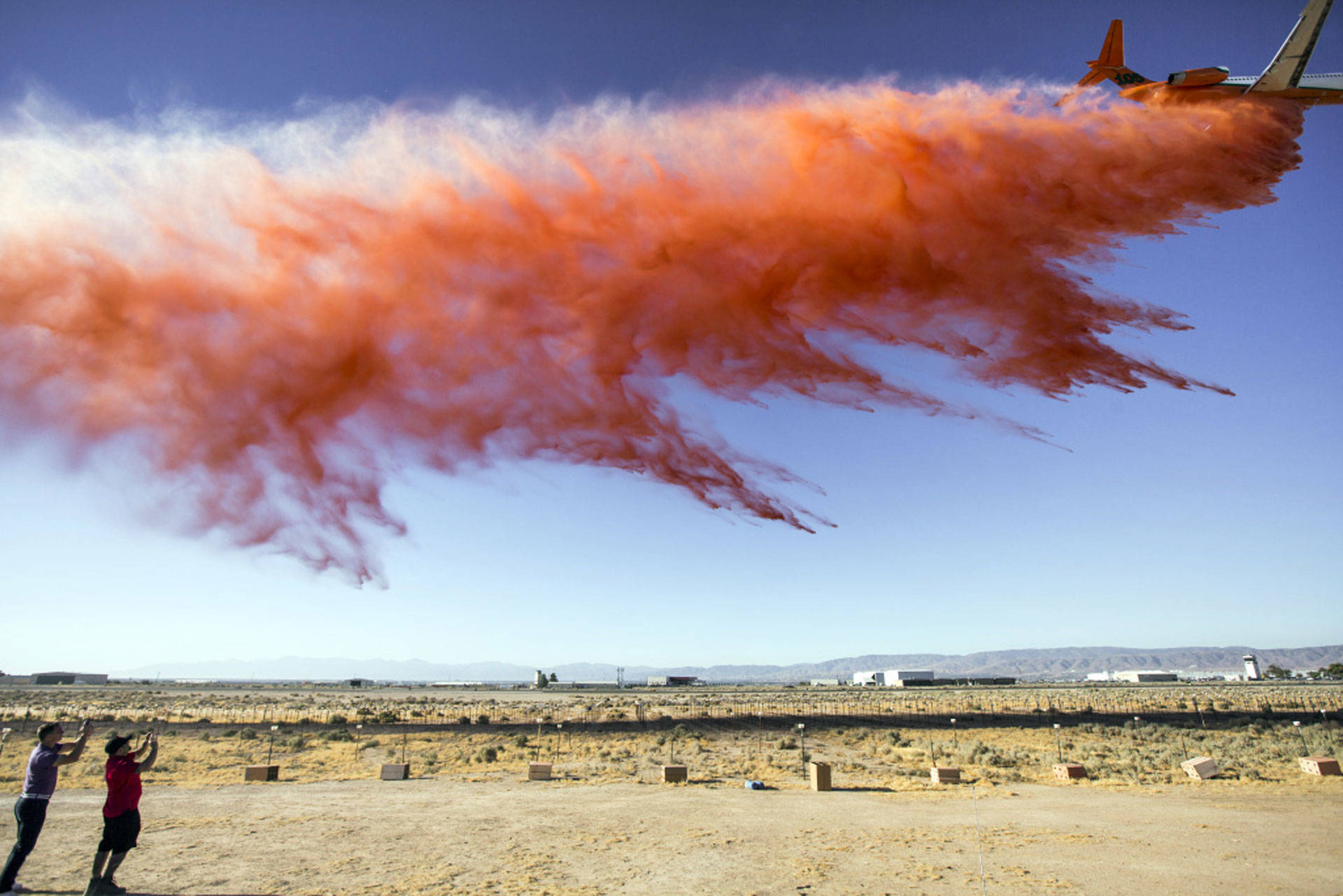
"caption": "The U.S. Forest Service conducts a fire retardant drop test for a new air tanker at Fox Airfield in Lancaster on July 8, 2016.",
"description": "The U.S. Forest Service conducts a fire retardant drop test for a new air tanker at Fox Airfield in Lancaster on July 8, 2016.",
"title": "SlurryDrop",
"credit": "Maya Sugarman/KPCC",
"status": "inherit",
"isLoading": false,
"fetchFailed": false
}
},
"audioPlayerReducer": {
"postId": "stream_live",
"isPaused": true,
"isPlaying": false,
"pfsActive": false,
"pledgeModalIsOpen": true,
"playerDrawerIsOpen": false,
"liveAudioPlayStartedAt": 0,
"liveAudioPlayContext": ""
},
"authorsReducer": {
"byline_stateofhealth_237828": {
"type": "authors",
"id": "byline_stateofhealth_237828",
"meta": {
"override": true
},
"slug": "byline_stateofhealth_237828",
"name": "Angus Chen\u003cbr />\u003ca href=\"http://www.npr.org/sections/health-shots/\">NPR Shots\u003c/a>",
"isLoading": false
},
"byline_news_11085026": {
"type": "authors",
"id": "byline_news_11085026",
"meta": {
"override": true
},
"slug": "byline_news_11085026",
"name": "\u003cstrong>\u003ca href=\"https://twitter.com/APBreeFowler\" target=\"_blank\">Bree Fowler\u003c/a>\u003cbr />Associated Press\u003c/strong>",
"isLoading": false
},
"byline_news_11068631": {
"type": "authors",
"id": "byline_news_11068631",
"meta": {
"override": true
},
"slug": "byline_news_11068631",
"name": "\u003cstrong>Marcia Dunn\u003cbr />AP Aerospace Writer\u003c/strong>",
"isLoading": false
},
"byline_news_11065832": {
"type": "authors",
"id": "byline_news_11065832",
"meta": {
"override": true
},
"slug": "byline_news_11065832",
"name": "Camila Domonoske",
"isLoading": false
},
"byline_news_11065696": {
"type": "authors",
"id": "byline_news_11065696",
"meta": {
"override": true
},
"slug": "byline_news_11065696",
"name": "\u003cstrong>John-Thor Dahlburg and Shawn Pogatchnik\u003cbr />Associated Press\u003c/strong>",
"isLoading": false
},
"byline_news_11060844": {
"type": "authors",
"id": "byline_news_11060844",
"meta": {
"override": true
},
"slug": "byline_news_11060844",
"name": "Jason Slotkin",
"isLoading": false
},
"byline_news_11059733": {
"type": "authors",
"id": "byline_news_11059733",
"meta": {
"override": true
},
"slug": "byline_news_11059733",
"name": "\u003cstrong>\u003ca href=\"http://www.scpr.org/about/people/staff/sanden-totten\">Sanden Totten\u003c/a>\u003cbr>\u003ca href=\"http://www.scpr.org/\">KPCC\u003c/a>\u003c/strong>",
"isLoading": false
},
"smartin": {
"type": "authors",
"id": "89",
"meta": {
"index": "authors_1716337520",
"id": "89",
"found": true
},
"name": "Stephanie Martin Taylor",
"firstName": "Stephanie Martin",
"lastName": "Taylor",
"slug": "smartin",
"email": "smartin@kqed.org",
"display_author_email": false,
"staff_mastheads": [],
"title": null,
"bio": "Stephanie Martin is a radio news reporter and anchor, and an occasional host of the \u003cem>KQED Newsroom \u003c/em>television program. While she currently focuses on housing and development issues, she has also reported on topics ranging from state and local politics to religion to arts and culture.\r\n\r\nPrior to joining KQED in 2005, Stephanie was an anchor and reporter for WFDD, the NPR affiliate in Winston-Salem, NC. She also spent several years as a television anchor, reporter and producer at various stations around the country.\r\n\r\nStephanie has received numerous awards for her reporting, including two National Headliner Awards, the Religion Newswriters Association's Best Radio Reporting Award and honors from the Associated Press and the Radio and Television Digital News Association. A series she produced from Iraq in 2005 earned a Best of Radio Award from the Society of Professional Journalists.\r\n\r\nStephanie received a graduate degree in Journalism from Columbia University. As an undergraduate at Colgate University, she worked and studied in Paris and Dijon, France, and spent a summer interning in the White House Press Office.\r\n\r\nStephanie grew up in Dallas, TX, and now lives with her husband in San Francisco.",
"avatar": "https://secure.gravatar.com/avatar/9fd3f8e9af01e14afde39822c19646e0?s=600&d=blank&r=g",
"twitter": "SMartinTaylor",
"facebook": null,
"instagram": null,
"linkedin": null,
"sites": [
{
"site": "arts",
"roles": [
"Contributor",
"subscriber"
]
},
{
"site": "news",
"roles": [
"subscriber"
]
},
{
"site": "stateofhealth",
"roles": [
"subscriber"
]
}
],
"headData": {
"title": "Stephanie Martin Taylor | KQED",
"description": null,
"ogImgSrc": "https://secure.gravatar.com/avatar/9fd3f8e9af01e14afde39822c19646e0?s=600&d=blank&r=g",
"twImgSrc": "https://secure.gravatar.com/avatar/9fd3f8e9af01e14afde39822c19646e0?s=600&d=blank&r=g"
},
"isLoading": false,
"link": "/author/smartin"
},
"bgoebel": {
"type": "authors",
"id": "214",
"meta": {
"index": "authors_1716337520",
"id": "214",
"found": true
},
"name": "Bryan Goebel",
"firstName": "Bryan",
"lastName": "Goebel",
"slug": "bgoebel",
"email": "bgoebel@kqed.org",
"display_author_email": false,
"staff_mastheads": [],
"title": null,
"bio": "Bryan Goebel is a reporter focused on transportation and housing issues. He was previously the editor of Streetsblog San Francisco, and an anchor/editor at KCBS Radio. He's a lifelong Californian and has also worked at radio stations in Barstow, Redding and Sacramento.",
"avatar": "https://secure.gravatar.com/avatar/7fdd6b065bfe9a23a71bcfa80848df88?s=600&d=blank&r=g",
"twitter": "velobry",
"facebook": null,
"instagram": null,
"linkedin": null,
"sites": [
{
"site": "news",
"roles": [
"subscriber"
]
},
{
"site": "stateofhealth",
"roles": [
"subscriber"
]
}
],
"headData": {
"title": "Bryan Goebel | KQED",
"description": null,
"ogImgSrc": "https://secure.gravatar.com/avatar/7fdd6b065bfe9a23a71bcfa80848df88?s=600&d=blank&r=g",
"twImgSrc": "https://secure.gravatar.com/avatar/7fdd6b065bfe9a23a71bcfa80848df88?s=600&d=blank&r=g"
},
"isLoading": false,
"link": "/author/bgoebel"
},
"danbrekke": {
"type": "authors",
"id": "222",
"meta": {
"index": "authors_1716337520",
"id": "222",
"found": true
},
"name": "Dan Brekke",
"firstName": "Dan",
"lastName": "Brekke",
"slug": "danbrekke",
"email": "dbrekke@kqed.org",
"display_author_email": true,
"staff_mastheads": [
"news",
"science"
],
"title": "KQED Editor and Reporter",
"bio": "Dan Brekke is a reporter and editor for KQED News, responsible for coverage of topics ranging from California water issues to the Bay Area's transportation challenges. In a newsroom career that began in Chicago in 1972, Dan has worked for \u003cem>The San Francisco Examiner,\u003c/em> Wired and TechTV and has been published in The New York Times, The New York Times Magazine, Business 2.0, Salon and elsewhere.\r\n\r\nSince joining KQED in 2007, Dan has reported, edited and produced both radio and online features and breaking news pieces. He has shared as both editor and reporter in four Society of Professional Journalists Norcal Excellence in Journalism awards and one Edward R. Murrow regional award. He was chosen for a spring 2017 residency at the Mesa Refuge to advance his research on California salmon.\r\n\r\nEmail Dan at: \u003ca href=\"mailto:dbrekke@kqed.org\">dbrekke@kqed.org\u003c/a>\r\n\r\n\u003cstrong>Twitter:\u003c/strong> \u003ca href=\"https://twitter.com/danbrekke\" rel=\"noopener noreferrer\">twitter.com/danbrekke\u003c/a>\r\n\u003cstrong>Facebook:\u003c/strong> \u003ca href=\"https://www.facebook.com/danbrekke\" rel=\"noopener noreferrer\">www.facebook.com/danbrekke\u003c/a>\r\n\u003cstrong>LinkedIn:\u003c/strong> \u003ca href=\"https://www.linkedin.com/in/danbrekke\" rel=\"noopener noreferrer\">www.linkedin.com/in/danbrekke\u003c/a>",
"avatar": "https://secure.gravatar.com/avatar/8f1f0d2a978fb3b23426c922c7e2af558fa36905b49c4ce76a97dc3c72d27226?s=600&d=mm&r=g",
"twitter": "danbrekke",
"bluesky": null,
"facebook": null,
"instagram": "https://www.instagram.com/dan.brekke/",
"linkedin": "https://www.linkedin.com/in/danbrekke/",
"sites": [
{
"site": "news",
"roles": [
"administrator",
"create_posts"
]
},
{
"site": "stateofhealth",
"roles": [
"editor"
]
},
{
"site": "science",
"roles": [
"editor"
]
},
{
"site": "quest",
"roles": [
"contributor"
]
},
{
"site": "food",
"roles": [
"contributor"
]
},
{
"site": "forum",
"roles": [
"contributor"
]
},
{
"site": "elections",
"roles": [
"editor"
]
},
{
"site": "liveblog",
"roles": [
"editor"
]
}
],
"headData": {
"title": "Dan Brekke | KQED",
"description": "KQED Editor and Reporter",
"ogImgSrc": "https://secure.gravatar.com/avatar/8f1f0d2a978fb3b23426c922c7e2af558fa36905b49c4ce76a97dc3c72d27226?s=600&d=mm&r=g",
"twImgSrc": "https://secure.gravatar.com/avatar/8f1f0d2a978fb3b23426c922c7e2af558fa36905b49c4ce76a97dc3c72d27226?s=600&d=mm&r=g"
},
"isLoading": false,
"link": "/author/danbrekke"
},
"rachael-myrow": {
"type": "authors",
"id": "251",
"meta": {
"index": "authors_1716337520",
"id": "251",
"found": true
},
"name": "Rachael Myrow",
"firstName": "Rachael",
"lastName": "Myrow",
"slug": "rachael-myrow",
"email": "rmyrow@kqed.org",
"display_author_email": true,
"staff_mastheads": [
"news"
],
"title": "Senior Editor of KQED's Silicon Valley News Desk",
"bio": "• I write and edit stories about how Silicon Valley power and policies shape everyday life in California. I’m also passionate about making Bay Area history and culture more accessible to a broad public. • I’ve been a journalist for most of my life, starting in high school with The Franklin Press in Los Angeles, where I grew up. While earning my first degree in English at UC Berkeley, I got my start in public radio at KALX-FM. After completing a second degree in journalism at Cal, I landed my first professional job at Marketplace, then moved on to KPCC (now LAist), and then KQED, where I hosted The California Report for more than seven years. • My reporting has appeared on NPR, The World, WBUR’s \u003ci>Here & Now\u003c/i>, and the BBC. I also guest host for KQED’s \u003ci>Forum\u003c/i>, as well as the Commonwealth Club in San Francisco. • I speak periodically on media, democracy and technology issues, and do voiceover work for documentaries and educational video projects. • Outside of the studio, you'll find me hiking Bay Area trails and whipping up Insta-ready meals in my kitchen. • I do not accept gifts, money, or favors from anyone connected to my reporting, I don't pay people for information, and I do not support or donate to political causes. • I strive to treat the people I report on with fairness, honesty, and respect. I also recognize there are often multiple sides to a story and work to verify information through multiple sources and documentation. If I get something wrong, I correct it.",
"avatar": "https://secure.gravatar.com/avatar/3ed8a3c5f26025e4a805ba634cda8cd764906b97438a6d9ce216b044e340da4e?s=600&d=blank&r=g",
"twitter": "rachaelmyrow",
"bluesky": null,
"facebook": null,
"instagram": null,
"linkedin": "https://www.linkedin.com/in/rachaelmyrow/",
"sites": [
{
"site": "arts",
"roles": [
"administrator"
]
},
{
"site": "news",
"roles": [
"edit_others_posts",
"editor"
]
},
{
"site": "futureofyou",
"roles": [
"editor"
]
},
{
"site": "bayareabites",
"roles": [
"editor"
]
},
{
"site": "stateofhealth",
"roles": [
"editor"
]
},
{
"site": "science",
"roles": [
"editor"
]
},
{
"site": "food",
"roles": [
"editor"
]
},
{
"site": "forum",
"roles": [
"editor"
]
},
{
"site": "liveblog",
"roles": [
"author"
]
}
],
"headData": {
"title": "Rachael Myrow | KQED",
"description": "Senior Editor of KQED's Silicon Valley News Desk",
"ogImgSrc": "https://secure.gravatar.com/avatar/3ed8a3c5f26025e4a805ba634cda8cd764906b97438a6d9ce216b044e340da4e?s=600&d=blank&r=g",
"twImgSrc": "https://secure.gravatar.com/avatar/3ed8a3c5f26025e4a805ba634cda8cd764906b97438a6d9ce216b044e340da4e?s=600&d=blank&r=g"
},
"isLoading": false,
"link": "/author/rachael-myrow"
}
},
"pagesReducer": {
"news_category_technology": {
"type": "terms",
"id": "news_248",
"meta": {
"index": "terms_1716263798",
"site": "news",
"id": "248",
"score": 10.931828
},
"featImg": null,
"name": "Technology",
"description": null,
"taxonomy": "category",
"headData": {
"twImgId": null,
"twTitle": null,
"ogTitle": null,
"ogImgId": null,
"twDescription": null,
"description": null,
"title": "Technology Archives | KQED News",
"ogDescription": null
},
"ttid": 256,
"slug": "technology",
"isLoading": false,
"title": "Technology",
"pageMeta": {
"site": "news",
"WpPageTemplate": "page-topic-editorial",
"currentPage": 131
},
"blocks": [
{
"blockName": "kqed/post-list",
"attrs": {
"layout": "cardArticle2",
"query": "posts/news?category=technology",
"seeMore": false,
"paginated": true,
"page": 131
}
},
{
"blockName": "kqed/ad"
}
]
}
},
"pfsSessionReducer": {},
"postsReducer": {
"stream_live": {
"type": "live",
"id": "stream_live",
"audioUrl": "https://streams.kqed.org/kqedradio",
"title": "Live Stream",
"excerpt": "Live Stream information currently unavailable.",
"link": "/radio",
"featImg": "",
"label": {
"name": "KQED Live",
"link": "/"
}
},
"stream_kqedNewscast": {
"type": "posts",
"id": "stream_kqedNewscast",
"audioUrl": "https://www.kqed.org/.stream/anon/radio/RDnews/newscast.mp3?_=1",
"title": "KQED Newscast",
"featImg": "",
"label": {
"name": "88.5 FM",
"link": "/"
}
},
"stateofhealth_237828": {
"type": "posts",
"id": "stateofhealth_237828",
"meta": {
"index": "posts_1716263798",
"site": "stateofhealth",
"id": "237828",
"score": null,
"sort": [
1474046406000
]
},
"guestAuthors": [],
"slug": "distracted-drivers-playing-pokemon-go-create-new-public-safety-threat-california-researchers-say",
"title": "Drivers Playing Pokemon Go Pose New Safety Threat, Researchers Say",
"publishDate": 1474046406,
"format": "standard",
"headTitle": "Drivers Playing Pokemon Go Pose New Safety Threat, Researchers Say | KQED",
"labelTerm": {
"site": "stateofhealth"
},
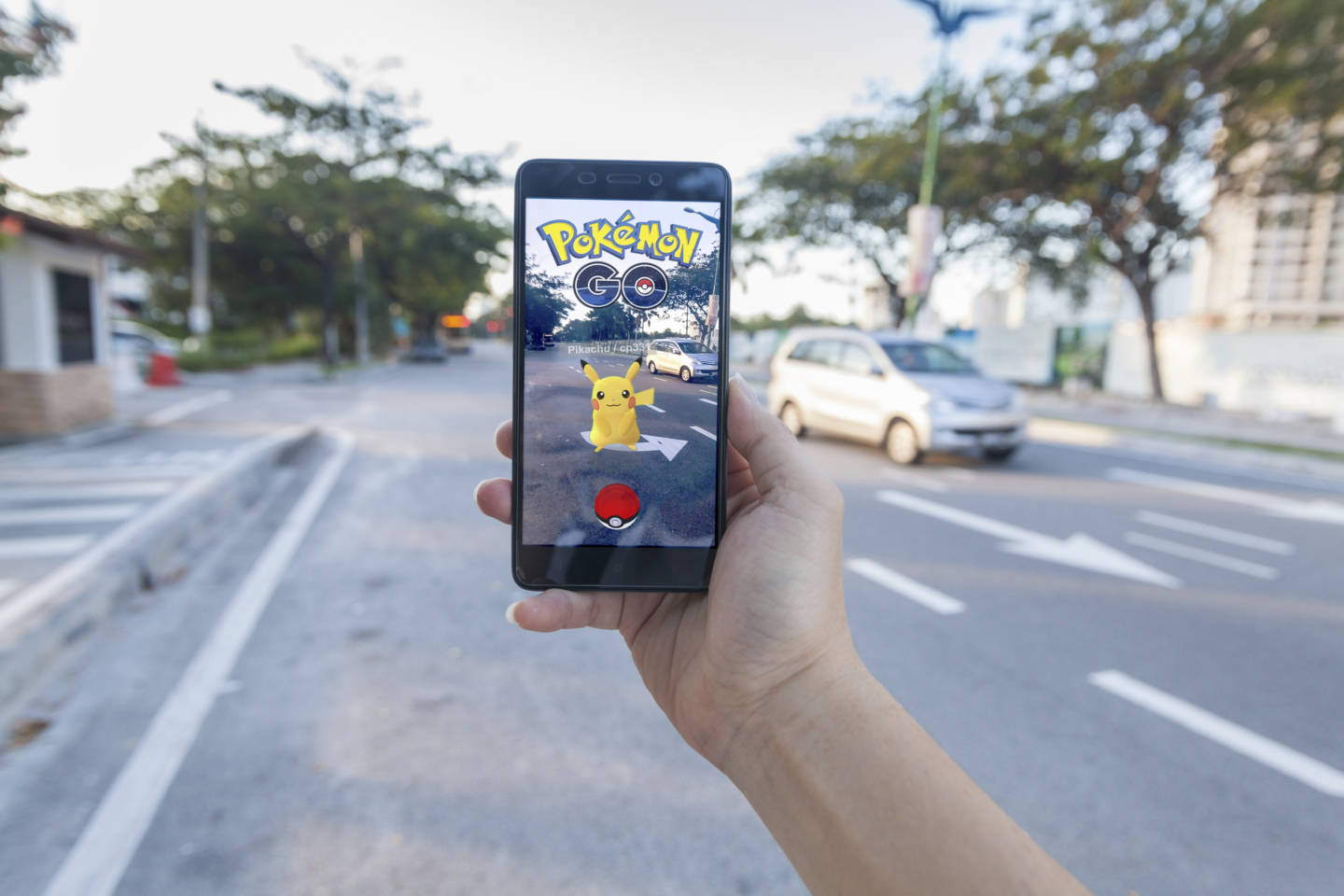
"content": "\u003cp>Pokemon Go trainers will do almost anything for a rare find, including getting into a car and speeding around to catch them. And then they tweet about it.\u003c/p>\n\u003cp>According to a study, there were over 113,000 social media messages in 10 days last July that showed people getting into potentially unsafe traffic situations while trying to catch cute virtual monsters.\u003c/p>\n\u003cp>One of the Twitter posts came from the Baltimore Police Department, which posted body camera footage of officers talking on the sidewalk late at night on July 18. In a moment, an SUV strikes their parked cruiser and skids down the street.\u003c/p>\n\u003cp>“Are you OK?” one of the officers says while hurrying up to the car.\u003c/p>\n\u003cp>“That’s what I get for playing this dumbass game,” the driver replies. He shakes his head at his phone and palms his face.\u003c/p>\n\u003cp>[ad fullwidth]\u003c/p>\n\u003cp>A lot of people have been dangerously close to getting into similar accidents, according to the study published Friday in \u003cem>JAMA Internal Medicine.\u003c/em>\u003c/p>\n\u003cp>In an effort to plumb how much of a menace players of the wildly popular augmented reality game present, the researchers analyzed 345,433 tweets between July 10 and 19 that contained the words “Pokemon” and “driving, drives, drive” or “car.”\u003c/p>\n\u003cp>Eighteen percent of those showed that someone was playing and driving. Eleven percent suggested a passenger was playing, and 4 percent suggested a pedestrian was playing near traffic.\u003c/p>\n\u003cp>It’s difficult to assess from Twitter just how big the problem is overall. Not everyone uses social media, and of the people who do tweet, not all of them will post about their motor vehicle adventures with Pokemon Go. “[So] we know we’re undercounting,” says John Ayers, a big data scientist at San Diego State University and an author of the study.\u003c/p>\n\u003cp>But undercounting by how much is impossible to say, and the analysis didn’t reveal if people were getting into crashes or not. According to the Centers for Disease Control and Prevention, 1,161 people are injured daily in crashes involving distractions like calls or texting. In Ayers’ 10-day study period, they found 14 Pokemon Go-related motor vehicle accidents in a separate search of media reports.\u003c/p>\n\u003cp>Still, catching Pokemon could be a special hazard to the road, Ayers thinks. “This is a new distraction amplified for many, many reasons,” he says. “In the case of augmented reality games, the goal is to interact with your environment.” In driving, that can be dangerous.\u003c/p>\n\u003cp>And people may choose to drive so they can cover more ground and catch more Pokemon, spending a prolonged time driving and using the app. “You get in the car to go play. Think about that. That’s crazy.”\u003c/p>\n\u003cp>The data show that catching Pokemon is a threat to drivers and pedestrians, agrees Catherine McDonald, a researcher at the University Of Pennsylvania School Of Nursing and the Children’s Hospital of Philadelphia who studies risky driving in teens. And it could be particularly true for young people, who may prioritize a charmander, possibly the cutest Pokemon in the game, over the road. “The gaming aspect or the collecting of Pokemon and the competition aspect may outweigh some of the [safety] risks for them,” she says.\u003c/p>\n\u003cp>Pokemon GO already shows warning alerts when the phone is moving over a certain speed limit and disables the game if the user indicates they’re driving. But, Ayers says that Niantic, the game developer, should go further like excluding play for everyone traveling at driving speeds, including passengers. Niantic did not respond to a request for comment.\u003c/p>\n\u003cp>Similar to how regulations require the automotive industry to include features like seat belts, Ayers says tech developers should have a responsibility to public safety as they use new technologies, like the augmented reality feature that Pokemon GO employs. “We need to make it so not just Pokemon Go but all augmented reality are restricted in some way when you’re at speed or recently been at speed,” he says.\u003c/p>\n\u003cp>Developers like Niantic might be able to update the app to make it safer, but data scientist Sean Young at UCLA and the University of California Institute for Prediction Technology says they’re not obligated to make something safe. “It’s up to researchers and public health officials to be able to keep up to date with technologies like this,” he says, “and when these things should be regulated and how.”\u003c/p>\n\u003cp>Understanding that is going to take effort from people with varied expertise. “Technology is having such a strong effect on our lives [that] we need multiple areas to converge,” Young says. “The developers of Pokemon Go can do one thing. Researchers can also help. Law enforcement can also help.”\u003c/p>\n\u003cp>And, Young adds, consumers need to decide what tech they use, and when.\u003c/p>\n\u003cp>\u003c/p>\n\u003cp>\u003cem>Angus Rohan Chen is a reporter and radio producer living in New York City. He has a dry wit and no hobbies. Please be his friend on Twitter: @angRchen.\u003c/em>\u003c/p>\n\n",
"blocks": [],
"excerpt": "Catching Pokemon while behind the wheel is a special hazard to drivers and pedestrians.",
"status": "publish",
"parent": 0,
"modified": 1721108452,
"stats": {
"hasAudio": false,
"hasVideo": false,
"hasChartOrMap": false,
"iframeSrcs": [],
"hasGoogleForm": false,
"hasGallery": false,
"hasHearkenModule": false,
"hasPolis": false,
"paragraphCount": 21,
"wordCount": 869
},
"headData": {
"title": "Drivers Playing Pokemon Go Pose New Safety Threat, Researchers Say",
"description": "Catching Pokemon while behind the wheel is a special hazard to drivers and pedestrians.",
"ogTitle": "",
"ogDescription": "",
"ogImgId": "",
"twTitle": "",
"twDescription": "",
"twImgId": "",
"schema": {
"@context": "https://schema.org",
"@type": "Article",
"headline": "Drivers Playing Pokemon Go Pose New Safety Threat, Researchers Say",
"datePublished": "2016-09-16T10:20:06-07:00",
"dateModified": "2024-07-15T22:40:52-07:00",
"image": "https://cdn.kqed.org/wp-content/uploads/2020/02/KQED-OG-Image@1x.png"
}
},
"sticky": false,
"nprByline": "Angus Chen\u003cbr />\u003ca href=\"http://www.npr.org/sections/health-shots/\">NPR Shots\u003c/a>",
"path": "/stateofhealth/237828/distracted-drivers-playing-pokemon-go-create-new-public-safety-threat-california-researchers-say",
"audioTrackLength": null,
"parsedContent": [
{
"type": "contentString",
"content": "\u003cdiv class=\"post-body\">\u003cp>\u003cp>Pokemon Go trainers will do almost anything for a rare find, including getting into a car and speeding around to catch them. And then they tweet about it.\u003c/p>\n\u003cp>According to a study, there were over 113,000 social media messages in 10 days last July that showed people getting into potentially unsafe traffic situations while trying to catch cute virtual monsters.\u003c/p>\n\u003cp>One of the Twitter posts came from the Baltimore Police Department, which posted body camera footage of officers talking on the sidewalk late at night on July 18. In a moment, an SUV strikes their parked cruiser and skids down the street.\u003c/p>\n\u003cp>“Are you OK?” one of the officers says while hurrying up to the car.\u003c/p>\n\u003cp>“That’s what I get for playing this dumbass game,” the driver replies. He shakes his head at his phone and palms his face.\u003c/p>\n\u003cp>\u003c/p>\u003c/div>",
"attributes": {
"named": {},
"numeric": []
}
},
{
"type": "component",
"content": "",
"name": "ad",
"attributes": {
"named": {
"label": "fullwidth"
},
"numeric": [
"fullwidth"
]
}
},
{
"type": "contentString",
"content": "\u003cdiv class=\"post-body\">\u003cp>\u003c/p>\n\u003cp>A lot of people have been dangerously close to getting into similar accidents, according to the study published Friday in \u003cem>JAMA Internal Medicine.\u003c/em>\u003c/p>\n\u003cp>In an effort to plumb how much of a menace players of the wildly popular augmented reality game present, the researchers analyzed 345,433 tweets between July 10 and 19 that contained the words “Pokemon” and “driving, drives, drive” or “car.”\u003c/p>\n\u003cp>Eighteen percent of those showed that someone was playing and driving. Eleven percent suggested a passenger was playing, and 4 percent suggested a pedestrian was playing near traffic.\u003c/p>\n\u003cp>It’s difficult to assess from Twitter just how big the problem is overall. Not everyone uses social media, and of the people who do tweet, not all of them will post about their motor vehicle adventures with Pokemon Go. “[So] we know we’re undercounting,” says John Ayers, a big data scientist at San Diego State University and an author of the study.\u003c/p>\n\u003cp>But undercounting by how much is impossible to say, and the analysis didn’t reveal if people were getting into crashes or not. According to the Centers for Disease Control and Prevention, 1,161 people are injured daily in crashes involving distractions like calls or texting. In Ayers’ 10-day study period, they found 14 Pokemon Go-related motor vehicle accidents in a separate search of media reports.\u003c/p>\n\u003cp>Still, catching Pokemon could be a special hazard to the road, Ayers thinks. “This is a new distraction amplified for many, many reasons,” he says. “In the case of augmented reality games, the goal is to interact with your environment.” In driving, that can be dangerous.\u003c/p>\n\u003cp>And people may choose to drive so they can cover more ground and catch more Pokemon, spending a prolonged time driving and using the app. “You get in the car to go play. Think about that. That’s crazy.”\u003c/p>\n\u003cp>The data show that catching Pokemon is a threat to drivers and pedestrians, agrees Catherine McDonald, a researcher at the University Of Pennsylvania School Of Nursing and the Children’s Hospital of Philadelphia who studies risky driving in teens. And it could be particularly true for young people, who may prioritize a charmander, possibly the cutest Pokemon in the game, over the road. “The gaming aspect or the collecting of Pokemon and the competition aspect may outweigh some of the [safety] risks for them,” she says.\u003c/p>\n\u003cp>Pokemon GO already shows warning alerts when the phone is moving over a certain speed limit and disables the game if the user indicates they’re driving. But, Ayers says that Niantic, the game developer, should go further like excluding play for everyone traveling at driving speeds, including passengers. Niantic did not respond to a request for comment.\u003c/p>\n\u003cp>Similar to how regulations require the automotive industry to include features like seat belts, Ayers says tech developers should have a responsibility to public safety as they use new technologies, like the augmented reality feature that Pokemon GO employs. “We need to make it so not just Pokemon Go but all augmented reality are restricted in some way when you’re at speed or recently been at speed,” he says.\u003c/p>\n\u003cp>Developers like Niantic might be able to update the app to make it safer, but data scientist Sean Young at UCLA and the University of California Institute for Prediction Technology says they’re not obligated to make something safe. “It’s up to researchers and public health officials to be able to keep up to date with technologies like this,” he says, “and when these things should be regulated and how.”\u003c/p>\n\u003cp>Understanding that is going to take effort from people with varied expertise. “Technology is having such a strong effect on our lives [that] we need multiple areas to converge,” Young says. “The developers of Pokemon Go can do one thing. Researchers can also help. Law enforcement can also help.”\u003c/p>\n\u003cp>And, Young adds, consumers need to decide what tech they use, and when.\u003c/p>\n\u003cp>\u003c/p>\n\u003cp>\u003cem>Angus Rohan Chen is a reporter and radio producer living in New York City. He has a dry wit and no hobbies. Please be his friend on Twitter: @angRchen.\u003c/em>\u003c/p>\n\n\u003c/div>\u003c/p>",
"attributes": {
"named": {},
"numeric": []
}
}
],
"link": "/stateofhealth/237828/distracted-drivers-playing-pokemon-go-create-new-public-safety-threat-california-researchers-say",
"authors": [
"byline_stateofhealth_237828"
],
"categories": [
"stateofhealth_2746"
],
"tags": [
"stateofhealth_2919",
"stateofhealth_2916",
"stateofhealth_2808",
"stateofhealth_2519",
"stateofhealth_2915",
"stateofhealth_2917",
"stateofhealth_2918"
],
"featImg": "stateofhealth_237808",
"label": "stateofhealth"
},
"news_11087863": {
"type": "posts",
"id": "news_11087863",
"meta": {
"index": "posts_1716263798",
"site": "news",
"id": "11087863",
"score": null,
"sort": [
1473873882000
]
},
"parent": 0,
"labelTerm": {
"site": "news",
"term": 6944
},
"blocks": [],
"publishDate": 1473873882,
"format": "standard",
"disqusTitle": "Muni Riders, Your Long Cell-Free Underground Nightmare May Be Over",
"title": "Muni Riders, Your Long Cell-Free Underground Nightmare May Be Over",
"headTitle": "News Fix | KQED News",
"content": "\u003cp>Cell service could be coming soon to one of the last places in the truly civilized world that still lacks it: San Francisco Muni's tunnels and underground stations.\u003c/p>\n\u003cp>That's the bottom line of a proposal announced Wednesday under which BART, which finished \u003ca href=\"http://www.sfgate.com/bayarea/article/Muni-tunnels-still-have-no-cell-service-4295270.php\" target=\"_blank\">installing cell service\u003c/a> in its tunnels and the Transbay Tube in 2010, will partner with Muni to extend coverage to the city-run transit system.\u003c/p>\n\u003cp>The plan would allow BART to negotiate with cellular carriers to install equipment in the Muni tunnels and underground stations.\u003c/p>\n\u003cp>Mobile service for Muni's underground passengers has been promoted as a safety enhancement -- allowing passengers freer communications in emergencies -- as well as a convenience for those wanting to tell their bosses and dates they'll be late because of a delayed train.\u003c/p>\n\u003cp>Muni has said in the past it simply didn't have the money to install an underground cellular network. The new plan would get past that hurdle by having BART take the lead on the project and getting the telecoms who would benefit from the new service to pay for it.\u003c/p>\n\u003cp>[ad fullwidth]\u003c/p>\n\u003cp>The proposal was unveiled by Board of Supervisors President London Breed, Nick Josefowitz, one of San Francisco's representatives on the BART board of directors, and Ed Reiskin, head of the San Francisco Municipal Transportation Agency. The SFMTA board will consider the plan at its meeting next Tuesday.\u003c/p>\n\u003cp>If approved, BART would begin negotiations with telecoms that use its \"neutral host\" underground cellular network. Those firms include all the big carriers, including Verizon, AT&T, Sprint, T-Mobile and Metro PCS. Construction of the new Muni network would take 12 to 18 months after an agreement is reached, BART and the city say, with all costs borne by the carriers.\u003c/p>\n\u003cp>\u003c/p>\n\u003cp>To read the statements from Supervisor Breed et al. in the Wednesday press release, officials see this as a done deal. To wit:\u003c/p>\n\u003cblockquote>\u003cp>“My office has been working closely with Muni and BART for a couple years to bring cell service to Muni subway riders,” said Board President London Breed. “Our plan not only improves the rider experience; it will actually make money for Muni. It’s truly a win-win, and I want to thank Director Josefowitz and all the BART staff, Sonali Bose and Ed Reiskin at SFMTA, and my Chief of Staff Conor Johnston.”\u003c/p>\n\u003cp>“We have heard from our riders who have asked for cell service in the subway for some time, so we are working to deliver this amenity in partnership with BART,” said SFMTA Director of Transportation, Ed Reiskin. “Providing cell service within the Muni Metro will help improve communications to our Muni riders, can assist in emergency situations, and will give the riding public an additional service they want.”\u003c/p>\n\u003cp>“Today is about governments working together to make common sense improvements to peoples' lives,” said BART Director Nick Josefowitz. “I'm proud to have helped put together this collaboration that will have BART infrastructure and know-how put to work helping Muni riders on their daily commutes.”\u003c/p>\u003c/blockquote>\n\n",
"disqusIdentifier": "11087863 http://ww2.kqed.org/news/?p=11087863",
"disqusUrl": "https://ww2.kqed.org/news/2016/09/14/plan-would-bring-cell-service-to-s-f-muni-tunnels-underground-stations/",
"stats": {
"hasVideo": false,
"hasChartOrMap": false,
"hasAudio": false,
"hasPolis": false,
"wordCount": 521,
"hasGoogleForm": false,
"hasGallery": false,
"hasHearkenModule": false,
"iframeSrcs": [],
"paragraphCount": 13
},
"modified": 1473888747,
"excerpt": "Under proposal, BART would take lead in negotiations to extend its network to Muni facilities. ",
"headData": {
"twImgId": "",
"twTitle": "",
"ogTitle": "",
"ogImgId": "",
"twDescription": "",
"description": "Under proposal, BART would take lead in negotiations to extend its network to Muni facilities. ",
"title": "Muni Riders, Your Long Cell-Free Underground Nightmare May Be Over | KQED",
"ogDescription": "",
"schema": {
"@context": "https://schema.org",
"@type": "NewsArticle",
"headline": "Muni Riders, Your Long Cell-Free Underground Nightmare May Be Over",
"datePublished": "2016-09-14T10:24:42-07:00",
"dateModified": "2016-09-14T14:32:27-07:00",
"image": "https://cdn.kqed.org/wp-content/uploads/2020/02/KQED-OG-Image@1x.png",
"isAccessibleForFree": "True",
"publisher": {
"@type": "NewsMediaOrganization",
"@id": "https://www.kqed.org/#organization",
"name": "KQED",
"logo": "https://cdn.kqed.org/wp-content/uploads/2020/02/KQED-OG-Image@1x.png",
"url": "https://www.kqed.org",
"sameAs": [
"https://www.facebook.com/KQED",
"https://twitter.com/KQED",
"https://www.instagram.com/kqed/",
"https://www.tiktok.com/@kqedofficial",
"https://www.linkedin.com/company/kqed",
"https://www.youtube.com/channel/UCeC0IOo7i1P_61zVUWbJ4nw"
]
}
}
},
"guestAuthors": [],
"slug": "plan-would-bring-cell-service-to-s-f-muni-tunnels-underground-stations",
"status": "publish",
"nprStoryId": "493940095",
"path": "/news/11087863/plan-would-bring-cell-service-to-s-f-muni-tunnels-underground-stations",
"audioTrackLength": null,
"parsedContent": [
{
"type": "contentString",
"content": "\u003cdiv class=\"post-body\">\u003cp>\u003cp>Cell service could be coming soon to one of the last places in the truly civilized world that still lacks it: San Francisco Muni's tunnels and underground stations.\u003c/p>\n\u003cp>That's the bottom line of a proposal announced Wednesday under which BART, which finished \u003ca href=\"http://www.sfgate.com/bayarea/article/Muni-tunnels-still-have-no-cell-service-4295270.php\" target=\"_blank\">installing cell service\u003c/a> in its tunnels and the Transbay Tube in 2010, will partner with Muni to extend coverage to the city-run transit system.\u003c/p>\n\u003cp>The plan would allow BART to negotiate with cellular carriers to install equipment in the Muni tunnels and underground stations.\u003c/p>\n\u003cp>Mobile service for Muni's underground passengers has been promoted as a safety enhancement -- allowing passengers freer communications in emergencies -- as well as a convenience for those wanting to tell their bosses and dates they'll be late because of a delayed train.\u003c/p>\n\u003cp>Muni has said in the past it simply didn't have the money to install an underground cellular network. The new plan would get past that hurdle by having BART take the lead on the project and getting the telecoms who would benefit from the new service to pay for it.\u003c/p>\n\u003cp>\u003c/p>\u003c/div>",
"attributes": {
"named": {},
"numeric": []
}
},
{
"type": "component",
"content": "",
"name": "ad",
"attributes": {
"named": {
"label": "fullwidth"
},
"numeric": [
"fullwidth"
]
}
},
{
"type": "contentString",
"content": "\u003cdiv class=\"post-body\">\u003cp>\u003c/p>\n\u003cp>The proposal was unveiled by Board of Supervisors President London Breed, Nick Josefowitz, one of San Francisco's representatives on the BART board of directors, and Ed Reiskin, head of the San Francisco Municipal Transportation Agency. The SFMTA board will consider the plan at its meeting next Tuesday.\u003c/p>\n\u003cp>If approved, BART would begin negotiations with telecoms that use its \"neutral host\" underground cellular network. Those firms include all the big carriers, including Verizon, AT&T, Sprint, T-Mobile and Metro PCS. Construction of the new Muni network would take 12 to 18 months after an agreement is reached, BART and the city say, with all costs borne by the carriers.\u003c/p>\n\u003cp>\u003c/p>\n\u003cp>To read the statements from Supervisor Breed et al. in the Wednesday press release, officials see this as a done deal. To wit:\u003c/p>\n\u003cblockquote>\u003cp>“My office has been working closely with Muni and BART for a couple years to bring cell service to Muni subway riders,” said Board President London Breed. “Our plan not only improves the rider experience; it will actually make money for Muni. It’s truly a win-win, and I want to thank Director Josefowitz and all the BART staff, Sonali Bose and Ed Reiskin at SFMTA, and my Chief of Staff Conor Johnston.”\u003c/p>\n\u003cp>“We have heard from our riders who have asked for cell service in the subway for some time, so we are working to deliver this amenity in partnership with BART,” said SFMTA Director of Transportation, Ed Reiskin. “Providing cell service within the Muni Metro will help improve communications to our Muni riders, can assist in emergency situations, and will give the riding public an additional service they want.”\u003c/p>\n\u003cp>“Today is about governments working together to make common sense improvements to peoples' lives,” said BART Director Nick Josefowitz. “I'm proud to have helped put together this collaboration that will have BART infrastructure and know-how put to work helping Muni riders on their daily commutes.”\u003c/p>\u003c/blockquote>\n\n\u003c/div>\u003c/p>",
"attributes": {
"named": {},
"numeric": []
}
}
],
"link": "/news/11087863/plan-would-bring-cell-service-to-s-f-muni-tunnels-underground-stations",
"authors": [
"222"
],
"programs": [
"news_6944"
],
"categories": [
"news_248",
"news_1397"
],
"tags": [
"news_269",
"news_320"
],
"featImg": "news_11087915",
"label": "news_6944"
},
"news_11085585": {
"type": "posts",
"id": "news_11085585",
"meta": {
"index": "posts_1716263798",
"site": "news",
"id": "11085585",
"score": null,
"sort": [
1473735536000
]
},
"guestAuthors": [],
"slug": "new-tool-aims-to-simplify-finding-senior-care",
"title": "New Tool Aims to Simplify Finding Senior Care",
"publishDate": 1473735536,
"format": "standard",
"headTitle": "New Tool Aims to Simplify Finding Senior Care | KQED",
"labelTerm": {
"term": 6944,
"site": "news"
},
"content": "\u003cp>A few months ago my dad called me in a panic from his home in Texas. My 73-year-old mom had just had knee surgery and the hospital was about to release her. Problem was, she was still feeble and wobbly — not at all ready to go home. Would I get on the internet and find a place where she could safely stabilize?\u003c/p>\n\u003cp>Sounded easy enough, but after several hours searching the web for nursing homes in my mom’s ZIP code, perusing outdated websites and calling around to find out which facilities had openings, I felt frustrated and confused. If our society is aging as rapidly as everyone says, why hasn’t the technology caught up to meet the impending need? And, when time was of the essence (as it was for my mom), why would finding a place be such a time-consuming process?\u003c/p>\n\u003cp>[soundcloud url=”https://api.soundcloud.com/tracks/282750868″ params=”color=ff5500&auto_play=false&hide_related=false&show_comments=true&show_user=true&show_reposts=false” width=”100%” height=”166″ iframe=”true” /]\u003c/p>\n\u003cp>So, no surprise that the story of \u003ca href=\"https://www.seniorly.com/\">Seniorly \u003c/a>— a startup that’s tackling some of these issues — caught my attention. Specifically, it’s launching a new tool designed to make booking a short-term stay in an assisted living community as easy as booking a room on a site like Hotels.com or Airbnb.\u003c/p>\n\u003cp>“The senior housing industry is a highly fragmented industry,” says Arthur Bretschneider, Seniorly’s founder and CEO. “There are just so many options out there. And it’s really hard to find all these options.”\u003c/p>\n\u003cp>[ad fullwidth]\u003c/p>\n\u003cp>Technology in the senior housing industry \u003cem>has\u003c/em> been moving at a slower pace, Bretschneider says. A lot of assisted living facilities are small, family-run businesses. Even in tech-savvy San Francisco, many still don’t have websites.\u003c/p>\n\u003cp>The new search tool, launching first in San Francisco, Los Angeles and Sacramento, does a number of things that will feel familiar to customers of online hotel booking sites. Along with a comprehensive list of local facilities, users will be able to find pricing information, and conduct cost comparisons, book rooms directly through the site, take virtual video tours of communities and schedule in-person tours.\u003c/p>\n\u003cp>“I see this unmet need of technology meeting the busy lives of professionals to support their parents,” says Daniele Farnedi, former Chief Technology Officer of Trulia who now serves as one of Seniorly’s advisors. Farnedi says his support is largely driven by his own experience trying to help his father-in-law find supportive care.\u003c/p>\n\u003cp>\u003c/p>\n\u003cp>“(He) was remote, in Florida and it was a nightmare for us to really find the right location, the right place,” he says. “It was just very, very, very painful.”\u003c/p>\n\n",
"blocks": [],
"excerpt": "Startup tries to bring online hotel-booking convenience to the senior care industry.",
"status": "publish",
"parent": 0,
"modified": 1721149297,
"stats": {
"hasAudio": false,
"hasVideo": false,
"hasChartOrMap": false,
"iframeSrcs": [],
"hasGoogleForm": false,
"hasGallery": false,
"hasHearkenModule": false,
"hasPolis": false,
"paragraphCount": 11,
"wordCount": 495
},
"headData": {
"title": "New Tool Aims to Simplify Finding Senior Care | KQED",
"description": "Startup tries to bring online hotel-booking convenience to the senior care industry.",
"ogTitle": "",
"ogDescription": "",
"ogImgId": "",
"twTitle": "",
"twDescription": "",
"twImgId": "",
"schema": {
"@context": "https://schema.org",
"@type": "NewsArticle",
"headline": "New Tool Aims to Simplify Finding Senior Care",
"datePublished": "2016-09-12T19:58:56-07:00",
"dateModified": "2024-07-16T10:01:37-07:00",
"image": "https://cdn.kqed.org/wp-content/uploads/2020/02/KQED-OG-Image@1x.png",
"isAccessibleForFree": "True",
"publisher": {
"@type": "NewsMediaOrganization",
"@id": "https://www.kqed.org/#organization",
"name": "KQED",
"logo": "https://cdn.kqed.org/wp-content/uploads/2020/02/KQED-OG-Image@1x.png",
"url": "https://www.kqed.org",
"sameAs": [
"https://www.facebook.com/KQED",
"https://twitter.com/KQED",
"https://www.instagram.com/kqed/",
"https://www.tiktok.com/@kqedofficial",
"https://www.linkedin.com/company/kqed",
"https://www.youtube.com/channel/UCeC0IOo7i1P_61zVUWbJ4nw"
]
}
}
},
"sticky": false,
"nprStoryId": "493702614",
"path": "/news/11085585/new-tool-aims-to-simplify-finding-senior-care",
"audioTrackLength": null,
"parsedContent": [
{
"type": "contentString",
"content": "\u003cdiv class=\"post-body\">\u003cp>\u003cp>A few months ago my dad called me in a panic from his home in Texas. My 73-year-old mom had just had knee surgery and the hospital was about to release her. Problem was, she was still feeble and wobbly — not at all ready to go home. Would I get on the internet and find a place where she could safely stabilize?\u003c/p>\n\u003cp>Sounded easy enough, but after several hours searching the web for nursing homes in my mom’s ZIP code, perusing outdated websites and calling around to find out which facilities had openings, I felt frustrated and confused. If our society is aging as rapidly as everyone says, why hasn’t the technology caught up to meet the impending need? And, when time was of the essence (as it was for my mom), why would finding a place be such a time-consuming process?\u003c/p>\n\u003cp>\u003c/p>\u003cp>\u003cdiv class='utils-parseShortcode-shortcodes-__shortcodes__shortcodeWrapper'>\n \u003ciframe width='”100%”' height='”166″'\n scrolling='no' frameborder='no'\n src='https://w.soundcloud.com/player/?url=”https://api.soundcloud.com/tracks/282750868″&visual=true&”color=ff5500&auto_play=false&hide_related=false&show_comments=true&show_user=true&show_reposts=false”'\n title='”https://api.soundcloud.com/tracks/282750868″'>\n \u003c/iframe>\n \u003c/div>\u003c/p>\u003cp>\u003c/p>\n\u003cp>So, no surprise that the story of \u003ca href=\"https://www.seniorly.com/\">Seniorly \u003c/a>— a startup that’s tackling some of these issues — caught my attention. Specifically, it’s launching a new tool designed to make booking a short-term stay in an assisted living community as easy as booking a room on a site like Hotels.com or Airbnb.\u003c/p>\n\u003cp>“The senior housing industry is a highly fragmented industry,” says Arthur Bretschneider, Seniorly’s founder and CEO. “There are just so many options out there. And it’s really hard to find all these options.”\u003c/p>\n\u003cp>\u003c/p>\u003c/div>",
"attributes": {
"named": {},
"numeric": []
}
},
{
"type": "component",
"content": "",
"name": "ad",
"attributes": {
"named": {
"label": "fullwidth"
},
"numeric": [
"fullwidth"
]
}
},
{
"type": "contentString",
"content": "\u003cdiv class=\"post-body\">\u003cp>\u003c/p>\n\u003cp>Technology in the senior housing industry \u003cem>has\u003c/em> been moving at a slower pace, Bretschneider says. A lot of assisted living facilities are small, family-run businesses. Even in tech-savvy San Francisco, many still don’t have websites.\u003c/p>\n\u003cp>The new search tool, launching first in San Francisco, Los Angeles and Sacramento, does a number of things that will feel familiar to customers of online hotel booking sites. Along with a comprehensive list of local facilities, users will be able to find pricing information, and conduct cost comparisons, book rooms directly through the site, take virtual video tours of communities and schedule in-person tours.\u003c/p>\n\u003cp>“I see this unmet need of technology meeting the busy lives of professionals to support their parents,” says Daniele Farnedi, former Chief Technology Officer of Trulia who now serves as one of Seniorly’s advisors. Farnedi says his support is largely driven by his own experience trying to help his father-in-law find supportive care.\u003c/p>\n\u003cp>\u003c/p>\n\u003cp>“(He) was remote, in Florida and it was a nightmare for us to really find the right location, the right place,” he says. “It was just very, very, very painful.”\u003c/p>\n\n\u003c/div>\u003c/p>",
"attributes": {
"named": {},
"numeric": []
}
}
],
"link": "/news/11085585/new-tool-aims-to-simplify-finding-senior-care",
"authors": [
"89"
],
"programs": [
"news_6944"
],
"categories": [
"news_457",
"news_6266",
"news_8",
"news_248"
],
"tags": [
"news_1775",
"news_2081"
],
"featImg": "news_11085716",
"label": "news_6944"
},
"news_11085026": {
"type": "posts",
"id": "news_11085026",
"meta": {
"index": "posts_1716263798",
"site": "news",
"id": "11085026",
"score": null,
"sort": [
1473695123000
]
},
"parent": 0,
"labelTerm": {
"site": "news",
"term": 72
},
"blocks": [],
"publishDate": 1473695123,
"format": "standard",
"disqusTitle": "Tesla's Updated Autopilot System to Rely More on Radar",
"title": "Tesla's Updated Autopilot System to Rely More on Radar",
"headTitle": "The California Report | KQED News",
"content": "\u003cp>Tesla CEO Elon Musk says the electric car company is making improvements to the Autopilot system used by its vehicles, which will dramatically reduce the number and severity of crashes in which they are involved.\u003c/p>\n\u003cp>Sunday's \u003ca href=\"https://www.tesla.com/blog/upgrading-autopilot-seeing-world-radar\" target=\"_blank\" rel=\"noopener\">news\u003c/a> comes in the wake of \u003ca href=\"http://www.nytimes.com/interactive/2016/07/01/business/inside-tesla-accident.html\" target=\"_blank\" rel=\"noopener\">a May crash\u003c/a> involving a Tesla Model S that was using the semi-autonomous mode at the time. The driver died after crashing into a tractor-trailer.\u003c/p>\n\u003cp>On a conference call with reporters, Musk said he thinks that the improvements, which will roll out globally in the next week or two in the form of a software update, probably would have prevented that crash.\u003c/p>\n\u003cp>The National Highway Traffic Safety Administration, which is investigating the crash, said Sunday that Tesla has provided it with information about the changes to Autopilot, which it will review. It declined to provide an update on its \u003ca href=\"https://ww2.kqed.org/news/2016/07/12/federal-investigators-want-tesla-data-on-fatal-autopilot-crash/\" target=\"_blank\" rel=\"noopener\">Tesla investigation\u003c/a>.\u003c/p>\n\u003cp>Musk called the upgrades a \"massive enhancement,\" but he said he believes Tesla cars are already the safest on the road.\u003c/p>\n\u003cp>[ad fullwidth]\u003c/p>\n\u003cp>\"It's not about going from bad to good,\" Musk said on the call. \"Things are already good. I think it's about going from good to great.\"\u003c/p>\n\u003cp>While he acknowledged that there's no such thing as perfect safety, he predicted that the improvements will cut the accident rate for Tesla vehicles by more than half.\u003c/p>\n\u003cp>Tesla's Autopilot system can maintain a set speed, keep the car within its lane and brake automatically. Radar, which was added to all Tesla vehicles starting in October 2014, currently helps the car see things that may be blocked to cameras in bright sunlight or bad weather.\u003c/p>\n\u003cp>The improvements announced Sunday call for Autopilot to rely more on radar and less on vehicle cameras. As part of that shift, the radar will use more advanced signal processing to create a better picture of the surrounding world.\u003c/p>\n\u003cp>Musk said that he has wanted to make these kinds of improvements to Autopilot since last year, but he was told it couldn't be done for various technical reasons.\u003c/p>\n\u003cp>\"We really pushed hard on questioning all of those assumptions over the past few months,\" he said.\u003c/p>\n\u003cp>According to Tesla, one of the biggest challenges was the need to eliminate false positives. While slamming on the brakes is crucial if a driver is about to hit another vehicle, it isn't if they're about to hit something smaller, like garbage in the road. And these kinds of stops always have the potential to cause injury, making a false positive potentially dangerous.\u003c/p>\n\u003cp>\u003c/p>\n\u003cp>But Musk says the company has solved the problem through software improvements. He added that he expects the radar system to continue to improve over the next several months, as the company collects more data and makes changes.\u003c/p>\n\n",
"disqusIdentifier": "11085026 http://ww2.kqed.org/news/?p=11085026",
"disqusUrl": "https://ww2.kqed.org/news/2016/09/12/teslas-updated-autopilot-system-to-rely-more-on-radar/",
"stats": {
"hasVideo": false,
"hasChartOrMap": false,
"hasAudio": false,
"hasPolis": false,
"wordCount": 463,
"hasGoogleForm": false,
"hasGallery": false,
"hasHearkenModule": false,
"iframeSrcs": [],
"paragraphCount": 15
},
"modified": 1521760854,
"excerpt": "Company says a combination of improved sensors and data from its fleet will make semi-autonomous system safer.",
"headData": {
"twImgId": "",
"twTitle": "",
"ogTitle": "",
"ogImgId": "",
"twDescription": "",
"description": "Company says a combination of improved sensors and data from its fleet will make semi-autonomous system safer.",
"title": "Tesla's Updated Autopilot System to Rely More on Radar | KQED",
"ogDescription": "",
"schema": {
"@context": "https://schema.org",
"@type": "NewsArticle",
"headline": "Tesla's Updated Autopilot System to Rely More on Radar",
"datePublished": "2016-09-12T08:45:23-07:00",
"dateModified": "2018-03-22T16:20:54-07:00",
"image": "https://cdn.kqed.org/wp-content/uploads/2020/02/KQED-OG-Image@1x.png",
"isAccessibleForFree": "True",
"publisher": {
"@type": "NewsMediaOrganization",
"@id": "https://www.kqed.org/#organization",
"name": "KQED",
"logo": "https://cdn.kqed.org/wp-content/uploads/2020/02/KQED-OG-Image@1x.png",
"url": "https://www.kqed.org",
"sameAs": [
"https://www.facebook.com/KQED",
"https://twitter.com/KQED",
"https://www.instagram.com/kqed/",
"https://www.tiktok.com/@kqedofficial",
"https://www.linkedin.com/company/kqed",
"https://www.youtube.com/channel/UCeC0IOo7i1P_61zVUWbJ4nw"
]
}
}
},
"guestAuthors": [],
"slug": "teslas-updated-autopilot-system-to-rely-more-on-radar",
"status": "publish",
"nprByline": "\u003cstrong>\u003ca href=\"https://twitter.com/APBreeFowler\" target=\"_blank\">Bree Fowler\u003c/a>\u003cbr />Associated Press\u003c/strong>",
"nprStoryId": "493619152",
"path": "/news/11085026/teslas-updated-autopilot-system-to-rely-more-on-radar",
"audioTrackLength": null,
"parsedContent": [
{
"type": "contentString",
"content": "\u003cdiv class=\"post-body\">\u003cp>\u003cp>Tesla CEO Elon Musk says the electric car company is making improvements to the Autopilot system used by its vehicles, which will dramatically reduce the number and severity of crashes in which they are involved.\u003c/p>\n\u003cp>Sunday's \u003ca href=\"https://www.tesla.com/blog/upgrading-autopilot-seeing-world-radar\" target=\"_blank\" rel=\"noopener\">news\u003c/a> comes in the wake of \u003ca href=\"http://www.nytimes.com/interactive/2016/07/01/business/inside-tesla-accident.html\" target=\"_blank\" rel=\"noopener\">a May crash\u003c/a> involving a Tesla Model S that was using the semi-autonomous mode at the time. The driver died after crashing into a tractor-trailer.\u003c/p>\n\u003cp>On a conference call with reporters, Musk said he thinks that the improvements, which will roll out globally in the next week or two in the form of a software update, probably would have prevented that crash.\u003c/p>\n\u003cp>The National Highway Traffic Safety Administration, which is investigating the crash, said Sunday that Tesla has provided it with information about the changes to Autopilot, which it will review. It declined to provide an update on its \u003ca href=\"https://ww2.kqed.org/news/2016/07/12/federal-investigators-want-tesla-data-on-fatal-autopilot-crash/\" target=\"_blank\" rel=\"noopener\">Tesla investigation\u003c/a>.\u003c/p>\n\u003cp>Musk called the upgrades a \"massive enhancement,\" but he said he believes Tesla cars are already the safest on the road.\u003c/p>\n\u003cp>\u003c/p>\u003c/div>",
"attributes": {
"named": {},
"numeric": []
}
},
{
"type": "component",
"content": "",
"name": "ad",
"attributes": {
"named": {
"label": "fullwidth"
},
"numeric": [
"fullwidth"
]
}
},
{
"type": "contentString",
"content": "\u003cdiv class=\"post-body\">\u003cp>\u003c/p>\n\u003cp>\"It's not about going from bad to good,\" Musk said on the call. \"Things are already good. I think it's about going from good to great.\"\u003c/p>\n\u003cp>While he acknowledged that there's no such thing as perfect safety, he predicted that the improvements will cut the accident rate for Tesla vehicles by more than half.\u003c/p>\n\u003cp>Tesla's Autopilot system can maintain a set speed, keep the car within its lane and brake automatically. Radar, which was added to all Tesla vehicles starting in October 2014, currently helps the car see things that may be blocked to cameras in bright sunlight or bad weather.\u003c/p>\n\u003cp>The improvements announced Sunday call for Autopilot to rely more on radar and less on vehicle cameras. As part of that shift, the radar will use more advanced signal processing to create a better picture of the surrounding world.\u003c/p>\n\u003cp>Musk said that he has wanted to make these kinds of improvements to Autopilot since last year, but he was told it couldn't be done for various technical reasons.\u003c/p>\n\u003cp>\"We really pushed hard on questioning all of those assumptions over the past few months,\" he said.\u003c/p>\n\u003cp>According to Tesla, one of the biggest challenges was the need to eliminate false positives. While slamming on the brakes is crucial if a driver is about to hit another vehicle, it isn't if they're about to hit something smaller, like garbage in the road. And these kinds of stops always have the potential to cause injury, making a false positive potentially dangerous.\u003c/p>\n\u003cp>\u003c/p>\n\u003cp>But Musk says the company has solved the problem through software improvements. He added that he expects the radar system to continue to improve over the next several months, as the company collects more data and makes changes.\u003c/p>\n\n\u003c/div>\u003c/p>",
"attributes": {
"named": {},
"numeric": []
}
}
],
"link": "/news/11085026/teslas-updated-autopilot-system-to-rely-more-on-radar",
"authors": [
"byline_news_11085026"
],
"programs": [
"news_72"
],
"categories": [
"news_356",
"news_248",
"news_1397"
],
"tags": [
"news_18078",
"news_57"
],
"featImg": "news_11085034",
"label": "news_72"
},
"arts_11975397": {
"type": "posts",
"id": "arts_11975397",
"meta": {
"index": "posts_1716263798",
"site": "arts",
"id": "11975397",
"score": null,
"sort": [
1473460247000
]
},
"guestAuthors": [],
"slug": "priced-out-artist-moves-to-folsom-leaves-heart-in-san-jose",
"title": "Priced Out Artist Moves To Folsom, Leaves Heart in San Jose",
"publishDate": 1473460247,
"format": "audio",
"headTitle": "Priced Out Artist Moves To Folsom, Leaves Heart in San Jose | KQED",
"labelTerm": {
"site": "arts"
},
"content": "\u003cp>\u003ca href=\"https://www.facebook.com/atreyart/\" target=\"_blank\" rel=\"noopener\">Erica Atreya\u003c/a> never fell out of love with San Jose. The Silicon Valley capital just became too damn expensive. Her husband, Krishna, really wanted to buy. But even with his engineer’s salary, the couple could only afford to rent a one bedroom town home.\u003c/p>\n\u003cp>The Atreyas soon realized that if left the San Francisco Bay Area, they could actually buy a piece of the proverbial American dream. So they started house-hunting farther and farther afield, in places like Pleasanton, Dublin and Livermore. But their goal of homeownership continued to remain elusive. “We kept getting bought out by people who were offering cash,” Atreya says.\u003c/p>\n\u003cp>Finally, the Atreyas found their way to Folsom, east of Sacramento. Erika Atreya loves the small city’s easy-going vibe and its proximity to nature. But she misses San Jose.\u003c/p>\n\u003cp>[soundcloud url=”https://api.soundcloud.com/tracks/282129559″ params=”color=ff5500&auto_play=false&hide_related=false&show_comments=true&show_user=true&show_reposts=false” width=”100%” height=”166″ iframe=”true” /]\u003c/p>\n\u003cp>A year and a half out, she continues to struggle with the emotional fallout of the change. “There was more than an adjustment,” says the self-taught visual artist, who lived in San Jose for 18 years before she and her husband decamped for Folsom. “There was depression, and loneliness.”\u003c/p>\n\u003cp>[ad fullwidth]\u003c/p>\n\u003cp>For one thing, San Jose’s demographic mix makes for a richer, multi-cultural feel, which Atreya loves. For another, the art gallery scene in Folsom doesn’t really compare to her old home base. “Back home, I had so many people to reach out to in my art community,” Atreya says.\u003c/p>\n\u003cp>\u003cstrong>Room to paint in Folsom\u003c/strong>\u003c/p>\n\u003cp>That said, the Atreyas’ new three-bedroom house gives the couple space to breathe and grow. Now, instead of ever so carefully spreading out on the couch with her materials, as she used to in San Jose, Atreya has her own studio in the garage. She also has enough wall space in the house to accommodate 40 works of art, many by friends she had to leave behind.\u003c/p>\n\u003cp>Atreya is constantly adding to the collection with new works, like this one:\u003c/p>\n\u003cfigure id=\"attachment_11980479\" class=\"wp-caption aligncenter\" style=\"max-width: 549px\">\u003cimg loading=\"lazy\" decoding=\"async\" class=\"size-medium wp-image-11980479\" src=\"http://ww2.kqed.org/arts/wp-content/uploads/sites/2/2016/08/13076600_1290210411006559_6598698964301793119_n-549x600.jpg\" alt=\"“Eve,” by Folsom artist Erica Atreya, was produced for a show with a collective called reCREATE, that upcycles items like this body form of a female torso.\" width=\"549\" height=\"600\" srcset=\"https://cdn.kqed.org/wp-content/uploads/sites/2/2016/08/13076600_1290210411006559_6598698964301793119_n-549x600.jpg 549w, https://cdn.kqed.org/wp-content/uploads/sites/2/2016/08/13076600_1290210411006559_6598698964301793119_n-400x437.jpg 400w, https://cdn.kqed.org/wp-content/uploads/sites/2/2016/08/13076600_1290210411006559_6598698964301793119_n.jpg 726w\" sizes=\"(max-width: 549px) 100vw, 549px\">\u003cfigcaption class=\"wp-caption-text\">“Eve,” by Folsom artist Erica Atreya, was produced for a show with a collective called reCREATE, that upcycles items like this body form of a female torso. \u003ccite>(Photo: Courtesy of Anthony Barbaria)\u003c/cite>\u003c/figcaption>\u003c/figure>\n\u003cp>“I did lot of detail and texturization with puff paint,” Atreya says of one of the pieces on display in her home, titled \u003cem>Eve\u003c/em>. “So you can actually touch the piece.”\u003c/p>\n\u003cp>\u003cstrong>Not Johnny Cash’s Folsom\u003c/strong>\u003c/p>\n\u003cp>The Folsom the Atreyas moved to is not the one that comes to mind from the 1968 Johnny Cash song “Folsom Prison Blues.” These days, the city is like a comfortable, middle class Sacramento suburb. \u003ca href=\"http://www.intel.com/content/www/us/en/corporate-responsibility/intel-in-california.html\" target=\"_blank\" rel=\"noopener\">Intel\u003c/a> is the biggest employer. Half the population hails from the San Francisco Bay Area or Southern California.\u003c/p>\n\u003cfigure id=\"attachment_12042710\" class=\"wp-caption alignright\" style=\"max-width: 400px\">\u003cimg loading=\"lazy\" decoding=\"async\" class=\"wp-image-12042710 size-thumbnail\" src=\"http://ww2.kqed.org/arts/wp-content/uploads/sites/2/2016/09/RS21101_IMG_2710-qut-400x533.jpg\" alt='The Atreyas moved numerous times within San Jose before they left. \"We kept moving further away from the main tech companies, because it would get cheaper the further we moved,\" but those rents rose, too.' width=\"400\" height=\"533\" srcset=\"https://cdn.kqed.org/wp-content/uploads/sites/2/2016/09/RS21101_IMG_2710-qut-400x533.jpg 400w, https://cdn.kqed.org/wp-content/uploads/sites/2/2016/09/RS21101_IMG_2710-qut-450x600.jpg 450w, https://cdn.kqed.org/wp-content/uploads/sites/2/2016/09/RS21101_IMG_2710-qut.jpg 720w\" sizes=\"(max-width: 400px) 100vw, 400px\">\u003cfigcaption class=\"wp-caption-text\">The Atreyas moved numerous times within San Jose before they left. “We kept moving further away from the main tech companies, because it would get cheaper the further we moved,” but those rents rose, too. \u003ccite>(Photo: Courtesy of Erica Atreya)\u003c/cite>\u003c/figcaption>\u003c/figure>\n\u003cp>“It’s cyclical,” explains Mary Ann McAlea, senior vice president of the \u003ca href=\"http://www.folsom.partners/\" target=\"_blank\" rel=\"noopener\">Greater Folsom Partnership\u003c/a>, a consortium of organizations that oversee tourism, trade and economic development in the region. McAlea says Folsom’s population expands every time real estate booms to the west. “It’s tied to the real estate values on the coast.”\u003c/p>\n\u003cp>McAlea says Folsom has witnessed a spike in in-migration over the last five years, especially young families looking for more square footage in an area where they can also find well-paying jobs.\u003c/p>\n\u003cp>\u003cstrong>Dramatic losses for San Jose\u003c/strong>\u003c/p>\n\u003cp>In recent years, rising real estate prices have pressured – or forced – artists to leave San Francisco and Oakland for cheaper places elsewhere. The same thing is happening in Silicon Valley.\u003c/p>\n\u003cp>The average rent for a San Jose apartment these days is $2,600 according to the real estate brokerage firm \u003ca href=\"http://www.marcusmillichap.com/research/researchreports/reports/2016/06/20/san-jose-apartment-research-report\" target=\"_blank\" rel=\"noopener\">Marcus & Millichap\u003c/a>. That’s not as bad as San Francisco, but San Jose rents are still steep, and nearly 50 percent higher than they were five years ago.\u003c/p>\n\u003cp>Even for those who can afford to pay the rent, the pull to leave for cheaper living is hard to resist — especially if you’re an artist whose partner makes the bulk of the household income.\u003c/p>\n\u003cfigure id=\"attachment_12042714\" class=\"wp-caption alignleft\" style=\"max-width: 400px\">\u003cimg loading=\"lazy\" decoding=\"async\" class=\"wp-image-12042714 size-thumbnail\" src=\"http://ww2.kqed.org/arts/wp-content/uploads/sites/2/2016/09/RS21099_IMG_2395-qut-400x400.jpg\" alt=\"These days, Erica Atreya still drives three hours from Folsom to San Jose every month to participate in Arte nella Piazza, an art bazaar in San Jose’s Little Italy.\" width=\"400\" height=\"400\" srcset=\"https://cdn.kqed.org/wp-content/uploads/sites/2/2016/09/RS21099_IMG_2395-qut-400x400.jpg 400w, https://cdn.kqed.org/wp-content/uploads/sites/2/2016/09/RS21099_IMG_2395-qut-600x600.jpg 600w, https://cdn.kqed.org/wp-content/uploads/sites/2/2016/09/RS21099_IMG_2395-qut-768x768.jpg 768w, https://cdn.kqed.org/wp-content/uploads/sites/2/2016/09/RS21099_IMG_2395-qut-1180x1180.jpg 1180w, https://cdn.kqed.org/wp-content/uploads/sites/2/2016/09/RS21099_IMG_2395-qut.jpg 1920w, https://cdn.kqed.org/wp-content/uploads/sites/2/2016/09/RS21099_IMG_2395-qut-960x960.jpg 960w, https://cdn.kqed.org/wp-content/uploads/sites/2/2016/09/RS21099_IMG_2395-qut-32x32.jpg 32w, https://cdn.kqed.org/wp-content/uploads/sites/2/2016/09/RS21099_IMG_2395-qut-50x50.jpg 50w, https://cdn.kqed.org/wp-content/uploads/sites/2/2016/09/RS21099_IMG_2395-qut-64x64.jpg 64w, https://cdn.kqed.org/wp-content/uploads/sites/2/2016/09/RS21099_IMG_2395-qut-96x96.jpg 96w, https://cdn.kqed.org/wp-content/uploads/sites/2/2016/09/RS21099_IMG_2395-qut-128x128.jpg 128w, https://cdn.kqed.org/wp-content/uploads/sites/2/2016/09/RS21099_IMG_2395-qut-150x150.jpg 150w\" sizes=\"(max-width: 400px) 100vw, 400px\">\u003cfigcaption class=\"wp-caption-text\">These days, Erica Atreya still drives three hours from Folsom to San Jose every month to participate in Arte nella Piazza, an art bazaar in San Jose’s Little Italy. \u003ccite>(Photo: Rachael Myrow/KQED)\u003c/cite>\u003c/figcaption>\u003c/figure>\n\u003cp>In the time since she left for Folsom, Atreya says she knows of five other artists who left their hearts in San Jose. This number includes a musician who like her also moved to Sacramento County, a painter who moved in El Dorado County, and three people who left for Oregon. “We know the market has changed drastically,” acknowledges Kerry Adams-Hapner, San Jose’s director of cultural affairs.\u003c/p>\n\u003cp>Adams-Hapner says the city of San Jose is \u003ca href=\"http://www.sanjoseculture.org/DocumentCenter/View/30592\" target=\"_blank\" rel=\"noopener\">surveying its artists\u003c/a> for the second time in eight years to get a current handle on their housing and work space issues. Real estate costs are dramatically higher now. But even five years ago, 47 percent of the 700 artists canvassed in the survey found San Jose area housing unaffordable; two-thirds reported spending more than 30 percent of their income on mortgage or rent.\u003c/p>\n\u003cp>“People need a space to live, fundamentally,” Adams Hapner says. “Also, people need a space to present their work. They need a space to rehearse. And they need spaces also to connect with each other and network.”\u003c/p>\n\u003cfigure id=\"attachment_12042717\" class=\"wp-caption alignright\" style=\"max-width: 400px\">\u003cimg loading=\"lazy\" decoding=\"async\" class=\"wp-image-12042717 size-thumbnail\" src=\"http://ww2.kqed.org/arts/wp-content/uploads/sites/2/2016/09/RS21100_IMG_2400-qut-400x533.jpg\" alt=\"Many Silicon Valley artists, including Steve Borelli of Campbell, don't even begin to pay the rent with their art. But that's not a reason to give up the practice, or the community.\" width=\"400\" height=\"533\" srcset=\"https://cdn.kqed.org/wp-content/uploads/sites/2/2016/09/RS21100_IMG_2400-qut-400x533.jpg 400w, https://cdn.kqed.org/wp-content/uploads/sites/2/2016/09/RS21100_IMG_2400-qut-450x600.jpg 450w, https://cdn.kqed.org/wp-content/uploads/sites/2/2016/09/RS21100_IMG_2400-qut-768x1024.jpg 768w, https://cdn.kqed.org/wp-content/uploads/sites/2/2016/09/RS21100_IMG_2400-qut-885x1180.jpg 885w, https://cdn.kqed.org/wp-content/uploads/sites/2/2016/09/RS21100_IMG_2400-qut.jpg 1920w, https://cdn.kqed.org/wp-content/uploads/sites/2/2016/09/RS21100_IMG_2400-qut-1180x1573.jpg 1180w, https://cdn.kqed.org/wp-content/uploads/sites/2/2016/09/RS21100_IMG_2400-qut-960x1280.jpg 960w\" sizes=\"(max-width: 400px) 100vw, 400px\">\u003cfigcaption class=\"wp-caption-text\">Many Silicon Valley artists, including Steve Borelli of Campbell, don’t even begin to pay the rent with their art. But that’s not a reason to give up the practice, or the community. \u003ccite>(Photo: Rachael Myrow/KQED)\u003c/cite>\u003c/figcaption>\u003c/figure>\n\u003cp>In Folsom, Atreya is gradually building a new network of friends and professional contacts. But she still feels an emotional pull towards her old home. “All my art family’s there, mostly,” Atreya says. “So, my heart’s still here in San Jose.”\u003c/p>\n\u003cp>Atreya still regularly drives three hours southwest to reconnect with her friends in San Jose. She’s still a member of the \u003ca href=\"https://www.facebook.com/SanJoseArtSalon/\" target=\"_blank\" rel=\"noopener\">San Jose Art Salon\u003c/a>, a group of creatives who meet regularly for collective inspiration. And every month, she returns to \u003ca href=\"https://www.facebook.com/Arte.nella.Piazza/?fref=ts\">Arte nella Piazza\u003c/a>, an art bazaar in San Jose’s Little Italy neighborhood.\u003c/p>\n\u003cp>\u003cstrong>Those that stayed behind\u003c/strong>\u003c/p>\n\u003cp>This exodus of artists is depressing for those left behind in the South Bay, too – even if they’re not about to get priced out. At the art fair, Steve Borelli has his own table set up near Atreya’s with his abstract drawings available for sale.\u003c/p>\n\u003cp>“Every passing day, I feel I’m luckier,” Borelli says. Borelli bought a house years ago in Campbell, near San Jose. Borelli pays the mortgage with his salary as a graphic designer. But his true love is drawing – and his connection to the local artists’ community.\u003c/p>\n\u003cp>“I fear for the future,” Borelli says. “You know, if it keeps going the way that it is, eventually you’re going to see a mass migration out, and I just hope it never comes to that.”\u003c/p>\n\u003cfigure id=\"attachment_12042718\" class=\"wp-caption alignleft\" style=\"max-width: 400px\">\u003cimg loading=\"lazy\" decoding=\"async\" class=\"wp-image-12042718 size-thumbnail\" src=\"http://ww2.kqed.org/arts/wp-content/uploads/sites/2/2016/09/RS21098_13891871_1374119459282320_2980430368697866441_n-qut-400x533.jpg\" alt=\"Mia the cat gets interviewed at Erica Atreya's Folsom home.\" width=\"400\" height=\"533\" srcset=\"https://cdn.kqed.org/wp-content/uploads/sites/2/2016/09/RS21098_13891871_1374119459282320_2980430368697866441_n-qut-400x533.jpg 400w, https://cdn.kqed.org/wp-content/uploads/sites/2/2016/09/RS21098_13891871_1374119459282320_2980430368697866441_n-qut-450x600.jpg 450w, https://cdn.kqed.org/wp-content/uploads/sites/2/2016/09/RS21098_13891871_1374119459282320_2980430368697866441_n-qut.jpg 720w\" sizes=\"(max-width: 400px) 100vw, 400px\">\u003cfigcaption class=\"wp-caption-text\">Mia the cat gets interviewed at Erica Atreya’s Folsom home. \u003ccite>(Photo: Courtesy of Erica Atreya)\u003c/cite>\u003c/figcaption>\u003c/figure>\n\u003cp>The exodus is a function of the economy, says Matthew Mahood, president and CEO of the \u003ca href=\"https://www.sjchamber.com/\" target=\"_blank\" rel=\"noopener\">San Jose Silicon Valley Chamber of Commerce\u003c/a>.\u003c/p>\n\u003cp>The loss of school teachers and firefighters might seem to be a more pressing concern for San Jose than the flight of artists. But Mahood says quality of life is equally essential for the region to thrive going forward. “In order to attract and keep a quality workforce, you have to have arts and entertainment,” Mahood says. “Those things where people want to call this home.”\u003c/p>\n\u003cp>[ad floatright]\u003c/p>\n\u003cp> \u003c/p>\n\n",
"blocks": [],
"excerpt": "Rising real estate prices are pushing artists out of Silicon Valley to places like Stockton, Folsom and Sacramento. But building a community beyond the Bay isn't easy.",
"status": "publish",
"parent": 0,
"modified": 1726700693,
"stats": {
"hasAudio": false,
"hasVideo": false,
"hasChartOrMap": false,
"iframeSrcs": [],
"hasGoogleForm": false,
"hasGallery": false,
"hasHearkenModule": false,
"hasPolis": false,
"paragraphCount": 31,
"wordCount": 1450
},
"headData": {
"title": "Priced Out Artist Moves To Folsom, Leaves Heart in San Jose | KQED",
"description": "Rising real estate prices are pushing artists out of Silicon Valley to places like Stockton, Folsom and Sacramento. But building a community beyond the Bay isn't easy.",
"ogTitle": "",
"ogDescription": "",
"ogImgId": "",
"twTitle": "",
"twDescription": "",
"twImgId": "",
"schema": {
"@context": "https://schema.org",
"@type": "Article",
"headline": "Priced Out Artist Moves To Folsom, Leaves Heart in San Jose",
"datePublished": "2016-09-09T15:30:47-07:00",
"dateModified": "2024-09-18T16:04:53-07:00",
"image": "https://cdn.kqed.org/wp-content/uploads/2020/02/KQED-OG-Image@1x.png"
}
},
"guestFields": "0",
"sticky": false,
"path": "/arts/11975397/priced-out-artist-moves-to-folsom-leaves-heart-in-san-jose",
"audioTrackLength": null,
"parsedContent": [
{
"type": "contentString",
"content": "\u003cdiv class=\"post-body\">\u003cp>\u003cp>\u003ca href=\"https://www.facebook.com/atreyart/\" target=\"_blank\" rel=\"noopener\">Erica Atreya\u003c/a> never fell out of love with San Jose. The Silicon Valley capital just became too damn expensive. Her husband, Krishna, really wanted to buy. But even with his engineer’s salary, the couple could only afford to rent a one bedroom town home.\u003c/p>\n\u003cp>The Atreyas soon realized that if left the San Francisco Bay Area, they could actually buy a piece of the proverbial American dream. So they started house-hunting farther and farther afield, in places like Pleasanton, Dublin and Livermore. But their goal of homeownership continued to remain elusive. “We kept getting bought out by people who were offering cash,” Atreya says.\u003c/p>\n\u003cp>Finally, the Atreyas found their way to Folsom, east of Sacramento. Erika Atreya loves the small city’s easy-going vibe and its proximity to nature. But she misses San Jose.\u003c/p>\n\u003cp>\u003c/p>\u003cp>\u003cdiv class='utils-parseShortcode-shortcodes-__shortcodes__shortcodeWrapper'>\n \u003ciframe width='”100%”' height='”166″'\n scrolling='no' frameborder='no'\n src='https://w.soundcloud.com/player/?url=”https://api.soundcloud.com/tracks/282129559″&visual=true&”color=ff5500&auto_play=false&hide_related=false&show_comments=true&show_user=true&show_reposts=false”'\n title='”https://api.soundcloud.com/tracks/282129559″'>\n \u003c/iframe>\n \u003c/div>\u003c/p>\u003cp>\u003c/p>\n\u003cp>A year and a half out, she continues to struggle with the emotional fallout of the change. “There was more than an adjustment,” says the self-taught visual artist, who lived in San Jose for 18 years before she and her husband decamped for Folsom. “There was depression, and loneliness.”\u003c/p>\n\u003cp>\u003c/p>\u003c/div>",
"attributes": {
"named": {},
"numeric": []
}
},
{
"type": "component",
"content": "",
"name": "ad",
"attributes": {
"named": {
"label": "fullwidth"
},
"numeric": [
"fullwidth"
]
}
},
{
"type": "contentString",
"content": "\u003cdiv class=\"post-body\">\u003cp>\u003c/p>\n\u003cp>For one thing, San Jose’s demographic mix makes for a richer, multi-cultural feel, which Atreya loves. For another, the art gallery scene in Folsom doesn’t really compare to her old home base. “Back home, I had so many people to reach out to in my art community,” Atreya says.\u003c/p>\n\u003cp>\u003cstrong>Room to paint in Folsom\u003c/strong>\u003c/p>\n\u003cp>That said, the Atreyas’ new three-bedroom house gives the couple space to breathe and grow. Now, instead of ever so carefully spreading out on the couch with her materials, as she used to in San Jose, Atreya has her own studio in the garage. She also has enough wall space in the house to accommodate 40 works of art, many by friends she had to leave behind.\u003c/p>\n\u003cp>Atreya is constantly adding to the collection with new works, like this one:\u003c/p>\n\u003cfigure id=\"attachment_11980479\" class=\"wp-caption aligncenter\" style=\"max-width: 549px\">\u003cimg loading=\"lazy\" decoding=\"async\" class=\"size-medium wp-image-11980479\" src=\"http://ww2.kqed.org/arts/wp-content/uploads/sites/2/2016/08/13076600_1290210411006559_6598698964301793119_n-549x600.jpg\" alt=\"“Eve,” by Folsom artist Erica Atreya, was produced for a show with a collective called reCREATE, that upcycles items like this body form of a female torso.\" width=\"549\" height=\"600\" srcset=\"https://cdn.kqed.org/wp-content/uploads/sites/2/2016/08/13076600_1290210411006559_6598698964301793119_n-549x600.jpg 549w, https://cdn.kqed.org/wp-content/uploads/sites/2/2016/08/13076600_1290210411006559_6598698964301793119_n-400x437.jpg 400w, https://cdn.kqed.org/wp-content/uploads/sites/2/2016/08/13076600_1290210411006559_6598698964301793119_n.jpg 726w\" sizes=\"(max-width: 549px) 100vw, 549px\">\u003cfigcaption class=\"wp-caption-text\">“Eve,” by Folsom artist Erica Atreya, was produced for a show with a collective called reCREATE, that upcycles items like this body form of a female torso. \u003ccite>(Photo: Courtesy of Anthony Barbaria)\u003c/cite>\u003c/figcaption>\u003c/figure>\n\u003cp>“I did lot of detail and texturization with puff paint,” Atreya says of one of the pieces on display in her home, titled \u003cem>Eve\u003c/em>. “So you can actually touch the piece.”\u003c/p>\n\u003cp>\u003cstrong>Not Johnny Cash’s Folsom\u003c/strong>\u003c/p>\n\u003cp>The Folsom the Atreyas moved to is not the one that comes to mind from the 1968 Johnny Cash song “Folsom Prison Blues.” These days, the city is like a comfortable, middle class Sacramento suburb. \u003ca href=\"http://www.intel.com/content/www/us/en/corporate-responsibility/intel-in-california.html\" target=\"_blank\" rel=\"noopener\">Intel\u003c/a> is the biggest employer. Half the population hails from the San Francisco Bay Area or Southern California.\u003c/p>\n\u003cfigure id=\"attachment_12042710\" class=\"wp-caption alignright\" style=\"max-width: 400px\">\u003cimg loading=\"lazy\" decoding=\"async\" class=\"wp-image-12042710 size-thumbnail\" src=\"http://ww2.kqed.org/arts/wp-content/uploads/sites/2/2016/09/RS21101_IMG_2710-qut-400x533.jpg\" alt='The Atreyas moved numerous times within San Jose before they left. \"We kept moving further away from the main tech companies, because it would get cheaper the further we moved,\" but those rents rose, too.' width=\"400\" height=\"533\" srcset=\"https://cdn.kqed.org/wp-content/uploads/sites/2/2016/09/RS21101_IMG_2710-qut-400x533.jpg 400w, https://cdn.kqed.org/wp-content/uploads/sites/2/2016/09/RS21101_IMG_2710-qut-450x600.jpg 450w, https://cdn.kqed.org/wp-content/uploads/sites/2/2016/09/RS21101_IMG_2710-qut.jpg 720w\" sizes=\"(max-width: 400px) 100vw, 400px\">\u003cfigcaption class=\"wp-caption-text\">The Atreyas moved numerous times within San Jose before they left. “We kept moving further away from the main tech companies, because it would get cheaper the further we moved,” but those rents rose, too. \u003ccite>(Photo: Courtesy of Erica Atreya)\u003c/cite>\u003c/figcaption>\u003c/figure>\n\u003cp>“It’s cyclical,” explains Mary Ann McAlea, senior vice president of the \u003ca href=\"http://www.folsom.partners/\" target=\"_blank\" rel=\"noopener\">Greater Folsom Partnership\u003c/a>, a consortium of organizations that oversee tourism, trade and economic development in the region. McAlea says Folsom’s population expands every time real estate booms to the west. “It’s tied to the real estate values on the coast.”\u003c/p>\n\u003cp>McAlea says Folsom has witnessed a spike in in-migration over the last five years, especially young families looking for more square footage in an area where they can also find well-paying jobs.\u003c/p>\n\u003cp>\u003cstrong>Dramatic losses for San Jose\u003c/strong>\u003c/p>\n\u003cp>In recent years, rising real estate prices have pressured – or forced – artists to leave San Francisco and Oakland for cheaper places elsewhere. The same thing is happening in Silicon Valley.\u003c/p>\n\u003cp>The average rent for a San Jose apartment these days is $2,600 according to the real estate brokerage firm \u003ca href=\"http://www.marcusmillichap.com/research/researchreports/reports/2016/06/20/san-jose-apartment-research-report\" target=\"_blank\" rel=\"noopener\">Marcus & Millichap\u003c/a>. That’s not as bad as San Francisco, but San Jose rents are still steep, and nearly 50 percent higher than they were five years ago.\u003c/p>\n\u003cp>Even for those who can afford to pay the rent, the pull to leave for cheaper living is hard to resist — especially if you’re an artist whose partner makes the bulk of the household income.\u003c/p>\n\u003cfigure id=\"attachment_12042714\" class=\"wp-caption alignleft\" style=\"max-width: 400px\">\u003cimg loading=\"lazy\" decoding=\"async\" class=\"wp-image-12042714 size-thumbnail\" src=\"http://ww2.kqed.org/arts/wp-content/uploads/sites/2/2016/09/RS21099_IMG_2395-qut-400x400.jpg\" alt=\"These days, Erica Atreya still drives three hours from Folsom to San Jose every month to participate in Arte nella Piazza, an art bazaar in San Jose’s Little Italy.\" width=\"400\" height=\"400\" srcset=\"https://cdn.kqed.org/wp-content/uploads/sites/2/2016/09/RS21099_IMG_2395-qut-400x400.jpg 400w, https://cdn.kqed.org/wp-content/uploads/sites/2/2016/09/RS21099_IMG_2395-qut-600x600.jpg 600w, https://cdn.kqed.org/wp-content/uploads/sites/2/2016/09/RS21099_IMG_2395-qut-768x768.jpg 768w, https://cdn.kqed.org/wp-content/uploads/sites/2/2016/09/RS21099_IMG_2395-qut-1180x1180.jpg 1180w, https://cdn.kqed.org/wp-content/uploads/sites/2/2016/09/RS21099_IMG_2395-qut.jpg 1920w, https://cdn.kqed.org/wp-content/uploads/sites/2/2016/09/RS21099_IMG_2395-qut-960x960.jpg 960w, https://cdn.kqed.org/wp-content/uploads/sites/2/2016/09/RS21099_IMG_2395-qut-32x32.jpg 32w, https://cdn.kqed.org/wp-content/uploads/sites/2/2016/09/RS21099_IMG_2395-qut-50x50.jpg 50w, https://cdn.kqed.org/wp-content/uploads/sites/2/2016/09/RS21099_IMG_2395-qut-64x64.jpg 64w, https://cdn.kqed.org/wp-content/uploads/sites/2/2016/09/RS21099_IMG_2395-qut-96x96.jpg 96w, https://cdn.kqed.org/wp-content/uploads/sites/2/2016/09/RS21099_IMG_2395-qut-128x128.jpg 128w, https://cdn.kqed.org/wp-content/uploads/sites/2/2016/09/RS21099_IMG_2395-qut-150x150.jpg 150w\" sizes=\"(max-width: 400px) 100vw, 400px\">\u003cfigcaption class=\"wp-caption-text\">These days, Erica Atreya still drives three hours from Folsom to San Jose every month to participate in Arte nella Piazza, an art bazaar in San Jose’s Little Italy. \u003ccite>(Photo: Rachael Myrow/KQED)\u003c/cite>\u003c/figcaption>\u003c/figure>\n\u003cp>In the time since she left for Folsom, Atreya says she knows of five other artists who left their hearts in San Jose. This number includes a musician who like her also moved to Sacramento County, a painter who moved in El Dorado County, and three people who left for Oregon. “We know the market has changed drastically,” acknowledges Kerry Adams-Hapner, San Jose’s director of cultural affairs.\u003c/p>\n\u003cp>Adams-Hapner says the city of San Jose is \u003ca href=\"http://www.sanjoseculture.org/DocumentCenter/View/30592\" target=\"_blank\" rel=\"noopener\">surveying its artists\u003c/a> for the second time in eight years to get a current handle on their housing and work space issues. Real estate costs are dramatically higher now. But even five years ago, 47 percent of the 700 artists canvassed in the survey found San Jose area housing unaffordable; two-thirds reported spending more than 30 percent of their income on mortgage or rent.\u003c/p>\n\u003cp>“People need a space to live, fundamentally,” Adams Hapner says. “Also, people need a space to present their work. They need a space to rehearse. And they need spaces also to connect with each other and network.”\u003c/p>\n\u003cfigure id=\"attachment_12042717\" class=\"wp-caption alignright\" style=\"max-width: 400px\">\u003cimg loading=\"lazy\" decoding=\"async\" class=\"wp-image-12042717 size-thumbnail\" src=\"http://ww2.kqed.org/arts/wp-content/uploads/sites/2/2016/09/RS21100_IMG_2400-qut-400x533.jpg\" alt=\"Many Silicon Valley artists, including Steve Borelli of Campbell, don't even begin to pay the rent with their art. But that's not a reason to give up the practice, or the community.\" width=\"400\" height=\"533\" srcset=\"https://cdn.kqed.org/wp-content/uploads/sites/2/2016/09/RS21100_IMG_2400-qut-400x533.jpg 400w, https://cdn.kqed.org/wp-content/uploads/sites/2/2016/09/RS21100_IMG_2400-qut-450x600.jpg 450w, https://cdn.kqed.org/wp-content/uploads/sites/2/2016/09/RS21100_IMG_2400-qut-768x1024.jpg 768w, https://cdn.kqed.org/wp-content/uploads/sites/2/2016/09/RS21100_IMG_2400-qut-885x1180.jpg 885w, https://cdn.kqed.org/wp-content/uploads/sites/2/2016/09/RS21100_IMG_2400-qut.jpg 1920w, https://cdn.kqed.org/wp-content/uploads/sites/2/2016/09/RS21100_IMG_2400-qut-1180x1573.jpg 1180w, https://cdn.kqed.org/wp-content/uploads/sites/2/2016/09/RS21100_IMG_2400-qut-960x1280.jpg 960w\" sizes=\"(max-width: 400px) 100vw, 400px\">\u003cfigcaption class=\"wp-caption-text\">Many Silicon Valley artists, including Steve Borelli of Campbell, don’t even begin to pay the rent with their art. But that’s not a reason to give up the practice, or the community. \u003ccite>(Photo: Rachael Myrow/KQED)\u003c/cite>\u003c/figcaption>\u003c/figure>\n\u003cp>In Folsom, Atreya is gradually building a new network of friends and professional contacts. But she still feels an emotional pull towards her old home. “All my art family’s there, mostly,” Atreya says. “So, my heart’s still here in San Jose.”\u003c/p>\n\u003cp>Atreya still regularly drives three hours southwest to reconnect with her friends in San Jose. She’s still a member of the \u003ca href=\"https://www.facebook.com/SanJoseArtSalon/\" target=\"_blank\" rel=\"noopener\">San Jose Art Salon\u003c/a>, a group of creatives who meet regularly for collective inspiration. And every month, she returns to \u003ca href=\"https://www.facebook.com/Arte.nella.Piazza/?fref=ts\">Arte nella Piazza\u003c/a>, an art bazaar in San Jose’s Little Italy neighborhood.\u003c/p>\n\u003cp>\u003cstrong>Those that stayed behind\u003c/strong>\u003c/p>\n\u003cp>This exodus of artists is depressing for those left behind in the South Bay, too – even if they’re not about to get priced out. At the art fair, Steve Borelli has his own table set up near Atreya’s with his abstract drawings available for sale.\u003c/p>\n\u003cp>“Every passing day, I feel I’m luckier,” Borelli says. Borelli bought a house years ago in Campbell, near San Jose. Borelli pays the mortgage with his salary as a graphic designer. But his true love is drawing – and his connection to the local artists’ community.\u003c/p>\n\u003cp>“I fear for the future,” Borelli says. “You know, if it keeps going the way that it is, eventually you’re going to see a mass migration out, and I just hope it never comes to that.”\u003c/p>\n\u003cfigure id=\"attachment_12042718\" class=\"wp-caption alignleft\" style=\"max-width: 400px\">\u003cimg loading=\"lazy\" decoding=\"async\" class=\"wp-image-12042718 size-thumbnail\" src=\"http://ww2.kqed.org/arts/wp-content/uploads/sites/2/2016/09/RS21098_13891871_1374119459282320_2980430368697866441_n-qut-400x533.jpg\" alt=\"Mia the cat gets interviewed at Erica Atreya's Folsom home.\" width=\"400\" height=\"533\" srcset=\"https://cdn.kqed.org/wp-content/uploads/sites/2/2016/09/RS21098_13891871_1374119459282320_2980430368697866441_n-qut-400x533.jpg 400w, https://cdn.kqed.org/wp-content/uploads/sites/2/2016/09/RS21098_13891871_1374119459282320_2980430368697866441_n-qut-450x600.jpg 450w, https://cdn.kqed.org/wp-content/uploads/sites/2/2016/09/RS21098_13891871_1374119459282320_2980430368697866441_n-qut.jpg 720w\" sizes=\"(max-width: 400px) 100vw, 400px\">\u003cfigcaption class=\"wp-caption-text\">Mia the cat gets interviewed at Erica Atreya’s Folsom home. \u003ccite>(Photo: Courtesy of Erica Atreya)\u003c/cite>\u003c/figcaption>\u003c/figure>\n\u003cp>The exodus is a function of the economy, says Matthew Mahood, president and CEO of the \u003ca href=\"https://www.sjchamber.com/\" target=\"_blank\" rel=\"noopener\">San Jose Silicon Valley Chamber of Commerce\u003c/a>.\u003c/p>\n\u003cp>The loss of school teachers and firefighters might seem to be a more pressing concern for San Jose than the flight of artists. But Mahood says quality of life is equally essential for the region to thrive going forward. “In order to attract and keep a quality workforce, you have to have arts and entertainment,” Mahood says. “Those things where people want to call this home.”\u003c/p>\n\u003cp>\u003c/p>\u003c/div>",
"attributes": {
"named": {},
"numeric": []
}
},
{
"type": "component",
"content": "",
"name": "ad",
"attributes": {
"named": {
"label": "floatright"
},
"numeric": [
"floatright"
]
}
},
{
"type": "contentString",
"content": "\u003cdiv class=\"post-body\">\u003cp>\u003c/p>\n\u003cp> \u003c/p>\n\n\u003c/div>\u003c/p>",
"attributes": {
"named": {},
"numeric": []
}
}
],
"link": "/arts/11975397/priced-out-artist-moves-to-folsom-leaves-heart-in-san-jose",
"authors": [
"251"
],
"categories": [
"arts_1",
"arts_235",
"arts_70"
],
"tags": [
"arts_1037",
"arts_1119",
"arts_1118",
"arts_596"
],
"featImg": "arts_11980464",
"label": "arts"
},
"news_11079980": {
"type": "posts",
"id": "news_11079980",
"meta": {
"index": "posts_1716263798",
"site": "news",
"id": "11079980",
"score": null,
"sort": [
1473462209000
]
},
"parent": 0,
"labelTerm": {
"site": "news",
"term": 6944
},
"blocks": [],
"publishDate": 1473462209,
"format": "standard",
"disqusTitle": "The Bay Area's Expanded Bike-Share System -- Brought to You by Ford",
"title": "The Bay Area's Expanded Bike-Share System -- Brought to You by Ford",
"headTitle": "News Fix | KQED News",
"content": "\u003cp>The nation's \u003ca href=\"https://ww2.kqed.org/news/2015/04/03/bay-area-bike-share-to-reach-east-bay-under-proposed-expansion/\" target=\"_blank\">second-largest bike-share system\u003c/a> will be funded at no taxpayer expense by the Ford Motor Co. in a private-public partnership that its CEO says is in line with the firm's transformation to an \"auto and mobility\" business.\u003c/p>\n\u003cp>What is now \u003ca href=\"http://www.bayareabikeshare.com/\" target=\"_blank\">Bay Area Bike Share\u003c/a> has been rebranded as \"Ford Go Bike,\" and the system will expand tenfold from 700 to 7,000 bikes at a cost to Ford of $50 million. It's teaming with \u003ca href=\"http://www.motivateco.com/\" target=\"_blank\">Motivate\u003c/a>, the private company contracted by the Metropolitan Transportation Commission to run the system.\u003c/p>\n\u003cp>\u003ca href=\"http://www.motivateco.com/motivate-teams-up-with-ford-to-expand-bike-share-in-bay-area/\" target=\"_blank\">Motivate says\u003c/a> production of the bikes is expected to begin in about a month. If all goes as planned, the new bikes will begin appearing on the streets next spring, with the rollout complete by the end of 2018. About 120 bike station sites have been identified so far in San Francisco, Oakland, Berkeley, San Jose and Emeryville, the five cities where the program is expanding.\u003c/p>\n\u003cp>\"We're going to see bikes reproducing like bunnies all over the Bay Area,\" said San Jose Mayor Sam Liccardo at a San Francisco media event announcing Ford's role.\u003c/p>\n\u003cp>Engineers at Ford's Innovation and Research Center in Palo Alto, where the company is developing self-driving car technology, are \u003ca href=\"https://corporate.ford.com/innovation/pedal-power-.html\" target=\"_blank\">creating a data system\u003c/a> for the bikes that will be used \"to build an interconnected mobility network.\"\u003c/p>\n\u003cp>[ad fullwidth]\u003c/p>\n\u003cp>Ford CEO Mark Fields \u003ca href=\"https://media.ford.com/content/fordmedia/fna/us/en/news/2016/09/09/ford-partnering-with-global-cities-on-new-transportation--chario.html\" target=\"_blank\">also announced\u003c/a> the company was acquiring private shuttle-bus operator Chariot, with plans to expand beyond the Bay Area to five additional markets by 2018. It is also creating a \"City Solutions\" team that will work with cities on \"expanding mobility efforts with key cities worldwide.\"\u003c/p>\n\u003cp>\"To some, this might seem like a bit of a departure,\" Fields said. \"The truth is this is what we were born to do ... the goal is to drive down the cost of mobility so no one gets left behind.\"\u003c/p>\n\u003cp>The irony that an auto company would sponsor bike share, with its corporate logo emblazoned on the rear fenders of the sturdy blue, white and green bikes, garnered mixed reactions from bike advocates and on social media. But many were excited to see the expansion of bike share move forward.\u003c/p>\n\u003cp>Cycling \"is the fastest-growing form of transportation in our city, and this is going to allow expansion of a bike-share system that's going to bring the joy and affordability of bicycling to all parts of San Francisco,\" said Brian Wiedenmeier, executive director of the \u003ca href=\"http://sfbike.org/\" target=\"_blank\">San Francisco Bicycle Coalition\u003c/a>.\u003c/p>\n\u003cp>Motivate is required to place 20 percent of the new bike stations in \"communities of concern,\" and a discounted bike share membership will be offered to low-income riders.\u003c/p>\n\u003cp>\"It's great to hear our elected officials, MTC, Motivate and Ford, all emphasize the reality that we cannot leave anyone behind as we charge ahead with tech-driven transportation solutions,\" said Clarrissa Cabansagan, the senior community planner at \u003ca href=\"http://www.transformca.org/\" target=\"_blank\">TransForm\u003c/a>. \"It's even more refreshing to hear such an iconic American car company recognize that it can be a catalytic force in undoing the sins of the auto industry like pollution, traffic congestion and physical inactivity.\"\u003c/p>\n\u003cp>One local transportation advocate was more skeptical of Ford's involvement and said the company's goal is still to sell cars.\u003c/p>\n\u003cp>\"It's their play towards promoting the privatization of new, green, 'sharing' transportation systems that should be public,\" said Jason Henderson, a geography professor at San Francisco State University \u003ca href=\"http://www.umass.edu/umpress/title/street-fight\" target=\"_blank\">who has written\u003c/a> about the politics of mobility.\u003c/p>\n\u003cp>\"Ford, Google, Uber and an array of other large tech companies want to appear altruistic and hip, when ultimately, their vision remains that the car, driverless or whatever, stays king,\" Henderson said.\u003c/p>\n\u003cp>It took almost three years for officials to secure a corporate sponsor to fund the expansion of the Bay Area's bike-share system. Similar financial models to fund bike share are used in other U.S. cities, including New York's \u003ca href=\"https://www.citibikenyc.com/\" target=\"_blank\">Citi Bike\u003c/a>, sponsored by Citibank, and Portland's \u003ca href=\"https://www.biketownpdx.com/\" target=\"_blank\">BIKETOWN\u003c/a>, sponsored by Nike.\u003c/p>\n\u003cp>\u003c/p>\n\u003cp>Although Ford has begun experimenting with electric bikes and other bicycle-related technologies, company officials say they are not interested in manufacturing bicycles.\u003c/p>\n\n",
"disqusIdentifier": "11079980 http://ww2.kqed.org/news/?p=11079980",
"disqusUrl": "https://ww2.kqed.org/news/2016/09/09/the-bay-areas-expanded-bike-share-system-brought-to-you-by-ford/",
"stats": {
"hasVideo": false,
"hasChartOrMap": false,
"hasAudio": false,
"hasPolis": false,
"wordCount": 695,
"hasGoogleForm": false,
"hasGallery": false,
"hasHearkenModule": false,
"iframeSrcs": [],
"paragraphCount": 18
},
"modified": 1473919889,
"excerpt": "Automaker to spend $50 million for tenfold expansion of service from San Francisco to San Jose, Oakland, Berkeley and Emeryville. ",
"headData": {
"twImgId": "",
"twTitle": "",
"ogTitle": "",
"ogImgId": "",
"twDescription": "",
"description": "Automaker to spend $50 million for tenfold expansion of service from San Francisco to San Jose, Oakland, Berkeley and Emeryville. ",
"title": "The Bay Area's Expanded Bike-Share System -- Brought to You by Ford | KQED",
"ogDescription": "",
"schema": {
"@context": "https://schema.org",
"@type": "NewsArticle",
"headline": "The Bay Area's Expanded Bike-Share System -- Brought to You by Ford",
"datePublished": "2016-09-09T16:03:29-07:00",
"dateModified": "2016-09-14T23:11:29-07:00",
"image": "https://cdn.kqed.org/wp-content/uploads/2020/02/KQED-OG-Image@1x.png",
"isAccessibleForFree": "True",
"publisher": {
"@type": "NewsMediaOrganization",
"@id": "https://www.kqed.org/#organization",
"name": "KQED",
"logo": "https://cdn.kqed.org/wp-content/uploads/2020/02/KQED-OG-Image@1x.png",
"url": "https://www.kqed.org",
"sameAs": [
"https://www.facebook.com/KQED",
"https://twitter.com/KQED",
"https://www.instagram.com/kqed/",
"https://www.tiktok.com/@kqedofficial",
"https://www.linkedin.com/company/kqed",
"https://www.youtube.com/channel/UCeC0IOo7i1P_61zVUWbJ4nw"
]
}
}
},
"guestAuthors": [],
"slug": "the-bay-areas-expanded-bike-share-system-brought-to-you-by-ford",
"status": "publish",
"nprStoryId": "493352242",
"path": "/news/11079980/the-bay-areas-expanded-bike-share-system-brought-to-you-by-ford",
"audioTrackLength": null,
"parsedContent": [
{
"type": "contentString",
"content": "\u003cdiv class=\"post-body\">\u003cp>\u003cp>The nation's \u003ca href=\"https://ww2.kqed.org/news/2015/04/03/bay-area-bike-share-to-reach-east-bay-under-proposed-expansion/\" target=\"_blank\">second-largest bike-share system\u003c/a> will be funded at no taxpayer expense by the Ford Motor Co. in a private-public partnership that its CEO says is in line with the firm's transformation to an \"auto and mobility\" business.\u003c/p>\n\u003cp>What is now \u003ca href=\"http://www.bayareabikeshare.com/\" target=\"_blank\">Bay Area Bike Share\u003c/a> has been rebranded as \"Ford Go Bike,\" and the system will expand tenfold from 700 to 7,000 bikes at a cost to Ford of $50 million. It's teaming with \u003ca href=\"http://www.motivateco.com/\" target=\"_blank\">Motivate\u003c/a>, the private company contracted by the Metropolitan Transportation Commission to run the system.\u003c/p>\n\u003cp>\u003ca href=\"http://www.motivateco.com/motivate-teams-up-with-ford-to-expand-bike-share-in-bay-area/\" target=\"_blank\">Motivate says\u003c/a> production of the bikes is expected to begin in about a month. If all goes as planned, the new bikes will begin appearing on the streets next spring, with the rollout complete by the end of 2018. About 120 bike station sites have been identified so far in San Francisco, Oakland, Berkeley, San Jose and Emeryville, the five cities where the program is expanding.\u003c/p>\n\u003cp>\"We're going to see bikes reproducing like bunnies all over the Bay Area,\" said San Jose Mayor Sam Liccardo at a San Francisco media event announcing Ford's role.\u003c/p>\n\u003cp>Engineers at Ford's Innovation and Research Center in Palo Alto, where the company is developing self-driving car technology, are \u003ca href=\"https://corporate.ford.com/innovation/pedal-power-.html\" target=\"_blank\">creating a data system\u003c/a> for the bikes that will be used \"to build an interconnected mobility network.\"\u003c/p>\n\u003cp>\u003c/p>\u003c/div>",
"attributes": {
"named": {},
"numeric": []
}
},
{
"type": "component",
"content": "",
"name": "ad",
"attributes": {
"named": {
"label": "fullwidth"
},
"numeric": [
"fullwidth"
]
}
},
{
"type": "contentString",
"content": "\u003cdiv class=\"post-body\">\u003cp>\u003c/p>\n\u003cp>Ford CEO Mark Fields \u003ca href=\"https://media.ford.com/content/fordmedia/fna/us/en/news/2016/09/09/ford-partnering-with-global-cities-on-new-transportation--chario.html\" target=\"_blank\">also announced\u003c/a> the company was acquiring private shuttle-bus operator Chariot, with plans to expand beyond the Bay Area to five additional markets by 2018. It is also creating a \"City Solutions\" team that will work with cities on \"expanding mobility efforts with key cities worldwide.\"\u003c/p>\n\u003cp>\"To some, this might seem like a bit of a departure,\" Fields said. \"The truth is this is what we were born to do ... the goal is to drive down the cost of mobility so no one gets left behind.\"\u003c/p>\n\u003cp>The irony that an auto company would sponsor bike share, with its corporate logo emblazoned on the rear fenders of the sturdy blue, white and green bikes, garnered mixed reactions from bike advocates and on social media. But many were excited to see the expansion of bike share move forward.\u003c/p>\n\u003cp>Cycling \"is the fastest-growing form of transportation in our city, and this is going to allow expansion of a bike-share system that's going to bring the joy and affordability of bicycling to all parts of San Francisco,\" said Brian Wiedenmeier, executive director of the \u003ca href=\"http://sfbike.org/\" target=\"_blank\">San Francisco Bicycle Coalition\u003c/a>.\u003c/p>\n\u003cp>Motivate is required to place 20 percent of the new bike stations in \"communities of concern,\" and a discounted bike share membership will be offered to low-income riders.\u003c/p>\n\u003cp>\"It's great to hear our elected officials, MTC, Motivate and Ford, all emphasize the reality that we cannot leave anyone behind as we charge ahead with tech-driven transportation solutions,\" said Clarrissa Cabansagan, the senior community planner at \u003ca href=\"http://www.transformca.org/\" target=\"_blank\">TransForm\u003c/a>. \"It's even more refreshing to hear such an iconic American car company recognize that it can be a catalytic force in undoing the sins of the auto industry like pollution, traffic congestion and physical inactivity.\"\u003c/p>\n\u003cp>One local transportation advocate was more skeptical of Ford's involvement and said the company's goal is still to sell cars.\u003c/p>\n\u003cp>\"It's their play towards promoting the privatization of new, green, 'sharing' transportation systems that should be public,\" said Jason Henderson, a geography professor at San Francisco State University \u003ca href=\"http://www.umass.edu/umpress/title/street-fight\" target=\"_blank\">who has written\u003c/a> about the politics of mobility.\u003c/p>\n\u003cp>\"Ford, Google, Uber and an array of other large tech companies want to appear altruistic and hip, when ultimately, their vision remains that the car, driverless or whatever, stays king,\" Henderson said.\u003c/p>\n\u003cp>It took almost three years for officials to secure a corporate sponsor to fund the expansion of the Bay Area's bike-share system. Similar financial models to fund bike share are used in other U.S. cities, including New York's \u003ca href=\"https://www.citibikenyc.com/\" target=\"_blank\">Citi Bike\u003c/a>, sponsored by Citibank, and Portland's \u003ca href=\"https://www.biketownpdx.com/\" target=\"_blank\">BIKETOWN\u003c/a>, sponsored by Nike.\u003c/p>\n\u003cp>\u003c/p>\n\u003cp>Although Ford has begun experimenting with electric bikes and other bicycle-related technologies, company officials say they are not interested in manufacturing bicycles.\u003c/p>\n\n\u003c/div>\u003c/p>",
"attributes": {
"named": {},
"numeric": []
}
}
],
"link": "/news/11079980/the-bay-areas-expanded-bike-share-system-brought-to-you-by-ford",
"authors": [
"214"
],
"programs": [
"news_6944"
],
"categories": [
"news_248",
"news_1397"
],
"tags": [
"news_2851"
],
"featImg": "news_11079981",
"label": "news_6944"
},
"news_11081013": {
"type": "posts",
"id": "news_11081013",
"meta": {
"index": "posts_1716263798",
"site": "news",
"id": "11081013",
"score": null,
"sort": [
1473440444000
]
},
"parent": 0,
"labelTerm": {
"site": "news",
"term": 72
},
"blocks": [],
"publishDate": 1473440444,
"format": "standard",
"disqusTitle": "Elon Musk Asks for Help in Finding Cause of SpaceX Rocket Blast",
"title": "Elon Musk Asks for Help in Finding Cause of SpaceX Rocket Blast",
"headTitle": "The California Report | KQED News",
"content": "\u003cp>A week ago, the day after a SpaceX Falcon 9 rocket blew up on its Florida launchpad, \u003ca href=\"http://www.spacex.com/news/2016/09/01/anomaly-updates\" target=\"_blank\">the company said\u003c/a> it had \"begun the careful and deliberate process of understanding the causes and fixes\" for the incident and promised regular updates.\u003c/p>\n\u003cp>The next update came Friday. It took the form of a public request for help from SpaceX founder and CEO Elon Musk:\u003c/p>\n\u003cp>https://twitter.com/elonmusk/status/774150065166229504\u003c/p>\n\u003cp>That was the first in a series of tweets from Musk asking for assistance from all comers, including NASA, the Federal Aviation Administration, the Air Force and anyone else who might have recorded or studied the launchpad \"anomaly.\"\u003c/p>\n\u003cp>Musk noted, as the company did last week, that the explosion occurred during a \"routine\" fueling operation.\u003c/p>\n\u003cp>[ad fullwidth]\u003c/p>\n\u003cp>One unresolved mystery, he noted in his Friday messages, was a \"quieter bang sound\" that was heard just before the blast that destroyed the Falcon 9 rocket and its payload, an Israeli communications satellite.\u003c/p>\n\u003cp>https://twitter.com/SpaceX/status/774272189419839489\u003c/p>\n\u003cp>Facebook was among the customers who had leased space on the \u003ca href=\"https://en.wikipedia.org/wiki/Amos-6\" target=\"_blank\">Amos-6 satellite\u003c/a>. The Menlo Park-based social media company intended to use the geostationary platform to provide internet service to Africa.\u003c/p>\n\u003cp>\u003c/p>\n\u003cp>The explosion threatens a series of \u003ca href=\"http://spacenews.com/analysis-disaster-on-the-launchpad-implications-for-spacex-and-the-industry/\" target=\"_blank\">delays, added costs and other problems\u003c/a> for SpaceX and its customers. The CEO of Spacecom, the owner of the destroyed Amos-6 satellite, \u003ca href=\"http://www.reuters.com/article/us-spacex-blast-idUSKCN11C2CK\" target=\"_blank\">told Reuters earlier this week\u003c/a> that he wanted to see SpaceX achieve \"several safe flights\" before he'd launch with the company again.\u003c/p>\n\n",
"disqusIdentifier": "11081013 http://ww2.kqed.org/news/?p=11081013",
"disqusUrl": "https://ww2.kqed.org/news/2016/09/09/elon-musk-asks-for-help-in-finding-cause-of-rocket-blast/",
"stats": {
"hasVideo": false,
"hasChartOrMap": false,
"hasAudio": false,
"hasPolis": false,
"wordCount": 251,
"hasGoogleForm": false,
"hasGallery": false,
"hasHearkenModule": false,
"iframeSrcs": [],
"paragraphCount": 9
},
"modified": 1473458276,
"excerpt": "SpaceX CEO says incident is 'most difficult and complex failure' company has experienced in its 14 years.",
"headData": {
"twImgId": "",
"twTitle": "",
"ogTitle": "",
"ogImgId": "",
"twDescription": "",
"description": "SpaceX CEO says incident is 'most difficult and complex failure' company has experienced in its 14 years.",
"title": "Elon Musk Asks for Help in Finding Cause of SpaceX Rocket Blast | KQED",
"ogDescription": "",
"schema": {
"@context": "https://schema.org",
"@type": "NewsArticle",
"headline": "Elon Musk Asks for Help in Finding Cause of SpaceX Rocket Blast",
"datePublished": "2016-09-09T10:00:44-07:00",
"dateModified": "2016-09-09T14:57:56-07:00",
"image": "https://cdn.kqed.org/wp-content/uploads/2020/02/KQED-OG-Image@1x.png",
"isAccessibleForFree": "True",
"publisher": {
"@type": "NewsMediaOrganization",
"@id": "https://www.kqed.org/#organization",
"name": "KQED",
"logo": "https://cdn.kqed.org/wp-content/uploads/2020/02/KQED-OG-Image@1x.png",
"url": "https://www.kqed.org",
"sameAs": [
"https://www.facebook.com/KQED",
"https://twitter.com/KQED",
"https://www.instagram.com/kqed/",
"https://www.tiktok.com/@kqedofficial",
"https://www.linkedin.com/company/kqed",
"https://www.youtube.com/channel/UCeC0IOo7i1P_61zVUWbJ4nw"
]
}
}
},
"guestAuthors": [],
"slug": "elon-musk-asks-for-help-in-finding-cause-of-rocket-blast",
"status": "publish",
"nprStoryId": "493289001",
"path": "/news/11081013/elon-musk-asks-for-help-in-finding-cause-of-rocket-blast",
"audioTrackLength": null,
"parsedContent": [
{
"type": "contentString",
"content": "\u003cdiv class=\"post-body\">\u003cp>\u003cp>A week ago, the day after a SpaceX Falcon 9 rocket blew up on its Florida launchpad, \u003ca href=\"http://www.spacex.com/news/2016/09/01/anomaly-updates\" target=\"_blank\">the company said\u003c/a> it had \"begun the careful and deliberate process of understanding the causes and fixes\" for the incident and promised regular updates.\u003c/p>\n\u003cp>The next update came Friday. It took the form of a public request for help from SpaceX founder and CEO Elon Musk:\u003c/p>\u003c/p>\u003c/div>",
"attributes": {
"named": {},
"numeric": []
}
},
{
"type": "component",
"content": "",
"name": "singleTwitterStatus",
"attributes": {
"named": {
"id": "774150065166229504"
},
"numeric": []
}
},
{
"type": "contentString",
"content": "\u003cdiv class=\"post-body\">\u003cp>\n\u003cp>That was the first in a series of tweets from Musk asking for assistance from all comers, including NASA, the Federal Aviation Administration, the Air Force and anyone else who might have recorded or studied the launchpad \"anomaly.\"\u003c/p>\n\u003cp>Musk noted, as the company did last week, that the explosion occurred during a \"routine\" fueling operation.\u003c/p>\n\u003cp>\u003c/p>\u003c/div>",
"attributes": {
"named": {},
"numeric": []
}
},
{
"type": "component",
"content": "",
"name": "ad",
"attributes": {
"named": {
"label": "fullwidth"
},
"numeric": [
"fullwidth"
]
}
},
{
"type": "contentString",
"content": "\u003cdiv class=\"post-body\">\u003cp>\u003c/p>\n\u003cp>One unresolved mystery, he noted in his Friday messages, was a \"quieter bang sound\" that was heard just before the blast that destroyed the Falcon 9 rocket and its payload, an Israeli communications satellite.\u003c/p>\u003c/p>\u003c/div>",
"attributes": {
"named": {},
"numeric": []
}
},
{
"type": "component",
"content": "",
"name": "singleTwitterStatus",
"attributes": {
"named": {
"id": "774272189419839489"
},
"numeric": []
}
},
{
"type": "contentString",
"content": "\u003cdiv class=\"post-body\">\u003cp>\n\u003cp>Facebook was among the customers who had leased space on the \u003ca href=\"https://en.wikipedia.org/wiki/Amos-6\" target=\"_blank\">Amos-6 satellite\u003c/a>. The Menlo Park-based social media company intended to use the geostationary platform to provide internet service to Africa.\u003c/p>\n\u003cp>\u003c/p>\n\u003cp>The explosion threatens a series of \u003ca href=\"http://spacenews.com/analysis-disaster-on-the-launchpad-implications-for-spacex-and-the-industry/\" target=\"_blank\">delays, added costs and other problems\u003c/a> for SpaceX and its customers. The CEO of Spacecom, the owner of the destroyed Amos-6 satellite, \u003ca href=\"http://www.reuters.com/article/us-spacex-blast-idUSKCN11C2CK\" target=\"_blank\">told Reuters earlier this week\u003c/a> that he wanted to see SpaceX achieve \"several safe flights\" before he'd launch with the company again.\u003c/p>\n\n\u003c/div>\u003c/p>",
"attributes": {
"named": {},
"numeric": []
}
}
],
"link": "/news/11081013/elon-musk-asks-for-help-in-finding-cause-of-rocket-blast",
"authors": [
"222"
],
"programs": [
"news_6944",
"news_72"
],
"categories": [
"news_356",
"news_248"
],
"tags": [
"news_3897",
"news_6022",
"news_17286"
],
"featImg": "news_11068868",
"label": "news_72"
},
"news_11068631": {
"type": "posts",
"id": "news_11068631",
"meta": {
"index": "posts_1716263798",
"site": "news",
"id": "11068631",
"score": null,
"sort": [
1472742314000
]
},
"parent": 0,
"labelTerm": {
"site": "news",
"term": 72
},
"blocks": [],
"publishDate": 1472742314,
"format": "standard",
"disqusTitle": "SpaceX Rocket, Satellite Destroyed in Florida Launchpad Blast",
"title": "SpaceX Rocket, Satellite Destroyed in Florida Launchpad Blast",
"headTitle": "The California Report | KQED News",
"content": "\u003cp>CAPE CANAVERAL, Florida — A massive explosion erupted Thursday at SpaceX's main launch pad, destroying a rocket as well as a satellite that Facebook was counting on to spread internet service in Africa.\u003c/p>\n\u003cp>There were no injuries. The pad had been cleared of workers before what was supposed to be a routine rocket test.\u003c/p>\n\u003cp>The mishap dealt a severe blow to SpaceX, still scrambling to catch up with satellite deliveries following a launch accident last year. It's also a setback for NASA, which has been counting on the private company to keep the International Space Station stocked with supplies and, ultimately, astronauts.\u003c/p>\n\u003cp>https://twitter.com/ABC/status/771401907269083136\u003c/p>\n\u003cp>Southern California-based SpaceX was working to conduct a test firing of its unmanned Falcon rocket when the blast occurred shortly after 9 a.m. EDT at Cape Canaveral Air Force Station. The test was in advance of Saturday's planned launch of an Israeli-made communications satellite that was supposed to provide home internet for parts of sub-Saharan Africa and the Middle East.\u003c/p>\n\u003cp>[ad fullwidth]\u003c/p>\n\u003cp>SpaceX said that in preparation for Thursday's engine firing — a test carried out a few days before every launch — \"there was an anomaly on the pad resulting in the loss of the vehicle and its payload.\" No additional details were provided. It wasn't clear whether the rocket caused the problem or something else on the pad.\u003c/p>\n\u003cp>It's the same kind of SpaceX rocket used to launch space station supplies for NASA.\u003c/p>\n\u003cp>Buildings several miles away shook from the blast, and multiple explosions continued for several minutes — one right after another. Dark smoke filled the overcast sky. A half-hour later, a black cloud hung low across the eastern horizon.\u003c/p>\n\u003cp>TV cameras showed smoke coming from the launch pad nearly four hours later. The rocket was still standing, although the top third or so was clearly bent over.\u003c/p>\n\u003cp>The explosion occurred at Launch Complex 40 at the Air Force station, right next door to Kennedy Space Center. Kennedy emergency staff were on standby following the explosion. At the same time, personnel were monitoring the air for any toxic fumes. The Air Force stressed there was no threat to public safety in the surrounding communities.\u003c/p>\n\u003cp>The initial blast sent next-door NASA employees rushing frantically outside to see what happened. At first, it sounded like lightning, but was followed by the sounds of more explosions, then more and more.\u003c/p>\n\u003cp>Facebook spokesman Chris Norton said his company was \"disappointed by the loss, but remain committed to our mission of connecting people to the internet around the world.\" Founder Mark Zuckerberg was in Kenya on Thursday, discussing internet access with government officials.\u003c/p>\n\u003cp>[contextly_sidebar id=\"MELloFhAW3MFLRFQX8erfvlOlvelBTiE\"]\u003c/p>\n\u003cp>SpaceX is one of two companies shipping supplies to the International Space Station for NASA. The company also is working on a crew capsule to ferry station U.S. astronauts; that first flight was supposed to come as early as next year.\u003c/p>\n\u003cp>The California-based company, led by billionaire Elon Musk, had been ramping up with frequent launches to make up for a backlog created by a launch accident in June 2015. In that mishap, a support strut evidently snapped in the upper stage. The problem was fixed.\u003c/p>\n\u003cp>SpaceX was leasing the pad from the Air Force for its Falcon launches. The company is also redoing a former shuttle pad at Kennedy for future manned flights for NASA. The first crewed flight was supposed to take place by the end of next year. Boeing also is working to develop a crew capsule for NASA.\u003c/p>\n\u003cp>Sen. Bill Nelson (D-Fla.), whose single space shuttle flight ended 10 days before the Challenger disaster in 1986, said the SpaceX accident \"reminds us all that space flight is an inherently risky business.\"\u003c/p>\n\u003cp>\"As we continue to push the frontiers of space, there will be both triumphs and setbacks. But at the end of the day, I'm confident that our commercial space industry will be very successful,\" Nelson said in a statement.\u003c/p>\n\u003cp>\u003c/p>\n\u003cp>\u003cem>AP writer Rodney Muhumuza contributed to this report from Kampala, Uganda.\u003c/em>\u003c/p>\n\n",
"disqusIdentifier": "11068631 http://ww2.kqed.org/news/?p=11068631",
"disqusUrl": "https://ww2.kqed.org/news/2016/09/01/spacex-rocket-and-its-cargo-explode-on-launch-pad-in-florida/",
"stats": {
"hasVideo": false,
"hasChartOrMap": false,
"hasAudio": false,
"hasPolis": false,
"wordCount": 683,
"hasGoogleForm": false,
"hasGallery": false,
"hasHearkenModule": false,
"iframeSrcs": [],
"paragraphCount": 20
},
"modified": 1472767893,
"excerpt": "Explosion destroys unmanned communications craft that Facebook planned to use to deliver internet service to Africa.",
"headData": {
"twImgId": "",
"twTitle": "",
"ogTitle": "",
"ogImgId": "",
"twDescription": "",
"description": "Explosion destroys unmanned communications craft that Facebook planned to use to deliver internet service to Africa.",
"title": "SpaceX Rocket, Satellite Destroyed in Florida Launchpad Blast | KQED",
"ogDescription": "",
"schema": {
"@context": "https://schema.org",
"@type": "NewsArticle",
"headline": "SpaceX Rocket, Satellite Destroyed in Florida Launchpad Blast",
"datePublished": "2016-09-01T08:05:14-07:00",
"dateModified": "2016-09-01T15:11:33-07:00",
"image": "https://cdn.kqed.org/wp-content/uploads/2020/02/KQED-OG-Image@1x.png",
"isAccessibleForFree": "True",
"publisher": {
"@type": "NewsMediaOrganization",
"@id": "https://www.kqed.org/#organization",
"name": "KQED",
"logo": "https://cdn.kqed.org/wp-content/uploads/2020/02/KQED-OG-Image@1x.png",
"url": "https://www.kqed.org",
"sameAs": [
"https://www.facebook.com/KQED",
"https://twitter.com/KQED",
"https://www.instagram.com/kqed/",
"https://www.tiktok.com/@kqedofficial",
"https://www.linkedin.com/company/kqed",
"https://www.youtube.com/channel/UCeC0IOo7i1P_61zVUWbJ4nw"
]
}
}
},
"guestAuthors": [],
"slug": "spacex-rocket-and-its-cargo-explode-on-launch-pad-in-florida",
"status": "publish",
"nprApiLink": "http://api.npr.org/query?id=492230187&apiKey=MDAxOTAwOTE4MDEyMTkxMDAzNjczZDljZA004",
"nprByline": "\u003cstrong>Marcia Dunn\u003cbr />AP Aerospace Writer\u003c/strong>",
"nprStoryDate": "Thu, 01 Sep 2016 10:20:00 -0400",
"nprLastModifiedDate": "Thu, 01 Sep 2016 10:43:44 -0400",
"nprHtmlLink": "http://www.npr.org/sections/thetwo-way/2016/09/01/492230187/spacex-launch-pad-in-florida-is-scene-of-large-explosion-days-before-launch?ft=nprml&f=492230187",
"nprImageAgency": "AP",
"nprImageCredit": "Marcia Dunn",
"nprStoryId": "492230187",
"nprRetrievedStory": "1",
"nprPubDate": "Thu, 01 Sep 2016 10:43:00 -0400",
"path": "/news/11068631/spacex-rocket-and-its-cargo-explode-on-launch-pad-in-florida",
"audioTrackLength": null,
"parsedContent": [
{
"type": "contentString",
"content": "\u003cdiv class=\"post-body\">\u003cp>\u003cp>CAPE CANAVERAL, Florida — A massive explosion erupted Thursday at SpaceX's main launch pad, destroying a rocket as well as a satellite that Facebook was counting on to spread internet service in Africa.\u003c/p>\n\u003cp>There were no injuries. The pad had been cleared of workers before what was supposed to be a routine rocket test.\u003c/p>\n\u003cp>The mishap dealt a severe blow to SpaceX, still scrambling to catch up with satellite deliveries following a launch accident last year. It's also a setback for NASA, which has been counting on the private company to keep the International Space Station stocked with supplies and, ultimately, astronauts.\u003c/p>\u003c/p>\u003c/div>",
"attributes": {
"named": {},
"numeric": []
}
},
{
"type": "component",
"content": "",
"name": "singleTwitterStatus",
"attributes": {
"named": {
"id": "771401907269083136"
},
"numeric": []
}
},
{
"type": "contentString",
"content": "\u003cdiv class=\"post-body\">\u003cp>\n\u003cp>Southern California-based SpaceX was working to conduct a test firing of its unmanned Falcon rocket when the blast occurred shortly after 9 a.m. EDT at Cape Canaveral Air Force Station. The test was in advance of Saturday's planned launch of an Israeli-made communications satellite that was supposed to provide home internet for parts of sub-Saharan Africa and the Middle East.\u003c/p>\n\u003cp>\u003c/p>\u003c/div>",
"attributes": {
"named": {},
"numeric": []
}
},
{
"type": "component",
"content": "",
"name": "ad",
"attributes": {
"named": {
"label": "fullwidth"
},
"numeric": [
"fullwidth"
]
}
},
{
"type": "contentString",
"content": "\u003cdiv class=\"post-body\">\u003cp>\u003c/p>\n\u003cp>SpaceX said that in preparation for Thursday's engine firing — a test carried out a few days before every launch — \"there was an anomaly on the pad resulting in the loss of the vehicle and its payload.\" No additional details were provided. It wasn't clear whether the rocket caused the problem or something else on the pad.\u003c/p>\n\u003cp>It's the same kind of SpaceX rocket used to launch space station supplies for NASA.\u003c/p>\n\u003cp>Buildings several miles away shook from the blast, and multiple explosions continued for several minutes — one right after another. Dark smoke filled the overcast sky. A half-hour later, a black cloud hung low across the eastern horizon.\u003c/p>\n\u003cp>TV cameras showed smoke coming from the launch pad nearly four hours later. The rocket was still standing, although the top third or so was clearly bent over.\u003c/p>\n\u003cp>The explosion occurred at Launch Complex 40 at the Air Force station, right next door to Kennedy Space Center. Kennedy emergency staff were on standby following the explosion. At the same time, personnel were monitoring the air for any toxic fumes. The Air Force stressed there was no threat to public safety in the surrounding communities.\u003c/p>\n\u003cp>The initial blast sent next-door NASA employees rushing frantically outside to see what happened. At first, it sounded like lightning, but was followed by the sounds of more explosions, then more and more.\u003c/p>\n\u003cp>Facebook spokesman Chris Norton said his company was \"disappointed by the loss, but remain committed to our mission of connecting people to the internet around the world.\" Founder Mark Zuckerberg was in Kenya on Thursday, discussing internet access with government officials.\u003c/p>\n\u003cp>\u003c/p>\u003cp>\u003c/p>\u003cp>\u003c/p>\n\u003cp>SpaceX is one of two companies shipping supplies to the International Space Station for NASA. The company also is working on a crew capsule to ferry station U.S. astronauts; that first flight was supposed to come as early as next year.\u003c/p>\n\u003cp>The California-based company, led by billionaire Elon Musk, had been ramping up with frequent launches to make up for a backlog created by a launch accident in June 2015. In that mishap, a support strut evidently snapped in the upper stage. The problem was fixed.\u003c/p>\n\u003cp>SpaceX was leasing the pad from the Air Force for its Falcon launches. The company is also redoing a former shuttle pad at Kennedy for future manned flights for NASA. The first crewed flight was supposed to take place by the end of next year. Boeing also is working to develop a crew capsule for NASA.\u003c/p>\n\u003cp>Sen. Bill Nelson (D-Fla.), whose single space shuttle flight ended 10 days before the Challenger disaster in 1986, said the SpaceX accident \"reminds us all that space flight is an inherently risky business.\"\u003c/p>\n\u003cp>\"As we continue to push the frontiers of space, there will be both triumphs and setbacks. But at the end of the day, I'm confident that our commercial space industry will be very successful,\" Nelson said in a statement.\u003c/p>\n\u003cp>\u003c/p>\n\u003cp>\u003cem>AP writer Rodney Muhumuza contributed to this report from Kampala, Uganda.\u003c/em>\u003c/p>\n\n\u003c/div>\u003c/p>",
"attributes": {
"named": {},
"numeric": []
}
}
],
"link": "/news/11068631/spacex-rocket-and-its-cargo-explode-on-launch-pad-in-florida",
"authors": [
"byline_news_11068631"
],
"programs": [
"news_6944",
"news_72"
],
"categories": [
"news_8",
"news_356",
"news_248"
],
"tags": [
"news_355",
"news_1770",
"news_6022",
"news_17286"
],
"featImg": "news_11068868",
"label": "news_72"
},
"news_11065832": {
"type": "posts",
"id": "news_11065832",
"meta": {
"index": "posts_1716263798",
"site": "news",
"id": "11065832",
"score": null,
"sort": [
1472580656000
]
},
"parent": 0,
"labelTerm": {},
"blocks": [],
"publishDate": 1472580656,
"format": "image",
"disqusTitle": "Scientists Looking for Alien Life Investigate 'Interesting' Signal From Space",
"title": "Scientists Looking for Alien Life Investigate 'Interesting' Signal From Space",
"headTitle": "The California Report | KQED News",
"content": "\u003cp>They aren't saying it's alien. But they are saying it's \"interesting.\"\u003c/p>\n\u003cp>The Mountain View-based \u003ca href=\"http://www.seti.org/\" target=\"_blank\">SETI Institute\u003c/a> — the private organization that looks for signals of extraterrestrial life — has announced that it is investigating reports of an unusual radio signal picked up by Russian astronomers.\u003c/p>\n\u003cp>The signal was detected on a much wider bandwidth than the SETI Institute uses in its searches, and the strength of the received signal was \"weak,\" SETI Institute astronomer Seth Shostak \u003ca href=\"http://www.seti.org/seti-institute/a-seti-signal\">wrote in a blog post\u003c/a>.\u003c/p>\n\u003cp>It was unusual, both in its design and its \"beam shape,\" he says.\u003c/p>\n\u003cp>The signal \u003cem>might\u003c/em> be coming from a solar system called HD 164595, some 94 light-years away from us, Shostak wrote. It seems to be coming from that direction, at any rate.\u003c/p>\n\u003cp>[ad fullwidth]\u003c/p>\n\u003cp>That system has a star similar to ours. There's one known planet circling that star, about the size of Neptune and very close to the star. That planet doesn't seem like a good candidate for hosting life, but other planets might also be in the system, Shostak wrote.\u003c/p>\n\u003cp>But there's no guarantee that the signal is, in fact, coming from the system. And even if it is, that doesn't mean it's definitely coming from intelligent life-forms.\u003c/p>\n\u003cp>Astronomer Nick Suntzeff \u003ca href=\"http://arstechnica.com/science/2016/08/seti-has-observed-a-strong-signal-that-may-originate-from-a-sun-like-star/\">told Ars Technica\u003c/a> that there's a \"significant chance\" it could be military — that is, coming from covert satellite communications instead of beaming to us from HD 164595.\u003c/p>\n\u003cp>And there are \"natural sources\" that could conceivably cause a wide-band signal like the one detected, Shostak \u003ca href=\"http://www.geekwire.com/2016/signal-seti-interest-hd164595/\">told GeekWire\u003c/a>.\u003c/p>\n\u003cp>Even the astronomers who first detected the signal, in May 2015, didn't immediately alert the scientific community and ask for help confirming the signal. That suggests they were not persuaded this was extraterrestrial life reaching out, he says.\u003c/p>\n\u003cp>And Shostak wrote on SETI's site that it's \"not terribly promising\" that this is a message from alien life-forms.\u003c/p>\n\u003cfigure id=\"attachment_11065885\" class=\"wp-caption aligncenter\" style=\"max-width: 800px\">\u003ca href=\"http://ww2.kqed.org/news/wp-content/uploads/sites/10/2016/08/Ratan600.jpg\">\u003cimg class=\"size-medium wp-image-11065885\" src=\"http://ww2.kqed.org/news/wp-content/uploads/sites/10/2016/08/Ratan600-800x550.jpg\" alt=\"The Russian RATAN-600 radio telescope, which detected the signal in May, 2015. \" width=\"800\" height=\"550\" srcset=\"https://ww2.kqed.org/app/uploads/sites/10/2016/08/Ratan600.jpg 800w, https://ww2.kqed.org/app/uploads/sites/10/2016/08/Ratan600-400x275.jpg 400w\" sizes=\"(max-width: 800px) 100vw, 800px\">\u003c/a>\u003cfigcaption class=\"wp-caption-text\">The Russian RATAN-600 radio telescope, which detected the signal in May 2015. \u003ccite>(SAO RAS)\u003c/cite>\u003c/figcaption>\u003c/figure>\n\u003cp>To put things in perspective, Eric Korpela, an astronomer at UC Berkeley who is a project scientist for the SETI@home project, notes that there are millions of \"potential signals\" that have been detected from space, and that this signal was detected only once out of 39 scans. \"I was unimpressed,\" he wrote \u003ca href=\"http://setiathome.berkeley.edu/forum_thread.php?nowrap=true&id=80193\">on a SETI forum\u003c/a>.\u003c/p>\n\u003cp>So now is not the time for either delight or panic, depending on your feelings about encountering alien life-forms.\u003c/p>\n\u003cp>But it \u003cem>is \u003c/em>time for more investigation, Shostak says. The SETI Institute's Allen Telescope Array in California has been turned toward HD 164595 since Sunday evening, looking for a repeat of the signal.\u003c/p>\n\u003cp>\u003ca href=\"http://meti.org/optical-seti\">METI International\u003c/a> is also using a Panama-based observatory to investigate in that direction, \u003ca href=\"http://www.geekwire.com/2016/signal-seti-interest-hd164595/\">GeekWire reports\u003c/a>.\u003c/p>\n\u003cp>You might remember that in 1977, \u003ca href=\"http://www.npr.org/sections/krulwich/2010/05/28/126510251/aliens-found-in-ohio-the-wow-signal\">astronomers detected the \"Wow\" signal\u003c/a>, an odd burst that might, possibly, have been sent by alien life-forms. But it has never been detected again, leaving scientists with little to work with.\u003c/p>\n\u003cp>If things are different this time around and one of the arrays finds a repeat of the new signal, that would \"immediately spur\" follow-up research, Shostak writes.\u003c/p>\n\u003cp>In the meantime, it has prompted speculation.\u003c/p>\n\u003cp>Again, astronomers are cautioning that this might easily be a false alarm. But if the signal \u003cem>were \u003c/em>sent from alien life in the HD 164595 system, what would that mean? There are two primary options, Shostak says.\u003c/p>\n\u003cp>One scenario is that the life-forms sent a powerful signal in all directions — a \"here I am\" sent to the universe in general. To reach us at its current strength, that would mean the planet had access to 100 billion watts of energy, \"hundreds of times more energy than all the sunlight falling on Earth,\" Shostak wrote, indicating a very advanced alien society, with capabilities far beyond ours.\u003c/p>\n\u003cp>Alternately, the message could have been directed at us. That's a lower energy requirement — about equal to \"the total energy consumption of all mankind.\"\u003c/p>\n\u003cp>But in that case, they'd have to know we're here. The system is too far away to have picked up any TV or radar from humans on Earth, \"and it's hard to understand why anyone would want to target our solar system,\" Shostak says.\u003c/p>\n\u003cp>\u003c/p>\n\u003cp>Copyright 2016 NPR. To see more, visit \u003ca href=\"http://www.npr.org/\" target=\"_blank\">NPR\u003c/a>.\u003c/p>\n\n",
"disqusIdentifier": "11065832 http://ww2.kqed.org/news/?p=11065832",
"disqusUrl": "https://ww2.kqed.org/news/2016/08/30/scientists-looking-for-alien-life-investigate-interesting-signal-from-space/",
"stats": {
"hasVideo": false,
"hasChartOrMap": false,
"hasAudio": false,
"hasPolis": false,
"wordCount": 730,
"hasGoogleForm": false,
"hasGallery": false,
"hasHearkenModule": false,
"iframeSrcs": [],
"paragraphCount": 25
},
"modified": 1472593317,
"excerpt": "Russian astronomers detected an unusual radio signal last year. The SETI Institute says it's too soon to say where the signal came from -- but researchers are checking it out.",
"headData": {
"twImgId": "",
"twTitle": "",
"ogTitle": "",
"ogImgId": "",
"twDescription": "",
"description": "Russian astronomers detected an unusual radio signal last year. The SETI Institute says it's too soon to say where the signal came from -- but researchers are checking it out.",
"title": "Scientists Looking for Alien Life Investigate 'Interesting' Signal From Space | KQED",
"ogDescription": "",
"schema": {
"@context": "https://schema.org",
"@type": "NewsArticle",
"headline": "Scientists Looking for Alien Life Investigate 'Interesting' Signal From Space",
"datePublished": "2016-08-30T11:10:56-07:00",
"dateModified": "2016-08-30T14:41:57-07:00",
"image": "https://cdn.kqed.org/wp-content/uploads/2020/02/KQED-OG-Image@1x.png",
"isAccessibleForFree": "True",
"publisher": {
"@type": "NewsMediaOrganization",
"@id": "https://www.kqed.org/#organization",
"name": "KQED",
"logo": "https://cdn.kqed.org/wp-content/uploads/2020/02/KQED-OG-Image@1x.png",
"url": "https://www.kqed.org",
"sameAs": [
"https://www.facebook.com/KQED",
"https://twitter.com/KQED",
"https://www.instagram.com/kqed/",
"https://www.tiktok.com/@kqedofficial",
"https://www.linkedin.com/company/kqed",
"https://www.youtube.com/channel/UCeC0IOo7i1P_61zVUWbJ4nw"
]
}
}
},
"guestAuthors": [],
"slug": "scientists-looking-for-alien-life-investigate-interesting-signal-from-space",
"status": "publish",
"sourceUrl": "http://www.npr.org/",
"nprApiLink": "http://api.npr.org/query?id=491924071&apiKey=MDAxOTAwOTE4MDEyMTkxMDAzNjczZDljZA004",
"nprByline": "Camila Domonoske",
"nprStoryDate": "Tue, 30 Aug 2016 10:38:00 -0400",
"nprLastModifiedDate": "Tue, 30 Aug 2016 12:59:44 -0400",
"nprHtmlLink": "http://www.npr.org/sections/thetwo-way/2016/08/30/491924071/scientists-looking-for-alien-life-investigate-interesting-signal-from-space?ft=nprml&f=491924071",
"nprImageAgency": "AP",
"nprImageCredit": "Ben Margot",
"source": "NPR",
"nprStoryId": "491924071",
"nprRetrievedStory": "1",
"nprPubDate": "Tue, 30 Aug 2016 12:59:00 -0400",
"path": "/news/11065832/scientists-looking-for-alien-life-investigate-interesting-signal-from-space",
"audioTrackLength": null,
"parsedContent": [
{
"type": "contentString",
"content": "\u003cdiv class=\"post-body\">\u003cp>\u003cp>They aren't saying it's alien. But they are saying it's \"interesting.\"\u003c/p>\n\u003cp>The Mountain View-based \u003ca href=\"http://www.seti.org/\" target=\"_blank\">SETI Institute\u003c/a> — the private organization that looks for signals of extraterrestrial life — has announced that it is investigating reports of an unusual radio signal picked up by Russian astronomers.\u003c/p>\n\u003cp>The signal was detected on a much wider bandwidth than the SETI Institute uses in its searches, and the strength of the received signal was \"weak,\" SETI Institute astronomer Seth Shostak \u003ca href=\"http://www.seti.org/seti-institute/a-seti-signal\">wrote in a blog post\u003c/a>.\u003c/p>\n\u003cp>It was unusual, both in its design and its \"beam shape,\" he says.\u003c/p>\n\u003cp>The signal \u003cem>might\u003c/em> be coming from a solar system called HD 164595, some 94 light-years away from us, Shostak wrote. It seems to be coming from that direction, at any rate.\u003c/p>\n\u003cp>\u003c/p>\u003c/div>",
"attributes": {
"named": {},
"numeric": []
}
},
{
"type": "component",
"content": "",
"name": "ad",
"attributes": {
"named": {
"label": "fullwidth"
},
"numeric": [
"fullwidth"
]
}
},
{
"type": "contentString",
"content": "\u003cdiv class=\"post-body\">\u003cp>\u003c/p>\n\u003cp>That system has a star similar to ours. There's one known planet circling that star, about the size of Neptune and very close to the star. That planet doesn't seem like a good candidate for hosting life, but other planets might also be in the system, Shostak wrote.\u003c/p>\n\u003cp>But there's no guarantee that the signal is, in fact, coming from the system. And even if it is, that doesn't mean it's definitely coming from intelligent life-forms.\u003c/p>\n\u003cp>Astronomer Nick Suntzeff \u003ca href=\"http://arstechnica.com/science/2016/08/seti-has-observed-a-strong-signal-that-may-originate-from-a-sun-like-star/\">told Ars Technica\u003c/a> that there's a \"significant chance\" it could be military — that is, coming from covert satellite communications instead of beaming to us from HD 164595.\u003c/p>\n\u003cp>And there are \"natural sources\" that could conceivably cause a wide-band signal like the one detected, Shostak \u003ca href=\"http://www.geekwire.com/2016/signal-seti-interest-hd164595/\">told GeekWire\u003c/a>.\u003c/p>\n\u003cp>Even the astronomers who first detected the signal, in May 2015, didn't immediately alert the scientific community and ask for help confirming the signal. That suggests they were not persuaded this was extraterrestrial life reaching out, he says.\u003c/p>\n\u003cp>And Shostak wrote on SETI's site that it's \"not terribly promising\" that this is a message from alien life-forms.\u003c/p>\n\u003cfigure id=\"attachment_11065885\" class=\"wp-caption aligncenter\" style=\"max-width: 800px\">\u003ca href=\"http://ww2.kqed.org/news/wp-content/uploads/sites/10/2016/08/Ratan600.jpg\">\u003cimg class=\"size-medium wp-image-11065885\" src=\"http://ww2.kqed.org/news/wp-content/uploads/sites/10/2016/08/Ratan600-800x550.jpg\" alt=\"The Russian RATAN-600 radio telescope, which detected the signal in May, 2015. \" width=\"800\" height=\"550\" srcset=\"https://ww2.kqed.org/app/uploads/sites/10/2016/08/Ratan600.jpg 800w, https://ww2.kqed.org/app/uploads/sites/10/2016/08/Ratan600-400x275.jpg 400w\" sizes=\"(max-width: 800px) 100vw, 800px\">\u003c/a>\u003cfigcaption class=\"wp-caption-text\">The Russian RATAN-600 radio telescope, which detected the signal in May 2015. \u003ccite>(SAO RAS)\u003c/cite>\u003c/figcaption>\u003c/figure>\n\u003cp>To put things in perspective, Eric Korpela, an astronomer at UC Berkeley who is a project scientist for the SETI@home project, notes that there are millions of \"potential signals\" that have been detected from space, and that this signal was detected only once out of 39 scans. \"I was unimpressed,\" he wrote \u003ca href=\"http://setiathome.berkeley.edu/forum_thread.php?nowrap=true&id=80193\">on a SETI forum\u003c/a>.\u003c/p>\n\u003cp>So now is not the time for either delight or panic, depending on your feelings about encountering alien life-forms.\u003c/p>\n\u003cp>But it \u003cem>is \u003c/em>time for more investigation, Shostak says. The SETI Institute's Allen Telescope Array in California has been turned toward HD 164595 since Sunday evening, looking for a repeat of the signal.\u003c/p>\n\u003cp>\u003ca href=\"http://meti.org/optical-seti\">METI International\u003c/a> is also using a Panama-based observatory to investigate in that direction, \u003ca href=\"http://www.geekwire.com/2016/signal-seti-interest-hd164595/\">GeekWire reports\u003c/a>.\u003c/p>\n\u003cp>You might remember that in 1977, \u003ca href=\"http://www.npr.org/sections/krulwich/2010/05/28/126510251/aliens-found-in-ohio-the-wow-signal\">astronomers detected the \"Wow\" signal\u003c/a>, an odd burst that might, possibly, have been sent by alien life-forms. But it has never been detected again, leaving scientists with little to work with.\u003c/p>\n\u003cp>If things are different this time around and one of the arrays finds a repeat of the new signal, that would \"immediately spur\" follow-up research, Shostak writes.\u003c/p>\n\u003cp>In the meantime, it has prompted speculation.\u003c/p>\n\u003cp>Again, astronomers are cautioning that this might easily be a false alarm. But if the signal \u003cem>were \u003c/em>sent from alien life in the HD 164595 system, what would that mean? There are two primary options, Shostak says.\u003c/p>\n\u003cp>One scenario is that the life-forms sent a powerful signal in all directions — a \"here I am\" sent to the universe in general. To reach us at its current strength, that would mean the planet had access to 100 billion watts of energy, \"hundreds of times more energy than all the sunlight falling on Earth,\" Shostak wrote, indicating a very advanced alien society, with capabilities far beyond ours.\u003c/p>\n\u003cp>Alternately, the message could have been directed at us. That's a lower energy requirement — about equal to \"the total energy consumption of all mankind.\"\u003c/p>\n\u003cp>But in that case, they'd have to know we're here. The system is too far away to have picked up any TV or radar from humans on Earth, \"and it's hard to understand why anyone would want to target our solar system,\" Shostak says.\u003c/p>\n\u003cp>\u003c/p>\n\u003cp>Copyright 2016 NPR. To see more, visit \u003ca href=\"http://www.npr.org/\" target=\"_blank\">NPR\u003c/a>.\u003c/p>\n\n\u003c/div>\u003c/p>",
"attributes": {
"named": {},
"numeric": []
}
}
],
"link": "/news/11065832/scientists-looking-for-alien-life-investigate-interesting-signal-from-space",
"authors": [
"byline_news_11065832"
],
"programs": [
"news_6944",
"news_72"
],
"categories": [
"news_8",
"news_356",
"news_248"
],
"tags": [
"news_442",
"news_1299",
"news_17286",
"news_17041"
],
"affiliates": [
"news_253"
],
"featImg": "news_11065838",
"label": "source_news_11065832"
},
"news_11065696": {
"type": "posts",
"id": "news_11065696",
"meta": {
"index": "posts_1716263798",
"site": "news",
"id": "11065696",
"score": null,
"sort": [
1472570544000
]
},
"parent": 0,
"labelTerm": {
"site": "news",
"term": 72
},
"blocks": [],
"publishDate": 1472570544,
"format": "standard",
"disqusTitle": "European Union Hits Apple With $14.5 Billion Tax Bill",
"title": "European Union Hits Apple With $14.5 Billion Tax Bill",
"headTitle": "The California Report | KQED News",
"content": "\u003cp>BRUSSELS — Apple will have to pay up to $14.5 billion plus interest in back taxes to Ireland after the European Union found Tuesday that the Cupertino-based technology giant had paid next to no tax across the bloc's 28 countries for over 11 years.\u003c/p>\n\u003cp>Despite the promise of a windfall that could total $21 billion once interest is calculated, the decision brought an angry response from the Irish government, which says Apple has paid all the taxes it owed. Apple also says it has paid its full tax bill. Both the government and the company say they will challenge the EU decision.\u003c/p>\n\u003cp>The ruling is a dramatic escalation by the EU's executive body, the European Commission, in its battle to have multinationals pay their fair share in the region, where popular outrage over alleged corporate tax dodging is common after years of financial crisis and austerity budgets.\u003c/p>\n\u003cp>The EU says that many multinationals — including Starbucks, Fiat and Amazon — struck deals with EU countries to pay unusually low taxes in exchange for basing their EU operations there.\u003c/p>\n\u003cp>EU Competition Commissioner Margrethe Vestager said that a three-year investigation found Ireland granted such lavish tax breaks to Apple that the multinational's effective corporate tax rate on its European profits dropped from 1 percent in 2003 to a mere 0.005 percent in 2014.\u003c/p>\n\u003cp>[ad fullwidth]\u003c/p>\n\u003cp>That last tax rate meant that for each 1 million euros in profits, Apple paid just 50 euros in taxes, Vestager told a news conference.\u003c/p>\n\u003cp>\"Member states cannot give tax benefits to selected companies ... this is illegal under EU state aid rules,\" Vestager said.\u003c/p>\n\u003cp>A statement from the commission directed the Irish government to recover unpaid taxes totaling 13 billion euros -- $14.5 billion for the years 2003 to 2014.\u003c/p>\n\u003cp>For the Republic of Ireland, a country of 4.6 million people, that sum would be a windfall equivalent to over $3,000 for every man, woman and child.\u003c/p>\n\u003cp>And yet the country's government said it would appeal the decision, arguing it had granted no favorable treatment to Apple.\u003c/p>\n\u003cp>\"Ireland's position remains that the full amount of tax was paid in this case and no state aid was provided,\" the government in Dublin said in a statement. \"Ireland does not do deals with taxpayers.\"\u003c/p>\n\u003cp>The country has for years offered low corporate tax rates to multinationals to benefit from the jobs they create locally. Apple has 5,500 workers in Ireland, making it one of the biggest private-sector employers.\u003c/p>\n\u003cp>Apple said in a statement that it had followed the law and paid every cent of the taxes it owed. It said it would challenge the EU action in the European courts, and predicted it would be vindicated.\u003c/p>\n\u003cp>Apple shares were down 1.1 percent in premarket trading in New York, a modest drop that reflects expectations that Apple can afford the settlement, should it stand. Apple made $10.5 billion in the first three months this year alone, and the company is holding an estimated $200 billion in cash reserves.\u003c/p>\n\u003cp>The EU investigation found that Apple had used two fully owned Irish subsidiaries, Apple Sales International and Apple Operations Europe, to record all its sales in Europe in Ireland, rather than in the countries where the transactions actually took place.\u003c/p>\n\u003cp>That internal company practice, as well as two favorable Irish tax rulings in 1991 and 2007, \"enabled Apple to avoid taxation on almost all profits generated by the sale of Apple products in the entire EU single market,\" which now encompasses 28 nations and more than 500 million consumers, according to the European Commission.\u003c/p>\n\u003cp>Apple accused the EU executive body of engaging in efforts \"to rewrite Apple's history in Europe, ignore Ireland's tax laws and upend the international tax system in the process.\"\u003c/p>\n\u003cp>\"The commission's case is not about how much Apple pays in taxes, it's about which government collects the money,\" the company said in a statement. \"It will have a profound and harmful effect on investment and job creation in Europe. Apple follows the law and pays all of the taxes we owe wherever we operate. We will appeal and we are confident the decision will be overturned.\"\u003c/p>\n\u003cp>The EU also risks fueling tensions with the U.S., which argues that the EU is singling out American companies.\u003c/p>\n\u003cp>Following the bloc's decision on Apple, the U.S. Treasury Department voiced disappointment, saying retroactive tax assessments by the European Commission \"are unfair, contrary to well-established legal principles and call into question the tax rules\" of the individual countries in the EU.\u003c/p>\n\u003cp>What's more, the U.S. government agency warned in a statement, the Apple ruling \"could threaten to undermine foreign investment, the business climate in Europe and the important spirit of economic partnership between the U.S. and the EU.\"\u003c/p>\n\u003cp>Last week, the U.S. Treasury Department had accused the EU of using a different set of criteria to judge cases involving American companies, terming the development \"deeply troubling.\"\u003c/p>\n\u003cp>The Irish finance minister, Michael Noonan, said he would seek approval from the Irish Cabinet to legally challenge the European Commission's ruling.\u003c/p>\n\u003cp>\"It is important that we send a strong message that Ireland remains an attractive and stable location of choice for long-term substantive investment,\" Noonan said. \"Apple has been in Ireland since the 1980s and employs thousands of people in Cork.\"\u003c/p>\n\u003cp>Peter Vale, a Dublin-based corporate tax expert for the accounting firm Grant Thornton, calculated that Tuesday's decision, if upheld, could ultimately cost Apple $21 billion because the EU order also includes interest for unpaid taxes going back more than a decade.\u003c/p>\n\u003cp>\u003c/p>\n\u003cp>The EU decision will require the Irish tax collection agency to soon issue a demand to Apple for payment, Vale said. Any money handed over by the company will be placed in a hands-off escrow account pending what could be years of litigation before the European Court of Justice in Luxembourg, he said.\u003c/p>\n\n",
"disqusIdentifier": "11065696 http://ww2.kqed.org/news/?p=11065696",
"disqusUrl": "https://ww2.kqed.org/news/2016/08/30/european-union-hits-apple-with-14-5-billion-tax-bill/",
"stats": {
"hasVideo": false,
"hasChartOrMap": false,
"hasAudio": false,
"hasPolis": false,
"wordCount": 1000,
"hasGoogleForm": false,
"hasGallery": false,
"hasHearkenModule": false,
"iframeSrcs": [],
"paragraphCount": 28
},
"modified": 1472595068,
"excerpt": "Ruling says company evaded taxes for its operations and sales across EU's 28 countries. ",
"headData": {
"twImgId": "",
"twTitle": "",
"ogTitle": "",
"ogImgId": "",
"twDescription": "",
"description": "Ruling says company evaded taxes for its operations and sales across EU's 28 countries. ",
"title": "European Union Hits Apple With $14.5 Billion Tax Bill | KQED",
"ogDescription": "",
"schema": {
"@context": "https://schema.org",
"@type": "NewsArticle",
"headline": "European Union Hits Apple With $14.5 Billion Tax Bill",
"datePublished": "2016-08-30T08:22:24-07:00",
"dateModified": "2016-08-30T15:11:08-07:00",
"image": "https://cdn.kqed.org/wp-content/uploads/2020/02/KQED-OG-Image@1x.png",
"isAccessibleForFree": "True",
"publisher": {
"@type": "NewsMediaOrganization",
"@id": "https://www.kqed.org/#organization",
"name": "KQED",
"logo": "https://cdn.kqed.org/wp-content/uploads/2020/02/KQED-OG-Image@1x.png",
"url": "https://www.kqed.org",
"sameAs": [
"https://www.facebook.com/KQED",
"https://twitter.com/KQED",
"https://www.instagram.com/kqed/",
"https://www.tiktok.com/@kqedofficial",
"https://www.linkedin.com/company/kqed",
"https://www.youtube.com/channel/UCeC0IOo7i1P_61zVUWbJ4nw"
]
}
}
},
"guestAuthors": [],
"slug": "european-union-hits-apple-with-14-5-billion-tax-bill",
"status": "publish",
"nprByline": "\u003cstrong>John-Thor Dahlburg and Shawn Pogatchnik\u003cbr />Associated Press\u003c/strong>",
"nprStoryId": "491943187",
"path": "/news/11065696/european-union-hits-apple-with-14-5-billion-tax-bill",
"audioTrackLength": null,
"parsedContent": [
{
"type": "contentString",
"content": "\u003cdiv class=\"post-body\">\u003cp>\u003cp>BRUSSELS — Apple will have to pay up to $14.5 billion plus interest in back taxes to Ireland after the European Union found Tuesday that the Cupertino-based technology giant had paid next to no tax across the bloc's 28 countries for over 11 years.\u003c/p>\n\u003cp>Despite the promise of a windfall that could total $21 billion once interest is calculated, the decision brought an angry response from the Irish government, which says Apple has paid all the taxes it owed. Apple also says it has paid its full tax bill. Both the government and the company say they will challenge the EU decision.\u003c/p>\n\u003cp>The ruling is a dramatic escalation by the EU's executive body, the European Commission, in its battle to have multinationals pay their fair share in the region, where popular outrage over alleged corporate tax dodging is common after years of financial crisis and austerity budgets.\u003c/p>\n\u003cp>The EU says that many multinationals — including Starbucks, Fiat and Amazon — struck deals with EU countries to pay unusually low taxes in exchange for basing their EU operations there.\u003c/p>\n\u003cp>EU Competition Commissioner Margrethe Vestager said that a three-year investigation found Ireland granted such lavish tax breaks to Apple that the multinational's effective corporate tax rate on its European profits dropped from 1 percent in 2003 to a mere 0.005 percent in 2014.\u003c/p>\n\u003cp>\u003c/p>\u003c/div>",
"attributes": {
"named": {},
"numeric": []
}
},
{
"type": "component",
"content": "",
"name": "ad",
"attributes": {
"named": {
"label": "fullwidth"
},
"numeric": [
"fullwidth"
]
}
},
{
"type": "contentString",
"content": "\u003cdiv class=\"post-body\">\u003cp>\u003c/p>\n\u003cp>That last tax rate meant that for each 1 million euros in profits, Apple paid just 50 euros in taxes, Vestager told a news conference.\u003c/p>\n\u003cp>\"Member states cannot give tax benefits to selected companies ... this is illegal under EU state aid rules,\" Vestager said.\u003c/p>\n\u003cp>A statement from the commission directed the Irish government to recover unpaid taxes totaling 13 billion euros -- $14.5 billion for the years 2003 to 2014.\u003c/p>\n\u003cp>For the Republic of Ireland, a country of 4.6 million people, that sum would be a windfall equivalent to over $3,000 for every man, woman and child.\u003c/p>\n\u003cp>And yet the country's government said it would appeal the decision, arguing it had granted no favorable treatment to Apple.\u003c/p>\n\u003cp>\"Ireland's position remains that the full amount of tax was paid in this case and no state aid was provided,\" the government in Dublin said in a statement. \"Ireland does not do deals with taxpayers.\"\u003c/p>\n\u003cp>The country has for years offered low corporate tax rates to multinationals to benefit from the jobs they create locally. Apple has 5,500 workers in Ireland, making it one of the biggest private-sector employers.\u003c/p>\n\u003cp>Apple said in a statement that it had followed the law and paid every cent of the taxes it owed. It said it would challenge the EU action in the European courts, and predicted it would be vindicated.\u003c/p>\n\u003cp>Apple shares were down 1.1 percent in premarket trading in New York, a modest drop that reflects expectations that Apple can afford the settlement, should it stand. Apple made $10.5 billion in the first three months this year alone, and the company is holding an estimated $200 billion in cash reserves.\u003c/p>\n\u003cp>The EU investigation found that Apple had used two fully owned Irish subsidiaries, Apple Sales International and Apple Operations Europe, to record all its sales in Europe in Ireland, rather than in the countries where the transactions actually took place.\u003c/p>\n\u003cp>That internal company practice, as well as two favorable Irish tax rulings in 1991 and 2007, \"enabled Apple to avoid taxation on almost all profits generated by the sale of Apple products in the entire EU single market,\" which now encompasses 28 nations and more than 500 million consumers, according to the European Commission.\u003c/p>\n\u003cp>Apple accused the EU executive body of engaging in efforts \"to rewrite Apple's history in Europe, ignore Ireland's tax laws and upend the international tax system in the process.\"\u003c/p>\n\u003cp>\"The commission's case is not about how much Apple pays in taxes, it's about which government collects the money,\" the company said in a statement. \"It will have a profound and harmful effect on investment and job creation in Europe. Apple follows the law and pays all of the taxes we owe wherever we operate. We will appeal and we are confident the decision will be overturned.\"\u003c/p>\n\u003cp>The EU also risks fueling tensions with the U.S., which argues that the EU is singling out American companies.\u003c/p>\n\u003cp>Following the bloc's decision on Apple, the U.S. Treasury Department voiced disappointment, saying retroactive tax assessments by the European Commission \"are unfair, contrary to well-established legal principles and call into question the tax rules\" of the individual countries in the EU.\u003c/p>\n\u003cp>What's more, the U.S. government agency warned in a statement, the Apple ruling \"could threaten to undermine foreign investment, the business climate in Europe and the important spirit of economic partnership between the U.S. and the EU.\"\u003c/p>\n\u003cp>Last week, the U.S. Treasury Department had accused the EU of using a different set of criteria to judge cases involving American companies, terming the development \"deeply troubling.\"\u003c/p>\n\u003cp>The Irish finance minister, Michael Noonan, said he would seek approval from the Irish Cabinet to legally challenge the European Commission's ruling.\u003c/p>\n\u003cp>\"It is important that we send a strong message that Ireland remains an attractive and stable location of choice for long-term substantive investment,\" Noonan said. \"Apple has been in Ireland since the 1980s and employs thousands of people in Cork.\"\u003c/p>\n\u003cp>Peter Vale, a Dublin-based corporate tax expert for the accounting firm Grant Thornton, calculated that Tuesday's decision, if upheld, could ultimately cost Apple $21 billion because the EU order also includes interest for unpaid taxes going back more than a decade.\u003c/p>\n\u003cp>\u003c/p>\n\u003cp>The EU decision will require the Irish tax collection agency to soon issue a demand to Apple for payment, Vale said. Any money handed over by the company will be placed in a hands-off escrow account pending what could be years of litigation before the European Court of Justice in Luxembourg, he said.\u003c/p>\n\n\u003c/div>\u003c/p>",
"attributes": {
"named": {},
"numeric": []
}
}
],
"link": "/news/11065696/european-union-hits-apple-with-14-5-billion-tax-bill",
"authors": [
"byline_news_11065696"
],
"programs": [
"news_6944",
"news_72"
],
"categories": [
"news_1758",
"news_13",
"news_248"
],
"tags": [
"news_19182"
],
"featImg": "news_10904338",
"label": "news_72"
},
"news_11060844": {
"type": "posts",
"id": "news_11060844",
"meta": {
"index": "posts_1716263798",
"site": "news",
"id": "11060844",
"score": null,
"sort": [
1472153502000
]
},
"parent": 0,
"labelTerm": {},
"blocks": [],
"publishDate": 1472153502,
"format": "standard",
"disqusTitle": "Tesla Clears Antitrust Hurdle in $2.6 Billion Deal for SolarCity",
"title": "Tesla Clears Antitrust Hurdle in $2.6 Billion Deal for SolarCity",
"headTitle": "The California Report | KQED News",
"content": "\u003cp>Tesla Motors moved a step closer in its bid to buy SolarCity after federal regulators said the $2.6 billion deal doesn't present antitrust concerns.\u003c/p>\n\u003cp>Tesla announced plans to purchase the solar panel installer earlier this month, and Reuters says the Federal Trade Commission quickly signed off \"because the merging companies have few or no overlaps.\"\u003c/p>\n\u003cp>NPR's Jeff Brady has more on the deal:\u003c/p>\n\u003cblockquote>\u003cp>\"Tesla is pursing the acquisition because on top of building cars, the company says it wants to produce the renewable energy that could power them.\u003c/p>\n\u003cp>\"The deal comes as rooftop solar companies face pressure from competition and a changing regulatory landscape. Utility regulators across the country have begun reducing the subsidies designed to encourage new solar panel installations.\"\u003c/p>\u003c/blockquote>\n\u003cp>\u003ca href=\"http://blog.solarcity.com/tesla-and-solarcity-to-combine/\">SolarCity agreed to the deal\u003c/a> amid decreased expectations of growth for the company. \u003ca href=\"https://www.bloomberg.com/gadfly/articles/2016-08-09/solarcity-earnings-the-ultimate-tesla-takeover-pitch\">As Bloomberg Gadfly\u003c/a> columnist Liam Denning wrote shortly after:\u003c/p>\n\u003cblockquote>\u003cp>\"SolarCity's cash balance at the end of June was less than a third the level of a year earlier.\u003c/p>\n\u003cp>\"SolarCity blamed the rapid burn in the second quarter in part on Tesla's initial takeover announcement, saying it complicated getting some financing in the door by the end of June.\u003c/p>\n\u003cp>\"But that takeover offer is a lifeline, albeit a qualified one. Until Tesla made its announcement, SolarCity's stock had joined its peers in a downhill run this year.\"\u003c/p>\u003c/blockquote>\n\u003cp>In January, Brady reported that the company would \u003ca href=\"http://www.npr.org/2016/01/13/462883585/solar-firms-stop-selling-panels-in-nevada-to-protest-state-rule-change\">cut more than 500 jobs\u003c/a> after Nevada regulators \"increased a fee for solar customers and reduced how much utilities pay for excess power sold back to the grid.\" And just this week, SolarCity announced layoffs for 108 employees at two of its California offices in anticipation of the Tesla deal, \u003ca href=\"http://www.mercurynews.com/business/ci_30280720/solarcity-lay-off-108-workers-san-mateo-san\">the Mercury News\u003c/a> reports.\u003c/p>\n\u003cp>[ad fullwidth]\u003c/p>\n\u003cp>That report came a day after Tesla CEO Elon Musk — who is SolarCity's chairman, its largest shareholder and a cousin of founders Lyndon and Peter Rive — announced his plan to \u003ca href=\"http://www.reuters.com/article/us-solarcity-debt-idUSKCN10Y2G6\">purchase $65 million in bonds\u003c/a> from SolarCity.\u003c/p>\n\u003cp>\u003c/p>\n\u003cp>Copyright 2016 NPR. To see more, visit \u003ca href=\"http://www.npr.org/\" target=\"_blank\">NPR\u003c/a>.\u003c/p>\n\n",
"disqusIdentifier": "11060844 http://ww2.kqed.org/news/?p=11060844",
"disqusUrl": "https://ww2.kqed.org/news/2016/08/25/tesla-clears-antitrust-hurdle-in-2-6-billion-deal-for-solarcity/",
"stats": {
"hasVideo": false,
"hasChartOrMap": false,
"hasAudio": false,
"hasPolis": false,
"wordCount": 338,
"hasGoogleForm": false,
"hasGallery": false,
"hasHearkenModule": false,
"iframeSrcs": [],
"paragraphCount": 14
},
"modified": 1472159729,
"excerpt": "The Federal Trade Commission signed off on Tesla's plan to buy the solar panel installer. CEO Elon Musk is SolarCity's chairman and its largest shareholder.",
"headData": {
"twImgId": "",
"twTitle": "",
"ogTitle": "",
"ogImgId": "",
"twDescription": "",
"description": "The Federal Trade Commission signed off on Tesla's plan to buy the solar panel installer. CEO Elon Musk is SolarCity's chairman and its largest shareholder.",
"title": "Tesla Clears Antitrust Hurdle in $2.6 Billion Deal for SolarCity | KQED",
"ogDescription": "",
"schema": {
"@context": "https://schema.org",
"@type": "NewsArticle",
"headline": "Tesla Clears Antitrust Hurdle in $2.6 Billion Deal for SolarCity",
"datePublished": "2016-08-25T12:31:42-07:00",
"dateModified": "2016-08-25T14:15:29-07:00",
"image": "https://cdn.kqed.org/wp-content/uploads/2020/02/KQED-OG-Image@1x.png",
"isAccessibleForFree": "True",
"publisher": {
"@type": "NewsMediaOrganization",
"@id": "https://www.kqed.org/#organization",
"name": "KQED",
"logo": "https://cdn.kqed.org/wp-content/uploads/2020/02/KQED-OG-Image@1x.png",
"url": "https://www.kqed.org",
"sameAs": [
"https://www.facebook.com/KQED",
"https://twitter.com/KQED",
"https://www.instagram.com/kqed/",
"https://www.tiktok.com/@kqedofficial",
"https://www.linkedin.com/company/kqed",
"https://www.youtube.com/channel/UCeC0IOo7i1P_61zVUWbJ4nw"
]
}
}
},
"guestAuthors": [],
"slug": "tesla-clears-antitrust-hurdle-in-2-6-billion-deal-for-solarcity",
"status": "publish",
"sourceUrl": "http://www.npr.org/",
"nprApiLink": "http://api.npr.org/query?id=491352290&apiKey=MDAxOTAwOTE4MDEyMTkxMDAzNjczZDljZA004",
"nprByline": "Jason Slotkin",
"nprStoryDate": "Thu, 25 Aug 2016 14:40:00 -0400",
"nprLastModifiedDate": "Thu, 25 Aug 2016 14:53:38 -0400",
"nprHtmlLink": "http://www.npr.org/sections/thetwo-way/2016/08/25/491352290/tesla-clears-antitrust-hurdle-in-2-6-billion-deal-for-solarcity?ft=nprml&f=491352290",
"source": "NPR",
"nprStoryId": "491352290",
"nprRetrievedStory": "1",
"nprPubDate": "Thu, 25 Aug 2016 14:53:00 -0400",
"path": "/news/11060844/tesla-clears-antitrust-hurdle-in-2-6-billion-deal-for-solarcity",
"audioTrackLength": null,
"parsedContent": [
{
"type": "contentString",
"content": "\u003cdiv class=\"post-body\">\u003cp>\u003cp>Tesla Motors moved a step closer in its bid to buy SolarCity after federal regulators said the $2.6 billion deal doesn't present antitrust concerns.\u003c/p>\n\u003cp>Tesla announced plans to purchase the solar panel installer earlier this month, and Reuters says the Federal Trade Commission quickly signed off \"because the merging companies have few or no overlaps.\"\u003c/p>\n\u003cp>NPR's Jeff Brady has more on the deal:\u003c/p>\n\u003cblockquote>\u003cp>\"Tesla is pursing the acquisition because on top of building cars, the company says it wants to produce the renewable energy that could power them.\u003c/p>\n\u003cp>\"The deal comes as rooftop solar companies face pressure from competition and a changing regulatory landscape. Utility regulators across the country have begun reducing the subsidies designed to encourage new solar panel installations.\"\u003c/p>\u003c/blockquote>\n\u003cp>\u003ca href=\"http://blog.solarcity.com/tesla-and-solarcity-to-combine/\">SolarCity agreed to the deal\u003c/a> amid decreased expectations of growth for the company. \u003ca href=\"https://www.bloomberg.com/gadfly/articles/2016-08-09/solarcity-earnings-the-ultimate-tesla-takeover-pitch\">As Bloomberg Gadfly\u003c/a> columnist Liam Denning wrote shortly after:\u003c/p>\n\u003cblockquote>\u003cp>\"SolarCity's cash balance at the end of June was less than a third the level of a year earlier.\u003c/p>\n\u003cp>\"SolarCity blamed the rapid burn in the second quarter in part on Tesla's initial takeover announcement, saying it complicated getting some financing in the door by the end of June.\u003c/p>\n\u003cp>\"But that takeover offer is a lifeline, albeit a qualified one. Until Tesla made its announcement, SolarCity's stock had joined its peers in a downhill run this year.\"\u003c/p>\u003c/blockquote>\n\u003cp>In January, Brady reported that the company would \u003ca href=\"http://www.npr.org/2016/01/13/462883585/solar-firms-stop-selling-panels-in-nevada-to-protest-state-rule-change\">cut more than 500 jobs\u003c/a> after Nevada regulators \"increased a fee for solar customers and reduced how much utilities pay for excess power sold back to the grid.\" And just this week, SolarCity announced layoffs for 108 employees at two of its California offices in anticipation of the Tesla deal, \u003ca href=\"http://www.mercurynews.com/business/ci_30280720/solarcity-lay-off-108-workers-san-mateo-san\">the Mercury News\u003c/a> reports.\u003c/p>\n\u003cp>\u003c/p>\u003c/div>",
"attributes": {
"named": {},
"numeric": []
}
},
{
"type": "component",
"content": "",
"name": "ad",
"attributes": {
"named": {
"label": "fullwidth"
},
"numeric": [
"fullwidth"
]
}
},
{
"type": "contentString",
"content": "\u003cdiv class=\"post-body\">\u003cp>\u003c/p>\n\u003cp>That report came a day after Tesla CEO Elon Musk — who is SolarCity's chairman, its largest shareholder and a cousin of founders Lyndon and Peter Rive — announced his plan to \u003ca href=\"http://www.reuters.com/article/us-solarcity-debt-idUSKCN10Y2G6\">purchase $65 million in bonds\u003c/a> from SolarCity.\u003c/p>\n\u003cp>\u003c/p>\n\u003cp>Copyright 2016 NPR. To see more, visit \u003ca href=\"http://www.npr.org/\" target=\"_blank\">NPR\u003c/a>.\u003c/p>\n\n\u003c/div>\u003c/p>",
"attributes": {
"named": {},
"numeric": []
}
}
],
"link": "/news/11060844/tesla-clears-antitrust-hurdle-in-2-6-billion-deal-for-solarcity",
"authors": [
"byline_news_11060844"
],
"programs": [
"news_6944",
"news_72"
],
"categories": [
"news_1758",
"news_19906",
"news_8",
"news_356",
"news_248"
],
"tags": [
"news_394",
"news_17286",
"news_57"
],
"affiliates": [
"news_253"
],
"featImg": "news_11060853",
"label": "source_news_11060844"
},
"news_11059733": {
"type": "posts",
"id": "news_11059733",
"meta": {
"index": "posts_1716263798",
"site": "news",
"id": "11059733",
"score": null,
"sort": [
1472067982000
]
},
"parent": 0,
"labelTerm": {},
"blocks": [],
"publishDate": 1472067982,
"format": "image",
"disqusTitle": "Inside the Tech Center That Keeps Firefighting at the Cutting Edge",
"title": "Inside the Tech Center That Keeps Firefighting at the Cutting Edge",
"headTitle": "The California Report | KQED News",
"content": "\u003cp>Here's a sobering idea during one of the most destructive fire seasons in memory: Over the next few decades, climate change is expected to supercharge fire risk in California. Researchers think summers will be hotter and drier, increasing the potential for big blazes.\u003c/p>\n\u003cp>\u003ca href=\"http://www.climatecentral.org/news/western-wildfires-climate-change-20475\">One study by the research group Climate Central\u003c/a> predicts that by 2050, the number of high-risk fire days in the state will jump by a fifth, from 120 a year to 145. Add that to the fact that right now, there are 11 million Californians living in fire-prone areas.\u003c/p>\n\u003cp>With this looming threat ahead, what are firefighters doing to prepare?\u003c/p>\n\u003cp>Blowing up hoses for starters, said Sam Wu, project leader with the San Dimas Technology and Development Center.\u003c/p>\n\u003cp>The center is a sprawling 18-acre campus owned by the U.S. Forest Service in the foothills of the San Gabriel Mountains. It's where the future of firefighting is being developed and tested.\u003c/p>\n\u003cfigure id=\"attachment_11059781\" class=\"wp-caption aligncenter\" style=\"max-width: 800px\">\u003cimg class=\"size-medium wp-image-11059781\" src=\"http://ww2.kqed.org/news/wp-content/uploads/sites/10/2016/08/WuHoses-800x539.jpg\" alt=\"Sam Wu holds out two samples of fire hose used at the San Dimas Technology and Development Center.\" width=\"800\" height=\"539\" srcset=\"https://ww2.kqed.org/app/uploads/sites/10/2016/08/WuHoses-800x539.jpg 800w, https://ww2.kqed.org/app/uploads/sites/10/2016/08/WuHoses-400x270.jpg 400w, https://ww2.kqed.org/app/uploads/sites/10/2016/08/WuHoses.jpg 1920w, https://ww2.kqed.org/app/uploads/sites/10/2016/08/WuHoses-1180x795.jpg 1180w, https://ww2.kqed.org/app/uploads/sites/10/2016/08/WuHoses-960x647.jpg 960w\" sizes=\"(max-width: 800px) 100vw, 800px\">\u003cfigcaption class=\"wp-caption-text\">Sam Wu holds out two samples of firehose used at the San Dimas Technology and Development Center. \u003ccite>(Sanden Totten/KPCC)\u003c/cite>\u003c/figcaption>\u003c/figure>\n\u003cp>Wu and his team push trucks, pumps and hoses to their limits. On a typical day, they might pump a hose with as much as 1,200 pounds per square inch of water pressure, four times what your normal firehose experiences.\u003c/p>\n\u003cp>[ad fullwidth]\u003c/p>\n\u003cp>Then they'll drop hot metal cubes on it to see how well the material withstands being struck by a burning ember.\u003c/p>\n\u003cp>Pretty often the hoses explode.\u003c/p>\n\u003cp>\"Last year we bought over 6,600 miles of firehose,\" he added. \"That's a lot of firehose.\"\u003c/p>\n\u003cp>[contextly_sidebar id=\"Jsm6yMVdwcJvzf2DdJSXwD9njlUMFmte\"]\u003c/p>\n\u003cp>It's all in service of making sure firefighters have the toughest, safest and most effective gear when battling blazes.\u003c/p>\n\u003cp>The San Dimas Technology and Development Center was founded just after World War II.\u003c/p>\n\u003cp>\"The government was looking at repurposing excess military equipment to use for domestic firefighting efforts,\" Wu said.\u003c/p>\n\u003cp>The Forest Service took trucks, planes and even helicopters and turned them into tools for fighting fire.\u003c/p>\n\u003cp>In the 1960s, the center started designing better fire engines that could climb steep hills without tipping over. Today it's still tweaking the design, strengthening cabs so trucks that roll over won't crush passengers.\u003c/p>\n\u003cfigure id=\"attachment_11059789\" class=\"wp-caption aligncenter\" style=\"max-width: 800px\">\u003cimg class=\"size-medium wp-image-11059789\" src=\"http://ww2.kqed.org/news/wp-content/uploads/sites/10/2016/08/TiltingTruck-800x563.jpg\" alt=\"Staff at the San Dimas Technology and Development Center use a tilt bed to see how much incline fire trucks can take before they start to tip over.\" width=\"800\" height=\"563\" srcset=\"https://ww2.kqed.org/app/uploads/sites/10/2016/08/TiltingTruck-800x563.jpg 800w, https://ww2.kqed.org/app/uploads/sites/10/2016/08/TiltingTruck-400x281.jpg 400w, https://ww2.kqed.org/app/uploads/sites/10/2016/08/TiltingTruck.jpg 1920w, https://ww2.kqed.org/app/uploads/sites/10/2016/08/TiltingTruck-1180x830.jpg 1180w, https://ww2.kqed.org/app/uploads/sites/10/2016/08/TiltingTruck-960x675.jpg 960w\" sizes=\"(max-width: 800px) 100vw, 800px\">\u003cfigcaption class=\"wp-caption-text\">Staff at the San Dimas Technology and Development Center use a tilt bed to see how much incline fire trucks can take before they start to tip over. \u003ccite>(Sanden Totten/KPCC)\u003c/cite>\u003c/figcaption>\u003c/figure>\n\u003cp>It also helped develop special filters that stop fire-causing sparks from flying out of the exhaust systems of motorcycles and chainsaws. And it pioneered standards for the use of planes that drop fire retardant.\u003c/p>\n\u003cp>These days, the center is working on helping the Forest Service switch its fleet of fire tankers from propeller planes to jets.\u003c/p>\n\u003cp>Even though jets are old hat to commercial airlines, converting them to firefighting safety standards has taken time. Making sure these new planes drop the right amount of retardant in the right place is key.\u003c/p>\n\u003cp>[soundcloud url=\"https://api.soundcloud.com/tracks/281630829\" params=\"color=ff5500&auto_play=false&hide_related=false&show_comments=true&show_user=true&show_reposts=false\" width=\"100%\" height=\"166\" iframe=\"true\" /]\u003c/p>\n\u003cp>The latest models are piloting a newly developed tanker door system to evenly spread that signature orange goo.\u003c/p>\n\u003cp>It's worth the effort, said test pilot Brent Connor.\u003c/p>\n\u003cp>He's been flying and fighting fires for more than 30 years. One thing he likes about the new jets is the speed. Last year he was able to zip from a fire in Fairbanks, Alaska, to another fire in Wendover, Nevada, in roughly four hours.\u003c/p>\n\u003cp>\"In the older airplanes, depending on what that was, that could have been a six to 10-hour flight,\" he said.\u003c/p>\n\u003cp>[gallery type=\"rectangular\" link=\"file\" size=\"medium\" ids=\"11059836,11059835,11059840\"]\u003c/p>\n\u003cp>\u003c!-- iframe plugin v.4.3 wordpress.org/plugins/iframe/ -->\u003cbr>\n\u003ciframe src=\"//giphy.com/embed/l0MYssaDHN0nXDIpG\" width=\"800\" height=\"300\" frameborder=\"0\" class=\"giphy-embed\" scrolling=\"yes\">\u003c/iframe>\u003c/p>\n\u003cp>One big part of firefighting is dealing with, well, a lot of fire. How do you do that in a controlled setting to test crucial gear without accidentally burning down your lab?\u003c/p>\n\u003cp>The center just recently purchased a new burn simulator. It's a machine that can create a large and controlled fire, perfect for seeing how much heat new equipment can take.\u003c/p>\n\u003cp>It's the first of its kind in the country and cost around $350,000. The simulator is capable of generating a wall of fire 47 feet long. The center plans to use it to evaluate the toughness of trucks and other firefighting equipment.\u003c/p>\n\u003cfigure id=\"attachment_11059843\" class=\"wp-caption aligncenter\" style=\"max-width: 800px\">\u003cimg class=\"size-medium wp-image-11059843\" src=\"http://ww2.kqed.org/news/wp-content/uploads/sites/10/2016/08/BurnSim-800x536.jpg\" alt=\"A large fire simulator. The U.S. Forest Service recently purchased one to use in various tests of new firefighting equipment.\" width=\"800\" height=\"536\" srcset=\"https://ww2.kqed.org/app/uploads/sites/10/2016/08/BurnSim-800x536.jpg 800w, https://ww2.kqed.org/app/uploads/sites/10/2016/08/BurnSim-400x268.jpg 400w, https://ww2.kqed.org/app/uploads/sites/10/2016/08/BurnSim.jpg 1920w, https://ww2.kqed.org/app/uploads/sites/10/2016/08/BurnSim-1180x790.jpg 1180w, https://ww2.kqed.org/app/uploads/sites/10/2016/08/BurnSim-960x643.jpg 960w\" sizes=\"(max-width: 800px) 100vw, 800px\">\u003cfigcaption class=\"wp-caption-text\">A large fire simulator. The U.S. Forest Service recently purchased one to use in various tests of new firefighting equipment. \u003ccite>(SAN DIMAS TECHNOLOGY AND DEVELOPMENT CENTER)\u003c/cite>\u003c/figcaption>\u003c/figure>\n\u003cp>The center also evaluates new firefighting tools developed elsewhere, like the Personal Alert and Tracking System (PATS) created by NASA's Jet Propulsion Laboratory for the Department of Homeland Security.\u003c/p>\n\u003cp>It's a combination monitor and communication device that can send alerts across several miles of wilderness, even when there’s no cell reception, said Ed Chow, project leader for the system.\u003c/p>\n\u003cp>That means it can let firefighters know if a blaze is headed their way. It can also keeps tabs on where team members are. It monitors their vital signs and even senses if one falls down a slope and needs help.\u003c/p>\n\u003cp>Chow said the San Dimas Center tested the system and gave feedback on everything from the display to the batteries, which at first were fancy lithium ion.\u003c/p>\n\u003cp>\"And then firefighters say they only use AA-batteries ... all the equipment uses AA-batteries,\" he laughed. He switched to AA after that.\u003c/p>\n\u003cp>Right now, the system is just a prototype, but it could one day be a crucial tool.\u003c/p>\n\u003cfigure id=\"attachment_11059845\" class=\"wp-caption aligncenter\" style=\"max-width: 800px\">\u003cimg class=\"size-medium wp-image-11059845\" src=\"http://ww2.kqed.org/news/wp-content/uploads/sites/10/2016/08/TrackingSystem-800x546.jpg\" alt=\"Ed Chow with NASA's Jet Propulsion Laboratory shows off the Personal Alert and Tracking System he helped develop for firefighters.\" width=\"800\" height=\"546\" srcset=\"https://ww2.kqed.org/app/uploads/sites/10/2016/08/TrackingSystem-800x546.jpg 800w, https://ww2.kqed.org/app/uploads/sites/10/2016/08/TrackingSystem-400x273.jpg 400w, https://ww2.kqed.org/app/uploads/sites/10/2016/08/TrackingSystem.jpg 1920w, https://ww2.kqed.org/app/uploads/sites/10/2016/08/TrackingSystem-1180x805.jpg 1180w, https://ww2.kqed.org/app/uploads/sites/10/2016/08/TrackingSystem-960x655.jpg 960w\" sizes=\"(max-width: 800px) 100vw, 800px\">\u003cfigcaption class=\"wp-caption-text\">Ed Chow with NASA's Jet Propulsion Laboratory shows off the Personal Alert and Tracking System he helped develop for firefighters. \u003ccite>(Sanden Totten/KPCC)\u003c/cite>\u003c/figcaption>\u003c/figure>\n\u003cp>Still, new technology alone won't be enough to curb the growing threat of wildfire, said Tom Scott, a natural resource specialist based at UC Riverside.\u003c/p>\n\u003cp>\"There’s some point where the concept that you have gear that’s going to save you is irrelevant,\" Scott said. \"That’s not going to happen because the fires are going to be too intense and people are going to die.\"\u003c/p>\n\u003cp>Scott thinks research and forest management are also a key part of reducing fire risk.\u003c/p>\n\u003cp>He stresses the need to think critically about where homes are built since in Southern California, people are by far the number one cause of fire. At the same time, we continue to develop communities in fire-prone areas.\u003c/p>\n\u003cp>Sam Wu with the San Dimas center knows that the threat of wildfire grows year by year. He tries not to let it stress him out.\u003c/p>\n\u003cp>\"We hope that we are putting ourselves in a position where we can handle that stuff,\" he said. \"We need to refine the things that we do and think of it on a bigger scale in terms of how we can help firefighters.\"\u003c/p>\n\u003cp>Wu and his team will keep looking for new ways to keep people safe, no matter how many exploded hoses it takes.\u003c/p>\n\u003cp>\u003cem>This story is part of \u003ca href=\"http://www.scpr.org/topics/forever-fire-season\" target=\"_blank\">Forever Fire Season\u003c/a>, KPCC’s in-depth coverage of the new reality of year-round fire season in Southern California. Over the next few weeks we’ll cover those affected by the summer’s destructive wildfires and efforts to develop better firefighting tools and reduce the risk of property damage.\u003c/em>\u003c/p>\n\u003cp>[ad floatright]\u003c/p>\n\u003cp>\u003cem>Let us know your thoughts and questions below in the comments section or \u003ca href=\"https://www.facebook.com/kpcc\">on KPCC’s Facebook page.\u003c/a>\u003c/em>\u003c/p>\n\n",
"disqusIdentifier": "11059733 http://ww2.kqed.org/news/?p=11059733",
"disqusUrl": "https://ww2.kqed.org/news/2016/08/24/inside-the-tech-center-that-keeps-firefighting-at-the-cutting-edge/",
"stats": {
"hasVideo": false,
"hasChartOrMap": false,
"hasAudio": false,
"hasPolis": false,
"wordCount": 1259,
"hasGoogleForm": false,
"hasGallery": true,
"hasHearkenModule": false,
"iframeSrcs": [],
"paragraphCount": 45
},
"modified": 1473183795,
"excerpt": "How are firefighters preparing for more frequent and intense wildfires? Switching to jet aircraft and trying to blow up firehoses, for starters.",
"headData": {
"twImgId": "",
"twTitle": "",
"ogTitle": "",
"ogImgId": "",
"twDescription": "",
"description": "How are firefighters preparing for more frequent and intense wildfires? Switching to jet aircraft and trying to blow up firehoses, for starters.",
"title": "Inside the Tech Center That Keeps Firefighting at the Cutting Edge | KQED",
"ogDescription": "",
"schema": {
"@context": "https://schema.org",
"@type": "NewsArticle",
"headline": "Inside the Tech Center That Keeps Firefighting at the Cutting Edge",
"datePublished": "2016-08-24T12:46:22-07:00",
"dateModified": "2016-09-06T10:43:15-07:00",
"image": "https://cdn.kqed.org/wp-content/uploads/2020/02/KQED-OG-Image@1x.png",
"isAccessibleForFree": "True",
"publisher": {
"@type": "NewsMediaOrganization",
"@id": "https://www.kqed.org/#organization",
"name": "KQED",
"logo": "https://cdn.kqed.org/wp-content/uploads/2020/02/KQED-OG-Image@1x.png",
"url": "https://www.kqed.org",
"sameAs": [
"https://www.facebook.com/KQED",
"https://twitter.com/KQED",
"https://www.instagram.com/kqed/",
"https://www.tiktok.com/@kqedofficial",
"https://www.linkedin.com/company/kqed",
"https://www.youtube.com/channel/UCeC0IOo7i1P_61zVUWbJ4nw"
]
}
}
},
"guestAuthors": [],
"slug": "inside-the-tech-center-that-keeps-firefighting-at-the-cutting-edge",
"status": "publish",
"sourceUrl": "http://www.scpr.org/",
"nprByline": "\u003cstrong>\u003ca href=\"http://www.scpr.org/about/people/staff/sanden-totten\">Sanden Totten\u003c/a>\u003cbr>\u003ca href=\"http://www.scpr.org/\">KPCC\u003c/a>\u003c/strong>",
"source": "KPCC",
"path": "/news/11059733/inside-the-tech-center-that-keeps-firefighting-at-the-cutting-edge",
"audioTrackLength": null,
"parsedContent": [
{
"type": "contentString",
"content": "\u003cdiv class=\"post-body\">\u003cp>\u003cp>Here's a sobering idea during one of the most destructive fire seasons in memory: Over the next few decades, climate change is expected to supercharge fire risk in California. Researchers think summers will be hotter and drier, increasing the potential for big blazes.\u003c/p>\n\u003cp>\u003ca href=\"http://www.climatecentral.org/news/western-wildfires-climate-change-20475\">One study by the research group Climate Central\u003c/a> predicts that by 2050, the number of high-risk fire days in the state will jump by a fifth, from 120 a year to 145. Add that to the fact that right now, there are 11 million Californians living in fire-prone areas.\u003c/p>\n\u003cp>With this looming threat ahead, what are firefighters doing to prepare?\u003c/p>\n\u003cp>Blowing up hoses for starters, said Sam Wu, project leader with the San Dimas Technology and Development Center.\u003c/p>\n\u003cp>The center is a sprawling 18-acre campus owned by the U.S. Forest Service in the foothills of the San Gabriel Mountains. It's where the future of firefighting is being developed and tested.\u003c/p>\n\u003cfigure id=\"attachment_11059781\" class=\"wp-caption aligncenter\" style=\"max-width: 800px\">\u003cimg class=\"size-medium wp-image-11059781\" src=\"http://ww2.kqed.org/news/wp-content/uploads/sites/10/2016/08/WuHoses-800x539.jpg\" alt=\"Sam Wu holds out two samples of fire hose used at the San Dimas Technology and Development Center.\" width=\"800\" height=\"539\" srcset=\"https://ww2.kqed.org/app/uploads/sites/10/2016/08/WuHoses-800x539.jpg 800w, https://ww2.kqed.org/app/uploads/sites/10/2016/08/WuHoses-400x270.jpg 400w, https://ww2.kqed.org/app/uploads/sites/10/2016/08/WuHoses.jpg 1920w, https://ww2.kqed.org/app/uploads/sites/10/2016/08/WuHoses-1180x795.jpg 1180w, https://ww2.kqed.org/app/uploads/sites/10/2016/08/WuHoses-960x647.jpg 960w\" sizes=\"(max-width: 800px) 100vw, 800px\">\u003cfigcaption class=\"wp-caption-text\">Sam Wu holds out two samples of firehose used at the San Dimas Technology and Development Center. \u003ccite>(Sanden Totten/KPCC)\u003c/cite>\u003c/figcaption>\u003c/figure>\n\u003cp>Wu and his team push trucks, pumps and hoses to their limits. On a typical day, they might pump a hose with as much as 1,200 pounds per square inch of water pressure, four times what your normal firehose experiences.\u003c/p>\n\u003cp>\u003c/p>\u003c/div>",
"attributes": {
"named": {},
"numeric": []
}
},
{
"type": "component",
"content": "",
"name": "ad",
"attributes": {
"named": {
"label": "fullwidth"
},
"numeric": [
"fullwidth"
]
}
},
{
"type": "contentString",
"content": "\u003cdiv class=\"post-body\">\u003cp>\u003c/p>\n\u003cp>Then they'll drop hot metal cubes on it to see how well the material withstands being struck by a burning ember.\u003c/p>\n\u003cp>Pretty often the hoses explode.\u003c/p>\n\u003cp>\"Last year we bought over 6,600 miles of firehose,\" he added. \"That's a lot of firehose.\"\u003c/p>\n\u003cp>\u003c/p>\u003cp>\u003c/p>\u003cp>\u003c/p>\n\u003cp>It's all in service of making sure firefighters have the toughest, safest and most effective gear when battling blazes.\u003c/p>\n\u003cp>The San Dimas Technology and Development Center was founded just after World War II.\u003c/p>\n\u003cp>\"The government was looking at repurposing excess military equipment to use for domestic firefighting efforts,\" Wu said.\u003c/p>\n\u003cp>The Forest Service took trucks, planes and even helicopters and turned them into tools for fighting fire.\u003c/p>\n\u003cp>In the 1960s, the center started designing better fire engines that could climb steep hills without tipping over. Today it's still tweaking the design, strengthening cabs so trucks that roll over won't crush passengers.\u003c/p>\n\u003cfigure id=\"attachment_11059789\" class=\"wp-caption aligncenter\" style=\"max-width: 800px\">\u003cimg class=\"size-medium wp-image-11059789\" src=\"http://ww2.kqed.org/news/wp-content/uploads/sites/10/2016/08/TiltingTruck-800x563.jpg\" alt=\"Staff at the San Dimas Technology and Development Center use a tilt bed to see how much incline fire trucks can take before they start to tip over.\" width=\"800\" height=\"563\" srcset=\"https://ww2.kqed.org/app/uploads/sites/10/2016/08/TiltingTruck-800x563.jpg 800w, https://ww2.kqed.org/app/uploads/sites/10/2016/08/TiltingTruck-400x281.jpg 400w, https://ww2.kqed.org/app/uploads/sites/10/2016/08/TiltingTruck.jpg 1920w, https://ww2.kqed.org/app/uploads/sites/10/2016/08/TiltingTruck-1180x830.jpg 1180w, https://ww2.kqed.org/app/uploads/sites/10/2016/08/TiltingTruck-960x675.jpg 960w\" sizes=\"(max-width: 800px) 100vw, 800px\">\u003cfigcaption class=\"wp-caption-text\">Staff at the San Dimas Technology and Development Center use a tilt bed to see how much incline fire trucks can take before they start to tip over. \u003ccite>(Sanden Totten/KPCC)\u003c/cite>\u003c/figcaption>\u003c/figure>\n\u003cp>It also helped develop special filters that stop fire-causing sparks from flying out of the exhaust systems of motorcycles and chainsaws. And it pioneered standards for the use of planes that drop fire retardant.\u003c/p>\n\u003cp>These days, the center is working on helping the Forest Service switch its fleet of fire tankers from propeller planes to jets.\u003c/p>\n\u003cp>Even though jets are old hat to commercial airlines, converting them to firefighting safety standards has taken time. Making sure these new planes drop the right amount of retardant in the right place is key.\u003c/p>\n\u003cp>\u003c/p>\u003cp>\u003cdiv class='utils-parseShortcode-shortcodes-__shortcodes__shortcodeWrapper'>\n \u003ciframe width='100%' height='166'\n scrolling='no' frameborder='no'\n src='https://w.soundcloud.com/player/?url=https://api.soundcloud.com/tracks/281630829&visual=true&color=ff5500&auto_play=false&hide_related=false&show_comments=true&show_user=true&show_reposts=false'\n title='https://api.soundcloud.com/tracks/281630829'>\n \u003c/iframe>\n \u003c/div>\u003c/p>\u003cp>\u003c/p>\n\u003cp>The latest models are piloting a newly developed tanker door system to evenly spread that signature orange goo.\u003c/p>\n\u003cp>It's worth the effort, said test pilot Brent Connor.\u003c/p>\n\u003cp>He's been flying and fighting fires for more than 30 years. One thing he likes about the new jets is the speed. Last year he was able to zip from a fire in Fairbanks, Alaska, to another fire in Wendover, Nevada, in roughly four hours.\u003c/p>\n\u003cp>\"In the older airplanes, depending on what that was, that could have been a six to 10-hour flight,\" he said.\u003c/p>\n\u003cp>\u003c/p>\u003c/div>",
"attributes": {
"named": {},
"numeric": []
}
},
{
"type": "component",
"content": "",
"name": "gallery",
"attributes": {
"named": {
"type": "rectangular",
"link": "file",
"size": "medium",
"ids": "11059836,11059835,11059840",
"label": ""
},
"numeric": []
}
},
{
"type": "contentString",
"content": "\u003cdiv class=\"post-body\">\u003cp>\u003c/p>\n\u003cp>\u003c!-- iframe plugin v.4.3 wordpress.org/plugins/iframe/ -->\u003cbr>\n\u003ciframe src=\"//giphy.com/embed/l0MYssaDHN0nXDIpG\" width=\"800\" height=\"300\" frameborder=\"0\" class=\"giphy-embed\" scrolling=\"yes\">\u003c/iframe>\u003c/p>\n\u003cp>One big part of firefighting is dealing with, well, a lot of fire. How do you do that in a controlled setting to test crucial gear without accidentally burning down your lab?\u003c/p>\n\u003cp>The center just recently purchased a new burn simulator. It's a machine that can create a large and controlled fire, perfect for seeing how much heat new equipment can take.\u003c/p>\n\u003cp>It's the first of its kind in the country and cost around $350,000. The simulator is capable of generating a wall of fire 47 feet long. The center plans to use it to evaluate the toughness of trucks and other firefighting equipment.\u003c/p>\n\u003cfigure id=\"attachment_11059843\" class=\"wp-caption aligncenter\" style=\"max-width: 800px\">\u003cimg class=\"size-medium wp-image-11059843\" src=\"http://ww2.kqed.org/news/wp-content/uploads/sites/10/2016/08/BurnSim-800x536.jpg\" alt=\"A large fire simulator. The U.S. Forest Service recently purchased one to use in various tests of new firefighting equipment.\" width=\"800\" height=\"536\" srcset=\"https://ww2.kqed.org/app/uploads/sites/10/2016/08/BurnSim-800x536.jpg 800w, https://ww2.kqed.org/app/uploads/sites/10/2016/08/BurnSim-400x268.jpg 400w, https://ww2.kqed.org/app/uploads/sites/10/2016/08/BurnSim.jpg 1920w, https://ww2.kqed.org/app/uploads/sites/10/2016/08/BurnSim-1180x790.jpg 1180w, https://ww2.kqed.org/app/uploads/sites/10/2016/08/BurnSim-960x643.jpg 960w\" sizes=\"(max-width: 800px) 100vw, 800px\">\u003cfigcaption class=\"wp-caption-text\">A large fire simulator. The U.S. Forest Service recently purchased one to use in various tests of new firefighting equipment. \u003ccite>(SAN DIMAS TECHNOLOGY AND DEVELOPMENT CENTER)\u003c/cite>\u003c/figcaption>\u003c/figure>\n\u003cp>The center also evaluates new firefighting tools developed elsewhere, like the Personal Alert and Tracking System (PATS) created by NASA's Jet Propulsion Laboratory for the Department of Homeland Security.\u003c/p>\n\u003cp>It's a combination monitor and communication device that can send alerts across several miles of wilderness, even when there’s no cell reception, said Ed Chow, project leader for the system.\u003c/p>\n\u003cp>That means it can let firefighters know if a blaze is headed their way. It can also keeps tabs on where team members are. It monitors their vital signs and even senses if one falls down a slope and needs help.\u003c/p>\n\u003cp>Chow said the San Dimas Center tested the system and gave feedback on everything from the display to the batteries, which at first were fancy lithium ion.\u003c/p>\n\u003cp>\"And then firefighters say they only use AA-batteries ... all the equipment uses AA-batteries,\" he laughed. He switched to AA after that.\u003c/p>\n\u003cp>Right now, the system is just a prototype, but it could one day be a crucial tool.\u003c/p>\n\u003cfigure id=\"attachment_11059845\" class=\"wp-caption aligncenter\" style=\"max-width: 800px\">\u003cimg class=\"size-medium wp-image-11059845\" src=\"http://ww2.kqed.org/news/wp-content/uploads/sites/10/2016/08/TrackingSystem-800x546.jpg\" alt=\"Ed Chow with NASA's Jet Propulsion Laboratory shows off the Personal Alert and Tracking System he helped develop for firefighters.\" width=\"800\" height=\"546\" srcset=\"https://ww2.kqed.org/app/uploads/sites/10/2016/08/TrackingSystem-800x546.jpg 800w, https://ww2.kqed.org/app/uploads/sites/10/2016/08/TrackingSystem-400x273.jpg 400w, https://ww2.kqed.org/app/uploads/sites/10/2016/08/TrackingSystem.jpg 1920w, https://ww2.kqed.org/app/uploads/sites/10/2016/08/TrackingSystem-1180x805.jpg 1180w, https://ww2.kqed.org/app/uploads/sites/10/2016/08/TrackingSystem-960x655.jpg 960w\" sizes=\"(max-width: 800px) 100vw, 800px\">\u003cfigcaption class=\"wp-caption-text\">Ed Chow with NASA's Jet Propulsion Laboratory shows off the Personal Alert and Tracking System he helped develop for firefighters. \u003ccite>(Sanden Totten/KPCC)\u003c/cite>\u003c/figcaption>\u003c/figure>\n\u003cp>Still, new technology alone won't be enough to curb the growing threat of wildfire, said Tom Scott, a natural resource specialist based at UC Riverside.\u003c/p>\n\u003cp>\"There’s some point where the concept that you have gear that’s going to save you is irrelevant,\" Scott said. \"That’s not going to happen because the fires are going to be too intense and people are going to die.\"\u003c/p>\n\u003cp>Scott thinks research and forest management are also a key part of reducing fire risk.\u003c/p>\n\u003cp>He stresses the need to think critically about where homes are built since in Southern California, people are by far the number one cause of fire. At the same time, we continue to develop communities in fire-prone areas.\u003c/p>\n\u003cp>Sam Wu with the San Dimas center knows that the threat of wildfire grows year by year. He tries not to let it stress him out.\u003c/p>\n\u003cp>\"We hope that we are putting ourselves in a position where we can handle that stuff,\" he said. \"We need to refine the things that we do and think of it on a bigger scale in terms of how we can help firefighters.\"\u003c/p>\n\u003cp>Wu and his team will keep looking for new ways to keep people safe, no matter how many exploded hoses it takes.\u003c/p>\n\u003cp>\u003cem>This story is part of \u003ca href=\"http://www.scpr.org/topics/forever-fire-season\" target=\"_blank\">Forever Fire Season\u003c/a>, KPCC’s in-depth coverage of the new reality of year-round fire season in Southern California. Over the next few weeks we’ll cover those affected by the summer’s destructive wildfires and efforts to develop better firefighting tools and reduce the risk of property damage.\u003c/em>\u003c/p>\n\u003cp>\u003c/p>\u003c/div>",
"attributes": {
"named": {},
"numeric": []
}
},
{
"type": "component",
"content": "",
"name": "ad",
"attributes": {
"named": {
"label": "floatright"
},
"numeric": [
"floatright"
]
}
},
{
"type": "contentString",
"content": "\u003cdiv class=\"post-body\">\u003cp>\u003c/p>\n\u003cp>\u003cem>Let us know your thoughts and questions below in the comments section or \u003ca href=\"https://www.facebook.com/kpcc\">on KPCC’s Facebook page.\u003c/a>\u003c/em>\u003c/p>\n\n\u003c/div>\u003c/p>",
"attributes": {
"named": {},
"numeric": []
}
}
],
"link": "/news/11059733/inside-the-tech-center-that-keeps-firefighting-at-the-cutting-edge",
"authors": [
"byline_news_11059733"
],
"programs": [
"news_72"
],
"categories": [
"news_19906",
"news_8",
"news_356",
"news_248"
],
"tags": [
"news_18512",
"news_17286",
"news_17041",
"news_4463"
],
"affiliates": [
"news_7055"
],
"featImg": "news_11059775",
"label": "source_news_11059733"
}
},
"podcastsReducer": {
"isFetching": false,
"fetchFailed": false,
"hasFetched": false,
"podcasts": {}
},
"radioProgramsReducer": {
"isFetching": false,
"fetchFailed": false,
"hasFetched": false,
"radioPrograms": {}
},
"radioSearchSegmentsReducer": {},
"programsReducer": {
"all-things-considered": {
"id": "all-things-considered",
"title": "All Things Considered",
"info": "Every weekday, \u003cem>All Things Considered\u003c/em> hosts Robert Siegel, Audie Cornish, Ari Shapiro, and Kelly McEvers present the program's trademark mix of news, interviews, commentaries, reviews, and offbeat features. Michel Martin hosts on the weekends.",
"airtime": "MON-FRI 1pm-2pm, 4:30pm-6:30pm\u003cbr />SAT-SUN 5pm-6pm",
"imageSrc": "https://cdn.kqed.org/wp-content/uploads/2024/04/All-Things-Considered-Podcast-Tile-360x360-1.jpg",
"officialWebsiteLink": "https://www.npr.org/programs/all-things-considered/",
"meta": {
"site": "news",
"source": "npr"
},
"link": "/radio/program/all-things-considered"
},
"american-suburb-podcast": {
"id": "american-suburb-podcast",
"title": "American Suburb: The Podcast",
"tagline": "The flip side of gentrification, told through one town",
"info": "Gentrification is changing cities across America, forcing people from neighborhoods they have long called home. Call them the displaced. Now those priced out of the Bay Area are looking for a better life in an unlikely place. American Suburb follows this migration to one California town along the Delta, 45 miles from San Francisco. But is this once sleepy suburb ready for them?",
"imageSrc": "https://cdn.kqed.org/wp-content/uploads/2024/04/American-Suburb-Podcast-Tile-703x703-1.jpg",
"officialWebsiteLink": "/news/series/american-suburb-podcast",
"meta": {
"site": "news",
"source": "kqed",
"order": 19
},
"link": "/news/series/american-suburb-podcast/",
"subscribe": {
"npr": "https://rpb3r.app.goo.gl/RBrW",
"apple": "https://itunes.apple.com/WebObjects/MZStore.woa/wa/viewPodcast?mt=2&id=1287748328",
"tuneIn": "https://tunein.com/radio/American-Suburb-p1086805/",
"rss": "https://ww2.kqed.org/news/series/american-suburb-podcast/feed/podcast",
"google": "https://podcasts.google.com/feed/aHR0cHM6Ly9mZWVkcy5tZWdhcGhvbmUuZm0vS1FJTkMzMDExODgxNjA5"
}
},
"baycurious": {
"id": "baycurious",
"title": "Bay Curious",
"tagline": "Exploring the Bay Area, one question at a time",
"info": "KQED’s new podcast, Bay Curious, gets to the bottom of the mysteries — both profound and peculiar — that give the Bay Area its unique identity. And we’ll do it with your help! You ask the questions. You decide what Bay Curious investigates. And you join us on the journey to find the answers.",
"imageSrc": "https://cdn.kqed.org/wp-content/uploads/2024/04/Bay-Curious-Podcast-Tile-703x703-1.jpg",
"imageAlt": "KQED Bay Curious",
"officialWebsiteLink": "/news/series/baycurious",
"meta": {
"site": "news",
"source": "kqed",
"order": 3
},
"link": "/podcasts/baycurious",
"subscribe": {
"apple": "https://podcasts.apple.com/us/podcast/bay-curious/id1172473406",
"npr": "https://www.npr.org/podcasts/500557090/bay-curious",
"rss": "https://ww2.kqed.org/news/category/bay-curious-podcast/feed/podcast",
"amazon": "https://music.amazon.com/podcasts/9a90d476-aa04-455d-9a4c-0871ed6216d4/bay-curious",
"stitcher": "https://www.stitcher.com/podcast/kqed/bay-curious",
"spotify": "https://open.spotify.com/show/6O76IdmhixfijmhTZLIJ8k"
}
},
"bbc-world-service": {
"id": "bbc-world-service",
"title": "BBC World Service",
"info": "The day's top stories from BBC News compiled twice daily in the week, once at weekends.",
"airtime": "MON-FRI 9pm-10pm, TUE-FRI 1am-2am",
"imageSrc": "https://cdn.kqed.org/wp-content/uploads/2024/04/BBC-World-Service-Podcast-Tile-360x360-1.jpg",
"officialWebsiteLink": "https://www.bbc.co.uk/sounds/play/live:bbc_world_service",
"meta": {
"site": "news",
"source": "BBC World Service"
},
"link": "/radio/program/bbc-world-service",
"subscribe": {
"apple": "https://itunes.apple.com/us/podcast/global-news-podcast/id135067274?mt=2",
"tuneIn": "https://tunein.com/radio/BBC-World-Service-p455581/",
"rss": "https://podcasts.files.bbci.co.uk/p02nq0gn.rss"
}
},
"californiareport": {
"id": "californiareport",
"title": "The California Report",
"tagline": "California, day by day",
"info": "KQED’s statewide radio news program providing daily coverage of issues, trends and public policy decisions.",
"imageSrc": "https://cdn.kqed.org/wp-content/uploads/2024/04/The-California-Report-Podcast-Tile-703x703-1.jpg",
"imageAlt": "KQED The California Report",
"officialWebsiteLink": "/californiareport",
"meta": {
"site": "news",
"source": "kqed",
"order": 8
},
"link": "/californiareport",
"subscribe": {
"apple": "https://podcasts.apple.com/us/podcast/kqeds-the-california-report/id79681292",
"amazon": "https://music.amazon.com/podcasts/26099305-72af-4542-9dde-ac1807fe36d5/kqed-s-the-california-report",
"npr": "https://www.npr.org/podcasts/432285393/the-california-report",
"stitcher": "https://www.stitcher.com/podcast/kqedfm-kqeds-the-california-report-podcast-8838",
"rss": "https://ww2.kqed.org/news/tag/tcram/feed/podcast"
}
},
"californiareportmagazine": {
"id": "californiareportmagazine",
"title": "The California Report Magazine",
"tagline": "Your state, your stories",
"info": "Every week, The California Report Magazine takes you on a road trip for the ears: to visit the places and meet the people who make California unique. The in-depth storytelling podcast from the California Report.",
"airtime": "FRI 4:30pm-5pm, 6:30pm-7pm, 11pm-11:30pm",
"imageSrc": "https://cdn.kqed.org/wp-content/uploads/2024/04/The-California-Report-Magazine-Podcast-Tile-703x703-1.jpg",
"imageAlt": "KQED The California Report Magazine",
"officialWebsiteLink": "/californiareportmagazine",
"meta": {
"site": "news",
"source": "kqed",
"order": 10
},
"link": "/californiareportmagazine",
"subscribe": {
"apple": "https://podcasts.apple.com/us/podcast/the-california-report-magazine/id1314750545",
"google": "https://podcasts.google.com/feed/aHR0cHM6Ly9mZWVkcy5tZWdhcGhvbmUuZm0vS1FJTkM3NjkwNjk1OTAz",
"npr": "https://www.npr.org/podcasts/564733126/the-california-report-magazine",
"stitcher": "https://www.stitcher.com/podcast/kqed/the-california-report-magazine",
"rss": "https://ww2.kqed.org/news/tag/tcrmag/feed/podcast"
}
},
"city-arts": {
"id": "city-arts",
"title": "City Arts & Lectures",
"info": "A one-hour radio program to hear celebrated writers, artists and thinkers address contemporary ideas and values, often discussing the creative process. Please note: tapes or transcripts are not available",
"imageSrc": "https://ww2.kqed.org/radio/wp-content/uploads/sites/50/2018/05/cityartsandlecture-300x300.jpg",
"officialWebsiteLink": "https://www.cityarts.net/",
"airtime": "SUN 1pm-2pm, TUE 10pm, WED 1am",
"meta": {
"site": "news",
"source": "City Arts & Lectures"
},
"link": "https://www.cityarts.net",
"subscribe": {
"tuneIn": "https://tunein.com/radio/City-Arts-and-Lectures-p692/",
"rss": "https://www.cityarts.net/feed/"
}
},
"closealltabs": {
"id": "closealltabs",
"title": "Close All Tabs",
"tagline": "Your irreverent guide to the trends redefining our world",
"info": "Close All Tabs breaks down how digital culture shapes our world through thoughtful insights and irreverent humor.",
"imageSrc": "https://cdn.kqed.org/wp-content/uploads/2025/02/CAT_2_Tile-scaled.jpg",
"imageAlt": "KQED Close All Tabs",
"officialWebsiteLink": "/podcasts/closealltabs",
"meta": {
"site": "news",
"source": "kqed",
"order": 1
},
"link": "/podcasts/closealltabs",
"subscribe": {
"apple": "https://podcasts.apple.com/us/podcast/close-all-tabs/id214663465",
"rss": "https://feeds.megaphone.fm/KQINC6993880386",
"amazon": "https://music.amazon.com/podcasts/92d9d4ac-67a3-4eed-b10a-fb45d45b1ef2/close-all-tabs",
"spotify": "https://open.spotify.com/show/6LAJFHnGK1pYXYzv6SIol6?si=deb0cae19813417c"
}
},
"code-switch-life-kit": {
"id": "code-switch-life-kit",
"title": "Code Switch / Life Kit",
"info": "\u003cem>Code Switch\u003c/em>, which listeners will hear in the first part of the hour, has fearless and much-needed conversations about race. Hosted by journalists of color, the show tackles the subject of race head-on, exploring how it impacts every part of society — from politics and pop culture to history, sports and more.\u003cbr />\u003cbr />\u003cem>Life Kit\u003c/em>, which will be in the second part of the hour, guides you through spaces and feelings no one prepares you for — from finances to mental health, from workplace microaggressions to imposter syndrome, from relationships to parenting. The show features experts with real world experience and shares their knowledge. Because everyone needs a little help being human.\u003cbr />\u003cbr />\u003ca href=\"https://www.npr.org/podcasts/510312/codeswitch\">\u003cem>Code Switch\u003c/em> offical site and podcast\u003c/a>\u003cbr />\u003ca href=\"https://www.npr.org/lifekit\">\u003cem>Life Kit\u003c/em> offical site and podcast\u003c/a>\u003cbr />",
"airtime": "SUN 9pm-10pm",
"imageSrc": "https://cdn.kqed.org/wp-content/uploads/2024/04/Code-Switch-Life-Kit-Podcast-Tile-360x360-1.jpg",
"meta": {
"site": "radio",
"source": "npr"
},
"link": "/radio/program/code-switch-life-kit",
"subscribe": {
"apple": "https://podcasts.apple.com/podcast/1112190608?mt=2&at=11l79Y&ct=nprdirectory",
"google": "https://podcasts.google.com/feed/aHR0cHM6Ly93d3cubnByLm9yZy9yc3MvcG9kY2FzdC5waHA_aWQ9NTEwMzEy",
"spotify": "https://open.spotify.com/show/3bExJ9JQpkwNhoHvaIIuyV",
"rss": "https://feeds.npr.org/510312/podcast.xml"
}
},
"commonwealth-club": {
"id": "commonwealth-club",
"title": "Commonwealth Club of California Podcast",
"info": "The Commonwealth Club of California is the nation's oldest and largest public affairs forum. As a non-partisan forum, The Club brings to the public airwaves diverse viewpoints on important topics. The Club's weekly radio broadcast - the oldest in the U.S., dating back to 1924 - is carried across the nation on public radio stations and is now podcasting. Our website archive features audio of our recent programs, as well as selected speeches from our long and distinguished history. This podcast feed is usually updated twice a week and is always un-edited.",
"airtime": "THU 10pm, FRI 1am",
"imageSrc": "https://cdn.kqed.org/wp-content/uploads/2024/04/Commonwealth-Club-Podcast-Tile-360x360-1.jpg",
"officialWebsiteLink": "https://www.commonwealthclub.org/podcasts",
"meta": {
"site": "news",
"source": "Commonwealth Club of California"
},
"link": "/radio/program/commonwealth-club",
"subscribe": {
"apple": "https://itunes.apple.com/us/podcast/commonwealth-club-of-california-podcast/id976334034?mt=2",
"google": "https://podcasts.google.com/feed/aHR0cDovL3d3dy5jb21tb253ZWFsdGhjbHViLm9yZy9hdWRpby9wb2RjYXN0L3dlZWtseS54bWw",
"tuneIn": "https://tunein.com/radio/Commonwealth-Club-of-California-p1060/"
}
},
"forum": {
"id": "forum",
"title": "Forum",
"tagline": "The conversation starts here",
"info": "KQED’s live call-in program discussing local, state, national and international issues, as well as in-depth interviews.",
"airtime": "MON-FRI 9am-11am, 10pm-11pm",
"imageSrc": "https://cdn.kqed.org/wp-content/uploads/2024/04/Forum-Podcast-Tile-703x703-1.jpg",
"imageAlt": "KQED Forum with Mina Kim and Alexis Madrigal",
"officialWebsiteLink": "/forum",
"meta": {
"site": "news",
"source": "kqed",
"order": 9
},
"link": "/forum",
"subscribe": {
"apple": "https://podcasts.apple.com/us/podcast/kqeds-forum/id73329719",
"google": "https://podcasts.google.com/feed/aHR0cHM6Ly9mZWVkcy5tZWdhcGhvbmUuZm0vS1FJTkM5NTU3MzgxNjMz",
"npr": "https://www.npr.org/podcasts/432307980/forum",
"stitcher": "https://www.stitcher.com/podcast/kqedfm-kqeds-forum-podcast",
"rss": "https://feeds.megaphone.fm/KQINC9557381633"
}
},
"freakonomics-radio": {
"id": "freakonomics-radio",
"title": "Freakonomics Radio",
"info": "Freakonomics Radio is a one-hour award-winning podcast and public-radio project hosted by Stephen Dubner, with co-author Steve Levitt as a regular guest. It is produced in partnership with WNYC.",
"imageSrc": "https://ww2.kqed.org/news/wp-content/uploads/sites/10/2018/05/freakonomicsRadio.png",
"officialWebsiteLink": "http://freakonomics.com/",
"airtime": "SUN 1am-2am, SAT 3pm-4pm",
"meta": {
"site": "radio",
"source": "WNYC"
},
"link": "/radio/program/freakonomics-radio",
"subscribe": {
"npr": "https://rpb3r.app.goo.gl/4s8b",
"apple": "https://itunes.apple.com/us/podcast/freakonomics-radio/id354668519",
"tuneIn": "https://tunein.com/podcasts/WNYC-Podcasts/Freakonomics-Radio-p272293/",
"rss": "https://feeds.feedburner.com/freakonomicsradio"
}
},
"fresh-air": {
"id": "fresh-air",
"title": "Fresh Air",
"info": "Hosted by Terry Gross, \u003cem>Fresh Air from WHYY\u003c/em> is the Peabody Award-winning weekday magazine of contemporary arts and issues. One of public radio's most popular programs, Fresh Air features intimate conversations with today's biggest luminaries.",
"airtime": "MON-FRI 7pm-8pm",
"imageSrc": "https://cdn.kqed.org/wp-content/uploads/2024/04/Fresh-Air-Podcast-Tile-360x360-1.jpg",
"officialWebsiteLink": "https://www.npr.org/programs/fresh-air/",
"meta": {
"site": "radio",
"source": "npr"
},
"link": "/radio/program/fresh-air",
"subscribe": {
"npr": "https://rpb3r.app.goo.gl/4s8b",
"apple": "https://itunes.apple.com/WebObjects/MZStore.woa/wa/viewPodcast?s=143441&mt=2&id=214089682&at=11l79Y&ct=nprdirectory",
"tuneIn": "https://tunein.com/radio/Fresh-Air-p17/",
"rss": "https://feeds.npr.org/381444908/podcast.xml"
}
},
"here-and-now": {
"id": "here-and-now",
"title": "Here & Now",
"info": "A live production of NPR and WBUR Boston, in collaboration with stations across the country, Here & Now reflects the fluid world of news as it's happening in the middle of the day, with timely, in-depth news, interviews and conversation. Hosted by Robin Young, Jeremy Hobson and Tonya Mosley.",
"airtime": "MON-THU 11am-12pm",
"imageSrc": "https://cdn.kqed.org/wp-content/uploads/2024/04/Here-And-Now-Podcast-Tile-360x360-1.jpg",
"officialWebsiteLink": "http://www.wbur.org/hereandnow",
"meta": {
"site": "news",
"source": "npr"
},
"link": "/radio/program/here-and-now",
"subsdcribe": {
"apple": "https://itunes.apple.com/WebObjects/MZStore.woa/wa/viewPodcast?mt=2&id=426698661",
"tuneIn": "https://tunein.com/radio/Here--Now-p211/",
"rss": "https://feeds.npr.org/510051/podcast.xml"
}
},
"hidden-brain": {
"id": "hidden-brain",
"title": "Hidden Brain",
"info": "Shankar Vedantam uses science and storytelling to reveal the unconscious patterns that drive human behavior, shape our choices and direct our relationships.",
"imageSrc": "https://ww2.kqed.org/radio/wp-content/uploads/sites/50/2018/05/hiddenbrain.jpg",
"officialWebsiteLink": "https://www.npr.org/series/423302056/hidden-brain",
"airtime": "SUN 7pm-8pm",
"meta": {
"site": "news",
"source": "NPR"
},
"link": "/radio/program/hidden-brain",
"subscribe": {
"apple": "https://itunes.apple.com/us/podcast/hidden-brain/id1028908750?mt=2",
"tuneIn": "https://tunein.com/podcasts/Science-Podcasts/Hidden-Brain-p787503/",
"rss": "https://feeds.npr.org/510308/podcast.xml"
}
},
"how-i-built-this": {
"id": "how-i-built-this",
"title": "How I Built This with Guy Raz",
"info": "Guy Raz dives into the stories behind some of the world's best known companies. How I Built This weaves a narrative journey about innovators, entrepreneurs and idealists—and the movements they built.",
"imageSrc": "https://ww2.kqed.org/news/wp-content/uploads/sites/10/2018/05/howIBuiltThis.png",
"officialWebsiteLink": "https://www.npr.org/podcasts/510313/how-i-built-this",
"airtime": "SUN 7:30pm-8pm",
"meta": {
"site": "news",
"source": "npr"
},
"link": "/radio/program/how-i-built-this",
"subscribe": {
"npr": "https://rpb3r.app.goo.gl/3zxy",
"apple": "https://itunes.apple.com/us/podcast/how-i-built-this-with-guy-raz/id1150510297?mt=2",
"tuneIn": "https://tunein.com/podcasts/Arts--Culture-Podcasts/How-I-Built-This-p910896/",
"rss": "https://feeds.npr.org/510313/podcast.xml"
}
},
"hyphenacion": {
"id": "hyphenacion",
"title": "Hyphenación",
"tagline": "Where conversation and cultura meet",
"info": "What kind of no sabo word is Hyphenación? For us, it’s about living within a hyphenation. Like being a third-gen Mexican-American from the Texas border now living that Bay Area Chicano life. Like Xorje! Each week we bring together a couple of hyphenated Latinos to talk all about personal life choices: family, careers, relationships, belonging … everything is on the table. ",
"imageSrc": "https://cdn.kqed.org/wp-content/uploads/2025/03/Hyphenacion_FinalAssets_PodcastTile.png",
"imageAlt": "KQED Hyphenación",
"officialWebsiteLink": "/podcasts/hyphenacion",
"meta": {
"site": "news",
"source": "kqed",
"order": 15
},
"link": "/podcasts/hyphenacion",
"subscribe": {
"apple": "https://podcasts.apple.com/us/podcast/hyphenaci%C3%B3n/id1191591838",
"spotify": "https://open.spotify.com/show/2p3Fifq96nw9BPcmFdIq0o?si=39209f7b25774f38",
"youtube": "https://www.youtube.com/c/kqedarts",
"amazon": "https://music.amazon.com/podcasts/6c3dd23c-93fb-4aab-97ba-1725fa6315f1/hyphenaci%C3%B3n",
"rss": "https://feeds.megaphone.fm/KQINC2275451163"
}
},
"jerrybrown": {
"id": "jerrybrown",
"title": "The Political Mind of Jerry Brown",
"tagline": "Lessons from a lifetime in politics",
"info": "The Political Mind of Jerry Brown brings listeners the wisdom of the former Governor, Mayor, and presidential candidate. Scott Shafer interviewed Brown for more than 40 hours, covering the former governor's life and half-century in the political game – and Brown has some lessons he'd like to share. ",
"imageSrc": "https://cdn.kqed.org/wp-content/uploads/2024/04/The-Political-Mind-of-Jerry-Brown-Podcast-Tile-703x703-1.jpg",
"imageAlt": "KQED The Political Mind of Jerry Brown",
"officialWebsiteLink": "/podcasts/jerrybrown",
"meta": {
"site": "news",
"source": "kqed",
"order": 18
},
"link": "/podcasts/jerrybrown",
"subscribe": {
"npr": "https://www.npr.org/podcasts/790253322/the-political-mind-of-jerry-brown",
"apple": "https://itunes.apple.com/us/podcast/id1492194549",
"rss": "https://ww2.kqed.org/news/series/jerrybrown/feed/podcast/",
"tuneIn": "http://tun.in/pjGcK",
"stitcher": "https://www.stitcher.com/podcast/kqed/the-political-mind-of-jerry-brown",
"spotify": "https://open.spotify.com/show/54C1dmuyFyKMFttY6X2j6r?si=K8SgRCoISNK6ZbjpXrX5-w",
"amazon": "https://music.amazon.com/podcasts/44420f75-3b0e-4301-ab3b-16da6b09e543/the-political-mind-of-jerry-brown"
}
},
"latino-usa": {
"id": "latino-usa",
"title": "Latino USA",
"airtime": "MON 1am-2am, SUN 6pm-7pm",
"info": "Latino USA, the radio journal of news and culture, is the only national, English-language radio program produced from a Latino perspective.",
"imageSrc": "https://ww2.kqed.org/radio/wp-content/uploads/sites/50/2018/04/latinoUsa.jpg",
"officialWebsiteLink": "http://latinousa.org/",
"meta": {
"site": "news",
"source": "npr"
},
"link": "/radio/program/latino-usa",
"subscribe": {
"npr": "https://rpb3r.app.goo.gl/xtTd",
"apple": "https://itunes.apple.com/WebObjects/MZStore.woa/wa/viewPodcast?s=143441&mt=2&id=79681317&at=11l79Y&ct=nprdirectory",
"tuneIn": "https://tunein.com/radio/Latino-USA-p621/",
"rss": "https://feeds.npr.org/510016/podcast.xml"
}
},
"marketplace": {
"id": "marketplace",
"title": "Marketplace",
"info": "Our flagship program, helmed by Kai Ryssdal, examines what the day in money delivered, through stories, conversations, newsworthy numbers and more. Updated Monday through Friday at about 3:30 p.m. PT.",
"airtime": "MON-FRI 4pm-4:30pm, MON-WED 6:30pm-7pm",
"imageSrc": "https://cdn.kqed.org/wp-content/uploads/2024/04/Marketplace-Podcast-Tile-360x360-1.jpg",
"officialWebsiteLink": "https://www.marketplace.org/",
"meta": {
"site": "news",
"source": "American Public Media"
},
"link": "/radio/program/marketplace",
"subscribe": {
"apple": "https://itunes.apple.com/WebObjects/MZStore.woa/wa/viewPodcast?s=143441&mt=2&id=201853034&at=11l79Y&ct=nprdirectory",
"tuneIn": "https://tunein.com/radio/APM-Marketplace-p88/",
"rss": "https://feeds.publicradio.org/public_feeds/marketplace-pm/rss/rss"
}
},
"masters-of-scale": {
"id": "masters-of-scale",
"title": "Masters of Scale",
"info": "Masters of Scale is an original podcast in which LinkedIn co-founder and Greylock Partner Reid Hoffman sets out to describe and prove theories that explain how great entrepreneurs take their companies from zero to a gazillion in ingenious fashion.",
"airtime": "Every other Wednesday June 12 through October 16 at 8pm (repeats Thursdays at 2am)",
"imageSrc": "https://cdn.kqed.org/wp-content/uploads/2024/04/Masters-of-Scale-Podcast-Tile-360x360-1.jpg",
"officialWebsiteLink": "https://mastersofscale.com/",
"meta": {
"site": "radio",
"source": "WaitWhat"
},
"link": "/radio/program/masters-of-scale",
"subscribe": {
"apple": "http://mastersofscale.app.link/",
"rss": "https://rss.art19.com/masters-of-scale"
}
},
"mindshift": {
"id": "mindshift",
"title": "MindShift",
"tagline": "A podcast about the future of learning and how we raise our kids",
"info": "The MindShift podcast explores the innovations in education that are shaping how kids learn. Hosts Ki Sung and Katrina Schwartz introduce listeners to educators, researchers, parents and students who are developing effective ways to improve how kids learn. We cover topics like how fed-up administrators are developing surprising tactics to deal with classroom disruptions; how listening to podcasts are helping kids develop reading skills; the consequences of overparenting; and why interdisciplinary learning can engage students on all ends of the traditional achievement spectrum. This podcast is part of the MindShift education site, a division of KQED News. KQED is an NPR/PBS member station based in San Francisco. You can also visit the MindShift website for episodes and supplemental blog posts or tweet us \u003ca href=\"https://twitter.com/MindShiftKQED\">@MindShiftKQED\u003c/a> or visit us at \u003ca href=\"/mindshift\">MindShift.KQED.org\u003c/a>",
"imageSrc": "https://cdn.kqed.org/wp-content/uploads/2024/04/Mindshift-Podcast-Tile-703x703-1.jpg",
"imageAlt": "KQED MindShift: How We Will Learn",
"officialWebsiteLink": "/mindshift/",
"meta": {
"site": "news",
"source": "kqed",
"order": 12
},
"link": "/podcasts/mindshift",
"subscribe": {
"apple": "https://podcasts.apple.com/us/podcast/mindshift-podcast/id1078765985",
"google": "https://podcasts.google.com/feed/aHR0cHM6Ly9mZWVkcy5tZWdhcGhvbmUuZm0vS1FJTkM1NzY0NjAwNDI5",
"npr": "https://www.npr.org/podcasts/464615685/mind-shift-podcast",
"stitcher": "https://www.stitcher.com/podcast/kqed/stories-teachers-share",
"spotify": "https://open.spotify.com/show/0MxSpNYZKNprFLCl7eEtyx"
}
},
"morning-edition": {
"id": "morning-edition",
"title": "Morning Edition",
"info": "\u003cem>Morning Edition\u003c/em> takes listeners around the country and the world with multi-faceted stories and commentaries every weekday. Hosts Steve Inskeep, David Greene and Rachel Martin bring you the latest breaking news and features to prepare you for the day.",
"airtime": "MON-FRI 3am-9am",
"imageSrc": "https://cdn.kqed.org/wp-content/uploads/2024/04/Morning-Edition-Podcast-Tile-360x360-1.jpg",
"officialWebsiteLink": "https://www.npr.org/programs/morning-edition/",
"meta": {
"site": "news",
"source": "npr"
},
"link": "/radio/program/morning-edition"
},
"onourwatch": {
"id": "onourwatch",
"title": "On Our Watch",
"tagline": "Deeply-reported investigative journalism",
"info": "For decades, the process for how police police themselves has been inconsistent – if not opaque. In some states, like California, these proceedings were completely hidden. After a new police transparency law unsealed scores of internal affairs files, our reporters set out to examine these cases and the shadow world of police discipline. On Our Watch brings listeners into the rooms where officers are questioned and witnesses are interrogated to find out who this system is really protecting. Is it the officers, or the public they've sworn to serve?",
"imageSrc": "https://cdn.kqed.org/wp-content/uploads/2024/04/On-Our-Watch-Podcast-Tile-703x703-1.jpg",
"imageAlt": "On Our Watch from NPR and KQED",
"officialWebsiteLink": "/podcasts/onourwatch",
"meta": {
"site": "news",
"source": "kqed",
"order": 11
},
"link": "/podcasts/onourwatch",
"subscribe": {
"apple": "https://podcasts.apple.com/podcast/id1567098962",
"google": "https://podcasts.google.com/feed/aHR0cHM6Ly9mZWVkcy5ucHIub3JnLzUxMDM2MC9wb2RjYXN0LnhtbD9zYz1nb29nbGVwb2RjYXN0cw",
"npr": "https://rpb3r.app.goo.gl/onourwatch",
"spotify": "https://open.spotify.com/show/0OLWoyizopu6tY1XiuX70x",
"tuneIn": "https://tunein.com/radio/On-Our-Watch-p1436229/",
"stitcher": "https://www.stitcher.com/show/on-our-watch",
"rss": "https://feeds.npr.org/510360/podcast.xml"
}
},
"on-the-media": {
"id": "on-the-media",
"title": "On The Media",
"info": "Our weekly podcast explores how the media 'sausage' is made, casts an incisive eye on fluctuations in the marketplace of ideas, and examines threats to the freedom of information and expression in America and abroad. For one hour a week, the show tries to lift the veil from the process of \"making media,\" especially news media, because it's through that lens that we see the world and the world sees us",
"airtime": "SUN 2pm-3pm, MON 12am-1am",
"imageSrc": "https://ww2.kqed.org/radio/wp-content/uploads/sites/50/2018/04/onTheMedia.png",
"officialWebsiteLink": "https://www.wnycstudios.org/shows/otm",
"meta": {
"site": "news",
"source": "wnyc"
},
"link": "/radio/program/on-the-media",
"subscribe": {
"apple": "https://itunes.apple.com/us/podcast/on-the-media/id73330715?mt=2",
"tuneIn": "https://tunein.com/radio/On-the-Media-p69/",
"rss": "http://feeds.wnyc.org/onthemedia"
}
},
"pbs-newshour": {
"id": "pbs-newshour",
"title": "PBS NewsHour",
"info": "Analysis, background reports and updates from the PBS NewsHour putting today's news in context.",
"airtime": "MON-FRI 3pm-4pm",
"imageSrc": "https://cdn.kqed.org/wp-content/uploads/2024/04/PBS-News-Hour-Podcast-Tile-360x360-1.jpg",
"officialWebsiteLink": "https://www.pbs.org/newshour/",
"meta": {
"site": "news",
"source": "pbs"
},
"link": "/radio/program/pbs-newshour",
"subscribe": {
"apple": "https://itunes.apple.com/us/podcast/pbs-newshour-full-show/id394432287?mt=2",
"tuneIn": "https://tunein.com/radio/PBS-NewsHour---Full-Show-p425698/",
"rss": "https://www.pbs.org/newshour/feeds/rss/podcasts/show"
}
},
"perspectives": {
"id": "perspectives",
"title": "Perspectives",
"tagline": "KQED's series of daily listener commentaries since 1991",
"info": "KQED's series of daily listener commentaries since 1991.",
"imageSrc": "https://cdn.kqed.org/wp-content/uploads/2025/01/Perspectives_Tile_Final.jpg",
"imageAlt": "KQED Perspectives",
"officialWebsiteLink": "/perspectives/",
"meta": {
"site": "radio",
"source": "kqed",
"order": 14
},
"link": "/perspectives",
"subscribe": {
"apple": "https://podcasts.apple.com/us/podcast/id73801135",
"npr": "https://www.npr.org/podcasts/432309616/perspectives",
"rss": "https://ww2.kqed.org/perspectives/category/perspectives/feed/",
"google": "https://podcasts.google.com/feed/aHR0cHM6Ly93dzIua3FlZC5vcmcvcGVyc3BlY3RpdmVzL2NhdGVnb3J5L3BlcnNwZWN0aXZlcy9mZWVkLw"
}
},
"planet-money": {
"id": "planet-money",
"title": "Planet Money",
"info": "The economy explained. Imagine you could call up a friend and say, Meet me at the bar and tell me what's going on with the economy. Now imagine that's actually a fun evening.",
"airtime": "SUN 3pm-4pm",
"imageSrc": "https://ww2.kqed.org/radio/wp-content/uploads/sites/50/2018/04/planetmoney.jpg",
"officialWebsiteLink": "https://www.npr.org/sections/money/",
"meta": {
"site": "news",
"source": "npr"
},
"link": "/radio/program/planet-money",
"subscribe": {
"npr": "https://rpb3r.app.goo.gl/M4f5",
"apple": "https://itunes.apple.com/us/podcast/planet-money/id290783428?mt=2",
"tuneIn": "https://tunein.com/podcasts/Business--Economics-Podcasts/Planet-Money-p164680/",
"rss": "https://feeds.npr.org/510289/podcast.xml"
}
},
"politicalbreakdown": {
"id": "politicalbreakdown",
"title": "Political Breakdown",
"tagline": "Politics from a personal perspective",
"info": "Political Breakdown is a new series that explores the political intersection of California and the nation. Each week hosts Scott Shafer and Marisa Lagos are joined with a new special guest to unpack politics -- with personality — and offer an insider’s glimpse at how politics happens.",
"airtime": "THU 6:30pm-7pm",
"imageSrc": "https://cdn.kqed.org/wp-content/uploads/2024/04/Political-Breakdown-2024-Podcast-Tile-703x703-1.jpg",
"imageAlt": "KQED Political Breakdown",
"officialWebsiteLink": "/podcasts/politicalbreakdown",
"meta": {
"site": "radio",
"source": "kqed",
"order": 5
},
"link": "/podcasts/politicalbreakdown",
"subscribe": {
"apple": "https://podcasts.apple.com/us/podcast/political-breakdown/id1327641087",
"amazon": "https://music.amazon.com/podcasts/e0c2d153-ad36-4c8d-901d-f1da6a724824/political-breakdown",
"npr": "https://www.npr.org/podcasts/572155894/political-breakdown",
"stitcher": "https://www.stitcher.com/podcast/kqed/political-breakdown",
"spotify": "https://open.spotify.com/show/07RVyIjIdk2WDuVehvBMoN",
"rss": "https://ww2.kqed.org/news/tag/political-breakdown/feed/podcast"
}
},
"possible": {
"id": "possible",
"title": "Possible",
"info": "Possible is hosted by entrepreneur Reid Hoffman and writer Aria Finger. Together in Possible, Hoffman and Finger lead enlightening discussions about building a brighter collective future. The show features interviews with visionary guests like Trevor Noah, Sam Altman and Janette Sadik-Khan. Possible paints an optimistic portrait of the world we can create through science, policy, business, art and our shared humanity. It asks: What if everything goes right for once? How can we get there? Each episode also includes a short fiction story generated by advanced AI GPT-4, serving as a thought-provoking springboard to speculate how humanity could leverage technology for good.",
"airtime": "SUN 2pm",
"imageSrc": "https://cdn.kqed.org/wp-content/uploads/2024/04/Possible-Podcast-Tile-360x360-1.jpg",
"officialWebsiteLink": "https://www.possible.fm/",
"meta": {
"site": "news",
"source": "Possible"
},
"link": "/radio/program/possible",
"subscribe": {
"apple": "https://podcasts.apple.com/us/podcast/possible/id1677184070",
"spotify": "https://open.spotify.com/show/730YpdUSNlMyPQwNnyjp4k"
}
},
"pri-the-world": {
"id": "pri-the-world",
"title": "PRI's The World: Latest Edition",
"info": "Each weekday, host Marco Werman and his team of producers bring you the world's most interesting stories in an hour of radio that reminds us just how small our planet really is.",
"airtime": "MON-FRI 2pm-3pm",
"imageSrc": "https://cdn.kqed.org/wp-content/uploads/2024/04/The-World-Podcast-Tile-360x360-1.jpg",
"officialWebsiteLink": "https://www.pri.org/programs/the-world",
"meta": {
"site": "news",
"source": "PRI"
},
"link": "/radio/program/pri-the-world",
"subscribe": {
"apple": "https://itunes.apple.com/us/podcast/pris-the-world-latest-edition/id278196007?mt=2",
"tuneIn": "https://tunein.com/podcasts/News--Politics-Podcasts/PRIs-The-World-p24/",
"rss": "http://feeds.feedburner.com/pri/theworld"
}
},
"radiolab": {
"id": "radiolab",
"title": "Radiolab",
"info": "A two-time Peabody Award-winner, Radiolab is an investigation told through sounds and stories, and centered around one big idea. In the Radiolab world, information sounds like music and science and culture collide. Hosted by Jad Abumrad and Robert Krulwich, the show is designed for listeners who demand skepticism, but appreciate wonder. WNYC Studios is the producer of other leading podcasts including Freakonomics Radio, Death, Sex & Money, On the Media and many more.",
"airtime": "SUN 12am-1am, SAT 2pm-3pm",
"imageSrc": "https://ww2.kqed.org/radio/wp-content/uploads/sites/50/2018/04/radiolab1400.png",
"officialWebsiteLink": "https://www.wnycstudios.org/shows/radiolab/",
"meta": {
"site": "science",
"source": "WNYC"
},
"link": "/radio/program/radiolab",
"subscribe": {
"apple": "https://itunes.apple.com/us/podcast/radiolab/id152249110?mt=2",
"tuneIn": "https://tunein.com/radio/RadioLab-p68032/",
"rss": "https://feeds.wnyc.org/radiolab"
}
},
"reveal": {
"id": "reveal",
"title": "Reveal",
"info": "Created by The Center for Investigative Reporting and PRX, Reveal is public radios first one-hour weekly radio show and podcast dedicated to investigative reporting. Credible, fact based and without a partisan agenda, Reveal combines the power and artistry of driveway moment storytelling with data-rich reporting on critically important issues. The result is stories that inform and inspire, arming our listeners with information to right injustices, hold the powerful accountable and improve lives.Reveal is hosted by Al Letson and showcases the award-winning work of CIR and newsrooms large and small across the nation. In a radio and podcast market crowded with choices, Reveal focuses on important and often surprising stories that illuminate the world for our listeners.",
"airtime": "SAT 4pm-5pm",
"imageSrc": "https://ww2.kqed.org/radio/wp-content/uploads/sites/50/2018/04/reveal300px.png",
"officialWebsiteLink": "https://www.revealnews.org/episodes/",
"meta": {
"site": "news",
"source": "npr"
},
"link": "/radio/program/reveal",
"subscribe": {
"apple": "https://itunes.apple.com/us/podcast/reveal/id886009669",
"tuneIn": "https://tunein.com/radio/Reveal-p679597/",
"rss": "http://feeds.revealradio.org/revealpodcast"
}
},
"rightnowish": {
"id": "rightnowish",
"title": "Rightnowish",
"tagline": "Art is where you find it",
"info": "Rightnowish digs into life in the Bay Area right now… ish. Journalist Pendarvis Harshaw takes us to galleries painted on the sides of liquor stores in West Oakland. We'll dance in warehouses in the Bayview, make smoothies with kids in South Berkeley, and listen to classical music in a 1984 Cutlass Supreme in Richmond. Every week, Pen talks to movers and shakers about how the Bay Area shapes what they create, and how they shape the place we call home.",
"imageSrc": "https://cdn.kqed.org/wp-content/uploads/2024/04/Rightnowish-Podcast-Tile-500x500-1.jpg",
"imageAlt": "KQED Rightnowish with Pendarvis Harshaw",
"officialWebsiteLink": "/podcasts/rightnowish",
"meta": {
"site": "arts",
"source": "kqed",
"order": 16
},
"link": "/podcasts/rightnowish",
"subscribe": {
"npr": "https://www.npr.org/podcasts/721590300/rightnowish",
"rss": "https://ww2.kqed.org/arts/programs/rightnowish/feed/podcast",
"apple": "https://podcasts.apple.com/us/podcast/rightnowish/id1482187648",
"stitcher": "https://www.stitcher.com/podcast/kqed/rightnowish",
"google": "https://podcasts.google.com/feed/aHR0cHM6Ly9mZWVkcy5tZWdhcGhvbmUuZm0vS1FJTkMxMjU5MTY3NDc4",
"spotify": "https://open.spotify.com/show/7kEJuafTzTVan7B78ttz1I"
}
},
"science-friday": {
"id": "science-friday",
"title": "Science Friday",
"info": "Science Friday is a weekly science talk show, broadcast live over public radio stations nationwide. Each week, the show focuses on science topics that are in the news and tries to bring an educated, balanced discussion to bear on the scientific issues at hand. Panels of expert guests join host Ira Flatow, a veteran science journalist, to discuss science and to take questions from listeners during the call-in portion of the program.",
"airtime": "FRI 11am-1pm",
"imageSrc": "https://cdn.kqed.org/wp-content/uploads/2024/04/Science-Friday-Podcast-Tile-360x360-1.jpg",
"officialWebsiteLink": "https://www.wnycstudios.org/shows/science-friday",
"meta": {
"site": "news",
"source": "npr"
},
"link": "/radio/program/science-friday",
"subscribe": {
"apple": "https://itunes.apple.com/WebObjects/MZStore.woa/wa/viewPodcast?s=143441&mt=2&id=73329284&at=11l79Y&ct=nprdirectory",
"tuneIn": "https://tunein.com/radio/Science-Friday-p394/",
"rss": "http://feeds.wnyc.org/science-friday"
}
},
"snap-judgment": {
"id": "snap-judgment",
"title": "Snap Judgment",
"tagline": "Real stories with killer beats",
"info": "The Snap Judgment radio show and podcast mixes real stories with killer beats to produce cinematic, dramatic radio. Snap's musical brand of storytelling dares listeners to see the world through the eyes of another. This is storytelling... with a BEAT!! Snap first aired on public radio stations nationwide in July 2010. Today, Snap Judgment airs on over 450 public radio stations and is brought to the airwaves by KQED & PRX.",
"airtime": "SAT 1pm-2pm, 9pm-10pm",
"imageSrc": "https://cdn.kqed.org/wp-content/uploads/2024/05/Snap-Judgment-Podcast-Tile-703x703-1.jpg",
"imageAlt": "KQED Snap Judgment",
"officialWebsiteLink": "https://snapjudgment.org",
"meta": {
"site": "arts",
"source": "kqed",
"order": 4
},
"link": "https://snapjudgment.org",
"subscribe": {
"apple": "https://podcasts.apple.com/us/podcast/snap-judgment/id283657561",
"npr": "https://www.npr.org/podcasts/449018144/snap-judgment",
"stitcher": "https://www.pandora.com/podcast/snap-judgment/PC:241?source=stitcher-sunset",
"spotify": "https://open.spotify.com/show/3Cct7ZWmxHNAtLgBTqjC5v",
"rss": "https://snap.feed.snapjudgment.org/"
}
},
"soldout": {
"id": "soldout",
"title": "SOLD OUT: Rethinking Housing in America",
"tagline": "A new future for housing",
"info": "Sold Out: Rethinking Housing in America",
"imageSrc": "https://cdn.kqed.org/wp-content/uploads/2024/04/Sold-Out-Podcast-Tile-703x703-1.jpg",
"imageAlt": "KQED Sold Out: Rethinking Housing in America",
"officialWebsiteLink": "/podcasts/soldout",
"meta": {
"site": "news",
"source": "kqed",
"order": 13
},
"link": "/podcasts/soldout",
"subscribe": {
"npr": "https://www.npr.org/podcasts/911586047/s-o-l-d-o-u-t-a-new-future-for-housing",
"apple": "https://podcasts.apple.com/us/podcast/introducing-sold-out-rethinking-housing-in-america/id1531354937",
"rss": "https://feeds.megaphone.fm/soldout",
"spotify": "https://open.spotify.com/show/38dTBSk2ISFoPiyYNoKn1X",
"stitcher": "https://www.stitcher.com/podcast/kqed/sold-out-rethinking-housing-in-america",
"tunein": "https://tunein.com/radio/SOLD-OUT-Rethinking-Housing-in-America-p1365871/"
}
},
"spooked": {
"id": "spooked",
"title": "Spooked",
"tagline": "True-life supernatural stories",
"info": "",
"imageSrc": "https://cdn.kqed.org/wp-content/uploads/2024/10/Spooked-Podcast-Tile-703x703-1.jpg",
"imageAlt": "KQED Spooked",
"officialWebsiteLink": "https://spookedpodcast.org/",
"meta": {
"site": "news",
"source": "kqed",
"order": 7
},
"link": "https://spookedpodcast.org/",
"subscribe": {
"apple": "https://podcasts.apple.com/us/podcast/spooked/id1279361017",
"npr": "https://www.npr.org/podcasts/549547848/snap-judgment-presents-spooked",
"spotify": "https://open.spotify.com/show/76571Rfl3m7PLJQZKQIGCT",
"rss": "https://feeds.simplecast.com/TBotaapn"
}
},
"tech-nation": {
"id": "tech-nation",
"title": "Tech Nation Radio Podcast",
"info": "Tech Nation is a weekly public radio program, hosted by Dr. Moira Gunn. Founded in 1993, it has grown from a simple interview show to a multi-faceted production, featuring conversations with noted technology and science leaders, and a weekly science and technology-related commentary.",
"airtime": "FRI 10pm",
"imageSrc": "https://cdn.kqed.org/wp-content/uploads/2024/04/Tech-Nation-Radio-Podcast-Tile-360x360-1.jpg",
"officialWebsiteLink": "http://technation.podomatic.com/",
"meta": {
"site": "science",
"source": "Tech Nation Media"
},
"link": "/radio/program/tech-nation",
"subscribe": {
"rss": "https://technation.podomatic.com/rss2.xml"
}
},
"ted-radio-hour": {
"id": "ted-radio-hour",
"title": "TED Radio Hour",
"info": "The TED Radio Hour is a journey through fascinating ideas, astonishing inventions, fresh approaches to old problems, and new ways to think and create.",
"airtime": "SUN 3pm-4pm, SAT 10pm-11pm",
"imageSrc": "https://ww2.kqed.org/radio/wp-content/uploads/sites/50/2018/04/tedRadioHour.jpg",
"officialWebsiteLink": "https://www.npr.org/programs/ted-radio-hour/?showDate=2018-06-22",
"meta": {
"site": "news",
"source": "npr"
},
"link": "/radio/program/ted-radio-hour",
"subscribe": {
"npr": "https://rpb3r.app.goo.gl/8vsS",
"apple": "https://itunes.apple.com/WebObjects/MZStore.woa/wa/viewPodcast?s=143441&mt=2&id=523121474&at=11l79Y&ct=nprdirectory",
"tuneIn": "https://tunein.com/radio/TED-Radio-Hour-p418021/",
"rss": "https://feeds.npr.org/510298/podcast.xml"
}
},
"thebay": {
"id": "thebay",
"title": "The Bay",
"tagline": "Local news to keep you rooted",
"info": "Host Devin Katayama walks you through the biggest story of the day with reporters and newsmakers.",
"imageSrc": "https://cdn.kqed.org/wp-content/uploads/2024/04/The-Bay-Podcast-Tile-703x703-1.jpg",
"imageAlt": "KQED The Bay",
"officialWebsiteLink": "/podcasts/thebay",
"meta": {
"site": "radio",
"source": "kqed",
"order": 2
},
"link": "/podcasts/thebay",
"subscribe": {
"apple": "https://podcasts.apple.com/us/podcast/the-bay/id1350043452",
"amazon": "https://music.amazon.com/podcasts/d800ea4c-7a2c-42f2-b861-edaf78a5db0b/the-bay",
"npr": "https://www.npr.org/podcasts/586725995/the-bay",
"stitcher": "https://www.stitcher.com/podcast/kqed/the-bay",
"spotify": "https://open.spotify.com/show/4BIKBKIujizLHlIlBNaAqQ",
"rss": "https://feeds.megaphone.fm/KQINC8259786327"
}
},
"thelatest": {
"id": "thelatest",
"title": "The Latest",
"tagline": "Trusted local news in real time",
"info": "",
"imageSrc": "https://cdn.kqed.org/wp-content/uploads/2025/05/The-Latest-2025-Podcast-Tile-703x703-1.jpg",
"imageAlt": "KQED The Latest",
"officialWebsiteLink": "/thelatest",
"meta": {
"site": "news",
"source": "kqed",
"order": 6
},
"link": "/thelatest",
"subscribe": {
"apple": "https://podcasts.apple.com/us/podcast/the-latest-from-kqed/id1197721799",
"npr": "https://www.npr.org/podcasts/1257949365/the-latest-from-k-q-e-d",
"spotify": "https://open.spotify.com/show/5KIIXMgM9GTi5AepwOYvIZ?si=bd3053fec7244dba",
"rss": "https://feeds.megaphone.fm/KQINC9137121918"
}
},
"theleap": {
"id": "theleap",
"title": "The Leap",
"tagline": "What if you closed your eyes, and jumped?",
"info": "Stories about people making dramatic, risky changes, told by award-winning public radio reporter Judy Campbell.",
"imageSrc": "https://cdn.kqed.org/wp-content/uploads/2024/04/The-Leap-Podcast-Tile-703x703-1.jpg",
"imageAlt": "KQED The Leap",
"officialWebsiteLink": "/podcasts/theleap",
"meta": {
"site": "news",
"source": "kqed",
"order": 17
},
"link": "/podcasts/theleap",
"subscribe": {
"apple": "https://podcasts.apple.com/us/podcast/the-leap/id1046668171",
"npr": "https://www.npr.org/podcasts/447248267/the-leap",
"stitcher": "https://www.stitcher.com/podcast/kqed/the-leap",
"spotify": "https://open.spotify.com/show/3sSlVHHzU0ytLwuGs1SD1U",
"rss": "https://ww2.kqed.org/news/programs/the-leap/feed/podcast"
}
},
"the-moth-radio-hour": {
"id": "the-moth-radio-hour",
"title": "The Moth Radio Hour",
"info": "Since its launch in 1997, The Moth has presented thousands of true stories, told live and without notes, to standing-room-only crowds worldwide. Moth storytellers stand alone, under a spotlight, with only a microphone and a roomful of strangers. The storyteller and the audience embark on a high-wire act of shared experience which is both terrifying and exhilarating. Since 2008, The Moth podcast has featured many of our favorite stories told live on Moth stages around the country. For information on all of our programs and live events, visit themoth.org.",
"airtime": "SAT 8pm-9pm and SUN 11am-12pm",
"imageSrc": "https://ww2.kqed.org/radio/wp-content/uploads/sites/50/2018/04/theMoth.jpg",
"officialWebsiteLink": "https://themoth.org/",
"meta": {
"site": "arts",
"source": "prx"
},
"link": "/radio/program/the-moth-radio-hour",
"subscribe": {
"apple": "https://itunes.apple.com/us/podcast/the-moth-podcast/id275699983?mt=2",
"tuneIn": "https://tunein.com/radio/The-Moth-p273888/",
"rss": "http://feeds.themoth.org/themothpodcast"
}
},
"the-new-yorker-radio-hour": {
"id": "the-new-yorker-radio-hour",
"title": "The New Yorker Radio Hour",
"info": "The New Yorker Radio Hour is a weekly program presented by the magazine's editor, David Remnick, and produced by WNYC Studios and The New Yorker. Each episode features a diverse mix of interviews, profiles, storytelling, and an occasional burst of humor inspired by the magazine, and shaped by its writers, artists, and editors. This isn't a radio version of a magazine, but something all its own, reflecting the rich possibilities of audio storytelling and conversation. Theme music for the show was composed and performed by Merrill Garbus of tUnE-YArDs.",
"airtime": "SAT 10am-11am",
"imageSrc": "https://cdn.kqed.org/wp-content/uploads/2024/04/The-New-Yorker-Podcast-Tile-360x360-1.jpg",
"officialWebsiteLink": "https://www.wnycstudios.org/shows/tnyradiohour",
"meta": {
"site": "arts",
"source": "WNYC"
},
"link": "/radio/program/the-new-yorker-radio-hour",
"subscribe": {
"apple": "https://itunes.apple.com/us/podcast/id1050430296",
"tuneIn": "https://tunein.com/podcasts/WNYC-Podcasts/New-Yorker-Radio-Hour-p803804/",
"rss": "https://feeds.feedburner.com/newyorkerradiohour"
}
},
"the-sam-sanders-show": {
"id": "the-sam-sanders-show",
"title": "The Sam Sanders Show",
"info": "One of public radio's most dynamic voices, Sam Sanders helped launch The NPR Politics Podcast and hosted NPR's hit show It's Been A Minute. Now, the award-winning host returns with something brand new, The Sam Sanders Show. Every week, Sam Sanders and friends dig into the culture that shapes our lives: what's driving the biggest trends, how artists really think, and even the memes you can't stop scrolling past. Sam is beloved for his way of unpacking the world and bringing you up close to fresh currents and engaging conversations. The Sam Sanders Show is smart, funny and always a good time.",
"airtime": "FRI 12-1pm AND SAT 11am-12pm",
"imageSrc": "https://cdn.kqed.org/wp-content/uploads/2025/11/The-Sam-Sanders-Show-Podcast-Tile-400x400-1.jpg",
"officialWebsiteLink": "https://www.kcrw.com/shows/the-sam-sanders-show/latest",
"meta": {
"site": "arts",
"source": "KCRW"
},
"link": "https://www.kcrw.com/shows/the-sam-sanders-show/latest",
"subscribe": {
"rss": "https://feed.cdnstream1.com/zjb/feed/download/ac/28/59/ac28594c-e1d0-4231-8728-61865cdc80e8.xml"
}
},
"the-splendid-table": {
"id": "the-splendid-table",
"title": "The Splendid Table",
"info": "\u003cem>The Splendid Table\u003c/em> hosts our nation's conversations about cooking, sustainability and food culture.",
"imageSrc": "https://cdn.kqed.org/wp-content/uploads/2024/04/The-Splendid-Table-Podcast-Tile-360x360-1.jpg",
"officialWebsiteLink": "https://www.splendidtable.org/",
"airtime": "SUN 10-11 pm",
"meta": {
"site": "radio",
"source": "npr"
},
"link": "/radio/program/the-splendid-table"
},
"this-american-life": {
"id": "this-american-life",
"title": "This American Life",
"info": "This American Life is a weekly public radio show, heard by 2.2 million people on more than 500 stations. Another 2.5 million people download the weekly podcast. It is hosted by Ira Glass, produced in collaboration with Chicago Public Media, delivered to stations by PRX The Public Radio Exchange, and has won all of the major broadcasting awards.",
"airtime": "SAT 12pm-1pm, 7pm-8pm",
"imageSrc": "https://ww2.kqed.org/radio/wp-content/uploads/sites/50/2018/04/thisAmericanLife.png",
"officialWebsiteLink": "https://www.thisamericanlife.org/",
"meta": {
"site": "news",
"source": "wbez"
},
"link": "/radio/program/this-american-life",
"subscribe": {
"apple": "https://itunes.apple.com/WebObjects/MZStore.woa/wa/viewPodcast?s=143441&mt=2&id=201671138&at=11l79Y&ct=nprdirectory",
"rss": "https://www.thisamericanlife.org/podcast/rss.xml"
}
},
"tinydeskradio": {
"id": "tinydeskradio",
"title": "Tiny Desk Radio",
"info": "We're bringing the best of Tiny Desk to the airwaves, only on public radio.",
"airtime": "SUN 8pm and SAT 9pm",
"imageSrc": "https://cdn.kqed.org/wp-content/uploads/2025/04/300x300-For-Member-Station-Logo-Tiny-Desk-Radio-@2x.png",
"officialWebsiteLink": "https://www.npr.org/series/g-s1-52030/tiny-desk-radio",
"meta": {
"site": "news",
"source": "npr"
},
"link": "/radio/program/tinydeskradio",
"subscribe": {
"rss": "https://feeds.npr.org/g-s1-52030/rss.xml"
}
},
"wait-wait-dont-tell-me": {
"id": "wait-wait-dont-tell-me",
"title": "Wait Wait... Don't Tell Me!",
"info": "Peter Sagal and Bill Kurtis host the weekly NPR News quiz show alongside some of the best and brightest news and entertainment personalities.",
"airtime": "SUN 10am-11am, SAT 11am-12pm, SAT 6pm-7pm",
"imageSrc": "https://cdn.kqed.org/wp-content/uploads/2024/04/Wait-Wait-Podcast-Tile-300x300-1.jpg",
"officialWebsiteLink": "https://www.npr.org/programs/wait-wait-dont-tell-me/",
"meta": {
"site": "news",
"source": "npr"
},
"link": "/radio/program/wait-wait-dont-tell-me",
"subscribe": {
"npr": "https://rpb3r.app.goo.gl/Xogv",
"apple": "https://itunes.apple.com/WebObjects/MZStore.woa/wa/viewPodcast?s=143441&mt=2&id=121493804&at=11l79Y&ct=nprdirectory",
"tuneIn": "https://tunein.com/radio/Wait-Wait-Dont-Tell-Me-p46/",
"rss": "https://feeds.npr.org/344098539/podcast.xml"
}
},
"weekend-edition-saturday": {
"id": "weekend-edition-saturday",
"title": "Weekend Edition Saturday",
"info": "Weekend Edition Saturday wraps up the week's news and offers a mix of analysis and features on a wide range of topics, including arts, sports, entertainment, and human interest stories. The two-hour program is hosted by NPR's Peabody Award-winning Scott Simon.",
"airtime": "SAT 5am-10am",
"imageSrc": "https://cdn.kqed.org/wp-content/uploads/2024/04/Weekend-Edition-Podcast-Tile-360x360-1.jpg",
"officialWebsiteLink": "https://www.npr.org/programs/weekend-edition-saturday/",
"meta": {
"site": "news",
"source": "npr"
},
"link": "/radio/program/weekend-edition-saturday"
},
"weekend-edition-sunday": {
"id": "weekend-edition-sunday",
"title": "Weekend Edition Sunday",
"info": "Weekend Edition Sunday features interviews with newsmakers, artists, scientists, politicians, musicians, writers, theologians and historians. The program has covered news events from Nelson Mandela's 1990 release from a South African prison to the capture of Saddam Hussein.",
"airtime": "SUN 5am-10am",
"imageSrc": "https://cdn.kqed.org/wp-content/uploads/2024/04/Weekend-Edition-Podcast-Tile-360x360-1.jpg",
"officialWebsiteLink": "https://www.npr.org/programs/weekend-edition-sunday/",
"meta": {
"site": "news",
"source": "npr"
},
"link": "/radio/program/weekend-edition-sunday"
}
},
"racesReducer": {},
"racesGenElectionReducer": {},
"racesGenElection2026Reducer": {},
"racesGenElection2026PresidentialReducer": {},
"radioSchedulesReducer": {},
"listsReducer": {
"posts/news?category=technology": {
"isFetching": false,
"latestQuery": {
"from": 1560,
"size": 12
},
"vitalsOnly": false,
"totalRequested": 12,
"isLoading": false,
"isLoadingMore": true,
"total": {
"value": 2461,
"relation": "eq"
},
"items": [
"stateofhealth_237828",
"news_11087863",
"news_11085585",
"news_11085026",
"arts_11975397",
"news_11079980",
"news_11081013",
"news_11068631",
"news_11065832",
"news_11065696",
"news_11060844",
"news_11059733"
],
"complete": true
}
},
"recallGuideReducer": {
"intros": {},
"policy": {},
"candidates": {}
},
"savedArticleReducer": {
"articles": [],
"status": {}
},
"newslettersReducer": {
"isFetching": false,
"fetchFailed": false,
"hasFetched": false,
"newsletters": {},
"isSubscribing": false,
"isUnsubscribing": false,
"subscribedNewsletters": {}
},
"termsReducer": {
"about": {
"name": "About",
"type": "terms",
"id": "about",
"slug": "about",
"link": "/about",
"taxonomy": "site"
},
"arts": {
"name": "Arts & Culture",
"grouping": [
"arts",
"pop",
"trulyca"
],
"description": "KQED Arts provides daily in-depth coverage of the Bay Area's music, art, film, performing arts, literature and arts news, as well as cultural commentary and criticism.",
"type": "terms",
"id": "arts",
"slug": "arts",
"link": "/arts",
"taxonomy": "site"
},
"artschool": {
"name": "Art School",
"parent": "arts",
"type": "terms",
"id": "artschool",
"slug": "artschool",
"link": "/artschool",
"taxonomy": "site"
},
"bayareabites": {
"name": "KQED food",
"grouping": [
"food",
"bayareabites",
"checkplease"
],
"parent": "food",
"type": "terms",
"id": "bayareabites",
"slug": "bayareabites",
"link": "/food",
"taxonomy": "site"
},
"bayareahiphop": {
"name": "Bay Area Hiphop",
"type": "terms",
"id": "bayareahiphop",
"slug": "bayareahiphop",
"link": "/bayareahiphop",
"taxonomy": "site"
},
"campaign21": {
"name": "Campaign 21",
"type": "terms",
"id": "campaign21",
"slug": "campaign21",
"link": "/campaign21",
"taxonomy": "site"
},
"careers": {
"name": "Careers",
"type": "terms",
"id": "careers",
"slug": "careers",
"link": "/careers",
"taxonomy": "site"
},
"checkplease": {
"name": "KQED food",
"grouping": [
"food",
"bayareabites",
"checkplease"
],
"parent": "food",
"type": "terms",
"id": "checkplease",
"slug": "checkplease",
"link": "/food",
"taxonomy": "site"
},
"education": {
"name": "Education",
"grouping": [
"education"
],
"type": "terms",
"id": "education",
"slug": "education",
"link": "/education",
"taxonomy": "site"
},
"elections": {
"name": "Elections",
"type": "terms",
"id": "elections",
"slug": "elections",
"link": "/elections",
"taxonomy": "site"
},
"events": {
"name": "Events",
"type": "terms",
"id": "events",
"slug": "events",
"link": "/events",
"taxonomy": "site"
},
"event": {
"name": "Event",
"alias": "events",
"type": "terms",
"id": "event",
"slug": "event",
"link": "/event",
"taxonomy": "site"
},
"filmschoolshorts": {
"name": "Film School Shorts",
"type": "terms",
"id": "filmschoolshorts",
"slug": "filmschoolshorts",
"link": "/filmschoolshorts",
"taxonomy": "site"
},
"food": {
"name": "KQED food",
"grouping": [
"food",
"bayareabites",
"checkplease"
],
"type": "terms",
"id": "food",
"slug": "food",
"link": "/food",
"taxonomy": "site"
},
"forum": {
"name": "Forum",
"relatedContentQuery": "posts/forum?",
"parent": "news",
"type": "terms",
"id": "forum",
"slug": "forum",
"link": "/forum",
"taxonomy": "site"
},
"futureofyou": {
"name": "Future of You",
"grouping": [
"science",
"futureofyou"
],
"parent": "science",
"type": "terms",
"id": "futureofyou",
"slug": "futureofyou",
"link": "/futureofyou",
"taxonomy": "site"
},
"jpepinheart": {
"name": "KQED food",
"relatedContentQuery": "posts/food,bayareabites,checkplease",
"parent": "food",
"type": "terms",
"id": "jpepinheart",
"slug": "jpepinheart",
"link": "/food",
"taxonomy": "site"
},
"liveblog": {
"name": "Live Blog",
"type": "terms",
"id": "liveblog",
"slug": "liveblog",
"link": "/liveblog",
"taxonomy": "site"
},
"livetv": {
"name": "Live TV",
"parent": "tv",
"type": "terms",
"id": "livetv",
"slug": "livetv",
"link": "/livetv",
"taxonomy": "site"
},
"lowdown": {
"name": "The Lowdown",
"relatedContentQuery": "posts/lowdown?",
"parent": "news",
"type": "terms",
"id": "lowdown",
"slug": "lowdown",
"link": "/lowdown",
"taxonomy": "site"
},
"mindshift": {
"name": "Mindshift",
"parent": "news",
"description": "MindShift explores the future of education by highlighting the innovative – and sometimes counterintuitive – ways educators and parents are helping all children succeed.",
"type": "terms",
"id": "mindshift",
"slug": "mindshift",
"link": "/mindshift",
"taxonomy": "site"
},
"news": {
"name": "News",
"grouping": [
"news",
"forum"
],
"type": "terms",
"id": "news",
"slug": "news",
"link": "/news",
"taxonomy": "site"
},
"newsletters": {
"name": "newsletters",
"type": "terms",
"id": "newsletters",
"slug": "newsletters",
"link": "/newsletters",
"taxonomy": "site"
},
"perspectives": {
"name": "Perspectives",
"parent": "radio",
"type": "terms",
"id": "perspectives",
"slug": "perspectives",
"link": "/perspectives",
"taxonomy": "site"
},
"podcasts": {
"name": "Podcasts",
"type": "terms",
"id": "podcasts",
"slug": "podcasts",
"link": "/podcasts",
"taxonomy": "site"
},
"pop": {
"name": "Pop",
"parent": "arts",
"type": "terms",
"id": "pop",
"slug": "pop",
"link": "/pop",
"taxonomy": "site"
},
"pressroom": {
"name": "Pressroom",
"type": "terms",
"id": "pressroom",
"slug": "pressroom",
"link": "/pressroom",
"taxonomy": "site"
},
"quest": {
"name": "Quest",
"parent": "science",
"type": "terms",
"id": "quest",
"slug": "quest",
"link": "/quest",
"taxonomy": "site"
},
"radio": {
"name": "Radio",
"grouping": [
"forum",
"perspectives"
],
"description": "Listen to KQED Public Radio – home of Forum and The California Report – on 88.5 FM in San Francisco, 89.3 FM in Sacramento, 88.3 FM in Santa Rosa and 88.1 FM in Martinez.",
"type": "terms",
"id": "radio",
"slug": "radio",
"link": "/radio",
"taxonomy": "site"
},
"root": {
"name": "KQED",
"image": "https://ww2.kqed.org/app/uploads/2020/02/KQED-OG-Image@1x.png",
"imageWidth": 1200,
"imageHeight": 630,
"headData": {
"title": "KQED | News, Radio, Podcasts, TV | Public Media for Northern California",
"description": "KQED provides public radio, television, and independent reporting on issues that matter to the Bay Area. We’re the NPR and PBS member station for Northern California."
},
"type": "terms",
"id": "root",
"slug": "root",
"link": "/root",
"taxonomy": "site"
},
"science": {
"name": "Science",
"grouping": [
"science",
"futureofyou"
],
"description": "KQED Science brings you award-winning science and environment coverage from the Bay Area and beyond.",
"type": "terms",
"id": "science",
"slug": "science",
"link": "/science",
"taxonomy": "site"
},
"stateofhealth": {
"name": "State of Health",
"parent": "science",
"type": "terms",
"id": "stateofhealth",
"slug": "stateofhealth",
"link": "/stateofhealth",
"taxonomy": "site"
},
"support": {
"name": "Support",
"type": "terms",
"id": "support",
"slug": "support",
"link": "/support",
"taxonomy": "site"
},
"thedolist": {
"name": "The Do List",
"parent": "arts",
"type": "terms",
"id": "thedolist",
"slug": "thedolist",
"link": "/thedolist",
"taxonomy": "site"
},
"trulyca": {
"name": "Truly CA",
"grouping": [
"arts",
"pop",
"trulyca"
],
"parent": "arts",
"type": "terms",
"id": "trulyca",
"slug": "trulyca",
"link": "/trulyca",
"taxonomy": "site"
},
"tv": {
"name": "TV",
"type": "terms",
"id": "tv",
"slug": "tv",
"link": "/tv",
"taxonomy": "site"
},
"voterguide": {
"name": "Voter Guide",
"parent": "elections",
"alias": "elections",
"type": "terms",
"id": "voterguide",
"slug": "voterguide",
"link": "/voterguide",
"taxonomy": "site"
},
"guiaelectoral": {
"name": "Guia Electoral",
"parent": "elections",
"alias": "elections",
"type": "terms",
"id": "guiaelectoral",
"slug": "guiaelectoral",
"link": "/guiaelectoral",
"taxonomy": "site"
},
"news_category_technology": {
"isLoading": true
},
"news_248": {
"type": "terms",
"id": "news_248",
"meta": {
"index": "terms_1716263798",
"site": "news",
"id": "248",
"found": true
},
"relationships": {},
"featImg": null,
"name": "Technology",
"description": null,
"taxonomy": "category",
"headData": {
"twImgId": null,
"twTitle": null,
"ogTitle": null,
"ogImgId": null,
"twDescription": null,
"description": null,
"title": "Technology Archives | KQED News",
"ogDescription": null
},
"ttid": 256,
"slug": "technology",
"isLoading": false,
"link": "/news/category/technology"
},
"source_news_11065832": {
"type": "terms",
"id": "source_news_11065832",
"meta": {
"override": true
},
"name": "NPR",
"link": "http://www.npr.org/",
"isLoading": false
},
"source_news_11060844": {
"type": "terms",
"id": "source_news_11060844",
"meta": {
"override": true
},
"name": "NPR",
"link": "http://www.npr.org/",
"isLoading": false
},
"source_news_11059733": {
"type": "terms",
"id": "source_news_11059733",
"meta": {
"override": true
},
"name": "KPCC",
"link": "http://www.scpr.org/",
"isLoading": false
},
"stateofhealth_2746": {
"type": "terms",
"id": "stateofhealth_2746",
"meta": {
"index": "terms_1716263798",
"site": "stateofhealth",
"id": "2746",
"found": true
},
"relationships": {},
"featImg": null,
"name": "Public Health",
"description": null,
"taxonomy": "category",
"headData": {
"twImgId": null,
"twTitle": null,
"ogTitle": null,
"ogImgId": null,
"twDescription": null,
"description": null,
"title": "Public Health Archives | KQED Arts",
"ogDescription": null
},
"ttid": 2755,
"slug": "public-health",
"isLoading": false,
"link": "/stateofhealth/category/public-health"
},
"stateofhealth_2919": {
"type": "terms",
"id": "stateofhealth_2919",
"meta": {
"index": "terms_1716263798",
"site": "stateofhealth",
"id": "2919",
"found": true
},
"relationships": {},
"featImg": null,
"name": "Drivers",
"description": null,
"taxonomy": "tag",
"headData": {
"twImgId": null,
"twTitle": null,
"ogTitle": null,
"ogImgId": null,
"twDescription": null,
"description": null,
"title": "Drivers Archives | KQED Arts",
"ogDescription": null
},
"ttid": 2928,
"slug": "drivers",
"isLoading": false,
"link": "/stateofhealth/tag/drivers"
},
"stateofhealth_2916": {
"type": "terms",
"id": "stateofhealth_2916",
"meta": {
"index": "terms_1716263798",
"site": "stateofhealth",
"id": "2916",
"found": true
},
"relationships": {},
"featImg": null,
"name": "Driving",
"description": null,
"taxonomy": "tag",
"headData": {
"twImgId": null,
"twTitle": null,
"ogTitle": null,
"ogImgId": null,
"twDescription": null,
"description": null,
"title": "Driving Archives | KQED Arts",
"ogDescription": null
},
"ttid": 2925,
"slug": "driving",
"isLoading": false,
"link": "/stateofhealth/tag/driving"
},
"stateofhealth_2808": {
"type": "terms",
"id": "stateofhealth_2808",
"meta": {
"index": "terms_1716263798",
"site": "stateofhealth",
"id": "2808",
"found": true
},
"relationships": {},
"featImg": null,
"name": "featured",
"description": null,
"taxonomy": "tag",
"headData": {
"twImgId": null,
"twTitle": null,
"ogTitle": null,
"ogImgId": null,
"twDescription": null,
"description": null,
"title": "featured Archives | KQED Arts",
"ogDescription": null
},
"ttid": 2817,
"slug": "featured",
"isLoading": false,
"link": "/stateofhealth/tag/featured"
},
"stateofhealth_2519": {
"type": "terms",
"id": "stateofhealth_2519",
"meta": {
"index": "terms_1716263798",
"site": "stateofhealth",
"id": "2519",
"found": true
},
"relationships": {},
"featImg": null,
"name": "News",
"description": null,
"taxonomy": "tag",
"headData": {
"twImgId": null,
"twTitle": null,
"ogTitle": null,
"ogImgId": null,
"twDescription": null,
"description": null,
"title": "News Archives | KQED Arts",
"ogDescription": null
},
"ttid": 2528,
"slug": "news",
"isLoading": false,
"link": "/stateofhealth/tag/news"
},
"stateofhealth_2915": {
"type": "terms",
"id": "stateofhealth_2915",
"meta": {
"index": "terms_1716263798",
"site": "stateofhealth",
"id": "2915",
"found": true
},
"relationships": {},
"featImg": null,
"name": "Pokemon Go",
"description": null,
"taxonomy": "tag",
"headData": {
"twImgId": null,
"twTitle": null,
"ogTitle": null,
"ogImgId": null,
"twDescription": null,
"description": null,
"title": "Pokemon Go Archives | KQED Arts",
"ogDescription": null
},
"ttid": 2924,
"slug": "pokemon-go",
"isLoading": false,
"link": "/stateofhealth/tag/pokemon-go"
},
"stateofhealth_2917": {
"type": "terms",
"id": "stateofhealth_2917",
"meta": {
"index": "terms_1716263798",
"site": "stateofhealth",
"id": "2917",
"found": true
},
"relationships": {},
"featImg": null,
"name": "Tweeting",
"description": null,
"taxonomy": "tag",
"headData": {
"twImgId": null,
"twTitle": null,
"ogTitle": null,
"ogImgId": null,
"twDescription": null,
"description": null,
"title": "Tweeting Archives | KQED Arts",
"ogDescription": null
},
"ttid": 2926,
"slug": "tweeting",
"isLoading": false,
"link": "/stateofhealth/tag/tweeting"
},
"stateofhealth_2918": {
"type": "terms",
"id": "stateofhealth_2918",
"meta": {
"index": "terms_1716263798",
"site": "stateofhealth",
"id": "2918",
"found": true
},
"relationships": {},
"featImg": null,
"name": "Twitter",
"description": null,
"taxonomy": "tag",
"headData": {
"twImgId": null,
"twTitle": null,
"ogTitle": null,
"ogImgId": null,
"twDescription": null,
"description": null,
"title": "Twitter Archives | KQED Arts",
"ogDescription": null
},
"ttid": 2927,
"slug": "twitter",
"isLoading": false,
"link": "/stateofhealth/tag/twitter"
},
"news_6944": {
"type": "terms",
"id": "news_6944",
"meta": {
"index": "terms_1716263798",
"site": "news",
"id": "6944",
"found": true
},
"relationships": {},
"featImg": "https://ww2.kqed.org/app/uploads/sites/10/2014/10/News-Fix-Logo-Web-Banners-04.png",
"name": "News Fix",
"description": null,
"taxonomy": "program",
"headData": {
"twImgId": null,
"twTitle": null,
"ogTitle": null,
"ogImgId": null,
"twDescription": null,
"description": "The News Fix is a daily news podcast from KQED that breaks down the latest headlines and provides in-depth analysis of the stories that matter to the Bay Area.",
"title": "News Fix - Daily Dose of Bay Area News | KQED",
"ogDescription": null
},
"ttid": 6968,
"slug": "news-fix",
"isLoading": false,
"link": "/news/program/news-fix"
},
"news_1397": {
"type": "terms",
"id": "news_1397",
"meta": {
"index": "terms_1716263798",
"site": "news",
"id": "1397",
"found": true
},
"relationships": {},
"featImg": null,
"name": "Transportation",
"description": null,
"taxonomy": "category",
"headData": {
"twImgId": null,
"twTitle": null,
"ogTitle": null,
"ogImgId": null,
"twDescription": null,
"description": null,
"title": "Transportation Archives | KQED News",
"ogDescription": null
},
"ttid": 1409,
"slug": "transportation",
"isLoading": false,
"link": "/news/category/transportation"
},
"news_269": {
"type": "terms",
"id": "news_269",
"meta": {
"index": "terms_1716263798",
"site": "news",
"id": "269",
"found": true
},
"relationships": {},
"featImg": null,
"name": "BART",
"description": null,
"taxonomy": "tag",
"headData": {
"twImgId": null,
"twTitle": null,
"ogTitle": null,
"ogImgId": null,
"twDescription": null,
"description": null,
"title": "BART Archives | KQED News",
"ogDescription": null
},
"ttid": 277,
"slug": "bart",
"isLoading": false,
"link": "/news/tag/bart"
},
"news_320": {
"type": "terms",
"id": "news_320",
"meta": {
"index": "terms_1716263798",
"site": "news",
"id": "320",
"found": true
},
"relationships": {},
"featImg": null,
"name": "Muni",
"description": null,
"taxonomy": "tag",
"headData": {
"twImgId": null,
"twTitle": null,
"ogTitle": null,
"ogImgId": null,
"twDescription": null,
"description": null,
"title": "Muni Archives | KQED News",
"ogDescription": null
},
"ttid": 328,
"slug": "muni",
"isLoading": false,
"link": "/news/tag/muni"
},
"news_457": {
"type": "terms",
"id": "news_457",
"meta": {
"index": "terms_1716263798",
"site": "news",
"id": "457",
"found": true
},
"relationships": {},
"featImg": null,
"name": "Health",
"description": null,
"taxonomy": "category",
"headData": {
"twImgId": null,
"twTitle": null,
"ogTitle": null,
"ogImgId": null,
"twDescription": null,
"description": null,
"title": "Health Archives | KQED News",
"ogDescription": null
},
"ttid": 16998,
"slug": "health",
"isLoading": false,
"link": "/news/category/health"
},
"news_6266": {
"type": "terms",
"id": "news_6266",
"meta": {
"index": "terms_1716263798",
"site": "news",
"id": "6266",
"found": true
},
"relationships": {},
"featImg": null,
"name": "Housing",
"description": null,
"taxonomy": "category",
"headData": {
"twImgId": null,
"twTitle": null,
"ogTitle": null,
"ogImgId": null,
"twDescription": null,
"description": null,
"title": "Housing Archives | KQED News",
"ogDescription": null
},
"ttid": 6290,
"slug": "housing",
"isLoading": false,
"link": "/news/category/housing"
},
"news_8": {
"type": "terms",
"id": "news_8",
"meta": {
"index": "terms_1716263798",
"site": "news",
"id": "8",
"found": true
},
"relationships": {},
"featImg": null,
"name": "News",
"description": null,
"taxonomy": "category",
"headData": {
"twImgId": null,
"twTitle": null,
"ogTitle": null,
"ogImgId": null,
"twDescription": null,
"description": null,
"title": "News Archives | KQED News",
"ogDescription": null
},
"ttid": 8,
"slug": "news",
"isLoading": false,
"link": "/news/category/news"
},
"news_1775": {
"type": "terms",
"id": "news_1775",
"meta": {
"index": "terms_1716263798",
"site": "news",
"id": "1775",
"found": true
},
"relationships": {},
"featImg": null,
"name": "housing",
"description": null,
"taxonomy": "tag",
"headData": {
"twImgId": null,
"twTitle": null,
"ogTitle": null,
"ogImgId": null,
"twDescription": null,
"description": null,
"title": "housing Archives | KQED News",
"ogDescription": null
},
"ttid": 1790,
"slug": "housing",
"isLoading": false,
"link": "/news/tag/housing"
},
"news_2081": {
"type": "terms",
"id": "news_2081",
"meta": {
"index": "terms_1716263798",
"site": "news",
"id": "2081",
"found": true
},
"relationships": {},
"featImg": null,
"name": "Seniors",
"description": null,
"taxonomy": "tag",
"headData": {
"twImgId": null,
"twTitle": null,
"ogTitle": null,
"ogImgId": null,
"twDescription": null,
"description": null,
"title": "Seniors Archives | KQED News",
"ogDescription": null
},
"ttid": 2096,
"slug": "seniors",
"isLoading": false,
"link": "/news/tag/seniors"
},
"news_72": {
"type": "terms",
"id": "news_72",
"meta": {
"index": "terms_1716263798",
"site": "news",
"id": "72",
"found": true
},
"relationships": {},
"featImg": "https://ww2.kqed.org/app/uploads/sites/10/2014/10/TCR-2-Logo-Web-Banners-03.png",
"name": "The California Report",
"description": null,
"taxonomy": "program",
"headData": {
"twImgId": null,
"twTitle": null,
"ogTitle": null,
"ogImgId": null,
"twDescription": null,
"description": null,
"title": "The California Report Archives | KQED News",
"ogDescription": null
},
"ttid": 6969,
"slug": "the-california-report",
"isLoading": false,
"link": "/news/program/the-california-report"
},
"news_356": {
"type": "terms",
"id": "news_356",
"meta": {
"index": "terms_1716263798",
"site": "news",
"id": "356",
"found": true
},
"relationships": {},
"featImg": null,
"name": "Science",
"description": null,
"taxonomy": "category",
"headData": {
"twImgId": null,
"twTitle": null,
"ogTitle": null,
"ogImgId": null,
"twDescription": null,
"description": null,
"title": "Science Archives | KQED News",
"ogDescription": null
},
"ttid": 364,
"slug": "science",
"isLoading": false,
"link": "/news/category/science"
},
"news_18078": {
"type": "terms",
"id": "news_18078",
"meta": {
"index": "terms_1716263798",
"site": "news",
"id": "18078",
"found": true
},
"relationships": {},
"featImg": null,
"name": "self-driving cars",
"description": null,
"taxonomy": "tag",
"headData": {
"twImgId": null,
"twTitle": null,
"ogTitle": null,
"ogImgId": null,
"twDescription": null,
"description": null,
"title": "self-driving cars Archives | KQED News",
"ogDescription": null
},
"ttid": 18112,
"slug": "self-driving-cars",
"isLoading": false,
"link": "/news/tag/self-driving-cars"
},
"news_57": {
"type": "terms",
"id": "news_57",
"meta": {
"index": "terms_1716263798",
"site": "news",
"id": "57",
"found": true
},
"relationships": {},
"featImg": null,
"name": "Tesla",
"description": null,
"taxonomy": "tag",
"headData": {
"twImgId": null,
"twTitle": null,
"ogTitle": null,
"ogImgId": null,
"twDescription": null,
"description": null,
"title": "Tesla Archives | KQED News",
"ogDescription": null
},
"ttid": 57,
"slug": "tesla",
"isLoading": false,
"link": "/news/tag/tesla"
},
"arts_1": {
"type": "terms",
"id": "arts_1",
"meta": {
"index": "terms_1716263798",
"site": "arts",
"id": "1",
"found": true
},
"relationships": {},
"featImg": null,
"name": "Arts",
"description": null,
"taxonomy": "category",
"headData": {
"twImgId": null,
"twTitle": null,
"ogTitle": null,
"ogImgId": null,
"twDescription": null,
"description": null,
"title": "Arts Archives | KQED Arts",
"ogDescription": null
},
"ttid": 1,
"slug": "arts",
"isLoading": false,
"link": "/arts/category/arts"
},
"arts_235": {
"type": "terms",
"id": "arts_235",
"meta": {
"index": "terms_1716263798",
"site": "arts",
"id": "235",
"found": true
},
"relationships": {},
"featImg": null,
"name": "News",
"description": null,
"taxonomy": "category",
"headData": {
"twImgId": null,
"twTitle": null,
"ogTitle": null,
"ogImgId": null,
"twDescription": null,
"description": null,
"title": "News Archives | KQED Arts",
"ogDescription": null
},
"ttid": 236,
"slug": "news",
"isLoading": false,
"link": "/arts/category/news"
},
"arts_70": {
"type": "terms",
"id": "arts_70",
"meta": {
"index": "terms_1716263798",
"site": "arts",
"id": "70",
"found": true
},
"relationships": {},
"featImg": null,
"name": "Visual Arts",
"description": null,
"taxonomy": "category",
"headData": {
"twImgId": null,
"twTitle": null,
"ogTitle": null,
"ogImgId": null,
"twDescription": null,
"description": null,
"title": "Visual Arts Archives | KQED Arts",
"ogDescription": null
},
"ttid": 71,
"slug": "visualarts",
"isLoading": false,
"link": "/arts/category/visualarts"
},
"arts_1037": {
"type": "terms",
"id": "arts_1037",
"meta": {
"index": "terms_1716263798",
"site": "arts",
"id": "1037",
"found": true
},
"relationships": {},
"featImg": null,
"name": "audio",
"description": null,
"taxonomy": "tag",
"headData": {
"twImgId": null,
"twTitle": null,
"ogTitle": null,
"ogImgId": null,
"twDescription": null,
"description": null,
"title": "audio Archives | KQED Arts",
"ogDescription": null
},
"ttid": 1054,
"slug": "audio",
"isLoading": false,
"link": "/arts/tag/audio"
},
"arts_1119": {
"type": "terms",
"id": "arts_1119",
"meta": {
"index": "terms_1716263798",
"site": "arts",
"id": "1119",
"found": true
},
"relationships": {},
"featImg": null,
"name": "feature",
"description": null,
"taxonomy": "tag",
"headData": {
"twImgId": null,
"twTitle": null,
"ogTitle": null,
"ogImgId": null,
"twDescription": null,
"description": null,
"title": "feature Archives | KQED Arts",
"ogDescription": null
},
"ttid": 1136,
"slug": "feature",
"isLoading": false,
"link": "/arts/tag/feature"
},
"arts_1118": {
"type": "terms",
"id": "arts_1118",
"meta": {
"index": "terms_1716263798",
"site": "arts",
"id": "1118",
"found": true
},
"relationships": {},
"featImg": null,
"name": "featured",
"description": null,
"taxonomy": "tag",
"headData": {
"twImgId": null,
"twTitle": null,
"ogTitle": null,
"ogImgId": null,
"twDescription": null,
"description": null,
"title": "featured Archives | KQED Arts",
"ogDescription": null
},
"ttid": 1135,
"slug": "featured",
"isLoading": false,
"link": "/arts/tag/featured"
},
"arts_596": {
"type": "terms",
"id": "arts_596",
"meta": {
"index": "terms_1716263798",
"site": "arts",
"id": "596",
"found": true
},
"relationships": {},
"featImg": null,
"name": "ntv",
"description": null,
"taxonomy": "tag",
"headData": {
"twImgId": null,
"twTitle": null,
"ogTitle": null,
"ogImgId": null,
"twDescription": null,
"description": null,
"title": "ntv Archives | KQED Arts",
"ogDescription": null
},
"ttid": 602,
"slug": "ntv",
"isLoading": false,
"link": "/arts/tag/ntv"
},
"news_2851": {
"type": "terms",
"id": "news_2851",
"meta": {
"index": "terms_1716263798",
"site": "news",
"id": "2851",
"found": true
},
"relationships": {},
"featImg": null,
"name": "bicycling",
"description": null,
"taxonomy": "tag",
"headData": {
"twImgId": null,
"twTitle": null,
"ogTitle": null,
"ogImgId": null,
"twDescription": null,
"description": null,
"title": "bicycling Archives | KQED News",
"ogDescription": null
},
"ttid": 2869,
"slug": "bicycling",
"isLoading": false,
"link": "/news/tag/bicycling"
},
"news_3897": {
"type": "terms",
"id": "news_3897",
"meta": {
"index": "terms_1716263798",
"site": "news",
"id": "3897",
"found": true
},
"relationships": {},
"featImg": null,
"name": "Elon Musk",
"description": null,
"taxonomy": "tag",
"headData": {
"twImgId": null,
"twTitle": null,
"ogTitle": null,
"ogImgId": null,
"twDescription": null,
"description": null,
"title": "Elon Musk Archives | KQED News",
"ogDescription": null
},
"ttid": 3916,
"slug": "elon-musk",
"isLoading": false,
"link": "/news/tag/elon-musk"
},
"news_6022": {
"type": "terms",
"id": "news_6022",
"meta": {
"index": "terms_1716263798",
"site": "news",
"id": "6022",
"found": true
},
"relationships": {},
"featImg": null,
"name": "SpaceX",
"description": null,
"taxonomy": "tag",
"headData": {
"twImgId": null,
"twTitle": null,
"ogTitle": null,
"ogImgId": null,
"twDescription": null,
"description": null,
"title": "SpaceX Archives | KQED News",
"ogDescription": null
},
"ttid": 6046,
"slug": "spacex",
"isLoading": false,
"link": "/news/tag/spacex"
},
"news_17286": {
"type": "terms",
"id": "news_17286",
"meta": {
"index": "terms_1716263798",
"site": "news",
"id": "17286",
"found": true
},
"relationships": {},
"featImg": null,
"name": "tcr",
"description": null,
"taxonomy": "tag",
"headData": {
"twImgId": null,
"twTitle": null,
"ogTitle": null,
"ogImgId": null,
"twDescription": null,
"description": null,
"title": "tcr Archives | KQED News",
"ogDescription": null
},
"ttid": 17318,
"slug": "tcr",
"isLoading": false,
"link": "/news/tag/tcr"
},
"news_355": {
"type": "terms",
"id": "news_355",
"meta": {
"index": "terms_1716263798",
"site": "news",
"id": "355",
"found": true
},
"relationships": {},
"featImg": null,
"name": "NASA",
"description": null,
"taxonomy": "tag",
"headData": {
"twImgId": null,
"twTitle": null,
"ogTitle": null,
"ogImgId": null,
"twDescription": null,
"description": null,
"title": "NASA Archives | KQED News",
"ogDescription": null
},
"ttid": 363,
"slug": "nasa",
"isLoading": false,
"link": "/news/tag/nasa"
},
"news_1770": {
"type": "terms",
"id": "news_1770",
"meta": {
"index": "terms_1716263798",
"site": "news",
"id": "1770",
"found": true
},
"relationships": {},
"featImg": null,
"name": "space",
"description": null,
"taxonomy": "tag",
"headData": {
"twImgId": null,
"twTitle": null,
"ogTitle": null,
"ogImgId": null,
"twDescription": null,
"description": null,
"title": "space Archives | KQED News",
"ogDescription": null
},
"ttid": 1785,
"slug": "space",
"isLoading": false,
"link": "/news/tag/space"
},
"news_442": {
"type": "terms",
"id": "news_442",
"meta": {
"index": "terms_1716263798",
"site": "news",
"id": "442",
"found": true
},
"relationships": {},
"featImg": null,
"name": "astronomy",
"description": null,
"taxonomy": "tag",
"headData": {
"twImgId": null,
"twTitle": null,
"ogTitle": null,
"ogImgId": null,
"twDescription": null,
"description": null,
"title": "astronomy Archives | KQED News",
"ogDescription": null
},
"ttid": 451,
"slug": "astronomy",
"isLoading": false,
"link": "/news/tag/astronomy"
},
"news_1299": {
"type": "terms",
"id": "news_1299",
"meta": {
"index": "terms_1716263798",
"site": "news",
"id": "1299",
"found": true
},
"relationships": {},
"featImg": null,
"name": "SETI",
"description": null,
"taxonomy": "tag",
"headData": {
"twImgId": null,
"twTitle": null,
"ogTitle": null,
"ogImgId": null,
"twDescription": null,
"description": null,
"title": "SETI Archives | KQED News",
"ogDescription": null
},
"ttid": 1311,
"slug": "seti",
"isLoading": false,
"link": "/news/tag/seti"
},
"news_17041": {
"type": "terms",
"id": "news_17041",
"meta": {
"index": "terms_1716263798",
"site": "news",
"id": "17041",
"found": true
},
"relationships": {},
"featImg": null,
"name": "the-california-report-featured",
"description": null,
"taxonomy": "tag",
"headData": {
"twImgId": null,
"twTitle": null,
"ogTitle": null,
"ogImgId": null,
"twDescription": null,
"description": null,
"title": "the-california-report-featured Archives | KQED News",
"ogDescription": null
},
"ttid": 17067,
"slug": "the-california-report-featured",
"isLoading": false,
"link": "/news/tag/the-california-report-featured"
},
"news_253": {
"type": "terms",
"id": "news_253",
"meta": {
"index": "terms_1716263798",
"site": "news",
"id": "253",
"found": true
},
"relationships": {},
"featImg": null,
"name": "NPR",
"description": null,
"taxonomy": "affiliate",
"headData": {
"twImgId": null,
"twTitle": null,
"ogTitle": null,
"ogImgId": null,
"twDescription": null,
"description": "KQED is the NPR station for the Bay Area, providing award-winning news, programming, and community engagement.",
"title": "NPR Archives - Get the Latest News and Reports from California | KQED",
"ogDescription": null
},
"ttid": 7083,
"slug": "npr",
"isLoading": false,
"link": "/news/affiliate/npr"
},
"news_1758": {
"type": "terms",
"id": "news_1758",
"meta": {
"index": "terms_1716263798",
"site": "news",
"id": "1758",
"found": true
},
"relationships": {},
"featImg": null,
"name": "Economy",
"description": null,
"taxonomy": "category",
"headData": {
"twImgId": null,
"twTitle": null,
"ogTitle": null,
"ogImgId": null,
"twDescription": null,
"description": "Full coverage of the economy",
"title": "Economy Archives | KQED News",
"ogDescription": null
},
"ttid": 2648,
"slug": "economy",
"isLoading": false,
"link": "/news/category/economy"
},
"news_13": {
"type": "terms",
"id": "news_13",
"meta": {
"index": "terms_1716263798",
"site": "news",
"id": "13",
"found": true
},
"relationships": {},
"name": "Politics",
"slug": "politics",
"taxonomy": "category",
"description": null,
"featImg": null,
"headData": {
"title": "Politics | KQED News",
"description": null,
"ogTitle": null,
"ogDescription": null,
"ogImgId": null,
"twTitle": null,
"twDescription": null,
"twImgId": null
},
"ttid": 13,
"isLoading": false,
"link": "/news/category/politics"
},
"news_19182": {
"type": "terms",
"id": "news_19182",
"meta": {
"index": "terms_1716263798",
"site": "news",
"id": "19182",
"found": true
},
"relationships": {},
"featImg": null,
"name": "Apple",
"description": null,
"taxonomy": "tag",
"headData": {
"twImgId": null,
"twTitle": null,
"ogTitle": null,
"ogImgId": null,
"twDescription": null,
"description": null,
"title": "Apple Archives | KQED News",
"ogDescription": null
},
"ttid": 19199,
"slug": "apple",
"isLoading": false,
"link": "/news/tag/apple"
},
"news_19906": {
"type": "terms",
"id": "news_19906",
"meta": {
"index": "terms_1716263798",
"site": "news",
"id": "19906",
"found": true
},
"relationships": {},
"featImg": null,
"name": "Environment",
"description": null,
"taxonomy": "category",
"headData": {
"twImgId": null,
"twTitle": null,
"ogTitle": null,
"ogImgId": null,
"twDescription": null,
"description": null,
"title": "Environment Archives | KQED News",
"ogDescription": null
},
"ttid": 19923,
"slug": "environment",
"isLoading": false,
"link": "/news/category/environment"
},
"news_394": {
"type": "terms",
"id": "news_394",
"meta": {
"index": "terms_1716263798",
"site": "news",
"id": "394",
"found": true
},
"relationships": {},
"featImg": null,
"name": "solar power",
"description": null,
"taxonomy": "tag",
"headData": {
"twImgId": null,
"twTitle": null,
"ogTitle": null,
"ogImgId": null,
"twDescription": null,
"description": null,
"title": "solar power Archives | KQED News",
"ogDescription": null
},
"ttid": 402,
"slug": "solar-power",
"isLoading": false,
"link": "/news/tag/solar-power"
},
"news_18512": {
"type": "terms",
"id": "news_18512",
"meta": {
"index": "terms_1716263798",
"site": "news",
"id": "18512",
"found": true
},
"relationships": {},
"featImg": null,
"name": "firefighters",
"description": null,
"taxonomy": "tag",
"headData": {
"twImgId": null,
"twTitle": null,
"ogTitle": null,
"ogImgId": null,
"twDescription": null,
"description": null,
"title": "firefighters Archives | KQED News",
"ogDescription": null
},
"ttid": 18546,
"slug": "firefighters",
"isLoading": false,
"link": "/news/tag/firefighters"
},
"news_4463": {
"type": "terms",
"id": "news_4463",
"meta": {
"index": "terms_1716263798",
"site": "news",
"id": "4463",
"found": true
},
"relationships": {},
"featImg": null,
"name": "wildfires",
"description": null,
"taxonomy": "tag",
"headData": {
"twImgId": null,
"twTitle": null,
"ogTitle": null,
"ogImgId": null,
"twDescription": null,
"description": null,
"title": "wildfires Archives | KQED News",
"ogDescription": null
},
"ttid": 4482,
"slug": "wildfires",
"isLoading": false,
"link": "/news/tag/wildfires"
},
"news_7055": {
"type": "terms",
"id": "news_7055",
"meta": {
"index": "terms_1716263798",
"site": "news",
"id": "7055",
"found": true
},
"relationships": {},
"featImg": null,
"name": "KPCC",
"description": null,
"taxonomy": "affiliate",
"headData": {
"twImgId": null,
"twTitle": null,
"ogTitle": null,
"ogImgId": null,
"twDescription": null,
"description": null,
"title": "KPCC Archives | KQED Arts",
"ogDescription": null
},
"ttid": 7082,
"slug": "kpcc",
"isLoading": false,
"link": "/news/affiliate/kpcc"
}
},
"userPermissionsReducer": {
"wpLoggedIn": false
},
"eventsReducer": {},
"fssReducer": {},
"tvDailyScheduleReducer": {},
"tvWeeklyScheduleReducer": {},
"tvPrimetimeScheduleReducer": {},
"tvMonthlyScheduleReducer": {},
"userAccountReducer": {
"user": {
"email": null,
"emailStatus": "EMAIL_UNVALIDATED",
"loggedStatus": "LOGGED_OUT",
"loggingChecked": false,
"articles": [],
"firstName": null,
"lastName": null,
"phoneNumber": null,
"fetchingMembership": false,
"membershipError": false,
"memberships": [
{
"id": null,
"startDate": null,
"firstName": null,
"lastName": null,
"familyNumber": null,
"memberNumber": null,
"memberSince": null,
"expirationDate": null,
"pfsEligible": false,
"isSustaining": false,
"membershipLevel": "Prospect",
"membershipStatus": "Non Member",
"lastGiftDate": null,
"renewalDate": null,
"lastDonationAmount": null
}
]
},
"authModal": {
"isOpen": false,
"view": "LANDING_VIEW"
},
"error": null
},
"youthMediaReducer": {},
"checkPleaseReducer": {
"filterData": {
"region": {
"key": "Restaurant Region",
"filters": [
"Any Region"
]
},
"cuisine": {
"key": "Restaurant Cuisine",
"filters": [
"Any Cuisine"
]
}
},
"restaurantDataById": {},
"restaurantIdsSorted": [],
"error": null
},
"userAgentReducer": {
"userAgent": "Mozilla/5.0 AppleWebKit/537.36 (KHTML, like Gecko; compatible; ClaudeBot/1.0; +claudebot@anthropic.com)",
"isBot": true
},
"requestOutcomesReducer": {
"notFound": []
}
}