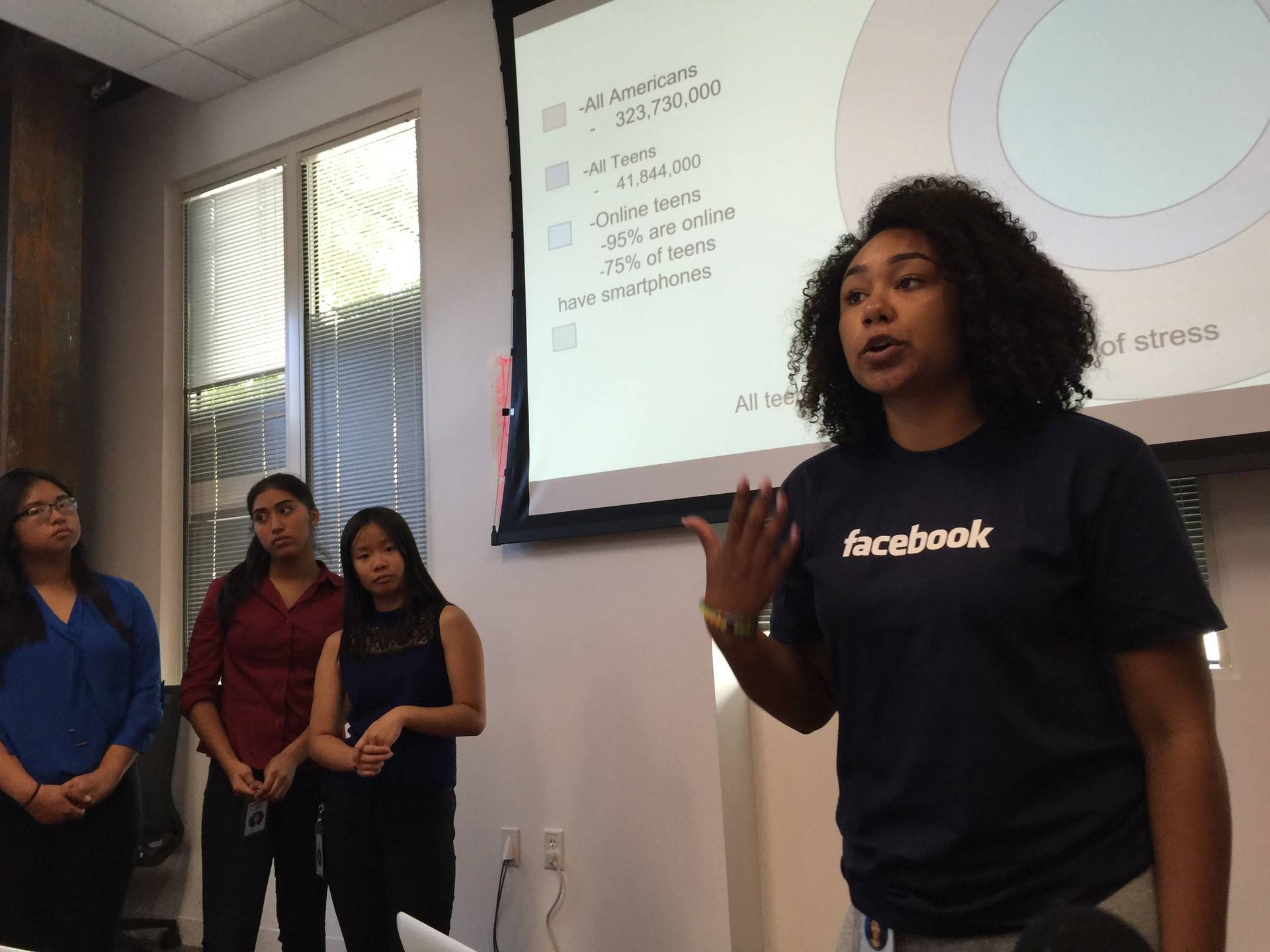
window.__IS_SSR__=true
window.__INITIAL_STATE__={
"attachmentsReducer": {
"audio_0": {
"type": "attachments",
"id": "audio_0",
"imgSizes": {
"kqedFullSize": {
"file": "https://ww2.kqed.org/news/wp-content/themes/KQED-unified/img/audio_bgs/background0.jpg"
}
}
},
"audio_1": {
"type": "attachments",
"id": "audio_1",
"imgSizes": {
"kqedFullSize": {
"file": "https://ww2.kqed.org/news/wp-content/themes/KQED-unified/img/audio_bgs/background1.jpg"
}
}
},
"audio_2": {
"type": "attachments",
"id": "audio_2",
"imgSizes": {
"kqedFullSize": {
"file": "https://ww2.kqed.org/news/wp-content/themes/KQED-unified/img/audio_bgs/background2.jpg"
}
}
},
"audio_3": {
"type": "attachments",
"id": "audio_3",
"imgSizes": {
"kqedFullSize": {
"file": "https://ww2.kqed.org/news/wp-content/themes/KQED-unified/img/audio_bgs/background3.jpg"
}
}
},
"audio_4": {
"type": "attachments",
"id": "audio_4",
"imgSizes": {
"kqedFullSize": {
"file": "https://ww2.kqed.org/news/wp-content/themes/KQED-unified/img/audio_bgs/background4.jpg"
}
}
},
"placeholder": {
"type": "attachments",
"id": "placeholder",
"imgSizes": {
"thumbnail": {
"file": "https://cdn.kqed.org/wp-content/uploads/2024/12/KQED-Default-Image-816638274-2000x1333-1-160x107.jpg",
"width": 160,
"height": 107,
"mimeType": "image/jpeg"
},
"medium": {
"file": "https://cdn.kqed.org/wp-content/uploads/2024/12/KQED-Default-Image-816638274-2000x1333-1-800x533.jpg",
"width": 800,
"height": 533,
"mimeType": "image/jpeg"
},
"medium_large": {
"file": "https://cdn.kqed.org/wp-content/uploads/2024/12/KQED-Default-Image-816638274-2000x1333-1-768x512.jpg",
"width": 768,
"height": 512,
"mimeType": "image/jpeg"
},
"large": {
"file": "https://cdn.kqed.org/wp-content/uploads/2024/12/KQED-Default-Image-816638274-2000x1333-1-1020x680.jpg",
"width": 1020,
"height": 680,
"mimeType": "image/jpeg"
},
"1536x1536": {
"file": "https://cdn.kqed.org/wp-content/uploads/2024/12/KQED-Default-Image-816638274-2000x1333-1-1536x1024.jpg",
"width": 1536,
"height": 1024,
"mimeType": "image/jpeg"
},
"fd-lrg": {
"file": "https://cdn.kqed.org/wp-content/uploads/2024/12/KQED-Default-Image-816638274-2000x1333-1-1536x1024.jpg",
"width": 1536,
"height": 1024,
"mimeType": "image/jpeg"
},
"fd-med": {
"file": "https://cdn.kqed.org/wp-content/uploads/2024/12/KQED-Default-Image-816638274-2000x1333-1-1020x680.jpg",
"width": 1020,
"height": 680,
"mimeType": "image/jpeg"
},
"fd-sm": {
"file": "https://cdn.kqed.org/wp-content/uploads/2024/12/KQED-Default-Image-816638274-2000x1333-1-800x533.jpg",
"width": 800,
"height": 533,
"mimeType": "image/jpeg"
},
"post-thumbnail": {
"file": "https://cdn.kqed.org/wp-content/uploads/2024/12/KQED-Default-Image-816638274-2000x1333-1-672x372.jpg",
"width": 672,
"height": 372,
"mimeType": "image/jpeg"
},
"twentyfourteen-full-width": {
"file": "https://cdn.kqed.org/wp-content/uploads/2024/12/KQED-Default-Image-816638274-2000x1333-1-1038x576.jpg",
"width": 1038,
"height": 576,
"mimeType": "image/jpeg"
},
"xxsmall": {
"file": "https://cdn.kqed.org/wp-content/uploads/2024/12/KQED-Default-Image-816638274-2000x1333-1-160x107.jpg",
"width": 160,
"height": 107,
"mimeType": "image/jpeg"
},
"xsmall": {
"file": "https://cdn.kqed.org/wp-content/uploads/2024/12/KQED-Default-Image-816638274-2000x1333-1-672x372.jpg",
"width": 672,
"height": 372,
"mimeType": "image/jpeg"
},
"small": {
"file": "https://cdn.kqed.org/wp-content/uploads/2024/12/KQED-Default-Image-816638274-2000x1333-1-672x372.jpg",
"width": 672,
"height": 372,
"mimeType": "image/jpeg"
},
"xlarge": {
"file": "https://cdn.kqed.org/wp-content/uploads/2024/12/KQED-Default-Image-816638274-2000x1333-1-1020x680.jpg",
"width": 1020,
"height": 680,
"mimeType": "image/jpeg"
},
"full-width": {
"file": "https://cdn.kqed.org/wp-content/uploads/2024/12/KQED-Default-Image-816638274-2000x1333-1-1920x1280.jpg",
"width": 1920,
"height": 1280,
"mimeType": "image/jpeg"
},
"guest-author-32": {
"file": "https://cdn.kqed.org/wp-content/uploads/2025/01/KQED-Default-Image-816638274-1333x1333-1-160x160.jpg",
"width": 32,
"height": 32,
"mimeType": "image/jpeg"
},
"guest-author-50": {
"file": "https://cdn.kqed.org/wp-content/uploads/2025/01/KQED-Default-Image-816638274-1333x1333-1-160x160.jpg",
"width": 50,
"height": 50,
"mimeType": "image/jpeg"
},
"guest-author-64": {
"file": "https://cdn.kqed.org/wp-content/uploads/2025/01/KQED-Default-Image-816638274-1333x1333-1-160x160.jpg",
"width": 64,
"height": 64,
"mimeType": "image/jpeg"
},
"guest-author-96": {
"file": "https://cdn.kqed.org/wp-content/uploads/2025/01/KQED-Default-Image-816638274-1333x1333-1-160x160.jpg",
"width": 96,
"height": 96,
"mimeType": "image/jpeg"
},
"guest-author-128": {
"file": "https://cdn.kqed.org/wp-content/uploads/2025/01/KQED-Default-Image-816638274-1333x1333-1-160x160.jpg",
"width": 128,
"height": 128,
"mimeType": "image/jpeg"
},
"detail": {
"file": "https://cdn.kqed.org/wp-content/uploads/2025/01/KQED-Default-Image-816638274-1333x1333-1-160x160.jpg",
"width": 160,
"height": 160,
"mimeType": "image/jpeg"
},
"kqedFullSize": {
"file": "https://cdn.kqed.org/wp-content/uploads/2024/12/KQED-Default-Image-816638274-2000x1333-1.jpg",
"width": 2000,
"height": 1333
}
}
},
"news_11053573": {
"type": "attachments",
"id": "news_11053573",
"meta": {
"index": "attachments_1716263798",
"site": "news",
"id": "11053573",
"found": true
},
"parent": 11053536,
"imgSizes": {
"twentyfourteen-full-width": {
"file": "https://ww2.kqed.org/app/uploads/sites/10/2016/08/Naima-Casteñeda-Isaac-1038x576.jpg",
"width": 1038,
"mimeType": "image/jpeg",
"height": 576
},
"thumbnail": {
"file": "https://ww2.kqed.org/app/uploads/sites/10/2016/08/Naima-Casteñeda-Isaac-400x300.jpg",
"width": 400,
"mimeType": "image/jpeg",
"height": 300
},
"fd-sm": {
"file": "https://ww2.kqed.org/app/uploads/sites/10/2016/08/Naima-Casteñeda-Isaac-960x720.jpg",
"width": 960,
"mimeType": "image/jpeg",
"height": 720
},
"post-thumbnail": {
"file": "https://ww2.kqed.org/app/uploads/sites/10/2016/08/Naima-Casteñeda-Isaac-672x372.jpg",
"width": 672,
"mimeType": "image/jpeg",
"height": 372
},
"kqedFullSize": {
"file": "https://ww2.kqed.org/app/uploads/sites/10/2016/08/Naima-Casteñeda-Isaac.jpg",
"width": 1920,
"height": 1440
},
"large": {
"file": "https://ww2.kqed.org/app/uploads/sites/10/2016/08/Naima-Casteñeda-Isaac-1920x1440.jpg",
"width": 1920,
"mimeType": "image/jpeg",
"height": 1440
},
"guest-author-50": {
"file": "https://ww2.kqed.org/app/uploads/sites/10/2016/08/Naima-Casteñeda-Isaac-50x50.jpg",
"width": 50,
"mimeType": "image/jpeg",
"height": 50
},
"guest-author-96": {
"file": "https://ww2.kqed.org/app/uploads/sites/10/2016/08/Naima-Casteñeda-Isaac-96x96.jpg",
"width": 96,
"mimeType": "image/jpeg",
"height": 96
},
"medium": {
"file": "https://ww2.kqed.org/app/uploads/sites/10/2016/08/Naima-Casteñeda-Isaac-800x600.jpg",
"width": 800,
"mimeType": "image/jpeg",
"height": 600
},
"guest-author-64": {
"file": "https://ww2.kqed.org/app/uploads/sites/10/2016/08/Naima-Casteñeda-Isaac-64x64.jpg",
"width": 64,
"mimeType": "image/jpeg",
"height": 64
},
"guest-author-32": {
"file": "https://ww2.kqed.org/app/uploads/sites/10/2016/08/Naima-Casteñeda-Isaac-32x32.jpg",
"width": 32,
"mimeType": "image/jpeg",
"height": 32
},
"jmtc-small-thumb": {
"file": "https://ww2.kqed.org/app/uploads/sites/10/2016/08/Naima-Casteñeda-Isaac-280x150.jpg",
"width": 280,
"mimeType": "image/jpeg",
"height": 150
},
"fd-lrg": {
"file": "https://ww2.kqed.org/app/uploads/sites/10/2016/08/Naima-Casteñeda-Isaac-1920x1440.jpg",
"width": 1920,
"mimeType": "image/jpeg",
"height": 1440
},
"fd-med": {
"file": "https://ww2.kqed.org/app/uploads/sites/10/2016/08/Naima-Casteñeda-Isaac-1180x885.jpg",
"width": 1180,
"mimeType": "image/jpeg",
"height": 885
},
"detail": {
"file": "https://ww2.kqed.org/app/uploads/sites/10/2016/08/Naima-Casteñeda-Isaac-150x150.jpg",
"width": 150,
"mimeType": "image/jpeg",
"height": 150
},
"guest-author-128": {
"file": "https://ww2.kqed.org/app/uploads/sites/10/2016/08/Naima-Casteñeda-Isaac-128x128.jpg",
"width": 128,
"mimeType": "image/jpeg",
"height": 128
}
},
"publishDate": 1471475364,
"modified": 1472067370,
"caption": "Naima Casteñeda Isaac pitches her group's app to her class at Facebook Academy. ",
"description": null,
"title": "Naima Casteñeda Isaac",
"credit": "Queena Sook Kim/KQED",
"status": "inherit",
"isLoading": false,
"fetchFailed": false
},
"news_11055388": {
"type": "attachments",
"id": "news_11055388",
"meta": {
"index": "attachments_1716263798",
"site": "news",
"id": "11055388",
"found": true
},
"parent": 11055367,
"imgSizes": {
"twentyfourteen-full-width": {
"file": "https://ww2.kqed.org/app/uploads/sites/10/2016/08/RS15592_GettyImages-467522442-1038x576.jpg",
"width": 1038,
"mimeType": "image/jpeg",
"height": 576
},
"thumbnail": {
"file": "https://ww2.kqed.org/app/uploads/sites/10/2016/08/RS15592_GettyImages-467522442-400x274.jpg",
"width": 400,
"mimeType": "image/jpeg",
"height": 274
},
"fd-sm": {
"file": "https://ww2.kqed.org/app/uploads/sites/10/2016/08/RS15592_GettyImages-467522442-960x657.jpg",
"width": 960,
"mimeType": "image/jpeg",
"height": 657
},
"post-thumbnail": {
"file": "https://ww2.kqed.org/app/uploads/sites/10/2016/08/RS15592_GettyImages-467522442-672x372.jpg",
"width": 672,
"mimeType": "image/jpeg",
"height": 372
},
"kqedFullSize": {
"file": "https://ww2.kqed.org/app/uploads/sites/10/2016/08/RS15592_GettyImages-467522442-e1476485343788.jpg",
"width": 1920,
"height": 1314
},
"large": {
"file": "https://ww2.kqed.org/app/uploads/sites/10/2016/08/RS15592_GettyImages-467522442-1920x1314.jpg",
"width": 1920,
"mimeType": "image/jpeg",
"height": 1314
},
"guest-author-50": {
"file": "https://ww2.kqed.org/app/uploads/sites/10/2016/08/RS15592_GettyImages-467522442-50x50.jpg",
"width": 50,
"mimeType": "image/jpeg",
"height": 50
},
"guest-author-96": {
"file": "https://ww2.kqed.org/app/uploads/sites/10/2016/08/RS15592_GettyImages-467522442-96x96.jpg",
"width": 96,
"mimeType": "image/jpeg",
"height": 96
},
"medium": {
"file": "https://ww2.kqed.org/app/uploads/sites/10/2016/08/RS15592_GettyImages-467522442-800x548.jpg",
"width": 800,
"mimeType": "image/jpeg",
"height": 548
},
"guest-author-64": {
"file": "https://ww2.kqed.org/app/uploads/sites/10/2016/08/RS15592_GettyImages-467522442-64x64.jpg",
"width": 64,
"mimeType": "image/jpeg",
"height": 64
},
"guest-author-32": {
"file": "https://ww2.kqed.org/app/uploads/sites/10/2016/08/RS15592_GettyImages-467522442-32x32.jpg",
"width": 32,
"mimeType": "image/jpeg",
"height": 32
},
"jmtc-small-thumb": {
"file": "https://ww2.kqed.org/app/uploads/sites/10/2016/08/RS15592_GettyImages-467522442-280x150.jpg",
"width": 280,
"mimeType": "image/jpeg",
"height": 150
},
"fd-lrg": {
"file": "https://ww2.kqed.org/app/uploads/sites/10/2016/08/RS15592_GettyImages-467522442-1920x1314.jpg",
"width": 1920,
"mimeType": "image/jpeg",
"height": 1314
},
"fd-med": {
"file": "https://ww2.kqed.org/app/uploads/sites/10/2016/08/RS15592_GettyImages-467522442-1180x808.jpg",
"width": 1180,
"mimeType": "image/jpeg",
"height": 808
},
"detail": {
"file": "https://ww2.kqed.org/app/uploads/sites/10/2016/08/RS15592_GettyImages-467522442-150x150.jpg",
"width": 150,
"mimeType": "image/jpeg",
"height": 150
},
"guest-author-128": {
"file": "https://ww2.kqed.org/app/uploads/sites/10/2016/08/RS15592_GettyImages-467522442-128x128.jpg",
"width": 128,
"mimeType": "image/jpeg",
"height": 128
}
},
"publishDate": 1471637998,
"modified": 1471656073,
"caption": "The transit agency covering Dublin plans to partner with Uber and Lyft to connect residents with the public transportation system.",
"description": null,
"title": "US-ECONOMY-TRANSPORT-UBER",
"credit": "Andrew Caballero-Reynolds/AFP/Getty Images",
"status": "inherit",
"isLoading": false,
"fetchFailed": false
},
"news_11054319": {
"type": "attachments",
"id": "news_11054319",
"meta": {
"index": "attachments_1716263798",
"site": "news",
"id": "11054319",
"found": true
},
"parent": 11054265,
"imgSizes": {
"twentyfourteen-full-width": {
"file": "https://ww2.kqed.org/app/uploads/sites/10/2016/08/URBAN-INSTITUTE-600x576.jpg",
"width": 600,
"mimeType": "image/jpeg",
"height": 576
},
"jmtc-small-thumb": {
"file": "https://ww2.kqed.org/app/uploads/sites/10/2016/08/URBAN-INSTITUTE-280x150.jpg",
"width": 280,
"mimeType": "image/jpeg",
"height": 150
},
"thumbnail": {
"file": "https://ww2.kqed.org/app/uploads/sites/10/2016/08/URBAN-INSTITUTE-400x433.jpg",
"width": 400,
"mimeType": "image/jpeg",
"height": 433
},
"post-thumbnail": {
"file": "https://ww2.kqed.org/app/uploads/sites/10/2016/08/URBAN-INSTITUTE-600x372.jpg",
"width": 600,
"mimeType": "image/jpeg",
"height": 372
},
"kqedFullSize": {
"file": "https://ww2.kqed.org/app/uploads/sites/10/2016/08/URBAN-INSTITUTE.jpg",
"width": 600,
"height": 650
},
"guest-author-50": {
"file": "https://ww2.kqed.org/app/uploads/sites/10/2016/08/URBAN-INSTITUTE-50x50.jpg",
"width": 50,
"mimeType": "image/jpeg",
"height": 50
},
"guest-author-96": {
"file": "https://ww2.kqed.org/app/uploads/sites/10/2016/08/URBAN-INSTITUTE-96x96.jpg",
"width": 96,
"mimeType": "image/jpeg",
"height": 96
},
"guest-author-64": {
"file": "https://ww2.kqed.org/app/uploads/sites/10/2016/08/URBAN-INSTITUTE-64x64.jpg",
"width": 64,
"mimeType": "image/jpeg",
"height": 64
},
"detail": {
"file": "https://ww2.kqed.org/app/uploads/sites/10/2016/08/URBAN-INSTITUTE-150x150.jpg",
"width": 150,
"mimeType": "image/jpeg",
"height": 150
},
"guest-author-32": {
"file": "https://ww2.kqed.org/app/uploads/sites/10/2016/08/URBAN-INSTITUTE-32x32.jpg",
"width": 32,
"mimeType": "image/jpeg",
"height": 32
},
"guest-author-128": {
"file": "https://ww2.kqed.org/app/uploads/sites/10/2016/08/URBAN-INSTITUTE-128x128.jpg",
"width": 128,
"mimeType": "image/jpeg",
"height": 128
}
},
"publishDate": 1471545208,
"modified": 1471560236,
"caption": "Pokemon stops and gyms are often placed in popular commercial districts or public spaces. An analysis by the Urban Institute in Washington, DC found 34 poke stops and gyms on average for white-majority neighborhoods compared to 25 for white minority neighborhoods in Alameda County, ",
"description": null,
"title": "URBAN INSTITUTE",
"credit": "Urban Institute",
"status": "inherit",
"isLoading": false,
"fetchFailed": false
},
"futureofyou_216510": {
"type": "attachments",
"id": "futureofyou_216510",
"meta": {
"index": "attachments_1716263798",
"site": "futureofyou",
"id": "216510",
"found": true
},
"parent": 216509,
"imgSizes": {
"twentyfourteen-full-width": {
"file": "https://ww2.kqed.org/app/uploads/sites/13/2016/08/chimera-lab-716cecd48795696a29d14f9168cdcf185b17188e-1038x576.jpg",
"width": 1038,
"mimeType": "image/jpeg",
"height": 576
},
"thumbnail": {
"file": "https://ww2.kqed.org/app/uploads/sites/13/2016/08/chimera-lab-716cecd48795696a29d14f9168cdcf185b17188e-400x300.jpg",
"width": 400,
"mimeType": "image/jpeg",
"height": 300
},
"fd-sm": {
"file": "https://ww2.kqed.org/app/uploads/sites/13/2016/08/chimera-lab-716cecd48795696a29d14f9168cdcf185b17188e-960x720.jpg",
"width": 960,
"mimeType": "image/jpeg",
"height": 720
},
"post-thumbnail": {
"file": "https://ww2.kqed.org/app/uploads/sites/13/2016/08/chimera-lab-716cecd48795696a29d14f9168cdcf185b17188e-672x372.jpg",
"width": 672,
"mimeType": "image/jpeg",
"height": 372
},
"kqedFullSize": {
"file": "https://ww2.kqed.org/app/uploads/sites/13/2016/08/chimera-lab-716cecd48795696a29d14f9168cdcf185b17188e.jpg",
"width": 1998,
"height": 1499
},
"large": {
"file": "https://ww2.kqed.org/app/uploads/sites/13/2016/08/chimera-lab-716cecd48795696a29d14f9168cdcf185b17188e-1180x885.jpg",
"width": 1180,
"mimeType": "image/jpeg",
"height": 885
},
"guest-author-50": {
"file": "https://ww2.kqed.org/app/uploads/sites/13/2016/08/chimera-lab-716cecd48795696a29d14f9168cdcf185b17188e-50x50.jpg",
"width": 50,
"mimeType": "image/jpeg",
"height": 50
},
"guest-author-96": {
"file": "https://ww2.kqed.org/app/uploads/sites/13/2016/08/chimera-lab-716cecd48795696a29d14f9168cdcf185b17188e-96x96.jpg",
"width": 96,
"mimeType": "image/jpeg",
"height": 96
},
"medium": {
"file": "https://ww2.kqed.org/app/uploads/sites/13/2016/08/chimera-lab-716cecd48795696a29d14f9168cdcf185b17188e-800x600.jpg",
"width": 800,
"mimeType": "image/jpeg",
"height": 600
},
"guest-author-64": {
"file": "https://ww2.kqed.org/app/uploads/sites/13/2016/08/chimera-lab-716cecd48795696a29d14f9168cdcf185b17188e-64x64.jpg",
"width": 64,
"mimeType": "image/jpeg",
"height": 64
},
"guest-author-32": {
"file": "https://ww2.kqed.org/app/uploads/sites/13/2016/08/chimera-lab-716cecd48795696a29d14f9168cdcf185b17188e-32x32.jpg",
"width": 32,
"mimeType": "image/jpeg",
"height": 32
},
"fd-lrg": {
"file": "https://ww2.kqed.org/app/uploads/sites/13/2016/08/chimera-lab-716cecd48795696a29d14f9168cdcf185b17188e-1920x1440.jpg",
"width": 1920,
"mimeType": "image/jpeg",
"height": 1440
},
"fd-med": {
"file": "https://ww2.kqed.org/app/uploads/sites/13/2016/08/chimera-lab-716cecd48795696a29d14f9168cdcf185b17188e-1180x885.jpg",
"width": 1180,
"mimeType": "image/jpeg",
"height": 885
},
"detail": {
"file": "https://ww2.kqed.org/app/uploads/sites/13/2016/08/chimera-lab-716cecd48795696a29d14f9168cdcf185b17188e-150x150.jpg",
"width": 150,
"mimeType": "image/jpeg",
"height": 150
},
"medium_large": {
"file": "https://ww2.kqed.org/app/uploads/sites/13/2016/08/chimera-lab-716cecd48795696a29d14f9168cdcf185b17188e-768x576.jpg",
"width": 768,
"mimeType": "image/jpeg",
"height": 576
},
"guest-author-128": {
"file": "https://ww2.kqed.org/app/uploads/sites/13/2016/08/chimera-lab-716cecd48795696a29d14f9168cdcf185b17188e-128x128.jpg",
"width": 128,
"mimeType": "image/jpeg",
"height": 128
}
},
"publishDate": 1470323092,
"modified": 1470335503,
"caption": "Pablo Ross of the University of California, Davis, inserts human stem cells into a pig embryo as part of experiments to create chimeric embryos.",
"description": "Pablo Ross of the University of California, Davis, inserts human stem cells into a pig embryo as part of experiments to create chimeric embryos.",
"title": "Pablo Ross of the University of California, Davis, inserts human stem cells into a pig embryo as part of experiments to create chimeric embryos.",
"credit": "Rob Stein/NPR",
"status": "inherit",
"isLoading": false,
"fetchFailed": false
},
"news_11040419": {
"type": "attachments",
"id": "news_11040419",
"meta": {
"index": "attachments_1716263798",
"site": "news",
"id": "11040419",
"found": true
},
"parent": 11040357,
"imgSizes": {
"twentyfourteen-full-width": {
"file": "https://ww2.kqed.org/app/uploads/sites/10/2016/08/GainesInstaCap-1038x576.jpg",
"width": 1038,
"mimeType": "image/jpeg",
"height": 576
},
"thumbnail": {
"file": "https://ww2.kqed.org/app/uploads/sites/10/2016/08/GainesInstaCap-400x317.jpg",
"width": 400,
"mimeType": "image/jpeg",
"height": 317
},
"fd-sm": {
"file": "https://ww2.kqed.org/app/uploads/sites/10/2016/08/GainesInstaCap-960x761.jpg",
"width": 960,
"mimeType": "image/jpeg",
"height": 761
},
"post-thumbnail": {
"file": "https://ww2.kqed.org/app/uploads/sites/10/2016/08/GainesInstaCap-672x372.jpg",
"width": 672,
"mimeType": "image/jpeg",
"height": 372
},
"kqedFullSize": {
"file": "https://ww2.kqed.org/app/uploads/sites/10/2016/08/GainesInstaCap.jpg",
"width": 1920,
"height": 1522
},
"large": {
"file": "https://ww2.kqed.org/app/uploads/sites/10/2016/08/GainesInstaCap-1920x1522.jpg",
"width": 1920,
"mimeType": "image/jpeg",
"height": 1522
},
"guest-author-50": {
"file": "https://ww2.kqed.org/app/uploads/sites/10/2016/08/GainesInstaCap-50x50.jpg",
"width": 50,
"mimeType": "image/jpeg",
"height": 50
},
"guest-author-96": {
"file": "https://ww2.kqed.org/app/uploads/sites/10/2016/08/GainesInstaCap-96x96.jpg",
"width": 96,
"mimeType": "image/jpeg",
"height": 96
},
"medium": {
"file": "https://ww2.kqed.org/app/uploads/sites/10/2016/08/GainesInstaCap-800x634.jpg",
"width": 800,
"mimeType": "image/jpeg",
"height": 634
},
"guest-author-64": {
"file": "https://ww2.kqed.org/app/uploads/sites/10/2016/08/GainesInstaCap-64x64.jpg",
"width": 64,
"mimeType": "image/jpeg",
"height": 64
},
"guest-author-32": {
"file": "https://ww2.kqed.org/app/uploads/sites/10/2016/08/GainesInstaCap-32x32.jpg",
"width": 32,
"mimeType": "image/jpeg",
"height": 32
},
"jmtc-small-thumb": {
"file": "https://ww2.kqed.org/app/uploads/sites/10/2016/08/GainesInstaCap-280x150.jpg",
"width": 280,
"mimeType": "image/jpeg",
"height": 150
},
"fd-lrg": {
"file": "https://ww2.kqed.org/app/uploads/sites/10/2016/08/GainesInstaCap-1920x1522.jpg",
"width": 1920,
"mimeType": "image/jpeg",
"height": 1522
},
"fd-med": {
"file": "https://ww2.kqed.org/app/uploads/sites/10/2016/08/GainesInstaCap-1180x935.jpg",
"width": 1180,
"mimeType": "image/jpeg",
"height": 935
},
"detail": {
"file": "https://ww2.kqed.org/app/uploads/sites/10/2016/08/GainesInstaCap-150x150.jpg",
"width": 150,
"mimeType": "image/jpeg",
"height": 150
},
"guest-author-128": {
"file": "https://ww2.kqed.org/app/uploads/sites/10/2016/08/GainesInstaCap-128x128.jpg",
"width": 128,
"mimeType": "image/jpeg",
"height": 128
}
},
"publishDate": 1470255225,
"modified": 1470255295,
"caption": "Korryn Gaines, who police say was armed with a shotgun, is the ninth black woman shot and killed by police so far this year.",
"description": "Korryn Gaines, who police say was armed with a shotgun, is the ninth black woman shot and killed by police so far this year.",
"title": "GainesInstaCap",
"credit": "Instagram",
"status": "inherit",
"isLoading": false,
"fetchFailed": false
},
"news_11038735": {
"type": "attachments",
"id": "news_11038735",
"meta": {
"index": "attachments_1716263798",
"site": "news",
"id": "11038735",
"found": true
},
"parent": 11038731,
"imgSizes": {
"twentyfourteen-full-width": {
"file": "https://ww2.kqed.org/app/uploads/sites/10/2016/08/UberHailing-1038x576.jpg",
"width": 1038,
"mimeType": "image/jpeg",
"height": 576
},
"thumbnail": {
"file": "https://ww2.kqed.org/app/uploads/sites/10/2016/08/UberHailing-400x286.jpg",
"width": 400,
"mimeType": "image/jpeg",
"height": 286
},
"fd-sm": {
"file": "https://ww2.kqed.org/app/uploads/sites/10/2016/08/UberHailing-960x686.jpg",
"width": 960,
"mimeType": "image/jpeg",
"height": 686
},
"post-thumbnail": {
"file": "https://ww2.kqed.org/app/uploads/sites/10/2016/08/UberHailing-672x372.jpg",
"width": 672,
"mimeType": "image/jpeg",
"height": 372
},
"kqedFullSize": {
"file": "https://ww2.kqed.org/app/uploads/sites/10/2016/08/UberHailing.jpg",
"width": 1920,
"height": 1372
},
"large": {
"file": "https://ww2.kqed.org/app/uploads/sites/10/2016/08/UberHailing-1920x1372.jpg",
"width": 1920,
"mimeType": "image/jpeg",
"height": 1372
},
"guest-author-50": {
"file": "https://ww2.kqed.org/app/uploads/sites/10/2016/08/UberHailing-50x50.jpg",
"width": 50,
"mimeType": "image/jpeg",
"height": 50
},
"guest-author-96": {
"file": "https://ww2.kqed.org/app/uploads/sites/10/2016/08/UberHailing-96x96.jpg",
"width": 96,
"mimeType": "image/jpeg",
"height": 96
},
"medium": {
"file": "https://ww2.kqed.org/app/uploads/sites/10/2016/08/UberHailing-800x572.jpg",
"width": 800,
"mimeType": "image/jpeg",
"height": 572
},
"guest-author-64": {
"file": "https://ww2.kqed.org/app/uploads/sites/10/2016/08/UberHailing-64x64.jpg",
"width": 64,
"mimeType": "image/jpeg",
"height": 64
},
"guest-author-32": {
"file": "https://ww2.kqed.org/app/uploads/sites/10/2016/08/UberHailing-32x32.jpg",
"width": 32,
"mimeType": "image/jpeg",
"height": 32
},
"jmtc-small-thumb": {
"file": "https://ww2.kqed.org/app/uploads/sites/10/2016/08/UberHailing-280x150.jpg",
"width": 280,
"mimeType": "image/jpeg",
"height": 150
},
"fd-lrg": {
"file": "https://ww2.kqed.org/app/uploads/sites/10/2016/08/UberHailing-1920x1372.jpg",
"width": 1920,
"mimeType": "image/jpeg",
"height": 1372
},
"fd-med": {
"file": "https://ww2.kqed.org/app/uploads/sites/10/2016/08/UberHailing-1180x843.jpg",
"width": 1180,
"mimeType": "image/jpeg",
"height": 843
},
"detail": {
"file": "https://ww2.kqed.org/app/uploads/sites/10/2016/08/UberHailing-150x150.jpg",
"width": 150,
"mimeType": "image/jpeg",
"height": 150
},
"guest-author-128": {
"file": "https://ww2.kqed.org/app/uploads/sites/10/2016/08/UberHailing-128x128.jpg",
"width": 128,
"mimeType": "image/jpeg",
"height": 128
}
},
"publishDate": 1470097545,
"modified": 1476486361,
"caption": "The suit seeks an order requiring that Uber comply with the 1990 Americans With Disabilities Act.",
"description": "Uber's ride-hailing app",
"title": "UberHailing",
"credit": "Andrew Caballero-Reynolds/AFP/Getty Images",
"status": "inherit",
"isLoading": false,
"fetchFailed": false
},
"news_11038626": {
"type": "attachments",
"id": "news_11038626",
"meta": {
"index": "attachments_1716263798",
"site": "news",
"id": "11038626",
"found": true
},
"parent": 11036097,
"imgSizes": {
"twentyfourteen-full-width": {
"file": "https://ww2.kqed.org/app/uploads/sites/10/2016/08/DenisseHoldingLT-1038x576.jpg",
"width": 1038,
"mimeType": "image/jpeg",
"height": 576
},
"thumbnail": {
"file": "https://ww2.kqed.org/app/uploads/sites/10/2016/08/DenisseHoldingLT-400x246.jpg",
"width": 400,
"mimeType": "image/jpeg",
"height": 246
},
"fd-sm": {
"file": "https://ww2.kqed.org/app/uploads/sites/10/2016/08/DenisseHoldingLT-960x590.jpg",
"width": 960,
"mimeType": "image/jpeg",
"height": 590
},
"post-thumbnail": {
"file": "https://ww2.kqed.org/app/uploads/sites/10/2016/08/DenisseHoldingLT-672x372.jpg",
"width": 672,
"mimeType": "image/jpeg",
"height": 372
},
"kqedFullSize": {
"file": "https://ww2.kqed.org/app/uploads/sites/10/2016/08/DenisseHoldingLT.jpg",
"width": 1920,
"height": 1180
},
"large": {
"file": "https://ww2.kqed.org/app/uploads/sites/10/2016/08/DenisseHoldingLT-1920x1180.jpg",
"width": 1920,
"mimeType": "image/jpeg",
"height": 1180
},
"guest-author-50": {
"file": "https://ww2.kqed.org/app/uploads/sites/10/2016/08/DenisseHoldingLT-50x50.jpg",
"width": 50,
"mimeType": "image/jpeg",
"height": 50
},
"guest-author-96": {
"file": "https://ww2.kqed.org/app/uploads/sites/10/2016/08/DenisseHoldingLT-96x96.jpg",
"width": 96,
"mimeType": "image/jpeg",
"height": 96
},
"medium": {
"file": "https://ww2.kqed.org/app/uploads/sites/10/2016/08/DenisseHoldingLT-800x492.jpg",
"width": 800,
"mimeType": "image/jpeg",
"height": 492
},
"guest-author-64": {
"file": "https://ww2.kqed.org/app/uploads/sites/10/2016/08/DenisseHoldingLT-64x64.jpg",
"width": 64,
"mimeType": "image/jpeg",
"height": 64
},
"guest-author-32": {
"file": "https://ww2.kqed.org/app/uploads/sites/10/2016/08/DenisseHoldingLT-32x32.jpg",
"width": 32,
"mimeType": "image/jpeg",
"height": 32
},
"jmtc-small-thumb": {
"file": "https://ww2.kqed.org/app/uploads/sites/10/2016/08/DenisseHoldingLT-280x150.jpg",
"width": 280,
"mimeType": "image/jpeg",
"height": 150
},
"fd-lrg": {
"file": "https://ww2.kqed.org/app/uploads/sites/10/2016/08/DenisseHoldingLT-1920x1180.jpg",
"width": 1920,
"mimeType": "image/jpeg",
"height": 1180
},
"fd-med": {
"file": "https://ww2.kqed.org/app/uploads/sites/10/2016/08/DenisseHoldingLT-1180x725.jpg",
"width": 1180,
"mimeType": "image/jpeg",
"height": 725
},
"detail": {
"file": "https://ww2.kqed.org/app/uploads/sites/10/2016/08/DenisseHoldingLT-150x150.jpg",
"width": 150,
"mimeType": "image/jpeg",
"height": 150
},
"guest-author-128": {
"file": "https://ww2.kqed.org/app/uploads/sites/10/2016/08/DenisseHoldingLT-128x128.jpg",
"width": 128,
"mimeType": "image/jpeg",
"height": 128
}
},
"publishDate": 1470089903,
"modified": 1470089975,
"caption": "Dennisse Aldana, a student at Glendale Community College, received a refurbished laptop from iFoster.",
"description": "Dennisse Aldana, a student at Glendale Community College, received a refurbished laptop from iFoster.",
"title": "DenisseHoldingLT",
"credit": "Blair Wells/KQED",
"status": "inherit",
"isLoading": false,
"fetchFailed": false
},
"news_11038586": {
"type": "attachments",
"id": "news_11038586",
"meta": {
"index": "attachments_1716263798",
"site": "news",
"id": "11038586",
"found": true
},
"parent": 11038573,
"imgSizes": {
"twentyfourteen-full-width": {
"file": "https://ww2.kqed.org/app/uploads/sites/10/2016/08/VSS_Unity_on_Tarmac.jpg_cmyk-1038x576.jpg",
"width": 1038,
"mimeType": "image/jpeg",
"height": 576
},
"thumbnail": {
"file": "https://ww2.kqed.org/app/uploads/sites/10/2016/08/VSS_Unity_on_Tarmac.jpg_cmyk-400x267.jpg",
"width": 400,
"mimeType": "image/jpeg",
"height": 267
},
"fd-sm": {
"file": "https://ww2.kqed.org/app/uploads/sites/10/2016/08/VSS_Unity_on_Tarmac.jpg_cmyk-960x640.jpg",
"width": 960,
"mimeType": "image/jpeg",
"height": 640
},
"post-thumbnail": {
"file": "https://ww2.kqed.org/app/uploads/sites/10/2016/08/VSS_Unity_on_Tarmac.jpg_cmyk-672x372.jpg",
"width": 672,
"mimeType": "image/jpeg",
"height": 372
},
"kqedFullSize": {
"file": "https://ww2.kqed.org/app/uploads/sites/10/2016/08/VSS_Unity_on_Tarmac.jpg_cmyk.jpg",
"width": 1920,
"height": 1280
},
"large": {
"file": "https://ww2.kqed.org/app/uploads/sites/10/2016/08/VSS_Unity_on_Tarmac.jpg_cmyk-1920x1280.jpg",
"width": 1920,
"mimeType": "image/jpeg",
"height": 1280
},
"guest-author-50": {
"file": "https://ww2.kqed.org/app/uploads/sites/10/2016/08/VSS_Unity_on_Tarmac.jpg_cmyk-50x50.jpg",
"width": 50,
"mimeType": "image/jpeg",
"height": 50
},
"guest-author-96": {
"file": "https://ww2.kqed.org/app/uploads/sites/10/2016/08/VSS_Unity_on_Tarmac.jpg_cmyk-96x96.jpg",
"width": 96,
"mimeType": "image/jpeg",
"height": 96
},
"medium": {
"file": "https://ww2.kqed.org/app/uploads/sites/10/2016/08/VSS_Unity_on_Tarmac.jpg_cmyk-800x533.jpg",
"width": 800,
"mimeType": "image/jpeg",
"height": 533
},
"guest-author-64": {
"file": "https://ww2.kqed.org/app/uploads/sites/10/2016/08/VSS_Unity_on_Tarmac.jpg_cmyk-64x64.jpg",
"width": 64,
"mimeType": "image/jpeg",
"height": 64
},
"guest-author-32": {
"file": "https://ww2.kqed.org/app/uploads/sites/10/2016/08/VSS_Unity_on_Tarmac.jpg_cmyk-32x32.jpg",
"width": 32,
"mimeType": "image/jpeg",
"height": 32
},
"jmtc-small-thumb": {
"file": "https://ww2.kqed.org/app/uploads/sites/10/2016/08/VSS_Unity_on_Tarmac.jpg_cmyk-280x150.jpg",
"width": 280,
"mimeType": "image/jpeg",
"height": 150
},
"fd-lrg": {
"file": "https://ww2.kqed.org/app/uploads/sites/10/2016/08/VSS_Unity_on_Tarmac.jpg_cmyk-1920x1280.jpg",
"width": 1920,
"mimeType": "image/jpeg",
"height": 1280
},
"fd-med": {
"file": "https://ww2.kqed.org/app/uploads/sites/10/2016/08/VSS_Unity_on_Tarmac.jpg_cmyk-1180x787.jpg",
"width": 1180,
"mimeType": "image/jpeg",
"height": 787
},
"detail": {
"file": "https://ww2.kqed.org/app/uploads/sites/10/2016/08/VSS_Unity_on_Tarmac.jpg_cmyk-150x150.jpg",
"width": 150,
"mimeType": "image/jpeg",
"height": 150
},
"guest-author-128": {
"file": "https://ww2.kqed.org/app/uploads/sites/10/2016/08/VSS_Unity_on_Tarmac.jpg_cmyk-128x128.jpg",
"width": 128,
"mimeType": "image/jpeg",
"height": 128
}
},
"publishDate": 1470087911,
"modified": 1470087938,
"caption": null,
"description": null,
"title": "VSS_Unity_on_Tarmac.jpg_cmyk",
"credit": "Courtesy of Virgin Galactic",
"status": "inherit",
"isLoading": false,
"fetchFailed": false
},
"futureofyou_203083": {
"type": "attachments",
"id": "futureofyou_203083",
"meta": {
"index": "attachments_1716263798",
"site": "futureofyou",
"id": "203083",
"found": true
},
"parent": 203018,
"imgSizes": {
"twentyfourteen-full-width": {
"file": "https://ww2.kqed.org/app/uploads/sites/13/2016/07/KQED_Theranos_FeaturedImage-1038x576.jpg",
"width": 1038,
"mimeType": "image/jpeg",
"height": 576
},
"thumbnail": {
"file": "https://ww2.kqed.org/app/uploads/sites/13/2016/07/KQED_Theranos_FeaturedImage-400x240.jpg",
"width": 400,
"mimeType": "image/jpeg",
"height": 240
},
"fd-sm": {
"file": "https://ww2.kqed.org/app/uploads/sites/13/2016/07/KQED_Theranos_FeaturedImage-960x576.jpg",
"width": 960,
"mimeType": "image/jpeg",
"height": 576
},
"post-thumbnail": {
"file": "https://ww2.kqed.org/app/uploads/sites/13/2016/07/KQED_Theranos_FeaturedImage-672x372.jpg",
"width": 672,
"mimeType": "image/jpeg",
"height": 372
},
"kqedFullSize": {
"file": "https://ww2.kqed.org/app/uploads/sites/13/2016/07/KQED_Theranos_FeaturedImage.jpg",
"width": 1920,
"height": 1151
},
"large": {
"file": "https://ww2.kqed.org/app/uploads/sites/13/2016/07/KQED_Theranos_FeaturedImage-1180x707.jpg",
"width": 1180,
"mimeType": "image/jpeg",
"height": 707
},
"guest-author-50": {
"file": "https://ww2.kqed.org/app/uploads/sites/13/2016/07/KQED_Theranos_FeaturedImage-50x50.jpg",
"width": 50,
"mimeType": "image/jpeg",
"height": 50
},
"guest-author-96": {
"file": "https://ww2.kqed.org/app/uploads/sites/13/2016/07/KQED_Theranos_FeaturedImage-96x96.jpg",
"width": 96,
"mimeType": "image/jpeg",
"height": 96
},
"medium": {
"file": "https://ww2.kqed.org/app/uploads/sites/13/2016/07/KQED_Theranos_FeaturedImage-800x480.jpg",
"width": 800,
"mimeType": "image/jpeg",
"height": 480
},
"guest-author-64": {
"file": "https://ww2.kqed.org/app/uploads/sites/13/2016/07/KQED_Theranos_FeaturedImage-64x64.jpg",
"width": 64,
"mimeType": "image/jpeg",
"height": 64
},
"guest-author-32": {
"file": "https://ww2.kqed.org/app/uploads/sites/13/2016/07/KQED_Theranos_FeaturedImage-32x32.jpg",
"width": 32,
"mimeType": "image/jpeg",
"height": 32
},
"fd-lrg": {
"file": "https://ww2.kqed.org/app/uploads/sites/13/2016/07/KQED_Theranos_FeaturedImage-1920x1151.jpg",
"width": 1920,
"mimeType": "image/jpeg",
"height": 1151
},
"fd-med": {
"file": "https://ww2.kqed.org/app/uploads/sites/13/2016/07/KQED_Theranos_FeaturedImage-1180x707.jpg",
"width": 1180,
"mimeType": "image/jpeg",
"height": 707
},
"detail": {
"file": "https://ww2.kqed.org/app/uploads/sites/13/2016/07/KQED_Theranos_FeaturedImage-150x150.jpg",
"width": 150,
"mimeType": "image/jpeg",
"height": 150
},
"medium_large": {
"file": "https://ww2.kqed.org/app/uploads/sites/13/2016/07/KQED_Theranos_FeaturedImage-768x460.jpg",
"width": 768,
"mimeType": "image/jpeg",
"height": 460
},
"guest-author-128": {
"file": "https://ww2.kqed.org/app/uploads/sites/13/2016/07/KQED_Theranos_FeaturedImage-128x128.jpg",
"width": 128,
"mimeType": "image/jpeg",
"height": 128
}
},
"publishDate": 1468451121,
"modified": 1470171969,
"caption": null,
"description": "For the first time in public, Elizabeth Holmes will present evidence that Theranos says will show its technology works. Her presentation will be given at the American Association for Clinical Chemistry annual meeting in Philadelphia, Monday, Aug. 1.",
"title": "KQED_Theranos_FeaturedImage",
"credit": "Image by Mark Fiore, \u003ca href=\"http://ww2.kqed.org/futureofyou/2016/07/14/the-rise-and-fall-of-theranos-a-cartoon-history/\">The Rise and Fall of Theranos: A Cartoon History\u003c/a>",
"status": "inherit",
"isLoading": false,
"fetchFailed": false
},
"news_10342785": {
"type": "attachments",
"id": "news_10342785",
"meta": {
"index": "attachments_1716263798",
"site": "news",
"id": "10342785",
"found": true
},
"parent": 10342603,
"imgSizes": {
"twentyfourteen-full-width": {
"file": "https://ww2.kqed.org/app/uploads/sites/10/2015/10/Screen-shot-2014-10-06-at-11.24.01-AM1-791x576.png",
"width": 791,
"mimeType": "image/png",
"height": 576
},
"thumbnail": {
"file": "https://ww2.kqed.org/app/uploads/sites/10/2015/10/Screen-shot-2014-10-06-at-11.24.01-AM1-e1412700571409-400x230.png",
"width": 400,
"mimeType": "image/png",
"height": 230
},
"post-thumbnail": {
"file": "https://ww2.kqed.org/app/uploads/sites/10/2015/10/Screen-shot-2014-10-06-at-11.24.01-AM1-e1412700571409-672x372.png",
"width": 672,
"mimeType": "image/png",
"height": 372
},
"kqedFullSize": {
"file": "https://ww2.kqed.org/app/uploads/sites/10/2015/10/Screen-shot-2014-10-06-at-11.24.01-AM1-e1412700571409.png",
"width": 780,
"height": 449
},
"guest-author-96": {
"file": "https://ww2.kqed.org/app/uploads/sites/10/2015/10/Screen-shot-2014-10-06-at-11.24.01-AM1-e1412700571409-96x96.png",
"width": 96,
"mimeType": "image/png",
"height": 96
},
"guest-author-64": {
"file": "https://ww2.kqed.org/app/uploads/sites/10/2015/10/Screen-shot-2014-10-06-at-11.24.01-AM1-e1412700571409-64x64.png",
"width": 64,
"mimeType": "image/png",
"height": 64
},
"detail": {
"file": "https://ww2.kqed.org/app/uploads/sites/10/2015/10/Screen-shot-2014-10-06-at-11.24.01-AM1-e1412700571409-75x75.png",
"width": 75,
"mimeType": "image/png",
"height": 75
},
"guest-author-32": {
"file": "https://ww2.kqed.org/app/uploads/sites/10/2015/10/Screen-shot-2014-10-06-at-11.24.01-AM1-e1412700571409-32x32.png",
"width": 32,
"mimeType": "image/png",
"height": 32
},
"guest-author-128": {
"file": "https://ww2.kqed.org/app/uploads/sites/10/2015/10/Screen-shot-2014-10-06-at-11.24.01-AM1-e1412700571409-128x128.png",
"width": 128,
"mimeType": "image/png",
"height": 128
}
},
"publishDate": 1412648400,
"modified": 1469474524,
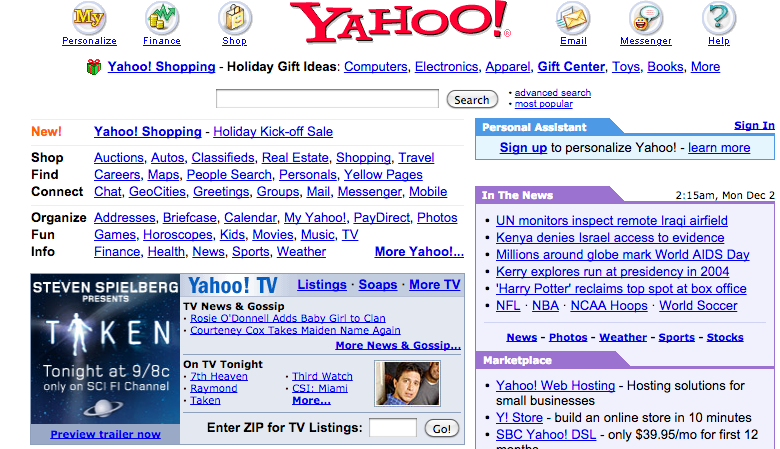
"caption": "The Yahoo home page in 2002.",
"description": null,
"title": "Yahoo Front Page Featured",
"credit": null,
"status": "inherit",
"isLoading": false,
"fetchFailed": false
},
"news_11030888": {
"type": "attachments",
"id": "news_11030888",
"meta": {
"index": "attachments_1716263798",
"site": "news",
"id": "11030888",
"found": true
},
"parent": 11030886,
"imgSizes": {
"twentyfourteen-full-width": {
"file": "https://ww2.kqed.org/app/uploads/sites/10/2016/07/GettyImages-493360991-1038x576.jpg",
"width": 1038,
"mimeType": "image/jpeg",
"height": 576
},
"thumbnail": {
"file": "https://ww2.kqed.org/app/uploads/sites/10/2016/07/GettyImages-493360991-400x267.jpg",
"width": 400,
"mimeType": "image/jpeg",
"height": 267
},
"fd-sm": {
"file": "https://ww2.kqed.org/app/uploads/sites/10/2016/07/GettyImages-493360991-960x640.jpg",
"width": 960,
"mimeType": "image/jpeg",
"height": 640
},
"post-thumbnail": {
"file": "https://ww2.kqed.org/app/uploads/sites/10/2016/07/GettyImages-493360991-672x372.jpg",
"width": 672,
"mimeType": "image/jpeg",
"height": 372
},
"kqedFullSize": {
"file": "https://ww2.kqed.org/app/uploads/sites/10/2016/07/GettyImages-493360991-e1469460295236.jpg",
"width": 1920,
"height": 1281
},
"large": {
"file": "https://ww2.kqed.org/app/uploads/sites/10/2016/07/GettyImages-493360991-1920x1281.jpg",
"width": 1920,
"mimeType": "image/jpeg",
"height": 1281
},
"guest-author-50": {
"file": "https://ww2.kqed.org/app/uploads/sites/10/2016/07/GettyImages-493360991-50x50.jpg",
"width": 50,
"mimeType": "image/jpeg",
"height": 50
},
"guest-author-96": {
"file": "https://ww2.kqed.org/app/uploads/sites/10/2016/07/GettyImages-493360991-96x96.jpg",
"width": 96,
"mimeType": "image/jpeg",
"height": 96
},
"medium": {
"file": "https://ww2.kqed.org/app/uploads/sites/10/2016/07/GettyImages-493360991-800x534.jpg",
"width": 800,
"mimeType": "image/jpeg",
"height": 534
},
"guest-author-64": {
"file": "https://ww2.kqed.org/app/uploads/sites/10/2016/07/GettyImages-493360991-64x64.jpg",
"width": 64,
"mimeType": "image/jpeg",
"height": 64
},
"guest-author-32": {
"file": "https://ww2.kqed.org/app/uploads/sites/10/2016/07/GettyImages-493360991-32x32.jpg",
"width": 32,
"mimeType": "image/jpeg",
"height": 32
},
"jmtc-small-thumb": {
"file": "https://ww2.kqed.org/app/uploads/sites/10/2016/07/GettyImages-493360991-280x150.jpg",
"width": 280,
"mimeType": "image/jpeg",
"height": 150
},
"fd-lrg": {
"file": "https://ww2.kqed.org/app/uploads/sites/10/2016/07/GettyImages-493360991-1920x1281.jpg",
"width": 1920,
"mimeType": "image/jpeg",
"height": 1281
},
"fd-med": {
"file": "https://ww2.kqed.org/app/uploads/sites/10/2016/07/GettyImages-493360991-1180x787.jpg",
"width": 1180,
"mimeType": "image/jpeg",
"height": 787
},
"detail": {
"file": "https://ww2.kqed.org/app/uploads/sites/10/2016/07/GettyImages-493360991-150x150.jpg",
"width": 150,
"mimeType": "image/jpeg",
"height": 150
},
"guest-author-128": {
"file": "https://ww2.kqed.org/app/uploads/sites/10/2016/07/GettyImages-493360991-128x128.jpg",
"width": 128,
"mimeType": "image/jpeg",
"height": 128
}
},
"publishDate": 1469460202,
"modified": 1469460372,
"caption": "Yahoo headquarters in Sunnyvale. ",
"description": null,
"title": "Yahoo",
"credit": "Justin Sullivan/Getty Images",
"status": "inherit",
"isLoading": false,
"fetchFailed": false
},
"news_11026498": {
"type": "attachments",
"id": "news_11026498",
"meta": {
"index": "attachments_1716263798",
"site": "news",
"id": "11026498",
"found": true
},
"parent": 11026460,
"imgSizes": {
"twentyfourteen-full-width": {
"file": "https://ww2.kqed.org/app/uploads/sites/10/2016/07/green-liquid-and-lab-1038x576.jpg",
"width": 1038,
"mimeType": "image/jpeg",
"height": 576
},
"thumbnail": {
"file": "https://ww2.kqed.org/app/uploads/sites/10/2016/07/green-liquid-and-lab-400x225.jpg",
"width": 400,
"mimeType": "image/jpeg",
"height": 225
},
"fd-sm": {
"file": "https://ww2.kqed.org/app/uploads/sites/10/2016/07/green-liquid-and-lab-960x541.jpg",
"width": 960,
"mimeType": "image/jpeg",
"height": 541
},
"post-thumbnail": {
"file": "https://ww2.kqed.org/app/uploads/sites/10/2016/07/green-liquid-and-lab-672x372.jpg",
"width": 672,
"mimeType": "image/jpeg",
"height": 372
},
"kqedFullSize": {
"file": "https://ww2.kqed.org/app/uploads/sites/10/2016/07/green-liquid-and-lab.jpg",
"width": 1920,
"height": 1081
},
"large": {
"file": "https://ww2.kqed.org/app/uploads/sites/10/2016/07/green-liquid-and-lab-1920x1081.jpg",
"width": 1920,
"mimeType": "image/jpeg",
"height": 1081
},
"guest-author-50": {
"file": "https://ww2.kqed.org/app/uploads/sites/10/2016/07/green-liquid-and-lab-50x50.jpg",
"width": 50,
"mimeType": "image/jpeg",
"height": 50
},
"guest-author-96": {
"file": "https://ww2.kqed.org/app/uploads/sites/10/2016/07/green-liquid-and-lab-96x96.jpg",
"width": 96,
"mimeType": "image/jpeg",
"height": 96
},
"medium": {
"file": "https://ww2.kqed.org/app/uploads/sites/10/2016/07/green-liquid-and-lab-800x450.jpg",
"width": 800,
"mimeType": "image/jpeg",
"height": 450
},
"guest-author-64": {
"file": "https://ww2.kqed.org/app/uploads/sites/10/2016/07/green-liquid-and-lab-64x64.jpg",
"width": 64,
"mimeType": "image/jpeg",
"height": 64
},
"guest-author-32": {
"file": "https://ww2.kqed.org/app/uploads/sites/10/2016/07/green-liquid-and-lab-32x32.jpg",
"width": 32,
"mimeType": "image/jpeg",
"height": 32
},
"jmtc-small-thumb": {
"file": "https://ww2.kqed.org/app/uploads/sites/10/2016/07/green-liquid-and-lab-280x150.jpg",
"width": 280,
"mimeType": "image/jpeg",
"height": 150
},
"fd-lrg": {
"file": "https://ww2.kqed.org/app/uploads/sites/10/2016/07/green-liquid-and-lab-1920x1081.jpg",
"width": 1920,
"mimeType": "image/jpeg",
"height": 1081
},
"fd-med": {
"file": "https://ww2.kqed.org/app/uploads/sites/10/2016/07/green-liquid-and-lab-1180x664.jpg",
"width": 1180,
"mimeType": "image/jpeg",
"height": 664
},
"detail": {
"file": "https://ww2.kqed.org/app/uploads/sites/10/2016/07/green-liquid-and-lab-150x150.jpg",
"width": 150,
"mimeType": "image/jpeg",
"height": 150
},
"guest-author-128": {
"file": "https://ww2.kqed.org/app/uploads/sites/10/2016/07/green-liquid-and-lab-128x128.jpg",
"width": 128,
"mimeType": "image/jpeg",
"height": 128
}
},
"publishDate": 1469084667,
"modified": 1469214191,
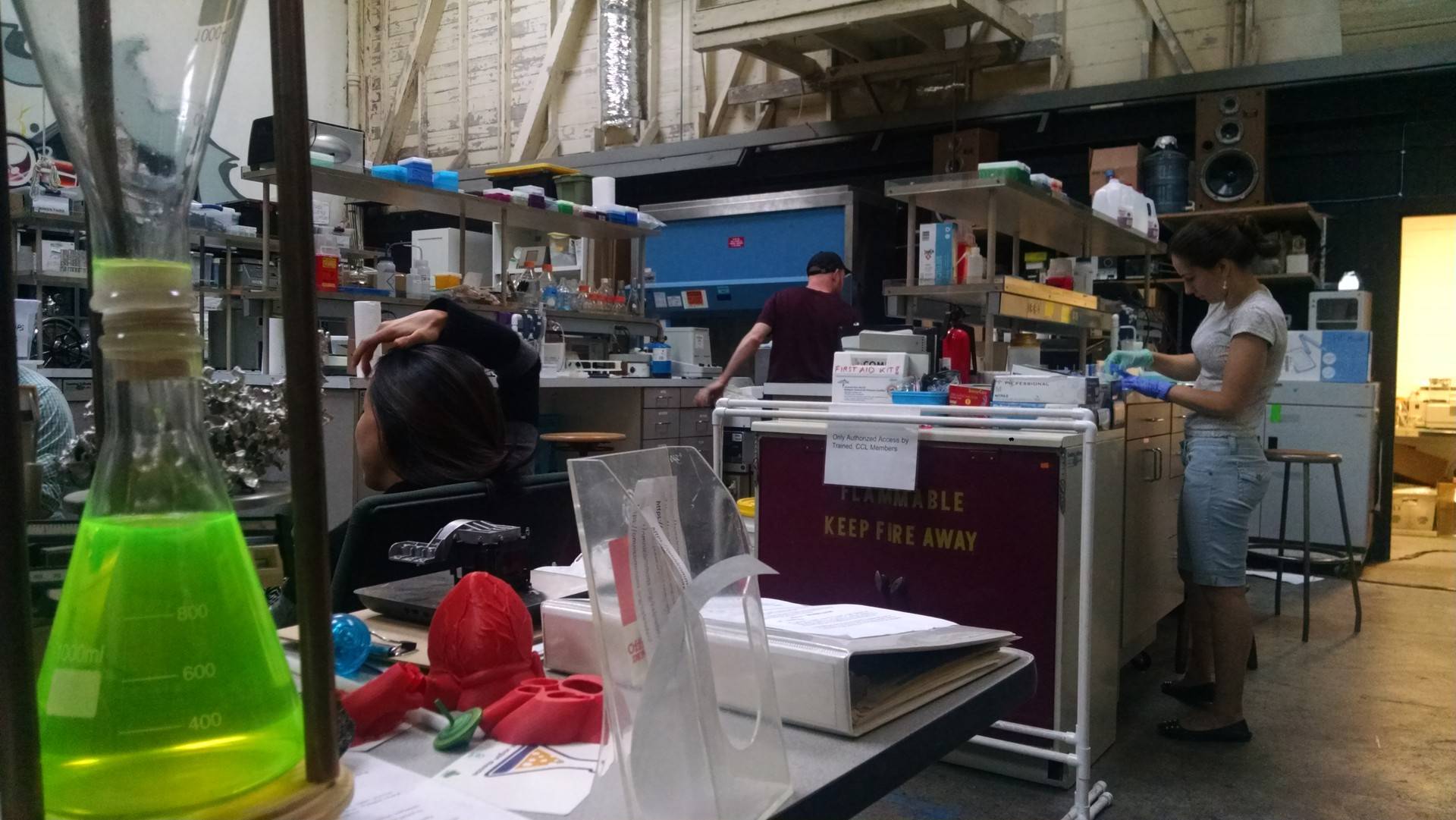
"caption": "Counter Culture Labs in Oakland wants to disrupt the medical industry",
"description": null,
"title": "green liquid and lab",
"credit": "Andrew Stelzer/KQED",
"status": "inherit",
"isLoading": false,
"fetchFailed": false
}
},
"audioPlayerReducer": {
"postId": "stream_live",
"isPaused": true,
"isPlaying": false,
"pfsActive": false,
"pledgeModalIsOpen": true,
"playerDrawerIsOpen": false,
"liveAudioPlayStartedAt": 0,
"liveAudioPlayContext": ""
},
"authorsReducer": {
"byline_futureofyou_216509": {
"type": "authors",
"id": "byline_futureofyou_216509",
"meta": {
"override": true
},
"slug": "byline_futureofyou_216509",
"name": "Rob Stein\u003cbr />NPR Shots",
"isLoading": false
},
"byline_news_11040357": {
"type": "authors",
"id": "byline_news_11040357",
"meta": {
"override": true
},
"slug": "byline_news_11040357",
"name": "Camila Domonoske",
"isLoading": false
},
"byline_news_11038731": {
"type": "authors",
"id": "byline_news_11038731",
"meta": {
"override": true
},
"slug": "byline_news_11038731",
"name": "Rebecca Hersher",
"isLoading": false
},
"byline_news_11036097": {
"type": "authors",
"id": "byline_news_11036097",
"meta": {
"override": true
},
"slug": "byline_news_11036097",
"name": "\u003cstrong>Tena Rubio\u003c/strong>",
"isLoading": false
},
"byline_news_11038573": {
"type": "authors",
"id": "byline_news_11038573",
"meta": {
"override": true
},
"slug": "byline_news_11038573",
"name": "\u003cstrong>Associated Press\u003c/strong>",
"isLoading": false
},
"byline_news_11030886": {
"type": "authors",
"id": "byline_news_11030886",
"meta": {
"override": true
},
"slug": "byline_news_11030886",
"name": "\u003cstrong>Michael Liedtke\u003c/strong> and \u003cstrong>Tali Arbel\u003cbr />AP Technology Writers\u003c/strong>",
"isLoading": false
},
"jbrooks": {
"type": "authors",
"id": "80",
"meta": {
"index": "authors_1716337520",
"id": "80",
"found": true
},
"name": "Jon Brooks",
"firstName": "Jon",
"lastName": "Brooks",
"slug": "jbrooks",
"email": "jbrooks@kqed.org",
"display_author_email": true,
"staff_mastheads": [
"science"
],
"title": "Digital Editor",
"bio": "Jon Brooks is a former Digital Editor for KQED Science. He is the former editor of KQED’s daily news blog, News Fix. In 2014, he won a California Journalism Award for his coverage of ride services like Uber and Lyft and the taxi industry. A veteran blogger, he previously worked for Yahoo! in various news writing and editing roles. Jon is also a playwright whose work has been produced in San Francisco, New York, Italy, and around the U.S. He has written about film for his own blog and studied film at Boston University.",
"avatar": "https://secure.gravatar.com/avatar/98887f7ed1c876ed414d4c915e969584?s=600&d=blank&r=g",
"twitter": "jbrooksfoy",
"facebook": null,
"instagram": null,
"linkedin": null,
"sites": [
{
"site": "arts",
"roles": [
"Contributor",
"editor"
]
},
{
"site": "news",
"roles": [
"author"
]
},
{
"site": "futureofyou",
"roles": [
"administrator"
]
},
{
"site": "mindshift",
"roles": [
"editor"
]
},
{
"site": "stateofhealth",
"roles": [
"editor"
]
},
{
"site": "science",
"roles": [
"administrator"
]
},
{
"site": "quest",
"roles": [
"editor"
]
}
],
"headData": {
"title": "Jon Brooks | KQED",
"description": "Digital Editor",
"ogImgSrc": "https://secure.gravatar.com/avatar/98887f7ed1c876ed414d4c915e969584?s=600&d=blank&r=g",
"twImgSrc": "https://secure.gravatar.com/avatar/98887f7ed1c876ed414d4c915e969584?s=600&d=blank&r=g"
},
"isLoading": false,
"link": "/author/jbrooks"
},
"andrewstelzer": {
"type": "authors",
"id": "213",
"meta": {
"index": "authors_1716337520",
"id": "213",
"found": true
},
"name": "Andrew Stelzer",
"firstName": "Andrew",
"lastName": "Stelzer",
"slug": "andrewstelzer",
"email": "andrewstelzer@gmail.com",
"display_author_email": false,
"staff_mastheads": [],
"title": null,
"bio": "Andrew Stelzer has been reporting for KQED since 2010, and is a producer at \u003ca href=\"http://www.radioproject.org\" target=\"_blank\">Making Contact\u003c/a> in Oakland.. His work has been featured on programs including \u003ca href=\"http://www.npr.org/templates/story/story.php?storyId=5010\" target=\"_blank\">NPR’s Weekend Edition\u003c/a>, \u003ca href=\"http://www.theworld.org/\" target=\"_blank\">PRI’s The World\u003c/a>, \u003ca href=\"http://www.studio360.org/\" target=\"_blank\">Studio 360\u003c/a>, \u003ca href=\"http://marketplace.publicradio.org/\" target=\"_blank\">Marketplace\u003c/a>,\u003ca href=\"http://www.loe.org/\" target=\"_blank\">Living on Earth\u003c/a>, \u003ca href=\"http://www.onthemedia.org/\" target=\"_blank\">On the Media\u003c/a>, \u003ca href=\"http://www.latinousa.org/index.html\" target=\"_blank\">Latino USA,\u003c/a> \u003ca href=\"http://www.onlyagame.org/\" rel=\"tag\">Only a Game,\u003c/a> \u003ca href=\"http://www.tswi.org/\" target=\"_blank\">Radio Netherlands,\u003c/a> \u003ca href=\"http://worldradio.ch/index.shtml\" target=\"_blank\">World Radio Switzerland,\u003c/a> and \u003ca href=\"http://www.rfi.fr/langues/statiques/rfi_anglais.asp\" target=\"_blank\">Radio France International\u003c/a>. Andrew has written for publications including \u003ca href=\"http://www.inthesetimes.com/site/about/author/2369\" target=\"_blank\">In These Times\u003c/a>, \u003ca href=\"http://www.progressive.org/\" target=\"_blank\">The Progressive\u003c/a>, \u003ca href=\"http://ipsnews.net/\" target=\"_blank\">Interpress Service\u003c/a>, \u003ca href=\"http://www.tampabay.com/\" target=\"_blank\">The St. Petersburg Times\u003c/a>, and \u003ca href=\"http://www.eastbayexpress.com/ebx/Home\" target=\"_blank\">The East Bay Express\u003c/a>.\r\n\r\nAndrew’s work has received numerous awards from the Society of Professional Journalists, the National Lesbian and Gay Journalists Association, and the National Council on Crime and Delinquency.\r\n\r\nHe previously was a reporter at \u003ca href=\"http://www.wmnf.org/\" target=\"_blank\">WMNF\u003c/a> radio in Tampa, FL, and reporter and youth advocate st \u003ca href=\"http://www.kboo.org/\" target=\"_blank\">KBOO \u003c/a> in Portland, Oregon. Andrew has conducted radio production trainings around the world, from Algeria, to New Orleans, to the desert of Southern Jordan.",
"avatar": "https://secure.gravatar.com/avatar/14c7e75469395cb2468d45c9f6896ca9?s=600&d=blank&r=g",
"twitter": null,
"facebook": null,
"instagram": null,
"linkedin": null,
"sites": [
{
"site": "arts",
"roles": [
"contributor"
]
},
{
"site": "news",
"roles": [
"author"
]
},
{
"site": "stateofhealth",
"roles": [
"author"
]
}
],
"headData": {
"title": "Andrew Stelzer | KQED",
"description": null,
"ogImgSrc": "https://secure.gravatar.com/avatar/14c7e75469395cb2468d45c9f6896ca9?s=600&d=blank&r=g",
"twImgSrc": "https://secure.gravatar.com/avatar/14c7e75469395cb2468d45c9f6896ca9?s=600&d=blank&r=g"
},
"isLoading": false,
"link": "/author/andrewstelzer"
},
"dkatayama": {
"type": "authors",
"id": "7240",
"meta": {
"index": "authors_1716337520",
"id": "7240",
"found": true
},
"name": "Devin Katayama",
"firstName": "Devin",
"lastName": "Katayama",
"slug": "dkatayama",
"email": "dkatayama@kqed.org",
"display_author_email": true,
"staff_mastheads": [
"news"
],
"title": "Editor of Talent and Development",
"bio": "Devin Katayama is former Editor of Talent and Development for KQED. He supported our internship program and on-call staff by looking for equitable opportunities to improve the newsroom.\r\n\r\nHe previously hosted The Bay and American Suburb podcasts from KQED News. Prior to returning to the Bay Area in 2015, Devin was the education reporter for WFPL in Louisville and worked as a producer with radio stations in Chicago and Portland, OR. His work has appeared on NPR’s \u003cem>Morning Edition, All Things Considered, The Takeaway\u003c/em> and \u003cem>Here and Now.\u003c/em>\r\n\r\nDevin earned his MA in Journalism from Columbia College Chicago, where he was a Follett Fellow and the recipient of the 2011 Studs Terkel Community Media Workshop Scholarship for his story on Chicago's homeless youth. He won WBUR's 2014 Daniel Schorr award and a regional RTNDA Edward R. Murrow Award for his documentary \"At Risk\" that looked at issues facing some of Louisville's students. Devin has also received numerous local awards from the Associated Press and the Society of Professional Journalists.",
"avatar": "https://secure.gravatar.com/avatar/d0d2978a31002fb2de107921a8e18405?s=600&d=blank&r=g",
"twitter": "RadioDevin",
"facebook": null,
"instagram": null,
"linkedin": null,
"sites": [
{
"site": "arts",
"roles": []
},
{
"site": "news",
"roles": [
"author"
]
},
{
"site": "stateofhealth",
"roles": [
"author"
]
},
{
"site": "forum",
"roles": [
"editor"
]
},
{
"site": "perspectives",
"roles": [
"editor"
]
}
],
"headData": {
"title": "Devin Katayama | KQED",
"description": "Editor of Talent and Development",
"ogImgSrc": "https://secure.gravatar.com/avatar/d0d2978a31002fb2de107921a8e18405?s=600&d=blank&r=g",
"twImgSrc": "https://secure.gravatar.com/avatar/d0d2978a31002fb2de107921a8e18405?s=600&d=blank&r=g"
},
"isLoading": false,
"link": "/author/dkatayama"
},
"qkim": {
"type": "authors",
"id": "11099",
"meta": {
"index": "authors_1716337520",
"id": "11099",
"found": true
},
"name": "Queena Sook Kim",
"firstName": "Queena",
"lastName": "Kim",
"slug": "qkim",
"email": "qkim@kqed.org",
"display_author_email": false,
"staff_mastheads": [
"news"
],
"title": "Senior Editor",
"bio": "\u003cspan style=\"font-weight: 400;\">Queena Sook Kim is a former senior editor of the weekend desk at KQED. Before taking on that post, she was the Senior Editor of the Silicon Valley Desk and was the \u003c/span>\u003cspan style=\"font-weight: 400;\">host of The California Report. The daily morning show airs on KQED in San Francisco, one of the nation’s largest NPR affiliates, and on 30 stations across the state. In that role, she produces and reports on news, politics and life in the Golden State. Queena likes to take sideways look at the larger trends changing the state. One of her favorite stories asked\u003c/span>\u003ca href=\"https://ww2.kqed.org/news/2015/02/15/why-the-heck-do-mexican-reporters-on-public-radio-say-their-names-that-way\"> \u003cspan style=\"font-weight: 400;\">why Latino journalists “over’pronounce” their Spanish surnames\u003c/span>\u003c/a>\u003cspan style=\"font-weight: 400;\"> as a way of looking at how immigration is creating a culture shift in California.\u003c/span>\r\n\r\n\u003cspan style=\"font-weight: 400;\">Before joining The California Report, Queena was a \u003ca href=\"http://www.marketplace.org/people/queena-kim\">Senior Reporter covering technology for Marketplace\u003c/a>, the daily business show that airs on public radio. Queena covered daily tech business stories and reported on larger technology trends. She did a series of stories looking at role of social engineering in hacking and on a start-up in Silicon Valley that’s trying to use technology, instead of animals, to make meat that bleeds.\u003c/span>\r\n\r\n\u003cspan style=\"font-weight: 400;\">Queena started her career as a business journalist at the Wall Street Journal, where she spent four years covering the paper, home building and toy industries. She wrote A1 stories about the unusually aggressive tactics KB Home took against its home buyers. and the resurgence of “Cracker” architecture in Florida. She also wrote section front stories on marketing trends and\u003c/span>\r\n\r\n\u003cspan style=\"font-weight: 400;\">As a journalist, Queena has spent much of her career helping start-up editorial products. She was on the founding editorial team of The Bay Citizen, an experimental, online news site in San Francisco that was funded by the late hillbilly billionaire Warren Hellman. In 2009, Queena received a grant from the Corporation of Public Broadcasting to start-up a podcast called \u003ca href=\"https://soundcloud.com/cyberfrequencies\">CyberFrequencies\u003c/a>, which reported on the culture of technology. She also helped start-up two radio shows - Off-Ramp and Pacific Drift - for KPCC, the NPR-affiliate in Los Angeles. Off-Ramp was awarded 1st Place for news and Public Affairs programming by the PRINDI and the L.A. Press club. \u003ca href=\"https://soundcloud.com/queena-sook-kim\">Queena’s stories have appeared \u003c/a>on NPR’s Day to Day, Hearing Voices, WNYC’s Studio 360, WBUR’s Here and Now, BBC’s Global Perspectives and New York Times’ multimedia page.\u003c/span>\r\n\r\n\u003cspan style=\"font-weight: 400;\">In 1994, Queena won a Fulbright Grant to teach and study in Seoul, South Korea. She was also selected to be a Teach For America Corps Member in 1991 and taught elementary school in the Inglewood Unified School District in Southern California.\u003c/span>\r\n\r\n\u003cspan style=\"font-weight: 400;\">Queena is a frequent public speaker and has given talks at UC Berkeley, Stanford University, San Francisco State University, PRINDI conference and the Craigslist Foundation Boot Camp. Queena went to UC Berkeley’s Graduate School of Journalism and graduated cum laude from New York University with a B.A. in Politics. She grew up in Southern California and lives in Berkeley, Ca in a big fixer on which she spends most weekends, well, fixing.\u003c/span>",
"avatar": "https://secure.gravatar.com/avatar/b72382fd0db351b99f8a31939f4853fc?s=600&d=blank&r=g",
"twitter": "queenasookkim",
"facebook": null,
"instagram": null,
"linkedin": null,
"sites": [
{
"site": "news",
"roles": [
"subscriber"
]
},
{
"site": "forum",
"roles": [
"author"
]
},
{
"site": "breakingnews",
"roles": [
"editor"
]
}
],
"headData": {
"title": "Queena Sook Kim | KQED",
"description": "Senior Editor",
"ogImgSrc": "https://secure.gravatar.com/avatar/b72382fd0db351b99f8a31939f4853fc?s=600&d=blank&r=g",
"twImgSrc": "https://secure.gravatar.com/avatar/b72382fd0db351b99f8a31939f4853fc?s=600&d=blank&r=g"
},
"isLoading": false,
"link": "/author/qkim"
}
},
"pagesReducer": {
"news_category_technology": {
"type": "terms",
"id": "news_248",
"meta": {
"index": "terms_1716263798",
"site": "news",
"id": "248",
"score": 10.931828
},
"featImg": null,
"name": "Technology",
"description": null,
"taxonomy": "category",
"headData": {
"twImgId": null,
"twTitle": null,
"ogTitle": null,
"ogImgId": null,
"twDescription": null,
"description": null,
"title": "Technology Archives | KQED News",
"ogDescription": null
},
"ttid": 256,
"slug": "technology",
"isLoading": false,
"title": "Technology",
"pageMeta": {
"site": "news",
"WpPageTemplate": "page-topic-editorial",
"currentPage": 132
},
"blocks": [
{
"blockName": "kqed/post-list",
"attrs": {
"layout": "cardArticle2",
"query": "posts/news?category=technology",
"seeMore": false,
"paginated": true,
"page": 132
}
},
{
"blockName": "kqed/ad"
}
]
}
},
"pfsSessionReducer": {},
"postsReducer": {
"stream_live": {
"type": "live",
"id": "stream_live",
"audioUrl": "https://streams.kqed.org/kqedradio",
"title": "Live Stream",
"excerpt": "Live Stream information currently unavailable.",
"link": "/radio",
"featImg": "",
"label": {
"name": "KQED Live",
"link": "/"
}
},
"stream_kqedNewscast": {
"type": "posts",
"id": "stream_kqedNewscast",
"audioUrl": "https://www.kqed.org/.stream/anon/radio/RDnews/newscast.mp3?_=1",
"title": "KQED Newscast",
"featImg": "",
"label": {
"name": "88.5 FM",
"link": "/"
}
},
"news_11053536": {
"type": "posts",
"id": "news_11053536",
"meta": {
"index": "posts_1716263798",
"site": "news",
"id": "11053536",
"score": null,
"sort": [
1471971649000
]
},
"guestAuthors": [],
"slug": "local-high-school-interns-discover-the-world-inside-facebook",
"title": "Bay Area High School Interns Discover the World Inside Facebook",
"publishDate": 1471971649,
"format": "standard",
"headTitle": "Bay Area High School Interns Discover the World Inside Facebook | KQED",
"labelTerm": {
"term": 72,
"site": "news"
},
"content": "\u003cp>The tech industry’s dominance in the Bay Area is felt everywhere. But few us really know what happens behind those well-guarded walls. Perhaps with this in mind, Facebook has been running a summer internship for students from nearby high schools. Many of the students who land the internships are black or Latino, groups that are underrepresented at tech firms like Facebook.\u003c/p>\n\u003cp>In a way, it’s like winning the golden ticket into Willy Wonka’s Chocolate Factory.\u003c/p>\n\u003cp>“There’s a lot of food everywhere,” says Naima Casteñeda Isaac, as she walks through a strip of eateries that look like restaurants. Only it’s all free.\u003c/p>\n\u003cp>Casteñeda Isaac is 16-years old and will be a junior at Palo Alto High School.\u003c/p>\n\u003cp>“It’s kind of like a mini-town inside,” Casteñeda Isaac says.\u003c/p>\n\u003cp>[ad fullwidth]\u003c/p>\n\u003cp>There’s a hamburger joint with shakes (her favorite) and an ice cream shop and a candy store.\u003c/p>\n\u003cp>She veers off the path and enter an alcove-like space between two office buildings. There are plants and wooden Adirondack-style chairs. The intern’s call it the “Zen Garden.”\u003c/p>\n\u003cp>“These companies are so close to me, but I never saw myself working there,” 16-year-old Blanca Valencia says. She sits at a wooden table, surrounded by people hanging out, taking calls, eating and working.\u003c/p>\n\u003cp>Valencia is going to be a junior at East Palo Alto Phoenix Academy, which is a few miles south of Facebook’s campus. She doesn’t know anybody in tech. Her folks immigrated from Mexico; her mom is a custodian and her dad works construction.\u003c/p>\n\u003cp>Driving by Facebook’s campus on Bayfront Expressway, Valencia imagined office buildings filled with cubicles and coders.\u003c/p>\n\u003cp>“One thing I definitely learned is that there are all these different opportunities and all these fields I could work in, and I thought that was really cool,” Valencia says.\u003c/p>\n\u003cp>Casteñeda Isaac was surprised by all the different people she met. She met a woman who used to coach the U.S. women’s gymnastic team and a guy who used to do public relations for famous pop stars.\u003c/p>\n\u003cp>“There are a bunch of coders here but it’s really diverse. … In jobs it’s really diverse,” Casteñeda Isaac says.\u003c/p>\n\u003cp>[soundcloud url=”https://api.soundcloud.com/tracks/277375932″ params=”auto_play=false&hide_related=false&show_comments=true&show_user=true&show_reposts=false&visual=true” width=”100%” height=”200″ iframe=”true” /]\u003c/p>\n\u003cp>Of course, the lack of the “other kind” of diversity — racial and gender diversity — is an issue at tech companies, and Facebook is no different.\u003c/p>\n\u003cp>Programs like the one that brought Casteñeda Isaac and Valencia to Facebook are trying to address that. While this year’s academy included a coding class, the most important skills theses girls say they learned were the non-academic skills that often that lead to success in the white-collar world. And this being Silicon Valley, a big theme this summer was networking.\u003c/p>\n\u003cp>“I’ve become much better at networking,” Casteñeda Isaac says. “I’m not so scared to walk up to somebody and say, ‘Hi, I’m Naima and I’m interested in what you do.’”\u003c/p>\n\u003cp>Valencia agrees.\u003c/p>\n\u003cp>“That helped boost my confidence a little bit like, ‘Oh, I can really talk to these people,’” she says.\u003c/p>\n\u003cp>Casteñeda Isaac even put those networking skills to the test.\u003c/p>\n\u003cp>“Like a couple of weeks ago there was a Black Lives Matters rally here at Facebook, and I connected with a college intern that started the rally,” she says. “She goes to Princeton and she gave me really good advice about how to get into college and she was super cool.”\u003c/p>\n\u003cp>Casteñeda Isaac and Valencia say that after coming inside the walls of Facebook, they started to see all the possibilities that exist in the wider world outside it.\u003c/p>\n\u003cp>\u003c/p>\n\u003cp>\u003cem>This story is part of our ongoing series on Techquity: Diversity, Inclusion and Equity in Silicon Valley. \u003c/em>\u003c/p>\n\n",
"blocks": [],
"excerpt": "In a way, it's like winning the golden ticket into Willy Wonka’s Chocolate Factory.",
"status": "publish",
"parent": 0,
"modified": 1721108801,
"stats": {
"hasAudio": false,
"hasVideo": false,
"hasChartOrMap": false,
"iframeSrcs": [],
"hasGoogleForm": false,
"hasGallery": false,
"hasHearkenModule": false,
"hasPolis": false,
"paragraphCount": 25,
"wordCount": 752
},
"headData": {
"title": "Bay Area High School Interns Discover the World Inside Facebook | KQED",
"description": "In a way, it's like winning the golden ticket into Willy Wonka’s Chocolate Factory.",
"ogTitle": "",
"ogDescription": "",
"ogImgId": "",
"twTitle": "",
"twDescription": "",
"twImgId": "",
"schema": {
"@context": "https://schema.org",
"@type": "NewsArticle",
"headline": "Bay Area High School Interns Discover the World Inside Facebook",
"datePublished": "2016-08-23T10:00:49-07:00",
"dateModified": "2024-07-15T22:46:41-07:00",
"image": "https://cdn.kqed.org/wp-content/uploads/2020/02/KQED-OG-Image@1x.png",
"isAccessibleForFree": "True",
"publisher": {
"@type": "NewsMediaOrganization",
"@id": "https://www.kqed.org/#organization",
"name": "KQED",
"logo": "https://cdn.kqed.org/wp-content/uploads/2020/02/KQED-OG-Image@1x.png",
"url": "https://www.kqed.org",
"sameAs": [
"https://www.facebook.com/KQED",
"https://twitter.com/KQED",
"https://www.instagram.com/kqed/",
"https://www.tiktok.com/@kqedofficial",
"https://www.linkedin.com/company/kqed",
"https://www.youtube.com/channel/UCeC0IOo7i1P_61zVUWbJ4nw"
]
}
}
},
"sticky": false,
"path": "/news/11053536/local-high-school-interns-discover-the-world-inside-facebook",
"audioTrackLength": null,
"parsedContent": [
{
"type": "contentString",
"content": "\u003cdiv class=\"post-body\">\u003cp>\u003cp>The tech industry’s dominance in the Bay Area is felt everywhere. But few us really know what happens behind those well-guarded walls. Perhaps with this in mind, Facebook has been running a summer internship for students from nearby high schools. Many of the students who land the internships are black or Latino, groups that are underrepresented at tech firms like Facebook.\u003c/p>\n\u003cp>In a way, it’s like winning the golden ticket into Willy Wonka’s Chocolate Factory.\u003c/p>\n\u003cp>“There’s a lot of food everywhere,” says Naima Casteñeda Isaac, as she walks through a strip of eateries that look like restaurants. Only it’s all free.\u003c/p>\n\u003cp>Casteñeda Isaac is 16-years old and will be a junior at Palo Alto High School.\u003c/p>\n\u003cp>“It’s kind of like a mini-town inside,” Casteñeda Isaac says.\u003c/p>\n\u003cp>\u003c/p>\u003c/div>",
"attributes": {
"named": {},
"numeric": []
}
},
{
"type": "component",
"content": "",
"name": "ad",
"attributes": {
"named": {
"label": "fullwidth"
},
"numeric": [
"fullwidth"
]
}
},
{
"type": "contentString",
"content": "\u003cdiv class=\"post-body\">\u003cp>\u003c/p>\n\u003cp>There’s a hamburger joint with shakes (her favorite) and an ice cream shop and a candy store.\u003c/p>\n\u003cp>She veers off the path and enter an alcove-like space between two office buildings. There are plants and wooden Adirondack-style chairs. The intern’s call it the “Zen Garden.”\u003c/p>\n\u003cp>“These companies are so close to me, but I never saw myself working there,” 16-year-old Blanca Valencia says. She sits at a wooden table, surrounded by people hanging out, taking calls, eating and working.\u003c/p>\n\u003cp>Valencia is going to be a junior at East Palo Alto Phoenix Academy, which is a few miles south of Facebook’s campus. She doesn’t know anybody in tech. Her folks immigrated from Mexico; her mom is a custodian and her dad works construction.\u003c/p>\n\u003cp>Driving by Facebook’s campus on Bayfront Expressway, Valencia imagined office buildings filled with cubicles and coders.\u003c/p>\n\u003cp>“One thing I definitely learned is that there are all these different opportunities and all these fields I could work in, and I thought that was really cool,” Valencia says.\u003c/p>\n\u003cp>Casteñeda Isaac was surprised by all the different people she met. She met a woman who used to coach the U.S. women’s gymnastic team and a guy who used to do public relations for famous pop stars.\u003c/p>\n\u003cp>“There are a bunch of coders here but it’s really diverse. … In jobs it’s really diverse,” Casteñeda Isaac says.\u003c/p>\n\u003cp>\u003c/p>\u003cp>\u003cdiv class='utils-parseShortcode-shortcodes-__shortcodes__shortcodeWrapper'>\n \u003ciframe width='”100%”' height='”200″'\n scrolling='no' frameborder='no'\n src='https://w.soundcloud.com/player/?url=”https://api.soundcloud.com/tracks/277375932″&visual=true&”auto_play=false&hide_related=false&show_comments=true&show_user=true&show_reposts=false&visual=true”'\n title='”https://api.soundcloud.com/tracks/277375932″'>\n \u003c/iframe>\n \u003c/div>\u003c/p>\u003cp>\u003c/p>\n\u003cp>Of course, the lack of the “other kind” of diversity — racial and gender diversity — is an issue at tech companies, and Facebook is no different.\u003c/p>\n\u003cp>Programs like the one that brought Casteñeda Isaac and Valencia to Facebook are trying to address that. While this year’s academy included a coding class, the most important skills theses girls say they learned were the non-academic skills that often that lead to success in the white-collar world. And this being Silicon Valley, a big theme this summer was networking.\u003c/p>\n\u003cp>“I’ve become much better at networking,” Casteñeda Isaac says. “I’m not so scared to walk up to somebody and say, ‘Hi, I’m Naima and I’m interested in what you do.’”\u003c/p>\n\u003cp>Valencia agrees.\u003c/p>\n\u003cp>“That helped boost my confidence a little bit like, ‘Oh, I can really talk to these people,’” she says.\u003c/p>\n\u003cp>Casteñeda Isaac even put those networking skills to the test.\u003c/p>\n\u003cp>“Like a couple of weeks ago there was a Black Lives Matters rally here at Facebook, and I connected with a college intern that started the rally,” she says. “She goes to Princeton and she gave me really good advice about how to get into college and she was super cool.”\u003c/p>\n\u003cp>Casteñeda Isaac and Valencia say that after coming inside the walls of Facebook, they started to see all the possibilities that exist in the wider world outside it.\u003c/p>\n\u003cp>\u003c/p>\n\u003cp>\u003cem>This story is part of our ongoing series on Techquity: Diversity, Inclusion and Equity in Silicon Valley. \u003c/em>\u003c/p>\n\n\u003c/div>\u003c/p>",
"attributes": {
"named": {},
"numeric": []
}
}
],
"link": "/news/11053536/local-high-school-interns-discover-the-world-inside-facebook",
"authors": [
"11099"
],
"programs": [
"news_6944",
"news_72"
],
"categories": [
"news_8",
"news_248"
],
"tags": [
"news_21405",
"news_249"
],
"featImg": "news_11053573",
"label": "news_72"
},
"news_11055367": {
"type": "posts",
"id": "news_11055367",
"meta": {
"index": "posts_1716263798",
"site": "news",
"id": "11055367",
"score": null,
"sort": [
1471888647000
]
},
"parent": 0,
"labelTerm": {
"site": "news",
"term": 6944
},
"blocks": [],
"publishDate": 1471888647,
"format": "standard",
"disqusTitle": "Pilot Program to Help Dublin Commuters Pay for Uber, Lyft, Cabs",
"title": "Pilot Program to Help Dublin Commuters Pay for Uber, Lyft, Cabs",
"headTitle": "News Fix | KQED News",
"content": "\u003cp>The transit agency that operates in Dublin is preparing to partner with ride-hailing services Lyft and Uber, as well as taxicab companies, to help commuters find rides in areas of the suburbs where public transportation is sparse or nonexistent.\u003c/p>\n\u003cp>The Livermore Amador Valley Transit Authority has committed $100,000 for the pilot program in Dublin and has submitted an application for a $100,000 grant from the Alameda County Transportation Commission, said Christy Wegener, director of planning and communications for LAVTA.\u003c/p>\n\u003cp>Dublin will join other \u003ca href=\"http://www.citylab.com/cityfixer/2015/08/uber-and-public-transit-are-trying-to-get-along/400283/\">cities testing out\u003c/a> the partnerships as a way to connect people to larger public transportation systems like BART.\u003c/p>\n\u003cp>[contextly_sidebar id=\"uCykDYS3AbBt3Rxgn5GQrQuqyaauBTbP\"]\u003c/p>\n\u003cp>If the program saves money and provides a better level of service than currently provided by LAVTA, it could be extended to other Bay Area suburbs, Wegener said.\u003c/p>\n\u003cp>[ad fullwidth]\u003c/p>\n\u003cp>Richard Fierro, a spokesman for Teamsters Local 70, said the union is not against finding alternative ways to serve commuters, but said they would have liked to participate in the conversations. Fierro told the \u003ca href=\"http://www.mercurynews.com/bay-area-news/ci_30263318/dublin-uber-lyft-partner-public-transit\">Mercury News\u003c/a>, which first reported the story, \"We object that they are using public funds to subcontract with drivers who are independent contractors working for a company that has a bad reputation for how it treats its workers.\"\u003c/p>\n\u003cp>The agreements with the individual ride services and taxi companies still need to be finalized, Wegener said. It might be that only one or two companies sign an agreement, but the pilot program will continue until the money runs out, which Wegener said could be in a year.\u003c/p>\n\u003cp>KQED's Devin Katayama spoke with Wegener to find out more about the pilot program, called \u003ca href=\"http://www.wheelsforward.com/\">Wheels on Demand\u003c/a>, which will be limited to certain areas in Dublin. She anticipates the program will be running by mid-September.\u003c/p>\n\u003cp>[soundcloud url=\"https://api.soundcloud.com/tracks/279047905\" params=\"color=ff5500&auto_play=false&hide_related=false&show_comments=true&show_user=true&show_reposts=false\" width=\"100%\" height=\"166\" iframe=\"true\" /]\u003c/p>\n\u003cp>\u003cstrong>How will this work?\u003c/strong>\u003c/p>\n\u003cp>We're trying to make it simple to use. So basically a passenger in the pilot project area would request a ride in a participating transportation network company (TNC), and a discount for that trip would automatically be applied.\u003c/p>\n\u003cp>\u003cstrong>Who is your target audience?\u003c/strong>\u003c/p>\n\u003cp>We hope that anyone looking to go to the BART station in Dublin would use our service. We're also working with taxicab companies to accommodate trips for passengers who don't have a smartphone. So any partnering taxicab company would be available to offer the same discount in the same project area. But we're really trying to pull people out of their cars and offer an innovative solution to get to the BART station or to get to the main Wheels [bus] route on Dublin Boulevard.\u003c/p>\n\u003cp>\u003cstrong>Is there anything under these potential agreements with Uber and Lyft that will make these companies operate differently? Surge pricing or additional background checks, for example?\u003c/strong>\u003c/p>\n\u003cp>Not at this time. We're really trying to make this as simple as possible. So we aren't asking the TNCs or the participating transportation companies to do anything really different. We are looking to get as much data as we can. But we really want to get this rolling. We've already made our route changes and we recognize that it's a pilot program and that things may change down the road.\u003c/p>\n\u003cp>\u003cstrong>Dublin's population has been one of the fastest growing in Alameda County. Do you think that these partnerships are a long- term fix or a short-term fix to gaps in the public transportation system in the Bay Area suburbs?\u003c/strong>\u003c/p>\n\u003cp>I think that it has definite long-term potential. We're struggling with how do you provide that connectivity to your main line routes, and this is our first attempt to come up with a creative solution.\u003c/p>\n\u003cp>\u003c/p>\n\u003cp>\u003cem>The conversation has been edited for length.\u003c/em>\u003c/p>\n\n",
"disqusIdentifier": "11055367 http://ww2.kqed.org/news/?p=11055367",
"disqusUrl": "https://ww2.kqed.org/news/2016/08/22/pilot-program-to-help-dublin-commuters-pay-for-uber-lyft-cabs/",
"stats": {
"hasVideo": false,
"hasChartOrMap": false,
"hasAudio": false,
"hasPolis": false,
"wordCount": 661,
"hasGoogleForm": false,
"hasGallery": false,
"hasHearkenModule": false,
"iframeSrcs": [],
"paragraphCount": 20
},
"modified": 1471904166,
"excerpt": "Transportation officials are searching for new ways to serve commuters in the sprawling Bay Area suburbs.",
"headData": {
"twImgId": "",
"twTitle": "",
"ogTitle": "",
"ogImgId": "",
"twDescription": "",
"description": "Transportation officials are searching for new ways to serve commuters in the sprawling Bay Area suburbs.",
"title": "Pilot Program to Help Dublin Commuters Pay for Uber, Lyft, Cabs | KQED",
"ogDescription": "",
"schema": {
"@context": "https://schema.org",
"@type": "NewsArticle",
"headline": "Pilot Program to Help Dublin Commuters Pay for Uber, Lyft, Cabs",
"datePublished": "2016-08-22T10:57:27-07:00",
"dateModified": "2016-08-22T15:16:06-07:00",
"image": "https://cdn.kqed.org/wp-content/uploads/2020/02/KQED-OG-Image@1x.png",
"isAccessibleForFree": "True",
"publisher": {
"@type": "NewsMediaOrganization",
"@id": "https://www.kqed.org/#organization",
"name": "KQED",
"logo": "https://cdn.kqed.org/wp-content/uploads/2020/02/KQED-OG-Image@1x.png",
"url": "https://www.kqed.org",
"sameAs": [
"https://www.facebook.com/KQED",
"https://twitter.com/KQED",
"https://www.instagram.com/kqed/",
"https://www.tiktok.com/@kqedofficial",
"https://www.linkedin.com/company/kqed",
"https://www.youtube.com/channel/UCeC0IOo7i1P_61zVUWbJ4nw"
]
}
}
},
"guestAuthors": [],
"slug": "pilot-program-to-help-dublin-commuters-pay-for-uber-lyft-cabs",
"status": "publish",
"path": "/news/11055367/pilot-program-to-help-dublin-commuters-pay-for-uber-lyft-cabs",
"audioTrackLength": null,
"parsedContent": [
{
"type": "contentString",
"content": "\u003cdiv class=\"post-body\">\u003cp>\u003cp>The transit agency that operates in Dublin is preparing to partner with ride-hailing services Lyft and Uber, as well as taxicab companies, to help commuters find rides in areas of the suburbs where public transportation is sparse or nonexistent.\u003c/p>\n\u003cp>The Livermore Amador Valley Transit Authority has committed $100,000 for the pilot program in Dublin and has submitted an application for a $100,000 grant from the Alameda County Transportation Commission, said Christy Wegener, director of planning and communications for LAVTA.\u003c/p>\n\u003cp>Dublin will join other \u003ca href=\"http://www.citylab.com/cityfixer/2015/08/uber-and-public-transit-are-trying-to-get-along/400283/\">cities testing out\u003c/a> the partnerships as a way to connect people to larger public transportation systems like BART.\u003c/p>\n\u003cp>\u003c/p>\u003cp>\u003c/p>\u003cp>\u003c/p>\n\u003cp>If the program saves money and provides a better level of service than currently provided by LAVTA, it could be extended to other Bay Area suburbs, Wegener said.\u003c/p>\n\u003cp>\u003c/p>\u003c/div>",
"attributes": {
"named": {},
"numeric": []
}
},
{
"type": "component",
"content": "",
"name": "ad",
"attributes": {
"named": {
"label": "fullwidth"
},
"numeric": [
"fullwidth"
]
}
},
{
"type": "contentString",
"content": "\u003cdiv class=\"post-body\">\u003cp>\u003c/p>\n\u003cp>Richard Fierro, a spokesman for Teamsters Local 70, said the union is not against finding alternative ways to serve commuters, but said they would have liked to participate in the conversations. Fierro told the \u003ca href=\"http://www.mercurynews.com/bay-area-news/ci_30263318/dublin-uber-lyft-partner-public-transit\">Mercury News\u003c/a>, which first reported the story, \"We object that they are using public funds to subcontract with drivers who are independent contractors working for a company that has a bad reputation for how it treats its workers.\"\u003c/p>\n\u003cp>The agreements with the individual ride services and taxi companies still need to be finalized, Wegener said. It might be that only one or two companies sign an agreement, but the pilot program will continue until the money runs out, which Wegener said could be in a year.\u003c/p>\n\u003cp>KQED's Devin Katayama spoke with Wegener to find out more about the pilot program, called \u003ca href=\"http://www.wheelsforward.com/\">Wheels on Demand\u003c/a>, which will be limited to certain areas in Dublin. She anticipates the program will be running by mid-September.\u003c/p>\n\u003cp>\u003c/p>\u003cp>\u003cdiv class='utils-parseShortcode-shortcodes-__shortcodes__shortcodeWrapper'>\n \u003ciframe width='100%' height='166'\n scrolling='no' frameborder='no'\n src='https://w.soundcloud.com/player/?url=https://api.soundcloud.com/tracks/279047905&visual=true&color=ff5500&auto_play=false&hide_related=false&show_comments=true&show_user=true&show_reposts=false'\n title='https://api.soundcloud.com/tracks/279047905'>\n \u003c/iframe>\n \u003c/div>\u003c/p>\u003cp>\u003c/p>\n\u003cp>\u003cstrong>How will this work?\u003c/strong>\u003c/p>\n\u003cp>We're trying to make it simple to use. So basically a passenger in the pilot project area would request a ride in a participating transportation network company (TNC), and a discount for that trip would automatically be applied.\u003c/p>\n\u003cp>\u003cstrong>Who is your target audience?\u003c/strong>\u003c/p>\n\u003cp>We hope that anyone looking to go to the BART station in Dublin would use our service. We're also working with taxicab companies to accommodate trips for passengers who don't have a smartphone. So any partnering taxicab company would be available to offer the same discount in the same project area. But we're really trying to pull people out of their cars and offer an innovative solution to get to the BART station or to get to the main Wheels [bus] route on Dublin Boulevard.\u003c/p>\n\u003cp>\u003cstrong>Is there anything under these potential agreements with Uber and Lyft that will make these companies operate differently? Surge pricing or additional background checks, for example?\u003c/strong>\u003c/p>\n\u003cp>Not at this time. We're really trying to make this as simple as possible. So we aren't asking the TNCs or the participating transportation companies to do anything really different. We are looking to get as much data as we can. But we really want to get this rolling. We've already made our route changes and we recognize that it's a pilot program and that things may change down the road.\u003c/p>\n\u003cp>\u003cstrong>Dublin's population has been one of the fastest growing in Alameda County. Do you think that these partnerships are a long- term fix or a short-term fix to gaps in the public transportation system in the Bay Area suburbs?\u003c/strong>\u003c/p>\n\u003cp>I think that it has definite long-term potential. We're struggling with how do you provide that connectivity to your main line routes, and this is our first attempt to come up with a creative solution.\u003c/p>\n\u003cp>\u003c/p>\n\u003cp>\u003cem>The conversation has been edited for length.\u003c/em>\u003c/p>\n\n\u003c/div>\u003c/p>",
"attributes": {
"named": {},
"numeric": []
}
}
],
"link": "/news/11055367/pilot-program-to-help-dublin-commuters-pay-for-uber-lyft-cabs",
"authors": [
"7240"
],
"programs": [
"news_6944"
],
"categories": [
"news_248",
"news_1397"
],
"tags": [
"news_3543",
"news_4524",
"news_4523"
],
"featImg": "news_11055388",
"label": "news_6944"
},
"news_11054265": {
"type": "posts",
"id": "news_11054265",
"meta": {
"index": "posts_1716263798",
"site": "news",
"id": "11054265",
"score": null,
"sort": [
1471626055000
]
},
"guestAuthors": [],
"slug": "wanna-catch-pokemon-better-go-to-a-white-neighborhood",
"title": "Wanna Catch Pokemon? Better Go to a White Neighborhood",
"publishDate": 1471626055,
"format": "standard",
"headTitle": "Wanna Catch Pokemon? Better Go to a White Neighborhood | KQED",
"labelTerm": {
"term": 6944,
"site": "news"
},
"content": "\u003cp>First, there were the \u003ca href=\"https://www.theguardian.com/technology/2016/jul/10/pokemon-go-armed-robbers-dead-body\" target=\"_blank\" rel=\"noopener\">safety\u003c/a> concerns. Soon after, \u003ca href=\"http://www.wsj.com/articles/pokemon-go-creator-closes-privacy-hole-but-still-collects-user-data-1468363704\" target=\"_blank\" rel=\"noopener\">privacy\u003c/a> became an issue. And now, “Pokemon Go” is generating another controversy over accusations that the game is skewed towards mostly white neighborhoods.\u003c/p>\n\u003cp>To explain the controversy, Alexei Othenin-Girard took me out to \u003ca href=\"http://www.sfgate.com/neighborhoods/eb/temescal/\" target=\"_blank\" rel=\"noopener\">Temescal\u003c/a>, a hipster neighborhood in Oakland, to play “Pokemon Go.” He’s a game designer, and Pokemon player, and as he was firing up the game on his phone, I asked him to explain the point of Pokemon.\u003c/p>\n\u003cp>“Oh man,” he said. “It’s hard to describe.”\u003c/p>\n\u003cp>“OK, then, tell me like I’m a 5-year-old,” I said.\u003c/p>\n\u003cp>“I don’t have to explain it to a 5-year-old, they instinctively get it,” Othenin-Girard quipped.\u003c/p>\n\u003cp>[ad fullwidth]\u003c/p>\n\u003cp>Fair enough.\u003c/p>\n\u003cp>“Pokemon Go” is a game that relies on augmented reality. Unlike virtual reality, which creates a totally alternate perception, augmented reality overlays virtual information onto the real word. In this case, a map.\u003c/p>\n\u003cp>He pointed to his phone, and on the screen, a map of where we were standing.\u003c/p>\n\u003cp>“There are two ‘Pokestops’ on this corner,” said Othenin-Girard pointing to his phone.\u003c/p>\n\u003cp>Pokestops and gyms are portals where you can capture Pokemon and other goodies you need to play the game. The point is to capture as many as you can.\u003c/p>\n\u003cp>“There’s one in that tiled trashcan,” Othenin-Girard said as he swiped his screen.\u003c/p>\n\u003cp>As we walk north on Telegraph Avenue, Othenin-Girard shows me his phone, and his screen is crowded with Pokestops and gyms.\u003c/p>\n\u003cp>“There are more of them as we go towards Berkeley, but look at what happens if we turn around,” said Othenin-Girard. He turns his back on Berkeley, an increasingly white and affluent city, and points his phone toward a part of Oakland that’s still mostly black and low-income.\u003c/p>\n\u003cp>The Pokestops and gyms are further apart and in the far-off distance, they seem to disappear.\u003c/p>\n\u003cp>“And I know for a fact because I live down there, the further down Telegraph away from Berkeley you go, the fewer Pokestops there are,” Othenin-Girard said.\u003c/p>\n\u003cp>[soundcloud url=”https://api.soundcloud.com/tracks/278713450″ params=”auto_play=false&hide_related=false&show_comments=true&show_user=true&show_reposts=false&visual=true” width=”100%” height=”200″ iframe=”true” /]\u003c/p>\n\u003cp>What we were seeing was reflected in a \u003ca href=\"http://www.urban.org/urban-wire/pokemon-go-changing-how-cities-use-public-space-could-it-be-more-inclusive\">report\u003c/a> published by the Urban Institute in Washington, D.C. Co-author Tanaya Srini says they looked at the distribution of Pokestops and gyms in Alameda County.\u003c/p>\n\u003cp>“What we found is 34 Pokestops and gyms on average for white-majority neighborhoods compared to 25 for white minority neighborhoods,” Srini said.\u003c/p>\n\u003cp>And the trend holds true for Washington, D.C. and other cities. So, why do we care?\u003c/p>\n\u003cp>Shiva Kooragayala, who co-wrote the study, says “Pokemon Go” has become more than just a game, it’s actually changing behavior. Pokestops and gyms are often in popular commercial districts.\u003c/p>\n\u003cp>“And so people go to these restaurant and bars because they want to go level up,” Kooragayala said. “And because they’re more likely to be in white majority neighborhoods, that actually has economic consequences on where people go to spend their money.”\u003c/p>\n\u003cp>Back in Oakland, Othenin-Girard and I go into \u003ca href=\"http://www.rosamundesausagegrill.com/temescal-oakland.html\" target=\"_blank\" rel=\"noopener\">Rosamunde\u003c/a>, a popular sausage grill and beer house that sits on the corner near two Pokestops. I poked my head into the kitchen and met Emelyn Parker. She’s a bartender and works the grill.\u003c/p>\n\u003cp>I asked her if she’s seen people playing “Pokemon Go.”\u003c/p>\n\u003cp>“Yeah, they come out in groups and do their Poke thing,” Parker said.\u003c/p>\n\u003cp>Parker says Rosamunde has seen an uptick in business since the game was released earlier this summer. But Othenin-Girard says it’s a different story in his West Oakland neighborhood.\u003c/p>\n\u003cp>“We’re in a pretty literal dead zone in the game,” Othenin-Girard said.\u003c/p>\n\u003cp>So why aren’t there as many Pokestops in predominately black neighborhoods? Othenin Girard says “Pokemon Go” relies on maps that were used in an earlier game called “Ingress.” Those maps were crowdsourced. And in the Bay Area he suspects the crowd was made up of mostly white techies.\u003c/p>\n\u003cp>“By crowdsourcing from a really specific group of people, it meant that people who weren’t in the group aren’t really well served,” Othenin-Girard said.\u003c/p>\n\u003cp>And he says, as Silicon Valley develops new technologies, “Pokemon Go” points out some important blind spots that need to be addressed.\u003c/p>\n\u003cp>\u003c/p>\n\u003cp>\u003cem>This story is part of our ongoing series on Techquity: Diversity, Inclusion and Equity in Silicon Valley. \u003c/em>\u003c/p>\n\n",
"blocks": [],
"excerpt": "A study finds \"Pokemon Go\" is skewed towards white majority neighborhoods, raising questions of whether the game and its benefits are equally accessible to everyone.",
"status": "publish",
"parent": 0,
"modified": 1721108806,
"stats": {
"hasAudio": false,
"hasVideo": false,
"hasChartOrMap": false,
"iframeSrcs": [],
"hasGoogleForm": false,
"hasGallery": false,
"hasHearkenModule": false,
"hasPolis": false,
"paragraphCount": 32,
"wordCount": 835
},
"headData": {
"title": "Wanna Catch Pokemon? Better Go to a White Neighborhood | KQED",
"description": "A study finds "Pokemon Go" is skewed towards white majority neighborhoods, raising questions of whether the game and its benefits are equally accessible to everyone.",
"ogTitle": "",
"ogDescription": "",
"ogImgId": "",
"twTitle": "",
"twDescription": "",
"twImgId": "",
"schema": {
"@context": "https://schema.org",
"@type": "NewsArticle",
"headline": "Wanna Catch Pokemon? Better Go to a White Neighborhood",
"datePublished": "2016-08-19T10:00:55-07:00",
"dateModified": "2024-07-15T22:46:46-07:00",
"image": "https://cdn.kqed.org/wp-content/uploads/2020/02/KQED-OG-Image@1x.png",
"isAccessibleForFree": "True",
"publisher": {
"@type": "NewsMediaOrganization",
"@id": "https://www.kqed.org/#organization",
"name": "KQED",
"logo": "https://cdn.kqed.org/wp-content/uploads/2020/02/KQED-OG-Image@1x.png",
"url": "https://www.kqed.org",
"sameAs": [
"https://www.facebook.com/KQED",
"https://twitter.com/KQED",
"https://www.instagram.com/kqed/",
"https://www.tiktok.com/@kqedofficial",
"https://www.linkedin.com/company/kqed",
"https://www.youtube.com/channel/UCeC0IOo7i1P_61zVUWbJ4nw"
]
}
}
},
"sticky": false,
"path": "/news/11054265/wanna-catch-pokemon-better-go-to-a-white-neighborhood",
"audioTrackLength": null,
"parsedContent": [
{
"type": "contentString",
"content": "\u003cdiv class=\"post-body\">\u003cp>\u003cp>First, there were the \u003ca href=\"https://www.theguardian.com/technology/2016/jul/10/pokemon-go-armed-robbers-dead-body\" target=\"_blank\" rel=\"noopener\">safety\u003c/a> concerns. Soon after, \u003ca href=\"http://www.wsj.com/articles/pokemon-go-creator-closes-privacy-hole-but-still-collects-user-data-1468363704\" target=\"_blank\" rel=\"noopener\">privacy\u003c/a> became an issue. And now, “Pokemon Go” is generating another controversy over accusations that the game is skewed towards mostly white neighborhoods.\u003c/p>\n\u003cp>To explain the controversy, Alexei Othenin-Girard took me out to \u003ca href=\"http://www.sfgate.com/neighborhoods/eb/temescal/\" target=\"_blank\" rel=\"noopener\">Temescal\u003c/a>, a hipster neighborhood in Oakland, to play “Pokemon Go.” He’s a game designer, and Pokemon player, and as he was firing up the game on his phone, I asked him to explain the point of Pokemon.\u003c/p>\n\u003cp>“Oh man,” he said. “It’s hard to describe.”\u003c/p>\n\u003cp>“OK, then, tell me like I’m a 5-year-old,” I said.\u003c/p>\n\u003cp>“I don’t have to explain it to a 5-year-old, they instinctively get it,” Othenin-Girard quipped.\u003c/p>\n\u003cp>\u003c/p>\u003c/div>",
"attributes": {
"named": {},
"numeric": []
}
},
{
"type": "component",
"content": "",
"name": "ad",
"attributes": {
"named": {
"label": "fullwidth"
},
"numeric": [
"fullwidth"
]
}
},
{
"type": "contentString",
"content": "\u003cdiv class=\"post-body\">\u003cp>\u003c/p>\n\u003cp>Fair enough.\u003c/p>\n\u003cp>“Pokemon Go” is a game that relies on augmented reality. Unlike virtual reality, which creates a totally alternate perception, augmented reality overlays virtual information onto the real word. In this case, a map.\u003c/p>\n\u003cp>He pointed to his phone, and on the screen, a map of where we were standing.\u003c/p>\n\u003cp>“There are two ‘Pokestops’ on this corner,” said Othenin-Girard pointing to his phone.\u003c/p>\n\u003cp>Pokestops and gyms are portals where you can capture Pokemon and other goodies you need to play the game. The point is to capture as many as you can.\u003c/p>\n\u003cp>“There’s one in that tiled trashcan,” Othenin-Girard said as he swiped his screen.\u003c/p>\n\u003cp>As we walk north on Telegraph Avenue, Othenin-Girard shows me his phone, and his screen is crowded with Pokestops and gyms.\u003c/p>\n\u003cp>“There are more of them as we go towards Berkeley, but look at what happens if we turn around,” said Othenin-Girard. He turns his back on Berkeley, an increasingly white and affluent city, and points his phone toward a part of Oakland that’s still mostly black and low-income.\u003c/p>\n\u003cp>The Pokestops and gyms are further apart and in the far-off distance, they seem to disappear.\u003c/p>\n\u003cp>“And I know for a fact because I live down there, the further down Telegraph away from Berkeley you go, the fewer Pokestops there are,” Othenin-Girard said.\u003c/p>\n\u003cp>\u003c/p>\u003cp>\u003cdiv class='utils-parseShortcode-shortcodes-__shortcodes__shortcodeWrapper'>\n \u003ciframe width='”100%”' height='”200″'\n scrolling='no' frameborder='no'\n src='https://w.soundcloud.com/player/?url=”https://api.soundcloud.com/tracks/278713450″&visual=true&”auto_play=false&hide_related=false&show_comments=true&show_user=true&show_reposts=false&visual=true”'\n title='”https://api.soundcloud.com/tracks/278713450″'>\n \u003c/iframe>\n \u003c/div>\u003c/p>\u003cp>\u003c/p>\n\u003cp>What we were seeing was reflected in a \u003ca href=\"http://www.urban.org/urban-wire/pokemon-go-changing-how-cities-use-public-space-could-it-be-more-inclusive\">report\u003c/a> published by the Urban Institute in Washington, D.C. Co-author Tanaya Srini says they looked at the distribution of Pokestops and gyms in Alameda County.\u003c/p>\n\u003cp>“What we found is 34 Pokestops and gyms on average for white-majority neighborhoods compared to 25 for white minority neighborhoods,” Srini said.\u003c/p>\n\u003cp>And the trend holds true for Washington, D.C. and other cities. So, why do we care?\u003c/p>\n\u003cp>Shiva Kooragayala, who co-wrote the study, says “Pokemon Go” has become more than just a game, it’s actually changing behavior. Pokestops and gyms are often in popular commercial districts.\u003c/p>\n\u003cp>“And so people go to these restaurant and bars because they want to go level up,” Kooragayala said. “And because they’re more likely to be in white majority neighborhoods, that actually has economic consequences on where people go to spend their money.”\u003c/p>\n\u003cp>Back in Oakland, Othenin-Girard and I go into \u003ca href=\"http://www.rosamundesausagegrill.com/temescal-oakland.html\" target=\"_blank\" rel=\"noopener\">Rosamunde\u003c/a>, a popular sausage grill and beer house that sits on the corner near two Pokestops. I poked my head into the kitchen and met Emelyn Parker. She’s a bartender and works the grill.\u003c/p>\n\u003cp>I asked her if she’s seen people playing “Pokemon Go.”\u003c/p>\n\u003cp>“Yeah, they come out in groups and do their Poke thing,” Parker said.\u003c/p>\n\u003cp>Parker says Rosamunde has seen an uptick in business since the game was released earlier this summer. But Othenin-Girard says it’s a different story in his West Oakland neighborhood.\u003c/p>\n\u003cp>“We’re in a pretty literal dead zone in the game,” Othenin-Girard said.\u003c/p>\n\u003cp>So why aren’t there as many Pokestops in predominately black neighborhoods? Othenin Girard says “Pokemon Go” relies on maps that were used in an earlier game called “Ingress.” Those maps were crowdsourced. And in the Bay Area he suspects the crowd was made up of mostly white techies.\u003c/p>\n\u003cp>“By crowdsourcing from a really specific group of people, it meant that people who weren’t in the group aren’t really well served,” Othenin-Girard said.\u003c/p>\n\u003cp>And he says, as Silicon Valley develops new technologies, “Pokemon Go” points out some important blind spots that need to be addressed.\u003c/p>\n\u003cp>\u003c/p>\n\u003cp>\u003cem>This story is part of our ongoing series on Techquity: Diversity, Inclusion and Equity in Silicon Valley. \u003c/em>\u003c/p>\n\n\u003c/div>\u003c/p>",
"attributes": {
"named": {},
"numeric": []
}
}
],
"link": "/news/11054265/wanna-catch-pokemon-better-go-to-a-white-neighborhood",
"authors": [
"11099"
],
"programs": [
"news_6944"
],
"categories": [
"news_8",
"news_248"
],
"tags": [
"news_21405"
],
"featImg": "news_11054319",
"label": "news_6944"
},
"futureofyou_216509": {
"type": "posts",
"id": "futureofyou_216509",
"meta": {
"index": "posts_1716263798",
"site": "futureofyou",
"id": "216509",
"score": null,
"sort": [
1470323477000
]
},
"parent": 0,
"labelTerm": {
"site": "futureofyou"
},
"blocks": [],
"publishDate": 1470323477,
"format": "standard",
"disqusTitle": "NIH to Lift Ban on Funding Part-Human, Part-Animal Embryo Creation",
"title": "NIH to Lift Ban on Funding Part-Human, Part-Animal Embryo Creation",
"headTitle": "KQED Future of You | KQED Science",
"content": "\u003cp>The federal government announced plans Thursday to lift a moratorium on funding of certain controversial experiments that use human stem cells to create animal embryos that are partly human.\u003c/p>\n\u003cp>The National Institutes of Health is \u003ca href=\"http://www.npr.org/sections/health-shots/2016/08/04/488387729/nih-plans-to-lift-ban-on-research-funds-for-part-human-part-animal-embryos\">proposing\u003c/a> a new policy to permit scientists to get federal money to make embryos, known as chimeras, under certain carefully monitored conditions.\u003c/p>\n\u003cp>The NIH imposed a \u003ca href=\"http://www.npr.org/sections/health-shots/2015/11/06/454693391/should-human-stem-cells-be-used-to-make-partly-human-chimeras\">moratorium\u003c/a> on funding these experiments in September because they could raise ethical \u003ca href=\"http://www.npr.org/sections/health-shots/2016/05/18/478212837/in-search-for-cures-scientists-create-embryos-that-are-both-animal-and-human\">concerns\u003c/a>.\u003c/p>\n\u003cp>One issue is that scientists might inadvertently create animals that have partly human brains, endowing them with some semblance of human consciousness or human thinking abilities. Another is that they could develop into animals with human sperm and eggs and breed, producing human embryos or fetuses inside animals or hybrid creatures.\u003c/p>\n\u003cp>But scientists have argued that they could take steps to prevent those outcomes and that the embryos provide invaluable tools for medical research.\u003c/p>\n\u003cp>[ad fullwidth]\u003c/p>\n\u003cp>For example, scientists hope to use the embryos to create animal models of human diseases, which could lead to new ways to prevent and treat illnesses. Researchers also hope to produce sheep, pigs and cows with human hearts, kidneys, livers, pancreases and possibly other organs that could be used for transplants.\u003c/p>\n\u003cp>To address the ethical concerns, the NIH's new policy imposes several restrictions.\u003c/p>\n\u003cp>The policy proposes prohibiting the introduction of certain types of human cells into embryos of nonhuman primates, such as monkeys and chimps, at even earlier stages of development than what was currently prohibited.\u003c/p>\n\u003cp>The extra protections are being added because these animals are so closely related to humans.\u003c/p>\n\u003cp>But the policy would lift the moratorium on funding experiments involving other species. Because of the ethical concerns, though, at least some of the experiments would go through an extra layer of review by a new, special committee of government officials.\u003c/p>\n\u003cp>That committee would, for example, consider experiments designed to create animals with human brain cells or human brain tissue. Scientists might want to create them to study neurological conditions such as Alzheimer's and Parkinson's diseases. But the experiments would undergo intensive scrutiny if there's any chance there might be a \"substantial contribution\" or \"substantial functional modification\" to an animal's brain.\u003c/p>\n\u003cp>In addition, the NIH would even consider experiments that could create animals with human sperm and human eggs since they may be useful for studying human development and infertility. But in that case steps would have to be taken to prevent the animals from breeding.\u003c/p>\n\u003cp>\"I am confident that these proposed changes will enable the NIH research community to move this promising area of science forward in a responsible manner,\" \u003ca href=\"http://osp.od.nih.gov/under-the-poliscope/wolinetz-bio\">Carrie Wolinetz\u003c/a>, the NIH's associate director for science policy, wrote in a \u003ca href=\"http://osp.od.nih.gov/under-the-poliscope/2016/08/next-steps-research-using-animal-embryos-containing-human-cells\">blog post\u003c/a>.\u003c/p>\n\u003cp>\"At the end of the day, we want to make sure this research progresses because its very important to our understanding of disease. It's important to our mission to improve human health,\" she said in an interview with NPR. \"But we also want to make sure there's an extra set of eyes on these projects because they do have this ethical set of concerns associated with them.\"\u003c/p>\n\u003cp>Several scientists said they are thrilled by the new policy. \"It's very, very welcome news that NIH will consider funding this type of research,\" says \u003ca href=\"http://animalscience.ucdavis.edu/faculty/ross/\">Pablo Ross\u003c/a>, a developmental biologist at the University of California, Davis, trying to grow human organs in farm animals. \"We need funding to be able to answer some very important questions.\"\u003c/p>\n\u003cp>But critics denounced the decision. \"Science fiction writers might have imagined worlds like this — like \u003cem>The\u003c/em> \u003cem>Island of Dr. Moreau,\u003c/em> \u003cem>Brave New World,\u003c/em> \u003cem>Frankenstein,\u003c/em>\" says \u003ca href=\"https://www.nymc.edu/faculty/directory/by-name/newman-stuart/\">Stuart Newman\u003c/a>, a biologist at New York Medical College. \"There have been speculations. But now they're becoming more real. And I think that we just can't say that since it's possible then let's do it.\"\u003c/p>\n\u003cp>\u003c/p>\n\u003cp>The public has 30 days to comment on the proposed new policy. NIH could start funding projects as early as the start of 2017.\u003c/p>\n\u003cdiv class=\"fullattribution\">Copyright 2016 NPR. To see more, visit http://www.npr.org/.\u003cimg src=\"http://www.google-analytics.com/__utm.gif?utmac=UA-5828686-4&utmdt=NIH+Plans+To+Lift+Ban+On+Research+Funds+For+Part-Human%2C+Part-Animal+Embryos&utme=8(APIKey)9(MDAxOTAwOTE4MDEyMTkxMDAzNjczZDljZA004)\">\u003c/div>\n\n",
"disqusIdentifier": "216509 http://ww2.kqed.org/futureofyou/?p=216509",
"disqusUrl": "https://ww2.kqed.org/futureofyou/2016/08/04/nih-to-lift-ban-on-funding-part-human-part-animal-embryo-creation/",
"stats": {
"hasVideo": false,
"hasChartOrMap": false,
"hasAudio": false,
"hasPolis": false,
"wordCount": 678,
"hasGoogleForm": false,
"hasGallery": false,
"hasHearkenModule": false,
"iframeSrcs": [],
"paragraphCount": 19
},
"modified": 1475119102,
"excerpt": "The National Institutes of Health is proposing to fund experiments that create chimeras of human and animal cells while also imposing restrictions in response to ethical concerns.",
"headData": {
"twImgId": "",
"twTitle": "",
"ogTitle": "",
"ogImgId": "",
"twDescription": "",
"description": "The National Institutes of Health is proposing to fund experiments that create chimeras of human and animal cells while also imposing restrictions in response to ethical concerns.",
"title": "NIH to Lift Ban on Funding Part-Human, Part-Animal Embryo Creation | KQED",
"ogDescription": "",
"schema": {
"@context": "https://schema.org",
"@type": "Article",
"headline": "NIH to Lift Ban on Funding Part-Human, Part-Animal Embryo Creation",
"datePublished": "2016-08-04T08:11:17-07:00",
"dateModified": "2016-09-28T20:18:22-07:00",
"image": "https://cdn.kqed.org/wp-content/uploads/2020/02/KQED-OG-Image@1x.png"
}
},
"guestAuthors": [],
"slug": "nih-to-lift-ban-on-funding-part-human-part-animal-embryo-creation",
"status": "publish",
"nprApiLink": "http://api.npr.org/query?id=488387729&apiKey=MDAxOTAwOTE4MDEyMTkxMDAzNjczZDljZA004",
"nprByline": "Rob Stein\u003cbr />NPR Shots",
"nprStoryDate": "Thu, 04 Aug 2016 09:01:00 -0400",
"nprLastModifiedDate": "Thu, 04 Aug 2016 10:32:20 -0400",
"nprHtmlLink": "http://www.npr.org/sections/health-shots/2016/08/04/488387729/nih-plans-to-lift-ban-on-research-funds-for-part-human-part-animal-embryos?ft=nprml&f=488387729",
"nprImageAgency": "Rob Stein/NPR",
"nprStoryId": "488387729",
"nprRetrievedStory": "1",
"nprPubDate": "Thu, 04 Aug 2016 10:32:00 -0400",
"path": "/futureofyou/216509/nih-to-lift-ban-on-funding-part-human-part-animal-embryo-creation",
"audioTrackLength": null,
"parsedContent": [
{
"type": "contentString",
"content": "\u003cdiv class=\"post-body\">\u003cp>\u003cp>The federal government announced plans Thursday to lift a moratorium on funding of certain controversial experiments that use human stem cells to create animal embryos that are partly human.\u003c/p>\n\u003cp>The National Institutes of Health is \u003ca href=\"http://www.npr.org/sections/health-shots/2016/08/04/488387729/nih-plans-to-lift-ban-on-research-funds-for-part-human-part-animal-embryos\">proposing\u003c/a> a new policy to permit scientists to get federal money to make embryos, known as chimeras, under certain carefully monitored conditions.\u003c/p>\n\u003cp>The NIH imposed a \u003ca href=\"http://www.npr.org/sections/health-shots/2015/11/06/454693391/should-human-stem-cells-be-used-to-make-partly-human-chimeras\">moratorium\u003c/a> on funding these experiments in September because they could raise ethical \u003ca href=\"http://www.npr.org/sections/health-shots/2016/05/18/478212837/in-search-for-cures-scientists-create-embryos-that-are-both-animal-and-human\">concerns\u003c/a>.\u003c/p>\n\u003cp>One issue is that scientists might inadvertently create animals that have partly human brains, endowing them with some semblance of human consciousness or human thinking abilities. Another is that they could develop into animals with human sperm and eggs and breed, producing human embryos or fetuses inside animals or hybrid creatures.\u003c/p>\n\u003cp>But scientists have argued that they could take steps to prevent those outcomes and that the embryos provide invaluable tools for medical research.\u003c/p>\n\u003cp>\u003c/p>\u003c/div>",
"attributes": {
"named": {},
"numeric": []
}
},
{
"type": "component",
"content": "",
"name": "ad",
"attributes": {
"named": {
"label": "fullwidth"
},
"numeric": [
"fullwidth"
]
}
},
{
"type": "contentString",
"content": "\u003cdiv class=\"post-body\">\u003cp>\u003c/p>\n\u003cp>For example, scientists hope to use the embryos to create animal models of human diseases, which could lead to new ways to prevent and treat illnesses. Researchers also hope to produce sheep, pigs and cows with human hearts, kidneys, livers, pancreases and possibly other organs that could be used for transplants.\u003c/p>\n\u003cp>To address the ethical concerns, the NIH's new policy imposes several restrictions.\u003c/p>\n\u003cp>The policy proposes prohibiting the introduction of certain types of human cells into embryos of nonhuman primates, such as monkeys and chimps, at even earlier stages of development than what was currently prohibited.\u003c/p>\n\u003cp>The extra protections are being added because these animals are so closely related to humans.\u003c/p>\n\u003cp>But the policy would lift the moratorium on funding experiments involving other species. Because of the ethical concerns, though, at least some of the experiments would go through an extra layer of review by a new, special committee of government officials.\u003c/p>\n\u003cp>That committee would, for example, consider experiments designed to create animals with human brain cells or human brain tissue. Scientists might want to create them to study neurological conditions such as Alzheimer's and Parkinson's diseases. But the experiments would undergo intensive scrutiny if there's any chance there might be a \"substantial contribution\" or \"substantial functional modification\" to an animal's brain.\u003c/p>\n\u003cp>In addition, the NIH would even consider experiments that could create animals with human sperm and human eggs since they may be useful for studying human development and infertility. But in that case steps would have to be taken to prevent the animals from breeding.\u003c/p>\n\u003cp>\"I am confident that these proposed changes will enable the NIH research community to move this promising area of science forward in a responsible manner,\" \u003ca href=\"http://osp.od.nih.gov/under-the-poliscope/wolinetz-bio\">Carrie Wolinetz\u003c/a>, the NIH's associate director for science policy, wrote in a \u003ca href=\"http://osp.od.nih.gov/under-the-poliscope/2016/08/next-steps-research-using-animal-embryos-containing-human-cells\">blog post\u003c/a>.\u003c/p>\n\u003cp>\"At the end of the day, we want to make sure this research progresses because its very important to our understanding of disease. It's important to our mission to improve human health,\" she said in an interview with NPR. \"But we also want to make sure there's an extra set of eyes on these projects because they do have this ethical set of concerns associated with them.\"\u003c/p>\n\u003cp>Several scientists said they are thrilled by the new policy. \"It's very, very welcome news that NIH will consider funding this type of research,\" says \u003ca href=\"http://animalscience.ucdavis.edu/faculty/ross/\">Pablo Ross\u003c/a>, a developmental biologist at the University of California, Davis, trying to grow human organs in farm animals. \"We need funding to be able to answer some very important questions.\"\u003c/p>\n\u003cp>But critics denounced the decision. \"Science fiction writers might have imagined worlds like this — like \u003cem>The\u003c/em> \u003cem>Island of Dr. Moreau,\u003c/em> \u003cem>Brave New World,\u003c/em> \u003cem>Frankenstein,\u003c/em>\" says \u003ca href=\"https://www.nymc.edu/faculty/directory/by-name/newman-stuart/\">Stuart Newman\u003c/a>, a biologist at New York Medical College. \"There have been speculations. But now they're becoming more real. And I think that we just can't say that since it's possible then let's do it.\"\u003c/p>\n\u003cp>\u003c/p>\n\u003cp>The public has 30 days to comment on the proposed new policy. NIH could start funding projects as early as the start of 2017.\u003c/p>\n\u003cdiv class=\"fullattribution\">Copyright 2016 NPR. To see more, visit http://www.npr.org/.\u003cimg src=\"http://www.google-analytics.com/__utm.gif?utmac=UA-5828686-4&utmdt=NIH+Plans+To+Lift+Ban+On+Research+Funds+For+Part-Human%2C+Part-Animal+Embryos&utme=8(APIKey)9(MDAxOTAwOTE4MDEyMTkxMDAzNjczZDljZA004)\">\u003c/div>\n\n\u003c/div>\u003c/p>",
"attributes": {
"named": {},
"numeric": []
}
}
],
"link": "/futureofyou/216509/nih-to-lift-ban-on-funding-part-human-part-animal-embryo-creation",
"authors": [
"byline_futureofyou_216509"
],
"categories": [
"futureofyou_1062"
],
"tags": [
"futureofyou_927"
],
"featImg": "futureofyou_216510",
"label": "futureofyou"
},
"news_11040357": {
"type": "posts",
"id": "news_11040357",
"meta": {
"index": "posts_1716263798",
"site": "news",
"id": "11040357",
"score": null,
"sort": [
1470255841000
]
},
"parent": 0,
"labelTerm": {},
"blocks": [],
"publishDate": 1470255841,
"format": "aside",
"disqusTitle": "During Fatal Standoff, Police Asked Facebook to Deactivate Woman's Account",
"title": "During Fatal Standoff, Police Asked Facebook to Deactivate Woman's Account",
"headTitle": "The California Report | KQED News",
"content": "\u003cp>https://www.instagram.com/p/BIcuBSEA2aw/\u003c/p>\n\u003cp>Baltimore County police shot and killed Korryn Gaines, a 23-year-old black woman, after an hours-long standoff on Monday — during which Facebook and Instagram, at police request, temporarily shut down Gaines' accounts.\u003c/p>\n\u003cp>Gaines, who police say was armed with a shotgun, is the ninth black woman shot and killed by police so far this year, \u003ca href=\"https://www.washingtonpost.com/news/post-nation/wp/2016/08/02/korryn-gaines-is-the-ninth-black-woman-shot-and-killed-by-police-this-year/?utm_term=.036f2624f8b3\">the Washington Post reports\u003c/a>. Her 5-year-old son was wounded in the exchange of gunfire. The case has attracted a significant amount of attention \u003ca href=\"https://twitter.com/hashtag/korryngaines\">on social media\u003c/a>.\u003c/p>\n\u003cp>Police Chief Jim Johnson says Gaines was posting video of the standoff to social media as it was unfolding, which prompted police to request the deactivation of her accounts.\u003c/p>\n\u003cp>Gaines' Facebook page is now \u003ca href=\"https://www.facebook.com/korryn.gaines/videos\">reactivated\u003c/a>; it does not have any videos visible to the public. On Instagram, one video \u003ca href=\"https://www.instagram.com/p/BIktcsVgxyy/?taken-by=shesyourmajesty&hl=en\">apparently recorded during the standoff\u003c/a> remains.\u003c/p>\n\u003cp>[ad fullwidth]\u003c/p>\n\u003cp>It appears to show Gaines' 5-year-old son responding to her questions.\u003c/p>\n\u003cblockquote>\u003cp>\"What's happening right now? Who's outside?\"\u003c/p>\n\u003cp>\"The police.\"\u003c/p>\n\u003cp>\"And what are they trying to do? ... What are they trying to do?\"\u003c/p>\n\u003cp>\"They're trying to kill us.\"\u003c/p>\u003c/blockquote>\n\u003cp>A \u003ca href=\"https://www.washingtonpost.com/video/national/social-video-that-korryn-gaines-recorded-shows-swat-officer-at-her-door-before-fatal-ending-to-standoff/2016/08/02/530c5e5e-58e9-11e6-8b48-0cb344221131_video.html\">second video\u003c/a>, now deleted, showed a police officer with a gun drawn at Gaines' door.\u003c/p>\n\u003cp>Facebook and Instagram have not responded to NPR's requests for comment.\u003c/p>\n\u003cp>The Associated Press reports on how the situation unfolded:\u003c/p>\n\u003cblockquote>\u003cp>\"The standoff Monday began after three officers went to Gaines' apartment to serve arrest warrants on her and her boyfriend, Kareem K. Courtney, 39, according to police. He left the apartment with a 1-year-old boy before the standoff and was arrested.\u003c/p>\n\u003cp>\"Gaines' mother, Rhonda Dormeus, \u003ca href=\"http://www.baltimoresun.com/news/maryland/crime/bs-md-korryn-gaines-tuesday-20160802-story.html#ifrndnloc\">told The Baltimore Sun\u003c/a> her daughter ignored Courtney's pleas to surrender. During a Facebook call Monday, Dormeus said she heard him tell Gaines 'it wasn't worth it, to just come on out,' and then the 'phone went dead.' Dormeus went to the scene but wasn't allowed to speak to her daughter, something she said might have helped calm her daughter and end the situation peacefully.\u003c/p>\n\u003cp>\" 'I do feel like they didn't want to hurt her,' Dormeus said. 'But I don't feel like they exhausted all the means of negotiation.' \"\u003c/p>\u003c/blockquote>\n\u003cblockquote>\u003cp>\"Gaines' bench warrant stemmed from charges during a March 10 stop, including disorderly conduct and resisting arrest. Authorities said she was armed with a 12-gauge pistol grip shotgun that was legally purchased last year and toward the end of the negotiations pointed it directly at an officer and said, 'If you don't leave, I'm going to kill you.'\u003c/p>\n\u003cp>\"An officer shot at her and Gaines fired two shots, but missed the officers, who returned fire and killed her, police said.\"\u003c/p>\u003c/blockquote>\n\u003cp>Gaines' son was struck in the exchange and is hospitalized with non-life-threatening injuries. Police say it's not clear which gun was responsible for his injuries.\u003c/p>\n\u003cp>On her Instagram account, Gaines had posted \u003ca href=\"https://www.instagram.com/p/BDBlNDAseTf/?taken-by=shesyourmajesty&hl=en\">a series of videos\u003c/a> of the traffic stop that eventually led to her arrest warrant.\u003c/p>\n\u003cp>Police say she was pulled over because, in place of a license plate, she had a cardboard sign reading \"Free Traveler,\" \u003ca href=\"http://www.baltimoresun.com/news/maryland/crime/bs-md-korryn-gaines-tuesday-20160802-story.html#ifrndnloc\">the Baltimore Sun reports\u003c/a>. Another sign in her car reportedly read, \"Any Government official who compromises this pursuit to happiness and right to travel will be held criminally responsible and fined, as this is a natural right or freedom.\"\u003c/p>\n\u003cp>In the videos, Gaines is seen repeatedly telling an officer he doesn't have the authority to demand her driver's license. \"I do not participate in any of you guys' side laws ... I do not participate in that,\" she said.\u003c/p>\n\u003cp>After that police stop, and subsequent charges of disorderly conduct and resisting arrest, Gaines failed to appear in court, police say. That's what brought the officers to her door with an arrest warrant, prompting the standoff.\u003c/p>\n\u003cp>A police spokeswoman says hostage negotiators were present during the barricade.\u003c/p>\n\u003cp>[contextly_sidebar id=\"FGh4ISZsGGvv5H1TiHCElWyXuXUEbNeF\"]\u003c/p>\n\u003cp>Johnson says that as negotiations were happening, police asked social media sites to deactivate Gaines' accounts to \"preserve the integrity of the negotiation process\" as well as the safety of officers and Gaines' child.\u003c/p>\n\u003cp>\"Gaines was posting video of the operation as it unfolded. Followers were encouraging her not to comply with negotiators' requests that she surrender peacefully,\" he said. \"Clearly, you can see this was an exigent circumstance where life and serious injury were in jeopardy.\"\u003c/p>\n\u003cp>After a short period of time, Facebook (which owns Instagram) complied and deactivated the accounts. No data were deleted, Johnson said.\u003c/p>\n\u003cp>Police do not have the authority to directly deactivate a social media account, Johnson and the spokeswoman both said. Facebook decides whether to comply with such requests.\u003c/p>\n\u003cp>Facebook regularly cooperates with police and has \u003ca href=\"https://www.facebook.com/records/x/login/\">a portal\u003c/a> to facilitate requests from law enforcement officers. But most of the company's \u003ca href=\"https://www.facebook.com/safety/groups/law/guidelines/\">statements on this topic\u003c/a> focus on providing data to officials, and don't address deactivating accounts.\u003c/p>\n\u003cp>Last year, \u003ca href=\"https://govtrequests.facebook.com/country/United%20States/2015-H1/\">the company says\u003c/a>, it received nearly 1,500 emergency requests from government agencies — that is, requests in which authorities identify an immediate risk and do not have a court order or subpoena. The company released some data in about 73 percent of those requests.\u003c/p>\n\u003cp>\u003c/p>\n\u003cp>Copyright 2016 NPR. To see more, visit http://www.npr.org/.\u003c/p>\n\n",
"disqusIdentifier": "11040357 http://ww2.kqed.org/news/?p=11040357",
"disqusUrl": "https://ww2.kqed.org/news/2016/08/03/during-fatal-standoff-police-asked-facebook-to-deactivate-womans-account/",
"stats": {
"hasVideo": false,
"hasChartOrMap": false,
"hasAudio": false,
"hasPolis": false,
"wordCount": 875,
"hasGoogleForm": false,
"hasGallery": false,
"hasHearkenModule": false,
"iframeSrcs": [],
"paragraphCount": 33
},
"modified": 1470259897,
"excerpt": "Baltimore County police shot and killed Korryn Gaines, 23, on Monday after an hours-long standoff. Police say Gaines was posting video of the standoff on social media.",
"headData": {
"twImgId": "",
"twTitle": "",
"ogTitle": "",
"ogImgId": "",
"twDescription": "",
"description": "Baltimore County police shot and killed Korryn Gaines, 23, on Monday after an hours-long standoff. Police say Gaines was posting video of the standoff on social media.",
"title": "During Fatal Standoff, Police Asked Facebook to Deactivate Woman's Account | KQED",
"ogDescription": "",
"schema": {
"@context": "https://schema.org",
"@type": "NewsArticle",
"headline": "During Fatal Standoff, Police Asked Facebook to Deactivate Woman's Account",
"datePublished": "2016-08-03T13:24:01-07:00",
"dateModified": "2016-08-03T14:31:37-07:00",
"image": "https://cdn.kqed.org/wp-content/uploads/2020/02/KQED-OG-Image@1x.png",
"isAccessibleForFree": "True",
"publisher": {
"@type": "NewsMediaOrganization",
"@id": "https://www.kqed.org/#organization",
"name": "KQED",
"logo": "https://cdn.kqed.org/wp-content/uploads/2020/02/KQED-OG-Image@1x.png",
"url": "https://www.kqed.org",
"sameAs": [
"https://www.facebook.com/KQED",
"https://twitter.com/KQED",
"https://www.instagram.com/kqed/",
"https://www.tiktok.com/@kqedofficial",
"https://www.linkedin.com/company/kqed",
"https://www.youtube.com/channel/UCeC0IOo7i1P_61zVUWbJ4nw"
]
}
}
},
"guestAuthors": [],
"slug": "during-fatal-standoff-police-asked-facebook-to-deactivate-womans-account",
"status": "publish",
"sourceUrl": "http://www.npr.org/",
"nprApiLink": "http://api.npr.org/query?id=488500830&apiKey=MDAxOTAwOTE4MDEyMTkxMDAzNjczZDljZA004",
"nprByline": "Camila Domonoske",
"nprStoryDate": "Wed, 03 Aug 2016 11:19:00 -0400",
"nprLastModifiedDate": "Wed, 03 Aug 2016 14:31:42 -0400",
"nprHtmlLink": "http://www.npr.org/sections/thetwo-way/2016/08/03/488500830/during-fatal-standoff-police-asked-facebook-to-deactivate-womans-account?ft=nprml&f=488500830",
"source": "NPR",
"nprStoryId": "488500830",
"nprRetrievedStory": "1",
"nprPubDate": "Wed, 03 Aug 2016 14:31:00 -0400",
"path": "/news/11040357/during-fatal-standoff-police-asked-facebook-to-deactivate-womans-account",
"audioTrackLength": null,
"parsedContent": [
{
"type": "contentString",
"content": "\u003cdiv class=\"post-body\">\u003cp>\u003c/p>\u003c/div>",
"attributes": {
"named": {},
"numeric": []
}
},
{
"type": "component",
"content": "",
"name": "instagramLink",
"attributes": {
"named": {
"instagramUrl": "https://www.instagram.com/p/BIcuBSEA2aw/"
},
"numeric": []
}
},
{
"type": "contentString",
"content": "\u003cdiv class=\"post-body\">\u003cp>\u003cp>Baltimore County police shot and killed Korryn Gaines, a 23-year-old black woman, after an hours-long standoff on Monday — during which Facebook and Instagram, at police request, temporarily shut down Gaines' accounts.\u003c/p>\n\u003cp>Gaines, who police say was armed with a shotgun, is the ninth black woman shot and killed by police so far this year, \u003ca href=\"https://www.washingtonpost.com/news/post-nation/wp/2016/08/02/korryn-gaines-is-the-ninth-black-woman-shot-and-killed-by-police-this-year/?utm_term=.036f2624f8b3\">the Washington Post reports\u003c/a>. Her 5-year-old son was wounded in the exchange of gunfire. The case has attracted a significant amount of attention \u003ca href=\"https://twitter.com/hashtag/korryngaines\">on social media\u003c/a>.\u003c/p>\n\u003cp>Police Chief Jim Johnson says Gaines was posting video of the standoff to social media as it was unfolding, which prompted police to request the deactivation of her accounts.\u003c/p>\n\u003cp>Gaines' Facebook page is now \u003ca href=\"https://www.facebook.com/korryn.gaines/videos\">reactivated\u003c/a>; it does not have any videos visible to the public. On Instagram, one video \u003ca href=\"https://www.instagram.com/p/BIktcsVgxyy/?taken-by=shesyourmajesty&hl=en\">apparently recorded during the standoff\u003c/a> remains.\u003c/p>\n\u003cp>\u003c/p>\u003c/div>",
"attributes": {
"named": {},
"numeric": []
}
},
{
"type": "component",
"content": "",
"name": "ad",
"attributes": {
"named": {
"label": "fullwidth"
},
"numeric": [
"fullwidth"
]
}
},
{
"type": "contentString",
"content": "\u003cdiv class=\"post-body\">\u003cp>\u003c/p>\n\u003cp>It appears to show Gaines' 5-year-old son responding to her questions.\u003c/p>\n\u003cblockquote>\u003cp>\"What's happening right now? Who's outside?\"\u003c/p>\n\u003cp>\"The police.\"\u003c/p>\n\u003cp>\"And what are they trying to do? ... What are they trying to do?\"\u003c/p>\n\u003cp>\"They're trying to kill us.\"\u003c/p>\u003c/blockquote>\n\u003cp>A \u003ca href=\"https://www.washingtonpost.com/video/national/social-video-that-korryn-gaines-recorded-shows-swat-officer-at-her-door-before-fatal-ending-to-standoff/2016/08/02/530c5e5e-58e9-11e6-8b48-0cb344221131_video.html\">second video\u003c/a>, now deleted, showed a police officer with a gun drawn at Gaines' door.\u003c/p>\n\u003cp>Facebook and Instagram have not responded to NPR's requests for comment.\u003c/p>\n\u003cp>The Associated Press reports on how the situation unfolded:\u003c/p>\n\u003cblockquote>\u003cp>\"The standoff Monday began after three officers went to Gaines' apartment to serve arrest warrants on her and her boyfriend, Kareem K. Courtney, 39, according to police. He left the apartment with a 1-year-old boy before the standoff and was arrested.\u003c/p>\n\u003cp>\"Gaines' mother, Rhonda Dormeus, \u003ca href=\"http://www.baltimoresun.com/news/maryland/crime/bs-md-korryn-gaines-tuesday-20160802-story.html#ifrndnloc\">told The Baltimore Sun\u003c/a> her daughter ignored Courtney's pleas to surrender. During a Facebook call Monday, Dormeus said she heard him tell Gaines 'it wasn't worth it, to just come on out,' and then the 'phone went dead.' Dormeus went to the scene but wasn't allowed to speak to her daughter, something she said might have helped calm her daughter and end the situation peacefully.\u003c/p>\n\u003cp>\" 'I do feel like they didn't want to hurt her,' Dormeus said. 'But I don't feel like they exhausted all the means of negotiation.' \"\u003c/p>\u003c/blockquote>\n\u003cblockquote>\u003cp>\"Gaines' bench warrant stemmed from charges during a March 10 stop, including disorderly conduct and resisting arrest. Authorities said she was armed with a 12-gauge pistol grip shotgun that was legally purchased last year and toward the end of the negotiations pointed it directly at an officer and said, 'If you don't leave, I'm going to kill you.'\u003c/p>\n\u003cp>\"An officer shot at her and Gaines fired two shots, but missed the officers, who returned fire and killed her, police said.\"\u003c/p>\u003c/blockquote>\n\u003cp>Gaines' son was struck in the exchange and is hospitalized with non-life-threatening injuries. Police say it's not clear which gun was responsible for his injuries.\u003c/p>\n\u003cp>On her Instagram account, Gaines had posted \u003ca href=\"https://www.instagram.com/p/BDBlNDAseTf/?taken-by=shesyourmajesty&hl=en\">a series of videos\u003c/a> of the traffic stop that eventually led to her arrest warrant.\u003c/p>\n\u003cp>Police say she was pulled over because, in place of a license plate, she had a cardboard sign reading \"Free Traveler,\" \u003ca href=\"http://www.baltimoresun.com/news/maryland/crime/bs-md-korryn-gaines-tuesday-20160802-story.html#ifrndnloc\">the Baltimore Sun reports\u003c/a>. Another sign in her car reportedly read, \"Any Government official who compromises this pursuit to happiness and right to travel will be held criminally responsible and fined, as this is a natural right or freedom.\"\u003c/p>\n\u003cp>In the videos, Gaines is seen repeatedly telling an officer he doesn't have the authority to demand her driver's license. \"I do not participate in any of you guys' side laws ... I do not participate in that,\" she said.\u003c/p>\n\u003cp>After that police stop, and subsequent charges of disorderly conduct and resisting arrest, Gaines failed to appear in court, police say. That's what brought the officers to her door with an arrest warrant, prompting the standoff.\u003c/p>\n\u003cp>A police spokeswoman says hostage negotiators were present during the barricade.\u003c/p>\n\u003cp>\u003c/p>\u003cp>\u003c/p>\u003cp>\u003c/p>\n\u003cp>Johnson says that as negotiations were happening, police asked social media sites to deactivate Gaines' accounts to \"preserve the integrity of the negotiation process\" as well as the safety of officers and Gaines' child.\u003c/p>\n\u003cp>\"Gaines was posting video of the operation as it unfolded. Followers were encouraging her not to comply with negotiators' requests that she surrender peacefully,\" he said. \"Clearly, you can see this was an exigent circumstance where life and serious injury were in jeopardy.\"\u003c/p>\n\u003cp>After a short period of time, Facebook (which owns Instagram) complied and deactivated the accounts. No data were deleted, Johnson said.\u003c/p>\n\u003cp>Police do not have the authority to directly deactivate a social media account, Johnson and the spokeswoman both said. Facebook decides whether to comply with such requests.\u003c/p>\n\u003cp>Facebook regularly cooperates with police and has \u003ca href=\"https://www.facebook.com/records/x/login/\">a portal\u003c/a> to facilitate requests from law enforcement officers. But most of the company's \u003ca href=\"https://www.facebook.com/safety/groups/law/guidelines/\">statements on this topic\u003c/a> focus on providing data to officials, and don't address deactivating accounts.\u003c/p>\n\u003cp>Last year, \u003ca href=\"https://govtrequests.facebook.com/country/United%20States/2015-H1/\">the company says\u003c/a>, it received nearly 1,500 emergency requests from government agencies — that is, requests in which authorities identify an immediate risk and do not have a court order or subpoena. The company released some data in about 73 percent of those requests.\u003c/p>\n\u003cp>\u003c/p>\n\u003cp>Copyright 2016 NPR. To see more, visit http://www.npr.org/.\u003c/p>\n\n\u003c/div>\u003c/p>",
"attributes": {
"named": {},
"numeric": []
}
}
],
"link": "/news/11040357/during-fatal-standoff-police-asked-facebook-to-deactivate-womans-account",
"authors": [
"byline_news_11040357"
],
"programs": [
"news_6944",
"news_72"
],
"categories": [
"news_6188",
"news_8",
"news_248"
],
"tags": [
"news_249",
"news_4379",
"news_17286"
],
"affiliates": [
"news_253"
],
"featImg": "news_11040419",
"label": "source_news_11040357"
},
"news_11038731": {
"type": "posts",
"id": "news_11038731",
"meta": {
"index": "posts_1716263798",
"site": "news",
"id": "11038731",
"score": null,
"sort": [
1470122142000
]
},
"parent": 0,
"labelTerm": {},
"blocks": [],
"publishDate": 1470122142,
"format": "standard",
"disqusTitle": "Uber Hasn't Had an Effect on Drunken-Driving Deaths, Study Finds",
"title": "Uber Hasn't Had an Effect on Drunken-Driving Deaths, Study Finds",
"headTitle": "The California Report | KQED News",
"content": "\u003cp>The introduction of ride-sharing services such as Uber and Lyft hasn't had any impact on the number of fatalities related to drunken driving, a \u003ca href=\"http://aje.oxfordjournals.org/content/early/2016/07/22/aje.kww062.abstract\">newly published study\u003c/a> finds.\u003c/p>\n\u003cp>Researchers at the University of Southern California and Oxford University looked at the 100 most populated metropolitan areas, analyzing data from before and after the introduction of Uber and its competitors, and found that access to ride-sharing apps had no effect on traffic fatalities related to drinking alcohol.\u003c/p>\n\u003cp>Uber has repeatedly pointed to drunken-driving reduction as a benefit of its service. A 2015 \u003ca href=\"https://newsroom.uber.com/making-our-roads-safer-for-everyone-2/\">blog post\u003c/a> on its website, titled \"Making Our Roads Safer For Everyone,\" notes a survey Uber conducted with the group Mothers Against Drunk Driving that found \u003ca href=\"https://ww2.kqed.org/wp-content/uploads/2015/01/UberMADD-Report.pdf\">anecdotal evidence\u003c/a> that people believe their friends are less likely to drive drunk since the introduction of Uber.\u003c/p>\n\u003cp>In June, a \u003ca href=\"http://www.providence.edu/media/press-releases/Pages/pc-study-ride-sharing-saves-lives.aspx\">report\u003c/a> by researchers at Providence College and Stonehill College found a reduction in fatal vehicle crashes associated with ride-sharing app availability.\u003c/p>\n\u003cp>Uber has also \u003ca href=\"https://newsroom.uber.com/us-pennsylvania/temple-research/\">held up\u003c/a> a \u003ca href=\"http://papers.ssrn.com/sol3/papers.cfm?abstract_id=2557612\">2015 study\u003c/a> by data scientists at Temple University that showed a correlation between decreased alcohol-related driving fatalities and the introduction of Uber services in California. The authors of that study, Brad Greenwood and Sunil Wattal, say they examined data from only one state and did not control for other factors that could affect drunken driving, such as changes in legislation.\u003c/p>\n\u003cp>[ad fullwidth]\u003c/p>\n\u003cp>\"Further work is necessary to ensure that there are not confounding factors which also influence the findings,\" they \u003ca href=\"/Users/rhersher/Downloads/SSRN-id2557612.pdf\">wrote\u003c/a> in the paper's conclusion.\u003c/p>\n\u003cp>In the latest study, published in the \u003cem>American Journal of Epidemiology\u003c/em>, the researchers analyzed county-level data from 100 metropolitan areas in dozens of states and controlled for the effects of state laws that could affect drunken driving fatalities, such as bans on texting while driving, marijuana-related legislation and taxes on alcohol.\u003c/p>\n\u003cp>The authors also separated total alcohol-related traffic fatalities from those that occurred on weekends or holidays, and found no reduction in deaths with the introduction of Uber in either case.\u003c/p>\n\u003cp>So, why? The authors of the study speculated that drunken people might not want to shell out for the services:\u003c/p>\n\u003cblockquote>\u003cp>\"The average inebriated individual contemplating drunk\u003cbr>\ndriving may not be sufficiently rational to substitute drinking and driving for a presumably safer Uber ride; it is also possible that many drunk drivers rationally conclude that it is too costly to pay for an Uber ride (or taxi) given that the likelihood of getting arrested for drinking and driving is actually quite low.\"\u003c/p>\u003c/blockquote>\n\u003cp>In response to the latest study, Uber spokeswoman Brooke Anderson \u003ca href=\"https://www.washingtonpost.com/news/tripping/wp/2016/07/27/is-uber-reducing-drunk-driving-new-study-says-no/\">told the Washington Post\u003c/a> in an email:\u003c/p>\n\u003cblockquote>\u003cp>\"We're glad Uber can provide an alternative to drunk driving and help people make more responsible choices. Our ridership numbers show that trips peak at times when people are more likely to be out drinking and 80% of riders says that Uber has helped them personally avoid drinking and driving.\"\u003c/p>\u003c/blockquote>\n\u003cp>The Post quotes one of the study's authors, David Kirk, as saying: \"The takeaway for me is that there's still tons of room for improvement when it comes to reducing drunk driving fatalities.\"\u003c/p>\n\u003cp>\u003c/p>\n\u003cp>Copyright 2016 NPR. To see more, visit http://www.npr.org/.\u003c/p>\n\n",
"disqusIdentifier": "11038731 http://ww2.kqed.org/news/?p=11038731",
"disqusUrl": "https://ww2.kqed.org/news/2016/08/02/uber-hasnt-had-an-effect-on-drunken-driving-deaths-study-finds/",
"stats": {
"hasVideo": false,
"hasChartOrMap": false,
"hasAudio": false,
"hasPolis": false,
"wordCount": 539,
"hasGoogleForm": false,
"hasGallery": false,
"hasHearkenModule": false,
"iframeSrcs": [],
"paragraphCount": 16
},
"modified": 1470099335,
"excerpt": "A new study of data from 100 U.S. cities finds access to apps for ride-sharing services hasn't led to a decrease in alcohol-related traffic fatalities.",
"headData": {
"twImgId": "",
"twTitle": "",
"ogTitle": "",
"ogImgId": "",
"twDescription": "",
"description": "A new study of data from 100 U.S. cities finds access to apps for ride-sharing services hasn't led to a decrease in alcohol-related traffic fatalities.",
"title": "Uber Hasn't Had an Effect on Drunken-Driving Deaths, Study Finds | KQED",
"ogDescription": "",
"schema": {
"@context": "https://schema.org",
"@type": "NewsArticle",
"headline": "Uber Hasn't Had an Effect on Drunken-Driving Deaths, Study Finds",
"datePublished": "2016-08-02T00:15:42-07:00",
"dateModified": "2016-08-01T17:55:35-07:00",
"image": "https://cdn.kqed.org/wp-content/uploads/2020/02/KQED-OG-Image@1x.png",
"isAccessibleForFree": "True",
"publisher": {
"@type": "NewsMediaOrganization",
"@id": "https://www.kqed.org/#organization",
"name": "KQED",
"logo": "https://cdn.kqed.org/wp-content/uploads/2020/02/KQED-OG-Image@1x.png",
"url": "https://www.kqed.org",
"sameAs": [
"https://www.facebook.com/KQED",
"https://twitter.com/KQED",
"https://www.instagram.com/kqed/",
"https://www.tiktok.com/@kqedofficial",
"https://www.linkedin.com/company/kqed",
"https://www.youtube.com/channel/UCeC0IOo7i1P_61zVUWbJ4nw"
]
}
}
},
"guestAuthors": [],
"slug": "uber-hasnt-had-an-effect-on-drunken-driving-deaths-study-finds",
"status": "publish",
"sourceUrl": "http://www.npr.org/",
"nprApiLink": "http://api.npr.org/query?id=487906925&apiKey=MDAxOTAwOTE4MDEyMTkxMDAzNjczZDljZA004",
"nprByline": "Rebecca Hersher",
"nprStoryDate": "Fri, 29 Jul 2016 14:17:00 -0400",
"nprLastModifiedDate": "Fri, 29 Jul 2016 15:53:08 -0400",
"nprHtmlLink": "http://www.npr.org/sections/thetwo-way/2016/07/29/487906925/uber-hasnt-had-an-effect-on-drunken-driving-deaths-study-finds?ft=nprml&f=487906925",
"nprImageAgency": "AP",
"nprImageCredit": "Eric Risberg",
"source": "NPR",
"nprStoryId": "487906925",
"nprRetrievedStory": "1",
"nprPubDate": "Fri, 29 Jul 2016 15:53:00 -0400",
"path": "/news/11038731/uber-hasnt-had-an-effect-on-drunken-driving-deaths-study-finds",
"audioTrackLength": null,
"parsedContent": [
{
"type": "contentString",
"content": "\u003cdiv class=\"post-body\">\u003cp>\u003cp>The introduction of ride-sharing services such as Uber and Lyft hasn't had any impact on the number of fatalities related to drunken driving, a \u003ca href=\"http://aje.oxfordjournals.org/content/early/2016/07/22/aje.kww062.abstract\">newly published study\u003c/a> finds.\u003c/p>\n\u003cp>Researchers at the University of Southern California and Oxford University looked at the 100 most populated metropolitan areas, analyzing data from before and after the introduction of Uber and its competitors, and found that access to ride-sharing apps had no effect on traffic fatalities related to drinking alcohol.\u003c/p>\n\u003cp>Uber has repeatedly pointed to drunken-driving reduction as a benefit of its service. A 2015 \u003ca href=\"https://newsroom.uber.com/making-our-roads-safer-for-everyone-2/\">blog post\u003c/a> on its website, titled \"Making Our Roads Safer For Everyone,\" notes a survey Uber conducted with the group Mothers Against Drunk Driving that found \u003ca href=\"https://ww2.kqed.org/wp-content/uploads/2015/01/UberMADD-Report.pdf\">anecdotal evidence\u003c/a> that people believe their friends are less likely to drive drunk since the introduction of Uber.\u003c/p>\n\u003cp>In June, a \u003ca href=\"http://www.providence.edu/media/press-releases/Pages/pc-study-ride-sharing-saves-lives.aspx\">report\u003c/a> by researchers at Providence College and Stonehill College found a reduction in fatal vehicle crashes associated with ride-sharing app availability.\u003c/p>\n\u003cp>Uber has also \u003ca href=\"https://newsroom.uber.com/us-pennsylvania/temple-research/\">held up\u003c/a> a \u003ca href=\"http://papers.ssrn.com/sol3/papers.cfm?abstract_id=2557612\">2015 study\u003c/a> by data scientists at Temple University that showed a correlation between decreased alcohol-related driving fatalities and the introduction of Uber services in California. The authors of that study, Brad Greenwood and Sunil Wattal, say they examined data from only one state and did not control for other factors that could affect drunken driving, such as changes in legislation.\u003c/p>\n\u003cp>\u003c/p>\u003c/div>",
"attributes": {
"named": {},
"numeric": []
}
},
{
"type": "component",
"content": "",
"name": "ad",
"attributes": {
"named": {
"label": "fullwidth"
},
"numeric": [
"fullwidth"
]
}
},
{
"type": "contentString",
"content": "\u003cdiv class=\"post-body\">\u003cp>\u003c/p>\n\u003cp>\"Further work is necessary to ensure that there are not confounding factors which also influence the findings,\" they \u003ca href=\"/Users/rhersher/Downloads/SSRN-id2557612.pdf\">wrote\u003c/a> in the paper's conclusion.\u003c/p>\n\u003cp>In the latest study, published in the \u003cem>American Journal of Epidemiology\u003c/em>, the researchers analyzed county-level data from 100 metropolitan areas in dozens of states and controlled for the effects of state laws that could affect drunken driving fatalities, such as bans on texting while driving, marijuana-related legislation and taxes on alcohol.\u003c/p>\n\u003cp>The authors also separated total alcohol-related traffic fatalities from those that occurred on weekends or holidays, and found no reduction in deaths with the introduction of Uber in either case.\u003c/p>\n\u003cp>So, why? The authors of the study speculated that drunken people might not want to shell out for the services:\u003c/p>\n\u003cblockquote>\u003cp>\"The average inebriated individual contemplating drunk\u003cbr>\ndriving may not be sufficiently rational to substitute drinking and driving for a presumably safer Uber ride; it is also possible that many drunk drivers rationally conclude that it is too costly to pay for an Uber ride (or taxi) given that the likelihood of getting arrested for drinking and driving is actually quite low.\"\u003c/p>\u003c/blockquote>\n\u003cp>In response to the latest study, Uber spokeswoman Brooke Anderson \u003ca href=\"https://www.washingtonpost.com/news/tripping/wp/2016/07/27/is-uber-reducing-drunk-driving-new-study-says-no/\">told the Washington Post\u003c/a> in an email:\u003c/p>\n\u003cblockquote>\u003cp>\"We're glad Uber can provide an alternative to drunk driving and help people make more responsible choices. Our ridership numbers show that trips peak at times when people are more likely to be out drinking and 80% of riders says that Uber has helped them personally avoid drinking and driving.\"\u003c/p>\u003c/blockquote>\n\u003cp>The Post quotes one of the study's authors, David Kirk, as saying: \"The takeaway for me is that there's still tons of room for improvement when it comes to reducing drunk driving fatalities.\"\u003c/p>\n\u003cp>\u003c/p>\n\u003cp>Copyright 2016 NPR. To see more, visit http://www.npr.org/.\u003c/p>\n\n\u003c/div>\u003c/p>",
"attributes": {
"named": {},
"numeric": []
}
}
],
"link": "/news/11038731/uber-hasnt-had-an-effect-on-drunken-driving-deaths-study-finds",
"authors": [
"byline_news_11038731"
],
"programs": [
"news_72"
],
"categories": [
"news_457",
"news_8",
"news_248",
"news_1397"
],
"tags": [
"news_4524",
"news_18183",
"news_17286",
"news_4523"
],
"affiliates": [
"news_253"
],
"featImg": "news_11038735",
"label": "source_news_11038731"
},
"news_11036097": {
"type": "posts",
"id": "news_11036097",
"meta": {
"index": "posts_1716263798",
"site": "news",
"id": "11036097",
"score": null,
"sort": [
1470091809000
]
},
"parent": 0,
"labelTerm": {
"site": "news",
"term": 72
},
"blocks": [],
"publishDate": 1470091809,
"format": "image",
"title": "Helping Foster Kids Succeed, One Laptop at a Time",
"headTitle": "Helping Foster Kids Succeed, One Laptop at a Time | KQED",
"content": "\u003cp>After years of abuse at home, 19-year-old Dennisse Aldana of Los Angeles was placed into foster care when she was 17. Like many foster kids, she lacked the tools needed for today’s digital world. Even the most basic tool in a young student’s life — a laptop computer — was out of reach.\u003c/p>\n\u003cp>“All throughout high school I didn’t have a laptop, and I felt like I was limited to what I could really accomplish in class,” recalls Aldana.\u003c/p>\n\u003cp>To keep up with her fellow students, she typed her essays on her smartphone. Then she emailed them to herself to print out at school.\u003c/p>\n\u003cp>Aldana couldn’t help noticing that her friends all had laptops.\u003c/p>\n\u003cp>“They always just brought their essays right on time. They didn’t have to ask for any extensions. Their essays would be great,” Aldana says. “And then I would look at mine. I was never proud of my essays.”\u003c/p>\n\u003cp>[ad fullwidth]\u003c/p>\n\u003cp>Now, a partnership of small California nonprofits aims to level the technology playing field for foster kids like Aldana.\u003c/p>\n\u003cp>One of those organizations is volunteer-driven, Los Angeles-based \u003ca href=\"http://fostercarecounts.org/\" target=\"_blank\" rel=\"noopener\">Foster Care Counts\u003c/a>. Started in 2012 to serve foster youth and the agencies that support them, it focuses on helping kids get the technical and emotional skills they need to become financially independent.\u003c/p>\n\u003cp>According to board member Winnie Wechsler, laptops are a must-have for these kids.\u003c/p>\n\u003cp>“It is impossible for a teenager today to succeed in college or the workplace without a laptop computer,” says Wechsler.\u003c/p>\n\u003cp>Foster Care Counts connects youngsters with the group iFoster, which can secure laptops for these youth at $225 apiece.\u003c/p>\n\u003cp>“We surveyed more than 30,000 caregivers, foster parents, youth and social workers to find out what foster kids need most,” says co-founder Serita Cox. “And when it came to concrete goods, access to a computer was the one thing missing.”\u003c/p>\n\u003cfigure id=\"attachment_11038631\" class=\"wp-caption aligncenter\" style=\"max-width: 800px\">\u003cimg loading=\"lazy\" decoding=\"async\" class=\"size-medium wp-image-11038631\" src=\"http://ww2.kqed.org/news/wp-content/uploads/sites/10/2016/08/DenisseLibrary-800x507.jpg\" alt=\"Dennisse Aldana, a student at Glendale Community College, received a refurbished laptop from iFoster. \" width=\"800\" height=\"507\" srcset=\"https://cdn.kqed.org/wp-content/uploads/sites/10/2016/08/DenisseLibrary-800x507.jpg 800w, https://cdn.kqed.org/wp-content/uploads/sites/10/2016/08/DenisseLibrary-400x254.jpg 400w, https://cdn.kqed.org/wp-content/uploads/sites/10/2016/08/DenisseLibrary.jpg 1920w, https://cdn.kqed.org/wp-content/uploads/sites/10/2016/08/DenisseLibrary-1180x748.jpg 1180w, https://cdn.kqed.org/wp-content/uploads/sites/10/2016/08/DenisseLibrary-960x609.jpg 960w\" sizes=\"(max-width: 800px) 100vw, 800px\">\u003cfigcaption class=\"wp-caption-text\">Dennisse Aldana, a student at Glendale Community College, received a refurbished laptop from iFoster. \u003ccite>(Blair Wells/KQED)\u003c/cite>\u003c/figcaption>\u003c/figure>\n\u003cp>iFoster and Foster Care Counts commissioned a study by Dr. Jeremy Goldbach at the University of Southern California’s School of Social Work. Between 2013 and 2015, he followed the impact laptops had on 730 foster kids ages 16-21 in four California counties.\u003c/p>\n\u003cp>“In academic performance we saw that young people after receiving the laptops reported higher grades, fewer missed days of school and work, and increased pursuit of college and employment,” says Goldbach.\u003c/p>\n\u003cp>But he also noted other measures of success. “We saw a change around social connectivity and found improved relationships with biological families and with foster families.”\u003c/p>\n\u003cp>So far, iFoster says more than 8,000 refurbished laptops have been handed out to foster kids across the country — about half of them to kids here in California.\u003c/p>\n\u003cp>Dennisse Aldana was one of them.\u003c/p>\n\u003cp>“Well, it just changed my life because I’m actually doing better in college now. I have a laptop and that’s helping me get through college,” she says.\u003c/p>\n\u003cp>She dreams of one day starting a robotics program for foster kids.\u003c/p>\n\u003cp>“I just hope I do something good when I grow up.”\u003c/p>\n\u003cp>\u003c/p>\n\u003cp>But first she has some college applications to type out. This time on her own laptop.\u003c/p>\n\n",
"stats": {
"hasVideo": false,
"hasChartOrMap": false,
"hasAudio": false,
"hasPolis": false,
"wordCount": 571,
"hasGoogleForm": false,
"hasGallery": false,
"hasHearkenModule": false,
"iframeSrcs": [],
"paragraphCount": 22
},
"modified": 1710798501,
"excerpt": "A partnership of small California nonprofits aims to level the technology playing field for the state's foster kids.",
"headData": {
"twImgId": "",
"twTitle": "",
"ogTitle": "",
"ogImgId": "",
"twDescription": "",
"description": "A partnership of small California nonprofits aims to level the technology playing field for the state's foster kids.",
"title": "Helping Foster Kids Succeed, One Laptop at a Time | KQED",
"ogDescription": "",
"schema": {
"@context": "https://schema.org",
"@type": "NewsArticle",
"headline": "Helping Foster Kids Succeed, One Laptop at a Time",
"datePublished": "2016-08-01T15:50:09-07:00",
"dateModified": "2024-03-18T14:48:21-07:00",
"image": "https://cdn.kqed.org/wp-content/uploads/2020/02/KQED-OG-Image@1x.png",
"isAccessibleForFree": "True",
"publisher": {
"@type": "NewsMediaOrganization",
"@id": "https://www.kqed.org/#organization",
"name": "KQED",
"logo": "https://cdn.kqed.org/wp-content/uploads/2020/02/KQED-OG-Image@1x.png",
"url": "https://www.kqed.org",
"sameAs": [
"https://www.facebook.com/KQED",
"https://twitter.com/KQED",
"https://www.instagram.com/kqed/",
"https://www.tiktok.com/@kqedofficial",
"https://www.linkedin.com/company/kqed",
"https://www.youtube.com/channel/UCeC0IOo7i1P_61zVUWbJ4nw"
]
}
}
},
"guestAuthors": [],
"slug": "laptop-give-away-program-helps-foster-kids-succeed",
"status": "publish",
"audioUrl": "https://traffic.omny.fm/d/clips/0af137ef-751e-4b19-a055-aaef00d2d578/ffca7e9f-6831-41c5-bcaf-aaef00f5a073/de626ede-6749-498a-9ff4-b13701669d4c/audio.mp3",
"nprByline": "\u003cstrong>Tena Rubio\u003c/strong>",
"excludeFromSiteSearch": "Include",
"sticky": false,
"showOnAuthorArchivePages": "No",
"articleAge": "0",
"path": "/news/11036097/laptop-give-away-program-helps-foster-kids-succeed",
"audioTrackLength": null,
"parsedContent": [
{
"type": "contentString",
"content": "\u003cdiv class=\"post-body\">\u003cp>\u003cp>After years of abuse at home, 19-year-old Dennisse Aldana of Los Angeles was placed into foster care when she was 17. Like many foster kids, she lacked the tools needed for today’s digital world. Even the most basic tool in a young student’s life — a laptop computer — was out of reach.\u003c/p>\n\u003cp>“All throughout high school I didn’t have a laptop, and I felt like I was limited to what I could really accomplish in class,” recalls Aldana.\u003c/p>\n\u003cp>To keep up with her fellow students, she typed her essays on her smartphone. Then she emailed them to herself to print out at school.\u003c/p>\n\u003cp>Aldana couldn’t help noticing that her friends all had laptops.\u003c/p>\n\u003cp>“They always just brought their essays right on time. They didn’t have to ask for any extensions. Their essays would be great,” Aldana says. “And then I would look at mine. I was never proud of my essays.”\u003c/p>\n\u003cp>\u003c/p>\u003c/div>",
"attributes": {
"named": {},
"numeric": []
}
},
{
"type": "component",
"content": "",
"name": "ad",
"attributes": {
"named": {
"label": "fullwidth"
},
"numeric": [
"fullwidth"
]
}
},
{
"type": "contentString",
"content": "\u003cdiv class=\"post-body\">\u003cp>\u003c/p>\n\u003cp>Now, a partnership of small California nonprofits aims to level the technology playing field for foster kids like Aldana.\u003c/p>\n\u003cp>One of those organizations is volunteer-driven, Los Angeles-based \u003ca href=\"http://fostercarecounts.org/\" target=\"_blank\" rel=\"noopener\">Foster Care Counts\u003c/a>. Started in 2012 to serve foster youth and the agencies that support them, it focuses on helping kids get the technical and emotional skills they need to become financially independent.\u003c/p>\n\u003cp>According to board member Winnie Wechsler, laptops are a must-have for these kids.\u003c/p>\n\u003cp>“It is impossible for a teenager today to succeed in college or the workplace without a laptop computer,” says Wechsler.\u003c/p>\n\u003cp>Foster Care Counts connects youngsters with the group iFoster, which can secure laptops for these youth at $225 apiece.\u003c/p>\n\u003cp>“We surveyed more than 30,000 caregivers, foster parents, youth and social workers to find out what foster kids need most,” says co-founder Serita Cox. “And when it came to concrete goods, access to a computer was the one thing missing.”\u003c/p>\n\u003cfigure id=\"attachment_11038631\" class=\"wp-caption aligncenter\" style=\"max-width: 800px\">\u003cimg loading=\"lazy\" decoding=\"async\" class=\"size-medium wp-image-11038631\" src=\"http://ww2.kqed.org/news/wp-content/uploads/sites/10/2016/08/DenisseLibrary-800x507.jpg\" alt=\"Dennisse Aldana, a student at Glendale Community College, received a refurbished laptop from iFoster. \" width=\"800\" height=\"507\" srcset=\"https://cdn.kqed.org/wp-content/uploads/sites/10/2016/08/DenisseLibrary-800x507.jpg 800w, https://cdn.kqed.org/wp-content/uploads/sites/10/2016/08/DenisseLibrary-400x254.jpg 400w, https://cdn.kqed.org/wp-content/uploads/sites/10/2016/08/DenisseLibrary.jpg 1920w, https://cdn.kqed.org/wp-content/uploads/sites/10/2016/08/DenisseLibrary-1180x748.jpg 1180w, https://cdn.kqed.org/wp-content/uploads/sites/10/2016/08/DenisseLibrary-960x609.jpg 960w\" sizes=\"(max-width: 800px) 100vw, 800px\">\u003cfigcaption class=\"wp-caption-text\">Dennisse Aldana, a student at Glendale Community College, received a refurbished laptop from iFoster. \u003ccite>(Blair Wells/KQED)\u003c/cite>\u003c/figcaption>\u003c/figure>\n\u003cp>iFoster and Foster Care Counts commissioned a study by Dr. Jeremy Goldbach at the University of Southern California’s School of Social Work. Between 2013 and 2015, he followed the impact laptops had on 730 foster kids ages 16-21 in four California counties.\u003c/p>\n\u003cp>“In academic performance we saw that young people after receiving the laptops reported higher grades, fewer missed days of school and work, and increased pursuit of college and employment,” says Goldbach.\u003c/p>\n\u003cp>But he also noted other measures of success. “We saw a change around social connectivity and found improved relationships with biological families and with foster families.”\u003c/p>\n\u003cp>So far, iFoster says more than 8,000 refurbished laptops have been handed out to foster kids across the country — about half of them to kids here in California.\u003c/p>\n\u003cp>Dennisse Aldana was one of them.\u003c/p>\n\u003cp>“Well, it just changed my life because I’m actually doing better in college now. I have a laptop and that’s helping me get through college,” she says.\u003c/p>\n\u003cp>She dreams of one day starting a robotics program for foster kids.\u003c/p>\n\u003cp>“I just hope I do something good when I grow up.”\u003c/p>\n\u003cp>\u003c/p>\n\u003cp>But first she has some college applications to type out. This time on her own laptop.\u003c/p>\n\n\u003c/div>\u003c/p>",
"attributes": {
"named": {},
"numeric": []
}
}
],
"link": "/news/11036097/laptop-give-away-program-helps-foster-kids-succeed",
"authors": [
"byline_news_11036097"
],
"programs": [
"news_72"
],
"categories": [
"news_18540",
"news_8",
"news_248"
],
"tags": [
"news_18085",
"news_4035",
"news_17629",
"news_17286"
],
"featImg": "news_11038626",
"label": "news_72"
},
"news_11038573": {
"type": "posts",
"id": "news_11038573",
"meta": {
"index": "posts_1716263798",
"site": "news",
"id": "11038573",
"score": null,
"sort": [
1470087471000
]
},
"guestAuthors": [],
"slug": "virgin-galactic-gets-space-tourism-rocket-operating-license",
"title": "Virgin Galactic Gets Space Tourism Rocket Operating License",
"publishDate": 1470087471,
"format": "standard",
"headTitle": "Virgin Galactic Gets Space Tourism Rocket Operating License | KQED",
"labelTerm": {
"term": 72,
"site": "news"
},
"content": "\u003cp>MOJAVE, California — Virgin Galactic says it has received an operating license for its space tourism rocket from the Federal Aviation Administration.\u003c/p>\n\u003cp>Virgin Galactic says the operating license awarded by the FAA’s Office of Commercial Space Transportation will ultimately permit commercial operations.\u003c/p>\n\u003cp>The company said Monday the licensing process involved a review of the system’s design, safety analysis and flight trajectory analysis.\u003c/p>\n\u003cp>Virgin Galactic’s first spaceship \u003ca href=\"http://ww2.kqed.org/news/2014/10/31/virgin-galactics-spaceshiptwo-destroyed-in-test-flight/\" target=\"_blank\" rel=\"noopener\">broke apart in 2014\u003c/a> during its fourth rocket-powered test flight when the co-pilot prematurely unlocked a key system. He was killed and the pilot was seriously injured.\u003c/p>\n\u003cp>The second version of the company’s SpaceShipTwo was \u003ca href=\"http://ww2.kqed.org/news/2016/02/19/virgin-galactic-rolls-out-replacement-for-space-tourism-craft-destroyed-in-2014/\" target=\"_blank\" rel=\"noopener\">unveiled in February\u003c/a>.\u003c/p>\n\u003cp>[ad fullwidth]\u003c/p>\n\u003cp>The first taxi test of the new spacecraft took place Monday morning at the airport in Mojave (Kern County).\u003c/p>\n\u003cp>\u003c/p>\n\u003cp>The taxi test evaluated and calibrated navigation and communications telemetry systems as the spacecraft was pulled by a sports utility vehicle.\u003c/p>\n\n",
"blocks": [],
"excerpt": "Virgin Galactic says the operating license will ultimately permit commercial operations.",
"status": "publish",
"parent": 0,
"modified": 1721108258,
"stats": {
"hasAudio": false,
"hasVideo": false,
"hasChartOrMap": false,
"iframeSrcs": [],
"hasGoogleForm": false,
"hasGallery": false,
"hasHearkenModule": false,
"hasPolis": false,
"paragraphCount": 9,
"wordCount": 156
},
"headData": {
"title": "Virgin Galactic Gets Space Tourism Rocket Operating License | KQED",
"description": "Virgin Galactic says the operating license will ultimately permit commercial operations.",
"ogTitle": "",
"ogDescription": "",
"ogImgId": "",
"twTitle": "",
"twDescription": "",
"twImgId": "",
"schema": {
"@context": "https://schema.org",
"@type": "NewsArticle",
"headline": "Virgin Galactic Gets Space Tourism Rocket Operating License",
"datePublished": "2016-08-01T14:37:51-07:00",
"dateModified": "2024-07-15T22:37:38-07:00",
"image": "https://cdn.kqed.org/wp-content/uploads/2020/02/KQED-OG-Image@1x.png",
"isAccessibleForFree": "True",
"publisher": {
"@type": "NewsMediaOrganization",
"@id": "https://www.kqed.org/#organization",
"name": "KQED",
"logo": "https://cdn.kqed.org/wp-content/uploads/2020/02/KQED-OG-Image@1x.png",
"url": "https://www.kqed.org",
"sameAs": [
"https://www.facebook.com/KQED",
"https://twitter.com/KQED",
"https://www.instagram.com/kqed/",
"https://www.tiktok.com/@kqedofficial",
"https://www.linkedin.com/company/kqed",
"https://www.youtube.com/channel/UCeC0IOo7i1P_61zVUWbJ4nw"
]
}
}
},
"sticky": false,
"nprByline": "\u003cstrong>Associated Press\u003c/strong>",
"path": "/news/11038573/virgin-galactic-gets-space-tourism-rocket-operating-license",
"audioTrackLength": null,
"parsedContent": [
{
"type": "contentString",
"content": "\u003cdiv class=\"post-body\">\u003cp>\u003cp>MOJAVE, California — Virgin Galactic says it has received an operating license for its space tourism rocket from the Federal Aviation Administration.\u003c/p>\n\u003cp>Virgin Galactic says the operating license awarded by the FAA’s Office of Commercial Space Transportation will ultimately permit commercial operations.\u003c/p>\n\u003cp>The company said Monday the licensing process involved a review of the system’s design, safety analysis and flight trajectory analysis.\u003c/p>\n\u003cp>Virgin Galactic’s first spaceship \u003ca href=\"http://ww2.kqed.org/news/2014/10/31/virgin-galactics-spaceshiptwo-destroyed-in-test-flight/\" target=\"_blank\" rel=\"noopener\">broke apart in 2014\u003c/a> during its fourth rocket-powered test flight when the co-pilot prematurely unlocked a key system. He was killed and the pilot was seriously injured.\u003c/p>\n\u003cp>The second version of the company’s SpaceShipTwo was \u003ca href=\"http://ww2.kqed.org/news/2016/02/19/virgin-galactic-rolls-out-replacement-for-space-tourism-craft-destroyed-in-2014/\" target=\"_blank\" rel=\"noopener\">unveiled in February\u003c/a>.\u003c/p>\n\u003cp>\u003c/p>\u003c/div>",
"attributes": {
"named": {},
"numeric": []
}
},
{
"type": "component",
"content": "",
"name": "ad",
"attributes": {
"named": {
"label": "fullwidth"
},
"numeric": [
"fullwidth"
]
}
},
{
"type": "contentString",
"content": "\u003cdiv class=\"post-body\">\u003cp>\u003c/p>\n\u003cp>The first taxi test of the new spacecraft took place Monday morning at the airport in Mojave (Kern County).\u003c/p>\n\u003cp>\u003c/p>\n\u003cp>The taxi test evaluated and calibrated navigation and communications telemetry systems as the spacecraft was pulled by a sports utility vehicle.\u003c/p>\n\n\u003c/div>\u003c/p>",
"attributes": {
"named": {},
"numeric": []
}
}
],
"link": "/news/11038573/virgin-galactic-gets-space-tourism-rocket-operating-license",
"authors": [
"byline_news_11038573"
],
"programs": [
"news_6944",
"news_72"
],
"categories": [
"news_8",
"news_356",
"news_248",
"news_1397"
],
"tags": [
"news_1770"
],
"featImg": "news_11038586",
"label": "news_72"
},
"futureofyou_210797": {
"type": "posts",
"id": "futureofyou_210797",
"meta": {
"index": "posts_1716263798",
"site": "futureofyou",
"id": "210797",
"score": null,
"sort": [
1470090334000
]
},
"parent": 0,
"labelTerm": {},
"blocks": [],
"publishDate": 1470090334,
"format": "standard",
"disqusTitle": "Theranos Presentation Mostly a Dud, Say Scientists",
"title": "Theranos Presentation Mostly a Dud, Say Scientists",
"headTitle": "KQED Future of You | KQED Science",
"content": "\u003cp>Forget \"Edison.\" Let's talk \"miniLab.\"\u003c/p>\n\u003cp>That was the message Elizabeth Holmes sent at her highly anticipated presentation Monday at the American Association for Clinical Chemistry's annual meeting in Philadelphia.\u003c/p>\n\u003caside class=\"pullquote alignright\">'In retrospect it was no different from going to a typical talk by a sponsored vendor.'\u003ccite>Dr. Jerry Yeo, University of Chicago\u003c/cite>\u003c/aside>\n\u003cp>Speaking for roughly 55 minutes in front of an estimated 2,650 people -- most of them laboratory scientists -- Holmes introduced a new device that can fit on a desktop. The machine, called a miniLab, integrates several blood-testing methodologies and, using robots and the company's proprietary \"\u003ca href=\"https://www.google.com/search?q=nanotainer\" target=\"_blank\">nanotainer\u003c/a>\" collection tube, will be able to process small volumes of blood remotely and send data back to a centralized location.\u003c/p>\n\u003cp>Holmes presented internal company data that showed the system worked for a range of tests, including a new assay for Zika.\u003c/p>\n\u003cp>Dr. Jerry Yeo, however, director of clinical chemistry laboratories at the University of Chicago, seemed to speak for a number of scientists when he summed up his response this way:\u003c/p>\n\u003cp>[ad fullwidth]\u003c/p>\n\u003cp>[contextly_sidebar id=\"1op21qHuw941CUAVPi6ZWhtkUjJaSEaz\"]\"There was nothing revolutionary or disruptive behind the technology of the miniLab,\" Yeo said.\u003c/p>\n\u003cp>Yeo said the miniLab uses spectrophotometry and other measurement principles that are \"well known in the field and are existing, current technologies employed by many diagnostic vendors.\"\u003c/p>\n\u003cp>While the internal performance data Holmes showed \"looked impressive,\" he said, \"ultimately the proof will require that these units be tested in independent clinical labs, so for now the jury is out, until we see some peer-reviewed publications from those sources.\"\u003c/p>\n\u003cp>Yeo also said the data Holmes provided were incomplete in terms of fully assessing the machine.\u003c/p>\n\u003cp>\"In retrospect it was no different from going to a typical talk by a sponsored vendor,\" Yeo said.\u003c/p>\n\u003cp>Dr. Stephen R. Master, one of the event's moderators, said the presentation might have gone better had Theranos not previously made so many grandiose claims, most notably that it could perform dozens of tests from just a few drops of blood.\u003c/p>\n\u003cp>\"When push came to shove, what they actually showed was far, far less,\" Master said. \"It wasn’t 'Give me a couple of drops of blood and I’ll do everything. It was 'I'll do a panel of four tests here, or six or eight. Can they do more? They didn't show it.\"\u003c/p>\n\u003cp>Master said that while many of his colleagues thought including different pieces of lab equipment in a box was an interesting feat of engineering, \"It's not as if there's something here we haven't fundamentally seen before.\"\u003c/p>\n\u003cp>He contrasted Theranos' presentation with one he saw the night before, at a plenary session. The presenter \"also had a box with a bunch of different modules, but he had over 200 peer-reviewed papers.\"\u003c/p>\n\u003cp>In response to the criticism, Theranos Scientific and Medical Advisory Board member Susan Evans said Holmes demonstrated that the architecture of Theranos' technologies, as well as the associated science and technology, are sound.\u003c/p>\n\u003cp>\"Innovations like this are very exciting,\" Evans said. \"The Theranos miniLab has the potential to increase access and bring laboratory testing to the patient, whether close to home or in remote locations that are currently underserved.\"\u003c/p>\n\u003cp>(This response, by the way, was sent through public relations colossus Hill+Knowlton Strategies -- now, apparently, working with Theranos.)\u003c/p>\n\u003caside class=\"pullquote alignright\">‘I was not that impressed with the technology, but at least she shared the technology they have.’\u003ccite>Dr. David Koch, former president AACC\u003c/cite>\u003c/aside>\n\u003cp>Many if not most of the audience were expecting Holmes to present data concerning the technology, known as \"Edison,\" behind the problematic consumer blood tests the company ran over the past few years. As part of an attempt to correct problems flagged by the Centers for Medicare and Medicaid Services, Theranos was forced to invalidate tens of thousands of these tests, some of which are now the subject of lawsuits, including one that claims incorrect test results led to a heart attack.\u003c/p>\n\u003cp>But nowhere in her presentation did Holmes present validating data for Edison. Nor did she address problems at the company's California lab that have led to her two-year suspension from owning or operating a lab, and to severe penalties for Theranos.\u003c/p>\n\u003cp>\"We know there’s a lot of questions about the past,” Holmes said, \"and in the appropriate forum, we’ll address those.\"\u003c/p>\n\u003cp>She said the technology known as \"Edison,\" the subject of so much controversy over the past year, is obsolete.\u003c/p>\n\u003cp>After the presentation, Holmes answered questions from the audience for about 35 minutes.\u003c/p>\n\u003cp>Also in the audience was Dr. David Koch, director of clinical chemistry at Grady Memorial Hospital in Atlanta and a past president of the AACC. About the miniLab, he said, \"I was not that impressed with the technology. I think it’s apparently still coming along, but at least she shared the technology they have.”\u003c/p>\n\u003cp>Koch said colleagues noted the absence of any data concerning Theranos' famous claim to be able to perform multiple tests from just a few drops of blood from a fingerprick.\u003c/p>\n\u003cp>But, he said, \"I'm glad she came. It's a start.\"\u003c/p>\n\u003cp>Dr. Greg Miller, professor of pathology at Virginia Commonwealth University, said he thought Holmes did a \"credible job.\"\u003c/p>\n\u003cp>\"She explained the technology they’ve developed. She made it clear it’s the newest version of the technology and that it’s gone through several generations.”\u003c/p>\n\u003cp>While Miller wouldn't call the data presented \"a full validation, of the method or the technology,\" he said \"it showed credibility for the example she showed, and it shows potential for it being a useful piece of technology.\"\u003c/p>\n\u003cp>\u003cstrong>Consensus in the Media: A Failure\u003c/strong>\u003c/p>\n\u003cp>No on has taken a poll of the couple of thousand lab experts in the audience, but the reaction that has made its way through to media covering Theranos, as well as the media's characterization of the presentation itself, mostly ranges from tepid to extremely negative.\u003c/p>\n\u003cp>Nick Stockton of \u003ca href=\"http://www.wired.com/2016/08/theranos-chance-clear-name-instead-tried-pivot/\" target=\"_blank\">Wired\u003c/a> expressed a common theme:\u003c/p>\n\u003cblockquote>\u003cp>The miniLab itself still has to get validated by an independent lab. And even that wouldn’t give Theranos the clean slate it desires. Not from this crowd. Remember, this company got famous claiming faster, cheaper, painless, and above all revolutionary tests. Now it wants that same level of attention to pitch a mini lab that features no radically new technology.\u003c/p>\u003c/blockquote>\n\u003cp>From Jen Christensen, at \u003ca href=\"http://www.cnn.com/2016/08/02/health/theranos-holmes-presentation/index.html\" target=\"_blank\">CNN\u003c/a>:\u003c/p>\n\u003cblockquote>\u003cp>(T)he broader feeling seemed to be that there was not enough there. Some of the crowd lingered after the session to discuss the ideas with their peers.\u003c/p>\n\u003cp>\"There's just not enough data here,\" said Bobby Reddy, who runs a lab-related tech startup in Urbana, Illinois.\u003c/p>\n\u003cp>\"The failing here is to show up without enough data to show that the technology works. It might be enough for a poster session, but not this,\" said Joshua Hayden at Weill Cornell Medicine, who works with one of the moderators at the conference session. \"This industry is hungry for new ideas, we want disruptive technology in this field. But this doesn't seem to be it so far, and most of us don't like all the smoke and mirrors they've used over the years.\"\u003c/p>\u003c/blockquote>\n\u003cp>And Matthew Herper of \u003ca href=\"http://www.forbes.com/sites/matthewherper/2016/08/01/theranos-presents-data-on-new-blood-test-machine-remains-mum-on-previous-technology/#7d5bf7974159\" target=\"_blank\">Forbes\u003c/a>:\u003c/p>\n\u003cblockquote>\u003cp>\"Everything we’re interested in, they’re not talking about,” says Daniel Holmes (no relation), head of clinical chemistry at St. Paul’s Hospital in British Columbia, who reviewed the presentation for FORBES. “This is essentially a prototype instrument. They’re doing initial studies of a prototype.”\u003c/p>\n\u003cp>Geoffrey Baird, an associate professor of medicine at the University of Washington who has been critical of Theranos, went further, calling the presentation “a bait and switch.” He says: “We’re not seeing Theranos technology. We’re seeing an early-stage technology, an idea.”\u003c/p>\n\u003cp>As far as it goes, the data do seem to show a promising prototype. The data do show some agreement between the miniLab and existing devices used by Siemens. The question will be how convincing outside experts find these results.\u003c/p>\u003c/blockquote>\n\u003cp>And Christina Farr at \u003ca href=\"http://www.fastcompany.com/3062433/scientists-wanted-transparency-from-theranos-but-got-a-product-launch-instead\" target=\"_blank\">Fast Company\u003c/a>:\u003c/p>\n\u003cblockquote>\u003cp>\"Clearly, the scientific and medical community was hoping for a data-driven discussion today, and instead got a new product announcement,\" says John Torous, a psychiatrist and clinical informatics fellow at Harvard Medical School. ...\u003c/p>\n\u003cp>(S)cientists are questioning whether the MiniLab technology is a breakthrough. The current market is already fairly saturated: Abbott's iStat system, for instance, is a handheld device for clinicians to test patients for a plethora of common tests. Roche just received FDA clearance for its Cobas device, which can test for ailments like the flu and some strep infections in under 20 minutes. And Theranos competitors Quest and Labcorp already operate versions of this type of equipment in their own labs.\u003c/p>\n\u003cp>\"I can't imagine why they're wasting their time,\" says MIT-trained material scientist and biotech entrepreneur Kaveh Milaninia by phone. \"It's a tough market.\"\u003c/p>\u003c/blockquote>\n\u003cp>And (Theranos' Public Enemy No. 1) \u003ca href=\"http://www.wsj.com/articles/theranos-founder-elizabeth-holmes-introduces-new-blood-testing-device-1470089582\" target=\"_blank\">John Carreyrou of \u003c/a>\u003ca href=\"http://www.wsj.com/articles/theranos-founder-elizabeth-holmes-introduces-new-blood-testing-device-1470089582\" target=\"_blank\">The Wall Street Journal\u003c/a>\u003ca href=\"http://www.wsj.com/articles/theranos-founder-elizabeth-holmes-introduces-new-blood-testing-device-1470089582\" target=\"_blank\">:\u003c/a>\u003c/p>\n\u003cblockquote>\u003cp>The data covered 11 blood tests, but the miniLab can’t perform all of those tests on a single 160-microliter blood sample, according to a person familiar with the matter. At most, the miniLab can perform only three or four tests on a sample of that size, so a patient ordering all 11 tests would need to have his finger pricked three to four times, the person said….\u003c/p>\n\u003cp>Some lab experts at the conference said the underlying lab techniques relied on by Theranos’s new device, such as spectrophotometry, have been in use for years. The length of time needed to process samples and produce results, ranging from 20 minutes to two hours, also doesn’t improve on what is commercially available, some lab experts said.\u003c/p>\u003c/blockquote>\n\u003cp>And Beth Mole of \u003ca href=\"http://arstechnica.com/science/2016/08/with-chance-to-soothe-theranos-critics-with-data-holmes-gives-sales-pitch/\" target=\"_blank\">Ars Technica\u003c/a>:\u003c/p>\n\u003cblockquote>\u003cp>Yesterday’s presentation could have been the data-driven turning point Holmes has been promising. And the conference attendees—experts in clinical testing—gathered anxiously to hear the results.\u003c/p>\n\u003cp>But instead of validation studies of its existing technology, they got, essentially, a sales pitch for future technology.\u003c/p>\n\u003cp>Holmes spent her entire 45-minute time slot talking about a new blood testing device called the miniLab. Any questions about the company's old, disastrous blood testing device (the Edison) were flatly refused—even including questions about the differences between the Edison and miniLab.\u003c/p>\u003c/blockquote>\n\u003cp>Some in the audience, or those who were following online, expressed their dissatisfaction with the presentation on Twitter:\u003c/p>\n\u003cp>https://twitter.com/AAdamsonMD/status/760243720981716992\u003c/p>\n\u003cp> \u003c/p>\n\u003cp>https://twitter.com/CherylRofer/status/760235711106654210\u003c/p>\n\u003cp> \u003c/p>\n\u003cp>https://twitter.com/rvaughanw/status/760233452574765056\u003c/p>\n\u003cp> \u003c/p>\n\u003cp>https://twitter.com/NVTolan/status/760231507512463360\u003c/p>\n\u003cp> \u003c/p>\n\u003cp>https://twitter.com/clayew/status/760231816796200960\u003c/p>\n\u003cp> \u003c/p>\n\u003cp>https://twitter.com/Rachakonda_V/status/760231187772153856\u003c/p>\n\u003cp> \u003c/p>\n\u003cp>https://twitter.com/JohnTorousMD/status/760220182740697090\u003c/p>\n\u003cp> \u003c/p>\n\u003cp>https://twitter.com/fishbyte/status/760229430484733952\u003c/p>\n\u003cp>\u003cstrong>Previous post\u003c/strong>\u003c/p>\n\u003cp>Hey, try this archetypal nightmare out for size ...\u003c/p>\n\u003cp>\u003cem>Youʼre in a room. Speaking. There are people there -- hundreds and hundreds of people. They are not particularly friendly. Actually, they are hostile. You have displeased them. You had made certain unsubstantiated claims about something they know a great deal about. Yes, they are experts. They know exactly how to determine what is truth. And what is ... \u003c/em>\u003c/p>\n\u003cp>Then you wake up. Covered in sweat ...\u003c/p>\n\u003cp>This is pretty much the scenario Theranos CEO and founder Elizabeth Holmes is going to face on Monday in Philadelphia, at the American Association for Clinical Chemistry's 68th Annual Scientific Meeting & Clinical Lab Expo.\u003c/p>\n\u003cp>Holmes will \u003ca href=\"https://www.aacc.org/meetings-and-events/2016-annual-meeting-and-expo/conference-program/theranos-science-and-technology\" target=\"_blank\">present\u003c/a>, for the first time and in front of hundreds of lab experts, “reproducibility and correlation data” for the blood-testing technology her company claims to have developed but has never proven to the satisfaction of the scientific community. Holmes will also “share data to demonstrate the precision and accuracy” of its tests.\u003c/p>\n\u003caside class=\"pullquote alignright\">'If she presents us with scientific data ... she could feasibly convince people in the room that she has what she has been saying she has, all along.'\u003ccite>Dr. Patti Jones,\u003cbr>\nAmerican Association for Clinical Chemists\u003c/cite>\u003c/aside>\n\u003cp>Those tests can ostensibly be performed using only a small amount of capillary blood from a patient's finger, instead of the traditional tubes-full taken from a vein.\u003c/p>\n\u003cp>But a \u003ca href=\"http://www.wsj.com/articles/theranos-has-struggled-with-blood-tests-1444881901\" target=\"_blank\">Wall Street Journal investigation\u003c/a> characterized those claims as dubious. Later, a Theranos lab in California was found by its regulator to be so deficient as to represent a threat to patients' lives. And this month, regulators suspended the lab’s license and banned Holmes from owning, operating or directing a blood-testing lab for two years. (The company has until early September to appeal the government’s decision, and the suspensions don’t take place for the appeal period.)\u003c/p>\n\u003cp>Both the U.S. Attorneyʼs Office for the Northern District of California and the SEC are \u003ca href=\"http://ww2.kqed.org/futureofyou/2016/04/18/elizabeth-holmes-says-theranos-will-absolutely-survive-video/\" target=\"_blank\">investigating\u003c/a>, and \u003ca href=\"http://ww2.kqed.org/futureofyou/2016/07/19/lawsuit-faulty-theranos-test-results-contributed-to-heart-attack/\" target=\"_blank\">lawsuits aplenty\u003c/a> have been filed.\u003c/p>\n\u003cp>[contextly_sidebar id=\"Oo2Y0iji0udKw2zJpUVJaUL2HOf28w6T\"]Now Theranos is typically described with adjectives ranging from “troubled” to “beleaguered” to “disgraced.” And the company, once valued at $9 billion, is in serious danger of becoming permanent \u003ca href=\"https://www.youtube.com/watch?v=CU94GPs-LQw&ab_channel=texasjoehotdoggy\" target=\"_blank\">shorthand\u003c/a> for greed-driven Silicon Valley hubris.\u003c/p>\n\u003cp>If Holmes has any chance of rebuilding her shattered reputation, and if Theranos is to have any chance of clawing its way back to respectability, it will start in Philadelphia, on Monday. The company has appointed a \u003ca href=\"https://www.theranos.com/news/posts/theranos-announces-leading-medical-and-laboratory-experts-join-scientific-and-medical-advisory-board\" target=\"_blank\">scientific and medical advisory board\u003c/a>, in part to help with \"publication and presentation in scientific journals and at scientific meetings.\" The board includes several former AACC officials, so one would assume Holmes will, as they say, come correct.\u003c/p>\n\u003cp>\u003cstrong>90 Minutes\u003c/strong>\u003c/p>\n\u003cp>Still, whatever she presents may or may not be enough to convert hardcore skeptics. The presentation will last 45 minutes, followed by a 45-minute question-and-answer period, according to AACC members helping with the session. Anywhere from 800 to 1,500 people are expected to be in attendance, and the presentation is open to anyone who registers for the conference, including the media, though no questions from reporters will be taken.\u003c/p>\n\u003cp>Three moderators will ask their own questions as well as questions from the audience, which will be forwarded to the moderators after three other experts come to a consensus as what is most scientifically relevant to the discussion.\u003c/p>\n\u003caside class=\"pullquote alignright\">'The reason why a lot of us are skeptical, and perhaps even disgusted with the whole thing, is that they had a very cavalier attitude about the data that they were producing.' \u003ccite>Dr. David Koch, Grady Memorial Hospital\u003c/cite>\u003c/aside>\n\u003cp>The AACC had extended an invitation to Holmes for several years before she agreed to come speak. The announcement of this year's talk came soon after the Centers for Medicare & Medicaid Services threatened unprecedented sanctions against Theranos, as well as news of the U.S. Attorneyʼs and SEC's investigations.I asked Dr. Patti Jones, who made the decision to invite Holmes this year, if she had any reservations after all that news shook out.\u003c/p>\n\u003cp>“Of course,” said Jones, who is the clinical director of the chemistry and metabolic disease labs at Children’s Medical Center in Dallas. “I reconsidered every step along the way. But the bottom line is, I really think there is an opportunity to really see data here, to see the science. AACCʼs members have the expertise to interpret what she tells us. To be able to look at that data and say, 'Okay,' or 'Not okay.' \"\u003c/p>\n\u003cp>Jones said she had heard from members both opposed and in support of the invitation, and that the opposition was “much more\u003cbr>\nvocal.” She said no one from the AACC leadership will see Holmesʼ presentation in advance.\u003c/p>\n\u003cp>\"Weʼre not endorsing her in any way,\" Jones said. \"Weʼre just providing a room to show us what she has.”\u003c/p>\n\u003cp>I asked her if Holmes had any chance, given recent history, of convincing her colleagues she's legit.\u003c/p>\n\u003cp>“I think she can,” Jones said. “I think if she presents us with scientific data that shows not only that her system -- both the collection and the analysis work -- but how well they work in comparison to other methods, then she could feasibly convince people in the room that she has what she has been saying she has all along.”\u003c/p>\n\u003cfigure id=\"attachment_156559\" class=\"wp-caption aligncenter\" style=\"max-width: 640px\">\u003ca href=\"http://ww2.kqed.org/futureofyou/wp-content/uploads/sites/13/2016/05/ap_458918420528_wide-7b077d6d2c055cd84422729660306a155c7c88a8-e1469754321977.jpg\">\u003cimg class=\"wp-image-156559 size-large\" src=\"http://ww2.kqed.org/futureofyou/wp-content/uploads/sites/13/2016/05/ap_458918420528_wide-7b077d6d2c055cd84422729660306a155c7c88a8-1180x664.jpg\" alt=\"Elizabeth Holmes, founder and CEO of Theranos, speaks at the Fortune Global Forum in San Francisco, Nov. 2, 2015.\" width=\"640\" height=\"360\">\u003c/a>\u003cfigcaption class=\"wp-caption-text\">Elizabeth Holmes speaks at the Fortune Global Forum in San Francisco, Nov. 2, 2015.\u003c/figcaption>\u003c/figure>\n\u003cp>I asked five other experts in laboratory medicine, most of whom will be in attendance Monday, what Holmes has to do to turn things around. Here are edited excerpts from those conversations:\u003c/p>\n\u003cp>\u003cstrong>\u003cem>Dr. David Koch, director of clinical chemistry, Grady Memorial Hospital, Atlanta; former president AACC\u003c/em>\u003c/strong>\u003c/p>\n\u003cp>\"She really needs to talk about how she and Theranos didn't understand clinical laboratories and how best to practice laboratory medicine. She needs to acknowledge that they've made mistakes and that she has, in fact, made a turn from past practices and behaviors. She needs to say one of those mistakes was not sharing data, not having it vetted by professionals in the field, and not coming to meetings such as the AACC Annual Meeting.\u003c/p>\n\u003caside class=\"pullquote alignright\">'Their technology is still a black box, which nobody knows what the details are. Anything that she presents would not be peer-reviewed.\u003ccite>Dr. Eleftherios Diamandis,\u003cbr>\nMount Sinai Hospital, Toronto\u003c/cite>\u003c/aside>\n\u003cp>The reason why a lot of us are skeptical, and perhaps even disgusted with the whole thing, is that they had a very cavalier attitude about the data they were producing, much of which turns out to apparently not be correct.\u003c/p>\n\u003cp>The laboratory has advanced year by year for the whole history of our profession, and if this is one more advancement, fine. But we want to see the data and even evaluate the instrument or device in our laboratories. Or in physicians offices, drugstores, or even in patients' homes.\u003c/p>\n\u003cp>I expect some hard questions, especially if her presentation is a little lacking, weak on substance.\u003c/p>\n\u003cp>\u003cstrong>\u003cem>Dr. Eleftherios Diamandis, division head of clinical biochemistry, Mount Sinai Hospital, Toronto; \u003ca href=\"https://www.ghdonline.org/uploads/Diamandis_-_2015_-%20_Theranos_phenomenon_promises_and_fallacies.pdf\" target=\"_blank\">\"Theranos phenomenon: Promises and fallacies\"\u003c/a>\u003c/em>\u003c/strong>\u003c/p>\n\u003cp>I think the AACC is in a very odd situation, to have a lecture by somebody who was caught manipulating quality assurance, delivering results that some people believe have endangered patients.\u003c/p>\n\u003caside class=\"pullquote alignright\">'Their situation is so unique that they really just need to turn this machine over to a completely independent person.'\u003ccite>Dr. Norman Paradis, Dartmouth College\u003c/cite>\u003c/aside>\n\u003cp>I think her reputation is in big question here. Irrespective of the opinion of people like me, that she shouldn't be invited in the first place, apparently she's going to show up and give the lecture, although I will wait until I see her before I believe that.\u003c/p>\n\u003cp>Their technology is still a black box, which nobody knows what the details are. They still haven't published a single word. Anything that she presents would not be peer-reviewed. It will be something that experts in the field have not seen or had a chance to really criticize.\u003c/p>\n\u003cp>That will be a major hurdle, because she can come and tell us anything she wants. She's got the magic black box. You put in one little drop of blood and you get 1,000 analyses with impossible accuracy,\u003c/p>\n\u003cp>But how am I going to be able to verify that the claims are actually correct? I will only believe it if experts evaluate this technology and find it to be robust.\u003c/p>\n\u003cp>\u003cstrong>\u003cem>Dr. Fred Apple, medical director of clinical laboratories, Hennepin County Medical Center, Minnesota\u003c/em>\u003c/strong>\u003c/p>\n\u003cp>Iʼm hoping we're going to see, ʻHereʼs my technology, hereʼs my process, how we generate data, and here is the R&D weʼve done that proves our technology works.'\u003c/p>\n\u003cp>We want to look at clinical sensitivity, limits of detection, reproducibility, analytical correlation against another assay, turnaround time, stability of samples, as well as how it compares to whatʼs already out there in the literature.\u003c/p>\n\u003cp>Show me some data and a statistically relevant number of patients, so we can do some comparisons.\u003c/p>\n\u003cp>\u003cstrong>\u003cem>Dr. Jerry Yeo, director, clinical chemistry laboratories, Department of Pathology, University of Chicago\u003c/em>\u003c/strong>\u003c/p>\n\u003cp>At this point, Holmes has a very high bar to clear to gain\u003cbr>\ncredibility, given her history of secrecy, lack of peer-reviewed publications and most damaging, the abject failures with compliance with basic requirements of the CLIA (Clinical Labroatory Improvement Amendments) guidelines leading to CMS banning her for 2 years.\u003c/p>\n\u003cp>Even if she suddenly revealed “revolutionary performance data” of her mysterious Edison invention, she still has to explain how that system managed to put out two years of bad data that had to be\u003ca href=\"http://ww2.kqed.org/futureofyou/2016/05/19/theranos-corrects-tens-of-thousands-of-blood-tests/\" target=\"_blank\"> voided, corrected\u003c/a>. Or how the system failed to comply with CLIA\u003cbr>\nregulations.\u003c/p>\n\u003cp>I seriously doubt she can do all that at this AACC venue. If it turns out to be a highly staged presentation with sanitized, prescreened questions, it might produce an opposite effect of loss of credibility to\u003cbr>\nboth Holmes and AACC leadership.\u003c/p>\n\u003cp>\u003cstrong>\u003cem>Dr. Norman Paradis, professor of medicine, Dartmouth; \u003ca href=\"http://ww2.kqed.org/futureofyou/2016/04/25/analysis-why-medical-lab-experts-were-always-skeptical-of-theranos/\" target=\"_blank\">\"Why Medical Lab Experts Were Always Skeptical of Theranos\"\u003c/a>\u003c/em>\u003c/strong>\u003c/p>\n\u003cp>If she puts up real data, there's got to be some credibility associated with that. But this has never really happened before.\u003c/p>\n\u003cp>Big pharma gets in trouble every so often in big ways, but this just doesn't tend to happen in diagnostics: People know how to validate assays. That's not a new thing. You could take your tech and just go to a completely independent university-based group to validate it. You can do it internally, by bringing in what's called a clinical research organization.\u003c/p>\n\u003cp>The FDA has published a voluminous document on good clinical practices. Why it's taken so long is just not clear.\u003c/p>\n\u003cp>So I do think if they show real data, that will be something. If she's managed to get data in a stealth manner, get data that is independent, then that obviously would be a much more reassuring thing.\u003c/p>\n\u003cp>But they still need to get FDA approval. And this won't move them along at all on that front.\u003c/p>\n\u003cp>Their situation is so unique that they really just need to turn this machine over to a completely independent person.\u003c/p>\n\u003cp>[ad floatright]\u003c/p>\n\u003cp>This is absolutely an amazing story. I've never seen anything like it.\u003c/p>\n\n",
"disqusIdentifier": "210797 http://ww2.kqed.org/futureofyou/?p=210797",
"disqusUrl": "https://ww2.kqed.org/futureofyou/2016/08/01/theranos-elizabeth-holmes-will-face-1000-scientists-monday-can-she-say-anything-to-gain-their-trust/",
"stats": {
"hasVideo": false,
"hasChartOrMap": false,
"hasAudio": false,
"hasPolis": false,
"wordCount": 3858,
"hasGoogleForm": false,
"hasGallery": false,
"hasHearkenModule": false,
"iframeSrcs": [],
"paragraphCount": 102
},
"modified": 1475781103,
"excerpt": "The founder of the beleaguered company sought to turn the page on deficiencies in its blood-testing technology by unveiling a new device.",
"headData": {
"twImgId": "",
"twTitle": "",
"ogTitle": "",
"ogImgId": "",
"twDescription": "",
"description": "The founder of the beleaguered company sought to turn the page on deficiencies in its blood-testing technology by unveiling a new device.",
"title": "Theranos Presentation Mostly a Dud, Say Scientists | KQED",
"ogDescription": "",
"schema": {
"@context": "https://schema.org",
"@type": "Article",
"headline": "Theranos Presentation Mostly a Dud, Say Scientists",
"datePublished": "2016-08-01T15:25:34-07:00",
"dateModified": "2016-10-06T12:11:43-07:00",
"image": "https://cdn.kqed.org/wp-content/uploads/2020/02/KQED-OG-Image@1x.png"
}
},
"guestAuthors": [],
"slug": "theranos-elizabeth-holmes-will-face-1000-scientists-monday-can-she-say-anything-to-gain-their-trust",
"status": "publish",
"customPermalink": "2016/07/29/theranos-elizabeth-holmes-will-face-1000-scientists-monday-can-she-say-anything-to-gain-their-trust/",
"source": "Future of You",
"path": "/futureofyou/210797/theranos-elizabeth-holmes-will-face-1000-scientists-monday-can-she-say-anything-to-gain-their-trust",
"audioTrackLength": null,
"parsedContent": [
{
"type": "contentString",
"content": "\u003cdiv class=\"post-body\">\u003cp>\u003cp>Forget \"Edison.\" Let's talk \"miniLab.\"\u003c/p>\n\u003cp>That was the message Elizabeth Holmes sent at her highly anticipated presentation Monday at the American Association for Clinical Chemistry's annual meeting in Philadelphia.\u003c/p>\n\u003caside class=\"pullquote alignright\">'In retrospect it was no different from going to a typical talk by a sponsored vendor.'\u003ccite>Dr. Jerry Yeo, University of Chicago\u003c/cite>\u003c/aside>\n\u003cp>Speaking for roughly 55 minutes in front of an estimated 2,650 people -- most of them laboratory scientists -- Holmes introduced a new device that can fit on a desktop. The machine, called a miniLab, integrates several blood-testing methodologies and, using robots and the company's proprietary \"\u003ca href=\"https://www.google.com/search?q=nanotainer\" target=\"_blank\">nanotainer\u003c/a>\" collection tube, will be able to process small volumes of blood remotely and send data back to a centralized location.\u003c/p>\n\u003cp>Holmes presented internal company data that showed the system worked for a range of tests, including a new assay for Zika.\u003c/p>\n\u003cp>Dr. Jerry Yeo, however, director of clinical chemistry laboratories at the University of Chicago, seemed to speak for a number of scientists when he summed up his response this way:\u003c/p>\n\u003cp>\u003c/p>\u003c/div>",
"attributes": {
"named": {},
"numeric": []
}
},
{
"type": "component",
"content": "",
"name": "ad",
"attributes": {
"named": {
"label": "fullwidth"
},
"numeric": [
"fullwidth"
]
}
},
{
"type": "contentString",
"content": "\u003cdiv class=\"post-body\">\u003cp>\u003c/p>\n\u003cp>\u003c/p>\u003cp>\u003c/p>\u003cp>\"There was nothing revolutionary or disruptive behind the technology of the miniLab,\" Yeo said.\u003c/p>\n\u003cp>Yeo said the miniLab uses spectrophotometry and other measurement principles that are \"well known in the field and are existing, current technologies employed by many diagnostic vendors.\"\u003c/p>\n\u003cp>While the internal performance data Holmes showed \"looked impressive,\" he said, \"ultimately the proof will require that these units be tested in independent clinical labs, so for now the jury is out, until we see some peer-reviewed publications from those sources.\"\u003c/p>\n\u003cp>Yeo also said the data Holmes provided were incomplete in terms of fully assessing the machine.\u003c/p>\n\u003cp>\"In retrospect it was no different from going to a typical talk by a sponsored vendor,\" Yeo said.\u003c/p>\n\u003cp>Dr. Stephen R. Master, one of the event's moderators, said the presentation might have gone better had Theranos not previously made so many grandiose claims, most notably that it could perform dozens of tests from just a few drops of blood.\u003c/p>\n\u003cp>\"When push came to shove, what they actually showed was far, far less,\" Master said. \"It wasn’t 'Give me a couple of drops of blood and I’ll do everything. It was 'I'll do a panel of four tests here, or six or eight. Can they do more? They didn't show it.\"\u003c/p>\n\u003cp>Master said that while many of his colleagues thought including different pieces of lab equipment in a box was an interesting feat of engineering, \"It's not as if there's something here we haven't fundamentally seen before.\"\u003c/p>\n\u003cp>He contrasted Theranos' presentation with one he saw the night before, at a plenary session. The presenter \"also had a box with a bunch of different modules, but he had over 200 peer-reviewed papers.\"\u003c/p>\n\u003cp>In response to the criticism, Theranos Scientific and Medical Advisory Board member Susan Evans said Holmes demonstrated that the architecture of Theranos' technologies, as well as the associated science and technology, are sound.\u003c/p>\n\u003cp>\"Innovations like this are very exciting,\" Evans said. \"The Theranos miniLab has the potential to increase access and bring laboratory testing to the patient, whether close to home or in remote locations that are currently underserved.\"\u003c/p>\n\u003cp>(This response, by the way, was sent through public relations colossus Hill+Knowlton Strategies -- now, apparently, working with Theranos.)\u003c/p>\n\u003caside class=\"pullquote alignright\">‘I was not that impressed with the technology, but at least she shared the technology they have.’\u003ccite>Dr. David Koch, former president AACC\u003c/cite>\u003c/aside>\n\u003cp>Many if not most of the audience were expecting Holmes to present data concerning the technology, known as \"Edison,\" behind the problematic consumer blood tests the company ran over the past few years. As part of an attempt to correct problems flagged by the Centers for Medicare and Medicaid Services, Theranos was forced to invalidate tens of thousands of these tests, some of which are now the subject of lawsuits, including one that claims incorrect test results led to a heart attack.\u003c/p>\n\u003cp>But nowhere in her presentation did Holmes present validating data for Edison. Nor did she address problems at the company's California lab that have led to her two-year suspension from owning or operating a lab, and to severe penalties for Theranos.\u003c/p>\n\u003cp>\"We know there’s a lot of questions about the past,” Holmes said, \"and in the appropriate forum, we’ll address those.\"\u003c/p>\n\u003cp>She said the technology known as \"Edison,\" the subject of so much controversy over the past year, is obsolete.\u003c/p>\n\u003cp>After the presentation, Holmes answered questions from the audience for about 35 minutes.\u003c/p>\n\u003cp>Also in the audience was Dr. David Koch, director of clinical chemistry at Grady Memorial Hospital in Atlanta and a past president of the AACC. About the miniLab, he said, \"I was not that impressed with the technology. I think it’s apparently still coming along, but at least she shared the technology they have.”\u003c/p>\n\u003cp>Koch said colleagues noted the absence of any data concerning Theranos' famous claim to be able to perform multiple tests from just a few drops of blood from a fingerprick.\u003c/p>\n\u003cp>But, he said, \"I'm glad she came. It's a start.\"\u003c/p>\n\u003cp>Dr. Greg Miller, professor of pathology at Virginia Commonwealth University, said he thought Holmes did a \"credible job.\"\u003c/p>\n\u003cp>\"She explained the technology they’ve developed. She made it clear it’s the newest version of the technology and that it’s gone through several generations.”\u003c/p>\n\u003cp>While Miller wouldn't call the data presented \"a full validation, of the method or the technology,\" he said \"it showed credibility for the example she showed, and it shows potential for it being a useful piece of technology.\"\u003c/p>\n\u003cp>\u003cstrong>Consensus in the Media: A Failure\u003c/strong>\u003c/p>\n\u003cp>No on has taken a poll of the couple of thousand lab experts in the audience, but the reaction that has made its way through to media covering Theranos, as well as the media's characterization of the presentation itself, mostly ranges from tepid to extremely negative.\u003c/p>\n\u003cp>Nick Stockton of \u003ca href=\"http://www.wired.com/2016/08/theranos-chance-clear-name-instead-tried-pivot/\" target=\"_blank\">Wired\u003c/a> expressed a common theme:\u003c/p>\n\u003cblockquote>\u003cp>The miniLab itself still has to get validated by an independent lab. And even that wouldn’t give Theranos the clean slate it desires. Not from this crowd. Remember, this company got famous claiming faster, cheaper, painless, and above all revolutionary tests. Now it wants that same level of attention to pitch a mini lab that features no radically new technology.\u003c/p>\u003c/blockquote>\n\u003cp>From Jen Christensen, at \u003ca href=\"http://www.cnn.com/2016/08/02/health/theranos-holmes-presentation/index.html\" target=\"_blank\">CNN\u003c/a>:\u003c/p>\n\u003cblockquote>\u003cp>(T)he broader feeling seemed to be that there was not enough there. Some of the crowd lingered after the session to discuss the ideas with their peers.\u003c/p>\n\u003cp>\"There's just not enough data here,\" said Bobby Reddy, who runs a lab-related tech startup in Urbana, Illinois.\u003c/p>\n\u003cp>\"The failing here is to show up without enough data to show that the technology works. It might be enough for a poster session, but not this,\" said Joshua Hayden at Weill Cornell Medicine, who works with one of the moderators at the conference session. \"This industry is hungry for new ideas, we want disruptive technology in this field. But this doesn't seem to be it so far, and most of us don't like all the smoke and mirrors they've used over the years.\"\u003c/p>\u003c/blockquote>\n\u003cp>And Matthew Herper of \u003ca href=\"http://www.forbes.com/sites/matthewherper/2016/08/01/theranos-presents-data-on-new-blood-test-machine-remains-mum-on-previous-technology/#7d5bf7974159\" target=\"_blank\">Forbes\u003c/a>:\u003c/p>\n\u003cblockquote>\u003cp>\"Everything we’re interested in, they’re not talking about,” says Daniel Holmes (no relation), head of clinical chemistry at St. Paul’s Hospital in British Columbia, who reviewed the presentation for FORBES. “This is essentially a prototype instrument. They’re doing initial studies of a prototype.”\u003c/p>\n\u003cp>Geoffrey Baird, an associate professor of medicine at the University of Washington who has been critical of Theranos, went further, calling the presentation “a bait and switch.” He says: “We’re not seeing Theranos technology. We’re seeing an early-stage technology, an idea.”\u003c/p>\n\u003cp>As far as it goes, the data do seem to show a promising prototype. The data do show some agreement between the miniLab and existing devices used by Siemens. The question will be how convincing outside experts find these results.\u003c/p>\u003c/blockquote>\n\u003cp>And Christina Farr at \u003ca href=\"http://www.fastcompany.com/3062433/scientists-wanted-transparency-from-theranos-but-got-a-product-launch-instead\" target=\"_blank\">Fast Company\u003c/a>:\u003c/p>\n\u003cblockquote>\u003cp>\"Clearly, the scientific and medical community was hoping for a data-driven discussion today, and instead got a new product announcement,\" says John Torous, a psychiatrist and clinical informatics fellow at Harvard Medical School. ...\u003c/p>\n\u003cp>(S)cientists are questioning whether the MiniLab technology is a breakthrough. The current market is already fairly saturated: Abbott's iStat system, for instance, is a handheld device for clinicians to test patients for a plethora of common tests. Roche just received FDA clearance for its Cobas device, which can test for ailments like the flu and some strep infections in under 20 minutes. And Theranos competitors Quest and Labcorp already operate versions of this type of equipment in their own labs.\u003c/p>\n\u003cp>\"I can't imagine why they're wasting their time,\" says MIT-trained material scientist and biotech entrepreneur Kaveh Milaninia by phone. \"It's a tough market.\"\u003c/p>\u003c/blockquote>\n\u003cp>And (Theranos' Public Enemy No. 1) \u003ca href=\"http://www.wsj.com/articles/theranos-founder-elizabeth-holmes-introduces-new-blood-testing-device-1470089582\" target=\"_blank\">John Carreyrou of \u003c/a>\u003ca href=\"http://www.wsj.com/articles/theranos-founder-elizabeth-holmes-introduces-new-blood-testing-device-1470089582\" target=\"_blank\">The Wall Street Journal\u003c/a>\u003ca href=\"http://www.wsj.com/articles/theranos-founder-elizabeth-holmes-introduces-new-blood-testing-device-1470089582\" target=\"_blank\">:\u003c/a>\u003c/p>\n\u003cblockquote>\u003cp>The data covered 11 blood tests, but the miniLab can’t perform all of those tests on a single 160-microliter blood sample, according to a person familiar with the matter. At most, the miniLab can perform only three or four tests on a sample of that size, so a patient ordering all 11 tests would need to have his finger pricked three to four times, the person said….\u003c/p>\n\u003cp>Some lab experts at the conference said the underlying lab techniques relied on by Theranos’s new device, such as spectrophotometry, have been in use for years. The length of time needed to process samples and produce results, ranging from 20 minutes to two hours, also doesn’t improve on what is commercially available, some lab experts said.\u003c/p>\u003c/blockquote>\n\u003cp>And Beth Mole of \u003ca href=\"http://arstechnica.com/science/2016/08/with-chance-to-soothe-theranos-critics-with-data-holmes-gives-sales-pitch/\" target=\"_blank\">Ars Technica\u003c/a>:\u003c/p>\n\u003cblockquote>\u003cp>Yesterday’s presentation could have been the data-driven turning point Holmes has been promising. And the conference attendees—experts in clinical testing—gathered anxiously to hear the results.\u003c/p>\n\u003cp>But instead of validation studies of its existing technology, they got, essentially, a sales pitch for future technology.\u003c/p>\n\u003cp>Holmes spent her entire 45-minute time slot talking about a new blood testing device called the miniLab. Any questions about the company's old, disastrous blood testing device (the Edison) were flatly refused—even including questions about the differences between the Edison and miniLab.\u003c/p>\u003c/blockquote>\n\u003cp>Some in the audience, or those who were following online, expressed their dissatisfaction with the presentation on Twitter:\u003c/p>\u003c/p>\u003c/div>",
"attributes": {
"named": {},
"numeric": []
}
},
{
"type": "component",
"content": "",
"name": "singleTwitterStatus",
"attributes": {
"named": {
"id": "760243720981716992"
},
"numeric": []
}
},
{
"type": "contentString",
"content": "\u003cdiv class=\"post-body\">\u003cp>\n\u003cp> \u003c/p>\u003c/p>\u003c/div>",
"attributes": {
"named": {},
"numeric": []
}
},
{
"type": "component",
"content": "",
"name": "singleTwitterStatus",
"attributes": {
"named": {
"id": "760235711106654210"
},
"numeric": []
}
},
{
"type": "contentString",
"content": "\u003cdiv class=\"post-body\">\u003cp>\n\u003cp> \u003c/p>\u003c/p>\u003c/div>",
"attributes": {
"named": {},
"numeric": []
}
},
{
"type": "component",
"content": "",
"name": "singleTwitterStatus",
"attributes": {
"named": {
"id": "760233452574765056"
},
"numeric": []
}
},
{
"type": "contentString",
"content": "\u003cdiv class=\"post-body\">\u003cp>\n\u003cp> \u003c/p>\u003c/p>\u003c/div>",
"attributes": {
"named": {},
"numeric": []
}
},
{
"type": "component",
"content": "",
"name": "singleTwitterStatus",
"attributes": {
"named": {
"id": "760231507512463360"
},
"numeric": []
}
},
{
"type": "contentString",
"content": "\u003cdiv class=\"post-body\">\u003cp>\n\u003cp> \u003c/p>\u003c/p>\u003c/div>",
"attributes": {
"named": {},
"numeric": []
}
},
{
"type": "component",
"content": "",
"name": "singleTwitterStatus",
"attributes": {
"named": {
"id": "760231816796200960"
},
"numeric": []
}
},
{
"type": "contentString",
"content": "\u003cdiv class=\"post-body\">\u003cp>\n\u003cp> \u003c/p>\u003c/p>\u003c/div>",
"attributes": {
"named": {},
"numeric": []
}
},
{
"type": "component",
"content": "",
"name": "singleTwitterStatus",
"attributes": {
"named": {
"id": "760231187772153856"
},
"numeric": []
}
},
{
"type": "contentString",
"content": "\u003cdiv class=\"post-body\">\u003cp>\n\u003cp> \u003c/p>\u003c/p>\u003c/div>",
"attributes": {
"named": {},
"numeric": []
}
},
{
"type": "component",
"content": "",
"name": "singleTwitterStatus",
"attributes": {
"named": {
"id": "760220182740697090"
},
"numeric": []
}
},
{
"type": "contentString",
"content": "\u003cdiv class=\"post-body\">\u003cp>\n\u003cp> \u003c/p>\u003c/p>\u003c/div>",
"attributes": {
"named": {},
"numeric": []
}
},
{
"type": "component",
"content": "",
"name": "singleTwitterStatus",
"attributes": {
"named": {
"id": "760229430484733952"
},
"numeric": []
}
},
{
"type": "contentString",
"content": "\u003cdiv class=\"post-body\">\u003cp>\n\u003cp>\u003cstrong>Previous post\u003c/strong>\u003c/p>\n\u003cp>Hey, try this archetypal nightmare out for size ...\u003c/p>\n\u003cp>\u003cem>Youʼre in a room. Speaking. There are people there -- hundreds and hundreds of people. They are not particularly friendly. Actually, they are hostile. You have displeased them. You had made certain unsubstantiated claims about something they know a great deal about. Yes, they are experts. They know exactly how to determine what is truth. And what is ... \u003c/em>\u003c/p>\n\u003cp>Then you wake up. Covered in sweat ...\u003c/p>\n\u003cp>This is pretty much the scenario Theranos CEO and founder Elizabeth Holmes is going to face on Monday in Philadelphia, at the American Association for Clinical Chemistry's 68th Annual Scientific Meeting & Clinical Lab Expo.\u003c/p>\n\u003cp>Holmes will \u003ca href=\"https://www.aacc.org/meetings-and-events/2016-annual-meeting-and-expo/conference-program/theranos-science-and-technology\" target=\"_blank\">present\u003c/a>, for the first time and in front of hundreds of lab experts, “reproducibility and correlation data” for the blood-testing technology her company claims to have developed but has never proven to the satisfaction of the scientific community. Holmes will also “share data to demonstrate the precision and accuracy” of its tests.\u003c/p>\n\u003caside class=\"pullquote alignright\">'If she presents us with scientific data ... she could feasibly convince people in the room that she has what she has been saying she has, all along.'\u003ccite>Dr. Patti Jones,\u003cbr>\nAmerican Association for Clinical Chemists\u003c/cite>\u003c/aside>\n\u003cp>Those tests can ostensibly be performed using only a small amount of capillary blood from a patient's finger, instead of the traditional tubes-full taken from a vein.\u003c/p>\n\u003cp>But a \u003ca href=\"http://www.wsj.com/articles/theranos-has-struggled-with-blood-tests-1444881901\" target=\"_blank\">Wall Street Journal investigation\u003c/a> characterized those claims as dubious. Later, a Theranos lab in California was found by its regulator to be so deficient as to represent a threat to patients' lives. And this month, regulators suspended the lab’s license and banned Holmes from owning, operating or directing a blood-testing lab for two years. (The company has until early September to appeal the government’s decision, and the suspensions don’t take place for the appeal period.)\u003c/p>\n\u003cp>Both the U.S. Attorneyʼs Office for the Northern District of California and the SEC are \u003ca href=\"http://ww2.kqed.org/futureofyou/2016/04/18/elizabeth-holmes-says-theranos-will-absolutely-survive-video/\" target=\"_blank\">investigating\u003c/a>, and \u003ca href=\"http://ww2.kqed.org/futureofyou/2016/07/19/lawsuit-faulty-theranos-test-results-contributed-to-heart-attack/\" target=\"_blank\">lawsuits aplenty\u003c/a> have been filed.\u003c/p>\n\u003cp>\u003c/p>\u003cp>\u003c/p>\u003cp>Now Theranos is typically described with adjectives ranging from “troubled” to “beleaguered” to “disgraced.” And the company, once valued at $9 billion, is in serious danger of becoming permanent \u003ca href=\"https://www.youtube.com/watch?v=CU94GPs-LQw&ab_channel=texasjoehotdoggy\" target=\"_blank\">shorthand\u003c/a> for greed-driven Silicon Valley hubris.\u003c/p>\n\u003cp>If Holmes has any chance of rebuilding her shattered reputation, and if Theranos is to have any chance of clawing its way back to respectability, it will start in Philadelphia, on Monday. The company has appointed a \u003ca href=\"https://www.theranos.com/news/posts/theranos-announces-leading-medical-and-laboratory-experts-join-scientific-and-medical-advisory-board\" target=\"_blank\">scientific and medical advisory board\u003c/a>, in part to help with \"publication and presentation in scientific journals and at scientific meetings.\" The board includes several former AACC officials, so one would assume Holmes will, as they say, come correct.\u003c/p>\n\u003cp>\u003cstrong>90 Minutes\u003c/strong>\u003c/p>\n\u003cp>Still, whatever she presents may or may not be enough to convert hardcore skeptics. The presentation will last 45 minutes, followed by a 45-minute question-and-answer period, according to AACC members helping with the session. Anywhere from 800 to 1,500 people are expected to be in attendance, and the presentation is open to anyone who registers for the conference, including the media, though no questions from reporters will be taken.\u003c/p>\n\u003cp>Three moderators will ask their own questions as well as questions from the audience, which will be forwarded to the moderators after three other experts come to a consensus as what is most scientifically relevant to the discussion.\u003c/p>\n\u003caside class=\"pullquote alignright\">'The reason why a lot of us are skeptical, and perhaps even disgusted with the whole thing, is that they had a very cavalier attitude about the data that they were producing.' \u003ccite>Dr. David Koch, Grady Memorial Hospital\u003c/cite>\u003c/aside>\n\u003cp>The AACC had extended an invitation to Holmes for several years before she agreed to come speak. The announcement of this year's talk came soon after the Centers for Medicare & Medicaid Services threatened unprecedented sanctions against Theranos, as well as news of the U.S. Attorneyʼs and SEC's investigations.I asked Dr. Patti Jones, who made the decision to invite Holmes this year, if she had any reservations after all that news shook out.\u003c/p>\n\u003cp>“Of course,” said Jones, who is the clinical director of the chemistry and metabolic disease labs at Children’s Medical Center in Dallas. “I reconsidered every step along the way. But the bottom line is, I really think there is an opportunity to really see data here, to see the science. AACCʼs members have the expertise to interpret what she tells us. To be able to look at that data and say, 'Okay,' or 'Not okay.' \"\u003c/p>\n\u003cp>Jones said she had heard from members both opposed and in support of the invitation, and that the opposition was “much more\u003cbr>\nvocal.” She said no one from the AACC leadership will see Holmesʼ presentation in advance.\u003c/p>\n\u003cp>\"Weʼre not endorsing her in any way,\" Jones said. \"Weʼre just providing a room to show us what she has.”\u003c/p>\n\u003cp>I asked her if Holmes had any chance, given recent history, of convincing her colleagues she's legit.\u003c/p>\n\u003cp>“I think she can,” Jones said. “I think if she presents us with scientific data that shows not only that her system -- both the collection and the analysis work -- but how well they work in comparison to other methods, then she could feasibly convince people in the room that she has what she has been saying she has all along.”\u003c/p>\n\u003cfigure id=\"attachment_156559\" class=\"wp-caption aligncenter\" style=\"max-width: 640px\">\u003ca href=\"http://ww2.kqed.org/futureofyou/wp-content/uploads/sites/13/2016/05/ap_458918420528_wide-7b077d6d2c055cd84422729660306a155c7c88a8-e1469754321977.jpg\">\u003cimg class=\"wp-image-156559 size-large\" src=\"http://ww2.kqed.org/futureofyou/wp-content/uploads/sites/13/2016/05/ap_458918420528_wide-7b077d6d2c055cd84422729660306a155c7c88a8-1180x664.jpg\" alt=\"Elizabeth Holmes, founder and CEO of Theranos, speaks at the Fortune Global Forum in San Francisco, Nov. 2, 2015.\" width=\"640\" height=\"360\">\u003c/a>\u003cfigcaption class=\"wp-caption-text\">Elizabeth Holmes speaks at the Fortune Global Forum in San Francisco, Nov. 2, 2015.\u003c/figcaption>\u003c/figure>\n\u003cp>I asked five other experts in laboratory medicine, most of whom will be in attendance Monday, what Holmes has to do to turn things around. Here are edited excerpts from those conversations:\u003c/p>\n\u003cp>\u003cstrong>\u003cem>Dr. David Koch, director of clinical chemistry, Grady Memorial Hospital, Atlanta; former president AACC\u003c/em>\u003c/strong>\u003c/p>\n\u003cp>\"She really needs to talk about how she and Theranos didn't understand clinical laboratories and how best to practice laboratory medicine. She needs to acknowledge that they've made mistakes and that she has, in fact, made a turn from past practices and behaviors. She needs to say one of those mistakes was not sharing data, not having it vetted by professionals in the field, and not coming to meetings such as the AACC Annual Meeting.\u003c/p>\n\u003caside class=\"pullquote alignright\">'Their technology is still a black box, which nobody knows what the details are. Anything that she presents would not be peer-reviewed.\u003ccite>Dr. Eleftherios Diamandis,\u003cbr>\nMount Sinai Hospital, Toronto\u003c/cite>\u003c/aside>\n\u003cp>The reason why a lot of us are skeptical, and perhaps even disgusted with the whole thing, is that they had a very cavalier attitude about the data they were producing, much of which turns out to apparently not be correct.\u003c/p>\n\u003cp>The laboratory has advanced year by year for the whole history of our profession, and if this is one more advancement, fine. But we want to see the data and even evaluate the instrument or device in our laboratories. Or in physicians offices, drugstores, or even in patients' homes.\u003c/p>\n\u003cp>I expect some hard questions, especially if her presentation is a little lacking, weak on substance.\u003c/p>\n\u003cp>\u003cstrong>\u003cem>Dr. Eleftherios Diamandis, division head of clinical biochemistry, Mount Sinai Hospital, Toronto; \u003ca href=\"https://www.ghdonline.org/uploads/Diamandis_-_2015_-%20_Theranos_phenomenon_promises_and_fallacies.pdf\" target=\"_blank\">\"Theranos phenomenon: Promises and fallacies\"\u003c/a>\u003c/em>\u003c/strong>\u003c/p>\n\u003cp>I think the AACC is in a very odd situation, to have a lecture by somebody who was caught manipulating quality assurance, delivering results that some people believe have endangered patients.\u003c/p>\n\u003caside class=\"pullquote alignright\">'Their situation is so unique that they really just need to turn this machine over to a completely independent person.'\u003ccite>Dr. Norman Paradis, Dartmouth College\u003c/cite>\u003c/aside>\n\u003cp>I think her reputation is in big question here. Irrespective of the opinion of people like me, that she shouldn't be invited in the first place, apparently she's going to show up and give the lecture, although I will wait until I see her before I believe that.\u003c/p>\n\u003cp>Their technology is still a black box, which nobody knows what the details are. They still haven't published a single word. Anything that she presents would not be peer-reviewed. It will be something that experts in the field have not seen or had a chance to really criticize.\u003c/p>\n\u003cp>That will be a major hurdle, because she can come and tell us anything she wants. She's got the magic black box. You put in one little drop of blood and you get 1,000 analyses with impossible accuracy,\u003c/p>\n\u003cp>But how am I going to be able to verify that the claims are actually correct? I will only believe it if experts evaluate this technology and find it to be robust.\u003c/p>\n\u003cp>\u003cstrong>\u003cem>Dr. Fred Apple, medical director of clinical laboratories, Hennepin County Medical Center, Minnesota\u003c/em>\u003c/strong>\u003c/p>\n\u003cp>Iʼm hoping we're going to see, ʻHereʼs my technology, hereʼs my process, how we generate data, and here is the R&D weʼve done that proves our technology works.'\u003c/p>\n\u003cp>We want to look at clinical sensitivity, limits of detection, reproducibility, analytical correlation against another assay, turnaround time, stability of samples, as well as how it compares to whatʼs already out there in the literature.\u003c/p>\n\u003cp>Show me some data and a statistically relevant number of patients, so we can do some comparisons.\u003c/p>\n\u003cp>\u003cstrong>\u003cem>Dr. Jerry Yeo, director, clinical chemistry laboratories, Department of Pathology, University of Chicago\u003c/em>\u003c/strong>\u003c/p>\n\u003cp>At this point, Holmes has a very high bar to clear to gain\u003cbr>\ncredibility, given her history of secrecy, lack of peer-reviewed publications and most damaging, the abject failures with compliance with basic requirements of the CLIA (Clinical Labroatory Improvement Amendments) guidelines leading to CMS banning her for 2 years.\u003c/p>\n\u003cp>Even if she suddenly revealed “revolutionary performance data” of her mysterious Edison invention, she still has to explain how that system managed to put out two years of bad data that had to be\u003ca href=\"http://ww2.kqed.org/futureofyou/2016/05/19/theranos-corrects-tens-of-thousands-of-blood-tests/\" target=\"_blank\"> voided, corrected\u003c/a>. Or how the system failed to comply with CLIA\u003cbr>\nregulations.\u003c/p>\n\u003cp>I seriously doubt she can do all that at this AACC venue. If it turns out to be a highly staged presentation with sanitized, prescreened questions, it might produce an opposite effect of loss of credibility to\u003cbr>\nboth Holmes and AACC leadership.\u003c/p>\n\u003cp>\u003cstrong>\u003cem>Dr. Norman Paradis, professor of medicine, Dartmouth; \u003ca href=\"http://ww2.kqed.org/futureofyou/2016/04/25/analysis-why-medical-lab-experts-were-always-skeptical-of-theranos/\" target=\"_blank\">\"Why Medical Lab Experts Were Always Skeptical of Theranos\"\u003c/a>\u003c/em>\u003c/strong>\u003c/p>\n\u003cp>If she puts up real data, there's got to be some credibility associated with that. But this has never really happened before.\u003c/p>\n\u003cp>Big pharma gets in trouble every so often in big ways, but this just doesn't tend to happen in diagnostics: People know how to validate assays. That's not a new thing. You could take your tech and just go to a completely independent university-based group to validate it. You can do it internally, by bringing in what's called a clinical research organization.\u003c/p>\n\u003cp>The FDA has published a voluminous document on good clinical practices. Why it's taken so long is just not clear.\u003c/p>\n\u003cp>So I do think if they show real data, that will be something. If she's managed to get data in a stealth manner, get data that is independent, then that obviously would be a much more reassuring thing.\u003c/p>\n\u003cp>But they still need to get FDA approval. And this won't move them along at all on that front.\u003c/p>\n\u003cp>Their situation is so unique that they really just need to turn this machine over to a completely independent person.\u003c/p>\n\u003cp>\u003c/p>\u003c/div>",
"attributes": {
"named": {},
"numeric": []
}
},
{
"type": "component",
"content": "",
"name": "ad",
"attributes": {
"named": {
"label": "floatright"
},
"numeric": [
"floatright"
]
}
},
{
"type": "contentString",
"content": "\u003cdiv class=\"post-body\">\u003cp>\u003c/p>\n\u003cp>This is absolutely an amazing story. I've never seen anything like it.\u003c/p>\n\n\u003c/div>\u003c/p>",
"attributes": {
"named": {},
"numeric": []
}
}
],
"link": "/futureofyou/210797/theranos-elizabeth-holmes-will-face-1000-scientists-monday-can-she-say-anything-to-gain-their-trust",
"authors": [
"80"
],
"categories": [
"futureofyou_452",
"futureofyou_1",
"futureofyou_73"
],
"tags": [
"futureofyou_865",
"futureofyou_814",
"futureofyou_617"
],
"featImg": "futureofyou_203083",
"label": "source_futureofyou_210797"
},
"news_61527": {
"type": "posts",
"id": "news_61527",
"meta": {
"index": "posts_1716263798",
"site": "news",
"id": "61527",
"score": null,
"sort": [
1469492407000
]
},
"guestAuthors": [],
"slug": "when-yahoo-was-king-scenes-from-the-bubble",
"title": "When Yahoo! Was King: Scenes From the Bubble",
"publishDate": 1469492407,
"format": "aside",
"headTitle": "When Yahoo! Was King: Scenes From the Bubble | KQED",
"labelTerm": {
"term": 6944,
"site": "news"
},
"content": "\u003cp>\u003cem>This is an updated version of a post that KQED first published in April 2012.\u003c/em>\u003c/p>\n\u003cp>\u003cspan style=\"font-size: 4.6875em;float: left;line-height: 0.733em;padding: 0.05em 0.1em 0 0;font-family: times, serif, georgia\">T\u003c/span>ime to replace that exclamation point with a period.\u003c/p>\n\u003cfigure id=\"attachment_11031290\" class=\"wp-caption alignright\" style=\"max-width: 325px\">\u003ca href=\"http://ww2.kqed.org/news/wp-content/uploads/sites/10/2012/04/yahoo1996.png\">\u003cimg loading=\"lazy\" decoding=\"async\" class=\"wp-image-11031290 \" src=\"http://ww2.kqed.org/news/wp-content/uploads/sites/10/2012/04/yahoo1996.png\" width=\"325\" height=\"443\" srcset=\"https://cdn.kqed.org/wp-content/uploads/sites/10/2012/04/yahoo1996.png 558w, https://cdn.kqed.org/wp-content/uploads/sites/10/2012/04/yahoo1996-400x546.png 400w\" sizes=\"(max-width: 325px) 100vw, 325px\">\u003c/a>\u003cfigcaption class=\"wp-caption-text\">The Yahoo! home page, circa 1996.\u003c/figcaption>\u003c/figure>\n\u003cp>After a torturously slow decline, Yahoo!, finally, is \u003ca href=\"http://ww2.kqed.org/news/2016/07/25/end-of-an-era-as-verizon-buys-net-pioneer-yahoo/\" target=\"_blank\" rel=\"noopener noreferrer\">done\u003c/a>.\u003c/p>\n\u003cp>And who can say, in the decades to come, whether the name will survive as even a historical footnote?\u003c/p>\n\u003cp>But it wasn’t always this way. There was a time — back in the waning years of the last century — when Yahoo! could do no wrong. And as the undisputed King of the Web, the company’s skill in navigating the “\u003ca href=\"http://en.wikipedia.org/wiki/New_Economy\">New Economy\u003c/a>” combined with an irrational stock market to make a sizable number of employees wealthy.\u003c/p>\n\u003cp>I was one of them.\u003c/p>\n\u003cp>\u003cstrong>1996\u003c/strong>\u003c/p>\n\u003cp>\u003cspan style=\"font-size: 4.6875em;float: left;line-height: 0.733em;padding: 0.05em 0.1em 0 0;font-family: times, serif, georgia\">I\u003c/span>‘m standing outside Yahoo! headquarters in Sunnyvale, after an hour-and-15-minute drive from my home in San Francisco. Until this moment, I have tooled around the World Wide Web for a total of perhaps 45 minutes in the aggregate; my modem is so slow it takes about five minutes to download a single page. But a recommendation from a former colleague who now works for the company has landed me a job at a reasonable salary, a welcome rise from my previous year’s income of $12,000 earned at several part-time jobs.\u003c/p>\n\u003cp>As I step for the first time into the purple-and-yellow Yahoo! lobby, two thoughts occur:\u003c/p>\n\u003cp>\u003cem>What’s with the exclamation point?\u003c/em>\u003c/p>\n\u003cp>\u003cem>It sounds an awful lot like Yoo-Hoo.\u003c/em>\u003c/p>\n\u003cp>At the orientation, the HR lady says I’m employee No. 109 — that’s 107 employees removed from Yahoo! founders David Filo and Jerry Yang. At some point, the words “stock options” are mentioned, and the other new hires perk up.\u003c/p>\n\u003cp>“This is what you’ve been waiting to hear about, right?” the HR lady says. Actually, I have no idea what those are. I want to hear about the insurance — I haven’t been to the dentist in five years.\u003c/p>\n\u003cp>Welcome back to the middle class, I think.\u003c/p>\n\u003cp>\u003cstrong>1997\u003c/strong>\u003c/p>\n\u003cp>\u003cspan style=\"font-size: 4.6875em;float: left;line-height: 0.733em;padding: 0.05em 0.1em 0 0;font-family: times, serif, georgia\">T\u003c/span>here are two classes of people at Yahoo!: the pre-IPOs, and everybody else. The pre-IPOs became overnight millionaires, or close to it. The rest of us have to wait a year before a quarter of our stock options vest and we can cash in. The pre-IPOs drive Porsches, Jaguars, BMWs. I drive a Ford Festiva, a vehicle the “Car Talk” guys say “should come with its own funeral wreath.”\u003c/p>\n\u003cp>The disparities play out interpersonally. One of the early engineers offers $1,000 to a new employee to eat an entire bottle of ketchup at a restaurant, a proposition that was readily accepted.\u003c/p>\n\u003cp>I am waiting for the stock to crash, as many a knowing analyst predicts it will. Yahoo! is a company that is barely profitable –- it’s trading at hundreds of times earnings, and I am certain the mass irrationality will burn itself out before I get to benefit.\u003c/p>\n\u003cp>But the quarterly reports show progress, and the market reacts each time with extreme enthusiasm. “It’s revenue that’s important at this point, not earnings,” a co-worker tells me. Sure, what do I know.\u003c/p>\n\u003cp>Despite the success, Yahoos are frequently tense. There are many turf wars. The world seems to think the Web will be the dominant business in coming years, and that Yahoo! will be the dominant company in that dominant business. So those who dominate within the dominant company in the dominant business will thus dominate Everything. Paradoxically, when you’re told something is going to get bigger and bigger, there doesn’t seem to be enough to go around.\u003c/p>\n\u003cp>Meanwhile, I enjoy the free bagels with lox and the complimentary health club membership, which gives me access to indoor and outdoor pools, a sauna, tennis courts, basketball courts and enough free towels to mop up Lake Merritt. The faux pond in the spacious lobby is not to my taste, but seems in keeping with a general disregard for any lifestyle that might be termed “natural.” (One day I decide to take a walk outside the office, only to find after a few blocks that the sidewalk has disappeared.) In the men’s locker room, there’s a lot of talk about the stock market. Apparently, it’s a pretty good way to make money.\u003c/p>\n\u003cp>\u003cstrong>1998\u003c/strong>\u003c/p>\n\u003cp>\u003cspan style=\"font-size: 4.6875em;float: left;line-height: 0.733em;padding: 0.05em 0.1em 0 0;font-family: times, serif, georgia\">T\u003c/span>he engineers are everything. If they buy into your project, you’re golden. If they don’t it’s going to die on the vine, like “Yahoo! Pets” or some other godforsaken property that consists of the company name, a noun and some links.\u003c/p>\n\u003cp>“It’s on the list,” is something you hear a lot from the programmers when you want them to add a feature or fix a bug. The thing is, nobody really knows how long the list is or exactly what’s on the list or if there even is a list. Nobody except the engineers.\u003c/p>\n\u003cp>I buy a new car, a Volkswagen Beetle. My engineer tells me, “That’s a chick car.” I laugh — I need him to tweak something on my site.\u003c/p>\n\u003cp>The engineers seem to have a soft spot for editorial people like me, even though we’re at the bottom of the status pile, officially classified by the company as “surfers.” (“Yahoo! Surfer” is actually on my business card.) Most surfers categorize websites for Yahoo’s massive directory, which takes up most of the space on its front page.\u003c/p>\n\u003cp>Who the engineers really can’t stand are the “producers,” the people who are being brought in by the SUV-load to transition Yahoo! from a company that simply links to other websites into one that offers content of its own, through partnerships. The engineers don’t like the producers because the producers want to systematize the way projects get done, thus cutting into the computer whizzes’ autonomy.\u003c/p>\n\u003cp>Despite these internal battles, Yahoo! is decimating competitors, companies like Excite! (also with an exclamation point), Infoseek and the unfortunately named Lycos. The Yahoo! softball team even defeats Excite! in a \u003ca href=\"http://ww2.kqed.org/news/2010/10/27/the-barry-bonds-dilemma/\">softball game in which Excite! has recruited Barry Bonds\u003c/a> to play in a paid promotional appearance. Yahoo! likes to say it prevails because of the “human touch,” the intercession of editors who organize the exponentially growing number of websites into manageable categories. The also-rans, they’re strictly algorithmic –- and robots can’t beat human beings.\u003c/p>\n\u003cp>Personally, I think Yahoo! is taking no prisoners because of David Filo, the company’s laconic, near hermitic co-founder. The face of the company is Jerry Yang, but internally many people don’t now know, exactly, what it is that he does. Filo, on the other hand, is a legend bordering on myth, infrequently seen outside his cubicle, which he shares with another engineer. I’m there about a month before I have my first Filo spotting — he’s playing foosball in the breakroom. “Who’s that?” I ask someone. Filo wrote the original program that allowed surfers to input a URL that can generate into an HTML page. Without that, you’d have to hand-code everything. It’s Yahoo’s secret sauce.\u003c/p>\n\u003cp>Filo also controls the front page and has a keen editorial sense. One day he emerges from his lair to talk to me about our news product, which I work on, for an unbelievable 45 minutes. I can feel the eyes of the room on me, and they’re not burning with admiration. “Wow, you got some serious face time with Filo,” says a co-worker, bitterly.\u003c/p>\n\u003cp>At a certain point, the word Yahoo! is on everyone’s lips. (In 2000, the success of the company will be a key plot development in the sci-fi movie \u003cem>Frequency\u003c/em>.) Every time I mention where I work, people get this warm look on their faces, either because they use it and love it or they’ve made a lot of money on the stock.\u003c/p>\n\u003cp>Doctors are the most prone to dot-com fascination, I find. They seem to know every little nook and cranny of the internet “sector” and can’t seem to stop talking about the price of Yahoo! shares. They can even throw around metrics like “page views” and “eyeballs.” It’s the doctors who also seem to be the most offended by the financial windfall the 20-somethings — most of my colleagues — have stumbled into.\u003c/p>\n\u003cp>“It’s disgusting,” my internist says. Hey, I don’t make the rules. You should’ve worked at a bookstore or a library — where most of Yahoo’s early employees came from.\u003c/p>\n\u003cp>\u003cstrong>1999\u003c/strong>\u003c/p>\n\u003cp>\u003cspan style=\"font-size: 4.6875em;float: left;line-height: 0.733em;padding: 0.05em 0.1em 0 0;font-family: times, serif, georgia\">Y\u003c/span>ahoo! shares are going in three directions: up, up and up. Yahoos are literally giddy, reloading the stock price on Yahoo! Finance 10 to 20 times an hour. “Hey it’s at 150! Now it’s at 175!” A lot of Yahoos are so young they’re working their first or second job out of college. They don’t seem to understand that the system of American reimbursement for employment doesn’t really work like this. Not usually.\u003c/p>\n\u003cp>The company is awash in other people’s money. It has split its stock several times, but we Yahoos want them to do it again. “If we split the stock, the price will just go right back up to where it is now,” CEO Tim Koogle tells us at a company meeting. He says it like it’s a bad thing. But the rank and file – they want more shares. Because it’s never gonna end –- people are buying houses with all cash. Taking flying lessons. Investing in art. My co-worker, a 20-something who has adorned her cube with miniature knick-knacks and kitsch, who just a few years before would most likely have had to put time in at a coffeehouse or temp firm, buys two houses. Plus, literally, a mansion, back in her hometown.\u003c/p>\n\u003cp>In April, I tell my mother how much I pay in taxes and am immediately sorry. It’s not that she’s going to let the amount casually slip to friends, it’s that she actually \u003cem>gets on the phone\u003c/em> to tell them.\u003c/p>\n\u003cp>Naysayers, however, cloud the horizon, however dimly. “In a bear market,” says one rare CNBC party poop, “stocks lose 95 percent, 98 percent, 99 percent of their value. This generation has never experienced a bear market, but things don’t go up forever.”\u003c/p>\n\u003cp>Yes they do. Nothin’s gone down yet. “It’s the 401ks,” my friend’s father tells me. “You never had this automatic investment in the market before, that’s why it’ll keep going up.” Exactly, I reason. I read the take of one analyst in the New Economy bible, Red Herring. He says if you really want to own a stock, “the purchase price doesn’t matter.” That periodical — it’s a must-subscribe. I buy some Amazon.com; it takes about a week to double. Then I sell it, only to see it double again a few days later.\u003c/p>\n\u003cp>“I want to buy some Yahoo! stock,” my father tells me over the phone. “What do you think?”\u003c/p>\n\u003cp>“Some people say it’s overvalued.”\u003c/p>\n\u003cp>“I’m gonna buy some Yahoo stock,” he amends, turning his question into a statement. He has never been on the internet. Once, in all seriousness, he called it “the Intercom.”\u003c/p>\n\u003cp>Around this time, a co-worker tells me about a search engine that actually seems to work. Oh man, they even copied our infantile double-vowel sound, I think as I surf my way for the first time onto Google. But Yahoo! Finance, Yahoo! Sports, Yahoo! News, Yahoo! Mail — who can compete with those? Google — sounds like another also-ran.\u003c/p>\n\u003cp>Meanwhile, my fellow surfers are busy building the Yahoo! directory by way of long and emotional debates. “Shouldn’t this live in the Anthropology category and not Archaeology?” someone writes, starting a seemingly endless thread of sincere and thoughtful emails about the merits of such a proposal. “I’m creating a category for 18th century military history — anyone object?” Yes, someone does.\u003c/p>\n\u003cp>One day, a naive soul sends out an email: “Don’t you think most people don’t use the directory anymore, just type in what they want in the search box?” A dead mass silence ensues, as if someone has knocked the exclamation point off the end of the company name and replaced it with a question mark.\u003c/p>\n\u003cp>\u003cstrong>2000\u003c/strong>\u003c/p>\n\u003cp>\u003cspan style=\"font-size: 4.6875em;float: left;line-height: 0.733em;padding: 0.05em 0.1em 0 0;font-family: times, serif, georgia\">A\u003c/span> predicted technological apocalypse, the “\u003ca href=\"http://en.wikipedia.org/wiki/Year_2000_problem\">Y2K problem\u003c/a>,” does not occur, and the market reacts by going up, up, up in what’s described as “panic buying.” Unwisely, I have been sitting on the sidelines, but now I pour a whole pile of money in– gotta get on that bus before it becomes a jet plane.\u003c/p>\n\u003cp>Make that a rocket. By March, my net worth, much of it on paper, exceeds all the money my mother and father have made in their entire lives.\u003c/p>\n\u003cp>But things aren’t going that great at work, and I want to quit. Problem is that would leave a big pile of options on the table. People are begging me not to do it. “People work their entire lives to be in your position,” a 65-year-old friend tells me.\u003c/p>\n\u003cp>Someone I meet who will never be in my position is the guy who rings up my coffee every morning at the Chevron station. It’s just one of three jobs, he tells me — that’s the only way he can send his son to Stanford.\u003c/p>\n\u003cp>I decide to stay. The market decides to crash.\u003c/p>\n\u003cp>“It’ll go back up,” people reassure each other. “It always does.” And it’s true, we’ve experienced false alarms before, most notably during the 1998 Asian currency crisis, which temporarily put a damper on the fun, but which dutifully ended only to see shares rebound to even higher levels. “You sell too soon,” my friend, who has just bought the first house he looked at, tells me. “You have no faith.”\u003c/p>\n\u003cp>\u003cstrong>Later\u003c/strong>\u003c/p>\n\u003cp>\u003cspan style=\"font-size: 4.6875em;float: left;line-height: 0.733em;padding: 0.05em 0.1em 0 0;font-family: times, serif, georgia\">“I\u003c/span> was just waiting for it to get back up to 200,” one early Yahoo! informs me, referring to the stock price, which is now somewhere south of 20 after the worst stock crash since the one that touched off the Great Depression. This person, in his four years at the company, has sold virtually none of his shares. “I just thought it would be something for the future,” he says.\u003c/p>\n\u003cp>The guy who told me I sell too soon now says he may lose his house.\u003c/p>\n\u003cp>There are worse stories, too. There’s a little known or at least little understood provision in the tax code that stipulates if you buy your options and then hold onto the shares, which people do in order to reduce their taxes, the tax obligation is the same as if you actually sold them. This will lead to people actually losing money on the transaction if the stock drops while they are holding onto it. Tales of extreme woe along these lines abound.\u003c/p>\n\u003cp>As for me, it was always: Which will make me feel like the bigger schmuck — if I sell and then it stock goes way up, or if I hold onto it and it goes way down? Since no one can predict the future, that’s the only variable to consider.\u003c/p>\n\u003cp>\u003cstrong>Even later\u003c/strong>\u003c/p>\n\u003cp>\u003cspan style=\"font-size: 4.6875em;float: left;line-height: 0.733em;padding: 0.05em 0.1em 0 0;font-family: times, serif, georgia\">W\u003c/span>hat once seemed like all the money in the world, I find, turns out to be decidedly finite after all. My plan to sleep in followed by a little TV followed by a nap did not take into account a daughter, a mortgage, the exorbitant price of individual health insurance and a worldwide financial crisis. The Yahoo! options my wife still owns plenty of are perpetually underwater –- no help there. Circumstances force me to procure some contract work, which sends me back to Yahoo! But eventually I am … laid off.\u003c/p>\n\u003cp>And I really need the money.\u003c/p>\n\u003cp>Welcome back to the middle class, I think.\u003c/p>\n\u003cp>[ad fullwidth]\u003c/p>\n\u003cp>[ad floatright]\u003c/p>\n",
"blocks": [],
"excerpt": "After a torturously slow decline, Yahoo is done. But once upon a time, it was a Web colossus -- I was there.",
"status": "publish",
"parent": 0,
"modified": 1729029646,
"stats": {
"hasAudio": false,
"hasVideo": false,
"hasChartOrMap": false,
"iframeSrcs": [],
"hasGoogleForm": false,
"hasGallery": false,
"hasHearkenModule": false,
"hasPolis": false,
"paragraphCount": 63,
"wordCount": 2854
},
"headData": {
"title": "When Yahoo! Was King: Scenes From the Bubble | KQED",
"description": "After a torturously slow decline, Yahoo is done. But once upon a time, it was a Web colossus -- I was there.",
"ogTitle": "",
"ogDescription": "",
"ogImgId": "",
"twTitle": "",
"twDescription": "",
"twImgId": "",
"schema": {
"@context": "https://schema.org",
"@type": "NewsArticle",
"headline": "When Yahoo! Was King: Scenes From the Bubble",
"datePublished": "2016-07-25T17:20:07-07:00",
"dateModified": "2024-10-15T15:00:46-07:00",
"image": "https://cdn.kqed.org/wp-content/uploads/2020/02/KQED-OG-Image@1x.png",
"isAccessibleForFree": "True",
"publisher": {
"@type": "NewsMediaOrganization",
"@id": "https://www.kqed.org/#organization",
"name": "KQED",
"logo": "https://cdn.kqed.org/wp-content/uploads/2020/02/KQED-OG-Image@1x.png",
"url": "https://www.kqed.org",
"sameAs": [
"https://www.facebook.com/KQED",
"https://twitter.com/KQED",
"https://www.instagram.com/kqed/",
"https://www.tiktok.com/@kqedofficial",
"https://www.linkedin.com/company/kqed",
"https://www.youtube.com/channel/UCeC0IOo7i1P_61zVUWbJ4nw"
]
}
}
},
"sticky": false,
"customPermalink": "2012/04/06/when-yahoo-was-king-scenes-from-the-bubble/",
"path": "/news/61527/when-yahoo-was-king-scenes-from-the-bubble",
"audioTrackLength": null,
"parsedContent": [
{
"type": "contentString",
"content": "\u003cdiv class=\"post-body\">\u003cp>\u003cp>\u003cem>This is an updated version of a post that KQED first published in April 2012.\u003c/em>\u003c/p>\n\u003cp>\u003cspan style=\"font-size: 4.6875em;float: left;line-height: 0.733em;padding: 0.05em 0.1em 0 0;font-family: times, serif, georgia\">T\u003c/span>ime to replace that exclamation point with a period.\u003c/p>\n\u003cfigure id=\"attachment_11031290\" class=\"wp-caption alignright\" style=\"max-width: 325px\">\u003ca href=\"http://ww2.kqed.org/news/wp-content/uploads/sites/10/2012/04/yahoo1996.png\">\u003cimg loading=\"lazy\" decoding=\"async\" class=\"wp-image-11031290 \" src=\"http://ww2.kqed.org/news/wp-content/uploads/sites/10/2012/04/yahoo1996.png\" width=\"325\" height=\"443\" srcset=\"https://cdn.kqed.org/wp-content/uploads/sites/10/2012/04/yahoo1996.png 558w, https://cdn.kqed.org/wp-content/uploads/sites/10/2012/04/yahoo1996-400x546.png 400w\" sizes=\"(max-width: 325px) 100vw, 325px\">\u003c/a>\u003cfigcaption class=\"wp-caption-text\">The Yahoo! home page, circa 1996.\u003c/figcaption>\u003c/figure>\n\u003cp>After a torturously slow decline, Yahoo!, finally, is \u003ca href=\"http://ww2.kqed.org/news/2016/07/25/end-of-an-era-as-verizon-buys-net-pioneer-yahoo/\" target=\"_blank\" rel=\"noopener noreferrer\">done\u003c/a>.\u003c/p>\n\u003cp>And who can say, in the decades to come, whether the name will survive as even a historical footnote?\u003c/p>\n\u003cp>But it wasn’t always this way. There was a time — back in the waning years of the last century — when Yahoo! could do no wrong. And as the undisputed King of the Web, the company’s skill in navigating the “\u003ca href=\"http://en.wikipedia.org/wiki/New_Economy\">New Economy\u003c/a>” combined with an irrational stock market to make a sizable number of employees wealthy.\u003c/p>\n\u003cp>I was one of them.\u003c/p>\n\u003cp>\u003cstrong>1996\u003c/strong>\u003c/p>\n\u003cp>\u003cspan style=\"font-size: 4.6875em;float: left;line-height: 0.733em;padding: 0.05em 0.1em 0 0;font-family: times, serif, georgia\">I\u003c/span>‘m standing outside Yahoo! headquarters in Sunnyvale, after an hour-and-15-minute drive from my home in San Francisco. Until this moment, I have tooled around the World Wide Web for a total of perhaps 45 minutes in the aggregate; my modem is so slow it takes about five minutes to download a single page. But a recommendation from a former colleague who now works for the company has landed me a job at a reasonable salary, a welcome rise from my previous year’s income of $12,000 earned at several part-time jobs.\u003c/p>\n\u003cp>As I step for the first time into the purple-and-yellow Yahoo! lobby, two thoughts occur:\u003c/p>\n\u003cp>\u003cem>What’s with the exclamation point?\u003c/em>\u003c/p>\n\u003cp>\u003cem>It sounds an awful lot like Yoo-Hoo.\u003c/em>\u003c/p>\n\u003cp>At the orientation, the HR lady says I’m employee No. 109 — that’s 107 employees removed from Yahoo! founders David Filo and Jerry Yang. At some point, the words “stock options” are mentioned, and the other new hires perk up.\u003c/p>\n\u003cp>“This is what you’ve been waiting to hear about, right?” the HR lady says. Actually, I have no idea what those are. I want to hear about the insurance — I haven’t been to the dentist in five years.\u003c/p>\n\u003cp>Welcome back to the middle class, I think.\u003c/p>\n\u003cp>\u003cstrong>1997\u003c/strong>\u003c/p>\n\u003cp>\u003cspan style=\"font-size: 4.6875em;float: left;line-height: 0.733em;padding: 0.05em 0.1em 0 0;font-family: times, serif, georgia\">T\u003c/span>here are two classes of people at Yahoo!: the pre-IPOs, and everybody else. The pre-IPOs became overnight millionaires, or close to it. The rest of us have to wait a year before a quarter of our stock options vest and we can cash in. The pre-IPOs drive Porsches, Jaguars, BMWs. I drive a Ford Festiva, a vehicle the “Car Talk” guys say “should come with its own funeral wreath.”\u003c/p>\n\u003cp>The disparities play out interpersonally. One of the early engineers offers $1,000 to a new employee to eat an entire bottle of ketchup at a restaurant, a proposition that was readily accepted.\u003c/p>\n\u003cp>I am waiting for the stock to crash, as many a knowing analyst predicts it will. Yahoo! is a company that is barely profitable –- it’s trading at hundreds of times earnings, and I am certain the mass irrationality will burn itself out before I get to benefit.\u003c/p>\n\u003cp>But the quarterly reports show progress, and the market reacts each time with extreme enthusiasm. “It’s revenue that’s important at this point, not earnings,” a co-worker tells me. Sure, what do I know.\u003c/p>\n\u003cp>Despite the success, Yahoos are frequently tense. There are many turf wars. The world seems to think the Web will be the dominant business in coming years, and that Yahoo! will be the dominant company in that dominant business. So those who dominate within the dominant company in the dominant business will thus dominate Everything. Paradoxically, when you’re told something is going to get bigger and bigger, there doesn’t seem to be enough to go around.\u003c/p>\n\u003cp>Meanwhile, I enjoy the free bagels with lox and the complimentary health club membership, which gives me access to indoor and outdoor pools, a sauna, tennis courts, basketball courts and enough free towels to mop up Lake Merritt. The faux pond in the spacious lobby is not to my taste, but seems in keeping with a general disregard for any lifestyle that might be termed “natural.” (One day I decide to take a walk outside the office, only to find after a few blocks that the sidewalk has disappeared.) In the men’s locker room, there’s a lot of talk about the stock market. Apparently, it’s a pretty good way to make money.\u003c/p>\n\u003cp>\u003cstrong>1998\u003c/strong>\u003c/p>\n\u003cp>\u003cspan style=\"font-size: 4.6875em;float: left;line-height: 0.733em;padding: 0.05em 0.1em 0 0;font-family: times, serif, georgia\">T\u003c/span>he engineers are everything. If they buy into your project, you’re golden. If they don’t it’s going to die on the vine, like “Yahoo! Pets” or some other godforsaken property that consists of the company name, a noun and some links.\u003c/p>\n\u003cp>“It’s on the list,” is something you hear a lot from the programmers when you want them to add a feature or fix a bug. The thing is, nobody really knows how long the list is or exactly what’s on the list or if there even is a list. Nobody except the engineers.\u003c/p>\n\u003cp>I buy a new car, a Volkswagen Beetle. My engineer tells me, “That’s a chick car.” I laugh — I need him to tweak something on my site.\u003c/p>\n\u003cp>The engineers seem to have a soft spot for editorial people like me, even though we’re at the bottom of the status pile, officially classified by the company as “surfers.” (“Yahoo! Surfer” is actually on my business card.) Most surfers categorize websites for Yahoo’s massive directory, which takes up most of the space on its front page.\u003c/p>\n\u003cp>Who the engineers really can’t stand are the “producers,” the people who are being brought in by the SUV-load to transition Yahoo! from a company that simply links to other websites into one that offers content of its own, through partnerships. The engineers don’t like the producers because the producers want to systematize the way projects get done, thus cutting into the computer whizzes’ autonomy.\u003c/p>\n\u003cp>Despite these internal battles, Yahoo! is decimating competitors, companies like Excite! (also with an exclamation point), Infoseek and the unfortunately named Lycos. The Yahoo! softball team even defeats Excite! in a \u003ca href=\"http://ww2.kqed.org/news/2010/10/27/the-barry-bonds-dilemma/\">softball game in which Excite! has recruited Barry Bonds\u003c/a> to play in a paid promotional appearance. Yahoo! likes to say it prevails because of the “human touch,” the intercession of editors who organize the exponentially growing number of websites into manageable categories. The also-rans, they’re strictly algorithmic –- and robots can’t beat human beings.\u003c/p>\n\u003cp>Personally, I think Yahoo! is taking no prisoners because of David Filo, the company’s laconic, near hermitic co-founder. The face of the company is Jerry Yang, but internally many people don’t now know, exactly, what it is that he does. Filo, on the other hand, is a legend bordering on myth, infrequently seen outside his cubicle, which he shares with another engineer. I’m there about a month before I have my first Filo spotting — he’s playing foosball in the breakroom. “Who’s that?” I ask someone. Filo wrote the original program that allowed surfers to input a URL that can generate into an HTML page. Without that, you’d have to hand-code everything. It’s Yahoo’s secret sauce.\u003c/p>\n\u003cp>Filo also controls the front page and has a keen editorial sense. One day he emerges from his lair to talk to me about our news product, which I work on, for an unbelievable 45 minutes. I can feel the eyes of the room on me, and they’re not burning with admiration. “Wow, you got some serious face time with Filo,” says a co-worker, bitterly.\u003c/p>\n\u003cp>At a certain point, the word Yahoo! is on everyone’s lips. (In 2000, the success of the company will be a key plot development in the sci-fi movie \u003cem>Frequency\u003c/em>.) Every time I mention where I work, people get this warm look on their faces, either because they use it and love it or they’ve made a lot of money on the stock.\u003c/p>\n\u003cp>Doctors are the most prone to dot-com fascination, I find. They seem to know every little nook and cranny of the internet “sector” and can’t seem to stop talking about the price of Yahoo! shares. They can even throw around metrics like “page views” and “eyeballs.” It’s the doctors who also seem to be the most offended by the financial windfall the 20-somethings — most of my colleagues — have stumbled into.\u003c/p>\n\u003cp>“It’s disgusting,” my internist says. Hey, I don’t make the rules. You should’ve worked at a bookstore or a library — where most of Yahoo’s early employees came from.\u003c/p>\n\u003cp>\u003cstrong>1999\u003c/strong>\u003c/p>\n\u003cp>\u003cspan style=\"font-size: 4.6875em;float: left;line-height: 0.733em;padding: 0.05em 0.1em 0 0;font-family: times, serif, georgia\">Y\u003c/span>ahoo! shares are going in three directions: up, up and up. Yahoos are literally giddy, reloading the stock price on Yahoo! Finance 10 to 20 times an hour. “Hey it’s at 150! Now it’s at 175!” A lot of Yahoos are so young they’re working their first or second job out of college. They don’t seem to understand that the system of American reimbursement for employment doesn’t really work like this. Not usually.\u003c/p>\n\u003cp>The company is awash in other people’s money. It has split its stock several times, but we Yahoos want them to do it again. “If we split the stock, the price will just go right back up to where it is now,” CEO Tim Koogle tells us at a company meeting. He says it like it’s a bad thing. But the rank and file – they want more shares. Because it’s never gonna end –- people are buying houses with all cash. Taking flying lessons. Investing in art. My co-worker, a 20-something who has adorned her cube with miniature knick-knacks and kitsch, who just a few years before would most likely have had to put time in at a coffeehouse or temp firm, buys two houses. Plus, literally, a mansion, back in her hometown.\u003c/p>\n\u003cp>In April, I tell my mother how much I pay in taxes and am immediately sorry. It’s not that she’s going to let the amount casually slip to friends, it’s that she actually \u003cem>gets on the phone\u003c/em> to tell them.\u003c/p>\n\u003cp>Naysayers, however, cloud the horizon, however dimly. “In a bear market,” says one rare CNBC party poop, “stocks lose 95 percent, 98 percent, 99 percent of their value. This generation has never experienced a bear market, but things don’t go up forever.”\u003c/p>\n\u003cp>Yes they do. Nothin’s gone down yet. “It’s the 401ks,” my friend’s father tells me. “You never had this automatic investment in the market before, that’s why it’ll keep going up.” Exactly, I reason. I read the take of one analyst in the New Economy bible, Red Herring. He says if you really want to own a stock, “the purchase price doesn’t matter.” That periodical — it’s a must-subscribe. I buy some Amazon.com; it takes about a week to double. Then I sell it, only to see it double again a few days later.\u003c/p>\n\u003cp>“I want to buy some Yahoo! stock,” my father tells me over the phone. “What do you think?”\u003c/p>\n\u003cp>“Some people say it’s overvalued.”\u003c/p>\n\u003cp>“I’m gonna buy some Yahoo stock,” he amends, turning his question into a statement. He has never been on the internet. Once, in all seriousness, he called it “the Intercom.”\u003c/p>\n\u003cp>Around this time, a co-worker tells me about a search engine that actually seems to work. Oh man, they even copied our infantile double-vowel sound, I think as I surf my way for the first time onto Google. But Yahoo! Finance, Yahoo! Sports, Yahoo! News, Yahoo! Mail — who can compete with those? Google — sounds like another also-ran.\u003c/p>\n\u003cp>Meanwhile, my fellow surfers are busy building the Yahoo! directory by way of long and emotional debates. “Shouldn’t this live in the Anthropology category and not Archaeology?” someone writes, starting a seemingly endless thread of sincere and thoughtful emails about the merits of such a proposal. “I’m creating a category for 18th century military history — anyone object?” Yes, someone does.\u003c/p>\n\u003cp>One day, a naive soul sends out an email: “Don’t you think most people don’t use the directory anymore, just type in what they want in the search box?” A dead mass silence ensues, as if someone has knocked the exclamation point off the end of the company name and replaced it with a question mark.\u003c/p>\n\u003cp>\u003cstrong>2000\u003c/strong>\u003c/p>\n\u003cp>\u003cspan style=\"font-size: 4.6875em;float: left;line-height: 0.733em;padding: 0.05em 0.1em 0 0;font-family: times, serif, georgia\">A\u003c/span> predicted technological apocalypse, the “\u003ca href=\"http://en.wikipedia.org/wiki/Year_2000_problem\">Y2K problem\u003c/a>,” does not occur, and the market reacts by going up, up, up in what’s described as “panic buying.” Unwisely, I have been sitting on the sidelines, but now I pour a whole pile of money in– gotta get on that bus before it becomes a jet plane.\u003c/p>\n\u003cp>Make that a rocket. By March, my net worth, much of it on paper, exceeds all the money my mother and father have made in their entire lives.\u003c/p>\n\u003cp>But things aren’t going that great at work, and I want to quit. Problem is that would leave a big pile of options on the table. People are begging me not to do it. “People work their entire lives to be in your position,” a 65-year-old friend tells me.\u003c/p>\n\u003cp>Someone I meet who will never be in my position is the guy who rings up my coffee every morning at the Chevron station. It’s just one of three jobs, he tells me — that’s the only way he can send his son to Stanford.\u003c/p>\n\u003cp>I decide to stay. The market decides to crash.\u003c/p>\n\u003cp>“It’ll go back up,” people reassure each other. “It always does.” And it’s true, we’ve experienced false alarms before, most notably during the 1998 Asian currency crisis, which temporarily put a damper on the fun, but which dutifully ended only to see shares rebound to even higher levels. “You sell too soon,” my friend, who has just bought the first house he looked at, tells me. “You have no faith.”\u003c/p>\n\u003cp>\u003cstrong>Later\u003c/strong>\u003c/p>\n\u003cp>\u003cspan style=\"font-size: 4.6875em;float: left;line-height: 0.733em;padding: 0.05em 0.1em 0 0;font-family: times, serif, georgia\">“I\u003c/span> was just waiting for it to get back up to 200,” one early Yahoo! informs me, referring to the stock price, which is now somewhere south of 20 after the worst stock crash since the one that touched off the Great Depression. This person, in his four years at the company, has sold virtually none of his shares. “I just thought it would be something for the future,” he says.\u003c/p>\n\u003cp>The guy who told me I sell too soon now says he may lose his house.\u003c/p>\n\u003cp>There are worse stories, too. There’s a little known or at least little understood provision in the tax code that stipulates if you buy your options and then hold onto the shares, which people do in order to reduce their taxes, the tax obligation is the same as if you actually sold them. This will lead to people actually losing money on the transaction if the stock drops while they are holding onto it. Tales of extreme woe along these lines abound.\u003c/p>\n\u003cp>As for me, it was always: Which will make me feel like the bigger schmuck — if I sell and then it stock goes way up, or if I hold onto it and it goes way down? Since no one can predict the future, that’s the only variable to consider.\u003c/p>\n\u003cp>\u003cstrong>Even later\u003c/strong>\u003c/p>\n\u003cp>\u003cspan style=\"font-size: 4.6875em;float: left;line-height: 0.733em;padding: 0.05em 0.1em 0 0;font-family: times, serif, georgia\">W\u003c/span>hat once seemed like all the money in the world, I find, turns out to be decidedly finite after all. My plan to sleep in followed by a little TV followed by a nap did not take into account a daughter, a mortgage, the exorbitant price of individual health insurance and a worldwide financial crisis. The Yahoo! options my wife still owns plenty of are perpetually underwater –- no help there. Circumstances force me to procure some contract work, which sends me back to Yahoo! But eventually I am … laid off.\u003c/p>\n\u003cp>And I really need the money.\u003c/p>\n\u003cp>Welcome back to the middle class, I think.\u003c/p>\n\u003cp>\u003c/p>\u003c/div>",
"attributes": {
"named": {},
"numeric": []
}
},
{
"type": "component",
"content": "",
"name": "ad",
"attributes": {
"named": {
"label": "fullwidth"
},
"numeric": [
"fullwidth"
]
}
},
{
"type": "contentString",
"content": "\u003cdiv class=\"post-body\">\u003cp>\u003c/p>\n\u003cp>\u003c/p>\u003c/div>",
"attributes": {
"named": {},
"numeric": []
}
},
{
"type": "component",
"content": "",
"name": "ad",
"attributes": {
"named": {
"label": "floatright"
},
"numeric": [
"floatright"
]
}
},
{
"type": "contentString",
"content": "\u003cdiv class=\"post-body\">\u003cp>\u003c/p>\n\u003c/div>\u003c/p>",
"attributes": {
"named": {},
"numeric": []
}
}
],
"link": "/news/61527/when-yahoo-was-king-scenes-from-the-bubble",
"authors": [
"80"
],
"programs": [
"news_6944"
],
"categories": [
"news_1758",
"news_34551",
"news_248"
],
"tags": [
"news_19904",
"news_1631",
"news_351"
],
"featImg": "news_10342785",
"label": "news_6944"
},
"news_11030886": {
"type": "posts",
"id": "news_11030886",
"meta": {
"index": "posts_1716263798",
"site": "news",
"id": "11030886",
"score": null,
"sort": [
1469460821000
]
},
"parent": 0,
"labelTerm": {
"site": "news",
"term": 6944
},
"blocks": [],
"publishDate": 1469460821,
"format": "standard",
"disqusTitle": "End of an Era as Verizon Buys Net Pioneer Yahoo",
"title": "End of an Era as Verizon Buys Net Pioneer Yahoo",
"headTitle": "News Fix | KQED News",
"content": "\u003cp>Verizon is buying Yahoo for $4.83 billion, marking the end of the road for a Silicon Valley company that once defined the internet.\u003c/p>\n\u003cp>It is the second time in as many years that Verizon, extending its digital reach, has snapped up the remnants of a fallen internet star. The nation's largest wireless carrier paid $4.4 billion for AOL last year.\u003c/p>\n\u003cp>Yahoo will be rolled into Verizon's AOL operations and CEO Marissa Mayer may be reunited with AOL CEO Tim Armstrong. Both were executives at Google for years and Armstrong tried unsuccessfully to convince Mayer to combine the two companies when they remained independent.\u003c/p>\n\u003cp>\"We have enormous respect for what Yahoo has accomplished: this transaction is about unleashing Yahoo's full potential,\" Armstrong said in a printed statement.\u003c/p>\n\u003cp>Most analysts expect the deal to end the four-year reign of Yahoo's Mayer, who flopped in her attempts to turn around Yahoo.\u003c/p>\n\u003cp>[ad fullwidth]\u003c/p>\n\u003cp>Mayer, though, told employees in a Monday email that she intends to stay without specifying for how long.\u003c/p>\n\u003cp>\"I love Yahoo, and I believe in all of you. It's important to me to see Yahoo into its next chapter,\" she wrote.\u003c/p>\n\u003cfigure id=\"attachment_11031097\" class=\"wp-caption alignright\" style=\"max-width: 800px\">\u003cimg class=\"size-medium wp-image-11031097\" src=\"http://ww2.kqed.org/news/wp-content/uploads/sites/10/2016/07/MarissaMayer-800x1091.jpg\" alt=\"Marissa Mayer\" width=\"800\" height=\"1091\" srcset=\"https://ww2.kqed.org/app/uploads/sites/10/2016/07/MarissaMayer-800x1091.jpg 800w, https://ww2.kqed.org/app/uploads/sites/10/2016/07/MarissaMayer-400x545.jpg 400w, https://ww2.kqed.org/app/uploads/sites/10/2016/07/MarissaMayer.jpg 1920w, https://ww2.kqed.org/app/uploads/sites/10/2016/07/MarissaMayer-1180x1609.jpg 1180w, https://ww2.kqed.org/app/uploads/sites/10/2016/07/MarissaMayer-960x1309.jpg 960w\" sizes=\"(max-width: 800px) 100vw, 800px\">\u003cfigcaption class=\"wp-caption-text\">Marissa Mayer \u003ccite>(Brad Barket/Getty Images)\u003c/cite>\u003c/figcaption>\u003c/figure>\n\u003cp>Yahoo Inc., based in Sunnyvale, is parting with its email service and still-popular websites devoted to news, finance and sports, in addition to its advertising tools, under pressure from shareholders fed up with a steep downturn in the company's revenue during the past eight years.\u003c/p>\n\u003cp>The slump deepened even as advertisers pour torrents of cash into what is now a $160 billion market for digital advertising, according to research firm eMarketer.\u003c/p>\n\u003cp>Most of that money, however, has been flowing toward Google and Facebook, two companies that eclipsed Yahoo during its slide from an online sensation, once valued at $130 billion, to a dysfunctional also-ran.\u003c/p>\n\u003cp>After the sale is completed early next year, Yahoo will become a holding company for its two stakes in China's e-commerce leader, Alibaba Group, and Yahoo Japan. Those investments, made more than a decade ago, are worth more than $40 billion before taxes, making them by far the most valuable pieces of Yahoo. The holding company will drop the Yahoo name and adopt a new identify after Verizon takes control of the operating business.\u003c/p>\n\u003cp>Yahoo also still has a patent portfolio that it intends to sell, and about $7.7 billion in cash. Verizon is buying Yahoo's real estate, along with the online operations.\u003c/p>\n\u003cp>Yahoo has hired a succession of CEOs to engineer a comeback, but finally gave up after the high hopes that accompanied Mayer's arrival fizzled out.\u003c/p>\n\u003cp>The sale could potentially result in thousands of layoffs. Mayer has already jettisoned 1,900 Yahoo workers since last September.\u003c/p>\n\u003cp>If Mayer leaves following the sale, she will be in line to receive a severance package valued at $55 million.\u003c/p>\n\u003cp>When millions of people began to flock to the internet with the advent of graphical web browsers in the 1990s, Yahoo was king. Co-founders Jerry Yang and David Filo began building a Web directory as Stanford University computer graduate students in 1994, and Yahoo quickly established itself as the online hub for tens of millions of people. It proved that internet companies could indeed be profitable as other dot-com startups burned through millions of dollars.\u003c/p>\n\u003cp>But Yahoo strayed from internet search in an attempt to build a multimedia business, clearing Google's path to supremacy. Yahoo failed to recognize the importance of social networking and was slow to make the leap into mobile devices like smartphones and tablets. Yahoo attempted to buy Google and Facebook in those formative years, but it was rebuffed and then it was dwarfed by them.\u003c/p>\n\u003cp>By the time Yahoo's board began soliciting bids for the company's online operations, investors had concluded that business was being so badly mismanaged that it had become virtually worthless. Yahoo's market value consisted almost entirely of its Asian investments.\u003c/p>\n\u003cp>Mayer told CNBC she is proud of her accomplishments at Yahoo, even though the company's annual revenue, after ad commissions, fell from $4.4 billion before her arrival to a projected $3.5 billion this year. \"We set out to create a stronger, more modern, version of Yahoo and that's very much happened,\" she said.\u003c/p>\n\u003cp>Despite Yahoo's travails, its operations are a prize at Verizon as the carrier attempts to capitalize on the growing number of people living their digital lives on smartphones. Verizon already profits from the data plans that connect more than 100 million people using those devices to the internet; with AOL and Yahoo's services, Verizon is now looking to control more of the advertising on phones, rather than surrendering it to Google and Facebook.\u003c/p>\n\u003cp>By bringing AOL and Yahoo together, Verizon is betting that it will be able to draw upon the best of both services to create more compelling apps and attract more advertisers.\u003c/p>\n\u003cp>If Verizon fully owned Yahoo right now, it would generate about $3.6 billion in U.S. ad revenue this year to eclipse Microsoft for third place in the market, based on eMarketer's estimates. It would still be a very distant third in ad revenue, compared with Google's projected $27 billion, and Facebook's projected $10 billion.\u003c/p>\n\u003cp>AOL owns popular media sites, like Huffington Post and TechCrunch, but Verizon primarily wanted its ad technology.\u003c/p>\n\u003cp>While Verizon prizes Yahoo's ad services, it covets the hordes that still regularly visit to pick up their email, check the weather and catch up on current events, celebrity gossip and the stock market. The company is hoping to have a mobile audience of 2 billion people by 2020, with a goal of $20 billion in mobile revenue by that time.\u003c/p>\n\u003cp>Yahoo says it has more than 1 billion users, including 225 million on its email service. The email users are an especially valuable part of Yahoo's audience because they tend to visit on a regular basis and log in to make it easier to track their interests for advertising purposes.\u003c/p>\n\u003cp>Verizon won a five-month auction for Yahoo over a list of other bidders that included rival AT&T Inc., a group led by Quicken Loans founders Dan Gilbert and private equity firms that specialize in buying distressed companies and trying to rehabilitate them.\u003c/p>\n\u003cp>The deal, expected to close within the first three months of next year, still needs approval from Yahoo shareholders.\u003c/p>\n\u003cp>[ad floatright]\u003c/p>\n\u003cp>Yahoo's stock fell 92 cents to $38.47 in early trading Monday.\u003c/p>\n\n",
"disqusIdentifier": "11030886 http://ww2.kqed.org/news/?p=11030886",
"disqusUrl": "https://ww2.kqed.org/news/2016/07/25/end-of-an-era-as-verizon-buys-net-pioneer-yahoo/",
"stats": {
"hasVideo": false,
"hasChartOrMap": false,
"hasAudio": false,
"hasPolis": false,
"wordCount": 1100,
"hasGoogleForm": false,
"hasGallery": false,
"hasHearkenModule": false,
"iframeSrcs": [],
"paragraphCount": 30
},
"modified": 1469485706,
"excerpt": "$4.8 billion sale marks end of company eclipsed by search and social media rivals Google and Facebook. ",
"headData": {
"twImgId": "",
"twTitle": "",
"ogTitle": "",
"ogImgId": "",
"twDescription": "",
"description": "$4.8 billion sale marks end of company eclipsed by search and social media rivals Google and Facebook. ",
"title": "End of an Era as Verizon Buys Net Pioneer Yahoo | KQED",
"ogDescription": "",
"schema": {
"@context": "https://schema.org",
"@type": "NewsArticle",
"headline": "End of an Era as Verizon Buys Net Pioneer Yahoo",
"datePublished": "2016-07-25T08:33:41-07:00",
"dateModified": "2016-07-25T15:28:26-07:00",
"image": "https://cdn.kqed.org/wp-content/uploads/2020/02/KQED-OG-Image@1x.png",
"isAccessibleForFree": "True",
"publisher": {
"@type": "NewsMediaOrganization",
"@id": "https://www.kqed.org/#organization",
"name": "KQED",
"logo": "https://cdn.kqed.org/wp-content/uploads/2020/02/KQED-OG-Image@1x.png",
"url": "https://www.kqed.org",
"sameAs": [
"https://www.facebook.com/KQED",
"https://twitter.com/KQED",
"https://www.instagram.com/kqed/",
"https://www.tiktok.com/@kqedofficial",
"https://www.linkedin.com/company/kqed",
"https://www.youtube.com/channel/UCeC0IOo7i1P_61zVUWbJ4nw"
]
}
}
},
"guestAuthors": [],
"slug": "end-of-an-era-as-verizon-buys-net-pioneer-yahoo",
"status": "publish",
"nprByline": "\u003cstrong>Michael Liedtke\u003c/strong> and \u003cstrong>Tali Arbel\u003cbr />AP Technology Writers\u003c/strong>",
"path": "/news/11030886/end-of-an-era-as-verizon-buys-net-pioneer-yahoo",
"audioTrackLength": null,
"parsedContent": [
{
"type": "contentString",
"content": "\u003cdiv class=\"post-body\">\u003cp>\u003cp>Verizon is buying Yahoo for $4.83 billion, marking the end of the road for a Silicon Valley company that once defined the internet.\u003c/p>\n\u003cp>It is the second time in as many years that Verizon, extending its digital reach, has snapped up the remnants of a fallen internet star. The nation's largest wireless carrier paid $4.4 billion for AOL last year.\u003c/p>\n\u003cp>Yahoo will be rolled into Verizon's AOL operations and CEO Marissa Mayer may be reunited with AOL CEO Tim Armstrong. Both were executives at Google for years and Armstrong tried unsuccessfully to convince Mayer to combine the two companies when they remained independent.\u003c/p>\n\u003cp>\"We have enormous respect for what Yahoo has accomplished: this transaction is about unleashing Yahoo's full potential,\" Armstrong said in a printed statement.\u003c/p>\n\u003cp>Most analysts expect the deal to end the four-year reign of Yahoo's Mayer, who flopped in her attempts to turn around Yahoo.\u003c/p>\n\u003cp>\u003c/p>\u003c/div>",
"attributes": {
"named": {},
"numeric": []
}
},
{
"type": "component",
"content": "",
"name": "ad",
"attributes": {
"named": {
"label": "fullwidth"
},
"numeric": [
"fullwidth"
]
}
},
{
"type": "contentString",
"content": "\u003cdiv class=\"post-body\">\u003cp>\u003c/p>\n\u003cp>Mayer, though, told employees in a Monday email that she intends to stay without specifying for how long.\u003c/p>\n\u003cp>\"I love Yahoo, and I believe in all of you. It's important to me to see Yahoo into its next chapter,\" she wrote.\u003c/p>\n\u003cfigure id=\"attachment_11031097\" class=\"wp-caption alignright\" style=\"max-width: 800px\">\u003cimg class=\"size-medium wp-image-11031097\" src=\"http://ww2.kqed.org/news/wp-content/uploads/sites/10/2016/07/MarissaMayer-800x1091.jpg\" alt=\"Marissa Mayer\" width=\"800\" height=\"1091\" srcset=\"https://ww2.kqed.org/app/uploads/sites/10/2016/07/MarissaMayer-800x1091.jpg 800w, https://ww2.kqed.org/app/uploads/sites/10/2016/07/MarissaMayer-400x545.jpg 400w, https://ww2.kqed.org/app/uploads/sites/10/2016/07/MarissaMayer.jpg 1920w, https://ww2.kqed.org/app/uploads/sites/10/2016/07/MarissaMayer-1180x1609.jpg 1180w, https://ww2.kqed.org/app/uploads/sites/10/2016/07/MarissaMayer-960x1309.jpg 960w\" sizes=\"(max-width: 800px) 100vw, 800px\">\u003cfigcaption class=\"wp-caption-text\">Marissa Mayer \u003ccite>(Brad Barket/Getty Images)\u003c/cite>\u003c/figcaption>\u003c/figure>\n\u003cp>Yahoo Inc., based in Sunnyvale, is parting with its email service and still-popular websites devoted to news, finance and sports, in addition to its advertising tools, under pressure from shareholders fed up with a steep downturn in the company's revenue during the past eight years.\u003c/p>\n\u003cp>The slump deepened even as advertisers pour torrents of cash into what is now a $160 billion market for digital advertising, according to research firm eMarketer.\u003c/p>\n\u003cp>Most of that money, however, has been flowing toward Google and Facebook, two companies that eclipsed Yahoo during its slide from an online sensation, once valued at $130 billion, to a dysfunctional also-ran.\u003c/p>\n\u003cp>After the sale is completed early next year, Yahoo will become a holding company for its two stakes in China's e-commerce leader, Alibaba Group, and Yahoo Japan. Those investments, made more than a decade ago, are worth more than $40 billion before taxes, making them by far the most valuable pieces of Yahoo. The holding company will drop the Yahoo name and adopt a new identify after Verizon takes control of the operating business.\u003c/p>\n\u003cp>Yahoo also still has a patent portfolio that it intends to sell, and about $7.7 billion in cash. Verizon is buying Yahoo's real estate, along with the online operations.\u003c/p>\n\u003cp>Yahoo has hired a succession of CEOs to engineer a comeback, but finally gave up after the high hopes that accompanied Mayer's arrival fizzled out.\u003c/p>\n\u003cp>The sale could potentially result in thousands of layoffs. Mayer has already jettisoned 1,900 Yahoo workers since last September.\u003c/p>\n\u003cp>If Mayer leaves following the sale, she will be in line to receive a severance package valued at $55 million.\u003c/p>\n\u003cp>When millions of people began to flock to the internet with the advent of graphical web browsers in the 1990s, Yahoo was king. Co-founders Jerry Yang and David Filo began building a Web directory as Stanford University computer graduate students in 1994, and Yahoo quickly established itself as the online hub for tens of millions of people. It proved that internet companies could indeed be profitable as other dot-com startups burned through millions of dollars.\u003c/p>\n\u003cp>But Yahoo strayed from internet search in an attempt to build a multimedia business, clearing Google's path to supremacy. Yahoo failed to recognize the importance of social networking and was slow to make the leap into mobile devices like smartphones and tablets. Yahoo attempted to buy Google and Facebook in those formative years, but it was rebuffed and then it was dwarfed by them.\u003c/p>\n\u003cp>By the time Yahoo's board began soliciting bids for the company's online operations, investors had concluded that business was being so badly mismanaged that it had become virtually worthless. Yahoo's market value consisted almost entirely of its Asian investments.\u003c/p>\n\u003cp>Mayer told CNBC she is proud of her accomplishments at Yahoo, even though the company's annual revenue, after ad commissions, fell from $4.4 billion before her arrival to a projected $3.5 billion this year. \"We set out to create a stronger, more modern, version of Yahoo and that's very much happened,\" she said.\u003c/p>\n\u003cp>Despite Yahoo's travails, its operations are a prize at Verizon as the carrier attempts to capitalize on the growing number of people living their digital lives on smartphones. Verizon already profits from the data plans that connect more than 100 million people using those devices to the internet; with AOL and Yahoo's services, Verizon is now looking to control more of the advertising on phones, rather than surrendering it to Google and Facebook.\u003c/p>\n\u003cp>By bringing AOL and Yahoo together, Verizon is betting that it will be able to draw upon the best of both services to create more compelling apps and attract more advertisers.\u003c/p>\n\u003cp>If Verizon fully owned Yahoo right now, it would generate about $3.6 billion in U.S. ad revenue this year to eclipse Microsoft for third place in the market, based on eMarketer's estimates. It would still be a very distant third in ad revenue, compared with Google's projected $27 billion, and Facebook's projected $10 billion.\u003c/p>\n\u003cp>AOL owns popular media sites, like Huffington Post and TechCrunch, but Verizon primarily wanted its ad technology.\u003c/p>\n\u003cp>While Verizon prizes Yahoo's ad services, it covets the hordes that still regularly visit to pick up their email, check the weather and catch up on current events, celebrity gossip and the stock market. The company is hoping to have a mobile audience of 2 billion people by 2020, with a goal of $20 billion in mobile revenue by that time.\u003c/p>\n\u003cp>Yahoo says it has more than 1 billion users, including 225 million on its email service. The email users are an especially valuable part of Yahoo's audience because they tend to visit on a regular basis and log in to make it easier to track their interests for advertising purposes.\u003c/p>\n\u003cp>Verizon won a five-month auction for Yahoo over a list of other bidders that included rival AT&T Inc., a group led by Quicken Loans founders Dan Gilbert and private equity firms that specialize in buying distressed companies and trying to rehabilitate them.\u003c/p>\n\u003cp>The deal, expected to close within the first three months of next year, still needs approval from Yahoo shareholders.\u003c/p>\n\u003cp>\u003c/p>\u003c/div>",
"attributes": {
"named": {},
"numeric": []
}
},
{
"type": "component",
"content": "",
"name": "ad",
"attributes": {
"named": {
"label": "floatright"
},
"numeric": [
"floatright"
]
}
},
{
"type": "contentString",
"content": "\u003cdiv class=\"post-body\">\u003cp>\u003c/p>\n\u003cp>Yahoo's stock fell 92 cents to $38.47 in early trading Monday.\u003c/p>\n\n\u003c/div>\u003c/p>",
"attributes": {
"named": {},
"numeric": []
}
}
],
"link": "/news/11030886/end-of-an-era-as-verizon-buys-net-pioneer-yahoo",
"authors": [
"byline_news_11030886"
],
"programs": [
"news_6944"
],
"categories": [
"news_1758",
"news_8",
"news_248"
],
"tags": [
"news_351"
],
"featImg": "news_11030888",
"label": "news_6944"
},
"news_11026460": {
"type": "posts",
"id": "news_11026460",
"meta": {
"index": "posts_1716263798",
"site": "news",
"id": "11026460",
"score": null,
"sort": [
1469430324000
]
},
"guestAuthors": [],
"slug": "oakland-hackers-try-to-make-insulin-and-disrupt-biotech",
"title": "Oakland Hackers Try to Make Insulin and Disrupt Biotech",
"publishDate": 1469430324,
"format": "standard",
"headTitle": "Oakland Hackers Try to Make Insulin and Disrupt Biotech | KQED",
"labelTerm": {
"term": 72,
"site": "news"
},
"content": "\u003cp>How many times have you had a conversation about when are “they” going to find a cure for the common cold, or make decent-tasting vegan cheese? Well, what if you had a chance to do it yourself?\u003c/p>\n\u003cp>That’s the idea behind the trend of do-it-yourself biohacking: to get regular people involved in scientific discovery. A group of DIY scientists at a new \u003ca href=\"https://www.kickstarter.com/projects/1836537355/counter-culture-labs-your-biohacking-and-citizen-s\" target=\"_blank\" rel=\"noopener\">crowdfunded\u003c/a> lab in Oakland are doing just that.\u003c/p>\n\u003cp>[soundcloud url=”https://api.soundcloud.com/tracks/274952999″ params=”color=ff5500&auto_play=false&hide_related=false&show_comments=true&show_user=true&show_reposts=false” width=”100%” height=”166″ iframe=”true” /]\u003c/p>\n\u003cp>The lab tables at \u003ca href=\"https://counterculturelabs.org/\" target=\"_blank\" rel=\"noopener\">Counter Culture Labs\u003c/a> look official: They’re covered with beakers, pipettes and fancy-looking equipment. But the walls look like an artist’s studio, with huge graffiti murals.\u003c/p>\n\u003cp>The current discussion is about who’s next to use the lab’s autoclave — that’s a pressurized heating chamber. Maggie Richani, who’s working on a team developing vegan cheese, offers to double up with the group extracting DNA from mushrooms.\u003c/p>\n\u003cp>[ad fullwidth]\u003c/p>\n\u003cp>“We share everything here,” says Richani, as she squishes several glass containers inside.\u003c/p>\n\u003cp>Counter Culture Labs has about 35 dues-paying members and dozens of volunteers. Tamari Kirtadze. who’s been coming here while she searches for a job in chemical engineering, says it keeps her skills fresh, and it’s a chance to learn from and teach people.\u003c/p>\n\u003cp>“If you’re interested and you’re willing to do something … and help out any way you can, we are welcoming to people,” says Kirtadze.\u003c/p>\n\u003cp>“I’ve seen other hacker spaces where they require you to take certain classes before they allow you to do anything,” she adds.\u003c/p>\n\u003cfigure id=\"attachment_11026500\" class=\"wp-caption alignright\" style=\"max-width: 400px\">\u003cimg loading=\"lazy\" decoding=\"async\" class=\"size-thumbnail wp-image-11026500\" src=\"http://ww2.kqed.org/news/wp-content/uploads/sites/10/2016/07/DiFranco-watches-autoclave-vols-close-400x225.jpg\" alt=\"Anthony DiFranco supervises volunteers using the autclave\" width=\"400\" height=\"225\" srcset=\"https://cdn.kqed.org/wp-content/uploads/sites/10/2016/07/DiFranco-watches-autoclave-vols-close-400x225.jpg 400w, https://cdn.kqed.org/wp-content/uploads/sites/10/2016/07/DiFranco-watches-autoclave-vols-close-800x450.jpg 800w, https://cdn.kqed.org/wp-content/uploads/sites/10/2016/07/DiFranco-watches-autoclave-vols-close.jpg 1920w, https://cdn.kqed.org/wp-content/uploads/sites/10/2016/07/DiFranco-watches-autoclave-vols-close-1180x664.jpg 1180w, https://cdn.kqed.org/wp-content/uploads/sites/10/2016/07/DiFranco-watches-autoclave-vols-close-960x541.jpg 960w\" sizes=\"(max-width: 400px) 100vw, 400px\">\u003cfigcaption class=\"wp-caption-text\">Anthony DiFranco supervises volunteers using the autoclave \u003ccite>(Andrew Stelzer/KQED)\u003c/cite>\u003c/figcaption>\u003c/figure>\n\u003cp>The projects are as varied as the participants. In addition to developing \u003ca href=\"https://realvegancheese.org/\" target=\"_blank\" rel=\"noopener\">vegan cheese\u003c/a>, another group is trying to make an \u003ca href=\"http://www.meetup.com/Counter-Culture-Labs/events/230869924/\" target=\"_blank\" rel=\"noopener\">eco-friendly sunscreen\u003c/a>. And the focus of tonight’s weekly meeting is the \u003ca href=\"https://experiment.com/projects/open-insulin\" target=\"_blank\" rel=\"noopener\">Open Insulin Project.\u003c/a>\u003c/p>\n\u003cp>“The goal is to make and purify human insulin, and we want to do that in the simplest and least expensive way possible,” says Anthony DiFranco, who helped start the Open Insulin Project.\u003c/p>\n\u003cp>DiFranco’s a Type 1 diabetic himself, which means he needs to use insulin to balance his blood sugar. Here in the lab, he and the team are using E. coli to try and produce something biologically similar to insulin.\u003c/p>\n\u003cp>“The first synthetic insulin was E. coli-based … there’s a whole lineage of techniques that subsequently developed,” explains DiFranco.\u003c/p>\n\u003cp>Today a group of volunteers is shining an ultraviolet light onto a petri dish. If they see a green fluorescent glow, it’s a protein, and it could be attached to an insulin precursor. DiFranco sees what might be a bit of glowiness, but knows it’s no guarantee. In fact, he’s well aware that this whole idea might not work. But whatever discoveries come out of the group work here will be open source — the data will be available online, for anyone to use.\u003c/p>\n\u003cfigure id=\"attachment_11026501\" class=\"wp-caption alignright\" style=\"max-width: 400px\">\u003cimg loading=\"lazy\" decoding=\"async\" class=\"size-thumbnail wp-image-11026501\" src=\"http://ww2.kqed.org/news/wp-content/uploads/sites/10/2016/07/what-do-you-want-to-do-sign-400x711.jpg\" alt=\"Some of the many projects taking place at Counter Culture Labs\" width=\"400\" height=\"711\" srcset=\"https://cdn.kqed.org/wp-content/uploads/sites/10/2016/07/what-do-you-want-to-do-sign-400x711.jpg 400w, https://cdn.kqed.org/wp-content/uploads/sites/10/2016/07/what-do-you-want-to-do-sign-800x1421.jpg 800w, https://cdn.kqed.org/wp-content/uploads/sites/10/2016/07/what-do-you-want-to-do-sign.jpg 1920w, https://cdn.kqed.org/wp-content/uploads/sites/10/2016/07/what-do-you-want-to-do-sign-1180x2096.jpg 1180w, https://cdn.kqed.org/wp-content/uploads/sites/10/2016/07/what-do-you-want-to-do-sign-960x1706.jpg 960w\" sizes=\"(max-width: 400px) 100vw, 400px\">\u003cfigcaption class=\"wp-caption-text\">Some of the many projects taking place at Counter Culture Labs \u003ccite>(Andrew Stelzer/KQED)\u003c/cite>\u003c/figcaption>\u003c/figure>\n\u003cp>Patrik D’haeseleer, chair and founding member of Counter Culture Labs, says the team hopes to supplement the global supply of insulin. \u003ca href=\"http://apps.who.int/iris/bitstream/10665/246223/1/9789241565363-eng.pdf?ua=1\" target=\"_blank\" rel=\"noopener\">A 2015 report from the World Health Organization\u003c/a> found three-quarters of low-income countries and almost half of lower-middle income countries did not have insulin available in the public health sector.\u003c/p>\n\u003cp>“There’s entire countries that run out of insulin for months in a row, which is essentially a death sentence for a Type 1 diabetic,” explains D’haeseleer.\u003c/p>\n\u003cp>“We want to get past this hurdle where everything is essentially locked up in intellectual property and owned by three large pharmaceutical companies,” he adds.\u003c/p>\n\u003cp>D’haeseleer is a disrupter at heart. He hopes several companies will take the lab’s techniques and produce more generic insulin, driving down the price all over the globe.\u003c/p>\n\u003cp>But \u003ca href=\"http://www.ndapartners.com/consultants/index.php?cat=partners&page=peck\" target=\"_blank\" rel=\"noopener\">Dr. Carl Peck\u003c/a>, who teaches at UC San Francisco, says he’s skeptical that whatever comes of the Open Insulin Project could eventually make it to consumers.\u003c/p>\n\u003cp>“There’s so many factors here that make this a very ambitious project,” says Peck, who estimates developing and marketing a new drug can cost up to $1 billion. Even a basic generic will cost tens of millions.\u003c/p>\n\u003cp>“Think about their end goal and what the obstacles are to get there. And it’s gonna be money, it’s gonna be regulation, and it’s gonna be ultimately their own responsibility in developing a safe product that actually works,” says Peck, who was formerly the head of the \u003ca href=\"http://www.fda.gov/AboutFDA/CentersOffices/OfficeofMedicalProductsandTobacco/CDER/\" target=\"_blank\" rel=\"noopener\">FDA’s Center for Drug Evaluation and Research\u003c/a>,\u003c/p>\n\u003cp>The folks at Counter Culture Labs say that if they get far enough to develop a product, they plan to partner with an established lab for clinical trials. And they’re collaborating with \u003ca href=\"http://biocurious.org/\" target=\"_blank\" rel=\"noopener\">Biocurious\u003c/a>, another DIY lab in Sunnyvale. DiFranco says opening up the process is almost as significant as the result.\u003c/p>\n\u003cp>“We’re showing that people can do this on a very small scale, and we’re documenting how that’s done and sharing that information,” says DiFranco.\u003c/p>\n\u003cp>\u003c/p>\n\u003cp>It may seem far-fetched, but here in the Bay Area, this is how a lot of the things that rule the world got started. And if they don’t succeed at making insulin, there’s always vegan cheese.\u003c/p>\n\n",
"blocks": [],
"excerpt": "The DIY scientists are also trying to make vegan cheese.",
"status": "publish",
"parent": 0,
"modified": 1721108782,
"stats": {
"hasAudio": false,
"hasVideo": false,
"hasChartOrMap": false,
"iframeSrcs": [],
"hasGoogleForm": false,
"hasGallery": false,
"hasHearkenModule": false,
"hasPolis": false,
"paragraphCount": 26,
"wordCount": 989
},
"headData": {
"title": "Oakland Hackers Try to Make Insulin and Disrupt Biotech | KQED",
"description": "The DIY scientists are also trying to make vegan cheese.",
"ogTitle": "",
"ogDescription": "",
"ogImgId": "",
"twTitle": "",
"twDescription": "",
"twImgId": "",
"schema": {
"@context": "https://schema.org",
"@type": "NewsArticle",
"headline": "Oakland Hackers Try to Make Insulin and Disrupt Biotech",
"datePublished": "2016-07-25T00:05:24-07:00",
"dateModified": "2024-07-15T22:46:22-07:00",
"image": "https://cdn.kqed.org/wp-content/uploads/2020/02/KQED-OG-Image@1x.png",
"isAccessibleForFree": "True",
"publisher": {
"@type": "NewsMediaOrganization",
"@id": "https://www.kqed.org/#organization",
"name": "KQED",
"logo": "https://cdn.kqed.org/wp-content/uploads/2020/02/KQED-OG-Image@1x.png",
"url": "https://www.kqed.org",
"sameAs": [
"https://www.facebook.com/KQED",
"https://twitter.com/KQED",
"https://www.instagram.com/kqed/",
"https://www.tiktok.com/@kqedofficial",
"https://www.linkedin.com/company/kqed",
"https://www.youtube.com/channel/UCeC0IOo7i1P_61zVUWbJ4nw"
]
}
}
},
"sticky": false,
"path": "/news/11026460/oakland-hackers-try-to-make-insulin-and-disrupt-biotech",
"audioTrackLength": null,
"parsedContent": [
{
"type": "contentString",
"content": "\u003cdiv class=\"post-body\">\u003cp>\u003cp>How many times have you had a conversation about when are “they” going to find a cure for the common cold, or make decent-tasting vegan cheese? Well, what if you had a chance to do it yourself?\u003c/p>\n\u003cp>That’s the idea behind the trend of do-it-yourself biohacking: to get regular people involved in scientific discovery. A group of DIY scientists at a new \u003ca href=\"https://www.kickstarter.com/projects/1836537355/counter-culture-labs-your-biohacking-and-citizen-s\" target=\"_blank\" rel=\"noopener\">crowdfunded\u003c/a> lab in Oakland are doing just that.\u003c/p>\n\u003cp>\u003c/p>\u003cp>\u003cdiv class='utils-parseShortcode-shortcodes-__shortcodes__shortcodeWrapper'>\n \u003ciframe width='”100%”' height='”166″'\n scrolling='no' frameborder='no'\n src='https://w.soundcloud.com/player/?url=”https://api.soundcloud.com/tracks/274952999″&visual=true&”color=ff5500&auto_play=false&hide_related=false&show_comments=true&show_user=true&show_reposts=false”'\n title='”https://api.soundcloud.com/tracks/274952999″'>\n \u003c/iframe>\n \u003c/div>\u003c/p>\u003cp>\u003c/p>\n\u003cp>The lab tables at \u003ca href=\"https://counterculturelabs.org/\" target=\"_blank\" rel=\"noopener\">Counter Culture Labs\u003c/a> look official: They’re covered with beakers, pipettes and fancy-looking equipment. But the walls look like an artist’s studio, with huge graffiti murals.\u003c/p>\n\u003cp>The current discussion is about who’s next to use the lab’s autoclave — that’s a pressurized heating chamber. Maggie Richani, who’s working on a team developing vegan cheese, offers to double up with the group extracting DNA from mushrooms.\u003c/p>\n\u003cp>\u003c/p>\u003c/div>",
"attributes": {
"named": {},
"numeric": []
}
},
{
"type": "component",
"content": "",
"name": "ad",
"attributes": {
"named": {
"label": "fullwidth"
},
"numeric": [
"fullwidth"
]
}
},
{
"type": "contentString",
"content": "\u003cdiv class=\"post-body\">\u003cp>\u003c/p>\n\u003cp>“We share everything here,” says Richani, as she squishes several glass containers inside.\u003c/p>\n\u003cp>Counter Culture Labs has about 35 dues-paying members and dozens of volunteers. Tamari Kirtadze. who’s been coming here while she searches for a job in chemical engineering, says it keeps her skills fresh, and it’s a chance to learn from and teach people.\u003c/p>\n\u003cp>“If you’re interested and you’re willing to do something … and help out any way you can, we are welcoming to people,” says Kirtadze.\u003c/p>\n\u003cp>“I’ve seen other hacker spaces where they require you to take certain classes before they allow you to do anything,” she adds.\u003c/p>\n\u003cfigure id=\"attachment_11026500\" class=\"wp-caption alignright\" style=\"max-width: 400px\">\u003cimg loading=\"lazy\" decoding=\"async\" class=\"size-thumbnail wp-image-11026500\" src=\"http://ww2.kqed.org/news/wp-content/uploads/sites/10/2016/07/DiFranco-watches-autoclave-vols-close-400x225.jpg\" alt=\"Anthony DiFranco supervises volunteers using the autclave\" width=\"400\" height=\"225\" srcset=\"https://cdn.kqed.org/wp-content/uploads/sites/10/2016/07/DiFranco-watches-autoclave-vols-close-400x225.jpg 400w, https://cdn.kqed.org/wp-content/uploads/sites/10/2016/07/DiFranco-watches-autoclave-vols-close-800x450.jpg 800w, https://cdn.kqed.org/wp-content/uploads/sites/10/2016/07/DiFranco-watches-autoclave-vols-close.jpg 1920w, https://cdn.kqed.org/wp-content/uploads/sites/10/2016/07/DiFranco-watches-autoclave-vols-close-1180x664.jpg 1180w, https://cdn.kqed.org/wp-content/uploads/sites/10/2016/07/DiFranco-watches-autoclave-vols-close-960x541.jpg 960w\" sizes=\"(max-width: 400px) 100vw, 400px\">\u003cfigcaption class=\"wp-caption-text\">Anthony DiFranco supervises volunteers using the autoclave \u003ccite>(Andrew Stelzer/KQED)\u003c/cite>\u003c/figcaption>\u003c/figure>\n\u003cp>The projects are as varied as the participants. In addition to developing \u003ca href=\"https://realvegancheese.org/\" target=\"_blank\" rel=\"noopener\">vegan cheese\u003c/a>, another group is trying to make an \u003ca href=\"http://www.meetup.com/Counter-Culture-Labs/events/230869924/\" target=\"_blank\" rel=\"noopener\">eco-friendly sunscreen\u003c/a>. And the focus of tonight’s weekly meeting is the \u003ca href=\"https://experiment.com/projects/open-insulin\" target=\"_blank\" rel=\"noopener\">Open Insulin Project.\u003c/a>\u003c/p>\n\u003cp>“The goal is to make and purify human insulin, and we want to do that in the simplest and least expensive way possible,” says Anthony DiFranco, who helped start the Open Insulin Project.\u003c/p>\n\u003cp>DiFranco’s a Type 1 diabetic himself, which means he needs to use insulin to balance his blood sugar. Here in the lab, he and the team are using E. coli to try and produce something biologically similar to insulin.\u003c/p>\n\u003cp>“The first synthetic insulin was E. coli-based … there’s a whole lineage of techniques that subsequently developed,” explains DiFranco.\u003c/p>\n\u003cp>Today a group of volunteers is shining an ultraviolet light onto a petri dish. If they see a green fluorescent glow, it’s a protein, and it could be attached to an insulin precursor. DiFranco sees what might be a bit of glowiness, but knows it’s no guarantee. In fact, he’s well aware that this whole idea might not work. But whatever discoveries come out of the group work here will be open source — the data will be available online, for anyone to use.\u003c/p>\n\u003cfigure id=\"attachment_11026501\" class=\"wp-caption alignright\" style=\"max-width: 400px\">\u003cimg loading=\"lazy\" decoding=\"async\" class=\"size-thumbnail wp-image-11026501\" src=\"http://ww2.kqed.org/news/wp-content/uploads/sites/10/2016/07/what-do-you-want-to-do-sign-400x711.jpg\" alt=\"Some of the many projects taking place at Counter Culture Labs\" width=\"400\" height=\"711\" srcset=\"https://cdn.kqed.org/wp-content/uploads/sites/10/2016/07/what-do-you-want-to-do-sign-400x711.jpg 400w, https://cdn.kqed.org/wp-content/uploads/sites/10/2016/07/what-do-you-want-to-do-sign-800x1421.jpg 800w, https://cdn.kqed.org/wp-content/uploads/sites/10/2016/07/what-do-you-want-to-do-sign.jpg 1920w, https://cdn.kqed.org/wp-content/uploads/sites/10/2016/07/what-do-you-want-to-do-sign-1180x2096.jpg 1180w, https://cdn.kqed.org/wp-content/uploads/sites/10/2016/07/what-do-you-want-to-do-sign-960x1706.jpg 960w\" sizes=\"(max-width: 400px) 100vw, 400px\">\u003cfigcaption class=\"wp-caption-text\">Some of the many projects taking place at Counter Culture Labs \u003ccite>(Andrew Stelzer/KQED)\u003c/cite>\u003c/figcaption>\u003c/figure>\n\u003cp>Patrik D’haeseleer, chair and founding member of Counter Culture Labs, says the team hopes to supplement the global supply of insulin. \u003ca href=\"http://apps.who.int/iris/bitstream/10665/246223/1/9789241565363-eng.pdf?ua=1\" target=\"_blank\" rel=\"noopener\">A 2015 report from the World Health Organization\u003c/a> found three-quarters of low-income countries and almost half of lower-middle income countries did not have insulin available in the public health sector.\u003c/p>\n\u003cp>“There’s entire countries that run out of insulin for months in a row, which is essentially a death sentence for a Type 1 diabetic,” explains D’haeseleer.\u003c/p>\n\u003cp>“We want to get past this hurdle where everything is essentially locked up in intellectual property and owned by three large pharmaceutical companies,” he adds.\u003c/p>\n\u003cp>D’haeseleer is a disrupter at heart. He hopes several companies will take the lab’s techniques and produce more generic insulin, driving down the price all over the globe.\u003c/p>\n\u003cp>But \u003ca href=\"http://www.ndapartners.com/consultants/index.php?cat=partners&page=peck\" target=\"_blank\" rel=\"noopener\">Dr. Carl Peck\u003c/a>, who teaches at UC San Francisco, says he’s skeptical that whatever comes of the Open Insulin Project could eventually make it to consumers.\u003c/p>\n\u003cp>“There’s so many factors here that make this a very ambitious project,” says Peck, who estimates developing and marketing a new drug can cost up to $1 billion. Even a basic generic will cost tens of millions.\u003c/p>\n\u003cp>“Think about their end goal and what the obstacles are to get there. And it’s gonna be money, it’s gonna be regulation, and it’s gonna be ultimately their own responsibility in developing a safe product that actually works,” says Peck, who was formerly the head of the \u003ca href=\"http://www.fda.gov/AboutFDA/CentersOffices/OfficeofMedicalProductsandTobacco/CDER/\" target=\"_blank\" rel=\"noopener\">FDA’s Center for Drug Evaluation and Research\u003c/a>,\u003c/p>\n\u003cp>The folks at Counter Culture Labs say that if they get far enough to develop a product, they plan to partner with an established lab for clinical trials. And they’re collaborating with \u003ca href=\"http://biocurious.org/\" target=\"_blank\" rel=\"noopener\">Biocurious\u003c/a>, another DIY lab in Sunnyvale. DiFranco says opening up the process is almost as significant as the result.\u003c/p>\n\u003cp>“We’re showing that people can do this on a very small scale, and we’re documenting how that’s done and sharing that information,” says DiFranco.\u003c/p>\n\u003cp>\u003c/p>\n\u003cp>It may seem far-fetched, but here in the Bay Area, this is how a lot of the things that rule the world got started. And if they don’t succeed at making insulin, there’s always vegan cheese.\u003c/p>\n\n\u003c/div>\u003c/p>",
"attributes": {
"named": {},
"numeric": []
}
}
],
"link": "/news/11026460/oakland-hackers-try-to-make-insulin-and-disrupt-biotech",
"authors": [
"213"
],
"programs": [
"news_6944",
"news_72"
],
"categories": [
"news_457",
"news_356",
"news_248"
],
"tags": [
"news_17286",
"news_1631"
],
"featImg": "news_11026498",
"label": "news_72"
}
},
"podcastsReducer": {
"isFetching": false,
"fetchFailed": false,
"hasFetched": false,
"podcasts": {}
},
"radioProgramsReducer": {
"isFetching": false,
"fetchFailed": false,
"hasFetched": false,
"radioPrograms": {}
},
"radioSearchSegmentsReducer": {},
"programsReducer": {
"all-things-considered": {
"id": "all-things-considered",
"title": "All Things Considered",
"info": "Every weekday, \u003cem>All Things Considered\u003c/em> hosts Robert Siegel, Audie Cornish, Ari Shapiro, and Kelly McEvers present the program's trademark mix of news, interviews, commentaries, reviews, and offbeat features. Michel Martin hosts on the weekends.",
"airtime": "MON-FRI 1pm-2pm, 4:30pm-6:30pm\u003cbr />SAT-SUN 5pm-6pm",
"imageSrc": "https://cdn.kqed.org/wp-content/uploads/2024/04/All-Things-Considered-Podcast-Tile-360x360-1.jpg",
"officialWebsiteLink": "https://www.npr.org/programs/all-things-considered/",
"meta": {
"site": "news",
"source": "npr"
},
"link": "/radio/program/all-things-considered"
},
"american-suburb-podcast": {
"id": "american-suburb-podcast",
"title": "American Suburb: The Podcast",
"tagline": "The flip side of gentrification, told through one town",
"info": "Gentrification is changing cities across America, forcing people from neighborhoods they have long called home. Call them the displaced. Now those priced out of the Bay Area are looking for a better life in an unlikely place. American Suburb follows this migration to one California town along the Delta, 45 miles from San Francisco. But is this once sleepy suburb ready for them?",
"imageSrc": "https://cdn.kqed.org/wp-content/uploads/2024/04/American-Suburb-Podcast-Tile-703x703-1.jpg",
"officialWebsiteLink": "/news/series/american-suburb-podcast",
"meta": {
"site": "news",
"source": "kqed",
"order": 19
},
"link": "/news/series/american-suburb-podcast/",
"subscribe": {
"npr": "https://rpb3r.app.goo.gl/RBrW",
"apple": "https://itunes.apple.com/WebObjects/MZStore.woa/wa/viewPodcast?mt=2&id=1287748328",
"tuneIn": "https://tunein.com/radio/American-Suburb-p1086805/",
"rss": "https://ww2.kqed.org/news/series/american-suburb-podcast/feed/podcast",
"google": "https://podcasts.google.com/feed/aHR0cHM6Ly9mZWVkcy5tZWdhcGhvbmUuZm0vS1FJTkMzMDExODgxNjA5"
}
},
"baycurious": {
"id": "baycurious",
"title": "Bay Curious",
"tagline": "Exploring the Bay Area, one question at a time",
"info": "KQED’s new podcast, Bay Curious, gets to the bottom of the mysteries — both profound and peculiar — that give the Bay Area its unique identity. And we’ll do it with your help! You ask the questions. You decide what Bay Curious investigates. And you join us on the journey to find the answers.",
"imageSrc": "https://cdn.kqed.org/wp-content/uploads/2024/04/Bay-Curious-Podcast-Tile-703x703-1.jpg",
"imageAlt": "KQED Bay Curious",
"officialWebsiteLink": "/news/series/baycurious",
"meta": {
"site": "news",
"source": "kqed",
"order": 3
},
"link": "/podcasts/baycurious",
"subscribe": {
"apple": "https://podcasts.apple.com/us/podcast/bay-curious/id1172473406",
"npr": "https://www.npr.org/podcasts/500557090/bay-curious",
"rss": "https://ww2.kqed.org/news/category/bay-curious-podcast/feed/podcast",
"amazon": "https://music.amazon.com/podcasts/9a90d476-aa04-455d-9a4c-0871ed6216d4/bay-curious",
"stitcher": "https://www.stitcher.com/podcast/kqed/bay-curious",
"spotify": "https://open.spotify.com/show/6O76IdmhixfijmhTZLIJ8k"
}
},
"bbc-world-service": {
"id": "bbc-world-service",
"title": "BBC World Service",
"info": "The day's top stories from BBC News compiled twice daily in the week, once at weekends.",
"airtime": "MON-FRI 9pm-10pm, TUE-FRI 1am-2am",
"imageSrc": "https://cdn.kqed.org/wp-content/uploads/2024/04/BBC-World-Service-Podcast-Tile-360x360-1.jpg",
"officialWebsiteLink": "https://www.bbc.co.uk/sounds/play/live:bbc_world_service",
"meta": {
"site": "news",
"source": "BBC World Service"
},
"link": "/radio/program/bbc-world-service",
"subscribe": {
"apple": "https://itunes.apple.com/us/podcast/global-news-podcast/id135067274?mt=2",
"tuneIn": "https://tunein.com/radio/BBC-World-Service-p455581/",
"rss": "https://podcasts.files.bbci.co.uk/p02nq0gn.rss"
}
},
"californiareport": {
"id": "californiareport",
"title": "The California Report",
"tagline": "California, day by day",
"info": "KQED’s statewide radio news program providing daily coverage of issues, trends and public policy decisions.",
"imageSrc": "https://cdn.kqed.org/wp-content/uploads/2024/04/The-California-Report-Podcast-Tile-703x703-1.jpg",
"imageAlt": "KQED The California Report",
"officialWebsiteLink": "/californiareport",
"meta": {
"site": "news",
"source": "kqed",
"order": 8
},
"link": "/californiareport",
"subscribe": {
"apple": "https://podcasts.apple.com/us/podcast/kqeds-the-california-report/id79681292",
"amazon": "https://music.amazon.com/podcasts/26099305-72af-4542-9dde-ac1807fe36d5/kqed-s-the-california-report",
"npr": "https://www.npr.org/podcasts/432285393/the-california-report",
"stitcher": "https://www.stitcher.com/podcast/kqedfm-kqeds-the-california-report-podcast-8838",
"rss": "https://ww2.kqed.org/news/tag/tcram/feed/podcast"
}
},
"californiareportmagazine": {
"id": "californiareportmagazine",
"title": "The California Report Magazine",
"tagline": "Your state, your stories",
"info": "Every week, The California Report Magazine takes you on a road trip for the ears: to visit the places and meet the people who make California unique. The in-depth storytelling podcast from the California Report.",
"airtime": "FRI 4:30pm-5pm, 6:30pm-7pm, 11pm-11:30pm",
"imageSrc": "https://cdn.kqed.org/wp-content/uploads/2024/04/The-California-Report-Magazine-Podcast-Tile-703x703-1.jpg",
"imageAlt": "KQED The California Report Magazine",
"officialWebsiteLink": "/californiareportmagazine",
"meta": {
"site": "news",
"source": "kqed",
"order": 10
},
"link": "/californiareportmagazine",
"subscribe": {
"apple": "https://podcasts.apple.com/us/podcast/the-california-report-magazine/id1314750545",
"google": "https://podcasts.google.com/feed/aHR0cHM6Ly9mZWVkcy5tZWdhcGhvbmUuZm0vS1FJTkM3NjkwNjk1OTAz",
"npr": "https://www.npr.org/podcasts/564733126/the-california-report-magazine",
"stitcher": "https://www.stitcher.com/podcast/kqed/the-california-report-magazine",
"rss": "https://ww2.kqed.org/news/tag/tcrmag/feed/podcast"
}
},
"city-arts": {
"id": "city-arts",
"title": "City Arts & Lectures",
"info": "A one-hour radio program to hear celebrated writers, artists and thinkers address contemporary ideas and values, often discussing the creative process. Please note: tapes or transcripts are not available",
"imageSrc": "https://ww2.kqed.org/radio/wp-content/uploads/sites/50/2018/05/cityartsandlecture-300x300.jpg",
"officialWebsiteLink": "https://www.cityarts.net/",
"airtime": "SUN 1pm-2pm, TUE 10pm, WED 1am",
"meta": {
"site": "news",
"source": "City Arts & Lectures"
},
"link": "https://www.cityarts.net",
"subscribe": {
"tuneIn": "https://tunein.com/radio/City-Arts-and-Lectures-p692/",
"rss": "https://www.cityarts.net/feed/"
}
},
"closealltabs": {
"id": "closealltabs",
"title": "Close All Tabs",
"tagline": "Your irreverent guide to the trends redefining our world",
"info": "Close All Tabs breaks down how digital culture shapes our world through thoughtful insights and irreverent humor.",
"imageSrc": "https://cdn.kqed.org/wp-content/uploads/2025/02/CAT_2_Tile-scaled.jpg",
"imageAlt": "KQED Close All Tabs",
"officialWebsiteLink": "/podcasts/closealltabs",
"meta": {
"site": "news",
"source": "kqed",
"order": 1
},
"link": "/podcasts/closealltabs",
"subscribe": {
"apple": "https://podcasts.apple.com/us/podcast/close-all-tabs/id214663465",
"rss": "https://feeds.megaphone.fm/KQINC6993880386",
"amazon": "https://music.amazon.com/podcasts/92d9d4ac-67a3-4eed-b10a-fb45d45b1ef2/close-all-tabs",
"spotify": "https://open.spotify.com/show/6LAJFHnGK1pYXYzv6SIol6?si=deb0cae19813417c"
}
},
"code-switch-life-kit": {
"id": "code-switch-life-kit",
"title": "Code Switch / Life Kit",
"info": "\u003cem>Code Switch\u003c/em>, which listeners will hear in the first part of the hour, has fearless and much-needed conversations about race. Hosted by journalists of color, the show tackles the subject of race head-on, exploring how it impacts every part of society — from politics and pop culture to history, sports and more.\u003cbr />\u003cbr />\u003cem>Life Kit\u003c/em>, which will be in the second part of the hour, guides you through spaces and feelings no one prepares you for — from finances to mental health, from workplace microaggressions to imposter syndrome, from relationships to parenting. The show features experts with real world experience and shares their knowledge. Because everyone needs a little help being human.\u003cbr />\u003cbr />\u003ca href=\"https://www.npr.org/podcasts/510312/codeswitch\">\u003cem>Code Switch\u003c/em> offical site and podcast\u003c/a>\u003cbr />\u003ca href=\"https://www.npr.org/lifekit\">\u003cem>Life Kit\u003c/em> offical site and podcast\u003c/a>\u003cbr />",
"airtime": "SUN 9pm-10pm",
"imageSrc": "https://cdn.kqed.org/wp-content/uploads/2024/04/Code-Switch-Life-Kit-Podcast-Tile-360x360-1.jpg",
"meta": {
"site": "radio",
"source": "npr"
},
"link": "/radio/program/code-switch-life-kit",
"subscribe": {
"apple": "https://podcasts.apple.com/podcast/1112190608?mt=2&at=11l79Y&ct=nprdirectory",
"google": "https://podcasts.google.com/feed/aHR0cHM6Ly93d3cubnByLm9yZy9yc3MvcG9kY2FzdC5waHA_aWQ9NTEwMzEy",
"spotify": "https://open.spotify.com/show/3bExJ9JQpkwNhoHvaIIuyV",
"rss": "https://feeds.npr.org/510312/podcast.xml"
}
},
"commonwealth-club": {
"id": "commonwealth-club",
"title": "Commonwealth Club of California Podcast",
"info": "The Commonwealth Club of California is the nation's oldest and largest public affairs forum. As a non-partisan forum, The Club brings to the public airwaves diverse viewpoints on important topics. The Club's weekly radio broadcast - the oldest in the U.S., dating back to 1924 - is carried across the nation on public radio stations and is now podcasting. Our website archive features audio of our recent programs, as well as selected speeches from our long and distinguished history. This podcast feed is usually updated twice a week and is always un-edited.",
"airtime": "THU 10pm, FRI 1am",
"imageSrc": "https://cdn.kqed.org/wp-content/uploads/2024/04/Commonwealth-Club-Podcast-Tile-360x360-1.jpg",
"officialWebsiteLink": "https://www.commonwealthclub.org/podcasts",
"meta": {
"site": "news",
"source": "Commonwealth Club of California"
},
"link": "/radio/program/commonwealth-club",
"subscribe": {
"apple": "https://itunes.apple.com/us/podcast/commonwealth-club-of-california-podcast/id976334034?mt=2",
"google": "https://podcasts.google.com/feed/aHR0cDovL3d3dy5jb21tb253ZWFsdGhjbHViLm9yZy9hdWRpby9wb2RjYXN0L3dlZWtseS54bWw",
"tuneIn": "https://tunein.com/radio/Commonwealth-Club-of-California-p1060/"
}
},
"forum": {
"id": "forum",
"title": "Forum",
"tagline": "The conversation starts here",
"info": "KQED’s live call-in program discussing local, state, national and international issues, as well as in-depth interviews.",
"airtime": "MON-FRI 9am-11am, 10pm-11pm",
"imageSrc": "https://cdn.kqed.org/wp-content/uploads/2024/04/Forum-Podcast-Tile-703x703-1.jpg",
"imageAlt": "KQED Forum with Mina Kim and Alexis Madrigal",
"officialWebsiteLink": "/forum",
"meta": {
"site": "news",
"source": "kqed",
"order": 9
},
"link": "/forum",
"subscribe": {
"apple": "https://podcasts.apple.com/us/podcast/kqeds-forum/id73329719",
"google": "https://podcasts.google.com/feed/aHR0cHM6Ly9mZWVkcy5tZWdhcGhvbmUuZm0vS1FJTkM5NTU3MzgxNjMz",
"npr": "https://www.npr.org/podcasts/432307980/forum",
"stitcher": "https://www.stitcher.com/podcast/kqedfm-kqeds-forum-podcast",
"rss": "https://feeds.megaphone.fm/KQINC9557381633"
}
},
"freakonomics-radio": {
"id": "freakonomics-radio",
"title": "Freakonomics Radio",
"info": "Freakonomics Radio is a one-hour award-winning podcast and public-radio project hosted by Stephen Dubner, with co-author Steve Levitt as a regular guest. It is produced in partnership with WNYC.",
"imageSrc": "https://ww2.kqed.org/news/wp-content/uploads/sites/10/2018/05/freakonomicsRadio.png",
"officialWebsiteLink": "http://freakonomics.com/",
"airtime": "SUN 1am-2am, SAT 3pm-4pm",
"meta": {
"site": "radio",
"source": "WNYC"
},
"link": "/radio/program/freakonomics-radio",
"subscribe": {
"npr": "https://rpb3r.app.goo.gl/4s8b",
"apple": "https://itunes.apple.com/us/podcast/freakonomics-radio/id354668519",
"tuneIn": "https://tunein.com/podcasts/WNYC-Podcasts/Freakonomics-Radio-p272293/",
"rss": "https://feeds.feedburner.com/freakonomicsradio"
}
},
"fresh-air": {
"id": "fresh-air",
"title": "Fresh Air",
"info": "Hosted by Terry Gross, \u003cem>Fresh Air from WHYY\u003c/em> is the Peabody Award-winning weekday magazine of contemporary arts and issues. One of public radio's most popular programs, Fresh Air features intimate conversations with today's biggest luminaries.",
"airtime": "MON-FRI 7pm-8pm",
"imageSrc": "https://cdn.kqed.org/wp-content/uploads/2024/04/Fresh-Air-Podcast-Tile-360x360-1.jpg",
"officialWebsiteLink": "https://www.npr.org/programs/fresh-air/",
"meta": {
"site": "radio",
"source": "npr"
},
"link": "/radio/program/fresh-air",
"subscribe": {
"npr": "https://rpb3r.app.goo.gl/4s8b",
"apple": "https://itunes.apple.com/WebObjects/MZStore.woa/wa/viewPodcast?s=143441&mt=2&id=214089682&at=11l79Y&ct=nprdirectory",
"tuneIn": "https://tunein.com/radio/Fresh-Air-p17/",
"rss": "https://feeds.npr.org/381444908/podcast.xml"
}
},
"here-and-now": {
"id": "here-and-now",
"title": "Here & Now",
"info": "A live production of NPR and WBUR Boston, in collaboration with stations across the country, Here & Now reflects the fluid world of news as it's happening in the middle of the day, with timely, in-depth news, interviews and conversation. Hosted by Robin Young, Jeremy Hobson and Tonya Mosley.",
"airtime": "MON-THU 11am-12pm",
"imageSrc": "https://cdn.kqed.org/wp-content/uploads/2024/04/Here-And-Now-Podcast-Tile-360x360-1.jpg",
"officialWebsiteLink": "http://www.wbur.org/hereandnow",
"meta": {
"site": "news",
"source": "npr"
},
"link": "/radio/program/here-and-now",
"subsdcribe": {
"apple": "https://itunes.apple.com/WebObjects/MZStore.woa/wa/viewPodcast?mt=2&id=426698661",
"tuneIn": "https://tunein.com/radio/Here--Now-p211/",
"rss": "https://feeds.npr.org/510051/podcast.xml"
}
},
"hidden-brain": {
"id": "hidden-brain",
"title": "Hidden Brain",
"info": "Shankar Vedantam uses science and storytelling to reveal the unconscious patterns that drive human behavior, shape our choices and direct our relationships.",
"imageSrc": "https://ww2.kqed.org/radio/wp-content/uploads/sites/50/2018/05/hiddenbrain.jpg",
"officialWebsiteLink": "https://www.npr.org/series/423302056/hidden-brain",
"airtime": "SUN 7pm-8pm",
"meta": {
"site": "news",
"source": "NPR"
},
"link": "/radio/program/hidden-brain",
"subscribe": {
"apple": "https://itunes.apple.com/us/podcast/hidden-brain/id1028908750?mt=2",
"tuneIn": "https://tunein.com/podcasts/Science-Podcasts/Hidden-Brain-p787503/",
"rss": "https://feeds.npr.org/510308/podcast.xml"
}
},
"how-i-built-this": {
"id": "how-i-built-this",
"title": "How I Built This with Guy Raz",
"info": "Guy Raz dives into the stories behind some of the world's best known companies. How I Built This weaves a narrative journey about innovators, entrepreneurs and idealists—and the movements they built.",
"imageSrc": "https://ww2.kqed.org/news/wp-content/uploads/sites/10/2018/05/howIBuiltThis.png",
"officialWebsiteLink": "https://www.npr.org/podcasts/510313/how-i-built-this",
"airtime": "SUN 7:30pm-8pm",
"meta": {
"site": "news",
"source": "npr"
},
"link": "/radio/program/how-i-built-this",
"subscribe": {
"npr": "https://rpb3r.app.goo.gl/3zxy",
"apple": "https://itunes.apple.com/us/podcast/how-i-built-this-with-guy-raz/id1150510297?mt=2",
"tuneIn": "https://tunein.com/podcasts/Arts--Culture-Podcasts/How-I-Built-This-p910896/",
"rss": "https://feeds.npr.org/510313/podcast.xml"
}
},
"hyphenacion": {
"id": "hyphenacion",
"title": "Hyphenación",
"tagline": "Where conversation and cultura meet",
"info": "What kind of no sabo word is Hyphenación? For us, it’s about living within a hyphenation. Like being a third-gen Mexican-American from the Texas border now living that Bay Area Chicano life. Like Xorje! Each week we bring together a couple of hyphenated Latinos to talk all about personal life choices: family, careers, relationships, belonging … everything is on the table. ",
"imageSrc": "https://cdn.kqed.org/wp-content/uploads/2025/03/Hyphenacion_FinalAssets_PodcastTile.png",
"imageAlt": "KQED Hyphenación",
"officialWebsiteLink": "/podcasts/hyphenacion",
"meta": {
"site": "news",
"source": "kqed",
"order": 15
},
"link": "/podcasts/hyphenacion",
"subscribe": {
"apple": "https://podcasts.apple.com/us/podcast/hyphenaci%C3%B3n/id1191591838",
"spotify": "https://open.spotify.com/show/2p3Fifq96nw9BPcmFdIq0o?si=39209f7b25774f38",
"youtube": "https://www.youtube.com/c/kqedarts",
"amazon": "https://music.amazon.com/podcasts/6c3dd23c-93fb-4aab-97ba-1725fa6315f1/hyphenaci%C3%B3n",
"rss": "https://feeds.megaphone.fm/KQINC2275451163"
}
},
"jerrybrown": {
"id": "jerrybrown",
"title": "The Political Mind of Jerry Brown",
"tagline": "Lessons from a lifetime in politics",
"info": "The Political Mind of Jerry Brown brings listeners the wisdom of the former Governor, Mayor, and presidential candidate. Scott Shafer interviewed Brown for more than 40 hours, covering the former governor's life and half-century in the political game – and Brown has some lessons he'd like to share. ",
"imageSrc": "https://cdn.kqed.org/wp-content/uploads/2024/04/The-Political-Mind-of-Jerry-Brown-Podcast-Tile-703x703-1.jpg",
"imageAlt": "KQED The Political Mind of Jerry Brown",
"officialWebsiteLink": "/podcasts/jerrybrown",
"meta": {
"site": "news",
"source": "kqed",
"order": 18
},
"link": "/podcasts/jerrybrown",
"subscribe": {
"npr": "https://www.npr.org/podcasts/790253322/the-political-mind-of-jerry-brown",
"apple": "https://itunes.apple.com/us/podcast/id1492194549",
"rss": "https://ww2.kqed.org/news/series/jerrybrown/feed/podcast/",
"tuneIn": "http://tun.in/pjGcK",
"stitcher": "https://www.stitcher.com/podcast/kqed/the-political-mind-of-jerry-brown",
"spotify": "https://open.spotify.com/show/54C1dmuyFyKMFttY6X2j6r?si=K8SgRCoISNK6ZbjpXrX5-w",
"amazon": "https://music.amazon.com/podcasts/44420f75-3b0e-4301-ab3b-16da6b09e543/the-political-mind-of-jerry-brown"
}
},
"latino-usa": {
"id": "latino-usa",
"title": "Latino USA",
"airtime": "MON 1am-2am, SUN 6pm-7pm",
"info": "Latino USA, the radio journal of news and culture, is the only national, English-language radio program produced from a Latino perspective.",
"imageSrc": "https://ww2.kqed.org/radio/wp-content/uploads/sites/50/2018/04/latinoUsa.jpg",
"officialWebsiteLink": "http://latinousa.org/",
"meta": {
"site": "news",
"source": "npr"
},
"link": "/radio/program/latino-usa",
"subscribe": {
"npr": "https://rpb3r.app.goo.gl/xtTd",
"apple": "https://itunes.apple.com/WebObjects/MZStore.woa/wa/viewPodcast?s=143441&mt=2&id=79681317&at=11l79Y&ct=nprdirectory",
"tuneIn": "https://tunein.com/radio/Latino-USA-p621/",
"rss": "https://feeds.npr.org/510016/podcast.xml"
}
},
"marketplace": {
"id": "marketplace",
"title": "Marketplace",
"info": "Our flagship program, helmed by Kai Ryssdal, examines what the day in money delivered, through stories, conversations, newsworthy numbers and more. Updated Monday through Friday at about 3:30 p.m. PT.",
"airtime": "MON-FRI 4pm-4:30pm, MON-WED 6:30pm-7pm",
"imageSrc": "https://cdn.kqed.org/wp-content/uploads/2024/04/Marketplace-Podcast-Tile-360x360-1.jpg",
"officialWebsiteLink": "https://www.marketplace.org/",
"meta": {
"site": "news",
"source": "American Public Media"
},
"link": "/radio/program/marketplace",
"subscribe": {
"apple": "https://itunes.apple.com/WebObjects/MZStore.woa/wa/viewPodcast?s=143441&mt=2&id=201853034&at=11l79Y&ct=nprdirectory",
"tuneIn": "https://tunein.com/radio/APM-Marketplace-p88/",
"rss": "https://feeds.publicradio.org/public_feeds/marketplace-pm/rss/rss"
}
},
"masters-of-scale": {
"id": "masters-of-scale",
"title": "Masters of Scale",
"info": "Masters of Scale is an original podcast in which LinkedIn co-founder and Greylock Partner Reid Hoffman sets out to describe and prove theories that explain how great entrepreneurs take their companies from zero to a gazillion in ingenious fashion.",
"airtime": "Every other Wednesday June 12 through October 16 at 8pm (repeats Thursdays at 2am)",
"imageSrc": "https://cdn.kqed.org/wp-content/uploads/2024/04/Masters-of-Scale-Podcast-Tile-360x360-1.jpg",
"officialWebsiteLink": "https://mastersofscale.com/",
"meta": {
"site": "radio",
"source": "WaitWhat"
},
"link": "/radio/program/masters-of-scale",
"subscribe": {
"apple": "http://mastersofscale.app.link/",
"rss": "https://rss.art19.com/masters-of-scale"
}
},
"mindshift": {
"id": "mindshift",
"title": "MindShift",
"tagline": "A podcast about the future of learning and how we raise our kids",
"info": "The MindShift podcast explores the innovations in education that are shaping how kids learn. Hosts Ki Sung and Katrina Schwartz introduce listeners to educators, researchers, parents and students who are developing effective ways to improve how kids learn. We cover topics like how fed-up administrators are developing surprising tactics to deal with classroom disruptions; how listening to podcasts are helping kids develop reading skills; the consequences of overparenting; and why interdisciplinary learning can engage students on all ends of the traditional achievement spectrum. This podcast is part of the MindShift education site, a division of KQED News. KQED is an NPR/PBS member station based in San Francisco. You can also visit the MindShift website for episodes and supplemental blog posts or tweet us \u003ca href=\"https://twitter.com/MindShiftKQED\">@MindShiftKQED\u003c/a> or visit us at \u003ca href=\"/mindshift\">MindShift.KQED.org\u003c/a>",
"imageSrc": "https://cdn.kqed.org/wp-content/uploads/2024/04/Mindshift-Podcast-Tile-703x703-1.jpg",
"imageAlt": "KQED MindShift: How We Will Learn",
"officialWebsiteLink": "/mindshift/",
"meta": {
"site": "news",
"source": "kqed",
"order": 12
},
"link": "/podcasts/mindshift",
"subscribe": {
"apple": "https://podcasts.apple.com/us/podcast/mindshift-podcast/id1078765985",
"google": "https://podcasts.google.com/feed/aHR0cHM6Ly9mZWVkcy5tZWdhcGhvbmUuZm0vS1FJTkM1NzY0NjAwNDI5",
"npr": "https://www.npr.org/podcasts/464615685/mind-shift-podcast",
"stitcher": "https://www.stitcher.com/podcast/kqed/stories-teachers-share",
"spotify": "https://open.spotify.com/show/0MxSpNYZKNprFLCl7eEtyx"
}
},
"morning-edition": {
"id": "morning-edition",
"title": "Morning Edition",
"info": "\u003cem>Morning Edition\u003c/em> takes listeners around the country and the world with multi-faceted stories and commentaries every weekday. Hosts Steve Inskeep, David Greene and Rachel Martin bring you the latest breaking news and features to prepare you for the day.",
"airtime": "MON-FRI 3am-9am",
"imageSrc": "https://cdn.kqed.org/wp-content/uploads/2024/04/Morning-Edition-Podcast-Tile-360x360-1.jpg",
"officialWebsiteLink": "https://www.npr.org/programs/morning-edition/",
"meta": {
"site": "news",
"source": "npr"
},
"link": "/radio/program/morning-edition"
},
"onourwatch": {
"id": "onourwatch",
"title": "On Our Watch",
"tagline": "Deeply-reported investigative journalism",
"info": "For decades, the process for how police police themselves has been inconsistent – if not opaque. In some states, like California, these proceedings were completely hidden. After a new police transparency law unsealed scores of internal affairs files, our reporters set out to examine these cases and the shadow world of police discipline. On Our Watch brings listeners into the rooms where officers are questioned and witnesses are interrogated to find out who this system is really protecting. Is it the officers, or the public they've sworn to serve?",
"imageSrc": "https://cdn.kqed.org/wp-content/uploads/2024/04/On-Our-Watch-Podcast-Tile-703x703-1.jpg",
"imageAlt": "On Our Watch from NPR and KQED",
"officialWebsiteLink": "/podcasts/onourwatch",
"meta": {
"site": "news",
"source": "kqed",
"order": 11
},
"link": "/podcasts/onourwatch",
"subscribe": {
"apple": "https://podcasts.apple.com/podcast/id1567098962",
"google": "https://podcasts.google.com/feed/aHR0cHM6Ly9mZWVkcy5ucHIub3JnLzUxMDM2MC9wb2RjYXN0LnhtbD9zYz1nb29nbGVwb2RjYXN0cw",
"npr": "https://rpb3r.app.goo.gl/onourwatch",
"spotify": "https://open.spotify.com/show/0OLWoyizopu6tY1XiuX70x",
"tuneIn": "https://tunein.com/radio/On-Our-Watch-p1436229/",
"stitcher": "https://www.stitcher.com/show/on-our-watch",
"rss": "https://feeds.npr.org/510360/podcast.xml"
}
},
"on-the-media": {
"id": "on-the-media",
"title": "On The Media",
"info": "Our weekly podcast explores how the media 'sausage' is made, casts an incisive eye on fluctuations in the marketplace of ideas, and examines threats to the freedom of information and expression in America and abroad. For one hour a week, the show tries to lift the veil from the process of \"making media,\" especially news media, because it's through that lens that we see the world and the world sees us",
"airtime": "SUN 2pm-3pm, MON 12am-1am",
"imageSrc": "https://ww2.kqed.org/radio/wp-content/uploads/sites/50/2018/04/onTheMedia.png",
"officialWebsiteLink": "https://www.wnycstudios.org/shows/otm",
"meta": {
"site": "news",
"source": "wnyc"
},
"link": "/radio/program/on-the-media",
"subscribe": {
"apple": "https://itunes.apple.com/us/podcast/on-the-media/id73330715?mt=2",
"tuneIn": "https://tunein.com/radio/On-the-Media-p69/",
"rss": "http://feeds.wnyc.org/onthemedia"
}
},
"pbs-newshour": {
"id": "pbs-newshour",
"title": "PBS NewsHour",
"info": "Analysis, background reports and updates from the PBS NewsHour putting today's news in context.",
"airtime": "MON-FRI 3pm-4pm",
"imageSrc": "https://cdn.kqed.org/wp-content/uploads/2024/04/PBS-News-Hour-Podcast-Tile-360x360-1.jpg",
"officialWebsiteLink": "https://www.pbs.org/newshour/",
"meta": {
"site": "news",
"source": "pbs"
},
"link": "/radio/program/pbs-newshour",
"subscribe": {
"apple": "https://itunes.apple.com/us/podcast/pbs-newshour-full-show/id394432287?mt=2",
"tuneIn": "https://tunein.com/radio/PBS-NewsHour---Full-Show-p425698/",
"rss": "https://www.pbs.org/newshour/feeds/rss/podcasts/show"
}
},
"perspectives": {
"id": "perspectives",
"title": "Perspectives",
"tagline": "KQED's series of daily listener commentaries since 1991",
"info": "KQED's series of daily listener commentaries since 1991.",
"imageSrc": "https://cdn.kqed.org/wp-content/uploads/2025/01/Perspectives_Tile_Final.jpg",
"imageAlt": "KQED Perspectives",
"officialWebsiteLink": "/perspectives/",
"meta": {
"site": "radio",
"source": "kqed",
"order": 14
},
"link": "/perspectives",
"subscribe": {
"apple": "https://podcasts.apple.com/us/podcast/id73801135",
"npr": "https://www.npr.org/podcasts/432309616/perspectives",
"rss": "https://ww2.kqed.org/perspectives/category/perspectives/feed/",
"google": "https://podcasts.google.com/feed/aHR0cHM6Ly93dzIua3FlZC5vcmcvcGVyc3BlY3RpdmVzL2NhdGVnb3J5L3BlcnNwZWN0aXZlcy9mZWVkLw"
}
},
"planet-money": {
"id": "planet-money",
"title": "Planet Money",
"info": "The economy explained. Imagine you could call up a friend and say, Meet me at the bar and tell me what's going on with the economy. Now imagine that's actually a fun evening.",
"airtime": "SUN 3pm-4pm",
"imageSrc": "https://ww2.kqed.org/radio/wp-content/uploads/sites/50/2018/04/planetmoney.jpg",
"officialWebsiteLink": "https://www.npr.org/sections/money/",
"meta": {
"site": "news",
"source": "npr"
},
"link": "/radio/program/planet-money",
"subscribe": {
"npr": "https://rpb3r.app.goo.gl/M4f5",
"apple": "https://itunes.apple.com/us/podcast/planet-money/id290783428?mt=2",
"tuneIn": "https://tunein.com/podcasts/Business--Economics-Podcasts/Planet-Money-p164680/",
"rss": "https://feeds.npr.org/510289/podcast.xml"
}
},
"politicalbreakdown": {
"id": "politicalbreakdown",
"title": "Political Breakdown",
"tagline": "Politics from a personal perspective",
"info": "Political Breakdown is a new series that explores the political intersection of California and the nation. Each week hosts Scott Shafer and Marisa Lagos are joined with a new special guest to unpack politics -- with personality — and offer an insider’s glimpse at how politics happens.",
"airtime": "THU 6:30pm-7pm",
"imageSrc": "https://cdn.kqed.org/wp-content/uploads/2024/04/Political-Breakdown-2024-Podcast-Tile-703x703-1.jpg",
"imageAlt": "KQED Political Breakdown",
"officialWebsiteLink": "/podcasts/politicalbreakdown",
"meta": {
"site": "radio",
"source": "kqed",
"order": 5
},
"link": "/podcasts/politicalbreakdown",
"subscribe": {
"apple": "https://podcasts.apple.com/us/podcast/political-breakdown/id1327641087",
"amazon": "https://music.amazon.com/podcasts/e0c2d153-ad36-4c8d-901d-f1da6a724824/political-breakdown",
"npr": "https://www.npr.org/podcasts/572155894/political-breakdown",
"stitcher": "https://www.stitcher.com/podcast/kqed/political-breakdown",
"spotify": "https://open.spotify.com/show/07RVyIjIdk2WDuVehvBMoN",
"rss": "https://ww2.kqed.org/news/tag/political-breakdown/feed/podcast"
}
},
"possible": {
"id": "possible",
"title": "Possible",
"info": "Possible is hosted by entrepreneur Reid Hoffman and writer Aria Finger. Together in Possible, Hoffman and Finger lead enlightening discussions about building a brighter collective future. The show features interviews with visionary guests like Trevor Noah, Sam Altman and Janette Sadik-Khan. Possible paints an optimistic portrait of the world we can create through science, policy, business, art and our shared humanity. It asks: What if everything goes right for once? How can we get there? Each episode also includes a short fiction story generated by advanced AI GPT-4, serving as a thought-provoking springboard to speculate how humanity could leverage technology for good.",
"airtime": "SUN 2pm",
"imageSrc": "https://cdn.kqed.org/wp-content/uploads/2024/04/Possible-Podcast-Tile-360x360-1.jpg",
"officialWebsiteLink": "https://www.possible.fm/",
"meta": {
"site": "news",
"source": "Possible"
},
"link": "/radio/program/possible",
"subscribe": {
"apple": "https://podcasts.apple.com/us/podcast/possible/id1677184070",
"spotify": "https://open.spotify.com/show/730YpdUSNlMyPQwNnyjp4k"
}
},
"pri-the-world": {
"id": "pri-the-world",
"title": "PRI's The World: Latest Edition",
"info": "Each weekday, host Marco Werman and his team of producers bring you the world's most interesting stories in an hour of radio that reminds us just how small our planet really is.",
"airtime": "MON-FRI 2pm-3pm",
"imageSrc": "https://cdn.kqed.org/wp-content/uploads/2024/04/The-World-Podcast-Tile-360x360-1.jpg",
"officialWebsiteLink": "https://www.pri.org/programs/the-world",
"meta": {
"site": "news",
"source": "PRI"
},
"link": "/radio/program/pri-the-world",
"subscribe": {
"apple": "https://itunes.apple.com/us/podcast/pris-the-world-latest-edition/id278196007?mt=2",
"tuneIn": "https://tunein.com/podcasts/News--Politics-Podcasts/PRIs-The-World-p24/",
"rss": "http://feeds.feedburner.com/pri/theworld"
}
},
"radiolab": {
"id": "radiolab",
"title": "Radiolab",
"info": "A two-time Peabody Award-winner, Radiolab is an investigation told through sounds and stories, and centered around one big idea. In the Radiolab world, information sounds like music and science and culture collide. Hosted by Jad Abumrad and Robert Krulwich, the show is designed for listeners who demand skepticism, but appreciate wonder. WNYC Studios is the producer of other leading podcasts including Freakonomics Radio, Death, Sex & Money, On the Media and many more.",
"airtime": "SUN 12am-1am, SAT 2pm-3pm",
"imageSrc": "https://ww2.kqed.org/radio/wp-content/uploads/sites/50/2018/04/radiolab1400.png",
"officialWebsiteLink": "https://www.wnycstudios.org/shows/radiolab/",
"meta": {
"site": "science",
"source": "WNYC"
},
"link": "/radio/program/radiolab",
"subscribe": {
"apple": "https://itunes.apple.com/us/podcast/radiolab/id152249110?mt=2",
"tuneIn": "https://tunein.com/radio/RadioLab-p68032/",
"rss": "https://feeds.wnyc.org/radiolab"
}
},
"reveal": {
"id": "reveal",
"title": "Reveal",
"info": "Created by The Center for Investigative Reporting and PRX, Reveal is public radios first one-hour weekly radio show and podcast dedicated to investigative reporting. Credible, fact based and without a partisan agenda, Reveal combines the power and artistry of driveway moment storytelling with data-rich reporting on critically important issues. The result is stories that inform and inspire, arming our listeners with information to right injustices, hold the powerful accountable and improve lives.Reveal is hosted by Al Letson and showcases the award-winning work of CIR and newsrooms large and small across the nation. In a radio and podcast market crowded with choices, Reveal focuses on important and often surprising stories that illuminate the world for our listeners.",
"airtime": "SAT 4pm-5pm",
"imageSrc": "https://ww2.kqed.org/radio/wp-content/uploads/sites/50/2018/04/reveal300px.png",
"officialWebsiteLink": "https://www.revealnews.org/episodes/",
"meta": {
"site": "news",
"source": "npr"
},
"link": "/radio/program/reveal",
"subscribe": {
"apple": "https://itunes.apple.com/us/podcast/reveal/id886009669",
"tuneIn": "https://tunein.com/radio/Reveal-p679597/",
"rss": "http://feeds.revealradio.org/revealpodcast"
}
},
"rightnowish": {
"id": "rightnowish",
"title": "Rightnowish",
"tagline": "Art is where you find it",
"info": "Rightnowish digs into life in the Bay Area right now… ish. Journalist Pendarvis Harshaw takes us to galleries painted on the sides of liquor stores in West Oakland. We'll dance in warehouses in the Bayview, make smoothies with kids in South Berkeley, and listen to classical music in a 1984 Cutlass Supreme in Richmond. Every week, Pen talks to movers and shakers about how the Bay Area shapes what they create, and how they shape the place we call home.",
"imageSrc": "https://cdn.kqed.org/wp-content/uploads/2024/04/Rightnowish-Podcast-Tile-500x500-1.jpg",
"imageAlt": "KQED Rightnowish with Pendarvis Harshaw",
"officialWebsiteLink": "/podcasts/rightnowish",
"meta": {
"site": "arts",
"source": "kqed",
"order": 16
},
"link": "/podcasts/rightnowish",
"subscribe": {
"npr": "https://www.npr.org/podcasts/721590300/rightnowish",
"rss": "https://ww2.kqed.org/arts/programs/rightnowish/feed/podcast",
"apple": "https://podcasts.apple.com/us/podcast/rightnowish/id1482187648",
"stitcher": "https://www.stitcher.com/podcast/kqed/rightnowish",
"google": "https://podcasts.google.com/feed/aHR0cHM6Ly9mZWVkcy5tZWdhcGhvbmUuZm0vS1FJTkMxMjU5MTY3NDc4",
"spotify": "https://open.spotify.com/show/7kEJuafTzTVan7B78ttz1I"
}
},
"science-friday": {
"id": "science-friday",
"title": "Science Friday",
"info": "Science Friday is a weekly science talk show, broadcast live over public radio stations nationwide. Each week, the show focuses on science topics that are in the news and tries to bring an educated, balanced discussion to bear on the scientific issues at hand. Panels of expert guests join host Ira Flatow, a veteran science journalist, to discuss science and to take questions from listeners during the call-in portion of the program.",
"airtime": "FRI 11am-1pm",
"imageSrc": "https://cdn.kqed.org/wp-content/uploads/2024/04/Science-Friday-Podcast-Tile-360x360-1.jpg",
"officialWebsiteLink": "https://www.wnycstudios.org/shows/science-friday",
"meta": {
"site": "news",
"source": "npr"
},
"link": "/radio/program/science-friday",
"subscribe": {
"apple": "https://itunes.apple.com/WebObjects/MZStore.woa/wa/viewPodcast?s=143441&mt=2&id=73329284&at=11l79Y&ct=nprdirectory",
"tuneIn": "https://tunein.com/radio/Science-Friday-p394/",
"rss": "http://feeds.wnyc.org/science-friday"
}
},
"snap-judgment": {
"id": "snap-judgment",
"title": "Snap Judgment",
"tagline": "Real stories with killer beats",
"info": "The Snap Judgment radio show and podcast mixes real stories with killer beats to produce cinematic, dramatic radio. Snap's musical brand of storytelling dares listeners to see the world through the eyes of another. This is storytelling... with a BEAT!! Snap first aired on public radio stations nationwide in July 2010. Today, Snap Judgment airs on over 450 public radio stations and is brought to the airwaves by KQED & PRX.",
"airtime": "SAT 1pm-2pm, 9pm-10pm",
"imageSrc": "https://cdn.kqed.org/wp-content/uploads/2024/05/Snap-Judgment-Podcast-Tile-703x703-1.jpg",
"imageAlt": "KQED Snap Judgment",
"officialWebsiteLink": "https://snapjudgment.org",
"meta": {
"site": "arts",
"source": "kqed",
"order": 4
},
"link": "https://snapjudgment.org",
"subscribe": {
"apple": "https://podcasts.apple.com/us/podcast/snap-judgment/id283657561",
"npr": "https://www.npr.org/podcasts/449018144/snap-judgment",
"stitcher": "https://www.pandora.com/podcast/snap-judgment/PC:241?source=stitcher-sunset",
"spotify": "https://open.spotify.com/show/3Cct7ZWmxHNAtLgBTqjC5v",
"rss": "https://snap.feed.snapjudgment.org/"
}
},
"soldout": {
"id": "soldout",
"title": "SOLD OUT: Rethinking Housing in America",
"tagline": "A new future for housing",
"info": "Sold Out: Rethinking Housing in America",
"imageSrc": "https://cdn.kqed.org/wp-content/uploads/2024/04/Sold-Out-Podcast-Tile-703x703-1.jpg",
"imageAlt": "KQED Sold Out: Rethinking Housing in America",
"officialWebsiteLink": "/podcasts/soldout",
"meta": {
"site": "news",
"source": "kqed",
"order": 13
},
"link": "/podcasts/soldout",
"subscribe": {
"npr": "https://www.npr.org/podcasts/911586047/s-o-l-d-o-u-t-a-new-future-for-housing",
"apple": "https://podcasts.apple.com/us/podcast/introducing-sold-out-rethinking-housing-in-america/id1531354937",
"rss": "https://feeds.megaphone.fm/soldout",
"spotify": "https://open.spotify.com/show/38dTBSk2ISFoPiyYNoKn1X",
"stitcher": "https://www.stitcher.com/podcast/kqed/sold-out-rethinking-housing-in-america",
"tunein": "https://tunein.com/radio/SOLD-OUT-Rethinking-Housing-in-America-p1365871/"
}
},
"spooked": {
"id": "spooked",
"title": "Spooked",
"tagline": "True-life supernatural stories",
"info": "",
"imageSrc": "https://cdn.kqed.org/wp-content/uploads/2024/10/Spooked-Podcast-Tile-703x703-1.jpg",
"imageAlt": "KQED Spooked",
"officialWebsiteLink": "https://spookedpodcast.org/",
"meta": {
"site": "news",
"source": "kqed",
"order": 7
},
"link": "https://spookedpodcast.org/",
"subscribe": {
"apple": "https://podcasts.apple.com/us/podcast/spooked/id1279361017",
"npr": "https://www.npr.org/podcasts/549547848/snap-judgment-presents-spooked",
"spotify": "https://open.spotify.com/show/76571Rfl3m7PLJQZKQIGCT",
"rss": "https://feeds.simplecast.com/TBotaapn"
}
},
"tech-nation": {
"id": "tech-nation",
"title": "Tech Nation Radio Podcast",
"info": "Tech Nation is a weekly public radio program, hosted by Dr. Moira Gunn. Founded in 1993, it has grown from a simple interview show to a multi-faceted production, featuring conversations with noted technology and science leaders, and a weekly science and technology-related commentary.",
"airtime": "FRI 10pm",
"imageSrc": "https://cdn.kqed.org/wp-content/uploads/2024/04/Tech-Nation-Radio-Podcast-Tile-360x360-1.jpg",
"officialWebsiteLink": "http://technation.podomatic.com/",
"meta": {
"site": "science",
"source": "Tech Nation Media"
},
"link": "/radio/program/tech-nation",
"subscribe": {
"rss": "https://technation.podomatic.com/rss2.xml"
}
},
"ted-radio-hour": {
"id": "ted-radio-hour",
"title": "TED Radio Hour",
"info": "The TED Radio Hour is a journey through fascinating ideas, astonishing inventions, fresh approaches to old problems, and new ways to think and create.",
"airtime": "SUN 3pm-4pm, SAT 10pm-11pm",
"imageSrc": "https://ww2.kqed.org/radio/wp-content/uploads/sites/50/2018/04/tedRadioHour.jpg",
"officialWebsiteLink": "https://www.npr.org/programs/ted-radio-hour/?showDate=2018-06-22",
"meta": {
"site": "news",
"source": "npr"
},
"link": "/radio/program/ted-radio-hour",
"subscribe": {
"npr": "https://rpb3r.app.goo.gl/8vsS",
"apple": "https://itunes.apple.com/WebObjects/MZStore.woa/wa/viewPodcast?s=143441&mt=2&id=523121474&at=11l79Y&ct=nprdirectory",
"tuneIn": "https://tunein.com/radio/TED-Radio-Hour-p418021/",
"rss": "https://feeds.npr.org/510298/podcast.xml"
}
},
"thebay": {
"id": "thebay",
"title": "The Bay",
"tagline": "Local news to keep you rooted",
"info": "Host Devin Katayama walks you through the biggest story of the day with reporters and newsmakers.",
"imageSrc": "https://cdn.kqed.org/wp-content/uploads/2024/04/The-Bay-Podcast-Tile-703x703-1.jpg",
"imageAlt": "KQED The Bay",
"officialWebsiteLink": "/podcasts/thebay",
"meta": {
"site": "radio",
"source": "kqed",
"order": 2
},
"link": "/podcasts/thebay",
"subscribe": {
"apple": "https://podcasts.apple.com/us/podcast/the-bay/id1350043452",
"amazon": "https://music.amazon.com/podcasts/d800ea4c-7a2c-42f2-b861-edaf78a5db0b/the-bay",
"npr": "https://www.npr.org/podcasts/586725995/the-bay",
"stitcher": "https://www.stitcher.com/podcast/kqed/the-bay",
"spotify": "https://open.spotify.com/show/4BIKBKIujizLHlIlBNaAqQ",
"rss": "https://feeds.megaphone.fm/KQINC8259786327"
}
},
"thelatest": {
"id": "thelatest",
"title": "The Latest",
"tagline": "Trusted local news in real time",
"info": "",
"imageSrc": "https://cdn.kqed.org/wp-content/uploads/2025/05/The-Latest-2025-Podcast-Tile-703x703-1.jpg",
"imageAlt": "KQED The Latest",
"officialWebsiteLink": "/thelatest",
"meta": {
"site": "news",
"source": "kqed",
"order": 6
},
"link": "/thelatest",
"subscribe": {
"apple": "https://podcasts.apple.com/us/podcast/the-latest-from-kqed/id1197721799",
"npr": "https://www.npr.org/podcasts/1257949365/the-latest-from-k-q-e-d",
"spotify": "https://open.spotify.com/show/5KIIXMgM9GTi5AepwOYvIZ?si=bd3053fec7244dba",
"rss": "https://feeds.megaphone.fm/KQINC9137121918"
}
},
"theleap": {
"id": "theleap",
"title": "The Leap",
"tagline": "What if you closed your eyes, and jumped?",
"info": "Stories about people making dramatic, risky changes, told by award-winning public radio reporter Judy Campbell.",
"imageSrc": "https://cdn.kqed.org/wp-content/uploads/2024/04/The-Leap-Podcast-Tile-703x703-1.jpg",
"imageAlt": "KQED The Leap",
"officialWebsiteLink": "/podcasts/theleap",
"meta": {
"site": "news",
"source": "kqed",
"order": 17
},
"link": "/podcasts/theleap",
"subscribe": {
"apple": "https://podcasts.apple.com/us/podcast/the-leap/id1046668171",
"npr": "https://www.npr.org/podcasts/447248267/the-leap",
"stitcher": "https://www.stitcher.com/podcast/kqed/the-leap",
"spotify": "https://open.spotify.com/show/3sSlVHHzU0ytLwuGs1SD1U",
"rss": "https://ww2.kqed.org/news/programs/the-leap/feed/podcast"
}
},
"the-moth-radio-hour": {
"id": "the-moth-radio-hour",
"title": "The Moth Radio Hour",
"info": "Since its launch in 1997, The Moth has presented thousands of true stories, told live and without notes, to standing-room-only crowds worldwide. Moth storytellers stand alone, under a spotlight, with only a microphone and a roomful of strangers. The storyteller and the audience embark on a high-wire act of shared experience which is both terrifying and exhilarating. Since 2008, The Moth podcast has featured many of our favorite stories told live on Moth stages around the country. For information on all of our programs and live events, visit themoth.org.",
"airtime": "SAT 8pm-9pm and SUN 11am-12pm",
"imageSrc": "https://ww2.kqed.org/radio/wp-content/uploads/sites/50/2018/04/theMoth.jpg",
"officialWebsiteLink": "https://themoth.org/",
"meta": {
"site": "arts",
"source": "prx"
},
"link": "/radio/program/the-moth-radio-hour",
"subscribe": {
"apple": "https://itunes.apple.com/us/podcast/the-moth-podcast/id275699983?mt=2",
"tuneIn": "https://tunein.com/radio/The-Moth-p273888/",
"rss": "http://feeds.themoth.org/themothpodcast"
}
},
"the-new-yorker-radio-hour": {
"id": "the-new-yorker-radio-hour",
"title": "The New Yorker Radio Hour",
"info": "The New Yorker Radio Hour is a weekly program presented by the magazine's editor, David Remnick, and produced by WNYC Studios and The New Yorker. Each episode features a diverse mix of interviews, profiles, storytelling, and an occasional burst of humor inspired by the magazine, and shaped by its writers, artists, and editors. This isn't a radio version of a magazine, but something all its own, reflecting the rich possibilities of audio storytelling and conversation. Theme music for the show was composed and performed by Merrill Garbus of tUnE-YArDs.",
"airtime": "SAT 10am-11am",
"imageSrc": "https://cdn.kqed.org/wp-content/uploads/2024/04/The-New-Yorker-Podcast-Tile-360x360-1.jpg",
"officialWebsiteLink": "https://www.wnycstudios.org/shows/tnyradiohour",
"meta": {
"site": "arts",
"source": "WNYC"
},
"link": "/radio/program/the-new-yorker-radio-hour",
"subscribe": {
"apple": "https://itunes.apple.com/us/podcast/id1050430296",
"tuneIn": "https://tunein.com/podcasts/WNYC-Podcasts/New-Yorker-Radio-Hour-p803804/",
"rss": "https://feeds.feedburner.com/newyorkerradiohour"
}
},
"the-sam-sanders-show": {
"id": "the-sam-sanders-show",
"title": "The Sam Sanders Show",
"info": "One of public radio's most dynamic voices, Sam Sanders helped launch The NPR Politics Podcast and hosted NPR's hit show It's Been A Minute. Now, the award-winning host returns with something brand new, The Sam Sanders Show. Every week, Sam Sanders and friends dig into the culture that shapes our lives: what's driving the biggest trends, how artists really think, and even the memes you can't stop scrolling past. Sam is beloved for his way of unpacking the world and bringing you up close to fresh currents and engaging conversations. The Sam Sanders Show is smart, funny and always a good time.",
"airtime": "FRI 12-1pm AND SAT 11am-12pm",
"imageSrc": "https://cdn.kqed.org/wp-content/uploads/2025/11/The-Sam-Sanders-Show-Podcast-Tile-400x400-1.jpg",
"officialWebsiteLink": "https://www.kcrw.com/shows/the-sam-sanders-show/latest",
"meta": {
"site": "arts",
"source": "KCRW"
},
"link": "https://www.kcrw.com/shows/the-sam-sanders-show/latest",
"subscribe": {
"rss": "https://feed.cdnstream1.com/zjb/feed/download/ac/28/59/ac28594c-e1d0-4231-8728-61865cdc80e8.xml"
}
},
"the-splendid-table": {
"id": "the-splendid-table",
"title": "The Splendid Table",
"info": "\u003cem>The Splendid Table\u003c/em> hosts our nation's conversations about cooking, sustainability and food culture.",
"imageSrc": "https://cdn.kqed.org/wp-content/uploads/2024/04/The-Splendid-Table-Podcast-Tile-360x360-1.jpg",
"officialWebsiteLink": "https://www.splendidtable.org/",
"airtime": "SUN 10-11 pm",
"meta": {
"site": "radio",
"source": "npr"
},
"link": "/radio/program/the-splendid-table"
},
"this-american-life": {
"id": "this-american-life",
"title": "This American Life",
"info": "This American Life is a weekly public radio show, heard by 2.2 million people on more than 500 stations. Another 2.5 million people download the weekly podcast. It is hosted by Ira Glass, produced in collaboration with Chicago Public Media, delivered to stations by PRX The Public Radio Exchange, and has won all of the major broadcasting awards.",
"airtime": "SAT 12pm-1pm, 7pm-8pm",
"imageSrc": "https://ww2.kqed.org/radio/wp-content/uploads/sites/50/2018/04/thisAmericanLife.png",
"officialWebsiteLink": "https://www.thisamericanlife.org/",
"meta": {
"site": "news",
"source": "wbez"
},
"link": "/radio/program/this-american-life",
"subscribe": {
"apple": "https://itunes.apple.com/WebObjects/MZStore.woa/wa/viewPodcast?s=143441&mt=2&id=201671138&at=11l79Y&ct=nprdirectory",
"rss": "https://www.thisamericanlife.org/podcast/rss.xml"
}
},
"tinydeskradio": {
"id": "tinydeskradio",
"title": "Tiny Desk Radio",
"info": "We're bringing the best of Tiny Desk to the airwaves, only on public radio.",
"airtime": "SUN 8pm and SAT 9pm",
"imageSrc": "https://cdn.kqed.org/wp-content/uploads/2025/04/300x300-For-Member-Station-Logo-Tiny-Desk-Radio-@2x.png",
"officialWebsiteLink": "https://www.npr.org/series/g-s1-52030/tiny-desk-radio",
"meta": {
"site": "news",
"source": "npr"
},
"link": "/radio/program/tinydeskradio",
"subscribe": {
"rss": "https://feeds.npr.org/g-s1-52030/rss.xml"
}
},
"wait-wait-dont-tell-me": {
"id": "wait-wait-dont-tell-me",
"title": "Wait Wait... Don't Tell Me!",
"info": "Peter Sagal and Bill Kurtis host the weekly NPR News quiz show alongside some of the best and brightest news and entertainment personalities.",
"airtime": "SUN 10am-11am, SAT 11am-12pm, SAT 6pm-7pm",
"imageSrc": "https://cdn.kqed.org/wp-content/uploads/2024/04/Wait-Wait-Podcast-Tile-300x300-1.jpg",
"officialWebsiteLink": "https://www.npr.org/programs/wait-wait-dont-tell-me/",
"meta": {
"site": "news",
"source": "npr"
},
"link": "/radio/program/wait-wait-dont-tell-me",
"subscribe": {
"npr": "https://rpb3r.app.goo.gl/Xogv",
"apple": "https://itunes.apple.com/WebObjects/MZStore.woa/wa/viewPodcast?s=143441&mt=2&id=121493804&at=11l79Y&ct=nprdirectory",
"tuneIn": "https://tunein.com/radio/Wait-Wait-Dont-Tell-Me-p46/",
"rss": "https://feeds.npr.org/344098539/podcast.xml"
}
},
"weekend-edition-saturday": {
"id": "weekend-edition-saturday",
"title": "Weekend Edition Saturday",
"info": "Weekend Edition Saturday wraps up the week's news and offers a mix of analysis and features on a wide range of topics, including arts, sports, entertainment, and human interest stories. The two-hour program is hosted by NPR's Peabody Award-winning Scott Simon.",
"airtime": "SAT 5am-10am",
"imageSrc": "https://cdn.kqed.org/wp-content/uploads/2024/04/Weekend-Edition-Podcast-Tile-360x360-1.jpg",
"officialWebsiteLink": "https://www.npr.org/programs/weekend-edition-saturday/",
"meta": {
"site": "news",
"source": "npr"
},
"link": "/radio/program/weekend-edition-saturday"
},
"weekend-edition-sunday": {
"id": "weekend-edition-sunday",
"title": "Weekend Edition Sunday",
"info": "Weekend Edition Sunday features interviews with newsmakers, artists, scientists, politicians, musicians, writers, theologians and historians. The program has covered news events from Nelson Mandela's 1990 release from a South African prison to the capture of Saddam Hussein.",
"airtime": "SUN 5am-10am",
"imageSrc": "https://cdn.kqed.org/wp-content/uploads/2024/04/Weekend-Edition-Podcast-Tile-360x360-1.jpg",
"officialWebsiteLink": "https://www.npr.org/programs/weekend-edition-sunday/",
"meta": {
"site": "news",
"source": "npr"
},
"link": "/radio/program/weekend-edition-sunday"
}
},
"racesReducer": {},
"racesGenElectionReducer": {},
"racesGenElection2026Reducer": {},
"racesGenElection2026PresidentialReducer": {},
"radioSchedulesReducer": {},
"listsReducer": {
"posts/news?category=technology": {
"isFetching": false,
"latestQuery": {
"from": 1572,
"size": 12
},
"vitalsOnly": false,
"totalRequested": 12,
"isLoading": false,
"isLoadingMore": true,
"total": {
"value": 2461,
"relation": "eq"
},
"items": [
"news_11053536",
"news_11055367",
"news_11054265",
"futureofyou_216509",
"news_11040357",
"news_11038731",
"news_11036097",
"news_11038573",
"futureofyou_210797",
"news_61527",
"news_11030886",
"news_11026460"
],
"complete": true
}
},
"recallGuideReducer": {
"intros": {},
"policy": {},
"candidates": {}
},
"savedArticleReducer": {
"articles": [],
"status": {}
},
"newslettersReducer": {
"isFetching": false,
"fetchFailed": false,
"hasFetched": false,
"newsletters": {},
"isSubscribing": false,
"isUnsubscribing": false,
"subscribedNewsletters": {}
},
"termsReducer": {
"about": {
"name": "About",
"type": "terms",
"id": "about",
"slug": "about",
"link": "/about",
"taxonomy": "site"
},
"arts": {
"name": "Arts & Culture",
"grouping": [
"arts",
"pop",
"trulyca"
],
"description": "KQED Arts provides daily in-depth coverage of the Bay Area's music, art, film, performing arts, literature and arts news, as well as cultural commentary and criticism.",
"type": "terms",
"id": "arts",
"slug": "arts",
"link": "/arts",
"taxonomy": "site"
},
"artschool": {
"name": "Art School",
"parent": "arts",
"type": "terms",
"id": "artschool",
"slug": "artschool",
"link": "/artschool",
"taxonomy": "site"
},
"bayareabites": {
"name": "KQED food",
"grouping": [
"food",
"bayareabites",
"checkplease"
],
"parent": "food",
"type": "terms",
"id": "bayareabites",
"slug": "bayareabites",
"link": "/food",
"taxonomy": "site"
},
"bayareahiphop": {
"name": "Bay Area Hiphop",
"type": "terms",
"id": "bayareahiphop",
"slug": "bayareahiphop",
"link": "/bayareahiphop",
"taxonomy": "site"
},
"campaign21": {
"name": "Campaign 21",
"type": "terms",
"id": "campaign21",
"slug": "campaign21",
"link": "/campaign21",
"taxonomy": "site"
},
"careers": {
"name": "Careers",
"type": "terms",
"id": "careers",
"slug": "careers",
"link": "/careers",
"taxonomy": "site"
},
"checkplease": {
"name": "KQED food",
"grouping": [
"food",
"bayareabites",
"checkplease"
],
"parent": "food",
"type": "terms",
"id": "checkplease",
"slug": "checkplease",
"link": "/food",
"taxonomy": "site"
},
"education": {
"name": "Education",
"grouping": [
"education"
],
"type": "terms",
"id": "education",
"slug": "education",
"link": "/education",
"taxonomy": "site"
},
"elections": {
"name": "Elections",
"type": "terms",
"id": "elections",
"slug": "elections",
"link": "/elections",
"taxonomy": "site"
},
"events": {
"name": "Events",
"type": "terms",
"id": "events",
"slug": "events",
"link": "/events",
"taxonomy": "site"
},
"event": {
"name": "Event",
"alias": "events",
"type": "terms",
"id": "event",
"slug": "event",
"link": "/event",
"taxonomy": "site"
},
"filmschoolshorts": {
"name": "Film School Shorts",
"type": "terms",
"id": "filmschoolshorts",
"slug": "filmschoolshorts",
"link": "/filmschoolshorts",
"taxonomy": "site"
},
"food": {
"name": "KQED food",
"grouping": [
"food",
"bayareabites",
"checkplease"
],
"type": "terms",
"id": "food",
"slug": "food",
"link": "/food",
"taxonomy": "site"
},
"forum": {
"name": "Forum",
"relatedContentQuery": "posts/forum?",
"parent": "news",
"type": "terms",
"id": "forum",
"slug": "forum",
"link": "/forum",
"taxonomy": "site"
},
"futureofyou": {
"name": "Future of You",
"grouping": [
"science",
"futureofyou"
],
"parent": "science",
"type": "terms",
"id": "futureofyou",
"slug": "futureofyou",
"link": "/futureofyou",
"taxonomy": "site"
},
"jpepinheart": {
"name": "KQED food",
"relatedContentQuery": "posts/food,bayareabites,checkplease",
"parent": "food",
"type": "terms",
"id": "jpepinheart",
"slug": "jpepinheart",
"link": "/food",
"taxonomy": "site"
},
"liveblog": {
"name": "Live Blog",
"type": "terms",
"id": "liveblog",
"slug": "liveblog",
"link": "/liveblog",
"taxonomy": "site"
},
"livetv": {
"name": "Live TV",
"parent": "tv",
"type": "terms",
"id": "livetv",
"slug": "livetv",
"link": "/livetv",
"taxonomy": "site"
},
"lowdown": {
"name": "The Lowdown",
"relatedContentQuery": "posts/lowdown?",
"parent": "news",
"type": "terms",
"id": "lowdown",
"slug": "lowdown",
"link": "/lowdown",
"taxonomy": "site"
},
"mindshift": {
"name": "Mindshift",
"parent": "news",
"description": "MindShift explores the future of education by highlighting the innovative – and sometimes counterintuitive – ways educators and parents are helping all children succeed.",
"type": "terms",
"id": "mindshift",
"slug": "mindshift",
"link": "/mindshift",
"taxonomy": "site"
},
"news": {
"name": "News",
"grouping": [
"news",
"forum"
],
"type": "terms",
"id": "news",
"slug": "news",
"link": "/news",
"taxonomy": "site"
},
"newsletters": {
"name": "newsletters",
"type": "terms",
"id": "newsletters",
"slug": "newsletters",
"link": "/newsletters",
"taxonomy": "site"
},
"perspectives": {
"name": "Perspectives",
"parent": "radio",
"type": "terms",
"id": "perspectives",
"slug": "perspectives",
"link": "/perspectives",
"taxonomy": "site"
},
"podcasts": {
"name": "Podcasts",
"type": "terms",
"id": "podcasts",
"slug": "podcasts",
"link": "/podcasts",
"taxonomy": "site"
},
"pop": {
"name": "Pop",
"parent": "arts",
"type": "terms",
"id": "pop",
"slug": "pop",
"link": "/pop",
"taxonomy": "site"
},
"pressroom": {
"name": "Pressroom",
"type": "terms",
"id": "pressroom",
"slug": "pressroom",
"link": "/pressroom",
"taxonomy": "site"
},
"quest": {
"name": "Quest",
"parent": "science",
"type": "terms",
"id": "quest",
"slug": "quest",
"link": "/quest",
"taxonomy": "site"
},
"radio": {
"name": "Radio",
"grouping": [
"forum",
"perspectives"
],
"description": "Listen to KQED Public Radio – home of Forum and The California Report – on 88.5 FM in San Francisco, 89.3 FM in Sacramento, 88.3 FM in Santa Rosa and 88.1 FM in Martinez.",
"type": "terms",
"id": "radio",
"slug": "radio",
"link": "/radio",
"taxonomy": "site"
},
"root": {
"name": "KQED",
"image": "https://ww2.kqed.org/app/uploads/2020/02/KQED-OG-Image@1x.png",
"imageWidth": 1200,
"imageHeight": 630,
"headData": {
"title": "KQED | News, Radio, Podcasts, TV | Public Media for Northern California",
"description": "KQED provides public radio, television, and independent reporting on issues that matter to the Bay Area. We’re the NPR and PBS member station for Northern California."
},
"type": "terms",
"id": "root",
"slug": "root",
"link": "/root",
"taxonomy": "site"
},
"science": {
"name": "Science",
"grouping": [
"science",
"futureofyou"
],
"description": "KQED Science brings you award-winning science and environment coverage from the Bay Area and beyond.",
"type": "terms",
"id": "science",
"slug": "science",
"link": "/science",
"taxonomy": "site"
},
"stateofhealth": {
"name": "State of Health",
"parent": "science",
"type": "terms",
"id": "stateofhealth",
"slug": "stateofhealth",
"link": "/stateofhealth",
"taxonomy": "site"
},
"support": {
"name": "Support",
"type": "terms",
"id": "support",
"slug": "support",
"link": "/support",
"taxonomy": "site"
},
"thedolist": {
"name": "The Do List",
"parent": "arts",
"type": "terms",
"id": "thedolist",
"slug": "thedolist",
"link": "/thedolist",
"taxonomy": "site"
},
"trulyca": {
"name": "Truly CA",
"grouping": [
"arts",
"pop",
"trulyca"
],
"parent": "arts",
"type": "terms",
"id": "trulyca",
"slug": "trulyca",
"link": "/trulyca",
"taxonomy": "site"
},
"tv": {
"name": "TV",
"type": "terms",
"id": "tv",
"slug": "tv",
"link": "/tv",
"taxonomy": "site"
},
"voterguide": {
"name": "Voter Guide",
"parent": "elections",
"alias": "elections",
"type": "terms",
"id": "voterguide",
"slug": "voterguide",
"link": "/voterguide",
"taxonomy": "site"
},
"guiaelectoral": {
"name": "Guia Electoral",
"parent": "elections",
"alias": "elections",
"type": "terms",
"id": "guiaelectoral",
"slug": "guiaelectoral",
"link": "/guiaelectoral",
"taxonomy": "site"
},
"news_category_technology": {
"isLoading": true
},
"news_248": {
"type": "terms",
"id": "news_248",
"meta": {
"index": "terms_1716263798",
"site": "news",
"id": "248",
"found": true
},
"relationships": {},
"featImg": null,
"name": "Technology",
"description": null,
"taxonomy": "category",
"headData": {
"twImgId": null,
"twTitle": null,
"ogTitle": null,
"ogImgId": null,
"twDescription": null,
"description": null,
"title": "Technology Archives | KQED News",
"ogDescription": null
},
"ttid": 256,
"slug": "technology",
"isLoading": false,
"link": "/news/category/technology"
},
"source_news_11040357": {
"type": "terms",
"id": "source_news_11040357",
"meta": {
"override": true
},
"name": "NPR",
"link": "http://www.npr.org/",
"isLoading": false
},
"source_news_11038731": {
"type": "terms",
"id": "source_news_11038731",
"meta": {
"override": true
},
"name": "NPR",
"link": "http://www.npr.org/",
"isLoading": false
},
"source_futureofyou_210797": {
"type": "terms",
"id": "source_futureofyou_210797",
"meta": {
"override": true
},
"name": "Future of You",
"isLoading": false
},
"news_6944": {
"type": "terms",
"id": "news_6944",
"meta": {
"index": "terms_1716263798",
"site": "news",
"id": "6944",
"found": true
},
"relationships": {},
"featImg": "https://ww2.kqed.org/app/uploads/sites/10/2014/10/News-Fix-Logo-Web-Banners-04.png",
"name": "News Fix",
"description": null,
"taxonomy": "program",
"headData": {
"twImgId": null,
"twTitle": null,
"ogTitle": null,
"ogImgId": null,
"twDescription": null,
"description": "The News Fix is a daily news podcast from KQED that breaks down the latest headlines and provides in-depth analysis of the stories that matter to the Bay Area.",
"title": "News Fix - Daily Dose of Bay Area News | KQED",
"ogDescription": null
},
"ttid": 6968,
"slug": "news-fix",
"isLoading": false,
"link": "/news/program/news-fix"
},
"news_72": {
"type": "terms",
"id": "news_72",
"meta": {
"index": "terms_1716263798",
"site": "news",
"id": "72",
"found": true
},
"relationships": {},
"featImg": "https://ww2.kqed.org/app/uploads/sites/10/2014/10/TCR-2-Logo-Web-Banners-03.png",
"name": "The California Report",
"description": null,
"taxonomy": "program",
"headData": {
"twImgId": null,
"twTitle": null,
"ogTitle": null,
"ogImgId": null,
"twDescription": null,
"description": null,
"title": "The California Report Archives | KQED News",
"ogDescription": null
},
"ttid": 6969,
"slug": "the-california-report",
"isLoading": false,
"link": "/news/program/the-california-report"
},
"news_8": {
"type": "terms",
"id": "news_8",
"meta": {
"index": "terms_1716263798",
"site": "news",
"id": "8",
"found": true
},
"relationships": {},
"featImg": null,
"name": "News",
"description": null,
"taxonomy": "category",
"headData": {
"twImgId": null,
"twTitle": null,
"ogTitle": null,
"ogImgId": null,
"twDescription": null,
"description": null,
"title": "News Archives | KQED News",
"ogDescription": null
},
"ttid": 8,
"slug": "news",
"isLoading": false,
"link": "/news/category/news"
},
"news_21405": {
"type": "terms",
"id": "news_21405",
"meta": {
"index": "terms_1716263798",
"site": "news",
"id": "21405",
"found": true
},
"relationships": {},
"featImg": null,
"name": "equity",
"description": null,
"taxonomy": "tag",
"headData": {
"twImgId": null,
"twTitle": null,
"ogTitle": null,
"ogImgId": null,
"twDescription": null,
"description": null,
"title": "equity Archives | KQED News",
"ogDescription": null
},
"ttid": 21422,
"slug": "equity",
"isLoading": false,
"link": "/news/tag/equity"
},
"news_249": {
"type": "terms",
"id": "news_249",
"meta": {
"index": "terms_1716263798",
"site": "news",
"id": "249",
"found": true
},
"relationships": {},
"featImg": null,
"name": "Facebook",
"description": null,
"taxonomy": "tag",
"headData": {
"twImgId": null,
"twTitle": null,
"ogTitle": null,
"ogImgId": null,
"twDescription": null,
"description": null,
"title": "Facebook Archives | KQED News",
"ogDescription": null
},
"ttid": 257,
"slug": "facebook",
"isLoading": false,
"link": "/news/tag/facebook"
},
"news_1397": {
"type": "terms",
"id": "news_1397",
"meta": {
"index": "terms_1716263798",
"site": "news",
"id": "1397",
"found": true
},
"relationships": {},
"featImg": null,
"name": "Transportation",
"description": null,
"taxonomy": "category",
"headData": {
"twImgId": null,
"twTitle": null,
"ogTitle": null,
"ogImgId": null,
"twDescription": null,
"description": null,
"title": "Transportation Archives | KQED News",
"ogDescription": null
},
"ttid": 1409,
"slug": "transportation",
"isLoading": false,
"link": "/news/category/transportation"
},
"news_3543": {
"type": "terms",
"id": "news_3543",
"meta": {
"index": "terms_1716263798",
"site": "news",
"id": "3543",
"found": true
},
"relationships": {},
"featImg": null,
"name": "Dublin",
"description": null,
"taxonomy": "tag",
"headData": {
"twImgId": null,
"twTitle": null,
"ogTitle": null,
"ogImgId": null,
"twDescription": null,
"description": null,
"title": "Dublin Archives | KQED News",
"ogDescription": null
},
"ttid": 3561,
"slug": "dublin",
"isLoading": false,
"link": "/news/tag/dublin"
},
"news_4524": {
"type": "terms",
"id": "news_4524",
"meta": {
"index": "terms_1716263798",
"site": "news",
"id": "4524",
"found": true
},
"relationships": {},
"featImg": null,
"name": "Lyft",
"description": null,
"taxonomy": "tag",
"headData": {
"twImgId": null,
"twTitle": null,
"ogTitle": null,
"ogImgId": null,
"twDescription": null,
"description": null,
"title": "Lyft Archives | KQED News",
"ogDescription": null
},
"ttid": 4543,
"slug": "lyft",
"isLoading": false,
"link": "/news/tag/lyft"
},
"news_4523": {
"type": "terms",
"id": "news_4523",
"meta": {
"index": "terms_1716263798",
"site": "news",
"id": "4523",
"found": true
},
"relationships": {},
"featImg": null,
"name": "Uber",
"description": null,
"taxonomy": "tag",
"headData": {
"twImgId": null,
"twTitle": null,
"ogTitle": null,
"ogImgId": null,
"twDescription": null,
"description": null,
"title": "Uber Archives | KQED News",
"ogDescription": null
},
"ttid": 4542,
"slug": "uber",
"isLoading": false,
"link": "/news/tag/uber"
},
"futureofyou_1062": {
"type": "terms",
"id": "futureofyou_1062",
"meta": {
"index": "terms_1716263798",
"site": "futureofyou",
"id": "1062",
"found": true
},
"relationships": {},
"featImg": null,
"name": "Hope/Hype",
"description": null,
"taxonomy": "category",
"headData": {
"twImgId": null,
"twTitle": null,
"ogTitle": null,
"ogImgId": null,
"twDescription": null,
"description": null,
"title": "Hope/Hype Archives | KQED Arts",
"ogDescription": null
},
"ttid": 1062,
"slug": "hopehype",
"isLoading": false,
"link": "/futureofyou/category/hopehype"
},
"futureofyou_927": {
"type": "terms",
"id": "futureofyou_927",
"meta": {
"index": "terms_1716263798",
"site": "futureofyou",
"id": "927",
"found": true
},
"relationships": {},
"featImg": null,
"name": "embryos",
"description": null,
"taxonomy": "tag",
"headData": {
"twImgId": null,
"twTitle": null,
"ogTitle": null,
"ogImgId": null,
"twDescription": null,
"description": null,
"title": "embryos Archives | KQED Arts",
"ogDescription": null
},
"ttid": 927,
"slug": "embryos",
"isLoading": false,
"link": "/futureofyou/tag/embryos"
},
"news_6188": {
"type": "terms",
"id": "news_6188",
"meta": {
"index": "terms_1716263798",
"site": "news",
"id": "6188",
"found": true
},
"relationships": {},
"featImg": null,
"name": "Law and Justice",
"description": null,
"taxonomy": "category",
"headData": {
"twImgId": null,
"twTitle": null,
"ogTitle": null,
"ogImgId": null,
"twDescription": null,
"description": null,
"title": "Law and Justice Archives | KQED News",
"ogDescription": null
},
"ttid": 6212,
"slug": "law-and-justice",
"isLoading": false,
"link": "/news/category/law-and-justice"
},
"news_4379": {
"type": "terms",
"id": "news_4379",
"meta": {
"index": "terms_1716263798",
"site": "news",
"id": "4379",
"found": true
},
"relationships": {},
"featImg": null,
"name": "police shootings",
"description": null,
"taxonomy": "tag",
"headData": {
"twImgId": null,
"twTitle": null,
"ogTitle": null,
"ogImgId": null,
"twDescription": null,
"description": null,
"title": "police shootings Archives | KQED News",
"ogDescription": null
},
"ttid": 4398,
"slug": "police-shootings",
"isLoading": false,
"link": "/news/tag/police-shootings"
},
"news_17286": {
"type": "terms",
"id": "news_17286",
"meta": {
"index": "terms_1716263798",
"site": "news",
"id": "17286",
"found": true
},
"relationships": {},
"featImg": null,
"name": "tcr",
"description": null,
"taxonomy": "tag",
"headData": {
"twImgId": null,
"twTitle": null,
"ogTitle": null,
"ogImgId": null,
"twDescription": null,
"description": null,
"title": "tcr Archives | KQED News",
"ogDescription": null
},
"ttid": 17318,
"slug": "tcr",
"isLoading": false,
"link": "/news/tag/tcr"
},
"news_253": {
"type": "terms",
"id": "news_253",
"meta": {
"index": "terms_1716263798",
"site": "news",
"id": "253",
"found": true
},
"relationships": {},
"featImg": null,
"name": "NPR",
"description": null,
"taxonomy": "affiliate",
"headData": {
"twImgId": null,
"twTitle": null,
"ogTitle": null,
"ogImgId": null,
"twDescription": null,
"description": "KQED is the NPR station for the Bay Area, providing award-winning news, programming, and community engagement.",
"title": "NPR Archives - Get the Latest News and Reports from California | KQED",
"ogDescription": null
},
"ttid": 7083,
"slug": "npr",
"isLoading": false,
"link": "/news/affiliate/npr"
},
"news_457": {
"type": "terms",
"id": "news_457",
"meta": {
"index": "terms_1716263798",
"site": "news",
"id": "457",
"found": true
},
"relationships": {},
"featImg": null,
"name": "Health",
"description": null,
"taxonomy": "category",
"headData": {
"twImgId": null,
"twTitle": null,
"ogTitle": null,
"ogImgId": null,
"twDescription": null,
"description": null,
"title": "Health Archives | KQED News",
"ogDescription": null
},
"ttid": 16998,
"slug": "health",
"isLoading": false,
"link": "/news/category/health"
},
"news_18183": {
"type": "terms",
"id": "news_18183",
"meta": {
"index": "terms_1716263798",
"site": "news",
"id": "18183",
"found": true
},
"relationships": {},
"featImg": null,
"name": "ride services",
"description": null,
"taxonomy": "tag",
"headData": {
"twImgId": null,
"twTitle": null,
"ogTitle": null,
"ogImgId": null,
"twDescription": null,
"description": null,
"title": "ride services Archives | KQED News",
"ogDescription": null
},
"ttid": 18217,
"slug": "ride-services",
"isLoading": false,
"link": "/news/tag/ride-services"
},
"news_18540": {
"type": "terms",
"id": "news_18540",
"meta": {
"index": "terms_1716263798",
"site": "news",
"id": "18540",
"found": true
},
"relationships": {},
"featImg": null,
"name": "Education",
"description": null,
"taxonomy": "category",
"headData": {
"twImgId": null,
"twTitle": null,
"ogTitle": null,
"ogImgId": null,
"twDescription": null,
"description": null,
"title": "Education Archives | KQED News",
"ogDescription": null
},
"ttid": 2595,
"slug": "education",
"isLoading": false,
"link": "/news/category/education"
},
"news_18085": {
"type": "terms",
"id": "news_18085",
"meta": {
"index": "terms_1716263798",
"site": "news",
"id": "18085",
"found": true
},
"relationships": {},
"name": "College",
"slug": "college",
"taxonomy": "tag",
"description": null,
"featImg": null,
"headData": {
"title": "College | KQED News",
"description": null,
"ogTitle": null,
"ogDescription": null,
"ogImgId": null,
"twTitle": null,
"twDescription": null,
"twImgId": null
},
"ttid": 18119,
"isLoading": false,
"link": "/news/tag/college"
},
"news_4035": {
"type": "terms",
"id": "news_4035",
"meta": {
"index": "terms_1716263798",
"site": "news",
"id": "4035",
"found": true
},
"relationships": {},
"featImg": null,
"name": "foster care",
"description": null,
"taxonomy": "tag",
"headData": {
"twImgId": null,
"twTitle": null,
"ogTitle": null,
"ogImgId": null,
"twDescription": null,
"description": null,
"title": "foster care Archives | KQED News",
"ogDescription": null
},
"ttid": 4054,
"slug": "foster-care",
"isLoading": false,
"link": "/news/tag/foster-care"
},
"news_17629": {
"type": "terms",
"id": "news_17629",
"meta": {
"index": "terms_1716263798",
"site": "news",
"id": "17629",
"found": true
},
"relationships": {},
"featImg": null,
"name": "foster kids",
"description": null,
"taxonomy": "tag",
"headData": {
"twImgId": null,
"twTitle": null,
"ogTitle": null,
"ogImgId": null,
"twDescription": null,
"description": null,
"title": "foster kids Archives | KQED News",
"ogDescription": null
},
"ttid": 17663,
"slug": "foster-kids",
"isLoading": false,
"link": "/news/tag/foster-kids"
},
"news_356": {
"type": "terms",
"id": "news_356",
"meta": {
"index": "terms_1716263798",
"site": "news",
"id": "356",
"found": true
},
"relationships": {},
"featImg": null,
"name": "Science",
"description": null,
"taxonomy": "category",
"headData": {
"twImgId": null,
"twTitle": null,
"ogTitle": null,
"ogImgId": null,
"twDescription": null,
"description": null,
"title": "Science Archives | KQED News",
"ogDescription": null
},
"ttid": 364,
"slug": "science",
"isLoading": false,
"link": "/news/category/science"
},
"news_1770": {
"type": "terms",
"id": "news_1770",
"meta": {
"index": "terms_1716263798",
"site": "news",
"id": "1770",
"found": true
},
"relationships": {},
"featImg": null,
"name": "space",
"description": null,
"taxonomy": "tag",
"headData": {
"twImgId": null,
"twTitle": null,
"ogTitle": null,
"ogImgId": null,
"twDescription": null,
"description": null,
"title": "space Archives | KQED News",
"ogDescription": null
},
"ttid": 1785,
"slug": "space",
"isLoading": false,
"link": "/news/tag/space"
},
"futureofyou_452": {
"type": "terms",
"id": "futureofyou_452",
"meta": {
"index": "terms_1716263798",
"site": "futureofyou",
"id": "452",
"found": true
},
"relationships": {},
"featImg": null,
"name": "Health Policy",
"description": null,
"taxonomy": "category",
"headData": {
"twImgId": null,
"twTitle": null,
"ogTitle": null,
"ogImgId": null,
"twDescription": null,
"description": null,
"title": "Health Policy Archives | KQED Arts",
"ogDescription": null
},
"ttid": 452,
"slug": "health-policy",
"isLoading": false,
"link": "/futureofyou/category/health-policy"
},
"futureofyou_1": {
"type": "terms",
"id": "futureofyou_1",
"meta": {
"index": "terms_1716263798",
"site": "futureofyou",
"id": "1",
"found": true
},
"relationships": {},
"featImg": null,
"name": "KQED Future Of You",
"description": null,
"taxonomy": "category",
"headData": {
"twImgId": null,
"twTitle": null,
"ogTitle": null,
"ogImgId": null,
"twDescription": null,
"description": null,
"title": "KQED Future Of You Archives | KQED Arts",
"ogDescription": null
},
"ttid": 1,
"slug": "future-of-you",
"isLoading": false,
"link": "/futureofyou/category/future-of-you"
},
"futureofyou_73": {
"type": "terms",
"id": "futureofyou_73",
"meta": {
"index": "terms_1716263798",
"site": "futureofyou",
"id": "73",
"found": true
},
"relationships": {},
"featImg": null,
"name": "KQED News",
"description": null,
"taxonomy": "category",
"headData": {
"twImgId": null,
"twTitle": null,
"ogTitle": null,
"ogImgId": null,
"twDescription": null,
"description": null,
"title": "KQED News Archives | KQED Arts",
"ogDescription": null
},
"ttid": 73,
"slug": "kqed-news",
"isLoading": false,
"link": "/futureofyou/category/kqed-news"
},
"futureofyou_865": {
"type": "terms",
"id": "futureofyou_865",
"meta": {
"index": "terms_1716263798",
"site": "futureofyou",
"id": "865",
"found": true
},
"relationships": {},
"featImg": null,
"name": "AACC",
"description": null,
"taxonomy": "tag",
"headData": {
"twImgId": null,
"twTitle": null,
"ogTitle": null,
"ogImgId": null,
"twDescription": null,
"description": null,
"title": "AACC Archives | KQED Arts",
"ogDescription": null
},
"ttid": 865,
"slug": "aacc",
"isLoading": false,
"link": "/futureofyou/tag/aacc"
},
"futureofyou_814": {
"type": "terms",
"id": "futureofyou_814",
"meta": {
"index": "terms_1716263798",
"site": "futureofyou",
"id": "814",
"found": true
},
"relationships": {},
"featImg": null,
"name": "Elizabeth Holmes",
"description": null,
"taxonomy": "tag",
"headData": {
"twImgId": null,
"twTitle": null,
"ogTitle": null,
"ogImgId": null,
"twDescription": null,
"description": null,
"title": "Elizabeth Holmes Archives | KQED Arts",
"ogDescription": null
},
"ttid": 814,
"slug": "elizabeth-holmes",
"isLoading": false,
"link": "/futureofyou/tag/elizabeth-holmes"
},
"futureofyou_617": {
"type": "terms",
"id": "futureofyou_617",
"meta": {
"index": "terms_1716263798",
"site": "futureofyou",
"id": "617",
"found": true
},
"relationships": {},
"featImg": null,
"name": "theranos",
"description": null,
"taxonomy": "tag",
"headData": {
"twImgId": null,
"twTitle": null,
"ogTitle": null,
"ogImgId": null,
"twDescription": null,
"description": null,
"title": "theranos Archives | KQED Arts",
"ogDescription": null
},
"ttid": 617,
"slug": "theranos",
"isLoading": false,
"link": "/futureofyou/tag/theranos"
},
"news_1758": {
"type": "terms",
"id": "news_1758",
"meta": {
"index": "terms_1716263798",
"site": "news",
"id": "1758",
"found": true
},
"relationships": {},
"featImg": null,
"name": "Economy",
"description": null,
"taxonomy": "category",
"headData": {
"twImgId": null,
"twTitle": null,
"ogTitle": null,
"ogImgId": null,
"twDescription": null,
"description": "Full coverage of the economy",
"title": "Economy Archives | KQED News",
"ogDescription": null
},
"ttid": 2648,
"slug": "economy",
"isLoading": false,
"link": "/news/category/economy"
},
"news_34551": {
"type": "terms",
"id": "news_34551",
"meta": {
"index": "terms_1716263798",
"site": "news",
"id": "34551",
"found": true
},
"relationships": {},
"name": "Labor",
"slug": "labor",
"taxonomy": "category",
"description": "We examine worker safety, workplace regulation, employment trends and union organizing.",
"featImg": null,
"headData": {
"title": "Labor | KQED News",
"description": "We examine worker safety, workplace regulation, employment trends and union organizing.",
"ogTitle": null,
"ogDescription": null,
"ogImgId": null,
"twTitle": null,
"twDescription": null,
"twImgId": null
},
"ttid": 34568,
"isLoading": false,
"link": "/news/category/labor"
},
"news_19904": {
"type": "terms",
"id": "news_19904",
"meta": {
"index": "terms_1716263798",
"site": "news",
"id": "19904",
"found": true
},
"relationships": {},
"name": "Labor",
"slug": "labor",
"taxonomy": "tag",
"description": null,
"featImg": null,
"headData": {
"title": "Labor | KQED News",
"description": null,
"ogTitle": null,
"ogDescription": null,
"ogImgId": null,
"twTitle": null,
"twDescription": null,
"twImgId": null
},
"ttid": 19921,
"isLoading": false,
"link": "/news/tag/labor"
},
"news_1631": {
"type": "terms",
"id": "news_1631",
"meta": {
"index": "terms_1716263798",
"site": "news",
"id": "1631",
"found": true
},
"relationships": {},
"name": "Technology",
"slug": "technology",
"taxonomy": "tag",
"description": null,
"featImg": null,
"headData": {
"title": "Technology | KQED News",
"description": null,
"ogTitle": null,
"ogDescription": null,
"ogImgId": null,
"twTitle": null,
"twDescription": null,
"twImgId": null
},
"ttid": 1643,
"isLoading": false,
"link": "/news/tag/technology"
},
"news_351": {
"type": "terms",
"id": "news_351",
"meta": {
"index": "terms_1716263798",
"site": "news",
"id": "351",
"found": true
},
"relationships": {},
"featImg": null,
"name": "Yahoo!",
"description": null,
"taxonomy": "tag",
"headData": {
"twImgId": null,
"twTitle": null,
"ogTitle": null,
"ogImgId": null,
"twDescription": null,
"description": null,
"title": "Yahoo! Archives | KQED News",
"ogDescription": null
},
"ttid": 359,
"slug": "yahoo",
"isLoading": false,
"link": "/news/tag/yahoo"
}
},
"userPermissionsReducer": {
"wpLoggedIn": false
},
"eventsReducer": {},
"fssReducer": {},
"tvDailyScheduleReducer": {},
"tvWeeklyScheduleReducer": {},
"tvPrimetimeScheduleReducer": {},
"tvMonthlyScheduleReducer": {},
"userAccountReducer": {
"user": {
"email": null,
"emailStatus": "EMAIL_UNVALIDATED",
"loggedStatus": "LOGGED_OUT",
"loggingChecked": false,
"articles": [],
"firstName": null,
"lastName": null,
"phoneNumber": null,
"fetchingMembership": false,
"membershipError": false,
"memberships": [
{
"id": null,
"startDate": null,
"firstName": null,
"lastName": null,
"familyNumber": null,
"memberNumber": null,
"memberSince": null,
"expirationDate": null,
"pfsEligible": false,
"isSustaining": false,
"membershipLevel": "Prospect",
"membershipStatus": "Non Member",
"lastGiftDate": null,
"renewalDate": null,
"lastDonationAmount": null
}
]
},
"authModal": {
"isOpen": false,
"view": "LANDING_VIEW"
},
"error": null
},
"youthMediaReducer": {},
"checkPleaseReducer": {
"filterData": {
"region": {
"key": "Restaurant Region",
"filters": [
"Any Region"
]
},
"cuisine": {
"key": "Restaurant Cuisine",
"filters": [
"Any Cuisine"
]
}
},
"restaurantDataById": {},
"restaurantIdsSorted": [],
"error": null
},
"userAgentReducer": {
"userAgent": "Mozilla/5.0 AppleWebKit/537.36 (KHTML, like Gecko; compatible; ClaudeBot/1.0; +claudebot@anthropic.com)",
"isBot": true
},
"requestOutcomesReducer": {
"notFound": []
}
}