window.__IS_SSR__=true
window.__INITIAL_STATE__={
"attachmentsReducer": {
"audio_0": {
"type": "attachments",
"id": "audio_0",
"imgSizes": {
"kqedFullSize": {
"file": "https://ww2.kqed.org/news/wp-content/themes/KQED-unified/img/audio_bgs/background0.jpg"
}
}
},
"audio_1": {
"type": "attachments",
"id": "audio_1",
"imgSizes": {
"kqedFullSize": {
"file": "https://ww2.kqed.org/news/wp-content/themes/KQED-unified/img/audio_bgs/background1.jpg"
}
}
},
"audio_2": {
"type": "attachments",
"id": "audio_2",
"imgSizes": {
"kqedFullSize": {
"file": "https://ww2.kqed.org/news/wp-content/themes/KQED-unified/img/audio_bgs/background2.jpg"
}
}
},
"audio_3": {
"type": "attachments",
"id": "audio_3",
"imgSizes": {
"kqedFullSize": {
"file": "https://ww2.kqed.org/news/wp-content/themes/KQED-unified/img/audio_bgs/background3.jpg"
}
}
},
"audio_4": {
"type": "attachments",
"id": "audio_4",
"imgSizes": {
"kqedFullSize": {
"file": "https://ww2.kqed.org/news/wp-content/themes/KQED-unified/img/audio_bgs/background4.jpg"
}
}
},
"placeholder": {
"type": "attachments",
"id": "placeholder",
"imgSizes": {
"thumbnail": {
"file": "https://cdn.kqed.org/wp-content/uploads/2024/12/KQED-Default-Image-816638274-2000x1333-1-160x107.jpg",
"width": 160,
"height": 107,
"mimeType": "image/jpeg"
},
"medium": {
"file": "https://cdn.kqed.org/wp-content/uploads/2024/12/KQED-Default-Image-816638274-2000x1333-1-800x533.jpg",
"width": 800,
"height": 533,
"mimeType": "image/jpeg"
},
"medium_large": {
"file": "https://cdn.kqed.org/wp-content/uploads/2024/12/KQED-Default-Image-816638274-2000x1333-1-768x512.jpg",
"width": 768,
"height": 512,
"mimeType": "image/jpeg"
},
"large": {
"file": "https://cdn.kqed.org/wp-content/uploads/2024/12/KQED-Default-Image-816638274-2000x1333-1-1020x680.jpg",
"width": 1020,
"height": 680,
"mimeType": "image/jpeg"
},
"1536x1536": {
"file": "https://cdn.kqed.org/wp-content/uploads/2024/12/KQED-Default-Image-816638274-2000x1333-1-1536x1024.jpg",
"width": 1536,
"height": 1024,
"mimeType": "image/jpeg"
},
"fd-lrg": {
"file": "https://cdn.kqed.org/wp-content/uploads/2024/12/KQED-Default-Image-816638274-2000x1333-1-1536x1024.jpg",
"width": 1536,
"height": 1024,
"mimeType": "image/jpeg"
},
"fd-med": {
"file": "https://cdn.kqed.org/wp-content/uploads/2024/12/KQED-Default-Image-816638274-2000x1333-1-1020x680.jpg",
"width": 1020,
"height": 680,
"mimeType": "image/jpeg"
},
"fd-sm": {
"file": "https://cdn.kqed.org/wp-content/uploads/2024/12/KQED-Default-Image-816638274-2000x1333-1-800x533.jpg",
"width": 800,
"height": 533,
"mimeType": "image/jpeg"
},
"post-thumbnail": {
"file": "https://cdn.kqed.org/wp-content/uploads/2024/12/KQED-Default-Image-816638274-2000x1333-1-672x372.jpg",
"width": 672,
"height": 372,
"mimeType": "image/jpeg"
},
"twentyfourteen-full-width": {
"file": "https://cdn.kqed.org/wp-content/uploads/2024/12/KQED-Default-Image-816638274-2000x1333-1-1038x576.jpg",
"width": 1038,
"height": 576,
"mimeType": "image/jpeg"
},
"xxsmall": {
"file": "https://cdn.kqed.org/wp-content/uploads/2024/12/KQED-Default-Image-816638274-2000x1333-1-160x107.jpg",
"width": 160,
"height": 107,
"mimeType": "image/jpeg"
},
"xsmall": {
"file": "https://cdn.kqed.org/wp-content/uploads/2024/12/KQED-Default-Image-816638274-2000x1333-1-672x372.jpg",
"width": 672,
"height": 372,
"mimeType": "image/jpeg"
},
"small": {
"file": "https://cdn.kqed.org/wp-content/uploads/2024/12/KQED-Default-Image-816638274-2000x1333-1-672x372.jpg",
"width": 672,
"height": 372,
"mimeType": "image/jpeg"
},
"xlarge": {
"file": "https://cdn.kqed.org/wp-content/uploads/2024/12/KQED-Default-Image-816638274-2000x1333-1-1020x680.jpg",
"width": 1020,
"height": 680,
"mimeType": "image/jpeg"
},
"full-width": {
"file": "https://cdn.kqed.org/wp-content/uploads/2024/12/KQED-Default-Image-816638274-2000x1333-1-1920x1280.jpg",
"width": 1920,
"height": 1280,
"mimeType": "image/jpeg"
},
"guest-author-32": {
"file": "https://cdn.kqed.org/wp-content/uploads/2025/01/KQED-Default-Image-816638274-1333x1333-1-160x160.jpg",
"width": 32,
"height": 32,
"mimeType": "image/jpeg"
},
"guest-author-50": {
"file": "https://cdn.kqed.org/wp-content/uploads/2025/01/KQED-Default-Image-816638274-1333x1333-1-160x160.jpg",
"width": 50,
"height": 50,
"mimeType": "image/jpeg"
},
"guest-author-64": {
"file": "https://cdn.kqed.org/wp-content/uploads/2025/01/KQED-Default-Image-816638274-1333x1333-1-160x160.jpg",
"width": 64,
"height": 64,
"mimeType": "image/jpeg"
},
"guest-author-96": {
"file": "https://cdn.kqed.org/wp-content/uploads/2025/01/KQED-Default-Image-816638274-1333x1333-1-160x160.jpg",
"width": 96,
"height": 96,
"mimeType": "image/jpeg"
},
"guest-author-128": {
"file": "https://cdn.kqed.org/wp-content/uploads/2025/01/KQED-Default-Image-816638274-1333x1333-1-160x160.jpg",
"width": 128,
"height": 128,
"mimeType": "image/jpeg"
},
"detail": {
"file": "https://cdn.kqed.org/wp-content/uploads/2025/01/KQED-Default-Image-816638274-1333x1333-1-160x160.jpg",
"width": 160,
"height": 160,
"mimeType": "image/jpeg"
},
"kqedFullSize": {
"file": "https://cdn.kqed.org/wp-content/uploads/2024/12/KQED-Default-Image-816638274-2000x1333-1.jpg",
"width": 2000,
"height": 1333
}
}
},
"news_12055058": {
"type": "attachments",
"id": "news_12055058",
"meta": {
"index": "attachments_1716263798",
"site": "news",
"id": "12055058",
"found": true
},
"title": "250903-SUNSETCHINESERECALL00232_TV-KQED",
"publishDate": 1757336306,
"status": "inherit",
"parent": 12068774,
"modified": 1767736468,
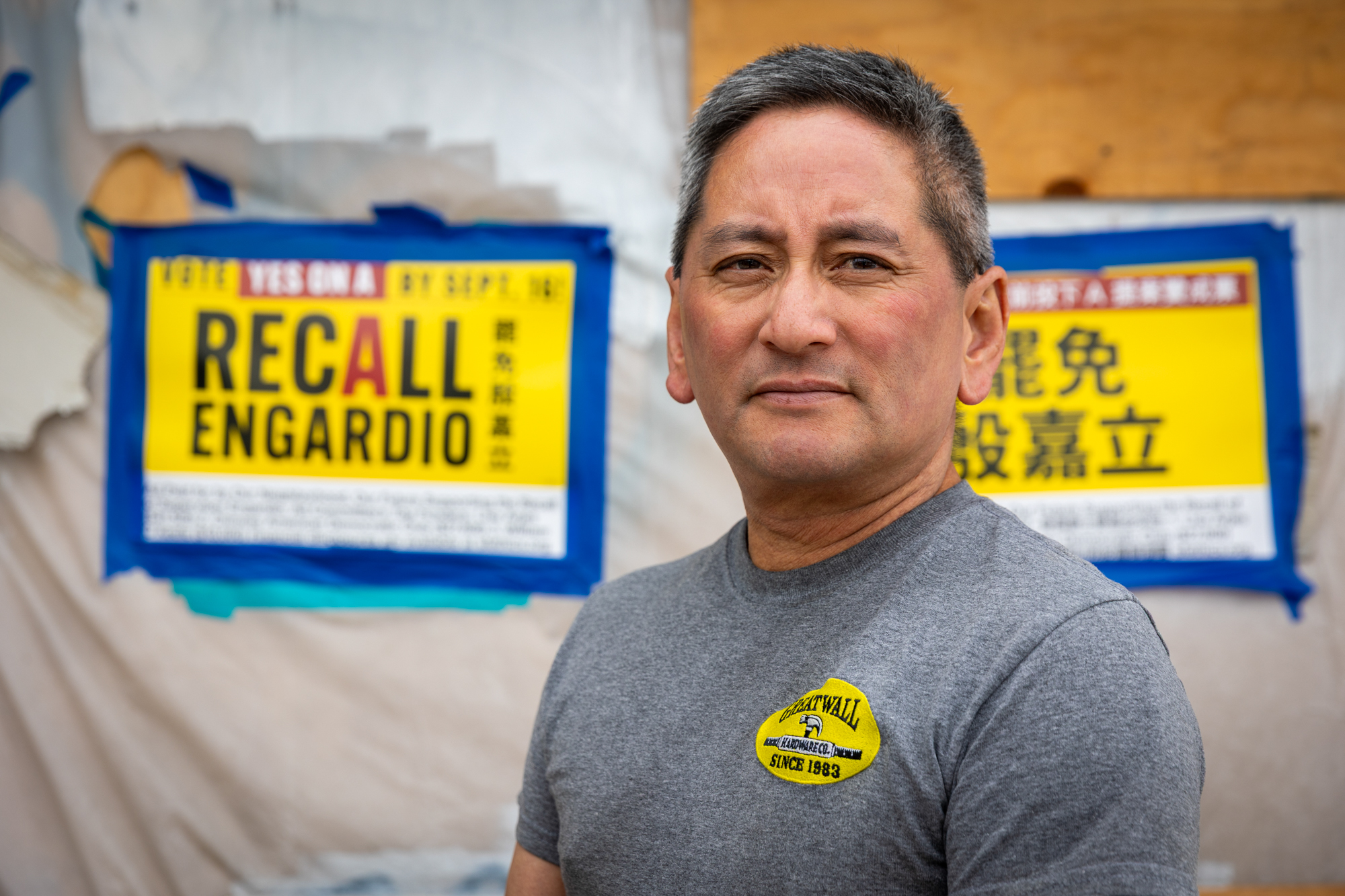
"caption": "Albert Chow, a business owner of Great Wall in the Sunset District, poses for a portrait outside Great Wall Hardware in San Francisco on Sept. 3, 2025. Chinese voters in the sunset are split on whether to support the recall of Supervisor Joel Engardio, who backed the proposal to close off the Great Highway to cars and open up a new park.",
"credit": "Tâm Vũ/KQED",
"altTag": null,
"description": null,
"imgSizes": {
"thumbnail": {
"file": "https://cdn.kqed.org/wp-content/uploads/sites/10/2025/09/250903-SUNSETCHINESERECALL00232_TV-KQED-160x107.jpg",
"width": 160,
"height": 107,
"mimeType": "image/jpeg"
},
"1536x1536": {
"file": "https://cdn.kqed.org/wp-content/uploads/sites/10/2025/09/250903-SUNSETCHINESERECALL00232_TV-KQED-1536x1024.jpg",
"width": 1536,
"height": 1024,
"mimeType": "image/jpeg"
},
"post-thumbnail": {
"file": "https://cdn.kqed.org/wp-content/uploads/sites/10/2025/09/250903-SUNSETCHINESERECALL00232_TV-KQED-672x372.jpg",
"width": 672,
"height": 372,
"mimeType": "image/jpeg"
},
"twentyfourteen-full-width": {
"file": "https://cdn.kqed.org/wp-content/uploads/sites/10/2025/09/250903-SUNSETCHINESERECALL00232_TV-KQED-1038x576.jpg",
"width": 1038,
"height": 576,
"mimeType": "image/jpeg"
},
"kqedFullSize": {
"file": "https://cdn.kqed.org/wp-content/uploads/sites/10/2025/09/250903-SUNSETCHINESERECALL00232_TV-KQED.jpg",
"width": 2000,
"height": 1333
}
},
"isLoading": false,
"fetchFailed": false
},
"news_12055479": {
"type": "attachments",
"id": "news_12055479",
"meta": {
"index": "attachments_1716263798",
"site": "news",
"id": "12055479",
"found": true
},
"title": "250910-VAILLANCOURT FOUNTAIN REMOVAL-MD-01-KQED",
"publishDate": 1757537829,
"status": "inherit",
"parent": 0,
"modified": 1757537843,
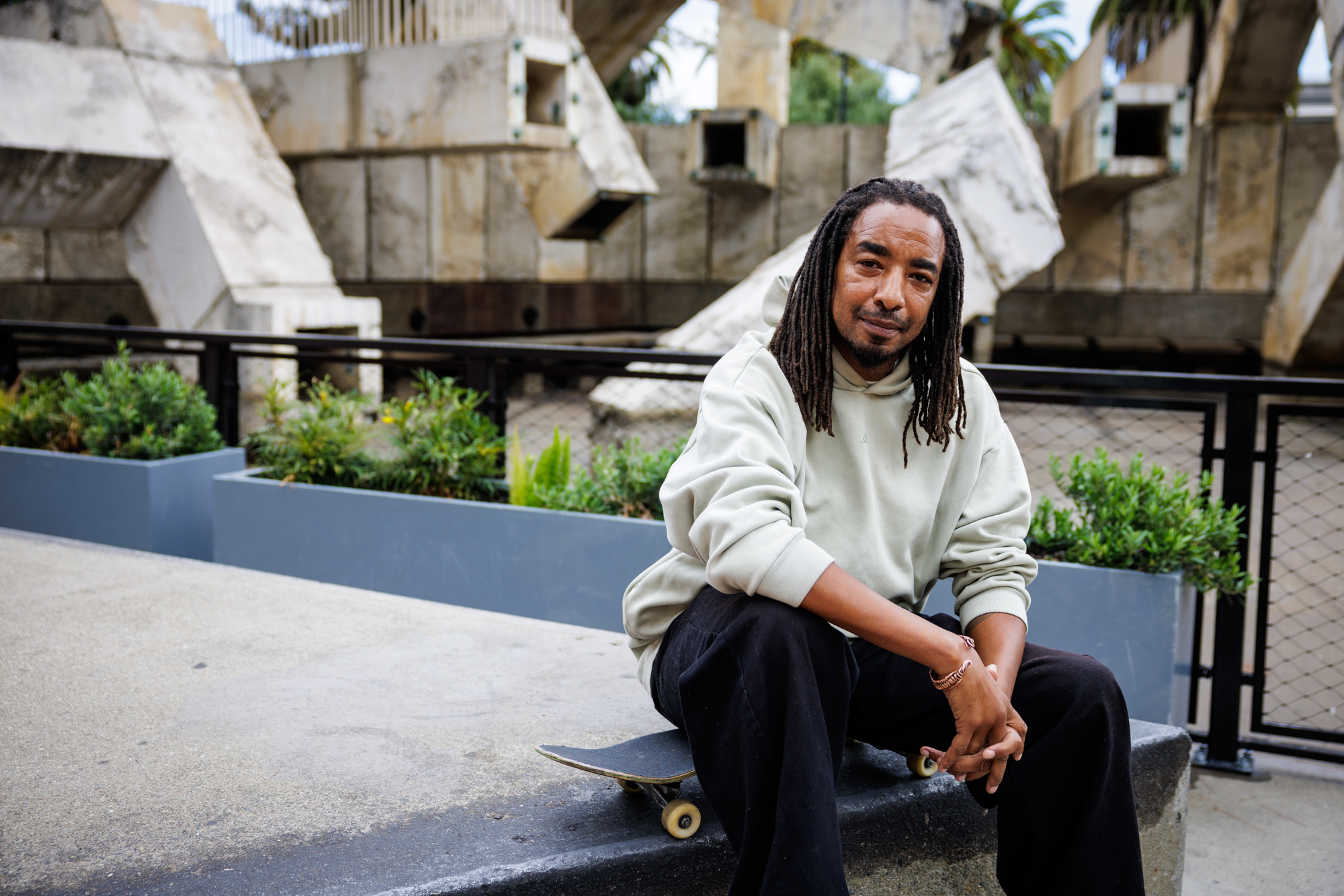
"caption": "Karl Watson sits on his skateboard in front of the Vaillancourt Fountain in San Francisco on Sept. 10, 2025.",
"credit": "Martin do Nascimento/KQED",
"altTag": null,
"description": null,
"imgSizes": {
"thumbnail": {
"file": "https://cdn.kqed.org/wp-content/uploads/sites/10/2025/09/250910-VAILLANCOURT-FOUNTAIN-REMOVAL-MD-01-KQED-160x107.jpg",
"width": 160,
"height": 107,
"mimeType": "image/jpeg"
},
"1536x1536": {
"file": "https://cdn.kqed.org/wp-content/uploads/sites/10/2025/09/250910-VAILLANCOURT-FOUNTAIN-REMOVAL-MD-01-KQED-1536x1025.jpg",
"width": 1536,
"height": 1025,
"mimeType": "image/jpeg"
},
"post-thumbnail": {
"file": "https://cdn.kqed.org/wp-content/uploads/sites/10/2025/09/250910-VAILLANCOURT-FOUNTAIN-REMOVAL-MD-01-KQED-672x372.jpg",
"width": 672,
"height": 372,
"mimeType": "image/jpeg"
},
"twentyfourteen-full-width": {
"file": "https://cdn.kqed.org/wp-content/uploads/sites/10/2025/09/250910-VAILLANCOURT-FOUNTAIN-REMOVAL-MD-01-KQED-1038x576.jpg",
"width": 1038,
"height": 576,
"mimeType": "image/jpeg"
},
"kqedFullSize": {
"file": "https://cdn.kqed.org/wp-content/uploads/sites/10/2025/09/250910-VAILLANCOURT-FOUNTAIN-REMOVAL-MD-01-KQED.jpg",
"width": 2000,
"height": 1334
}
},
"isLoading": false,
"fetchFailed": false
},
"news_12016604": {
"type": "attachments",
"id": "news_12016604",
"meta": {
"index": "attachments_1716263798",
"site": "news",
"id": "12016604",
"found": true
},
"title": "The UC Berkeley Campus in Berkeley on Aug. 17, 2023.",
"publishDate": 1733334753,
"status": "inherit",
"parent": 12016602,
"modified": 1733334766,
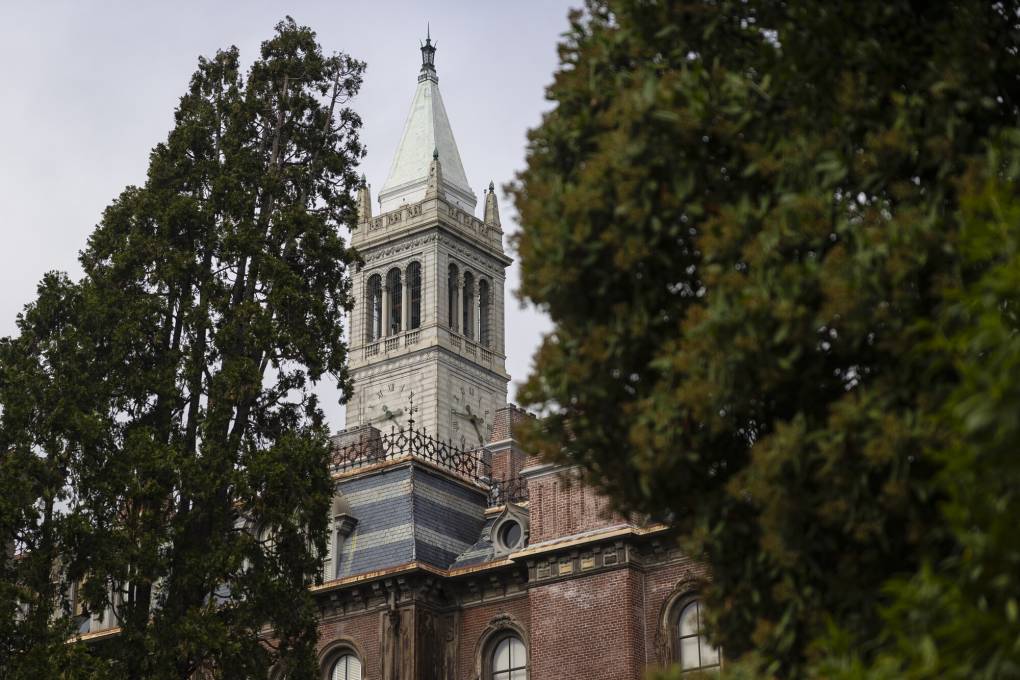
"caption": "The UC Berkeley Campus in Berkeley on Aug. 17, 2023.",
"credit": "Martin do Nascimento/KQED",
"altTag": null,
"description": null,
"imgSizes": {
"medium": {
"file": "https://cdn.kqed.org/wp-content/uploads/sites/10/2024/12/230817-UC-BERKELEY-CAMPUS-MD-02_qed-800x533.jpg",
"width": 800,
"height": 533,
"mimeType": "image/jpeg"
},
"large": {
"file": "https://cdn.kqed.org/wp-content/uploads/sites/10/2024/12/230817-UC-BERKELEY-CAMPUS-MD-02_qed-1020x680.jpg",
"width": 1020,
"height": 680,
"mimeType": "image/jpeg"
},
"thumbnail": {
"file": "https://cdn.kqed.org/wp-content/uploads/sites/10/2024/12/230817-UC-BERKELEY-CAMPUS-MD-02_qed-160x107.jpg",
"width": 160,
"height": 107,
"mimeType": "image/jpeg"
},
"1536x1536": {
"file": "https://cdn.kqed.org/wp-content/uploads/sites/10/2024/12/230817-UC-BERKELEY-CAMPUS-MD-02_qed-1536x1024.jpg",
"width": 1536,
"height": 1024,
"mimeType": "image/jpeg"
},
"post-thumbnail": {
"file": "https://cdn.kqed.org/wp-content/uploads/sites/10/2024/12/230817-UC-BERKELEY-CAMPUS-MD-02_qed-672x372.jpg",
"width": 672,
"height": 372,
"mimeType": "image/jpeg"
},
"twentyfourteen-full-width": {
"file": "https://cdn.kqed.org/wp-content/uploads/sites/10/2024/12/230817-UC-BERKELEY-CAMPUS-MD-02_qed-1038x576.jpg",
"width": 1038,
"height": 576,
"mimeType": "image/jpeg"
},
"full-width": {
"file": "https://cdn.kqed.org/wp-content/uploads/sites/10/2024/12/230817-UC-BERKELEY-CAMPUS-MD-02_qed-1920x1280.jpg",
"width": 1920,
"height": 1280,
"mimeType": "image/jpeg"
},
"kqedFullSize": {
"file": "https://cdn.kqed.org/wp-content/uploads/sites/10/2024/12/230817-UC-BERKELEY-CAMPUS-MD-02_qed.jpg",
"width": 2000,
"height": 1333
}
},
"isLoading": false,
"fetchFailed": false
},
"news_12055625": {
"type": "attachments",
"id": "news_12055625",
"meta": {
"index": "attachments_1716263798",
"site": "news",
"id": "12055625",
"found": true
},
"title": "BART-Speedrun_2",
"publishDate": 1757616690,
"status": "inherit",
"parent": 12055296,
"modified": 1757616752,
"caption": "Speedrunning takes its name from video gaming culture, when a player attempts to complete an entire game as quickly as possible. Transit nerds have co-opted the trend and turned it into a real-life game, visiting every train or bus station as fast as they can.",
"credit": "Illustration by Darren Tu/KQED",
"altTag": null,
"description": null,
"imgSizes": {
"thumbnail": {
"file": "https://cdn.kqed.org/wp-content/uploads/sites/10/2025/09/BART-Speedrun_2-160x103.jpg",
"width": 160,
"height": 103,
"mimeType": "image/jpeg"
},
"1536x1536": {
"file": "https://cdn.kqed.org/wp-content/uploads/sites/10/2025/09/BART-Speedrun_2-1536x992.jpg",
"width": 1536,
"height": 992,
"mimeType": "image/jpeg"
},
"post-thumbnail": {
"file": "https://cdn.kqed.org/wp-content/uploads/sites/10/2025/09/BART-Speedrun_2-672x372.jpg",
"width": 672,
"height": 372,
"mimeType": "image/jpeg"
},
"twentyfourteen-full-width": {
"file": "https://cdn.kqed.org/wp-content/uploads/sites/10/2025/09/BART-Speedrun_2-1038x576.jpg",
"width": 1038,
"height": 576,
"mimeType": "image/jpeg"
},
"kqedFullSize": {
"file": "https://cdn.kqed.org/wp-content/uploads/sites/10/2025/09/BART-Speedrun_2.jpg",
"width": 1920,
"height": 1240
}
},
"isLoading": false,
"fetchFailed": false
},
"news_12055636": {
"type": "attachments",
"id": "news_12055636",
"meta": {
"index": "attachments_1716263798",
"site": "news",
"id": "12055636",
"found": true
},
"title": "ICE Protest",
"publishDate": 1757617766,
"status": "inherit",
"parent": 12055606,
"modified": 1757617873,
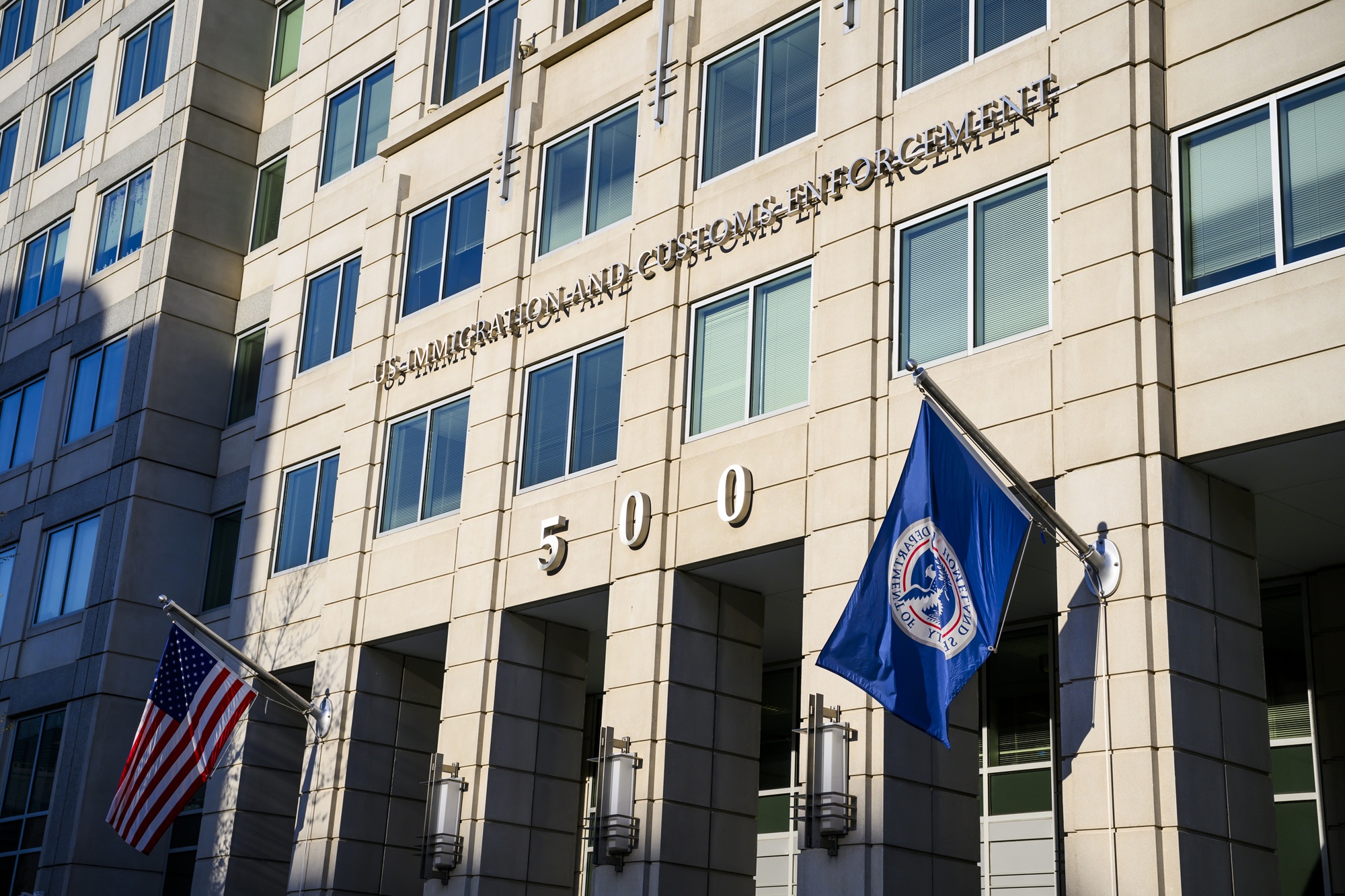
"caption": "The U.S. Immigration and Customs Enforcement (ICE) headquarters on April 14, 2025, in Washington, D.C. ",
"credit": "Pete Kiehart/The Washington Post via Getty Images",
"altTag": null,
"description": null,
"imgSizes": {
"thumbnail": {
"file": "https://cdn.kqed.org/wp-content/uploads/sites/10/2025/09/USImmigrationCustomsEnforcementHQGetty-160x107.jpg",
"width": 160,
"height": 107,
"mimeType": "image/jpeg"
},
"1536x1536": {
"file": "https://cdn.kqed.org/wp-content/uploads/sites/10/2025/09/USImmigrationCustomsEnforcementHQGetty-1536x1024.jpg",
"width": 1536,
"height": 1024,
"mimeType": "image/jpeg"
},
"post-thumbnail": {
"file": "https://cdn.kqed.org/wp-content/uploads/sites/10/2025/09/USImmigrationCustomsEnforcementHQGetty-672x372.jpg",
"width": 672,
"height": 372,
"mimeType": "image/jpeg"
},
"twentyfourteen-full-width": {
"file": "https://cdn.kqed.org/wp-content/uploads/sites/10/2025/09/USImmigrationCustomsEnforcementHQGetty-1038x576.jpg",
"width": 1038,
"height": 576,
"mimeType": "image/jpeg"
},
"kqedFullSize": {
"file": "https://cdn.kqed.org/wp-content/uploads/sites/10/2025/09/USImmigrationCustomsEnforcementHQGetty.jpg",
"width": 2000,
"height": 1333
}
},
"isLoading": false,
"fetchFailed": false
},
"news_12035840": {
"type": "attachments",
"id": "news_12035840",
"meta": {
"index": "attachments_1716263798",
"site": "news",
"id": "12035840",
"found": true
},
"title": "061121_SummerSchool_AW_CM_06",
"publishDate": 1744574510,
"status": "inherit",
"parent": 12035838,
"modified": 1746053532,
"caption": "Rising first graders walk to their classroom at the start of the day during summer session at Laurel Elementary in Oakland on June 11, 2021. ",
"credit": "Anne Wernikoff/CalMatters",
"altTag": "The bottom half of several children on a concrete playground with yellow chalk outlining numbers and letters is shown.",
"description": null,
"imgSizes": {
"medium": {
"file": "https://cdn.kqed.org/wp-content/uploads/sites/10/2025/04/061121_SummerSchool_AW_CM_06-800x533.jpg",
"width": 800,
"height": 533,
"mimeType": "image/jpeg"
},
"large": {
"file": "https://cdn.kqed.org/wp-content/uploads/sites/10/2025/04/061121_SummerSchool_AW_CM_06-1020x680.jpg",
"width": 1020,
"height": 680,
"mimeType": "image/jpeg"
},
"thumbnail": {
"file": "https://cdn.kqed.org/wp-content/uploads/sites/10/2025/04/061121_SummerSchool_AW_CM_06-160x107.jpg",
"width": 160,
"height": 107,
"mimeType": "image/jpeg"
},
"1536x1536": {
"file": "https://cdn.kqed.org/wp-content/uploads/sites/10/2025/04/061121_SummerSchool_AW_CM_06-1536x1024.jpg",
"width": 1536,
"height": 1024,
"mimeType": "image/jpeg"
},
"post-thumbnail": {
"file": "https://cdn.kqed.org/wp-content/uploads/sites/10/2025/04/061121_SummerSchool_AW_CM_06-672x372.jpg",
"width": 672,
"height": 372,
"mimeType": "image/jpeg"
},
"twentyfourteen-full-width": {
"file": "https://cdn.kqed.org/wp-content/uploads/sites/10/2025/04/061121_SummerSchool_AW_CM_06-1038x576.jpg",
"width": 1038,
"height": 576,
"mimeType": "image/jpeg"
},
"full-width": {
"file": "https://cdn.kqed.org/wp-content/uploads/sites/10/2025/04/061121_SummerSchool_AW_CM_06-1920x1280.jpg",
"width": 1920,
"height": 1280,
"mimeType": "image/jpeg"
},
"kqedFullSize": {
"file": "https://cdn.kqed.org/wp-content/uploads/sites/10/2025/04/061121_SummerSchool_AW_CM_06.jpg",
"width": 2000,
"height": 1333
}
},
"isLoading": false,
"fetchFailed": false
},
"news_12042545": {
"type": "attachments",
"id": "news_12042545",
"meta": {
"index": "attachments_1716263798",
"site": "news",
"id": "12042545",
"found": true
},
"title": "California Highway Patrol",
"publishDate": 1748978289,
"status": "inherit",
"parent": 12042539,
"modified": 1757351055,
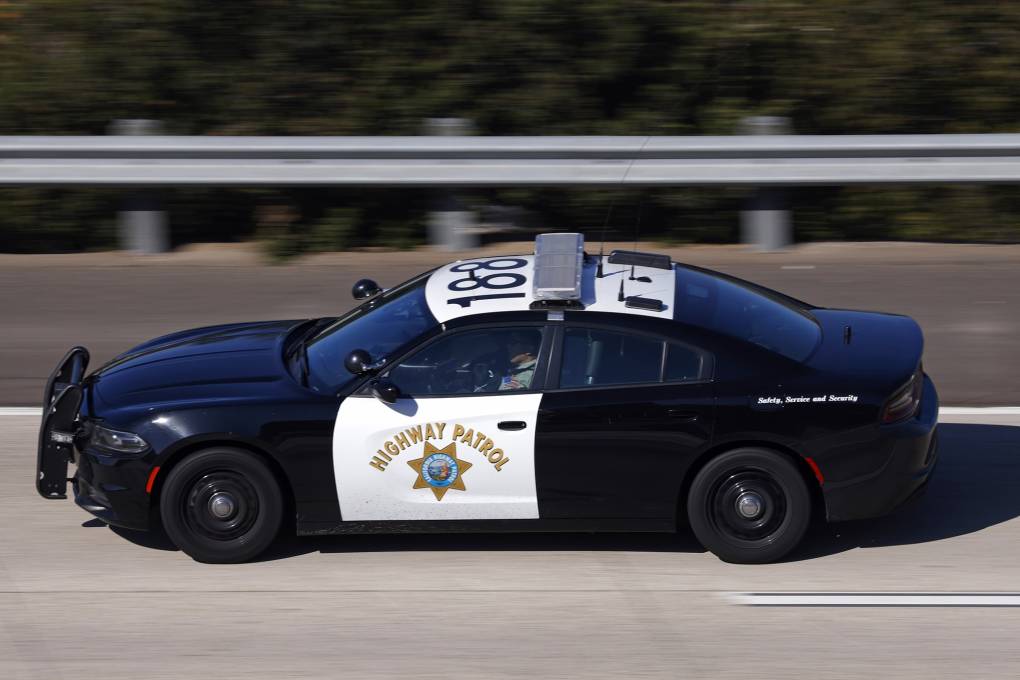
"caption": "A California Highway Patrol officer drives on State Route 52 on Sept. 28, 2024. ",
"credit": "Kevin Carter/Getty Images",
"altTag": null,
"description": null,
"imgSizes": {
"medium": {
"file": "https://cdn.kqed.org/wp-content/uploads/sites/10/2025/06/CHP-Getty-800x533.jpg",
"width": 800,
"height": 533,
"mimeType": "image/jpeg"
},
"large": {
"file": "https://cdn.kqed.org/wp-content/uploads/sites/10/2025/06/CHP-Getty-1020x680.jpg",
"width": 1020,
"height": 680,
"mimeType": "image/jpeg"
},
"thumbnail": {
"file": "https://cdn.kqed.org/wp-content/uploads/sites/10/2025/06/CHP-Getty-160x107.jpg",
"width": 160,
"height": 107,
"mimeType": "image/jpeg"
},
"1536x1536": {
"file": "https://cdn.kqed.org/wp-content/uploads/sites/10/2025/06/CHP-Getty-1536x1024.jpg",
"width": 1536,
"height": 1024,
"mimeType": "image/jpeg"
},
"post-thumbnail": {
"file": "https://cdn.kqed.org/wp-content/uploads/sites/10/2025/06/CHP-Getty-672x372.jpg",
"width": 672,
"height": 372,
"mimeType": "image/jpeg"
},
"twentyfourteen-full-width": {
"file": "https://cdn.kqed.org/wp-content/uploads/sites/10/2025/06/CHP-Getty-1038x576.jpg",
"width": 1038,
"height": 576,
"mimeType": "image/jpeg"
},
"full-width": {
"file": "https://cdn.kqed.org/wp-content/uploads/sites/10/2025/06/CHP-Getty-1920x1280.jpg",
"width": 1920,
"height": 1280,
"mimeType": "image/jpeg"
},
"kqedFullSize": {
"file": "https://cdn.kqed.org/wp-content/uploads/sites/10/2025/06/CHP-Getty.jpg",
"width": 2000,
"height": 1333
}
},
"isLoading": false,
"fetchFailed": false
},
"news_12051722": {
"type": "attachments",
"id": "news_12051722",
"meta": {
"index": "attachments_1716263798",
"site": "news",
"id": "12051722",
"found": true
},
"title": "250811-WILD BOAR-OSA-03-KQED",
"publishDate": 1754933986,
"status": "inherit",
"parent": 0,
"modified": 1757452419,
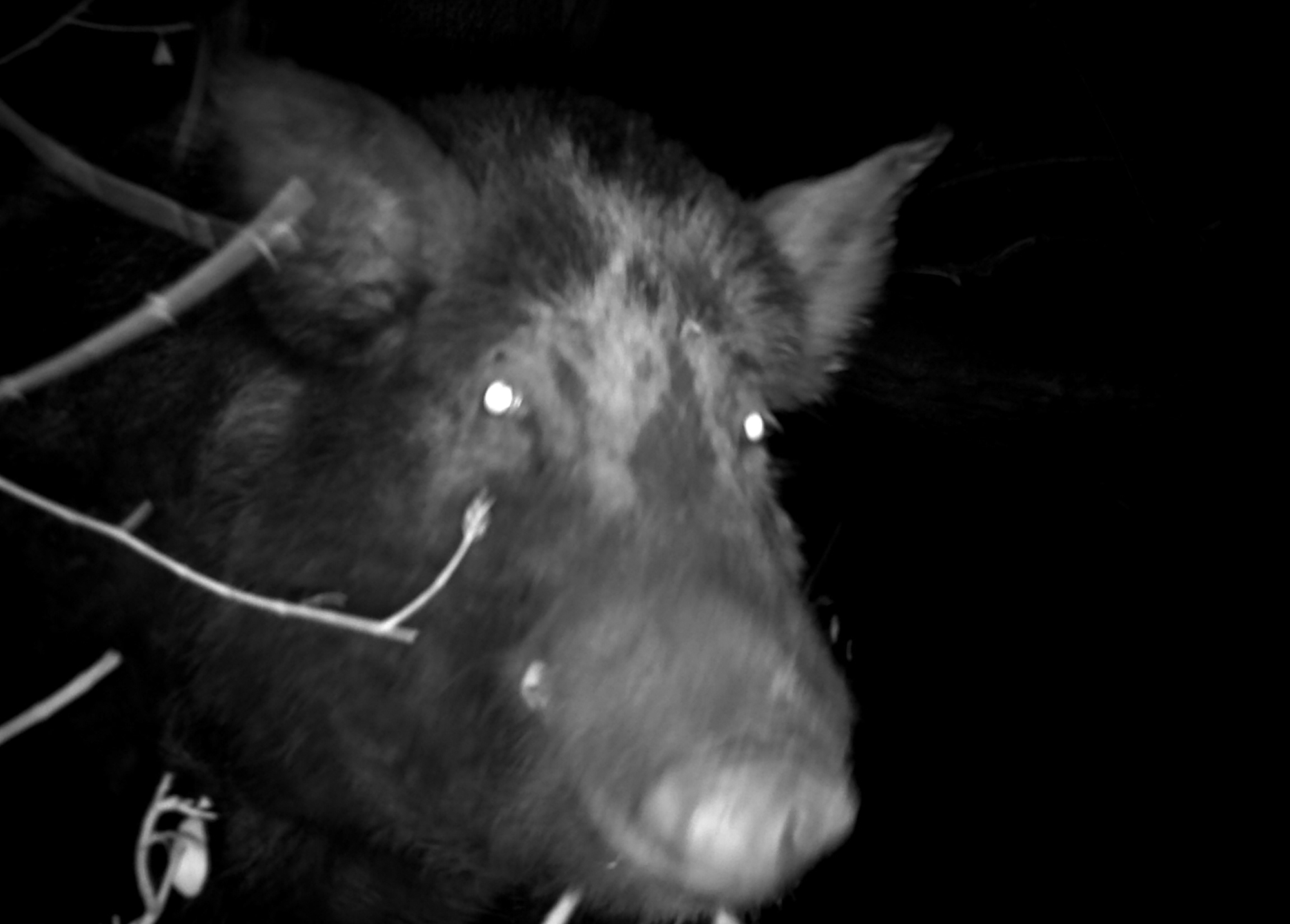
"caption": "A wild boar caught on a wildlife camera.",
"credit": "Courtesy of Santa Clara Valley Open Space Authority",
"altTag": null,
"description": null,
"imgSizes": {
"thumbnail": {
"file": "https://cdn.kqed.org/wp-content/uploads/sites/10/2025/08/250811-WILD-BOAR-OSA-03-KQED-160x115.jpg",
"width": 160,
"height": 115,
"mimeType": "image/jpeg"
},
"1536x1536": {
"file": "https://cdn.kqed.org/wp-content/uploads/sites/10/2025/08/250811-WILD-BOAR-OSA-03-KQED-1536x1101.jpg",
"width": 1536,
"height": 1101,
"mimeType": "image/jpeg"
},
"post-thumbnail": {
"file": "https://cdn.kqed.org/wp-content/uploads/sites/10/2025/08/250811-WILD-BOAR-OSA-03-KQED-672x372.jpg",
"width": 672,
"height": 372,
"mimeType": "image/jpeg"
},
"twentyfourteen-full-width": {
"file": "https://cdn.kqed.org/wp-content/uploads/sites/10/2025/08/250811-WILD-BOAR-OSA-03-KQED-1038x576.jpg",
"width": 1038,
"height": 576,
"mimeType": "image/jpeg"
},
"kqedFullSize": {
"file": "https://cdn.kqed.org/wp-content/uploads/sites/10/2025/08/250811-WILD-BOAR-OSA-03-KQED.jpg",
"width": 2000,
"height": 1433
}
},
"isLoading": false,
"fetchFailed": false
},
"news_12055511": {
"type": "attachments",
"id": "news_12055511",
"meta": {
"index": "attachments_1716263798",
"site": "news",
"id": "12055511",
"found": true
},
"title": "CommunityCollegeFreeMeal1",
"publishDate": 1757542108,
"status": "inherit",
"parent": 12055457,
"modified": 1757542146,
"caption": "Santa Clara County’s West Valley-Mission Community College District is providing one no-cost meal per day to every student in an effort to address food insecurity. ",
"credit": "Courtesy of Haley Tabor/West Valley College",
"altTag": null,
"description": null,
"imgSizes": {
"thumbnail": {
"file": "https://cdn.kqed.org/wp-content/uploads/sites/10/2025/09/CommunityCollegeFreeMeal1-160x120.jpg",
"width": 160,
"height": 120,
"mimeType": "image/jpeg"
},
"1536x1536": {
"file": "https://cdn.kqed.org/wp-content/uploads/sites/10/2025/09/CommunityCollegeFreeMeal1-1536x1153.jpg",
"width": 1536,
"height": 1153,
"mimeType": "image/jpeg"
},
"post-thumbnail": {
"file": "https://cdn.kqed.org/wp-content/uploads/sites/10/2025/09/CommunityCollegeFreeMeal1-672x372.jpg",
"width": 672,
"height": 372,
"mimeType": "image/jpeg"
},
"twentyfourteen-full-width": {
"file": "https://cdn.kqed.org/wp-content/uploads/sites/10/2025/09/CommunityCollegeFreeMeal1-1038x576.jpg",
"width": 1038,
"height": 576,
"mimeType": "image/jpeg"
},
"kqedFullSize": {
"file": "https://cdn.kqed.org/wp-content/uploads/sites/10/2025/09/CommunityCollegeFreeMeal1.jpg",
"width": 2000,
"height": 1501
}
},
"isLoading": false,
"fetchFailed": false
},
"news_12055477": {
"type": "attachments",
"id": "news_12055477",
"meta": {
"index": "attachments_1716263798",
"site": "news",
"id": "12055477",
"found": true
},
"title": "Mission Cliffs in San Francisco on Sept. 10, 2025.",
"publishDate": 1757537076,
"status": "inherit",
"parent": 0,
"modified": 1757537099,
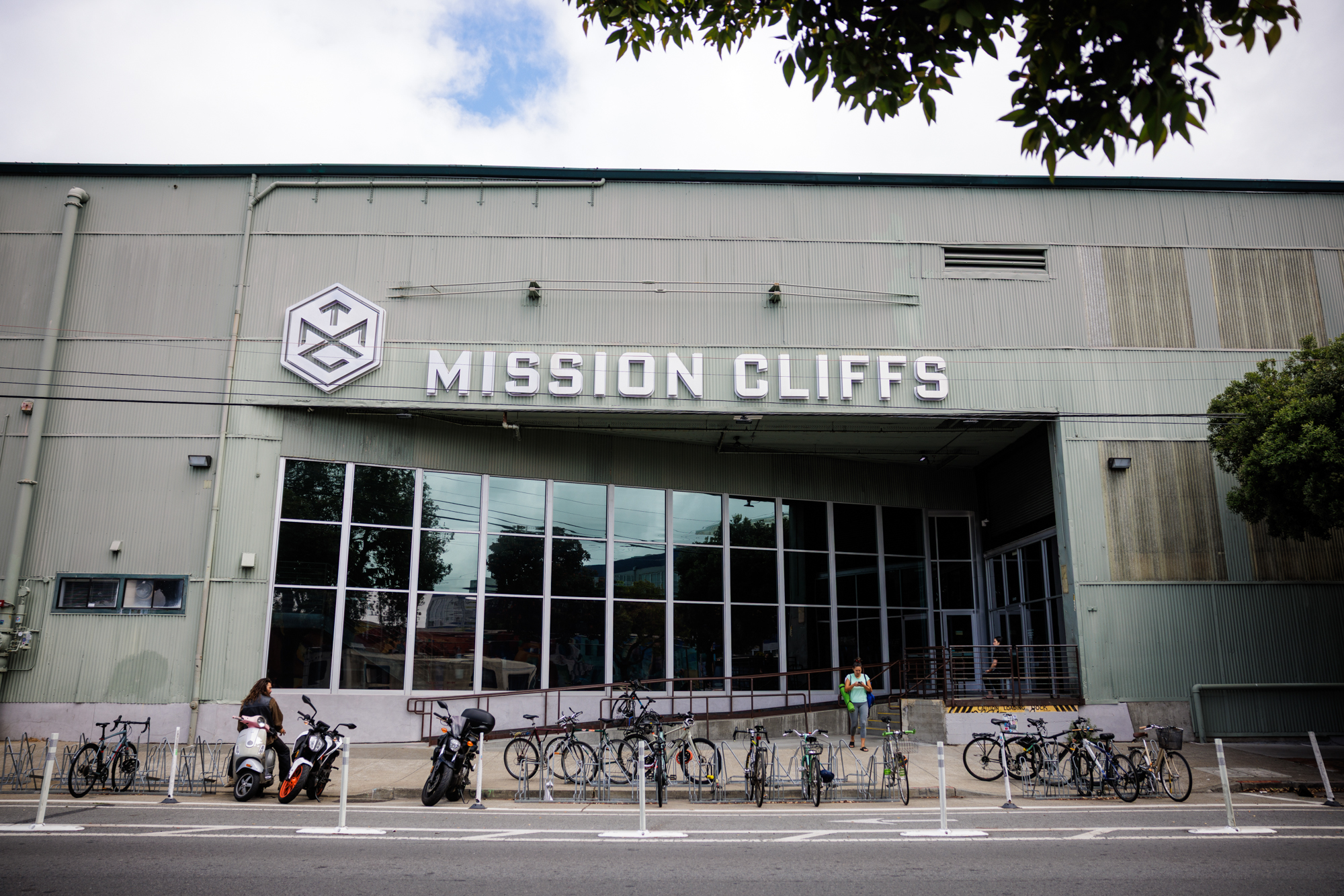
"caption": "Mission Cliffs in San Francisco on Sept. 10, 2025.",
"credit": "Martin do Nascimento/KQED",
"altTag": null,
"description": null,
"imgSizes": {
"thumbnail": {
"file": "https://cdn.kqed.org/wp-content/uploads/sites/10/2025/09/250910-MISSION-CLIFFS-MD-01-KQED-160x107.jpg",
"width": 160,
"height": 107,
"mimeType": "image/jpeg"
},
"1536x1536": {
"file": "https://cdn.kqed.org/wp-content/uploads/sites/10/2025/09/250910-MISSION-CLIFFS-MD-01-KQED-1536x1025.jpg",
"width": 1536,
"height": 1025,
"mimeType": "image/jpeg"
},
"post-thumbnail": {
"file": "https://cdn.kqed.org/wp-content/uploads/sites/10/2025/09/250910-MISSION-CLIFFS-MD-01-KQED-672x372.jpg",
"width": 672,
"height": 372,
"mimeType": "image/jpeg"
},
"twentyfourteen-full-width": {
"file": "https://cdn.kqed.org/wp-content/uploads/sites/10/2025/09/250910-MISSION-CLIFFS-MD-01-KQED-1038x576.jpg",
"width": 1038,
"height": 576,
"mimeType": "image/jpeg"
},
"kqedFullSize": {
"file": "https://cdn.kqed.org/wp-content/uploads/sites/10/2025/09/250910-MISSION-CLIFFS-MD-01-KQED.jpg",
"width": 2000,
"height": 1334
}
},
"isLoading": false,
"fetchFailed": false
},
"news_12055396": {
"type": "attachments",
"id": "news_12055396",
"meta": {
"index": "attachments_1716263798",
"site": "news",
"id": "12055396",
"found": true
},
"title": "MahanNewsom1",
"publishDate": 1757461383,
"status": "inherit",
"parent": 12055284,
"modified": 1757461543,
"caption": "Gov. Gavin Newsom’s popularity has surged as he has battled with President Donald Trump. But San José Mayor Matt Mahan (left) says \"trolling Trump\" won’t be key to success for Democrats. ",
"credit": "Joseph Geha/KQED; Rich Pedroncelli/AP Photo",
"altTag": null,
"description": null,
"imgSizes": {
"thumbnail": {
"file": "https://cdn.kqed.org/wp-content/uploads/sites/10/2025/09/MahanNewsom1-160x107.jpg",
"width": 160,
"height": 107,
"mimeType": "image/jpeg"
},
"1536x1536": {
"file": "https://cdn.kqed.org/wp-content/uploads/sites/10/2025/09/MahanNewsom1-1536x1024.jpg",
"width": 1536,
"height": 1024,
"mimeType": "image/jpeg"
},
"post-thumbnail": {
"file": "https://cdn.kqed.org/wp-content/uploads/sites/10/2025/09/MahanNewsom1-672x372.jpg",
"width": 672,
"height": 372,
"mimeType": "image/jpeg"
},
"twentyfourteen-full-width": {
"file": "https://cdn.kqed.org/wp-content/uploads/sites/10/2025/09/MahanNewsom1-1038x576.jpg",
"width": 1038,
"height": 576,
"mimeType": "image/jpeg"
},
"kqedFullSize": {
"file": "https://cdn.kqed.org/wp-content/uploads/sites/10/2025/09/MahanNewsom1.jpg",
"width": 2000,
"height": 1333
}
},
"isLoading": false,
"fetchFailed": false
},
"news_12048131": {
"type": "attachments",
"id": "news_12048131",
"meta": {
"index": "attachments_1716263798",
"site": "news",
"id": "12048131",
"found": true
},
"title": "250715-ImmigrationCourtProtests-16-BL_qed",
"publishDate": 1752605220,
"status": "inherit",
"parent": 12047875,
"modified": 1752862905,
"caption": "Supporters rally outside the U.S. District Court in San Francisco on July 15, 2025, calling on ICE to release Guillermo Medina Reyes ahead of his preliminary injunction hearing.",
"credit": "Beth LaBerge/KQED",
"altTag": null,
"description": null,
"imgSizes": {
"thumbnail": {
"file": "https://cdn.kqed.org/wp-content/uploads/sites/10/2025/07/250715-ImmigrationCourtProtests-16-BL_qed-160x107.jpg",
"width": 160,
"height": 107,
"mimeType": "image/jpeg"
},
"1536x1536": {
"file": "https://cdn.kqed.org/wp-content/uploads/sites/10/2025/07/250715-ImmigrationCourtProtests-16-BL_qed-1536x1024.jpg",
"width": 1536,
"height": 1024,
"mimeType": "image/jpeg"
},
"post-thumbnail": {
"file": "https://cdn.kqed.org/wp-content/uploads/sites/10/2025/07/250715-ImmigrationCourtProtests-16-BL_qed-672x372.jpg",
"width": 672,
"height": 372,
"mimeType": "image/jpeg"
},
"twentyfourteen-full-width": {
"file": "https://cdn.kqed.org/wp-content/uploads/sites/10/2025/07/250715-ImmigrationCourtProtests-16-BL_qed-1038x576.jpg",
"width": 1038,
"height": 576,
"mimeType": "image/jpeg"
},
"kqedFullSize": {
"file": "https://cdn.kqed.org/wp-content/uploads/sites/10/2025/07/250715-ImmigrationCourtProtests-16-BL_qed.jpg",
"width": 2000,
"height": 1333
}
},
"isLoading": false,
"fetchFailed": false
}
},
"audioPlayerReducer": {
"postId": "stream_live",
"isPaused": true,
"isPlaying": false,
"pfsActive": false,
"pledgeModalIsOpen": true,
"playerDrawerIsOpen": false,
"liveAudioPlayStartedAt": 0,
"liveAudioPlayContext": ""
},
"authorsReducer": {
"gmarzorati": {
"type": "authors",
"id": "227",
"meta": {
"index": "authors_1716337520",
"id": "227",
"found": true
},
"name": "Guy Marzorati",
"firstName": "Guy",
"lastName": "Marzorati",
"slug": "gmarzorati",
"email": "gmarzorati@KQED.org",
"display_author_email": true,
"staff_mastheads": [
"news"
],
"title": "Correspondent",
"bio": "Guy Marzorati is a correspondent on KQED's California Politics and Government Desk, based in San Jose. A graduate of Santa Clara University, Guy joined KQED in 2013. He reports on state and local politics and produces KQED's digital voter guide.",
"avatar": "https://secure.gravatar.com/avatar/e7038b8dbfd55b104369b76b1cd0b9de?s=600&d=blank&r=g",
"twitter": "guymarzorati",
"facebook": null,
"instagram": null,
"linkedin": null,
"sites": [
{
"site": "",
"roles": [
"editor"
]
},
{
"site": "news",
"roles": [
"editor"
]
},
{
"site": "science",
"roles": [
"editor"
]
},
{
"site": "forum",
"roles": [
"editor"
]
},
{
"site": "elections",
"roles": [
"editor"
]
},
{
"site": "liveblog",
"roles": [
"editor"
]
}
],
"headData": {
"title": "Guy Marzorati | KQED",
"description": "Correspondent",
"ogImgSrc": "https://secure.gravatar.com/avatar/e7038b8dbfd55b104369b76b1cd0b9de?s=600&d=blank&r=g",
"twImgSrc": "https://secure.gravatar.com/avatar/e7038b8dbfd55b104369b76b1cd0b9de?s=600&d=blank&r=g"
},
"isLoading": false,
"link": "/author/gmarzorati"
},
"rachael-myrow": {
"type": "authors",
"id": "251",
"meta": {
"index": "authors_1716337520",
"id": "251",
"found": true
},
"name": "Rachael Myrow",
"firstName": "Rachael",
"lastName": "Myrow",
"slug": "rachael-myrow",
"email": "rmyrow@kqed.org",
"display_author_email": true,
"staff_mastheads": [
"news"
],
"title": "Senior Editor of KQED's Silicon Valley News Desk",
"bio": "• I write and edit stories about how Silicon Valley power and policies shape everyday life in California. I’m also passionate about making Bay Area history and culture more accessible to a broad public. • I’ve been a journalist for most of my life, starting in high school with The Franklin Press in Los Angeles, where I grew up. While earning my first degree in English at UC Berkeley, I got my start in public radio at KALX-FM. After completing a second degree in journalism at Cal, I landed my first professional job at Marketplace, then moved on to KPCC (now LAist), and then KQED, where I hosted The California Report for more than seven years. • My reporting has appeared on NPR, The World, WBUR’s \u003ci>Here & Now\u003c/i>, and the BBC. I also guest host for KQED’s \u003ci>Forum\u003c/i>, as well as the Commonwealth Club in San Francisco. • I speak periodically on media, democracy and technology issues, and do voiceover work for documentaries and educational video projects. • Outside of the studio, you'll find me hiking Bay Area trails and whipping up Insta-ready meals in my kitchen. • I do not accept gifts, money, or favors from anyone connected to my reporting, I don't pay people for information, and I do not support or donate to political causes. • I strive to treat the people I report on with fairness, honesty, and respect. I also recognize there are often multiple sides to a story and work to verify information through multiple sources and documentation. If I get something wrong, I correct it.",
"avatar": "https://secure.gravatar.com/avatar/3ed8a3c5f26025e4a805ba634cda8cd764906b97438a6d9ce216b044e340da4e?s=600&d=blank&r=g",
"twitter": "rachaelmyrow",
"bluesky": null,
"facebook": null,
"instagram": null,
"linkedin": "https://www.linkedin.com/in/rachaelmyrow/",
"sites": [
{
"site": "arts",
"roles": [
"administrator"
]
},
{
"site": "news",
"roles": [
"edit_others_posts",
"editor"
]
},
{
"site": "futureofyou",
"roles": [
"editor"
]
},
{
"site": "bayareabites",
"roles": [
"editor"
]
},
{
"site": "stateofhealth",
"roles": [
"editor"
]
},
{
"site": "science",
"roles": [
"editor"
]
},
{
"site": "food",
"roles": [
"editor"
]
},
{
"site": "forum",
"roles": [
"editor"
]
},
{
"site": "liveblog",
"roles": [
"author"
]
}
],
"headData": {
"title": "Rachael Myrow | KQED",
"description": "Senior Editor of KQED's Silicon Valley News Desk",
"ogImgSrc": "https://secure.gravatar.com/avatar/3ed8a3c5f26025e4a805ba634cda8cd764906b97438a6d9ce216b044e340da4e?s=600&d=blank&r=g",
"twImgSrc": "https://secure.gravatar.com/avatar/3ed8a3c5f26025e4a805ba634cda8cd764906b97438a6d9ce216b044e340da4e?s=600&d=blank&r=g"
},
"isLoading": false,
"link": "/author/rachael-myrow"
},
"abandlamudi": {
"type": "authors",
"id": "11672",
"meta": {
"index": "authors_1716337520",
"id": "11672",
"found": true
},
"name": "Adhiti Bandlamudi",
"firstName": "Adhiti",
"lastName": "Bandlamudi",
"slug": "abandlamudi",
"email": "abandlamudi@kqed.org",
"display_author_email": false,
"staff_mastheads": [
"news"
],
"title": "KQED Housing Reporter",
"bio": "Adhiti Bandlamudi reports for KQED's Housing desk. She focuses on how housing gets built across the Bay Area. Before joining KQED in 2020, she reported for WUNC in Durham, North Carolina, WABE in Atlanta, Georgia and Capital Public Radio in Sacramento. In 2017, she was awarded a Kroc Fellowship at NPR where she reported on everything from sprinkles to the Golden State Killer's arrest. When she's not reporting, she's baking new recipes in her kitchen or watching movies with friends and family. She's originally from Georgia and has strong opinions about Great British Bake Off.",
"avatar": "https://secure.gravatar.com/avatar/868129c8b257bb99a3500e2c86a65400?s=600&d=mm&r=g",
"twitter": "oddity_adhiti",
"facebook": null,
"instagram": null,
"linkedin": null,
"sites": [
{
"site": "arts",
"roles": [
"author"
]
},
{
"site": "news",
"roles": [
"editor"
]
},
{
"site": "liveblog",
"roles": [
"author"
]
}
],
"headData": {
"title": "Adhiti Bandlamudi | KQED",
"description": "KQED Housing Reporter",
"ogImgSrc": "https://secure.gravatar.com/avatar/868129c8b257bb99a3500e2c86a65400?s=600&d=mm&r=g",
"twImgSrc": "https://secure.gravatar.com/avatar/868129c8b257bb99a3500e2c86a65400?s=600&d=mm&r=g"
},
"isLoading": false,
"link": "/author/abandlamudi"
},
"adahlstromeckman": {
"type": "authors",
"id": "11785",
"meta": {
"index": "authors_1716337520",
"id": "11785",
"found": true
},
"name": "Azul Dahlstrom-Eckman",
"firstName": "Azul",
"lastName": "Dahlstrom-Eckman",
"slug": "adahlstromeckman",
"email": "adahlstrom-eckman@kqed.org",
"display_author_email": true,
"staff_mastheads": [],
"title": "Reporter",
"bio": "Azul is a reporter for KQED focusing on transportation and features. He joined KQED in 2021 as an alumna of KALW's Audio Academy radio journalism training program.",
"avatar": "https://secure.gravatar.com/avatar/9cb750298435add7815a777f55bf1f46845c1386bb8452555c60a7b820b5aba3?s=600&d=blank&r=g",
"twitter": "@zuliemann",
"bluesky": "@azul415.bsky.social",
"facebook": null,
"instagram": null,
"linkedin": null,
"sites": [
{
"site": "arts",
"roles": [
"editor"
]
},
{
"site": "news",
"roles": [
"editor"
]
},
{
"site": "science",
"roles": [
"editor"
]
},
{
"site": "liveblog",
"roles": [
"author"
]
}
],
"headData": {
"title": "Azul Dahlstrom-Eckman | KQED",
"description": "Reporter",
"ogImgSrc": "https://secure.gravatar.com/avatar/9cb750298435add7815a777f55bf1f46845c1386bb8452555c60a7b820b5aba3?s=600&d=blank&r=g",
"twImgSrc": "https://secure.gravatar.com/avatar/9cb750298435add7815a777f55bf1f46845c1386bb8452555c60a7b820b5aba3?s=600&d=blank&r=g"
},
"isLoading": false,
"link": "/author/adahlstromeckman"
},
"ibloom": {
"type": "authors",
"id": "11805",
"meta": {
"index": "authors_1716337520",
"id": "11805",
"found": true
},
"name": "Izzy Bloom",
"firstName": "Izzy",
"lastName": "Bloom",
"slug": "ibloom",
"email": "ibloom@kqed.org",
"display_author_email": false,
"staff_mastheads": [],
"title": "KQED Reporter & Producer",
"bio": "Izzy is a reporter and producer on KQED's California Politics & Government Desk. She joined the desk in 2024 to produce Political Breakdown, covering local and national elections and attending the RNC and DNC in Milwaukee and Chicago. \r\n\r\nBefore that, Izzy was a producer on The California Report and reported long-form stories for The California Report Magazine. She was a finalist for the Third Coast/Richard H. Driehaus Foundation Competition and was awarded for her reporting on indigenous land back by the Society of Professional Journalists. Izzy received her master's in journalism from the University of California, Berkeley.",
"avatar": "https://secure.gravatar.com/avatar/cc4d272ca430783ee1a8efac470a6b1e0fdd082c3beb61da019801d0ff751c8c?s=600&d=blank&r=g",
"twitter": null,
"bluesky": null,
"facebook": null,
"instagram": null,
"linkedin": null,
"sites": [
{
"site": "news",
"roles": [
"editor"
]
},
{
"site": "perspectives",
"roles": [
"editor"
]
}
],
"headData": {
"title": "Izzy Bloom | KQED",
"description": "KQED Reporter & Producer",
"ogImgSrc": "https://secure.gravatar.com/avatar/cc4d272ca430783ee1a8efac470a6b1e0fdd082c3beb61da019801d0ff751c8c?s=600&d=blank&r=g",
"twImgSrc": "https://secure.gravatar.com/avatar/cc4d272ca430783ee1a8efac470a6b1e0fdd082c3beb61da019801d0ff751c8c?s=600&d=blank&r=g"
},
"isLoading": false,
"link": "/author/ibloom"
},
"sjohnson": {
"type": "authors",
"id": "11840",
"meta": {
"index": "authors_1716337520",
"id": "11840",
"found": true
},
"name": "Sydney Johnson",
"firstName": "Sydney",
"lastName": "Johnson",
"slug": "sjohnson",
"email": "sjohnson@kqed.org",
"display_author_email": false,
"staff_mastheads": [
"news"
],
"title": "KQED Reporter",
"bio": "Sydney Johnson is a general assignment reporter at KQED. She previously reported on public health and city government at the San Francisco Examiner, and before that, she covered statewide education policy for EdSource. Her reporting has won multiple local, state and national awards. Sydney is a graduate of the University of California, Berkeley and lives in San Francisco.",
"avatar": "https://secure.gravatar.com/avatar/97855f2719b72ad6190b7c535fe642c8?s=600&d=blank&r=g",
"twitter": "sydneyfjohnson",
"facebook": null,
"instagram": null,
"linkedin": null,
"sites": [
{
"site": "news",
"roles": [
"editor"
]
}
],
"headData": {
"title": "Sydney Johnson | KQED",
"description": "KQED Reporter",
"ogImgSrc": "https://secure.gravatar.com/avatar/97855f2719b72ad6190b7c535fe642c8?s=600&d=blank&r=g",
"twImgSrc": "https://secure.gravatar.com/avatar/97855f2719b72ad6190b7c535fe642c8?s=600&d=blank&r=g"
},
"isLoading": false,
"link": "/author/sjohnson"
},
"nkhan": {
"type": "authors",
"id": "11867",
"meta": {
"index": "authors_1716337520",
"id": "11867",
"found": true
},
"name": "Nisa Khan",
"firstName": "Nisa",
"lastName": "Khan",
"slug": "nkhan",
"email": "nkhan@kqed.org",
"display_author_email": false,
"staff_mastheads": [],
"title": "KQED Contributor",
"bio": "Nisa Khan is a reporter for KQED's Audience News Desk. She was formerly a data reporter at Michigan Radio. She earned a Bachelor of Science in Information from the University of Michigan and a Master of Arts in Communication from Stanford University.",
"avatar": "https://secure.gravatar.com/avatar/8720459eef081ff64582b3506b124d58523e80e120704a0cbd9892533c914991?s=600&d=blank&r=g",
"twitter": "mnisakhan",
"bluesky": null,
"facebook": null,
"instagram": null,
"linkedin": null,
"sites": [
{
"site": "arts",
"roles": [
"editor"
]
},
{
"site": "news",
"roles": [
"editor"
]
},
{
"site": "science",
"roles": [
"editor",
"author"
]
},
{
"site": "forum",
"roles": [
"editor"
]
},
{
"site": "liveblog",
"roles": [
"contributor"
]
}
],
"headData": {
"title": "Nisa Khan | KQED",
"description": "KQED Contributor",
"ogImgSrc": "https://secure.gravatar.com/avatar/8720459eef081ff64582b3506b124d58523e80e120704a0cbd9892533c914991?s=600&d=blank&r=g",
"twImgSrc": "https://secure.gravatar.com/avatar/8720459eef081ff64582b3506b124d58523e80e120704a0cbd9892533c914991?s=600&d=blank&r=g"
},
"isLoading": false,
"link": "/author/nkhan"
},
"kdebenedetti": {
"type": "authors",
"id": "11913",
"meta": {
"index": "authors_1716337520",
"id": "11913",
"found": true
},
"name": "Katie DeBenedetti",
"firstName": "Katie",
"lastName": "DeBenedetti",
"slug": "kdebenedetti",
"email": "kdebenedetti@kqed.org",
"display_author_email": false,
"staff_mastheads": [
"news",
"science"
],
"title": "KQED Contributor",
"bio": "Katie DeBenedetti is a digital reporter covering daily news for the Express Desk. Prior to joining KQED as a culture reporting intern in January 2024, she covered education and city government for the Napa Valley Register.",
"avatar": "https://secure.gravatar.com/avatar/6e31073cb8f7e4214ab03f42771d0f45?s=600&d=blank&r=g",
"twitter": null,
"facebook": null,
"instagram": null,
"linkedin": null,
"sites": [
{
"site": "news",
"roles": [
"author"
]
},
{
"site": "science",
"roles": [
"author"
]
},
{
"site": "liveblog",
"roles": [
"author"
]
}
],
"headData": {
"title": "Katie DeBenedetti | KQED",
"description": "KQED Contributor",
"ogImgSrc": "https://secure.gravatar.com/avatar/6e31073cb8f7e4214ab03f42771d0f45?s=600&d=blank&r=g",
"twImgSrc": "https://secure.gravatar.com/avatar/6e31073cb8f7e4214ab03f42771d0f45?s=600&d=blank&r=g"
},
"isLoading": false,
"link": "/author/kdebenedetti"
},
"bkrans": {
"type": "authors",
"id": "11923",
"meta": {
"index": "authors_1716337520",
"id": "11923",
"found": true
},
"name": "Brian Krans",
"firstName": "Brian",
"lastName": "Krans",
"slug": "bkrans",
"email": "bkrans@kqed.org",
"display_author_email": false,
"staff_mastheads": [
"news"
],
"title": "KQED Contributing Reporter",
"bio": "Brian Krans is an award-winning local news and investigative reporter who has been proudly working as a general assignment reporter for KQED since August 2023. He lives in Richmond, where he also reports on air pollution for Richmondside. He is also a founding member of the Vallejo Sun.",
"avatar": "https://secure.gravatar.com/avatar/71fa91f931774612559f7640390b53d9c2840ff72b20f195a25239aab2d9fbb9?s=600&d=blank&r=g",
"twitter": "citizenkrans",
"bluesky": null,
"facebook": null,
"instagram": null,
"linkedin": null,
"sites": [
{
"site": "news",
"roles": [
"editor"
]
}
],
"headData": {
"title": "Brian Krans | KQED",
"description": "KQED Contributing Reporter",
"ogImgSrc": "https://secure.gravatar.com/avatar/71fa91f931774612559f7640390b53d9c2840ff72b20f195a25239aab2d9fbb9?s=600&d=blank&r=g",
"twImgSrc": "https://secure.gravatar.com/avatar/71fa91f931774612559f7640390b53d9c2840ff72b20f195a25239aab2d9fbb9?s=600&d=blank&r=g"
},
"isLoading": false,
"link": "/author/bkrans"
}
},
"pagesReducer": {
"news_category_local": {
"type": "terms",
"id": "news_28250",
"meta": {
"index": "terms_1716263798",
"site": "news",
"id": "28250",
"score": 12.940155
},
"featImg": null,
"name": "Local",
"description": null,
"taxonomy": "category",
"headData": {
"twImgId": null,
"twTitle": null,
"ogTitle": null,
"ogImgId": null,
"twDescription": null,
"description": null,
"title": "Local Archives | KQED News",
"ogDescription": null
},
"ttid": 28267,
"slug": "local",
"isLoading": false,
"title": "Local",
"pageMeta": {
"site": "news",
"WpPageTemplate": "page-topic-editorial",
"currentPage": 91
},
"blocks": [
{
"blockName": "kqed/post-list",
"attrs": {
"layout": "cardArticle2",
"query": "posts/news?category=local",
"seeMore": false,
"paginated": true,
"page": 91
}
},
{
"blockName": "kqed/ad"
}
]
}
},
"pfsSessionReducer": {},
"postsReducer": {
"stream_live": {
"type": "live",
"id": "stream_live",
"audioUrl": "https://streams.kqed.org/kqedradio",
"title": "Live Stream",
"excerpt": "Live Stream information currently unavailable.",
"link": "/radio",
"featImg": "",
"label": {
"name": "KQED Live",
"link": "/"
}
},
"stream_kqedNewscast": {
"type": "posts",
"id": "stream_kqedNewscast",
"audioUrl": "https://www.kqed.org/.stream/anon/radio/RDnews/newscast.mp3?_=1",
"title": "KQED Newscast",
"featImg": "",
"label": {
"name": "88.5 FM",
"link": "/"
}
},
"news_12055288": {
"type": "posts",
"id": "news_12055288",
"meta": {
"index": "posts_1716263798",
"site": "news",
"id": "12055288",
"score": null,
"sort": [
1757782850000
]
},
"guestAuthors": [],
"slug": "san-francisco-supervisor-recall-asks-whose-voices-are-heard-in-a-fight-over-a-park",
"title": "San Francisco Supervisor Recall Asks: Whose Voices Are Heard in a Fight Over a Park?",
"publishDate": 1757782850,
"format": "standard",
"headTitle": "San Francisco Supervisor Recall Asks: Whose Voices Are Heard in a Fight Over a Park? | KQED",
"labelTerm": {
"site": "news"
},
"content": "\u003cp>San Francisco’s latest recall campaign, \u003ca href=\"https://www.kqed.org/news/12053978/california-recall-fever-hits-san-franciscos-quiet-westside\">targeting Supervisor Joel Engardio\u003c/a> over his support for removing cars from part of the Great Highway to open a beachside park, has put a spotlight on deep tensions in the Sunset District.\u003c/p>\n\u003cp>Supporters and opponents of the recall come from diverse backgrounds and ideologies. But in this district, one of the city’s most densely populated Chinese American neighborhoods, a common refrain among recall proponents is that their voices aren’t being represented.\u003c/p>\n\u003cp>“The most important thing is that we’ve just not been heard,” said Albert Chow, a business owner in the Sunset and one of the most vocal recall supporters. “In fact, a lot felt betrayed.”\u003c/p>\n\u003cp>[ad fullwidth]\u003c/p>\n\u003cp>The park at the center of the debate, Sunset Dunes, was approved by voters citywide in 2024 through \u003ca href=\"https://www.kqed.org/science/1995182/proposition-k-victory-closing-part-of-the-great-highway-sparks-debate-and-delight\">Proposition K\u003c/a>. Some residents who live closest to the park and voted against it were furious to see it pass, and some continue to fight the road closure in court.\u003c/p>\n\u003cp>Chow and others say the park has increased car traffic on nearby avenues, although \u003ca href=\"https://www.sfmta.com/reports/outer-sunset-traffic-report-spring-2025\">an SFMTA study\u003c/a> found minimal impacts. Above all, they were stunned to find out that their supervisor had backed Proposition K.\u003c/p>\n\u003cfigure id=\"attachment_12040913\" class=\"wp-caption aligncenter\" style=\"max-width: 2000px\">\u003ca href=\"https://cdn.kqed.org/wp-content/uploads/sites/10/2025/05/SunsetDunesGetty.jpg\">\u003cimg loading=\"lazy\" decoding=\"async\" class=\"size-full wp-image-12040913\" src=\"https://cdn.kqed.org/wp-content/uploads/sites/10/2025/05/SunsetDunesGetty.jpg\" alt=\"\" width=\"2000\" height=\"1333\" srcset=\"https://cdn.kqed.org/wp-content/uploads/sites/10/2025/05/SunsetDunesGetty.jpg 2000w, https://cdn.kqed.org/wp-content/uploads/sites/10/2025/05/SunsetDunesGetty-800x533.jpg 800w, https://cdn.kqed.org/wp-content/uploads/sites/10/2025/05/SunsetDunesGetty-1020x680.jpg 1020w, https://cdn.kqed.org/wp-content/uploads/sites/10/2025/05/SunsetDunesGetty-160x107.jpg 160w, https://cdn.kqed.org/wp-content/uploads/sites/10/2025/05/SunsetDunesGetty-1536x1024.jpg 1536w, https://cdn.kqed.org/wp-content/uploads/sites/10/2025/05/SunsetDunesGetty-1920x1280.jpg 1920w\" sizes=\"auto, (max-width: 2000px) 100vw, 2000px\">\u003c/a>\u003cfigcaption class=\"wp-caption-text\">Visitors are seen during the grand opening of the Sunset Dunes Park along the former Upper Great Highway, in San Francisco, on April 12, 2025. \u003ccite>(Stephen Lam/San Francisco Chronicle via Getty Images)\u003c/cite>\u003c/figcaption>\u003c/figure>\n\u003cp>“Many of us only found out that this would be on the ballot by Sen. Scott Wiener’s Twitter. That is not transparency, that is betrayal,” said Sunset resident Julia Quon at a recent Democratic Party meeting, where the party \u003ca href=\"https://missionlocal.org/2025/08/sf-democratic-party-no-endorsement-joel-engardio-recall/\">voted not to make an endorsement\u003c/a> in the recall. Quon is a member of the Chinese American Democratic Club, one of the biggest backers of the recall.\u003c/p>\n\u003cp>That sense of betrayal, particularly among the neighborhood’s Chinese American residents, is rooted in history, said Russell Jeung, an Asian American studies professor at San Francisco State University.\u003c/p>\n\u003cp>“San Francisco has a long history of disenfranchising, redeveloping and evicting Asian American communities. The mayor of San Francisco called for the expulsion of Chinese (people) overall in the 19th century and wanted to get rid of Chinatown,” said Jeung. “That history isn’t forgotten.”\u003c/p>\n\u003cp>Engardio stands by his support for the park, saying he simply gave voters a choice.\u003c/p>\n\u003cp>“If you boil it down, my recall is over putting something on the ballot. I don’t have the power to close a road or create a park,” Engardio said while going door-to-door on a recent Saturday. “I supported democracy. I supported giving people a choice. I supported letting people vote on an issue.”\u003c/p>\n\u003cp>Even if Engardio is recalled, the highway won’t automatically reopen to cars — that would require another ballot measure. If he is removed from office, Mayor Daniel Lurie, who has not endorsed either side of the recall, would appoint an interim supervisor.[aside postID=news_12054762 hero='https://cdn.kqed.org/wp-content/uploads/sites/10/2025/09/20250412_SunsetDunesGrandOpening_GC-1_qed.jpg']To help get his message across, Engardio said he has a team of “WeChat warriors” — Chinese-speaking volunteers who clarify recall information on the popular messaging app.\u003c/p>\n\u003cp>“Anyone who dares to counter some of the loudest voices on WeChat will be targeted and harassed to no end,” Engardio said. “We have some seniors in their 70s who are old enough to not really care anymore. They just want to speak the truth.”\u003c/p>\n\u003cp>The sense of disempowerment among some residents dates back decades for Asian communities in the city, Jeung said.\u003c/p>\n\u003cp>“For Asian Americans, we haven’t had that community control — we were segregated in certain neighborhoods like Chinatown, like Japantown, but we didn’t even have control over those small neighborhoods,” Jeung said. “That’s why there’s that heightened sense of disempowerment.”\u003c/p>\n\u003cp>But the Chinese American community isn’t united on the recall. Many residents testified at the same Democratic Party meeting in support of the supervisor and the park.\u003c/p>\n\u003cp>“A lot of the Chinese American community here is saying, ‘If you don’t vote for the recall, you don’t want Chinese voices to be heard.’ I think that’s crazy because I’m Chinese and I want my voice to be heard,” Sunset resident Albert Lam told KQED. The recent college graduate grew up in the neighborhood and now lives with his parents, and said he supports the park for its environmental benefits.\u003c/p>\n\u003cfigure id=\"attachment_12042031\" class=\"wp-caption aligncenter\" style=\"max-width: 2000px\">\u003ca href=\"https://cdn.kqed.org/wp-content/uploads/sites/10/2025/05/20250412_SUNSETDUNESGRANDOPENING_GC-9-KQED-1.jpg\">\u003cimg loading=\"lazy\" decoding=\"async\" class=\"size-full wp-image-12042031\" src=\"https://cdn.kqed.org/wp-content/uploads/sites/10/2025/05/20250412_SUNSETDUNESGRANDOPENING_GC-9-KQED-1.jpg\" alt=\"\" width=\"2000\" height=\"1333\" srcset=\"https://cdn.kqed.org/wp-content/uploads/sites/10/2025/05/20250412_SUNSETDUNESGRANDOPENING_GC-9-KQED-1.jpg 2000w, https://cdn.kqed.org/wp-content/uploads/sites/10/2025/05/20250412_SUNSETDUNESGRANDOPENING_GC-9-KQED-1-800x533.jpg 800w, https://cdn.kqed.org/wp-content/uploads/sites/10/2025/05/20250412_SUNSETDUNESGRANDOPENING_GC-9-KQED-1-1020x680.jpg 1020w, https://cdn.kqed.org/wp-content/uploads/sites/10/2025/05/20250412_SUNSETDUNESGRANDOPENING_GC-9-KQED-1-160x107.jpg 160w, https://cdn.kqed.org/wp-content/uploads/sites/10/2025/05/20250412_SUNSETDUNESGRANDOPENING_GC-9-KQED-1-1536x1024.jpg 1536w, https://cdn.kqed.org/wp-content/uploads/sites/10/2025/05/20250412_SUNSETDUNESGRANDOPENING_GC-9-KQED-1-1920x1280.jpg 1920w\" sizes=\"auto, (max-width: 2000px) 100vw, 2000px\">\u003c/a>\u003cfigcaption class=\"wp-caption-text\">Supervisor Joel Engardio speaks during the Sunset Dunes Park grand opening on the Upper Great Highway in San Francisco on April 12, 2025. \u003ccite>(Gina Castro/KQED)\u003c/cite>\u003c/figcaption>\u003c/figure>\n\u003cp>Supporters say the road closure was necessary. The lower portion of the highway is already closed due to coastal erosion.\u003c/p>\n\u003cp>“It’s really important that we provide perspective and remember that we’re talking about a road that’s lost its greatest utility, and we’re talking about a park that is increasingly popular,” said Engardio. “People of all ages and backgrounds are benefiting from it, and the road was literally falling into the ocean. So, we had to do something.”\u003c/p>\n\u003cp>Ash Guay, a Chinese American westside resident, said she visits Sunset Dunes several times a week and was walking her dog there on a recent Sunday.\u003c/p>\n\u003cp>“I get to bike, be along the beach, enjoy the weather, see lots of people with dogs and families,” said Guay, who voted to open the park. “I know people who voted No on [Proposition] K, like friends of mine, but now that they’ve come out here and we all enjoy it.”\u003c/p>\n\u003cp>Several local businesses, like the owners of Andytown Coffee and florist Bright Moments, told KQED they’ve seen increased sales since the park opened, as more people from across the city and the Bay Area visit.\u003c/p>\n\u003cp>“An underlying theme among the recallers is wanting to keep San Francisco in the past and not being willing to accept change or welcome new people,” Engardio said. “But to me, it’s really important to welcome new people.”[aside postID=news_12055309 hero='https://cdn.kqed.org/wp-content/uploads/sites/10/2025/09/20250412_SunsetDunesGrandOpening_GC-16_qed.jpg']Engardio is now backing a rezoning proposal that could bring more housing to the westside as part of an effort to meet a statewide mandate.\u003c/p>\n\u003cp>Lam said he likes the supervisor’s stance to bring more affordable housing to the Sunset, too.\u003c/p>\n\u003cp>“The Sunset belongs to everyone, not just a few loud and angry voices,” Lam said. “I’d love to stay here, but it’s just wildly unaffordable to live in San Francisco.”\u003c/p>\n\u003cp>Chow said Engardio’s position on the park and housing threatens the neighborhood.\u003c/p>\n\u003cp>“He wants new people here, a new demographic, a different type of people with a whole different set of values and visions for this part of the city and probably the city in general. I think that is very dangerous,” Chow said in a \u003ca href=\"https://www.youtube.com/watch?v=VNvBqZkf57A&t=69s\">promotional video\u003c/a> supporting the recall. “You have not asked our opinion, and at the same time, you want to make essential changes to our neighborhood.”\u003c/p>\n\u003cp>Engardio said he’s focused on protecting existing residents while making the neighborhood more inclusive.\u003c/p>\n\u003cp>“The rhetoric Albert Chow and others are using about not wanting new people in the Sunset is the antithesis to what San Francisco is about,” he said. “Every new immigrant, every new LGBTQ person, every new artist and every new innovator benefits our city.\u003c/p>\n\u003cfigure id=\"attachment_12055055\" class=\"wp-caption aligncenter\" style=\"max-width: 2000px\">\u003ca href=\"https://cdn.kqed.org/wp-content/uploads/sites/10/2025/09/250903-SUNSETCHINESERECALL00096_TV-KQED.jpg\">\u003cimg loading=\"lazy\" decoding=\"async\" class=\"size-full wp-image-12055055\" src=\"https://cdn.kqed.org/wp-content/uploads/sites/10/2025/09/250903-SUNSETCHINESERECALL00096_TV-KQED.jpg\" alt=\"\" width=\"2000\" height=\"1333\" srcset=\"https://cdn.kqed.org/wp-content/uploads/sites/10/2025/09/250903-SUNSETCHINESERECALL00096_TV-KQED.jpg 2000w, https://cdn.kqed.org/wp-content/uploads/sites/10/2025/09/250903-SUNSETCHINESERECALL00096_TV-KQED-160x107.jpg 160w, https://cdn.kqed.org/wp-content/uploads/sites/10/2025/09/250903-SUNSETCHINESERECALL00096_TV-KQED-1536x1024.jpg 1536w\" sizes=\"auto, (max-width: 2000px) 100vw, 2000px\">\u003c/a>\u003cfigcaption class=\"wp-caption-text\">Albert Chow, a business owner of Great Wall in the Sunset District, walks through Taraval Street in San Francisco on September 3, 2025. Chinese voters in the Sunset are split on whether to support the recall of Supervisor Joel Engardio, who backed the proposal to close off the Great Highway to cars and open up a new park. \u003ccite>(Tâm Vũ/KQED)\u003c/cite>\u003c/figcaption>\u003c/figure>\n\u003cp>“We have to remember that 100 years ago, we took sand dunes and developed it into housing for a lot of immigrants and working families to live in the Sunset. We should continue to do that.”\u003c/p>\n\u003cp>Balancing residents’ concerns over the neighborhood will be challenging for whoever represents District 4.\u003c/p>\n\u003cp>“Most people [in the Sunset] have multiple cars and inter-generational households. So how do you balance that with the needs of an evolving urban city?” said David Ho, a political consultant who grew up in the neighborhood.\u003c/p>\n\u003cp>For Jeung, this recall underscores a bigger question: Who gets to shape a neighborhood, in a city with changing demographics and needs?\u003c/p>\n\u003cp>“The question that people should be arguing and complaining about is not whether politicians are betraying us or not, but who should have decision-making over local community decisions,” Jeung said. “This was a citywide election and a popular vote.”\u003c/p>\n\u003cp>[ad floatright]\u003c/p>\n",
"blocks": [],
"excerpt": "The recall of Supervisor Joel Engardio over Sunset Dunes park highlights tensions in the Sunset District, spotlighting questions of representation and who gets to decide the future of local public spaces.",
"status": "publish",
"parent": 0,
"modified": 1757726147,
"stats": {
"hasAudio": false,
"hasVideo": false,
"hasChartOrMap": false,
"iframeSrcs": [],
"hasGoogleForm": false,
"hasGallery": false,
"hasHearkenModule": false,
"hasPolis": false,
"paragraphCount": 35,
"wordCount": 1543
},
"headData": {
"title": "San Francisco Supervisor Recall Asks: Whose Voices Are Heard in a Fight Over a Park? | KQED",
"description": "The recall of Supervisor Joel Engardio over Sunset Dunes park highlights tensions in the Sunset District, spotlighting questions of representation and who gets to decide the future of local public spaces.",
"ogTitle": "",
"ogDescription": "",
"ogImgId": "",
"twTitle": "",
"twDescription": "",
"twImgId": "",
"schema": {
"@context": "https://schema.org",
"@type": "NewsArticle",
"headline": "San Francisco Supervisor Recall Asks: Whose Voices Are Heard in a Fight Over a Park?",
"datePublished": "2025-09-13T10:00:50-07:00",
"dateModified": "2025-09-12T18:15:47-07:00",
"image": "https://cdn.kqed.org/wp-content/uploads/2020/02/KQED-OG-Image@1x.png",
"isAccessibleForFree": "True",
"publisher": {
"@type": "NewsMediaOrganization",
"@id": "https://www.kqed.org/#organization",
"name": "KQED",
"logo": "https://cdn.kqed.org/wp-content/uploads/2020/02/KQED-OG-Image@1x.png",
"url": "https://www.kqed.org",
"sameAs": [
"https://www.facebook.com/KQED",
"https://twitter.com/KQED",
"https://www.instagram.com/kqed/",
"https://www.tiktok.com/@kqedofficial",
"https://www.linkedin.com/company/kqed",
"https://www.youtube.com/channel/UCeC0IOo7i1P_61zVUWbJ4nw"
]
}
}
},
"primaryCategory": {
"termId": 13,
"slug": "politics",
"name": "Politics"
},
"audioUrl": "https://traffic.omny.fm/d/clips/0af137ef-751e-4b19-a055-aaef00d2d578/ffca7e9f-6831-4[…]f-aaef00f5a073/11b54c18-1a58-48fb-a7e1-b3560115065d/audio.mp3",
"sticky": false,
"templateType": "standard",
"featuredImageType": "standard",
"excludeFromSiteSearch": "Include",
"articleAge": "0",
"path": "/news/12055288/san-francisco-supervisor-recall-asks-whose-voices-are-heard-in-a-fight-over-a-park",
"audioTrackLength": null,
"parsedContent": [
{
"type": "contentString",
"content": "\u003cdiv class=\"post-body\">\u003cp>\u003cp>San Francisco’s latest recall campaign, \u003ca href=\"https://www.kqed.org/news/12053978/california-recall-fever-hits-san-franciscos-quiet-westside\">targeting Supervisor Joel Engardio\u003c/a> over his support for removing cars from part of the Great Highway to open a beachside park, has put a spotlight on deep tensions in the Sunset District.\u003c/p>\n\u003cp>Supporters and opponents of the recall come from diverse backgrounds and ideologies. But in this district, one of the city’s most densely populated Chinese American neighborhoods, a common refrain among recall proponents is that their voices aren’t being represented.\u003c/p>\n\u003cp>“The most important thing is that we’ve just not been heard,” said Albert Chow, a business owner in the Sunset and one of the most vocal recall supporters. “In fact, a lot felt betrayed.”\u003c/p>\n\u003cp>\u003c/p>\u003c/div>",
"attributes": {
"named": {},
"numeric": []
}
},
{
"type": "component",
"content": "",
"name": "ad",
"attributes": {
"named": {
"label": "fullwidth"
},
"numeric": [
"fullwidth"
]
}
},
{
"type": "contentString",
"content": "\u003cdiv class=\"post-body\">\u003cp>\u003c/p>\n\u003cp>The park at the center of the debate, Sunset Dunes, was approved by voters citywide in 2024 through \u003ca href=\"https://www.kqed.org/science/1995182/proposition-k-victory-closing-part-of-the-great-highway-sparks-debate-and-delight\">Proposition K\u003c/a>. Some residents who live closest to the park and voted against it were furious to see it pass, and some continue to fight the road closure in court.\u003c/p>\n\u003cp>Chow and others say the park has increased car traffic on nearby avenues, although \u003ca href=\"https://www.sfmta.com/reports/outer-sunset-traffic-report-spring-2025\">an SFMTA study\u003c/a> found minimal impacts. Above all, they were stunned to find out that their supervisor had backed Proposition K.\u003c/p>\n\u003cfigure id=\"attachment_12040913\" class=\"wp-caption aligncenter\" style=\"max-width: 2000px\">\u003ca href=\"https://cdn.kqed.org/wp-content/uploads/sites/10/2025/05/SunsetDunesGetty.jpg\">\u003cimg loading=\"lazy\" decoding=\"async\" class=\"size-full wp-image-12040913\" src=\"https://cdn.kqed.org/wp-content/uploads/sites/10/2025/05/SunsetDunesGetty.jpg\" alt=\"\" width=\"2000\" height=\"1333\" srcset=\"https://cdn.kqed.org/wp-content/uploads/sites/10/2025/05/SunsetDunesGetty.jpg 2000w, https://cdn.kqed.org/wp-content/uploads/sites/10/2025/05/SunsetDunesGetty-800x533.jpg 800w, https://cdn.kqed.org/wp-content/uploads/sites/10/2025/05/SunsetDunesGetty-1020x680.jpg 1020w, https://cdn.kqed.org/wp-content/uploads/sites/10/2025/05/SunsetDunesGetty-160x107.jpg 160w, https://cdn.kqed.org/wp-content/uploads/sites/10/2025/05/SunsetDunesGetty-1536x1024.jpg 1536w, https://cdn.kqed.org/wp-content/uploads/sites/10/2025/05/SunsetDunesGetty-1920x1280.jpg 1920w\" sizes=\"auto, (max-width: 2000px) 100vw, 2000px\">\u003c/a>\u003cfigcaption class=\"wp-caption-text\">Visitors are seen during the grand opening of the Sunset Dunes Park along the former Upper Great Highway, in San Francisco, on April 12, 2025. \u003ccite>(Stephen Lam/San Francisco Chronicle via Getty Images)\u003c/cite>\u003c/figcaption>\u003c/figure>\n\u003cp>“Many of us only found out that this would be on the ballot by Sen. Scott Wiener’s Twitter. That is not transparency, that is betrayal,” said Sunset resident Julia Quon at a recent Democratic Party meeting, where the party \u003ca href=\"https://missionlocal.org/2025/08/sf-democratic-party-no-endorsement-joel-engardio-recall/\">voted not to make an endorsement\u003c/a> in the recall. Quon is a member of the Chinese American Democratic Club, one of the biggest backers of the recall.\u003c/p>\n\u003cp>That sense of betrayal, particularly among the neighborhood’s Chinese American residents, is rooted in history, said Russell Jeung, an Asian American studies professor at San Francisco State University.\u003c/p>\n\u003cp>“San Francisco has a long history of disenfranchising, redeveloping and evicting Asian American communities. The mayor of San Francisco called for the expulsion of Chinese (people) overall in the 19th century and wanted to get rid of Chinatown,” said Jeung. “That history isn’t forgotten.”\u003c/p>\n\u003cp>Engardio stands by his support for the park, saying he simply gave voters a choice.\u003c/p>\n\u003cp>“If you boil it down, my recall is over putting something on the ballot. I don’t have the power to close a road or create a park,” Engardio said while going door-to-door on a recent Saturday. “I supported democracy. I supported giving people a choice. I supported letting people vote on an issue.”\u003c/p>\n\u003cp>Even if Engardio is recalled, the highway won’t automatically reopen to cars — that would require another ballot measure. If he is removed from office, Mayor Daniel Lurie, who has not endorsed either side of the recall, would appoint an interim supervisor.\u003c/p>\u003c/div>",
"attributes": {
"named": {},
"numeric": []
}
},
{
"type": "component",
"content": "",
"name": "aside",
"attributes": {
"named": {
"postid": "news_12054762",
"hero": "https://cdn.kqed.org/wp-content/uploads/sites/10/2025/09/20250412_SunsetDunesGrandOpening_GC-1_qed.jpg",
"label": ""
},
"numeric": []
}
},
{
"type": "contentString",
"content": "\u003cdiv class=\"post-body\">\u003cp>To help get his message across, Engardio said he has a team of “WeChat warriors” — Chinese-speaking volunteers who clarify recall information on the popular messaging app.\u003c/p>\n\u003cp>“Anyone who dares to counter some of the loudest voices on WeChat will be targeted and harassed to no end,” Engardio said. “We have some seniors in their 70s who are old enough to not really care anymore. They just want to speak the truth.”\u003c/p>\n\u003cp>The sense of disempowerment among some residents dates back decades for Asian communities in the city, Jeung said.\u003c/p>\n\u003cp>“For Asian Americans, we haven’t had that community control — we were segregated in certain neighborhoods like Chinatown, like Japantown, but we didn’t even have control over those small neighborhoods,” Jeung said. “That’s why there’s that heightened sense of disempowerment.”\u003c/p>\n\u003cp>But the Chinese American community isn’t united on the recall. Many residents testified at the same Democratic Party meeting in support of the supervisor and the park.\u003c/p>\n\u003cp>“A lot of the Chinese American community here is saying, ‘If you don’t vote for the recall, you don’t want Chinese voices to be heard.’ I think that’s crazy because I’m Chinese and I want my voice to be heard,” Sunset resident Albert Lam told KQED. The recent college graduate grew up in the neighborhood and now lives with his parents, and said he supports the park for its environmental benefits.\u003c/p>\n\u003cfigure id=\"attachment_12042031\" class=\"wp-caption aligncenter\" style=\"max-width: 2000px\">\u003ca href=\"https://cdn.kqed.org/wp-content/uploads/sites/10/2025/05/20250412_SUNSETDUNESGRANDOPENING_GC-9-KQED-1.jpg\">\u003cimg loading=\"lazy\" decoding=\"async\" class=\"size-full wp-image-12042031\" src=\"https://cdn.kqed.org/wp-content/uploads/sites/10/2025/05/20250412_SUNSETDUNESGRANDOPENING_GC-9-KQED-1.jpg\" alt=\"\" width=\"2000\" height=\"1333\" srcset=\"https://cdn.kqed.org/wp-content/uploads/sites/10/2025/05/20250412_SUNSETDUNESGRANDOPENING_GC-9-KQED-1.jpg 2000w, https://cdn.kqed.org/wp-content/uploads/sites/10/2025/05/20250412_SUNSETDUNESGRANDOPENING_GC-9-KQED-1-800x533.jpg 800w, https://cdn.kqed.org/wp-content/uploads/sites/10/2025/05/20250412_SUNSETDUNESGRANDOPENING_GC-9-KQED-1-1020x680.jpg 1020w, https://cdn.kqed.org/wp-content/uploads/sites/10/2025/05/20250412_SUNSETDUNESGRANDOPENING_GC-9-KQED-1-160x107.jpg 160w, https://cdn.kqed.org/wp-content/uploads/sites/10/2025/05/20250412_SUNSETDUNESGRANDOPENING_GC-9-KQED-1-1536x1024.jpg 1536w, https://cdn.kqed.org/wp-content/uploads/sites/10/2025/05/20250412_SUNSETDUNESGRANDOPENING_GC-9-KQED-1-1920x1280.jpg 1920w\" sizes=\"auto, (max-width: 2000px) 100vw, 2000px\">\u003c/a>\u003cfigcaption class=\"wp-caption-text\">Supervisor Joel Engardio speaks during the Sunset Dunes Park grand opening on the Upper Great Highway in San Francisco on April 12, 2025. \u003ccite>(Gina Castro/KQED)\u003c/cite>\u003c/figcaption>\u003c/figure>\n\u003cp>Supporters say the road closure was necessary. The lower portion of the highway is already closed due to coastal erosion.\u003c/p>\n\u003cp>“It’s really important that we provide perspective and remember that we’re talking about a road that’s lost its greatest utility, and we’re talking about a park that is increasingly popular,” said Engardio. “People of all ages and backgrounds are benefiting from it, and the road was literally falling into the ocean. So, we had to do something.”\u003c/p>\n\u003cp>Ash Guay, a Chinese American westside resident, said she visits Sunset Dunes several times a week and was walking her dog there on a recent Sunday.\u003c/p>\n\u003cp>“I get to bike, be along the beach, enjoy the weather, see lots of people with dogs and families,” said Guay, who voted to open the park. “I know people who voted No on [Proposition] K, like friends of mine, but now that they’ve come out here and we all enjoy it.”\u003c/p>\n\u003cp>Several local businesses, like the owners of Andytown Coffee and florist Bright Moments, told KQED they’ve seen increased sales since the park opened, as more people from across the city and the Bay Area visit.\u003c/p>\n\u003cp>“An underlying theme among the recallers is wanting to keep San Francisco in the past and not being willing to accept change or welcome new people,” Engardio said. “But to me, it’s really important to welcome new people.”\u003c/p>\u003c/div>",
"attributes": {
"named": {},
"numeric": []
}
},
{
"type": "component",
"content": "",
"name": "aside",
"attributes": {
"named": {
"postid": "news_12055309",
"hero": "https://cdn.kqed.org/wp-content/uploads/sites/10/2025/09/20250412_SunsetDunesGrandOpening_GC-16_qed.jpg",
"label": ""
},
"numeric": []
}
},
{
"type": "contentString",
"content": "\u003cdiv class=\"post-body\">\u003cp>Engardio is now backing a rezoning proposal that could bring more housing to the westside as part of an effort to meet a statewide mandate.\u003c/p>\n\u003cp>Lam said he likes the supervisor’s stance to bring more affordable housing to the Sunset, too.\u003c/p>\n\u003cp>“The Sunset belongs to everyone, not just a few loud and angry voices,” Lam said. “I’d love to stay here, but it’s just wildly unaffordable to live in San Francisco.”\u003c/p>\n\u003cp>Chow said Engardio’s position on the park and housing threatens the neighborhood.\u003c/p>\n\u003cp>“He wants new people here, a new demographic, a different type of people with a whole different set of values and visions for this part of the city and probably the city in general. I think that is very dangerous,” Chow said in a \u003ca href=\"https://www.youtube.com/watch?v=VNvBqZkf57A&t=69s\">promotional video\u003c/a> supporting the recall. “You have not asked our opinion, and at the same time, you want to make essential changes to our neighborhood.”\u003c/p>\n\u003cp>Engardio said he’s focused on protecting existing residents while making the neighborhood more inclusive.\u003c/p>\n\u003cp>“The rhetoric Albert Chow and others are using about not wanting new people in the Sunset is the antithesis to what San Francisco is about,” he said. “Every new immigrant, every new LGBTQ person, every new artist and every new innovator benefits our city.\u003c/p>\n\u003cfigure id=\"attachment_12055055\" class=\"wp-caption aligncenter\" style=\"max-width: 2000px\">\u003ca href=\"https://cdn.kqed.org/wp-content/uploads/sites/10/2025/09/250903-SUNSETCHINESERECALL00096_TV-KQED.jpg\">\u003cimg loading=\"lazy\" decoding=\"async\" class=\"size-full wp-image-12055055\" src=\"https://cdn.kqed.org/wp-content/uploads/sites/10/2025/09/250903-SUNSETCHINESERECALL00096_TV-KQED.jpg\" alt=\"\" width=\"2000\" height=\"1333\" srcset=\"https://cdn.kqed.org/wp-content/uploads/sites/10/2025/09/250903-SUNSETCHINESERECALL00096_TV-KQED.jpg 2000w, https://cdn.kqed.org/wp-content/uploads/sites/10/2025/09/250903-SUNSETCHINESERECALL00096_TV-KQED-160x107.jpg 160w, https://cdn.kqed.org/wp-content/uploads/sites/10/2025/09/250903-SUNSETCHINESERECALL00096_TV-KQED-1536x1024.jpg 1536w\" sizes=\"auto, (max-width: 2000px) 100vw, 2000px\">\u003c/a>\u003cfigcaption class=\"wp-caption-text\">Albert Chow, a business owner of Great Wall in the Sunset District, walks through Taraval Street in San Francisco on September 3, 2025. Chinese voters in the Sunset are split on whether to support the recall of Supervisor Joel Engardio, who backed the proposal to close off the Great Highway to cars and open up a new park. \u003ccite>(Tâm Vũ/KQED)\u003c/cite>\u003c/figcaption>\u003c/figure>\n\u003cp>“We have to remember that 100 years ago, we took sand dunes and developed it into housing for a lot of immigrants and working families to live in the Sunset. We should continue to do that.”\u003c/p>\n\u003cp>Balancing residents’ concerns over the neighborhood will be challenging for whoever represents District 4.\u003c/p>\n\u003cp>“Most people [in the Sunset] have multiple cars and inter-generational households. So how do you balance that with the needs of an evolving urban city?” said David Ho, a political consultant who grew up in the neighborhood.\u003c/p>\n\u003cp>For Jeung, this recall underscores a bigger question: Who gets to shape a neighborhood, in a city with changing demographics and needs?\u003c/p>\n\u003cp>“The question that people should be arguing and complaining about is not whether politicians are betraying us or not, but who should have decision-making over local community decisions,” Jeung said. “This was a citywide election and a popular vote.”\u003c/p>\n\u003cp>\u003c/p>\u003c/div>",
"attributes": {
"named": {},
"numeric": []
}
},
{
"type": "component",
"content": "",
"name": "ad",
"attributes": {
"named": {
"label": "floatright"
},
"numeric": [
"floatright"
]
}
},
{
"type": "contentString",
"content": "\u003cdiv class=\"post-body\">\u003cp>\u003c/p>\n\u003c/div>\u003c/p>",
"attributes": {
"named": {},
"numeric": []
}
}
],
"link": "/news/12055288/san-francisco-supervisor-recall-asks-whose-voices-are-heard-in-a-fight-over-a-park",
"authors": [
"11840"
],
"categories": [
"news_28250",
"news_8",
"news_13"
],
"tags": [
"news_1386",
"news_393",
"news_31578",
"news_21509",
"news_30076",
"news_3012",
"news_31584",
"news_35297"
],
"featImg": "news_12055058",
"label": "news"
},
"news_12055275": {
"type": "posts",
"id": "news_12055275",
"meta": {
"index": "posts_1716263798",
"site": "news",
"id": "12055275",
"score": null,
"sort": [
1757768424000
]
},
"guestAuthors": [],
"slug": "this-fountain-looms-over-sfs-skateboarding-scene-a-growing-few-are-trying-to-save-it",
"title": "This Fountain Looms Over SF's Skateboarding Scene. A Growing Few Are Trying to Save It",
"publishDate": 1757768424,
"format": "standard",
"headTitle": "This Fountain Looms Over SF’s Skateboarding Scene. A Growing Few Are Trying to Save It | KQED",
"labelTerm": {
"site": "news"
},
"content": "\u003cp>Karl Watson remembers the rush of excitement he felt the first time he set eyes on San Francisco’s \u003ca href=\"https://www.kqed.org/news/tag/embarcadero\">Embarcadero\u003c/a> Plaza in 1988.\u003c/p>\n\u003cp>Skateboarding teenagers and obstacles that looked designed just for them filled the expanse of concrete and red brick, now faded and pockmarked after years of failed tricks.\u003c/p>\n\u003cp>“It was like a new world I was entering for the first time,” said Watson, a Bay Area-based professional skateboarder.\u003c/p>\n\u003cp>[ad fullwidth]\u003c/p>\n\u003cp>He jumped on his board, went for a trick that he now admits he didn’t have the skills to pull off, and fell hard.\u003c/p>\n\u003cp>James Kelch, whom Watson described as the leader of the famed “\u003ca href=\"https://www.thrashermagazine.com/articles/emb-30-year-reunion/\">Embarcadero crew,\u003c/a>” approached him, picked him up and sat him on a concave concrete wall the skaters knew affectionately as the “wave.”\u003c/p>\n\u003cp>https://www.youtube.com/watch?v=NoHm1g02iIg\u003c/p>\n\u003cp>“That was my initiation,” Watson said, laughing.\u003c/p>\n\u003cp>The wave itself was torn down decades ago, and now, the city is planning a multimillion-dollar renovation that would destroy another of the plaza’s most iconic features: the Vaillancourt Fountain.\u003c/p>\n\u003cp>Watson is among a growing cohort of skaters, architecture historians and the artist himself who are pushing to preserve the brutalist tangle of boxy concrete pipes that was featured in the background of so many famous skating video parts filmed at the plaza. The fountain, they say, is a part of the city’s history.\u003c/p>\n\u003ch2>A touchstone of street skating\u003c/h2>\n\u003cp>Embarcadero Plaza — or “EMB” to skaters — is already almost unrecognizable from the spot where Watson spent long days as a teenager in the 1980s and ’90s.\u003c/p>\n\u003cp>The public square across from the Ferry Building once featured blocky concrete steps and ledges, a playground for street skateboarders. It’s since been renovated to add uneven cobblestones, grassy patches and metal skate-stoppers on railings. Two pop-up padel courts tower in the center.\u003c/p>\n\u003cfigure id=\"attachment_12055236\" class=\"wp-caption aligncenter\" style=\"max-width: 2000px\">\u003cimg loading=\"lazy\" decoding=\"async\" class=\"size-full wp-image-12055236\" src=\"https://cdn.kqed.org/wp-content/uploads/sites/10/2025/09/250908-VAILLANCOURTFOUNTAINREMOVAL-05-BL-KQED.jpg\" alt=\"\" width=\"2000\" height=\"1333\" srcset=\"https://cdn.kqed.org/wp-content/uploads/sites/10/2025/09/250908-VAILLANCOURTFOUNTAINREMOVAL-05-BL-KQED.jpg 2000w, https://cdn.kqed.org/wp-content/uploads/sites/10/2025/09/250908-VAILLANCOURTFOUNTAINREMOVAL-05-BL-KQED-160x107.jpg 160w, https://cdn.kqed.org/wp-content/uploads/sites/10/2025/09/250908-VAILLANCOURTFOUNTAINREMOVAL-05-BL-KQED-1536x1024.jpg 1536w\" sizes=\"auto, (max-width: 2000px) 100vw, 2000px\">\u003cfigcaption class=\"wp-caption-text\">The Vaillancourt Fountain in the Embarcadero Plaza in San Francisco on Sept. 8, 2025. The 40-foot concrete fountain was designed by artist Armand Vaillancourt and installed in 1971. \u003ccite>(Beth LaBerge/KQED)\u003c/cite>\u003c/figcaption>\u003c/figure>\n\u003cp>The controversial Vaillancourt Fountain has been fenced off since it was deemed a safety hazard in June.\u003c/p>\n\u003cp>EMB hasn’t been as prominent a skate spot for years, Watson said, since the city cracked down in the ’90s and renovations at the turn of the century made the landscape less enticing.\u003c/p>\n\u003cp>And aside from a drop-in stunt by famed skater Zachary Kovacs for the cover of \u003cem>Thrasher Magazine\u003c/em>, the Vaillancourt Fountain wasn’t actually skated in — or even too close to — by most.\u003c/p>\n\u003cp>“If our board went in the water … we’d either leave it in there, or fish it out reluctantly,” Watson said, adding that the recycled water turned from blue to green to brown as it grew algae, was peed in and worse.\u003c/p>\n\u003cfigure id=\"attachment_12055234\" class=\"wp-caption aligncenter\" style=\"max-width: 1200px\">\u003cimg loading=\"lazy\" decoding=\"async\" class=\"size-full wp-image-12055234\" src=\"https://cdn.kqed.org/wp-content/uploads/sites/10/2025/09/Henry-Sanchez-left-and-John-Cardiel-right-at-Embarcadero_1992_Photo-by-Tobin-Yelland.jpg\" alt=\"\" width=\"1200\" height=\"786\" srcset=\"https://cdn.kqed.org/wp-content/uploads/sites/10/2025/09/Henry-Sanchez-left-and-John-Cardiel-right-at-Embarcadero_1992_Photo-by-Tobin-Yelland.jpg 1200w, https://cdn.kqed.org/wp-content/uploads/sites/10/2025/09/Henry-Sanchez-left-and-John-Cardiel-right-at-Embarcadero_1992_Photo-by-Tobin-Yelland-160x105.jpg 160w\" sizes=\"auto, (max-width: 1200px) 100vw, 1200px\">\u003cfigcaption class=\"wp-caption-text\">(L–R) Henry Sanchez and John Cardiel at the Embarcadero, 1992. \u003ccite>(Tobin Yelland; Courtesy Thrasher magazine)\u003c/cite>\u003c/figcaption>\u003c/figure>\n\u003cp>But since city officials began to talk of removing the Vallaincourt Fountain to make way for a \u003ca href=\"https://sfrecpark.org/1819/Embarcadero-Plaza-and-Sue-Bierman-Park-R\">new waterfront park\u003c/a> last year, historical preservationists, landscape architects and art enthusiasts opposed to its teardown have found an unlikely alliance in a skate community that said the fountain is a touchstone of the sport’s history in San Francisco.\u003c/p>\n\u003cp>“That plaza … and the fountain ended up becoming the epicenter of street skateboarding in the late ’80s and early ’90s,” said Ted Barrow, a San Francisco skate and art historian. “At this moment, when the next generation of the best skateboarders in the world were filming video parts and shooting photos at this plaza, all of the surrounding buildings showed up in the background.\u003c/p>\n\u003cp>“Those landmarks made that spot really easy to find for skateboarders who were visiting San Francisco, and skateboarders started to visit San Francisco because of the videos,” he said.\u003c/p>\n\u003ch2>A controversial history\u003c/h2>\n\u003cp>Canadian artist Armand Vaillancourt debuted the public art piece in 1971 to serve as a sort of counterweight to the towering Embarcadero Freeway that cut off the Financial District’s high-rise apartments and office buildings from the city’s eastern waterfront.\u003c/p>\n\u003cp>The 30,000 gallons of rushing water that circulated through the fountain every minute distracted from the din of horns and speeding cars, and its brutalist design brought together the freeway and cityscape, Barrow said.\u003c/p>\n\u003cfigure id=\"attachment_12055238\" class=\"wp-caption aligncenter\" style=\"max-width: 2000px\">\u003cimg loading=\"lazy\" decoding=\"async\" class=\"size-full wp-image-12055238\" src=\"https://cdn.kqed.org/wp-content/uploads/sites/10/2025/09/250908-VAILLANCOURTFOUNTAINREMOVAL-10-BL-KQED.jpg\" alt=\"\" width=\"2000\" height=\"1333\" srcset=\"https://cdn.kqed.org/wp-content/uploads/sites/10/2025/09/250908-VAILLANCOURTFOUNTAINREMOVAL-10-BL-KQED.jpg 2000w, https://cdn.kqed.org/wp-content/uploads/sites/10/2025/09/250908-VAILLANCOURTFOUNTAINREMOVAL-10-BL-KQED-160x107.jpg 160w, https://cdn.kqed.org/wp-content/uploads/sites/10/2025/09/250908-VAILLANCOURTFOUNTAINREMOVAL-10-BL-KQED-1536x1024.jpg 1536w\" sizes=\"auto, (max-width: 2000px) 100vw, 2000px\">\u003cfigcaption class=\"wp-caption-text\">The Vaillancourt Fountain in the Embarcadero Plaza in San Francisco on Sept. 8, 2025. \u003ccite>(Beth LaBerge/KQED)\u003c/cite>\u003c/figcaption>\u003c/figure>\n\u003cp>The fountain has always been mired in controversy — flyers passed out at its opening called it a “\u003ca href=\"https://web.archive.org/web/20250305215947/https:/www.newspapers.com/image/460183168/\">loathesome monstrosity\u003c/a>” and crowds cheered when \u003ca href=\"https://www.sfgate.com/entertainment/article/u2-s-bono-cited-as-graffiti-artist-4023631.php\">Bono defaced it\u003c/a> during an impromptu public concert in 1987 — but since the freeway was torn down in the wake of the 1989 Loma Prieta earthquake, many have deemed the piece obsolete.\u003c/p>\n\u003cp>When the fountain’s water was shut off during California’s energy crisis from 2001 to 2004, then-Supervisor Aaron Peskin introduced a resolution to remove it, saying it looked out of place without the freeway and was too expensive to operate.\u003c/p>\n\u003cp>Questions about its purpose reemerged when it was again drained for years, along with the rest of San Francisco’s public fountains, in 2014 during California’s severe drought.[aside postID=news_11871628 hero='https://ww2.kqed.org/app/uploads/sites/10/2021/05/GettyImages-1032968632-1-1020x794.jpg']Now, it seems plans to demolish the fountain, which ran dry again in June 2024 after its final working pipe gave out, might finally come to fruition.\u003c/p>\n\u003cp>In November, then-Mayor London Breed announced that Embarcadero Plaza would undergo a $25 million transformation, connecting it to the adjacent Sue Bierman Park and creating a 5-acre public square across from the Ferry Building.\u003c/p>\n\u003cp>The news spurred speculation about the fate of the fountain, which wasn’t included in any of the drafted renderings. Vaillancourt, 96, traveled to San Francisco to advocate for his work’s restoration in the spring, but last month, the Recreation and Parks Department confirmed his supporters’ fears, formally requesting permission to remove the fountain from the city’s \u003ca href=\"https://www.sfartscommission.org/our-role-impact/about-commission/policies-guidelines/Public-ArtCivic-Art-Collection\">Civic Art Collection\u003c/a>.\u003c/p>\n\u003cp>In a letter sent to multiple departments last month, Vaillancourt demanded the city cease and desist all efforts to remove his work, and his attorneys say that they — along with a coalition of preservation groups — will take further legal action if needed.\u003c/p>\n\u003cp>Also ready to jump into the fight are skaters such as Barrow, who said the fountain is integral to a history the city shouldn’t be so quick to forget.\u003c/p>\n\u003ch2>The EMB Crew\u003c/h2>\n\u003cp>Barrow remembers watching skate videos featuring Embarcadero Plaza with Vaillaincourt Fountain looming in the background.\u003c/p>\n\u003cp>“I fell in love with San Francisco through those videos, and I’m not alone,” he said. “Every city has these great attractions, and they’re not always what they were intended to be. I think this is one of those things, and it’s kind of appalling to me that they’re even considering destroying this.”\u003c/p>\n\u003cfigure id=\"attachment_12055235\" class=\"wp-caption aligncenter\" style=\"max-width: 1118px\">\u003cimg loading=\"lazy\" decoding=\"async\" class=\"size-full wp-image-12055235\" src=\"https://cdn.kqed.org/wp-content/uploads/sites/10/2025/09/Skaters-at-Embarcadero_January-1992_photo-by-Kevin-Thatcher_419.jpg\" alt=\"\" width=\"1118\" height=\"739\" srcset=\"https://cdn.kqed.org/wp-content/uploads/sites/10/2025/09/Skaters-at-Embarcadero_January-1992_photo-by-Kevin-Thatcher_419.jpg 1118w, https://cdn.kqed.org/wp-content/uploads/sites/10/2025/09/Skaters-at-Embarcadero_January-1992_photo-by-Kevin-Thatcher_419-160x106.jpg 160w\" sizes=\"auto, (max-width: 1118px) 100vw, 1118px\">\u003cfigcaption class=\"wp-caption-text\">Skaters at the Embarcadero, 1992. \u003ccite>(Kevin Thatcher; courtesy Thrasher magazine)\u003c/cite>\u003c/figcaption>\u003c/figure>\n\u003cp>Barrow explained that before the late ’80s, people mostly skated in empty backyard pools, skate parks or on wooden half-pipes.\u003c/p>\n\u003cp>Street skating as a style was developed at EMB.\u003c/p>\n\u003cp>“That is factual,” Watson said.\u003c/p>\n\u003cp>Skaters who had popularized “sidewalk surfing” in the 1950s were aging and retiring. Meanwhile, a younger generation — galvanized in part by \u003ca href=\"https://www.youtube.com/watch?v=qW2syroSQTs\">Michael J. Fox’s skateboard chase in \u003cem>Back to the Future\u003c/em>\u003c/a>\u003cem> —\u003c/em> were arriving on the scene.\u003c/p>\n\u003cp>https://www.youtube.com/watch?v=79rvMDarQ_E\u003c/p>\n\u003cp>“Towards the end of the 1980s, street skating as a way of skateboarding started to develop,” Barrow told KQED. “It embraced the non-purpose-built urban environments — so stairs, ledges, what we call gaps, [or] spaces between two blocks of concrete, and smooth surfaces all started to appeal to skateboarders in a certain way. And Embarcadero had those obstacles.”\u003c/p>\n\u003cp>Jacob Rosenberg, who describes himself as a more talented filmmaker than skater, spent his teenage years at EMB with a camera, recording young skaters as they invented new tricks and nailed elaborate \u003ca href=\"https://www.urbandictionary.com/define.php?term=ON+THE+LINE&page=6\">lines\u003c/a>.\u003c/p>\n\u003cp>Like many Bay Area kids at the time, he said, he didn’t feel connected to mainstream culture of the ’90s. But in skating’s “EMB crew,” he found a sort of unique, welcoming fringe community.\u003c/p>\n\u003cp>“It was really where I felt a sense of purpose with my camera for the first time, where I kept coming back and I kept filming the same people, and I watched the culture and the tricks of skateboarding transform right in front of me … in the lens of my camera,” he said. “Those of us who were a part of Embarcadero in the late ’80s and early ’90s … we felt so connected to each other and to skateboarding there, maybe more than any other time in our lives.”\u003c/p>\n\u003cfigure id=\"attachment_12055271\" class=\"wp-caption aligncenter\" style=\"max-width: 1838px\">\u003cimg loading=\"lazy\" decoding=\"async\" class=\"size-full wp-image-12055271\" src=\"https://cdn.kqed.org/wp-content/uploads/sites/10/2025/09/JOVONTAE_TURNER_1990_JACOBROSENBERG-KQED.jpg\" alt=\"\" width=\"1838\" height=\"2000\" srcset=\"https://cdn.kqed.org/wp-content/uploads/sites/10/2025/09/JOVONTAE_TURNER_1990_JACOBROSENBERG-KQED.jpg 1838w, https://cdn.kqed.org/wp-content/uploads/sites/10/2025/09/JOVONTAE_TURNER_1990_JACOBROSENBERG-KQED-160x174.jpg 160w, https://cdn.kqed.org/wp-content/uploads/sites/10/2025/09/JOVONTAE_TURNER_1990_JACOBROSENBERG-KQED-1412x1536.jpg 1412w\" sizes=\"auto, (max-width: 1838px) 100vw, 1838px\">\u003cfigcaption class=\"wp-caption-text\">Javonte Turner skates at Embarcadero Plaza in 1990. \u003ccite>(Courtesy of Jacob Rosenberg)\u003c/cite>\u003c/figcaption>\u003c/figure>\n\u003cp>Vaillancourt’s brutalist fountain, he said, was the backdrop. Now it’s a relic of that era.\u003c/p>\n\u003cp>“The fountain is this anchor,” he told KQED. “You can’t skate the fountain, but if you were telling someone about the Embarcadero, you’d say, ‘It’s the place with the bricks, with the fountain.’”\u003c/p>\n\u003cp>It was featured in the \u003cem>Tony Hawk’s Pro Skater\u003c/em> video game, and inspired a movement of urban skating that spread as far as Barcelona and Berlin.\u003c/p>\n\u003cp>People from all over the world came to San Francisco to skate the iconic wave, and in the years since, generations of skaters have \u003ca href=\"https://www.kqed.org/news/11871628/teen-rediscovers-san-franciscos-enduring-skate-spot-emb\">returned to the plaza\u003c/a> where spots like Mark Gonzalez’s “\u003ca href=\"https://www.espn.com/espnw/news-commentary/story/_/id/7360682/history-lesson-embarcadero-gonz-gap\">The Gonz Gap\u003c/a>” were made famous.\u003c/p>\n\u003ch2>‘That’s the skateboard experience’\u003c/h2>\n\u003cp>Despite the fountain’s storied history, the skaters say they aren’t really surprised it seems overlooked in the plans for the new plaza.\u003c/p>\n\u003cp>“That’s kind of the skateboard experience,” Rosenberg said. “They’re not taken seriously, they’re sort of looked down upon.\u003c/p>\n\u003cp>“For the city to take something that really is an incredible place to celebrate, a very rich and unique history that San Francisco should really own … to treat that in a dishonest way is a real irony,” he continued. “As a skater, you’re like, ‘Of course that was what was going to happen.’”\u003c/p>\n\u003cfigure id=\"attachment_12055270\" class=\"wp-caption aligncenter\" style=\"max-width: 1852px\">\u003cimg loading=\"lazy\" decoding=\"async\" class=\"size-full wp-image-12055270\" src=\"https://cdn.kqed.org/wp-content/uploads/sites/10/2025/09/FOUNTAIN_1991_JACOBROSENBERG-KQED.jpg\" alt=\"\" width=\"1852\" height=\"2000\" srcset=\"https://cdn.kqed.org/wp-content/uploads/sites/10/2025/09/FOUNTAIN_1991_JACOBROSENBERG-KQED.jpg 1852w, https://cdn.kqed.org/wp-content/uploads/sites/10/2025/09/FOUNTAIN_1991_JACOBROSENBERG-KQED-160x173.jpg 160w, https://cdn.kqed.org/wp-content/uploads/sites/10/2025/09/FOUNTAIN_1991_JACOBROSENBERG-KQED-1422x1536.jpg 1422w\" sizes=\"auto, (max-width: 1852px) 100vw, 1852px\">\u003cfigcaption class=\"wp-caption-text\">The Vaillancourt Fountain in 1991. \u003ccite>(Courtesy of Jacob Rosenberg)\u003c/cite>\u003c/figcaption>\u003c/figure>\n\u003cp>San Francisco’s Arts Commission is expected to consider the Recreation and Parks Department’s request to remove the Vaillancourt Fountain this fall. Rec and Parks officials estimate that to restore it would cost $29 million.\u003c/p>\n\u003cp>If the commission does approve the teardown, it could still be stalled by legal action.\u003c/p>\n\u003cp>Vaillancourt’s son Alexis told KQED his father’s attorneys have gotten no response to the cease and desist letter sent to multiple city departments, as well as BXP, the private development company handling the renovation, on Aug. 29.\u003c/p>\n\u003cp>He believes further litigation, like a request for an injunction, will likely be necessary.\u003c/p>\n\u003cp>The city attorney’s office said departments are still reviewing their next steps and no final decision has been made.\u003c/p>\n\u003cp>https://www.youtube.com/watch?v=k2Djapy5BkA\u003c/p>\n\u003cp>But in an email, office spokesperson Jen Kwart called the fountain “a structurally unsound, hazardous structure with no viable path forward short of a multi-million dollar renovation. That’s before considering its long-term maintenance and seismic vulnerability.”\u003c/p>\n\u003cp>In addition to high renovation and restoration costs, it’s also been maligned as a place unhoused people have used to rest or bathe and is seen by many as an eyesore synonymous with the city’s struggling downtown.\u003c/p>\n\u003cp>Barrow pointed out that that’s not too dissimilar from the context in which it rose to \u003ca href=\"https://www.instagram.com/reel/DOZwbgbCc-3/?utm_source=ig_web_copy_link&igsh=bDJramY4eTdxcGZ4&hl=en\">now-nostalgic fame\u003c/a>.\u003c/p>\n\u003cp>“The early ’90s was a pretty fraught time — just like ours — when it came to fear of cities and fear of youth subcultures,” he said. “Street skating in San Francisco … showed a very diverse group of skateboarders skating in an urban place. Skateboarders had kind of figured out how to be in a city and how to create a community in this era when there was a lot of fear.”\u003c/p>\n\u003cp>[ad floatright]\u003c/p>\n",
"blocks": [],
"excerpt": "San Francisco’s planned overhaul of Embarcadero Plaza would see the controversial Vaillancourt Fountain removed. Generations of street skateboarders know it well.",
"status": "publish",
"parent": 0,
"modified": 1757776435,
"stats": {
"hasAudio": false,
"hasVideo": true,
"hasChartOrMap": false,
"iframeSrcs": [],
"hasGoogleForm": false,
"hasGallery": false,
"hasHearkenModule": false,
"hasPolis": false,
"paragraphCount": 54,
"wordCount": 2140
},
"headData": {
"title": "This Fountain Looms Over SF's Skateboarding Scene. A Growing Few Are Trying to Save It | KQED",
"description": "San Francisco’s planned overhaul of Embarcadero Plaza would see the controversial Vaillancourt Fountain removed. Generations of street skateboarders know it well.",
"ogTitle": "",
"ogDescription": "",
"ogImgId": "",
"twTitle": "",
"twDescription": "",
"twImgId": "",
"schema": {
"@context": "https://schema.org",
"@type": "NewsArticle",
"headline": "This Fountain Looms Over SF's Skateboarding Scene. A Growing Few Are Trying to Save It",
"datePublished": "2025-09-13T06:00:24-07:00",
"dateModified": "2025-09-13T08:13:55-07:00",
"image": "https://cdn.kqed.org/wp-content/uploads/2020/02/KQED-OG-Image@1x.png",
"isAccessibleForFree": "True",
"publisher": {
"@type": "NewsMediaOrganization",
"@id": "https://www.kqed.org/#organization",
"name": "KQED",
"logo": "https://cdn.kqed.org/wp-content/uploads/2020/02/KQED-OG-Image@1x.png",
"url": "https://www.kqed.org",
"sameAs": [
"https://www.facebook.com/KQED",
"https://twitter.com/KQED",
"https://www.instagram.com/kqed/",
"https://www.tiktok.com/@kqedofficial",
"https://www.linkedin.com/company/kqed",
"https://www.youtube.com/channel/UCeC0IOo7i1P_61zVUWbJ4nw"
]
}
}
},
"primaryCategory": {
"termId": 28250,
"slug": "local",
"name": "Local"
},
"sticky": false,
"nprStoryId": "kqed-12055275",
"templateType": "standard",
"featuredImageType": "standard",
"excludeFromSiteSearch": "Include",
"articleAge": "0",
"path": "/news/12055275/this-fountain-looms-over-sfs-skateboarding-scene-a-growing-few-are-trying-to-save-it",
"audioTrackLength": null,
"parsedContent": [
{
"type": "contentString",
"content": "\u003cdiv class=\"post-body\">\u003cp>\u003cp>Karl Watson remembers the rush of excitement he felt the first time he set eyes on San Francisco’s \u003ca href=\"https://www.kqed.org/news/tag/embarcadero\">Embarcadero\u003c/a> Plaza in 1988.\u003c/p>\n\u003cp>Skateboarding teenagers and obstacles that looked designed just for them filled the expanse of concrete and red brick, now faded and pockmarked after years of failed tricks.\u003c/p>\n\u003cp>“It was like a new world I was entering for the first time,” said Watson, a Bay Area-based professional skateboarder.\u003c/p>\n\u003cp>\u003c/p>\u003c/div>",
"attributes": {
"named": {},
"numeric": []
}
},
{
"type": "component",
"content": "",
"name": "ad",
"attributes": {
"named": {
"label": "fullwidth"
},
"numeric": [
"fullwidth"
]
}
},
{
"type": "contentString",
"content": "\u003cdiv class=\"post-body\">\u003cp>\u003c/p>\n\u003cp>He jumped on his board, went for a trick that he now admits he didn’t have the skills to pull off, and fell hard.\u003c/p>\n\u003cp>James Kelch, whom Watson described as the leader of the famed “\u003ca href=\"https://www.thrashermagazine.com/articles/emb-30-year-reunion/\">Embarcadero crew,\u003c/a>” approached him, picked him up and sat him on a concave concrete wall the skaters knew affectionately as the “wave.”\u003c/p>\u003c/p>\u003cp>\u003cspan class='utils-parseShortcode-shortcodes-__youtubeShortcode__embedYoutube'>\n \u003cspan class='utils-parseShortcode-shortcodes-__youtubeShortcode__embedYoutubeInside'>\n \u003ciframe\n loading='lazy'\n class='utils-parseShortcode-shortcodes-__youtubeShortcode__youtubePlayer'\n type='text/html'\n src='//www.youtube.com/embed/NoHm1g02iIg'\n title='//www.youtube.com/embed/NoHm1g02iIg'\n allowfullscreen='true'\n style='border:0;'>\u003c/iframe>\n \u003c/span>\n \u003c/span>\u003c/p>\u003cp>\u003cp>“That was my initiation,” Watson said, laughing.\u003c/p>\n\u003cp>The wave itself was torn down decades ago, and now, the city is planning a multimillion-dollar renovation that would destroy another of the plaza’s most iconic features: the Vaillancourt Fountain.\u003c/p>\n\u003cp>Watson is among a growing cohort of skaters, architecture historians and the artist himself who are pushing to preserve the brutalist tangle of boxy concrete pipes that was featured in the background of so many famous skating video parts filmed at the plaza. The fountain, they say, is a part of the city’s history.\u003c/p>\n\u003ch2>A touchstone of street skating\u003c/h2>\n\u003cp>Embarcadero Plaza — or “EMB” to skaters — is already almost unrecognizable from the spot where Watson spent long days as a teenager in the 1980s and ’90s.\u003c/p>\n\u003cp>The public square across from the Ferry Building once featured blocky concrete steps and ledges, a playground for street skateboarders. It’s since been renovated to add uneven cobblestones, grassy patches and metal skate-stoppers on railings. Two pop-up padel courts tower in the center.\u003c/p>\n\u003cfigure id=\"attachment_12055236\" class=\"wp-caption aligncenter\" style=\"max-width: 2000px\">\u003cimg loading=\"lazy\" decoding=\"async\" class=\"size-full wp-image-12055236\" src=\"https://cdn.kqed.org/wp-content/uploads/sites/10/2025/09/250908-VAILLANCOURTFOUNTAINREMOVAL-05-BL-KQED.jpg\" alt=\"\" width=\"2000\" height=\"1333\" srcset=\"https://cdn.kqed.org/wp-content/uploads/sites/10/2025/09/250908-VAILLANCOURTFOUNTAINREMOVAL-05-BL-KQED.jpg 2000w, https://cdn.kqed.org/wp-content/uploads/sites/10/2025/09/250908-VAILLANCOURTFOUNTAINREMOVAL-05-BL-KQED-160x107.jpg 160w, https://cdn.kqed.org/wp-content/uploads/sites/10/2025/09/250908-VAILLANCOURTFOUNTAINREMOVAL-05-BL-KQED-1536x1024.jpg 1536w\" sizes=\"auto, (max-width: 2000px) 100vw, 2000px\">\u003cfigcaption class=\"wp-caption-text\">The Vaillancourt Fountain in the Embarcadero Plaza in San Francisco on Sept. 8, 2025. The 40-foot concrete fountain was designed by artist Armand Vaillancourt and installed in 1971. \u003ccite>(Beth LaBerge/KQED)\u003c/cite>\u003c/figcaption>\u003c/figure>\n\u003cp>The controversial Vaillancourt Fountain has been fenced off since it was deemed a safety hazard in June.\u003c/p>\n\u003cp>EMB hasn’t been as prominent a skate spot for years, Watson said, since the city cracked down in the ’90s and renovations at the turn of the century made the landscape less enticing.\u003c/p>\n\u003cp>And aside from a drop-in stunt by famed skater Zachary Kovacs for the cover of \u003cem>Thrasher Magazine\u003c/em>, the Vaillancourt Fountain wasn’t actually skated in — or even too close to — by most.\u003c/p>\n\u003cp>“If our board went in the water … we’d either leave it in there, or fish it out reluctantly,” Watson said, adding that the recycled water turned from blue to green to brown as it grew algae, was peed in and worse.\u003c/p>\n\u003cfigure id=\"attachment_12055234\" class=\"wp-caption aligncenter\" style=\"max-width: 1200px\">\u003cimg loading=\"lazy\" decoding=\"async\" class=\"size-full wp-image-12055234\" src=\"https://cdn.kqed.org/wp-content/uploads/sites/10/2025/09/Henry-Sanchez-left-and-John-Cardiel-right-at-Embarcadero_1992_Photo-by-Tobin-Yelland.jpg\" alt=\"\" width=\"1200\" height=\"786\" srcset=\"https://cdn.kqed.org/wp-content/uploads/sites/10/2025/09/Henry-Sanchez-left-and-John-Cardiel-right-at-Embarcadero_1992_Photo-by-Tobin-Yelland.jpg 1200w, https://cdn.kqed.org/wp-content/uploads/sites/10/2025/09/Henry-Sanchez-left-and-John-Cardiel-right-at-Embarcadero_1992_Photo-by-Tobin-Yelland-160x105.jpg 160w\" sizes=\"auto, (max-width: 1200px) 100vw, 1200px\">\u003cfigcaption class=\"wp-caption-text\">(L–R) Henry Sanchez and John Cardiel at the Embarcadero, 1992. \u003ccite>(Tobin Yelland; Courtesy Thrasher magazine)\u003c/cite>\u003c/figcaption>\u003c/figure>\n\u003cp>But since city officials began to talk of removing the Vallaincourt Fountain to make way for a \u003ca href=\"https://sfrecpark.org/1819/Embarcadero-Plaza-and-Sue-Bierman-Park-R\">new waterfront park\u003c/a> last year, historical preservationists, landscape architects and art enthusiasts opposed to its teardown have found an unlikely alliance in a skate community that said the fountain is a touchstone of the sport’s history in San Francisco.\u003c/p>\n\u003cp>“That plaza … and the fountain ended up becoming the epicenter of street skateboarding in the late ’80s and early ’90s,” said Ted Barrow, a San Francisco skate and art historian. “At this moment, when the next generation of the best skateboarders in the world were filming video parts and shooting photos at this plaza, all of the surrounding buildings showed up in the background.\u003c/p>\n\u003cp>“Those landmarks made that spot really easy to find for skateboarders who were visiting San Francisco, and skateboarders started to visit San Francisco because of the videos,” he said.\u003c/p>\n\u003ch2>A controversial history\u003c/h2>\n\u003cp>Canadian artist Armand Vaillancourt debuted the public art piece in 1971 to serve as a sort of counterweight to the towering Embarcadero Freeway that cut off the Financial District’s high-rise apartments and office buildings from the city’s eastern waterfront.\u003c/p>\n\u003cp>The 30,000 gallons of rushing water that circulated through the fountain every minute distracted from the din of horns and speeding cars, and its brutalist design brought together the freeway and cityscape, Barrow said.\u003c/p>\n\u003cfigure id=\"attachment_12055238\" class=\"wp-caption aligncenter\" style=\"max-width: 2000px\">\u003cimg loading=\"lazy\" decoding=\"async\" class=\"size-full wp-image-12055238\" src=\"https://cdn.kqed.org/wp-content/uploads/sites/10/2025/09/250908-VAILLANCOURTFOUNTAINREMOVAL-10-BL-KQED.jpg\" alt=\"\" width=\"2000\" height=\"1333\" srcset=\"https://cdn.kqed.org/wp-content/uploads/sites/10/2025/09/250908-VAILLANCOURTFOUNTAINREMOVAL-10-BL-KQED.jpg 2000w, https://cdn.kqed.org/wp-content/uploads/sites/10/2025/09/250908-VAILLANCOURTFOUNTAINREMOVAL-10-BL-KQED-160x107.jpg 160w, https://cdn.kqed.org/wp-content/uploads/sites/10/2025/09/250908-VAILLANCOURTFOUNTAINREMOVAL-10-BL-KQED-1536x1024.jpg 1536w\" sizes=\"auto, (max-width: 2000px) 100vw, 2000px\">\u003cfigcaption class=\"wp-caption-text\">The Vaillancourt Fountain in the Embarcadero Plaza in San Francisco on Sept. 8, 2025. \u003ccite>(Beth LaBerge/KQED)\u003c/cite>\u003c/figcaption>\u003c/figure>\n\u003cp>The fountain has always been mired in controversy — flyers passed out at its opening called it a “\u003ca href=\"https://web.archive.org/web/20250305215947/https:/www.newspapers.com/image/460183168/\">loathesome monstrosity\u003c/a>” and crowds cheered when \u003ca href=\"https://www.sfgate.com/entertainment/article/u2-s-bono-cited-as-graffiti-artist-4023631.php\">Bono defaced it\u003c/a> during an impromptu public concert in 1987 — but since the freeway was torn down in the wake of the 1989 Loma Prieta earthquake, many have deemed the piece obsolete.\u003c/p>\n\u003cp>When the fountain’s water was shut off during California’s energy crisis from 2001 to 2004, then-Supervisor Aaron Peskin introduced a resolution to remove it, saying it looked out of place without the freeway and was too expensive to operate.\u003c/p>\n\u003cp>Questions about its purpose reemerged when it was again drained for years, along with the rest of San Francisco’s public fountains, in 2014 during California’s severe drought.\u003c/p>\u003c/div>",
"attributes": {
"named": {},
"numeric": []
}
},
{
"type": "component",
"content": "",
"name": "aside",
"attributes": {
"named": {
"postid": "news_11871628",
"hero": "https://ww2.kqed.org/app/uploads/sites/10/2021/05/GettyImages-1032968632-1-1020x794.jpg",
"label": ""
},
"numeric": []
}
},
{
"type": "contentString",
"content": "\u003cdiv class=\"post-body\">\u003cp>Now, it seems plans to demolish the fountain, which ran dry again in June 2024 after its final working pipe gave out, might finally come to fruition.\u003c/p>\n\u003cp>In November, then-Mayor London Breed announced that Embarcadero Plaza would undergo a $25 million transformation, connecting it to the adjacent Sue Bierman Park and creating a 5-acre public square across from the Ferry Building.\u003c/p>\n\u003cp>The news spurred speculation about the fate of the fountain, which wasn’t included in any of the drafted renderings. Vaillancourt, 96, traveled to San Francisco to advocate for his work’s restoration in the spring, but last month, the Recreation and Parks Department confirmed his supporters’ fears, formally requesting permission to remove the fountain from the city’s \u003ca href=\"https://www.sfartscommission.org/our-role-impact/about-commission/policies-guidelines/Public-ArtCivic-Art-Collection\">Civic Art Collection\u003c/a>.\u003c/p>\n\u003cp>In a letter sent to multiple departments last month, Vaillancourt demanded the city cease and desist all efforts to remove his work, and his attorneys say that they — along with a coalition of preservation groups — will take further legal action if needed.\u003c/p>\n\u003cp>Also ready to jump into the fight are skaters such as Barrow, who said the fountain is integral to a history the city shouldn’t be so quick to forget.\u003c/p>\n\u003ch2>The EMB Crew\u003c/h2>\n\u003cp>Barrow remembers watching skate videos featuring Embarcadero Plaza with Vaillaincourt Fountain looming in the background.\u003c/p>\n\u003cp>“I fell in love with San Francisco through those videos, and I’m not alone,” he said. “Every city has these great attractions, and they’re not always what they were intended to be. I think this is one of those things, and it’s kind of appalling to me that they’re even considering destroying this.”\u003c/p>\n\u003cfigure id=\"attachment_12055235\" class=\"wp-caption aligncenter\" style=\"max-width: 1118px\">\u003cimg loading=\"lazy\" decoding=\"async\" class=\"size-full wp-image-12055235\" src=\"https://cdn.kqed.org/wp-content/uploads/sites/10/2025/09/Skaters-at-Embarcadero_January-1992_photo-by-Kevin-Thatcher_419.jpg\" alt=\"\" width=\"1118\" height=\"739\" srcset=\"https://cdn.kqed.org/wp-content/uploads/sites/10/2025/09/Skaters-at-Embarcadero_January-1992_photo-by-Kevin-Thatcher_419.jpg 1118w, https://cdn.kqed.org/wp-content/uploads/sites/10/2025/09/Skaters-at-Embarcadero_January-1992_photo-by-Kevin-Thatcher_419-160x106.jpg 160w\" sizes=\"auto, (max-width: 1118px) 100vw, 1118px\">\u003cfigcaption class=\"wp-caption-text\">Skaters at the Embarcadero, 1992. \u003ccite>(Kevin Thatcher; courtesy Thrasher magazine)\u003c/cite>\u003c/figcaption>\u003c/figure>\n\u003cp>Barrow explained that before the late ’80s, people mostly skated in empty backyard pools, skate parks or on wooden half-pipes.\u003c/p>\n\u003cp>Street skating as a style was developed at EMB.\u003c/p>\n\u003cp>“That is factual,” Watson said.\u003c/p>\n\u003cp>Skaters who had popularized “sidewalk surfing” in the 1950s were aging and retiring. Meanwhile, a younger generation — galvanized in part by \u003ca href=\"https://www.youtube.com/watch?v=qW2syroSQTs\">Michael J. Fox’s skateboard chase in \u003cem>Back to the Future\u003c/em>\u003c/a>\u003cem> —\u003c/em> were arriving on the scene.\u003c/p>\u003c/p>\u003cp>\u003cspan class='utils-parseShortcode-shortcodes-__youtubeShortcode__embedYoutube'>\n \u003cspan class='utils-parseShortcode-shortcodes-__youtubeShortcode__embedYoutubeInside'>\n \u003ciframe\n loading='lazy'\n class='utils-parseShortcode-shortcodes-__youtubeShortcode__youtubePlayer'\n type='text/html'\n src='//www.youtube.com/embed/79rvMDarQ_E'\n title='//www.youtube.com/embed/79rvMDarQ_E'\n allowfullscreen='true'\n style='border:0;'>\u003c/iframe>\n \u003c/span>\n \u003c/span>\u003c/p>\u003cp>\u003cp>“Towards the end of the 1980s, street skating as a way of skateboarding started to develop,” Barrow told KQED. “It embraced the non-purpose-built urban environments — so stairs, ledges, what we call gaps, [or] spaces between two blocks of concrete, and smooth surfaces all started to appeal to skateboarders in a certain way. And Embarcadero had those obstacles.”\u003c/p>\n\u003cp>Jacob Rosenberg, who describes himself as a more talented filmmaker than skater, spent his teenage years at EMB with a camera, recording young skaters as they invented new tricks and nailed elaborate \u003ca href=\"https://www.urbandictionary.com/define.php?term=ON+THE+LINE&page=6\">lines\u003c/a>.\u003c/p>\n\u003cp>Like many Bay Area kids at the time, he said, he didn’t feel connected to mainstream culture of the ’90s. But in skating’s “EMB crew,” he found a sort of unique, welcoming fringe community.\u003c/p>\n\u003cp>“It was really where I felt a sense of purpose with my camera for the first time, where I kept coming back and I kept filming the same people, and I watched the culture and the tricks of skateboarding transform right in front of me … in the lens of my camera,” he said. “Those of us who were a part of Embarcadero in the late ’80s and early ’90s … we felt so connected to each other and to skateboarding there, maybe more than any other time in our lives.”\u003c/p>\n\u003cfigure id=\"attachment_12055271\" class=\"wp-caption aligncenter\" style=\"max-width: 1838px\">\u003cimg loading=\"lazy\" decoding=\"async\" class=\"size-full wp-image-12055271\" src=\"https://cdn.kqed.org/wp-content/uploads/sites/10/2025/09/JOVONTAE_TURNER_1990_JACOBROSENBERG-KQED.jpg\" alt=\"\" width=\"1838\" height=\"2000\" srcset=\"https://cdn.kqed.org/wp-content/uploads/sites/10/2025/09/JOVONTAE_TURNER_1990_JACOBROSENBERG-KQED.jpg 1838w, https://cdn.kqed.org/wp-content/uploads/sites/10/2025/09/JOVONTAE_TURNER_1990_JACOBROSENBERG-KQED-160x174.jpg 160w, https://cdn.kqed.org/wp-content/uploads/sites/10/2025/09/JOVONTAE_TURNER_1990_JACOBROSENBERG-KQED-1412x1536.jpg 1412w\" sizes=\"auto, (max-width: 1838px) 100vw, 1838px\">\u003cfigcaption class=\"wp-caption-text\">Javonte Turner skates at Embarcadero Plaza in 1990. \u003ccite>(Courtesy of Jacob Rosenberg)\u003c/cite>\u003c/figcaption>\u003c/figure>\n\u003cp>Vaillancourt’s brutalist fountain, he said, was the backdrop. Now it’s a relic of that era.\u003c/p>\n\u003cp>“The fountain is this anchor,” he told KQED. “You can’t skate the fountain, but if you were telling someone about the Embarcadero, you’d say, ‘It’s the place with the bricks, with the fountain.’”\u003c/p>\n\u003cp>It was featured in the \u003cem>Tony Hawk’s Pro Skater\u003c/em> video game, and inspired a movement of urban skating that spread as far as Barcelona and Berlin.\u003c/p>\n\u003cp>People from all over the world came to San Francisco to skate the iconic wave, and in the years since, generations of skaters have \u003ca href=\"https://www.kqed.org/news/11871628/teen-rediscovers-san-franciscos-enduring-skate-spot-emb\">returned to the plaza\u003c/a> where spots like Mark Gonzalez’s “\u003ca href=\"https://www.espn.com/espnw/news-commentary/story/_/id/7360682/history-lesson-embarcadero-gonz-gap\">The Gonz Gap\u003c/a>” were made famous.\u003c/p>\n\u003ch2>‘That’s the skateboard experience’\u003c/h2>\n\u003cp>Despite the fountain’s storied history, the skaters say they aren’t really surprised it seems overlooked in the plans for the new plaza.\u003c/p>\n\u003cp>“That’s kind of the skateboard experience,” Rosenberg said. “They’re not taken seriously, they’re sort of looked down upon.\u003c/p>\n\u003cp>“For the city to take something that really is an incredible place to celebrate, a very rich and unique history that San Francisco should really own … to treat that in a dishonest way is a real irony,” he continued. “As a skater, you’re like, ‘Of course that was what was going to happen.’”\u003c/p>\n\u003cfigure id=\"attachment_12055270\" class=\"wp-caption aligncenter\" style=\"max-width: 1852px\">\u003cimg loading=\"lazy\" decoding=\"async\" class=\"size-full wp-image-12055270\" src=\"https://cdn.kqed.org/wp-content/uploads/sites/10/2025/09/FOUNTAIN_1991_JACOBROSENBERG-KQED.jpg\" alt=\"\" width=\"1852\" height=\"2000\" srcset=\"https://cdn.kqed.org/wp-content/uploads/sites/10/2025/09/FOUNTAIN_1991_JACOBROSENBERG-KQED.jpg 1852w, https://cdn.kqed.org/wp-content/uploads/sites/10/2025/09/FOUNTAIN_1991_JACOBROSENBERG-KQED-160x173.jpg 160w, https://cdn.kqed.org/wp-content/uploads/sites/10/2025/09/FOUNTAIN_1991_JACOBROSENBERG-KQED-1422x1536.jpg 1422w\" sizes=\"auto, (max-width: 1852px) 100vw, 1852px\">\u003cfigcaption class=\"wp-caption-text\">The Vaillancourt Fountain in 1991. \u003ccite>(Courtesy of Jacob Rosenberg)\u003c/cite>\u003c/figcaption>\u003c/figure>\n\u003cp>San Francisco’s Arts Commission is expected to consider the Recreation and Parks Department’s request to remove the Vaillancourt Fountain this fall. Rec and Parks officials estimate that to restore it would cost $29 million.\u003c/p>\n\u003cp>If the commission does approve the teardown, it could still be stalled by legal action.\u003c/p>\n\u003cp>Vaillancourt’s son Alexis told KQED his father’s attorneys have gotten no response to the cease and desist letter sent to multiple city departments, as well as BXP, the private development company handling the renovation, on Aug. 29.\u003c/p>\n\u003cp>He believes further litigation, like a request for an injunction, will likely be necessary.\u003c/p>\n\u003cp>The city attorney’s office said departments are still reviewing their next steps and no final decision has been made.\u003c/p>\u003c/p>\u003cp>\u003cspan class='utils-parseShortcode-shortcodes-__youtubeShortcode__embedYoutube'>\n \u003cspan class='utils-parseShortcode-shortcodes-__youtubeShortcode__embedYoutubeInside'>\n \u003ciframe\n loading='lazy'\n class='utils-parseShortcode-shortcodes-__youtubeShortcode__youtubePlayer'\n type='text/html'\n src='//www.youtube.com/embed/k2Djapy5BkA'\n title='//www.youtube.com/embed/k2Djapy5BkA'\n allowfullscreen='true'\n style='border:0;'>\u003c/iframe>\n \u003c/span>\n \u003c/span>\u003c/p>\u003cp>\u003cp>But in an email, office spokesperson Jen Kwart called the fountain “a structurally unsound, hazardous structure with no viable path forward short of a multi-million dollar renovation. That’s before considering its long-term maintenance and seismic vulnerability.”\u003c/p>\n\u003cp>In addition to high renovation and restoration costs, it’s also been maligned as a place unhoused people have used to rest or bathe and is seen by many as an eyesore synonymous with the city’s struggling downtown.\u003c/p>\n\u003cp>Barrow pointed out that that’s not too dissimilar from the context in which it rose to \u003ca href=\"https://www.instagram.com/reel/DOZwbgbCc-3/?utm_source=ig_web_copy_link&igsh=bDJramY4eTdxcGZ4&hl=en\">now-nostalgic fame\u003c/a>.\u003c/p>\n\u003cp>“The early ’90s was a pretty fraught time — just like ours — when it came to fear of cities and fear of youth subcultures,” he said. “Street skating in San Francisco … showed a very diverse group of skateboarders skating in an urban place. Skateboarders had kind of figured out how to be in a city and how to create a community in this era when there was a lot of fear.”\u003c/p>\n\u003cp>\u003c/p>\u003c/div>",
"attributes": {
"named": {},
"numeric": []
}
},
{
"type": "component",
"content": "",
"name": "ad",
"attributes": {
"named": {
"label": "floatright"
},
"numeric": [
"floatright"
]
}
},
{
"type": "contentString",
"content": "\u003cdiv class=\"post-body\">\u003cp>\u003c/p>\n\u003c/div>\u003c/p>",
"attributes": {
"named": {},
"numeric": []
}
}
],
"link": "/news/12055275/this-fountain-looms-over-sfs-skateboarding-scene-a-growing-few-are-trying-to-save-it",
"authors": [
"11913"
],
"categories": [
"news_29992",
"news_28250",
"news_8"
],
"tags": [
"news_19133",
"news_1386",
"news_22973",
"news_2674",
"news_27626",
"news_38",
"news_6576"
],
"featImg": "news_12055479",
"label": "news"
},
"news_12055827": {
"type": "posts",
"id": "news_12055827",
"meta": {
"index": "posts_1716263798",
"site": "news",
"id": "12055827",
"score": null,
"sort": [
1757716687000
]
},
"guestAuthors": [],
"slug": "uc-berkeley-gives-trump-administration-160-names-in-antisemitism-investigation",
"title": "UC Berkeley Gives Trump Administration 160 Names in Antisemitism Investigation",
"publishDate": 1757716687,
"format": "standard",
"headTitle": "UC Berkeley Gives Trump Administration 160 Names in Antisemitism Investigation | KQED",
"labelTerm": {
"site": "news"
},
"content": "\u003cp>\u003ca href=\"https://www.kqed.org/news/tag/uc-berkeley\">UC Berkeley\u003c/a> has turned over information about 160 students and staff accused of antisemitism to the Trump administration, the university said Friday.\u003c/p>\n\u003cp>The move comes as the federal government continues to \u003ca href=\"https://www.kqed.org/news/12034707/federal-antisemitism-investigations-california-higher-education-explained\">investigate allegations of antisemitism\u003c/a> on campuses, largely at those that have seen large pro-Palestinian demonstrations against Israel’s war in Gaza.\u003c/p>\n\u003cp>In a statement, UC Berkeley said it acted on the advice of the University of California’s attorneys in complying with the demand for information from the Department of Education’s Office for Civil Rights, which investigates alleged discrimination on college campuses.\u003c/p>\n\u003cp>[ad fullwidth]\u003c/p>\n\u003cp>The Department of Education’s investigation is just one part of the Trump administration’s multipronged effort to root out what it describes as pervasive antisemitism at the country’s top universities. In March, the U.S. Department of Justice \u003ca href=\"https://www.kqed.org/news/12029887/trump-doj-investigate-university-california-over-antisemitism-allegations\">announced\u003c/a> that it was investigating whether the UC system created a hostile work environment for Jewish employees. And in April, the Equal Employment Opportunity Commission, which enforces workplace anti-discrimination laws, \u003ca href=\"https://www.kqed.org/news/12034221/trump-administration-subpoenas-uc-faculty-information-antisemitism-investigation\">subpoenaed the UC\u003c/a> for information about some employees.\u003c/p>\n\u003cp>Last week, UC Berkeley notified those whose names appeared in files and reports related to how the school handled alleged antisemitic incidents. It did so as students had previously expressed concern about their information being released to the federal government, as that information has been used to deport students who were in the United States on student visas at universities including Columbia and Tufts.\u003c/p>\n\u003cfigure id=\"attachment_12055832\" class=\"wp-caption aligncenter\" style=\"max-width: 2560px\">\u003ca href=\"https://cdn.kqed.org/wp-content/uploads/sites/10/2025/09/GettyImages-1437125462-scaled.jpg\">\u003cimg loading=\"lazy\" decoding=\"async\" class=\"size-full wp-image-12055832\" src=\"https://cdn.kqed.org/wp-content/uploads/sites/10/2025/09/GettyImages-1437125462-scaled.jpg\" alt=\"\" width=\"2560\" height=\"1707\" srcset=\"https://cdn.kqed.org/wp-content/uploads/sites/10/2025/09/GettyImages-1437125462-scaled.jpg 2560w, https://cdn.kqed.org/wp-content/uploads/sites/10/2025/09/GettyImages-1437125462-2000x1334.jpg 2000w, https://cdn.kqed.org/wp-content/uploads/sites/10/2025/09/GettyImages-1437125462-160x107.jpg 160w, https://cdn.kqed.org/wp-content/uploads/sites/10/2025/09/GettyImages-1437125462-1536x1024.jpg 1536w, https://cdn.kqed.org/wp-content/uploads/sites/10/2025/09/GettyImages-1437125462-2048x1366.jpg 2048w\" sizes=\"auto, (max-width: 2560px) 100vw, 2560px\">\u003c/a>\u003cfigcaption class=\"wp-caption-text\">UC Berkeley professor and world-renowned academic Judith Butler receives the Golden Medal at Circulo de las Bellas Artes on October 27, 2022, in Madrid, Spain. \u003ccite>(Photo by Aldara Zarraoa/Getty Images)\u003c/cite>\u003c/figcaption>\u003c/figure>\n\u003cp>Judith Butler, a distinguished professor in UC Berkeley’s graduate school who is also Jewish, received the notice last week.\u003c/p>\n\u003cp>The notice didn’t say whether the allegation was against Butler or whether their name just happened to be in the file, along with other information.\u003c/p>\n\u003cp>“It was ambiguous as a letter,” Butler said. “What was, of course, most disturbing was to discover that I was allegedly guilty of antisemitism, and that I was given no option to see that complaint, nor was I given an option to respond to that complaint.”\u003c/p>\n\u003cp>Butler said that violated university policies that allow the accused to know the name of their accuser, read the complaint against them and have their response recorded as part of the final adjudication.\u003c/p>\n\u003cp>Butler said the complaint is likely due to their activism as a member of \u003ca href=\"https://www.jewishvoiceforpeace.org/\">Jewish Voice for Peace\u003c/a>, which objects to Israel’s war in Gaza and has led mass protests in the Bay Area and beyond.\u003c/p>\n\u003cp>“It’s obviously equating political expression on Palestine with antisemitism,” Butler said. “It cannot be the case that to support Palestinian lives — which I do as a Jewish person, and which I proudly do as part of Jewish Voice for Peace — it cannot be that it goes against Jewish values to stop a genocide against an entire people.\u003c/p>\n\u003cp>“The only way that that makes sense is if we accept somehow that any criticism of Israel or any support of Palestine is a sign of antisemitism or is a sign of support for Hamas or any of those kinds of things,” Butler continued. “But in fact, people have all kinds of reasons for criticizing the State of Israel, and probably the most predominant of them right now are humanitarian reasons.”[aside postID=news_12055560 hero='https://cdn.kqed.org/wp-content/uploads/sites/10/2025/04/061121_SummerSchool_AW_CM_06-1020x680.jpg']Butler, who said they are largely retired, fears for others on the list, including international students who could have their visas threatened.\u003c/p>\n\u003cp>“The administration has not been honest with its own community, and it has broken trust with the community … knowing full well that the consequences [of forwarding these names] could be deportation, harassment, detention, loss of employment, limitations imposed on passports, congressional hearings, vilification, abduction,” Butler said. “All of these things have happened to students at other universities.”\u003c/p>\n\u003cp>Butler had hoped that UC Berkeley leaders would have followed the likes of Princeton, George Mason and other universities that have told the federal government they wouldn’t comply with those kinds of requests.\u003c/p>\n\u003cp>In response to Butler’s allegations, the UC Office of the President said that as a public university, it is subject to oversight by state and federal agencies and routinely receives document requests.\u003c/p>\n\u003cp>“UC is committed to protecting the privacy of our students, faculty, and staff to the greatest extent possible, while fulfilling its legal obligations,” the statement said.\u003c/p>\n\u003cp>UC Berkeley’s notice sent to the affected students and staff said the Office for Civil Rights investigation is ongoing, and the university may be obligated to produce more documents in the future.\u003c/p>\n\u003cp>The Department of Education did not respond to a request for comment.\u003c/p>\n\u003cp>\u003c/p>\n",
"blocks": [],
"excerpt": "The university said it acted on the advice of lawyers in turning over information to the Department of Education in its probe into allegations of campus antisemitism.\r\n",
"status": "publish",
"parent": 0,
"modified": 1757718448,
"stats": {
"hasAudio": false,
"hasVideo": false,
"hasChartOrMap": false,
"iframeSrcs": [],
"hasGoogleForm": false,
"hasGallery": false,
"hasHearkenModule": false,
"hasPolis": false,
"paragraphCount": 20,
"wordCount": 831
},
"headData": {
"title": "UC Berkeley Gives Trump Administration 160 Names in Antisemitism Investigation | KQED",
"description": "The university said it acted on the advice of lawyers in turning over information to the Department of Education in its probe into allegations of campus antisemitism.\r\n",
"ogTitle": "",
"ogDescription": "",
"ogImgId": "",
"twTitle": "",
"twDescription": "",
"twImgId": "",
"schema": {
"@context": "https://schema.org",
"@type": "NewsArticle",
"headline": "UC Berkeley Gives Trump Administration 160 Names in Antisemitism Investigation",
"datePublished": "2025-09-12T15:38:07-07:00",
"dateModified": "2025-09-12T16:07:28-07:00",
"image": "https://cdn.kqed.org/wp-content/uploads/2020/02/KQED-OG-Image@1x.png",
"isAccessibleForFree": "True",
"publisher": {
"@type": "NewsMediaOrganization",
"@id": "https://www.kqed.org/#organization",
"name": "KQED",
"logo": "https://cdn.kqed.org/wp-content/uploads/2020/02/KQED-OG-Image@1x.png",
"url": "https://www.kqed.org",
"sameAs": [
"https://www.facebook.com/KQED",
"https://twitter.com/KQED",
"https://www.instagram.com/kqed/",
"https://www.tiktok.com/@kqedofficial",
"https://www.linkedin.com/company/kqed",
"https://www.youtube.com/channel/UCeC0IOo7i1P_61zVUWbJ4nw"
]
}
}
},
"primaryCategory": {
"termId": 18540,
"slug": "education",
"name": "Education"
},
"sticky": false,
"nprStoryId": "kqed-12055827",
"templateType": "standard",
"featuredImageType": "standard",
"excludeFromSiteSearch": "Include",
"articleAge": "0",
"path": "/news/12055827/uc-berkeley-gives-trump-administration-160-names-in-antisemitism-investigation",
"audioTrackLength": null,
"parsedContent": [
{
"type": "contentString",
"content": "\u003cdiv class=\"post-body\">\u003cp>\u003cp>\u003ca href=\"https://www.kqed.org/news/tag/uc-berkeley\">UC Berkeley\u003c/a> has turned over information about 160 students and staff accused of antisemitism to the Trump administration, the university said Friday.\u003c/p>\n\u003cp>The move comes as the federal government continues to \u003ca href=\"https://www.kqed.org/news/12034707/federal-antisemitism-investigations-california-higher-education-explained\">investigate allegations of antisemitism\u003c/a> on campuses, largely at those that have seen large pro-Palestinian demonstrations against Israel’s war in Gaza.\u003c/p>\n\u003cp>In a statement, UC Berkeley said it acted on the advice of the University of California’s attorneys in complying with the demand for information from the Department of Education’s Office for Civil Rights, which investigates alleged discrimination on college campuses.\u003c/p>\n\u003cp>\u003c/p>\u003c/div>",
"attributes": {
"named": {},
"numeric": []
}
},
{
"type": "component",
"content": "",
"name": "ad",
"attributes": {
"named": {
"label": "fullwidth"
},
"numeric": [
"fullwidth"
]
}
},
{
"type": "contentString",
"content": "\u003cdiv class=\"post-body\">\u003cp>\u003c/p>\n\u003cp>The Department of Education’s investigation is just one part of the Trump administration’s multipronged effort to root out what it describes as pervasive antisemitism at the country’s top universities. In March, the U.S. Department of Justice \u003ca href=\"https://www.kqed.org/news/12029887/trump-doj-investigate-university-california-over-antisemitism-allegations\">announced\u003c/a> that it was investigating whether the UC system created a hostile work environment for Jewish employees. And in April, the Equal Employment Opportunity Commission, which enforces workplace anti-discrimination laws, \u003ca href=\"https://www.kqed.org/news/12034221/trump-administration-subpoenas-uc-faculty-information-antisemitism-investigation\">subpoenaed the UC\u003c/a> for information about some employees.\u003c/p>\n\u003cp>Last week, UC Berkeley notified those whose names appeared in files and reports related to how the school handled alleged antisemitic incidents. It did so as students had previously expressed concern about their information being released to the federal government, as that information has been used to deport students who were in the United States on student visas at universities including Columbia and Tufts.\u003c/p>\n\u003cfigure id=\"attachment_12055832\" class=\"wp-caption aligncenter\" style=\"max-width: 2560px\">\u003ca href=\"https://cdn.kqed.org/wp-content/uploads/sites/10/2025/09/GettyImages-1437125462-scaled.jpg\">\u003cimg loading=\"lazy\" decoding=\"async\" class=\"size-full wp-image-12055832\" src=\"https://cdn.kqed.org/wp-content/uploads/sites/10/2025/09/GettyImages-1437125462-scaled.jpg\" alt=\"\" width=\"2560\" height=\"1707\" srcset=\"https://cdn.kqed.org/wp-content/uploads/sites/10/2025/09/GettyImages-1437125462-scaled.jpg 2560w, https://cdn.kqed.org/wp-content/uploads/sites/10/2025/09/GettyImages-1437125462-2000x1334.jpg 2000w, https://cdn.kqed.org/wp-content/uploads/sites/10/2025/09/GettyImages-1437125462-160x107.jpg 160w, https://cdn.kqed.org/wp-content/uploads/sites/10/2025/09/GettyImages-1437125462-1536x1024.jpg 1536w, https://cdn.kqed.org/wp-content/uploads/sites/10/2025/09/GettyImages-1437125462-2048x1366.jpg 2048w\" sizes=\"auto, (max-width: 2560px) 100vw, 2560px\">\u003c/a>\u003cfigcaption class=\"wp-caption-text\">UC Berkeley professor and world-renowned academic Judith Butler receives the Golden Medal at Circulo de las Bellas Artes on October 27, 2022, in Madrid, Spain. \u003ccite>(Photo by Aldara Zarraoa/Getty Images)\u003c/cite>\u003c/figcaption>\u003c/figure>\n\u003cp>Judith Butler, a distinguished professor in UC Berkeley’s graduate school who is also Jewish, received the notice last week.\u003c/p>\n\u003cp>The notice didn’t say whether the allegation was against Butler or whether their name just happened to be in the file, along with other information.\u003c/p>\n\u003cp>“It was ambiguous as a letter,” Butler said. “What was, of course, most disturbing was to discover that I was allegedly guilty of antisemitism, and that I was given no option to see that complaint, nor was I given an option to respond to that complaint.”\u003c/p>\n\u003cp>Butler said that violated university policies that allow the accused to know the name of their accuser, read the complaint against them and have their response recorded as part of the final adjudication.\u003c/p>\n\u003cp>Butler said the complaint is likely due to their activism as a member of \u003ca href=\"https://www.jewishvoiceforpeace.org/\">Jewish Voice for Peace\u003c/a>, which objects to Israel’s war in Gaza and has led mass protests in the Bay Area and beyond.\u003c/p>\n\u003cp>“It’s obviously equating political expression on Palestine with antisemitism,” Butler said. “It cannot be the case that to support Palestinian lives — which I do as a Jewish person, and which I proudly do as part of Jewish Voice for Peace — it cannot be that it goes against Jewish values to stop a genocide against an entire people.\u003c/p>\n\u003cp>“The only way that that makes sense is if we accept somehow that any criticism of Israel or any support of Palestine is a sign of antisemitism or is a sign of support for Hamas or any of those kinds of things,” Butler continued. “But in fact, people have all kinds of reasons for criticizing the State of Israel, and probably the most predominant of them right now are humanitarian reasons.”\u003c/p>\u003c/div>",
"attributes": {
"named": {},
"numeric": []
}
},
{
"type": "component",
"content": "",
"name": "aside",
"attributes": {
"named": {
"postid": "news_12055560",
"hero": "https://cdn.kqed.org/wp-content/uploads/sites/10/2025/04/061121_SummerSchool_AW_CM_06-1020x680.jpg",
"label": ""
},
"numeric": []
}
},
{
"type": "contentString",
"content": "\u003cdiv class=\"post-body\">\u003cp>Butler, who said they are largely retired, fears for others on the list, including international students who could have their visas threatened.\u003c/p>\n\u003cp>“The administration has not been honest with its own community, and it has broken trust with the community … knowing full well that the consequences [of forwarding these names] could be deportation, harassment, detention, loss of employment, limitations imposed on passports, congressional hearings, vilification, abduction,” Butler said. “All of these things have happened to students at other universities.”\u003c/p>\n\u003cp>Butler had hoped that UC Berkeley leaders would have followed the likes of Princeton, George Mason and other universities that have told the federal government they wouldn’t comply with those kinds of requests.\u003c/p>\n\u003cp>In response to Butler’s allegations, the UC Office of the President said that as a public university, it is subject to oversight by state and federal agencies and routinely receives document requests.\u003c/p>\n\u003cp>“UC is committed to protecting the privacy of our students, faculty, and staff to the greatest extent possible, while fulfilling its legal obligations,” the statement said.\u003c/p>\n\u003cp>UC Berkeley’s notice sent to the affected students and staff said the Office for Civil Rights investigation is ongoing, and the university may be obligated to produce more documents in the future.\u003c/p>\n\u003cp>The Department of Education did not respond to a request for comment.\u003c/p>\n\u003cp>\u003c/p>\n\u003c/div>\u003c/p>",
"attributes": {
"named": {},
"numeric": []
}
}
],
"link": "/news/12055827/uc-berkeley-gives-trump-administration-160-names-in-antisemitism-investigation",
"authors": [
"11923"
],
"categories": [
"news_31795",
"news_18540",
"news_28250",
"news_8",
"news_13"
],
"tags": [
"news_24276",
"news_18538",
"news_4750",
"news_1323",
"news_20013",
"news_27626",
"news_34377",
"news_23960",
"news_18797",
"news_6631",
"news_1741",
"news_33333",
"news_17968",
"news_17597"
],
"featImg": "news_12016604",
"label": "news"
},
"news_12055296": {
"type": "posts",
"id": "news_12055296",
"meta": {
"index": "posts_1716263798",
"site": "news",
"id": "12055296",
"score": null,
"sort": [
1757685623000
]
},
"guestAuthors": [],
"slug": "train-nerds-taking-over-bart-this-weekend-for-trendy-sport-speedrunning",
"title": "Train Nerds Taking Over BART This Weekend for Trendy Sport: Speedrunning",
"publishDate": 1757685623,
"format": "standard",
"headTitle": "Train Nerds Taking Over BART This Weekend for Trendy Sport: Speedrunning | KQED",
"labelTerm": {
"site": "news"
},
"content": "\u003cp>A granola bar. Hand sanitizer. A \u003ca href=\"https://www.kqed.org/news/tag/public-transit\">BART train schedule\u003c/a>. These are among the supplies Harvy Chang and his friends plan to bring this Sunday as they attempt to break a new record: visiting every BART station as quickly as possible with as many people as possible.\u003c/p>\n\u003cp>It’s called a “speedrun,” and Chang’s group of Bay Area high schoolers is organizing the largest ever attempt in the Bay Area. As of Wednesday, \u003ca href=\"https://luma.com/yj73dmrc\">80 people have signed up\u003c/a>.\u003c/p>\n\u003cp>“I want to see a hundred people going to do this,” Chang said, “because right now, the transit speedrunning community isn’t that big.”\u003c/p>\n\u003cp>[ad fullwidth]\u003c/p>\n\u003cp>The term “speedrunning” was popularized in video gaming culture when a player attempts to complete an entire game as quickly as possible. But transit nerds have co-opted the trend and turned it into a real-life game, by visiting every train or bus station — traveling up and down every arm of the transit system — as quickly as possible. The prize: bragging rights. And possibly internet fame.\u003c/p>\n\u003cp>Chang got interested in the sport last year after seeing a \u003ca href=\"http://youtube.com/watch?v=6o9JGsamQF0\">viral YouTube video\u003c/a> about it. He contacted the speedrunner to plan a route, but Chang said the runner didn’t want to share his plans.\u003c/p>\n\u003cp>“Because he wanted to get the record,” Chang said. “At that point, when he didn’t really want to share, I was like, okay, I got to [plan] this myself. So then I did.”\u003c/p>\n\u003cfigure id=\"attachment_12040953\" class=\"wp-caption aligncenter\" style=\"max-width: 2000px\">\u003cimg loading=\"lazy\" decoding=\"async\" class=\"wp-image-12040953 size-full\" src=\"https://cdn.kqed.org/wp-content/uploads/sites/10/2025/05/20241204-BART-JY-033_qed.jpg\" alt=\"People walk through a train station, passing by gates.\" width=\"2000\" height=\"1333\" srcset=\"https://cdn.kqed.org/wp-content/uploads/sites/10/2025/05/20241204-BART-JY-033_qed.jpg 2000w, https://cdn.kqed.org/wp-content/uploads/sites/10/2025/05/20241204-BART-JY-033_qed-800x533.jpg 800w, https://cdn.kqed.org/wp-content/uploads/sites/10/2025/05/20241204-BART-JY-033_qed-1020x680.jpg 1020w, https://cdn.kqed.org/wp-content/uploads/sites/10/2025/05/20241204-BART-JY-033_qed-160x107.jpg 160w, https://cdn.kqed.org/wp-content/uploads/sites/10/2025/05/20241204-BART-JY-033_qed-1536x1024.jpg 1536w, https://cdn.kqed.org/wp-content/uploads/sites/10/2025/05/20241204-BART-JY-033_qed-1920x1280.jpg 1920w\" sizes=\"auto, (max-width: 2000px) 100vw, 2000px\">\u003cfigcaption class=\"wp-caption-text\">People walk through Montgomery BART Station in San Francisco, on Dec. 4, 2024. \u003ccite>(Juliana Yamada/KQED)\u003c/cite>\u003c/figcaption>\u003c/figure>\n\u003cp>While speedrunners have raced on San Francisco’s MUNI trains, San Mateo’s SamTrans bus lines and Santa Clara’s VTA light rail, among other Bay Area transit agency routes, BART is the most popular. The commuter rail agency has even created a \u003ca href=\"https://www.bart.gov/news/fun/speedrun\">webpage dedicated to speedruns\u003c/a> and posts a log of each attempt its staff can find online.\u003c/p>\n\u003cp>The \u003ca href=\"https://www.guinnessworldrecords.com/world-records/763245-fastest-time-to-visit-all-san-francisco-metro-stations\">current Guinness World Record\u003c/a> (yes, there’s also a Guinness World Record for speedrunning) is held by a group of seven UC Berkeley graduate students, specializing in transportation, who completed the run in 5 hours, 47 minutes and 42 seconds in March 2024.\u003c/p>\n\u003cp>\u003ca href=\"https://www.youtube.com/watch?v=eThvhW-TdvU&ab_channel=Penguinaut\">Chang and a group of 20 others\u003c/a> unofficially beat that time in July, ending the race in 5 hours, 43 minutes and 10.95 seconds. The group submitted their fastest time to the record-setting organization and is awaiting certification.\u003c/p>\n\u003cp>During that July run, Chang’s cadre also broke the unofficial record for the largest group to complete a BART speedrun, which he hopes to break again this weekend.\u003c/p>\n\u003cp>To achieve that, Sunday’s event will prioritize participation over time. For Chang and his friends, that means working out a lot of logistics. Nowhere is that more critical than at transfer points, when the speedrunners will have to get on and off the trains en masse as quickly as possible.\u003c/p>\n\u003cfigure id=\"attachment_12023588\" class=\"wp-caption aligncenter\" style=\"max-width: 2000px\">\u003cimg loading=\"lazy\" decoding=\"async\" class=\"size-full wp-image-12023588\" src=\"https://cdn.kqed.org/wp-content/uploads/sites/10/2025/01/PowellStation1.jpg\" alt=\"\" width=\"2000\" height=\"1340\" srcset=\"https://cdn.kqed.org/wp-content/uploads/sites/10/2025/01/PowellStation1.jpg 2000w, https://cdn.kqed.org/wp-content/uploads/sites/10/2025/01/PowellStation1-800x536.jpg 800w, https://cdn.kqed.org/wp-content/uploads/sites/10/2025/01/PowellStation1-1020x683.jpg 1020w, https://cdn.kqed.org/wp-content/uploads/sites/10/2025/01/PowellStation1-160x107.jpg 160w, https://cdn.kqed.org/wp-content/uploads/sites/10/2025/01/PowellStation1-1536x1029.jpg 1536w, https://cdn.kqed.org/wp-content/uploads/sites/10/2025/01/PowellStation1-1920x1286.jpg 1920w\" sizes=\"auto, (max-width: 2000px) 100vw, 2000px\">\u003cfigcaption class=\"wp-caption-text\">BART passengers stand on the platform as a train pulls into the Powell Street station on May 12, 2008, in San Francisco, California. \u003ccite>(Justin Sullivan/Getty Images)\u003c/cite>\u003c/figcaption>\u003c/figure>\n\u003cp>Even mere seconds can matter: Chang has found that, if one BART train enters the station and the connecting train holds its doors for passengers to board, it can throw off the whole schedule and possibly mean missing the next train.\u003c/p>\n\u003cp>“Before your first transfer, you’re kind of just chilling there,” the 17-year-old said. “As soon as you get your first transfer, it starts getting real.”\u003c/p>\n\u003cp>With a group of Sunday’s expected size, that also means planning for banalities like bathroom breaks and trips to the water fountain — no easy feat with a group of 20, let alone the 80 who registered. To manage the crowd, Chang expects Sunday’s speedrun to take about 6 hours to complete.\u003c/p>\n\u003cp>“Even if you make your transfer really long, a BART station is only going to have — at most — two bathrooms, so that’s going to be something that we have to deal with,” he said.\u003c/p>\n\u003cfigure id=\"attachment_12055631\" class=\"wp-caption alignleft\" style=\"max-width: 1228px\">\u003cimg loading=\"lazy\" decoding=\"async\" class=\"size-full wp-image-12055631\" src=\"https://cdn.kqed.org/wp-content/uploads/sites/10/2025/09/Speedrunning-Schedule.jpg\" alt=\"\" width=\"1228\" height=\"1070\" srcset=\"https://cdn.kqed.org/wp-content/uploads/sites/10/2025/09/Speedrunning-Schedule.jpg 1228w, https://cdn.kqed.org/wp-content/uploads/sites/10/2025/09/Speedrunning-Schedule-160x139.jpg 160w\" sizes=\"auto, (max-width: 1228px) 100vw, 1228px\">\u003cfigcaption class=\"wp-caption-text\">The speedrun route Harvey Chang and his friends planned is optimized not so much for speed, but for the large size of the group they hope to attract to the event. \u003ccite>(Courtesy of Harvey Chang)\u003c/cite>\u003c/figcaption>\u003c/figure>\n\u003cp>While it’s not a widely documented sport, transit speedrunning’s origins trace back to 1960, when the Guinness World Record started tracking the “\u003ca href=\"https://www.thetubechallenge.com/\">Tube Challenge\u003c/a>” on the London Underground. Two United Kingdom residents \u003ca href=\"https://www.guinnessworldrecords.com/world-records/677236-fastest-time-to-travel-to-all-london-underground-stations\">broke the record in August 2024\u003c/a>, visiting all 272 stations in less than 18 hours.\u003c/p>\n\u003cp>BART spokesperson Alicia Trost said her staff recently learned of the trend when content creators started sharing their experiences — and records — on social media. According to the agency, its popularity had grown over the past decade, ever since Jim Yu, a Moraga resident, completed the \u003ca href=\"https://crasstalk.com/2012/07/world-record-for-visiting-all-44-bart-stations/\">first documented speedrun\u003c/a> in 2012.\u003c/p>\n\u003cp>Yu doesn’t call himself a train nerd or a public transportation activist, but rather, a modern-day explorer who prefers to let someone else take the wheel. Over the course of 11 years, he’s traveled, on and off, from the top of North America (Prudhoe Bay, Alaska) to the tip of South America (Ushuaia, Argentina) using only buses.\u003c/p>\n\u003cp>When he completed his first BART speedrun, it was an opportunity to enjoy the Bay Area’s dynamic landscape and destinations along BART’s station map that he would never visit on a regular commute.\u003c/p>\n\u003cp>“Even though the San Francisco Bay Area is not a very large area geographically, you have everything here from oceans to almost desert-like dryness in the East Bay, and everything in between,” he said. “If you [ride] BART— not even for a speedrun, just to sit there and look out the window, you get to see everything that is in the Bay Area.”[aside postID=news_12055129 hero='https://cdn.kqed.org/wp-content/uploads/sites/10/2025/09/TransitFundingKQED3.jpg']Since then, the speedrunning community has grown — and so have opinions about what qualifies as an official race. Last October, a popular YouTuber — the same one who inspired Chang to join the sport — \u003ca href=\"https://www.youtube.com/watch?v=T5ap30oYwyM&ab_channel=Adam\">teamed up with another speedrunner and completed the run\u003c/a> in 5 hours, 9 minutes and 35 seconds. But they achieved that time by visiting stations out of order and using bikes to catch some of the trains.\u003c/p>\n\u003cp>Despite following the official Guinness World Record rules, Chang said the Bay Area Transit Discord is still deciding whether it is fair to use a bike. For now, he and many others will continue speedrunning using only their feet and a Clipper card.\u003c/p>\n\u003cp>Ultimately, Chang and other high school students care less about who is right and more about who shows up. For them, speedrunning isn’t just fun, it’s a chance to explore nearby cities without needing a car or a driver’s license.\u003c/p>\n\u003cp>David Rabinovich, a 15-year-old from Foster City, is the board president of the \u003ca href=\"https://calhstatransit.org/\">California High School Transit Alliance\u003c/a>, an organization aiming to connect high school transit clubs across the state and raise awareness of how convenient buses and trains can be for young people.\u003c/p>\n\u003cp>As he helps Chang and others organize the Bay Area speedrun this Sunday, Rabinovich is also coordinating with a high school in San Diego to \u003ca href=\"https://speedrun.calhstatransit.org/socal\">organize a speedrun there\u003c/a>, also on Sunday. That group will traverse the San Diego Trolley. As both groups speedrun together, Rabinovich hopes to inaugurate \u003ca href=\"https://speedrun.calhstatransit.org/home\">California Speedrun Day\u003c/a>.\u003c/p>\n\u003cp>“Transit is very important for high schoolers because some of us can’t drive. If you can drive, you have all these costs: gas, insurance, getting the car— and that’s not something high schoolers can do really,” he said. “So transit is a lifeline.”\u003c/p>\n\u003cp>\u003cem>The BART speedrun takes place on Sunday, Sept. 14. The event will start at 9:40 a.m. sharp at the Millbrae BART station. For more information, visit: \u003c/em>\u003ca href=\"https://luma.com/yj73dmrc\">\u003cem>https://luma.com/yj73dmrc\u003c/em>\u003c/a>\u003cem>.\u003c/em>\u003c/p>\n\u003cp>[ad floatright]\u003c/p>\n",
"blocks": [],
"excerpt": "The goal is to visit every BART station as quickly as possible with as many people as possible.",
"status": "publish",
"parent": 0,
"modified": 1758648569,
"stats": {
"hasAudio": false,
"hasVideo": false,
"hasChartOrMap": false,
"iframeSrcs": [],
"hasGoogleForm": false,
"hasGallery": false,
"hasHearkenModule": false,
"hasPolis": false,
"paragraphCount": 28,
"wordCount": 1373
},
"headData": {
"title": "Train Nerds Taking Over BART This Weekend for Trendy Sport: Speedrunning | KQED",
"description": "The goal is to visit every BART station as quickly as possible with as many people as possible.",
"ogTitle": "",
"ogDescription": "",
"ogImgId": "",
"twTitle": "",
"twDescription": "",
"twImgId": "",
"schema": {
"@context": "https://schema.org",
"@type": "NewsArticle",
"headline": "Train Nerds Taking Over BART This Weekend for Trendy Sport: Speedrunning",
"datePublished": "2025-09-12T07:00:23-07:00",
"dateModified": "2025-09-23T10:29:29-07:00",
"image": "https://cdn.kqed.org/wp-content/uploads/2020/02/KQED-OG-Image@1x.png",
"isAccessibleForFree": "True",
"publisher": {
"@type": "NewsMediaOrganization",
"@id": "https://www.kqed.org/#organization",
"name": "KQED",
"logo": "https://cdn.kqed.org/wp-content/uploads/2020/02/KQED-OG-Image@1x.png",
"url": "https://www.kqed.org",
"sameAs": [
"https://www.facebook.com/KQED",
"https://twitter.com/KQED",
"https://www.instagram.com/kqed/",
"https://www.tiktok.com/@kqedofficial",
"https://www.linkedin.com/company/kqed",
"https://www.youtube.com/channel/UCeC0IOo7i1P_61zVUWbJ4nw"
]
}
}
},
"primaryCategory": {
"termId": 1397,
"slug": "transportation",
"name": "Transportation"
},
"audioUrl": "https://traffic.omny.fm/d/clips/0af137ef-751e-4b19-a055-aaef00d2d578/ffca7e9f-6831-41c5-bcaf-aaef00f5a073/8c4d3197-39d0-4fdb-a11c-b3610110514a/audio.mp3",
"sticky": false,
"nprStoryId": "kqed-12055296",
"templateType": "standard",
"featuredImageType": "standard",
"excludeFromSiteSearch": "Include",
"articleAge": "0",
"path": "/news/12055296/train-nerds-taking-over-bart-this-weekend-for-trendy-sport-speedrunning",
"audioTrackLength": null,
"parsedContent": [
{
"type": "contentString",
"content": "\u003cdiv class=\"post-body\">\u003cp>\u003cp>A granola bar. Hand sanitizer. A \u003ca href=\"https://www.kqed.org/news/tag/public-transit\">BART train schedule\u003c/a>. These are among the supplies Harvy Chang and his friends plan to bring this Sunday as they attempt to break a new record: visiting every BART station as quickly as possible with as many people as possible.\u003c/p>\n\u003cp>It’s called a “speedrun,” and Chang’s group of Bay Area high schoolers is organizing the largest ever attempt in the Bay Area. As of Wednesday, \u003ca href=\"https://luma.com/yj73dmrc\">80 people have signed up\u003c/a>.\u003c/p>\n\u003cp>“I want to see a hundred people going to do this,” Chang said, “because right now, the transit speedrunning community isn’t that big.”\u003c/p>\n\u003cp>\u003c/p>\u003c/div>",
"attributes": {
"named": {},
"numeric": []
}
},
{
"type": "component",
"content": "",
"name": "ad",
"attributes": {
"named": {
"label": "fullwidth"
},
"numeric": [
"fullwidth"
]
}
},
{
"type": "contentString",
"content": "\u003cdiv class=\"post-body\">\u003cp>\u003c/p>\n\u003cp>The term “speedrunning” was popularized in video gaming culture when a player attempts to complete an entire game as quickly as possible. But transit nerds have co-opted the trend and turned it into a real-life game, by visiting every train or bus station — traveling up and down every arm of the transit system — as quickly as possible. The prize: bragging rights. And possibly internet fame.\u003c/p>\n\u003cp>Chang got interested in the sport last year after seeing a \u003ca href=\"http://youtube.com/watch?v=6o9JGsamQF0\">viral YouTube video\u003c/a> about it. He contacted the speedrunner to plan a route, but Chang said the runner didn’t want to share his plans.\u003c/p>\n\u003cp>“Because he wanted to get the record,” Chang said. “At that point, when he didn’t really want to share, I was like, okay, I got to [plan] this myself. So then I did.”\u003c/p>\n\u003cfigure id=\"attachment_12040953\" class=\"wp-caption aligncenter\" style=\"max-width: 2000px\">\u003cimg loading=\"lazy\" decoding=\"async\" class=\"wp-image-12040953 size-full\" src=\"https://cdn.kqed.org/wp-content/uploads/sites/10/2025/05/20241204-BART-JY-033_qed.jpg\" alt=\"People walk through a train station, passing by gates.\" width=\"2000\" height=\"1333\" srcset=\"https://cdn.kqed.org/wp-content/uploads/sites/10/2025/05/20241204-BART-JY-033_qed.jpg 2000w, https://cdn.kqed.org/wp-content/uploads/sites/10/2025/05/20241204-BART-JY-033_qed-800x533.jpg 800w, https://cdn.kqed.org/wp-content/uploads/sites/10/2025/05/20241204-BART-JY-033_qed-1020x680.jpg 1020w, https://cdn.kqed.org/wp-content/uploads/sites/10/2025/05/20241204-BART-JY-033_qed-160x107.jpg 160w, https://cdn.kqed.org/wp-content/uploads/sites/10/2025/05/20241204-BART-JY-033_qed-1536x1024.jpg 1536w, https://cdn.kqed.org/wp-content/uploads/sites/10/2025/05/20241204-BART-JY-033_qed-1920x1280.jpg 1920w\" sizes=\"auto, (max-width: 2000px) 100vw, 2000px\">\u003cfigcaption class=\"wp-caption-text\">People walk through Montgomery BART Station in San Francisco, on Dec. 4, 2024. \u003ccite>(Juliana Yamada/KQED)\u003c/cite>\u003c/figcaption>\u003c/figure>\n\u003cp>While speedrunners have raced on San Francisco’s MUNI trains, San Mateo’s SamTrans bus lines and Santa Clara’s VTA light rail, among other Bay Area transit agency routes, BART is the most popular. The commuter rail agency has even created a \u003ca href=\"https://www.bart.gov/news/fun/speedrun\">webpage dedicated to speedruns\u003c/a> and posts a log of each attempt its staff can find online.\u003c/p>\n\u003cp>The \u003ca href=\"https://www.guinnessworldrecords.com/world-records/763245-fastest-time-to-visit-all-san-francisco-metro-stations\">current Guinness World Record\u003c/a> (yes, there’s also a Guinness World Record for speedrunning) is held by a group of seven UC Berkeley graduate students, specializing in transportation, who completed the run in 5 hours, 47 minutes and 42 seconds in March 2024.\u003c/p>\n\u003cp>\u003ca href=\"https://www.youtube.com/watch?v=eThvhW-TdvU&ab_channel=Penguinaut\">Chang and a group of 20 others\u003c/a> unofficially beat that time in July, ending the race in 5 hours, 43 minutes and 10.95 seconds. The group submitted their fastest time to the record-setting organization and is awaiting certification.\u003c/p>\n\u003cp>During that July run, Chang’s cadre also broke the unofficial record for the largest group to complete a BART speedrun, which he hopes to break again this weekend.\u003c/p>\n\u003cp>To achieve that, Sunday’s event will prioritize participation over time. For Chang and his friends, that means working out a lot of logistics. Nowhere is that more critical than at transfer points, when the speedrunners will have to get on and off the trains en masse as quickly as possible.\u003c/p>\n\u003cfigure id=\"attachment_12023588\" class=\"wp-caption aligncenter\" style=\"max-width: 2000px\">\u003cimg loading=\"lazy\" decoding=\"async\" class=\"size-full wp-image-12023588\" src=\"https://cdn.kqed.org/wp-content/uploads/sites/10/2025/01/PowellStation1.jpg\" alt=\"\" width=\"2000\" height=\"1340\" srcset=\"https://cdn.kqed.org/wp-content/uploads/sites/10/2025/01/PowellStation1.jpg 2000w, https://cdn.kqed.org/wp-content/uploads/sites/10/2025/01/PowellStation1-800x536.jpg 800w, https://cdn.kqed.org/wp-content/uploads/sites/10/2025/01/PowellStation1-1020x683.jpg 1020w, https://cdn.kqed.org/wp-content/uploads/sites/10/2025/01/PowellStation1-160x107.jpg 160w, https://cdn.kqed.org/wp-content/uploads/sites/10/2025/01/PowellStation1-1536x1029.jpg 1536w, https://cdn.kqed.org/wp-content/uploads/sites/10/2025/01/PowellStation1-1920x1286.jpg 1920w\" sizes=\"auto, (max-width: 2000px) 100vw, 2000px\">\u003cfigcaption class=\"wp-caption-text\">BART passengers stand on the platform as a train pulls into the Powell Street station on May 12, 2008, in San Francisco, California. \u003ccite>(Justin Sullivan/Getty Images)\u003c/cite>\u003c/figcaption>\u003c/figure>\n\u003cp>Even mere seconds can matter: Chang has found that, if one BART train enters the station and the connecting train holds its doors for passengers to board, it can throw off the whole schedule and possibly mean missing the next train.\u003c/p>\n\u003cp>“Before your first transfer, you’re kind of just chilling there,” the 17-year-old said. “As soon as you get your first transfer, it starts getting real.”\u003c/p>\n\u003cp>With a group of Sunday’s expected size, that also means planning for banalities like bathroom breaks and trips to the water fountain — no easy feat with a group of 20, let alone the 80 who registered. To manage the crowd, Chang expects Sunday’s speedrun to take about 6 hours to complete.\u003c/p>\n\u003cp>“Even if you make your transfer really long, a BART station is only going to have — at most — two bathrooms, so that’s going to be something that we have to deal with,” he said.\u003c/p>\n\u003cfigure id=\"attachment_12055631\" class=\"wp-caption alignleft\" style=\"max-width: 1228px\">\u003cimg loading=\"lazy\" decoding=\"async\" class=\"size-full wp-image-12055631\" src=\"https://cdn.kqed.org/wp-content/uploads/sites/10/2025/09/Speedrunning-Schedule.jpg\" alt=\"\" width=\"1228\" height=\"1070\" srcset=\"https://cdn.kqed.org/wp-content/uploads/sites/10/2025/09/Speedrunning-Schedule.jpg 1228w, https://cdn.kqed.org/wp-content/uploads/sites/10/2025/09/Speedrunning-Schedule-160x139.jpg 160w\" sizes=\"auto, (max-width: 1228px) 100vw, 1228px\">\u003cfigcaption class=\"wp-caption-text\">The speedrun route Harvey Chang and his friends planned is optimized not so much for speed, but for the large size of the group they hope to attract to the event. \u003ccite>(Courtesy of Harvey Chang)\u003c/cite>\u003c/figcaption>\u003c/figure>\n\u003cp>While it’s not a widely documented sport, transit speedrunning’s origins trace back to 1960, when the Guinness World Record started tracking the “\u003ca href=\"https://www.thetubechallenge.com/\">Tube Challenge\u003c/a>” on the London Underground. Two United Kingdom residents \u003ca href=\"https://www.guinnessworldrecords.com/world-records/677236-fastest-time-to-travel-to-all-london-underground-stations\">broke the record in August 2024\u003c/a>, visiting all 272 stations in less than 18 hours.\u003c/p>\n\u003cp>BART spokesperson Alicia Trost said her staff recently learned of the trend when content creators started sharing their experiences — and records — on social media. According to the agency, its popularity had grown over the past decade, ever since Jim Yu, a Moraga resident, completed the \u003ca href=\"https://crasstalk.com/2012/07/world-record-for-visiting-all-44-bart-stations/\">first documented speedrun\u003c/a> in 2012.\u003c/p>\n\u003cp>Yu doesn’t call himself a train nerd or a public transportation activist, but rather, a modern-day explorer who prefers to let someone else take the wheel. Over the course of 11 years, he’s traveled, on and off, from the top of North America (Prudhoe Bay, Alaska) to the tip of South America (Ushuaia, Argentina) using only buses.\u003c/p>\n\u003cp>When he completed his first BART speedrun, it was an opportunity to enjoy the Bay Area’s dynamic landscape and destinations along BART’s station map that he would never visit on a regular commute.\u003c/p>\n\u003cp>“Even though the San Francisco Bay Area is not a very large area geographically, you have everything here from oceans to almost desert-like dryness in the East Bay, and everything in between,” he said. “If you [ride] BART— not even for a speedrun, just to sit there and look out the window, you get to see everything that is in the Bay Area.”\u003c/p>\u003c/div>",
"attributes": {
"named": {},
"numeric": []
}
},
{
"type": "component",
"content": "",
"name": "aside",
"attributes": {
"named": {
"postid": "news_12055129",
"hero": "https://cdn.kqed.org/wp-content/uploads/sites/10/2025/09/TransitFundingKQED3.jpg",
"label": ""
},
"numeric": []
}
},
{
"type": "contentString",
"content": "\u003cdiv class=\"post-body\">\u003cp>Since then, the speedrunning community has grown — and so have opinions about what qualifies as an official race. Last October, a popular YouTuber — the same one who inspired Chang to join the sport — \u003ca href=\"https://www.youtube.com/watch?v=T5ap30oYwyM&ab_channel=Adam\">teamed up with another speedrunner and completed the run\u003c/a> in 5 hours, 9 minutes and 35 seconds. But they achieved that time by visiting stations out of order and using bikes to catch some of the trains.\u003c/p>\n\u003cp>Despite following the official Guinness World Record rules, Chang said the Bay Area Transit Discord is still deciding whether it is fair to use a bike. For now, he and many others will continue speedrunning using only their feet and a Clipper card.\u003c/p>\n\u003cp>Ultimately, Chang and other high school students care less about who is right and more about who shows up. For them, speedrunning isn’t just fun, it’s a chance to explore nearby cities without needing a car or a driver’s license.\u003c/p>\n\u003cp>David Rabinovich, a 15-year-old from Foster City, is the board president of the \u003ca href=\"https://calhstatransit.org/\">California High School Transit Alliance\u003c/a>, an organization aiming to connect high school transit clubs across the state and raise awareness of how convenient buses and trains can be for young people.\u003c/p>\n\u003cp>As he helps Chang and others organize the Bay Area speedrun this Sunday, Rabinovich is also coordinating with a high school in San Diego to \u003ca href=\"https://speedrun.calhstatransit.org/socal\">organize a speedrun there\u003c/a>, also on Sunday. That group will traverse the San Diego Trolley. As both groups speedrun together, Rabinovich hopes to inaugurate \u003ca href=\"https://speedrun.calhstatransit.org/home\">California Speedrun Day\u003c/a>.\u003c/p>\n\u003cp>“Transit is very important for high schoolers because some of us can’t drive. If you can drive, you have all these costs: gas, insurance, getting the car— and that’s not something high schoolers can do really,” he said. “So transit is a lifeline.”\u003c/p>\n\u003cp>\u003cem>The BART speedrun takes place on Sunday, Sept. 14. The event will start at 9:40 a.m. sharp at the Millbrae BART station. For more information, visit: \u003c/em>\u003ca href=\"https://luma.com/yj73dmrc\">\u003cem>https://luma.com/yj73dmrc\u003c/em>\u003c/a>\u003cem>.\u003c/em>\u003c/p>\n\u003cp>\u003c/p>\u003c/div>",
"attributes": {
"named": {},
"numeric": []
}
},
{
"type": "component",
"content": "",
"name": "ad",
"attributes": {
"named": {
"label": "floatright"
},
"numeric": [
"floatright"
]
}
},
{
"type": "contentString",
"content": "\u003cdiv class=\"post-body\">\u003cp>\u003c/p>\n\u003c/div>\u003c/p>",
"attributes": {
"named": {},
"numeric": []
}
}
],
"link": "/news/12055296/train-nerds-taking-over-bart-this-weekend-for-trendy-sport-speedrunning",
"authors": [
"11672"
],
"categories": [
"news_28250",
"news_8",
"news_10",
"news_1397"
],
"tags": [
"news_269",
"news_1386",
"news_33130",
"news_27626",
"news_1533",
"news_38",
"news_34078",
"news_20517"
],
"featImg": "news_12055625",
"label": "news"
},
"news_12055606": {
"type": "posts",
"id": "news_12055606",
"meta": {
"index": "posts_1716263798",
"site": "news",
"id": "12055606",
"score": null,
"sort": [
1757674829000
]
},
"guestAuthors": [],
"slug": "how-ice-is-using-your-data-and-what-you-can-do-about-it",
"title": "How ICE Is Using Your Data — and What You Can Do About It",
"publishDate": 1757674829,
"format": "standard",
"headTitle": "How ICE Is Using Your Data — and What You Can Do About It | KQED",
"labelTerm": {
"site": "news"
},
"content": "\u003cp>Halfway through the first year of\u003ca href=\"https://www.kqed.org/news/tag/donald-trump\"> President Donald Trump’s second administration\u003c/a>, an expansion in operations by Immigration and Customs Enforcement agents has led to \u003ca href=\"https://www.nytimes.com/interactive/2025/06/27/us/ice-arrests-trump.html?smid=url-share&rsrc=deeplink#ice_arrests_California\">a 123% increase\u003c/a> from 2024 in immigrant arrests in California alone. According to the same June numbers from a UC Berkeley law professor’s study called the \u003ca href=\"https://deportationdata.org/index.html\">Deportation Data Project, \u003c/a>there have been over 94,000 arrests nationwide since the inauguration.\u003c/p>\n\u003cp>And for many immigrants, anxiety about in-person and online surveillance by ICE will have been stoked by several new developments.\u003c/p>\n\u003cp>An \u003ca href=\"https://sfstandard.com/2025/09/08/sfpd-flock-alpr-ice-data-sharing/\">\u003cem>SF Standard\u003c/em> investigation\u003c/a> found that in San Francisco, law enforcement allowed out-of-state police officers to search through the city’s license-plate reader data on behalf of ICE — a move that is likely illegal. And \u003ca href=\"https://www.theguardian.com/us-news/2025/sep/02/trump-immigration-ice-israeli-spyware\">\u003cem>The Guardian\u003c/em> reported \u003c/a>that ICE also now has access to tools made by Paragon Solutions: an Israeli developer of spyware which can hack into any mobile phone — including encrypted apps — and look at messages, photos and location data.\u003c/p>\n\u003cp>[ad fullwidth]\u003c/p>\n\u003ch2>‘Extremely troubling’\u003c/h2>\n\u003cp>Paragon’s software, called Graphite, uses a \u003ca href=\"https://x.com/ronanfarrow/status/1963734651408728092?s=46&t=7BBzFwo6eYLzJIVfAlumEQ\">“zero clicks exploit”\u003c/a> — meaning that someone could use Graphite to access another person’s phone simply by sending it a message, even if that person does not click or download anything contained within.\u003c/p>\n\u003cp>“It’s an incredibly powerful tool,” said Turner Willman, a Bay Area resident who leads digital security workshops for the national progressive Asian American organization \u003ca href=\"https://www.18millionrising.org/\">18 Million Rising\u003c/a>. “In the hands of ICE, I have serious concerns about what the impacts would be on not only immigrants but advocates for immigrant rights.”\u003c/p>\n\u003cp>https://twitter.com/ronanfarrow/status/1963734651408728092?s=46&t=7BBzFwo6eYLzJIVfAlumEQ\u003c/p>\n\u003cp>The Biden administration put ICE’s original contract with Paragon — reported to be worth $2 million according to \u003ca href=\"https://www.theguardian.com/us-news/2025/sep/02/trump-immigration-ice-israeli-spyware?CMP=Share_iOSApp_Other\">\u003cem>The Guardian\u003c/em> —\u003c/a> under review, to make sure the partnership complied with an executive order that essentially prevents government agencies from using spyware that infringes on \u003ca href=\"https://www.federalregister.gov/documents/2023/03/30/2023-06730/prohibition-on-use-by-the-united-states-government-of-commercial-spyware-that-poses-risks-to\">“forms of human rights abuses or suppression of civil liberties.”\u003c/a>\u003c/p>\n\u003cp>The Trump administration lifted that pause, in a move that the Electronic Frontier Foundation’s Cooper Quintin described as \u003ca href=\"https://www.eff.org/deeplinks/2025/09/eff-statement-ice-use-paragon-solutions-malware\">“extremely troubling”\u003c/a> — citing \u003ca href=\"https://citizenlab.ca/2025/06/first-forensic-confirmation-of-paragons-ios-mercenary-spyware-finds-journalists-targeted/\">research\u003c/a> that found that the hacking software was used in Italy to spy on journalists and humanitarian workers.\u003c/p>\n\u003cp>ICE’s access to the software — and to San Francisco’s license plate data — comes at a time when the agency’s budget has \u003ca href=\"https://www.americanimmigrationcouncil.org/press-release/congress-approves-unprecedented-funding-mass-detention-deportation-2025/\">expanded significantly\u003c/a>, as part of the Trump administration’s \u003ca href=\"https://www.kqed.org/immigration\">immigration enforcement agenda\u003c/a>. KQED spoke to Quintin and other Bay Area technologists focused on public privacy about what people, especially immigrants, should know about the access ICE potentially has to your data.\u003c/p>\n\u003ch2>What \u003cem>are \u003c/em>the digital tools ICE is using?\u003c/h2>\n\u003cp>As you might expect, your online activity generates multiple sources of information that immigration officials can use, like social media accounts, which the Trump administration now requires that \u003ca href=\"https://www.state.gov/releases/office-of-the-spokesperson/2025/06/announcement-of-expanded-screening-and-vetting-for-visa-applicants\">people seeking a U.S. visa make public.\u003c/a>\u003c/p>\n\u003cp>But not all of the data ICE uses is collected through your phone.\u003c/p>\n\u003cp>\u003cstrong>Those license plate readers can track your movements\u003c/strong>\u003c/p>\n\u003cp>Cities around the Bay Area, including San Francisco and \u003ca href=\"https://www.kqed.org/news/11983813/san-jose-adding-hundreds-of-license-plate-readers-amid-privacy-and-efficacy-concerns\">San José\u003c/a>, have installed numerous automated license plate readers: devices that are \u003ca href=\"https://www.kqed.org/news/11989977/san-franciscos-new-license-plate-readers-are-leading-to-arrests-and-concerns-about-privacy\">placed at traffic intersections\u003c/a>, which take pictures of every passing car.\u003c/p>\n\u003cp>For example, “every single entrance and exit in the city of Piedmont” has an automated license plate reader, said Sam Smith, a Bay Area co-founder of \u003ca href=\"https://convocation.design/\">Convocation Research and Design\u003c/a>, a think-tank that focuses on cybersecurity and human rights. This means, Smith said, that “no one can come or go in a car in Piedmont without it being logged.”\u003c/p>\n\u003cfigure id=\"attachment_11984097\" class=\"wp-caption aligncenter\" style=\"max-width: 2000px\">\u003cimg loading=\"lazy\" decoding=\"async\" class=\"size-full wp-image-11984097\" src=\"https://cdn.kqed.org/wp-content/uploads/sites/10/2024/04/SAN-JOSE-LICENSE-PLATE-READERS-11-KQED.jpg\" alt=\"A man with a fluorescent yellow coat holds a black machine.\" width=\"2000\" height=\"1333\" srcset=\"https://cdn.kqed.org/wp-content/uploads/sites/10/2024/04/SAN-JOSE-LICENSE-PLATE-READERS-11-KQED.jpg 2000w, https://cdn.kqed.org/wp-content/uploads/sites/10/2024/04/SAN-JOSE-LICENSE-PLATE-READERS-11-KQED-800x533.jpg 800w, https://cdn.kqed.org/wp-content/uploads/sites/10/2024/04/SAN-JOSE-LICENSE-PLATE-READERS-11-KQED-1020x680.jpg 1020w, https://cdn.kqed.org/wp-content/uploads/sites/10/2024/04/SAN-JOSE-LICENSE-PLATE-READERS-11-KQED-160x107.jpg 160w, https://cdn.kqed.org/wp-content/uploads/sites/10/2024/04/SAN-JOSE-LICENSE-PLATE-READERS-11-KQED-1536x1024.jpg 1536w, https://cdn.kqed.org/wp-content/uploads/sites/10/2024/04/SAN-JOSE-LICENSE-PLATE-READERS-11-KQED-1920x1280.jpg 1920w\" sizes=\"auto, (max-width: 2000px) 100vw, 2000px\">\u003cfigcaption class=\"wp-caption-text\">A Flock Safety worker holds up a new Automated License Plate Reader that was being installed in East San José on Tuesday, April 23, 2024. \u003ccite>(Joseph Geha/KQED)\u003c/cite>\u003c/figcaption>\u003c/figure>\n\u003cp>Afterwards, the license plate numbers are run against a database of reported stolen vehicles or vehicles linked to suspected crimes. But using a license plate reader is also a simple way to establish someone’s patterns, like where they live, where they go to work and where they like to eat, Quintin said. This could make it easier to predict where someone will be at a certain time of the day.\u003c/p>\n\u003cp>\u003ca href=\"https://www.flocksafety.com/\">Flock\u003c/a>, a major license plate reader software used in local government, \u003ca href=\"https://www.404media.co/ice-taps-into-nationwide-ai-enabled-camera-network-data-shows/\">does not\u003c/a> have a formal contract with ICE. However, \u003ca href=\"https://www.404media.co/ice-taps-into-nationwide-ai-enabled-camera-network-data-shows/\">a May investigation\u003c/a> by tech outlet 404 Media found instances where local law enforcement in places like \u003ca href=\"https://www.404media.co/flock-removes-states-from-national-lookup-tool-after-ice-and-abortion-searches-revealed/\">Illinois\u003c/a> had looked up individuals in the company’s automated license plate reader system — to then pass on to ICE.\u003c/p>\n\u003cp>Despite California law barring local law enforcement from cooperating with ICE investigations except in cases of serious crimes, CalMatters reported that local authorities in Southern California \u003ca href=\"https://calmatters.org/economy/technology/2025/06/california-police-sharing-license-plate-reader-data/\">shared license plate information\u003c/a> with ICE more than 100 times. According to the \u003cem>SF Standard\u003c/em>, San Francisco officers have allowed out-of-state law enforcement to run more than 1.6 million searches of the city’s license plate reader database — and at least 19 of those searches were related to ICE.\u003c/p>\n\u003cp>Flock \u003ca href=\"https://www.flocksafety.com/blog/statement-network-sharing-use-cases-federal-cooperation?ref=404media.co\">disabled their national search tool\u003c/a>, with the CEO Garrett Langley noting that “Some states, like California, do not allow any sharing across state borders,” and that for those states, Flock has disabled National Lookup “to make compliance easier.” The company is also currently \u003ca href=\"https://abc7.com/post/flock-safety-license-plate-camera-company-halts-cooperation-federal-agencies-among-investigation-concerns-including-il/17653876/\">facing scrutiny\u003c/a> from Illinois’ state attorney general and has paused its cooperation with federal agencies.\u003c/p>\n\u003cp>\u003cstrong>Partnerships with federal agencies that already hold your data\u003c/strong>\u003c/p>\n\u003cp>In March, the Trump administration took steps to remove what it calls “unnecessary barriers” to \u003ca href=\"https://www.whitehouse.gov/presidential-actions/2025/03/stopping-waste-fraud-and-abuse-by-eliminating-information-silos/\">inter-agency data sharing\u003c/a> and expand the use of \u003ca href=\"https://one.npr.org/?sharedMediaId=nx-s1-5372776:nx-s1-5443914-1\">Palantir\u003c/a>, a data analysis technology company, across the government.[aside postID=news_12038914 hero='https://cdn.kqed.org/wp-content/uploads/sites/10/2025/02/ICE-three-agents.jpg']In May, an \u003ca href=\"https://immigrationforum.org/article/irs-ice-immigration-data-sharing-agreement-explainer/\">agreement\u003c/a> between the Internal Revenue Service and ICE was officialized, \u003ca href=\"https://www.kqed.org/news/12035735/what-we-now-know-about-the-irs-ice-tax-data-deal\">allowing immigration officials to receive sensitive information\u003c/a> like names, addresses and tax data that can aid deportation efforts. Advocates like the National Immigration Forum called the agreement \u003ca href=\"https://immigrationforum.org/article/irs-ice-immigration-data-sharing-agreement-explainer/\">“unprecedented”\u003c/a> and said that it threatened the IRS’s “longstanding commitment to taxpayer privacy.”\u003c/p>\n\u003cp>“What we are seeing is a huge increase of different federal agencies willfully sharing data, even when they’re not supposed to,” Quintin said. “Even if you personally are not concerned about ICE, I think it should be concerning to anybody. This is going to be used to further \u003ca href=\"https://academic.oup.com/book/33466/chapter-abstract/287744917?redirectedFrom=fulltext\">dragnet surveillance\u003c/a>.”\u003c/p>\n\u003cp>KQED has several explainers sharing guidance for undocumented immigrants and mixed-status students filling out government forms like \u003ca href=\"https://www.kqed.org/news/12035735/what-we-now-know-about-the-irs-ice-tax-data-deal\">tax filings\u003c/a> and \u003ca href=\"https://www.kqed.org/news/12033573/fafsa-2025-california-priority-deadline-student-aid-department-of-education\">student loan\u003c/a> applications. Experts have stressed that people should always consult with an attorney who is familiar with their situation and immigration status before applying or filing for anything.\u003c/p>\n\u003cp>\u003cstrong>Data brokers who collect and sell your personal details\u003c/strong>\u003c/p>\n\u003cp>Data brokers collect your data, sell it and even create an individual profile of you that includes information that comes from public records, like marriage licenses, home purchases, even travelers’ \u003ca href=\"https://www.eff.org/deeplinks/2025/07/data-brokers-are-selling-your-flight-information-cbp-and-ice\">domestic flight records\u003c/a>.\u003c/p>\n\u003cp>Turner Willman’s digital security workshop demonstrates how even interacting with a weather app can lead to your information being stored with Venntel, \u003ca href=\"https://www.vice.com/en/article/cbp-dhs-location-data-venntel-apps/\">a company that sold data to U.S. government\u003c/a> agencies for \u003ca href=\"https://www.wsj.com/articles/federal-agencies-use-cellphone-location-data-for-immigration-enforcement-11581078600\">immigration enforcement\u003c/a> during the first Trump administration. (In 2024, Venntel was under investigation by the \u003ca href=\"https://jackpoulson.substack.com/p/ftc-opened-investigation-into-commercial\">Federal Trade Commission\u003c/a> under President Joe Biden.)\u003c/p>\n\u003cfigure id=\"attachment_11671250\" class=\"wp-caption aligncenter\" style=\"max-width: 1920px\">\u003cimg loading=\"lazy\" decoding=\"async\" class=\"wp-image-11671250 size-full\" src=\"https://cdn.kqed.org/wp-content/uploads/sites/10/2018/05/gettyimages-482560856_slide-0eb858cc20a7268075b700f441db64e8eadc3fce-e1527620398586.jpg\" alt=\"In California, an initiative expected on November's ballot would be one of the broadest online privacy regulations in the U.S.\" width=\"1920\" height=\"1280\">\u003cfigcaption class=\"wp-caption-text\">Under current U.S. privacy laws, people’s sensitive data, such as marriage licenses, home purchases and even travelers’ domestic flight records, are not as protected as one might think. \u003ccite>(traffic_analyzer/Getty Images)\u003c/cite>\u003c/figcaption>\u003c/figure>\n\u003cp>“[ICE has] \u003ca href=\"https://epic.org/documents/how-data-brokers-harm-immigrants/\">contracts\u003c/a> with data brokers and with tech companies to gain access to our personal data,” Willman said. “Some of that is more obvious stuff, like our contact info, our addresses. But it’s also our social media accounts and our online activity. It’s our location data that’s coming from our cell phones.”\u003c/p>\n\u003cp>“Typically, we’re supposed to have constitutional protections around our privacy. There are legal steps to gain access to us, to search us, to surveil us,” Willman said. But through what they call the U.S.’s “unregulated and weak”\u003ca href=\"https://www.security.org/resources/digital-privacy-legislation-by-state/\"> data privacy laws\u003c/a>, “we don’t have those same kind of protections,” Willman said.\u003c/p>\n\u003cp>\u003cstrong>Facial recognition software that can recognize and track you \u003c/strong>\u003c/p>\n\u003cp>Facial recognition software, which often scrapes information from public sources like social media accounts, is also a commonly used tool by local law enforcement to \u003ca href=\"https://contracosta.news/2025/02/15/el-cerrito-police-announces-use-of-facial-recognition-software/\">identify possible suspects\u003c/a>. Software like Clearview AI is used by hundreds of police departments across the country, like \u003ca href=\"https://contracosta.news/2025/02/15/el-cerrito-police-announces-use-of-facial-recognition-software/#google_vignette\">the El Cerrito Police Department\u003c/a> in Contra Costa County. Clearview AI is expected to engage in \u003ca href=\"https://www.biometricupdate.com/202508/ice-prepares-sole-source-facial-recognition-deal-with-clearview-ai\">a deeper collaboration with ICE\u003c/a> in the future.\u003c/p>\n\u003cp>Advocates have long expressed concerns about the use of facial recognition by law enforcement, citing privacy concerns and the documented inaccuracies this technology generates when \u003ca href=\"https://amnesty.ca/features/racial-bias-in-facial-recognition-algorithms/\">identifying people with darker skin\u003c/a> and \u003ca href=\"https://www.aclunc.org/news/aclu-comment-ice-and-california-law-enforcement-use-clearview-ai-s-face-surveillance-system\">women\u003c/a>.\u003c/p>\n\u003cp>California has more robust legal protections around this technology than other states. Police officers in the state are \u003ca href=\"https://www.aclu.org/news/privacy-technology/california-just-blocked-police-body-cam-use-face\">prohibited from pairing footage\u003c/a> from their body cameras with facial recognition technology, and\u003ca href=\"https://www.kqed.org/news/11747249/san-francisco-bans-municipal-agencies-from-using-facial-recognition-technology\"> cities like San Francisco\u003c/a>, Oakland and Berkeley have also \u003ca href=\"https://www.wired.com/story/san-francisco-bans-use-facial-recognition-tech/\">banned\u003c/a> the use of facial recognition technology by city agencies. San Francisco’s police department has nonetheless attempted to \u003ca href=\"https://www.washingtonpost.com/business/2024/05/18/facial-recognition-law-enforcement-austin-san-francisco/\">circumvent the ban\u003c/a>, according to an investigation by \u003cem>The Washington Post\u003c/em>.\u003c/p>\n\u003cp>404 Media has also reported that ICE \u003ca href=\"https://www.404media.co/ice-is-using-a-new-facial-recognition-app-to-identify-people-leaked-emails-show/\">is using\u003c/a> a mobile app called Mobile Fortify, which can identify someone by pointing a camera at their face — similar to the type of technology used at airports and borders.\u003c/p>\n\u003cp>“That’s very dangerous for people who are maybe out in the street or \u003ca href=\"https://www.kqed.org/news/12049326/as-ice-operations-expand-how-are-immigrant-allies-responding\">bystanders\u003c/a> to \u003ca href=\"https://www.kqed.org/news/12054798/san-jose-joins-the-growing-call-to-unmask-ice-agents\">ICE kidnapping\u003c/a>s,” Willman said.\u003c/p>\n\u003ch2>So what steps can you take for better privacy?\u003c/h2>\n\u003cp>Willman admits that even digital security experts like them are overwhelmed by news like ICE’s partnership with the IRS.\u003c/p>\n\u003cp>It’s why it’s important to focus on guidance that can feel achievable and within someone’s grasp, Willman said — while acknowledging that “there’s no such thing as being 100% secure or safe.” Rather, “when we use digital security, we are reducing harm and risk,” they said.\u003c/p>\n\u003cfigure id=\"attachment_11746095\" class=\"wp-caption aligncenter\" style=\"max-width: 1920px\">\u003cimg loading=\"lazy\" decoding=\"async\" class=\"size-full wp-image-11746095\" src=\"https://cdn.kqed.org/wp-content/uploads/sites/10/2019/05/RS8886_facebook-whatsapp-e1557416960993.jpg\" alt=\"The Facebook and WhatsApp applications' icons. Facebook purchase WhatsApp in 2014.\" width=\"1920\" height=\"1278\">\u003cfigcaption class=\"wp-caption-text\">The Facebook and WhatsApp applications’ icons. Facebook purchased WhatsApp in 2014. \u003ccite>(Gabriel BouysAFP/Getty Images)\u003c/cite>\u003c/figcaption>\u003c/figure>\n\u003cp>\u003cstrong>Start with small steps\u003c/strong>\u003c/p>\n\u003cp>One example Willman gave: People could move their conversations from WhatsApp — a messaging platform that “is very popular in diasporic communities and immigrant communities,” but may be vulnerable to spyware — to Signal, “which has a much better track record and collects way, way less data on us.”\u003c/p>\n\u003cp>It’s also worth noting that each person’s situation is different — and avoiding technology is almost impossible for daily life, Quintin said.\u003c/p>\n\u003cp>At Willman’s workshop, attendees are asked to pose a series of questions to themselves to assess their own risks and figure out how best to perceive with their own digital hygiene practices:\u003c/p>\n\u003cul>\n\u003cli>“What or who do I want to protect?”\u003c/li>\n\u003cli>“Who do I want to protect it from? Who are my adversaries?”\u003c/li>\n\u003cli>“How motivated and capable are they to get it?”\u003c/li>\n\u003cli>“What happens if they do get it?”\u003c/li>\n\u003cli>“What am I willing to do to prevent that?”\u003c/li>\n\u003c/ul>\n\u003cp>\u003cstrong>Consider removing your information from data brokers\u003c/strong>\u003c/p>\n\u003cp>CalMatters has \u003ca href=\"https://calmatters.org/economy/technology/2024/04/data-broker-registry/\">a guide on deleting your information\u003c/a> from data broker websites or “opting out.”\u003c/p>\n\u003cp>A data broker’s opt-out link tends to be at the bottom of the page, and the process can look something like filling out a form or emailing the company.\u003c/p>\n\u003cp>It may be hard to even find this opt-out information, though, and many data brokers are \u003ca href=\"https://themarkup.org/privacy/2025/08/18/data-brokers-face-new-pressure-for-hiding-opt-out-pages-from-google\">facing criticism\u003c/a> from elected officials for hiding their opt-out pages from Google search to purposely make it harder for users to find them.\u003c/p>\n\u003cfigure id=\"attachment_11744516\" class=\"wp-caption aligncenter\" style=\"max-width: 1920px\">\u003cimg loading=\"lazy\" decoding=\"async\" class=\"size-full wp-image-11744516\" src=\"https://cdn.kqed.org/wp-content/uploads/sites/10/2019/05/ap_17049076292456-98ef10b0a38140d3e3616319050b387595d13762-e1556823156400.jpg\" alt=\"In this 2016 photo, a man holds up his iPhone during a rally in support of data privacy outside the Apple store in San Francisco. Watchdog groups that keep tabs on digital privacy rights are concerned that U.S. Customs and Border Protection agents are searching the phones and other digital devices of international travelers at border checkpoints in U.S. airports.\" width=\"1920\" height=\"1440\">\u003cfigcaption class=\"wp-caption-text\">In this 2016 photo, a man holds up his iPhone during a rally in support of data privacy outside the Apple store in San Francisco. \u003ccite>(Eric Risberg/AP)\u003c/cite>\u003c/figcaption>\u003c/figure>\n\u003cp>You can also use a third-party app such as \u003ca href=\"https://permissionslipcr.com/\">Permission Slip\u003c/a> to help you or paid services like \u003ca href=\"https://joindeleteme.com/\">DeleteMe\u003c/a> or \u003ca href=\"https://www.nytimes.com/wirecutter/reviews/best-data-removal-services/\">EasyOptOuts\u003c/a>.\u003c/p>\n\u003cp>While opting out can also be a lengthy process, the broker must respond within \u003ca href=\"https://calmatters.org/economy/technology/2024/04/data-broker-registry/\">90 days\u003c/a> according to California law.\u003c/p>\n\u003cp>For preventive measures, both Quintin and Willman said you should visit your phone’s settings to see which apps you’re already allowing to access your data, under “Permissions.”\u003c/p>\n\u003cp>Quintin said that it can also be helpful to outright minimize the number of apps on your phone, including restaurant apps. “Deleting a lot of those will help reduce your \u003ca href=\"https://www.fortinet.com/resources/cyberglossary/attack-surface\">attack surface\u003c/a>,” he said.\u003c/p>\n\u003cp>The \u003ca href=\"https://oag.ca.gov/privacy/ccpa\">California Consumer Privacy Act\u003c/a> will allow you to request a report of all your data that any company has and delete it, Quintin said.\u003c/p>\n\u003cp>“I definitely recommend that people exercise their California consumer privacy rights,” he said.\u003c/p>\n\u003cp>\u003cstrong>Keep your phone’s software up to date \u003c/strong>\u003c/p>\n\u003cp>In the\u003ca href=\"https://www.eff.org/deeplinks/2025/09/eff-statement-ice-use-paragon-solutions-malware\"> EFF statement\u003c/a> regarding Paragon, Quintin states that the company’s spyware “isn’t magical — it’s still just malware.”[aside postID=news_12044323 hero='https://cdn.kqed.org/wp-content/uploads/sites/10/2024/10/240923-AI-IN-POLICING-MD-13_qed-1020x680.jpg']“The best thing you can do to protect yourself against Graphite is to keep your phone up to date,” he said, meaning allowing software updates whenever they’re offered. You can also turn on \u003ca href=\"https://faq.whatsapp.com/673193694148537\">“disappearing messages”\u003c/a> on apps like WhatsApp so that their last few texts are not saved. On \u003ca href=\"https://support.apple.com/guide/iphone/delete-messages-and-attachments-iph2c9c4bfcb/ios\">an iPhone\u003c/a> or \u003ca href=\"https://www.samsung.com/us/support/answer/ANS10001923/\">Android\u003c/a>, you can go to your settings and automatically delete old messages.\u003c/p>\n\u003cp>If you suspect you are being targeted in a cyberattack, you can enable \u003ca href=\"https://support.apple.com/en-us/105120\">Lockdown Mode\u003c/a> (on an iPhone) or \u003ca href=\"https://support.google.com/accounts/answer/9764949?hl=en\">Advanced Protection Mode\u003c/a> (on an Android), limiting some functionality of your phone.\u003c/p>\n\u003cp>\u003cstrong>Advocate for better protections\u003c/strong>\u003c/p>\n\u003cp>Individual action can only go so far when faced with a systematic issue, Quintin said.\u003c/p>\n\u003cp>He said it’s why people also need to \u003ca href=\"https://www.kqed.org/news/12049326/as-ice-operations-expand-how-are-immigrant-allies-responding\">work with their community\u003c/a> and \u003ca href=\"https://www.kqed.org/news/11967439/how-can-i-call-my-representative-a-step-by-step-guide-to-the-process\">call their elected representative\u003c/a> to advocate for better laws around surveillance tech like Flock.\u003c/p>\n\u003cp>“Any one of these things individually isn’t going to do anything,” he said. “When we do all of these things together, that’s really how we protect our communities.”\u003c/p>\n\u003cp>\u003cstrong>Start using apps and browsers that offer higher degrees of privacy\u003c/strong>\u003c/p>\n\u003cul>\n\u003cli>\u003ca href=\"https://signal.org/\">Signal\u003c/a> (an encrypted messaging app)\u003c/li>\n\u003cli>\u003ca href=\"https://brave.com/\">Brave\u003c/a> (a browser)\u003c/li>\n\u003cli>\u003ca href=\"https://www.firefox.com/en-US/landing/get/?gad_source=1&gad_campaignid=21953014515&gbraid=0AAAAAD-k1GoU5cx3InnRFVnrEWj-o_BBZ&gclid=CjwKCAjwlOrFBhBaEiwAw4bYDXtvyTTZsS7iPAQI-hYp092tbIUPuooqx_4TaQCunanjFqmDhRl9vxoCIb0QAvD_BwE&utm_campaign=SET_DEFAULT_BROWSER\">Firefox\u003c/a> (a browser)\u003c/li>\n\u003cli>\u003ca href=\"https://mullvad.net/en\">Mullvad\u003c/a> (a VPN)\u003c/li>\n\u003cli>\u003ca href=\"https://privacybadger.org/\">Privacy Badger\u003c/a> (an ad and trackers blocker)\u003c/li>\n\u003cli>\u003ca href=\"https://ublockorigin.com/\">uBlock Origin\u003c/a> (an ad blocker)\u003c/li>\n\u003cli>\u003ca href=\"https://duckduckgo.com/\">Duck Duck Go\u003c/a> (a search engine)\u003c/li>\n\u003c/ul>\n\u003cp>\u003cstrong>More resources to better your digital privacy:\u003c/strong>\u003c/p>\n\u003cul>\n\u003cli>\u003ca href=\"https://ssd.eff.org/\">Surveillance Self-Defense\u003c/a>\u003c/li>\n\u003cli>More tools from the \u003ca href=\"https://www.eff.org/pages/tools\">Electronic Frontier Foundation\u003c/a>\u003c/li>\n\u003cli>\u003ca href=\"https://www.privacyguides.org/en/\">Privacy Guides\u003c/a>\u003c/li>\n\u003cli>\u003ca href=\"https://libguides.rutgers.edu/digitalprivacy\">Rutgers University\u003c/a>\u003c/li>\n\u003cli>\u003ca href=\"https://themarkup.org/gentle-january/2024/01/31/overwhelmed-by-digital-privacy-reset-with-these-practical-tips\">The Markup\u003c/a>\u003c/li>\n\u003cli>\u003ca href=\"https://www.propublica.org/article/a-former-hackers-guide-to-boosting-your-online-security\">ProPublica\u003c/a>\u003c/li>\n\u003cli>\u003ca href=\"https://digitaldefensefund.org/\">Digital Defense Fund\u003c/a>\u003c/li>\n\u003c/ul>\n\u003cp>[ad floatright]\u003c/p>\n",
"blocks": [],
"excerpt": "ICE’s reach may get even wider due to a new partnership with a spyware company. But there have always been tools at the immigration agency’s disposal. KQED speaks to privacy advocates on what people should know about ICE’s access to their personal data.",
"status": "publish",
"parent": 0,
"modified": 1757697443,
"stats": {
"hasAudio": false,
"hasVideo": false,
"hasChartOrMap": false,
"iframeSrcs": [],
"hasGoogleForm": false,
"hasGallery": false,
"hasHearkenModule": false,
"hasPolis": false,
"paragraphCount": 59,
"wordCount": 2528
},
"headData": {
"title": "How ICE Is Using Your Data — and What You Can Do About It | KQED",
"description": "ICE’s reach may get even wider due to a new partnership with a spyware company. But there have always been tools at the immigration agency’s disposal. KQED speaks to privacy advocates on what people should know about ICE’s access to their personal data.",
"ogTitle": "",
"ogDescription": "",
"ogImgId": "",
"twTitle": "",
"twDescription": "",
"twImgId": "",
"schema": {
"@context": "https://schema.org",
"@type": "NewsArticle",
"headline": "How ICE Is Using Your Data — and What You Can Do About It",
"datePublished": "2025-09-12T04:00:29-07:00",
"dateModified": "2025-09-12T10:17:23-07:00",
"image": "https://cdn.kqed.org/wp-content/uploads/2020/02/KQED-OG-Image@1x.png",
"isAccessibleForFree": "True",
"publisher": {
"@type": "NewsMediaOrganization",
"@id": "https://www.kqed.org/#organization",
"name": "KQED",
"logo": "https://cdn.kqed.org/wp-content/uploads/2020/02/KQED-OG-Image@1x.png",
"url": "https://www.kqed.org",
"sameAs": [
"https://www.facebook.com/KQED",
"https://twitter.com/KQED",
"https://www.instagram.com/kqed/",
"https://www.tiktok.com/@kqedofficial",
"https://www.linkedin.com/company/kqed",
"https://www.youtube.com/channel/UCeC0IOo7i1P_61zVUWbJ4nw"
]
}
}
},
"primaryCategory": {
"termId": 1169,
"slug": "immigration",
"name": "Immigration"
},
"sticky": false,
"nprStoryId": "kqed-12055606",
"templateType": "standard",
"featuredImageType": "standard",
"excludeFromSiteSearch": "Include",
"articleAge": "0",
"path": "/news/12055606/how-ice-is-using-your-data-and-what-you-can-do-about-it",
"audioTrackLength": null,
"parsedContent": [
{
"type": "contentString",
"content": "\u003cdiv class=\"post-body\">\u003cp>\u003cp>Halfway through the first year of\u003ca href=\"https://www.kqed.org/news/tag/donald-trump\"> President Donald Trump’s second administration\u003c/a>, an expansion in operations by Immigration and Customs Enforcement agents has led to \u003ca href=\"https://www.nytimes.com/interactive/2025/06/27/us/ice-arrests-trump.html?smid=url-share&rsrc=deeplink#ice_arrests_California\">a 123% increase\u003c/a> from 2024 in immigrant arrests in California alone. According to the same June numbers from a UC Berkeley law professor’s study called the \u003ca href=\"https://deportationdata.org/index.html\">Deportation Data Project, \u003c/a>there have been over 94,000 arrests nationwide since the inauguration.\u003c/p>\n\u003cp>And for many immigrants, anxiety about in-person and online surveillance by ICE will have been stoked by several new developments.\u003c/p>\n\u003cp>An \u003ca href=\"https://sfstandard.com/2025/09/08/sfpd-flock-alpr-ice-data-sharing/\">\u003cem>SF Standard\u003c/em> investigation\u003c/a> found that in San Francisco, law enforcement allowed out-of-state police officers to search through the city’s license-plate reader data on behalf of ICE — a move that is likely illegal. And \u003ca href=\"https://www.theguardian.com/us-news/2025/sep/02/trump-immigration-ice-israeli-spyware\">\u003cem>The Guardian\u003c/em> reported \u003c/a>that ICE also now has access to tools made by Paragon Solutions: an Israeli developer of spyware which can hack into any mobile phone — including encrypted apps — and look at messages, photos and location data.\u003c/p>\n\u003cp>\u003c/p>\u003c/div>",
"attributes": {
"named": {},
"numeric": []
}
},
{
"type": "component",
"content": "",
"name": "ad",
"attributes": {
"named": {
"label": "fullwidth"
},
"numeric": [
"fullwidth"
]
}
},
{
"type": "contentString",
"content": "\u003cdiv class=\"post-body\">\u003cp>\u003c/p>\n\u003ch2>‘Extremely troubling’\u003c/h2>\n\u003cp>Paragon’s software, called Graphite, uses a \u003ca href=\"https://x.com/ronanfarrow/status/1963734651408728092?s=46&t=7BBzFwo6eYLzJIVfAlumEQ\">“zero clicks exploit”\u003c/a> — meaning that someone could use Graphite to access another person’s phone simply by sending it a message, even if that person does not click or download anything contained within.\u003c/p>\n\u003cp>“It’s an incredibly powerful tool,” said Turner Willman, a Bay Area resident who leads digital security workshops for the national progressive Asian American organization \u003ca href=\"https://www.18millionrising.org/\">18 Million Rising\u003c/a>. “In the hands of ICE, I have serious concerns about what the impacts would be on not only immigrants but advocates for immigrant rights.”\u003c/p>\u003c/p>\u003c/div>",
"attributes": {
"named": {},
"numeric": []
}
},
{
"type": "component",
"content": "",
"name": "singleTwitterStatus",
"attributes": {
"named": {
"id": "1963734651408728092"
},
"numeric": []
}
},
{
"type": "contentString",
"content": "\u003cdiv class=\"post-body\">\u003cp>\n\u003cp>The Biden administration put ICE’s original contract with Paragon — reported to be worth $2 million according to \u003ca href=\"https://www.theguardian.com/us-news/2025/sep/02/trump-immigration-ice-israeli-spyware?CMP=Share_iOSApp_Other\">\u003cem>The Guardian\u003c/em> —\u003c/a> under review, to make sure the partnership complied with an executive order that essentially prevents government agencies from using spyware that infringes on \u003ca href=\"https://www.federalregister.gov/documents/2023/03/30/2023-06730/prohibition-on-use-by-the-united-states-government-of-commercial-spyware-that-poses-risks-to\">“forms of human rights abuses or suppression of civil liberties.”\u003c/a>\u003c/p>\n\u003cp>The Trump administration lifted that pause, in a move that the Electronic Frontier Foundation’s Cooper Quintin described as \u003ca href=\"https://www.eff.org/deeplinks/2025/09/eff-statement-ice-use-paragon-solutions-malware\">“extremely troubling”\u003c/a> — citing \u003ca href=\"https://citizenlab.ca/2025/06/first-forensic-confirmation-of-paragons-ios-mercenary-spyware-finds-journalists-targeted/\">research\u003c/a> that found that the hacking software was used in Italy to spy on journalists and humanitarian workers.\u003c/p>\n\u003cp>ICE’s access to the software — and to San Francisco’s license plate data — comes at a time when the agency’s budget has \u003ca href=\"https://www.americanimmigrationcouncil.org/press-release/congress-approves-unprecedented-funding-mass-detention-deportation-2025/\">expanded significantly\u003c/a>, as part of the Trump administration’s \u003ca href=\"https://www.kqed.org/immigration\">immigration enforcement agenda\u003c/a>. KQED spoke to Quintin and other Bay Area technologists focused on public privacy about what people, especially immigrants, should know about the access ICE potentially has to your data.\u003c/p>\n\u003ch2>What \u003cem>are \u003c/em>the digital tools ICE is using?\u003c/h2>\n\u003cp>As you might expect, your online activity generates multiple sources of information that immigration officials can use, like social media accounts, which the Trump administration now requires that \u003ca href=\"https://www.state.gov/releases/office-of-the-spokesperson/2025/06/announcement-of-expanded-screening-and-vetting-for-visa-applicants\">people seeking a U.S. visa make public.\u003c/a>\u003c/p>\n\u003cp>But not all of the data ICE uses is collected through your phone.\u003c/p>\n\u003cp>\u003cstrong>Those license plate readers can track your movements\u003c/strong>\u003c/p>\n\u003cp>Cities around the Bay Area, including San Francisco and \u003ca href=\"https://www.kqed.org/news/11983813/san-jose-adding-hundreds-of-license-plate-readers-amid-privacy-and-efficacy-concerns\">San José\u003c/a>, have installed numerous automated license plate readers: devices that are \u003ca href=\"https://www.kqed.org/news/11989977/san-franciscos-new-license-plate-readers-are-leading-to-arrests-and-concerns-about-privacy\">placed at traffic intersections\u003c/a>, which take pictures of every passing car.\u003c/p>\n\u003cp>For example, “every single entrance and exit in the city of Piedmont” has an automated license plate reader, said Sam Smith, a Bay Area co-founder of \u003ca href=\"https://convocation.design/\">Convocation Research and Design\u003c/a>, a think-tank that focuses on cybersecurity and human rights. This means, Smith said, that “no one can come or go in a car in Piedmont without it being logged.”\u003c/p>\n\u003cfigure id=\"attachment_11984097\" class=\"wp-caption aligncenter\" style=\"max-width: 2000px\">\u003cimg loading=\"lazy\" decoding=\"async\" class=\"size-full wp-image-11984097\" src=\"https://cdn.kqed.org/wp-content/uploads/sites/10/2024/04/SAN-JOSE-LICENSE-PLATE-READERS-11-KQED.jpg\" alt=\"A man with a fluorescent yellow coat holds a black machine.\" width=\"2000\" height=\"1333\" srcset=\"https://cdn.kqed.org/wp-content/uploads/sites/10/2024/04/SAN-JOSE-LICENSE-PLATE-READERS-11-KQED.jpg 2000w, https://cdn.kqed.org/wp-content/uploads/sites/10/2024/04/SAN-JOSE-LICENSE-PLATE-READERS-11-KQED-800x533.jpg 800w, https://cdn.kqed.org/wp-content/uploads/sites/10/2024/04/SAN-JOSE-LICENSE-PLATE-READERS-11-KQED-1020x680.jpg 1020w, https://cdn.kqed.org/wp-content/uploads/sites/10/2024/04/SAN-JOSE-LICENSE-PLATE-READERS-11-KQED-160x107.jpg 160w, https://cdn.kqed.org/wp-content/uploads/sites/10/2024/04/SAN-JOSE-LICENSE-PLATE-READERS-11-KQED-1536x1024.jpg 1536w, https://cdn.kqed.org/wp-content/uploads/sites/10/2024/04/SAN-JOSE-LICENSE-PLATE-READERS-11-KQED-1920x1280.jpg 1920w\" sizes=\"auto, (max-width: 2000px) 100vw, 2000px\">\u003cfigcaption class=\"wp-caption-text\">A Flock Safety worker holds up a new Automated License Plate Reader that was being installed in East San José on Tuesday, April 23, 2024. \u003ccite>(Joseph Geha/KQED)\u003c/cite>\u003c/figcaption>\u003c/figure>\n\u003cp>Afterwards, the license plate numbers are run against a database of reported stolen vehicles or vehicles linked to suspected crimes. But using a license plate reader is also a simple way to establish someone’s patterns, like where they live, where they go to work and where they like to eat, Quintin said. This could make it easier to predict where someone will be at a certain time of the day.\u003c/p>\n\u003cp>\u003ca href=\"https://www.flocksafety.com/\">Flock\u003c/a>, a major license plate reader software used in local government, \u003ca href=\"https://www.404media.co/ice-taps-into-nationwide-ai-enabled-camera-network-data-shows/\">does not\u003c/a> have a formal contract with ICE. However, \u003ca href=\"https://www.404media.co/ice-taps-into-nationwide-ai-enabled-camera-network-data-shows/\">a May investigation\u003c/a> by tech outlet 404 Media found instances where local law enforcement in places like \u003ca href=\"https://www.404media.co/flock-removes-states-from-national-lookup-tool-after-ice-and-abortion-searches-revealed/\">Illinois\u003c/a> had looked up individuals in the company’s automated license plate reader system — to then pass on to ICE.\u003c/p>\n\u003cp>Despite California law barring local law enforcement from cooperating with ICE investigations except in cases of serious crimes, CalMatters reported that local authorities in Southern California \u003ca href=\"https://calmatters.org/economy/technology/2025/06/california-police-sharing-license-plate-reader-data/\">shared license plate information\u003c/a> with ICE more than 100 times. According to the \u003cem>SF Standard\u003c/em>, San Francisco officers have allowed out-of-state law enforcement to run more than 1.6 million searches of the city’s license plate reader database — and at least 19 of those searches were related to ICE.\u003c/p>\n\u003cp>Flock \u003ca href=\"https://www.flocksafety.com/blog/statement-network-sharing-use-cases-federal-cooperation?ref=404media.co\">disabled their national search tool\u003c/a>, with the CEO Garrett Langley noting that “Some states, like California, do not allow any sharing across state borders,” and that for those states, Flock has disabled National Lookup “to make compliance easier.” The company is also currently \u003ca href=\"https://abc7.com/post/flock-safety-license-plate-camera-company-halts-cooperation-federal-agencies-among-investigation-concerns-including-il/17653876/\">facing scrutiny\u003c/a> from Illinois’ state attorney general and has paused its cooperation with federal agencies.\u003c/p>\n\u003cp>\u003cstrong>Partnerships with federal agencies that already hold your data\u003c/strong>\u003c/p>\n\u003cp>In March, the Trump administration took steps to remove what it calls “unnecessary barriers” to \u003ca href=\"https://www.whitehouse.gov/presidential-actions/2025/03/stopping-waste-fraud-and-abuse-by-eliminating-information-silos/\">inter-agency data sharing\u003c/a> and expand the use of \u003ca href=\"https://one.npr.org/?sharedMediaId=nx-s1-5372776:nx-s1-5443914-1\">Palantir\u003c/a>, a data analysis technology company, across the government.\u003c/p>\u003c/div>",
"attributes": {
"named": {},
"numeric": []
}
},
{
"type": "component",
"content": "",
"name": "aside",
"attributes": {
"named": {
"postid": "news_12038914",
"hero": "https://cdn.kqed.org/wp-content/uploads/sites/10/2025/02/ICE-three-agents.jpg",
"label": ""
},
"numeric": []
}
},
{
"type": "contentString",
"content": "\u003cdiv class=\"post-body\">\u003cp>In May, an \u003ca href=\"https://immigrationforum.org/article/irs-ice-immigration-data-sharing-agreement-explainer/\">agreement\u003c/a> between the Internal Revenue Service and ICE was officialized, \u003ca href=\"https://www.kqed.org/news/12035735/what-we-now-know-about-the-irs-ice-tax-data-deal\">allowing immigration officials to receive sensitive information\u003c/a> like names, addresses and tax data that can aid deportation efforts. Advocates like the National Immigration Forum called the agreement \u003ca href=\"https://immigrationforum.org/article/irs-ice-immigration-data-sharing-agreement-explainer/\">“unprecedented”\u003c/a> and said that it threatened the IRS’s “longstanding commitment to taxpayer privacy.”\u003c/p>\n\u003cp>“What we are seeing is a huge increase of different federal agencies willfully sharing data, even when they’re not supposed to,” Quintin said. “Even if you personally are not concerned about ICE, I think it should be concerning to anybody. This is going to be used to further \u003ca href=\"https://academic.oup.com/book/33466/chapter-abstract/287744917?redirectedFrom=fulltext\">dragnet surveillance\u003c/a>.”\u003c/p>\n\u003cp>KQED has several explainers sharing guidance for undocumented immigrants and mixed-status students filling out government forms like \u003ca href=\"https://www.kqed.org/news/12035735/what-we-now-know-about-the-irs-ice-tax-data-deal\">tax filings\u003c/a> and \u003ca href=\"https://www.kqed.org/news/12033573/fafsa-2025-california-priority-deadline-student-aid-department-of-education\">student loan\u003c/a> applications. Experts have stressed that people should always consult with an attorney who is familiar with their situation and immigration status before applying or filing for anything.\u003c/p>\n\u003cp>\u003cstrong>Data brokers who collect and sell your personal details\u003c/strong>\u003c/p>\n\u003cp>Data brokers collect your data, sell it and even create an individual profile of you that includes information that comes from public records, like marriage licenses, home purchases, even travelers’ \u003ca href=\"https://www.eff.org/deeplinks/2025/07/data-brokers-are-selling-your-flight-information-cbp-and-ice\">domestic flight records\u003c/a>.\u003c/p>\n\u003cp>Turner Willman’s digital security workshop demonstrates how even interacting with a weather app can lead to your information being stored with Venntel, \u003ca href=\"https://www.vice.com/en/article/cbp-dhs-location-data-venntel-apps/\">a company that sold data to U.S. government\u003c/a> agencies for \u003ca href=\"https://www.wsj.com/articles/federal-agencies-use-cellphone-location-data-for-immigration-enforcement-11581078600\">immigration enforcement\u003c/a> during the first Trump administration. (In 2024, Venntel was under investigation by the \u003ca href=\"https://jackpoulson.substack.com/p/ftc-opened-investigation-into-commercial\">Federal Trade Commission\u003c/a> under President Joe Biden.)\u003c/p>\n\u003cfigure id=\"attachment_11671250\" class=\"wp-caption aligncenter\" style=\"max-width: 1920px\">\u003cimg loading=\"lazy\" decoding=\"async\" class=\"wp-image-11671250 size-full\" src=\"https://cdn.kqed.org/wp-content/uploads/sites/10/2018/05/gettyimages-482560856_slide-0eb858cc20a7268075b700f441db64e8eadc3fce-e1527620398586.jpg\" alt=\"In California, an initiative expected on November's ballot would be one of the broadest online privacy regulations in the U.S.\" width=\"1920\" height=\"1280\">\u003cfigcaption class=\"wp-caption-text\">Under current U.S. privacy laws, people’s sensitive data, such as marriage licenses, home purchases and even travelers’ domestic flight records, are not as protected as one might think. \u003ccite>(traffic_analyzer/Getty Images)\u003c/cite>\u003c/figcaption>\u003c/figure>\n\u003cp>“[ICE has] \u003ca href=\"https://epic.org/documents/how-data-brokers-harm-immigrants/\">contracts\u003c/a> with data brokers and with tech companies to gain access to our personal data,” Willman said. “Some of that is more obvious stuff, like our contact info, our addresses. But it’s also our social media accounts and our online activity. It’s our location data that’s coming from our cell phones.”\u003c/p>\n\u003cp>“Typically, we’re supposed to have constitutional protections around our privacy. There are legal steps to gain access to us, to search us, to surveil us,” Willman said. But through what they call the U.S.’s “unregulated and weak”\u003ca href=\"https://www.security.org/resources/digital-privacy-legislation-by-state/\"> data privacy laws\u003c/a>, “we don’t have those same kind of protections,” Willman said.\u003c/p>\n\u003cp>\u003cstrong>Facial recognition software that can recognize and track you \u003c/strong>\u003c/p>\n\u003cp>Facial recognition software, which often scrapes information from public sources like social media accounts, is also a commonly used tool by local law enforcement to \u003ca href=\"https://contracosta.news/2025/02/15/el-cerrito-police-announces-use-of-facial-recognition-software/\">identify possible suspects\u003c/a>. Software like Clearview AI is used by hundreds of police departments across the country, like \u003ca href=\"https://contracosta.news/2025/02/15/el-cerrito-police-announces-use-of-facial-recognition-software/#google_vignette\">the El Cerrito Police Department\u003c/a> in Contra Costa County. Clearview AI is expected to engage in \u003ca href=\"https://www.biometricupdate.com/202508/ice-prepares-sole-source-facial-recognition-deal-with-clearview-ai\">a deeper collaboration with ICE\u003c/a> in the future.\u003c/p>\n\u003cp>Advocates have long expressed concerns about the use of facial recognition by law enforcement, citing privacy concerns and the documented inaccuracies this technology generates when \u003ca href=\"https://amnesty.ca/features/racial-bias-in-facial-recognition-algorithms/\">identifying people with darker skin\u003c/a> and \u003ca href=\"https://www.aclunc.org/news/aclu-comment-ice-and-california-law-enforcement-use-clearview-ai-s-face-surveillance-system\">women\u003c/a>.\u003c/p>\n\u003cp>California has more robust legal protections around this technology than other states. Police officers in the state are \u003ca href=\"https://www.aclu.org/news/privacy-technology/california-just-blocked-police-body-cam-use-face\">prohibited from pairing footage\u003c/a> from their body cameras with facial recognition technology, and\u003ca href=\"https://www.kqed.org/news/11747249/san-francisco-bans-municipal-agencies-from-using-facial-recognition-technology\"> cities like San Francisco\u003c/a>, Oakland and Berkeley have also \u003ca href=\"https://www.wired.com/story/san-francisco-bans-use-facial-recognition-tech/\">banned\u003c/a> the use of facial recognition technology by city agencies. San Francisco’s police department has nonetheless attempted to \u003ca href=\"https://www.washingtonpost.com/business/2024/05/18/facial-recognition-law-enforcement-austin-san-francisco/\">circumvent the ban\u003c/a>, according to an investigation by \u003cem>The Washington Post\u003c/em>.\u003c/p>\n\u003cp>404 Media has also reported that ICE \u003ca href=\"https://www.404media.co/ice-is-using-a-new-facial-recognition-app-to-identify-people-leaked-emails-show/\">is using\u003c/a> a mobile app called Mobile Fortify, which can identify someone by pointing a camera at their face — similar to the type of technology used at airports and borders.\u003c/p>\n\u003cp>“That’s very dangerous for people who are maybe out in the street or \u003ca href=\"https://www.kqed.org/news/12049326/as-ice-operations-expand-how-are-immigrant-allies-responding\">bystanders\u003c/a> to \u003ca href=\"https://www.kqed.org/news/12054798/san-jose-joins-the-growing-call-to-unmask-ice-agents\">ICE kidnapping\u003c/a>s,” Willman said.\u003c/p>\n\u003ch2>So what steps can you take for better privacy?\u003c/h2>\n\u003cp>Willman admits that even digital security experts like them are overwhelmed by news like ICE’s partnership with the IRS.\u003c/p>\n\u003cp>It’s why it’s important to focus on guidance that can feel achievable and within someone’s grasp, Willman said — while acknowledging that “there’s no such thing as being 100% secure or safe.” Rather, “when we use digital security, we are reducing harm and risk,” they said.\u003c/p>\n\u003cfigure id=\"attachment_11746095\" class=\"wp-caption aligncenter\" style=\"max-width: 1920px\">\u003cimg loading=\"lazy\" decoding=\"async\" class=\"size-full wp-image-11746095\" src=\"https://cdn.kqed.org/wp-content/uploads/sites/10/2019/05/RS8886_facebook-whatsapp-e1557416960993.jpg\" alt=\"The Facebook and WhatsApp applications' icons. Facebook purchase WhatsApp in 2014.\" width=\"1920\" height=\"1278\">\u003cfigcaption class=\"wp-caption-text\">The Facebook and WhatsApp applications’ icons. Facebook purchased WhatsApp in 2014. \u003ccite>(Gabriel BouysAFP/Getty Images)\u003c/cite>\u003c/figcaption>\u003c/figure>\n\u003cp>\u003cstrong>Start with small steps\u003c/strong>\u003c/p>\n\u003cp>One example Willman gave: People could move their conversations from WhatsApp — a messaging platform that “is very popular in diasporic communities and immigrant communities,” but may be vulnerable to spyware — to Signal, “which has a much better track record and collects way, way less data on us.”\u003c/p>\n\u003cp>It’s also worth noting that each person’s situation is different — and avoiding technology is almost impossible for daily life, Quintin said.\u003c/p>\n\u003cp>At Willman’s workshop, attendees are asked to pose a series of questions to themselves to assess their own risks and figure out how best to perceive with their own digital hygiene practices:\u003c/p>\n\u003cul>\n\u003cli>“What or who do I want to protect?”\u003c/li>\n\u003cli>“Who do I want to protect it from? Who are my adversaries?”\u003c/li>\n\u003cli>“How motivated and capable are they to get it?”\u003c/li>\n\u003cli>“What happens if they do get it?”\u003c/li>\n\u003cli>“What am I willing to do to prevent that?”\u003c/li>\n\u003c/ul>\n\u003cp>\u003cstrong>Consider removing your information from data brokers\u003c/strong>\u003c/p>\n\u003cp>CalMatters has \u003ca href=\"https://calmatters.org/economy/technology/2024/04/data-broker-registry/\">a guide on deleting your information\u003c/a> from data broker websites or “opting out.”\u003c/p>\n\u003cp>A data broker’s opt-out link tends to be at the bottom of the page, and the process can look something like filling out a form or emailing the company.\u003c/p>\n\u003cp>It may be hard to even find this opt-out information, though, and many data brokers are \u003ca href=\"https://themarkup.org/privacy/2025/08/18/data-brokers-face-new-pressure-for-hiding-opt-out-pages-from-google\">facing criticism\u003c/a> from elected officials for hiding their opt-out pages from Google search to purposely make it harder for users to find them.\u003c/p>\n\u003cfigure id=\"attachment_11744516\" class=\"wp-caption aligncenter\" style=\"max-width: 1920px\">\u003cimg loading=\"lazy\" decoding=\"async\" class=\"size-full wp-image-11744516\" src=\"https://cdn.kqed.org/wp-content/uploads/sites/10/2019/05/ap_17049076292456-98ef10b0a38140d3e3616319050b387595d13762-e1556823156400.jpg\" alt=\"In this 2016 photo, a man holds up his iPhone during a rally in support of data privacy outside the Apple store in San Francisco. Watchdog groups that keep tabs on digital privacy rights are concerned that U.S. Customs and Border Protection agents are searching the phones and other digital devices of international travelers at border checkpoints in U.S. airports.\" width=\"1920\" height=\"1440\">\u003cfigcaption class=\"wp-caption-text\">In this 2016 photo, a man holds up his iPhone during a rally in support of data privacy outside the Apple store in San Francisco. \u003ccite>(Eric Risberg/AP)\u003c/cite>\u003c/figcaption>\u003c/figure>\n\u003cp>You can also use a third-party app such as \u003ca href=\"https://permissionslipcr.com/\">Permission Slip\u003c/a> to help you or paid services like \u003ca href=\"https://joindeleteme.com/\">DeleteMe\u003c/a> or \u003ca href=\"https://www.nytimes.com/wirecutter/reviews/best-data-removal-services/\">EasyOptOuts\u003c/a>.\u003c/p>\n\u003cp>While opting out can also be a lengthy process, the broker must respond within \u003ca href=\"https://calmatters.org/economy/technology/2024/04/data-broker-registry/\">90 days\u003c/a> according to California law.\u003c/p>\n\u003cp>For preventive measures, both Quintin and Willman said you should visit your phone’s settings to see which apps you’re already allowing to access your data, under “Permissions.”\u003c/p>\n\u003cp>Quintin said that it can also be helpful to outright minimize the number of apps on your phone, including restaurant apps. “Deleting a lot of those will help reduce your \u003ca href=\"https://www.fortinet.com/resources/cyberglossary/attack-surface\">attack surface\u003c/a>,” he said.\u003c/p>\n\u003cp>The \u003ca href=\"https://oag.ca.gov/privacy/ccpa\">California Consumer Privacy Act\u003c/a> will allow you to request a report of all your data that any company has and delete it, Quintin said.\u003c/p>\n\u003cp>“I definitely recommend that people exercise their California consumer privacy rights,” he said.\u003c/p>\n\u003cp>\u003cstrong>Keep your phone’s software up to date \u003c/strong>\u003c/p>\n\u003cp>In the\u003ca href=\"https://www.eff.org/deeplinks/2025/09/eff-statement-ice-use-paragon-solutions-malware\"> EFF statement\u003c/a> regarding Paragon, Quintin states that the company’s spyware “isn’t magical — it’s still just malware.”\u003c/p>\u003c/div>",
"attributes": {
"named": {},
"numeric": []
}
},
{
"type": "component",
"content": "",
"name": "aside",
"attributes": {
"named": {
"postid": "news_12044323",
"hero": "https://cdn.kqed.org/wp-content/uploads/sites/10/2024/10/240923-AI-IN-POLICING-MD-13_qed-1020x680.jpg",
"label": ""
},
"numeric": []
}
},
{
"type": "contentString",
"content": "\u003cdiv class=\"post-body\">\u003cp>“The best thing you can do to protect yourself against Graphite is to keep your phone up to date,” he said, meaning allowing software updates whenever they’re offered. You can also turn on \u003ca href=\"https://faq.whatsapp.com/673193694148537\">“disappearing messages”\u003c/a> on apps like WhatsApp so that their last few texts are not saved. On \u003ca href=\"https://support.apple.com/guide/iphone/delete-messages-and-attachments-iph2c9c4bfcb/ios\">an iPhone\u003c/a> or \u003ca href=\"https://www.samsung.com/us/support/answer/ANS10001923/\">Android\u003c/a>, you can go to your settings and automatically delete old messages.\u003c/p>\n\u003cp>If you suspect you are being targeted in a cyberattack, you can enable \u003ca href=\"https://support.apple.com/en-us/105120\">Lockdown Mode\u003c/a> (on an iPhone) or \u003ca href=\"https://support.google.com/accounts/answer/9764949?hl=en\">Advanced Protection Mode\u003c/a> (on an Android), limiting some functionality of your phone.\u003c/p>\n\u003cp>\u003cstrong>Advocate for better protections\u003c/strong>\u003c/p>\n\u003cp>Individual action can only go so far when faced with a systematic issue, Quintin said.\u003c/p>\n\u003cp>He said it’s why people also need to \u003ca href=\"https://www.kqed.org/news/12049326/as-ice-operations-expand-how-are-immigrant-allies-responding\">work with their community\u003c/a> and \u003ca href=\"https://www.kqed.org/news/11967439/how-can-i-call-my-representative-a-step-by-step-guide-to-the-process\">call their elected representative\u003c/a> to advocate for better laws around surveillance tech like Flock.\u003c/p>\n\u003cp>“Any one of these things individually isn’t going to do anything,” he said. “When we do all of these things together, that’s really how we protect our communities.”\u003c/p>\n\u003cp>\u003cstrong>Start using apps and browsers that offer higher degrees of privacy\u003c/strong>\u003c/p>\n\u003cul>\n\u003cli>\u003ca href=\"https://signal.org/\">Signal\u003c/a> (an encrypted messaging app)\u003c/li>\n\u003cli>\u003ca href=\"https://brave.com/\">Brave\u003c/a> (a browser)\u003c/li>\n\u003cli>\u003ca href=\"https://www.firefox.com/en-US/landing/get/?gad_source=1&gad_campaignid=21953014515&gbraid=0AAAAAD-k1GoU5cx3InnRFVnrEWj-o_BBZ&gclid=CjwKCAjwlOrFBhBaEiwAw4bYDXtvyTTZsS7iPAQI-hYp092tbIUPuooqx_4TaQCunanjFqmDhRl9vxoCIb0QAvD_BwE&utm_campaign=SET_DEFAULT_BROWSER\">Firefox\u003c/a> (a browser)\u003c/li>\n\u003cli>\u003ca href=\"https://mullvad.net/en\">Mullvad\u003c/a> (a VPN)\u003c/li>\n\u003cli>\u003ca href=\"https://privacybadger.org/\">Privacy Badger\u003c/a> (an ad and trackers blocker)\u003c/li>\n\u003cli>\u003ca href=\"https://ublockorigin.com/\">uBlock Origin\u003c/a> (an ad blocker)\u003c/li>\n\u003cli>\u003ca href=\"https://duckduckgo.com/\">Duck Duck Go\u003c/a> (a search engine)\u003c/li>\n\u003c/ul>\n\u003cp>\u003cstrong>More resources to better your digital privacy:\u003c/strong>\u003c/p>\n\u003cul>\n\u003cli>\u003ca href=\"https://ssd.eff.org/\">Surveillance Self-Defense\u003c/a>\u003c/li>\n\u003cli>More tools from the \u003ca href=\"https://www.eff.org/pages/tools\">Electronic Frontier Foundation\u003c/a>\u003c/li>\n\u003cli>\u003ca href=\"https://www.privacyguides.org/en/\">Privacy Guides\u003c/a>\u003c/li>\n\u003cli>\u003ca href=\"https://libguides.rutgers.edu/digitalprivacy\">Rutgers University\u003c/a>\u003c/li>\n\u003cli>\u003ca href=\"https://themarkup.org/gentle-january/2024/01/31/overwhelmed-by-digital-privacy-reset-with-these-practical-tips\">The Markup\u003c/a>\u003c/li>\n\u003cli>\u003ca href=\"https://www.propublica.org/article/a-former-hackers-guide-to-boosting-your-online-security\">ProPublica\u003c/a>\u003c/li>\n\u003cli>\u003ca href=\"https://digitaldefensefund.org/\">Digital Defense Fund\u003c/a>\u003c/li>\n\u003c/ul>\n\u003cp>\u003c/p>\u003c/div>",
"attributes": {
"named": {},
"numeric": []
}
},
{
"type": "component",
"content": "",
"name": "ad",
"attributes": {
"named": {
"label": "floatright"
},
"numeric": [
"floatright"
]
}
},
{
"type": "contentString",
"content": "\u003cdiv class=\"post-body\">\u003cp>\u003c/p>\n\u003c/div>\u003c/p>",
"attributes": {
"named": {},
"numeric": []
}
}
],
"link": "/news/12055606/how-ice-is-using-your-data-and-what-you-can-do-about-it",
"authors": [
"11867"
],
"categories": [
"news_31795",
"news_1169",
"news_28250",
"news_8",
"news_13"
],
"tags": [
"news_32707",
"news_18538",
"news_1323",
"news_27626",
"news_35606",
"news_20202",
"news_20529"
],
"featImg": "news_12055636",
"label": "news"
},
"news_12055560": {
"type": "posts",
"id": "news_12055560",
"meta": {
"index": "posts_1716263798",
"site": "news",
"id": "12055560",
"score": null,
"sort": [
1757631695000
]
},
"guestAuthors": [],
"slug": "controversial-ca-bill-to-combat-antisemitism-in-schools-races-against-legislative-clock",
"title": "Controversial California Bill to Combat Antisemitism in Schools Races Against Legislative Clock",
"publishDate": 1757631695,
"format": "standard",
"headTitle": "Controversial California Bill to Combat Antisemitism in Schools Races Against Legislative Clock | KQED",
"labelTerm": {
"site": "news"
},
"content": "\u003cp>Amid \u003ca href=\"https://www.kqed.org/news/12047251/chancellor-lyons-to-testify-in-house-hearing-on-uc-berkeley-antisemitism-policies\">growing action nationwide\u003c/a> to combat antisemitism in places of education, a bill that seeks to address the issue in California’s TK–12 schools is swiftly working through the state Legislature.\u003c/p>\n\u003cp>\u003ca href=\"https://app.trint.com/public/1206e858-ede3-4f83-be3d-3e393aa43637\">AB 715\u003c/a> would establish an Office of Civil Rights, which would become home to a new antisemitism prevention coordinator position. The governor would appoint the coordinator and have a broad remit to both administer antisemitism education to teachers and school administrators, as well as track and report on incidents.\u003c/p>\n\u003cp>“We’ve heard from hundreds and hundreds of families across California who have tried to speak up when there were antisemitic materials or instruction in the school campus or in the classroom, and that their concerns went unheard,” said Assemblymember Dawn Addis, D-Morro Bay, who co-introduced the bill with Assemblymember Rick Chavez Zbur, D-Los Angeles.\u003c/p>\n\u003cp>[ad fullwidth]\u003c/p>\n\u003cp>After passing the state Senate Committee on Education with a near-unanimous vote on Wednesday, lawmakers are racing to clear the Senate’s Appropriations Committee and a floor vote before they can return the bill to the Assembly for final votes — all before a Saturday deadline.\u003c/p>\n\u003cp>While proponents of the law see this as a necessary step to combat a rise in antisemitism in California schools, opponents say the bill would have a chilling effect on free speech and learning in schools, especially when it comes to the Israel-Palestine conflict.\u003c/p>\n\u003cfigure id=\"attachment_12032227\" class=\"wp-caption aligncenter\" style=\"max-width: 2000px\">\u003cimg loading=\"lazy\" decoding=\"async\" class=\"size-full wp-image-12032227\" src=\"https://cdn.kqed.org/wp-content/uploads/sites/10/2025/03/240311-JewishProtest-JY-24_qed.jpg\" alt=\"\" width=\"2000\" height=\"1333\" srcset=\"https://cdn.kqed.org/wp-content/uploads/sites/10/2025/03/240311-JewishProtest-JY-24_qed.jpg 2000w, https://cdn.kqed.org/wp-content/uploads/sites/10/2025/03/240311-JewishProtest-JY-24_qed-800x533.jpg 800w, https://cdn.kqed.org/wp-content/uploads/sites/10/2025/03/240311-JewishProtest-JY-24_qed-1020x680.jpg 1020w, https://cdn.kqed.org/wp-content/uploads/sites/10/2025/03/240311-JewishProtest-JY-24_qed-160x107.jpg 160w, https://cdn.kqed.org/wp-content/uploads/sites/10/2025/03/240311-JewishProtest-JY-24_qed-1536x1024.jpg 1536w, https://cdn.kqed.org/wp-content/uploads/sites/10/2025/03/240311-JewishProtest-JY-24_qed-1920x1280.jpg 1920w\" sizes=\"auto, (max-width: 2000px) 100vw, 2000px\">\u003cfigcaption class=\"wp-caption-text\">Rabbi Gil Leeds of Berkeley Chabad, left, and Rabbi Adam Naftalin-Kelman, executive director of Berkeley Hillel, right, embrace as Jewish Berkeley students, faculty and community members rally on campus in Berkeley, California, on March 11, 2024. The crowd of over 100 rallied to protest antisemitism and blockage of Sather Gate by pro-Palestinian and anti-Israel students, stating that the University had not been enforcing its policy of keeping the gate path clear. \u003ccite>(Juliana Yamada for KQED)\u003c/cite>\u003c/figcaption>\u003c/figure>\n\u003cp>“We, too, want to challenge antisemitism. This is not the way to do it,” said Theresa Montaño, a member of the California Faculty Association and a professor at California State University, Northridge. “This bill does nothing to challenge antisemitism. It does everything to create an environment that is divisive and that creates fear where teachers have to look around to see who in their classroom is likely to report them when they teach issues.”\u003c/p>\n\u003cp>The law would require teacher instruction to be “factually accurate and align with the adopted curriculum and standards in existing law, and be consistent with accepted standards of professional responsibility, rather than advocacy, personal opinion, bias or partisanship.”\u003c/p>\n\u003cp>Opponents of the bill, like the California chapter of the Council on American-Islamic Relations, said “factual accuracy” is a vague standard and could be used to “prohibit statements that could be construed as ‘advocacy’ and ‘personal opinion,’ inviting politically motivated complaints,” according to a press release.\u003c/p>\n\u003cp>Oussama Mokeddem, legislative and government affairs director for the CAIR’s California chapter, said the bill doesn’t speak to the specific needs of other communities that are also experiencing hate.[aside postID=news_12050654 hero='https://cdn.kqed.org/wp-content/uploads/sites/10/2025/08/UCLAGetty.jpg']“To create an antisemitism prevention coordinator — which represents about 5% of the student population in California — with a substantive charge to address hate against the Jewish community, while relegating all other minority groups to coordinators based on general categories is a lopsided approach,” Mokeddem said.\u003c/p>\n\u003cp>The law has been heavily modified as it works its way through the halls of Sacramento. Earlier versions mandated instructional materials on Jews, Israel and the Israel-Palestine conflict, which have since been removed from the bill’s language. The bill also does not define antisemitism. Instead, the law looks to a \u003ca href=\"https://bidenwhitehouse.archives.gov/briefing-room/statements-releases/2023/06/02/the-u-s-national-strategy-to-counter-antisemitism-key-actions-by-pillar-2/\">strategy\u003c/a> from the Biden administration as a means to identify, respond to, prevent and counter antisemitism.\u003c/p>\n\u003cp>Under the law, if a school is found to be in violation of existing anti-discrimination laws involving antisemitism, it would be required to implement an improvement plan developed in consultation with the antisemitism prevention coordinator and use alternative instructional materials.\u003c/p>\n\u003cp>At Wednesday’s meeting of the state Senate Committee on Education, some lawmakers voiced concern that the bill was being rushed through the legislative process.\u003c/p>\n\u003cfigure id=\"attachment_12055702\" class=\"wp-caption aligncenter\" style=\"max-width: 1999px\">\u003cimg loading=\"lazy\" decoding=\"async\" class=\"size-full wp-image-12055702\" src=\"https://cdn.kqed.org/wp-content/uploads/sites/10/2025/09/StevenChoi_qed.jpg\" alt=\"\" width=\"1999\" height=\"1333\" srcset=\"https://cdn.kqed.org/wp-content/uploads/sites/10/2025/09/StevenChoi_qed.jpg 1999w, https://cdn.kqed.org/wp-content/uploads/sites/10/2025/09/StevenChoi_qed-160x107.jpg 160w, https://cdn.kqed.org/wp-content/uploads/sites/10/2025/09/StevenChoi_qed-1536x1024.jpg 1536w\" sizes=\"auto, (max-width: 1999px) 100vw, 1999px\">\u003cfigcaption class=\"wp-caption-text\">Assemblymember Steven Choi at the State Capitol in Sacramento on Aug. 15, 2019. \u003ccite>(Stephanie Lister/KQED)\u003c/cite>\u003c/figcaption>\u003c/figure>\n\u003cp>“We only received the new language for this bill last night at about 6 o’clock,” state Sen. Steven Choi, R-Los Angeles, said. “Ultimately, I wonder if we should be supporting such big changes to this bill when the public has had less than 24 hours to read the new language.”\u003c/p>\n\u003cp>Choi said he struggled with whether to support the measure, but ultimately decided to vote yes.\u003c/p>\n\u003cp>“At a time when antisemitism and other forms of hate are rising across our nation, it is vital that our schools are equipped to respond with both clarity and compassion,” Choi said.\u003c/p>\n\u003cp>From 2015 to 2024, reported hate crime events \u003ca href=\"https://data-openjustice.doj.ca.gov/sites/default/files/2025-06/Hate%20Crime%20In%20CA%202024.pdf\">increased\u003c/a> 141.7% in California, according to the state’s Department of Justice. Out of all religious-based hate crimes in the state, Jewish people reported experiencing the vast majority during that time.\u003c/p>\n\u003cp>Despite this surge, California was recently named the top state for fighting antisemitism in a report by the Anti-Defamation League, \u003ca href=\"https://www.gov.ca.gov/2025/08/19/independent-review-california-leads-the-nation-in-combating-antisemitism-through-statewide-initiatives/\">receiving a score of 94. \u003c/a>\u003c/p>\n\u003cp>California Jewish groups welcomed the bill’s passage in the state’s education committee. “This is a pivotal step forward toward safer, more inclusive classrooms for all students,” the Jewish Public Affairs Committee of California wrote in a press release.\u003c/p>\n\u003cp>\u003cem>KQED’s \u003c/em>\u003ca href=\"https://www.kqed.org/author/jlara\">\u003cem>Juan Carlos Lara\u003c/em>\u003c/a>\u003cem> contributed to this report.\u003c/em>\u003c/p>\n\u003cp>\u003c/p>\n",
"blocks": [],
"excerpt": "Proponents say California families have demanded action to fight antisemitism in schools, but critics are concerned that the bill’s broad remit could be used to censure free speech.",
"status": "publish",
"parent": 0,
"modified": 1757634359,
"stats": {
"hasAudio": false,
"hasVideo": false,
"hasChartOrMap": false,
"iframeSrcs": [],
"hasGoogleForm": false,
"hasGallery": false,
"hasHearkenModule": false,
"hasPolis": false,
"paragraphCount": 21,
"wordCount": 973
},
"headData": {
"title": "Controversial California Bill to Combat Antisemitism in Schools Races Against Legislative Clock | KQED",
"description": "Proponents say California families have demanded action to fight antisemitism in schools, but critics are concerned that the bill’s broad remit could be used to censure free speech.",
"ogTitle": "",
"ogDescription": "",
"ogImgId": "",
"twTitle": "",
"twDescription": "",
"twImgId": "",
"schema": {
"@context": "https://schema.org",
"@type": "NewsArticle",
"headline": "Controversial California Bill to Combat Antisemitism in Schools Races Against Legislative Clock",
"datePublished": "2025-09-11T16:01:35-07:00",
"dateModified": "2025-09-11T16:45:59-07:00",
"image": "https://cdn.kqed.org/wp-content/uploads/2020/02/KQED-OG-Image@1x.png",
"isAccessibleForFree": "True",
"publisher": {
"@type": "NewsMediaOrganization",
"@id": "https://www.kqed.org/#organization",
"name": "KQED",
"logo": "https://cdn.kqed.org/wp-content/uploads/2020/02/KQED-OG-Image@1x.png",
"url": "https://www.kqed.org",
"sameAs": [
"https://www.facebook.com/KQED",
"https://twitter.com/KQED",
"https://www.instagram.com/kqed/",
"https://www.tiktok.com/@kqedofficial",
"https://www.linkedin.com/company/kqed",
"https://www.youtube.com/channel/UCeC0IOo7i1P_61zVUWbJ4nw"
]
}
}
},
"primaryCategory": {
"termId": 18540,
"slug": "education",
"name": "Education"
},
"sticky": false,
"nprStoryId": "kqed-12055560",
"templateType": "standard",
"featuredImageType": "standard",
"excludeFromSiteSearch": "Include",
"articleAge": "0",
"path": "/news/12055560/controversial-ca-bill-to-combat-antisemitism-in-schools-races-against-legislative-clock",
"audioTrackLength": null,
"parsedContent": [
{
"type": "contentString",
"content": "\u003cdiv class=\"post-body\">\u003cp>\u003cp>Amid \u003ca href=\"https://www.kqed.org/news/12047251/chancellor-lyons-to-testify-in-house-hearing-on-uc-berkeley-antisemitism-policies\">growing action nationwide\u003c/a> to combat antisemitism in places of education, a bill that seeks to address the issue in California’s TK–12 schools is swiftly working through the state Legislature.\u003c/p>\n\u003cp>\u003ca href=\"https://app.trint.com/public/1206e858-ede3-4f83-be3d-3e393aa43637\">AB 715\u003c/a> would establish an Office of Civil Rights, which would become home to a new antisemitism prevention coordinator position. The governor would appoint the coordinator and have a broad remit to both administer antisemitism education to teachers and school administrators, as well as track and report on incidents.\u003c/p>\n\u003cp>“We’ve heard from hundreds and hundreds of families across California who have tried to speak up when there were antisemitic materials or instruction in the school campus or in the classroom, and that their concerns went unheard,” said Assemblymember Dawn Addis, D-Morro Bay, who co-introduced the bill with Assemblymember Rick Chavez Zbur, D-Los Angeles.\u003c/p>\n\u003cp>\u003c/p>\u003c/div>",
"attributes": {
"named": {},
"numeric": []
}
},
{
"type": "component",
"content": "",
"name": "ad",
"attributes": {
"named": {
"label": "fullwidth"
},
"numeric": [
"fullwidth"
]
}
},
{
"type": "contentString",
"content": "\u003cdiv class=\"post-body\">\u003cp>\u003c/p>\n\u003cp>After passing the state Senate Committee on Education with a near-unanimous vote on Wednesday, lawmakers are racing to clear the Senate’s Appropriations Committee and a floor vote before they can return the bill to the Assembly for final votes — all before a Saturday deadline.\u003c/p>\n\u003cp>While proponents of the law see this as a necessary step to combat a rise in antisemitism in California schools, opponents say the bill would have a chilling effect on free speech and learning in schools, especially when it comes to the Israel-Palestine conflict.\u003c/p>\n\u003cfigure id=\"attachment_12032227\" class=\"wp-caption aligncenter\" style=\"max-width: 2000px\">\u003cimg loading=\"lazy\" decoding=\"async\" class=\"size-full wp-image-12032227\" src=\"https://cdn.kqed.org/wp-content/uploads/sites/10/2025/03/240311-JewishProtest-JY-24_qed.jpg\" alt=\"\" width=\"2000\" height=\"1333\" srcset=\"https://cdn.kqed.org/wp-content/uploads/sites/10/2025/03/240311-JewishProtest-JY-24_qed.jpg 2000w, https://cdn.kqed.org/wp-content/uploads/sites/10/2025/03/240311-JewishProtest-JY-24_qed-800x533.jpg 800w, https://cdn.kqed.org/wp-content/uploads/sites/10/2025/03/240311-JewishProtest-JY-24_qed-1020x680.jpg 1020w, https://cdn.kqed.org/wp-content/uploads/sites/10/2025/03/240311-JewishProtest-JY-24_qed-160x107.jpg 160w, https://cdn.kqed.org/wp-content/uploads/sites/10/2025/03/240311-JewishProtest-JY-24_qed-1536x1024.jpg 1536w, https://cdn.kqed.org/wp-content/uploads/sites/10/2025/03/240311-JewishProtest-JY-24_qed-1920x1280.jpg 1920w\" sizes=\"auto, (max-width: 2000px) 100vw, 2000px\">\u003cfigcaption class=\"wp-caption-text\">Rabbi Gil Leeds of Berkeley Chabad, left, and Rabbi Adam Naftalin-Kelman, executive director of Berkeley Hillel, right, embrace as Jewish Berkeley students, faculty and community members rally on campus in Berkeley, California, on March 11, 2024. The crowd of over 100 rallied to protest antisemitism and blockage of Sather Gate by pro-Palestinian and anti-Israel students, stating that the University had not been enforcing its policy of keeping the gate path clear. \u003ccite>(Juliana Yamada for KQED)\u003c/cite>\u003c/figcaption>\u003c/figure>\n\u003cp>“We, too, want to challenge antisemitism. This is not the way to do it,” said Theresa Montaño, a member of the California Faculty Association and a professor at California State University, Northridge. “This bill does nothing to challenge antisemitism. It does everything to create an environment that is divisive and that creates fear where teachers have to look around to see who in their classroom is likely to report them when they teach issues.”\u003c/p>\n\u003cp>The law would require teacher instruction to be “factually accurate and align with the adopted curriculum and standards in existing law, and be consistent with accepted standards of professional responsibility, rather than advocacy, personal opinion, bias or partisanship.”\u003c/p>\n\u003cp>Opponents of the bill, like the California chapter of the Council on American-Islamic Relations, said “factual accuracy” is a vague standard and could be used to “prohibit statements that could be construed as ‘advocacy’ and ‘personal opinion,’ inviting politically motivated complaints,” according to a press release.\u003c/p>\n\u003cp>Oussama Mokeddem, legislative and government affairs director for the CAIR’s California chapter, said the bill doesn’t speak to the specific needs of other communities that are also experiencing hate.\u003c/p>\u003c/div>",
"attributes": {
"named": {},
"numeric": []
}
},
{
"type": "component",
"content": "",
"name": "aside",
"attributes": {
"named": {
"postid": "news_12050654",
"hero": "https://cdn.kqed.org/wp-content/uploads/sites/10/2025/08/UCLAGetty.jpg",
"label": ""
},
"numeric": []
}
},
{
"type": "contentString",
"content": "\u003cdiv class=\"post-body\">\u003cp>“To create an antisemitism prevention coordinator — which represents about 5% of the student population in California — with a substantive charge to address hate against the Jewish community, while relegating all other minority groups to coordinators based on general categories is a lopsided approach,” Mokeddem said.\u003c/p>\n\u003cp>The law has been heavily modified as it works its way through the halls of Sacramento. Earlier versions mandated instructional materials on Jews, Israel and the Israel-Palestine conflict, which have since been removed from the bill’s language. The bill also does not define antisemitism. Instead, the law looks to a \u003ca href=\"https://bidenwhitehouse.archives.gov/briefing-room/statements-releases/2023/06/02/the-u-s-national-strategy-to-counter-antisemitism-key-actions-by-pillar-2/\">strategy\u003c/a> from the Biden administration as a means to identify, respond to, prevent and counter antisemitism.\u003c/p>\n\u003cp>Under the law, if a school is found to be in violation of existing anti-discrimination laws involving antisemitism, it would be required to implement an improvement plan developed in consultation with the antisemitism prevention coordinator and use alternative instructional materials.\u003c/p>\n\u003cp>At Wednesday’s meeting of the state Senate Committee on Education, some lawmakers voiced concern that the bill was being rushed through the legislative process.\u003c/p>\n\u003cfigure id=\"attachment_12055702\" class=\"wp-caption aligncenter\" style=\"max-width: 1999px\">\u003cimg loading=\"lazy\" decoding=\"async\" class=\"size-full wp-image-12055702\" src=\"https://cdn.kqed.org/wp-content/uploads/sites/10/2025/09/StevenChoi_qed.jpg\" alt=\"\" width=\"1999\" height=\"1333\" srcset=\"https://cdn.kqed.org/wp-content/uploads/sites/10/2025/09/StevenChoi_qed.jpg 1999w, https://cdn.kqed.org/wp-content/uploads/sites/10/2025/09/StevenChoi_qed-160x107.jpg 160w, https://cdn.kqed.org/wp-content/uploads/sites/10/2025/09/StevenChoi_qed-1536x1024.jpg 1536w\" sizes=\"auto, (max-width: 1999px) 100vw, 1999px\">\u003cfigcaption class=\"wp-caption-text\">Assemblymember Steven Choi at the State Capitol in Sacramento on Aug. 15, 2019. \u003ccite>(Stephanie Lister/KQED)\u003c/cite>\u003c/figcaption>\u003c/figure>\n\u003cp>“We only received the new language for this bill last night at about 6 o’clock,” state Sen. Steven Choi, R-Los Angeles, said. “Ultimately, I wonder if we should be supporting such big changes to this bill when the public has had less than 24 hours to read the new language.”\u003c/p>\n\u003cp>Choi said he struggled with whether to support the measure, but ultimately decided to vote yes.\u003c/p>\n\u003cp>“At a time when antisemitism and other forms of hate are rising across our nation, it is vital that our schools are equipped to respond with both clarity and compassion,” Choi said.\u003c/p>\n\u003cp>From 2015 to 2024, reported hate crime events \u003ca href=\"https://data-openjustice.doj.ca.gov/sites/default/files/2025-06/Hate%20Crime%20In%20CA%202024.pdf\">increased\u003c/a> 141.7% in California, according to the state’s Department of Justice. Out of all religious-based hate crimes in the state, Jewish people reported experiencing the vast majority during that time.\u003c/p>\n\u003cp>Despite this surge, California was recently named the top state for fighting antisemitism in a report by the Anti-Defamation League, \u003ca href=\"https://www.gov.ca.gov/2025/08/19/independent-review-california-leads-the-nation-in-combating-antisemitism-through-statewide-initiatives/\">receiving a score of 94. \u003c/a>\u003c/p>\n\u003cp>California Jewish groups welcomed the bill’s passage in the state’s education committee. “This is a pivotal step forward toward safer, more inclusive classrooms for all students,” the Jewish Public Affairs Committee of California wrote in a press release.\u003c/p>\n\u003cp>\u003cem>KQED’s \u003c/em>\u003ca href=\"https://www.kqed.org/author/jlara\">\u003cem>Juan Carlos Lara\u003c/em>\u003c/a>\u003cem> contributed to this report.\u003c/em>\u003c/p>\n\u003cp>\u003c/p>\n\u003c/div>\u003c/p>",
"attributes": {
"named": {},
"numeric": []
}
}
],
"link": "/news/12055560/controversial-ca-bill-to-combat-antisemitism-in-schools-races-against-legislative-clock",
"authors": [
"11785"
],
"categories": [
"news_31795",
"news_18540",
"news_28250",
"news_8",
"news_13"
],
"tags": [
"news_24276",
"news_18538",
"news_20013",
"news_34377",
"news_33333",
"news_35401",
"news_17968"
],
"featImg": "news_12035840",
"label": "news"
},
"news_12055088": {
"type": "posts",
"id": "news_12055088",
"meta": {
"index": "posts_1716263798",
"site": "news",
"id": "12055088",
"score": null,
"sort": [
1757612529000
]
},
"guestAuthors": [],
"slug": "6-killed-driver-arrested-in-suspected-dui-crash-near-napa-county-winery",
"title": "Napa Crash Driver Had 3 Previous DUIs, District Attorney Says; 6 Victims Identified",
"publishDate": 1757612529,
"format": "standard",
"headTitle": "Napa Crash Driver Had 3 Previous DUIs, District Attorney Says; 6 Victims Identified | KQED",
"labelTerm": {
"site": "news"
},
"content": "\u003cp>A Stockton man suspected of drunk driving and charged with murder after a deadly crash in \u003ca href=\"https://www.kqed.org/news/tag/napa-county\">Napa County\u003c/a> on Sunday had three previous DUIs, according to the county’s district attorney’s office.\u003c/p>\n\u003cp>Norberto Celerino, 53, was convicted of multiple DUIs in San Joaquin County in August 2020 and as recently as Sept. 20, 2024. He has a third prior DUI conviction that was recorded more than 10 years ago, according to the district attorney’s office.\u003c/p>\n\u003cp>Celerino — who has also gone by other various names — faces six counts of murder, six counts of gross vehicular manslaughter while intoxicated and a felony DUI charge causing injury with two or more prior DUI convictions in connection with the crash that killed six people over the weekend, District Attorney Allison Haley announced Tuesday.\u003c/p>\n\u003cp>[ad fullwidth]\u003c/p>\n\u003cp>Celerino was allegedly driving a Toyota Sienna minivan under the influence of alcohol while carrying seven passengers when the car veered off the road and crashed into a tree around 5:50 p.m. Sunday.\u003c/p>\n\u003cp>The van was traveling southbound on Pope Valley Road in an unincorporated area west of Calistoga, about a mile south of Pope Valley Winery.\u003c/p>\n\u003cp>California Highway Patrol responded to the single-vehicle crash and pronounced six of the eight victims dead at the scene. The van’s two other occupants, including Celerino, were airlifted to nearby hospitals with major injuries, CHP spokesperson Andrew Barclay said.\u003c/p>\n\u003cp>All six of the men who died in the crash are believed to be farmworkers based in Stockton, according to the Napa County coroner’s office. According to Jasmin Ricardo — a daughter of one of the men killed, Loreto Ricardo Hernandez, 42 — her father and the rest of the victims were on their way to an overnight shift in the fields at the time.[aside postID=news_12054881 hero='https://cdn.kqed.org/wp-content/uploads/sites/10/2025/09/GettyImages-2230575340-2000x1262.jpg']“What hurts more is that this could’ve been avoided,” she wrote on \u003ca href=\"https://www.gofundme.com/f/loreto-ricardo-hernandez-funeral-donations\">an online fundraising page\u003c/a> set up to raise money for Hernandez’s funeral.\u003c/p>\n\u003cp>According to Jasmin, he was a father of four, including a young son with a developmental disability. Both he and his wife are farmworkers.\u003c/p>\n\u003cp>Hernandez and Fernando Silverio, 34, were identified by the coroner’s office on Tuesday. The four remaining victims, Aaron Ruiz Ruiz, 39, Beymer Reynosa Rodriguez, 32, Demetrio Celerino Francisco, 39, and Pedro Lopez Gomez, 57, were identified on Wednesday.\u003c/p>\n\u003cp>Public information officer Henry Wofford said the Mexican Consulate of San Francisco assisted with the identification.\u003c/p>\n\u003cp>Celerino was initially arrested on suspicion of driving under the influence, causing injury and death after he arrived at Queen of the Valley Medical Center in Napa on Sunday, according to Barclay.\u003c/p>\n\u003cp>Celerino was on probation during the time of the incident, which could extend a possible sentence, the district attorney’s office said. He also faces special allegations for inflicting great bodily injury with a deadly weapon; great bodily injury; crimes involving “violence, cruelty, viciousness or callousness;” and crimes showing an “increasing level of seriousness” compared to previous offenses.\u003c/p>\n\u003cp>According to the district attorney’s office spokesperson, Carlos Villatoro, if convicted, Celerino faces 90 years to life in prison on the murder charges alone.\u003c/p>\n\u003cp>His arraignment was delayed while he remains at the hospital, being treated for his injuries.\u003c/p>\n\u003cp>\u003c/p>\n",
"blocks": [],
"excerpt": "A Stockton man was arrested Sunday after a suspected drunk driving crash that killed six people and injured two others west of Calistoga.",
"status": "publish",
"parent": 0,
"modified": 1757857989,
"stats": {
"hasAudio": false,
"hasVideo": false,
"hasChartOrMap": false,
"iframeSrcs": [],
"hasGoogleForm": false,
"hasGallery": false,
"hasHearkenModule": false,
"hasPolis": false,
"paragraphCount": 16,
"wordCount": 571
},
"headData": {
"title": "Napa Crash Driver Had 3 Previous DUIs, District Attorney Says; 6 Victims Identified | KQED",
"description": "A Stockton man was arrested Sunday after a suspected drunk driving crash that killed six people and injured two others west of Calistoga.",
"ogTitle": "",
"ogDescription": "",
"ogImgId": "",
"twTitle": "",
"twDescription": "",
"twImgId": "",
"schema": {
"@context": "https://schema.org",
"@type": "NewsArticle",
"headline": "Napa Crash Driver Had 3 Previous DUIs, District Attorney Says; 6 Victims Identified",
"datePublished": "2025-09-11T10:42:09-07:00",
"dateModified": "2025-09-14T06:53:09-07:00",
"image": "https://cdn.kqed.org/wp-content/uploads/2020/02/KQED-OG-Image@1x.png",
"isAccessibleForFree": "True",
"publisher": {
"@type": "NewsMediaOrganization",
"@id": "https://www.kqed.org/#organization",
"name": "KQED",
"logo": "https://cdn.kqed.org/wp-content/uploads/2020/02/KQED-OG-Image@1x.png",
"url": "https://www.kqed.org",
"sameAs": [
"https://www.facebook.com/KQED",
"https://twitter.com/KQED",
"https://www.instagram.com/kqed/",
"https://www.tiktok.com/@kqedofficial",
"https://www.linkedin.com/company/kqed",
"https://www.youtube.com/channel/UCeC0IOo7i1P_61zVUWbJ4nw"
]
}
}
},
"primaryCategory": {
"termId": 8,
"slug": "news",
"name": "News"
},
"sticky": false,
"nprStoryId": "kqed-12055088",
"templateType": "standard",
"featuredImageType": "standard",
"excludeFromSiteSearch": "Include",
"articleAge": "0",
"path": "/news/12055088/6-killed-driver-arrested-in-suspected-dui-crash-near-napa-county-winery",
"audioTrackLength": null,
"parsedContent": [
{
"type": "contentString",
"content": "\u003cdiv class=\"post-body\">\u003cp>\u003cp>A Stockton man suspected of drunk driving and charged with murder after a deadly crash in \u003ca href=\"https://www.kqed.org/news/tag/napa-county\">Napa County\u003c/a> on Sunday had three previous DUIs, according to the county’s district attorney’s office.\u003c/p>\n\u003cp>Norberto Celerino, 53, was convicted of multiple DUIs in San Joaquin County in August 2020 and as recently as Sept. 20, 2024. He has a third prior DUI conviction that was recorded more than 10 years ago, according to the district attorney’s office.\u003c/p>\n\u003cp>Celerino — who has also gone by other various names — faces six counts of murder, six counts of gross vehicular manslaughter while intoxicated and a felony DUI charge causing injury with two or more prior DUI convictions in connection with the crash that killed six people over the weekend, District Attorney Allison Haley announced Tuesday.\u003c/p>\n\u003cp>\u003c/p>\u003c/div>",
"attributes": {
"named": {},
"numeric": []
}
},
{
"type": "component",
"content": "",
"name": "ad",
"attributes": {
"named": {
"label": "fullwidth"
},
"numeric": [
"fullwidth"
]
}
},
{
"type": "contentString",
"content": "\u003cdiv class=\"post-body\">\u003cp>\u003c/p>\n\u003cp>Celerino was allegedly driving a Toyota Sienna minivan under the influence of alcohol while carrying seven passengers when the car veered off the road and crashed into a tree around 5:50 p.m. Sunday.\u003c/p>\n\u003cp>The van was traveling southbound on Pope Valley Road in an unincorporated area west of Calistoga, about a mile south of Pope Valley Winery.\u003c/p>\n\u003cp>California Highway Patrol responded to the single-vehicle crash and pronounced six of the eight victims dead at the scene. The van’s two other occupants, including Celerino, were airlifted to nearby hospitals with major injuries, CHP spokesperson Andrew Barclay said.\u003c/p>\n\u003cp>All six of the men who died in the crash are believed to be farmworkers based in Stockton, according to the Napa County coroner’s office. According to Jasmin Ricardo — a daughter of one of the men killed, Loreto Ricardo Hernandez, 42 — her father and the rest of the victims were on their way to an overnight shift in the fields at the time.\u003c/p>\u003c/div>",
"attributes": {
"named": {},
"numeric": []
}
},
{
"type": "component",
"content": "",
"name": "aside",
"attributes": {
"named": {
"postid": "news_12054881",
"hero": "https://cdn.kqed.org/wp-content/uploads/sites/10/2025/09/GettyImages-2230575340-2000x1262.jpg",
"label": ""
},
"numeric": []
}
},
{
"type": "contentString",
"content": "\u003cdiv class=\"post-body\">\u003cp>“What hurts more is that this could’ve been avoided,” she wrote on \u003ca href=\"https://www.gofundme.com/f/loreto-ricardo-hernandez-funeral-donations\">an online fundraising page\u003c/a> set up to raise money for Hernandez’s funeral.\u003c/p>\n\u003cp>According to Jasmin, he was a father of four, including a young son with a developmental disability. Both he and his wife are farmworkers.\u003c/p>\n\u003cp>Hernandez and Fernando Silverio, 34, were identified by the coroner’s office on Tuesday. The four remaining victims, Aaron Ruiz Ruiz, 39, Beymer Reynosa Rodriguez, 32, Demetrio Celerino Francisco, 39, and Pedro Lopez Gomez, 57, were identified on Wednesday.\u003c/p>\n\u003cp>Public information officer Henry Wofford said the Mexican Consulate of San Francisco assisted with the identification.\u003c/p>\n\u003cp>Celerino was initially arrested on suspicion of driving under the influence, causing injury and death after he arrived at Queen of the Valley Medical Center in Napa on Sunday, according to Barclay.\u003c/p>\n\u003cp>Celerino was on probation during the time of the incident, which could extend a possible sentence, the district attorney’s office said. He also faces special allegations for inflicting great bodily injury with a deadly weapon; great bodily injury; crimes involving “violence, cruelty, viciousness or callousness;” and crimes showing an “increasing level of seriousness” compared to previous offenses.\u003c/p>\n\u003cp>According to the district attorney’s office spokesperson, Carlos Villatoro, if convicted, Celerino faces 90 years to life in prison on the murder charges alone.\u003c/p>\n\u003cp>His arraignment was delayed while he remains at the hospital, being treated for his injuries.\u003c/p>\n\u003cp>\u003c/p>\n\u003c/div>\u003c/p>",
"attributes": {
"named": {},
"numeric": []
}
}
],
"link": "/news/12055088/6-killed-driver-arrested-in-suspected-dui-crash-near-napa-county-winery",
"authors": [
"11913"
],
"categories": [
"news_31795",
"news_34167",
"news_28250",
"news_8"
],
"tags": [
"news_18538",
"news_21546",
"news_28610",
"news_35349",
"news_17626",
"news_17725",
"news_35352",
"news_6565",
"news_22456"
],
"featImg": "news_12042545",
"label": "news"
},
"news_12055329": {
"type": "posts",
"id": "news_12055329",
"meta": {
"index": "posts_1716263798",
"site": "news",
"id": "12055329",
"score": null,
"sort": [
1757584833000
]
},
"guestAuthors": [],
"slug": "invasion-of-the-grub-snatchers-how-one-rich-guys-russian-boars-colonized-california",
"title": "Invasion of the Grub Snatchers: How One Rich Guy’s Russian Boars Colonized California",
"publishDate": 1757584833,
"format": "standard",
"headTitle": "Invasion of the Grub Snatchers: How One Rich Guy’s Russian Boars Colonized California | KQED",
"labelTerm": {},
"content": "\u003cp>\u003ca href=\"#episode-transcript\">\u003ci>View the full episode transcript.\u003c/i>\u003c/a>\u003c/p>\n\u003cp>Wild pigs \u003ca href=\"https://www.kqed.org/quest/17488/hog-wild\">roam on the loose\u003c/a> in 56 of California’s 58 counties. Travis Mowbray of Menlo Park hasn’t seen them in the flesh here in the San Francisco Bay Area, but he’s read all sorts of \u003ca href=\"https://www.kqed.org/forum/2010101887861/feral-pigs-rampage-bay-area\">headlines\u003c/a> about the trouble they stir up.\u003c/p>\n\u003cp>[baycuriouspodcastinfo]\u003c/p>\n\u003cp>“I’ve read that invasive wild boars present big problems for endemic wildlife, and for farmers, and for homeowners in the Bay Area. Do mountain lions or perhaps coyotes hunt these wild boars? Could they be convinced to try?” he asked.“I was thinking maybe recipe cards or a sauce?\u003cem>”\u003c/em>\u003c/p>\n\u003cp>While there are edge case stories of wild boars killing humans, and they opportunistically scavenge animal carcasses, many of us might be surprised to learn that boars prefer vegetables.\u003c/p>\n\u003cp>[ad fullwidth]\u003c/p>\n\u003cp>“Primarily, we’ll see them go after grubs that are in the soil, insect larvae, acorns and bulb plants,” said David Mauk, a Natural Resource Technician at the Santa Clara Valley Open Space Authority. Mauk took me and Mowbray on a tour of wild boar-disturbed areas in the \u003ca href=\"https://www.openspaceauthority.org/whats-new/mayyan-ooyakmas-rare-serpentine-soils-enchanting-find-bay-area\">Máyyan ‘Ooyákma — Coyote Ridge Open Space Preserve\u003c/a>, which sits on 1,859 acres in the Diablo Range south of San Jose.\u003c/p>\n\u003cp>The preserve used to be ranchland and still bears the marks of human development, like grasses planted for grazing. Mauk’s job is to help the native flora and fauna bounce back, but the wild boars make it difficult. The common joke is that they’re \u003ca href=\"https://www.youtube.com/watch?v=3Kf8gJzWSrw\">rototillers\u003c/a> that poop, creating excellent conditions for invasive grasses and plants that love setting up shop in disturbed soil.\u003c/p>\n\u003cfigure id=\"attachment_12051714\" class=\"wp-caption aligncenter\" style=\"max-width: 2000px\">\u003ca href=\"https://cdn.kqed.org/wp-content/uploads/sites/10/2025/08/250808-WILDPIGS_00271_TV-KQED.jpg\">\u003cimg loading=\"lazy\" decoding=\"async\" class=\"wp-image-12051714 size-full\" src=\"https://cdn.kqed.org/wp-content/uploads/sites/10/2025/08/250808-WILDPIGS_00271_TV-KQED.jpg\" alt=\"\" width=\"2000\" height=\"1333\" srcset=\"https://cdn.kqed.org/wp-content/uploads/sites/10/2025/08/250808-WILDPIGS_00271_TV-KQED.jpg 2000w, https://cdn.kqed.org/wp-content/uploads/sites/10/2025/08/250808-WILDPIGS_00271_TV-KQED-160x107.jpg 160w, https://cdn.kqed.org/wp-content/uploads/sites/10/2025/08/250808-WILDPIGS_00271_TV-KQED-1536x1024.jpg 1536w\" sizes=\"auto, (max-width: 2000px) 100vw, 2000px\">\u003c/a>\u003cfigcaption class=\"wp-caption-text\">David Mauk, a natural resource technician at Open Space Authority, drives through Máyyan ‘Ooyákma – Coyote Ridge, a preserve owned by Open Space Authority, in Morgan Hill on August 8, 2025. Wild Boars are an invasive species that endanger native plants and animals, as well as water sources. \u003ccite>(Tâm Vũ/KQED)\u003c/cite>\u003c/figcaption>\u003c/figure>\n\u003cp>The views are gorgeous in the Máyyan ‘Ooyákma — Coyote Ridge Open Space Preserve, everywhere you look in these rolling, yellow hills. That is, until you look down and see soccer pitch-sized stretches of soil wild boars have turned over in their search for tasty treats underneath.\u003c/p>\n\u003cp>Preserves like this one are special because they are some of the last protected areas for what’s called \u003ca href=\"https://protectcoyotevalley.org/serpentine-habitat-101-a-rare-world-in-our-backyard/\">serpentine habitat\u003c/a>. A very special set of plants and animals has developed over millennia to survive on this volcanic soil.\u003c/p>\n\u003cp>For example, the rare\u003ca href=\"https://www.openspaceauthority.org/whats-new/protecting-bay-checkerspot-butterfly#:~:text=Why%20is%20the%20Bay%20checkerspot,can%20still%20find%20the%20butterflies.\"> Bay checkerspot butterfly\u003c/a>, the official superstar species of this preserve, hangs out here because the ground hosts native flora like its favorite, the dwarf plantain. Many visitors come for the flora, too, especially during bloom season. In the spring, the fragrant fritillary’s flowers, for instance, hang down like tiny upside-down bells, and the petals also have a checkered or spotted pattern. The word “fragrant” is in its name because it gives off a sweet, gentle smell that attracts pollinators.[aside postID=news_12052988 hero='https://cdn.kqed.org/wp-content/uploads/sites/10/2025/08/250804-BC-BIODIVERSITY-01-KQED.jpg']“The fragrant fritillary is one of our most sensitive species here on the ridge,” Mauk said. “There’s only a handful of spots where we have viable populations of them growing. The plant has a really short bloom window in the spring and can be sensitive to damage by, especially pigs.”\u003c/p>\n\u003cp>Boar poop poses another threat. It can spread more than 30 infectious diseases, 20 of which can be transmitted to humans, including \u003ca href=\"https://www.latimes.com/archives/la-xpm-2006-oct-27-me-spinach27-story.html\">E. coli\u003c/a>. Something to consider, as Mawk explains that, especially in warm weather, pigs love to hang out in streams and ponds.\u003c/p>\n\u003cp>“They’ll wallow in the water sources, which is one of the types of damage they do,” Mauk said. “[It] harms the sides of banks, causes a lot of erosion, damages the vegetation in those riparian areas and really destroys the habitat for other animals that want to use those, like the \u003ca href=\"https://www.kqed.org/science/1941283/mark-twains-celebrated-red-legged-frogs-thriving-in-yosemite-valley\">California red-legged frog\u003c/a>.” The California red-legged frog, by the way, is another threatened species.\u003c/p>\n\u003ch2>So … how did the pigs get here?\u003c/h2>\n\u003cp>In the early 1700s, Spanish and Russian settlers introduced domestic pigs to California as \u003ca href=\"https://wildlife.ca.gov/Conservation/Mammals/Wild-Pig#:~:text=Overview,livestock%20and%20many%20became%20feral.\">livestock\u003c/a>. Many became feral, roaming the state’s scrubby hillsides in packs.\u003c/p>\n\u003cp>Then, in the 1920s, a wealthy landowner with more money than sense introduced wild boar from the Ural mountains of Russia onto his property, Rancho San Carlos in the Carmel Valley south of Monterey.\u003ca href=\"https://www.ventanawild.org/news/se02/pigs.html\"> George Gordon Moore\u003c/a> wanted to start a preserve he could hunt in with his friends and business associates, as he proudly described in a letter to his neighbor.\u003c/p>\n\u003cfigure id=\"attachment_12051712\" class=\"wp-caption aligncenter\" style=\"max-width: 2000px\">\u003ca href=\"https://cdn.kqed.org/wp-content/uploads/sites/10/2025/08/250808-WILDPIGS_00140_TV-KQED.jpg\">\u003cimg loading=\"lazy\" decoding=\"async\" class=\"wp-image-12051712 size-full\" src=\"https://cdn.kqed.org/wp-content/uploads/sites/10/2025/08/250808-WILDPIGS_00140_TV-KQED.jpg\" alt=\"\" width=\"2000\" height=\"1333\" srcset=\"https://cdn.kqed.org/wp-content/uploads/sites/10/2025/08/250808-WILDPIGS_00140_TV-KQED.jpg 2000w, https://cdn.kqed.org/wp-content/uploads/sites/10/2025/08/250808-WILDPIGS_00140_TV-KQED-160x107.jpg 160w, https://cdn.kqed.org/wp-content/uploads/sites/10/2025/08/250808-WILDPIGS_00140_TV-KQED-1536x1024.jpg 1536w\" sizes=\"auto, (max-width: 2000px) 100vw, 2000px\">\u003c/a>\u003cfigcaption class=\"wp-caption-text\">Cows graze on the hills of Máyyan ‘Ooyákma – Coyote Ridge, a preserve owned by Open Space Authority, in Morgan Hill on August 8, 2025. The preserve used to be ranchland and still bears the marks of human development, like non-native grasses planted for grazing. Cows keep those non-native grasses in check. \u003ccite>(Tâm Vũ/KQED)\u003c/cite>\u003c/figcaption>\u003c/figure>\n\u003cblockquote>\u003cp>“He told me that in trapping them four hounds had been killed and one helper badly wounded…The biggest boar we ever killed on the ranch, when hung, measured 9 ft. from tip to tip. The skin on his neck was three inches thick; eleven bullets were found which over the years had been embedded in the fat,” Moore wrote.\u003c/p>\u003c/blockquote>\n\u003cp>Before long, the Russian boars were mating with the Spanish domestic pigs, and they spread with abandon. Sows start breeding as early as four months old—yes, \u003cem>four months\u003c/em>—and the sows can pop out not one, but two litters a year. Most litters have four to 12 piglets, but some overachieving boars have cranked out 18. Fast forward to today, and wild pigs are now running loose in 56 of California’s 58 counties.\u003c/p>\n\u003cp>“At the time, people didn’t realize just how damaging it can be to bring in an animal from another ecosystem and let it loose,” Mauk lamented.\u003c/p>\n\u003ch2>Hunters want to hunt wild boars, but it’s complicated\u003c/h2>\n\u003cp>A young pig might be fair game for predators like coyotes and mountain lions, but adult pigs are another matter. Mature males weigh 200 pounds or more, females about 150–175 pounds. Where there’s a piglet, there’s a protective parent lurking nearby. Also, they travel in packs, called sounders.\u003c/p>\n\u003cp>“Their sounders can range from five to six, to sometimes, 10–12 pigs,” Mauk explained. “Their main predator where they originally came from in Eurasia were brown bears! We don’t really have brown bears here in the Bay Area anymore. So the job kinda falls to us.”[aside postID=news_12052889 hero='https://cdn.kqed.org/wp-content/uploads/sites/10/2025/08/9_Opt2-2000x1388.jpeg']Most coyotes and mountain lions know better than to risk an encounter with a big, fast animal that travels in packs and sports super sharp tusks. Which means, the wild pigs have the evolutionary advantage on all of us. Estimates put California’s feral pig population between 200,000 and 400,000, concentrated in central and coastal regions.\u003c/p>\n\u003cp>Wild pigs are a designated pest that can be hunted year-round without limit in California. According to the most recent Wild Pig Take Report from the state’s \u003ca href=\"https://wildlife.ca.gov/Hunting/Special-Hunts/Wild-Pig\">Department of Fish & Wildlife\u003c/a>, returned tags indicate hunters took 3,327 wild pigs \u003ca href=\"https://www.kqed.org/news/7773/25\">statewide\u003c/a> during the 2023–24 hunting season, a quarter of them from Monterey County alone. Because, of course, that’s where they started this party.\u003c/p>\n\u003cp>“I’m compassionate towards the pigs, because they are an intelligent animal. It’s not their fault they’re here. It’s not their fault that they don’t have a predator like the brown bear here. We just need to do our role in the ecosystem to make sure they don’t cause the damage that they are causing,” Mauk said.\u003c/p>\n\u003cp>Now, if you like to hunt, this sounds like it’s bacon time. But it will come as no surprise to learn that local authorities have local rules governing where and how you can go after wild boars.\u003c/p>\n\u003cp>“We get lots of calls, lots of hunters. ‘Hey, what are you guys doing about your pigs? I’d love to come to your park,’” said Dana Page, a natural resource program manager for Santa Clara County Parks.\u003c/p>\n\u003cp>But in a preserve, Page explained, authorities don’t want to risk the possibility that some hiker will get shot. For another thing, if you’re close enough to shoot a boar, you’re close enough to be noticed by the sounder and attacked.\u003c/p>\n\u003cp>“Definitely, you don’t want to get close to a pig!” she said.\u003c/p>\n\u003cfigure id=\"attachment_12051717\" class=\"wp-caption aligncenter\" style=\"max-width: 2000px\">\u003ca href=\"https://cdn.kqed.org/wp-content/uploads/sites/10/2025/08/250808-WILDPIGS_00515_TV-KQED.jpg\">\u003cimg loading=\"lazy\" decoding=\"async\" class=\"wp-image-12051717 size-full\" src=\"https://cdn.kqed.org/wp-content/uploads/sites/10/2025/08/250808-WILDPIGS_00515_TV-KQED.jpg\" alt=\"\" width=\"2000\" height=\"1333\" srcset=\"https://cdn.kqed.org/wp-content/uploads/sites/10/2025/08/250808-WILDPIGS_00515_TV-KQED.jpg 2000w, https://cdn.kqed.org/wp-content/uploads/sites/10/2025/08/250808-WILDPIGS_00515_TV-KQED-160x107.jpg 160w, https://cdn.kqed.org/wp-content/uploads/sites/10/2025/08/250808-WILDPIGS_00515_TV-KQED-1536x1024.jpg 1536w\" sizes=\"auto, (max-width: 2000px) 100vw, 2000px\">\u003c/a>\u003cfigcaption class=\"wp-caption-text\">A wild boar track indents the grass at Spreckels Hill, a protected property owned by Open Space Authority, in Morgan Hill on August 8, 2025. Wild pigs are a designated pest in California, and local agencies contract with professional outfits to trap and kill the feral creatures, which have poor eyesight and can be dangerous to humans if startled. \u003ccite>(Tâm Vũ/KQED)\u003c/cite>\u003c/figcaption>\u003c/figure>\n\u003cp>For a third thing, pigs are really, really clever. If they notice they’re being hunted, they’ll retreat into the night or move someplace nearby, probably across county lines just to create jurisdictional confusion. Also, they’ll breed more vigorously.\u003c/p>\n\u003cp>Page is hopeful science will eventually offer some solves, like maybe pig birth control. Whatever the case, she figures such strategies will only reduce the wild boar population, not end them.\u003c/p>\n\u003cp>“The population has gotten to a point where we have to realize that they are here and they’re never going to be eliminated from the landscape,” she said.\u003c/p>\n\u003cp>Bay Area regional authorities know the local humans are getting fed up with the wild boars tearing up their lawns, defecating in their koi ponds, and treating their front yards like an all-you-can-root buffet. Multiple agencies are developing “a regional approach to feral pig management.” In plain English, officials are finally getting serious about tracking the boars’ whereabouts and even contracting with professional outfits to trap and kill boars.\u003c/p>\n\u003cp>So if you spot wild boars, call the \u003ca href=\"https://www.sanjoseca.gov/home/showpublisheddocument/10933/636664045402970000\">local authorities\u003c/a>.\u003c/p>\n\u003cp>[baycuriousquestion]\u003c/p>\n\u003ch2 id=\"episode-transcript\">Episode Transcript\u003c/h2>\n\u003cp>\u003cb>Katrina Schwartz:\u003c/b>\u003cspan style=\"font-weight: 400\"> South Bay residents have been struggling with a weird garden invasion. Not hungry caterpillars, or cats pooping in the vegetable bed. No, think bigger. Think pigs.\u003c/span>\u003c/p>\n\u003cp>\u003cb>News Clip 1: \u003c/b>\u003cspan style=\"font-weight: 400\">Wild boars are increasing their range across open spaces in the Bay Area this year. From parkland to backyards, to water district properties and hiking trails.\u003c/span>\u003c/p>\n\u003cp>\u003cb>Katrina Schwartz: \u003c/b>\u003cspan style=\"font-weight: 400\">Wild pigs travel in packs, rip up suburban lawns and mess with sensitive habitats \u003c/span>\u003c/p>\n\u003cp>\u003cb>News Clip 2: \u003c/b>\u003cspan style=\"font-weight: 400\">OK, it has plagued Morgan Hill for years, the periodic pig fest, as in wild pigs feasting on neighborhood lawns and fields…\u003cbr>\n\u003c/span>\u003cspan style=\"font-weight: 400\">\u003cbr>\n\u003c/span>\u003cb>News Clip 3:\u003c/b>\u003cspan style=\"font-weight: 400\"> Look at this big clump of lawn. We talked to one homeowner who says he woke up to this this morning, after pigs turned his lawn upside down.\u003c/span>\u003c/p>\n\u003cp>\u003cb>Katrina Schwartz:\u003c/b>\u003cspan style=\"font-weight: 400\"> Experts say the problem has gotten worse in recent years, especially after a series of wet winters has left moist soil teeming with grubs — a pig’s favorite food. Travis Mowbray of Menlo Park has followed these headlines. He’s never seen a boar, but he’s concerned about the effect they’re having on the natural spaces he loves.\u003c/span>\u003c/p>\n\u003cp>\u003cb>Travis Mowbray: \u003c/b>\u003cspan style=\"font-weight: 400\">I’ve read that invasive wild boars present big problems for endemic wildlife, and for farmers, and for homeowners in the Bay Area. Do mountain lions or perhaps coyotes hunt these wild boars? Could they be convinced to try?\u003c/span>\u003c/p>\n\u003cp>\u003cb>Katrina Schwartz: \u003c/b>\u003cspan style=\"font-weight: 400\">He’s even got some ideas to help entice predators to take on the pigs.\u003c/span>\u003c/p>\n\u003cp>\u003cb>Travis Mowbray:\u003c/b>\u003cspan style=\"font-weight: 400\"> I was thinking maybe recipe cards or a sauce?\u003c/span>\u003c/p>\n\u003cp>\u003cb>Katrina Schwartz: \u003c/b>\u003cspan style=\"font-weight: 400\">All kidding aside, the boars ARE out of control. Today on the show, we’ll take a trip to see some of their destruction, learn how they got here in the first place, and gather some ideas on how to get rid of them. I’m Katrina Schwartz and you’re listening to Bay Curious. Stay with us.\u003c/span>\u003c/p>\n\u003cp>\u003ci>\u003cspan style=\"font-weight: 400\">Sponsor message\u003c/span>\u003c/i>\u003c/p>\n\u003cp>\u003cb>Katrina Schwartz: \u003c/b>\u003cspan style=\"font-weight: 400\">Wild boars have been wrecking havoc in communities like San Jose, Morgan Hill and Lafayette for years. They can do a number on a lawn, but they’re also causing problems for wildland protection in some of our nature preserves. KQED’s Rachael Myrow did some rooting around to find out more.\u003c/span>\u003c/p>\n\u003cp>\u003cb>Rachael Myrow:\u003c/b>\u003cspan style=\"font-weight: 400\"> Our question asker, Travis, and I met up for a tour of wild boar damage at the Máyyan ‘Ooyákma\u003c/span> —\u003cspan style=\"font-weight: 400\"> Coyote Ridge Open Space Preserve, located in the Diablo Range south of San Jose.\u003cbr>\n\u003c/span>\u003cb>\u003cbr>\n\u003c/b>\u003ci>\u003cspan style=\"font-weight: 400\">Door slams sounds of driving in a truck over bumpy ground\u003c/span>\u003c/i>\u003c/p>\n\u003cp>\u003cb>Rachael Myrow: \u003c/b>\u003cspan style=\"font-weight: 400\">We’re with David Mauk, a Natural Resource Technician for the Santa Clara Open Space Authority, on a driving tour of this newish preserve, open to the public for only about two years. We rumbled up an old farm road in David’s truck.\u003c/span>\u003c/p>\n\u003cp>\u003cb>David Mauk: \u003c/b>\u003cspan style=\"font-weight: 400\">Most of these grasses are actually non native, and these non native grasses were bred to be really hearty food for cows. So they grow a lot taller and denser than our native grasses would.\u003c/span>\u003c/p>\n\u003cp>\u003cb>Rachael Myrow: \u003c/b>\u003cspan style=\"font-weight: 400\">David’s job is to help the native flora and fauna recover from this type of human intervention. The views are gorgeous everywhere you look in these rolling, yellow hills. That is…\u003c/span>\u003c/p>\n\u003cp>\u003ci>\u003cspan style=\"font-weight: 400\">Sound of door slam\u003c/span>\u003c/i>\u003c/p>\n\u003cp>\u003cb>Rachael Myrow: \u003c/b>\u003cspan style=\"font-weight: 400\">Until you look down and see soccer pitch-sized stretches of soil wild boars have turned over in their search for tasty treats underneath. \u003c/span>\u003c/p>\n\u003cp>\u003cb>David Mauk: \u003c/b>\u003cspan style=\"font-weight: 400\">Primarily we’ll see them go after, like, grubs that are in the soil, insect larva, acorns and different kinds of you know vegetative material like that.\u003c/span>\u003c/p>\n\u003cp>\u003cb>Rachael Myrow: \u003c/b>\u003cspan style=\"font-weight: 400\">All that vigorous digging boars do creates excellent conditions for invasive grasses and plants that love setting up shop in disturbed soil.\u003c/span>\u003c/p>\n\u003cp>\u003cb>David Mauk: \u003c/b>\u003cspan style=\"font-weight: 400\">They’ll also go after bulb plants. Like, our soap plant is a popular target for them. \u003c/span>\u003c/p>\n\u003cp>\u003cb>Rachael Myrow: \u003c/b>\u003cspan style=\"font-weight: 400\">That’s particularly distressing here…in this preserve..special because it’s one of the last protected areas for what’s called serpentine habitat. \u003c/span>\u003c/p>\n\u003cp>\u003cspan style=\"font-weight: 400\">A very special set of plants and animals have developed over millenia to survive on this volcanic soil. For example, there’s the rare\u003c/span>\u003ca href=\"https://www.openspaceauthority.org/whats-new/protecting-bay-checkerspot-butterfly#:~:text=Why%20is%20the%20Bay%20checkerspot,can%20still%20find%20the%20butterflies.\">\u003cspan style=\"font-weight: 400\"> Bay checkerspot butterfly\u003c/span>\u003c/a>\u003cspan style=\"font-weight: 400\">, the official superstar species of this preserve, with wings that look like they’re dotted with confetti in a host of harvest season colors. \u003c/span>\u003c/p>\n\u003cp>\u003cspan style=\"font-weight: 400\">There’s a host of native flora, too, like fragrant fritillary. \u003c/span>\u003c/p>\n\u003cp>\u003cb>David Mauk: \u003c/b>\u003cspan style=\"font-weight: 400\">The fragrant fritillary is one of our most sensitive species here on the ridge. There’s only a handful of spots where we have viable populations of them growing. The plant has a really short bloom window in the spring and can be sensitive to damage by, especially pigs.\u003c/span>\u003c/p>\n\u003cp>\u003cb>Rachael Myrow: \u003c/b>\u003cspan style=\"font-weight: 400\">It’s not just that the wild boars tear up the soil. They um — there’s no nice way to say this — they poop in the water. \u003c/span>\u003c/p>\n\u003cp>\u003cspan style=\"font-weight: 400\">And their poop can spread more than 30 infectious diseases, 20 of which can be transmitted to humans. Something to consider, as David explains that, especially in warm weather, pigs love to hang out in streams and ponds.\u003c/span>\u003c/p>\n\u003cp>\u003cb>David Mauk:\u003c/b> \u003cspan style=\"font-weight: 400\">They’ll wallow in the water sources, which is one of the types of damage they do. Harms the sides of banks, causes a lot of erosion, damages the vegetation in those riparian areas, and really, destroys the habitat for other animals, like the California red legged frog.\u003c/span>\u003c/p>\n\u003cp>\u003cb>Rachael Myrow: \u003c/b>\u003cspan style=\"font-weight: 400\">Which is another threatened species. \u003c/span>\u003c/p>\n\u003cp>\u003cspan style=\"font-weight: 400\">So … how did the pigs get here? \u003c/span>\u003c/p>\n\u003cp>\u003cspan style=\"font-weight: 400\">In the early 1700s, Spanish and Russian settlers introduced domestic pigs to California as livestock. Many became feral. \u003c/span>\u003c/p>\n\u003cp>\u003cspan style=\"font-weight: 400\">Then, in the 1920s, a wealthy land owner named George Gordon Moore introduced wild boar from the Ural mountains of Russia onto his property south of Monterey, as he proudly described in a letter to his neighbor.\u003c/span>\u003cspan style=\"font-weight: 400\"> \u003c/span>\u003c/p>\n\u003cp>\u003cb>Voice reading letter: \u003c/b>\u003cspan style=\"font-weight: 400\">The biggest boar we ever killed on the ranch, when hung, measured 9 ft. from tip to tip. The skin on his neck was three inches thick; eleven bullets were found which over the years had been embedded in the fat.\u003c/span>\u003c/p>\n\u003cp>\u003cb>Rachael Myrow: \u003c/b>\u003cspan style=\"font-weight: 400\">Moore \u003c/span>\u003ci>\u003cspan style=\"font-weight: 400\">apparently\u003c/span>\u003c/i>\u003cspan style=\"font-weight: 400\"> thought it was a great idea to release wild boars onto his property—because nothing says “wholesome weekend hunting trip” like importing a literal chaos pig from the Russian wilderness.\u003c/span>\u003c/p>\n\u003cp>\u003cspan style=\"font-weight: 400\">And shocker: it went exactly how you’d expect it to go. Some of those boars broke out—\u003c/span>\u003ci>\u003cspan style=\"font-weight: 400\">because of course they did\u003c/span>\u003c/i>\u003cspan style=\"font-weight: 400\">—and started getting very friendly with the now local Spanish pigs. \u003c/span>\u003c/p>\n\u003cp>\u003cb>David Mauk: \u003c/b>\u003cspan style=\"font-weight: 400\">At the time, people didn’t realize just how damaging it can be to bring in an animal from another ecosystem and let it loose.\u003c/span>\u003c/p>\n\u003cp>\u003cb>Rachael Myrow: \u003c/b>\u003cspan style=\"font-weight: 400\">Sows start breeding as early as four months old—yes, \u003c/span>\u003ci>\u003cspan style=\"font-weight: 400\">four months\u003c/span>\u003c/i>\u003cspan style=\"font-weight: 400\">—and the sows can pop out not one, but two litters a year. Most litters have 4 to 12 piglets, but some overachieving boars have cranked out eighteen\u003c/span>\u003cb>.\u003c/b>\u003cspan style=\"font-weight: 400\"> Fast forward to today, and wild pigs are now running loose in 56 of California’s 58 counties. \u003c/span>\u003c/p>\n\u003cp>\u003cspan style=\"font-weight: 400\">So, that’s how they got here and why they’re so damaging. But our question asker, Travis, wants to know whether they have natural predators that could help keep their populations in check.\u003c/span>\u003c/p>\n\u003cp>\u003cb>David Mauk: \u003c/b>\u003cspan style=\"font-weight: 400\">Their main predator where they originally came from in Eurasia were brown bears! We don’t really have brown bears here in the Bay Area anymore. So the job kinda falls to us.\u003c/span>\u003c/p>\n\u003cp>\u003cb>Rachael Myrow: \u003c/b>\u003cspan style=\"font-weight: 400\">A young pig might be fair game for predators like coyotes and mountain lions. But adult pigs are another matter. Mature males weigh 200 pounds or more, females about 150-175 pounds. And where there’s a piglet, there’s a protective parent lurking nearby. Because pigs travel in packs, called “sounders.”\u003c/span>\u003c/p>\n\u003cp>\u003cb>David Mauk: \u003c/b>\u003cspan style=\"font-weight: 400\">Their sounders can range from about, you know, 5-6 pigs, to sometimes, 10-12 pigs.\u003c/span>\u003c/p>\n\u003cp>\u003cb>Rachael Myrow: \u003c/b>\u003cspan style=\"font-weight: 400\">Most coyotes and mountain lions know better than to risk an encounter with a big, fast animal that travels in packs and sports super sharp tusks. Tracking and hunting these boars is difficult for humans too.\u003c/span>\u003c/p>\n\u003cp>\u003cspan style=\"font-weight: 400\">Estimates put California’s feral pig population between 200,000 and 400,000, concentrated in central and coastal regions. Wild pigs are a designated pest that can be hunted year-round without limit, but in 2023-24 hunters only reported killing around 3-thousand of them. Meanwhile, David says, they continue to devastate the delicate serpentine habitat he’s keen to protect.\u003c/span>\u003c/p>\n\u003cp>\u003cb>David Mauk:\u003c/b> \u003cspan style=\"font-weight: 400\">I’m compassionate towards the pigs, because they are an intelligent animal. It’s not their fault they’re here. It’s not their fault that they don’t have a predator like the brown bear here. We just need to do our role in the ecosystem to make sure they don’t cause the damage that they are causing.\u003c/span>\u003cspan style=\"font-weight: 400\">\u003cbr>\n\u003c/span>\u003c/p>\n\u003cp>\u003cb>Rachael Myrow: \u003c/b>\u003cspan style=\"font-weight: 400\">Now, if you like to hunt, this sounds like… it’s bacon time. But it will come as no surprise to learn local authorities have local rules governing where and how you can go after wild boars. \u003c/span>\u003c/p>\n\u003cp>\u003cb>Dana Page: \u003c/b>\u003cspan style=\"font-weight: 400\">We gets lots of calls, lots of hunters. ‘\u003c/span>\u003cspan style=\"font-weight: 400\">Hey, what are you guys doing about your pigs? I’d love to come to your park.\u003c/span>\u003cspan style=\"font-weight: 400\">’\u003c/span>\u003c/p>\n\u003cp>\u003cb>Rachael Myrow: \u003c/b>\u003cspan style=\"font-weight: 400\">That’s Dana Page, a natural resource program manager for Santa Clara County Parks. \u003c/span>\u003c/p>\n\u003cp>\u003cspan style=\"font-weight: 400\">In a park, she says, authorities don’t want to risk the possibility that some hiker photographing a \u003c/span>\u003ca href=\"https://www.openspaceauthority.org/whats-new/protecting-bay-checkerspot-butterfly#:~:text=Why%20is%20the%20Bay%20checkerspot,can%20still%20find%20the%20butterflies.\">\u003cspan style=\"font-weight: 400\">Bay checkerspot butterfly\u003c/span>\u003c/a>\u003cspan style=\"font-weight: 400\"> will get shot. \u003c/span>\u003c/p>\n\u003cp>\u003cspan style=\"font-weight: 400\">Also, there’s a county ordinance against hunting in parks. For another thing, if you’re close enough to shoot a boar, you’re close enough to be noticed by the sounder and attacked. \u003c/span>\u003c/p>\n\u003cp>\u003cb>Dana Page: \u003c/b>\u003cspan style=\"font-weight: 400\">Definitely, you don’t want to get close to a pig. Hahah!\u003c/span>\u003c/p>\n\u003cp>\u003cb>Rachael Myrow: \u003c/b>\u003cspan style=\"font-weight: 400\">For a third thing, Dana adds, pigs are really, really clever. If they notice they’re being hunted, they’ll retreat into the night, or move someplace else. Also, they’ll \u003c/span>\u003ci>\u003cspan style=\"font-weight: 400\">breed more\u003c/span>\u003c/i>\u003cspan style=\"font-weight: 400\">. \u003c/span>\u003c/p>\n\u003cp>\u003cspan style=\"font-weight: 400\">She’s hopeful science will eventually offer some solves, like maybe pig birth control. Whatever the case, she figures such strategies will only reduce the wild boar population, not end them.\u003c/span>\u003c/p>\n\u003cp>\u003cb>Dana Page:\u003c/b> \u003cspan style=\"font-weight: 400\">The population has gotten to a point where we have to realize that they are here and they’re never going to be eliminated from the landscape.\u003c/span>\u003c/p>\n\u003cp>\u003cb>Rachael Myrow: \u003c/b>\u003cspan style=\"font-weight: 400\">Despite that sobering thought, local officials are finally getting serious about dealing with the problem. Multiple agencies are teaming up to track the boars and working with professional outfits to trap and kill them.\u003c/span>\u003c/p>\n\u003cp>\u003cb>Katrina Schwartz:\u003c/b>\u003cspan style=\"font-weight: 400\"> That was KQED Senior Editor Rachael Myrow.\u003c/span>\u003c/p>\n\u003cp>\u003cspan style=\"font-weight: 400\">Thanks to \u003c/span>\u003cspan style=\"font-weight: 400\">Travis Mowbray for asking this week’s question. If you’ve got a burning curiosity that you think we should investigate, head on over to baycurious.org. Right at the top of the page there’s a spot to submit your questions. And don’t forget to vote on what we should cover next while you’re there!\u003c/span>\u003c/p>\n\u003cp>\u003cspan style=\"font-weight: 400\">Bay Curious is made in San Francisco at member supported KQED.\u003c/span>\u003c/p>\n\u003cp>\u003cspan style=\"font-weight: 400\">Our show is produced by Christopher Beale, Gabriela Glueck and me, Katrina Schwartz.\u003c/span>\u003c/p>\n\u003cp>\u003cspan style=\"font-weight: 400\">With extra support from Maha Sanad, Katie Sprenger, Jen Chien and everyone on team KQED.\u003c/span>\u003c/p>\n\u003cp>\u003cspan style=\"font-weight: 400\">Some members of the KQED podcast team are represented by The Screen Actors Guild, American Federation of Television and Radio Artists. San Francisco Northern California Local.\u003c/span>\u003c/p>\n\u003cp>\u003cspan style=\"font-weight: 400\">Thanks for listening and have a great week.\u003c/span>\u003c/p>\n\u003cp>[ad floatright]\u003c/p>\n",
"blocks": [],
"excerpt": "Originally imported to Monterey County for sport by a wealthy landowner in the 1920s, wild boars now number in the hundreds of thousands, and they are destroying sensitive habitats and suburban lawns statewide. \r\n",
"status": "publish",
"parent": 0,
"modified": 1757460062,
"stats": {
"hasAudio": false,
"hasVideo": false,
"hasChartOrMap": false,
"iframeSrcs": [],
"hasGoogleForm": false,
"hasGallery": false,
"hasHearkenModule": true,
"hasPolis": false,
"paragraphCount": 93,
"wordCount": 3797
},
"headData": {
"title": "Invasion of the Grub Snatchers: How One Rich Guy’s Russian Boars Colonized California | KQED",
"description": "Originally imported to Monterey County for sport by a wealthy landowner in the 1920s, wild boars now number in the hundreds of thousands, and they are destroying sensitive habitats and suburban lawns statewide. \r\n",
"ogTitle": "",
"ogDescription": "",
"ogImgId": "",
"twTitle": "",
"twDescription": "",
"twImgId": "",
"schema": {
"@context": "https://schema.org",
"@type": "NewsArticle",
"headline": "Invasion of the Grub Snatchers: How One Rich Guy’s Russian Boars Colonized California",
"datePublished": "2025-09-11T03:00:33-07:00",
"dateModified": "2025-09-09T16:21:02-07:00",
"image": "https://cdn.kqed.org/wp-content/uploads/2020/02/KQED-OG-Image@1x.png",
"isAccessibleForFree": "True",
"publisher": {
"@type": "NewsMediaOrganization",
"@id": "https://www.kqed.org/#organization",
"name": "KQED",
"logo": "https://cdn.kqed.org/wp-content/uploads/2020/02/KQED-OG-Image@1x.png",
"url": "https://www.kqed.org",
"sameAs": [
"https://www.facebook.com/KQED",
"https://twitter.com/KQED",
"https://www.instagram.com/kqed/",
"https://www.tiktok.com/@kqedofficial",
"https://www.linkedin.com/company/kqed",
"https://www.youtube.com/channel/UCeC0IOo7i1P_61zVUWbJ4nw"
]
}
}
},
"primaryCategory": {
"termId": 33520,
"slug": "podcast",
"name": "Podcast"
},
"source": "Bay Curious",
"sourceUrl": "https://www.kqed.org/podcasts/baycurious",
"audioUrl": "https://www.podtrac.com/pts/redirect.mp3/pdst.fm/e/chrt.fm/track/G6C7C3/traffic.megaphone.fm/KQINC1884910025.mp3?updated=1757026550",
"sticky": false,
"templateType": "standard",
"featuredImageType": "standard",
"excludeFromSiteSearch": "Include",
"articleAge": "0",
"path": "/news/12055329/invasion-of-the-grub-snatchers-how-one-rich-guys-russian-boars-colonized-california",
"audioTrackLength": null,
"parsedContent": [
{
"type": "contentString",
"content": "\u003cdiv class=\"post-body\">\u003cp>\u003cp>\u003ca href=\"#episode-transcript\">\u003ci>View the full episode transcript.\u003c/i>\u003c/a>\u003c/p>\n\u003cp>Wild pigs \u003ca href=\"https://www.kqed.org/quest/17488/hog-wild\">roam on the loose\u003c/a> in 56 of California’s 58 counties. Travis Mowbray of Menlo Park hasn’t seen them in the flesh here in the San Francisco Bay Area, but he’s read all sorts of \u003ca href=\"https://www.kqed.org/forum/2010101887861/feral-pigs-rampage-bay-area\">headlines\u003c/a> about the trouble they stir up.\u003c/p>\n\u003cp>\u003c/p>\u003cp>\u003caside class=\"alignleft utils-parseShortcode-shortcodes-__bayCuriousPodcastShortcode__bayCurious\">\u003cimg src=https://cdn.kqed.org/wp-content/uploads/2023/02/bayCuriousLogo.png alt=\"Bay Curious Podcast\" loading=\"lazy\" />\n \u003ca href=\"/news/series/baycurious\">Bay Curious\u003c/a> is a podcast that answers your questions about the Bay Area.\n Subscribe on \u003ca href=\"https://itunes.apple.com/us/podcast/bay-curious/id1172473406\" target=\"_blank\" rel=\"noopener noreferrer\">Apple Podcasts\u003c/a>,\n \u003ca href=\"http://www.npr.org/podcasts/500557090/bay-curious\" target=\"_blank\" rel=\"noopener noreferrer\">NPR One\u003c/a> or your favorite podcast platform.\u003c/aside>\u003c/p>\u003cp>\u003c/p>\n\u003cp>“I’ve read that invasive wild boars present big problems for endemic wildlife, and for farmers, and for homeowners in the Bay Area. Do mountain lions or perhaps coyotes hunt these wild boars? Could they be convinced to try?” he asked.“I was thinking maybe recipe cards or a sauce?\u003cem>”\u003c/em>\u003c/p>\n\u003cp>While there are edge case stories of wild boars killing humans, and they opportunistically scavenge animal carcasses, many of us might be surprised to learn that boars prefer vegetables.\u003c/p>\n\u003cp>\u003c/p>\u003c/div>",
"attributes": {
"named": {},
"numeric": []
}
},
{
"type": "component",
"content": "",
"name": "ad",
"attributes": {
"named": {
"label": "fullwidth"
},
"numeric": [
"fullwidth"
]
}
},
{
"type": "contentString",
"content": "\u003cdiv class=\"post-body\">\u003cp>\u003c/p>\n\u003cp>“Primarily, we’ll see them go after grubs that are in the soil, insect larvae, acorns and bulb plants,” said David Mauk, a Natural Resource Technician at the Santa Clara Valley Open Space Authority. Mauk took me and Mowbray on a tour of wild boar-disturbed areas in the \u003ca href=\"https://www.openspaceauthority.org/whats-new/mayyan-ooyakmas-rare-serpentine-soils-enchanting-find-bay-area\">Máyyan ‘Ooyákma — Coyote Ridge Open Space Preserve\u003c/a>, which sits on 1,859 acres in the Diablo Range south of San Jose.\u003c/p>\n\u003cp>The preserve used to be ranchland and still bears the marks of human development, like grasses planted for grazing. Mauk’s job is to help the native flora and fauna bounce back, but the wild boars make it difficult. The common joke is that they’re \u003ca href=\"https://www.youtube.com/watch?v=3Kf8gJzWSrw\">rototillers\u003c/a> that poop, creating excellent conditions for invasive grasses and plants that love setting up shop in disturbed soil.\u003c/p>\n\u003cfigure id=\"attachment_12051714\" class=\"wp-caption aligncenter\" style=\"max-width: 2000px\">\u003ca href=\"https://cdn.kqed.org/wp-content/uploads/sites/10/2025/08/250808-WILDPIGS_00271_TV-KQED.jpg\">\u003cimg loading=\"lazy\" decoding=\"async\" class=\"wp-image-12051714 size-full\" src=\"https://cdn.kqed.org/wp-content/uploads/sites/10/2025/08/250808-WILDPIGS_00271_TV-KQED.jpg\" alt=\"\" width=\"2000\" height=\"1333\" srcset=\"https://cdn.kqed.org/wp-content/uploads/sites/10/2025/08/250808-WILDPIGS_00271_TV-KQED.jpg 2000w, https://cdn.kqed.org/wp-content/uploads/sites/10/2025/08/250808-WILDPIGS_00271_TV-KQED-160x107.jpg 160w, https://cdn.kqed.org/wp-content/uploads/sites/10/2025/08/250808-WILDPIGS_00271_TV-KQED-1536x1024.jpg 1536w\" sizes=\"auto, (max-width: 2000px) 100vw, 2000px\">\u003c/a>\u003cfigcaption class=\"wp-caption-text\">David Mauk, a natural resource technician at Open Space Authority, drives through Máyyan ‘Ooyákma – Coyote Ridge, a preserve owned by Open Space Authority, in Morgan Hill on August 8, 2025. Wild Boars are an invasive species that endanger native plants and animals, as well as water sources. \u003ccite>(Tâm Vũ/KQED)\u003c/cite>\u003c/figcaption>\u003c/figure>\n\u003cp>The views are gorgeous in the Máyyan ‘Ooyákma — Coyote Ridge Open Space Preserve, everywhere you look in these rolling, yellow hills. That is, until you look down and see soccer pitch-sized stretches of soil wild boars have turned over in their search for tasty treats underneath.\u003c/p>\n\u003cp>Preserves like this one are special because they are some of the last protected areas for what’s called \u003ca href=\"https://protectcoyotevalley.org/serpentine-habitat-101-a-rare-world-in-our-backyard/\">serpentine habitat\u003c/a>. A very special set of plants and animals has developed over millennia to survive on this volcanic soil.\u003c/p>\n\u003cp>For example, the rare\u003ca href=\"https://www.openspaceauthority.org/whats-new/protecting-bay-checkerspot-butterfly#:~:text=Why%20is%20the%20Bay%20checkerspot,can%20still%20find%20the%20butterflies.\"> Bay checkerspot butterfly\u003c/a>, the official superstar species of this preserve, hangs out here because the ground hosts native flora like its favorite, the dwarf plantain. Many visitors come for the flora, too, especially during bloom season. In the spring, the fragrant fritillary’s flowers, for instance, hang down like tiny upside-down bells, and the petals also have a checkered or spotted pattern. The word “fragrant” is in its name because it gives off a sweet, gentle smell that attracts pollinators.\u003c/p>\u003c/div>",
"attributes": {
"named": {},
"numeric": []
}
},
{
"type": "component",
"content": "",
"name": "aside",
"attributes": {
"named": {
"postid": "news_12052988",
"hero": "https://cdn.kqed.org/wp-content/uploads/sites/10/2025/08/250804-BC-BIODIVERSITY-01-KQED.jpg",
"label": ""
},
"numeric": []
}
},
{
"type": "contentString",
"content": "\u003cdiv class=\"post-body\">\u003cp>“The fragrant fritillary is one of our most sensitive species here on the ridge,” Mauk said. “There’s only a handful of spots where we have viable populations of them growing. The plant has a really short bloom window in the spring and can be sensitive to damage by, especially pigs.”\u003c/p>\n\u003cp>Boar poop poses another threat. It can spread more than 30 infectious diseases, 20 of which can be transmitted to humans, including \u003ca href=\"https://www.latimes.com/archives/la-xpm-2006-oct-27-me-spinach27-story.html\">E. coli\u003c/a>. Something to consider, as Mawk explains that, especially in warm weather, pigs love to hang out in streams and ponds.\u003c/p>\n\u003cp>“They’ll wallow in the water sources, which is one of the types of damage they do,” Mauk said. “[It] harms the sides of banks, causes a lot of erosion, damages the vegetation in those riparian areas and really destroys the habitat for other animals that want to use those, like the \u003ca href=\"https://www.kqed.org/science/1941283/mark-twains-celebrated-red-legged-frogs-thriving-in-yosemite-valley\">California red-legged frog\u003c/a>.” The California red-legged frog, by the way, is another threatened species.\u003c/p>\n\u003ch2>So … how did the pigs get here?\u003c/h2>\n\u003cp>In the early 1700s, Spanish and Russian settlers introduced domestic pigs to California as \u003ca href=\"https://wildlife.ca.gov/Conservation/Mammals/Wild-Pig#:~:text=Overview,livestock%20and%20many%20became%20feral.\">livestock\u003c/a>. Many became feral, roaming the state’s scrubby hillsides in packs.\u003c/p>\n\u003cp>Then, in the 1920s, a wealthy landowner with more money than sense introduced wild boar from the Ural mountains of Russia onto his property, Rancho San Carlos in the Carmel Valley south of Monterey.\u003ca href=\"https://www.ventanawild.org/news/se02/pigs.html\"> George Gordon Moore\u003c/a> wanted to start a preserve he could hunt in with his friends and business associates, as he proudly described in a letter to his neighbor.\u003c/p>\n\u003cfigure id=\"attachment_12051712\" class=\"wp-caption aligncenter\" style=\"max-width: 2000px\">\u003ca href=\"https://cdn.kqed.org/wp-content/uploads/sites/10/2025/08/250808-WILDPIGS_00140_TV-KQED.jpg\">\u003cimg loading=\"lazy\" decoding=\"async\" class=\"wp-image-12051712 size-full\" src=\"https://cdn.kqed.org/wp-content/uploads/sites/10/2025/08/250808-WILDPIGS_00140_TV-KQED.jpg\" alt=\"\" width=\"2000\" height=\"1333\" srcset=\"https://cdn.kqed.org/wp-content/uploads/sites/10/2025/08/250808-WILDPIGS_00140_TV-KQED.jpg 2000w, https://cdn.kqed.org/wp-content/uploads/sites/10/2025/08/250808-WILDPIGS_00140_TV-KQED-160x107.jpg 160w, https://cdn.kqed.org/wp-content/uploads/sites/10/2025/08/250808-WILDPIGS_00140_TV-KQED-1536x1024.jpg 1536w\" sizes=\"auto, (max-width: 2000px) 100vw, 2000px\">\u003c/a>\u003cfigcaption class=\"wp-caption-text\">Cows graze on the hills of Máyyan ‘Ooyákma – Coyote Ridge, a preserve owned by Open Space Authority, in Morgan Hill on August 8, 2025. The preserve used to be ranchland and still bears the marks of human development, like non-native grasses planted for grazing. Cows keep those non-native grasses in check. \u003ccite>(Tâm Vũ/KQED)\u003c/cite>\u003c/figcaption>\u003c/figure>\n\u003cblockquote>\u003cp>“He told me that in trapping them four hounds had been killed and one helper badly wounded…The biggest boar we ever killed on the ranch, when hung, measured 9 ft. from tip to tip. The skin on his neck was three inches thick; eleven bullets were found which over the years had been embedded in the fat,” Moore wrote.\u003c/p>\u003c/blockquote>\n\u003cp>Before long, the Russian boars were mating with the Spanish domestic pigs, and they spread with abandon. Sows start breeding as early as four months old—yes, \u003cem>four months\u003c/em>—and the sows can pop out not one, but two litters a year. Most litters have four to 12 piglets, but some overachieving boars have cranked out 18. Fast forward to today, and wild pigs are now running loose in 56 of California’s 58 counties.\u003c/p>\n\u003cp>“At the time, people didn’t realize just how damaging it can be to bring in an animal from another ecosystem and let it loose,” Mauk lamented.\u003c/p>\n\u003ch2>Hunters want to hunt wild boars, but it’s complicated\u003c/h2>\n\u003cp>A young pig might be fair game for predators like coyotes and mountain lions, but adult pigs are another matter. Mature males weigh 200 pounds or more, females about 150–175 pounds. Where there’s a piglet, there’s a protective parent lurking nearby. Also, they travel in packs, called sounders.\u003c/p>\n\u003cp>“Their sounders can range from five to six, to sometimes, 10–12 pigs,” Mauk explained. “Their main predator where they originally came from in Eurasia were brown bears! We don’t really have brown bears here in the Bay Area anymore. So the job kinda falls to us.”\u003c/p>\u003c/div>",
"attributes": {
"named": {},
"numeric": []
}
},
{
"type": "component",
"content": "",
"name": "aside",
"attributes": {
"named": {
"postid": "news_12052889",
"hero": "https://cdn.kqed.org/wp-content/uploads/sites/10/2025/08/9_Opt2-2000x1388.jpeg",
"label": ""
},
"numeric": []
}
},
{
"type": "contentString",
"content": "\u003cdiv class=\"post-body\">\u003cp>Most coyotes and mountain lions know better than to risk an encounter with a big, fast animal that travels in packs and sports super sharp tusks. Which means, the wild pigs have the evolutionary advantage on all of us. Estimates put California’s feral pig population between 200,000 and 400,000, concentrated in central and coastal regions.\u003c/p>\n\u003cp>Wild pigs are a designated pest that can be hunted year-round without limit in California. According to the most recent Wild Pig Take Report from the state’s \u003ca href=\"https://wildlife.ca.gov/Hunting/Special-Hunts/Wild-Pig\">Department of Fish & Wildlife\u003c/a>, returned tags indicate hunters took 3,327 wild pigs \u003ca href=\"https://www.kqed.org/news/7773/25\">statewide\u003c/a> during the 2023–24 hunting season, a quarter of them from Monterey County alone. Because, of course, that’s where they started this party.\u003c/p>\n\u003cp>“I’m compassionate towards the pigs, because they are an intelligent animal. It’s not their fault they’re here. It’s not their fault that they don’t have a predator like the brown bear here. We just need to do our role in the ecosystem to make sure they don’t cause the damage that they are causing,” Mauk said.\u003c/p>\n\u003cp>Now, if you like to hunt, this sounds like it’s bacon time. But it will come as no surprise to learn that local authorities have local rules governing where and how you can go after wild boars.\u003c/p>\n\u003cp>“We get lots of calls, lots of hunters. ‘Hey, what are you guys doing about your pigs? I’d love to come to your park,’” said Dana Page, a natural resource program manager for Santa Clara County Parks.\u003c/p>\n\u003cp>But in a preserve, Page explained, authorities don’t want to risk the possibility that some hiker will get shot. For another thing, if you’re close enough to shoot a boar, you’re close enough to be noticed by the sounder and attacked.\u003c/p>\n\u003cp>“Definitely, you don’t want to get close to a pig!” she said.\u003c/p>\n\u003cfigure id=\"attachment_12051717\" class=\"wp-caption aligncenter\" style=\"max-width: 2000px\">\u003ca href=\"https://cdn.kqed.org/wp-content/uploads/sites/10/2025/08/250808-WILDPIGS_00515_TV-KQED.jpg\">\u003cimg loading=\"lazy\" decoding=\"async\" class=\"wp-image-12051717 size-full\" src=\"https://cdn.kqed.org/wp-content/uploads/sites/10/2025/08/250808-WILDPIGS_00515_TV-KQED.jpg\" alt=\"\" width=\"2000\" height=\"1333\" srcset=\"https://cdn.kqed.org/wp-content/uploads/sites/10/2025/08/250808-WILDPIGS_00515_TV-KQED.jpg 2000w, https://cdn.kqed.org/wp-content/uploads/sites/10/2025/08/250808-WILDPIGS_00515_TV-KQED-160x107.jpg 160w, https://cdn.kqed.org/wp-content/uploads/sites/10/2025/08/250808-WILDPIGS_00515_TV-KQED-1536x1024.jpg 1536w\" sizes=\"auto, (max-width: 2000px) 100vw, 2000px\">\u003c/a>\u003cfigcaption class=\"wp-caption-text\">A wild boar track indents the grass at Spreckels Hill, a protected property owned by Open Space Authority, in Morgan Hill on August 8, 2025. Wild pigs are a designated pest in California, and local agencies contract with professional outfits to trap and kill the feral creatures, which have poor eyesight and can be dangerous to humans if startled. \u003ccite>(Tâm Vũ/KQED)\u003c/cite>\u003c/figcaption>\u003c/figure>\n\u003cp>For a third thing, pigs are really, really clever. If they notice they’re being hunted, they’ll retreat into the night or move someplace nearby, probably across county lines just to create jurisdictional confusion. Also, they’ll breed more vigorously.\u003c/p>\n\u003cp>Page is hopeful science will eventually offer some solves, like maybe pig birth control. Whatever the case, she figures such strategies will only reduce the wild boar population, not end them.\u003c/p>\n\u003cp>“The population has gotten to a point where we have to realize that they are here and they’re never going to be eliminated from the landscape,” she said.\u003c/p>\n\u003cp>Bay Area regional authorities know the local humans are getting fed up with the wild boars tearing up their lawns, defecating in their koi ponds, and treating their front yards like an all-you-can-root buffet. Multiple agencies are developing “a regional approach to feral pig management.” In plain English, officials are finally getting serious about tracking the boars’ whereabouts and even contracting with professional outfits to trap and kill boars.\u003c/p>\n\u003cp>So if you spot wild boars, call the \u003ca href=\"https://www.sanjoseca.gov/home/showpublisheddocument/10933/636664045402970000\">local authorities\u003c/a>.\u003c/p>\n\u003cp>\u003c/p>\u003c/div>",
"attributes": {
"named": {},
"numeric": []
}
},
{
"type": "component",
"content": "",
"name": "baycuriousquestion",
"attributes": {
"named": {
"label": ""
},
"numeric": []
}
},
{
"type": "contentString",
"content": "\u003cdiv class=\"post-body\">\u003c/div>",
"attributes": {
"named": {},
"numeric": []
}
},
{
"type": "contentString",
"content": "\u003cdiv class=\"post-content post-body\">\u003ch2 id=\"episode-transcript\">Episode Transcript\u003c/h2>\n\u003cp>\u003cb>Katrina Schwartz:\u003c/b>\u003cspan style=\"font-weight: 400\"> South Bay residents have been struggling with a weird garden invasion. Not hungry caterpillars, or cats pooping in the vegetable bed. No, think bigger. Think pigs.\u003c/span>\u003c/p>\n\u003cp>\u003cb>News Clip 1: \u003c/b>\u003cspan style=\"font-weight: 400\">Wild boars are increasing their range across open spaces in the Bay Area this year. From parkland to backyards, to water district properties and hiking trails.\u003c/span>\u003c/p>\n\u003cp>\u003cb>Katrina Schwartz: \u003c/b>\u003cspan style=\"font-weight: 400\">Wild pigs travel in packs, rip up suburban lawns and mess with sensitive habitats \u003c/span>\u003c/p>\n\u003cp>\u003cb>News Clip 2: \u003c/b>\u003cspan style=\"font-weight: 400\">OK, it has plagued Morgan Hill for years, the periodic pig fest, as in wild pigs feasting on neighborhood lawns and fields…\u003cbr>\n\u003c/span>\u003cspan style=\"font-weight: 400\">\u003cbr>\n\u003c/span>\u003cb>News Clip 3:\u003c/b>\u003cspan style=\"font-weight: 400\"> Look at this big clump of lawn. We talked to one homeowner who says he woke up to this this morning, after pigs turned his lawn upside down.\u003c/span>\u003c/p>\n\u003cp>\u003cb>Katrina Schwartz:\u003c/b>\u003cspan style=\"font-weight: 400\"> Experts say the problem has gotten worse in recent years, especially after a series of wet winters has left moist soil teeming with grubs — a pig’s favorite food. Travis Mowbray of Menlo Park has followed these headlines. He’s never seen a boar, but he’s concerned about the effect they’re having on the natural spaces he loves.\u003c/span>\u003c/p>\n\u003cp>\u003cb>Travis Mowbray: \u003c/b>\u003cspan style=\"font-weight: 400\">I’ve read that invasive wild boars present big problems for endemic wildlife, and for farmers, and for homeowners in the Bay Area. Do mountain lions or perhaps coyotes hunt these wild boars? Could they be convinced to try?\u003c/span>\u003c/p>\n\u003cp>\u003cb>Katrina Schwartz: \u003c/b>\u003cspan style=\"font-weight: 400\">He’s even got some ideas to help entice predators to take on the pigs.\u003c/span>\u003c/p>\n\u003cp>\u003cb>Travis Mowbray:\u003c/b>\u003cspan style=\"font-weight: 400\"> I was thinking maybe recipe cards or a sauce?\u003c/span>\u003c/p>\n\u003cp>\u003cb>Katrina Schwartz: \u003c/b>\u003cspan style=\"font-weight: 400\">All kidding aside, the boars ARE out of control. Today on the show, we’ll take a trip to see some of their destruction, learn how they got here in the first place, and gather some ideas on how to get rid of them. I’m Katrina Schwartz and you’re listening to Bay Curious. Stay with us.\u003c/span>\u003c/p>\n\u003cp>\u003ci>\u003cspan style=\"font-weight: 400\">Sponsor message\u003c/span>\u003c/i>\u003c/p>\n\u003cp>\u003cb>Katrina Schwartz: \u003c/b>\u003cspan style=\"font-weight: 400\">Wild boars have been wrecking havoc in communities like San Jose, Morgan Hill and Lafayette for years. They can do a number on a lawn, but they’re also causing problems for wildland protection in some of our nature preserves. KQED’s Rachael Myrow did some rooting around to find out more.\u003c/span>\u003c/p>\n\u003cp>\u003cb>Rachael Myrow:\u003c/b>\u003cspan style=\"font-weight: 400\"> Our question asker, Travis, and I met up for a tour of wild boar damage at the Máyyan ‘Ooyákma\u003c/span> —\u003cspan style=\"font-weight: 400\"> Coyote Ridge Open Space Preserve, located in the Diablo Range south of San Jose.\u003cbr>\n\u003c/span>\u003cb>\u003cbr>\n\u003c/b>\u003ci>\u003cspan style=\"font-weight: 400\">Door slams sounds of driving in a truck over bumpy ground\u003c/span>\u003c/i>\u003c/p>\n\u003cp>\u003cb>Rachael Myrow: \u003c/b>\u003cspan style=\"font-weight: 400\">We’re with David Mauk, a Natural Resource Technician for the Santa Clara Open Space Authority, on a driving tour of this newish preserve, open to the public for only about two years. We rumbled up an old farm road in David’s truck.\u003c/span>\u003c/p>\n\u003cp>\u003cb>David Mauk: \u003c/b>\u003cspan style=\"font-weight: 400\">Most of these grasses are actually non native, and these non native grasses were bred to be really hearty food for cows. So they grow a lot taller and denser than our native grasses would.\u003c/span>\u003c/p>\n\u003cp>\u003cb>Rachael Myrow: \u003c/b>\u003cspan style=\"font-weight: 400\">David’s job is to help the native flora and fauna recover from this type of human intervention. The views are gorgeous everywhere you look in these rolling, yellow hills. That is…\u003c/span>\u003c/p>\n\u003cp>\u003ci>\u003cspan style=\"font-weight: 400\">Sound of door slam\u003c/span>\u003c/i>\u003c/p>\n\u003cp>\u003cb>Rachael Myrow: \u003c/b>\u003cspan style=\"font-weight: 400\">Until you look down and see soccer pitch-sized stretches of soil wild boars have turned over in their search for tasty treats underneath. \u003c/span>\u003c/p>\n\u003cp>\u003cb>David Mauk: \u003c/b>\u003cspan style=\"font-weight: 400\">Primarily we’ll see them go after, like, grubs that are in the soil, insect larva, acorns and different kinds of you know vegetative material like that.\u003c/span>\u003c/p>\n\u003cp>\u003cb>Rachael Myrow: \u003c/b>\u003cspan style=\"font-weight: 400\">All that vigorous digging boars do creates excellent conditions for invasive grasses and plants that love setting up shop in disturbed soil.\u003c/span>\u003c/p>\n\u003cp>\u003cb>David Mauk: \u003c/b>\u003cspan style=\"font-weight: 400\">They’ll also go after bulb plants. Like, our soap plant is a popular target for them. \u003c/span>\u003c/p>\n\u003cp>\u003cb>Rachael Myrow: \u003c/b>\u003cspan style=\"font-weight: 400\">That’s particularly distressing here…in this preserve..special because it’s one of the last protected areas for what’s called serpentine habitat. \u003c/span>\u003c/p>\n\u003cp>\u003cspan style=\"font-weight: 400\">A very special set of plants and animals have developed over millenia to survive on this volcanic soil. For example, there’s the rare\u003c/span>\u003ca href=\"https://www.openspaceauthority.org/whats-new/protecting-bay-checkerspot-butterfly#:~:text=Why%20is%20the%20Bay%20checkerspot,can%20still%20find%20the%20butterflies.\">\u003cspan style=\"font-weight: 400\"> Bay checkerspot butterfly\u003c/span>\u003c/a>\u003cspan style=\"font-weight: 400\">, the official superstar species of this preserve, with wings that look like they’re dotted with confetti in a host of harvest season colors. \u003c/span>\u003c/p>\n\u003cp>\u003cspan style=\"font-weight: 400\">There’s a host of native flora, too, like fragrant fritillary. \u003c/span>\u003c/p>\n\u003cp>\u003cb>David Mauk: \u003c/b>\u003cspan style=\"font-weight: 400\">The fragrant fritillary is one of our most sensitive species here on the ridge. There’s only a handful of spots where we have viable populations of them growing. The plant has a really short bloom window in the spring and can be sensitive to damage by, especially pigs.\u003c/span>\u003c/p>\n\u003cp>\u003cb>Rachael Myrow: \u003c/b>\u003cspan style=\"font-weight: 400\">It’s not just that the wild boars tear up the soil. They um — there’s no nice way to say this — they poop in the water. \u003c/span>\u003c/p>\n\u003cp>\u003cspan style=\"font-weight: 400\">And their poop can spread more than 30 infectious diseases, 20 of which can be transmitted to humans. Something to consider, as David explains that, especially in warm weather, pigs love to hang out in streams and ponds.\u003c/span>\u003c/p>\n\u003cp>\u003cb>David Mauk:\u003c/b> \u003cspan style=\"font-weight: 400\">They’ll wallow in the water sources, which is one of the types of damage they do. Harms the sides of banks, causes a lot of erosion, damages the vegetation in those riparian areas, and really, destroys the habitat for other animals, like the California red legged frog.\u003c/span>\u003c/p>\n\u003cp>\u003cb>Rachael Myrow: \u003c/b>\u003cspan style=\"font-weight: 400\">Which is another threatened species. \u003c/span>\u003c/p>\n\u003cp>\u003cspan style=\"font-weight: 400\">So … how did the pigs get here? \u003c/span>\u003c/p>\n\u003cp>\u003cspan style=\"font-weight: 400\">In the early 1700s, Spanish and Russian settlers introduced domestic pigs to California as livestock. Many became feral. \u003c/span>\u003c/p>\n\u003cp>\u003cspan style=\"font-weight: 400\">Then, in the 1920s, a wealthy land owner named George Gordon Moore introduced wild boar from the Ural mountains of Russia onto his property south of Monterey, as he proudly described in a letter to his neighbor.\u003c/span>\u003cspan style=\"font-weight: 400\"> \u003c/span>\u003c/p>\n\u003cp>\u003cb>Voice reading letter: \u003c/b>\u003cspan style=\"font-weight: 400\">The biggest boar we ever killed on the ranch, when hung, measured 9 ft. from tip to tip. The skin on his neck was three inches thick; eleven bullets were found which over the years had been embedded in the fat.\u003c/span>\u003c/p>\n\u003cp>\u003cb>Rachael Myrow: \u003c/b>\u003cspan style=\"font-weight: 400\">Moore \u003c/span>\u003ci>\u003cspan style=\"font-weight: 400\">apparently\u003c/span>\u003c/i>\u003cspan style=\"font-weight: 400\"> thought it was a great idea to release wild boars onto his property—because nothing says “wholesome weekend hunting trip” like importing a literal chaos pig from the Russian wilderness.\u003c/span>\u003c/p>\n\u003cp>\u003cspan style=\"font-weight: 400\">And shocker: it went exactly how you’d expect it to go. Some of those boars broke out—\u003c/span>\u003ci>\u003cspan style=\"font-weight: 400\">because of course they did\u003c/span>\u003c/i>\u003cspan style=\"font-weight: 400\">—and started getting very friendly with the now local Spanish pigs. \u003c/span>\u003c/p>\n\u003cp>\u003cb>David Mauk: \u003c/b>\u003cspan style=\"font-weight: 400\">At the time, people didn’t realize just how damaging it can be to bring in an animal from another ecosystem and let it loose.\u003c/span>\u003c/p>\n\u003cp>\u003cb>Rachael Myrow: \u003c/b>\u003cspan style=\"font-weight: 400\">Sows start breeding as early as four months old—yes, \u003c/span>\u003ci>\u003cspan style=\"font-weight: 400\">four months\u003c/span>\u003c/i>\u003cspan style=\"font-weight: 400\">—and the sows can pop out not one, but two litters a year. Most litters have 4 to 12 piglets, but some overachieving boars have cranked out eighteen\u003c/span>\u003cb>.\u003c/b>\u003cspan style=\"font-weight: 400\"> Fast forward to today, and wild pigs are now running loose in 56 of California’s 58 counties. \u003c/span>\u003c/p>\n\u003cp>\u003cspan style=\"font-weight: 400\">So, that’s how they got here and why they’re so damaging. But our question asker, Travis, wants to know whether they have natural predators that could help keep their populations in check.\u003c/span>\u003c/p>\n\u003cp>\u003cb>David Mauk: \u003c/b>\u003cspan style=\"font-weight: 400\">Their main predator where they originally came from in Eurasia were brown bears! We don’t really have brown bears here in the Bay Area anymore. So the job kinda falls to us.\u003c/span>\u003c/p>\n\u003cp>\u003cb>Rachael Myrow: \u003c/b>\u003cspan style=\"font-weight: 400\">A young pig might be fair game for predators like coyotes and mountain lions. But adult pigs are another matter. Mature males weigh 200 pounds or more, females about 150-175 pounds. And where there’s a piglet, there’s a protective parent lurking nearby. Because pigs travel in packs, called “sounders.”\u003c/span>\u003c/p>\n\u003cp>\u003cb>David Mauk: \u003c/b>\u003cspan style=\"font-weight: 400\">Their sounders can range from about, you know, 5-6 pigs, to sometimes, 10-12 pigs.\u003c/span>\u003c/p>\n\u003cp>\u003cb>Rachael Myrow: \u003c/b>\u003cspan style=\"font-weight: 400\">Most coyotes and mountain lions know better than to risk an encounter with a big, fast animal that travels in packs and sports super sharp tusks. Tracking and hunting these boars is difficult for humans too.\u003c/span>\u003c/p>\n\u003cp>\u003cspan style=\"font-weight: 400\">Estimates put California’s feral pig population between 200,000 and 400,000, concentrated in central and coastal regions. Wild pigs are a designated pest that can be hunted year-round without limit, but in 2023-24 hunters only reported killing around 3-thousand of them. Meanwhile, David says, they continue to devastate the delicate serpentine habitat he’s keen to protect.\u003c/span>\u003c/p>\n\u003cp>\u003cb>David Mauk:\u003c/b> \u003cspan style=\"font-weight: 400\">I’m compassionate towards the pigs, because they are an intelligent animal. It’s not their fault they’re here. It’s not their fault that they don’t have a predator like the brown bear here. We just need to do our role in the ecosystem to make sure they don’t cause the damage that they are causing.\u003c/span>\u003cspan style=\"font-weight: 400\">\u003cbr>\n\u003c/span>\u003c/p>\n\u003cp>\u003cb>Rachael Myrow: \u003c/b>\u003cspan style=\"font-weight: 400\">Now, if you like to hunt, this sounds like… it’s bacon time. But it will come as no surprise to learn local authorities have local rules governing where and how you can go after wild boars. \u003c/span>\u003c/p>\n\u003cp>\u003cb>Dana Page: \u003c/b>\u003cspan style=\"font-weight: 400\">We gets lots of calls, lots of hunters. ‘\u003c/span>\u003cspan style=\"font-weight: 400\">Hey, what are you guys doing about your pigs? I’d love to come to your park.\u003c/span>\u003cspan style=\"font-weight: 400\">’\u003c/span>\u003c/p>\n\u003cp>\u003cb>Rachael Myrow: \u003c/b>\u003cspan style=\"font-weight: 400\">That’s Dana Page, a natural resource program manager for Santa Clara County Parks. \u003c/span>\u003c/p>\n\u003cp>\u003cspan style=\"font-weight: 400\">In a park, she says, authorities don’t want to risk the possibility that some hiker photographing a \u003c/span>\u003ca href=\"https://www.openspaceauthority.org/whats-new/protecting-bay-checkerspot-butterfly#:~:text=Why%20is%20the%20Bay%20checkerspot,can%20still%20find%20the%20butterflies.\">\u003cspan style=\"font-weight: 400\">Bay checkerspot butterfly\u003c/span>\u003c/a>\u003cspan style=\"font-weight: 400\"> will get shot. \u003c/span>\u003c/p>\n\u003cp>\u003cspan style=\"font-weight: 400\">Also, there’s a county ordinance against hunting in parks. For another thing, if you’re close enough to shoot a boar, you’re close enough to be noticed by the sounder and attacked. \u003c/span>\u003c/p>\n\u003cp>\u003cb>Dana Page: \u003c/b>\u003cspan style=\"font-weight: 400\">Definitely, you don’t want to get close to a pig. Hahah!\u003c/span>\u003c/p>\n\u003cp>\u003cb>Rachael Myrow: \u003c/b>\u003cspan style=\"font-weight: 400\">For a third thing, Dana adds, pigs are really, really clever. If they notice they’re being hunted, they’ll retreat into the night, or move someplace else. Also, they’ll \u003c/span>\u003ci>\u003cspan style=\"font-weight: 400\">breed more\u003c/span>\u003c/i>\u003cspan style=\"font-weight: 400\">. \u003c/span>\u003c/p>\n\u003cp>\u003cspan style=\"font-weight: 400\">She’s hopeful science will eventually offer some solves, like maybe pig birth control. Whatever the case, she figures such strategies will only reduce the wild boar population, not end them.\u003c/span>\u003c/p>\n\u003cp>\u003cb>Dana Page:\u003c/b> \u003cspan style=\"font-weight: 400\">The population has gotten to a point where we have to realize that they are here and they’re never going to be eliminated from the landscape.\u003c/span>\u003c/p>\n\u003cp>\u003cb>Rachael Myrow: \u003c/b>\u003cspan style=\"font-weight: 400\">Despite that sobering thought, local officials are finally getting serious about dealing with the problem. Multiple agencies are teaming up to track the boars and working with professional outfits to trap and kill them.\u003c/span>\u003c/p>\n\u003cp>\u003cb>Katrina Schwartz:\u003c/b>\u003cspan style=\"font-weight: 400\"> That was KQED Senior Editor Rachael Myrow.\u003c/span>\u003c/p>\n\u003cp>\u003cspan style=\"font-weight: 400\">Thanks to \u003c/span>\u003cspan style=\"font-weight: 400\">Travis Mowbray for asking this week’s question. If you’ve got a burning curiosity that you think we should investigate, head on over to baycurious.org. Right at the top of the page there’s a spot to submit your questions. And don’t forget to vote on what we should cover next while you’re there!\u003c/span>\u003c/p>\n\u003cp>\u003cspan style=\"font-weight: 400\">Bay Curious is made in San Francisco at member supported KQED.\u003c/span>\u003c/p>\n\u003cp>\u003cspan style=\"font-weight: 400\">Our show is produced by Christopher Beale, Gabriela Glueck and me, Katrina Schwartz.\u003c/span>\u003c/p>\n\u003cp>\u003cspan style=\"font-weight: 400\">With extra support from Maha Sanad, Katie Sprenger, Jen Chien and everyone on team KQED.\u003c/span>\u003c/p>\n\u003cp>\u003cspan style=\"font-weight: 400\">Some members of the KQED podcast team are represented by The Screen Actors Guild, American Federation of Television and Radio Artists. San Francisco Northern California Local.\u003c/span>\u003c/p>\n\u003cp>\u003cspan style=\"font-weight: 400\">Thanks for listening and have a great week.\u003c/span>\u003c/p>\n\u003cp>\u003c/p>\n\u003c/div>"
}
],
"link": "/news/12055329/invasion-of-the-grub-snatchers-how-one-rich-guys-russian-boars-colonized-california",
"authors": [
"251"
],
"programs": [
"news_33523",
"news_34552",
"news_28779"
],
"series": [
"news_17986"
],
"categories": [
"news_28250",
"news_8",
"news_33520"
],
"tags": [
"news_18132",
"news_18426",
"news_18538",
"news_19204",
"news_28426",
"news_3187",
"news_21285",
"news_3901"
],
"featImg": "news_12051722",
"label": "source_news_12055329"
},
"news_12055457": {
"type": "posts",
"id": "news_12055457",
"meta": {
"index": "posts_1716263798",
"site": "news",
"id": "12055457",
"score": null,
"sort": [
1757542842000
]
},
"guestAuthors": [],
"slug": "silicon-valley-schools-launch-nations-first-free-meal-program-for-college-students",
"title": "Silicon Valley Community Colleges Launch First Universal Free Meal Program in US for Students",
"publishDate": 1757542842,
"format": "standard",
"headTitle": "Silicon Valley Community Colleges Launch First Universal Free Meal Program in US for Students | KQED",
"labelTerm": {
"site": "news"
},
"content": "\u003cp>When Sophia Cuevas leaves for school at 7 a.m., like many students, she frequently runs out of time to eat breakfast or pack food.\u003c/p>\n\u003cp>“Usually I skip lunch if I’m on campus, because we had to pay for meals,” the 19-year-old West Valley College student said. “But now that there’s something that I can eat [for free] every day, I am no longer skipping lunch.”\u003c/p>\n\u003cp>Starting this fall, students enrolled in \u003ca href=\"https://www.kqed.org/news/tag/santa-clara-county\">Santa Clara County\u003c/a>’s West Valley-Mission Community College District are receiving one no-cost meal per school day. The new universal free meal program aims to lower barriers to higher education by addressing student food insecurity.\u003c/p>\n\u003cp>[ad fullwidth]\u003c/p>\n\u003cp>“Students continue to tell us that food insecurity was the biggest barrier that they faced,” district Chancellor Bradley Davis told KQED. “And we went about sculpting a program that would tackle that head-on.”\u003c/p>\n\u003cp>The program is the first of its kind among any college in the nation, according to Davis.\u003c/p>\n\u003cp>“Plenty of colleges have programs that address on a very limited basis food insecurity, but no other program applies to every single student at the institution,” he said.\u003c/p>\n\u003cfigure id=\"attachment_12055514\" class=\"wp-caption aligncenter\" style=\"max-width: 2000px\">\u003cimg loading=\"lazy\" decoding=\"async\" class=\"wp-image-12055514 size-full\" src=\"https://cdn.kqed.org/wp-content/uploads/sites/10/2025/09/CommunityCollegeFreeMeal2.jpg\" alt=\"\" width=\"2000\" height=\"1500\" srcset=\"https://cdn.kqed.org/wp-content/uploads/sites/10/2025/09/CommunityCollegeFreeMeal2.jpg 2000w, https://cdn.kqed.org/wp-content/uploads/sites/10/2025/09/CommunityCollegeFreeMeal2-160x120.jpg 160w, https://cdn.kqed.org/wp-content/uploads/sites/10/2025/09/CommunityCollegeFreeMeal2-1536x1152.jpg 1536w\" sizes=\"auto, (max-width: 2000px) 100vw, 2000px\">\u003cfigcaption class=\"wp-caption-text\">Starting this fall, students enrolled in Santa Clara County’s West Valley-Mission Community College District are receiving one no-cost meal per school day. \u003ccite>(Courtesy of Haley Tabor/West Valley College)\u003c/cite>\u003c/figcaption>\u003c/figure>\n\u003cp>Nestled within Silicon Valley, the district serves more than 17,000 students between its two colleges: West Valley College in Saratoga and Mission College in Santa Clara. About a third of district students reported struggling with food insecurity in the past 12 months, \u003ca href=\"https://cdn.kqed.org/wp-content/uploads/sites/10/2025/09/West-Valley-Mission-CCD-Dining-Board-of-Trustees-Presentation-9.10.24.pdf\" target=\"_blank\" rel=\"noopener\">according to a survey\u003c/a>.\u003c/p>\n\u003cp>“Every year, more community college students stop their educational process because of food and housing insecurity than those who start,” Davis said. The district seeks to limit those challenges with free, nutritious food.\u003c/p>\n\u003cp>For Cuevas, who lives at home with her mom and sister, the program means going to her business and economics classes, tennis practice and a campus marketing job with a full stomach.\u003c/p>\n\u003cp>“Being in a single-income household, it sometimes is a struggle to find something that’s both nutritious and at a right price for us, and we’re often left sacrificing one for the other,” Cuevas said. “[This program] takes off a ton of stress for not only myself but my family as well.”[aside postID=news_12044911 hero='https://cdn.kqed.org/wp-content/uploads/sites/10/2025/06/250618-NEWTEACHERHOUSING-09-BL-KQED.jpg']Every in-person student enrolled in at least six units receives a meal card through the program that replenishes every Monday with a balance ranging from $30 to $60, depending on need. The balance can be used to purchase a freshly made meal from the cafeteria run by food service management company Thomas Cuisine. Students can also purchase snacks and coffee from vending machines and on-campus cafes.\u003c/p>\n\u003cp>“I have been a huge fan of the poké bowls,” Cuevas said. “It tastes really, really good … I’ve also heard some really good reviews about the Greek salad.”\u003c/p>\n\u003cp>Any unused funds each week expire on Sunday night.\u003c/p>\n\u003cp>The district celebrated the launch of the program and both colleges’ newly renovated cafeterias at ribbon-cutting ceremonies this week.\u003c/p>\n\u003cp>Davis estimates the program will cost about $2.5 million annually and said local property taxes will fund it.\u003c/p>\n\u003cp>The meal program has already served over 22,000 meals to students in its first two weeks, according to Davis.\u003c/p>\n\u003cp>“Given the advent of this new meal plan, our new coffee shops and our cafeterias have become jam-packed with students,” Davis said. “The other day I went over to sample the food in the cafeteria, and I could not find a single seat to sit down with students.”\u003c/p>\n\u003cp>Davis said the free meal program is not a direct response to federal cuts to food nutrition programs like the Supplemental Nutrition Assistance Program. However, “the timing is fortuitous given that there will be greater numbers of community members who are wrestling with food insecurity.”\u003c/p>\n\u003cp>Cuevas, who works as director of marketing at the Associated Students of West Valley College, said she and her peers are excited about the program and already using the funds to snack on coffee, apples, bananas and curly fries.\u003c/p>\n\u003cp>“We’re constantly inside of the office just snacking on everything from the cafeteria,” she said. “It’s good to know that we have full stomachs and we’re able to get a lot more work done.”\u003c/p>\n\u003cp>\u003cem>KQED’s \u003c/em>\u003ca href=\"https://www.kqed.org/author/gzada\">\u003cem>Gilare Zada\u003c/em>\u003c/a>\u003cem> contributed to this report. \u003c/em>\u003c/p>\n\u003cp>\u003c/p>\n",
"blocks": [],
"excerpt": "Santa Clara County’s West Valley-Mission Community College District is providing one no-cost meal per day to every student in an effort to address food insecurity. ",
"status": "publish",
"parent": 0,
"modified": 1757545996,
"stats": {
"hasAudio": false,
"hasVideo": false,
"hasChartOrMap": false,
"iframeSrcs": [],
"hasGoogleForm": false,
"hasGallery": false,
"hasHearkenModule": false,
"hasPolis": false,
"paragraphCount": 22,
"wordCount": 802
},
"headData": {
"title": "Silicon Valley Community Colleges Launch First Universal Free Meal Program in US for Students | KQED",
"description": "Santa Clara County’s West Valley-Mission Community College District is providing one no-cost meal per day to every student in an effort to address food insecurity. ",
"ogTitle": "",
"ogDescription": "",
"ogImgId": "",
"twTitle": "",
"twDescription": "",
"twImgId": "",
"schema": {
"@context": "https://schema.org",
"@type": "NewsArticle",
"headline": "Silicon Valley Community Colleges Launch First Universal Free Meal Program in US for Students",
"datePublished": "2025-09-10T15:20:42-07:00",
"dateModified": "2025-09-10T16:13:16-07:00",
"image": "https://cdn.kqed.org/wp-content/uploads/2020/02/KQED-OG-Image@1x.png",
"isAccessibleForFree": "True",
"publisher": {
"@type": "NewsMediaOrganization",
"@id": "https://www.kqed.org/#organization",
"name": "KQED",
"logo": "https://cdn.kqed.org/wp-content/uploads/2020/02/KQED-OG-Image@1x.png",
"url": "https://www.kqed.org",
"sameAs": [
"https://www.facebook.com/KQED",
"https://twitter.com/KQED",
"https://www.instagram.com/kqed/",
"https://www.tiktok.com/@kqedofficial",
"https://www.linkedin.com/company/kqed",
"https://www.youtube.com/channel/UCeC0IOo7i1P_61zVUWbJ4nw"
]
}
}
},
"primaryCategory": {
"termId": 18540,
"slug": "education",
"name": "Education"
},
"sticky": false,
"nprStoryId": "kqed-12055457",
"templateType": "standard",
"featuredImageType": "standard",
"excludeFromSiteSearch": "Include",
"articleAge": "0",
"path": "/news/12055457/silicon-valley-schools-launch-nations-first-free-meal-program-for-college-students",
"audioTrackLength": null,
"parsedContent": [
{
"type": "contentString",
"content": "\u003cdiv class=\"post-body\">\u003cp>\u003cp>When Sophia Cuevas leaves for school at 7 a.m., like many students, she frequently runs out of time to eat breakfast or pack food.\u003c/p>\n\u003cp>“Usually I skip lunch if I’m on campus, because we had to pay for meals,” the 19-year-old West Valley College student said. “But now that there’s something that I can eat [for free] every day, I am no longer skipping lunch.”\u003c/p>\n\u003cp>Starting this fall, students enrolled in \u003ca href=\"https://www.kqed.org/news/tag/santa-clara-county\">Santa Clara County\u003c/a>’s West Valley-Mission Community College District are receiving one no-cost meal per school day. The new universal free meal program aims to lower barriers to higher education by addressing student food insecurity.\u003c/p>\n\u003cp>\u003c/p>\u003c/div>",
"attributes": {
"named": {},
"numeric": []
}
},
{
"type": "component",
"content": "",
"name": "ad",
"attributes": {
"named": {
"label": "fullwidth"
},
"numeric": [
"fullwidth"
]
}
},
{
"type": "contentString",
"content": "\u003cdiv class=\"post-body\">\u003cp>\u003c/p>\n\u003cp>“Students continue to tell us that food insecurity was the biggest barrier that they faced,” district Chancellor Bradley Davis told KQED. “And we went about sculpting a program that would tackle that head-on.”\u003c/p>\n\u003cp>The program is the first of its kind among any college in the nation, according to Davis.\u003c/p>\n\u003cp>“Plenty of colleges have programs that address on a very limited basis food insecurity, but no other program applies to every single student at the institution,” he said.\u003c/p>\n\u003cfigure id=\"attachment_12055514\" class=\"wp-caption aligncenter\" style=\"max-width: 2000px\">\u003cimg loading=\"lazy\" decoding=\"async\" class=\"wp-image-12055514 size-full\" src=\"https://cdn.kqed.org/wp-content/uploads/sites/10/2025/09/CommunityCollegeFreeMeal2.jpg\" alt=\"\" width=\"2000\" height=\"1500\" srcset=\"https://cdn.kqed.org/wp-content/uploads/sites/10/2025/09/CommunityCollegeFreeMeal2.jpg 2000w, https://cdn.kqed.org/wp-content/uploads/sites/10/2025/09/CommunityCollegeFreeMeal2-160x120.jpg 160w, https://cdn.kqed.org/wp-content/uploads/sites/10/2025/09/CommunityCollegeFreeMeal2-1536x1152.jpg 1536w\" sizes=\"auto, (max-width: 2000px) 100vw, 2000px\">\u003cfigcaption class=\"wp-caption-text\">Starting this fall, students enrolled in Santa Clara County’s West Valley-Mission Community College District are receiving one no-cost meal per school day. \u003ccite>(Courtesy of Haley Tabor/West Valley College)\u003c/cite>\u003c/figcaption>\u003c/figure>\n\u003cp>Nestled within Silicon Valley, the district serves more than 17,000 students between its two colleges: West Valley College in Saratoga and Mission College in Santa Clara. About a third of district students reported struggling with food insecurity in the past 12 months, \u003ca href=\"https://cdn.kqed.org/wp-content/uploads/sites/10/2025/09/West-Valley-Mission-CCD-Dining-Board-of-Trustees-Presentation-9.10.24.pdf\" target=\"_blank\" rel=\"noopener\">according to a survey\u003c/a>.\u003c/p>\n\u003cp>“Every year, more community college students stop their educational process because of food and housing insecurity than those who start,” Davis said. The district seeks to limit those challenges with free, nutritious food.\u003c/p>\n\u003cp>For Cuevas, who lives at home with her mom and sister, the program means going to her business and economics classes, tennis practice and a campus marketing job with a full stomach.\u003c/p>\n\u003cp>“Being in a single-income household, it sometimes is a struggle to find something that’s both nutritious and at a right price for us, and we’re often left sacrificing one for the other,” Cuevas said. “[This program] takes off a ton of stress for not only myself but my family as well.”\u003c/p>\u003c/div>",
"attributes": {
"named": {},
"numeric": []
}
},
{
"type": "component",
"content": "",
"name": "aside",
"attributes": {
"named": {
"postid": "news_12044911",
"hero": "https://cdn.kqed.org/wp-content/uploads/sites/10/2025/06/250618-NEWTEACHERHOUSING-09-BL-KQED.jpg",
"label": ""
},
"numeric": []
}
},
{
"type": "contentString",
"content": "\u003cdiv class=\"post-body\">\u003cp>Every in-person student enrolled in at least six units receives a meal card through the program that replenishes every Monday with a balance ranging from $30 to $60, depending on need. The balance can be used to purchase a freshly made meal from the cafeteria run by food service management company Thomas Cuisine. Students can also purchase snacks and coffee from vending machines and on-campus cafes.\u003c/p>\n\u003cp>“I have been a huge fan of the poké bowls,” Cuevas said. “It tastes really, really good … I’ve also heard some really good reviews about the Greek salad.”\u003c/p>\n\u003cp>Any unused funds each week expire on Sunday night.\u003c/p>\n\u003cp>The district celebrated the launch of the program and both colleges’ newly renovated cafeterias at ribbon-cutting ceremonies this week.\u003c/p>\n\u003cp>Davis estimates the program will cost about $2.5 million annually and said local property taxes will fund it.\u003c/p>\n\u003cp>The meal program has already served over 22,000 meals to students in its first two weeks, according to Davis.\u003c/p>\n\u003cp>“Given the advent of this new meal plan, our new coffee shops and our cafeterias have become jam-packed with students,” Davis said. “The other day I went over to sample the food in the cafeteria, and I could not find a single seat to sit down with students.”\u003c/p>\n\u003cp>Davis said the free meal program is not a direct response to federal cuts to food nutrition programs like the Supplemental Nutrition Assistance Program. However, “the timing is fortuitous given that there will be greater numbers of community members who are wrestling with food insecurity.”\u003c/p>\n\u003cp>Cuevas, who works as director of marketing at the Associated Students of West Valley College, said she and her peers are excited about the program and already using the funds to snack on coffee, apples, bananas and curly fries.\u003c/p>\n\u003cp>“We’re constantly inside of the office just snacking on everything from the cafeteria,” she said. “It’s good to know that we have full stomachs and we’re able to get a lot more work done.”\u003c/p>\n\u003cp>\u003cem>KQED’s \u003c/em>\u003ca href=\"https://www.kqed.org/author/gzada\">\u003cem>Gilare Zada\u003c/em>\u003c/a>\u003cem> contributed to this report. \u003c/em>\u003c/p>\n\u003cp>\u003c/p>\n\u003c/div>\u003c/p>",
"attributes": {
"named": {},
"numeric": []
}
}
],
"link": "/news/12055457/silicon-valley-schools-launch-nations-first-free-meal-program-for-college-students",
"authors": [
"11805"
],
"categories": [
"news_31795",
"news_18540",
"news_457",
"news_28250",
"news_8"
],
"tags": [
"news_18538",
"news_25365",
"news_20013",
"news_23122",
"news_21602",
"news_34586",
"news_21285",
"news_3457"
],
"featImg": "news_12055511",
"label": "news"
},
"news_12055450": {
"type": "posts",
"id": "news_12055450",
"meta": {
"index": "posts_1716263798",
"site": "news",
"id": "12055450",
"score": null,
"sort": [
1757540195000
]
},
"guestAuthors": [],
"slug": "workers-at-4-popular-bay-area-rock-climbing-gyms-win-unionization-vote",
"title": "Workers at 4 Popular Bay Area Rock Climbing Gyms Win Unionization Vote",
"publishDate": 1757540195,
"format": "standard",
"headTitle": "Workers at 4 Popular Bay Area Rock Climbing Gyms Win Unionization Vote | KQED",
"labelTerm": {
"site": "news"
},
"content": "\u003cp>Workers at some of the Bay Area’s most popular \u003ca href=\"https://www.kqed.org/news/12042550/fun-and-affordable-sports-and-activities-to-try-in-the-bay-area\">rock climbing\u003c/a> gyms have voted to unionize, joining colleagues at five gyms in Southern California that are in contract negotiations with their employer, Touchstone Climbing.\u003c/p>\n\u003cp>Employees of Mission Cliffs and Dogpatch Boulders in San Francisco, as well as The Studio in San Jose and Diablo Rock Gym in Concord, won their unionization votes on Monday night.\u003c/p>\n\u003cp>“ I’m very excited; it’s excellent news,” said Max Dolso-Morey, a club coach at Mission Cliffs and a member of the union organizing committee.\u003c/p>\n\u003cp>[ad fullwidth]\u003c/p>\n\u003cp>Workers will aim to negotiate over wages, safety and other concerns with Touchstone, the largest operator of indoor climbing gyms in the state. Dolso-Morey said one of his motivations to unionize was to advocate for more safety staff at Mission Cliffs. Though hundreds of people may use the gym at peak hours, he said, only one person will be in charge of checking that people are climbing safely, among other tasks.\u003c/p>\n\u003cp>“ Accidents do happen, and usually it’s because of a lack of safety staff being able to make sure everyone is doing the correct protocols before they climb on the wall,” Dolso-Morey said.\u003c/p>\n\u003cp>Dolso-Morey said he also hopes unionizing will help workers negotiate for better wages. He said his most recent raise pushed up his wage by 4%, equal to 80 cents an hour.\u003c/p>\n\u003cfigure id=\"attachment_12055478\" class=\"wp-caption aligncenter\" style=\"max-width: 2000px\">\u003cimg loading=\"lazy\" decoding=\"async\" class=\"size-full wp-image-12055478\" src=\"https://cdn.kqed.org/wp-content/uploads/sites/10/2025/09/250910-MISSION-CLIFFS-MD-04-KQED.jpg\" alt=\"\" width=\"2000\" height=\"1334\" srcset=\"https://cdn.kqed.org/wp-content/uploads/sites/10/2025/09/250910-MISSION-CLIFFS-MD-04-KQED.jpg 2000w, https://cdn.kqed.org/wp-content/uploads/sites/10/2025/09/250910-MISSION-CLIFFS-MD-04-KQED-160x107.jpg 160w, https://cdn.kqed.org/wp-content/uploads/sites/10/2025/09/250910-MISSION-CLIFFS-MD-04-KQED-1536x1025.jpg 1536w\" sizes=\"auto, (max-width: 2000px) 100vw, 2000px\">\u003cfigcaption class=\"wp-caption-text\">Mission Cliffs in San Francisco on Sept. 10, 2025. \u003ccite>(Martin do Nascimento/KQED)\u003c/cite>\u003c/figcaption>\u003c/figure>\n\u003cp>“ Living in San Francisco is diabolically expensive,” Dolso-Morey said. “If we didn’t love doing this job and being part of this community, we wouldn’t be here. So we feel that we should be paid fairly and treated with dignity.”\u003c/p>\n\u003cp>The employees, who will be known as Touchstone Workers United, have joined Workers United, an affiliate of the Service Employees International Union.\u003c/p>\n\u003cp>Workers at five Touchstone gyms in Southern California voted to unionize in March of last year and have been in negotiations with the company since September 2024.\u003c/p>\n\u003cp>Alex Tillett-Saks, outside counsel for Workers United, has filed five separate unfair labor practice charges with the National Labor Relations Board against Touchstone on behalf of the workers. The complaints remain open.\u003c/p>\n\u003cp>“Touchstone has shown a constant and consistent lack of regard for the employee’s desire to bargain a contract,” Tillett-Saks said.[aside postID=news_12054083 hero='https://cdn.kqed.org/wp-content/uploads/sites/10/2025/03/CaliforniaPublicLandsGetty1-1020x681.jpg']Four of the complaints allege Touchstone retaliated against workers at its Southern California gyms for forming a union, including by increasing employees’ workload, removing employee perks and changing their health plan without bargaining the changes with the union.\u003c/p>\n\u003cp>One complaint, filed last week, alleges a supervisor at Dogpatch Boulders in San Francisco held a captive meeting with employees to inform them that employees were to take shorter breaks, and did so as a means to chill union activities.\u003c/p>\n\u003cp>Touchstone Climbing did not respond to multiple requests for comment by deadline.\u003c/p>\n\u003cp>The company has rapidly expanded in recent years, opening three new gyms in 2024 alone for a total of 18 statewide.\u003c/p>\n\u003cp>“As any company expands, you get additional layers of leadership, and we want to make sure that no matter how many layers of leadership pop up, the employees maintain an equitable voice when it comes to the direction of the company,” said Tyler Mitchell, who works at the front desk at Diablo Rock Gym in Concord and supported the unionization effort.\u003c/p>\n\u003cp>The vote at Diablo Rock Gym included fitness, guest and belay staff, as well as coaches. Mitchell said Touchstone challenged one of the ballots, successfully excluding one employee who sometimes works less than 4 hours per week. He added that routesetters, the employees who set the routes clients climb on and work at gyms throughout the Touchstone system, would be in a different voting unit and were not included in the vote.\u003c/p>\n\u003cp>The ongoing tension between Touchstone and its employees gave way to a routesetter strike in Southern California \u003ca href=\"https://www.climbing.com/news/touchstone-gym-union-routesetter-strike/\">earlier this year.\u003c/a> Some clients of Touchstone are also boycotting the company in support of the ongoing contract negotiations there.\u003c/p>\n\u003cp>In an FAQ on its website, Touchstone pushed back on the claim that it is not “coming to the table with proposals.”\u003c/p>\n\u003cp>“Touchstone regularly presents proposals during bargaining. As a company, we have a responsibility to balance the needs of all stakeholders — including principled commitments to our community, business partners, and the environment and a legal duty to shareholders,” the company wrote on its website.\u003c/p>\n\u003cp>Mitchell said he was expecting more pushback from Touchstone throughout the process and that at his gym, they have a good relationship with their management.\u003c/p>\n\u003cp>“I think that Touchstone understood that this isn’t something that can really be effectively fought against, and from my perspective, personally, it seems that they accepted that this would happen.”\u003c/p>\n\u003cp>\u003c/p>\n",
"blocks": [],
"excerpt": "The vote, which includes Mission Cliffs and Dogpatch Boulders in San Francisco, comes amid extended contract negotiations for the company’s unionized workers in Southern California. ",
"status": "publish",
"parent": 0,
"modified": 1757545106,
"stats": {
"hasAudio": false,
"hasVideo": false,
"hasChartOrMap": false,
"iframeSrcs": [],
"hasGoogleForm": false,
"hasGallery": false,
"hasHearkenModule": false,
"hasPolis": false,
"paragraphCount": 23,
"wordCount": 842
},
"headData": {
"title": "Workers at 4 Popular Bay Area Rock Climbing Gyms Win Unionization Vote | KQED",
"description": "The vote, which includes Mission Cliffs and Dogpatch Boulders in San Francisco, comes amid extended contract negotiations for the company’s unionized workers in Southern California. ",
"ogTitle": "",
"ogDescription": "",
"ogImgId": "",
"twTitle": "",
"twDescription": "",
"twImgId": "",
"schema": {
"@context": "https://schema.org",
"@type": "NewsArticle",
"headline": "Workers at 4 Popular Bay Area Rock Climbing Gyms Win Unionization Vote",
"datePublished": "2025-09-10T14:36:35-07:00",
"dateModified": "2025-09-10T15:58:26-07:00",
"image": "https://cdn.kqed.org/wp-content/uploads/2020/02/KQED-OG-Image@1x.png",
"isAccessibleForFree": "True",
"publisher": {
"@type": "NewsMediaOrganization",
"@id": "https://www.kqed.org/#organization",
"name": "KQED",
"logo": "https://cdn.kqed.org/wp-content/uploads/2020/02/KQED-OG-Image@1x.png",
"url": "https://www.kqed.org",
"sameAs": [
"https://www.facebook.com/KQED",
"https://twitter.com/KQED",
"https://www.instagram.com/kqed/",
"https://www.tiktok.com/@kqedofficial",
"https://www.linkedin.com/company/kqed",
"https://www.youtube.com/channel/UCeC0IOo7i1P_61zVUWbJ4nw"
]
}
}
},
"primaryCategory": {
"termId": 34551,
"slug": "labor",
"name": "Labor"
},
"sticky": false,
"nprStoryId": "kqed-12055450",
"templateType": "standard",
"featuredImageType": "standard",
"excludeFromSiteSearch": "Include",
"articleAge": "0",
"path": "/news/12055450/workers-at-4-popular-bay-area-rock-climbing-gyms-win-unionization-vote",
"audioTrackLength": null,
"parsedContent": [
{
"type": "contentString",
"content": "\u003cdiv class=\"post-body\">\u003cp>\u003cp>Workers at some of the Bay Area’s most popular \u003ca href=\"https://www.kqed.org/news/12042550/fun-and-affordable-sports-and-activities-to-try-in-the-bay-area\">rock climbing\u003c/a> gyms have voted to unionize, joining colleagues at five gyms in Southern California that are in contract negotiations with their employer, Touchstone Climbing.\u003c/p>\n\u003cp>Employees of Mission Cliffs and Dogpatch Boulders in San Francisco, as well as The Studio in San Jose and Diablo Rock Gym in Concord, won their unionization votes on Monday night.\u003c/p>\n\u003cp>“ I’m very excited; it’s excellent news,” said Max Dolso-Morey, a club coach at Mission Cliffs and a member of the union organizing committee.\u003c/p>\n\u003cp>\u003c/p>\u003c/div>",
"attributes": {
"named": {},
"numeric": []
}
},
{
"type": "component",
"content": "",
"name": "ad",
"attributes": {
"named": {
"label": "fullwidth"
},
"numeric": [
"fullwidth"
]
}
},
{
"type": "contentString",
"content": "\u003cdiv class=\"post-body\">\u003cp>\u003c/p>\n\u003cp>Workers will aim to negotiate over wages, safety and other concerns with Touchstone, the largest operator of indoor climbing gyms in the state. Dolso-Morey said one of his motivations to unionize was to advocate for more safety staff at Mission Cliffs. Though hundreds of people may use the gym at peak hours, he said, only one person will be in charge of checking that people are climbing safely, among other tasks.\u003c/p>\n\u003cp>“ Accidents do happen, and usually it’s because of a lack of safety staff being able to make sure everyone is doing the correct protocols before they climb on the wall,” Dolso-Morey said.\u003c/p>\n\u003cp>Dolso-Morey said he also hopes unionizing will help workers negotiate for better wages. He said his most recent raise pushed up his wage by 4%, equal to 80 cents an hour.\u003c/p>\n\u003cfigure id=\"attachment_12055478\" class=\"wp-caption aligncenter\" style=\"max-width: 2000px\">\u003cimg loading=\"lazy\" decoding=\"async\" class=\"size-full wp-image-12055478\" src=\"https://cdn.kqed.org/wp-content/uploads/sites/10/2025/09/250910-MISSION-CLIFFS-MD-04-KQED.jpg\" alt=\"\" width=\"2000\" height=\"1334\" srcset=\"https://cdn.kqed.org/wp-content/uploads/sites/10/2025/09/250910-MISSION-CLIFFS-MD-04-KQED.jpg 2000w, https://cdn.kqed.org/wp-content/uploads/sites/10/2025/09/250910-MISSION-CLIFFS-MD-04-KQED-160x107.jpg 160w, https://cdn.kqed.org/wp-content/uploads/sites/10/2025/09/250910-MISSION-CLIFFS-MD-04-KQED-1536x1025.jpg 1536w\" sizes=\"auto, (max-width: 2000px) 100vw, 2000px\">\u003cfigcaption class=\"wp-caption-text\">Mission Cliffs in San Francisco on Sept. 10, 2025. \u003ccite>(Martin do Nascimento/KQED)\u003c/cite>\u003c/figcaption>\u003c/figure>\n\u003cp>“ Living in San Francisco is diabolically expensive,” Dolso-Morey said. “If we didn’t love doing this job and being part of this community, we wouldn’t be here. So we feel that we should be paid fairly and treated with dignity.”\u003c/p>\n\u003cp>The employees, who will be known as Touchstone Workers United, have joined Workers United, an affiliate of the Service Employees International Union.\u003c/p>\n\u003cp>Workers at five Touchstone gyms in Southern California voted to unionize in March of last year and have been in negotiations with the company since September 2024.\u003c/p>\n\u003cp>Alex Tillett-Saks, outside counsel for Workers United, has filed five separate unfair labor practice charges with the National Labor Relations Board against Touchstone on behalf of the workers. The complaints remain open.\u003c/p>\n\u003cp>“Touchstone has shown a constant and consistent lack of regard for the employee’s desire to bargain a contract,” Tillett-Saks said.\u003c/p>\u003c/div>",
"attributes": {
"named": {},
"numeric": []
}
},
{
"type": "component",
"content": "",
"name": "aside",
"attributes": {
"named": {
"postid": "news_12054083",
"hero": "https://cdn.kqed.org/wp-content/uploads/sites/10/2025/03/CaliforniaPublicLandsGetty1-1020x681.jpg",
"label": ""
},
"numeric": []
}
},
{
"type": "contentString",
"content": "\u003cdiv class=\"post-body\">\u003cp>Four of the complaints allege Touchstone retaliated against workers at its Southern California gyms for forming a union, including by increasing employees’ workload, removing employee perks and changing their health plan without bargaining the changes with the union.\u003c/p>\n\u003cp>One complaint, filed last week, alleges a supervisor at Dogpatch Boulders in San Francisco held a captive meeting with employees to inform them that employees were to take shorter breaks, and did so as a means to chill union activities.\u003c/p>\n\u003cp>Touchstone Climbing did not respond to multiple requests for comment by deadline.\u003c/p>\n\u003cp>The company has rapidly expanded in recent years, opening three new gyms in 2024 alone for a total of 18 statewide.\u003c/p>\n\u003cp>“As any company expands, you get additional layers of leadership, and we want to make sure that no matter how many layers of leadership pop up, the employees maintain an equitable voice when it comes to the direction of the company,” said Tyler Mitchell, who works at the front desk at Diablo Rock Gym in Concord and supported the unionization effort.\u003c/p>\n\u003cp>The vote at Diablo Rock Gym included fitness, guest and belay staff, as well as coaches. Mitchell said Touchstone challenged one of the ballots, successfully excluding one employee who sometimes works less than 4 hours per week. He added that routesetters, the employees who set the routes clients climb on and work at gyms throughout the Touchstone system, would be in a different voting unit and were not included in the vote.\u003c/p>\n\u003cp>The ongoing tension between Touchstone and its employees gave way to a routesetter strike in Southern California \u003ca href=\"https://www.climbing.com/news/touchstone-gym-union-routesetter-strike/\">earlier this year.\u003c/a> Some clients of Touchstone are also boycotting the company in support of the ongoing contract negotiations there.\u003c/p>\n\u003cp>In an FAQ on its website, Touchstone pushed back on the claim that it is not “coming to the table with proposals.”\u003c/p>\n\u003cp>“Touchstone regularly presents proposals during bargaining. As a company, we have a responsibility to balance the needs of all stakeholders — including principled commitments to our community, business partners, and the environment and a legal duty to shareholders,” the company wrote on its website.\u003c/p>\n\u003cp>Mitchell said he was expecting more pushback from Touchstone throughout the process and that at his gym, they have a good relationship with their management.\u003c/p>\n\u003cp>“I think that Touchstone understood that this isn’t something that can really be effectively fought against, and from my perspective, personally, it seems that they accepted that this would happen.”\u003c/p>\n\u003cp>\u003c/p>\n\u003c/div>\u003c/p>",
"attributes": {
"named": {},
"numeric": []
}
}
],
"link": "/news/12055450/workers-at-4-popular-bay-area-rock-climbing-gyms-win-unionization-vote",
"authors": [
"11785"
],
"categories": [
"news_34551",
"news_28250",
"news_8"
],
"tags": [
"news_1386",
"news_19904",
"news_20482",
"news_38"
],
"featImg": "news_12055477",
"label": "news"
},
"news_12055284": {
"type": "posts",
"id": "news_12055284",
"meta": {
"index": "posts_1716263798",
"site": "news",
"id": "12055284",
"score": null,
"sort": [
1757512827000
]
},
"guestAuthors": [],
"slug": "fight-or-fix-mahan-gives-rare-rebuke-of-newsoms-combative-tactics",
"title": "Fight or Fix? Mahan Gives Rare Rebuke of Newsom’s Combative Tactics",
"publishDate": 1757512827,
"format": "standard",
"headTitle": "Fight or Fix? Mahan Gives Rare Rebuke of Newsom’s Combative Tactics | KQED",
"labelTerm": {
"site": "news"
},
"content": "\u003cp>San José Mayor Matt Mahan’s public rebuke of Gov. Gavin Newsom for his combative, \u003ca href=\"https://www.kqed.org/news/12054858/newsom-trump-and-how-trolling-got-co-opted-by-the-powerful\">Trump-trolling\u003c/a> social media strategy has exposed a key fault line between California Democrats as they navigate Trump’s second term.\u003c/p>\n\u003cp>Should the party’s leaders \u003ca href=\"https://www.kqed.org/news/12054630/in-picking-a-fight-with-trump-newsom-gambles-on-his-own-political-future\">focus on fighting\u003c/a> President Donald Trump and his attempts to undermine the state’s values, rules and institutions? Or should they tune out the White House and prioritize fixing pressing issues such as affordability and public safety? The choice to fight or fix could not only divide California’s current crop of Democratic leaders but also animate \u003ca href=\"https://www.kqed.org/news/12054200/top-challengers-for-californias-gubernatorial-race\">future campaigns\u003c/a> for governor in 2026 and the presidency in 2028.\u003c/p>\n\u003cp>“Democrats have to be really clear-eyed about where restraint is necessary and where we need leaders who are willing to sharpen their knives to confront Trump and his administration head-on,” Democratic strategist Trishala Vinnakota said.\u003c/p>\n\u003cp>[ad fullwidth]\u003c/p>\n\u003cp>Newsom has won praise from Democrats across the country for standing up to Trump — through lawsuits, a \u003ca href=\"https://www.kqed.org/news/12053249/california-approves-redistricting-plan-now-its-up-to-voters\">campaign to redraw\u003c/a> California’s congressional districts and viral social media posts imitating the president. Mahan, like fellow Democratic mayor Daniel Lurie in San Francisco, has doubled down on a pragmatic approach centered on reducing street homelessness and crime — and \u003ca href=\"https://www.kqed.org/news/12023569/lurie-tiptoes-around-trump-as-sf-leaders-challenge-executive-orders\">avoiding partisan clashes over national issues\u003c/a>.\u003c/p>\n\u003cp>But Mahan went further recently, becoming one of the few Democrats to criticize Newsom’s social media approach. In an op-ed in the \u003cem>\u003ca href=\"https://sfstandard.com/opinion/2025/08/30/matt-mahan-gavin-newsom-trump-social/\">San Francisco Standard\u003c/a>\u003c/em>, Mahan took issue with a \u003ca href=\"https://x.com/govpressoffice/status/1958226910661767657?s=46\">post on social media platform X\u003c/a> from Newsom’s office that mocked Bed, Bath & Beyond after the retailer’s executive chairman criticized California. In an interview with KQED, Mahan called the online battles a “sugar high” that leaves voters hungry for improvements on kitchen-table issues.\u003c/p>\n\u003cfigure id=\"attachment_12031248\" class=\"wp-caption aligncenter\" style=\"max-width: 2000px\">\u003cimg loading=\"lazy\" decoding=\"async\" class=\"size-full wp-image-12031248\" src=\"https://cdn.kqed.org/wp-content/uploads/sites/10/2025/03/250312-MATT-MAHAN-ON-PB-MD-04-KQED.jpg\" alt=\"\" width=\"2000\" height=\"1333\" srcset=\"https://cdn.kqed.org/wp-content/uploads/sites/10/2025/03/250312-MATT-MAHAN-ON-PB-MD-04-KQED.jpg 2000w, https://cdn.kqed.org/wp-content/uploads/sites/10/2025/03/250312-MATT-MAHAN-ON-PB-MD-04-KQED-800x533.jpg 800w, https://cdn.kqed.org/wp-content/uploads/sites/10/2025/03/250312-MATT-MAHAN-ON-PB-MD-04-KQED-1020x680.jpg 1020w, https://cdn.kqed.org/wp-content/uploads/sites/10/2025/03/250312-MATT-MAHAN-ON-PB-MD-04-KQED-160x107.jpg 160w, https://cdn.kqed.org/wp-content/uploads/sites/10/2025/03/250312-MATT-MAHAN-ON-PB-MD-04-KQED-1536x1024.jpg 1536w, https://cdn.kqed.org/wp-content/uploads/sites/10/2025/03/250312-MATT-MAHAN-ON-PB-MD-04-KQED-1920x1280.jpg 1920w\" sizes=\"auto, (max-width: 2000px) 100vw, 2000px\">\u003cfigcaption class=\"wp-caption-text\">San José Mayor Matt Mahan is interviewed for Political Breakdown at the KQED offices in San Francisco on March 13, 2025. \u003ccite>(Martin do Nascimento/KQED)\u003c/cite>\u003c/figcaption>\u003c/figure>\n\u003cp>“I think if Democrats believe that we’re going to retake the White House through internet memes and trolling, we’ve got another thing coming,” Mahan told KQED. “People want to know what concrete actions we are going to take that will improve their lives, particularly by making their lives safer and more affordable.”\u003c/p>\n\u003cp>In a statement, Newsom spokesperson Tara Gallegos said, “There is no tension between good policy and effective communications strategies, including social media that speaks to the moment.”\u003c/p>\n\u003cp>“We’d ask Mayor Matt to spend his time less focused on the governor’s social media and his efforts to defend democracy, and instead focus on San José,” Gallegos said. “In the meantime, the governor will continue fighting for California.”[aside postID=news_12043418 hero='https://cdn.kqed.org/wp-content/uploads/sites/10/2025/06/250529-SJARRESTSHELTERVOTE-22-BL-KQED-1020x680.jpg']Throughout the summer, Newsom has escalated his political, legal and rhetorical fight against Trump and the Republican Party.\u003c/p>\n\u003cp>California has filed dozens of lawsuits against the administration and recently won a \u003ca href=\"https://www.kqed.org/news/12054322/judge-rules-trump-violated-law-by-sending-troops-to-los-angeles\">lower court decision\u003c/a> against Trump’s use of the National Guard in Los Angeles. Newsom has championed a November ballot measure, \u003ca href=\"https://www.kqed.org/news/12053140/california-lawmakers-pass-redistricting-plan-now-it-heads-to-voters\">Proposition 50\u003c/a>, to redraw congressional lines to benefit Democrats, a direct response to Republican gerrymandering in Texas. And his office has posted a daily barrage of all-caps posts and AI-generated memes on X that parody Trump’s posts on Truth Social.\u003c/p>\n\u003cp>Newsom’s actions appear to have fulfilled a \u003ca href=\"https://www.kqed.org/news/12050346/will-newsoms-maps-bring-the-fight-democrats-desire\">desire\u003c/a> among Democratic voters for a more confrontational response to Trump. An \u003ca href=\"https://escholarship.org/uc/item/9f06d6p8\">August survey\u003c/a> from the UC Berkeley Institute of Governmental Studies found Newsom’s approval rating has increased among California voters, who also approve of his role as a leading critic of Trump. And the governor has surged to the top of the 2028 Democratic primary field in recent polls from \u003ca href=\"https://www.yahoo.com/news/politics/article/poll-gavin-newsom-leads-2028-democratic-primary-field-edges-out-trump-in-head-to-head-matchup-180307176.html?guccounter=1&guce_referrer=aHR0cHM6Ly93d3cuZ29vZ2xlLmNvbS8&guce_referrer_sig=AQAAABOoeUxwleIU0-E0DFPvoOrp1peJWO1U1tsq4PnZ_loLGY4Ew0vRveRL2mq756aFhWVQ_e7wDgPS7Q_0-iQvd6vdLYNcgknsU4K1GsWTZbFGetBFLiK6NFPXlPVB2f2kZR32tX9UqrcFzFAqdJMY_OiekqmS9VMdK9Xp7Bo0D2kD\">Yahoo/YouGov\u003c/a> and \u003ca href=\"https://emersoncollegepolling.com/august-2025-national/\">Emerson College\u003c/a>.\u003c/p>\n\u003cp>A former mayor who long argued that “localism is determinative” in realizing policy goals, Newsom said that his thinking on the political center of gravity shifted during the 2021 recall campaign. National conservative media outlets amplified the effort to \u003ca href=\"https://www.kqed.org/news/11888259/newsom-prevails-in-california-recall-election-holds-onto-job-as-governor\">remove him\u003c/a> from office, and Newsom beat back the recall by painting it as a Trump-led takeover of the state.\u003c/p>\n\u003cp>“I came into that recall campaign still arguing that ‘all politics is local,’ I still had a romantic notion of that,” \u003ca href=\"https://www.youtube.com/watch?v=MtQql1L7ZII\">Newsom said\u003c/a> last month at POLITICO’s California Policy Summit. “I didn’t fully appreciate how nationalized our politics had become. In so many ways, that shape-shifted a lot of what we’re doing and who I am today.”\u003c/p>\n\u003cfigure id=\"attachment_12052449\" class=\"wp-caption aligncenter\" style=\"max-width: 2000px\">\u003cimg loading=\"lazy\" decoding=\"async\" class=\"size-full wp-image-12052449\" src=\"https://cdn.kqed.org/wp-content/uploads/sites/10/2025/08/GavinNewsomSpeechGetty.jpg\" alt=\"\" width=\"2000\" height=\"1333\" srcset=\"https://cdn.kqed.org/wp-content/uploads/sites/10/2025/08/GavinNewsomSpeechGetty.jpg 2000w, https://cdn.kqed.org/wp-content/uploads/sites/10/2025/08/GavinNewsomSpeechGetty-160x107.jpg 160w, https://cdn.kqed.org/wp-content/uploads/sites/10/2025/08/GavinNewsomSpeechGetty-1536x1024.jpg 1536w\" sizes=\"auto, (max-width: 2000px) 100vw, 2000px\">\u003cfigcaption class=\"wp-caption-text\">Gov. Gavin Newsom departs after speaking about the “Election Rigging Response Act” at a press conference at the Democracy Center, Japanese American National Museum on Aug. 14, 2025, in Los Angeles, California. Newsom spoke about a possible California referendum on redistricting to counter the legislative effort to add five Republican House seats in the state of Texas. \u003ccite>(Mario Tama/Getty Images)\u003c/cite>\u003c/figcaption>\u003c/figure>\n\u003cp>The notion that all politics are no longer local is what Mahan called “the respectful, philosophic disagreement that the governor and I have.\u003c/p>\n\u003cp>“It is certainly true that we are now in a national media environment and that our national politics and the polarization that we’re seeing nationally has trickled down to the local level,” Mahan said. “While that is true and while one’s poll numbers can certainly be boosted in a blue state like California by trolling Trump all day online, I have to question where that leaves us as a country, and I think that ultimately the way to save our democracy is to make our government work.”\u003c/p>\n\u003cp>Next year’s race for governor could be framed by voters’ preference for a fighter or a fixer. When \u003ca href=\"https://www.kqed.org/forum/2010101910873/california-governors-race-shifts-as-harris-kounalakis-say-theyre-not-running\">\u003cem>KQED Forum\u003c/em>\u003c/a> asked listeners last month what they wanted in the next leader of the state, most responses split neatly along those lines.\u003c/p>\n\u003cp>“Whoever succeeds in the CA Governors race will need to use the term ‘California Republic’ to express the sanctuary of democracy we are, and wield power at the level Governor Newsom has hinted at, but even more, to establish California as the bulwark against anti-democratic authoritarianism,” Michael Kowalczyk wrote. “Next California Governor requirement in this era: Newsom-and-then-some.”[aside postID=news_12053249 hero='https://cdn.kqed.org/wp-content/uploads/sites/10/2025/08/Redistricting-Battle_CalMatters_jpg.jpg']Anthony Sacco said that approach was not appealing to him.\u003c/p>\n\u003cp>“I don’t want a ‘fighter’ for governor,” he wrote. “As Gavin Newsom’s conduct demonstrates, too often being a ‘fighter’ means seeking media coverage only for the purpose of advancing their political careers.”\u003c/p>\n\u003cp>To be sure, Newsom \u003ca href=\"https://www.kqed.org/news/11993611/newsom-to-quadruple-chp-deployment-in-oakland-ramping-up-states-policing-role\">has deployed\u003c/a> California Highway Patrol officers to reduce street crime and signed a landmark reform of the state’s environmental law in June to spur more housing production. Likewise, the city of San José has joined lawsuits against the Trump administration, and Mahan has \u003ca href=\"https://www.mercurynews.com/2025/07/18/opinion-deporting-the-parents-of-young-citizens-kills-their-dreams-and-our-future/\">openly criticized\u003c/a> the president’s deportation policy.\u003c/p>\n\u003cp>But Mahan’s tenure as mayor has been defined by centrist pragmatism. He cruised to re-election last year by touting a focus on reducing unsheltered homelessness and crime and cleaning the streets of the state’s third-largest city. While Mahan has sparred often with local progressives (and Newsom, during last year’s campaign over tough-on-crime \u003ca href=\"https://www.kqed.org/news/12012656/proposition-36-californias-newest-tough-on-crime-measure-appears-headed-for-victory\">Proposition 36\u003c/a>), he has largely avoided partisan fights and rarely comments on headlines from Washington.\u003c/p>\n\u003cp>His platform of “common-sense” politics was echoed by Daniel Lurie, who won San Francisco’s mayoral race in 2024 and has received \u003ca href=\"https://www.kqed.org/news/12049764/voters-approve-of-mayor-lurie-but-what-about-his-social-media\">approval ratings\u003c/a> over 70% months in the job. Lurie, too, has steered clear of talking about Trump and \u003ca href=\"https://www.kqed.org/news/12048631/san-francisco-mayor-daniel-lurie-is-all-over-instagram-is-he-saying-enough\">instead\u003c/a> has trumpeted business openings and economic recovery.\u003c/p>\n\u003cp>Vinnakota, who ran mayoral campaigns for Lurie in San Francisco and Loren Taylor in Oakland, said the limits of a mayor’s power, the nonpartisan nature of their role and the consequences of incurring Trump’s wrath can partially explain why Lurie and Mahan have not adopted Newsom’s strategy of confrontation with the president.\u003c/p>\n\u003cp>“Mayors are incentivized to be more pragmatic, even cautious, like Lurie and Mahan have been in their rhetoric,” Vinnakota said. “But the challenge for these mayors is that pragmatism in this moment, for a lot of Democrats, can look like appeasement.”\u003c/p>\n\u003cfigure id=\"attachment_12036986\" class=\"wp-caption aligncenter\" style=\"max-width: 2000px\">\u003cimg loading=\"lazy\" decoding=\"async\" class=\"size-full wp-image-12036986\" src=\"https://cdn.kqed.org/wp-content/uploads/sites/10/2025/04/250421-BARBARA-LEE-PRESSER-MD-04-KQED.jpg\" alt=\"\" width=\"2000\" height=\"1333\" srcset=\"https://cdn.kqed.org/wp-content/uploads/sites/10/2025/04/250421-BARBARA-LEE-PRESSER-MD-04-KQED.jpg 2000w, https://cdn.kqed.org/wp-content/uploads/sites/10/2025/04/250421-BARBARA-LEE-PRESSER-MD-04-KQED-800x533.jpg 800w, https://cdn.kqed.org/wp-content/uploads/sites/10/2025/04/250421-BARBARA-LEE-PRESSER-MD-04-KQED-1020x680.jpg 1020w, https://cdn.kqed.org/wp-content/uploads/sites/10/2025/04/250421-BARBARA-LEE-PRESSER-MD-04-KQED-160x107.jpg 160w, https://cdn.kqed.org/wp-content/uploads/sites/10/2025/04/250421-BARBARA-LEE-PRESSER-MD-04-KQED-1536x1024.jpg 1536w, https://cdn.kqed.org/wp-content/uploads/sites/10/2025/04/250421-BARBARA-LEE-PRESSER-MD-04-KQED-1920x1280.jpg 1920w\" sizes=\"auto, (max-width: 2000px) 100vw, 2000px\">\u003cfigcaption class=\"wp-caption-text\">Oakland Mayor-elect Barbara Lee holds a press conference in Oakland on April 21, 2025. \u003ccite>(Martin do Nascimento/KQED)\u003c/cite>\u003c/figcaption>\u003c/figure>\n\u003cp>But in Oakland, newly elected Mayor Barbara Lee has \u003ca href=\"https://www.kqed.org/news/12055131/oakland-officials-are-preparing-for-trumps-possible-national-guard-deployment\">charted\u003c/a> a slightly different path. While Lee has focused much of her early work on homelessness and blight, she held a press conference last month to respond to \u003ca href=\"https://www.kqed.org/news/12052249/amid-trumps-dc-takeover-oakland-and-other-very-bad-cities-push-back-on-threats\">Trump’s bashing\u003c/a> of Oakland as he hinted at deploying National Guard troops to cities beyond Los Angeles and Washington, D.C.\u003c/p>\n\u003cp>“Right now we have to maintain our unified posture and make sure we protect everybody — safe, secure — keep the peace, and push back and resist what is taking place,” Lee told \u003ca href=\"https://www.kqed.org/forum/2010101911163/ask-your-mayor-oaklands-barbara-lee\">KQED Forum\u003c/a> this week. “We have to continue, though, at the same time, work on making our city better.”\u003c/p>\n\u003cp>The November election will bring new tests for the Democratic pragmatists and pugilists.\u003c/p>\n\u003cp>Newsom is building his Proposition 50 campaign to mirror his successful anti-recall effort, with the hope that Democratic voters will prioritize breaking GOP control in the House of Representatives over keeping independently-drawn congressional lines.\u003c/p>\n\u003cfigure id=\"attachment_12035111\" class=\"wp-caption aligncenter\" style=\"max-width: 2000px\">\u003cimg loading=\"lazy\" decoding=\"async\" class=\"size-full wp-image-12035111\" src=\"https://cdn.kqed.org/wp-content/uploads/sites/10/2025/04/250408-SanJoseSpecialElection-17-BL.jpg\" alt=\"\" width=\"2000\" height=\"1333\" srcset=\"https://cdn.kqed.org/wp-content/uploads/sites/10/2025/04/250408-SanJoseSpecialElection-17-BL.jpg 2000w, https://cdn.kqed.org/wp-content/uploads/sites/10/2025/04/250408-SanJoseSpecialElection-17-BL-800x533.jpg 800w, https://cdn.kqed.org/wp-content/uploads/sites/10/2025/04/250408-SanJoseSpecialElection-17-BL-1020x680.jpg 1020w, https://cdn.kqed.org/wp-content/uploads/sites/10/2025/04/250408-SanJoseSpecialElection-17-BL-160x107.jpg 160w, https://cdn.kqed.org/wp-content/uploads/sites/10/2025/04/250408-SanJoseSpecialElection-17-BL-1536x1024.jpg 1536w, https://cdn.kqed.org/wp-content/uploads/sites/10/2025/04/250408-SanJoseSpecialElection-17-BL-1920x1280.jpg 1920w\" sizes=\"auto, (max-width: 2000px) 100vw, 2000px\">\u003cfigcaption class=\"wp-caption-text\">Mayor Matt Mahan speaks with a reporter during an election night party for Matthew Quevedo, San José Council District 3 candidate, in San José on April 8, 2025. \u003ccite>(Beth LaBerge/KQED)\u003c/cite>\u003c/figcaption>\u003c/figure>\n\u003cp>Meanwhile, in Mahan’s backyard, Santa Clara County voters will decide on \u003ca href=\"https://www.kqed.org/news/12051250/santa-clara-county-voters-could-pay-more-sales-tax-due-to-trump-cuts\">Measure A\u003c/a>, a sales tax increase that supporters are billing as an opportunity to push back against Trump for his social safety net cuts that will slice $500 million from the county budget next year.\u003c/p>\n\u003cp>Mahan said he’ll vote for Proposition 50 but won’t campaign for it. He is undecided on Measure A, explaining his support would be contingent on the county promising to fund more of his priorities — including supportive services for people in homeless shelters and inpatient treatment facilities.\u003c/p>\n\u003cp>Asked about the anti-Trump messaging likely to propel the two November measures, Mahan said he understood “the cathartic value of pushing back against an administration that is making certain policy decisions that fly in the face of what I think are pretty dominant values in California.”\u003c/p>\n\u003cp>“At the same time … we need to get beyond the performative and the symbolic and what may feel cathartic to the thing that I actually hear every day from residents, which is ‘I want government to make my life better,’” he said.\u003c/p>\n\u003cp>[ad floatright]\u003c/p>\n",
"blocks": [],
"excerpt": "Newsom’s popularity has surged as he has battled with President Donald Trump. But San José Mayor says ‘trolling Trump’ won’t be key to success for Democrats.",
"status": "publish",
"parent": 0,
"modified": 1757541467,
"stats": {
"hasAudio": false,
"hasVideo": false,
"hasChartOrMap": false,
"iframeSrcs": [],
"hasGoogleForm": false,
"hasGallery": false,
"hasHearkenModule": false,
"hasPolis": false,
"paragraphCount": 32,
"wordCount": 1868
},
"headData": {
"title": "Fight or Fix? Mahan Gives Rare Rebuke of Newsom’s Combative Tactics | KQED",
"description": "Newsom’s popularity has surged as he has battled with President Donald Trump. But San José Mayor says ‘trolling Trump’ won’t be key to success for Democrats.",
"ogTitle": "",
"ogDescription": "",
"ogImgId": "",
"twTitle": "",
"twDescription": "",
"twImgId": "",
"schema": {
"@context": "https://schema.org",
"@type": "NewsArticle",
"headline": "Fight or Fix? Mahan Gives Rare Rebuke of Newsom’s Combative Tactics",
"datePublished": "2025-09-10T07:00:27-07:00",
"dateModified": "2025-09-10T14:57:47-07:00",
"image": "https://cdn.kqed.org/wp-content/uploads/2020/02/KQED-OG-Image@1x.png",
"isAccessibleForFree": "True",
"publisher": {
"@type": "NewsMediaOrganization",
"@id": "https://www.kqed.org/#organization",
"name": "KQED",
"logo": "https://cdn.kqed.org/wp-content/uploads/2020/02/KQED-OG-Image@1x.png",
"url": "https://www.kqed.org",
"sameAs": [
"https://www.facebook.com/KQED",
"https://twitter.com/KQED",
"https://www.instagram.com/kqed/",
"https://www.tiktok.com/@kqedofficial",
"https://www.linkedin.com/company/kqed",
"https://www.youtube.com/channel/UCeC0IOo7i1P_61zVUWbJ4nw"
]
}
}
},
"primaryCategory": {
"termId": 13,
"slug": "politics",
"name": "Politics"
},
"audioUrl": "https://traffic.omny.fm/d/clips/0af137ef-751e-4b19-a055-aaef00d2d578/ffca7e9f-6831-41c5-bcaf-aaef00f5a073/2bf57876-b12f-4c00-a865-b3540111204f/audio.mp3",
"sticky": false,
"nprStoryId": "kqed-12055284",
"templateType": "standard",
"featuredImageType": "standard",
"excludeFromSiteSearch": "Include",
"articleAge": "0",
"path": "/news/12055284/fight-or-fix-mahan-gives-rare-rebuke-of-newsoms-combative-tactics",
"audioTrackLength": null,
"parsedContent": [
{
"type": "contentString",
"content": "\u003cdiv class=\"post-body\">\u003cp>\u003cp>San José Mayor Matt Mahan’s public rebuke of Gov. Gavin Newsom for his combative, \u003ca href=\"https://www.kqed.org/news/12054858/newsom-trump-and-how-trolling-got-co-opted-by-the-powerful\">Trump-trolling\u003c/a> social media strategy has exposed a key fault line between California Democrats as they navigate Trump’s second term.\u003c/p>\n\u003cp>Should the party’s leaders \u003ca href=\"https://www.kqed.org/news/12054630/in-picking-a-fight-with-trump-newsom-gambles-on-his-own-political-future\">focus on fighting\u003c/a> President Donald Trump and his attempts to undermine the state’s values, rules and institutions? Or should they tune out the White House and prioritize fixing pressing issues such as affordability and public safety? The choice to fight or fix could not only divide California’s current crop of Democratic leaders but also animate \u003ca href=\"https://www.kqed.org/news/12054200/top-challengers-for-californias-gubernatorial-race\">future campaigns\u003c/a> for governor in 2026 and the presidency in 2028.\u003c/p>\n\u003cp>“Democrats have to be really clear-eyed about where restraint is necessary and where we need leaders who are willing to sharpen their knives to confront Trump and his administration head-on,” Democratic strategist Trishala Vinnakota said.\u003c/p>\n\u003cp>\u003c/p>\u003c/div>",
"attributes": {
"named": {},
"numeric": []
}
},
{
"type": "component",
"content": "",
"name": "ad",
"attributes": {
"named": {
"label": "fullwidth"
},
"numeric": [
"fullwidth"
]
}
},
{
"type": "contentString",
"content": "\u003cdiv class=\"post-body\">\u003cp>\u003c/p>\n\u003cp>Newsom has won praise from Democrats across the country for standing up to Trump — through lawsuits, a \u003ca href=\"https://www.kqed.org/news/12053249/california-approves-redistricting-plan-now-its-up-to-voters\">campaign to redraw\u003c/a> California’s congressional districts and viral social media posts imitating the president. Mahan, like fellow Democratic mayor Daniel Lurie in San Francisco, has doubled down on a pragmatic approach centered on reducing street homelessness and crime — and \u003ca href=\"https://www.kqed.org/news/12023569/lurie-tiptoes-around-trump-as-sf-leaders-challenge-executive-orders\">avoiding partisan clashes over national issues\u003c/a>.\u003c/p>\n\u003cp>But Mahan went further recently, becoming one of the few Democrats to criticize Newsom’s social media approach. In an op-ed in the \u003cem>\u003ca href=\"https://sfstandard.com/opinion/2025/08/30/matt-mahan-gavin-newsom-trump-social/\">San Francisco Standard\u003c/a>\u003c/em>, Mahan took issue with a \u003ca href=\"https://x.com/govpressoffice/status/1958226910661767657?s=46\">post on social media platform X\u003c/a> from Newsom’s office that mocked Bed, Bath & Beyond after the retailer’s executive chairman criticized California. In an interview with KQED, Mahan called the online battles a “sugar high” that leaves voters hungry for improvements on kitchen-table issues.\u003c/p>\n\u003cfigure id=\"attachment_12031248\" class=\"wp-caption aligncenter\" style=\"max-width: 2000px\">\u003cimg loading=\"lazy\" decoding=\"async\" class=\"size-full wp-image-12031248\" src=\"https://cdn.kqed.org/wp-content/uploads/sites/10/2025/03/250312-MATT-MAHAN-ON-PB-MD-04-KQED.jpg\" alt=\"\" width=\"2000\" height=\"1333\" srcset=\"https://cdn.kqed.org/wp-content/uploads/sites/10/2025/03/250312-MATT-MAHAN-ON-PB-MD-04-KQED.jpg 2000w, https://cdn.kqed.org/wp-content/uploads/sites/10/2025/03/250312-MATT-MAHAN-ON-PB-MD-04-KQED-800x533.jpg 800w, https://cdn.kqed.org/wp-content/uploads/sites/10/2025/03/250312-MATT-MAHAN-ON-PB-MD-04-KQED-1020x680.jpg 1020w, https://cdn.kqed.org/wp-content/uploads/sites/10/2025/03/250312-MATT-MAHAN-ON-PB-MD-04-KQED-160x107.jpg 160w, https://cdn.kqed.org/wp-content/uploads/sites/10/2025/03/250312-MATT-MAHAN-ON-PB-MD-04-KQED-1536x1024.jpg 1536w, https://cdn.kqed.org/wp-content/uploads/sites/10/2025/03/250312-MATT-MAHAN-ON-PB-MD-04-KQED-1920x1280.jpg 1920w\" sizes=\"auto, (max-width: 2000px) 100vw, 2000px\">\u003cfigcaption class=\"wp-caption-text\">San José Mayor Matt Mahan is interviewed for Political Breakdown at the KQED offices in San Francisco on March 13, 2025. \u003ccite>(Martin do Nascimento/KQED)\u003c/cite>\u003c/figcaption>\u003c/figure>\n\u003cp>“I think if Democrats believe that we’re going to retake the White House through internet memes and trolling, we’ve got another thing coming,” Mahan told KQED. “People want to know what concrete actions we are going to take that will improve their lives, particularly by making their lives safer and more affordable.”\u003c/p>\n\u003cp>In a statement, Newsom spokesperson Tara Gallegos said, “There is no tension between good policy and effective communications strategies, including social media that speaks to the moment.”\u003c/p>\n\u003cp>“We’d ask Mayor Matt to spend his time less focused on the governor’s social media and his efforts to defend democracy, and instead focus on San José,” Gallegos said. “In the meantime, the governor will continue fighting for California.”\u003c/p>\u003c/div>",
"attributes": {
"named": {},
"numeric": []
}
},
{
"type": "component",
"content": "",
"name": "aside",
"attributes": {
"named": {
"postid": "news_12043418",
"hero": "https://cdn.kqed.org/wp-content/uploads/sites/10/2025/06/250529-SJARRESTSHELTERVOTE-22-BL-KQED-1020x680.jpg",
"label": ""
},
"numeric": []
}
},
{
"type": "contentString",
"content": "\u003cdiv class=\"post-body\">\u003cp>Throughout the summer, Newsom has escalated his political, legal and rhetorical fight against Trump and the Republican Party.\u003c/p>\n\u003cp>California has filed dozens of lawsuits against the administration and recently won a \u003ca href=\"https://www.kqed.org/news/12054322/judge-rules-trump-violated-law-by-sending-troops-to-los-angeles\">lower court decision\u003c/a> against Trump’s use of the National Guard in Los Angeles. Newsom has championed a November ballot measure, \u003ca href=\"https://www.kqed.org/news/12053140/california-lawmakers-pass-redistricting-plan-now-it-heads-to-voters\">Proposition 50\u003c/a>, to redraw congressional lines to benefit Democrats, a direct response to Republican gerrymandering in Texas. And his office has posted a daily barrage of all-caps posts and AI-generated memes on X that parody Trump’s posts on Truth Social.\u003c/p>\n\u003cp>Newsom’s actions appear to have fulfilled a \u003ca href=\"https://www.kqed.org/news/12050346/will-newsoms-maps-bring-the-fight-democrats-desire\">desire\u003c/a> among Democratic voters for a more confrontational response to Trump. An \u003ca href=\"https://escholarship.org/uc/item/9f06d6p8\">August survey\u003c/a> from the UC Berkeley Institute of Governmental Studies found Newsom’s approval rating has increased among California voters, who also approve of his role as a leading critic of Trump. And the governor has surged to the top of the 2028 Democratic primary field in recent polls from \u003ca href=\"https://www.yahoo.com/news/politics/article/poll-gavin-newsom-leads-2028-democratic-primary-field-edges-out-trump-in-head-to-head-matchup-180307176.html?guccounter=1&guce_referrer=aHR0cHM6Ly93d3cuZ29vZ2xlLmNvbS8&guce_referrer_sig=AQAAABOoeUxwleIU0-E0DFPvoOrp1peJWO1U1tsq4PnZ_loLGY4Ew0vRveRL2mq756aFhWVQ_e7wDgPS7Q_0-iQvd6vdLYNcgknsU4K1GsWTZbFGetBFLiK6NFPXlPVB2f2kZR32tX9UqrcFzFAqdJMY_OiekqmS9VMdK9Xp7Bo0D2kD\">Yahoo/YouGov\u003c/a> and \u003ca href=\"https://emersoncollegepolling.com/august-2025-national/\">Emerson College\u003c/a>.\u003c/p>\n\u003cp>A former mayor who long argued that “localism is determinative” in realizing policy goals, Newsom said that his thinking on the political center of gravity shifted during the 2021 recall campaign. National conservative media outlets amplified the effort to \u003ca href=\"https://www.kqed.org/news/11888259/newsom-prevails-in-california-recall-election-holds-onto-job-as-governor\">remove him\u003c/a> from office, and Newsom beat back the recall by painting it as a Trump-led takeover of the state.\u003c/p>\n\u003cp>“I came into that recall campaign still arguing that ‘all politics is local,’ I still had a romantic notion of that,” \u003ca href=\"https://www.youtube.com/watch?v=MtQql1L7ZII\">Newsom said\u003c/a> last month at POLITICO’s California Policy Summit. “I didn’t fully appreciate how nationalized our politics had become. In so many ways, that shape-shifted a lot of what we’re doing and who I am today.”\u003c/p>\n\u003cfigure id=\"attachment_12052449\" class=\"wp-caption aligncenter\" style=\"max-width: 2000px\">\u003cimg loading=\"lazy\" decoding=\"async\" class=\"size-full wp-image-12052449\" src=\"https://cdn.kqed.org/wp-content/uploads/sites/10/2025/08/GavinNewsomSpeechGetty.jpg\" alt=\"\" width=\"2000\" height=\"1333\" srcset=\"https://cdn.kqed.org/wp-content/uploads/sites/10/2025/08/GavinNewsomSpeechGetty.jpg 2000w, https://cdn.kqed.org/wp-content/uploads/sites/10/2025/08/GavinNewsomSpeechGetty-160x107.jpg 160w, https://cdn.kqed.org/wp-content/uploads/sites/10/2025/08/GavinNewsomSpeechGetty-1536x1024.jpg 1536w\" sizes=\"auto, (max-width: 2000px) 100vw, 2000px\">\u003cfigcaption class=\"wp-caption-text\">Gov. Gavin Newsom departs after speaking about the “Election Rigging Response Act” at a press conference at the Democracy Center, Japanese American National Museum on Aug. 14, 2025, in Los Angeles, California. Newsom spoke about a possible California referendum on redistricting to counter the legislative effort to add five Republican House seats in the state of Texas. \u003ccite>(Mario Tama/Getty Images)\u003c/cite>\u003c/figcaption>\u003c/figure>\n\u003cp>The notion that all politics are no longer local is what Mahan called “the respectful, philosophic disagreement that the governor and I have.\u003c/p>\n\u003cp>“It is certainly true that we are now in a national media environment and that our national politics and the polarization that we’re seeing nationally has trickled down to the local level,” Mahan said. “While that is true and while one’s poll numbers can certainly be boosted in a blue state like California by trolling Trump all day online, I have to question where that leaves us as a country, and I think that ultimately the way to save our democracy is to make our government work.”\u003c/p>\n\u003cp>Next year’s race for governor could be framed by voters’ preference for a fighter or a fixer. When \u003ca href=\"https://www.kqed.org/forum/2010101910873/california-governors-race-shifts-as-harris-kounalakis-say-theyre-not-running\">\u003cem>KQED Forum\u003c/em>\u003c/a> asked listeners last month what they wanted in the next leader of the state, most responses split neatly along those lines.\u003c/p>\n\u003cp>“Whoever succeeds in the CA Governors race will need to use the term ‘California Republic’ to express the sanctuary of democracy we are, and wield power at the level Governor Newsom has hinted at, but even more, to establish California as the bulwark against anti-democratic authoritarianism,” Michael Kowalczyk wrote. “Next California Governor requirement in this era: Newsom-and-then-some.”\u003c/p>\u003c/div>",
"attributes": {
"named": {},
"numeric": []
}
},
{
"type": "component",
"content": "",
"name": "aside",
"attributes": {
"named": {
"postid": "news_12053249",
"hero": "https://cdn.kqed.org/wp-content/uploads/sites/10/2025/08/Redistricting-Battle_CalMatters_jpg.jpg",
"label": ""
},
"numeric": []
}
},
{
"type": "contentString",
"content": "\u003cdiv class=\"post-body\">\u003cp>Anthony Sacco said that approach was not appealing to him.\u003c/p>\n\u003cp>“I don’t want a ‘fighter’ for governor,” he wrote. “As Gavin Newsom’s conduct demonstrates, too often being a ‘fighter’ means seeking media coverage only for the purpose of advancing their political careers.”\u003c/p>\n\u003cp>To be sure, Newsom \u003ca href=\"https://www.kqed.org/news/11993611/newsom-to-quadruple-chp-deployment-in-oakland-ramping-up-states-policing-role\">has deployed\u003c/a> California Highway Patrol officers to reduce street crime and signed a landmark reform of the state’s environmental law in June to spur more housing production. Likewise, the city of San José has joined lawsuits against the Trump administration, and Mahan has \u003ca href=\"https://www.mercurynews.com/2025/07/18/opinion-deporting-the-parents-of-young-citizens-kills-their-dreams-and-our-future/\">openly criticized\u003c/a> the president’s deportation policy.\u003c/p>\n\u003cp>But Mahan’s tenure as mayor has been defined by centrist pragmatism. He cruised to re-election last year by touting a focus on reducing unsheltered homelessness and crime and cleaning the streets of the state’s third-largest city. While Mahan has sparred often with local progressives (and Newsom, during last year’s campaign over tough-on-crime \u003ca href=\"https://www.kqed.org/news/12012656/proposition-36-californias-newest-tough-on-crime-measure-appears-headed-for-victory\">Proposition 36\u003c/a>), he has largely avoided partisan fights and rarely comments on headlines from Washington.\u003c/p>\n\u003cp>His platform of “common-sense” politics was echoed by Daniel Lurie, who won San Francisco’s mayoral race in 2024 and has received \u003ca href=\"https://www.kqed.org/news/12049764/voters-approve-of-mayor-lurie-but-what-about-his-social-media\">approval ratings\u003c/a> over 70% months in the job. Lurie, too, has steered clear of talking about Trump and \u003ca href=\"https://www.kqed.org/news/12048631/san-francisco-mayor-daniel-lurie-is-all-over-instagram-is-he-saying-enough\">instead\u003c/a> has trumpeted business openings and economic recovery.\u003c/p>\n\u003cp>Vinnakota, who ran mayoral campaigns for Lurie in San Francisco and Loren Taylor in Oakland, said the limits of a mayor’s power, the nonpartisan nature of their role and the consequences of incurring Trump’s wrath can partially explain why Lurie and Mahan have not adopted Newsom’s strategy of confrontation with the president.\u003c/p>\n\u003cp>“Mayors are incentivized to be more pragmatic, even cautious, like Lurie and Mahan have been in their rhetoric,” Vinnakota said. “But the challenge for these mayors is that pragmatism in this moment, for a lot of Democrats, can look like appeasement.”\u003c/p>\n\u003cfigure id=\"attachment_12036986\" class=\"wp-caption aligncenter\" style=\"max-width: 2000px\">\u003cimg loading=\"lazy\" decoding=\"async\" class=\"size-full wp-image-12036986\" src=\"https://cdn.kqed.org/wp-content/uploads/sites/10/2025/04/250421-BARBARA-LEE-PRESSER-MD-04-KQED.jpg\" alt=\"\" width=\"2000\" height=\"1333\" srcset=\"https://cdn.kqed.org/wp-content/uploads/sites/10/2025/04/250421-BARBARA-LEE-PRESSER-MD-04-KQED.jpg 2000w, https://cdn.kqed.org/wp-content/uploads/sites/10/2025/04/250421-BARBARA-LEE-PRESSER-MD-04-KQED-800x533.jpg 800w, https://cdn.kqed.org/wp-content/uploads/sites/10/2025/04/250421-BARBARA-LEE-PRESSER-MD-04-KQED-1020x680.jpg 1020w, https://cdn.kqed.org/wp-content/uploads/sites/10/2025/04/250421-BARBARA-LEE-PRESSER-MD-04-KQED-160x107.jpg 160w, https://cdn.kqed.org/wp-content/uploads/sites/10/2025/04/250421-BARBARA-LEE-PRESSER-MD-04-KQED-1536x1024.jpg 1536w, https://cdn.kqed.org/wp-content/uploads/sites/10/2025/04/250421-BARBARA-LEE-PRESSER-MD-04-KQED-1920x1280.jpg 1920w\" sizes=\"auto, (max-width: 2000px) 100vw, 2000px\">\u003cfigcaption class=\"wp-caption-text\">Oakland Mayor-elect Barbara Lee holds a press conference in Oakland on April 21, 2025. \u003ccite>(Martin do Nascimento/KQED)\u003c/cite>\u003c/figcaption>\u003c/figure>\n\u003cp>But in Oakland, newly elected Mayor Barbara Lee has \u003ca href=\"https://www.kqed.org/news/12055131/oakland-officials-are-preparing-for-trumps-possible-national-guard-deployment\">charted\u003c/a> a slightly different path. While Lee has focused much of her early work on homelessness and blight, she held a press conference last month to respond to \u003ca href=\"https://www.kqed.org/news/12052249/amid-trumps-dc-takeover-oakland-and-other-very-bad-cities-push-back-on-threats\">Trump’s bashing\u003c/a> of Oakland as he hinted at deploying National Guard troops to cities beyond Los Angeles and Washington, D.C.\u003c/p>\n\u003cp>“Right now we have to maintain our unified posture and make sure we protect everybody — safe, secure — keep the peace, and push back and resist what is taking place,” Lee told \u003ca href=\"https://www.kqed.org/forum/2010101911163/ask-your-mayor-oaklands-barbara-lee\">KQED Forum\u003c/a> this week. “We have to continue, though, at the same time, work on making our city better.”\u003c/p>\n\u003cp>The November election will bring new tests for the Democratic pragmatists and pugilists.\u003c/p>\n\u003cp>Newsom is building his Proposition 50 campaign to mirror his successful anti-recall effort, with the hope that Democratic voters will prioritize breaking GOP control in the House of Representatives over keeping independently-drawn congressional lines.\u003c/p>\n\u003cfigure id=\"attachment_12035111\" class=\"wp-caption aligncenter\" style=\"max-width: 2000px\">\u003cimg loading=\"lazy\" decoding=\"async\" class=\"size-full wp-image-12035111\" src=\"https://cdn.kqed.org/wp-content/uploads/sites/10/2025/04/250408-SanJoseSpecialElection-17-BL.jpg\" alt=\"\" width=\"2000\" height=\"1333\" srcset=\"https://cdn.kqed.org/wp-content/uploads/sites/10/2025/04/250408-SanJoseSpecialElection-17-BL.jpg 2000w, https://cdn.kqed.org/wp-content/uploads/sites/10/2025/04/250408-SanJoseSpecialElection-17-BL-800x533.jpg 800w, https://cdn.kqed.org/wp-content/uploads/sites/10/2025/04/250408-SanJoseSpecialElection-17-BL-1020x680.jpg 1020w, https://cdn.kqed.org/wp-content/uploads/sites/10/2025/04/250408-SanJoseSpecialElection-17-BL-160x107.jpg 160w, https://cdn.kqed.org/wp-content/uploads/sites/10/2025/04/250408-SanJoseSpecialElection-17-BL-1536x1024.jpg 1536w, https://cdn.kqed.org/wp-content/uploads/sites/10/2025/04/250408-SanJoseSpecialElection-17-BL-1920x1280.jpg 1920w\" sizes=\"auto, (max-width: 2000px) 100vw, 2000px\">\u003cfigcaption class=\"wp-caption-text\">Mayor Matt Mahan speaks with a reporter during an election night party for Matthew Quevedo, San José Council District 3 candidate, in San José on April 8, 2025. \u003ccite>(Beth LaBerge/KQED)\u003c/cite>\u003c/figcaption>\u003c/figure>\n\u003cp>Meanwhile, in Mahan’s backyard, Santa Clara County voters will decide on \u003ca href=\"https://www.kqed.org/news/12051250/santa-clara-county-voters-could-pay-more-sales-tax-due-to-trump-cuts\">Measure A\u003c/a>, a sales tax increase that supporters are billing as an opportunity to push back against Trump for his social safety net cuts that will slice $500 million from the county budget next year.\u003c/p>\n\u003cp>Mahan said he’ll vote for Proposition 50 but won’t campaign for it. He is undecided on Measure A, explaining his support would be contingent on the county promising to fund more of his priorities — including supportive services for people in homeless shelters and inpatient treatment facilities.\u003c/p>\n\u003cp>Asked about the anti-Trump messaging likely to propel the two November measures, Mahan said he understood “the cathartic value of pushing back against an administration that is making certain policy decisions that fly in the face of what I think are pretty dominant values in California.”\u003c/p>\n\u003cp>“At the same time … we need to get beyond the performative and the symbolic and what may feel cathartic to the thing that I actually hear every day from residents, which is ‘I want government to make my life better,’” he said.\u003c/p>\n\u003cp>\u003c/p>\u003c/div>",
"attributes": {
"named": {},
"numeric": []
}
},
{
"type": "component",
"content": "",
"name": "ad",
"attributes": {
"named": {
"label": "floatright"
},
"numeric": [
"floatright"
]
}
},
{
"type": "contentString",
"content": "\u003cdiv class=\"post-body\">\u003cp>\u003c/p>\n\u003c/div>\u003c/p>",
"attributes": {
"named": {},
"numeric": []
}
}
],
"link": "/news/12055284/fight-or-fix-mahan-gives-rare-rebuke-of-newsoms-combative-tactics",
"authors": [
"227"
],
"categories": [
"news_31795",
"news_28250",
"news_8",
"news_13",
"news_248"
],
"tags": [
"news_20251",
"news_1323",
"news_27626",
"news_34377",
"news_16",
"news_1775",
"news_31197",
"news_17968"
],
"featImg": "news_12055396",
"label": "news"
},
"news_12055416": {
"type": "posts",
"id": "news_12055416",
"meta": {
"index": "posts_1716263798",
"site": "news",
"id": "12055416",
"score": null,
"sort": [
1757464557000
]
},
"guestAuthors": [],
"slug": "trump-fires-san-franciscos-top-immigration-judge",
"title": "Trump Fires San Francisco’s Top Immigration Judge",
"publishDate": 1757464557,
"format": "standard",
"headTitle": "Trump Fires San Francisco’s Top Immigration Judge | KQED",
"labelTerm": {
"site": "news"
},
"content": "\u003cp>The Trump administration fired San Francisco’s top immigration judge on Tuesday, marking the \u003ca href=\"https://www.kqed.org/news/12054620/despite-a-growing-case-backlog-trump-fires-6th-san-francisco-immigration-judge\">seventh firing in the office\u003c/a> since January and adding to concerns that the White House is targeting judges who are unwilling to bend to its desires.\u003c/p>\n\u003cp>Loi McCleskey, who has served as the court’s assistant chief immigration judge for just over a year, was terminated by the Department of Justice’s Executive Office for Immigration Review — the body that adjudicates immigration cases and administers national law — according to an internal email shared with the office’s staff and viewed by KQED.\u003c/p>\n\u003cp>The move follows a national trend, as more than 100 immigration judges have been fired since Trump took office, according to the \u003ca href=\"https://www.aila.org/aila-executive-director-trump-administration-furthers-erodes-immigration-courts\">American Immigration Lawyers Association.\u003c/a>\u003c/p>\n\u003cp>[ad fullwidth]\u003c/p>\n\u003cp>“I want to let you know that my employment with EOIR has been terminated effective today,” McCleskey told the office team via email. “It has been an honor to serve as your ACIJ and to work alongside such a dedicated and talented group of professionals.”\u003c/p>\n\u003cp>In her role, McCleskey supervised all of the judges in San Francisco’s office, which has a record of granting asylum at a higher rate than the national average, according to data collected by \u003ca href=\"https://tracreports.org/phptools/immigration/asylum/\">Transaction Records Access Clearinghouse at Syracuse University.\u003c/a>\u003c/p>\n\u003cp>Attorneys told KQED that the discrepancy between San Francisco’s and rates in other jurisdictions is likely due to a multitude of factors, including that asylum seekers in San Francisco are more likely to have representation and required to meet different standards than in some other states.\u003c/p>\n\u003cp>Her firing, and those of six other judges in the office, have prompted local attorneys and former staff in recent weeks to suspect that the federal government is targeting adjudicators who are more likely to grant asylum or have spent their careers defending immigrants.\u003c/p>\n\u003cp>“It appears to be completely ideologically based,” former San Francisco immigration judge Dana Leigh Marks said of the firings last week. “It appears to be very results-oriented, targeted towards individuals who think more independently and are willing to listen to both sides when a case is presented to them rather than just accepting the government assertions.”\u003cbr>\n[aside postID=news_12055084 hero='https://cdn.kqed.org/wp-content/uploads/sites/10/2025/09/250905-ADOPTACORNER_00645_TV-KQED.jpg']McCleskey granted asylum to just more than 72% of the asylum seekers whose cases she heard, according to \u003ca href=\"https://tracreports.org/immigration/reports/judge2024/00867SFR/index.html\">TRAC data\u003c/a>. That figure is significantly higher than the countrywide average, which has hovered below 50% in most recent years, but about the norm within the Bay Area court.\u003c/p>\n\u003cp>The three San Francisco judges with the highest asylum-granting rates have all been terminated in recent months, including Judge Shira Levine, who was fired last week.\u003c/p>\n\u003cp>Levine said that McCleskey was well respected and had navigated the difficult role of heading an immigration court in recent months with “competence and grace.”\u003c/p>\n\u003cp>“She truly was the glue holding the San Francisco court together as political appointees and ideologues in Washington were doing their best to dismantle and tear apart the court,” Levine told KQED on Tuesday.\u003c/p>\n\u003cp>Levine said she’s worried that the administration is trying to create chaos in immigration courts and get rid of people who “play by the rules.”\u003c/p>\n\u003cp>In August, the DOJ lowered the prerequisites to qualify for temporary judge positions, removing the requirement that candidates have prior immigration experience, and the following week, the federal government authorized 600 military lawyers to serve in those roles.\u003c/p>\n\u003cp>“The Trump administration, in terminating ACIJ McCleskey, is seeking to replace upstanding, experienced, knowledgeable, fair judges with people who possess none of those skills but people who may come from the military and will follow orders,” Levine said.\u003c/p>\n\u003cp>\u003c/p>\n",
"blocks": [],
"excerpt": "The seventh firing of a San Francisco immigration judge has added to concerns that the Trump administration is targeting adjudicators who don’t support the President’s aggressive immigration agenda. ",
"status": "publish",
"parent": 0,
"modified": 1757467255,
"stats": {
"hasAudio": false,
"hasVideo": false,
"hasChartOrMap": false,
"iframeSrcs": [],
"hasGoogleForm": false,
"hasGallery": false,
"hasHearkenModule": false,
"hasPolis": false,
"paragraphCount": 16,
"wordCount": 637
},
"headData": {
"title": "Trump Fires San Francisco’s Top Immigration Judge | KQED",
"description": "The seventh firing of a San Francisco immigration judge has added to concerns that the Trump administration is targeting adjudicators who don’t support the President’s aggressive immigration agenda. ",
"ogTitle": "",
"ogDescription": "",
"ogImgId": "",
"twTitle": "",
"twDescription": "",
"twImgId": "",
"schema": {
"@context": "https://schema.org",
"@type": "NewsArticle",
"headline": "Trump Fires San Francisco’s Top Immigration Judge",
"datePublished": "2025-09-09T17:35:57-07:00",
"dateModified": "2025-09-09T18:20:55-07:00",
"image": "https://cdn.kqed.org/wp-content/uploads/2020/02/KQED-OG-Image@1x.png",
"isAccessibleForFree": "True",
"publisher": {
"@type": "NewsMediaOrganization",
"@id": "https://www.kqed.org/#organization",
"name": "KQED",
"logo": "https://cdn.kqed.org/wp-content/uploads/2020/02/KQED-OG-Image@1x.png",
"url": "https://www.kqed.org",
"sameAs": [
"https://www.facebook.com/KQED",
"https://twitter.com/KQED",
"https://www.instagram.com/kqed/",
"https://www.tiktok.com/@kqedofficial",
"https://www.linkedin.com/company/kqed",
"https://www.youtube.com/channel/UCeC0IOo7i1P_61zVUWbJ4nw"
]
}
}
},
"primaryCategory": {
"termId": 1169,
"slug": "immigration",
"name": "Immigration"
},
"sticky": false,
"nprStoryId": "kqed-12055416",
"templateType": "standard",
"featuredImageType": "standard",
"excludeFromSiteSearch": "Include",
"articleAge": "0",
"path": "/news/12055416/trump-fires-san-franciscos-top-immigration-judge",
"audioTrackLength": null,
"parsedContent": [
{
"type": "contentString",
"content": "\u003cdiv class=\"post-body\">\u003cp>\u003cp>The Trump administration fired San Francisco’s top immigration judge on Tuesday, marking the \u003ca href=\"https://www.kqed.org/news/12054620/despite-a-growing-case-backlog-trump-fires-6th-san-francisco-immigration-judge\">seventh firing in the office\u003c/a> since January and adding to concerns that the White House is targeting judges who are unwilling to bend to its desires.\u003c/p>\n\u003cp>Loi McCleskey, who has served as the court’s assistant chief immigration judge for just over a year, was terminated by the Department of Justice’s Executive Office for Immigration Review — the body that adjudicates immigration cases and administers national law — according to an internal email shared with the office’s staff and viewed by KQED.\u003c/p>\n\u003cp>The move follows a national trend, as more than 100 immigration judges have been fired since Trump took office, according to the \u003ca href=\"https://www.aila.org/aila-executive-director-trump-administration-furthers-erodes-immigration-courts\">American Immigration Lawyers Association.\u003c/a>\u003c/p>\n\u003cp>\u003c/p>\u003c/div>",
"attributes": {
"named": {},
"numeric": []
}
},
{
"type": "component",
"content": "",
"name": "ad",
"attributes": {
"named": {
"label": "fullwidth"
},
"numeric": [
"fullwidth"
]
}
},
{
"type": "contentString",
"content": "\u003cdiv class=\"post-body\">\u003cp>\u003c/p>\n\u003cp>“I want to let you know that my employment with EOIR has been terminated effective today,” McCleskey told the office team via email. “It has been an honor to serve as your ACIJ and to work alongside such a dedicated and talented group of professionals.”\u003c/p>\n\u003cp>In her role, McCleskey supervised all of the judges in San Francisco’s office, which has a record of granting asylum at a higher rate than the national average, according to data collected by \u003ca href=\"https://tracreports.org/phptools/immigration/asylum/\">Transaction Records Access Clearinghouse at Syracuse University.\u003c/a>\u003c/p>\n\u003cp>Attorneys told KQED that the discrepancy between San Francisco’s and rates in other jurisdictions is likely due to a multitude of factors, including that asylum seekers in San Francisco are more likely to have representation and required to meet different standards than in some other states.\u003c/p>\n\u003cp>Her firing, and those of six other judges in the office, have prompted local attorneys and former staff in recent weeks to suspect that the federal government is targeting adjudicators who are more likely to grant asylum or have spent their careers defending immigrants.\u003c/p>\n\u003cp>“It appears to be completely ideologically based,” former San Francisco immigration judge Dana Leigh Marks said of the firings last week. “It appears to be very results-oriented, targeted towards individuals who think more independently and are willing to listen to both sides when a case is presented to them rather than just accepting the government assertions.”\u003cbr>\n\u003c/p>\u003c/div>",
"attributes": {
"named": {},
"numeric": []
}
},
{
"type": "component",
"content": "",
"name": "aside",
"attributes": {
"named": {
"postid": "news_12055084",
"hero": "https://cdn.kqed.org/wp-content/uploads/sites/10/2025/09/250905-ADOPTACORNER_00645_TV-KQED.jpg",
"label": ""
},
"numeric": []
}
},
{
"type": "contentString",
"content": "\u003cdiv class=\"post-body\">\u003cp>McCleskey granted asylum to just more than 72% of the asylum seekers whose cases she heard, according to \u003ca href=\"https://tracreports.org/immigration/reports/judge2024/00867SFR/index.html\">TRAC data\u003c/a>. That figure is significantly higher than the countrywide average, which has hovered below 50% in most recent years, but about the norm within the Bay Area court.\u003c/p>\n\u003cp>The three San Francisco judges with the highest asylum-granting rates have all been terminated in recent months, including Judge Shira Levine, who was fired last week.\u003c/p>\n\u003cp>Levine said that McCleskey was well respected and had navigated the difficult role of heading an immigration court in recent months with “competence and grace.”\u003c/p>\n\u003cp>“She truly was the glue holding the San Francisco court together as political appointees and ideologues in Washington were doing their best to dismantle and tear apart the court,” Levine told KQED on Tuesday.\u003c/p>\n\u003cp>Levine said she’s worried that the administration is trying to create chaos in immigration courts and get rid of people who “play by the rules.”\u003c/p>\n\u003cp>In August, the DOJ lowered the prerequisites to qualify for temporary judge positions, removing the requirement that candidates have prior immigration experience, and the following week, the federal government authorized 600 military lawyers to serve in those roles.\u003c/p>\n\u003cp>“The Trump administration, in terminating ACIJ McCleskey, is seeking to replace upstanding, experienced, knowledgeable, fair judges with people who possess none of those skills but people who may come from the military and will follow orders,” Levine said.\u003c/p>\n\u003cp>\u003c/p>\n\u003c/div>\u003c/p>",
"attributes": {
"named": {},
"numeric": []
}
}
],
"link": "/news/12055416/trump-fires-san-franciscos-top-immigration-judge",
"authors": [
"11913"
],
"categories": [
"news_34167",
"news_1169",
"news_28250",
"news_8"
],
"tags": [
"news_1386",
"news_17825",
"news_1323",
"news_27626",
"news_20202",
"news_38"
],
"featImg": "news_12048131",
"label": "news"
}
},
"podcastsReducer": {
"isFetching": false,
"fetchFailed": false,
"hasFetched": false,
"podcasts": {}
},
"radioProgramsReducer": {
"isFetching": false,
"fetchFailed": false,
"hasFetched": false,
"radioPrograms": {}
},
"radioSearchSegmentsReducer": {},
"programsReducer": {
"all-things-considered": {
"id": "all-things-considered",
"title": "All Things Considered",
"info": "Every weekday, \u003cem>All Things Considered\u003c/em> hosts Robert Siegel, Audie Cornish, Ari Shapiro, and Kelly McEvers present the program's trademark mix of news, interviews, commentaries, reviews, and offbeat features. Michel Martin hosts on the weekends.",
"airtime": "MON-FRI 1pm-2pm, 4:30pm-6:30pm\u003cbr />SAT-SUN 5pm-6pm",
"imageSrc": "https://cdn.kqed.org/wp-content/uploads/2024/04/All-Things-Considered-Podcast-Tile-360x360-1.jpg",
"officialWebsiteLink": "https://www.npr.org/programs/all-things-considered/",
"meta": {
"site": "news",
"source": "npr"
},
"link": "/radio/program/all-things-considered"
},
"american-suburb-podcast": {
"id": "american-suburb-podcast",
"title": "American Suburb: The Podcast",
"tagline": "The flip side of gentrification, told through one town",
"info": "Gentrification is changing cities across America, forcing people from neighborhoods they have long called home. Call them the displaced. Now those priced out of the Bay Area are looking for a better life in an unlikely place. American Suburb follows this migration to one California town along the Delta, 45 miles from San Francisco. But is this once sleepy suburb ready for them?",
"imageSrc": "https://cdn.kqed.org/wp-content/uploads/2024/04/American-Suburb-Podcast-Tile-703x703-1.jpg",
"officialWebsiteLink": "/news/series/american-suburb-podcast",
"meta": {
"site": "news",
"source": "kqed",
"order": 19
},
"link": "/news/series/american-suburb-podcast/",
"subscribe": {
"npr": "https://rpb3r.app.goo.gl/RBrW",
"apple": "https://itunes.apple.com/WebObjects/MZStore.woa/wa/viewPodcast?mt=2&id=1287748328",
"tuneIn": "https://tunein.com/radio/American-Suburb-p1086805/",
"rss": "https://ww2.kqed.org/news/series/american-suburb-podcast/feed/podcast",
"google": "https://podcasts.google.com/feed/aHR0cHM6Ly9mZWVkcy5tZWdhcGhvbmUuZm0vS1FJTkMzMDExODgxNjA5"
}
},
"baycurious": {
"id": "baycurious",
"title": "Bay Curious",
"tagline": "Exploring the Bay Area, one question at a time",
"info": "KQED’s new podcast, Bay Curious, gets to the bottom of the mysteries — both profound and peculiar — that give the Bay Area its unique identity. And we’ll do it with your help! You ask the questions. You decide what Bay Curious investigates. And you join us on the journey to find the answers.",
"imageSrc": "https://cdn.kqed.org/wp-content/uploads/2024/04/Bay-Curious-Podcast-Tile-703x703-1.jpg",
"imageAlt": "KQED Bay Curious",
"officialWebsiteLink": "/news/series/baycurious",
"meta": {
"site": "news",
"source": "kqed",
"order": 3
},
"link": "/podcasts/baycurious",
"subscribe": {
"apple": "https://podcasts.apple.com/us/podcast/bay-curious/id1172473406",
"npr": "https://www.npr.org/podcasts/500557090/bay-curious",
"rss": "https://ww2.kqed.org/news/category/bay-curious-podcast/feed/podcast",
"amazon": "https://music.amazon.com/podcasts/9a90d476-aa04-455d-9a4c-0871ed6216d4/bay-curious",
"stitcher": "https://www.stitcher.com/podcast/kqed/bay-curious",
"spotify": "https://open.spotify.com/show/6O76IdmhixfijmhTZLIJ8k"
}
},
"bbc-world-service": {
"id": "bbc-world-service",
"title": "BBC World Service",
"info": "The day's top stories from BBC News compiled twice daily in the week, once at weekends.",
"airtime": "MON-FRI 9pm-10pm, TUE-FRI 1am-2am",
"imageSrc": "https://cdn.kqed.org/wp-content/uploads/2024/04/BBC-World-Service-Podcast-Tile-360x360-1.jpg",
"officialWebsiteLink": "https://www.bbc.co.uk/sounds/play/live:bbc_world_service",
"meta": {
"site": "news",
"source": "BBC World Service"
},
"link": "/radio/program/bbc-world-service",
"subscribe": {
"apple": "https://itunes.apple.com/us/podcast/global-news-podcast/id135067274?mt=2",
"tuneIn": "https://tunein.com/radio/BBC-World-Service-p455581/",
"rss": "https://podcasts.files.bbci.co.uk/p02nq0gn.rss"
}
},
"californiareport": {
"id": "californiareport",
"title": "The California Report",
"tagline": "California, day by day",
"info": "KQED’s statewide radio news program providing daily coverage of issues, trends and public policy decisions.",
"imageSrc": "https://cdn.kqed.org/wp-content/uploads/2024/04/The-California-Report-Podcast-Tile-703x703-1.jpg",
"imageAlt": "KQED The California Report",
"officialWebsiteLink": "/californiareport",
"meta": {
"site": "news",
"source": "kqed",
"order": 8
},
"link": "/californiareport",
"subscribe": {
"apple": "https://podcasts.apple.com/us/podcast/kqeds-the-california-report/id79681292",
"amazon": "https://music.amazon.com/podcasts/26099305-72af-4542-9dde-ac1807fe36d5/kqed-s-the-california-report",
"npr": "https://www.npr.org/podcasts/432285393/the-california-report",
"stitcher": "https://www.stitcher.com/podcast/kqedfm-kqeds-the-california-report-podcast-8838",
"rss": "https://ww2.kqed.org/news/tag/tcram/feed/podcast"
}
},
"californiareportmagazine": {
"id": "californiareportmagazine",
"title": "The California Report Magazine",
"tagline": "Your state, your stories",
"info": "Every week, The California Report Magazine takes you on a road trip for the ears: to visit the places and meet the people who make California unique. The in-depth storytelling podcast from the California Report.",
"airtime": "FRI 4:30pm-5pm, 6:30pm-7pm, 11pm-11:30pm",
"imageSrc": "https://cdn.kqed.org/wp-content/uploads/2024/04/The-California-Report-Magazine-Podcast-Tile-703x703-1.jpg",
"imageAlt": "KQED The California Report Magazine",
"officialWebsiteLink": "/californiareportmagazine",
"meta": {
"site": "news",
"source": "kqed",
"order": 10
},
"link": "/californiareportmagazine",
"subscribe": {
"apple": "https://podcasts.apple.com/us/podcast/the-california-report-magazine/id1314750545",
"google": "https://podcasts.google.com/feed/aHR0cHM6Ly9mZWVkcy5tZWdhcGhvbmUuZm0vS1FJTkM3NjkwNjk1OTAz",
"npr": "https://www.npr.org/podcasts/564733126/the-california-report-magazine",
"stitcher": "https://www.stitcher.com/podcast/kqed/the-california-report-magazine",
"rss": "https://ww2.kqed.org/news/tag/tcrmag/feed/podcast"
}
},
"city-arts": {
"id": "city-arts",
"title": "City Arts & Lectures",
"info": "A one-hour radio program to hear celebrated writers, artists and thinkers address contemporary ideas and values, often discussing the creative process. Please note: tapes or transcripts are not available",
"imageSrc": "https://ww2.kqed.org/radio/wp-content/uploads/sites/50/2018/05/cityartsandlecture-300x300.jpg",
"officialWebsiteLink": "https://www.cityarts.net/",
"airtime": "SUN 1pm-2pm, TUE 10pm, WED 1am",
"meta": {
"site": "news",
"source": "City Arts & Lectures"
},
"link": "https://www.cityarts.net",
"subscribe": {
"tuneIn": "https://tunein.com/radio/City-Arts-and-Lectures-p692/",
"rss": "https://www.cityarts.net/feed/"
}
},
"closealltabs": {
"id": "closealltabs",
"title": "Close All Tabs",
"tagline": "Your irreverent guide to the trends redefining our world",
"info": "Close All Tabs breaks down how digital culture shapes our world through thoughtful insights and irreverent humor.",
"imageSrc": "https://cdn.kqed.org/wp-content/uploads/2025/02/CAT_2_Tile-scaled.jpg",
"imageAlt": "KQED Close All Tabs",
"officialWebsiteLink": "/podcasts/closealltabs",
"meta": {
"site": "news",
"source": "kqed",
"order": 1
},
"link": "/podcasts/closealltabs",
"subscribe": {
"apple": "https://podcasts.apple.com/us/podcast/close-all-tabs/id214663465",
"rss": "https://feeds.megaphone.fm/KQINC6993880386",
"amazon": "https://music.amazon.com/podcasts/92d9d4ac-67a3-4eed-b10a-fb45d45b1ef2/close-all-tabs",
"spotify": "https://open.spotify.com/show/6LAJFHnGK1pYXYzv6SIol6?si=deb0cae19813417c"
}
},
"code-switch-life-kit": {
"id": "code-switch-life-kit",
"title": "Code Switch / Life Kit",
"info": "\u003cem>Code Switch\u003c/em>, which listeners will hear in the first part of the hour, has fearless and much-needed conversations about race. Hosted by journalists of color, the show tackles the subject of race head-on, exploring how it impacts every part of society — from politics and pop culture to history, sports and more.\u003cbr />\u003cbr />\u003cem>Life Kit\u003c/em>, which will be in the second part of the hour, guides you through spaces and feelings no one prepares you for — from finances to mental health, from workplace microaggressions to imposter syndrome, from relationships to parenting. The show features experts with real world experience and shares their knowledge. Because everyone needs a little help being human.\u003cbr />\u003cbr />\u003ca href=\"https://www.npr.org/podcasts/510312/codeswitch\">\u003cem>Code Switch\u003c/em> offical site and podcast\u003c/a>\u003cbr />\u003ca href=\"https://www.npr.org/lifekit\">\u003cem>Life Kit\u003c/em> offical site and podcast\u003c/a>\u003cbr />",
"airtime": "SUN 9pm-10pm",
"imageSrc": "https://cdn.kqed.org/wp-content/uploads/2024/04/Code-Switch-Life-Kit-Podcast-Tile-360x360-1.jpg",
"meta": {
"site": "radio",
"source": "npr"
},
"link": "/radio/program/code-switch-life-kit",
"subscribe": {
"apple": "https://podcasts.apple.com/podcast/1112190608?mt=2&at=11l79Y&ct=nprdirectory",
"google": "https://podcasts.google.com/feed/aHR0cHM6Ly93d3cubnByLm9yZy9yc3MvcG9kY2FzdC5waHA_aWQ9NTEwMzEy",
"spotify": "https://open.spotify.com/show/3bExJ9JQpkwNhoHvaIIuyV",
"rss": "https://feeds.npr.org/510312/podcast.xml"
}
},
"commonwealth-club": {
"id": "commonwealth-club",
"title": "Commonwealth Club of California Podcast",
"info": "The Commonwealth Club of California is the nation's oldest and largest public affairs forum. As a non-partisan forum, The Club brings to the public airwaves diverse viewpoints on important topics. The Club's weekly radio broadcast - the oldest in the U.S., dating back to 1924 - is carried across the nation on public radio stations and is now podcasting. Our website archive features audio of our recent programs, as well as selected speeches from our long and distinguished history. This podcast feed is usually updated twice a week and is always un-edited.",
"airtime": "THU 10pm, FRI 1am",
"imageSrc": "https://cdn.kqed.org/wp-content/uploads/2024/04/Commonwealth-Club-Podcast-Tile-360x360-1.jpg",
"officialWebsiteLink": "https://www.commonwealthclub.org/podcasts",
"meta": {
"site": "news",
"source": "Commonwealth Club of California"
},
"link": "/radio/program/commonwealth-club",
"subscribe": {
"apple": "https://itunes.apple.com/us/podcast/commonwealth-club-of-california-podcast/id976334034?mt=2",
"google": "https://podcasts.google.com/feed/aHR0cDovL3d3dy5jb21tb253ZWFsdGhjbHViLm9yZy9hdWRpby9wb2RjYXN0L3dlZWtseS54bWw",
"tuneIn": "https://tunein.com/radio/Commonwealth-Club-of-California-p1060/"
}
},
"forum": {
"id": "forum",
"title": "Forum",
"tagline": "The conversation starts here",
"info": "KQED’s live call-in program discussing local, state, national and international issues, as well as in-depth interviews.",
"airtime": "MON-FRI 9am-11am, 10pm-11pm",
"imageSrc": "https://cdn.kqed.org/wp-content/uploads/2024/04/Forum-Podcast-Tile-703x703-1.jpg",
"imageAlt": "KQED Forum with Mina Kim and Alexis Madrigal",
"officialWebsiteLink": "/forum",
"meta": {
"site": "news",
"source": "kqed",
"order": 9
},
"link": "/forum",
"subscribe": {
"apple": "https://podcasts.apple.com/us/podcast/kqeds-forum/id73329719",
"google": "https://podcasts.google.com/feed/aHR0cHM6Ly9mZWVkcy5tZWdhcGhvbmUuZm0vS1FJTkM5NTU3MzgxNjMz",
"npr": "https://www.npr.org/podcasts/432307980/forum",
"stitcher": "https://www.stitcher.com/podcast/kqedfm-kqeds-forum-podcast",
"rss": "https://feeds.megaphone.fm/KQINC9557381633"
}
},
"freakonomics-radio": {
"id": "freakonomics-radio",
"title": "Freakonomics Radio",
"info": "Freakonomics Radio is a one-hour award-winning podcast and public-radio project hosted by Stephen Dubner, with co-author Steve Levitt as a regular guest. It is produced in partnership with WNYC.",
"imageSrc": "https://ww2.kqed.org/news/wp-content/uploads/sites/10/2018/05/freakonomicsRadio.png",
"officialWebsiteLink": "http://freakonomics.com/",
"airtime": "SUN 1am-2am, SAT 3pm-4pm",
"meta": {
"site": "radio",
"source": "WNYC"
},
"link": "/radio/program/freakonomics-radio",
"subscribe": {
"npr": "https://rpb3r.app.goo.gl/4s8b",
"apple": "https://itunes.apple.com/us/podcast/freakonomics-radio/id354668519",
"tuneIn": "https://tunein.com/podcasts/WNYC-Podcasts/Freakonomics-Radio-p272293/",
"rss": "https://feeds.feedburner.com/freakonomicsradio"
}
},
"fresh-air": {
"id": "fresh-air",
"title": "Fresh Air",
"info": "Hosted by Terry Gross, \u003cem>Fresh Air from WHYY\u003c/em> is the Peabody Award-winning weekday magazine of contemporary arts and issues. One of public radio's most popular programs, Fresh Air features intimate conversations with today's biggest luminaries.",
"airtime": "MON-FRI 7pm-8pm",
"imageSrc": "https://cdn.kqed.org/wp-content/uploads/2024/04/Fresh-Air-Podcast-Tile-360x360-1.jpg",
"officialWebsiteLink": "https://www.npr.org/programs/fresh-air/",
"meta": {
"site": "radio",
"source": "npr"
},
"link": "/radio/program/fresh-air",
"subscribe": {
"npr": "https://rpb3r.app.goo.gl/4s8b",
"apple": "https://itunes.apple.com/WebObjects/MZStore.woa/wa/viewPodcast?s=143441&mt=2&id=214089682&at=11l79Y&ct=nprdirectory",
"tuneIn": "https://tunein.com/radio/Fresh-Air-p17/",
"rss": "https://feeds.npr.org/381444908/podcast.xml"
}
},
"here-and-now": {
"id": "here-and-now",
"title": "Here & Now",
"info": "A live production of NPR and WBUR Boston, in collaboration with stations across the country, Here & Now reflects the fluid world of news as it's happening in the middle of the day, with timely, in-depth news, interviews and conversation. Hosted by Robin Young, Jeremy Hobson and Tonya Mosley.",
"airtime": "MON-THU 11am-12pm",
"imageSrc": "https://cdn.kqed.org/wp-content/uploads/2024/04/Here-And-Now-Podcast-Tile-360x360-1.jpg",
"officialWebsiteLink": "http://www.wbur.org/hereandnow",
"meta": {
"site": "news",
"source": "npr"
},
"link": "/radio/program/here-and-now",
"subsdcribe": {
"apple": "https://itunes.apple.com/WebObjects/MZStore.woa/wa/viewPodcast?mt=2&id=426698661",
"tuneIn": "https://tunein.com/radio/Here--Now-p211/",
"rss": "https://feeds.npr.org/510051/podcast.xml"
}
},
"hidden-brain": {
"id": "hidden-brain",
"title": "Hidden Brain",
"info": "Shankar Vedantam uses science and storytelling to reveal the unconscious patterns that drive human behavior, shape our choices and direct our relationships.",
"imageSrc": "https://ww2.kqed.org/radio/wp-content/uploads/sites/50/2018/05/hiddenbrain.jpg",
"officialWebsiteLink": "https://www.npr.org/series/423302056/hidden-brain",
"airtime": "SUN 7pm-8pm",
"meta": {
"site": "news",
"source": "NPR"
},
"link": "/radio/program/hidden-brain",
"subscribe": {
"apple": "https://itunes.apple.com/us/podcast/hidden-brain/id1028908750?mt=2",
"tuneIn": "https://tunein.com/podcasts/Science-Podcasts/Hidden-Brain-p787503/",
"rss": "https://feeds.npr.org/510308/podcast.xml"
}
},
"how-i-built-this": {
"id": "how-i-built-this",
"title": "How I Built This with Guy Raz",
"info": "Guy Raz dives into the stories behind some of the world's best known companies. How I Built This weaves a narrative journey about innovators, entrepreneurs and idealists—and the movements they built.",
"imageSrc": "https://ww2.kqed.org/news/wp-content/uploads/sites/10/2018/05/howIBuiltThis.png",
"officialWebsiteLink": "https://www.npr.org/podcasts/510313/how-i-built-this",
"airtime": "SUN 7:30pm-8pm",
"meta": {
"site": "news",
"source": "npr"
},
"link": "/radio/program/how-i-built-this",
"subscribe": {
"npr": "https://rpb3r.app.goo.gl/3zxy",
"apple": "https://itunes.apple.com/us/podcast/how-i-built-this-with-guy-raz/id1150510297?mt=2",
"tuneIn": "https://tunein.com/podcasts/Arts--Culture-Podcasts/How-I-Built-This-p910896/",
"rss": "https://feeds.npr.org/510313/podcast.xml"
}
},
"hyphenacion": {
"id": "hyphenacion",
"title": "Hyphenación",
"tagline": "Where conversation and cultura meet",
"info": "What kind of no sabo word is Hyphenación? For us, it’s about living within a hyphenation. Like being a third-gen Mexican-American from the Texas border now living that Bay Area Chicano life. Like Xorje! Each week we bring together a couple of hyphenated Latinos to talk all about personal life choices: family, careers, relationships, belonging … everything is on the table. ",
"imageSrc": "https://cdn.kqed.org/wp-content/uploads/2025/03/Hyphenacion_FinalAssets_PodcastTile.png",
"imageAlt": "KQED Hyphenación",
"officialWebsiteLink": "/podcasts/hyphenacion",
"meta": {
"site": "news",
"source": "kqed",
"order": 15
},
"link": "/podcasts/hyphenacion",
"subscribe": {
"apple": "https://podcasts.apple.com/us/podcast/hyphenaci%C3%B3n/id1191591838",
"spotify": "https://open.spotify.com/show/2p3Fifq96nw9BPcmFdIq0o?si=39209f7b25774f38",
"youtube": "https://www.youtube.com/c/kqedarts",
"amazon": "https://music.amazon.com/podcasts/6c3dd23c-93fb-4aab-97ba-1725fa6315f1/hyphenaci%C3%B3n",
"rss": "https://feeds.megaphone.fm/KQINC2275451163"
}
},
"jerrybrown": {
"id": "jerrybrown",
"title": "The Political Mind of Jerry Brown",
"tagline": "Lessons from a lifetime in politics",
"info": "The Political Mind of Jerry Brown brings listeners the wisdom of the former Governor, Mayor, and presidential candidate. Scott Shafer interviewed Brown for more than 40 hours, covering the former governor's life and half-century in the political game – and Brown has some lessons he'd like to share. ",
"imageSrc": "https://cdn.kqed.org/wp-content/uploads/2024/04/The-Political-Mind-of-Jerry-Brown-Podcast-Tile-703x703-1.jpg",
"imageAlt": "KQED The Political Mind of Jerry Brown",
"officialWebsiteLink": "/podcasts/jerrybrown",
"meta": {
"site": "news",
"source": "kqed",
"order": 18
},
"link": "/podcasts/jerrybrown",
"subscribe": {
"npr": "https://www.npr.org/podcasts/790253322/the-political-mind-of-jerry-brown",
"apple": "https://itunes.apple.com/us/podcast/id1492194549",
"rss": "https://ww2.kqed.org/news/series/jerrybrown/feed/podcast/",
"tuneIn": "http://tun.in/pjGcK",
"stitcher": "https://www.stitcher.com/podcast/kqed/the-political-mind-of-jerry-brown",
"spotify": "https://open.spotify.com/show/54C1dmuyFyKMFttY6X2j6r?si=K8SgRCoISNK6ZbjpXrX5-w",
"amazon": "https://music.amazon.com/podcasts/44420f75-3b0e-4301-ab3b-16da6b09e543/the-political-mind-of-jerry-brown"
}
},
"latino-usa": {
"id": "latino-usa",
"title": "Latino USA",
"airtime": "MON 1am-2am, SUN 6pm-7pm",
"info": "Latino USA, the radio journal of news and culture, is the only national, English-language radio program produced from a Latino perspective.",
"imageSrc": "https://ww2.kqed.org/radio/wp-content/uploads/sites/50/2018/04/latinoUsa.jpg",
"officialWebsiteLink": "http://latinousa.org/",
"meta": {
"site": "news",
"source": "npr"
},
"link": "/radio/program/latino-usa",
"subscribe": {
"npr": "https://rpb3r.app.goo.gl/xtTd",
"apple": "https://itunes.apple.com/WebObjects/MZStore.woa/wa/viewPodcast?s=143441&mt=2&id=79681317&at=11l79Y&ct=nprdirectory",
"tuneIn": "https://tunein.com/radio/Latino-USA-p621/",
"rss": "https://feeds.npr.org/510016/podcast.xml"
}
},
"marketplace": {
"id": "marketplace",
"title": "Marketplace",
"info": "Our flagship program, helmed by Kai Ryssdal, examines what the day in money delivered, through stories, conversations, newsworthy numbers and more. Updated Monday through Friday at about 3:30 p.m. PT.",
"airtime": "MON-FRI 4pm-4:30pm, MON-WED 6:30pm-7pm",
"imageSrc": "https://cdn.kqed.org/wp-content/uploads/2024/04/Marketplace-Podcast-Tile-360x360-1.jpg",
"officialWebsiteLink": "https://www.marketplace.org/",
"meta": {
"site": "news",
"source": "American Public Media"
},
"link": "/radio/program/marketplace",
"subscribe": {
"apple": "https://itunes.apple.com/WebObjects/MZStore.woa/wa/viewPodcast?s=143441&mt=2&id=201853034&at=11l79Y&ct=nprdirectory",
"tuneIn": "https://tunein.com/radio/APM-Marketplace-p88/",
"rss": "https://feeds.publicradio.org/public_feeds/marketplace-pm/rss/rss"
}
},
"masters-of-scale": {
"id": "masters-of-scale",
"title": "Masters of Scale",
"info": "Masters of Scale is an original podcast in which LinkedIn co-founder and Greylock Partner Reid Hoffman sets out to describe and prove theories that explain how great entrepreneurs take their companies from zero to a gazillion in ingenious fashion.",
"airtime": "Every other Wednesday June 12 through October 16 at 8pm (repeats Thursdays at 2am)",
"imageSrc": "https://cdn.kqed.org/wp-content/uploads/2024/04/Masters-of-Scale-Podcast-Tile-360x360-1.jpg",
"officialWebsiteLink": "https://mastersofscale.com/",
"meta": {
"site": "radio",
"source": "WaitWhat"
},
"link": "/radio/program/masters-of-scale",
"subscribe": {
"apple": "http://mastersofscale.app.link/",
"rss": "https://rss.art19.com/masters-of-scale"
}
},
"mindshift": {
"id": "mindshift",
"title": "MindShift",
"tagline": "A podcast about the future of learning and how we raise our kids",
"info": "The MindShift podcast explores the innovations in education that are shaping how kids learn. Hosts Ki Sung and Katrina Schwartz introduce listeners to educators, researchers, parents and students who are developing effective ways to improve how kids learn. We cover topics like how fed-up administrators are developing surprising tactics to deal with classroom disruptions; how listening to podcasts are helping kids develop reading skills; the consequences of overparenting; and why interdisciplinary learning can engage students on all ends of the traditional achievement spectrum. This podcast is part of the MindShift education site, a division of KQED News. KQED is an NPR/PBS member station based in San Francisco. You can also visit the MindShift website for episodes and supplemental blog posts or tweet us \u003ca href=\"https://twitter.com/MindShiftKQED\">@MindShiftKQED\u003c/a> or visit us at \u003ca href=\"/mindshift\">MindShift.KQED.org\u003c/a>",
"imageSrc": "https://cdn.kqed.org/wp-content/uploads/2024/04/Mindshift-Podcast-Tile-703x703-1.jpg",
"imageAlt": "KQED MindShift: How We Will Learn",
"officialWebsiteLink": "/mindshift/",
"meta": {
"site": "news",
"source": "kqed",
"order": 12
},
"link": "/podcasts/mindshift",
"subscribe": {
"apple": "https://podcasts.apple.com/us/podcast/mindshift-podcast/id1078765985",
"google": "https://podcasts.google.com/feed/aHR0cHM6Ly9mZWVkcy5tZWdhcGhvbmUuZm0vS1FJTkM1NzY0NjAwNDI5",
"npr": "https://www.npr.org/podcasts/464615685/mind-shift-podcast",
"stitcher": "https://www.stitcher.com/podcast/kqed/stories-teachers-share",
"spotify": "https://open.spotify.com/show/0MxSpNYZKNprFLCl7eEtyx"
}
},
"morning-edition": {
"id": "morning-edition",
"title": "Morning Edition",
"info": "\u003cem>Morning Edition\u003c/em> takes listeners around the country and the world with multi-faceted stories and commentaries every weekday. Hosts Steve Inskeep, David Greene and Rachel Martin bring you the latest breaking news and features to prepare you for the day.",
"airtime": "MON-FRI 3am-9am",
"imageSrc": "https://cdn.kqed.org/wp-content/uploads/2024/04/Morning-Edition-Podcast-Tile-360x360-1.jpg",
"officialWebsiteLink": "https://www.npr.org/programs/morning-edition/",
"meta": {
"site": "news",
"source": "npr"
},
"link": "/radio/program/morning-edition"
},
"onourwatch": {
"id": "onourwatch",
"title": "On Our Watch",
"tagline": "Deeply-reported investigative journalism",
"info": "For decades, the process for how police police themselves has been inconsistent – if not opaque. In some states, like California, these proceedings were completely hidden. After a new police transparency law unsealed scores of internal affairs files, our reporters set out to examine these cases and the shadow world of police discipline. On Our Watch brings listeners into the rooms where officers are questioned and witnesses are interrogated to find out who this system is really protecting. Is it the officers, or the public they've sworn to serve?",
"imageSrc": "https://cdn.kqed.org/wp-content/uploads/2024/04/On-Our-Watch-Podcast-Tile-703x703-1.jpg",
"imageAlt": "On Our Watch from NPR and KQED",
"officialWebsiteLink": "/podcasts/onourwatch",
"meta": {
"site": "news",
"source": "kqed",
"order": 11
},
"link": "/podcasts/onourwatch",
"subscribe": {
"apple": "https://podcasts.apple.com/podcast/id1567098962",
"google": "https://podcasts.google.com/feed/aHR0cHM6Ly9mZWVkcy5ucHIub3JnLzUxMDM2MC9wb2RjYXN0LnhtbD9zYz1nb29nbGVwb2RjYXN0cw",
"npr": "https://rpb3r.app.goo.gl/onourwatch",
"spotify": "https://open.spotify.com/show/0OLWoyizopu6tY1XiuX70x",
"tuneIn": "https://tunein.com/radio/On-Our-Watch-p1436229/",
"stitcher": "https://www.stitcher.com/show/on-our-watch",
"rss": "https://feeds.npr.org/510360/podcast.xml"
}
},
"on-the-media": {
"id": "on-the-media",
"title": "On The Media",
"info": "Our weekly podcast explores how the media 'sausage' is made, casts an incisive eye on fluctuations in the marketplace of ideas, and examines threats to the freedom of information and expression in America and abroad. For one hour a week, the show tries to lift the veil from the process of \"making media,\" especially news media, because it's through that lens that we see the world and the world sees us",
"airtime": "SUN 2pm-3pm, MON 12am-1am",
"imageSrc": "https://ww2.kqed.org/radio/wp-content/uploads/sites/50/2018/04/onTheMedia.png",
"officialWebsiteLink": "https://www.wnycstudios.org/shows/otm",
"meta": {
"site": "news",
"source": "wnyc"
},
"link": "/radio/program/on-the-media",
"subscribe": {
"apple": "https://itunes.apple.com/us/podcast/on-the-media/id73330715?mt=2",
"tuneIn": "https://tunein.com/radio/On-the-Media-p69/",
"rss": "http://feeds.wnyc.org/onthemedia"
}
},
"pbs-newshour": {
"id": "pbs-newshour",
"title": "PBS NewsHour",
"info": "Analysis, background reports and updates from the PBS NewsHour putting today's news in context.",
"airtime": "MON-FRI 3pm-4pm",
"imageSrc": "https://cdn.kqed.org/wp-content/uploads/2024/04/PBS-News-Hour-Podcast-Tile-360x360-1.jpg",
"officialWebsiteLink": "https://www.pbs.org/newshour/",
"meta": {
"site": "news",
"source": "pbs"
},
"link": "/radio/program/pbs-newshour",
"subscribe": {
"apple": "https://itunes.apple.com/us/podcast/pbs-newshour-full-show/id394432287?mt=2",
"tuneIn": "https://tunein.com/radio/PBS-NewsHour---Full-Show-p425698/",
"rss": "https://www.pbs.org/newshour/feeds/rss/podcasts/show"
}
},
"perspectives": {
"id": "perspectives",
"title": "Perspectives",
"tagline": "KQED's series of daily listener commentaries since 1991",
"info": "KQED's series of daily listener commentaries since 1991.",
"imageSrc": "https://cdn.kqed.org/wp-content/uploads/2025/01/Perspectives_Tile_Final.jpg",
"imageAlt": "KQED Perspectives",
"officialWebsiteLink": "/perspectives/",
"meta": {
"site": "radio",
"source": "kqed",
"order": 14
},
"link": "/perspectives",
"subscribe": {
"apple": "https://podcasts.apple.com/us/podcast/id73801135",
"npr": "https://www.npr.org/podcasts/432309616/perspectives",
"rss": "https://ww2.kqed.org/perspectives/category/perspectives/feed/",
"google": "https://podcasts.google.com/feed/aHR0cHM6Ly93dzIua3FlZC5vcmcvcGVyc3BlY3RpdmVzL2NhdGVnb3J5L3BlcnNwZWN0aXZlcy9mZWVkLw"
}
},
"planet-money": {
"id": "planet-money",
"title": "Planet Money",
"info": "The economy explained. Imagine you could call up a friend and say, Meet me at the bar and tell me what's going on with the economy. Now imagine that's actually a fun evening.",
"airtime": "SUN 3pm-4pm",
"imageSrc": "https://ww2.kqed.org/radio/wp-content/uploads/sites/50/2018/04/planetmoney.jpg",
"officialWebsiteLink": "https://www.npr.org/sections/money/",
"meta": {
"site": "news",
"source": "npr"
},
"link": "/radio/program/planet-money",
"subscribe": {
"npr": "https://rpb3r.app.goo.gl/M4f5",
"apple": "https://itunes.apple.com/us/podcast/planet-money/id290783428?mt=2",
"tuneIn": "https://tunein.com/podcasts/Business--Economics-Podcasts/Planet-Money-p164680/",
"rss": "https://feeds.npr.org/510289/podcast.xml"
}
},
"politicalbreakdown": {
"id": "politicalbreakdown",
"title": "Political Breakdown",
"tagline": "Politics from a personal perspective",
"info": "Political Breakdown is a new series that explores the political intersection of California and the nation. Each week hosts Scott Shafer and Marisa Lagos are joined with a new special guest to unpack politics -- with personality — and offer an insider’s glimpse at how politics happens.",
"airtime": "THU 6:30pm-7pm",
"imageSrc": "https://cdn.kqed.org/wp-content/uploads/2024/04/Political-Breakdown-2024-Podcast-Tile-703x703-1.jpg",
"imageAlt": "KQED Political Breakdown",
"officialWebsiteLink": "/podcasts/politicalbreakdown",
"meta": {
"site": "radio",
"source": "kqed",
"order": 5
},
"link": "/podcasts/politicalbreakdown",
"subscribe": {
"apple": "https://podcasts.apple.com/us/podcast/political-breakdown/id1327641087",
"amazon": "https://music.amazon.com/podcasts/e0c2d153-ad36-4c8d-901d-f1da6a724824/political-breakdown",
"npr": "https://www.npr.org/podcasts/572155894/political-breakdown",
"stitcher": "https://www.stitcher.com/podcast/kqed/political-breakdown",
"spotify": "https://open.spotify.com/show/07RVyIjIdk2WDuVehvBMoN",
"rss": "https://ww2.kqed.org/news/tag/political-breakdown/feed/podcast"
}
},
"possible": {
"id": "possible",
"title": "Possible",
"info": "Possible is hosted by entrepreneur Reid Hoffman and writer Aria Finger. Together in Possible, Hoffman and Finger lead enlightening discussions about building a brighter collective future. The show features interviews with visionary guests like Trevor Noah, Sam Altman and Janette Sadik-Khan. Possible paints an optimistic portrait of the world we can create through science, policy, business, art and our shared humanity. It asks: What if everything goes right for once? How can we get there? Each episode also includes a short fiction story generated by advanced AI GPT-4, serving as a thought-provoking springboard to speculate how humanity could leverage technology for good.",
"airtime": "SUN 2pm",
"imageSrc": "https://cdn.kqed.org/wp-content/uploads/2024/04/Possible-Podcast-Tile-360x360-1.jpg",
"officialWebsiteLink": "https://www.possible.fm/",
"meta": {
"site": "news",
"source": "Possible"
},
"link": "/radio/program/possible",
"subscribe": {
"apple": "https://podcasts.apple.com/us/podcast/possible/id1677184070",
"spotify": "https://open.spotify.com/show/730YpdUSNlMyPQwNnyjp4k"
}
},
"pri-the-world": {
"id": "pri-the-world",
"title": "PRI's The World: Latest Edition",
"info": "Each weekday, host Marco Werman and his team of producers bring you the world's most interesting stories in an hour of radio that reminds us just how small our planet really is.",
"airtime": "MON-FRI 2pm-3pm",
"imageSrc": "https://cdn.kqed.org/wp-content/uploads/2024/04/The-World-Podcast-Tile-360x360-1.jpg",
"officialWebsiteLink": "https://www.pri.org/programs/the-world",
"meta": {
"site": "news",
"source": "PRI"
},
"link": "/radio/program/pri-the-world",
"subscribe": {
"apple": "https://itunes.apple.com/us/podcast/pris-the-world-latest-edition/id278196007?mt=2",
"tuneIn": "https://tunein.com/podcasts/News--Politics-Podcasts/PRIs-The-World-p24/",
"rss": "http://feeds.feedburner.com/pri/theworld"
}
},
"radiolab": {
"id": "radiolab",
"title": "Radiolab",
"info": "A two-time Peabody Award-winner, Radiolab is an investigation told through sounds and stories, and centered around one big idea. In the Radiolab world, information sounds like music and science and culture collide. Hosted by Jad Abumrad and Robert Krulwich, the show is designed for listeners who demand skepticism, but appreciate wonder. WNYC Studios is the producer of other leading podcasts including Freakonomics Radio, Death, Sex & Money, On the Media and many more.",
"airtime": "SUN 12am-1am, SAT 2pm-3pm",
"imageSrc": "https://ww2.kqed.org/radio/wp-content/uploads/sites/50/2018/04/radiolab1400.png",
"officialWebsiteLink": "https://www.wnycstudios.org/shows/radiolab/",
"meta": {
"site": "science",
"source": "WNYC"
},
"link": "/radio/program/radiolab",
"subscribe": {
"apple": "https://itunes.apple.com/us/podcast/radiolab/id152249110?mt=2",
"tuneIn": "https://tunein.com/radio/RadioLab-p68032/",
"rss": "https://feeds.wnyc.org/radiolab"
}
},
"reveal": {
"id": "reveal",
"title": "Reveal",
"info": "Created by The Center for Investigative Reporting and PRX, Reveal is public radios first one-hour weekly radio show and podcast dedicated to investigative reporting. Credible, fact based and without a partisan agenda, Reveal combines the power and artistry of driveway moment storytelling with data-rich reporting on critically important issues. The result is stories that inform and inspire, arming our listeners with information to right injustices, hold the powerful accountable and improve lives.Reveal is hosted by Al Letson and showcases the award-winning work of CIR and newsrooms large and small across the nation. In a radio and podcast market crowded with choices, Reveal focuses on important and often surprising stories that illuminate the world for our listeners.",
"airtime": "SAT 4pm-5pm",
"imageSrc": "https://ww2.kqed.org/radio/wp-content/uploads/sites/50/2018/04/reveal300px.png",
"officialWebsiteLink": "https://www.revealnews.org/episodes/",
"meta": {
"site": "news",
"source": "npr"
},
"link": "/radio/program/reveal",
"subscribe": {
"apple": "https://itunes.apple.com/us/podcast/reveal/id886009669",
"tuneIn": "https://tunein.com/radio/Reveal-p679597/",
"rss": "http://feeds.revealradio.org/revealpodcast"
}
},
"rightnowish": {
"id": "rightnowish",
"title": "Rightnowish",
"tagline": "Art is where you find it",
"info": "Rightnowish digs into life in the Bay Area right now… ish. Journalist Pendarvis Harshaw takes us to galleries painted on the sides of liquor stores in West Oakland. We'll dance in warehouses in the Bayview, make smoothies with kids in South Berkeley, and listen to classical music in a 1984 Cutlass Supreme in Richmond. Every week, Pen talks to movers and shakers about how the Bay Area shapes what they create, and how they shape the place we call home.",
"imageSrc": "https://cdn.kqed.org/wp-content/uploads/2024/04/Rightnowish-Podcast-Tile-500x500-1.jpg",
"imageAlt": "KQED Rightnowish with Pendarvis Harshaw",
"officialWebsiteLink": "/podcasts/rightnowish",
"meta": {
"site": "arts",
"source": "kqed",
"order": 16
},
"link": "/podcasts/rightnowish",
"subscribe": {
"npr": "https://www.npr.org/podcasts/721590300/rightnowish",
"rss": "https://ww2.kqed.org/arts/programs/rightnowish/feed/podcast",
"apple": "https://podcasts.apple.com/us/podcast/rightnowish/id1482187648",
"stitcher": "https://www.stitcher.com/podcast/kqed/rightnowish",
"google": "https://podcasts.google.com/feed/aHR0cHM6Ly9mZWVkcy5tZWdhcGhvbmUuZm0vS1FJTkMxMjU5MTY3NDc4",
"spotify": "https://open.spotify.com/show/7kEJuafTzTVan7B78ttz1I"
}
},
"science-friday": {
"id": "science-friday",
"title": "Science Friday",
"info": "Science Friday is a weekly science talk show, broadcast live over public radio stations nationwide. Each week, the show focuses on science topics that are in the news and tries to bring an educated, balanced discussion to bear on the scientific issues at hand. Panels of expert guests join host Ira Flatow, a veteran science journalist, to discuss science and to take questions from listeners during the call-in portion of the program.",
"airtime": "FRI 11am-1pm",
"imageSrc": "https://cdn.kqed.org/wp-content/uploads/2024/04/Science-Friday-Podcast-Tile-360x360-1.jpg",
"officialWebsiteLink": "https://www.wnycstudios.org/shows/science-friday",
"meta": {
"site": "news",
"source": "npr"
},
"link": "/radio/program/science-friday",
"subscribe": {
"apple": "https://itunes.apple.com/WebObjects/MZStore.woa/wa/viewPodcast?s=143441&mt=2&id=73329284&at=11l79Y&ct=nprdirectory",
"tuneIn": "https://tunein.com/radio/Science-Friday-p394/",
"rss": "http://feeds.wnyc.org/science-friday"
}
},
"snap-judgment": {
"id": "snap-judgment",
"title": "Snap Judgment",
"tagline": "Real stories with killer beats",
"info": "The Snap Judgment radio show and podcast mixes real stories with killer beats to produce cinematic, dramatic radio. Snap's musical brand of storytelling dares listeners to see the world through the eyes of another. This is storytelling... with a BEAT!! Snap first aired on public radio stations nationwide in July 2010. Today, Snap Judgment airs on over 450 public radio stations and is brought to the airwaves by KQED & PRX.",
"airtime": "SAT 1pm-2pm, 9pm-10pm",
"imageSrc": "https://cdn.kqed.org/wp-content/uploads/2024/05/Snap-Judgment-Podcast-Tile-703x703-1.jpg",
"imageAlt": "KQED Snap Judgment",
"officialWebsiteLink": "https://snapjudgment.org",
"meta": {
"site": "arts",
"source": "kqed",
"order": 4
},
"link": "https://snapjudgment.org",
"subscribe": {
"apple": "https://podcasts.apple.com/us/podcast/snap-judgment/id283657561",
"npr": "https://www.npr.org/podcasts/449018144/snap-judgment",
"stitcher": "https://www.pandora.com/podcast/snap-judgment/PC:241?source=stitcher-sunset",
"spotify": "https://open.spotify.com/show/3Cct7ZWmxHNAtLgBTqjC5v",
"rss": "https://snap.feed.snapjudgment.org/"
}
},
"soldout": {
"id": "soldout",
"title": "SOLD OUT: Rethinking Housing in America",
"tagline": "A new future for housing",
"info": "Sold Out: Rethinking Housing in America",
"imageSrc": "https://cdn.kqed.org/wp-content/uploads/2024/04/Sold-Out-Podcast-Tile-703x703-1.jpg",
"imageAlt": "KQED Sold Out: Rethinking Housing in America",
"officialWebsiteLink": "/podcasts/soldout",
"meta": {
"site": "news",
"source": "kqed",
"order": 13
},
"link": "/podcasts/soldout",
"subscribe": {
"npr": "https://www.npr.org/podcasts/911586047/s-o-l-d-o-u-t-a-new-future-for-housing",
"apple": "https://podcasts.apple.com/us/podcast/introducing-sold-out-rethinking-housing-in-america/id1531354937",
"rss": "https://feeds.megaphone.fm/soldout",
"spotify": "https://open.spotify.com/show/38dTBSk2ISFoPiyYNoKn1X",
"stitcher": "https://www.stitcher.com/podcast/kqed/sold-out-rethinking-housing-in-america",
"tunein": "https://tunein.com/radio/SOLD-OUT-Rethinking-Housing-in-America-p1365871/"
}
},
"spooked": {
"id": "spooked",
"title": "Spooked",
"tagline": "True-life supernatural stories",
"info": "",
"imageSrc": "https://cdn.kqed.org/wp-content/uploads/2024/10/Spooked-Podcast-Tile-703x703-1.jpg",
"imageAlt": "KQED Spooked",
"officialWebsiteLink": "https://spookedpodcast.org/",
"meta": {
"site": "news",
"source": "kqed",
"order": 7
},
"link": "https://spookedpodcast.org/",
"subscribe": {
"apple": "https://podcasts.apple.com/us/podcast/spooked/id1279361017",
"npr": "https://www.npr.org/podcasts/549547848/snap-judgment-presents-spooked",
"spotify": "https://open.spotify.com/show/76571Rfl3m7PLJQZKQIGCT",
"rss": "https://feeds.simplecast.com/TBotaapn"
}
},
"tech-nation": {
"id": "tech-nation",
"title": "Tech Nation Radio Podcast",
"info": "Tech Nation is a weekly public radio program, hosted by Dr. Moira Gunn. Founded in 1993, it has grown from a simple interview show to a multi-faceted production, featuring conversations with noted technology and science leaders, and a weekly science and technology-related commentary.",
"airtime": "FRI 10pm",
"imageSrc": "https://cdn.kqed.org/wp-content/uploads/2024/04/Tech-Nation-Radio-Podcast-Tile-360x360-1.jpg",
"officialWebsiteLink": "http://technation.podomatic.com/",
"meta": {
"site": "science",
"source": "Tech Nation Media"
},
"link": "/radio/program/tech-nation",
"subscribe": {
"rss": "https://technation.podomatic.com/rss2.xml"
}
},
"ted-radio-hour": {
"id": "ted-radio-hour",
"title": "TED Radio Hour",
"info": "The TED Radio Hour is a journey through fascinating ideas, astonishing inventions, fresh approaches to old problems, and new ways to think and create.",
"airtime": "SUN 3pm-4pm, SAT 10pm-11pm",
"imageSrc": "https://ww2.kqed.org/radio/wp-content/uploads/sites/50/2018/04/tedRadioHour.jpg",
"officialWebsiteLink": "https://www.npr.org/programs/ted-radio-hour/?showDate=2018-06-22",
"meta": {
"site": "news",
"source": "npr"
},
"link": "/radio/program/ted-radio-hour",
"subscribe": {
"npr": "https://rpb3r.app.goo.gl/8vsS",
"apple": "https://itunes.apple.com/WebObjects/MZStore.woa/wa/viewPodcast?s=143441&mt=2&id=523121474&at=11l79Y&ct=nprdirectory",
"tuneIn": "https://tunein.com/radio/TED-Radio-Hour-p418021/",
"rss": "https://feeds.npr.org/510298/podcast.xml"
}
},
"thebay": {
"id": "thebay",
"title": "The Bay",
"tagline": "Local news to keep you rooted",
"info": "Host Devin Katayama walks you through the biggest story of the day with reporters and newsmakers.",
"imageSrc": "https://cdn.kqed.org/wp-content/uploads/2024/04/The-Bay-Podcast-Tile-703x703-1.jpg",
"imageAlt": "KQED The Bay",
"officialWebsiteLink": "/podcasts/thebay",
"meta": {
"site": "radio",
"source": "kqed",
"order": 2
},
"link": "/podcasts/thebay",
"subscribe": {
"apple": "https://podcasts.apple.com/us/podcast/the-bay/id1350043452",
"amazon": "https://music.amazon.com/podcasts/d800ea4c-7a2c-42f2-b861-edaf78a5db0b/the-bay",
"npr": "https://www.npr.org/podcasts/586725995/the-bay",
"stitcher": "https://www.stitcher.com/podcast/kqed/the-bay",
"spotify": "https://open.spotify.com/show/4BIKBKIujizLHlIlBNaAqQ",
"rss": "https://feeds.megaphone.fm/KQINC8259786327"
}
},
"thelatest": {
"id": "thelatest",
"title": "The Latest",
"tagline": "Trusted local news in real time",
"info": "",
"imageSrc": "https://cdn.kqed.org/wp-content/uploads/2025/05/The-Latest-2025-Podcast-Tile-703x703-1.jpg",
"imageAlt": "KQED The Latest",
"officialWebsiteLink": "/thelatest",
"meta": {
"site": "news",
"source": "kqed",
"order": 6
},
"link": "/thelatest",
"subscribe": {
"apple": "https://podcasts.apple.com/us/podcast/the-latest-from-kqed/id1197721799",
"npr": "https://www.npr.org/podcasts/1257949365/the-latest-from-k-q-e-d",
"spotify": "https://open.spotify.com/show/5KIIXMgM9GTi5AepwOYvIZ?si=bd3053fec7244dba",
"rss": "https://feeds.megaphone.fm/KQINC9137121918"
}
},
"theleap": {
"id": "theleap",
"title": "The Leap",
"tagline": "What if you closed your eyes, and jumped?",
"info": "Stories about people making dramatic, risky changes, told by award-winning public radio reporter Judy Campbell.",
"imageSrc": "https://cdn.kqed.org/wp-content/uploads/2024/04/The-Leap-Podcast-Tile-703x703-1.jpg",
"imageAlt": "KQED The Leap",
"officialWebsiteLink": "/podcasts/theleap",
"meta": {
"site": "news",
"source": "kqed",
"order": 17
},
"link": "/podcasts/theleap",
"subscribe": {
"apple": "https://podcasts.apple.com/us/podcast/the-leap/id1046668171",
"npr": "https://www.npr.org/podcasts/447248267/the-leap",
"stitcher": "https://www.stitcher.com/podcast/kqed/the-leap",
"spotify": "https://open.spotify.com/show/3sSlVHHzU0ytLwuGs1SD1U",
"rss": "https://ww2.kqed.org/news/programs/the-leap/feed/podcast"
}
},
"the-moth-radio-hour": {
"id": "the-moth-radio-hour",
"title": "The Moth Radio Hour",
"info": "Since its launch in 1997, The Moth has presented thousands of true stories, told live and without notes, to standing-room-only crowds worldwide. Moth storytellers stand alone, under a spotlight, with only a microphone and a roomful of strangers. The storyteller and the audience embark on a high-wire act of shared experience which is both terrifying and exhilarating. Since 2008, The Moth podcast has featured many of our favorite stories told live on Moth stages around the country. For information on all of our programs and live events, visit themoth.org.",
"airtime": "SAT 8pm-9pm and SUN 11am-12pm",
"imageSrc": "https://ww2.kqed.org/radio/wp-content/uploads/sites/50/2018/04/theMoth.jpg",
"officialWebsiteLink": "https://themoth.org/",
"meta": {
"site": "arts",
"source": "prx"
},
"link": "/radio/program/the-moth-radio-hour",
"subscribe": {
"apple": "https://itunes.apple.com/us/podcast/the-moth-podcast/id275699983?mt=2",
"tuneIn": "https://tunein.com/radio/The-Moth-p273888/",
"rss": "http://feeds.themoth.org/themothpodcast"
}
},
"the-new-yorker-radio-hour": {
"id": "the-new-yorker-radio-hour",
"title": "The New Yorker Radio Hour",
"info": "The New Yorker Radio Hour is a weekly program presented by the magazine's editor, David Remnick, and produced by WNYC Studios and The New Yorker. Each episode features a diverse mix of interviews, profiles, storytelling, and an occasional burst of humor inspired by the magazine, and shaped by its writers, artists, and editors. This isn't a radio version of a magazine, but something all its own, reflecting the rich possibilities of audio storytelling and conversation. Theme music for the show was composed and performed by Merrill Garbus of tUnE-YArDs.",
"airtime": "SAT 10am-11am",
"imageSrc": "https://cdn.kqed.org/wp-content/uploads/2024/04/The-New-Yorker-Podcast-Tile-360x360-1.jpg",
"officialWebsiteLink": "https://www.wnycstudios.org/shows/tnyradiohour",
"meta": {
"site": "arts",
"source": "WNYC"
},
"link": "/radio/program/the-new-yorker-radio-hour",
"subscribe": {
"apple": "https://itunes.apple.com/us/podcast/id1050430296",
"tuneIn": "https://tunein.com/podcasts/WNYC-Podcasts/New-Yorker-Radio-Hour-p803804/",
"rss": "https://feeds.feedburner.com/newyorkerradiohour"
}
},
"the-sam-sanders-show": {
"id": "the-sam-sanders-show",
"title": "The Sam Sanders Show",
"info": "One of public radio's most dynamic voices, Sam Sanders helped launch The NPR Politics Podcast and hosted NPR's hit show It's Been A Minute. Now, the award-winning host returns with something brand new, The Sam Sanders Show. Every week, Sam Sanders and friends dig into the culture that shapes our lives: what's driving the biggest trends, how artists really think, and even the memes you can't stop scrolling past. Sam is beloved for his way of unpacking the world and bringing you up close to fresh currents and engaging conversations. The Sam Sanders Show is smart, funny and always a good time.",
"airtime": "FRI 12-1pm AND SAT 11am-12pm",
"imageSrc": "https://cdn.kqed.org/wp-content/uploads/2025/11/The-Sam-Sanders-Show-Podcast-Tile-400x400-1.jpg",
"officialWebsiteLink": "https://www.kcrw.com/shows/the-sam-sanders-show/latest",
"meta": {
"site": "arts",
"source": "KCRW"
},
"link": "https://www.kcrw.com/shows/the-sam-sanders-show/latest",
"subscribe": {
"rss": "https://feed.cdnstream1.com/zjb/feed/download/ac/28/59/ac28594c-e1d0-4231-8728-61865cdc80e8.xml"
}
},
"the-splendid-table": {
"id": "the-splendid-table",
"title": "The Splendid Table",
"info": "\u003cem>The Splendid Table\u003c/em> hosts our nation's conversations about cooking, sustainability and food culture.",
"imageSrc": "https://cdn.kqed.org/wp-content/uploads/2024/04/The-Splendid-Table-Podcast-Tile-360x360-1.jpg",
"officialWebsiteLink": "https://www.splendidtable.org/",
"airtime": "SUN 10-11 pm",
"meta": {
"site": "radio",
"source": "npr"
},
"link": "/radio/program/the-splendid-table"
},
"this-american-life": {
"id": "this-american-life",
"title": "This American Life",
"info": "This American Life is a weekly public radio show, heard by 2.2 million people on more than 500 stations. Another 2.5 million people download the weekly podcast. It is hosted by Ira Glass, produced in collaboration with Chicago Public Media, delivered to stations by PRX The Public Radio Exchange, and has won all of the major broadcasting awards.",
"airtime": "SAT 12pm-1pm, 7pm-8pm",
"imageSrc": "https://ww2.kqed.org/radio/wp-content/uploads/sites/50/2018/04/thisAmericanLife.png",
"officialWebsiteLink": "https://www.thisamericanlife.org/",
"meta": {
"site": "news",
"source": "wbez"
},
"link": "/radio/program/this-american-life",
"subscribe": {
"apple": "https://itunes.apple.com/WebObjects/MZStore.woa/wa/viewPodcast?s=143441&mt=2&id=201671138&at=11l79Y&ct=nprdirectory",
"rss": "https://www.thisamericanlife.org/podcast/rss.xml"
}
},
"tinydeskradio": {
"id": "tinydeskradio",
"title": "Tiny Desk Radio",
"info": "We're bringing the best of Tiny Desk to the airwaves, only on public radio.",
"airtime": "SUN 8pm and SAT 9pm",
"imageSrc": "https://cdn.kqed.org/wp-content/uploads/2025/04/300x300-For-Member-Station-Logo-Tiny-Desk-Radio-@2x.png",
"officialWebsiteLink": "https://www.npr.org/series/g-s1-52030/tiny-desk-radio",
"meta": {
"site": "news",
"source": "npr"
},
"link": "/radio/program/tinydeskradio",
"subscribe": {
"rss": "https://feeds.npr.org/g-s1-52030/rss.xml"
}
},
"wait-wait-dont-tell-me": {
"id": "wait-wait-dont-tell-me",
"title": "Wait Wait... Don't Tell Me!",
"info": "Peter Sagal and Bill Kurtis host the weekly NPR News quiz show alongside some of the best and brightest news and entertainment personalities.",
"airtime": "SUN 10am-11am, SAT 11am-12pm, SAT 6pm-7pm",
"imageSrc": "https://cdn.kqed.org/wp-content/uploads/2024/04/Wait-Wait-Podcast-Tile-300x300-1.jpg",
"officialWebsiteLink": "https://www.npr.org/programs/wait-wait-dont-tell-me/",
"meta": {
"site": "news",
"source": "npr"
},
"link": "/radio/program/wait-wait-dont-tell-me",
"subscribe": {
"npr": "https://rpb3r.app.goo.gl/Xogv",
"apple": "https://itunes.apple.com/WebObjects/MZStore.woa/wa/viewPodcast?s=143441&mt=2&id=121493804&at=11l79Y&ct=nprdirectory",
"tuneIn": "https://tunein.com/radio/Wait-Wait-Dont-Tell-Me-p46/",
"rss": "https://feeds.npr.org/344098539/podcast.xml"
}
},
"weekend-edition-saturday": {
"id": "weekend-edition-saturday",
"title": "Weekend Edition Saturday",
"info": "Weekend Edition Saturday wraps up the week's news and offers a mix of analysis and features on a wide range of topics, including arts, sports, entertainment, and human interest stories. The two-hour program is hosted by NPR's Peabody Award-winning Scott Simon.",
"airtime": "SAT 5am-10am",
"imageSrc": "https://cdn.kqed.org/wp-content/uploads/2024/04/Weekend-Edition-Podcast-Tile-360x360-1.jpg",
"officialWebsiteLink": "https://www.npr.org/programs/weekend-edition-saturday/",
"meta": {
"site": "news",
"source": "npr"
},
"link": "/radio/program/weekend-edition-saturday"
},
"weekend-edition-sunday": {
"id": "weekend-edition-sunday",
"title": "Weekend Edition Sunday",
"info": "Weekend Edition Sunday features interviews with newsmakers, artists, scientists, politicians, musicians, writers, theologians and historians. The program has covered news events from Nelson Mandela's 1990 release from a South African prison to the capture of Saddam Hussein.",
"airtime": "SUN 5am-10am",
"imageSrc": "https://cdn.kqed.org/wp-content/uploads/2024/04/Weekend-Edition-Podcast-Tile-360x360-1.jpg",
"officialWebsiteLink": "https://www.npr.org/programs/weekend-edition-sunday/",
"meta": {
"site": "news",
"source": "npr"
},
"link": "/radio/program/weekend-edition-sunday"
}
},
"racesReducer": {},
"racesGenElectionReducer": {},
"racesGenElection2026Reducer": {},
"racesGenElection2026PresidentialReducer": {},
"radioSchedulesReducer": {},
"listsReducer": {
"posts/news?category=local": {
"isFetching": false,
"latestQuery": {
"from": 1080,
"size": 12
},
"vitalsOnly": false,
"totalRequested": 12,
"isLoading": false,
"isLoadingMore": true,
"total": {
"value": 1978,
"relation": "eq"
},
"items": [
"news_12055288",
"news_12055275",
"news_12055827",
"news_12055296",
"news_12055606",
"news_12055560",
"news_12055088",
"news_12055329",
"news_12055457",
"news_12055450",
"news_12055284",
"news_12055416"
],
"complete": true
}
},
"recallGuideReducer": {
"intros": {},
"policy": {},
"candidates": {}
},
"savedArticleReducer": {
"articles": [],
"status": {}
},
"newslettersReducer": {
"isFetching": false,
"fetchFailed": false,
"hasFetched": false,
"newsletters": {},
"isSubscribing": false,
"isUnsubscribing": false,
"subscribedNewsletters": {}
},
"termsReducer": {
"about": {
"name": "About",
"type": "terms",
"id": "about",
"slug": "about",
"link": "/about",
"taxonomy": "site"
},
"arts": {
"name": "Arts & Culture",
"grouping": [
"arts",
"pop",
"trulyca"
],
"description": "KQED Arts provides daily in-depth coverage of the Bay Area's music, art, film, performing arts, literature and arts news, as well as cultural commentary and criticism.",
"type": "terms",
"id": "arts",
"slug": "arts",
"link": "/arts",
"taxonomy": "site"
},
"artschool": {
"name": "Art School",
"parent": "arts",
"type": "terms",
"id": "artschool",
"slug": "artschool",
"link": "/artschool",
"taxonomy": "site"
},
"bayareabites": {
"name": "KQED food",
"grouping": [
"food",
"bayareabites",
"checkplease"
],
"parent": "food",
"type": "terms",
"id": "bayareabites",
"slug": "bayareabites",
"link": "/food",
"taxonomy": "site"
},
"bayareahiphop": {
"name": "Bay Area Hiphop",
"type": "terms",
"id": "bayareahiphop",
"slug": "bayareahiphop",
"link": "/bayareahiphop",
"taxonomy": "site"
},
"campaign21": {
"name": "Campaign 21",
"type": "terms",
"id": "campaign21",
"slug": "campaign21",
"link": "/campaign21",
"taxonomy": "site"
},
"careers": {
"name": "Careers",
"type": "terms",
"id": "careers",
"slug": "careers",
"link": "/careers",
"taxonomy": "site"
},
"checkplease": {
"name": "KQED food",
"grouping": [
"food",
"bayareabites",
"checkplease"
],
"parent": "food",
"type": "terms",
"id": "checkplease",
"slug": "checkplease",
"link": "/food",
"taxonomy": "site"
},
"education": {
"name": "Education",
"grouping": [
"education"
],
"type": "terms",
"id": "education",
"slug": "education",
"link": "/education",
"taxonomy": "site"
},
"elections": {
"name": "Elections",
"type": "terms",
"id": "elections",
"slug": "elections",
"link": "/elections",
"taxonomy": "site"
},
"events": {
"name": "Events",
"type": "terms",
"id": "events",
"slug": "events",
"link": "/events",
"taxonomy": "site"
},
"event": {
"name": "Event",
"alias": "events",
"type": "terms",
"id": "event",
"slug": "event",
"link": "/event",
"taxonomy": "site"
},
"filmschoolshorts": {
"name": "Film School Shorts",
"type": "terms",
"id": "filmschoolshorts",
"slug": "filmschoolshorts",
"link": "/filmschoolshorts",
"taxonomy": "site"
},
"food": {
"name": "KQED food",
"grouping": [
"food",
"bayareabites",
"checkplease"
],
"type": "terms",
"id": "food",
"slug": "food",
"link": "/food",
"taxonomy": "site"
},
"forum": {
"name": "Forum",
"relatedContentQuery": "posts/forum?",
"parent": "news",
"type": "terms",
"id": "forum",
"slug": "forum",
"link": "/forum",
"taxonomy": "site"
},
"futureofyou": {
"name": "Future of You",
"grouping": [
"science",
"futureofyou"
],
"parent": "science",
"type": "terms",
"id": "futureofyou",
"slug": "futureofyou",
"link": "/futureofyou",
"taxonomy": "site"
},
"jpepinheart": {
"name": "KQED food",
"relatedContentQuery": "posts/food,bayareabites,checkplease",
"parent": "food",
"type": "terms",
"id": "jpepinheart",
"slug": "jpepinheart",
"link": "/food",
"taxonomy": "site"
},
"liveblog": {
"name": "Live Blog",
"type": "terms",
"id": "liveblog",
"slug": "liveblog",
"link": "/liveblog",
"taxonomy": "site"
},
"livetv": {
"name": "Live TV",
"parent": "tv",
"type": "terms",
"id": "livetv",
"slug": "livetv",
"link": "/livetv",
"taxonomy": "site"
},
"lowdown": {
"name": "The Lowdown",
"relatedContentQuery": "posts/lowdown?",
"parent": "news",
"type": "terms",
"id": "lowdown",
"slug": "lowdown",
"link": "/lowdown",
"taxonomy": "site"
},
"mindshift": {
"name": "Mindshift",
"parent": "news",
"description": "MindShift explores the future of education by highlighting the innovative – and sometimes counterintuitive – ways educators and parents are helping all children succeed.",
"type": "terms",
"id": "mindshift",
"slug": "mindshift",
"link": "/mindshift",
"taxonomy": "site"
},
"news": {
"name": "News",
"grouping": [
"news",
"forum"
],
"type": "terms",
"id": "news",
"slug": "news",
"link": "/news",
"taxonomy": "site"
},
"newsletters": {
"name": "newsletters",
"type": "terms",
"id": "newsletters",
"slug": "newsletters",
"link": "/newsletters",
"taxonomy": "site"
},
"perspectives": {
"name": "Perspectives",
"parent": "radio",
"type": "terms",
"id": "perspectives",
"slug": "perspectives",
"link": "/perspectives",
"taxonomy": "site"
},
"podcasts": {
"name": "Podcasts",
"type": "terms",
"id": "podcasts",
"slug": "podcasts",
"link": "/podcasts",
"taxonomy": "site"
},
"pop": {
"name": "Pop",
"parent": "arts",
"type": "terms",
"id": "pop",
"slug": "pop",
"link": "/pop",
"taxonomy": "site"
},
"pressroom": {
"name": "Pressroom",
"type": "terms",
"id": "pressroom",
"slug": "pressroom",
"link": "/pressroom",
"taxonomy": "site"
},
"quest": {
"name": "Quest",
"parent": "science",
"type": "terms",
"id": "quest",
"slug": "quest",
"link": "/quest",
"taxonomy": "site"
},
"radio": {
"name": "Radio",
"grouping": [
"forum",
"perspectives"
],
"description": "Listen to KQED Public Radio – home of Forum and The California Report – on 88.5 FM in San Francisco, 89.3 FM in Sacramento, 88.3 FM in Santa Rosa and 88.1 FM in Martinez.",
"type": "terms",
"id": "radio",
"slug": "radio",
"link": "/radio",
"taxonomy": "site"
},
"root": {
"name": "KQED",
"image": "https://ww2.kqed.org/app/uploads/2020/02/KQED-OG-Image@1x.png",
"imageWidth": 1200,
"imageHeight": 630,
"headData": {
"title": "KQED | News, Radio, Podcasts, TV | Public Media for Northern California",
"description": "KQED provides public radio, television, and independent reporting on issues that matter to the Bay Area. We’re the NPR and PBS member station for Northern California."
},
"type": "terms",
"id": "root",
"slug": "root",
"link": "/root",
"taxonomy": "site"
},
"science": {
"name": "Science",
"grouping": [
"science",
"futureofyou"
],
"description": "KQED Science brings you award-winning science and environment coverage from the Bay Area and beyond.",
"type": "terms",
"id": "science",
"slug": "science",
"link": "/science",
"taxonomy": "site"
},
"stateofhealth": {
"name": "State of Health",
"parent": "science",
"type": "terms",
"id": "stateofhealth",
"slug": "stateofhealth",
"link": "/stateofhealth",
"taxonomy": "site"
},
"support": {
"name": "Support",
"type": "terms",
"id": "support",
"slug": "support",
"link": "/support",
"taxonomy": "site"
},
"thedolist": {
"name": "The Do List",
"parent": "arts",
"type": "terms",
"id": "thedolist",
"slug": "thedolist",
"link": "/thedolist",
"taxonomy": "site"
},
"trulyca": {
"name": "Truly CA",
"grouping": [
"arts",
"pop",
"trulyca"
],
"parent": "arts",
"type": "terms",
"id": "trulyca",
"slug": "trulyca",
"link": "/trulyca",
"taxonomy": "site"
},
"tv": {
"name": "TV",
"type": "terms",
"id": "tv",
"slug": "tv",
"link": "/tv",
"taxonomy": "site"
},
"voterguide": {
"name": "Voter Guide",
"parent": "elections",
"alias": "elections",
"type": "terms",
"id": "voterguide",
"slug": "voterguide",
"link": "/voterguide",
"taxonomy": "site"
},
"guiaelectoral": {
"name": "Guia Electoral",
"parent": "elections",
"alias": "elections",
"type": "terms",
"id": "guiaelectoral",
"slug": "guiaelectoral",
"link": "/guiaelectoral",
"taxonomy": "site"
},
"news_category_local": {
"isLoading": true
},
"news_28250": {
"type": "terms",
"id": "news_28250",
"meta": {
"index": "terms_1716263798",
"site": "news",
"id": "28250",
"found": true
},
"relationships": {},
"featImg": null,
"name": "Local",
"description": null,
"taxonomy": "category",
"headData": {
"twImgId": null,
"twTitle": null,
"ogTitle": null,
"ogImgId": null,
"twDescription": null,
"description": null,
"title": "Local Archives | KQED News",
"ogDescription": null
},
"ttid": 28267,
"slug": "local",
"isLoading": false,
"link": "/news/category/local"
},
"source_news_12055329": {
"type": "terms",
"id": "source_news_12055329",
"meta": {
"override": true
},
"name": "Bay Curious",
"link": "https://www.kqed.org/podcasts/baycurious",
"isLoading": false
},
"news_8": {
"type": "terms",
"id": "news_8",
"meta": {
"index": "terms_1716263798",
"site": "news",
"id": "8",
"found": true
},
"relationships": {},
"featImg": null,
"name": "News",
"description": null,
"taxonomy": "category",
"headData": {
"twImgId": null,
"twTitle": null,
"ogTitle": null,
"ogImgId": null,
"twDescription": null,
"description": null,
"title": "News Archives | KQED News",
"ogDescription": null
},
"ttid": 8,
"slug": "news",
"isLoading": false,
"link": "/news/category/news"
},
"news_13": {
"type": "terms",
"id": "news_13",
"meta": {
"index": "terms_1716263798",
"site": "news",
"id": "13",
"found": true
},
"relationships": {},
"name": "Politics",
"slug": "politics",
"taxonomy": "category",
"description": null,
"featImg": null,
"headData": {
"title": "Politics | KQED News",
"description": null,
"ogTitle": null,
"ogDescription": null,
"ogImgId": null,
"twTitle": null,
"twDescription": null,
"twImgId": null
},
"ttid": 13,
"isLoading": false,
"link": "/news/category/politics"
},
"news_1386": {
"type": "terms",
"id": "news_1386",
"meta": {
"index": "terms_1716263798",
"site": "news",
"id": "1386",
"found": true
},
"relationships": {},
"featImg": null,
"name": "Bay Area",
"description": null,
"taxonomy": "tag",
"headData": {
"twImgId": null,
"twTitle": null,
"ogTitle": null,
"ogImgId": null,
"twDescription": null,
"description": null,
"title": "Bay Area Archives | KQED News",
"ogDescription": null
},
"ttid": 1398,
"slug": "bay-area",
"isLoading": false,
"link": "/news/tag/bay-area"
},
"news_393": {
"type": "terms",
"id": "news_393",
"meta": {
"index": "terms_1716263798",
"site": "news",
"id": "393",
"found": true
},
"relationships": {},
"featImg": null,
"name": "Chinatown",
"description": null,
"taxonomy": "tag",
"headData": {
"twImgId": null,
"twTitle": null,
"ogTitle": null,
"ogImgId": null,
"twDescription": null,
"description": null,
"title": "Chinatown Archives | KQED News",
"ogDescription": null
},
"ttid": 401,
"slug": "chinatown",
"isLoading": false,
"link": "/news/tag/chinatown"
},
"news_31578": {
"type": "terms",
"id": "news_31578",
"meta": {
"index": "terms_1716263798",
"site": "news",
"id": "31578",
"found": true
},
"relationships": {},
"featImg": null,
"name": "Joel Engardio",
"description": null,
"taxonomy": "tag",
"headData": {
"twImgId": null,
"twTitle": null,
"ogTitle": null,
"ogImgId": null,
"twDescription": null,
"description": null,
"title": "Joel Engardio Archives | KQED News",
"ogDescription": null
},
"ttid": 31595,
"slug": "joel-engardio",
"isLoading": false,
"link": "/news/tag/joel-engardio"
},
"news_21509": {
"type": "terms",
"id": "news_21509",
"meta": {
"index": "terms_1716263798",
"site": "news",
"id": "21509",
"found": true
},
"relationships": {},
"featImg": null,
"name": "recall",
"description": null,
"taxonomy": "tag",
"headData": {
"twImgId": null,
"twTitle": null,
"ogTitle": null,
"ogImgId": null,
"twDescription": null,
"description": null,
"title": "recall Archives | KQED News",
"ogDescription": null
},
"ttid": 21526,
"slug": "recall",
"isLoading": false,
"link": "/news/tag/recall"
},
"news_30076": {
"type": "terms",
"id": "news_30076",
"meta": {
"index": "terms_1716263798",
"site": "news",
"id": "30076",
"found": true
},
"relationships": {},
"featImg": null,
"name": "San Francisco Chinatown",
"description": null,
"taxonomy": "tag",
"headData": {
"twImgId": null,
"twTitle": null,
"ogTitle": null,
"ogImgId": null,
"twDescription": null,
"description": null,
"title": "San Francisco Chinatown Archives | KQED News",
"ogDescription": null
},
"ttid": 30093,
"slug": "san-francisco-chinatown",
"isLoading": false,
"link": "/news/tag/san-francisco-chinatown"
},
"news_3012": {
"type": "terms",
"id": "news_3012",
"meta": {
"index": "terms_1716263798",
"site": "news",
"id": "3012",
"found": true
},
"relationships": {},
"name": "San Francsico",
"slug": "san-francsico",
"taxonomy": "tag",
"description": null,
"featImg": null,
"headData": {
"title": "San Francsico | KQED News",
"description": null,
"ogTitle": null,
"ogDescription": null,
"ogImgId": null,
"twTitle": null,
"twDescription": null,
"twImgId": null,
"metaRobotsNoIndex": "noindex"
},
"ttid": 3030,
"isLoading": false,
"link": "/news/tag/san-francsico"
},
"news_31584": {
"type": "terms",
"id": "news_31584",
"meta": {
"index": "terms_1716263798",
"site": "news",
"id": "31584",
"found": true
},
"relationships": {},
"featImg": null,
"name": "sunset district",
"description": null,
"taxonomy": "tag",
"headData": {
"twImgId": null,
"twTitle": null,
"ogTitle": null,
"ogImgId": null,
"twDescription": null,
"description": null,
"title": "sunset district Archives | KQED News",
"ogDescription": null
},
"ttid": 31601,
"slug": "sunset-district",
"isLoading": false,
"link": "/news/tag/sunset-district"
},
"news_35297": {
"type": "terms",
"id": "news_35297",
"meta": {
"index": "terms_1716263798",
"site": "news",
"id": "35297",
"found": true
},
"relationships": {},
"name": "Sunset Dunes",
"slug": "sunset-dunes",
"taxonomy": "tag",
"description": null,
"featImg": null,
"headData": {
"title": "Sunset Dunes | KQED News",
"description": null,
"ogTitle": null,
"ogDescription": null,
"ogImgId": null,
"twTitle": null,
"twDescription": null,
"twImgId": null
},
"ttid": 35314,
"isLoading": false,
"link": "/news/tag/sunset-dunes"
},
"news_33734": {
"type": "terms",
"id": "news_33734",
"meta": {
"index": "terms_1716263798",
"site": "news",
"id": "33734",
"found": true
},
"relationships": {},
"featImg": null,
"name": "Local Politics",
"description": null,
"taxonomy": "interest",
"headData": {
"twImgId": null,
"twTitle": null,
"ogTitle": null,
"ogImgId": null,
"twDescription": null,
"description": null,
"title": "Local Politics Archives | KQED News",
"ogDescription": null
},
"ttid": 33751,
"slug": "local-politics",
"isLoading": false,
"link": "/news/interest/local-politics"
},
"news_33733": {
"type": "terms",
"id": "news_33733",
"meta": {
"index": "terms_1716263798",
"site": "news",
"id": "33733",
"found": true
},
"relationships": {},
"featImg": null,
"name": "News",
"description": null,
"taxonomy": "interest",
"headData": {
"twImgId": null,
"twTitle": null,
"ogTitle": null,
"ogImgId": null,
"twDescription": null,
"description": null,
"title": "News Archives | KQED News",
"ogDescription": null
},
"ttid": 33750,
"slug": "news",
"isLoading": false,
"link": "/news/interest/news"
},
"news_33729": {
"type": "terms",
"id": "news_33729",
"meta": {
"index": "terms_1716263798",
"site": "news",
"id": "33729",
"found": true
},
"relationships": {},
"featImg": null,
"name": "San Francisco",
"description": null,
"taxonomy": "interest",
"headData": {
"twImgId": null,
"twTitle": null,
"ogTitle": null,
"ogImgId": null,
"twDescription": null,
"description": null,
"title": "San Francisco Archives | KQED News",
"ogDescription": null
},
"ttid": 33746,
"slug": "san-francisco",
"isLoading": false,
"link": "/news/interest/san-francisco"
},
"news_29992": {
"type": "terms",
"id": "news_29992",
"meta": {
"index": "terms_1716263798",
"site": "news",
"id": "29992",
"found": true
},
"relationships": {},
"featImg": null,
"name": "Arts",
"description": null,
"taxonomy": "category",
"headData": {
"twImgId": null,
"twTitle": null,
"ogTitle": null,
"ogImgId": null,
"twDescription": null,
"description": null,
"title": "Arts Archives | KQED News",
"ogDescription": null
},
"ttid": 30009,
"slug": "arts",
"isLoading": false,
"link": "/news/category/arts"
},
"news_19133": {
"type": "terms",
"id": "news_19133",
"meta": {
"index": "terms_1716263798",
"site": "news",
"id": "19133",
"found": true
},
"relationships": {},
"featImg": null,
"name": "Arts",
"description": null,
"taxonomy": "tag",
"headData": {
"twImgId": null,
"twTitle": null,
"ogTitle": null,
"ogImgId": null,
"twDescription": null,
"description": null,
"title": "Arts Archives | KQED News",
"ogDescription": null
},
"ttid": 19150,
"slug": "arts",
"isLoading": false,
"link": "/news/tag/arts"
},
"news_22973": {
"type": "terms",
"id": "news_22973",
"meta": {
"index": "terms_1716263798",
"site": "news",
"id": "22973",
"found": true
},
"relationships": {},
"featImg": null,
"name": "culture",
"description": null,
"taxonomy": "tag",
"headData": {
"twImgId": null,
"twTitle": null,
"ogTitle": null,
"ogImgId": null,
"twDescription": null,
"description": null,
"title": "culture Archives | KQED News",
"ogDescription": null
},
"ttid": 22990,
"slug": "culture",
"isLoading": false,
"link": "/news/tag/culture"
},
"news_2674": {
"type": "terms",
"id": "news_2674",
"meta": {
"index": "terms_1716263798",
"site": "news",
"id": "2674",
"found": true
},
"relationships": {},
"featImg": null,
"name": "Embarcadero",
"description": null,
"taxonomy": "tag",
"headData": {
"twImgId": null,
"twTitle": null,
"ogTitle": null,
"ogImgId": null,
"twDescription": null,
"description": null,
"title": "Embarcadero Archives | KQED News",
"ogDescription": null
},
"ttid": 2691,
"slug": "embarcadero",
"isLoading": false,
"link": "/news/tag/embarcadero"
},
"news_27626": {
"type": "terms",
"id": "news_27626",
"meta": {
"index": "terms_1716263798",
"site": "news",
"id": "27626",
"found": true
},
"relationships": {},
"featImg": null,
"name": "featured-news",
"description": null,
"taxonomy": "tag",
"headData": {
"twImgId": null,
"twTitle": null,
"ogTitle": null,
"ogImgId": null,
"twDescription": null,
"description": null,
"title": "featured-news Archives | KQED News",
"ogDescription": null
},
"ttid": 27643,
"slug": "featured-news",
"isLoading": false,
"link": "/news/tag/featured-news"
},
"news_38": {
"type": "terms",
"id": "news_38",
"meta": {
"index": "terms_1716263798",
"site": "news",
"id": "38",
"found": true
},
"relationships": {},
"featImg": null,
"name": "San Francisco",
"description": null,
"taxonomy": "tag",
"headData": {
"twImgId": null,
"twTitle": null,
"ogTitle": null,
"ogImgId": null,
"twDescription": null,
"description": null,
"title": "San Francisco Archives | KQED News",
"ogDescription": null
},
"ttid": 58,
"slug": "san-francisco",
"isLoading": false,
"link": "/news/tag/san-francisco"
},
"news_6576": {
"type": "terms",
"id": "news_6576",
"meta": {
"index": "terms_1716263798",
"site": "news",
"id": "6576",
"found": true
},
"relationships": {},
"featImg": null,
"name": "skateboarding",
"description": null,
"taxonomy": "tag",
"headData": {
"twImgId": null,
"twTitle": null,
"ogTitle": null,
"ogImgId": null,
"twDescription": null,
"description": null,
"title": "skateboarding Archives | KQED News",
"ogDescription": null
},
"ttid": 6600,
"slug": "skateboarding",
"isLoading": false,
"link": "/news/tag/skateboarding"
},
"news_33736": {
"type": "terms",
"id": "news_33736",
"meta": {
"index": "terms_1716263798",
"site": "news",
"id": "33736",
"found": true
},
"relationships": {},
"featImg": null,
"name": "Arts and Culture",
"description": null,
"taxonomy": "interest",
"headData": {
"twImgId": null,
"twTitle": null,
"ogTitle": null,
"ogImgId": null,
"twDescription": null,
"description": null,
"title": "Arts and Culture Archives | KQED News",
"ogDescription": null
},
"ttid": 33753,
"slug": "arts-and-culture",
"isLoading": false,
"link": "/news/interest/arts-and-culture"
},
"news_31795": {
"type": "terms",
"id": "news_31795",
"meta": {
"index": "terms_1716263798",
"site": "news",
"id": "31795",
"found": true
},
"relationships": {},
"featImg": null,
"name": "California",
"description": null,
"taxonomy": "category",
"headData": {
"twImgId": null,
"twTitle": null,
"ogTitle": null,
"ogImgId": null,
"twDescription": null,
"description": null,
"title": "California Archives | KQED News",
"ogDescription": null
},
"ttid": 31812,
"slug": "california",
"isLoading": false,
"link": "/news/category/california"
},
"news_18540": {
"type": "terms",
"id": "news_18540",
"meta": {
"index": "terms_1716263798",
"site": "news",
"id": "18540",
"found": true
},
"relationships": {},
"featImg": null,
"name": "Education",
"description": null,
"taxonomy": "category",
"headData": {
"twImgId": null,
"twTitle": null,
"ogTitle": null,
"ogImgId": null,
"twDescription": null,
"description": null,
"title": "Education Archives | KQED News",
"ogDescription": null
},
"ttid": 2595,
"slug": "education",
"isLoading": false,
"link": "/news/category/education"
},
"news_24276": {
"type": "terms",
"id": "news_24276",
"meta": {
"index": "terms_1716263798",
"site": "news",
"id": "24276",
"found": true
},
"relationships": {},
"featImg": null,
"name": "Anti-Semitism",
"description": null,
"taxonomy": "tag",
"headData": {
"twImgId": null,
"twTitle": null,
"ogTitle": null,
"ogImgId": null,
"twDescription": null,
"description": null,
"title": "Anti-Semitism Archives | KQED News",
"ogDescription": null
},
"ttid": 24293,
"slug": "anti-semitism",
"isLoading": false,
"link": "/news/tag/anti-semitism"
},
"news_18538": {
"type": "terms",
"id": "news_18538",
"meta": {
"index": "terms_1716263798",
"site": "news",
"id": "18538",
"found": true
},
"relationships": {},
"featImg": null,
"name": "California",
"description": null,
"taxonomy": "tag",
"headData": {
"twImgId": null,
"twTitle": null,
"ogTitle": null,
"ogImgId": null,
"twDescription": null,
"description": null,
"title": "California Archives | KQED News",
"ogDescription": null
},
"ttid": 31,
"slug": "california",
"isLoading": false,
"link": "/news/tag/california"
},
"news_4750": {
"type": "terms",
"id": "news_4750",
"meta": {
"index": "terms_1716263798",
"site": "news",
"id": "4750",
"found": true
},
"relationships": {},
"featImg": null,
"name": "civil rights",
"description": null,
"taxonomy": "tag",
"headData": {
"twImgId": null,
"twTitle": null,
"ogTitle": null,
"ogImgId": null,
"twDescription": null,
"description": null,
"title": "civil rights Archives | KQED News",
"ogDescription": null
},
"ttid": 4769,
"slug": "civil-rights",
"isLoading": false,
"link": "/news/tag/civil-rights"
},
"news_1323": {
"type": "terms",
"id": "news_1323",
"meta": {
"index": "terms_1716263798",
"site": "news",
"id": "1323",
"found": true
},
"relationships": {},
"featImg": null,
"name": "Donald Trump",
"description": null,
"taxonomy": "tag",
"headData": {
"twImgId": null,
"twTitle": null,
"ogTitle": null,
"ogImgId": null,
"twDescription": null,
"description": null,
"title": "Donald Trump Archives | KQED News",
"ogDescription": null
},
"ttid": 1335,
"slug": "donald-trump",
"isLoading": false,
"link": "/news/tag/donald-trump"
},
"news_20013": {
"type": "terms",
"id": "news_20013",
"meta": {
"index": "terms_1716263798",
"site": "news",
"id": "20013",
"found": true
},
"relationships": {},
"featImg": null,
"name": "education",
"description": null,
"taxonomy": "tag",
"headData": {
"twImgId": null,
"twTitle": null,
"ogTitle": null,
"ogImgId": null,
"twDescription": null,
"description": null,
"title": "education Archives | KQED News",
"ogDescription": null
},
"ttid": 20030,
"slug": "education",
"isLoading": false,
"link": "/news/tag/education"
},
"news_34377": {
"type": "terms",
"id": "news_34377",
"meta": {
"index": "terms_1716263798",
"site": "news",
"id": "34377",
"found": true
},
"relationships": {},
"name": "featured-politics",
"slug": "featured-politics",
"taxonomy": "tag",
"description": null,
"featImg": null,
"headData": {
"title": "featured-politics Archives | KQED News",
"description": null,
"ogTitle": null,
"ogDescription": null,
"ogImgId": null,
"twTitle": null,
"twDescription": null,
"twImgId": null
},
"ttid": 34394,
"isLoading": false,
"link": "/news/tag/featured-politics"
},
"news_23960": {
"type": "terms",
"id": "news_23960",
"meta": {
"index": "terms_1716263798",
"site": "news",
"id": "23960",
"found": true
},
"relationships": {},
"featImg": null,
"name": "First Amendment",
"description": null,
"taxonomy": "tag",
"headData": {
"twImgId": null,
"twTitle": null,
"ogTitle": null,
"ogImgId": null,
"twDescription": null,
"description": null,
"title": "First Amendment Archives | KQED News",
"ogDescription": null
},
"ttid": 23977,
"slug": "first-amendment",
"isLoading": false,
"link": "/news/tag/first-amendment"
},
"news_18797": {
"type": "terms",
"id": "news_18797",
"meta": {
"index": "terms_1716263798",
"site": "news",
"id": "18797",
"found": true
},
"relationships": {},
"featImg": null,
"name": "free speech",
"description": null,
"taxonomy": "tag",
"headData": {
"twImgId": null,
"twTitle": null,
"ogTitle": null,
"ogImgId": null,
"twDescription": null,
"description": null,
"title": "free speech Archives | KQED News",
"ogDescription": null
},
"ttid": 18814,
"slug": "free-speech",
"isLoading": false,
"link": "/news/tag/free-speech"
},
"news_6631": {
"type": "terms",
"id": "news_6631",
"meta": {
"index": "terms_1716263798",
"site": "news",
"id": "6631",
"found": true
},
"relationships": {},
"featImg": null,
"name": "Gaza",
"description": null,
"taxonomy": "tag",
"headData": {
"twImgId": null,
"twTitle": null,
"ogTitle": null,
"ogImgId": null,
"twDescription": null,
"description": null,
"title": "Gaza Archives | KQED News",
"ogDescription": null
},
"ttid": 6655,
"slug": "gaza",
"isLoading": false,
"link": "/news/tag/gaza"
},
"news_1741": {
"type": "terms",
"id": "news_1741",
"meta": {
"index": "terms_1716263798",
"site": "news",
"id": "1741",
"found": true
},
"relationships": {},
"featImg": null,
"name": "Israel",
"description": null,
"taxonomy": "tag",
"headData": {
"twImgId": null,
"twTitle": null,
"ogTitle": null,
"ogImgId": null,
"twDescription": null,
"description": null,
"title": "Israel Archives | KQED News",
"ogDescription": null
},
"ttid": 1753,
"slug": "israel",
"isLoading": false,
"link": "/news/tag/israel"
},
"news_33333": {
"type": "terms",
"id": "news_33333",
"meta": {
"index": "terms_1716263798",
"site": "news",
"id": "33333",
"found": true
},
"relationships": {},
"featImg": null,
"name": "Israel-Hamas War",
"description": null,
"taxonomy": "tag",
"headData": {
"twImgId": null,
"twTitle": null,
"ogTitle": null,
"ogImgId": null,
"twDescription": null,
"description": null,
"title": "Israel-Hamas War Archives | KQED News",
"ogDescription": null
},
"ttid": 33350,
"slug": "israel-hamas-war",
"isLoading": false,
"link": "/news/tag/israel-hamas-war"
},
"news_17968": {
"type": "terms",
"id": "news_17968",
"meta": {
"index": "terms_1716263798",
"site": "news",
"id": "17968",
"found": true
},
"relationships": {},
"name": "Politics",
"slug": "politics",
"taxonomy": "tag",
"description": null,
"featImg": null,
"headData": {
"title": "Politics | KQED News",
"description": null,
"ogTitle": null,
"ogDescription": null,
"ogImgId": null,
"twTitle": null,
"twDescription": null,
"twImgId": null
},
"ttid": 18002,
"isLoading": false,
"link": "/news/tag/politics"
},
"news_17597": {
"type": "terms",
"id": "news_17597",
"meta": {
"index": "terms_1716263798",
"site": "news",
"id": "17597",
"found": true
},
"relationships": {},
"featImg": null,
"name": "UC Berkeley",
"description": null,
"taxonomy": "tag",
"headData": {
"twImgId": null,
"twTitle": null,
"ogTitle": null,
"ogImgId": null,
"twDescription": null,
"description": null,
"title": "UC Berkeley Archives | KQED News",
"ogDescription": null
},
"ttid": 17631,
"slug": "uc-berkeley",
"isLoading": false,
"link": "/news/tag/uc-berkeley"
},
"news_33738": {
"type": "terms",
"id": "news_33738",
"meta": {
"index": "terms_1716263798",
"site": "news",
"id": "33738",
"found": true
},
"relationships": {},
"featImg": null,
"name": "California",
"description": null,
"taxonomy": "interest",
"headData": {
"twImgId": null,
"twTitle": null,
"ogTitle": null,
"ogImgId": null,
"twDescription": null,
"description": null,
"title": "California Archives | KQED News",
"ogDescription": null
},
"ttid": 33755,
"slug": "california",
"isLoading": false,
"link": "/news/interest/california"
},
"news_33746": {
"type": "terms",
"id": "news_33746",
"meta": {
"index": "terms_1716263798",
"site": "news",
"id": "33746",
"found": true
},
"relationships": {},
"featImg": null,
"name": "Education",
"description": null,
"taxonomy": "interest",
"headData": {
"twImgId": null,
"twTitle": null,
"ogTitle": null,
"ogImgId": null,
"twDescription": null,
"description": null,
"title": "Education Archives | KQED News",
"ogDescription": null
},
"ttid": 33763,
"slug": "education",
"isLoading": false,
"link": "/news/interest/education"
},
"news_10": {
"type": "terms",
"id": "news_10",
"meta": {
"index": "terms_1716263798",
"site": "news",
"id": "10",
"found": true
},
"relationships": {},
"featImg": null,
"name": "Sports",
"description": null,
"taxonomy": "category",
"headData": {
"twImgId": null,
"twTitle": null,
"ogTitle": null,
"ogImgId": null,
"twDescription": null,
"description": null,
"title": "Sports Archives | KQED News",
"ogDescription": null
},
"ttid": 10,
"slug": "sports",
"isLoading": false,
"link": "/news/category/sports"
},
"news_1397": {
"type": "terms",
"id": "news_1397",
"meta": {
"index": "terms_1716263798",
"site": "news",
"id": "1397",
"found": true
},
"relationships": {},
"featImg": null,
"name": "Transportation",
"description": null,
"taxonomy": "category",
"headData": {
"twImgId": null,
"twTitle": null,
"ogTitle": null,
"ogImgId": null,
"twDescription": null,
"description": null,
"title": "Transportation Archives | KQED News",
"ogDescription": null
},
"ttid": 1409,
"slug": "transportation",
"isLoading": false,
"link": "/news/category/transportation"
},
"news_269": {
"type": "terms",
"id": "news_269",
"meta": {
"index": "terms_1716263798",
"site": "news",
"id": "269",
"found": true
},
"relationships": {},
"featImg": null,
"name": "BART",
"description": null,
"taxonomy": "tag",
"headData": {
"twImgId": null,
"twTitle": null,
"ogTitle": null,
"ogImgId": null,
"twDescription": null,
"description": null,
"title": "BART Archives | KQED News",
"ogDescription": null
},
"ttid": 277,
"slug": "bart",
"isLoading": false,
"link": "/news/tag/bart"
},
"news_33130": {
"type": "terms",
"id": "news_33130",
"meta": {
"index": "terms_1716263798",
"site": "news",
"id": "33130",
"found": true
},
"relationships": {},
"featImg": null,
"name": "Bay Area sports",
"description": null,
"taxonomy": "tag",
"headData": {
"twImgId": null,
"twTitle": null,
"ogTitle": null,
"ogImgId": null,
"twDescription": null,
"description": null,
"title": "Bay Area sports Archives | KQED News",
"ogDescription": null
},
"ttid": 33147,
"slug": "bay-area-sports",
"isLoading": false,
"link": "/news/tag/bay-area-sports"
},
"news_1533": {
"type": "terms",
"id": "news_1533",
"meta": {
"index": "terms_1716263798",
"site": "news",
"id": "1533",
"found": true
},
"relationships": {},
"featImg": null,
"name": "public transportation",
"description": null,
"taxonomy": "tag",
"headData": {
"twImgId": null,
"twTitle": null,
"ogTitle": null,
"ogImgId": null,
"twDescription": null,
"description": null,
"title": "public transportation Archives | KQED News",
"ogDescription": null
},
"ttid": 1545,
"slug": "public-transportation",
"isLoading": false,
"link": "/news/tag/public-transportation"
},
"news_34078": {
"type": "terms",
"id": "news_34078",
"meta": {
"index": "terms_1716263798",
"site": "news",
"id": "34078",
"found": true
},
"relationships": {},
"featImg": null,
"name": "sports",
"description": null,
"taxonomy": "tag",
"headData": {
"twImgId": null,
"twTitle": null,
"ogTitle": null,
"ogImgId": null,
"twDescription": null,
"description": null,
"title": "sports Archives | KQED News",
"ogDescription": null
},
"ttid": 34095,
"slug": "sports",
"isLoading": false,
"link": "/news/tag/sports"
},
"news_20517": {
"type": "terms",
"id": "news_20517",
"meta": {
"index": "terms_1716263798",
"site": "news",
"id": "20517",
"found": true
},
"relationships": {},
"featImg": null,
"name": "transportation",
"description": null,
"taxonomy": "tag",
"headData": {
"twImgId": null,
"twTitle": null,
"ogTitle": null,
"ogImgId": null,
"twDescription": null,
"description": null,
"title": "transportation Archives | KQED News",
"ogDescription": null
},
"ttid": 20534,
"slug": "transportation",
"isLoading": false,
"link": "/news/tag/transportation"
},
"news_33740": {
"type": "terms",
"id": "news_33740",
"meta": {
"index": "terms_1716263798",
"site": "news",
"id": "33740",
"found": true
},
"relationships": {},
"featImg": null,
"name": "Events",
"description": null,
"taxonomy": "interest",
"headData": {
"twImgId": null,
"twTitle": null,
"ogTitle": null,
"ogImgId": null,
"twDescription": null,
"description": null,
"title": "Events Archives | KQED News",
"ogDescription": null
},
"ttid": 33757,
"slug": "events",
"isLoading": false,
"link": "/news/interest/events"
},
"news_1169": {
"type": "terms",
"id": "news_1169",
"meta": {
"index": "terms_1716263798",
"site": "news",
"id": "1169",
"found": true
},
"relationships": {},
"featImg": null,
"name": "Immigration",
"description": null,
"taxonomy": "category",
"headData": {
"twImgId": null,
"twTitle": null,
"ogTitle": null,
"ogImgId": null,
"twDescription": null,
"description": null,
"title": "Immigration Archives | KQED News",
"ogDescription": null
},
"ttid": 1180,
"slug": "immigration",
"isLoading": false,
"link": "/news/category/immigration"
},
"news_32707": {
"type": "terms",
"id": "news_32707",
"meta": {
"index": "terms_1716263798",
"site": "news",
"id": "32707",
"found": true
},
"relationships": {},
"featImg": null,
"name": "audience-news",
"description": null,
"taxonomy": "tag",
"headData": {
"twImgId": null,
"twTitle": null,
"ogTitle": null,
"ogImgId": null,
"twDescription": null,
"description": null,
"title": "audience-news Archives | KQED News",
"ogDescription": null
},
"ttid": 32724,
"slug": "audience-news",
"isLoading": false,
"link": "/news/tag/audience-news"
},
"news_35606": {
"type": "terms",
"id": "news_35606",
"meta": {
"index": "terms_1716263798",
"site": "news",
"id": "35606",
"found": true
},
"relationships": {},
"name": "ICE raids",
"slug": "ice-raids",
"taxonomy": "tag",
"description": null,
"featImg": null,
"headData": {
"title": "ICE raids | KQED News",
"description": null,
"ogTitle": null,
"ogDescription": null,
"ogImgId": null,
"twTitle": null,
"twDescription": null,
"twImgId": null
},
"ttid": 35623,
"isLoading": false,
"link": "/news/tag/ice-raids"
},
"news_20202": {
"type": "terms",
"id": "news_20202",
"meta": {
"index": "terms_1716263798",
"site": "news",
"id": "20202",
"found": true
},
"relationships": {},
"featImg": null,
"name": "immigration",
"description": null,
"taxonomy": "tag",
"headData": {
"twImgId": null,
"twTitle": null,
"ogTitle": null,
"ogImgId": null,
"twDescription": null,
"description": null,
"title": "immigration Archives | KQED News",
"ogDescription": null
},
"ttid": 20219,
"slug": "immigration",
"isLoading": false,
"link": "/news/tag/immigration"
},
"news_20529": {
"type": "terms",
"id": "news_20529",
"meta": {
"index": "terms_1716263798",
"site": "news",
"id": "20529",
"found": true
},
"relationships": {},
"featImg": null,
"name": "U.S. Immigration and Customs Enforcement",
"description": null,
"taxonomy": "tag",
"headData": {
"twImgId": null,
"twTitle": null,
"ogTitle": null,
"ogImgId": null,
"twDescription": null,
"description": null,
"title": "U.S. Immigration and Customs Enforcement Archives | KQED News",
"ogDescription": null
},
"ttid": 20546,
"slug": "u-s-immigration-and-customs-enforcement",
"isLoading": false,
"link": "/news/tag/u-s-immigration-and-customs-enforcement"
},
"news_33748": {
"type": "terms",
"id": "news_33748",
"meta": {
"index": "terms_1716263798",
"site": "news",
"id": "33748",
"found": true
},
"relationships": {},
"featImg": null,
"name": "Immigration",
"description": null,
"taxonomy": "interest",
"headData": {
"twImgId": null,
"twTitle": null,
"ogTitle": null,
"ogImgId": null,
"twDescription": null,
"description": null,
"title": "Immigration Archives | KQED News",
"ogDescription": null
},
"ttid": 33765,
"slug": "immigration",
"isLoading": false,
"link": "/news/interest/immigration"
},
"news_35401": {
"type": "terms",
"id": "news_35401",
"meta": {
"index": "terms_1716263798",
"site": "news",
"id": "35401",
"found": true
},
"relationships": {},
"name": "k-12",
"slug": "k-12",
"taxonomy": "tag",
"description": null,
"featImg": null,
"headData": {
"title": "k-12 | KQED News",
"description": null,
"ogTitle": null,
"ogDescription": null,
"ogImgId": null,
"twTitle": null,
"twDescription": null,
"twImgId": null
},
"ttid": 35418,
"isLoading": false,
"link": "/news/tag/k-12"
},
"news_34167": {
"type": "terms",
"id": "news_34167",
"meta": {
"index": "terms_1716263798",
"site": "news",
"id": "34167",
"found": true
},
"relationships": {},
"name": "Criminal Justice",
"slug": "criminal-justice",
"taxonomy": "category",
"description": null,
"featImg": null,
"headData": {
"title": "Criminal Justice Archives | KQED News",
"description": null,
"ogTitle": null,
"ogDescription": null,
"ogImgId": null,
"twTitle": null,
"twDescription": null,
"twImgId": null
},
"ttid": 34184,
"isLoading": false,
"link": "/news/category/criminal-justice"
},
"news_21546": {
"type": "terms",
"id": "news_21546",
"meta": {
"index": "terms_1716263798",
"site": "news",
"id": "21546",
"found": true
},
"relationships": {},
"featImg": null,
"name": "California Highway Patrol",
"description": null,
"taxonomy": "tag",
"headData": {
"twImgId": null,
"twTitle": null,
"ogTitle": null,
"ogImgId": null,
"twDescription": null,
"description": null,
"title": "California Highway Patrol Archives | KQED News",
"ogDescription": null
},
"ttid": 21563,
"slug": "california-highway-patrol",
"isLoading": false,
"link": "/news/tag/california-highway-patrol"
},
"news_28610": {
"type": "terms",
"id": "news_28610",
"meta": {
"index": "terms_1716263798",
"site": "news",
"id": "28610",
"found": true
},
"relationships": {},
"featImg": null,
"name": "Calistoga",
"description": null,
"taxonomy": "tag",
"headData": {
"twImgId": null,
"twTitle": null,
"ogTitle": null,
"ogImgId": null,
"twDescription": null,
"description": null,
"title": "Calistoga Archives | KQED News",
"ogDescription": null
},
"ttid": 28627,
"slug": "calistoga",
"isLoading": false,
"link": "/news/tag/calistoga"
},
"news_35349": {
"type": "terms",
"id": "news_35349",
"meta": {
"index": "terms_1716263798",
"site": "news",
"id": "35349",
"found": true
},
"relationships": {},
"name": "car crash",
"slug": "car-crash",
"taxonomy": "tag",
"description": null,
"featImg": null,
"headData": {
"title": "car crash | KQED News",
"description": null,
"ogTitle": null,
"ogDescription": null,
"ogImgId": null,
"twTitle": null,
"twDescription": null,
"twImgId": null
},
"ttid": 35366,
"isLoading": false,
"link": "/news/tag/car-crash"
},
"news_17626": {
"type": "terms",
"id": "news_17626",
"meta": {
"index": "terms_1716263798",
"site": "news",
"id": "17626",
"found": true
},
"relationships": {},
"featImg": null,
"name": "crime",
"description": null,
"taxonomy": "tag",
"headData": {
"twImgId": null,
"twTitle": null,
"ogTitle": null,
"ogImgId": null,
"twDescription": null,
"description": null,
"title": "crime Archives | KQED News",
"ogDescription": null
},
"ttid": 17660,
"slug": "crime",
"isLoading": false,
"link": "/news/tag/crime"
},
"news_17725": {
"type": "terms",
"id": "news_17725",
"meta": {
"index": "terms_1716263798",
"site": "news",
"id": "17725",
"found": true
},
"relationships": {},
"featImg": null,
"name": "criminal justice",
"description": null,
"taxonomy": "tag",
"headData": {
"twImgId": null,
"twTitle": null,
"ogTitle": null,
"ogImgId": null,
"twDescription": null,
"description": null,
"title": "criminal justice Archives | KQED News",
"ogDescription": null
},
"ttid": 17759,
"slug": "criminal-justice",
"isLoading": false,
"link": "/news/tag/criminal-justice"
},
"news_35352": {
"type": "terms",
"id": "news_35352",
"meta": {
"index": "terms_1716263798",
"site": "news",
"id": "35352",
"found": true
},
"relationships": {},
"name": "fatal collision",
"slug": "fatal-collision",
"taxonomy": "tag",
"description": null,
"featImg": null,
"headData": {
"title": "fatal collision | KQED News",
"description": null,
"ogTitle": null,
"ogDescription": null,
"ogImgId": null,
"twTitle": null,
"twDescription": null,
"twImgId": null
},
"ttid": 35369,
"isLoading": false,
"link": "/news/tag/fatal-collision"
},
"news_6565": {
"type": "terms",
"id": "news_6565",
"meta": {
"index": "terms_1716263798",
"site": "news",
"id": "6565",
"found": true
},
"relationships": {},
"featImg": null,
"name": "Napa County",
"description": null,
"taxonomy": "tag",
"headData": {
"twImgId": null,
"twTitle": null,
"ogTitle": null,
"ogImgId": null,
"twDescription": null,
"description": null,
"title": "Napa County Archives | KQED News",
"ogDescription": null
},
"ttid": 6589,
"slug": "napa-county",
"isLoading": false,
"link": "/news/tag/napa-county"
},
"news_22456": {
"type": "terms",
"id": "news_22456",
"meta": {
"index": "terms_1716263798",
"site": "news",
"id": "22456",
"found": true
},
"relationships": {},
"featImg": null,
"name": "public safety",
"description": null,
"taxonomy": "tag",
"headData": {
"twImgId": null,
"twTitle": null,
"ogTitle": null,
"ogImgId": null,
"twDescription": null,
"description": null,
"title": "public safety Archives | KQED News",
"ogDescription": null
},
"ttid": 22473,
"slug": "public-safety",
"isLoading": false,
"link": "/news/tag/public-safety"
},
"news_33745": {
"type": "terms",
"id": "news_33745",
"meta": {
"index": "terms_1716263798",
"site": "news",
"id": "33745",
"found": true
},
"relationships": {},
"featImg": null,
"name": "Criminal Justice",
"description": null,
"taxonomy": "interest",
"headData": {
"twImgId": null,
"twTitle": null,
"ogTitle": null,
"ogImgId": null,
"twDescription": null,
"description": null,
"title": "Criminal Justice Archives | KQED News",
"ogDescription": null
},
"ttid": 33762,
"slug": "criminal-justice",
"isLoading": false,
"link": "/news/interest/criminal-justice"
},
"news_33523": {
"type": "terms",
"id": "news_33523",
"meta": {
"index": "terms_1716263798",
"site": "news",
"id": "33523",
"found": true
},
"relationships": {},
"featImg": null,
"name": "Bay Curious",
"description": null,
"taxonomy": "program",
"headData": {
"twImgId": null,
"twTitle": null,
"ogTitle": null,
"ogImgId": null,
"twDescription": null,
"description": null,
"title": "Bay Curious Archives | KQED News",
"ogDescription": null
},
"ttid": 33540,
"slug": "bay-curious",
"isLoading": false,
"link": "/news/program/bay-curious"
},
"news_34552": {
"type": "terms",
"id": "news_34552",
"meta": {
"index": "terms_1716263798",
"site": "news",
"id": "34552",
"found": true
},
"relationships": {},
"name": "baycurious",
"slug": "baycurious",
"taxonomy": "program",
"description": null,
"featImg": null,
"headData": {
"title": "baycurious | KQED News",
"description": null,
"ogTitle": null,
"ogDescription": null,
"ogImgId": null,
"twTitle": null,
"twDescription": null,
"twImgId": null
},
"ttid": 34569,
"isLoading": false,
"link": "/news/program/baycurious"
},
"news_28779": {
"type": "terms",
"id": "news_28779",
"meta": {
"index": "terms_1716263798",
"site": "news",
"id": "28779",
"found": true
},
"relationships": {},
"featImg": null,
"name": "The Bay",
"description": null,
"taxonomy": "program",
"headData": {
"twImgId": null,
"twTitle": null,
"ogTitle": null,
"ogImgId": null,
"twDescription": null,
"description": "The Bay is a daily news and culture program from KQED that covers the latest headlines, trends, and stories that matter to the Bay Area.",
"title": "The Bay Area Archives | KQED",
"ogDescription": null
},
"ttid": 28796,
"slug": "the-bay",
"isLoading": false,
"link": "/news/program/the-bay"
},
"news_17986": {
"type": "terms",
"id": "news_17986",
"meta": {
"index": "terms_1716263798",
"site": "news",
"id": "17986",
"found": true
},
"relationships": {},
"featImg": "https://ww2.kqed.org/app/uploads/sites/10/2016/11/BayCuriousLogoFinal01-e1493662037229.png",
"name": "Bay Curious",
"description": "\u003ch2>A podcast exploring the Bay Area one question at a time\u003c/h2>\r\n\r\n\u003caside>\r\n\u003cdiv style=\"width: 100%; padding-right: 20px;\">\r\n\r\nKQED’s \u003cstrong>Bay Curious\u003c/strong> gets to the bottom of the mysteries — both profound and peculiar — that give the Bay Area its unique identity. And we’ll do it with your help! You ask the questions. You decide what Bay Curious investigates. And you join us on the journey to find the answers.\r\n\u003cbr />\r\n\u003cspan class=\"alignleft\">\u003ca href=\"https://itunes.apple.com/us/podcast/id1172473406\">\u003cimg width=\"75px\" src=\"https://ww2.kqed.org/news/wp-content/uploads/sites/10/2016/11/DownloadOniTunes_100x100.png\">\u003c/a> \u003ca href=\"https://goo.gl/app/playmusic?ibi=com.google.PlayMusic&isi=691797987&ius=googleplaymusic&link=https://play.google.com/music/m/Ipi2mc5aqfen4nr2daayiziiyuy?t%3DBay_Curious\">\u003cimg width=\"75px\" src=\"https://ww2.kqed.org/news/wp-content/uploads/sites/10/2016/11/Google_Play_100x100.png\">\u003c/a>\u003c/span>\u003c/div>\r\n\u003c/aside> \r\n\u003ch2>What's your question?\u003c/h2>\r\n\u003cdiv id=\"huxq6\" class=\"curiosity-module\" data-pym-src=\"//modules.wearehearken.com/kqed/curiosity_modules/133\">\u003c/div>\r\n\u003cscript src=\"//assets.wearehearken.com/production/thirdparty/p.m.js\">\u003c/script>\r\n\u003ch2>Bay Curious monthly newsletter\u003c/h2>\r\nWe're launching it soon! \u003ca href=\"https://docs.google.com/forms/d/e/1FAIpQLSdEtzbyNbSQkRHCCAkKhoGiAl3Bd0zWxhk0ZseJ1KH_o_ZDjQ/viewform\" target=\"_blank\">Sign up\u003c/a> so you don't miss it when it drops.\r\n",
"taxonomy": "series",
"headData": {
"twImgId": null,
"twTitle": null,
"ogTitle": null,
"ogImgId": null,
"twDescription": null,
"description": "A podcast exploring the Bay Area one question at a time KQED’s Bay Curious gets to the bottom of the mysteries — both profound and peculiar — that give the Bay Area its unique identity. And we’ll do it with your help! You ask the questions. You decide what Bay Curious investigates. And you join us on the journey to find the answers. What's your question? Bay Curious monthly newsletter We're launching it soon! Sign up so you don't miss it when it drops.",
"title": "Bay Curious Archives | KQED News",
"ogDescription": null
},
"ttid": 18020,
"slug": "baycurious",
"isLoading": false,
"link": "/news/series/baycurious"
},
"news_33520": {
"type": "terms",
"id": "news_33520",
"meta": {
"index": "terms_1716263798",
"site": "news",
"id": "33520",
"found": true
},
"relationships": {},
"featImg": null,
"name": "Podcast",
"description": null,
"taxonomy": "category",
"headData": {
"twImgId": null,
"twTitle": null,
"ogTitle": null,
"ogImgId": null,
"twDescription": null,
"description": null,
"title": "Podcast Archives | KQED News",
"ogDescription": null
},
"ttid": 33537,
"slug": "podcast",
"isLoading": false,
"link": "/news/category/podcast"
},
"news_18132": {
"type": "terms",
"id": "news_18132",
"meta": {
"index": "terms_1716263798",
"site": "news",
"id": "18132",
"found": true
},
"relationships": {},
"featImg": null,
"name": "animals",
"description": null,
"taxonomy": "tag",
"headData": {
"twImgId": null,
"twTitle": null,
"ogTitle": null,
"ogImgId": null,
"twDescription": null,
"description": null,
"title": "animals Archives | KQED News",
"ogDescription": null
},
"ttid": 18166,
"slug": "animals",
"isLoading": false,
"link": "/news/tag/animals"
},
"news_18426": {
"type": "terms",
"id": "news_18426",
"meta": {
"index": "terms_1716263798",
"site": "news",
"id": "18426",
"found": true
},
"relationships": {},
"featImg": null,
"name": "Bay Curious",
"description": null,
"taxonomy": "tag",
"headData": {
"twImgId": null,
"twTitle": null,
"ogTitle": null,
"ogImgId": null,
"twDescription": null,
"description": null,
"title": "Bay Curious Archives | KQED News",
"ogDescription": null
},
"ttid": 18460,
"slug": "bay-curious",
"isLoading": false,
"link": "/news/tag/bay-curious"
},
"news_19204": {
"type": "terms",
"id": "news_19204",
"meta": {
"index": "terms_1716263798",
"site": "news",
"id": "19204",
"found": true
},
"relationships": {},
"featImg": null,
"name": "climate",
"description": null,
"taxonomy": "tag",
"headData": {
"twImgId": null,
"twTitle": null,
"ogTitle": null,
"ogImgId": null,
"twDescription": null,
"description": null,
"title": "climate Archives | KQED News",
"ogDescription": null
},
"ttid": 19221,
"slug": "climate",
"isLoading": false,
"link": "/news/tag/climate"
},
"news_28426": {
"type": "terms",
"id": "news_28426",
"meta": {
"index": "terms_1716263798",
"site": "news",
"id": "28426",
"found": true
},
"relationships": {},
"featImg": null,
"name": "podcast",
"description": null,
"taxonomy": "tag",
"headData": {
"twImgId": null,
"twTitle": null,
"ogTitle": null,
"ogImgId": null,
"twDescription": null,
"description": null,
"title": "podcast Archives | KQED News",
"ogDescription": null
},
"ttid": 28443,
"slug": "podcast",
"isLoading": false,
"link": "/news/tag/podcast"
},
"news_3187": {
"type": "terms",
"id": "news_3187",
"meta": {
"index": "terms_1716263798",
"site": "news",
"id": "3187",
"found": true
},
"relationships": {},
"featImg": null,
"name": "science",
"description": null,
"taxonomy": "tag",
"headData": {
"twImgId": null,
"twTitle": null,
"ogTitle": null,
"ogImgId": null,
"twDescription": null,
"description": null,
"title": "science Archives | KQED News",
"ogDescription": null
},
"ttid": 3205,
"slug": "science-2",
"isLoading": false,
"link": "/news/tag/science-2"
},
"news_21285": {
"type": "terms",
"id": "news_21285",
"meta": {
"index": "terms_1716263798",
"site": "news",
"id": "21285",
"found": true
},
"relationships": {},
"featImg": null,
"name": "South Bay",
"description": null,
"taxonomy": "tag",
"headData": {
"twImgId": null,
"twTitle": null,
"ogTitle": null,
"ogImgId": null,
"twDescription": null,
"description": null,
"title": "South Bay Archives | KQED News",
"ogDescription": null
},
"ttid": 21302,
"slug": "south-bay",
"isLoading": false,
"link": "/news/tag/south-bay"
},
"news_3901": {
"type": "terms",
"id": "news_3901",
"meta": {
"index": "terms_1716263798",
"site": "news",
"id": "3901",
"found": true
},
"relationships": {},
"featImg": null,
"name": "urban wildlife",
"description": null,
"taxonomy": "tag",
"headData": {
"twImgId": null,
"twTitle": null,
"ogTitle": null,
"ogImgId": null,
"twDescription": null,
"description": null,
"title": "urban wildlife Archives | KQED News",
"ogDescription": null
},
"ttid": 3920,
"slug": "urban-wildlife",
"isLoading": false,
"link": "/news/tag/urban-wildlife"
},
"news_33750": {
"type": "terms",
"id": "news_33750",
"meta": {
"index": "terms_1716263798",
"site": "news",
"id": "33750",
"found": true
},
"relationships": {},
"featImg": null,
"name": "Climate",
"description": null,
"taxonomy": "interest",
"headData": {
"twImgId": null,
"twTitle": null,
"ogTitle": null,
"ogImgId": null,
"twDescription": null,
"description": null,
"title": "Climate Archives | KQED News",
"ogDescription": null
},
"ttid": 33767,
"slug": "climate",
"isLoading": false,
"link": "/news/interest/climate"
},
"news_33737": {
"type": "terms",
"id": "news_33737",
"meta": {
"index": "terms_1716263798",
"site": "news",
"id": "33737",
"found": true
},
"relationships": {},
"featImg": null,
"name": "Science",
"description": null,
"taxonomy": "interest",
"headData": {
"twImgId": null,
"twTitle": null,
"ogTitle": null,
"ogImgId": null,
"twDescription": null,
"description": null,
"title": "Science Archives | KQED News",
"ogDescription": null
},
"ttid": 33754,
"slug": "science",
"isLoading": false,
"link": "/news/interest/science"
},
"news_457": {
"type": "terms",
"id": "news_457",
"meta": {
"index": "terms_1716263798",
"site": "news",
"id": "457",
"found": true
},
"relationships": {},
"featImg": null,
"name": "Health",
"description": null,
"taxonomy": "category",
"headData": {
"twImgId": null,
"twTitle": null,
"ogTitle": null,
"ogImgId": null,
"twDescription": null,
"description": null,
"title": "Health Archives | KQED News",
"ogDescription": null
},
"ttid": 16998,
"slug": "health",
"isLoading": false,
"link": "/news/category/health"
},
"news_25365": {
"type": "terms",
"id": "news_25365",
"meta": {
"index": "terms_1716263798",
"site": "news",
"id": "25365",
"found": true
},
"relationships": {},
"featImg": null,
"name": "community colleges",
"description": null,
"taxonomy": "tag",
"headData": {
"twImgId": null,
"twTitle": null,
"ogTitle": null,
"ogImgId": null,
"twDescription": null,
"description": null,
"title": "community colleges Archives | KQED News",
"ogDescription": null
},
"ttid": 25382,
"slug": "community-colleges",
"isLoading": false,
"link": "/news/tag/community-colleges"
},
"news_23122": {
"type": "terms",
"id": "news_23122",
"meta": {
"index": "terms_1716263798",
"site": "news",
"id": "23122",
"found": true
},
"relationships": {},
"featImg": null,
"name": "food assistance",
"description": null,
"taxonomy": "tag",
"headData": {
"twImgId": null,
"twTitle": null,
"ogTitle": null,
"ogImgId": null,
"twDescription": null,
"description": null,
"title": "food assistance Archives | KQED News",
"ogDescription": null
},
"ttid": 23139,
"slug": "food-assistance",
"isLoading": false,
"link": "/news/tag/food-assistance"
},
"news_21602": {
"type": "terms",
"id": "news_21602",
"meta": {
"index": "terms_1716263798",
"site": "news",
"id": "21602",
"found": true
},
"relationships": {},
"featImg": null,
"name": "food insecurity",
"description": null,
"taxonomy": "tag",
"headData": {
"twImgId": null,
"twTitle": null,
"ogTitle": null,
"ogImgId": null,
"twDescription": null,
"description": null,
"title": "food insecurity Archives | KQED News",
"ogDescription": null
},
"ttid": 21619,
"slug": "food-insecurity",
"isLoading": false,
"link": "/news/tag/food-insecurity"
},
"news_34586": {
"type": "terms",
"id": "news_34586",
"meta": {
"index": "terms_1716263798",
"site": "news",
"id": "34586",
"found": true
},
"relationships": {},
"name": "Silicon Valley",
"slug": "silicon-valley",
"taxonomy": "tag",
"description": null,
"featImg": null,
"headData": {
"title": "Silicon Valley | KQED News",
"description": null,
"ogTitle": null,
"ogDescription": null,
"ogImgId": null,
"twTitle": null,
"twDescription": null,
"twImgId": null
},
"ttid": 34603,
"isLoading": false,
"link": "/news/tag/silicon-valley"
},
"news_3457": {
"type": "terms",
"id": "news_3457",
"meta": {
"index": "terms_1716263798",
"site": "news",
"id": "3457",
"found": true
},
"relationships": {},
"name": "Students",
"slug": "students",
"taxonomy": "tag",
"description": null,
"featImg": null,
"headData": {
"title": "Students | KQED News",
"description": null,
"ogTitle": null,
"ogDescription": null,
"ogImgId": null,
"twTitle": null,
"twDescription": null,
"twImgId": null
},
"ttid": 3475,
"isLoading": false,
"link": "/news/tag/students"
},
"news_33731": {
"type": "terms",
"id": "news_33731",
"meta": {
"index": "terms_1716263798",
"site": "news",
"id": "33731",
"found": true
},
"relationships": {},
"featImg": null,
"name": "South Bay",
"description": null,
"taxonomy": "interest",
"headData": {
"twImgId": null,
"twTitle": null,
"ogTitle": null,
"ogImgId": null,
"twDescription": null,
"description": null,
"title": "South Bay Archives | KQED News",
"ogDescription": null
},
"ttid": 33748,
"slug": "south-bay",
"isLoading": false,
"link": "/news/interest/south-bay"
},
"news_34551": {
"type": "terms",
"id": "news_34551",
"meta": {
"index": "terms_1716263798",
"site": "news",
"id": "34551",
"found": true
},
"relationships": {},
"name": "Labor",
"slug": "labor",
"taxonomy": "category",
"description": "We examine worker safety, workplace regulation, employment trends and union organizing.",
"featImg": null,
"headData": {
"title": "Labor | KQED News",
"description": "We examine worker safety, workplace regulation, employment trends and union organizing.",
"ogTitle": null,
"ogDescription": null,
"ogImgId": null,
"twTitle": null,
"twDescription": null,
"twImgId": null
},
"ttid": 34568,
"isLoading": false,
"link": "/news/category/labor"
},
"news_19904": {
"type": "terms",
"id": "news_19904",
"meta": {
"index": "terms_1716263798",
"site": "news",
"id": "19904",
"found": true
},
"relationships": {},
"name": "Labor",
"slug": "labor",
"taxonomy": "tag",
"description": null,
"featImg": null,
"headData": {
"title": "Labor | KQED News",
"description": null,
"ogTitle": null,
"ogDescription": null,
"ogImgId": null,
"twTitle": null,
"twDescription": null,
"twImgId": null
},
"ttid": 19921,
"isLoading": false,
"link": "/news/tag/labor"
},
"news_20482": {
"type": "terms",
"id": "news_20482",
"meta": {
"index": "terms_1716263798",
"site": "news",
"id": "20482",
"found": true
},
"relationships": {},
"featImg": null,
"name": "labor unions",
"description": null,
"taxonomy": "tag",
"headData": {
"twImgId": null,
"twTitle": null,
"ogTitle": null,
"ogImgId": null,
"twDescription": null,
"description": null,
"title": "labor unions Archives | KQED News",
"ogDescription": null
},
"ttid": 20499,
"slug": "labor-unions",
"isLoading": false,
"link": "/news/tag/labor-unions"
},
"news_248": {
"type": "terms",
"id": "news_248",
"meta": {
"index": "terms_1716263798",
"site": "news",
"id": "248",
"found": true
},
"relationships": {},
"featImg": null,
"name": "Technology",
"description": null,
"taxonomy": "category",
"headData": {
"twImgId": null,
"twTitle": null,
"ogTitle": null,
"ogImgId": null,
"twDescription": null,
"description": null,
"title": "Technology Archives | KQED News",
"ogDescription": null
},
"ttid": 256,
"slug": "technology",
"isLoading": false,
"link": "/news/category/technology"
},
"news_20251": {
"type": "terms",
"id": "news_20251",
"meta": {
"index": "terms_1716263798",
"site": "news",
"id": "20251",
"found": true
},
"relationships": {},
"featImg": null,
"name": "California Democrats",
"description": null,
"taxonomy": "tag",
"headData": {
"twImgId": null,
"twTitle": null,
"ogTitle": null,
"ogImgId": null,
"twDescription": null,
"description": null,
"title": "California Democrats Archives | KQED News",
"ogDescription": null
},
"ttid": 20268,
"slug": "california-democrats",
"isLoading": false,
"link": "/news/tag/california-democrats"
},
"news_16": {
"type": "terms",
"id": "news_16",
"meta": {
"index": "terms_1716263798",
"site": "news",
"id": "16",
"found": true
},
"relationships": {},
"featImg": null,
"name": "Gavin Newsom",
"description": null,
"taxonomy": "tag",
"headData": {
"twImgId": null,
"twTitle": null,
"ogTitle": null,
"ogImgId": null,
"twDescription": null,
"description": null,
"title": "Gavin Newsom Archives | KQED News",
"ogDescription": null
},
"ttid": 16,
"slug": "gavin-newsom",
"isLoading": false,
"link": "/news/tag/gavin-newsom"
},
"news_1775": {
"type": "terms",
"id": "news_1775",
"meta": {
"index": "terms_1716263798",
"site": "news",
"id": "1775",
"found": true
},
"relationships": {},
"featImg": null,
"name": "housing",
"description": null,
"taxonomy": "tag",
"headData": {
"twImgId": null,
"twTitle": null,
"ogTitle": null,
"ogImgId": null,
"twDescription": null,
"description": null,
"title": "housing Archives | KQED News",
"ogDescription": null
},
"ttid": 1790,
"slug": "housing",
"isLoading": false,
"link": "/news/tag/housing"
},
"news_31197": {
"type": "terms",
"id": "news_31197",
"meta": {
"index": "terms_1716263798",
"site": "news",
"id": "31197",
"found": true
},
"relationships": {},
"name": "Matt Mahan",
"slug": "matt-mahan",
"taxonomy": "tag",
"description": null,
"featImg": null,
"headData": {
"title": "Matt Mahan | KQED News",
"description": null,
"ogTitle": null,
"ogDescription": null,
"ogImgId": null,
"twTitle": null,
"twDescription": null,
"twImgId": null
},
"ttid": 31214,
"isLoading": false,
"link": "/news/tag/matt-mahan"
},
"news_17825": {
"type": "terms",
"id": "news_17825",
"meta": {
"index": "terms_1716263798",
"site": "news",
"id": "17825",
"found": true
},
"relationships": {},
"featImg": null,
"name": "courts",
"description": null,
"taxonomy": "tag",
"headData": {
"twImgId": null,
"twTitle": null,
"ogTitle": null,
"ogImgId": null,
"twDescription": null,
"description": null,
"title": "courts Archives | KQED News",
"ogDescription": null
},
"ttid": 17859,
"slug": "courts",
"isLoading": false,
"link": "/news/tag/courts"
}
},
"userPermissionsReducer": {
"wpLoggedIn": false
},
"eventsReducer": {},
"fssReducer": {},
"tvDailyScheduleReducer": {},
"tvWeeklyScheduleReducer": {},
"tvPrimetimeScheduleReducer": {},
"tvMonthlyScheduleReducer": {},
"userAccountReducer": {
"user": {
"email": null,
"emailStatus": "EMAIL_UNVALIDATED",
"loggedStatus": "LOGGED_OUT",
"loggingChecked": false,
"articles": [],
"firstName": null,
"lastName": null,
"phoneNumber": null,
"fetchingMembership": false,
"membershipError": false,
"memberships": [
{
"id": null,
"startDate": null,
"firstName": null,
"lastName": null,
"familyNumber": null,
"memberNumber": null,
"memberSince": null,
"expirationDate": null,
"pfsEligible": false,
"isSustaining": false,
"membershipLevel": "Prospect",
"membershipStatus": "Non Member",
"lastGiftDate": null,
"renewalDate": null,
"lastDonationAmount": null
}
]
},
"authModal": {
"isOpen": false,
"view": "LANDING_VIEW"
},
"error": null
},
"youthMediaReducer": {},
"checkPleaseReducer": {
"filterData": {
"region": {
"key": "Restaurant Region",
"filters": [
"Any Region"
]
},
"cuisine": {
"key": "Restaurant Cuisine",
"filters": [
"Any Cuisine"
]
}
},
"restaurantDataById": {},
"restaurantIdsSorted": [],
"error": null
},
"userAgentReducer": {
"userAgent": "Mozilla/5.0 AppleWebKit/537.36 (KHTML, like Gecko; compatible; ClaudeBot/1.0; +claudebot@anthropic.com)",
"isBot": true
},
"requestOutcomesReducer": {
"notFound": []
}
}