window.__IS_SSR__=true
window.__INITIAL_STATE__={
"attachmentsReducer": {
"audio_0": {
"type": "attachments",
"id": "audio_0",
"imgSizes": {
"kqedFullSize": {
"file": "https://ww2.kqed.org/news/wp-content/themes/KQED-unified/img/audio_bgs/background0.jpg"
}
}
},
"audio_1": {
"type": "attachments",
"id": "audio_1",
"imgSizes": {
"kqedFullSize": {
"file": "https://ww2.kqed.org/news/wp-content/themes/KQED-unified/img/audio_bgs/background1.jpg"
}
}
},
"audio_2": {
"type": "attachments",
"id": "audio_2",
"imgSizes": {
"kqedFullSize": {
"file": "https://ww2.kqed.org/news/wp-content/themes/KQED-unified/img/audio_bgs/background2.jpg"
}
}
},
"audio_3": {
"type": "attachments",
"id": "audio_3",
"imgSizes": {
"kqedFullSize": {
"file": "https://ww2.kqed.org/news/wp-content/themes/KQED-unified/img/audio_bgs/background3.jpg"
}
}
},
"audio_4": {
"type": "attachments",
"id": "audio_4",
"imgSizes": {
"kqedFullSize": {
"file": "https://ww2.kqed.org/news/wp-content/themes/KQED-unified/img/audio_bgs/background4.jpg"
}
}
},
"placeholder": {
"type": "attachments",
"id": "placeholder",
"imgSizes": {
"thumbnail": {
"file": "https://cdn.kqed.org/wp-content/uploads/2024/12/KQED-Default-Image-816638274-2000x1333-1-160x107.jpg",
"width": 160,
"height": 107,
"mimeType": "image/jpeg"
},
"medium": {
"file": "https://cdn.kqed.org/wp-content/uploads/2024/12/KQED-Default-Image-816638274-2000x1333-1-800x533.jpg",
"width": 800,
"height": 533,
"mimeType": "image/jpeg"
},
"medium_large": {
"file": "https://cdn.kqed.org/wp-content/uploads/2024/12/KQED-Default-Image-816638274-2000x1333-1-768x512.jpg",
"width": 768,
"height": 512,
"mimeType": "image/jpeg"
},
"large": {
"file": "https://cdn.kqed.org/wp-content/uploads/2024/12/KQED-Default-Image-816638274-2000x1333-1-1020x680.jpg",
"width": 1020,
"height": 680,
"mimeType": "image/jpeg"
},
"1536x1536": {
"file": "https://cdn.kqed.org/wp-content/uploads/2024/12/KQED-Default-Image-816638274-2000x1333-1-1536x1024.jpg",
"width": 1536,
"height": 1024,
"mimeType": "image/jpeg"
},
"fd-lrg": {
"file": "https://cdn.kqed.org/wp-content/uploads/2024/12/KQED-Default-Image-816638274-2000x1333-1-1536x1024.jpg",
"width": 1536,
"height": 1024,
"mimeType": "image/jpeg"
},
"fd-med": {
"file": "https://cdn.kqed.org/wp-content/uploads/2024/12/KQED-Default-Image-816638274-2000x1333-1-1020x680.jpg",
"width": 1020,
"height": 680,
"mimeType": "image/jpeg"
},
"fd-sm": {
"file": "https://cdn.kqed.org/wp-content/uploads/2024/12/KQED-Default-Image-816638274-2000x1333-1-800x533.jpg",
"width": 800,
"height": 533,
"mimeType": "image/jpeg"
},
"post-thumbnail": {
"file": "https://cdn.kqed.org/wp-content/uploads/2024/12/KQED-Default-Image-816638274-2000x1333-1-672x372.jpg",
"width": 672,
"height": 372,
"mimeType": "image/jpeg"
},
"twentyfourteen-full-width": {
"file": "https://cdn.kqed.org/wp-content/uploads/2024/12/KQED-Default-Image-816638274-2000x1333-1-1038x576.jpg",
"width": 1038,
"height": 576,
"mimeType": "image/jpeg"
},
"xxsmall": {
"file": "https://cdn.kqed.org/wp-content/uploads/2024/12/KQED-Default-Image-816638274-2000x1333-1-160x107.jpg",
"width": 160,
"height": 107,
"mimeType": "image/jpeg"
},
"xsmall": {
"file": "https://cdn.kqed.org/wp-content/uploads/2024/12/KQED-Default-Image-816638274-2000x1333-1-672x372.jpg",
"width": 672,
"height": 372,
"mimeType": "image/jpeg"
},
"small": {
"file": "https://cdn.kqed.org/wp-content/uploads/2024/12/KQED-Default-Image-816638274-2000x1333-1-672x372.jpg",
"width": 672,
"height": 372,
"mimeType": "image/jpeg"
},
"xlarge": {
"file": "https://cdn.kqed.org/wp-content/uploads/2024/12/KQED-Default-Image-816638274-2000x1333-1-1020x680.jpg",
"width": 1020,
"height": 680,
"mimeType": "image/jpeg"
},
"full-width": {
"file": "https://cdn.kqed.org/wp-content/uploads/2024/12/KQED-Default-Image-816638274-2000x1333-1-1920x1280.jpg",
"width": 1920,
"height": 1280,
"mimeType": "image/jpeg"
},
"guest-author-32": {
"file": "https://cdn.kqed.org/wp-content/uploads/2025/01/KQED-Default-Image-816638274-1333x1333-1-160x160.jpg",
"width": 32,
"height": 32,
"mimeType": "image/jpeg"
},
"guest-author-50": {
"file": "https://cdn.kqed.org/wp-content/uploads/2025/01/KQED-Default-Image-816638274-1333x1333-1-160x160.jpg",
"width": 50,
"height": 50,
"mimeType": "image/jpeg"
},
"guest-author-64": {
"file": "https://cdn.kqed.org/wp-content/uploads/2025/01/KQED-Default-Image-816638274-1333x1333-1-160x160.jpg",
"width": 64,
"height": 64,
"mimeType": "image/jpeg"
},
"guest-author-96": {
"file": "https://cdn.kqed.org/wp-content/uploads/2025/01/KQED-Default-Image-816638274-1333x1333-1-160x160.jpg",
"width": 96,
"height": 96,
"mimeType": "image/jpeg"
},
"guest-author-128": {
"file": "https://cdn.kqed.org/wp-content/uploads/2025/01/KQED-Default-Image-816638274-1333x1333-1-160x160.jpg",
"width": 128,
"height": 128,
"mimeType": "image/jpeg"
},
"detail": {
"file": "https://cdn.kqed.org/wp-content/uploads/2025/01/KQED-Default-Image-816638274-1333x1333-1-160x160.jpg",
"width": 160,
"height": 160,
"mimeType": "image/jpeg"
},
"kqedFullSize": {
"file": "https://cdn.kqed.org/wp-content/uploads/2024/12/KQED-Default-Image-816638274-2000x1333-1.jpg",
"width": 2000,
"height": 1333
}
}
},
"news_12064639": {
"type": "attachments",
"id": "news_12064639",
"meta": {
"index": "attachments_1716263798",
"site": "news",
"id": "12064639",
"found": true
},
"title": "251119-MICROSOFT GAZA PROTEST-MD-08-KQED",
"publishDate": 1763510975,
"status": "inherit",
"parent": 0,
"modified": 1763579037,
"caption": "Karla F. and other pro-Palestinian protesters rally outside of the Microsoft Ignite conference in San Francisco to call on the company to cut ties with the Israel military and government on Nov. 18, 2025.",
"credit": "Martin do Nascimento/KQED",
"altTag": null,
"description": null,
"imgSizes": {
"thumbnail": {
"file": "https://cdn.kqed.org/wp-content/uploads/sites/10/2025/11/251119-MICROSOFT-GAZA-PROTEST-MD-08-KQED-160x107.jpg",
"width": 160,
"height": 107,
"mimeType": "image/jpeg"
},
"1536x1536": {
"file": "https://cdn.kqed.org/wp-content/uploads/sites/10/2025/11/251119-MICROSOFT-GAZA-PROTEST-MD-08-KQED-1536x1025.jpg",
"width": 1536,
"height": 1025,
"mimeType": "image/jpeg"
},
"post-thumbnail": {
"file": "https://cdn.kqed.org/wp-content/uploads/sites/10/2025/11/251119-MICROSOFT-GAZA-PROTEST-MD-08-KQED-672x372.jpg",
"width": 672,
"height": 372,
"mimeType": "image/jpeg"
},
"twentyfourteen-full-width": {
"file": "https://cdn.kqed.org/wp-content/uploads/sites/10/2025/11/251119-MICROSOFT-GAZA-PROTEST-MD-08-KQED-1038x576.jpg",
"width": 1038,
"height": 576,
"mimeType": "image/jpeg"
},
"npr-cds-wide": {
"file": "https://cdn.kqed.org/wp-content/uploads/sites/10/2025/11/251119-MICROSOFT-GAZA-PROTEST-MD-08-KQED-1200x675.jpg",
"width": 1200,
"height": 675,
"mimeType": "image/jpeg"
},
"kqedFullSize": {
"file": "https://cdn.kqed.org/wp-content/uploads/sites/10/2025/11/251119-MICROSOFT-GAZA-PROTEST-MD-08-KQED.jpg",
"width": 2000,
"height": 1334
}
},
"isLoading": false,
"fetchFailed": false
},
"news_12064576": {
"type": "attachments",
"id": "news_12064576",
"meta": {
"index": "attachments_1716263798",
"site": "news",
"id": "12064576",
"found": true
},
"title": "240404-District5BOSRedistricting-003-BL_qed",
"publishDate": 1763490564,
"status": "inherit",
"parent": 12064570,
"modified": 1763490578,
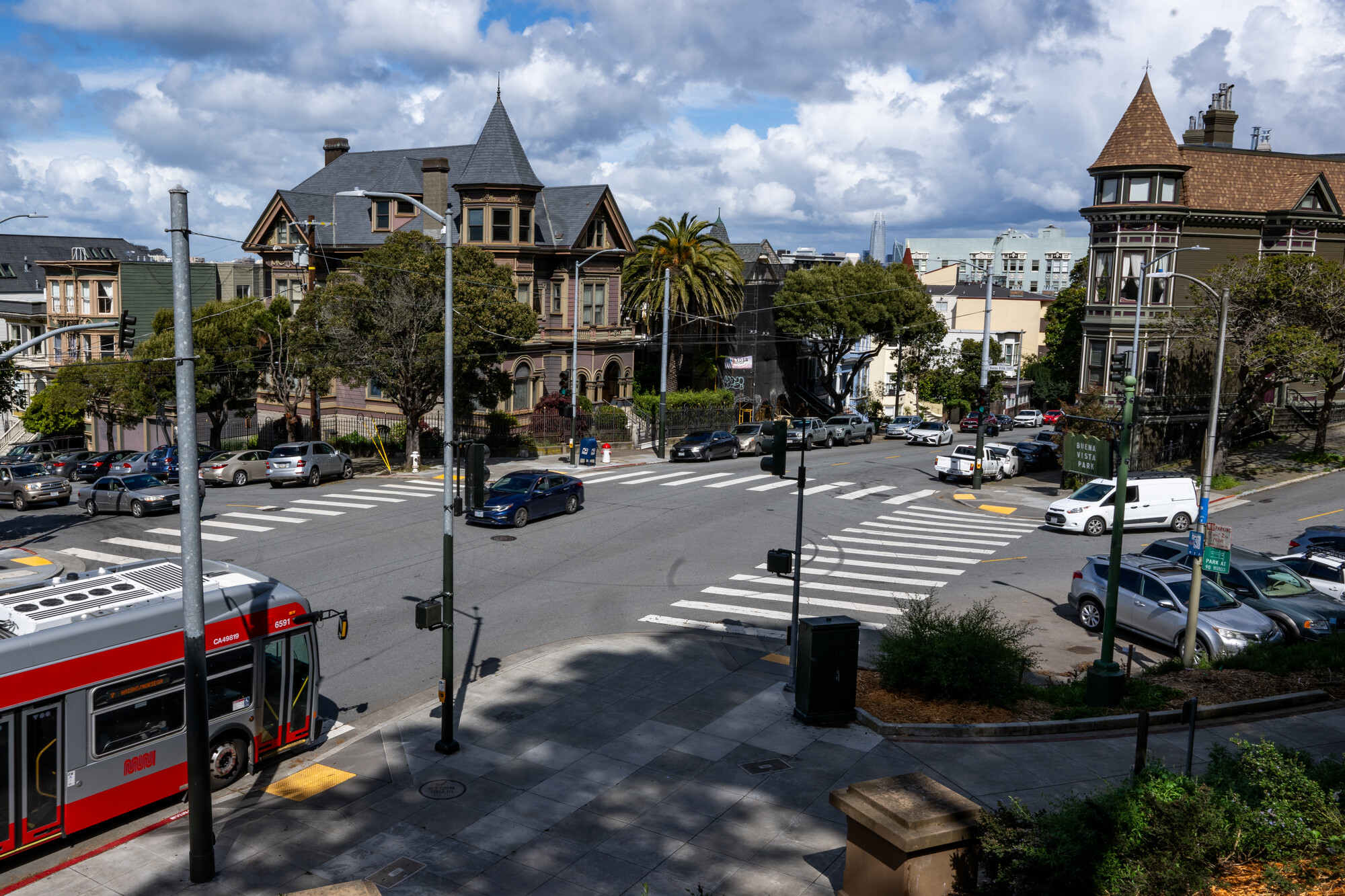
"caption": "A MUNI bus drives along Haight Street in the 5th Supervisorial District in San Francisco on April 4, 2024.",
"credit": "Beth LaBerge/KQED",
"altTag": null,
"description": null,
"imgSizes": {
"thumbnail": {
"file": "https://cdn.kqed.org/wp-content/uploads/sites/10/2025/11/240404-District5BOSRedistricting-003-BL_qed-160x107.jpg",
"width": 160,
"height": 107,
"mimeType": "image/jpeg"
},
"1536x1536": {
"file": "https://cdn.kqed.org/wp-content/uploads/sites/10/2025/11/240404-District5BOSRedistricting-003-BL_qed-1536x1024.jpg",
"width": 1536,
"height": 1024,
"mimeType": "image/jpeg"
},
"post-thumbnail": {
"file": "https://cdn.kqed.org/wp-content/uploads/sites/10/2025/11/240404-District5BOSRedistricting-003-BL_qed-672x372.jpg",
"width": 672,
"height": 372,
"mimeType": "image/jpeg"
},
"twentyfourteen-full-width": {
"file": "https://cdn.kqed.org/wp-content/uploads/sites/10/2025/11/240404-District5BOSRedistricting-003-BL_qed-1038x576.jpg",
"width": 1038,
"height": 576,
"mimeType": "image/jpeg"
},
"npr-cds-wide": {
"file": "https://cdn.kqed.org/wp-content/uploads/sites/10/2025/11/240404-District5BOSRedistricting-003-BL_qed-1200x675.jpg",
"width": 1200,
"height": 675,
"mimeType": "image/jpeg"
},
"kqedFullSize": {
"file": "https://cdn.kqed.org/wp-content/uploads/sites/10/2025/11/240404-District5BOSRedistricting-003-BL_qed.jpg",
"width": 2000,
"height": 1333
}
},
"isLoading": false,
"fetchFailed": false
},
"news_12064567": {
"type": "attachments",
"id": "news_12064567",
"meta": {
"index": "attachments_1716263798",
"site": "news",
"id": "12064567",
"found": true
},
"title": "2023 TIME100 Summit",
"publishDate": 1763489714,
"status": "inherit",
"parent": 12064558,
"modified": 1763489748,
"caption": "Tom Steyer speaks onstage at the 2023 TIME100 Summit at Jazz at Lincoln Center on April 25, 2023, in New York City. ",
"credit": "Jemal Countess/Getty Images for TIME",
"altTag": null,
"description": null,
"imgSizes": {
"thumbnail": {
"file": "https://cdn.kqed.org/wp-content/uploads/sites/10/2025/11/TomSteyerGetty-160x107.jpg",
"width": 160,
"height": 107,
"mimeType": "image/jpeg"
},
"1536x1536": {
"file": "https://cdn.kqed.org/wp-content/uploads/sites/10/2025/11/TomSteyerGetty-1536x1024.jpg",
"width": 1536,
"height": 1024,
"mimeType": "image/jpeg"
},
"post-thumbnail": {
"file": "https://cdn.kqed.org/wp-content/uploads/sites/10/2025/11/TomSteyerGetty-672x372.jpg",
"width": 672,
"height": 372,
"mimeType": "image/jpeg"
},
"twentyfourteen-full-width": {
"file": "https://cdn.kqed.org/wp-content/uploads/sites/10/2025/11/TomSteyerGetty-1038x576.jpg",
"width": 1038,
"height": 576,
"mimeType": "image/jpeg"
},
"npr-cds-wide": {
"file": "https://cdn.kqed.org/wp-content/uploads/sites/10/2025/11/TomSteyerGetty-1200x675.jpg",
"width": 1200,
"height": 675,
"mimeType": "image/jpeg"
},
"kqedFullSize": {
"file": "https://cdn.kqed.org/wp-content/uploads/sites/10/2025/11/TomSteyerGetty.jpg",
"width": 2000,
"height": 1333
}
},
"isLoading": false,
"fetchFailed": false
},
"news_12064294": {
"type": "attachments",
"id": "news_12064294",
"meta": {
"index": "attachments_1716263798",
"site": "news",
"id": "12064294",
"found": true
},
"title": "Tent under Ponderosa Pine (Pinus ponderosa) in winter, Yosemite, California, USA",
"publishDate": 1763400504,
"status": "inherit",
"parent": 12064291,
"modified": 1763400556,
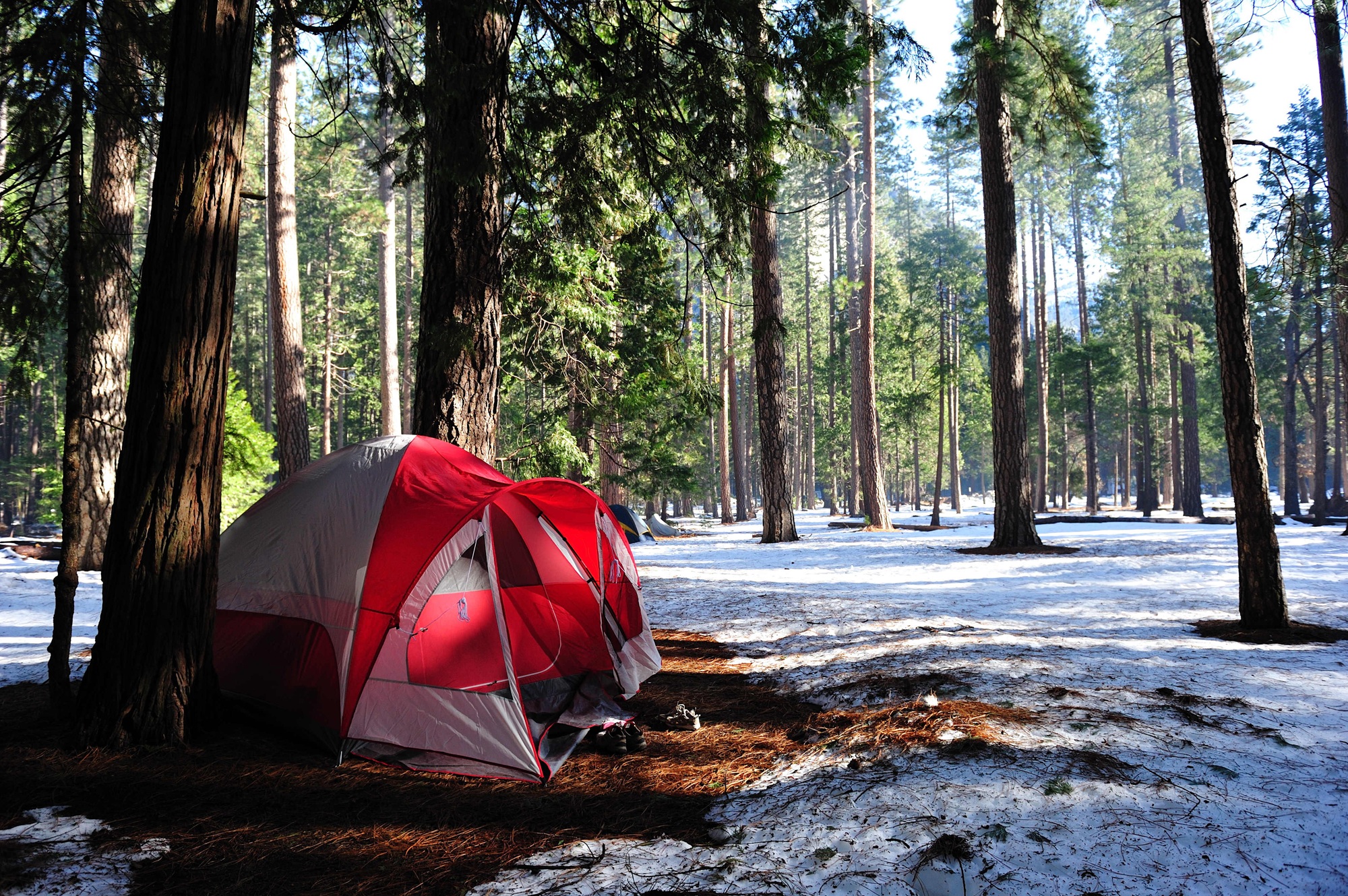
"caption": "A tent under Ponderosa Pine during winter in Yosemite, California.",
"credit": "Good is Love/Getty Images",
"altTag": null,
"description": null,
"imgSizes": {
"thumbnail": {
"file": "https://cdn.kqed.org/wp-content/uploads/sites/10/2025/11/SnowCampingGetty1-160x106.jpg",
"width": 160,
"height": 106,
"mimeType": "image/jpeg"
},
"1536x1536": {
"file": "https://cdn.kqed.org/wp-content/uploads/sites/10/2025/11/SnowCampingGetty1-1536x1021.jpg",
"width": 1536,
"height": 1021,
"mimeType": "image/jpeg"
},
"post-thumbnail": {
"file": "https://cdn.kqed.org/wp-content/uploads/sites/10/2025/11/SnowCampingGetty1-672x372.jpg",
"width": 672,
"height": 372,
"mimeType": "image/jpeg"
},
"twentyfourteen-full-width": {
"file": "https://cdn.kqed.org/wp-content/uploads/sites/10/2025/11/SnowCampingGetty1-1038x576.jpg",
"width": 1038,
"height": 576,
"mimeType": "image/jpeg"
},
"npr-cds-wide": {
"file": "https://cdn.kqed.org/wp-content/uploads/sites/10/2025/11/SnowCampingGetty1-1200x675.jpg",
"width": 1200,
"height": 675,
"mimeType": "image/jpeg"
},
"kqedFullSize": {
"file": "https://cdn.kqed.org/wp-content/uploads/sites/10/2025/11/SnowCampingGetty1.jpg",
"width": 2000,
"height": 1330
}
},
"isLoading": false,
"fetchFailed": false
},
"news_12064627": {
"type": "attachments",
"id": "news_12064627",
"meta": {
"index": "attachments_1716263798",
"site": "news",
"id": "12064627",
"found": true
},
"title": "20251118_SKYLINE_WALKOUT_GH-18-KQED",
"publishDate": 1763508763,
"status": "inherit",
"parent": 0,
"modified": 1763508825,
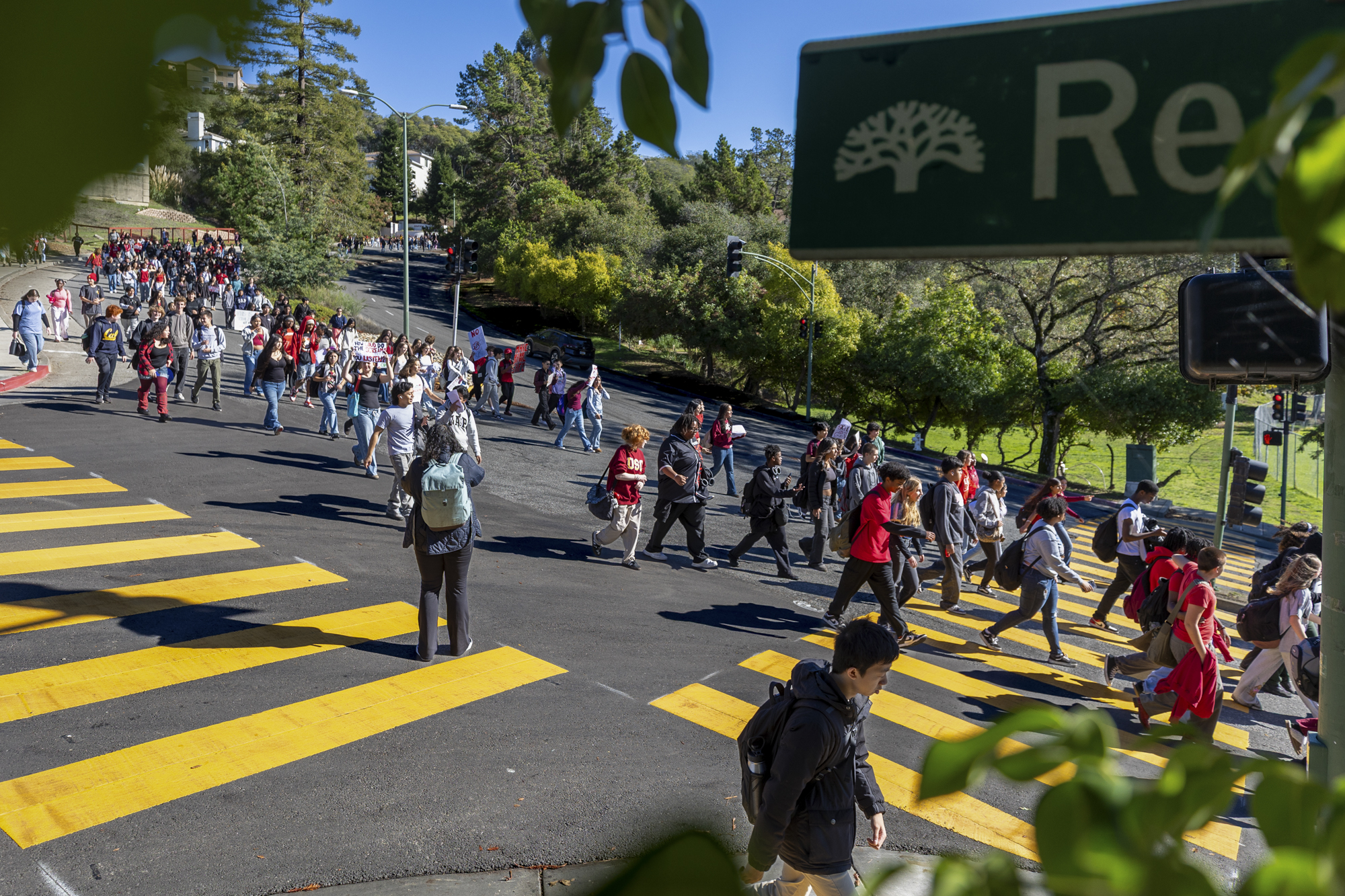
"caption": "Students leave campus during a walkout at Skyline High School on Nov. 18, 2025. The group marched toward Safeway on Redwood Road in Oakland.",
"credit": "Gustavo Hernandez/KQED",
"altTag": null,
"description": null,
"imgSizes": {
"thumbnail": {
"file": "https://cdn.kqed.org/wp-content/uploads/sites/10/2025/11/20251118_SKYLINE_WALKOUT_GH-18-KQED-160x107.jpg",
"width": 160,
"height": 107,
"mimeType": "image/jpeg"
},
"1536x1536": {
"file": "https://cdn.kqed.org/wp-content/uploads/sites/10/2025/11/20251118_SKYLINE_WALKOUT_GH-18-KQED-1536x1024.jpg",
"width": 1536,
"height": 1024,
"mimeType": "image/jpeg"
},
"post-thumbnail": {
"file": "https://cdn.kqed.org/wp-content/uploads/sites/10/2025/11/20251118_SKYLINE_WALKOUT_GH-18-KQED-672x372.jpg",
"width": 672,
"height": 372,
"mimeType": "image/jpeg"
},
"twentyfourteen-full-width": {
"file": "https://cdn.kqed.org/wp-content/uploads/sites/10/2025/11/20251118_SKYLINE_WALKOUT_GH-18-KQED-1038x576.jpg",
"width": 1038,
"height": 576,
"mimeType": "image/jpeg"
},
"npr-cds-wide": {
"file": "https://cdn.kqed.org/wp-content/uploads/sites/10/2025/11/20251118_SKYLINE_WALKOUT_GH-18-KQED-1200x675.jpg",
"width": 1200,
"height": 675,
"mimeType": "image/jpeg"
},
"kqedFullSize": {
"file": "https://cdn.kqed.org/wp-content/uploads/sites/10/2025/11/20251118_SKYLINE_WALKOUT_GH-18-KQED.jpg",
"width": 2000,
"height": 1333
}
},
"isLoading": false,
"fetchFailed": false
},
"news_12064595": {
"type": "attachments",
"id": "news_12064595",
"meta": {
"index": "attachments_1716263798",
"site": "news",
"id": "12064595",
"found": true
},
"title": "image (9)",
"publishDate": 1763494109,
"status": "inherit",
"parent": 12064587,
"modified": 1763494167,
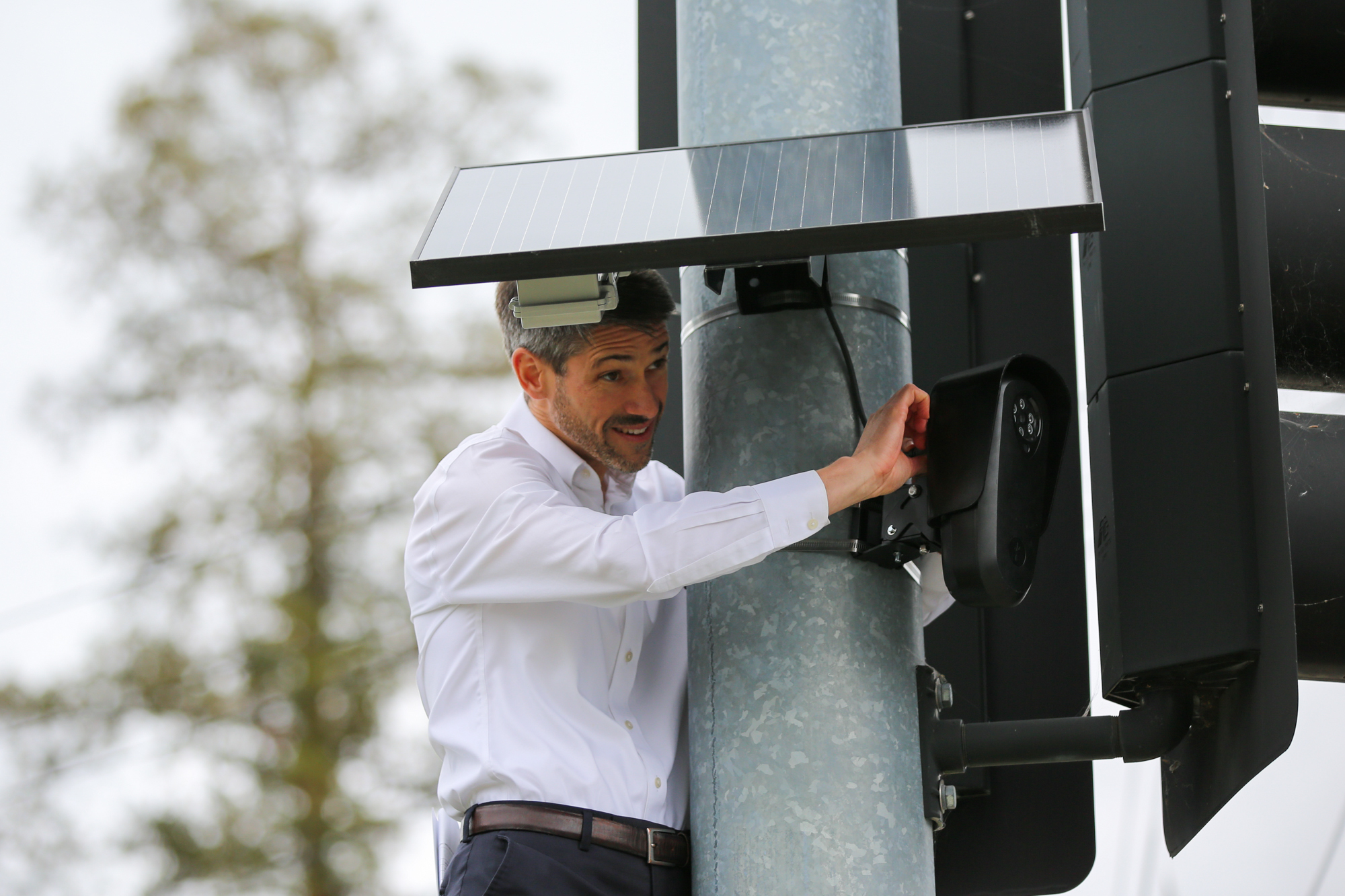
"caption": "San José Mayor Matt Mahan helps to install a Flock Safety brand automated license plate reader on April 23, 2024. The city and Mahan are now being sued by civil liberties groups over the technology's uses.",
"credit": "Joseph Geha/KQED",
"altTag": null,
"description": null,
"imgSizes": {
"thumbnail": {
"file": "https://cdn.kqed.org/wp-content/uploads/sites/10/2025/11/image-9-160x107.png",
"width": 160,
"height": 107,
"mimeType": "image/png"
},
"1536x1536": {
"file": "https://cdn.kqed.org/wp-content/uploads/sites/10/2025/11/image-9-1536x1024.png",
"width": 1536,
"height": 1024,
"mimeType": "image/png"
},
"post-thumbnail": {
"file": "https://cdn.kqed.org/wp-content/uploads/sites/10/2025/11/image-9-672x372.png",
"width": 672,
"height": 372,
"mimeType": "image/png"
},
"twentyfourteen-full-width": {
"file": "https://cdn.kqed.org/wp-content/uploads/sites/10/2025/11/image-9-1038x576.png",
"width": 1038,
"height": 576,
"mimeType": "image/png"
},
"npr-cds-wide": {
"file": "https://cdn.kqed.org/wp-content/uploads/sites/10/2025/11/image-9-1200x675.png",
"width": 1200,
"height": 675,
"mimeType": "image/png"
},
"kqedFullSize": {
"file": "https://cdn.kqed.org/wp-content/uploads/sites/10/2025/11/image-9.png",
"width": 2000,
"height": 1333
}
},
"isLoading": false,
"fetchFailed": false
},
"news_12064559": {
"type": "attachments",
"id": "news_12064559",
"meta": {
"index": "attachments_1716263798",
"site": "news",
"id": "12064559",
"found": true
},
"title": "Thanksgiving Turkeys Delivered To Bay Area Food Bank",
"publishDate": 1763488669,
"status": "inherit",
"parent": 12064551,
"modified": 1763494840,
"caption": "A donated Foster Farms turkey is held during a press conference at the SF-Marin Food Bank on Nov 8, 2021, in San Francisco, California. ",
"credit": "Photo by Justin Sullivan/Getty Images",
"altTag": null,
"description": null,
"imgSizes": {
"medium": {
"file": "https://cdn.kqed.org/wp-content/uploads/sites/10/2025/11/GettyImages-1352132356-2000x1333.jpg",
"width": 2000,
"height": 1333,
"mimeType": "image/jpeg"
},
"large": {
"file": "https://cdn.kqed.org/wp-content/uploads/sites/10/2025/11/GettyImages-1352132356-2000x1333.jpg",
"width": 2000,
"height": 1333,
"mimeType": "image/jpeg"
},
"thumbnail": {
"file": "https://cdn.kqed.org/wp-content/uploads/sites/10/2025/11/GettyImages-1352132356-160x107.jpg",
"width": 160,
"height": 107,
"mimeType": "image/jpeg"
},
"1536x1536": {
"file": "https://cdn.kqed.org/wp-content/uploads/sites/10/2025/11/GettyImages-1352132356-1536x1024.jpg",
"width": 1536,
"height": 1024,
"mimeType": "image/jpeg"
},
"2048x2048": {
"file": "https://cdn.kqed.org/wp-content/uploads/sites/10/2025/11/GettyImages-1352132356-2048x1365.jpg",
"width": 2048,
"height": 1365,
"mimeType": "image/jpeg"
},
"post-thumbnail": {
"file": "https://cdn.kqed.org/wp-content/uploads/sites/10/2025/11/GettyImages-1352132356-672x372.jpg",
"width": 672,
"height": 372,
"mimeType": "image/jpeg"
},
"twentyfourteen-full-width": {
"file": "https://cdn.kqed.org/wp-content/uploads/sites/10/2025/11/GettyImages-1352132356-1038x576.jpg",
"width": 1038,
"height": 576,
"mimeType": "image/jpeg"
},
"full-width": {
"file": "https://cdn.kqed.org/wp-content/uploads/sites/10/2025/11/GettyImages-1352132356-2000x1333.jpg",
"width": 2000,
"height": 1333,
"mimeType": "image/jpeg"
},
"npr-cds-wide": {
"file": "https://cdn.kqed.org/wp-content/uploads/sites/10/2025/11/GettyImages-1352132356-1200x675.jpg",
"width": 1200,
"height": 675,
"mimeType": "image/jpeg"
},
"kqedFullSize": {
"file": "https://cdn.kqed.org/wp-content/uploads/sites/10/2025/11/GettyImages-1352132356-scaled-e1763488723616.jpg",
"width": 2000,
"height": 1334
}
},
"isLoading": false,
"fetchFailed": false
},
"news_12064345": {
"type": "attachments",
"id": "news_12064345",
"meta": {
"index": "attachments_1716263798",
"site": "news",
"id": "12064345",
"found": true
},
"title": "20251106_SFD4Supervisor_GC-3_qed",
"publishDate": 1763406959,
"status": "inherit",
"parent": 12064341,
"modified": 1763493540,
"caption": "Mayor Daniel Lurie, left, speaks during a press conference announcing Isabella “Beya” Alcaraz, right, as the next District 4 supervisor, representing the Sunset district, at Ortega Branch Library on Nov. 6, 2025. Alcaraz is the first Filipina American to serve on the Board of Supervisors.",
"credit": "Gina Castro/KQED",
"altTag": null,
"description": null,
"imgSizes": {
"thumbnail": {
"file": "https://cdn.kqed.org/wp-content/uploads/sites/10/2025/11/20251106_SFD4Supervisor_GC-3_qed-160x107.jpg",
"width": 160,
"height": 107,
"mimeType": "image/jpeg"
},
"1536x1536": {
"file": "https://cdn.kqed.org/wp-content/uploads/sites/10/2025/11/20251106_SFD4Supervisor_GC-3_qed-1536x1024.jpg",
"width": 1536,
"height": 1024,
"mimeType": "image/jpeg"
},
"post-thumbnail": {
"file": "https://cdn.kqed.org/wp-content/uploads/sites/10/2025/11/20251106_SFD4Supervisor_GC-3_qed-672x372.jpg",
"width": 672,
"height": 372,
"mimeType": "image/jpeg"
},
"twentyfourteen-full-width": {
"file": "https://cdn.kqed.org/wp-content/uploads/sites/10/2025/11/20251106_SFD4Supervisor_GC-3_qed-1038x576.jpg",
"width": 1038,
"height": 576,
"mimeType": "image/jpeg"
},
"npr-cds-wide": {
"file": "https://cdn.kqed.org/wp-content/uploads/sites/10/2025/11/20251106_SFD4Supervisor_GC-3_qed-1200x675.jpg",
"width": 1200,
"height": 675,
"mimeType": "image/jpeg"
},
"kqedFullSize": {
"file": "https://cdn.kqed.org/wp-content/uploads/sites/10/2025/11/20251106_SFD4Supervisor_GC-3_qed.jpg",
"width": 2000,
"height": 1333
}
},
"isLoading": false,
"fetchFailed": false
},
"news_12052663": {
"type": "attachments",
"id": "news_12052663",
"meta": {
"index": "attachments_1716263798",
"site": "news",
"id": "12052663",
"found": true
},
"title": "250818-SFUSDFIRSTDAY-04-KQED",
"publishDate": 1755549114,
"status": "inherit",
"parent": 12052638,
"modified": 1755549467,
"caption": "Superintendent Maria Su speaks to students at Sanchez Elementary School on the first day of classes for the new school year in San Francisco on Aug. 18, 2025.",
"credit": "Beth LaBerge/KQED",
"altTag": null,
"description": null,
"imgSizes": {
"thumbnail": {
"file": "https://cdn.kqed.org/wp-content/uploads/sites/10/2025/08/250818-SFUSDFIRSTDAY-04-KQED-160x107.jpg",
"width": 160,
"height": 107,
"mimeType": "image/jpeg"
},
"1536x1536": {
"file": "https://cdn.kqed.org/wp-content/uploads/sites/10/2025/08/250818-SFUSDFIRSTDAY-04-KQED-1536x1024.jpg",
"width": 1536,
"height": 1024,
"mimeType": "image/jpeg"
},
"post-thumbnail": {
"file": "https://cdn.kqed.org/wp-content/uploads/sites/10/2025/08/250818-SFUSDFIRSTDAY-04-KQED-672x372.jpg",
"width": 672,
"height": 372,
"mimeType": "image/jpeg"
},
"twentyfourteen-full-width": {
"file": "https://cdn.kqed.org/wp-content/uploads/sites/10/2025/08/250818-SFUSDFIRSTDAY-04-KQED-1038x576.jpg",
"width": 1038,
"height": 576,
"mimeType": "image/jpeg"
},
"kqedFullSize": {
"file": "https://cdn.kqed.org/wp-content/uploads/sites/10/2025/08/250818-SFUSDFIRSTDAY-04-KQED.jpg",
"width": 2000,
"height": 1333
}
},
"isLoading": false,
"fetchFailed": false
},
"news_12064410": {
"type": "attachments",
"id": "news_12064410",
"meta": {
"index": "attachments_1716263798",
"site": "news",
"id": "12064410",
"found": true
},
"title": "240522-ERPressure-09-BL_qed",
"publishDate": 1763413983,
"status": "inherit",
"parent": 12064324,
"modified": 1763414011,
"caption": "Nurse Julianne Vidal takes vitals for Brandon Radford, 80, in his room at Oak Days, a permanent supportive housing program in a former hotel in Oakland, on May 22, 2024. Advocates for people experiencing homelessness fear this kind of housing could lose funding under federal guidelines released this month.",
"credit": "Beth LaBerge/KQED",
"altTag": null,
"description": null,
"imgSizes": {
"thumbnail": {
"file": "https://cdn.kqed.org/wp-content/uploads/sites/10/2025/11/240522-ERPressure-09-BL_qed-160x107.jpg",
"width": 160,
"height": 107,
"mimeType": "image/jpeg"
},
"1536x1536": {
"file": "https://cdn.kqed.org/wp-content/uploads/sites/10/2025/11/240522-ERPressure-09-BL_qed-1536x1024.jpg",
"width": 1536,
"height": 1024,
"mimeType": "image/jpeg"
},
"post-thumbnail": {
"file": "https://cdn.kqed.org/wp-content/uploads/sites/10/2025/11/240522-ERPressure-09-BL_qed-672x372.jpg",
"width": 672,
"height": 372,
"mimeType": "image/jpeg"
},
"twentyfourteen-full-width": {
"file": "https://cdn.kqed.org/wp-content/uploads/sites/10/2025/11/240522-ERPressure-09-BL_qed-1038x576.jpg",
"width": 1038,
"height": 576,
"mimeType": "image/jpeg"
},
"npr-cds-wide": {
"file": "https://cdn.kqed.org/wp-content/uploads/sites/10/2025/11/240522-ERPressure-09-BL_qed-1200x675.jpg",
"width": 1200,
"height": 675,
"mimeType": "image/jpeg"
},
"kqedFullSize": {
"file": "https://cdn.kqed.org/wp-content/uploads/sites/10/2025/11/240522-ERPressure-09-BL_qed.jpg",
"width": 2000,
"height": 1333
}
},
"isLoading": false,
"fetchFailed": false
},
"news_12064522": {
"type": "attachments",
"id": "news_12064522",
"meta": {
"index": "attachments_1716263798",
"site": "news",
"id": "12064522",
"found": true
},
"title": "251117-STANFORDTRIAL-JG-7_qed",
"publishDate": 1763426345,
"status": "inherit",
"parent": 12064351,
"modified": 1763426356,
"caption": "Germán González, who is one of five pro-Palestinian protesters going to trial for breaking into the Stanford University president’s office, speaks to a group of supporters outside the Hall of Justice in San José on Monday, Nov. 17, 2025.",
"credit": "Joseph Geha/KQED",
"altTag": null,
"description": null,
"imgSizes": {
"thumbnail": {
"file": "https://cdn.kqed.org/wp-content/uploads/sites/10/2025/11/251117-STANFORDTRIAL-JG-7_qed-160x107.jpg",
"width": 160,
"height": 107,
"mimeType": "image/jpeg"
},
"1536x1536": {
"file": "https://cdn.kqed.org/wp-content/uploads/sites/10/2025/11/251117-STANFORDTRIAL-JG-7_qed-1536x1024.jpg",
"width": 1536,
"height": 1024,
"mimeType": "image/jpeg"
},
"post-thumbnail": {
"file": "https://cdn.kqed.org/wp-content/uploads/sites/10/2025/11/251117-STANFORDTRIAL-JG-7_qed-672x372.jpg",
"width": 672,
"height": 372,
"mimeType": "image/jpeg"
},
"twentyfourteen-full-width": {
"file": "https://cdn.kqed.org/wp-content/uploads/sites/10/2025/11/251117-STANFORDTRIAL-JG-7_qed-1038x576.jpg",
"width": 1038,
"height": 576,
"mimeType": "image/jpeg"
},
"npr-cds-wide": {
"file": "https://cdn.kqed.org/wp-content/uploads/sites/10/2025/11/251117-STANFORDTRIAL-JG-7_qed-1200x675.jpg",
"width": 1200,
"height": 675,
"mimeType": "image/jpeg"
},
"kqedFullSize": {
"file": "https://cdn.kqed.org/wp-content/uploads/sites/10/2025/11/251117-STANFORDTRIAL-JG-7_qed.jpg",
"width": 1999,
"height": 1333
}
},
"isLoading": false,
"fetchFailed": false
},
"news_12064376": {
"type": "attachments",
"id": "news_12064376",
"meta": {
"index": "attachments_1716263798",
"site": "news",
"id": "12064376",
"found": true
},
"title": "Israeli Prime Minister Netanyahu Meets With Elon Musk At Tesla In Fremont, CA",
"publishDate": 1763409755,
"status": "inherit",
"parent": 12064374,
"modified": 1763409817,
"caption": "The Tesla manufacturing facility on Sept. 18, 2023, in Fremont, California. ",
"credit": "Justin Sullivan/Getty Images",
"altTag": null,
"description": null,
"imgSizes": {
"thumbnail": {
"file": "https://cdn.kqed.org/wp-content/uploads/sites/10/2025/11/TeslaFremontGetty-160x95.jpg",
"width": 160,
"height": 95,
"mimeType": "image/jpeg"
},
"1536x1536": {
"file": "https://cdn.kqed.org/wp-content/uploads/sites/10/2025/11/TeslaFremontGetty-1536x914.jpg",
"width": 1536,
"height": 914,
"mimeType": "image/jpeg"
},
"post-thumbnail": {
"file": "https://cdn.kqed.org/wp-content/uploads/sites/10/2025/11/TeslaFremontGetty-672x372.jpg",
"width": 672,
"height": 372,
"mimeType": "image/jpeg"
},
"twentyfourteen-full-width": {
"file": "https://cdn.kqed.org/wp-content/uploads/sites/10/2025/11/TeslaFremontGetty-1038x576.jpg",
"width": 1038,
"height": 576,
"mimeType": "image/jpeg"
},
"npr-cds-wide": {
"file": "https://cdn.kqed.org/wp-content/uploads/sites/10/2025/11/TeslaFremontGetty-1200x675.jpg",
"width": 1200,
"height": 675,
"mimeType": "image/jpeg"
},
"kqedFullSize": {
"file": "https://cdn.kqed.org/wp-content/uploads/sites/10/2025/11/TeslaFremontGetty.jpg",
"width": 2000,
"height": 1190
}
},
"isLoading": false,
"fetchFailed": false
}
},
"audioPlayerReducer": {
"postId": "stream_live",
"isPaused": true,
"isPlaying": false,
"pfsActive": false,
"pledgeModalIsOpen": true,
"playerDrawerIsOpen": false,
"liveAudioPlayStartedAt": 0,
"liveAudioPlayContext": ""
},
"authorsReducer": {
"rachael-myrow": {
"type": "authors",
"id": "251",
"meta": {
"index": "authors_1716337520",
"id": "251",
"found": true
},
"name": "Rachael Myrow",
"firstName": "Rachael",
"lastName": "Myrow",
"slug": "rachael-myrow",
"email": "rmyrow@kqed.org",
"display_author_email": true,
"staff_mastheads": [
"news"
],
"title": "Senior Editor of KQED's Silicon Valley News Desk",
"bio": "• I write and edit stories about how Silicon Valley power and policies shape everyday life in California. I’m also passionate about making Bay Area history and culture more accessible to a broad public. • I’ve been a journalist for most of my life, starting in high school with The Franklin Press in Los Angeles, where I grew up. While earning my first degree in English at UC Berkeley, I got my start in public radio at KALX-FM. After completing a second degree in journalism at Cal, I landed my first professional job at Marketplace, then moved on to KPCC (now LAist), and then KQED, where I hosted The California Report for more than seven years. • My reporting has appeared on NPR, The World, WBUR’s \u003ci>Here & Now\u003c/i>, and the BBC. I also guest host for KQED’s \u003ci>Forum\u003c/i>, as well as the Commonwealth Club in San Francisco. • I speak periodically on media, democracy and technology issues, and do voiceover work for documentaries and educational video projects. • Outside of the studio, you'll find me hiking Bay Area trails and whipping up Insta-ready meals in my kitchen. • I do not accept gifts, money, or favors from anyone connected to my reporting, I don't pay people for information, and I do not support or donate to political causes. • I strive to treat the people I report on with fairness, honesty, and respect. I also recognize there are often multiple sides to a story and work to verify information through multiple sources and documentation. If I get something wrong, I correct it.",
"avatar": "https://secure.gravatar.com/avatar/3ed8a3c5f26025e4a805ba634cda8cd764906b97438a6d9ce216b044e340da4e?s=600&d=blank&r=g",
"twitter": "rachaelmyrow",
"bluesky": null,
"facebook": null,
"instagram": null,
"linkedin": "https://www.linkedin.com/in/rachaelmyrow/",
"sites": [
{
"site": "arts",
"roles": [
"administrator"
]
},
{
"site": "news",
"roles": [
"edit_others_posts",
"editor"
]
},
{
"site": "futureofyou",
"roles": [
"editor"
]
},
{
"site": "bayareabites",
"roles": [
"editor"
]
},
{
"site": "stateofhealth",
"roles": [
"editor"
]
},
{
"site": "science",
"roles": [
"editor"
]
},
{
"site": "food",
"roles": [
"editor"
]
},
{
"site": "forum",
"roles": [
"editor"
]
},
{
"site": "liveblog",
"roles": [
"author"
]
}
],
"headData": {
"title": "Rachael Myrow | KQED",
"description": "Senior Editor of KQED's Silicon Valley News Desk",
"ogImgSrc": "https://secure.gravatar.com/avatar/3ed8a3c5f26025e4a805ba634cda8cd764906b97438a6d9ce216b044e340da4e?s=600&d=blank&r=g",
"twImgSrc": "https://secure.gravatar.com/avatar/3ed8a3c5f26025e4a805ba634cda8cd764906b97438a6d9ce216b044e340da4e?s=600&d=blank&r=g"
},
"isLoading": false,
"link": "/author/rachael-myrow"
},
"mlagos": {
"type": "authors",
"id": "3239",
"meta": {
"index": "authors_1716337520",
"id": "3239",
"found": true
},
"name": "Marisa Lagos",
"firstName": "Marisa",
"lastName": "Lagos",
"slug": "mlagos",
"email": "mlagos@kqed.org",
"display_author_email": false,
"staff_mastheads": [
"news"
],
"title": "KQED Contributor",
"bio": "Marisa Lagos is a correspondent for KQED’s California Politics and Government Desk and co-hosts the award-winning show and podcast, Political Breakdown. At KQED, Lagos also conducts reporting, analysis and investigations into state, local and national politics for radio, TV, online and onstage. In 2022, she and co-host, Scott Shafer, moderated the only gubernatorial debate in California. In 2020, the \u003ci>Washington Post\u003c/i> named her one of the top political journalists in California; she was nominated for a Peabody and won several other awards for her work investigating the 2017 California wildfires. She has worked at the \u003ci>San Francisco Chronicle\u003c/i>, \u003ci>San Francisco Examiner\u003c/i> and \u003ci>Los Angeles Times\u003c/i>. A UC Santa Barbara graduate, she lives in San Francisco with her two sons and husband.",
"avatar": "https://secure.gravatar.com/avatar/a261a0d3696fc066871ef96b85b5e7d2?s=600&d=blank&r=g",
"twitter": "@mlagos",
"facebook": null,
"instagram": null,
"linkedin": null,
"sites": [
{
"site": "arts",
"roles": [
"author"
]
},
{
"site": "news",
"roles": [
"editor"
]
},
{
"site": "science",
"roles": [
"editor"
]
},
{
"site": "forum",
"roles": [
"author"
]
},
{
"site": "liveblog",
"roles": [
"author"
]
}
],
"headData": {
"title": "Marisa Lagos | KQED",
"description": "KQED Contributor",
"ogImgSrc": "https://secure.gravatar.com/avatar/a261a0d3696fc066871ef96b85b5e7d2?s=600&d=blank&r=g",
"twImgSrc": "https://secure.gravatar.com/avatar/a261a0d3696fc066871ef96b85b5e7d2?s=600&d=blank&r=g"
},
"isLoading": false,
"link": "/author/mlagos"
},
"carlysevern": {
"type": "authors",
"id": "3243",
"meta": {
"index": "authors_1716337520",
"id": "3243",
"found": true
},
"name": "Carly Severn",
"firstName": "Carly",
"lastName": "Severn",
"slug": "carlysevern",
"email": "csevern@kqed.org",
"display_author_email": false,
"staff_mastheads": [
"news"
],
"title": "Senior Editor, Audience News ",
"bio": "Carly is KQED's Senior Editor of Audience News on the Digital News team, and has reported for the California Report Magazine, Bay Curious and KQED Arts. She's formerly the host of \u003ca href=\"http://ww2.kqed.org/pop/category/the-cooler/\" rel=\"noopener noreferrer\">The Cooler\u003c/a> podcast.",
"avatar": "https://secure.gravatar.com/avatar/54037bf5c128fe678f0ef26cec97a93f2e7f220a22d7285703328f12c42c1b1d?s=600&d=blank&r=g",
"twitter": "teacupinthebay",
"bluesky": null,
"facebook": null,
"instagram": null,
"linkedin": null,
"sites": [
{
"site": "",
"roles": [
"editor"
]
},
{
"site": "arts",
"roles": [
"editor"
]
},
{
"site": "news",
"roles": [
"administrator"
]
},
{
"site": "pop",
"roles": [
"editor"
]
},
{
"site": "futureofyou",
"roles": [
"editor"
]
},
{
"site": "about",
"roles": [
"administrator"
]
},
{
"site": "mindshift",
"roles": [
"editor"
]
},
{
"site": "bayareabites",
"roles": [
"editor"
]
},
{
"site": "stateofhealth",
"roles": [
"editor"
]
},
{
"site": "science",
"roles": [
"editor"
]
},
{
"site": "food",
"roles": [
"contributor"
]
},
{
"site": "forum",
"roles": [
"editor"
]
},
{
"site": "perspectives",
"roles": [
"administrator"
]
},
{
"site": "liveblog",
"roles": [
"editor"
]
}
],
"headData": {
"title": "Carly Severn | KQED",
"description": "Senior Editor, Audience News ",
"ogImgSrc": "https://secure.gravatar.com/avatar/54037bf5c128fe678f0ef26cec97a93f2e7f220a22d7285703328f12c42c1b1d?s=600&d=blank&r=g",
"twImgSrc": "https://secure.gravatar.com/avatar/54037bf5c128fe678f0ef26cec97a93f2e7f220a22d7285703328f12c42c1b1d?s=600&d=blank&r=g"
},
"isLoading": false,
"link": "/author/carlysevern"
},
"ebaldassari": {
"type": "authors",
"id": "11652",
"meta": {
"index": "authors_1716337520",
"id": "11652",
"found": true
},
"name": "Erin Baldassari",
"firstName": "Erin",
"lastName": "Baldassari",
"slug": "ebaldassari",
"email": "ebaldassari@KQED.org",
"display_author_email": true,
"staff_mastheads": [
"news"
],
"title": "Staff Writer",
"bio": "Erin Baldassari covers housing for KQED. She's a former print journalist and most recently worked as the transportation reporter for the \u003cem>Mercury News\u003c/em> and \u003cem>East Bay Times. \u003c/em>There, she focused on how the Bay Area’s housing shortage has changed the way people move around the region. She also served on the \u003cem>East Bay Times\u003c/em>’ 2017 Pulitzer Prize-winning team for coverage of the Ghost Ship Fire in Oakland. Prior to that, Erin worked as a breaking news and general assignment reporter for a variety of outlets in the Bay Area and the greater Boston area. A Tufts University alumna, Erin grew up in the foothills of the Sierra Nevada mountains and in Sonoma County. She is a life-long KQED listener.",
"avatar": "https://secure.gravatar.com/avatar/5e95cad64a8ca08288082212e199d2b0cbeb4fd8e8ef5339395f361032bbe005?s=600&d=blank&r=g",
"twitter": "e_baldi",
"bluesky": null,
"facebook": null,
"instagram": null,
"linkedin": null,
"sites": [
{
"site": "news",
"roles": [
"edit_others_posts",
"editor"
]
},
{
"site": "science",
"roles": [
"editor"
]
},
{
"site": "liveblog",
"roles": [
"editor"
]
}
],
"headData": {
"title": "Erin Baldassari | KQED",
"description": "Staff Writer",
"ogImgSrc": "https://secure.gravatar.com/avatar/5e95cad64a8ca08288082212e199d2b0cbeb4fd8e8ef5339395f361032bbe005?s=600&d=blank&r=g",
"twImgSrc": "https://secure.gravatar.com/avatar/5e95cad64a8ca08288082212e199d2b0cbeb4fd8e8ef5339395f361032bbe005?s=600&d=blank&r=g"
},
"isLoading": false,
"link": "/author/ebaldassari"
},
"ccabreralomeli": {
"type": "authors",
"id": "11708",
"meta": {
"index": "authors_1716337520",
"id": "11708",
"found": true
},
"name": "Carlos Cabrera-Lomelí",
"firstName": "Carlos",
"lastName": "Cabrera-Lomelí",
"slug": "ccabreralomeli",
"email": "ccabreralomeli@KQED.org",
"display_author_email": true,
"staff_mastheads": [
"news"
],
"title": "Community Reporter",
"bio": "Carlos Cabrera-Lomelí is a community reporter with KQED's digital engagement team. He also reports and co-produces for KQED's bilingual news hub KQED en Español. He grew up in San Francisco's Mission District and has previously worked with Univision, 48 Hills and REFORMA in Mexico City.",
"avatar": "https://secure.gravatar.com/avatar/c309be9665e484f887b818c89e273ecc673004f426f36b24d00a4d813a2e0518?s=600&d=blank&r=g",
"twitter": "@LomeliCabrera",
"bluesky": null,
"facebook": null,
"instagram": null,
"linkedin": null,
"sites": [
{
"site": "arts",
"roles": [
"editor"
]
},
{
"site": "news",
"roles": [
"editor"
]
},
{
"site": "about",
"roles": [
"editor"
]
},
{
"site": "science",
"roles": [
"editor"
]
},
{
"site": "perspectives",
"roles": [
"editor"
]
},
{
"site": "elections",
"roles": [
"editor"
]
},
{
"site": "liveblog",
"roles": [
"contributor"
]
}
],
"headData": {
"title": "Carlos Cabrera-Lomelí | KQED",
"description": "Community Reporter",
"ogImgSrc": "https://secure.gravatar.com/avatar/c309be9665e484f887b818c89e273ecc673004f426f36b24d00a4d813a2e0518?s=600&d=blank&r=g",
"twImgSrc": "https://secure.gravatar.com/avatar/c309be9665e484f887b818c89e273ecc673004f426f36b24d00a4d813a2e0518?s=600&d=blank&r=g"
},
"isLoading": false,
"link": "/author/ccabreralomeli"
},
"adahlstromeckman": {
"type": "authors",
"id": "11785",
"meta": {
"index": "authors_1716337520",
"id": "11785",
"found": true
},
"name": "Azul Dahlstrom-Eckman",
"firstName": "Azul",
"lastName": "Dahlstrom-Eckman",
"slug": "adahlstromeckman",
"email": "adahlstrom-eckman@kqed.org",
"display_author_email": true,
"staff_mastheads": [],
"title": "Reporter",
"bio": "Azul is a reporter for KQED focusing on transportation and features. He joined KQED in 2021 as an alumna of KALW's Audio Academy radio journalism training program.",
"avatar": "https://secure.gravatar.com/avatar/9cb750298435add7815a777f55bf1f46845c1386bb8452555c60a7b820b5aba3?s=600&d=blank&r=g",
"twitter": "@zuliemann",
"bluesky": "@azul415.bsky.social",
"facebook": null,
"instagram": null,
"linkedin": null,
"sites": [
{
"site": "arts",
"roles": [
"editor"
]
},
{
"site": "news",
"roles": [
"editor"
]
},
{
"site": "science",
"roles": [
"editor"
]
},
{
"site": "liveblog",
"roles": [
"author"
]
}
],
"headData": {
"title": "Azul Dahlstrom-Eckman | KQED",
"description": "Reporter",
"ogImgSrc": "https://secure.gravatar.com/avatar/9cb750298435add7815a777f55bf1f46845c1386bb8452555c60a7b820b5aba3?s=600&d=blank&r=g",
"twImgSrc": "https://secure.gravatar.com/avatar/9cb750298435add7815a777f55bf1f46845c1386bb8452555c60a7b820b5aba3?s=600&d=blank&r=g"
},
"isLoading": false,
"link": "/author/adahlstromeckman"
},
"sjohnson": {
"type": "authors",
"id": "11840",
"meta": {
"index": "authors_1716337520",
"id": "11840",
"found": true
},
"name": "Sydney Johnson",
"firstName": "Sydney",
"lastName": "Johnson",
"slug": "sjohnson",
"email": "sjohnson@kqed.org",
"display_author_email": false,
"staff_mastheads": [
"news"
],
"title": "KQED Reporter",
"bio": "Sydney Johnson is a general assignment reporter at KQED. She previously reported on public health and city government at the San Francisco Examiner, and before that, she covered statewide education policy for EdSource. Her reporting has won multiple local, state and national awards. Sydney is a graduate of the University of California, Berkeley and lives in San Francisco.",
"avatar": "https://secure.gravatar.com/avatar/97855f2719b72ad6190b7c535fe642c8?s=600&d=blank&r=g",
"twitter": "sydneyfjohnson",
"facebook": null,
"instagram": null,
"linkedin": null,
"sites": [
{
"site": "news",
"roles": [
"editor"
]
}
],
"headData": {
"title": "Sydney Johnson | KQED",
"description": "KQED Reporter",
"ogImgSrc": "https://secure.gravatar.com/avatar/97855f2719b72ad6190b7c535fe642c8?s=600&d=blank&r=g",
"twImgSrc": "https://secure.gravatar.com/avatar/97855f2719b72ad6190b7c535fe642c8?s=600&d=blank&r=g"
},
"isLoading": false,
"link": "/author/sjohnson"
},
"jgeha": {
"type": "authors",
"id": "11906",
"meta": {
"index": "authors_1716337520",
"id": "11906",
"found": true
},
"name": "Joseph Geha",
"firstName": "Joseph",
"lastName": "Geha",
"slug": "jgeha",
"email": "jgeha@kqed.org",
"display_author_email": false,
"staff_mastheads": [
"news",
"science"
],
"title": "KQED Contributor",
"bio": null,
"avatar": "https://secure.gravatar.com/avatar/ea84d2b6dd93d6369d453edf19dd583f117cd1759d2d9c9c92f9de77017354fe?s=600&d=blank&r=g",
"twitter": null,
"bluesky": null,
"facebook": null,
"instagram": null,
"linkedin": null,
"sites": [
{
"site": "news",
"roles": [
"editor"
]
},
{
"site": "liveblog",
"roles": [
"author"
]
}
],
"headData": {
"title": "Joseph Geha | KQED",
"description": "KQED Contributor",
"ogImgSrc": "https://secure.gravatar.com/avatar/ea84d2b6dd93d6369d453edf19dd583f117cd1759d2d9c9c92f9de77017354fe?s=600&d=blank&r=g",
"twImgSrc": "https://secure.gravatar.com/avatar/ea84d2b6dd93d6369d453edf19dd583f117cd1759d2d9c9c92f9de77017354fe?s=600&d=blank&r=g"
},
"isLoading": false,
"link": "/author/jgeha"
},
"kdebenedetti": {
"type": "authors",
"id": "11913",
"meta": {
"index": "authors_1716337520",
"id": "11913",
"found": true
},
"name": "Katie DeBenedetti",
"firstName": "Katie",
"lastName": "DeBenedetti",
"slug": "kdebenedetti",
"email": "kdebenedetti@kqed.org",
"display_author_email": false,
"staff_mastheads": [
"news",
"science"
],
"title": "KQED Contributor",
"bio": "Katie DeBenedetti is a digital reporter covering daily news for the Express Desk. Prior to joining KQED as a culture reporting intern in January 2024, she covered education and city government for the Napa Valley Register.",
"avatar": "https://secure.gravatar.com/avatar/6e31073cb8f7e4214ab03f42771d0f45?s=600&d=blank&r=g",
"twitter": null,
"facebook": null,
"instagram": null,
"linkedin": null,
"sites": [
{
"site": "news",
"roles": [
"author"
]
},
{
"site": "science",
"roles": [
"author"
]
},
{
"site": "liveblog",
"roles": [
"author"
]
}
],
"headData": {
"title": "Katie DeBenedetti | KQED",
"description": "KQED Contributor",
"ogImgSrc": "https://secure.gravatar.com/avatar/6e31073cb8f7e4214ab03f42771d0f45?s=600&d=blank&r=g",
"twImgSrc": "https://secure.gravatar.com/avatar/6e31073cb8f7e4214ab03f42771d0f45?s=600&d=blank&r=g"
},
"isLoading": false,
"link": "/author/kdebenedetti"
},
"sarahwright": {
"type": "authors",
"id": "11956",
"meta": {
"index": "authors_1716337520",
"id": "11956",
"found": true
},
"name": "Sarah Wright",
"firstName": "Sarah",
"lastName": "Wright",
"slug": "sarahwright",
"email": "swright@kqed.org",
"display_author_email": true,
"staff_mastheads": [],
"title": "Outdoors Engagement Reporter",
"bio": "Sarah Wright is KQED's Outdoors Engagement Reporter. Originally from Lake Tahoe, she completed a thru-hike of the Pacific Crest Trail in 2019 and was a U.S. Fulbright Program grantee to Argentina in 2023. Her journalism has appeared in The Guardian, The San Francisco Standard, The Palo Alto Weekly and the Half Moon Bay Review.",
"avatar": "https://secure.gravatar.com/avatar/c161a3d6441865cba25e6db4fa561099ad665799e9432e34da2b84d7e371524c?s=600&d=blank&r=g",
"twitter": null,
"bluesky": null,
"facebook": null,
"instagram": null,
"linkedin": null,
"sites": [
{
"site": "arts",
"roles": [
"editor"
]
},
{
"site": "news",
"roles": [
"editor"
]
},
{
"site": "science",
"roles": [
"contributor",
"author"
]
},
{
"site": "forum",
"roles": [
"editor"
]
}
],
"headData": {
"title": "Sarah Wright | KQED",
"description": "Outdoors Engagement Reporter",
"ogImgSrc": "https://secure.gravatar.com/avatar/c161a3d6441865cba25e6db4fa561099ad665799e9432e34da2b84d7e371524c?s=600&d=blank&r=g",
"twImgSrc": "https://secure.gravatar.com/avatar/c161a3d6441865cba25e6db4fa561099ad665799e9432e34da2b84d7e371524c?s=600&d=blank&r=g"
},
"isLoading": false,
"link": "/author/sarahwright"
},
"aaliahmad": {
"type": "authors",
"id": "11986",
"meta": {
"index": "authors_1716337520",
"id": "11986",
"found": true
},
"name": "Ayah Ali-Ahmad",
"firstName": "Ayah",
"lastName": "Ali-Ahmad",
"slug": "aaliahmad",
"email": "aaliahmad@KQED.org",
"display_author_email": false,
"staff_mastheads": [],
"title": "KQED Contributor",
"bio": null,
"avatar": "https://secure.gravatar.com/avatar/1cf54f187a5e1064b2cfef3f3d2f1e4f93e453395d56912aca6382a6071ec3ed?s=600&d=blank&r=g",
"twitter": "ayahaliahmad",
"bluesky": null,
"facebook": null,
"instagram": null,
"linkedin": null,
"sites": [
{
"site": "news",
"roles": [
"subscriber"
]
}
],
"headData": {
"title": "Ayah Ali-Ahmad | KQED",
"description": "KQED Contributor",
"ogImgSrc": "https://secure.gravatar.com/avatar/1cf54f187a5e1064b2cfef3f3d2f1e4f93e453395d56912aca6382a6071ec3ed?s=600&d=blank&r=g",
"twImgSrc": "https://secure.gravatar.com/avatar/1cf54f187a5e1064b2cfef3f3d2f1e4f93e453395d56912aca6382a6071ec3ed?s=600&d=blank&r=g"
},
"isLoading": false,
"link": "/author/aaliahmad"
}
},
"pagesReducer": {
"news_category_local": {
"type": "terms",
"id": "news_28250",
"meta": {
"index": "terms_1716263798",
"site": "news",
"id": "28250",
"score": 12.939859
},
"featImg": null,
"name": "Local",
"description": null,
"taxonomy": "category",
"headData": {
"twImgId": null,
"twTitle": null,
"ogTitle": null,
"ogImgId": null,
"twDescription": null,
"description": null,
"title": "Local Archives | KQED News",
"ogDescription": null
},
"ttid": 28267,
"slug": "local",
"isLoading": false,
"title": "Local",
"pageMeta": {
"site": "news",
"WpPageTemplate": "page-topic-editorial",
"currentPage": 72
},
"blocks": [
{
"blockName": "kqed/post-list",
"attrs": {
"layout": "cardArticle2",
"query": "posts/news?category=local",
"seeMore": false,
"paginated": true,
"page": 72
}
},
{
"blockName": "kqed/ad"
}
]
}
},
"pfsSessionReducer": {},
"postsReducer": {
"stream_live": {
"type": "live",
"id": "stream_live",
"audioUrl": "https://streams.kqed.org/kqedradio",
"title": "Live Stream",
"excerpt": "Live Stream information currently unavailable.",
"link": "/radio",
"featImg": "",
"label": {
"name": "KQED Live",
"link": "/"
}
},
"stream_kqedNewscast": {
"type": "posts",
"id": "stream_kqedNewscast",
"audioUrl": "https://www.kqed.org/.stream/anon/radio/RDnews/newscast.mp3?_=1",
"title": "KQED Newscast",
"featImg": "",
"label": {
"name": "88.5 FM",
"link": "/"
}
},
"news_12064555": {
"type": "posts",
"id": "news_12064555",
"meta": {
"index": "posts_1716263798",
"site": "news",
"id": "12064555",
"score": null,
"sort": [
1763577014000
]
},
"guestAuthors": [],
"slug": "protests-at-microsoft-conference-target-tech-giants-ties-with-israeli-military",
"title": "Protests at Microsoft Conference Target Tech Giant’s Ties With Israeli Military",
"publishDate": 1763577014,
"format": "standard",
"headTitle": "Protests at Microsoft Conference Target Tech Giant’s Ties With Israeli Military | KQED",
"labelTerm": {
"site": "news"
},
"content": "\u003cp>Protestors gathered outside \u003ca href=\"https://www.kqed.org/news/tag/san-francisco\">San Francisco\u003c/a>’s George Moscone Center on Tuesday at \u003ca href=\"https://www.kqed.org/news/tag/microsoft\">Microsoft\u003c/a>’s largest annual conference to demand that the tech giant cut all remaining ties with the Israeli military.\u003c/p>\n\u003cp>The group of former and current Microsoft workers descended on Microsoft Ignite, which had attracted over 15,000 attendees to showcase the company’s latest cloud and Artificial Intelligence innovations.\u003c/p>\n\u003cp>Organized by the group No Azure for Apartheid, the demonstrators claim that despite recent policy changes, Microsoft continues to provide essential cloud computing services supporting Israel’s military operations in Gaza and the West Bank.\u003c/p>\n\u003cp>[ad fullwidth]\u003c/p>\n\u003cp>“Microsoft thinks that they can pacify us with these half measures,” said Joe Lopez, a former engineer who disrupted CEO Satya Nadella’s keynote speech in May. “We are here until Microsoft cuts all ties with Israel.”\u003c/p>\n\u003cp>After reports surfaced that the company’s technology was being used for mass surveillance of Palestinians, Microsoft reportedly cut off access to some of its services for Unit 8200, an Israeli military intelligence unit. It also introduced a new internal reporting mechanism for employees to flag practices that they believe may violate company policies.\u003c/p>\n\u003cfigure id=\"attachment_12064638\" class=\"wp-caption aligncenter\" style=\"max-width: 2000px\">\u003cimg loading=\"lazy\" decoding=\"async\" class=\"size-full wp-image-12064638\" src=\"https://cdn.kqed.org/wp-content/uploads/sites/10/2025/11/251119-MICROSOFT-GAZA-PROTEST-MD-07-KQED.jpg\" alt=\"\" width=\"2000\" height=\"1334\" srcset=\"https://cdn.kqed.org/wp-content/uploads/sites/10/2025/11/251119-MICROSOFT-GAZA-PROTEST-MD-07-KQED.jpg 2000w, https://cdn.kqed.org/wp-content/uploads/sites/10/2025/11/251119-MICROSOFT-GAZA-PROTEST-MD-07-KQED-160x107.jpg 160w, https://cdn.kqed.org/wp-content/uploads/sites/10/2025/11/251119-MICROSOFT-GAZA-PROTEST-MD-07-KQED-1536x1025.jpg 1536w\" sizes=\"auto, (max-width: 2000px) 100vw, 2000px\">\u003cfigcaption class=\"wp-caption-text\">Former Microsoft employee Hossam Nasr leads pro-Palestinian protesters rallying outside of the Microsoft Ignite conference in San Francisco in chants and calling on the company to cut ties with the Israeli military and government on Nov. 18, 2025. \u003ccite>(Martin do Nascimento/KQED)\u003c/cite>\u003c/figcaption>\u003c/figure>\n\u003cp>But the protesters argued that this step was insufficient, claiming the company still maintains contracts with other branches of the Israeli military and government.\u003c/p>\n\u003cp>They also called attention to Microsoft Azure, a cloud computing platform that allows clients to rent powerful computing and storage capacity over the internet.\u003c/p>\n\u003cp>Organizer and former Microsoft worker Hossam Nasr explained that modern military operations require massive data processing for surveillance and AI targeting systems, capabilities that the Israeli government cannot maintain without external support from major tech firms.[aside postID=news_12064351 hero='https://cdn.kqed.org/wp-content/uploads/sites/10/2025/11/251117-STANFORDTRIAL-JG-7_qed.jpg']He referred to cloud and AI services as “the bombs and bullets of the 21st century.”\u003c/p>\n\u003cp>“The Israeli military would not have been able to be as destructive, as deadly, as brutal in its genocide in Gaza, if it were not for the technology provided by Microsoft,” Nasr said.\u003c/p>\n\u003cp>Before the rally unfolded outside the conference center, there was a disruption inside — Microsoft employee Patrick Fort interrupted CEO Judson Althoff’s opening keynote speech and resigned in protest.\u003c/p>\n\u003cp>Fort, a senior software engineer who had been at Microsoft for seven years, worked on systems supporting the Azure platform. He said he sent a mass resignation email to his colleagues before standing up in the bleachers to shout at Althoff. He was then escorted out by personnel.\u003c/p>\n\u003cp>“I recognize that my work at Microsoft, my labor, is enabling the genocide in some small way,” Fort told KQED shortly after leaving the venue. “The only way I saw to effectively stop that was to leave.”\u003c/p>\n\u003cfigure id=\"attachment_12064642\" class=\"wp-caption aligncenter\" style=\"max-width: 2000px\">\u003cimg loading=\"lazy\" decoding=\"async\" class=\"size-full wp-image-12064642\" src=\"https://cdn.kqed.org/wp-content/uploads/sites/10/2025/11/251119-MICROSOFT-GAZA-PROTEST-MD-09-KQED.jpg\" alt=\"\" width=\"2000\" height=\"1334\" srcset=\"https://cdn.kqed.org/wp-content/uploads/sites/10/2025/11/251119-MICROSOFT-GAZA-PROTEST-MD-09-KQED.jpg 2000w, https://cdn.kqed.org/wp-content/uploads/sites/10/2025/11/251119-MICROSOFT-GAZA-PROTEST-MD-09-KQED-160x107.jpg 160w, https://cdn.kqed.org/wp-content/uploads/sites/10/2025/11/251119-MICROSOFT-GAZA-PROTEST-MD-09-KQED-1536x1025.jpg 1536w\" sizes=\"auto, (max-width: 2000px) 100vw, 2000px\">\u003cfigcaption class=\"wp-caption-text\">Patrick Fort and other pro-Palestinian protesters rally outside of the Microsoft Ignite conference in San Francisco to call on the company to cut ties with the Israel military and government on Nov. 18, 2025. \u003ccite>(Martin do Nascimento/KQED)\u003c/cite>\u003c/figcaption>\u003c/figure>\n\u003cp>In a statement responding to Monday’s protest, a Microsoft spokesperson said that “appropriate teams are engaged to help minimize these disruptions.”\u003c/p>\n\u003cp>“We respect the right to peaceful assembly and ask that it be done in a way that does not cause business disruption,” the statement read.\u003c/p>\n\u003cp>Fort acknowledged that for many tech workers, the conflict can feel distant, but he urged his former colleagues to consider the downstream effects of the software they build.\u003c/p>\n\u003cp>“We all have to draw a line for what our work enables,” Fort said. “Ultimately, I believe that we, as individuals, have to think more than just [about] our own self-interest.”\u003c/p>\n\u003cp>\u003c/p>\n",
"blocks": [],
"excerpt": "The former and current workers claim Microsoft continues to provide essential cloud computing services supporting Israel’s military operations in Gaza and the West Bank.",
"status": "publish",
"parent": 0,
"modified": 1763581685,
"stats": {
"hasAudio": false,
"hasVideo": false,
"hasChartOrMap": false,
"iframeSrcs": [],
"hasGoogleForm": false,
"hasGallery": false,
"hasHearkenModule": false,
"hasPolis": false,
"paragraphCount": 18,
"wordCount": 674
},
"headData": {
"title": "Protests at Microsoft Conference Target Tech Giant’s Ties With Israeli Military | KQED",
"description": "The former and current workers claim Microsoft continues to provide essential cloud computing services supporting Israel’s military operations in Gaza and the West Bank.",
"ogTitle": "",
"ogDescription": "",
"ogImgId": "",
"twTitle": "",
"twDescription": "",
"twImgId": "",
"schema": {
"@context": "https://schema.org",
"@type": "NewsArticle",
"headline": "Protests at Microsoft Conference Target Tech Giant’s Ties With Israeli Military",
"datePublished": "2025-11-19T10:30:14-08:00",
"dateModified": "2025-11-19T11:48:05-08:00",
"image": "https://cdn.kqed.org/wp-content/uploads/2020/02/KQED-OG-Image@1x.png",
"isAccessibleForFree": "True",
"publisher": {
"@type": "NewsMediaOrganization",
"@id": "https://www.kqed.org/#organization",
"name": "KQED",
"logo": "https://cdn.kqed.org/wp-content/uploads/2020/02/KQED-OG-Image@1x.png",
"url": "https://www.kqed.org",
"sameAs": [
"https://www.facebook.com/KQED",
"https://twitter.com/KQED",
"https://www.instagram.com/kqed/",
"https://www.tiktok.com/@kqedofficial",
"https://www.linkedin.com/company/kqed",
"https://www.youtube.com/channel/UCeC0IOo7i1P_61zVUWbJ4nw"
]
}
}
},
"primaryCategory": {
"termId": 8,
"slug": "news",
"name": "News"
},
"sticky": false,
"nprStoryId": "kqed-12064555",
"templateType": "standard",
"featuredImageType": "standard",
"excludeFromSiteSearch": "Include",
"showOnAuthorArchivePages": "No",
"articleAge": "0",
"path": "/news/12064555/protests-at-microsoft-conference-target-tech-giants-ties-with-israeli-military",
"audioTrackLength": null,
"parsedContent": [
{
"type": "contentString",
"content": "\u003cdiv class=\"post-body\">\u003cp>\u003cp>Protestors gathered outside \u003ca href=\"https://www.kqed.org/news/tag/san-francisco\">San Francisco\u003c/a>’s George Moscone Center on Tuesday at \u003ca href=\"https://www.kqed.org/news/tag/microsoft\">Microsoft\u003c/a>’s largest annual conference to demand that the tech giant cut all remaining ties with the Israeli military.\u003c/p>\n\u003cp>The group of former and current Microsoft workers descended on Microsoft Ignite, which had attracted over 15,000 attendees to showcase the company’s latest cloud and Artificial Intelligence innovations.\u003c/p>\n\u003cp>Organized by the group No Azure for Apartheid, the demonstrators claim that despite recent policy changes, Microsoft continues to provide essential cloud computing services supporting Israel’s military operations in Gaza and the West Bank.\u003c/p>\n\u003cp>\u003c/p>\u003c/div>",
"attributes": {
"named": {},
"numeric": []
}
},
{
"type": "component",
"content": "",
"name": "ad",
"attributes": {
"named": {
"label": "fullwidth"
},
"numeric": [
"fullwidth"
]
}
},
{
"type": "contentString",
"content": "\u003cdiv class=\"post-body\">\u003cp>\u003c/p>\n\u003cp>“Microsoft thinks that they can pacify us with these half measures,” said Joe Lopez, a former engineer who disrupted CEO Satya Nadella’s keynote speech in May. “We are here until Microsoft cuts all ties with Israel.”\u003c/p>\n\u003cp>After reports surfaced that the company’s technology was being used for mass surveillance of Palestinians, Microsoft reportedly cut off access to some of its services for Unit 8200, an Israeli military intelligence unit. It also introduced a new internal reporting mechanism for employees to flag practices that they believe may violate company policies.\u003c/p>\n\u003cfigure id=\"attachment_12064638\" class=\"wp-caption aligncenter\" style=\"max-width: 2000px\">\u003cimg loading=\"lazy\" decoding=\"async\" class=\"size-full wp-image-12064638\" src=\"https://cdn.kqed.org/wp-content/uploads/sites/10/2025/11/251119-MICROSOFT-GAZA-PROTEST-MD-07-KQED.jpg\" alt=\"\" width=\"2000\" height=\"1334\" srcset=\"https://cdn.kqed.org/wp-content/uploads/sites/10/2025/11/251119-MICROSOFT-GAZA-PROTEST-MD-07-KQED.jpg 2000w, https://cdn.kqed.org/wp-content/uploads/sites/10/2025/11/251119-MICROSOFT-GAZA-PROTEST-MD-07-KQED-160x107.jpg 160w, https://cdn.kqed.org/wp-content/uploads/sites/10/2025/11/251119-MICROSOFT-GAZA-PROTEST-MD-07-KQED-1536x1025.jpg 1536w\" sizes=\"auto, (max-width: 2000px) 100vw, 2000px\">\u003cfigcaption class=\"wp-caption-text\">Former Microsoft employee Hossam Nasr leads pro-Palestinian protesters rallying outside of the Microsoft Ignite conference in San Francisco in chants and calling on the company to cut ties with the Israeli military and government on Nov. 18, 2025. \u003ccite>(Martin do Nascimento/KQED)\u003c/cite>\u003c/figcaption>\u003c/figure>\n\u003cp>But the protesters argued that this step was insufficient, claiming the company still maintains contracts with other branches of the Israeli military and government.\u003c/p>\n\u003cp>They also called attention to Microsoft Azure, a cloud computing platform that allows clients to rent powerful computing and storage capacity over the internet.\u003c/p>\n\u003cp>Organizer and former Microsoft worker Hossam Nasr explained that modern military operations require massive data processing for surveillance and AI targeting systems, capabilities that the Israeli government cannot maintain without external support from major tech firms.\u003c/p>\u003c/div>",
"attributes": {
"named": {},
"numeric": []
}
},
{
"type": "component",
"content": "",
"name": "aside",
"attributes": {
"named": {
"postid": "news_12064351",
"hero": "https://cdn.kqed.org/wp-content/uploads/sites/10/2025/11/251117-STANFORDTRIAL-JG-7_qed.jpg",
"label": ""
},
"numeric": []
}
},
{
"type": "contentString",
"content": "\u003cdiv class=\"post-body\">\u003cp>He referred to cloud and AI services as “the bombs and bullets of the 21st century.”\u003c/p>\n\u003cp>“The Israeli military would not have been able to be as destructive, as deadly, as brutal in its genocide in Gaza, if it were not for the technology provided by Microsoft,” Nasr said.\u003c/p>\n\u003cp>Before the rally unfolded outside the conference center, there was a disruption inside — Microsoft employee Patrick Fort interrupted CEO Judson Althoff’s opening keynote speech and resigned in protest.\u003c/p>\n\u003cp>Fort, a senior software engineer who had been at Microsoft for seven years, worked on systems supporting the Azure platform. He said he sent a mass resignation email to his colleagues before standing up in the bleachers to shout at Althoff. He was then escorted out by personnel.\u003c/p>\n\u003cp>“I recognize that my work at Microsoft, my labor, is enabling the genocide in some small way,” Fort told KQED shortly after leaving the venue. “The only way I saw to effectively stop that was to leave.”\u003c/p>\n\u003cfigure id=\"attachment_12064642\" class=\"wp-caption aligncenter\" style=\"max-width: 2000px\">\u003cimg loading=\"lazy\" decoding=\"async\" class=\"size-full wp-image-12064642\" src=\"https://cdn.kqed.org/wp-content/uploads/sites/10/2025/11/251119-MICROSOFT-GAZA-PROTEST-MD-09-KQED.jpg\" alt=\"\" width=\"2000\" height=\"1334\" srcset=\"https://cdn.kqed.org/wp-content/uploads/sites/10/2025/11/251119-MICROSOFT-GAZA-PROTEST-MD-09-KQED.jpg 2000w, https://cdn.kqed.org/wp-content/uploads/sites/10/2025/11/251119-MICROSOFT-GAZA-PROTEST-MD-09-KQED-160x107.jpg 160w, https://cdn.kqed.org/wp-content/uploads/sites/10/2025/11/251119-MICROSOFT-GAZA-PROTEST-MD-09-KQED-1536x1025.jpg 1536w\" sizes=\"auto, (max-width: 2000px) 100vw, 2000px\">\u003cfigcaption class=\"wp-caption-text\">Patrick Fort and other pro-Palestinian protesters rally outside of the Microsoft Ignite conference in San Francisco to call on the company to cut ties with the Israel military and government on Nov. 18, 2025. \u003ccite>(Martin do Nascimento/KQED)\u003c/cite>\u003c/figcaption>\u003c/figure>\n\u003cp>In a statement responding to Monday’s protest, a Microsoft spokesperson said that “appropriate teams are engaged to help minimize these disruptions.”\u003c/p>\n\u003cp>“We respect the right to peaceful assembly and ask that it be done in a way that does not cause business disruption,” the statement read.\u003c/p>\n\u003cp>Fort acknowledged that for many tech workers, the conflict can feel distant, but he urged his former colleagues to consider the downstream effects of the software they build.\u003c/p>\n\u003cp>“We all have to draw a line for what our work enables,” Fort said. “Ultimately, I believe that we, as individuals, have to think more than just [about] our own self-interest.”\u003c/p>\n\u003cp>\u003c/p>\n\u003c/div>\u003c/p>",
"attributes": {
"named": {},
"numeric": []
}
}
],
"link": "/news/12064555/protests-at-microsoft-conference-target-tech-giants-ties-with-israeli-military",
"authors": [
"11986"
],
"categories": [
"news_31795",
"news_28250",
"news_8",
"news_13",
"news_248"
],
"tags": [
"news_1386",
"news_6631",
"news_33333",
"news_3952",
"news_17968",
"news_33647",
"news_38"
],
"featImg": "news_12064639",
"label": "news"
},
"news_12064570": {
"type": "posts",
"id": "news_12064570",
"meta": {
"index": "posts_1716263798",
"site": "news",
"id": "12064570",
"score": null,
"sort": [
1763571628000
]
},
"guestAuthors": [],
"slug": "after-years-of-parking-violations-sf-is-stepping-up-enforcement-in-transit-only-lanes",
"title": "After Years of Parking Violations, SF is Stepping Up Enforcement in Transit-Only Lanes",
"publishDate": 1763571628,
"format": "standard",
"headTitle": "After Years of Parking Violations, SF is Stepping Up Enforcement in Transit-Only Lanes | KQED",
"labelTerm": {
"site": "news"
},
"content": "\u003cp>Transit officials in\u003ca href=\"https://www.kqed.org/news/tag/san-francisco\"> San Francisco\u003c/a> on Tuesday moved forward with a plan that would dramatically increase the number of citations the agency can issue to drivers who park in transit-only lanes and bus stops.\u003c/p>\n\u003cp>The \u003ca href=\"https://www.kqed.org/news/tag/sfmta\">San Francisco Municipal Transportation Agency\u003c/a> will now issue a request for proposals for a “Next Generation Transit Lane and Bus Stop Enforcement System,” which is expected to increase by at least fivefold the number of citations parking control officers are able to issue for transit lane violations. Unauthorized parking in a transit lane carries a fine of $108.\u003c/p>\n\u003cp>The SFMTA launched the Transit-Only Lane Enforcement program in 2008. The program installed forward-facing cameras on buses to document drivers parked in transit-only lanes or bus stops.\u003c/p>\n\u003cp>[ad fullwidth]\u003c/p>\n\u003cp>But the agency says limited staffing and out-of-date equipment have hamstrung the ability of parking control officers to review and issue citations. The two parking control officers who work on the TOLE program must manually review thousands of hours of video footage a year, according to an SFMTA staff report. Because of this, the agency says those officers can only issue about 20 citations per day.\u003c/p>\n\u003cp>The new system will build on the existing TOLE program with upgrades like real-time data transmission, automated license plate readers and violation detection, as well as GPS mounted on buses to automatically generate evidence packages, which the agency says will allow it to process more citations with existing staffing levels.\u003c/p>\n\u003cfigure id=\"attachment_12031474\" class=\"wp-caption aligncenter\" style=\"max-width: 2000px\">\u003ca href=\"https://cdn.kqed.org/wp-content/uploads/sites/10/2025/03/20250313_MUNI-OPERATOR-DAY_DMB_00072-KQED.jpg\">\u003cimg loading=\"lazy\" decoding=\"async\" class=\"size-full wp-image-12031474\" src=\"https://cdn.kqed.org/wp-content/uploads/sites/10/2025/03/20250313_MUNI-OPERATOR-DAY_DMB_00072-KQED.jpg\" alt=\"\" width=\"2000\" height=\"1333\" srcset=\"https://cdn.kqed.org/wp-content/uploads/sites/10/2025/03/20250313_MUNI-OPERATOR-DAY_DMB_00072-KQED.jpg 2000w, https://cdn.kqed.org/wp-content/uploads/sites/10/2025/03/20250313_MUNI-OPERATOR-DAY_DMB_00072-KQED-800x533.jpg 800w, https://cdn.kqed.org/wp-content/uploads/sites/10/2025/03/20250313_MUNI-OPERATOR-DAY_DMB_00072-KQED-1020x680.jpg 1020w, https://cdn.kqed.org/wp-content/uploads/sites/10/2025/03/20250313_MUNI-OPERATOR-DAY_DMB_00072-KQED-160x107.jpg 160w, https://cdn.kqed.org/wp-content/uploads/sites/10/2025/03/20250313_MUNI-OPERATOR-DAY_DMB_00072-KQED-1536x1024.jpg 1536w, https://cdn.kqed.org/wp-content/uploads/sites/10/2025/03/20250313_MUNI-OPERATOR-DAY_DMB_00072-KQED-1920x1280.jpg 1920w\" sizes=\"auto, (max-width: 2000px) 100vw, 2000px\">\u003c/a>\u003cfigcaption class=\"wp-caption-text\">A painted bus stop sign along the 44 O’Shaughnessy line in San Francisco, March 13, 2025. Transit-only lanes are generally reserved for Muni, taxis and emergency vehicles. \u003ccite>(David M. Barreda/KQED)\u003c/cite>\u003c/figcaption>\u003c/figure>\n\u003cp>“Transit lanes are an essential tool to keep Muni moving on San Francisco’s busy streets as traffic congestion increases. Parking in bus lanes is both a safety issue and impedes Muni’s reliability,” says Erica Kato, Chief Spokesperson for SFMTA.\u003c/p>\n\u003cp>San Francisco introduced transit lanes over 40 years ago, and the city’s network of them has since swelled to over\u003ca href=\"https://www.sfmta.com/blog/decade-change-how-muni-forward-transforming-san-francisco\"> 75 miles\u003c/a>.\u003c/p>\n\u003cp>\u003ca href=\"https://www.sfmta.com/blog/rules-when-you-can-enter-transit-only-lane\">Transit-only lanes\u003c/a>, many of which can be identified by solid red paint, are generally reserved only for Muni, taxis and emergency vehicles. People in other vehicles are allowed to use transit lanes only to make a turn or to reach a parking space or a curb.\u003c/p>\n\u003cp>SFMTA expects to award a contract by April 2026. The system will initially be deployed on two buses as a pilot, with deployment expanding to an additional 210 buses, pending SFMTA approval of the pilot.[aside postID=news_12063703 hero='https://cdn.kqed.org/wp-content/uploads/sites/10/2025/11/240111-TransitFile-06-BL_qed.jpg']The agency is also reserving the option to expand the system into its remaining 600-plus New Flyer buses, subject to city approval processes. The total estimated cost of the project is $15,639,776 for an initial three-year term, with an option for three additional one-year terms. $2.5 million in installation costs will be covered by a Caltrans grant, and citations generated by the program will pay for the remainder.\u003c/p>\n\u003cp>SFMTA says improvements to the city’s transportation network over the past decade, including transit-only lanes, have led to faster travel times and reduced traffic-related injuries. The agency also claims that transit-lane enforcement is effective in reducing violations, citing a statistic that 93% of vehicles cited for transit lane violations do not receive a second citation.\u003c/p>\n\u003cp>The program allows for warnings for first-time violations.\u003c/p>\n\u003cp>“While an initial increase in citations is expected, the long-term goal is a reduction in violations as awareness and compliance improve,” the report says.\u003c/p>\n\u003cp>The contract will require approval by the SFMTA Board and the city’s Board of Supervisors.\u003c/p>\n\u003cp>\u003c/p>\n",
"blocks": [],
"excerpt": "SFMTA officials say automated systems like bus-mounted license plate readers will help them issue more citations to drivers violating transit-only lane rules.",
"status": "publish",
"parent": 0,
"modified": 1763517384,
"stats": {
"hasAudio": false,
"hasVideo": false,
"hasChartOrMap": false,
"iframeSrcs": [],
"hasGoogleForm": false,
"hasGallery": false,
"hasHearkenModule": false,
"hasPolis": false,
"paragraphCount": 15,
"wordCount": 639
},
"headData": {
"title": "After Years of Parking Violations, SF is Stepping Up Enforcement in Transit-Only Lanes | KQED",
"description": "SFMTA officials say automated systems like bus-mounted license plate readers will help them issue more citations to drivers violating transit-only lane rules.",
"ogTitle": "",
"ogDescription": "",
"ogImgId": "",
"twTitle": "",
"twDescription": "",
"twImgId": "",
"schema": {
"@context": "https://schema.org",
"@type": "NewsArticle",
"headline": "After Years of Parking Violations, SF is Stepping Up Enforcement in Transit-Only Lanes",
"datePublished": "2025-11-19T09:00:28-08:00",
"dateModified": "2025-11-18T17:56:24-08:00",
"image": "https://cdn.kqed.org/wp-content/uploads/2020/02/KQED-OG-Image@1x.png",
"isAccessibleForFree": "True",
"publisher": {
"@type": "NewsMediaOrganization",
"@id": "https://www.kqed.org/#organization",
"name": "KQED",
"logo": "https://cdn.kqed.org/wp-content/uploads/2020/02/KQED-OG-Image@1x.png",
"url": "https://www.kqed.org",
"sameAs": [
"https://www.facebook.com/KQED",
"https://twitter.com/KQED",
"https://www.instagram.com/kqed/",
"https://www.tiktok.com/@kqedofficial",
"https://www.linkedin.com/company/kqed",
"https://www.youtube.com/channel/UCeC0IOo7i1P_61zVUWbJ4nw"
]
}
}
},
"primaryCategory": {
"termId": 1397,
"slug": "transportation",
"name": "Transportation"
},
"sticky": false,
"templateType": "standard",
"featuredImageType": "standard",
"excludeFromSiteSearch": "Include",
"articleAge": "0",
"path": "/news/12064570/after-years-of-parking-violations-sf-is-stepping-up-enforcement-in-transit-only-lanes",
"audioTrackLength": null,
"parsedContent": [
{
"type": "contentString",
"content": "\u003cdiv class=\"post-body\">\u003cp>\u003cp>Transit officials in\u003ca href=\"https://www.kqed.org/news/tag/san-francisco\"> San Francisco\u003c/a> on Tuesday moved forward with a plan that would dramatically increase the number of citations the agency can issue to drivers who park in transit-only lanes and bus stops.\u003c/p>\n\u003cp>The \u003ca href=\"https://www.kqed.org/news/tag/sfmta\">San Francisco Municipal Transportation Agency\u003c/a> will now issue a request for proposals for a “Next Generation Transit Lane and Bus Stop Enforcement System,” which is expected to increase by at least fivefold the number of citations parking control officers are able to issue for transit lane violations. Unauthorized parking in a transit lane carries a fine of $108.\u003c/p>\n\u003cp>The SFMTA launched the Transit-Only Lane Enforcement program in 2008. The program installed forward-facing cameras on buses to document drivers parked in transit-only lanes or bus stops.\u003c/p>\n\u003cp>\u003c/p>\u003c/div>",
"attributes": {
"named": {},
"numeric": []
}
},
{
"type": "component",
"content": "",
"name": "ad",
"attributes": {
"named": {
"label": "fullwidth"
},
"numeric": [
"fullwidth"
]
}
},
{
"type": "contentString",
"content": "\u003cdiv class=\"post-body\">\u003cp>\u003c/p>\n\u003cp>But the agency says limited staffing and out-of-date equipment have hamstrung the ability of parking control officers to review and issue citations. The two parking control officers who work on the TOLE program must manually review thousands of hours of video footage a year, according to an SFMTA staff report. Because of this, the agency says those officers can only issue about 20 citations per day.\u003c/p>\n\u003cp>The new system will build on the existing TOLE program with upgrades like real-time data transmission, automated license plate readers and violation detection, as well as GPS mounted on buses to automatically generate evidence packages, which the agency says will allow it to process more citations with existing staffing levels.\u003c/p>\n\u003cfigure id=\"attachment_12031474\" class=\"wp-caption aligncenter\" style=\"max-width: 2000px\">\u003ca href=\"https://cdn.kqed.org/wp-content/uploads/sites/10/2025/03/20250313_MUNI-OPERATOR-DAY_DMB_00072-KQED.jpg\">\u003cimg loading=\"lazy\" decoding=\"async\" class=\"size-full wp-image-12031474\" src=\"https://cdn.kqed.org/wp-content/uploads/sites/10/2025/03/20250313_MUNI-OPERATOR-DAY_DMB_00072-KQED.jpg\" alt=\"\" width=\"2000\" height=\"1333\" srcset=\"https://cdn.kqed.org/wp-content/uploads/sites/10/2025/03/20250313_MUNI-OPERATOR-DAY_DMB_00072-KQED.jpg 2000w, https://cdn.kqed.org/wp-content/uploads/sites/10/2025/03/20250313_MUNI-OPERATOR-DAY_DMB_00072-KQED-800x533.jpg 800w, https://cdn.kqed.org/wp-content/uploads/sites/10/2025/03/20250313_MUNI-OPERATOR-DAY_DMB_00072-KQED-1020x680.jpg 1020w, https://cdn.kqed.org/wp-content/uploads/sites/10/2025/03/20250313_MUNI-OPERATOR-DAY_DMB_00072-KQED-160x107.jpg 160w, https://cdn.kqed.org/wp-content/uploads/sites/10/2025/03/20250313_MUNI-OPERATOR-DAY_DMB_00072-KQED-1536x1024.jpg 1536w, https://cdn.kqed.org/wp-content/uploads/sites/10/2025/03/20250313_MUNI-OPERATOR-DAY_DMB_00072-KQED-1920x1280.jpg 1920w\" sizes=\"auto, (max-width: 2000px) 100vw, 2000px\">\u003c/a>\u003cfigcaption class=\"wp-caption-text\">A painted bus stop sign along the 44 O’Shaughnessy line in San Francisco, March 13, 2025. Transit-only lanes are generally reserved for Muni, taxis and emergency vehicles. \u003ccite>(David M. Barreda/KQED)\u003c/cite>\u003c/figcaption>\u003c/figure>\n\u003cp>“Transit lanes are an essential tool to keep Muni moving on San Francisco’s busy streets as traffic congestion increases. Parking in bus lanes is both a safety issue and impedes Muni’s reliability,” says Erica Kato, Chief Spokesperson for SFMTA.\u003c/p>\n\u003cp>San Francisco introduced transit lanes over 40 years ago, and the city’s network of them has since swelled to over\u003ca href=\"https://www.sfmta.com/blog/decade-change-how-muni-forward-transforming-san-francisco\"> 75 miles\u003c/a>.\u003c/p>\n\u003cp>\u003ca href=\"https://www.sfmta.com/blog/rules-when-you-can-enter-transit-only-lane\">Transit-only lanes\u003c/a>, many of which can be identified by solid red paint, are generally reserved only for Muni, taxis and emergency vehicles. People in other vehicles are allowed to use transit lanes only to make a turn or to reach a parking space or a curb.\u003c/p>\n\u003cp>SFMTA expects to award a contract by April 2026. The system will initially be deployed on two buses as a pilot, with deployment expanding to an additional 210 buses, pending SFMTA approval of the pilot.\u003c/p>\u003c/div>",
"attributes": {
"named": {},
"numeric": []
}
},
{
"type": "component",
"content": "",
"name": "aside",
"attributes": {
"named": {
"postid": "news_12063703",
"hero": "https://cdn.kqed.org/wp-content/uploads/sites/10/2025/11/240111-TransitFile-06-BL_qed.jpg",
"label": ""
},
"numeric": []
}
},
{
"type": "contentString",
"content": "\u003cdiv class=\"post-body\">\u003cp>The agency is also reserving the option to expand the system into its remaining 600-plus New Flyer buses, subject to city approval processes. The total estimated cost of the project is $15,639,776 for an initial three-year term, with an option for three additional one-year terms. $2.5 million in installation costs will be covered by a Caltrans grant, and citations generated by the program will pay for the remainder.\u003c/p>\n\u003cp>SFMTA says improvements to the city’s transportation network over the past decade, including transit-only lanes, have led to faster travel times and reduced traffic-related injuries. The agency also claims that transit-lane enforcement is effective in reducing violations, citing a statistic that 93% of vehicles cited for transit lane violations do not receive a second citation.\u003c/p>\n\u003cp>The program allows for warnings for first-time violations.\u003c/p>\n\u003cp>“While an initial increase in citations is expected, the long-term goal is a reduction in violations as awareness and compliance improve,” the report says.\u003c/p>\n\u003cp>The contract will require approval by the SFMTA Board and the city’s Board of Supervisors.\u003c/p>\n\u003cp>\u003c/p>\n\u003c/div>\u003c/p>",
"attributes": {
"named": {},
"numeric": []
}
}
],
"link": "/news/12064570/after-years-of-parking-violations-sf-is-stepping-up-enforcement-in-transit-only-lanes",
"authors": [
"11785"
],
"categories": [
"news_28250",
"news_8",
"news_1397"
],
"tags": [
"news_320",
"news_22456",
"news_1764",
"news_1533",
"news_38",
"news_1334",
"news_20517"
],
"featImg": "news_12064576",
"label": "news"
},
"news_12064558": {
"type": "posts",
"id": "news_12064558",
"meta": {
"index": "posts_1716263798",
"site": "news",
"id": "12064558",
"score": null,
"sort": [
1763560824000
]
},
"guestAuthors": [],
"slug": "billionaire-climate-activist-tom-steyer-enters-2026-california-governors-race",
"title": "Billionaire Climate Activist Tom Steyer Enters 2026 California Governor’s Race",
"publishDate": 1763560824,
"format": "standard",
"headTitle": "Billionaire Climate Activist Tom Steyer Enters 2026 California Governor’s Race | KQED",
"labelTerm": {
"site": "news"
},
"content": "\u003cp>Tom Steyer, the billionaire hedge fund investor who has made his name as a climate activist willing to put millions behind political causes, is entering the 2026 \u003ca href=\"https://www.kqed.org/news/tag/california-governor\">California governor’s race\u003c/a>.\u003c/p>\n\u003cp>Steyer, 68, \u003ca href=\"https://www.kqed.org/news/11804407/tom-steyer-drops-out-of-2020-presidential-race\">unsuccessfully ran\u003c/a> for the Democratic nomination for president in 2020, dropping out in late February, ahead of Super Tuesday. But in California, he’s best known as an environmentalist and climate activist.\u003c/p>\n\u003cp>In 2013, he founded NextGen America, an organization dedicated to empowering young voters, and he has championed and funded several ballot measures targeting oil companies and the tobacco industry. He also spent $120 million on digital and TV ads in 2018 to push for President Donald Trump’s impeachment.\u003c/p>\n\u003cp>[ad fullwidth]\u003c/p>\n\u003cp>In a video announcing his bid, Steyer said he built a business worth billions of dollars, then walked away from it to give back to California.\u003c/p>\n\u003cp>If elected, he pledged to lower electric bills, build millions of new homes, make preschool and community college free and ban corporate PAC money in state elections. He also promised to raise taxes on corporations.[aside postID=news_12063507 hero='https://cdn.kqed.org/wp-content/uploads/sites/10/2024/11/241105-ELECTIONDAY-86-BL-KQED-1020x680.jpg']“Every day, I was judged by numbers. So let’s get down to brass tacks,” he said in the video. “Californians deserve a life they can afford. But the Californians who make this state run are being run over by the cost of living. We need to get back to basics. And that means making corporations pay their fair share again.”\u003c/p>\n\u003cp>Steyer made his fortune founding the San Francisco-based Farallon Capital, a hedge fund that manages money for university endowments, foundations and individuals. He and his wife signed the Giving Pledge in 2010, promising to donate half their fortune during their lifetimes.\u003c/p>\n\u003cp>Steyer enters a crowded field of better-known Democratic politicians, including former Orange County Rep. \u003ca href=\"https://www.kqed.org/news/12030744/porter-enters-crowded-field-for-california-governor-as-kamala-harris-weighs-run\">Katie Porter\u003c/a>, former Attorney General \u003ca href=\"https://www.kqed.org/news/12034105/xavier-becerra-enters-california-governors-race-citing-break-glass-moment\">Xavier Becerra\u003c/a>, former Los Angeles Mayor Antonio Villaraigosa and former state Controller Betty Yee. The most high-profile Republicans running are Riverside County Sheriff Chad Bianco and political commentator Steve Hilton.\u003c/p>\n\u003cp>But the race remains wide open: a recent UC Berkeley poll showed more than a \u003ca href=\"https://escholarship.org/uc/item/8wp3s6qw\">third of voters are undecided\u003c/a>. That same survey found Steyer with just 1% support.\u003c/p>\n\u003cp>\u003c/p>\n",
"blocks": [],
"excerpt": "The former hedge fund manager joins a crowded field of Democratic candidates. He’s pitching himself as an outsider who can take on corporations.",
"status": "publish",
"parent": 0,
"modified": 1763516249,
"stats": {
"hasAudio": false,
"hasVideo": false,
"hasChartOrMap": false,
"iframeSrcs": [],
"hasGoogleForm": false,
"hasGallery": false,
"hasHearkenModule": false,
"hasPolis": false,
"paragraphCount": 10,
"wordCount": 390
},
"headData": {
"title": "Billionaire Climate Activist Tom Steyer Enters 2026 California Governor’s Race | KQED",
"description": "The former hedge fund manager joins a crowded field of Democratic candidates. He’s pitching himself as an outsider who can take on corporations.",
"ogTitle": "",
"ogDescription": "",
"ogImgId": "",
"twTitle": "",
"twDescription": "",
"twImgId": "",
"schema": {
"@context": "https://schema.org",
"@type": "NewsArticle",
"headline": "Billionaire Climate Activist Tom Steyer Enters 2026 California Governor’s Race",
"datePublished": "2025-11-19T06:00:24-08:00",
"dateModified": "2025-11-18T17:37:29-08:00",
"image": "https://cdn.kqed.org/wp-content/uploads/2020/02/KQED-OG-Image@1x.png",
"isAccessibleForFree": "True",
"publisher": {
"@type": "NewsMediaOrganization",
"@id": "https://www.kqed.org/#organization",
"name": "KQED",
"logo": "https://cdn.kqed.org/wp-content/uploads/2020/02/KQED-OG-Image@1x.png",
"url": "https://www.kqed.org",
"sameAs": [
"https://www.facebook.com/KQED",
"https://twitter.com/KQED",
"https://www.instagram.com/kqed/",
"https://www.tiktok.com/@kqedofficial",
"https://www.linkedin.com/company/kqed",
"https://www.youtube.com/channel/UCeC0IOo7i1P_61zVUWbJ4nw"
]
}
}
},
"primaryCategory": {
"termId": 13,
"slug": "politics",
"name": "Politics"
},
"sticky": false,
"templateType": "standard",
"featuredImageType": "standard",
"excludeFromSiteSearch": "Include",
"articleAge": "0",
"path": "/news/12064558/billionaire-climate-activist-tom-steyer-enters-2026-california-governors-race",
"audioTrackLength": null,
"parsedContent": [
{
"type": "contentString",
"content": "\u003cdiv class=\"post-body\">\u003cp>\u003cp>Tom Steyer, the billionaire hedge fund investor who has made his name as a climate activist willing to put millions behind political causes, is entering the 2026 \u003ca href=\"https://www.kqed.org/news/tag/california-governor\">California governor’s race\u003c/a>.\u003c/p>\n\u003cp>Steyer, 68, \u003ca href=\"https://www.kqed.org/news/11804407/tom-steyer-drops-out-of-2020-presidential-race\">unsuccessfully ran\u003c/a> for the Democratic nomination for president in 2020, dropping out in late February, ahead of Super Tuesday. But in California, he’s best known as an environmentalist and climate activist.\u003c/p>\n\u003cp>In 2013, he founded NextGen America, an organization dedicated to empowering young voters, and he has championed and funded several ballot measures targeting oil companies and the tobacco industry. He also spent $120 million on digital and TV ads in 2018 to push for President Donald Trump’s impeachment.\u003c/p>\n\u003cp>\u003c/p>\u003c/div>",
"attributes": {
"named": {},
"numeric": []
}
},
{
"type": "component",
"content": "",
"name": "ad",
"attributes": {
"named": {
"label": "fullwidth"
},
"numeric": [
"fullwidth"
]
}
},
{
"type": "contentString",
"content": "\u003cdiv class=\"post-body\">\u003cp>\u003c/p>\n\u003cp>In a video announcing his bid, Steyer said he built a business worth billions of dollars, then walked away from it to give back to California.\u003c/p>\n\u003cp>If elected, he pledged to lower electric bills, build millions of new homes, make preschool and community college free and ban corporate PAC money in state elections. He also promised to raise taxes on corporations.\u003c/p>\u003c/div>",
"attributes": {
"named": {},
"numeric": []
}
},
{
"type": "component",
"content": "",
"name": "aside",
"attributes": {
"named": {
"postid": "news_12063507",
"hero": "https://cdn.kqed.org/wp-content/uploads/sites/10/2024/11/241105-ELECTIONDAY-86-BL-KQED-1020x680.jpg",
"label": ""
},
"numeric": []
}
},
{
"type": "contentString",
"content": "\u003cdiv class=\"post-body\">\u003cp>“Every day, I was judged by numbers. So let’s get down to brass tacks,” he said in the video. “Californians deserve a life they can afford. But the Californians who make this state run are being run over by the cost of living. We need to get back to basics. And that means making corporations pay their fair share again.”\u003c/p>\n\u003cp>Steyer made his fortune founding the San Francisco-based Farallon Capital, a hedge fund that manages money for university endowments, foundations and individuals. He and his wife signed the Giving Pledge in 2010, promising to donate half their fortune during their lifetimes.\u003c/p>\n\u003cp>Steyer enters a crowded field of better-known Democratic politicians, including former Orange County Rep. \u003ca href=\"https://www.kqed.org/news/12030744/porter-enters-crowded-field-for-california-governor-as-kamala-harris-weighs-run\">Katie Porter\u003c/a>, former Attorney General \u003ca href=\"https://www.kqed.org/news/12034105/xavier-becerra-enters-california-governors-race-citing-break-glass-moment\">Xavier Becerra\u003c/a>, former Los Angeles Mayor Antonio Villaraigosa and former state Controller Betty Yee. The most high-profile Republicans running are Riverside County Sheriff Chad Bianco and political commentator Steve Hilton.\u003c/p>\n\u003cp>But the race remains wide open: a recent UC Berkeley poll showed more than a \u003ca href=\"https://escholarship.org/uc/item/8wp3s6qw\">third of voters are undecided\u003c/a>. That same survey found Steyer with just 1% support.\u003c/p>\n\u003cp>\u003c/p>\n\u003c/div>\u003c/p>",
"attributes": {
"named": {},
"numeric": []
}
}
],
"link": "/news/12064558/billionaire-climate-activist-tom-steyer-enters-2026-california-governors-race",
"authors": [
"3239"
],
"categories": [
"news_31795",
"news_28250",
"news_8",
"news_13"
],
"tags": [
"news_18538",
"news_29125",
"news_35699",
"news_27626",
"news_34377",
"news_16",
"news_17968",
"news_19930"
],
"featImg": "news_12064567",
"label": "news"
},
"news_12064291": {
"type": "posts",
"id": "news_12064291",
"meta": {
"index": "posts_1716263798",
"site": "news",
"id": "12064291",
"score": null,
"sort": [
1763553614000
]
},
"guestAuthors": [],
"slug": "winter-camping-reservations-where-to-go-campsites-near-san-francisco-bay-area",
"title": "Yes, Winter Camping Is Worth It — and Here’s Where to Go",
"publishDate": 1763553614,
"format": "standard",
"headTitle": "Yes, Winter Camping Is Worth It — and Here’s Where to Go | KQED",
"labelTerm": {
"site": "news"
},
"content": "\u003cp>Summer may be long over, but what if I told you that camping in the wintertime in \u003ca href=\"https://www.kqed.org/news/tag/california\">California\u003c/a> can be just as magical as in the warmer months — or even more so?\u003c/p>\n\u003cp>And you don’t even have to embark upon camping in snow, like you might be envisioning. While that’s certainly available if you want it, there are also a wealth of incredible campsites right here in the Bay Area — or close at hand — where the weather isn’t even all that cold in winter.\u003c/p>\n\u003cp>From firsthand experience, I can tell you that it doesn’t take much to convert your normal summer setup to a winter one — and it’s also much easier to get reservations to hard-to-get spots during the winter months.\u003c/p>\n\u003cp>[ad fullwidth]\u003c/p>\n\u003cp>“It can be a lot of fun as long as you come prepared,” said Lillie Oravetz, a state park interpreter II at \u003ca href=\"https://www.parks.ca.gov/?page_id=551\">Calaveras Big Trees State Park\u003c/a> in Calaveras and Tuolumne counties. “You’re gonna get cold, but it’s really beautiful.”\u003c/p>\n\u003cp>Read on for tips from the experts, or jump straight to five great winter camping spots to start planning your winter excursion now. And remember: If you read this and the idea of pitching your tent in the colder months still doesn’t appeal, you can always \u003ca href=\"https://www.kqed.org/news/12044161/bay-area-camping-alternatives-glamping-yurts-cabins-big-sur\">go glamping instead.\u003c/a>\u003c/p>\n\u003cp>\u003cstrong>Jump straight to:\u003c/strong>\u003c/p>\n\u003cul>\n\u003cli>\u003cstrong>\u003ca href=\"#Yourwintercampingequipmentchecklist\">Your winter camping equipment checklist\u003c/a>\u003c/strong>\u003c/li>\n\u003cli>\u003cstrong>\u003ca href=\"#5greatwintercampgroundsneartheBayArea\">5 great winter campgrounds near the Bay Area\u003c/a>\u003c/strong>\u003c/li>\n\u003c/ul>\n\u003ch2>Expert tips on planning a successful winter camping trip\u003c/h2>\n\u003cp>\u003cstrong>Tip: For warmer winter climates, head to the coast — but still check the weather forecast\u003c/strong>\u003c/p>\n\u003cp>Therese Cools, park aide for \u003ca href=\"http://parks.ca.gov/?page_id=451\">Sonoma Coast State Park\u003c/a>, said the Sonoma Coast can get some of its best weather in the winter, with blue skies overhead and less wind than usual.\u003c/p>\n\u003cp>But be aware: That area does get heavy rains starting in January, so don’t forget to check the weather forecast ahead of time.\u003c/p>\n\u003cfigure id=\"attachment_12064308\" class=\"wp-caption aligncenter\" style=\"max-width: 1920px\">\u003cimg loading=\"lazy\" decoding=\"async\" class=\"size-full wp-image-12064308\" src=\"https://cdn.kqed.org/wp-content/uploads/sites/10/2025/11/Costanoa-camping.png\" alt=\"\" width=\"1920\" height=\"1280\" srcset=\"https://cdn.kqed.org/wp-content/uploads/sites/10/2025/11/Costanoa-camping.png 1920w, https://cdn.kqed.org/wp-content/uploads/sites/10/2025/11/Costanoa-camping-160x107.png 160w, https://cdn.kqed.org/wp-content/uploads/sites/10/2025/11/Costanoa-camping-1536x1024.png 1536w\" sizes=\"auto, (max-width: 1920px) 100vw, 1920px\">\u003cfigcaption class=\"wp-caption-text\">Costanoa Lodge & Camp offers year-round hot showers, hot meals and even a sauna. \u003ccite>(Courtesy of Costanoa Lodge & Camp)\u003c/cite>\u003c/figcaption>\u003c/figure>\n\u003cp>“If it’s raining heavily, it’s not a great place” for camping, Cools said, “But when there’s not a storm coming through, it’s beautiful.”\u003c/p>\n\u003cp>November is also crabbing season on the coast, so if you’d like a fresh catch, come this month. Or for a front seat for \u003ca href=\"https://www.bodegabay.com/tides/what-is-a-king-tide/\">California’s famed King Tides\u003c/a>, plan your trip for January, she said.\u003c/p>\n\u003cp>Wintertime isn’t the best for water sports, so unless you’re an expert, you may want to leave your surfboard at home and plan to stay out of the ocean altogether. But you should bring your binoculars, as there’s a wealth of seabirds and other wildlife to explore on the Sonoma Coast, many of which spend the \u003ca href=\"https://www.parks.ca.gov/pages/451/files/SonomaCoastSPFinalWebLayout2017.pdf\">winter on the coast in large flocks.\u003c/a>\u003c/p>\n\u003cp>\u003cstrong>Tip: Unless you’re ready for snow, avoid the mountains\u003c/strong>\u003c/p>\n\u003cp>If you’re planning on heading to higher ground, know it’s likely to snow. In Calaveras, which is 4,600 feet above sea level, “it’s pretty unpredictable when we will get snow,” Oravetz said — “but we can guarantee at \u003cem>some \u003c/em>point there’ll be snow.”\u003c/p>\n\u003cp>And conditions can change rapidly at high elevations, so don’t just check the weather once a few weeks out, Oravetz warned. Double check the forecast regularly, “a couple of days in advance” for a more accurate forecast, she cautioned.\u003c/p>\n\u003cp>Don’t forget: No matter where you’re going, but especially if you are planning to go up high in elevation, be sure to check nighttime temperatures ahead of time and be prepared for below-freezing nights.\u003c/p>\n\u003cp>\u003cstrong>Tip: Make a plan — and a plan B\u003c/strong>\u003c/p>\n\u003cp>Rachel Borick, operations manager at private campground \u003ca href=\"https://www.costanoa.com/\">Costanoa\u003c/a> on the San Mateo County coast, said her number one piece of advice for winter camping is: “Be prepared and always have a backup plan.”[aside postID=news_11972590 hero='https://cdn.kqed.org/wp-content/uploads/sites/10/2024/01/GettyImages-1358858502-1020x507.jpg']On the coast, that might mean preparing for heavy rains in the winter. In the mountains, you’ll need to prepare for snow and below-freezing conditions as well.\u003c/p>\n\u003cp>But even “a rainy day spent in a tent with the right supplies can be more memorable than a perfectly sunny day on the trails,” she said. “Having an open mind and leaning in to what Mother Nature provides is vital.”\u003c/p>\n\u003cp>Know where you’re going and what you’re planning to do, but make sure you have other options in case your trailhead is no longer accessible — or if \u003ca href=\"https://www.kqed.org/news/11937204/lake-tahoe-weather-forecast-road-conditions-snow-chains\">winter weather makes travel downright unsafe\u003c/a>. Take note of towns with services like gas stations and hotels near your camping destination, just in case you need to bail on your plans outright and hunker down.\u003c/p>\n\u003cp>Don’t forget that many campgrounds and wilderness areas have no cellphone service — so in winter, it’s especially important to know your exit routes and bailout points ahead of time.\u003c/p>\n\u003cp>\u003cstrong>Tip: Bring layers\u003c/strong>\u003c/p>\n\u003cp>No matter where you’re going, remember to bring waterproof and windproof gear.\u003c/p>\n\u003cp>Calaveras’ Oravetz went one step further and advised campers to come prepared for almost \u003cem>any \u003c/em>weather. “Sometimes it might snow, but then be pretty warm the next day, and we don’t want people to overheat,” she cautioned\u003c/p>\n\u003cp>Brian Low is the general manager at \u003ca href=\"https://www.club.urbandiversion.com/\">Club Urban Diversion,\u003c/a> a Bay Area-based social club that organizes all sorts of outdoor trips, including winter camping. Low said his winter packing list varies by location, but “no matter what the forecast is showing, you’re always going to want to pack some sort of rain gear,” he said. And don’t forget insulating layers to go underneath for warmth, too, urged Low.\u003c/p>\n\u003cp>Layers are the most efficient way to pack for winter camping “because it’s easy to either layer up to get warmer, or easy to take off layers to adjust your body heat to make sure that you’re not getting too warm or too cold,” he said.\u003c/p>\n\u003cfigure id=\"attachment_12064309\" class=\"wp-caption aligncenter\" style=\"max-width: 1920px\">\u003cimg loading=\"lazy\" decoding=\"async\" class=\"size-full wp-image-12064309\" src=\"https://cdn.kqed.org/wp-content/uploads/sites/10/2025/11/Sierra-snow-camping.png\" alt=\"\" width=\"1920\" height=\"1297\" srcset=\"https://cdn.kqed.org/wp-content/uploads/sites/10/2025/11/Sierra-snow-camping.png 1920w, https://cdn.kqed.org/wp-content/uploads/sites/10/2025/11/Sierra-snow-camping-160x108.png 160w, https://cdn.kqed.org/wp-content/uploads/sites/10/2025/11/Sierra-snow-camping-1536x1038.png 1536w\" sizes=\"auto, (max-width: 1920px) 100vw, 1920px\">\u003cfigcaption class=\"wp-caption-text\">A camper digs out a tent site from snow in the Sierra Nevada, on the Tahoe Rim Trail. \u003ccite>(Courtesy of Brian Low)\u003c/cite>\u003c/figcaption>\u003c/figure>\n\u003cp>\u003cstrong>Tip: Pack smart, and bring backup gear\u003c/strong>\u003c/p>\n\u003cp>Calaveras’ Oravetz said starting in November, anyone traveling up to the higher elevations should bring chains for their car, “just in case.” That goes for extra fuel in your car, too.\u003c/p>\n\u003cp>“You could come up for a couple of days here or go further up the mountain, and then a snowstorm comes in,” she said.\u003c/p>\n\u003cp>If you’re parking on the side of the road and not at a campsite, be aware of \u003ca href=\"https://www.kqed.org/news/11972590/with-tahoe-winter-storm-warning-this-weekend-what-to-know-about-avalanche-risk\">potential avalanche areas\u003c/a> and snowplow routes. Low warned — you don’t want to return to your car only to find it buried.\u003c/p>\n\u003cp>Low said some auto shops like Les Schwab even allow you to buy chains and return them at the end of the season for a full refund if you never end up using them. You can \u003ca href=\"https://dot.ca.gov/travel/winter-driving-tips/chain-controls\">check chain controls\u003c/a> online and learn how to properly install chains on \u003ca href=\"https://quickmap.dot.ca.gov/\">Caltrans’s website\u003c/a>, and read more about \u003ca href=\"https://www.kqed.org/news/11937204/lake-tahoe-weather-forecast-road-conditions-snow-chains\">preparing to drive in wintry conditions with our KQED guide\u003c/a>.[aside postID=news_11937204 hero='https://cdn.kqed.org/wp-content/uploads/sites/10/2024/02/GettyImages-2013486739-1020x765-1-672x372.jpg']Bring or plan to store extra water, Oravetz said, since the pipes at some campgrounds, like Calaveras’, can freeze, so the only available water is at a central location. And remember that even in the winter, you need to \u003ca href=\"https://www.kqed.org/news/12002429/california-camping-tahoe-yosemite-bears-safety-what-to-do-bear-spray\">store your food safely away from bears \u003c/a>in bear canisters or food lockers provided at each campsite.\u003c/p>\n\u003cp>The upside? There shouldn’t be too many bugs in the winter, so you can leave your DEET at home. But remember that the sun sets early in the winter, so make sure to \u003ca href=\"https://www.kqed.org/news/12040242/start-backpacking-trails-bay-area-near-me-permits#backpacking-gear\">bring ample light and something to do \u003c/a>during the night hours, like a deck of cards or a book to read.\u003c/p>\n\u003cp>Staying warm at night is important, Low said — and one way to stay toasty that might surprise you is to get up and out of your tent as soon as you realize you have to pee.\u003c/p>\n\u003cp>That’s because your body is sending energy to your bladder that could otherwise be used to keep you warm, he said.\u003c/p>\n\u003cp>“It’s a lot better to just actually bite the bullet, get out of your tent, put on your shoes and just go pee,” he said. “At the end of the day, you’ll be a lot happier because you’ll sleep better, you’ll be warmer.”\u003c/p>\n\u003cp>Just remember that even in winter, you have to properly dispose of any and all waste — that includes any trash, food waste and especially poop — as \u003cem>anything \u003c/em>buried in snow is \u003ca href=\"https://www.kqed.org/science/1995954/at-hidden-tahoe-lab-scientists-learn-the-art-of-measuring-snow\">headed for a waterway come spring. \u003c/a>\u003c/p>\n\u003cp>In general, if you have any questions — or are at all worried about winter camping — you can always call ahead to the campground or wilderness area for advice on that particular spot.\u003c/p>\n\u003cp>“Winters, especially snow camping, can be very intimidating for people just because of the temperatures,” Low said. “But with the right gear list and the right techniques, then you can really have an amazing time.”\u003c/p>\n\u003ch2>\u003ca id=\"Yourwintercampingequipmentchecklist\">\u003c/a>Your winter and snow camping gear checklist\u003c/h2>\n\u003cp>As an expert in \u003ca href=\"https://www.rei.com/learn/expert-advice/winter-camping.html\">winter camping\u003c/a>, Low recommends bringing these items for your next cold-weather or snow trip:\u003c/p>\n\u003cp>\u003cstrong>A zero-degree sleeping bag, or warmer\u003c/strong>\u003c/p>\n\u003cp>Remember:\u003ca href=\"https://seatosummit.eu/blogs/technical-features/sleeping-bag-temperature-ratings-explained?srsltid=AfmBOoq8aSMfu00UzxMidRbQTDFIPJwqxUtbJFjMSDxLe_JBQzMxRtj9\"> the ratings on sleeping bags\u003c/a> tell you the temperature at which it will keep you \u003cem>alive\u003c/em>, not comfortable: “Generally speaking, you want a zero-degree bag for anywhere that it’s going to be below 30 degrees,” Low said. “It’s better to have a bag that is a little too warm and not warm enough.”\u003c/p>\n\u003cfigure id=\"attachment_12064310\" class=\"wp-caption aligncenter\" style=\"max-width: 1939px\">\u003cimg loading=\"lazy\" decoding=\"async\" class=\"size-full wp-image-12064310\" src=\"https://cdn.kqed.org/wp-content/uploads/sites/10/2025/11/Pescadero-Creek-Memorial-Park.png\" alt=\"\" width=\"1939\" height=\"1280\" srcset=\"https://cdn.kqed.org/wp-content/uploads/sites/10/2025/11/Pescadero-Creek-Memorial-Park.png 1939w, https://cdn.kqed.org/wp-content/uploads/sites/10/2025/11/Pescadero-Creek-Memorial-Park-160x106.png 160w, https://cdn.kqed.org/wp-content/uploads/sites/10/2025/11/Pescadero-Creek-Memorial-Park-1536x1014.png 1536w\" sizes=\"auto, (max-width: 1939px) 100vw, 1939px\">\u003cfigcaption class=\"wp-caption-text\">Pescadero Creek in San Mateo County’s Memorial Park, which maintains an all-year campground. \u003ccite>(Courtesy of San Mateo County Parks Department)\u003c/cite>\u003c/figcaption>\u003c/figure>\n\u003cp>If you’re still worried about warmth, a \u003cstrong>sleeping bag liner\u003c/strong> can add five or 10 degrees of warmth to the bag you might already have.\u003c/p>\n\u003cp>\u003cstrong>Synthetic or wool clothing to hike and sleep in\u003c/strong>\u003c/p>\n\u003cp>Forget cotton, Low said, because once you sweat in it, or it gets wet, cotton takes a really long time to dry out. If you’re backpacking or going for a long hike, abide by the saying “be bold, start cold” by peeling off layers before they get drenched in sweat.\u003c/p>\n\u003cp>And if you’ve just gotten back from a hike and are overly warm, take that opportunity to remove any sweaty items and change into your warmest clothes, including a beanie and gloves — to best retain your body heat all evening long.\u003c/p>\n\u003cp>\u003cstrong>Sunglasses \u003c/strong>\u003c/p>\n\u003cp>So you can avoid \u003ca href=\"https://www.aao.org/eye-health/diseases/photokeratitis-snow-blindness\">snow blindness\u003c/a> when it’s sunny out.\u003c/p>\n\u003cp>\u003cstrong>A first aid kit \u003c/strong>\u003c/p>\n\u003cp>… and knowledge of not only what’s in it, but how to use it.\u003c/p>\n\u003cp>\u003cstrong>A bear canister \u003c/strong>\u003c/p>\n\u003cp>For food storage, if one is required, where you’re camping.\u003c/p>\n\u003cp>\u003cstrong>A \u003c/strong>\u003ca href=\"https://www.rei.com/learn/expert-advice/how-to-choose-backpacking-fuel.html\">\u003cstrong>liquid fuel stove\u003c/strong>\u003c/a>\u003cstrong> \u003c/strong>\u003c/p>\n\u003cp>Low recommends this type of stove over a more typical backpacking gas fuel stove because the fuel canister will maintain its pressure and perform better at cold temperatures.\u003c/p>\n\u003cp>In addition to cooking, you can use your stove to melt snow for drinking water, but remember to find a clean, undisturbed patch of snow — and to be extra safe, you can always boil the water before drinking it.\u003c/p>\n\u003cp>\u003cstrong>Microspikes, crampons or snowshoes\u003c/strong>\u003c/p>\n\u003cp>For traction underfoot, \u003ca href=\"https://www.backpacker.com/skills/beginner-skills/choosing-between-microspikes-crampons-snowshoes-for-winter-hikes/\">depending on your activity.\u003c/a> Low said he loves using microspikes for walking around camp in slippery conditions because they keep you on your feet while not being as clunky as snowshoes.\u003c/p>\n\u003cp>\u003cstrong>Lots of food\u003c/strong>\u003c/p>\n\u003cp>Eating a good amount of calories will keep you warm, and cooking up a hot meal of fresh — not dehydrated — food can make your evening that much more enjoyable, Low said.\u003c/p>\n\u003cp>\u003cstrong>A doubled-up sleeping pad\u003c/strong>\u003c/p>\n\u003cp>Low said that one of his guiding colleagues — who’s summited Denali, the highest mountain in North America — swears by putting an inflatable pad underneath a foam pad for the warmest night’s sleep. (Don’t forget to check the “\u003ca href=\"https://www.switchbacktravel.com/info/sleeping-pad-r-value\">R value\u003c/a>” of any pad you bring — that will tell you its warmth).\u003c/p>\n\u003cp>Low even recommends inflating your pad with a small pump instead of blowing it up by mouth, to keep out condensation, which can freeze inside your pad.\u003c/p>\n\u003cp>\u003cstrong>A small shovel\u003c/strong>\u003c/p>\n\u003cp>If the snow is deep where you’re camping, bring something with which you can dig out a seating area, kitchen and even a trash bag-lined toilet to use, as recommended by Low.\u003c/p>\n\u003cp>\u003cstrong>Any durable tent \u003c/strong>\u003c/p>\n\u003cp>\u003cstrong>Any model \u003c/strong>will do, Low said — even \u003ca href=\"https://winterbackpacking.com/3-season-vs-4-season-tents/\">\u003cstrong>a three-season tent\u003c/strong>\u003c/a>, so long as heavy snow isn’t in the forecast. When to consider a four-season tent instead: If you know you’ll be out in a heavy storm with the risk of high winds, or snowfall that could pile up and break your tent poles.\u003c/p>\n\u003cp>\u003cstrong>A Nalgene-style water bottle \u003c/strong>\u003c/p>\n\u003cp>Before going to bed, a bottle like this can be filled up with boiling water, screwed nice and tight and placed inside your sleeping bag to act as a heater. Just remember to wrap it in a sock, so you don’t get burned by accident.\u003c/p>\n\u003cp>\u003cstrong>Hand and toe warmers\u003c/strong>\u003c/p>\n\u003cp>Typically used by skiers, these are perfect for placing inside clothes or a sleeping bag for warmth.\u003c/p>\n\u003cp>\u003cstrong>Plastic bags\u003c/strong>\u003c/p>\n\u003cp>Use these to keep your socks dry in your boots, if they’re not as waterproof as they need to be.\u003c/p>\n\u003cp>\u003ca href=\"https://www.rei.com/learn/expert-advice/gaiters.html\">\u003cstrong>Gaiters\u003c/strong>\u003c/a>\u003c/p>\n\u003cp>To keep snow out of low-cut shoes.\u003c/p>\n\u003ch2>\u003ca id=\"5greatwintercampgroundsneartheBayArea\">\u003c/a>5 beautiful wintertime camping spots to try this year\u003c/h2>\n\u003cp>\u003cstrong>Sonoma Coast State Park\u003c/strong>\u003c/p>\n\u003cp>Both \u003ca href=\"https://www.sonomacounty.com/profiles/bodega-dunes-campground/\">Bodega Dunes\u003c/a> and \u003ca href=\"https://www.sonomacounty.com/profiles/wrights-beach-campgrounds/\">Wright’s Beach\u003c/a> at \u003ca href=\"https://www.parks.ca.gov/?page_id=451\">Sonoma Coast State Park\u003c/a> are open all winter long to campers and RVers, although they don’t have hookups. Campsites start at $45 per night and reservations can be made on \u003ca href=\"https://reservecalifornia.com/Web/\">ReserveCalifornia.\u003c/a> Both campgrounds allow campfires all year round.\u003c/p>\n\u003cp>Park aid Cools said while Wright’s Beach fills up more quickly, Bodega Dunes tends to have more availability on winter weekends — and weekday reservations are easy to get in the winter.\u003c/p>\n\u003cfigure id=\"attachment_12064314\" class=\"wp-caption aligncenter\" style=\"max-width: 1920px\">\u003cimg loading=\"lazy\" decoding=\"async\" class=\"size-full wp-image-12064314\" src=\"https://cdn.kqed.org/wp-content/uploads/sites/10/2025/11/Homestead-Trail-Memorial-Park.png\" alt=\"\" width=\"1920\" height=\"1276\" srcset=\"https://cdn.kqed.org/wp-content/uploads/sites/10/2025/11/Homestead-Trail-Memorial-Park.png 1920w, https://cdn.kqed.org/wp-content/uploads/sites/10/2025/11/Homestead-Trail-Memorial-Park-160x106.png 160w, https://cdn.kqed.org/wp-content/uploads/sites/10/2025/11/Homestead-Trail-Memorial-Park-1536x1021.png 1536w\" sizes=\"auto, (max-width: 1920px) 100vw, 1920px\">\u003cfigcaption class=\"wp-caption-text\">The Homestead Trail in San Mateo County’s Memorial Park, which maintains an all-year campground. \u003ccite>(Courtesy of San Mateo County Parks Department)\u003c/cite>\u003c/figcaption>\u003c/figure>\n\u003cp>“During the winter, the Sonoma Coast can be really nice with blue skies — and it tends to be less windy,” she said.\u003c/p>\n\u003cp>\u003cstrong>Yosemite National Park\u003c/strong>\u003c/p>\n\u003cp>Itching to experience \u003ca href=\"https://www.nps.gov/yose/planyourvisit/winter.htm\">Yosemite\u003c/a> without the craziness of summer crowds? Winter might be your best bet.\u003c/p>\n\u003cp>“I love to go to Yosemite in the wintertime,” Low said. “It is so beautiful, and you can get a piece of Yosemite all to yourself without a person in sight.”\u003c/p>\n\u003cp>Tioga Road and the road to Glacier Point — and much of the upper areas of the park — close during the early months of winter. But if you want to soak in the snow-dusted granite walls from Yosemite Valley, you can \u003ca href=\"https://www.nps.gov/yose/planyourvisit/camping.htm\">make a reservation (typically $35 per night) or try your luck at first-come, first-served campgrounds\u003c/a> in the park.\u003c/p>\n\u003cp>Or, take Low’s suggestion and get a wilderness permit to \u003ca href=\"https://www.alltrails.com/trail/us/california/dewey-point-trail--4\">backpack into Dewey Point\u003c/a> or along any route off Glacier Point Road once the first five miles of road to Badger Pass Ski Area are plowed (check the \u003ca href=\"https://www.nps.gov/yose/planyourvisit/conditions.htm\">park website \u003c/a>or call 209-372-0200 for status updates) and the rest is groomed for cross-country skiing.\u003c/p>\n\u003cp>Just remember: \u003ca href=\"https://www.nps.gov/yose/planyourvisit/wildwinter.htm\">You must camp at least one mile away from any plowed road. \u003c/a>\u003c/p>\n\u003cp>“How often do you get to go to a place that’s as busy as Yosemite and camp in a spot where there’s not another soul around for as far as you can see?” Low said. “Waking up to see Half Dome or to see El Cap and watching the sun rise on the dawn wall while having a cup of coffee or tea is spectacular.”\u003c/p>\n\u003cp>\u003cstrong>Calaveras Big Trees State Park\u003c/strong>\u003c/p>\n\u003cp>Located on Highway 4 in the Sierra Nevada range, \u003ca href=\"https://www.parks.ca.gov/?page_id=551\">Calaveras Big Trees State Park\u003c/a> — known for its massive sequoia trees — is open all year round. That said, some camp spots and parts of the park \u003ca href=\"https://www.parks.ca.gov/pages/551/files/CalaverasSkiCampgrdFlyerLR.pdf\">close to cars\u003c/a> after the first significant snowfall or by Dec. 1, Oravetz said. This includes Parkway Road, which closes off access to the Stanislaus River and two groves of big trees, plus a couple of picnic areas and some camping. But those areas are still accessible to snowshoers and cross-country skiers, she said — so your sense of adventure could be rewarded by having these beautiful areas devoid of summer crowds.\u003c/p>\n\u003cp>Oravetz recommends the \u003ca class=\"c-link\" href=\"https://www.alltrails.com/trail/us/california/calaveras-north-grove-trail\" target=\"_blank\" rel=\"noopener noreferrer\" data-stringify-link=\"https://www.alltrails.com/trail/us/california/calaveras-north-grove-trail\" data-sk=\"tooltip_parent\">North Grove Trail\u003c/a> for visitors looking to wander among the big trees on snowshoes or cross-country skis.\u003c/p>\n\u003cp>“The snow is beautiful against the giant sequoias,” she said.\u003c/p>\n\u003cp>But be warned, the trail is popular with visitors and locals alike, and can get quite busy between Christmas and the New Year.\u003c/p>\n\u003cp>That area is not open to general snowplay, so Oravetz recommends heading to \u003ca class=\"c-link\" href=\"https://www.parks.ca.gov/?page_id=22403\" target=\"_blank\" rel=\"noopener noreferrer\" data-stringify-link=\"https://www.parks.ca.gov/?page_id=22403\" data-sk=\"tooltip_parent\">Parkway Road\u003c/a> instead to sled, build snowmen or start a snowball fight.\u003c/p>\n\u003cp>Reservations for family campsites are $35 and can be made on \u003ca class=\"c-link\" href=\"http://reservecalifornia.com/\" target=\"_blank\" rel=\"noopener noreferrer\" data-stringify-link=\"http://ReserveCalifornia.com\" data-sk=\"tooltip_parent\">ReserveCalifornia.com\u003c/a>.\u003c/p>\n\u003cp>\u003cstrong>San Mateo’s Memorial Park\u003c/strong>\u003c/p>\n\u003cp>Among the redwoods of \u003ca href=\"https://www.smcgov.org/parks/memorial-park\">Memorial Park\u003c/a> in San Mateo County, the \u003ca href=\"https://www.smcgov.org/parks/facility/family-camping-memorial-park\">Azalea Flat\u003c/a> campground stays open all year long while other nearby camping areas close for the winter. RVs, trailers and campfires are allowed, and buying wood to burn at the park is recommended to avoid spreading bugs from park to park, said Carla Schoof, spokesperson for San Mateo County Parks Department.\u003c/p>\n\u003cp>Schoof said while the park gets crowded in summer, it’s not so full in the winter, which can make it feel extra peaceful.\u003c/p>\n\u003cp>“It’s relatively easy to get to, but you really do feel like you’re far away,” she said. “You are deep in the Santa Cruz Mountain Range, surrounded by redwoods.”\u003c/p>\n\u003cp>Plus, the nearby towns of Loma Mar and Pescadero offer opportunities to get supplies and explore — which may be extra necessary in the winter, when Memorial Park’s camp store is closed, she said.\u003c/p>\n\u003cp>At \u003ca href=\"https://www.smcgov.org/parks/memorial-park-history\">over a century old\u003c/a>, the park is “a special place to a lot of people … who’ve been going camping there since they were pretty small,” Schoof said.\u003c/p>\n\u003cp>Park rangers are happy to answer questions about park conditions and camping. They can be reached at 650-879-0238, Schoof said, and reservations can also be made \u003ca href=\"https://secure.itinio.com/sanmateo/memorial-park\">online\u003c/a> and are $32 per night in the off-season.\u003c/p>\n\u003cp>\u003cstrong>Costanoa Lodge & Camp\u003c/strong>\u003c/p>\n\u003cp>If you’d like a more bougie experience (and who could blame you?), the \u003ca href=\"https://www.costanoa.com/\">Costanoa\u003c/a> private campgrounds on the San Mateo County coast are known for their “failproof camping,” Borick, the camping and glamping resort’s operations manager, said.\u003c/p>\n\u003cp>But still, prepare for anything: “You could end up with a full storm, huddled with your campmates, hot cocoa in hand, with a story to tell — or out on a muddy trail with the spectacular view of a clear winter’s day, she said.\u003c/p>\n\u003cp>“Having a beach all to yourself, or the top of a viewpoint with the silence surrounding you, can be truly worth the invigoration of a winter camping trip,” Borick said.\u003c/p>\n\u003cp>And the winter season brings abundant bird migrations and elephant seal pupping at nearby \u003ca href=\"https://www.parks.ca.gov/?page_id=523\">Año Nuevo State Park\u003c/a> that can even be heard from the property, Borick said.\u003c/p>\n\u003cp>In any case, the private campground has year-round hot showers, hot meals and even a sauna. And if you get tired of braving the elements, you can always \u003ca href=\"https://reservations.costanoa.com/costanoa/?dl_cd=eyJrdiI6IktWX2MxYTExZjBhZTg2Y2M1YTQ3ZmJkNGY4MDExYmMwN2ViIiwiYWNjSWQiOiJhYzZmZWEyZi1hMjcxLTRlNmUtOTUxNy00YTQxNzMwYWJiNjEiLCJpc1ByZXZpZXciOmZhbHNlLCJleHAiOjE3NjIyMTc5MzQyMzd9&_gl=1*utn68e*_ga*Nzc2NzI0MTM5LjE3NjIyMDUwNTI.*_ga_GZX22LK6FD*czE3NjIyMTY4MTgkbzIkZzEkdDE3NjIyMTc5MTYkajYwJGwwJGgw\">upgrade to a glamping tent, cabin or a room in the lodge. \u003c/a>\u003c/p>\n\u003cp>[ad floatright]\u003c/p>\n",
"blocks": [],
"excerpt": "Whether you want actual snow or not, here are expert tips to make your cold-weather camping trip memorable — plus five great winter campgrounds.",
"status": "publish",
"parent": 0,
"modified": 1764964521,
"stats": {
"hasAudio": false,
"hasVideo": false,
"hasChartOrMap": false,
"iframeSrcs": [],
"hasGoogleForm": false,
"hasGallery": false,
"hasHearkenModule": false,
"hasPolis": false,
"paragraphCount": 106,
"wordCount": 3447
},
"headData": {
"title": "Yes, Winter Camping Is Worth It — and Here’s Where to Go | KQED",
"description": "Whether you want actual snow or not, here are expert tips to make your cold-weather camping trip memorable — plus five great winter campgrounds.",
"ogTitle": "",
"ogDescription": "",
"ogImgId": "",
"twTitle": "",
"twDescription": "",
"twImgId": "",
"schema": {
"@context": "https://schema.org",
"@type": "NewsArticle",
"headline": "Yes, Winter Camping Is Worth It — and Here’s Where to Go",
"datePublished": "2025-11-19T04:00:14-08:00",
"dateModified": "2025-12-05T11:55:21-08:00",
"image": "https://cdn.kqed.org/wp-content/uploads/2020/02/KQED-OG-Image@1x.png",
"isAccessibleForFree": "True",
"publisher": {
"@type": "NewsMediaOrganization",
"@id": "https://www.kqed.org/#organization",
"name": "KQED",
"logo": "https://cdn.kqed.org/wp-content/uploads/2020/02/KQED-OG-Image@1x.png",
"url": "https://www.kqed.org",
"sameAs": [
"https://www.facebook.com/KQED",
"https://twitter.com/KQED",
"https://www.instagram.com/kqed/",
"https://www.tiktok.com/@kqedofficial",
"https://www.linkedin.com/company/kqed",
"https://www.youtube.com/channel/UCeC0IOo7i1P_61zVUWbJ4nw"
]
}
}
},
"primaryCategory": {
"termId": 34168,
"slug": "guides-and-explainers",
"name": "Guides and Explainers"
},
"sticky": false,
"nprStoryId": "kqed-12064291",
"templateType": "standard",
"featuredImageType": "standard",
"excludeFromSiteSearch": "Include",
"articleAge": "0",
"path": "/news/12064291/winter-camping-reservations-where-to-go-campsites-near-san-francisco-bay-area",
"audioTrackLength": null,
"parsedContent": [
{
"type": "contentString",
"content": "\u003cdiv class=\"post-body\">\u003cp>\u003cp>Summer may be long over, but what if I told you that camping in the wintertime in \u003ca href=\"https://www.kqed.org/news/tag/california\">California\u003c/a> can be just as magical as in the warmer months — or even more so?\u003c/p>\n\u003cp>And you don’t even have to embark upon camping in snow, like you might be envisioning. While that’s certainly available if you want it, there are also a wealth of incredible campsites right here in the Bay Area — or close at hand — where the weather isn’t even all that cold in winter.\u003c/p>\n\u003cp>From firsthand experience, I can tell you that it doesn’t take much to convert your normal summer setup to a winter one — and it’s also much easier to get reservations to hard-to-get spots during the winter months.\u003c/p>\n\u003cp>\u003c/p>\u003c/div>",
"attributes": {
"named": {},
"numeric": []
}
},
{
"type": "component",
"content": "",
"name": "ad",
"attributes": {
"named": {
"label": "fullwidth"
},
"numeric": [
"fullwidth"
]
}
},
{
"type": "contentString",
"content": "\u003cdiv class=\"post-body\">\u003cp>\u003c/p>\n\u003cp>“It can be a lot of fun as long as you come prepared,” said Lillie Oravetz, a state park interpreter II at \u003ca href=\"https://www.parks.ca.gov/?page_id=551\">Calaveras Big Trees State Park\u003c/a> in Calaveras and Tuolumne counties. “You’re gonna get cold, but it’s really beautiful.”\u003c/p>\n\u003cp>Read on for tips from the experts, or jump straight to five great winter camping spots to start planning your winter excursion now. And remember: If you read this and the idea of pitching your tent in the colder months still doesn’t appeal, you can always \u003ca href=\"https://www.kqed.org/news/12044161/bay-area-camping-alternatives-glamping-yurts-cabins-big-sur\">go glamping instead.\u003c/a>\u003c/p>\n\u003cp>\u003cstrong>Jump straight to:\u003c/strong>\u003c/p>\n\u003cul>\n\u003cli>\u003cstrong>\u003ca href=\"#Yourwintercampingequipmentchecklist\">Your winter camping equipment checklist\u003c/a>\u003c/strong>\u003c/li>\n\u003cli>\u003cstrong>\u003ca href=\"#5greatwintercampgroundsneartheBayArea\">5 great winter campgrounds near the Bay Area\u003c/a>\u003c/strong>\u003c/li>\n\u003c/ul>\n\u003ch2>Expert tips on planning a successful winter camping trip\u003c/h2>\n\u003cp>\u003cstrong>Tip: For warmer winter climates, head to the coast — but still check the weather forecast\u003c/strong>\u003c/p>\n\u003cp>Therese Cools, park aide for \u003ca href=\"http://parks.ca.gov/?page_id=451\">Sonoma Coast State Park\u003c/a>, said the Sonoma Coast can get some of its best weather in the winter, with blue skies overhead and less wind than usual.\u003c/p>\n\u003cp>But be aware: That area does get heavy rains starting in January, so don’t forget to check the weather forecast ahead of time.\u003c/p>\n\u003cfigure id=\"attachment_12064308\" class=\"wp-caption aligncenter\" style=\"max-width: 1920px\">\u003cimg loading=\"lazy\" decoding=\"async\" class=\"size-full wp-image-12064308\" src=\"https://cdn.kqed.org/wp-content/uploads/sites/10/2025/11/Costanoa-camping.png\" alt=\"\" width=\"1920\" height=\"1280\" srcset=\"https://cdn.kqed.org/wp-content/uploads/sites/10/2025/11/Costanoa-camping.png 1920w, https://cdn.kqed.org/wp-content/uploads/sites/10/2025/11/Costanoa-camping-160x107.png 160w, https://cdn.kqed.org/wp-content/uploads/sites/10/2025/11/Costanoa-camping-1536x1024.png 1536w\" sizes=\"auto, (max-width: 1920px) 100vw, 1920px\">\u003cfigcaption class=\"wp-caption-text\">Costanoa Lodge & Camp offers year-round hot showers, hot meals and even a sauna. \u003ccite>(Courtesy of Costanoa Lodge & Camp)\u003c/cite>\u003c/figcaption>\u003c/figure>\n\u003cp>“If it’s raining heavily, it’s not a great place” for camping, Cools said, “But when there’s not a storm coming through, it’s beautiful.”\u003c/p>\n\u003cp>November is also crabbing season on the coast, so if you’d like a fresh catch, come this month. Or for a front seat for \u003ca href=\"https://www.bodegabay.com/tides/what-is-a-king-tide/\">California’s famed King Tides\u003c/a>, plan your trip for January, she said.\u003c/p>\n\u003cp>Wintertime isn’t the best for water sports, so unless you’re an expert, you may want to leave your surfboard at home and plan to stay out of the ocean altogether. But you should bring your binoculars, as there’s a wealth of seabirds and other wildlife to explore on the Sonoma Coast, many of which spend the \u003ca href=\"https://www.parks.ca.gov/pages/451/files/SonomaCoastSPFinalWebLayout2017.pdf\">winter on the coast in large flocks.\u003c/a>\u003c/p>\n\u003cp>\u003cstrong>Tip: Unless you’re ready for snow, avoid the mountains\u003c/strong>\u003c/p>\n\u003cp>If you’re planning on heading to higher ground, know it’s likely to snow. In Calaveras, which is 4,600 feet above sea level, “it’s pretty unpredictable when we will get snow,” Oravetz said — “but we can guarantee at \u003cem>some \u003c/em>point there’ll be snow.”\u003c/p>\n\u003cp>And conditions can change rapidly at high elevations, so don’t just check the weather once a few weeks out, Oravetz warned. Double check the forecast regularly, “a couple of days in advance” for a more accurate forecast, she cautioned.\u003c/p>\n\u003cp>Don’t forget: No matter where you’re going, but especially if you are planning to go up high in elevation, be sure to check nighttime temperatures ahead of time and be prepared for below-freezing nights.\u003c/p>\n\u003cp>\u003cstrong>Tip: Make a plan — and a plan B\u003c/strong>\u003c/p>\n\u003cp>Rachel Borick, operations manager at private campground \u003ca href=\"https://www.costanoa.com/\">Costanoa\u003c/a> on the San Mateo County coast, said her number one piece of advice for winter camping is: “Be prepared and always have a backup plan.”\u003c/p>\u003c/div>",
"attributes": {
"named": {},
"numeric": []
}
},
{
"type": "component",
"content": "",
"name": "aside",
"attributes": {
"named": {
"postid": "news_11972590",
"hero": "https://cdn.kqed.org/wp-content/uploads/sites/10/2024/01/GettyImages-1358858502-1020x507.jpg",
"label": ""
},
"numeric": []
}
},
{
"type": "contentString",
"content": "\u003cdiv class=\"post-body\">\u003cp>On the coast, that might mean preparing for heavy rains in the winter. In the mountains, you’ll need to prepare for snow and below-freezing conditions as well.\u003c/p>\n\u003cp>But even “a rainy day spent in a tent with the right supplies can be more memorable than a perfectly sunny day on the trails,” she said. “Having an open mind and leaning in to what Mother Nature provides is vital.”\u003c/p>\n\u003cp>Know where you’re going and what you’re planning to do, but make sure you have other options in case your trailhead is no longer accessible — or if \u003ca href=\"https://www.kqed.org/news/11937204/lake-tahoe-weather-forecast-road-conditions-snow-chains\">winter weather makes travel downright unsafe\u003c/a>. Take note of towns with services like gas stations and hotels near your camping destination, just in case you need to bail on your plans outright and hunker down.\u003c/p>\n\u003cp>Don’t forget that many campgrounds and wilderness areas have no cellphone service — so in winter, it’s especially important to know your exit routes and bailout points ahead of time.\u003c/p>\n\u003cp>\u003cstrong>Tip: Bring layers\u003c/strong>\u003c/p>\n\u003cp>No matter where you’re going, remember to bring waterproof and windproof gear.\u003c/p>\n\u003cp>Calaveras’ Oravetz went one step further and advised campers to come prepared for almost \u003cem>any \u003c/em>weather. “Sometimes it might snow, but then be pretty warm the next day, and we don’t want people to overheat,” she cautioned\u003c/p>\n\u003cp>Brian Low is the general manager at \u003ca href=\"https://www.club.urbandiversion.com/\">Club Urban Diversion,\u003c/a> a Bay Area-based social club that organizes all sorts of outdoor trips, including winter camping. Low said his winter packing list varies by location, but “no matter what the forecast is showing, you’re always going to want to pack some sort of rain gear,” he said. And don’t forget insulating layers to go underneath for warmth, too, urged Low.\u003c/p>\n\u003cp>Layers are the most efficient way to pack for winter camping “because it’s easy to either layer up to get warmer, or easy to take off layers to adjust your body heat to make sure that you’re not getting too warm or too cold,” he said.\u003c/p>\n\u003cfigure id=\"attachment_12064309\" class=\"wp-caption aligncenter\" style=\"max-width: 1920px\">\u003cimg loading=\"lazy\" decoding=\"async\" class=\"size-full wp-image-12064309\" src=\"https://cdn.kqed.org/wp-content/uploads/sites/10/2025/11/Sierra-snow-camping.png\" alt=\"\" width=\"1920\" height=\"1297\" srcset=\"https://cdn.kqed.org/wp-content/uploads/sites/10/2025/11/Sierra-snow-camping.png 1920w, https://cdn.kqed.org/wp-content/uploads/sites/10/2025/11/Sierra-snow-camping-160x108.png 160w, https://cdn.kqed.org/wp-content/uploads/sites/10/2025/11/Sierra-snow-camping-1536x1038.png 1536w\" sizes=\"auto, (max-width: 1920px) 100vw, 1920px\">\u003cfigcaption class=\"wp-caption-text\">A camper digs out a tent site from snow in the Sierra Nevada, on the Tahoe Rim Trail. \u003ccite>(Courtesy of Brian Low)\u003c/cite>\u003c/figcaption>\u003c/figure>\n\u003cp>\u003cstrong>Tip: Pack smart, and bring backup gear\u003c/strong>\u003c/p>\n\u003cp>Calaveras’ Oravetz said starting in November, anyone traveling up to the higher elevations should bring chains for their car, “just in case.” That goes for extra fuel in your car, too.\u003c/p>\n\u003cp>“You could come up for a couple of days here or go further up the mountain, and then a snowstorm comes in,” she said.\u003c/p>\n\u003cp>If you’re parking on the side of the road and not at a campsite, be aware of \u003ca href=\"https://www.kqed.org/news/11972590/with-tahoe-winter-storm-warning-this-weekend-what-to-know-about-avalanche-risk\">potential avalanche areas\u003c/a> and snowplow routes. Low warned — you don’t want to return to your car only to find it buried.\u003c/p>\n\u003cp>Low said some auto shops like Les Schwab even allow you to buy chains and return them at the end of the season for a full refund if you never end up using them. You can \u003ca href=\"https://dot.ca.gov/travel/winter-driving-tips/chain-controls\">check chain controls\u003c/a> online and learn how to properly install chains on \u003ca href=\"https://quickmap.dot.ca.gov/\">Caltrans’s website\u003c/a>, and read more about \u003ca href=\"https://www.kqed.org/news/11937204/lake-tahoe-weather-forecast-road-conditions-snow-chains\">preparing to drive in wintry conditions with our KQED guide\u003c/a>.\u003c/p>\u003c/div>",
"attributes": {
"named": {},
"numeric": []
}
},
{
"type": "component",
"content": "",
"name": "aside",
"attributes": {
"named": {
"postid": "news_11937204",
"hero": "https://cdn.kqed.org/wp-content/uploads/sites/10/2024/02/GettyImages-2013486739-1020x765-1-672x372.jpg",
"label": ""
},
"numeric": []
}
},
{
"type": "contentString",
"content": "\u003cdiv class=\"post-body\">\u003cp>Bring or plan to store extra water, Oravetz said, since the pipes at some campgrounds, like Calaveras’, can freeze, so the only available water is at a central location. And remember that even in the winter, you need to \u003ca href=\"https://www.kqed.org/news/12002429/california-camping-tahoe-yosemite-bears-safety-what-to-do-bear-spray\">store your food safely away from bears \u003c/a>in bear canisters or food lockers provided at each campsite.\u003c/p>\n\u003cp>The upside? There shouldn’t be too many bugs in the winter, so you can leave your DEET at home. But remember that the sun sets early in the winter, so make sure to \u003ca href=\"https://www.kqed.org/news/12040242/start-backpacking-trails-bay-area-near-me-permits#backpacking-gear\">bring ample light and something to do \u003c/a>during the night hours, like a deck of cards or a book to read.\u003c/p>\n\u003cp>Staying warm at night is important, Low said — and one way to stay toasty that might surprise you is to get up and out of your tent as soon as you realize you have to pee.\u003c/p>\n\u003cp>That’s because your body is sending energy to your bladder that could otherwise be used to keep you warm, he said.\u003c/p>\n\u003cp>“It’s a lot better to just actually bite the bullet, get out of your tent, put on your shoes and just go pee,” he said. “At the end of the day, you’ll be a lot happier because you’ll sleep better, you’ll be warmer.”\u003c/p>\n\u003cp>Just remember that even in winter, you have to properly dispose of any and all waste — that includes any trash, food waste and especially poop — as \u003cem>anything \u003c/em>buried in snow is \u003ca href=\"https://www.kqed.org/science/1995954/at-hidden-tahoe-lab-scientists-learn-the-art-of-measuring-snow\">headed for a waterway come spring. \u003c/a>\u003c/p>\n\u003cp>In general, if you have any questions — or are at all worried about winter camping — you can always call ahead to the campground or wilderness area for advice on that particular spot.\u003c/p>\n\u003cp>“Winters, especially snow camping, can be very intimidating for people just because of the temperatures,” Low said. “But with the right gear list and the right techniques, then you can really have an amazing time.”\u003c/p>\n\u003ch2>\u003ca id=\"Yourwintercampingequipmentchecklist\">\u003c/a>Your winter and snow camping gear checklist\u003c/h2>\n\u003cp>As an expert in \u003ca href=\"https://www.rei.com/learn/expert-advice/winter-camping.html\">winter camping\u003c/a>, Low recommends bringing these items for your next cold-weather or snow trip:\u003c/p>\n\u003cp>\u003cstrong>A zero-degree sleeping bag, or warmer\u003c/strong>\u003c/p>\n\u003cp>Remember:\u003ca href=\"https://seatosummit.eu/blogs/technical-features/sleeping-bag-temperature-ratings-explained?srsltid=AfmBOoq8aSMfu00UzxMidRbQTDFIPJwqxUtbJFjMSDxLe_JBQzMxRtj9\"> the ratings on sleeping bags\u003c/a> tell you the temperature at which it will keep you \u003cem>alive\u003c/em>, not comfortable: “Generally speaking, you want a zero-degree bag for anywhere that it’s going to be below 30 degrees,” Low said. “It’s better to have a bag that is a little too warm and not warm enough.”\u003c/p>\n\u003cfigure id=\"attachment_12064310\" class=\"wp-caption aligncenter\" style=\"max-width: 1939px\">\u003cimg loading=\"lazy\" decoding=\"async\" class=\"size-full wp-image-12064310\" src=\"https://cdn.kqed.org/wp-content/uploads/sites/10/2025/11/Pescadero-Creek-Memorial-Park.png\" alt=\"\" width=\"1939\" height=\"1280\" srcset=\"https://cdn.kqed.org/wp-content/uploads/sites/10/2025/11/Pescadero-Creek-Memorial-Park.png 1939w, https://cdn.kqed.org/wp-content/uploads/sites/10/2025/11/Pescadero-Creek-Memorial-Park-160x106.png 160w, https://cdn.kqed.org/wp-content/uploads/sites/10/2025/11/Pescadero-Creek-Memorial-Park-1536x1014.png 1536w\" sizes=\"auto, (max-width: 1939px) 100vw, 1939px\">\u003cfigcaption class=\"wp-caption-text\">Pescadero Creek in San Mateo County’s Memorial Park, which maintains an all-year campground. \u003ccite>(Courtesy of San Mateo County Parks Department)\u003c/cite>\u003c/figcaption>\u003c/figure>\n\u003cp>If you’re still worried about warmth, a \u003cstrong>sleeping bag liner\u003c/strong> can add five or 10 degrees of warmth to the bag you might already have.\u003c/p>\n\u003cp>\u003cstrong>Synthetic or wool clothing to hike and sleep in\u003c/strong>\u003c/p>\n\u003cp>Forget cotton, Low said, because once you sweat in it, or it gets wet, cotton takes a really long time to dry out. If you’re backpacking or going for a long hike, abide by the saying “be bold, start cold” by peeling off layers before they get drenched in sweat.\u003c/p>\n\u003cp>And if you’ve just gotten back from a hike and are overly warm, take that opportunity to remove any sweaty items and change into your warmest clothes, including a beanie and gloves — to best retain your body heat all evening long.\u003c/p>\n\u003cp>\u003cstrong>Sunglasses \u003c/strong>\u003c/p>\n\u003cp>So you can avoid \u003ca href=\"https://www.aao.org/eye-health/diseases/photokeratitis-snow-blindness\">snow blindness\u003c/a> when it’s sunny out.\u003c/p>\n\u003cp>\u003cstrong>A first aid kit \u003c/strong>\u003c/p>\n\u003cp>… and knowledge of not only what’s in it, but how to use it.\u003c/p>\n\u003cp>\u003cstrong>A bear canister \u003c/strong>\u003c/p>\n\u003cp>For food storage, if one is required, where you’re camping.\u003c/p>\n\u003cp>\u003cstrong>A \u003c/strong>\u003ca href=\"https://www.rei.com/learn/expert-advice/how-to-choose-backpacking-fuel.html\">\u003cstrong>liquid fuel stove\u003c/strong>\u003c/a>\u003cstrong> \u003c/strong>\u003c/p>\n\u003cp>Low recommends this type of stove over a more typical backpacking gas fuel stove because the fuel canister will maintain its pressure and perform better at cold temperatures.\u003c/p>\n\u003cp>In addition to cooking, you can use your stove to melt snow for drinking water, but remember to find a clean, undisturbed patch of snow — and to be extra safe, you can always boil the water before drinking it.\u003c/p>\n\u003cp>\u003cstrong>Microspikes, crampons or snowshoes\u003c/strong>\u003c/p>\n\u003cp>For traction underfoot, \u003ca href=\"https://www.backpacker.com/skills/beginner-skills/choosing-between-microspikes-crampons-snowshoes-for-winter-hikes/\">depending on your activity.\u003c/a> Low said he loves using microspikes for walking around camp in slippery conditions because they keep you on your feet while not being as clunky as snowshoes.\u003c/p>\n\u003cp>\u003cstrong>Lots of food\u003c/strong>\u003c/p>\n\u003cp>Eating a good amount of calories will keep you warm, and cooking up a hot meal of fresh — not dehydrated — food can make your evening that much more enjoyable, Low said.\u003c/p>\n\u003cp>\u003cstrong>A doubled-up sleeping pad\u003c/strong>\u003c/p>\n\u003cp>Low said that one of his guiding colleagues — who’s summited Denali, the highest mountain in North America — swears by putting an inflatable pad underneath a foam pad for the warmest night’s sleep. (Don’t forget to check the “\u003ca href=\"https://www.switchbacktravel.com/info/sleeping-pad-r-value\">R value\u003c/a>” of any pad you bring — that will tell you its warmth).\u003c/p>\n\u003cp>Low even recommends inflating your pad with a small pump instead of blowing it up by mouth, to keep out condensation, which can freeze inside your pad.\u003c/p>\n\u003cp>\u003cstrong>A small shovel\u003c/strong>\u003c/p>\n\u003cp>If the snow is deep where you’re camping, bring something with which you can dig out a seating area, kitchen and even a trash bag-lined toilet to use, as recommended by Low.\u003c/p>\n\u003cp>\u003cstrong>Any durable tent \u003c/strong>\u003c/p>\n\u003cp>\u003cstrong>Any model \u003c/strong>will do, Low said — even \u003ca href=\"https://winterbackpacking.com/3-season-vs-4-season-tents/\">\u003cstrong>a three-season tent\u003c/strong>\u003c/a>, so long as heavy snow isn’t in the forecast. When to consider a four-season tent instead: If you know you’ll be out in a heavy storm with the risk of high winds, or snowfall that could pile up and break your tent poles.\u003c/p>\n\u003cp>\u003cstrong>A Nalgene-style water bottle \u003c/strong>\u003c/p>\n\u003cp>Before going to bed, a bottle like this can be filled up with boiling water, screwed nice and tight and placed inside your sleeping bag to act as a heater. Just remember to wrap it in a sock, so you don’t get burned by accident.\u003c/p>\n\u003cp>\u003cstrong>Hand and toe warmers\u003c/strong>\u003c/p>\n\u003cp>Typically used by skiers, these are perfect for placing inside clothes or a sleeping bag for warmth.\u003c/p>\n\u003cp>\u003cstrong>Plastic bags\u003c/strong>\u003c/p>\n\u003cp>Use these to keep your socks dry in your boots, if they’re not as waterproof as they need to be.\u003c/p>\n\u003cp>\u003ca href=\"https://www.rei.com/learn/expert-advice/gaiters.html\">\u003cstrong>Gaiters\u003c/strong>\u003c/a>\u003c/p>\n\u003cp>To keep snow out of low-cut shoes.\u003c/p>\n\u003ch2>\u003ca id=\"5greatwintercampgroundsneartheBayArea\">\u003c/a>5 beautiful wintertime camping spots to try this year\u003c/h2>\n\u003cp>\u003cstrong>Sonoma Coast State Park\u003c/strong>\u003c/p>\n\u003cp>Both \u003ca href=\"https://www.sonomacounty.com/profiles/bodega-dunes-campground/\">Bodega Dunes\u003c/a> and \u003ca href=\"https://www.sonomacounty.com/profiles/wrights-beach-campgrounds/\">Wright’s Beach\u003c/a> at \u003ca href=\"https://www.parks.ca.gov/?page_id=451\">Sonoma Coast State Park\u003c/a> are open all winter long to campers and RVers, although they don’t have hookups. Campsites start at $45 per night and reservations can be made on \u003ca href=\"https://reservecalifornia.com/Web/\">ReserveCalifornia.\u003c/a> Both campgrounds allow campfires all year round.\u003c/p>\n\u003cp>Park aid Cools said while Wright’s Beach fills up more quickly, Bodega Dunes tends to have more availability on winter weekends — and weekday reservations are easy to get in the winter.\u003c/p>\n\u003cfigure id=\"attachment_12064314\" class=\"wp-caption aligncenter\" style=\"max-width: 1920px\">\u003cimg loading=\"lazy\" decoding=\"async\" class=\"size-full wp-image-12064314\" src=\"https://cdn.kqed.org/wp-content/uploads/sites/10/2025/11/Homestead-Trail-Memorial-Park.png\" alt=\"\" width=\"1920\" height=\"1276\" srcset=\"https://cdn.kqed.org/wp-content/uploads/sites/10/2025/11/Homestead-Trail-Memorial-Park.png 1920w, https://cdn.kqed.org/wp-content/uploads/sites/10/2025/11/Homestead-Trail-Memorial-Park-160x106.png 160w, https://cdn.kqed.org/wp-content/uploads/sites/10/2025/11/Homestead-Trail-Memorial-Park-1536x1021.png 1536w\" sizes=\"auto, (max-width: 1920px) 100vw, 1920px\">\u003cfigcaption class=\"wp-caption-text\">The Homestead Trail in San Mateo County’s Memorial Park, which maintains an all-year campground. \u003ccite>(Courtesy of San Mateo County Parks Department)\u003c/cite>\u003c/figcaption>\u003c/figure>\n\u003cp>“During the winter, the Sonoma Coast can be really nice with blue skies — and it tends to be less windy,” she said.\u003c/p>\n\u003cp>\u003cstrong>Yosemite National Park\u003c/strong>\u003c/p>\n\u003cp>Itching to experience \u003ca href=\"https://www.nps.gov/yose/planyourvisit/winter.htm\">Yosemite\u003c/a> without the craziness of summer crowds? Winter might be your best bet.\u003c/p>\n\u003cp>“I love to go to Yosemite in the wintertime,” Low said. “It is so beautiful, and you can get a piece of Yosemite all to yourself without a person in sight.”\u003c/p>\n\u003cp>Tioga Road and the road to Glacier Point — and much of the upper areas of the park — close during the early months of winter. But if you want to soak in the snow-dusted granite walls from Yosemite Valley, you can \u003ca href=\"https://www.nps.gov/yose/planyourvisit/camping.htm\">make a reservation (typically $35 per night) or try your luck at first-come, first-served campgrounds\u003c/a> in the park.\u003c/p>\n\u003cp>Or, take Low’s suggestion and get a wilderness permit to \u003ca href=\"https://www.alltrails.com/trail/us/california/dewey-point-trail--4\">backpack into Dewey Point\u003c/a> or along any route off Glacier Point Road once the first five miles of road to Badger Pass Ski Area are plowed (check the \u003ca href=\"https://www.nps.gov/yose/planyourvisit/conditions.htm\">park website \u003c/a>or call 209-372-0200 for status updates) and the rest is groomed for cross-country skiing.\u003c/p>\n\u003cp>Just remember: \u003ca href=\"https://www.nps.gov/yose/planyourvisit/wildwinter.htm\">You must camp at least one mile away from any plowed road. \u003c/a>\u003c/p>\n\u003cp>“How often do you get to go to a place that’s as busy as Yosemite and camp in a spot where there’s not another soul around for as far as you can see?” Low said. “Waking up to see Half Dome or to see El Cap and watching the sun rise on the dawn wall while having a cup of coffee or tea is spectacular.”\u003c/p>\n\u003cp>\u003cstrong>Calaveras Big Trees State Park\u003c/strong>\u003c/p>\n\u003cp>Located on Highway 4 in the Sierra Nevada range, \u003ca href=\"https://www.parks.ca.gov/?page_id=551\">Calaveras Big Trees State Park\u003c/a> — known for its massive sequoia trees — is open all year round. That said, some camp spots and parts of the park \u003ca href=\"https://www.parks.ca.gov/pages/551/files/CalaverasSkiCampgrdFlyerLR.pdf\">close to cars\u003c/a> after the first significant snowfall or by Dec. 1, Oravetz said. This includes Parkway Road, which closes off access to the Stanislaus River and two groves of big trees, plus a couple of picnic areas and some camping. But those areas are still accessible to snowshoers and cross-country skiers, she said — so your sense of adventure could be rewarded by having these beautiful areas devoid of summer crowds.\u003c/p>\n\u003cp>Oravetz recommends the \u003ca class=\"c-link\" href=\"https://www.alltrails.com/trail/us/california/calaveras-north-grove-trail\" target=\"_blank\" rel=\"noopener noreferrer\" data-stringify-link=\"https://www.alltrails.com/trail/us/california/calaveras-north-grove-trail\" data-sk=\"tooltip_parent\">North Grove Trail\u003c/a> for visitors looking to wander among the big trees on snowshoes or cross-country skis.\u003c/p>\n\u003cp>“The snow is beautiful against the giant sequoias,” she said.\u003c/p>\n\u003cp>But be warned, the trail is popular with visitors and locals alike, and can get quite busy between Christmas and the New Year.\u003c/p>\n\u003cp>That area is not open to general snowplay, so Oravetz recommends heading to \u003ca class=\"c-link\" href=\"https://www.parks.ca.gov/?page_id=22403\" target=\"_blank\" rel=\"noopener noreferrer\" data-stringify-link=\"https://www.parks.ca.gov/?page_id=22403\" data-sk=\"tooltip_parent\">Parkway Road\u003c/a> instead to sled, build snowmen or start a snowball fight.\u003c/p>\n\u003cp>Reservations for family campsites are $35 and can be made on \u003ca class=\"c-link\" href=\"http://reservecalifornia.com/\" target=\"_blank\" rel=\"noopener noreferrer\" data-stringify-link=\"http://ReserveCalifornia.com\" data-sk=\"tooltip_parent\">ReserveCalifornia.com\u003c/a>.\u003c/p>\n\u003cp>\u003cstrong>San Mateo’s Memorial Park\u003c/strong>\u003c/p>\n\u003cp>Among the redwoods of \u003ca href=\"https://www.smcgov.org/parks/memorial-park\">Memorial Park\u003c/a> in San Mateo County, the \u003ca href=\"https://www.smcgov.org/parks/facility/family-camping-memorial-park\">Azalea Flat\u003c/a> campground stays open all year long while other nearby camping areas close for the winter. RVs, trailers and campfires are allowed, and buying wood to burn at the park is recommended to avoid spreading bugs from park to park, said Carla Schoof, spokesperson for San Mateo County Parks Department.\u003c/p>\n\u003cp>Schoof said while the park gets crowded in summer, it’s not so full in the winter, which can make it feel extra peaceful.\u003c/p>\n\u003cp>“It’s relatively easy to get to, but you really do feel like you’re far away,” she said. “You are deep in the Santa Cruz Mountain Range, surrounded by redwoods.”\u003c/p>\n\u003cp>Plus, the nearby towns of Loma Mar and Pescadero offer opportunities to get supplies and explore — which may be extra necessary in the winter, when Memorial Park’s camp store is closed, she said.\u003c/p>\n\u003cp>At \u003ca href=\"https://www.smcgov.org/parks/memorial-park-history\">over a century old\u003c/a>, the park is “a special place to a lot of people … who’ve been going camping there since they were pretty small,” Schoof said.\u003c/p>\n\u003cp>Park rangers are happy to answer questions about park conditions and camping. They can be reached at 650-879-0238, Schoof said, and reservations can also be made \u003ca href=\"https://secure.itinio.com/sanmateo/memorial-park\">online\u003c/a> and are $32 per night in the off-season.\u003c/p>\n\u003cp>\u003cstrong>Costanoa Lodge & Camp\u003c/strong>\u003c/p>\n\u003cp>If you’d like a more bougie experience (and who could blame you?), the \u003ca href=\"https://www.costanoa.com/\">Costanoa\u003c/a> private campgrounds on the San Mateo County coast are known for their “failproof camping,” Borick, the camping and glamping resort’s operations manager, said.\u003c/p>\n\u003cp>But still, prepare for anything: “You could end up with a full storm, huddled with your campmates, hot cocoa in hand, with a story to tell — or out on a muddy trail with the spectacular view of a clear winter’s day, she said.\u003c/p>\n\u003cp>“Having a beach all to yourself, or the top of a viewpoint with the silence surrounding you, can be truly worth the invigoration of a winter camping trip,” Borick said.\u003c/p>\n\u003cp>And the winter season brings abundant bird migrations and elephant seal pupping at nearby \u003ca href=\"https://www.parks.ca.gov/?page_id=523\">Año Nuevo State Park\u003c/a> that can even be heard from the property, Borick said.\u003c/p>\n\u003cp>In any case, the private campground has year-round hot showers, hot meals and even a sauna. And if you get tired of braving the elements, you can always \u003ca href=\"https://reservations.costanoa.com/costanoa/?dl_cd=eyJrdiI6IktWX2MxYTExZjBhZTg2Y2M1YTQ3ZmJkNGY4MDExYmMwN2ViIiwiYWNjSWQiOiJhYzZmZWEyZi1hMjcxLTRlNmUtOTUxNy00YTQxNzMwYWJiNjEiLCJpc1ByZXZpZXciOmZhbHNlLCJleHAiOjE3NjIyMTc5MzQyMzd9&_gl=1*utn68e*_ga*Nzc2NzI0MTM5LjE3NjIyMDUwNTI.*_ga_GZX22LK6FD*czE3NjIyMTY4MTgkbzIkZzEkdDE3NjIyMTc5MTYkajYwJGwwJGgw\">upgrade to a glamping tent, cabin or a room in the lodge. \u003c/a>\u003c/p>\n\u003cp>\u003c/p>\u003c/div>",
"attributes": {
"named": {},
"numeric": []
}
},
{
"type": "component",
"content": "",
"name": "ad",
"attributes": {
"named": {
"label": "floatright"
},
"numeric": [
"floatright"
]
}
},
{
"type": "contentString",
"content": "\u003cdiv class=\"post-body\">\u003cp>\u003c/p>\n\u003c/div>\u003c/p>",
"attributes": {
"named": {},
"numeric": []
}
}
],
"link": "/news/12064291/winter-camping-reservations-where-to-go-campsites-near-san-francisco-bay-area",
"authors": [
"11956"
],
"categories": [
"news_31795",
"news_34168",
"news_28250",
"news_8"
],
"tags": [
"news_32707",
"news_1386",
"news_18538",
"news_24345",
"news_35888",
"news_17925",
"news_1430",
"news_21950",
"news_466",
"news_4981",
"news_35737",
"news_1855",
"news_3868",
"news_4746"
],
"featImg": "news_12064294",
"label": "news"
},
"news_12064511": {
"type": "posts",
"id": "news_12064511",
"meta": {
"index": "posts_1716263798",
"site": "news",
"id": "12064511",
"score": null,
"sort": [
1763512649000
]
},
"guestAuthors": [],
"slug": "after-back-to-back-school-shootings-in-oakland-skyline-high-students-walk-out-of-class",
"title": "After Back-to-Back School Shootings in Oakland, Skyline High Students Walk Out of Class",
"publishDate": 1763512649,
"format": "standard",
"headTitle": "After Back-to-Back School Shootings in Oakland, Skyline High Students Walk Out of Class | KQED",
"labelTerm": {
"site": "news"
},
"content": "\u003cp>Hundreds of students walked off Oakland’s \u003ca href=\"https://www.kqed.org/news/tag/skyline-high-school\">Skyline High School\u003c/a> campus on Tuesday, calling for the school and district to do more to counter gun violence.\u003c/p>\n\u003cp>They say the Oakland Unified School District needs to provide more education and better support for students who don’t feel safe on campus after shootings at two Oakland schools last week.\u003c/p>\n\u003cp>“Our school is not protected,” junior Kennedy Wiley said. “We need the district to help us.”\u003c/p>\n\u003cp>[ad fullwidth]\u003c/p>\n\u003cp>Last Wednesday, \u003ca href=\"https://www.kqed.org/news/12063886/at-least-1-person-shot-at-oaklands-skyline-high-school\">a Skyline student was shot \u003c/a>during the school day, and two other young people were arrested in connection with the altercation.\u003c/p>\n\u003cp>Just a day later, Oakland’s beloved Laney College Athletic Director John Beam was \u003ca href=\"https://www.kqed.org/news/12064112/suspect-arrested-in-shooting-of-oakland-laney-college-coach-john-beam\">shot\u003c/a> and killed on the junior college campus.\u003c/p>\n\u003cp>Beam, who was featured on the final season of Netflix’s docuseries\u003cem> Last Chance U\u003c/em> while he was coaching the Laney Eagles, began his Oakland career at Skyline, leading the \u003ca href=\"https://www.ousd.org/communications-public-affairs/newsroom/news/~board/ousd-news/post/honoring-john-beam\">school’s football team to 15 championships\u003c/a> over 17 years, according to OUSD Superintendent Denise Saddler.\u003c/p>\n\u003cfigure id=\"attachment_12064626\" class=\"wp-caption aligncenter\" style=\"max-width: 2000px\">\u003cimg loading=\"lazy\" decoding=\"async\" class=\"size-full wp-image-12064626\" src=\"https://cdn.kqed.org/wp-content/uploads/sites/10/2025/11/20251118_SKYLINE_WALKOUT_GH-14-KQED.jpg\" alt=\"\" width=\"2000\" height=\"1333\" srcset=\"https://cdn.kqed.org/wp-content/uploads/sites/10/2025/11/20251118_SKYLINE_WALKOUT_GH-14-KQED.jpg 2000w, https://cdn.kqed.org/wp-content/uploads/sites/10/2025/11/20251118_SKYLINE_WALKOUT_GH-14-KQED-160x107.jpg 160w, https://cdn.kqed.org/wp-content/uploads/sites/10/2025/11/20251118_SKYLINE_WALKOUT_GH-14-KQED-1536x1024.jpg 1536w\" sizes=\"auto, (max-width: 2000px) 100vw, 2000px\">\u003cfigcaption class=\"wp-caption-text\">Students gather at the corner outside Skyline High School during a walkout in Oakland on Nov. 18, 2025. The protest, organized by students, called for safer school conditions and stronger administrative action. \u003ccite>(Gustavo Hernandez/KQED)\u003c/cite>\u003c/figcaption>\u003c/figure>\n\u003cp>At 11 a.m. Tuesday, Skyline students streamed out of the hilly campus onto Skyline Road, dressed in red and holding posters scribbled with the slogans “Books not Bullets” and “Make School Safe.”\u003c/p>\n\u003cp>They were joined by students from other OUSD sites, including Oakland Technical High School, where a coordinated walkout was cancelled over concerns from administrators.\u003c/p>\n\u003cp>OTHS freshman Maya Williams, who came to Skyline’s walkout with her classmates to show their support, said her school administration’s actions were “understandable, because there’s a lot of reckless drivers out there.”[aside postID=news_12064018 hero='https://cdn.kqed.org/wp-content/uploads/sites/10/2025/11/251112-SKYLINE-HIGH-SHOOTING-MD-02_qed.jpg']Skyline administrators urged the walkout’s participants to go to the campus library instead of leaving the site, students said, but many still left — either taking cars or walking in a pack about a mile from the school to the Safeway on Redwood Street in the Oakland Hills.\u003c/p>\n\u003cp>Last week’s shooting at Skyline was the high school’s third in the last three years. A shooting after its 2024 graduation ceremony injured three people.\u003c/p>\n\u003cp>In 2023, a shooting with no victims led the Alameda County District Attorney’s Office to charge three young people with assault and firearm charges.\u003c/p>\n\u003cp>Police said both of the people who were arrested and charged in the incident possessed \u003ca href=\"https://www.bradyunited.org/resources/issues/what-are-ghost-guns\">ghost guns\u003c/a>, or untraceable firearms that are put together either from separate pieces or a kit.\u003c/p>\n\u003cp>Although OUSD condemned the incident, students, parents and teachers have called for increased transparency from the district, which they don’t feel provided enough real-time information when the shooting occurred, or even after.\u003c/p>\n\u003cp>“We were waiting for some sort of clear communication from the school and the district and city leaders about what had happened and next steps,” said Laura Blair, whose daughter is a freshman at Skyline.\u003c/p>\n\u003cp>“We’re only really hearing from students,” Blair said.\u003c/p>\n\u003cfigure id=\"attachment_12064628\" class=\"wp-caption aligncenter\" style=\"max-width: 2000px\">\u003cimg loading=\"lazy\" decoding=\"async\" class=\"size-full wp-image-12064628\" src=\"https://cdn.kqed.org/wp-content/uploads/sites/10/2025/11/20251118_SKYLINE_WALKOUT_GH-24-KQED.jpg\" alt=\"\" width=\"2000\" height=\"1333\" srcset=\"https://cdn.kqed.org/wp-content/uploads/sites/10/2025/11/20251118_SKYLINE_WALKOUT_GH-24-KQED.jpg 2000w, https://cdn.kqed.org/wp-content/uploads/sites/10/2025/11/20251118_SKYLINE_WALKOUT_GH-24-KQED-160x107.jpg 160w, https://cdn.kqed.org/wp-content/uploads/sites/10/2025/11/20251118_SKYLINE_WALKOUT_GH-24-KQED-1536x1024.jpg 1536w\" sizes=\"auto, (max-width: 2000px) 100vw, 2000px\">\u003cfigcaption class=\"wp-caption-text\">Students chant as Skyline High School protesters gather at nearby Lincoln Square Plaza during a campus walkout demanding safer school conditions, Nov. 18, 2025, in Oakland. \u003ccite>(Gustavo Hernandez/KQED)\u003c/cite>\u003c/figcaption>\u003c/figure>\n\u003cp>Skyline plans to host a town hall meeting on Thursday with OUSD leadership and Oakland Police, where Blair said she hopes they’ll share more information about how the school will improve campus safety.\u003c/p>\n\u003cp>During Tuesday’s walkout, junior Katherine Naranjo said their goal was to “just get our voice out,” and build a stronger community.\u003c/p>\n\u003cp>“One where the students are more capable of coming out and reaching for help when they feel like they need it,” she said.\u003c/p>\n\u003cp>\u003c/p>\n",
"blocks": [],
"excerpt": "Students at Skyline High School protested what they call a lack of safety on campus, less than a week after a student was injured in a shooting on the Oakland campus.",
"status": "publish",
"parent": 0,
"modified": 1763515493,
"stats": {
"hasAudio": false,
"hasVideo": false,
"hasChartOrMap": false,
"iframeSrcs": [],
"hasGoogleForm": false,
"hasGallery": false,
"hasHearkenModule": false,
"hasPolis": false,
"paragraphCount": 20,
"wordCount": 668
},
"headData": {
"title": "After Back-to-Back School Shootings in Oakland, Skyline High Students Walk Out of Class | KQED",
"description": "Students at Skyline High School protested what they call a lack of safety on campus, less than a week after a student was injured in a shooting on the Oakland campus.",
"ogTitle": "",
"ogDescription": "",
"ogImgId": "",
"twTitle": "",
"twDescription": "",
"twImgId": "",
"schema": {
"@context": "https://schema.org",
"@type": "NewsArticle",
"headline": "After Back-to-Back School Shootings in Oakland, Skyline High Students Walk Out of Class",
"datePublished": "2025-11-18T16:37:29-08:00",
"dateModified": "2025-11-18T17:24:53-08:00",
"image": "https://cdn.kqed.org/wp-content/uploads/2020/02/KQED-OG-Image@1x.png",
"isAccessibleForFree": "True",
"publisher": {
"@type": "NewsMediaOrganization",
"@id": "https://www.kqed.org/#organization",
"name": "KQED",
"logo": "https://cdn.kqed.org/wp-content/uploads/2020/02/KQED-OG-Image@1x.png",
"url": "https://www.kqed.org",
"sameAs": [
"https://www.facebook.com/KQED",
"https://twitter.com/KQED",
"https://www.instagram.com/kqed/",
"https://www.tiktok.com/@kqedofficial",
"https://www.linkedin.com/company/kqed",
"https://www.youtube.com/channel/UCeC0IOo7i1P_61zVUWbJ4nw"
]
}
}
},
"primaryCategory": {
"termId": 18540,
"slug": "education",
"name": "Education"
},
"sticky": false,
"nprStoryId": "kqed-12064511",
"templateType": "standard",
"featuredImageType": "standard",
"excludeFromSiteSearch": "Include",
"articleAge": "0",
"path": "/news/12064511/after-back-to-back-school-shootings-in-oakland-skyline-high-students-walk-out-of-class",
"audioTrackLength": null,
"parsedContent": [
{
"type": "contentString",
"content": "\u003cdiv class=\"post-body\">\u003cp>\u003cp>Hundreds of students walked off Oakland’s \u003ca href=\"https://www.kqed.org/news/tag/skyline-high-school\">Skyline High School\u003c/a> campus on Tuesday, calling for the school and district to do more to counter gun violence.\u003c/p>\n\u003cp>They say the Oakland Unified School District needs to provide more education and better support for students who don’t feel safe on campus after shootings at two Oakland schools last week.\u003c/p>\n\u003cp>“Our school is not protected,” junior Kennedy Wiley said. “We need the district to help us.”\u003c/p>\n\u003cp>\u003c/p>\u003c/div>",
"attributes": {
"named": {},
"numeric": []
}
},
{
"type": "component",
"content": "",
"name": "ad",
"attributes": {
"named": {
"label": "fullwidth"
},
"numeric": [
"fullwidth"
]
}
},
{
"type": "contentString",
"content": "\u003cdiv class=\"post-body\">\u003cp>\u003c/p>\n\u003cp>Last Wednesday, \u003ca href=\"https://www.kqed.org/news/12063886/at-least-1-person-shot-at-oaklands-skyline-high-school\">a Skyline student was shot \u003c/a>during the school day, and two other young people were arrested in connection with the altercation.\u003c/p>\n\u003cp>Just a day later, Oakland’s beloved Laney College Athletic Director John Beam was \u003ca href=\"https://www.kqed.org/news/12064112/suspect-arrested-in-shooting-of-oakland-laney-college-coach-john-beam\">shot\u003c/a> and killed on the junior college campus.\u003c/p>\n\u003cp>Beam, who was featured on the final season of Netflix’s docuseries\u003cem> Last Chance U\u003c/em> while he was coaching the Laney Eagles, began his Oakland career at Skyline, leading the \u003ca href=\"https://www.ousd.org/communications-public-affairs/newsroom/news/~board/ousd-news/post/honoring-john-beam\">school’s football team to 15 championships\u003c/a> over 17 years, according to OUSD Superintendent Denise Saddler.\u003c/p>\n\u003cfigure id=\"attachment_12064626\" class=\"wp-caption aligncenter\" style=\"max-width: 2000px\">\u003cimg loading=\"lazy\" decoding=\"async\" class=\"size-full wp-image-12064626\" src=\"https://cdn.kqed.org/wp-content/uploads/sites/10/2025/11/20251118_SKYLINE_WALKOUT_GH-14-KQED.jpg\" alt=\"\" width=\"2000\" height=\"1333\" srcset=\"https://cdn.kqed.org/wp-content/uploads/sites/10/2025/11/20251118_SKYLINE_WALKOUT_GH-14-KQED.jpg 2000w, https://cdn.kqed.org/wp-content/uploads/sites/10/2025/11/20251118_SKYLINE_WALKOUT_GH-14-KQED-160x107.jpg 160w, https://cdn.kqed.org/wp-content/uploads/sites/10/2025/11/20251118_SKYLINE_WALKOUT_GH-14-KQED-1536x1024.jpg 1536w\" sizes=\"auto, (max-width: 2000px) 100vw, 2000px\">\u003cfigcaption class=\"wp-caption-text\">Students gather at the corner outside Skyline High School during a walkout in Oakland on Nov. 18, 2025. The protest, organized by students, called for safer school conditions and stronger administrative action. \u003ccite>(Gustavo Hernandez/KQED)\u003c/cite>\u003c/figcaption>\u003c/figure>\n\u003cp>At 11 a.m. Tuesday, Skyline students streamed out of the hilly campus onto Skyline Road, dressed in red and holding posters scribbled with the slogans “Books not Bullets” and “Make School Safe.”\u003c/p>\n\u003cp>They were joined by students from other OUSD sites, including Oakland Technical High School, where a coordinated walkout was cancelled over concerns from administrators.\u003c/p>\n\u003cp>OTHS freshman Maya Williams, who came to Skyline’s walkout with her classmates to show their support, said her school administration’s actions were “understandable, because there’s a lot of reckless drivers out there.”\u003c/p>\u003c/div>",
"attributes": {
"named": {},
"numeric": []
}
},
{
"type": "component",
"content": "",
"name": "aside",
"attributes": {
"named": {
"postid": "news_12064018",
"hero": "https://cdn.kqed.org/wp-content/uploads/sites/10/2025/11/251112-SKYLINE-HIGH-SHOOTING-MD-02_qed.jpg",
"label": ""
},
"numeric": []
}
},
{
"type": "contentString",
"content": "\u003cdiv class=\"post-body\">\u003cp>Skyline administrators urged the walkout’s participants to go to the campus library instead of leaving the site, students said, but many still left — either taking cars or walking in a pack about a mile from the school to the Safeway on Redwood Street in the Oakland Hills.\u003c/p>\n\u003cp>Last week’s shooting at Skyline was the high school’s third in the last three years. A shooting after its 2024 graduation ceremony injured three people.\u003c/p>\n\u003cp>In 2023, a shooting with no victims led the Alameda County District Attorney’s Office to charge three young people with assault and firearm charges.\u003c/p>\n\u003cp>Police said both of the people who were arrested and charged in the incident possessed \u003ca href=\"https://www.bradyunited.org/resources/issues/what-are-ghost-guns\">ghost guns\u003c/a>, or untraceable firearms that are put together either from separate pieces or a kit.\u003c/p>\n\u003cp>Although OUSD condemned the incident, students, parents and teachers have called for increased transparency from the district, which they don’t feel provided enough real-time information when the shooting occurred, or even after.\u003c/p>\n\u003cp>“We were waiting for some sort of clear communication from the school and the district and city leaders about what had happened and next steps,” said Laura Blair, whose daughter is a freshman at Skyline.\u003c/p>\n\u003cp>“We’re only really hearing from students,” Blair said.\u003c/p>\n\u003cfigure id=\"attachment_12064628\" class=\"wp-caption aligncenter\" style=\"max-width: 2000px\">\u003cimg loading=\"lazy\" decoding=\"async\" class=\"size-full wp-image-12064628\" src=\"https://cdn.kqed.org/wp-content/uploads/sites/10/2025/11/20251118_SKYLINE_WALKOUT_GH-24-KQED.jpg\" alt=\"\" width=\"2000\" height=\"1333\" srcset=\"https://cdn.kqed.org/wp-content/uploads/sites/10/2025/11/20251118_SKYLINE_WALKOUT_GH-24-KQED.jpg 2000w, https://cdn.kqed.org/wp-content/uploads/sites/10/2025/11/20251118_SKYLINE_WALKOUT_GH-24-KQED-160x107.jpg 160w, https://cdn.kqed.org/wp-content/uploads/sites/10/2025/11/20251118_SKYLINE_WALKOUT_GH-24-KQED-1536x1024.jpg 1536w\" sizes=\"auto, (max-width: 2000px) 100vw, 2000px\">\u003cfigcaption class=\"wp-caption-text\">Students chant as Skyline High School protesters gather at nearby Lincoln Square Plaza during a campus walkout demanding safer school conditions, Nov. 18, 2025, in Oakland. \u003ccite>(Gustavo Hernandez/KQED)\u003c/cite>\u003c/figcaption>\u003c/figure>\n\u003cp>Skyline plans to host a town hall meeting on Thursday with OUSD leadership and Oakland Police, where Blair said she hopes they’ll share more information about how the school will improve campus safety.\u003c/p>\n\u003cp>During Tuesday’s walkout, junior Katherine Naranjo said their goal was to “just get our voice out,” and build a stronger community.\u003c/p>\n\u003cp>“One where the students are more capable of coming out and reaching for help when they feel like they need it,” she said.\u003c/p>\n\u003cp>\u003c/p>\n\u003c/div>\u003c/p>",
"attributes": {
"named": {},
"numeric": []
}
}
],
"link": "/news/12064511/after-back-to-back-school-shootings-in-oakland-skyline-high-students-walk-out-of-class",
"authors": [
"11913"
],
"categories": [
"news_34167",
"news_18540",
"news_28250",
"news_8"
],
"tags": [
"news_20013",
"news_27626",
"news_35784",
"news_17996",
"news_34054",
"news_745",
"news_22456",
"news_1442",
"news_3457"
],
"featImg": "news_12064627",
"label": "news"
},
"news_12064587": {
"type": "posts",
"id": "news_12064587",
"meta": {
"index": "posts_1716263798",
"site": "news",
"id": "12064587",
"score": null,
"sort": [
1763511398000
]
},
"guestAuthors": [],
"slug": "civil-liberties-groups-sue-san-jose-over-license-plate-reader-use",
"title": "Civil Liberties Groups Sue San José Over License Plate Reader Use",
"publishDate": 1763511398,
"format": "standard",
"headTitle": "Civil Liberties Groups Sue San José Over License Plate Reader Use | KQED",
"labelTerm": {
"site": "news"
},
"content": "\u003cp>A group of civil liberties and immigrant support organizations is suing \u003ca href=\"https://www.kqed.org/news/tag/san-jose\">San José\u003c/a>, alleging the city’s widespread use of hundreds of automated license plate readers amounts to a “deeply invasive” mass surveillance system that violates residents’ rights to privacy in California.\u003c/p>\n\u003cp>The city’s \u003ca href=\"https://www.kqed.org/news/11983813/san-jose-adding-hundreds-of-license-plate-readers-amid-privacy-and-efficacy-concerns\">current arsenal of readers\u003c/a>, often mounted on streetlight poles, is approaching 500, following an aggressive expansion push last year headed up by San José’s Police Chief Paul Joseph and Mayor Matt Mahan, under the banner of improved safety for residents. The lawsuit said the cameras scanned more than 361 million license plates last year in the city.\u003c/p>\n\u003cp>San José is far from alone in relying heavily on mass surveillance technologies, and not the only city to be sued for its alleged misuse.\u003c/p>\n\u003cp>[ad fullwidth]\u003c/p>\n\u003cp>Many \u003ca href=\"https://www.kqed.org/news/11989977/san-franciscos-new-license-plate-readers-are-leading-to-arrests-and-concerns-about-privacy\">other cities\u003c/a> are also adding to their arrays of cameras, listening devices and scanners, and on Tuesday, the same day the lawsuit against San José was filed, Oakland was also sued, alleging that its police department has shared license plate reader data with federal agencies, going against state law.\u003c/p>\n\u003cp>California’s Attorney General Rob Bonta has also cracked down on similar violations, suing the city of El Cajon in October over its refusal to comply with the more than decade-old state law, SB 34, that bans such data from being shared with federal agencies or out-of-state law enforcement.\u003c/p>\n\u003cfigure id=\"attachment_12047902\" class=\"wp-caption aligncenter\" style=\"max-width: 2000px\">\u003cimg loading=\"lazy\" decoding=\"async\" class=\"size-full wp-image-12047902\" src=\"https://cdn.kqed.org/wp-content/uploads/sites/10/2025/07/240418-SJPDFILE-JG-6_qed.jpg\" alt=\"\" width=\"2000\" height=\"1333\" srcset=\"https://cdn.kqed.org/wp-content/uploads/sites/10/2025/07/240418-SJPDFILE-JG-6_qed.jpg 2000w, https://cdn.kqed.org/wp-content/uploads/sites/10/2025/07/240418-SJPDFILE-JG-6_qed-160x107.jpg 160w, https://cdn.kqed.org/wp-content/uploads/sites/10/2025/07/240418-SJPDFILE-JG-6_qed-1536x1024.jpg 1536w\" sizes=\"auto, (max-width: 2000px) 100vw, 2000px\">\u003cfigcaption class=\"wp-caption-text\">The exterior of the San José Police Department headquarters on April 18, 2024. \u003ccite>(Joseph Geha/KQED)\u003c/cite>\u003c/figcaption>\u003c/figure>\n\u003cp>In San José, attorneys with the American Civil Liberties Union of Northern California and the Electronic Frontier Foundation, the organizations that filed the suit, say that because the city has so many readers and retains the plate and car data for a year, its surveillance of residents “is especially pervasive in both time and space.”\u003c/p>\n\u003cp>The lawsuit was filed on behalf of the California chapter of the Council on American Islamic Relations, known as CAIR-CA, and the Services, Immigrant Rights and Education Network, known as SIREN.\u003c/p>\n\u003cp>“For Muslim, immigrant, and other marginalized communities that already live with profiling, the idea that police can map your trips to the mosque, your lawyer, or your doctor — without a warrant — is chilling,” Zahra Billoo, executive director of the San Francisco Bay Area office of CAIR, wrote in an email.\u003c/p>\n\u003cp>The city’s cameras, from surveillance company Flock Safety, capture license plates on cars, but also the car’s make and model and other characteristics like roof racks or bumper stickers, and those captures happen millions of times each month. Flock’s software pings police when a car matching a “hotlist” is scanned by the cameras.[aside postID=news_11983813 hero='https://cdn.kqed.org/wp-content/uploads/sites/10/2024/04/SAN-JOSE-LICENSE-PLATE-READERS-11-KQED-1020x680.jpg']However, the lawsuit filed Tuesday doesn’t attack the use of the systems for quickly comparing cars to any current hotlists, attorneys say. Rather, the alleged violations of privacy rights and rights to be free from unreasonable searches and seizures stem from the police department’s retrospective reviews of the millions of data points the city keeps for a year.\u003c/p>\n\u003cp>Nick Hidalgo, a staff attorney for the ACLU of Northern California, said the lawsuit asks a judge to require San José police officers and other law enforcement agencies to get a warrant when they want to search the vast troves of stored data.\u003c/p>\n\u003cp>“It would be one thing if San José retained information for three minutes to check a license plate against a hotlist to make sure it wasn’t actively involved in an ongoing crime or an investigation,” Hidalgo said. “But that’s not what they do. They keep them for an entire year, which means that they can go back and look and see where a driver went to obtain medical care, where they worked, whether they attended a protest, or where they take their kids to school. It’s a huge overall scope problem.”\u003c/p>\n\u003cp>In April 2024, following a promotional event where Mayor Mahan climbed a ladder to help install a Flock camera in an East Side neighborhood, the city’s own data privacy officer, Albert Gehami, told KQED that keeping data not related to an investigation for a year is “excessive” and out of line with what many other police departments do.\u003c/p>\n\u003cp>The city attorney’s office at the time said if the City Council wanted to change the city’s policy on how long data is retained, they could, but no such action has been proposed.\u003c/p>\n\u003cfigure id=\"attachment_12005552\" class=\"wp-caption aligncenter\" style=\"max-width: 2000px\">\u003cimg loading=\"lazy\" decoding=\"async\" class=\"size-full wp-image-12005552\" src=\"https://cdn.kqed.org/wp-content/uploads/sites/10/2024/09/SFLicensePlateReader.jpg\" alt=\"\" width=\"2000\" height=\"1323\" srcset=\"https://cdn.kqed.org/wp-content/uploads/sites/10/2024/09/SFLicensePlateReader.jpg 2000w, https://cdn.kqed.org/wp-content/uploads/sites/10/2024/09/SFLicensePlateReader-800x529.jpg 800w, https://cdn.kqed.org/wp-content/uploads/sites/10/2024/09/SFLicensePlateReader-1020x675.jpg 1020w, https://cdn.kqed.org/wp-content/uploads/sites/10/2024/09/SFLicensePlateReader-160x106.jpg 160w, https://cdn.kqed.org/wp-content/uploads/sites/10/2024/09/SFLicensePlateReader-1536x1016.jpg 1536w, https://cdn.kqed.org/wp-content/uploads/sites/10/2024/09/SFLicensePlateReader-1920x1270.jpg 1920w\" sizes=\"auto, (max-width: 2000px) 100vw, 2000px\">\u003cfigcaption class=\"wp-caption-text\">An automated license plate reader is seen mounted on a pole on June 13, 2024, in San Francisco, California. Just across the Bay Bridge, Oakland is installing new automated license plate readers from the state. \u003ccite>(Justin Sullivan/Getty Images)\u003c/cite>\u003c/figcaption>\u003c/figure>\n\u003cp>The city attorney’s office did not respond to a request for comment on Tuesday. The police department declined to comment due to the pending litigation.\u003c/p>\n\u003cp>Mahan, in a statement sent to KQED, said the city has “built in robust data privacy and security measures throughout our ALPR system, including regular deletion of collected data that is not being actively used in an investigation.”\u003c/p>\n\u003cp>“While we take seriously our responsibility for data privacy and security, we can’t let fear of new tools get in the way of the safety of our families, especially given that this system is a big part of the reason we’ve solved 100% of homicides over the past three years,” he said.\u003c/p>\n\u003cp>The lawsuit cites the city’s Flock Transparency Portal data, showing there were 923,159 hotlist hits out of the city’s 361,494,941 total scans in 2024, or roughly 0.2% of scans. “In other words, nearly everyone whose ALPR information is stored by San José were under no suspicion whatsoever at the time the ALPR system captured that information,” the lawsuit said.[aside postID=news_12058285 hero='https://cdn.kqed.org/wp-content/uploads/sites/10/2025/10/GettyImages-1073937084-2000x1333.jpg']Between June 5, 2024, and June 17, 2025, the lawsuit said San José police officers conducted 261,711 searches of its Flock database, averaging several hundred times per day.\u003c/p>\n\u003cp>But because the department also shares its data with law enforcement agencies up and down the state, the database was searched a total of 3,965,519 times during that same period.\u003c/p>\n\u003cp>“Short of choosing not to drive, there is no way for a person traveling within the city of San José to avoid having their location information caught up in the SJPD’s ALPR surveillance web,” the lawsuit said. “Yet many San José residents have no choice but to drive because the city is a car-dependent series of communities, too large to commute by foot and often lacking meaningful public transportation alternatives.”\u003c/p>\n\u003cp>While public safety officials have touted the use of the readers as a way to cut down crime and improve safety, the police department has previously refused to offer data points or metrics to show how the systems are a success.\u003c/p>\n\u003cp>“We like to measure our success in terms of usefulness in our pursuit of public safety by solving and reducing crime,” Sgt. Jorge Garibay, a department spokesperson, told KQED in 2024.\u003c/p>\n\u003cp>“Crime trends fluctuate, as do crime types. What most of these have in common is a mode of transportation to and from the scene of crime. When that mode is a vehicle, ALPR success is achieved when a hit has been broadcasted and officers have a tangible lead to follow up on.”\u003c/p>\n\u003cfigure id=\"attachment_11989256\" class=\"wp-caption aligncenter\" style=\"max-width: 2000px\">\u003cimg loading=\"lazy\" decoding=\"async\" class=\"size-full wp-image-11989256\" src=\"https://cdn.kqed.org/wp-content/uploads/sites/10/2024/06/240424-SJPD-MD-01-KQED.jpg\" alt=\"\" width=\"2000\" height=\"1333\" srcset=\"https://cdn.kqed.org/wp-content/uploads/sites/10/2024/06/240424-SJPD-MD-01-KQED.jpg 2000w, https://cdn.kqed.org/wp-content/uploads/sites/10/2024/06/240424-SJPD-MD-01-KQED-800x533.jpg 800w, https://cdn.kqed.org/wp-content/uploads/sites/10/2024/06/240424-SJPD-MD-01-KQED-1020x680.jpg 1020w, https://cdn.kqed.org/wp-content/uploads/sites/10/2024/06/240424-SJPD-MD-01-KQED-160x107.jpg 160w, https://cdn.kqed.org/wp-content/uploads/sites/10/2024/06/240424-SJPD-MD-01-KQED-1536x1024.jpg 1536w, https://cdn.kqed.org/wp-content/uploads/sites/10/2024/06/240424-SJPD-MD-01-KQED-1920x1280.jpg 1920w\" sizes=\"auto, (max-width: 2000px) 100vw, 2000px\">\u003cfigcaption class=\"wp-caption-text\">A San José Police Department squad car in San José on April 18, 2024. \u003ccite>(Martin do Nascimento/KQED)\u003c/cite>\u003c/figcaption>\u003c/figure>\n\u003cp>Hidalgo, from the ACLU, said the system vendors like Flock Safety or Vigilant will always point to a handful of cases where the technology was useful for law enforcement. The San José Police Department’s Flock Safety portal, for example, also has a list of about 30 past incidents in 2024 and 2023 where the technology was used to make an arrest.\u003c/p>\n\u003cp>“But when you compare how often they are actually useful to just how much information they’re collecting and how rare those hits are … it really shows you that these are not the right technologies to protect people,” Hidalgo said.\u003c/p>\n\u003cp>The attorneys could have brought a similar lawsuit in many cities or jurisdictions in the state, Hidalgo said, as dragnet surveillance has become more commonplace. But the privacy violations are even worse in San José, due to the size and scope of its system, he said.\u003c/p>\n\u003cp>“But we’re very hopeful that if we obtain a positive ruling in this case, that it will encourage other jurisdictions … to reconsider how they use their license plate reader data.”\u003c/p>\n\u003cp>[ad floatright]\u003c/p>\n",
"blocks": [],
"excerpt": "A group of civil liberties organizations is suing San José over its use of license plate reader data.",
"status": "publish",
"parent": 0,
"modified": 1763513121,
"stats": {
"hasAudio": false,
"hasVideo": false,
"hasChartOrMap": false,
"iframeSrcs": [],
"hasGoogleForm": false,
"hasGallery": false,
"hasHearkenModule": false,
"hasPolis": false,
"paragraphCount": 28,
"wordCount": 1529
},
"headData": {
"title": "Civil Liberties Groups Sue San José Over License Plate Reader Use | KQED",
"description": "A group of civil liberties organizations is suing San José over its use of license plate reader data.",
"ogTitle": "",
"ogDescription": "",
"ogImgId": "",
"twTitle": "",
"twDescription": "",
"twImgId": "",
"schema": {
"@context": "https://schema.org",
"@type": "NewsArticle",
"headline": "Civil Liberties Groups Sue San José Over License Plate Reader Use",
"datePublished": "2025-11-18T16:16:38-08:00",
"dateModified": "2025-11-18T16:45:21-08:00",
"image": "https://cdn.kqed.org/wp-content/uploads/2020/02/KQED-OG-Image@1x.png",
"isAccessibleForFree": "True",
"publisher": {
"@type": "NewsMediaOrganization",
"@id": "https://www.kqed.org/#organization",
"name": "KQED",
"logo": "https://cdn.kqed.org/wp-content/uploads/2020/02/KQED-OG-Image@1x.png",
"url": "https://www.kqed.org",
"sameAs": [
"https://www.facebook.com/KQED",
"https://twitter.com/KQED",
"https://www.instagram.com/kqed/",
"https://www.tiktok.com/@kqedofficial",
"https://www.linkedin.com/company/kqed",
"https://www.youtube.com/channel/UCeC0IOo7i1P_61zVUWbJ4nw"
]
}
}
},
"primaryCategory": {
"termId": 8,
"slug": "news",
"name": "News"
},
"sticky": false,
"nprStoryId": "kqed-12064587",
"templateType": "standard",
"featuredImageType": "standard",
"excludeFromSiteSearch": "Include",
"articleAge": "0",
"path": "/news/12064587/civil-liberties-groups-sue-san-jose-over-license-plate-reader-use",
"audioTrackLength": null,
"parsedContent": [
{
"type": "contentString",
"content": "\u003cdiv class=\"post-body\">\u003cp>\u003cp>A group of civil liberties and immigrant support organizations is suing \u003ca href=\"https://www.kqed.org/news/tag/san-jose\">San José\u003c/a>, alleging the city’s widespread use of hundreds of automated license plate readers amounts to a “deeply invasive” mass surveillance system that violates residents’ rights to privacy in California.\u003c/p>\n\u003cp>The city’s \u003ca href=\"https://www.kqed.org/news/11983813/san-jose-adding-hundreds-of-license-plate-readers-amid-privacy-and-efficacy-concerns\">current arsenal of readers\u003c/a>, often mounted on streetlight poles, is approaching 500, following an aggressive expansion push last year headed up by San José’s Police Chief Paul Joseph and Mayor Matt Mahan, under the banner of improved safety for residents. The lawsuit said the cameras scanned more than 361 million license plates last year in the city.\u003c/p>\n\u003cp>San José is far from alone in relying heavily on mass surveillance technologies, and not the only city to be sued for its alleged misuse.\u003c/p>\n\u003cp>\u003c/p>\u003c/div>",
"attributes": {
"named": {},
"numeric": []
}
},
{
"type": "component",
"content": "",
"name": "ad",
"attributes": {
"named": {
"label": "fullwidth"
},
"numeric": [
"fullwidth"
]
}
},
{
"type": "contentString",
"content": "\u003cdiv class=\"post-body\">\u003cp>\u003c/p>\n\u003cp>Many \u003ca href=\"https://www.kqed.org/news/11989977/san-franciscos-new-license-plate-readers-are-leading-to-arrests-and-concerns-about-privacy\">other cities\u003c/a> are also adding to their arrays of cameras, listening devices and scanners, and on Tuesday, the same day the lawsuit against San José was filed, Oakland was also sued, alleging that its police department has shared license plate reader data with federal agencies, going against state law.\u003c/p>\n\u003cp>California’s Attorney General Rob Bonta has also cracked down on similar violations, suing the city of El Cajon in October over its refusal to comply with the more than decade-old state law, SB 34, that bans such data from being shared with federal agencies or out-of-state law enforcement.\u003c/p>\n\u003cfigure id=\"attachment_12047902\" class=\"wp-caption aligncenter\" style=\"max-width: 2000px\">\u003cimg loading=\"lazy\" decoding=\"async\" class=\"size-full wp-image-12047902\" src=\"https://cdn.kqed.org/wp-content/uploads/sites/10/2025/07/240418-SJPDFILE-JG-6_qed.jpg\" alt=\"\" width=\"2000\" height=\"1333\" srcset=\"https://cdn.kqed.org/wp-content/uploads/sites/10/2025/07/240418-SJPDFILE-JG-6_qed.jpg 2000w, https://cdn.kqed.org/wp-content/uploads/sites/10/2025/07/240418-SJPDFILE-JG-6_qed-160x107.jpg 160w, https://cdn.kqed.org/wp-content/uploads/sites/10/2025/07/240418-SJPDFILE-JG-6_qed-1536x1024.jpg 1536w\" sizes=\"auto, (max-width: 2000px) 100vw, 2000px\">\u003cfigcaption class=\"wp-caption-text\">The exterior of the San José Police Department headquarters on April 18, 2024. \u003ccite>(Joseph Geha/KQED)\u003c/cite>\u003c/figcaption>\u003c/figure>\n\u003cp>In San José, attorneys with the American Civil Liberties Union of Northern California and the Electronic Frontier Foundation, the organizations that filed the suit, say that because the city has so many readers and retains the plate and car data for a year, its surveillance of residents “is especially pervasive in both time and space.”\u003c/p>\n\u003cp>The lawsuit was filed on behalf of the California chapter of the Council on American Islamic Relations, known as CAIR-CA, and the Services, Immigrant Rights and Education Network, known as SIREN.\u003c/p>\n\u003cp>“For Muslim, immigrant, and other marginalized communities that already live with profiling, the idea that police can map your trips to the mosque, your lawyer, or your doctor — without a warrant — is chilling,” Zahra Billoo, executive director of the San Francisco Bay Area office of CAIR, wrote in an email.\u003c/p>\n\u003cp>The city’s cameras, from surveillance company Flock Safety, capture license plates on cars, but also the car’s make and model and other characteristics like roof racks or bumper stickers, and those captures happen millions of times each month. Flock’s software pings police when a car matching a “hotlist” is scanned by the cameras.\u003c/p>\u003c/div>",
"attributes": {
"named": {},
"numeric": []
}
},
{
"type": "component",
"content": "",
"name": "aside",
"attributes": {
"named": {
"postid": "news_11983813",
"hero": "https://cdn.kqed.org/wp-content/uploads/sites/10/2024/04/SAN-JOSE-LICENSE-PLATE-READERS-11-KQED-1020x680.jpg",
"label": ""
},
"numeric": []
}
},
{
"type": "contentString",
"content": "\u003cdiv class=\"post-body\">\u003cp>However, the lawsuit filed Tuesday doesn’t attack the use of the systems for quickly comparing cars to any current hotlists, attorneys say. Rather, the alleged violations of privacy rights and rights to be free from unreasonable searches and seizures stem from the police department’s retrospective reviews of the millions of data points the city keeps for a year.\u003c/p>\n\u003cp>Nick Hidalgo, a staff attorney for the ACLU of Northern California, said the lawsuit asks a judge to require San José police officers and other law enforcement agencies to get a warrant when they want to search the vast troves of stored data.\u003c/p>\n\u003cp>“It would be one thing if San José retained information for three minutes to check a license plate against a hotlist to make sure it wasn’t actively involved in an ongoing crime or an investigation,” Hidalgo said. “But that’s not what they do. They keep them for an entire year, which means that they can go back and look and see where a driver went to obtain medical care, where they worked, whether they attended a protest, or where they take their kids to school. It’s a huge overall scope problem.”\u003c/p>\n\u003cp>In April 2024, following a promotional event where Mayor Mahan climbed a ladder to help install a Flock camera in an East Side neighborhood, the city’s own data privacy officer, Albert Gehami, told KQED that keeping data not related to an investigation for a year is “excessive” and out of line with what many other police departments do.\u003c/p>\n\u003cp>The city attorney’s office at the time said if the City Council wanted to change the city’s policy on how long data is retained, they could, but no such action has been proposed.\u003c/p>\n\u003cfigure id=\"attachment_12005552\" class=\"wp-caption aligncenter\" style=\"max-width: 2000px\">\u003cimg loading=\"lazy\" decoding=\"async\" class=\"size-full wp-image-12005552\" src=\"https://cdn.kqed.org/wp-content/uploads/sites/10/2024/09/SFLicensePlateReader.jpg\" alt=\"\" width=\"2000\" height=\"1323\" srcset=\"https://cdn.kqed.org/wp-content/uploads/sites/10/2024/09/SFLicensePlateReader.jpg 2000w, https://cdn.kqed.org/wp-content/uploads/sites/10/2024/09/SFLicensePlateReader-800x529.jpg 800w, https://cdn.kqed.org/wp-content/uploads/sites/10/2024/09/SFLicensePlateReader-1020x675.jpg 1020w, https://cdn.kqed.org/wp-content/uploads/sites/10/2024/09/SFLicensePlateReader-160x106.jpg 160w, https://cdn.kqed.org/wp-content/uploads/sites/10/2024/09/SFLicensePlateReader-1536x1016.jpg 1536w, https://cdn.kqed.org/wp-content/uploads/sites/10/2024/09/SFLicensePlateReader-1920x1270.jpg 1920w\" sizes=\"auto, (max-width: 2000px) 100vw, 2000px\">\u003cfigcaption class=\"wp-caption-text\">An automated license plate reader is seen mounted on a pole on June 13, 2024, in San Francisco, California. Just across the Bay Bridge, Oakland is installing new automated license plate readers from the state. \u003ccite>(Justin Sullivan/Getty Images)\u003c/cite>\u003c/figcaption>\u003c/figure>\n\u003cp>The city attorney’s office did not respond to a request for comment on Tuesday. The police department declined to comment due to the pending litigation.\u003c/p>\n\u003cp>Mahan, in a statement sent to KQED, said the city has “built in robust data privacy and security measures throughout our ALPR system, including regular deletion of collected data that is not being actively used in an investigation.”\u003c/p>\n\u003cp>“While we take seriously our responsibility for data privacy and security, we can’t let fear of new tools get in the way of the safety of our families, especially given that this system is a big part of the reason we’ve solved 100% of homicides over the past three years,” he said.\u003c/p>\n\u003cp>The lawsuit cites the city’s Flock Transparency Portal data, showing there were 923,159 hotlist hits out of the city’s 361,494,941 total scans in 2024, or roughly 0.2% of scans. “In other words, nearly everyone whose ALPR information is stored by San José were under no suspicion whatsoever at the time the ALPR system captured that information,” the lawsuit said.\u003c/p>\u003c/div>",
"attributes": {
"named": {},
"numeric": []
}
},
{
"type": "component",
"content": "",
"name": "aside",
"attributes": {
"named": {
"postid": "news_12058285",
"hero": "https://cdn.kqed.org/wp-content/uploads/sites/10/2025/10/GettyImages-1073937084-2000x1333.jpg",
"label": ""
},
"numeric": []
}
},
{
"type": "contentString",
"content": "\u003cdiv class=\"post-body\">\u003cp>Between June 5, 2024, and June 17, 2025, the lawsuit said San José police officers conducted 261,711 searches of its Flock database, averaging several hundred times per day.\u003c/p>\n\u003cp>But because the department also shares its data with law enforcement agencies up and down the state, the database was searched a total of 3,965,519 times during that same period.\u003c/p>\n\u003cp>“Short of choosing not to drive, there is no way for a person traveling within the city of San José to avoid having their location information caught up in the SJPD’s ALPR surveillance web,” the lawsuit said. “Yet many San José residents have no choice but to drive because the city is a car-dependent series of communities, too large to commute by foot and often lacking meaningful public transportation alternatives.”\u003c/p>\n\u003cp>While public safety officials have touted the use of the readers as a way to cut down crime and improve safety, the police department has previously refused to offer data points or metrics to show how the systems are a success.\u003c/p>\n\u003cp>“We like to measure our success in terms of usefulness in our pursuit of public safety by solving and reducing crime,” Sgt. Jorge Garibay, a department spokesperson, told KQED in 2024.\u003c/p>\n\u003cp>“Crime trends fluctuate, as do crime types. What most of these have in common is a mode of transportation to and from the scene of crime. When that mode is a vehicle, ALPR success is achieved when a hit has been broadcasted and officers have a tangible lead to follow up on.”\u003c/p>\n\u003cfigure id=\"attachment_11989256\" class=\"wp-caption aligncenter\" style=\"max-width: 2000px\">\u003cimg loading=\"lazy\" decoding=\"async\" class=\"size-full wp-image-11989256\" src=\"https://cdn.kqed.org/wp-content/uploads/sites/10/2024/06/240424-SJPD-MD-01-KQED.jpg\" alt=\"\" width=\"2000\" height=\"1333\" srcset=\"https://cdn.kqed.org/wp-content/uploads/sites/10/2024/06/240424-SJPD-MD-01-KQED.jpg 2000w, https://cdn.kqed.org/wp-content/uploads/sites/10/2024/06/240424-SJPD-MD-01-KQED-800x533.jpg 800w, https://cdn.kqed.org/wp-content/uploads/sites/10/2024/06/240424-SJPD-MD-01-KQED-1020x680.jpg 1020w, https://cdn.kqed.org/wp-content/uploads/sites/10/2024/06/240424-SJPD-MD-01-KQED-160x107.jpg 160w, https://cdn.kqed.org/wp-content/uploads/sites/10/2024/06/240424-SJPD-MD-01-KQED-1536x1024.jpg 1536w, https://cdn.kqed.org/wp-content/uploads/sites/10/2024/06/240424-SJPD-MD-01-KQED-1920x1280.jpg 1920w\" sizes=\"auto, (max-width: 2000px) 100vw, 2000px\">\u003cfigcaption class=\"wp-caption-text\">A San José Police Department squad car in San José on April 18, 2024. \u003ccite>(Martin do Nascimento/KQED)\u003c/cite>\u003c/figcaption>\u003c/figure>\n\u003cp>Hidalgo, from the ACLU, said the system vendors like Flock Safety or Vigilant will always point to a handful of cases where the technology was useful for law enforcement. The San José Police Department’s Flock Safety portal, for example, also has a list of about 30 past incidents in 2024 and 2023 where the technology was used to make an arrest.\u003c/p>\n\u003cp>“But when you compare how often they are actually useful to just how much information they’re collecting and how rare those hits are … it really shows you that these are not the right technologies to protect people,” Hidalgo said.\u003c/p>\n\u003cp>The attorneys could have brought a similar lawsuit in many cities or jurisdictions in the state, Hidalgo said, as dragnet surveillance has become more commonplace. But the privacy violations are even worse in San José, due to the size and scope of its system, he said.\u003c/p>\n\u003cp>“But we’re very hopeful that if we obtain a positive ruling in this case, that it will encourage other jurisdictions … to reconsider how they use their license plate reader data.”\u003c/p>\n\u003cp>\u003c/p>\u003c/div>",
"attributes": {
"named": {},
"numeric": []
}
},
{
"type": "component",
"content": "",
"name": "ad",
"attributes": {
"named": {
"label": "floatright"
},
"numeric": [
"floatright"
]
}
},
{
"type": "contentString",
"content": "\u003cdiv class=\"post-body\">\u003cp>\u003c/p>\n\u003c/div>\u003c/p>",
"attributes": {
"named": {},
"numeric": []
}
}
],
"link": "/news/12064587/civil-liberties-groups-sue-san-jose-over-license-plate-reader-use",
"authors": [
"11906"
],
"categories": [
"news_28250",
"news_8",
"news_248"
],
"tags": [
"news_1386",
"news_22844",
"news_31197",
"news_5535",
"news_22456",
"news_3674",
"news_18541",
"news_667",
"news_21285",
"news_4289",
"news_1631"
],
"featImg": "news_12064595",
"label": "news"
},
"news_12064551": {
"type": "posts",
"id": "news_12064551",
"meta": {
"index": "posts_1716263798",
"site": "news",
"id": "12064551",
"score": null,
"sort": [
1763496005000
]
},
"guestAuthors": [],
"slug": "where-to-find-free-meals-thanksgiving-2025-bay-area-near-me",
"title": "Where to Find Free Thanksgiving 2025 Meals in the Bay Area",
"publishDate": 1763496005,
"format": "standard",
"headTitle": "Where to Find Free Thanksgiving 2025 Meals in the Bay Area | KQED",
"labelTerm": {},
"content": "\u003cp>The Thanksgiving holiday can be an anxious time for people facing \u003ca href=\"https://www.kqed.org/news/12063723/food-insecurity-on-campus-how-snap-is-a-lifeline-for-many-students\">food insecurity\u003c/a>.\u003c/p>\n\u003cp>But this year, the run-up to the holiday season has been even more fraught, as hundreds of thousands of Bay Area residents receiving benefits through the Supplemental Nutrition Assistance Program — known as CalFresh in the state — saw their\u003ca href=\"https://www.kqed.org/news/12060770/snap-calfresh-food-stamps-government-shutdown-november-payments-ebt\"> payments delayed during the now-ended government shutdown\u003c/a>. Federal employees in the region also went without pay during the shutdown, \u003ca href=\"https://www.kqed.org/news/12061440/calfresh-snap-ebt-shutdown-find-food-banks-near-me-san-francisco-bay-area-alameda-oakland-contra-costa-newsom-national-guard\">causing demand at Bay Area food banks to soar\u003c/a>.\u003c/p>\n\u003cul>\n\u003cli>\u003cstrong>\u003ca href=\"#Foodbank\">Jump straight to: Where to find a food bank this Thanksgiving\u003c/a>\u003c/strong>\u003c/li>\n\u003c/ul>\n\u003cp>[ad fullwidth]\u003c/p>\n\u003cp>While CalFresh benefits have finally been restored, many local families remain food insecure as Thanksgiving approaches. And in response, organizations around the Bay Area are getting ready to provide meals to people who need them this holiday season, from hot food to distribution boxes for use at home.\u003c/p>\n\u003cp>“Everyone is welcome to come — it doesn’t matter what zip code you live in or what your situation is,” Demone Carter, director of community engagement at Sacred Heart Community Services, told KQED in 2024. This San José-based nonprofit offers a food box distribution each Thanksgiving.\u003c/p>\n\u003cfigure id=\"attachment_11953001\" class=\"wp-caption aligncenter\" style=\"max-width: 2000px\">\u003ca href=\"https://cdn.kqed.org/wp-content/uploads/sites/10/2023/06/RS66299_230613-SFMarinFoodPantry-09-BL-KQED.jpg\">\u003cimg loading=\"lazy\" decoding=\"async\" class=\"size-full wp-image-11953001\" src=\"https://cdn.kqed.org/wp-content/uploads/sites/10/2023/06/RS66299_230613-SFMarinFoodPantry-09-BL-KQED.jpg\" alt=\"Stacked brown cardboard boxes of cauliflower and sweet potatoes in a paved outdoor area.\" width=\"2000\" height=\"1333\" srcset=\"https://cdn.kqed.org/wp-content/uploads/sites/10/2023/06/RS66299_230613-SFMarinFoodPantry-09-BL-KQED.jpg 2000w, https://cdn.kqed.org/wp-content/uploads/sites/10/2023/06/RS66299_230613-SFMarinFoodPantry-09-BL-KQED-800x533.jpg 800w, https://cdn.kqed.org/wp-content/uploads/sites/10/2023/06/RS66299_230613-SFMarinFoodPantry-09-BL-KQED-1020x680.jpg 1020w, https://cdn.kqed.org/wp-content/uploads/sites/10/2023/06/RS66299_230613-SFMarinFoodPantry-09-BL-KQED-160x107.jpg 160w, https://cdn.kqed.org/wp-content/uploads/sites/10/2023/06/RS66299_230613-SFMarinFoodPantry-09-BL-KQED-1536x1024.jpg 1536w, https://cdn.kqed.org/wp-content/uploads/sites/10/2023/06/RS66299_230613-SFMarinFoodPantry-09-BL-KQED-1920x1280.jpg 1920w\" sizes=\"auto, (max-width: 2000px) 100vw, 2000px\">\u003c/a>\u003cfigcaption class=\"wp-caption-text\">Boxes of vegetables await distribution at a San Francisco-Marin Food Bank pop-up pantry in the Richmond District of San Francisco on June 13, 2023. Volunteers at food pantries often help set up, build grocery bags, distribute food, check in participants, manage the line, and help with other tasks as needed. \u003ccite>(Beth LaBerge/KQED)\u003c/cite>\u003c/figcaption>\u003c/figure>\n\u003cp>Keep reading for a list of more places that are offering either hot meals or food boxes to the community this Thanksgiving week — or jump straight to where to find:\u003c/p>\n\u003cp>\u003cstrong>Jump straight to where to find Thanksgiving meals: \u003c/strong>\u003c/p>\n\u003cul>\n\u003cli>\u003cstrong>\u003ca href=\"#sanfrancisco\">Free Thanksgiving meals in San Francisco\u003cbr>\n\u003c/a>\u003c/strong>\u003c/li>\n\u003cli>\u003cstrong>\u003ca href=\"#eastbay\">Free Thanksgiving meals in the East Bay\u003c/a>\u003c/strong>\u003c/li>\n\u003cli>\u003cstrong>\u003ca href=\"#southbay\">Free Thanksgiving meals in the South Bay and Peninsula\u003cbr>\n\u003c/a>\u003c/strong>\u003c/li>\n\u003c/ul>\n\u003cp>If you’re hoping to volunteer with one of these organizations this Thanksgiving, look for “For volunteers” below.\u003c/p>\n\u003cp>Keep in mind that not all groups listed below will serve their Thanksgiving meals on Thursday, but rather a day or two before. We’ll continue to update the list as we find more information.\u003c/p>\n\u003ch2>\u003ca id=\"Foodbank\">\u003c/a>Looking for a food bank near you instead?\u003c/h2>\n\u003cp>For community members who prefer to take food home on their own schedule, the Bay Area’s food banks and pantries have already begun gearing up to meet community needs for Thanksgiving — after already dealing with several weeks of soaring demand due to the shutdown and SNAP delays.\u003c/p>\n\u003cp>Calls to the Alameda County Community Food Bank’s hotline skyrocketed in November, said Michael Altfest, the organization’s director of community engagement and marketing — with roughly a third of calls coming from people who hadn’t used a food bank before. The shutdown created “an extraordinary situation,” Altfest said, “and we’ve seen in the past that when there is an emergency like this, it typically hits the more vulnerable communities harder, and it takes them longer to recover from it.”[aside postID=news_12062018 hero='https://cdn.kqed.org/wp-content/uploads/sites/10/2025/10/FoodPantryGetty1.jpg']ACCFB is among the local food banks offering specialty food items as Thanksgiving approaches, based on requests from the community. This year, these items include over 100,000 whole chickens, corn meal, grits, masa, stuffing, fresh cranberries, stock and an increased amount of fresh produce.\u003c/p>\n\u003cp>Although the two terms are often used interchangeably, \u003ca href=\"https://www.feedingamerica.org/hunger-blog/what-difference-between-food-bank-and-food-pantry\">a food bank like ACCFB is usually where food is stored in a warehouse\u003c/a>, to be delivered to local food programs, which include food pantries. But don’t worry too much about the difference, as food banks specialize in helping connect you to where to actually physically pick up the food itself, and will be clear with you about the best locations near you to do so.\u003c/p>\n\u003cp>Many food banks have phone hotlines that can assist you in finding food nearby this holiday season. ACCFB’s helpline — 1-510-635-3663, open Monday through Friday 9 a.m.–4 p.m. — is available in multiple languages and promises to connect callers “to a source for groceries or a hot meal the same day you call us.” You can also search online using ACCFB’s \u003ca href=\"http://foodnow.net/\">FoodNow.net\u003c/a> tool for food sources near you.\u003c/p>\n\u003cp>The SF-Marin Food Bank has \u003ca href=\"https://foodlocator.sfmfoodbank.org/?_gl=1*3xmc3d*_gcl_aw*R0NMLjE3NjM2Njk3OTMuQ2p3S0NBaUFsZnZJQmhBNkVpd0FjRXJweVdOclRrU0dQc25ON1FkMTktTF9DcjI1YnI3RFRyeS1YUkIwM3RsY0xmaDZRcUw3RmxMS1V4b0NHMzRRQXZEX0J3RQ..*_gcl_au*MTAyODY0MTk3MC4xNzYxNjg5MjU3&_ga=2.164845503.1219262661.1763669793-1779016062.1761689258&_gac=1.229238510.1763669793.CjwKCAiAlfvIBhA6EiwAcErpyWNrTkSGPsnN7Qd19-L_Cr25br7DTry-XRB03tlcLfh6QqL7FlLKUxoCG34QAvD_BwE\">a Food Locator tool \u003c/a>to help you find food assistance in San Francisco and Marin, including monthly food boxes for seniors and one-time emergency food. You can also contact their San Francisco office at 415-824-3663 and their Marin office at 415-824-3663.\u003c/p>\n\u003cp>San José’s Second Harvest has \u003ca href=\"https://www.shfb.org/get-food/?filter_mode=distribution/\">a Find Food online search tool\u003c/a>, and you can call their Food Connection helpline at 1-800-984-3663 (or email foodconnection@shfb.org).\u003c/p>\n\u003cp>Bear in mind that many food banks and their distribution sites may be closed over the Thanksgiving holiday itself. \u003ca href=\"https://www.kqed.org/news/12061440/calfresh-snap-ebt-shutdown-find-food-banks-near-me-san-francisco-bay-area-alameda-oakland-contra-costa-newsom-national-guard\">Find a food bank near you in the Bay Area.\u003c/a>\u003c/p>\n\u003cp>\u003cem>For volunteers:\u003c/em> Sign-ups for Thanksgiving Day itself are always popular, and ACCFB’s volunteer shifts for the holiday are completely booked — although Altfest recommends checking for cancellations if you’re determined. At this stage of the year, “we’re really encouraging people to look to January, February and March for volunteering,” Altfest said.\u003c/p>\n\u003cp>If you’re looking to support your local food bank with donations, giving money rather than food itself gives these organizations far more flexibility, as they’re able to negotiate special deals for the food they buy in bulk, at much better prices than you can access as a private customer at a store. \u003ca href=\"https://www.kqed.org/news/12062018/how-to-volunteer-donate-food-bank-near-me-thanksgiving-free-meals-san-francisco-bay-area-snap-calfresh-delays-ebt-november-shutdown\">Read more tips on how to support your local food bank this Thanksgiving.\u003c/a>\u003c/p>\n\u003ch2>\u003ca id=\"sanfrancisco\">\u003c/a>Thanksgiving meals in San Francisco\u003c/h2>\n\u003cp>\u003cstrong>Martin de Porres House of Hospitality, 225 Potrero Ave.\u003c/strong>\u003c/p>\n\u003cp>A late \u003ca href=\"https://martindeporres.org/\">morning meal\u003c/a> will be served on Thanksgiving Day, Thursday, Nov. 27, between 9 a.m. and 2:30 p.m.\u003c/p>\n\u003cp>\u003cem>For volunteers: \u003c/em>While the organization has enough volunteers to serve the Thanksgiving meal, people are encouraged to bring a homemade pie to their annual Thanksgiving Pie Drop-Off on Tuesday, Nov. 25, from 4 p.m. to 6:30 p.m.\u003c/p>\n\u003cp>\u003cstrong>St. Anthony’s Dining Room, 121 Golden Gate Ave.\u003c/strong>\u003c/p>\n\u003cp>Celebrating its 75th year in the Tenderloin, \u003ca href=\"https://www.stanthonysf.org/75-years-of-love-and-community-in-the-tenderloin-this-thanksgiving/\">St. Anthony Foundation\u003c/a> plans to serve more than 2,000 Thanksgiving meals on Thanksgiving Day, Thursday, Nov. 27, between 10 a.m. and 1:30 p.m. this year. Doors will open at 7 a.m. for coffee and pastries.\u003c/p>\n\u003cp>\u003cstrong>GLIDE, 330 Ellis St.\u003c/strong>\u003c/p>\n\u003cp>Following a celebration at Glide Memorial Church, \u003ca href=\"https://www.glide.org/holidays-at-glide/\">Thanksgiving meals\u003c/a> of ham, turkey and all the fixings will be served on Thanksgiving Day, Thursday, Nov. 27, from 11 a.m. to 2 p.m.\u003c/p>\n\u003cp>\u003cem>For volunteers: \u003c/em>The church is accepting donations of frozen turkeys on Nov. 25 and 26 from 11 a.m. to 5:30 p.m.\u003c/p>\n\u003cp>\u003cstrong>CityTeam, 164 Sixth St.\u003c/strong>\u003c/p>\n\u003cp>Warm meals will be available for pickup on Thanksgiving Day, Thursday, Nov. 27, from 8 a.m. to noon.\u003c/p>\n\u003cp>On Nov. 26, a \u003ca href=\"https://www.instagram.com/cityteamsf/\">Thanksgiving Eve brunch\u003c/a> will be served from 11 a.m. to 2 p.m. while supplies last.\u003c/p>\n\u003cp>\u003cem>For volunteers: \u003c/em>Community members are welcome to bring sides and desserts and help with distribution on Thanksgiving Day from 7 a.m. to 10 a.m.\u003c/p>\n\u003ch2>\u003ca id=\"eastbay\">\u003c/a>Thanksgiving meals in the East Bay\u003c/h2>\n\u003cp>\u003cstrong>East Oakland Collective, 7800 MacArthur Blvd., Oakland\u003c/strong>\u003c/p>\n\u003cp>\u003ca href=\"https://www.instagram.com/p/DRIBOdcDyBD/\">Free Thanksgiving\u003c/a> staples and turkeys will be available for pickup on Thursday, Nov. 20, from 10:30 a.m. to 1:30 p.m. while supplies last.\u003c/p>\n\u003cp>Expect wait times and lines. First-come, first-served — no advanced registration required.\u003c/p>\n\u003cp>\u003cstrong>Lake Merritt United Methodist Church, enter either at 1330 Lakeshore Ave. or 1255 First Ave., Oakland\u003c/strong>\u003c/p>\n\u003cp>Warm meals, which include turkey, will be served on Thanksgiving Day, Thursday, Nov. 27, between noon and 1:30 p.m. for the 40th annual meal this year.\u003c/p>\n\u003cp>\u003cem>For volunteers:\u003c/em> \u003ca href=\"https://www.signupgenius.com/go/20F0F45A5A72AA3F49-58766683-2026#/\">Complete a sign-up form online\u003c/a>.\u003c/p>\n\u003ch2>\u003ca id=\"southbay\">\u003c/a>Thanksgiving meals on the Peninsula and South Bay\u003c/h2>\n\u003cp>\u003cstrong>Sacred Heart Community Service, 1381 S. First St., San José\u003c/strong>\u003c/p>\n\u003cp>Food boxes will be distributed on Monday, Nov. 24, from 9 a.m. to 4 p.m., Tuesday, Nov. 25, from 9 a.m. to 6 p.m. and Wednesday, Nov. 26, from 9 a.m. to 3 p.m. No appointment is required, but you do need to \u003ca href=\"https://www.sacredheartcs.org/new-member\">sign up to become a member here.\u003c/a>\u003c/p>\n\u003cp>\u003cstrong>Martha’s Kitchen, 749 Story Road, San José\u003c/strong>\u003c/p>\n\u003cp>Thanksgiving dine-in meals will be available from 4 p.m. to 5 p.m. on Tuesday, Nov. 25, and Wednesday, Nov. 26. Preregistration is \u003ca href=\"https://www.marthas-kitchen.org/ourservices\">available online\u003c/a>.\u003c/p>\n\u003cp>\u003cstrong>Salvation Army, 200 West Fifth St., Gilroy\u003c/strong>\u003c/p>\n\u003cp>Residents of the 95020, 95046 and 95037 zip codes can get drive-through food supplies on Tuesday, Nov. 25, at 9 a.m. and a hot Thanksgiving lunch at noon on Wednesday, Nov. 26.\u003c/p>\n\u003cp>\u003cem>For volunteers:\u003c/em> The organization expects to feed 250 families, and is \u003ca href=\"https://gilroy.salvationarmy.org/\">accepting donations and volunteers for both days online\u003c/a>.\u003c/p>\n\u003cp>\u003cstrong>Samaritan House Martin Luther King Center, 725 Monte Diablo Ave., San Mateo\u003c/strong>\u003c/p>\n\u003cp>The whole community is invited to a \u003ca href=\"https://samaritanhousesanmateo.org/\">Thanksgiving Day meal\u003c/a> from 11:30 a.m. to 3:30 p.m. on Thursday, Nov. 27, with all the fixings, music and raffles.\u003c/p>\n\u003cp>[ad floatright]\u003c/p>\n",
"blocks": [],
"excerpt": "Organizations from the East to the South Bay will provide free, warm meals to those in need on Thanksgiving and the days leading up to the holiday.",
"status": "publish",
"parent": 0,
"modified": 1764965223,
"stats": {
"hasAudio": false,
"hasVideo": false,
"hasChartOrMap": false,
"iframeSrcs": [],
"hasGoogleForm": false,
"hasGallery": false,
"hasHearkenModule": false,
"hasPolis": false,
"paragraphCount": 46,
"wordCount": 1570
},
"headData": {
"title": "Where to Find Free Thanksgiving 2025 Meals in the Bay Area | KQED",
"description": "Organizations from the East to the South Bay will provide free, warm meals to those in need on Thanksgiving and the days leading up to the holiday.",
"ogTitle": "",
"ogDescription": "",
"ogImgId": "",
"twTitle": "",
"twDescription": "",
"twImgId": "",
"schema": {
"@context": "https://schema.org",
"@type": "NewsArticle",
"headline": "Where to Find Free Thanksgiving 2025 Meals in the Bay Area",
"datePublished": "2025-11-18T12:00:05-08:00",
"dateModified": "2025-12-05T12:07:03-08:00",
"image": "https://cdn.kqed.org/wp-content/uploads/2020/02/KQED-OG-Image@1x.png",
"isAccessibleForFree": "True",
"publisher": {
"@type": "NewsMediaOrganization",
"@id": "https://www.kqed.org/#organization",
"name": "KQED",
"logo": "https://cdn.kqed.org/wp-content/uploads/2020/02/KQED-OG-Image@1x.png",
"url": "https://www.kqed.org",
"sameAs": [
"https://www.facebook.com/KQED",
"https://twitter.com/KQED",
"https://www.instagram.com/kqed/",
"https://www.tiktok.com/@kqedofficial",
"https://www.linkedin.com/company/kqed",
"https://www.youtube.com/channel/UCeC0IOo7i1P_61zVUWbJ4nw"
]
}
}
},
"primaryCategory": {
"termId": 24114,
"slug": "food",
"name": "Food"
},
"source": "Food",
"sourceUrl": "https://www.kqed.org/food",
"sticky": false,
"nprStoryId": "kqed-12064551",
"templateType": "standard",
"featuredImageType": "standard",
"excludeFromSiteSearch": "Include",
"articleAge": "0",
"path": "/news/12064551/where-to-find-free-meals-thanksgiving-2025-bay-area-near-me",
"audioTrackLength": null,
"parsedContent": [
{
"type": "contentString",
"content": "\u003cdiv class=\"post-body\">\u003cp>\u003cp>The Thanksgiving holiday can be an anxious time for people facing \u003ca href=\"https://www.kqed.org/news/12063723/food-insecurity-on-campus-how-snap-is-a-lifeline-for-many-students\">food insecurity\u003c/a>.\u003c/p>\n\u003cp>But this year, the run-up to the holiday season has been even more fraught, as hundreds of thousands of Bay Area residents receiving benefits through the Supplemental Nutrition Assistance Program — known as CalFresh in the state — saw their\u003ca href=\"https://www.kqed.org/news/12060770/snap-calfresh-food-stamps-government-shutdown-november-payments-ebt\"> payments delayed during the now-ended government shutdown\u003c/a>. Federal employees in the region also went without pay during the shutdown, \u003ca href=\"https://www.kqed.org/news/12061440/calfresh-snap-ebt-shutdown-find-food-banks-near-me-san-francisco-bay-area-alameda-oakland-contra-costa-newsom-national-guard\">causing demand at Bay Area food banks to soar\u003c/a>.\u003c/p>\n\u003cul>\n\u003cli>\u003cstrong>\u003ca href=\"#Foodbank\">Jump straight to: Where to find a food bank this Thanksgiving\u003c/a>\u003c/strong>\u003c/li>\n\u003c/ul>\n\u003cp>\u003c/p>\u003c/div>",
"attributes": {
"named": {},
"numeric": []
}
},
{
"type": "component",
"content": "",
"name": "ad",
"attributes": {
"named": {
"label": "fullwidth"
},
"numeric": [
"fullwidth"
]
}
},
{
"type": "contentString",
"content": "\u003cdiv class=\"post-body\">\u003cp>\u003c/p>\n\u003cp>While CalFresh benefits have finally been restored, many local families remain food insecure as Thanksgiving approaches. And in response, organizations around the Bay Area are getting ready to provide meals to people who need them this holiday season, from hot food to distribution boxes for use at home.\u003c/p>\n\u003cp>“Everyone is welcome to come — it doesn’t matter what zip code you live in or what your situation is,” Demone Carter, director of community engagement at Sacred Heart Community Services, told KQED in 2024. This San José-based nonprofit offers a food box distribution each Thanksgiving.\u003c/p>\n\u003cfigure id=\"attachment_11953001\" class=\"wp-caption aligncenter\" style=\"max-width: 2000px\">\u003ca href=\"https://cdn.kqed.org/wp-content/uploads/sites/10/2023/06/RS66299_230613-SFMarinFoodPantry-09-BL-KQED.jpg\">\u003cimg loading=\"lazy\" decoding=\"async\" class=\"size-full wp-image-11953001\" src=\"https://cdn.kqed.org/wp-content/uploads/sites/10/2023/06/RS66299_230613-SFMarinFoodPantry-09-BL-KQED.jpg\" alt=\"Stacked brown cardboard boxes of cauliflower and sweet potatoes in a paved outdoor area.\" width=\"2000\" height=\"1333\" srcset=\"https://cdn.kqed.org/wp-content/uploads/sites/10/2023/06/RS66299_230613-SFMarinFoodPantry-09-BL-KQED.jpg 2000w, https://cdn.kqed.org/wp-content/uploads/sites/10/2023/06/RS66299_230613-SFMarinFoodPantry-09-BL-KQED-800x533.jpg 800w, https://cdn.kqed.org/wp-content/uploads/sites/10/2023/06/RS66299_230613-SFMarinFoodPantry-09-BL-KQED-1020x680.jpg 1020w, https://cdn.kqed.org/wp-content/uploads/sites/10/2023/06/RS66299_230613-SFMarinFoodPantry-09-BL-KQED-160x107.jpg 160w, https://cdn.kqed.org/wp-content/uploads/sites/10/2023/06/RS66299_230613-SFMarinFoodPantry-09-BL-KQED-1536x1024.jpg 1536w, https://cdn.kqed.org/wp-content/uploads/sites/10/2023/06/RS66299_230613-SFMarinFoodPantry-09-BL-KQED-1920x1280.jpg 1920w\" sizes=\"auto, (max-width: 2000px) 100vw, 2000px\">\u003c/a>\u003cfigcaption class=\"wp-caption-text\">Boxes of vegetables await distribution at a San Francisco-Marin Food Bank pop-up pantry in the Richmond District of San Francisco on June 13, 2023. Volunteers at food pantries often help set up, build grocery bags, distribute food, check in participants, manage the line, and help with other tasks as needed. \u003ccite>(Beth LaBerge/KQED)\u003c/cite>\u003c/figcaption>\u003c/figure>\n\u003cp>Keep reading for a list of more places that are offering either hot meals or food boxes to the community this Thanksgiving week — or jump straight to where to find:\u003c/p>\n\u003cp>\u003cstrong>Jump straight to where to find Thanksgiving meals: \u003c/strong>\u003c/p>\n\u003cul>\n\u003cli>\u003cstrong>\u003ca href=\"#sanfrancisco\">Free Thanksgiving meals in San Francisco\u003cbr>\n\u003c/a>\u003c/strong>\u003c/li>\n\u003cli>\u003cstrong>\u003ca href=\"#eastbay\">Free Thanksgiving meals in the East Bay\u003c/a>\u003c/strong>\u003c/li>\n\u003cli>\u003cstrong>\u003ca href=\"#southbay\">Free Thanksgiving meals in the South Bay and Peninsula\u003cbr>\n\u003c/a>\u003c/strong>\u003c/li>\n\u003c/ul>\n\u003cp>If you’re hoping to volunteer with one of these organizations this Thanksgiving, look for “For volunteers” below.\u003c/p>\n\u003cp>Keep in mind that not all groups listed below will serve their Thanksgiving meals on Thursday, but rather a day or two before. We’ll continue to update the list as we find more information.\u003c/p>\n\u003ch2>\u003ca id=\"Foodbank\">\u003c/a>Looking for a food bank near you instead?\u003c/h2>\n\u003cp>For community members who prefer to take food home on their own schedule, the Bay Area’s food banks and pantries have already begun gearing up to meet community needs for Thanksgiving — after already dealing with several weeks of soaring demand due to the shutdown and SNAP delays.\u003c/p>\n\u003cp>Calls to the Alameda County Community Food Bank’s hotline skyrocketed in November, said Michael Altfest, the organization’s director of community engagement and marketing — with roughly a third of calls coming from people who hadn’t used a food bank before. The shutdown created “an extraordinary situation,” Altfest said, “and we’ve seen in the past that when there is an emergency like this, it typically hits the more vulnerable communities harder, and it takes them longer to recover from it.”\u003c/p>\u003c/div>",
"attributes": {
"named": {},
"numeric": []
}
},
{
"type": "component",
"content": "",
"name": "aside",
"attributes": {
"named": {
"postid": "news_12062018",
"hero": "https://cdn.kqed.org/wp-content/uploads/sites/10/2025/10/FoodPantryGetty1.jpg",
"label": ""
},
"numeric": []
}
},
{
"type": "contentString",
"content": "\u003cdiv class=\"post-body\">\u003cp>ACCFB is among the local food banks offering specialty food items as Thanksgiving approaches, based on requests from the community. This year, these items include over 100,000 whole chickens, corn meal, grits, masa, stuffing, fresh cranberries, stock and an increased amount of fresh produce.\u003c/p>\n\u003cp>Although the two terms are often used interchangeably, \u003ca href=\"https://www.feedingamerica.org/hunger-blog/what-difference-between-food-bank-and-food-pantry\">a food bank like ACCFB is usually where food is stored in a warehouse\u003c/a>, to be delivered to local food programs, which include food pantries. But don’t worry too much about the difference, as food banks specialize in helping connect you to where to actually physically pick up the food itself, and will be clear with you about the best locations near you to do so.\u003c/p>\n\u003cp>Many food banks have phone hotlines that can assist you in finding food nearby this holiday season. ACCFB’s helpline — 1-510-635-3663, open Monday through Friday 9 a.m.–4 p.m. — is available in multiple languages and promises to connect callers “to a source for groceries or a hot meal the same day you call us.” You can also search online using ACCFB’s \u003ca href=\"http://foodnow.net/\">FoodNow.net\u003c/a> tool for food sources near you.\u003c/p>\n\u003cp>The SF-Marin Food Bank has \u003ca href=\"https://foodlocator.sfmfoodbank.org/?_gl=1*3xmc3d*_gcl_aw*R0NMLjE3NjM2Njk3OTMuQ2p3S0NBaUFsZnZJQmhBNkVpd0FjRXJweVdOclRrU0dQc25ON1FkMTktTF9DcjI1YnI3RFRyeS1YUkIwM3RsY0xmaDZRcUw3RmxMS1V4b0NHMzRRQXZEX0J3RQ..*_gcl_au*MTAyODY0MTk3MC4xNzYxNjg5MjU3&_ga=2.164845503.1219262661.1763669793-1779016062.1761689258&_gac=1.229238510.1763669793.CjwKCAiAlfvIBhA6EiwAcErpyWNrTkSGPsnN7Qd19-L_Cr25br7DTry-XRB03tlcLfh6QqL7FlLKUxoCG34QAvD_BwE\">a Food Locator tool \u003c/a>to help you find food assistance in San Francisco and Marin, including monthly food boxes for seniors and one-time emergency food. You can also contact their San Francisco office at 415-824-3663 and their Marin office at 415-824-3663.\u003c/p>\n\u003cp>San José’s Second Harvest has \u003ca href=\"https://www.shfb.org/get-food/?filter_mode=distribution/\">a Find Food online search tool\u003c/a>, and you can call their Food Connection helpline at 1-800-984-3663 (or email foodconnection@shfb.org).\u003c/p>\n\u003cp>Bear in mind that many food banks and their distribution sites may be closed over the Thanksgiving holiday itself. \u003ca href=\"https://www.kqed.org/news/12061440/calfresh-snap-ebt-shutdown-find-food-banks-near-me-san-francisco-bay-area-alameda-oakland-contra-costa-newsom-national-guard\">Find a food bank near you in the Bay Area.\u003c/a>\u003c/p>\n\u003cp>\u003cem>For volunteers:\u003c/em> Sign-ups for Thanksgiving Day itself are always popular, and ACCFB’s volunteer shifts for the holiday are completely booked — although Altfest recommends checking for cancellations if you’re determined. At this stage of the year, “we’re really encouraging people to look to January, February and March for volunteering,” Altfest said.\u003c/p>\n\u003cp>If you’re looking to support your local food bank with donations, giving money rather than food itself gives these organizations far more flexibility, as they’re able to negotiate special deals for the food they buy in bulk, at much better prices than you can access as a private customer at a store. \u003ca href=\"https://www.kqed.org/news/12062018/how-to-volunteer-donate-food-bank-near-me-thanksgiving-free-meals-san-francisco-bay-area-snap-calfresh-delays-ebt-november-shutdown\">Read more tips on how to support your local food bank this Thanksgiving.\u003c/a>\u003c/p>\n\u003ch2>\u003ca id=\"sanfrancisco\">\u003c/a>Thanksgiving meals in San Francisco\u003c/h2>\n\u003cp>\u003cstrong>Martin de Porres House of Hospitality, 225 Potrero Ave.\u003c/strong>\u003c/p>\n\u003cp>A late \u003ca href=\"https://martindeporres.org/\">morning meal\u003c/a> will be served on Thanksgiving Day, Thursday, Nov. 27, between 9 a.m. and 2:30 p.m.\u003c/p>\n\u003cp>\u003cem>For volunteers: \u003c/em>While the organization has enough volunteers to serve the Thanksgiving meal, people are encouraged to bring a homemade pie to their annual Thanksgiving Pie Drop-Off on Tuesday, Nov. 25, from 4 p.m. to 6:30 p.m.\u003c/p>\n\u003cp>\u003cstrong>St. Anthony’s Dining Room, 121 Golden Gate Ave.\u003c/strong>\u003c/p>\n\u003cp>Celebrating its 75th year in the Tenderloin, \u003ca href=\"https://www.stanthonysf.org/75-years-of-love-and-community-in-the-tenderloin-this-thanksgiving/\">St. Anthony Foundation\u003c/a> plans to serve more than 2,000 Thanksgiving meals on Thanksgiving Day, Thursday, Nov. 27, between 10 a.m. and 1:30 p.m. this year. Doors will open at 7 a.m. for coffee and pastries.\u003c/p>\n\u003cp>\u003cstrong>GLIDE, 330 Ellis St.\u003c/strong>\u003c/p>\n\u003cp>Following a celebration at Glide Memorial Church, \u003ca href=\"https://www.glide.org/holidays-at-glide/\">Thanksgiving meals\u003c/a> of ham, turkey and all the fixings will be served on Thanksgiving Day, Thursday, Nov. 27, from 11 a.m. to 2 p.m.\u003c/p>\n\u003cp>\u003cem>For volunteers: \u003c/em>The church is accepting donations of frozen turkeys on Nov. 25 and 26 from 11 a.m. to 5:30 p.m.\u003c/p>\n\u003cp>\u003cstrong>CityTeam, 164 Sixth St.\u003c/strong>\u003c/p>\n\u003cp>Warm meals will be available for pickup on Thanksgiving Day, Thursday, Nov. 27, from 8 a.m. to noon.\u003c/p>\n\u003cp>On Nov. 26, a \u003ca href=\"https://www.instagram.com/cityteamsf/\">Thanksgiving Eve brunch\u003c/a> will be served from 11 a.m. to 2 p.m. while supplies last.\u003c/p>\n\u003cp>\u003cem>For volunteers: \u003c/em>Community members are welcome to bring sides and desserts and help with distribution on Thanksgiving Day from 7 a.m. to 10 a.m.\u003c/p>\n\u003ch2>\u003ca id=\"eastbay\">\u003c/a>Thanksgiving meals in the East Bay\u003c/h2>\n\u003cp>\u003cstrong>East Oakland Collective, 7800 MacArthur Blvd., Oakland\u003c/strong>\u003c/p>\n\u003cp>\u003ca href=\"https://www.instagram.com/p/DRIBOdcDyBD/\">Free Thanksgiving\u003c/a> staples and turkeys will be available for pickup on Thursday, Nov. 20, from 10:30 a.m. to 1:30 p.m. while supplies last.\u003c/p>\n\u003cp>Expect wait times and lines. First-come, first-served — no advanced registration required.\u003c/p>\n\u003cp>\u003cstrong>Lake Merritt United Methodist Church, enter either at 1330 Lakeshore Ave. or 1255 First Ave., Oakland\u003c/strong>\u003c/p>\n\u003cp>Warm meals, which include turkey, will be served on Thanksgiving Day, Thursday, Nov. 27, between noon and 1:30 p.m. for the 40th annual meal this year.\u003c/p>\n\u003cp>\u003cem>For volunteers:\u003c/em> \u003ca href=\"https://www.signupgenius.com/go/20F0F45A5A72AA3F49-58766683-2026#/\">Complete a sign-up form online\u003c/a>.\u003c/p>\n\u003ch2>\u003ca id=\"southbay\">\u003c/a>Thanksgiving meals on the Peninsula and South Bay\u003c/h2>\n\u003cp>\u003cstrong>Sacred Heart Community Service, 1381 S. First St., San José\u003c/strong>\u003c/p>\n\u003cp>Food boxes will be distributed on Monday, Nov. 24, from 9 a.m. to 4 p.m., Tuesday, Nov. 25, from 9 a.m. to 6 p.m. and Wednesday, Nov. 26, from 9 a.m. to 3 p.m. No appointment is required, but you do need to \u003ca href=\"https://www.sacredheartcs.org/new-member\">sign up to become a member here.\u003c/a>\u003c/p>\n\u003cp>\u003cstrong>Martha’s Kitchen, 749 Story Road, San José\u003c/strong>\u003c/p>\n\u003cp>Thanksgiving dine-in meals will be available from 4 p.m. to 5 p.m. on Tuesday, Nov. 25, and Wednesday, Nov. 26. Preregistration is \u003ca href=\"https://www.marthas-kitchen.org/ourservices\">available online\u003c/a>.\u003c/p>\n\u003cp>\u003cstrong>Salvation Army, 200 West Fifth St., Gilroy\u003c/strong>\u003c/p>\n\u003cp>Residents of the 95020, 95046 and 95037 zip codes can get drive-through food supplies on Tuesday, Nov. 25, at 9 a.m. and a hot Thanksgiving lunch at noon on Wednesday, Nov. 26.\u003c/p>\n\u003cp>\u003cem>For volunteers:\u003c/em> The organization expects to feed 250 families, and is \u003ca href=\"https://gilroy.salvationarmy.org/\">accepting donations and volunteers for both days online\u003c/a>.\u003c/p>\n\u003cp>\u003cstrong>Samaritan House Martin Luther King Center, 725 Monte Diablo Ave., San Mateo\u003c/strong>\u003c/p>\n\u003cp>The whole community is invited to a \u003ca href=\"https://samaritanhousesanmateo.org/\">Thanksgiving Day meal\u003c/a> from 11:30 a.m. to 3:30 p.m. on Thursday, Nov. 27, with all the fixings, music and raffles.\u003c/p>\n\u003cp>\u003c/p>\u003c/div>",
"attributes": {
"named": {},
"numeric": []
}
},
{
"type": "component",
"content": "",
"name": "ad",
"attributes": {
"named": {
"label": "floatright"
},
"numeric": [
"floatright"
]
}
},
{
"type": "contentString",
"content": "\u003cdiv class=\"post-body\">\u003cp>\u003c/p>\n\u003c/div>\u003c/p>",
"attributes": {
"named": {},
"numeric": []
}
}
],
"link": "/news/12064551/where-to-find-free-meals-thanksgiving-2025-bay-area-near-me",
"authors": [
"11708",
"3243",
"11956"
],
"categories": [
"news_24114",
"news_34168",
"news_28250",
"news_8"
],
"tags": [
"news_32707",
"news_22578",
"news_18545",
"news_21602",
"news_26702",
"news_293"
],
"featImg": "news_12064559",
"label": "source_news_12064551"
},
"news_12064341": {
"type": "posts",
"id": "news_12064341",
"meta": {
"index": "posts_1716263798",
"site": "news",
"id": "12064341",
"score": null,
"sort": [
1763488068000
]
},
"guestAuthors": [],
"slug": "after-appointment-fail-whats-next-for-mayor-daniel-lurie-and-the-sunset-district",
"title": "After Appointment Fail, What’s Next for Mayor Daniel Lurie and the Sunset District?",
"publishDate": 1763488068,
"format": "standard",
"headTitle": "After Appointment Fail, What’s Next for Mayor Daniel Lurie and the Sunset District? | KQED",
"labelTerm": {
"site": "news"
},
"content": "\u003cp>As an outsider with no political experience, \u003ca href=\"https://www.kqed.org/news/tag/san-francisco\">San Francisco\u003c/a> Mayor Daniel Lurie promised voters a fresh perspective on local governance and has enjoyed a relatively smooth first year in office. But the honeymoon period appears to have ended with \u003ca href=\"https://www.kqed.org/news/12064108/mayor-daniel-luries-pick-for-sunset-supervisor-resigns-after-1-week\">the abrupt resignation of the supervisor\u003c/a> he appointed — a shift that could complicate his relationship with residents on the city’s westside and his own political agenda.\u003c/p>\n\u003cp>“The sophomore slump has officially started,” David Ho, a political consultant, said. “He’s entering this period where he’s going to struggle to maintain the confidence of the voters.”\u003c/p>\n\u003cp>Lurie carried the westside and did well among Sunset District voters in his own 2024 election. And he has weathered several challenges as mayor so far, including passing a controversial budget earlier this year and, more recently, successfully averting a federal immigration crackdown in the city.\u003c/p>\n\u003cp>[ad fullwidth]\u003c/p>\n\u003cp>But the fallout over his recent District 4 appointment to the Board of Supervisors, Beya Alcaraz, marked a major misstep. The 29-year-old with no prior experience in government was not active in community organizing and was relatively unknown in the neighborhood and City Hall when the mayor picked her to replace recalled supervisor Joel Engardio.\u003c/p>\n\u003cp>Lurie said he chose Alcaraz because of her grit and small business background, plus her connection to the neighborhood. He knew she lacked the chops of a career politician, but she also didn’t come with political baggage — and had stated she would support his controversial family zoning plan, one of his chief agenda items. She was also a choice that initially appeased pro-recall voters when she agreed to revisit whether cars could be allowed back on the Great Highway — a flashpoint in the recall campaign.\u003c/p>\n\u003cfigure id=\"attachment_12063247\" class=\"wp-caption aligncenter\" style=\"max-width: 2000px\">\u003cimg loading=\"lazy\" decoding=\"async\" class=\"size-full wp-image-12063247\" src=\"https://cdn.kqed.org/wp-content/uploads/sites/10/2025/11/20251106_SFD4SUPERVISOR_GC-21-KQED.jpg\" alt=\"\" width=\"2000\" height=\"1333\" srcset=\"https://cdn.kqed.org/wp-content/uploads/sites/10/2025/11/20251106_SFD4SUPERVISOR_GC-21-KQED.jpg 2000w, https://cdn.kqed.org/wp-content/uploads/sites/10/2025/11/20251106_SFD4SUPERVISOR_GC-21-KQED-160x107.jpg 160w, https://cdn.kqed.org/wp-content/uploads/sites/10/2025/11/20251106_SFD4SUPERVISOR_GC-21-KQED-1536x1024.jpg 1536w\" sizes=\"auto, (max-width: 2000px) 100vw, 2000px\">\u003cfigcaption class=\"wp-caption-text\">Isabella “Beya” Alcaraz, left, shakes a supporter’s hand, following the announcement of her as the next District 4 supervisor, representing the Sunset district, at Ortega Branch Library on Nov. 6, 2025. \u003ccite>(Gina Castro for KQED)\u003c/cite>\u003c/figcaption>\u003c/figure>\n\u003cp>What Lurie’s team failed to get ahead of, however, was that Alcaraz also apparently misrepresented her business background. Shortly after her appointment, numerous news outlets reported her former pet shop was left in unsanitary conditions after she passed it over to a new owner in 2025, and \u003cem>Mission Local\u003c/em> first reported that she admitted to paying workers under the table to skirt taxes.\u003c/p>\n\u003cp>In choosing Alcaraz, Lurie “made a decision to do something which he hasn’t done yet in his tenure, which was to go off script,” said Patrick Murphy, a professor of public affairs at the University of San Francisco.\u003c/p>\n\u003cp>Lurie has taken full credit for the botched pick.\u003c/p>\n\u003cp>“This is not the first time that I have gotten something wrong. It won’t be the last. But what I commit to all of you and to the people of San Francisco is that I’m going to learn from this and I’m going to grow,” he said the day after Alcaraz resigned.[aside postID=news_12064108 hero='https://cdn.kqed.org/wp-content/uploads/sites/10/2025/11/20251106_SFD4SUPERVISOR_GC-6-KQED.jpg']But political analysts who spoke to KQED said that the brouhaha revealed gaps in the mayor’s own resume when it comes to political maneuvering. Lurie, an heir to the Levi Strauss fortune, comes from a well-connected family and has experience running a major nonprofit, Tipping Point.\u003c/p>\n\u003cp>He showed serious political chops after steering President Donald Trump clear of sending the National Guard to San Francisco, leveraging close ties to powerful tech billionaires to sway the commander in chief.\u003c/p>\n\u003cp>He’s largely stayed out of political tiffs. Lurie did not endorse Engardio in the recall, for example, and has avoided ever mentioning Trump’s name publicly. Polling on Lurie’s tenure has largely been positive.\u003c/p>\n\u003cp>So this bluster surprised some residents and analysts.\u003c/p>\n\u003cp>“It was actually a kind of rookie mistake to avoid the more foreseeable pitfalls,” said Keally McBride, professor of politics at the University of San Francisco. “They chose an untested candidate who ended up being quite an embarrassment.”\u003c/p>\n\u003cp>Alcaraz was the first Filipina woman to serve on the Board of Supervisors. But Ho said it was shocking to him that the mayor didn’t pick someone with closer ties to the powerful Chinese American community, which drove the recall election.\u003c/p>\n\u003cfigure id=\"attachment_12021089\" class=\"wp-caption aligncenter\" style=\"max-width: 2000px\">\u003cimg loading=\"lazy\" decoding=\"async\" class=\"size-full wp-image-12021089\" src=\"https://cdn.kqed.org/wp-content/uploads/sites/10/2025/01/20250108_LurieChinatownMarket_DMB_00098.jpg\" alt=\"\" width=\"2000\" height=\"1333\" srcset=\"https://cdn.kqed.org/wp-content/uploads/sites/10/2025/01/20250108_LurieChinatownMarket_DMB_00098.jpg 2000w, https://cdn.kqed.org/wp-content/uploads/sites/10/2025/01/20250108_LurieChinatownMarket_DMB_00098-800x533.jpg 800w, https://cdn.kqed.org/wp-content/uploads/sites/10/2025/01/20250108_LurieChinatownMarket_DMB_00098-1020x680.jpg 1020w, https://cdn.kqed.org/wp-content/uploads/sites/10/2025/01/20250108_LurieChinatownMarket_DMB_00098-160x107.jpg 160w, https://cdn.kqed.org/wp-content/uploads/sites/10/2025/01/20250108_LurieChinatownMarket_DMB_00098-1536x1024.jpg 1536w, https://cdn.kqed.org/wp-content/uploads/sites/10/2025/01/20250108_LurieChinatownMarket_DMB_00098-1920x1280.jpg 1920w\" sizes=\"auto, (max-width: 2000px) 100vw, 2000px\">\u003cfigcaption class=\"wp-caption-text\">Mayor Daniel Lurie, center, lights fireworks during the Chinatown Night Market on Grant Avenue on his Inauguration Day in San Francisco on Jan. 8, 2025. \u003ccite>(David M. Barreda/KQED)\u003c/cite>\u003c/figcaption>\u003c/figure>\n\u003cp>“People were surprised he didn’t pick a much more seasoned candidate that was ready to step into the role of supervisor,” Ho said. “I was also surprised that it wasn’t someone with deeper involvement in the Chinese American community or someone with a deep connection to that segment of the district.”\u003c/p>\n\u003cp>Groups on both sides of the Engardio recall have expressed concern about the fallout from the resignation, after only a week, of Lurie’s initial supervisor pick.\u003c/p>\n\u003cp>“The Sunset is once again left without representation, especially during a critical period when major policy decisions like the Family Zoning Plan are moving forward without a D4 voice at the table,” said Julia Kwon, a Sunset resident who advocates for the Chinese American Democratic Club. “The outcome shows that the initial vetting process did not meet the level of rigor that District 4 deserves.”\u003c/p>\n\u003cp>Lucas Lux, who backed Engardio and is a vocal advocate for Sunset Dunes, the park that has replaced a stretch of the Great Highway, said Lurie is stuck trying to straddle two very different kinds of voters in the neighborhood: those who support the park and his zoning plan, which would allow denser housing on the westside, versus those who want cars back on the Great Highway and oppose bringing thousands of new homes in the district.\u003c/p>\n\u003cfigure id=\"attachment_12040913\" class=\"wp-caption aligncenter\" style=\"max-width: 2000px\">\u003cimg loading=\"lazy\" decoding=\"async\" class=\"size-full wp-image-12040913\" src=\"https://cdn.kqed.org/wp-content/uploads/sites/10/2025/05/SunsetDunesGetty.jpg\" alt=\"\" width=\"2000\" height=\"1333\" srcset=\"https://cdn.kqed.org/wp-content/uploads/sites/10/2025/05/SunsetDunesGetty.jpg 2000w, https://cdn.kqed.org/wp-content/uploads/sites/10/2025/05/SunsetDunesGetty-800x533.jpg 800w, https://cdn.kqed.org/wp-content/uploads/sites/10/2025/05/SunsetDunesGetty-1020x680.jpg 1020w, https://cdn.kqed.org/wp-content/uploads/sites/10/2025/05/SunsetDunesGetty-160x107.jpg 160w, https://cdn.kqed.org/wp-content/uploads/sites/10/2025/05/SunsetDunesGetty-1536x1024.jpg 1536w, https://cdn.kqed.org/wp-content/uploads/sites/10/2025/05/SunsetDunesGetty-1920x1280.jpg 1920w\" sizes=\"auto, (max-width: 2000px) 100vw, 2000px\">\u003cfigcaption class=\"wp-caption-text\">Visitors are seen during the grand opening of the Sunset Dunes Park along the former Upper Great Highway, in San Francisco, on April 12, 2025. \u003ccite>(Stephen Lam/San Francisco Chronicle via Getty Images)\u003c/cite>\u003c/figcaption>\u003c/figure>\n\u003cp>“The mayor signaled to us very clearly that he’s willing to move against the will of the voters on Sunset Dunes in order to placate a small voter base on the westside,” Lux said. “The Lurie Administration has not decided who their voters are on the westside. Lurie got elected with more conservative votes on the westside, and his family zoning plan is going to challenge that.”\u003c/p>\n\u003cp>The challenge is even greater in the wake of the Alcaraz situation because some everyday residents have started to feel disillusioned.\u003c/p>\n\u003cp>“There’s been a revolving door of politicians … and hopefully there’ll be someone soon that doesn’t turn out to have been corrupt in some way or shady in some way,” Sunset resident Sandra Krista said while on a recent stroll at Sunset Dunes. “But until then, I’m happy that the Great Highway is open as a park. So at least we got something out of it.”\u003c/p>\n\u003cp>Still, others aren’t holding it all against the mayor.\u003c/p>\n\u003cfigure id=\"attachment_12031306\" class=\"wp-caption aligncenter\" style=\"max-width: 2000px\">\u003cimg loading=\"lazy\" decoding=\"async\" class=\"size-full wp-image-12031306\" src=\"https://cdn.kqed.org/wp-content/uploads/sites/10/2025/03/240214-CoastalCommission-33-BL_qed.jpg\" alt=\"\" width=\"2000\" height=\"1333\" srcset=\"https://cdn.kqed.org/wp-content/uploads/sites/10/2025/03/240214-CoastalCommission-33-BL_qed.jpg 2000w, https://cdn.kqed.org/wp-content/uploads/sites/10/2025/03/240214-CoastalCommission-33-BL_qed-800x533.jpg 800w, https://cdn.kqed.org/wp-content/uploads/sites/10/2025/03/240214-CoastalCommission-33-BL_qed-1020x680.jpg 1020w, https://cdn.kqed.org/wp-content/uploads/sites/10/2025/03/240214-CoastalCommission-33-BL_qed-160x107.jpg 160w, https://cdn.kqed.org/wp-content/uploads/sites/10/2025/03/240214-CoastalCommission-33-BL_qed-1536x1024.jpg 1536w, https://cdn.kqed.org/wp-content/uploads/sites/10/2025/03/240214-CoastalCommission-33-BL_qed-1920x1280.jpg 1920w\" sizes=\"auto, (max-width: 2000px) 100vw, 2000px\">\u003cfigcaption class=\"wp-caption-text\">People walk along the Great Highway in San Francisco on Feb. 14, 2024. \u003ccite>(Beth LaBerge/KQED)\u003c/cite>\u003c/figcaption>\u003c/figure>\n\u003cp>“I don’t think it’s a reflection on him,” Stelios Vafiadis, a Sunset resident who voted for Lurie, said while sipping coffee outside Java Beach Cafe on La Playa. “Maybe [Alcaraz] just couldn’t deal with all the obligations.”\u003c/p>\n\u003cp>Lurie said his office will be vetting potential supervisors more thoroughly and is already reviewing candidates to fill the seat as quickly as possible.\u003c/p>\n\u003cp>He’ll be looking, again, for a unicorn: someone willing to jump into the lion’s den, who has the qualifications to navigate a district in turmoil, and who supports his family zoning plan but also promises to at least look into putting cars back on the Great Highway.\u003c/p>\n\u003cp>It’s unclear if he’ll pick a caretaker to help get his zoning plan approved, which must be done by January, or if he’ll risk adding a new leader whom he doesn’t align with as closely ideologically but who could be popular in the Sunset.\u003c/p>\n\u003cp>The appointment is not Lurie’s only test ahead. The next budget cycle is just around the corner.\u003c/p>\n\u003cp>“Will folks be looking for his next mistake? Absolutely,” Murphy said. “But let’s be honest, the honeymoon was going to end in January, regardless, because he’s got to put forward a budget.”\u003c/p>\n\u003cp>[ad floatright]\u003c/p>\n",
"blocks": [],
"excerpt": "Lurie had strong westside support in his November election. Sunset residents and experts say that’s now teetering after his supervisor appointee abruptly resigned after one week.",
"status": "publish",
"parent": 0,
"modified": 1763665643,
"stats": {
"hasAudio": false,
"hasVideo": false,
"hasChartOrMap": false,
"iframeSrcs": [],
"hasGoogleForm": false,
"hasGallery": false,
"hasHearkenModule": false,
"hasPolis": false,
"paragraphCount": 30,
"wordCount": 1475
},
"headData": {
"title": "After Appointment Fail, What’s Next for Mayor Daniel Lurie and the Sunset District? | KQED",
"description": "Lurie had strong westside support in his November election. Sunset residents and experts say that’s now teetering after his supervisor appointee abruptly resigned after one week.",
"ogTitle": "",
"ogDescription": "",
"ogImgId": "",
"twTitle": "",
"twDescription": "",
"twImgId": "",
"schema": {
"@context": "https://schema.org",
"@type": "NewsArticle",
"headline": "After Appointment Fail, What’s Next for Mayor Daniel Lurie and the Sunset District?",
"datePublished": "2025-11-18T09:47:48-08:00",
"dateModified": "2025-11-20T11:07:23-08:00",
"image": "https://cdn.kqed.org/wp-content/uploads/2020/02/KQED-OG-Image@1x.png",
"isAccessibleForFree": "True",
"publisher": {
"@type": "NewsMediaOrganization",
"@id": "https://www.kqed.org/#organization",
"name": "KQED",
"logo": "https://cdn.kqed.org/wp-content/uploads/2020/02/KQED-OG-Image@1x.png",
"url": "https://www.kqed.org",
"sameAs": [
"https://www.facebook.com/KQED",
"https://twitter.com/KQED",
"https://www.instagram.com/kqed/",
"https://www.tiktok.com/@kqedofficial",
"https://www.linkedin.com/company/kqed",
"https://www.youtube.com/channel/UCeC0IOo7i1P_61zVUWbJ4nw"
]
}
}
},
"primaryCategory": {
"termId": 13,
"slug": "politics",
"name": "Politics"
},
"audioUrl": "https://traffic.omny.fm/d/clips/0af137ef-751e-4b19-a055-aaef00d2d578/ffca7e9f-6831-41c5-bcaf-aaef00f5a073/6a8ecf2c-d229-4939-a8f3-b39b011c1372/audio.mp3",
"sticky": false,
"nprStoryId": "kqed-12064341",
"templateType": "standard",
"featuredImageType": "standard",
"excludeFromSiteSearch": "Include",
"articleAge": "0",
"path": "/news/12064341/after-appointment-fail-whats-next-for-mayor-daniel-lurie-and-the-sunset-district",
"audioTrackLength": null,
"parsedContent": [
{
"type": "contentString",
"content": "\u003cdiv class=\"post-body\">\u003cp>\u003cp>As an outsider with no political experience, \u003ca href=\"https://www.kqed.org/news/tag/san-francisco\">San Francisco\u003c/a> Mayor Daniel Lurie promised voters a fresh perspective on local governance and has enjoyed a relatively smooth first year in office. But the honeymoon period appears to have ended with \u003ca href=\"https://www.kqed.org/news/12064108/mayor-daniel-luries-pick-for-sunset-supervisor-resigns-after-1-week\">the abrupt resignation of the supervisor\u003c/a> he appointed — a shift that could complicate his relationship with residents on the city’s westside and his own political agenda.\u003c/p>\n\u003cp>“The sophomore slump has officially started,” David Ho, a political consultant, said. “He’s entering this period where he’s going to struggle to maintain the confidence of the voters.”\u003c/p>\n\u003cp>Lurie carried the westside and did well among Sunset District voters in his own 2024 election. And he has weathered several challenges as mayor so far, including passing a controversial budget earlier this year and, more recently, successfully averting a federal immigration crackdown in the city.\u003c/p>\n\u003cp>\u003c/p>\u003c/div>",
"attributes": {
"named": {},
"numeric": []
}
},
{
"type": "component",
"content": "",
"name": "ad",
"attributes": {
"named": {
"label": "fullwidth"
},
"numeric": [
"fullwidth"
]
}
},
{
"type": "contentString",
"content": "\u003cdiv class=\"post-body\">\u003cp>\u003c/p>\n\u003cp>But the fallout over his recent District 4 appointment to the Board of Supervisors, Beya Alcaraz, marked a major misstep. The 29-year-old with no prior experience in government was not active in community organizing and was relatively unknown in the neighborhood and City Hall when the mayor picked her to replace recalled supervisor Joel Engardio.\u003c/p>\n\u003cp>Lurie said he chose Alcaraz because of her grit and small business background, plus her connection to the neighborhood. He knew she lacked the chops of a career politician, but she also didn’t come with political baggage — and had stated she would support his controversial family zoning plan, one of his chief agenda items. She was also a choice that initially appeased pro-recall voters when she agreed to revisit whether cars could be allowed back on the Great Highway — a flashpoint in the recall campaign.\u003c/p>\n\u003cfigure id=\"attachment_12063247\" class=\"wp-caption aligncenter\" style=\"max-width: 2000px\">\u003cimg loading=\"lazy\" decoding=\"async\" class=\"size-full wp-image-12063247\" src=\"https://cdn.kqed.org/wp-content/uploads/sites/10/2025/11/20251106_SFD4SUPERVISOR_GC-21-KQED.jpg\" alt=\"\" width=\"2000\" height=\"1333\" srcset=\"https://cdn.kqed.org/wp-content/uploads/sites/10/2025/11/20251106_SFD4SUPERVISOR_GC-21-KQED.jpg 2000w, https://cdn.kqed.org/wp-content/uploads/sites/10/2025/11/20251106_SFD4SUPERVISOR_GC-21-KQED-160x107.jpg 160w, https://cdn.kqed.org/wp-content/uploads/sites/10/2025/11/20251106_SFD4SUPERVISOR_GC-21-KQED-1536x1024.jpg 1536w\" sizes=\"auto, (max-width: 2000px) 100vw, 2000px\">\u003cfigcaption class=\"wp-caption-text\">Isabella “Beya” Alcaraz, left, shakes a supporter’s hand, following the announcement of her as the next District 4 supervisor, representing the Sunset district, at Ortega Branch Library on Nov. 6, 2025. \u003ccite>(Gina Castro for KQED)\u003c/cite>\u003c/figcaption>\u003c/figure>\n\u003cp>What Lurie’s team failed to get ahead of, however, was that Alcaraz also apparently misrepresented her business background. Shortly after her appointment, numerous news outlets reported her former pet shop was left in unsanitary conditions after she passed it over to a new owner in 2025, and \u003cem>Mission Local\u003c/em> first reported that she admitted to paying workers under the table to skirt taxes.\u003c/p>\n\u003cp>In choosing Alcaraz, Lurie “made a decision to do something which he hasn’t done yet in his tenure, which was to go off script,” said Patrick Murphy, a professor of public affairs at the University of San Francisco.\u003c/p>\n\u003cp>Lurie has taken full credit for the botched pick.\u003c/p>\n\u003cp>“This is not the first time that I have gotten something wrong. It won’t be the last. But what I commit to all of you and to the people of San Francisco is that I’m going to learn from this and I’m going to grow,” he said the day after Alcaraz resigned.\u003c/p>\u003c/div>",
"attributes": {
"named": {},
"numeric": []
}
},
{
"type": "component",
"content": "",
"name": "aside",
"attributes": {
"named": {
"postid": "news_12064108",
"hero": "https://cdn.kqed.org/wp-content/uploads/sites/10/2025/11/20251106_SFD4SUPERVISOR_GC-6-KQED.jpg",
"label": ""
},
"numeric": []
}
},
{
"type": "contentString",
"content": "\u003cdiv class=\"post-body\">\u003cp>But political analysts who spoke to KQED said that the brouhaha revealed gaps in the mayor’s own resume when it comes to political maneuvering. Lurie, an heir to the Levi Strauss fortune, comes from a well-connected family and has experience running a major nonprofit, Tipping Point.\u003c/p>\n\u003cp>He showed serious political chops after steering President Donald Trump clear of sending the National Guard to San Francisco, leveraging close ties to powerful tech billionaires to sway the commander in chief.\u003c/p>\n\u003cp>He’s largely stayed out of political tiffs. Lurie did not endorse Engardio in the recall, for example, and has avoided ever mentioning Trump’s name publicly. Polling on Lurie’s tenure has largely been positive.\u003c/p>\n\u003cp>So this bluster surprised some residents and analysts.\u003c/p>\n\u003cp>“It was actually a kind of rookie mistake to avoid the more foreseeable pitfalls,” said Keally McBride, professor of politics at the University of San Francisco. “They chose an untested candidate who ended up being quite an embarrassment.”\u003c/p>\n\u003cp>Alcaraz was the first Filipina woman to serve on the Board of Supervisors. But Ho said it was shocking to him that the mayor didn’t pick someone with closer ties to the powerful Chinese American community, which drove the recall election.\u003c/p>\n\u003cfigure id=\"attachment_12021089\" class=\"wp-caption aligncenter\" style=\"max-width: 2000px\">\u003cimg loading=\"lazy\" decoding=\"async\" class=\"size-full wp-image-12021089\" src=\"https://cdn.kqed.org/wp-content/uploads/sites/10/2025/01/20250108_LurieChinatownMarket_DMB_00098.jpg\" alt=\"\" width=\"2000\" height=\"1333\" srcset=\"https://cdn.kqed.org/wp-content/uploads/sites/10/2025/01/20250108_LurieChinatownMarket_DMB_00098.jpg 2000w, https://cdn.kqed.org/wp-content/uploads/sites/10/2025/01/20250108_LurieChinatownMarket_DMB_00098-800x533.jpg 800w, https://cdn.kqed.org/wp-content/uploads/sites/10/2025/01/20250108_LurieChinatownMarket_DMB_00098-1020x680.jpg 1020w, https://cdn.kqed.org/wp-content/uploads/sites/10/2025/01/20250108_LurieChinatownMarket_DMB_00098-160x107.jpg 160w, https://cdn.kqed.org/wp-content/uploads/sites/10/2025/01/20250108_LurieChinatownMarket_DMB_00098-1536x1024.jpg 1536w, https://cdn.kqed.org/wp-content/uploads/sites/10/2025/01/20250108_LurieChinatownMarket_DMB_00098-1920x1280.jpg 1920w\" sizes=\"auto, (max-width: 2000px) 100vw, 2000px\">\u003cfigcaption class=\"wp-caption-text\">Mayor Daniel Lurie, center, lights fireworks during the Chinatown Night Market on Grant Avenue on his Inauguration Day in San Francisco on Jan. 8, 2025. \u003ccite>(David M. Barreda/KQED)\u003c/cite>\u003c/figcaption>\u003c/figure>\n\u003cp>“People were surprised he didn’t pick a much more seasoned candidate that was ready to step into the role of supervisor,” Ho said. “I was also surprised that it wasn’t someone with deeper involvement in the Chinese American community or someone with a deep connection to that segment of the district.”\u003c/p>\n\u003cp>Groups on both sides of the Engardio recall have expressed concern about the fallout from the resignation, after only a week, of Lurie’s initial supervisor pick.\u003c/p>\n\u003cp>“The Sunset is once again left without representation, especially during a critical period when major policy decisions like the Family Zoning Plan are moving forward without a D4 voice at the table,” said Julia Kwon, a Sunset resident who advocates for the Chinese American Democratic Club. “The outcome shows that the initial vetting process did not meet the level of rigor that District 4 deserves.”\u003c/p>\n\u003cp>Lucas Lux, who backed Engardio and is a vocal advocate for Sunset Dunes, the park that has replaced a stretch of the Great Highway, said Lurie is stuck trying to straddle two very different kinds of voters in the neighborhood: those who support the park and his zoning plan, which would allow denser housing on the westside, versus those who want cars back on the Great Highway and oppose bringing thousands of new homes in the district.\u003c/p>\n\u003cfigure id=\"attachment_12040913\" class=\"wp-caption aligncenter\" style=\"max-width: 2000px\">\u003cimg loading=\"lazy\" decoding=\"async\" class=\"size-full wp-image-12040913\" src=\"https://cdn.kqed.org/wp-content/uploads/sites/10/2025/05/SunsetDunesGetty.jpg\" alt=\"\" width=\"2000\" height=\"1333\" srcset=\"https://cdn.kqed.org/wp-content/uploads/sites/10/2025/05/SunsetDunesGetty.jpg 2000w, https://cdn.kqed.org/wp-content/uploads/sites/10/2025/05/SunsetDunesGetty-800x533.jpg 800w, https://cdn.kqed.org/wp-content/uploads/sites/10/2025/05/SunsetDunesGetty-1020x680.jpg 1020w, https://cdn.kqed.org/wp-content/uploads/sites/10/2025/05/SunsetDunesGetty-160x107.jpg 160w, https://cdn.kqed.org/wp-content/uploads/sites/10/2025/05/SunsetDunesGetty-1536x1024.jpg 1536w, https://cdn.kqed.org/wp-content/uploads/sites/10/2025/05/SunsetDunesGetty-1920x1280.jpg 1920w\" sizes=\"auto, (max-width: 2000px) 100vw, 2000px\">\u003cfigcaption class=\"wp-caption-text\">Visitors are seen during the grand opening of the Sunset Dunes Park along the former Upper Great Highway, in San Francisco, on April 12, 2025. \u003ccite>(Stephen Lam/San Francisco Chronicle via Getty Images)\u003c/cite>\u003c/figcaption>\u003c/figure>\n\u003cp>“The mayor signaled to us very clearly that he’s willing to move against the will of the voters on Sunset Dunes in order to placate a small voter base on the westside,” Lux said. “The Lurie Administration has not decided who their voters are on the westside. Lurie got elected with more conservative votes on the westside, and his family zoning plan is going to challenge that.”\u003c/p>\n\u003cp>The challenge is even greater in the wake of the Alcaraz situation because some everyday residents have started to feel disillusioned.\u003c/p>\n\u003cp>“There’s been a revolving door of politicians … and hopefully there’ll be someone soon that doesn’t turn out to have been corrupt in some way or shady in some way,” Sunset resident Sandra Krista said while on a recent stroll at Sunset Dunes. “But until then, I’m happy that the Great Highway is open as a park. So at least we got something out of it.”\u003c/p>\n\u003cp>Still, others aren’t holding it all against the mayor.\u003c/p>\n\u003cfigure id=\"attachment_12031306\" class=\"wp-caption aligncenter\" style=\"max-width: 2000px\">\u003cimg loading=\"lazy\" decoding=\"async\" class=\"size-full wp-image-12031306\" src=\"https://cdn.kqed.org/wp-content/uploads/sites/10/2025/03/240214-CoastalCommission-33-BL_qed.jpg\" alt=\"\" width=\"2000\" height=\"1333\" srcset=\"https://cdn.kqed.org/wp-content/uploads/sites/10/2025/03/240214-CoastalCommission-33-BL_qed.jpg 2000w, https://cdn.kqed.org/wp-content/uploads/sites/10/2025/03/240214-CoastalCommission-33-BL_qed-800x533.jpg 800w, https://cdn.kqed.org/wp-content/uploads/sites/10/2025/03/240214-CoastalCommission-33-BL_qed-1020x680.jpg 1020w, https://cdn.kqed.org/wp-content/uploads/sites/10/2025/03/240214-CoastalCommission-33-BL_qed-160x107.jpg 160w, https://cdn.kqed.org/wp-content/uploads/sites/10/2025/03/240214-CoastalCommission-33-BL_qed-1536x1024.jpg 1536w, https://cdn.kqed.org/wp-content/uploads/sites/10/2025/03/240214-CoastalCommission-33-BL_qed-1920x1280.jpg 1920w\" sizes=\"auto, (max-width: 2000px) 100vw, 2000px\">\u003cfigcaption class=\"wp-caption-text\">People walk along the Great Highway in San Francisco on Feb. 14, 2024. \u003ccite>(Beth LaBerge/KQED)\u003c/cite>\u003c/figcaption>\u003c/figure>\n\u003cp>“I don’t think it’s a reflection on him,” Stelios Vafiadis, a Sunset resident who voted for Lurie, said while sipping coffee outside Java Beach Cafe on La Playa. “Maybe [Alcaraz] just couldn’t deal with all the obligations.”\u003c/p>\n\u003cp>Lurie said his office will be vetting potential supervisors more thoroughly and is already reviewing candidates to fill the seat as quickly as possible.\u003c/p>\n\u003cp>He’ll be looking, again, for a unicorn: someone willing to jump into the lion’s den, who has the qualifications to navigate a district in turmoil, and who supports his family zoning plan but also promises to at least look into putting cars back on the Great Highway.\u003c/p>\n\u003cp>It’s unclear if he’ll pick a caretaker to help get his zoning plan approved, which must be done by January, or if he’ll risk adding a new leader whom he doesn’t align with as closely ideologically but who could be popular in the Sunset.\u003c/p>\n\u003cp>The appointment is not Lurie’s only test ahead. The next budget cycle is just around the corner.\u003c/p>\n\u003cp>“Will folks be looking for his next mistake? Absolutely,” Murphy said. “But let’s be honest, the honeymoon was going to end in January, regardless, because he’s got to put forward a budget.”\u003c/p>\n\u003cp>\u003c/p>\u003c/div>",
"attributes": {
"named": {},
"numeric": []
}
},
{
"type": "component",
"content": "",
"name": "ad",
"attributes": {
"named": {
"label": "floatright"
},
"numeric": [
"floatright"
]
}
},
{
"type": "contentString",
"content": "\u003cdiv class=\"post-body\">\u003cp>\u003c/p>\n\u003c/div>\u003c/p>",
"attributes": {
"named": {},
"numeric": []
}
}
],
"link": "/news/12064341/after-appointment-fail-whats-next-for-mayor-daniel-lurie-and-the-sunset-district",
"authors": [
"11840"
],
"categories": [
"news_28250",
"news_8",
"news_13"
],
"tags": [
"news_34055",
"news_34377",
"news_17968",
"news_38",
"news_196",
"news_31584"
],
"featImg": "news_12064345",
"label": "news"
},
"news_12064366": {
"type": "posts",
"id": "news_12064366",
"meta": {
"index": "posts_1716263798",
"site": "news",
"id": "12064366",
"score": null,
"sort": [
1763478040000
]
},
"guestAuthors": [],
"slug": "sf-school-board-set-to-make-maria-su-the-permanent-superintendent-for-city-schools",
"title": "SF School Board Set to Make Maria Su the Permanent Superintendent for City Schools",
"publishDate": 1763478040,
"format": "standard",
"headTitle": "SF School Board Set to Make Maria Su the Permanent Superintendent for City Schools | KQED",
"labelTerm": {
"site": "news"
},
"content": "\u003cp>\u003ca href=\"https://www.kqed.org/news/12010687/sfs-new-school-superintendent-is-on-the-job-little-about-it-is-business-as-usual\">San Francisco’s interim superintendent of schools,\u003c/a> Maria Su, is set to become a permanent district employee on Tuesday, more than a year after she took the reins amid a \u003ca href=\"https://www.kqed.org/news/12010008/sf-schools-crisis-is-spiraling-with-top-official-to-resign-heres-all-thats-happened\">leadership and budgetary crisis\u003c/a> last fall.\u003c/p>\n\u003cp>Su will be selected as the permanent Superintendent of San Francisco Unified School District, and have her contract term extended through the 2027-2028 academic year, under the agreement expected to be passed by school board members on Tuesday.\u003c/p>\n\u003cp>Su said her hope is to build on the trust she’s earned with families during her tenure, while continuing to stabilize the district financially — a goal that means more budget cuts, and potentially school closures, in the coming years.\u003c/p>\n\u003cp>[ad fullwidth]\u003c/p>\n\u003cp>“I’m excited that the board and I are going to continue to commit to ensure that we stay focused on stability, stay focused on our students [and] stay focused on the basics of what SFUSD and school districts should be all about,” she said. “We actually did some really, really hard things last year … where we took very bold steps to reduce our budget by $114 million to help stabilize us. We now need another year of cuts so that we can finally get full control of our budget, so that we can stand on our own two feet.”\u003c/p>\n\u003cp>Su was tapped last October \u003ca href=\"https://www.kqed.org/news/12010687/sfs-new-school-superintendent-is-on-the-job-little-about-it-is-business-as-usual\">to head S\u003c/a>\u003cu>FUSD\u003c/u> after the exit of embattled Superintendent Matt Wayne during a botched rollout of a plan to close and merge schools.\u003c/p>\n\u003cfigure id=\"attachment_12046361\" class=\"wp-caption aligncenter\" style=\"max-width: 1999px\">\u003ca href=\"https://cdn.kqed.org/wp-content/uploads/sites/10/2025/06/250421-SFUSDCentralCuts-06-BL_qed-1.jpg\">\u003cimg loading=\"lazy\" decoding=\"async\" class=\"size-full wp-image-12046361\" src=\"https://cdn.kqed.org/wp-content/uploads/sites/10/2025/06/250421-SFUSDCentralCuts-06-BL_qed-1.jpg\" alt=\"\" width=\"1999\" height=\"1333\" srcset=\"https://cdn.kqed.org/wp-content/uploads/sites/10/2025/06/250421-SFUSDCentralCuts-06-BL_qed-1.jpg 1999w, https://cdn.kqed.org/wp-content/uploads/sites/10/2025/06/250421-SFUSDCentralCuts-06-BL_qed-1-160x107.jpg 160w, https://cdn.kqed.org/wp-content/uploads/sites/10/2025/06/250421-SFUSDCentralCuts-06-BL_qed-1-1536x1024.jpg 1536w\" sizes=\"auto, (max-width: 1999px) 100vw, 1999px\">\u003c/a>\u003cfigcaption class=\"wp-caption-text\">San Francisco Unified School District Superintendent Dr. Maria Su speaks during a press conference at the school district offices in San Francisco on April 21, 2025. \u003ccite>(Beth LaBerge/KQED)\u003c/cite>\u003c/figcaption>\u003c/figure>\n\u003cp>Then-Mayor London Breed released her from her position as head of the city’s Department of Children, Youth and Their Families and loaned her to the school district under a temporary agreement that maintained her status as a city employee.\u003c/p>\n\u003cp>When she stepped into the role, Su shelved the school closure plan and turned to the district’s \u003ca href=\"https://www.kqed.org/news/12044768/sf-school-district-unveils-balanced-budget-after-cutting-over-110-million-in-spending\">massive budget deficit\u003c/a>. The district was able to make $114 million in cuts without laying off teachers, instead relying on hundreds of \u003ca href=\"https://www.kqed.org/news/12017631/embattled-sf-school-district-offer-hundreds-buyouts-potential-layoffs\">early retirement buy-outs\u003c/a>, a strict staffing model and \u003ca href=\"https://www.kqed.org/news/12036914/more-sfusd-layoffs-to-target-central-office-bringing-budget-gap-closer-to-zero\">administrative cuts\u003c/a>.\u003c/p>\n\u003cp>Meredith Dodson, who runs the nonprofit parent organization San Francisco Parent Coalition, said it feels like the district has moved away from chaos under Su’s leadership.\u003c/p>\n\u003cp>“We’re not out of the woods yet with the budget and it sounds like the district is starting to talk about potential closures again, but regardless, what this new superintendent has been able to do over the last 12 months … she did start to make some significant decisions that put the district back on track and we’ve started to see some progress and some stabilization,” she told KQED.\u003c/p>\n\u003cp>School Board President Phil Kim said the district’s work over the last year has ensured greater fiscal and operational health for SFUSD.\u003c/p>\n\u003cp>“The board looks forward to working with Superintendent Su to continue on these efforts to bring greater stability and continuity to SFUSD,” he said.[aside postID=news_12059537 hero='https://cdn.kqed.org/wp-content/uploads/sites/10/2025/10/20240827_SFUSDProtest_GC-5_qed.jpg']This year, the district will need to identify another roughly $48 million in ongoing expenses to cut from its annual budget, which Su said will be harder with all of last year’s cuts already in place. The district is currently holding a series of town hall meetings at schools to decide where best to direct the funding cuts.\u003c/p>\n\u003cp>The board has also warned that the district needs to resume its conversation around school closures — a proposal bound to be widely unpopular regardless of the process.\u003c/p>\n\u003cp>At an Oct. 28 meeting, board members said they would likely direct Su to present plans that address the enrollment decline and budget constraints that sparked talk of school closures in 2024. That plan proposed \u003ca href=\"https://www.kqed.org/news/12008405/these-san-francisco-schools-could-close-list-isnt-final\">closing 11 schools\u003c/a>, merging many of them with other campuses.\u003c/p>\n\u003cp>“Conditions have not changed: Declining enrollment, increased costs, empty seats in our school buildings, these are things that we continue to struggle with that we absolutely need to address in order to ensure long-term sustainability,” he told KQED. “We believe that that work is critical.”\u003c/p>\n\u003cp>Su said there are some schools in the district that have less than 50% of seats filled.\u003c/p>\n\u003cp>The district is closing one small high school, \u003ca href=\"https://www.sfusd.edu/school/academy-san-francisco-mcateer/announcements/2025-10-01-important-update-academy-2026-27\">The Academy\u003c/a>, this spring, and moving its dual enrollment program with City College to Wallenberg High School, but Su has said the decision wasn’t indicative of a wider school closure conversation.\u003c/p>\n\u003cp>Thus far, she’s strayed away from the topic, instead floating a repurposing of existing school sites as dedicated early learning centers, expanded special education services or specialized schools, like a forthcoming K-8 Mandarin immersion program.\u003c/p>\n\u003cp>That process, though, could mean current school operations would have to change.\u003c/p>\n\u003cp>“We need to make sure that we look at all of our schools and ensure that we have a balanced school portfolio that meets those needs,” she told KQED. “And yes, we might have schools that we will have to close and that will be part of the reorganization.”\u003c/p>\n\u003cp>While the board and some parents seem pleased with Su’s first year, others have expressed concerns with the district’s \u003ca href=\"https://www.kqed.org/news/12061790/as-sf-expands-transitional-kindergarten-some-classes-still-lack-permanent-teachers\">expansion of transitional kindergarten\u003c/a> and certain \u003ca href=\"https://www.kqed.org/news/12046580/sf-school-district-wont-cancel-ethnic-studies-but-pauses-its-homegrown-curriculum\">ethnic studies\u003c/a> course materials.\u003c/p>\n\u003cfigure id=\"attachment_12008939\" class=\"wp-caption aligncenter\" style=\"max-width: 2000px\">\u003ca href=\"https://cdn.kqed.org/wp-content/uploads/sites/10/2024/10/241010-SFUSDClosures-11-BL_qed.jpg\">\u003cimg loading=\"lazy\" decoding=\"async\" class=\"size-full wp-image-12008939\" src=\"https://cdn.kqed.org/wp-content/uploads/sites/10/2024/10/241010-SFUSDClosures-11-BL_qed.jpg\" alt=\"\" width=\"2000\" height=\"1333\" srcset=\"https://cdn.kqed.org/wp-content/uploads/sites/10/2024/10/241010-SFUSDClosures-11-BL_qed.jpg 2000w, https://cdn.kqed.org/wp-content/uploads/sites/10/2024/10/241010-SFUSDClosures-11-BL_qed-800x533.jpg 800w, https://cdn.kqed.org/wp-content/uploads/sites/10/2024/10/241010-SFUSDClosures-11-BL_qed-1020x680.jpg 1020w, https://cdn.kqed.org/wp-content/uploads/sites/10/2024/10/241010-SFUSDClosures-11-BL_qed-160x107.jpg 160w, https://cdn.kqed.org/wp-content/uploads/sites/10/2024/10/241010-SFUSDClosures-11-BL_qed-1536x1024.jpg 1536w, https://cdn.kqed.org/wp-content/uploads/sites/10/2024/10/241010-SFUSDClosures-11-BL_qed-1920x1280.jpg 1920w\" sizes=\"auto, (max-width: 2000px) 100vw, 2000px\">\u003c/a>\u003cfigcaption class=\"wp-caption-text\">Signs cover the fence in front of Spring Valley Science Elementary School in San Francisco during a press conference on Oct. 10, 2024, to push for city intervention in SFUSD’s school closure plans. \u003ccite>(Beth LaBerge/KQED)\u003c/cite>\u003c/figcaption>\u003c/figure>\n\u003cp>And the city’s teachers union said it believes someone with more of a background in education should be at the helm.\u003c/p>\n\u003cp>“Maria Su is not an educator,” United Educators of San Francisco President Cassondra Curiel said. “We feel that it is irresponsible of the board to continue to a contract for this for multiple years.”\u003c/p>\n\u003cp>“We do think it’s critical that the highest decision-maker in our district has a perspective of how schools run,” she continued.\u003c/p>\n\u003cp>But Su said she brings other experience, including 20 years running a city department, and is hiring a deputy superintendent of educational services to oversee instruction and student services.\u003c/p>\n\u003cp>“I bring lots of other things and a lot of other skills to the table,” she said. “And I look forward to bringing that here within SFUSD, and I look forward to continue to work with our educators and our administrators.”\u003c/p>\n\u003cp>Board members will vote on the new contract during Tuesday night’s school board meeting. If passed, it will maintain her salary of $385,000 for the first year and add a potential 2% raise in her second year, based on a performance evaluation. Kim said the change in status from a city to district employee won’t impact the cost of her employment to the district.\u003c/p>\n\u003cp>\u003cem>KQED’s \u003c/em>\u003ca href=\"https://www.kqed.org/author/wcruz\">\u003cem>Billy Cruz\u003c/em>\u003c/a>\u003cem> contributed to this report.\u003c/em>\u003c/p>\n\u003cp>[ad floatright]\u003c/p>\n",
"blocks": [],
"excerpt": "Su took the reins of San Francisco schools last year during tumult over school closures, and has faced pushback from unions over her lack of classroom experience. ",
"status": "publish",
"parent": 0,
"modified": 1763491150,
"stats": {
"hasAudio": false,
"hasVideo": false,
"hasChartOrMap": false,
"iframeSrcs": [],
"hasGoogleForm": false,
"hasGallery": false,
"hasHearkenModule": false,
"hasPolis": false,
"paragraphCount": 29,
"wordCount": 1204
},
"headData": {
"title": "SF School Board Set to Make Maria Su the Permanent Superintendent for City Schools | KQED",
"description": "Su took the reins of San Francisco schools last year during tumult over school closures, and has faced pushback from unions over her lack of classroom experience. ",
"ogTitle": "",
"ogDescription": "",
"ogImgId": "",
"twTitle": "",
"twDescription": "",
"twImgId": "",
"schema": {
"@context": "https://schema.org",
"@type": "NewsArticle",
"headline": "SF School Board Set to Make Maria Su the Permanent Superintendent for City Schools",
"datePublished": "2025-11-18T07:00:40-08:00",
"dateModified": "2025-11-18T10:39:10-08:00",
"image": "https://cdn.kqed.org/wp-content/uploads/2020/02/KQED-OG-Image@1x.png",
"isAccessibleForFree": "True",
"publisher": {
"@type": "NewsMediaOrganization",
"@id": "https://www.kqed.org/#organization",
"name": "KQED",
"logo": "https://cdn.kqed.org/wp-content/uploads/2020/02/KQED-OG-Image@1x.png",
"url": "https://www.kqed.org",
"sameAs": [
"https://www.facebook.com/KQED",
"https://twitter.com/KQED",
"https://www.instagram.com/kqed/",
"https://www.tiktok.com/@kqedofficial",
"https://www.linkedin.com/company/kqed",
"https://www.youtube.com/channel/UCeC0IOo7i1P_61zVUWbJ4nw"
]
}
}
},
"primaryCategory": {
"termId": 18540,
"slug": "education",
"name": "Education"
},
"sticky": false,
"nprStoryId": "kqed-12064366",
"templateType": "standard",
"featuredImageType": "standard",
"excludeFromSiteSearch": "Include",
"articleAge": "0",
"path": "/news/12064366/sf-school-board-set-to-make-maria-su-the-permanent-superintendent-for-city-schools",
"audioTrackLength": null,
"parsedContent": [
{
"type": "contentString",
"content": "\u003cdiv class=\"post-body\">\u003cp>\u003cp>\u003ca href=\"https://www.kqed.org/news/12010687/sfs-new-school-superintendent-is-on-the-job-little-about-it-is-business-as-usual\">San Francisco’s interim superintendent of schools,\u003c/a> Maria Su, is set to become a permanent district employee on Tuesday, more than a year after she took the reins amid a \u003ca href=\"https://www.kqed.org/news/12010008/sf-schools-crisis-is-spiraling-with-top-official-to-resign-heres-all-thats-happened\">leadership and budgetary crisis\u003c/a> last fall.\u003c/p>\n\u003cp>Su will be selected as the permanent Superintendent of San Francisco Unified School District, and have her contract term extended through the 2027-2028 academic year, under the agreement expected to be passed by school board members on Tuesday.\u003c/p>\n\u003cp>Su said her hope is to build on the trust she’s earned with families during her tenure, while continuing to stabilize the district financially — a goal that means more budget cuts, and potentially school closures, in the coming years.\u003c/p>\n\u003cp>\u003c/p>\u003c/div>",
"attributes": {
"named": {},
"numeric": []
}
},
{
"type": "component",
"content": "",
"name": "ad",
"attributes": {
"named": {
"label": "fullwidth"
},
"numeric": [
"fullwidth"
]
}
},
{
"type": "contentString",
"content": "\u003cdiv class=\"post-body\">\u003cp>\u003c/p>\n\u003cp>“I’m excited that the board and I are going to continue to commit to ensure that we stay focused on stability, stay focused on our students [and] stay focused on the basics of what SFUSD and school districts should be all about,” she said. “We actually did some really, really hard things last year … where we took very bold steps to reduce our budget by $114 million to help stabilize us. We now need another year of cuts so that we can finally get full control of our budget, so that we can stand on our own two feet.”\u003c/p>\n\u003cp>Su was tapped last October \u003ca href=\"https://www.kqed.org/news/12010687/sfs-new-school-superintendent-is-on-the-job-little-about-it-is-business-as-usual\">to head S\u003c/a>\u003cu>FUSD\u003c/u> after the exit of embattled Superintendent Matt Wayne during a botched rollout of a plan to close and merge schools.\u003c/p>\n\u003cfigure id=\"attachment_12046361\" class=\"wp-caption aligncenter\" style=\"max-width: 1999px\">\u003ca href=\"https://cdn.kqed.org/wp-content/uploads/sites/10/2025/06/250421-SFUSDCentralCuts-06-BL_qed-1.jpg\">\u003cimg loading=\"lazy\" decoding=\"async\" class=\"size-full wp-image-12046361\" src=\"https://cdn.kqed.org/wp-content/uploads/sites/10/2025/06/250421-SFUSDCentralCuts-06-BL_qed-1.jpg\" alt=\"\" width=\"1999\" height=\"1333\" srcset=\"https://cdn.kqed.org/wp-content/uploads/sites/10/2025/06/250421-SFUSDCentralCuts-06-BL_qed-1.jpg 1999w, https://cdn.kqed.org/wp-content/uploads/sites/10/2025/06/250421-SFUSDCentralCuts-06-BL_qed-1-160x107.jpg 160w, https://cdn.kqed.org/wp-content/uploads/sites/10/2025/06/250421-SFUSDCentralCuts-06-BL_qed-1-1536x1024.jpg 1536w\" sizes=\"auto, (max-width: 1999px) 100vw, 1999px\">\u003c/a>\u003cfigcaption class=\"wp-caption-text\">San Francisco Unified School District Superintendent Dr. Maria Su speaks during a press conference at the school district offices in San Francisco on April 21, 2025. \u003ccite>(Beth LaBerge/KQED)\u003c/cite>\u003c/figcaption>\u003c/figure>\n\u003cp>Then-Mayor London Breed released her from her position as head of the city’s Department of Children, Youth and Their Families and loaned her to the school district under a temporary agreement that maintained her status as a city employee.\u003c/p>\n\u003cp>When she stepped into the role, Su shelved the school closure plan and turned to the district’s \u003ca href=\"https://www.kqed.org/news/12044768/sf-school-district-unveils-balanced-budget-after-cutting-over-110-million-in-spending\">massive budget deficit\u003c/a>. The district was able to make $114 million in cuts without laying off teachers, instead relying on hundreds of \u003ca href=\"https://www.kqed.org/news/12017631/embattled-sf-school-district-offer-hundreds-buyouts-potential-layoffs\">early retirement buy-outs\u003c/a>, a strict staffing model and \u003ca href=\"https://www.kqed.org/news/12036914/more-sfusd-layoffs-to-target-central-office-bringing-budget-gap-closer-to-zero\">administrative cuts\u003c/a>.\u003c/p>\n\u003cp>Meredith Dodson, who runs the nonprofit parent organization San Francisco Parent Coalition, said it feels like the district has moved away from chaos under Su’s leadership.\u003c/p>\n\u003cp>“We’re not out of the woods yet with the budget and it sounds like the district is starting to talk about potential closures again, but regardless, what this new superintendent has been able to do over the last 12 months … she did start to make some significant decisions that put the district back on track and we’ve started to see some progress and some stabilization,” she told KQED.\u003c/p>\n\u003cp>School Board President Phil Kim said the district’s work over the last year has ensured greater fiscal and operational health for SFUSD.\u003c/p>\n\u003cp>“The board looks forward to working with Superintendent Su to continue on these efforts to bring greater stability and continuity to SFUSD,” he said.\u003c/p>\u003c/div>",
"attributes": {
"named": {},
"numeric": []
}
},
{
"type": "component",
"content": "",
"name": "aside",
"attributes": {
"named": {
"postid": "news_12059537",
"hero": "https://cdn.kqed.org/wp-content/uploads/sites/10/2025/10/20240827_SFUSDProtest_GC-5_qed.jpg",
"label": ""
},
"numeric": []
}
},
{
"type": "contentString",
"content": "\u003cdiv class=\"post-body\">\u003cp>This year, the district will need to identify another roughly $48 million in ongoing expenses to cut from its annual budget, which Su said will be harder with all of last year’s cuts already in place. The district is currently holding a series of town hall meetings at schools to decide where best to direct the funding cuts.\u003c/p>\n\u003cp>The board has also warned that the district needs to resume its conversation around school closures — a proposal bound to be widely unpopular regardless of the process.\u003c/p>\n\u003cp>At an Oct. 28 meeting, board members said they would likely direct Su to present plans that address the enrollment decline and budget constraints that sparked talk of school closures in 2024. That plan proposed \u003ca href=\"https://www.kqed.org/news/12008405/these-san-francisco-schools-could-close-list-isnt-final\">closing 11 schools\u003c/a>, merging many of them with other campuses.\u003c/p>\n\u003cp>“Conditions have not changed: Declining enrollment, increased costs, empty seats in our school buildings, these are things that we continue to struggle with that we absolutely need to address in order to ensure long-term sustainability,” he told KQED. “We believe that that work is critical.”\u003c/p>\n\u003cp>Su said there are some schools in the district that have less than 50% of seats filled.\u003c/p>\n\u003cp>The district is closing one small high school, \u003ca href=\"https://www.sfusd.edu/school/academy-san-francisco-mcateer/announcements/2025-10-01-important-update-academy-2026-27\">The Academy\u003c/a>, this spring, and moving its dual enrollment program with City College to Wallenberg High School, but Su has said the decision wasn’t indicative of a wider school closure conversation.\u003c/p>\n\u003cp>Thus far, she’s strayed away from the topic, instead floating a repurposing of existing school sites as dedicated early learning centers, expanded special education services or specialized schools, like a forthcoming K-8 Mandarin immersion program.\u003c/p>\n\u003cp>That process, though, could mean current school operations would have to change.\u003c/p>\n\u003cp>“We need to make sure that we look at all of our schools and ensure that we have a balanced school portfolio that meets those needs,” she told KQED. “And yes, we might have schools that we will have to close and that will be part of the reorganization.”\u003c/p>\n\u003cp>While the board and some parents seem pleased with Su’s first year, others have expressed concerns with the district’s \u003ca href=\"https://www.kqed.org/news/12061790/as-sf-expands-transitional-kindergarten-some-classes-still-lack-permanent-teachers\">expansion of transitional kindergarten\u003c/a> and certain \u003ca href=\"https://www.kqed.org/news/12046580/sf-school-district-wont-cancel-ethnic-studies-but-pauses-its-homegrown-curriculum\">ethnic studies\u003c/a> course materials.\u003c/p>\n\u003cfigure id=\"attachment_12008939\" class=\"wp-caption aligncenter\" style=\"max-width: 2000px\">\u003ca href=\"https://cdn.kqed.org/wp-content/uploads/sites/10/2024/10/241010-SFUSDClosures-11-BL_qed.jpg\">\u003cimg loading=\"lazy\" decoding=\"async\" class=\"size-full wp-image-12008939\" src=\"https://cdn.kqed.org/wp-content/uploads/sites/10/2024/10/241010-SFUSDClosures-11-BL_qed.jpg\" alt=\"\" width=\"2000\" height=\"1333\" srcset=\"https://cdn.kqed.org/wp-content/uploads/sites/10/2024/10/241010-SFUSDClosures-11-BL_qed.jpg 2000w, https://cdn.kqed.org/wp-content/uploads/sites/10/2024/10/241010-SFUSDClosures-11-BL_qed-800x533.jpg 800w, https://cdn.kqed.org/wp-content/uploads/sites/10/2024/10/241010-SFUSDClosures-11-BL_qed-1020x680.jpg 1020w, https://cdn.kqed.org/wp-content/uploads/sites/10/2024/10/241010-SFUSDClosures-11-BL_qed-160x107.jpg 160w, https://cdn.kqed.org/wp-content/uploads/sites/10/2024/10/241010-SFUSDClosures-11-BL_qed-1536x1024.jpg 1536w, https://cdn.kqed.org/wp-content/uploads/sites/10/2024/10/241010-SFUSDClosures-11-BL_qed-1920x1280.jpg 1920w\" sizes=\"auto, (max-width: 2000px) 100vw, 2000px\">\u003c/a>\u003cfigcaption class=\"wp-caption-text\">Signs cover the fence in front of Spring Valley Science Elementary School in San Francisco during a press conference on Oct. 10, 2024, to push for city intervention in SFUSD’s school closure plans. \u003ccite>(Beth LaBerge/KQED)\u003c/cite>\u003c/figcaption>\u003c/figure>\n\u003cp>And the city’s teachers union said it believes someone with more of a background in education should be at the helm.\u003c/p>\n\u003cp>“Maria Su is not an educator,” United Educators of San Francisco President Cassondra Curiel said. “We feel that it is irresponsible of the board to continue to a contract for this for multiple years.”\u003c/p>\n\u003cp>“We do think it’s critical that the highest decision-maker in our district has a perspective of how schools run,” she continued.\u003c/p>\n\u003cp>But Su said she brings other experience, including 20 years running a city department, and is hiring a deputy superintendent of educational services to oversee instruction and student services.\u003c/p>\n\u003cp>“I bring lots of other things and a lot of other skills to the table,” she said. “And I look forward to bringing that here within SFUSD, and I look forward to continue to work with our educators and our administrators.”\u003c/p>\n\u003cp>Board members will vote on the new contract during Tuesday night’s school board meeting. If passed, it will maintain her salary of $385,000 for the first year and add a potential 2% raise in her second year, based on a performance evaluation. Kim said the change in status from a city to district employee won’t impact the cost of her employment to the district.\u003c/p>\n\u003cp>\u003cem>KQED’s \u003c/em>\u003ca href=\"https://www.kqed.org/author/wcruz\">\u003cem>Billy Cruz\u003c/em>\u003c/a>\u003cem> contributed to this report.\u003c/em>\u003c/p>\n\u003cp>\u003c/p>\u003c/div>",
"attributes": {
"named": {},
"numeric": []
}
},
{
"type": "component",
"content": "",
"name": "ad",
"attributes": {
"named": {
"label": "floatright"
},
"numeric": [
"floatright"
]
}
},
{
"type": "contentString",
"content": "\u003cdiv class=\"post-body\">\u003cp>\u003c/p>\n\u003c/div>\u003c/p>",
"attributes": {
"named": {},
"numeric": []
}
}
],
"link": "/news/12064366/sf-school-board-set-to-make-maria-su-the-permanent-superintendent-for-city-schools",
"authors": [
"11913"
],
"categories": [
"news_18540",
"news_28250",
"news_8",
"news_13"
],
"tags": [
"news_20013",
"news_38",
"news_3946",
"news_1290"
],
"featImg": "news_12052663",
"label": "news"
},
"news_12064324": {
"type": "posts",
"id": "news_12064324",
"meta": {
"index": "posts_1716263798",
"site": "news",
"id": "12064324",
"score": null,
"sort": [
1763474418000
]
},
"guestAuthors": [],
"slug": "its-devastating-more-than-100m-for-housing-homeless-at-risk-under-new-hud-policy",
"title": "‘It’s Devastating’: More Than $100M for Housing Homeless at Risk Under New HUD Policy",
"publishDate": 1763474418,
"format": "standard",
"headTitle": "‘It’s Devastating’: More Than $100M for Housing Homeless at Risk Under New HUD Policy | KQED",
"labelTerm": {
"site": "news"
},
"content": "\u003cp>The \u003ca href=\"https://www.kqed.org/news/tag/bay-area\">Bay Area\u003c/a> could lose more $100 million in federal funding that helps house people exiting homelessness, according to the policy and advocacy organization, All Home. Homeless service providers are wrestling with what the loss could mean for ongoing efforts to get people off the street and keep them housed.\u003c/p>\n\u003cp>“This policy is short-sighted,” said Vivian Wan, CEO of Abode Services, a nonprofit housing provider in the Bay Area. “It’s not going to drive the economy. It’s not going to be more cost-effective. It is certainly not going to end homelessness.”\u003c/p>\n\u003cp>New guidelines issued by the U.S. Department of Housing and Urban Development last week earmark 70% of a major federal homelessness funding program for competitive grants, up from 10% in prior years. Of the total funding, only 30% can be used for permanent supportive housing, \u003ca href=\"https://endhomelessness.org/wp-content/uploads/2025/11/Overall-Side-By-Side-Comparison-of-FY24-and-FY-25-CoC-Program-Competition-NOFOs.pdf?utm_source=Master+Email+List&utm_campaign=dc00b73fec-EMAIL_CAMPAIGN_2025_09_22_03_36_COPY_01&utm_medium=email&utm_term=0_-bd1968e562-270816748\">down from roughly 90% \u003c/a>in previous years.\u003c/p>\n\u003cp>[ad fullwidth]\u003c/p>\n\u003cp>\u003ca href=\"https://www.hud.gov/news/hud-no-25-132\">In a statement\u003c/a> issued last week, HUD Secretary Scott Turner said the changes were implemented to redirect the majority of the funding from permanent to transitional housing and to prioritize supportive services, such as substance abuse treatment and mental healthcare. The agency said it represented “the most significant policy reforms and changes in the program’s history.”\u003c/p>\n\u003cp>“We are stopping the Biden-era slush fund that fueled the homelessness crisis, shut out faith-based providers simply because of their values, and incentivized never-ending government dependency,” Turner said.\u003c/p>\n\u003cfigure id=\"attachment_12064495\" class=\"wp-caption aligncenter\" style=\"max-width: 2000px\">\u003cimg loading=\"lazy\" decoding=\"async\" class=\"size-full wp-image-12064495\" src=\"https://cdn.kqed.org/wp-content/uploads/sites/10/2025/11/ScottTurnerGetty.jpg\" alt=\"\" width=\"2000\" height=\"1333\" srcset=\"https://cdn.kqed.org/wp-content/uploads/sites/10/2025/11/ScottTurnerGetty.jpg 2000w, https://cdn.kqed.org/wp-content/uploads/sites/10/2025/11/ScottTurnerGetty-160x107.jpg 160w, https://cdn.kqed.org/wp-content/uploads/sites/10/2025/11/ScottTurnerGetty-1536x1024.jpg 1536w\" sizes=\"auto, (max-width: 2000px) 100vw, 2000px\">\u003cfigcaption class=\"wp-caption-text\">Secretary of Housing and Urban Development nominee, Scott Turner, testifies during his confirmation hearing in the Senate Banking, Housing, and Urban Affairs Committee on Thursday, Jan. 16, 2025. \u003ccite>(Bill Clark/CQ-Roll Call, Inc. via Getty Images)\u003c/cite>\u003c/figcaption>\u003c/figure>\n\u003cp>Homelessness policy analysts, service providers and advocates say the new funding guidelines may be especially problematic for the Bay Area because the competitive grants deprioritize funding for agencies that recognize transgender people, use \u003ca href=\"https://www.kqed.org/news/tag/harm-reduction\">harm reduction\u003c/a> practices, and \u003ca href=\"https://www.kqed.org/news/12054270/trumps-tectonic-shift-on-homelessness-could-have-dire-impacts-in-california\">follow Housing First \u003c/a>principles.\u003c/p>\n\u003cp>Ryan Finnigan, deputy director of research for the Terner Center for Housing Innovation at UC Berkeley, said that puts HUD’s new guidelines in “direct contradiction to many of the things that the state of California requires.”\u003c/p>\n\u003cp>In 2023, Bay Area agencies received nearly \u003ca href=\"https://www.hudexchange.info/programs/coc/coc-dashboard-reports/?filter_Year=2023&filter_State=CA&filter_CoC=&program=CoC&group=Dash\">$190 million\u003c/a> in funding from the federal government for permanent supportive housing, according to All Home, and the agency estimates about $103 million of that is now at risk.\u003c/p>\n\u003cp>Some counties have local tax measures to help pay for housing and services for people experiencing homelessness, such as \u003ca href=\"https://www.sf.gov/reports--december-2024--about-our-city-our-home-fund\">Proposition C in San Francisco\u003c/a> and \u003ca href=\"https://www.kqed.org/news/12048961/alameda-county-officials-will-dedicate-nearly-1b-to-homelessness-in-untapped-sales-tax-revenue\">Measure W\u003c/a> in Alameda County. But Finnigan said smaller counties that rely more heavily on federal funding will have a harder time making up the expected shortfall.[aside postID=news_12054270 hero='https://cdn.kqed.org/wp-content/uploads/sites/10/2025/08/250820-HOUSINGFIRST_02100_TV-KQED.jpg']“The hit is harder to weather for the small counties who don’t have as much [local funding] to fall back on,” Finnigan said. “And for the larger counties, that’s not necessarily so simple to understand what might happen and whether or how they can respond. But, they do at least have other resources to try to shuffle around.”\u003c/p>\n\u003cp>Susannah Parsons, director of policy and legislation for All Home, said that in the past, HUD typically continued funding for housing that had already been built. But with the new guidelines specifying that only 30% of the funding can go to permanent housing, it’s unclear how providers will make up the shortfall. The Terner Center estimates that \u003ca href=\"https://www.datawrapper.de/_/fPoHX/\">about 6,800 people exiting homelessness\u003c/a> in the Bay Area’s nine counties live in housing funded by the federal government.\u003c/p>\n\u003cp>“These are folks who are formerly homeless. Most of that — all of them — are elderly and disabled,” Parsons said, adding that because of the changing guidelines, “We’re anticipating significant disruptions in the system, and local jurisdictions right now are having conversations about where to look for immediate funding support to cover those gaps.”\u003c/p>\n\u003cp>But Paul Webster, a senior fellow with the conservative think-tank the Cicero Institute, said agencies can maintain their funding if they cease harm reduction practices and adopt the policies outlined by the federal government.\u003c/p>\n\u003cp>“It’s really up to the providers,” Webster said. “If you look at just the last 15 years of how effective this current approach has been, if I was a provider, I would be thanking HUD for encouraging me to … actually start funding things that work to get people better and get them out of homelessness.”\u003c/p>\n\u003cfigure id=\"attachment_11963502\" class=\"wp-caption aligncenter\" style=\"max-width: 1920px\">\u003cimg loading=\"lazy\" decoding=\"async\" class=\"size-full wp-image-11963502\" src=\"https://cdn.kqed.org/wp-content/uploads/sites/10/2023/10/004_SanFrancisco_AbigailHotel_10222021-qut.jpg\" alt=\"\" width=\"1920\" height=\"1280\" srcset=\"https://cdn.kqed.org/wp-content/uploads/sites/10/2023/10/004_SanFrancisco_AbigailHotel_10222021-qut.jpg 1920w, https://cdn.kqed.org/wp-content/uploads/sites/10/2023/10/004_SanFrancisco_AbigailHotel_10222021-qut-800x533.jpg 800w, https://cdn.kqed.org/wp-content/uploads/sites/10/2023/10/004_SanFrancisco_AbigailHotel_10222021-qut-1020x680.jpg 1020w, https://cdn.kqed.org/wp-content/uploads/sites/10/2023/10/004_SanFrancisco_AbigailHotel_10222021-qut-160x107.jpg 160w, https://cdn.kqed.org/wp-content/uploads/sites/10/2023/10/004_SanFrancisco_AbigailHotel_10222021-qut-1536x1024.jpg 1536w\" sizes=\"auto, (max-width: 1920px) 100vw, 1920px\">\u003cfigcaption class=\"wp-caption-text\">Shireen McSpadden, director of the Department of Homelessness and Supportive Housing, sits in a newly renovated room at the Abigail Hotel in San Francisco on Oct. 22, 2021. \u003ccite>(Beth LaBerge/KQED)\u003c/cite>\u003c/figcaption>\u003c/figure>\n\u003cp>At last count, there were \u003ca href=\"https://www.huduser.gov/portal/sites/default/files/pdf/2024-AHAR-Part-1.pdf\">187,000 people experiencing homelessness\u003c/a> in California. Webster pointed to a \u003ca href=\"https://www.kqed.org/news/11982237/california-audit-questions-state-homelessness-spending-san-jose\">2024 report from the State Auditor\u003c/a> that found the state was not doing enough to track outcomes, despite $24 billion allocated for homelessness between 2019 and 2023. He lauded HUD’s new funding guidelines as “desperately needed.”\u003c/p>\n\u003cp>“This latest funding round is to improve the health and long-term economic dependence for people who are homeless,” Webster said. “And that’s a contrast to the past, whose goal was to increase housing stability. So instead of housing stability, [HUD’s] goal is to improve health and, essentially, self-sufficiency.”\u003c/p>\n\u003cp>Abode Service’s Wan said she thinks it is unlikely the new funding priorities will prompt her organization to change its approach to addressing homelessness, even though she realizes that puts future funding at risk.[aside postID=news_12049734 hero='https://cdn.kqed.org/wp-content/uploads/sites/10/2025/07/241203-FresnoCampingBan-25-BL_qed.jpg']“It’s devastating,” she said. “From an organizational standpoint, we feel strongly that we need to stand behind our values. And it’s scary because that might put us at risk.”\u003c/p>\n\u003cp>In a statement on Friday, Tara Gallegos, a spokesperson for Gov. Gavin Newsom’s Office, said President Donald Trump was punishing Americans with “failed economic policies” and said the approach would only worsen homelessness.\u003c/p>\n\u003cp>In 2024, homelessness in California increased 3%, a smaller rise compared to the \u003ca href=\"https://www.huduser.gov/portal/sites/default/files/pdf/2024-AHAR-Part-1.pdf\">18% increase nationwide\u003c/a>. And unsheltered homelessness grew less than 1%, compared to a national increase of 7%.\u003c/p>\n\u003cp>“Trump’s plans will only exacerbate the problems created by his administration’s failures, putting formerly homeless people who have found stable housing back out on the streets,” Gallegos wrote. “California will continue to advance strategies that work to address the NATIONWIDE homelessness crisis, and support our communities in ways that we know are effective.”\u003c/p>\n\u003cp>Asked whether Newsom would prioritize funding for homeless service providers who find themselves losing federal funding, Gallegos said, “We aren’t able to provide information about any potential internal budget discussions.”\u003c/p>\n\u003cp>But it remains unclear how the new funding priorities will play out. Finnigan said there are still many unanswered questions about how HUD will rank applications and how well local agencies will be able to shift funding to make up for any shortfall. Applications for funding are not due until Jan. 14, and then it could take several months to actually issue awards.\u003c/p>\n\u003cp>In the meantime, existing contracts could expire before new awards are granted.\u003c/p>\n\u003cp>“Amid all of that, you’ve got really hardworking but also really capacity-strapped [local governments] and service providers holding their breath and trying to turn on a dime and figure out how they’re going to adapt to this really shifting landscape,” Finnigan said. “It’s all hard in how much is shifting, but it’s also hard in how much uncertainty there is that they’re trying to weather.”\u003c/p>\n\u003cp>[ad floatright]\u003c/p>\n",
"blocks": [],
"excerpt": "New policy changes under President Donald Trump would fund only 30% of the existing, roughly 6,800 homes for people exiting homelessness in the Bay Area that are currently funded through HUD.",
"status": "publish",
"parent": 0,
"modified": 1763582309,
"stats": {
"hasAudio": false,
"hasVideo": false,
"hasChartOrMap": false,
"iframeSrcs": [],
"hasGoogleForm": false,
"hasGallery": false,
"hasHearkenModule": false,
"hasPolis": false,
"paragraphCount": 25,
"wordCount": 1336
},
"headData": {
"title": "‘It’s Devastating’: More Than $100M for Housing Homeless at Risk Under New HUD Policy | KQED",
"description": "New policy changes under President Donald Trump would fund only 30% of the existing, roughly 6,800 homes for people exiting homelessness in the Bay Area that are currently funded through HUD.",
"ogTitle": "",
"ogDescription": "",
"ogImgId": "",
"twTitle": "",
"twDescription": "",
"twImgId": "",
"schema": {
"@context": "https://schema.org",
"@type": "NewsArticle",
"headline": "‘It’s Devastating’: More Than $100M for Housing Homeless at Risk Under New HUD Policy",
"datePublished": "2025-11-18T06:00:18-08:00",
"dateModified": "2025-11-19T11:58:29-08:00",
"image": "https://cdn.kqed.org/wp-content/uploads/2020/02/KQED-OG-Image@1x.png",
"isAccessibleForFree": "True",
"publisher": {
"@type": "NewsMediaOrganization",
"@id": "https://www.kqed.org/#organization",
"name": "KQED",
"logo": "https://cdn.kqed.org/wp-content/uploads/2020/02/KQED-OG-Image@1x.png",
"url": "https://www.kqed.org",
"sameAs": [
"https://www.facebook.com/KQED",
"https://twitter.com/KQED",
"https://www.instagram.com/kqed/",
"https://www.tiktok.com/@kqedofficial",
"https://www.linkedin.com/company/kqed",
"https://www.youtube.com/channel/UCeC0IOo7i1P_61zVUWbJ4nw"
]
}
}
},
"primaryCategory": {
"termId": 6266,
"slug": "housing",
"name": "Housing"
},
"audioUrl": "https://traffic.omny.fm/d/clips/0af137ef-751e-4b19-a055-aaef00d2d578/ffca7e9f-6831-41c5-bcaf-aaef00f5a073/7808f2f8-180e-480e-ac4f-b39a0119f927/audio.mp3",
"sticky": false,
"nprStoryId": "kqed-12064324",
"templateType": "standard",
"featuredImageType": "standard",
"excludeFromSiteSearch": "Include",
"articleAge": "0",
"path": "/news/12064324/its-devastating-more-than-100m-for-housing-homeless-at-risk-under-new-hud-policy",
"audioTrackLength": null,
"parsedContent": [
{
"type": "contentString",
"content": "\u003cdiv class=\"post-body\">\u003cp>\u003cp>The \u003ca href=\"https://www.kqed.org/news/tag/bay-area\">Bay Area\u003c/a> could lose more $100 million in federal funding that helps house people exiting homelessness, according to the policy and advocacy organization, All Home. Homeless service providers are wrestling with what the loss could mean for ongoing efforts to get people off the street and keep them housed.\u003c/p>\n\u003cp>“This policy is short-sighted,” said Vivian Wan, CEO of Abode Services, a nonprofit housing provider in the Bay Area. “It’s not going to drive the economy. It’s not going to be more cost-effective. It is certainly not going to end homelessness.”\u003c/p>\n\u003cp>New guidelines issued by the U.S. Department of Housing and Urban Development last week earmark 70% of a major federal homelessness funding program for competitive grants, up from 10% in prior years. Of the total funding, only 30% can be used for permanent supportive housing, \u003ca href=\"https://endhomelessness.org/wp-content/uploads/2025/11/Overall-Side-By-Side-Comparison-of-FY24-and-FY-25-CoC-Program-Competition-NOFOs.pdf?utm_source=Master+Email+List&utm_campaign=dc00b73fec-EMAIL_CAMPAIGN_2025_09_22_03_36_COPY_01&utm_medium=email&utm_term=0_-bd1968e562-270816748\">down from roughly 90% \u003c/a>in previous years.\u003c/p>\n\u003cp>\u003c/p>\u003c/div>",
"attributes": {
"named": {},
"numeric": []
}
},
{
"type": "component",
"content": "",
"name": "ad",
"attributes": {
"named": {
"label": "fullwidth"
},
"numeric": [
"fullwidth"
]
}
},
{
"type": "contentString",
"content": "\u003cdiv class=\"post-body\">\u003cp>\u003c/p>\n\u003cp>\u003ca href=\"https://www.hud.gov/news/hud-no-25-132\">In a statement\u003c/a> issued last week, HUD Secretary Scott Turner said the changes were implemented to redirect the majority of the funding from permanent to transitional housing and to prioritize supportive services, such as substance abuse treatment and mental healthcare. The agency said it represented “the most significant policy reforms and changes in the program’s history.”\u003c/p>\n\u003cp>“We are stopping the Biden-era slush fund that fueled the homelessness crisis, shut out faith-based providers simply because of their values, and incentivized never-ending government dependency,” Turner said.\u003c/p>\n\u003cfigure id=\"attachment_12064495\" class=\"wp-caption aligncenter\" style=\"max-width: 2000px\">\u003cimg loading=\"lazy\" decoding=\"async\" class=\"size-full wp-image-12064495\" src=\"https://cdn.kqed.org/wp-content/uploads/sites/10/2025/11/ScottTurnerGetty.jpg\" alt=\"\" width=\"2000\" height=\"1333\" srcset=\"https://cdn.kqed.org/wp-content/uploads/sites/10/2025/11/ScottTurnerGetty.jpg 2000w, https://cdn.kqed.org/wp-content/uploads/sites/10/2025/11/ScottTurnerGetty-160x107.jpg 160w, https://cdn.kqed.org/wp-content/uploads/sites/10/2025/11/ScottTurnerGetty-1536x1024.jpg 1536w\" sizes=\"auto, (max-width: 2000px) 100vw, 2000px\">\u003cfigcaption class=\"wp-caption-text\">Secretary of Housing and Urban Development nominee, Scott Turner, testifies during his confirmation hearing in the Senate Banking, Housing, and Urban Affairs Committee on Thursday, Jan. 16, 2025. \u003ccite>(Bill Clark/CQ-Roll Call, Inc. via Getty Images)\u003c/cite>\u003c/figcaption>\u003c/figure>\n\u003cp>Homelessness policy analysts, service providers and advocates say the new funding guidelines may be especially problematic for the Bay Area because the competitive grants deprioritize funding for agencies that recognize transgender people, use \u003ca href=\"https://www.kqed.org/news/tag/harm-reduction\">harm reduction\u003c/a> practices, and \u003ca href=\"https://www.kqed.org/news/12054270/trumps-tectonic-shift-on-homelessness-could-have-dire-impacts-in-california\">follow Housing First \u003c/a>principles.\u003c/p>\n\u003cp>Ryan Finnigan, deputy director of research for the Terner Center for Housing Innovation at UC Berkeley, said that puts HUD’s new guidelines in “direct contradiction to many of the things that the state of California requires.”\u003c/p>\n\u003cp>In 2023, Bay Area agencies received nearly \u003ca href=\"https://www.hudexchange.info/programs/coc/coc-dashboard-reports/?filter_Year=2023&filter_State=CA&filter_CoC=&program=CoC&group=Dash\">$190 million\u003c/a> in funding from the federal government for permanent supportive housing, according to All Home, and the agency estimates about $103 million of that is now at risk.\u003c/p>\n\u003cp>Some counties have local tax measures to help pay for housing and services for people experiencing homelessness, such as \u003ca href=\"https://www.sf.gov/reports--december-2024--about-our-city-our-home-fund\">Proposition C in San Francisco\u003c/a> and \u003ca href=\"https://www.kqed.org/news/12048961/alameda-county-officials-will-dedicate-nearly-1b-to-homelessness-in-untapped-sales-tax-revenue\">Measure W\u003c/a> in Alameda County. But Finnigan said smaller counties that rely more heavily on federal funding will have a harder time making up the expected shortfall.\u003c/p>\u003c/div>",
"attributes": {
"named": {},
"numeric": []
}
},
{
"type": "component",
"content": "",
"name": "aside",
"attributes": {
"named": {
"postid": "news_12054270",
"hero": "https://cdn.kqed.org/wp-content/uploads/sites/10/2025/08/250820-HOUSINGFIRST_02100_TV-KQED.jpg",
"label": ""
},
"numeric": []
}
},
{
"type": "contentString",
"content": "\u003cdiv class=\"post-body\">\u003cp>“The hit is harder to weather for the small counties who don’t have as much [local funding] to fall back on,” Finnigan said. “And for the larger counties, that’s not necessarily so simple to understand what might happen and whether or how they can respond. But, they do at least have other resources to try to shuffle around.”\u003c/p>\n\u003cp>Susannah Parsons, director of policy and legislation for All Home, said that in the past, HUD typically continued funding for housing that had already been built. But with the new guidelines specifying that only 30% of the funding can go to permanent housing, it’s unclear how providers will make up the shortfall. The Terner Center estimates that \u003ca href=\"https://www.datawrapper.de/_/fPoHX/\">about 6,800 people exiting homelessness\u003c/a> in the Bay Area’s nine counties live in housing funded by the federal government.\u003c/p>\n\u003cp>“These are folks who are formerly homeless. Most of that — all of them — are elderly and disabled,” Parsons said, adding that because of the changing guidelines, “We’re anticipating significant disruptions in the system, and local jurisdictions right now are having conversations about where to look for immediate funding support to cover those gaps.”\u003c/p>\n\u003cp>But Paul Webster, a senior fellow with the conservative think-tank the Cicero Institute, said agencies can maintain their funding if they cease harm reduction practices and adopt the policies outlined by the federal government.\u003c/p>\n\u003cp>“It’s really up to the providers,” Webster said. “If you look at just the last 15 years of how effective this current approach has been, if I was a provider, I would be thanking HUD for encouraging me to … actually start funding things that work to get people better and get them out of homelessness.”\u003c/p>\n\u003cfigure id=\"attachment_11963502\" class=\"wp-caption aligncenter\" style=\"max-width: 1920px\">\u003cimg loading=\"lazy\" decoding=\"async\" class=\"size-full wp-image-11963502\" src=\"https://cdn.kqed.org/wp-content/uploads/sites/10/2023/10/004_SanFrancisco_AbigailHotel_10222021-qut.jpg\" alt=\"\" width=\"1920\" height=\"1280\" srcset=\"https://cdn.kqed.org/wp-content/uploads/sites/10/2023/10/004_SanFrancisco_AbigailHotel_10222021-qut.jpg 1920w, https://cdn.kqed.org/wp-content/uploads/sites/10/2023/10/004_SanFrancisco_AbigailHotel_10222021-qut-800x533.jpg 800w, https://cdn.kqed.org/wp-content/uploads/sites/10/2023/10/004_SanFrancisco_AbigailHotel_10222021-qut-1020x680.jpg 1020w, https://cdn.kqed.org/wp-content/uploads/sites/10/2023/10/004_SanFrancisco_AbigailHotel_10222021-qut-160x107.jpg 160w, https://cdn.kqed.org/wp-content/uploads/sites/10/2023/10/004_SanFrancisco_AbigailHotel_10222021-qut-1536x1024.jpg 1536w\" sizes=\"auto, (max-width: 1920px) 100vw, 1920px\">\u003cfigcaption class=\"wp-caption-text\">Shireen McSpadden, director of the Department of Homelessness and Supportive Housing, sits in a newly renovated room at the Abigail Hotel in San Francisco on Oct. 22, 2021. \u003ccite>(Beth LaBerge/KQED)\u003c/cite>\u003c/figcaption>\u003c/figure>\n\u003cp>At last count, there were \u003ca href=\"https://www.huduser.gov/portal/sites/default/files/pdf/2024-AHAR-Part-1.pdf\">187,000 people experiencing homelessness\u003c/a> in California. Webster pointed to a \u003ca href=\"https://www.kqed.org/news/11982237/california-audit-questions-state-homelessness-spending-san-jose\">2024 report from the State Auditor\u003c/a> that found the state was not doing enough to track outcomes, despite $24 billion allocated for homelessness between 2019 and 2023. He lauded HUD’s new funding guidelines as “desperately needed.”\u003c/p>\n\u003cp>“This latest funding round is to improve the health and long-term economic dependence for people who are homeless,” Webster said. “And that’s a contrast to the past, whose goal was to increase housing stability. So instead of housing stability, [HUD’s] goal is to improve health and, essentially, self-sufficiency.”\u003c/p>\n\u003cp>Abode Service’s Wan said she thinks it is unlikely the new funding priorities will prompt her organization to change its approach to addressing homelessness, even though she realizes that puts future funding at risk.\u003c/p>\u003c/div>",
"attributes": {
"named": {},
"numeric": []
}
},
{
"type": "component",
"content": "",
"name": "aside",
"attributes": {
"named": {
"postid": "news_12049734",
"hero": "https://cdn.kqed.org/wp-content/uploads/sites/10/2025/07/241203-FresnoCampingBan-25-BL_qed.jpg",
"label": ""
},
"numeric": []
}
},
{
"type": "contentString",
"content": "\u003cdiv class=\"post-body\">\u003cp>“It’s devastating,” she said. “From an organizational standpoint, we feel strongly that we need to stand behind our values. And it’s scary because that might put us at risk.”\u003c/p>\n\u003cp>In a statement on Friday, Tara Gallegos, a spokesperson for Gov. Gavin Newsom’s Office, said President Donald Trump was punishing Americans with “failed economic policies” and said the approach would only worsen homelessness.\u003c/p>\n\u003cp>In 2024, homelessness in California increased 3%, a smaller rise compared to the \u003ca href=\"https://www.huduser.gov/portal/sites/default/files/pdf/2024-AHAR-Part-1.pdf\">18% increase nationwide\u003c/a>. And unsheltered homelessness grew less than 1%, compared to a national increase of 7%.\u003c/p>\n\u003cp>“Trump’s plans will only exacerbate the problems created by his administration’s failures, putting formerly homeless people who have found stable housing back out on the streets,” Gallegos wrote. “California will continue to advance strategies that work to address the NATIONWIDE homelessness crisis, and support our communities in ways that we know are effective.”\u003c/p>\n\u003cp>Asked whether Newsom would prioritize funding for homeless service providers who find themselves losing federal funding, Gallegos said, “We aren’t able to provide information about any potential internal budget discussions.”\u003c/p>\n\u003cp>But it remains unclear how the new funding priorities will play out. Finnigan said there are still many unanswered questions about how HUD will rank applications and how well local agencies will be able to shift funding to make up for any shortfall. Applications for funding are not due until Jan. 14, and then it could take several months to actually issue awards.\u003c/p>\n\u003cp>In the meantime, existing contracts could expire before new awards are granted.\u003c/p>\n\u003cp>“Amid all of that, you’ve got really hardworking but also really capacity-strapped [local governments] and service providers holding their breath and trying to turn on a dime and figure out how they’re going to adapt to this really shifting landscape,” Finnigan said. “It’s all hard in how much is shifting, but it’s also hard in how much uncertainty there is that they’re trying to weather.”\u003c/p>\n\u003cp>\u003c/p>\u003c/div>",
"attributes": {
"named": {},
"numeric": []
}
},
{
"type": "component",
"content": "",
"name": "ad",
"attributes": {
"named": {
"label": "floatright"
},
"numeric": [
"floatright"
]
}
},
{
"type": "contentString",
"content": "\u003cdiv class=\"post-body\">\u003cp>\u003c/p>\n\u003c/div>\u003c/p>",
"attributes": {
"named": {},
"numeric": []
}
}
],
"link": "/news/12064324/its-devastating-more-than-100m-for-housing-homeless-at-risk-under-new-hud-policy",
"authors": [
"11652"
],
"categories": [
"news_31795",
"news_6266",
"news_28250",
"news_8"
],
"tags": [
"news_3921",
"news_1386",
"news_18538",
"news_20472",
"news_27626",
"news_35063",
"news_1775",
"news_829",
"news_21308"
],
"featImg": "news_12064410",
"label": "news"
},
"news_12064351": {
"type": "posts",
"id": "news_12064351",
"meta": {
"index": "posts_1716263798",
"site": "news",
"id": "12064351",
"score": null,
"sort": [
1763426841000
]
},
"guestAuthors": [],
"slug": "stanford-protesters-negotiating-plea-deals-as-trial-begins",
"title": "Stanford Protesters Negotiating Plea Deals as Trial Begins",
"publishDate": 1763426841,
"format": "standard",
"headTitle": "Stanford Protesters Negotiating Plea Deals as Trial Begins | KQED",
"labelTerm": {
"site": "news"
},
"content": "\u003cp>Nearly a year and a half after a group of \u003ca href=\"https://www.kqed.org/news/tag/pro-palestinian-protest\">pro-Palestinian protesters\u003c/a> were arrested for breaking into and vandalizing the \u003ca href=\"https://www.kqed.org/news/tag/stanford-university\">Stanford University\u003c/a> president’s office, a trial is set to get underway.\u003c/p>\n\u003cp>A group of five protesters is scheduled to go to trial on Nov. 24. They face felony vandalism and conspiracy charges stemming from a grand jury indictment.\u003c/p>\n\u003cp>While hundreds of students have been arrested at college campuses across the country for protest-related activity since the war in \u003ca href=\"https://www.kqed.org/news/tag/gaza\">Gaza\u003c/a> began, few of the cases have progressed this far. Attorneys for the defendants and their supporters have accused the Santa Clara County District Attorney’s Office of seeking overly harsh punishment to quell further protests and speech.\u003c/p>\n\u003cp>[ad fullwidth]\u003c/p>\n\u003cp>On Monday morning, three other protesters told the court they intend to take a deal offered to them by a judge, which would require them to plead guilty to misdemeanors, a plan opposed by prosecutors. Three other protesters recently enrolled in mental health diversion programs.\u003c/p>\n\u003cp>The details of the misdemeanor deal remain vague for now, but attorneys for those defendants said it would likely include a path for their clients to ultimately have the charges dismissed.\u003c/p>\n\u003cp>EmilyRose Johns, an attorney representing Cameron Pennington, said the deal would likely require her client to perform community service and avoid any criminal behavior for a certain amount of time.\u003c/p>\n\u003cfigure id=\"attachment_12064524\" class=\"wp-caption aligncenter\" style=\"max-width: 2000px\">\u003cimg loading=\"lazy\" decoding=\"async\" class=\"size-full wp-image-12064524\" src=\"https://cdn.kqed.org/wp-content/uploads/sites/10/2025/11/251117-STANFORDTRIAL-JG-2_qed.jpg\" alt=\"\" width=\"2000\" height=\"1333\" srcset=\"https://cdn.kqed.org/wp-content/uploads/sites/10/2025/11/251117-STANFORDTRIAL-JG-2_qed.jpg 2000w, https://cdn.kqed.org/wp-content/uploads/sites/10/2025/11/251117-STANFORDTRIAL-JG-2_qed-160x107.jpg 160w, https://cdn.kqed.org/wp-content/uploads/sites/10/2025/11/251117-STANFORDTRIAL-JG-2_qed-1536x1024.jpg 1536w\" sizes=\"auto, (max-width: 2000px) 100vw, 2000px\">\u003cfigcaption class=\"wp-caption-text\">Hunter Taylor-Black, center, one of five pro-Palestinian protesters going to trial for breaking into the Stanford University president’s office, speaks to a group of supporters outside the Hall of Justice in San José on Monday, Nov. 17, 2025. \u003ccite>(Joseph Geha/KQED)\u003c/cite>\u003c/figcaption>\u003c/figure>\n\u003cp>“The court has indicated that if they’re successful, it may ultimately allow withdrawal of the plea and a diversion deal, which would mean that the clients have no conviction history,” Johns told KQED after a court hearing on Monday.\u003c/p>\n\u003cp>Prosecutors from the Santa Clara County District Attorney’s Office oppose the deal, which attorneys said was offered late last week to all the defendants by Judge Deborah Ryan, following private discussions between attorneys and Ryan in court chambers.\u003c/p>\n\u003cp>A spokesperson for the District Attorney’s Office didn’t respond to a request for comment on Monday afternoon.\u003c/p>\n\u003cp>“The judge is the current arbiter of justice. The judge is the person who decides what is just and appropriate and can dismiss cases over the district attorney’s objection and can make court offers to clients over the district attorney’s objection,” Johns said.[aside postID=news_12035346 hero='https://cdn.kqed.org/wp-content/uploads/sites/10/2024/06/240605-STANFORD-JG-10-KQED-1020x680.jpg']“The reason that misdemeanors are even on the table is that Judge Ryan has indicated that she didn’t believe this resembled felony conduct,” Johns said.\u003c/p>\n\u003cp>The case stems from a June 5, 2024, action by a group of a dozen protesters, mostly made up of current or former Stanford students at the time, who broke into the president’s office in the early morning hours and barricaded themselves inside before being arrested.\u003c/p>\n\u003cp>The group said on social media at the time they wanted Stanford leaders to “address their role in enabling and profiting from the ongoing genocide in Gaza.” It came amid a series of larger campus demonstrations aimed at pressuring the school to divest from companies that support Israel’s military bombardment in Gaza.\u003c/p>\n\u003cp>District Attorney Jeff Rosen said in April, when he brought initial felony charges against the group, that they “crossed the clear and bright line between dissent and destruction.”\u003c/p>\n\u003cp>Kaiden Wang, one of the defendants who intends to take the court deal, said the group’s actions fit into a legacy of protest in the region.\u003c/p>\n\u003cp>“I think that our action is part of the long history of activism in the Bay Area,” Wang said. “The Bay Area seems to be one of the earliest brewing grounds for these types of actions and these kinds of resistance towards systems of oppression.”\u003c/p>\n\u003cfigure id=\"attachment_11989555\" class=\"wp-caption aligncenter\" style=\"max-width: 2000px\">\u003cimg loading=\"lazy\" decoding=\"async\" class=\"size-full wp-image-11989555\" src=\"https://cdn.kqed.org/wp-content/uploads/sites/10/2024/06/240605-STANFORD-JG-15-1-e1744310968489.jpg\" alt=\"\" width=\"2000\" height=\"1333\">\u003cfigcaption class=\"wp-caption-text\">Building 10 at Stanford University, where pro-Palestinian protesters broke into the university president’s office and occupied it before being arrested on Wednesday, June 5, 2024. \u003ccite>(Joseph Geha/KQED)\u003c/cite>\u003c/figcaption>\u003c/figure>\n\u003cp>The protesters who intend to take the deal, as well as those who are headed to trial, will all still have to contend with the issue of a $329,000 claim for restitution by Stanford for damages caused by the group.\u003c/p>\n\u003cp>Tony Brass, an attorney representing Hunter Taylor-Black, who is proceeding to trial, said Stanford has refused to talk with attorneys about the figure, which could amount to “crippling debt” for some of the protesters.\u003c/p>\n\u003cp>Brass said the number could increase or decrease after a restitution hearing, and Stanford’s lack of engagement on the topic makes it hard to know what consequences his client and others may face, and is part of the reason they are going to trial.\u003c/p>\n\u003cp>Stanford did not immediately respond to a request for comment.\u003c/p>\n\u003cp>“What they’re trying to avoid is unknown consequences, unfair consequences, extreme consequences. And this could all be clarified,” he said.\u003c/p>\n\u003cfigure id=\"attachment_12064526\" class=\"wp-caption aligncenter\" style=\"max-width: 1999px\">\u003cimg loading=\"lazy\" decoding=\"async\" class=\"size-full wp-image-12064526\" src=\"https://cdn.kqed.org/wp-content/uploads/sites/10/2025/11/251117-STANFORDTRIAL-JG-1_qed.jpg\" alt=\"\" width=\"1999\" height=\"1333\" srcset=\"https://cdn.kqed.org/wp-content/uploads/sites/10/2025/11/251117-STANFORDTRIAL-JG-1_qed.jpg 1999w, https://cdn.kqed.org/wp-content/uploads/sites/10/2025/11/251117-STANFORDTRIAL-JG-1_qed-160x107.jpg 160w, https://cdn.kqed.org/wp-content/uploads/sites/10/2025/11/251117-STANFORDTRIAL-JG-1_qed-1536x1024.jpg 1536w\" sizes=\"auto, (max-width: 1999px) 100vw, 1999px\">\u003cfigcaption class=\"wp-caption-text\">A group of supporters gathered for a rally outside the Hall of Justice in San José on Nov. 17, 2025, after a court hearing for a group of pro-Palestinian protesters indicted for breaking into the Stanford University president’s office. \u003ccite>(Joseph Geha/KQED)\u003c/cite>\u003c/figcaption>\u003c/figure>\n\u003cp>One other protester, Jack Richardson, served as a witness for prosecutors in the grand jury and is now enrolled in a youth deferred judgment program.\u003c/p>\n\u003cp>Brass and other attorneys have also taken issue with the district attorney’s motions asking a judge to ban any mention of the word “genocide” from the trial. In those filings, the DA’s office said the word “genocide” is “inflammatory” and would prejudice the case.\u003c/p>\n\u003cp>Rosen’s office also filed motions asking to exclude the motives behind the actions of the protesters, saying the defense will likely “attempt to use this trial as another form of protest,” instead of focusing on guilt or innocence.[aside postID=news_12063531 hero='https://cdn.kqed.org/wp-content/uploads/sites/10/2024/02/240214-GOLDEN-GATE-BRIDGE-PROTEST-JCL-02-KQED-1020x680.jpg']“What matters is only that they agreed to occupy the building and that vandalism was necessary to accomplish the occupation. Their reasons for doing so have no relevance to the issues the jury will be asked to decide,” the filings say. “While such evidence might be relevant at sentencing, it serves no purpose at jury trial.”\u003c/p>\n\u003cp>The DA’s filings said the defense will attempt to “make this proceeding an extension of the June 5, 2024, political protest by falsely accusing Stanford University of supporting genocide.”\u003c/p>\n\u003cp>Brass said those motions show Rosen is trying to “present this trial completely sanitized,” without full context.\u003c/p>\n\u003cp>“These students were acting for a greater good. And their inaction was something they, out of a sense of conscience, couldn’t live with,” Brass said. “They had to draw more attention to it, had to amplify their voice, and this is what they did.”\u003c/p>\n\u003cp>He also noted that the protesters went into the building when it was empty and did not harm anyone or threaten anyone.\u003c/p>\n\u003cp>Maya Burke, one of the protesters going to trial, said the motions trying to limit the scope of the defendant’s arguments are “alarming.”\u003c/p>\n\u003cp>Burke said they are seeking justice.\u003c/p>\n\u003cp>“There are war crimes on,” Burke said, “and I would hope to see that acknowledged in the court and acknowledged in public.”\u003c/p>\n\u003cp>[ad floatright]\u003c/p>\n",
"blocks": [],
"excerpt": "While some of the former students seek deals, five are expected to go to trial. ",
"status": "publish",
"parent": 0,
"modified": 1764010223,
"stats": {
"hasAudio": false,
"hasVideo": false,
"hasChartOrMap": false,
"iframeSrcs": [],
"hasGoogleForm": false,
"hasGallery": false,
"hasHearkenModule": false,
"hasPolis": false,
"paragraphCount": 32,
"wordCount": 1316
},
"headData": {
"title": "Stanford Protesters Negotiating Plea Deals as Trial Begins | KQED",
"description": "While some of the former students seek deals, five are expected to go to trial. ",
"ogTitle": "",
"ogDescription": "",
"ogImgId": "",
"twTitle": "",
"twDescription": "",
"twImgId": "",
"schema": {
"@context": "https://schema.org",
"@type": "NewsArticle",
"headline": "Stanford Protesters Negotiating Plea Deals as Trial Begins",
"datePublished": "2025-11-17T16:47:21-08:00",
"dateModified": "2025-11-24T10:50:23-08:00",
"image": "https://cdn.kqed.org/wp-content/uploads/2020/02/KQED-OG-Image@1x.png",
"isAccessibleForFree": "True",
"publisher": {
"@type": "NewsMediaOrganization",
"@id": "https://www.kqed.org/#organization",
"name": "KQED",
"logo": "https://cdn.kqed.org/wp-content/uploads/2020/02/KQED-OG-Image@1x.png",
"url": "https://www.kqed.org",
"sameAs": [
"https://www.facebook.com/KQED",
"https://twitter.com/KQED",
"https://www.instagram.com/kqed/",
"https://www.tiktok.com/@kqedofficial",
"https://www.linkedin.com/company/kqed",
"https://www.youtube.com/channel/UCeC0IOo7i1P_61zVUWbJ4nw"
]
}
}
},
"primaryCategory": {
"termId": 34167,
"slug": "criminal-justice",
"name": "Criminal Justice"
},
"audioUrl": "https://traffic.omny.fm/d/clips/0af137ef-751e-4b19-a055-aaef00d2d578/ffca7e9f-6831-41c5-bcaf-aaef00f5a073/ba6f9650-0f5d-4a22-a0f3-b39f011e317d/audio.mp3",
"sticky": false,
"nprStoryId": "kqed-12064351",
"templateType": "standard",
"featuredImageType": "standard",
"excludeFromSiteSearch": "Include",
"articleAge": "0",
"path": "/news/12064351/stanford-protesters-negotiating-plea-deals-as-trial-begins",
"audioTrackLength": null,
"parsedContent": [
{
"type": "contentString",
"content": "\u003cdiv class=\"post-body\">\u003cp>\u003cp>Nearly a year and a half after a group of \u003ca href=\"https://www.kqed.org/news/tag/pro-palestinian-protest\">pro-Palestinian protesters\u003c/a> were arrested for breaking into and vandalizing the \u003ca href=\"https://www.kqed.org/news/tag/stanford-university\">Stanford University\u003c/a> president’s office, a trial is set to get underway.\u003c/p>\n\u003cp>A group of five protesters is scheduled to go to trial on Nov. 24. They face felony vandalism and conspiracy charges stemming from a grand jury indictment.\u003c/p>\n\u003cp>While hundreds of students have been arrested at college campuses across the country for protest-related activity since the war in \u003ca href=\"https://www.kqed.org/news/tag/gaza\">Gaza\u003c/a> began, few of the cases have progressed this far. Attorneys for the defendants and their supporters have accused the Santa Clara County District Attorney’s Office of seeking overly harsh punishment to quell further protests and speech.\u003c/p>\n\u003cp>\u003c/p>\u003c/div>",
"attributes": {
"named": {},
"numeric": []
}
},
{
"type": "component",
"content": "",
"name": "ad",
"attributes": {
"named": {
"label": "fullwidth"
},
"numeric": [
"fullwidth"
]
}
},
{
"type": "contentString",
"content": "\u003cdiv class=\"post-body\">\u003cp>\u003c/p>\n\u003cp>On Monday morning, three other protesters told the court they intend to take a deal offered to them by a judge, which would require them to plead guilty to misdemeanors, a plan opposed by prosecutors. Three other protesters recently enrolled in mental health diversion programs.\u003c/p>\n\u003cp>The details of the misdemeanor deal remain vague for now, but attorneys for those defendants said it would likely include a path for their clients to ultimately have the charges dismissed.\u003c/p>\n\u003cp>EmilyRose Johns, an attorney representing Cameron Pennington, said the deal would likely require her client to perform community service and avoid any criminal behavior for a certain amount of time.\u003c/p>\n\u003cfigure id=\"attachment_12064524\" class=\"wp-caption aligncenter\" style=\"max-width: 2000px\">\u003cimg loading=\"lazy\" decoding=\"async\" class=\"size-full wp-image-12064524\" src=\"https://cdn.kqed.org/wp-content/uploads/sites/10/2025/11/251117-STANFORDTRIAL-JG-2_qed.jpg\" alt=\"\" width=\"2000\" height=\"1333\" srcset=\"https://cdn.kqed.org/wp-content/uploads/sites/10/2025/11/251117-STANFORDTRIAL-JG-2_qed.jpg 2000w, https://cdn.kqed.org/wp-content/uploads/sites/10/2025/11/251117-STANFORDTRIAL-JG-2_qed-160x107.jpg 160w, https://cdn.kqed.org/wp-content/uploads/sites/10/2025/11/251117-STANFORDTRIAL-JG-2_qed-1536x1024.jpg 1536w\" sizes=\"auto, (max-width: 2000px) 100vw, 2000px\">\u003cfigcaption class=\"wp-caption-text\">Hunter Taylor-Black, center, one of five pro-Palestinian protesters going to trial for breaking into the Stanford University president’s office, speaks to a group of supporters outside the Hall of Justice in San José on Monday, Nov. 17, 2025. \u003ccite>(Joseph Geha/KQED)\u003c/cite>\u003c/figcaption>\u003c/figure>\n\u003cp>“The court has indicated that if they’re successful, it may ultimately allow withdrawal of the plea and a diversion deal, which would mean that the clients have no conviction history,” Johns told KQED after a court hearing on Monday.\u003c/p>\n\u003cp>Prosecutors from the Santa Clara County District Attorney’s Office oppose the deal, which attorneys said was offered late last week to all the defendants by Judge Deborah Ryan, following private discussions between attorneys and Ryan in court chambers.\u003c/p>\n\u003cp>A spokesperson for the District Attorney’s Office didn’t respond to a request for comment on Monday afternoon.\u003c/p>\n\u003cp>“The judge is the current arbiter of justice. The judge is the person who decides what is just and appropriate and can dismiss cases over the district attorney’s objection and can make court offers to clients over the district attorney’s objection,” Johns said.\u003c/p>\u003c/div>",
"attributes": {
"named": {},
"numeric": []
}
},
{
"type": "component",
"content": "",
"name": "aside",
"attributes": {
"named": {
"postid": "news_12035346",
"hero": "https://cdn.kqed.org/wp-content/uploads/sites/10/2024/06/240605-STANFORD-JG-10-KQED-1020x680.jpg",
"label": ""
},
"numeric": []
}
},
{
"type": "contentString",
"content": "\u003cdiv class=\"post-body\">\u003cp>“The reason that misdemeanors are even on the table is that Judge Ryan has indicated that she didn’t believe this resembled felony conduct,” Johns said.\u003c/p>\n\u003cp>The case stems from a June 5, 2024, action by a group of a dozen protesters, mostly made up of current or former Stanford students at the time, who broke into the president’s office in the early morning hours and barricaded themselves inside before being arrested.\u003c/p>\n\u003cp>The group said on social media at the time they wanted Stanford leaders to “address their role in enabling and profiting from the ongoing genocide in Gaza.” It came amid a series of larger campus demonstrations aimed at pressuring the school to divest from companies that support Israel’s military bombardment in Gaza.\u003c/p>\n\u003cp>District Attorney Jeff Rosen said in April, when he brought initial felony charges against the group, that they “crossed the clear and bright line between dissent and destruction.”\u003c/p>\n\u003cp>Kaiden Wang, one of the defendants who intends to take the court deal, said the group’s actions fit into a legacy of protest in the region.\u003c/p>\n\u003cp>“I think that our action is part of the long history of activism in the Bay Area,” Wang said. “The Bay Area seems to be one of the earliest brewing grounds for these types of actions and these kinds of resistance towards systems of oppression.”\u003c/p>\n\u003cfigure id=\"attachment_11989555\" class=\"wp-caption aligncenter\" style=\"max-width: 2000px\">\u003cimg loading=\"lazy\" decoding=\"async\" class=\"size-full wp-image-11989555\" src=\"https://cdn.kqed.org/wp-content/uploads/sites/10/2024/06/240605-STANFORD-JG-15-1-e1744310968489.jpg\" alt=\"\" width=\"2000\" height=\"1333\">\u003cfigcaption class=\"wp-caption-text\">Building 10 at Stanford University, where pro-Palestinian protesters broke into the university president’s office and occupied it before being arrested on Wednesday, June 5, 2024. \u003ccite>(Joseph Geha/KQED)\u003c/cite>\u003c/figcaption>\u003c/figure>\n\u003cp>The protesters who intend to take the deal, as well as those who are headed to trial, will all still have to contend with the issue of a $329,000 claim for restitution by Stanford for damages caused by the group.\u003c/p>\n\u003cp>Tony Brass, an attorney representing Hunter Taylor-Black, who is proceeding to trial, said Stanford has refused to talk with attorneys about the figure, which could amount to “crippling debt” for some of the protesters.\u003c/p>\n\u003cp>Brass said the number could increase or decrease after a restitution hearing, and Stanford’s lack of engagement on the topic makes it hard to know what consequences his client and others may face, and is part of the reason they are going to trial.\u003c/p>\n\u003cp>Stanford did not immediately respond to a request for comment.\u003c/p>\n\u003cp>“What they’re trying to avoid is unknown consequences, unfair consequences, extreme consequences. And this could all be clarified,” he said.\u003c/p>\n\u003cfigure id=\"attachment_12064526\" class=\"wp-caption aligncenter\" style=\"max-width: 1999px\">\u003cimg loading=\"lazy\" decoding=\"async\" class=\"size-full wp-image-12064526\" src=\"https://cdn.kqed.org/wp-content/uploads/sites/10/2025/11/251117-STANFORDTRIAL-JG-1_qed.jpg\" alt=\"\" width=\"1999\" height=\"1333\" srcset=\"https://cdn.kqed.org/wp-content/uploads/sites/10/2025/11/251117-STANFORDTRIAL-JG-1_qed.jpg 1999w, https://cdn.kqed.org/wp-content/uploads/sites/10/2025/11/251117-STANFORDTRIAL-JG-1_qed-160x107.jpg 160w, https://cdn.kqed.org/wp-content/uploads/sites/10/2025/11/251117-STANFORDTRIAL-JG-1_qed-1536x1024.jpg 1536w\" sizes=\"auto, (max-width: 1999px) 100vw, 1999px\">\u003cfigcaption class=\"wp-caption-text\">A group of supporters gathered for a rally outside the Hall of Justice in San José on Nov. 17, 2025, after a court hearing for a group of pro-Palestinian protesters indicted for breaking into the Stanford University president’s office. \u003ccite>(Joseph Geha/KQED)\u003c/cite>\u003c/figcaption>\u003c/figure>\n\u003cp>One other protester, Jack Richardson, served as a witness for prosecutors in the grand jury and is now enrolled in a youth deferred judgment program.\u003c/p>\n\u003cp>Brass and other attorneys have also taken issue with the district attorney’s motions asking a judge to ban any mention of the word “genocide” from the trial. In those filings, the DA’s office said the word “genocide” is “inflammatory” and would prejudice the case.\u003c/p>\n\u003cp>Rosen’s office also filed motions asking to exclude the motives behind the actions of the protesters, saying the defense will likely “attempt to use this trial as another form of protest,” instead of focusing on guilt or innocence.\u003c/p>\u003c/div>",
"attributes": {
"named": {},
"numeric": []
}
},
{
"type": "component",
"content": "",
"name": "aside",
"attributes": {
"named": {
"postid": "news_12063531",
"hero": "https://cdn.kqed.org/wp-content/uploads/sites/10/2024/02/240214-GOLDEN-GATE-BRIDGE-PROTEST-JCL-02-KQED-1020x680.jpg",
"label": ""
},
"numeric": []
}
},
{
"type": "contentString",
"content": "\u003cdiv class=\"post-body\">\u003cp>“What matters is only that they agreed to occupy the building and that vandalism was necessary to accomplish the occupation. Their reasons for doing so have no relevance to the issues the jury will be asked to decide,” the filings say. “While such evidence might be relevant at sentencing, it serves no purpose at jury trial.”\u003c/p>\n\u003cp>The DA’s filings said the defense will attempt to “make this proceeding an extension of the June 5, 2024, political protest by falsely accusing Stanford University of supporting genocide.”\u003c/p>\n\u003cp>Brass said those motions show Rosen is trying to “present this trial completely sanitized,” without full context.\u003c/p>\n\u003cp>“These students were acting for a greater good. And their inaction was something they, out of a sense of conscience, couldn’t live with,” Brass said. “They had to draw more attention to it, had to amplify their voice, and this is what they did.”\u003c/p>\n\u003cp>He also noted that the protesters went into the building when it was empty and did not harm anyone or threaten anyone.\u003c/p>\n\u003cp>Maya Burke, one of the protesters going to trial, said the motions trying to limit the scope of the defendant’s arguments are “alarming.”\u003c/p>\n\u003cp>Burke said they are seeking justice.\u003c/p>\n\u003cp>“There are war crimes on,” Burke said, “and I would hope to see that acknowledged in the court and acknowledged in public.”\u003c/p>\n\u003cp>\u003c/p>\u003c/div>",
"attributes": {
"named": {},
"numeric": []
}
},
{
"type": "component",
"content": "",
"name": "ad",
"attributes": {
"named": {
"label": "floatright"
},
"numeric": [
"floatright"
]
}
},
{
"type": "contentString",
"content": "\u003cdiv class=\"post-body\">\u003cp>\u003c/p>\n\u003c/div>\u003c/p>",
"attributes": {
"named": {},
"numeric": []
}
}
],
"link": "/news/12064351/stanford-protesters-negotiating-plea-deals-as-trial-begins",
"authors": [
"11906"
],
"categories": [
"news_34167",
"news_6188",
"news_28250",
"news_8"
],
"tags": [
"news_17725",
"news_6631",
"news_33333",
"news_19954",
"news_33647",
"news_21285",
"news_178",
"news_1928"
],
"featImg": "news_12064522",
"label": "news"
},
"news_12064374": {
"type": "posts",
"id": "news_12064374",
"meta": {
"index": "posts_1716263798",
"site": "news",
"id": "12064374",
"score": null,
"sort": [
1763424589000
]
},
"guestAuthors": [],
"slug": "tesla-dodges-class-action-case-now-faces-hundreds-of-individual-race-harassment-claims",
"title": "Tesla Dodges Class Action Case, Now Faces Hundreds of Individual Race-Harassment Claims",
"publishDate": 1763424589,
"format": "standard",
"headTitle": "Tesla Dodges Class Action Case, Now Faces Hundreds of Individual Race-Harassment Claims | KQED",
"labelTerm": {
"site": "news"
},
"content": "\u003cp>A California state judge has ruled that more than 14,000 Black workers who alleged racial harassment at \u003ca href=\"https://www.kqed.org/news/tag/tesla\">Tesla\u003c/a>’s flagship assembly plant in Fremont cannot sue as a class, meaning the company is likely to face a flood of individual lawsuits.\u003c/p>\n\u003cp>According to Superior Court Judge Peter Borkon’s Friday\u003ca href=\"https://tmsnrt.rs/3XzzhNU\"> ruling,\u003c/a> the 2017 lawsuit cannot move forward as a class action because lawyers for the plaintiffs were unable to find 200 randomly sampled class members willing to forgo a few days of wages to testify ahead of a trial scheduled for 2026.\u003c/p>\n\u003cp>Borkon said he did not trust that the jury would be able to “reliably extrapolate from the experiences of the trial witnesses to the 14,000 members of the class as a whole.”\u003c/p>\n\u003cp>[ad fullwidth]\u003c/p>\n\u003cp>“An infinitesimal number of the workers have testified,” Stanford Law School professor emeritus William Gould IV, a former National Labor Relations Board chairman, told KQED. Tesla “has superior resources, and plaintiffs need the class action to really get the defendant’s attention.”\u003c/p>\n\u003cp>The named plaintiff, former assembly line worker Marcus Vaughn, alleged that Black workers at the Fremont facility were subjected to a range of racist conduct, including slurs, graffiti and nooses hung at their workstations. Vaughn said that line workers and supervisors alike referred to him using a slur on a regular basis and that Tesla did not investigate after he complained in writing to the human resources department.\u003c/p>\n\u003cp>Instead, Vaughn said, Tesla fired him for “not having a positive attitude” six months after he started the job.\u003c/p>\n\u003cfigure id=\"attachment_11992305\" class=\"wp-caption aligncenter\" style=\"max-width: 1920px\">\u003cimg loading=\"lazy\" decoding=\"async\" class=\"size-full wp-image-11992305\" src=\"https://cdn.kqed.org/wp-content/uploads/sites/10/2024/06/TeslaFremont.jpg\" alt=\"\" width=\"1920\" height=\"1265\" srcset=\"https://cdn.kqed.org/wp-content/uploads/sites/10/2024/06/TeslaFremont.jpg 1920w, https://cdn.kqed.org/wp-content/uploads/sites/10/2024/06/TeslaFremont-800x527.jpg 800w, https://cdn.kqed.org/wp-content/uploads/sites/10/2024/06/TeslaFremont-1020x672.jpg 1020w, https://cdn.kqed.org/wp-content/uploads/sites/10/2024/06/TeslaFremont-160x105.jpg 160w, https://cdn.kqed.org/wp-content/uploads/sites/10/2024/06/TeslaFremont-1536x1012.jpg 1536w\" sizes=\"auto, (max-width: 1920px) 100vw, 1920px\">\u003cfigcaption class=\"wp-caption-text\">A row of new Tesla Superchargers seen outside of the Tesla Factory on Aug. 16, 2013, in Fremont, California. \u003ccite>(Justin Sullivan/Getty Images)\u003c/cite>\u003c/figcaption>\u003c/figure>\n\u003cp>The ruling is a meaningful legal victory for Tesla, but the company still faces multiple lawsuits alleging pervasive race discrimination and other forms of \u003ca href=\"https://www.kqed.org/forum/2010101854776/foreign-workers-at-tesla-spotlight-a-visa-system-vulnerable-to-fraud\">worker mistreatment\u003c/a> at its \u003ca href=\"https://www.kqed.org/news/11662641/tesla-says-its-factory-is-safer-but-it-left-injuries-off-the-books\">Fremont factory\u003c/a>.\u003c/p>\n\u003cp>The U.S. Equal Employment Opportunity Commission, which enforces federal anti-discrimination laws, has also brought \u003ca href=\"https://www.reuters.com/legal/tesla-appears-unlikely-nix-us-suit-alleging-bias-against-black-workers-2024-03-28/\">race discrimination claims\u003c/a> against Tesla in federal court in California, and state regulators at the California Department of Fair Employment & Housing \u003ca href=\"https://omny.fm/shows/kqed-segmented-audio/tesla-sued-over-disturbing-reports-of-workplace-ra\">are suing\u003c/a> in Alameda County Superior Court. The company has\u003ca href=\"https://www.reuters.com/business/autos-transportation/tesla-settles-black-employees-lawsuit-alleging-pervasive-harassment-2025-04-17/\"> settled other race discrimination lawsuits\u003c/a> involving individual plaintiffs.\u003c/p>\n\u003cp>In the wake of the class-action denial, plaintiffs’ lawyers said they intend to press on with a host of individual lawsuits. They’ve already filed more than 500 and plan to eventually file more than 900.\u003c/p>\n\u003cp>“Tesla has jumped out of the frying pan and into the fire with this decertification, because they are now facing hundreds of victims of race harassment seeking damages in their own suits,” wrote the plaintiffs’ co-lead counsel Bryan J. Schwartz.[aside postID=news_12063980 hero='https://cdn.kqed.org/wp-content/uploads/sites/10/2023/10/231005-TRUCK-GETTY-KQED-1020x680.jpg']Tesla and its attorneys did not respond to requests for comment on Monday, but the board has stated to investors that the company remains “committed to creating and maintaining a respectful and inclusive workplace, and the steps we have taken to prevent and address harassment and discrimination throughout our workforce, and will continue to challenge and defend ourselves against any allegations to the contrary.”\u003c/p>\n\u003cp>Tesla CEO Elon Musk’s performance at the electric vehicle maker has been both celebrated and dogged by persistent reports of erratic behavior. But at least as regards labor law, his largely \u003ca href=\"https://www.kqed.org/forum/2010101907450/lawsuits-against-national-labor-relations-board-could-cloud-future-of-organized-labor\">successful pushback\u003c/a> against the National Labor Relations Board’s attempts to rein in labor practices at his various companies is widely seen as indicating a \u003ca href=\"https://www.kqed.org/forum/2010101911701/federal-workers-face-new-round-of-layoffs-as-labor-rights-under-attack\">troubled future for the NLRB\u003c/a>.\u003c/p>\n\u003cp>“We have prominent people that are close to the White House saying that, really, employment discrimination laws should not have existed in the first place,” said Gould, the Stanford law professor emeritus.\u003c/p>\n\u003cp>Gould said many employees following news headlines may steer clear of lawsuits like Vaughn et al v. Tesla for fear of failure and retaliation from employers.\u003c/p>\n\u003cp>“Under these circumstances, the fact that workers will not come forward and testify does not necessarily mean that the plaintiffs’ case is weak. It may mean that people are more discouraged and less likely to stick their head up, in the fear that it will get chopped off,” he said.\u003c/p>\n\u003cp>\u003c/p>\n",
"blocks": [],
"excerpt": "A California judge has ruled that thousands of Black workers at Tesla’s flagship Fremont plant cannot sue over alleged racial harassment as a class, reversing an earlier ruling.",
"status": "publish",
"parent": 0,
"modified": 1763428908,
"stats": {
"hasAudio": false,
"hasVideo": false,
"hasChartOrMap": false,
"iframeSrcs": [],
"hasGoogleForm": false,
"hasGallery": false,
"hasHearkenModule": false,
"hasPolis": false,
"paragraphCount": 16,
"wordCount": 724
},
"headData": {
"title": "Tesla Dodges Class Action Case, Now Faces Hundreds of Individual Race-Harassment Claims | KQED",
"description": "A California judge has ruled that thousands of Black workers at Tesla’s flagship Fremont plant cannot sue over alleged racial harassment as a class, reversing an earlier ruling.",
"ogTitle": "",
"ogDescription": "",
"ogImgId": "",
"twTitle": "",
"twDescription": "",
"twImgId": "",
"schema": {
"@context": "https://schema.org",
"@type": "NewsArticle",
"headline": "Tesla Dodges Class Action Case, Now Faces Hundreds of Individual Race-Harassment Claims",
"datePublished": "2025-11-17T16:09:49-08:00",
"dateModified": "2025-11-17T17:21:48-08:00",
"image": "https://cdn.kqed.org/wp-content/uploads/2020/02/KQED-OG-Image@1x.png",
"isAccessibleForFree": "True",
"publisher": {
"@type": "NewsMediaOrganization",
"@id": "https://www.kqed.org/#organization",
"name": "KQED",
"logo": "https://cdn.kqed.org/wp-content/uploads/2020/02/KQED-OG-Image@1x.png",
"url": "https://www.kqed.org",
"sameAs": [
"https://www.facebook.com/KQED",
"https://twitter.com/KQED",
"https://www.instagram.com/kqed/",
"https://www.tiktok.com/@kqedofficial",
"https://www.linkedin.com/company/kqed",
"https://www.youtube.com/channel/UCeC0IOo7i1P_61zVUWbJ4nw"
]
}
}
},
"primaryCategory": {
"termId": 34551,
"slug": "labor",
"name": "Labor"
},
"sticky": false,
"nprStoryId": "kqed-12064374",
"templateType": "standard",
"featuredImageType": "standard",
"excludeFromSiteSearch": "Include",
"articleAge": "0",
"path": "/news/12064374/tesla-dodges-class-action-case-now-faces-hundreds-of-individual-race-harassment-claims",
"audioTrackLength": null,
"parsedContent": [
{
"type": "contentString",
"content": "\u003cdiv class=\"post-body\">\u003cp>\u003cp>A California state judge has ruled that more than 14,000 Black workers who alleged racial harassment at \u003ca href=\"https://www.kqed.org/news/tag/tesla\">Tesla\u003c/a>’s flagship assembly plant in Fremont cannot sue as a class, meaning the company is likely to face a flood of individual lawsuits.\u003c/p>\n\u003cp>According to Superior Court Judge Peter Borkon’s Friday\u003ca href=\"https://tmsnrt.rs/3XzzhNU\"> ruling,\u003c/a> the 2017 lawsuit cannot move forward as a class action because lawyers for the plaintiffs were unable to find 200 randomly sampled class members willing to forgo a few days of wages to testify ahead of a trial scheduled for 2026.\u003c/p>\n\u003cp>Borkon said he did not trust that the jury would be able to “reliably extrapolate from the experiences of the trial witnesses to the 14,000 members of the class as a whole.”\u003c/p>\n\u003cp>\u003c/p>\u003c/div>",
"attributes": {
"named": {},
"numeric": []
}
},
{
"type": "component",
"content": "",
"name": "ad",
"attributes": {
"named": {
"label": "fullwidth"
},
"numeric": [
"fullwidth"
]
}
},
{
"type": "contentString",
"content": "\u003cdiv class=\"post-body\">\u003cp>\u003c/p>\n\u003cp>“An infinitesimal number of the workers have testified,” Stanford Law School professor emeritus William Gould IV, a former National Labor Relations Board chairman, told KQED. Tesla “has superior resources, and plaintiffs need the class action to really get the defendant’s attention.”\u003c/p>\n\u003cp>The named plaintiff, former assembly line worker Marcus Vaughn, alleged that Black workers at the Fremont facility were subjected to a range of racist conduct, including slurs, graffiti and nooses hung at their workstations. Vaughn said that line workers and supervisors alike referred to him using a slur on a regular basis and that Tesla did not investigate after he complained in writing to the human resources department.\u003c/p>\n\u003cp>Instead, Vaughn said, Tesla fired him for “not having a positive attitude” six months after he started the job.\u003c/p>\n\u003cfigure id=\"attachment_11992305\" class=\"wp-caption aligncenter\" style=\"max-width: 1920px\">\u003cimg loading=\"lazy\" decoding=\"async\" class=\"size-full wp-image-11992305\" src=\"https://cdn.kqed.org/wp-content/uploads/sites/10/2024/06/TeslaFremont.jpg\" alt=\"\" width=\"1920\" height=\"1265\" srcset=\"https://cdn.kqed.org/wp-content/uploads/sites/10/2024/06/TeslaFremont.jpg 1920w, https://cdn.kqed.org/wp-content/uploads/sites/10/2024/06/TeslaFremont-800x527.jpg 800w, https://cdn.kqed.org/wp-content/uploads/sites/10/2024/06/TeslaFremont-1020x672.jpg 1020w, https://cdn.kqed.org/wp-content/uploads/sites/10/2024/06/TeslaFremont-160x105.jpg 160w, https://cdn.kqed.org/wp-content/uploads/sites/10/2024/06/TeslaFremont-1536x1012.jpg 1536w\" sizes=\"auto, (max-width: 1920px) 100vw, 1920px\">\u003cfigcaption class=\"wp-caption-text\">A row of new Tesla Superchargers seen outside of the Tesla Factory on Aug. 16, 2013, in Fremont, California. \u003ccite>(Justin Sullivan/Getty Images)\u003c/cite>\u003c/figcaption>\u003c/figure>\n\u003cp>The ruling is a meaningful legal victory for Tesla, but the company still faces multiple lawsuits alleging pervasive race discrimination and other forms of \u003ca href=\"https://www.kqed.org/forum/2010101854776/foreign-workers-at-tesla-spotlight-a-visa-system-vulnerable-to-fraud\">worker mistreatment\u003c/a> at its \u003ca href=\"https://www.kqed.org/news/11662641/tesla-says-its-factory-is-safer-but-it-left-injuries-off-the-books\">Fremont factory\u003c/a>.\u003c/p>\n\u003cp>The U.S. Equal Employment Opportunity Commission, which enforces federal anti-discrimination laws, has also brought \u003ca href=\"https://www.reuters.com/legal/tesla-appears-unlikely-nix-us-suit-alleging-bias-against-black-workers-2024-03-28/\">race discrimination claims\u003c/a> against Tesla in federal court in California, and state regulators at the California Department of Fair Employment & Housing \u003ca href=\"https://omny.fm/shows/kqed-segmented-audio/tesla-sued-over-disturbing-reports-of-workplace-ra\">are suing\u003c/a> in Alameda County Superior Court. The company has\u003ca href=\"https://www.reuters.com/business/autos-transportation/tesla-settles-black-employees-lawsuit-alleging-pervasive-harassment-2025-04-17/\"> settled other race discrimination lawsuits\u003c/a> involving individual plaintiffs.\u003c/p>\n\u003cp>In the wake of the class-action denial, plaintiffs’ lawyers said they intend to press on with a host of individual lawsuits. They’ve already filed more than 500 and plan to eventually file more than 900.\u003c/p>\n\u003cp>“Tesla has jumped out of the frying pan and into the fire with this decertification, because they are now facing hundreds of victims of race harassment seeking damages in their own suits,” wrote the plaintiffs’ co-lead counsel Bryan J. Schwartz.\u003c/p>\u003c/div>",
"attributes": {
"named": {},
"numeric": []
}
},
{
"type": "component",
"content": "",
"name": "aside",
"attributes": {
"named": {
"postid": "news_12063980",
"hero": "https://cdn.kqed.org/wp-content/uploads/sites/10/2023/10/231005-TRUCK-GETTY-KQED-1020x680.jpg",
"label": ""
},
"numeric": []
}
},
{
"type": "contentString",
"content": "\u003cdiv class=\"post-body\">\u003cp>Tesla and its attorneys did not respond to requests for comment on Monday, but the board has stated to investors that the company remains “committed to creating and maintaining a respectful and inclusive workplace, and the steps we have taken to prevent and address harassment and discrimination throughout our workforce, and will continue to challenge and defend ourselves against any allegations to the contrary.”\u003c/p>\n\u003cp>Tesla CEO Elon Musk’s performance at the electric vehicle maker has been both celebrated and dogged by persistent reports of erratic behavior. But at least as regards labor law, his largely \u003ca href=\"https://www.kqed.org/forum/2010101907450/lawsuits-against-national-labor-relations-board-could-cloud-future-of-organized-labor\">successful pushback\u003c/a> against the National Labor Relations Board’s attempts to rein in labor practices at his various companies is widely seen as indicating a \u003ca href=\"https://www.kqed.org/forum/2010101911701/federal-workers-face-new-round-of-layoffs-as-labor-rights-under-attack\">troubled future for the NLRB\u003c/a>.\u003c/p>\n\u003cp>“We have prominent people that are close to the White House saying that, really, employment discrimination laws should not have existed in the first place,” said Gould, the Stanford law professor emeritus.\u003c/p>\n\u003cp>Gould said many employees following news headlines may steer clear of lawsuits like Vaughn et al v. Tesla for fear of failure and retaliation from employers.\u003c/p>\n\u003cp>“Under these circumstances, the fact that workers will not come forward and testify does not necessarily mean that the plaintiffs’ case is weak. It may mean that people are more discouraged and less likely to stick their head up, in the fear that it will get chopped off,” he said.\u003c/p>\n\u003cp>\u003c/p>\n\u003c/div>\u003c/p>",
"attributes": {
"named": {},
"numeric": []
}
}
],
"link": "/news/12064374/tesla-dodges-class-action-case-now-faces-hundreds-of-individual-race-harassment-claims",
"authors": [
"251"
],
"categories": [
"news_31795",
"news_1758",
"news_34551",
"news_28250",
"news_8",
"news_248"
],
"tags": [
"news_33461",
"news_28272",
"news_3897",
"news_66",
"news_19904",
"news_21891",
"news_19216",
"news_34586",
"news_21285",
"news_28497",
"news_57"
],
"featImg": "news_12064376",
"label": "news"
}
},
"podcastsReducer": {
"isFetching": false,
"fetchFailed": false,
"hasFetched": false,
"podcasts": {}
},
"radioProgramsReducer": {
"isFetching": false,
"fetchFailed": false,
"hasFetched": false,
"radioPrograms": {}
},
"radioSearchSegmentsReducer": {},
"programsReducer": {
"all-things-considered": {
"id": "all-things-considered",
"title": "All Things Considered",
"info": "Every weekday, \u003cem>All Things Considered\u003c/em> hosts Robert Siegel, Audie Cornish, Ari Shapiro, and Kelly McEvers present the program's trademark mix of news, interviews, commentaries, reviews, and offbeat features. Michel Martin hosts on the weekends.",
"airtime": "MON-FRI 1pm-2pm, 4:30pm-6:30pm\u003cbr />SAT-SUN 5pm-6pm",
"imageSrc": "https://cdn.kqed.org/wp-content/uploads/2024/04/All-Things-Considered-Podcast-Tile-360x360-1.jpg",
"officialWebsiteLink": "https://www.npr.org/programs/all-things-considered/",
"meta": {
"site": "news",
"source": "npr"
},
"link": "/radio/program/all-things-considered"
},
"american-suburb-podcast": {
"id": "american-suburb-podcast",
"title": "American Suburb: The Podcast",
"tagline": "The flip side of gentrification, told through one town",
"info": "Gentrification is changing cities across America, forcing people from neighborhoods they have long called home. Call them the displaced. Now those priced out of the Bay Area are looking for a better life in an unlikely place. American Suburb follows this migration to one California town along the Delta, 45 miles from San Francisco. But is this once sleepy suburb ready for them?",
"imageSrc": "https://cdn.kqed.org/wp-content/uploads/2024/04/American-Suburb-Podcast-Tile-703x703-1.jpg",
"officialWebsiteLink": "/news/series/american-suburb-podcast",
"meta": {
"site": "news",
"source": "kqed",
"order": 19
},
"link": "/news/series/american-suburb-podcast/",
"subscribe": {
"npr": "https://rpb3r.app.goo.gl/RBrW",
"apple": "https://itunes.apple.com/WebObjects/MZStore.woa/wa/viewPodcast?mt=2&id=1287748328",
"tuneIn": "https://tunein.com/radio/American-Suburb-p1086805/",
"rss": "https://ww2.kqed.org/news/series/american-suburb-podcast/feed/podcast",
"google": "https://podcasts.google.com/feed/aHR0cHM6Ly9mZWVkcy5tZWdhcGhvbmUuZm0vS1FJTkMzMDExODgxNjA5"
}
},
"baycurious": {
"id": "baycurious",
"title": "Bay Curious",
"tagline": "Exploring the Bay Area, one question at a time",
"info": "KQED’s new podcast, Bay Curious, gets to the bottom of the mysteries — both profound and peculiar — that give the Bay Area its unique identity. And we’ll do it with your help! You ask the questions. You decide what Bay Curious investigates. And you join us on the journey to find the answers.",
"imageSrc": "https://cdn.kqed.org/wp-content/uploads/2024/04/Bay-Curious-Podcast-Tile-703x703-1.jpg",
"imageAlt": "KQED Bay Curious",
"officialWebsiteLink": "/news/series/baycurious",
"meta": {
"site": "news",
"source": "kqed",
"order": 3
},
"link": "/podcasts/baycurious",
"subscribe": {
"apple": "https://podcasts.apple.com/us/podcast/bay-curious/id1172473406",
"npr": "https://www.npr.org/podcasts/500557090/bay-curious",
"rss": "https://ww2.kqed.org/news/category/bay-curious-podcast/feed/podcast",
"amazon": "https://music.amazon.com/podcasts/9a90d476-aa04-455d-9a4c-0871ed6216d4/bay-curious",
"stitcher": "https://www.stitcher.com/podcast/kqed/bay-curious",
"spotify": "https://open.spotify.com/show/6O76IdmhixfijmhTZLIJ8k"
}
},
"bbc-world-service": {
"id": "bbc-world-service",
"title": "BBC World Service",
"info": "The day's top stories from BBC News compiled twice daily in the week, once at weekends.",
"airtime": "MON-FRI 9pm-10pm, TUE-FRI 1am-2am",
"imageSrc": "https://cdn.kqed.org/wp-content/uploads/2024/04/BBC-World-Service-Podcast-Tile-360x360-1.jpg",
"officialWebsiteLink": "https://www.bbc.co.uk/sounds/play/live:bbc_world_service",
"meta": {
"site": "news",
"source": "BBC World Service"
},
"link": "/radio/program/bbc-world-service",
"subscribe": {
"apple": "https://itunes.apple.com/us/podcast/global-news-podcast/id135067274?mt=2",
"tuneIn": "https://tunein.com/radio/BBC-World-Service-p455581/",
"rss": "https://podcasts.files.bbci.co.uk/p02nq0gn.rss"
}
},
"californiareport": {
"id": "californiareport",
"title": "The California Report",
"tagline": "California, day by day",
"info": "KQED’s statewide radio news program providing daily coverage of issues, trends and public policy decisions.",
"imageSrc": "https://cdn.kqed.org/wp-content/uploads/2024/04/The-California-Report-Podcast-Tile-703x703-1.jpg",
"imageAlt": "KQED The California Report",
"officialWebsiteLink": "/californiareport",
"meta": {
"site": "news",
"source": "kqed",
"order": 8
},
"link": "/californiareport",
"subscribe": {
"apple": "https://podcasts.apple.com/us/podcast/kqeds-the-california-report/id79681292",
"amazon": "https://music.amazon.com/podcasts/26099305-72af-4542-9dde-ac1807fe36d5/kqed-s-the-california-report",
"npr": "https://www.npr.org/podcasts/432285393/the-california-report",
"stitcher": "https://www.stitcher.com/podcast/kqedfm-kqeds-the-california-report-podcast-8838",
"rss": "https://ww2.kqed.org/news/tag/tcram/feed/podcast"
}
},
"californiareportmagazine": {
"id": "californiareportmagazine",
"title": "The California Report Magazine",
"tagline": "Your state, your stories",
"info": "Every week, The California Report Magazine takes you on a road trip for the ears: to visit the places and meet the people who make California unique. The in-depth storytelling podcast from the California Report.",
"airtime": "FRI 4:30pm-5pm, 6:30pm-7pm, 11pm-11:30pm",
"imageSrc": "https://cdn.kqed.org/wp-content/uploads/2024/04/The-California-Report-Magazine-Podcast-Tile-703x703-1.jpg",
"imageAlt": "KQED The California Report Magazine",
"officialWebsiteLink": "/californiareportmagazine",
"meta": {
"site": "news",
"source": "kqed",
"order": 10
},
"link": "/californiareportmagazine",
"subscribe": {
"apple": "https://podcasts.apple.com/us/podcast/the-california-report-magazine/id1314750545",
"google": "https://podcasts.google.com/feed/aHR0cHM6Ly9mZWVkcy5tZWdhcGhvbmUuZm0vS1FJTkM3NjkwNjk1OTAz",
"npr": "https://www.npr.org/podcasts/564733126/the-california-report-magazine",
"stitcher": "https://www.stitcher.com/podcast/kqed/the-california-report-magazine",
"rss": "https://ww2.kqed.org/news/tag/tcrmag/feed/podcast"
}
},
"city-arts": {
"id": "city-arts",
"title": "City Arts & Lectures",
"info": "A one-hour radio program to hear celebrated writers, artists and thinkers address contemporary ideas and values, often discussing the creative process. Please note: tapes or transcripts are not available",
"imageSrc": "https://ww2.kqed.org/radio/wp-content/uploads/sites/50/2018/05/cityartsandlecture-300x300.jpg",
"officialWebsiteLink": "https://www.cityarts.net/",
"airtime": "SUN 1pm-2pm, TUE 10pm, WED 1am",
"meta": {
"site": "news",
"source": "City Arts & Lectures"
},
"link": "https://www.cityarts.net",
"subscribe": {
"tuneIn": "https://tunein.com/radio/City-Arts-and-Lectures-p692/",
"rss": "https://www.cityarts.net/feed/"
}
},
"closealltabs": {
"id": "closealltabs",
"title": "Close All Tabs",
"tagline": "Your irreverent guide to the trends redefining our world",
"info": "Close All Tabs breaks down how digital culture shapes our world through thoughtful insights and irreverent humor.",
"imageSrc": "https://cdn.kqed.org/wp-content/uploads/2025/02/CAT_2_Tile-scaled.jpg",
"imageAlt": "KQED Close All Tabs",
"officialWebsiteLink": "/podcasts/closealltabs",
"meta": {
"site": "news",
"source": "kqed",
"order": 1
},
"link": "/podcasts/closealltabs",
"subscribe": {
"apple": "https://podcasts.apple.com/us/podcast/close-all-tabs/id214663465",
"rss": "https://feeds.megaphone.fm/KQINC6993880386",
"amazon": "https://music.amazon.com/podcasts/92d9d4ac-67a3-4eed-b10a-fb45d45b1ef2/close-all-tabs",
"spotify": "https://open.spotify.com/show/6LAJFHnGK1pYXYzv6SIol6?si=deb0cae19813417c"
}
},
"code-switch-life-kit": {
"id": "code-switch-life-kit",
"title": "Code Switch / Life Kit",
"info": "\u003cem>Code Switch\u003c/em>, which listeners will hear in the first part of the hour, has fearless and much-needed conversations about race. Hosted by journalists of color, the show tackles the subject of race head-on, exploring how it impacts every part of society — from politics and pop culture to history, sports and more.\u003cbr />\u003cbr />\u003cem>Life Kit\u003c/em>, which will be in the second part of the hour, guides you through spaces and feelings no one prepares you for — from finances to mental health, from workplace microaggressions to imposter syndrome, from relationships to parenting. The show features experts with real world experience and shares their knowledge. Because everyone needs a little help being human.\u003cbr />\u003cbr />\u003ca href=\"https://www.npr.org/podcasts/510312/codeswitch\">\u003cem>Code Switch\u003c/em> offical site and podcast\u003c/a>\u003cbr />\u003ca href=\"https://www.npr.org/lifekit\">\u003cem>Life Kit\u003c/em> offical site and podcast\u003c/a>\u003cbr />",
"airtime": "SUN 9pm-10pm",
"imageSrc": "https://cdn.kqed.org/wp-content/uploads/2024/04/Code-Switch-Life-Kit-Podcast-Tile-360x360-1.jpg",
"meta": {
"site": "radio",
"source": "npr"
},
"link": "/radio/program/code-switch-life-kit",
"subscribe": {
"apple": "https://podcasts.apple.com/podcast/1112190608?mt=2&at=11l79Y&ct=nprdirectory",
"google": "https://podcasts.google.com/feed/aHR0cHM6Ly93d3cubnByLm9yZy9yc3MvcG9kY2FzdC5waHA_aWQ9NTEwMzEy",
"spotify": "https://open.spotify.com/show/3bExJ9JQpkwNhoHvaIIuyV",
"rss": "https://feeds.npr.org/510312/podcast.xml"
}
},
"commonwealth-club": {
"id": "commonwealth-club",
"title": "Commonwealth Club of California Podcast",
"info": "The Commonwealth Club of California is the nation's oldest and largest public affairs forum. As a non-partisan forum, The Club brings to the public airwaves diverse viewpoints on important topics. The Club's weekly radio broadcast - the oldest in the U.S., dating back to 1924 - is carried across the nation on public radio stations and is now podcasting. Our website archive features audio of our recent programs, as well as selected speeches from our long and distinguished history. This podcast feed is usually updated twice a week and is always un-edited.",
"airtime": "THU 10pm, FRI 1am",
"imageSrc": "https://cdn.kqed.org/wp-content/uploads/2024/04/Commonwealth-Club-Podcast-Tile-360x360-1.jpg",
"officialWebsiteLink": "https://www.commonwealthclub.org/podcasts",
"meta": {
"site": "news",
"source": "Commonwealth Club of California"
},
"link": "/radio/program/commonwealth-club",
"subscribe": {
"apple": "https://itunes.apple.com/us/podcast/commonwealth-club-of-california-podcast/id976334034?mt=2",
"google": "https://podcasts.google.com/feed/aHR0cDovL3d3dy5jb21tb253ZWFsdGhjbHViLm9yZy9hdWRpby9wb2RjYXN0L3dlZWtseS54bWw",
"tuneIn": "https://tunein.com/radio/Commonwealth-Club-of-California-p1060/"
}
},
"forum": {
"id": "forum",
"title": "Forum",
"tagline": "The conversation starts here",
"info": "KQED’s live call-in program discussing local, state, national and international issues, as well as in-depth interviews.",
"airtime": "MON-FRI 9am-11am, 10pm-11pm",
"imageSrc": "https://cdn.kqed.org/wp-content/uploads/2024/04/Forum-Podcast-Tile-703x703-1.jpg",
"imageAlt": "KQED Forum with Mina Kim and Alexis Madrigal",
"officialWebsiteLink": "/forum",
"meta": {
"site": "news",
"source": "kqed",
"order": 9
},
"link": "/forum",
"subscribe": {
"apple": "https://podcasts.apple.com/us/podcast/kqeds-forum/id73329719",
"google": "https://podcasts.google.com/feed/aHR0cHM6Ly9mZWVkcy5tZWdhcGhvbmUuZm0vS1FJTkM5NTU3MzgxNjMz",
"npr": "https://www.npr.org/podcasts/432307980/forum",
"stitcher": "https://www.stitcher.com/podcast/kqedfm-kqeds-forum-podcast",
"rss": "https://feeds.megaphone.fm/KQINC9557381633"
}
},
"freakonomics-radio": {
"id": "freakonomics-radio",
"title": "Freakonomics Radio",
"info": "Freakonomics Radio is a one-hour award-winning podcast and public-radio project hosted by Stephen Dubner, with co-author Steve Levitt as a regular guest. It is produced in partnership with WNYC.",
"imageSrc": "https://ww2.kqed.org/news/wp-content/uploads/sites/10/2018/05/freakonomicsRadio.png",
"officialWebsiteLink": "http://freakonomics.com/",
"airtime": "SUN 1am-2am, SAT 3pm-4pm",
"meta": {
"site": "radio",
"source": "WNYC"
},
"link": "/radio/program/freakonomics-radio",
"subscribe": {
"npr": "https://rpb3r.app.goo.gl/4s8b",
"apple": "https://itunes.apple.com/us/podcast/freakonomics-radio/id354668519",
"tuneIn": "https://tunein.com/podcasts/WNYC-Podcasts/Freakonomics-Radio-p272293/",
"rss": "https://feeds.feedburner.com/freakonomicsradio"
}
},
"fresh-air": {
"id": "fresh-air",
"title": "Fresh Air",
"info": "Hosted by Terry Gross, \u003cem>Fresh Air from WHYY\u003c/em> is the Peabody Award-winning weekday magazine of contemporary arts and issues. One of public radio's most popular programs, Fresh Air features intimate conversations with today's biggest luminaries.",
"airtime": "MON-FRI 7pm-8pm",
"imageSrc": "https://cdn.kqed.org/wp-content/uploads/2024/04/Fresh-Air-Podcast-Tile-360x360-1.jpg",
"officialWebsiteLink": "https://www.npr.org/programs/fresh-air/",
"meta": {
"site": "radio",
"source": "npr"
},
"link": "/radio/program/fresh-air",
"subscribe": {
"npr": "https://rpb3r.app.goo.gl/4s8b",
"apple": "https://itunes.apple.com/WebObjects/MZStore.woa/wa/viewPodcast?s=143441&mt=2&id=214089682&at=11l79Y&ct=nprdirectory",
"tuneIn": "https://tunein.com/radio/Fresh-Air-p17/",
"rss": "https://feeds.npr.org/381444908/podcast.xml"
}
},
"here-and-now": {
"id": "here-and-now",
"title": "Here & Now",
"info": "A live production of NPR and WBUR Boston, in collaboration with stations across the country, Here & Now reflects the fluid world of news as it's happening in the middle of the day, with timely, in-depth news, interviews and conversation. Hosted by Robin Young, Jeremy Hobson and Tonya Mosley.",
"airtime": "MON-THU 11am-12pm",
"imageSrc": "https://cdn.kqed.org/wp-content/uploads/2024/04/Here-And-Now-Podcast-Tile-360x360-1.jpg",
"officialWebsiteLink": "http://www.wbur.org/hereandnow",
"meta": {
"site": "news",
"source": "npr"
},
"link": "/radio/program/here-and-now",
"subsdcribe": {
"apple": "https://itunes.apple.com/WebObjects/MZStore.woa/wa/viewPodcast?mt=2&id=426698661",
"tuneIn": "https://tunein.com/radio/Here--Now-p211/",
"rss": "https://feeds.npr.org/510051/podcast.xml"
}
},
"hidden-brain": {
"id": "hidden-brain",
"title": "Hidden Brain",
"info": "Shankar Vedantam uses science and storytelling to reveal the unconscious patterns that drive human behavior, shape our choices and direct our relationships.",
"imageSrc": "https://ww2.kqed.org/radio/wp-content/uploads/sites/50/2018/05/hiddenbrain.jpg",
"officialWebsiteLink": "https://www.npr.org/series/423302056/hidden-brain",
"airtime": "SUN 7pm-8pm",
"meta": {
"site": "news",
"source": "NPR"
},
"link": "/radio/program/hidden-brain",
"subscribe": {
"apple": "https://itunes.apple.com/us/podcast/hidden-brain/id1028908750?mt=2",
"tuneIn": "https://tunein.com/podcasts/Science-Podcasts/Hidden-Brain-p787503/",
"rss": "https://feeds.npr.org/510308/podcast.xml"
}
},
"how-i-built-this": {
"id": "how-i-built-this",
"title": "How I Built This with Guy Raz",
"info": "Guy Raz dives into the stories behind some of the world's best known companies. How I Built This weaves a narrative journey about innovators, entrepreneurs and idealists—and the movements they built.",
"imageSrc": "https://ww2.kqed.org/news/wp-content/uploads/sites/10/2018/05/howIBuiltThis.png",
"officialWebsiteLink": "https://www.npr.org/podcasts/510313/how-i-built-this",
"airtime": "SUN 7:30pm-8pm",
"meta": {
"site": "news",
"source": "npr"
},
"link": "/radio/program/how-i-built-this",
"subscribe": {
"npr": "https://rpb3r.app.goo.gl/3zxy",
"apple": "https://itunes.apple.com/us/podcast/how-i-built-this-with-guy-raz/id1150510297?mt=2",
"tuneIn": "https://tunein.com/podcasts/Arts--Culture-Podcasts/How-I-Built-This-p910896/",
"rss": "https://feeds.npr.org/510313/podcast.xml"
}
},
"hyphenacion": {
"id": "hyphenacion",
"title": "Hyphenación",
"tagline": "Where conversation and cultura meet",
"info": "What kind of no sabo word is Hyphenación? For us, it’s about living within a hyphenation. Like being a third-gen Mexican-American from the Texas border now living that Bay Area Chicano life. Like Xorje! Each week we bring together a couple of hyphenated Latinos to talk all about personal life choices: family, careers, relationships, belonging … everything is on the table. ",
"imageSrc": "https://cdn.kqed.org/wp-content/uploads/2025/03/Hyphenacion_FinalAssets_PodcastTile.png",
"imageAlt": "KQED Hyphenación",
"officialWebsiteLink": "/podcasts/hyphenacion",
"meta": {
"site": "news",
"source": "kqed",
"order": 15
},
"link": "/podcasts/hyphenacion",
"subscribe": {
"apple": "https://podcasts.apple.com/us/podcast/hyphenaci%C3%B3n/id1191591838",
"spotify": "https://open.spotify.com/show/2p3Fifq96nw9BPcmFdIq0o?si=39209f7b25774f38",
"youtube": "https://www.youtube.com/c/kqedarts",
"amazon": "https://music.amazon.com/podcasts/6c3dd23c-93fb-4aab-97ba-1725fa6315f1/hyphenaci%C3%B3n",
"rss": "https://feeds.megaphone.fm/KQINC2275451163"
}
},
"jerrybrown": {
"id": "jerrybrown",
"title": "The Political Mind of Jerry Brown",
"tagline": "Lessons from a lifetime in politics",
"info": "The Political Mind of Jerry Brown brings listeners the wisdom of the former Governor, Mayor, and presidential candidate. Scott Shafer interviewed Brown for more than 40 hours, covering the former governor's life and half-century in the political game – and Brown has some lessons he'd like to share. ",
"imageSrc": "https://cdn.kqed.org/wp-content/uploads/2024/04/The-Political-Mind-of-Jerry-Brown-Podcast-Tile-703x703-1.jpg",
"imageAlt": "KQED The Political Mind of Jerry Brown",
"officialWebsiteLink": "/podcasts/jerrybrown",
"meta": {
"site": "news",
"source": "kqed",
"order": 18
},
"link": "/podcasts/jerrybrown",
"subscribe": {
"npr": "https://www.npr.org/podcasts/790253322/the-political-mind-of-jerry-brown",
"apple": "https://itunes.apple.com/us/podcast/id1492194549",
"rss": "https://ww2.kqed.org/news/series/jerrybrown/feed/podcast/",
"tuneIn": "http://tun.in/pjGcK",
"stitcher": "https://www.stitcher.com/podcast/kqed/the-political-mind-of-jerry-brown",
"spotify": "https://open.spotify.com/show/54C1dmuyFyKMFttY6X2j6r?si=K8SgRCoISNK6ZbjpXrX5-w",
"amazon": "https://music.amazon.com/podcasts/44420f75-3b0e-4301-ab3b-16da6b09e543/the-political-mind-of-jerry-brown"
}
},
"latino-usa": {
"id": "latino-usa",
"title": "Latino USA",
"airtime": "MON 1am-2am, SUN 6pm-7pm",
"info": "Latino USA, the radio journal of news and culture, is the only national, English-language radio program produced from a Latino perspective.",
"imageSrc": "https://ww2.kqed.org/radio/wp-content/uploads/sites/50/2018/04/latinoUsa.jpg",
"officialWebsiteLink": "http://latinousa.org/",
"meta": {
"site": "news",
"source": "npr"
},
"link": "/radio/program/latino-usa",
"subscribe": {
"npr": "https://rpb3r.app.goo.gl/xtTd",
"apple": "https://itunes.apple.com/WebObjects/MZStore.woa/wa/viewPodcast?s=143441&mt=2&id=79681317&at=11l79Y&ct=nprdirectory",
"tuneIn": "https://tunein.com/radio/Latino-USA-p621/",
"rss": "https://feeds.npr.org/510016/podcast.xml"
}
},
"marketplace": {
"id": "marketplace",
"title": "Marketplace",
"info": "Our flagship program, helmed by Kai Ryssdal, examines what the day in money delivered, through stories, conversations, newsworthy numbers and more. Updated Monday through Friday at about 3:30 p.m. PT.",
"airtime": "MON-FRI 4pm-4:30pm, MON-WED 6:30pm-7pm",
"imageSrc": "https://cdn.kqed.org/wp-content/uploads/2024/04/Marketplace-Podcast-Tile-360x360-1.jpg",
"officialWebsiteLink": "https://www.marketplace.org/",
"meta": {
"site": "news",
"source": "American Public Media"
},
"link": "/radio/program/marketplace",
"subscribe": {
"apple": "https://itunes.apple.com/WebObjects/MZStore.woa/wa/viewPodcast?s=143441&mt=2&id=201853034&at=11l79Y&ct=nprdirectory",
"tuneIn": "https://tunein.com/radio/APM-Marketplace-p88/",
"rss": "https://feeds.publicradio.org/public_feeds/marketplace-pm/rss/rss"
}
},
"masters-of-scale": {
"id": "masters-of-scale",
"title": "Masters of Scale",
"info": "Masters of Scale is an original podcast in which LinkedIn co-founder and Greylock Partner Reid Hoffman sets out to describe and prove theories that explain how great entrepreneurs take their companies from zero to a gazillion in ingenious fashion.",
"airtime": "Every other Wednesday June 12 through October 16 at 8pm (repeats Thursdays at 2am)",
"imageSrc": "https://cdn.kqed.org/wp-content/uploads/2024/04/Masters-of-Scale-Podcast-Tile-360x360-1.jpg",
"officialWebsiteLink": "https://mastersofscale.com/",
"meta": {
"site": "radio",
"source": "WaitWhat"
},
"link": "/radio/program/masters-of-scale",
"subscribe": {
"apple": "http://mastersofscale.app.link/",
"rss": "https://rss.art19.com/masters-of-scale"
}
},
"mindshift": {
"id": "mindshift",
"title": "MindShift",
"tagline": "A podcast about the future of learning and how we raise our kids",
"info": "The MindShift podcast explores the innovations in education that are shaping how kids learn. Hosts Ki Sung and Katrina Schwartz introduce listeners to educators, researchers, parents and students who are developing effective ways to improve how kids learn. We cover topics like how fed-up administrators are developing surprising tactics to deal with classroom disruptions; how listening to podcasts are helping kids develop reading skills; the consequences of overparenting; and why interdisciplinary learning can engage students on all ends of the traditional achievement spectrum. This podcast is part of the MindShift education site, a division of KQED News. KQED is an NPR/PBS member station based in San Francisco. You can also visit the MindShift website for episodes and supplemental blog posts or tweet us \u003ca href=\"https://twitter.com/MindShiftKQED\">@MindShiftKQED\u003c/a> or visit us at \u003ca href=\"/mindshift\">MindShift.KQED.org\u003c/a>",
"imageSrc": "https://cdn.kqed.org/wp-content/uploads/2024/04/Mindshift-Podcast-Tile-703x703-1.jpg",
"imageAlt": "KQED MindShift: How We Will Learn",
"officialWebsiteLink": "/mindshift/",
"meta": {
"site": "news",
"source": "kqed",
"order": 12
},
"link": "/podcasts/mindshift",
"subscribe": {
"apple": "https://podcasts.apple.com/us/podcast/mindshift-podcast/id1078765985",
"google": "https://podcasts.google.com/feed/aHR0cHM6Ly9mZWVkcy5tZWdhcGhvbmUuZm0vS1FJTkM1NzY0NjAwNDI5",
"npr": "https://www.npr.org/podcasts/464615685/mind-shift-podcast",
"stitcher": "https://www.stitcher.com/podcast/kqed/stories-teachers-share",
"spotify": "https://open.spotify.com/show/0MxSpNYZKNprFLCl7eEtyx"
}
},
"morning-edition": {
"id": "morning-edition",
"title": "Morning Edition",
"info": "\u003cem>Morning Edition\u003c/em> takes listeners around the country and the world with multi-faceted stories and commentaries every weekday. Hosts Steve Inskeep, David Greene and Rachel Martin bring you the latest breaking news and features to prepare you for the day.",
"airtime": "MON-FRI 3am-9am",
"imageSrc": "https://cdn.kqed.org/wp-content/uploads/2024/04/Morning-Edition-Podcast-Tile-360x360-1.jpg",
"officialWebsiteLink": "https://www.npr.org/programs/morning-edition/",
"meta": {
"site": "news",
"source": "npr"
},
"link": "/radio/program/morning-edition"
},
"onourwatch": {
"id": "onourwatch",
"title": "On Our Watch",
"tagline": "Deeply-reported investigative journalism",
"info": "For decades, the process for how police police themselves has been inconsistent – if not opaque. In some states, like California, these proceedings were completely hidden. After a new police transparency law unsealed scores of internal affairs files, our reporters set out to examine these cases and the shadow world of police discipline. On Our Watch brings listeners into the rooms where officers are questioned and witnesses are interrogated to find out who this system is really protecting. Is it the officers, or the public they've sworn to serve?",
"imageSrc": "https://cdn.kqed.org/wp-content/uploads/2024/04/On-Our-Watch-Podcast-Tile-703x703-1.jpg",
"imageAlt": "On Our Watch from NPR and KQED",
"officialWebsiteLink": "/podcasts/onourwatch",
"meta": {
"site": "news",
"source": "kqed",
"order": 11
},
"link": "/podcasts/onourwatch",
"subscribe": {
"apple": "https://podcasts.apple.com/podcast/id1567098962",
"google": "https://podcasts.google.com/feed/aHR0cHM6Ly9mZWVkcy5ucHIub3JnLzUxMDM2MC9wb2RjYXN0LnhtbD9zYz1nb29nbGVwb2RjYXN0cw",
"npr": "https://rpb3r.app.goo.gl/onourwatch",
"spotify": "https://open.spotify.com/show/0OLWoyizopu6tY1XiuX70x",
"tuneIn": "https://tunein.com/radio/On-Our-Watch-p1436229/",
"stitcher": "https://www.stitcher.com/show/on-our-watch",
"rss": "https://feeds.npr.org/510360/podcast.xml"
}
},
"on-the-media": {
"id": "on-the-media",
"title": "On The Media",
"info": "Our weekly podcast explores how the media 'sausage' is made, casts an incisive eye on fluctuations in the marketplace of ideas, and examines threats to the freedom of information and expression in America and abroad. For one hour a week, the show tries to lift the veil from the process of \"making media,\" especially news media, because it's through that lens that we see the world and the world sees us",
"airtime": "SUN 2pm-3pm, MON 12am-1am",
"imageSrc": "https://ww2.kqed.org/radio/wp-content/uploads/sites/50/2018/04/onTheMedia.png",
"officialWebsiteLink": "https://www.wnycstudios.org/shows/otm",
"meta": {
"site": "news",
"source": "wnyc"
},
"link": "/radio/program/on-the-media",
"subscribe": {
"apple": "https://itunes.apple.com/us/podcast/on-the-media/id73330715?mt=2",
"tuneIn": "https://tunein.com/radio/On-the-Media-p69/",
"rss": "http://feeds.wnyc.org/onthemedia"
}
},
"pbs-newshour": {
"id": "pbs-newshour",
"title": "PBS NewsHour",
"info": "Analysis, background reports and updates from the PBS NewsHour putting today's news in context.",
"airtime": "MON-FRI 3pm-4pm",
"imageSrc": "https://cdn.kqed.org/wp-content/uploads/2024/04/PBS-News-Hour-Podcast-Tile-360x360-1.jpg",
"officialWebsiteLink": "https://www.pbs.org/newshour/",
"meta": {
"site": "news",
"source": "pbs"
},
"link": "/radio/program/pbs-newshour",
"subscribe": {
"apple": "https://itunes.apple.com/us/podcast/pbs-newshour-full-show/id394432287?mt=2",
"tuneIn": "https://tunein.com/radio/PBS-NewsHour---Full-Show-p425698/",
"rss": "https://www.pbs.org/newshour/feeds/rss/podcasts/show"
}
},
"perspectives": {
"id": "perspectives",
"title": "Perspectives",
"tagline": "KQED's series of daily listener commentaries since 1991",
"info": "KQED's series of daily listener commentaries since 1991.",
"imageSrc": "https://cdn.kqed.org/wp-content/uploads/2025/01/Perspectives_Tile_Final.jpg",
"imageAlt": "KQED Perspectives",
"officialWebsiteLink": "/perspectives/",
"meta": {
"site": "radio",
"source": "kqed",
"order": 14
},
"link": "/perspectives",
"subscribe": {
"apple": "https://podcasts.apple.com/us/podcast/id73801135",
"npr": "https://www.npr.org/podcasts/432309616/perspectives",
"rss": "https://ww2.kqed.org/perspectives/category/perspectives/feed/",
"google": "https://podcasts.google.com/feed/aHR0cHM6Ly93dzIua3FlZC5vcmcvcGVyc3BlY3RpdmVzL2NhdGVnb3J5L3BlcnNwZWN0aXZlcy9mZWVkLw"
}
},
"planet-money": {
"id": "planet-money",
"title": "Planet Money",
"info": "The economy explained. Imagine you could call up a friend and say, Meet me at the bar and tell me what's going on with the economy. Now imagine that's actually a fun evening.",
"airtime": "SUN 3pm-4pm",
"imageSrc": "https://ww2.kqed.org/radio/wp-content/uploads/sites/50/2018/04/planetmoney.jpg",
"officialWebsiteLink": "https://www.npr.org/sections/money/",
"meta": {
"site": "news",
"source": "npr"
},
"link": "/radio/program/planet-money",
"subscribe": {
"npr": "https://rpb3r.app.goo.gl/M4f5",
"apple": "https://itunes.apple.com/us/podcast/planet-money/id290783428?mt=2",
"tuneIn": "https://tunein.com/podcasts/Business--Economics-Podcasts/Planet-Money-p164680/",
"rss": "https://feeds.npr.org/510289/podcast.xml"
}
},
"politicalbreakdown": {
"id": "politicalbreakdown",
"title": "Political Breakdown",
"tagline": "Politics from a personal perspective",
"info": "Political Breakdown is a new series that explores the political intersection of California and the nation. Each week hosts Scott Shafer and Marisa Lagos are joined with a new special guest to unpack politics -- with personality — and offer an insider’s glimpse at how politics happens.",
"airtime": "THU 6:30pm-7pm",
"imageSrc": "https://cdn.kqed.org/wp-content/uploads/2024/04/Political-Breakdown-2024-Podcast-Tile-703x703-1.jpg",
"imageAlt": "KQED Political Breakdown",
"officialWebsiteLink": "/podcasts/politicalbreakdown",
"meta": {
"site": "radio",
"source": "kqed",
"order": 5
},
"link": "/podcasts/politicalbreakdown",
"subscribe": {
"apple": "https://podcasts.apple.com/us/podcast/political-breakdown/id1327641087",
"amazon": "https://music.amazon.com/podcasts/e0c2d153-ad36-4c8d-901d-f1da6a724824/political-breakdown",
"npr": "https://www.npr.org/podcasts/572155894/political-breakdown",
"stitcher": "https://www.stitcher.com/podcast/kqed/political-breakdown",
"spotify": "https://open.spotify.com/show/07RVyIjIdk2WDuVehvBMoN",
"rss": "https://ww2.kqed.org/news/tag/political-breakdown/feed/podcast"
}
},
"possible": {
"id": "possible",
"title": "Possible",
"info": "Possible is hosted by entrepreneur Reid Hoffman and writer Aria Finger. Together in Possible, Hoffman and Finger lead enlightening discussions about building a brighter collective future. The show features interviews with visionary guests like Trevor Noah, Sam Altman and Janette Sadik-Khan. Possible paints an optimistic portrait of the world we can create through science, policy, business, art and our shared humanity. It asks: What if everything goes right for once? How can we get there? Each episode also includes a short fiction story generated by advanced AI GPT-4, serving as a thought-provoking springboard to speculate how humanity could leverage technology for good.",
"airtime": "SUN 2pm",
"imageSrc": "https://cdn.kqed.org/wp-content/uploads/2024/04/Possible-Podcast-Tile-360x360-1.jpg",
"officialWebsiteLink": "https://www.possible.fm/",
"meta": {
"site": "news",
"source": "Possible"
},
"link": "/radio/program/possible",
"subscribe": {
"apple": "https://podcasts.apple.com/us/podcast/possible/id1677184070",
"spotify": "https://open.spotify.com/show/730YpdUSNlMyPQwNnyjp4k"
}
},
"pri-the-world": {
"id": "pri-the-world",
"title": "PRI's The World: Latest Edition",
"info": "Each weekday, host Marco Werman and his team of producers bring you the world's most interesting stories in an hour of radio that reminds us just how small our planet really is.",
"airtime": "MON-FRI 2pm-3pm",
"imageSrc": "https://cdn.kqed.org/wp-content/uploads/2024/04/The-World-Podcast-Tile-360x360-1.jpg",
"officialWebsiteLink": "https://www.pri.org/programs/the-world",
"meta": {
"site": "news",
"source": "PRI"
},
"link": "/radio/program/pri-the-world",
"subscribe": {
"apple": "https://itunes.apple.com/us/podcast/pris-the-world-latest-edition/id278196007?mt=2",
"tuneIn": "https://tunein.com/podcasts/News--Politics-Podcasts/PRIs-The-World-p24/",
"rss": "http://feeds.feedburner.com/pri/theworld"
}
},
"radiolab": {
"id": "radiolab",
"title": "Radiolab",
"info": "A two-time Peabody Award-winner, Radiolab is an investigation told through sounds and stories, and centered around one big idea. In the Radiolab world, information sounds like music and science and culture collide. Hosted by Jad Abumrad and Robert Krulwich, the show is designed for listeners who demand skepticism, but appreciate wonder. WNYC Studios is the producer of other leading podcasts including Freakonomics Radio, Death, Sex & Money, On the Media and many more.",
"airtime": "SUN 12am-1am, SAT 2pm-3pm",
"imageSrc": "https://ww2.kqed.org/radio/wp-content/uploads/sites/50/2018/04/radiolab1400.png",
"officialWebsiteLink": "https://www.wnycstudios.org/shows/radiolab/",
"meta": {
"site": "science",
"source": "WNYC"
},
"link": "/radio/program/radiolab",
"subscribe": {
"apple": "https://itunes.apple.com/us/podcast/radiolab/id152249110?mt=2",
"tuneIn": "https://tunein.com/radio/RadioLab-p68032/",
"rss": "https://feeds.wnyc.org/radiolab"
}
},
"reveal": {
"id": "reveal",
"title": "Reveal",
"info": "Created by The Center for Investigative Reporting and PRX, Reveal is public radios first one-hour weekly radio show and podcast dedicated to investigative reporting. Credible, fact based and without a partisan agenda, Reveal combines the power and artistry of driveway moment storytelling with data-rich reporting on critically important issues. The result is stories that inform and inspire, arming our listeners with information to right injustices, hold the powerful accountable and improve lives.Reveal is hosted by Al Letson and showcases the award-winning work of CIR and newsrooms large and small across the nation. In a radio and podcast market crowded with choices, Reveal focuses on important and often surprising stories that illuminate the world for our listeners.",
"airtime": "SAT 4pm-5pm",
"imageSrc": "https://ww2.kqed.org/radio/wp-content/uploads/sites/50/2018/04/reveal300px.png",
"officialWebsiteLink": "https://www.revealnews.org/episodes/",
"meta": {
"site": "news",
"source": "npr"
},
"link": "/radio/program/reveal",
"subscribe": {
"apple": "https://itunes.apple.com/us/podcast/reveal/id886009669",
"tuneIn": "https://tunein.com/radio/Reveal-p679597/",
"rss": "http://feeds.revealradio.org/revealpodcast"
}
},
"rightnowish": {
"id": "rightnowish",
"title": "Rightnowish",
"tagline": "Art is where you find it",
"info": "Rightnowish digs into life in the Bay Area right now… ish. Journalist Pendarvis Harshaw takes us to galleries painted on the sides of liquor stores in West Oakland. We'll dance in warehouses in the Bayview, make smoothies with kids in South Berkeley, and listen to classical music in a 1984 Cutlass Supreme in Richmond. Every week, Pen talks to movers and shakers about how the Bay Area shapes what they create, and how they shape the place we call home.",
"imageSrc": "https://cdn.kqed.org/wp-content/uploads/2024/04/Rightnowish-Podcast-Tile-500x500-1.jpg",
"imageAlt": "KQED Rightnowish with Pendarvis Harshaw",
"officialWebsiteLink": "/podcasts/rightnowish",
"meta": {
"site": "arts",
"source": "kqed",
"order": 16
},
"link": "/podcasts/rightnowish",
"subscribe": {
"npr": "https://www.npr.org/podcasts/721590300/rightnowish",
"rss": "https://ww2.kqed.org/arts/programs/rightnowish/feed/podcast",
"apple": "https://podcasts.apple.com/us/podcast/rightnowish/id1482187648",
"stitcher": "https://www.stitcher.com/podcast/kqed/rightnowish",
"google": "https://podcasts.google.com/feed/aHR0cHM6Ly9mZWVkcy5tZWdhcGhvbmUuZm0vS1FJTkMxMjU5MTY3NDc4",
"spotify": "https://open.spotify.com/show/7kEJuafTzTVan7B78ttz1I"
}
},
"science-friday": {
"id": "science-friday",
"title": "Science Friday",
"info": "Science Friday is a weekly science talk show, broadcast live over public radio stations nationwide. Each week, the show focuses on science topics that are in the news and tries to bring an educated, balanced discussion to bear on the scientific issues at hand. Panels of expert guests join host Ira Flatow, a veteran science journalist, to discuss science and to take questions from listeners during the call-in portion of the program.",
"airtime": "FRI 11am-1pm",
"imageSrc": "https://cdn.kqed.org/wp-content/uploads/2024/04/Science-Friday-Podcast-Tile-360x360-1.jpg",
"officialWebsiteLink": "https://www.wnycstudios.org/shows/science-friday",
"meta": {
"site": "news",
"source": "npr"
},
"link": "/radio/program/science-friday",
"subscribe": {
"apple": "https://itunes.apple.com/WebObjects/MZStore.woa/wa/viewPodcast?s=143441&mt=2&id=73329284&at=11l79Y&ct=nprdirectory",
"tuneIn": "https://tunein.com/radio/Science-Friday-p394/",
"rss": "http://feeds.wnyc.org/science-friday"
}
},
"snap-judgment": {
"id": "snap-judgment",
"title": "Snap Judgment",
"tagline": "Real stories with killer beats",
"info": "The Snap Judgment radio show and podcast mixes real stories with killer beats to produce cinematic, dramatic radio. Snap's musical brand of storytelling dares listeners to see the world through the eyes of another. This is storytelling... with a BEAT!! Snap first aired on public radio stations nationwide in July 2010. Today, Snap Judgment airs on over 450 public radio stations and is brought to the airwaves by KQED & PRX.",
"airtime": "SAT 1pm-2pm, 9pm-10pm",
"imageSrc": "https://cdn.kqed.org/wp-content/uploads/2024/05/Snap-Judgment-Podcast-Tile-703x703-1.jpg",
"imageAlt": "KQED Snap Judgment",
"officialWebsiteLink": "https://snapjudgment.org",
"meta": {
"site": "arts",
"source": "kqed",
"order": 4
},
"link": "https://snapjudgment.org",
"subscribe": {
"apple": "https://podcasts.apple.com/us/podcast/snap-judgment/id283657561",
"npr": "https://www.npr.org/podcasts/449018144/snap-judgment",
"stitcher": "https://www.pandora.com/podcast/snap-judgment/PC:241?source=stitcher-sunset",
"spotify": "https://open.spotify.com/show/3Cct7ZWmxHNAtLgBTqjC5v",
"rss": "https://snap.feed.snapjudgment.org/"
}
},
"soldout": {
"id": "soldout",
"title": "SOLD OUT: Rethinking Housing in America",
"tagline": "A new future for housing",
"info": "Sold Out: Rethinking Housing in America",
"imageSrc": "https://cdn.kqed.org/wp-content/uploads/2024/04/Sold-Out-Podcast-Tile-703x703-1.jpg",
"imageAlt": "KQED Sold Out: Rethinking Housing in America",
"officialWebsiteLink": "/podcasts/soldout",
"meta": {
"site": "news",
"source": "kqed",
"order": 13
},
"link": "/podcasts/soldout",
"subscribe": {
"npr": "https://www.npr.org/podcasts/911586047/s-o-l-d-o-u-t-a-new-future-for-housing",
"apple": "https://podcasts.apple.com/us/podcast/introducing-sold-out-rethinking-housing-in-america/id1531354937",
"rss": "https://feeds.megaphone.fm/soldout",
"spotify": "https://open.spotify.com/show/38dTBSk2ISFoPiyYNoKn1X",
"stitcher": "https://www.stitcher.com/podcast/kqed/sold-out-rethinking-housing-in-america",
"tunein": "https://tunein.com/radio/SOLD-OUT-Rethinking-Housing-in-America-p1365871/"
}
},
"spooked": {
"id": "spooked",
"title": "Spooked",
"tagline": "True-life supernatural stories",
"info": "",
"imageSrc": "https://cdn.kqed.org/wp-content/uploads/2024/10/Spooked-Podcast-Tile-703x703-1.jpg",
"imageAlt": "KQED Spooked",
"officialWebsiteLink": "https://spookedpodcast.org/",
"meta": {
"site": "news",
"source": "kqed",
"order": 7
},
"link": "https://spookedpodcast.org/",
"subscribe": {
"apple": "https://podcasts.apple.com/us/podcast/spooked/id1279361017",
"npr": "https://www.npr.org/podcasts/549547848/snap-judgment-presents-spooked",
"spotify": "https://open.spotify.com/show/76571Rfl3m7PLJQZKQIGCT",
"rss": "https://feeds.simplecast.com/TBotaapn"
}
},
"tech-nation": {
"id": "tech-nation",
"title": "Tech Nation Radio Podcast",
"info": "Tech Nation is a weekly public radio program, hosted by Dr. Moira Gunn. Founded in 1993, it has grown from a simple interview show to a multi-faceted production, featuring conversations with noted technology and science leaders, and a weekly science and technology-related commentary.",
"airtime": "FRI 10pm",
"imageSrc": "https://cdn.kqed.org/wp-content/uploads/2024/04/Tech-Nation-Radio-Podcast-Tile-360x360-1.jpg",
"officialWebsiteLink": "http://technation.podomatic.com/",
"meta": {
"site": "science",
"source": "Tech Nation Media"
},
"link": "/radio/program/tech-nation",
"subscribe": {
"rss": "https://technation.podomatic.com/rss2.xml"
}
},
"ted-radio-hour": {
"id": "ted-radio-hour",
"title": "TED Radio Hour",
"info": "The TED Radio Hour is a journey through fascinating ideas, astonishing inventions, fresh approaches to old problems, and new ways to think and create.",
"airtime": "SUN 3pm-4pm, SAT 10pm-11pm",
"imageSrc": "https://ww2.kqed.org/radio/wp-content/uploads/sites/50/2018/04/tedRadioHour.jpg",
"officialWebsiteLink": "https://www.npr.org/programs/ted-radio-hour/?showDate=2018-06-22",
"meta": {
"site": "news",
"source": "npr"
},
"link": "/radio/program/ted-radio-hour",
"subscribe": {
"npr": "https://rpb3r.app.goo.gl/8vsS",
"apple": "https://itunes.apple.com/WebObjects/MZStore.woa/wa/viewPodcast?s=143441&mt=2&id=523121474&at=11l79Y&ct=nprdirectory",
"tuneIn": "https://tunein.com/radio/TED-Radio-Hour-p418021/",
"rss": "https://feeds.npr.org/510298/podcast.xml"
}
},
"thebay": {
"id": "thebay",
"title": "The Bay",
"tagline": "Local news to keep you rooted",
"info": "Host Devin Katayama walks you through the biggest story of the day with reporters and newsmakers.",
"imageSrc": "https://cdn.kqed.org/wp-content/uploads/2024/04/The-Bay-Podcast-Tile-703x703-1.jpg",
"imageAlt": "KQED The Bay",
"officialWebsiteLink": "/podcasts/thebay",
"meta": {
"site": "radio",
"source": "kqed",
"order": 2
},
"link": "/podcasts/thebay",
"subscribe": {
"apple": "https://podcasts.apple.com/us/podcast/the-bay/id1350043452",
"amazon": "https://music.amazon.com/podcasts/d800ea4c-7a2c-42f2-b861-edaf78a5db0b/the-bay",
"npr": "https://www.npr.org/podcasts/586725995/the-bay",
"stitcher": "https://www.stitcher.com/podcast/kqed/the-bay",
"spotify": "https://open.spotify.com/show/4BIKBKIujizLHlIlBNaAqQ",
"rss": "https://feeds.megaphone.fm/KQINC8259786327"
}
},
"thelatest": {
"id": "thelatest",
"title": "The Latest",
"tagline": "Trusted local news in real time",
"info": "",
"imageSrc": "https://cdn.kqed.org/wp-content/uploads/2025/05/The-Latest-2025-Podcast-Tile-703x703-1.jpg",
"imageAlt": "KQED The Latest",
"officialWebsiteLink": "/thelatest",
"meta": {
"site": "news",
"source": "kqed",
"order": 6
},
"link": "/thelatest",
"subscribe": {
"apple": "https://podcasts.apple.com/us/podcast/the-latest-from-kqed/id1197721799",
"npr": "https://www.npr.org/podcasts/1257949365/the-latest-from-k-q-e-d",
"spotify": "https://open.spotify.com/show/5KIIXMgM9GTi5AepwOYvIZ?si=bd3053fec7244dba",
"rss": "https://feeds.megaphone.fm/KQINC9137121918"
}
},
"theleap": {
"id": "theleap",
"title": "The Leap",
"tagline": "What if you closed your eyes, and jumped?",
"info": "Stories about people making dramatic, risky changes, told by award-winning public radio reporter Judy Campbell.",
"imageSrc": "https://cdn.kqed.org/wp-content/uploads/2024/04/The-Leap-Podcast-Tile-703x703-1.jpg",
"imageAlt": "KQED The Leap",
"officialWebsiteLink": "/podcasts/theleap",
"meta": {
"site": "news",
"source": "kqed",
"order": 17
},
"link": "/podcasts/theleap",
"subscribe": {
"apple": "https://podcasts.apple.com/us/podcast/the-leap/id1046668171",
"npr": "https://www.npr.org/podcasts/447248267/the-leap",
"stitcher": "https://www.stitcher.com/podcast/kqed/the-leap",
"spotify": "https://open.spotify.com/show/3sSlVHHzU0ytLwuGs1SD1U",
"rss": "https://ww2.kqed.org/news/programs/the-leap/feed/podcast"
}
},
"the-moth-radio-hour": {
"id": "the-moth-radio-hour",
"title": "The Moth Radio Hour",
"info": "Since its launch in 1997, The Moth has presented thousands of true stories, told live and without notes, to standing-room-only crowds worldwide. Moth storytellers stand alone, under a spotlight, with only a microphone and a roomful of strangers. The storyteller and the audience embark on a high-wire act of shared experience which is both terrifying and exhilarating. Since 2008, The Moth podcast has featured many of our favorite stories told live on Moth stages around the country. For information on all of our programs and live events, visit themoth.org.",
"airtime": "SAT 8pm-9pm and SUN 11am-12pm",
"imageSrc": "https://ww2.kqed.org/radio/wp-content/uploads/sites/50/2018/04/theMoth.jpg",
"officialWebsiteLink": "https://themoth.org/",
"meta": {
"site": "arts",
"source": "prx"
},
"link": "/radio/program/the-moth-radio-hour",
"subscribe": {
"apple": "https://itunes.apple.com/us/podcast/the-moth-podcast/id275699983?mt=2",
"tuneIn": "https://tunein.com/radio/The-Moth-p273888/",
"rss": "http://feeds.themoth.org/themothpodcast"
}
},
"the-new-yorker-radio-hour": {
"id": "the-new-yorker-radio-hour",
"title": "The New Yorker Radio Hour",
"info": "The New Yorker Radio Hour is a weekly program presented by the magazine's editor, David Remnick, and produced by WNYC Studios and The New Yorker. Each episode features a diverse mix of interviews, profiles, storytelling, and an occasional burst of humor inspired by the magazine, and shaped by its writers, artists, and editors. This isn't a radio version of a magazine, but something all its own, reflecting the rich possibilities of audio storytelling and conversation. Theme music for the show was composed and performed by Merrill Garbus of tUnE-YArDs.",
"airtime": "SAT 10am-11am",
"imageSrc": "https://cdn.kqed.org/wp-content/uploads/2024/04/The-New-Yorker-Podcast-Tile-360x360-1.jpg",
"officialWebsiteLink": "https://www.wnycstudios.org/shows/tnyradiohour",
"meta": {
"site": "arts",
"source": "WNYC"
},
"link": "/radio/program/the-new-yorker-radio-hour",
"subscribe": {
"apple": "https://itunes.apple.com/us/podcast/id1050430296",
"tuneIn": "https://tunein.com/podcasts/WNYC-Podcasts/New-Yorker-Radio-Hour-p803804/",
"rss": "https://feeds.feedburner.com/newyorkerradiohour"
}
},
"the-sam-sanders-show": {
"id": "the-sam-sanders-show",
"title": "The Sam Sanders Show",
"info": "One of public radio's most dynamic voices, Sam Sanders helped launch The NPR Politics Podcast and hosted NPR's hit show It's Been A Minute. Now, the award-winning host returns with something brand new, The Sam Sanders Show. Every week, Sam Sanders and friends dig into the culture that shapes our lives: what's driving the biggest trends, how artists really think, and even the memes you can't stop scrolling past. Sam is beloved for his way of unpacking the world and bringing you up close to fresh currents and engaging conversations. The Sam Sanders Show is smart, funny and always a good time.",
"airtime": "FRI 12-1pm AND SAT 11am-12pm",
"imageSrc": "https://cdn.kqed.org/wp-content/uploads/2025/11/The-Sam-Sanders-Show-Podcast-Tile-400x400-1.jpg",
"officialWebsiteLink": "https://www.kcrw.com/shows/the-sam-sanders-show/latest",
"meta": {
"site": "arts",
"source": "KCRW"
},
"link": "https://www.kcrw.com/shows/the-sam-sanders-show/latest",
"subscribe": {
"rss": "https://feed.cdnstream1.com/zjb/feed/download/ac/28/59/ac28594c-e1d0-4231-8728-61865cdc80e8.xml"
}
},
"the-splendid-table": {
"id": "the-splendid-table",
"title": "The Splendid Table",
"info": "\u003cem>The Splendid Table\u003c/em> hosts our nation's conversations about cooking, sustainability and food culture.",
"imageSrc": "https://cdn.kqed.org/wp-content/uploads/2024/04/The-Splendid-Table-Podcast-Tile-360x360-1.jpg",
"officialWebsiteLink": "https://www.splendidtable.org/",
"airtime": "SUN 10-11 pm",
"meta": {
"site": "radio",
"source": "npr"
},
"link": "/radio/program/the-splendid-table"
},
"this-american-life": {
"id": "this-american-life",
"title": "This American Life",
"info": "This American Life is a weekly public radio show, heard by 2.2 million people on more than 500 stations. Another 2.5 million people download the weekly podcast. It is hosted by Ira Glass, produced in collaboration with Chicago Public Media, delivered to stations by PRX The Public Radio Exchange, and has won all of the major broadcasting awards.",
"airtime": "SAT 12pm-1pm, 7pm-8pm",
"imageSrc": "https://ww2.kqed.org/radio/wp-content/uploads/sites/50/2018/04/thisAmericanLife.png",
"officialWebsiteLink": "https://www.thisamericanlife.org/",
"meta": {
"site": "news",
"source": "wbez"
},
"link": "/radio/program/this-american-life",
"subscribe": {
"apple": "https://itunes.apple.com/WebObjects/MZStore.woa/wa/viewPodcast?s=143441&mt=2&id=201671138&at=11l79Y&ct=nprdirectory",
"rss": "https://www.thisamericanlife.org/podcast/rss.xml"
}
},
"tinydeskradio": {
"id": "tinydeskradio",
"title": "Tiny Desk Radio",
"info": "We're bringing the best of Tiny Desk to the airwaves, only on public radio.",
"airtime": "SUN 8pm and SAT 9pm",
"imageSrc": "https://cdn.kqed.org/wp-content/uploads/2025/04/300x300-For-Member-Station-Logo-Tiny-Desk-Radio-@2x.png",
"officialWebsiteLink": "https://www.npr.org/series/g-s1-52030/tiny-desk-radio",
"meta": {
"site": "news",
"source": "npr"
},
"link": "/radio/program/tinydeskradio",
"subscribe": {
"rss": "https://feeds.npr.org/g-s1-52030/rss.xml"
}
},
"wait-wait-dont-tell-me": {
"id": "wait-wait-dont-tell-me",
"title": "Wait Wait... Don't Tell Me!",
"info": "Peter Sagal and Bill Kurtis host the weekly NPR News quiz show alongside some of the best and brightest news and entertainment personalities.",
"airtime": "SUN 10am-11am, SAT 11am-12pm, SAT 6pm-7pm",
"imageSrc": "https://cdn.kqed.org/wp-content/uploads/2024/04/Wait-Wait-Podcast-Tile-300x300-1.jpg",
"officialWebsiteLink": "https://www.npr.org/programs/wait-wait-dont-tell-me/",
"meta": {
"site": "news",
"source": "npr"
},
"link": "/radio/program/wait-wait-dont-tell-me",
"subscribe": {
"npr": "https://rpb3r.app.goo.gl/Xogv",
"apple": "https://itunes.apple.com/WebObjects/MZStore.woa/wa/viewPodcast?s=143441&mt=2&id=121493804&at=11l79Y&ct=nprdirectory",
"tuneIn": "https://tunein.com/radio/Wait-Wait-Dont-Tell-Me-p46/",
"rss": "https://feeds.npr.org/344098539/podcast.xml"
}
},
"weekend-edition-saturday": {
"id": "weekend-edition-saturday",
"title": "Weekend Edition Saturday",
"info": "Weekend Edition Saturday wraps up the week's news and offers a mix of analysis and features on a wide range of topics, including arts, sports, entertainment, and human interest stories. The two-hour program is hosted by NPR's Peabody Award-winning Scott Simon.",
"airtime": "SAT 5am-10am",
"imageSrc": "https://cdn.kqed.org/wp-content/uploads/2024/04/Weekend-Edition-Podcast-Tile-360x360-1.jpg",
"officialWebsiteLink": "https://www.npr.org/programs/weekend-edition-saturday/",
"meta": {
"site": "news",
"source": "npr"
},
"link": "/radio/program/weekend-edition-saturday"
},
"weekend-edition-sunday": {
"id": "weekend-edition-sunday",
"title": "Weekend Edition Sunday",
"info": "Weekend Edition Sunday features interviews with newsmakers, artists, scientists, politicians, musicians, writers, theologians and historians. The program has covered news events from Nelson Mandela's 1990 release from a South African prison to the capture of Saddam Hussein.",
"airtime": "SUN 5am-10am",
"imageSrc": "https://cdn.kqed.org/wp-content/uploads/2024/04/Weekend-Edition-Podcast-Tile-360x360-1.jpg",
"officialWebsiteLink": "https://www.npr.org/programs/weekend-edition-sunday/",
"meta": {
"site": "news",
"source": "npr"
},
"link": "/radio/program/weekend-edition-sunday"
}
},
"racesReducer": {},
"racesGenElectionReducer": {},
"racesGenElection2026Reducer": {},
"racesGenElection2026PresidentialReducer": {},
"radioSchedulesReducer": {},
"listsReducer": {
"posts/news?category=local": {
"isFetching": false,
"latestQuery": {
"from": 852,
"size": 12
},
"vitalsOnly": false,
"totalRequested": 12,
"isLoading": false,
"isLoadingMore": true,
"total": {
"value": 1971,
"relation": "eq"
},
"items": [
"news_12064555",
"news_12064570",
"news_12064558",
"news_12064291",
"news_12064511",
"news_12064587",
"news_12064551",
"news_12064341",
"news_12064366",
"news_12064324",
"news_12064351",
"news_12064374"
],
"complete": true
}
},
"recallGuideReducer": {
"intros": {},
"policy": {},
"candidates": {}
},
"savedArticleReducer": {
"articles": [],
"status": {}
},
"newslettersReducer": {
"isFetching": false,
"fetchFailed": false,
"hasFetched": false,
"newsletters": {},
"isSubscribing": false,
"isUnsubscribing": false,
"subscribedNewsletters": {}
},
"termsReducer": {
"about": {
"name": "About",
"type": "terms",
"id": "about",
"slug": "about",
"link": "/about",
"taxonomy": "site"
},
"arts": {
"name": "Arts & Culture",
"grouping": [
"arts",
"pop",
"trulyca"
],
"description": "KQED Arts provides daily in-depth coverage of the Bay Area's music, art, film, performing arts, literature and arts news, as well as cultural commentary and criticism.",
"type": "terms",
"id": "arts",
"slug": "arts",
"link": "/arts",
"taxonomy": "site"
},
"artschool": {
"name": "Art School",
"parent": "arts",
"type": "terms",
"id": "artschool",
"slug": "artschool",
"link": "/artschool",
"taxonomy": "site"
},
"bayareabites": {
"name": "KQED food",
"grouping": [
"food",
"bayareabites",
"checkplease"
],
"parent": "food",
"type": "terms",
"id": "bayareabites",
"slug": "bayareabites",
"link": "/food",
"taxonomy": "site"
},
"bayareahiphop": {
"name": "Bay Area Hiphop",
"type": "terms",
"id": "bayareahiphop",
"slug": "bayareahiphop",
"link": "/bayareahiphop",
"taxonomy": "site"
},
"campaign21": {
"name": "Campaign 21",
"type": "terms",
"id": "campaign21",
"slug": "campaign21",
"link": "/campaign21",
"taxonomy": "site"
},
"careers": {
"name": "Careers",
"type": "terms",
"id": "careers",
"slug": "careers",
"link": "/careers",
"taxonomy": "site"
},
"checkplease": {
"name": "KQED food",
"grouping": [
"food",
"bayareabites",
"checkplease"
],
"parent": "food",
"type": "terms",
"id": "checkplease",
"slug": "checkplease",
"link": "/food",
"taxonomy": "site"
},
"education": {
"name": "Education",
"grouping": [
"education"
],
"type": "terms",
"id": "education",
"slug": "education",
"link": "/education",
"taxonomy": "site"
},
"elections": {
"name": "Elections",
"type": "terms",
"id": "elections",
"slug": "elections",
"link": "/elections",
"taxonomy": "site"
},
"events": {
"name": "Events",
"type": "terms",
"id": "events",
"slug": "events",
"link": "/events",
"taxonomy": "site"
},
"event": {
"name": "Event",
"alias": "events",
"type": "terms",
"id": "event",
"slug": "event",
"link": "/event",
"taxonomy": "site"
},
"filmschoolshorts": {
"name": "Film School Shorts",
"type": "terms",
"id": "filmschoolshorts",
"slug": "filmschoolshorts",
"link": "/filmschoolshorts",
"taxonomy": "site"
},
"food": {
"name": "KQED food",
"grouping": [
"food",
"bayareabites",
"checkplease"
],
"type": "terms",
"id": "food",
"slug": "food",
"link": "/food",
"taxonomy": "site"
},
"forum": {
"name": "Forum",
"relatedContentQuery": "posts/forum?",
"parent": "news",
"type": "terms",
"id": "forum",
"slug": "forum",
"link": "/forum",
"taxonomy": "site"
},
"futureofyou": {
"name": "Future of You",
"grouping": [
"science",
"futureofyou"
],
"parent": "science",
"type": "terms",
"id": "futureofyou",
"slug": "futureofyou",
"link": "/futureofyou",
"taxonomy": "site"
},
"jpepinheart": {
"name": "KQED food",
"relatedContentQuery": "posts/food,bayareabites,checkplease",
"parent": "food",
"type": "terms",
"id": "jpepinheart",
"slug": "jpepinheart",
"link": "/food",
"taxonomy": "site"
},
"liveblog": {
"name": "Live Blog",
"type": "terms",
"id": "liveblog",
"slug": "liveblog",
"link": "/liveblog",
"taxonomy": "site"
},
"livetv": {
"name": "Live TV",
"parent": "tv",
"type": "terms",
"id": "livetv",
"slug": "livetv",
"link": "/livetv",
"taxonomy": "site"
},
"lowdown": {
"name": "The Lowdown",
"relatedContentQuery": "posts/lowdown?",
"parent": "news",
"type": "terms",
"id": "lowdown",
"slug": "lowdown",
"link": "/lowdown",
"taxonomy": "site"
},
"mindshift": {
"name": "Mindshift",
"parent": "news",
"description": "MindShift explores the future of education by highlighting the innovative – and sometimes counterintuitive – ways educators and parents are helping all children succeed.",
"type": "terms",
"id": "mindshift",
"slug": "mindshift",
"link": "/mindshift",
"taxonomy": "site"
},
"news": {
"name": "News",
"grouping": [
"news",
"forum"
],
"type": "terms",
"id": "news",
"slug": "news",
"link": "/news",
"taxonomy": "site"
},
"newsletters": {
"name": "newsletters",
"type": "terms",
"id": "newsletters",
"slug": "newsletters",
"link": "/newsletters",
"taxonomy": "site"
},
"perspectives": {
"name": "Perspectives",
"parent": "radio",
"type": "terms",
"id": "perspectives",
"slug": "perspectives",
"link": "/perspectives",
"taxonomy": "site"
},
"podcasts": {
"name": "Podcasts",
"type": "terms",
"id": "podcasts",
"slug": "podcasts",
"link": "/podcasts",
"taxonomy": "site"
},
"pop": {
"name": "Pop",
"parent": "arts",
"type": "terms",
"id": "pop",
"slug": "pop",
"link": "/pop",
"taxonomy": "site"
},
"pressroom": {
"name": "Pressroom",
"type": "terms",
"id": "pressroom",
"slug": "pressroom",
"link": "/pressroom",
"taxonomy": "site"
},
"quest": {
"name": "Quest",
"parent": "science",
"type": "terms",
"id": "quest",
"slug": "quest",
"link": "/quest",
"taxonomy": "site"
},
"radio": {
"name": "Radio",
"grouping": [
"forum",
"perspectives"
],
"description": "Listen to KQED Public Radio – home of Forum and The California Report – on 88.5 FM in San Francisco, 89.3 FM in Sacramento, 88.3 FM in Santa Rosa and 88.1 FM in Martinez.",
"type": "terms",
"id": "radio",
"slug": "radio",
"link": "/radio",
"taxonomy": "site"
},
"root": {
"name": "KQED",
"image": "https://ww2.kqed.org/app/uploads/2020/02/KQED-OG-Image@1x.png",
"imageWidth": 1200,
"imageHeight": 630,
"headData": {
"title": "KQED | News, Radio, Podcasts, TV | Public Media for Northern California",
"description": "KQED provides public radio, television, and independent reporting on issues that matter to the Bay Area. We’re the NPR and PBS member station for Northern California."
},
"type": "terms",
"id": "root",
"slug": "root",
"link": "/root",
"taxonomy": "site"
},
"science": {
"name": "Science",
"grouping": [
"science",
"futureofyou"
],
"description": "KQED Science brings you award-winning science and environment coverage from the Bay Area and beyond.",
"type": "terms",
"id": "science",
"slug": "science",
"link": "/science",
"taxonomy": "site"
},
"stateofhealth": {
"name": "State of Health",
"parent": "science",
"type": "terms",
"id": "stateofhealth",
"slug": "stateofhealth",
"link": "/stateofhealth",
"taxonomy": "site"
},
"support": {
"name": "Support",
"type": "terms",
"id": "support",
"slug": "support",
"link": "/support",
"taxonomy": "site"
},
"thedolist": {
"name": "The Do List",
"parent": "arts",
"type": "terms",
"id": "thedolist",
"slug": "thedolist",
"link": "/thedolist",
"taxonomy": "site"
},
"trulyca": {
"name": "Truly CA",
"grouping": [
"arts",
"pop",
"trulyca"
],
"parent": "arts",
"type": "terms",
"id": "trulyca",
"slug": "trulyca",
"link": "/trulyca",
"taxonomy": "site"
},
"tv": {
"name": "TV",
"type": "terms",
"id": "tv",
"slug": "tv",
"link": "/tv",
"taxonomy": "site"
},
"voterguide": {
"name": "Voter Guide",
"parent": "elections",
"alias": "elections",
"type": "terms",
"id": "voterguide",
"slug": "voterguide",
"link": "/voterguide",
"taxonomy": "site"
},
"guiaelectoral": {
"name": "Guia Electoral",
"parent": "elections",
"alias": "elections",
"type": "terms",
"id": "guiaelectoral",
"slug": "guiaelectoral",
"link": "/guiaelectoral",
"taxonomy": "site"
},
"news_category_local": {
"isLoading": true
},
"news_28250": {
"type": "terms",
"id": "news_28250",
"meta": {
"index": "terms_1716263798",
"site": "news",
"id": "28250",
"found": true
},
"relationships": {},
"featImg": null,
"name": "Local",
"description": null,
"taxonomy": "category",
"headData": {
"twImgId": null,
"twTitle": null,
"ogTitle": null,
"ogImgId": null,
"twDescription": null,
"description": null,
"title": "Local Archives | KQED News",
"ogDescription": null
},
"ttid": 28267,
"slug": "local",
"isLoading": false,
"link": "/news/category/local"
},
"source_news_12064551": {
"type": "terms",
"id": "source_news_12064551",
"meta": {
"override": true
},
"name": "Food",
"link": "https://www.kqed.org/food",
"isLoading": false
},
"news_31795": {
"type": "terms",
"id": "news_31795",
"meta": {
"index": "terms_1716263798",
"site": "news",
"id": "31795",
"found": true
},
"relationships": {},
"featImg": null,
"name": "California",
"description": null,
"taxonomy": "category",
"headData": {
"twImgId": null,
"twTitle": null,
"ogTitle": null,
"ogImgId": null,
"twDescription": null,
"description": null,
"title": "California Archives | KQED News",
"ogDescription": null
},
"ttid": 31812,
"slug": "california",
"isLoading": false,
"link": "/news/category/california"
},
"news_8": {
"type": "terms",
"id": "news_8",
"meta": {
"index": "terms_1716263798",
"site": "news",
"id": "8",
"found": true
},
"relationships": {},
"featImg": null,
"name": "News",
"description": null,
"taxonomy": "category",
"headData": {
"twImgId": null,
"twTitle": null,
"ogTitle": null,
"ogImgId": null,
"twDescription": null,
"description": null,
"title": "News Archives | KQED News",
"ogDescription": null
},
"ttid": 8,
"slug": "news",
"isLoading": false,
"link": "/news/category/news"
},
"news_13": {
"type": "terms",
"id": "news_13",
"meta": {
"index": "terms_1716263798",
"site": "news",
"id": "13",
"found": true
},
"relationships": {},
"name": "Politics",
"slug": "politics",
"taxonomy": "category",
"description": null,
"featImg": null,
"headData": {
"title": "Politics | KQED News",
"description": null,
"ogTitle": null,
"ogDescription": null,
"ogImgId": null,
"twTitle": null,
"twDescription": null,
"twImgId": null
},
"ttid": 13,
"isLoading": false,
"link": "/news/category/politics"
},
"news_248": {
"type": "terms",
"id": "news_248",
"meta": {
"index": "terms_1716263798",
"site": "news",
"id": "248",
"found": true
},
"relationships": {},
"featImg": null,
"name": "Technology",
"description": null,
"taxonomy": "category",
"headData": {
"twImgId": null,
"twTitle": null,
"ogTitle": null,
"ogImgId": null,
"twDescription": null,
"description": null,
"title": "Technology Archives | KQED News",
"ogDescription": null
},
"ttid": 256,
"slug": "technology",
"isLoading": false,
"link": "/news/category/technology"
},
"news_1386": {
"type": "terms",
"id": "news_1386",
"meta": {
"index": "terms_1716263798",
"site": "news",
"id": "1386",
"found": true
},
"relationships": {},
"featImg": null,
"name": "Bay Area",
"description": null,
"taxonomy": "tag",
"headData": {
"twImgId": null,
"twTitle": null,
"ogTitle": null,
"ogImgId": null,
"twDescription": null,
"description": null,
"title": "Bay Area Archives | KQED News",
"ogDescription": null
},
"ttid": 1398,
"slug": "bay-area",
"isLoading": false,
"link": "/news/tag/bay-area"
},
"news_6631": {
"type": "terms",
"id": "news_6631",
"meta": {
"index": "terms_1716263798",
"site": "news",
"id": "6631",
"found": true
},
"relationships": {},
"featImg": null,
"name": "Gaza",
"description": null,
"taxonomy": "tag",
"headData": {
"twImgId": null,
"twTitle": null,
"ogTitle": null,
"ogImgId": null,
"twDescription": null,
"description": null,
"title": "Gaza Archives | KQED News",
"ogDescription": null
},
"ttid": 6655,
"slug": "gaza",
"isLoading": false,
"link": "/news/tag/gaza"
},
"news_33333": {
"type": "terms",
"id": "news_33333",
"meta": {
"index": "terms_1716263798",
"site": "news",
"id": "33333",
"found": true
},
"relationships": {},
"featImg": null,
"name": "Israel-Hamas War",
"description": null,
"taxonomy": "tag",
"headData": {
"twImgId": null,
"twTitle": null,
"ogTitle": null,
"ogImgId": null,
"twDescription": null,
"description": null,
"title": "Israel-Hamas War Archives | KQED News",
"ogDescription": null
},
"ttid": 33350,
"slug": "israel-hamas-war",
"isLoading": false,
"link": "/news/tag/israel-hamas-war"
},
"news_3952": {
"type": "terms",
"id": "news_3952",
"meta": {
"index": "terms_1716263798",
"site": "news",
"id": "3952",
"found": true
},
"relationships": {},
"featImg": null,
"name": "Microsoft",
"description": null,
"taxonomy": "tag",
"headData": {
"twImgId": null,
"twTitle": null,
"ogTitle": null,
"ogImgId": null,
"twDescription": null,
"description": null,
"title": "Microsoft Archives | KQED News",
"ogDescription": null
},
"ttid": 3971,
"slug": "microsoft",
"isLoading": false,
"link": "/news/tag/microsoft"
},
"news_17968": {
"type": "terms",
"id": "news_17968",
"meta": {
"index": "terms_1716263798",
"site": "news",
"id": "17968",
"found": true
},
"relationships": {},
"name": "Politics",
"slug": "politics",
"taxonomy": "tag",
"description": null,
"featImg": null,
"headData": {
"title": "Politics | KQED News",
"description": null,
"ogTitle": null,
"ogDescription": null,
"ogImgId": null,
"twTitle": null,
"twDescription": null,
"twImgId": null
},
"ttid": 18002,
"isLoading": false,
"link": "/news/tag/politics"
},
"news_33647": {
"type": "terms",
"id": "news_33647",
"meta": {
"index": "terms_1716263798",
"site": "news",
"id": "33647",
"found": true
},
"relationships": {},
"featImg": null,
"name": "pro-palestinian protest",
"description": null,
"taxonomy": "tag",
"headData": {
"twImgId": null,
"twTitle": null,
"ogTitle": null,
"ogImgId": null,
"twDescription": null,
"description": null,
"title": "pro-palestinian protest Archives | KQED News",
"ogDescription": null
},
"ttid": 33664,
"slug": "pro-palestinian-protest",
"isLoading": false,
"link": "/news/tag/pro-palestinian-protest"
},
"news_38": {
"type": "terms",
"id": "news_38",
"meta": {
"index": "terms_1716263798",
"site": "news",
"id": "38",
"found": true
},
"relationships": {},
"featImg": null,
"name": "San Francisco",
"description": null,
"taxonomy": "tag",
"headData": {
"twImgId": null,
"twTitle": null,
"ogTitle": null,
"ogImgId": null,
"twDescription": null,
"description": null,
"title": "San Francisco Archives | KQED News",
"ogDescription": null
},
"ttid": 58,
"slug": "san-francisco",
"isLoading": false,
"link": "/news/tag/san-francisco"
},
"news_33734": {
"type": "terms",
"id": "news_33734",
"meta": {
"index": "terms_1716263798",
"site": "news",
"id": "33734",
"found": true
},
"relationships": {},
"featImg": null,
"name": "Local Politics",
"description": null,
"taxonomy": "interest",
"headData": {
"twImgId": null,
"twTitle": null,
"ogTitle": null,
"ogImgId": null,
"twDescription": null,
"description": null,
"title": "Local Politics Archives | KQED News",
"ogDescription": null
},
"ttid": 33751,
"slug": "local-politics",
"isLoading": false,
"link": "/news/interest/local-politics"
},
"news_33733": {
"type": "terms",
"id": "news_33733",
"meta": {
"index": "terms_1716263798",
"site": "news",
"id": "33733",
"found": true
},
"relationships": {},
"featImg": null,
"name": "News",
"description": null,
"taxonomy": "interest",
"headData": {
"twImgId": null,
"twTitle": null,
"ogTitle": null,
"ogImgId": null,
"twDescription": null,
"description": null,
"title": "News Archives | KQED News",
"ogDescription": null
},
"ttid": 33750,
"slug": "news",
"isLoading": false,
"link": "/news/interest/news"
},
"news_33729": {
"type": "terms",
"id": "news_33729",
"meta": {
"index": "terms_1716263798",
"site": "news",
"id": "33729",
"found": true
},
"relationships": {},
"featImg": null,
"name": "San Francisco",
"description": null,
"taxonomy": "interest",
"headData": {
"twImgId": null,
"twTitle": null,
"ogTitle": null,
"ogImgId": null,
"twDescription": null,
"description": null,
"title": "San Francisco Archives | KQED News",
"ogDescription": null
},
"ttid": 33746,
"slug": "san-francisco",
"isLoading": false,
"link": "/news/interest/san-francisco"
},
"news_1397": {
"type": "terms",
"id": "news_1397",
"meta": {
"index": "terms_1716263798",
"site": "news",
"id": "1397",
"found": true
},
"relationships": {},
"featImg": null,
"name": "Transportation",
"description": null,
"taxonomy": "category",
"headData": {
"twImgId": null,
"twTitle": null,
"ogTitle": null,
"ogImgId": null,
"twDescription": null,
"description": null,
"title": "Transportation Archives | KQED News",
"ogDescription": null
},
"ttid": 1409,
"slug": "transportation",
"isLoading": false,
"link": "/news/category/transportation"
},
"news_320": {
"type": "terms",
"id": "news_320",
"meta": {
"index": "terms_1716263798",
"site": "news",
"id": "320",
"found": true
},
"relationships": {},
"featImg": null,
"name": "Muni",
"description": null,
"taxonomy": "tag",
"headData": {
"twImgId": null,
"twTitle": null,
"ogTitle": null,
"ogImgId": null,
"twDescription": null,
"description": null,
"title": "Muni Archives | KQED News",
"ogDescription": null
},
"ttid": 328,
"slug": "muni",
"isLoading": false,
"link": "/news/tag/muni"
},
"news_22456": {
"type": "terms",
"id": "news_22456",
"meta": {
"index": "terms_1716263798",
"site": "news",
"id": "22456",
"found": true
},
"relationships": {},
"featImg": null,
"name": "public safety",
"description": null,
"taxonomy": "tag",
"headData": {
"twImgId": null,
"twTitle": null,
"ogTitle": null,
"ogImgId": null,
"twDescription": null,
"description": null,
"title": "public safety Archives | KQED News",
"ogDescription": null
},
"ttid": 22473,
"slug": "public-safety",
"isLoading": false,
"link": "/news/tag/public-safety"
},
"news_1764": {
"type": "terms",
"id": "news_1764",
"meta": {
"index": "terms_1716263798",
"site": "news",
"id": "1764",
"found": true
},
"relationships": {},
"featImg": null,
"name": "public transit",
"description": null,
"taxonomy": "tag",
"headData": {
"twImgId": null,
"twTitle": null,
"ogTitle": null,
"ogImgId": null,
"twDescription": null,
"description": null,
"title": "public transit Archives | KQED News",
"ogDescription": null
},
"ttid": 1777,
"slug": "public-transit",
"isLoading": false,
"link": "/news/tag/public-transit"
},
"news_1533": {
"type": "terms",
"id": "news_1533",
"meta": {
"index": "terms_1716263798",
"site": "news",
"id": "1533",
"found": true
},
"relationships": {},
"featImg": null,
"name": "public transportation",
"description": null,
"taxonomy": "tag",
"headData": {
"twImgId": null,
"twTitle": null,
"ogTitle": null,
"ogImgId": null,
"twDescription": null,
"description": null,
"title": "public transportation Archives | KQED News",
"ogDescription": null
},
"ttid": 1545,
"slug": "public-transportation",
"isLoading": false,
"link": "/news/tag/public-transportation"
},
"news_1334": {
"type": "terms",
"id": "news_1334",
"meta": {
"index": "terms_1716263798",
"site": "news",
"id": "1334",
"found": true
},
"relationships": {},
"featImg": null,
"name": "SFMTA",
"description": null,
"taxonomy": "tag",
"headData": {
"twImgId": null,
"twTitle": null,
"ogTitle": null,
"ogImgId": null,
"twDescription": null,
"description": null,
"title": "SFMTA Archives | KQED News",
"ogDescription": null
},
"ttid": 1346,
"slug": "sfmta",
"isLoading": false,
"link": "/news/tag/sfmta"
},
"news_20517": {
"type": "terms",
"id": "news_20517",
"meta": {
"index": "terms_1716263798",
"site": "news",
"id": "20517",
"found": true
},
"relationships": {},
"featImg": null,
"name": "transportation",
"description": null,
"taxonomy": "tag",
"headData": {
"twImgId": null,
"twTitle": null,
"ogTitle": null,
"ogImgId": null,
"twDescription": null,
"description": null,
"title": "transportation Archives | KQED News",
"ogDescription": null
},
"ttid": 20534,
"slug": "transportation",
"isLoading": false,
"link": "/news/tag/transportation"
},
"news_18538": {
"type": "terms",
"id": "news_18538",
"meta": {
"index": "terms_1716263798",
"site": "news",
"id": "18538",
"found": true
},
"relationships": {},
"featImg": null,
"name": "California",
"description": null,
"taxonomy": "tag",
"headData": {
"twImgId": null,
"twTitle": null,
"ogTitle": null,
"ogImgId": null,
"twDescription": null,
"description": null,
"title": "California Archives | KQED News",
"ogDescription": null
},
"ttid": 31,
"slug": "california",
"isLoading": false,
"link": "/news/tag/california"
},
"news_29125": {
"type": "terms",
"id": "news_29125",
"meta": {
"index": "terms_1716263798",
"site": "news",
"id": "29125",
"found": true
},
"relationships": {},
"featImg": null,
"name": "california governor",
"description": null,
"taxonomy": "tag",
"headData": {
"twImgId": null,
"twTitle": null,
"ogTitle": null,
"ogImgId": null,
"twDescription": null,
"description": null,
"title": "california governor Archives | KQED News",
"ogDescription": null
},
"ttid": 29142,
"slug": "california-governor",
"isLoading": false,
"link": "/news/tag/california-governor"
},
"news_35699": {
"type": "terms",
"id": "news_35699",
"meta": {
"index": "terms_1716263798",
"site": "news",
"id": "35699",
"found": true
},
"relationships": {},
"name": "california governor's race",
"slug": "california-governors-race",
"taxonomy": "tag",
"description": null,
"featImg": null,
"headData": {
"title": "california governor's race | KQED News",
"description": null,
"ogTitle": null,
"ogDescription": null,
"ogImgId": null,
"twTitle": null,
"twDescription": null,
"twImgId": null
},
"ttid": 35716,
"isLoading": false,
"link": "/news/tag/california-governors-race"
},
"news_27626": {
"type": "terms",
"id": "news_27626",
"meta": {
"index": "terms_1716263798",
"site": "news",
"id": "27626",
"found": true
},
"relationships": {},
"featImg": null,
"name": "featured-news",
"description": null,
"taxonomy": "tag",
"headData": {
"twImgId": null,
"twTitle": null,
"ogTitle": null,
"ogImgId": null,
"twDescription": null,
"description": null,
"title": "featured-news Archives | KQED News",
"ogDescription": null
},
"ttid": 27643,
"slug": "featured-news",
"isLoading": false,
"link": "/news/tag/featured-news"
},
"news_34377": {
"type": "terms",
"id": "news_34377",
"meta": {
"index": "terms_1716263798",
"site": "news",
"id": "34377",
"found": true
},
"relationships": {},
"name": "featured-politics",
"slug": "featured-politics",
"taxonomy": "tag",
"description": null,
"featImg": null,
"headData": {
"title": "featured-politics Archives | KQED News",
"description": null,
"ogTitle": null,
"ogDescription": null,
"ogImgId": null,
"twTitle": null,
"twDescription": null,
"twImgId": null
},
"ttid": 34394,
"isLoading": false,
"link": "/news/tag/featured-politics"
},
"news_16": {
"type": "terms",
"id": "news_16",
"meta": {
"index": "terms_1716263798",
"site": "news",
"id": "16",
"found": true
},
"relationships": {},
"featImg": null,
"name": "Gavin Newsom",
"description": null,
"taxonomy": "tag",
"headData": {
"twImgId": null,
"twTitle": null,
"ogTitle": null,
"ogImgId": null,
"twDescription": null,
"description": null,
"title": "Gavin Newsom Archives | KQED News",
"ogDescription": null
},
"ttid": 16,
"slug": "gavin-newsom",
"isLoading": false,
"link": "/news/tag/gavin-newsom"
},
"news_19930": {
"type": "terms",
"id": "news_19930",
"meta": {
"index": "terms_1716263798",
"site": "news",
"id": "19930",
"found": true
},
"relationships": {},
"featImg": null,
"name": "Tom Steyer",
"description": null,
"taxonomy": "tag",
"headData": {
"twImgId": null,
"twTitle": null,
"ogTitle": null,
"ogImgId": null,
"twDescription": null,
"description": null,
"title": "Tom Steyer Archives | KQED News",
"ogDescription": null
},
"ttid": 19947,
"slug": "tom-steyer",
"isLoading": false,
"link": "/news/tag/tom-steyer"
},
"news_33738": {
"type": "terms",
"id": "news_33738",
"meta": {
"index": "terms_1716263798",
"site": "news",
"id": "33738",
"found": true
},
"relationships": {},
"featImg": null,
"name": "California",
"description": null,
"taxonomy": "interest",
"headData": {
"twImgId": null,
"twTitle": null,
"ogTitle": null,
"ogImgId": null,
"twDescription": null,
"description": null,
"title": "California Archives | KQED News",
"ogDescription": null
},
"ttid": 33755,
"slug": "california",
"isLoading": false,
"link": "/news/interest/california"
},
"news_34168": {
"type": "terms",
"id": "news_34168",
"meta": {
"index": "terms_1716263798",
"site": "news",
"id": "34168",
"found": true
},
"relationships": {},
"name": "Guides and Explainers",
"slug": "guides-and-explainers",
"taxonomy": "category",
"description": null,
"featImg": null,
"headData": {
"title": "Guides and Explainers Archives | KQED News",
"description": null,
"ogTitle": null,
"ogDescription": null,
"ogImgId": null,
"twTitle": null,
"twDescription": null,
"twImgId": null
},
"ttid": 34185,
"isLoading": false,
"link": "/news/category/guides-and-explainers"
},
"news_32707": {
"type": "terms",
"id": "news_32707",
"meta": {
"index": "terms_1716263798",
"site": "news",
"id": "32707",
"found": true
},
"relationships": {},
"featImg": null,
"name": "audience-news",
"description": null,
"taxonomy": "tag",
"headData": {
"twImgId": null,
"twTitle": null,
"ogTitle": null,
"ogImgId": null,
"twDescription": null,
"description": null,
"title": "audience-news Archives | KQED News",
"ogDescription": null
},
"ttid": 32724,
"slug": "audience-news",
"isLoading": false,
"link": "/news/tag/audience-news"
},
"news_24345": {
"type": "terms",
"id": "news_24345",
"meta": {
"index": "terms_1716263798",
"site": "news",
"id": "24345",
"found": true
},
"relationships": {},
"featImg": null,
"name": "California State Parks",
"description": null,
"taxonomy": "tag",
"headData": {
"twImgId": null,
"twTitle": null,
"ogTitle": null,
"ogImgId": null,
"twDescription": null,
"description": null,
"title": "California State Parks Archives | KQED News",
"ogDescription": null
},
"ttid": 24362,
"slug": "california-state-parks",
"isLoading": false,
"link": "/news/tag/california-state-parks"
},
"news_35888": {
"type": "terms",
"id": "news_35888",
"meta": {
"index": "terms_1716263798",
"site": "news",
"id": "35888",
"found": true
},
"relationships": {},
"name": "featured-audience-news",
"slug": "featured-audience-news",
"taxonomy": "tag",
"description": null,
"featImg": null,
"headData": {
"title": "featured-audience-news | KQED News",
"description": null,
"ogTitle": null,
"ogDescription": null,
"ogImgId": null,
"twTitle": null,
"twDescription": null,
"twImgId": null
},
"ttid": 35905,
"isLoading": false,
"link": "/news/tag/featured-audience-news"
},
"news_17925": {
"type": "terms",
"id": "news_17925",
"meta": {
"index": "terms_1716263798",
"site": "news",
"id": "17925",
"found": true
},
"relationships": {},
"featImg": null,
"name": "hiking",
"description": null,
"taxonomy": "tag",
"headData": {
"twImgId": null,
"twTitle": null,
"ogTitle": null,
"ogImgId": null,
"twDescription": null,
"description": null,
"title": "hiking Archives | KQED News",
"ogDescription": null
},
"ttid": 17959,
"slug": "hiking",
"isLoading": false,
"link": "/news/tag/hiking"
},
"news_1430": {
"type": "terms",
"id": "news_1430",
"meta": {
"index": "terms_1716263798",
"site": "news",
"id": "1430",
"found": true
},
"relationships": {},
"featImg": null,
"name": "Lake Tahoe",
"description": null,
"taxonomy": "tag",
"headData": {
"twImgId": null,
"twTitle": null,
"ogTitle": null,
"ogImgId": null,
"twDescription": null,
"description": null,
"title": "Lake Tahoe Archives | KQED News",
"ogDescription": null
},
"ttid": 1442,
"slug": "lake-tahoe",
"isLoading": false,
"link": "/news/tag/lake-tahoe"
},
"news_21950": {
"type": "terms",
"id": "news_21950",
"meta": {
"index": "terms_1716263798",
"site": "news",
"id": "21950",
"found": true
},
"relationships": {},
"featImg": null,
"name": "nature",
"description": null,
"taxonomy": "tag",
"headData": {
"twImgId": null,
"twTitle": null,
"ogTitle": null,
"ogImgId": null,
"twDescription": null,
"description": null,
"title": "nature Archives | KQED News",
"ogDescription": null
},
"ttid": 21967,
"slug": "nature",
"isLoading": false,
"link": "/news/tag/nature"
},
"news_466": {
"type": "terms",
"id": "news_466",
"meta": {
"index": "terms_1716263798",
"site": "news",
"id": "466",
"found": true
},
"relationships": {},
"featImg": null,
"name": "snow",
"description": null,
"taxonomy": "tag",
"headData": {
"twImgId": null,
"twTitle": null,
"ogTitle": null,
"ogImgId": null,
"twDescription": null,
"description": null,
"title": "snow Archives | KQED News",
"ogDescription": null
},
"ttid": 475,
"slug": "snow",
"isLoading": false,
"link": "/news/tag/snow"
},
"news_4981": {
"type": "terms",
"id": "news_4981",
"meta": {
"index": "terms_1716263798",
"site": "news",
"id": "4981",
"found": true
},
"relationships": {},
"featImg": null,
"name": "Sonoma County",
"description": null,
"taxonomy": "tag",
"headData": {
"twImgId": null,
"twTitle": null,
"ogTitle": null,
"ogImgId": null,
"twDescription": null,
"description": null,
"title": "Sonoma County Archives | KQED News",
"ogDescription": null
},
"ttid": 5000,
"slug": "sonoma-county",
"isLoading": false,
"link": "/news/tag/sonoma-county"
},
"news_35737": {
"type": "terms",
"id": "news_35737",
"meta": {
"index": "terms_1716263798",
"site": "news",
"id": "35737",
"found": true
},
"relationships": {},
"name": "Tahoe Summit",
"slug": "tahoe-summit",
"taxonomy": "tag",
"description": null,
"featImg": null,
"headData": {
"title": "Tahoe Summit | KQED News",
"description": null,
"ogTitle": null,
"ogDescription": null,
"ogImgId": null,
"twTitle": null,
"twDescription": null,
"twImgId": null
},
"ttid": 35754,
"isLoading": false,
"link": "/news/tag/tahoe-summit"
},
"news_1855": {
"type": "terms",
"id": "news_1855",
"meta": {
"index": "terms_1716263798",
"site": "news",
"id": "1855",
"found": true
},
"relationships": {},
"featImg": null,
"name": "travel",
"description": null,
"taxonomy": "tag",
"headData": {
"twImgId": null,
"twTitle": null,
"ogTitle": null,
"ogImgId": null,
"twDescription": null,
"description": null,
"title": "travel Archives | KQED News",
"ogDescription": null
},
"ttid": 1870,
"slug": "travel",
"isLoading": false,
"link": "/news/tag/travel"
},
"news_3868": {
"type": "terms",
"id": "news_3868",
"meta": {
"index": "terms_1716263798",
"site": "news",
"id": "3868",
"found": true
},
"relationships": {},
"featImg": null,
"name": "winter",
"description": null,
"taxonomy": "tag",
"headData": {
"twImgId": null,
"twTitle": null,
"ogTitle": null,
"ogImgId": null,
"twDescription": null,
"description": null,
"title": "winter Archives | KQED News",
"ogDescription": null
},
"ttid": 3887,
"slug": "winter",
"isLoading": false,
"link": "/news/tag/winter"
},
"news_4746": {
"type": "terms",
"id": "news_4746",
"meta": {
"index": "terms_1716263798",
"site": "news",
"id": "4746",
"found": true
},
"relationships": {},
"featImg": null,
"name": "Yosemite National Park",
"description": null,
"taxonomy": "tag",
"headData": {
"twImgId": null,
"twTitle": null,
"ogTitle": null,
"ogImgId": null,
"twDescription": null,
"description": null,
"title": "Yosemite National Park Archives | KQED News",
"ogDescription": null
},
"ttid": 4765,
"slug": "yosemite-national-park",
"isLoading": false,
"link": "/news/tag/yosemite-national-park"
},
"news_33749": {
"type": "terms",
"id": "news_33749",
"meta": {
"index": "terms_1716263798",
"site": "news",
"id": "33749",
"found": true
},
"relationships": {},
"featImg": null,
"name": "Entertainment",
"description": null,
"taxonomy": "interest",
"headData": {
"twImgId": null,
"twTitle": null,
"ogTitle": null,
"ogImgId": null,
"twDescription": null,
"description": null,
"title": "Entertainment Archives | KQED News",
"ogDescription": null
},
"ttid": 33766,
"slug": "entertainment",
"isLoading": false,
"link": "/news/interest/entertainment"
},
"news_34167": {
"type": "terms",
"id": "news_34167",
"meta": {
"index": "terms_1716263798",
"site": "news",
"id": "34167",
"found": true
},
"relationships": {},
"name": "Criminal Justice",
"slug": "criminal-justice",
"taxonomy": "category",
"description": null,
"featImg": null,
"headData": {
"title": "Criminal Justice Archives | KQED News",
"description": null,
"ogTitle": null,
"ogDescription": null,
"ogImgId": null,
"twTitle": null,
"twDescription": null,
"twImgId": null
},
"ttid": 34184,
"isLoading": false,
"link": "/news/category/criminal-justice"
},
"news_18540": {
"type": "terms",
"id": "news_18540",
"meta": {
"index": "terms_1716263798",
"site": "news",
"id": "18540",
"found": true
},
"relationships": {},
"featImg": null,
"name": "Education",
"description": null,
"taxonomy": "category",
"headData": {
"twImgId": null,
"twTitle": null,
"ogTitle": null,
"ogImgId": null,
"twDescription": null,
"description": null,
"title": "Education Archives | KQED News",
"ogDescription": null
},
"ttid": 2595,
"slug": "education",
"isLoading": false,
"link": "/news/category/education"
},
"news_20013": {
"type": "terms",
"id": "news_20013",
"meta": {
"index": "terms_1716263798",
"site": "news",
"id": "20013",
"found": true
},
"relationships": {},
"featImg": null,
"name": "education",
"description": null,
"taxonomy": "tag",
"headData": {
"twImgId": null,
"twTitle": null,
"ogTitle": null,
"ogImgId": null,
"twDescription": null,
"description": null,
"title": "education Archives | KQED News",
"ogDescription": null
},
"ttid": 20030,
"slug": "education",
"isLoading": false,
"link": "/news/tag/education"
},
"news_35784": {
"type": "terms",
"id": "news_35784",
"meta": {
"index": "terms_1716263798",
"site": "news",
"id": "35784",
"found": true
},
"relationships": {},
"name": "gun violence",
"slug": "gun-violence",
"taxonomy": "tag",
"description": null,
"featImg": null,
"headData": {
"title": "gun violence | KQED News",
"description": null,
"ogTitle": null,
"ogDescription": null,
"ogImgId": null,
"twTitle": null,
"twDescription": null,
"twImgId": null
},
"ttid": 35801,
"isLoading": false,
"link": "/news/tag/gun-violence"
},
"news_17996": {
"type": "terms",
"id": "news_17996",
"meta": {
"index": "terms_1716263798",
"site": "news",
"id": "17996",
"found": true
},
"relationships": {},
"featImg": null,
"name": "News",
"description": null,
"taxonomy": "tag",
"headData": {
"twImgId": null,
"twTitle": null,
"ogTitle": null,
"ogImgId": null,
"twDescription": null,
"description": null,
"title": "News Archives | KQED News",
"ogDescription": null
},
"ttid": 18030,
"slug": "news",
"isLoading": false,
"link": "/news/tag/news"
},
"news_34054": {
"type": "terms",
"id": "news_34054",
"meta": {
"index": "terms_1716263798",
"site": "news",
"id": "34054",
"found": true
},
"relationships": {},
"featImg": null,
"name": "oakland",
"description": null,
"taxonomy": "tag",
"headData": {
"twImgId": null,
"twTitle": null,
"ogTitle": null,
"ogImgId": null,
"twDescription": null,
"description": null,
"title": "oakland Archives | KQED News",
"ogDescription": null
},
"ttid": 34071,
"slug": "oakland",
"isLoading": false,
"link": "/news/tag/oakland"
},
"news_745": {
"type": "terms",
"id": "news_745",
"meta": {
"index": "terms_1716263798",
"site": "news",
"id": "745",
"found": true
},
"relationships": {},
"featImg": null,
"name": "protests",
"description": null,
"taxonomy": "tag",
"headData": {
"twImgId": null,
"twTitle": null,
"ogTitle": null,
"ogImgId": null,
"twDescription": null,
"description": null,
"title": "protests Archives | KQED News",
"ogDescription": null
},
"ttid": 754,
"slug": "protests",
"isLoading": false,
"link": "/news/tag/protests"
},
"news_1442": {
"type": "terms",
"id": "news_1442",
"meta": {
"index": "terms_1716263798",
"site": "news",
"id": "1442",
"found": true
},
"relationships": {},
"name": "Skyline High School",
"slug": "skyline-high-school",
"taxonomy": "tag",
"description": null,
"featImg": null,
"headData": {
"title": "Skyline High School | KQED News",
"description": null,
"ogTitle": null,
"ogDescription": null,
"ogImgId": null,
"twTitle": null,
"twDescription": null,
"twImgId": null,
"metaRobotsNoIndex": "noindex"
},
"ttid": 1454,
"isLoading": false,
"link": "/news/tag/skyline-high-school"
},
"news_3457": {
"type": "terms",
"id": "news_3457",
"meta": {
"index": "terms_1716263798",
"site": "news",
"id": "3457",
"found": true
},
"relationships": {},
"name": "Students",
"slug": "students",
"taxonomy": "tag",
"description": null,
"featImg": null,
"headData": {
"title": "Students | KQED News",
"description": null,
"ogTitle": null,
"ogDescription": null,
"ogImgId": null,
"twTitle": null,
"twDescription": null,
"twImgId": null
},
"ttid": 3475,
"isLoading": false,
"link": "/news/tag/students"
},
"news_33745": {
"type": "terms",
"id": "news_33745",
"meta": {
"index": "terms_1716263798",
"site": "news",
"id": "33745",
"found": true
},
"relationships": {},
"featImg": null,
"name": "Criminal Justice",
"description": null,
"taxonomy": "interest",
"headData": {
"twImgId": null,
"twTitle": null,
"ogTitle": null,
"ogImgId": null,
"twDescription": null,
"description": null,
"title": "Criminal Justice Archives | KQED News",
"ogDescription": null
},
"ttid": 33762,
"slug": "criminal-justice",
"isLoading": false,
"link": "/news/interest/criminal-justice"
},
"news_33746": {
"type": "terms",
"id": "news_33746",
"meta": {
"index": "terms_1716263798",
"site": "news",
"id": "33746",
"found": true
},
"relationships": {},
"featImg": null,
"name": "Education",
"description": null,
"taxonomy": "interest",
"headData": {
"twImgId": null,
"twTitle": null,
"ogTitle": null,
"ogImgId": null,
"twDescription": null,
"description": null,
"title": "Education Archives | KQED News",
"ogDescription": null
},
"ttid": 33763,
"slug": "education",
"isLoading": false,
"link": "/news/interest/education"
},
"news_33730": {
"type": "terms",
"id": "news_33730",
"meta": {
"index": "terms_1716263798",
"site": "news",
"id": "33730",
"found": true
},
"relationships": {},
"featImg": null,
"name": "Oakland",
"description": null,
"taxonomy": "interest",
"headData": {
"twImgId": null,
"twTitle": null,
"ogTitle": null,
"ogImgId": null,
"twDescription": null,
"description": null,
"title": "Oakland Archives | KQED News",
"ogDescription": null
},
"ttid": 33747,
"slug": "oakland",
"isLoading": false,
"link": "/news/interest/oakland"
},
"news_22844": {
"type": "terms",
"id": "news_22844",
"meta": {
"index": "terms_1716263798",
"site": "news",
"id": "22844",
"found": true
},
"relationships": {},
"featImg": null,
"name": "Data Privacy",
"description": null,
"taxonomy": "tag",
"headData": {
"twImgId": null,
"twTitle": null,
"ogTitle": null,
"ogImgId": null,
"twDescription": null,
"description": null,
"title": "Data Privacy Archives | KQED News",
"ogDescription": null
},
"ttid": 22861,
"slug": "data-privacy",
"isLoading": false,
"link": "/news/tag/data-privacy"
},
"news_31197": {
"type": "terms",
"id": "news_31197",
"meta": {
"index": "terms_1716263798",
"site": "news",
"id": "31197",
"found": true
},
"relationships": {},
"name": "Matt Mahan",
"slug": "matt-mahan",
"taxonomy": "tag",
"description": null,
"featImg": null,
"headData": {
"title": "Matt Mahan | KQED News",
"description": null,
"ogTitle": null,
"ogDescription": null,
"ogImgId": null,
"twTitle": null,
"twDescription": null,
"twImgId": null
},
"ttid": 31214,
"isLoading": false,
"link": "/news/tag/matt-mahan"
},
"news_5535": {
"type": "terms",
"id": "news_5535",
"meta": {
"index": "terms_1716263798",
"site": "news",
"id": "5535",
"found": true
},
"relationships": {},
"featImg": null,
"name": "pedestrian safety",
"description": null,
"taxonomy": "tag",
"headData": {
"twImgId": null,
"twTitle": null,
"ogTitle": null,
"ogImgId": null,
"twDescription": null,
"description": null,
"title": "pedestrian safety Archives | KQED News",
"ogDescription": null
},
"ttid": 5558,
"slug": "pedestrian-safety",
"isLoading": false,
"link": "/news/tag/pedestrian-safety"
},
"news_3674": {
"type": "terms",
"id": "news_3674",
"meta": {
"index": "terms_1716263798",
"site": "news",
"id": "3674",
"found": true
},
"relationships": {},
"featImg": null,
"name": "Rob Bonta",
"description": null,
"taxonomy": "tag",
"headData": {
"twImgId": null,
"twTitle": null,
"ogTitle": null,
"ogImgId": null,
"twDescription": null,
"description": null,
"title": "Rob Bonta Archives | KQED News",
"ogDescription": null
},
"ttid": 3692,
"slug": "rob-bonta",
"isLoading": false,
"link": "/news/tag/rob-bonta"
},
"news_18541": {
"type": "terms",
"id": "news_18541",
"meta": {
"index": "terms_1716263798",
"site": "news",
"id": "18541",
"found": true
},
"relationships": {},
"featImg": null,
"name": "San Jose",
"description": null,
"taxonomy": "tag",
"headData": {
"twImgId": null,
"twTitle": null,
"ogTitle": null,
"ogImgId": null,
"twDescription": null,
"description": null,
"title": "San Jose Archives | KQED News",
"ogDescription": null
},
"ttid": 91,
"slug": "san-jose",
"isLoading": false,
"link": "/news/tag/san-jose"
},
"news_667": {
"type": "terms",
"id": "news_667",
"meta": {
"index": "terms_1716263798",
"site": "news",
"id": "667",
"found": true
},
"relationships": {},
"featImg": null,
"name": "San Jose police",
"description": null,
"taxonomy": "tag",
"headData": {
"twImgId": null,
"twTitle": null,
"ogTitle": null,
"ogImgId": null,
"twDescription": null,
"description": null,
"title": "San Jose police Archives | KQED News",
"ogDescription": null
},
"ttid": 676,
"slug": "san-jose-police",
"isLoading": false,
"link": "/news/tag/san-jose-police"
},
"news_21285": {
"type": "terms",
"id": "news_21285",
"meta": {
"index": "terms_1716263798",
"site": "news",
"id": "21285",
"found": true
},
"relationships": {},
"featImg": null,
"name": "South Bay",
"description": null,
"taxonomy": "tag",
"headData": {
"twImgId": null,
"twTitle": null,
"ogTitle": null,
"ogImgId": null,
"twDescription": null,
"description": null,
"title": "South Bay Archives | KQED News",
"ogDescription": null
},
"ttid": 21302,
"slug": "south-bay",
"isLoading": false,
"link": "/news/tag/south-bay"
},
"news_4289": {
"type": "terms",
"id": "news_4289",
"meta": {
"index": "terms_1716263798",
"site": "news",
"id": "4289",
"found": true
},
"relationships": {},
"featImg": null,
"name": "surveillance",
"description": null,
"taxonomy": "tag",
"headData": {
"twImgId": null,
"twTitle": null,
"ogTitle": null,
"ogImgId": null,
"twDescription": null,
"description": null,
"title": "surveillance Archives | KQED News",
"ogDescription": null
},
"ttid": 4308,
"slug": "surveillance",
"isLoading": false,
"link": "/news/tag/surveillance"
},
"news_1631": {
"type": "terms",
"id": "news_1631",
"meta": {
"index": "terms_1716263798",
"site": "news",
"id": "1631",
"found": true
},
"relationships": {},
"name": "Technology",
"slug": "technology",
"taxonomy": "tag",
"description": null,
"featImg": null,
"headData": {
"title": "Technology | KQED News",
"description": null,
"ogTitle": null,
"ogDescription": null,
"ogImgId": null,
"twTitle": null,
"twDescription": null,
"twImgId": null
},
"ttid": 1643,
"isLoading": false,
"link": "/news/tag/technology"
},
"news_33731": {
"type": "terms",
"id": "news_33731",
"meta": {
"index": "terms_1716263798",
"site": "news",
"id": "33731",
"found": true
},
"relationships": {},
"featImg": null,
"name": "South Bay",
"description": null,
"taxonomy": "interest",
"headData": {
"twImgId": null,
"twTitle": null,
"ogTitle": null,
"ogImgId": null,
"twDescription": null,
"description": null,
"title": "South Bay Archives | KQED News",
"ogDescription": null
},
"ttid": 33748,
"slug": "south-bay",
"isLoading": false,
"link": "/news/interest/south-bay"
},
"news_33732": {
"type": "terms",
"id": "news_33732",
"meta": {
"index": "terms_1716263798",
"site": "news",
"id": "33732",
"found": true
},
"relationships": {},
"featImg": null,
"name": "Technology",
"description": null,
"taxonomy": "interest",
"headData": {
"twImgId": null,
"twTitle": null,
"ogTitle": null,
"ogImgId": null,
"twDescription": null,
"description": null,
"title": "Technology Archives | KQED News",
"ogDescription": null
},
"ttid": 33749,
"slug": "technology",
"isLoading": false,
"link": "/news/interest/technology"
},
"news_24114": {
"type": "terms",
"id": "news_24114",
"meta": {
"index": "terms_1716263798",
"site": "news",
"id": "24114",
"found": true
},
"relationships": {},
"featImg": null,
"name": "Food",
"description": null,
"taxonomy": "category",
"headData": {
"twImgId": null,
"twTitle": null,
"ogTitle": null,
"ogImgId": null,
"twDescription": null,
"description": null,
"title": "Food Archives | KQED News",
"ogDescription": null
},
"ttid": 24131,
"slug": "food",
"isLoading": false,
"link": "/news/category/food"
},
"news_22578": {
"type": "terms",
"id": "news_22578",
"meta": {
"index": "terms_1716263798",
"site": "news",
"id": "22578",
"found": true
},
"relationships": {},
"featImg": null,
"name": "CalFresh",
"description": null,
"taxonomy": "tag",
"headData": {
"twImgId": null,
"twTitle": null,
"ogTitle": null,
"ogImgId": null,
"twDescription": null,
"description": null,
"title": "CalFresh Archives | KQED News",
"ogDescription": null
},
"ttid": 22595,
"slug": "calfresh",
"isLoading": false,
"link": "/news/tag/calfresh"
},
"news_18545": {
"type": "terms",
"id": "news_18545",
"meta": {
"index": "terms_1716263798",
"site": "news",
"id": "18545",
"found": true
},
"relationships": {},
"featImg": null,
"name": "Economy",
"description": null,
"taxonomy": "tag",
"headData": {
"twImgId": null,
"twTitle": null,
"ogTitle": null,
"ogImgId": null,
"twDescription": null,
"description": null,
"title": "Economy Archives | KQED News",
"ogDescription": null
},
"ttid": 1771,
"slug": "economy",
"isLoading": false,
"link": "/news/tag/economy"
},
"news_21602": {
"type": "terms",
"id": "news_21602",
"meta": {
"index": "terms_1716263798",
"site": "news",
"id": "21602",
"found": true
},
"relationships": {},
"featImg": null,
"name": "food insecurity",
"description": null,
"taxonomy": "tag",
"headData": {
"twImgId": null,
"twTitle": null,
"ogTitle": null,
"ogImgId": null,
"twDescription": null,
"description": null,
"title": "food insecurity Archives | KQED News",
"ogDescription": null
},
"ttid": 21619,
"slug": "food-insecurity",
"isLoading": false,
"link": "/news/tag/food-insecurity"
},
"news_26702": {
"type": "terms",
"id": "news_26702",
"meta": {
"index": "terms_1716263798",
"site": "news",
"id": "26702",
"found": true
},
"relationships": {},
"featImg": null,
"name": "KQED guides",
"description": null,
"taxonomy": "tag",
"headData": {
"twImgId": null,
"twTitle": null,
"ogTitle": null,
"ogImgId": null,
"twDescription": null,
"description": null,
"title": "KQED guides Archives | KQED News",
"ogDescription": null
},
"ttid": 26719,
"slug": "kqed-guides",
"isLoading": false,
"link": "/news/tag/kqed-guides"
},
"news_293": {
"type": "terms",
"id": "news_293",
"meta": {
"index": "terms_1716263798",
"site": "news",
"id": "293",
"found": true
},
"relationships": {},
"featImg": null,
"name": "Thanksgiving",
"description": null,
"taxonomy": "tag",
"headData": {
"twImgId": null,
"twTitle": null,
"ogTitle": null,
"ogImgId": null,
"twDescription": null,
"description": null,
"title": "Thanksgiving Archives | KQED News",
"ogDescription": null
},
"ttid": 301,
"slug": "thanksgiving",
"isLoading": false,
"link": "/news/tag/thanksgiving"
},
"news_33741": {
"type": "terms",
"id": "news_33741",
"meta": {
"index": "terms_1716263798",
"site": "news",
"id": "33741",
"found": true
},
"relationships": {},
"featImg": null,
"name": "East Bay",
"description": null,
"taxonomy": "interest",
"headData": {
"twImgId": null,
"twTitle": null,
"ogTitle": null,
"ogImgId": null,
"twDescription": null,
"description": null,
"title": "East Bay Archives | KQED News",
"ogDescription": null
},
"ttid": 33758,
"slug": "east-bay",
"isLoading": false,
"link": "/news/interest/east-bay"
},
"news_33735": {
"type": "terms",
"id": "news_33735",
"meta": {
"index": "terms_1716263798",
"site": "news",
"id": "33735",
"found": true
},
"relationships": {},
"featImg": null,
"name": "Food and Drink",
"description": null,
"taxonomy": "interest",
"headData": {
"twImgId": null,
"twTitle": null,
"ogTitle": null,
"ogImgId": null,
"twDescription": null,
"description": null,
"title": "Food and Drink Archives | KQED News",
"ogDescription": null
},
"ttid": 33752,
"slug": "food-and-drink",
"isLoading": false,
"link": "/news/interest/food-and-drink"
},
"news_34055": {
"type": "terms",
"id": "news_34055",
"meta": {
"index": "terms_1716263798",
"site": "news",
"id": "34055",
"found": true
},
"relationships": {},
"name": "Daniel Lurie",
"slug": "daniel-lurie",
"taxonomy": "tag",
"description": null,
"featImg": null,
"headData": {
"title": "Daniel Lurie | KQED News",
"description": null,
"ogTitle": null,
"ogDescription": null,
"ogImgId": null,
"twTitle": null,
"twDescription": null,
"twImgId": null
},
"ttid": 34072,
"isLoading": false,
"link": "/news/tag/daniel-lurie"
},
"news_196": {
"type": "terms",
"id": "news_196",
"meta": {
"index": "terms_1716263798",
"site": "news",
"id": "196",
"found": true
},
"relationships": {},
"featImg": null,
"name": "San Francisco Board of Supervisors",
"description": null,
"taxonomy": "tag",
"headData": {
"twImgId": null,
"twTitle": null,
"ogTitle": null,
"ogImgId": null,
"twDescription": null,
"description": null,
"title": "San Francisco Board of Supervisors Archives | KQED News",
"ogDescription": null
},
"ttid": 204,
"slug": "san-francisco-board-of-supervisors",
"isLoading": false,
"link": "/news/tag/san-francisco-board-of-supervisors"
},
"news_31584": {
"type": "terms",
"id": "news_31584",
"meta": {
"index": "terms_1716263798",
"site": "news",
"id": "31584",
"found": true
},
"relationships": {},
"featImg": null,
"name": "sunset district",
"description": null,
"taxonomy": "tag",
"headData": {
"twImgId": null,
"twTitle": null,
"ogTitle": null,
"ogImgId": null,
"twDescription": null,
"description": null,
"title": "sunset district Archives | KQED News",
"ogDescription": null
},
"ttid": 31601,
"slug": "sunset-district",
"isLoading": false,
"link": "/news/tag/sunset-district"
},
"news_3946": {
"type": "terms",
"id": "news_3946",
"meta": {
"index": "terms_1716263798",
"site": "news",
"id": "3946",
"found": true
},
"relationships": {},
"featImg": null,
"name": "San Francisco Unified School District",
"description": null,
"taxonomy": "tag",
"headData": {
"twImgId": null,
"twTitle": null,
"ogTitle": null,
"ogImgId": null,
"twDescription": null,
"description": null,
"title": "San Francisco Unified School District Archives | KQED News",
"ogDescription": null
},
"ttid": 3965,
"slug": "san-francisco-unified-school-district",
"isLoading": false,
"link": "/news/tag/san-francisco-unified-school-district"
},
"news_1290": {
"type": "terms",
"id": "news_1290",
"meta": {
"index": "terms_1716263798",
"site": "news",
"id": "1290",
"found": true
},
"relationships": {},
"featImg": null,
"name": "SFUSD",
"description": null,
"taxonomy": "tag",
"headData": {
"twImgId": null,
"twTitle": null,
"ogTitle": null,
"ogImgId": null,
"twDescription": null,
"description": null,
"title": "SFUSD Archives | KQED News",
"ogDescription": null
},
"ttid": 1302,
"slug": "sfusd",
"isLoading": false,
"link": "/news/tag/sfusd"
},
"news_6266": {
"type": "terms",
"id": "news_6266",
"meta": {
"index": "terms_1716263798",
"site": "news",
"id": "6266",
"found": true
},
"relationships": {},
"featImg": null,
"name": "Housing",
"description": null,
"taxonomy": "category",
"headData": {
"twImgId": null,
"twTitle": null,
"ogTitle": null,
"ogImgId": null,
"twDescription": null,
"description": null,
"title": "Housing Archives | KQED News",
"ogDescription": null
},
"ttid": 6290,
"slug": "housing",
"isLoading": false,
"link": "/news/category/housing"
},
"news_3921": {
"type": "terms",
"id": "news_3921",
"meta": {
"index": "terms_1716263798",
"site": "news",
"id": "3921",
"found": true
},
"relationships": {},
"featImg": null,
"name": "affordable housing",
"description": null,
"taxonomy": "tag",
"headData": {
"twImgId": null,
"twTitle": null,
"ogTitle": null,
"ogImgId": null,
"twDescription": null,
"description": null,
"title": "affordable housing Archives | KQED News",
"ogDescription": null
},
"ttid": 3940,
"slug": "affordable-housing",
"isLoading": false,
"link": "/news/tag/affordable-housing"
},
"news_20472": {
"type": "terms",
"id": "news_20472",
"meta": {
"index": "terms_1716263798",
"site": "news",
"id": "20472",
"found": true
},
"relationships": {},
"featImg": null,
"name": "california housing",
"description": null,
"taxonomy": "tag",
"headData": {
"twImgId": null,
"twTitle": null,
"ogTitle": null,
"ogImgId": null,
"twDescription": null,
"description": null,
"title": "california housing Archives | KQED News",
"ogDescription": null
},
"ttid": 20489,
"slug": "california-housing",
"isLoading": false,
"link": "/news/tag/california-housing"
},
"news_35063": {
"type": "terms",
"id": "news_35063",
"meta": {
"index": "terms_1716263798",
"site": "news",
"id": "35063",
"found": true
},
"relationships": {},
"name": "federal funding",
"slug": "federal-funding",
"taxonomy": "tag",
"description": null,
"featImg": null,
"headData": {
"title": "federal funding | KQED News",
"description": null,
"ogTitle": null,
"ogDescription": null,
"ogImgId": null,
"twTitle": null,
"twDescription": null,
"twImgId": null
},
"ttid": 35080,
"isLoading": false,
"link": "/news/tag/federal-funding"
},
"news_1775": {
"type": "terms",
"id": "news_1775",
"meta": {
"index": "terms_1716263798",
"site": "news",
"id": "1775",
"found": true
},
"relationships": {},
"featImg": null,
"name": "housing",
"description": null,
"taxonomy": "tag",
"headData": {
"twImgId": null,
"twTitle": null,
"ogTitle": null,
"ogImgId": null,
"twDescription": null,
"description": null,
"title": "housing Archives | KQED News",
"ogDescription": null
},
"ttid": 1790,
"slug": "housing",
"isLoading": false,
"link": "/news/tag/housing"
},
"news_829": {
"type": "terms",
"id": "news_829",
"meta": {
"index": "terms_1716263798",
"site": "news",
"id": "829",
"found": true
},
"relationships": {},
"featImg": null,
"name": "hud",
"description": null,
"taxonomy": "tag",
"headData": {
"twImgId": null,
"twTitle": null,
"ogTitle": null,
"ogImgId": null,
"twDescription": null,
"description": null,
"title": "hud Archives | KQED News",
"ogDescription": null
},
"ttid": 839,
"slug": "hud",
"isLoading": false,
"link": "/news/tag/hud"
},
"news_21308": {
"type": "terms",
"id": "news_21308",
"meta": {
"index": "terms_1716263798",
"site": "news",
"id": "21308",
"found": true
},
"relationships": {},
"featImg": null,
"name": "low-income",
"description": null,
"taxonomy": "tag",
"headData": {
"twImgId": null,
"twTitle": null,
"ogTitle": null,
"ogImgId": null,
"twDescription": null,
"description": null,
"title": "low-income Archives | KQED News",
"ogDescription": null
},
"ttid": 21325,
"slug": "low-income",
"isLoading": false,
"link": "/news/tag/low-income"
},
"news_33739": {
"type": "terms",
"id": "news_33739",
"meta": {
"index": "terms_1716263798",
"site": "news",
"id": "33739",
"found": true
},
"relationships": {},
"featImg": null,
"name": "Housing",
"description": null,
"taxonomy": "interest",
"headData": {
"twImgId": null,
"twTitle": null,
"ogTitle": null,
"ogImgId": null,
"twDescription": null,
"description": null,
"title": "Housing Archives | KQED News",
"ogDescription": null
},
"ttid": 33756,
"slug": "housing",
"isLoading": false,
"link": "/news/interest/housing"
},
"news_6188": {
"type": "terms",
"id": "news_6188",
"meta": {
"index": "terms_1716263798",
"site": "news",
"id": "6188",
"found": true
},
"relationships": {},
"featImg": null,
"name": "Law and Justice",
"description": null,
"taxonomy": "category",
"headData": {
"twImgId": null,
"twTitle": null,
"ogTitle": null,
"ogImgId": null,
"twDescription": null,
"description": null,
"title": "Law and Justice Archives | KQED News",
"ogDescription": null
},
"ttid": 6212,
"slug": "law-and-justice",
"isLoading": false,
"link": "/news/category/law-and-justice"
},
"news_17725": {
"type": "terms",
"id": "news_17725",
"meta": {
"index": "terms_1716263798",
"site": "news",
"id": "17725",
"found": true
},
"relationships": {},
"featImg": null,
"name": "criminal justice",
"description": null,
"taxonomy": "tag",
"headData": {
"twImgId": null,
"twTitle": null,
"ogTitle": null,
"ogImgId": null,
"twDescription": null,
"description": null,
"title": "criminal justice Archives | KQED News",
"ogDescription": null
},
"ttid": 17759,
"slug": "criminal-justice",
"isLoading": false,
"link": "/news/tag/criminal-justice"
},
"news_19954": {
"type": "terms",
"id": "news_19954",
"meta": {
"index": "terms_1716263798",
"site": "news",
"id": "19954",
"found": true
},
"relationships": {},
"featImg": null,
"name": "Law and Justice",
"description": null,
"taxonomy": "tag",
"headData": {
"twImgId": null,
"twTitle": null,
"ogTitle": null,
"ogImgId": null,
"twDescription": null,
"description": null,
"title": "Law and Justice Archives | KQED News",
"ogDescription": null
},
"ttid": 19971,
"slug": "law-and-justice",
"isLoading": false,
"link": "/news/tag/law-and-justice"
},
"news_178": {
"type": "terms",
"id": "news_178",
"meta": {
"index": "terms_1716263798",
"site": "news",
"id": "178",
"found": true
},
"relationships": {},
"featImg": null,
"name": "Stanford",
"description": null,
"taxonomy": "tag",
"headData": {
"twImgId": null,
"twTitle": null,
"ogTitle": null,
"ogImgId": null,
"twDescription": null,
"description": null,
"title": "Stanford Archives | KQED News",
"ogDescription": null
},
"ttid": 185,
"slug": "stanford",
"isLoading": false,
"link": "/news/tag/stanford"
},
"news_1928": {
"type": "terms",
"id": "news_1928",
"meta": {
"index": "terms_1716263798",
"site": "news",
"id": "1928",
"found": true
},
"relationships": {},
"featImg": null,
"name": "Stanford University",
"description": null,
"taxonomy": "tag",
"headData": {
"twImgId": null,
"twTitle": null,
"ogTitle": null,
"ogImgId": null,
"twDescription": null,
"description": null,
"title": "Stanford University Archives | KQED News",
"ogDescription": null
},
"ttid": 1943,
"slug": "stanford-university",
"isLoading": false,
"link": "/news/tag/stanford-university"
},
"news_1758": {
"type": "terms",
"id": "news_1758",
"meta": {
"index": "terms_1716263798",
"site": "news",
"id": "1758",
"found": true
},
"relationships": {},
"featImg": null,
"name": "Economy",
"description": null,
"taxonomy": "category",
"headData": {
"twImgId": null,
"twTitle": null,
"ogTitle": null,
"ogImgId": null,
"twDescription": null,
"description": "Full coverage of the economy",
"title": "Economy Archives | KQED News",
"ogDescription": null
},
"ttid": 2648,
"slug": "economy",
"isLoading": false,
"link": "/news/category/economy"
},
"news_34551": {
"type": "terms",
"id": "news_34551",
"meta": {
"index": "terms_1716263798",
"site": "news",
"id": "34551",
"found": true
},
"relationships": {},
"name": "Labor",
"slug": "labor",
"taxonomy": "category",
"description": "We examine worker safety, workplace regulation, employment trends and union organizing.",
"featImg": null,
"headData": {
"title": "Labor | KQED News",
"description": "We examine worker safety, workplace regulation, employment trends and union organizing.",
"ogTitle": null,
"ogDescription": null,
"ogImgId": null,
"twTitle": null,
"twDescription": null,
"twImgId": null
},
"ttid": 34568,
"isLoading": false,
"link": "/news/category/labor"
},
"news_33461": {
"type": "terms",
"id": "news_33461",
"meta": {
"index": "terms_1716263798",
"site": "news",
"id": "33461",
"found": true
},
"relationships": {},
"featImg": null,
"name": "anti-black racism",
"description": null,
"taxonomy": "tag",
"headData": {
"twImgId": null,
"twTitle": null,
"ogTitle": null,
"ogImgId": null,
"twDescription": null,
"description": null,
"title": "anti-black racism Archives | KQED News",
"ogDescription": null
},
"ttid": 33478,
"slug": "anti-black-racism",
"isLoading": false,
"link": "/news/tag/anti-black-racism"
},
"news_28272": {
"type": "terms",
"id": "news_28272",
"meta": {
"index": "terms_1716263798",
"site": "news",
"id": "28272",
"found": true
},
"relationships": {},
"featImg": null,
"name": "black californians",
"description": null,
"taxonomy": "tag",
"headData": {
"twImgId": null,
"twTitle": null,
"ogTitle": null,
"ogImgId": null,
"twDescription": null,
"description": null,
"title": "black californians Archives | KQED News",
"ogDescription": null
},
"ttid": 28289,
"slug": "black-californians",
"isLoading": false,
"link": "/news/tag/black-californians"
},
"news_3897": {
"type": "terms",
"id": "news_3897",
"meta": {
"index": "terms_1716263798",
"site": "news",
"id": "3897",
"found": true
},
"relationships": {},
"featImg": null,
"name": "Elon Musk",
"description": null,
"taxonomy": "tag",
"headData": {
"twImgId": null,
"twTitle": null,
"ogTitle": null,
"ogImgId": null,
"twDescription": null,
"description": null,
"title": "Elon Musk Archives | KQED News",
"ogDescription": null
},
"ttid": 3916,
"slug": "elon-musk",
"isLoading": false,
"link": "/news/tag/elon-musk"
},
"news_66": {
"type": "terms",
"id": "news_66",
"meta": {
"index": "terms_1716263798",
"site": "news",
"id": "66",
"found": true
},
"relationships": {},
"featImg": null,
"name": "Fremont",
"description": null,
"taxonomy": "tag",
"headData": {
"twImgId": null,
"twTitle": null,
"ogTitle": null,
"ogImgId": null,
"twDescription": null,
"description": null,
"title": "Fremont Archives | KQED News",
"ogDescription": null
},
"ttid": 67,
"slug": "fremont",
"isLoading": false,
"link": "/news/tag/fremont"
},
"news_19904": {
"type": "terms",
"id": "news_19904",
"meta": {
"index": "terms_1716263798",
"site": "news",
"id": "19904",
"found": true
},
"relationships": {},
"name": "Labor",
"slug": "labor",
"taxonomy": "tag",
"description": null,
"featImg": null,
"headData": {
"title": "Labor | KQED News",
"description": null,
"ogTitle": null,
"ogDescription": null,
"ogImgId": null,
"twTitle": null,
"twDescription": null,
"twImgId": null
},
"ttid": 19921,
"isLoading": false,
"link": "/news/tag/labor"
},
"news_21891": {
"type": "terms",
"id": "news_21891",
"meta": {
"index": "terms_1716263798",
"site": "news",
"id": "21891",
"found": true
},
"relationships": {},
"featImg": null,
"name": "lawsuits",
"description": null,
"taxonomy": "tag",
"headData": {
"twImgId": null,
"twTitle": null,
"ogTitle": null,
"ogImgId": null,
"twDescription": null,
"description": null,
"title": "lawsuits Archives | KQED News",
"ogDescription": null
},
"ttid": 21908,
"slug": "lawsuits",
"isLoading": false,
"link": "/news/tag/lawsuits"
},
"news_19216": {
"type": "terms",
"id": "news_19216",
"meta": {
"index": "terms_1716263798",
"site": "news",
"id": "19216",
"found": true
},
"relationships": {},
"featImg": null,
"name": "racism",
"description": null,
"taxonomy": "tag",
"headData": {
"twImgId": null,
"twTitle": null,
"ogTitle": null,
"ogImgId": null,
"twDescription": null,
"description": null,
"title": "racism Archives | KQED News",
"ogDescription": null
},
"ttid": 19233,
"slug": "racism",
"isLoading": false,
"link": "/news/tag/racism"
},
"news_34586": {
"type": "terms",
"id": "news_34586",
"meta": {
"index": "terms_1716263798",
"site": "news",
"id": "34586",
"found": true
},
"relationships": {},
"name": "Silicon Valley",
"slug": "silicon-valley",
"taxonomy": "tag",
"description": null,
"featImg": null,
"headData": {
"title": "Silicon Valley | KQED News",
"description": null,
"ogTitle": null,
"ogDescription": null,
"ogImgId": null,
"twTitle": null,
"twDescription": null,
"twImgId": null
},
"ttid": 34603,
"isLoading": false,
"link": "/news/tag/silicon-valley"
},
"news_28497": {
"type": "terms",
"id": "news_28497",
"meta": {
"index": "terms_1716263798",
"site": "news",
"id": "28497",
"found": true
},
"relationships": {},
"featImg": null,
"name": "systemic racism",
"description": null,
"taxonomy": "tag",
"headData": {
"twImgId": null,
"twTitle": null,
"ogTitle": null,
"ogImgId": null,
"twDescription": null,
"description": null,
"title": "systemic racism Archives | KQED News",
"ogDescription": null
},
"ttid": 28514,
"slug": "systemic-racism",
"isLoading": false,
"link": "/news/tag/systemic-racism"
},
"news_57": {
"type": "terms",
"id": "news_57",
"meta": {
"index": "terms_1716263798",
"site": "news",
"id": "57",
"found": true
},
"relationships": {},
"featImg": null,
"name": "Tesla",
"description": null,
"taxonomy": "tag",
"headData": {
"twImgId": null,
"twTitle": null,
"ogTitle": null,
"ogImgId": null,
"twDescription": null,
"description": null,
"title": "Tesla Archives | KQED News",
"ogDescription": null
},
"ttid": 57,
"slug": "tesla",
"isLoading": false,
"link": "/news/tag/tesla"
}
},
"userPermissionsReducer": {
"wpLoggedIn": false
},
"eventsReducer": {},
"fssReducer": {},
"tvDailyScheduleReducer": {},
"tvWeeklyScheduleReducer": {},
"tvPrimetimeScheduleReducer": {},
"tvMonthlyScheduleReducer": {},
"userAccountReducer": {
"user": {
"email": null,
"emailStatus": "EMAIL_UNVALIDATED",
"loggedStatus": "LOGGED_OUT",
"loggingChecked": false,
"articles": [],
"firstName": null,
"lastName": null,
"phoneNumber": null,
"fetchingMembership": false,
"membershipError": false,
"memberships": [
{
"id": null,
"startDate": null,
"firstName": null,
"lastName": null,
"familyNumber": null,
"memberNumber": null,
"memberSince": null,
"expirationDate": null,
"pfsEligible": false,
"isSustaining": false,
"membershipLevel": "Prospect",
"membershipStatus": "Non Member",
"lastGiftDate": null,
"renewalDate": null,
"lastDonationAmount": null
}
]
},
"authModal": {
"isOpen": false,
"view": "LANDING_VIEW"
},
"error": null
},
"youthMediaReducer": {},
"checkPleaseReducer": {
"filterData": {
"region": {
"key": "Restaurant Region",
"filters": [
"Any Region"
]
},
"cuisine": {
"key": "Restaurant Cuisine",
"filters": [
"Any Cuisine"
]
}
},
"restaurantDataById": {},
"restaurantIdsSorted": [],
"error": null
},
"userAgentReducer": {
"userAgent": "Mozilla/5.0 AppleWebKit/537.36 (KHTML, like Gecko; compatible; ClaudeBot/1.0; +claudebot@anthropic.com)",
"isBot": true
},
"requestOutcomesReducer": {
"notFound": []
}
}