window.__IS_SSR__=true
window.__INITIAL_STATE__={
"attachmentsReducer": {
"audio_0": {
"type": "attachments",
"id": "audio_0",
"imgSizes": {
"kqedFullSize": {
"file": "https://ww2.kqed.org/news/wp-content/themes/KQED-unified/img/audio_bgs/background0.jpg"
}
}
},
"audio_1": {
"type": "attachments",
"id": "audio_1",
"imgSizes": {
"kqedFullSize": {
"file": "https://ww2.kqed.org/news/wp-content/themes/KQED-unified/img/audio_bgs/background1.jpg"
}
}
},
"audio_2": {
"type": "attachments",
"id": "audio_2",
"imgSizes": {
"kqedFullSize": {
"file": "https://ww2.kqed.org/news/wp-content/themes/KQED-unified/img/audio_bgs/background2.jpg"
}
}
},
"audio_3": {
"type": "attachments",
"id": "audio_3",
"imgSizes": {
"kqedFullSize": {
"file": "https://ww2.kqed.org/news/wp-content/themes/KQED-unified/img/audio_bgs/background3.jpg"
}
}
},
"audio_4": {
"type": "attachments",
"id": "audio_4",
"imgSizes": {
"kqedFullSize": {
"file": "https://ww2.kqed.org/news/wp-content/themes/KQED-unified/img/audio_bgs/background4.jpg"
}
}
},
"placeholder": {
"type": "attachments",
"id": "placeholder",
"imgSizes": {
"thumbnail": {
"file": "https://cdn.kqed.org/wp-content/uploads/2024/12/KQED-Default-Image-816638274-2000x1333-1-160x107.jpg",
"width": 160,
"height": 107,
"mimeType": "image/jpeg"
},
"medium": {
"file": "https://cdn.kqed.org/wp-content/uploads/2024/12/KQED-Default-Image-816638274-2000x1333-1-800x533.jpg",
"width": 800,
"height": 533,
"mimeType": "image/jpeg"
},
"medium_large": {
"file": "https://cdn.kqed.org/wp-content/uploads/2024/12/KQED-Default-Image-816638274-2000x1333-1-768x512.jpg",
"width": 768,
"height": 512,
"mimeType": "image/jpeg"
},
"large": {
"file": "https://cdn.kqed.org/wp-content/uploads/2024/12/KQED-Default-Image-816638274-2000x1333-1-1020x680.jpg",
"width": 1020,
"height": 680,
"mimeType": "image/jpeg"
},
"1536x1536": {
"file": "https://cdn.kqed.org/wp-content/uploads/2024/12/KQED-Default-Image-816638274-2000x1333-1-1536x1024.jpg",
"width": 1536,
"height": 1024,
"mimeType": "image/jpeg"
},
"fd-lrg": {
"file": "https://cdn.kqed.org/wp-content/uploads/2024/12/KQED-Default-Image-816638274-2000x1333-1-1536x1024.jpg",
"width": 1536,
"height": 1024,
"mimeType": "image/jpeg"
},
"fd-med": {
"file": "https://cdn.kqed.org/wp-content/uploads/2024/12/KQED-Default-Image-816638274-2000x1333-1-1020x680.jpg",
"width": 1020,
"height": 680,
"mimeType": "image/jpeg"
},
"fd-sm": {
"file": "https://cdn.kqed.org/wp-content/uploads/2024/12/KQED-Default-Image-816638274-2000x1333-1-800x533.jpg",
"width": 800,
"height": 533,
"mimeType": "image/jpeg"
},
"post-thumbnail": {
"file": "https://cdn.kqed.org/wp-content/uploads/2024/12/KQED-Default-Image-816638274-2000x1333-1-672x372.jpg",
"width": 672,
"height": 372,
"mimeType": "image/jpeg"
},
"twentyfourteen-full-width": {
"file": "https://cdn.kqed.org/wp-content/uploads/2024/12/KQED-Default-Image-816638274-2000x1333-1-1038x576.jpg",
"width": 1038,
"height": 576,
"mimeType": "image/jpeg"
},
"xxsmall": {
"file": "https://cdn.kqed.org/wp-content/uploads/2024/12/KQED-Default-Image-816638274-2000x1333-1-160x107.jpg",
"width": 160,
"height": 107,
"mimeType": "image/jpeg"
},
"xsmall": {
"file": "https://cdn.kqed.org/wp-content/uploads/2024/12/KQED-Default-Image-816638274-2000x1333-1-672x372.jpg",
"width": 672,
"height": 372,
"mimeType": "image/jpeg"
},
"small": {
"file": "https://cdn.kqed.org/wp-content/uploads/2024/12/KQED-Default-Image-816638274-2000x1333-1-672x372.jpg",
"width": 672,
"height": 372,
"mimeType": "image/jpeg"
},
"xlarge": {
"file": "https://cdn.kqed.org/wp-content/uploads/2024/12/KQED-Default-Image-816638274-2000x1333-1-1020x680.jpg",
"width": 1020,
"height": 680,
"mimeType": "image/jpeg"
},
"full-width": {
"file": "https://cdn.kqed.org/wp-content/uploads/2024/12/KQED-Default-Image-816638274-2000x1333-1-1920x1280.jpg",
"width": 1920,
"height": 1280,
"mimeType": "image/jpeg"
},
"guest-author-32": {
"file": "https://cdn.kqed.org/wp-content/uploads/2025/01/KQED-Default-Image-816638274-1333x1333-1-160x160.jpg",
"width": 32,
"height": 32,
"mimeType": "image/jpeg"
},
"guest-author-50": {
"file": "https://cdn.kqed.org/wp-content/uploads/2025/01/KQED-Default-Image-816638274-1333x1333-1-160x160.jpg",
"width": 50,
"height": 50,
"mimeType": "image/jpeg"
},
"guest-author-64": {
"file": "https://cdn.kqed.org/wp-content/uploads/2025/01/KQED-Default-Image-816638274-1333x1333-1-160x160.jpg",
"width": 64,
"height": 64,
"mimeType": "image/jpeg"
},
"guest-author-96": {
"file": "https://cdn.kqed.org/wp-content/uploads/2025/01/KQED-Default-Image-816638274-1333x1333-1-160x160.jpg",
"width": 96,
"height": 96,
"mimeType": "image/jpeg"
},
"guest-author-128": {
"file": "https://cdn.kqed.org/wp-content/uploads/2025/01/KQED-Default-Image-816638274-1333x1333-1-160x160.jpg",
"width": 128,
"height": 128,
"mimeType": "image/jpeg"
},
"detail": {
"file": "https://cdn.kqed.org/wp-content/uploads/2025/01/KQED-Default-Image-816638274-1333x1333-1-160x160.jpg",
"width": 160,
"height": 160,
"mimeType": "image/jpeg"
},
"kqedFullSize": {
"file": "https://cdn.kqed.org/wp-content/uploads/2024/12/KQED-Default-Image-816638274-2000x1333-1.jpg",
"width": 2000,
"height": 1333
}
}
},
"news_12077058": {
"type": "attachments",
"id": "news_12077058",
"meta": {
"index": "attachments_1716263798",
"site": "news",
"id": "12077058",
"found": true
},
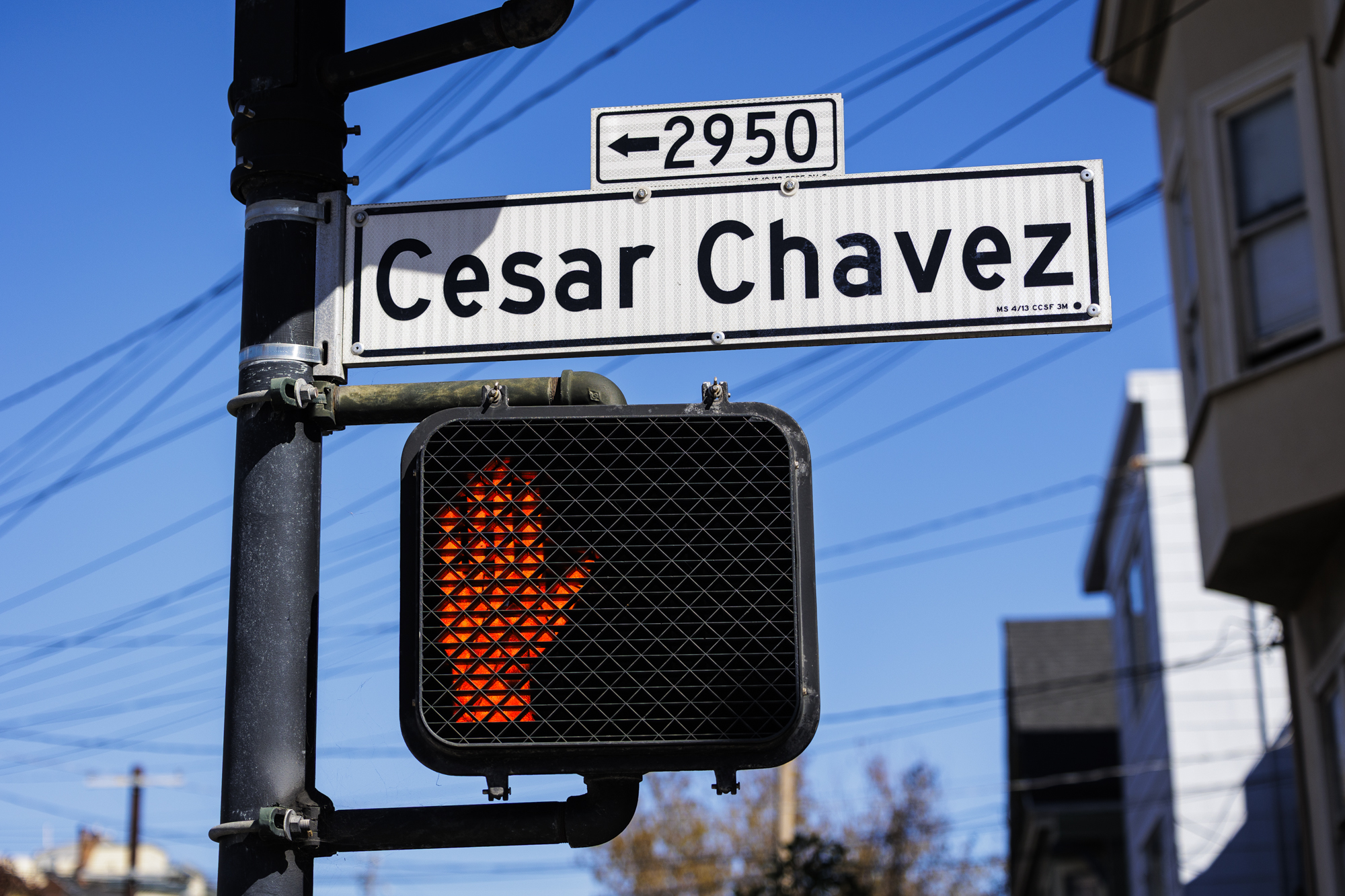
"title": "A street sign on Cesar Chavez Street in San Francisco on March 19, 2026.",
"publishDate": 1773944010,
"status": "inherit",
"parent": 12077691,
"modified": 1774556186,
"caption": "A street sign on Cesar Chavez Street in San Francisco on March 19, 2026. Disturbing revelations about the late labor leader’s history of abuse have raised questions about continuing the California farmworker movement’s legacy, without Chavez as its figurehead. ",
"credit": "Martin do Nascimento/KQED",
"altTag": null,
"description": null,
"imgSizes": {
"thumbnail": {
"file": "https://cdn.kqed.org/wp-content/uploads/sites/10/2026/03/260319-CESAR-CHAVEZ-STREET-MD-01-KQED-160x107.jpg",
"width": 160,
"height": 107,
"mimeType": "image/jpeg"
},
"1536x1536": {
"file": "https://cdn.kqed.org/wp-content/uploads/sites/10/2026/03/260319-CESAR-CHAVEZ-STREET-MD-01-KQED-1536x1024.jpg",
"width": 1536,
"height": 1024,
"mimeType": "image/jpeg"
},
"post-thumbnail": {
"file": "https://cdn.kqed.org/wp-content/uploads/sites/10/2026/03/260319-CESAR-CHAVEZ-STREET-MD-01-KQED-672x372.jpg",
"width": 672,
"height": 372,
"mimeType": "image/jpeg"
},
"twentyfourteen-full-width": {
"file": "https://cdn.kqed.org/wp-content/uploads/sites/10/2026/03/260319-CESAR-CHAVEZ-STREET-MD-01-KQED-1038x576.jpg",
"width": 1038,
"height": 576,
"mimeType": "image/jpeg"
},
"npr-cds-wide": {
"file": "https://cdn.kqed.org/wp-content/uploads/sites/10/2026/03/260319-CESAR-CHAVEZ-STREET-MD-01-KQED-1200x675.jpg",
"width": 1200,
"height": 675,
"mimeType": "image/jpeg"
},
"kqedFullSize": {
"file": "https://cdn.kqed.org/wp-content/uploads/sites/10/2026/03/260319-CESAR-CHAVEZ-STREET-MD-01-KQED.jpg",
"width": 2000,
"height": 1333
}
},
"isLoading": false,
"fetchFailed": false
},
"news_12077043": {
"type": "attachments",
"id": "news_12077043",
"meta": {
"index": "attachments_1716263798",
"site": "news",
"id": "12077043",
"found": true
},
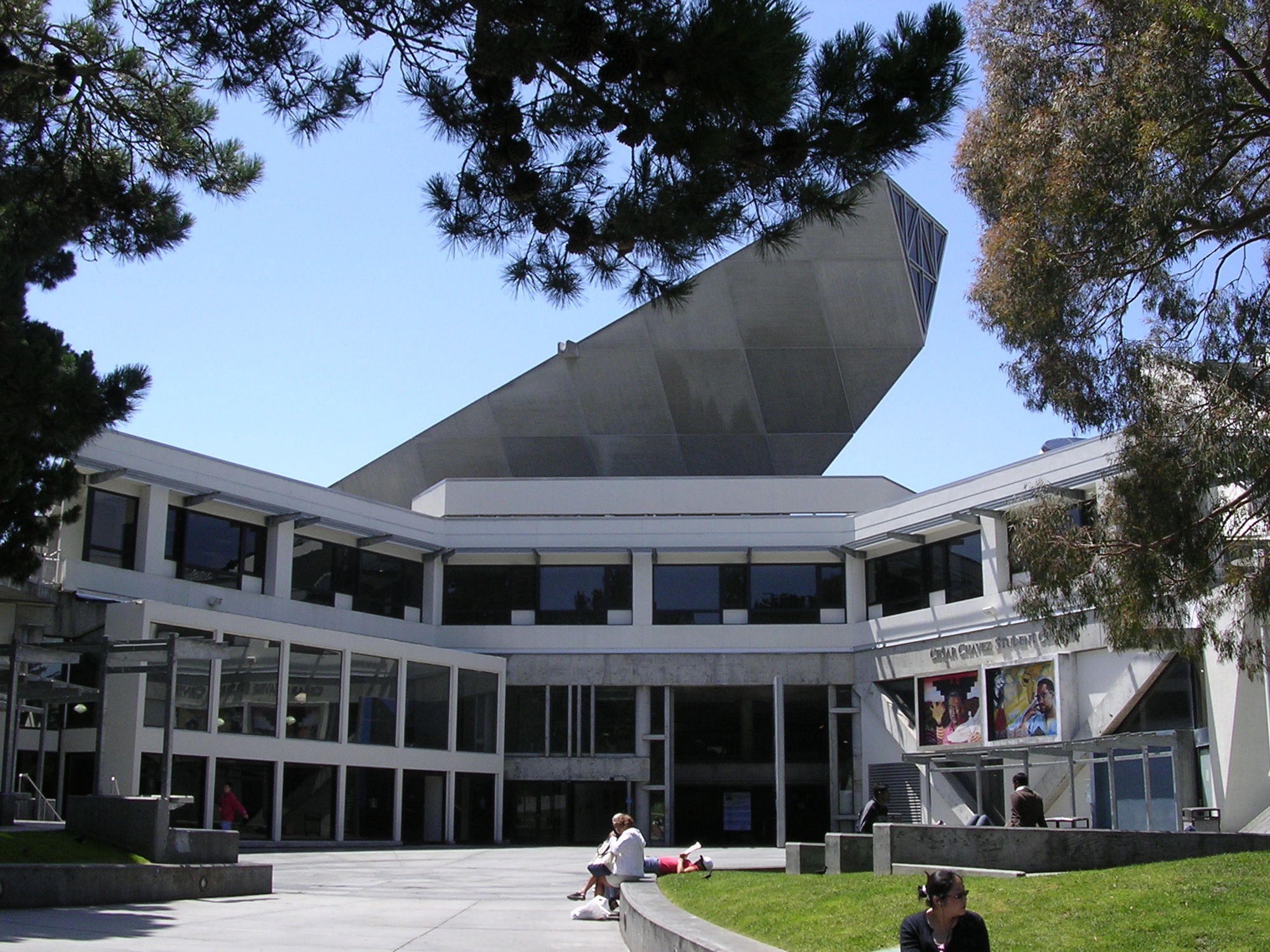
"title": "chavezstudentcenter",
"publishDate": 1773940084,
"status": "inherit",
"parent": 12077014,
"modified": 1773941724,
"caption": "The Cesar Chavez Student Center at San Francisco State University on June 24, 2005.",
"credit": "Brian Trejo/Wikimedia Commons",
"altTag": null,
"description": null,
"imgSizes": {
"thumbnail": {
"file": "https://cdn.kqed.org/wp-content/uploads/sites/10/2026/03/chavezstudentcenter-160x120.jpg",
"width": 160,
"height": 120,
"mimeType": "image/jpeg"
},
"1536x1536": {
"file": "https://cdn.kqed.org/wp-content/uploads/sites/10/2026/03/chavezstudentcenter-1536x1152.jpg",
"width": 1536,
"height": 1152,
"mimeType": "image/jpeg"
},
"post-thumbnail": {
"file": "https://cdn.kqed.org/wp-content/uploads/sites/10/2026/03/chavezstudentcenter-672x372.jpg",
"width": 672,
"height": 372,
"mimeType": "image/jpeg"
},
"twentyfourteen-full-width": {
"file": "https://cdn.kqed.org/wp-content/uploads/sites/10/2026/03/chavezstudentcenter-1038x576.jpg",
"width": 1038,
"height": 576,
"mimeType": "image/jpeg"
},
"npr-cds-wide": {
"file": "https://cdn.kqed.org/wp-content/uploads/sites/10/2026/03/chavezstudentcenter-1200x675.jpg",
"width": 1200,
"height": 675,
"mimeType": "image/jpeg"
},
"kqedFullSize": {
"file": "https://cdn.kqed.org/wp-content/uploads/sites/10/2026/03/chavezstudentcenter.jpg",
"width": 2000,
"height": 1500
}
},
"isLoading": false,
"fetchFailed": false
},
"news_12076961": {
"type": "attachments",
"id": "news_12076961",
"meta": {
"index": "attachments_1716263798",
"site": "news",
"id": "12076961",
"found": true
},
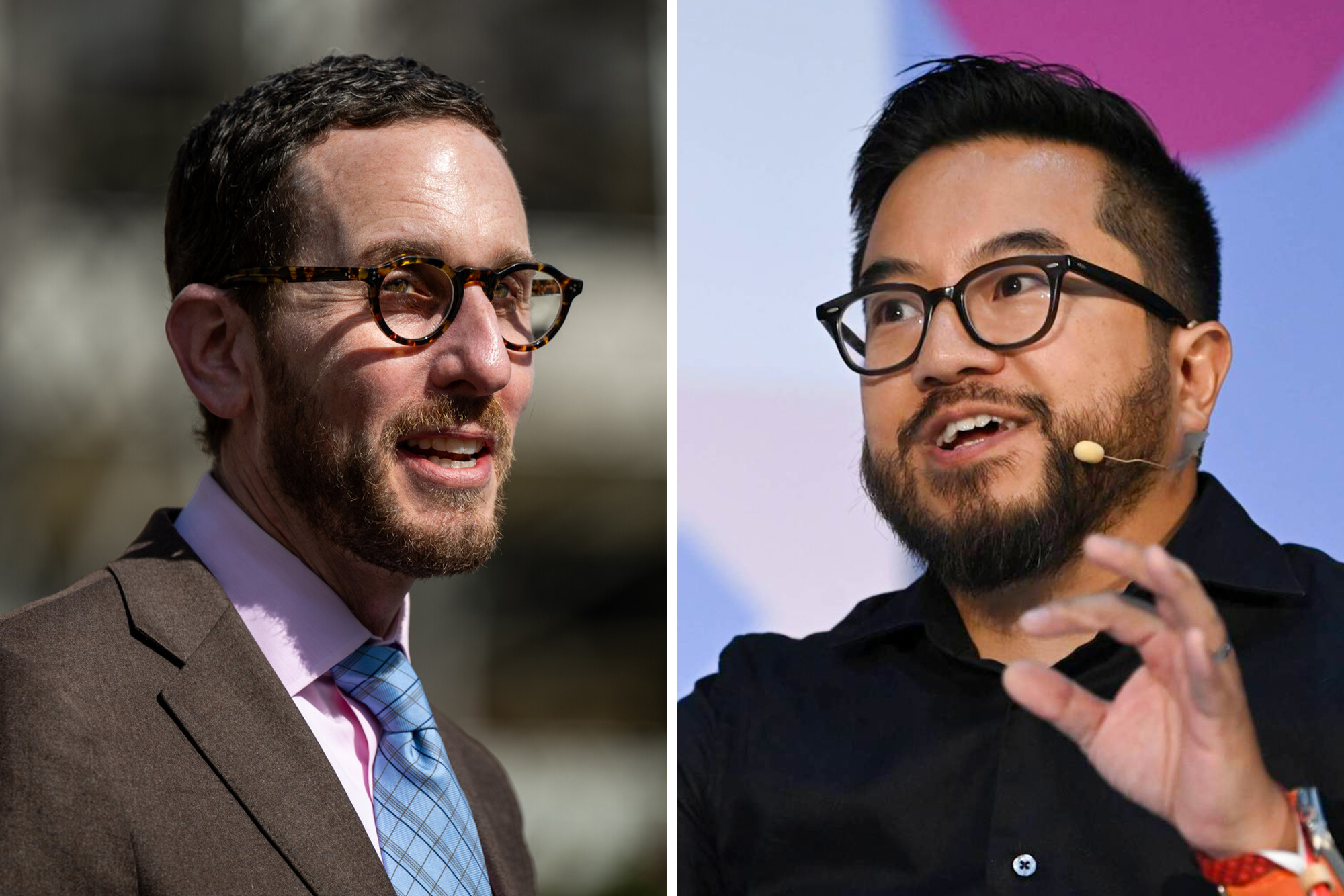
"title": "031826-Wiener-Tan-KQED",
"publishDate": 1773871110,
"status": "inherit",
"parent": 0,
"modified": 1773871293,
"caption": "Left: Sen. Scott Wiener; Right: Garry Tan.",
"credit": "Beth LaBerge/KQED; Harry Murphy/Sportsfile for Web Summit via Getty Images",
"altTag": null,
"description": null,
"imgSizes": {
"thumbnail": {
"file": "https://cdn.kqed.org/wp-content/uploads/sites/10/2026/03/031826-Wiener-Tan-KQED-160x107.jpg",
"width": 160,
"height": 107,
"mimeType": "image/jpeg"
},
"1536x1536": {
"file": "https://cdn.kqed.org/wp-content/uploads/sites/10/2026/03/031826-Wiener-Tan-KQED-1536x1025.jpg",
"width": 1536,
"height": 1025,
"mimeType": "image/jpeg"
},
"post-thumbnail": {
"file": "https://cdn.kqed.org/wp-content/uploads/sites/10/2026/03/031826-Wiener-Tan-KQED-672x372.jpg",
"width": 672,
"height": 372,
"mimeType": "image/jpeg"
},
"twentyfourteen-full-width": {
"file": "https://cdn.kqed.org/wp-content/uploads/sites/10/2026/03/031826-Wiener-Tan-KQED-1038x576.jpg",
"width": 1038,
"height": 576,
"mimeType": "image/jpeg"
},
"npr-cds-wide": {
"file": "https://cdn.kqed.org/wp-content/uploads/sites/10/2026/03/031826-Wiener-Tan-KQED-1200x675.jpg",
"width": 1200,
"height": 675,
"mimeType": "image/jpeg"
},
"kqedFullSize": {
"file": "https://cdn.kqed.org/wp-content/uploads/sites/10/2026/03/031826-Wiener-Tan-KQED.jpg",
"width": 2000,
"height": 1334
}
},
"isLoading": false,
"fetchFailed": false
},
"news_12076804": {
"type": "attachments",
"id": "news_12076804",
"meta": {
"index": "attachments_1716263798",
"site": "news",
"id": "12076804",
"found": true
},
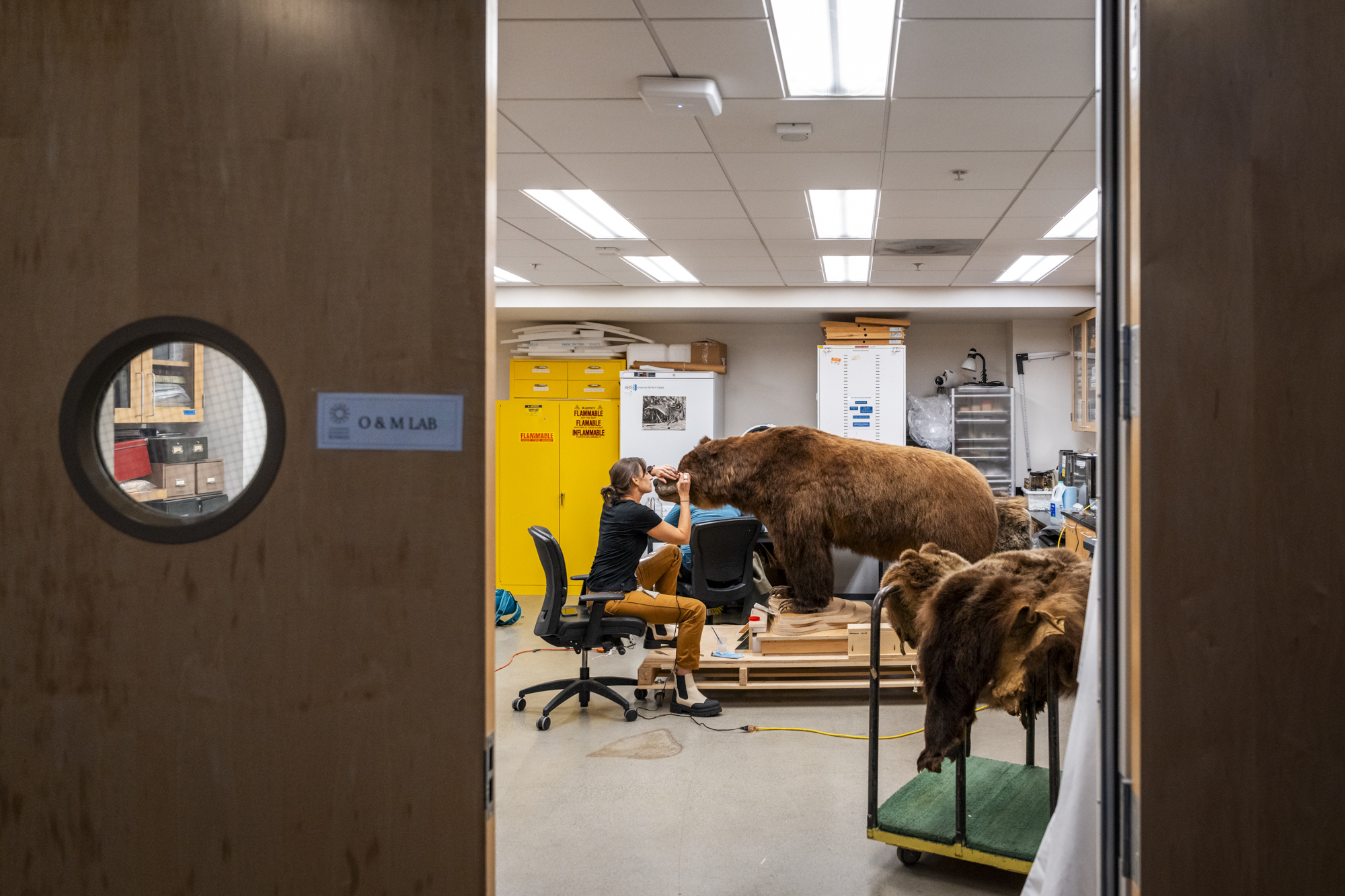
"title": "260317-MONARCH THE BEAR-07-KQED",
"publishDate": 1773788495,
"status": "inherit",
"parent": 12083826,
"modified": 1778869141,
"caption": "Fran Ritchie with the California Academy of Sciences works to restore the taxidermied form of Monarch the bear, part of the exhibit California: State of Nature. ",
"credit": "Gayle Laird/California Academy of Sciences",
"altTag": null,
"description": null,
"imgSizes": {
"thumbnail": {
"file": "https://cdn.kqed.org/wp-content/uploads/sites/10/2026/03/260317-MONARCH-THE-BEAR-07-KQED-160x107.jpg",
"width": 160,
"height": 107,
"mimeType": "image/jpeg"
},
"1536x1536": {
"file": "https://cdn.kqed.org/wp-content/uploads/sites/10/2026/03/260317-MONARCH-THE-BEAR-07-KQED-1536x1024.jpg",
"width": 1536,
"height": 1024,
"mimeType": "image/jpeg"
},
"post-thumbnail": {
"file": "https://cdn.kqed.org/wp-content/uploads/sites/10/2026/03/260317-MONARCH-THE-BEAR-07-KQED-672x372.jpg",
"width": 672,
"height": 372,
"mimeType": "image/jpeg"
},
"twentyfourteen-full-width": {
"file": "https://cdn.kqed.org/wp-content/uploads/sites/10/2026/03/260317-MONARCH-THE-BEAR-07-KQED-1038x576.jpg",
"width": 1038,
"height": 576,
"mimeType": "image/jpeg"
},
"npr-cds-wide": {
"file": "https://cdn.kqed.org/wp-content/uploads/sites/10/2026/03/260317-MONARCH-THE-BEAR-07-KQED-1200x675.jpg",
"width": 1200,
"height": 675,
"mimeType": "image/jpeg"
},
"kqedFullSize": {
"file": "https://cdn.kqed.org/wp-content/uploads/sites/10/2026/03/260317-MONARCH-THE-BEAR-07-KQED.jpg",
"width": 2000,
"height": 1333
}
},
"isLoading": false,
"fetchFailed": false
},
"news_12076946": {
"type": "attachments",
"id": "news_12076946",
"meta": {
"index": "attachments_1716263798",
"site": "news",
"id": "12076946",
"found": true
},
"title": "Sun sets behind the Pigeon Point Lighthouse in California",
"publishDate": 1773868985,
"status": "inherit",
"parent": 12076857,
"modified": 1773869032,
"caption": "The sun sets behind Pigeon Point Lighthouse during a heat wave in Pescadero, California, on March 17, 2026.",
"credit": "Tayfun Coskun/Anadolu via Getty Images",
"altTag": null,
"description": null,
"imgSizes": {
"thumbnail": {
"file": "https://cdn.kqed.org/wp-content/uploads/sites/10/2026/03/HeatWaveGetty1-160x109.jpg",
"width": 160,
"height": 109,
"mimeType": "image/jpeg"
},
"1536x1536": {
"file": "https://cdn.kqed.org/wp-content/uploads/sites/10/2026/03/HeatWaveGetty1-1536x1046.jpg",
"width": 1536,
"height": 1046,
"mimeType": "image/jpeg"
},
"post-thumbnail": {
"file": "https://cdn.kqed.org/wp-content/uploads/sites/10/2026/03/HeatWaveGetty1-672x372.jpg",
"width": 672,
"height": 372,
"mimeType": "image/jpeg"
},
"twentyfourteen-full-width": {
"file": "https://cdn.kqed.org/wp-content/uploads/sites/10/2026/03/HeatWaveGetty1-1038x576.jpg",
"width": 1038,
"height": 576,
"mimeType": "image/jpeg"
},
"npr-cds-wide": {
"file": "https://cdn.kqed.org/wp-content/uploads/sites/10/2026/03/HeatWaveGetty1-1200x675.jpg",
"width": 1200,
"height": 675,
"mimeType": "image/jpeg"
},
"kqedFullSize": {
"file": "https://cdn.kqed.org/wp-content/uploads/sites/10/2026/03/HeatWaveGetty1.jpg",
"width": 2000,
"height": 1362
}
},
"isLoading": false,
"fetchFailed": false
},
"news_12076930": {
"type": "attachments",
"id": "news_12076930",
"meta": {
"index": "attachments_1716263798",
"site": "news",
"id": "12076930",
"found": true
},
"title": "Farmworker Union Icon Cesar Chavez Accused Of Sex Abuse Of Girls In Explosive New Report",
"publishDate": 1773863749,
"status": "inherit",
"parent": 12076859,
"modified": 1773863798,
"caption": "Pedestrians walk past César Chávez Elementary School on March 18, 2026, in San Francisco, California. Labor activist César Chávez has been accused in an investigation of sexual abuse of women and minors.",
"credit": "Benjamin Fanjoy/Getty Images",
"altTag": null,
"description": null,
"imgSizes": {
"thumbnail": {
"file": "https://cdn.kqed.org/wp-content/uploads/sites/10/2026/03/CesarChavezGetty1-160x107.jpg",
"width": 160,
"height": 107,
"mimeType": "image/jpeg"
},
"1536x1536": {
"file": "https://cdn.kqed.org/wp-content/uploads/sites/10/2026/03/CesarChavezGetty1-1536x1024.jpg",
"width": 1536,
"height": 1024,
"mimeType": "image/jpeg"
},
"post-thumbnail": {
"file": "https://cdn.kqed.org/wp-content/uploads/sites/10/2026/03/CesarChavezGetty1-672x372.jpg",
"width": 672,
"height": 372,
"mimeType": "image/jpeg"
},
"twentyfourteen-full-width": {
"file": "https://cdn.kqed.org/wp-content/uploads/sites/10/2026/03/CesarChavezGetty1-1038x576.jpg",
"width": 1038,
"height": 576,
"mimeType": "image/jpeg"
},
"npr-cds-wide": {
"file": "https://cdn.kqed.org/wp-content/uploads/sites/10/2026/03/CesarChavezGetty1-1200x675.jpg",
"width": 1200,
"height": 675,
"mimeType": "image/jpeg"
},
"kqedFullSize": {
"file": "https://cdn.kqed.org/wp-content/uploads/sites/10/2026/03/CesarChavezGetty1.jpg",
"width": 2000,
"height": 1333
}
},
"isLoading": false,
"fetchFailed": false
},
"news_12076745": {
"type": "attachments",
"id": "news_12076745",
"meta": {
"index": "attachments_1716263798",
"site": "news",
"id": "12076745",
"found": true
},
"title": "The CBS Bay Area television studio in San Francisco on March 17, 2026.",
"publishDate": 1773771883,
"status": "inherit",
"parent": 0,
"modified": 1773771903,
"caption": "The CBS Bay Area television studio in San Francisco on March 17, 2026.",
"credit": "Beth LaBerge/KQED",
"altTag": null,
"description": null,
"imgSizes": {
"thumbnail": {
"file": "https://cdn.kqed.org/wp-content/uploads/sites/10/2026/03/260317-CBSSTRIKE-01-BL-KQED-160x107.jpg",
"width": 160,
"height": 107,
"mimeType": "image/jpeg"
},
"1536x1536": {
"file": "https://cdn.kqed.org/wp-content/uploads/sites/10/2026/03/260317-CBSSTRIKE-01-BL-KQED-1536x1024.jpg",
"width": 1536,
"height": 1024,
"mimeType": "image/jpeg"
},
"post-thumbnail": {
"file": "https://cdn.kqed.org/wp-content/uploads/sites/10/2026/03/260317-CBSSTRIKE-01-BL-KQED-672x372.jpg",
"width": 672,
"height": 372,
"mimeType": "image/jpeg"
},
"twentyfourteen-full-width": {
"file": "https://cdn.kqed.org/wp-content/uploads/sites/10/2026/03/260317-CBSSTRIKE-01-BL-KQED-1038x576.jpg",
"width": 1038,
"height": 576,
"mimeType": "image/jpeg"
},
"npr-cds-wide": {
"file": "https://cdn.kqed.org/wp-content/uploads/sites/10/2026/03/260317-CBSSTRIKE-01-BL-KQED-1200x675.jpg",
"width": 1200,
"height": 675,
"mimeType": "image/jpeg"
},
"kqedFullSize": {
"file": "https://cdn.kqed.org/wp-content/uploads/sites/10/2026/03/260317-CBSSTRIKE-01-BL-KQED.jpg",
"width": 2000,
"height": 1333
}
},
"isLoading": false,
"fetchFailed": false
},
"news_12075084": {
"type": "attachments",
"id": "news_12075084",
"meta": {
"index": "attachments_1716263798",
"site": "news",
"id": "12075084",
"found": true
},
"title": "260301-INTERFAITHIFTAR00470_TV-KQED",
"publishDate": 1772480762,
"status": "inherit",
"parent": 0,
"modified": 1772480816,
"caption": "Nora Hany eats her iftar dinner, the second meal of the day during Ramadan, with her friends in San Francisco on March 1, 2026. Iftar dinners during Ramadan are used as a vehicle for charity and activism.",
"credit": "Tâm Vũ/KQED",
"altTag": null,
"description": null,
"imgSizes": {
"thumbnail": {
"file": "https://cdn.kqed.org/wp-content/uploads/sites/10/2026/03/260301-INTERFAITHIFTAR00470_TV-KQED-160x107.jpg",
"width": 160,
"height": 107,
"mimeType": "image/jpeg"
},
"1536x1536": {
"file": "https://cdn.kqed.org/wp-content/uploads/sites/10/2026/03/260301-INTERFAITHIFTAR00470_TV-KQED-1536x1025.jpg",
"width": 1536,
"height": 1025,
"mimeType": "image/jpeg"
},
"post-thumbnail": {
"file": "https://cdn.kqed.org/wp-content/uploads/sites/10/2026/03/260301-INTERFAITHIFTAR00470_TV-KQED-672x372.jpg",
"width": 672,
"height": 372,
"mimeType": "image/jpeg"
},
"twentyfourteen-full-width": {
"file": "https://cdn.kqed.org/wp-content/uploads/sites/10/2026/03/260301-INTERFAITHIFTAR00470_TV-KQED-1038x576.jpg",
"width": 1038,
"height": 576,
"mimeType": "image/jpeg"
},
"npr-cds-wide": {
"file": "https://cdn.kqed.org/wp-content/uploads/sites/10/2026/03/260301-INTERFAITHIFTAR00470_TV-KQED-1200x675.jpg",
"width": 1200,
"height": 675,
"mimeType": "image/jpeg"
},
"kqedFullSize": {
"file": "https://cdn.kqed.org/wp-content/uploads/sites/10/2026/03/260301-INTERFAITHIFTAR00470_TV-KQED.jpg",
"width": 2000,
"height": 1334
}
},
"isLoading": false,
"fetchFailed": false
},
"news_12076629": {
"type": "attachments",
"id": "news_12076629",
"meta": {
"index": "attachments_1716263798",
"site": "news",
"id": "12076629",
"found": true
},
"title": "Billboard-AI-Illustration_6",
"publishDate": 1773699455,
"status": "inherit",
"parent": 12076608,
"modified": 1773703712,
"caption": "The Bay Area's booming AI industry has taken over bus shelters, buildings and billboards, broadcasting an array of messages about the future of work for humans.",
"credit": "Darren Tu/KQED",
"altTag": null,
"description": null,
"imgSizes": {
"thumbnail": {
"file": "https://cdn.kqed.org/wp-content/uploads/sites/10/2026/03/Billboard-AI-Illustration_6-160x103.jpg",
"width": 160,
"height": 103,
"mimeType": "image/jpeg"
},
"1536x1536": {
"file": "https://cdn.kqed.org/wp-content/uploads/sites/10/2026/03/Billboard-AI-Illustration_6-1536x992.jpg",
"width": 1536,
"height": 992,
"mimeType": "image/jpeg"
},
"post-thumbnail": {
"file": "https://cdn.kqed.org/wp-content/uploads/sites/10/2026/03/Billboard-AI-Illustration_6-672x372.jpg",
"width": 672,
"height": 372,
"mimeType": "image/jpeg"
},
"twentyfourteen-full-width": {
"file": "https://cdn.kqed.org/wp-content/uploads/sites/10/2026/03/Billboard-AI-Illustration_6-1038x576.jpg",
"width": 1038,
"height": 576,
"mimeType": "image/jpeg"
},
"npr-cds-wide": {
"file": "https://cdn.kqed.org/wp-content/uploads/sites/10/2026/03/Billboard-AI-Illustration_6-1200x675.jpg",
"width": 1200,
"height": 675,
"mimeType": "image/jpeg"
},
"kqedFullSize": {
"file": "https://cdn.kqed.org/wp-content/uploads/sites/10/2026/03/Billboard-AI-Illustration_6.jpg",
"width": 1920,
"height": 1240
}
},
"isLoading": false,
"fetchFailed": false
},
"news_11910183": {
"type": "attachments",
"id": "news_11910183",
"meta": {
"index": "attachments_1716263798",
"site": "news",
"id": "11910183",
"found": true
},
"title": null,
"publishDate": 1648850866,
"status": "inherit",
"parent": 11909786,
"modified": 1773598485,
"caption": "Si está buscando ayuda fiscal gratuita antes de la fecha límite para presentar la declaración de impuestos de 2022, tenemos algunos consejos para usted.",
"credit": "Sora Shimazaki/Pexels",
"altTag": "Una mujer con una amplia gabardina beige está sentada a una mesa escribiendo en un portapapeles.",
"description": null,
"imgSizes": {
"medium": {
"file": "https://cdn.kqed.org/wp-content/uploads/sites/10/2022/04/pexels-sora-shimazaki-5668869-800x533.jpg",
"width": 800,
"height": 533,
"mimeType": "image/jpeg"
},
"large": {
"file": "https://cdn.kqed.org/wp-content/uploads/sites/10/2022/04/pexels-sora-shimazaki-5668869-1020x680.jpg",
"width": 1020,
"height": 680,
"mimeType": "image/jpeg"
},
"thumbnail": {
"file": "https://cdn.kqed.org/wp-content/uploads/sites/10/2022/04/pexels-sora-shimazaki-5668869-160x107.jpg",
"width": 160,
"height": 107,
"mimeType": "image/jpeg"
},
"1536x1536": {
"file": "https://cdn.kqed.org/wp-content/uploads/sites/10/2022/04/pexels-sora-shimazaki-5668869-1536x1024.jpg",
"width": 1536,
"height": 1024,
"mimeType": "image/jpeg"
},
"post-thumbnail": {
"file": "https://cdn.kqed.org/wp-content/uploads/sites/10/2022/04/pexels-sora-shimazaki-5668869-672x372.jpg",
"width": 672,
"height": 372,
"mimeType": "image/jpeg"
},
"twentyfourteen-full-width": {
"file": "https://cdn.kqed.org/wp-content/uploads/sites/10/2022/04/pexels-sora-shimazaki-5668869-1038x576.jpg",
"width": 1038,
"height": 576,
"mimeType": "image/jpeg"
},
"kqedFullSize": {
"file": "https://cdn.kqed.org/wp-content/uploads/sites/10/2022/04/pexels-sora-shimazaki-5668869.jpg",
"width": 1920,
"height": 1280
}
},
"isLoading": false,
"fetchFailed": false
},
"news_12076653": {
"type": "attachments",
"id": "news_12076653",
"meta": {
"index": "attachments_1716263798",
"site": "news",
"id": "12076653",
"found": true
},
"title": "260130-sfchildcareaccess00137_TV_qed",
"publishDate": 1773702595,
"status": "inherit",
"parent": 12076592,
"modified": 1786725662,
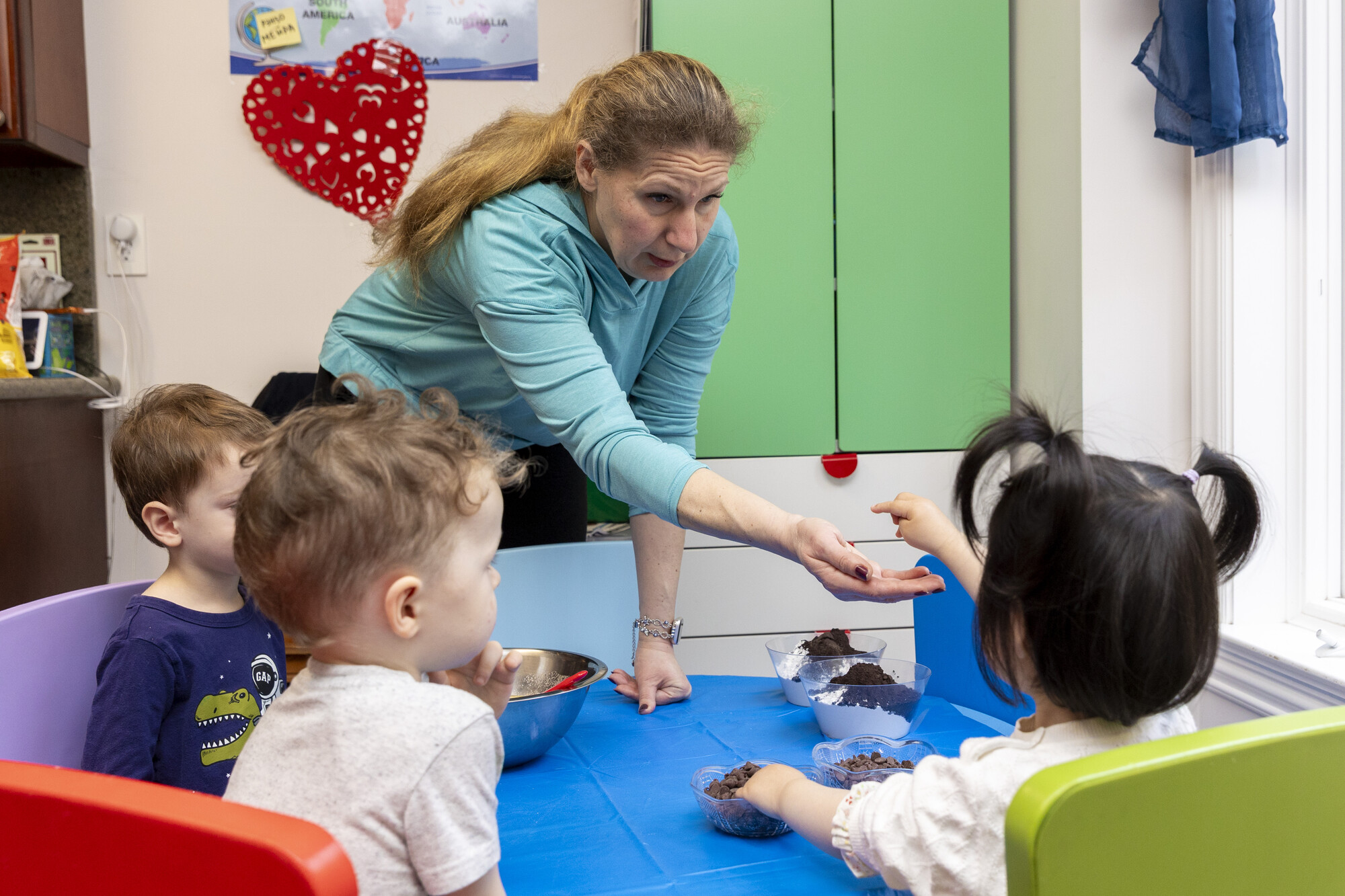
"caption": "Lyuba Shkolnik teaches children how to bake muffins at her in-home childcare business called Daycare Bumblebee in San Francisco on Jan. 30, 2026. San Francisco is expanding access to child care by offering 50% discounts to middle- and upper-middle-income earners in an effort to tackle affordability issues in one of the most expensive cities in the country. Daycare Bumblebee is trying to get approval to enter the city's Early Learning For All system.",
"credit": "Tâm Vũ/KQED",
"altTag": null,
"description": null,
"imgSizes": {
"thumbnail": {
"file": "https://cdn.kqed.org/wp-content/uploads/sites/10/2026/03/260130-sfchildcareaccess00137_TV_qed-160x107.jpg",
"width": 160,
"height": 107,
"mimeType": "image/jpeg"
},
"1536x1536": {
"file": "https://cdn.kqed.org/wp-content/uploads/sites/10/2026/03/260130-sfchildcareaccess00137_TV_qed-1536x1024.jpg",
"width": 1536,
"height": 1024,
"mimeType": "image/jpeg"
},
"post-thumbnail": {
"file": "https://cdn.kqed.org/wp-content/uploads/sites/10/2026/03/260130-sfchildcareaccess00137_TV_qed-672x372.jpg",
"width": 672,
"height": 372,
"mimeType": "image/jpeg"
},
"twentyfourteen-full-width": {
"file": "https://cdn.kqed.org/wp-content/uploads/sites/10/2026/03/260130-sfchildcareaccess00137_TV_qed-1038x576.jpg",
"width": 1038,
"height": 576,
"mimeType": "image/jpeg"
},
"npr-cds-wide": {
"file": "https://cdn.kqed.org/wp-content/uploads/sites/10/2026/03/260130-sfchildcareaccess00137_TV_qed-1200x675.jpg",
"width": 1200,
"height": 675,
"mimeType": "image/jpeg"
},
"kqedFullSize": {
"file": "https://cdn.kqed.org/wp-content/uploads/sites/10/2026/03/260130-sfchildcareaccess00137_TV_qed.jpg",
"width": 2000,
"height": 1333
}
},
"isLoading": false,
"fetchFailed": false
},
"news_11726081": {
"type": "attachments",
"id": "news_11726081",
"meta": {
"index": "attachments_1716263798",
"site": "news",
"id": "11726081",
"found": true
},
"title": "Los Angeles City Council Votes To Ban Medical Marijuana Dispensaries",
"publishDate": 1550105027,
"status": "inherit",
"parent": 11726034,
"modified": 1773693624,
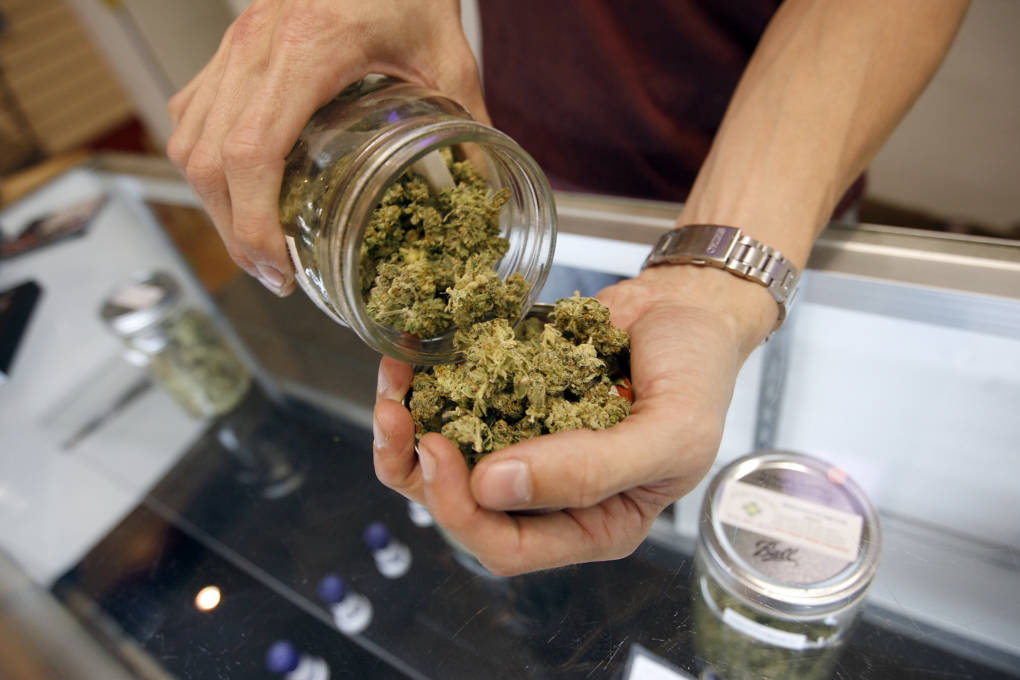
"caption": "Supporters say fully opening the doors of the U.S. banking system to the legal marijuana industry would reduce crime risks and resolve a litany of challenges for cannabis companies, from paying taxes to getting a loan.",
"credit": "David McNew/Getty Images",
"altTag": null,
"description": "Supporters say fully opening the doors of the U.S. banking system to the legal marijuana industry would reduce crime risks and resolve a litany of challenges for cannabis companies, from paying taxes to getting a loan.",
"imgSizes": {
"thumbnail": {
"file": "https://cdn.kqed.org/wp-content/uploads/sites/10/2019/02/RS4903_marajuanasales-160x107.jpg",
"width": 160,
"height": 107,
"mimeType": "image/jpeg"
},
"medium": {
"file": "https://cdn.kqed.org/wp-content/uploads/sites/10/2019/02/RS4903_marajuanasales-800x533.jpg",
"width": 800,
"height": 533,
"mimeType": "image/jpeg"
},
"large": {
"file": "https://cdn.kqed.org/wp-content/uploads/sites/10/2019/02/RS4903_marajuanasales-1020x680.jpg",
"width": 1020,
"height": 680,
"mimeType": "image/jpeg"
},
"complete_open_graph": {
"file": "https://cdn.kqed.org/wp-content/uploads/sites/10/2019/02/RS4903_marajuanasales-1200x800.jpg",
"width": 1200,
"height": 800,
"mimeType": "image/jpeg"
},
"post-thumbnail": {
"file": "https://cdn.kqed.org/wp-content/uploads/sites/10/2019/02/RS4903_marajuanasales-672x372.jpg",
"width": 672,
"height": 372,
"mimeType": "image/jpeg"
},
"twentyfourteen-full-width": {
"file": "https://cdn.kqed.org/wp-content/uploads/sites/10/2019/02/RS4903_marajuanasales-1038x576.jpg",
"width": 1038,
"height": 576,
"mimeType": "image/jpeg"
},
"full-width": {
"file": "https://cdn.kqed.org/wp-content/uploads/sites/10/2019/02/RS4903_marajuanasales-1920x1280.jpg",
"width": 1920,
"height": 1280,
"mimeType": "image/jpeg"
},
"guest-author-32": {
"file": "https://cdn.kqed.org/wp-content/uploads/sites/10/2019/02/RS4903_marajuanasales-32x32.jpg",
"width": 32,
"height": 32,
"mimeType": "image/jpeg"
},
"guest-author-50": {
"file": "https://cdn.kqed.org/wp-content/uploads/sites/10/2019/02/RS4903_marajuanasales-50x50.jpg",
"width": 50,
"height": 50,
"mimeType": "image/jpeg"
},
"guest-author-64": {
"file": "https://cdn.kqed.org/wp-content/uploads/sites/10/2019/02/RS4903_marajuanasales-64x64.jpg",
"width": 64,
"height": 64,
"mimeType": "image/jpeg"
},
"guest-author-96": {
"file": "https://cdn.kqed.org/wp-content/uploads/sites/10/2019/02/RS4903_marajuanasales-96x96.jpg",
"width": 96,
"height": 96,
"mimeType": "image/jpeg"
},
"guest-author-128": {
"file": "https://cdn.kqed.org/wp-content/uploads/sites/10/2019/02/RS4903_marajuanasales-128x128.jpg",
"width": 128,
"height": 128,
"mimeType": "image/jpeg"
},
"detail": {
"file": "https://cdn.kqed.org/wp-content/uploads/sites/10/2019/02/RS4903_marajuanasales-150x150.jpg",
"width": 150,
"height": 150,
"mimeType": "image/jpeg"
},
"kqedFullSize": {
"file": "https://cdn.kqed.org/wp-content/uploads/sites/10/2019/02/RS4903_marajuanasales-e1550105105781.jpg",
"width": 1920,
"height": 1280
}
},
"isLoading": false,
"fetchFailed": false
}
},
"audioPlayerReducer": {
"postId": "stream_live",
"isPaused": true,
"isPlaying": false,
"pfsActive": false,
"pledgeModalIsOpen": true,
"playerDrawerIsOpen": false,
"liveAudioPlayStartedAt": 0,
"liveAudioPlayContext": ""
},
"authorsReducer": {
"byline_news_12077014": {
"type": "authors",
"id": "byline_news_12077014",
"meta": {
"override": true
},
"slug": "byline_news_12077014",
"name": "Claire Morgan and Emily Zentner, The California Newsroom",
"isLoading": false
},
"rachael-myrow": {
"type": "authors",
"id": "251",
"meta": {
"index": "authors_1716337520",
"id": "251",
"found": true
},
"name": "Rachael Myrow",
"firstName": "Rachael",
"lastName": "Myrow",
"slug": "rachael-myrow",
"email": "rmyrow@kqed.org",
"display_author_email": true,
"staff_mastheads": [
"news"
],
"title": "Senior Editor of KQED's Silicon Valley News Desk",
"bio": "• I write and edit stories about how Silicon Valley power and policies shape everyday life in California. I’m also passionate about making Bay Area history and culture more accessible to a broad public. • I’ve been a journalist for most of my life, starting in high school with The Franklin Press in Los Angeles, where I grew up. While earning my first degree in English at UC Berkeley, I got my start in public radio at KALX-FM. After completing a second degree in journalism at Cal, I landed my first professional job at Marketplace, then moved on to KPCC (now LAist), and then KQED, where I hosted The California Report for more than seven years. • My reporting has appeared on NPR, The World, WBUR’s \u003ci>Here & Now\u003c/i>, and the BBC. I also guest host for KQED’s \u003ci>Forum\u003c/i>, as well as the Commonwealth Club in San Francisco. • I speak periodically on media, democracy and technology issues, and do voiceover work for documentaries and educational video projects. • Outside of the studio, you'll find me hiking Bay Area trails and whipping up Insta-ready meals in my kitchen. • I do not accept gifts, money, or favors from anyone connected to my reporting, I don't pay people for information, and I do not support or donate to political causes. • I strive to treat the people I report on with fairness, honesty, and respect. I also recognize there are often multiple sides to a story and work to verify information through multiple sources and documentation. If I get something wrong, I correct it.",
"avatar": "https://secure.gravatar.com/avatar/3ed8a3c5f26025e4a805ba634cda8cd764906b97438a6d9ce216b044e340da4e?s=600&d=blank&r=g",
"twitter": "rachaelmyrow",
"bluesky": null,
"facebook": null,
"instagram": null,
"linkedin": "https://www.linkedin.com/in/rachaelmyrow/",
"sites": [
{
"site": "arts",
"roles": [
"administrator"
]
},
{
"site": "news",
"roles": [
"edit_others_posts",
"editor"
]
},
{
"site": "futureofyou",
"roles": [
"editor"
]
},
{
"site": "bayareabites",
"roles": [
"editor"
]
},
{
"site": "stateofhealth",
"roles": [
"editor"
]
},
{
"site": "science",
"roles": [
"editor"
]
},
{
"site": "food",
"roles": [
"editor"
]
},
{
"site": "forum",
"roles": [
"editor"
]
},
{
"site": "liveblog",
"roles": [
"author"
]
}
],
"headData": {
"title": "Rachael Myrow | KQED",
"description": "Senior Editor of KQED's Silicon Valley News Desk",
"ogImgSrc": "https://secure.gravatar.com/avatar/3ed8a3c5f26025e4a805ba634cda8cd764906b97438a6d9ce216b044e340da4e?s=600&d=blank&r=g",
"twImgSrc": "https://secure.gravatar.com/avatar/3ed8a3c5f26025e4a805ba634cda8cd764906b97438a6d9ce216b044e340da4e?s=600&d=blank&r=g"
},
"isLoading": false,
"link": "/author/rachael-myrow"
},
"smohamad": {
"type": "authors",
"id": "11631",
"meta": {
"index": "authors_1716337520",
"id": "11631",
"found": true
},
"name": "Sarah Mohamad",
"firstName": "Sarah",
"lastName": "Mohamad",
"slug": "smohamad",
"email": "smohamad@KQED.org",
"display_author_email": true,
"staff_mastheads": [],
"title": "Engagement Producer and Reporter, KQED Science",
"bio": "Sarah Mohamad is an audience engagement reporter and producer for KQED Science. She reports on audience-focused science and environment stories and manages the team's social media, newsletter, and engagement efforts. Prior to this role, she played a key role as project manager for NSF's \u003ca href=\"https://www.kqed.org/crackingthecode\">\u003cem>Cracking the Code: Influencing Millennial Science Engagement\u003c/em> \u003c/a>audience research.",
"avatar": "https://secure.gravatar.com/avatar/e6224957cd82d015183756ddde1f928013a563d7ca2e4565f8c4de1ec64886c5?s=600&d=blank&r=g",
"twitter": "sarahkmohamad",
"bluesky": null,
"facebook": null,
"instagram": null,
"linkedin": null,
"sites": [
{
"site": "",
"roles": [
"editor"
]
},
{
"site": "arts",
"roles": [
"editor"
]
},
{
"site": "news",
"roles": [
"editor"
]
},
{
"site": "about",
"roles": [
"editor"
]
},
{
"site": "science",
"roles": [
"editor"
]
}
],
"headData": {
"title": "Sarah Mohamad | KQED",
"description": "Engagement Producer and Reporter, KQED Science",
"ogImgSrc": "https://secure.gravatar.com/avatar/e6224957cd82d015183756ddde1f928013a563d7ca2e4565f8c4de1ec64886c5?s=600&d=blank&r=g",
"twImgSrc": "https://secure.gravatar.com/avatar/e6224957cd82d015183756ddde1f928013a563d7ca2e4565f8c4de1ec64886c5?s=600&d=blank&r=g"
},
"isLoading": false,
"link": "/author/smohamad"
},
"ccabreralomeli": {
"type": "authors",
"id": "11708",
"meta": {
"index": "authors_1716337520",
"id": "11708",
"found": true
},
"name": "Carlos Cabrera-Lomelí",
"firstName": "Carlos",
"lastName": "Cabrera-Lomelí",
"slug": "ccabreralomeli",
"email": "ccabreralomeli@KQED.org",
"display_author_email": true,
"staff_mastheads": [
"news"
],
"title": "Community Reporter",
"bio": "Carlos Cabrera-Lomelí is a community reporter with KQED's digital engagement team. He also reports and co-produces for KQED's bilingual news hub KQED en Español. He grew up in San Francisco's Mission District and has previously worked with Univision, 48 Hills and REFORMA in Mexico City.",
"avatar": "https://secure.gravatar.com/avatar/c309be9665e484f887b818c89e273ecc673004f426f36b24d00a4d813a2e0518?s=600&d=blank&r=g",
"twitter": "@LomeliCabrera",
"bluesky": null,
"facebook": null,
"instagram": null,
"linkedin": null,
"sites": [
{
"site": "arts",
"roles": [
"editor"
]
},
{
"site": "news",
"roles": [
"editor"
]
},
{
"site": "about",
"roles": [
"editor"
]
},
{
"site": "science",
"roles": [
"editor"
]
},
{
"site": "perspectives",
"roles": [
"editor"
]
},
{
"site": "elections",
"roles": [
"editor"
]
},
{
"site": "liveblog",
"roles": [
"contributor"
]
}
],
"headData": {
"title": "Carlos Cabrera-Lomelí | KQED",
"description": "Community Reporter",
"ogImgSrc": "https://secure.gravatar.com/avatar/c309be9665e484f887b818c89e273ecc673004f426f36b24d00a4d813a2e0518?s=600&d=blank&r=g",
"twImgSrc": "https://secure.gravatar.com/avatar/c309be9665e484f887b818c89e273ecc673004f426f36b24d00a4d813a2e0518?s=600&d=blank&r=g"
},
"isLoading": false,
"link": "/author/ccabreralomeli"
},
"daisynguyen": {
"type": "authors",
"id": "11829",
"meta": {
"index": "authors_1716337520",
"id": "11829",
"found": true
},
"name": "Daisy Nguyen",
"firstName": "Daisy",
"lastName": "Nguyen",
"slug": "daisynguyen",
"email": "daisynguyen@kqed.org",
"display_author_email": true,
"staff_mastheads": [
"news"
],
"title": "KQED Contributor",
"bio": "I have covered early childhood education and child care for KQED since 2022. I focus on policies aimed at increasing access to early care and education and how they shape individual lives. I've been a journalist for more than two decades, with most of that time devoted to covering breaking news throughout California for The Associated Press. I grew up in San Francisco and studied at UC Davis and Columbia University's Graduate School of Journalism. I live in Oakland with my husband and two kids.",
"avatar": "https://secure.gravatar.com/avatar/2da2127c27f7143b53ebd419800fd55f?s=600&d=blank&r=g",
"twitter": null,
"facebook": null,
"instagram": null,
"linkedin": "https://www.linkedin.com/in/daisynguyen/",
"sites": [
{
"site": "news",
"roles": [
"author"
]
},
{
"site": "liveblog",
"roles": [
"author"
]
}
],
"headData": {
"title": "Daisy Nguyen | KQED",
"description": "KQED Contributor",
"ogImgSrc": "https://secure.gravatar.com/avatar/2da2127c27f7143b53ebd419800fd55f?s=600&d=blank&r=g",
"twImgSrc": "https://secure.gravatar.com/avatar/2da2127c27f7143b53ebd419800fd55f?s=600&d=blank&r=g"
},
"isLoading": false,
"link": "/author/daisynguyen"
},
"kmonahan": {
"type": "authors",
"id": "11842",
"meta": {
"index": "authors_1716337520",
"id": "11842",
"found": true
},
"name": "Katherine Monahan",
"firstName": "Katherine",
"lastName": "Monahan",
"slug": "kmonahan",
"email": "kmonahan@kqed.org",
"display_author_email": true,
"staff_mastheads": [],
"title": "Reporter / Sound Engineer",
"bio": "I cover state and local news. I’m also a sound engineer at the station, mixing stories and running live broadcasts. I link to source materials so that readers can draw their own conclusions, and seek comment from a range of perspectives, including from people directly affected by events. Awards received include from the Society of Professional Journalists, Northern California chapter and the Alaska Press Club. I speak multiple languages and have reported and engineered in the Bay Area, Alaska, West Africa and Latin America.",
"avatar": "https://secure.gravatar.com/avatar/ff257b3a5da88893781a3d3266904b2d2f91c7f0e1bbf728f61f5fb81b74a669?s=600&d=blank&r=g",
"twitter": null,
"bluesky": null,
"facebook": null,
"instagram": null,
"linkedin": null,
"sites": [
{
"site": "news",
"roles": [
"editor"
]
},
{
"site": "science",
"roles": [
"contributor"
]
}
],
"headData": {
"title": "Katherine Monahan | KQED",
"description": "Reporter / Sound Engineer",
"ogImgSrc": "https://secure.gravatar.com/avatar/ff257b3a5da88893781a3d3266904b2d2f91c7f0e1bbf728f61f5fb81b74a669?s=600&d=blank&r=g",
"twImgSrc": "https://secure.gravatar.com/avatar/ff257b3a5da88893781a3d3266904b2d2f91c7f0e1bbf728f61f5fb81b74a669?s=600&d=blank&r=g"
},
"isLoading": false,
"link": "/author/kmonahan"
},
"nkhan": {
"type": "authors",
"id": "11867",
"meta": {
"index": "authors_1716337520",
"id": "11867",
"found": true
},
"name": "Nisa Khan",
"firstName": "Nisa",
"lastName": "Khan",
"slug": "nkhan",
"email": "nkhan@kqed.org",
"display_author_email": false,
"staff_mastheads": [],
"title": "KQED Contributor",
"bio": "Nisa Khan is a reporter for KQED's Audience News Desk. She was formerly a data reporter at Michigan Radio. She earned a Bachelor of Science in Information from the University of Michigan and a Master of Arts in Communication from Stanford University.",
"avatar": "https://secure.gravatar.com/avatar/8720459eef081ff64582b3506b124d58523e80e120704a0cbd9892533c914991?s=600&d=blank&r=g",
"twitter": "mnisakhan",
"bluesky": null,
"facebook": null,
"instagram": null,
"linkedin": null,
"sites": [
{
"site": "arts",
"roles": [
"editor"
]
},
{
"site": "news",
"roles": [
"editor"
]
},
{
"site": "science",
"roles": [
"editor",
"author"
]
},
{
"site": "forum",
"roles": [
"editor"
]
},
{
"site": "liveblog",
"roles": [
"contributor"
]
}
],
"headData": {
"title": "Nisa Khan | KQED",
"description": "KQED Contributor",
"ogImgSrc": "https://secure.gravatar.com/avatar/8720459eef081ff64582b3506b124d58523e80e120704a0cbd9892533c914991?s=600&d=blank&r=g",
"twImgSrc": "https://secure.gravatar.com/avatar/8720459eef081ff64582b3506b124d58523e80e120704a0cbd9892533c914991?s=600&d=blank&r=g"
},
"isLoading": false,
"link": "/author/nkhan"
},
"kdebenedetti": {
"type": "authors",
"id": "11913",
"meta": {
"index": "authors_1716337520",
"id": "11913",
"found": true
},
"name": "Katie DeBenedetti",
"firstName": "Katie",
"lastName": "DeBenedetti",
"slug": "kdebenedetti",
"email": "kdebenedetti@kqed.org",
"display_author_email": false,
"staff_mastheads": [
"news",
"science"
],
"title": "KQED Contributor",
"bio": "Katie DeBenedetti is a digital reporter covering daily news for the Express Desk. Prior to joining KQED as a culture reporting intern in January 2024, she covered education and city government for the Napa Valley Register.",
"avatar": "https://secure.gravatar.com/avatar/6e31073cb8f7e4214ab03f42771d0f45?s=600&d=blank&r=g",
"twitter": null,
"facebook": null,
"instagram": null,
"linkedin": null,
"sites": [
{
"site": "news",
"roles": [
"author"
]
},
{
"site": "science",
"roles": [
"author"
]
},
{
"site": "liveblog",
"roles": [
"author"
]
}
],
"headData": {
"title": "Katie DeBenedetti | KQED",
"description": "KQED Contributor",
"ogImgSrc": "https://secure.gravatar.com/avatar/6e31073cb8f7e4214ab03f42771d0f45?s=600&d=blank&r=g",
"twImgSrc": "https://secure.gravatar.com/avatar/6e31073cb8f7e4214ab03f42771d0f45?s=600&d=blank&r=g"
},
"isLoading": false,
"link": "/author/kdebenedetti"
},
"sarahwright": {
"type": "authors",
"id": "11956",
"meta": {
"index": "authors_1716337520",
"id": "11956",
"found": true
},
"name": "Sarah Wright",
"firstName": "Sarah",
"lastName": "Wright",
"slug": "sarahwright",
"email": "swright@kqed.org",
"display_author_email": true,
"staff_mastheads": [],
"title": "Outdoors Engagement Reporter",
"bio": "Sarah Wright is KQED's Outdoors Engagement Reporter. Originally from Lake Tahoe, she completed a thru-hike of the Pacific Crest Trail in 2019 and was a U.S. Fulbright Program grantee to Argentina in 2023. Her journalism has appeared in The Guardian, The San Francisco Standard, The Palo Alto Weekly and the Half Moon Bay Review.",
"avatar": "https://secure.gravatar.com/avatar/c161a3d6441865cba25e6db4fa561099ad665799e9432e34da2b84d7e371524c?s=600&d=blank&r=g",
"twitter": null,
"bluesky": null,
"facebook": null,
"instagram": null,
"linkedin": null,
"sites": [
{
"site": "arts",
"roles": [
"editor"
]
},
{
"site": "news",
"roles": [
"editor"
]
},
{
"site": "science",
"roles": [
"contributor",
"author"
]
},
{
"site": "forum",
"roles": [
"editor"
]
}
],
"headData": {
"title": "Sarah Wright | KQED",
"description": "Outdoors Engagement Reporter",
"ogImgSrc": "https://secure.gravatar.com/avatar/c161a3d6441865cba25e6db4fa561099ad665799e9432e34da2b84d7e371524c?s=600&d=blank&r=g",
"twImgSrc": "https://secure.gravatar.com/avatar/c161a3d6441865cba25e6db4fa561099ad665799e9432e34da2b84d7e371524c?s=600&d=blank&r=g"
},
"isLoading": false,
"link": "/author/sarahwright"
},
"psibulo": {
"type": "authors",
"id": "11995",
"meta": {
"index": "authors_1716337520",
"id": "11995",
"found": true
},
"name": "Paula Sibulo",
"firstName": "Paula",
"lastName": "Sibulo",
"slug": "psibulo",
"email": "psibulo@kqed.org",
"display_author_email": false,
"staff_mastheads": [
"news"
],
"title": "KQED Contributor",
"bio": "Paula Sibulo is a reporter at KQED. She graduated from San Francisco State University, where she studied broadcast journalism and served as the editor-in-chief of its student-run newspaper, \u003cem>Golden Gate Xpress\u003c/em>. Her work has been recognized with awards from Society of Professional Journalists NorCal, College Media Association, Associated Collegiate Press, and Best of SNO.",
"avatar": "https://secure.gravatar.com/avatar/0548c07ed39b61edb3e76faad378e49a997fd03a43541c27edf5392b1e0738f6?s=600&d=blank&r=g",
"twitter": null,
"bluesky": null,
"facebook": null,
"instagram": null,
"linkedin": null,
"sites": [
{
"site": "news",
"roles": [
"contributor"
]
}
],
"headData": {
"title": "Paula Sibulo | KQED",
"description": "KQED Contributor",
"ogImgSrc": "https://secure.gravatar.com/avatar/0548c07ed39b61edb3e76faad378e49a997fd03a43541c27edf5392b1e0738f6?s=600&d=blank&r=g",
"twImgSrc": "https://secure.gravatar.com/avatar/0548c07ed39b61edb3e76faad378e49a997fd03a43541c27edf5392b1e0738f6?s=600&d=blank&r=g"
},
"isLoading": false,
"link": "/author/psibulo"
}
},
"pagesReducer": {
"news_category_local": {
"type": "terms",
"id": "news_28250",
"meta": {
"index": "terms_1716263798",
"site": "news",
"id": "28250",
"score": 12.939732
},
"featImg": null,
"name": "Local",
"description": null,
"taxonomy": "category",
"headData": {
"twImgId": null,
"twTitle": null,
"ogTitle": null,
"ogImgId": null,
"twDescription": null,
"description": null,
"title": "Local Archives | KQED News",
"ogDescription": null
},
"ttid": 28267,
"slug": "local",
"isLoading": false,
"title": "Local",
"pageMeta": {
"site": "news",
"WpPageTemplate": "page-topic-editorial",
"currentPage": 48
},
"blocks": [
{
"blockName": "kqed/post-list",
"attrs": {
"layout": "cardArticle2",
"query": "posts/news?category=local",
"seeMore": false,
"paginated": true,
"page": 48
}
},
{
"blockName": "kqed/ad"
}
]
}
},
"pfsSessionReducer": {},
"postsReducer": {
"stream_live": {
"type": "live",
"id": "stream_live",
"audioUrl": "https://streams.kqed.org/kqedradio",
"title": "Live Stream",
"excerpt": "Live Stream information currently unavailable.",
"link": "/radio",
"featImg": "",
"label": {
"name": "KQED Live",
"link": "/"
}
},
"stream_kqedNewscast": {
"type": "posts",
"id": "stream_kqedNewscast",
"audioUrl": "https://www.kqed.org/.stream/anon/radio/RDnews/newscast.mp3?_=1",
"title": "KQED Newscast",
"featImg": "",
"label": {
"name": "88.5 FM",
"link": "/"
}
},
"news_12077059": {
"type": "posts",
"id": "news_12077059",
"meta": {
"index": "posts_1716263798",
"site": "news",
"id": "12077059",
"score": null,
"sort": [
1774025291000
]
},
"guestAuthors": [],
"slug": "san-francisco-fought-to-name-a-major-street-after-cesar-chavez-will-it-be-renamed-again",
"title": "San Francisco Fought to Name a Major Street After Cesar Chavez. Will It Be Renamed Again?",
"publishDate": 1774025291,
"format": "standard",
"headTitle": "San Francisco Fought to Name a Major Street After Cesar Chavez. Will It Be Renamed Again? | KQED",
"labelTerm": {
"site": "news"
},
"content": "\u003cp>On \u003ca href=\"https://www.kqed.org/news/tag/cesar-chavez\">Cesar Chavez\u003c/a>‘s birthday in 1995, a crowd of hundreds gathered in San Francisco’s Mission District to commemorate new street signs, installed along the 3-mile thoroughfare stretching from the Bayview waterfront to Noe Valley.\u003c/p>\n\u003cp>City supervisors voted unanimously that year to change the name of Army Street to Cesar Chavez Street in honor of the labor leader, who had died two years prior.\u003c/p>\n\u003cp>“Cesar Chavez lives in our hearts, and from now on he will live on this street,” Frank Martin Del Campo, a spokesperson for the local 790 United Public Employees, told the \u003ca href=\"https://www.newspapers.com/image/1231549583/?match=1&terms=cesar%20chavez%20street\">\u003cem>San Francisco Chronicle\u003c/em>\u003c/a> that year.\u003c/p>\n\u003cp>[ad fullwidth]\u003c/p>\n\u003cp>Many Latino San Franciscans saw the dedication as an acknowledgment of the farmworker movement Chavez helped build.\u003c/p>\n\u003cp>But after allegations surfaced this week that the civil rights icon sexually abused multiple young girls, and United Farm Workers co-founder Dolores Huerta, as he led the movement in the 1960s and ’70s, politicians have quickly proposed stripping his name from \u003ca href=\"https://www.kqed.org/news/12077014/california-weighs-renaming-parks-streets-after-cesar-chavez-amid-abuse-allegations\">dozens of streets, schools, parks and monuments\u003c/a>, and the state holiday in his honor at the end of the month.\u003c/p>\n\u003cp>The revelations have raised questions about how to further the movement’s legacy, without Chavez as the figurehead.\u003c/p>\n\u003cfigure id=\"attachment_12077135\" class=\"wp-caption aligncenter\" style=\"max-width: 2000px\">\u003cimg loading=\"lazy\" decoding=\"async\" class=\"size-full wp-image-12077135\" src=\"https://cdn.kqed.org/wp-content/uploads/sites/10/2026/03/SF_Examiner_Cesar_Chavez_1.jpg\" alt=\"\" width=\"2000\" height=\"1415\" srcset=\"https://cdn.kqed.org/wp-content/uploads/sites/10/2026/03/SF_Examiner_Cesar_Chavez_1.jpg 2000w, https://cdn.kqed.org/wp-content/uploads/sites/10/2026/03/SF_Examiner_Cesar_Chavez_1-160x113.jpg 160w, https://cdn.kqed.org/wp-content/uploads/sites/10/2026/03/SF_Examiner_Cesar_Chavez_1-1536x1087.jpg 1536w\" sizes=\"auto, (max-width: 2000px) 100vw, 2000px\">\u003cfigcaption class=\"wp-caption-text\">The ballot measure to strip Chavez’s name from the street failed by a wide margin in November 1995, as reported in the San Francisco Examiner, on Nov. 8, 1995. \u003ccite>(The San Francisco Examiner via Newspapers.com)\u003c/cite>\u003c/figcaption>\u003c/figure>\n\u003cp>“He was a symbol,” San Francisco State University labor historian John Logan said, “for a recognition of the farmworker movement, of the Chicano civil rights movement.”\u003c/p>\n\u003cp>“This [is an] incredibly important social movement and incredibly important worker movement,” he said, adding that now, it will be important “to find a way of trying to recognize those things without using his name.”\u003c/p>\n\u003ch2>Reckoning with abuse\u003c/h2>\n\u003cp>On Wednesday, \u003ca href=\"https://www.nytimes.com/2026/03/18/us/cesar-chavez-sexual-abuse-allegations-ufw.html\">\u003cem>The\u003c/em> \u003cem>New York Times\u003c/em>\u003c/a> published an investigation revealing accounts from two women, now in their 60s, who said that they had been assaulted repeatedly by Chavez for years in the 1970s, beginning when they were 12 and 13, and he was in his 40s.\u003c/p>\n\u003cp>Huerta came forward with her own allegations that on two separate occasions in the 1960s, Chavez had pressured her into intercourse and later raped her.\u003c/p>\n\u003cp>Within hours, local officials and organizations across California launched efforts to strip Chavez’s name from public view. Sacramento’s mayor appointed city council members to \u003ca href=\"https://x.com/MayorMcCarty/status/2034359028583960962\">rename \u003c/a>Cesar Chavez Plaza in the state capital.\u003c/p>\n\u003cfigure id=\"attachment_12077043\" class=\"wp-caption aligncenter\" style=\"max-width: 2000px\">\u003cimg loading=\"lazy\" decoding=\"async\" class=\"size-full wp-image-12077043\" src=\"https://cdn.kqed.org/wp-content/uploads/sites/10/2026/03/chavezstudentcenter.jpg\" alt=\"\" width=\"2000\" height=\"1500\" srcset=\"https://cdn.kqed.org/wp-content/uploads/sites/10/2026/03/chavezstudentcenter.jpg 2000w, https://cdn.kqed.org/wp-content/uploads/sites/10/2026/03/chavezstudentcenter-160x120.jpg 160w, https://cdn.kqed.org/wp-content/uploads/sites/10/2026/03/chavezstudentcenter-1536x1152.jpg 1536w\" sizes=\"auto, (max-width: 2000px) 100vw, 2000px\">\u003cfigcaption class=\"wp-caption-text\">The Cesar Chavez Student Center at San Francisco State University on June 24, 2005. \u003ccite>(Brian Trejo/Wikimedia Commons)\u003c/cite>\u003c/figcaption>\u003c/figure>\n\u003cp>Fresno officials set a meeting for this week to \u003ca href=\"https://fresno.legistar.com/MeetingDetail.aspx?ID=1402336&GUID=DEFF00CA-9492-4094-B66A-E64AB03FC28F&Options=info%7C&Search=\">remove\u003c/a> Cesar Chavez Boulevard street signs and groups at San Francisco State and Sonoma State University announced plans to shroud his image and name on campus murals and on buildings.\u003c/p>\n\u003cp>Early Thursday, California Assembly Speaker Robert Rivas and Senate President Pro Tempore Monique Limón announced legislation that would rename the state holiday honoring Chavez at the end of March to Farmworkers Day.\u003c/p>\n\u003cp>“This moment calls for honesty. It calls for reflection. And it calls for a renewed commitment to the values that the farmworker movement was built on,” Rivas said, speaking on the California Assembly floor on Thursday.\u003c/p>\n\u003cfigure id=\"attachment_12076930\" class=\"wp-caption aligncenter\" style=\"max-width: 2000px\">\u003cimg loading=\"lazy\" decoding=\"async\" class=\"size-full wp-image-12076930\" src=\"https://cdn.kqed.org/wp-content/uploads/sites/10/2026/03/CesarChavezGetty1.jpg\" alt=\"\" width=\"2000\" height=\"1333\" srcset=\"https://cdn.kqed.org/wp-content/uploads/sites/10/2026/03/CesarChavezGetty1.jpg 2000w, https://cdn.kqed.org/wp-content/uploads/sites/10/2026/03/CesarChavezGetty1-160x107.jpg 160w, https://cdn.kqed.org/wp-content/uploads/sites/10/2026/03/CesarChavezGetty1-1536x1024.jpg 1536w\" sizes=\"auto, (max-width: 2000px) 100vw, 2000px\">\u003cfigcaption class=\"wp-caption-text\">Pedestrians walk past César Chávez Elementary School on March 18, 2026, in San Francisco, California. Labor activist César Chávez has been accused in an investigation of sexual abuse of women and minors. \u003ccite>(Benjamin Fanjoy/Getty Images)\u003c/cite>\u003c/figcaption>\u003c/figure>\n\u003cp>While San Francisco leaders haven’t taken any concrete steps to strip Chavez’s name from the street, or from the public elementary school renamed in his honor around the same time, it seems more than likely in the coming weeks.\u003c/p>\n\u003cp>“My office will support community efforts to remove Cesar Chavez’s name from any District 9 institutions,” said Supervisor Jackie Fielder, who represents the Mission, which includes both sites.\u003c/p>\n\u003cp>“I think there should be no hesitation,” said former Supervisor Susan Leal, who served from 1993 to 1997, and helped lead the renaming effort.\u003c/p>\n\u003ch2>A divisive renaming\u003c/h2>\n\u003cp>Leal said the decision to name Army Street after Chavez was meant to acknowledge “unrecognized work of a lot of farmworkers.”\u003c/p>\n\u003cp>“The meaning of having Cesar Chavez Street is that it signifies we have a place here too,” Maria Paya, a grocer in the Mission District, \u003ca href=\"https://www.latimes.com/archives/la-xpm-1995-10-30-mn-62893-story.html\">told the \u003cem>Los Angeles Times\u003c/em>\u003c/a> that year.\u003c/p>\n\u003cp>But by the time the new street signs were unveiled that April, the decision had already sparked controversy, and a campaign to repeal the name change. Opponents put a citywide measure on that year’s general election ballot to restore the road’s name to Army Street.\u003c/p>\n\u003cfigure id=\"attachment_12077136\" class=\"wp-caption aligncenter\" style=\"max-width: 1854px\">\u003cimg loading=\"lazy\" decoding=\"async\" class=\"size-full wp-image-12077136\" src=\"https://cdn.kqed.org/wp-content/uploads/sites/10/2026/03/SF_Chron_Cesar_Chavez_2.jpg\" alt=\"\" width=\"1854\" height=\"1390\" srcset=\"https://cdn.kqed.org/wp-content/uploads/sites/10/2026/03/SF_Chron_Cesar_Chavez_2.jpg 1854w, https://cdn.kqed.org/wp-content/uploads/sites/10/2026/03/SF_Chron_Cesar_Chavez_2-160x120.jpg 160w, https://cdn.kqed.org/wp-content/uploads/sites/10/2026/03/SF_Chron_Cesar_Chavez_2-1536x1152.jpg 1536w\" sizes=\"auto, (max-width: 1854px) 100vw, 1854px\">\u003cfigcaption class=\"wp-caption-text\">Opponents of the ballot measure to restore Cesar Chavez Street to Army Street celebrate with a caravan after it failed in 1995, as reported by the San Francisco Chronicle on Nov. 9, 1995. \u003ccite>(The San Francisco Chronicle via Newspapers.com)\u003c/cite>\u003c/figcaption>\u003c/figure>\n\u003cp>The battle became one of the most divisive that election cycle, according to newspaper reports at the time\u003cem>,\u003c/em> pitting residents of the then-predominantly Latino Mission District, backed by thousands of United Farm Workers volunteers who traveled from as far as Bakersfield to campaign, against wealthy, majority white Noe Valley residents and small business owners who said they had an affinity for their addresses, and the 140-year-old Army Street name.\u003c/p>\n\u003cp>The renaming came at a time of heightened anti-immigrant sentiment, Leal said, not unlike today. The year prior, California voters passed \u003ca href=\"https://www.kqed.org/news/12045374/from-save-our-state-to-sanctuary-californias-immigration-views-have-shifted-dramatically\">Proposition 187\u003c/a>, which aimed to block undocumented immigrants from accessing most health care services, public education and social services.\u003c/p>\n\u003cp>“If you would come up with another San Franciscan who was not of the farmworker movement, I think he might’ve gotten more support. It was not unlike Prop. 187,” Leal said.[aside postID=news_12077073 hero='https://cdn.kqed.org/wp-content/uploads/sites/10/2026/03/CesarChavezGetty2.jpg']“It was very personal about him being Latino,” she said. “Some of the comments were, ‘He’s not even a citizen.’” Chavez was born in Yuma, Arizona.\u003c/p>\n\u003cp>When the city voted by a wide margin to uphold the new name that November, it was seen as an affirmation of support not just for Chavez, but for Latino San Franciscans, and the farmworker movement.\u003c/p>\n\u003cp>“It was more than him,” Leal said. “It was about Dolores. It was about, for a lot Latino people … pushing back,” against efforts like Proposition 187.\u003c/p>\n\u003cp>If San Francisco did launch an effort to rename Cesar Chavez Street, Leal said she’d hope to see that sentiment remain.\u003c/p>\n\u003cp>“It should be named for something connected to that movement. Probably Dolores Huerta,” Leal told KQED.\u003c/p>\n\u003cp>Plans already in motion to scrub Chavez’s name from other public places are also taking similar considerations.\u003c/p>\n\u003cp>“The farmworker movement was never ever about one man,” Rivas said Thursday. “It was built by tens of thousands of workers. People who labored in the fields. People who organized, who sacrificed, and who stood up when it was hard.”\u003c/p>\n\u003cp>“Now, we have a responsibility not just to remember that movement, but to carry it forward with integrity,” he said.\u003c/p>\n\u003cp>[ad floatright]\u003c/p>\n",
"blocks": [],
"excerpt": "Disturbing revelations about the late labor leader’s history of abuse have raised questions about continuing the California farmworker movement’s legacy, without Chavez as its figurehead. ",
"status": "publish",
"parent": 0,
"modified": 1774985431,
"stats": {
"hasAudio": false,
"hasVideo": false,
"hasChartOrMap": false,
"iframeSrcs": [],
"hasGoogleForm": false,
"hasGallery": false,
"hasHearkenModule": false,
"hasPolis": false,
"paragraphCount": 32,
"wordCount": 1241
},
"headData": {
"title": "San Francisco Fought to Name a Major Street After Cesar Chavez. Will It Be Renamed Again? | KQED",
"description": "Disturbing revelations about the late labor leader’s history of abuse have raised questions about continuing the California farmworker movement’s legacy, without Chavez as its figurehead. ",
"ogTitle": "",
"ogDescription": "",
"ogImgId": "",
"twTitle": "",
"twDescription": "",
"twImgId": "",
"schema": {
"@context": "https://schema.org",
"@type": "NewsArticle",
"headline": "San Francisco Fought to Name a Major Street After Cesar Chavez. Will It Be Renamed Again?",
"datePublished": "2026-03-20T09:48:11-07:00",
"dateModified": "2026-03-31T12:30:31-07:00",
"image": "https://cdn.kqed.org/wp-content/uploads/2020/02/KQED-OG-Image@1x.png",
"isAccessibleForFree": "True",
"publisher": {
"@type": "NewsMediaOrganization",
"@id": "https://www.kqed.org/#organization",
"name": "KQED",
"logo": "https://cdn.kqed.org/wp-content/uploads/2020/02/KQED-OG-Image@1x.png",
"url": "https://www.kqed.org",
"sameAs": [
"https://www.facebook.com/KQED",
"https://twitter.com/KQED",
"https://www.instagram.com/kqed/",
"https://www.tiktok.com/@kqedofficial",
"https://www.linkedin.com/company/kqed",
"https://www.youtube.com/channel/UCeC0IOo7i1P_61zVUWbJ4nw"
]
}
}
},
"primaryCategory": {
"termId": 28250,
"slug": "local",
"name": "Local"
},
"audioUrl": "https://traffic.omny.fm/d/clips/0af137ef-751e-4b19-a055-aaef00d2d578/ffca7e9f-6831-41c5-bcaf-aaef00f5a073/c8fed568-c1da-462c-9fc2-b41d010b3b5b/audio.mp3",
"sticky": false,
"nprStoryId": "kqed-12077059",
"templateType": "standard",
"featuredImageType": "standard",
"excludeFromSiteSearch": "Include",
"articleAge": "0",
"path": "/news/12077059/san-francisco-fought-to-name-a-major-street-after-cesar-chavez-will-it-be-renamed-again",
"audioTrackLength": null,
"parsedContent": [
{
"type": "contentString",
"content": "\u003cdiv class=\"post-body\">\u003cp>\u003cp>On \u003ca href=\"https://www.kqed.org/news/tag/cesar-chavez\">Cesar Chavez\u003c/a>‘s birthday in 1995, a crowd of hundreds gathered in San Francisco’s Mission District to commemorate new street signs, installed along the 3-mile thoroughfare stretching from the Bayview waterfront to Noe Valley.\u003c/p>\n\u003cp>City supervisors voted unanimously that year to change the name of Army Street to Cesar Chavez Street in honor of the labor leader, who had died two years prior.\u003c/p>\n\u003cp>“Cesar Chavez lives in our hearts, and from now on he will live on this street,” Frank Martin Del Campo, a spokesperson for the local 790 United Public Employees, told the \u003ca href=\"https://www.newspapers.com/image/1231549583/?match=1&terms=cesar%20chavez%20street\">\u003cem>San Francisco Chronicle\u003c/em>\u003c/a> that year.\u003c/p>\n\u003cp>\u003c/p>\u003c/div>",
"attributes": {
"named": {},
"numeric": []
}
},
{
"type": "component",
"content": "",
"name": "ad",
"attributes": {
"named": {
"label": "fullwidth"
},
"numeric": [
"fullwidth"
]
}
},
{
"type": "contentString",
"content": "\u003cdiv class=\"post-body\">\u003cp>\u003c/p>\n\u003cp>Many Latino San Franciscans saw the dedication as an acknowledgment of the farmworker movement Chavez helped build.\u003c/p>\n\u003cp>But after allegations surfaced this week that the civil rights icon sexually abused multiple young girls, and United Farm Workers co-founder Dolores Huerta, as he led the movement in the 1960s and ’70s, politicians have quickly proposed stripping his name from \u003ca href=\"https://www.kqed.org/news/12077014/california-weighs-renaming-parks-streets-after-cesar-chavez-amid-abuse-allegations\">dozens of streets, schools, parks and monuments\u003c/a>, and the state holiday in his honor at the end of the month.\u003c/p>\n\u003cp>The revelations have raised questions about how to further the movement’s legacy, without Chavez as the figurehead.\u003c/p>\n\u003cfigure id=\"attachment_12077135\" class=\"wp-caption aligncenter\" style=\"max-width: 2000px\">\u003cimg loading=\"lazy\" decoding=\"async\" class=\"size-full wp-image-12077135\" src=\"https://cdn.kqed.org/wp-content/uploads/sites/10/2026/03/SF_Examiner_Cesar_Chavez_1.jpg\" alt=\"\" width=\"2000\" height=\"1415\" srcset=\"https://cdn.kqed.org/wp-content/uploads/sites/10/2026/03/SF_Examiner_Cesar_Chavez_1.jpg 2000w, https://cdn.kqed.org/wp-content/uploads/sites/10/2026/03/SF_Examiner_Cesar_Chavez_1-160x113.jpg 160w, https://cdn.kqed.org/wp-content/uploads/sites/10/2026/03/SF_Examiner_Cesar_Chavez_1-1536x1087.jpg 1536w\" sizes=\"auto, (max-width: 2000px) 100vw, 2000px\">\u003cfigcaption class=\"wp-caption-text\">The ballot measure to strip Chavez’s name from the street failed by a wide margin in November 1995, as reported in the San Francisco Examiner, on Nov. 8, 1995. \u003ccite>(The San Francisco Examiner via Newspapers.com)\u003c/cite>\u003c/figcaption>\u003c/figure>\n\u003cp>“He was a symbol,” San Francisco State University labor historian John Logan said, “for a recognition of the farmworker movement, of the Chicano civil rights movement.”\u003c/p>\n\u003cp>“This [is an] incredibly important social movement and incredibly important worker movement,” he said, adding that now, it will be important “to find a way of trying to recognize those things without using his name.”\u003c/p>\n\u003ch2>Reckoning with abuse\u003c/h2>\n\u003cp>On Wednesday, \u003ca href=\"https://www.nytimes.com/2026/03/18/us/cesar-chavez-sexual-abuse-allegations-ufw.html\">\u003cem>The\u003c/em> \u003cem>New York Times\u003c/em>\u003c/a> published an investigation revealing accounts from two women, now in their 60s, who said that they had been assaulted repeatedly by Chavez for years in the 1970s, beginning when they were 12 and 13, and he was in his 40s.\u003c/p>\n\u003cp>Huerta came forward with her own allegations that on two separate occasions in the 1960s, Chavez had pressured her into intercourse and later raped her.\u003c/p>\n\u003cp>Within hours, local officials and organizations across California launched efforts to strip Chavez’s name from public view. Sacramento’s mayor appointed city council members to \u003ca href=\"https://x.com/MayorMcCarty/status/2034359028583960962\">rename \u003c/a>Cesar Chavez Plaza in the state capital.\u003c/p>\n\u003cfigure id=\"attachment_12077043\" class=\"wp-caption aligncenter\" style=\"max-width: 2000px\">\u003cimg loading=\"lazy\" decoding=\"async\" class=\"size-full wp-image-12077043\" src=\"https://cdn.kqed.org/wp-content/uploads/sites/10/2026/03/chavezstudentcenter.jpg\" alt=\"\" width=\"2000\" height=\"1500\" srcset=\"https://cdn.kqed.org/wp-content/uploads/sites/10/2026/03/chavezstudentcenter.jpg 2000w, https://cdn.kqed.org/wp-content/uploads/sites/10/2026/03/chavezstudentcenter-160x120.jpg 160w, https://cdn.kqed.org/wp-content/uploads/sites/10/2026/03/chavezstudentcenter-1536x1152.jpg 1536w\" sizes=\"auto, (max-width: 2000px) 100vw, 2000px\">\u003cfigcaption class=\"wp-caption-text\">The Cesar Chavez Student Center at San Francisco State University on June 24, 2005. \u003ccite>(Brian Trejo/Wikimedia Commons)\u003c/cite>\u003c/figcaption>\u003c/figure>\n\u003cp>Fresno officials set a meeting for this week to \u003ca href=\"https://fresno.legistar.com/MeetingDetail.aspx?ID=1402336&GUID=DEFF00CA-9492-4094-B66A-E64AB03FC28F&Options=info%7C&Search=\">remove\u003c/a> Cesar Chavez Boulevard street signs and groups at San Francisco State and Sonoma State University announced plans to shroud his image and name on campus murals and on buildings.\u003c/p>\n\u003cp>Early Thursday, California Assembly Speaker Robert Rivas and Senate President Pro Tempore Monique Limón announced legislation that would rename the state holiday honoring Chavez at the end of March to Farmworkers Day.\u003c/p>\n\u003cp>“This moment calls for honesty. It calls for reflection. And it calls for a renewed commitment to the values that the farmworker movement was built on,” Rivas said, speaking on the California Assembly floor on Thursday.\u003c/p>\n\u003cfigure id=\"attachment_12076930\" class=\"wp-caption aligncenter\" style=\"max-width: 2000px\">\u003cimg loading=\"lazy\" decoding=\"async\" class=\"size-full wp-image-12076930\" src=\"https://cdn.kqed.org/wp-content/uploads/sites/10/2026/03/CesarChavezGetty1.jpg\" alt=\"\" width=\"2000\" height=\"1333\" srcset=\"https://cdn.kqed.org/wp-content/uploads/sites/10/2026/03/CesarChavezGetty1.jpg 2000w, https://cdn.kqed.org/wp-content/uploads/sites/10/2026/03/CesarChavezGetty1-160x107.jpg 160w, https://cdn.kqed.org/wp-content/uploads/sites/10/2026/03/CesarChavezGetty1-1536x1024.jpg 1536w\" sizes=\"auto, (max-width: 2000px) 100vw, 2000px\">\u003cfigcaption class=\"wp-caption-text\">Pedestrians walk past César Chávez Elementary School on March 18, 2026, in San Francisco, California. Labor activist César Chávez has been accused in an investigation of sexual abuse of women and minors. \u003ccite>(Benjamin Fanjoy/Getty Images)\u003c/cite>\u003c/figcaption>\u003c/figure>\n\u003cp>While San Francisco leaders haven’t taken any concrete steps to strip Chavez’s name from the street, or from the public elementary school renamed in his honor around the same time, it seems more than likely in the coming weeks.\u003c/p>\n\u003cp>“My office will support community efforts to remove Cesar Chavez’s name from any District 9 institutions,” said Supervisor Jackie Fielder, who represents the Mission, which includes both sites.\u003c/p>\n\u003cp>“I think there should be no hesitation,” said former Supervisor Susan Leal, who served from 1993 to 1997, and helped lead the renaming effort.\u003c/p>\n\u003ch2>A divisive renaming\u003c/h2>\n\u003cp>Leal said the decision to name Army Street after Chavez was meant to acknowledge “unrecognized work of a lot of farmworkers.”\u003c/p>\n\u003cp>“The meaning of having Cesar Chavez Street is that it signifies we have a place here too,” Maria Paya, a grocer in the Mission District, \u003ca href=\"https://www.latimes.com/archives/la-xpm-1995-10-30-mn-62893-story.html\">told the \u003cem>Los Angeles Times\u003c/em>\u003c/a> that year.\u003c/p>\n\u003cp>But by the time the new street signs were unveiled that April, the decision had already sparked controversy, and a campaign to repeal the name change. Opponents put a citywide measure on that year’s general election ballot to restore the road’s name to Army Street.\u003c/p>\n\u003cfigure id=\"attachment_12077136\" class=\"wp-caption aligncenter\" style=\"max-width: 1854px\">\u003cimg loading=\"lazy\" decoding=\"async\" class=\"size-full wp-image-12077136\" src=\"https://cdn.kqed.org/wp-content/uploads/sites/10/2026/03/SF_Chron_Cesar_Chavez_2.jpg\" alt=\"\" width=\"1854\" height=\"1390\" srcset=\"https://cdn.kqed.org/wp-content/uploads/sites/10/2026/03/SF_Chron_Cesar_Chavez_2.jpg 1854w, https://cdn.kqed.org/wp-content/uploads/sites/10/2026/03/SF_Chron_Cesar_Chavez_2-160x120.jpg 160w, https://cdn.kqed.org/wp-content/uploads/sites/10/2026/03/SF_Chron_Cesar_Chavez_2-1536x1152.jpg 1536w\" sizes=\"auto, (max-width: 1854px) 100vw, 1854px\">\u003cfigcaption class=\"wp-caption-text\">Opponents of the ballot measure to restore Cesar Chavez Street to Army Street celebrate with a caravan after it failed in 1995, as reported by the San Francisco Chronicle on Nov. 9, 1995. \u003ccite>(The San Francisco Chronicle via Newspapers.com)\u003c/cite>\u003c/figcaption>\u003c/figure>\n\u003cp>The battle became one of the most divisive that election cycle, according to newspaper reports at the time\u003cem>,\u003c/em> pitting residents of the then-predominantly Latino Mission District, backed by thousands of United Farm Workers volunteers who traveled from as far as Bakersfield to campaign, against wealthy, majority white Noe Valley residents and small business owners who said they had an affinity for their addresses, and the 140-year-old Army Street name.\u003c/p>\n\u003cp>The renaming came at a time of heightened anti-immigrant sentiment, Leal said, not unlike today. The year prior, California voters passed \u003ca href=\"https://www.kqed.org/news/12045374/from-save-our-state-to-sanctuary-californias-immigration-views-have-shifted-dramatically\">Proposition 187\u003c/a>, which aimed to block undocumented immigrants from accessing most health care services, public education and social services.\u003c/p>\n\u003cp>“If you would come up with another San Franciscan who was not of the farmworker movement, I think he might’ve gotten more support. It was not unlike Prop. 187,” Leal said.\u003c/p>\u003c/div>",
"attributes": {
"named": {},
"numeric": []
}
},
{
"type": "component",
"content": "",
"name": "aside",
"attributes": {
"named": {
"postid": "news_12077073",
"hero": "https://cdn.kqed.org/wp-content/uploads/sites/10/2026/03/CesarChavezGetty2.jpg",
"label": ""
},
"numeric": []
}
},
{
"type": "contentString",
"content": "\u003cdiv class=\"post-body\">\u003cp>“It was very personal about him being Latino,” she said. “Some of the comments were, ‘He’s not even a citizen.’” Chavez was born in Yuma, Arizona.\u003c/p>\n\u003cp>When the city voted by a wide margin to uphold the new name that November, it was seen as an affirmation of support not just for Chavez, but for Latino San Franciscans, and the farmworker movement.\u003c/p>\n\u003cp>“It was more than him,” Leal said. “It was about Dolores. It was about, for a lot Latino people … pushing back,” against efforts like Proposition 187.\u003c/p>\n\u003cp>If San Francisco did launch an effort to rename Cesar Chavez Street, Leal said she’d hope to see that sentiment remain.\u003c/p>\n\u003cp>“It should be named for something connected to that movement. Probably Dolores Huerta,” Leal told KQED.\u003c/p>\n\u003cp>Plans already in motion to scrub Chavez’s name from other public places are also taking similar considerations.\u003c/p>\n\u003cp>“The farmworker movement was never ever about one man,” Rivas said Thursday. “It was built by tens of thousands of workers. People who labored in the fields. People who organized, who sacrificed, and who stood up when it was hard.”\u003c/p>\n\u003cp>“Now, we have a responsibility not just to remember that movement, but to carry it forward with integrity,” he said.\u003c/p>\n\u003cp>\u003c/p>\u003c/div>",
"attributes": {
"named": {},
"numeric": []
}
},
{
"type": "component",
"content": "",
"name": "ad",
"attributes": {
"named": {
"label": "floatright"
},
"numeric": [
"floatright"
]
}
},
{
"type": "contentString",
"content": "\u003cdiv class=\"post-body\">\u003cp>\u003c/p>\n\u003c/div>\u003c/p>",
"attributes": {
"named": {},
"numeric": []
}
}
],
"link": "/news/12077059/san-francisco-fought-to-name-a-major-street-after-cesar-chavez-will-it-be-renamed-again",
"authors": [
"11913"
],
"categories": [
"news_31795",
"news_1169",
"news_34551",
"news_28250",
"news_8"
],
"tags": [
"news_1386",
"news_18538",
"news_885",
"news_344",
"news_886",
"news_18269",
"news_27626",
"news_32889",
"news_20202",
"news_19904",
"news_4435",
"news_38",
"news_2700",
"news_1527",
"news_1602"
],
"featImg": "news_12077058",
"label": "news"
},
"news_12077014": {
"type": "posts",
"id": "news_12077014",
"meta": {
"index": "posts_1716263798",
"site": "news",
"id": "12077014",
"score": null,
"sort": [
1773940547000
]
},
"guestAuthors": [],
"slug": "california-weighs-renaming-parks-streets-after-cesar-chavez-amid-abuse-allegations",
"title": "California Weighs Renaming Parks, Streets After Cesar Chavez Amid Abuse Allegations",
"publishDate": 1773940547,
"format": "standard",
"headTitle": "California Weighs Renaming Parks, Streets After Cesar Chavez Amid Abuse Allegations | KQED",
"labelTerm": {},
"content": "\u003cp>In the wake of \u003ca href=\"https://www.kqed.org/news/12076859/california-reacts-to-shocking-cesar-chavez-sexual-misconduct-revelations\">explosive sexual misconduct allegations\u003c/a> against labor leader \u003ca href=\"https://www.kqed.org/news/tag/cesar-chavez\">Cesar Chavez\u003c/a>, municipalities across California are grappling with whether to rename dozens of buildings, parks and roads currently honoring him.\u003c/p>\n\u003cp>Government leaders from across the state have called for some of these name changes, including in Fresno and Sacramento. In Bakersfield, city officials announced Wednesday they would pause efforts to rename a street after Chavez.\u003c/p>\n\u003cp>Several lawmakers around the state — including L.A. County Supervisor Janice Hahn and state Sen. Shannon Grove, who represents much of the Central Valley — have called for Cesar Chavez Day to be renamed “Farm Worker Day” in light of the allegations.\u003c/p>\n\u003cp>[ad fullwidth]\u003c/p>\n\u003cp>“I am deeply saddened for the victims of Cesar Chavez who have had to carry this secret for decades while every year people celebrate, march, and dedicate a holiday in his name,” Grove said in a statement on social media. “I hope that people reconsider celebrating Cesar Chavez Day and instead celebrate our incredible farm workers who feed and fuel our nation with Farm Worker Day.”\u003c/p>\n\u003cp>The California Newsroom has compiled a non-exhaustive list of the parks, libraries, schools, monuments and streets named after Chavez.\u003c/p>\n\u003cp>\u003c!-- iframe plugin v.4.3 wordpress.org/plugins/iframe/ -->\u003cbr>\n\u003ciframe loading=\"lazy\" title=\"Places named after César Chávez in California\" aria-label=\"Symbol map\" id=\"datawrapper-chart-8lowA\" src=\"https://datawrapper.dwcdn.net/8lowA/3/\" scrolling=\"no\" frameborder=\"0\" style=\"width: 0; min-width: 100% !important; border: none;\" height=\"811\" data-external=\"1\" width=\"100%\" class=\"iframe-class\">\u003c/iframe>\u003c/p>\n\u003ch2>Schools\u003c/h2>\n\u003cp>\u003ca href=\"https://cc.cusdk12.org/\">Cesar Chavez Elementary School\u003c/a>, Calexico\u003c/p>\n\u003cp>\u003ca href=\"https://cces.cvusd.us/\">Cesar Chavez Elementary School\u003c/a>, Coachella\u003c/p>\n\u003cp>\u003ca href=\"https://chavez.cnusd.k12.ca.us/\">Cesar Chavez Academy\u003c/a>, Corona\u003c/p>\n\u003cp>\u003ca href=\"https://cesarchavez.djusd.net/\">César Chávez Elementary School\u003c/a>, Davis\u003c/p>\n\u003cp>\u003ca href=\"https://chavez.maderausd.org/\">Cesar Chavez Elementary School\u003c/a>, Madera\u003c/p>\n\u003cp>\u003ca href=\"https://montebello-cce.edlioschool.com/\">Cesar E. Chavez Elementary School\u003c/a>, Bell Gardens\u003c/p>\n\u003cp>\u003ca href=\"https://cesarchavez.scusd.edu/\">César E. Chávez Elementary School\u003c/a>, Sacramento\u003c/p>\n\u003cp>\u003ca href=\"https://www.sfusd.edu/school/cesar-chavez-elementary-school\">César Chávez Elementary School\u003c/a>, San Francisco\u003c/p>\n\u003cfigure id=\"attachment_12077037\" class=\"wp-caption aligncenter\" style=\"max-width: 2000px\">\u003cimg loading=\"lazy\" decoding=\"async\" class=\"size-full wp-image-12077037\" src=\"https://cdn.kqed.org/wp-content/uploads/sites/10/2026/03/CesarChavezElementarySchool1.jpg\" alt=\"\" width=\"2000\" height=\"1500\" srcset=\"https://cdn.kqed.org/wp-content/uploads/sites/10/2026/03/CesarChavezElementarySchool1.jpg 2000w, https://cdn.kqed.org/wp-content/uploads/sites/10/2026/03/CesarChavezElementarySchool1-160x120.jpg 160w, https://cdn.kqed.org/wp-content/uploads/sites/10/2026/03/CesarChavezElementarySchool1-1536x1152.jpg 1536w\" sizes=\"auto, (max-width: 2000px) 100vw, 2000px\">\u003cfigcaption class=\"wp-caption-text\">Cesar Chavez Elementary School in El Sereno, California. \u003ccite>(Fiona Ng/LAist)\u003c/cite>\u003c/figcaption>\u003c/figure>\n\u003cp>\u003ca href=\"https://www.cde.ca.gov/sdprofile/details.aspx?cds=43693696046239\">César Chávez Early Learning Center\u003c/a>, San José\u003c/p>\n\u003cp>\u003ca href=\"https://chavez.oxnardsd.org/\">Cesar Chavez School\u003c/a>, Oxnard\u003c/p>\n\u003cp>\u003ca href=\"https://www.greenfield.k12.ca.us/o/cces\">Cesar Chavez Elementary School\u003c/a>, Greenfield\u003c/p>\n\u003cp>\u003ca href=\"https://www.cde.ca.gov/schooldirectory/details?cdscode=19648406020853\">Cesar Chavez Elementary School\u003c/a>, Norwalk\u003c/p>\n\u003cp>\u003ca href=\"https://chavez.sandiegounified.org/\">César Chávez Elementary School\u003c/a>, San Diego\u003c/p>\n\u003cp>\u003ca href=\"https://chavez.alisal.org/\">César E. Chávez Elementary School\u003c/a>, Salinas\u003c/p>\n\u003cp>\u003ca href=\"https://chavez.sbcusd.com/\">Cesar E. Chavez Middle School\u003c/a>, San Bernardino\u003c/p>\n\u003cp>\u003ca href=\"https://ravenswoodms.ravenswoodschools.org/\">Cesar Chavez Ravenswood Middle School\u003c/a>, East Palo Alto\u003c/p>\n\u003cp>\u003ca href=\"https://cec.planada.org/\">Cesar E Chavez Middle School\u003c/a>, Planada\u003c/p>\n\u003cp>\u003ca href=\"https://chavez.husd.us/\">Cesar Chavez Middle School\u003c/a>, Hayward\u003c/p>\n\u003cp>\u003ca href=\"https://ccms.mynhusd.org/\">Cesar Chavez Middle School\u003c/a>, Union City\u003c/p>\n\u003cfigure id=\"attachment_12077038\" class=\"wp-caption aligncenter\" style=\"max-width: 2000px\">\u003cimg loading=\"lazy\" decoding=\"async\" class=\"size-full wp-image-12077038\" src=\"https://cdn.kqed.org/wp-content/uploads/sites/10/2026/03/CesarChavezMural.jpg\" alt=\"\" width=\"2000\" height=\"1500\" srcset=\"https://cdn.kqed.org/wp-content/uploads/sites/10/2026/03/CesarChavezMural.jpg 2000w, https://cdn.kqed.org/wp-content/uploads/sites/10/2026/03/CesarChavezMural-160x120.jpg 160w, https://cdn.kqed.org/wp-content/uploads/sites/10/2026/03/CesarChavezMural-1536x1152.jpg 1536w\" sizes=\"auto, (max-width: 2000px) 100vw, 2000px\">\u003cfigcaption class=\"wp-caption-text\">A Cesar Chavez mural at Jerome Park in Santa Ana, California. \u003ccite>(Destiny Torres/LAist)\u003c/cite>\u003c/figcaption>\u003c/figure>\n\u003cp>\u003ca href=\"https://cms.mylusd.org/\">Cesar Chavez Middle School\u003c/a>, Lynwood\u003c/p>\n\u003cp>\u003ca href=\"https://chavez.oside.us/\">César Chávez Middle School\u003c/a>, Oceanside\u003c/p>\n\u003cp>\u003ca href=\"https://cesarchavez.pvusd.net/\">Cesar E. Chavez Middle School\u003c/a>, Watsonville\u003c/p>\n\u003cp>\u003ca href=\"https://chavez.ceres.k12.ca.us/\">Cesar Chavez Junior High\u003c/a>, Ceres\u003c/p>\n\u003cp>\u003ca href=\"https://chavez.djuhsd.org/\">Cesar E. Chavez High School\u003c/a>, Delano\u003c/p>\n\u003cp>\u003ca href=\"https://ccla.lausd.org/\">Cesar E Chavez Learning Academies\u003c/a>, San Fernando\u003c/p>\n\u003cp>\u003ca href=\"https://chavez.sausd.us/\">César E. Chávez High School\u003c/a>, Santa Ana\u003c/p>\n\u003cp>\u003ca href=\"https://chavez.stocktonusd.net/\">Cesar Chavez High School\u003c/a>, Stockton\u003c/p>\n\u003cp>\u003ca href=\"https://www.ycoe.org/Divisions/Educational-Services/Alternative-Education/Cesar-Chavez-Community-School/index.html\">Cesar Chavez Community School\u003c/a>, Woodland\u003c/p>\n\u003cp>\u003ca href=\"https://chavezhs.compton.k12.ca.us/\">Cesar Chavez Continuation High School\u003c/a>, Compton\u003c/p>\n\u003cp>\u003ca href=\"https://www.fas.edu/main-locations/\">César Chávez Campus of the Fresno Adult School\u003c/a>, Fresno\u003c/p>\n\u003ch2>University buildings\u003c/h2>\n\u003cp>\u003ca href=\"https://www.berkeley.edu/map/cesar-e-chavez-student-center/\">César E. Chávez Student Center\u003c/a> at UC Berkeley, Berkeley\u003c/p>\n\u003cp>\u003ca href=\"https://www.swccd.edu/student-support/\">César E. Chávez Student Services Center\u003c/a> at Southwestern College, Chula Vista\u003c/p>\n\u003cp>\u003ca href=\"https://sjcc.edu/on-campus-resources/library/default.aspx\">César E. Chávez Library\u003c/a> at San José City College, San José\u003c/p>\n\u003cfigure id=\"attachment_12077039\" class=\"wp-caption aligncenter\" style=\"max-width: 2000px\">\u003cimg loading=\"lazy\" decoding=\"async\" class=\"size-full wp-image-12077039\" src=\"https://cdn.kqed.org/wp-content/uploads/sites/10/2026/03/CesarChavezStatue.jpg\" alt=\"\" width=\"2000\" height=\"1500\" srcset=\"https://cdn.kqed.org/wp-content/uploads/sites/10/2026/03/CesarChavezStatue.jpg 2000w, https://cdn.kqed.org/wp-content/uploads/sites/10/2026/03/CesarChavezStatue-160x120.jpg 160w, https://cdn.kqed.org/wp-content/uploads/sites/10/2026/03/CesarChavezStatue-1536x1152.jpg 1536w\" sizes=\"auto, (max-width: 2000px) 100vw, 2000px\">\u003cfigcaption class=\"wp-caption-text\">A statue of Cesar Chavez on Fresno State University’s campus is covered with black plastic and duct tape on Wednesday, March 18, 2026. \u003ccite>(Samantha Rangel/KVPR)\u003c/cite>\u003c/figcaption>\u003c/figure>\n\u003cp>\u003ca href=\"https://chavez.ucla.edu/\">César E. Chávez Department of Chicana and Chicano Studies\u003c/a> at UCLA, Los Angeles\u003c/p>\n\u003cp>\u003ca href=\"https://asi.sfsu.edu/building-map-hours\">Cesar Chavez Student Center\u003c/a> at San Francisco State University, San Francisco\u003c/p>\n\u003cp>\u003ca href=\"https://www.sac.edu/aboutsac/campus_maps/Campus%20Map.pdf\">César Chávez Building at Santa Ana College\u003c/a>, Santa Ana\u003c/p>\n\u003cp>\u003ca href=\"https://sdcce.edu/campus-life/campuses/cesar-chavez.html\">César E. Chávez Campus\u003c/a> at San Diego College of Continuing Education, San Diego\u003c/p>\n\u003ch2>Parks\u003c/h2>\n\u003cp>\u003ca href=\"https://sacramento365.com/venue/cesar-chavez-plaza/\">Cesar Chavez Plaza\u003c/a>, Sacramento\u003c/p>\n\u003cp>\u003ca href=\"https://www.sanjose.org/listings/plaza-de-cesar-chavez\">Plaza de César Chávez\u003c/a>, San José\u003c/p>\n\u003cp>\u003ca href=\"https://berkeleyca.gov/community-recreation/parks-recreation/parks/cesar-chavez-park\">César Chávez Park\u003c/a>, Berkeley\u003c/p>\n\u003cp>\u003ca href=\"https://www.portofsandiego.org/experiences/where-go/cesar-chavez-park\">César Chávez Park\u003c/a>, San Diego\u003c/p>\n\u003cp>\u003ca href=\"https://www.parksforcalifornia.org/project/1368/\">Cesar Chavez Park\u003c/a>, Oakland\u003c/p>\n\u003cfigure id=\"attachment_12077040\" class=\"wp-caption aligncenter\" style=\"max-width: 2000px\">\u003cimg loading=\"lazy\" decoding=\"async\" class=\"size-full wp-image-12077040\" src=\"https://cdn.kqed.org/wp-content/uploads/sites/10/2026/03/CesarChavezPark.jpg\" alt=\"\" width=\"2000\" height=\"1500\" srcset=\"https://cdn.kqed.org/wp-content/uploads/sites/10/2026/03/CesarChavezPark.jpg 2000w, https://cdn.kqed.org/wp-content/uploads/sites/10/2026/03/CesarChavezPark-160x120.jpg 160w, https://cdn.kqed.org/wp-content/uploads/sites/10/2026/03/CesarChavezPark-1536x1152.jpg 1536w\" sizes=\"auto, (max-width: 2000px) 100vw, 2000px\">\u003cfigcaption class=\"wp-caption-text\">Cesar Chavez Campesino Park in Santa Ana, California. \u003ccite>(Destiny Torres/LAist)\u003c/cite>\u003c/figcaption>\u003c/figure>\n\u003cp>\u003ca href=\"https://www.modestogov.com/2619/Chavez-Park-Renovation-Project\">César E. Chavez Park\u003c/a>, Modesto\u003c/p>\n\u003cp>\u003ca href=\"https://www.coltonca.gov/facilities/facility/details/Cesar-Chavez-Park-11\">César E. Chávez Park\u003c/a>, Colton\u003c/p>\n\u003cp>\u003ca href=\"https://www.longbeach.gov/park/park-and-facilities/directory/cesar-e--chavez-park/\">Cesar E. Chavez Park\u003c/a>, Long Beach\u003c/p>\n\u003cp>\u003ca href=\"https://www.tripadvisor.com/Attraction_Review-g32288-d28168853-Reviews-Cesar_Chavez_Park-Delano_California.html\">Cesar Chavez Park\u003c/a>, Delano\u003c/p>\n\u003cp>\u003ca href=\"https://www.cityofsoledad.com/departments/soledad-community-center/neighborhood-parks/cesar-chavez-park/\">Cesar Chavez Park\u003c/a>, Soledad\u003c/p>\n\u003cp>\u003ca href=\"https://www.sandiego.gov/park-and-recreation/centers/recctr/cesar\">César Chávez Community Center\u003c/a>, San Diego\u003c/p>\n\u003cp>\u003ca href=\"https://www.riversideca.gov/park_rec/facilities-parks/indoor-facilities/community-centers\">César Chávez Center\u003c/a>, Riverside\u003c/p>\n\u003ch2>Libraries\u003c/h2>\n\u003cp>\u003ca href=\"https://oaklandlibrary.org/locations/cca/\">César E. Chávez Branch Library\u003c/a>, Oakland\u003c/p>\n\u003cp>\u003ca href=\"https://www.ssjcpl.org/your-library/locations/chavez\">Cesar Chavez Central Library\u003c/a>, Stockton\u003c/p>\n\u003cfigure id=\"attachment_12077027\" class=\"wp-caption aligncenter\" style=\"max-width: 2000px\">\u003cimg loading=\"lazy\" decoding=\"async\" class=\"size-full wp-image-12077027\" src=\"https://cdn.kqed.org/wp-content/uploads/sites/10/2026/03/GettyImages-515109272-scaled-e1773940356467.jpg\" alt=\"\" width=\"2000\" height=\"1443\">\u003cfigcaption class=\"wp-caption-text\">Farm labor leader Cesar Chavez pickets outside the San Diego-area headquarters of Safeway markets. It was in protest over the arrest of 29 persons at a Delano, California, Safeway. \u003ccite>(Getty Images)\u003c/cite>\u003c/figcaption>\u003c/figure>\n\u003cp>\u003ca href=\"https://lacountylibrary.org/location/maywood-cesar-chavez-library/\">Maywood César Chávez Library\u003c/a>, Maywood\u003c/p>\n\u003cp>\u003ca href=\"https://library.salinas.gov/about/locations-hours/cesar-chavez-library\">Cesár Chávez Public Library\u003c/a>, Salinas\u003c/p>\n\u003cp>\u003ca href=\"https://www.cityofperris.org/our-city/community-info/library\">Cesar E. Chavez Library\u003c/a>, Perris\u003c/p>\n\u003ch2>Monuments, statues\u003c/h2>\n\u003cp>\u003ca href=\"https://www.nps.gov/cech/index.htm\">César E. Chávez National Monument\u003c/a>, Keene\u003c/p>\n\u003cp>\u003ca href=\"https://publicartarchive.org/art/Cesar-E-Chavez-Memorial-Monument/dfa80730\">Cesar E. Chavez Memorial Monument\u003c/a> at Fresno State University, Fresno\u003c/p>\n\u003cp>\u003ca href=\"https://www.riversidelatinonetwork.org/site/chavez-memorial.html\">Cesar E. Chavez Memorial\u003c/a>, Riverside\u003c/p>\n\u003ch2>Roads, streets\u003c/h2>\n\u003cp>Cesar E. Chavez Avenue, Los Angeles\u003c/p>\n\u003cp>Cesar Chavez Boulevard, Fresno\u003c/p>\n\u003cp>Calle César Chávez, Santa Barbara[aside postID=news_12076859 hero='https://cdn.kqed.org/wp-content/uploads/sites/10/2026/03/CesarChavezGetty1.jpg']Cesar Chavez Drive, Oxnard\u003c/p>\n\u003cp>Cesar E. Chavez Parkway, San Diego\u003c/p>\n\u003cp>Cesar Chavez Street, Brawley\u003c/p>\n\u003cp>Cesar Chavez Street, San Francisco\u003c/p>\n\u003cp>Cesar Chavez Street, Mecca\u003c/p>\n\u003cp>Cesar Chavez Street, Coachella\u003c/p>\n\u003cp>Cesar Chavez Street, Soledad\u003c/p>\n\u003cp>Cesar Chavez Drive, Brentwood\u003c/p>\n\u003cp>Cesar Chavez Drive, Baldwin Park\u003c/p>\n\u003cp>Cesar E Chavez Drive, Santa Maria\u003c/p>\n\u003cp>\u003c/p>\n",
"blocks": [],
"excerpt": "As California cities and lawmakers debate renaming parks and streets honoring Cesar Chavez, an analysis found more than 65 libraries, schools, parks and other sites across the state bearing his name.",
"status": "publish",
"parent": 0,
"modified": 1773941888,
"stats": {
"hasAudio": false,
"hasVideo": false,
"hasChartOrMap": true,
"iframeSrcs": [
"https://datawrapper.dwcdn.net/8lowA/3/"
],
"hasGoogleForm": false,
"hasGallery": false,
"hasHearkenModule": false,
"hasPolis": false,
"paragraphCount": 77,
"wordCount": 851
},
"headData": {
"title": "California Weighs Renaming Parks, Streets After Cesar Chavez Amid Abuse Allegations | KQED",
"description": "As California cities and lawmakers debate renaming parks and streets honoring Cesar Chavez, an analysis found more than 65 libraries, schools, parks and other sites across the state bearing his name.",
"ogTitle": "",
"ogDescription": "",
"ogImgId": "",
"twTitle": "",
"twDescription": "",
"twImgId": "",
"schema": {
"@context": "https://schema.org",
"@type": "NewsArticle",
"headline": "California Weighs Renaming Parks, Streets After Cesar Chavez Amid Abuse Allegations",
"datePublished": "2026-03-19T10:15:47-07:00",
"dateModified": "2026-03-19T10:38:08-07:00",
"image": "https://cdn.kqed.org/wp-content/uploads/2020/02/KQED-OG-Image@1x.png",
"isAccessibleForFree": "True",
"publisher": {
"@type": "NewsMediaOrganization",
"@id": "https://www.kqed.org/#organization",
"name": "KQED",
"logo": "https://cdn.kqed.org/wp-content/uploads/2020/02/KQED-OG-Image@1x.png",
"url": "https://www.kqed.org",
"sameAs": [
"https://www.facebook.com/KQED",
"https://twitter.com/KQED",
"https://www.instagram.com/kqed/",
"https://www.tiktok.com/@kqedofficial",
"https://www.linkedin.com/company/kqed",
"https://www.youtube.com/channel/UCeC0IOo7i1P_61zVUWbJ4nw"
]
}
}
},
"primaryCategory": {
"termId": 31795,
"slug": "california",
"name": "California"
},
"source": "The California Newsroom",
"sticky": false,
"nprByline": "Claire Morgan and Emily Zentner, The California Newsroom",
"nprStoryId": "kqed-12077014",
"templateType": "standard",
"featuredImageType": "standard",
"excludeFromSiteSearch": "Include",
"showOnAuthorArchivePages": "No",
"articleAge": "0",
"path": "/news/12077014/california-weighs-renaming-parks-streets-after-cesar-chavez-amid-abuse-allegations",
"audioTrackLength": null,
"parsedContent": [
{
"type": "contentString",
"content": "\u003cdiv class=\"post-body\">\u003cp>\u003cp>In the wake of \u003ca href=\"https://www.kqed.org/news/12076859/california-reacts-to-shocking-cesar-chavez-sexual-misconduct-revelations\">explosive sexual misconduct allegations\u003c/a> against labor leader \u003ca href=\"https://www.kqed.org/news/tag/cesar-chavez\">Cesar Chavez\u003c/a>, municipalities across California are grappling with whether to rename dozens of buildings, parks and roads currently honoring him.\u003c/p>\n\u003cp>Government leaders from across the state have called for some of these name changes, including in Fresno and Sacramento. In Bakersfield, city officials announced Wednesday they would pause efforts to rename a street after Chavez.\u003c/p>\n\u003cp>Several lawmakers around the state — including L.A. County Supervisor Janice Hahn and state Sen. Shannon Grove, who represents much of the Central Valley — have called for Cesar Chavez Day to be renamed “Farm Worker Day” in light of the allegations.\u003c/p>\n\u003cp>\u003c/p>\u003c/div>",
"attributes": {
"named": {},
"numeric": []
}
},
{
"type": "component",
"content": "",
"name": "ad",
"attributes": {
"named": {
"label": "fullwidth"
},
"numeric": [
"fullwidth"
]
}
},
{
"type": "contentString",
"content": "\u003cdiv class=\"post-body\">\u003cp>\u003c/p>\n\u003cp>“I am deeply saddened for the victims of Cesar Chavez who have had to carry this secret for decades while every year people celebrate, march, and dedicate a holiday in his name,” Grove said in a statement on social media. “I hope that people reconsider celebrating Cesar Chavez Day and instead celebrate our incredible farm workers who feed and fuel our nation with Farm Worker Day.”\u003c/p>\n\u003cp>The California Newsroom has compiled a non-exhaustive list of the parks, libraries, schools, monuments and streets named after Chavez.\u003c/p>\n\u003cp>\u003c!-- iframe plugin v.4.3 wordpress.org/plugins/iframe/ -->\u003cbr>\n\u003ciframe loading=\"lazy\" title=\"Places named after César Chávez in California\" aria-label=\"Symbol map\" id=\"datawrapper-chart-8lowA\" src=\"https://datawrapper.dwcdn.net/8lowA/3/\" scrolling=\"no\" frameborder=\"0\" style=\"width: 0; min-width: 100% !important; border: none;\" height=\"811\" data-external=\"1\" width=\"100%\" class=\"iframe-class\">\u003c/iframe>\u003c/p>\n\u003ch2>Schools\u003c/h2>\n\u003cp>\u003ca href=\"https://cc.cusdk12.org/\">Cesar Chavez Elementary School\u003c/a>, Calexico\u003c/p>\n\u003cp>\u003ca href=\"https://cces.cvusd.us/\">Cesar Chavez Elementary School\u003c/a>, Coachella\u003c/p>\n\u003cp>\u003ca href=\"https://chavez.cnusd.k12.ca.us/\">Cesar Chavez Academy\u003c/a>, Corona\u003c/p>\n\u003cp>\u003ca href=\"https://cesarchavez.djusd.net/\">César Chávez Elementary School\u003c/a>, Davis\u003c/p>\n\u003cp>\u003ca href=\"https://chavez.maderausd.org/\">Cesar Chavez Elementary School\u003c/a>, Madera\u003c/p>\n\u003cp>\u003ca href=\"https://montebello-cce.edlioschool.com/\">Cesar E. Chavez Elementary School\u003c/a>, Bell Gardens\u003c/p>\n\u003cp>\u003ca href=\"https://cesarchavez.scusd.edu/\">César E. Chávez Elementary School\u003c/a>, Sacramento\u003c/p>\n\u003cp>\u003ca href=\"https://www.sfusd.edu/school/cesar-chavez-elementary-school\">César Chávez Elementary School\u003c/a>, San Francisco\u003c/p>\n\u003cfigure id=\"attachment_12077037\" class=\"wp-caption aligncenter\" style=\"max-width: 2000px\">\u003cimg loading=\"lazy\" decoding=\"async\" class=\"size-full wp-image-12077037\" src=\"https://cdn.kqed.org/wp-content/uploads/sites/10/2026/03/CesarChavezElementarySchool1.jpg\" alt=\"\" width=\"2000\" height=\"1500\" srcset=\"https://cdn.kqed.org/wp-content/uploads/sites/10/2026/03/CesarChavezElementarySchool1.jpg 2000w, https://cdn.kqed.org/wp-content/uploads/sites/10/2026/03/CesarChavezElementarySchool1-160x120.jpg 160w, https://cdn.kqed.org/wp-content/uploads/sites/10/2026/03/CesarChavezElementarySchool1-1536x1152.jpg 1536w\" sizes=\"auto, (max-width: 2000px) 100vw, 2000px\">\u003cfigcaption class=\"wp-caption-text\">Cesar Chavez Elementary School in El Sereno, California. \u003ccite>(Fiona Ng/LAist)\u003c/cite>\u003c/figcaption>\u003c/figure>\n\u003cp>\u003ca href=\"https://www.cde.ca.gov/sdprofile/details.aspx?cds=43693696046239\">César Chávez Early Learning Center\u003c/a>, San José\u003c/p>\n\u003cp>\u003ca href=\"https://chavez.oxnardsd.org/\">Cesar Chavez School\u003c/a>, Oxnard\u003c/p>\n\u003cp>\u003ca href=\"https://www.greenfield.k12.ca.us/o/cces\">Cesar Chavez Elementary School\u003c/a>, Greenfield\u003c/p>\n\u003cp>\u003ca href=\"https://www.cde.ca.gov/schooldirectory/details?cdscode=19648406020853\">Cesar Chavez Elementary School\u003c/a>, Norwalk\u003c/p>\n\u003cp>\u003ca href=\"https://chavez.sandiegounified.org/\">César Chávez Elementary School\u003c/a>, San Diego\u003c/p>\n\u003cp>\u003ca href=\"https://chavez.alisal.org/\">César E. Chávez Elementary School\u003c/a>, Salinas\u003c/p>\n\u003cp>\u003ca href=\"https://chavez.sbcusd.com/\">Cesar E. Chavez Middle School\u003c/a>, San Bernardino\u003c/p>\n\u003cp>\u003ca href=\"https://ravenswoodms.ravenswoodschools.org/\">Cesar Chavez Ravenswood Middle School\u003c/a>, East Palo Alto\u003c/p>\n\u003cp>\u003ca href=\"https://cec.planada.org/\">Cesar E Chavez Middle School\u003c/a>, Planada\u003c/p>\n\u003cp>\u003ca href=\"https://chavez.husd.us/\">Cesar Chavez Middle School\u003c/a>, Hayward\u003c/p>\n\u003cp>\u003ca href=\"https://ccms.mynhusd.org/\">Cesar Chavez Middle School\u003c/a>, Union City\u003c/p>\n\u003cfigure id=\"attachment_12077038\" class=\"wp-caption aligncenter\" style=\"max-width: 2000px\">\u003cimg loading=\"lazy\" decoding=\"async\" class=\"size-full wp-image-12077038\" src=\"https://cdn.kqed.org/wp-content/uploads/sites/10/2026/03/CesarChavezMural.jpg\" alt=\"\" width=\"2000\" height=\"1500\" srcset=\"https://cdn.kqed.org/wp-content/uploads/sites/10/2026/03/CesarChavezMural.jpg 2000w, https://cdn.kqed.org/wp-content/uploads/sites/10/2026/03/CesarChavezMural-160x120.jpg 160w, https://cdn.kqed.org/wp-content/uploads/sites/10/2026/03/CesarChavezMural-1536x1152.jpg 1536w\" sizes=\"auto, (max-width: 2000px) 100vw, 2000px\">\u003cfigcaption class=\"wp-caption-text\">A Cesar Chavez mural at Jerome Park in Santa Ana, California. \u003ccite>(Destiny Torres/LAist)\u003c/cite>\u003c/figcaption>\u003c/figure>\n\u003cp>\u003ca href=\"https://cms.mylusd.org/\">Cesar Chavez Middle School\u003c/a>, Lynwood\u003c/p>\n\u003cp>\u003ca href=\"https://chavez.oside.us/\">César Chávez Middle School\u003c/a>, Oceanside\u003c/p>\n\u003cp>\u003ca href=\"https://cesarchavez.pvusd.net/\">Cesar E. Chavez Middle School\u003c/a>, Watsonville\u003c/p>\n\u003cp>\u003ca href=\"https://chavez.ceres.k12.ca.us/\">Cesar Chavez Junior High\u003c/a>, Ceres\u003c/p>\n\u003cp>\u003ca href=\"https://chavez.djuhsd.org/\">Cesar E. Chavez High School\u003c/a>, Delano\u003c/p>\n\u003cp>\u003ca href=\"https://ccla.lausd.org/\">Cesar E Chavez Learning Academies\u003c/a>, San Fernando\u003c/p>\n\u003cp>\u003ca href=\"https://chavez.sausd.us/\">César E. Chávez High School\u003c/a>, Santa Ana\u003c/p>\n\u003cp>\u003ca href=\"https://chavez.stocktonusd.net/\">Cesar Chavez High School\u003c/a>, Stockton\u003c/p>\n\u003cp>\u003ca href=\"https://www.ycoe.org/Divisions/Educational-Services/Alternative-Education/Cesar-Chavez-Community-School/index.html\">Cesar Chavez Community School\u003c/a>, Woodland\u003c/p>\n\u003cp>\u003ca href=\"https://chavezhs.compton.k12.ca.us/\">Cesar Chavez Continuation High School\u003c/a>, Compton\u003c/p>\n\u003cp>\u003ca href=\"https://www.fas.edu/main-locations/\">César Chávez Campus of the Fresno Adult School\u003c/a>, Fresno\u003c/p>\n\u003ch2>University buildings\u003c/h2>\n\u003cp>\u003ca href=\"https://www.berkeley.edu/map/cesar-e-chavez-student-center/\">César E. Chávez Student Center\u003c/a> at UC Berkeley, Berkeley\u003c/p>\n\u003cp>\u003ca href=\"https://www.swccd.edu/student-support/\">César E. Chávez Student Services Center\u003c/a> at Southwestern College, Chula Vista\u003c/p>\n\u003cp>\u003ca href=\"https://sjcc.edu/on-campus-resources/library/default.aspx\">César E. Chávez Library\u003c/a> at San José City College, San José\u003c/p>\n\u003cfigure id=\"attachment_12077039\" class=\"wp-caption aligncenter\" style=\"max-width: 2000px\">\u003cimg loading=\"lazy\" decoding=\"async\" class=\"size-full wp-image-12077039\" src=\"https://cdn.kqed.org/wp-content/uploads/sites/10/2026/03/CesarChavezStatue.jpg\" alt=\"\" width=\"2000\" height=\"1500\" srcset=\"https://cdn.kqed.org/wp-content/uploads/sites/10/2026/03/CesarChavezStatue.jpg 2000w, https://cdn.kqed.org/wp-content/uploads/sites/10/2026/03/CesarChavezStatue-160x120.jpg 160w, https://cdn.kqed.org/wp-content/uploads/sites/10/2026/03/CesarChavezStatue-1536x1152.jpg 1536w\" sizes=\"auto, (max-width: 2000px) 100vw, 2000px\">\u003cfigcaption class=\"wp-caption-text\">A statue of Cesar Chavez on Fresno State University’s campus is covered with black plastic and duct tape on Wednesday, March 18, 2026. \u003ccite>(Samantha Rangel/KVPR)\u003c/cite>\u003c/figcaption>\u003c/figure>\n\u003cp>\u003ca href=\"https://chavez.ucla.edu/\">César E. Chávez Department of Chicana and Chicano Studies\u003c/a> at UCLA, Los Angeles\u003c/p>\n\u003cp>\u003ca href=\"https://asi.sfsu.edu/building-map-hours\">Cesar Chavez Student Center\u003c/a> at San Francisco State University, San Francisco\u003c/p>\n\u003cp>\u003ca href=\"https://www.sac.edu/aboutsac/campus_maps/Campus%20Map.pdf\">César Chávez Building at Santa Ana College\u003c/a>, Santa Ana\u003c/p>\n\u003cp>\u003ca href=\"https://sdcce.edu/campus-life/campuses/cesar-chavez.html\">César E. Chávez Campus\u003c/a> at San Diego College of Continuing Education, San Diego\u003c/p>\n\u003ch2>Parks\u003c/h2>\n\u003cp>\u003ca href=\"https://sacramento365.com/venue/cesar-chavez-plaza/\">Cesar Chavez Plaza\u003c/a>, Sacramento\u003c/p>\n\u003cp>\u003ca href=\"https://www.sanjose.org/listings/plaza-de-cesar-chavez\">Plaza de César Chávez\u003c/a>, San José\u003c/p>\n\u003cp>\u003ca href=\"https://berkeleyca.gov/community-recreation/parks-recreation/parks/cesar-chavez-park\">César Chávez Park\u003c/a>, Berkeley\u003c/p>\n\u003cp>\u003ca href=\"https://www.portofsandiego.org/experiences/where-go/cesar-chavez-park\">César Chávez Park\u003c/a>, San Diego\u003c/p>\n\u003cp>\u003ca href=\"https://www.parksforcalifornia.org/project/1368/\">Cesar Chavez Park\u003c/a>, Oakland\u003c/p>\n\u003cfigure id=\"attachment_12077040\" class=\"wp-caption aligncenter\" style=\"max-width: 2000px\">\u003cimg loading=\"lazy\" decoding=\"async\" class=\"size-full wp-image-12077040\" src=\"https://cdn.kqed.org/wp-content/uploads/sites/10/2026/03/CesarChavezPark.jpg\" alt=\"\" width=\"2000\" height=\"1500\" srcset=\"https://cdn.kqed.org/wp-content/uploads/sites/10/2026/03/CesarChavezPark.jpg 2000w, https://cdn.kqed.org/wp-content/uploads/sites/10/2026/03/CesarChavezPark-160x120.jpg 160w, https://cdn.kqed.org/wp-content/uploads/sites/10/2026/03/CesarChavezPark-1536x1152.jpg 1536w\" sizes=\"auto, (max-width: 2000px) 100vw, 2000px\">\u003cfigcaption class=\"wp-caption-text\">Cesar Chavez Campesino Park in Santa Ana, California. \u003ccite>(Destiny Torres/LAist)\u003c/cite>\u003c/figcaption>\u003c/figure>\n\u003cp>\u003ca href=\"https://www.modestogov.com/2619/Chavez-Park-Renovation-Project\">César E. Chavez Park\u003c/a>, Modesto\u003c/p>\n\u003cp>\u003ca href=\"https://www.coltonca.gov/facilities/facility/details/Cesar-Chavez-Park-11\">César E. Chávez Park\u003c/a>, Colton\u003c/p>\n\u003cp>\u003ca href=\"https://www.longbeach.gov/park/park-and-facilities/directory/cesar-e--chavez-park/\">Cesar E. Chavez Park\u003c/a>, Long Beach\u003c/p>\n\u003cp>\u003ca href=\"https://www.tripadvisor.com/Attraction_Review-g32288-d28168853-Reviews-Cesar_Chavez_Park-Delano_California.html\">Cesar Chavez Park\u003c/a>, Delano\u003c/p>\n\u003cp>\u003ca href=\"https://www.cityofsoledad.com/departments/soledad-community-center/neighborhood-parks/cesar-chavez-park/\">Cesar Chavez Park\u003c/a>, Soledad\u003c/p>\n\u003cp>\u003ca href=\"https://www.sandiego.gov/park-and-recreation/centers/recctr/cesar\">César Chávez Community Center\u003c/a>, San Diego\u003c/p>\n\u003cp>\u003ca href=\"https://www.riversideca.gov/park_rec/facilities-parks/indoor-facilities/community-centers\">César Chávez Center\u003c/a>, Riverside\u003c/p>\n\u003ch2>Libraries\u003c/h2>\n\u003cp>\u003ca href=\"https://oaklandlibrary.org/locations/cca/\">César E. Chávez Branch Library\u003c/a>, Oakland\u003c/p>\n\u003cp>\u003ca href=\"https://www.ssjcpl.org/your-library/locations/chavez\">Cesar Chavez Central Library\u003c/a>, Stockton\u003c/p>\n\u003cfigure id=\"attachment_12077027\" class=\"wp-caption aligncenter\" style=\"max-width: 2000px\">\u003cimg loading=\"lazy\" decoding=\"async\" class=\"size-full wp-image-12077027\" src=\"https://cdn.kqed.org/wp-content/uploads/sites/10/2026/03/GettyImages-515109272-scaled-e1773940356467.jpg\" alt=\"\" width=\"2000\" height=\"1443\">\u003cfigcaption class=\"wp-caption-text\">Farm labor leader Cesar Chavez pickets outside the San Diego-area headquarters of Safeway markets. It was in protest over the arrest of 29 persons at a Delano, California, Safeway. \u003ccite>(Getty Images)\u003c/cite>\u003c/figcaption>\u003c/figure>\n\u003cp>\u003ca href=\"https://lacountylibrary.org/location/maywood-cesar-chavez-library/\">Maywood César Chávez Library\u003c/a>, Maywood\u003c/p>\n\u003cp>\u003ca href=\"https://library.salinas.gov/about/locations-hours/cesar-chavez-library\">Cesár Chávez Public Library\u003c/a>, Salinas\u003c/p>\n\u003cp>\u003ca href=\"https://www.cityofperris.org/our-city/community-info/library\">Cesar E. Chavez Library\u003c/a>, Perris\u003c/p>\n\u003ch2>Monuments, statues\u003c/h2>\n\u003cp>\u003ca href=\"https://www.nps.gov/cech/index.htm\">César E. Chávez National Monument\u003c/a>, Keene\u003c/p>\n\u003cp>\u003ca href=\"https://publicartarchive.org/art/Cesar-E-Chavez-Memorial-Monument/dfa80730\">Cesar E. Chavez Memorial Monument\u003c/a> at Fresno State University, Fresno\u003c/p>\n\u003cp>\u003ca href=\"https://www.riversidelatinonetwork.org/site/chavez-memorial.html\">Cesar E. Chavez Memorial\u003c/a>, Riverside\u003c/p>\n\u003ch2>Roads, streets\u003c/h2>\n\u003cp>Cesar E. Chavez Avenue, Los Angeles\u003c/p>\n\u003cp>Cesar Chavez Boulevard, Fresno\u003c/p>\n\u003cp>Calle César Chávez, Santa Barbara\u003c/p>\u003c/div>",
"attributes": {
"named": {},
"numeric": []
}
},
{
"type": "component",
"content": "",
"name": "aside",
"attributes": {
"named": {
"postid": "news_12076859",
"hero": "https://cdn.kqed.org/wp-content/uploads/sites/10/2026/03/CesarChavezGetty1.jpg",
"label": ""
},
"numeric": []
}
},
{
"type": "contentString",
"content": "\u003cdiv class=\"post-body\">\u003cp>Cesar Chavez Drive, Oxnard\u003c/p>\n\u003cp>Cesar E. Chavez Parkway, San Diego\u003c/p>\n\u003cp>Cesar Chavez Street, Brawley\u003c/p>\n\u003cp>Cesar Chavez Street, San Francisco\u003c/p>\n\u003cp>Cesar Chavez Street, Mecca\u003c/p>\n\u003cp>Cesar Chavez Street, Coachella\u003c/p>\n\u003cp>Cesar Chavez Street, Soledad\u003c/p>\n\u003cp>Cesar Chavez Drive, Brentwood\u003c/p>\n\u003cp>Cesar Chavez Drive, Baldwin Park\u003c/p>\n\u003cp>Cesar E Chavez Drive, Santa Maria\u003c/p>\n\u003cp>\u003c/p>\n\u003c/div>\u003c/p>",
"attributes": {
"named": {},
"numeric": []
}
}
],
"link": "/news/12077014/california-weighs-renaming-parks-streets-after-cesar-chavez-amid-abuse-allegations",
"authors": [
"byline_news_12077014"
],
"categories": [
"news_31795",
"news_28250",
"news_8"
],
"tags": [
"news_1386",
"news_18538",
"news_885",
"news_5796",
"news_344",
"news_18269",
"news_32889",
"news_19904",
"news_2700",
"news_1527",
"news_1602"
],
"featImg": "news_12077043",
"label": "source_news_12077014"
},
"news_12076862": {
"type": "posts",
"id": "news_12076862",
"meta": {
"index": "posts_1716263798",
"site": "news",
"id": "12076862",
"score": null,
"sort": [
1773932422000
]
},
"guestAuthors": [],
"slug": "scott-wiener-and-garry-tan-team-up-to-tackle-big-techs-anti-competitive-behavior",
"title": "Scott Wiener and Garry Tan Team Up to Tackle Big Tech’s Anti-Competitive Behavior",
"publishDate": 1773932422,
"format": "standard",
"headTitle": "Scott Wiener and Garry Tan Team Up to Tackle Big Tech’s Anti-Competitive Behavior | KQED",
"labelTerm": {
"site": "news"
},
"content": "\u003cp>An unlikely duo of moderate Democrats has teamed up once again to \u003ca href=\"https://sd11.senate.ca.gov/news/senator-wiener-announces-landmark-legislation-crack-down-big-techs-anticompetitive-behavior\">introduce a bill\u003c/a> banning anticompetitive behavior from Big Tech.\u003c/p>\n\u003cp>State Sen. Scott Wiener, who represents San Francisco, announced the new legislation on Wednesday at the San Francisco headquarters of Y Combinator. Immediately following Wiener, CEO and political lightning rod Garry Tan extolled the virtues of SB 1074, which would prohibit any company with a market capitalization greater than $1 trillion \u003cu>and\u003c/u> with 100 million or more monthly users in the U.S., from favoring their own products and services on their own platforms.\u003c/p>\n\u003cp>“At the end of the day, all of these behaviors come down to one thing: massive, dominant corporations favoring their own products and services over their competitors,” Wiener said. “Our economic system is premised on fair competition and open markets with over a century of federal law. But a few platforms have gotten so big that the old tools have proven inadequate.”\u003c/p>\n\u003cp>[ad fullwidth]\u003c/p>\n\u003cp>\u003ca href=\"https://www.kqed.org/news/11738727/while-american-politicians-dither-europe-gets-busy-crafting-artificial-intelligence-regulations\">European regulators\u003c/a> have already begun to pressure Big Tech companies that function as gatekeepers to play nice and stop self-preferencing their own products at the expense of smaller companies with competing products.\u003c/p>\n\u003cp>Wiener cited examples from four of the largest Big Tech companies: Apple’s App Store, which can charge up to a 30% commission fee on digital purchases, and also blocks some apps, claiming they are insecure or malicious. Some developers have successfully sued over false claims and had their apps reinstated onto the store.\u003c/p>\n\u003cp>Google has expanded the number of ads at the top of search engine results pages, often presenting several sponsored results before the first organic link. Paid ads are now integrated directly into AI-powered search overviews, appearing in high-volume, commercial searches rather than just top-of-funnel queries\u003c/p>\n\u003cfigure id=\"attachment_11951943\" class=\"wp-caption aligncenter\" style=\"max-width: 1920px\">\u003cimg loading=\"lazy\" decoding=\"async\" class=\"wp-image-11951943 size-full\" src=\"https://cdn.kqed.org/wp-content/uploads/sites/10/2023/06/060123-Meta-Facebook-Instagram-AP-JC-KQED.jpg\" alt=\"The Meta booth at the Game Developers Conference 2023 in San Francisco.\" width=\"1920\" height=\"1280\" srcset=\"https://cdn.kqed.org/wp-content/uploads/sites/10/2023/06/060123-Meta-Facebook-Instagram-AP-JC-KQED.jpg 1920w, https://cdn.kqed.org/wp-content/uploads/sites/10/2023/06/060123-Meta-Facebook-Instagram-AP-JC-KQED-800x533.jpg 800w, https://cdn.kqed.org/wp-content/uploads/sites/10/2023/06/060123-Meta-Facebook-Instagram-AP-JC-KQED-1020x680.jpg 1020w, https://cdn.kqed.org/wp-content/uploads/sites/10/2023/06/060123-Meta-Facebook-Instagram-AP-JC-KQED-160x107.jpg 160w, https://cdn.kqed.org/wp-content/uploads/sites/10/2023/06/060123-Meta-Facebook-Instagram-AP-JC-KQED-1536x1024.jpg 1536w\" sizes=\"auto, (max-width: 1920px) 100vw, 1920px\">\u003cfigcaption class=\"wp-caption-text\">Meta has been accused of disadvantaging rival apps, while Amazon faces ongoing scrutiny over copying competitors’ products and downranking third-party sellers. \u003ccite>(Jeff Chiu/AP Photo)\u003c/cite>\u003c/figcaption>\u003c/figure>\n\u003cp>Meta has been accused of restricting or disadvantaging competing apps on its platforms, and Amazon has faced repeated allegations and investigations over practices such as manufacturing its own versions of competitive products and burying third-party retailers in consumer search results.\u003c/p>\n\u003cp>“The open web — the thing that made the first generation of internet companies possible — is being quietly swallowed,” Tan said, sounding not unlike a politician himself. “We’re not here to punish companies for being good at what they do. And we’re not against Big Tech. But we are for Little Tech.”\u003c/p>\n\u003cp>Wiener noted that Big Tech’s behavior has been the subject of litigation as well. The 9th Circuit Court of Appeals and lower courts have largely \u003ca href=\"https://www.bloomberg.com/news/articles/2025-12-11/apple-loses-appeals-court-ruling-in-app-store-fight-with-epic\">upheld\u003c/a> rulings against Apple’s App Store “anti-steering” policies, forcing Apple to allow developers to link to external payment options.[aside postID=news_12076663 hero='https://cdn.kqed.org/wp-content/uploads/sites/10/2026/03/260304-Elon-Musk-Trial-05-KQED.jpg']In 2023, the Federal Trade Commission and 17 state attorneys general \u003ca href=\"https://www.ftc.gov/news-events/news/press-releases/2023/09/ftc-sues-amazon-illegally-maintaining-monopoly-power\">sued Amazon\u003c/a> for its anti-discounting policies. In 2024, a federal judge ruled \u003ca href=\"https://www.kqed.org/news/12036593/the-most-important-case-about-the-internet-since-the-internet-was-invented-enters-its-final-phase\">Google held monopoly power\u003c/a> in the markets for general search engine services and text advertising, and had unlawfully used that power to keep competitors out.\u003c/p>\n\u003cp>Tan has helped lead the effort \u003ca href=\"https://www.kqed.org/news/12017551/is-san-francisco-a-bellwether-for-cryptocurrency-influence-on-local-elections\">to shift San Francisco’s Democratic politics\u003c/a> away from progressivism, and he’s worked with Wiener since 2023. Along with the California Democratic Party, Tan endorsed Wiener for his bid to fill Rep. Nancy Pelosi’s seat when she retires this year.\u003c/p>\n\u003cp>Tan \u003ca href=\"https://www.kqed.org/news/11994184/it-really-hits-home-bay-area-leaders-reflect-on-political-violence-after-trump-shooting\">made headlines in 2024\u003c/a> when he drunkenly tweeted: “Die slow” at eight San Francisco supervisors to his more than 400,000 followers. Tan has since apologized and deleted the post.\u003c/p>\n\u003cp>Given Gov. Gavin Newsom’s cultivation of Silicon Valley donors as he eyes a potential bid for the White House, some question the prospects of SB 1074 in Sacramento, along with that of its companion bill in the state Assembly, AB 1776.\u003c/p>\n\u003cp>Wiener, whose initial, provocative attempt to regulate Big Tech and AI was \u003ca href=\"https://www.kqed.org/news/12007087/california-blinks-governor-newsom-vetoes-ai-bill-aimed-at-catastrophic-harms\">crushed by the governor\u003c/a> in 2024, acknowledged the challenge.\u003c/p>\n\u003cp>“We’re going up against some of the largest corporations in the history of Planet Earth. And it’s going to be a bruising fight, but we’re on the right side, and we’re going to have a big grassroots coalition, and we will make the case to Gov. Newsom,” Wiener said.\u003c/p>\n\u003cfigure id=\"attachment_12076865\" class=\"wp-caption aligncenter\" style=\"max-width: 2000px\">\u003cimg loading=\"lazy\" decoding=\"async\" class=\"size-full wp-image-12076865\" src=\"https://cdn.kqed.org/wp-content/uploads/sites/10/2026/03/260123-signaturekickoff00448_TV_qed.jpg\" alt=\"\" width=\"2000\" height=\"1333\" srcset=\"https://cdn.kqed.org/wp-content/uploads/sites/10/2026/03/260123-signaturekickoff00448_TV_qed.jpg 2000w, https://cdn.kqed.org/wp-content/uploads/sites/10/2026/03/260123-signaturekickoff00448_TV_qed-160x107.jpg 160w, https://cdn.kqed.org/wp-content/uploads/sites/10/2026/03/260123-signaturekickoff00448_TV_qed-1536x1024.jpg 1536w\" sizes=\"auto, (max-width: 2000px) 100vw, 2000px\">\u003cfigcaption class=\"wp-caption-text\">Sen. Scott Wiener speaks on his support for California Senate Bill 63 at a press conference at Embarcadero Plaza in San Francisco on Jan. 23, 2026. \u003ccite>(Tâm Vũ/KQED)\u003c/cite>\u003c/figcaption>\u003c/figure>\n\u003cp>Wiener also said his bill could help consumers see the full benefit from the AI boom playing out in San Francisco today and build public confidence. This presumably includes San Francisco voters and entrepreneurs who feel Big Tech has thwarted their interests in conversations over legislation and regulation in Sacramento and Washington. SB 1074’s name, the “BASED Act,” winks at internet slang while spelling out its full ambition: \u003cstrong>B\u003c/strong>locking \u003cstrong>A\u003c/strong>nti-Competitive \u003cstrong>S\u003c/strong>elf-Preferencing by \u003cstrong>E\u003c/strong>ntrenched \u003cstrong>D\u003c/strong>ominant Platforms.\u003c/p>\n\u003cp>AI also hands malicious actors the same speed and scale as would-be entrepreneurs, making it easier than ever to flood the web with fraudulent apps and convincing scams. It’s the kind of threat that might make less technologically sophisticated consumers grateful for Apple’s app review process or Google’s spam filters.\u003c/p>\n\u003cp>But Tan waved away the concern that the BASED Act might make average consumers more vulnerable as a classic Big Tech talking point. Instead, he argued, AI is so democratizing that “having a truly secure computing environment is now in the hands of the end user,” a claim that may land differently for San Francisco voters who aren’t techies.\u003c/p>\n\u003cp>\u003c/p>\n",
"blocks": [],
"excerpt": "The Y Combinator CEO has endorsed the state senator in his bid for Rep. Nancy Pelosi’s seat. Now, they’re joining forces to protect “fair competition” in tech.",
"status": "publish",
"parent": 0,
"modified": 1774289978,
"stats": {
"hasAudio": false,
"hasVideo": false,
"hasChartOrMap": false,
"iframeSrcs": [],
"hasGoogleForm": false,
"hasGallery": false,
"hasHearkenModule": false,
"hasPolis": false,
"paragraphCount": 19,
"wordCount": 991
},
"headData": {
"title": "Scott Wiener and Garry Tan Team Up to Tackle Big Tech’s Anti-Competitive Behavior | KQED",
"description": "The Y Combinator CEO has endorsed the state senator in his bid for Rep. Nancy Pelosi’s seat. Now, they’re joining forces to protect “fair competition” in tech.",
"ogTitle": "",
"ogDescription": "",
"ogImgId": "",
"twTitle": "",
"twDescription": "",
"twImgId": "",
"schema": {
"@context": "https://schema.org",
"@type": "NewsArticle",
"headline": "Scott Wiener and Garry Tan Team Up to Tackle Big Tech’s Anti-Competitive Behavior",
"datePublished": "2026-03-19T08:00:22-07:00",
"dateModified": "2026-03-23T11:19:38-07:00",
"image": "https://cdn.kqed.org/wp-content/uploads/2020/02/KQED-OG-Image@1x.png",
"isAccessibleForFree": "True",
"publisher": {
"@type": "NewsMediaOrganization",
"@id": "https://www.kqed.org/#organization",
"name": "KQED",
"logo": "https://cdn.kqed.org/wp-content/uploads/2020/02/KQED-OG-Image@1x.png",
"url": "https://www.kqed.org",
"sameAs": [
"https://www.facebook.com/KQED",
"https://twitter.com/KQED",
"https://www.instagram.com/kqed/",
"https://www.tiktok.com/@kqedofficial",
"https://www.linkedin.com/company/kqed",
"https://www.youtube.com/channel/UCeC0IOo7i1P_61zVUWbJ4nw"
]
}
}
},
"primaryCategory": {
"termId": 13,
"slug": "politics",
"name": "Politics"
},
"sticky": false,
"nprStoryId": "kqed-12076862",
"templateType": "standard",
"featuredImageType": "standard",
"excludeFromSiteSearch": "Include",
"articleAge": "0",
"path": "/news/12076862/scott-wiener-and-garry-tan-team-up-to-tackle-big-techs-anti-competitive-behavior",
"audioTrackLength": null,
"parsedContent": [
{
"type": "contentString",
"content": "\u003cdiv class=\"post-body\">\u003cp>\u003cp>An unlikely duo of moderate Democrats has teamed up once again to \u003ca href=\"https://sd11.senate.ca.gov/news/senator-wiener-announces-landmark-legislation-crack-down-big-techs-anticompetitive-behavior\">introduce a bill\u003c/a> banning anticompetitive behavior from Big Tech.\u003c/p>\n\u003cp>State Sen. Scott Wiener, who represents San Francisco, announced the new legislation on Wednesday at the San Francisco headquarters of Y Combinator. Immediately following Wiener, CEO and political lightning rod Garry Tan extolled the virtues of SB 1074, which would prohibit any company with a market capitalization greater than $1 trillion \u003cu>and\u003c/u> with 100 million or more monthly users in the U.S., from favoring their own products and services on their own platforms.\u003c/p>\n\u003cp>“At the end of the day, all of these behaviors come down to one thing: massive, dominant corporations favoring their own products and services over their competitors,” Wiener said. “Our economic system is premised on fair competition and open markets with over a century of federal law. But a few platforms have gotten so big that the old tools have proven inadequate.”\u003c/p>\n\u003cp>\u003c/p>\u003c/div>",
"attributes": {
"named": {},
"numeric": []
}
},
{
"type": "component",
"content": "",
"name": "ad",
"attributes": {
"named": {
"label": "fullwidth"
},
"numeric": [
"fullwidth"
]
}
},
{
"type": "contentString",
"content": "\u003cdiv class=\"post-body\">\u003cp>\u003c/p>\n\u003cp>\u003ca href=\"https://www.kqed.org/news/11738727/while-american-politicians-dither-europe-gets-busy-crafting-artificial-intelligence-regulations\">European regulators\u003c/a> have already begun to pressure Big Tech companies that function as gatekeepers to play nice and stop self-preferencing their own products at the expense of smaller companies with competing products.\u003c/p>\n\u003cp>Wiener cited examples from four of the largest Big Tech companies: Apple’s App Store, which can charge up to a 30% commission fee on digital purchases, and also blocks some apps, claiming they are insecure or malicious. Some developers have successfully sued over false claims and had their apps reinstated onto the store.\u003c/p>\n\u003cp>Google has expanded the number of ads at the top of search engine results pages, often presenting several sponsored results before the first organic link. Paid ads are now integrated directly into AI-powered search overviews, appearing in high-volume, commercial searches rather than just top-of-funnel queries\u003c/p>\n\u003cfigure id=\"attachment_11951943\" class=\"wp-caption aligncenter\" style=\"max-width: 1920px\">\u003cimg loading=\"lazy\" decoding=\"async\" class=\"wp-image-11951943 size-full\" src=\"https://cdn.kqed.org/wp-content/uploads/sites/10/2023/06/060123-Meta-Facebook-Instagram-AP-JC-KQED.jpg\" alt=\"The Meta booth at the Game Developers Conference 2023 in San Francisco.\" width=\"1920\" height=\"1280\" srcset=\"https://cdn.kqed.org/wp-content/uploads/sites/10/2023/06/060123-Meta-Facebook-Instagram-AP-JC-KQED.jpg 1920w, https://cdn.kqed.org/wp-content/uploads/sites/10/2023/06/060123-Meta-Facebook-Instagram-AP-JC-KQED-800x533.jpg 800w, https://cdn.kqed.org/wp-content/uploads/sites/10/2023/06/060123-Meta-Facebook-Instagram-AP-JC-KQED-1020x680.jpg 1020w, https://cdn.kqed.org/wp-content/uploads/sites/10/2023/06/060123-Meta-Facebook-Instagram-AP-JC-KQED-160x107.jpg 160w, https://cdn.kqed.org/wp-content/uploads/sites/10/2023/06/060123-Meta-Facebook-Instagram-AP-JC-KQED-1536x1024.jpg 1536w\" sizes=\"auto, (max-width: 1920px) 100vw, 1920px\">\u003cfigcaption class=\"wp-caption-text\">Meta has been accused of disadvantaging rival apps, while Amazon faces ongoing scrutiny over copying competitors’ products and downranking third-party sellers. \u003ccite>(Jeff Chiu/AP Photo)\u003c/cite>\u003c/figcaption>\u003c/figure>\n\u003cp>Meta has been accused of restricting or disadvantaging competing apps on its platforms, and Amazon has faced repeated allegations and investigations over practices such as manufacturing its own versions of competitive products and burying third-party retailers in consumer search results.\u003c/p>\n\u003cp>“The open web — the thing that made the first generation of internet companies possible — is being quietly swallowed,” Tan said, sounding not unlike a politician himself. “We’re not here to punish companies for being good at what they do. And we’re not against Big Tech. But we are for Little Tech.”\u003c/p>\n\u003cp>Wiener noted that Big Tech’s behavior has been the subject of litigation as well. The 9th Circuit Court of Appeals and lower courts have largely \u003ca href=\"https://www.bloomberg.com/news/articles/2025-12-11/apple-loses-appeals-court-ruling-in-app-store-fight-with-epic\">upheld\u003c/a> rulings against Apple’s App Store “anti-steering” policies, forcing Apple to allow developers to link to external payment options.\u003c/p>\u003c/div>",
"attributes": {
"named": {},
"numeric": []
}
},
{
"type": "component",
"content": "",
"name": "aside",
"attributes": {
"named": {
"postid": "news_12076663",
"hero": "https://cdn.kqed.org/wp-content/uploads/sites/10/2026/03/260304-Elon-Musk-Trial-05-KQED.jpg",
"label": ""
},
"numeric": []
}
},
{
"type": "contentString",
"content": "\u003cdiv class=\"post-body\">\u003cp>In 2023, the Federal Trade Commission and 17 state attorneys general \u003ca href=\"https://www.ftc.gov/news-events/news/press-releases/2023/09/ftc-sues-amazon-illegally-maintaining-monopoly-power\">sued Amazon\u003c/a> for its anti-discounting policies. In 2024, a federal judge ruled \u003ca href=\"https://www.kqed.org/news/12036593/the-most-important-case-about-the-internet-since-the-internet-was-invented-enters-its-final-phase\">Google held monopoly power\u003c/a> in the markets for general search engine services and text advertising, and had unlawfully used that power to keep competitors out.\u003c/p>\n\u003cp>Tan has helped lead the effort \u003ca href=\"https://www.kqed.org/news/12017551/is-san-francisco-a-bellwether-for-cryptocurrency-influence-on-local-elections\">to shift San Francisco’s Democratic politics\u003c/a> away from progressivism, and he’s worked with Wiener since 2023. Along with the California Democratic Party, Tan endorsed Wiener for his bid to fill Rep. Nancy Pelosi’s seat when she retires this year.\u003c/p>\n\u003cp>Tan \u003ca href=\"https://www.kqed.org/news/11994184/it-really-hits-home-bay-area-leaders-reflect-on-political-violence-after-trump-shooting\">made headlines in 2024\u003c/a> when he drunkenly tweeted: “Die slow” at eight San Francisco supervisors to his more than 400,000 followers. Tan has since apologized and deleted the post.\u003c/p>\n\u003cp>Given Gov. Gavin Newsom’s cultivation of Silicon Valley donors as he eyes a potential bid for the White House, some question the prospects of SB 1074 in Sacramento, along with that of its companion bill in the state Assembly, AB 1776.\u003c/p>\n\u003cp>Wiener, whose initial, provocative attempt to regulate Big Tech and AI was \u003ca href=\"https://www.kqed.org/news/12007087/california-blinks-governor-newsom-vetoes-ai-bill-aimed-at-catastrophic-harms\">crushed by the governor\u003c/a> in 2024, acknowledged the challenge.\u003c/p>\n\u003cp>“We’re going up against some of the largest corporations in the history of Planet Earth. And it’s going to be a bruising fight, but we’re on the right side, and we’re going to have a big grassroots coalition, and we will make the case to Gov. Newsom,” Wiener said.\u003c/p>\n\u003cfigure id=\"attachment_12076865\" class=\"wp-caption aligncenter\" style=\"max-width: 2000px\">\u003cimg loading=\"lazy\" decoding=\"async\" class=\"size-full wp-image-12076865\" src=\"https://cdn.kqed.org/wp-content/uploads/sites/10/2026/03/260123-signaturekickoff00448_TV_qed.jpg\" alt=\"\" width=\"2000\" height=\"1333\" srcset=\"https://cdn.kqed.org/wp-content/uploads/sites/10/2026/03/260123-signaturekickoff00448_TV_qed.jpg 2000w, https://cdn.kqed.org/wp-content/uploads/sites/10/2026/03/260123-signaturekickoff00448_TV_qed-160x107.jpg 160w, https://cdn.kqed.org/wp-content/uploads/sites/10/2026/03/260123-signaturekickoff00448_TV_qed-1536x1024.jpg 1536w\" sizes=\"auto, (max-width: 2000px) 100vw, 2000px\">\u003cfigcaption class=\"wp-caption-text\">Sen. Scott Wiener speaks on his support for California Senate Bill 63 at a press conference at Embarcadero Plaza in San Francisco on Jan. 23, 2026. \u003ccite>(Tâm Vũ/KQED)\u003c/cite>\u003c/figcaption>\u003c/figure>\n\u003cp>Wiener also said his bill could help consumers see the full benefit from the AI boom playing out in San Francisco today and build public confidence. This presumably includes San Francisco voters and entrepreneurs who feel Big Tech has thwarted their interests in conversations over legislation and regulation in Sacramento and Washington. SB 1074’s name, the “BASED Act,” winks at internet slang while spelling out its full ambition: \u003cstrong>B\u003c/strong>locking \u003cstrong>A\u003c/strong>nti-Competitive \u003cstrong>S\u003c/strong>elf-Preferencing by \u003cstrong>E\u003c/strong>ntrenched \u003cstrong>D\u003c/strong>ominant Platforms.\u003c/p>\n\u003cp>AI also hands malicious actors the same speed and scale as would-be entrepreneurs, making it easier than ever to flood the web with fraudulent apps and convincing scams. It’s the kind of threat that might make less technologically sophisticated consumers grateful for Apple’s app review process or Google’s spam filters.\u003c/p>\n\u003cp>But Tan waved away the concern that the BASED Act might make average consumers more vulnerable as a classic Big Tech talking point. Instead, he argued, AI is so democratizing that “having a truly secure computing environment is now in the hands of the end user,” a claim that may land differently for San Francisco voters who aren’t techies.\u003c/p>\n\u003cp>\u003c/p>\n\u003c/div>\u003c/p>",
"attributes": {
"named": {},
"numeric": []
}
}
],
"link": "/news/12076862/scott-wiener-and-garry-tan-team-up-to-tackle-big-techs-anti-competitive-behavior",
"authors": [
"251"
],
"categories": [
"news_31795",
"news_28250",
"news_13",
"news_248"
],
"tags": [
"news_18538",
"news_17968",
"news_38",
"news_1217",
"news_34586",
"news_1631"
],
"featImg": "news_12076961",
"label": "news"
},
"news_12076973": {
"type": "posts",
"id": "news_12076973",
"meta": {
"index": "posts_1716263798",
"site": "news",
"id": "12076973",
"score": null,
"sort": [
1773914412000
]
},
"guestAuthors": [],
"slug": "who-is-the-bear-on-the-california-flag-a-story-bigger-than-one-legend",
"title": "Who Is the Bear on the California Flag? A Story Bigger Than One Legend",
"publishDate": 1773914412,
"format": "standard",
"headTitle": "Who Is the Bear on the California Flag? A Story Bigger Than One Legend | KQED",
"labelTerm": {},
"content": "\u003cp>\u003ca href=\"#Viewthefullepisodetranscript\">View\u003c/a>\u003cem>\u003ca href=\"#Viewthefullepisodetranscript\"> the full episode transcript.\u003c/a>\u003c/em>\u003c/p>\n\u003cp>Many state flags stick to geometric designs. Wyoming has a buffalo, Louisiana has a pelican. But the \u003ca href=\"https://www.kqed.org/news/tag/california\">California\u003c/a> flag has a grizzly bear.\u003c/p>\n\u003cp>\u003cem>Bay Curious\u003c/em> listener Mark Karn was researching the flag one day when he found an unexpected story behind it, one that has been repeated for many years in newspapers, videos, and websites. He read that the bear on California’s flag was modeled after a famous bear named Monarch.\u003c/p>\n\u003cp>But as he looked into the history further, Karn started to have doubts. He noticed some inconsistencies in the story that made him question whether Monarch was indeed the bear on our flag.\u003c/p>\n\u003cp>[ad fullwidth]\u003c/p>\n\u003ch2>California used to have thousands of grizzlies\u003c/h2>\n\u003cp>Before the Gold Rush, historians estimate there were \u003ca href=\"https://nhmlac.org/california-grizzly-bear#:~:text=Some%20have%20estimated%20that%20California,skins%20and%20skeletons%20in%20existence.\">10,000 grizzly bears\u003c/a> in California, living alongside hundreds of thousands of Native Americans.\u003c/p>\n\u003cp>But Spanish ranchers and then gold miners who flooded into California in the 1800s portrayed the animals as brutal, bloodthirsty killers, even though grizzlies mostly minded their own business unless provoked.\u003c/p>\n\u003cfigure id=\"attachment_12076801\" class=\"wp-caption aligncenter\" style=\"max-width: 2000px\">\u003cimg loading=\"lazy\" decoding=\"async\" class=\"size-full wp-image-12076801\" src=\"https://cdn.kqed.org/wp-content/uploads/sites/10/2026/03/260317-MONARCH-THE-BEAR-04-KQED.jpg\" alt=\"\" width=\"2000\" height=\"1339\" srcset=\"https://cdn.kqed.org/wp-content/uploads/sites/10/2026/03/260317-MONARCH-THE-BEAR-04-KQED.jpg 2000w, https://cdn.kqed.org/wp-content/uploads/sites/10/2026/03/260317-MONARCH-THE-BEAR-04-KQED-160x107.jpg 160w, https://cdn.kqed.org/wp-content/uploads/sites/10/2026/03/260317-MONARCH-THE-BEAR-04-KQED-1536x1028.jpg 1536w\" sizes=\"auto, (max-width: 2000px) 100vw, 2000px\">\u003cfigcaption class=\"wp-caption-text\">It is often said that the bear on the modern California state flag is based on “Monarch,” one of the last grizzly bears to live in the state. But researchers now believe it was based on the drawing of another bear, Samson. \u003ccite>(Joseph Sohm/Getty Images)\u003c/cite>\u003c/figcaption>\u003c/figure>\n\u003cp>“You see the bear being really cast as this obstacle to progress, much like the wolves and much like native people,” said Devlin Gandy, tribal liaison for the California Grizzly Alliance. “As something that has to be done away with.”\u003c/p>\n\u003cp>Bounties on grizzlies became common. Ranchers often put strychnine onto the carcasses of dead cows. By the late 1800s, very few grizzlies were left in the state.\u003c/p>\n\u003ch2>Monarch the bear’s infamous life\u003c/h2>\n\u003cp>In 1887, after getting kicked out of Harvard for bad behavior, William Randolph Hearst landed back in his hometown of San Francisco, where his father gave him a small newspaper called the \u003cem>San Francisco Examiner\u003c/em>.\u003c/p>\n\u003cp>He was in his 20s and thought it would be great publicity if someone from the Examiner could capture one of the last California grizzly bears and bring it back to San Francisco alive. So, he tasked one of his reporters, Allen Kelly, with the assignment.\u003c/p>\n\u003cp>Kelly had never actually hunted a bear before. But he strapped on a bandolier of ammunition and struck out for the mountains of Southern California, where it was rumored there were still a few grizzlies left.\u003c/p>\n\u003cfigure id=\"attachment_12076803\" class=\"wp-caption aligncenter\" style=\"max-width: 2000px\">\u003cimg loading=\"lazy\" decoding=\"async\" class=\"size-full wp-image-12076803\" src=\"https://cdn.kqed.org/wp-content/uploads/sites/10/2026/03/260317-MONARCH-THE-BEAR-06-KQED.jpg\" alt=\"\" width=\"2000\" height=\"1600\" srcset=\"https://cdn.kqed.org/wp-content/uploads/sites/10/2026/03/260317-MONARCH-THE-BEAR-06-KQED.jpg 2000w, https://cdn.kqed.org/wp-content/uploads/sites/10/2026/03/260317-MONARCH-THE-BEAR-06-KQED-160x128.jpg 160w, https://cdn.kqed.org/wp-content/uploads/sites/10/2026/03/260317-MONARCH-THE-BEAR-06-KQED-1536x1229.jpg 1536w\" sizes=\"auto, (max-width: 2000px) 100vw, 2000px\">\u003cfigcaption class=\"wp-caption-text\">The taxidermied form of Monarch the bear is part of an exhibit called California: State of Nature on display at the California Academy of Sciences. \u003ccite>(Gayle Laird/California Academy of Sciences)\u003c/cite>\u003c/figcaption>\u003c/figure>\n\u003cp>With help from local hunters, Kelly spent months hiking around the mountains looking for bears with no luck. But eventually, a monstrous grizzly came to his camp and walked into one of the traps he had set.\u003c/p>\n\u003cp>At least, that’s how \u003ca href=\"https://www.newspapers.com/image/460837694/?match=1&terms=monarch%20the%20bear\">Kelly reported\u003c/a> it in the \u003cem>Examiner \u003c/em>at the time.\u003c/p>\n\u003cp>But Gandy thinks there was no trap. “[Monarch] was actually probably captured by some of the vaqueros using lassos,” he said.\u003c/p>\n\u003cp>Sure enough, Kelly later \u003ca href=\"https://www.gutenberg.org/files/15276/15276-h/15276-h.htm#chap02\">retold his story\u003c/a> in a book, this time saying that some Mexicans caught the bear, and he heard about it and went and bought it from them.\u003c/p>\n\u003cfigure id=\"attachment_12076813\" class=\"wp-caption alignleft\" style=\"max-width: 800px\">\u003cimg loading=\"lazy\" decoding=\"async\" class=\"size-full wp-image-12076813\" src=\"https://cdn.kqed.org/wp-content/uploads/sites/10/2026/03/260317-MONARCH-THE-BEAR-08-KQED.jpg\" alt=\"\" width=\"800\" height=\"480\" srcset=\"https://cdn.kqed.org/wp-content/uploads/sites/10/2026/03/260317-MONARCH-THE-BEAR-08-KQED.jpg 800w, https://cdn.kqed.org/wp-content/uploads/sites/10/2026/03/260317-MONARCH-THE-BEAR-08-KQED-160x96.jpg 160w\" sizes=\"auto, (max-width: 800px) 100vw, 800px\">\u003cfigcaption class=\"wp-caption-text\">An 1875 image of Woodward’s Gardens, an attraction that was open in the Mission District from 1866 to 189. It featured a museum, art gallery, zoo, rides and more. \u003ccite>(Public Domain)\u003c/cite>\u003c/figcaption>\u003c/figure>\n\u003cp>Kelly called the bear “Monarch,” as an advertisement for the \u003cem>Examiner\u003c/em>, which had the slogan: “The Monarch of the Dailies.” He brought Monarch, via sled, wagon and train, to a place called Woodward’s Garden in San Francisco.\u003c/p>\n\u003cp>In the late 1800’s, \u003ca href=\"https://www.foundsf.org/Woodward%27s_Gardens,_c._1860s\">Woodward’s Garden \u003c/a>was an amusement park in the Mission, near where the Armory is now. It had an aquatic carousel, balloon rides, camel rides and an 8-foot-3-inch-tall man who was billed as a giant. It was kind of a carnival, and a sign of its times.\u003c/p>\n\u003cp>Monarch stayed there for five years, in a cage so small he could barely turn around in it. Then he was moved to the World’s Fair in Golden Gate Park.\u003c/p>\n\u003cp>The fair, called the \u003ca href=\"https://www.foundsf.org/California_Midwinter_Fair_of_1894:_An_Orientalist_Exposition\">California Midwinter International Exposition of 1894\u003c/a>, took up 200 acres in Golden Gate Park. It was built like an amusement park, with large outdoor attractions. There were Inuit people on display — real people — in a village of papier-mache igloos. \u003ca href=\"https://www.sfgate.com/sfhistory/article/the-racist-fair-that-almost-ruined-golden-gate-16770528.php\">There was a Japanese village\u003c/a>, which is now the Japanese Tea Garden. And a \u003ca href=\"https://www.newspapers.com/image/378308351/?match=1&terms=%2749%20mining%20camp\">pretend mining camp\u003c/a>, where you could go to a saloon and see a grizzly bear — Monarch.\u003c/p>\n\u003cp>After the fair, Monarch was moved to his final home — a cage in Golden Gate Park’s menagerie — where the AIDS Memorial Grove is now. The menagerie had bison, kangaroos, elk, an aviary and now a grizzly bear.\u003c/p>\n\u003cp>“You could walk up to the enclosure [and] stick your arm in if you wanted to,” said Rebekah Kim, head librarian at the California Academy of Sciences. “You could throw peanuts or whatever snacks you wanted to.”\u003c/p>\n\u003cfigure id=\"attachment_12076816\" class=\"wp-caption aligncenter\" style=\"max-width: 2000px\">\u003cimg loading=\"lazy\" decoding=\"async\" class=\"size-full wp-image-12076816\" src=\"https://cdn.kqed.org/wp-content/uploads/sites/10/2026/03/260317-MONARCH-THE-BEAR-09-KQED.jpg\" alt=\"\" width=\"2000\" height=\"1334\" srcset=\"https://cdn.kqed.org/wp-content/uploads/sites/10/2026/03/260317-MONARCH-THE-BEAR-09-KQED.jpg 2000w, https://cdn.kqed.org/wp-content/uploads/sites/10/2026/03/260317-MONARCH-THE-BEAR-09-KQED-160x107.jpg 160w, https://cdn.kqed.org/wp-content/uploads/sites/10/2026/03/260317-MONARCH-THE-BEAR-09-KQED-1536x1025.jpg 1536w\" sizes=\"auto, (max-width: 2000px) 100vw, 2000px\">\u003cfigcaption class=\"wp-caption-text\">A young guest inspects Monarch the bear, on view for the first time since 2012 at Cal Academy’s “California: State of Nature” exhibition. \u003ccite>(Gayle Laird/California Academy of Sciences)\u003c/cite>\u003c/figcaption>\u003c/figure>\n\u003cp>And Monarch lived there for the rest of his life.\u003c/p>\n\u003cp>“You can see many times he looks pretty sad behind bars,” said Kim, referencing a historic photograph of Monarch resting his head against the side of his cage, staring, it seems, at nothing. And in 1911, after over two decades in captivity, Monarch died.\u003c/p>\n\u003cp>“At that point, he was very overweight; he was paralyzed,” said Kim, “Their way of euthanasia was like a policeman coming and shooting him in the head.”\u003c/p>\n\u003cp>Monarch was one of the last of his kind. California grizzlies were classified as a distinct subspecies, and for over half a century, they had been relentlessly, systematically poisoned, hunted and trapped. By the 1920s, scientists believed them to be extinct.\u003c/p>\n\u003ch2>How California ended up with a bear on its flag\u003c/h2>\n\u003cp>In 1846, grizzly bears were all over California, which was still part of Mexico. That year, a group of about 30 American settlers rebelled against the Mexican government and took over the town of Sonoma.\u003c/p>\n\u003cp>They painted a bear and a star on a sheet, raised it above town, and proclaimed themselves an independent nation: “the California Republic.” They said the grizzly \u003ca href=\"https://bearflagmuseum.blogspot.com/2009/08/william-b-ide-on-creation-of-bear-flag.html\">symbolized\u003c/a> “strength and unyielding resistance.”\u003c/p>\n\u003cfigure id=\"attachment_12076800\" class=\"wp-caption aligncenter\" style=\"max-width: 1474px\">\u003cimg loading=\"lazy\" decoding=\"async\" class=\"size-full wp-image-12076800\" src=\"https://cdn.kqed.org/wp-content/uploads/sites/10/2026/03/260317-MONARCH-THE-BEAR-03-KQED.jpg\" alt=\"\" width=\"1474\" height=\"848\" srcset=\"https://cdn.kqed.org/wp-content/uploads/sites/10/2026/03/260317-MONARCH-THE-BEAR-03-KQED.jpg 1474w, https://cdn.kqed.org/wp-content/uploads/sites/10/2026/03/260317-MONARCH-THE-BEAR-03-KQED-160x92.jpg 160w\" sizes=\"auto, (max-width: 1474px) 100vw, 1474px\">\u003cfigcaption class=\"wp-caption-text\">This 1855 illustration of the grizzly bear, Samson, was made by artist Charles Nahl. \u003ccite>(Public Domain)\u003c/cite>\u003c/figcaption>\u003c/figure>\n\u003cp>The bear on that flag bore little resemblance to our current flag’s bear. “[It looks like] maybe a bear or a pig or a dog, right? It’s so hard to tell,” Kim said.\u003c/p>\n\u003cp>The independent republic didn’t last; California soon became part of the United States. The bear flag stuck around, but everybody was drawing it in a different way. Some versions had the bear standing up, on others it was perched up at the top of the flag.\u003c/p>\n\u003cp>In 1911, California adopted the bear flag as its state flag, and the legislature set guidelines, saying the bear must be in the middle, walking toward the left, and dark brown. In 1953, the state decided to standardize the flag further and try to make the bear look more like a bear, rather than a wolf or a pig. A zoologist was brought in to advise.\u003c/p>\n\u003cfigure id=\"attachment_12076799\" class=\"wp-caption alignleft\" style=\"max-width: 1099px\">\u003cimg loading=\"lazy\" decoding=\"async\" class=\"wp-image-12076799 size-full\" src=\"https://cdn.kqed.org/wp-content/uploads/sites/10/2026/03/260317-MONARCH-THE-BEAR-02-KQED.jpg\" alt=\"\" width=\"1099\" height=\"621\" srcset=\"https://cdn.kqed.org/wp-content/uploads/sites/10/2026/03/260317-MONARCH-THE-BEAR-02-KQED.jpg 1099w, https://cdn.kqed.org/wp-content/uploads/sites/10/2026/03/260317-MONARCH-THE-BEAR-02-KQED-160x90.jpg 160w\" sizes=\"auto, (max-width: 1099px) 100vw, 1099px\">\u003cfigcaption class=\"wp-caption-text\">Photograph of an illustration showing the raising of the Bear Flag over Sonoma, June 14, 1846. The California Republic flag, complete with grizzly bear, star and stripe, is being raised on the pole. In the background is the home of General Vallejo, an army barracks and a church. \u003ccite>(Public Domain)\u003c/cite>\u003c/figcaption>\u003c/figure>\n\u003cp>Here’s where the urban legend begins. Many sources report that since all the California grizzlies were dead by then, the flag’s artist used the taxidermied form of Monarch, which was even then on display at the California Academy of Sciences, as a reference.\u003c/p>\n\u003cp>But Kim doesn’t buy it. She studied the relevant historical documents, especially the correspondence between the zoologist and the flag’s artist. \u003ca href=\"https://cdn.kqed.org/wp-content/uploads/sites/10/2026/03/flag-correspondence.pdf\" target=\"_blank\" rel=\"noopener\">According to the letters\u003c/a>, the men used as their main reference a different grizzly.\u003c/p>\n\u003cp>Back in the 1850s, a man named James Capen Adams, better known as Grizzly Adams, opened the Mountaineer Museum in San Francisco. It was on Clay Street, just a few blocks from where the Ferry Building is today. It had several live grizzlies chained to the floor, as well as elk, mountain lions, and a few eagles.\u003c/p>\n\u003cp>At the rear, in a very large iron cage, was a massive grizzly named Samson.\u003c/p>\n\u003cp>A painter called Charles Nahl made illustrations for \u003ca href=\"https://archive.org/details/adventuresofjame00hittrich/page/n9/mode/2up\">a book\u003c/a> about Adams, and one of his paintings was of \u003ca href=\"https://bancroftlibrarycara.wordpress.com/nahl_grizzly_monterey_image_cropped/\">Samson\u003c/a>. It’s \u003cem>that\u003c/em> painting, of Samson, that was consistently used as a reference for the California state flag.\u003c/p>\n\u003ch2>The California grizzly’s undeserved reputation\u003c/h2>\n\u003cp>Not only did Monarch’s story get distorted and manipulated, but so did the story of all the California grizzlies.\u003c/p>\n\u003cp>“The most wrong part of it was the idea that the extinction of grizzly bears in California was inevitable and the recovery of them is impossible,” said Peter Alagona, a professor in the environmental studies program at UC Santa Barbara.\u003c/p>\n\u003cp>Together with a team of researchers, Alagona analyzed Monarch’s bones and fur, along with those of other grizzlies. He found startling results.\u003c/p>\n\u003cfigure id=\"attachment_12076817\" class=\"wp-caption aligncenter\" style=\"max-width: 2000px\">\u003cimg loading=\"lazy\" decoding=\"async\" class=\"size-full wp-image-12076817\" src=\"https://cdn.kqed.org/wp-content/uploads/sites/10/2026/03/260317-MONARCH-THE-BEAR-10-KQED.jpg\" alt=\"\" width=\"2000\" height=\"1333\" srcset=\"https://cdn.kqed.org/wp-content/uploads/sites/10/2026/03/260317-MONARCH-THE-BEAR-10-KQED.jpg 2000w, https://cdn.kqed.org/wp-content/uploads/sites/10/2026/03/260317-MONARCH-THE-BEAR-10-KQED-160x107.jpg 160w, https://cdn.kqed.org/wp-content/uploads/sites/10/2026/03/260317-MONARCH-THE-BEAR-10-KQED-1536x1024.jpg 1536w\" sizes=\"auto, (max-width: 2000px) 100vw, 2000px\">\u003cfigcaption class=\"wp-caption-text\">Fran Ritchie of the California Academy of Sciences works to restore Monarch’s fur. \u003ccite>(Gayle Laird/California Academy of Sciences)\u003c/cite>\u003c/figcaption>\u003c/figure>\n\u003cp>It turns out, California grizzlies were mostly vegetarian and averaged around 500 pounds, much smaller than the monstrous sizes attributed to them. Perhaps most surprisingly, they are genetically indistinguishable from modern-day grizzlies in Yellowstone and Montana.\u003c/p>\n\u003cp>“They’re gone from California, but they’re not really extinct,” said Alagona. “They just kind of live in Montana right now. It’s the same bear. It’s just not here at the moment.”\u003c/p>\n\u003cp>Now Alagona is working with the California Grizzly Alliance, which proposes \u003ca href=\"https://www.calgrizzly.org/\">bringing grizzlies back\u003c/a> to the state.[aside postID=news_12076077 hero='https://cdn.kqed.org/wp-content/uploads/sites/10/2025/12/251212-JET-PLAYGROUND-MD-09-KQED.jpg']He’s aware that to many people this sounds like a very bad idea. But the concept is to start with just a couple of animals, very closely monitored, in a very remote area.\u003c/p>\n\u003cp>“They do a lot of amazing things,” he said. “They turn over soil and enrich the soil. They are by far the biggest seed dispersers of any animal out there in the world on a per capita basis.”\u003c/p>\n\u003cp>Alagona’s research suggests that with sufficient numbers and time, grizzlies could even change the state’s vegetation and create firebreaks. But to him, the most important benefit is less tangible.\u003c/p>\n\u003cp>“They’re more about imagination,” Alagona said. “They’re more about this idea that yes, we can restore things that seem unrestorable. To me, that’s what the bear does for us is it enables you to see a different kind of future by showing you a little bit more about yourself.”\u003c/p>\n\u003cp>[baycuriousquestion]\u003c/p>\n\u003ch2>\u003ca id=\"Viewthefullepisodetranscript\">\u003c/a>Episode transcript\u003c/h2>\n\u003cp>\u003cstrong>Olivia Allen-Price:\u003c/strong> Out of the 50 states that make up the union, California is considered pretty cool. We’ve got the good weather, the stunning coastline, those laid-back vibes. And we’ve definitely got a cool state flag. If you’ve looked at other flags, many stick to geometric designs. Wyoming does have a buffalo. Louisiana’s got a pelican. But California? Our flag has a grizzly bear.\u003c/p>\n\u003cp>\u003cem>Bay Curious\u003c/em> listener Mark Karn was researching the flag one day,\u003c/p>\n\u003cp>\u003cstrong>Mark Karn: \u003c/strong>I like to read a lot, and whenever I read, I like to, um, go off on tangents.\u003c/p>\n\u003cp>\u003cstrong>Olivia Allen-Price: \u003c/strong>He found an unexpected story behind it — one that has been repeated for many years in newspapers, videos, and websites. He read that the bear on our flag was modeled after a famous bear named Monarch.\u003c/p>\n\u003cp>Monarch was one of California’s last grizzlies, captured in the mountains and then put on display in San Francisco.\u003c/p>\n\u003cp>\u003cstrong>Mark Karn: \u003c/strong>I kind of deep dived into Monarch the bear. I was fascinated by it.\u003c/p>\n\u003cp>\u003cstrong>Olivia Allen-Price: \u003c/strong>Mark has always had a passion for wild animals.\u003c/p>\n\u003cp>\u003cstrong>Mark Karn: \u003c/strong>I was born in Nigeria and grew up in South Africa. I love looking at nature in its wild state.\u003c/p>\n\u003cp>\u003cstrong>Olivia Allen-Price: \u003c/strong>As a teenager, he would take a book out to a remote watering hole where he’d read and wait for animals to come and drink.\u003c/p>\n\u003cp>\u003cstrong>Mark Karn: \u003c/strong>And I used to see a little, uh, a duiker. A duiker is a very small antelope. I used to watch the duiker come and, and drink water at the water hole. Definitely one of my most memorable moments, and you know, my happy memories. \u003cem>(Laughs.)\u003c/em>\u003c/p>\n\u003cp>\u003cstrong>Olivia Allen-Price: \u003c/strong>So, Mark was dismayed to learn that Monarch, this big, powerful grizzly, was kept behind bars for most of his life.\u003c/p>\n\u003cp>\u003cstrong>Mark Karn: \u003c/strong>I kind of cringe at animals in zoos. You know, they supposedly live longer, but to me there’s a, a beauty that they lack when they’re in a cage.\u003c/p>\n\u003cp>\u003cstrong>Olivia Allen-Price: \u003c/strong>And while he was doing his own research, he noticed some inconsistencies in Monarch’s story that made him question if Monarch was indeed the bear on our flag. So he reached out to \u003cem>Bay Curious\u003c/em>.\u003c/p>\n\u003cp>\u003cstrong>Mark Karn: \u003c/strong>The bear on the California flag, is it the actual Monarch the Bear that they claim it is?\u003c/p>\n\u003cp>\u003cstrong>Olivia Allen-Price: \u003c/strong>To find out if it really was, and to sort through some of the other legends around the bear, reporter Katherine Monahan went to meet Monarch. Or rather, his taxidermied form, more than a century old, on display at the California Academy of Sciences.\u003c/p>\n\u003cp>\u003cem>Sounds of chatter and kids in an echoey space\u003c/em>\u003c/p>\n\u003cp>\u003cstrong>Katherine Monahan:\u003c/strong> It’s a weekday afternoon, and the academy is packed with kids and families, mostly checking out the aquarium or the T-rex. They don’t all head for this dimly lit corner of the California exhibit. But those who do\u003c/p>\n\u003cp>\u003cstrong>Museum visitor: \u003c/strong>\u003cstrong> \u003c/strong>Wow. That is crazy. Man.\u003c/p>\n\u003cp>\u003cstrong>Katherine Monahan:\u003c/strong> Get to see a California grizzly.\u003c/p>\n\u003cp>\u003cstrong>Museum visitor 2: \u003c/strong>Did you know we had grizzly bears?\u003c/p>\n\u003cp>\u003cstrong>Museum visitor 3: \u003c/strong>We don’t have ’em anymore, do we?\u003c/p>\n\u003cp>\u003cstrong>Katherine Monahan:\u003c/strong> Monarch is powerful-looking, with a muscular hump above his shoulders. He’s dark and shaggy and bigger than a black bear for sure, but not nearly as big as, say, a two-ton polar bear. His claws, though\u003c/p>\n\u003cp>\u003cstrong>Museum visitor 2: \u003c/strong>They look lethal.\u003c/p>\n\u003cp>\u003cstrong>Katherine Monahan:\u003c/strong> They’re easily as long as my fingers. There’s a cast paw print where people can put their own hand in to compare.\u003c/p>\n\u003cp>\u003cstrong>Museum visitor 4: \u003c/strong>Go put your hand in.\u003c/p>\n\u003cp>\u003cstrong>Museum visitor 5: \u003c/strong>Oh my goodness. That’s just the palm.\u003c/p>\n\u003cp>\u003cstrong>Katherine Monahan:\u003c/strong> Monarch is standing flat on all fours with kind of a Mona Lisa smile.\u003c/p>\n\u003cp>\u003cstrong>Museum visitor 6: \u003c/strong>Was he old?\u003c/p>\n\u003cp>\u003cstrong>Katherine Monahan:\u003c/strong> He looks peaceful. But then, he is taxidermied, quite literally a puppet. And we could have made him look however we wanted. Which, in many ways, is what we did.\u003c/p>\n\u003cp>\u003cem>Music starts\u003c/em>\u003c/p>\n\u003cp>\u003cstrong>Devlin Gandy:\u003c/strong> So much of what we know about grizzlies is a myth. It’s fictitious, it’s fear-based.\u003c/p>\n\u003cp>\u003cstrong>Katherine Monahan:\u003c/strong> That’s Devlin Gandy, tribal liaison for the California Grizzly Alliance.\u003c/p>\n\u003cp>He says it’s estimated there were ten thousand grizzly bears in the state before the California Gold Rush. And, hundreds of thousands of Native Americans.\u003c/p>\n\u003cp>\u003cstrong>Devlin Gandy: \u003c/strong>It’s very abundantly clear that they not only existed alongside grizzlies, but they thrived with grizzlies.\u003c/p>\n\u003cp>\u003cstrong>Katherine Monahan:\u003c/strong> But the Spanish ranchers and then the gold miners who flooded into California in the 1800s saw the bears differently. They told sensational stories that featured the animals as brutal, bloodthirsty killers — even though grizzlies mostly minded their own business unless provoked.\u003c/p>\n\u003cp>\u003cstrong>Devlin Gandy: \u003c/strong>You see the bear being really cast as this, um, obstacle to progress, much like the wolves and much like native people, and as something that, you know, has to be done away with.\u003c/p>\n\u003cp>\u003cstrong>Katherine Monahan:\u003c/strong> Bounties on grizzlies became common. Mostly, they were killed with poison. Ranchers put strychnine onto the carcasses of dead cows. By the late 1800s, very few grizzlies were left in the state.\u003c/p>\n\u003cp>\u003cstrong>Devlin Gandy: \u003c/strong>It’s a time of extreme ecological degradation, and you start to get this romanticism for the West, this romantic notion of Native Americans and wildlife. And Monarch falls right into that narrative.\u003c/p>\n\u003cp>\u003cem>Music\u003c/em>\u003c/p>\n\u003cp>\u003cstrong>Katherine Monahan:\u003c/strong> Enter William Randolph Hearst. In 1887, after getting kicked out of Harvard for bad behavior, he landed back in his hometown of San Francisco. Where his father gave him a small newspaper called the San Francisco Examiner.\u003c/p>\n\u003cp>\u003cstrong>Devlin Gandy: \u003c/strong>Hearst is leading this new wave of journalism that has a lot of sensationalism tied to it.\u003c/p>\n\u003cp>\u003cstrong>Katherine Monahan:\u003c/strong> He was about 25 years old. And he thought it would be great publicity if someone from the Examiner could capture a live grizzly bear.\u003c/p>\n\u003cp>So he asked one of his reporters, Allen Kelly, to do it. Kelly clearly got right into character, as you can see in his portrait from the time.\u003c/p>\n\u003cp>\u003cstrong>Devlin Gandy: \u003c/strong>He has these bandoliers of ammunition on both sides of his chest.\u003c/p>\n\u003cp>And it’s just like he’s trying to be Rambo. You’re like, what are you doing, dude?\u003c/p>\n\u003cp>\u003cstrong>Katherine Monahan:\u003c/strong> Kelly had never actually hunted a bear before. So when he struck out for the mountains of Southern California, where it was rumored there were still a few grizzlies left, he hired local helpers. They were happy to oblige.\u003c/p>\n\u003cp>\u003cstrong>Devlin Gandy: \u003c/strong>A man coming from San Francisco with a blank check from one of the richest men in California to go on a bear hunt? That sounds absolutely great.\u003c/p>\n\u003cp>\u003cstrong>Katherine Monahan:\u003c/strong> They led this city-slicker journalist around in circles, all the while camping and eating well and seeing plenty of bear sign, but not trapping any bears. Kelly eventually caught on.\u003c/p>\n\u003cp>\u003cstrong>Devlin Gandy: \u003c/strong>He starts to realize that all these grizzly bear tracks that he’s seeing are actually probably not being made by a grizzly bear.\u003c/p>\n\u003cp>\u003cstrong>Katherine Monahan:\u003c/strong> So he fired his crew. But by then he’d been gone for five months, and he was getting desperate.\u003c/p>\n\u003cp>\u003cstrong>Devlin Gandy: \u003c/strong>Like, I need a bear.\u003c/p>\n\u003cp>\u003cstrong>Katherine Monahan:\u003c/strong> Just then, a monstrous grizzly came to his camp, conquered a cinnamon bear called Six-Toed Pete in an epic moonlit battle, and walked into his trap. At least, that’s how Kelly reported it in the Examiner.\u003c/p>\n\u003cp>\u003cstrong>Voice over reads newspaper clipping: \u003c/strong>A great ripping and tearing was heard going on inside. The Monarch was caught at last. Upon the approach of men, the grizzly became furious and made the heavy logs tremble and shake in his efforts to get out and resent the indignity that had been put upon him.\u003c/p>\n\u003cp>\u003cstrong>Katherine Monahan:\u003c/strong> But Gandy thinks there was no trap.\u003c/p>\n\u003cp>\u003cstrong>Devlin Gandy: \u003c/strong>He was actually probably captured by some of the vaqueros using lassos. And when they’re able to use four different horses to pull the bear’s arms and legs in four different directions, you have a bear that basically is stuck.\u003c/p>\n\u003cp>\u003cstrong>Katherine Monahan:\u003c/strong> About fifteen years later, Kelly \u003ca href=\"https://www.gutenberg.org/files/15276/15276-h/15276-h.htm#chap02\">retold his story\u003c/a> in a book, this time saying that some Mexicans caught the bear, and he heard about it and went and bought it from them.\u003c/p>\n\u003cp>Regardless, he still had to transport it to San Francisco. Which he reports in swashbuckling, self-aggrandizing detail.\u003c/p>\n\u003cp>\u003cstrong>Voice over reads newspaper clipping: \u003c/strong>The Monarch was now bound, gagged, and utterly helpless, but he never ceased roaring with rage at his captors and struggling to get just one swipe at them with his paw.\u003c/p>\n\u003cp>\u003cstrong>Katherine Monahan:\u003c/strong> Naming the bear “Monarch” was kind of an advertisement for the Examiner, which had the slogan “The Monarch of the Dailies.”\u003c/p>\n\u003cp>Kelly describes how the grizzly broke his teeth trying to gnaw through his chains. How he tied Monarch to a kind of sled and hauled him down the mountain, and then built a cage and mounted it on a wagon and then a train for San Francisco … to a place called Woodward’s Garden.\u003c/p>\n\u003cp>\u003cem>Music\u003c/em>\u003c/p>\n\u003cp>\u003cstrong>Katherine Monahan:\u003c/strong> In the late 1800’s, Woodward’s Garden was an amusement park in the Mission, near where the Armory is now. It had an aquatic carousel, balloon rides, camel rides, an eight foot three inch tall man who was billed as a giant . . . It was kind of a carnival. And a sign of its time.\u003c/p>\n\u003cp>California Academy of Sciences head librarian Rebekah Kim shows me a picture of it.\u003c/p>\n\u003cp>\u003cstrong>Rebekah Kim: \u003c/strong>They had, like, live bears jumping from like a diving board.\u003c/p>\n\u003cp>\u003cstrong>Katherine Monahan: \u003c/strong>Whoa.\u003c/p>\n\u003cp>\u003cstrong>Rebekah Kim:\u003c/strong> Oh, and then bears in captivity.\u003c/p>\n\u003cp>\u003cstrong>Katherine Monahan:\u003c/strong> The Examiner covered Monarch’s arrival at the garden with great drama: how one of the black bears died of fright when he arrived. How he tore through his cage into the hyena enclosure and rolled up sheets of iron like they were paper. How he was the only grizzly bear in captivity (which is not true. There was another one at the Oregon Zoo). How he weighed a thousand pounds (also not true).\u003c/p>\n\u003cp>\u003cem>Ambi of chatter at the Academy of Sciences\u003c/em>\u003c/p>\n\u003cp>\u003cstrong>Katherine Monahan:\u003c/strong> Back at Monarch’s taxidermy display, we talk about how the fabled massiveness of grizzly bears was yet another tall tale\u003c/p>\n\u003cp>\u003cstrong>Katherine Monahan:\u003c/strong> I have never seen a grizzly, and I thought they’d be a lot bigger.\u003c/p>\n\u003cp>\u003cstrong>Rebekah Kim: \u003c/strong>No, actually, technically. Monarch is a little overweight.\u003c/p>\n\u003cp>\u003cstrong>Katherine Monahan:\u003c/strong> Kim explains that despite grizzlies’ reputation for being huge and vicious\u003c/p>\n\u003cp>\u003cstrong>Rebekah Kim: \u003c/strong>They were mostly vegan. And they probably weighed close to like 500 ish pounds.\u003c/p>\n\u003cp>\u003cstrong>Katherine Monahan: \u003c/strong>Why would you bother being vegan with a body like that? Look at those claws.\u003c/p>\n\u003cp>\u003cstrong>Rebekah Kim: \u003c/strong>I don’t know. I mean, and that’s the thing, it’s like a dispelling a myth. I think California grizzlies were hunted down because they were thought to be, um, apex predators and a threat to livestock and people, but they really weren’t going after those things.\u003c/p>\n\u003cp>\u003cstrong>Katherine Monahan:\u003c/strong> It turns out the claws, along with the muscular hump on the shoulders, are really for digging. Grizzlies are omnivores, and eat mostly vegetarian. In captivity, however,\u003c/p>\n\u003cp>\u003cstrong>Rebekah Kim: \u003c/strong>Monarch’s diet consisted of biscuits, sugar, peanuts, not his natural diet.\u003c/p>\n\u003cp>\u003cstrong>Katherine Monahan:\u003c/strong> No wonder he is portly.\u003c/p>\n\u003cp>\u003cstrong>Rebekah Kim: \u003c/strong>He is. He was like, um, I don’t know exactly, around 900 pounds. So double the normal size of a grizzly.\u003c/p>\n\u003cp>\u003cstrong>Katherine Monahan:\u003c/strong> Monarch stayed in Woodward’s Garden for five years, in a cage so small he could barely turn around in it.\u003c/p>\n\u003cp>\u003cstrong>Rebekah Kim: \u003c/strong>And then he moved to the World’s Fair in Golden Gate Park as part of like the 49 ERs camp.\u003c/p>\n\u003cp>\u003cstrong>Katherine Monahan:\u003c/strong> Wait a second. \u003ca href=\"https://www.newspapers.com/image/457584756/?match=1&terms=monarch%20the%20bear\">As a live bear. He was in the World Fair?\u003c/a>\u003c/p>\n\u003cp>\u003cstrong>Rebekah Kim: \u003c/strong>Yeah, he was. There’s, oh, I have a picture somewhere. He’s like in a pit. It’s actually really sad.\u003c/p>\n\u003cp>\u003cstrong>Katherine Monahan:\u003c/strong> The 1894 World’s Fair took up 200 acres in Golden Gate Park. It was built like an amusement park, with large outdoor attractions. There were Inuit people on display, real people, in a village of papier-mache igloos. There was a Japanese village, which is now the Japanese Tea Garden. And a \u003ca href=\"https://www.newspapers.com/image/378308351/?match=1&terms=%2749%20mining%20camp\">pretend mining camp\u003c/a>, where you could go to a saloon and see a grizzly bear. Here’s, once again, the San Francisco Examiner:\u003c/p>\n\u003cp>\u003cstrong>Voice over reads newspaper clipping: \u003c/strong>Monarch, the Examiner bear, is a wild and untamed beast, and has not yet been told that one of the lion tribe is likely to invade his home.\u003c/p>\n\u003cp>\u003cstrong>Katherine Monahan:\u003c/strong> Fairgoers were clamouring for a lion to be dropped into Monarch’s concrete pit so they’d fight. But the fair managers, in a rare moment of good taste, refused.\u003c/p>\n\u003cp>After the World’s Fair, Monarch was moved to his final home — a cage in Golden Gate Park’s menagerie, where the AIDS Memorial Grove is now.\u003c/p>\n\u003cp>\u003cstrong>Rebekah Kim: \u003c/strong>You could see a bunch of different animals. It was free.\u003c/p>\n\u003cp>\u003cstrong>Katherine Monahan:\u003c/strong> This was the late 1800s, well before the San Francisco Zoo, and really before any real understanding of how to run a zoo. The park had bison, as it still does, but also kangaroos and elk and an aviary. And a grizzly bear.\u003c/p>\n\u003cp>\u003cstrong>Rebekah Kim: \u003c/strong>You could walk up to the enclosure, stick your arm in if you wanted to. Um, and you could throw peanuts or whatever snacks you wanted to.\u003c/p>\n\u003cp>\u003cstrong>Katherine Monahan:\u003c/strong> And Monarch lived there for the rest of his life.\u003c/p>\n\u003cp>\u003cstrong>Rebekah Kim: \u003c/strong>There’s a lot of historic photos. You can see many times he looks pretty sad behind bars.\u003c/p>\n\u003cp>\u003cstrong>Katherine Monahan:\u003c/strong> She shows me one of Monarch resting his head against the side of his cage, staring, it seems, into nothing. After the first decade, his keepers became concerned by his apparent depression and brought a female grizzly called Montana Babe. Over time, they had several cubs. Some of them died. And in 1911, after over two decades in captivity, Monarch died too.\u003c/p>\n\u003cp>\u003cstrong>Rebekah Kim: \u003c/strong>At that point. He was very overweight, he was like paralyzed and not moving, and so the, I think their way of euthanasia was like a policeman coming and shooting him in the head.\u003c/p>\n\u003cp>\u003cstrong>Katherine Monahan:\u003c/strong> Monarch was one of the last of his kind. California grizzlies were classified as a distinct subspecies. And for over half a century, they had been relentlessly, systematically poisoned, hunted and trapped. By the 1920s, they were extinct … or so we believed.\u003c/p>\n\u003cp>\u003cstrong>Olivia Allen-Price:\u003c/strong> When we come back, we turn to Mark’s question. \u003cem>Is Monarch\u003c/em> the bear on the California flag? Stay with us.\u003c/p>\n\u003cp>\u003cem>Sponsor break\u003c/em>\u003c/p>\n\u003cp>\u003cstrong>Olivia Allen-Price:\u003c/strong> Now we come to the question of our state flag, featuring a strong and proud-looking grizzly bear. Our question asker, Mark Karn, wanted to know if, as the legend goes, \u003cem>Monarch\u003c/em> is the bear on the flag.\u003c/p>\n\u003cp>Here’s Katherine Monahan again.\u003c/p>\n\u003cp>\u003cstrong>Katherine Monahan:\u003c/strong> The history of the bear flag goes way back – to before California was even a state.\u003c/p>\n\u003cp>In 1846, grizzly bears were all over California, which was still part of Mexico. That year, a group of about thirty American settlers rebelled against the Mexican government and took over the town of Sonoma.\u003c/p>\n\u003cp>They painted a bear and a star on a sheet, raised it above town, and proclaimed themselves an independent nation. The California Republic.\u003c/p>\n\u003cp>Academy of Sciences head librarian Rebekah Kim shows me a picture of their flag.\u003c/p>\n\u003cp>\u003cstrong>Rebekah Kim: \u003c/strong>The first one is just like a silhouette of a. You think maybe a bear or a pig or a dog, right? It’s so hard to tell.\u003c/p>\n\u003cp>\u003cstrong>Katherine Monahan:\u003c/strong> To the rebels, the grizzly \u003ca href=\"https://bearflagmuseum.blogspot.com/2009/08/william-b-ide-on-creation-of-bear-flag.html\">symbolized\u003c/a> “strength and unyielding resistance.” Their new republic didn’t last – California soon became part of the United States. But the bear flag stuck around. Only everybody was drawing it in a different way.\u003c/p>\n\u003cp>\u003cstrong>Rebekah Kim: \u003c/strong>There’s another variation where the bear is up on its hind legs and kind of standing up.\u003c/p>\n\u003cp>\u003cstrong>Katherine Monahan:\u003c/strong> In 1911, California decided to make it the state flag. And the state legislature set guidelines, saying the bear must be in the middle, walking toward the left, and it must be dark brown\u003c/p>\n\u003cp>\u003cstrong>Rebekah Kim: \u003c/strong>But there are no specific specifications about what it’s supposed to look like, so then, depending on the printer, you can get a different version.\u003c/p>\n\u003cp>\u003cstrong>Katherine Monahan:\u003c/strong> So, in 1953, the legislature decided we needed to standardize the flag and try to make the bear look more reliably like a bear.\u003c/p>\n\u003cp>\u003cstrong>Rebekah Kim: \u003c/strong>And so there is a zoologist who is an expert on California grizzlies, who’s sort of informing the designer about how to change the image to make it less like either a wolf or like a pig.\u003c/p>\n\u003cp>\u003cstrong>Katherine Monahan:\u003c/strong> The problem was, all the California grizzlies were dead by then. So what could the artist look at for a reference? The taxidermied form of Monarch could have been helpful, and there is a 1953 article in the San Francisco Chronicle that suggests it was part of the process. But Kim doesn’t buy it.\u003c/p>\n\u003cp>\u003cstrong>Rebekah Kim: \u003c/strong>No. Looking at the historical documents of the illustrator. All the back and forth is not about Monarch. The references he uses is a different illustration and some, um, images of other grizzlies in other states.\u003c/p>\n\u003cp>\u003cstrong>Katherine Monahan:\u003c/strong> So it’s. Kind of an urban legend.\u003c/p>\n\u003cp>\u003cstrong>Rebekah Kim: \u003c/strong>It is, and it is perpetuated by lots of sources.\u003c/p>\n\u003cp>\u003cstrong>Katherine Monahan:\u003c/strong> Kim herself was one of them, until she did this research.\u003c/p>\n\u003cp>\u003cstrong>Rebekah Kim: \u003c/strong> I was like, oh no, I’ve told people, like I’ve told the wrong thing to people. Cause that has been the narrative that we’ve been fed.\u003c/p>\n\u003cp>\u003cstrong>Katherine Monahan:\u003c/strong> The real model for the California state flag, as it turns out, was Samson, another famous grizzly that spent time in San Francisco long before Monarch showed up.\u003c/p>\n\u003cp>Back in the 1850s, a man named James Capen Adams, better known as Grizzly Adams, opened the Mountaineer Museum in San Francisco. It was on Clay Street, just a few blocks from where the Ferry Building is today. A newspaper reporter described a dingy basement with several live grizzlies chained to the floor. There were also elk, mountain lions, and a few eagles.\u003c/p>\n\u003cp>\u003cstrong>Voice over reads newspaper clipping:\u003c/strong> At the rear, in a very large iron cage, was the monster grizzly Samson. He was an immense creature weighing some three-quarters of a ton.\u003c/p>\n\u003cp>\u003cstrong>Katherine Monahan:\u003c/strong> A painter called Charles Nahl made a detailed portrait of Samson. And \u003cem>that\u003c/em> painting of \u003cem>that\u003c/em> bear was consistently used as a reference for the California state flag.\u003c/p>\n\u003cp>\u003cstrong>Peter Alagona: \u003c/strong>The entire story was, was wrong in a lot of ways.\u003c/p>\n\u003cp>\u003cstrong>Katherine Monahan:\u003c/strong> Pete Alagona is a professor in the environmental studies program at UC Santa Barbara. He says not only did \u003cem>Monarch’s \u003c/em>story get distorted and manipulated, but so did the story of all the California grizzlies.\u003c/p>\n\u003cp>\u003cstrong>Peter Alagona: \u003c/strong>And the most wrong part of it was the idea that the extinction of grizzly bears in California was inevitable, and the recovery of them is impossible.\u003c/p>\n\u003cp>\u003cstrong>Katherine Monahan:\u003c/strong> To get closer to the truth, Alagona analyzed Monarch’s bones and fur, along with those of other grizzlies. His team found startling results. It turns out California grizzlies are genetically indistinguishable from modern-day grizzlies in Yellowstone and Montana.\u003c/p>\n\u003cp>\u003cstrong>Peter Alagona: \u003c/strong>They’re gone from California, but they’re not really extinct. They just kind of live in Montana right now. It’s the same bear. It’s just not here at the moment.\u003c/p>\n\u003cp>\u003cstrong>Katherine Monahan:\u003c/strong> Now, Alagona is working with the California Grizzly Alliance, which proposes \u003ca href=\"https://www.calgrizzly.org/\">bringing grizzlies back\u003c/a> to the state. The idea is to start with just a couple of animals, very closely monitored, in a very remote area.\u003c/p>\n\u003cp>\u003cstrong>Katherine Monahan:\u003c/strong> You are aware that to a lot of people, the idea of reintroducing grizzlies sounds pretty nuts.\u003c/p>\n\u003cp>\u003cstrong>Peter Alagona: \u003c/strong>Um, yeah.\u003c/p>\n\u003cp>\u003cstrong>Katherine Monahan:\u003c/strong> What’s, what’s your response to that?\u003c/p>\n\u003cp>\u003cstrong>Peter Alagona: \u003c/strong>So, you know, when I started this project, it sounded nuts to me too. I wasn’t interested in that. I was just interested in learning about them. And as I went further along, I realized, it’s totally possible. Which means it’s a choice.\u003c/p>\n\u003cp>\u003cstrong>Katherine Monahan:\u003c/strong> And if it’s a choice, he figures, we should make it an informed one by learning more about grizzlies. And not, this time, from what people have said about them, but by studying the animals themselves.\u003c/p>\n\u003cp>\u003cstrong>Peter Alagona: \u003c/strong>They do a lot of amazing things. They turn over soil and enrich the soil. They are by far the biggest seed dispersers of any animal out there in the world on a per capita basis.\u003c/p>\n\u003cp>\u003cstrong>Katherine Monahan:\u003c/strong> He says the biggest benefits that grizzlies might bring back to California, though, are not really about the ecosystem.\u003c/p>\n\u003cp>\u003cstrong>Peter Alagona: \u003c/strong>They’re more about. Imagination. They’re more about this idea that yes, we can restore things that seem unrestorable. Yes, there is a possibility for things that seem impossible. To me, that’s what the bear does for us is it enables you to see a different kind of future by showing you a little bit more about yourself.\u003c/p>\n\u003cp>\u003cstrong>Katherine Monahan:\u003c/strong> Maybe Monarch’s story is a kind of allegory for our present moment. On one hand, we live in a time of severe environmental loss, and many of us, to some extent, feel it and can relate to the depressed, overweight captive bear. On the other hand, this is a time of incredible possibility. When enough of our natural world still lives that it may be able to make a comeback.\u003c/p>\n\u003cp>Who knows if we’ll ever find grizzlies in California again? But for now, we have our flag — adorned with an image of the fierce, proud, mostly vegetarian bear — named Samson.\u003c/p>\n\u003cp>\u003cstrong>Olivia Allen-Price: \u003c/strong>That was KQED’s Katherine Monahan.\u003c/p>\n\u003cp>We are in the middle of our experiment of dropping two episodes a week, and we want to know what you think! Share your feedback with us by emailing \u003ca href=\"mailto:baycurious@kqed.org\">baycurious@kqed.org\u003c/a>.\u003c/p>\n\u003cp>This question came from listener Mark Karn, and hey, who knows, a future episode could come from YOUR question. Our show is only possible because you keep asking them. Head to \u003ca href=\"http://baycurious.org\">BayCurious.org\u003c/a> and submit a question right at the top of the page.\u003c/p>\n\u003cp>\u003cem>Bay Curious\u003c/em> is made in San Francisco at member-supported KQED.\u003c/p>\n\u003cp>Our show is made by Katrina Schwartz, Gabriella Glueck, Christopher Beale and me, Olivia Allen-Price.\u003c/p>\n\u003cp>Extra support from Maha Sanad, Katie Sprenger, Jen Chien, Ethan Toven-Lindsey and everyone on team KQED.\u003c/p>\n\u003cp>Some members of the KQED podcast team are represented by the Screen Actors Guild, American Federation of Television and Radio Artists, San Francisco Northern California Local.\u003c/p>\n\u003cp>I’m Olivia Allen-Price. Have a good one.\u003c/p>\n\u003cp>[ad floatright]\u003c/p>\n",
"blocks": [],
"excerpt": "A famous San Francisco bear named Monarch has long been rumored to be the model for California’s state flag — but the truth points elsewhere.",
"status": "publish",
"parent": 0,
"modified": 1774908417,
"stats": {
"hasAudio": false,
"hasVideo": false,
"hasChartOrMap": false,
"iframeSrcs": [],
"hasGoogleForm": false,
"hasGallery": false,
"hasHearkenModule": true,
"hasPolis": false,
"paragraphCount": 191,
"wordCount": 5909
},
"headData": {
"title": "Who Is the Bear on the California Flag? A Story Bigger Than One Legend | KQED",
"description": "A famous San Francisco bear named Monarch has long been rumored to be the model for California’s state flag — but the truth points elsewhere.",
"ogTitle": "",
"ogDescription": "",
"ogImgId": "",
"twTitle": "",
"twDescription": "",
"twImgId": "",
"schema": {
"@context": "https://schema.org",
"@type": "NewsArticle",
"headline": "Who Is the Bear on the California Flag? A Story Bigger Than One Legend",
"datePublished": "2026-03-19T03:00:12-07:00",
"dateModified": "2026-03-30T15:06:57-07:00",
"image": "https://cdn.kqed.org/wp-content/uploads/2020/02/KQED-OG-Image@1x.png",
"isAccessibleForFree": "True",
"publisher": {
"@type": "NewsMediaOrganization",
"@id": "https://www.kqed.org/#organization",
"name": "KQED",
"logo": "https://cdn.kqed.org/wp-content/uploads/2020/02/KQED-OG-Image@1x.png",
"url": "https://www.kqed.org",
"sameAs": [
"https://www.facebook.com/KQED",
"https://twitter.com/KQED",
"https://www.instagram.com/kqed/",
"https://www.tiktok.com/@kqedofficial",
"https://www.linkedin.com/company/kqed",
"https://www.youtube.com/channel/UCeC0IOo7i1P_61zVUWbJ4nw"
]
}
}
},
"primaryCategory": {
"termId": 33520,
"slug": "podcast",
"name": "Podcast"
},
"source": "Bay Curious",
"sourceUrl": "https://www.kqed.org/podcasts/baycurious",
"audioUrl": "https://dcs-cached.megaphone.fm/KQINC5586697210.mp3?key=e1430c8e7bac0efe1a48a9d50570fc76&request_event_id=0b5a6f91-9828-4fc7-a049-bcc441e7927b&session_id=0b5a6f91-9828-4fc7-a049-bcc441e7927b&timetoken=1773882745_645430250D30C1165AA655A439C3BF0C",
"sticky": false,
"nprStoryId": "kqed-12076973",
"templateType": "standard",
"featuredImageType": "standard",
"excludeFromSiteSearch": "Include",
"articleAge": "0",
"path": "/news/12076973/who-is-the-bear-on-the-california-flag-a-story-bigger-than-one-legend",
"audioTrackLength": null,
"parsedContent": [
{
"type": "contentString",
"content": "\u003cdiv class=\"post-body\">\u003cp>\u003cp>\u003ca href=\"#Viewthefullepisodetranscript\">View\u003c/a>\u003cem>\u003ca href=\"#Viewthefullepisodetranscript\"> the full episode transcript.\u003c/a>\u003c/em>\u003c/p>\n\u003cp>Many state flags stick to geometric designs. Wyoming has a buffalo, Louisiana has a pelican. But the \u003ca href=\"https://www.kqed.org/news/tag/california\">California\u003c/a> flag has a grizzly bear.\u003c/p>\n\u003cp>\u003cem>Bay Curious\u003c/em> listener Mark Karn was researching the flag one day when he found an unexpected story behind it, one that has been repeated for many years in newspapers, videos, and websites. He read that the bear on California’s flag was modeled after a famous bear named Monarch.\u003c/p>\n\u003cp>But as he looked into the history further, Karn started to have doubts. He noticed some inconsistencies in the story that made him question whether Monarch was indeed the bear on our flag.\u003c/p>\n\u003cp>\u003c/p>\u003c/div>",
"attributes": {
"named": {},
"numeric": []
}
},
{
"type": "component",
"content": "",
"name": "ad",
"attributes": {
"named": {
"label": "fullwidth"
},
"numeric": [
"fullwidth"
]
}
},
{
"type": "contentString",
"content": "\u003cdiv class=\"post-body\">\u003cp>\u003c/p>\n\u003ch2>California used to have thousands of grizzlies\u003c/h2>\n\u003cp>Before the Gold Rush, historians estimate there were \u003ca href=\"https://nhmlac.org/california-grizzly-bear#:~:text=Some%20have%20estimated%20that%20California,skins%20and%20skeletons%20in%20existence.\">10,000 grizzly bears\u003c/a> in California, living alongside hundreds of thousands of Native Americans.\u003c/p>\n\u003cp>But Spanish ranchers and then gold miners who flooded into California in the 1800s portrayed the animals as brutal, bloodthirsty killers, even though grizzlies mostly minded their own business unless provoked.\u003c/p>\n\u003cfigure id=\"attachment_12076801\" class=\"wp-caption aligncenter\" style=\"max-width: 2000px\">\u003cimg loading=\"lazy\" decoding=\"async\" class=\"size-full wp-image-12076801\" src=\"https://cdn.kqed.org/wp-content/uploads/sites/10/2026/03/260317-MONARCH-THE-BEAR-04-KQED.jpg\" alt=\"\" width=\"2000\" height=\"1339\" srcset=\"https://cdn.kqed.org/wp-content/uploads/sites/10/2026/03/260317-MONARCH-THE-BEAR-04-KQED.jpg 2000w, https://cdn.kqed.org/wp-content/uploads/sites/10/2026/03/260317-MONARCH-THE-BEAR-04-KQED-160x107.jpg 160w, https://cdn.kqed.org/wp-content/uploads/sites/10/2026/03/260317-MONARCH-THE-BEAR-04-KQED-1536x1028.jpg 1536w\" sizes=\"auto, (max-width: 2000px) 100vw, 2000px\">\u003cfigcaption class=\"wp-caption-text\">It is often said that the bear on the modern California state flag is based on “Monarch,” one of the last grizzly bears to live in the state. But researchers now believe it was based on the drawing of another bear, Samson. \u003ccite>(Joseph Sohm/Getty Images)\u003c/cite>\u003c/figcaption>\u003c/figure>\n\u003cp>“You see the bear being really cast as this obstacle to progress, much like the wolves and much like native people,” said Devlin Gandy, tribal liaison for the California Grizzly Alliance. “As something that has to be done away with.”\u003c/p>\n\u003cp>Bounties on grizzlies became common. Ranchers often put strychnine onto the carcasses of dead cows. By the late 1800s, very few grizzlies were left in the state.\u003c/p>\n\u003ch2>Monarch the bear’s infamous life\u003c/h2>\n\u003cp>In 1887, after getting kicked out of Harvard for bad behavior, William Randolph Hearst landed back in his hometown of San Francisco, where his father gave him a small newspaper called the \u003cem>San Francisco Examiner\u003c/em>.\u003c/p>\n\u003cp>He was in his 20s and thought it would be great publicity if someone from the Examiner could capture one of the last California grizzly bears and bring it back to San Francisco alive. So, he tasked one of his reporters, Allen Kelly, with the assignment.\u003c/p>\n\u003cp>Kelly had never actually hunted a bear before. But he strapped on a bandolier of ammunition and struck out for the mountains of Southern California, where it was rumored there were still a few grizzlies left.\u003c/p>\n\u003cfigure id=\"attachment_12076803\" class=\"wp-caption aligncenter\" style=\"max-width: 2000px\">\u003cimg loading=\"lazy\" decoding=\"async\" class=\"size-full wp-image-12076803\" src=\"https://cdn.kqed.org/wp-content/uploads/sites/10/2026/03/260317-MONARCH-THE-BEAR-06-KQED.jpg\" alt=\"\" width=\"2000\" height=\"1600\" srcset=\"https://cdn.kqed.org/wp-content/uploads/sites/10/2026/03/260317-MONARCH-THE-BEAR-06-KQED.jpg 2000w, https://cdn.kqed.org/wp-content/uploads/sites/10/2026/03/260317-MONARCH-THE-BEAR-06-KQED-160x128.jpg 160w, https://cdn.kqed.org/wp-content/uploads/sites/10/2026/03/260317-MONARCH-THE-BEAR-06-KQED-1536x1229.jpg 1536w\" sizes=\"auto, (max-width: 2000px) 100vw, 2000px\">\u003cfigcaption class=\"wp-caption-text\">The taxidermied form of Monarch the bear is part of an exhibit called California: State of Nature on display at the California Academy of Sciences. \u003ccite>(Gayle Laird/California Academy of Sciences)\u003c/cite>\u003c/figcaption>\u003c/figure>\n\u003cp>With help from local hunters, Kelly spent months hiking around the mountains looking for bears with no luck. But eventually, a monstrous grizzly came to his camp and walked into one of the traps he had set.\u003c/p>\n\u003cp>At least, that’s how \u003ca href=\"https://www.newspapers.com/image/460837694/?match=1&terms=monarch%20the%20bear\">Kelly reported\u003c/a> it in the \u003cem>Examiner \u003c/em>at the time.\u003c/p>\n\u003cp>But Gandy thinks there was no trap. “[Monarch] was actually probably captured by some of the vaqueros using lassos,” he said.\u003c/p>\n\u003cp>Sure enough, Kelly later \u003ca href=\"https://www.gutenberg.org/files/15276/15276-h/15276-h.htm#chap02\">retold his story\u003c/a> in a book, this time saying that some Mexicans caught the bear, and he heard about it and went and bought it from them.\u003c/p>\n\u003cfigure id=\"attachment_12076813\" class=\"wp-caption alignleft\" style=\"max-width: 800px\">\u003cimg loading=\"lazy\" decoding=\"async\" class=\"size-full wp-image-12076813\" src=\"https://cdn.kqed.org/wp-content/uploads/sites/10/2026/03/260317-MONARCH-THE-BEAR-08-KQED.jpg\" alt=\"\" width=\"800\" height=\"480\" srcset=\"https://cdn.kqed.org/wp-content/uploads/sites/10/2026/03/260317-MONARCH-THE-BEAR-08-KQED.jpg 800w, https://cdn.kqed.org/wp-content/uploads/sites/10/2026/03/260317-MONARCH-THE-BEAR-08-KQED-160x96.jpg 160w\" sizes=\"auto, (max-width: 800px) 100vw, 800px\">\u003cfigcaption class=\"wp-caption-text\">An 1875 image of Woodward’s Gardens, an attraction that was open in the Mission District from 1866 to 189. It featured a museum, art gallery, zoo, rides and more. \u003ccite>(Public Domain)\u003c/cite>\u003c/figcaption>\u003c/figure>\n\u003cp>Kelly called the bear “Monarch,” as an advertisement for the \u003cem>Examiner\u003c/em>, which had the slogan: “The Monarch of the Dailies.” He brought Monarch, via sled, wagon and train, to a place called Woodward’s Garden in San Francisco.\u003c/p>\n\u003cp>In the late 1800’s, \u003ca href=\"https://www.foundsf.org/Woodward%27s_Gardens,_c._1860s\">Woodward’s Garden \u003c/a>was an amusement park in the Mission, near where the Armory is now. It had an aquatic carousel, balloon rides, camel rides and an 8-foot-3-inch-tall man who was billed as a giant. It was kind of a carnival, and a sign of its times.\u003c/p>\n\u003cp>Monarch stayed there for five years, in a cage so small he could barely turn around in it. Then he was moved to the World’s Fair in Golden Gate Park.\u003c/p>\n\u003cp>The fair, called the \u003ca href=\"https://www.foundsf.org/California_Midwinter_Fair_of_1894:_An_Orientalist_Exposition\">California Midwinter International Exposition of 1894\u003c/a>, took up 200 acres in Golden Gate Park. It was built like an amusement park, with large outdoor attractions. There were Inuit people on display — real people — in a village of papier-mache igloos. \u003ca href=\"https://www.sfgate.com/sfhistory/article/the-racist-fair-that-almost-ruined-golden-gate-16770528.php\">There was a Japanese village\u003c/a>, which is now the Japanese Tea Garden. And a \u003ca href=\"https://www.newspapers.com/image/378308351/?match=1&terms=%2749%20mining%20camp\">pretend mining camp\u003c/a>, where you could go to a saloon and see a grizzly bear — Monarch.\u003c/p>\n\u003cp>After the fair, Monarch was moved to his final home — a cage in Golden Gate Park’s menagerie — where the AIDS Memorial Grove is now. The menagerie had bison, kangaroos, elk, an aviary and now a grizzly bear.\u003c/p>\n\u003cp>“You could walk up to the enclosure [and] stick your arm in if you wanted to,” said Rebekah Kim, head librarian at the California Academy of Sciences. “You could throw peanuts or whatever snacks you wanted to.”\u003c/p>\n\u003cfigure id=\"attachment_12076816\" class=\"wp-caption aligncenter\" style=\"max-width: 2000px\">\u003cimg loading=\"lazy\" decoding=\"async\" class=\"size-full wp-image-12076816\" src=\"https://cdn.kqed.org/wp-content/uploads/sites/10/2026/03/260317-MONARCH-THE-BEAR-09-KQED.jpg\" alt=\"\" width=\"2000\" height=\"1334\" srcset=\"https://cdn.kqed.org/wp-content/uploads/sites/10/2026/03/260317-MONARCH-THE-BEAR-09-KQED.jpg 2000w, https://cdn.kqed.org/wp-content/uploads/sites/10/2026/03/260317-MONARCH-THE-BEAR-09-KQED-160x107.jpg 160w, https://cdn.kqed.org/wp-content/uploads/sites/10/2026/03/260317-MONARCH-THE-BEAR-09-KQED-1536x1025.jpg 1536w\" sizes=\"auto, (max-width: 2000px) 100vw, 2000px\">\u003cfigcaption class=\"wp-caption-text\">A young guest inspects Monarch the bear, on view for the first time since 2012 at Cal Academy’s “California: State of Nature” exhibition. \u003ccite>(Gayle Laird/California Academy of Sciences)\u003c/cite>\u003c/figcaption>\u003c/figure>\n\u003cp>And Monarch lived there for the rest of his life.\u003c/p>\n\u003cp>“You can see many times he looks pretty sad behind bars,” said Kim, referencing a historic photograph of Monarch resting his head against the side of his cage, staring, it seems, at nothing. And in 1911, after over two decades in captivity, Monarch died.\u003c/p>\n\u003cp>“At that point, he was very overweight; he was paralyzed,” said Kim, “Their way of euthanasia was like a policeman coming and shooting him in the head.”\u003c/p>\n\u003cp>Monarch was one of the last of his kind. California grizzlies were classified as a distinct subspecies, and for over half a century, they had been relentlessly, systematically poisoned, hunted and trapped. By the 1920s, scientists believed them to be extinct.\u003c/p>\n\u003ch2>How California ended up with a bear on its flag\u003c/h2>\n\u003cp>In 1846, grizzly bears were all over California, which was still part of Mexico. That year, a group of about 30 American settlers rebelled against the Mexican government and took over the town of Sonoma.\u003c/p>\n\u003cp>They painted a bear and a star on a sheet, raised it above town, and proclaimed themselves an independent nation: “the California Republic.” They said the grizzly \u003ca href=\"https://bearflagmuseum.blogspot.com/2009/08/william-b-ide-on-creation-of-bear-flag.html\">symbolized\u003c/a> “strength and unyielding resistance.”\u003c/p>\n\u003cfigure id=\"attachment_12076800\" class=\"wp-caption aligncenter\" style=\"max-width: 1474px\">\u003cimg loading=\"lazy\" decoding=\"async\" class=\"size-full wp-image-12076800\" src=\"https://cdn.kqed.org/wp-content/uploads/sites/10/2026/03/260317-MONARCH-THE-BEAR-03-KQED.jpg\" alt=\"\" width=\"1474\" height=\"848\" srcset=\"https://cdn.kqed.org/wp-content/uploads/sites/10/2026/03/260317-MONARCH-THE-BEAR-03-KQED.jpg 1474w, https://cdn.kqed.org/wp-content/uploads/sites/10/2026/03/260317-MONARCH-THE-BEAR-03-KQED-160x92.jpg 160w\" sizes=\"auto, (max-width: 1474px) 100vw, 1474px\">\u003cfigcaption class=\"wp-caption-text\">This 1855 illustration of the grizzly bear, Samson, was made by artist Charles Nahl. \u003ccite>(Public Domain)\u003c/cite>\u003c/figcaption>\u003c/figure>\n\u003cp>The bear on that flag bore little resemblance to our current flag’s bear. “[It looks like] maybe a bear or a pig or a dog, right? It’s so hard to tell,” Kim said.\u003c/p>\n\u003cp>The independent republic didn’t last; California soon became part of the United States. The bear flag stuck around, but everybody was drawing it in a different way. Some versions had the bear standing up, on others it was perched up at the top of the flag.\u003c/p>\n\u003cp>In 1911, California adopted the bear flag as its state flag, and the legislature set guidelines, saying the bear must be in the middle, walking toward the left, and dark brown. In 1953, the state decided to standardize the flag further and try to make the bear look more like a bear, rather than a wolf or a pig. A zoologist was brought in to advise.\u003c/p>\n\u003cfigure id=\"attachment_12076799\" class=\"wp-caption alignleft\" style=\"max-width: 1099px\">\u003cimg loading=\"lazy\" decoding=\"async\" class=\"wp-image-12076799 size-full\" src=\"https://cdn.kqed.org/wp-content/uploads/sites/10/2026/03/260317-MONARCH-THE-BEAR-02-KQED.jpg\" alt=\"\" width=\"1099\" height=\"621\" srcset=\"https://cdn.kqed.org/wp-content/uploads/sites/10/2026/03/260317-MONARCH-THE-BEAR-02-KQED.jpg 1099w, https://cdn.kqed.org/wp-content/uploads/sites/10/2026/03/260317-MONARCH-THE-BEAR-02-KQED-160x90.jpg 160w\" sizes=\"auto, (max-width: 1099px) 100vw, 1099px\">\u003cfigcaption class=\"wp-caption-text\">Photograph of an illustration showing the raising of the Bear Flag over Sonoma, June 14, 1846. The California Republic flag, complete with grizzly bear, star and stripe, is being raised on the pole. In the background is the home of General Vallejo, an army barracks and a church. \u003ccite>(Public Domain)\u003c/cite>\u003c/figcaption>\u003c/figure>\n\u003cp>Here’s where the urban legend begins. Many sources report that since all the California grizzlies were dead by then, the flag’s artist used the taxidermied form of Monarch, which was even then on display at the California Academy of Sciences, as a reference.\u003c/p>\n\u003cp>But Kim doesn’t buy it. She studied the relevant historical documents, especially the correspondence between the zoologist and the flag’s artist. \u003ca href=\"https://cdn.kqed.org/wp-content/uploads/sites/10/2026/03/flag-correspondence.pdf\" target=\"_blank\" rel=\"noopener\">According to the letters\u003c/a>, the men used as their main reference a different grizzly.\u003c/p>\n\u003cp>Back in the 1850s, a man named James Capen Adams, better known as Grizzly Adams, opened the Mountaineer Museum in San Francisco. It was on Clay Street, just a few blocks from where the Ferry Building is today. It had several live grizzlies chained to the floor, as well as elk, mountain lions, and a few eagles.\u003c/p>\n\u003cp>At the rear, in a very large iron cage, was a massive grizzly named Samson.\u003c/p>\n\u003cp>A painter called Charles Nahl made illustrations for \u003ca href=\"https://archive.org/details/adventuresofjame00hittrich/page/n9/mode/2up\">a book\u003c/a> about Adams, and one of his paintings was of \u003ca href=\"https://bancroftlibrarycara.wordpress.com/nahl_grizzly_monterey_image_cropped/\">Samson\u003c/a>. It’s \u003cem>that\u003c/em> painting, of Samson, that was consistently used as a reference for the California state flag.\u003c/p>\n\u003ch2>The California grizzly’s undeserved reputation\u003c/h2>\n\u003cp>Not only did Monarch’s story get distorted and manipulated, but so did the story of all the California grizzlies.\u003c/p>\n\u003cp>“The most wrong part of it was the idea that the extinction of grizzly bears in California was inevitable and the recovery of them is impossible,” said Peter Alagona, a professor in the environmental studies program at UC Santa Barbara.\u003c/p>\n\u003cp>Together with a team of researchers, Alagona analyzed Monarch’s bones and fur, along with those of other grizzlies. He found startling results.\u003c/p>\n\u003cfigure id=\"attachment_12076817\" class=\"wp-caption aligncenter\" style=\"max-width: 2000px\">\u003cimg loading=\"lazy\" decoding=\"async\" class=\"size-full wp-image-12076817\" src=\"https://cdn.kqed.org/wp-content/uploads/sites/10/2026/03/260317-MONARCH-THE-BEAR-10-KQED.jpg\" alt=\"\" width=\"2000\" height=\"1333\" srcset=\"https://cdn.kqed.org/wp-content/uploads/sites/10/2026/03/260317-MONARCH-THE-BEAR-10-KQED.jpg 2000w, https://cdn.kqed.org/wp-content/uploads/sites/10/2026/03/260317-MONARCH-THE-BEAR-10-KQED-160x107.jpg 160w, https://cdn.kqed.org/wp-content/uploads/sites/10/2026/03/260317-MONARCH-THE-BEAR-10-KQED-1536x1024.jpg 1536w\" sizes=\"auto, (max-width: 2000px) 100vw, 2000px\">\u003cfigcaption class=\"wp-caption-text\">Fran Ritchie of the California Academy of Sciences works to restore Monarch’s fur. \u003ccite>(Gayle Laird/California Academy of Sciences)\u003c/cite>\u003c/figcaption>\u003c/figure>\n\u003cp>It turns out, California grizzlies were mostly vegetarian and averaged around 500 pounds, much smaller than the monstrous sizes attributed to them. Perhaps most surprisingly, they are genetically indistinguishable from modern-day grizzlies in Yellowstone and Montana.\u003c/p>\n\u003cp>“They’re gone from California, but they’re not really extinct,” said Alagona. “They just kind of live in Montana right now. It’s the same bear. It’s just not here at the moment.”\u003c/p>\n\u003cp>Now Alagona is working with the California Grizzly Alliance, which proposes \u003ca href=\"https://www.calgrizzly.org/\">bringing grizzlies back\u003c/a> to the state.\u003c/p>\u003c/div>",
"attributes": {
"named": {},
"numeric": []
}
},
{
"type": "component",
"content": "",
"name": "aside",
"attributes": {
"named": {
"postid": "news_12076077",
"hero": "https://cdn.kqed.org/wp-content/uploads/sites/10/2025/12/251212-JET-PLAYGROUND-MD-09-KQED.jpg",
"label": ""
},
"numeric": []
}
},
{
"type": "contentString",
"content": "\u003cdiv class=\"post-body\">\u003cp>He’s aware that to many people this sounds like a very bad idea. But the concept is to start with just a couple of animals, very closely monitored, in a very remote area.\u003c/p>\n\u003cp>“They do a lot of amazing things,” he said. “They turn over soil and enrich the soil. They are by far the biggest seed dispersers of any animal out there in the world on a per capita basis.”\u003c/p>\n\u003cp>Alagona’s research suggests that with sufficient numbers and time, grizzlies could even change the state’s vegetation and create firebreaks. But to him, the most important benefit is less tangible.\u003c/p>\n\u003cp>“They’re more about imagination,” Alagona said. “They’re more about this idea that yes, we can restore things that seem unrestorable. To me, that’s what the bear does for us is it enables you to see a different kind of future by showing you a little bit more about yourself.”\u003c/p>\n\u003cp>\u003c/p>\u003c/div>",
"attributes": {
"named": {},
"numeric": []
}
},
{
"type": "component",
"content": "",
"name": "baycuriousquestion",
"attributes": {
"named": {
"label": ""
},
"numeric": []
}
},
{
"type": "contentString",
"content": "\u003cdiv class=\"post-body\">\u003cp>\u003c/p>\n\u003ch2>\u003ca id=\"Viewthefullepisodetranscript\">\u003c/a>Episode transcript\u003c/h2>\n\u003cp>\u003cstrong>Olivia Allen-Price:\u003c/strong> Out of the 50 states that make up the union, California is considered pretty cool. We’ve got the good weather, the stunning coastline, those laid-back vibes. And we’ve definitely got a cool state flag. If you’ve looked at other flags, many stick to geometric designs. Wyoming does have a buffalo. Louisiana’s got a pelican. But California? Our flag has a grizzly bear.\u003c/p>\n\u003cp>\u003cem>Bay Curious\u003c/em> listener Mark Karn was researching the flag one day,\u003c/p>\n\u003cp>\u003cstrong>Mark Karn: \u003c/strong>I like to read a lot, and whenever I read, I like to, um, go off on tangents.\u003c/p>\n\u003cp>\u003cstrong>Olivia Allen-Price: \u003c/strong>He found an unexpected story behind it — one that has been repeated for many years in newspapers, videos, and websites. He read that the bear on our flag was modeled after a famous bear named Monarch.\u003c/p>\n\u003cp>Monarch was one of California’s last grizzlies, captured in the mountains and then put on display in San Francisco.\u003c/p>\n\u003cp>\u003cstrong>Mark Karn: \u003c/strong>I kind of deep dived into Monarch the bear. I was fascinated by it.\u003c/p>\n\u003cp>\u003cstrong>Olivia Allen-Price: \u003c/strong>Mark has always had a passion for wild animals.\u003c/p>\n\u003cp>\u003cstrong>Mark Karn: \u003c/strong>I was born in Nigeria and grew up in South Africa. I love looking at nature in its wild state.\u003c/p>\n\u003cp>\u003cstrong>Olivia Allen-Price: \u003c/strong>As a teenager, he would take a book out to a remote watering hole where he’d read and wait for animals to come and drink.\u003c/p>\n\u003cp>\u003cstrong>Mark Karn: \u003c/strong>And I used to see a little, uh, a duiker. A duiker is a very small antelope. I used to watch the duiker come and, and drink water at the water hole. Definitely one of my most memorable moments, and you know, my happy memories. \u003cem>(Laughs.)\u003c/em>\u003c/p>\n\u003cp>\u003cstrong>Olivia Allen-Price: \u003c/strong>So, Mark was dismayed to learn that Monarch, this big, powerful grizzly, was kept behind bars for most of his life.\u003c/p>\n\u003cp>\u003cstrong>Mark Karn: \u003c/strong>I kind of cringe at animals in zoos. You know, they supposedly live longer, but to me there’s a, a beauty that they lack when they’re in a cage.\u003c/p>\n\u003cp>\u003cstrong>Olivia Allen-Price: \u003c/strong>And while he was doing his own research, he noticed some inconsistencies in Monarch’s story that made him question if Monarch was indeed the bear on our flag. So he reached out to \u003cem>Bay Curious\u003c/em>.\u003c/p>\n\u003cp>\u003cstrong>Mark Karn: \u003c/strong>The bear on the California flag, is it the actual Monarch the Bear that they claim it is?\u003c/p>\n\u003cp>\u003cstrong>Olivia Allen-Price: \u003c/strong>To find out if it really was, and to sort through some of the other legends around the bear, reporter Katherine Monahan went to meet Monarch. Or rather, his taxidermied form, more than a century old, on display at the California Academy of Sciences.\u003c/p>\n\u003cp>\u003cem>Sounds of chatter and kids in an echoey space\u003c/em>\u003c/p>\n\u003cp>\u003cstrong>Katherine Monahan:\u003c/strong> It’s a weekday afternoon, and the academy is packed with kids and families, mostly checking out the aquarium or the T-rex. They don’t all head for this dimly lit corner of the California exhibit. But those who do\u003c/p>\n\u003cp>\u003cstrong>Museum visitor: \u003c/strong>\u003cstrong> \u003c/strong>Wow. That is crazy. Man.\u003c/p>\n\u003cp>\u003cstrong>Katherine Monahan:\u003c/strong> Get to see a California grizzly.\u003c/p>\n\u003cp>\u003cstrong>Museum visitor 2: \u003c/strong>Did you know we had grizzly bears?\u003c/p>\n\u003cp>\u003cstrong>Museum visitor 3: \u003c/strong>We don’t have ’em anymore, do we?\u003c/p>\n\u003cp>\u003cstrong>Katherine Monahan:\u003c/strong> Monarch is powerful-looking, with a muscular hump above his shoulders. He’s dark and shaggy and bigger than a black bear for sure, but not nearly as big as, say, a two-ton polar bear. His claws, though\u003c/p>\n\u003cp>\u003cstrong>Museum visitor 2: \u003c/strong>They look lethal.\u003c/p>\n\u003cp>\u003cstrong>Katherine Monahan:\u003c/strong> They’re easily as long as my fingers. There’s a cast paw print where people can put their own hand in to compare.\u003c/p>\n\u003cp>\u003cstrong>Museum visitor 4: \u003c/strong>Go put your hand in.\u003c/p>\n\u003cp>\u003cstrong>Museum visitor 5: \u003c/strong>Oh my goodness. That’s just the palm.\u003c/p>\n\u003cp>\u003cstrong>Katherine Monahan:\u003c/strong> Monarch is standing flat on all fours with kind of a Mona Lisa smile.\u003c/p>\n\u003cp>\u003cstrong>Museum visitor 6: \u003c/strong>Was he old?\u003c/p>\n\u003cp>\u003cstrong>Katherine Monahan:\u003c/strong> He looks peaceful. But then, he is taxidermied, quite literally a puppet. And we could have made him look however we wanted. Which, in many ways, is what we did.\u003c/p>\n\u003cp>\u003cem>Music starts\u003c/em>\u003c/p>\n\u003cp>\u003cstrong>Devlin Gandy:\u003c/strong> So much of what we know about grizzlies is a myth. It’s fictitious, it’s fear-based.\u003c/p>\n\u003cp>\u003cstrong>Katherine Monahan:\u003c/strong> That’s Devlin Gandy, tribal liaison for the California Grizzly Alliance.\u003c/p>\n\u003cp>He says it’s estimated there were ten thousand grizzly bears in the state before the California Gold Rush. And, hundreds of thousands of Native Americans.\u003c/p>\n\u003cp>\u003cstrong>Devlin Gandy: \u003c/strong>It’s very abundantly clear that they not only existed alongside grizzlies, but they thrived with grizzlies.\u003c/p>\n\u003cp>\u003cstrong>Katherine Monahan:\u003c/strong> But the Spanish ranchers and then the gold miners who flooded into California in the 1800s saw the bears differently. They told sensational stories that featured the animals as brutal, bloodthirsty killers — even though grizzlies mostly minded their own business unless provoked.\u003c/p>\n\u003cp>\u003cstrong>Devlin Gandy: \u003c/strong>You see the bear being really cast as this, um, obstacle to progress, much like the wolves and much like native people, and as something that, you know, has to be done away with.\u003c/p>\n\u003cp>\u003cstrong>Katherine Monahan:\u003c/strong> Bounties on grizzlies became common. Mostly, they were killed with poison. Ranchers put strychnine onto the carcasses of dead cows. By the late 1800s, very few grizzlies were left in the state.\u003c/p>\n\u003cp>\u003cstrong>Devlin Gandy: \u003c/strong>It’s a time of extreme ecological degradation, and you start to get this romanticism for the West, this romantic notion of Native Americans and wildlife. And Monarch falls right into that narrative.\u003c/p>\n\u003cp>\u003cem>Music\u003c/em>\u003c/p>\n\u003cp>\u003cstrong>Katherine Monahan:\u003c/strong> Enter William Randolph Hearst. In 1887, after getting kicked out of Harvard for bad behavior, he landed back in his hometown of San Francisco. Where his father gave him a small newspaper called the San Francisco Examiner.\u003c/p>\n\u003cp>\u003cstrong>Devlin Gandy: \u003c/strong>Hearst is leading this new wave of journalism that has a lot of sensationalism tied to it.\u003c/p>\n\u003cp>\u003cstrong>Katherine Monahan:\u003c/strong> He was about 25 years old. And he thought it would be great publicity if someone from the Examiner could capture a live grizzly bear.\u003c/p>\n\u003cp>So he asked one of his reporters, Allen Kelly, to do it. Kelly clearly got right into character, as you can see in his portrait from the time.\u003c/p>\n\u003cp>\u003cstrong>Devlin Gandy: \u003c/strong>He has these bandoliers of ammunition on both sides of his chest.\u003c/p>\n\u003cp>And it’s just like he’s trying to be Rambo. You’re like, what are you doing, dude?\u003c/p>\n\u003cp>\u003cstrong>Katherine Monahan:\u003c/strong> Kelly had never actually hunted a bear before. So when he struck out for the mountains of Southern California, where it was rumored there were still a few grizzlies left, he hired local helpers. They were happy to oblige.\u003c/p>\n\u003cp>\u003cstrong>Devlin Gandy: \u003c/strong>A man coming from San Francisco with a blank check from one of the richest men in California to go on a bear hunt? That sounds absolutely great.\u003c/p>\n\u003cp>\u003cstrong>Katherine Monahan:\u003c/strong> They led this city-slicker journalist around in circles, all the while camping and eating well and seeing plenty of bear sign, but not trapping any bears. Kelly eventually caught on.\u003c/p>\n\u003cp>\u003cstrong>Devlin Gandy: \u003c/strong>He starts to realize that all these grizzly bear tracks that he’s seeing are actually probably not being made by a grizzly bear.\u003c/p>\n\u003cp>\u003cstrong>Katherine Monahan:\u003c/strong> So he fired his crew. But by then he’d been gone for five months, and he was getting desperate.\u003c/p>\n\u003cp>\u003cstrong>Devlin Gandy: \u003c/strong>Like, I need a bear.\u003c/p>\n\u003cp>\u003cstrong>Katherine Monahan:\u003c/strong> Just then, a monstrous grizzly came to his camp, conquered a cinnamon bear called Six-Toed Pete in an epic moonlit battle, and walked into his trap. At least, that’s how Kelly reported it in the Examiner.\u003c/p>\n\u003cp>\u003cstrong>Voice over reads newspaper clipping: \u003c/strong>A great ripping and tearing was heard going on inside. The Monarch was caught at last. Upon the approach of men, the grizzly became furious and made the heavy logs tremble and shake in his efforts to get out and resent the indignity that had been put upon him.\u003c/p>\n\u003cp>\u003cstrong>Katherine Monahan:\u003c/strong> But Gandy thinks there was no trap.\u003c/p>\n\u003cp>\u003cstrong>Devlin Gandy: \u003c/strong>He was actually probably captured by some of the vaqueros using lassos. And when they’re able to use four different horses to pull the bear’s arms and legs in four different directions, you have a bear that basically is stuck.\u003c/p>\n\u003cp>\u003cstrong>Katherine Monahan:\u003c/strong> About fifteen years later, Kelly \u003ca href=\"https://www.gutenberg.org/files/15276/15276-h/15276-h.htm#chap02\">retold his story\u003c/a> in a book, this time saying that some Mexicans caught the bear, and he heard about it and went and bought it from them.\u003c/p>\n\u003cp>Regardless, he still had to transport it to San Francisco. Which he reports in swashbuckling, self-aggrandizing detail.\u003c/p>\n\u003cp>\u003cstrong>Voice over reads newspaper clipping: \u003c/strong>The Monarch was now bound, gagged, and utterly helpless, but he never ceased roaring with rage at his captors and struggling to get just one swipe at them with his paw.\u003c/p>\n\u003cp>\u003cstrong>Katherine Monahan:\u003c/strong> Naming the bear “Monarch” was kind of an advertisement for the Examiner, which had the slogan “The Monarch of the Dailies.”\u003c/p>\n\u003cp>Kelly describes how the grizzly broke his teeth trying to gnaw through his chains. How he tied Monarch to a kind of sled and hauled him down the mountain, and then built a cage and mounted it on a wagon and then a train for San Francisco … to a place called Woodward’s Garden.\u003c/p>\n\u003cp>\u003cem>Music\u003c/em>\u003c/p>\n\u003cp>\u003cstrong>Katherine Monahan:\u003c/strong> In the late 1800’s, Woodward’s Garden was an amusement park in the Mission, near where the Armory is now. It had an aquatic carousel, balloon rides, camel rides, an eight foot three inch tall man who was billed as a giant . . . It was kind of a carnival. And a sign of its time.\u003c/p>\n\u003cp>California Academy of Sciences head librarian Rebekah Kim shows me a picture of it.\u003c/p>\n\u003cp>\u003cstrong>Rebekah Kim: \u003c/strong>They had, like, live bears jumping from like a diving board.\u003c/p>\n\u003cp>\u003cstrong>Katherine Monahan: \u003c/strong>Whoa.\u003c/p>\n\u003cp>\u003cstrong>Rebekah Kim:\u003c/strong> Oh, and then bears in captivity.\u003c/p>\n\u003cp>\u003cstrong>Katherine Monahan:\u003c/strong> The Examiner covered Monarch’s arrival at the garden with great drama: how one of the black bears died of fright when he arrived. How he tore through his cage into the hyena enclosure and rolled up sheets of iron like they were paper. How he was the only grizzly bear in captivity (which is not true. There was another one at the Oregon Zoo). How he weighed a thousand pounds (also not true).\u003c/p>\n\u003cp>\u003cem>Ambi of chatter at the Academy of Sciences\u003c/em>\u003c/p>\n\u003cp>\u003cstrong>Katherine Monahan:\u003c/strong> Back at Monarch’s taxidermy display, we talk about how the fabled massiveness of grizzly bears was yet another tall tale\u003c/p>\n\u003cp>\u003cstrong>Katherine Monahan:\u003c/strong> I have never seen a grizzly, and I thought they’d be a lot bigger.\u003c/p>\n\u003cp>\u003cstrong>Rebekah Kim: \u003c/strong>No, actually, technically. Monarch is a little overweight.\u003c/p>\n\u003cp>\u003cstrong>Katherine Monahan:\u003c/strong> Kim explains that despite grizzlies’ reputation for being huge and vicious\u003c/p>\n\u003cp>\u003cstrong>Rebekah Kim: \u003c/strong>They were mostly vegan. And they probably weighed close to like 500 ish pounds.\u003c/p>\n\u003cp>\u003cstrong>Katherine Monahan: \u003c/strong>Why would you bother being vegan with a body like that? Look at those claws.\u003c/p>\n\u003cp>\u003cstrong>Rebekah Kim: \u003c/strong>I don’t know. I mean, and that’s the thing, it’s like a dispelling a myth. I think California grizzlies were hunted down because they were thought to be, um, apex predators and a threat to livestock and people, but they really weren’t going after those things.\u003c/p>\n\u003cp>\u003cstrong>Katherine Monahan:\u003c/strong> It turns out the claws, along with the muscular hump on the shoulders, are really for digging. Grizzlies are omnivores, and eat mostly vegetarian. In captivity, however,\u003c/p>\n\u003cp>\u003cstrong>Rebekah Kim: \u003c/strong>Monarch’s diet consisted of biscuits, sugar, peanuts, not his natural diet.\u003c/p>\n\u003cp>\u003cstrong>Katherine Monahan:\u003c/strong> No wonder he is portly.\u003c/p>\n\u003cp>\u003cstrong>Rebekah Kim: \u003c/strong>He is. He was like, um, I don’t know exactly, around 900 pounds. So double the normal size of a grizzly.\u003c/p>\n\u003cp>\u003cstrong>Katherine Monahan:\u003c/strong> Monarch stayed in Woodward’s Garden for five years, in a cage so small he could barely turn around in it.\u003c/p>\n\u003cp>\u003cstrong>Rebekah Kim: \u003c/strong>And then he moved to the World’s Fair in Golden Gate Park as part of like the 49 ERs camp.\u003c/p>\n\u003cp>\u003cstrong>Katherine Monahan:\u003c/strong> Wait a second. \u003ca href=\"https://www.newspapers.com/image/457584756/?match=1&terms=monarch%20the%20bear\">As a live bear. He was in the World Fair?\u003c/a>\u003c/p>\n\u003cp>\u003cstrong>Rebekah Kim: \u003c/strong>Yeah, he was. There’s, oh, I have a picture somewhere. He’s like in a pit. It’s actually really sad.\u003c/p>\n\u003cp>\u003cstrong>Katherine Monahan:\u003c/strong> The 1894 World’s Fair took up 200 acres in Golden Gate Park. It was built like an amusement park, with large outdoor attractions. There were Inuit people on display, real people, in a village of papier-mache igloos. There was a Japanese village, which is now the Japanese Tea Garden. And a \u003ca href=\"https://www.newspapers.com/image/378308351/?match=1&terms=%2749%20mining%20camp\">pretend mining camp\u003c/a>, where you could go to a saloon and see a grizzly bear. Here’s, once again, the San Francisco Examiner:\u003c/p>\n\u003cp>\u003cstrong>Voice over reads newspaper clipping: \u003c/strong>Monarch, the Examiner bear, is a wild and untamed beast, and has not yet been told that one of the lion tribe is likely to invade his home.\u003c/p>\n\u003cp>\u003cstrong>Katherine Monahan:\u003c/strong> Fairgoers were clamouring for a lion to be dropped into Monarch’s concrete pit so they’d fight. But the fair managers, in a rare moment of good taste, refused.\u003c/p>\n\u003cp>After the World’s Fair, Monarch was moved to his final home — a cage in Golden Gate Park’s menagerie, where the AIDS Memorial Grove is now.\u003c/p>\n\u003cp>\u003cstrong>Rebekah Kim: \u003c/strong>You could see a bunch of different animals. It was free.\u003c/p>\n\u003cp>\u003cstrong>Katherine Monahan:\u003c/strong> This was the late 1800s, well before the San Francisco Zoo, and really before any real understanding of how to run a zoo. The park had bison, as it still does, but also kangaroos and elk and an aviary. And a grizzly bear.\u003c/p>\n\u003cp>\u003cstrong>Rebekah Kim: \u003c/strong>You could walk up to the enclosure, stick your arm in if you wanted to. Um, and you could throw peanuts or whatever snacks you wanted to.\u003c/p>\n\u003cp>\u003cstrong>Katherine Monahan:\u003c/strong> And Monarch lived there for the rest of his life.\u003c/p>\n\u003cp>\u003cstrong>Rebekah Kim: \u003c/strong>There’s a lot of historic photos. You can see many times he looks pretty sad behind bars.\u003c/p>\n\u003cp>\u003cstrong>Katherine Monahan:\u003c/strong> She shows me one of Monarch resting his head against the side of his cage, staring, it seems, into nothing. After the first decade, his keepers became concerned by his apparent depression and brought a female grizzly called Montana Babe. Over time, they had several cubs. Some of them died. And in 1911, after over two decades in captivity, Monarch died too.\u003c/p>\n\u003cp>\u003cstrong>Rebekah Kim: \u003c/strong>At that point. He was very overweight, he was like paralyzed and not moving, and so the, I think their way of euthanasia was like a policeman coming and shooting him in the head.\u003c/p>\n\u003cp>\u003cstrong>Katherine Monahan:\u003c/strong> Monarch was one of the last of his kind. California grizzlies were classified as a distinct subspecies. And for over half a century, they had been relentlessly, systematically poisoned, hunted and trapped. By the 1920s, they were extinct … or so we believed.\u003c/p>\n\u003cp>\u003cstrong>Olivia Allen-Price:\u003c/strong> When we come back, we turn to Mark’s question. \u003cem>Is Monarch\u003c/em> the bear on the California flag? Stay with us.\u003c/p>\n\u003cp>\u003cem>Sponsor break\u003c/em>\u003c/p>\n\u003cp>\u003cstrong>Olivia Allen-Price:\u003c/strong> Now we come to the question of our state flag, featuring a strong and proud-looking grizzly bear. Our question asker, Mark Karn, wanted to know if, as the legend goes, \u003cem>Monarch\u003c/em> is the bear on the flag.\u003c/p>\n\u003cp>Here’s Katherine Monahan again.\u003c/p>\n\u003cp>\u003cstrong>Katherine Monahan:\u003c/strong> The history of the bear flag goes way back – to before California was even a state.\u003c/p>\n\u003cp>In 1846, grizzly bears were all over California, which was still part of Mexico. That year, a group of about thirty American settlers rebelled against the Mexican government and took over the town of Sonoma.\u003c/p>\n\u003cp>They painted a bear and a star on a sheet, raised it above town, and proclaimed themselves an independent nation. The California Republic.\u003c/p>\n\u003cp>Academy of Sciences head librarian Rebekah Kim shows me a picture of their flag.\u003c/p>\n\u003cp>\u003cstrong>Rebekah Kim: \u003c/strong>The first one is just like a silhouette of a. You think maybe a bear or a pig or a dog, right? It’s so hard to tell.\u003c/p>\n\u003cp>\u003cstrong>Katherine Monahan:\u003c/strong> To the rebels, the grizzly \u003ca href=\"https://bearflagmuseum.blogspot.com/2009/08/william-b-ide-on-creation-of-bear-flag.html\">symbolized\u003c/a> “strength and unyielding resistance.” Their new republic didn’t last – California soon became part of the United States. But the bear flag stuck around. Only everybody was drawing it in a different way.\u003c/p>\n\u003cp>\u003cstrong>Rebekah Kim: \u003c/strong>There’s another variation where the bear is up on its hind legs and kind of standing up.\u003c/p>\n\u003cp>\u003cstrong>Katherine Monahan:\u003c/strong> In 1911, California decided to make it the state flag. And the state legislature set guidelines, saying the bear must be in the middle, walking toward the left, and it must be dark brown\u003c/p>\n\u003cp>\u003cstrong>Rebekah Kim: \u003c/strong>But there are no specific specifications about what it’s supposed to look like, so then, depending on the printer, you can get a different version.\u003c/p>\n\u003cp>\u003cstrong>Katherine Monahan:\u003c/strong> So, in 1953, the legislature decided we needed to standardize the flag and try to make the bear look more reliably like a bear.\u003c/p>\n\u003cp>\u003cstrong>Rebekah Kim: \u003c/strong>And so there is a zoologist who is an expert on California grizzlies, who’s sort of informing the designer about how to change the image to make it less like either a wolf or like a pig.\u003c/p>\n\u003cp>\u003cstrong>Katherine Monahan:\u003c/strong> The problem was, all the California grizzlies were dead by then. So what could the artist look at for a reference? The taxidermied form of Monarch could have been helpful, and there is a 1953 article in the San Francisco Chronicle that suggests it was part of the process. But Kim doesn’t buy it.\u003c/p>\n\u003cp>\u003cstrong>Rebekah Kim: \u003c/strong>No. Looking at the historical documents of the illustrator. All the back and forth is not about Monarch. The references he uses is a different illustration and some, um, images of other grizzlies in other states.\u003c/p>\n\u003cp>\u003cstrong>Katherine Monahan:\u003c/strong> So it’s. Kind of an urban legend.\u003c/p>\n\u003cp>\u003cstrong>Rebekah Kim: \u003c/strong>It is, and it is perpetuated by lots of sources.\u003c/p>\n\u003cp>\u003cstrong>Katherine Monahan:\u003c/strong> Kim herself was one of them, until she did this research.\u003c/p>\n\u003cp>\u003cstrong>Rebekah Kim: \u003c/strong> I was like, oh no, I’ve told people, like I’ve told the wrong thing to people. Cause that has been the narrative that we’ve been fed.\u003c/p>\n\u003cp>\u003cstrong>Katherine Monahan:\u003c/strong> The real model for the California state flag, as it turns out, was Samson, another famous grizzly that spent time in San Francisco long before Monarch showed up.\u003c/p>\n\u003cp>Back in the 1850s, a man named James Capen Adams, better known as Grizzly Adams, opened the Mountaineer Museum in San Francisco. It was on Clay Street, just a few blocks from where the Ferry Building is today. A newspaper reporter described a dingy basement with several live grizzlies chained to the floor. There were also elk, mountain lions, and a few eagles.\u003c/p>\n\u003cp>\u003cstrong>Voice over reads newspaper clipping:\u003c/strong> At the rear, in a very large iron cage, was the monster grizzly Samson. He was an immense creature weighing some three-quarters of a ton.\u003c/p>\n\u003cp>\u003cstrong>Katherine Monahan:\u003c/strong> A painter called Charles Nahl made a detailed portrait of Samson. And \u003cem>that\u003c/em> painting of \u003cem>that\u003c/em> bear was consistently used as a reference for the California state flag.\u003c/p>\n\u003cp>\u003cstrong>Peter Alagona: \u003c/strong>The entire story was, was wrong in a lot of ways.\u003c/p>\n\u003cp>\u003cstrong>Katherine Monahan:\u003c/strong> Pete Alagona is a professor in the environmental studies program at UC Santa Barbara. He says not only did \u003cem>Monarch’s \u003c/em>story get distorted and manipulated, but so did the story of all the California grizzlies.\u003c/p>\n\u003cp>\u003cstrong>Peter Alagona: \u003c/strong>And the most wrong part of it was the idea that the extinction of grizzly bears in California was inevitable, and the recovery of them is impossible.\u003c/p>\n\u003cp>\u003cstrong>Katherine Monahan:\u003c/strong> To get closer to the truth, Alagona analyzed Monarch’s bones and fur, along with those of other grizzlies. His team found startling results. It turns out California grizzlies are genetically indistinguishable from modern-day grizzlies in Yellowstone and Montana.\u003c/p>\n\u003cp>\u003cstrong>Peter Alagona: \u003c/strong>They’re gone from California, but they’re not really extinct. They just kind of live in Montana right now. It’s the same bear. It’s just not here at the moment.\u003c/p>\n\u003cp>\u003cstrong>Katherine Monahan:\u003c/strong> Now, Alagona is working with the California Grizzly Alliance, which proposes \u003ca href=\"https://www.calgrizzly.org/\">bringing grizzlies back\u003c/a> to the state. The idea is to start with just a couple of animals, very closely monitored, in a very remote area.\u003c/p>\n\u003cp>\u003cstrong>Katherine Monahan:\u003c/strong> You are aware that to a lot of people, the idea of reintroducing grizzlies sounds pretty nuts.\u003c/p>\n\u003cp>\u003cstrong>Peter Alagona: \u003c/strong>Um, yeah.\u003c/p>\n\u003cp>\u003cstrong>Katherine Monahan:\u003c/strong> What’s, what’s your response to that?\u003c/p>\n\u003cp>\u003cstrong>Peter Alagona: \u003c/strong>So, you know, when I started this project, it sounded nuts to me too. I wasn’t interested in that. I was just interested in learning about them. And as I went further along, I realized, it’s totally possible. Which means it’s a choice.\u003c/p>\n\u003cp>\u003cstrong>Katherine Monahan:\u003c/strong> And if it’s a choice, he figures, we should make it an informed one by learning more about grizzlies. And not, this time, from what people have said about them, but by studying the animals themselves.\u003c/p>\n\u003cp>\u003cstrong>Peter Alagona: \u003c/strong>They do a lot of amazing things. They turn over soil and enrich the soil. They are by far the biggest seed dispersers of any animal out there in the world on a per capita basis.\u003c/p>\n\u003cp>\u003cstrong>Katherine Monahan:\u003c/strong> He says the biggest benefits that grizzlies might bring back to California, though, are not really about the ecosystem.\u003c/p>\n\u003cp>\u003cstrong>Peter Alagona: \u003c/strong>They’re more about. Imagination. They’re more about this idea that yes, we can restore things that seem unrestorable. Yes, there is a possibility for things that seem impossible. To me, that’s what the bear does for us is it enables you to see a different kind of future by showing you a little bit more about yourself.\u003c/p>\n\u003cp>\u003cstrong>Katherine Monahan:\u003c/strong> Maybe Monarch’s story is a kind of allegory for our present moment. On one hand, we live in a time of severe environmental loss, and many of us, to some extent, feel it and can relate to the depressed, overweight captive bear. On the other hand, this is a time of incredible possibility. When enough of our natural world still lives that it may be able to make a comeback.\u003c/p>\n\u003cp>Who knows if we’ll ever find grizzlies in California again? But for now, we have our flag — adorned with an image of the fierce, proud, mostly vegetarian bear — named Samson.\u003c/p>\n\u003cp>\u003cstrong>Olivia Allen-Price: \u003c/strong>That was KQED’s Katherine Monahan.\u003c/p>\n\u003cp>We are in the middle of our experiment of dropping two episodes a week, and we want to know what you think! Share your feedback with us by emailing \u003ca href=\"mailto:baycurious@kqed.org\">baycurious@kqed.org\u003c/a>.\u003c/p>\n\u003cp>This question came from listener Mark Karn, and hey, who knows, a future episode could come from YOUR question. Our show is only possible because you keep asking them. Head to \u003ca href=\"http://baycurious.org\">BayCurious.org\u003c/a> and submit a question right at the top of the page.\u003c/p>\n\u003cp>\u003cem>Bay Curious\u003c/em> is made in San Francisco at member-supported KQED.\u003c/p>\n\u003cp>Our show is made by Katrina Schwartz, Gabriella Glueck, Christopher Beale and me, Olivia Allen-Price.\u003c/p>\n\u003cp>Extra support from Maha Sanad, Katie Sprenger, Jen Chien, Ethan Toven-Lindsey and everyone on team KQED.\u003c/p>\n\u003cp>Some members of the KQED podcast team are represented by the Screen Actors Guild, American Federation of Television and Radio Artists, San Francisco Northern California Local.\u003c/p>\n\u003cp>I’m Olivia Allen-Price. Have a good one.\u003c/p>\n\u003cp>\u003c/p>\u003c/div>",
"attributes": {
"named": {},
"numeric": []
}
},
{
"type": "component",
"content": "",
"name": "ad",
"attributes": {
"named": {
"label": "floatright"
},
"numeric": [
"floatright"
]
}
},
{
"type": "contentString",
"content": "\u003cdiv class=\"post-body\">\u003cp>\u003c/p>\n\u003c/div>\u003c/p>",
"attributes": {
"named": {},
"numeric": []
}
}
],
"link": "/news/12076973/who-is-the-bear-on-the-california-flag-a-story-bigger-than-one-legend",
"authors": [
"11842"
],
"programs": [
"news_33523"
],
"series": [
"news_17986"
],
"categories": [
"news_31795",
"news_28250",
"news_8",
"news_33520"
],
"tags": [
"news_1386",
"news_18426",
"news_19757",
"news_18538",
"news_20397",
"news_27626"
],
"featImg": "news_12076804",
"label": "source_news_12076973"
},
"news_12076857": {
"type": "posts",
"id": "news_12076857",
"meta": {
"index": "posts_1716263798",
"site": "news",
"id": "12076857",
"score": null,
"sort": [
1773870397000
]
},
"guestAuthors": [],
"slug": "bay-area-weather-forecast-heatwave-phone-apps-national-weather-service",
"title": "Feel Like Your Phone’s Weather App Often Gets It Wrong? Experts Say You Aren't Imagining It",
"publishDate": 1773870397,
"format": "standard",
"headTitle": "Feel Like Your Phone’s Weather App Often Gets It Wrong? Experts Say You Aren’t Imagining It | KQED",
"labelTerm": {
"site": "news"
},
"content": "\u003cp>The Bay Area is in the grip of a \u003ca href=\"https://www.kqed.org/science/2000315/record-breaking-heat-wave-bakes-the-bay-area-through-friday\">heat wave right now.\u003c/a>\u003c/p>\n\u003cp>But if you’re feeling like it’s even hotter out there than your phone’s weather app says it is, there’s a good chance you’re not imagining it.\u003c/p>\n\u003cp>That’s because the phone apps we rely on to tell us how hot it is — or when rain is coming — aren’t actually super accurate in reality, said Daniel Swain, climate scientist with the California Institute for Water Resources at the University of California Agriculture and Natural Resources.\u003c/p>\n\u003cp>“Any self-respecting meteorologist doesn’t use those types of apps,” Swain said.\u003c/p>\n\u003cp>[ad fullwidth]\u003c/p>\n\u003cp>And make no mistake: It \u003cem>is \u003c/em>really hot out there. \u003ca href=\"https://www.kqed.org/science/2000315/record-breaking-heat-wave-bakes-the-bay-area-through-friday\">This week’s heat wave\u003c/a> is totally “unprecedented” for March, \u003ca href=\"https://www.kqed.org/forum/2010101913281/were-in-for-a-major-heat-wave\">Swain told KQED Forum on Monday\u003c/a>, and it’s not just affecting the Bay Area or Northern California.\u003c/p>\n\u003cp>This temperature spike is stretching all the way across the Great Plains to Kansas and Nebraska, south to Mexico, and all the way north to Canada, Swain said.\u003c/p>\n\u003cul>\n\u003cli>\u003cstrong>Jump straight to: \u003ca href=\"#HowcanIgetthemostaccurateweatherforecastonmyphone\">How can I get the most accurate weather forecast on my phone?\u003c/a>\u003c/strong>\u003c/li>\n\u003c/ul>\n\u003cp>“This looks like a legitimately summer-like heat wave in the middle of March,” he said. “And that is an incredible anomaly.”\u003c/p>\n\u003cp>“It’s going to be 80, even 90 degrees in some places that would, at this time of year, typically be seeing snow.”\u003c/p>\n\u003ch2>So why \u003cem>isn’t \u003c/em>my phone’s weather app super accurate?\u003c/h2>\n\u003cp>The weather apps that are automatically downloaded on a person’s phone — like the iPhone’s Weather app — undoubtedly offer their users a speedy and convenient way to get a general sense of the weather forecast in their city, without having to leave their phone. In addition, there is \u003ca href=\"https://www.apple.com/us/search/weather?src=globalnav\">a large range of weather apps \u003c/a>available that a person can choose to download.\u003c/p>\n\u003cp>And for many casual situations — like deciding whether to bring a sweater or not — these apps might well be enough for some people, Swain said.\u003c/p>\n\u003cfigure id=\"attachment_12076408\" class=\"wp-caption aligncenter\" style=\"max-width: 2000px\">\u003cimg loading=\"lazy\" decoding=\"async\" class=\"size-full wp-image-12076408\" src=\"https://cdn.kqed.org/wp-content/uploads/sites/10/2026/03/SFBeachesGetty.jpg\" alt=\"\" width=\"2000\" height=\"1333\" srcset=\"https://cdn.kqed.org/wp-content/uploads/sites/10/2026/03/SFBeachesGetty.jpg 2000w, https://cdn.kqed.org/wp-content/uploads/sites/10/2026/03/SFBeachesGetty-160x107.jpg 160w, https://cdn.kqed.org/wp-content/uploads/sites/10/2026/03/SFBeachesGetty-1536x1024.jpg 1536w\" sizes=\"auto, (max-width: 2000px) 100vw, 2000px\">\u003cfigcaption class=\"wp-caption-text\">Crowds gather to enjoy the warm weather and ocean waves at Stinson Beach in Stinson Beach, California, on Oct. 16, 2020. Temperatures across the Bay Area reached record highs this week, drawing inland residents to the coasts to beat the heat. \u003ccite>(Jessica Christian/The San Francisco Chronicle via Getty Images)\u003c/cite>\u003c/figcaption>\u003c/figure>\n\u003cp>But Swain said we can’t solely rely on our phones’ own weather apps, or nearly any weather app at all, to give us accurate information about this “record-shattering” heat wave — or to make predictions that will actually pan out. And so, if you’re in some kind of situation in which an accurate weather forecast is crucial, like any kind of outdoor adventure, “then you actually do need to dig a little bit deeper” than phone apps, Swain said.\u003c/p>\n\u003cp>“All of the weather apps out there — including the flagship ones for big tech companies who dominate the smartphone market and have a base weather app that shows up on your phone — they’re really not good,” he said. “They’re quite bad.”\u003c/p>\n\u003cp>But \u003cem>why \u003c/em>can the weather information on phone apps be unreliable? It’s because those apps are fully automated and use algorithms that aren’t “sufficiently dynamic,” Swain said — and in a nutshell, they’re lacking human expertise and customization behind the scenes.[aside postID=science_2000315 hero='https://cdn.kqed.org/wp-content/uploads/sites/35/2026/03/BayAreaHeatWaveGetty2.jpg']First off, the app may not even be telling you its readings of the weather where you are, Swain said, but rather feeding you a forecast of what it was \u003cem>supposed \u003c/em>to be like. Or they are pulling just one of the hundreds of models that run every few hours and “calling it a day,” he said.\u003c/p>\n\u003cp>And it turns out that these guesses “can cascade into major differences in a forecast that’s days out,” Swain said.\u003c/p>\n\u003cp>Apple, Google and Samsung did not respond to KQED’s requests for comment on criticism of their own weather apps’ accuracy. Apple’s \u003ca href=\"https://support.apple.com/en-us/105038\">website\u003c/a> said that Apple Weather provides the iPhone’s Weather app 10-day forecast, but that National Weather Service information informs its severe weather alerts.\u003c/p>\n\u003cp>Jan Null, a meteorologist who founded the Golden Gate Weather Service, echoed Swain’s concerns.\u003c/p>\n\u003cp>“The problem with most weather apps is that they’re using some sort of universal computer model to forecast what’s going to happen \u003cem>somewhere\u003c/em>,” Null said. “So it’s the same computer model that’s being used back in Pennsylvania that’s being used here. And all computer models are not equal.”\u003c/p>\n\u003cp>Additionally, weather apps are often ingesting data and spitting it right out without any filter, “even though that’s not how that data was meant to be used,” Swain said. “There’s no human making a weather forecast behind that weather app data.”\u003c/p>\n\u003cp>The reason why having a human to read that data and interpret it matters is because humans can make “manual adjustments” for places “where conditions are known to diverge from the models,” Swain said — just like they can in the Bay Area. Since those divergences can be somewhat systematic, “human forecasters have a good sense for when to throw the model data out,” he said.\u003c/p>\n\u003cfigure id=\"attachment_12047560\" class=\"wp-caption aligncenter\" style=\"max-width: 2000px\">\u003cimg loading=\"lazy\" decoding=\"async\" class=\"size-full wp-image-12047560\" src=\"https://cdn.kqed.org/wp-content/uploads/sites/10/2025/07/Heat-Wave-SF-Getty.jpg\" alt=\"\" width=\"2000\" height=\"1358\" srcset=\"https://cdn.kqed.org/wp-content/uploads/sites/10/2025/07/Heat-Wave-SF-Getty.jpg 2000w, https://cdn.kqed.org/wp-content/uploads/sites/10/2025/07/Heat-Wave-SF-Getty-160x109.jpg 160w, https://cdn.kqed.org/wp-content/uploads/sites/10/2025/07/Heat-Wave-SF-Getty-1536x1043.jpg 1536w\" sizes=\"auto, (max-width: 2000px) 100vw, 2000px\">\u003cfigcaption class=\"wp-caption-text\">People enjoying the sun at the Palace of Fine Arts as a heat wave rolls through San Francisco on July 11, 2024. \u003ccite>(Tayfun Coskun/Anadolu via Getty Images)\u003c/cite>\u003c/figcaption>\u003c/figure>\n\u003cp>Not only that, Null said, but some weather apps might just pull from the closest airport or weather station, without accounting for the many microclimates that naturally occur.\u003c/p>\n\u003cp>“If you want to see what the weather is in San Mateo, it’s probably going to give you San Francisco International Airport,” he said. “And there can be quite a difference.”\u003c/p>\n\u003cp>And in the city, “it’s classic in San Francisco when the computer models miss when the sea breeze comes in after a warm spell,” Null said. “I’ve seen it dozens and dozens of times in my career.”\u003c/p>\n\u003cp>All of this creates real confusion for users, Swain said.\u003c/p>\n\u003cp>“Sometimes, you look out the window, and it’s completely different than what the app shows,” Swain said — or “the forecast bounces around a lot from hour to hour, and day to day.”\u003c/p>\n\u003ch2>Weather apps vs. extreme weather\u003c/h2>\n\u003cp>A 2025 study led by University of Chicago researchers in collaboration with University of California, Santa Cruz and New York University \u003ca href=\"http://universityofcalifornia.edu/news/ai-good-weather-forecasting-can-it-predict-freak-weather-events\">reported\u003c/a> that while AI-powered weather models perform well for day-to-day weather, they often underestimate the scale of more extreme, unprecedented weather events.\u003c/p>\n\u003cp>While sometimes the differences in the data are negligible, other times these discrepancies “can result in real problems where people aren’t getting the right information,” Swain said. He particularly pointed to the sudden \u003ca href=\"https://www.kqed.org/news/12045531/lake-tahoe-boat-accidents-7th-victim-is-found-by-divers-1-person-still-missing\">summer storm\u003c/a> that hit Lake Tahoe last year, not forecasted on many people’s weather apps, that killed eight people.\u003c/p>\n\u003cp>“Ultimately, [a phone’s weather app] just doesn’t offer enough nuance,” Swain said.\u003c/p>\n\u003cfigure id=\"attachment_11992382\" class=\"wp-caption aligncenter\" style=\"max-width: 2000px\">\u003cimg loading=\"lazy\" decoding=\"async\" class=\"size-full wp-image-11992382\" src=\"https://cdn.kqed.org/wp-content/uploads/sites/10/2024/06/026_KQED_HeatWaveConcord_09082022_qed.jpg\" alt=\"\" width=\"2000\" height=\"1333\" srcset=\"https://cdn.kqed.org/wp-content/uploads/sites/10/2024/06/026_KQED_HeatWaveConcord_09082022_qed.jpg 2000w, https://cdn.kqed.org/wp-content/uploads/sites/10/2024/06/026_KQED_HeatWaveConcord_09082022_qed-800x533.jpg 800w, https://cdn.kqed.org/wp-content/uploads/sites/10/2024/06/026_KQED_HeatWaveConcord_09082022_qed-1020x680.jpg 1020w, https://cdn.kqed.org/wp-content/uploads/sites/10/2024/06/026_KQED_HeatWaveConcord_09082022_qed-160x107.jpg 160w, https://cdn.kqed.org/wp-content/uploads/sites/10/2024/06/026_KQED_HeatWaveConcord_09082022_qed-1536x1024.jpg 1536w, https://cdn.kqed.org/wp-content/uploads/sites/10/2024/06/026_KQED_HeatWaveConcord_09082022_qed-1920x1280.jpg 1920w\" sizes=\"auto, (max-width: 2000px) 100vw, 2000px\">\u003cfigcaption class=\"wp-caption-text\">Children play in sprinklers at Meadow Homes Park in Concord on Sept. 8, 2022, as the temperature soared to 108 degrees. \u003ccite>(Beth LaBerge/KQED)\u003c/cite>\u003c/figcaption>\u003c/figure>\n\u003cp>Several \u003ca href=\"https://apnews.com/article/winter-storm-apps-forecast-accuracy-snow-weather-9768afec5fc53b4faba19f3cfd06a86c\">meteorologists interviewed by \u003cem>The Associated Press \u003c/em>\u003c/a>earlier this year, as a series of strong winter storms swept the United States, echoed these sentiments. “For extreme weather events, it is especially important to know there are human forecasters interpreting the data and making the best localized forecasts for your area,” University of Oklahoma meteorology professor Jason Furtado told AP.\u003c/p>\n\u003cp>Like Swain and Null, Furtado warned of “the potential for significant errors” being introduced by the fact that “many of the weather forecast apps use AI methods to either make the forecast or ‘interpolate’ from larger grids to your hometown.”\u003c/p>\n\u003cp>What’s more, Swain argues, inaccurate app weather reports are even reducing public trust in professional meteorology — because of the gulf between what a person’s phone is telling them about today’s weather and what a meteorologist is reporting.\u003c/p>\n\u003cp>This gap means an increasing number of people “think that our ability to predict the weather is much worse than it actually is,” Swain said.\u003c/p>\n\u003ch2>\u003ca id=\"HowcanIgetthemostaccurateweatherforecastonmyphone\">\u003c/a>Where else can I get accurate weather information on my phone?\u003c/h2>\n\u003cp>Instead of relying on the icons in your phone apps, Swain advises you turn to your \u003ca href=\"https://www.weather.gov/mtr/\">local National Weather Service\u003c/a> office’s website. With reports driven by human meteorologists rather than algorithms, the analysis from these offices drives crucial alerts — like the current \u003ca href=\"https://forecast.weather.gov/showsigwx.php?warnzone=CAZ006&warncounty=CAC075&firewxzone=CAZ006&local_place1=San%20Francisco%20CA&product1=Heat+Advisory&lat=37.7596&lon=-122.4338\">heat advisory\u003c/a> in effect — during dangerous weather.\u003c/p>\n\u003cp>“There are meteorologists working for the weather service in the San Francisco Bay Area or in Los Angeles or any number of other locations who have been forecasting the weather for this particular corner of the world for 20, 30, even 40 years,” Swain said.\u003c/p>\n\u003cp>“They are world experts in the weather in your backyard.”\u003c/p>\n\u003cfigure id=\"attachment_12053297\" class=\"wp-caption aligncenter\" style=\"max-width: 2000px\">\u003cimg loading=\"lazy\" decoding=\"async\" class=\"size-full wp-image-12053297\" src=\"https://cdn.kqed.org/wp-content/uploads/sites/10/2025/08/250821-FRUITVALE-HEAT-MD-01-KQED.jpg\" alt=\"\" width=\"2000\" height=\"1333\" srcset=\"https://cdn.kqed.org/wp-content/uploads/sites/10/2025/08/250821-FRUITVALE-HEAT-MD-01-KQED.jpg 2000w, https://cdn.kqed.org/wp-content/uploads/sites/10/2025/08/250821-FRUITVALE-HEAT-MD-01-KQED-160x107.jpg 160w, https://cdn.kqed.org/wp-content/uploads/sites/10/2025/08/250821-FRUITVALE-HEAT-MD-01-KQED-1536x1024.jpg 1536w\" sizes=\"auto, (max-width: 2000px) 100vw, 2000px\">\u003cfigcaption class=\"wp-caption-text\">People walk along International Boulevard in Oakland during a heat wave on Aug. 21, 2025. \u003ccite>(Martin do Nascimento/KQED)\u003c/cite>\u003c/figcaption>\u003c/figure>\n\u003cp>And if you really want those forecasts on your mobile phone, there’s an app for that. Null suggests downloading \u003ca href=\"https://everythingwx.com/\">EverythingWeather,\u003c/a> a new app that, rather than aggregating nationwide info, pulls in local NWS reports — essentially a mobile-friendly version of the office reports.\u003c/p>\n\u003cp>While it’s not an official NWS app, it was \u003ca href=\"https://apnews.com/article/winter-storm-apps-forecast-accuracy-snow-weather-9768afec5fc53b4faba19f3cfd06a86c\">created by off-duty NWS employee \u003c/a>Cory Mottice, and it’s frequently maintained, Null said.\u003c/p>\n\u003cp>The NWS staff are nonetheless under threat due to federal \u003ca href=\"https://www.pbs.org/newshour/show/the-scientific-impact-of-trumps-cuts-to-noaa-and-the-national-weather-service\">defunding\u003c/a>, Swain warned, even as their experience becomes even more valuable during unprecedented events like this heat wave.\u003c/p>\n\u003cp>“There’s a lot of expert interpolation that goes into reading and interpreting the raw numerical data from a weather model,” he said. “That is the art and the skill of forecasting.”\u003c/p>\n\u003cp>NWS forecasters can’t predict individual weather events more than a week or two in advance, Swain said — so he recommends you don’t depend on \u003cem>any \u003c/em>forecast that’s not in the immediate future.\u003c/p>\n\u003cp>So what does that mean for the remainder of this unprecedented March heat wave and when it might let up?\u003c/p>\n\u003cp>“Statistically, it probably should rain again following this extreme heat,” he said. “There’s no immediate indication of significant storms, which is frustrating.”\u003c/p>\n\u003cp>\u003cem>KQED’s \u003c/em>\u003ca href=\"https://www.kqed.org/author/amadrigal\">\u003cem>Alexis Madrigal\u003c/em>\u003c/a>\u003cem> and Carly Severn contributed to this report.\u003c/em>\u003c/p>\n\u003cp>[ad floatright]\u003c/p>\n",
"blocks": [],
"excerpt": "If you’re surprised by current high temperatures — compared to what your phone’s weather app reports — these meteorologists say there’s a reason for that.",
"status": "publish",
"parent": 0,
"modified": 1773873252,
"stats": {
"hasAudio": false,
"hasVideo": false,
"hasChartOrMap": false,
"iframeSrcs": [],
"hasGoogleForm": false,
"hasGallery": false,
"hasHearkenModule": false,
"hasPolis": false,
"paragraphCount": 44,
"wordCount": 1851
},
"headData": {
"title": "Feel Like Your Phone’s Weather App Often Gets It Wrong? Experts Say You Aren't Imagining It | KQED",
"description": "If you’re surprised by current high temperatures — compared to what your phone’s weather app reports — these meteorologists say there’s a reason for that.",
"ogTitle": "",
"ogDescription": "",
"ogImgId": "",
"twTitle": "",
"twDescription": "",
"twImgId": "",
"schema": {
"@context": "https://schema.org",
"@type": "NewsArticle",
"headline": "Feel Like Your Phone’s Weather App Often Gets It Wrong? Experts Say You Aren't Imagining It",
"datePublished": "2026-03-18T14:46:37-07:00",
"dateModified": "2026-03-18T15:34:12-07:00",
"image": "https://cdn.kqed.org/wp-content/uploads/2020/02/KQED-OG-Image@1x.png",
"isAccessibleForFree": "True",
"publisher": {
"@type": "NewsMediaOrganization",
"@id": "https://www.kqed.org/#organization",
"name": "KQED",
"logo": "https://cdn.kqed.org/wp-content/uploads/2020/02/KQED-OG-Image@1x.png",
"url": "https://www.kqed.org",
"sameAs": [
"https://www.facebook.com/KQED",
"https://twitter.com/KQED",
"https://www.instagram.com/kqed/",
"https://www.tiktok.com/@kqedofficial",
"https://www.linkedin.com/company/kqed",
"https://www.youtube.com/channel/UCeC0IOo7i1P_61zVUWbJ4nw"
]
}
}
},
"primaryCategory": {
"termId": 34168,
"slug": "guides-and-explainers",
"name": "Guides and Explainers"
},
"sticky": false,
"nprStoryId": "kqed-12076857",
"templateType": "standard",
"featuredImageType": "standard",
"excludeFromSiteSearch": "Include",
"articleAge": "0",
"path": "/news/12076857/bay-area-weather-forecast-heatwave-phone-apps-national-weather-service",
"audioTrackLength": null,
"parsedContent": [
{
"type": "contentString",
"content": "\u003cdiv class=\"post-body\">\u003cp>\u003cp>The Bay Area is in the grip of a \u003ca href=\"https://www.kqed.org/science/2000315/record-breaking-heat-wave-bakes-the-bay-area-through-friday\">heat wave right now.\u003c/a>\u003c/p>\n\u003cp>But if you’re feeling like it’s even hotter out there than your phone’s weather app says it is, there’s a good chance you’re not imagining it.\u003c/p>\n\u003cp>That’s because the phone apps we rely on to tell us how hot it is — or when rain is coming — aren’t actually super accurate in reality, said Daniel Swain, climate scientist with the California Institute for Water Resources at the University of California Agriculture and Natural Resources.\u003c/p>\n\u003cp>“Any self-respecting meteorologist doesn’t use those types of apps,” Swain said.\u003c/p>\n\u003cp>\u003c/p>\u003c/div>",
"attributes": {
"named": {},
"numeric": []
}
},
{
"type": "component",
"content": "",
"name": "ad",
"attributes": {
"named": {
"label": "fullwidth"
},
"numeric": [
"fullwidth"
]
}
},
{
"type": "contentString",
"content": "\u003cdiv class=\"post-body\">\u003cp>\u003c/p>\n\u003cp>And make no mistake: It \u003cem>is \u003c/em>really hot out there. \u003ca href=\"https://www.kqed.org/science/2000315/record-breaking-heat-wave-bakes-the-bay-area-through-friday\">This week’s heat wave\u003c/a> is totally “unprecedented” for March, \u003ca href=\"https://www.kqed.org/forum/2010101913281/were-in-for-a-major-heat-wave\">Swain told KQED Forum on Monday\u003c/a>, and it’s not just affecting the Bay Area or Northern California.\u003c/p>\n\u003cp>This temperature spike is stretching all the way across the Great Plains to Kansas and Nebraska, south to Mexico, and all the way north to Canada, Swain said.\u003c/p>\n\u003cul>\n\u003cli>\u003cstrong>Jump straight to: \u003ca href=\"#HowcanIgetthemostaccurateweatherforecastonmyphone\">How can I get the most accurate weather forecast on my phone?\u003c/a>\u003c/strong>\u003c/li>\n\u003c/ul>\n\u003cp>“This looks like a legitimately summer-like heat wave in the middle of March,” he said. “And that is an incredible anomaly.”\u003c/p>\n\u003cp>“It’s going to be 80, even 90 degrees in some places that would, at this time of year, typically be seeing snow.”\u003c/p>\n\u003ch2>So why \u003cem>isn’t \u003c/em>my phone’s weather app super accurate?\u003c/h2>\n\u003cp>The weather apps that are automatically downloaded on a person’s phone — like the iPhone’s Weather app — undoubtedly offer their users a speedy and convenient way to get a general sense of the weather forecast in their city, without having to leave their phone. In addition, there is \u003ca href=\"https://www.apple.com/us/search/weather?src=globalnav\">a large range of weather apps \u003c/a>available that a person can choose to download.\u003c/p>\n\u003cp>And for many casual situations — like deciding whether to bring a sweater or not — these apps might well be enough for some people, Swain said.\u003c/p>\n\u003cfigure id=\"attachment_12076408\" class=\"wp-caption aligncenter\" style=\"max-width: 2000px\">\u003cimg loading=\"lazy\" decoding=\"async\" class=\"size-full wp-image-12076408\" src=\"https://cdn.kqed.org/wp-content/uploads/sites/10/2026/03/SFBeachesGetty.jpg\" alt=\"\" width=\"2000\" height=\"1333\" srcset=\"https://cdn.kqed.org/wp-content/uploads/sites/10/2026/03/SFBeachesGetty.jpg 2000w, https://cdn.kqed.org/wp-content/uploads/sites/10/2026/03/SFBeachesGetty-160x107.jpg 160w, https://cdn.kqed.org/wp-content/uploads/sites/10/2026/03/SFBeachesGetty-1536x1024.jpg 1536w\" sizes=\"auto, (max-width: 2000px) 100vw, 2000px\">\u003cfigcaption class=\"wp-caption-text\">Crowds gather to enjoy the warm weather and ocean waves at Stinson Beach in Stinson Beach, California, on Oct. 16, 2020. Temperatures across the Bay Area reached record highs this week, drawing inland residents to the coasts to beat the heat. \u003ccite>(Jessica Christian/The San Francisco Chronicle via Getty Images)\u003c/cite>\u003c/figcaption>\u003c/figure>\n\u003cp>But Swain said we can’t solely rely on our phones’ own weather apps, or nearly any weather app at all, to give us accurate information about this “record-shattering” heat wave — or to make predictions that will actually pan out. And so, if you’re in some kind of situation in which an accurate weather forecast is crucial, like any kind of outdoor adventure, “then you actually do need to dig a little bit deeper” than phone apps, Swain said.\u003c/p>\n\u003cp>“All of the weather apps out there — including the flagship ones for big tech companies who dominate the smartphone market and have a base weather app that shows up on your phone — they’re really not good,” he said. “They’re quite bad.”\u003c/p>\n\u003cp>But \u003cem>why \u003c/em>can the weather information on phone apps be unreliable? It’s because those apps are fully automated and use algorithms that aren’t “sufficiently dynamic,” Swain said — and in a nutshell, they’re lacking human expertise and customization behind the scenes.\u003c/p>\u003c/div>",
"attributes": {
"named": {},
"numeric": []
}
},
{
"type": "component",
"content": "",
"name": "aside",
"attributes": {
"named": {
"postid": "science_2000315",
"hero": "https://cdn.kqed.org/wp-content/uploads/sites/35/2026/03/BayAreaHeatWaveGetty2.jpg",
"label": ""
},
"numeric": []
}
},
{
"type": "contentString",
"content": "\u003cdiv class=\"post-body\">\u003cp>First off, the app may not even be telling you its readings of the weather where you are, Swain said, but rather feeding you a forecast of what it was \u003cem>supposed \u003c/em>to be like. Or they are pulling just one of the hundreds of models that run every few hours and “calling it a day,” he said.\u003c/p>\n\u003cp>And it turns out that these guesses “can cascade into major differences in a forecast that’s days out,” Swain said.\u003c/p>\n\u003cp>Apple, Google and Samsung did not respond to KQED’s requests for comment on criticism of their own weather apps’ accuracy. Apple’s \u003ca href=\"https://support.apple.com/en-us/105038\">website\u003c/a> said that Apple Weather provides the iPhone’s Weather app 10-day forecast, but that National Weather Service information informs its severe weather alerts.\u003c/p>\n\u003cp>Jan Null, a meteorologist who founded the Golden Gate Weather Service, echoed Swain’s concerns.\u003c/p>\n\u003cp>“The problem with most weather apps is that they’re using some sort of universal computer model to forecast what’s going to happen \u003cem>somewhere\u003c/em>,” Null said. “So it’s the same computer model that’s being used back in Pennsylvania that’s being used here. And all computer models are not equal.”\u003c/p>\n\u003cp>Additionally, weather apps are often ingesting data and spitting it right out without any filter, “even though that’s not how that data was meant to be used,” Swain said. “There’s no human making a weather forecast behind that weather app data.”\u003c/p>\n\u003cp>The reason why having a human to read that data and interpret it matters is because humans can make “manual adjustments” for places “where conditions are known to diverge from the models,” Swain said — just like they can in the Bay Area. Since those divergences can be somewhat systematic, “human forecasters have a good sense for when to throw the model data out,” he said.\u003c/p>\n\u003cfigure id=\"attachment_12047560\" class=\"wp-caption aligncenter\" style=\"max-width: 2000px\">\u003cimg loading=\"lazy\" decoding=\"async\" class=\"size-full wp-image-12047560\" src=\"https://cdn.kqed.org/wp-content/uploads/sites/10/2025/07/Heat-Wave-SF-Getty.jpg\" alt=\"\" width=\"2000\" height=\"1358\" srcset=\"https://cdn.kqed.org/wp-content/uploads/sites/10/2025/07/Heat-Wave-SF-Getty.jpg 2000w, https://cdn.kqed.org/wp-content/uploads/sites/10/2025/07/Heat-Wave-SF-Getty-160x109.jpg 160w, https://cdn.kqed.org/wp-content/uploads/sites/10/2025/07/Heat-Wave-SF-Getty-1536x1043.jpg 1536w\" sizes=\"auto, (max-width: 2000px) 100vw, 2000px\">\u003cfigcaption class=\"wp-caption-text\">People enjoying the sun at the Palace of Fine Arts as a heat wave rolls through San Francisco on July 11, 2024. \u003ccite>(Tayfun Coskun/Anadolu via Getty Images)\u003c/cite>\u003c/figcaption>\u003c/figure>\n\u003cp>Not only that, Null said, but some weather apps might just pull from the closest airport or weather station, without accounting for the many microclimates that naturally occur.\u003c/p>\n\u003cp>“If you want to see what the weather is in San Mateo, it’s probably going to give you San Francisco International Airport,” he said. “And there can be quite a difference.”\u003c/p>\n\u003cp>And in the city, “it’s classic in San Francisco when the computer models miss when the sea breeze comes in after a warm spell,” Null said. “I’ve seen it dozens and dozens of times in my career.”\u003c/p>\n\u003cp>All of this creates real confusion for users, Swain said.\u003c/p>\n\u003cp>“Sometimes, you look out the window, and it’s completely different than what the app shows,” Swain said — or “the forecast bounces around a lot from hour to hour, and day to day.”\u003c/p>\n\u003ch2>Weather apps vs. extreme weather\u003c/h2>\n\u003cp>A 2025 study led by University of Chicago researchers in collaboration with University of California, Santa Cruz and New York University \u003ca href=\"http://universityofcalifornia.edu/news/ai-good-weather-forecasting-can-it-predict-freak-weather-events\">reported\u003c/a> that while AI-powered weather models perform well for day-to-day weather, they often underestimate the scale of more extreme, unprecedented weather events.\u003c/p>\n\u003cp>While sometimes the differences in the data are negligible, other times these discrepancies “can result in real problems where people aren’t getting the right information,” Swain said. He particularly pointed to the sudden \u003ca href=\"https://www.kqed.org/news/12045531/lake-tahoe-boat-accidents-7th-victim-is-found-by-divers-1-person-still-missing\">summer storm\u003c/a> that hit Lake Tahoe last year, not forecasted on many people’s weather apps, that killed eight people.\u003c/p>\n\u003cp>“Ultimately, [a phone’s weather app] just doesn’t offer enough nuance,” Swain said.\u003c/p>\n\u003cfigure id=\"attachment_11992382\" class=\"wp-caption aligncenter\" style=\"max-width: 2000px\">\u003cimg loading=\"lazy\" decoding=\"async\" class=\"size-full wp-image-11992382\" src=\"https://cdn.kqed.org/wp-content/uploads/sites/10/2024/06/026_KQED_HeatWaveConcord_09082022_qed.jpg\" alt=\"\" width=\"2000\" height=\"1333\" srcset=\"https://cdn.kqed.org/wp-content/uploads/sites/10/2024/06/026_KQED_HeatWaveConcord_09082022_qed.jpg 2000w, https://cdn.kqed.org/wp-content/uploads/sites/10/2024/06/026_KQED_HeatWaveConcord_09082022_qed-800x533.jpg 800w, https://cdn.kqed.org/wp-content/uploads/sites/10/2024/06/026_KQED_HeatWaveConcord_09082022_qed-1020x680.jpg 1020w, https://cdn.kqed.org/wp-content/uploads/sites/10/2024/06/026_KQED_HeatWaveConcord_09082022_qed-160x107.jpg 160w, https://cdn.kqed.org/wp-content/uploads/sites/10/2024/06/026_KQED_HeatWaveConcord_09082022_qed-1536x1024.jpg 1536w, https://cdn.kqed.org/wp-content/uploads/sites/10/2024/06/026_KQED_HeatWaveConcord_09082022_qed-1920x1280.jpg 1920w\" sizes=\"auto, (max-width: 2000px) 100vw, 2000px\">\u003cfigcaption class=\"wp-caption-text\">Children play in sprinklers at Meadow Homes Park in Concord on Sept. 8, 2022, as the temperature soared to 108 degrees. \u003ccite>(Beth LaBerge/KQED)\u003c/cite>\u003c/figcaption>\u003c/figure>\n\u003cp>Several \u003ca href=\"https://apnews.com/article/winter-storm-apps-forecast-accuracy-snow-weather-9768afec5fc53b4faba19f3cfd06a86c\">meteorologists interviewed by \u003cem>The Associated Press \u003c/em>\u003c/a>earlier this year, as a series of strong winter storms swept the United States, echoed these sentiments. “For extreme weather events, it is especially important to know there are human forecasters interpreting the data and making the best localized forecasts for your area,” University of Oklahoma meteorology professor Jason Furtado told AP.\u003c/p>\n\u003cp>Like Swain and Null, Furtado warned of “the potential for significant errors” being introduced by the fact that “many of the weather forecast apps use AI methods to either make the forecast or ‘interpolate’ from larger grids to your hometown.”\u003c/p>\n\u003cp>What’s more, Swain argues, inaccurate app weather reports are even reducing public trust in professional meteorology — because of the gulf between what a person’s phone is telling them about today’s weather and what a meteorologist is reporting.\u003c/p>\n\u003cp>This gap means an increasing number of people “think that our ability to predict the weather is much worse than it actually is,” Swain said.\u003c/p>\n\u003ch2>\u003ca id=\"HowcanIgetthemostaccurateweatherforecastonmyphone\">\u003c/a>Where else can I get accurate weather information on my phone?\u003c/h2>\n\u003cp>Instead of relying on the icons in your phone apps, Swain advises you turn to your \u003ca href=\"https://www.weather.gov/mtr/\">local National Weather Service\u003c/a> office’s website. With reports driven by human meteorologists rather than algorithms, the analysis from these offices drives crucial alerts — like the current \u003ca href=\"https://forecast.weather.gov/showsigwx.php?warnzone=CAZ006&warncounty=CAC075&firewxzone=CAZ006&local_place1=San%20Francisco%20CA&product1=Heat+Advisory&lat=37.7596&lon=-122.4338\">heat advisory\u003c/a> in effect — during dangerous weather.\u003c/p>\n\u003cp>“There are meteorologists working for the weather service in the San Francisco Bay Area or in Los Angeles or any number of other locations who have been forecasting the weather for this particular corner of the world for 20, 30, even 40 years,” Swain said.\u003c/p>\n\u003cp>“They are world experts in the weather in your backyard.”\u003c/p>\n\u003cfigure id=\"attachment_12053297\" class=\"wp-caption aligncenter\" style=\"max-width: 2000px\">\u003cimg loading=\"lazy\" decoding=\"async\" class=\"size-full wp-image-12053297\" src=\"https://cdn.kqed.org/wp-content/uploads/sites/10/2025/08/250821-FRUITVALE-HEAT-MD-01-KQED.jpg\" alt=\"\" width=\"2000\" height=\"1333\" srcset=\"https://cdn.kqed.org/wp-content/uploads/sites/10/2025/08/250821-FRUITVALE-HEAT-MD-01-KQED.jpg 2000w, https://cdn.kqed.org/wp-content/uploads/sites/10/2025/08/250821-FRUITVALE-HEAT-MD-01-KQED-160x107.jpg 160w, https://cdn.kqed.org/wp-content/uploads/sites/10/2025/08/250821-FRUITVALE-HEAT-MD-01-KQED-1536x1024.jpg 1536w\" sizes=\"auto, (max-width: 2000px) 100vw, 2000px\">\u003cfigcaption class=\"wp-caption-text\">People walk along International Boulevard in Oakland during a heat wave on Aug. 21, 2025. \u003ccite>(Martin do Nascimento/KQED)\u003c/cite>\u003c/figcaption>\u003c/figure>\n\u003cp>And if you really want those forecasts on your mobile phone, there’s an app for that. Null suggests downloading \u003ca href=\"https://everythingwx.com/\">EverythingWeather,\u003c/a> a new app that, rather than aggregating nationwide info, pulls in local NWS reports — essentially a mobile-friendly version of the office reports.\u003c/p>\n\u003cp>While it’s not an official NWS app, it was \u003ca href=\"https://apnews.com/article/winter-storm-apps-forecast-accuracy-snow-weather-9768afec5fc53b4faba19f3cfd06a86c\">created by off-duty NWS employee \u003c/a>Cory Mottice, and it’s frequently maintained, Null said.\u003c/p>\n\u003cp>The NWS staff are nonetheless under threat due to federal \u003ca href=\"https://www.pbs.org/newshour/show/the-scientific-impact-of-trumps-cuts-to-noaa-and-the-national-weather-service\">defunding\u003c/a>, Swain warned, even as their experience becomes even more valuable during unprecedented events like this heat wave.\u003c/p>\n\u003cp>“There’s a lot of expert interpolation that goes into reading and interpreting the raw numerical data from a weather model,” he said. “That is the art and the skill of forecasting.”\u003c/p>\n\u003cp>NWS forecasters can’t predict individual weather events more than a week or two in advance, Swain said — so he recommends you don’t depend on \u003cem>any \u003c/em>forecast that’s not in the immediate future.\u003c/p>\n\u003cp>So what does that mean for the remainder of this unprecedented March heat wave and when it might let up?\u003c/p>\n\u003cp>“Statistically, it probably should rain again following this extreme heat,” he said. “There’s no immediate indication of significant storms, which is frustrating.”\u003c/p>\n\u003cp>\u003cem>KQED’s \u003c/em>\u003ca href=\"https://www.kqed.org/author/amadrigal\">\u003cem>Alexis Madrigal\u003c/em>\u003c/a>\u003cem> and Carly Severn contributed to this report.\u003c/em>\u003c/p>\n\u003cp>\u003c/p>\u003c/div>",
"attributes": {
"named": {},
"numeric": []
}
},
{
"type": "component",
"content": "",
"name": "ad",
"attributes": {
"named": {
"label": "floatright"
},
"numeric": [
"floatright"
]
}
},
{
"type": "contentString",
"content": "\u003cdiv class=\"post-body\">\u003cp>\u003c/p>\n\u003c/div>\u003c/p>",
"attributes": {
"named": {},
"numeric": []
}
}
],
"link": "/news/12076857/bay-area-weather-forecast-heatwave-phone-apps-national-weather-service",
"authors": [
"11956"
],
"categories": [
"news_34165",
"news_34168",
"news_28250"
],
"tags": [
"news_32707",
"news_34945",
"news_2958",
"news_19204",
"news_35888",
"news_18578",
"news_34507",
"news_4950",
"news_1631",
"news_1855",
"news_3"
],
"featImg": "news_12076946",
"label": "news"
},
"news_12076859": {
"type": "posts",
"id": "news_12076859",
"meta": {
"index": "posts_1716263798",
"site": "news",
"id": "12076859",
"score": null,
"sort": [
1773864992000
]
},
"guestAuthors": [],
"slug": "california-reacts-to-shocking-cesar-chavez-sexual-misconduct-revelations",
"title": "California Reacts to Shocking Cesar Chavez Sexual Misconduct Revelations",
"publishDate": 1773864992,
"format": "standard",
"headTitle": "California Reacts to Shocking Cesar Chavez Sexual Misconduct Revelations | KQED",
"labelTerm": {
"site": "news"
},
"content": "\u003cp>\u003ca href=\"https://www.kqed.org/news/12077336/como-reacciono-california-a-las-acusaciones-de-supuesta-conducta-sexual-inapropiada-de-cesar-chavez\">\u003cem>Leer en español\u003c/em>\u003c/a>\u003c/p>\n\u003cp>Sexual \u003ca href=\"https://www.kqed.org/news/12076825/unspecified-allegations-prompt-cancellation-of-cesar-chavez-celebrations\">misconduct allegations\u003c/a> against labor icon \u003ca href=\"https://www.kqed.org/news/tag/cesar-chavez\">Cesar Chavez\u003c/a> this week are sending shockwaves through California, where the farmworker movement founder has been revered for decades.\u003c/p>\n\u003cp>The allegations, which came to light in an investigation by \u003ca href=\"https://www.nytimes.com/2026/03/18/us/cesar-chavez-sexual-abuse-allegations-ufw.html\">\u003cem>The\u003c/em> \u003cem>New York Times\u003c/em>\u003c/a> published Wednesday, accuse Chavez of a pattern of sexual misconduct against young girls and women who worked alongside him in the Latino civil rights movement in the 1960s and 1970s.\u003c/p>\n\u003cp>Two women, who are both now 66, told \u003cem>The\u003c/em> \u003cem>Times\u003c/em> that they had been assaulted repeatedly by Chavez for years in the 1970s, when they were \u003ca href=\"https://www.nytimes.com/2026/03/18/us/cesar-chavez-sexual-assault-allegations-takeaways.html\">12 and 13,\u003c/a> and he was in his 40s. The investigation also detailed allegations made against Chavez by several other women, including the labor leader’s close ally and United Farm Workers co-founder \u003ca href=\"https://www.kqed.org/news/12054312/dolores-huerta-on-the-state-of-workers-rights-in-california\">Dolores Huerta\u003c/a>, who said Chavez raped her and pressured her into intercourse on two separate occasions in the 1960s.\u003c/p>\n\u003cp>[ad fullwidth]\u003c/p>\n\u003cp>The news has already garnered wide response from labor and elected leaders across the Bay Area, where Chavez’s name is plastered on schools, streets and parks. California, where Chavez began his career as a community organizer in San José and spent years building UFW in La Paz, north of Los Angeles, was the first to recognize Cesar Chavez Day on March 31, 2000.\u003c/p>\n\u003cp>“I’m angry. I’m shaken. And I’m thinking about what this moment demands of us,” Rudy Gonzalez, a member of the San Francisco Labor Council’s executive committee, said in a statement on Tuesday, as whispers of the allegations began to swirl.\u003c/p>\n\u003cp>The day before \u003cem>The\u003c/em> \u003cem>Times\u003c/em>’ investigation was published, the UFW Foundation announced that it would cancel all activities planned in celebration of Cesar Chavez Day, on March 31, in light of “allegations about abusive behavior.” The Cesar Chavez Foundation also said it had become aware of “disturbing allegations.”\u003c/p>\n\u003cfigure id=\"attachment_12076934\" class=\"wp-caption aligncenter\" style=\"max-width: 2000px\">\u003cimg loading=\"lazy\" decoding=\"async\" class=\"size-full wp-image-12076934\" src=\"https://cdn.kqed.org/wp-content/uploads/sites/10/2026/03/CesarChavezGetty2.jpg\" alt=\"\" width=\"2000\" height=\"1333\" srcset=\"https://cdn.kqed.org/wp-content/uploads/sites/10/2026/03/CesarChavezGetty2.jpg 2000w, https://cdn.kqed.org/wp-content/uploads/sites/10/2026/03/CesarChavezGetty2-160x107.jpg 160w, https://cdn.kqed.org/wp-content/uploads/sites/10/2026/03/CesarChavezGetty2-1536x1024.jpg 1536w\" sizes=\"auto, (max-width: 2000px) 100vw, 2000px\">\u003cfigcaption class=\"wp-caption-text\">A statue of Cesar E. Chavez stands as members of the San Fernando Valley commemorative committee celebrate Cesar Chavez Day on March 31, 2021, in San Fernando, California. Chavez was known for employing nonviolent means to seek better working conditions for thousands of farm workers who suffered low wages and severe working conditions. In 1962, he founded the National Farm Workers Association, which later became the United Farm Workers (UFW) union. \u003ccite>(Patrick T. Fallon/AFP via Getty Images)\u003c/cite>\u003c/figcaption>\u003c/figure>\n\u003cp>“As a Mexican American labor leader, I was raised on the story of the farm worker movement — on sacrifice, on faith, on the belief that working people deserve dignity,” Gonzalez said in his statement. “But let me be clear: our movement has never been about one man,” he continued. “It has always been about workers — Filipino, Mexican, Black, immigrants standing together and demanding respect.”\u003c/p>\n\u003cp>Already, organizations have announced that they will cancel or reevaluate events planned in honor of Chavez in San José, including a legacy dinner and programming by San José State University’s Cesar E. Chavez Community Action Center.\u003c/p>\n\u003cp>Mayor Matt Mahan said the city was cancelling all planned events associated with the state holiday and would “identify ways to honor the legacy of the farmworker movement without celebrating individuals who caused such profound harm to the community.”\u003c/p>\n\u003cp>“We recognize that Chavez’s ties to San José come with a responsibility to ensure we are not further traumatizing survivors,” he said in a statement.[aside postID=news_12054936 hero='https://cdn.kqed.org/wp-content/uploads/sites/10/2025/09/20250903_FARMLABORCRISIS_GC-18-KQED.jpg']Contra Costa County also said it was “reviewing the details” of its annual celebration planned for next month.\u003c/p>\n\u003cp>“Following the lead of the United Farm Workers, Contra Costa County remains focused on supporting farmworkers and advancing equity, safety, and opportunity in agriculture,” spokesperson Kristi Jourdan said via email. “Our goal is to ensure this event honors farmworkers, highlights urgent issues like fair wages and safe working conditions, and reflects our shared values of dignity and inclusion.”\u003c/p>\n\u003cp>The Congressional Hispanic Caucus said it would honor farmworkers and their “arduous, essential work” on March 31, nationally recognized as Cesar Chavez Day, this year.\u003c/p>\n\u003cp>“We cannot celebrate a man, regardless of his accomplishments, if he harmed women and children in such vile ways,” the caucus said in a statement. “While it’s heartbreaking when leaders are exposed as flawed beyond absolution, a just society has a duty to hold abusers accountable without exception.\u003c/p>\n\u003cp>“A movement stands on its values, not the misconduct of an individual,” it continued.\u003c/p>\n\u003cp>Organizers of San Francisco’s annual Cesar Chavez and Dolores Huerta Day Parade and Festival said the event would be renamed solely in honor of Huerta, whose birthday is April 10.\u003c/p>\n\u003cp>“Viva La Causa! Support the [farmworker] Movement,” Eva Royale said in an email.\u003c/p>\n\u003cp>The investigation published Wednesday morning includes accusations from at least a dozen women who say they were either \u003ca href=\"https://www.nytimes.com/2026/03/18/us/cesar-chavez-sexual-assault-allegations-takeaways.html\">pursued, harassed or assaulted\u003c/a> by Chavez while he was at the height of his career, including Ana Murguia, who told \u003cem>The Times\u003c/em> that she was first summoned to Chavez’s office when she was 13 years old, living with her family at La Paz. She said over the next four years, she had dozens of sexual encounters with him.\u003c/p>\n\u003cfigure id=\"attachment_12076914\" class=\"wp-caption aligncenter\" style=\"max-width: 2000px\">\u003cimg loading=\"lazy\" decoding=\"async\" class=\"size-full wp-image-12076914\" src=\"https://cdn.kqed.org/wp-content/uploads/sites/10/2026/03/20250903_FarmLaborCrisis_GC-7_qed.jpg\" alt=\"\" width=\"2000\" height=\"1333\" srcset=\"https://cdn.kqed.org/wp-content/uploads/sites/10/2026/03/20250903_FarmLaborCrisis_GC-7_qed.jpg 2000w, https://cdn.kqed.org/wp-content/uploads/sites/10/2026/03/20250903_FarmLaborCrisis_GC-7_qed-160x107.jpg 160w, https://cdn.kqed.org/wp-content/uploads/sites/10/2026/03/20250903_FarmLaborCrisis_GC-7_qed-1536x1024.jpg 1536w\" sizes=\"auto, (max-width: 2000px) 100vw, 2000px\">\u003cfigcaption class=\"wp-caption-text\">A farmworker picks grapes at a field in Fresno on Sept. 3, 2025. \u003ccite>(Gina Castro for KQED)\u003c/cite>\u003c/figcaption>\u003c/figure>\n\u003cp>Debra Rojas told \u003cem>The\u003c/em> \u003cem>Times \u003c/em>she was 12 when Chavez first touched her inappropriately, and that when she was 15, he raped her at a motel during the United Farm Workers’ 1,000 Mile March in California.\u003c/p>\n\u003cp>Huerta, Chavez’s UFW co-founder and close ally in leading the Farmworkers’ Movement, said in a \u003ca href=\"https://medium.com/@dolores_huerta/march-18-2026-e74c20430555\">statement on Wednesday\u003c/a> that she had two nonconsensual sexual encounters with Chavez in the 1960s, both resulting in pregnancies that she hid from public view.\u003c/p>\n\u003cp>Huerta said that she had not spoken out about her experiences for the last 60 years, because she “believed that exposing the truth would hurt the farmworker movement I have spent my entire life fighting for.”\u003c/p>\n\u003cp>“I am telling my story because \u003cem>The New York Times\u003c/em> has indicated that I was not the only one — there were others,” she wrote in a statement on Wednesday. “The knowledge that he hurt young girls sickens me. My heart aches for everyone who suffered alone and in silence for years. There are no words strong enough to condemn those deplorable actions that he did. Cesar’s actions do not reflect the values of our community and our movement.”\u003c/p>\n\u003cfigure id=\"attachment_12044395\" class=\"wp-caption aligncenter\" style=\"max-width: 2000px\">\u003cimg loading=\"lazy\" decoding=\"async\" class=\"size-full wp-image-12044395\" src=\"https://cdn.kqed.org/wp-content/uploads/sites/10/2025/06/DoloresHuertaHistoricPortraitGetty.jpg\" alt=\"\" width=\"2000\" height=\"1393\" srcset=\"https://cdn.kqed.org/wp-content/uploads/sites/10/2025/06/DoloresHuertaHistoricPortraitGetty.jpg 2000w, https://cdn.kqed.org/wp-content/uploads/sites/10/2025/06/DoloresHuertaHistoricPortraitGetty-160x111.jpg 160w, https://cdn.kqed.org/wp-content/uploads/sites/10/2025/06/DoloresHuertaHistoricPortraitGetty-1536x1070.jpg 1536w\" sizes=\"auto, (max-width: 2000px) 100vw, 2000px\">\u003cfigcaption class=\"wp-caption-text\">Portrait of labor activist Dolores Huerta, co-founder of the United Farm Workers group, with a union flag that reads “Viva La Causa,” ca.1970s. \u003ccite>(Cathy Murphy/Getty Images)\u003c/cite>\u003c/figcaption>\u003c/figure>\n\u003cp>In San Francisco’s Mission District Wednesday afternoon, many were still learning of the allegations.\u003c/p>\n\u003cp>Richard Hingel said he remembers when nearby Cesar Chavez Street was renamed in 1995, from Army Street.\u003c/p>\n\u003cp>“I always thought of him as an amazing trailblazer,” he told KQED. “I’m afraid I’m a bit jaded. I’ve heard the story so many times from charismatic leaders in power and abusing women.”[aside postID=news_12054312 hero='https://cdn.kqed.org/wp-content/uploads/sites/10/2025/09/Untitled-design.jpg']“It’s sad, and I can believe it,” Sharon Garland said. “My grandfather was a farmer, and I was assaulted by him as a child … There weren’t many consequences back then and people didn’t believe women.”\u003c/p>\n\u003cp>Maria Menjibar said she remembered the good Chavez did.\u003c/p>\n\u003cp>“He is, for us, an idol, somebody who fights for all rights,” she said. “I can’t say anything against him.”\u003c/p>\n\u003cp>Joshua Arce, the president of the San Francisco Public Utilities Commission, expressed support for Huerta.\u003c/p>\n\u003cp>“For 60 years, she carried a painful burden in silence, known only to her, so that the movement she helped build and loves deeply could continue — never knowing until now that others, too, had suffered harm,” he wrote in a \u003ca href=\"https://www.facebook.com/josharcesf/posts/pfbid0CkDw4vRPd989iRGqj6KrzBjjpeoofF93PAxh7setcg8d7isyMVe4htfs8JzBzqNtl\">post on Facebook\u003c/a>. “By breaking that silence, Dolores is speaking not only for herself, but for every woman and girl who was hurt and made to suffer alone.”\u003c/p>\n\u003cp>In a statement, California Assembly Speaker Robert Rivas said his first priority was to listen to survivors, adding that “the farmworker movement has never been about one man.\u003c/p>\n\u003cp>“It is bigger than any one person, and its values of dignity and justice are more important now than ever,” he wrote. “To those who have found the courage to come forward, my heart is with you.”\u003c/p>\n\u003cfigure id=\"attachment_12034002\" class=\"wp-caption aligncenter\" style=\"max-width: 2000px\">\u003cimg loading=\"lazy\" decoding=\"async\" class=\"size-full wp-image-12034002\" src=\"https://cdn.kqed.org/wp-content/uploads/sites/10/2025/04/034_SanFrancisco_AlexPadillaMissionKids_06012021_qed-1.jpg\" alt=\"\" width=\"2000\" height=\"1333\" srcset=\"https://cdn.kqed.org/wp-content/uploads/sites/10/2025/04/034_SanFrancisco_AlexPadillaMissionKids_06012021_qed-1.jpg 2000w, https://cdn.kqed.org/wp-content/uploads/sites/10/2025/04/034_SanFrancisco_AlexPadillaMissionKids_06012021_qed-1-800x533.jpg 800w, https://cdn.kqed.org/wp-content/uploads/sites/10/2025/04/034_SanFrancisco_AlexPadillaMissionKids_06012021_qed-1-1020x680.jpg 1020w, https://cdn.kqed.org/wp-content/uploads/sites/10/2025/04/034_SanFrancisco_AlexPadillaMissionKids_06012021_qed-1-160x107.jpg 160w, https://cdn.kqed.org/wp-content/uploads/sites/10/2025/04/034_SanFrancisco_AlexPadillaMissionKids_06012021_qed-1-1536x1024.jpg 1536w, https://cdn.kqed.org/wp-content/uploads/sites/10/2025/04/034_SanFrancisco_AlexPadillaMissionKids_06012021_qed-1-1920x1280.jpg 1920w\" sizes=\"auto, (max-width: 2000px) 100vw, 2000px\">\u003cfigcaption class=\"wp-caption-text\">Sen. Alex Padilla speaks at a press briefing in San Francisco on June 1, 2021. \u003ccite>(Beth LaBerge/KQED)\u003c/cite>\u003c/figcaption>\u003c/figure>\n\u003cp>Sen. Alex Padilla, who last year proposed legislation to create a national park honoring Chavez across California and Arizona, called the revelations “heartbreaking, horrific accounts of abuse.”\u003c/p>\n\u003cp>“There must be zero tolerance for abuse, exploitation, and the silencing of victims, no matter who is involved,” he said in a statement on Wednesday. “Confronting painful truths and ensuring accountability is essential to honoring the very values the greater farm worker movement stands for — values rooted in dignity and justice for all.”\u003c/p>\n\u003cp>Padilla’s office said he plans to rename and rework the legislation for the national park to honor farm workers.\u003c/p>\n\u003cp>Chavez’s children also expressed support for survivors.\u003c/p>\n\u003cp>“Our family is shocked and saddened to learn of news that our father, Cesar Chavez, engaged in sexual impropriety with women and minors nearly 50 years ago,” they wrote in a statement. “As a family steeped in the values of equity and justice, we honor the voices of those who feel unheard and who report sexual abuse.\u003c/p>\n\u003cp>“This is deeply painful to our family. We hope these matters are approached thoughtfully and fairly,” the statement reads.\u003c/p>\n\u003cp>[ad floatright]\u003c/p>\n",
"blocks": [],
"excerpt": "“Our movement has never been about one man,” said Rudy Gonzalez, a member of the San Francisco Labor Council’s executive committee. “It has always been about workers — Filipino, Mexican, Black, immigrants standing together and demanding respect.”",
"status": "publish",
"parent": 0,
"modified": 1774470411,
"stats": {
"hasAudio": false,
"hasVideo": false,
"hasChartOrMap": false,
"iframeSrcs": [],
"hasGoogleForm": false,
"hasGallery": false,
"hasHearkenModule": false,
"hasPolis": false,
"paragraphCount": 39,
"wordCount": 1713
},
"headData": {
"title": "California Reacts to Shocking Cesar Chavez Sexual Misconduct Revelations | KQED",
"description": "“Our movement has never been about one man,” said Rudy Gonzalez, a member of the San Francisco Labor Council’s executive committee. “It has always been about workers — Filipino, Mexican, Black, immigrants standing together and demanding respect.”",
"ogTitle": "",
"ogDescription": "",
"ogImgId": "",
"twTitle": "",
"twDescription": "",
"twImgId": "",
"translatedArticles": [
{
"path": "/news/12076859/california-reacts-to-shocking-cesar-chavez-sexual-misconduct-revelations",
"lang": "en"
},
{
"path": "/news/12077336/como-reacciono-california-a-las-acusaciones-de-supuesta-conducta-sexual-inapropiada-de-cesar-chavez",
"lang": "es"
}
],
"schema": {
"@context": "https://schema.org",
"@type": "NewsArticle",
"headline": "California Reacts to Shocking Cesar Chavez Sexual Misconduct Revelations",
"datePublished": "2026-03-18T13:16:32-07:00",
"dateModified": "2026-03-25T13:26:51-07:00",
"image": "https://cdn.kqed.org/wp-content/uploads/2020/02/KQED-OG-Image@1x.png",
"isAccessibleForFree": "True",
"publisher": {
"@type": "NewsMediaOrganization",
"@id": "https://www.kqed.org/#organization",
"name": "KQED",
"logo": "https://cdn.kqed.org/wp-content/uploads/2020/02/KQED-OG-Image@1x.png",
"url": "https://www.kqed.org",
"sameAs": [
"https://www.facebook.com/KQED",
"https://twitter.com/KQED",
"https://www.instagram.com/kqed/",
"https://www.tiktok.com/@kqedofficial",
"https://www.linkedin.com/company/kqed",
"https://www.youtube.com/channel/UCeC0IOo7i1P_61zVUWbJ4nw"
]
}
}
},
"primaryCategory": {
"termId": 31795,
"slug": "california",
"name": "California"
},
"sticky": false,
"nprStoryId": "kqed-12076859",
"templateType": "standard",
"featuredImageType": "standard",
"excludeFromSiteSearch": "Include",
"articleAge": "0",
"path": "/news/12076859/california-reacts-to-shocking-cesar-chavez-sexual-misconduct-revelations",
"audioTrackLength": null,
"parsedContent": [
{
"type": "contentString",
"content": "\u003cdiv class=\"post-body\">\u003cp>\u003cp>\u003ca href=\"https://www.kqed.org/news/12077336/como-reacciono-california-a-las-acusaciones-de-supuesta-conducta-sexual-inapropiada-de-cesar-chavez\">\u003cem>Leer en español\u003c/em>\u003c/a>\u003c/p>\n\u003cp>Sexual \u003ca href=\"https://www.kqed.org/news/12076825/unspecified-allegations-prompt-cancellation-of-cesar-chavez-celebrations\">misconduct allegations\u003c/a> against labor icon \u003ca href=\"https://www.kqed.org/news/tag/cesar-chavez\">Cesar Chavez\u003c/a> this week are sending shockwaves through California, where the farmworker movement founder has been revered for decades.\u003c/p>\n\u003cp>The allegations, which came to light in an investigation by \u003ca href=\"https://www.nytimes.com/2026/03/18/us/cesar-chavez-sexual-abuse-allegations-ufw.html\">\u003cem>The\u003c/em> \u003cem>New York Times\u003c/em>\u003c/a> published Wednesday, accuse Chavez of a pattern of sexual misconduct against young girls and women who worked alongside him in the Latino civil rights movement in the 1960s and 1970s.\u003c/p>\n\u003cp>Two women, who are both now 66, told \u003cem>The\u003c/em> \u003cem>Times\u003c/em> that they had been assaulted repeatedly by Chavez for years in the 1970s, when they were \u003ca href=\"https://www.nytimes.com/2026/03/18/us/cesar-chavez-sexual-assault-allegations-takeaways.html\">12 and 13,\u003c/a> and he was in his 40s. The investigation also detailed allegations made against Chavez by several other women, including the labor leader’s close ally and United Farm Workers co-founder \u003ca href=\"https://www.kqed.org/news/12054312/dolores-huerta-on-the-state-of-workers-rights-in-california\">Dolores Huerta\u003c/a>, who said Chavez raped her and pressured her into intercourse on two separate occasions in the 1960s.\u003c/p>\n\u003cp>\u003c/p>\u003c/div>",
"attributes": {
"named": {},
"numeric": []
}
},
{
"type": "component",
"content": "",
"name": "ad",
"attributes": {
"named": {
"label": "fullwidth"
},
"numeric": [
"fullwidth"
]
}
},
{
"type": "contentString",
"content": "\u003cdiv class=\"post-body\">\u003cp>\u003c/p>\n\u003cp>The news has already garnered wide response from labor and elected leaders across the Bay Area, where Chavez’s name is plastered on schools, streets and parks. California, where Chavez began his career as a community organizer in San José and spent years building UFW in La Paz, north of Los Angeles, was the first to recognize Cesar Chavez Day on March 31, 2000.\u003c/p>\n\u003cp>“I’m angry. I’m shaken. And I’m thinking about what this moment demands of us,” Rudy Gonzalez, a member of the San Francisco Labor Council’s executive committee, said in a statement on Tuesday, as whispers of the allegations began to swirl.\u003c/p>\n\u003cp>The day before \u003cem>The\u003c/em> \u003cem>Times\u003c/em>’ investigation was published, the UFW Foundation announced that it would cancel all activities planned in celebration of Cesar Chavez Day, on March 31, in light of “allegations about abusive behavior.” The Cesar Chavez Foundation also said it had become aware of “disturbing allegations.”\u003c/p>\n\u003cfigure id=\"attachment_12076934\" class=\"wp-caption aligncenter\" style=\"max-width: 2000px\">\u003cimg loading=\"lazy\" decoding=\"async\" class=\"size-full wp-image-12076934\" src=\"https://cdn.kqed.org/wp-content/uploads/sites/10/2026/03/CesarChavezGetty2.jpg\" alt=\"\" width=\"2000\" height=\"1333\" srcset=\"https://cdn.kqed.org/wp-content/uploads/sites/10/2026/03/CesarChavezGetty2.jpg 2000w, https://cdn.kqed.org/wp-content/uploads/sites/10/2026/03/CesarChavezGetty2-160x107.jpg 160w, https://cdn.kqed.org/wp-content/uploads/sites/10/2026/03/CesarChavezGetty2-1536x1024.jpg 1536w\" sizes=\"auto, (max-width: 2000px) 100vw, 2000px\">\u003cfigcaption class=\"wp-caption-text\">A statue of Cesar E. Chavez stands as members of the San Fernando Valley commemorative committee celebrate Cesar Chavez Day on March 31, 2021, in San Fernando, California. Chavez was known for employing nonviolent means to seek better working conditions for thousands of farm workers who suffered low wages and severe working conditions. In 1962, he founded the National Farm Workers Association, which later became the United Farm Workers (UFW) union. \u003ccite>(Patrick T. Fallon/AFP via Getty Images)\u003c/cite>\u003c/figcaption>\u003c/figure>\n\u003cp>“As a Mexican American labor leader, I was raised on the story of the farm worker movement — on sacrifice, on faith, on the belief that working people deserve dignity,” Gonzalez said in his statement. “But let me be clear: our movement has never been about one man,” he continued. “It has always been about workers — Filipino, Mexican, Black, immigrants standing together and demanding respect.”\u003c/p>\n\u003cp>Already, organizations have announced that they will cancel or reevaluate events planned in honor of Chavez in San José, including a legacy dinner and programming by San José State University’s Cesar E. Chavez Community Action Center.\u003c/p>\n\u003cp>Mayor Matt Mahan said the city was cancelling all planned events associated with the state holiday and would “identify ways to honor the legacy of the farmworker movement without celebrating individuals who caused such profound harm to the community.”\u003c/p>\n\u003cp>“We recognize that Chavez’s ties to San José come with a responsibility to ensure we are not further traumatizing survivors,” he said in a statement.\u003c/p>\u003c/div>",
"attributes": {
"named": {},
"numeric": []
}
},
{
"type": "component",
"content": "",
"name": "aside",
"attributes": {
"named": {
"postid": "news_12054936",
"hero": "https://cdn.kqed.org/wp-content/uploads/sites/10/2025/09/20250903_FARMLABORCRISIS_GC-18-KQED.jpg",
"label": ""
},
"numeric": []
}
},
{
"type": "contentString",
"content": "\u003cdiv class=\"post-body\">\u003cp>Contra Costa County also said it was “reviewing the details” of its annual celebration planned for next month.\u003c/p>\n\u003cp>“Following the lead of the United Farm Workers, Contra Costa County remains focused on supporting farmworkers and advancing equity, safety, and opportunity in agriculture,” spokesperson Kristi Jourdan said via email. “Our goal is to ensure this event honors farmworkers, highlights urgent issues like fair wages and safe working conditions, and reflects our shared values of dignity and inclusion.”\u003c/p>\n\u003cp>The Congressional Hispanic Caucus said it would honor farmworkers and their “arduous, essential work” on March 31, nationally recognized as Cesar Chavez Day, this year.\u003c/p>\n\u003cp>“We cannot celebrate a man, regardless of his accomplishments, if he harmed women and children in such vile ways,” the caucus said in a statement. “While it’s heartbreaking when leaders are exposed as flawed beyond absolution, a just society has a duty to hold abusers accountable without exception.\u003c/p>\n\u003cp>“A movement stands on its values, not the misconduct of an individual,” it continued.\u003c/p>\n\u003cp>Organizers of San Francisco’s annual Cesar Chavez and Dolores Huerta Day Parade and Festival said the event would be renamed solely in honor of Huerta, whose birthday is April 10.\u003c/p>\n\u003cp>“Viva La Causa! Support the [farmworker] Movement,” Eva Royale said in an email.\u003c/p>\n\u003cp>The investigation published Wednesday morning includes accusations from at least a dozen women who say they were either \u003ca href=\"https://www.nytimes.com/2026/03/18/us/cesar-chavez-sexual-assault-allegations-takeaways.html\">pursued, harassed or assaulted\u003c/a> by Chavez while he was at the height of his career, including Ana Murguia, who told \u003cem>The Times\u003c/em> that she was first summoned to Chavez’s office when she was 13 years old, living with her family at La Paz. She said over the next four years, she had dozens of sexual encounters with him.\u003c/p>\n\u003cfigure id=\"attachment_12076914\" class=\"wp-caption aligncenter\" style=\"max-width: 2000px\">\u003cimg loading=\"lazy\" decoding=\"async\" class=\"size-full wp-image-12076914\" src=\"https://cdn.kqed.org/wp-content/uploads/sites/10/2026/03/20250903_FarmLaborCrisis_GC-7_qed.jpg\" alt=\"\" width=\"2000\" height=\"1333\" srcset=\"https://cdn.kqed.org/wp-content/uploads/sites/10/2026/03/20250903_FarmLaborCrisis_GC-7_qed.jpg 2000w, https://cdn.kqed.org/wp-content/uploads/sites/10/2026/03/20250903_FarmLaborCrisis_GC-7_qed-160x107.jpg 160w, https://cdn.kqed.org/wp-content/uploads/sites/10/2026/03/20250903_FarmLaborCrisis_GC-7_qed-1536x1024.jpg 1536w\" sizes=\"auto, (max-width: 2000px) 100vw, 2000px\">\u003cfigcaption class=\"wp-caption-text\">A farmworker picks grapes at a field in Fresno on Sept. 3, 2025. \u003ccite>(Gina Castro for KQED)\u003c/cite>\u003c/figcaption>\u003c/figure>\n\u003cp>Debra Rojas told \u003cem>The\u003c/em> \u003cem>Times \u003c/em>she was 12 when Chavez first touched her inappropriately, and that when she was 15, he raped her at a motel during the United Farm Workers’ 1,000 Mile March in California.\u003c/p>\n\u003cp>Huerta, Chavez’s UFW co-founder and close ally in leading the Farmworkers’ Movement, said in a \u003ca href=\"https://medium.com/@dolores_huerta/march-18-2026-e74c20430555\">statement on Wednesday\u003c/a> that she had two nonconsensual sexual encounters with Chavez in the 1960s, both resulting in pregnancies that she hid from public view.\u003c/p>\n\u003cp>Huerta said that she had not spoken out about her experiences for the last 60 years, because she “believed that exposing the truth would hurt the farmworker movement I have spent my entire life fighting for.”\u003c/p>\n\u003cp>“I am telling my story because \u003cem>The New York Times\u003c/em> has indicated that I was not the only one — there were others,” she wrote in a statement on Wednesday. “The knowledge that he hurt young girls sickens me. My heart aches for everyone who suffered alone and in silence for years. There are no words strong enough to condemn those deplorable actions that he did. Cesar’s actions do not reflect the values of our community and our movement.”\u003c/p>\n\u003cfigure id=\"attachment_12044395\" class=\"wp-caption aligncenter\" style=\"max-width: 2000px\">\u003cimg loading=\"lazy\" decoding=\"async\" class=\"size-full wp-image-12044395\" src=\"https://cdn.kqed.org/wp-content/uploads/sites/10/2025/06/DoloresHuertaHistoricPortraitGetty.jpg\" alt=\"\" width=\"2000\" height=\"1393\" srcset=\"https://cdn.kqed.org/wp-content/uploads/sites/10/2025/06/DoloresHuertaHistoricPortraitGetty.jpg 2000w, https://cdn.kqed.org/wp-content/uploads/sites/10/2025/06/DoloresHuertaHistoricPortraitGetty-160x111.jpg 160w, https://cdn.kqed.org/wp-content/uploads/sites/10/2025/06/DoloresHuertaHistoricPortraitGetty-1536x1070.jpg 1536w\" sizes=\"auto, (max-width: 2000px) 100vw, 2000px\">\u003cfigcaption class=\"wp-caption-text\">Portrait of labor activist Dolores Huerta, co-founder of the United Farm Workers group, with a union flag that reads “Viva La Causa,” ca.1970s. \u003ccite>(Cathy Murphy/Getty Images)\u003c/cite>\u003c/figcaption>\u003c/figure>\n\u003cp>In San Francisco’s Mission District Wednesday afternoon, many were still learning of the allegations.\u003c/p>\n\u003cp>Richard Hingel said he remembers when nearby Cesar Chavez Street was renamed in 1995, from Army Street.\u003c/p>\n\u003cp>“I always thought of him as an amazing trailblazer,” he told KQED. “I’m afraid I’m a bit jaded. I’ve heard the story so many times from charismatic leaders in power and abusing women.”\u003c/p>\u003c/div>",
"attributes": {
"named": {},
"numeric": []
}
},
{
"type": "component",
"content": "",
"name": "aside",
"attributes": {
"named": {
"postid": "news_12054312",
"hero": "https://cdn.kqed.org/wp-content/uploads/sites/10/2025/09/Untitled-design.jpg",
"label": ""
},
"numeric": []
}
},
{
"type": "contentString",
"content": "\u003cdiv class=\"post-body\">\u003cp>“It’s sad, and I can believe it,” Sharon Garland said. “My grandfather was a farmer, and I was assaulted by him as a child … There weren’t many consequences back then and people didn’t believe women.”\u003c/p>\n\u003cp>Maria Menjibar said she remembered the good Chavez did.\u003c/p>\n\u003cp>“He is, for us, an idol, somebody who fights for all rights,” she said. “I can’t say anything against him.”\u003c/p>\n\u003cp>Joshua Arce, the president of the San Francisco Public Utilities Commission, expressed support for Huerta.\u003c/p>\n\u003cp>“For 60 years, she carried a painful burden in silence, known only to her, so that the movement she helped build and loves deeply could continue — never knowing until now that others, too, had suffered harm,” he wrote in a \u003ca href=\"https://www.facebook.com/josharcesf/posts/pfbid0CkDw4vRPd989iRGqj6KrzBjjpeoofF93PAxh7setcg8d7isyMVe4htfs8JzBzqNtl\">post on Facebook\u003c/a>. “By breaking that silence, Dolores is speaking not only for herself, but for every woman and girl who was hurt and made to suffer alone.”\u003c/p>\n\u003cp>In a statement, California Assembly Speaker Robert Rivas said his first priority was to listen to survivors, adding that “the farmworker movement has never been about one man.\u003c/p>\n\u003cp>“It is bigger than any one person, and its values of dignity and justice are more important now than ever,” he wrote. “To those who have found the courage to come forward, my heart is with you.”\u003c/p>\n\u003cfigure id=\"attachment_12034002\" class=\"wp-caption aligncenter\" style=\"max-width: 2000px\">\u003cimg loading=\"lazy\" decoding=\"async\" class=\"size-full wp-image-12034002\" src=\"https://cdn.kqed.org/wp-content/uploads/sites/10/2025/04/034_SanFrancisco_AlexPadillaMissionKids_06012021_qed-1.jpg\" alt=\"\" width=\"2000\" height=\"1333\" srcset=\"https://cdn.kqed.org/wp-content/uploads/sites/10/2025/04/034_SanFrancisco_AlexPadillaMissionKids_06012021_qed-1.jpg 2000w, https://cdn.kqed.org/wp-content/uploads/sites/10/2025/04/034_SanFrancisco_AlexPadillaMissionKids_06012021_qed-1-800x533.jpg 800w, https://cdn.kqed.org/wp-content/uploads/sites/10/2025/04/034_SanFrancisco_AlexPadillaMissionKids_06012021_qed-1-1020x680.jpg 1020w, https://cdn.kqed.org/wp-content/uploads/sites/10/2025/04/034_SanFrancisco_AlexPadillaMissionKids_06012021_qed-1-160x107.jpg 160w, https://cdn.kqed.org/wp-content/uploads/sites/10/2025/04/034_SanFrancisco_AlexPadillaMissionKids_06012021_qed-1-1536x1024.jpg 1536w, https://cdn.kqed.org/wp-content/uploads/sites/10/2025/04/034_SanFrancisco_AlexPadillaMissionKids_06012021_qed-1-1920x1280.jpg 1920w\" sizes=\"auto, (max-width: 2000px) 100vw, 2000px\">\u003cfigcaption class=\"wp-caption-text\">Sen. Alex Padilla speaks at a press briefing in San Francisco on June 1, 2021. \u003ccite>(Beth LaBerge/KQED)\u003c/cite>\u003c/figcaption>\u003c/figure>\n\u003cp>Sen. Alex Padilla, who last year proposed legislation to create a national park honoring Chavez across California and Arizona, called the revelations “heartbreaking, horrific accounts of abuse.”\u003c/p>\n\u003cp>“There must be zero tolerance for abuse, exploitation, and the silencing of victims, no matter who is involved,” he said in a statement on Wednesday. “Confronting painful truths and ensuring accountability is essential to honoring the very values the greater farm worker movement stands for — values rooted in dignity and justice for all.”\u003c/p>\n\u003cp>Padilla’s office said he plans to rename and rework the legislation for the national park to honor farm workers.\u003c/p>\n\u003cp>Chavez’s children also expressed support for survivors.\u003c/p>\n\u003cp>“Our family is shocked and saddened to learn of news that our father, Cesar Chavez, engaged in sexual impropriety with women and minors nearly 50 years ago,” they wrote in a statement. “As a family steeped in the values of equity and justice, we honor the voices of those who feel unheard and who report sexual abuse.\u003c/p>\n\u003cp>“This is deeply painful to our family. We hope these matters are approached thoughtfully and fairly,” the statement reads.\u003c/p>\n\u003cp>\u003c/p>\u003c/div>",
"attributes": {
"named": {},
"numeric": []
}
},
{
"type": "component",
"content": "",
"name": "ad",
"attributes": {
"named": {
"label": "floatright"
},
"numeric": [
"floatright"
]
}
},
{
"type": "contentString",
"content": "\u003cdiv class=\"post-body\">\u003cp>\u003c/p>\n\u003c/div>\u003c/p>",
"attributes": {
"named": {},
"numeric": []
}
}
],
"link": "/news/12076859/california-reacts-to-shocking-cesar-chavez-sexual-misconduct-revelations",
"authors": [
"11913"
],
"categories": [
"news_31795",
"news_34551",
"news_28250",
"news_8"
],
"tags": [
"news_18538",
"news_885",
"news_5796",
"news_344",
"news_18269",
"news_27626",
"news_32889",
"news_31420",
"news_18142",
"news_1527",
"news_1602"
],
"featImg": "news_12076930",
"label": "news"
},
"news_12076712": {
"type": "posts",
"id": "news_12076712",
"meta": {
"index": "posts_1716263798",
"site": "news",
"id": "12076712",
"score": null,
"sort": [
1773783460000
]
},
"guestAuthors": [],
"slug": "san-francisco-cbs-workers-hold-24-hour-walk-out-for-higher-pay-more-respect",
"title": "San Francisco CBS Workers Hold 24-Hour Walkout for Higher Pay, More ‘Respect’",
"publishDate": 1773783460,
"format": "standard",
"headTitle": "San Francisco CBS Workers Hold 24-Hour Walkout for Higher Pay, More ‘Respect’ | KQED",
"labelTerm": {
"site": "news"
},
"content": "\u003cp>CBS News employees in \u003ca href=\"https://www.kqed.org/news/tag/san-francisco\">San Francisco\u003c/a> joined dozens of colleagues in New York in a 24-hour walkout on Tuesday, after contract negotiations stalled last week.\u003c/p>\n\u003cp>Workers for streaming service CBS News 24/7, represented by the Writers Guild of America East, are demanding wage increases, “respect and a sustainable work-life balance.” The walkout comes amid rising tensions at the Paramount-owned broadcast company following its recent bid to acquire Warner Bros. Discovery, and the appointment of controversial political commentator Bari Weiss as CBS News’ editor-in-chief last fall.\u003c/p>\n\u003cp>“Paramount has billions to spend acquiring Warner Bros. Discovery, but still hasn’t guaranteed fair wages and basic job protections for the workers who make their streaming news operation run,” said Beth Godvik, WGAE’s Vice President of Broadcast/Cable/Streaming News. “Our members are walking out today to show management they stand united in their demand for a fair contract — and the WGAE is with them every step of the way.”\u003c/p>\n\u003cp>[ad fullwidth]\u003c/p>\n\u003cp>The union represents about 60 workers, including 10 in San Francisco.\u003c/p>\n\u003cp>During initial contract negotiations, which began last month, the company proposed a 1.5% raise for each of the next three years. Producer Justin Lape, a member of the union’s bargaining committee, likened that offer to a slap in the face, saying WGAE’s previous contract, which expired March 9, included 3% annual raises.\u003c/p>\n\u003cp>Through negotiations, CBS has come up to match the wage hikes in the former contract, he said, but the union has asked for higher.\u003c/p>\n\u003cfigure id=\"attachment_12076783\" class=\"wp-caption aligncenter\" style=\"max-width: 2000px\">\u003cimg loading=\"lazy\" decoding=\"async\" class=\"size-full wp-image-12076783\" src=\"https://cdn.kqed.org/wp-content/uploads/sites/10/2026/03/CBS-Walk-Out-KQED.jpg\" alt=\"\" width=\"2000\" height=\"1500\" srcset=\"https://cdn.kqed.org/wp-content/uploads/sites/10/2026/03/CBS-Walk-Out-KQED.jpg 2000w, https://cdn.kqed.org/wp-content/uploads/sites/10/2026/03/CBS-Walk-Out-KQED-160x120.jpg 160w, https://cdn.kqed.org/wp-content/uploads/sites/10/2026/03/CBS-Walk-Out-KQED-1536x1152.jpg 1536w\" sizes=\"auto, (max-width: 2000px) 100vw, 2000px\">\u003cfigcaption class=\"wp-caption-text\">Union representatives said CBS’s owner, Paramount, spent billions to acquire Warner Bros. Discovery, “but still hasn’t guaranteed fair wages and basic job protections for the workers who make their streaming news operation run.” \u003ccite>(Katie DeBenedetti/KQED)\u003c/cite>\u003c/figcaption>\u003c/figure>\n\u003cp>“We’re constantly doing stories that show the rising cost of living,” said Lape, who is a member of the union’s bargaining team. “Three percent a year just can’t match that. There has to be some other at least language within that contract to meet the needs of just traveling to work, coming back from work, the cost of food.\u003c/p>\n\u003cp>“It’s just meeting something that doesn’t pinch our pockets as much,” he continued.\u003c/p>\n\u003cp>A CBS spokesperson said the company was negotiating in good faith and hopes to “reach a fair resolution quickly.”\u003c/p>\n\u003cp>While Lape said the walkout was not “personal” and centered around pay issues, it comes as CBS undergoes major structural and leadership changes.[aside postID=news_12076608 hero='https://cdn.kqed.org/wp-content/uploads/sites/10/2026/03/Billboard-AI-Illustration_6.jpg']In August, CBS’s parent company, Paramount, was acquired by Skydance Media, owned by David Ellison and primarily funded by Larry Ellison, a longtime ally of President Donald Trump. In October, CBS announced that Weiss — a vocal critic of mainstream news who founded right-leaning online publication \u003cem>The Free Press, \u003c/em>known for its “anti-woke” perspectives — had been named editor in chief.\u003c/p>\n\u003cp>Since her takeover, CBS News has undergone \u003ca href=\"https://www.latimes.com/entertainment-arts/business/story/2025-10-29/paramount-1000-layoffs-skydance-david-ellison\">layoffs\u003c/a> and has seen \u003ca href=\"https://www.washingtonpost.com/business/2025/11/07/bari-weiss-cbs-news-remake/\">departures\u003c/a> of multiple high-profile journalists, as concerns rise about editorial interference within the company.\u003c/p>\n\u003cp>In July, just a week before the FCC approved Skydance’s $8 billion deal to purchase Paramount, CBS late-night host Stephen Colbert, who’s often criticized Trump, announced that his show had been canceled. In December, amid Paramount Skydance’s push to merge with Warner Bros. Discovery, CBS sparked more controversy after it pulled a \u003cem>60 Minutes \u003c/em>segment hours before it was supposed to air. The segment on the Terrorism Confinement Center, or CECOT, a prison in El Salvador where the Trump administration has deported hundreds of people, was apparently cut after Weiss expressed \u003ca href=\"https://www.nytimes.com/2025/12/21/business/60-minutes-trump-bari-weiss.html\">concerns\u003c/a> that the piece didn’t include an interview with a White House representative.\u003c/p>\n\u003cp>“Members are fighting to protect their livelihoods during a period of uncertainty in broadcast news,” WGAE said in a statement. “Layoffs, editorial interference and political pressure have all become existential threats following the Paramount Skydance merger, and those same concerns have escalated with a possible merger of Paramount Skydance and Warner Bros. Discovery.”\u003c/p>\n\u003cp>Lape said he was confident that the union and company would be able to come to a deal.\u003c/p>\n\u003cp>“We’re trying to meet them in the middle. I think we’re slowly getting there,” he told KQED. “We love what we do. Especially with as much as is constantly happening and changing in the world with breaking news, there’s a lot of pressure on that. We just want to reach a fair contract for both sides.”\u003c/p>\n\u003cp>\u003c/p>\n",
"blocks": [],
"excerpt": "Union representatives said CBS’s owner, Paramount, spent billions to acquire Warner Bros. Discovery, “but still hasn’t guaranteed fair wages and basic job protections for the workers who make their streaming news operation run.”",
"status": "publish",
"parent": 0,
"modified": 1773786900,
"stats": {
"hasAudio": false,
"hasVideo": false,
"hasChartOrMap": false,
"iframeSrcs": [],
"hasGoogleForm": false,
"hasGallery": false,
"hasHearkenModule": false,
"hasPolis": false,
"paragraphCount": 17,
"wordCount": 808
},
"headData": {
"title": "San Francisco CBS Workers Hold 24-Hour Walkout for Higher Pay, More ‘Respect’ | KQED",
"description": "Union representatives said CBS’s owner, Paramount, spent billions to acquire Warner Bros. Discovery, “but still hasn’t guaranteed fair wages and basic job protections for the workers who make their streaming news operation run.”",
"ogTitle": "",
"ogDescription": "",
"ogImgId": "",
"twTitle": "",
"twDescription": "",
"twImgId": "",
"schema": {
"@context": "https://schema.org",
"@type": "NewsArticle",
"headline": "San Francisco CBS Workers Hold 24-Hour Walkout for Higher Pay, More ‘Respect’",
"datePublished": "2026-03-17T14:37:40-07:00",
"dateModified": "2026-03-17T15:35:00-07:00",
"image": "https://cdn.kqed.org/wp-content/uploads/2020/02/KQED-OG-Image@1x.png",
"isAccessibleForFree": "True",
"publisher": {
"@type": "NewsMediaOrganization",
"@id": "https://www.kqed.org/#organization",
"name": "KQED",
"logo": "https://cdn.kqed.org/wp-content/uploads/2020/02/KQED-OG-Image@1x.png",
"url": "https://www.kqed.org",
"sameAs": [
"https://www.facebook.com/KQED",
"https://twitter.com/KQED",
"https://www.instagram.com/kqed/",
"https://www.tiktok.com/@kqedofficial",
"https://www.linkedin.com/company/kqed",
"https://www.youtube.com/channel/UCeC0IOo7i1P_61zVUWbJ4nw"
]
}
}
},
"primaryCategory": {
"termId": 34551,
"slug": "labor",
"name": "Labor"
},
"sticky": false,
"nprStoryId": "kqed-12076712",
"templateType": "standard",
"featuredImageType": "standard",
"excludeFromSiteSearch": "Include",
"articleAge": "0",
"path": "/news/12076712/san-francisco-cbs-workers-hold-24-hour-walk-out-for-higher-pay-more-respect",
"audioTrackLength": null,
"parsedContent": [
{
"type": "contentString",
"content": "\u003cdiv class=\"post-body\">\u003cp>\u003cp>CBS News employees in \u003ca href=\"https://www.kqed.org/news/tag/san-francisco\">San Francisco\u003c/a> joined dozens of colleagues in New York in a 24-hour walkout on Tuesday, after contract negotiations stalled last week.\u003c/p>\n\u003cp>Workers for streaming service CBS News 24/7, represented by the Writers Guild of America East, are demanding wage increases, “respect and a sustainable work-life balance.” The walkout comes amid rising tensions at the Paramount-owned broadcast company following its recent bid to acquire Warner Bros. Discovery, and the appointment of controversial political commentator Bari Weiss as CBS News’ editor-in-chief last fall.\u003c/p>\n\u003cp>“Paramount has billions to spend acquiring Warner Bros. Discovery, but still hasn’t guaranteed fair wages and basic job protections for the workers who make their streaming news operation run,” said Beth Godvik, WGAE’s Vice President of Broadcast/Cable/Streaming News. “Our members are walking out today to show management they stand united in their demand for a fair contract — and the WGAE is with them every step of the way.”\u003c/p>\n\u003cp>\u003c/p>\u003c/div>",
"attributes": {
"named": {},
"numeric": []
}
},
{
"type": "component",
"content": "",
"name": "ad",
"attributes": {
"named": {
"label": "fullwidth"
},
"numeric": [
"fullwidth"
]
}
},
{
"type": "contentString",
"content": "\u003cdiv class=\"post-body\">\u003cp>\u003c/p>\n\u003cp>The union represents about 60 workers, including 10 in San Francisco.\u003c/p>\n\u003cp>During initial contract negotiations, which began last month, the company proposed a 1.5% raise for each of the next three years. Producer Justin Lape, a member of the union’s bargaining committee, likened that offer to a slap in the face, saying WGAE’s previous contract, which expired March 9, included 3% annual raises.\u003c/p>\n\u003cp>Through negotiations, CBS has come up to match the wage hikes in the former contract, he said, but the union has asked for higher.\u003c/p>\n\u003cfigure id=\"attachment_12076783\" class=\"wp-caption aligncenter\" style=\"max-width: 2000px\">\u003cimg loading=\"lazy\" decoding=\"async\" class=\"size-full wp-image-12076783\" src=\"https://cdn.kqed.org/wp-content/uploads/sites/10/2026/03/CBS-Walk-Out-KQED.jpg\" alt=\"\" width=\"2000\" height=\"1500\" srcset=\"https://cdn.kqed.org/wp-content/uploads/sites/10/2026/03/CBS-Walk-Out-KQED.jpg 2000w, https://cdn.kqed.org/wp-content/uploads/sites/10/2026/03/CBS-Walk-Out-KQED-160x120.jpg 160w, https://cdn.kqed.org/wp-content/uploads/sites/10/2026/03/CBS-Walk-Out-KQED-1536x1152.jpg 1536w\" sizes=\"auto, (max-width: 2000px) 100vw, 2000px\">\u003cfigcaption class=\"wp-caption-text\">Union representatives said CBS’s owner, Paramount, spent billions to acquire Warner Bros. Discovery, “but still hasn’t guaranteed fair wages and basic job protections for the workers who make their streaming news operation run.” \u003ccite>(Katie DeBenedetti/KQED)\u003c/cite>\u003c/figcaption>\u003c/figure>\n\u003cp>“We’re constantly doing stories that show the rising cost of living,” said Lape, who is a member of the union’s bargaining team. “Three percent a year just can’t match that. There has to be some other at least language within that contract to meet the needs of just traveling to work, coming back from work, the cost of food.\u003c/p>\n\u003cp>“It’s just meeting something that doesn’t pinch our pockets as much,” he continued.\u003c/p>\n\u003cp>A CBS spokesperson said the company was negotiating in good faith and hopes to “reach a fair resolution quickly.”\u003c/p>\n\u003cp>While Lape said the walkout was not “personal” and centered around pay issues, it comes as CBS undergoes major structural and leadership changes.\u003c/p>\u003c/div>",
"attributes": {
"named": {},
"numeric": []
}
},
{
"type": "component",
"content": "",
"name": "aside",
"attributes": {
"named": {
"postid": "news_12076608",
"hero": "https://cdn.kqed.org/wp-content/uploads/sites/10/2026/03/Billboard-AI-Illustration_6.jpg",
"label": ""
},
"numeric": []
}
},
{
"type": "contentString",
"content": "\u003cdiv class=\"post-body\">\u003cp>In August, CBS’s parent company, Paramount, was acquired by Skydance Media, owned by David Ellison and primarily funded by Larry Ellison, a longtime ally of President Donald Trump. In October, CBS announced that Weiss — a vocal critic of mainstream news who founded right-leaning online publication \u003cem>The Free Press, \u003c/em>known for its “anti-woke” perspectives — had been named editor in chief.\u003c/p>\n\u003cp>Since her takeover, CBS News has undergone \u003ca href=\"https://www.latimes.com/entertainment-arts/business/story/2025-10-29/paramount-1000-layoffs-skydance-david-ellison\">layoffs\u003c/a> and has seen \u003ca href=\"https://www.washingtonpost.com/business/2025/11/07/bari-weiss-cbs-news-remake/\">departures\u003c/a> of multiple high-profile journalists, as concerns rise about editorial interference within the company.\u003c/p>\n\u003cp>In July, just a week before the FCC approved Skydance’s $8 billion deal to purchase Paramount, CBS late-night host Stephen Colbert, who’s often criticized Trump, announced that his show had been canceled. In December, amid Paramount Skydance’s push to merge with Warner Bros. Discovery, CBS sparked more controversy after it pulled a \u003cem>60 Minutes \u003c/em>segment hours before it was supposed to air. The segment on the Terrorism Confinement Center, or CECOT, a prison in El Salvador where the Trump administration has deported hundreds of people, was apparently cut after Weiss expressed \u003ca href=\"https://www.nytimes.com/2025/12/21/business/60-minutes-trump-bari-weiss.html\">concerns\u003c/a> that the piece didn’t include an interview with a White House representative.\u003c/p>\n\u003cp>“Members are fighting to protect their livelihoods during a period of uncertainty in broadcast news,” WGAE said in a statement. “Layoffs, editorial interference and political pressure have all become existential threats following the Paramount Skydance merger, and those same concerns have escalated with a possible merger of Paramount Skydance and Warner Bros. Discovery.”\u003c/p>\n\u003cp>Lape said he was confident that the union and company would be able to come to a deal.\u003c/p>\n\u003cp>“We’re trying to meet them in the middle. I think we’re slowly getting there,” he told KQED. “We love what we do. Especially with as much as is constantly happening and changing in the world with breaking news, there’s a lot of pressure on that. We just want to reach a fair contract for both sides.”\u003c/p>\n\u003cp>\u003c/p>\n\u003c/div>\u003c/p>",
"attributes": {
"named": {},
"numeric": []
}
}
],
"link": "/news/12076712/san-francisco-cbs-workers-hold-24-hour-walk-out-for-higher-pay-more-respect",
"authors": [
"11913"
],
"categories": [
"news_34551",
"news_28250",
"news_8",
"news_13"
],
"tags": [
"news_1386",
"news_32885",
"news_19904",
"news_24590",
"news_20482",
"news_205",
"news_17968",
"news_38"
],
"featImg": "news_12076745",
"label": "news"
},
"news_12076432": {
"type": "posts",
"id": "news_12076432",
"meta": {
"index": "posts_1716263798",
"site": "news",
"id": "12076432",
"score": null,
"sort": [
1773779471000
]
},
"guestAuthors": [],
"slug": "2026-when-is-eid-al-fitr-end-ramadan-san-francisco-bay-area-bazaars-festivals-night-markets-parties",
"title": "Where to Celebrate Eid al-Fitr 2026 in the Bay Area: Bazaars, Festivals, Night Markets and Parties to Know",
"publishDate": 1773779471,
"format": "standard",
"headTitle": "Where to Celebrate Eid al-Fitr 2026 in the Bay Area: Bazaars, Festivals, Night Markets and Parties to Know | KQED",
"labelTerm": {
"site": "news"
},
"content": "\u003cp>Eid al-Fitr — “the feast of breaking the fast” — is coming up at the end of March, signaling the end of \u003ca href=\"https://www.kqed.org/news/12073604/2026-ramadan-mubarak-where-to-find-iftar-suhoor-san-francisco-bay-area\">the holy month of Ramadan\u003c/a> for Muslims across the world.\u003c/p>\n\u003cp>However, \u003ca href=\"https://www.kqed.org/news/11978744/were-all-hurting-for-bay-area-muslim-leaders-gaza-is-ever-present-during-ramadan-2024\">as with Eids of recent years\u003c/a>, it may be a somber occasion for many in the Muslim community. Earlier this month, the \u003ca href=\"https://www.kqed.org/forum/2010101913218/in-second-week-iran-war-expands-through-region\">United States and Israel launched strikes\u003c/a> against Iran, sparking a war that’s seen violence continue to ripple across the Middle East.\u003c/p>\n\u003cp>The day Eid actually starts \u003ca href=\"https://www.kqed.org/news/11910408/ramadan-begins-on-a-crescent-moon-ushering-in-a-holy-month-of-fasting-and-kindness\">depends on the sightings of the moon\u003c/a>, but at present it’s estimated to \u003ca href=\"https://www.the-independent.com/bulletin/lifestyle/when-is-eid-al-fitr-2026-ramadan-end-b2937043.html\">begin on either the night of March 19 or March 20\u003c/a>.\u003c/p>\n\u003cp>[ad fullwidth]\u003c/p>\n\u003cp>If you’re looking for an \u003ca href=\"https://www.kqed.org/news/12075745/bay-area-muslims-ramp-up-charity-drives-fundraisers-during-ramadan\">Eid party to celebrate\u003c/a>, pray and enjoy food (during the \u003cem>day!\u003c/em>) with others, keep reading for just some of the events taking place around the Bay Area — several of which are family-friendly or have free admission.\u003c/p>\n\u003cp>And if you’re still looking for Iftar and Suhoor meals and buffets near you this week before Eid, \u003ca href=\"https://www.kqed.org/news/12073604/2026-ramadan-mubarak-where-to-find-iftar-suhoor-san-francisco-bay-area\">read our guide to these Bay Area restaurants and pop-ups\u003c/a>.\u003c/p>\n\u003ch2>Where can I find Eid celebrations in the Bay Area?\u003c/h2>\n\u003cp>The following are just some of the Eid-related celebrations in the Bay Area. Keep in mind that more often than not, these events are not \u003cem>on\u003c/em> Eid itself. Some may even change the day, according to the moon sighting, so be sure to keep an eye out for any updates from organizers.\u003c/p>\n\u003cp>And if you see tickets on sale, consider grabbing them early, as these tend to run out quickly.\u003c/p>\n\u003cp>For a regularly updated list, you can check out \u003ca href=\"https://ramadaninbayarea.com/\">this community calendar\u003c/a> and \u003ca href=\"https://tockify.com/muslimfomo/pinboard\">crowd-sourced website\u003c/a> that keeps track of Ramadan and Eid-related events in the Bay Area.\u003c/p>\n\u003cfigure id=\"attachment_11944171\" class=\"wp-caption aligncenter\" style=\"max-width: 1920px\">\u003cimg loading=\"lazy\" decoding=\"async\" class=\"size-full wp-image-11944171\" src=\"https://cdn.kqed.org/wp-content/uploads/sites/10/2023/03/RS63752_GettyImages-1240397744-qut.jpg\" alt=\"A man and a young boy, both with darker skin, wear traditional long sleeved purple shirts and pants, sitting down on a prayer mat. The boy is smiling broadly as the man looks down at him.\" width=\"1920\" height=\"1280\" srcset=\"https://cdn.kqed.org/wp-content/uploads/sites/10/2023/03/RS63752_GettyImages-1240397744-qut.jpg 1920w, https://cdn.kqed.org/wp-content/uploads/sites/10/2023/03/RS63752_GettyImages-1240397744-qut-800x533.jpg 800w, https://cdn.kqed.org/wp-content/uploads/sites/10/2023/03/RS63752_GettyImages-1240397744-qut-1020x680.jpg 1020w, https://cdn.kqed.org/wp-content/uploads/sites/10/2023/03/RS63752_GettyImages-1240397744-qut-160x107.jpg 160w, https://cdn.kqed.org/wp-content/uploads/sites/10/2023/03/RS63752_GettyImages-1240397744-qut-1536x1024.jpg 1536w\" sizes=\"auto, (max-width: 1920px) 100vw, 1920px\">\u003cfigcaption class=\"wp-caption-text\">This year’s Eid al-Fitr is predicted to begin on Sunday, March 30. \u003ccite>(Tayfun Coskun/Anadolu Agency via Getty Images)\u003c/cite>\u003c/figcaption>\u003c/figure>\n\u003cp>\u003cstrong>Shopping, henna and other preparations for Eid\u003c/strong>\u003c/p>\n\u003cul>\n\u003cli>\u003cstrong>March 16-19: \u003c/strong>\u003ca href=\"https://www.mcabayarea.org/mec-events/henna-nights/?occurrence=2026-03-16\">Henna Nights\u003c/a>, leading up to Eid at the Muslim Community Association in Santa Clara\u003c/li>\n\u003cli>\u003cstrong>March 18:\u003c/strong> \u003ca href=\"https://www.instagram.com/p/DVeZlREknTt/\">Chand Raat\u003c/a>, Marriott in Pleasanton\u003c/li>\n\u003cli>\u003cstrong>March 19: \u003c/strong>\u003ca href=\"https://sbia.info/\">Henna Night\u003c/a> at the South Bay Islamic Association in San José\u003c/li>\n\u003cli>\u003cstrong>March 19: \u003ca href=\"https://www.tickettailor.com/events/mcceastbay/2115727\">Henna for Hearts: Chaand Raat Event\u003c/a>\u003c/strong> at the MCC Sunday School in Pleasanton\u003c/li>\n\u003c/ul>\n\u003cfigure id=\"attachment_12033216\" class=\"wp-caption aligncenter\" style=\"max-width: 2120px\">\u003cimg loading=\"lazy\" decoding=\"async\" class=\"size-full wp-image-12033216\" src=\"https://cdn.kqed.org/wp-content/uploads/sites/10/2025/03/GettyImages-2195339591.jpg\" alt=\"\" width=\"2120\" height=\"1414\" srcset=\"https://cdn.kqed.org/wp-content/uploads/sites/10/2025/03/GettyImages-2195339591.jpg 2120w, https://cdn.kqed.org/wp-content/uploads/sites/10/2025/03/GettyImages-2195339591-800x534.jpg 800w, https://cdn.kqed.org/wp-content/uploads/sites/10/2025/03/GettyImages-2195339591-1020x680.jpg 1020w, https://cdn.kqed.org/wp-content/uploads/sites/10/2025/03/GettyImages-2195339591-160x107.jpg 160w, https://cdn.kqed.org/wp-content/uploads/sites/10/2025/03/GettyImages-2195339591-1536x1024.jpg 1536w, https://cdn.kqed.org/wp-content/uploads/sites/10/2025/03/GettyImages-2195339591-2048x1366.jpg 2048w, https://cdn.kqed.org/wp-content/uploads/sites/10/2025/03/GettyImages-2195339591-1920x1281.jpg 1920w\" sizes=\"auto, (max-width: 2120px) 100vw, 2120px\">\u003cfigcaption class=\"wp-caption-text\">There are Eid picnics, parties and celebrations across the Bay Area over the coming week. \u003ccite>(Alvarez/Getty Images)\u003c/cite>\u003c/figcaption>\u003c/figure>\n\u003cp>\u003cstrong>Eid festivals, prayers and markets \u003c/strong>\u003c/p>\n\u003cul>\n\u003cli>\u003cstrong>March 19: \u003c/strong>\u003ca href=\"https://partiful.com/e/K6SDyO6W6QSoCmfPFWxy?source=share\">Charity Chandraat\u003c/a> at Zareen’s in Palo Alto\u003c/li>\n\u003cli>\u003cstrong>March 19: \u003ca href=\"https://www.instagram.com/p/DVzFUmCklQo/?igsh=NTc4MTIwNjQ2YQ%3D%3D\">Chand Raat: Night Market\u003c/a>\u003c/strong> at elaichi co. in Berkeley\u003c/li>\n\u003cli>\u003cstrong>March 19 \u003cem>or\u003c/em> 20: \u003c/strong>\u003ca href=\"https://www.facebook.com/groups/bayareahalalfoodies/posts/1847497695936578/\">Mountain House Chaand Raat Bazaar\u003c/a> at the Unity Center in Mountain House\u003c/li>\n\u003cli>\u003cstrong>March 20: \u003c/strong>\u003ca href=\"https://srvic.org/event/eid-ul-fitr-celebration/\">San Ramon Valley Islamic Center Eid Celebration\u003c/a> in San Ramon\u003c/li>\n\u003cli>\u003cstrong>March 21:\u003c/strong> \u003ca href=\"https://ramadaninbayarea.com/event/eid-al-fitr-celebration-stories-mar-21-2026\">Eid Al Fitr Celebration Stories\u003c/a> for children at Santa Clara City Library in Santa Clara\u003c/li>\n\u003cli>\u003cstrong>March 20: \u003ca href=\"https://sbia.info/\">Eid Al-Fitr Prayer and Celebration\u003c/a>\u003c/strong> at the Santa Clara Fairgrounds in San José\u003c/li>\n\u003cli>\u003cstrong>March 20: \u003ca href=\"https://www.instagram.com/p/DUohy7Ckl21/?igsh=NTc4MTIwNjQ2YQ%3D%3D\">SAC Unity Eid and Festival\u003c/a>\u003c/strong> at Cal Expo in Sacramento\u003c/li>\n\u003cli>\u003cstrong>March 20 and 21: \u003ca href=\"https://www.instagram.com/p/DVz6pgDEW6z/?igsh=NTc4MTIwNjQ2YQ%3D%3D\">Eid ul-Fitr Buffet\u003c/a>\u003c/strong> at Mehran in Newark\u003c/li>\n\u003cli>\u003cstrong>March 22: \u003ca href=\"https://partiful.com/e/d8rXKGU4Y6hGLU9JvUfZ?source=share\">Eid Picnic\u003c/a>\u003c/strong> (potluck style) at Central Park in Santa Clara\u003c/li>\n\u003cli>\u003cstrong>March 22: \u003c/strong>\u003ca href=\"https://www.instagram.com/p/DVwPL2Ij5LW/?igsh=NjZiM2M3MzIxNA%3D%3D\">Eid Celebration and Fundraiser for Sudan\u003c/a> in Oakland\u003c/li>\n\u003cli>\u003cstrong>March 27:\u003c/strong> \u003ca href=\"https://www.threads.com/@azmi_a.gill/post/DVC2joRgfWB/eid-mela-fremont\">Eid Mela\u003c/a> at Fremont Event Center in Fremont\u003c/li>\n\u003cli>\u003cstrong>March 28: \u003ca href=\"https://www.eventbrite.com/e/tenderloin-street-fair-eid-celebration-tickets-1983912677223?aff=ebdssbdestsearch\">Tenderloin Street Fair Eid Celebration\u003c/a>\u003c/strong> in San Francisco\u003c/li>\n\u003cli>\u003cstrong>March 28:\u003c/strong> \u003ca href=\"https://www.instagram.com/reels/DV0Bc8JiVIs/\">Eid Festival at Islamic Society of East Bay\u003c/a> (Lowry Mosque) in Union City\u003c/li>\n\u003cli>\u003cstrong>March 28: \u003c/strong>\u003ca href=\"https://docs.google.com/forms/d/e/1FAIpQLSeGZik55yq3lDXCAkUyXIKdgMp1Bt3QEUNBq8Ke8ydmh7fRLQ/viewform\">Tawasaw Eid Al-Fitr Family Picnic\u003c/a> at Sunnyvale Baylands Park in Sunnyvale\u003c/li>\n\u003c/ul>\n\u003cp>\u003c/p>\n",
"blocks": [],
"excerpt": "Where can Muslim Bay Area residents celebrate Eid al-Fitr this year?",
"status": "publish",
"parent": 0,
"modified": 1773779509,
"stats": {
"hasAudio": false,
"hasVideo": false,
"hasChartOrMap": false,
"iframeSrcs": [],
"hasGoogleForm": false,
"hasGallery": false,
"hasHearkenModule": false,
"hasPolis": false,
"paragraphCount": 12,
"wordCount": 585
},
"headData": {
"title": "Where to Celebrate Eid al-Fitr 2026 in the Bay Area: Bazaars, Festivals, Night Markets and Parties to Know | KQED",
"description": "Where can Muslim Bay Area residents celebrate Eid al-Fitr this year?",
"ogTitle": "",
"ogDescription": "",
"ogImgId": "",
"twTitle": "",
"twDescription": "",
"twImgId": "",
"schema": {
"@context": "https://schema.org",
"@type": "NewsArticle",
"headline": "Where to Celebrate Eid al-Fitr 2026 in the Bay Area: Bazaars, Festivals, Night Markets and Parties to Know",
"datePublished": "2026-03-17T13:31:11-07:00",
"dateModified": "2026-03-17T13:31:49-07:00",
"image": "https://cdn.kqed.org/wp-content/uploads/2020/02/KQED-OG-Image@1x.png",
"isAccessibleForFree": "True",
"publisher": {
"@type": "NewsMediaOrganization",
"@id": "https://www.kqed.org/#organization",
"name": "KQED",
"logo": "https://cdn.kqed.org/wp-content/uploads/2020/02/KQED-OG-Image@1x.png",
"url": "https://www.kqed.org",
"sameAs": [
"https://www.facebook.com/KQED",
"https://twitter.com/KQED",
"https://www.instagram.com/kqed/",
"https://www.tiktok.com/@kqedofficial",
"https://www.linkedin.com/company/kqed",
"https://www.youtube.com/channel/UCeC0IOo7i1P_61zVUWbJ4nw"
]
}
}
},
"primaryCategory": {
"termId": 34168,
"slug": "guides-and-explainers",
"name": "Guides and Explainers"
},
"sticky": false,
"nprStoryId": "kqed-12076432",
"templateType": "standard",
"featuredImageType": "standard",
"excludeFromSiteSearch": "Include",
"articleAge": "0",
"path": "/news/12076432/2026-when-is-eid-al-fitr-end-ramadan-san-francisco-bay-area-bazaars-festivals-night-markets-parties",
"audioTrackLength": null,
"parsedContent": [
{
"type": "contentString",
"content": "\u003cdiv class=\"post-body\">\u003cp>\u003cp>Eid al-Fitr — “the feast of breaking the fast” — is coming up at the end of March, signaling the end of \u003ca href=\"https://www.kqed.org/news/12073604/2026-ramadan-mubarak-where-to-find-iftar-suhoor-san-francisco-bay-area\">the holy month of Ramadan\u003c/a> for Muslims across the world.\u003c/p>\n\u003cp>However, \u003ca href=\"https://www.kqed.org/news/11978744/were-all-hurting-for-bay-area-muslim-leaders-gaza-is-ever-present-during-ramadan-2024\">as with Eids of recent years\u003c/a>, it may be a somber occasion for many in the Muslim community. Earlier this month, the \u003ca href=\"https://www.kqed.org/forum/2010101913218/in-second-week-iran-war-expands-through-region\">United States and Israel launched strikes\u003c/a> against Iran, sparking a war that’s seen violence continue to ripple across the Middle East.\u003c/p>\n\u003cp>The day Eid actually starts \u003ca href=\"https://www.kqed.org/news/11910408/ramadan-begins-on-a-crescent-moon-ushering-in-a-holy-month-of-fasting-and-kindness\">depends on the sightings of the moon\u003c/a>, but at present it’s estimated to \u003ca href=\"https://www.the-independent.com/bulletin/lifestyle/when-is-eid-al-fitr-2026-ramadan-end-b2937043.html\">begin on either the night of March 19 or March 20\u003c/a>.\u003c/p>\n\u003cp>\u003c/p>\u003c/div>",
"attributes": {
"named": {},
"numeric": []
}
},
{
"type": "component",
"content": "",
"name": "ad",
"attributes": {
"named": {
"label": "fullwidth"
},
"numeric": [
"fullwidth"
]
}
},
{
"type": "contentString",
"content": "\u003cdiv class=\"post-body\">\u003cp>\u003c/p>\n\u003cp>If you’re looking for an \u003ca href=\"https://www.kqed.org/news/12075745/bay-area-muslims-ramp-up-charity-drives-fundraisers-during-ramadan\">Eid party to celebrate\u003c/a>, pray and enjoy food (during the \u003cem>day!\u003c/em>) with others, keep reading for just some of the events taking place around the Bay Area — several of which are family-friendly or have free admission.\u003c/p>\n\u003cp>And if you’re still looking for Iftar and Suhoor meals and buffets near you this week before Eid, \u003ca href=\"https://www.kqed.org/news/12073604/2026-ramadan-mubarak-where-to-find-iftar-suhoor-san-francisco-bay-area\">read our guide to these Bay Area restaurants and pop-ups\u003c/a>.\u003c/p>\n\u003ch2>Where can I find Eid celebrations in the Bay Area?\u003c/h2>\n\u003cp>The following are just some of the Eid-related celebrations in the Bay Area. Keep in mind that more often than not, these events are not \u003cem>on\u003c/em> Eid itself. Some may even change the day, according to the moon sighting, so be sure to keep an eye out for any updates from organizers.\u003c/p>\n\u003cp>And if you see tickets on sale, consider grabbing them early, as these tend to run out quickly.\u003c/p>\n\u003cp>For a regularly updated list, you can check out \u003ca href=\"https://ramadaninbayarea.com/\">this community calendar\u003c/a> and \u003ca href=\"https://tockify.com/muslimfomo/pinboard\">crowd-sourced website\u003c/a> that keeps track of Ramadan and Eid-related events in the Bay Area.\u003c/p>\n\u003cfigure id=\"attachment_11944171\" class=\"wp-caption aligncenter\" style=\"max-width: 1920px\">\u003cimg loading=\"lazy\" decoding=\"async\" class=\"size-full wp-image-11944171\" src=\"https://cdn.kqed.org/wp-content/uploads/sites/10/2023/03/RS63752_GettyImages-1240397744-qut.jpg\" alt=\"A man and a young boy, both with darker skin, wear traditional long sleeved purple shirts and pants, sitting down on a prayer mat. The boy is smiling broadly as the man looks down at him.\" width=\"1920\" height=\"1280\" srcset=\"https://cdn.kqed.org/wp-content/uploads/sites/10/2023/03/RS63752_GettyImages-1240397744-qut.jpg 1920w, https://cdn.kqed.org/wp-content/uploads/sites/10/2023/03/RS63752_GettyImages-1240397744-qut-800x533.jpg 800w, https://cdn.kqed.org/wp-content/uploads/sites/10/2023/03/RS63752_GettyImages-1240397744-qut-1020x680.jpg 1020w, https://cdn.kqed.org/wp-content/uploads/sites/10/2023/03/RS63752_GettyImages-1240397744-qut-160x107.jpg 160w, https://cdn.kqed.org/wp-content/uploads/sites/10/2023/03/RS63752_GettyImages-1240397744-qut-1536x1024.jpg 1536w\" sizes=\"auto, (max-width: 1920px) 100vw, 1920px\">\u003cfigcaption class=\"wp-caption-text\">This year’s Eid al-Fitr is predicted to begin on Sunday, March 30. \u003ccite>(Tayfun Coskun/Anadolu Agency via Getty Images)\u003c/cite>\u003c/figcaption>\u003c/figure>\n\u003cp>\u003cstrong>Shopping, henna and other preparations for Eid\u003c/strong>\u003c/p>\n\u003cul>\n\u003cli>\u003cstrong>March 16-19: \u003c/strong>\u003ca href=\"https://www.mcabayarea.org/mec-events/henna-nights/?occurrence=2026-03-16\">Henna Nights\u003c/a>, leading up to Eid at the Muslim Community Association in Santa Clara\u003c/li>\n\u003cli>\u003cstrong>March 18:\u003c/strong> \u003ca href=\"https://www.instagram.com/p/DVeZlREknTt/\">Chand Raat\u003c/a>, Marriott in Pleasanton\u003c/li>\n\u003cli>\u003cstrong>March 19: \u003c/strong>\u003ca href=\"https://sbia.info/\">Henna Night\u003c/a> at the South Bay Islamic Association in San José\u003c/li>\n\u003cli>\u003cstrong>March 19: \u003ca href=\"https://www.tickettailor.com/events/mcceastbay/2115727\">Henna for Hearts: Chaand Raat Event\u003c/a>\u003c/strong> at the MCC Sunday School in Pleasanton\u003c/li>\n\u003c/ul>\n\u003cfigure id=\"attachment_12033216\" class=\"wp-caption aligncenter\" style=\"max-width: 2120px\">\u003cimg loading=\"lazy\" decoding=\"async\" class=\"size-full wp-image-12033216\" src=\"https://cdn.kqed.org/wp-content/uploads/sites/10/2025/03/GettyImages-2195339591.jpg\" alt=\"\" width=\"2120\" height=\"1414\" srcset=\"https://cdn.kqed.org/wp-content/uploads/sites/10/2025/03/GettyImages-2195339591.jpg 2120w, https://cdn.kqed.org/wp-content/uploads/sites/10/2025/03/GettyImages-2195339591-800x534.jpg 800w, https://cdn.kqed.org/wp-content/uploads/sites/10/2025/03/GettyImages-2195339591-1020x680.jpg 1020w, https://cdn.kqed.org/wp-content/uploads/sites/10/2025/03/GettyImages-2195339591-160x107.jpg 160w, https://cdn.kqed.org/wp-content/uploads/sites/10/2025/03/GettyImages-2195339591-1536x1024.jpg 1536w, https://cdn.kqed.org/wp-content/uploads/sites/10/2025/03/GettyImages-2195339591-2048x1366.jpg 2048w, https://cdn.kqed.org/wp-content/uploads/sites/10/2025/03/GettyImages-2195339591-1920x1281.jpg 1920w\" sizes=\"auto, (max-width: 2120px) 100vw, 2120px\">\u003cfigcaption class=\"wp-caption-text\">There are Eid picnics, parties and celebrations across the Bay Area over the coming week. \u003ccite>(Alvarez/Getty Images)\u003c/cite>\u003c/figcaption>\u003c/figure>\n\u003cp>\u003cstrong>Eid festivals, prayers and markets \u003c/strong>\u003c/p>\n\u003cul>\n\u003cli>\u003cstrong>March 19: \u003c/strong>\u003ca href=\"https://partiful.com/e/K6SDyO6W6QSoCmfPFWxy?source=share\">Charity Chandraat\u003c/a> at Zareen’s in Palo Alto\u003c/li>\n\u003cli>\u003cstrong>March 19: \u003ca href=\"https://www.instagram.com/p/DVzFUmCklQo/?igsh=NTc4MTIwNjQ2YQ%3D%3D\">Chand Raat: Night Market\u003c/a>\u003c/strong> at elaichi co. in Berkeley\u003c/li>\n\u003cli>\u003cstrong>March 19 \u003cem>or\u003c/em> 20: \u003c/strong>\u003ca href=\"https://www.facebook.com/groups/bayareahalalfoodies/posts/1847497695936578/\">Mountain House Chaand Raat Bazaar\u003c/a> at the Unity Center in Mountain House\u003c/li>\n\u003cli>\u003cstrong>March 20: \u003c/strong>\u003ca href=\"https://srvic.org/event/eid-ul-fitr-celebration/\">San Ramon Valley Islamic Center Eid Celebration\u003c/a> in San Ramon\u003c/li>\n\u003cli>\u003cstrong>March 21:\u003c/strong> \u003ca href=\"https://ramadaninbayarea.com/event/eid-al-fitr-celebration-stories-mar-21-2026\">Eid Al Fitr Celebration Stories\u003c/a> for children at Santa Clara City Library in Santa Clara\u003c/li>\n\u003cli>\u003cstrong>March 20: \u003ca href=\"https://sbia.info/\">Eid Al-Fitr Prayer and Celebration\u003c/a>\u003c/strong> at the Santa Clara Fairgrounds in San José\u003c/li>\n\u003cli>\u003cstrong>March 20: \u003ca href=\"https://www.instagram.com/p/DUohy7Ckl21/?igsh=NTc4MTIwNjQ2YQ%3D%3D\">SAC Unity Eid and Festival\u003c/a>\u003c/strong> at Cal Expo in Sacramento\u003c/li>\n\u003cli>\u003cstrong>March 20 and 21: \u003ca href=\"https://www.instagram.com/p/DVz6pgDEW6z/?igsh=NTc4MTIwNjQ2YQ%3D%3D\">Eid ul-Fitr Buffet\u003c/a>\u003c/strong> at Mehran in Newark\u003c/li>\n\u003cli>\u003cstrong>March 22: \u003ca href=\"https://partiful.com/e/d8rXKGU4Y6hGLU9JvUfZ?source=share\">Eid Picnic\u003c/a>\u003c/strong> (potluck style) at Central Park in Santa Clara\u003c/li>\n\u003cli>\u003cstrong>March 22: \u003c/strong>\u003ca href=\"https://www.instagram.com/p/DVwPL2Ij5LW/?igsh=NjZiM2M3MzIxNA%3D%3D\">Eid Celebration and Fundraiser for Sudan\u003c/a> in Oakland\u003c/li>\n\u003cli>\u003cstrong>March 27:\u003c/strong> \u003ca href=\"https://www.threads.com/@azmi_a.gill/post/DVC2joRgfWB/eid-mela-fremont\">Eid Mela\u003c/a> at Fremont Event Center in Fremont\u003c/li>\n\u003cli>\u003cstrong>March 28: \u003ca href=\"https://www.eventbrite.com/e/tenderloin-street-fair-eid-celebration-tickets-1983912677223?aff=ebdssbdestsearch\">Tenderloin Street Fair Eid Celebration\u003c/a>\u003c/strong> in San Francisco\u003c/li>\n\u003cli>\u003cstrong>March 28:\u003c/strong> \u003ca href=\"https://www.instagram.com/reels/DV0Bc8JiVIs/\">Eid Festival at Islamic Society of East Bay\u003c/a> (Lowry Mosque) in Union City\u003c/li>\n\u003cli>\u003cstrong>March 28: \u003c/strong>\u003ca href=\"https://docs.google.com/forms/d/e/1FAIpQLSeGZik55yq3lDXCAkUyXIKdgMp1Bt3QEUNBq8Ke8ydmh7fRLQ/viewform\">Tawasaw Eid Al-Fitr Family Picnic\u003c/a> at Sunnyvale Baylands Park in Sunnyvale\u003c/li>\n\u003c/ul>\n\u003cp>\u003c/p>\n\u003c/div>\u003c/p>",
"attributes": {
"named": {},
"numeric": []
}
}
],
"link": "/news/12076432/2026-when-is-eid-al-fitr-end-ramadan-san-francisco-bay-area-bazaars-festivals-night-markets-parties",
"authors": [
"11867",
"11631"
],
"categories": [
"news_223",
"news_24114",
"news_34168",
"news_28250"
],
"tags": [
"news_32707",
"news_1386",
"news_22973",
"news_34081",
"news_333",
"news_1767"
],
"featImg": "news_12075084",
"label": "news"
},
"news_12076608": {
"type": "posts",
"id": "news_12076608",
"meta": {
"index": "posts_1716263798",
"site": "news",
"id": "12076608",
"score": null,
"sort": [
1773776093000
]
},
"guestAuthors": [],
"slug": "what-do-san-franciscos-ai-vs-humans-billboards-say-about-our-working-futures",
"title": "What Do San Francisco’s ‘AI vs. Humans’ Billboards Say About Our Working Futures?",
"publishDate": 1773776093,
"format": "standard",
"headTitle": "What Do San Francisco’s ‘AI vs. Humans’ Billboards Say About Our Working Futures? | KQED",
"labelTerm": {
"site": "news"
},
"content": "\u003cp>It’s no secret that \u003ca href=\"https://www.kqed.org/news/tag/ai\">artificial intelligence\u003c/a> has taken over the Bay Area’s advertising space. \u003ca href=\"https://www.sidewalktattoos.com/blogs/transforming-san-francisco-streets-wheatpaste-postings-for-ai-companies\">Buildings\u003c/a>, bus shelters and billboards lining Highway \u003ca href=\"https://clearchanneloutdoor.com/blog/decoded-the-psychology-behind-san-franciscos-cryptic-tech-billboards/\">101\u003c/a> have become unofficial chroniclers of the region’s AI boom.\u003c/p>\n\u003cp>The ads are peppered with Silicon Valley speak— SaaS! SOC 2! Vibe coding! — to woo a select few potential employees, clients or investors. But for everyone who \u003cem>isn’t\u003c/em> working in tech, the billboards are an opaque window into an industry that isn’t speaking to them at all.\u003c/p>\n\u003cp>“So much of AI right here in the Bay, but it feels like a whole separate world,” said Angélica Castro, a community health worker living in San Francisco, on her way to a class at City College of San Francisco. “When you do see AI, it’s on billboards. And they make you feel like you’re some sort of problem for being a human.”\u003c/p>\n\u003cp>[ad fullwidth]\u003c/p>\n\u003cp>The anti-human sentiment dates back to a 2024 campaign by San Francisco-based Artisan AI \u003ca href=\"https://www.sfgate.com/tech/article/sf-artisan-billboards-stop-hiring-humans-19969672.php\">featuring the message\u003c/a>, “Stop hiring humans.”\u003c/p>\n\u003cp>Company leadership did not respond to an interview request from KQED, but CEO Jaspar Carmichael-Jack said in \u003ca href=\"https://sfstandard.com/2025/04/07/the-real-person-behind-san-franciscos-hated-anti-human-ad-campaign/\">a 2025 interview\u003c/a> with the San Francisco Standard that the billboards were, in fact, deliberate ragebait, designed to spark outrage and \u003ca href=\"https://www.reddit.com/r/Futurology/comments/1he5ojx/ai_firms_stop_hiring_humans_billboard_campaign/\">angry online chatter\u003c/a> to boost the company’s visibility.\u003c/p>\n\u003cfigure id=\"attachment_12076632\" class=\"wp-caption aligncenter\" style=\"max-width: 2000px\">\u003cimg loading=\"lazy\" decoding=\"async\" class=\"size-full wp-image-12076632\" src=\"https://cdn.kqed.org/wp-content/uploads/sites/10/2026/03/020226AI-Billboards-_GH_007_qed.jpg\" alt=\"\" width=\"2000\" height=\"1333\" srcset=\"https://cdn.kqed.org/wp-content/uploads/sites/10/2026/03/020226AI-Billboards-_GH_007_qed.jpg 2000w, https://cdn.kqed.org/wp-content/uploads/sites/10/2026/03/020226AI-Billboards-_GH_007_qed-160x107.jpg 160w, https://cdn.kqed.org/wp-content/uploads/sites/10/2026/03/020226AI-Billboards-_GH_007_qed-1536x1024.jpg 1536w\" sizes=\"auto, (max-width: 2000px) 100vw, 2000px\">\u003cfigcaption class=\"wp-caption-text\">Cars idle at a light beneath a tech billboard at Brannan and Fourth streets on Feb. 2, 2026, in San Francisco. \u003ccite>(Gustavo Hernandez/KQED)\u003c/cite>\u003c/figcaption>\u003c/figure>\n\u003cp>Artisan’s ads are now mostly gone, but the fear and anxiety they provoked have taken hold. According to a 2025 \u003ca href=\"https://www.reuters.com/world/us/americans-fear-ai-permanently-displacing-workers-reutersipsos-poll-finds-2025-08-19/\">Reuters/Ipsos poll\u003c/a>, more than 70% of adults surveyed fear that AI will be “putting too many people out of work permanently.” Recent news that Bay Area companies like \u003ca href=\"https://apnews.com/article/pinterest-layoffs-ai-cf278cf06929db07d5b1310ab7f91861\">Pinterest\u003c/a> and \u003ca href=\"https://x.com/jack/status/2027129697092731343\">Block\u003c/a> are conducting massive layoffs as they automate work with AI continues to stoke these anxieties.\u003c/p>\n\u003cp>Many billboards now feature ad campaigns that argue AI will empower rather than replace humans. The backlash against “Stop hiring humans” has brought us “Stop firing humans.” But shifting public perception about AI’s human impact will require more than a change in advertising, as skeptics call for worker protections and regulations to prevent large-scale displacement.\u003c/p>\n\u003ch2>Zig and zag\u003c/h2>\n\u003cp>When the billboards for Artisan AI first went up, David McGrane, advertising professor at the University of San Francisco, remembers how his students reacted. “They were enraged,” he said, adding that many of them felt frustrated seeing this message displayed so publicly when they themselves were starting to look for jobs.\u003c/p>\n\u003cp>“Trying to attract attention by being obnoxious — that’s been done in advertising for a century. That’s nothing new,” he said.\u003c/p>\n\u003cp>But the approach opened an opportunity for other companies, he said. “They saw the ragebait,” he said. “They saw they could explain that their AI works well when it works with humans. ‘If they’re zigging, we will zag.’”\u003c/p>\n\u003cfigure id=\"attachment_12076633\" class=\"wp-caption aligncenter\" style=\"max-width: 1999px\">\u003cimg loading=\"lazy\" decoding=\"async\" class=\"size-full wp-image-12076633\" src=\"https://cdn.kqed.org/wp-content/uploads/sites/10/2026/03/020326AI-Billboards-_GH_010_qed.jpg\" alt=\"\" width=\"1999\" height=\"1333\" srcset=\"https://cdn.kqed.org/wp-content/uploads/sites/10/2026/03/020326AI-Billboards-_GH_010_qed.jpg 1999w, https://cdn.kqed.org/wp-content/uploads/sites/10/2026/03/020326AI-Billboards-_GH_010_qed-160x107.jpg 160w, https://cdn.kqed.org/wp-content/uploads/sites/10/2026/03/020326AI-Billboards-_GH_010_qed-1536x1024.jpg 1536w\" sizes=\"auto, (max-width: 1999px) 100vw, 1999px\">\u003cfigcaption class=\"wp-caption-text\">Tech billboards line Interstate 80 South on Feb. 3, 2026, in San Francisco. \u003ccite>(Gustavo Hernandez/KQED)\u003c/cite>\u003c/figcaption>\u003c/figure>\n\u003cp>That’s exactly what Abby Connect did. The Las Vegas-based virtual receptionist service unveiled an AI-powered offering last year that takes over some administrative tasks that its human receptionists usually do. After a visit to San Francisco, CEO Nathan Strum wanted to promote it on Silicon Valley’s own turf.\u003c/p>\n\u003cp>“We couldn’t come in with your typical message, ‘Hi, we’re an answering service, call us and set up an appointment to learn more,’” Strum said. He wanted to respond directly to the Artisan campaign, he said. “Something triggered me when I saw that — something deep down.”\u003c/p>\n\u003cp>Soon, Abby ads that read, “Humanity: Stop firing humans,” appeared on Muni bus shelters all over the city. While Abby’s AI schedules appointments, it’s a human that still handles the more complicated calls — like someone calling their dentist about a toothache.\u003c/p>\n\u003cp>“I love human service, and I love AI. I don’t have to be one or the other,” Strum said.\u003c/p>\n\u003cp>Abby’s not the only one with a campaign that pushes back against automation fears. San Francisco-based firm Nooks pitched its message with a pair of billboards along 101 that read “AI won’t take your job …” and “But someone using Nooks will!”[aside postID=news_12071615 hero='https://cdn.kqed.org/wp-content/uploads/sites/10/2026/01/Tesla-Optimus-Getty.jpg']“We are playing into the topical, ‘How does AI change hiring and jobs?” said CEO Daniel Lee, who started Nooks with fellow Stanford University students during the pandemic. The company sells software that automates parts of a salesperson’s job — like researching clients or following up on emails.\u003c/p>\n\u003cp>“Sales is human, and sales reps will continue selling in the future,” Lee said, and compared sales to a game of chess. “We’re playing the game alongside you, helping you think a lot less about manually making the moves and a lot more about the strategy and solving customer problems.”\u003c/p>\n\u003cp>Linear, a San Francisco-based company, took one of the most recognizable images in Western civilization — Michelangelo’s \u003cem>The Creation of Adam\u003c/em> — and instead of God reaching towards Adam, God’s hand now approaches a cluster of tiny cursor hands. Below, a message reads, “Agents. At your command.”\u003c/p>\n\u003cp>The company wanted to stay away from any message that suggested AI is replacing humans, COO Cristina Cordova said. Linear produces software for engineers and designers to work together on projects, and includes “agents” — virtual workers that do a lot of the coding themselves.\u003c/p>\n\u003cp>The billboards — like Linear’s product — are not meant for everyone, Cordova said. But she’s optimistic about a future where more people can build their own software when AI can deal with complex code.\u003c/p>\n\u003cp>“We want to position human beings as the source of intent, the decision makers, the ones who have taste and judgment,” Cordova said. Echoing her company’s Sistine Chapel-coded billboards, she said. “The human role is almost divine.”\u003c/p>\n\u003ch2>Who regulates AI workers?\u003c/h2>\n\u003cp>At a recent industry conference in New Delhi, OpenAI and ChatGPT chief Sam Altman \u003ca href=\"https://www.youtube.com/live/qH7thwrCluM\">told the press\u003c/a> that automation has eliminated jobs multiple times in history. But it’s also created entirely new industries, he said. “We always find new things to do, and I have no doubt we will find lots of better ones this time.”\u003c/p>\n\u003cp>But there’s no guarantee that humans whose jobs are automated will actually find a new livelihood, said UC Los Angeles professor Ramesh Srinivasan, who studies the connections between technology and democracy.\u003c/p>\n\u003cfigure id=\"attachment_12076634\" class=\"wp-caption aligncenter\" style=\"max-width: 2000px\">\u003cimg loading=\"lazy\" decoding=\"async\" class=\"size-full wp-image-12076634\" src=\"https://cdn.kqed.org/wp-content/uploads/sites/10/2026/03/020226AI-Billboards-_GH_006_qed.jpg\" alt=\"\" width=\"2000\" height=\"1333\" srcset=\"https://cdn.kqed.org/wp-content/uploads/sites/10/2026/03/020226AI-Billboards-_GH_006_qed.jpg 2000w, https://cdn.kqed.org/wp-content/uploads/sites/10/2026/03/020226AI-Billboards-_GH_006_qed-160x107.jpg 160w, https://cdn.kqed.org/wp-content/uploads/sites/10/2026/03/020226AI-Billboards-_GH_006_qed-1536x1024.jpg 1536w\" sizes=\"auto, (max-width: 2000px) 100vw, 2000px\">\u003cfigcaption class=\"wp-caption-text\">A cyclist rides along Fifth Street beneath a tech billboard on Feb. 2, 2026, in San Francisco. \u003ccite>(Gustavo Hernandez/KQED)\u003c/cite>\u003c/figcaption>\u003c/figure>\n\u003cp>“Where are the jobs and what are they going to look like?” he said. Without a clear picture of how humans will add value to the work AI takes up, he said. “What’s on the chopping block is the social contract where people are compensated for their labor.”\u003c/p>\n\u003cp>Srinivasan said the gig economy — rideshare apps like Uber and Lyft, for example — show how, without enough government oversight, tech innovations that promised to give workers more freedom actually create more precarious conditions.\u003c/p>\n\u003cp>During California’s 2020 election, Uber and other gig companies spent \u003ca href=\"https://www.kqed.org/news/11843123/prop-22-explained-why-gig-companies-are-spending-huge-money-on-an-unprecedented-measure\">more than $200 million\u003c/a> backing Proposition 22, a ballot measure allowing them to classify drivers as independent contractors rather than employees — exempting them from state labor protections such as minimum wage, overtime pay, and workers’ compensation. While backers of Proposition 22 promised the initiative would guarantee minimum earnings, many ride-hail drivers say their\u003ca href=\"https://www.kqed.org/news/12057798/california-gives-uber-lyft-drivers-collective-bargaining-rights\"> real wages have slipped\u003c/a>.[aside postID=news_12072425 hero='https://cdn.kqed.org/wp-content/uploads/sites/10/2024/05/AP24134775174210-1020x680.jpg']“The direction tech has taken has become an amplifier of inequality, but it certainly doesn’t need to be that way,” Srinivasan said. He’s skeptical that President Donald Trump and his administration will set up guardrails to prevent widespread AI automation and points to \u003ca href=\"https://www.wired.com/story/tech-ceos-donald-trump-white-house/\">the close relationship\u003c/a> OpenAI and other tech giants have developed with the White House.\u003c/p>\n\u003cp>“If regulators have been captured by the technology industry, then you don’t have much recourse,” he said. “The point of regulation isn’t to stop technology innovation, but to direct it in a way that supports multiple stakeholders rather than just a few investors.”\u003c/p>\n\u003cp>California lawmakers and labor groups are pushing forward legislation in response to AI automation. Last month, state Sen. Eloise Gómez Reyes, D-San Bernardino, introduced \u003ca href=\"https://calmatters.digitaldemocracy.org/bills/ca_202520260sb951\">SB 951\u003c/a>, which would require employers to notify workers and state officials at least 90 days in advance before any “technological displacement” — layoffs caused “by the introduction of an AI system or other automated technology.”\u003c/p>\n\u003cp>The California Labor Federation — which represents over 2.3 million workers — supports the bill. “We need data on which jobs and industries are impacted by AI layoffs and hiring freezes and what tools are being used to replace workers,” said Lorena Gonzalez, president of the California Labor Federation.\u003c/p>\n\u003cp>Whether the AI industry can keep that promised balance between human and machine in the workforce may not matter much for Bay Area residents already struggling in the existing job market.\u003c/p>\n\u003cfigure id=\"attachment_12076637\" class=\"wp-caption aligncenter\" style=\"max-width: 2000px\">\u003cimg loading=\"lazy\" decoding=\"async\" class=\"size-full wp-image-12076637\" src=\"https://cdn.kqed.org/wp-content/uploads/sites/10/2026/03/020226AI-Billboards-_GH_005_qed.jpg\" alt=\"\" width=\"2000\" height=\"1333\" srcset=\"https://cdn.kqed.org/wp-content/uploads/sites/10/2026/03/020226AI-Billboards-_GH_005_qed.jpg 2000w, https://cdn.kqed.org/wp-content/uploads/sites/10/2026/03/020226AI-Billboards-_GH_005_qed-160x107.jpg 160w, https://cdn.kqed.org/wp-content/uploads/sites/10/2026/03/020226AI-Billboards-_GH_005_qed-1536x1024.jpg 1536w\" sizes=\"auto, (max-width: 2000px) 100vw, 2000px\">\u003cfigcaption class=\"wp-caption-text\">A woman walks past a bus shelter ad reading “Humanity. Stop firing humans.” in front of a boarded storefront at Fifth and Harrison streets on Feb. 2, 2026, in San Francisco. \u003ccite>(Gustavo Hernandez/KQED)\u003c/cite>\u003c/figcaption>\u003c/figure>\n\u003cp>Ian Molloy, a paraeducator at a San Francisco public school, said he sees the billboard advertisements for AI every single day. “You see them and feel this existential dread about this whole block of AI,” he said.\u003c/p>\n\u003cp>Molloy participated in February’s four-day \u003ca href=\"https://www.kqed.org/news/12073306/sfusd-teachers-strike-no-end-in-sight-health-care-battle\">teacher strike\u003c/a> that included demands for family health care and wage increases. He said the topic of billboards in the city came up on the picket line.\u003c/p>\n\u003cp>“A lot of San Francisco is marketed towards a very small portion of San Francisco,” he said, adding that the future these billboards promise impacts everyone in the city — regardless of whether they are the target audience or not.\u003c/p>\n\u003cp>“I wish we lived in a world where if AI took your job, you would not starve, not be homeless,” he said.\u003c/p>\n\u003cp>“But the reality is we don’t have a good enough social safety net.”\u003c/p>\n\u003cp>[ad floatright]\u003c/p>\n",
"blocks": [],
"excerpt": "AI company billboards have evolved from “Stop Hiring Humans” to “Stop Firing Humans” as the technology raises fears of massive layoffs.",
"status": "publish",
"parent": 0,
"modified": 1773779318,
"stats": {
"hasAudio": false,
"hasVideo": false,
"hasChartOrMap": false,
"iframeSrcs": [],
"hasGoogleForm": false,
"hasGallery": false,
"hasHearkenModule": false,
"hasPolis": false,
"paragraphCount": 36,
"wordCount": 1840
},
"headData": {
"title": "What Do San Francisco’s ‘AI vs. Humans’ Billboards Say About Our Working Futures? | KQED",
"description": "AI company billboards have evolved from “Stop Hiring Humans” to “Stop Firing Humans” as the technology raises fears of massive layoffs.",
"ogTitle": "",
"ogDescription": "",
"ogImgId": "",
"twTitle": "",
"twDescription": "",
"twImgId": "",
"schema": {
"@context": "https://schema.org",
"@type": "NewsArticle",
"headline": "What Do San Francisco’s ‘AI vs. Humans’ Billboards Say About Our Working Futures?",
"datePublished": "2026-03-17T12:34:53-07:00",
"dateModified": "2026-03-17T13:28:38-07:00",
"image": "https://cdn.kqed.org/wp-content/uploads/2020/02/KQED-OG-Image@1x.png",
"isAccessibleForFree": "True",
"publisher": {
"@type": "NewsMediaOrganization",
"@id": "https://www.kqed.org/#organization",
"name": "KQED",
"logo": "https://cdn.kqed.org/wp-content/uploads/2020/02/KQED-OG-Image@1x.png",
"url": "https://www.kqed.org",
"sameAs": [
"https://www.facebook.com/KQED",
"https://twitter.com/KQED",
"https://www.instagram.com/kqed/",
"https://www.tiktok.com/@kqedofficial",
"https://www.linkedin.com/company/kqed",
"https://www.youtube.com/channel/UCeC0IOo7i1P_61zVUWbJ4nw"
]
}
}
},
"primaryCategory": {
"termId": 248,
"slug": "technology",
"name": "Technology"
},
"sticky": false,
"nprStoryId": "kqed-12076608",
"templateType": "standard",
"featuredImageType": "standard",
"excludeFromSiteSearch": "Include",
"articleAge": "0",
"path": "/news/12076608/what-do-san-franciscos-ai-vs-humans-billboards-say-about-our-working-futures",
"audioTrackLength": null,
"parsedContent": [
{
"type": "contentString",
"content": "\u003cdiv class=\"post-body\">\u003cp>\u003cp>It’s no secret that \u003ca href=\"https://www.kqed.org/news/tag/ai\">artificial intelligence\u003c/a> has taken over the Bay Area’s advertising space. \u003ca href=\"https://www.sidewalktattoos.com/blogs/transforming-san-francisco-streets-wheatpaste-postings-for-ai-companies\">Buildings\u003c/a>, bus shelters and billboards lining Highway \u003ca href=\"https://clearchanneloutdoor.com/blog/decoded-the-psychology-behind-san-franciscos-cryptic-tech-billboards/\">101\u003c/a> have become unofficial chroniclers of the region’s AI boom.\u003c/p>\n\u003cp>The ads are peppered with Silicon Valley speak— SaaS! SOC 2! Vibe coding! — to woo a select few potential employees, clients or investors. But for everyone who \u003cem>isn’t\u003c/em> working in tech, the billboards are an opaque window into an industry that isn’t speaking to them at all.\u003c/p>\n\u003cp>“So much of AI right here in the Bay, but it feels like a whole separate world,” said Angélica Castro, a community health worker living in San Francisco, on her way to a class at City College of San Francisco. “When you do see AI, it’s on billboards. And they make you feel like you’re some sort of problem for being a human.”\u003c/p>\n\u003cp>\u003c/p>\u003c/div>",
"attributes": {
"named": {},
"numeric": []
}
},
{
"type": "component",
"content": "",
"name": "ad",
"attributes": {
"named": {
"label": "fullwidth"
},
"numeric": [
"fullwidth"
]
}
},
{
"type": "contentString",
"content": "\u003cdiv class=\"post-body\">\u003cp>\u003c/p>\n\u003cp>The anti-human sentiment dates back to a 2024 campaign by San Francisco-based Artisan AI \u003ca href=\"https://www.sfgate.com/tech/article/sf-artisan-billboards-stop-hiring-humans-19969672.php\">featuring the message\u003c/a>, “Stop hiring humans.”\u003c/p>\n\u003cp>Company leadership did not respond to an interview request from KQED, but CEO Jaspar Carmichael-Jack said in \u003ca href=\"https://sfstandard.com/2025/04/07/the-real-person-behind-san-franciscos-hated-anti-human-ad-campaign/\">a 2025 interview\u003c/a> with the San Francisco Standard that the billboards were, in fact, deliberate ragebait, designed to spark outrage and \u003ca href=\"https://www.reddit.com/r/Futurology/comments/1he5ojx/ai_firms_stop_hiring_humans_billboard_campaign/\">angry online chatter\u003c/a> to boost the company’s visibility.\u003c/p>\n\u003cfigure id=\"attachment_12076632\" class=\"wp-caption aligncenter\" style=\"max-width: 2000px\">\u003cimg loading=\"lazy\" decoding=\"async\" class=\"size-full wp-image-12076632\" src=\"https://cdn.kqed.org/wp-content/uploads/sites/10/2026/03/020226AI-Billboards-_GH_007_qed.jpg\" alt=\"\" width=\"2000\" height=\"1333\" srcset=\"https://cdn.kqed.org/wp-content/uploads/sites/10/2026/03/020226AI-Billboards-_GH_007_qed.jpg 2000w, https://cdn.kqed.org/wp-content/uploads/sites/10/2026/03/020226AI-Billboards-_GH_007_qed-160x107.jpg 160w, https://cdn.kqed.org/wp-content/uploads/sites/10/2026/03/020226AI-Billboards-_GH_007_qed-1536x1024.jpg 1536w\" sizes=\"auto, (max-width: 2000px) 100vw, 2000px\">\u003cfigcaption class=\"wp-caption-text\">Cars idle at a light beneath a tech billboard at Brannan and Fourth streets on Feb. 2, 2026, in San Francisco. \u003ccite>(Gustavo Hernandez/KQED)\u003c/cite>\u003c/figcaption>\u003c/figure>\n\u003cp>Artisan’s ads are now mostly gone, but the fear and anxiety they provoked have taken hold. According to a 2025 \u003ca href=\"https://www.reuters.com/world/us/americans-fear-ai-permanently-displacing-workers-reutersipsos-poll-finds-2025-08-19/\">Reuters/Ipsos poll\u003c/a>, more than 70% of adults surveyed fear that AI will be “putting too many people out of work permanently.” Recent news that Bay Area companies like \u003ca href=\"https://apnews.com/article/pinterest-layoffs-ai-cf278cf06929db07d5b1310ab7f91861\">Pinterest\u003c/a> and \u003ca href=\"https://x.com/jack/status/2027129697092731343\">Block\u003c/a> are conducting massive layoffs as they automate work with AI continues to stoke these anxieties.\u003c/p>\n\u003cp>Many billboards now feature ad campaigns that argue AI will empower rather than replace humans. The backlash against “Stop hiring humans” has brought us “Stop firing humans.” But shifting public perception about AI’s human impact will require more than a change in advertising, as skeptics call for worker protections and regulations to prevent large-scale displacement.\u003c/p>\n\u003ch2>Zig and zag\u003c/h2>\n\u003cp>When the billboards for Artisan AI first went up, David McGrane, advertising professor at the University of San Francisco, remembers how his students reacted. “They were enraged,” he said, adding that many of them felt frustrated seeing this message displayed so publicly when they themselves were starting to look for jobs.\u003c/p>\n\u003cp>“Trying to attract attention by being obnoxious — that’s been done in advertising for a century. That’s nothing new,” he said.\u003c/p>\n\u003cp>But the approach opened an opportunity for other companies, he said. “They saw the ragebait,” he said. “They saw they could explain that their AI works well when it works with humans. ‘If they’re zigging, we will zag.’”\u003c/p>\n\u003cfigure id=\"attachment_12076633\" class=\"wp-caption aligncenter\" style=\"max-width: 1999px\">\u003cimg loading=\"lazy\" decoding=\"async\" class=\"size-full wp-image-12076633\" src=\"https://cdn.kqed.org/wp-content/uploads/sites/10/2026/03/020326AI-Billboards-_GH_010_qed.jpg\" alt=\"\" width=\"1999\" height=\"1333\" srcset=\"https://cdn.kqed.org/wp-content/uploads/sites/10/2026/03/020326AI-Billboards-_GH_010_qed.jpg 1999w, https://cdn.kqed.org/wp-content/uploads/sites/10/2026/03/020326AI-Billboards-_GH_010_qed-160x107.jpg 160w, https://cdn.kqed.org/wp-content/uploads/sites/10/2026/03/020326AI-Billboards-_GH_010_qed-1536x1024.jpg 1536w\" sizes=\"auto, (max-width: 1999px) 100vw, 1999px\">\u003cfigcaption class=\"wp-caption-text\">Tech billboards line Interstate 80 South on Feb. 3, 2026, in San Francisco. \u003ccite>(Gustavo Hernandez/KQED)\u003c/cite>\u003c/figcaption>\u003c/figure>\n\u003cp>That’s exactly what Abby Connect did. The Las Vegas-based virtual receptionist service unveiled an AI-powered offering last year that takes over some administrative tasks that its human receptionists usually do. After a visit to San Francisco, CEO Nathan Strum wanted to promote it on Silicon Valley’s own turf.\u003c/p>\n\u003cp>“We couldn’t come in with your typical message, ‘Hi, we’re an answering service, call us and set up an appointment to learn more,’” Strum said. He wanted to respond directly to the Artisan campaign, he said. “Something triggered me when I saw that — something deep down.”\u003c/p>\n\u003cp>Soon, Abby ads that read, “Humanity: Stop firing humans,” appeared on Muni bus shelters all over the city. While Abby’s AI schedules appointments, it’s a human that still handles the more complicated calls — like someone calling their dentist about a toothache.\u003c/p>\n\u003cp>“I love human service, and I love AI. I don’t have to be one or the other,” Strum said.\u003c/p>\n\u003cp>Abby’s not the only one with a campaign that pushes back against automation fears. San Francisco-based firm Nooks pitched its message with a pair of billboards along 101 that read “AI won’t take your job …” and “But someone using Nooks will!”\u003c/p>\u003c/div>",
"attributes": {
"named": {},
"numeric": []
}
},
{
"type": "component",
"content": "",
"name": "aside",
"attributes": {
"named": {
"postid": "news_12071615",
"hero": "https://cdn.kqed.org/wp-content/uploads/sites/10/2026/01/Tesla-Optimus-Getty.jpg",
"label": ""
},
"numeric": []
}
},
{
"type": "contentString",
"content": "\u003cdiv class=\"post-body\">\u003cp>“We are playing into the topical, ‘How does AI change hiring and jobs?” said CEO Daniel Lee, who started Nooks with fellow Stanford University students during the pandemic. The company sells software that automates parts of a salesperson’s job — like researching clients or following up on emails.\u003c/p>\n\u003cp>“Sales is human, and sales reps will continue selling in the future,” Lee said, and compared sales to a game of chess. “We’re playing the game alongside you, helping you think a lot less about manually making the moves and a lot more about the strategy and solving customer problems.”\u003c/p>\n\u003cp>Linear, a San Francisco-based company, took one of the most recognizable images in Western civilization — Michelangelo’s \u003cem>The Creation of Adam\u003c/em> — and instead of God reaching towards Adam, God’s hand now approaches a cluster of tiny cursor hands. Below, a message reads, “Agents. At your command.”\u003c/p>\n\u003cp>The company wanted to stay away from any message that suggested AI is replacing humans, COO Cristina Cordova said. Linear produces software for engineers and designers to work together on projects, and includes “agents” — virtual workers that do a lot of the coding themselves.\u003c/p>\n\u003cp>The billboards — like Linear’s product — are not meant for everyone, Cordova said. But she’s optimistic about a future where more people can build their own software when AI can deal with complex code.\u003c/p>\n\u003cp>“We want to position human beings as the source of intent, the decision makers, the ones who have taste and judgment,” Cordova said. Echoing her company’s Sistine Chapel-coded billboards, she said. “The human role is almost divine.”\u003c/p>\n\u003ch2>Who regulates AI workers?\u003c/h2>\n\u003cp>At a recent industry conference in New Delhi, OpenAI and ChatGPT chief Sam Altman \u003ca href=\"https://www.youtube.com/live/qH7thwrCluM\">told the press\u003c/a> that automation has eliminated jobs multiple times in history. But it’s also created entirely new industries, he said. “We always find new things to do, and I have no doubt we will find lots of better ones this time.”\u003c/p>\n\u003cp>But there’s no guarantee that humans whose jobs are automated will actually find a new livelihood, said UC Los Angeles professor Ramesh Srinivasan, who studies the connections between technology and democracy.\u003c/p>\n\u003cfigure id=\"attachment_12076634\" class=\"wp-caption aligncenter\" style=\"max-width: 2000px\">\u003cimg loading=\"lazy\" decoding=\"async\" class=\"size-full wp-image-12076634\" src=\"https://cdn.kqed.org/wp-content/uploads/sites/10/2026/03/020226AI-Billboards-_GH_006_qed.jpg\" alt=\"\" width=\"2000\" height=\"1333\" srcset=\"https://cdn.kqed.org/wp-content/uploads/sites/10/2026/03/020226AI-Billboards-_GH_006_qed.jpg 2000w, https://cdn.kqed.org/wp-content/uploads/sites/10/2026/03/020226AI-Billboards-_GH_006_qed-160x107.jpg 160w, https://cdn.kqed.org/wp-content/uploads/sites/10/2026/03/020226AI-Billboards-_GH_006_qed-1536x1024.jpg 1536w\" sizes=\"auto, (max-width: 2000px) 100vw, 2000px\">\u003cfigcaption class=\"wp-caption-text\">A cyclist rides along Fifth Street beneath a tech billboard on Feb. 2, 2026, in San Francisco. \u003ccite>(Gustavo Hernandez/KQED)\u003c/cite>\u003c/figcaption>\u003c/figure>\n\u003cp>“Where are the jobs and what are they going to look like?” he said. Without a clear picture of how humans will add value to the work AI takes up, he said. “What’s on the chopping block is the social contract where people are compensated for their labor.”\u003c/p>\n\u003cp>Srinivasan said the gig economy — rideshare apps like Uber and Lyft, for example — show how, without enough government oversight, tech innovations that promised to give workers more freedom actually create more precarious conditions.\u003c/p>\n\u003cp>During California’s 2020 election, Uber and other gig companies spent \u003ca href=\"https://www.kqed.org/news/11843123/prop-22-explained-why-gig-companies-are-spending-huge-money-on-an-unprecedented-measure\">more than $200 million\u003c/a> backing Proposition 22, a ballot measure allowing them to classify drivers as independent contractors rather than employees — exempting them from state labor protections such as minimum wage, overtime pay, and workers’ compensation. While backers of Proposition 22 promised the initiative would guarantee minimum earnings, many ride-hail drivers say their\u003ca href=\"https://www.kqed.org/news/12057798/california-gives-uber-lyft-drivers-collective-bargaining-rights\"> real wages have slipped\u003c/a>.\u003c/p>\u003c/div>",
"attributes": {
"named": {},
"numeric": []
}
},
{
"type": "component",
"content": "",
"name": "aside",
"attributes": {
"named": {
"postid": "news_12072425",
"hero": "https://cdn.kqed.org/wp-content/uploads/sites/10/2024/05/AP24134775174210-1020x680.jpg",
"label": ""
},
"numeric": []
}
},
{
"type": "contentString",
"content": "\u003cdiv class=\"post-body\">\u003cp>“The direction tech has taken has become an amplifier of inequality, but it certainly doesn’t need to be that way,” Srinivasan said. He’s skeptical that President Donald Trump and his administration will set up guardrails to prevent widespread AI automation and points to \u003ca href=\"https://www.wired.com/story/tech-ceos-donald-trump-white-house/\">the close relationship\u003c/a> OpenAI and other tech giants have developed with the White House.\u003c/p>\n\u003cp>“If regulators have been captured by the technology industry, then you don’t have much recourse,” he said. “The point of regulation isn’t to stop technology innovation, but to direct it in a way that supports multiple stakeholders rather than just a few investors.”\u003c/p>\n\u003cp>California lawmakers and labor groups are pushing forward legislation in response to AI automation. Last month, state Sen. Eloise Gómez Reyes, D-San Bernardino, introduced \u003ca href=\"https://calmatters.digitaldemocracy.org/bills/ca_202520260sb951\">SB 951\u003c/a>, which would require employers to notify workers and state officials at least 90 days in advance before any “technological displacement” — layoffs caused “by the introduction of an AI system or other automated technology.”\u003c/p>\n\u003cp>The California Labor Federation — which represents over 2.3 million workers — supports the bill. “We need data on which jobs and industries are impacted by AI layoffs and hiring freezes and what tools are being used to replace workers,” said Lorena Gonzalez, president of the California Labor Federation.\u003c/p>\n\u003cp>Whether the AI industry can keep that promised balance between human and machine in the workforce may not matter much for Bay Area residents already struggling in the existing job market.\u003c/p>\n\u003cfigure id=\"attachment_12076637\" class=\"wp-caption aligncenter\" style=\"max-width: 2000px\">\u003cimg loading=\"lazy\" decoding=\"async\" class=\"size-full wp-image-12076637\" src=\"https://cdn.kqed.org/wp-content/uploads/sites/10/2026/03/020226AI-Billboards-_GH_005_qed.jpg\" alt=\"\" width=\"2000\" height=\"1333\" srcset=\"https://cdn.kqed.org/wp-content/uploads/sites/10/2026/03/020226AI-Billboards-_GH_005_qed.jpg 2000w, https://cdn.kqed.org/wp-content/uploads/sites/10/2026/03/020226AI-Billboards-_GH_005_qed-160x107.jpg 160w, https://cdn.kqed.org/wp-content/uploads/sites/10/2026/03/020226AI-Billboards-_GH_005_qed-1536x1024.jpg 1536w\" sizes=\"auto, (max-width: 2000px) 100vw, 2000px\">\u003cfigcaption class=\"wp-caption-text\">A woman walks past a bus shelter ad reading “Humanity. Stop firing humans.” in front of a boarded storefront at Fifth and Harrison streets on Feb. 2, 2026, in San Francisco. \u003ccite>(Gustavo Hernandez/KQED)\u003c/cite>\u003c/figcaption>\u003c/figure>\n\u003cp>Ian Molloy, a paraeducator at a San Francisco public school, said he sees the billboard advertisements for AI every single day. “You see them and feel this existential dread about this whole block of AI,” he said.\u003c/p>\n\u003cp>Molloy participated in February’s four-day \u003ca href=\"https://www.kqed.org/news/12073306/sfusd-teachers-strike-no-end-in-sight-health-care-battle\">teacher strike\u003c/a> that included demands for family health care and wage increases. He said the topic of billboards in the city came up on the picket line.\u003c/p>\n\u003cp>“A lot of San Francisco is marketed towards a very small portion of San Francisco,” he said, adding that the future these billboards promise impacts everyone in the city — regardless of whether they are the target audience or not.\u003c/p>\n\u003cp>“I wish we lived in a world where if AI took your job, you would not starve, not be homeless,” he said.\u003c/p>\n\u003cp>“But the reality is we don’t have a good enough social safety net.”\u003c/p>\n\u003cp>\u003c/p>\u003c/div>",
"attributes": {
"named": {},
"numeric": []
}
},
{
"type": "component",
"content": "",
"name": "ad",
"attributes": {
"named": {
"label": "floatright"
},
"numeric": [
"floatright"
]
}
},
{
"type": "contentString",
"content": "\u003cdiv class=\"post-body\">\u003cp>\u003c/p>\n\u003c/div>\u003c/p>",
"attributes": {
"named": {},
"numeric": []
}
}
],
"link": "/news/12076608/what-do-san-franciscos-ai-vs-humans-billboards-say-about-our-working-futures",
"authors": [
"11708"
],
"categories": [
"news_34551",
"news_28250",
"news_248"
],
"tags": [
"news_25184",
"news_34755",
"news_32707",
"news_1386",
"news_27626",
"news_1760",
"news_19904",
"news_352",
"news_38",
"news_34586",
"news_1631"
],
"featImg": "news_12076629",
"label": "news"
},
"news_12076545": {
"type": "posts",
"id": "news_12076545",
"meta": {
"index": "posts_1716263798",
"site": "news",
"id": "12076545",
"score": null,
"sort": [
1773774013000
]
},
"guestAuthors": [],
"slug": "ayuda-para-presentar-impuestos-san-jose-oakland-san-jose-california",
"title": "Dónde encontrar ayuda gratuita para presentar sus impuestos de 2026 y cómo prepararse para su cita",
"publishDate": 1773774013,
"format": "standard",
"headTitle": "Dónde encontrar ayuda gratuita para presentar sus impuestos de 2026 y cómo prepararse para su cita | KQED",
"labelTerm": {},
"content": "\u003cp>\u003ca href=\"https://www.kqed.org/news/11909786/how-to-find-free-tax-help-near-you-and-prepare-everything-you-need-for-your-appointment\">\u003cem>Read in English\u003c/em>\u003c/a>\u003c/p>\n\u003cp>Este año, el plazo para presentar la declaración de impuestos es el miércoles 15 de abril. Y si necesita asesoramiento (o no le queda mucho tiempo antes de que se cumpla el plazo), una buena opción podría ser acudir a un centro de ayuda fiscal gratuito para presentar su declaración. Vaya directamente \u003ca href=\"#ayuda\">\u003cstrong>a donde encontrar ayuda gratuita para su declaración de impuestos.\u003c/strong>\u003c/a>\u003c/p>\n\u003cp>KQED se puso en contacto con varias organizaciones sin fines de lucro en el Área de la Bahía que ofrecen esta ayuda para preguntarles qué información les gustaría que sus clientes conocieran antes de utilizar sus servicios, y qué cambios a nivel federal podrían afectar su reembolso este año.\u003c/p>\n\u003cp>\u003cstrong>Ir directamente a:\u003c/strong>\u003c/p>\n\u003cul>\n\u003cli>\u003ca href=\"#presentar\">\u003cstrong>Qué hay que tener preparado antes de presentar la declaración\u003c/strong>\u003c/a>\u003c/li>\n\u003cli>\u003ca href=\"#asesor\">\u003cstrong>Qué hay que tener en cuenta al hablar con un preparador de impuestos\u003c/strong>\u003c/a>\u003c/li>\n\u003cli>\u003ca href=\"#tiempo\">\u003cstrong>¿Se le acaba el tiempo y está pensando en no presentar la declaración este año?\u003c/strong>\u003c/a>\u003c/li>\n\u003c/ul>\n\u003ch2>\u003ca id=\"ayuda\">\u003c/a>Dónde encontrar ayuda fiscal gratuita cerca de usted\u003c/h2>\n\u003cp>En toda el área de la bahía, docenas de organizaciones sin ánimo de lucro y centros de asistencia fiscal voluntaria (VITA) te ofrecen servicios gratuitos de presentación de declaraciones de impuestos, tanto en persona como de forma virtual, a menudo hasta el 15 de abril.\u003c/p>\n\u003cp>Muchos de estos sitios ofrecen asistencia en español, cantonés, tagalo, vietnamita y otros idiomas. Algunos también ofrecen citas sin cita previa.\u003c/p>\n\u003cp>\u003cstrong>Encuentre ayuda fiscal gratuita cerca de usted en línea:\u003c/strong>\u003c/p>\n\u003cul>\n\u003cli>Visite \u003ca href=\"http://myfreetaxes.org\">myfreetaxes.org/es/\u003c/a> para programar una cita en persona o virtual (o para presentar su declaración por su cuenta de forma gratuita).\u003c/li>\n\u003cli>Utilice \u003ca href=\"https://uwba.org/what-we-do/free-tax-help/es/\">el mapa de United Way Bay Area\u003c/a>.\u003c/li>\n\u003c/ul>\n\u003cp>\u003cstrong>Encuentre ayuda fiscal gratuita cerca de usted por teléfono:\u003c/strong>\u003c/p>\n\u003cul>\n\u003cli>Llame al 211\u003c/li>\n\u003cli>Envíe un mensaje de texto con la palabra “taxes” al 211-211 (una línea de ayuda por mensaje de texto de United Ways of California y 211) para encontrar un sitio de presentación de impuestos gratuito cerca de usted.\u003c/li>\n\u003c/ul>\n\u003ch2>\u003ca id=\"presentar\">\u003c/a>Qué debe tener listo antes de presentar la declaración\u003c/h2>\n\u003cp>Las dos últimas semanas antes del día de la declaración de impuestos suelen ser el período más ajetreado para las organizaciones que ofrecen asesoría fiscal gratuita, y muchas atienden a cientos de personas cada semana.\u003c/p>\n\u003cp>Por este motivo, los grupos de ayuda fiscal con los que habló KQED hicieron hincapié en lo importante que es que los contribuyentes tengan todo listo con antelación, para que el proceso sea lo más fácil y rápido posible. Por lo tanto, unos días antes de su cita para presentar la declaración, empiece a reunir todos sus documentos en un “kit de presentación”.\u003c/p>\n\u003cp>Asegúrese de que su kit incluya lo siguiente:\u003c/p>\n\u003cp>\u003cstrong>1. Su identificación con foto\u003c/strong>\u003c/p>\n\u003cp>\u003cstrong>2. Su tarjeta del Seguro Social o una carta de la Administración del Seguro Social que verifique su número de Seguro Social 3. Los números de Seguro Social y/o los números ITIN de todas las personas que incluirá en su declaración de impuestos este año.\u003c/strong>\u003c/p>\n\u003cul>\n\u003cli style=\"font-weight: 400;\">\u003cspan style=\"font-weight: 400;\">Si no tiene un número de la Seguridad Social, traiga su número de identificación fiscal individual (ITIN) proporcionado por el IRS. Un ITIN es un número creado por el IRS para los contribuyentes que no tienen un número de la Seguridad Social debido a su situación migratoria.\u003c/span>\u003c/li>\n\u003cli style=\"font-weight: 400;\">\u003cspan style=\"font-weight: 400;\">A partir del 5 de febrero, un juez federal ha\u003c/span>\u003ca href=\"https://www.kqed.org/news/12073445/tax-day-filing-2026-ice-irs-trump-itin-number-no-social-security-number\"> \u003cspan style=\"font-weight: 400;\">bloqueado temporalmente\u003c/span>\u003c/a>\u003cspan style=\"font-weight: 400;\"> que el IRS comparta con el Departamento de Seguridad Nacional la información personal de los contribuyentes que presentan su declaración con un ITIN con fines de control de la inmigración. Los tribunales aún no han tomado una decisión definitiva sobre si las agencias federales pueden compartir datos fiscales entre sí, pero mientras tanto, el IRS no puede compartir información personal, como la dirección de un contribuyente, con agencias como el ICE.\u003c/span>\u003c/li>\n\u003cli style=\"font-weight: 400;\">\u003ca href=\"https://www.irs.gov/individuals/how-do-i-apply-for-an-itin\">\u003cspan style=\"font-weight: 400;\">Obtenga más información sobre cómo solicitar un ITIN.\u003c/span>\u003c/a>\u003c/li>\n\u003c/ul>\n\u003cp>\u003cstrong>3. Los números de la Seguridad Social y/o los números ITIN de todas las personas que va a incluir en su declaración de la renta de este año\u003c/strong>\u003c/p>\n\u003cp>\u003cb>4. Formularios de declaración de ingresos de su empleador, como W-2, 1099-MISC, 1099-NEC o 1099-K.\u003c/b>\u003c/p>\n\u003cul>\n\u003cli style=\"font-weight: 400;\">\u003cspan style=\"font-weight: 400;\">A partir de este año, debe recibir por correo un formulario 1099-K si utiliza sistemas de pago en línea como Venmo, Cash App o PayPal, y ha recibido más de 20 mil dólares en más de 200 transacciones. Es posible que reciba un formulario 1099-K aunque haya ganado menos de esta cantidad. El IRS ha declarado este año que “debe declarar todos los ingresos en su declaración de impuestos”, independientemente de la cantidad de los pagos declarados.\u003c/span>\u003c/li>\n\u003cli style=\"font-weight: 400;\">\u003cspan style=\"font-weight: 400;\">Si no ha recibido un formulario 1099-K, pero ha ganado más de 20 000 dólares a través de plataformas en línea, comuníquelo a su declarante para evitar el riesgo de una posible auditoría del IRS.\u003c/span>\u003c/li>\n\u003cli style=\"font-weight: 400;\">\u003cspan style=\"font-weight: 400;\">Si solicitó prestaciones por desempleo en 2025, el EDD también debería haberle enviado un formulario 1099-G.\u003c/span>\u003c/li>\n\u003c/ul>\n\u003cp>\u003cstrong>5. Comprobante de seguro médico\u003c/strong>\u003c/p>\n\u003cul>\n\u003cli>Será un formulario 1095-B o 1095-A si tiene seguro médicoa través de Covered California.\u003c/li>\n\u003cli>Si no ha recibido el formulario 1095-B o 1095-A por correo y estaba inscrito en un plan de salud en 2025, póngase en contacto con su proveedor de atención médica o acceda a su cuenta de salud en línea para tenerlo listo antes de presentar sus impuestos.\u003c/li>\n\u003c/ul>\n\u003cfigure id=\"attachment_12076546\" class=\"wp-caption aligncenter\" style=\"max-width: 1536px\">\u003cimg loading=\"lazy\" decoding=\"async\" class=\"size-full wp-image-12076546\" src=\"https://cdn.kqed.org/wp-content/uploads/sites/10/2026/03/wallet-with-money.jpg\" alt=\"\" width=\"1536\" height=\"960\" srcset=\"https://cdn.kqed.org/wp-content/uploads/sites/10/2026/03/wallet-with-money.jpg 1536w, https://cdn.kqed.org/wp-content/uploads/sites/10/2026/03/wallet-with-money-160x100.jpg 160w\" sizes=\"auto, (max-width: 1536px) 100vw, 1536px\">\u003cfigcaption class=\"wp-caption-text\">Aunque le preocupe presentar su declaración de impuestos a última hora, no lo posponga. \u003ccite>(Karolina Grabowska/Pexels)\u003c/cite>\u003c/figcaption>\u003c/figure>\n\u003ch2>\u003ca id=\"asesor\">\u003c/a>Aspectos a tener en cuenta al hablar con un preparador de impuestos\u003c/h2>\n\u003cp>Una vez que haya reunido toda la documentación necesaria, asegúrese de compartir toda esta informacion con el preparador de impuestos. E incluso si ha extraviado algún formulario, informe a esta persona de lo que recibió en 2025.\u003c/p>\n\u003cp>Algunos contribuyentes piensan que cumplen con los requisitos para obtener muchos créditos fiscal, pero la realidad es más complicada. Por ejemplo, es posible pensar que todo el mundo tiene derecho a recibir el crédito fiscal federal por ingresos del trabajo, independientemente de sus ingresos.[aside label='Más en español' tag='kqed-en-espanol']Sin embargo, esta reembolso depende de los ingresos que reciba y del número de personas que incluya en su declaración de impuestos. Por ejemplo, si presenta una declaración conjunta con su cónyuge y solo tiene un hijo, sus ingresos de 2025 deben haber sido inferiores a 57 mil 554 dólares. Si presenta la declaración por su cuenta y no tiene personas a su cargo, sus ingresos del año pasado deben haber sido inferiores a 19 mil 104 dólares para tener derecho a este crédito.\u003c/p>\n\u003cp>\u003ca href=\"https://www.irs.gov/credits-deductions/individuals/earned-income-tax-credit/earned-income-and-earned-income-tax-credit-eitc-tables#eitctables\">El IRS tiene una lista completa de los límites de ingresos\u003c/a> que deben cumplir las familias para tener derecho al Crédito por Ingreso del Trabajo.\u003c/p>\n\u003cp>California tiene su propia versión estatal de este reembolso, llamada \u003ca href=\"https://www.ftb.ca.gov/file/personal/credits/caleitc/eligibility-and-credit-information.html\">Crédito por Ingreso del Trabajo de California\u003c/a>. Sin embargo, solo pueden optar a esta ayuda las familias cuyos ingresos no hayan superado los 32 mil 900 dólares en 2025.\u003c/p>\n\u003cp>Si no tiene prueba de cobertura médica (como un formulario 1095-B o 1095-A) porque no tiene seguro médico, debe dejarlo muy claro a su preparador de impuestos.\u003c/p>\n\u003cp>Es muy probable que el estado de California le imponga una multa por no tener seguro. Puede utilizar la herramienta de cálculo de multas \u003ca href=\"https://www.ftb.ca.gov/file/personal/filing-situations/healthcare/estimator/\">en el sitio web de la Junta Tributaria del Estado\u003c/a> para calcular cuánto podría ascender esta multa en su caso.\u003c/p>\n\u003ch2>\u003ca id=\"tiempo\">\u003c/a>¿Se le acaba el tiempo y está pensando en no presentar la declaración este año?\u003c/h2>\n\u003cp>Reunir todos los documentos y encontrar un lugar que le ayude a presentar la declaración puede resultar abrumador en ocasiones. Y aunque ponerse al día con el Tío Sam puede resultar estresante, hay consecuencias si no presenta la declaración, según Minnie Sage, directora del programa \u003ca href=\"https://tax-aid.org/\">Tax-Aid\u003c/a>, con sede en San Francisco.\u003c/p>\n\u003cp>“Nunca es buena idea no pagar los impuestos. A la larga, le va a salir caro”, afirma, y añade que el IRS ha fijado \u003ca href=\"http://irs.gov/payments/quarterly-interest-rates\">el tipo de interés\u003c/a> para los impuestos impagados por particulares en un 7 %, y que también hay \u003ca href=\"https://www.irs.gov/payments/failure-to-pay-penalty\">sanciones mensuales adicionales\u003c/a> por no presentar la declaración y no pagar los impuestos.\u003c/p>\n\u003cp>“Independientemente de cuánto deba, eso se va a acumular”, explica Sage.\u003c/p>\n\u003cp>Dependiendo de su situación financiera, es posible que tenga derecho a recibir una devolución o determinados créditos de años anteriores, pero solo dispone de \u003ca href=\"https://www.irs.gov/businesses/small-businesses-self-employed/filing-past-due-tax-returns\">hasta tres años\u003c/a> a partir de ese año fiscal para reclamar este dinero. Una vez transcurrido ese plazo, estos fondos pasan a ser propiedad del gobierno federal.\u003c/p>\n\u003cp>¿Y qué pasa si no puede pagar todo lo que debe por adelantado cuando presenta la declaración? Pregunte a la persona que le ayude a presentar la declaración cómo establecer un plan de pago. Puede hacerlo en el momento de presentar la declaración o más tarde en el sitio web del IRS.\u003c/p>\n\u003chr>\n\u003cp>\u003cem>Mary Franklin Harvin, previamente de KQED, colaboró en este artículo, el cual fue traducido por la periodista \u003ca href=\"https://www.kqed.org/author/mpena/\">María Peña\u003c/a> y editado por \u003ca href=\"https://www.kqed.org/author/ccabreralomeli\">Carlos Cabrera-Lomelí\u003c/a>.\u003c/em>\u003c/p>\n\u003cp>[ad fullwidth]\u003c/p>\n\u003cp>[ad floatright]\u003c/p>\n",
"blocks": [],
"excerpt": "Falta poco para el 15 de abril, el último día para presentrar sus Impuestos y si ya se le está acabando el tiempo, sepa dónde puede recibir ayuda gratuita para cumplir con este trámite en el Área de la Bahía.",
"status": "publish",
"parent": 0,
"modified": 1773775414,
"stats": {
"hasAudio": false,
"hasVideo": false,
"hasChartOrMap": false,
"iframeSrcs": [],
"hasGoogleForm": false,
"hasGallery": false,
"hasHearkenModule": false,
"hasPolis": false,
"paragraphCount": 30,
"wordCount": 1804
},
"headData": {
"title": "Dónde encontrar ayuda gratuita para presentar sus impuestos de 2026 y cómo prepararse para su cita | KQED",
"description": "Falta poco para el 15 de abril, el último día para presentrar sus Impuestos y si ya se le está acabando el tiempo, sepa dónde puede recibir ayuda gratuita para cumplir con este trámite en el Área de la Bahía.",
"ogTitle": "",
"ogDescription": "",
"ogImgId": "",
"twTitle": "",
"twDescription": "",
"twImgId": "",
"schema": {
"@context": "https://schema.org",
"@type": "NewsArticle",
"headline": "Dónde encontrar ayuda gratuita para presentar sus impuestos de 2026 y cómo prepararse para su cita",
"datePublished": "2026-03-17T12:00:13-07:00",
"dateModified": "2026-03-17T12:23:34-07:00",
"image": "https://cdn.kqed.org/wp-content/uploads/2020/02/KQED-OG-Image@1x.png",
"isAccessibleForFree": "True",
"publisher": {
"@type": "NewsMediaOrganization",
"@id": "https://www.kqed.org/#organization",
"name": "KQED",
"logo": "https://cdn.kqed.org/wp-content/uploads/2020/02/KQED-OG-Image@1x.png",
"url": "https://www.kqed.org",
"sameAs": [
"https://www.facebook.com/KQED",
"https://twitter.com/KQED",
"https://www.instagram.com/kqed/",
"https://www.tiktok.com/@kqedofficial",
"https://www.linkedin.com/company/kqed",
"https://www.youtube.com/channel/UCeC0IOo7i1P_61zVUWbJ4nw"
]
}
}
},
"primaryCategory": {
"termId": 28523,
"slug": "kqed-en-espanol",
"name": "KQED en Español"
},
"source": "KQED en Español",
"sourceUrl": "https://www.kqed.org/kqedenespanol",
"sticky": false,
"templateType": "standard",
"featuredImageType": "standard",
"excludeFromSiteSearch": "Include",
"articleAge": "0",
"path": "/news/12076545/ayuda-para-presentar-impuestos-san-jose-oakland-san-jose-california",
"audioTrackLength": null,
"parsedContent": [
{
"type": "contentString",
"content": "\u003cdiv class=\"post-body\">\u003cp>\u003cp>\u003ca href=\"https://www.kqed.org/news/11909786/how-to-find-free-tax-help-near-you-and-prepare-everything-you-need-for-your-appointment\">\u003cem>Read in English\u003c/em>\u003c/a>\u003c/p>\n\u003cp>Este año, el plazo para presentar la declaración de impuestos es el miércoles 15 de abril. Y si necesita asesoramiento (o no le queda mucho tiempo antes de que se cumpla el plazo), una buena opción podría ser acudir a un centro de ayuda fiscal gratuito para presentar su declaración. Vaya directamente \u003ca href=\"#ayuda\">\u003cstrong>a donde encontrar ayuda gratuita para su declaración de impuestos.\u003c/strong>\u003c/a>\u003c/p>\n\u003cp>KQED se puso en contacto con varias organizaciones sin fines de lucro en el Área de la Bahía que ofrecen esta ayuda para preguntarles qué información les gustaría que sus clientes conocieran antes de utilizar sus servicios, y qué cambios a nivel federal podrían afectar su reembolso este año.\u003c/p>\n\u003cp>\u003cstrong>Ir directamente a:\u003c/strong>\u003c/p>\n\u003cul>\n\u003cli>\u003ca href=\"#presentar\">\u003cstrong>Qué hay que tener preparado antes de presentar la declaración\u003c/strong>\u003c/a>\u003c/li>\n\u003cli>\u003ca href=\"#asesor\">\u003cstrong>Qué hay que tener en cuenta al hablar con un preparador de impuestos\u003c/strong>\u003c/a>\u003c/li>\n\u003cli>\u003ca href=\"#tiempo\">\u003cstrong>¿Se le acaba el tiempo y está pensando en no presentar la declaración este año?\u003c/strong>\u003c/a>\u003c/li>\n\u003c/ul>\n\u003ch2>\u003ca id=\"ayuda\">\u003c/a>Dónde encontrar ayuda fiscal gratuita cerca de usted\u003c/h2>\n\u003cp>En toda el área de la bahía, docenas de organizaciones sin ánimo de lucro y centros de asistencia fiscal voluntaria (VITA) te ofrecen servicios gratuitos de presentación de declaraciones de impuestos, tanto en persona como de forma virtual, a menudo hasta el 15 de abril.\u003c/p>\n\u003cp>Muchos de estos sitios ofrecen asistencia en español, cantonés, tagalo, vietnamita y otros idiomas. Algunos también ofrecen citas sin cita previa.\u003c/p>\n\u003cp>\u003cstrong>Encuentre ayuda fiscal gratuita cerca de usted en línea:\u003c/strong>\u003c/p>\n\u003cul>\n\u003cli>Visite \u003ca href=\"http://myfreetaxes.org\">myfreetaxes.org/es/\u003c/a> para programar una cita en persona o virtual (o para presentar su declaración por su cuenta de forma gratuita).\u003c/li>\n\u003cli>Utilice \u003ca href=\"https://uwba.org/what-we-do/free-tax-help/es/\">el mapa de United Way Bay Area\u003c/a>.\u003c/li>\n\u003c/ul>\n\u003cp>\u003cstrong>Encuentre ayuda fiscal gratuita cerca de usted por teléfono:\u003c/strong>\u003c/p>\n\u003cul>\n\u003cli>Llame al 211\u003c/li>\n\u003cli>Envíe un mensaje de texto con la palabra “taxes” al 211-211 (una línea de ayuda por mensaje de texto de United Ways of California y 211) para encontrar un sitio de presentación de impuestos gratuito cerca de usted.\u003c/li>\n\u003c/ul>\n\u003ch2>\u003ca id=\"presentar\">\u003c/a>Qué debe tener listo antes de presentar la declaración\u003c/h2>\n\u003cp>Las dos últimas semanas antes del día de la declaración de impuestos suelen ser el período más ajetreado para las organizaciones que ofrecen asesoría fiscal gratuita, y muchas atienden a cientos de personas cada semana.\u003c/p>\n\u003cp>Por este motivo, los grupos de ayuda fiscal con los que habló KQED hicieron hincapié en lo importante que es que los contribuyentes tengan todo listo con antelación, para que el proceso sea lo más fácil y rápido posible. Por lo tanto, unos días antes de su cita para presentar la declaración, empiece a reunir todos sus documentos en un “kit de presentación”.\u003c/p>\n\u003cp>Asegúrese de que su kit incluya lo siguiente:\u003c/p>\n\u003cp>\u003cstrong>1. Su identificación con foto\u003c/strong>\u003c/p>\n\u003cp>\u003cstrong>2. Su tarjeta del Seguro Social o una carta de la Administración del Seguro Social que verifique su número de Seguro Social 3. Los números de Seguro Social y/o los números ITIN de todas las personas que incluirá en su declaración de impuestos este año.\u003c/strong>\u003c/p>\n\u003cul>\n\u003cli style=\"font-weight: 400;\">\u003cspan style=\"font-weight: 400;\">Si no tiene un número de la Seguridad Social, traiga su número de identificación fiscal individual (ITIN) proporcionado por el IRS. Un ITIN es un número creado por el IRS para los contribuyentes que no tienen un número de la Seguridad Social debido a su situación migratoria.\u003c/span>\u003c/li>\n\u003cli style=\"font-weight: 400;\">\u003cspan style=\"font-weight: 400;\">A partir del 5 de febrero, un juez federal ha\u003c/span>\u003ca href=\"https://www.kqed.org/news/12073445/tax-day-filing-2026-ice-irs-trump-itin-number-no-social-security-number\"> \u003cspan style=\"font-weight: 400;\">bloqueado temporalmente\u003c/span>\u003c/a>\u003cspan style=\"font-weight: 400;\"> que el IRS comparta con el Departamento de Seguridad Nacional la información personal de los contribuyentes que presentan su declaración con un ITIN con fines de control de la inmigración. Los tribunales aún no han tomado una decisión definitiva sobre si las agencias federales pueden compartir datos fiscales entre sí, pero mientras tanto, el IRS no puede compartir información personal, como la dirección de un contribuyente, con agencias como el ICE.\u003c/span>\u003c/li>\n\u003cli style=\"font-weight: 400;\">\u003ca href=\"https://www.irs.gov/individuals/how-do-i-apply-for-an-itin\">\u003cspan style=\"font-weight: 400;\">Obtenga más información sobre cómo solicitar un ITIN.\u003c/span>\u003c/a>\u003c/li>\n\u003c/ul>\n\u003cp>\u003cstrong>3. Los números de la Seguridad Social y/o los números ITIN de todas las personas que va a incluir en su declaración de la renta de este año\u003c/strong>\u003c/p>\n\u003cp>\u003cb>4. Formularios de declaración de ingresos de su empleador, como W-2, 1099-MISC, 1099-NEC o 1099-K.\u003c/b>\u003c/p>\n\u003cul>\n\u003cli style=\"font-weight: 400;\">\u003cspan style=\"font-weight: 400;\">A partir de este año, debe recibir por correo un formulario 1099-K si utiliza sistemas de pago en línea como Venmo, Cash App o PayPal, y ha recibido más de 20 mil dólares en más de 200 transacciones. Es posible que reciba un formulario 1099-K aunque haya ganado menos de esta cantidad. El IRS ha declarado este año que “debe declarar todos los ingresos en su declaración de impuestos”, independientemente de la cantidad de los pagos declarados.\u003c/span>\u003c/li>\n\u003cli style=\"font-weight: 400;\">\u003cspan style=\"font-weight: 400;\">Si no ha recibido un formulario 1099-K, pero ha ganado más de 20 000 dólares a través de plataformas en línea, comuníquelo a su declarante para evitar el riesgo de una posible auditoría del IRS.\u003c/span>\u003c/li>\n\u003cli style=\"font-weight: 400;\">\u003cspan style=\"font-weight: 400;\">Si solicitó prestaciones por desempleo en 2025, el EDD también debería haberle enviado un formulario 1099-G.\u003c/span>\u003c/li>\n\u003c/ul>\n\u003cp>\u003cstrong>5. Comprobante de seguro médico\u003c/strong>\u003c/p>\n\u003cul>\n\u003cli>Será un formulario 1095-B o 1095-A si tiene seguro médicoa través de Covered California.\u003c/li>\n\u003cli>Si no ha recibido el formulario 1095-B o 1095-A por correo y estaba inscrito en un plan de salud en 2025, póngase en contacto con su proveedor de atención médica o acceda a su cuenta de salud en línea para tenerlo listo antes de presentar sus impuestos.\u003c/li>\n\u003c/ul>\n\u003cfigure id=\"attachment_12076546\" class=\"wp-caption aligncenter\" style=\"max-width: 1536px\">\u003cimg loading=\"lazy\" decoding=\"async\" class=\"size-full wp-image-12076546\" src=\"https://cdn.kqed.org/wp-content/uploads/sites/10/2026/03/wallet-with-money.jpg\" alt=\"\" width=\"1536\" height=\"960\" srcset=\"https://cdn.kqed.org/wp-content/uploads/sites/10/2026/03/wallet-with-money.jpg 1536w, https://cdn.kqed.org/wp-content/uploads/sites/10/2026/03/wallet-with-money-160x100.jpg 160w\" sizes=\"auto, (max-width: 1536px) 100vw, 1536px\">\u003cfigcaption class=\"wp-caption-text\">Aunque le preocupe presentar su declaración de impuestos a última hora, no lo posponga. \u003ccite>(Karolina Grabowska/Pexels)\u003c/cite>\u003c/figcaption>\u003c/figure>\n\u003ch2>\u003ca id=\"asesor\">\u003c/a>Aspectos a tener en cuenta al hablar con un preparador de impuestos\u003c/h2>\n\u003cp>Una vez que haya reunido toda la documentación necesaria, asegúrese de compartir toda esta informacion con el preparador de impuestos. E incluso si ha extraviado algún formulario, informe a esta persona de lo que recibió en 2025.\u003c/p>\n\u003cp>Algunos contribuyentes piensan que cumplen con los requisitos para obtener muchos créditos fiscal, pero la realidad es más complicada. Por ejemplo, es posible pensar que todo el mundo tiene derecho a recibir el crédito fiscal federal por ingresos del trabajo, independientemente de sus ingresos.\u003c/p>\u003c/div>",
"attributes": {
"named": {},
"numeric": []
}
},
{
"type": "component",
"content": "",
"name": "aside",
"attributes": {
"named": {
"label": "Más en español ",
"tag": "kqed-en-espanol"
},
"numeric": []
}
},
{
"type": "contentString",
"content": "\u003cdiv class=\"post-body\">\u003cp>Sin embargo, esta reembolso depende de los ingresos que reciba y del número de personas que incluya en su declaración de impuestos. Por ejemplo, si presenta una declaración conjunta con su cónyuge y solo tiene un hijo, sus ingresos de 2025 deben haber sido inferiores a 57 mil 554 dólares. Si presenta la declaración por su cuenta y no tiene personas a su cargo, sus ingresos del año pasado deben haber sido inferiores a 19 mil 104 dólares para tener derecho a este crédito.\u003c/p>\n\u003cp>\u003ca href=\"https://www.irs.gov/credits-deductions/individuals/earned-income-tax-credit/earned-income-and-earned-income-tax-credit-eitc-tables#eitctables\">El IRS tiene una lista completa de los límites de ingresos\u003c/a> que deben cumplir las familias para tener derecho al Crédito por Ingreso del Trabajo.\u003c/p>\n\u003cp>California tiene su propia versión estatal de este reembolso, llamada \u003ca href=\"https://www.ftb.ca.gov/file/personal/credits/caleitc/eligibility-and-credit-information.html\">Crédito por Ingreso del Trabajo de California\u003c/a>. Sin embargo, solo pueden optar a esta ayuda las familias cuyos ingresos no hayan superado los 32 mil 900 dólares en 2025.\u003c/p>\n\u003cp>Si no tiene prueba de cobertura médica (como un formulario 1095-B o 1095-A) porque no tiene seguro médico, debe dejarlo muy claro a su preparador de impuestos.\u003c/p>\n\u003cp>Es muy probable que el estado de California le imponga una multa por no tener seguro. Puede utilizar la herramienta de cálculo de multas \u003ca href=\"https://www.ftb.ca.gov/file/personal/filing-situations/healthcare/estimator/\">en el sitio web de la Junta Tributaria del Estado\u003c/a> para calcular cuánto podría ascender esta multa en su caso.\u003c/p>\n\u003ch2>\u003ca id=\"tiempo\">\u003c/a>¿Se le acaba el tiempo y está pensando en no presentar la declaración este año?\u003c/h2>\n\u003cp>Reunir todos los documentos y encontrar un lugar que le ayude a presentar la declaración puede resultar abrumador en ocasiones. Y aunque ponerse al día con el Tío Sam puede resultar estresante, hay consecuencias si no presenta la declaración, según Minnie Sage, directora del programa \u003ca href=\"https://tax-aid.org/\">Tax-Aid\u003c/a>, con sede en San Francisco.\u003c/p>\n\u003cp>“Nunca es buena idea no pagar los impuestos. A la larga, le va a salir caro”, afirma, y añade que el IRS ha fijado \u003ca href=\"http://irs.gov/payments/quarterly-interest-rates\">el tipo de interés\u003c/a> para los impuestos impagados por particulares en un 7 %, y que también hay \u003ca href=\"https://www.irs.gov/payments/failure-to-pay-penalty\">sanciones mensuales adicionales\u003c/a> por no presentar la declaración y no pagar los impuestos.\u003c/p>\n\u003cp>“Independientemente de cuánto deba, eso se va a acumular”, explica Sage.\u003c/p>\n\u003cp>Dependiendo de su situación financiera, es posible que tenga derecho a recibir una devolución o determinados créditos de años anteriores, pero solo dispone de \u003ca href=\"https://www.irs.gov/businesses/small-businesses-self-employed/filing-past-due-tax-returns\">hasta tres años\u003c/a> a partir de ese año fiscal para reclamar este dinero. Una vez transcurrido ese plazo, estos fondos pasan a ser propiedad del gobierno federal.\u003c/p>\n\u003cp>¿Y qué pasa si no puede pagar todo lo que debe por adelantado cuando presenta la declaración? Pregunte a la persona que le ayude a presentar la declaración cómo establecer un plan de pago. Puede hacerlo en el momento de presentar la declaración o más tarde en el sitio web del IRS.\u003c/p>\n\u003chr>\n\u003cp>\u003cem>Mary Franklin Harvin, previamente de KQED, colaboró en este artículo, el cual fue traducido por la periodista \u003ca href=\"https://www.kqed.org/author/mpena/\">María Peña\u003c/a> y editado por \u003ca href=\"https://www.kqed.org/author/ccabreralomeli\">Carlos Cabrera-Lomelí\u003c/a>.\u003c/em>\u003c/p>\n\u003cp>\u003c/p>\u003c/div>",
"attributes": {
"named": {},
"numeric": []
}
},
{
"type": "component",
"content": "",
"name": "ad",
"attributes": {
"named": {
"label": "fullwidth"
},
"numeric": [
"fullwidth"
]
}
},
{
"type": "contentString",
"content": "\u003cdiv class=\"post-body\">\u003cp>\u003c/p>\n\u003cp>\u003c/p>\u003c/div>",
"attributes": {
"named": {},
"numeric": []
}
},
{
"type": "component",
"content": "",
"name": "ad",
"attributes": {
"named": {
"label": "floatright"
},
"numeric": [
"floatright"
]
}
},
{
"type": "contentString",
"content": "\u003cdiv class=\"post-body\">\u003cp>\u003c/p>\n\u003c/div>\u003c/p>",
"attributes": {
"named": {},
"numeric": []
}
}
],
"link": "/news/12076545/ayuda-para-presentar-impuestos-san-jose-oakland-san-jose-california",
"authors": [
"11708"
],
"categories": [
"news_1758",
"news_34168",
"news_28523",
"news_28250"
],
"tags": [
"news_32707",
"news_28586",
"news_30152",
"news_25464",
"news_27775",
"news_26702",
"news_28444",
"news_423"
],
"featImg": "news_11910183",
"label": "source_news_12076545"
},
"news_12076592": {
"type": "posts",
"id": "news_12076592",
"meta": {
"index": "posts_1716263798",
"site": "news",
"id": "12076592",
"score": null,
"sort": [
1773703532000
]
},
"guestAuthors": [],
"slug": "san-francisco-kids-with-special-needs-get-delayed-and-unequal-access-to-services",
"title": "San Francisco Kids With Special Needs Get Delayed and Unequal Access to Services",
"publishDate": 1773703532,
"format": "standard",
"headTitle": "San Francisco Kids With Special Needs Get Delayed and Unequal Access to Services | KQED",
"labelTerm": {
"site": "news"
},
"content": "\u003cp>Babies and toddlers with special needs are not getting the therapies they’re entitled to receive in \u003ca href=\"https://www.kqed.org/news/tag/san-francisco\">San Francisco\u003c/a> in a timely way, if at all, according to a survey released Monday of more than 400 early child educators and providers.\u003c/p>\n\u003cp>The \u003ca href=\"https://felton.org/wp-content/uploads/2026/03/WHITE-PAPER_EII-Equity-Taskforce_11-2025.pdf\">report, from a task force made up of early childhood education advocates\u003c/a>, found the agencies responsible for delivering them are disconnected from one another. These challenges make it \u003ca href=\"https://www.kqed.org/news/11979071/californias-low-income-families-face-barriers-to-in-home-therapy-for-infants-with-developmental-delays\">especially hard for immigrant and low-income families\u003c/a> to access services aimed at supporting children’s language, physical and social-emotional development.\u003c/p>\n\u003cp>The report calls for building a system that better coordinates services — something the San Francisco Department of Early Childhood is looking into.\u003c/p>\n\u003cp>[ad fullwidth]\u003c/p>\n\u003cp>“A lot of programs are fragmented, and it’s up to us to start putting those pieces together,” said Ingrid Mezquita, director of the department.\u003c/p>\n\u003cp>\u003ca href=\"https://www.congress.gov/crs-product/R43631\">Federal law guarantees\u003c/a> services like speech therapy, occupational therapy and physical therapy for children under the age of 3 who may have a disability. Experts say getting these services during the early years, when children’s brains are the most adaptable, can head off the need for special education services when they’re older. Any delay can have long-term consequences for their development.\u003c/p>\n\u003cfigure id=\"attachment_12076657\" class=\"wp-caption aligncenter\" style=\"max-width: 2000px\">\u003cimg loading=\"lazy\" decoding=\"async\" class=\"wp-image-12076657 size-full\" src=\"https://cdn.kqed.org/wp-content/uploads/sites/10/2026/03/Yolanda-WIlson-2-kids_qed-1.jpg\" alt=\"\" width=\"2000\" height=\"1126\" srcset=\"https://cdn.kqed.org/wp-content/uploads/sites/10/2026/03/Yolanda-WIlson-2-kids_qed-1.jpg 2000w, https://cdn.kqed.org/wp-content/uploads/sites/10/2026/03/Yolanda-WIlson-2-kids_qed-1-160x90.jpg 160w, https://cdn.kqed.org/wp-content/uploads/sites/10/2026/03/Yolanda-WIlson-2-kids_qed-1-1536x865.jpg 1536w, https://cdn.kqed.org/wp-content/uploads/sites/10/2026/03/Yolanda-WIlson-2-kids_qed-1-1200x675.jpg 1200w\" sizes=\"auto, (max-width: 2000px) 100vw, 2000px\">\u003cfigcaption class=\"wp-caption-text\">Babies and toddlers with special needs in San Francisco are not receiving therapies they’re entitled to in a timely way — if at all — according to a new survey of more than 400 early childhood educators and providers. \u003ccite>(Andrew Stelzer for KQED)\u003c/cite>\u003c/figcaption>\u003c/figure>\n\u003cp>“And yet we see time and time again, particularly for children in certain zip codes, children of certain races, children who speak certain languages, that they are waiting long periods of time or never being connected to the services,” said Heidi Lamar, program director for Compass Family Services’ Children Center, and coleader of the task force.\u003c/p>\n\u003cp>Usually, caregivers or pediatricians who observe a developmental concern refer families to the Golden Gate Regional Center, a nonprofit responsible for getting children assessed, determining their eligibility and arranging early intervention services. The services are funded by a blend of state and federal grants.\u003c/p>\n\u003cp>If a child needs therapies after turning 3, their families must go to the San Francisco Unified School District to request continuing services.[aside postID=news_11979071 hero='https://cdn.kqed.org/wp-content/uploads/sites/10/2024/03/240309-EARLY-START-DEVELOPMENTAL-DELAYS-MD-02-KQED-1-1020x680.jpg']But early childhood educators and providers reported in the survey that limited coordination and communications between these systems and underfunding of the services often result in delayed and unequal access to the therapies.\u003c/p>\n\u003cp>The report noted that Black and Latinx students, and children with special needs, scored the lowest in SFUSD’s kindergarten readiness evaluations.\u003c/p>\n\u003cp>Karla Ramos said her daughter, who has Down syndrome, lost access to therapies after turning three last Fall and had to wait months to restart them through the school district.\u003c/p>\n\u003cp>“Imagine a child who’s already struggling — she’s still in diapers, and she just learned to walk in October — still maneuvering and learning a lot of things,” Ramos said. “I felt that it’s a great disservice for children with needs.”\u003c/p>\n\u003cp>Some child care programs have taken it upon themselves to hire in-house early intervention specialists, but have a hard time recruiting and retaining them.\u003c/p>\n\u003cp>Mezquita said the city is also looking into “building the capacity” at early learning programs to provide the services to children.\u003c/p>\n\u003cfigure id=\"attachment_12076655\" class=\"wp-caption aligncenter\" style=\"max-width: 2000px\">\u003cimg loading=\"lazy\" decoding=\"async\" class=\"size-full wp-image-12076655\" src=\"https://cdn.kqed.org/wp-content/uploads/sites/10/2026/03/260130-sfchildcareaccess00146_TV_qed.jpg\" alt=\"\" width=\"2000\" height=\"1333\" srcset=\"https://cdn.kqed.org/wp-content/uploads/sites/10/2026/03/260130-sfchildcareaccess00146_TV_qed.jpg 2000w, https://cdn.kqed.org/wp-content/uploads/sites/10/2026/03/260130-sfchildcareaccess00146_TV_qed-160x107.jpg 160w, https://cdn.kqed.org/wp-content/uploads/sites/10/2026/03/260130-sfchildcareaccess00146_TV_qed-1536x1024.jpg 1536w\" sizes=\"auto, (max-width: 2000px) 100vw, 2000px\">\u003cfigcaption class=\"wp-caption-text\">Victoria Golobordko walks a child at Daycare Bumblebee in San Francisco on Jan. 30, 2026. San Francisco is expanding access to child care by offering 50% discounts to middle- and upper-middle-income earners in an effort to tackle affordability issues in one of the most expensive cities in the country. Daycare Bumblebee is trying to get approval to enter the city’s Early Learning For All system. \u003ccite>(Tâm Vũ/KQED)\u003c/cite>\u003c/figcaption>\u003c/figure>\n\u003cp>Besides calling for better coordination between child care providers, the school district, regional centers and health care providers, the task force also urged the city to fund the “true cost” of supporting children with disabilities, including smaller class sizes staffed with specialists.\u003c/p>\n\u003cp>Lamar said most of the people involved in caring for or providing early intervention services want to make improvements.\u003c/p>\n\u003cp>“There’s interest, there’s motivation, there is care,” she said. “There are also some feelings of being daunted by the huge workload it’s going to take to really make sure that no child is falling through the cracks.”\u003c/p>\n\u003cp>\u003c/p>\n",
"blocks": [],
"excerpt": "The report recommends increased funding and better coordination between child care providers, the school district and health agencies.",
"status": "publish",
"parent": 0,
"modified": 1773705840,
"stats": {
"hasAudio": false,
"hasVideo": false,
"hasChartOrMap": false,
"iframeSrcs": [],
"hasGoogleForm": false,
"hasGallery": false,
"hasHearkenModule": false,
"hasPolis": false,
"paragraphCount": 18,
"wordCount": 780
},
"headData": {
"title": "San Francisco Kids With Special Needs Get Delayed and Unequal Access to Services | KQED",
"description": "The report recommends increased funding and better coordination between child care providers, the school district and health agencies.",
"ogTitle": "",
"ogDescription": "",
"ogImgId": "",
"twTitle": "",
"twDescription": "",
"twImgId": "",
"schema": {
"@context": "https://schema.org",
"@type": "NewsArticle",
"headline": "San Francisco Kids With Special Needs Get Delayed and Unequal Access to Services",
"datePublished": "2026-03-16T16:25:32-07:00",
"dateModified": "2026-03-16T17:04:00-07:00",
"image": "https://cdn.kqed.org/wp-content/uploads/2020/02/KQED-OG-Image@1x.png",
"isAccessibleForFree": "True",
"publisher": {
"@type": "NewsMediaOrganization",
"@id": "https://www.kqed.org/#organization",
"name": "KQED",
"logo": "https://cdn.kqed.org/wp-content/uploads/2020/02/KQED-OG-Image@1x.png",
"url": "https://www.kqed.org",
"sameAs": [
"https://www.facebook.com/KQED",
"https://twitter.com/KQED",
"https://www.instagram.com/kqed/",
"https://www.tiktok.com/@kqedofficial",
"https://www.linkedin.com/company/kqed",
"https://www.youtube.com/channel/UCeC0IOo7i1P_61zVUWbJ4nw"
]
}
}
},
"primaryCategory": {
"termId": 18540,
"slug": "education",
"name": "Education"
},
"sticky": false,
"nprStoryId": "kqed-12076592",
"templateType": "standard",
"featuredImageType": "standard",
"excludeFromSiteSearch": "Include",
"articleAge": "0",
"path": "/news/12076592/san-francisco-kids-with-special-needs-get-delayed-and-unequal-access-to-services",
"audioTrackLength": null,
"parsedContent": [
{
"type": "contentString",
"content": "\u003cdiv class=\"post-body\">\u003cp>\u003cp>Babies and toddlers with special needs are not getting the therapies they’re entitled to receive in \u003ca href=\"https://www.kqed.org/news/tag/san-francisco\">San Francisco\u003c/a> in a timely way, if at all, according to a survey released Monday of more than 400 early child educators and providers.\u003c/p>\n\u003cp>The \u003ca href=\"https://felton.org/wp-content/uploads/2026/03/WHITE-PAPER_EII-Equity-Taskforce_11-2025.pdf\">report, from a task force made up of early childhood education advocates\u003c/a>, found the agencies responsible for delivering them are disconnected from one another. These challenges make it \u003ca href=\"https://www.kqed.org/news/11979071/californias-low-income-families-face-barriers-to-in-home-therapy-for-infants-with-developmental-delays\">especially hard for immigrant and low-income families\u003c/a> to access services aimed at supporting children’s language, physical and social-emotional development.\u003c/p>\n\u003cp>The report calls for building a system that better coordinates services — something the San Francisco Department of Early Childhood is looking into.\u003c/p>\n\u003cp>\u003c/p>\u003c/div>",
"attributes": {
"named": {},
"numeric": []
}
},
{
"type": "component",
"content": "",
"name": "ad",
"attributes": {
"named": {
"label": "fullwidth"
},
"numeric": [
"fullwidth"
]
}
},
{
"type": "contentString",
"content": "\u003cdiv class=\"post-body\">\u003cp>\u003c/p>\n\u003cp>“A lot of programs are fragmented, and it’s up to us to start putting those pieces together,” said Ingrid Mezquita, director of the department.\u003c/p>\n\u003cp>\u003ca href=\"https://www.congress.gov/crs-product/R43631\">Federal law guarantees\u003c/a> services like speech therapy, occupational therapy and physical therapy for children under the age of 3 who may have a disability. Experts say getting these services during the early years, when children’s brains are the most adaptable, can head off the need for special education services when they’re older. Any delay can have long-term consequences for their development.\u003c/p>\n\u003cfigure id=\"attachment_12076657\" class=\"wp-caption aligncenter\" style=\"max-width: 2000px\">\u003cimg loading=\"lazy\" decoding=\"async\" class=\"wp-image-12076657 size-full\" src=\"https://cdn.kqed.org/wp-content/uploads/sites/10/2026/03/Yolanda-WIlson-2-kids_qed-1.jpg\" alt=\"\" width=\"2000\" height=\"1126\" srcset=\"https://cdn.kqed.org/wp-content/uploads/sites/10/2026/03/Yolanda-WIlson-2-kids_qed-1.jpg 2000w, https://cdn.kqed.org/wp-content/uploads/sites/10/2026/03/Yolanda-WIlson-2-kids_qed-1-160x90.jpg 160w, https://cdn.kqed.org/wp-content/uploads/sites/10/2026/03/Yolanda-WIlson-2-kids_qed-1-1536x865.jpg 1536w, https://cdn.kqed.org/wp-content/uploads/sites/10/2026/03/Yolanda-WIlson-2-kids_qed-1-1200x675.jpg 1200w\" sizes=\"auto, (max-width: 2000px) 100vw, 2000px\">\u003cfigcaption class=\"wp-caption-text\">Babies and toddlers with special needs in San Francisco are not receiving therapies they’re entitled to in a timely way — if at all — according to a new survey of more than 400 early childhood educators and providers. \u003ccite>(Andrew Stelzer for KQED)\u003c/cite>\u003c/figcaption>\u003c/figure>\n\u003cp>“And yet we see time and time again, particularly for children in certain zip codes, children of certain races, children who speak certain languages, that they are waiting long periods of time or never being connected to the services,” said Heidi Lamar, program director for Compass Family Services’ Children Center, and coleader of the task force.\u003c/p>\n\u003cp>Usually, caregivers or pediatricians who observe a developmental concern refer families to the Golden Gate Regional Center, a nonprofit responsible for getting children assessed, determining their eligibility and arranging early intervention services. The services are funded by a blend of state and federal grants.\u003c/p>\n\u003cp>If a child needs therapies after turning 3, their families must go to the San Francisco Unified School District to request continuing services.\u003c/p>\u003c/div>",
"attributes": {
"named": {},
"numeric": []
}
},
{
"type": "component",
"content": "",
"name": "aside",
"attributes": {
"named": {
"postid": "news_11979071",
"hero": "https://cdn.kqed.org/wp-content/uploads/sites/10/2024/03/240309-EARLY-START-DEVELOPMENTAL-DELAYS-MD-02-KQED-1-1020x680.jpg",
"label": ""
},
"numeric": []
}
},
{
"type": "contentString",
"content": "\u003cdiv class=\"post-body\">\u003cp>But early childhood educators and providers reported in the survey that limited coordination and communications between these systems and underfunding of the services often result in delayed and unequal access to the therapies.\u003c/p>\n\u003cp>The report noted that Black and Latinx students, and children with special needs, scored the lowest in SFUSD’s kindergarten readiness evaluations.\u003c/p>\n\u003cp>Karla Ramos said her daughter, who has Down syndrome, lost access to therapies after turning three last Fall and had to wait months to restart them through the school district.\u003c/p>\n\u003cp>“Imagine a child who’s already struggling — she’s still in diapers, and she just learned to walk in October — still maneuvering and learning a lot of things,” Ramos said. “I felt that it’s a great disservice for children with needs.”\u003c/p>\n\u003cp>Some child care programs have taken it upon themselves to hire in-house early intervention specialists, but have a hard time recruiting and retaining them.\u003c/p>\n\u003cp>Mezquita said the city is also looking into “building the capacity” at early learning programs to provide the services to children.\u003c/p>\n\u003cfigure id=\"attachment_12076655\" class=\"wp-caption aligncenter\" style=\"max-width: 2000px\">\u003cimg loading=\"lazy\" decoding=\"async\" class=\"size-full wp-image-12076655\" src=\"https://cdn.kqed.org/wp-content/uploads/sites/10/2026/03/260130-sfchildcareaccess00146_TV_qed.jpg\" alt=\"\" width=\"2000\" height=\"1333\" srcset=\"https://cdn.kqed.org/wp-content/uploads/sites/10/2026/03/260130-sfchildcareaccess00146_TV_qed.jpg 2000w, https://cdn.kqed.org/wp-content/uploads/sites/10/2026/03/260130-sfchildcareaccess00146_TV_qed-160x107.jpg 160w, https://cdn.kqed.org/wp-content/uploads/sites/10/2026/03/260130-sfchildcareaccess00146_TV_qed-1536x1024.jpg 1536w\" sizes=\"auto, (max-width: 2000px) 100vw, 2000px\">\u003cfigcaption class=\"wp-caption-text\">Victoria Golobordko walks a child at Daycare Bumblebee in San Francisco on Jan. 30, 2026. San Francisco is expanding access to child care by offering 50% discounts to middle- and upper-middle-income earners in an effort to tackle affordability issues in one of the most expensive cities in the country. Daycare Bumblebee is trying to get approval to enter the city’s Early Learning For All system. \u003ccite>(Tâm Vũ/KQED)\u003c/cite>\u003c/figcaption>\u003c/figure>\n\u003cp>Besides calling for better coordination between child care providers, the school district, regional centers and health care providers, the task force also urged the city to fund the “true cost” of supporting children with disabilities, including smaller class sizes staffed with specialists.\u003c/p>\n\u003cp>Lamar said most of the people involved in caring for or providing early intervention services want to make improvements.\u003c/p>\n\u003cp>“There’s interest, there’s motivation, there is care,” she said. “There are also some feelings of being daunted by the huge workload it’s going to take to really make sure that no child is falling through the cracks.”\u003c/p>\n\u003cp>\u003c/p>\n\u003c/div>\u003c/p>",
"attributes": {
"named": {},
"numeric": []
}
}
],
"link": "/news/12076592/san-francisco-kids-with-special-needs-get-delayed-and-unequal-access-to-services",
"authors": [
"11829"
],
"categories": [
"news_18540",
"news_28250",
"news_8"
],
"tags": [
"news_34055",
"news_32102",
"news_32928",
"news_29460",
"news_20013",
"news_27626",
"news_38"
],
"featImg": "news_12076653",
"label": "news"
},
"news_12076584": {
"type": "posts",
"id": "news_12076584",
"meta": {
"index": "posts_1716263798",
"site": "news",
"id": "12076584",
"score": null,
"sort": [
1773693436000
]
},
"guestAuthors": [],
"slug": "san-francisco-leaders-hope-to-spark-citys-cannabis-scene",
"title": "San Francisco Leaders Hope to Spark City’s Cannabis Scene",
"publishDate": 1773693436,
"format": "standard",
"headTitle": "San Francisco Leaders Hope to Spark City’s Cannabis Scene | KQED",
"labelTerm": {
"site": "news"
},
"content": "\u003cp>The sale of \u003ca href=\"https://www.kqed.org/news/tag/cannabis\">cannabis\u003c/a>, prepared food, coffee and live entertainment — all in one place — has been legal in California for over a year.\u003c/p>\n\u003cp>But while San Francisco has long been marijuana-friendly, the city has yet to approve cannabis cafes for operation, officials said Monday.\u003c/p>\n\u003cp>At City Hall, Supervisor Rafael Mandelman announced Monday an ordinance that would enact \u003ca href=\"https://calmatters.digitaldemocracy.org/bills/ca_202320240ab1775\">AB 1775\u003c/a> — The Control, Regulate and Tax Adult Use of Marijuana Act — on the city level.\u003c/p>\n\u003cp>[ad fullwidth]\u003c/p>\n\u003cp>California operates the world’s largest legal cannabis market — with \u003ca href=\"https://www.cannabis.ca.gov/resources/data-dashboard/daily-sales-customer-type-item-category-report/\">$29 billion \u003c/a>in cumulative sales since 2020, according to state numbers. Yet the state only captures \u003ca href=\"https://www.dankreports.com/california-cannabis-market-failure-analysis/#:~:text=Why%20California%20Fails:%20Three%20Structural,Angeles:%20The%20Enforcement%20Black%20Hole\">less than two-thirds \u003c/a>of the total market, while illegal operations flourish.\u003c/p>\n\u003cp>“We have our legal cannabis industry retailers following all the rules, following all the laws, paying the taxes in competition with people who just don’t have to deal with any of that,” Mandelman said at a press conference on Monday. “It’s important to provide new pathways for the legal industry to survive and thrive.”\u003c/p>\n\u003cfigure id=\"attachment_12034721\" class=\"wp-caption aligncenter\" style=\"max-width: 2000px\">\u003cimg loading=\"lazy\" decoding=\"async\" class=\"size-full wp-image-12034721\" src=\"https://cdn.kqed.org/wp-content/uploads/sites/10/2025/04/250218-SFDowntown-12-BL_qed.jpg\" alt=\"\" width=\"2000\" height=\"1333\" srcset=\"https://cdn.kqed.org/wp-content/uploads/sites/10/2025/04/250218-SFDowntown-12-BL_qed.jpg 2000w, https://cdn.kqed.org/wp-content/uploads/sites/10/2025/04/250218-SFDowntown-12-BL_qed-800x533.jpg 800w, https://cdn.kqed.org/wp-content/uploads/sites/10/2025/04/250218-SFDowntown-12-BL_qed-1020x680.jpg 1020w, https://cdn.kqed.org/wp-content/uploads/sites/10/2025/04/250218-SFDowntown-12-BL_qed-160x107.jpg 160w, https://cdn.kqed.org/wp-content/uploads/sites/10/2025/04/250218-SFDowntown-12-BL_qed-1536x1024.jpg 1536w, https://cdn.kqed.org/wp-content/uploads/sites/10/2025/04/250218-SFDowntown-12-BL_qed-1920x1280.jpg 1920w\" sizes=\"auto, (max-width: 2000px) 100vw, 2000px\">\u003cfigcaption class=\"wp-caption-text\">Assemblymember Matt Haney speaks during a press conference in Union Square, San Francisco, on Feb. 18, 2025, announcing legislation to increase nightlife in Downtown San Francisco to help the recovery of the neighborhood. \u003ccite>(Beth LaBerge/KQED)\u003c/cite>\u003c/figcaption>\u003c/figure>\n\u003cp>Assemblymember Matt Haney, who authored the state law, said he’s supported efforts like this since \u003ca href=\"https://courts.ca.gov/programs-initiatives/criminal-justice-services/proposition-64-adult-use-marijuana-act\">Proposition 64\u003c/a>, which legalized cannabis for recreational use in California since 2016.\u003c/p>\n\u003cp>“If we don’t innovate and adapt like we are doing today, we risk watching California’s legal cannabis industry continue to collapse,” Haney said. “This has tremendous value in jobs and revenue for our state.”\u003c/p>\n\u003cp>Will Dolan, owner of cannabis businesses in the Outer Sunset and Mission districts, said local legislation will allow him and other community members to have “a space at the crossroads of cannabis and hospitality.”[aside postID=news_12048931 hero='https://cdn.kqed.org/wp-content/uploads/sites/10/2025/07/070125-Camarillo-Aftermath-LV-CM-06-copy.jpg']“The community can gather, consume cannabis and enjoy such things as coffee, light bites, a snack, and entertainment such as music and standup comedy,” Dolan said. “I’m incredibly excited for this opportunity, not just for my business but for the industry as a whole and specifically for our local industry here in San Francisco.”\u003c/p>\n\u003cp>San Diego, West Hollywood and Sacramento already operate cannabis cafes of their own.\u003c/p>\n\u003cp>Lawmakers cited health and safety laws as the main reasons why the bill has not yet gone into effect in San Francisco. The ordinance would amend the city code governing those domains, along with tax and business laws, to make it easier for cannabis cafes in San Francisco to get approved.\u003c/p>\n\u003cp>Mandelman thanked San Francisco’s Director of Nightlife Initiatives Ben Van Houten for amending the existing legislation in efforts to reduce obstacles businesses may face from local government and “clear the path to open real cannabis cafes.”\u003c/p>\n\u003cp>The ordinance would additionally require sites to have clear signage of consumption, training on second-hand smoke and ventilation and prohibit loitering.\u003c/p>\n\u003cp>\u003c/p>\n",
"blocks": [],
"excerpt": "“If we don’t innovate and adapt, we risk watching California’s legal cannabis industry continue to collapse,” Assemblymember Matt Haney said at City Hall on Monday.",
"status": "publish",
"parent": 0,
"modified": 1774369133,
"stats": {
"hasAudio": false,
"hasVideo": false,
"hasChartOrMap": false,
"iframeSrcs": [],
"hasGoogleForm": false,
"hasGallery": false,
"hasHearkenModule": false,
"hasPolis": false,
"paragraphCount": 14,
"wordCount": 534
},
"headData": {
"title": "San Francisco Leaders Hope to Spark City’s Cannabis Scene | KQED",
"description": "“If we don’t innovate and adapt, we risk watching California’s legal cannabis industry continue to collapse,” Assemblymember Matt Haney said at City Hall on Monday.",
"ogTitle": "",
"ogDescription": "",
"ogImgId": "",
"twTitle": "",
"twDescription": "",
"twImgId": "",
"schema": {
"@context": "https://schema.org",
"@type": "NewsArticle",
"headline": "San Francisco Leaders Hope to Spark City’s Cannabis Scene",
"datePublished": "2026-03-16T13:37:16-07:00",
"dateModified": "2026-03-24T09:18:53-07:00",
"image": "https://cdn.kqed.org/wp-content/uploads/2020/02/KQED-OG-Image@1x.png",
"isAccessibleForFree": "True",
"publisher": {
"@type": "NewsMediaOrganization",
"@id": "https://www.kqed.org/#organization",
"name": "KQED",
"logo": "https://cdn.kqed.org/wp-content/uploads/2020/02/KQED-OG-Image@1x.png",
"url": "https://www.kqed.org",
"sameAs": [
"https://www.facebook.com/KQED",
"https://twitter.com/KQED",
"https://www.instagram.com/kqed/",
"https://www.tiktok.com/@kqedofficial",
"https://www.linkedin.com/company/kqed",
"https://www.youtube.com/channel/UCeC0IOo7i1P_61zVUWbJ4nw"
]
}
}
},
"primaryCategory": {
"termId": 28250,
"slug": "local",
"name": "Local"
},
"sticky": false,
"nprStoryId": "kqed-12076584",
"templateType": "standard",
"featuredImageType": "standard",
"excludeFromSiteSearch": "Include",
"showOnAuthorArchivePages": "No",
"articleAge": "0",
"path": "/news/12076584/san-francisco-leaders-hope-to-spark-citys-cannabis-scene",
"audioTrackLength": null,
"parsedContent": [
{
"type": "contentString",
"content": "\u003cdiv class=\"post-body\">\u003cp>\u003cp>The sale of \u003ca href=\"https://www.kqed.org/news/tag/cannabis\">cannabis\u003c/a>, prepared food, coffee and live entertainment — all in one place — has been legal in California for over a year.\u003c/p>\n\u003cp>But while San Francisco has long been marijuana-friendly, the city has yet to approve cannabis cafes for operation, officials said Monday.\u003c/p>\n\u003cp>At City Hall, Supervisor Rafael Mandelman announced Monday an ordinance that would enact \u003ca href=\"https://calmatters.digitaldemocracy.org/bills/ca_202320240ab1775\">AB 1775\u003c/a> — The Control, Regulate and Tax Adult Use of Marijuana Act — on the city level.\u003c/p>\n\u003cp>\u003c/p>\u003c/div>",
"attributes": {
"named": {},
"numeric": []
}
},
{
"type": "component",
"content": "",
"name": "ad",
"attributes": {
"named": {
"label": "fullwidth"
},
"numeric": [
"fullwidth"
]
}
},
{
"type": "contentString",
"content": "\u003cdiv class=\"post-body\">\u003cp>\u003c/p>\n\u003cp>California operates the world’s largest legal cannabis market — with \u003ca href=\"https://www.cannabis.ca.gov/resources/data-dashboard/daily-sales-customer-type-item-category-report/\">$29 billion \u003c/a>in cumulative sales since 2020, according to state numbers. Yet the state only captures \u003ca href=\"https://www.dankreports.com/california-cannabis-market-failure-analysis/#:~:text=Why%20California%20Fails:%20Three%20Structural,Angeles:%20The%20Enforcement%20Black%20Hole\">less than two-thirds \u003c/a>of the total market, while illegal operations flourish.\u003c/p>\n\u003cp>“We have our legal cannabis industry retailers following all the rules, following all the laws, paying the taxes in competition with people who just don’t have to deal with any of that,” Mandelman said at a press conference on Monday. “It’s important to provide new pathways for the legal industry to survive and thrive.”\u003c/p>\n\u003cfigure id=\"attachment_12034721\" class=\"wp-caption aligncenter\" style=\"max-width: 2000px\">\u003cimg loading=\"lazy\" decoding=\"async\" class=\"size-full wp-image-12034721\" src=\"https://cdn.kqed.org/wp-content/uploads/sites/10/2025/04/250218-SFDowntown-12-BL_qed.jpg\" alt=\"\" width=\"2000\" height=\"1333\" srcset=\"https://cdn.kqed.org/wp-content/uploads/sites/10/2025/04/250218-SFDowntown-12-BL_qed.jpg 2000w, https://cdn.kqed.org/wp-content/uploads/sites/10/2025/04/250218-SFDowntown-12-BL_qed-800x533.jpg 800w, https://cdn.kqed.org/wp-content/uploads/sites/10/2025/04/250218-SFDowntown-12-BL_qed-1020x680.jpg 1020w, https://cdn.kqed.org/wp-content/uploads/sites/10/2025/04/250218-SFDowntown-12-BL_qed-160x107.jpg 160w, https://cdn.kqed.org/wp-content/uploads/sites/10/2025/04/250218-SFDowntown-12-BL_qed-1536x1024.jpg 1536w, https://cdn.kqed.org/wp-content/uploads/sites/10/2025/04/250218-SFDowntown-12-BL_qed-1920x1280.jpg 1920w\" sizes=\"auto, (max-width: 2000px) 100vw, 2000px\">\u003cfigcaption class=\"wp-caption-text\">Assemblymember Matt Haney speaks during a press conference in Union Square, San Francisco, on Feb. 18, 2025, announcing legislation to increase nightlife in Downtown San Francisco to help the recovery of the neighborhood. \u003ccite>(Beth LaBerge/KQED)\u003c/cite>\u003c/figcaption>\u003c/figure>\n\u003cp>Assemblymember Matt Haney, who authored the state law, said he’s supported efforts like this since \u003ca href=\"https://courts.ca.gov/programs-initiatives/criminal-justice-services/proposition-64-adult-use-marijuana-act\">Proposition 64\u003c/a>, which legalized cannabis for recreational use in California since 2016.\u003c/p>\n\u003cp>“If we don’t innovate and adapt like we are doing today, we risk watching California’s legal cannabis industry continue to collapse,” Haney said. “This has tremendous value in jobs and revenue for our state.”\u003c/p>\n\u003cp>Will Dolan, owner of cannabis businesses in the Outer Sunset and Mission districts, said local legislation will allow him and other community members to have “a space at the crossroads of cannabis and hospitality.”\u003c/p>\u003c/div>",
"attributes": {
"named": {},
"numeric": []
}
},
{
"type": "component",
"content": "",
"name": "aside",
"attributes": {
"named": {
"postid": "news_12048931",
"hero": "https://cdn.kqed.org/wp-content/uploads/sites/10/2025/07/070125-Camarillo-Aftermath-LV-CM-06-copy.jpg",
"label": ""
},
"numeric": []
}
},
{
"type": "contentString",
"content": "\u003cdiv class=\"post-body\">\u003cp>“The community can gather, consume cannabis and enjoy such things as coffee, light bites, a snack, and entertainment such as music and standup comedy,” Dolan said. “I’m incredibly excited for this opportunity, not just for my business but for the industry as a whole and specifically for our local industry here in San Francisco.”\u003c/p>\n\u003cp>San Diego, West Hollywood and Sacramento already operate cannabis cafes of their own.\u003c/p>\n\u003cp>Lawmakers cited health and safety laws as the main reasons why the bill has not yet gone into effect in San Francisco. The ordinance would amend the city code governing those domains, along with tax and business laws, to make it easier for cannabis cafes in San Francisco to get approved.\u003c/p>\n\u003cp>Mandelman thanked San Francisco’s Director of Nightlife Initiatives Ben Van Houten for amending the existing legislation in efforts to reduce obstacles businesses may face from local government and “clear the path to open real cannabis cafes.”\u003c/p>\n\u003cp>The ordinance would additionally require sites to have clear signage of consumption, training on second-hand smoke and ventilation and prohibit loitering.\u003c/p>\n\u003cp>\u003c/p>\n\u003c/div>\u003c/p>",
"attributes": {
"named": {},
"numeric": []
}
}
],
"link": "/news/12076584/san-francisco-leaders-hope-to-spark-citys-cannabis-scene",
"authors": [
"11995"
],
"categories": [
"news_28250",
"news_8"
],
"tags": [
"news_1386",
"news_19963",
"news_34085",
"news_21926",
"news_25468",
"news_25113",
"news_38"
],
"featImg": "news_11726081",
"label": "news"
}
},
"podcastsReducer": {
"isFetching": false,
"fetchFailed": false,
"hasFetched": false,
"podcasts": {}
},
"radioProgramsReducer": {
"isFetching": false,
"fetchFailed": false,
"hasFetched": false,
"radioPrograms": {}
},
"radioSearchSegmentsReducer": {},
"programsReducer": {
"all-things-considered": {
"id": "all-things-considered",
"title": "All Things Considered",
"info": "Every weekday, \u003cem>All Things Considered\u003c/em> hosts Robert Siegel, Audie Cornish, Ari Shapiro, and Kelly McEvers present the program's trademark mix of news, interviews, commentaries, reviews, and offbeat features. Michel Martin hosts on the weekends.",
"airtime": "MON-FRI 1pm-2pm, 4:30pm-6:30pm\u003cbr />SAT-SUN 5pm-6pm",
"imageSrc": "https://cdn.kqed.org/wp-content/uploads/2024/04/All-Things-Considered-Podcast-Tile-360x360-1.jpg",
"officialWebsiteLink": "https://www.npr.org/programs/all-things-considered/",
"meta": {
"site": "news",
"source": "npr"
},
"link": "/radio/program/all-things-considered"
},
"american-suburb-podcast": {
"id": "american-suburb-podcast",
"title": "American Suburb: The Podcast",
"tagline": "The flip side of gentrification, told through one town",
"info": "Gentrification is changing cities across America, forcing people from neighborhoods they have long called home. Call them the displaced. Now those priced out of the Bay Area are looking for a better life in an unlikely place. American Suburb follows this migration to one California town along the Delta, 45 miles from San Francisco. But is this once sleepy suburb ready for them?",
"imageSrc": "https://cdn.kqed.org/wp-content/uploads/2024/04/American-Suburb-Podcast-Tile-703x703-1.jpg",
"officialWebsiteLink": "/news/series/american-suburb-podcast",
"meta": {
"site": "news",
"source": "kqed",
"order": 19
},
"link": "/news/series/american-suburb-podcast/",
"subscribe": {
"npr": "https://rpb3r.app.goo.gl/RBrW",
"apple": "https://itunes.apple.com/WebObjects/MZStore.woa/wa/viewPodcast?mt=2&id=1287748328",
"tuneIn": "https://tunein.com/radio/American-Suburb-p1086805/",
"rss": "https://ww2.kqed.org/news/series/american-suburb-podcast/feed/podcast",
"google": "https://podcasts.google.com/feed/aHR0cHM6Ly9mZWVkcy5tZWdhcGhvbmUuZm0vS1FJTkMzMDExODgxNjA5"
}
},
"baycurious": {
"id": "baycurious",
"title": "Bay Curious",
"tagline": "Exploring the Bay Area, one question at a time",
"info": "KQED’s new podcast, Bay Curious, gets to the bottom of the mysteries — both profound and peculiar — that give the Bay Area its unique identity. And we’ll do it with your help! You ask the questions. You decide what Bay Curious investigates. And you join us on the journey to find the answers.",
"imageSrc": "https://cdn.kqed.org/wp-content/uploads/2024/04/Bay-Curious-Podcast-Tile-703x703-1.jpg",
"imageAlt": "KQED Bay Curious",
"officialWebsiteLink": "/news/series/baycurious",
"meta": {
"site": "news",
"source": "kqed",
"order": 3
},
"link": "/podcasts/baycurious",
"subscribe": {
"apple": "https://podcasts.apple.com/us/podcast/bay-curious/id1172473406",
"npr": "https://www.npr.org/podcasts/500557090/bay-curious",
"rss": "https://ww2.kqed.org/news/category/bay-curious-podcast/feed/podcast",
"amazon": "https://music.amazon.com/podcasts/9a90d476-aa04-455d-9a4c-0871ed6216d4/bay-curious",
"stitcher": "https://www.stitcher.com/podcast/kqed/bay-curious",
"spotify": "https://open.spotify.com/show/6O76IdmhixfijmhTZLIJ8k"
}
},
"bbc-world-service": {
"id": "bbc-world-service",
"title": "BBC World Service",
"info": "The day's top stories from BBC News compiled twice daily in the week, once at weekends.",
"airtime": "MON-FRI 9pm-10pm, TUE-FRI 1am-2am",
"imageSrc": "https://cdn.kqed.org/wp-content/uploads/2024/04/BBC-World-Service-Podcast-Tile-360x360-1.jpg",
"officialWebsiteLink": "https://www.bbc.co.uk/sounds/play/live:bbc_world_service",
"meta": {
"site": "news",
"source": "BBC World Service"
},
"link": "/radio/program/bbc-world-service",
"subscribe": {
"apple": "https://itunes.apple.com/us/podcast/global-news-podcast/id135067274?mt=2",
"tuneIn": "https://tunein.com/radio/BBC-World-Service-p455581/",
"rss": "https://podcasts.files.bbci.co.uk/p02nq0gn.rss"
}
},
"californiareport": {
"id": "californiareport",
"title": "The California Report",
"tagline": "California, day by day",
"info": "KQED’s statewide radio news program providing daily coverage of issues, trends and public policy decisions.",
"imageSrc": "https://cdn.kqed.org/wp-content/uploads/2024/04/The-California-Report-Podcast-Tile-703x703-1.jpg",
"imageAlt": "KQED The California Report",
"officialWebsiteLink": "/californiareport",
"meta": {
"site": "news",
"source": "kqed",
"order": 8
},
"link": "/californiareport",
"subscribe": {
"apple": "https://podcasts.apple.com/us/podcast/kqeds-the-california-report/id79681292",
"amazon": "https://music.amazon.com/podcasts/26099305-72af-4542-9dde-ac1807fe36d5/kqed-s-the-california-report",
"npr": "https://www.npr.org/podcasts/432285393/the-california-report",
"stitcher": "https://www.stitcher.com/podcast/kqedfm-kqeds-the-california-report-podcast-8838",
"rss": "https://ww2.kqed.org/news/tag/tcram/feed/podcast"
}
},
"californiareportmagazine": {
"id": "californiareportmagazine",
"title": "The California Report Magazine",
"tagline": "Your state, your stories",
"info": "Every week, The California Report Magazine takes you on a road trip for the ears: to visit the places and meet the people who make California unique. The in-depth storytelling podcast from the California Report.",
"airtime": "FRI 4:30pm-5pm, 6:30pm-7pm, 11pm-11:30pm",
"imageSrc": "https://cdn.kqed.org/wp-content/uploads/2024/04/The-California-Report-Magazine-Podcast-Tile-703x703-1.jpg",
"imageAlt": "KQED The California Report Magazine",
"officialWebsiteLink": "/californiareportmagazine",
"meta": {
"site": "news",
"source": "kqed",
"order": 10
},
"link": "/californiareportmagazine",
"subscribe": {
"apple": "https://podcasts.apple.com/us/podcast/the-california-report-magazine/id1314750545",
"google": "https://podcasts.google.com/feed/aHR0cHM6Ly9mZWVkcy5tZWdhcGhvbmUuZm0vS1FJTkM3NjkwNjk1OTAz",
"npr": "https://www.npr.org/podcasts/564733126/the-california-report-magazine",
"stitcher": "https://www.stitcher.com/podcast/kqed/the-california-report-magazine",
"rss": "https://ww2.kqed.org/news/tag/tcrmag/feed/podcast"
}
},
"city-arts": {
"id": "city-arts",
"title": "City Arts & Lectures",
"info": "A one-hour radio program to hear celebrated writers, artists and thinkers address contemporary ideas and values, often discussing the creative process. Please note: tapes or transcripts are not available",
"imageSrc": "https://ww2.kqed.org/radio/wp-content/uploads/sites/50/2018/05/cityartsandlecture-300x300.jpg",
"officialWebsiteLink": "https://www.cityarts.net/",
"airtime": "SUN 1pm-2pm, TUE 10pm, WED 1am",
"meta": {
"site": "news",
"source": "City Arts & Lectures"
},
"link": "https://www.cityarts.net",
"subscribe": {
"tuneIn": "https://tunein.com/radio/City-Arts-and-Lectures-p692/",
"rss": "https://www.cityarts.net/feed/"
}
},
"closealltabs": {
"id": "closealltabs",
"title": "Close All Tabs",
"tagline": "Your irreverent guide to the trends redefining our world",
"info": "Close All Tabs breaks down how digital culture shapes our world through thoughtful insights and irreverent humor.",
"imageSrc": "https://cdn.kqed.org/wp-content/uploads/2025/02/CAT_2_Tile-scaled.jpg",
"imageAlt": "KQED Close All Tabs",
"officialWebsiteLink": "/podcasts/closealltabs",
"meta": {
"site": "news",
"source": "kqed",
"order": 1
},
"link": "/podcasts/closealltabs",
"subscribe": {
"apple": "https://podcasts.apple.com/us/podcast/close-all-tabs/id214663465",
"rss": "https://feeds.megaphone.fm/KQINC6993880386",
"amazon": "https://music.amazon.com/podcasts/92d9d4ac-67a3-4eed-b10a-fb45d45b1ef2/close-all-tabs",
"spotify": "https://open.spotify.com/show/6LAJFHnGK1pYXYzv6SIol6?si=deb0cae19813417c"
}
},
"code-switch-life-kit": {
"id": "code-switch-life-kit",
"title": "Code Switch / Life Kit",
"info": "\u003cem>Code Switch\u003c/em>, which listeners will hear in the first part of the hour, has fearless and much-needed conversations about race. Hosted by journalists of color, the show tackles the subject of race head-on, exploring how it impacts every part of society — from politics and pop culture to history, sports and more.\u003cbr />\u003cbr />\u003cem>Life Kit\u003c/em>, which will be in the second part of the hour, guides you through spaces and feelings no one prepares you for — from finances to mental health, from workplace microaggressions to imposter syndrome, from relationships to parenting. The show features experts with real world experience and shares their knowledge. Because everyone needs a little help being human.\u003cbr />\u003cbr />\u003ca href=\"https://www.npr.org/podcasts/510312/codeswitch\">\u003cem>Code Switch\u003c/em> offical site and podcast\u003c/a>\u003cbr />\u003ca href=\"https://www.npr.org/lifekit\">\u003cem>Life Kit\u003c/em> offical site and podcast\u003c/a>\u003cbr />",
"airtime": "SUN 9pm-10pm",
"imageSrc": "https://cdn.kqed.org/wp-content/uploads/2024/04/Code-Switch-Life-Kit-Podcast-Tile-360x360-1.jpg",
"meta": {
"site": "radio",
"source": "npr"
},
"link": "/radio/program/code-switch-life-kit",
"subscribe": {
"apple": "https://podcasts.apple.com/podcast/1112190608?mt=2&at=11l79Y&ct=nprdirectory",
"google": "https://podcasts.google.com/feed/aHR0cHM6Ly93d3cubnByLm9yZy9yc3MvcG9kY2FzdC5waHA_aWQ9NTEwMzEy",
"spotify": "https://open.spotify.com/show/3bExJ9JQpkwNhoHvaIIuyV",
"rss": "https://feeds.npr.org/510312/podcast.xml"
}
},
"commonwealth-club": {
"id": "commonwealth-club",
"title": "Commonwealth Club of California Podcast",
"info": "The Commonwealth Club of California is the nation's oldest and largest public affairs forum. As a non-partisan forum, The Club brings to the public airwaves diverse viewpoints on important topics. The Club's weekly radio broadcast - the oldest in the U.S., dating back to 1924 - is carried across the nation on public radio stations and is now podcasting. Our website archive features audio of our recent programs, as well as selected speeches from our long and distinguished history. This podcast feed is usually updated twice a week and is always un-edited.",
"airtime": "THU 10pm, FRI 1am",
"imageSrc": "https://cdn.kqed.org/wp-content/uploads/2024/04/Commonwealth-Club-Podcast-Tile-360x360-1.jpg",
"officialWebsiteLink": "https://www.commonwealthclub.org/podcasts",
"meta": {
"site": "news",
"source": "Commonwealth Club of California"
},
"link": "/radio/program/commonwealth-club",
"subscribe": {
"apple": "https://itunes.apple.com/us/podcast/commonwealth-club-of-california-podcast/id976334034?mt=2",
"google": "https://podcasts.google.com/feed/aHR0cDovL3d3dy5jb21tb253ZWFsdGhjbHViLm9yZy9hdWRpby9wb2RjYXN0L3dlZWtseS54bWw",
"tuneIn": "https://tunein.com/radio/Commonwealth-Club-of-California-p1060/"
}
},
"forum": {
"id": "forum",
"title": "Forum",
"tagline": "The conversation starts here",
"info": "KQED’s live call-in program discussing local, state, national and international issues, as well as in-depth interviews.",
"airtime": "MON-FRI 9am-11am, 10pm-11pm",
"imageSrc": "https://cdn.kqed.org/wp-content/uploads/2024/04/Forum-Podcast-Tile-703x703-1.jpg",
"imageAlt": "KQED Forum with Mina Kim and Alexis Madrigal",
"officialWebsiteLink": "/forum",
"meta": {
"site": "news",
"source": "kqed",
"order": 9
},
"link": "/forum",
"subscribe": {
"apple": "https://podcasts.apple.com/us/podcast/kqeds-forum/id73329719",
"google": "https://podcasts.google.com/feed/aHR0cHM6Ly9mZWVkcy5tZWdhcGhvbmUuZm0vS1FJTkM5NTU3MzgxNjMz",
"npr": "https://www.npr.org/podcasts/432307980/forum",
"stitcher": "https://www.stitcher.com/podcast/kqedfm-kqeds-forum-podcast",
"rss": "https://feeds.megaphone.fm/KQINC9557381633"
}
},
"freakonomics-radio": {
"id": "freakonomics-radio",
"title": "Freakonomics Radio",
"info": "Freakonomics Radio is a one-hour award-winning podcast and public-radio project hosted by Stephen Dubner, with co-author Steve Levitt as a regular guest. It is produced in partnership with WNYC.",
"imageSrc": "https://ww2.kqed.org/news/wp-content/uploads/sites/10/2018/05/freakonomicsRadio.png",
"officialWebsiteLink": "http://freakonomics.com/",
"airtime": "SUN 1am-2am, SAT 3pm-4pm",
"meta": {
"site": "radio",
"source": "WNYC"
},
"link": "/radio/program/freakonomics-radio",
"subscribe": {
"npr": "https://rpb3r.app.goo.gl/4s8b",
"apple": "https://itunes.apple.com/us/podcast/freakonomics-radio/id354668519",
"tuneIn": "https://tunein.com/podcasts/WNYC-Podcasts/Freakonomics-Radio-p272293/",
"rss": "https://feeds.feedburner.com/freakonomicsradio"
}
},
"fresh-air": {
"id": "fresh-air",
"title": "Fresh Air",
"info": "Hosted by Terry Gross, \u003cem>Fresh Air from WHYY\u003c/em> is the Peabody Award-winning weekday magazine of contemporary arts and issues. One of public radio's most popular programs, Fresh Air features intimate conversations with today's biggest luminaries.",
"airtime": "MON-FRI 7pm-8pm",
"imageSrc": "https://cdn.kqed.org/wp-content/uploads/2024/04/Fresh-Air-Podcast-Tile-360x360-1.jpg",
"officialWebsiteLink": "https://www.npr.org/programs/fresh-air/",
"meta": {
"site": "radio",
"source": "npr"
},
"link": "/radio/program/fresh-air",
"subscribe": {
"npr": "https://rpb3r.app.goo.gl/4s8b",
"apple": "https://itunes.apple.com/WebObjects/MZStore.woa/wa/viewPodcast?s=143441&mt=2&id=214089682&at=11l79Y&ct=nprdirectory",
"tuneIn": "https://tunein.com/radio/Fresh-Air-p17/",
"rss": "https://feeds.npr.org/381444908/podcast.xml"
}
},
"here-and-now": {
"id": "here-and-now",
"title": "Here & Now",
"info": "A live production of NPR and WBUR Boston, in collaboration with stations across the country, Here & Now reflects the fluid world of news as it's happening in the middle of the day, with timely, in-depth news, interviews and conversation. Hosted by Robin Young, Jeremy Hobson and Tonya Mosley.",
"airtime": "MON-THU 11am-12pm",
"imageSrc": "https://cdn.kqed.org/wp-content/uploads/2024/04/Here-And-Now-Podcast-Tile-360x360-1.jpg",
"officialWebsiteLink": "http://www.wbur.org/hereandnow",
"meta": {
"site": "news",
"source": "npr"
},
"link": "/radio/program/here-and-now",
"subsdcribe": {
"apple": "https://itunes.apple.com/WebObjects/MZStore.woa/wa/viewPodcast?mt=2&id=426698661",
"tuneIn": "https://tunein.com/radio/Here--Now-p211/",
"rss": "https://feeds.npr.org/510051/podcast.xml"
}
},
"hidden-brain": {
"id": "hidden-brain",
"title": "Hidden Brain",
"info": "Shankar Vedantam uses science and storytelling to reveal the unconscious patterns that drive human behavior, shape our choices and direct our relationships.",
"imageSrc": "https://ww2.kqed.org/radio/wp-content/uploads/sites/50/2018/05/hiddenbrain.jpg",
"officialWebsiteLink": "https://www.npr.org/series/423302056/hidden-brain",
"airtime": "SUN 7pm-8pm",
"meta": {
"site": "news",
"source": "NPR"
},
"link": "/radio/program/hidden-brain",
"subscribe": {
"apple": "https://itunes.apple.com/us/podcast/hidden-brain/id1028908750?mt=2",
"tuneIn": "https://tunein.com/podcasts/Science-Podcasts/Hidden-Brain-p787503/",
"rss": "https://feeds.npr.org/510308/podcast.xml"
}
},
"how-i-built-this": {
"id": "how-i-built-this",
"title": "How I Built This with Guy Raz",
"info": "Guy Raz dives into the stories behind some of the world's best known companies. How I Built This weaves a narrative journey about innovators, entrepreneurs and idealists—and the movements they built.",
"imageSrc": "https://ww2.kqed.org/news/wp-content/uploads/sites/10/2018/05/howIBuiltThis.png",
"officialWebsiteLink": "https://www.npr.org/podcasts/510313/how-i-built-this",
"airtime": "SUN 7:30pm-8pm",
"meta": {
"site": "news",
"source": "npr"
},
"link": "/radio/program/how-i-built-this",
"subscribe": {
"npr": "https://rpb3r.app.goo.gl/3zxy",
"apple": "https://itunes.apple.com/us/podcast/how-i-built-this-with-guy-raz/id1150510297?mt=2",
"tuneIn": "https://tunein.com/podcasts/Arts--Culture-Podcasts/How-I-Built-This-p910896/",
"rss": "https://feeds.npr.org/510313/podcast.xml"
}
},
"hyphenacion": {
"id": "hyphenacion",
"title": "Hyphenación",
"tagline": "Where conversation and cultura meet",
"info": "What kind of no sabo word is Hyphenación? For us, it’s about living within a hyphenation. Like being a third-gen Mexican-American from the Texas border now living that Bay Area Chicano life. Like Xorje! Each week we bring together a couple of hyphenated Latinos to talk all about personal life choices: family, careers, relationships, belonging … everything is on the table. ",
"imageSrc": "https://cdn.kqed.org/wp-content/uploads/2025/03/Hyphenacion_FinalAssets_PodcastTile.png",
"imageAlt": "KQED Hyphenación",
"officialWebsiteLink": "/podcasts/hyphenacion",
"meta": {
"site": "news",
"source": "kqed",
"order": 15
},
"link": "/podcasts/hyphenacion",
"subscribe": {
"apple": "https://podcasts.apple.com/us/podcast/hyphenaci%C3%B3n/id1191591838",
"spotify": "https://open.spotify.com/show/2p3Fifq96nw9BPcmFdIq0o?si=39209f7b25774f38",
"youtube": "https://www.youtube.com/c/kqedarts",
"amazon": "https://music.amazon.com/podcasts/6c3dd23c-93fb-4aab-97ba-1725fa6315f1/hyphenaci%C3%B3n",
"rss": "https://feeds.megaphone.fm/KQINC2275451163"
}
},
"jerrybrown": {
"id": "jerrybrown",
"title": "The Political Mind of Jerry Brown",
"tagline": "Lessons from a lifetime in politics",
"info": "The Political Mind of Jerry Brown brings listeners the wisdom of the former Governor, Mayor, and presidential candidate. Scott Shafer interviewed Brown for more than 40 hours, covering the former governor's life and half-century in the political game – and Brown has some lessons he'd like to share. ",
"imageSrc": "https://cdn.kqed.org/wp-content/uploads/2024/04/The-Political-Mind-of-Jerry-Brown-Podcast-Tile-703x703-1.jpg",
"imageAlt": "KQED The Political Mind of Jerry Brown",
"officialWebsiteLink": "/podcasts/jerrybrown",
"meta": {
"site": "news",
"source": "kqed",
"order": 18
},
"link": "/podcasts/jerrybrown",
"subscribe": {
"npr": "https://www.npr.org/podcasts/790253322/the-political-mind-of-jerry-brown",
"apple": "https://itunes.apple.com/us/podcast/id1492194549",
"rss": "https://ww2.kqed.org/news/series/jerrybrown/feed/podcast/",
"tuneIn": "http://tun.in/pjGcK",
"stitcher": "https://www.stitcher.com/podcast/kqed/the-political-mind-of-jerry-brown",
"spotify": "https://open.spotify.com/show/54C1dmuyFyKMFttY6X2j6r?si=K8SgRCoISNK6ZbjpXrX5-w",
"amazon": "https://music.amazon.com/podcasts/44420f75-3b0e-4301-ab3b-16da6b09e543/the-political-mind-of-jerry-brown"
}
},
"latino-usa": {
"id": "latino-usa",
"title": "Latino USA",
"airtime": "MON 1am-2am, SUN 6pm-7pm",
"info": "Latino USA, the radio journal of news and culture, is the only national, English-language radio program produced from a Latino perspective.",
"imageSrc": "https://ww2.kqed.org/radio/wp-content/uploads/sites/50/2018/04/latinoUsa.jpg",
"officialWebsiteLink": "http://latinousa.org/",
"meta": {
"site": "news",
"source": "npr"
},
"link": "/radio/program/latino-usa",
"subscribe": {
"npr": "https://rpb3r.app.goo.gl/xtTd",
"apple": "https://itunes.apple.com/WebObjects/MZStore.woa/wa/viewPodcast?s=143441&mt=2&id=79681317&at=11l79Y&ct=nprdirectory",
"tuneIn": "https://tunein.com/radio/Latino-USA-p621/",
"rss": "https://feeds.npr.org/510016/podcast.xml"
}
},
"marketplace": {
"id": "marketplace",
"title": "Marketplace",
"info": "Our flagship program, helmed by Kai Ryssdal, examines what the day in money delivered, through stories, conversations, newsworthy numbers and more. Updated Monday through Friday at about 3:30 p.m. PT.",
"airtime": "MON-FRI 4pm-4:30pm, MON-WED 6:30pm-7pm",
"imageSrc": "https://cdn.kqed.org/wp-content/uploads/2024/04/Marketplace-Podcast-Tile-360x360-1.jpg",
"officialWebsiteLink": "https://www.marketplace.org/",
"meta": {
"site": "news",
"source": "American Public Media"
},
"link": "/radio/program/marketplace",
"subscribe": {
"apple": "https://itunes.apple.com/WebObjects/MZStore.woa/wa/viewPodcast?s=143441&mt=2&id=201853034&at=11l79Y&ct=nprdirectory",
"tuneIn": "https://tunein.com/radio/APM-Marketplace-p88/",
"rss": "https://feeds.publicradio.org/public_feeds/marketplace-pm/rss/rss"
}
},
"masters-of-scale": {
"id": "masters-of-scale",
"title": "Masters of Scale",
"info": "Masters of Scale is an original podcast in which LinkedIn co-founder and Greylock Partner Reid Hoffman sets out to describe and prove theories that explain how great entrepreneurs take their companies from zero to a gazillion in ingenious fashion.",
"airtime": "Every other Wednesday June 12 through October 16 at 8pm (repeats Thursdays at 2am)",
"imageSrc": "https://cdn.kqed.org/wp-content/uploads/2024/04/Masters-of-Scale-Podcast-Tile-360x360-1.jpg",
"officialWebsiteLink": "https://mastersofscale.com/",
"meta": {
"site": "radio",
"source": "WaitWhat"
},
"link": "/radio/program/masters-of-scale",
"subscribe": {
"apple": "http://mastersofscale.app.link/",
"rss": "https://rss.art19.com/masters-of-scale"
}
},
"mindshift": {
"id": "mindshift",
"title": "MindShift",
"tagline": "A podcast about the future of learning and how we raise our kids",
"info": "The MindShift podcast explores the innovations in education that are shaping how kids learn. Hosts Ki Sung and Katrina Schwartz introduce listeners to educators, researchers, parents and students who are developing effective ways to improve how kids learn. We cover topics like how fed-up administrators are developing surprising tactics to deal with classroom disruptions; how listening to podcasts are helping kids develop reading skills; the consequences of overparenting; and why interdisciplinary learning can engage students on all ends of the traditional achievement spectrum. This podcast is part of the MindShift education site, a division of KQED News. KQED is an NPR/PBS member station based in San Francisco. You can also visit the MindShift website for episodes and supplemental blog posts or tweet us \u003ca href=\"https://twitter.com/MindShiftKQED\">@MindShiftKQED\u003c/a> or visit us at \u003ca href=\"/mindshift\">MindShift.KQED.org\u003c/a>",
"imageSrc": "https://cdn.kqed.org/wp-content/uploads/2024/04/Mindshift-Podcast-Tile-703x703-1.jpg",
"imageAlt": "KQED MindShift: How We Will Learn",
"officialWebsiteLink": "/mindshift/",
"meta": {
"site": "news",
"source": "kqed",
"order": 12
},
"link": "/podcasts/mindshift",
"subscribe": {
"apple": "https://podcasts.apple.com/us/podcast/mindshift-podcast/id1078765985",
"google": "https://podcasts.google.com/feed/aHR0cHM6Ly9mZWVkcy5tZWdhcGhvbmUuZm0vS1FJTkM1NzY0NjAwNDI5",
"npr": "https://www.npr.org/podcasts/464615685/mind-shift-podcast",
"stitcher": "https://www.stitcher.com/podcast/kqed/stories-teachers-share",
"spotify": "https://open.spotify.com/show/0MxSpNYZKNprFLCl7eEtyx"
}
},
"morning-edition": {
"id": "morning-edition",
"title": "Morning Edition",
"info": "\u003cem>Morning Edition\u003c/em> takes listeners around the country and the world with multi-faceted stories and commentaries every weekday. Hosts Steve Inskeep, David Greene and Rachel Martin bring you the latest breaking news and features to prepare you for the day.",
"airtime": "MON-FRI 3am-9am",
"imageSrc": "https://cdn.kqed.org/wp-content/uploads/2024/04/Morning-Edition-Podcast-Tile-360x360-1.jpg",
"officialWebsiteLink": "https://www.npr.org/programs/morning-edition/",
"meta": {
"site": "news",
"source": "npr"
},
"link": "/radio/program/morning-edition"
},
"onourwatch": {
"id": "onourwatch",
"title": "On Our Watch",
"tagline": "Deeply-reported investigative journalism",
"info": "For decades, the process for how police police themselves has been inconsistent – if not opaque. In some states, like California, these proceedings were completely hidden. After a new police transparency law unsealed scores of internal affairs files, our reporters set out to examine these cases and the shadow world of police discipline. On Our Watch brings listeners into the rooms where officers are questioned and witnesses are interrogated to find out who this system is really protecting. Is it the officers, or the public they've sworn to serve?",
"imageSrc": "https://cdn.kqed.org/wp-content/uploads/2024/04/On-Our-Watch-Podcast-Tile-703x703-1.jpg",
"imageAlt": "On Our Watch from NPR and KQED",
"officialWebsiteLink": "/podcasts/onourwatch",
"meta": {
"site": "news",
"source": "kqed",
"order": 11
},
"link": "/podcasts/onourwatch",
"subscribe": {
"apple": "https://podcasts.apple.com/podcast/id1567098962",
"google": "https://podcasts.google.com/feed/aHR0cHM6Ly9mZWVkcy5ucHIub3JnLzUxMDM2MC9wb2RjYXN0LnhtbD9zYz1nb29nbGVwb2RjYXN0cw",
"npr": "https://rpb3r.app.goo.gl/onourwatch",
"spotify": "https://open.spotify.com/show/0OLWoyizopu6tY1XiuX70x",
"tuneIn": "https://tunein.com/radio/On-Our-Watch-p1436229/",
"stitcher": "https://www.stitcher.com/show/on-our-watch",
"rss": "https://feeds.npr.org/510360/podcast.xml"
}
},
"on-the-media": {
"id": "on-the-media",
"title": "On The Media",
"info": "Our weekly podcast explores how the media 'sausage' is made, casts an incisive eye on fluctuations in the marketplace of ideas, and examines threats to the freedom of information and expression in America and abroad. For one hour a week, the show tries to lift the veil from the process of \"making media,\" especially news media, because it's through that lens that we see the world and the world sees us",
"airtime": "SUN 2pm-3pm, MON 12am-1am",
"imageSrc": "https://ww2.kqed.org/radio/wp-content/uploads/sites/50/2018/04/onTheMedia.png",
"officialWebsiteLink": "https://www.wnycstudios.org/shows/otm",
"meta": {
"site": "news",
"source": "wnyc"
},
"link": "/radio/program/on-the-media",
"subscribe": {
"apple": "https://itunes.apple.com/us/podcast/on-the-media/id73330715?mt=2",
"tuneIn": "https://tunein.com/radio/On-the-Media-p69/",
"rss": "http://feeds.wnyc.org/onthemedia"
}
},
"pbs-newshour": {
"id": "pbs-newshour",
"title": "PBS NewsHour",
"info": "Analysis, background reports and updates from the PBS NewsHour putting today's news in context.",
"airtime": "MON-FRI 3pm-4pm",
"imageSrc": "https://cdn.kqed.org/wp-content/uploads/2024/04/PBS-News-Hour-Podcast-Tile-360x360-1.jpg",
"officialWebsiteLink": "https://www.pbs.org/newshour/",
"meta": {
"site": "news",
"source": "pbs"
},
"link": "/radio/program/pbs-newshour",
"subscribe": {
"apple": "https://itunes.apple.com/us/podcast/pbs-newshour-full-show/id394432287?mt=2",
"tuneIn": "https://tunein.com/radio/PBS-NewsHour---Full-Show-p425698/",
"rss": "https://www.pbs.org/newshour/feeds/rss/podcasts/show"
}
},
"perspectives": {
"id": "perspectives",
"title": "Perspectives",
"tagline": "KQED's series of daily listener commentaries since 1991",
"info": "KQED's series of daily listener commentaries since 1991.",
"imageSrc": "https://cdn.kqed.org/wp-content/uploads/2025/01/Perspectives_Tile_Final.jpg",
"imageAlt": "KQED Perspectives",
"officialWebsiteLink": "/perspectives/",
"meta": {
"site": "radio",
"source": "kqed",
"order": 14
},
"link": "/perspectives",
"subscribe": {
"apple": "https://podcasts.apple.com/us/podcast/id73801135",
"npr": "https://www.npr.org/podcasts/432309616/perspectives",
"rss": "https://ww2.kqed.org/perspectives/category/perspectives/feed/",
"google": "https://podcasts.google.com/feed/aHR0cHM6Ly93dzIua3FlZC5vcmcvcGVyc3BlY3RpdmVzL2NhdGVnb3J5L3BlcnNwZWN0aXZlcy9mZWVkLw"
}
},
"planet-money": {
"id": "planet-money",
"title": "Planet Money",
"info": "The economy explained. Imagine you could call up a friend and say, Meet me at the bar and tell me what's going on with the economy. Now imagine that's actually a fun evening.",
"airtime": "SUN 3pm-4pm",
"imageSrc": "https://ww2.kqed.org/radio/wp-content/uploads/sites/50/2018/04/planetmoney.jpg",
"officialWebsiteLink": "https://www.npr.org/sections/money/",
"meta": {
"site": "news",
"source": "npr"
},
"link": "/radio/program/planet-money",
"subscribe": {
"npr": "https://rpb3r.app.goo.gl/M4f5",
"apple": "https://itunes.apple.com/us/podcast/planet-money/id290783428?mt=2",
"tuneIn": "https://tunein.com/podcasts/Business--Economics-Podcasts/Planet-Money-p164680/",
"rss": "https://feeds.npr.org/510289/podcast.xml"
}
},
"politicalbreakdown": {
"id": "politicalbreakdown",
"title": "Political Breakdown",
"tagline": "Politics from a personal perspective",
"info": "Political Breakdown is a new series that explores the political intersection of California and the nation. Each week hosts Scott Shafer and Marisa Lagos are joined with a new special guest to unpack politics -- with personality — and offer an insider’s glimpse at how politics happens.",
"airtime": "THU 6:30pm-7pm",
"imageSrc": "https://cdn.kqed.org/wp-content/uploads/2024/04/Political-Breakdown-2024-Podcast-Tile-703x703-1.jpg",
"imageAlt": "KQED Political Breakdown",
"officialWebsiteLink": "/podcasts/politicalbreakdown",
"meta": {
"site": "radio",
"source": "kqed",
"order": 5
},
"link": "/podcasts/politicalbreakdown",
"subscribe": {
"apple": "https://podcasts.apple.com/us/podcast/political-breakdown/id1327641087",
"amazon": "https://music.amazon.com/podcasts/e0c2d153-ad36-4c8d-901d-f1da6a724824/political-breakdown",
"npr": "https://www.npr.org/podcasts/572155894/political-breakdown",
"stitcher": "https://www.stitcher.com/podcast/kqed/political-breakdown",
"spotify": "https://open.spotify.com/show/07RVyIjIdk2WDuVehvBMoN",
"rss": "https://ww2.kqed.org/news/tag/political-breakdown/feed/podcast"
}
},
"possible": {
"id": "possible",
"title": "Possible",
"info": "Possible is hosted by entrepreneur Reid Hoffman and writer Aria Finger. Together in Possible, Hoffman and Finger lead enlightening discussions about building a brighter collective future. The show features interviews with visionary guests like Trevor Noah, Sam Altman and Janette Sadik-Khan. Possible paints an optimistic portrait of the world we can create through science, policy, business, art and our shared humanity. It asks: What if everything goes right for once? How can we get there? Each episode also includes a short fiction story generated by advanced AI GPT-4, serving as a thought-provoking springboard to speculate how humanity could leverage technology for good.",
"airtime": "SUN 2pm",
"imageSrc": "https://cdn.kqed.org/wp-content/uploads/2024/04/Possible-Podcast-Tile-360x360-1.jpg",
"officialWebsiteLink": "https://www.possible.fm/",
"meta": {
"site": "news",
"source": "Possible"
},
"link": "/radio/program/possible",
"subscribe": {
"apple": "https://podcasts.apple.com/us/podcast/possible/id1677184070",
"spotify": "https://open.spotify.com/show/730YpdUSNlMyPQwNnyjp4k"
}
},
"pri-the-world": {
"id": "pri-the-world",
"title": "PRI's The World: Latest Edition",
"info": "Each weekday, host Marco Werman and his team of producers bring you the world's most interesting stories in an hour of radio that reminds us just how small our planet really is.",
"airtime": "MON-FRI 2pm-3pm",
"imageSrc": "https://cdn.kqed.org/wp-content/uploads/2024/04/The-World-Podcast-Tile-360x360-1.jpg",
"officialWebsiteLink": "https://www.pri.org/programs/the-world",
"meta": {
"site": "news",
"source": "PRI"
},
"link": "/radio/program/pri-the-world",
"subscribe": {
"apple": "https://itunes.apple.com/us/podcast/pris-the-world-latest-edition/id278196007?mt=2",
"tuneIn": "https://tunein.com/podcasts/News--Politics-Podcasts/PRIs-The-World-p24/",
"rss": "http://feeds.feedburner.com/pri/theworld"
}
},
"radiolab": {
"id": "radiolab",
"title": "Radiolab",
"info": "A two-time Peabody Award-winner, Radiolab is an investigation told through sounds and stories, and centered around one big idea. In the Radiolab world, information sounds like music and science and culture collide. Hosted by Jad Abumrad and Robert Krulwich, the show is designed for listeners who demand skepticism, but appreciate wonder. WNYC Studios is the producer of other leading podcasts including Freakonomics Radio, Death, Sex & Money, On the Media and many more.",
"airtime": "SUN 12am-1am, SAT 2pm-3pm",
"imageSrc": "https://ww2.kqed.org/radio/wp-content/uploads/sites/50/2018/04/radiolab1400.png",
"officialWebsiteLink": "https://www.wnycstudios.org/shows/radiolab/",
"meta": {
"site": "science",
"source": "WNYC"
},
"link": "/radio/program/radiolab",
"subscribe": {
"apple": "https://itunes.apple.com/us/podcast/radiolab/id152249110?mt=2",
"tuneIn": "https://tunein.com/radio/RadioLab-p68032/",
"rss": "https://feeds.wnyc.org/radiolab"
}
},
"reveal": {
"id": "reveal",
"title": "Reveal",
"info": "Created by The Center for Investigative Reporting and PRX, Reveal is public radios first one-hour weekly radio show and podcast dedicated to investigative reporting. Credible, fact based and without a partisan agenda, Reveal combines the power and artistry of driveway moment storytelling with data-rich reporting on critically important issues. The result is stories that inform and inspire, arming our listeners with information to right injustices, hold the powerful accountable and improve lives.Reveal is hosted by Al Letson and showcases the award-winning work of CIR and newsrooms large and small across the nation. In a radio and podcast market crowded with choices, Reveal focuses on important and often surprising stories that illuminate the world for our listeners.",
"airtime": "SAT 4pm-5pm",
"imageSrc": "https://ww2.kqed.org/radio/wp-content/uploads/sites/50/2018/04/reveal300px.png",
"officialWebsiteLink": "https://www.revealnews.org/episodes/",
"meta": {
"site": "news",
"source": "npr"
},
"link": "/radio/program/reveal",
"subscribe": {
"apple": "https://itunes.apple.com/us/podcast/reveal/id886009669",
"tuneIn": "https://tunein.com/radio/Reveal-p679597/",
"rss": "http://feeds.revealradio.org/revealpodcast"
}
},
"rightnowish": {
"id": "rightnowish",
"title": "Rightnowish",
"tagline": "Art is where you find it",
"info": "Rightnowish digs into life in the Bay Area right now… ish. Journalist Pendarvis Harshaw takes us to galleries painted on the sides of liquor stores in West Oakland. We'll dance in warehouses in the Bayview, make smoothies with kids in South Berkeley, and listen to classical music in a 1984 Cutlass Supreme in Richmond. Every week, Pen talks to movers and shakers about how the Bay Area shapes what they create, and how they shape the place we call home.",
"imageSrc": "https://cdn.kqed.org/wp-content/uploads/2024/04/Rightnowish-Podcast-Tile-500x500-1.jpg",
"imageAlt": "KQED Rightnowish with Pendarvis Harshaw",
"officialWebsiteLink": "/podcasts/rightnowish",
"meta": {
"site": "arts",
"source": "kqed",
"order": 16
},
"link": "/podcasts/rightnowish",
"subscribe": {
"npr": "https://www.npr.org/podcasts/721590300/rightnowish",
"rss": "https://ww2.kqed.org/arts/programs/rightnowish/feed/podcast",
"apple": "https://podcasts.apple.com/us/podcast/rightnowish/id1482187648",
"stitcher": "https://www.stitcher.com/podcast/kqed/rightnowish",
"google": "https://podcasts.google.com/feed/aHR0cHM6Ly9mZWVkcy5tZWdhcGhvbmUuZm0vS1FJTkMxMjU5MTY3NDc4",
"spotify": "https://open.spotify.com/show/7kEJuafTzTVan7B78ttz1I"
}
},
"science-friday": {
"id": "science-friday",
"title": "Science Friday",
"info": "Science Friday is a weekly science talk show, broadcast live over public radio stations nationwide. Each week, the show focuses on science topics that are in the news and tries to bring an educated, balanced discussion to bear on the scientific issues at hand. Panels of expert guests join host Ira Flatow, a veteran science journalist, to discuss science and to take questions from listeners during the call-in portion of the program.",
"airtime": "FRI 11am-1pm",
"imageSrc": "https://cdn.kqed.org/wp-content/uploads/2024/04/Science-Friday-Podcast-Tile-360x360-1.jpg",
"officialWebsiteLink": "https://www.wnycstudios.org/shows/science-friday",
"meta": {
"site": "news",
"source": "npr"
},
"link": "/radio/program/science-friday",
"subscribe": {
"apple": "https://itunes.apple.com/WebObjects/MZStore.woa/wa/viewPodcast?s=143441&mt=2&id=73329284&at=11l79Y&ct=nprdirectory",
"tuneIn": "https://tunein.com/radio/Science-Friday-p394/",
"rss": "http://feeds.wnyc.org/science-friday"
}
},
"snap-judgment": {
"id": "snap-judgment",
"title": "Snap Judgment",
"tagline": "Real stories with killer beats",
"info": "The Snap Judgment radio show and podcast mixes real stories with killer beats to produce cinematic, dramatic radio. Snap's musical brand of storytelling dares listeners to see the world through the eyes of another. This is storytelling... with a BEAT!! Snap first aired on public radio stations nationwide in July 2010. Today, Snap Judgment airs on over 450 public radio stations and is brought to the airwaves by KQED & PRX.",
"airtime": "SAT 1pm-2pm, 9pm-10pm",
"imageSrc": "https://cdn.kqed.org/wp-content/uploads/2024/05/Snap-Judgment-Podcast-Tile-703x703-1.jpg",
"imageAlt": "KQED Snap Judgment",
"officialWebsiteLink": "https://snapjudgment.org",
"meta": {
"site": "arts",
"source": "kqed",
"order": 4
},
"link": "https://snapjudgment.org",
"subscribe": {
"apple": "https://podcasts.apple.com/us/podcast/snap-judgment/id283657561",
"npr": "https://www.npr.org/podcasts/449018144/snap-judgment",
"stitcher": "https://www.pandora.com/podcast/snap-judgment/PC:241?source=stitcher-sunset",
"spotify": "https://open.spotify.com/show/3Cct7ZWmxHNAtLgBTqjC5v",
"rss": "https://snap.feed.snapjudgment.org/"
}
},
"soldout": {
"id": "soldout",
"title": "SOLD OUT: Rethinking Housing in America",
"tagline": "A new future for housing",
"info": "Sold Out: Rethinking Housing in America",
"imageSrc": "https://cdn.kqed.org/wp-content/uploads/2024/04/Sold-Out-Podcast-Tile-703x703-1.jpg",
"imageAlt": "KQED Sold Out: Rethinking Housing in America",
"officialWebsiteLink": "/podcasts/soldout",
"meta": {
"site": "news",
"source": "kqed",
"order": 13
},
"link": "/podcasts/soldout",
"subscribe": {
"npr": "https://www.npr.org/podcasts/911586047/s-o-l-d-o-u-t-a-new-future-for-housing",
"apple": "https://podcasts.apple.com/us/podcast/introducing-sold-out-rethinking-housing-in-america/id1531354937",
"rss": "https://feeds.megaphone.fm/soldout",
"spotify": "https://open.spotify.com/show/38dTBSk2ISFoPiyYNoKn1X",
"stitcher": "https://www.stitcher.com/podcast/kqed/sold-out-rethinking-housing-in-america",
"tunein": "https://tunein.com/radio/SOLD-OUT-Rethinking-Housing-in-America-p1365871/"
}
},
"spooked": {
"id": "spooked",
"title": "Spooked",
"tagline": "True-life supernatural stories",
"info": "",
"imageSrc": "https://cdn.kqed.org/wp-content/uploads/2024/10/Spooked-Podcast-Tile-703x703-1.jpg",
"imageAlt": "KQED Spooked",
"officialWebsiteLink": "https://spookedpodcast.org/",
"meta": {
"site": "news",
"source": "kqed",
"order": 7
},
"link": "https://spookedpodcast.org/",
"subscribe": {
"apple": "https://podcasts.apple.com/us/podcast/spooked/id1279361017",
"npr": "https://www.npr.org/podcasts/549547848/snap-judgment-presents-spooked",
"spotify": "https://open.spotify.com/show/76571Rfl3m7PLJQZKQIGCT",
"rss": "https://feeds.simplecast.com/TBotaapn"
}
},
"tech-nation": {
"id": "tech-nation",
"title": "Tech Nation Radio Podcast",
"info": "Tech Nation is a weekly public radio program, hosted by Dr. Moira Gunn. Founded in 1993, it has grown from a simple interview show to a multi-faceted production, featuring conversations with noted technology and science leaders, and a weekly science and technology-related commentary.",
"airtime": "FRI 10pm",
"imageSrc": "https://cdn.kqed.org/wp-content/uploads/2024/04/Tech-Nation-Radio-Podcast-Tile-360x360-1.jpg",
"officialWebsiteLink": "http://technation.podomatic.com/",
"meta": {
"site": "science",
"source": "Tech Nation Media"
},
"link": "/radio/program/tech-nation",
"subscribe": {
"rss": "https://technation.podomatic.com/rss2.xml"
}
},
"ted-radio-hour": {
"id": "ted-radio-hour",
"title": "TED Radio Hour",
"info": "The TED Radio Hour is a journey through fascinating ideas, astonishing inventions, fresh approaches to old problems, and new ways to think and create.",
"airtime": "SUN 3pm-4pm, SAT 10pm-11pm",
"imageSrc": "https://ww2.kqed.org/radio/wp-content/uploads/sites/50/2018/04/tedRadioHour.jpg",
"officialWebsiteLink": "https://www.npr.org/programs/ted-radio-hour/?showDate=2018-06-22",
"meta": {
"site": "news",
"source": "npr"
},
"link": "/radio/program/ted-radio-hour",
"subscribe": {
"npr": "https://rpb3r.app.goo.gl/8vsS",
"apple": "https://itunes.apple.com/WebObjects/MZStore.woa/wa/viewPodcast?s=143441&mt=2&id=523121474&at=11l79Y&ct=nprdirectory",
"tuneIn": "https://tunein.com/radio/TED-Radio-Hour-p418021/",
"rss": "https://feeds.npr.org/510298/podcast.xml"
}
},
"thebay": {
"id": "thebay",
"title": "The Bay",
"tagline": "Local news to keep you rooted",
"info": "Host Devin Katayama walks you through the biggest story of the day with reporters and newsmakers.",
"imageSrc": "https://cdn.kqed.org/wp-content/uploads/2024/04/The-Bay-Podcast-Tile-703x703-1.jpg",
"imageAlt": "KQED The Bay",
"officialWebsiteLink": "/podcasts/thebay",
"meta": {
"site": "radio",
"source": "kqed",
"order": 2
},
"link": "/podcasts/thebay",
"subscribe": {
"apple": "https://podcasts.apple.com/us/podcast/the-bay/id1350043452",
"amazon": "https://music.amazon.com/podcasts/d800ea4c-7a2c-42f2-b861-edaf78a5db0b/the-bay",
"npr": "https://www.npr.org/podcasts/586725995/the-bay",
"stitcher": "https://www.stitcher.com/podcast/kqed/the-bay",
"spotify": "https://open.spotify.com/show/4BIKBKIujizLHlIlBNaAqQ",
"rss": "https://feeds.megaphone.fm/KQINC8259786327"
}
},
"thelatest": {
"id": "thelatest",
"title": "The Latest",
"tagline": "Trusted local news in real time",
"info": "",
"imageSrc": "https://cdn.kqed.org/wp-content/uploads/2025/05/The-Latest-2025-Podcast-Tile-703x703-1.jpg",
"imageAlt": "KQED The Latest",
"officialWebsiteLink": "/thelatest",
"meta": {
"site": "news",
"source": "kqed",
"order": 6
},
"link": "/thelatest",
"subscribe": {
"apple": "https://podcasts.apple.com/us/podcast/the-latest-from-kqed/id1197721799",
"npr": "https://www.npr.org/podcasts/1257949365/the-latest-from-k-q-e-d",
"spotify": "https://open.spotify.com/show/5KIIXMgM9GTi5AepwOYvIZ?si=bd3053fec7244dba",
"rss": "https://feeds.megaphone.fm/KQINC9137121918"
}
},
"theleap": {
"id": "theleap",
"title": "The Leap",
"tagline": "What if you closed your eyes, and jumped?",
"info": "Stories about people making dramatic, risky changes, told by award-winning public radio reporter Judy Campbell.",
"imageSrc": "https://cdn.kqed.org/wp-content/uploads/2024/04/The-Leap-Podcast-Tile-703x703-1.jpg",
"imageAlt": "KQED The Leap",
"officialWebsiteLink": "/podcasts/theleap",
"meta": {
"site": "news",
"source": "kqed",
"order": 17
},
"link": "/podcasts/theleap",
"subscribe": {
"apple": "https://podcasts.apple.com/us/podcast/the-leap/id1046668171",
"npr": "https://www.npr.org/podcasts/447248267/the-leap",
"stitcher": "https://www.stitcher.com/podcast/kqed/the-leap",
"spotify": "https://open.spotify.com/show/3sSlVHHzU0ytLwuGs1SD1U",
"rss": "https://ww2.kqed.org/news/programs/the-leap/feed/podcast"
}
},
"the-moth-radio-hour": {
"id": "the-moth-radio-hour",
"title": "The Moth Radio Hour",
"info": "Since its launch in 1997, The Moth has presented thousands of true stories, told live and without notes, to standing-room-only crowds worldwide. Moth storytellers stand alone, under a spotlight, with only a microphone and a roomful of strangers. The storyteller and the audience embark on a high-wire act of shared experience which is both terrifying and exhilarating. Since 2008, The Moth podcast has featured many of our favorite stories told live on Moth stages around the country. For information on all of our programs and live events, visit themoth.org.",
"airtime": "SAT 8pm-9pm and SUN 11am-12pm",
"imageSrc": "https://ww2.kqed.org/radio/wp-content/uploads/sites/50/2018/04/theMoth.jpg",
"officialWebsiteLink": "https://themoth.org/",
"meta": {
"site": "arts",
"source": "prx"
},
"link": "/radio/program/the-moth-radio-hour",
"subscribe": {
"apple": "https://itunes.apple.com/us/podcast/the-moth-podcast/id275699983?mt=2",
"tuneIn": "https://tunein.com/radio/The-Moth-p273888/",
"rss": "http://feeds.themoth.org/themothpodcast"
}
},
"the-new-yorker-radio-hour": {
"id": "the-new-yorker-radio-hour",
"title": "The New Yorker Radio Hour",
"info": "The New Yorker Radio Hour is a weekly program presented by the magazine's editor, David Remnick, and produced by WNYC Studios and The New Yorker. Each episode features a diverse mix of interviews, profiles, storytelling, and an occasional burst of humor inspired by the magazine, and shaped by its writers, artists, and editors. This isn't a radio version of a magazine, but something all its own, reflecting the rich possibilities of audio storytelling and conversation. Theme music for the show was composed and performed by Merrill Garbus of tUnE-YArDs.",
"airtime": "SAT 10am-11am",
"imageSrc": "https://cdn.kqed.org/wp-content/uploads/2024/04/The-New-Yorker-Podcast-Tile-360x360-1.jpg",
"officialWebsiteLink": "https://www.wnycstudios.org/shows/tnyradiohour",
"meta": {
"site": "arts",
"source": "WNYC"
},
"link": "/radio/program/the-new-yorker-radio-hour",
"subscribe": {
"apple": "https://itunes.apple.com/us/podcast/id1050430296",
"tuneIn": "https://tunein.com/podcasts/WNYC-Podcasts/New-Yorker-Radio-Hour-p803804/",
"rss": "https://feeds.feedburner.com/newyorkerradiohour"
}
},
"the-sam-sanders-show": {
"id": "the-sam-sanders-show",
"title": "The Sam Sanders Show",
"info": "One of public radio's most dynamic voices, Sam Sanders helped launch The NPR Politics Podcast and hosted NPR's hit show It's Been A Minute. Now, the award-winning host returns with something brand new, The Sam Sanders Show. Every week, Sam Sanders and friends dig into the culture that shapes our lives: what's driving the biggest trends, how artists really think, and even the memes you can't stop scrolling past. Sam is beloved for his way of unpacking the world and bringing you up close to fresh currents and engaging conversations. The Sam Sanders Show is smart, funny and always a good time.",
"airtime": "FRI 12-1pm AND SAT 11am-12pm",
"imageSrc": "https://cdn.kqed.org/wp-content/uploads/2025/11/The-Sam-Sanders-Show-Podcast-Tile-400x400-1.jpg",
"officialWebsiteLink": "https://www.kcrw.com/shows/the-sam-sanders-show/latest",
"meta": {
"site": "arts",
"source": "KCRW"
},
"link": "https://www.kcrw.com/shows/the-sam-sanders-show/latest",
"subscribe": {
"rss": "https://feed.cdnstream1.com/zjb/feed/download/ac/28/59/ac28594c-e1d0-4231-8728-61865cdc80e8.xml"
}
},
"the-splendid-table": {
"id": "the-splendid-table",
"title": "The Splendid Table",
"info": "\u003cem>The Splendid Table\u003c/em> hosts our nation's conversations about cooking, sustainability and food culture.",
"imageSrc": "https://cdn.kqed.org/wp-content/uploads/2024/04/The-Splendid-Table-Podcast-Tile-360x360-1.jpg",
"officialWebsiteLink": "https://www.splendidtable.org/",
"airtime": "SUN 10-11 pm",
"meta": {
"site": "radio",
"source": "npr"
},
"link": "/radio/program/the-splendid-table"
},
"this-american-life": {
"id": "this-american-life",
"title": "This American Life",
"info": "This American Life is a weekly public radio show, heard by 2.2 million people on more than 500 stations. Another 2.5 million people download the weekly podcast. It is hosted by Ira Glass, produced in collaboration with Chicago Public Media, delivered to stations by PRX The Public Radio Exchange, and has won all of the major broadcasting awards.",
"airtime": "SAT 12pm-1pm, 7pm-8pm",
"imageSrc": "https://ww2.kqed.org/radio/wp-content/uploads/sites/50/2018/04/thisAmericanLife.png",
"officialWebsiteLink": "https://www.thisamericanlife.org/",
"meta": {
"site": "news",
"source": "wbez"
},
"link": "/radio/program/this-american-life",
"subscribe": {
"apple": "https://itunes.apple.com/WebObjects/MZStore.woa/wa/viewPodcast?s=143441&mt=2&id=201671138&at=11l79Y&ct=nprdirectory",
"rss": "https://www.thisamericanlife.org/podcast/rss.xml"
}
},
"tinydeskradio": {
"id": "tinydeskradio",
"title": "Tiny Desk Radio",
"info": "We're bringing the best of Tiny Desk to the airwaves, only on public radio.",
"airtime": "SUN 8pm and SAT 9pm",
"imageSrc": "https://cdn.kqed.org/wp-content/uploads/2025/04/300x300-For-Member-Station-Logo-Tiny-Desk-Radio-@2x.png",
"officialWebsiteLink": "https://www.npr.org/series/g-s1-52030/tiny-desk-radio",
"meta": {
"site": "news",
"source": "npr"
},
"link": "/radio/program/tinydeskradio",
"subscribe": {
"rss": "https://feeds.npr.org/g-s1-52030/rss.xml"
}
},
"wait-wait-dont-tell-me": {
"id": "wait-wait-dont-tell-me",
"title": "Wait Wait... Don't Tell Me!",
"info": "Peter Sagal and Bill Kurtis host the weekly NPR News quiz show alongside some of the best and brightest news and entertainment personalities.",
"airtime": "SUN 10am-11am, SAT 11am-12pm, SAT 6pm-7pm",
"imageSrc": "https://cdn.kqed.org/wp-content/uploads/2024/04/Wait-Wait-Podcast-Tile-300x300-1.jpg",
"officialWebsiteLink": "https://www.npr.org/programs/wait-wait-dont-tell-me/",
"meta": {
"site": "news",
"source": "npr"
},
"link": "/radio/program/wait-wait-dont-tell-me",
"subscribe": {
"npr": "https://rpb3r.app.goo.gl/Xogv",
"apple": "https://itunes.apple.com/WebObjects/MZStore.woa/wa/viewPodcast?s=143441&mt=2&id=121493804&at=11l79Y&ct=nprdirectory",
"tuneIn": "https://tunein.com/radio/Wait-Wait-Dont-Tell-Me-p46/",
"rss": "https://feeds.npr.org/344098539/podcast.xml"
}
},
"weekend-edition-saturday": {
"id": "weekend-edition-saturday",
"title": "Weekend Edition Saturday",
"info": "Weekend Edition Saturday wraps up the week's news and offers a mix of analysis and features on a wide range of topics, including arts, sports, entertainment, and human interest stories. The two-hour program is hosted by NPR's Peabody Award-winning Scott Simon.",
"airtime": "SAT 5am-10am",
"imageSrc": "https://cdn.kqed.org/wp-content/uploads/2024/04/Weekend-Edition-Podcast-Tile-360x360-1.jpg",
"officialWebsiteLink": "https://www.npr.org/programs/weekend-edition-saturday/",
"meta": {
"site": "news",
"source": "npr"
},
"link": "/radio/program/weekend-edition-saturday"
},
"weekend-edition-sunday": {
"id": "weekend-edition-sunday",
"title": "Weekend Edition Sunday",
"info": "Weekend Edition Sunday features interviews with newsmakers, artists, scientists, politicians, musicians, writers, theologians and historians. The program has covered news events from Nelson Mandela's 1990 release from a South African prison to the capture of Saddam Hussein.",
"airtime": "SUN 5am-10am",
"imageSrc": "https://cdn.kqed.org/wp-content/uploads/2024/04/Weekend-Edition-Podcast-Tile-360x360-1.jpg",
"officialWebsiteLink": "https://www.npr.org/programs/weekend-edition-sunday/",
"meta": {
"site": "news",
"source": "npr"
},
"link": "/radio/program/weekend-edition-sunday"
}
},
"racesReducer": {},
"racesGenElectionReducer": {},
"racesGenElection2026Reducer": {},
"radioSchedulesReducer": {},
"listsReducer": {
"posts/news?category=local": {
"isFetching": false,
"latestQuery": {
"from": 564,
"size": 12
},
"vitalsOnly": false,
"totalRequested": 12,
"isLoading": false,
"isLoadingMore": true,
"total": {
"value": 1967,
"relation": "eq"
},
"items": [
"news_12077059",
"news_12077014",
"news_12076862",
"news_12076973",
"news_12076857",
"news_12076859",
"news_12076712",
"news_12076432",
"news_12076608",
"news_12076545",
"news_12076592",
"news_12076584"
],
"complete": true
}
},
"recallGuideReducer": {
"intros": {},
"policy": {},
"candidates": {}
},
"savedArticleReducer": {
"articles": [],
"status": {}
},
"newslettersReducer": {
"isFetching": false,
"fetchFailed": false,
"hasFetched": false,
"newsletters": {},
"isSubscribing": false,
"isUnsubscribing": false,
"subscribedNewsletters": {}
},
"termsReducer": {
"about": {
"name": "About",
"type": "terms",
"id": "about",
"slug": "about",
"link": "/about",
"taxonomy": "site"
},
"arts": {
"name": "Arts & Culture",
"grouping": [
"arts",
"pop",
"trulyca"
],
"description": "KQED Arts provides daily in-depth coverage of the Bay Area's music, art, film, performing arts, literature and arts news, as well as cultural commentary and criticism.",
"type": "terms",
"id": "arts",
"slug": "arts",
"link": "/arts",
"taxonomy": "site"
},
"artschool": {
"name": "Art School",
"parent": "arts",
"type": "terms",
"id": "artschool",
"slug": "artschool",
"link": "/artschool",
"taxonomy": "site"
},
"bayareabites": {
"name": "KQED food",
"grouping": [
"food",
"bayareabites",
"checkplease"
],
"parent": "food",
"type": "terms",
"id": "bayareabites",
"slug": "bayareabites",
"link": "/food",
"taxonomy": "site"
},
"bayareahiphop": {
"name": "Bay Area Hiphop",
"type": "terms",
"id": "bayareahiphop",
"slug": "bayareahiphop",
"link": "/bayareahiphop",
"taxonomy": "site"
},
"campaign21": {
"name": "Campaign 21",
"type": "terms",
"id": "campaign21",
"slug": "campaign21",
"link": "/campaign21",
"taxonomy": "site"
},
"careers": {
"name": "Careers",
"type": "terms",
"id": "careers",
"slug": "careers",
"link": "/careers",
"taxonomy": "site"
},
"checkplease": {
"name": "KQED food",
"grouping": [
"food",
"bayareabites",
"checkplease"
],
"parent": "food",
"type": "terms",
"id": "checkplease",
"slug": "checkplease",
"link": "/food",
"taxonomy": "site"
},
"education": {
"name": "Education",
"grouping": [
"education"
],
"type": "terms",
"id": "education",
"slug": "education",
"link": "/education",
"taxonomy": "site"
},
"elections": {
"name": "Elections",
"type": "terms",
"id": "elections",
"slug": "elections",
"link": "/elections",
"taxonomy": "site"
},
"events": {
"name": "Events",
"type": "terms",
"id": "events",
"slug": "events",
"link": "/events",
"taxonomy": "site"
},
"event": {
"name": "Event",
"alias": "events",
"type": "terms",
"id": "event",
"slug": "event",
"link": "/event",
"taxonomy": "site"
},
"filmschoolshorts": {
"name": "Film School Shorts",
"type": "terms",
"id": "filmschoolshorts",
"slug": "filmschoolshorts",
"link": "/filmschoolshorts",
"taxonomy": "site"
},
"food": {
"name": "KQED food",
"grouping": [
"food",
"bayareabites",
"checkplease"
],
"type": "terms",
"id": "food",
"slug": "food",
"link": "/food",
"taxonomy": "site"
},
"forum": {
"name": "Forum",
"relatedContentQuery": "posts/forum?",
"parent": "news",
"type": "terms",
"id": "forum",
"slug": "forum",
"link": "/forum",
"taxonomy": "site"
},
"futureofyou": {
"name": "Future of You",
"grouping": [
"science",
"futureofyou"
],
"parent": "science",
"type": "terms",
"id": "futureofyou",
"slug": "futureofyou",
"link": "/futureofyou",
"taxonomy": "site"
},
"jpepinheart": {
"name": "KQED food",
"relatedContentQuery": "posts/food,bayareabites,checkplease",
"parent": "food",
"type": "terms",
"id": "jpepinheart",
"slug": "jpepinheart",
"link": "/food",
"taxonomy": "site"
},
"liveblog": {
"name": "Live Blog",
"type": "terms",
"id": "liveblog",
"slug": "liveblog",
"link": "/liveblog",
"taxonomy": "site"
},
"livetv": {
"name": "Live TV",
"parent": "tv",
"type": "terms",
"id": "livetv",
"slug": "livetv",
"link": "/livetv",
"taxonomy": "site"
},
"lowdown": {
"name": "The Lowdown",
"relatedContentQuery": "posts/lowdown?",
"parent": "news",
"type": "terms",
"id": "lowdown",
"slug": "lowdown",
"link": "/lowdown",
"taxonomy": "site"
},
"mindshift": {
"name": "Mindshift",
"parent": "news",
"description": "MindShift explores the future of education by highlighting the innovative – and sometimes counterintuitive – ways educators and parents are helping all children succeed.",
"type": "terms",
"id": "mindshift",
"slug": "mindshift",
"link": "/mindshift",
"taxonomy": "site"
},
"news": {
"name": "News",
"grouping": [
"news",
"forum"
],
"type": "terms",
"id": "news",
"slug": "news",
"link": "/news",
"taxonomy": "site"
},
"newsletters": {
"name": "newsletters",
"type": "terms",
"id": "newsletters",
"slug": "newsletters",
"link": "/newsletters",
"taxonomy": "site"
},
"perspectives": {
"name": "Perspectives",
"parent": "radio",
"type": "terms",
"id": "perspectives",
"slug": "perspectives",
"link": "/perspectives",
"taxonomy": "site"
},
"podcasts": {
"name": "Podcasts",
"type": "terms",
"id": "podcasts",
"slug": "podcasts",
"link": "/podcasts",
"taxonomy": "site"
},
"pop": {
"name": "Pop",
"parent": "arts",
"type": "terms",
"id": "pop",
"slug": "pop",
"link": "/pop",
"taxonomy": "site"
},
"pressroom": {
"name": "Pressroom",
"type": "terms",
"id": "pressroom",
"slug": "pressroom",
"link": "/pressroom",
"taxonomy": "site"
},
"quest": {
"name": "Quest",
"parent": "science",
"type": "terms",
"id": "quest",
"slug": "quest",
"link": "/quest",
"taxonomy": "site"
},
"radio": {
"name": "Radio",
"grouping": [
"forum",
"perspectives"
],
"description": "Listen to KQED Public Radio – home of Forum and The California Report – on 88.5 FM in San Francisco, 89.3 FM in Sacramento, 88.3 FM in Santa Rosa and 88.1 FM in Martinez.",
"type": "terms",
"id": "radio",
"slug": "radio",
"link": "/radio",
"taxonomy": "site"
},
"root": {
"name": "KQED",
"image": "https://ww2.kqed.org/app/uploads/2020/02/KQED-OG-Image@1x.png",
"imageWidth": 1200,
"imageHeight": 630,
"headData": {
"title": "KQED | News, Radio, Podcasts, TV | Public Media for Northern California",
"description": "KQED provides public radio, television, and independent reporting on issues that matter to the Bay Area. We’re the NPR and PBS member station for Northern California."
},
"type": "terms",
"id": "root",
"slug": "root",
"link": "/root",
"taxonomy": "site"
},
"science": {
"name": "Science",
"grouping": [
"science",
"futureofyou"
],
"description": "KQED Science brings you award-winning science and environment coverage from the Bay Area and beyond.",
"type": "terms",
"id": "science",
"slug": "science",
"link": "/science",
"taxonomy": "site"
},
"stateofhealth": {
"name": "State of Health",
"parent": "science",
"type": "terms",
"id": "stateofhealth",
"slug": "stateofhealth",
"link": "/stateofhealth",
"taxonomy": "site"
},
"support": {
"name": "Support",
"type": "terms",
"id": "support",
"slug": "support",
"link": "/support",
"taxonomy": "site"
},
"thedolist": {
"name": "The Do List",
"parent": "arts",
"type": "terms",
"id": "thedolist",
"slug": "thedolist",
"link": "/thedolist",
"taxonomy": "site"
},
"trulyca": {
"name": "Truly CA",
"grouping": [
"arts",
"pop",
"trulyca"
],
"parent": "arts",
"type": "terms",
"id": "trulyca",
"slug": "trulyca",
"link": "/trulyca",
"taxonomy": "site"
},
"tv": {
"name": "TV",
"type": "terms",
"id": "tv",
"slug": "tv",
"link": "/tv",
"taxonomy": "site"
},
"voterguide": {
"name": "Voter Guide",
"parent": "elections",
"alias": "elections",
"type": "terms",
"id": "voterguide",
"slug": "voterguide",
"link": "/voterguide",
"taxonomy": "site"
},
"guiaelectoral": {
"name": "Guia Electoral",
"parent": "elections",
"alias": "elections",
"type": "terms",
"id": "guiaelectoral",
"slug": "guiaelectoral",
"link": "/guiaelectoral",
"taxonomy": "site"
},
"news_category_local": {
"isLoading": true
},
"news_28250": {
"type": "terms",
"id": "news_28250",
"meta": {
"index": "terms_1716263798",
"site": "news",
"id": "28250",
"found": true
},
"relationships": {},
"featImg": null,
"name": "Local",
"description": null,
"taxonomy": "category",
"headData": {
"twImgId": null,
"twTitle": null,
"ogTitle": null,
"ogImgId": null,
"twDescription": null,
"description": null,
"title": "Local Archives | KQED News",
"ogDescription": null
},
"ttid": 28267,
"slug": "local",
"isLoading": false,
"link": "/news/category/local"
},
"source_news_12077014": {
"type": "terms",
"id": "source_news_12077014",
"meta": {
"override": true
},
"name": "The California Newsroom",
"isLoading": false
},
"source_news_12076973": {
"type": "terms",
"id": "source_news_12076973",
"meta": {
"override": true
},
"name": "Bay Curious",
"link": "https://www.kqed.org/podcasts/baycurious",
"isLoading": false
},
"source_news_12076545": {
"type": "terms",
"id": "source_news_12076545",
"meta": {
"override": true
},
"name": "KQED en Español",
"link": "https://www.kqed.org/kqedenespanol",
"isLoading": false
},
"news_31795": {
"type": "terms",
"id": "news_31795",
"meta": {
"index": "terms_1716263798",
"site": "news",
"id": "31795",
"found": true
},
"relationships": {},
"featImg": null,
"name": "California",
"description": null,
"taxonomy": "category",
"headData": {
"twImgId": null,
"twTitle": null,
"ogTitle": null,
"ogImgId": null,
"twDescription": null,
"description": null,
"title": "California Archives | KQED News",
"ogDescription": null
},
"ttid": 31812,
"slug": "california",
"isLoading": false,
"link": "/news/category/california"
},
"news_1169": {
"type": "terms",
"id": "news_1169",
"meta": {
"index": "terms_1716263798",
"site": "news",
"id": "1169",
"found": true
},
"relationships": {},
"featImg": null,
"name": "Immigration",
"description": null,
"taxonomy": "category",
"headData": {
"twImgId": null,
"twTitle": null,
"ogTitle": null,
"ogImgId": null,
"twDescription": null,
"description": null,
"title": "Immigration Archives | KQED News",
"ogDescription": null
},
"ttid": 1180,
"slug": "immigration",
"isLoading": false,
"link": "/news/category/immigration"
},
"news_34551": {
"type": "terms",
"id": "news_34551",
"meta": {
"index": "terms_1716263798",
"site": "news",
"id": "34551",
"found": true
},
"relationships": {},
"name": "Labor",
"slug": "labor",
"taxonomy": "category",
"description": "We examine worker safety, workplace regulation, employment trends and union organizing.",
"featImg": null,
"headData": {
"title": "Labor | KQED News",
"description": "We examine worker safety, workplace regulation, employment trends and union organizing.",
"ogTitle": null,
"ogDescription": null,
"ogImgId": null,
"twTitle": null,
"twDescription": null,
"twImgId": null
},
"ttid": 34568,
"isLoading": false,
"link": "/news/category/labor"
},
"news_8": {
"type": "terms",
"id": "news_8",
"meta": {
"index": "terms_1716263798",
"site": "news",
"id": "8",
"found": true
},
"relationships": {},
"featImg": null,
"name": "News",
"description": null,
"taxonomy": "category",
"headData": {
"twImgId": null,
"twTitle": null,
"ogTitle": null,
"ogImgId": null,
"twDescription": null,
"description": null,
"title": "News Archives | KQED News",
"ogDescription": null
},
"ttid": 8,
"slug": "news",
"isLoading": false,
"link": "/news/category/news"
},
"news_1386": {
"type": "terms",
"id": "news_1386",
"meta": {
"index": "terms_1716263798",
"site": "news",
"id": "1386",
"found": true
},
"relationships": {},
"featImg": null,
"name": "Bay Area",
"description": null,
"taxonomy": "tag",
"headData": {
"twImgId": null,
"twTitle": null,
"ogTitle": null,
"ogImgId": null,
"twDescription": null,
"description": null,
"title": "Bay Area Archives | KQED News",
"ogDescription": null
},
"ttid": 1398,
"slug": "bay-area",
"isLoading": false,
"link": "/news/tag/bay-area"
},
"news_18538": {
"type": "terms",
"id": "news_18538",
"meta": {
"index": "terms_1716263798",
"site": "news",
"id": "18538",
"found": true
},
"relationships": {},
"featImg": null,
"name": "California",
"description": null,
"taxonomy": "tag",
"headData": {
"twImgId": null,
"twTitle": null,
"ogTitle": null,
"ogImgId": null,
"twDescription": null,
"description": null,
"title": "California Archives | KQED News",
"ogDescription": null
},
"ttid": 31,
"slug": "california",
"isLoading": false,
"link": "/news/tag/california"
},
"news_885": {
"type": "terms",
"id": "news_885",
"meta": {
"index": "terms_1716263798",
"site": "news",
"id": "885",
"found": true
},
"relationships": {},
"featImg": null,
"name": "Cesar Chavez",
"description": null,
"taxonomy": "tag",
"headData": {
"twImgId": null,
"twTitle": null,
"ogTitle": null,
"ogImgId": null,
"twDescription": null,
"description": null,
"title": "Cesar Chavez Archives | KQED News",
"ogDescription": null
},
"ttid": 895,
"slug": "cesar-chavez",
"isLoading": false,
"link": "/news/tag/cesar-chavez"
},
"news_344": {
"type": "terms",
"id": "news_344",
"meta": {
"index": "terms_1716263798",
"site": "news",
"id": "344",
"found": true
},
"relationships": {},
"featImg": null,
"name": "Cesar Chavez Street",
"description": null,
"taxonomy": "tag",
"headData": {
"twImgId": null,
"twTitle": null,
"ogTitle": null,
"ogImgId": null,
"twDescription": null,
"description": null,
"title": "Cesar Chavez Street Archives | KQED News",
"ogDescription": null
},
"ttid": 352,
"slug": "cesar-chavez-street",
"isLoading": false,
"link": "/news/tag/cesar-chavez-street"
},
"news_886": {
"type": "terms",
"id": "news_886",
"meta": {
"index": "terms_1716263798",
"site": "news",
"id": "886",
"found": true
},
"relationships": {},
"name": "Dolores Huerta",
"slug": "dolores-huerta",
"taxonomy": "tag",
"description": null,
"featImg": null,
"headData": {
"title": "Dolores Huerta | KQED News",
"description": null,
"ogTitle": null,
"ogDescription": null,
"ogImgId": null,
"twTitle": null,
"twDescription": null,
"twImgId": null,
"metaRobotsNoIndex": "noindex"
},
"ttid": 896,
"isLoading": false,
"link": "/news/tag/dolores-huerta"
},
"news_18269": {
"type": "terms",
"id": "news_18269",
"meta": {
"index": "terms_1716263798",
"site": "news",
"id": "18269",
"found": true
},
"relationships": {},
"featImg": null,
"name": "farmworkers",
"description": null,
"taxonomy": "tag",
"headData": {
"twImgId": null,
"twTitle": null,
"ogTitle": null,
"ogImgId": null,
"twDescription": null,
"description": null,
"title": "farmworkers Archives | KQED News",
"ogDescription": null
},
"ttid": 18303,
"slug": "farmworkers",
"isLoading": false,
"link": "/news/tag/farmworkers"
},
"news_27626": {
"type": "terms",
"id": "news_27626",
"meta": {
"index": "terms_1716263798",
"site": "news",
"id": "27626",
"found": true
},
"relationships": {},
"featImg": null,
"name": "featured-news",
"description": null,
"taxonomy": "tag",
"headData": {
"twImgId": null,
"twTitle": null,
"ogTitle": null,
"ogImgId": null,
"twDescription": null,
"description": null,
"title": "featured-news Archives | KQED News",
"ogDescription": null
},
"ttid": 27643,
"slug": "featured-news",
"isLoading": false,
"link": "/news/tag/featured-news"
},
"news_32889": {
"type": "terms",
"id": "news_32889",
"meta": {
"index": "terms_1716263798",
"site": "news",
"id": "32889",
"found": true
},
"relationships": {},
"featImg": null,
"name": "immigrant farmworkers",
"description": null,
"taxonomy": "tag",
"headData": {
"twImgId": null,
"twTitle": null,
"ogTitle": null,
"ogImgId": null,
"twDescription": null,
"description": null,
"title": "immigrant farmworkers Archives | KQED News",
"ogDescription": null
},
"ttid": 32906,
"slug": "immigrant-farmworkers",
"isLoading": false,
"link": "/news/tag/immigrant-farmworkers"
},
"news_20202": {
"type": "terms",
"id": "news_20202",
"meta": {
"index": "terms_1716263798",
"site": "news",
"id": "20202",
"found": true
},
"relationships": {},
"featImg": null,
"name": "immigration",
"description": null,
"taxonomy": "tag",
"headData": {
"twImgId": null,
"twTitle": null,
"ogTitle": null,
"ogImgId": null,
"twDescription": null,
"description": null,
"title": "immigration Archives | KQED News",
"ogDescription": null
},
"ttid": 20219,
"slug": "immigration",
"isLoading": false,
"link": "/news/tag/immigration"
},
"news_19904": {
"type": "terms",
"id": "news_19904",
"meta": {
"index": "terms_1716263798",
"site": "news",
"id": "19904",
"found": true
},
"relationships": {},
"name": "Labor",
"slug": "labor",
"taxonomy": "tag",
"description": null,
"featImg": null,
"headData": {
"title": "Labor | KQED News",
"description": null,
"ogTitle": null,
"ogDescription": null,
"ogImgId": null,
"twTitle": null,
"twDescription": null,
"twImgId": null
},
"ttid": 19921,
"isLoading": false,
"link": "/news/tag/labor"
},
"news_4435": {
"type": "terms",
"id": "news_4435",
"meta": {
"index": "terms_1716263798",
"site": "news",
"id": "4435",
"found": true
},
"relationships": {},
"featImg": null,
"name": "Rape",
"description": null,
"taxonomy": "tag",
"headData": {
"twImgId": null,
"twTitle": null,
"ogTitle": null,
"ogImgId": null,
"twDescription": null,
"description": null,
"title": "Rape Archives | KQED News",
"ogDescription": null
},
"ttid": 4454,
"slug": "rape",
"isLoading": false,
"link": "/news/tag/rape"
},
"news_38": {
"type": "terms",
"id": "news_38",
"meta": {
"index": "terms_1716263798",
"site": "news",
"id": "38",
"found": true
},
"relationships": {},
"featImg": null,
"name": "San Francisco",
"description": null,
"taxonomy": "tag",
"headData": {
"twImgId": null,
"twTitle": null,
"ogTitle": null,
"ogImgId": null,
"twDescription": null,
"description": null,
"title": "San Francisco Archives | KQED News",
"ogDescription": null
},
"ttid": 58,
"slug": "san-francisco",
"isLoading": false,
"link": "/news/tag/san-francisco"
},
"news_2700": {
"type": "terms",
"id": "news_2700",
"meta": {
"index": "terms_1716263798",
"site": "news",
"id": "2700",
"found": true
},
"relationships": {},
"featImg": null,
"name": "sexual abuse",
"description": null,
"taxonomy": "tag",
"headData": {
"twImgId": null,
"twTitle": null,
"ogTitle": null,
"ogImgId": null,
"twDescription": null,
"description": null,
"title": "sexual abuse Archives | KQED News",
"ogDescription": null
},
"ttid": 2718,
"slug": "sexual-abuse",
"isLoading": false,
"link": "/news/tag/sexual-abuse"
},
"news_1527": {
"type": "terms",
"id": "news_1527",
"meta": {
"index": "terms_1716263798",
"site": "news",
"id": "1527",
"found": true
},
"relationships": {},
"featImg": null,
"name": "sexual assault",
"description": null,
"taxonomy": "tag",
"headData": {
"twImgId": null,
"twTitle": null,
"ogTitle": null,
"ogImgId": null,
"twDescription": null,
"description": null,
"title": "sexual assault Archives | KQED News",
"ogDescription": null
},
"ttid": 1539,
"slug": "sexual-assault",
"isLoading": false,
"link": "/news/tag/sexual-assault"
},
"news_1602": {
"type": "terms",
"id": "news_1602",
"meta": {
"index": "terms_1716263798",
"site": "news",
"id": "1602",
"found": true
},
"relationships": {},
"featImg": null,
"name": "united farm workers",
"description": null,
"taxonomy": "tag",
"headData": {
"twImgId": null,
"twTitle": null,
"ogTitle": null,
"ogImgId": null,
"twDescription": null,
"description": null,
"title": "united farm workers Archives | KQED News",
"ogDescription": null
},
"ttid": 1614,
"slug": "united-farm-workers",
"isLoading": false,
"link": "/news/tag/united-farm-workers"
},
"news_33738": {
"type": "terms",
"id": "news_33738",
"meta": {
"index": "terms_1716263798",
"site": "news",
"id": "33738",
"found": true
},
"relationships": {},
"featImg": null,
"name": "California",
"description": null,
"taxonomy": "interest",
"headData": {
"twImgId": null,
"twTitle": null,
"ogTitle": null,
"ogImgId": null,
"twDescription": null,
"description": null,
"title": "California Archives | KQED News",
"ogDescription": null
},
"ttid": 33755,
"slug": "california",
"isLoading": false,
"link": "/news/interest/california"
},
"news_33733": {
"type": "terms",
"id": "news_33733",
"meta": {
"index": "terms_1716263798",
"site": "news",
"id": "33733",
"found": true
},
"relationships": {},
"featImg": null,
"name": "News",
"description": null,
"taxonomy": "interest",
"headData": {
"twImgId": null,
"twTitle": null,
"ogTitle": null,
"ogImgId": null,
"twDescription": null,
"description": null,
"title": "News Archives | KQED News",
"ogDescription": null
},
"ttid": 33750,
"slug": "news",
"isLoading": false,
"link": "/news/interest/news"
},
"news_33729": {
"type": "terms",
"id": "news_33729",
"meta": {
"index": "terms_1716263798",
"site": "news",
"id": "33729",
"found": true
},
"relationships": {},
"featImg": null,
"name": "San Francisco",
"description": null,
"taxonomy": "interest",
"headData": {
"twImgId": null,
"twTitle": null,
"ogTitle": null,
"ogImgId": null,
"twDescription": null,
"description": null,
"title": "San Francisco Archives | KQED News",
"ogDescription": null
},
"ttid": 33746,
"slug": "san-francisco",
"isLoading": false,
"link": "/news/interest/san-francisco"
},
"news_5796": {
"type": "terms",
"id": "news_5796",
"meta": {
"index": "terms_1716263798",
"site": "news",
"id": "5796",
"found": true
},
"relationships": {},
"featImg": null,
"name": "Cesar Chavez Park",
"description": null,
"taxonomy": "tag",
"headData": {
"twImgId": null,
"twTitle": null,
"ogTitle": null,
"ogImgId": null,
"twDescription": null,
"description": null,
"title": "Cesar Chavez Park Archives | KQED News",
"ogDescription": null
},
"ttid": 5820,
"slug": "cesar-chavez-park",
"isLoading": false,
"link": "/news/tag/cesar-chavez-park"
},
"news_13": {
"type": "terms",
"id": "news_13",
"meta": {
"index": "terms_1716263798",
"site": "news",
"id": "13",
"found": true
},
"relationships": {},
"name": "Politics",
"slug": "politics",
"taxonomy": "category",
"description": null,
"featImg": null,
"headData": {
"title": "Politics | KQED News",
"description": null,
"ogTitle": null,
"ogDescription": null,
"ogImgId": null,
"twTitle": null,
"twDescription": null,
"twImgId": null
},
"ttid": 13,
"isLoading": false,
"link": "/news/category/politics"
},
"news_248": {
"type": "terms",
"id": "news_248",
"meta": {
"index": "terms_1716263798",
"site": "news",
"id": "248",
"found": true
},
"relationships": {},
"featImg": null,
"name": "Technology",
"description": null,
"taxonomy": "category",
"headData": {
"twImgId": null,
"twTitle": null,
"ogTitle": null,
"ogImgId": null,
"twDescription": null,
"description": null,
"title": "Technology Archives | KQED News",
"ogDescription": null
},
"ttid": 256,
"slug": "technology",
"isLoading": false,
"link": "/news/category/technology"
},
"news_17968": {
"type": "terms",
"id": "news_17968",
"meta": {
"index": "terms_1716263798",
"site": "news",
"id": "17968",
"found": true
},
"relationships": {},
"name": "Politics",
"slug": "politics",
"taxonomy": "tag",
"description": null,
"featImg": null,
"headData": {
"title": "Politics | KQED News",
"description": null,
"ogTitle": null,
"ogDescription": null,
"ogImgId": null,
"twTitle": null,
"twDescription": null,
"twImgId": null
},
"ttid": 18002,
"isLoading": false,
"link": "/news/tag/politics"
},
"news_1217": {
"type": "terms",
"id": "news_1217",
"meta": {
"index": "terms_1716263798",
"site": "news",
"id": "1217",
"found": true
},
"relationships": {},
"featImg": null,
"name": "Scott Wiener",
"description": null,
"taxonomy": "tag",
"headData": {
"twImgId": null,
"twTitle": null,
"ogTitle": null,
"ogImgId": null,
"twDescription": null,
"description": null,
"title": "Scott Wiener Archives | KQED News",
"ogDescription": null
},
"ttid": 1229,
"slug": "scott-wiener",
"isLoading": false,
"link": "/news/tag/scott-wiener"
},
"news_34586": {
"type": "terms",
"id": "news_34586",
"meta": {
"index": "terms_1716263798",
"site": "news",
"id": "34586",
"found": true
},
"relationships": {},
"name": "Silicon Valley",
"slug": "silicon-valley",
"taxonomy": "tag",
"description": null,
"featImg": null,
"headData": {
"title": "Silicon Valley | KQED News",
"description": null,
"ogTitle": null,
"ogDescription": null,
"ogImgId": null,
"twTitle": null,
"twDescription": null,
"twImgId": null
},
"ttid": 34603,
"isLoading": false,
"link": "/news/tag/silicon-valley"
},
"news_1631": {
"type": "terms",
"id": "news_1631",
"meta": {
"index": "terms_1716263798",
"site": "news",
"id": "1631",
"found": true
},
"relationships": {},
"name": "Technology",
"slug": "technology",
"taxonomy": "tag",
"description": null,
"featImg": null,
"headData": {
"title": "Technology | KQED News",
"description": null,
"ogTitle": null,
"ogDescription": null,
"ogImgId": null,
"twTitle": null,
"twDescription": null,
"twImgId": null
},
"ttid": 1643,
"isLoading": false,
"link": "/news/tag/technology"
},
"news_33734": {
"type": "terms",
"id": "news_33734",
"meta": {
"index": "terms_1716263798",
"site": "news",
"id": "33734",
"found": true
},
"relationships": {},
"featImg": null,
"name": "Local Politics",
"description": null,
"taxonomy": "interest",
"headData": {
"twImgId": null,
"twTitle": null,
"ogTitle": null,
"ogImgId": null,
"twDescription": null,
"description": null,
"title": "Local Politics Archives | KQED News",
"ogDescription": null
},
"ttid": 33751,
"slug": "local-politics",
"isLoading": false,
"link": "/news/interest/local-politics"
},
"news_33523": {
"type": "terms",
"id": "news_33523",
"meta": {
"index": "terms_1716263798",
"site": "news",
"id": "33523",
"found": true
},
"relationships": {},
"featImg": null,
"name": "Bay Curious",
"description": null,
"taxonomy": "program",
"headData": {
"twImgId": null,
"twTitle": null,
"ogTitle": null,
"ogImgId": null,
"twDescription": null,
"description": null,
"title": "Bay Curious Archives | KQED News",
"ogDescription": null
},
"ttid": 33540,
"slug": "bay-curious",
"isLoading": false,
"link": "/news/program/bay-curious"
},
"news_17986": {
"type": "terms",
"id": "news_17986",
"meta": {
"index": "terms_1716263798",
"site": "news",
"id": "17986",
"found": true
},
"relationships": {},
"featImg": "https://ww2.kqed.org/app/uploads/sites/10/2016/11/BayCuriousLogoFinal01-e1493662037229.png",
"name": "Bay Curious",
"description": "\u003ch2>A podcast exploring the Bay Area one question at a time\u003c/h2>\r\n\r\n\u003caside>\r\n\u003cdiv style=\"width: 100%; padding-right: 20px;\">\r\n\r\nKQED’s \u003cstrong>Bay Curious\u003c/strong> gets to the bottom of the mysteries — both profound and peculiar — that give the Bay Area its unique identity. And we’ll do it with your help! You ask the questions. You decide what Bay Curious investigates. And you join us on the journey to find the answers.\r\n\u003cbr />\r\n\u003cspan class=\"alignleft\">\u003ca href=\"https://itunes.apple.com/us/podcast/id1172473406\">\u003cimg width=\"75px\" src=\"https://ww2.kqed.org/news/wp-content/uploads/sites/10/2016/11/DownloadOniTunes_100x100.png\">\u003c/a> \u003ca href=\"https://goo.gl/app/playmusic?ibi=com.google.PlayMusic&isi=691797987&ius=googleplaymusic&link=https://play.google.com/music/m/Ipi2mc5aqfen4nr2daayiziiyuy?t%3DBay_Curious\">\u003cimg width=\"75px\" src=\"https://ww2.kqed.org/news/wp-content/uploads/sites/10/2016/11/Google_Play_100x100.png\">\u003c/a>\u003c/span>\u003c/div>\r\n\u003c/aside> \r\n\u003ch2>What's your question?\u003c/h2>\r\n\u003cdiv id=\"huxq6\" class=\"curiosity-module\" data-pym-src=\"//modules.wearehearken.com/kqed/curiosity_modules/133\">\u003c/div>\r\n\u003cscript src=\"//assets.wearehearken.com/production/thirdparty/p.m.js\">\u003c/script>\r\n\u003ch2>Bay Curious monthly newsletter\u003c/h2>\r\nWe're launching it soon! \u003ca href=\"https://docs.google.com/forms/d/e/1FAIpQLSdEtzbyNbSQkRHCCAkKhoGiAl3Bd0zWxhk0ZseJ1KH_o_ZDjQ/viewform\" target=\"_blank\">Sign up\u003c/a> so you don't miss it when it drops.\r\n",
"taxonomy": "series",
"headData": {
"twImgId": null,
"twTitle": null,
"ogTitle": null,
"ogImgId": null,
"twDescription": null,
"description": "A podcast exploring the Bay Area one question at a time KQED’s Bay Curious gets to the bottom of the mysteries — both profound and peculiar — that give the Bay Area its unique identity. And we’ll do it with your help! You ask the questions. You decide what Bay Curious investigates. And you join us on the journey to find the answers. What's your question? Bay Curious monthly newsletter We're launching it soon! Sign up so you don't miss it when it drops.",
"title": "Bay Curious Archives | KQED News",
"ogDescription": null
},
"ttid": 18020,
"slug": "baycurious",
"isLoading": false,
"link": "/news/series/baycurious"
},
"news_33520": {
"type": "terms",
"id": "news_33520",
"meta": {
"index": "terms_1716263798",
"site": "news",
"id": "33520",
"found": true
},
"relationships": {},
"featImg": null,
"name": "Podcast",
"description": null,
"taxonomy": "category",
"headData": {
"twImgId": null,
"twTitle": null,
"ogTitle": null,
"ogImgId": null,
"twDescription": null,
"description": null,
"title": "Podcast Archives | KQED News",
"ogDescription": null
},
"ttid": 33537,
"slug": "podcast",
"isLoading": false,
"link": "/news/category/podcast"
},
"news_18426": {
"type": "terms",
"id": "news_18426",
"meta": {
"index": "terms_1716263798",
"site": "news",
"id": "18426",
"found": true
},
"relationships": {},
"featImg": null,
"name": "Bay Curious",
"description": null,
"taxonomy": "tag",
"headData": {
"twImgId": null,
"twTitle": null,
"ogTitle": null,
"ogImgId": null,
"twDescription": null,
"description": null,
"title": "Bay Curious Archives | KQED News",
"ogDescription": null
},
"ttid": 18460,
"slug": "bay-curious",
"isLoading": false,
"link": "/news/tag/bay-curious"
},
"news_19757": {
"type": "terms",
"id": "news_19757",
"meta": {
"index": "terms_1716263798",
"site": "news",
"id": "19757",
"found": true
},
"relationships": {},
"featImg": null,
"name": "bears",
"description": null,
"taxonomy": "tag",
"headData": {
"twImgId": null,
"twTitle": null,
"ogTitle": null,
"ogImgId": null,
"twDescription": null,
"description": null,
"title": "bears Archives | KQED News",
"ogDescription": null
},
"ttid": 19774,
"slug": "bears",
"isLoading": false,
"link": "/news/tag/bears"
},
"news_20397": {
"type": "terms",
"id": "news_20397",
"meta": {
"index": "terms_1716263798",
"site": "news",
"id": "20397",
"found": true
},
"relationships": {},
"featImg": null,
"name": "California history",
"description": null,
"taxonomy": "tag",
"headData": {
"twImgId": null,
"twTitle": null,
"ogTitle": null,
"ogImgId": null,
"twDescription": null,
"description": null,
"title": "California history Archives | KQED News",
"ogDescription": null
},
"ttid": 20414,
"slug": "california-history",
"isLoading": false,
"link": "/news/tag/california-history"
},
"news_34165": {
"type": "terms",
"id": "news_34165",
"meta": {
"index": "terms_1716263798",
"site": "news",
"id": "34165",
"found": true
},
"relationships": {},
"name": "Climate",
"slug": "climate",
"taxonomy": "category",
"description": null,
"featImg": null,
"headData": {
"title": "Climate Archives | KQED News",
"description": null,
"ogTitle": null,
"ogDescription": null,
"ogImgId": null,
"twTitle": null,
"twDescription": null,
"twImgId": null
},
"ttid": 34182,
"isLoading": false,
"link": "/news/category/climate"
},
"news_34168": {
"type": "terms",
"id": "news_34168",
"meta": {
"index": "terms_1716263798",
"site": "news",
"id": "34168",
"found": true
},
"relationships": {},
"name": "Guides and Explainers",
"slug": "guides-and-explainers",
"taxonomy": "category",
"description": null,
"featImg": null,
"headData": {
"title": "Guides and Explainers Archives | KQED News",
"description": null,
"ogTitle": null,
"ogDescription": null,
"ogImgId": null,
"twTitle": null,
"twDescription": null,
"twImgId": null
},
"ttid": 34185,
"isLoading": false,
"link": "/news/category/guides-and-explainers"
},
"news_32707": {
"type": "terms",
"id": "news_32707",
"meta": {
"index": "terms_1716263798",
"site": "news",
"id": "32707",
"found": true
},
"relationships": {},
"featImg": null,
"name": "audience-news",
"description": null,
"taxonomy": "tag",
"headData": {
"twImgId": null,
"twTitle": null,
"ogTitle": null,
"ogImgId": null,
"twDescription": null,
"description": null,
"title": "audience-news Archives | KQED News",
"ogDescription": null
},
"ttid": 32724,
"slug": "audience-news",
"isLoading": false,
"link": "/news/tag/audience-news"
},
"news_34945": {
"type": "terms",
"id": "news_34945",
"meta": {
"index": "terms_1716263798",
"site": "news",
"id": "34945",
"found": true
},
"relationships": {},
"name": "bay area weather",
"slug": "bay-area-weather",
"taxonomy": "tag",
"description": null,
"featImg": null,
"headData": {
"title": "bay area weather | KQED News",
"description": null,
"ogTitle": null,
"ogDescription": null,
"ogImgId": null,
"twTitle": null,
"twDescription": null,
"twImgId": null
},
"ttid": 34962,
"isLoading": false,
"link": "/news/tag/bay-area-weather"
},
"news_2958": {
"type": "terms",
"id": "news_2958",
"meta": {
"index": "terms_1716263798",
"site": "news",
"id": "2958",
"found": true
},
"relationships": {},
"featImg": null,
"name": "cell phones",
"description": null,
"taxonomy": "tag",
"headData": {
"twImgId": null,
"twTitle": null,
"ogTitle": null,
"ogImgId": null,
"twDescription": null,
"description": null,
"title": "cell phones Archives | KQED News",
"ogDescription": null
},
"ttid": 2976,
"slug": "cell-phones",
"isLoading": false,
"link": "/news/tag/cell-phones"
},
"news_19204": {
"type": "terms",
"id": "news_19204",
"meta": {
"index": "terms_1716263798",
"site": "news",
"id": "19204",
"found": true
},
"relationships": {},
"featImg": null,
"name": "climate",
"description": null,
"taxonomy": "tag",
"headData": {
"twImgId": null,
"twTitle": null,
"ogTitle": null,
"ogImgId": null,
"twDescription": null,
"description": null,
"title": "climate Archives | KQED News",
"ogDescription": null
},
"ttid": 19221,
"slug": "climate",
"isLoading": false,
"link": "/news/tag/climate"
},
"news_35888": {
"type": "terms",
"id": "news_35888",
"meta": {
"index": "terms_1716263798",
"site": "news",
"id": "35888",
"found": true
},
"relationships": {},
"name": "featured-audience-news",
"slug": "featured-audience-news",
"taxonomy": "tag",
"description": null,
"featImg": null,
"headData": {
"title": "featured-audience-news | KQED News",
"description": null,
"ogTitle": null,
"ogDescription": null,
"ogImgId": null,
"twTitle": null,
"twDescription": null,
"twImgId": null
},
"ttid": 35905,
"isLoading": false,
"link": "/news/tag/featured-audience-news"
},
"news_18578": {
"type": "terms",
"id": "news_18578",
"meta": {
"index": "terms_1716263798",
"site": "news",
"id": "18578",
"found": true
},
"relationships": {},
"featImg": null,
"name": "heat wave",
"description": null,
"taxonomy": "tag",
"headData": {
"twImgId": null,
"twTitle": null,
"ogTitle": null,
"ogImgId": null,
"twDescription": null,
"description": null,
"title": "heat wave Archives | KQED News",
"ogDescription": null
},
"ttid": 18595,
"slug": "heat-wave",
"isLoading": false,
"link": "/news/tag/heat-wave"
},
"news_34507": {
"type": "terms",
"id": "news_34507",
"meta": {
"index": "terms_1716263798",
"site": "news",
"id": "34507",
"found": true
},
"relationships": {},
"name": "hot weather",
"slug": "hot-weather",
"taxonomy": "tag",
"description": null,
"featImg": null,
"headData": {
"title": "hot weather | KQED News",
"description": null,
"ogTitle": null,
"ogDescription": null,
"ogImgId": null,
"twTitle": null,
"twDescription": null,
"twImgId": null
},
"ttid": 34524,
"isLoading": false,
"link": "/news/tag/hot-weather"
},
"news_4950": {
"type": "terms",
"id": "news_4950",
"meta": {
"index": "terms_1716263798",
"site": "news",
"id": "4950",
"found": true
},
"relationships": {},
"featImg": null,
"name": "smartphones",
"description": null,
"taxonomy": "tag",
"headData": {
"twImgId": null,
"twTitle": null,
"ogTitle": null,
"ogImgId": null,
"twDescription": null,
"description": null,
"title": "smartphones Archives | KQED News",
"ogDescription": null
},
"ttid": 4969,
"slug": "smartphones",
"isLoading": false,
"link": "/news/tag/smartphones"
},
"news_1855": {
"type": "terms",
"id": "news_1855",
"meta": {
"index": "terms_1716263798",
"site": "news",
"id": "1855",
"found": true
},
"relationships": {},
"featImg": null,
"name": "travel",
"description": null,
"taxonomy": "tag",
"headData": {
"twImgId": null,
"twTitle": null,
"ogTitle": null,
"ogImgId": null,
"twDescription": null,
"description": null,
"title": "travel Archives | KQED News",
"ogDescription": null
},
"ttid": 1870,
"slug": "travel",
"isLoading": false,
"link": "/news/tag/travel"
},
"news_3": {
"type": "terms",
"id": "news_3",
"meta": {
"index": "terms_1716263798",
"site": "news",
"id": "3",
"found": true
},
"relationships": {},
"featImg": null,
"name": "weather",
"description": null,
"taxonomy": "tag",
"headData": {
"twImgId": null,
"twTitle": null,
"ogTitle": null,
"ogImgId": null,
"twDescription": null,
"description": null,
"title": "weather Archives | KQED News",
"ogDescription": null
},
"ttid": 3,
"slug": "weather",
"isLoading": false,
"link": "/news/tag/weather"
},
"news_33750": {
"type": "terms",
"id": "news_33750",
"meta": {
"index": "terms_1716263798",
"site": "news",
"id": "33750",
"found": true
},
"relationships": {},
"featImg": null,
"name": "Climate",
"description": null,
"taxonomy": "interest",
"headData": {
"twImgId": null,
"twTitle": null,
"ogTitle": null,
"ogImgId": null,
"twDescription": null,
"description": null,
"title": "Climate Archives | KQED News",
"ogDescription": null
},
"ttid": 33767,
"slug": "climate",
"isLoading": false,
"link": "/news/interest/climate"
},
"news_33732": {
"type": "terms",
"id": "news_33732",
"meta": {
"index": "terms_1716263798",
"site": "news",
"id": "33732",
"found": true
},
"relationships": {},
"featImg": null,
"name": "Technology",
"description": null,
"taxonomy": "interest",
"headData": {
"twImgId": null,
"twTitle": null,
"ogTitle": null,
"ogImgId": null,
"twDescription": null,
"description": null,
"title": "Technology Archives | KQED News",
"ogDescription": null
},
"ttid": 33749,
"slug": "technology",
"isLoading": false,
"link": "/news/interest/technology"
},
"news_31420": {
"type": "terms",
"id": "news_31420",
"meta": {
"index": "terms_1716263798",
"site": "news",
"id": "31420",
"found": true
},
"relationships": {},
"featImg": null,
"name": "latino community",
"description": null,
"taxonomy": "tag",
"headData": {
"twImgId": null,
"twTitle": null,
"ogTitle": null,
"ogImgId": null,
"twDescription": null,
"description": null,
"title": "latino community Archives | KQED News",
"ogDescription": null
},
"ttid": 31437,
"slug": "latino-community",
"isLoading": false,
"link": "/news/tag/latino-community"
},
"news_18142": {
"type": "terms",
"id": "news_18142",
"meta": {
"index": "terms_1716263798",
"site": "news",
"id": "18142",
"found": true
},
"relationships": {},
"featImg": null,
"name": "Latinos",
"description": null,
"taxonomy": "tag",
"headData": {
"twImgId": null,
"twTitle": null,
"ogTitle": null,
"ogImgId": null,
"twDescription": null,
"description": null,
"title": "Latinos Archives | KQED News",
"ogDescription": null
},
"ttid": 18176,
"slug": "latinos",
"isLoading": false,
"link": "/news/tag/latinos"
},
"news_32885": {
"type": "terms",
"id": "news_32885",
"meta": {
"index": "terms_1716263798",
"site": "news",
"id": "32885",
"found": true
},
"relationships": {},
"featImg": null,
"name": "higher wages",
"description": null,
"taxonomy": "tag",
"headData": {
"twImgId": null,
"twTitle": null,
"ogTitle": null,
"ogImgId": null,
"twDescription": null,
"description": null,
"title": "higher wages Archives | KQED News",
"ogDescription": null
},
"ttid": 32902,
"slug": "higher-wages",
"isLoading": false,
"link": "/news/tag/higher-wages"
},
"news_24590": {
"type": "terms",
"id": "news_24590",
"meta": {
"index": "terms_1716263798",
"site": "news",
"id": "24590",
"found": true
},
"relationships": {},
"featImg": null,
"name": "labor strikes",
"description": null,
"taxonomy": "tag",
"headData": {
"twImgId": null,
"twTitle": null,
"ogTitle": null,
"ogImgId": null,
"twDescription": null,
"description": null,
"title": "labor strikes Archives | KQED News",
"ogDescription": null
},
"ttid": 24607,
"slug": "labor-strikes",
"isLoading": false,
"link": "/news/tag/labor-strikes"
},
"news_20482": {
"type": "terms",
"id": "news_20482",
"meta": {
"index": "terms_1716263798",
"site": "news",
"id": "20482",
"found": true
},
"relationships": {},
"featImg": null,
"name": "labor unions",
"description": null,
"taxonomy": "tag",
"headData": {
"twImgId": null,
"twTitle": null,
"ogTitle": null,
"ogImgId": null,
"twDescription": null,
"description": null,
"title": "labor unions Archives | KQED News",
"ogDescription": null
},
"ttid": 20499,
"slug": "labor-unions",
"isLoading": false,
"link": "/news/tag/labor-unions"
},
"news_205": {
"type": "terms",
"id": "news_205",
"meta": {
"index": "terms_1716263798",
"site": "news",
"id": "205",
"found": true
},
"relationships": {},
"featImg": null,
"name": "Media",
"description": null,
"taxonomy": "tag",
"headData": {
"twImgId": null,
"twTitle": null,
"ogTitle": null,
"ogImgId": null,
"twDescription": null,
"description": null,
"title": "Media Archives | KQED News",
"ogDescription": null
},
"ttid": 213,
"slug": "media",
"isLoading": false,
"link": "/news/tag/media"
},
"news_223": {
"type": "terms",
"id": "news_223",
"meta": {
"index": "terms_1716263798",
"site": "news",
"id": "223",
"found": true
},
"relationships": {},
"featImg": null,
"name": "Arts and Culture",
"description": null,
"taxonomy": "category",
"headData": {
"twImgId": null,
"twTitle": null,
"ogTitle": null,
"ogImgId": null,
"twDescription": null,
"description": null,
"title": "Arts and Culture Archives | KQED News",
"ogDescription": null
},
"ttid": 231,
"slug": "arts-and-culture",
"isLoading": false,
"link": "/news/category/arts-and-culture"
},
"news_24114": {
"type": "terms",
"id": "news_24114",
"meta": {
"index": "terms_1716263798",
"site": "news",
"id": "24114",
"found": true
},
"relationships": {},
"featImg": null,
"name": "Food",
"description": null,
"taxonomy": "category",
"headData": {
"twImgId": null,
"twTitle": null,
"ogTitle": null,
"ogImgId": null,
"twDescription": null,
"description": null,
"title": "Food Archives | KQED News",
"ogDescription": null
},
"ttid": 24131,
"slug": "food",
"isLoading": false,
"link": "/news/category/food"
},
"news_22973": {
"type": "terms",
"id": "news_22973",
"meta": {
"index": "terms_1716263798",
"site": "news",
"id": "22973",
"found": true
},
"relationships": {},
"featImg": null,
"name": "culture",
"description": null,
"taxonomy": "tag",
"headData": {
"twImgId": null,
"twTitle": null,
"ogTitle": null,
"ogImgId": null,
"twDescription": null,
"description": null,
"title": "culture Archives | KQED News",
"ogDescription": null
},
"ttid": 22990,
"slug": "culture",
"isLoading": false,
"link": "/news/tag/culture"
},
"news_34081": {
"type": "terms",
"id": "news_34081",
"meta": {
"index": "terms_1716263798",
"site": "news",
"id": "34081",
"found": true
},
"relationships": {},
"featImg": null,
"name": "events",
"description": null,
"taxonomy": "tag",
"headData": {
"twImgId": null,
"twTitle": null,
"ogTitle": null,
"ogImgId": null,
"twDescription": null,
"description": null,
"title": "events Archives | KQED News",
"ogDescription": null
},
"ttid": 34098,
"slug": "events",
"isLoading": false,
"link": "/news/tag/events"
},
"news_333": {
"type": "terms",
"id": "news_333",
"meta": {
"index": "terms_1716263798",
"site": "news",
"id": "333",
"found": true
},
"relationships": {},
"featImg": null,
"name": "Food",
"description": null,
"taxonomy": "tag",
"headData": {
"twImgId": null,
"twTitle": null,
"ogTitle": null,
"ogImgId": null,
"twDescription": null,
"description": null,
"title": "Food Archives | KQED News",
"ogDescription": null
},
"ttid": 341,
"slug": "food",
"isLoading": false,
"link": "/news/tag/food"
},
"news_1767": {
"type": "terms",
"id": "news_1767",
"meta": {
"index": "terms_1716263798",
"site": "news",
"id": "1767",
"found": true
},
"relationships": {},
"featImg": null,
"name": "Ramadan",
"description": null,
"taxonomy": "tag",
"headData": {
"twImgId": null,
"twTitle": null,
"ogTitle": null,
"ogImgId": null,
"twDescription": null,
"description": null,
"title": "Ramadan Archives | KQED News",
"ogDescription": null
},
"ttid": 1781,
"slug": "ramadan",
"isLoading": false,
"link": "/news/tag/ramadan"
},
"news_33736": {
"type": "terms",
"id": "news_33736",
"meta": {
"index": "terms_1716263798",
"site": "news",
"id": "33736",
"found": true
},
"relationships": {},
"featImg": null,
"name": "Arts and Culture",
"description": null,
"taxonomy": "interest",
"headData": {
"twImgId": null,
"twTitle": null,
"ogTitle": null,
"ogImgId": null,
"twDescription": null,
"description": null,
"title": "Arts and Culture Archives | KQED News",
"ogDescription": null
},
"ttid": 33753,
"slug": "arts-and-culture",
"isLoading": false,
"link": "/news/interest/arts-and-culture"
},
"news_33740": {
"type": "terms",
"id": "news_33740",
"meta": {
"index": "terms_1716263798",
"site": "news",
"id": "33740",
"found": true
},
"relationships": {},
"featImg": null,
"name": "Events",
"description": null,
"taxonomy": "interest",
"headData": {
"twImgId": null,
"twTitle": null,
"ogTitle": null,
"ogImgId": null,
"twDescription": null,
"description": null,
"title": "Events Archives | KQED News",
"ogDescription": null
},
"ttid": 33757,
"slug": "events",
"isLoading": false,
"link": "/news/interest/events"
},
"news_25184": {
"type": "terms",
"id": "news_25184",
"meta": {
"index": "terms_1716263798",
"site": "news",
"id": "25184",
"found": true
},
"relationships": {},
"featImg": null,
"name": "AI",
"description": null,
"taxonomy": "tag",
"headData": {
"twImgId": null,
"twTitle": null,
"ogTitle": null,
"ogImgId": null,
"twDescription": null,
"description": null,
"title": "AI Archives | KQED News",
"ogDescription": null
},
"ttid": 25201,
"slug": "ai",
"isLoading": false,
"link": "/news/tag/ai"
},
"news_34755": {
"type": "terms",
"id": "news_34755",
"meta": {
"index": "terms_1716263798",
"site": "news",
"id": "34755",
"found": true
},
"relationships": {},
"name": "artificial intelligence",
"slug": "artificial-intelligence",
"taxonomy": "tag",
"description": null,
"featImg": null,
"headData": {
"title": "artificial intelligence | KQED News",
"description": null,
"ogTitle": null,
"ogDescription": null,
"ogImgId": null,
"twTitle": null,
"twDescription": null,
"twImgId": null
},
"ttid": 34772,
"isLoading": false,
"link": "/news/tag/artificial-intelligence"
},
"news_1760": {
"type": "terms",
"id": "news_1760",
"meta": {
"index": "terms_1716263798",
"site": "news",
"id": "1760",
"found": true
},
"relationships": {},
"featImg": null,
"name": "Jobs",
"description": null,
"taxonomy": "tag",
"headData": {
"twImgId": null,
"twTitle": null,
"ogTitle": null,
"ogImgId": null,
"twDescription": null,
"description": null,
"title": "Jobs Archives | KQED News",
"ogDescription": null
},
"ttid": 1773,
"slug": "jobs",
"isLoading": false,
"link": "/news/tag/jobs"
},
"news_352": {
"type": "terms",
"id": "news_352",
"meta": {
"index": "terms_1716263798",
"site": "news",
"id": "352",
"found": true
},
"relationships": {},
"featImg": null,
"name": "layoffs",
"description": null,
"taxonomy": "tag",
"headData": {
"twImgId": null,
"twTitle": null,
"ogTitle": null,
"ogImgId": null,
"twDescription": null,
"description": null,
"title": "layoffs Archives | KQED News",
"ogDescription": null
},
"ttid": 360,
"slug": "layoffs",
"isLoading": false,
"link": "/news/tag/layoffs"
},
"news_1758": {
"type": "terms",
"id": "news_1758",
"meta": {
"index": "terms_1716263798",
"site": "news",
"id": "1758",
"found": true
},
"relationships": {},
"featImg": null,
"name": "Economy",
"description": null,
"taxonomy": "category",
"headData": {
"twImgId": null,
"twTitle": null,
"ogTitle": null,
"ogImgId": null,
"twDescription": null,
"description": "Full coverage of the economy",
"title": "Economy Archives | KQED News",
"ogDescription": null
},
"ttid": 2648,
"slug": "economy",
"isLoading": false,
"link": "/news/category/economy"
},
"news_28523": {
"type": "terms",
"id": "news_28523",
"meta": {
"index": "terms_1716263798",
"site": "news",
"id": "28523",
"found": true
},
"relationships": {},
"featImg": null,
"name": "KQED en Español",
"description": null,
"taxonomy": "category",
"headData": {
"twImgId": null,
"twTitle": null,
"ogTitle": null,
"ogImgId": null,
"twDescription": null,
"description": null,
"title": "KQED en Español Archives | KQED News",
"ogDescription": null
},
"ttid": 28540,
"slug": "kqed-en-espanol",
"isLoading": false,
"link": "/news/category/kqed-en-espanol"
},
"news_28586": {
"type": "terms",
"id": "news_28586",
"meta": {
"index": "terms_1716263798",
"site": "news",
"id": "28586",
"found": true
},
"relationships": {},
"featImg": null,
"name": "en español",
"description": null,
"taxonomy": "tag",
"headData": {
"twImgId": null,
"twTitle": null,
"ogTitle": null,
"ogImgId": null,
"twDescription": null,
"description": null,
"title": "en español Archives | KQED News",
"ogDescription": null
},
"ttid": 28603,
"slug": "en-espanol",
"isLoading": false,
"link": "/news/tag/en-espanol"
},
"news_30152": {
"type": "terms",
"id": "news_30152",
"meta": {
"index": "terms_1716263798",
"site": "news",
"id": "30152",
"found": true
},
"relationships": {},
"featImg": null,
"name": "guías de KQED",
"description": null,
"taxonomy": "tag",
"headData": {
"twImgId": null,
"twTitle": null,
"ogTitle": null,
"ogImgId": null,
"twDescription": null,
"description": null,
"title": "guías de KQED Archives | KQED News",
"ogDescription": null
},
"ttid": 30169,
"slug": "guias-de-kqed",
"isLoading": false,
"link": "/news/tag/guias-de-kqed"
},
"news_25464": {
"type": "terms",
"id": "news_25464",
"meta": {
"index": "terms_1716263798",
"site": "news",
"id": "25464",
"found": true
},
"relationships": {},
"featImg": null,
"name": "IRS",
"description": null,
"taxonomy": "tag",
"headData": {
"twImgId": null,
"twTitle": null,
"ogTitle": null,
"ogImgId": null,
"twDescription": null,
"description": null,
"title": "IRS Archives | KQED News",
"ogDescription": null
},
"ttid": 25481,
"slug": "irs",
"isLoading": false,
"link": "/news/tag/irs"
},
"news_27775": {
"type": "terms",
"id": "news_27775",
"meta": {
"index": "terms_1716263798",
"site": "news",
"id": "27775",
"found": true
},
"relationships": {},
"featImg": null,
"name": "kqed en español",
"description": null,
"taxonomy": "tag",
"headData": {
"twImgId": null,
"twTitle": null,
"ogTitle": null,
"ogImgId": null,
"twDescription": null,
"description": null,
"title": "kqed en español Archives | KQED News",
"ogDescription": null
},
"ttid": 27792,
"slug": "kqed-en-espanol",
"isLoading": false,
"link": "/news/tag/kqed-en-espanol"
},
"news_26702": {
"type": "terms",
"id": "news_26702",
"meta": {
"index": "terms_1716263798",
"site": "news",
"id": "26702",
"found": true
},
"relationships": {},
"featImg": null,
"name": "KQED guides",
"description": null,
"taxonomy": "tag",
"headData": {
"twImgId": null,
"twTitle": null,
"ogTitle": null,
"ogImgId": null,
"twDescription": null,
"description": null,
"title": "KQED guides Archives | KQED News",
"ogDescription": null
},
"ttid": 26719,
"slug": "kqed-guides",
"isLoading": false,
"link": "/news/tag/kqed-guides"
},
"news_28444": {
"type": "terms",
"id": "news_28444",
"meta": {
"index": "terms_1716263798",
"site": "news",
"id": "28444",
"found": true
},
"relationships": {},
"featImg": null,
"name": "kqedenespanol",
"description": null,
"taxonomy": "tag",
"headData": {
"twImgId": null,
"twTitle": null,
"ogTitle": null,
"ogImgId": null,
"twDescription": null,
"description": null,
"title": "kqedenespanol Archives | KQED News",
"ogDescription": null
},
"ttid": 28461,
"slug": "kqedenespanol",
"isLoading": false,
"link": "/news/tag/kqedenespanol"
},
"news_423": {
"type": "terms",
"id": "news_423",
"meta": {
"index": "terms_1716263798",
"site": "news",
"id": "423",
"found": true
},
"relationships": {},
"featImg": null,
"name": "taxes",
"description": null,
"taxonomy": "tag",
"headData": {
"twImgId": null,
"twTitle": null,
"ogTitle": null,
"ogImgId": null,
"twDescription": null,
"description": null,
"title": "taxes Archives | KQED News",
"ogDescription": null
},
"ttid": 432,
"slug": "taxes",
"isLoading": false,
"link": "/news/tag/taxes"
},
"news_18540": {
"type": "terms",
"id": "news_18540",
"meta": {
"index": "terms_1716263798",
"site": "news",
"id": "18540",
"found": true
},
"relationships": {},
"featImg": null,
"name": "Education",
"description": null,
"taxonomy": "category",
"headData": {
"twImgId": null,
"twTitle": null,
"ogTitle": null,
"ogImgId": null,
"twDescription": null,
"description": null,
"title": "Education Archives | KQED News",
"ogDescription": null
},
"ttid": 2595,
"slug": "education",
"isLoading": false,
"link": "/news/category/education"
},
"news_34055": {
"type": "terms",
"id": "news_34055",
"meta": {
"index": "terms_1716263798",
"site": "news",
"id": "34055",
"found": true
},
"relationships": {},
"name": "Daniel Lurie",
"slug": "daniel-lurie",
"taxonomy": "tag",
"description": null,
"featImg": null,
"headData": {
"title": "Daniel Lurie | KQED News",
"description": null,
"ogTitle": null,
"ogDescription": null,
"ogImgId": null,
"twTitle": null,
"twDescription": null,
"twImgId": null
},
"ttid": 34072,
"isLoading": false,
"link": "/news/tag/daniel-lurie"
},
"news_32102": {
"type": "terms",
"id": "news_32102",
"meta": {
"index": "terms_1716263798",
"site": "news",
"id": "32102",
"found": true
},
"relationships": {},
"featImg": null,
"name": "early childhood education and care",
"description": null,
"taxonomy": "tag",
"headData": {
"twImgId": null,
"twTitle": null,
"ogTitle": null,
"ogImgId": null,
"twDescription": null,
"description": null,
"title": "early childhood education and care Archives | KQED News",
"ogDescription": null
},
"ttid": 32119,
"slug": "early-childhood-education-and-care",
"isLoading": false,
"link": "/news/tag/early-childhood-education-and-care"
},
"news_32928": {
"type": "terms",
"id": "news_32928",
"meta": {
"index": "terms_1716263798",
"site": "news",
"id": "32928",
"found": true
},
"relationships": {},
"featImg": null,
"name": "early childhood services",
"description": null,
"taxonomy": "tag",
"headData": {
"twImgId": null,
"twTitle": null,
"ogTitle": null,
"ogImgId": null,
"twDescription": null,
"description": null,
"title": "early childhood services Archives | KQED News",
"ogDescription": null
},
"ttid": 32945,
"slug": "early-childhood-services",
"isLoading": false,
"link": "/news/tag/early-childhood-services"
},
"news_29460": {
"type": "terms",
"id": "news_29460",
"meta": {
"index": "terms_1716263798",
"site": "news",
"id": "29460",
"found": true
},
"relationships": {},
"featImg": null,
"name": "early education",
"description": null,
"taxonomy": "tag",
"headData": {
"twImgId": null,
"twTitle": null,
"ogTitle": null,
"ogImgId": null,
"twDescription": null,
"description": null,
"title": "early education Archives | KQED News",
"ogDescription": null
},
"ttid": 29477,
"slug": "early-education",
"isLoading": false,
"link": "/news/tag/early-education"
},
"news_20013": {
"type": "terms",
"id": "news_20013",
"meta": {
"index": "terms_1716263798",
"site": "news",
"id": "20013",
"found": true
},
"relationships": {},
"featImg": null,
"name": "education",
"description": null,
"taxonomy": "tag",
"headData": {
"twImgId": null,
"twTitle": null,
"ogTitle": null,
"ogImgId": null,
"twDescription": null,
"description": null,
"title": "education Archives | KQED News",
"ogDescription": null
},
"ttid": 20030,
"slug": "education",
"isLoading": false,
"link": "/news/tag/education"
},
"news_33746": {
"type": "terms",
"id": "news_33746",
"meta": {
"index": "terms_1716263798",
"site": "news",
"id": "33746",
"found": true
},
"relationships": {},
"featImg": null,
"name": "Education",
"description": null,
"taxonomy": "interest",
"headData": {
"twImgId": null,
"twTitle": null,
"ogTitle": null,
"ogImgId": null,
"twDescription": null,
"description": null,
"title": "Education Archives | KQED News",
"ogDescription": null
},
"ttid": 33763,
"slug": "education",
"isLoading": false,
"link": "/news/interest/education"
},
"news_19963": {
"type": "terms",
"id": "news_19963",
"meta": {
"index": "terms_1716263798",
"site": "news",
"id": "19963",
"found": true
},
"relationships": {},
"featImg": null,
"name": "Cannabis",
"description": null,
"taxonomy": "tag",
"headData": {
"twImgId": null,
"twTitle": null,
"ogTitle": null,
"ogImgId": null,
"twDescription": null,
"description": null,
"title": "Cannabis Archives | KQED News",
"ogDescription": null
},
"ttid": 19980,
"slug": "cannabis",
"isLoading": false,
"link": "/news/tag/cannabis"
},
"news_34085": {
"type": "terms",
"id": "news_34085",
"meta": {
"index": "terms_1716263798",
"site": "news",
"id": "34085",
"found": true
},
"relationships": {},
"name": "Cannabis Cafes",
"slug": "cannabis-cafes",
"taxonomy": "tag",
"description": null,
"featImg": null,
"headData": {
"title": "Cannabis Cafes | KQED News",
"description": null,
"ogTitle": null,
"ogDescription": null,
"ogImgId": null,
"twTitle": null,
"twDescription": null,
"twImgId": null,
"metaRobotsNoIndex": "noindex"
},
"ttid": 34102,
"isLoading": false,
"link": "/news/tag/cannabis-cafes"
},
"news_21926": {
"type": "terms",
"id": "news_21926",
"meta": {
"index": "terms_1716263798",
"site": "news",
"id": "21926",
"found": true
},
"relationships": {},
"featImg": null,
"name": "legal cannabis",
"description": null,
"taxonomy": "tag",
"headData": {
"twImgId": null,
"twTitle": null,
"ogTitle": null,
"ogImgId": null,
"twDescription": null,
"description": null,
"title": "legal cannabis Archives | KQED News",
"ogDescription": null
},
"ttid": 21943,
"slug": "legal-cannabis",
"isLoading": false,
"link": "/news/tag/legal-cannabis"
},
"news_25468": {
"type": "terms",
"id": "news_25468",
"meta": {
"index": "terms_1716263798",
"site": "news",
"id": "25468",
"found": true
},
"relationships": {},
"featImg": null,
"name": "Matt Haney",
"description": null,
"taxonomy": "tag",
"headData": {
"twImgId": null,
"twTitle": null,
"ogTitle": null,
"ogImgId": null,
"twDescription": null,
"description": null,
"title": "Matt Haney Archives | KQED News",
"ogDescription": null
},
"ttid": 25485,
"slug": "matt-haney",
"isLoading": false,
"link": "/news/tag/matt-haney"
},
"news_25113": {
"type": "terms",
"id": "news_25113",
"meta": {
"index": "terms_1716263798",
"site": "news",
"id": "25113",
"found": true
},
"relationships": {},
"featImg": null,
"name": "Rafael Mandelman",
"description": null,
"taxonomy": "tag",
"headData": {
"twImgId": null,
"twTitle": null,
"ogTitle": null,
"ogImgId": null,
"twDescription": null,
"description": null,
"title": "Rafael Mandelman Archives | KQED News",
"ogDescription": null
},
"ttid": 25130,
"slug": "rafael-mandelman",
"isLoading": false,
"link": "/news/tag/rafael-mandelman"
}
},
"userPermissionsReducer": {
"wpLoggedIn": false
},
"eventsReducer": {},
"fssReducer": {},
"tvDailyScheduleReducer": {},
"tvWeeklyScheduleReducer": {},
"tvPrimetimeScheduleReducer": {},
"tvMonthlyScheduleReducer": {},
"userAccountReducer": {
"user": {
"email": null,
"emailStatus": "EMAIL_UNVALIDATED",
"loggedStatus": "LOGGED_OUT",
"loggingChecked": false,
"articles": [],
"firstName": null,
"lastName": null,
"phoneNumber": null,
"fetchingMembership": false,
"membershipError": false,
"memberships": [
{
"id": null,
"startDate": null,
"firstName": null,
"lastName": null,
"familyNumber": null,
"memberNumber": null,
"memberSince": null,
"expirationDate": null,
"pfsEligible": false,
"isSustaining": false,
"membershipLevel": "Prospect",
"membershipStatus": "Non Member",
"lastGiftDate": null,
"renewalDate": null,
"lastDonationAmount": null
}
]
},
"authModal": {
"isOpen": false,
"view": "LANDING_VIEW"
},
"error": null
},
"youthMediaReducer": {},
"checkPleaseReducer": {
"filterData": {
"region": {
"key": "Restaurant Region",
"filters": [
"Any Region"
]
},
"cuisine": {
"key": "Restaurant Cuisine",
"filters": [
"Any Cuisine"
]
}
},
"restaurantDataById": {},
"restaurantIdsSorted": [],
"error": null
},
"userAgentReducer": {
"userAgent": "Mozilla/5.0 AppleWebKit/537.36 (KHTML, like Gecko; compatible; ClaudeBot/1.0; +claudebot@anthropic.com)",
"isBot": true
},
"requestOutcomesReducer": {
"notFound": []
}
}