window.__IS_SSR__=true
window.__INITIAL_STATE__={
"attachmentsReducer": {
"audio_0": {
"type": "attachments",
"id": "audio_0",
"imgSizes": {
"kqedFullSize": {
"file": "https://ww2.kqed.org/news/wp-content/themes/KQED-unified/img/audio_bgs/background0.jpg"
}
}
},
"audio_1": {
"type": "attachments",
"id": "audio_1",
"imgSizes": {
"kqedFullSize": {
"file": "https://ww2.kqed.org/news/wp-content/themes/KQED-unified/img/audio_bgs/background1.jpg"
}
}
},
"audio_2": {
"type": "attachments",
"id": "audio_2",
"imgSizes": {
"kqedFullSize": {
"file": "https://ww2.kqed.org/news/wp-content/themes/KQED-unified/img/audio_bgs/background2.jpg"
}
}
},
"audio_3": {
"type": "attachments",
"id": "audio_3",
"imgSizes": {
"kqedFullSize": {
"file": "https://ww2.kqed.org/news/wp-content/themes/KQED-unified/img/audio_bgs/background3.jpg"
}
}
},
"audio_4": {
"type": "attachments",
"id": "audio_4",
"imgSizes": {
"kqedFullSize": {
"file": "https://ww2.kqed.org/news/wp-content/themes/KQED-unified/img/audio_bgs/background4.jpg"
}
}
},
"placeholder": {
"type": "attachments",
"id": "placeholder",
"imgSizes": {
"thumbnail": {
"file": "https://cdn.kqed.org/wp-content/uploads/2024/12/KQED-Default-Image-816638274-2000x1333-1-160x107.jpg",
"width": 160,
"height": 107,
"mimeType": "image/jpeg"
},
"medium": {
"file": "https://cdn.kqed.org/wp-content/uploads/2024/12/KQED-Default-Image-816638274-2000x1333-1-800x533.jpg",
"width": 800,
"height": 533,
"mimeType": "image/jpeg"
},
"medium_large": {
"file": "https://cdn.kqed.org/wp-content/uploads/2024/12/KQED-Default-Image-816638274-2000x1333-1-768x512.jpg",
"width": 768,
"height": 512,
"mimeType": "image/jpeg"
},
"large": {
"file": "https://cdn.kqed.org/wp-content/uploads/2024/12/KQED-Default-Image-816638274-2000x1333-1-1020x680.jpg",
"width": 1020,
"height": 680,
"mimeType": "image/jpeg"
},
"1536x1536": {
"file": "https://cdn.kqed.org/wp-content/uploads/2024/12/KQED-Default-Image-816638274-2000x1333-1-1536x1024.jpg",
"width": 1536,
"height": 1024,
"mimeType": "image/jpeg"
},
"fd-lrg": {
"file": "https://cdn.kqed.org/wp-content/uploads/2024/12/KQED-Default-Image-816638274-2000x1333-1-1536x1024.jpg",
"width": 1536,
"height": 1024,
"mimeType": "image/jpeg"
},
"fd-med": {
"file": "https://cdn.kqed.org/wp-content/uploads/2024/12/KQED-Default-Image-816638274-2000x1333-1-1020x680.jpg",
"width": 1020,
"height": 680,
"mimeType": "image/jpeg"
},
"fd-sm": {
"file": "https://cdn.kqed.org/wp-content/uploads/2024/12/KQED-Default-Image-816638274-2000x1333-1-800x533.jpg",
"width": 800,
"height": 533,
"mimeType": "image/jpeg"
},
"post-thumbnail": {
"file": "https://cdn.kqed.org/wp-content/uploads/2024/12/KQED-Default-Image-816638274-2000x1333-1-672x372.jpg",
"width": 672,
"height": 372,
"mimeType": "image/jpeg"
},
"twentyfourteen-full-width": {
"file": "https://cdn.kqed.org/wp-content/uploads/2024/12/KQED-Default-Image-816638274-2000x1333-1-1038x576.jpg",
"width": 1038,
"height": 576,
"mimeType": "image/jpeg"
},
"xxsmall": {
"file": "https://cdn.kqed.org/wp-content/uploads/2024/12/KQED-Default-Image-816638274-2000x1333-1-160x107.jpg",
"width": 160,
"height": 107,
"mimeType": "image/jpeg"
},
"xsmall": {
"file": "https://cdn.kqed.org/wp-content/uploads/2024/12/KQED-Default-Image-816638274-2000x1333-1-672x372.jpg",
"width": 672,
"height": 372,
"mimeType": "image/jpeg"
},
"small": {
"file": "https://cdn.kqed.org/wp-content/uploads/2024/12/KQED-Default-Image-816638274-2000x1333-1-672x372.jpg",
"width": 672,
"height": 372,
"mimeType": "image/jpeg"
},
"xlarge": {
"file": "https://cdn.kqed.org/wp-content/uploads/2024/12/KQED-Default-Image-816638274-2000x1333-1-1020x680.jpg",
"width": 1020,
"height": 680,
"mimeType": "image/jpeg"
},
"full-width": {
"file": "https://cdn.kqed.org/wp-content/uploads/2024/12/KQED-Default-Image-816638274-2000x1333-1-1920x1280.jpg",
"width": 1920,
"height": 1280,
"mimeType": "image/jpeg"
},
"guest-author-32": {
"file": "https://cdn.kqed.org/wp-content/uploads/2025/01/KQED-Default-Image-816638274-1333x1333-1-160x160.jpg",
"width": 32,
"height": 32,
"mimeType": "image/jpeg"
},
"guest-author-50": {
"file": "https://cdn.kqed.org/wp-content/uploads/2025/01/KQED-Default-Image-816638274-1333x1333-1-160x160.jpg",
"width": 50,
"height": 50,
"mimeType": "image/jpeg"
},
"guest-author-64": {
"file": "https://cdn.kqed.org/wp-content/uploads/2025/01/KQED-Default-Image-816638274-1333x1333-1-160x160.jpg",
"width": 64,
"height": 64,
"mimeType": "image/jpeg"
},
"guest-author-96": {
"file": "https://cdn.kqed.org/wp-content/uploads/2025/01/KQED-Default-Image-816638274-1333x1333-1-160x160.jpg",
"width": 96,
"height": 96,
"mimeType": "image/jpeg"
},
"guest-author-128": {
"file": "https://cdn.kqed.org/wp-content/uploads/2025/01/KQED-Default-Image-816638274-1333x1333-1-160x160.jpg",
"width": 128,
"height": 128,
"mimeType": "image/jpeg"
},
"detail": {
"file": "https://cdn.kqed.org/wp-content/uploads/2025/01/KQED-Default-Image-816638274-1333x1333-1-160x160.jpg",
"width": 160,
"height": 160,
"mimeType": "image/jpeg"
},
"kqedFullSize": {
"file": "https://cdn.kqed.org/wp-content/uploads/2024/12/KQED-Default-Image-816638274-2000x1333-1.jpg",
"width": 2000,
"height": 1333
}
}
},
"news_12049360": {
"type": "attachments",
"id": "news_12049360",
"meta": {
"index": "attachments_1716263798",
"site": "news",
"id": "12049360",
"found": true
},
"title": "PostOfficeFire",
"publishDate": 1753297850,
"status": "inherit",
"parent": 12049354,
"modified": 1753297946,
"caption": "San José Fire Department firefighters respond to a fire after a car crashed into a Post Office on Sunday, July 20, 2025, in San José, California. The younger brother of Pat Tillman Jr. faces charges of arson and vandalism after authorities say he lit a fire at the South San José post office and livestreamed the blaze. ",
"credit": "Courtesy of San José Fire Department via X",
"altTag": null,
"description": null,
"imgSizes": {
"thumbnail": {
"file": "https://cdn.kqed.org/wp-content/uploads/sites/10/2025/07/PostOfficeFire-160x128.jpg",
"width": 160,
"height": 128,
"mimeType": "image/jpeg"
},
"1536x1536": {
"file": "https://cdn.kqed.org/wp-content/uploads/sites/10/2025/07/PostOfficeFire-1536x1228.jpg",
"width": 1536,
"height": 1228,
"mimeType": "image/jpeg"
},
"post-thumbnail": {
"file": "https://cdn.kqed.org/wp-content/uploads/sites/10/2025/07/PostOfficeFire-672x372.jpg",
"width": 672,
"height": 372,
"mimeType": "image/jpeg"
},
"twentyfourteen-full-width": {
"file": "https://cdn.kqed.org/wp-content/uploads/sites/10/2025/07/PostOfficeFire-1038x576.jpg",
"width": 1038,
"height": 576,
"mimeType": "image/jpeg"
},
"kqedFullSize": {
"file": "https://cdn.kqed.org/wp-content/uploads/sites/10/2025/07/PostOfficeFire.jpg",
"width": 2000,
"height": 1599
}
},
"isLoading": false,
"fetchFailed": false
},
"news_12049328": {
"type": "attachments",
"id": "news_12049328",
"meta": {
"index": "attachments_1716263798",
"site": "news",
"id": "12049328",
"found": true
},
"title": "240610-HomelessFamilies-12-BL_qed",
"publishDate": 1753290695,
"status": "inherit",
"parent": 12049323,
"modified": 1753290712,
"caption": "Shelter beds are set up in an auditorium at Buena Vista Horace Mann Community School on June 10, 2024, which operates as one of San Francisco's largest homeless shelters. The nonprofit Dolores Street Community Services runs the shelter after hours and during the summer when school is not in session for San Francisco Unified School District students and their families.",
"credit": "Beth LaBerge/KQED",
"altTag": null,
"description": null,
"imgSizes": {
"thumbnail": {
"file": "https://cdn.kqed.org/wp-content/uploads/sites/10/2025/07/240610-HomelessFamilies-12-BL_qed-160x107.jpg",
"width": 160,
"height": 107,
"mimeType": "image/jpeg"
},
"1536x1536": {
"file": "https://cdn.kqed.org/wp-content/uploads/sites/10/2025/07/240610-HomelessFamilies-12-BL_qed-1536x1024.jpg",
"width": 1536,
"height": 1024,
"mimeType": "image/jpeg"
},
"post-thumbnail": {
"file": "https://cdn.kqed.org/wp-content/uploads/sites/10/2025/07/240610-HomelessFamilies-12-BL_qed-672x372.jpg",
"width": 672,
"height": 372,
"mimeType": "image/jpeg"
},
"twentyfourteen-full-width": {
"file": "https://cdn.kqed.org/wp-content/uploads/sites/10/2025/07/240610-HomelessFamilies-12-BL_qed-1038x576.jpg",
"width": 1038,
"height": 576,
"mimeType": "image/jpeg"
},
"kqedFullSize": {
"file": "https://cdn.kqed.org/wp-content/uploads/sites/10/2025/07/240610-HomelessFamilies-12-BL_qed.jpg",
"width": 2000,
"height": 1333
}
},
"isLoading": false,
"fetchFailed": false
},
"news_12049285": {
"type": "attachments",
"id": "news_12049285",
"meta": {
"index": "attachments_1716263798",
"site": "news",
"id": "12049285",
"found": true
},
"title": "Permanente Creek2",
"publishDate": 1753224942,
"status": "inherit",
"parent": 0,
"modified": 1753225067,
"caption": "Supervisor Margaret Abe-Koga (center) wielded a pair of hedge clippers for the official \"ribbon-cutting\" hosted by Heidelberg Materials to kick off the start of the Permanente Creek Restoration Project, which must be completed in five years, per the consent decree from the lawsuit filed by the Sierra Club. Also pictured: Members of the Sierra Club, Santa Clara County staff, which approved the project, David Perkins of Heidelberg Materials (next to Abe-Koga) and several stakeholders, ranging from the Midpeninsula Regional Open Space District, whose Rancho San Antonio Open Space Preserve abuts the sprawling property, to residents and engineers for the restoration project.",
"credit": "Courtesy of L.A. Chung",
"altTag": null,
"description": null,
"imgSizes": {
"thumbnail": {
"file": "https://cdn.kqed.org/wp-content/uploads/sites/10/2025/07/Permanente-Creek2-160x120.jpg",
"width": 160,
"height": 120,
"mimeType": "image/jpeg"
},
"1536x1536": {
"file": "https://cdn.kqed.org/wp-content/uploads/sites/10/2025/07/Permanente-Creek2-1536x1152.jpg",
"width": 1536,
"height": 1152,
"mimeType": "image/jpeg"
},
"post-thumbnail": {
"file": "https://cdn.kqed.org/wp-content/uploads/sites/10/2025/07/Permanente-Creek2-672x372.jpg",
"width": 672,
"height": 372,
"mimeType": "image/jpeg"
},
"twentyfourteen-full-width": {
"file": "https://cdn.kqed.org/wp-content/uploads/sites/10/2025/07/Permanente-Creek2-1038x576.jpg",
"width": 1038,
"height": 576,
"mimeType": "image/jpeg"
},
"kqedFullSize": {
"file": "https://cdn.kqed.org/wp-content/uploads/sites/10/2025/07/Permanente-Creek2.jpg",
"width": 2000,
"height": 1500
}
},
"isLoading": false,
"fetchFailed": false
},
"news_12049486": {
"type": "attachments",
"id": "news_12049486",
"meta": {
"index": "attachments_1716263798",
"site": "news",
"id": "12049486",
"found": true
},
"title": "250723_EVCHARGERS_GH-9-KQED",
"publishDate": 1753313125,
"status": "inherit",
"parent": 12049202,
"modified": 1753313158,
"caption": "An electric vehicle charges in San Francisco’s Bernal Heights neighborhood on July 23, 2025. ",
"credit": "Gustavo Hernandez/KQED",
"altTag": null,
"description": null,
"imgSizes": {
"thumbnail": {
"file": "https://cdn.kqed.org/wp-content/uploads/sites/10/2025/07/250723_EVCHARGERS_GH-9-KQED-160x107.jpg",
"width": 160,
"height": 107,
"mimeType": "image/jpeg"
},
"1536x1536": {
"file": "https://cdn.kqed.org/wp-content/uploads/sites/10/2025/07/250723_EVCHARGERS_GH-9-KQED-1536x1024.jpg",
"width": 1536,
"height": 1024,
"mimeType": "image/jpeg"
},
"post-thumbnail": {
"file": "https://cdn.kqed.org/wp-content/uploads/sites/10/2025/07/250723_EVCHARGERS_GH-9-KQED-672x372.jpg",
"width": 672,
"height": 372,
"mimeType": "image/jpeg"
},
"twentyfourteen-full-width": {
"file": "https://cdn.kqed.org/wp-content/uploads/sites/10/2025/07/250723_EVCHARGERS_GH-9-KQED-1038x576.jpg",
"width": 1038,
"height": 576,
"mimeType": "image/jpeg"
},
"kqedFullSize": {
"file": "https://cdn.kqed.org/wp-content/uploads/sites/10/2025/07/250723_EVCHARGERS_GH-9-KQED.jpg",
"width": 2000,
"height": 1333
}
},
"isLoading": false,
"fetchFailed": false
},
"news_11779437": {
"type": "attachments",
"id": "news_11779437",
"meta": {
"index": "attachments_1716263798",
"site": "news",
"id": "11779437",
"found": true
},
"title": "San Francisco Battles New Electric Scooters",
"publishDate": 1570753149,
"status": "inherit",
"parent": 11778738,
"modified": 1753225351,
"caption": "An e-scooter sits parked on a street corner in San Francisco on April 17, 2018.\n",
"credit": "Justin Sullivan/Getty Images",
"altTag": null,
"description": null,
"imgSizes": {
"thumbnail": {
"file": "https://cdn.kqed.org/wp-content/uploads/sites/10/2019/10/GettyImages-947735006-160x107.jpg",
"width": 160,
"height": 107,
"mimeType": "image/jpeg"
},
"medium": {
"file": "https://cdn.kqed.org/wp-content/uploads/sites/10/2019/10/GettyImages-947735006-800x535.jpg",
"width": 800,
"height": 535,
"mimeType": "image/jpeg"
},
"large": {
"file": "https://cdn.kqed.org/wp-content/uploads/sites/10/2019/10/GettyImages-947735006-1020x682.jpg",
"width": 1020,
"height": 682,
"mimeType": "image/jpeg"
},
"complete_open_graph": {
"file": "https://cdn.kqed.org/wp-content/uploads/sites/10/2019/10/GettyImages-947735006-1200x802.jpg",
"width": 1200,
"height": 802,
"mimeType": "image/jpeg"
},
"post-thumbnail": {
"file": "https://cdn.kqed.org/wp-content/uploads/sites/10/2019/10/GettyImages-947735006-672x372.jpg",
"width": 672,
"height": 372,
"mimeType": "image/jpeg"
},
"twentyfourteen-full-width": {
"file": "https://cdn.kqed.org/wp-content/uploads/sites/10/2019/10/GettyImages-947735006-1038x576.jpg",
"width": 1038,
"height": 576,
"mimeType": "image/jpeg"
},
"full-width": {
"file": "https://cdn.kqed.org/wp-content/uploads/sites/10/2019/10/GettyImages-947735006-1920x1283.jpg",
"width": 1920,
"height": 1283,
"mimeType": "image/jpeg"
},
"apple_news_ca_landscape_12_9": {
"file": "https://cdn.kqed.org/wp-content/uploads/sites/10/2019/10/GettyImages-947735006-1832x1374.jpg",
"width": 1832,
"height": 1374,
"mimeType": "image/jpeg"
},
"apple_news_ca_landscape_9_7": {
"file": "https://cdn.kqed.org/wp-content/uploads/sites/10/2019/10/GettyImages-947735006-1376x1032.jpg",
"width": 1376,
"height": 1032,
"mimeType": "image/jpeg"
},
"apple_news_ca_landscape_5_5": {
"file": "https://cdn.kqed.org/wp-content/uploads/sites/10/2019/10/GettyImages-947735006-1044x783.jpg",
"width": 1044,
"height": 783,
"mimeType": "image/jpeg"
},
"apple_news_ca_landscape_4_7": {
"file": "https://cdn.kqed.org/wp-content/uploads/sites/10/2019/10/GettyImages-947735006-632x474.jpg",
"width": 632,
"height": 474,
"mimeType": "image/jpeg"
},
"apple_news_ca_landscape_4_0": {
"file": "https://cdn.kqed.org/wp-content/uploads/sites/10/2019/10/GettyImages-947735006-536x402.jpg",
"width": 536,
"height": 402,
"mimeType": "image/jpeg"
},
"apple_news_ca_portrait_12_9": {
"file": "https://cdn.kqed.org/wp-content/uploads/sites/10/2019/10/GettyImages-947735006-1122x1496.jpg",
"width": 1122,
"height": 1496,
"mimeType": "image/jpeg"
},
"apple_news_ca_portrait_9_7": {
"file": "https://cdn.kqed.org/wp-content/uploads/sites/10/2019/10/GettyImages-947735006-840x1120.jpg",
"width": 840,
"height": 1120,
"mimeType": "image/jpeg"
},
"apple_news_ca_portrait_5_5": {
"file": "https://cdn.kqed.org/wp-content/uploads/sites/10/2019/10/GettyImages-947735006-687x916.jpg",
"width": 687,
"height": 916,
"mimeType": "image/jpeg"
},
"apple_news_ca_portrait_4_7": {
"file": "https://cdn.kqed.org/wp-content/uploads/sites/10/2019/10/GettyImages-947735006-414x552.jpg",
"width": 414,
"height": 552,
"mimeType": "image/jpeg"
},
"apple_news_ca_portrait_4_0": {
"file": "https://cdn.kqed.org/wp-content/uploads/sites/10/2019/10/GettyImages-947735006-354x472.jpg",
"width": 354,
"height": 472,
"mimeType": "image/jpeg"
},
"apple_news_ca_square_12_9": {
"file": "https://cdn.kqed.org/wp-content/uploads/sites/10/2019/10/GettyImages-947735006-1472x1472.jpg",
"width": 1472,
"height": 1472,
"mimeType": "image/jpeg"
},
"apple_news_ca_square_9_7": {
"file": "https://cdn.kqed.org/wp-content/uploads/sites/10/2019/10/GettyImages-947735006-1104x1104.jpg",
"width": 1104,
"height": 1104,
"mimeType": "image/jpeg"
},
"apple_news_ca_square_5_5": {
"file": "https://cdn.kqed.org/wp-content/uploads/sites/10/2019/10/GettyImages-947735006-912x912.jpg",
"width": 912,
"height": 912,
"mimeType": "image/jpeg"
},
"apple_news_ca_square_4_7": {
"file": "https://cdn.kqed.org/wp-content/uploads/sites/10/2019/10/GettyImages-947735006-550x550.jpg",
"width": 550,
"height": 550,
"mimeType": "image/jpeg"
},
"apple_news_ca_square_4_0": {
"file": "https://cdn.kqed.org/wp-content/uploads/sites/10/2019/10/GettyImages-947735006-470x470.jpg",
"width": 470,
"height": 470,
"mimeType": "image/jpeg"
},
"kqedFullSize": {
"file": "https://cdn.kqed.org/wp-content/uploads/sites/10/2019/10/GettyImages-947735006-e1570815142990.jpg",
"width": 1920,
"height": 1283
}
},
"isLoading": false,
"fetchFailed": false
},
"news_11897865": {
"type": "attachments",
"id": "news_11897865",
"meta": {
"index": "attachments_1716263798",
"site": "news",
"id": "11897865",
"found": true
},
"title": "IMG_2829",
"publishDate": 1638419658,
"status": "inherit",
"parent": 11897843,
"modified": 1753224057,
"caption": "A board honoring the families that lived in Russell City is displayed during the annual Russell City reunion picnic at Kennedy Park in Hayward on Sept. 3, 2017.",
"credit": "Courtesy of Aisha Knowles",
"altTag": "A board reads, \"Russell City: The city may be gone, but the memories live on.\"",
"description": null,
"imgSizes": {
"medium": {
"file": "https://cdn.kqed.org/wp-content/uploads/sites/10/2021/12/IMG_2829-800x600.jpg",
"width": 800,
"height": 600,
"mimeType": "image/jpeg"
},
"large": {
"file": "https://cdn.kqed.org/wp-content/uploads/sites/10/2021/12/IMG_2829-1020x765.jpg",
"width": 1020,
"height": 765,
"mimeType": "image/jpeg"
},
"thumbnail": {
"file": "https://cdn.kqed.org/wp-content/uploads/sites/10/2021/12/IMG_2829-160x120.jpg",
"width": 160,
"height": 120,
"mimeType": "image/jpeg"
},
"1536x1536": {
"file": "https://cdn.kqed.org/wp-content/uploads/sites/10/2021/12/IMG_2829-1536x1152.jpg",
"width": 1536,
"height": 1152,
"mimeType": "image/jpeg"
},
"2048x2048": {
"file": "https://cdn.kqed.org/wp-content/uploads/sites/10/2021/12/IMG_2829-2048x1536.jpg",
"width": 2048,
"height": 1536,
"mimeType": "image/jpeg"
},
"post-thumbnail": {
"file": "https://cdn.kqed.org/wp-content/uploads/sites/10/2021/12/IMG_2829-672x372.jpg",
"width": 672,
"height": 372,
"mimeType": "image/jpeg"
},
"twentyfourteen-full-width": {
"file": "https://cdn.kqed.org/wp-content/uploads/sites/10/2021/12/IMG_2829-1038x576.jpg",
"width": 1038,
"height": 576,
"mimeType": "image/jpeg"
},
"full-width": {
"file": "https://cdn.kqed.org/wp-content/uploads/sites/10/2021/12/IMG_2829-1920x1440.jpg",
"width": 1920,
"height": 1440,
"mimeType": "image/jpeg"
},
"kqedFullSize": {
"file": "https://cdn.kqed.org/wp-content/uploads/sites/10/2021/12/IMG_2829-scaled-e1638419681640.jpg",
"width": 1920,
"height": 1440
}
},
"isLoading": false,
"fetchFailed": false
},
"news_12049051": {
"type": "attachments",
"id": "news_12049051",
"meta": {
"index": "attachments_1716263798",
"site": "news",
"id": "12049051",
"found": true
},
"title": "250721-PAROLESHOOTINGSUSPECT_00880_TV-KQED",
"publishDate": 1753135004,
"status": "inherit",
"parent": 0,
"modified": 1753135694,
"caption": "The CDCR Division of Adult Parole Operations on 7717 Edgewater Drive in Oakland on July 21, 2025. Bryan Keith Hall, the man who was accused of shooting and killing an Oakland parole agent last week, was set to be arraigned this morning but did not appear.",
"credit": "Tâm Vũ/KQED",
"altTag": null,
"description": null,
"imgSizes": {
"thumbnail": {
"file": "https://cdn.kqed.org/wp-content/uploads/sites/10/2025/07/250721-PAROLESHOOTINGSUSPECT_00880_TV-KQED-160x107.jpg",
"width": 160,
"height": 107,
"mimeType": "image/jpeg"
},
"1536x1536": {
"file": "https://cdn.kqed.org/wp-content/uploads/sites/10/2025/07/250721-PAROLESHOOTINGSUSPECT_00880_TV-KQED-1536x1024.jpg",
"width": 1536,
"height": 1024,
"mimeType": "image/jpeg"
},
"post-thumbnail": {
"file": "https://cdn.kqed.org/wp-content/uploads/sites/10/2025/07/250721-PAROLESHOOTINGSUSPECT_00880_TV-KQED-672x372.jpg",
"width": 672,
"height": 372,
"mimeType": "image/jpeg"
},
"twentyfourteen-full-width": {
"file": "https://cdn.kqed.org/wp-content/uploads/sites/10/2025/07/250721-PAROLESHOOTINGSUSPECT_00880_TV-KQED-1038x576.jpg",
"width": 1038,
"height": 576,
"mimeType": "image/jpeg"
},
"kqedFullSize": {
"file": "https://cdn.kqed.org/wp-content/uploads/sites/10/2025/07/250721-PAROLESHOOTINGSUSPECT_00880_TV-KQED.jpg",
"width": 2000,
"height": 1333
}
},
"isLoading": false,
"fetchFailed": false
},
"news_12048857": {
"type": "attachments",
"id": "news_12048857",
"meta": {
"index": "attachments_1716263798",
"site": "news",
"id": "12048857",
"found": true
},
"title": "20250612_CricketColiseum_GC-23_qed",
"publishDate": 1752872702,
"status": "inherit",
"parent": 12048852,
"modified": 1752872717,
"caption": "Fans wave flags as the San Francisco Unicorns play the Washington Freedom during their opening Major League Cricket game at the Oakland Coliseum on June 12, 2025.",
"credit": "Gina Castro/KQED",
"altTag": null,
"description": null,
"imgSizes": {
"thumbnail": {
"file": "https://cdn.kqed.org/wp-content/uploads/sites/10/2025/07/20250612_CricketColiseum_GC-23_qed-160x107.jpg",
"width": 160,
"height": 107,
"mimeType": "image/jpeg"
},
"1536x1536": {
"file": "https://cdn.kqed.org/wp-content/uploads/sites/10/2025/07/20250612_CricketColiseum_GC-23_qed-1536x1024.jpg",
"width": 1536,
"height": 1024,
"mimeType": "image/jpeg"
},
"post-thumbnail": {
"file": "https://cdn.kqed.org/wp-content/uploads/sites/10/2025/07/20250612_CricketColiseum_GC-23_qed-672x372.jpg",
"width": 672,
"height": 372,
"mimeType": "image/jpeg"
},
"twentyfourteen-full-width": {
"file": "https://cdn.kqed.org/wp-content/uploads/sites/10/2025/07/20250612_CricketColiseum_GC-23_qed-1038x576.jpg",
"width": 1038,
"height": 576,
"mimeType": "image/jpeg"
},
"kqedFullSize": {
"file": "https://cdn.kqed.org/wp-content/uploads/sites/10/2025/07/20250612_CricketColiseum_GC-23_qed.jpg",
"width": 2000,
"height": 1333
}
},
"isLoading": false,
"fetchFailed": false
},
"news_12044487": {
"type": "attachments",
"id": "news_12044487",
"meta": {
"index": "attachments_1716263798",
"site": "news",
"id": "12044487",
"found": true
},
"title": "20250614_NOKINGSOAKLAND_GC-44-KQED",
"publishDate": 1749942874,
"status": "inherit",
"parent": 12060116,
"modified": 1760735403,
"caption": "U.S. Rep. Lateefah Simon addresses hundreds of protesters at Frank H. Ogawa Plaza during the No Kings protest in Oakland on June 14, 2025.",
"credit": "Gina Castro/KQED",
"altTag": null,
"description": null,
"imgSizes": {
"thumbnail": {
"file": "https://cdn.kqed.org/wp-content/uploads/sites/10/2025/06/20250614_NOKINGSOAKLAND_GC-44-KQED-160x107.jpg",
"width": 160,
"height": 107,
"mimeType": "image/jpeg"
},
"1536x1536": {
"file": "https://cdn.kqed.org/wp-content/uploads/sites/10/2025/06/20250614_NOKINGSOAKLAND_GC-44-KQED-1536x1024.jpg",
"width": 1536,
"height": 1024,
"mimeType": "image/jpeg"
},
"post-thumbnail": {
"file": "https://cdn.kqed.org/wp-content/uploads/sites/10/2025/06/20250614_NOKINGSOAKLAND_GC-44-KQED-672x372.jpg",
"width": 672,
"height": 372,
"mimeType": "image/jpeg"
},
"twentyfourteen-full-width": {
"file": "https://cdn.kqed.org/wp-content/uploads/sites/10/2025/06/20250614_NOKINGSOAKLAND_GC-44-KQED-1038x576.jpg",
"width": 1038,
"height": 576,
"mimeType": "image/jpeg"
},
"kqedFullSize": {
"file": "https://cdn.kqed.org/wp-content/uploads/sites/10/2025/06/20250614_NOKINGSOAKLAND_GC-44-KQED.jpg",
"width": 2000,
"height": 1333
}
},
"isLoading": false,
"fetchFailed": false
},
"news_12049055": {
"type": "attachments",
"id": "news_12049055",
"meta": {
"index": "attachments_1716263798",
"site": "news",
"id": "12049055",
"found": true
},
"title": "CALIFORNIA-OFICINA POSTAL-INCENDIO",
"publishDate": 1753135682,
"status": "inherit",
"parent": 12049042,
"modified": 1753140045,
"caption": "San José Fire Department firefighters respond to a fire after a car crashed into a post office on Sunday, July 20, 2025, in San José, California.",
"credit": "Courtesy of San José Fire Department via AP",
"altTag": null,
"description": null,
"imgSizes": {
"thumbnail": {
"file": "https://cdn.kqed.org/wp-content/uploads/sites/10/2025/07/SanJosePostOfficeFireAP1-160x128.jpg",
"width": 160,
"height": 128,
"mimeType": "image/jpeg"
},
"1536x1536": {
"file": "https://cdn.kqed.org/wp-content/uploads/sites/10/2025/07/SanJosePostOfficeFireAP1-1536x1228.jpg",
"width": 1536,
"height": 1228,
"mimeType": "image/jpeg"
},
"post-thumbnail": {
"file": "https://cdn.kqed.org/wp-content/uploads/sites/10/2025/07/SanJosePostOfficeFireAP1-672x372.jpg",
"width": 672,
"height": 372,
"mimeType": "image/jpeg"
},
"twentyfourteen-full-width": {
"file": "https://cdn.kqed.org/wp-content/uploads/sites/10/2025/07/SanJosePostOfficeFireAP1-1038x576.jpg",
"width": 1038,
"height": 576,
"mimeType": "image/jpeg"
},
"kqedFullSize": {
"file": "https://cdn.kqed.org/wp-content/uploads/sites/10/2025/07/SanJosePostOfficeFireAP1.jpg",
"width": 2000,
"height": 1599
}
},
"isLoading": false,
"fetchFailed": false
},
"news_12048590": {
"type": "attachments",
"id": "news_12048590",
"meta": {
"index": "attachments_1716263798",
"site": "news",
"id": "12048590",
"found": true
},
"title": "Mt Tam Cemetery",
"publishDate": 1752788752,
"status": "inherit",
"parent": 0,
"modified": 1752870827,
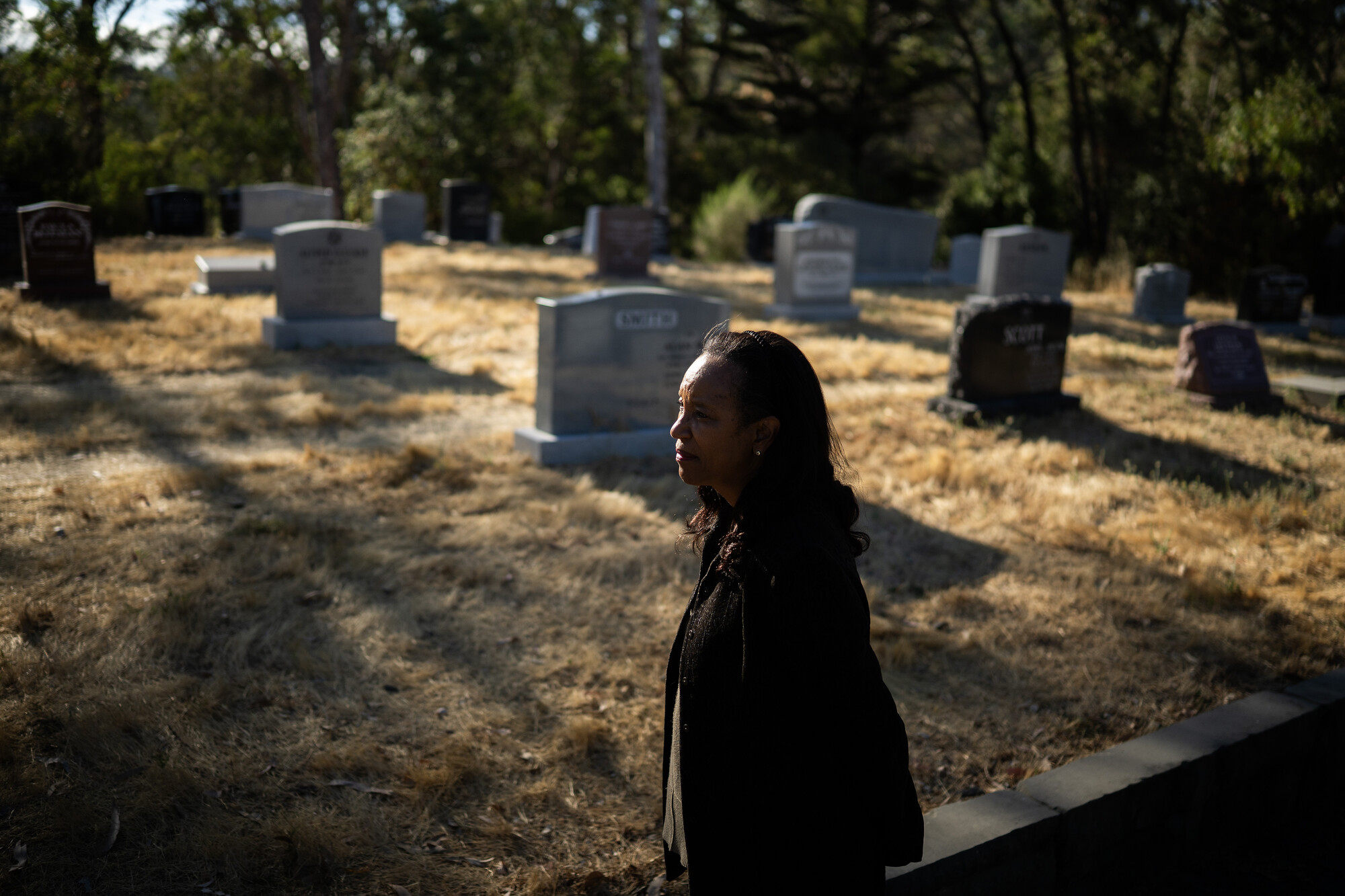
"caption": "The fate of Mount Tamalpais Cemetery remains in limbo several months after the state ordered it to shut down over allegations of financial mismanagement. Families who have loved ones buried at the cemetery are calling for accountability, saying conditions have worsened. Teveia Barnes, whose close cousin is buried at the site, and who plans to be buried there one day next to her husband, has watched the cemetery deteriorate in recent years.",
"credit": "Brian L. Frank/KQED",
"altTag": null,
"description": null,
"imgSizes": {
"thumbnail": {
"file": "https://cdn.kqed.org/wp-content/uploads/sites/10/2025/07/250717_MtTamCemetery_007_BF_KQED_qed-160x107.jpg",
"width": 160,
"height": 107,
"mimeType": "image/jpeg"
},
"1536x1536": {
"file": "https://cdn.kqed.org/wp-content/uploads/sites/10/2025/07/250717_MtTamCemetery_007_BF_KQED_qed-1536x1024.jpg",
"width": 1536,
"height": 1024,
"mimeType": "image/jpeg"
},
"post-thumbnail": {
"file": "https://cdn.kqed.org/wp-content/uploads/sites/10/2025/07/250717_MtTamCemetery_007_BF_KQED_qed-672x372.jpg",
"width": 672,
"height": 372,
"mimeType": "image/jpeg"
},
"twentyfourteen-full-width": {
"file": "https://cdn.kqed.org/wp-content/uploads/sites/10/2025/07/250717_MtTamCemetery_007_BF_KQED_qed-1038x576.jpg",
"width": 1038,
"height": 576,
"mimeType": "image/jpeg"
},
"kqedFullSize": {
"file": "https://cdn.kqed.org/wp-content/uploads/sites/10/2025/07/250717_MtTamCemetery_007_BF_KQED_qed.jpg",
"width": 2000,
"height": 1333
}
},
"isLoading": false,
"fetchFailed": false
},
"news_12048952": {
"type": "attachments",
"id": "news_12048952",
"meta": {
"index": "attachments_1716263798",
"site": "news",
"id": "12048952",
"found": true
},
"title": "IMG_4019",
"publishDate": 1753055841,
"status": "inherit",
"parent": 12048946,
"modified": 1753121721,
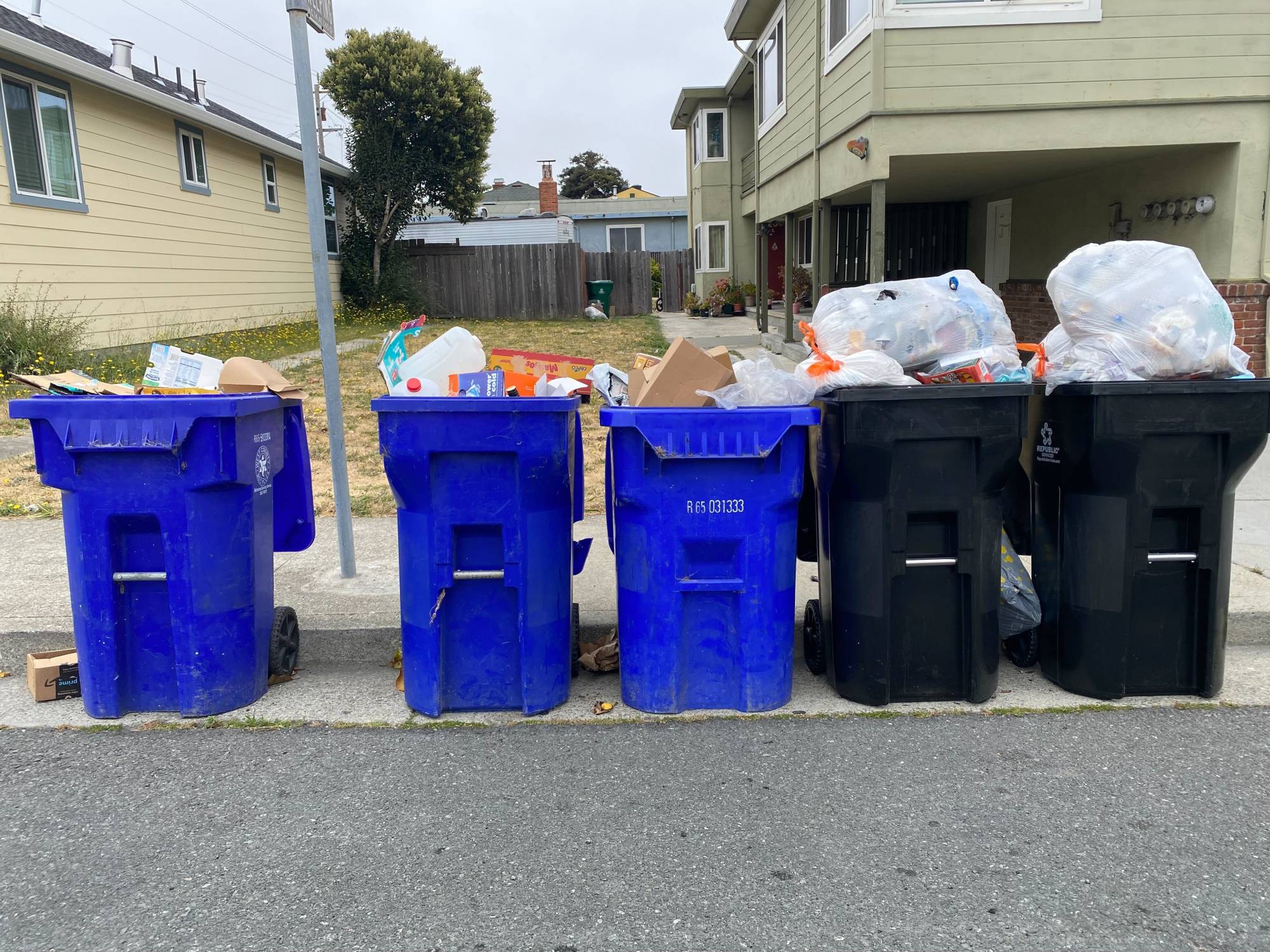
"caption": "Recycling bins and trash cans overflow on Barrett Avenue in Richmond after a nearly two-week strike from Republic Services paused collections. The Teamsters union ratified its first contract with landfill employees on Sunday, meaning regular trash and recycling collection resumes on Monday.",
"credit": "Brian Krans/KQED",
"altTag": "Several trash cans (three are blue and two are black) filled with garbage are placed in a row on the street.",
"description": null,
"imgSizes": {
"medium": {
"file": "https://cdn.kqed.org/wp-content/uploads/sites/10/2025/07/IMG_4019-2000x1500.jpg",
"width": 2000,
"height": 1500,
"mimeType": "image/jpeg"
},
"large": {
"file": "https://cdn.kqed.org/wp-content/uploads/sites/10/2025/07/IMG_4019-2000x1500.jpg",
"width": 2000,
"height": 1500,
"mimeType": "image/jpeg"
},
"thumbnail": {
"file": "https://cdn.kqed.org/wp-content/uploads/sites/10/2025/07/IMG_4019-160x120.jpg",
"width": 160,
"height": 120,
"mimeType": "image/jpeg"
},
"1536x1536": {
"file": "https://cdn.kqed.org/wp-content/uploads/sites/10/2025/07/IMG_4019-1536x1152.jpg",
"width": 1536,
"height": 1152,
"mimeType": "image/jpeg"
},
"2048x2048": {
"file": "https://cdn.kqed.org/wp-content/uploads/sites/10/2025/07/IMG_4019-2048x1536.jpg",
"width": 2048,
"height": 1536,
"mimeType": "image/jpeg"
},
"post-thumbnail": {
"file": "https://cdn.kqed.org/wp-content/uploads/sites/10/2025/07/IMG_4019-672x372.jpg",
"width": 672,
"height": 372,
"mimeType": "image/jpeg"
},
"twentyfourteen-full-width": {
"file": "https://cdn.kqed.org/wp-content/uploads/sites/10/2025/07/IMG_4019-1038x576.jpg",
"width": 1038,
"height": 576,
"mimeType": "image/jpeg"
},
"full-width": {
"file": "https://cdn.kqed.org/wp-content/uploads/sites/10/2025/07/IMG_4019-2000x1500.jpg",
"width": 2000,
"height": 1500,
"mimeType": "image/jpeg"
},
"kqedFullSize": {
"file": "https://cdn.kqed.org/wp-content/uploads/sites/10/2025/07/IMG_4019-scaled.jpg",
"width": 2560,
"height": 1920
}
},
"isLoading": false,
"fetchFailed": false
}
},
"audioPlayerReducer": {
"postId": "stream_live",
"isPaused": true,
"isPlaying": false,
"pfsActive": false,
"pledgeModalIsOpen": true,
"playerDrawerIsOpen": false,
"liveAudioPlayStartedAt": 0,
"liveAudioPlayContext": ""
},
"authorsReducer": {
"matthewgreen": {
"type": "authors",
"id": "1263",
"meta": {
"index": "authors_1716337520",
"id": "1263",
"found": true
},
"name": "Matthew Green",
"firstName": "Matthew",
"lastName": "Green",
"slug": "matthewgreen",
"email": "mgreen@kqed.org",
"display_author_email": false,
"staff_mastheads": [],
"title": "KQED Editor/Reporter",
"bio": "Matthew Green is a digital media producer for KQED News. He previously produced \u003ca href=\"http://www.kqed.org/lowdown\">The Lowdown\u003c/a>, KQED’s multimedia news education blog. Matthew's written for numerous Bay Area publications, including the Oakland Tribune and San Francisco Chronicle. He also taught journalism classes at Fremont High School in East Oakland.\r\n\r\nEmail: mgreen@kqed.org; Twitter: @MGreenKQED",
"avatar": "https://secure.gravatar.com/avatar/3bf498d1267ca02c8494f33d8cfc575e?s=600&d=blank&r=g",
"twitter": "MGreenKQED",
"facebook": null,
"instagram": null,
"linkedin": null,
"sites": [
{
"site": "news",
"roles": []
},
{
"site": "lowdown",
"roles": []
},
{
"site": "science",
"roles": []
},
{
"site": "education",
"roles": []
},
{
"site": "quest",
"roles": []
},
{
"site": "liveblog",
"roles": []
}
],
"headData": {
"title": "Matthew Green | KQED",
"description": "KQED Editor/Reporter",
"ogImgSrc": "https://secure.gravatar.com/avatar/3bf498d1267ca02c8494f33d8cfc575e?s=600&d=blank&r=g",
"twImgSrc": "https://secure.gravatar.com/avatar/3bf498d1267ca02c8494f33d8cfc575e?s=600&d=blank&r=g"
},
"isLoading": false,
"link": "/author/matthewgreen"
},
"jgeha": {
"type": "authors",
"id": "11906",
"meta": {
"index": "authors_1716337520",
"id": "11906",
"found": true
},
"name": "Joseph Geha",
"firstName": "Joseph",
"lastName": "Geha",
"slug": "jgeha",
"email": "jgeha@kqed.org",
"display_author_email": false,
"staff_mastheads": [
"news",
"science"
],
"title": "KQED Contributor",
"bio": null,
"avatar": "https://secure.gravatar.com/avatar/ea84d2b6dd93d6369d453edf19dd583f117cd1759d2d9c9c92f9de77017354fe?s=600&d=blank&r=g",
"twitter": null,
"bluesky": null,
"facebook": null,
"instagram": null,
"linkedin": null,
"sites": [
{
"site": "news",
"roles": [
"editor"
]
},
{
"site": "liveblog",
"roles": [
"author"
]
}
],
"headData": {
"title": "Joseph Geha | KQED",
"description": "KQED Contributor",
"ogImgSrc": "https://secure.gravatar.com/avatar/ea84d2b6dd93d6369d453edf19dd583f117cd1759d2d9c9c92f9de77017354fe?s=600&d=blank&r=g",
"twImgSrc": "https://secure.gravatar.com/avatar/ea84d2b6dd93d6369d453edf19dd583f117cd1759d2d9c9c92f9de77017354fe?s=600&d=blank&r=g"
},
"isLoading": false,
"link": "/author/jgeha"
},
"kdebenedetti": {
"type": "authors",
"id": "11913",
"meta": {
"index": "authors_1716337520",
"id": "11913",
"found": true
},
"name": "Katie DeBenedetti",
"firstName": "Katie",
"lastName": "DeBenedetti",
"slug": "kdebenedetti",
"email": "kdebenedetti@kqed.org",
"display_author_email": false,
"staff_mastheads": [
"news",
"science"
],
"title": "KQED Contributor",
"bio": "Katie DeBenedetti is a digital reporter covering daily news for the Express Desk. Prior to joining KQED as a culture reporting intern in January 2024, she covered education and city government for the Napa Valley Register.",
"avatar": "https://secure.gravatar.com/avatar/6e31073cb8f7e4214ab03f42771d0f45?s=600&d=blank&r=g",
"twitter": null,
"facebook": null,
"instagram": null,
"linkedin": null,
"sites": [
{
"site": "news",
"roles": [
"author"
]
},
{
"site": "science",
"roles": [
"author"
]
},
{
"site": "liveblog",
"roles": [
"author"
]
}
],
"headData": {
"title": "Katie DeBenedetti | KQED",
"description": "KQED Contributor",
"ogImgSrc": "https://secure.gravatar.com/avatar/6e31073cb8f7e4214ab03f42771d0f45?s=600&d=blank&r=g",
"twImgSrc": "https://secure.gravatar.com/avatar/6e31073cb8f7e4214ab03f42771d0f45?s=600&d=blank&r=g"
},
"isLoading": false,
"link": "/author/kdebenedetti"
},
"slim": {
"type": "authors",
"id": "11920",
"meta": {
"index": "authors_1716337520",
"id": "11920",
"found": true
},
"name": "Samantha Lim",
"firstName": "Samantha",
"lastName": "Lim",
"slug": "slim",
"email": "slim@KQED.org",
"display_author_email": false,
"staff_mastheads": [],
"title": "KQED Contributor",
"bio": null,
"avatar": "https://secure.gravatar.com/avatar/82e592e6c15fe1a04d385e8ad0fb0b4e?s=600&d=blank&r=g",
"twitter": null,
"facebook": null,
"instagram": null,
"linkedin": null,
"sites": [
{
"site": "news",
"roles": []
}
],
"headData": {
"title": "Samantha Lim | KQED",
"description": "KQED Contributor",
"ogImgSrc": "https://secure.gravatar.com/avatar/82e592e6c15fe1a04d385e8ad0fb0b4e?s=600&d=blank&r=g",
"twImgSrc": "https://secure.gravatar.com/avatar/82e592e6c15fe1a04d385e8ad0fb0b4e?s=600&d=blank&r=g"
},
"isLoading": false,
"link": "/author/slim"
},
"bkrans": {
"type": "authors",
"id": "11923",
"meta": {
"index": "authors_1716337520",
"id": "11923",
"found": true
},
"name": "Brian Krans",
"firstName": "Brian",
"lastName": "Krans",
"slug": "bkrans",
"email": "bkrans@kqed.org",
"display_author_email": false,
"staff_mastheads": [
"news"
],
"title": "KQED Contributing Reporter",
"bio": "Brian Krans is an award-winning local news and investigative reporter who has been proudly working as a general assignment reporter for KQED since August 2023. He lives in Richmond, where he also reports on air pollution for Richmondside. He is also a founding member of the Vallejo Sun.",
"avatar": "https://secure.gravatar.com/avatar/71fa91f931774612559f7640390b53d9c2840ff72b20f195a25239aab2d9fbb9?s=600&d=blank&r=g",
"twitter": "citizenkrans",
"bluesky": null,
"facebook": null,
"instagram": null,
"linkedin": null,
"sites": [
{
"site": "news",
"roles": [
"editor"
]
}
],
"headData": {
"title": "Brian Krans | KQED",
"description": "KQED Contributing Reporter",
"ogImgSrc": "https://secure.gravatar.com/avatar/71fa91f931774612559f7640390b53d9c2840ff72b20f195a25239aab2d9fbb9?s=600&d=blank&r=g",
"twImgSrc": "https://secure.gravatar.com/avatar/71fa91f931774612559f7640390b53d9c2840ff72b20f195a25239aab2d9fbb9?s=600&d=blank&r=g"
},
"isLoading": false,
"link": "/author/bkrans"
},
"gzada": {
"type": "authors",
"id": "11929",
"meta": {
"index": "authors_1716337520",
"id": "11929",
"found": true
},
"name": "Gilare Zada",
"firstName": "Gilare",
"lastName": "Zada",
"slug": "gzada",
"email": "gzada@kqed.org",
"display_author_email": true,
"staff_mastheads": [
"news"
],
"title": null,
"bio": "Gilare Zada is a Kurdish-American from San Diego, CA. Storytelling, fitness, and binge reading are some of her passions outside of news reporting. Her work has appeared in Mission Local, the Peninsula Press, the San Francisco Press Club, and more. She also writes as a class correspondent for the Stanford Magazine - go Card!",
"avatar": "https://secure.gravatar.com/avatar/33a75f2b947669a488a805edec3fbf3838c1cedaedda710e983770633b4d6a75?s=600&d=blank&r=g",
"twitter": null,
"bluesky": null,
"facebook": null,
"instagram": null,
"linkedin": null,
"sites": [
{
"site": "",
"roles": [
"editor"
]
},
{
"site": "arts",
"roles": [
"editor"
]
},
{
"site": "news",
"roles": [
"administrator"
]
},
{
"site": "science",
"roles": [
"editor"
]
}
],
"headData": {
"title": "Gilare Zada | KQED",
"description": null,
"ogImgSrc": "https://secure.gravatar.com/avatar/33a75f2b947669a488a805edec3fbf3838c1cedaedda710e983770633b4d6a75?s=600&d=blank&r=g",
"twImgSrc": "https://secure.gravatar.com/avatar/33a75f2b947669a488a805edec3fbf3838c1cedaedda710e983770633b4d6a75?s=600&d=blank&r=g"
},
"isLoading": false,
"link": "/author/gzada"
}
},
"pagesReducer": {
"news_category_local": {
"type": "terms",
"id": "news_28250",
"meta": {
"index": "terms_1716263798",
"site": "news",
"id": "28250",
"score": 12.940365
},
"featImg": null,
"name": "Local",
"description": null,
"taxonomy": "category",
"headData": {
"twImgId": null,
"twTitle": null,
"ogTitle": null,
"ogImgId": null,
"twDescription": null,
"description": null,
"title": "Local Archives | KQED News",
"ogDescription": null
},
"ttid": 28267,
"slug": "local",
"isLoading": false,
"title": "Local",
"pageMeta": {
"site": "news",
"WpPageTemplate": "page-topic-editorial",
"currentPage": 103
},
"blocks": [
{
"blockName": "kqed/post-list",
"attrs": {
"layout": "cardArticle2",
"query": "posts/news?category=local",
"seeMore": false,
"paginated": true,
"page": 103
}
},
{
"blockName": "kqed/ad"
}
]
}
},
"pfsSessionReducer": {},
"postsReducer": {
"stream_live": {
"type": "live",
"id": "stream_live",
"audioUrl": "https://streams.kqed.org/kqedradio",
"title": "Live Stream",
"excerpt": "Live Stream information currently unavailable.",
"link": "/radio",
"featImg": "",
"label": {
"name": "KQED Live",
"link": "/"
}
},
"stream_kqedNewscast": {
"type": "posts",
"id": "stream_kqedNewscast",
"audioUrl": "https://www.kqed.org/.stream/anon/radio/RDnews/newscast.mp3?_=1",
"title": "KQED Newscast",
"featImg": "",
"label": {
"name": "88.5 FM",
"link": "/"
}
},
"news_12049354": {
"type": "posts",
"id": "news_12049354",
"meta": {
"index": "posts_1716263798",
"site": "news",
"id": "12049354",
"score": null,
"sort": [
1753302767000
]
},
"guestAuthors": [],
"slug": "richard-tillman-used-fireplace-logs-to-ignite-san-jose-post-office-prosecutors-say",
"title": "Judge Suspends Arson Case Against Richard Tillman Over Competency Concerns",
"publishDate": 1753302767,
"format": "standard",
"headTitle": "Judge Suspends Arson Case Against Richard Tillman Over Competency Concerns | KQED",
"labelTerm": {
"site": "news"
},
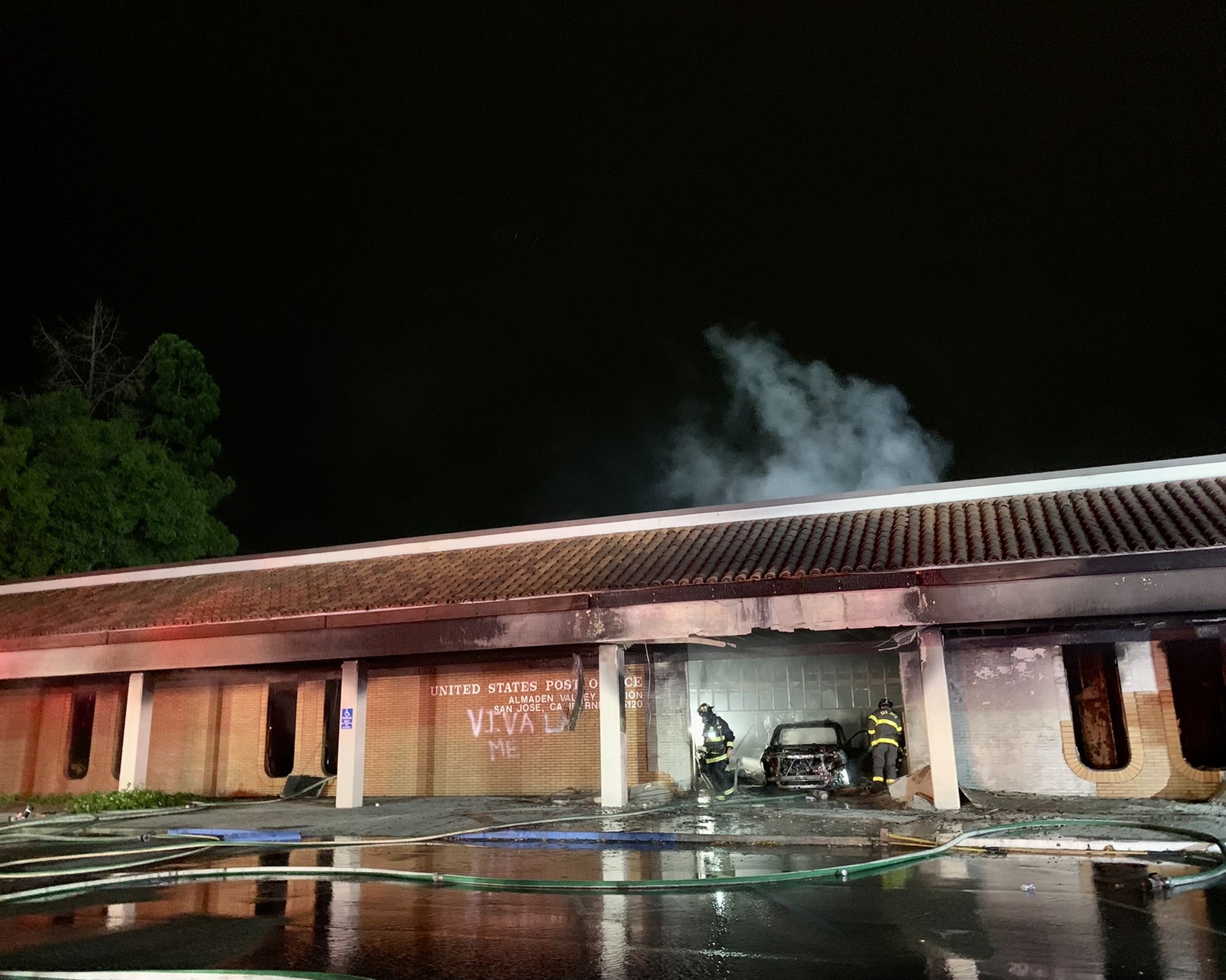
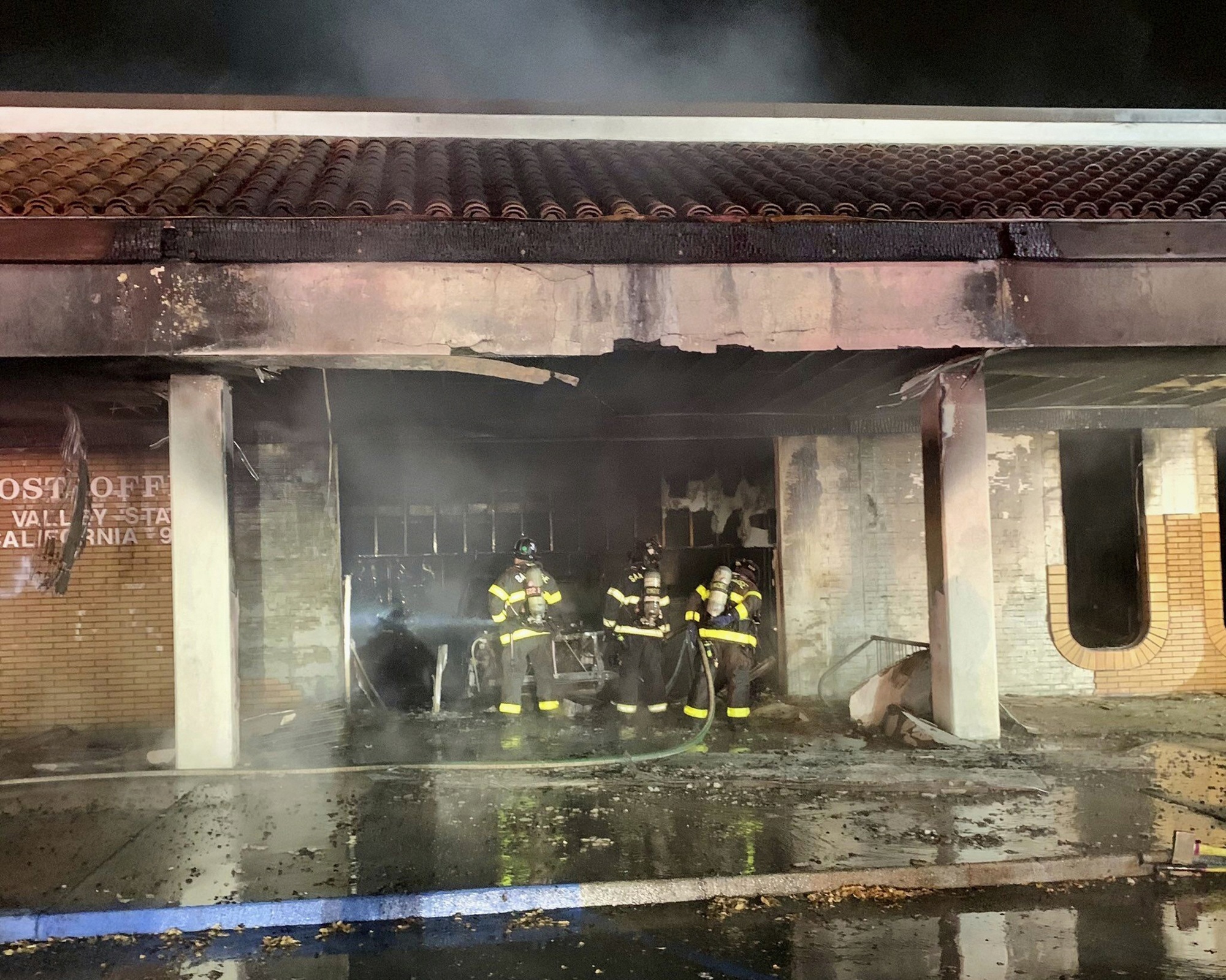
"content": "\u003cp>\u003cem>Updated 4:20 p.m.\u003c/em>\u003c/p>\n\u003cp>A Santa Clara County judge has suspended \u003ca href=\"https://www.kqed.org/news/12049042/pat-tillmans-brother-arrested-in-san-jose-post-office-fire-had-alarming-posts-online\">legal proceedings against Richard Tillman\u003c/a>, the younger brother of late NFL player and Army Ranger Pat Tillman Jr., until he can be evaluated by doctors to determine if he is competent to stand trial.\u003c/p>\n\u003cp>The ruling came Wednesday afternoon during an arraignment hearing in which Tillman, who is charged with arson and vandalism of a San José post office, made multiple outbursts and questioned the ability of his own attorney.\u003c/p>\n\u003cp>Deputy Public Defender Brandon Camarillo, representing Tillman, told Judge Hector E. Ramon there is doubt about Tillman’s competency to understand the nature of the court proceedings.\u003c/p>\n\u003cp>[ad fullwidth]\u003c/p>\n\u003cp>“Based on what he just said he’s obviously incompetent,” Tillman said, interrupting Camarillo. “I’ll prove my competency whenever you like.”\u003c/p>\n\u003cp>Ramon decided to suspend the case until an Aug. 15 hearing to appoint doctors to examine Tillman.\u003c/p>\n\u003cfigure id=\"attachment_12049103\" class=\"wp-caption aligncenter\" style=\"max-width: 2000px\">\u003cimg loading=\"lazy\" decoding=\"async\" class=\"wp-image-12049103 size-full\" src=\"https://cdn.kqed.org/wp-content/uploads/sites/10/2025/07/SanJosePostOfficeFireTwitter2.jpg\" alt=\"\" width=\"2000\" height=\"1599\" srcset=\"https://cdn.kqed.org/wp-content/uploads/sites/10/2025/07/SanJosePostOfficeFireTwitter2.jpg 2000w, https://cdn.kqed.org/wp-content/uploads/sites/10/2025/07/SanJosePostOfficeFireTwitter2-160x128.jpg 160w, https://cdn.kqed.org/wp-content/uploads/sites/10/2025/07/SanJosePostOfficeFireTwitter2-1536x1228.jpg 1536w\" sizes=\"auto, (max-width: 2000px) 100vw, 2000px\">\u003cfigcaption class=\"wp-caption-text\">On Sunday morning, July 20, 2025, San José Fire Department firefighters responded to a fire at the post office on the 6500 block of Crown Boulevard with about 50 personnel on scene. \u003ccite>(Courtesy of San José Fire Department via X)\u003c/cite>\u003c/figcaption>\u003c/figure>\n\u003cp>Tillman appeared in court in a bright yellow county jail jumpsuit, with shoulder-length salt and pepper hair and a long gray beard. With both hands shackled, he waved at media cameras and nodded his head in recognition of people in the courtroom seating area.\u003c/p>\n\u003cp>As Ramon was announcing the decision to suspend proceedings, Tillman again interjected to make another statement about the public defender.\u003c/p>\n\u003cp>“Well, he’s obviously not my attorney anymore,” Tillman said, laughing.\u003c/p>\n\u003cp>Prosecutors say Tillman used fireplace logs as an “incendiary device” to \u003ca href=\"https://www.kqed.org/news/12049042/pat-tillmans-brother-arrested-in-san-jose-post-office-fire-had-alarming-posts-online\">set fire to a South San José post office\u003c/a> building early Sunday morning, and livestreamed the blaze online, authorities said in charging documents.\u003c/p>\n\u003cp>In addition to felony charges of arson and vandalism, he is charged with felony possession of combustible material or incendiary device for malicious use, according to a complaint filed by prosecutors Tuesday afternoon.[aside postID=news_12049042 hero='https://cdn.kqed.org/wp-content/uploads/sites/10/2025/07/SanJosePostOfficeFireAP1.jpg']In the documents, authorities allege Tillman bought “insta-logs” and lighter fluid at a Lucky supermarket around 1 a.m. Sunday, then parked across the street from the Almaden Valley U.S. Post Office branch at 6525 Crown Blvd.\u003c/p>\n\u003cp>“After some time, he scattered the ‘insta-logs’ throughout his vehicle and doused them with lighter fluid,” a police arson investigator’s summary of the evidence said. “He backed his vehicle into the post office, grabbed a match, and lit the car on fire, causing severe damage to the structure.”\u003c/p>\n\u003cp>Firefighters who arrived to combat the blaze around 3 a.m. pointed Tillman out to a responding officer, indicating he was responsible for the fire.\u003c/p>\n\u003cp>Police said that when an officer spoke to Tillman, he was livestreaming the incident from his phone to his YouTube account. The officer ended the livestream and arrested Tillman, the arson investigator’s summary said.\u003c/p>\n\u003cp>Investigators said evidence also shows that Tillman spray-painted the side of the building with the words “Viva La Me.”\u003c/p>\n\u003cp>While prosecutors with the Santa Clara County District Attorney’s Office didn’t oppose the suspension of proceedings, they disagreed with Ramon’s decision to allow Tillman the option of bail, which Judge Ramon set at $135,000.\u003c/p>\n\u003cp>Assistant District Attorney Angela Bernhard told Ramon that Tillman could be a danger to others.\u003c/p>\n\u003cp>“Mr. Tillman was livestreaming this event. He was proud of it. It was something that he wanted to show off,” Bernhard said during the hearing. “He told police officers that this was 100% premeditated, and that he was doing this in order to prove a point to the United States government. Assuming that that point has not yet been proven, Mr. Tillman presents an ongoing threat to public safety.”\u003c/p>\n\u003cfigure id=\"attachment_12049497\" class=\"wp-caption aligncenter\" style=\"max-width: 2000px\">\u003ca href=\"https://cdn.kqed.org/wp-content/uploads/sites/10/2025/07/AP25202582611178.jpg\">\u003cimg loading=\"lazy\" decoding=\"async\" src=\"https://cdn.kqed.org/wp-content/uploads/sites/10/2025/07/AP25202582611178.jpg\" alt=\"\" width=\"2000\" height=\"1495\" class=\"size-full wp-image-12049497\" srcset=\"https://cdn.kqed.org/wp-content/uploads/sites/10/2025/07/AP25202582611178.jpg 2000w, https://cdn.kqed.org/wp-content/uploads/sites/10/2025/07/AP25202582611178-160x120.jpg 160w, https://cdn.kqed.org/wp-content/uploads/sites/10/2025/07/AP25202582611178-1536x1148.jpg 1536w\" sizes=\"auto, (max-width: 2000px) 100vw, 2000px\">\u003c/a>\u003cfigcaption class=\"wp-caption-text\">Richard Tillman, left, the brother of former Arizona State player Pat Tillman, greets one of his brother’s former teammates Jake Plummer, right, prior to a ceremony retiring Pat’s jersey during halftime of the Washington State and Arizona State game, Nov. 13, 2004, in Tempe, Ariz. \u003ccite>(AP Photo/Paul Connors, File)\u003c/cite>\u003c/figcaption>\u003c/figure>\n\u003cp>She argued that the post office is surrounded by homes, and an intentional fire could lead to loss of life. \u003c/p>\n\u003cp>Ramon disagreed.\u003c/p>\n\u003cp>“The only thing that was attacked in this case was the post office. And interestingly enough, it was approximately three o’clock in the morning on a Sunday. I can’t think of another time where there wouldn’t be anyone, even at the post office,” Ramon said.\u003c/p>\n\u003cp>He also said homes in the area aren’t close enough to be considered surrounding the building.[aside postID=news_11619111 hero='https://ww2.kqed.org/app/uploads/sites/10/2017/09/Tillman-1180x769.jpg']“It’s not a capital offense, it’s not an offense involving violence against another person, nor is it a sexual offense,” Ramon said.\u003c/p>\n\u003cp>After the hearing, Bernhard said during a press conference that the competency evaluation process could take several months to complete.\u003c/p>\n\u003cp>Tillman’s brother, Kevin Tillman, as well as his parents, Pat Tillman Sr. and Mary Tillman, were all present at the court hearing. The family declined to comment. In a statement issued Monday, the family said Tillman has been dealing with “severe mental health issues” for years. \u003c/p>\n\u003cp>“He has been livestreaming, what I’ll call, his altered self on social media for anyone to witness. Unfortunately, securing the proper care and support for him has proven incredibly difficult — or rather, impossible. As a result, none of this is as shocking as it should be,” the statement said.\u003c/p>\n\u003cp>\u003ca href=\"https://www.kqed.org/arts/33330/the_tillman_story_one_familys_quest_for_the_truth\">Pat Tillman Jr.\u003c/a> was killed in Afghanistan in 2004 when members of his U.S. platoon fired on him and an Afghan militia member, mistaking them for enemy fighters. The U.S. government subsequently attempted to cover up the truth about the killing, including instructing an officer to lie to the soldier’s family about the circumstances of his death.\u003c/p>\n\u003cp>In recent years, Richard Tillman often livestreamed on his YouTube account from inside a car. He referred to himself as a god by the name of “Yeshua,” and often railed against the government or the “Hollywood elite.”\u003c/p>\n\u003cp>The caption of a post on Tillman’s Facebook profile from 2023 includes apparent threats to the families of postal workers and other delivery companies that their loved ones could be “dropping dead” soon, after he wrote about not receiving his packages. YouTube terminated his account shortly after the news of the fire became public.\u003c/p>\n\u003cp>\u003cem>KQED’s \u003c/em>\u003ca href=\"https://www.kqed.org/author/bkrans\">\u003cem>Brian Krans\u003c/em>\u003c/a>\u003cem> contributed to this report. \u003c/em>\u003c/p>\n\u003cp>[ad floatright]\u003c/p>\n",
"blocks": [],
"excerpt": "A judge suspended criminal proceedings against the younger brother of Pat Tillman Jr. until he can be evaluated by doctors. ",
"status": "publish",
"parent": 0,
"modified": 1753314432,
"stats": {
"hasAudio": false,
"hasVideo": false,
"hasChartOrMap": false,
"iframeSrcs": [],
"hasGoogleForm": false,
"hasGallery": false,
"hasHearkenModule": false,
"hasPolis": false,
"paragraphCount": 31,
"wordCount": 1164
},
"headData": {
"title": "Judge Suspends Arson Case Against Richard Tillman Over Competency Concerns | KQED",
"description": "A judge suspended criminal proceedings against the younger brother of Pat Tillman Jr. until he can be evaluated by doctors. ",
"ogTitle": "",
"ogDescription": "",
"ogImgId": "",
"twTitle": "",
"twDescription": "",
"twImgId": "",
"schema": {
"@context": "https://schema.org",
"@type": "NewsArticle",
"headline": "Judge Suspends Arson Case Against Richard Tillman Over Competency Concerns",
"datePublished": "2025-07-23T13:32:47-07:00",
"dateModified": "2025-07-23T16:47:12-07:00",
"image": "https://cdn.kqed.org/wp-content/uploads/2020/02/KQED-OG-Image@1x.png",
"isAccessibleForFree": "True",
"publisher": {
"@type": "NewsMediaOrganization",
"@id": "https://www.kqed.org/#organization",
"name": "KQED",
"logo": "https://cdn.kqed.org/wp-content/uploads/2020/02/KQED-OG-Image@1x.png",
"url": "https://www.kqed.org",
"sameAs": [
"https://www.facebook.com/KQED",
"https://twitter.com/KQED",
"https://www.instagram.com/kqed/",
"https://www.tiktok.com/@kqedofficial",
"https://www.linkedin.com/company/kqed",
"https://www.youtube.com/channel/UCeC0IOo7i1P_61zVUWbJ4nw"
]
}
}
},
"primaryCategory": {
"termId": 8,
"slug": "news",
"name": "News"
},
"sticky": false,
"nprStoryId": "kqed-12049354",
"templateType": "standard",
"featuredImageType": "standard",
"excludeFromSiteSearch": "Include",
"articleAge": "0",
"path": "/news/12049354/richard-tillman-used-fireplace-logs-to-ignite-san-jose-post-office-prosecutors-say",
"audioTrackLength": null,
"parsedContent": [
{
"type": "contentString",
"content": "\u003cdiv class=\"post-body\">\u003cp>\u003cp>\u003cem>Updated 4:20 p.m.\u003c/em>\u003c/p>\n\u003cp>A Santa Clara County judge has suspended \u003ca href=\"https://www.kqed.org/news/12049042/pat-tillmans-brother-arrested-in-san-jose-post-office-fire-had-alarming-posts-online\">legal proceedings against Richard Tillman\u003c/a>, the younger brother of late NFL player and Army Ranger Pat Tillman Jr., until he can be evaluated by doctors to determine if he is competent to stand trial.\u003c/p>\n\u003cp>The ruling came Wednesday afternoon during an arraignment hearing in which Tillman, who is charged with arson and vandalism of a San José post office, made multiple outbursts and questioned the ability of his own attorney.\u003c/p>\n\u003cp>Deputy Public Defender Brandon Camarillo, representing Tillman, told Judge Hector E. Ramon there is doubt about Tillman’s competency to understand the nature of the court proceedings.\u003c/p>\n\u003cp>\u003c/p>\u003c/div>",
"attributes": {
"named": {},
"numeric": []
}
},
{
"type": "component",
"content": "",
"name": "ad",
"attributes": {
"named": {
"label": "fullwidth"
},
"numeric": [
"fullwidth"
]
}
},
{
"type": "contentString",
"content": "\u003cdiv class=\"post-body\">\u003cp>\u003c/p>\n\u003cp>“Based on what he just said he’s obviously incompetent,” Tillman said, interrupting Camarillo. “I’ll prove my competency whenever you like.”\u003c/p>\n\u003cp>Ramon decided to suspend the case until an Aug. 15 hearing to appoint doctors to examine Tillman.\u003c/p>\n\u003cfigure id=\"attachment_12049103\" class=\"wp-caption aligncenter\" style=\"max-width: 2000px\">\u003cimg loading=\"lazy\" decoding=\"async\" class=\"wp-image-12049103 size-full\" src=\"https://cdn.kqed.org/wp-content/uploads/sites/10/2025/07/SanJosePostOfficeFireTwitter2.jpg\" alt=\"\" width=\"2000\" height=\"1599\" srcset=\"https://cdn.kqed.org/wp-content/uploads/sites/10/2025/07/SanJosePostOfficeFireTwitter2.jpg 2000w, https://cdn.kqed.org/wp-content/uploads/sites/10/2025/07/SanJosePostOfficeFireTwitter2-160x128.jpg 160w, https://cdn.kqed.org/wp-content/uploads/sites/10/2025/07/SanJosePostOfficeFireTwitter2-1536x1228.jpg 1536w\" sizes=\"auto, (max-width: 2000px) 100vw, 2000px\">\u003cfigcaption class=\"wp-caption-text\">On Sunday morning, July 20, 2025, San José Fire Department firefighters responded to a fire at the post office on the 6500 block of Crown Boulevard with about 50 personnel on scene. \u003ccite>(Courtesy of San José Fire Department via X)\u003c/cite>\u003c/figcaption>\u003c/figure>\n\u003cp>Tillman appeared in court in a bright yellow county jail jumpsuit, with shoulder-length salt and pepper hair and a long gray beard. With both hands shackled, he waved at media cameras and nodded his head in recognition of people in the courtroom seating area.\u003c/p>\n\u003cp>As Ramon was announcing the decision to suspend proceedings, Tillman again interjected to make another statement about the public defender.\u003c/p>\n\u003cp>“Well, he’s obviously not my attorney anymore,” Tillman said, laughing.\u003c/p>\n\u003cp>Prosecutors say Tillman used fireplace logs as an “incendiary device” to \u003ca href=\"https://www.kqed.org/news/12049042/pat-tillmans-brother-arrested-in-san-jose-post-office-fire-had-alarming-posts-online\">set fire to a South San José post office\u003c/a> building early Sunday morning, and livestreamed the blaze online, authorities said in charging documents.\u003c/p>\n\u003cp>In addition to felony charges of arson and vandalism, he is charged with felony possession of combustible material or incendiary device for malicious use, according to a complaint filed by prosecutors Tuesday afternoon.\u003c/p>\u003c/div>",
"attributes": {
"named": {},
"numeric": []
}
},
{
"type": "component",
"content": "",
"name": "aside",
"attributes": {
"named": {
"postid": "news_12049042",
"hero": "https://cdn.kqed.org/wp-content/uploads/sites/10/2025/07/SanJosePostOfficeFireAP1.jpg",
"label": ""
},
"numeric": []
}
},
{
"type": "contentString",
"content": "\u003cdiv class=\"post-body\">\u003cp>In the documents, authorities allege Tillman bought “insta-logs” and lighter fluid at a Lucky supermarket around 1 a.m. Sunday, then parked across the street from the Almaden Valley U.S. Post Office branch at 6525 Crown Blvd.\u003c/p>\n\u003cp>“After some time, he scattered the ‘insta-logs’ throughout his vehicle and doused them with lighter fluid,” a police arson investigator’s summary of the evidence said. “He backed his vehicle into the post office, grabbed a match, and lit the car on fire, causing severe damage to the structure.”\u003c/p>\n\u003cp>Firefighters who arrived to combat the blaze around 3 a.m. pointed Tillman out to a responding officer, indicating he was responsible for the fire.\u003c/p>\n\u003cp>Police said that when an officer spoke to Tillman, he was livestreaming the incident from his phone to his YouTube account. The officer ended the livestream and arrested Tillman, the arson investigator’s summary said.\u003c/p>\n\u003cp>Investigators said evidence also shows that Tillman spray-painted the side of the building with the words “Viva La Me.”\u003c/p>\n\u003cp>While prosecutors with the Santa Clara County District Attorney’s Office didn’t oppose the suspension of proceedings, they disagreed with Ramon’s decision to allow Tillman the option of bail, which Judge Ramon set at $135,000.\u003c/p>\n\u003cp>Assistant District Attorney Angela Bernhard told Ramon that Tillman could be a danger to others.\u003c/p>\n\u003cp>“Mr. Tillman was livestreaming this event. He was proud of it. It was something that he wanted to show off,” Bernhard said during the hearing. “He told police officers that this was 100% premeditated, and that he was doing this in order to prove a point to the United States government. Assuming that that point has not yet been proven, Mr. Tillman presents an ongoing threat to public safety.”\u003c/p>\n\u003cfigure id=\"attachment_12049497\" class=\"wp-caption aligncenter\" style=\"max-width: 2000px\">\u003ca href=\"https://cdn.kqed.org/wp-content/uploads/sites/10/2025/07/AP25202582611178.jpg\">\u003cimg loading=\"lazy\" decoding=\"async\" src=\"https://cdn.kqed.org/wp-content/uploads/sites/10/2025/07/AP25202582611178.jpg\" alt=\"\" width=\"2000\" height=\"1495\" class=\"size-full wp-image-12049497\" srcset=\"https://cdn.kqed.org/wp-content/uploads/sites/10/2025/07/AP25202582611178.jpg 2000w, https://cdn.kqed.org/wp-content/uploads/sites/10/2025/07/AP25202582611178-160x120.jpg 160w, https://cdn.kqed.org/wp-content/uploads/sites/10/2025/07/AP25202582611178-1536x1148.jpg 1536w\" sizes=\"auto, (max-width: 2000px) 100vw, 2000px\">\u003c/a>\u003cfigcaption class=\"wp-caption-text\">Richard Tillman, left, the brother of former Arizona State player Pat Tillman, greets one of his brother’s former teammates Jake Plummer, right, prior to a ceremony retiring Pat’s jersey during halftime of the Washington State and Arizona State game, Nov. 13, 2004, in Tempe, Ariz. \u003ccite>(AP Photo/Paul Connors, File)\u003c/cite>\u003c/figcaption>\u003c/figure>\n\u003cp>She argued that the post office is surrounded by homes, and an intentional fire could lead to loss of life. \u003c/p>\n\u003cp>Ramon disagreed.\u003c/p>\n\u003cp>“The only thing that was attacked in this case was the post office. And interestingly enough, it was approximately three o’clock in the morning on a Sunday. I can’t think of another time where there wouldn’t be anyone, even at the post office,” Ramon said.\u003c/p>\n\u003cp>He also said homes in the area aren’t close enough to be considered surrounding the building.\u003c/p>\u003c/div>",
"attributes": {
"named": {},
"numeric": []
}
},
{
"type": "component",
"content": "",
"name": "aside",
"attributes": {
"named": {
"postid": "news_11619111",
"hero": "https://ww2.kqed.org/app/uploads/sites/10/2017/09/Tillman-1180x769.jpg",
"label": ""
},
"numeric": []
}
},
{
"type": "contentString",
"content": "\u003cdiv class=\"post-body\">\u003cp>“It’s not a capital offense, it’s not an offense involving violence against another person, nor is it a sexual offense,” Ramon said.\u003c/p>\n\u003cp>After the hearing, Bernhard said during a press conference that the competency evaluation process could take several months to complete.\u003c/p>\n\u003cp>Tillman’s brother, Kevin Tillman, as well as his parents, Pat Tillman Sr. and Mary Tillman, were all present at the court hearing. The family declined to comment. In a statement issued Monday, the family said Tillman has been dealing with “severe mental health issues” for years. \u003c/p>\n\u003cp>“He has been livestreaming, what I’ll call, his altered self on social media for anyone to witness. Unfortunately, securing the proper care and support for him has proven incredibly difficult — or rather, impossible. As a result, none of this is as shocking as it should be,” the statement said.\u003c/p>\n\u003cp>\u003ca href=\"https://www.kqed.org/arts/33330/the_tillman_story_one_familys_quest_for_the_truth\">Pat Tillman Jr.\u003c/a> was killed in Afghanistan in 2004 when members of his U.S. platoon fired on him and an Afghan militia member, mistaking them for enemy fighters. The U.S. government subsequently attempted to cover up the truth about the killing, including instructing an officer to lie to the soldier’s family about the circumstances of his death.\u003c/p>\n\u003cp>In recent years, Richard Tillman often livestreamed on his YouTube account from inside a car. He referred to himself as a god by the name of “Yeshua,” and often railed against the government or the “Hollywood elite.”\u003c/p>\n\u003cp>The caption of a post on Tillman’s Facebook profile from 2023 includes apparent threats to the families of postal workers and other delivery companies that their loved ones could be “dropping dead” soon, after he wrote about not receiving his packages. YouTube terminated his account shortly after the news of the fire became public.\u003c/p>\n\u003cp>\u003cem>KQED’s \u003c/em>\u003ca href=\"https://www.kqed.org/author/bkrans\">\u003cem>Brian Krans\u003c/em>\u003c/a>\u003cem> contributed to this report. \u003c/em>\u003c/p>\n\u003cp>\u003c/p>\u003c/div>",
"attributes": {
"named": {},
"numeric": []
}
},
{
"type": "component",
"content": "",
"name": "ad",
"attributes": {
"named": {
"label": "floatright"
},
"numeric": [
"floatright"
]
}
},
{
"type": "contentString",
"content": "\u003cdiv class=\"post-body\">\u003cp>\u003c/p>\n\u003c/div>\u003c/p>",
"attributes": {
"named": {},
"numeric": []
}
}
],
"link": "/news/12049354/richard-tillman-used-fireplace-logs-to-ignite-san-jose-post-office-prosecutors-say",
"authors": [
"11906"
],
"categories": [
"news_34167",
"news_28250",
"news_8"
],
"tags": [
"news_24350",
"news_17725",
"news_18512",
"news_19954",
"news_34926",
"news_18541",
"news_667",
"news_21285"
],
"featImg": "news_12049360",
"label": "news"
},
"news_12049323": {
"type": "posts",
"id": "news_12049323",
"meta": {
"index": "posts_1716263798",
"site": "news",
"id": "12049323",
"score": null,
"sort": [
1753299126000
]
},
"guestAuthors": [],
"slug": "sf-homeless-agency-walks-back-more-restrictive-policy-on-family-shelter-stays",
"title": "SF Homeless Agency Walks Back More Restrictive Policy on Family Shelter Stays",
"publishDate": 1753299126,
"format": "standard",
"headTitle": "SF Homeless Agency Walks Back More Restrictive Policy on Family Shelter Stays | KQED",
"labelTerm": {
"site": "news"
},
"content": "\u003cp>San Francisco will make it easier for \u003ca href=\"https://www.kqed.org/news/12029619/luries-nonprofit-giving-san-francisco-11-million-prevent-family-homelessness\">families\u003c/a> to remain in its temporary shelters for longer this fall, according to a Department of Homelessness and Supportive Housing memo sent to the Board of Supervisors this month.\u003c/p>\n\u003cp>Beginning Oct. 1, the department will allow people in its temporary family shelter system to apply for an unlimited number of 90-day extensions, so long as they meet eligibility requirements.\u003c/p>\n\u003cp>The policy shift comes after months of pushback against a reinstated rule, implemented in December, that requires families to apply for 30-day extensions after their initial 90-day stay in one of the temporary shelters.\u003c/p>\n\u003cp>[ad fullwidth]\u003c/p>\n\u003cp>“In response to listening sessions with families using the shelter system, analysis of shelter outcomes data, and input from our service providers, HSH is moving forward with making the following changes to the Family Shelter Length of Stay policy,” the July 8 memo from HSH’s Executive Director Shireen McSpadden reads.\u003c/p>\n\u003cp>Currently, families enrolled in either of the department’s temporary family housing programs — which offer 14-day emergency and 90-day temporary shelter placements — are eligible for 30-day extensions, as long as they continue to engage with case managers and search for more stable housing. The shelter itself can approve the first three-monthlong stints itself, but additional extensions require HSH’s approval.\u003c/p>\n\u003cfigure id=\"attachment_12041396\" class=\"wp-caption aligncenter\" style=\"max-width: 2000px\">\u003cimg loading=\"lazy\" decoding=\"async\" class=\"size-full wp-image-12041396\" src=\"https://cdn.kqed.org/wp-content/uploads/sites/10/2025/05/250128-SFImmigration-25-BL_qed.jpg\" alt=\"\" width=\"2000\" height=\"1333\" srcset=\"https://cdn.kqed.org/wp-content/uploads/sites/10/2025/05/250128-SFImmigration-25-BL_qed.jpg 2000w, https://cdn.kqed.org/wp-content/uploads/sites/10/2025/05/250128-SFImmigration-25-BL_qed-800x533.jpg 800w, https://cdn.kqed.org/wp-content/uploads/sites/10/2025/05/250128-SFImmigration-25-BL_qed-1020x680.jpg 1020w, https://cdn.kqed.org/wp-content/uploads/sites/10/2025/05/250128-SFImmigration-25-BL_qed-160x107.jpg 160w, https://cdn.kqed.org/wp-content/uploads/sites/10/2025/05/250128-SFImmigration-25-BL_qed-1536x1024.jpg 1536w, https://cdn.kqed.org/wp-content/uploads/sites/10/2025/05/250128-SFImmigration-25-BL_qed-1920x1280.jpg 1920w\" sizes=\"auto, (max-width: 2000px) 100vw, 2000px\">\u003cfigcaption class=\"wp-caption-text\">San Francisco Supervisor Jackie Fielder speaks during a press conference with elected and public safety officials and labor leaders in front of City Hall in San Francisco on Tuesday, Jan. 28, 2025, to reaffirm San Francisco’s commitment to being a Sanctuary City. \u003ccite>(Beth LaBerge/KQED)\u003c/cite>\u003c/figcaption>\u003c/figure>\n\u003cp>Among the leading critics of the limited-extensions policy, which was suspended during the pandemic, was Supervisor Jackie Fielder, who said eviction warnings sent to families at the end of their 90-day housing placement “caused undue harm and stress.”\u003c/p>\n\u003cp>In April, Fielder proposed legislation that would allow families to receive extensions to remain in shelters for up to a year as they search for permanent accommodations.\u003c/p>\n\u003cp>“[The new policy] was designed to protect children who were at risk of being sent back out to the street under the previous policy,” she said in a statement provided Wednesday.\u003c/p>\n\u003cp>When she put forward the legislation, cosponsored by Supervisors Shamann Walton, Chyanne Chen, Myrna Melgar and Connie Chan, Fielder \u003ca href=\"https://www.sfchronicle.com/sf/article/s-f-leader-pushes-back-on-90-days-family-shelter-20275675.php\">told the \u003cem>San Francisco Chronicle\u003c/em>\u003c/a> that Mayor Daniel Lurie’s office had refused to direct HSH to rescind the December policy when she asked.[aside postID=news_12048307 hero='https://cdn.kqed.org/wp-content/uploads/sites/10/2025/07/240130-HomelessCount-24-BL_qed.jpg']Now, the department appears to be bending to the supervisors’ requests.\u003c/p>\n\u003cp>The changes HSH plans to make will make extensions longer. Shelter providers will be allowed to authorize a first 90-day extension themselves, while HSH will need to grant further extensions.\u003c/p>\n\u003cp>Christin Evans, the vice chair of San Francisco’s Homelessness Oversight Commission, said the new policy will help prevent families who are seeking more permanent housing from slipping \u003ca href=\"https://www.kqed.org/news/12047353/heres-why-sf-homeless-advocates-are-glad-lurie-ditched-push-for-1500-shelter-beds\">back into unsheltered homelessness\u003c/a>. She said there are hundreds of families vying for a limited number of support services, including rapid re-housing vouchers and supportive housing placements.\u003c/p>\n\u003cp>“There are very long waitlists for people to get those resources,” she told KQED. “It’s really concerning that they know that there’s these limited resources and they’re essentially giving people very limited time in the shelter and knowing that this will result in people reentering homelessness, unsheltered homelessness.”\u003c/p>\n\u003cp>HSH said the updated policy reflects conversations with service providers and families as well as an analysis of shelter outcome data, which revealed that the gap threatened to let families in the supportive housing system backslide.\u003c/p>\n\u003cp>“This updated policy leads with compassion for those in shelter trying to provide for their families while helping them access permanent housing opportunities,” Mayor Daniel Lurie said in a statement. “And it will help encourage flow in our system, opening up much-needed space for families on the street right now.\u003c/p>\n\u003cp>“When government isn’t afraid to try things and listen to feedback, we can craft thoughtful, effective policies, and that’s what we’ve done here,” he said.\u003c/p>\n\u003cp>\u003cem>KQED’s \u003c/em>\u003ca href=\"https://www.kqed.org/author/sjohnson\">\u003cem>Sydney Johnson\u003c/em>\u003c/a>\u003cem> contributed to this report.\u003c/em>\u003c/p>\n\u003cp>\u003c/p>\n",
"blocks": [],
"excerpt": "San Francisco will make it easier for families to stay in temporary shelters for longer, following criticism from some supervisors and advocates of limits put in place in December.",
"status": "publish",
"parent": 0,
"modified": 1753299992,
"stats": {
"hasAudio": false,
"hasVideo": false,
"hasChartOrMap": false,
"iframeSrcs": [],
"hasGoogleForm": false,
"hasGallery": false,
"hasHearkenModule": false,
"hasPolis": false,
"paragraphCount": 18,
"wordCount": 730
},
"headData": {
"title": "SF Homeless Agency Walks Back More Restrictive Policy on Family Shelter Stays | KQED",
"description": "San Francisco will make it easier for families to stay in temporary shelters for longer, following criticism from some supervisors and advocates of limits put in place in December.",
"ogTitle": "",
"ogDescription": "",
"ogImgId": "",
"twTitle": "",
"twDescription": "",
"twImgId": "",
"schema": {
"@context": "https://schema.org",
"@type": "NewsArticle",
"headline": "SF Homeless Agency Walks Back More Restrictive Policy on Family Shelter Stays",
"datePublished": "2025-07-23T12:32:06-07:00",
"dateModified": "2025-07-23T12:46:32-07:00",
"image": "https://cdn.kqed.org/wp-content/uploads/2020/02/KQED-OG-Image@1x.png",
"isAccessibleForFree": "True",
"publisher": {
"@type": "NewsMediaOrganization",
"@id": "https://www.kqed.org/#organization",
"name": "KQED",
"logo": "https://cdn.kqed.org/wp-content/uploads/2020/02/KQED-OG-Image@1x.png",
"url": "https://www.kqed.org",
"sameAs": [
"https://www.facebook.com/KQED",
"https://twitter.com/KQED",
"https://www.instagram.com/kqed/",
"https://www.tiktok.com/@kqedofficial",
"https://www.linkedin.com/company/kqed",
"https://www.youtube.com/channel/UCeC0IOo7i1P_61zVUWbJ4nw"
]
}
}
},
"primaryCategory": {
"termId": 8,
"slug": "news",
"name": "News"
},
"sticky": false,
"nprStoryId": "kqed-12049323",
"templateType": "standard",
"featuredImageType": "standard",
"excludeFromSiteSearch": "Include",
"articleAge": "0",
"path": "/news/12049323/sf-homeless-agency-walks-back-more-restrictive-policy-on-family-shelter-stays",
"audioTrackLength": null,
"parsedContent": [
{
"type": "contentString",
"content": "\u003cdiv class=\"post-body\">\u003cp>\u003cp>San Francisco will make it easier for \u003ca href=\"https://www.kqed.org/news/12029619/luries-nonprofit-giving-san-francisco-11-million-prevent-family-homelessness\">families\u003c/a> to remain in its temporary shelters for longer this fall, according to a Department of Homelessness and Supportive Housing memo sent to the Board of Supervisors this month.\u003c/p>\n\u003cp>Beginning Oct. 1, the department will allow people in its temporary family shelter system to apply for an unlimited number of 90-day extensions, so long as they meet eligibility requirements.\u003c/p>\n\u003cp>The policy shift comes after months of pushback against a reinstated rule, implemented in December, that requires families to apply for 30-day extensions after their initial 90-day stay in one of the temporary shelters.\u003c/p>\n\u003cp>\u003c/p>\u003c/div>",
"attributes": {
"named": {},
"numeric": []
}
},
{
"type": "component",
"content": "",
"name": "ad",
"attributes": {
"named": {
"label": "fullwidth"
},
"numeric": [
"fullwidth"
]
}
},
{
"type": "contentString",
"content": "\u003cdiv class=\"post-body\">\u003cp>\u003c/p>\n\u003cp>“In response to listening sessions with families using the shelter system, analysis of shelter outcomes data, and input from our service providers, HSH is moving forward with making the following changes to the Family Shelter Length of Stay policy,” the July 8 memo from HSH’s Executive Director Shireen McSpadden reads.\u003c/p>\n\u003cp>Currently, families enrolled in either of the department’s temporary family housing programs — which offer 14-day emergency and 90-day temporary shelter placements — are eligible for 30-day extensions, as long as they continue to engage with case managers and search for more stable housing. The shelter itself can approve the first three-monthlong stints itself, but additional extensions require HSH’s approval.\u003c/p>\n\u003cfigure id=\"attachment_12041396\" class=\"wp-caption aligncenter\" style=\"max-width: 2000px\">\u003cimg loading=\"lazy\" decoding=\"async\" class=\"size-full wp-image-12041396\" src=\"https://cdn.kqed.org/wp-content/uploads/sites/10/2025/05/250128-SFImmigration-25-BL_qed.jpg\" alt=\"\" width=\"2000\" height=\"1333\" srcset=\"https://cdn.kqed.org/wp-content/uploads/sites/10/2025/05/250128-SFImmigration-25-BL_qed.jpg 2000w, https://cdn.kqed.org/wp-content/uploads/sites/10/2025/05/250128-SFImmigration-25-BL_qed-800x533.jpg 800w, https://cdn.kqed.org/wp-content/uploads/sites/10/2025/05/250128-SFImmigration-25-BL_qed-1020x680.jpg 1020w, https://cdn.kqed.org/wp-content/uploads/sites/10/2025/05/250128-SFImmigration-25-BL_qed-160x107.jpg 160w, https://cdn.kqed.org/wp-content/uploads/sites/10/2025/05/250128-SFImmigration-25-BL_qed-1536x1024.jpg 1536w, https://cdn.kqed.org/wp-content/uploads/sites/10/2025/05/250128-SFImmigration-25-BL_qed-1920x1280.jpg 1920w\" sizes=\"auto, (max-width: 2000px) 100vw, 2000px\">\u003cfigcaption class=\"wp-caption-text\">San Francisco Supervisor Jackie Fielder speaks during a press conference with elected and public safety officials and labor leaders in front of City Hall in San Francisco on Tuesday, Jan. 28, 2025, to reaffirm San Francisco’s commitment to being a Sanctuary City. \u003ccite>(Beth LaBerge/KQED)\u003c/cite>\u003c/figcaption>\u003c/figure>\n\u003cp>Among the leading critics of the limited-extensions policy, which was suspended during the pandemic, was Supervisor Jackie Fielder, who said eviction warnings sent to families at the end of their 90-day housing placement “caused undue harm and stress.”\u003c/p>\n\u003cp>In April, Fielder proposed legislation that would allow families to receive extensions to remain in shelters for up to a year as they search for permanent accommodations.\u003c/p>\n\u003cp>“[The new policy] was designed to protect children who were at risk of being sent back out to the street under the previous policy,” she said in a statement provided Wednesday.\u003c/p>\n\u003cp>When she put forward the legislation, cosponsored by Supervisors Shamann Walton, Chyanne Chen, Myrna Melgar and Connie Chan, Fielder \u003ca href=\"https://www.sfchronicle.com/sf/article/s-f-leader-pushes-back-on-90-days-family-shelter-20275675.php\">told the \u003cem>San Francisco Chronicle\u003c/em>\u003c/a> that Mayor Daniel Lurie’s office had refused to direct HSH to rescind the December policy when she asked.\u003c/p>\u003c/div>",
"attributes": {
"named": {},
"numeric": []
}
},
{
"type": "component",
"content": "",
"name": "aside",
"attributes": {
"named": {
"postid": "news_12048307",
"hero": "https://cdn.kqed.org/wp-content/uploads/sites/10/2025/07/240130-HomelessCount-24-BL_qed.jpg",
"label": ""
},
"numeric": []
}
},
{
"type": "contentString",
"content": "\u003cdiv class=\"post-body\">\u003cp>Now, the department appears to be bending to the supervisors’ requests.\u003c/p>\n\u003cp>The changes HSH plans to make will make extensions longer. Shelter providers will be allowed to authorize a first 90-day extension themselves, while HSH will need to grant further extensions.\u003c/p>\n\u003cp>Christin Evans, the vice chair of San Francisco’s Homelessness Oversight Commission, said the new policy will help prevent families who are seeking more permanent housing from slipping \u003ca href=\"https://www.kqed.org/news/12047353/heres-why-sf-homeless-advocates-are-glad-lurie-ditched-push-for-1500-shelter-beds\">back into unsheltered homelessness\u003c/a>. She said there are hundreds of families vying for a limited number of support services, including rapid re-housing vouchers and supportive housing placements.\u003c/p>\n\u003cp>“There are very long waitlists for people to get those resources,” she told KQED. “It’s really concerning that they know that there’s these limited resources and they’re essentially giving people very limited time in the shelter and knowing that this will result in people reentering homelessness, unsheltered homelessness.”\u003c/p>\n\u003cp>HSH said the updated policy reflects conversations with service providers and families as well as an analysis of shelter outcome data, which revealed that the gap threatened to let families in the supportive housing system backslide.\u003c/p>\n\u003cp>“This updated policy leads with compassion for those in shelter trying to provide for their families while helping them access permanent housing opportunities,” Mayor Daniel Lurie said in a statement. “And it will help encourage flow in our system, opening up much-needed space for families on the street right now.\u003c/p>\n\u003cp>“When government isn’t afraid to try things and listen to feedback, we can craft thoughtful, effective policies, and that’s what we’ve done here,” he said.\u003c/p>\n\u003cp>\u003cem>KQED’s \u003c/em>\u003ca href=\"https://www.kqed.org/author/sjohnson\">\u003cem>Sydney Johnson\u003c/em>\u003c/a>\u003cem> contributed to this report.\u003c/em>\u003c/p>\n\u003cp>\u003c/p>\n\u003c/div>\u003c/p>",
"attributes": {
"named": {},
"numeric": []
}
}
],
"link": "/news/12049323/sf-homeless-agency-walks-back-more-restrictive-policy-on-family-shelter-stays",
"authors": [
"11913"
],
"categories": [
"news_6266",
"news_28250",
"news_8"
],
"tags": [
"news_3921",
"news_2043",
"news_23333",
"news_27626",
"news_35213",
"news_4020",
"news_1775",
"news_38",
"news_3327"
],
"featImg": "news_12049328",
"label": "news"
},
"news_12049248": {
"type": "posts",
"id": "news_12049248",
"meta": {
"index": "posts_1716263798",
"site": "news",
"id": "12049248",
"score": null,
"sort": [
1753292322000
]
},
"guestAuthors": [],
"slug": "cupertino-quarry-owner-begins-25-million-permanente-creek-cleanup-effort",
"title": "Cupertino Quarry Owner Begins $25 Million Permanente Creek Cleanup Effort",
"publishDate": 1753292322,
"format": "standard",
"headTitle": "Cupertino Quarry Owner Begins $25 Million Permanente Creek Cleanup Effort | KQED",
"labelTerm": {
"site": "news"
},
"content": "\u003cp>The owners of a large South Bay quarry and cement plant broke ground this week on a massive effort to \u003ca href=\"https://www.kqed.org/news/category/environment\">remove tons of toxic waste\u003c/a> from a creek that flows from the Santa Cruz Mountains into the San Francisco Bay.\u003c/p>\n\u003cp>Heidelberg Materials, which owns the facility in the hills west of Cupertino, is required under a settlement with the Sierra Club to restore nearly two miles of the most contaminated stretches of Permanente Creek by 2030.\u003c/p>\n\u003cp>The undertaking comes 14 years after the environmental group sued the Lehigh Southwest Cement company, the plant’s previous owners. The lawsuit accused the company of illegally discharging selenium, nickel and other toxic metals into the creek, in violation of the federal Clean Water Act.\u003c/p>\n\u003cp>[ad fullwidth]\u003c/p>\n\u003cp>The U.S. Environmental Protection Agency in 2015 also \u003ca href=\"https://www.sfgate.com/bayarea/article/Cupertino-area-cement-plant-fined-7-million-for-6231855.php\">slapped\u003c/a> the company with more than $2.5 million in fines for water quality violations and forced it to spend another $5 million on a new wastewater treatment plant to protect the creek from toxic discharges.\u003c/p>\n\u003cp>As part of the settlement, Heidelberg has agreed to restore roughly 9,000 feet of the creek over a six-year period, at an estimated cost of $25 million, the company said.\u003c/p>\n\u003cp>The project includes the removal of thousands of tons of contaminated sediment and mining infrastructure. The company has also committed to replanting native vegetation, building pools for trout and stabilizing creek banks, among other restoration efforts.\u003c/p>\n\u003cfigure id=\"attachment_12049283\" class=\"wp-caption aligncenter\" style=\"max-width: 2000px\">\u003cimg loading=\"lazy\" decoding=\"async\" class=\"wp-image-12049283 size-full\" src=\"https://cdn.kqed.org/wp-content/uploads/sites/10/2025/07/Permanente-Creek1.jpg\" alt=\"\" width=\"2000\" height=\"1500\" srcset=\"https://cdn.kqed.org/wp-content/uploads/sites/10/2025/07/Permanente-Creek1.jpg 2000w, https://cdn.kqed.org/wp-content/uploads/sites/10/2025/07/Permanente-Creek1-160x120.jpg 160w, https://cdn.kqed.org/wp-content/uploads/sites/10/2025/07/Permanente-Creek1-1536x1152.jpg 1536w\" sizes=\"auto, (max-width: 2000px) 100vw, 2000px\">\u003cfigcaption class=\"wp-caption-text\">Santa Clara Supervisor Margaret Abe-Koga chats with David Perkin, Heidelberg Materials spokesperson, of the Texas-based international company. \u003ccite>(Courtesy of L.A. Chung)\u003c/cite>\u003c/figcaption>\u003c/figure>\n\u003cp>Mike Ferreira, chair of the Sierra Club’s Loma Prieta chapter, said the restoration project is long overdue and will finally address “decades of toxic pollution that residents have been forced to live with.”\u003c/p>\n\u003cp>“We are relieved that we have finally gotten to this point,” he said.\u003c/p>\n\u003cp>Permanente Creek flows past the facility before heading north through Mountain View and Los Altos as it makes its way to the bay. The waterway provides important habitat for rainbow trout and California red-legged frogs, which are listed as threatened under the Endangered Species Act, the Sierra Club said.\u003c/p>\n\u003cp>“It’s an exciting day, and much anticipated for a very long time,” said Santa Clara County Supervisor Margaret Abe-Koga, whose district encompasses the creek. “Today was a milestone, but it will be many years in the making, and it will be important for community members to continue to be engaged in the process.”[aside postID=news_12020340 hero='https://cdn.kqed.org/wp-content/uploads/sites/10/2025/01/20250104_SantaCruzWharfReopen_DMB_00288-1020x680.jpg']Heidelberg, a German company with U.S. headquarters in Texas, signed an \u003ca href=\"https://www.supervisorsimitian.com/press-releases/end-supervisors-approve-agreement-close-lehigh-cement-plant.html\">agreement \u003c/a>in 2023 with the \u003ca href=\"https://www.kqed.org/news/tag/santa-clara-county\">Santa Clara County\u003c/a> Board of Supervisors to wind down operations at its nearly century-old cement plant, which has long been one of the region’s largest sources of air and water pollution.\u003c/p>\n\u003cp>David Perkins, a Heidelberg spokesperson, said the creek project will improve conditions on dozens of acres around the creek bed, and “exemplifies” the company’s commitment to delivering on its restoration promises.\u003c/p>\n\u003cp>Calling the effort “ambitious in scope,” he pledged his company would see it through to completion.\u003c/p>\n\u003cp>“Our work continues, and we’re committed to staying engaged and responsive over the long term,” Perkins said in a statement.\u003c/p>\n\u003cp>But Reed Zars, the lead attorney representing the Sierra Club, said the company had been “a reluctant defendant” in the prolonged legal battle over the creek cleanup, and is only now taking action after being compelled to do so.\u003c/p>\n\u003cp>Nonetheless, he said, the beginning of the restoration effort marks a significant environmental victory.\u003c/p>\n\u003cp>“Where we are now is to bring that creek back to its natural state,” he said. “It’s just very exciting for us to see it now take place on the ground.”\u003c/p>\n\u003cp>Zars noted that the fight against the company was largely driven by community members involved with the Sierra Club, not by local and federal regulators, who he said fell short of adequately holding the company accountable.\u003c/p>\n\u003cp>“We brought the action even though the California Water Board could have, even though EPA could have,” he said. “But that hadn’t happened.”\u003c/p>\n\u003cp>\u003c/p>\n",
"blocks": [],
"excerpt": "After a lawsuit filed by the Sierra Club more than a decade ago, the owner of a Santa Clara County quarry and cement plant will remove thousands of tons of mining waste from the creek’s waters.",
"status": "publish",
"parent": 0,
"modified": 1753294172,
"stats": {
"hasAudio": false,
"hasVideo": false,
"hasChartOrMap": false,
"iframeSrcs": [],
"hasGoogleForm": false,
"hasGallery": false,
"hasHearkenModule": false,
"hasPolis": false,
"paragraphCount": 20,
"wordCount": 726
},
"headData": {
"title": "Cupertino Quarry Owner Begins $25 Million Permanente Creek Cleanup Effort | KQED",
"description": "After a lawsuit filed by the Sierra Club more than a decade ago, the owner of a Santa Clara County quarry and cement plant will remove thousands of tons of mining waste from the creek’s waters.",
"ogTitle": "",
"ogDescription": "",
"ogImgId": "",
"twTitle": "",
"twDescription": "",
"twImgId": "",
"schema": {
"@context": "https://schema.org",
"@type": "NewsArticle",
"headline": "Cupertino Quarry Owner Begins $25 Million Permanente Creek Cleanup Effort",
"datePublished": "2025-07-23T10:38:42-07:00",
"dateModified": "2025-07-23T11:09:32-07:00",
"image": "https://cdn.kqed.org/wp-content/uploads/2020/02/KQED-OG-Image@1x.png",
"isAccessibleForFree": "True",
"publisher": {
"@type": "NewsMediaOrganization",
"@id": "https://www.kqed.org/#organization",
"name": "KQED",
"logo": "https://cdn.kqed.org/wp-content/uploads/2020/02/KQED-OG-Image@1x.png",
"url": "https://www.kqed.org",
"sameAs": [
"https://www.facebook.com/KQED",
"https://twitter.com/KQED",
"https://www.instagram.com/kqed/",
"https://www.tiktok.com/@kqedofficial",
"https://www.linkedin.com/company/kqed",
"https://www.youtube.com/channel/UCeC0IOo7i1P_61zVUWbJ4nw"
]
}
}
},
"primaryCategory": {
"termId": 8,
"slug": "news",
"name": "News"
},
"sticky": false,
"nprStoryId": "kqed-12049248",
"templateType": "standard",
"featuredImageType": "standard",
"excludeFromSiteSearch": "Include",
"articleAge": "0",
"path": "/news/12049248/cupertino-quarry-owner-begins-25-million-permanente-creek-cleanup-effort",
"audioTrackLength": null,
"parsedContent": [
{
"type": "contentString",
"content": "\u003cdiv class=\"post-body\">\u003cp>\u003cp>The owners of a large South Bay quarry and cement plant broke ground this week on a massive effort to \u003ca href=\"https://www.kqed.org/news/category/environment\">remove tons of toxic waste\u003c/a> from a creek that flows from the Santa Cruz Mountains into the San Francisco Bay.\u003c/p>\n\u003cp>Heidelberg Materials, which owns the facility in the hills west of Cupertino, is required under a settlement with the Sierra Club to restore nearly two miles of the most contaminated stretches of Permanente Creek by 2030.\u003c/p>\n\u003cp>The undertaking comes 14 years after the environmental group sued the Lehigh Southwest Cement company, the plant’s previous owners. The lawsuit accused the company of illegally discharging selenium, nickel and other toxic metals into the creek, in violation of the federal Clean Water Act.\u003c/p>\n\u003cp>\u003c/p>\u003c/div>",
"attributes": {
"named": {},
"numeric": []
}
},
{
"type": "component",
"content": "",
"name": "ad",
"attributes": {
"named": {
"label": "fullwidth"
},
"numeric": [
"fullwidth"
]
}
},
{
"type": "contentString",
"content": "\u003cdiv class=\"post-body\">\u003cp>\u003c/p>\n\u003cp>The U.S. Environmental Protection Agency in 2015 also \u003ca href=\"https://www.sfgate.com/bayarea/article/Cupertino-area-cement-plant-fined-7-million-for-6231855.php\">slapped\u003c/a> the company with more than $2.5 million in fines for water quality violations and forced it to spend another $5 million on a new wastewater treatment plant to protect the creek from toxic discharges.\u003c/p>\n\u003cp>As part of the settlement, Heidelberg has agreed to restore roughly 9,000 feet of the creek over a six-year period, at an estimated cost of $25 million, the company said.\u003c/p>\n\u003cp>The project includes the removal of thousands of tons of contaminated sediment and mining infrastructure. The company has also committed to replanting native vegetation, building pools for trout and stabilizing creek banks, among other restoration efforts.\u003c/p>\n\u003cfigure id=\"attachment_12049283\" class=\"wp-caption aligncenter\" style=\"max-width: 2000px\">\u003cimg loading=\"lazy\" decoding=\"async\" class=\"wp-image-12049283 size-full\" src=\"https://cdn.kqed.org/wp-content/uploads/sites/10/2025/07/Permanente-Creek1.jpg\" alt=\"\" width=\"2000\" height=\"1500\" srcset=\"https://cdn.kqed.org/wp-content/uploads/sites/10/2025/07/Permanente-Creek1.jpg 2000w, https://cdn.kqed.org/wp-content/uploads/sites/10/2025/07/Permanente-Creek1-160x120.jpg 160w, https://cdn.kqed.org/wp-content/uploads/sites/10/2025/07/Permanente-Creek1-1536x1152.jpg 1536w\" sizes=\"auto, (max-width: 2000px) 100vw, 2000px\">\u003cfigcaption class=\"wp-caption-text\">Santa Clara Supervisor Margaret Abe-Koga chats with David Perkin, Heidelberg Materials spokesperson, of the Texas-based international company. \u003ccite>(Courtesy of L.A. Chung)\u003c/cite>\u003c/figcaption>\u003c/figure>\n\u003cp>Mike Ferreira, chair of the Sierra Club’s Loma Prieta chapter, said the restoration project is long overdue and will finally address “decades of toxic pollution that residents have been forced to live with.”\u003c/p>\n\u003cp>“We are relieved that we have finally gotten to this point,” he said.\u003c/p>\n\u003cp>Permanente Creek flows past the facility before heading north through Mountain View and Los Altos as it makes its way to the bay. The waterway provides important habitat for rainbow trout and California red-legged frogs, which are listed as threatened under the Endangered Species Act, the Sierra Club said.\u003c/p>\n\u003cp>“It’s an exciting day, and much anticipated for a very long time,” said Santa Clara County Supervisor Margaret Abe-Koga, whose district encompasses the creek. “Today was a milestone, but it will be many years in the making, and it will be important for community members to continue to be engaged in the process.”\u003c/p>\u003c/div>",
"attributes": {
"named": {},
"numeric": []
}
},
{
"type": "component",
"content": "",
"name": "aside",
"attributes": {
"named": {
"postid": "news_12020340",
"hero": "https://cdn.kqed.org/wp-content/uploads/sites/10/2025/01/20250104_SantaCruzWharfReopen_DMB_00288-1020x680.jpg",
"label": ""
},
"numeric": []
}
},
{
"type": "contentString",
"content": "\u003cdiv class=\"post-body\">\u003cp>Heidelberg, a German company with U.S. headquarters in Texas, signed an \u003ca href=\"https://www.supervisorsimitian.com/press-releases/end-supervisors-approve-agreement-close-lehigh-cement-plant.html\">agreement \u003c/a>in 2023 with the \u003ca href=\"https://www.kqed.org/news/tag/santa-clara-county\">Santa Clara County\u003c/a> Board of Supervisors to wind down operations at its nearly century-old cement plant, which has long been one of the region’s largest sources of air and water pollution.\u003c/p>\n\u003cp>David Perkins, a Heidelberg spokesperson, said the creek project will improve conditions on dozens of acres around the creek bed, and “exemplifies” the company’s commitment to delivering on its restoration promises.\u003c/p>\n\u003cp>Calling the effort “ambitious in scope,” he pledged his company would see it through to completion.\u003c/p>\n\u003cp>“Our work continues, and we’re committed to staying engaged and responsive over the long term,” Perkins said in a statement.\u003c/p>\n\u003cp>But Reed Zars, the lead attorney representing the Sierra Club, said the company had been “a reluctant defendant” in the prolonged legal battle over the creek cleanup, and is only now taking action after being compelled to do so.\u003c/p>\n\u003cp>Nonetheless, he said, the beginning of the restoration effort marks a significant environmental victory.\u003c/p>\n\u003cp>“Where we are now is to bring that creek back to its natural state,” he said. “It’s just very exciting for us to see it now take place on the ground.”\u003c/p>\n\u003cp>Zars noted that the fight against the company was largely driven by community members involved with the Sierra Club, not by local and federal regulators, who he said fell short of adequately holding the company accountable.\u003c/p>\n\u003cp>“We brought the action even though the California Water Board could have, even though EPA could have,” he said. “But that hadn’t happened.”\u003c/p>\n\u003cp>\u003c/p>\n\u003c/div>\u003c/p>",
"attributes": {
"named": {},
"numeric": []
}
}
],
"link": "/news/12049248/cupertino-quarry-owner-begins-25-million-permanente-creek-cleanup-effort",
"authors": [
"1263"
],
"categories": [
"news_31795",
"news_28250",
"news_8"
],
"tags": [
"news_18538",
"news_255",
"news_19960",
"news_38",
"news_1861",
"news_721",
"news_21801"
],
"featImg": "news_12049285",
"label": "news"
},
"news_12049202": {
"type": "posts",
"id": "news_12049202",
"meta": {
"index": "posts_1716263798",
"site": "news",
"id": "12049202",
"score": null,
"sort": [
1753289248000
]
},
"guestAuthors": [],
"slug": "san-francisco-approves-plan-to-add-hundreds-of-ev-chargers-at-city-facilities",
"title": "San Francisco Approves Plan to Add Hundreds of EV Chargers at City Facilities",
"publishDate": 1753289248,
"format": "standard",
"headTitle": "San Francisco Approves Plan to Add Hundreds of EV Chargers at City Facilities | KQED",
"labelTerm": {
"site": "news"
},
"content": "\u003cp>\u003ca href=\"https://www.kqed.org/news/tag/san-francisco\">San Francisco\u003c/a> is one step closer to transitioning to a green fleet on Tuesday, after the Board of Supervisors unanimously approved a plan to install roughly 400 electric vehicle chargers at city-owned facilities.\u003c/p>\n\u003cp>The initiative, which draws on a $5 million California Energy Commission grant and $3 million in city funds, is part of a larger push to \u003ca href=\"https://www.kqed.org/news/12020242/san-francisco-1st-curbside-ev-charging-stations-debut-these-2-neighborhoods\">expand\u003c/a> electric vehicle infrastructure and expedite progress toward the city’s goal of becoming 100% zero-emission by 2040.\u003c/p>\n\u003cp>Mayor Daniel Lurie’s office and City Administrator Carmen Chu estimate the new chargers will power around 800 vehicles, about 40% of what is needed to transition the city’s cars, vans and trucks to electric.\u003c/p>\n\u003cp>[ad fullwidth]\u003c/p>\n\u003cp>The lack of chargers has been a major barrier to the transition, Chu said.\u003c/p>\n\u003cp>“Now, with this grant, we’ll be able to have the infrastructure in place,” Chu said.\u003c/p>\n\u003cp>With more chargers in place, the city will be able to move ahead with new EV purchases.\u003c/p>\n\u003cp>William Riggs, a USF professor and director of the Autonomous Vehicles and the City Initiative, said the grant is a good step toward meeting the city’s zero-emission benchmark but added that other considerations remain.\u003c/p>\n\u003cp>“You can’t just invest in EV infrastructure for private automobiles,” he said. “You have to invest in EV and infrastructure for transit vehicles, and invest in walking and cycling infrastructure alongside that.”[aside postID=news_12023483 hero='https://cdn.kqed.org/wp-content/uploads/sites/10/2025/01/ElectricVehicleChargingStatonSFGetty-1020x680.jpg']Ted Lamm, an associate director at UC Berkeley’s Center for Law, Energy, & the Environment, echoed the sentiment, noting that the next step should be to ensure that public transportation services like BART are also powered by clean electricity.\u003c/p>\n\u003cp>“As more and more vehicles become electrified and are plugging into the electric grid — that has the real long-term potential to lower electricity costs for everyone,” he said.\u003c/p>\n\u003cp>Lamm also raised concerns about the city’s broader plan to install over 1,500 public chargers citywide for residents, pointing out that underserved communities often rely on street parking.\u003c/p>\n\u003cp>“At the end of the day, the best place for electric vehicle charging is in private garages,” Lamm said. “It needs to be done in areas where we know there’s sufficient need, or there will be sufficient need, for that curbside charging.”\u003c/p>\n\u003cp>Riggs reiterated Lamm’s concerns. “Execution is everything, but we have to guard against this idea of EVs being the one and only answer,” he said.\u003c/p>\n\u003cp>City officials said they expect the new chargers to be fully installed by 2027.\u003c/p>\n\u003cp>\u003c/p>\n",
"blocks": [],
"excerpt": "San Francisco is investing $8 million to install 400 EV chargers at city sites, accelerating its push toward a 100% zero-emission vehicle fleet by 2040.",
"status": "publish",
"parent": 0,
"modified": 1753313179,
"stats": {
"hasAudio": false,
"hasVideo": false,
"hasChartOrMap": false,
"iframeSrcs": [],
"hasGoogleForm": false,
"hasGallery": false,
"hasHearkenModule": false,
"hasPolis": false,
"paragraphCount": 15,
"wordCount": 457
},
"headData": {
"title": "San Francisco Approves Plan to Add Hundreds of EV Chargers at City Facilities | KQED",
"description": "San Francisco is investing $8 million to install 400 EV chargers at city sites, accelerating its push toward a 100% zero-emission vehicle fleet by 2040.",
"ogTitle": "",
"ogDescription": "",
"ogImgId": "",
"twTitle": "",
"twDescription": "",
"twImgId": "",
"schema": {
"@context": "https://schema.org",
"@type": "NewsArticle",
"headline": "San Francisco Approves Plan to Add Hundreds of EV Chargers at City Facilities",
"datePublished": "2025-07-23T09:47:28-07:00",
"dateModified": "2025-07-23T16:26:19-07:00",
"image": "https://cdn.kqed.org/wp-content/uploads/2020/02/KQED-OG-Image@1x.png",
"isAccessibleForFree": "True",
"publisher": {
"@type": "NewsMediaOrganization",
"@id": "https://www.kqed.org/#organization",
"name": "KQED",
"logo": "https://cdn.kqed.org/wp-content/uploads/2020/02/KQED-OG-Image@1x.png",
"url": "https://www.kqed.org",
"sameAs": [
"https://www.facebook.com/KQED",
"https://twitter.com/KQED",
"https://www.instagram.com/kqed/",
"https://www.tiktok.com/@kqedofficial",
"https://www.linkedin.com/company/kqed",
"https://www.youtube.com/channel/UCeC0IOo7i1P_61zVUWbJ4nw"
]
}
}
},
"primaryCategory": {
"termId": 8,
"slug": "news",
"name": "News"
},
"sticky": false,
"nprStoryId": "kqed-12049202",
"templateType": "standard",
"featuredImageType": "standard",
"excludeFromSiteSearch": "Include",
"articleAge": "0",
"path": "/news/12049202/san-francisco-approves-plan-to-add-hundreds-of-ev-chargers-at-city-facilities",
"audioTrackLength": null,
"parsedContent": [
{
"type": "contentString",
"content": "\u003cdiv class=\"post-body\">\u003cp>\u003cp>\u003ca href=\"https://www.kqed.org/news/tag/san-francisco\">San Francisco\u003c/a> is one step closer to transitioning to a green fleet on Tuesday, after the Board of Supervisors unanimously approved a plan to install roughly 400 electric vehicle chargers at city-owned facilities.\u003c/p>\n\u003cp>The initiative, which draws on a $5 million California Energy Commission grant and $3 million in city funds, is part of a larger push to \u003ca href=\"https://www.kqed.org/news/12020242/san-francisco-1st-curbside-ev-charging-stations-debut-these-2-neighborhoods\">expand\u003c/a> electric vehicle infrastructure and expedite progress toward the city’s goal of becoming 100% zero-emission by 2040.\u003c/p>\n\u003cp>Mayor Daniel Lurie’s office and City Administrator Carmen Chu estimate the new chargers will power around 800 vehicles, about 40% of what is needed to transition the city’s cars, vans and trucks to electric.\u003c/p>\n\u003cp>\u003c/p>\u003c/div>",
"attributes": {
"named": {},
"numeric": []
}
},
{
"type": "component",
"content": "",
"name": "ad",
"attributes": {
"named": {
"label": "fullwidth"
},
"numeric": [
"fullwidth"
]
}
},
{
"type": "contentString",
"content": "\u003cdiv class=\"post-body\">\u003cp>\u003c/p>\n\u003cp>The lack of chargers has been a major barrier to the transition, Chu said.\u003c/p>\n\u003cp>“Now, with this grant, we’ll be able to have the infrastructure in place,” Chu said.\u003c/p>\n\u003cp>With more chargers in place, the city will be able to move ahead with new EV purchases.\u003c/p>\n\u003cp>William Riggs, a USF professor and director of the Autonomous Vehicles and the City Initiative, said the grant is a good step toward meeting the city’s zero-emission benchmark but added that other considerations remain.\u003c/p>\n\u003cp>“You can’t just invest in EV infrastructure for private automobiles,” he said. “You have to invest in EV and infrastructure for transit vehicles, and invest in walking and cycling infrastructure alongside that.”\u003c/p>\u003c/div>",
"attributes": {
"named": {},
"numeric": []
}
},
{
"type": "component",
"content": "",
"name": "aside",
"attributes": {
"named": {
"postid": "news_12023483",
"hero": "https://cdn.kqed.org/wp-content/uploads/sites/10/2025/01/ElectricVehicleChargingStatonSFGetty-1020x680.jpg",
"label": ""
},
"numeric": []
}
},
{
"type": "contentString",
"content": "\u003cdiv class=\"post-body\">\u003cp>Ted Lamm, an associate director at UC Berkeley’s Center for Law, Energy, & the Environment, echoed the sentiment, noting that the next step should be to ensure that public transportation services like BART are also powered by clean electricity.\u003c/p>\n\u003cp>“As more and more vehicles become electrified and are plugging into the electric grid — that has the real long-term potential to lower electricity costs for everyone,” he said.\u003c/p>\n\u003cp>Lamm also raised concerns about the city’s broader plan to install over 1,500 public chargers citywide for residents, pointing out that underserved communities often rely on street parking.\u003c/p>\n\u003cp>“At the end of the day, the best place for electric vehicle charging is in private garages,” Lamm said. “It needs to be done in areas where we know there’s sufficient need, or there will be sufficient need, for that curbside charging.”\u003c/p>\n\u003cp>Riggs reiterated Lamm’s concerns. “Execution is everything, but we have to guard against this idea of EVs being the one and only answer,” he said.\u003c/p>\n\u003cp>City officials said they expect the new chargers to be fully installed by 2027.\u003c/p>\n\u003cp>\u003c/p>\n\u003c/div>\u003c/p>",
"attributes": {
"named": {},
"numeric": []
}
}
],
"link": "/news/12049202/san-francisco-approves-plan-to-add-hundreds-of-ev-chargers-at-city-facilities",
"authors": [
"11929"
],
"categories": [
"news_31795",
"news_19906",
"news_28250",
"news_8",
"news_248",
"news_1397"
],
"tags": [
"news_20591",
"news_22457",
"news_35477",
"news_34146",
"news_2582",
"news_38",
"news_196",
"news_1631",
"news_20517"
],
"featImg": "news_12049486",
"label": "news"
},
"news_12049286": {
"type": "posts",
"id": "news_12049286",
"meta": {
"index": "posts_1716263798",
"site": "news",
"id": "12049286",
"score": null,
"sort": [
1753272030000
]
},
"guestAuthors": [],
"slug": "77-year-old-pedestrian-dies-in-sf-after-being-struck-by-an-electric-scooter",
"title": "77-Year-Old Pedestrian Dies in SF After Being Struck By an Electric Scooter",
"publishDate": 1753272030,
"format": "standard",
"headTitle": "77-Year-Old Pedestrian Dies in SF After Being Struck By an Electric Scooter | KQED",
"labelTerm": {
"site": "news"
},
"content": "\u003cp>An elderly man in downtown \u003ca href=\"https://www.kqed.org/news/tag/san-francisco\">San Francisco\u003c/a> was struck and killed by an electric scooter last week, San Francisco police said.\u003c/p>\n\u003cp>Officers on Friday afternoon responded to reports of a vehicle collision involving a pedestrian near Sixth and Market streets. The victim, 77, was crossing the intersection when a person on an electric scooter collided with him, SFPD reported.\u003c/p>\n\u003cp>The victim sustained life-threatening injuries and succumbed to his wounds after being transported to a local hospital by first responders, according to a statement by the police department. His identity has not been released.\u003c/p>\n\u003cp>[ad fullwidth]\u003c/p>\n\u003cp>“Our hearts break for the victim and his loved ones,” Marta Lindsey, a spokesperson for traffic safety advocacy group Walk San Francisco, said in a statement. “People walking in San Francisco shouldn’t have to worry about being hit by any type of vehicle, whether a car or an e-scooter.”\u003c/p>\n\u003cp>San Francisco police reported that the scooter driver stayed on the scene after officers arrived and cooperated with the investigation, adding that it does not appear that drugs or alcohol were involved in the collision.\u003c/p>\n\u003cfigure id=\"attachment_12022122\" class=\"wp-caption aligncenter\" style=\"max-width: 1999px\">\u003ca href=\"https://cdn.kqed.org/wp-content/uploads/sites/10/2025/01/006_KQED_CarFreeMarketSt_01222020_8373_qed.jpg\">\u003cimg loading=\"lazy\" decoding=\"async\" class=\"size-full wp-image-12022122\" src=\"https://cdn.kqed.org/wp-content/uploads/sites/10/2025/01/006_KQED_CarFreeMarketSt_01222020_8373_qed.jpg\" alt=\"\" width=\"1999\" height=\"1333\" srcset=\"https://cdn.kqed.org/wp-content/uploads/sites/10/2025/01/006_KQED_CarFreeMarketSt_01222020_8373_qed.jpg 1999w, https://cdn.kqed.org/wp-content/uploads/sites/10/2025/01/006_KQED_CarFreeMarketSt_01222020_8373_qed-800x533.jpg 800w, https://cdn.kqed.org/wp-content/uploads/sites/10/2025/01/006_KQED_CarFreeMarketSt_01222020_8373_qed-1020x680.jpg 1020w, https://cdn.kqed.org/wp-content/uploads/sites/10/2025/01/006_KQED_CarFreeMarketSt_01222020_8373_qed-160x107.jpg 160w, https://cdn.kqed.org/wp-content/uploads/sites/10/2025/01/006_KQED_CarFreeMarketSt_01222020_8373_qed-1536x1024.jpg 1536w, https://cdn.kqed.org/wp-content/uploads/sites/10/2025/01/006_KQED_CarFreeMarketSt_01222020_8373_qed-1920x1280.jpg 1920w\" sizes=\"auto, (max-width: 1999px) 100vw, 1999px\">\u003c/a>\u003cfigcaption class=\"wp-caption-text\">Starting in March, speed cameras will be installed at different locations around San Francisco. Advocates hope it’ll make San Francisco streets safer. \u003ccite>(Beth LaBerge/KQED)\u003c/cite>\u003c/figcaption>\u003c/figure>\n\u003cp>Lindsey said that vehicles like scooters and electric bicycles can pose a threat to people walking on the street because they can quickly accelerate to higher speeds, increasing the chances and severity of a possible crash.\u003c/p>\n\u003cp>Of the nine pedestrian deaths this year, seven of the victims were elderly, according to Walk SF.\u003c/p>\n\u003cp>The entirety of Market Street falls within the high injury network, streets with the highest concentration of traffic injuries and deaths. Since 2015, there have been more than 40 traffic collisions in the area of 6th and Market, Walk SF reported.\u003c/p>\n\u003cp>Recently, the San Francisco Municipal Transportation Agency introduced new pedestrian and transit safety improvements in the area, such as updated traffic signals, repaved sidewalks and curb ramps.\u003cbr>\n[aside postID=news_12020559 hero='https://cdn.kqed.org/wp-content/uploads/sites/10/2025/01/250107-PedestrianDeathStepback-26-1020x680.jpg']California also passed a daylighting law last year, which prohibits drivers from parking within 20 feet of a crosswalk or 15 feet of a curb extension to create increased visibility on roadways. SFMTA has come under fire recently over what some advocates say is the city’s noncompliance with the new law — painted curbs indicating where drivers are not allowed to park fall short of the mandated length.\u003c/p>\n\u003cp>Lindsey said the city can and should do more to protect those most vulnerable on city streets.\u003c/p>\n\u003cp>Vision Zero, a traffic safety policy that aims to reduce traffic and pedestrian casualties in San Francisco, expired in 2024 — the city’s deadliest year in at least two decades, with more than 40 crash-related deaths. Advocates have urged Mayor Daniel Lurie and other city officials to renew the policy or to introduce new strategies for maintaining public safety.\u003c/p>\n\u003cp>“We need streets to be designed and enforced to support safe behavior and protect our most vulnerable,” Lindsey said. “We can measure our city’s safety by how safe kids and seniors are. This tragedy shows how far San Francisco has to go with traffic safety and why it needs to be a priority for city leaders.”\u003c/p>\n\u003cp>\u003c/p>\n",
"blocks": [],
"excerpt": "The victim was crossing an intersection near Sixth and Market streets when a person on an electric scooter collided with him, San Francisco police reported. ",
"status": "publish",
"parent": 0,
"modified": 1754771666,
"stats": {
"hasAudio": false,
"hasVideo": false,
"hasChartOrMap": false,
"iframeSrcs": [],
"hasGoogleForm": false,
"hasGallery": false,
"hasHearkenModule": false,
"hasPolis": false,
"paragraphCount": 14,
"wordCount": 566
},
"headData": {
"title": "77-Year-Old Pedestrian Dies in SF After Being Struck By an Electric Scooter | KQED",
"description": "The victim was crossing an intersection near Sixth and Market streets when a person on an electric scooter collided with him, San Francisco police reported. ",
"ogTitle": "",
"ogDescription": "",
"ogImgId": "",
"twTitle": "",
"twDescription": "",
"twImgId": "",
"schema": {
"@context": "https://schema.org",
"@type": "NewsArticle",
"headline": "77-Year-Old Pedestrian Dies in SF After Being Struck By an Electric Scooter",
"datePublished": "2025-07-23T05:00:30-07:00",
"dateModified": "2025-08-09T13:34:26-07:00",
"image": "https://cdn.kqed.org/wp-content/uploads/2020/02/KQED-OG-Image@1x.png",
"isAccessibleForFree": "True",
"publisher": {
"@type": "NewsMediaOrganization",
"@id": "https://www.kqed.org/#organization",
"name": "KQED",
"logo": "https://cdn.kqed.org/wp-content/uploads/2020/02/KQED-OG-Image@1x.png",
"url": "https://www.kqed.org",
"sameAs": [
"https://www.facebook.com/KQED",
"https://twitter.com/KQED",
"https://www.instagram.com/kqed/",
"https://www.tiktok.com/@kqedofficial",
"https://www.linkedin.com/company/kqed",
"https://www.youtube.com/channel/UCeC0IOo7i1P_61zVUWbJ4nw"
]
}
}
},
"primaryCategory": {
"termId": 8,
"slug": "news",
"name": "News"
},
"sticky": false,
"nprStoryId": "kqed-12049286",
"templateType": "standard",
"featuredImageType": "standard",
"excludeFromSiteSearch": "Include",
"articleAge": "0",
"path": "/news/12049286/77-year-old-pedestrian-dies-in-sf-after-being-struck-by-an-electric-scooter",
"audioTrackLength": null,
"parsedContent": [
{
"type": "contentString",
"content": "\u003cdiv class=\"post-body\">\u003cp>\u003cp>An elderly man in downtown \u003ca href=\"https://www.kqed.org/news/tag/san-francisco\">San Francisco\u003c/a> was struck and killed by an electric scooter last week, San Francisco police said.\u003c/p>\n\u003cp>Officers on Friday afternoon responded to reports of a vehicle collision involving a pedestrian near Sixth and Market streets. The victim, 77, was crossing the intersection when a person on an electric scooter collided with him, SFPD reported.\u003c/p>\n\u003cp>The victim sustained life-threatening injuries and succumbed to his wounds after being transported to a local hospital by first responders, according to a statement by the police department. His identity has not been released.\u003c/p>\n\u003cp>\u003c/p>\u003c/div>",
"attributes": {
"named": {},
"numeric": []
}
},
{
"type": "component",
"content": "",
"name": "ad",
"attributes": {
"named": {
"label": "fullwidth"
},
"numeric": [
"fullwidth"
]
}
},
{
"type": "contentString",
"content": "\u003cdiv class=\"post-body\">\u003cp>\u003c/p>\n\u003cp>“Our hearts break for the victim and his loved ones,” Marta Lindsey, a spokesperson for traffic safety advocacy group Walk San Francisco, said in a statement. “People walking in San Francisco shouldn’t have to worry about being hit by any type of vehicle, whether a car or an e-scooter.”\u003c/p>\n\u003cp>San Francisco police reported that the scooter driver stayed on the scene after officers arrived and cooperated with the investigation, adding that it does not appear that drugs or alcohol were involved in the collision.\u003c/p>\n\u003cfigure id=\"attachment_12022122\" class=\"wp-caption aligncenter\" style=\"max-width: 1999px\">\u003ca href=\"https://cdn.kqed.org/wp-content/uploads/sites/10/2025/01/006_KQED_CarFreeMarketSt_01222020_8373_qed.jpg\">\u003cimg loading=\"lazy\" decoding=\"async\" class=\"size-full wp-image-12022122\" src=\"https://cdn.kqed.org/wp-content/uploads/sites/10/2025/01/006_KQED_CarFreeMarketSt_01222020_8373_qed.jpg\" alt=\"\" width=\"1999\" height=\"1333\" srcset=\"https://cdn.kqed.org/wp-content/uploads/sites/10/2025/01/006_KQED_CarFreeMarketSt_01222020_8373_qed.jpg 1999w, https://cdn.kqed.org/wp-content/uploads/sites/10/2025/01/006_KQED_CarFreeMarketSt_01222020_8373_qed-800x533.jpg 800w, https://cdn.kqed.org/wp-content/uploads/sites/10/2025/01/006_KQED_CarFreeMarketSt_01222020_8373_qed-1020x680.jpg 1020w, https://cdn.kqed.org/wp-content/uploads/sites/10/2025/01/006_KQED_CarFreeMarketSt_01222020_8373_qed-160x107.jpg 160w, https://cdn.kqed.org/wp-content/uploads/sites/10/2025/01/006_KQED_CarFreeMarketSt_01222020_8373_qed-1536x1024.jpg 1536w, https://cdn.kqed.org/wp-content/uploads/sites/10/2025/01/006_KQED_CarFreeMarketSt_01222020_8373_qed-1920x1280.jpg 1920w\" sizes=\"auto, (max-width: 1999px) 100vw, 1999px\">\u003c/a>\u003cfigcaption class=\"wp-caption-text\">Starting in March, speed cameras will be installed at different locations around San Francisco. Advocates hope it’ll make San Francisco streets safer. \u003ccite>(Beth LaBerge/KQED)\u003c/cite>\u003c/figcaption>\u003c/figure>\n\u003cp>Lindsey said that vehicles like scooters and electric bicycles can pose a threat to people walking on the street because they can quickly accelerate to higher speeds, increasing the chances and severity of a possible crash.\u003c/p>\n\u003cp>Of the nine pedestrian deaths this year, seven of the victims were elderly, according to Walk SF.\u003c/p>\n\u003cp>The entirety of Market Street falls within the high injury network, streets with the highest concentration of traffic injuries and deaths. Since 2015, there have been more than 40 traffic collisions in the area of 6th and Market, Walk SF reported.\u003c/p>\n\u003cp>Recently, the San Francisco Municipal Transportation Agency introduced new pedestrian and transit safety improvements in the area, such as updated traffic signals, repaved sidewalks and curb ramps.\u003cbr>\n\u003c/p>\u003c/div>",
"attributes": {
"named": {},
"numeric": []
}
},
{
"type": "component",
"content": "",
"name": "aside",
"attributes": {
"named": {
"postid": "news_12020559",
"hero": "https://cdn.kqed.org/wp-content/uploads/sites/10/2025/01/250107-PedestrianDeathStepback-26-1020x680.jpg",
"label": ""
},
"numeric": []
}
},
{
"type": "contentString",
"content": "\u003cdiv class=\"post-body\">\u003cp>California also passed a daylighting law last year, which prohibits drivers from parking within 20 feet of a crosswalk or 15 feet of a curb extension to create increased visibility on roadways. SFMTA has come under fire recently over what some advocates say is the city’s noncompliance with the new law — painted curbs indicating where drivers are not allowed to park fall short of the mandated length.\u003c/p>\n\u003cp>Lindsey said the city can and should do more to protect those most vulnerable on city streets.\u003c/p>\n\u003cp>Vision Zero, a traffic safety policy that aims to reduce traffic and pedestrian casualties in San Francisco, expired in 2024 — the city’s deadliest year in at least two decades, with more than 40 crash-related deaths. Advocates have urged Mayor Daniel Lurie and other city officials to renew the policy or to introduce new strategies for maintaining public safety.\u003c/p>\n\u003cp>“We need streets to be designed and enforced to support safe behavior and protect our most vulnerable,” Lindsey said. “We can measure our city’s safety by how safe kids and seniors are. This tragedy shows how far San Francisco has to go with traffic safety and why it needs to be a priority for city leaders.”\u003c/p>\n\u003cp>\u003c/p>\n\u003c/div>\u003c/p>",
"attributes": {
"named": {},
"numeric": []
}
}
],
"link": "/news/12049286/77-year-old-pedestrian-dies-in-sf-after-being-struck-by-an-electric-scooter",
"authors": [
"11920"
],
"categories": [
"news_28250",
"news_8"
],
"tags": [
"news_1386",
"news_22434",
"news_5535",
"news_22456",
"news_38",
"news_22983",
"news_20517"
],
"featImg": "news_11779437",
"label": "news"
},
"news_12049197": {
"type": "posts",
"id": "news_12049197",
"meta": {
"index": "posts_1716263798",
"site": "news",
"id": "12049197",
"score": null,
"sort": [
1753223621000
]
},
"guestAuthors": [],
"slug": "alameda-county-moves-ahead-with-reparations-plan-for-displaced-russell-city-residents",
"title": "Alameda County Moves Ahead With Reparations Plan for Displaced Russell City Residents",
"publishDate": 1753223621,
"format": "standard",
"headTitle": "Alameda County Moves Ahead With Reparations Plan for Displaced Russell City Residents | KQED",
"labelTerm": {},
"content": "\u003cp>Former residents of \u003ca href=\"https://www.kqed.org/news/11922175/remembering-russell-city-a-thriving-east-bay-town-razed-by-racist-government\">Russell City\u003c/a> may receive reparations payments after the Alameda County Board of Supervisors on Tuesday approved \u003ca href=\"https://www.kqed.org/news/12048684/alameda-county-set-to-approve-reparations-fund-for-displaced-russell-city-residents\">three-quarters of a million dollars\u003c/a> in redress funds for people who were forced out of their homes and businesses when officials bulldozed the community in the early 1960s.\u003c/p>\n\u003cp>Supervisors Elisa Márquez and Nate Miley, earlier this month, announced a proposal to earmark nearly a million dollars for the fund. The board’s vote this week agreed to allocate $750,000 to the pool in recognition of the county’s role in the displacement of former Russell City residents.\u003c/p>\n\u003cp>The city of Hayward pledged an additional $250,000 to the new fund as part of its justice initiative, bringing the total to $1 million.\u003c/p>\n\u003cp>[ad fullwidth]\u003c/p>\n\u003cp>“The destruction of Russell City is an atrocity that cannot be undone,” Márquez said during the board meeting. “The displacement of homes, businesses and livelihoods represents a profound injustice that continues to affect former residents, including the elders who are still alive and living in Alameda County today, as well as their descendants.”\u003c/p>\n\u003cp>\u003ca href=\"https://www.kqed.org/news/11922175/remembering-russell-city-a-thriving-east-bay-town-razed-by-racist-government\">Russell City\u003c/a>, an unincorporated neighborhood of about 1,400 people near the Hayward Shoreline, was a cultural and residential haven for Black and Latino families in the years following World War II. It was known for its thriving small business sector and its vibrant clubbing and art scene.\u003c/p>\n\u003cfigure id=\"attachment_11989386\" class=\"wp-caption aligncenter\" style=\"max-width: 1920px\">\u003cimg loading=\"lazy\" decoding=\"async\" class=\"size-full wp-image-11989386\" src=\"https://cdn.kqed.org/wp-content/uploads/sites/10/2024/06/008_Hayward_RussellCity_12022021_qut.jpg\" alt=\"\" width=\"1920\" height=\"1280\" srcset=\"https://cdn.kqed.org/wp-content/uploads/sites/10/2024/06/008_Hayward_RussellCity_12022021_qut.jpg 1920w, https://cdn.kqed.org/wp-content/uploads/sites/10/2024/06/008_Hayward_RussellCity_12022021_qut-800x533.jpg 800w, https://cdn.kqed.org/wp-content/uploads/sites/10/2024/06/008_Hayward_RussellCity_12022021_qut-1020x680.jpg 1020w, https://cdn.kqed.org/wp-content/uploads/sites/10/2024/06/008_Hayward_RussellCity_12022021_qut-160x107.jpg 160w, https://cdn.kqed.org/wp-content/uploads/sites/10/2024/06/008_Hayward_RussellCity_12022021_qut-1536x1024.jpg 1536w\" sizes=\"auto, (max-width: 1920px) 100vw, 1920px\">\u003cfigcaption class=\"wp-caption-text\">A mural at A Street and Maple Court in Hayward on Dec. 2, 2021, pays tribute to Russell City. Mural artists are Joshua Powell, assisted by Wythe Bowart, Nicole Pierret and Brent McHugh. \u003ccite>(Beth LaBerge/KQED)\u003c/cite>\u003c/figcaption>\u003c/figure>\n\u003cp>Because the city was unincorporated, however, it also lacked essential city services such as sewage, plumbing and electricity. When residents turned to local officials for assistance, they were repeatedly denied. Instead, officials used the conditions to declare Russell City a “blight” on the surrounding communities.\u003c/p>\n\u003cp>In the early 1960s, Alameda County and the city of Hayward began seizing property in the area through eminent domain as part of a plan to turn the neighborhood into an industrial park. By 1966, the beloved neighborhood was bulldozed to the ground.\u003c/p>\n\u003cp>More than a thousand residents were displaced from their homes, forced to rebuild their lives at a time when racist policies like redlining and racial steering made it extremely difficult for Black and brown people to relocate.[aside postID=news_12048684 hero='https://cdn.kqed.org/wp-content/uploads/sites/10/2025/07/004_Hayward_RussellCity_12022021_qed.jpg']Márquez acknowledged the role county officials played in the destruction of the community, adding that the funds are a recognition of the pain they inflicted on former residents and the suffering that continues to the present day.\u003c/p>\n\u003cp>In 2021, following the murder of George Floyd by Minneapolis police and the national reckoning it sparked, Hayward issued a formal apology for its culpability in the takeover of Russell City. It launched the Russell City Reparative Justice Project the following year.\u003c/p>\n\u003cp>“It signals to the community that the city of Hayward acknowledges what happened and is willing to take steps forward to apologize … and to make good on something that was so terribly wrong,” said Mayor Mark Salinas.\u003c/p>\n\u003cp>While Hayward officials didn’t issue eviction notices themselves, the city still benefited from the acquisition of Russell City and helped secure investors and developers, Salinas said, adding that it’s time to acknowledge the harm they caused.\u003c/p>\n\u003cp>“I hope cities begin to look at and evaluate their own histories in relation to families of color and neighborhoods of color,” he said. “Things don’t just happen out of thin air. People meet, people plan and people build. That’s where institutional racism and discrimination manifest.”\u003c/p>\n\u003cfigure id=\"attachment_11922192\" class=\"wp-caption aligncenter\" style=\"max-width: 1920px\">\u003cimg loading=\"lazy\" decoding=\"async\" class=\"size-full wp-image-11922192\" src=\"https://cdn.kqed.org/wp-content/uploads/sites/10/2022/08/Property-Russell-City-sized.jpg\" alt=\"Black and white photograph of several wooden buildings including a home, a large shed or garage and several small structures.\" width=\"1920\" height=\"1568\" srcset=\"https://cdn.kqed.org/wp-content/uploads/sites/10/2022/08/Property-Russell-City-sized.jpg 1920w, https://cdn.kqed.org/wp-content/uploads/sites/10/2022/08/Property-Russell-City-sized-800x653.jpg 800w, https://cdn.kqed.org/wp-content/uploads/sites/10/2022/08/Property-Russell-City-sized-1020x833.jpg 1020w, https://cdn.kqed.org/wp-content/uploads/sites/10/2022/08/Property-Russell-City-sized-160x131.jpg 160w, https://cdn.kqed.org/wp-content/uploads/sites/10/2022/08/Property-Russell-City-sized-1536x1254.jpg 1536w\" sizes=\"auto, (max-width: 1920px) 100vw, 1920px\">\u003cfigcaption class=\"wp-caption-text\">A Russell City home circa 1950. \u003ccite>(Courtesy of the Hayward Area Historical Society)\u003c/cite>\u003c/figcaption>\u003c/figure>\n\u003cp>Alameda County Supervisor David Haubert, who allocated $100,000 to the redress fund from his office, said he hopes that the money will allow families to “move forward.”\u003c/p>\n\u003cp>“This doesn’t completely address and redress all of the harms which are long-lasting, which are traumatic, and yet at the same time, I think it is very symbolic in terms of going beyond the apology,” Haubert said.\u003c/p>\n\u003cp>With the funds secured, the next step for officials is to determine eligibility requirements, identify which families lived in Russell City and figure out a process for disbursement, Salinas said. According to the Board of Supervisors’ proposal, direct payments will be provided to former residents who had their property seized by the county and annexed into Hayward.\u003c/p>\n\u003cp>\u003cem>Do you have more questions about the Russell City reparations fund? Read \u003c/em>\u003ca href=\"https://www.kqed.org/news/12048684/alameda-county-set-to-approve-reparations-fund-for-displaced-russell-city-residents#:~:text=Aisha%20Knowles'%20father%20grew%20up%20in%20a,1960s%2C%20forcibly%20displacing%20more%20than%201%2C000%20people.\">\u003cem>KQED’s explainer here\u003c/em>\u003c/a>\u003cem>.\u003c/em>\u003c/p>\n\u003cp>\u003cem>KQED’s \u003c/em>\u003ca href=\"https://www.kqed.org/author/bkrans\">\u003cem>Brian Krans\u003c/em>\u003c/a>\u003cem> contributed to this report.\u003c/em>\u003c/p>\n\u003cp>\u003c/p>\n",
"blocks": [],
"excerpt": "Russell City was a thriving Black and Latino community. Decades after officials razed it, they’re putting nearly a million dollars toward repairing the harm they caused former residents.",
"status": "publish",
"parent": 0,
"modified": 1753226078,
"stats": {
"hasAudio": false,
"hasVideo": false,
"hasChartOrMap": false,
"iframeSrcs": [],
"hasGoogleForm": false,
"hasGallery": false,
"hasHearkenModule": false,
"hasPolis": false,
"paragraphCount": 19,
"wordCount": 800
},
"headData": {
"title": "Alameda County Moves Ahead With Reparations Plan for Displaced Russell City Residents | KQED",
"description": "Russell City was a thriving Black and Latino community. Decades after officials razed it, they’re putting nearly a million dollars toward repairing the harm they caused former residents.",
"ogTitle": "",
"ogDescription": "",
"ogImgId": "",
"twTitle": "",
"twDescription": "",
"twImgId": "",
"schema": {
"@context": "https://schema.org",
"@type": "NewsArticle",
"headline": "Alameda County Moves Ahead With Reparations Plan for Displaced Russell City Residents",
"datePublished": "2025-07-22T15:33:41-07:00",
"dateModified": "2025-07-22T16:14:38-07:00",
"image": "https://cdn.kqed.org/wp-content/uploads/2020/02/KQED-OG-Image@1x.png",
"isAccessibleForFree": "True",
"publisher": {
"@type": "NewsMediaOrganization",
"@id": "https://www.kqed.org/#organization",
"name": "KQED",
"logo": "https://cdn.kqed.org/wp-content/uploads/2020/02/KQED-OG-Image@1x.png",
"url": "https://www.kqed.org",
"sameAs": [
"https://www.facebook.com/KQED",
"https://twitter.com/KQED",
"https://www.instagram.com/kqed/",
"https://www.tiktok.com/@kqedofficial",
"https://www.linkedin.com/company/kqed",
"https://www.youtube.com/channel/UCeC0IOo7i1P_61zVUWbJ4nw"
]
}
}
},
"primaryCategory": {
"termId": 8,
"slug": "news",
"name": "News"
},
"source": "Reparations",
"sticky": false,
"nprStoryId": "kqed-12049197",
"templateType": "standard",
"featuredImageType": "standard",
"excludeFromSiteSearch": "Include",
"articleAge": "0",
"path": "/news/12049197/alameda-county-moves-ahead-with-reparations-plan-for-displaced-russell-city-residents",
"audioTrackLength": null,
"parsedContent": [
{
"type": "contentString",
"content": "\u003cdiv class=\"post-body\">\u003cp>\u003cp>Former residents of \u003ca href=\"https://www.kqed.org/news/11922175/remembering-russell-city-a-thriving-east-bay-town-razed-by-racist-government\">Russell City\u003c/a> may receive reparations payments after the Alameda County Board of Supervisors on Tuesday approved \u003ca href=\"https://www.kqed.org/news/12048684/alameda-county-set-to-approve-reparations-fund-for-displaced-russell-city-residents\">three-quarters of a million dollars\u003c/a> in redress funds for people who were forced out of their homes and businesses when officials bulldozed the community in the early 1960s.\u003c/p>\n\u003cp>Supervisors Elisa Márquez and Nate Miley, earlier this month, announced a proposal to earmark nearly a million dollars for the fund. The board’s vote this week agreed to allocate $750,000 to the pool in recognition of the county’s role in the displacement of former Russell City residents.\u003c/p>\n\u003cp>The city of Hayward pledged an additional $250,000 to the new fund as part of its justice initiative, bringing the total to $1 million.\u003c/p>\n\u003cp>\u003c/p>\u003c/div>",
"attributes": {
"named": {},
"numeric": []
}
},
{
"type": "component",
"content": "",
"name": "ad",
"attributes": {
"named": {
"label": "fullwidth"
},
"numeric": [
"fullwidth"
]
}
},
{
"type": "contentString",
"content": "\u003cdiv class=\"post-body\">\u003cp>\u003c/p>\n\u003cp>“The destruction of Russell City is an atrocity that cannot be undone,” Márquez said during the board meeting. “The displacement of homes, businesses and livelihoods represents a profound injustice that continues to affect former residents, including the elders who are still alive and living in Alameda County today, as well as their descendants.”\u003c/p>\n\u003cp>\u003ca href=\"https://www.kqed.org/news/11922175/remembering-russell-city-a-thriving-east-bay-town-razed-by-racist-government\">Russell City\u003c/a>, an unincorporated neighborhood of about 1,400 people near the Hayward Shoreline, was a cultural and residential haven for Black and Latino families in the years following World War II. It was known for its thriving small business sector and its vibrant clubbing and art scene.\u003c/p>\n\u003cfigure id=\"attachment_11989386\" class=\"wp-caption aligncenter\" style=\"max-width: 1920px\">\u003cimg loading=\"lazy\" decoding=\"async\" class=\"size-full wp-image-11989386\" src=\"https://cdn.kqed.org/wp-content/uploads/sites/10/2024/06/008_Hayward_RussellCity_12022021_qut.jpg\" alt=\"\" width=\"1920\" height=\"1280\" srcset=\"https://cdn.kqed.org/wp-content/uploads/sites/10/2024/06/008_Hayward_RussellCity_12022021_qut.jpg 1920w, https://cdn.kqed.org/wp-content/uploads/sites/10/2024/06/008_Hayward_RussellCity_12022021_qut-800x533.jpg 800w, https://cdn.kqed.org/wp-content/uploads/sites/10/2024/06/008_Hayward_RussellCity_12022021_qut-1020x680.jpg 1020w, https://cdn.kqed.org/wp-content/uploads/sites/10/2024/06/008_Hayward_RussellCity_12022021_qut-160x107.jpg 160w, https://cdn.kqed.org/wp-content/uploads/sites/10/2024/06/008_Hayward_RussellCity_12022021_qut-1536x1024.jpg 1536w\" sizes=\"auto, (max-width: 1920px) 100vw, 1920px\">\u003cfigcaption class=\"wp-caption-text\">A mural at A Street and Maple Court in Hayward on Dec. 2, 2021, pays tribute to Russell City. Mural artists are Joshua Powell, assisted by Wythe Bowart, Nicole Pierret and Brent McHugh. \u003ccite>(Beth LaBerge/KQED)\u003c/cite>\u003c/figcaption>\u003c/figure>\n\u003cp>Because the city was unincorporated, however, it also lacked essential city services such as sewage, plumbing and electricity. When residents turned to local officials for assistance, they were repeatedly denied. Instead, officials used the conditions to declare Russell City a “blight” on the surrounding communities.\u003c/p>\n\u003cp>In the early 1960s, Alameda County and the city of Hayward began seizing property in the area through eminent domain as part of a plan to turn the neighborhood into an industrial park. By 1966, the beloved neighborhood was bulldozed to the ground.\u003c/p>\n\u003cp>More than a thousand residents were displaced from their homes, forced to rebuild their lives at a time when racist policies like redlining and racial steering made it extremely difficult for Black and brown people to relocate.\u003c/p>\u003c/div>",
"attributes": {
"named": {},
"numeric": []
}
},
{
"type": "component",
"content": "",
"name": "aside",
"attributes": {
"named": {
"postid": "news_12048684",
"hero": "https://cdn.kqed.org/wp-content/uploads/sites/10/2025/07/004_Hayward_RussellCity_12022021_qed.jpg",
"label": ""
},
"numeric": []
}
},
{
"type": "contentString",
"content": "\u003cdiv class=\"post-body\">\u003cp>Márquez acknowledged the role county officials played in the destruction of the community, adding that the funds are a recognition of the pain they inflicted on former residents and the suffering that continues to the present day.\u003c/p>\n\u003cp>In 2021, following the murder of George Floyd by Minneapolis police and the national reckoning it sparked, Hayward issued a formal apology for its culpability in the takeover of Russell City. It launched the Russell City Reparative Justice Project the following year.\u003c/p>\n\u003cp>“It signals to the community that the city of Hayward acknowledges what happened and is willing to take steps forward to apologize … and to make good on something that was so terribly wrong,” said Mayor Mark Salinas.\u003c/p>\n\u003cp>While Hayward officials didn’t issue eviction notices themselves, the city still benefited from the acquisition of Russell City and helped secure investors and developers, Salinas said, adding that it’s time to acknowledge the harm they caused.\u003c/p>\n\u003cp>“I hope cities begin to look at and evaluate their own histories in relation to families of color and neighborhoods of color,” he said. “Things don’t just happen out of thin air. People meet, people plan and people build. That’s where institutional racism and discrimination manifest.”\u003c/p>\n\u003cfigure id=\"attachment_11922192\" class=\"wp-caption aligncenter\" style=\"max-width: 1920px\">\u003cimg loading=\"lazy\" decoding=\"async\" class=\"size-full wp-image-11922192\" src=\"https://cdn.kqed.org/wp-content/uploads/sites/10/2022/08/Property-Russell-City-sized.jpg\" alt=\"Black and white photograph of several wooden buildings including a home, a large shed or garage and several small structures.\" width=\"1920\" height=\"1568\" srcset=\"https://cdn.kqed.org/wp-content/uploads/sites/10/2022/08/Property-Russell-City-sized.jpg 1920w, https://cdn.kqed.org/wp-content/uploads/sites/10/2022/08/Property-Russell-City-sized-800x653.jpg 800w, https://cdn.kqed.org/wp-content/uploads/sites/10/2022/08/Property-Russell-City-sized-1020x833.jpg 1020w, https://cdn.kqed.org/wp-content/uploads/sites/10/2022/08/Property-Russell-City-sized-160x131.jpg 160w, https://cdn.kqed.org/wp-content/uploads/sites/10/2022/08/Property-Russell-City-sized-1536x1254.jpg 1536w\" sizes=\"auto, (max-width: 1920px) 100vw, 1920px\">\u003cfigcaption class=\"wp-caption-text\">A Russell City home circa 1950. \u003ccite>(Courtesy of the Hayward Area Historical Society)\u003c/cite>\u003c/figcaption>\u003c/figure>\n\u003cp>Alameda County Supervisor David Haubert, who allocated $100,000 to the redress fund from his office, said he hopes that the money will allow families to “move forward.”\u003c/p>\n\u003cp>“This doesn’t completely address and redress all of the harms which are long-lasting, which are traumatic, and yet at the same time, I think it is very symbolic in terms of going beyond the apology,” Haubert said.\u003c/p>\n\u003cp>With the funds secured, the next step for officials is to determine eligibility requirements, identify which families lived in Russell City and figure out a process for disbursement, Salinas said. According to the Board of Supervisors’ proposal, direct payments will be provided to former residents who had their property seized by the county and annexed into Hayward.\u003c/p>\n\u003cp>\u003cem>Do you have more questions about the Russell City reparations fund? Read \u003c/em>\u003ca href=\"https://www.kqed.org/news/12048684/alameda-county-set-to-approve-reparations-fund-for-displaced-russell-city-residents#:~:text=Aisha%20Knowles'%20father%20grew%20up%20in%20a,1960s%2C%20forcibly%20displacing%20more%20than%201%2C000%20people.\">\u003cem>KQED’s explainer here\u003c/em>\u003c/a>\u003cem>.\u003c/em>\u003c/p>\n\u003cp>\u003cem>KQED’s \u003c/em>\u003ca href=\"https://www.kqed.org/author/bkrans\">\u003cem>Brian Krans\u003c/em>\u003c/a>\u003cem> contributed to this report.\u003c/em>\u003c/p>\n\u003cp>\u003c/p>\n\u003c/div>\u003c/p>",
"attributes": {
"named": {},
"numeric": []
}
}
],
"link": "/news/12049197/alameda-county-moves-ahead-with-reparations-plan-for-displaced-russell-city-residents",
"authors": [
"11920"
],
"categories": [
"news_31795",
"news_28250",
"news_8",
"news_13",
"news_34199"
],
"tags": [
"news_3921",
"news_30656",
"news_260",
"news_1386",
"news_32487",
"news_18538",
"news_30652",
"news_33935",
"news_34512",
"news_1775",
"news_31420",
"news_18142",
"news_17968",
"news_2923",
"news_30320"
],
"featImg": "news_11897865",
"label": "source_news_12049197"
},
"news_12048966": {
"type": "posts",
"id": "news_12048966",
"meta": {
"index": "posts_1716263798",
"site": "news",
"id": "12048966",
"score": null,
"sort": [
1753219476000
]
},
"guestAuthors": [],
"slug": "man-accused-of-killing-oakland-parole-officer-was-freed-on-plea-deal-in-2022-stabbing",
"title": "DA Blames Price for Release of Man Now Accused of Killing Oakland Parole Officer",
"publishDate": 1753219476,
"format": "standard",
"headTitle": "DA Blames Price for Release of Man Now Accused of Killing Oakland Parole Officer | KQED",
"labelTerm": {
"site": "news"
},
"content": "\u003cp>\u003cem>Updated 2:24 p.m. Tuesday\u003c/em>\u003c/p>\n\u003cp>Alameda County’s district attorney is blaming her predecessor for policies that she said led to the February release of a man now charged with \u003ca href=\"https://www.kqed.org/news/12048706/california-parole-officer-is-shot-killed-in-east-oakland-office-building\">killing a state parole agent\u003c/a> in Oakland last week.\u003c/p>\n\u003cp>Bryan Keith Hall, who was arrested in the fatal shooting of agent Joshua Lemont Byrd at the Division of Adult Parole Operations office in East Oakland on Thursday, faces a first-degree murder charge in the killing.\u003c/p>\n\u003cp>Hall had been on parole in Oakland since early this year after pleading no contest to assault with a deadly weapon for a random stabbing near Lake Merritt in 2022. As part of a plea deal, other charges associated with the attack, including an attempted murder charge and multiple enhancements for repeat offenses, were dropped.\u003c/p>\n\u003cp>[ad fullwidth]\u003c/p>\n\u003cp>District Attorney Ursula Jones Dickson said Monday that a special directive put in place by her predecessor, Pamela Price — a progressive prosecutor who was \u003ca href=\"https://www.kqed.org/news/12017506/these-maps-show-where-pamela-price-lost-the-most-support-from-voters-in-the-recall-election\">recalled last Novembe\u003c/a>\u003cu>r\u003c/u> — prevented the office from considering charge enhancements in Hall’s plea negotiations, including one for great bodily harm and another for his previous felony convictions.\u003c/p>\n\u003cp>“They could not use those strikes as it relates to any plea bargaining without permission from the prior administration,” she told reporters ahead of Hall’s arraignment. “There was a plea taken in January of 2025 while that directive was still in place, and sentencing occurred on February 7, 2025, again, while that directive was still in place.”\u003c/p>\n\u003cfigure id=\"attachment_12049206\" class=\"wp-caption aligncenter\" style=\"max-width: 2000px\">\u003cimg loading=\"lazy\" decoding=\"async\" class=\"size-full wp-image-12049206\" src=\"https://cdn.kqed.org/wp-content/uploads/sites/10/2025/07/EBT-L-HALLCHARGE-0721-01-scaled-e1753214975639.jpg\" alt=\"\" width=\"2000\" height=\"1334\">\u003cfigcaption class=\"wp-caption-text\">Bryan Keith Hall, who is suspected of opening fire on state parole agent Joshua Lemont Byrd at the Division of Adult Parole Operations office in East Oakland last Thursday. \u003ccite>(Jose Carlos Fajardo/Bay Area News Group)\u003c/cite>\u003c/figcaption>\u003c/figure>\n\u003cp>\u003ca href=\"https://www.documentcloud.org/documents/25038309-special-directive-23-01/\">The directive\u003c/a>, which aimed to decrease prison sentences in favor of alternatives to incarceration, was one of Price’s first major policy shifts after taking office in 2023. The policy said that in most instances, “prosecutors shall not file or require defendants to plead to sentence enhancements or other sentencing allegations.”\u003c/p>\n\u003cp>“My first order of business when I came to this office was to get rid of that directive,” Jones Dickson said. \u003ca href=\"https://substack.com/home/post/p-157524235?utm_campaign=post&utm_medium=web\">She did so\u003c/a> the day after her inauguration.\u003c/p>\n\u003cp>In a statement issued earlier Monday, Price said the plea was negotiated under the administration of Jones Dickson, who was sworn in on Feb. 18, and called the blame placed on her administration “disinformation.”\u003c/p>\n\u003cp>“Mr. Hall’s crime took place before I was in the office and his negotiated plea deal was made after I left office,” she wrote.[aside postID=news_12048706 hero='https://cdn.kqed.org/wp-content/uploads/sites/10/2025/07/250702-OAKLAND-POLICE-DEPARTMENT-MD-01_qed.jpg']According to Price, the plea decision was made by an attorney in Jones Dickson’s office.\u003c/p>\n\u003cp>Hall was paroled immediately after his sentencing, nearly two weeks before Jones Dickson took office, because he had completed the maximum sentence for the crime in county jail, awaiting his conviction, according to the California Department of Corrections and Rehabilitation.\u003c/p>\n\u003cp>During an evidentiary hearing in the stabbing case in November, Hall’s public defender told the court they believed his attack against that victim was likely “driven by some sort of mental health issues” based on testimony about his behavior.\u003c/p>\n\u003cp>After initially refusing to appear for his Monday morning arraignment in the shooting case, Hall appeared for a rescheduled arraignment at 2 p.m. but declined to enter a plea. He is currently being held at Santa Rita Jail in Dublin without bail. His arraignment is now set for Aug. 22.\u003c/p>\n\u003cp>According to charging documents, the shooting occurred after Hall entered the parole office around 12:40 p.m. Thursday and was told to leave because his parole officer was not there. He had missed a scheduled meeting there with his officer the previous day.\u003c/p>\n\u003cp>Around 12:50 p.m., Byrd was shot. Minutes later, a witness saw Hall leaving the building with a firearm, the charging documents allege. Video footage shows Hall running outside the building before boarding an Alameda County transit bus. He is believed to have committed a robbery on the bus.\u003c/p>\n\u003cfigure id=\"attachment_12049052\" class=\"wp-caption aligncenter\" style=\"max-width: 2000px\">\u003cimg loading=\"lazy\" decoding=\"async\" class=\"size-full wp-image-12049052\" src=\"https://cdn.kqed.org/wp-content/uploads/sites/10/2025/07/250721-PAROLESHOOTINGSUSPECT_00912_TV-KQED.jpg\" alt=\"\" width=\"2000\" height=\"1333\" srcset=\"https://cdn.kqed.org/wp-content/uploads/sites/10/2025/07/250721-PAROLESHOOTINGSUSPECT_00912_TV-KQED.jpg 2000w, https://cdn.kqed.org/wp-content/uploads/sites/10/2025/07/250721-PAROLESHOOTINGSUSPECT_00912_TV-KQED-160x107.jpg 160w, https://cdn.kqed.org/wp-content/uploads/sites/10/2025/07/250721-PAROLESHOOTINGSUSPECT_00912_TV-KQED-1536x1024.jpg 1536w\" sizes=\"auto, (max-width: 2000px) 100vw, 2000px\">\u003cfigcaption class=\"wp-caption-text\">Handwritten notes indicate that The CDCR Division of Adult Parole Operations office is closed in Oakland on July 21, 2025. \u003ccite>(Tâm Vũ/KQED)\u003c/cite>\u003c/figcaption>\u003c/figure>\n\u003cp>Oakland Police Department officers found Hall and arrested him hours later near 90th Avenue and International Boulevard, about two miles from the parole office. In a nearby dumpster, they found a firearm and an orange safety jacket that they said Hall was seen stripping off as he fled, according to doorbell camera footage.\u003c/p>\n\u003cp>Byrd, 40, died of his injuries after being immediately transferred to a hospital, marking the first line-of-duty death of an officer in the California Department of Corrections and Rehabilitation since 2018.\u003c/p>\n\u003cp>It’s unclear how Hall was able to bring a firearm into the office, which serves as a common meeting space for parolees and their officers.\u003c/p>\n\u003cp>CDCR declined KQED’s request for comment on its security protocols at the site, citing safety concerns.\u003c/p>\n\u003cp>Including the 2022 stabbing, Hall has 10 prior felony convictions in California dating back to 1996. They include assault, second-degree robbery, evading police and illegally possessing a firearm as a felon.\u003c/p>\n\u003cp>In 2015, he was convicted of illegally taking a vehicle in Contra Costa County. Court records show that while paroled following that conviction, he had his release revoked twice because of parole violations, first in November 2015 and again in April the following year.\u003c/p>\n\u003cp>CDCR said Byrd was not Hall’s parole officer. It’s unclear if they had a relationship.\u003c/p>\n\u003cp>Byrd had only joined the Oakland office in October, after 10 years in other roles within CDCR, including as a correctional officer and sergeant.\u003c/p>\n\u003cp>In a statement Thursday, Gov. Gavin Newsom and Lt. Gov. Eleni Kounalakis, acting as governor while Newsom was out of the state, commended Byrd’s “integrity and courage.”\u003c/p>\n\u003cp>“This is a heartbreaking loss,” they wrote. “We are keeping his family in our prayers and we join the men and women of CDCR in mourning this tragedy.”\u003c/p>\n\u003cp>\u003cem>KQED’s \u003c/em>\u003ca href=\"https://www.kqed.org/author/matthewgreen\">\u003cem>Matthew Green\u003c/em>\u003c/a>\u003cem> contributed to this report.\u003c/em>\u003c/p>\n\u003cp>\u003c/p>\n",
"blocks": [],
"excerpt": "The man who is suspected of shooting a California parole agent in an East Oakland office had been on parole since early this year after taking a plea deal in a 2022 stabbing.",
"status": "publish",
"parent": 0,
"modified": 1753219498,
"stats": {
"hasAudio": false,
"hasVideo": false,
"hasChartOrMap": false,
"iframeSrcs": [],
"hasGoogleForm": false,
"hasGallery": false,
"hasHearkenModule": false,
"hasPolis": false,
"paragraphCount": 28,
"wordCount": 1053
},
"headData": {
"title": "DA Blames Price for Release of Man Now Accused of Killing Oakland Parole Officer | KQED",
"description": "The man who is suspected of shooting a California parole agent in an East Oakland office had been on parole since early this year after taking a plea deal in a 2022 stabbing.",
"ogTitle": "",
"ogDescription": "",
"ogImgId": "",
"twTitle": "",
"twDescription": "",
"twImgId": "",
"schema": {
"@context": "https://schema.org",
"@type": "NewsArticle",
"headline": "DA Blames Price for Release of Man Now Accused of Killing Oakland Parole Officer",
"datePublished": "2025-07-22T14:24:36-07:00",
"dateModified": "2025-07-22T14:24:58-07:00",
"image": "https://cdn.kqed.org/wp-content/uploads/2020/02/KQED-OG-Image@1x.png",
"isAccessibleForFree": "True",
"publisher": {
"@type": "NewsMediaOrganization",
"@id": "https://www.kqed.org/#organization",
"name": "KQED",
"logo": "https://cdn.kqed.org/wp-content/uploads/2020/02/KQED-OG-Image@1x.png",
"url": "https://www.kqed.org",
"sameAs": [
"https://www.facebook.com/KQED",
"https://twitter.com/KQED",
"https://www.instagram.com/kqed/",
"https://www.tiktok.com/@kqedofficial",
"https://www.linkedin.com/company/kqed",
"https://www.youtube.com/channel/UCeC0IOo7i1P_61zVUWbJ4nw"
]
}
}
},
"primaryCategory": {
"termId": 8,
"slug": "news",
"name": "News"
},
"sticky": false,
"nprStoryId": "kqed-12048966",
"templateType": "standard",
"featuredImageType": "standard",
"excludeFromSiteSearch": "Include",
"articleAge": "0",
"path": "/news/12048966/man-accused-of-killing-oakland-parole-officer-was-freed-on-plea-deal-in-2022-stabbing",
"audioTrackLength": null,
"parsedContent": [
{
"type": "contentString",
"content": "\u003cdiv class=\"post-body\">\u003cp>\u003cp>\u003cem>Updated 2:24 p.m. Tuesday\u003c/em>\u003c/p>\n\u003cp>Alameda County’s district attorney is blaming her predecessor for policies that she said led to the February release of a man now charged with \u003ca href=\"https://www.kqed.org/news/12048706/california-parole-officer-is-shot-killed-in-east-oakland-office-building\">killing a state parole agent\u003c/a> in Oakland last week.\u003c/p>\n\u003cp>Bryan Keith Hall, who was arrested in the fatal shooting of agent Joshua Lemont Byrd at the Division of Adult Parole Operations office in East Oakland on Thursday, faces a first-degree murder charge in the killing.\u003c/p>\n\u003cp>Hall had been on parole in Oakland since early this year after pleading no contest to assault with a deadly weapon for a random stabbing near Lake Merritt in 2022. As part of a plea deal, other charges associated with the attack, including an attempted murder charge and multiple enhancements for repeat offenses, were dropped.\u003c/p>\n\u003cp>\u003c/p>\u003c/div>",
"attributes": {
"named": {},
"numeric": []
}
},
{
"type": "component",
"content": "",
"name": "ad",
"attributes": {
"named": {
"label": "fullwidth"
},
"numeric": [
"fullwidth"
]
}
},
{
"type": "contentString",
"content": "\u003cdiv class=\"post-body\">\u003cp>\u003c/p>\n\u003cp>District Attorney Ursula Jones Dickson said Monday that a special directive put in place by her predecessor, Pamela Price — a progressive prosecutor who was \u003ca href=\"https://www.kqed.org/news/12017506/these-maps-show-where-pamela-price-lost-the-most-support-from-voters-in-the-recall-election\">recalled last Novembe\u003c/a>\u003cu>r\u003c/u> — prevented the office from considering charge enhancements in Hall’s plea negotiations, including one for great bodily harm and another for his previous felony convictions.\u003c/p>\n\u003cp>“They could not use those strikes as it relates to any plea bargaining without permission from the prior administration,” she told reporters ahead of Hall’s arraignment. “There was a plea taken in January of 2025 while that directive was still in place, and sentencing occurred on February 7, 2025, again, while that directive was still in place.”\u003c/p>\n\u003cfigure id=\"attachment_12049206\" class=\"wp-caption aligncenter\" style=\"max-width: 2000px\">\u003cimg loading=\"lazy\" decoding=\"async\" class=\"size-full wp-image-12049206\" src=\"https://cdn.kqed.org/wp-content/uploads/sites/10/2025/07/EBT-L-HALLCHARGE-0721-01-scaled-e1753214975639.jpg\" alt=\"\" width=\"2000\" height=\"1334\">\u003cfigcaption class=\"wp-caption-text\">Bryan Keith Hall, who is suspected of opening fire on state parole agent Joshua Lemont Byrd at the Division of Adult Parole Operations office in East Oakland last Thursday. \u003ccite>(Jose Carlos Fajardo/Bay Area News Group)\u003c/cite>\u003c/figcaption>\u003c/figure>\n\u003cp>\u003ca href=\"https://www.documentcloud.org/documents/25038309-special-directive-23-01/\">The directive\u003c/a>, which aimed to decrease prison sentences in favor of alternatives to incarceration, was one of Price’s first major policy shifts after taking office in 2023. The policy said that in most instances, “prosecutors shall not file or require defendants to plead to sentence enhancements or other sentencing allegations.”\u003c/p>\n\u003cp>“My first order of business when I came to this office was to get rid of that directive,” Jones Dickson said. \u003ca href=\"https://substack.com/home/post/p-157524235?utm_campaign=post&utm_medium=web\">She did so\u003c/a> the day after her inauguration.\u003c/p>\n\u003cp>In a statement issued earlier Monday, Price said the plea was negotiated under the administration of Jones Dickson, who was sworn in on Feb. 18, and called the blame placed on her administration “disinformation.”\u003c/p>\n\u003cp>“Mr. Hall’s crime took place before I was in the office and his negotiated plea deal was made after I left office,” she wrote.\u003c/p>\u003c/div>",
"attributes": {
"named": {},
"numeric": []
}
},
{
"type": "component",
"content": "",
"name": "aside",
"attributes": {
"named": {
"postid": "news_12048706",
"hero": "https://cdn.kqed.org/wp-content/uploads/sites/10/2025/07/250702-OAKLAND-POLICE-DEPARTMENT-MD-01_qed.jpg",
"label": ""
},
"numeric": []
}
},
{
"type": "contentString",
"content": "\u003cdiv class=\"post-body\">\u003cp>According to Price, the plea decision was made by an attorney in Jones Dickson’s office.\u003c/p>\n\u003cp>Hall was paroled immediately after his sentencing, nearly two weeks before Jones Dickson took office, because he had completed the maximum sentence for the crime in county jail, awaiting his conviction, according to the California Department of Corrections and Rehabilitation.\u003c/p>\n\u003cp>During an evidentiary hearing in the stabbing case in November, Hall’s public defender told the court they believed his attack against that victim was likely “driven by some sort of mental health issues” based on testimony about his behavior.\u003c/p>\n\u003cp>After initially refusing to appear for his Monday morning arraignment in the shooting case, Hall appeared for a rescheduled arraignment at 2 p.m. but declined to enter a plea. He is currently being held at Santa Rita Jail in Dublin without bail. His arraignment is now set for Aug. 22.\u003c/p>\n\u003cp>According to charging documents, the shooting occurred after Hall entered the parole office around 12:40 p.m. Thursday and was told to leave because his parole officer was not there. He had missed a scheduled meeting there with his officer the previous day.\u003c/p>\n\u003cp>Around 12:50 p.m., Byrd was shot. Minutes later, a witness saw Hall leaving the building with a firearm, the charging documents allege. Video footage shows Hall running outside the building before boarding an Alameda County transit bus. He is believed to have committed a robbery on the bus.\u003c/p>\n\u003cfigure id=\"attachment_12049052\" class=\"wp-caption aligncenter\" style=\"max-width: 2000px\">\u003cimg loading=\"lazy\" decoding=\"async\" class=\"size-full wp-image-12049052\" src=\"https://cdn.kqed.org/wp-content/uploads/sites/10/2025/07/250721-PAROLESHOOTINGSUSPECT_00912_TV-KQED.jpg\" alt=\"\" width=\"2000\" height=\"1333\" srcset=\"https://cdn.kqed.org/wp-content/uploads/sites/10/2025/07/250721-PAROLESHOOTINGSUSPECT_00912_TV-KQED.jpg 2000w, https://cdn.kqed.org/wp-content/uploads/sites/10/2025/07/250721-PAROLESHOOTINGSUSPECT_00912_TV-KQED-160x107.jpg 160w, https://cdn.kqed.org/wp-content/uploads/sites/10/2025/07/250721-PAROLESHOOTINGSUSPECT_00912_TV-KQED-1536x1024.jpg 1536w\" sizes=\"auto, (max-width: 2000px) 100vw, 2000px\">\u003cfigcaption class=\"wp-caption-text\">Handwritten notes indicate that The CDCR Division of Adult Parole Operations office is closed in Oakland on July 21, 2025. \u003ccite>(Tâm Vũ/KQED)\u003c/cite>\u003c/figcaption>\u003c/figure>\n\u003cp>Oakland Police Department officers found Hall and arrested him hours later near 90th Avenue and International Boulevard, about two miles from the parole office. In a nearby dumpster, they found a firearm and an orange safety jacket that they said Hall was seen stripping off as he fled, according to doorbell camera footage.\u003c/p>\n\u003cp>Byrd, 40, died of his injuries after being immediately transferred to a hospital, marking the first line-of-duty death of an officer in the California Department of Corrections and Rehabilitation since 2018.\u003c/p>\n\u003cp>It’s unclear how Hall was able to bring a firearm into the office, which serves as a common meeting space for parolees and their officers.\u003c/p>\n\u003cp>CDCR declined KQED’s request for comment on its security protocols at the site, citing safety concerns.\u003c/p>\n\u003cp>Including the 2022 stabbing, Hall has 10 prior felony convictions in California dating back to 1996. They include assault, second-degree robbery, evading police and illegally possessing a firearm as a felon.\u003c/p>\n\u003cp>In 2015, he was convicted of illegally taking a vehicle in Contra Costa County. Court records show that while paroled following that conviction, he had his release revoked twice because of parole violations, first in November 2015 and again in April the following year.\u003c/p>\n\u003cp>CDCR said Byrd was not Hall’s parole officer. It’s unclear if they had a relationship.\u003c/p>\n\u003cp>Byrd had only joined the Oakland office in October, after 10 years in other roles within CDCR, including as a correctional officer and sergeant.\u003c/p>\n\u003cp>In a statement Thursday, Gov. Gavin Newsom and Lt. Gov. Eleni Kounalakis, acting as governor while Newsom was out of the state, commended Byrd’s “integrity and courage.”\u003c/p>\n\u003cp>“This is a heartbreaking loss,” they wrote. “We are keeping his family in our prayers and we join the men and women of CDCR in mourning this tragedy.”\u003c/p>\n\u003cp>\u003cem>KQED’s \u003c/em>\u003ca href=\"https://www.kqed.org/author/matthewgreen\">\u003cem>Matthew Green\u003c/em>\u003c/a>\u003cem> contributed to this report.\u003c/em>\u003c/p>\n\u003cp>\u003c/p>\n\u003c/div>\u003c/p>",
"attributes": {
"named": {},
"numeric": []
}
}
],
"link": "/news/12048966/man-accused-of-killing-oakland-parole-officer-was-freed-on-plea-deal-in-2022-stabbing",
"authors": [
"11913"
],
"categories": [
"news_31795",
"news_34167",
"news_28250",
"news_8"
],
"tags": [
"news_1386",
"news_17725",
"news_22434",
"news_18352",
"news_18066",
"news_19954",
"news_34054",
"news_17835",
"news_23074"
],
"featImg": "news_12049051",
"label": "news"
},
"news_12048852": {
"type": "posts",
"id": "news_12048852",
"meta": {
"index": "posts_1716263798",
"site": "news",
"id": "12048852",
"score": null,
"sort": [
1753189255000
]
},
"guestAuthors": [],
"slug": "after-months-oakland-coliseum-sale-is-finally-up-for-key-vote-heres-what-to-know",
"title": "After Months, Oakland Coliseum Sale Is Finally Up for Key Vote. Here’s What to Know",
"publishDate": 1753189255,
"format": "standard",
"headTitle": "After Months, Oakland Coliseum Sale Is Finally Up for Key Vote. Here’s What to Know | KQED",
"labelTerm": {
"site": "news"
},
"content": "\u003cp>\u003cem>Updated 4:25 p.m.\u003c/em>\u003c/p>\n\u003cp>The \u003ca href=\"https://www.kqed.org/news/tag/oakland-coliseum\">Oakland Coliseum\u003c/a> sale has officially passed one of its last major hurdles: Alameda County’s Board of Supervisors.\u003c/p>\n\u003cp>After months \u003ca href=\"https://www.kqed.org/news/12036060/oakland-pushes-coliseum-sale-next-year-delaying-funds-again\">of standstill\u003c/a>, waiting for the board’s approval, supervisors voted unanimously Tuesday to reassign the county’s interest in the Coliseum property to local developers known as the African American Sports and Entertainment Group.\u003c/p>\n\u003cp>“This is an important critical step in a monumental process,” Ray Bobbitt, managing partner of AASEG, said ahead of the vote. “This community has stepped forward and allowed us to be patient, perseverant and to make sure that we have been in prayer. We just want to say thank you so much for the opportunity to move this forward.”\u003c/p>\n\u003cp>[ad fullwidth]\u003c/p>\n\u003cp>Over a year ago, AASEG excitedly announced their intent to \u003ca href=\"https://www.kqed.org/news/11987346/oakland-to-sell-coliseum-to-black-led-developer-group-after-as-depart\">buy and redevelop the former home of the Oakland A’s\u003c/a>, but contract negotiations and complicated ownership hang-ups have plagued the deal process, especially with the county.\u003c/p>\n\u003cp>The vote to finalize the county’s role in the deal, according to Alameda County Supervisor Nikki Fortunato Bas, will finally give the group the power and assurance to begin that work.\u003c/p>\n\u003cfigure id=\"attachment_12032884\" class=\"wp-caption aligncenter\" style=\"max-width: 2000px\">\u003ca href=\"https://cdn.kqed.org/wp-content/uploads/sites/10/2025/03/240920-COLISEUM-WORKERS-MD-06_qed.jpg\">\u003cimg loading=\"lazy\" decoding=\"async\" src=\"https://cdn.kqed.org/wp-content/uploads/sites/10/2025/03/240920-COLISEUM-WORKERS-MD-06_qed.jpg\" alt=\"\" width=\"2000\" height=\"1333\" class=\"size-full wp-image-12032884\" srcset=\"https://cdn.kqed.org/wp-content/uploads/sites/10/2025/03/240920-COLISEUM-WORKERS-MD-06_qed.jpg 2000w, https://cdn.kqed.org/wp-content/uploads/sites/10/2025/03/240920-COLISEUM-WORKERS-MD-06_qed-800x533.jpg 800w, https://cdn.kqed.org/wp-content/uploads/sites/10/2025/03/240920-COLISEUM-WORKERS-MD-06_qed-1020x680.jpg 1020w, https://cdn.kqed.org/wp-content/uploads/sites/10/2025/03/240920-COLISEUM-WORKERS-MD-06_qed-160x107.jpg 160w, https://cdn.kqed.org/wp-content/uploads/sites/10/2025/03/240920-COLISEUM-WORKERS-MD-06_qed-1536x1024.jpg 1536w, https://cdn.kqed.org/wp-content/uploads/sites/10/2025/03/240920-COLISEUM-WORKERS-MD-06_qed-1920x1280.jpg 1920w\" sizes=\"auto, (max-width: 2000px) 100vw, 2000px\">\u003c/a>\u003cfigcaption class=\"wp-caption-text\">Teams prepare the field at the Oakland Coliseum in Oakland on Sept. 20, 2024. \u003ccite>(Martin do Nascimento/KQED)\u003c/cite>\u003c/figcaption>\u003c/figure>\n\u003cp>“There’ll be one organization that will own the entire Coliseum so that redevelopment and revitalization can move forward,” she told KQED ahead of the meeting.\u003c/p>\n\u003cp>\u003cstrong>What’s happening:\u003c/strong> Alameda County’s Board of Supervisors has been in a \u003ca href=\"https://www.kqed.org/news/12022106/alameda-county-moves-closer-to-oakland-coliseum-sale-final-vote-expected-in-30-days\">monthslong negotiation\u003c/a> with AASEG over the developers’ purchase of the A’s stake in the Coliseum. Even though the county \u003ca href=\"https://www.kqed.org/news/11742341/alameda-county-oks-plan-to-sell-its-share-of-oakland-coliseum-complex-to-as\">agreed to sell its half\u003c/a> to the Major League Baseball team in 2019, it has to approve the AASEG deal as the original owners, reassigning its interest from the A’s to a group formed by AASEG.\u003c/p>\n\u003cp>That’s meant a series of closed-door meetings between negotiators, which Bas said have been spent hammering out the “complex” real estate deal.\u003c/p>\n\u003cp>In March, as the board inched closer to finalizing the agreement, Kimberly Gasaway, director of Alameda County’s general services agency, said there were just two outstanding documents that the county needed from AASEG.\u003c/p>\n\u003cp>On Tuesday, the board finally voted to reassign its interest in the property to the purchasing company, Oakland Acquisition Company, which is an affiliate of AASEG. Board President David Haubert and Supervisors Elisa Márquez, Nate Miley and Nikki Fortunato Bas all voted in favor of the sale. Board Vice President Lena Tam was excused.\u003c/p>\n\u003cp>[aside postID=news_12036060 hero='https://cdn.kqed.org/wp-content/uploads/sites/10/2025/03/240920-COLISEUM-WORKERS-MD-06_qed-1020x680.jpg']\u003c/p>\n\u003cp>\u003cstrong>The context: \u003c/strong>In early 2023, AASEG entered into an exclusive negotiating agreement with the city of Oakland to develop the Coliseum site. Over the summer of 2024, as the A’s prepared to play their\u003ca href=\"https://www.kqed.org/news/12006567/photos-fans-flood-coliseum-to-bid-emotional-farewell-at-as-last-game-in-oakland\"> final game at the Coliseum\u003c/a>, both \u003ca href=\"https://www.kqed.org/news/11997946/oakland-reaches-deal-on-105-million-coliseum-sale-to-stave-off-budget-cuts\">Oakland\u003c/a> and the team signed deals formalizing sales of their shares to AASEG for $105 million and $125 million, respectively. Shortly after, \u003ca href=\"https://www.kqed.org/news/12007771/new-oakland-coliseum-sale-deal-raises-questions-about-delayed-payment-and-citys-budget\">Oakland renegotiated its deal\u003c/a> with AASEG to increase its revenue by $5 million.\u003c/p>\n\u003cp>Both sale timelines have been delayed as months went by without Alameda County reassigning its interest in the site to the development company. The A’s deal cannot go through until the county does so, and AASEG has paused payments to Oakland, falling behind on its previously negotiated schedule, until the county deal is done.\u003c/p>\n\u003cp>Both of those deals are set to close in 2026.\u003c/p>\n\u003cp>\u003cstrong>Zoom out: \u003c/strong>Slow-moving negotiations with Alameda County have been far from the only bump in the road for the Coliseum deal since 2023.\u003c/p>\n\u003cp>Last spring, then-Mayor Sheng Thao announced that more than $60 million in revenue from the sale would be \u003ca href=\"https://www.kqed.org/news/11987568/oakland-coliseum-sale-expected-to-help-city-avoid-drastic-budget-cutshttps:/www.kqed.org/news/11987568/oakland-coliseum-sale-expected-to-help-city-avoid-drastic-budget-cuts\">used to help patch an even larger hole in Oakland’s budget\u003c/a>. Shortly after AASEG and the city finalized their deal in July 2024, though, the payment timeline was pushed back, forcing the city to institute a bare-bones “\u003ca href=\"https://www.kqed.org/news/12020393/2-oakland-fire-stations-close-amid-budget-crisis-more-could-follow\">contingency budget\u003c/a>” that caused fire station closures and police cuts, and eroded public trust.\u003c/p>\n\u003cp>AASEG has not made any payments to the city since the start of the year. The projected revenue from the sale is not included in the city’s 2025 budget plan.\u003c/p>\n\u003cfigure id=\"attachment_12006691\" class=\"wp-caption aligncenter\" style=\"max-width: 2000px\">\u003cimg loading=\"lazy\" decoding=\"async\" class=\"size-full wp-image-12006691\" src=\"https://cdn.kqed.org/wp-content/uploads/sites/10/2024/09/240926-LAST-AS-HOME-GAME-MD-16-KQED-1.jpg\" alt=\"\" width=\"2000\" height=\"1333\" srcset=\"https://cdn.kqed.org/wp-content/uploads/sites/10/2024/09/240926-LAST-AS-HOME-GAME-MD-16-KQED-1.jpg 2000w, https://cdn.kqed.org/wp-content/uploads/sites/10/2024/09/240926-LAST-AS-HOME-GAME-MD-16-KQED-1-800x533.jpg 800w, https://cdn.kqed.org/wp-content/uploads/sites/10/2024/09/240926-LAST-AS-HOME-GAME-MD-16-KQED-1-1020x680.jpg 1020w, https://cdn.kqed.org/wp-content/uploads/sites/10/2024/09/240926-LAST-AS-HOME-GAME-MD-16-KQED-1-160x107.jpg 160w, https://cdn.kqed.org/wp-content/uploads/sites/10/2024/09/240926-LAST-AS-HOME-GAME-MD-16-KQED-1-1536x1024.jpg 1536w, https://cdn.kqed.org/wp-content/uploads/sites/10/2024/09/240926-LAST-AS-HOME-GAME-MD-16-KQED-1-1920x1280.jpg 1920w\" sizes=\"auto, (max-width: 2000px) 100vw, 2000px\">\u003cfigcaption class=\"wp-caption-text\">Packed stands at the Oakland Coliseum for the A’s last home game on Sept. 26, 2024. \u003ccite>(Martin do Nascimento/KQED)\u003c/cite>\u003c/figcaption>\u003c/figure>\n\u003cp>\u003cstrong>What we’re watching: \u003c/strong>It’s unclear if AASEG plans to hand Oakland a lump sum for the payments missed due to county delays, or if the deal timeline with either the city or Oakland will be further revised.\u003c/p>\n\u003cp>The group’s $5 billion plan has raised eyebrows — and concerns about feasibility — since it was announced.\u003c/p>\n\u003cp>Once the sole owners, AASEG will also have to begin work on a community benefits agreement, which was required by its city deal. The deal aims to ensure that development \u003ca href=\"https://www.kqed.org/news/12041329/oaklands-army-base-redevelopment-was-a-win-for-locals-can-the-coliseum-be-the-same\">serves the surrounding East Oakland community\u003c/a>, where decades of disinvestment by businesses and the A’s have decimated the local economy.\u003c/p>\n\u003cp>AASEG has already committed to making 25% of any housing built affordable, and in the next five years, will have to begin to negotiate a bundle of other community benefits with stakeholders like Black Cultural Zone, Brotherhood of Elders, local youth centers and more.\u003c/p>\n\u003cp>Shonda Scott, one of the entertainment group’s members, told KQED when the deals were being negotiated that AASEG is looking forward to that work.\u003c/p>\n\u003cp>“It’s us being of the community, giving back to the community and making sure it’s done equitably, especially for those who have been historically disenfranchised in these sixth and seventh district areas that the Coliseum is a part of,” she said.\u003c/p>\n\u003cp>\u003c/p>\n",
"blocks": [],
"excerpt": "Alameda County supervisors will vote Tuesday on transferring the sale of the county’s share of the Coliseum from the A’s to a developers group.",
"status": "publish",
"parent": 0,
"modified": 1753227359,
"stats": {
"hasAudio": false,
"hasVideo": false,
"hasChartOrMap": false,
"iframeSrcs": [],
"hasGoogleForm": false,
"hasGallery": false,
"hasHearkenModule": false,
"hasPolis": false,
"paragraphCount": 26,
"wordCount": 988
},
"headData": {
"title": "After Months, Oakland Coliseum Sale Is Finally Up for Key Vote. Here’s What to Know | KQED",
"description": "Alameda County supervisors will vote Tuesday on transferring the sale of the county’s share of the Coliseum from the A’s to a developers group.",
"ogTitle": "",
"ogDescription": "",
"ogImgId": "",
"twTitle": "",
"twDescription": "",
"twImgId": "",
"schema": {
"@context": "https://schema.org",
"@type": "NewsArticle",
"headline": "After Months, Oakland Coliseum Sale Is Finally Up for Key Vote. Here’s What to Know",
"datePublished": "2025-07-22T06:00:55-07:00",
"dateModified": "2025-07-22T16:35:59-07:00",
"image": "https://cdn.kqed.org/wp-content/uploads/2020/02/KQED-OG-Image@1x.png",
"isAccessibleForFree": "True",
"publisher": {
"@type": "NewsMediaOrganization",
"@id": "https://www.kqed.org/#organization",
"name": "KQED",
"logo": "https://cdn.kqed.org/wp-content/uploads/2020/02/KQED-OG-Image@1x.png",
"url": "https://www.kqed.org",
"sameAs": [
"https://www.facebook.com/KQED",
"https://twitter.com/KQED",
"https://www.instagram.com/kqed/",
"https://www.tiktok.com/@kqedofficial",
"https://www.linkedin.com/company/kqed",
"https://www.youtube.com/channel/UCeC0IOo7i1P_61zVUWbJ4nw"
]
}
}
},
"primaryCategory": {
"termId": 8,
"slug": "news",
"name": "News"
},
"sticky": false,
"nprStoryId": "kqed-12048852",
"templateType": "standard",
"featuredImageType": "standard",
"excludeFromSiteSearch": "Include",
"articleAge": "0",
"path": "/news/12048852/after-months-oakland-coliseum-sale-is-finally-up-for-key-vote-heres-what-to-know",
"audioTrackLength": null,
"parsedContent": [
{
"type": "contentString",
"content": "\u003cdiv class=\"post-body\">\u003cp>\u003cp>\u003cem>Updated 4:25 p.m.\u003c/em>\u003c/p>\n\u003cp>The \u003ca href=\"https://www.kqed.org/news/tag/oakland-coliseum\">Oakland Coliseum\u003c/a> sale has officially passed one of its last major hurdles: Alameda County’s Board of Supervisors.\u003c/p>\n\u003cp>After months \u003ca href=\"https://www.kqed.org/news/12036060/oakland-pushes-coliseum-sale-next-year-delaying-funds-again\">of standstill\u003c/a>, waiting for the board’s approval, supervisors voted unanimously Tuesday to reassign the county’s interest in the Coliseum property to local developers known as the African American Sports and Entertainment Group.\u003c/p>\n\u003cp>“This is an important critical step in a monumental process,” Ray Bobbitt, managing partner of AASEG, said ahead of the vote. “This community has stepped forward and allowed us to be patient, perseverant and to make sure that we have been in prayer. We just want to say thank you so much for the opportunity to move this forward.”\u003c/p>\n\u003cp>\u003c/p>\u003c/div>",
"attributes": {
"named": {},
"numeric": []
}
},
{
"type": "component",
"content": "",
"name": "ad",
"attributes": {
"named": {
"label": "fullwidth"
},
"numeric": [
"fullwidth"
]
}
},
{
"type": "contentString",
"content": "\u003cdiv class=\"post-body\">\u003cp>\u003c/p>\n\u003cp>Over a year ago, AASEG excitedly announced their intent to \u003ca href=\"https://www.kqed.org/news/11987346/oakland-to-sell-coliseum-to-black-led-developer-group-after-as-depart\">buy and redevelop the former home of the Oakland A’s\u003c/a>, but contract negotiations and complicated ownership hang-ups have plagued the deal process, especially with the county.\u003c/p>\n\u003cp>The vote to finalize the county’s role in the deal, according to Alameda County Supervisor Nikki Fortunato Bas, will finally give the group the power and assurance to begin that work.\u003c/p>\n\u003cfigure id=\"attachment_12032884\" class=\"wp-caption aligncenter\" style=\"max-width: 2000px\">\u003ca href=\"https://cdn.kqed.org/wp-content/uploads/sites/10/2025/03/240920-COLISEUM-WORKERS-MD-06_qed.jpg\">\u003cimg loading=\"lazy\" decoding=\"async\" src=\"https://cdn.kqed.org/wp-content/uploads/sites/10/2025/03/240920-COLISEUM-WORKERS-MD-06_qed.jpg\" alt=\"\" width=\"2000\" height=\"1333\" class=\"size-full wp-image-12032884\" srcset=\"https://cdn.kqed.org/wp-content/uploads/sites/10/2025/03/240920-COLISEUM-WORKERS-MD-06_qed.jpg 2000w, https://cdn.kqed.org/wp-content/uploads/sites/10/2025/03/240920-COLISEUM-WORKERS-MD-06_qed-800x533.jpg 800w, https://cdn.kqed.org/wp-content/uploads/sites/10/2025/03/240920-COLISEUM-WORKERS-MD-06_qed-1020x680.jpg 1020w, https://cdn.kqed.org/wp-content/uploads/sites/10/2025/03/240920-COLISEUM-WORKERS-MD-06_qed-160x107.jpg 160w, https://cdn.kqed.org/wp-content/uploads/sites/10/2025/03/240920-COLISEUM-WORKERS-MD-06_qed-1536x1024.jpg 1536w, https://cdn.kqed.org/wp-content/uploads/sites/10/2025/03/240920-COLISEUM-WORKERS-MD-06_qed-1920x1280.jpg 1920w\" sizes=\"auto, (max-width: 2000px) 100vw, 2000px\">\u003c/a>\u003cfigcaption class=\"wp-caption-text\">Teams prepare the field at the Oakland Coliseum in Oakland on Sept. 20, 2024. \u003ccite>(Martin do Nascimento/KQED)\u003c/cite>\u003c/figcaption>\u003c/figure>\n\u003cp>“There’ll be one organization that will own the entire Coliseum so that redevelopment and revitalization can move forward,” she told KQED ahead of the meeting.\u003c/p>\n\u003cp>\u003cstrong>What’s happening:\u003c/strong> Alameda County’s Board of Supervisors has been in a \u003ca href=\"https://www.kqed.org/news/12022106/alameda-county-moves-closer-to-oakland-coliseum-sale-final-vote-expected-in-30-days\">monthslong negotiation\u003c/a> with AASEG over the developers’ purchase of the A’s stake in the Coliseum. Even though the county \u003ca href=\"https://www.kqed.org/news/11742341/alameda-county-oks-plan-to-sell-its-share-of-oakland-coliseum-complex-to-as\">agreed to sell its half\u003c/a> to the Major League Baseball team in 2019, it has to approve the AASEG deal as the original owners, reassigning its interest from the A’s to a group formed by AASEG.\u003c/p>\n\u003cp>That’s meant a series of closed-door meetings between negotiators, which Bas said have been spent hammering out the “complex” real estate deal.\u003c/p>\n\u003cp>In March, as the board inched closer to finalizing the agreement, Kimberly Gasaway, director of Alameda County’s general services agency, said there were just two outstanding documents that the county needed from AASEG.\u003c/p>\n\u003cp>On Tuesday, the board finally voted to reassign its interest in the property to the purchasing company, Oakland Acquisition Company, which is an affiliate of AASEG. Board President David Haubert and Supervisors Elisa Márquez, Nate Miley and Nikki Fortunato Bas all voted in favor of the sale. Board Vice President Lena Tam was excused.\u003c/p>\n\u003cp>\u003c/p>\u003c/div>",
"attributes": {
"named": {},
"numeric": []
}
},
{
"type": "component",
"content": "",
"name": "aside",
"attributes": {
"named": {
"postid": "news_12036060",
"hero": "https://cdn.kqed.org/wp-content/uploads/sites/10/2025/03/240920-COLISEUM-WORKERS-MD-06_qed-1020x680.jpg",
"label": ""
},
"numeric": []
}
},
{
"type": "contentString",
"content": "\u003cdiv class=\"post-body\">\u003cp>\u003c/p>\n\u003cp>\u003cstrong>The context: \u003c/strong>In early 2023, AASEG entered into an exclusive negotiating agreement with the city of Oakland to develop the Coliseum site. Over the summer of 2024, as the A’s prepared to play their\u003ca href=\"https://www.kqed.org/news/12006567/photos-fans-flood-coliseum-to-bid-emotional-farewell-at-as-last-game-in-oakland\"> final game at the Coliseum\u003c/a>, both \u003ca href=\"https://www.kqed.org/news/11997946/oakland-reaches-deal-on-105-million-coliseum-sale-to-stave-off-budget-cuts\">Oakland\u003c/a> and the team signed deals formalizing sales of their shares to AASEG for $105 million and $125 million, respectively. Shortly after, \u003ca href=\"https://www.kqed.org/news/12007771/new-oakland-coliseum-sale-deal-raises-questions-about-delayed-payment-and-citys-budget\">Oakland renegotiated its deal\u003c/a> with AASEG to increase its revenue by $5 million.\u003c/p>\n\u003cp>Both sale timelines have been delayed as months went by without Alameda County reassigning its interest in the site to the development company. The A’s deal cannot go through until the county does so, and AASEG has paused payments to Oakland, falling behind on its previously negotiated schedule, until the county deal is done.\u003c/p>\n\u003cp>Both of those deals are set to close in 2026.\u003c/p>\n\u003cp>\u003cstrong>Zoom out: \u003c/strong>Slow-moving negotiations with Alameda County have been far from the only bump in the road for the Coliseum deal since 2023.\u003c/p>\n\u003cp>Last spring, then-Mayor Sheng Thao announced that more than $60 million in revenue from the sale would be \u003ca href=\"https://www.kqed.org/news/11987568/oakland-coliseum-sale-expected-to-help-city-avoid-drastic-budget-cutshttps:/www.kqed.org/news/11987568/oakland-coliseum-sale-expected-to-help-city-avoid-drastic-budget-cuts\">used to help patch an even larger hole in Oakland’s budget\u003c/a>. Shortly after AASEG and the city finalized their deal in July 2024, though, the payment timeline was pushed back, forcing the city to institute a bare-bones “\u003ca href=\"https://www.kqed.org/news/12020393/2-oakland-fire-stations-close-amid-budget-crisis-more-could-follow\">contingency budget\u003c/a>” that caused fire station closures and police cuts, and eroded public trust.\u003c/p>\n\u003cp>AASEG has not made any payments to the city since the start of the year. The projected revenue from the sale is not included in the city’s 2025 budget plan.\u003c/p>\n\u003cfigure id=\"attachment_12006691\" class=\"wp-caption aligncenter\" style=\"max-width: 2000px\">\u003cimg loading=\"lazy\" decoding=\"async\" class=\"size-full wp-image-12006691\" src=\"https://cdn.kqed.org/wp-content/uploads/sites/10/2024/09/240926-LAST-AS-HOME-GAME-MD-16-KQED-1.jpg\" alt=\"\" width=\"2000\" height=\"1333\" srcset=\"https://cdn.kqed.org/wp-content/uploads/sites/10/2024/09/240926-LAST-AS-HOME-GAME-MD-16-KQED-1.jpg 2000w, https://cdn.kqed.org/wp-content/uploads/sites/10/2024/09/240926-LAST-AS-HOME-GAME-MD-16-KQED-1-800x533.jpg 800w, https://cdn.kqed.org/wp-content/uploads/sites/10/2024/09/240926-LAST-AS-HOME-GAME-MD-16-KQED-1-1020x680.jpg 1020w, https://cdn.kqed.org/wp-content/uploads/sites/10/2024/09/240926-LAST-AS-HOME-GAME-MD-16-KQED-1-160x107.jpg 160w, https://cdn.kqed.org/wp-content/uploads/sites/10/2024/09/240926-LAST-AS-HOME-GAME-MD-16-KQED-1-1536x1024.jpg 1536w, https://cdn.kqed.org/wp-content/uploads/sites/10/2024/09/240926-LAST-AS-HOME-GAME-MD-16-KQED-1-1920x1280.jpg 1920w\" sizes=\"auto, (max-width: 2000px) 100vw, 2000px\">\u003cfigcaption class=\"wp-caption-text\">Packed stands at the Oakland Coliseum for the A’s last home game on Sept. 26, 2024. \u003ccite>(Martin do Nascimento/KQED)\u003c/cite>\u003c/figcaption>\u003c/figure>\n\u003cp>\u003cstrong>What we’re watching: \u003c/strong>It’s unclear if AASEG plans to hand Oakland a lump sum for the payments missed due to county delays, or if the deal timeline with either the city or Oakland will be further revised.\u003c/p>\n\u003cp>The group’s $5 billion plan has raised eyebrows — and concerns about feasibility — since it was announced.\u003c/p>\n\u003cp>Once the sole owners, AASEG will also have to begin work on a community benefits agreement, which was required by its city deal. The deal aims to ensure that development \u003ca href=\"https://www.kqed.org/news/12041329/oaklands-army-base-redevelopment-was-a-win-for-locals-can-the-coliseum-be-the-same\">serves the surrounding East Oakland community\u003c/a>, where decades of disinvestment by businesses and the A’s have decimated the local economy.\u003c/p>\n\u003cp>AASEG has already committed to making 25% of any housing built affordable, and in the next five years, will have to begin to negotiate a bundle of other community benefits with stakeholders like Black Cultural Zone, Brotherhood of Elders, local youth centers and more.\u003c/p>\n\u003cp>Shonda Scott, one of the entertainment group’s members, told KQED when the deals were being negotiated that AASEG is looking forward to that work.\u003c/p>\n\u003cp>“It’s us being of the community, giving back to the community and making sure it’s done equitably, especially for those who have been historically disenfranchised in these sixth and seventh district areas that the Coliseum is a part of,” she said.\u003c/p>\n\u003cp>\u003c/p>\n\u003c/div>\u003c/p>",
"attributes": {
"named": {},
"numeric": []
}
}
],
"link": "/news/12048852/after-months-oakland-coliseum-sale-is-finally-up-for-key-vote-heres-what-to-know",
"authors": [
"11913"
],
"categories": [
"news_28250",
"news_8",
"news_13"
],
"tags": [
"news_34186",
"news_32983",
"news_18352",
"news_27626",
"news_34377",
"news_34054",
"news_643",
"news_17596",
"news_17968"
],
"featImg": "news_12048857",
"label": "news"
},
"news_12048993": {
"type": "posts",
"id": "news_12048993",
"meta": {
"index": "posts_1716263798",
"site": "news",
"id": "12048993",
"score": null,
"sort": [
1753141041000
]
},
"guestAuthors": [],
"slug": "bay-area-leaders-express-outrage-at-unacceptable-conditions-in-gaza",
"title": "Bay Area Leaders Express Outrage at ‘Unacceptable’ Conditions in Gaza",
"publishDate": 1753141041,
"format": "standard",
"headTitle": "Bay Area Leaders Express Outrage at ‘Unacceptable’ Conditions in Gaza | KQED",
"labelTerm": {
"site": "news"
},
"content": "\u003cp>\u003cem>Updated July 24\u003c/em>\u003c/p>\n\u003cp>Local leaders and human rights organizations in the Bay Area are calling for an end to the violence in the \u003ca href=\"https://www.kqed.org/news/tag/israel-gaza-war\">Gaza Strip\u003c/a> and a stop to the United States’ funding of Israeli military operations after dozens of Palestinians were killed by Israeli forces last week while attempting to access food and other resources from humanitarian workers.\u003c/p>\n\u003cp>At least 94 Palestinians were killed while trying to get aid across Gaza, including at least 81 in the deadliest incident near the Israeli border in northern Gaza, according to a\u003ca href=\"https://www.npr.org/2025/07/20/nx-s1-5474123/100-killed-seeking-aid-gaza-palestinian\"> report by NPR\u003c/a> — although some advocates estimate that the number is closer to over 100.\u003c/p>\n\u003cp>U.S. Rep. Lateefah Simon of Oakland described Israel’s recent attack on aid seekers as “devastating, deplorable and unacceptable.” She said Congress needs to do more to end the bloodshed in Gaza, and that the United States has been complicit in the murder of tens of thousands of civilians.\u003c/p>\n\u003cp>“Gaza is all but leveled. The folks are sick and starving there,” Simon said. “We should be ashamed of ourselves. We should be looking at the photos. We should be listening to the cries of mothers. We should be looking at the region that has been in turmoil for years and years and decades and decades and realize that we cannot be complicit in an endless war.”\u003c/p>\n\u003cp>[ad fullwidth]\u003c/p>\n\u003cp>Trucks sent by the United Nations’ World Food Programme crossed the Israeli border of Zikim and entered northern Gaza on Sunday morning with bags of flour and other essential food supplies. As civilians approached the trucks, the Israeli military fired at the crowd with tanks, snipers and other weapons, the organization said in a statement.\u003c/p>\n\u003cp>“We are deeply concerned and saddened by this tragic incident resulting in the loss of countless lives,” the statement read. “These people were simply trying to access food to feed themselves and their families on the brink of starvation. This terrible incident underscores the increasingly dangerous conditions under which humanitarian operations are forced to be conducted in Gaza.”\u003c/p>\n\u003cp>In a statement to NPR, the Israel Defense Forces said its troops encountered thousands of Palestinians and “fired warning shots in order to remove an immediate threat posed to them.”\u003c/p>\n\u003cp>The Israeli military said it was examining the incident but that an “initial review suggests that the number of casualties reported does not align with the information held by the IDF.”\u003c/p>\n\u003cp>[aside postID=news_12047968 hero='https://cdn.kqed.org/wp-content/uploads/sites/10/2025/07/250630-HUMANITARIANPAROLEDEEPDIVE-13-BL-KQED.jpg']Hundreds of billions of dollars have been appropriated for defense and military spending through Congress, despite cuts being made to health care, education and other critical services across the country, Simon said, adding that she is committed to voting ‘no’ on every legislative move that funds warfare.\u003c/p>\n\u003cp>Lara Kiswani, executive director of the Arab Resource and Organizing Center in San Francisco, said Israel’s actions on Sunday are nothing new to organizers who have been working to send aid to Gaza, where Palestinians have endured months of severe famine. Tens of thousands of people have been killed by military forces and starvation, and the situation has only escalated over the last few months, she said.\u003c/p>\n\u003cp>The hunger in Gaza is a humanitarian crisis, according to the World Food Programme. Malnutrition is on the rise, and nearly one person in three goes days without food. An estimated 90,000 women and children are in urgent need of treatment due to starvation, and a single bag of flour costs over US$100, the organization reported.\u003c/p>\n\u003cp>Dozens of nonprofits and volunteer organizations across the world are working to get food and other essential resources into Gaza, but many of them are stopped from entering by the Israeli government, Kiswani said. The organizations that are allowed into Gaza, such as the World Food Programme, risk being attacked by military forces.\u003c/p>\n\u003cp>The World Food Programme said in a statement that Israeli authorities had assured organizers that humanitarian convoys would be allowed to conduct their operations without interference by armed forces or military groups.\u003c/p>\n\u003cp>“Israel is able to act with impunity, able to do whatever it wants. … It’s very clear that the intent here is starvation, ethnic cleansing and genocide,” Kiswani said. “The Israeli government will speak one way, but the actions and practices and policies on the ground reflect something very different.\u003c/p>\n\u003cp>“This is not the first time that people attempting to get aid and services have been shot at and killed. There is no safe place in Gaza.”\u003c/p>\n\u003cp>\u003c/p>\n",
"blocks": [],
"excerpt": "U.S. Rep. Lateefah Simon of Oakland called for an end to U.S.-backed Israeli violence in Gaza, where dozens of Palestinians in the grip of starvation have been killed while trying to reach humanitarian aid. ",
"status": "publish",
"parent": 0,
"modified": 1753375522,
"stats": {
"hasAudio": false,
"hasVideo": false,
"hasChartOrMap": false,
"iframeSrcs": [],
"hasGoogleForm": false,
"hasGallery": false,
"hasHearkenModule": false,
"hasPolis": false,
"paragraphCount": 18,
"wordCount": 782
},
"headData": {
"title": "Bay Area Leaders Express Outrage at ‘Unacceptable’ Conditions in Gaza | KQED",
"description": "U.S. Rep. Lateefah Simon of Oakland called for an end to U.S.-backed Israeli violence in Gaza, where dozens of Palestinians in the grip of starvation have been killed while trying to reach humanitarian aid. ",
"ogTitle": "",
"ogDescription": "",
"ogImgId": "",
"twTitle": "",
"twDescription": "",
"twImgId": "",
"schema": {
"@context": "https://schema.org",
"@type": "NewsArticle",
"headline": "Bay Area Leaders Express Outrage at ‘Unacceptable’ Conditions in Gaza",
"datePublished": "2025-07-21T16:37:21-07:00",
"dateModified": "2025-07-24T09:45:22-07:00",
"image": "https://cdn.kqed.org/wp-content/uploads/2020/02/KQED-OG-Image@1x.png",
"isAccessibleForFree": "True",
"publisher": {
"@type": "NewsMediaOrganization",
"@id": "https://www.kqed.org/#organization",
"name": "KQED",
"logo": "https://cdn.kqed.org/wp-content/uploads/2020/02/KQED-OG-Image@1x.png",
"url": "https://www.kqed.org",
"sameAs": [
"https://www.facebook.com/KQED",
"https://twitter.com/KQED",
"https://www.instagram.com/kqed/",
"https://www.tiktok.com/@kqedofficial",
"https://www.linkedin.com/company/kqed",
"https://www.youtube.com/channel/UCeC0IOo7i1P_61zVUWbJ4nw"
]
}
}
},
"primaryCategory": {
"termId": 8,
"slug": "news",
"name": "News"
},
"sticky": false,
"nprStoryId": "kqed-12048993",
"templateType": "standard",
"featuredImageType": "standard",
"excludeFromSiteSearch": "Include",
"articleAge": "0",
"path": "/news/12048993/bay-area-leaders-express-outrage-at-unacceptable-conditions-in-gaza",
"audioTrackLength": null,
"parsedContent": [
{
"type": "contentString",
"content": "\u003cdiv class=\"post-body\">\u003cp>\u003cp>\u003cem>Updated July 24\u003c/em>\u003c/p>\n\u003cp>Local leaders and human rights organizations in the Bay Area are calling for an end to the violence in the \u003ca href=\"https://www.kqed.org/news/tag/israel-gaza-war\">Gaza Strip\u003c/a> and a stop to the United States’ funding of Israeli military operations after dozens of Palestinians were killed by Israeli forces last week while attempting to access food and other resources from humanitarian workers.\u003c/p>\n\u003cp>At least 94 Palestinians were killed while trying to get aid across Gaza, including at least 81 in the deadliest incident near the Israeli border in northern Gaza, according to a\u003ca href=\"https://www.npr.org/2025/07/20/nx-s1-5474123/100-killed-seeking-aid-gaza-palestinian\"> report by NPR\u003c/a> — although some advocates estimate that the number is closer to over 100.\u003c/p>\n\u003cp>U.S. Rep. Lateefah Simon of Oakland described Israel’s recent attack on aid seekers as “devastating, deplorable and unacceptable.” She said Congress needs to do more to end the bloodshed in Gaza, and that the United States has been complicit in the murder of tens of thousands of civilians.\u003c/p>\n\u003cp>“Gaza is all but leveled. The folks are sick and starving there,” Simon said. “We should be ashamed of ourselves. We should be looking at the photos. We should be listening to the cries of mothers. We should be looking at the region that has been in turmoil for years and years and decades and decades and realize that we cannot be complicit in an endless war.”\u003c/p>\n\u003cp>\u003c/p>\u003c/div>",
"attributes": {
"named": {},
"numeric": []
}
},
{
"type": "component",
"content": "",
"name": "ad",
"attributes": {
"named": {
"label": "fullwidth"
},
"numeric": [
"fullwidth"
]
}
},
{
"type": "contentString",
"content": "\u003cdiv class=\"post-body\">\u003cp>\u003c/p>\n\u003cp>Trucks sent by the United Nations’ World Food Programme crossed the Israeli border of Zikim and entered northern Gaza on Sunday morning with bags of flour and other essential food supplies. As civilians approached the trucks, the Israeli military fired at the crowd with tanks, snipers and other weapons, the organization said in a statement.\u003c/p>\n\u003cp>“We are deeply concerned and saddened by this tragic incident resulting in the loss of countless lives,” the statement read. “These people were simply trying to access food to feed themselves and their families on the brink of starvation. This terrible incident underscores the increasingly dangerous conditions under which humanitarian operations are forced to be conducted in Gaza.”\u003c/p>\n\u003cp>In a statement to NPR, the Israel Defense Forces said its troops encountered thousands of Palestinians and “fired warning shots in order to remove an immediate threat posed to them.”\u003c/p>\n\u003cp>The Israeli military said it was examining the incident but that an “initial review suggests that the number of casualties reported does not align with the information held by the IDF.”\u003c/p>\n\u003cp>\u003c/p>\u003c/div>",
"attributes": {
"named": {},
"numeric": []
}
},
{
"type": "component",
"content": "",
"name": "aside",
"attributes": {
"named": {
"postid": "news_12047968",
"hero": "https://cdn.kqed.org/wp-content/uploads/sites/10/2025/07/250630-HUMANITARIANPAROLEDEEPDIVE-13-BL-KQED.jpg",
"label": ""
},
"numeric": []
}
},
{
"type": "contentString",
"content": "\u003cdiv class=\"post-body\">\u003cp>Hundreds of billions of dollars have been appropriated for defense and military spending through Congress, despite cuts being made to health care, education and other critical services across the country, Simon said, adding that she is committed to voting ‘no’ on every legislative move that funds warfare.\u003c/p>\n\u003cp>Lara Kiswani, executive director of the Arab Resource and Organizing Center in San Francisco, said Israel’s actions on Sunday are nothing new to organizers who have been working to send aid to Gaza, where Palestinians have endured months of severe famine. Tens of thousands of people have been killed by military forces and starvation, and the situation has only escalated over the last few months, she said.\u003c/p>\n\u003cp>The hunger in Gaza is a humanitarian crisis, according to the World Food Programme. Malnutrition is on the rise, and nearly one person in three goes days without food. An estimated 90,000 women and children are in urgent need of treatment due to starvation, and a single bag of flour costs over US$100, the organization reported.\u003c/p>\n\u003cp>Dozens of nonprofits and volunteer organizations across the world are working to get food and other essential resources into Gaza, but many of them are stopped from entering by the Israeli government, Kiswani said. The organizations that are allowed into Gaza, such as the World Food Programme, risk being attacked by military forces.\u003c/p>\n\u003cp>The World Food Programme said in a statement that Israeli authorities had assured organizers that humanitarian convoys would be allowed to conduct their operations without interference by armed forces or military groups.\u003c/p>\n\u003cp>“Israel is able to act with impunity, able to do whatever it wants. … It’s very clear that the intent here is starvation, ethnic cleansing and genocide,” Kiswani said. “The Israeli government will speak one way, but the actions and practices and policies on the ground reflect something very different.\u003c/p>\n\u003cp>“This is not the first time that people attempting to get aid and services have been shot at and killed. There is no safe place in Gaza.”\u003c/p>\n\u003cp>\u003c/p>\n\u003c/div>\u003c/p>",
"attributes": {
"named": {},
"numeric": []
}
}
],
"link": "/news/12048993/bay-area-leaders-express-outrage-at-unacceptable-conditions-in-gaza",
"authors": [
"11920"
],
"categories": [
"news_31795",
"news_28250",
"news_8",
"news_13"
],
"tags": [
"news_1386",
"news_18352",
"news_34377",
"news_6631",
"news_33333",
"news_28057",
"news_34054",
"news_33440",
"news_17968"
],
"featImg": "news_12044487",
"label": "news"
},
"news_12049042": {
"type": "posts",
"id": "news_12049042",
"meta": {
"index": "posts_1716263798",
"site": "news",
"id": "12049042",
"score": null,
"sort": [
1753139845000
]
},
"guestAuthors": [],
"slug": "pat-tillmans-brother-arrested-in-san-jose-post-office-fire-had-alarming-posts-online",
"title": "Pat Tillman’s Brother, Arrested in San José Post Office Fire, Had Alarming Posts Online",
"publishDate": 1753139845,
"format": "standard",
"headTitle": "Pat Tillman’s Brother, Arrested in San José Post Office Fire, Had Alarming Posts Online | KQED",
"labelTerm": {
"site": "news"
},
"content": "\u003cp>After the brother of late Army Ranger and former NFL player \u003ca href=\"https://www.kqed.org/arts/33330/the_tillman_story_one_familys_quest_for_the_truth\">Pat Tillman Jr.\u003c/a> was arrested in connection with a car crash at a South San José post office, his family said Monday that he has been affected by “severe mental health issues” for years.\u003c/p>\n\u003cp>Richard Tillman, 44, of San José, was booked into Santa Clara County Main Jail on suspicion of arson on Sunday after the crash. He is being held on $60,000 bail and is scheduled to appear in court on Wednesday, according to authorities.\u003c/p>\n\u003cp>Last week, Tillman posted a video to his YouTube account in which he referred to himself as a god and talked vaguely about doing something in the future. It was among a string of live videos he frequently posted to his account, which YouTube has since terminated.\u003c/p>\n\u003cp>[ad fullwidth]\u003c/p>\n\u003cp>A slew of posts on his Facebook profile also include apparent threats to the families of postal workers and other delivery companies that their loved ones could be “dropping dead” soon.\u003c/p>\n\u003cp>San José police officers responding to reports of a fire around 3 a.m. Sunday at the Almaden Valley U.S. Post Office branch said they found a car that had been driven into the post office, caught fire and caused the building to catch on fire. The San José Fire Department said in a social media \u003ca href=\"https://x.com/SJFD/status/1946954875553886618\">post\u003c/a> that about 50 firefighters responded to the blaze and had it knocked down by 4:31 a.m.\u003c/p>\n\u003cp>No injuries were reported, and Tillman was arrested in connection with the fire, police said.\u003c/p>\n\u003cfigure id=\"attachment_12049066\" class=\"wp-caption aligncenter\" style=\"max-width: 2000px\">\u003cimg loading=\"lazy\" decoding=\"async\" class=\"size-full wp-image-12049066\" src=\"https://cdn.kqed.org/wp-content/uploads/sites/10/2025/07/SanJosePostOfficeFireTwitter.jpg\" alt=\"\" width=\"2000\" height=\"1599\" srcset=\"https://cdn.kqed.org/wp-content/uploads/sites/10/2025/07/SanJosePostOfficeFireTwitter.jpg 2000w, https://cdn.kqed.org/wp-content/uploads/sites/10/2025/07/SanJosePostOfficeFireTwitter-160x128.jpg 160w, https://cdn.kqed.org/wp-content/uploads/sites/10/2025/07/SanJosePostOfficeFireTwitter-1536x1228.jpg 1536w\" sizes=\"auto, (max-width: 2000px) 100vw, 2000px\">\u003cfigcaption class=\"wp-caption-text\">San José Fire Department firefighters respond to a fire after a car crashed into a Post Office on Sunday, July 20, 2025, in San José, California. \u003ccite>(Courtesy of San José Fire Department via X)\u003c/cite>\u003c/figcaption>\u003c/figure>\n\u003cp>The U.S. Postal Inspection Service, the federal law enforcement arm of the postal service, took over the case.\u003c/p>\n\u003cp>Inspectors are looking into “whether this was an intentional act designed to damage the post office somehow and what possible motives or explanations there could be for that,” Matthew Norfleet, a U.S. postal inspector and spokesperson for the agency, told KQED on Monday.\u003c/p>\n\u003cp>“If this was intentional, there really can be no rational explanation for it. A post office is a facility that serves the community,” Norfleet said. “It’s there to make sure everybody gets what they need. So the idea that you would intentionally damage one and set it on fire, there’s just no way that could ever make sense.”\u003c/p>\n\u003cp>Tillman’s brother, Kevin Tillman, said in a statement shared with KQED on Monday on behalf of their family that they had limited information but were in communication with authorities.[aside postID=news_12047900 hero='https://cdn.kqed.org/wp-content/uploads/sites/10/2025/07/240418-SJPDFILE-JG-6_qed.jpg']“Our family is aware that my brother Richard has been arrested. First and foremost, we are relieved that no one was physically harmed,” the statement said.\u003c/p>\n\u003cp>“To be clear, it’s no secret that Richard has been battling severe mental health issues for many years,” it continued. “He has been livestreaming, what I’ll call, his altered self on social media for anyone to witness. Unfortunately, securing the proper care and support for him has proven incredibly difficult — or rather, impossible. As a result, none of this is as shocking as it should be.”\u003c/p>\n\u003cp>Pat Tillman Jr. was killed in Afghanistan in 2004 when members of his U.S. platoon fired on him and an Afghan militia member, mistaking them for enemy fighters. The U.S. government subsequently attempted to cover up the truth about the killing, including instructing an officer to lie to the soldier’s family about the circumstances of his death.\u003c/p>\n\u003cp>At the time, Richard Tillman \u003ca href=\"https://www.espn.com/espn/eticket/story?page=tillmanpart3&redirected=true\">told ESPN\u003c/a> he didn’t believe the story that the military told of his older brother’s death.\u003c/p>\n\u003cp>“I remember talking to my mom about it,” he said. “‘You know what? This is shady.’ It didn’t really go much further than that because you can’t, really. … So it is more a hindsight that you saw something weird. But we did verbalize it — that is for sure.”\u003c/p>\n\u003cp>In recent years, Tillman often livestreamed on his YouTube account from behind the wheel of a parked car. He referred to himself as a god by the name of “Yeshua,” railed against the government and addressed posts to Taylor Swift as “Sweet Divine Soulmate Baby.”\u003c/p>\n\u003cp>In a video uploaded five days before the crash — which also has since been removed — Tillman went on a profanity-laced diatribe about getting retribution for wrongs against him, referring to “Richard Tillman” as a past version of himself whom he was seeking vengeance for, one that no longer existed as he became “Yeshua.”\u003c/p>\n\u003cp>In that video, he alluded to doing “something” in the next few months, or as early as a few weeks.\u003c/p>\n\u003cp>“Uh, but don’t worry. I’m not going to harm anyone physically. So there’s nothing to worry about,” he said, laughing to himself. “Absolutely marvelous. You guys will find out what I’m laughing about one day.”\u003c/p>\n\u003cp>YouTube has not yet responded to a request from KQED to address a report that Tillman livestreamed the crash.\u003c/p>\n\u003cp>Other posts on Tillman’s Facebook page are often accompanied by captions with conspiratorial and persecutorial tones.\u003c/p>\n\u003cp>On May 6, 2023, Tillman posted a picture of himself on Facebook with the caption directed to “people in the postal service game” who were allegedly not delivering him his packages, such as hats and necklaces. He wrote: “So to any wives, or family members, of postal workers that start to see their family is dropping dead for no reason, understand they’re absolutely is a reason they did not follow their oath and they did not deliver the mail to The Most High God’s Son.”\u003c/p>\n\u003cp>Norfleet, the postal inspector, said there has been a question of whether the suspect “broadcast this when he was doing it, or may have made statements somewhere on social media, talking about what plans might have been for this event.”\u003c/p>\n\u003cp>Tillman’s posts also denounced the “Hollywood elite” and politicians. In May 2023, he posted: “Oh and Fresno /Clovis police, I am not suicidal, so don’t bother coming near my house because of this post. I am perfectly fine” followed by the laughing/crying emoji.\u003c/p>\n\u003cp>Another post that month includes a picture of him smiling, sitting on a bench with a bicycle next to him: “Keep spying, I love it! It’s an absolute joy to hunt the hunters! I eat cowards as a snack, and you are all cowards … Bill Clinton, George Bush, Mark Zuckerberg and the rest of you subhumans will reap what you sow, and I’ll be smiling and laughing the whole way through!”\u003c/p>\n\u003cp>In January 2024, Tillman posted a video of himself playing with his two sons on Facebook with the caption: “My family and the government said I’m a threat to my kids. … This video shows why family and government can be completely wrong and worthless.”\u003c/p>\n\u003cp>[ad floatright]\u003c/p>\n",
"blocks": [],
"excerpt": "The brother of the late Pat Tillman Jr. is suspected of starting a fire at a San José post office by crashing into it, and his family says he has had mental health issues for years.",
"status": "publish",
"parent": 0,
"modified": 1753141365,
"stats": {
"hasAudio": false,
"hasVideo": false,
"hasChartOrMap": false,
"iframeSrcs": [],
"hasGoogleForm": false,
"hasGallery": false,
"hasHearkenModule": false,
"hasPolis": false,
"paragraphCount": 27,
"wordCount": 1266
},
"headData": {
"title": "Pat Tillman’s Brother, Arrested in San José Post Office Fire, Had Alarming Posts Online | KQED",
"description": "The brother of the late Pat Tillman Jr. is suspected of starting a fire at a San José post office by crashing into it, and his family says he has had mental health issues for years.",
"ogTitle": "",
"ogDescription": "",
"ogImgId": "",
"twTitle": "",
"twDescription": "",
"twImgId": "",
"schema": {
"@context": "https://schema.org",
"@type": "NewsArticle",
"headline": "Pat Tillman’s Brother, Arrested in San José Post Office Fire, Had Alarming Posts Online",
"datePublished": "2025-07-21T16:17:25-07:00",
"dateModified": "2025-07-21T16:42:45-07:00",
"image": "https://cdn.kqed.org/wp-content/uploads/2020/02/KQED-OG-Image@1x.png",
"isAccessibleForFree": "True",
"publisher": {
"@type": "NewsMediaOrganization",
"@id": "https://www.kqed.org/#organization",
"name": "KQED",
"logo": "https://cdn.kqed.org/wp-content/uploads/2020/02/KQED-OG-Image@1x.png",
"url": "https://www.kqed.org",
"sameAs": [
"https://www.facebook.com/KQED",
"https://twitter.com/KQED",
"https://www.instagram.com/kqed/",
"https://www.tiktok.com/@kqedofficial",
"https://www.linkedin.com/company/kqed",
"https://www.youtube.com/channel/UCeC0IOo7i1P_61zVUWbJ4nw"
]
}
}
},
"primaryCategory": {
"termId": 8,
"slug": "news",
"name": "News"
},
"sticky": false,
"nprStoryId": "kqed-12049042",
"templateType": "standard",
"featuredImageType": "standard",
"excludeFromSiteSearch": "Include",
"articleAge": "0",
"path": "/news/12049042/pat-tillmans-brother-arrested-in-san-jose-post-office-fire-had-alarming-posts-online",
"audioTrackLength": null,
"parsedContent": [
{
"type": "contentString",
"content": "\u003cdiv class=\"post-body\">\u003cp>\u003cp>After the brother of late Army Ranger and former NFL player \u003ca href=\"https://www.kqed.org/arts/33330/the_tillman_story_one_familys_quest_for_the_truth\">Pat Tillman Jr.\u003c/a> was arrested in connection with a car crash at a South San José post office, his family said Monday that he has been affected by “severe mental health issues” for years.\u003c/p>\n\u003cp>Richard Tillman, 44, of San José, was booked into Santa Clara County Main Jail on suspicion of arson on Sunday after the crash. He is being held on $60,000 bail and is scheduled to appear in court on Wednesday, according to authorities.\u003c/p>\n\u003cp>Last week, Tillman posted a video to his YouTube account in which he referred to himself as a god and talked vaguely about doing something in the future. It was among a string of live videos he frequently posted to his account, which YouTube has since terminated.\u003c/p>\n\u003cp>\u003c/p>\u003c/div>",
"attributes": {
"named": {},
"numeric": []
}
},
{
"type": "component",
"content": "",
"name": "ad",
"attributes": {
"named": {
"label": "fullwidth"
},
"numeric": [
"fullwidth"
]
}
},
{
"type": "contentString",
"content": "\u003cdiv class=\"post-body\">\u003cp>\u003c/p>\n\u003cp>A slew of posts on his Facebook profile also include apparent threats to the families of postal workers and other delivery companies that their loved ones could be “dropping dead” soon.\u003c/p>\n\u003cp>San José police officers responding to reports of a fire around 3 a.m. Sunday at the Almaden Valley U.S. Post Office branch said they found a car that had been driven into the post office, caught fire and caused the building to catch on fire. The San José Fire Department said in a social media \u003ca href=\"https://x.com/SJFD/status/1946954875553886618\">post\u003c/a> that about 50 firefighters responded to the blaze and had it knocked down by 4:31 a.m.\u003c/p>\n\u003cp>No injuries were reported, and Tillman was arrested in connection with the fire, police said.\u003c/p>\n\u003cfigure id=\"attachment_12049066\" class=\"wp-caption aligncenter\" style=\"max-width: 2000px\">\u003cimg loading=\"lazy\" decoding=\"async\" class=\"size-full wp-image-12049066\" src=\"https://cdn.kqed.org/wp-content/uploads/sites/10/2025/07/SanJosePostOfficeFireTwitter.jpg\" alt=\"\" width=\"2000\" height=\"1599\" srcset=\"https://cdn.kqed.org/wp-content/uploads/sites/10/2025/07/SanJosePostOfficeFireTwitter.jpg 2000w, https://cdn.kqed.org/wp-content/uploads/sites/10/2025/07/SanJosePostOfficeFireTwitter-160x128.jpg 160w, https://cdn.kqed.org/wp-content/uploads/sites/10/2025/07/SanJosePostOfficeFireTwitter-1536x1228.jpg 1536w\" sizes=\"auto, (max-width: 2000px) 100vw, 2000px\">\u003cfigcaption class=\"wp-caption-text\">San José Fire Department firefighters respond to a fire after a car crashed into a Post Office on Sunday, July 20, 2025, in San José, California. \u003ccite>(Courtesy of San José Fire Department via X)\u003c/cite>\u003c/figcaption>\u003c/figure>\n\u003cp>The U.S. Postal Inspection Service, the federal law enforcement arm of the postal service, took over the case.\u003c/p>\n\u003cp>Inspectors are looking into “whether this was an intentional act designed to damage the post office somehow and what possible motives or explanations there could be for that,” Matthew Norfleet, a U.S. postal inspector and spokesperson for the agency, told KQED on Monday.\u003c/p>\n\u003cp>“If this was intentional, there really can be no rational explanation for it. A post office is a facility that serves the community,” Norfleet said. “It’s there to make sure everybody gets what they need. So the idea that you would intentionally damage one and set it on fire, there’s just no way that could ever make sense.”\u003c/p>\n\u003cp>Tillman’s brother, Kevin Tillman, said in a statement shared with KQED on Monday on behalf of their family that they had limited information but were in communication with authorities.\u003c/p>\u003c/div>",
"attributes": {
"named": {},
"numeric": []
}
},
{
"type": "component",
"content": "",
"name": "aside",
"attributes": {
"named": {
"postid": "news_12047900",
"hero": "https://cdn.kqed.org/wp-content/uploads/sites/10/2025/07/240418-SJPDFILE-JG-6_qed.jpg",
"label": ""
},
"numeric": []
}
},
{
"type": "contentString",
"content": "\u003cdiv class=\"post-body\">\u003cp>“Our family is aware that my brother Richard has been arrested. First and foremost, we are relieved that no one was physically harmed,” the statement said.\u003c/p>\n\u003cp>“To be clear, it’s no secret that Richard has been battling severe mental health issues for many years,” it continued. “He has been livestreaming, what I’ll call, his altered self on social media for anyone to witness. Unfortunately, securing the proper care and support for him has proven incredibly difficult — or rather, impossible. As a result, none of this is as shocking as it should be.”\u003c/p>\n\u003cp>Pat Tillman Jr. was killed in Afghanistan in 2004 when members of his U.S. platoon fired on him and an Afghan militia member, mistaking them for enemy fighters. The U.S. government subsequently attempted to cover up the truth about the killing, including instructing an officer to lie to the soldier’s family about the circumstances of his death.\u003c/p>\n\u003cp>At the time, Richard Tillman \u003ca href=\"https://www.espn.com/espn/eticket/story?page=tillmanpart3&redirected=true\">told ESPN\u003c/a> he didn’t believe the story that the military told of his older brother’s death.\u003c/p>\n\u003cp>“I remember talking to my mom about it,” he said. “‘You know what? This is shady.’ It didn’t really go much further than that because you can’t, really. … So it is more a hindsight that you saw something weird. But we did verbalize it — that is for sure.”\u003c/p>\n\u003cp>In recent years, Tillman often livestreamed on his YouTube account from behind the wheel of a parked car. He referred to himself as a god by the name of “Yeshua,” railed against the government and addressed posts to Taylor Swift as “Sweet Divine Soulmate Baby.”\u003c/p>\n\u003cp>In a video uploaded five days before the crash — which also has since been removed — Tillman went on a profanity-laced diatribe about getting retribution for wrongs against him, referring to “Richard Tillman” as a past version of himself whom he was seeking vengeance for, one that no longer existed as he became “Yeshua.”\u003c/p>\n\u003cp>In that video, he alluded to doing “something” in the next few months, or as early as a few weeks.\u003c/p>\n\u003cp>“Uh, but don’t worry. I’m not going to harm anyone physically. So there’s nothing to worry about,” he said, laughing to himself. “Absolutely marvelous. You guys will find out what I’m laughing about one day.”\u003c/p>\n\u003cp>YouTube has not yet responded to a request from KQED to address a report that Tillman livestreamed the crash.\u003c/p>\n\u003cp>Other posts on Tillman’s Facebook page are often accompanied by captions with conspiratorial and persecutorial tones.\u003c/p>\n\u003cp>On May 6, 2023, Tillman posted a picture of himself on Facebook with the caption directed to “people in the postal service game” who were allegedly not delivering him his packages, such as hats and necklaces. He wrote: “So to any wives, or family members, of postal workers that start to see their family is dropping dead for no reason, understand they’re absolutely is a reason they did not follow their oath and they did not deliver the mail to The Most High God’s Son.”\u003c/p>\n\u003cp>Norfleet, the postal inspector, said there has been a question of whether the suspect “broadcast this when he was doing it, or may have made statements somewhere on social media, talking about what plans might have been for this event.”\u003c/p>\n\u003cp>Tillman’s posts also denounced the “Hollywood elite” and politicians. In May 2023, he posted: “Oh and Fresno /Clovis police, I am not suicidal, so don’t bother coming near my house because of this post. I am perfectly fine” followed by the laughing/crying emoji.\u003c/p>\n\u003cp>Another post that month includes a picture of him smiling, sitting on a bench with a bicycle next to him: “Keep spying, I love it! It’s an absolute joy to hunt the hunters! I eat cowards as a snack, and you are all cowards … Bill Clinton, George Bush, Mark Zuckerberg and the rest of you subhumans will reap what you sow, and I’ll be smiling and laughing the whole way through!”\u003c/p>\n\u003cp>In January 2024, Tillman posted a video of himself playing with his two sons on Facebook with the caption: “My family and the government said I’m a threat to my kids. … This video shows why family and government can be completely wrong and worthless.”\u003c/p>\n\u003cp>\u003c/p>\u003c/div>",
"attributes": {
"named": {},
"numeric": []
}
},
{
"type": "component",
"content": "",
"name": "ad",
"attributes": {
"named": {
"label": "floatright"
},
"numeric": [
"floatright"
]
}
},
{
"type": "contentString",
"content": "\u003cdiv class=\"post-body\">\u003cp>\u003c/p>\n\u003c/div>\u003c/p>",
"attributes": {
"named": {},
"numeric": []
}
}
],
"link": "/news/12049042/pat-tillmans-brother-arrested-in-san-jose-post-office-fire-had-alarming-posts-online",
"authors": [
"11923",
"11906"
],
"categories": [
"news_34167",
"news_28250",
"news_8"
],
"tags": [
"news_24350",
"news_17626",
"news_17725",
"news_27626",
"news_19904",
"news_19954",
"news_34926",
"news_18541",
"news_21285"
],
"featImg": "news_12049055",
"label": "news"
},
"news_12048831": {
"type": "posts",
"id": "news_12048831",
"meta": {
"index": "posts_1716263798",
"site": "news",
"id": "12048831",
"score": null,
"sort": [
1753113646000
]
},
"guestAuthors": [],
"slug": "not-what-we-paid-for-families-mourn-cemeterys-decline-at-mt-tamalpais",
"title": "'Not What We Paid for': Families Mourn Cemetery’s Decline at Mount Tamalpais",
"publishDate": 1753113646,
"format": "standard",
"headTitle": "‘Not What We Paid for’: Families Mourn Cemetery’s Decline at Mount Tamalpais | KQED",
"labelTerm": {
"site": "news"
},
"content": "\u003cp>At the end of a winding road in a small neighborhood tucked into \u003ca href=\"https://www.kqed.org/news/tag/san-rafael\">San Rafael’s\u003c/a> estuarine landscape lies the entrance to \u003ca href=\"https://www.kqed.org/news/tag/mount-tamalpais\">Mount Tamalpais\u003c/a> Cemetery. The site has been in operation since 1879, bearing witness to thousands of burials, goodbyes and solemn visits on birthdays and anniversaries.\u003c/p>\n\u003cp>Teveia Barnes, a lawyer based in San Rafael, remembers when the cemetery was lush, green and well-manicured. Barnes is a member of Kol Shofar, a Tiburon-based synagogue that purchased more than 1,000 plots at Mount Tam Cemetery.\u003c/p>\n\u003cp>She recalls visiting with her husband in 2012 to look at plots together and thinking to herself, “This would be such a lovely place to be.” But in the years that followed, Barnes watched the grass give way to towering weeds, sturdy roads crack and potholes emerge.\u003c/p>\n\u003cp>[ad fullwidth]\u003c/p>\n\u003cp>“I came up here and I took pictures,” Barnes said. “That’s when I first appreciated how this whole area had deteriorated to such an extent that it didn’t resemble at all the cemetery that we had signed up to come to.”\u003c/p>\n\u003cp>At that time, Barnes had no idea what lay ahead for the cemetery — or her role in subsequent legal battles that would follow. She was simply planning for the future, having the inevitable conversation about where she and her loved ones would one day be laid to rest.\u003c/p>\n\u003cfigure id=\"attachment_12048592\" class=\"wp-caption aligncenter\" style=\"max-width: 2000px\">\u003cimg loading=\"lazy\" decoding=\"async\" class=\"size-full wp-image-12048592\" src=\"https://cdn.kqed.org/wp-content/uploads/sites/10/2025/07/250717_MtTamCemetery_008_BF_KQED_qed.jpg\" alt=\"\" width=\"2000\" height=\"1333\" srcset=\"https://cdn.kqed.org/wp-content/uploads/sites/10/2025/07/250717_MtTamCemetery_008_BF_KQED_qed.jpg 2000w, https://cdn.kqed.org/wp-content/uploads/sites/10/2025/07/250717_MtTamCemetery_008_BF_KQED_qed-160x107.jpg 160w, https://cdn.kqed.org/wp-content/uploads/sites/10/2025/07/250717_MtTamCemetery_008_BF_KQED_qed-1536x1024.jpg 1536w\" sizes=\"auto, (max-width: 2000px) 100vw, 2000px\" />\u003cfigcaption class=\"wp-caption-text\">The fate of Mount Tamalpais Cemetery remains in limbo several months after the state ordered it to shut down over allegations of financial mismanagement. Families who have loved ones buried at the cemetery are calling for accountability, saying conditions have worsened. Tall grass and weeds grow throughout the cemetery and surround many of its tombstones. \u003ccite>(Brian L. Frank/KQED)\u003c/cite>\u003c/figcaption>\u003c/figure>\n\u003cp>In June 2022, the state Attorney General’s office filed a formal \u003ca href=\"https://drive.google.com/file/d/1LuT2SmiT5PH4r0DXwzxaVHO3h0adu4Ui/view?usp=sharing\">accusation\u003c/a> against the owners of Mount Tamalpais Cemetery on behalf of California’s Cemetery and Funeral Bureau.\u003c/p>\n\u003cp>Bureau Chief Gina Sanchez accused the cemetery’s owners of mismanaging the Eternal Care Fund — or ECF — failing to maintain the grounds, and neglecting to comply with citations after delays in filing its annual reports.\u003c/p>\n\u003cp>Under \u003ca href=\"https://law.justia.com/codes/california/code-hsc/division-8/part-3/chapter-5/article-2/section-8726/\">state law\u003c/a>, cemetery owners are required to establish ECFs, funded by a portion of consumer plot purchases, with profits reserved for cemetery maintenance.[aside postID=science_1997579 hero='https://cdn.kqed.org/wp-content/uploads/sites/35/2025/07/GettyImages-1267735347-2000x1125.jpg']Following the formal accusation, Mount Tam Cemetery owner Buck Kamphausen, a Vallejo-based businessman, and his two partners were ordered to surrender their licenses and relinquish control of the cemetery’s ECF, which held around $50 million.\u003c/p>\n\u003cp>Just five months later, a nonprofit religious organization called Evergreen Ministries was \u003ca href=\"https://drive.google.com/file/d/1WIlwe95gjJRK-mdO-hXpvi0XA9nbU5Kz/view?usp=sharing\">formed\u003c/a>, with Kamphausen listed as its CEO. Court documents \u003ca href=\"https://drive.google.com/file/d/1MWIFISXN2Xk561cgm7LIwHKEqhkK0Nls/view?usp=sharing\">show\u003c/a> he attempted to transfer the funds and “donate the cemeteries” to Evergreen Ministries.\u003c/p>\n\u003cp>But the Cemetery and Funeral Bureau discovered the plan and petitioned the Solano County Superior Court to intervene and take control of the assets.\u003c/p>\n\u003cp>After a lengthy legal dispute, Judge Christine Carringer ultimately ruled that the state was within its rights to seize the ECF. She also noted that it appeared “Evergreen Ministries was formed for the purpose of avoiding governmental regulation, oversight and taxation.”\u003c/p>\n\u003cp>During the legal proceedings, members of Kol Shofar testified about watching the cemetery fall into disrepair. Barnes was among them.\u003c/p>\n\u003cfigure id=\"attachment_12048598\" class=\"wp-caption aligncenter\" style=\"max-width: 2000px\">\u003cimg loading=\"lazy\" decoding=\"async\" class=\"size-full wp-image-12048598\" src=\"https://cdn.kqed.org/wp-content/uploads/sites/10/2025/07/250717_MtTamCemetery_017_BF_KQED_qed.jpg\" alt=\"\" width=\"2000\" height=\"1333\" srcset=\"https://cdn.kqed.org/wp-content/uploads/sites/10/2025/07/250717_MtTamCemetery_017_BF_KQED_qed.jpg 2000w, https://cdn.kqed.org/wp-content/uploads/sites/10/2025/07/250717_MtTamCemetery_017_BF_KQED_qed-160x107.jpg 160w, https://cdn.kqed.org/wp-content/uploads/sites/10/2025/07/250717_MtTamCemetery_017_BF_KQED_qed-1536x1024.jpg 1536w\" sizes=\"auto, (max-width: 2000px) 100vw, 2000px\" />\u003cfigcaption class=\"wp-caption-text\">The fate of Mount Tamalpais Cemetery remains in limbo several months after the state ordered it to shut down over allegations of financial mismanagement. \u003ccite>(Brian L. Frank/KQED)\u003c/cite>\u003c/figcaption>\u003c/figure>\n\u003cp>She said she wanted to “be sure that Kol Shofar’s interest was protected, because Kol Shofar had a contract that was more encompassing than other contracts.”\u003c/p>\n\u003cp>At stake were the personal and financial investments of countless families, Kol Shofar’s Rabbi Paul Steinberg said.\u003c/p>\n\u003cp>“I’ve never had to tell families, listen, you better bring hiking boots,” Steinberg said. “Don’t wear your nice heels because you could easily trip over rocks.”\u003c/p>\n\u003cp>Carringer’s ruling did not strip Evergreen Ministries of ownership — only its control of the cemetery’s assets — so it remained the owner of Mount Tamalpais Cemetery.\u003c/p>\n\u003cfigure id=\"attachment_12048593\" class=\"wp-caption aligncenter\" style=\"max-width: 2000px\">\u003cimg loading=\"lazy\" decoding=\"async\" class=\"wp-image-12048593 size-full\" src=\"https://cdn.kqed.org/wp-content/uploads/sites/10/2025/07/250717_MtTamCemetery_011_BF_KQED_qed.jpg\" alt=\"\" width=\"2000\" height=\"1333\" srcset=\"https://cdn.kqed.org/wp-content/uploads/sites/10/2025/07/250717_MtTamCemetery_011_BF_KQED_qed.jpg 2000w, https://cdn.kqed.org/wp-content/uploads/sites/10/2025/07/250717_MtTamCemetery_011_BF_KQED_qed-160x107.jpg 160w, https://cdn.kqed.org/wp-content/uploads/sites/10/2025/07/250717_MtTamCemetery_011_BF_KQED_qed-1536x1024.jpg 1536w\" sizes=\"auto, (max-width: 2000px) 100vw, 2000px\" />\u003cfigcaption class=\"wp-caption-text\">The fate of Mount Tamalpais Cemetery remains in limbo several months after the state ordered it to shut down over allegations of financial mismanagement. Signs warning of wild animals and falling trees can be found throughout the cemetery. \u003ccite>(Brian L. Frank/KQED)\u003c/cite>\u003c/figcaption>\u003c/figure>\n\u003cp>But in March, the Cemetery and Funeral Bureau issued cease-and-desist \u003ca href=\"https://drive.google.com/file/d/10ShP4J26NnSuecG83H9gR1mJXXGPYB4g/view?usp=sharing\">orders\u003c/a> to all four cemeteries under Evergreen Ministries, including Mount Tam Cemetery, once again accusing the owners of financial mismanagement and neglect, and ordering all operations to stop.\u003c/p>\n\u003cp>In an email to KQED, the Bureau said it “does not have information regarding plans for future ownership,” and that unless the cemetery is purchased by a new owner and relicensed, “it is considered unlicensed or abandoned and falls outside the regulatory authority of the Bureau.”\u003c/p>\n\u003cp>Amidst the uncertainty, the cemetery has continued to deteriorate, according to those with loved ones buried there.\u003c/p>\n\u003cp>“Seeing the deterioration in the roads is the most worrisome thing, because some of those roads are quite narrow,” said Steve Gershik, whose parents are interred at Mount Tam.\u003c/p>\n\u003cfigure id=\"attachment_12048595\" class=\"wp-caption aligncenter\" style=\"max-width: 2000px\">\u003cimg loading=\"lazy\" decoding=\"async\" class=\"size-full wp-image-12048595\" src=\"https://cdn.kqed.org/wp-content/uploads/sites/10/2025/07/250717_MtTamCemetery_013_BF_KQED_qed.jpg\" alt=\"\" width=\"2000\" height=\"1333\" srcset=\"https://cdn.kqed.org/wp-content/uploads/sites/10/2025/07/250717_MtTamCemetery_013_BF_KQED_qed.jpg 2000w, https://cdn.kqed.org/wp-content/uploads/sites/10/2025/07/250717_MtTamCemetery_013_BF_KQED_qed-160x107.jpg 160w, https://cdn.kqed.org/wp-content/uploads/sites/10/2025/07/250717_MtTamCemetery_013_BF_KQED_qed-1536x1024.jpg 1536w\" sizes=\"auto, (max-width: 2000px) 100vw, 2000px\" />\u003cfigcaption class=\"wp-caption-text\">The fate of Mount Tamalpais Cemetery remains in limbo several months after the state ordered it to shut down over allegations of financial mismanagement. Tall grass and weeds grow throughout the property, including at the entry gate. \u003ccite>(Brian L. Frank/KQED)\u003c/cite>\u003c/figcaption>\u003c/figure>\n\u003cp>Gershik said he registered things turning south in 2013. “I noticed the erosion and how the weeds had grown up after just one year since their funeral,” he said.\u003c/p>\n\u003cp>Frustrated over the uncertainty surrounding the cemetery’s future, Gershik said he’s “really disappointed in the lack of aggression of the state to hold them accountable.”\u003c/p>\n\u003cp>“They seem to be really dragging their feet, and they could be doing a lot more to hold on to account the standards which all cemeteries in California should hold,” he continued.[aside postID=news_12044161 hero='https://cdn.kqed.org/wp-content/uploads/sites/10/2025/06/inntown-3-2000x1333.jpg']Barnes said some of her friends now bring gardening shears to trim the weeds themselves. “This isn’t the proper respect and honor that we expected,” she said. “So that adds another level of trauma to the experience of coming to visit.”\u003c/p>\n\u003cp>Kamphausen told KQED that he has already begun the appeal process against the Bureau’s most recent cease-and-desist order.\u003c/p>\n\u003cp>“I believe that we will prevail, and our attorneys do,” Kamphausen said. “It’s a matter of when we get to court.”\u003c/p>\n\u003cp>He said the cemetery’s current state reflects drought conditions, wildfire concerns, and invasive species like eucalyptus trees, which make upkeep more difficult.\u003c/p>\n\u003cp>Kol Shofar’s Executive Director Gordon Gladstone said the path forward may be complicated — but the need for change is clear.\u003c/p>\n\u003cp>“It takes a willingness to do it and a willingness to invest in the services and processes that make that possible,” Gladstone said. “So, magic wand in hand, we bring that same kind of care, compassion, and attentiveness to Mount Tamalpais.”\u003c/p>\n",
"blocks": [],
"excerpt": "California regulators accused Mount Tamalpais Cemetery’s owners of mismanaging millions in maintenance funds, sparking legal action and growing concern from families with loved ones buried there.",
"status": "publish",
"parent": 0,
"modified": 1789846639,
"stats": {
"hasAudio": false,
"hasVideo": false,
"hasChartOrMap": false,
"iframeSrcs": [],
"hasGoogleForm": false,
"hasGallery": false,
"hasHearkenModule": false,
"hasPolis": false,
"paragraphCount": 29,
"wordCount": 1171
},
"headData": {
"title": "'Not What We Paid for': Families Mourn Cemetery’s Decline at Mount Tamalpais | KQED",
"description": "California regulators accused Mount Tamalpais Cemetery’s owners of mismanaging millions in maintenance funds, sparking legal action and growing concern from families with loved ones buried there.",
"ogTitle": "",
"ogDescription": "",
"ogImgId": "",
"twTitle": "",
"twDescription": "",
"twImgId": "",
"schema": {
"@context": "https://schema.org",
"@type": "NewsArticle",
"headline": "'Not What We Paid for': Families Mourn Cemetery’s Decline at Mount Tamalpais",
"datePublished": "2025-07-21T09:00:46-07:00",
"dateModified": "2026-09-19T12:37:19-07:00",
"image": "https://cdn.kqed.org/wp-content/uploads/2020/02/KQED-OG-Image@1x.png",
"isAccessibleForFree": "True",
"publisher": {
"@type": "NewsMediaOrganization",
"@id": "https://www.kqed.org/#organization",
"name": "KQED",
"logo": "https://cdn.kqed.org/wp-content/uploads/2020/02/KQED-OG-Image@1x.png",
"url": "https://www.kqed.org",
"sameAs": [
"https://www.facebook.com/KQED",
"https://twitter.com/KQED",
"https://www.instagram.com/kqed/",
"https://www.tiktok.com/@kqedofficial",
"https://www.linkedin.com/company/kqed",
"https://www.youtube.com/channel/UCeC0IOo7i1P_61zVUWbJ4nw"
]
}
}
},
"primaryCategory": {
"termId": 8,
"slug": "news",
"name": "News"
},
"audioUrl": "https://traffic.omny.fm/d/clips/0af137ef-751e-4b19-a055-aaef00d2d578/ffca7e9f-6831-41c5-bcaf-aaef00f5a073/8714702a-a55a-4d90-8e3d-b323010e5786/audio.mp3",
"sticky": false,
"nprStoryId": "kqed-12048831",
"templateType": "standard",
"featuredImageType": "standard",
"excludeFromSiteSearch": "Include",
"articleAge": "0",
"path": "/news/12048831/not-what-we-paid-for-families-mourn-cemeterys-decline-at-mt-tamalpais",
"audioTrackLength": null,
"parsedContent": [
{
"type": "contentString",
"content": "\u003cdiv class=\"post-body\">\u003cp>\u003cp>At the end of a winding road in a small neighborhood tucked into \u003ca href=\"https://www.kqed.org/news/tag/san-rafael\">San Rafael’s\u003c/a> estuarine landscape lies the entrance to \u003ca href=\"https://www.kqed.org/news/tag/mount-tamalpais\">Mount Tamalpais\u003c/a> Cemetery. The site has been in operation since 1879, bearing witness to thousands of burials, goodbyes and solemn visits on birthdays and anniversaries.\u003c/p>\n\u003cp>Teveia Barnes, a lawyer based in San Rafael, remembers when the cemetery was lush, green and well-manicured. Barnes is a member of Kol Shofar, a Tiburon-based synagogue that purchased more than 1,000 plots at Mount Tam Cemetery.\u003c/p>\n\u003cp>She recalls visiting with her husband in 2012 to look at plots together and thinking to herself, “This would be such a lovely place to be.” But in the years that followed, Barnes watched the grass give way to towering weeds, sturdy roads crack and potholes emerge.\u003c/p>\n\u003cp>\u003c/p>\u003c/div>",
"attributes": {
"named": {},
"numeric": []
}
},
{
"type": "component",
"content": "",
"name": "ad",
"attributes": {
"named": {
"label": "fullwidth"
},
"numeric": [
"fullwidth"
]
}
},
{
"type": "contentString",
"content": "\u003cdiv class=\"post-body\">\u003cp>\u003c/p>\n\u003cp>“I came up here and I took pictures,” Barnes said. “That’s when I first appreciated how this whole area had deteriorated to such an extent that it didn’t resemble at all the cemetery that we had signed up to come to.”\u003c/p>\n\u003cp>At that time, Barnes had no idea what lay ahead for the cemetery — or her role in subsequent legal battles that would follow. She was simply planning for the future, having the inevitable conversation about where she and her loved ones would one day be laid to rest.\u003c/p>\n\u003cfigure id=\"attachment_12048592\" class=\"wp-caption aligncenter\" style=\"max-width: 2000px\">\u003cimg loading=\"lazy\" decoding=\"async\" class=\"size-full wp-image-12048592\" src=\"https://cdn.kqed.org/wp-content/uploads/sites/10/2025/07/250717_MtTamCemetery_008_BF_KQED_qed.jpg\" alt=\"\" width=\"2000\" height=\"1333\" srcset=\"https://cdn.kqed.org/wp-content/uploads/sites/10/2025/07/250717_MtTamCemetery_008_BF_KQED_qed.jpg 2000w, https://cdn.kqed.org/wp-content/uploads/sites/10/2025/07/250717_MtTamCemetery_008_BF_KQED_qed-160x107.jpg 160w, https://cdn.kqed.org/wp-content/uploads/sites/10/2025/07/250717_MtTamCemetery_008_BF_KQED_qed-1536x1024.jpg 1536w\" sizes=\"auto, (max-width: 2000px) 100vw, 2000px\" />\u003cfigcaption class=\"wp-caption-text\">The fate of Mount Tamalpais Cemetery remains in limbo several months after the state ordered it to shut down over allegations of financial mismanagement. Families who have loved ones buried at the cemetery are calling for accountability, saying conditions have worsened. Tall grass and weeds grow throughout the cemetery and surround many of its tombstones. \u003ccite>(Brian L. Frank/KQED)\u003c/cite>\u003c/figcaption>\u003c/figure>\n\u003cp>In June 2022, the state Attorney General’s office filed a formal \u003ca href=\"https://drive.google.com/file/d/1LuT2SmiT5PH4r0DXwzxaVHO3h0adu4Ui/view?usp=sharing\">accusation\u003c/a> against the owners of Mount Tamalpais Cemetery on behalf of California’s Cemetery and Funeral Bureau.\u003c/p>\n\u003cp>Bureau Chief Gina Sanchez accused the cemetery’s owners of mismanaging the Eternal Care Fund — or ECF — failing to maintain the grounds, and neglecting to comply with citations after delays in filing its annual reports.\u003c/p>\n\u003cp>Under \u003ca href=\"https://law.justia.com/codes/california/code-hsc/division-8/part-3/chapter-5/article-2/section-8726/\">state law\u003c/a>, cemetery owners are required to establish ECFs, funded by a portion of consumer plot purchases, with profits reserved for cemetery maintenance.\u003c/p>\u003c/div>",
"attributes": {
"named": {},
"numeric": []
}
},
{
"type": "component",
"content": "",
"name": "aside",
"attributes": {
"named": {
"postid": "science_1997579",
"hero": "https://cdn.kqed.org/wp-content/uploads/sites/35/2025/07/GettyImages-1267735347-2000x1125.jpg",
"label": ""
},
"numeric": []
}
},
{
"type": "contentString",
"content": "\u003cdiv class=\"post-body\">\u003cp>Following the formal accusation, Mount Tam Cemetery owner Buck Kamphausen, a Vallejo-based businessman, and his two partners were ordered to surrender their licenses and relinquish control of the cemetery’s ECF, which held around $50 million.\u003c/p>\n\u003cp>Just five months later, a nonprofit religious organization called Evergreen Ministries was \u003ca href=\"https://drive.google.com/file/d/1WIlwe95gjJRK-mdO-hXpvi0XA9nbU5Kz/view?usp=sharing\">formed\u003c/a>, with Kamphausen listed as its CEO. Court documents \u003ca href=\"https://drive.google.com/file/d/1MWIFISXN2Xk561cgm7LIwHKEqhkK0Nls/view?usp=sharing\">show\u003c/a> he attempted to transfer the funds and “donate the cemeteries” to Evergreen Ministries.\u003c/p>\n\u003cp>But the Cemetery and Funeral Bureau discovered the plan and petitioned the Solano County Superior Court to intervene and take control of the assets.\u003c/p>\n\u003cp>After a lengthy legal dispute, Judge Christine Carringer ultimately ruled that the state was within its rights to seize the ECF. She also noted that it appeared “Evergreen Ministries was formed for the purpose of avoiding governmental regulation, oversight and taxation.”\u003c/p>\n\u003cp>During the legal proceedings, members of Kol Shofar testified about watching the cemetery fall into disrepair. Barnes was among them.\u003c/p>\n\u003cfigure id=\"attachment_12048598\" class=\"wp-caption aligncenter\" style=\"max-width: 2000px\">\u003cimg loading=\"lazy\" decoding=\"async\" class=\"size-full wp-image-12048598\" src=\"https://cdn.kqed.org/wp-content/uploads/sites/10/2025/07/250717_MtTamCemetery_017_BF_KQED_qed.jpg\" alt=\"\" width=\"2000\" height=\"1333\" srcset=\"https://cdn.kqed.org/wp-content/uploads/sites/10/2025/07/250717_MtTamCemetery_017_BF_KQED_qed.jpg 2000w, https://cdn.kqed.org/wp-content/uploads/sites/10/2025/07/250717_MtTamCemetery_017_BF_KQED_qed-160x107.jpg 160w, https://cdn.kqed.org/wp-content/uploads/sites/10/2025/07/250717_MtTamCemetery_017_BF_KQED_qed-1536x1024.jpg 1536w\" sizes=\"auto, (max-width: 2000px) 100vw, 2000px\" />\u003cfigcaption class=\"wp-caption-text\">The fate of Mount Tamalpais Cemetery remains in limbo several months after the state ordered it to shut down over allegations of financial mismanagement. \u003ccite>(Brian L. Frank/KQED)\u003c/cite>\u003c/figcaption>\u003c/figure>\n\u003cp>She said she wanted to “be sure that Kol Shofar’s interest was protected, because Kol Shofar had a contract that was more encompassing than other contracts.”\u003c/p>\n\u003cp>At stake were the personal and financial investments of countless families, Kol Shofar’s Rabbi Paul Steinberg said.\u003c/p>\n\u003cp>“I’ve never had to tell families, listen, you better bring hiking boots,” Steinberg said. “Don’t wear your nice heels because you could easily trip over rocks.”\u003c/p>\n\u003cp>Carringer’s ruling did not strip Evergreen Ministries of ownership — only its control of the cemetery’s assets — so it remained the owner of Mount Tamalpais Cemetery.\u003c/p>\n\u003cfigure id=\"attachment_12048593\" class=\"wp-caption aligncenter\" style=\"max-width: 2000px\">\u003cimg loading=\"lazy\" decoding=\"async\" class=\"wp-image-12048593 size-full\" src=\"https://cdn.kqed.org/wp-content/uploads/sites/10/2025/07/250717_MtTamCemetery_011_BF_KQED_qed.jpg\" alt=\"\" width=\"2000\" height=\"1333\" srcset=\"https://cdn.kqed.org/wp-content/uploads/sites/10/2025/07/250717_MtTamCemetery_011_BF_KQED_qed.jpg 2000w, https://cdn.kqed.org/wp-content/uploads/sites/10/2025/07/250717_MtTamCemetery_011_BF_KQED_qed-160x107.jpg 160w, https://cdn.kqed.org/wp-content/uploads/sites/10/2025/07/250717_MtTamCemetery_011_BF_KQED_qed-1536x1024.jpg 1536w\" sizes=\"auto, (max-width: 2000px) 100vw, 2000px\" />\u003cfigcaption class=\"wp-caption-text\">The fate of Mount Tamalpais Cemetery remains in limbo several months after the state ordered it to shut down over allegations of financial mismanagement. Signs warning of wild animals and falling trees can be found throughout the cemetery. \u003ccite>(Brian L. Frank/KQED)\u003c/cite>\u003c/figcaption>\u003c/figure>\n\u003cp>But in March, the Cemetery and Funeral Bureau issued cease-and-desist \u003ca href=\"https://drive.google.com/file/d/10ShP4J26NnSuecG83H9gR1mJXXGPYB4g/view?usp=sharing\">orders\u003c/a> to all four cemeteries under Evergreen Ministries, including Mount Tam Cemetery, once again accusing the owners of financial mismanagement and neglect, and ordering all operations to stop.\u003c/p>\n\u003cp>In an email to KQED, the Bureau said it “does not have information regarding plans for future ownership,” and that unless the cemetery is purchased by a new owner and relicensed, “it is considered unlicensed or abandoned and falls outside the regulatory authority of the Bureau.”\u003c/p>\n\u003cp>Amidst the uncertainty, the cemetery has continued to deteriorate, according to those with loved ones buried there.\u003c/p>\n\u003cp>“Seeing the deterioration in the roads is the most worrisome thing, because some of those roads are quite narrow,” said Steve Gershik, whose parents are interred at Mount Tam.\u003c/p>\n\u003cfigure id=\"attachment_12048595\" class=\"wp-caption aligncenter\" style=\"max-width: 2000px\">\u003cimg loading=\"lazy\" decoding=\"async\" class=\"size-full wp-image-12048595\" src=\"https://cdn.kqed.org/wp-content/uploads/sites/10/2025/07/250717_MtTamCemetery_013_BF_KQED_qed.jpg\" alt=\"\" width=\"2000\" height=\"1333\" srcset=\"https://cdn.kqed.org/wp-content/uploads/sites/10/2025/07/250717_MtTamCemetery_013_BF_KQED_qed.jpg 2000w, https://cdn.kqed.org/wp-content/uploads/sites/10/2025/07/250717_MtTamCemetery_013_BF_KQED_qed-160x107.jpg 160w, https://cdn.kqed.org/wp-content/uploads/sites/10/2025/07/250717_MtTamCemetery_013_BF_KQED_qed-1536x1024.jpg 1536w\" sizes=\"auto, (max-width: 2000px) 100vw, 2000px\" />\u003cfigcaption class=\"wp-caption-text\">The fate of Mount Tamalpais Cemetery remains in limbo several months after the state ordered it to shut down over allegations of financial mismanagement. Tall grass and weeds grow throughout the property, including at the entry gate. \u003ccite>(Brian L. Frank/KQED)\u003c/cite>\u003c/figcaption>\u003c/figure>\n\u003cp>Gershik said he registered things turning south in 2013. “I noticed the erosion and how the weeds had grown up after just one year since their funeral,” he said.\u003c/p>\n\u003cp>Frustrated over the uncertainty surrounding the cemetery’s future, Gershik said he’s “really disappointed in the lack of aggression of the state to hold them accountable.”\u003c/p>\n\u003cp>“They seem to be really dragging their feet, and they could be doing a lot more to hold on to account the standards which all cemeteries in California should hold,” he continued.\u003c/p>\u003c/div>",
"attributes": {
"named": {},
"numeric": []
}
},
{
"type": "component",
"content": "",
"name": "aside",
"attributes": {
"named": {
"postid": "news_12044161",
"hero": "https://cdn.kqed.org/wp-content/uploads/sites/10/2025/06/inntown-3-2000x1333.jpg",
"label": ""
},
"numeric": []
}
},
{
"type": "contentString",
"content": "\u003cdiv class=\"post-body\">\u003cp>Barnes said some of her friends now bring gardening shears to trim the weeds themselves. “This isn’t the proper respect and honor that we expected,” she said. “So that adds another level of trauma to the experience of coming to visit.”\u003c/p>\n\u003cp>Kamphausen told KQED that he has already begun the appeal process against the Bureau’s most recent cease-and-desist order.\u003c/p>\n\u003cp>“I believe that we will prevail, and our attorneys do,” Kamphausen said. “It’s a matter of when we get to court.”\u003c/p>\n\u003cp>He said the cemetery’s current state reflects drought conditions, wildfire concerns, and invasive species like eucalyptus trees, which make upkeep more difficult.\u003c/p>\n\u003cp>Kol Shofar’s Executive Director Gordon Gladstone said the path forward may be complicated — but the need for change is clear.\u003c/p>\n\u003cp>“It takes a willingness to do it and a willingness to invest in the services and processes that make that possible,” Gladstone said. “So, magic wand in hand, we bring that same kind of care, compassion, and attentiveness to Mount Tamalpais.”\u003c/p>\n\u003c/div>\u003c/p>",
"attributes": {
"named": {},
"numeric": []
}
}
],
"link": "/news/12048831/not-what-we-paid-for-families-mourn-cemeterys-decline-at-mt-tamalpais",
"authors": [
"11929"
],
"categories": [
"news_31795",
"news_34167",
"news_28250",
"news_8"
],
"tags": [
"news_1386",
"news_17725",
"news_22434",
"news_23333",
"news_18143",
"news_19954",
"news_3729",
"news_5718",
"news_28952"
],
"featImg": "news_12048590",
"label": "news"
},
"news_12048946": {
"type": "posts",
"id": "news_12048946",
"meta": {
"index": "posts_1716263798",
"site": "news",
"id": "12048946",
"score": null,
"sort": [
1753106448000
]
},
"guestAuthors": [],
"slug": "republic-services-resumes-trash-pickup-in-bay-area-following-worker-strike",
"title": "Republic Services Resumes Trash Pickup in Bay Area Following Worker Strike",
"publishDate": 1753106448,
"format": "standard",
"headTitle": "Republic Services Resumes Trash Pickup in Bay Area Following Worker Strike | KQED",
"labelTerm": {
"site": "news"
},
"content": "\u003cp>Regular trash pickup is set to resume Monday in more than a dozen Bay Area cities after Republic Services and its unionized landfill workers struck a deal to end a nearly two-week strike while trash and recycling services were halted.\u003c/p>\n\u003cp>Gilbert Gomez, a representative for the Teamsters Local 439 in Stockton, said the union’s newly organized three dozen members all voted in favor of their first contract on Sunday morning, which gives them healthcare at about $10 a week for the next five years.\u003c/p>\n\u003cp>“Overall, it’s a beautiful, nice first-time contract,” Gomez told KQED. “They now have union healthcare. It was a big issue. A lot of guys were paying anywhere from $400 to $1,200 a month for healthcare, so any little raises that the company gave them wasn’t really doing anything.”\u003c/p>\n\u003cp>Gomez said the contract also clearly spells out policies for day-to-day issues like how seniority is structured and how grievance procedures play out. Final steps remain before the contract is official, but Gomez said members were happy with what Republic Services offered, so all Bay Area employees will be back to normal work on Monday.\u003c/p>\n\u003cp>“People don’t realize how important garbage really is, but that’s why these landfill guys really, really deserve more, and we got that for them,” he said.\u003c/p>\n\u003cfigure id=\"attachment_12048951\" class=\"wp-caption aligncenter\" style=\"max-width: 2560px\">\u003ca href=\"https://cdn.kqed.org/wp-content/uploads/sites/10/2025/07/IMG_4013-scaled.jpg\">\u003cimg loading=\"lazy\" decoding=\"async\" class=\"size-full wp-image-12048951\" src=\"https://cdn.kqed.org/wp-content/uploads/sites/10/2025/07/IMG_4013-scaled.jpg\" alt=\"A person operates a construction vehicle next to a blue dumpster.\" width=\"2560\" height=\"1920\" srcset=\"https://cdn.kqed.org/wp-content/uploads/sites/10/2025/07/IMG_4013-scaled.jpg 2560w, https://cdn.kqed.org/wp-content/uploads/sites/10/2025/07/IMG_4013-2000x1500.jpg 2000w, https://cdn.kqed.org/wp-content/uploads/sites/10/2025/07/IMG_4013-160x120.jpg 160w, https://cdn.kqed.org/wp-content/uploads/sites/10/2025/07/IMG_4013-1536x1152.jpg 1536w, https://cdn.kqed.org/wp-content/uploads/sites/10/2025/07/IMG_4013-2048x1536.jpg 2048w\" sizes=\"auto, (max-width: 2560px) 100vw, 2560px\">\u003c/a>\u003cfigcaption class=\"wp-caption-text\">A city of Richmond employee uses a loader to fill up a dumpster with trash at a parking lot near City Hall on July 19. The city offered the free service to residents on the weekend while Republic Services employees were on strike. \u003ccite>(Brian Krans/KQED)\u003c/cite>\u003c/figcaption>\u003c/figure>\n\u003cp>In solidarity with the landfill workers, local Republic Services employees refused to cross the picket line starting on July 8, leaving garbage and recycling bins stagnant on curbs across more than a dozen Bay Area cities.\u003c/p>\n\u003cp>[ad fullwidth]\u003c/p>\n\u003cp>Some cities stepped up to offer reprieve and to make sure the garbage didn’t end up somewhere else, like public parks and other places where illegal dumping occurs.\u003c/p>\n\u003cp>On Saturday, near Richmond’s City Hall, city employees wearing yellow hi-viz vests unloaded bags of trash from residents’ cars, tossing them into the bucket of a waiting loader, which dumped them into a big blue Republic Services bin.[aside postID=\"news_12047597,news_12048733\" label=\"Related Stories\"]\u003c/p>\n\u003cp>Richmond resident Daniel Tyler pulled up in his faded red 1998 Ford Ranger after picking up trash from his neighbors during the second week of the strike. He said the strike hadn’t been much of a problem, considering the city of Richmond provided the containers for free to residents on the weekend.\u003c/p>\n\u003cp>“That helps a lot. Since I have the truck, I told everybody to get everything together, and I’ll take it across the street. So it’s really a blessing for us,” Tyler said. “Without that, we’d be in pretty bad shape.”\u003c/p>\n\u003cp>Tyler was happy to hear that the strike was over, thankful to no longer have to make trash runs on the weekend.\u003c/p>\n\u003cp>“That’s great news,” he said.\u003c/p>\n\u003cp>Meanwhile, Supervisor John Gioia – who represents Richmond and other parts of west Contra Costa County – said residents deserve to be refunded after the disruption. Saturday, he said that the county had sent Republic Services legal notices to lay the foundation for discounted rates for services that weren’t delivered during the strike.\u003c/p>\n\u003cp>“Given how long this has gone on and the impact on residents and businesses, we are seeking rate relief … for all customers,” Gioia said.\u003c/p>\n\u003cp>Supervisors in San Mateo County have made similar demands of Republic Services. Cities like Fairfield, Suisun City, and Daly City are also exploring rate relief options.\u003c/p>\n\u003cp>Republic Services declined to comment when asked about rate relief, saying via email, “Right now we’re focused on resuming service and will address all non-service related questions once that is complete.”\u003c/p>\n\u003cp>Both Republic Services and the Teamsters thanked the community for its patience during the strike.\u003c/p>\n\u003cp>“We will work hard to catch up with needed recycling and waste collection as quickly as we can,” a Republic Services spokesperson said via email.\u003c/p>\n\u003cp>\u003c/p>\n\u003cp>Republic Services urges people to keep their trash, recycling and green bins at the curb and ready for pickup until the trucks arrive, which may occur on a non-regularly scheduled day.\u003c/p>\n\n",
"blocks": [],
"excerpt": "The nearly two-week strike officially ended over the weekend after landfill workers ratified their first contract with the recycling and waste collector.",
"status": "publish",
"parent": 0,
"modified": 1753121726,
"stats": {
"hasAudio": false,
"hasVideo": false,
"hasChartOrMap": false,
"iframeSrcs": [],
"hasGoogleForm": false,
"hasGallery": false,
"hasHearkenModule": false,
"hasPolis": false,
"paragraphCount": 21,
"wordCount": 750
},
"headData": {
"title": "Republic Services Resumes Trash Pickup in Bay Area Following Worker Strike | KQED",
"description": "The nearly two-week strike officially ended over the weekend after landfill workers ratified their first contract with the recycling and waste collector.",
"ogTitle": "",
"ogDescription": "",
"ogImgId": "",
"twTitle": "",
"twDescription": "",
"twImgId": "",
"schema": {
"@context": "https://schema.org",
"@type": "NewsArticle",
"headline": "Republic Services Resumes Trash Pickup in Bay Area Following Worker Strike",
"datePublished": "2025-07-21T07:00:48-07:00",
"dateModified": "2025-07-21T11:15:26-07:00",
"image": "https://cdn.kqed.org/wp-content/uploads/2020/02/KQED-OG-Image@1x.png",
"isAccessibleForFree": "True",
"publisher": {
"@type": "NewsMediaOrganization",
"@id": "https://www.kqed.org/#organization",
"name": "KQED",
"logo": "https://cdn.kqed.org/wp-content/uploads/2020/02/KQED-OG-Image@1x.png",
"url": "https://www.kqed.org",
"sameAs": [
"https://www.facebook.com/KQED",
"https://twitter.com/KQED",
"https://www.instagram.com/kqed/",
"https://www.tiktok.com/@kqedofficial",
"https://www.linkedin.com/company/kqed",
"https://www.youtube.com/channel/UCeC0IOo7i1P_61zVUWbJ4nw"
]
}
}
},
"primaryCategory": {
"termId": 8,
"slug": "news",
"name": "News"
},
"sticky": false,
"nprStoryId": "kqed-12048946",
"templateType": "standard",
"featuredImageType": "standard",
"excludeFromSiteSearch": "Include",
"articleAge": "0",
"path": "/news/12048946/republic-services-resumes-trash-pickup-in-bay-area-following-worker-strike",
"audioTrackLength": null,
"parsedContent": [
{
"type": "contentString",
"content": "\u003cdiv class=\"post-body\">\u003cp>\u003cp>Regular trash pickup is set to resume Monday in more than a dozen Bay Area cities after Republic Services and its unionized landfill workers struck a deal to end a nearly two-week strike while trash and recycling services were halted.\u003c/p>\n\u003cp>Gilbert Gomez, a representative for the Teamsters Local 439 in Stockton, said the union’s newly organized three dozen members all voted in favor of their first contract on Sunday morning, which gives them healthcare at about $10 a week for the next five years.\u003c/p>\n\u003cp>“Overall, it’s a beautiful, nice first-time contract,” Gomez told KQED. “They now have union healthcare. It was a big issue. A lot of guys were paying anywhere from $400 to $1,200 a month for healthcare, so any little raises that the company gave them wasn’t really doing anything.”\u003c/p>\n\u003cp>Gomez said the contract also clearly spells out policies for day-to-day issues like how seniority is structured and how grievance procedures play out. Final steps remain before the contract is official, but Gomez said members were happy with what Republic Services offered, so all Bay Area employees will be back to normal work on Monday.\u003c/p>\n\u003cp>“People don’t realize how important garbage really is, but that’s why these landfill guys really, really deserve more, and we got that for them,” he said.\u003c/p>\n\u003cfigure id=\"attachment_12048951\" class=\"wp-caption aligncenter\" style=\"max-width: 2560px\">\u003ca href=\"https://cdn.kqed.org/wp-content/uploads/sites/10/2025/07/IMG_4013-scaled.jpg\">\u003cimg loading=\"lazy\" decoding=\"async\" class=\"size-full wp-image-12048951\" src=\"https://cdn.kqed.org/wp-content/uploads/sites/10/2025/07/IMG_4013-scaled.jpg\" alt=\"A person operates a construction vehicle next to a blue dumpster.\" width=\"2560\" height=\"1920\" srcset=\"https://cdn.kqed.org/wp-content/uploads/sites/10/2025/07/IMG_4013-scaled.jpg 2560w, https://cdn.kqed.org/wp-content/uploads/sites/10/2025/07/IMG_4013-2000x1500.jpg 2000w, https://cdn.kqed.org/wp-content/uploads/sites/10/2025/07/IMG_4013-160x120.jpg 160w, https://cdn.kqed.org/wp-content/uploads/sites/10/2025/07/IMG_4013-1536x1152.jpg 1536w, https://cdn.kqed.org/wp-content/uploads/sites/10/2025/07/IMG_4013-2048x1536.jpg 2048w\" sizes=\"auto, (max-width: 2560px) 100vw, 2560px\">\u003c/a>\u003cfigcaption class=\"wp-caption-text\">A city of Richmond employee uses a loader to fill up a dumpster with trash at a parking lot near City Hall on July 19. The city offered the free service to residents on the weekend while Republic Services employees were on strike. \u003ccite>(Brian Krans/KQED)\u003c/cite>\u003c/figcaption>\u003c/figure>\n\u003cp>In solidarity with the landfill workers, local Republic Services employees refused to cross the picket line starting on July 8, leaving garbage and recycling bins stagnant on curbs across more than a dozen Bay Area cities.\u003c/p>\n\u003cp>\u003c/p>\u003c/div>",
"attributes": {
"named": {},
"numeric": []
}
},
{
"type": "component",
"content": "",
"name": "ad",
"attributes": {
"named": {
"label": "fullwidth"
},
"numeric": [
"fullwidth"
]
}
},
{
"type": "contentString",
"content": "\u003cdiv class=\"post-body\">\u003cp>\u003c/p>\n\u003cp>Some cities stepped up to offer reprieve and to make sure the garbage didn’t end up somewhere else, like public parks and other places where illegal dumping occurs.\u003c/p>\n\u003cp>On Saturday, near Richmond’s City Hall, city employees wearing yellow hi-viz vests unloaded bags of trash from residents’ cars, tossing them into the bucket of a waiting loader, which dumped them into a big blue Republic Services bin.\u003c/p>\u003c/div>",
"attributes": {
"named": {},
"numeric": []
}
},
{
"type": "component",
"content": "",
"name": "aside",
"attributes": {
"named": {
"postid": "news_12047597,news_12048733",
"label": "Related Stories "
},
"numeric": []
}
},
{
"type": "contentString",
"content": "\u003cdiv class=\"post-body\">\u003cp>\u003c/p>\n\u003cp>Richmond resident Daniel Tyler pulled up in his faded red 1998 Ford Ranger after picking up trash from his neighbors during the second week of the strike. He said the strike hadn’t been much of a problem, considering the city of Richmond provided the containers for free to residents on the weekend.\u003c/p>\n\u003cp>“That helps a lot. Since I have the truck, I told everybody to get everything together, and I’ll take it across the street. So it’s really a blessing for us,” Tyler said. “Without that, we’d be in pretty bad shape.”\u003c/p>\n\u003cp>Tyler was happy to hear that the strike was over, thankful to no longer have to make trash runs on the weekend.\u003c/p>\n\u003cp>“That’s great news,” he said.\u003c/p>\n\u003cp>Meanwhile, Supervisor John Gioia – who represents Richmond and other parts of west Contra Costa County – said residents deserve to be refunded after the disruption. Saturday, he said that the county had sent Republic Services legal notices to lay the foundation for discounted rates for services that weren’t delivered during the strike.\u003c/p>\n\u003cp>“Given how long this has gone on and the impact on residents and businesses, we are seeking rate relief … for all customers,” Gioia said.\u003c/p>\n\u003cp>Supervisors in San Mateo County have made similar demands of Republic Services. Cities like Fairfield, Suisun City, and Daly City are also exploring rate relief options.\u003c/p>\n\u003cp>Republic Services declined to comment when asked about rate relief, saying via email, “Right now we’re focused on resuming service and will address all non-service related questions once that is complete.”\u003c/p>\n\u003cp>Both Republic Services and the Teamsters thanked the community for its patience during the strike.\u003c/p>\n\u003cp>“We will work hard to catch up with needed recycling and waste collection as quickly as we can,” a Republic Services spokesperson said via email.\u003c/p>\n\u003cp>\u003c/p>\n\u003cp>Republic Services urges people to keep their trash, recycling and green bins at the curb and ready for pickup until the trucks arrive, which may occur on a non-regularly scheduled day.\u003c/p>\n\n\u003c/div>\u003c/p>",
"attributes": {
"named": {},
"numeric": []
}
}
],
"link": "/news/12048946/republic-services-resumes-trash-pickup-in-bay-area-following-worker-strike",
"authors": [
"11923"
],
"categories": [
"news_28250",
"news_8"
],
"tags": [
"news_4265",
"news_34412",
"news_579",
"news_1568"
],
"featImg": "news_12048952",
"label": "news"
}
},
"podcastsReducer": {
"isFetching": false,
"fetchFailed": false,
"hasFetched": false,
"podcasts": {}
},
"radioProgramsReducer": {
"isFetching": false,
"fetchFailed": false,
"hasFetched": false,
"radioPrograms": {}
},
"radioSearchSegmentsReducer": {},
"programsReducer": {
"all-things-considered": {
"id": "all-things-considered",
"title": "All Things Considered",
"info": "Every weekday, \u003cem>All Things Considered\u003c/em> hosts Robert Siegel, Audie Cornish, Ari Shapiro, and Kelly McEvers present the program's trademark mix of news, interviews, commentaries, reviews, and offbeat features. Michel Martin hosts on the weekends.",
"airtime": "MON-FRI 1pm-2pm, 4:30pm-6:30pm\u003cbr />SAT-SUN 5pm-6pm",
"imageSrc": "https://cdn.kqed.org/wp-content/uploads/2024/04/All-Things-Considered-Podcast-Tile-360x360-1.jpg",
"officialWebsiteLink": "https://www.npr.org/programs/all-things-considered/",
"meta": {
"site": "news",
"source": "npr"
},
"link": "/radio/program/all-things-considered"
},
"american-suburb-podcast": {
"id": "american-suburb-podcast",
"title": "American Suburb: The Podcast",
"tagline": "The flip side of gentrification, told through one town",
"info": "Gentrification is changing cities across America, forcing people from neighborhoods they have long called home. Call them the displaced. Now those priced out of the Bay Area are looking for a better life in an unlikely place. American Suburb follows this migration to one California town along the Delta, 45 miles from San Francisco. But is this once sleepy suburb ready for them?",
"imageSrc": "https://cdn.kqed.org/wp-content/uploads/2024/04/American-Suburb-Podcast-Tile-703x703-1.jpg",
"officialWebsiteLink": "/news/series/american-suburb-podcast",
"meta": {
"site": "news",
"source": "kqed",
"order": 19
},
"link": "/news/series/american-suburb-podcast/",
"subscribe": {
"npr": "https://rpb3r.app.goo.gl/RBrW",
"apple": "https://itunes.apple.com/WebObjects/MZStore.woa/wa/viewPodcast?mt=2&id=1287748328",
"tuneIn": "https://tunein.com/radio/American-Suburb-p1086805/",
"rss": "https://ww2.kqed.org/news/series/american-suburb-podcast/feed/podcast",
"google": "https://podcasts.google.com/feed/aHR0cHM6Ly9mZWVkcy5tZWdhcGhvbmUuZm0vS1FJTkMzMDExODgxNjA5"
}
},
"baycurious": {
"id": "baycurious",
"title": "Bay Curious",
"tagline": "Exploring the Bay Area, one question at a time",
"info": "KQED’s new podcast, Bay Curious, gets to the bottom of the mysteries — both profound and peculiar — that give the Bay Area its unique identity. And we’ll do it with your help! You ask the questions. You decide what Bay Curious investigates. And you join us on the journey to find the answers.",
"imageSrc": "https://cdn.kqed.org/wp-content/uploads/2024/04/Bay-Curious-Podcast-Tile-703x703-1.jpg",
"imageAlt": "KQED Bay Curious",
"officialWebsiteLink": "/news/series/baycurious",
"meta": {
"site": "news",
"source": "kqed",
"order": 3
},
"link": "/podcasts/baycurious",
"subscribe": {
"apple": "https://podcasts.apple.com/us/podcast/bay-curious/id1172473406",
"npr": "https://www.npr.org/podcasts/500557090/bay-curious",
"rss": "https://ww2.kqed.org/news/category/bay-curious-podcast/feed/podcast",
"amazon": "https://music.amazon.com/podcasts/9a90d476-aa04-455d-9a4c-0871ed6216d4/bay-curious",
"stitcher": "https://www.stitcher.com/podcast/kqed/bay-curious",
"spotify": "https://open.spotify.com/show/6O76IdmhixfijmhTZLIJ8k"
}
},
"bbc-world-service": {
"id": "bbc-world-service",
"title": "BBC World Service",
"info": "The day's top stories from BBC News compiled twice daily in the week, once at weekends.",
"airtime": "MON-FRI 9pm-10pm, TUE-FRI 1am-2am",
"imageSrc": "https://cdn.kqed.org/wp-content/uploads/2024/04/BBC-World-Service-Podcast-Tile-360x360-1.jpg",
"officialWebsiteLink": "https://www.bbc.co.uk/sounds/play/live:bbc_world_service",
"meta": {
"site": "news",
"source": "BBC World Service"
},
"link": "/radio/program/bbc-world-service",
"subscribe": {
"apple": "https://itunes.apple.com/us/podcast/global-news-podcast/id135067274?mt=2",
"tuneIn": "https://tunein.com/radio/BBC-World-Service-p455581/",
"rss": "https://podcasts.files.bbci.co.uk/p02nq0gn.rss"
}
},
"californiareport": {
"id": "californiareport",
"title": "The California Report",
"tagline": "California, day by day",
"info": "KQED’s statewide radio news program providing daily coverage of issues, trends and public policy decisions.",
"imageSrc": "https://cdn.kqed.org/wp-content/uploads/2024/04/The-California-Report-Podcast-Tile-703x703-1.jpg",
"imageAlt": "KQED The California Report",
"officialWebsiteLink": "/californiareport",
"meta": {
"site": "news",
"source": "kqed",
"order": 8
},
"link": "/californiareport",
"subscribe": {
"apple": "https://podcasts.apple.com/us/podcast/kqeds-the-california-report/id79681292",
"amazon": "https://music.amazon.com/podcasts/26099305-72af-4542-9dde-ac1807fe36d5/kqed-s-the-california-report",
"npr": "https://www.npr.org/podcasts/432285393/the-california-report",
"stitcher": "https://www.stitcher.com/podcast/kqedfm-kqeds-the-california-report-podcast-8838",
"rss": "https://ww2.kqed.org/news/tag/tcram/feed/podcast"
}
},
"californiareportmagazine": {
"id": "californiareportmagazine",
"title": "The California Report Magazine",
"tagline": "Your state, your stories",
"info": "Every week, The California Report Magazine takes you on a road trip for the ears: to visit the places and meet the people who make California unique. The in-depth storytelling podcast from the California Report.",
"airtime": "FRI 4:30pm-5pm, 6:30pm-7pm, 11pm-11:30pm",
"imageSrc": "https://cdn.kqed.org/wp-content/uploads/2024/04/The-California-Report-Magazine-Podcast-Tile-703x703-1.jpg",
"imageAlt": "KQED The California Report Magazine",
"officialWebsiteLink": "/californiareportmagazine",
"meta": {
"site": "news",
"source": "kqed",
"order": 10
},
"link": "/californiareportmagazine",
"subscribe": {
"apple": "https://podcasts.apple.com/us/podcast/the-california-report-magazine/id1314750545",
"google": "https://podcasts.google.com/feed/aHR0cHM6Ly9mZWVkcy5tZWdhcGhvbmUuZm0vS1FJTkM3NjkwNjk1OTAz",
"npr": "https://www.npr.org/podcasts/564733126/the-california-report-magazine",
"stitcher": "https://www.stitcher.com/podcast/kqed/the-california-report-magazine",
"rss": "https://ww2.kqed.org/news/tag/tcrmag/feed/podcast"
}
},
"city-arts": {
"id": "city-arts",
"title": "City Arts & Lectures",
"info": "A one-hour radio program to hear celebrated writers, artists and thinkers address contemporary ideas and values, often discussing the creative process. Please note: tapes or transcripts are not available",
"imageSrc": "https://ww2.kqed.org/radio/wp-content/uploads/sites/50/2018/05/cityartsandlecture-300x300.jpg",
"officialWebsiteLink": "https://www.cityarts.net/",
"airtime": "SUN 1pm-2pm, TUE 10pm, WED 1am",
"meta": {
"site": "news",
"source": "City Arts & Lectures"
},
"link": "https://www.cityarts.net",
"subscribe": {
"tuneIn": "https://tunein.com/radio/City-Arts-and-Lectures-p692/",
"rss": "https://www.cityarts.net/feed/"
}
},
"closealltabs": {
"id": "closealltabs",
"title": "Close All Tabs",
"tagline": "Your irreverent guide to the trends redefining our world",
"info": "Close All Tabs breaks down how digital culture shapes our world through thoughtful insights and irreverent humor.",
"imageSrc": "https://cdn.kqed.org/wp-content/uploads/2025/02/CAT_2_Tile-scaled.jpg",
"imageAlt": "KQED Close All Tabs",
"officialWebsiteLink": "/podcasts/closealltabs",
"meta": {
"site": "news",
"source": "kqed",
"order": 1
},
"link": "/podcasts/closealltabs",
"subscribe": {
"apple": "https://podcasts.apple.com/us/podcast/close-all-tabs/id214663465",
"rss": "https://feeds.megaphone.fm/KQINC6993880386",
"amazon": "https://music.amazon.com/podcasts/92d9d4ac-67a3-4eed-b10a-fb45d45b1ef2/close-all-tabs",
"spotify": "https://open.spotify.com/show/6LAJFHnGK1pYXYzv6SIol6?si=deb0cae19813417c"
}
},
"code-switch-life-kit": {
"id": "code-switch-life-kit",
"title": "Code Switch / Life Kit",
"info": "\u003cem>Code Switch\u003c/em>, which listeners will hear in the first part of the hour, has fearless and much-needed conversations about race. Hosted by journalists of color, the show tackles the subject of race head-on, exploring how it impacts every part of society — from politics and pop culture to history, sports and more.\u003cbr />\u003cbr />\u003cem>Life Kit\u003c/em>, which will be in the second part of the hour, guides you through spaces and feelings no one prepares you for — from finances to mental health, from workplace microaggressions to imposter syndrome, from relationships to parenting. The show features experts with real world experience and shares their knowledge. Because everyone needs a little help being human.\u003cbr />\u003cbr />\u003ca href=\"https://www.npr.org/podcasts/510312/codeswitch\">\u003cem>Code Switch\u003c/em> offical site and podcast\u003c/a>\u003cbr />\u003ca href=\"https://www.npr.org/lifekit\">\u003cem>Life Kit\u003c/em> offical site and podcast\u003c/a>\u003cbr />",
"airtime": "SUN 9pm-10pm",
"imageSrc": "https://cdn.kqed.org/wp-content/uploads/2024/04/Code-Switch-Life-Kit-Podcast-Tile-360x360-1.jpg",
"meta": {
"site": "radio",
"source": "npr"
},
"link": "/radio/program/code-switch-life-kit",
"subscribe": {
"apple": "https://podcasts.apple.com/podcast/1112190608?mt=2&at=11l79Y&ct=nprdirectory",
"google": "https://podcasts.google.com/feed/aHR0cHM6Ly93d3cubnByLm9yZy9yc3MvcG9kY2FzdC5waHA_aWQ9NTEwMzEy",
"spotify": "https://open.spotify.com/show/3bExJ9JQpkwNhoHvaIIuyV",
"rss": "https://feeds.npr.org/510312/podcast.xml"
}
},
"commonwealth-club": {
"id": "commonwealth-club",
"title": "Commonwealth Club of California Podcast",
"info": "The Commonwealth Club of California is the nation's oldest and largest public affairs forum. As a non-partisan forum, The Club brings to the public airwaves diverse viewpoints on important topics. The Club's weekly radio broadcast - the oldest in the U.S., dating back to 1924 - is carried across the nation on public radio stations and is now podcasting. Our website archive features audio of our recent programs, as well as selected speeches from our long and distinguished history. This podcast feed is usually updated twice a week and is always un-edited.",
"airtime": "THU 10pm, FRI 1am",
"imageSrc": "https://cdn.kqed.org/wp-content/uploads/2024/04/Commonwealth-Club-Podcast-Tile-360x360-1.jpg",
"officialWebsiteLink": "https://www.commonwealthclub.org/podcasts",
"meta": {
"site": "news",
"source": "Commonwealth Club of California"
},
"link": "/radio/program/commonwealth-club",
"subscribe": {
"apple": "https://itunes.apple.com/us/podcast/commonwealth-club-of-california-podcast/id976334034?mt=2",
"google": "https://podcasts.google.com/feed/aHR0cDovL3d3dy5jb21tb253ZWFsdGhjbHViLm9yZy9hdWRpby9wb2RjYXN0L3dlZWtseS54bWw",
"tuneIn": "https://tunein.com/radio/Commonwealth-Club-of-California-p1060/"
}
},
"forum": {
"id": "forum",
"title": "Forum",
"tagline": "The conversation starts here",
"info": "KQED’s live call-in program discussing local, state, national and international issues, as well as in-depth interviews.",
"airtime": "MON-FRI 9am-11am, 10pm-11pm",
"imageSrc": "https://cdn.kqed.org/wp-content/uploads/2024/04/Forum-Podcast-Tile-703x703-1.jpg",
"imageAlt": "KQED Forum with Mina Kim and Alexis Madrigal",
"officialWebsiteLink": "/forum",
"meta": {
"site": "news",
"source": "kqed",
"order": 9
},
"link": "/forum",
"subscribe": {
"apple": "https://podcasts.apple.com/us/podcast/kqeds-forum/id73329719",
"google": "https://podcasts.google.com/feed/aHR0cHM6Ly9mZWVkcy5tZWdhcGhvbmUuZm0vS1FJTkM5NTU3MzgxNjMz",
"npr": "https://www.npr.org/podcasts/432307980/forum",
"stitcher": "https://www.stitcher.com/podcast/kqedfm-kqeds-forum-podcast",
"rss": "https://feeds.megaphone.fm/KQINC9557381633"
}
},
"freakonomics-radio": {
"id": "freakonomics-radio",
"title": "Freakonomics Radio",
"info": "Freakonomics Radio is a one-hour award-winning podcast and public-radio project hosted by Stephen Dubner, with co-author Steve Levitt as a regular guest. It is produced in partnership with WNYC.",
"imageSrc": "https://ww2.kqed.org/news/wp-content/uploads/sites/10/2018/05/freakonomicsRadio.png",
"officialWebsiteLink": "http://freakonomics.com/",
"airtime": "SUN 1am-2am, SAT 3pm-4pm",
"meta": {
"site": "radio",
"source": "WNYC"
},
"link": "/radio/program/freakonomics-radio",
"subscribe": {
"npr": "https://rpb3r.app.goo.gl/4s8b",
"apple": "https://itunes.apple.com/us/podcast/freakonomics-radio/id354668519",
"tuneIn": "https://tunein.com/podcasts/WNYC-Podcasts/Freakonomics-Radio-p272293/",
"rss": "https://feeds.feedburner.com/freakonomicsradio"
}
},
"fresh-air": {
"id": "fresh-air",
"title": "Fresh Air",
"info": "Hosted by Terry Gross, \u003cem>Fresh Air from WHYY\u003c/em> is the Peabody Award-winning weekday magazine of contemporary arts and issues. One of public radio's most popular programs, Fresh Air features intimate conversations with today's biggest luminaries.",
"airtime": "MON-FRI 7pm-8pm",
"imageSrc": "https://cdn.kqed.org/wp-content/uploads/2024/04/Fresh-Air-Podcast-Tile-360x360-1.jpg",
"officialWebsiteLink": "https://www.npr.org/programs/fresh-air/",
"meta": {
"site": "radio",
"source": "npr"
},
"link": "/radio/program/fresh-air",
"subscribe": {
"npr": "https://rpb3r.app.goo.gl/4s8b",
"apple": "https://itunes.apple.com/WebObjects/MZStore.woa/wa/viewPodcast?s=143441&mt=2&id=214089682&at=11l79Y&ct=nprdirectory",
"tuneIn": "https://tunein.com/radio/Fresh-Air-p17/",
"rss": "https://feeds.npr.org/381444908/podcast.xml"
}
},
"here-and-now": {
"id": "here-and-now",
"title": "Here & Now",
"info": "A live production of NPR and WBUR Boston, in collaboration with stations across the country, Here & Now reflects the fluid world of news as it's happening in the middle of the day, with timely, in-depth news, interviews and conversation. Hosted by Robin Young, Jeremy Hobson and Tonya Mosley.",
"airtime": "MON-THU 11am-12pm",
"imageSrc": "https://cdn.kqed.org/wp-content/uploads/2024/04/Here-And-Now-Podcast-Tile-360x360-1.jpg",
"officialWebsiteLink": "http://www.wbur.org/hereandnow",
"meta": {
"site": "news",
"source": "npr"
},
"link": "/radio/program/here-and-now",
"subsdcribe": {
"apple": "https://itunes.apple.com/WebObjects/MZStore.woa/wa/viewPodcast?mt=2&id=426698661",
"tuneIn": "https://tunein.com/radio/Here--Now-p211/",
"rss": "https://feeds.npr.org/510051/podcast.xml"
}
},
"hidden-brain": {
"id": "hidden-brain",
"title": "Hidden Brain",
"info": "Shankar Vedantam uses science and storytelling to reveal the unconscious patterns that drive human behavior, shape our choices and direct our relationships.",
"imageSrc": "https://ww2.kqed.org/radio/wp-content/uploads/sites/50/2018/05/hiddenbrain.jpg",
"officialWebsiteLink": "https://www.npr.org/series/423302056/hidden-brain",
"airtime": "SUN 7pm-8pm",
"meta": {
"site": "news",
"source": "NPR"
},
"link": "/radio/program/hidden-brain",
"subscribe": {
"apple": "https://itunes.apple.com/us/podcast/hidden-brain/id1028908750?mt=2",
"tuneIn": "https://tunein.com/podcasts/Science-Podcasts/Hidden-Brain-p787503/",
"rss": "https://feeds.npr.org/510308/podcast.xml"
}
},
"how-i-built-this": {
"id": "how-i-built-this",
"title": "How I Built This with Guy Raz",
"info": "Guy Raz dives into the stories behind some of the world's best known companies. How I Built This weaves a narrative journey about innovators, entrepreneurs and idealists—and the movements they built.",
"imageSrc": "https://ww2.kqed.org/news/wp-content/uploads/sites/10/2018/05/howIBuiltThis.png",
"officialWebsiteLink": "https://www.npr.org/podcasts/510313/how-i-built-this",
"airtime": "SUN 7:30pm-8pm",
"meta": {
"site": "news",
"source": "npr"
},
"link": "/radio/program/how-i-built-this",
"subscribe": {
"npr": "https://rpb3r.app.goo.gl/3zxy",
"apple": "https://itunes.apple.com/us/podcast/how-i-built-this-with-guy-raz/id1150510297?mt=2",
"tuneIn": "https://tunein.com/podcasts/Arts--Culture-Podcasts/How-I-Built-This-p910896/",
"rss": "https://feeds.npr.org/510313/podcast.xml"
}
},
"hyphenacion": {
"id": "hyphenacion",
"title": "Hyphenación",
"tagline": "Where conversation and cultura meet",
"info": "What kind of no sabo word is Hyphenación? For us, it’s about living within a hyphenation. Like being a third-gen Mexican-American from the Texas border now living that Bay Area Chicano life. Like Xorje! Each week we bring together a couple of hyphenated Latinos to talk all about personal life choices: family, careers, relationships, belonging … everything is on the table. ",
"imageSrc": "https://cdn.kqed.org/wp-content/uploads/2025/03/Hyphenacion_FinalAssets_PodcastTile.png",
"imageAlt": "KQED Hyphenación",
"officialWebsiteLink": "/podcasts/hyphenacion",
"meta": {
"site": "news",
"source": "kqed",
"order": 15
},
"link": "/podcasts/hyphenacion",
"subscribe": {
"apple": "https://podcasts.apple.com/us/podcast/hyphenaci%C3%B3n/id1191591838",
"spotify": "https://open.spotify.com/show/2p3Fifq96nw9BPcmFdIq0o?si=39209f7b25774f38",
"youtube": "https://www.youtube.com/c/kqedarts",
"amazon": "https://music.amazon.com/podcasts/6c3dd23c-93fb-4aab-97ba-1725fa6315f1/hyphenaci%C3%B3n",
"rss": "https://feeds.megaphone.fm/KQINC2275451163"
}
},
"jerrybrown": {
"id": "jerrybrown",
"title": "The Political Mind of Jerry Brown",
"tagline": "Lessons from a lifetime in politics",
"info": "The Political Mind of Jerry Brown brings listeners the wisdom of the former Governor, Mayor, and presidential candidate. Scott Shafer interviewed Brown for more than 40 hours, covering the former governor's life and half-century in the political game – and Brown has some lessons he'd like to share. ",
"imageSrc": "https://cdn.kqed.org/wp-content/uploads/2024/04/The-Political-Mind-of-Jerry-Brown-Podcast-Tile-703x703-1.jpg",
"imageAlt": "KQED The Political Mind of Jerry Brown",
"officialWebsiteLink": "/podcasts/jerrybrown",
"meta": {
"site": "news",
"source": "kqed",
"order": 18
},
"link": "/podcasts/jerrybrown",
"subscribe": {
"npr": "https://www.npr.org/podcasts/790253322/the-political-mind-of-jerry-brown",
"apple": "https://itunes.apple.com/us/podcast/id1492194549",
"rss": "https://ww2.kqed.org/news/series/jerrybrown/feed/podcast/",
"tuneIn": "http://tun.in/pjGcK",
"stitcher": "https://www.stitcher.com/podcast/kqed/the-political-mind-of-jerry-brown",
"spotify": "https://open.spotify.com/show/54C1dmuyFyKMFttY6X2j6r?si=K8SgRCoISNK6ZbjpXrX5-w",
"amazon": "https://music.amazon.com/podcasts/44420f75-3b0e-4301-ab3b-16da6b09e543/the-political-mind-of-jerry-brown"
}
},
"latino-usa": {
"id": "latino-usa",
"title": "Latino USA",
"airtime": "MON 1am-2am, SUN 6pm-7pm",
"info": "Latino USA, the radio journal of news and culture, is the only national, English-language radio program produced from a Latino perspective.",
"imageSrc": "https://ww2.kqed.org/radio/wp-content/uploads/sites/50/2018/04/latinoUsa.jpg",
"officialWebsiteLink": "http://latinousa.org/",
"meta": {
"site": "news",
"source": "npr"
},
"link": "/radio/program/latino-usa",
"subscribe": {
"npr": "https://rpb3r.app.goo.gl/xtTd",
"apple": "https://itunes.apple.com/WebObjects/MZStore.woa/wa/viewPodcast?s=143441&mt=2&id=79681317&at=11l79Y&ct=nprdirectory",
"tuneIn": "https://tunein.com/radio/Latino-USA-p621/",
"rss": "https://feeds.npr.org/510016/podcast.xml"
}
},
"marketplace": {
"id": "marketplace",
"title": "Marketplace",
"info": "Our flagship program, helmed by Kai Ryssdal, examines what the day in money delivered, through stories, conversations, newsworthy numbers and more. Updated Monday through Friday at about 3:30 p.m. PT.",
"airtime": "MON-FRI 4pm-4:30pm, MON-WED 6:30pm-7pm",
"imageSrc": "https://cdn.kqed.org/wp-content/uploads/2024/04/Marketplace-Podcast-Tile-360x360-1.jpg",
"officialWebsiteLink": "https://www.marketplace.org/",
"meta": {
"site": "news",
"source": "American Public Media"
},
"link": "/radio/program/marketplace",
"subscribe": {
"apple": "https://itunes.apple.com/WebObjects/MZStore.woa/wa/viewPodcast?s=143441&mt=2&id=201853034&at=11l79Y&ct=nprdirectory",
"tuneIn": "https://tunein.com/radio/APM-Marketplace-p88/",
"rss": "https://feeds.publicradio.org/public_feeds/marketplace-pm/rss/rss"
}
},
"masters-of-scale": {
"id": "masters-of-scale",
"title": "Masters of Scale",
"info": "Masters of Scale is an original podcast in which LinkedIn co-founder and Greylock Partner Reid Hoffman sets out to describe and prove theories that explain how great entrepreneurs take their companies from zero to a gazillion in ingenious fashion.",
"airtime": "Every other Wednesday June 12 through October 16 at 8pm (repeats Thursdays at 2am)",
"imageSrc": "https://cdn.kqed.org/wp-content/uploads/2024/04/Masters-of-Scale-Podcast-Tile-360x360-1.jpg",
"officialWebsiteLink": "https://mastersofscale.com/",
"meta": {
"site": "radio",
"source": "WaitWhat"
},
"link": "/radio/program/masters-of-scale",
"subscribe": {
"apple": "http://mastersofscale.app.link/",
"rss": "https://rss.art19.com/masters-of-scale"
}
},
"mindshift": {
"id": "mindshift",
"title": "MindShift",
"tagline": "A podcast about the future of learning and how we raise our kids",
"info": "The MindShift podcast explores the innovations in education that are shaping how kids learn. Hosts Ki Sung and Katrina Schwartz introduce listeners to educators, researchers, parents and students who are developing effective ways to improve how kids learn. We cover topics like how fed-up administrators are developing surprising tactics to deal with classroom disruptions; how listening to podcasts are helping kids develop reading skills; the consequences of overparenting; and why interdisciplinary learning can engage students on all ends of the traditional achievement spectrum. This podcast is part of the MindShift education site, a division of KQED News. KQED is an NPR/PBS member station based in San Francisco. You can also visit the MindShift website for episodes and supplemental blog posts or tweet us \u003ca href=\"https://twitter.com/MindShiftKQED\">@MindShiftKQED\u003c/a> or visit us at \u003ca href=\"/mindshift\">MindShift.KQED.org\u003c/a>",
"imageSrc": "https://cdn.kqed.org/wp-content/uploads/2024/04/Mindshift-Podcast-Tile-703x703-1.jpg",
"imageAlt": "KQED MindShift: How We Will Learn",
"officialWebsiteLink": "/mindshift/",
"meta": {
"site": "news",
"source": "kqed",
"order": 12
},
"link": "/podcasts/mindshift",
"subscribe": {
"apple": "https://podcasts.apple.com/us/podcast/mindshift-podcast/id1078765985",
"google": "https://podcasts.google.com/feed/aHR0cHM6Ly9mZWVkcy5tZWdhcGhvbmUuZm0vS1FJTkM1NzY0NjAwNDI5",
"npr": "https://www.npr.org/podcasts/464615685/mind-shift-podcast",
"stitcher": "https://www.stitcher.com/podcast/kqed/stories-teachers-share",
"spotify": "https://open.spotify.com/show/0MxSpNYZKNprFLCl7eEtyx"
}
},
"morning-edition": {
"id": "morning-edition",
"title": "Morning Edition",
"info": "\u003cem>Morning Edition\u003c/em> takes listeners around the country and the world with multi-faceted stories and commentaries every weekday. Hosts Steve Inskeep, David Greene and Rachel Martin bring you the latest breaking news and features to prepare you for the day.",
"airtime": "MON-FRI 3am-9am",
"imageSrc": "https://cdn.kqed.org/wp-content/uploads/2024/04/Morning-Edition-Podcast-Tile-360x360-1.jpg",
"officialWebsiteLink": "https://www.npr.org/programs/morning-edition/",
"meta": {
"site": "news",
"source": "npr"
},
"link": "/radio/program/morning-edition"
},
"onourwatch": {
"id": "onourwatch",
"title": "On Our Watch",
"tagline": "Deeply-reported investigative journalism",
"info": "For decades, the process for how police police themselves has been inconsistent – if not opaque. In some states, like California, these proceedings were completely hidden. After a new police transparency law unsealed scores of internal affairs files, our reporters set out to examine these cases and the shadow world of police discipline. On Our Watch brings listeners into the rooms where officers are questioned and witnesses are interrogated to find out who this system is really protecting. Is it the officers, or the public they've sworn to serve?",
"imageSrc": "https://cdn.kqed.org/wp-content/uploads/2024/04/On-Our-Watch-Podcast-Tile-703x703-1.jpg",
"imageAlt": "On Our Watch from NPR and KQED",
"officialWebsiteLink": "/podcasts/onourwatch",
"meta": {
"site": "news",
"source": "kqed",
"order": 11
},
"link": "/podcasts/onourwatch",
"subscribe": {
"apple": "https://podcasts.apple.com/podcast/id1567098962",
"google": "https://podcasts.google.com/feed/aHR0cHM6Ly9mZWVkcy5ucHIub3JnLzUxMDM2MC9wb2RjYXN0LnhtbD9zYz1nb29nbGVwb2RjYXN0cw",
"npr": "https://rpb3r.app.goo.gl/onourwatch",
"spotify": "https://open.spotify.com/show/0OLWoyizopu6tY1XiuX70x",
"tuneIn": "https://tunein.com/radio/On-Our-Watch-p1436229/",
"stitcher": "https://www.stitcher.com/show/on-our-watch",
"rss": "https://feeds.npr.org/510360/podcast.xml"
}
},
"on-the-media": {
"id": "on-the-media",
"title": "On The Media",
"info": "Our weekly podcast explores how the media 'sausage' is made, casts an incisive eye on fluctuations in the marketplace of ideas, and examines threats to the freedom of information and expression in America and abroad. For one hour a week, the show tries to lift the veil from the process of \"making media,\" especially news media, because it's through that lens that we see the world and the world sees us",
"airtime": "SUN 2pm-3pm, MON 12am-1am",
"imageSrc": "https://ww2.kqed.org/radio/wp-content/uploads/sites/50/2018/04/onTheMedia.png",
"officialWebsiteLink": "https://www.wnycstudios.org/shows/otm",
"meta": {
"site": "news",
"source": "wnyc"
},
"link": "/radio/program/on-the-media",
"subscribe": {
"apple": "https://itunes.apple.com/us/podcast/on-the-media/id73330715?mt=2",
"tuneIn": "https://tunein.com/radio/On-the-Media-p69/",
"rss": "http://feeds.wnyc.org/onthemedia"
}
},
"pbs-newshour": {
"id": "pbs-newshour",
"title": "PBS NewsHour",
"info": "Analysis, background reports and updates from the PBS NewsHour putting today's news in context.",
"airtime": "MON-FRI 3pm-4pm",
"imageSrc": "https://cdn.kqed.org/wp-content/uploads/2024/04/PBS-News-Hour-Podcast-Tile-360x360-1.jpg",
"officialWebsiteLink": "https://www.pbs.org/newshour/",
"meta": {
"site": "news",
"source": "pbs"
},
"link": "/radio/program/pbs-newshour",
"subscribe": {
"apple": "https://itunes.apple.com/us/podcast/pbs-newshour-full-show/id394432287?mt=2",
"tuneIn": "https://tunein.com/radio/PBS-NewsHour---Full-Show-p425698/",
"rss": "https://www.pbs.org/newshour/feeds/rss/podcasts/show"
}
},
"perspectives": {
"id": "perspectives",
"title": "Perspectives",
"tagline": "KQED's series of daily listener commentaries since 1991",
"info": "KQED's series of daily listener commentaries since 1991.",
"imageSrc": "https://cdn.kqed.org/wp-content/uploads/2025/01/Perspectives_Tile_Final.jpg",
"imageAlt": "KQED Perspectives",
"officialWebsiteLink": "/perspectives/",
"meta": {
"site": "radio",
"source": "kqed",
"order": 14
},
"link": "/perspectives",
"subscribe": {
"apple": "https://podcasts.apple.com/us/podcast/id73801135",
"npr": "https://www.npr.org/podcasts/432309616/perspectives",
"rss": "https://ww2.kqed.org/perspectives/category/perspectives/feed/",
"google": "https://podcasts.google.com/feed/aHR0cHM6Ly93dzIua3FlZC5vcmcvcGVyc3BlY3RpdmVzL2NhdGVnb3J5L3BlcnNwZWN0aXZlcy9mZWVkLw"
}
},
"planet-money": {
"id": "planet-money",
"title": "Planet Money",
"info": "The economy explained. Imagine you could call up a friend and say, Meet me at the bar and tell me what's going on with the economy. Now imagine that's actually a fun evening.",
"airtime": "SUN 3pm-4pm",
"imageSrc": "https://ww2.kqed.org/radio/wp-content/uploads/sites/50/2018/04/planetmoney.jpg",
"officialWebsiteLink": "https://www.npr.org/sections/money/",
"meta": {
"site": "news",
"source": "npr"
},
"link": "/radio/program/planet-money",
"subscribe": {
"npr": "https://rpb3r.app.goo.gl/M4f5",
"apple": "https://itunes.apple.com/us/podcast/planet-money/id290783428?mt=2",
"tuneIn": "https://tunein.com/podcasts/Business--Economics-Podcasts/Planet-Money-p164680/",
"rss": "https://feeds.npr.org/510289/podcast.xml"
}
},
"politicalbreakdown": {
"id": "politicalbreakdown",
"title": "Political Breakdown",
"tagline": "Politics from a personal perspective",
"info": "Political Breakdown is a new series that explores the political intersection of California and the nation. Each week hosts Scott Shafer and Marisa Lagos are joined with a new special guest to unpack politics -- with personality — and offer an insider’s glimpse at how politics happens.",
"airtime": "THU 6:30pm-7pm",
"imageSrc": "https://cdn.kqed.org/wp-content/uploads/2024/04/Political-Breakdown-2024-Podcast-Tile-703x703-1.jpg",
"imageAlt": "KQED Political Breakdown",
"officialWebsiteLink": "/podcasts/politicalbreakdown",
"meta": {
"site": "radio",
"source": "kqed",
"order": 5
},
"link": "/podcasts/politicalbreakdown",
"subscribe": {
"apple": "https://podcasts.apple.com/us/podcast/political-breakdown/id1327641087",
"amazon": "https://music.amazon.com/podcasts/e0c2d153-ad36-4c8d-901d-f1da6a724824/political-breakdown",
"npr": "https://www.npr.org/podcasts/572155894/political-breakdown",
"stitcher": "https://www.stitcher.com/podcast/kqed/political-breakdown",
"spotify": "https://open.spotify.com/show/07RVyIjIdk2WDuVehvBMoN",
"rss": "https://ww2.kqed.org/news/tag/political-breakdown/feed/podcast"
}
},
"possible": {
"id": "possible",
"title": "Possible",
"info": "Possible is hosted by entrepreneur Reid Hoffman and writer Aria Finger. Together in Possible, Hoffman and Finger lead enlightening discussions about building a brighter collective future. The show features interviews with visionary guests like Trevor Noah, Sam Altman and Janette Sadik-Khan. Possible paints an optimistic portrait of the world we can create through science, policy, business, art and our shared humanity. It asks: What if everything goes right for once? How can we get there? Each episode also includes a short fiction story generated by advanced AI GPT-4, serving as a thought-provoking springboard to speculate how humanity could leverage technology for good.",
"airtime": "SUN 2pm",
"imageSrc": "https://cdn.kqed.org/wp-content/uploads/2024/04/Possible-Podcast-Tile-360x360-1.jpg",
"officialWebsiteLink": "https://www.possible.fm/",
"meta": {
"site": "news",
"source": "Possible"
},
"link": "/radio/program/possible",
"subscribe": {
"apple": "https://podcasts.apple.com/us/podcast/possible/id1677184070",
"spotify": "https://open.spotify.com/show/730YpdUSNlMyPQwNnyjp4k"
}
},
"pri-the-world": {
"id": "pri-the-world",
"title": "PRI's The World: Latest Edition",
"info": "Each weekday, host Marco Werman and his team of producers bring you the world's most interesting stories in an hour of radio that reminds us just how small our planet really is.",
"airtime": "MON-FRI 2pm-3pm",
"imageSrc": "https://cdn.kqed.org/wp-content/uploads/2024/04/The-World-Podcast-Tile-360x360-1.jpg",
"officialWebsiteLink": "https://www.pri.org/programs/the-world",
"meta": {
"site": "news",
"source": "PRI"
},
"link": "/radio/program/pri-the-world",
"subscribe": {
"apple": "https://itunes.apple.com/us/podcast/pris-the-world-latest-edition/id278196007?mt=2",
"tuneIn": "https://tunein.com/podcasts/News--Politics-Podcasts/PRIs-The-World-p24/",
"rss": "http://feeds.feedburner.com/pri/theworld"
}
},
"radiolab": {
"id": "radiolab",
"title": "Radiolab",
"info": "A two-time Peabody Award-winner, Radiolab is an investigation told through sounds and stories, and centered around one big idea. In the Radiolab world, information sounds like music and science and culture collide. Hosted by Jad Abumrad and Robert Krulwich, the show is designed for listeners who demand skepticism, but appreciate wonder. WNYC Studios is the producer of other leading podcasts including Freakonomics Radio, Death, Sex & Money, On the Media and many more.",
"airtime": "SUN 12am-1am, SAT 2pm-3pm",
"imageSrc": "https://ww2.kqed.org/radio/wp-content/uploads/sites/50/2018/04/radiolab1400.png",
"officialWebsiteLink": "https://www.wnycstudios.org/shows/radiolab/",
"meta": {
"site": "science",
"source": "WNYC"
},
"link": "/radio/program/radiolab",
"subscribe": {
"apple": "https://itunes.apple.com/us/podcast/radiolab/id152249110?mt=2",
"tuneIn": "https://tunein.com/radio/RadioLab-p68032/",
"rss": "https://feeds.wnyc.org/radiolab"
}
},
"reveal": {
"id": "reveal",
"title": "Reveal",
"info": "Created by The Center for Investigative Reporting and PRX, Reveal is public radios first one-hour weekly radio show and podcast dedicated to investigative reporting. Credible, fact based and without a partisan agenda, Reveal combines the power and artistry of driveway moment storytelling with data-rich reporting on critically important issues. The result is stories that inform and inspire, arming our listeners with information to right injustices, hold the powerful accountable and improve lives.Reveal is hosted by Al Letson and showcases the award-winning work of CIR and newsrooms large and small across the nation. In a radio and podcast market crowded with choices, Reveal focuses on important and often surprising stories that illuminate the world for our listeners.",
"airtime": "SAT 4pm-5pm",
"imageSrc": "https://ww2.kqed.org/radio/wp-content/uploads/sites/50/2018/04/reveal300px.png",
"officialWebsiteLink": "https://www.revealnews.org/episodes/",
"meta": {
"site": "news",
"source": "npr"
},
"link": "/radio/program/reveal",
"subscribe": {
"apple": "https://itunes.apple.com/us/podcast/reveal/id886009669",
"tuneIn": "https://tunein.com/radio/Reveal-p679597/",
"rss": "http://feeds.revealradio.org/revealpodcast"
}
},
"rightnowish": {
"id": "rightnowish",
"title": "Rightnowish",
"tagline": "Art is where you find it",
"info": "Rightnowish digs into life in the Bay Area right now… ish. Journalist Pendarvis Harshaw takes us to galleries painted on the sides of liquor stores in West Oakland. We'll dance in warehouses in the Bayview, make smoothies with kids in South Berkeley, and listen to classical music in a 1984 Cutlass Supreme in Richmond. Every week, Pen talks to movers and shakers about how the Bay Area shapes what they create, and how they shape the place we call home.",
"imageSrc": "https://cdn.kqed.org/wp-content/uploads/2024/04/Rightnowish-Podcast-Tile-500x500-1.jpg",
"imageAlt": "KQED Rightnowish with Pendarvis Harshaw",
"officialWebsiteLink": "/podcasts/rightnowish",
"meta": {
"site": "arts",
"source": "kqed",
"order": 16
},
"link": "/podcasts/rightnowish",
"subscribe": {
"npr": "https://www.npr.org/podcasts/721590300/rightnowish",
"rss": "https://ww2.kqed.org/arts/programs/rightnowish/feed/podcast",
"apple": "https://podcasts.apple.com/us/podcast/rightnowish/id1482187648",
"stitcher": "https://www.stitcher.com/podcast/kqed/rightnowish",
"google": "https://podcasts.google.com/feed/aHR0cHM6Ly9mZWVkcy5tZWdhcGhvbmUuZm0vS1FJTkMxMjU5MTY3NDc4",
"spotify": "https://open.spotify.com/show/7kEJuafTzTVan7B78ttz1I"
}
},
"science-friday": {
"id": "science-friday",
"title": "Science Friday",
"info": "Science Friday is a weekly science talk show, broadcast live over public radio stations nationwide. Each week, the show focuses on science topics that are in the news and tries to bring an educated, balanced discussion to bear on the scientific issues at hand. Panels of expert guests join host Ira Flatow, a veteran science journalist, to discuss science and to take questions from listeners during the call-in portion of the program.",
"airtime": "FRI 11am-1pm",
"imageSrc": "https://cdn.kqed.org/wp-content/uploads/2024/04/Science-Friday-Podcast-Tile-360x360-1.jpg",
"officialWebsiteLink": "https://www.wnycstudios.org/shows/science-friday",
"meta": {
"site": "news",
"source": "npr"
},
"link": "/radio/program/science-friday",
"subscribe": {
"apple": "https://itunes.apple.com/WebObjects/MZStore.woa/wa/viewPodcast?s=143441&mt=2&id=73329284&at=11l79Y&ct=nprdirectory",
"tuneIn": "https://tunein.com/radio/Science-Friday-p394/",
"rss": "http://feeds.wnyc.org/science-friday"
}
},
"snap-judgment": {
"id": "snap-judgment",
"title": "Snap Judgment",
"tagline": "Real stories with killer beats",
"info": "The Snap Judgment radio show and podcast mixes real stories with killer beats to produce cinematic, dramatic radio. Snap's musical brand of storytelling dares listeners to see the world through the eyes of another. This is storytelling... with a BEAT!! Snap first aired on public radio stations nationwide in July 2010. Today, Snap Judgment airs on over 450 public radio stations and is brought to the airwaves by KQED & PRX.",
"airtime": "SAT 1pm-2pm, 9pm-10pm",
"imageSrc": "https://cdn.kqed.org/wp-content/uploads/2024/05/Snap-Judgment-Podcast-Tile-703x703-1.jpg",
"imageAlt": "KQED Snap Judgment",
"officialWebsiteLink": "https://snapjudgment.org",
"meta": {
"site": "arts",
"source": "kqed",
"order": 4
},
"link": "https://snapjudgment.org",
"subscribe": {
"apple": "https://podcasts.apple.com/us/podcast/snap-judgment/id283657561",
"npr": "https://www.npr.org/podcasts/449018144/snap-judgment",
"stitcher": "https://www.pandora.com/podcast/snap-judgment/PC:241?source=stitcher-sunset",
"spotify": "https://open.spotify.com/show/3Cct7ZWmxHNAtLgBTqjC5v",
"rss": "https://snap.feed.snapjudgment.org/"
}
},
"soldout": {
"id": "soldout",
"title": "SOLD OUT: Rethinking Housing in America",
"tagline": "A new future for housing",
"info": "Sold Out: Rethinking Housing in America",
"imageSrc": "https://cdn.kqed.org/wp-content/uploads/2024/04/Sold-Out-Podcast-Tile-703x703-1.jpg",
"imageAlt": "KQED Sold Out: Rethinking Housing in America",
"officialWebsiteLink": "/podcasts/soldout",
"meta": {
"site": "news",
"source": "kqed",
"order": 13
},
"link": "/podcasts/soldout",
"subscribe": {
"npr": "https://www.npr.org/podcasts/911586047/s-o-l-d-o-u-t-a-new-future-for-housing",
"apple": "https://podcasts.apple.com/us/podcast/introducing-sold-out-rethinking-housing-in-america/id1531354937",
"rss": "https://feeds.megaphone.fm/soldout",
"spotify": "https://open.spotify.com/show/38dTBSk2ISFoPiyYNoKn1X",
"stitcher": "https://www.stitcher.com/podcast/kqed/sold-out-rethinking-housing-in-america",
"tunein": "https://tunein.com/radio/SOLD-OUT-Rethinking-Housing-in-America-p1365871/"
}
},
"spooked": {
"id": "spooked",
"title": "Spooked",
"tagline": "True-life supernatural stories",
"info": "",
"imageSrc": "https://cdn.kqed.org/wp-content/uploads/2024/10/Spooked-Podcast-Tile-703x703-1.jpg",
"imageAlt": "KQED Spooked",
"officialWebsiteLink": "https://spookedpodcast.org/",
"meta": {
"site": "news",
"source": "kqed",
"order": 7
},
"link": "https://spookedpodcast.org/",
"subscribe": {
"apple": "https://podcasts.apple.com/us/podcast/spooked/id1279361017",
"npr": "https://www.npr.org/podcasts/549547848/snap-judgment-presents-spooked",
"spotify": "https://open.spotify.com/show/76571Rfl3m7PLJQZKQIGCT",
"rss": "https://feeds.simplecast.com/TBotaapn"
}
},
"tech-nation": {
"id": "tech-nation",
"title": "Tech Nation Radio Podcast",
"info": "Tech Nation is a weekly public radio program, hosted by Dr. Moira Gunn. Founded in 1993, it has grown from a simple interview show to a multi-faceted production, featuring conversations with noted technology and science leaders, and a weekly science and technology-related commentary.",
"airtime": "FRI 10pm",
"imageSrc": "https://cdn.kqed.org/wp-content/uploads/2024/04/Tech-Nation-Radio-Podcast-Tile-360x360-1.jpg",
"officialWebsiteLink": "http://technation.podomatic.com/",
"meta": {
"site": "science",
"source": "Tech Nation Media"
},
"link": "/radio/program/tech-nation",
"subscribe": {
"rss": "https://technation.podomatic.com/rss2.xml"
}
},
"ted-radio-hour": {
"id": "ted-radio-hour",
"title": "TED Radio Hour",
"info": "The TED Radio Hour is a journey through fascinating ideas, astonishing inventions, fresh approaches to old problems, and new ways to think and create.",
"airtime": "SUN 3pm-4pm, SAT 10pm-11pm",
"imageSrc": "https://ww2.kqed.org/radio/wp-content/uploads/sites/50/2018/04/tedRadioHour.jpg",
"officialWebsiteLink": "https://www.npr.org/programs/ted-radio-hour/?showDate=2018-06-22",
"meta": {
"site": "news",
"source": "npr"
},
"link": "/radio/program/ted-radio-hour",
"subscribe": {
"npr": "https://rpb3r.app.goo.gl/8vsS",
"apple": "https://itunes.apple.com/WebObjects/MZStore.woa/wa/viewPodcast?s=143441&mt=2&id=523121474&at=11l79Y&ct=nprdirectory",
"tuneIn": "https://tunein.com/radio/TED-Radio-Hour-p418021/",
"rss": "https://feeds.npr.org/510298/podcast.xml"
}
},
"thebay": {
"id": "thebay",
"title": "The Bay",
"tagline": "Local news to keep you rooted",
"info": "Host Devin Katayama walks you through the biggest story of the day with reporters and newsmakers.",
"imageSrc": "https://cdn.kqed.org/wp-content/uploads/2024/04/The-Bay-Podcast-Tile-703x703-1.jpg",
"imageAlt": "KQED The Bay",
"officialWebsiteLink": "/podcasts/thebay",
"meta": {
"site": "radio",
"source": "kqed",
"order": 2
},
"link": "/podcasts/thebay",
"subscribe": {
"apple": "https://podcasts.apple.com/us/podcast/the-bay/id1350043452",
"amazon": "https://music.amazon.com/podcasts/d800ea4c-7a2c-42f2-b861-edaf78a5db0b/the-bay",
"npr": "https://www.npr.org/podcasts/586725995/the-bay",
"stitcher": "https://www.stitcher.com/podcast/kqed/the-bay",
"spotify": "https://open.spotify.com/show/4BIKBKIujizLHlIlBNaAqQ",
"rss": "https://feeds.megaphone.fm/KQINC8259786327"
}
},
"thelatest": {
"id": "thelatest",
"title": "The Latest",
"tagline": "Trusted local news in real time",
"info": "",
"imageSrc": "https://cdn.kqed.org/wp-content/uploads/2025/05/The-Latest-2025-Podcast-Tile-703x703-1.jpg",
"imageAlt": "KQED The Latest",
"officialWebsiteLink": "/thelatest",
"meta": {
"site": "news",
"source": "kqed",
"order": 6
},
"link": "/thelatest",
"subscribe": {
"apple": "https://podcasts.apple.com/us/podcast/the-latest-from-kqed/id1197721799",
"npr": "https://www.npr.org/podcasts/1257949365/the-latest-from-k-q-e-d",
"spotify": "https://open.spotify.com/show/5KIIXMgM9GTi5AepwOYvIZ?si=bd3053fec7244dba",
"rss": "https://feeds.megaphone.fm/KQINC9137121918"
}
},
"theleap": {
"id": "theleap",
"title": "The Leap",
"tagline": "What if you closed your eyes, and jumped?",
"info": "Stories about people making dramatic, risky changes, told by award-winning public radio reporter Judy Campbell.",
"imageSrc": "https://cdn.kqed.org/wp-content/uploads/2024/04/The-Leap-Podcast-Tile-703x703-1.jpg",
"imageAlt": "KQED The Leap",
"officialWebsiteLink": "/podcasts/theleap",
"meta": {
"site": "news",
"source": "kqed",
"order": 17
},
"link": "/podcasts/theleap",
"subscribe": {
"apple": "https://podcasts.apple.com/us/podcast/the-leap/id1046668171",
"npr": "https://www.npr.org/podcasts/447248267/the-leap",
"stitcher": "https://www.stitcher.com/podcast/kqed/the-leap",
"spotify": "https://open.spotify.com/show/3sSlVHHzU0ytLwuGs1SD1U",
"rss": "https://ww2.kqed.org/news/programs/the-leap/feed/podcast"
}
},
"the-moth-radio-hour": {
"id": "the-moth-radio-hour",
"title": "The Moth Radio Hour",
"info": "Since its launch in 1997, The Moth has presented thousands of true stories, told live and without notes, to standing-room-only crowds worldwide. Moth storytellers stand alone, under a spotlight, with only a microphone and a roomful of strangers. The storyteller and the audience embark on a high-wire act of shared experience which is both terrifying and exhilarating. Since 2008, The Moth podcast has featured many of our favorite stories told live on Moth stages around the country. For information on all of our programs and live events, visit themoth.org.",
"airtime": "SAT 8pm-9pm and SUN 11am-12pm",
"imageSrc": "https://ww2.kqed.org/radio/wp-content/uploads/sites/50/2018/04/theMoth.jpg",
"officialWebsiteLink": "https://themoth.org/",
"meta": {
"site": "arts",
"source": "prx"
},
"link": "/radio/program/the-moth-radio-hour",
"subscribe": {
"apple": "https://itunes.apple.com/us/podcast/the-moth-podcast/id275699983?mt=2",
"tuneIn": "https://tunein.com/radio/The-Moth-p273888/",
"rss": "http://feeds.themoth.org/themothpodcast"
}
},
"the-new-yorker-radio-hour": {
"id": "the-new-yorker-radio-hour",
"title": "The New Yorker Radio Hour",
"info": "The New Yorker Radio Hour is a weekly program presented by the magazine's editor, David Remnick, and produced by WNYC Studios and The New Yorker. Each episode features a diverse mix of interviews, profiles, storytelling, and an occasional burst of humor inspired by the magazine, and shaped by its writers, artists, and editors. This isn't a radio version of a magazine, but something all its own, reflecting the rich possibilities of audio storytelling and conversation. Theme music for the show was composed and performed by Merrill Garbus of tUnE-YArDs.",
"airtime": "SAT 10am-11am",
"imageSrc": "https://cdn.kqed.org/wp-content/uploads/2024/04/The-New-Yorker-Podcast-Tile-360x360-1.jpg",
"officialWebsiteLink": "https://www.wnycstudios.org/shows/tnyradiohour",
"meta": {
"site": "arts",
"source": "WNYC"
},
"link": "/radio/program/the-new-yorker-radio-hour",
"subscribe": {
"apple": "https://itunes.apple.com/us/podcast/id1050430296",
"tuneIn": "https://tunein.com/podcasts/WNYC-Podcasts/New-Yorker-Radio-Hour-p803804/",
"rss": "https://feeds.feedburner.com/newyorkerradiohour"
}
},
"the-sam-sanders-show": {
"id": "the-sam-sanders-show",
"title": "The Sam Sanders Show",
"info": "One of public radio's most dynamic voices, Sam Sanders helped launch The NPR Politics Podcast and hosted NPR's hit show It's Been A Minute. Now, the award-winning host returns with something brand new, The Sam Sanders Show. Every week, Sam Sanders and friends dig into the culture that shapes our lives: what's driving the biggest trends, how artists really think, and even the memes you can't stop scrolling past. Sam is beloved for his way of unpacking the world and bringing you up close to fresh currents and engaging conversations. The Sam Sanders Show is smart, funny and always a good time.",
"airtime": "FRI 12-1pm AND SAT 11am-12pm",
"imageSrc": "https://cdn.kqed.org/wp-content/uploads/2025/11/The-Sam-Sanders-Show-Podcast-Tile-400x400-1.jpg",
"officialWebsiteLink": "https://www.kcrw.com/shows/the-sam-sanders-show/latest",
"meta": {
"site": "arts",
"source": "KCRW"
},
"link": "https://www.kcrw.com/shows/the-sam-sanders-show/latest",
"subscribe": {
"rss": "https://feed.cdnstream1.com/zjb/feed/download/ac/28/59/ac28594c-e1d0-4231-8728-61865cdc80e8.xml"
}
},
"the-splendid-table": {
"id": "the-splendid-table",
"title": "The Splendid Table",
"info": "\u003cem>The Splendid Table\u003c/em> hosts our nation's conversations about cooking, sustainability and food culture.",
"imageSrc": "https://cdn.kqed.org/wp-content/uploads/2024/04/The-Splendid-Table-Podcast-Tile-360x360-1.jpg",
"officialWebsiteLink": "https://www.splendidtable.org/",
"airtime": "SUN 10-11 pm",
"meta": {
"site": "radio",
"source": "npr"
},
"link": "/radio/program/the-splendid-table"
},
"this-american-life": {
"id": "this-american-life",
"title": "This American Life",
"info": "This American Life is a weekly public radio show, heard by 2.2 million people on more than 500 stations. Another 2.5 million people download the weekly podcast. It is hosted by Ira Glass, produced in collaboration with Chicago Public Media, delivered to stations by PRX The Public Radio Exchange, and has won all of the major broadcasting awards.",
"airtime": "SAT 12pm-1pm, 7pm-8pm",
"imageSrc": "https://ww2.kqed.org/radio/wp-content/uploads/sites/50/2018/04/thisAmericanLife.png",
"officialWebsiteLink": "https://www.thisamericanlife.org/",
"meta": {
"site": "news",
"source": "wbez"
},
"link": "/radio/program/this-american-life",
"subscribe": {
"apple": "https://itunes.apple.com/WebObjects/MZStore.woa/wa/viewPodcast?s=143441&mt=2&id=201671138&at=11l79Y&ct=nprdirectory",
"rss": "https://www.thisamericanlife.org/podcast/rss.xml"
}
},
"tinydeskradio": {
"id": "tinydeskradio",
"title": "Tiny Desk Radio",
"info": "We're bringing the best of Tiny Desk to the airwaves, only on public radio.",
"airtime": "SUN 8pm and SAT 9pm",
"imageSrc": "https://cdn.kqed.org/wp-content/uploads/2025/04/300x300-For-Member-Station-Logo-Tiny-Desk-Radio-@2x.png",
"officialWebsiteLink": "https://www.npr.org/series/g-s1-52030/tiny-desk-radio",
"meta": {
"site": "news",
"source": "npr"
},
"link": "/radio/program/tinydeskradio",
"subscribe": {
"rss": "https://feeds.npr.org/g-s1-52030/rss.xml"
}
},
"wait-wait-dont-tell-me": {
"id": "wait-wait-dont-tell-me",
"title": "Wait Wait... Don't Tell Me!",
"info": "Peter Sagal and Bill Kurtis host the weekly NPR News quiz show alongside some of the best and brightest news and entertainment personalities.",
"airtime": "SUN 10am-11am, SAT 11am-12pm, SAT 6pm-7pm",
"imageSrc": "https://cdn.kqed.org/wp-content/uploads/2024/04/Wait-Wait-Podcast-Tile-300x300-1.jpg",
"officialWebsiteLink": "https://www.npr.org/programs/wait-wait-dont-tell-me/",
"meta": {
"site": "news",
"source": "npr"
},
"link": "/radio/program/wait-wait-dont-tell-me",
"subscribe": {
"npr": "https://rpb3r.app.goo.gl/Xogv",
"apple": "https://itunes.apple.com/WebObjects/MZStore.woa/wa/viewPodcast?s=143441&mt=2&id=121493804&at=11l79Y&ct=nprdirectory",
"tuneIn": "https://tunein.com/radio/Wait-Wait-Dont-Tell-Me-p46/",
"rss": "https://feeds.npr.org/344098539/podcast.xml"
}
},
"weekend-edition-saturday": {
"id": "weekend-edition-saturday",
"title": "Weekend Edition Saturday",
"info": "Weekend Edition Saturday wraps up the week's news and offers a mix of analysis and features on a wide range of topics, including arts, sports, entertainment, and human interest stories. The two-hour program is hosted by NPR's Peabody Award-winning Scott Simon.",
"airtime": "SAT 5am-10am",
"imageSrc": "https://cdn.kqed.org/wp-content/uploads/2024/04/Weekend-Edition-Podcast-Tile-360x360-1.jpg",
"officialWebsiteLink": "https://www.npr.org/programs/weekend-edition-saturday/",
"meta": {
"site": "news",
"source": "npr"
},
"link": "/radio/program/weekend-edition-saturday"
},
"weekend-edition-sunday": {
"id": "weekend-edition-sunday",
"title": "Weekend Edition Sunday",
"info": "Weekend Edition Sunday features interviews with newsmakers, artists, scientists, politicians, musicians, writers, theologians and historians. The program has covered news events from Nelson Mandela's 1990 release from a South African prison to the capture of Saddam Hussein.",
"airtime": "SUN 5am-10am",
"imageSrc": "https://cdn.kqed.org/wp-content/uploads/2024/04/Weekend-Edition-Podcast-Tile-360x360-1.jpg",
"officialWebsiteLink": "https://www.npr.org/programs/weekend-edition-sunday/",
"meta": {
"site": "news",
"source": "npr"
},
"link": "/radio/program/weekend-edition-sunday"
}
},
"racesReducer": {},
"racesGenElectionReducer": {},
"racesGenElection2026Reducer": {},
"racesGenElection2026PresidentialReducer": {},
"radioSchedulesReducer": {},
"listsReducer": {
"posts/news?category=local": {
"isFetching": false,
"latestQuery": {
"from": 1224,
"size": 12
},
"vitalsOnly": false,
"totalRequested": 12,
"isLoading": false,
"isLoadingMore": true,
"total": {
"value": 1981,
"relation": "eq"
},
"items": [
"news_12049354",
"news_12049323",
"news_12049248",
"news_12049202",
"news_12049286",
"news_12049197",
"news_12048966",
"news_12048852",
"news_12048993",
"news_12049042",
"news_12048831",
"news_12048946"
],
"complete": true
}
},
"recallGuideReducer": {
"intros": {},
"policy": {},
"candidates": {}
},
"savedArticleReducer": {
"articles": [],
"status": {}
},
"newslettersReducer": {
"isFetching": false,
"fetchFailed": false,
"hasFetched": false,
"newsletters": {},
"isSubscribing": false,
"isUnsubscribing": false,
"subscribedNewsletters": {}
},
"termsReducer": {
"about": {
"name": "About",
"type": "terms",
"id": "about",
"slug": "about",
"link": "/about",
"taxonomy": "site"
},
"arts": {
"name": "Arts & Culture",
"grouping": [
"arts",
"pop",
"trulyca"
],
"description": "KQED Arts provides daily in-depth coverage of the Bay Area's music, art, film, performing arts, literature and arts news, as well as cultural commentary and criticism.",
"type": "terms",
"id": "arts",
"slug": "arts",
"link": "/arts",
"taxonomy": "site"
},
"artschool": {
"name": "Art School",
"parent": "arts",
"type": "terms",
"id": "artschool",
"slug": "artschool",
"link": "/artschool",
"taxonomy": "site"
},
"bayareabites": {
"name": "KQED food",
"grouping": [
"food",
"bayareabites",
"checkplease"
],
"parent": "food",
"type": "terms",
"id": "bayareabites",
"slug": "bayareabites",
"link": "/food",
"taxonomy": "site"
},
"bayareahiphop": {
"name": "Bay Area Hiphop",
"type": "terms",
"id": "bayareahiphop",
"slug": "bayareahiphop",
"link": "/bayareahiphop",
"taxonomy": "site"
},
"campaign21": {
"name": "Campaign 21",
"type": "terms",
"id": "campaign21",
"slug": "campaign21",
"link": "/campaign21",
"taxonomy": "site"
},
"careers": {
"name": "Careers",
"type": "terms",
"id": "careers",
"slug": "careers",
"link": "/careers",
"taxonomy": "site"
},
"checkplease": {
"name": "KQED food",
"grouping": [
"food",
"bayareabites",
"checkplease"
],
"parent": "food",
"type": "terms",
"id": "checkplease",
"slug": "checkplease",
"link": "/food",
"taxonomy": "site"
},
"education": {
"name": "Education",
"grouping": [
"education"
],
"type": "terms",
"id": "education",
"slug": "education",
"link": "/education",
"taxonomy": "site"
},
"elections": {
"name": "Elections",
"type": "terms",
"id": "elections",
"slug": "elections",
"link": "/elections",
"taxonomy": "site"
},
"events": {
"name": "Events",
"type": "terms",
"id": "events",
"slug": "events",
"link": "/events",
"taxonomy": "site"
},
"event": {
"name": "Event",
"alias": "events",
"type": "terms",
"id": "event",
"slug": "event",
"link": "/event",
"taxonomy": "site"
},
"filmschoolshorts": {
"name": "Film School Shorts",
"type": "terms",
"id": "filmschoolshorts",
"slug": "filmschoolshorts",
"link": "/filmschoolshorts",
"taxonomy": "site"
},
"food": {
"name": "KQED food",
"grouping": [
"food",
"bayareabites",
"checkplease"
],
"type": "terms",
"id": "food",
"slug": "food",
"link": "/food",
"taxonomy": "site"
},
"forum": {
"name": "Forum",
"relatedContentQuery": "posts/forum?",
"parent": "news",
"type": "terms",
"id": "forum",
"slug": "forum",
"link": "/forum",
"taxonomy": "site"
},
"futureofyou": {
"name": "Future of You",
"grouping": [
"science",
"futureofyou"
],
"parent": "science",
"type": "terms",
"id": "futureofyou",
"slug": "futureofyou",
"link": "/futureofyou",
"taxonomy": "site"
},
"jpepinheart": {
"name": "KQED food",
"relatedContentQuery": "posts/food,bayareabites,checkplease",
"parent": "food",
"type": "terms",
"id": "jpepinheart",
"slug": "jpepinheart",
"link": "/food",
"taxonomy": "site"
},
"liveblog": {
"name": "Live Blog",
"type": "terms",
"id": "liveblog",
"slug": "liveblog",
"link": "/liveblog",
"taxonomy": "site"
},
"livetv": {
"name": "Live TV",
"parent": "tv",
"type": "terms",
"id": "livetv",
"slug": "livetv",
"link": "/livetv",
"taxonomy": "site"
},
"lowdown": {
"name": "The Lowdown",
"relatedContentQuery": "posts/lowdown?",
"parent": "news",
"type": "terms",
"id": "lowdown",
"slug": "lowdown",
"link": "/lowdown",
"taxonomy": "site"
},
"mindshift": {
"name": "Mindshift",
"parent": "news",
"description": "MindShift explores the future of education by highlighting the innovative – and sometimes counterintuitive – ways educators and parents are helping all children succeed.",
"type": "terms",
"id": "mindshift",
"slug": "mindshift",
"link": "/mindshift",
"taxonomy": "site"
},
"news": {
"name": "News",
"grouping": [
"news",
"forum"
],
"type": "terms",
"id": "news",
"slug": "news",
"link": "/news",
"taxonomy": "site"
},
"newsletters": {
"name": "newsletters",
"type": "terms",
"id": "newsletters",
"slug": "newsletters",
"link": "/newsletters",
"taxonomy": "site"
},
"perspectives": {
"name": "Perspectives",
"parent": "radio",
"type": "terms",
"id": "perspectives",
"slug": "perspectives",
"link": "/perspectives",
"taxonomy": "site"
},
"podcasts": {
"name": "Podcasts",
"type": "terms",
"id": "podcasts",
"slug": "podcasts",
"link": "/podcasts",
"taxonomy": "site"
},
"pop": {
"name": "Pop",
"parent": "arts",
"type": "terms",
"id": "pop",
"slug": "pop",
"link": "/pop",
"taxonomy": "site"
},
"pressroom": {
"name": "Pressroom",
"type": "terms",
"id": "pressroom",
"slug": "pressroom",
"link": "/pressroom",
"taxonomy": "site"
},
"quest": {
"name": "Quest",
"parent": "science",
"type": "terms",
"id": "quest",
"slug": "quest",
"link": "/quest",
"taxonomy": "site"
},
"radio": {
"name": "Radio",
"grouping": [
"forum",
"perspectives"
],
"description": "Listen to KQED Public Radio – home of Forum and The California Report – on 88.5 FM in San Francisco, 89.3 FM in Sacramento, 88.3 FM in Santa Rosa and 88.1 FM in Martinez.",
"type": "terms",
"id": "radio",
"slug": "radio",
"link": "/radio",
"taxonomy": "site"
},
"root": {
"name": "KQED",
"image": "https://ww2.kqed.org/app/uploads/2020/02/KQED-OG-Image@1x.png",
"imageWidth": 1200,
"imageHeight": 630,
"headData": {
"title": "KQED | News, Radio, Podcasts, TV | Public Media for Northern California",
"description": "KQED provides public radio, television, and independent reporting on issues that matter to the Bay Area. We’re the NPR and PBS member station for Northern California."
},
"type": "terms",
"id": "root",
"slug": "root",
"link": "/root",
"taxonomy": "site"
},
"science": {
"name": "Science",
"grouping": [
"science",
"futureofyou"
],
"description": "KQED Science brings you award-winning science and environment coverage from the Bay Area and beyond.",
"type": "terms",
"id": "science",
"slug": "science",
"link": "/science",
"taxonomy": "site"
},
"stateofhealth": {
"name": "State of Health",
"parent": "science",
"type": "terms",
"id": "stateofhealth",
"slug": "stateofhealth",
"link": "/stateofhealth",
"taxonomy": "site"
},
"support": {
"name": "Support",
"type": "terms",
"id": "support",
"slug": "support",
"link": "/support",
"taxonomy": "site"
},
"thedolist": {
"name": "The Do List",
"parent": "arts",
"type": "terms",
"id": "thedolist",
"slug": "thedolist",
"link": "/thedolist",
"taxonomy": "site"
},
"trulyca": {
"name": "Truly CA",
"grouping": [
"arts",
"pop",
"trulyca"
],
"parent": "arts",
"type": "terms",
"id": "trulyca",
"slug": "trulyca",
"link": "/trulyca",
"taxonomy": "site"
},
"tv": {
"name": "TV",
"type": "terms",
"id": "tv",
"slug": "tv",
"link": "/tv",
"taxonomy": "site"
},
"voterguide": {
"name": "Voter Guide",
"parent": "elections",
"alias": "elections",
"type": "terms",
"id": "voterguide",
"slug": "voterguide",
"link": "/voterguide",
"taxonomy": "site"
},
"guiaelectoral": {
"name": "Guia Electoral",
"parent": "elections",
"alias": "elections",
"type": "terms",
"id": "guiaelectoral",
"slug": "guiaelectoral",
"link": "/guiaelectoral",
"taxonomy": "site"
},
"news_category_local": {
"isLoading": true
},
"news_28250": {
"type": "terms",
"id": "news_28250",
"meta": {
"index": "terms_1716263798",
"site": "news",
"id": "28250",
"found": true
},
"relationships": {},
"featImg": null,
"name": "Local",
"description": null,
"taxonomy": "category",
"headData": {
"twImgId": null,
"twTitle": null,
"ogTitle": null,
"ogImgId": null,
"twDescription": null,
"description": null,
"title": "Local Archives | KQED News",
"ogDescription": null
},
"ttid": 28267,
"slug": "local",
"isLoading": false,
"link": "/news/category/local"
},
"source_news_12049197": {
"type": "terms",
"id": "source_news_12049197",
"meta": {
"override": true
},
"name": "Reparations",
"isLoading": false
},
"news_34167": {
"type": "terms",
"id": "news_34167",
"meta": {
"index": "terms_1716263798",
"site": "news",
"id": "34167",
"found": true
},
"relationships": {},
"name": "Criminal Justice",
"slug": "criminal-justice",
"taxonomy": "category",
"description": null,
"featImg": null,
"headData": {
"title": "Criminal Justice Archives | KQED News",
"description": null,
"ogTitle": null,
"ogDescription": null,
"ogImgId": null,
"twTitle": null,
"twDescription": null,
"twImgId": null
},
"ttid": 34184,
"isLoading": false,
"link": "/news/category/criminal-justice"
},
"news_8": {
"type": "terms",
"id": "news_8",
"meta": {
"index": "terms_1716263798",
"site": "news",
"id": "8",
"found": true
},
"relationships": {},
"featImg": null,
"name": "News",
"description": null,
"taxonomy": "category",
"headData": {
"twImgId": null,
"twTitle": null,
"ogTitle": null,
"ogImgId": null,
"twDescription": null,
"description": null,
"title": "News Archives | KQED News",
"ogDescription": null
},
"ttid": 8,
"slug": "news",
"isLoading": false,
"link": "/news/category/news"
},
"news_24350": {
"type": "terms",
"id": "news_24350",
"meta": {
"index": "terms_1716263798",
"site": "news",
"id": "24350",
"found": true
},
"relationships": {},
"featImg": null,
"name": "arson",
"description": null,
"taxonomy": "tag",
"headData": {
"twImgId": null,
"twTitle": null,
"ogTitle": null,
"ogImgId": null,
"twDescription": null,
"description": null,
"title": "arson Archives | KQED News",
"ogDescription": null
},
"ttid": 24367,
"slug": "arson",
"isLoading": false,
"link": "/news/tag/arson"
},
"news_17725": {
"type": "terms",
"id": "news_17725",
"meta": {
"index": "terms_1716263798",
"site": "news",
"id": "17725",
"found": true
},
"relationships": {},
"featImg": null,
"name": "criminal justice",
"description": null,
"taxonomy": "tag",
"headData": {
"twImgId": null,
"twTitle": null,
"ogTitle": null,
"ogImgId": null,
"twDescription": null,
"description": null,
"title": "criminal justice Archives | KQED News",
"ogDescription": null
},
"ttid": 17759,
"slug": "criminal-justice",
"isLoading": false,
"link": "/news/tag/criminal-justice"
},
"news_18512": {
"type": "terms",
"id": "news_18512",
"meta": {
"index": "terms_1716263798",
"site": "news",
"id": "18512",
"found": true
},
"relationships": {},
"featImg": null,
"name": "firefighters",
"description": null,
"taxonomy": "tag",
"headData": {
"twImgId": null,
"twTitle": null,
"ogTitle": null,
"ogImgId": null,
"twDescription": null,
"description": null,
"title": "firefighters Archives | KQED News",
"ogDescription": null
},
"ttid": 18546,
"slug": "firefighters",
"isLoading": false,
"link": "/news/tag/firefighters"
},
"news_19954": {
"type": "terms",
"id": "news_19954",
"meta": {
"index": "terms_1716263798",
"site": "news",
"id": "19954",
"found": true
},
"relationships": {},
"featImg": null,
"name": "Law and Justice",
"description": null,
"taxonomy": "tag",
"headData": {
"twImgId": null,
"twTitle": null,
"ogTitle": null,
"ogImgId": null,
"twDescription": null,
"description": null,
"title": "Law and Justice Archives | KQED News",
"ogDescription": null
},
"ttid": 19971,
"slug": "law-and-justice",
"isLoading": false,
"link": "/news/tag/law-and-justice"
},
"news_34926": {
"type": "terms",
"id": "news_34926",
"meta": {
"index": "terms_1716263798",
"site": "news",
"id": "34926",
"found": true
},
"relationships": {},
"name": "post office",
"slug": "post-office",
"taxonomy": "tag",
"description": null,
"featImg": null,
"headData": {
"title": "post office | KQED News",
"description": null,
"ogTitle": null,
"ogDescription": null,
"ogImgId": null,
"twTitle": null,
"twDescription": null,
"twImgId": null
},
"ttid": 34943,
"isLoading": false,
"link": "/news/tag/post-office"
},
"news_18541": {
"type": "terms",
"id": "news_18541",
"meta": {
"index": "terms_1716263798",
"site": "news",
"id": "18541",
"found": true
},
"relationships": {},
"featImg": null,
"name": "San Jose",
"description": null,
"taxonomy": "tag",
"headData": {
"twImgId": null,
"twTitle": null,
"ogTitle": null,
"ogImgId": null,
"twDescription": null,
"description": null,
"title": "San Jose Archives | KQED News",
"ogDescription": null
},
"ttid": 91,
"slug": "san-jose",
"isLoading": false,
"link": "/news/tag/san-jose"
},
"news_667": {
"type": "terms",
"id": "news_667",
"meta": {
"index": "terms_1716263798",
"site": "news",
"id": "667",
"found": true
},
"relationships": {},
"featImg": null,
"name": "San Jose police",
"description": null,
"taxonomy": "tag",
"headData": {
"twImgId": null,
"twTitle": null,
"ogTitle": null,
"ogImgId": null,
"twDescription": null,
"description": null,
"title": "San Jose police Archives | KQED News",
"ogDescription": null
},
"ttid": 676,
"slug": "san-jose-police",
"isLoading": false,
"link": "/news/tag/san-jose-police"
},
"news_21285": {
"type": "terms",
"id": "news_21285",
"meta": {
"index": "terms_1716263798",
"site": "news",
"id": "21285",
"found": true
},
"relationships": {},
"featImg": null,
"name": "South Bay",
"description": null,
"taxonomy": "tag",
"headData": {
"twImgId": null,
"twTitle": null,
"ogTitle": null,
"ogImgId": null,
"twDescription": null,
"description": null,
"title": "South Bay Archives | KQED News",
"ogDescription": null
},
"ttid": 21302,
"slug": "south-bay",
"isLoading": false,
"link": "/news/tag/south-bay"
},
"news_33745": {
"type": "terms",
"id": "news_33745",
"meta": {
"index": "terms_1716263798",
"site": "news",
"id": "33745",
"found": true
},
"relationships": {},
"featImg": null,
"name": "Criminal Justice",
"description": null,
"taxonomy": "interest",
"headData": {
"twImgId": null,
"twTitle": null,
"ogTitle": null,
"ogImgId": null,
"twDescription": null,
"description": null,
"title": "Criminal Justice Archives | KQED News",
"ogDescription": null
},
"ttid": 33762,
"slug": "criminal-justice",
"isLoading": false,
"link": "/news/interest/criminal-justice"
},
"news_33733": {
"type": "terms",
"id": "news_33733",
"meta": {
"index": "terms_1716263798",
"site": "news",
"id": "33733",
"found": true
},
"relationships": {},
"featImg": null,
"name": "News",
"description": null,
"taxonomy": "interest",
"headData": {
"twImgId": null,
"twTitle": null,
"ogTitle": null,
"ogImgId": null,
"twDescription": null,
"description": null,
"title": "News Archives | KQED News",
"ogDescription": null
},
"ttid": 33750,
"slug": "news",
"isLoading": false,
"link": "/news/interest/news"
},
"news_33731": {
"type": "terms",
"id": "news_33731",
"meta": {
"index": "terms_1716263798",
"site": "news",
"id": "33731",
"found": true
},
"relationships": {},
"featImg": null,
"name": "South Bay",
"description": null,
"taxonomy": "interest",
"headData": {
"twImgId": null,
"twTitle": null,
"ogTitle": null,
"ogImgId": null,
"twDescription": null,
"description": null,
"title": "South Bay Archives | KQED News",
"ogDescription": null
},
"ttid": 33748,
"slug": "south-bay",
"isLoading": false,
"link": "/news/interest/south-bay"
},
"news_6266": {
"type": "terms",
"id": "news_6266",
"meta": {
"index": "terms_1716263798",
"site": "news",
"id": "6266",
"found": true
},
"relationships": {},
"featImg": null,
"name": "Housing",
"description": null,
"taxonomy": "category",
"headData": {
"twImgId": null,
"twTitle": null,
"ogTitle": null,
"ogImgId": null,
"twDescription": null,
"description": null,
"title": "Housing Archives | KQED News",
"ogDescription": null
},
"ttid": 6290,
"slug": "housing",
"isLoading": false,
"link": "/news/category/housing"
},
"news_3921": {
"type": "terms",
"id": "news_3921",
"meta": {
"index": "terms_1716263798",
"site": "news",
"id": "3921",
"found": true
},
"relationships": {},
"featImg": null,
"name": "affordable housing",
"description": null,
"taxonomy": "tag",
"headData": {
"twImgId": null,
"twTitle": null,
"ogTitle": null,
"ogImgId": null,
"twDescription": null,
"description": null,
"title": "affordable housing Archives | KQED News",
"ogDescription": null
},
"ttid": 3940,
"slug": "affordable-housing",
"isLoading": false,
"link": "/news/tag/affordable-housing"
},
"news_2043": {
"type": "terms",
"id": "news_2043",
"meta": {
"index": "terms_1716263798",
"site": "news",
"id": "2043",
"found": true
},
"relationships": {},
"featImg": null,
"name": "children",
"description": null,
"taxonomy": "tag",
"headData": {
"twImgId": null,
"twTitle": null,
"ogTitle": null,
"ogImgId": null,
"twDescription": null,
"description": null,
"title": "children Archives | KQED News",
"ogDescription": null
},
"ttid": 2058,
"slug": "children",
"isLoading": false,
"link": "/news/tag/children"
},
"news_23333": {
"type": "terms",
"id": "news_23333",
"meta": {
"index": "terms_1716263798",
"site": "news",
"id": "23333",
"found": true
},
"relationships": {},
"featImg": null,
"name": "families",
"description": null,
"taxonomy": "tag",
"headData": {
"twImgId": null,
"twTitle": null,
"ogTitle": null,
"ogImgId": null,
"twDescription": null,
"description": null,
"title": "families Archives | KQED News",
"ogDescription": null
},
"ttid": 23350,
"slug": "families",
"isLoading": false,
"link": "/news/tag/families"
},
"news_27626": {
"type": "terms",
"id": "news_27626",
"meta": {
"index": "terms_1716263798",
"site": "news",
"id": "27626",
"found": true
},
"relationships": {},
"featImg": null,
"name": "featured-news",
"description": null,
"taxonomy": "tag",
"headData": {
"twImgId": null,
"twTitle": null,
"ogTitle": null,
"ogImgId": null,
"twDescription": null,
"description": null,
"title": "featured-news Archives | KQED News",
"ogDescription": null
},
"ttid": 27643,
"slug": "featured-news",
"isLoading": false,
"link": "/news/tag/featured-news"
},
"news_35213": {
"type": "terms",
"id": "news_35213",
"meta": {
"index": "terms_1716263798",
"site": "news",
"id": "35213",
"found": true
},
"relationships": {},
"name": "homeless shelters",
"slug": "homeless-shelters",
"taxonomy": "tag",
"description": null,
"featImg": null,
"headData": {
"title": "homeless shelters | KQED News",
"description": null,
"ogTitle": null,
"ogDescription": null,
"ogImgId": null,
"twTitle": null,
"twDescription": null,
"twImgId": null
},
"ttid": 35230,
"isLoading": false,
"link": "/news/tag/homeless-shelters"
},
"news_4020": {
"type": "terms",
"id": "news_4020",
"meta": {
"index": "terms_1716263798",
"site": "news",
"id": "4020",
"found": true
},
"relationships": {},
"name": "Homelessness",
"slug": "homelessness",
"taxonomy": "tag",
"description": null,
"featImg": null,
"headData": {
"title": "Homelessness | KQED News",
"description": null,
"ogTitle": null,
"ogDescription": null,
"ogImgId": null,
"twTitle": null,
"twDescription": null,
"twImgId": null,
"metaRobotsNoIndex": "index"
},
"ttid": 4039,
"isLoading": false,
"link": "/news/tag/homelessness"
},
"news_1775": {
"type": "terms",
"id": "news_1775",
"meta": {
"index": "terms_1716263798",
"site": "news",
"id": "1775",
"found": true
},
"relationships": {},
"featImg": null,
"name": "housing",
"description": null,
"taxonomy": "tag",
"headData": {
"twImgId": null,
"twTitle": null,
"ogTitle": null,
"ogImgId": null,
"twDescription": null,
"description": null,
"title": "housing Archives | KQED News",
"ogDescription": null
},
"ttid": 1790,
"slug": "housing",
"isLoading": false,
"link": "/news/tag/housing"
},
"news_38": {
"type": "terms",
"id": "news_38",
"meta": {
"index": "terms_1716263798",
"site": "news",
"id": "38",
"found": true
},
"relationships": {},
"featImg": null,
"name": "San Francisco",
"description": null,
"taxonomy": "tag",
"headData": {
"twImgId": null,
"twTitle": null,
"ogTitle": null,
"ogImgId": null,
"twDescription": null,
"description": null,
"title": "San Francisco Archives | KQED News",
"ogDescription": null
},
"ttid": 58,
"slug": "san-francisco",
"isLoading": false,
"link": "/news/tag/san-francisco"
},
"news_3327": {
"type": "terms",
"id": "news_3327",
"meta": {
"index": "terms_1716263798",
"site": "news",
"id": "3327",
"found": true
},
"relationships": {},
"featImg": null,
"name": "shelter",
"description": null,
"taxonomy": "tag",
"headData": {
"twImgId": null,
"twTitle": null,
"ogTitle": null,
"ogImgId": null,
"twDescription": null,
"description": null,
"title": "shelter Archives | KQED News",
"ogDescription": null
},
"ttid": 3345,
"slug": "shelter",
"isLoading": false,
"link": "/news/tag/shelter"
},
"news_33739": {
"type": "terms",
"id": "news_33739",
"meta": {
"index": "terms_1716263798",
"site": "news",
"id": "33739",
"found": true
},
"relationships": {},
"featImg": null,
"name": "Housing",
"description": null,
"taxonomy": "interest",
"headData": {
"twImgId": null,
"twTitle": null,
"ogTitle": null,
"ogImgId": null,
"twDescription": null,
"description": null,
"title": "Housing Archives | KQED News",
"ogDescription": null
},
"ttid": 33756,
"slug": "housing",
"isLoading": false,
"link": "/news/interest/housing"
},
"news_33729": {
"type": "terms",
"id": "news_33729",
"meta": {
"index": "terms_1716263798",
"site": "news",
"id": "33729",
"found": true
},
"relationships": {},
"featImg": null,
"name": "San Francisco",
"description": null,
"taxonomy": "interest",
"headData": {
"twImgId": null,
"twTitle": null,
"ogTitle": null,
"ogImgId": null,
"twDescription": null,
"description": null,
"title": "San Francisco Archives | KQED News",
"ogDescription": null
},
"ttid": 33746,
"slug": "san-francisco",
"isLoading": false,
"link": "/news/interest/san-francisco"
},
"news_31795": {
"type": "terms",
"id": "news_31795",
"meta": {
"index": "terms_1716263798",
"site": "news",
"id": "31795",
"found": true
},
"relationships": {},
"featImg": null,
"name": "California",
"description": null,
"taxonomy": "category",
"headData": {
"twImgId": null,
"twTitle": null,
"ogTitle": null,
"ogImgId": null,
"twDescription": null,
"description": null,
"title": "California Archives | KQED News",
"ogDescription": null
},
"ttid": 31812,
"slug": "california",
"isLoading": false,
"link": "/news/category/california"
},
"news_18538": {
"type": "terms",
"id": "news_18538",
"meta": {
"index": "terms_1716263798",
"site": "news",
"id": "18538",
"found": true
},
"relationships": {},
"featImg": null,
"name": "California",
"description": null,
"taxonomy": "tag",
"headData": {
"twImgId": null,
"twTitle": null,
"ogTitle": null,
"ogImgId": null,
"twDescription": null,
"description": null,
"title": "California Archives | KQED News",
"ogDescription": null
},
"ttid": 31,
"slug": "california",
"isLoading": false,
"link": "/news/tag/california"
},
"news_255": {
"type": "terms",
"id": "news_255",
"meta": {
"index": "terms_1716263798",
"site": "news",
"id": "255",
"found": true
},
"relationships": {},
"featImg": null,
"name": "climate change",
"description": null,
"taxonomy": "tag",
"headData": {
"twImgId": null,
"twTitle": null,
"ogTitle": null,
"ogImgId": null,
"twDescription": null,
"description": null,
"title": "climate change Archives | KQED News",
"ogDescription": null
},
"ttid": 263,
"slug": "climate-change",
"isLoading": false,
"link": "/news/tag/climate-change"
},
"news_19960": {
"type": "terms",
"id": "news_19960",
"meta": {
"index": "terms_1716263798",
"site": "news",
"id": "19960",
"found": true
},
"relationships": {},
"featImg": null,
"name": "public health",
"description": null,
"taxonomy": "tag",
"headData": {
"twImgId": null,
"twTitle": null,
"ogTitle": null,
"ogImgId": null,
"twDescription": null,
"description": null,
"title": "public health Archives | KQED News",
"ogDescription": null
},
"ttid": 19977,
"slug": "public-health",
"isLoading": false,
"link": "/news/tag/public-health"
},
"news_1861": {
"type": "terms",
"id": "news_1861",
"meta": {
"index": "terms_1716263798",
"site": "news",
"id": "1861",
"found": true
},
"relationships": {},
"featImg": null,
"name": "San Francisco Bay",
"description": null,
"taxonomy": "tag",
"headData": {
"twImgId": null,
"twTitle": null,
"ogTitle": null,
"ogImgId": null,
"twDescription": null,
"description": null,
"title": "San Francisco Bay Archives | KQED News",
"ogDescription": null
},
"ttid": 1876,
"slug": "san-francisco-bay",
"isLoading": false,
"link": "/news/tag/san-francisco-bay"
},
"news_721": {
"type": "terms",
"id": "news_721",
"meta": {
"index": "terms_1716263798",
"site": "news",
"id": "721",
"found": true
},
"relationships": {},
"featImg": null,
"name": "Santa Cruz",
"description": null,
"taxonomy": "tag",
"headData": {
"twImgId": null,
"twTitle": null,
"ogTitle": null,
"ogImgId": null,
"twDescription": null,
"description": null,
"title": "Santa Cruz Archives | KQED News",
"ogDescription": null
},
"ttid": 730,
"slug": "santa-cruz",
"isLoading": false,
"link": "/news/tag/santa-cruz"
},
"news_21801": {
"type": "terms",
"id": "news_21801",
"meta": {
"index": "terms_1716263798",
"site": "news",
"id": "21801",
"found": true
},
"relationships": {},
"featImg": null,
"name": "Santa Cruz Mountains",
"description": null,
"taxonomy": "tag",
"headData": {
"twImgId": null,
"twTitle": null,
"ogTitle": null,
"ogImgId": null,
"twDescription": null,
"description": null,
"title": "Santa Cruz Mountains Archives | KQED News",
"ogDescription": null
},
"ttid": 21818,
"slug": "santa-cruz-mountains",
"isLoading": false,
"link": "/news/tag/santa-cruz-mountains"
},
"news_33738": {
"type": "terms",
"id": "news_33738",
"meta": {
"index": "terms_1716263798",
"site": "news",
"id": "33738",
"found": true
},
"relationships": {},
"featImg": null,
"name": "California",
"description": null,
"taxonomy": "interest",
"headData": {
"twImgId": null,
"twTitle": null,
"ogTitle": null,
"ogImgId": null,
"twDescription": null,
"description": null,
"title": "California Archives | KQED News",
"ogDescription": null
},
"ttid": 33755,
"slug": "california",
"isLoading": false,
"link": "/news/interest/california"
},
"news_33750": {
"type": "terms",
"id": "news_33750",
"meta": {
"index": "terms_1716263798",
"site": "news",
"id": "33750",
"found": true
},
"relationships": {},
"featImg": null,
"name": "Climate",
"description": null,
"taxonomy": "interest",
"headData": {
"twImgId": null,
"twTitle": null,
"ogTitle": null,
"ogImgId": null,
"twDescription": null,
"description": null,
"title": "Climate Archives | KQED News",
"ogDescription": null
},
"ttid": 33767,
"slug": "climate",
"isLoading": false,
"link": "/news/interest/climate"
},
"news_19906": {
"type": "terms",
"id": "news_19906",
"meta": {
"index": "terms_1716263798",
"site": "news",
"id": "19906",
"found": true
},
"relationships": {},
"featImg": null,
"name": "Environment",
"description": null,
"taxonomy": "category",
"headData": {
"twImgId": null,
"twTitle": null,
"ogTitle": null,
"ogImgId": null,
"twDescription": null,
"description": null,
"title": "Environment Archives | KQED News",
"ogDescription": null
},
"ttid": 19923,
"slug": "environment",
"isLoading": false,
"link": "/news/category/environment"
},
"news_248": {
"type": "terms",
"id": "news_248",
"meta": {
"index": "terms_1716263798",
"site": "news",
"id": "248",
"found": true
},
"relationships": {},
"featImg": null,
"name": "Technology",
"description": null,
"taxonomy": "category",
"headData": {
"twImgId": null,
"twTitle": null,
"ogTitle": null,
"ogImgId": null,
"twDescription": null,
"description": null,
"title": "Technology Archives | KQED News",
"ogDescription": null
},
"ttid": 256,
"slug": "technology",
"isLoading": false,
"link": "/news/category/technology"
},
"news_1397": {
"type": "terms",
"id": "news_1397",
"meta": {
"index": "terms_1716263798",
"site": "news",
"id": "1397",
"found": true
},
"relationships": {},
"featImg": null,
"name": "Transportation",
"description": null,
"taxonomy": "category",
"headData": {
"twImgId": null,
"twTitle": null,
"ogTitle": null,
"ogImgId": null,
"twDescription": null,
"description": null,
"title": "Transportation Archives | KQED News",
"ogDescription": null
},
"ttid": 1409,
"slug": "transportation",
"isLoading": false,
"link": "/news/category/transportation"
},
"news_20591": {
"type": "terms",
"id": "news_20591",
"meta": {
"index": "terms_1716263798",
"site": "news",
"id": "20591",
"found": true
},
"relationships": {},
"featImg": null,
"name": "California Energy Commission",
"description": null,
"taxonomy": "tag",
"headData": {
"twImgId": null,
"twTitle": null,
"ogTitle": null,
"ogImgId": null,
"twDescription": null,
"description": null,
"title": "California Energy Commission Archives | KQED News",
"ogDescription": null
},
"ttid": 20608,
"slug": "california-energy-commission",
"isLoading": false,
"link": "/news/tag/california-energy-commission"
},
"news_22457": {
"type": "terms",
"id": "news_22457",
"meta": {
"index": "terms_1716263798",
"site": "news",
"id": "22457",
"found": true
},
"relationships": {},
"featImg": null,
"name": "electric cars",
"description": null,
"taxonomy": "tag",
"headData": {
"twImgId": null,
"twTitle": null,
"ogTitle": null,
"ogImgId": null,
"twDescription": null,
"description": null,
"title": "electric cars Archives | KQED News",
"ogDescription": null
},
"ttid": 22474,
"slug": "electric-cars",
"isLoading": false,
"link": "/news/tag/electric-cars"
},
"news_35477": {
"type": "terms",
"id": "news_35477",
"meta": {
"index": "terms_1716263798",
"site": "news",
"id": "35477",
"found": true
},
"relationships": {},
"name": "electric vehicle",
"slug": "electric-vehicle",
"taxonomy": "tag",
"description": null,
"featImg": null,
"headData": {
"title": "electric vehicle | KQED News",
"description": null,
"ogTitle": null,
"ogDescription": null,
"ogImgId": null,
"twTitle": null,
"twDescription": null,
"twImgId": null
},
"ttid": 35494,
"isLoading": false,
"link": "/news/tag/electric-vehicle"
},
"news_34146": {
"type": "terms",
"id": "news_34146",
"meta": {
"index": "terms_1716263798",
"site": "news",
"id": "34146",
"found": true
},
"relationships": {},
"name": "EVs",
"slug": "evs",
"taxonomy": "tag",
"description": null,
"featImg": null,
"headData": {
"title": "EVs Archives | KQED News",
"description": null,
"ogTitle": null,
"ogDescription": null,
"ogImgId": null,
"twTitle": null,
"twDescription": null,
"twImgId": null
},
"ttid": 34163,
"isLoading": false,
"link": "/news/tag/evs"
},
"news_2582": {
"type": "terms",
"id": "news_2582",
"meta": {
"index": "terms_1716263798",
"site": "news",
"id": "2582",
"found": true
},
"relationships": {},
"featImg": null,
"name": "government",
"description": null,
"taxonomy": "tag",
"headData": {
"twImgId": null,
"twTitle": null,
"ogTitle": null,
"ogImgId": null,
"twDescription": null,
"description": null,
"title": "government Archives | KQED News",
"ogDescription": null
},
"ttid": 2598,
"slug": "government-2",
"isLoading": false,
"link": "/news/tag/government-2"
},
"news_196": {
"type": "terms",
"id": "news_196",
"meta": {
"index": "terms_1716263798",
"site": "news",
"id": "196",
"found": true
},
"relationships": {},
"featImg": null,
"name": "San Francisco Board of Supervisors",
"description": null,
"taxonomy": "tag",
"headData": {
"twImgId": null,
"twTitle": null,
"ogTitle": null,
"ogImgId": null,
"twDescription": null,
"description": null,
"title": "San Francisco Board of Supervisors Archives | KQED News",
"ogDescription": null
},
"ttid": 204,
"slug": "san-francisco-board-of-supervisors",
"isLoading": false,
"link": "/news/tag/san-francisco-board-of-supervisors"
},
"news_1631": {
"type": "terms",
"id": "news_1631",
"meta": {
"index": "terms_1716263798",
"site": "news",
"id": "1631",
"found": true
},
"relationships": {},
"name": "Technology",
"slug": "technology",
"taxonomy": "tag",
"description": null,
"featImg": null,
"headData": {
"title": "Technology | KQED News",
"description": null,
"ogTitle": null,
"ogDescription": null,
"ogImgId": null,
"twTitle": null,
"twDescription": null,
"twImgId": null
},
"ttid": 1643,
"isLoading": false,
"link": "/news/tag/technology"
},
"news_20517": {
"type": "terms",
"id": "news_20517",
"meta": {
"index": "terms_1716263798",
"site": "news",
"id": "20517",
"found": true
},
"relationships": {},
"featImg": null,
"name": "transportation",
"description": null,
"taxonomy": "tag",
"headData": {
"twImgId": null,
"twTitle": null,
"ogTitle": null,
"ogImgId": null,
"twDescription": null,
"description": null,
"title": "transportation Archives | KQED News",
"ogDescription": null
},
"ttid": 20534,
"slug": "transportation",
"isLoading": false,
"link": "/news/tag/transportation"
},
"news_33732": {
"type": "terms",
"id": "news_33732",
"meta": {
"index": "terms_1716263798",
"site": "news",
"id": "33732",
"found": true
},
"relationships": {},
"featImg": null,
"name": "Technology",
"description": null,
"taxonomy": "interest",
"headData": {
"twImgId": null,
"twTitle": null,
"ogTitle": null,
"ogImgId": null,
"twDescription": null,
"description": null,
"title": "Technology Archives | KQED News",
"ogDescription": null
},
"ttid": 33749,
"slug": "technology",
"isLoading": false,
"link": "/news/interest/technology"
},
"news_1386": {
"type": "terms",
"id": "news_1386",
"meta": {
"index": "terms_1716263798",
"site": "news",
"id": "1386",
"found": true
},
"relationships": {},
"featImg": null,
"name": "Bay Area",
"description": null,
"taxonomy": "tag",
"headData": {
"twImgId": null,
"twTitle": null,
"ogTitle": null,
"ogImgId": null,
"twDescription": null,
"description": null,
"title": "Bay Area Archives | KQED News",
"ogDescription": null
},
"ttid": 1398,
"slug": "bay-area",
"isLoading": false,
"link": "/news/tag/bay-area"
},
"news_22434": {
"type": "terms",
"id": "news_22434",
"meta": {
"index": "terms_1716263798",
"site": "news",
"id": "22434",
"found": true
},
"relationships": {},
"featImg": null,
"name": "death",
"description": null,
"taxonomy": "tag",
"headData": {
"twImgId": null,
"twTitle": null,
"ogTitle": null,
"ogImgId": null,
"twDescription": null,
"description": null,
"title": "death Archives | KQED News",
"ogDescription": null
},
"ttid": 22451,
"slug": "death",
"isLoading": false,
"link": "/news/tag/death"
},
"news_5535": {
"type": "terms",
"id": "news_5535",
"meta": {
"index": "terms_1716263798",
"site": "news",
"id": "5535",
"found": true
},
"relationships": {},
"featImg": null,
"name": "pedestrian safety",
"description": null,
"taxonomy": "tag",
"headData": {
"twImgId": null,
"twTitle": null,
"ogTitle": null,
"ogImgId": null,
"twDescription": null,
"description": null,
"title": "pedestrian safety Archives | KQED News",
"ogDescription": null
},
"ttid": 5558,
"slug": "pedestrian-safety",
"isLoading": false,
"link": "/news/tag/pedestrian-safety"
},
"news_22456": {
"type": "terms",
"id": "news_22456",
"meta": {
"index": "terms_1716263798",
"site": "news",
"id": "22456",
"found": true
},
"relationships": {},
"featImg": null,
"name": "public safety",
"description": null,
"taxonomy": "tag",
"headData": {
"twImgId": null,
"twTitle": null,
"ogTitle": null,
"ogImgId": null,
"twDescription": null,
"description": null,
"title": "public safety Archives | KQED News",
"ogDescription": null
},
"ttid": 22473,
"slug": "public-safety",
"isLoading": false,
"link": "/news/tag/public-safety"
},
"news_22983": {
"type": "terms",
"id": "news_22983",
"meta": {
"index": "terms_1716263798",
"site": "news",
"id": "22983",
"found": true
},
"relationships": {},
"featImg": null,
"name": "scooters",
"description": null,
"taxonomy": "tag",
"headData": {
"twImgId": null,
"twTitle": null,
"ogTitle": null,
"ogImgId": null,
"twDescription": null,
"description": null,
"title": "scooters Archives | KQED News",
"ogDescription": null
},
"ttid": 23000,
"slug": "scooters",
"isLoading": false,
"link": "/news/tag/scooters"
},
"news_13": {
"type": "terms",
"id": "news_13",
"meta": {
"index": "terms_1716263798",
"site": "news",
"id": "13",
"found": true
},
"relationships": {},
"name": "Politics",
"slug": "politics",
"taxonomy": "category",
"description": null,
"featImg": null,
"headData": {
"title": "Politics | KQED News",
"description": null,
"ogTitle": null,
"ogDescription": null,
"ogImgId": null,
"twTitle": null,
"twDescription": null,
"twImgId": null
},
"ttid": 13,
"isLoading": false,
"link": "/news/category/politics"
},
"news_34199": {
"type": "terms",
"id": "news_34199",
"meta": {
"index": "terms_1716263798",
"site": "news",
"id": "34199",
"found": true
},
"relationships": {},
"name": "Reparations",
"slug": "reparations",
"taxonomy": "category",
"description": null,
"featImg": null,
"headData": {
"title": "Reparations Archives | KQED News",
"description": null,
"ogTitle": null,
"ogDescription": null,
"ogImgId": null,
"twTitle": null,
"twDescription": null,
"twImgId": null
},
"ttid": 34216,
"isLoading": false,
"link": "/news/category/reparations"
},
"news_30656": {
"type": "terms",
"id": "news_30656",
"meta": {
"index": "terms_1716263798",
"site": "news",
"id": "30656",
"found": true
},
"relationships": {},
"featImg": null,
"name": "African American reparations",
"description": null,
"taxonomy": "tag",
"headData": {
"twImgId": null,
"twTitle": null,
"ogTitle": null,
"ogImgId": null,
"twDescription": null,
"description": null,
"title": "African American reparations Archives | KQED News",
"ogDescription": null
},
"ttid": 30673,
"slug": "african-american-reparations",
"isLoading": false,
"link": "/news/tag/african-american-reparations"
},
"news_260": {
"type": "terms",
"id": "news_260",
"meta": {
"index": "terms_1716263798",
"site": "news",
"id": "260",
"found": true
},
"relationships": {},
"featImg": null,
"name": "Alameda County",
"description": null,
"taxonomy": "tag",
"headData": {
"twImgId": null,
"twTitle": null,
"ogTitle": null,
"ogImgId": null,
"twDescription": null,
"description": null,
"title": "Alameda County Archives | KQED News",
"ogDescription": null
},
"ttid": 268,
"slug": "alameda-county",
"isLoading": false,
"link": "/news/tag/alameda-county"
},
"news_32487": {
"type": "terms",
"id": "news_32487",
"meta": {
"index": "terms_1716263798",
"site": "news",
"id": "32487",
"found": true
},
"relationships": {},
"featImg": null,
"name": "Black reparations",
"description": null,
"taxonomy": "tag",
"headData": {
"twImgId": null,
"twTitle": null,
"ogTitle": null,
"ogImgId": null,
"twDescription": null,
"description": null,
"title": "Black reparations Archives | KQED News",
"ogDescription": null
},
"ttid": 32504,
"slug": "black-reparations",
"isLoading": false,
"link": "/news/tag/black-reparations"
},
"news_30652": {
"type": "terms",
"id": "news_30652",
"meta": {
"index": "terms_1716263798",
"site": "news",
"id": "30652",
"found": true
},
"relationships": {},
"featImg": null,
"name": "california-reparations",
"description": null,
"taxonomy": "tag",
"headData": {
"twImgId": null,
"twTitle": null,
"ogTitle": null,
"ogImgId": null,
"twDescription": null,
"description": null,
"title": "california-reparations Archives | KQED News",
"ogDescription": null
},
"ttid": 30669,
"slug": "california-reparations",
"isLoading": false,
"link": "/news/tag/california-reparations"
},
"news_33935": {
"type": "terms",
"id": "news_33935",
"meta": {
"index": "terms_1716263798",
"site": "news",
"id": "33935",
"found": true
},
"relationships": {},
"featImg": null,
"name": "featured-california-reparations",
"description": null,
"taxonomy": "tag",
"headData": {
"twImgId": null,
"twTitle": null,
"ogTitle": null,
"ogImgId": null,
"twDescription": null,
"description": null,
"title": "featured-california-reparations Archives | KQED News",
"ogDescription": null
},
"ttid": 33952,
"slug": "featured-california-reparations",
"isLoading": false,
"link": "/news/tag/featured-california-reparations"
},
"news_34512": {
"type": "terms",
"id": "news_34512",
"meta": {
"index": "terms_1716263798",
"site": "news",
"id": "34512",
"found": true
},
"relationships": {},
"name": "featured-reparations",
"slug": "featured-reparations",
"taxonomy": "tag",
"description": null,
"featImg": null,
"headData": {
"title": "featured-reparations | KQED News",
"description": null,
"ogTitle": null,
"ogDescription": null,
"ogImgId": null,
"twTitle": null,
"twDescription": null,
"twImgId": null
},
"ttid": 34529,
"isLoading": false,
"link": "/news/tag/featured-reparations"
},
"news_31420": {
"type": "terms",
"id": "news_31420",
"meta": {
"index": "terms_1716263798",
"site": "news",
"id": "31420",
"found": true
},
"relationships": {},
"featImg": null,
"name": "latino community",
"description": null,
"taxonomy": "tag",
"headData": {
"twImgId": null,
"twTitle": null,
"ogTitle": null,
"ogImgId": null,
"twDescription": null,
"description": null,
"title": "latino community Archives | KQED News",
"ogDescription": null
},
"ttid": 31437,
"slug": "latino-community",
"isLoading": false,
"link": "/news/tag/latino-community"
},
"news_18142": {
"type": "terms",
"id": "news_18142",
"meta": {
"index": "terms_1716263798",
"site": "news",
"id": "18142",
"found": true
},
"relationships": {},
"featImg": null,
"name": "Latinos",
"description": null,
"taxonomy": "tag",
"headData": {
"twImgId": null,
"twTitle": null,
"ogTitle": null,
"ogImgId": null,
"twDescription": null,
"description": null,
"title": "Latinos Archives | KQED News",
"ogDescription": null
},
"ttid": 18176,
"slug": "latinos",
"isLoading": false,
"link": "/news/tag/latinos"
},
"news_17968": {
"type": "terms",
"id": "news_17968",
"meta": {
"index": "terms_1716263798",
"site": "news",
"id": "17968",
"found": true
},
"relationships": {},
"name": "Politics",
"slug": "politics",
"taxonomy": "tag",
"description": null,
"featImg": null,
"headData": {
"title": "Politics | KQED News",
"description": null,
"ogTitle": null,
"ogDescription": null,
"ogImgId": null,
"twTitle": null,
"twDescription": null,
"twImgId": null
},
"ttid": 18002,
"isLoading": false,
"link": "/news/tag/politics"
},
"news_2923": {
"type": "terms",
"id": "news_2923",
"meta": {
"index": "terms_1716263798",
"site": "news",
"id": "2923",
"found": true
},
"relationships": {},
"featImg": null,
"name": "reparations",
"description": null,
"taxonomy": "tag",
"headData": {
"twImgId": null,
"twTitle": null,
"ogTitle": null,
"ogImgId": null,
"twDescription": null,
"description": null,
"title": "reparations Archives | KQED News",
"ogDescription": null
},
"ttid": 2941,
"slug": "reparations",
"isLoading": false,
"link": "/news/tag/reparations"
},
"news_30320": {
"type": "terms",
"id": "news_30320",
"meta": {
"index": "terms_1716263798",
"site": "news",
"id": "30320",
"found": true
},
"relationships": {},
"featImg": null,
"name": "Russell City",
"description": null,
"taxonomy": "tag",
"headData": {
"twImgId": null,
"twTitle": null,
"ogTitle": null,
"ogImgId": null,
"twDescription": null,
"description": null,
"title": "Russell City Archives | KQED News",
"ogDescription": null
},
"ttid": 30337,
"slug": "russell-city",
"isLoading": false,
"link": "/news/tag/russell-city"
},
"news_33734": {
"type": "terms",
"id": "news_33734",
"meta": {
"index": "terms_1716263798",
"site": "news",
"id": "33734",
"found": true
},
"relationships": {},
"featImg": null,
"name": "Local Politics",
"description": null,
"taxonomy": "interest",
"headData": {
"twImgId": null,
"twTitle": null,
"ogTitle": null,
"ogImgId": null,
"twDescription": null,
"description": null,
"title": "Local Politics Archives | KQED News",
"ogDescription": null
},
"ttid": 33751,
"slug": "local-politics",
"isLoading": false,
"link": "/news/interest/local-politics"
},
"news_18352": {
"type": "terms",
"id": "news_18352",
"meta": {
"index": "terms_1716263798",
"site": "news",
"id": "18352",
"found": true
},
"relationships": {},
"featImg": null,
"name": "East Bay",
"description": null,
"taxonomy": "tag",
"headData": {
"twImgId": null,
"twTitle": null,
"ogTitle": null,
"ogImgId": null,
"twDescription": null,
"description": null,
"title": "East Bay Archives | KQED News",
"ogDescription": null
},
"ttid": 18386,
"slug": "east-bay",
"isLoading": false,
"link": "/news/tag/east-bay"
},
"news_18066": {
"type": "terms",
"id": "news_18066",
"meta": {
"index": "terms_1716263798",
"site": "news",
"id": "18066",
"found": true
},
"relationships": {},
"featImg": null,
"name": "east oakland",
"description": null,
"taxonomy": "tag",
"headData": {
"twImgId": null,
"twTitle": null,
"ogTitle": null,
"ogImgId": null,
"twDescription": null,
"description": null,
"title": "east oakland Archives | KQED News",
"ogDescription": null
},
"ttid": 18100,
"slug": "east-oakland",
"isLoading": false,
"link": "/news/tag/east-oakland"
},
"news_34054": {
"type": "terms",
"id": "news_34054",
"meta": {
"index": "terms_1716263798",
"site": "news",
"id": "34054",
"found": true
},
"relationships": {},
"featImg": null,
"name": "oakland",
"description": null,
"taxonomy": "tag",
"headData": {
"twImgId": null,
"twTitle": null,
"ogTitle": null,
"ogImgId": null,
"twDescription": null,
"description": null,
"title": "oakland Archives | KQED News",
"ogDescription": null
},
"ttid": 34071,
"slug": "oakland",
"isLoading": false,
"link": "/news/tag/oakland"
},
"news_17835": {
"type": "terms",
"id": "news_17835",
"meta": {
"index": "terms_1716263798",
"site": "news",
"id": "17835",
"found": true
},
"relationships": {},
"featImg": null,
"name": "parole",
"description": null,
"taxonomy": "tag",
"headData": {
"twImgId": null,
"twTitle": null,
"ogTitle": null,
"ogImgId": null,
"twDescription": null,
"description": null,
"title": "parole Archives | KQED News",
"ogDescription": null
},
"ttid": 17869,
"slug": "parole",
"isLoading": false,
"link": "/news/tag/parole"
},
"news_23074": {
"type": "terms",
"id": "news_23074",
"meta": {
"index": "terms_1716263798",
"site": "news",
"id": "23074",
"found": true
},
"relationships": {},
"featImg": null,
"name": "shootings",
"description": null,
"taxonomy": "tag",
"headData": {
"twImgId": null,
"twTitle": null,
"ogTitle": null,
"ogImgId": null,
"twDescription": null,
"description": null,
"title": "shootings Archives | KQED News",
"ogDescription": null
},
"ttid": 23091,
"slug": "shootings",
"isLoading": false,
"link": "/news/tag/shootings"
},
"news_33730": {
"type": "terms",
"id": "news_33730",
"meta": {
"index": "terms_1716263798",
"site": "news",
"id": "33730",
"found": true
},
"relationships": {},
"featImg": null,
"name": "Oakland",
"description": null,
"taxonomy": "interest",
"headData": {
"twImgId": null,
"twTitle": null,
"ogTitle": null,
"ogImgId": null,
"twDescription": null,
"description": null,
"title": "Oakland Archives | KQED News",
"ogDescription": null
},
"ttid": 33747,
"slug": "oakland",
"isLoading": false,
"link": "/news/interest/oakland"
},
"news_34186": {
"type": "terms",
"id": "news_34186",
"meta": {
"index": "terms_1716263798",
"site": "news",
"id": "34186",
"found": true
},
"relationships": {},
"name": "budget deficit",
"slug": "budget-deficit",
"taxonomy": "tag",
"description": null,
"featImg": null,
"headData": {
"title": "budget deficit Archives | KQED News",
"description": null,
"ogTitle": null,
"ogDescription": null,
"ogImgId": null,
"twTitle": null,
"twDescription": null,
"twImgId": null
},
"ttid": 34203,
"isLoading": false,
"link": "/news/tag/budget-deficit"
},
"news_32983": {
"type": "terms",
"id": "news_32983",
"meta": {
"index": "terms_1716263798",
"site": "news",
"id": "32983",
"found": true
},
"relationships": {},
"featImg": null,
"name": "city budgets",
"description": null,
"taxonomy": "tag",
"headData": {
"twImgId": null,
"twTitle": null,
"ogTitle": null,
"ogImgId": null,
"twDescription": null,
"description": null,
"title": "city budgets Archives | KQED News",
"ogDescription": null
},
"ttid": 33000,
"slug": "city-budgets",
"isLoading": false,
"link": "/news/tag/city-budgets"
},
"news_34377": {
"type": "terms",
"id": "news_34377",
"meta": {
"index": "terms_1716263798",
"site": "news",
"id": "34377",
"found": true
},
"relationships": {},
"name": "featured-politics",
"slug": "featured-politics",
"taxonomy": "tag",
"description": null,
"featImg": null,
"headData": {
"title": "featured-politics Archives | KQED News",
"description": null,
"ogTitle": null,
"ogDescription": null,
"ogImgId": null,
"twTitle": null,
"twDescription": null,
"twImgId": null
},
"ttid": 34394,
"isLoading": false,
"link": "/news/tag/featured-politics"
},
"news_643": {
"type": "terms",
"id": "news_643",
"meta": {
"index": "terms_1716263798",
"site": "news",
"id": "643",
"found": true
},
"relationships": {},
"featImg": null,
"name": "Oakland City Council",
"description": null,
"taxonomy": "tag",
"headData": {
"twImgId": null,
"twTitle": null,
"ogTitle": null,
"ogImgId": null,
"twDescription": null,
"description": null,
"title": "Oakland City Council Archives | KQED News",
"ogDescription": null
},
"ttid": 652,
"slug": "oakland-city-council",
"isLoading": false,
"link": "/news/tag/oakland-city-council"
},
"news_17596": {
"type": "terms",
"id": "news_17596",
"meta": {
"index": "terms_1716263798",
"site": "news",
"id": "17596",
"found": true
},
"relationships": {},
"featImg": null,
"name": "Oakland Coliseum",
"description": null,
"taxonomy": "tag",
"headData": {
"twImgId": null,
"twTitle": null,
"ogTitle": null,
"ogImgId": null,
"twDescription": null,
"description": null,
"title": "Oakland Coliseum Archives | KQED News",
"ogDescription": null
},
"ttid": 17630,
"slug": "oakland-coliseum",
"isLoading": false,
"link": "/news/tag/oakland-coliseum"
},
"news_6631": {
"type": "terms",
"id": "news_6631",
"meta": {
"index": "terms_1716263798",
"site": "news",
"id": "6631",
"found": true
},
"relationships": {},
"featImg": null,
"name": "Gaza",
"description": null,
"taxonomy": "tag",
"headData": {
"twImgId": null,
"twTitle": null,
"ogTitle": null,
"ogImgId": null,
"twDescription": null,
"description": null,
"title": "Gaza Archives | KQED News",
"ogDescription": null
},
"ttid": 6655,
"slug": "gaza",
"isLoading": false,
"link": "/news/tag/gaza"
},
"news_33333": {
"type": "terms",
"id": "news_33333",
"meta": {
"index": "terms_1716263798",
"site": "news",
"id": "33333",
"found": true
},
"relationships": {},
"featImg": null,
"name": "Israel-Hamas War",
"description": null,
"taxonomy": "tag",
"headData": {
"twImgId": null,
"twTitle": null,
"ogTitle": null,
"ogImgId": null,
"twDescription": null,
"description": null,
"title": "Israel-Hamas War Archives | KQED News",
"ogDescription": null
},
"ttid": 33350,
"slug": "israel-hamas-war",
"isLoading": false,
"link": "/news/tag/israel-hamas-war"
},
"news_28057": {
"type": "terms",
"id": "news_28057",
"meta": {
"index": "terms_1716263798",
"site": "news",
"id": "28057",
"found": true
},
"relationships": {},
"featImg": null,
"name": "Lateefah Simon",
"description": null,
"taxonomy": "tag",
"headData": {
"twImgId": null,
"twTitle": null,
"ogTitle": null,
"ogImgId": null,
"twDescription": null,
"description": null,
"title": "Lateefah Simon Archives | KQED News",
"ogDescription": null
},
"ttid": 28074,
"slug": "lateefah-simon",
"isLoading": false,
"link": "/news/tag/lateefah-simon"
},
"news_33440": {
"type": "terms",
"id": "news_33440",
"meta": {
"index": "terms_1716263798",
"site": "news",
"id": "33440",
"found": true
},
"relationships": {},
"featImg": null,
"name": "Palestinians",
"description": null,
"taxonomy": "tag",
"headData": {
"twImgId": null,
"twTitle": null,
"ogTitle": null,
"ogImgId": null,
"twDescription": null,
"description": null,
"title": "Palestinians Archives | KQED News",
"ogDescription": null
},
"ttid": 33457,
"slug": "palestinians",
"isLoading": false,
"link": "/news/tag/palestinians"
},
"news_17626": {
"type": "terms",
"id": "news_17626",
"meta": {
"index": "terms_1716263798",
"site": "news",
"id": "17626",
"found": true
},
"relationships": {},
"featImg": null,
"name": "crime",
"description": null,
"taxonomy": "tag",
"headData": {
"twImgId": null,
"twTitle": null,
"ogTitle": null,
"ogImgId": null,
"twDescription": null,
"description": null,
"title": "crime Archives | KQED News",
"ogDescription": null
},
"ttid": 17660,
"slug": "crime",
"isLoading": false,
"link": "/news/tag/crime"
},
"news_19904": {
"type": "terms",
"id": "news_19904",
"meta": {
"index": "terms_1716263798",
"site": "news",
"id": "19904",
"found": true
},
"relationships": {},
"name": "Labor",
"slug": "labor",
"taxonomy": "tag",
"description": null,
"featImg": null,
"headData": {
"title": "Labor | KQED News",
"description": null,
"ogTitle": null,
"ogDescription": null,
"ogImgId": null,
"twTitle": null,
"twDescription": null,
"twImgId": null
},
"ttid": 19921,
"isLoading": false,
"link": "/news/tag/labor"
},
"news_18143": {
"type": "terms",
"id": "news_18143",
"meta": {
"index": "terms_1716263798",
"site": "news",
"id": "18143",
"found": true
},
"relationships": {},
"featImg": null,
"name": "family",
"description": null,
"taxonomy": "tag",
"headData": {
"twImgId": null,
"twTitle": null,
"ogTitle": null,
"ogImgId": null,
"twDescription": null,
"description": null,
"title": "family Archives | KQED News",
"ogDescription": null
},
"ttid": 18177,
"slug": "family",
"isLoading": false,
"link": "/news/tag/family"
},
"news_3729": {
"type": "terms",
"id": "news_3729",
"meta": {
"index": "terms_1716263798",
"site": "news",
"id": "3729",
"found": true
},
"relationships": {},
"featImg": null,
"name": "Marin County",
"description": null,
"taxonomy": "tag",
"headData": {
"twImgId": null,
"twTitle": null,
"ogTitle": null,
"ogImgId": null,
"twDescription": null,
"description": null,
"title": "Marin County Archives | KQED News",
"ogDescription": null
},
"ttid": 3747,
"slug": "marin-county",
"isLoading": false,
"link": "/news/tag/marin-county"
},
"news_5718": {
"type": "terms",
"id": "news_5718",
"meta": {
"index": "terms_1716263798",
"site": "news",
"id": "5718",
"found": true
},
"relationships": {},
"featImg": null,
"name": "Mount Tamalpais",
"description": null,
"taxonomy": "tag",
"headData": {
"twImgId": null,
"twTitle": null,
"ogTitle": null,
"ogImgId": null,
"twDescription": null,
"description": null,
"title": "Mount Tamalpais Archives | KQED News",
"ogDescription": null
},
"ttid": 5742,
"slug": "mount-tamalpais",
"isLoading": false,
"link": "/news/tag/mount-tamalpais"
},
"news_28952": {
"type": "terms",
"id": "news_28952",
"meta": {
"index": "terms_1716263798",
"site": "news",
"id": "28952",
"found": true
},
"relationships": {},
"featImg": null,
"name": "mourning",
"description": null,
"taxonomy": "tag",
"headData": {
"twImgId": null,
"twTitle": null,
"ogTitle": null,
"ogImgId": null,
"twDescription": null,
"description": null,
"title": "mourning Archives | KQED News",
"ogDescription": null
},
"ttid": 28969,
"slug": "mourning",
"isLoading": false,
"link": "/news/tag/mourning"
},
"news_4265": {
"type": "terms",
"id": "news_4265",
"meta": {
"index": "terms_1716263798",
"site": "news",
"id": "4265",
"found": true
},
"relationships": {},
"featImg": null,
"name": "garbage",
"description": null,
"taxonomy": "tag",
"headData": {
"twImgId": null,
"twTitle": null,
"ogTitle": null,
"ogImgId": null,
"twDescription": null,
"description": null,
"title": "garbage Archives | KQED News",
"ogDescription": null
},
"ttid": 4284,
"slug": "garbage",
"isLoading": false,
"link": "/news/tag/garbage"
},
"news_34412": {
"type": "terms",
"id": "news_34412",
"meta": {
"index": "terms_1716263798",
"site": "news",
"id": "34412",
"found": true
},
"relationships": {},
"name": "landfill",
"slug": "landfill",
"taxonomy": "tag",
"description": null,
"featImg": null,
"headData": {
"title": "landfill | KQED News",
"description": null,
"ogTitle": null,
"ogDescription": null,
"ogImgId": null,
"twTitle": null,
"twDescription": null,
"twImgId": null
},
"ttid": 34429,
"isLoading": false,
"link": "/news/tag/landfill"
},
"news_579": {
"type": "terms",
"id": "news_579",
"meta": {
"index": "terms_1716263798",
"site": "news",
"id": "579",
"found": true
},
"relationships": {},
"featImg": null,
"name": "Richmond",
"description": null,
"taxonomy": "tag",
"headData": {
"twImgId": null,
"twTitle": null,
"ogTitle": null,
"ogImgId": null,
"twDescription": null,
"description": null,
"title": "Richmond Archives | KQED News",
"ogDescription": null
},
"ttid": 2717,
"slug": "richmond",
"isLoading": false,
"link": "/news/tag/richmond"
},
"news_1568": {
"type": "terms",
"id": "news_1568",
"meta": {
"index": "terms_1716263798",
"site": "news",
"id": "1568",
"found": true
},
"relationships": {},
"featImg": null,
"name": "trash",
"description": null,
"taxonomy": "tag",
"headData": {
"twImgId": null,
"twTitle": null,
"ogTitle": null,
"ogImgId": null,
"twDescription": null,
"description": null,
"title": "trash Archives | KQED News",
"ogDescription": null
},
"ttid": 1580,
"slug": "trash",
"isLoading": false,
"link": "/news/tag/trash"
},
"news_33741": {
"type": "terms",
"id": "news_33741",
"meta": {
"index": "terms_1716263798",
"site": "news",
"id": "33741",
"found": true
},
"relationships": {},
"featImg": null,
"name": "East Bay",
"description": null,
"taxonomy": "interest",
"headData": {
"twImgId": null,
"twTitle": null,
"ogTitle": null,
"ogImgId": null,
"twDescription": null,
"description": null,
"title": "East Bay Archives | KQED News",
"ogDescription": null
},
"ttid": 33758,
"slug": "east-bay",
"isLoading": false,
"link": "/news/interest/east-bay"
}
},
"userPermissionsReducer": {
"wpLoggedIn": false
},
"eventsReducer": {},
"fssReducer": {},
"tvDailyScheduleReducer": {},
"tvWeeklyScheduleReducer": {},
"tvPrimetimeScheduleReducer": {},
"tvMonthlyScheduleReducer": {},
"userAccountReducer": {
"user": {
"email": null,
"emailStatus": "EMAIL_UNVALIDATED",
"loggedStatus": "LOGGED_OUT",
"loggingChecked": false,
"articles": [],
"firstName": null,
"lastName": null,
"phoneNumber": null,
"fetchingMembership": false,
"membershipError": false,
"memberships": [
{
"id": null,
"startDate": null,
"firstName": null,
"lastName": null,
"familyNumber": null,
"memberNumber": null,
"memberSince": null,
"expirationDate": null,
"pfsEligible": false,
"isSustaining": false,
"membershipLevel": "Prospect",
"membershipStatus": "Non Member",
"lastGiftDate": null,
"renewalDate": null,
"lastDonationAmount": null
}
]
},
"authModal": {
"isOpen": false,
"view": "LANDING_VIEW"
},
"error": null
},
"youthMediaReducer": {},
"checkPleaseReducer": {
"filterData": {
"region": {
"key": "Restaurant Region",
"filters": [
"Any Region"
]
},
"cuisine": {
"key": "Restaurant Cuisine",
"filters": [
"Any Cuisine"
]
}
},
"restaurantDataById": {},
"restaurantIdsSorted": [],
"error": null
},
"userAgentReducer": {
"userAgent": "Mozilla/5.0 AppleWebKit/537.36 (KHTML, like Gecko; compatible; ClaudeBot/1.0; +claudebot@anthropic.com)",
"isBot": true
},
"requestOutcomesReducer": {
"notFound": []
}
}