window.__IS_SSR__=true
window.__INITIAL_STATE__={
"attachmentsReducer": {
"audio_0": {
"type": "attachments",
"id": "audio_0",
"imgSizes": {
"kqedFullSize": {
"file": "https://ww2.kqed.org/news/wp-content/themes/KQED-unified/img/audio_bgs/background0.jpg"
}
}
},
"audio_1": {
"type": "attachments",
"id": "audio_1",
"imgSizes": {
"kqedFullSize": {
"file": "https://ww2.kqed.org/news/wp-content/themes/KQED-unified/img/audio_bgs/background1.jpg"
}
}
},
"audio_2": {
"type": "attachments",
"id": "audio_2",
"imgSizes": {
"kqedFullSize": {
"file": "https://ww2.kqed.org/news/wp-content/themes/KQED-unified/img/audio_bgs/background2.jpg"
}
}
},
"audio_3": {
"type": "attachments",
"id": "audio_3",
"imgSizes": {
"kqedFullSize": {
"file": "https://ww2.kqed.org/news/wp-content/themes/KQED-unified/img/audio_bgs/background3.jpg"
}
}
},
"audio_4": {
"type": "attachments",
"id": "audio_4",
"imgSizes": {
"kqedFullSize": {
"file": "https://ww2.kqed.org/news/wp-content/themes/KQED-unified/img/audio_bgs/background4.jpg"
}
}
},
"placeholder": {
"type": "attachments",
"id": "placeholder",
"imgSizes": {
"thumbnail": {
"file": "https://cdn.kqed.org/wp-content/uploads/2024/12/KQED-Default-Image-816638274-2000x1333-1-160x107.jpg",
"width": 160,
"height": 107,
"mimeType": "image/jpeg"
},
"medium": {
"file": "https://cdn.kqed.org/wp-content/uploads/2024/12/KQED-Default-Image-816638274-2000x1333-1-800x533.jpg",
"width": 800,
"height": 533,
"mimeType": "image/jpeg"
},
"medium_large": {
"file": "https://cdn.kqed.org/wp-content/uploads/2024/12/KQED-Default-Image-816638274-2000x1333-1-768x512.jpg",
"width": 768,
"height": 512,
"mimeType": "image/jpeg"
},
"large": {
"file": "https://cdn.kqed.org/wp-content/uploads/2024/12/KQED-Default-Image-816638274-2000x1333-1-1020x680.jpg",
"width": 1020,
"height": 680,
"mimeType": "image/jpeg"
},
"1536x1536": {
"file": "https://cdn.kqed.org/wp-content/uploads/2024/12/KQED-Default-Image-816638274-2000x1333-1-1536x1024.jpg",
"width": 1536,
"height": 1024,
"mimeType": "image/jpeg"
},
"fd-lrg": {
"file": "https://cdn.kqed.org/wp-content/uploads/2024/12/KQED-Default-Image-816638274-2000x1333-1-1536x1024.jpg",
"width": 1536,
"height": 1024,
"mimeType": "image/jpeg"
},
"fd-med": {
"file": "https://cdn.kqed.org/wp-content/uploads/2024/12/KQED-Default-Image-816638274-2000x1333-1-1020x680.jpg",
"width": 1020,
"height": 680,
"mimeType": "image/jpeg"
},
"fd-sm": {
"file": "https://cdn.kqed.org/wp-content/uploads/2024/12/KQED-Default-Image-816638274-2000x1333-1-800x533.jpg",
"width": 800,
"height": 533,
"mimeType": "image/jpeg"
},
"post-thumbnail": {
"file": "https://cdn.kqed.org/wp-content/uploads/2024/12/KQED-Default-Image-816638274-2000x1333-1-672x372.jpg",
"width": 672,
"height": 372,
"mimeType": "image/jpeg"
},
"twentyfourteen-full-width": {
"file": "https://cdn.kqed.org/wp-content/uploads/2024/12/KQED-Default-Image-816638274-2000x1333-1-1038x576.jpg",
"width": 1038,
"height": 576,
"mimeType": "image/jpeg"
},
"xxsmall": {
"file": "https://cdn.kqed.org/wp-content/uploads/2024/12/KQED-Default-Image-816638274-2000x1333-1-160x107.jpg",
"width": 160,
"height": 107,
"mimeType": "image/jpeg"
},
"xsmall": {
"file": "https://cdn.kqed.org/wp-content/uploads/2024/12/KQED-Default-Image-816638274-2000x1333-1-672x372.jpg",
"width": 672,
"height": 372,
"mimeType": "image/jpeg"
},
"small": {
"file": "https://cdn.kqed.org/wp-content/uploads/2024/12/KQED-Default-Image-816638274-2000x1333-1-672x372.jpg",
"width": 672,
"height": 372,
"mimeType": "image/jpeg"
},
"xlarge": {
"file": "https://cdn.kqed.org/wp-content/uploads/2024/12/KQED-Default-Image-816638274-2000x1333-1-1020x680.jpg",
"width": 1020,
"height": 680,
"mimeType": "image/jpeg"
},
"full-width": {
"file": "https://cdn.kqed.org/wp-content/uploads/2024/12/KQED-Default-Image-816638274-2000x1333-1-1920x1280.jpg",
"width": 1920,
"height": 1280,
"mimeType": "image/jpeg"
},
"guest-author-32": {
"file": "https://cdn.kqed.org/wp-content/uploads/2025/01/KQED-Default-Image-816638274-1333x1333-1-160x160.jpg",
"width": 32,
"height": 32,
"mimeType": "image/jpeg"
},
"guest-author-50": {
"file": "https://cdn.kqed.org/wp-content/uploads/2025/01/KQED-Default-Image-816638274-1333x1333-1-160x160.jpg",
"width": 50,
"height": 50,
"mimeType": "image/jpeg"
},
"guest-author-64": {
"file": "https://cdn.kqed.org/wp-content/uploads/2025/01/KQED-Default-Image-816638274-1333x1333-1-160x160.jpg",
"width": 64,
"height": 64,
"mimeType": "image/jpeg"
},
"guest-author-96": {
"file": "https://cdn.kqed.org/wp-content/uploads/2025/01/KQED-Default-Image-816638274-1333x1333-1-160x160.jpg",
"width": 96,
"height": 96,
"mimeType": "image/jpeg"
},
"guest-author-128": {
"file": "https://cdn.kqed.org/wp-content/uploads/2025/01/KQED-Default-Image-816638274-1333x1333-1-160x160.jpg",
"width": 128,
"height": 128,
"mimeType": "image/jpeg"
},
"detail": {
"file": "https://cdn.kqed.org/wp-content/uploads/2025/01/KQED-Default-Image-816638274-1333x1333-1-160x160.jpg",
"width": 160,
"height": 160,
"mimeType": "image/jpeg"
},
"kqedFullSize": {
"file": "https://cdn.kqed.org/wp-content/uploads/2024/12/KQED-Default-Image-816638274-2000x1333-1.jpg",
"width": 2000,
"height": 1333
}
}
},
"news_12048319": {
"type": "attachments",
"id": "news_12048319",
"meta": {
"index": "attachments_1716263798",
"site": "news",
"id": "12048319",
"found": true
},
"title": "Inside the hallways of Buena Vista Horace Mann K-8 school in San Francisco, Calif. This San Francisco public school is considering opening a family homeless shelter in one of the gyms to house students and their families who are homeless or need emergenc",
"publishDate": 1752686412,
"status": "inherit",
"parent": 12048313,
"modified": 1777501948,
"caption": "San Francisco Unified plans to open a new Mandarin immersion K-8 school by 2027, as demand for bilingual education surges and a competing charter school proposal nears a key vote.",
"credit": "Michael Macor/The San Francisco Chronicle via Getty Images",
"altTag": null,
"description": null,
"imgSizes": {
"thumbnail": {
"file": "https://cdn.kqed.org/wp-content/uploads/sites/10/2025/07/SanFranciscoK8SchoolGetty-160x103.jpg",
"width": 160,
"height": 103,
"mimeType": "image/jpeg"
},
"1536x1536": {
"file": "https://cdn.kqed.org/wp-content/uploads/sites/10/2025/07/SanFranciscoK8SchoolGetty-1536x988.jpg",
"width": 1536,
"height": 988,
"mimeType": "image/jpeg"
},
"post-thumbnail": {
"file": "https://cdn.kqed.org/wp-content/uploads/sites/10/2025/07/SanFranciscoK8SchoolGetty-672x372.jpg",
"width": 672,
"height": 372,
"mimeType": "image/jpeg"
},
"twentyfourteen-full-width": {
"file": "https://cdn.kqed.org/wp-content/uploads/sites/10/2025/07/SanFranciscoK8SchoolGetty-1038x576.jpg",
"width": 1038,
"height": 576,
"mimeType": "image/jpeg"
},
"kqedFullSize": {
"file": "https://cdn.kqed.org/wp-content/uploads/sites/10/2025/07/SanFranciscoK8SchoolGetty.jpg",
"width": 2000,
"height": 1287
}
},
"isLoading": false,
"fetchFailed": false
},
"news_12048740": {
"type": "attachments",
"id": "news_12048740",
"meta": {
"index": "attachments_1716263798",
"site": "news",
"id": "12048740",
"found": true
},
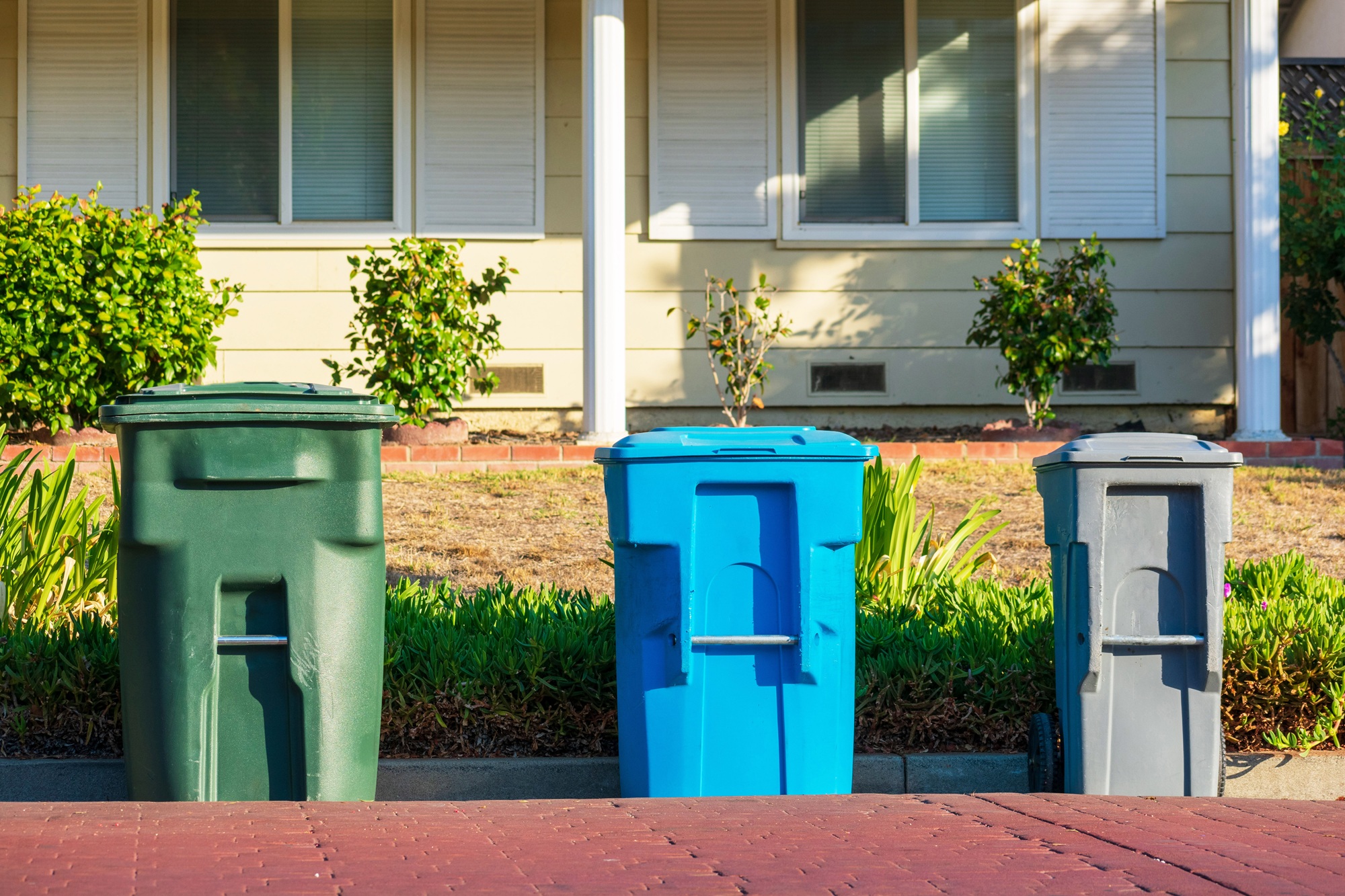
"title": "Compost, recycling and garbage carts set outside",
"publishDate": 1752860364,
"status": "inherit",
"parent": 12048733,
"modified": 1752860381,
"caption": "Compost, recycling and garbage carts set outside of the home on the curb for residential garbage and recycling pickup.",
"credit": "Michael Vi/iStock via Getty Images",
"altTag": null,
"description": null,
"imgSizes": {
"thumbnail": {
"file": "https://cdn.kqed.org/wp-content/uploads/sites/10/2025/07/GarbageContainersGetty-160x107.jpg",
"width": 160,
"height": 107,
"mimeType": "image/jpeg"
},
"1536x1536": {
"file": "https://cdn.kqed.org/wp-content/uploads/sites/10/2025/07/GarbageContainersGetty-1536x1024.jpg",
"width": 1536,
"height": 1024,
"mimeType": "image/jpeg"
},
"post-thumbnail": {
"file": "https://cdn.kqed.org/wp-content/uploads/sites/10/2025/07/GarbageContainersGetty-672x372.jpg",
"width": 672,
"height": 372,
"mimeType": "image/jpeg"
},
"twentyfourteen-full-width": {
"file": "https://cdn.kqed.org/wp-content/uploads/sites/10/2025/07/GarbageContainersGetty-1038x576.jpg",
"width": 1038,
"height": 576,
"mimeType": "image/jpeg"
},
"kqedFullSize": {
"file": "https://cdn.kqed.org/wp-content/uploads/sites/10/2025/07/GarbageContainersGetty.jpg",
"width": 2000,
"height": 1333
}
},
"isLoading": false,
"fetchFailed": false
},
"news_12048727": {
"type": "attachments",
"id": "news_12048727",
"meta": {
"index": "attachments_1716263798",
"site": "news",
"id": "12048727",
"found": true
},
"title": "250702-OAKLAND POLICE DEPARTMENT-MD-01_qed",
"publishDate": 1752858990,
"status": "inherit",
"parent": 12048706,
"modified": 1752859091,
"caption": "An Oakland Police Department vehicle parked on July 1, 2025.",
"credit": "Martin do Nascimento/KQED",
"altTag": null,
"description": null,
"imgSizes": {
"thumbnail": {
"file": "https://cdn.kqed.org/wp-content/uploads/sites/10/2025/07/250702-OAKLAND-POLICE-DEPARTMENT-MD-01_qed-160x107.jpg",
"width": 160,
"height": 107,
"mimeType": "image/jpeg"
},
"1536x1536": {
"file": "https://cdn.kqed.org/wp-content/uploads/sites/10/2025/07/250702-OAKLAND-POLICE-DEPARTMENT-MD-01_qed-1536x1024.jpg",
"width": 1536,
"height": 1024,
"mimeType": "image/jpeg"
},
"post-thumbnail": {
"file": "https://cdn.kqed.org/wp-content/uploads/sites/10/2025/07/250702-OAKLAND-POLICE-DEPARTMENT-MD-01_qed-672x372.jpg",
"width": 672,
"height": 372,
"mimeType": "image/jpeg"
},
"twentyfourteen-full-width": {
"file": "https://cdn.kqed.org/wp-content/uploads/sites/10/2025/07/250702-OAKLAND-POLICE-DEPARTMENT-MD-01_qed-1038x576.jpg",
"width": 1038,
"height": 576,
"mimeType": "image/jpeg"
},
"kqedFullSize": {
"file": "https://cdn.kqed.org/wp-content/uploads/sites/10/2025/07/250702-OAKLAND-POLICE-DEPARTMENT-MD-01_qed.jpg",
"width": 1999,
"height": 1333
}
},
"isLoading": false,
"fetchFailed": false
},
"news_12048609": {
"type": "attachments",
"id": "news_12048609",
"meta": {
"index": "attachments_1716263798",
"site": "news",
"id": "12048609",
"found": true
},
"title": "Good Trouble Protest",
"publishDate": 1752790280,
"status": "inherit",
"parent": 0,
"modified": 1752796758,
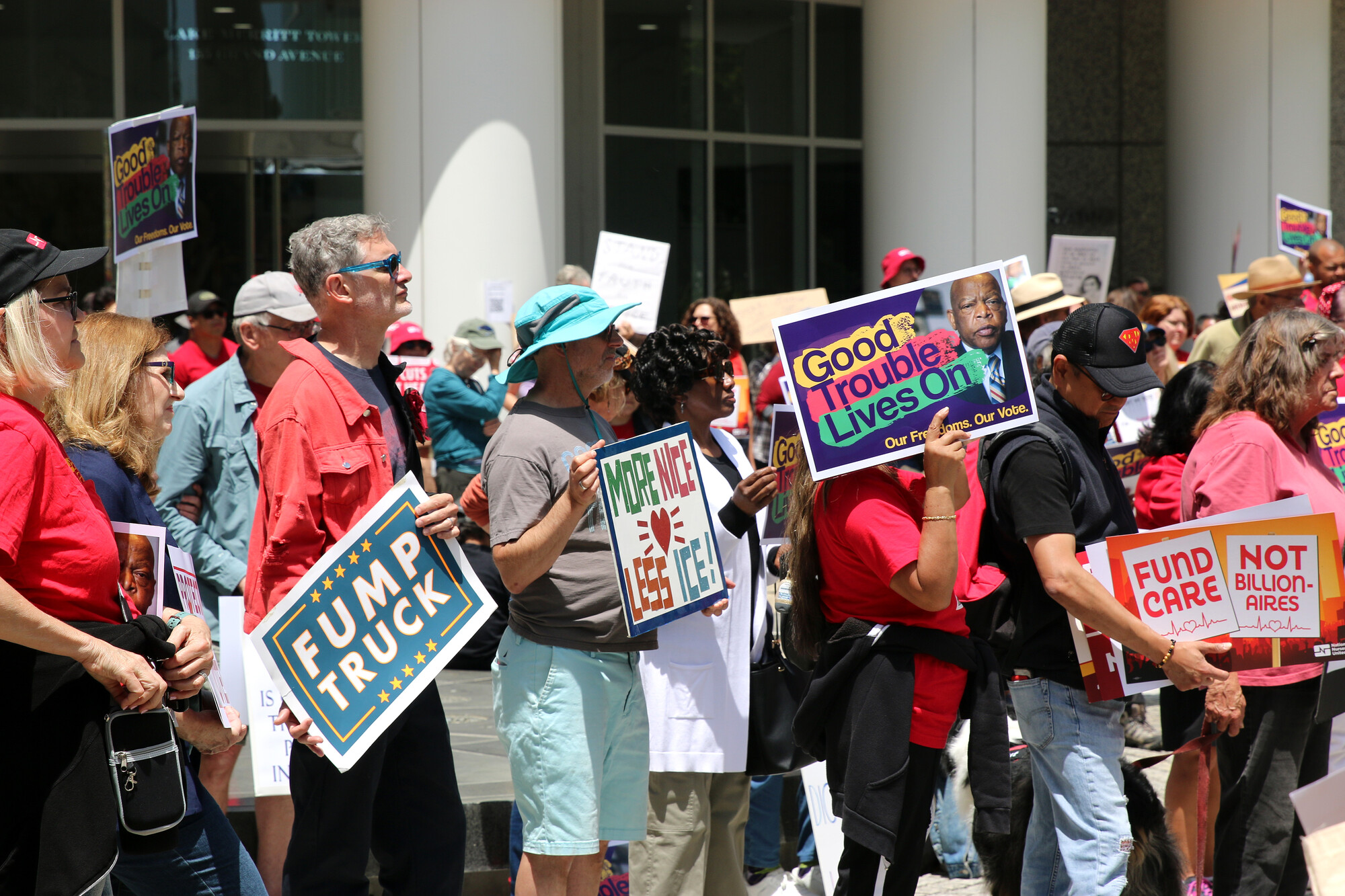
"caption": "Protesters hold signs condemning President Donald Trump and remembering the late Georgia Congressman John Lewis at a rally on Thursday in Oakland coordinated by the California Nurses Association. The \"Good Trouble\" rally was one of many in the Bay Area and hundreds across the nation to commemorate Lewis' death five years ago.",
"credit": "Brian Krans/KQED",
"altTag": null,
"description": null,
"imgSizes": {
"thumbnail": {
"file": "https://cdn.kqed.org/wp-content/uploads/sites/10/2025/07/250717GoodTrouble4_qed-160x107.jpg",
"width": 160,
"height": 107,
"mimeType": "image/jpeg"
},
"1536x1536": {
"file": "https://cdn.kqed.org/wp-content/uploads/sites/10/2025/07/250717GoodTrouble4_qed-1536x1024.jpg",
"width": 1536,
"height": 1024,
"mimeType": "image/jpeg"
},
"post-thumbnail": {
"file": "https://cdn.kqed.org/wp-content/uploads/sites/10/2025/07/250717GoodTrouble4_qed-672x372.jpg",
"width": 672,
"height": 372,
"mimeType": "image/jpeg"
},
"twentyfourteen-full-width": {
"file": "https://cdn.kqed.org/wp-content/uploads/sites/10/2025/07/250717GoodTrouble4_qed-1038x576.jpg",
"width": 1038,
"height": 576,
"mimeType": "image/jpeg"
},
"kqedFullSize": {
"file": "https://cdn.kqed.org/wp-content/uploads/sites/10/2025/07/250717GoodTrouble4_qed.jpg",
"width": 2000,
"height": 1333
}
},
"isLoading": false,
"fetchFailed": false
},
"news_12048615": {
"type": "attachments",
"id": "news_12048615",
"meta": {
"index": "attachments_1716263798",
"site": "news",
"id": "12048615",
"found": true
},
"title": "025_KQED_SchnitzerSteelPortofOakland_03082022_qed",
"publishDate": 1752790543,
"status": "inherit",
"parent": 12048605,
"modified": 1752790556,
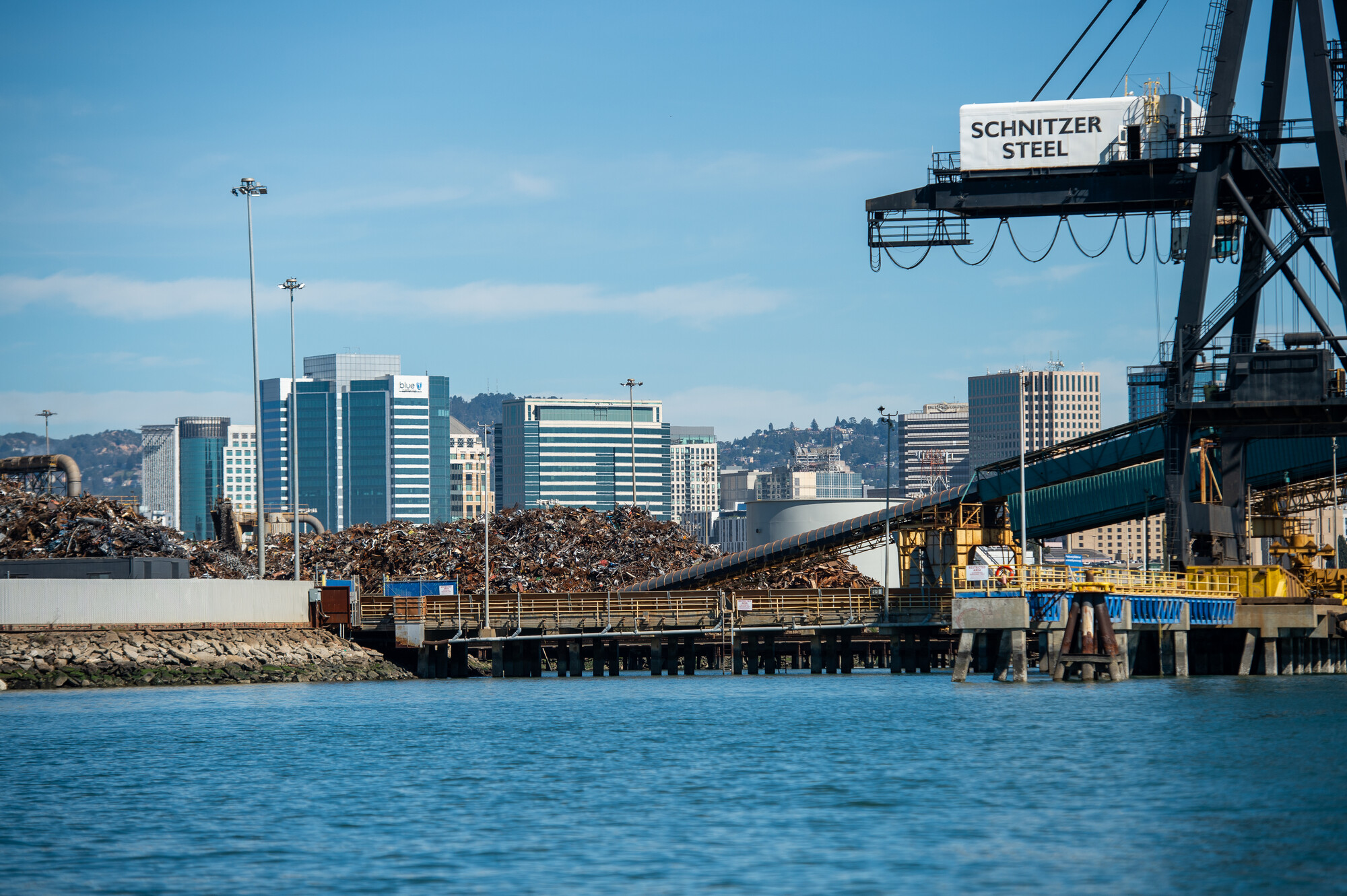
"caption": "A Schnitzer Steel manufacturing facility shreds scrap metal at the Port of Oakland on March 8, 2022.",
"credit": "Beth LaBerge/KQED",
"altTag": null,
"description": null,
"imgSizes": {
"thumbnail": {
"file": "https://cdn.kqed.org/wp-content/uploads/sites/10/2025/07/025_KQED_SchnitzerSteelPortofOakland_03082022_qed-160x106.jpg",
"width": 160,
"height": 106,
"mimeType": "image/jpeg"
},
"1536x1536": {
"file": "https://cdn.kqed.org/wp-content/uploads/sites/10/2025/07/025_KQED_SchnitzerSteelPortofOakland_03082022_qed-1536x1022.jpg",
"width": 1536,
"height": 1022,
"mimeType": "image/jpeg"
},
"post-thumbnail": {
"file": "https://cdn.kqed.org/wp-content/uploads/sites/10/2025/07/025_KQED_SchnitzerSteelPortofOakland_03082022_qed-672x372.jpg",
"width": 672,
"height": 372,
"mimeType": "image/jpeg"
},
"twentyfourteen-full-width": {
"file": "https://cdn.kqed.org/wp-content/uploads/sites/10/2025/07/025_KQED_SchnitzerSteelPortofOakland_03082022_qed-1038x576.jpg",
"width": 1038,
"height": 576,
"mimeType": "image/jpeg"
},
"kqedFullSize": {
"file": "https://cdn.kqed.org/wp-content/uploads/sites/10/2025/07/025_KQED_SchnitzerSteelPortofOakland_03082022_qed.jpg",
"width": 2000,
"height": 1331
}
},
"isLoading": false,
"fetchFailed": false
},
"news_12048549": {
"type": "attachments",
"id": "news_12048549",
"meta": {
"index": "attachments_1716263798",
"site": "news",
"id": "12048549",
"found": true
},
"title": "Attorney General Alcatraz",
"publishDate": 1752779246,
"status": "inherit",
"parent": 12048367,
"modified": 1752779348,
"caption": "Attorney General Pam Bondi (center left) and Interior Secretary Doug Burgum (behind) arrive at Fort Baker after visiting Alcatraz Island, on Thursday, July 17, 2025, in Sausalito, California. ",
"credit": "Godofredo A. Vásquez/AP Photo",
"altTag": null,
"description": null,
"imgSizes": {
"thumbnail": {
"file": "https://cdn.kqed.org/wp-content/uploads/sites/10/2025/07/BondiBurgumSFVisitAP1-160x107.jpg",
"width": 160,
"height": 107,
"mimeType": "image/jpeg"
},
"1536x1536": {
"file": "https://cdn.kqed.org/wp-content/uploads/sites/10/2025/07/BondiBurgumSFVisitAP1-1536x1024.jpg",
"width": 1536,
"height": 1024,
"mimeType": "image/jpeg"
},
"post-thumbnail": {
"file": "https://cdn.kqed.org/wp-content/uploads/sites/10/2025/07/BondiBurgumSFVisitAP1-672x372.jpg",
"width": 672,
"height": 372,
"mimeType": "image/jpeg"
},
"twentyfourteen-full-width": {
"file": "https://cdn.kqed.org/wp-content/uploads/sites/10/2025/07/BondiBurgumSFVisitAP1-1038x576.jpg",
"width": 1038,
"height": 576,
"mimeType": "image/jpeg"
},
"kqedFullSize": {
"file": "https://cdn.kqed.org/wp-content/uploads/sites/10/2025/07/BondiBurgumSFVisitAP1.jpg",
"width": 2000,
"height": 1333
}
},
"isLoading": false,
"fetchFailed": false
},
"news_12048500": {
"type": "attachments",
"id": "news_12048500",
"meta": {
"index": "attachments_1716263798",
"site": "news",
"id": "12048500",
"found": true
},
"title": "250624-ParkFile-30-BL_qed",
"publishDate": 1752769989,
"status": "inherit",
"parent": 12048495,
"modified": 1752770008,
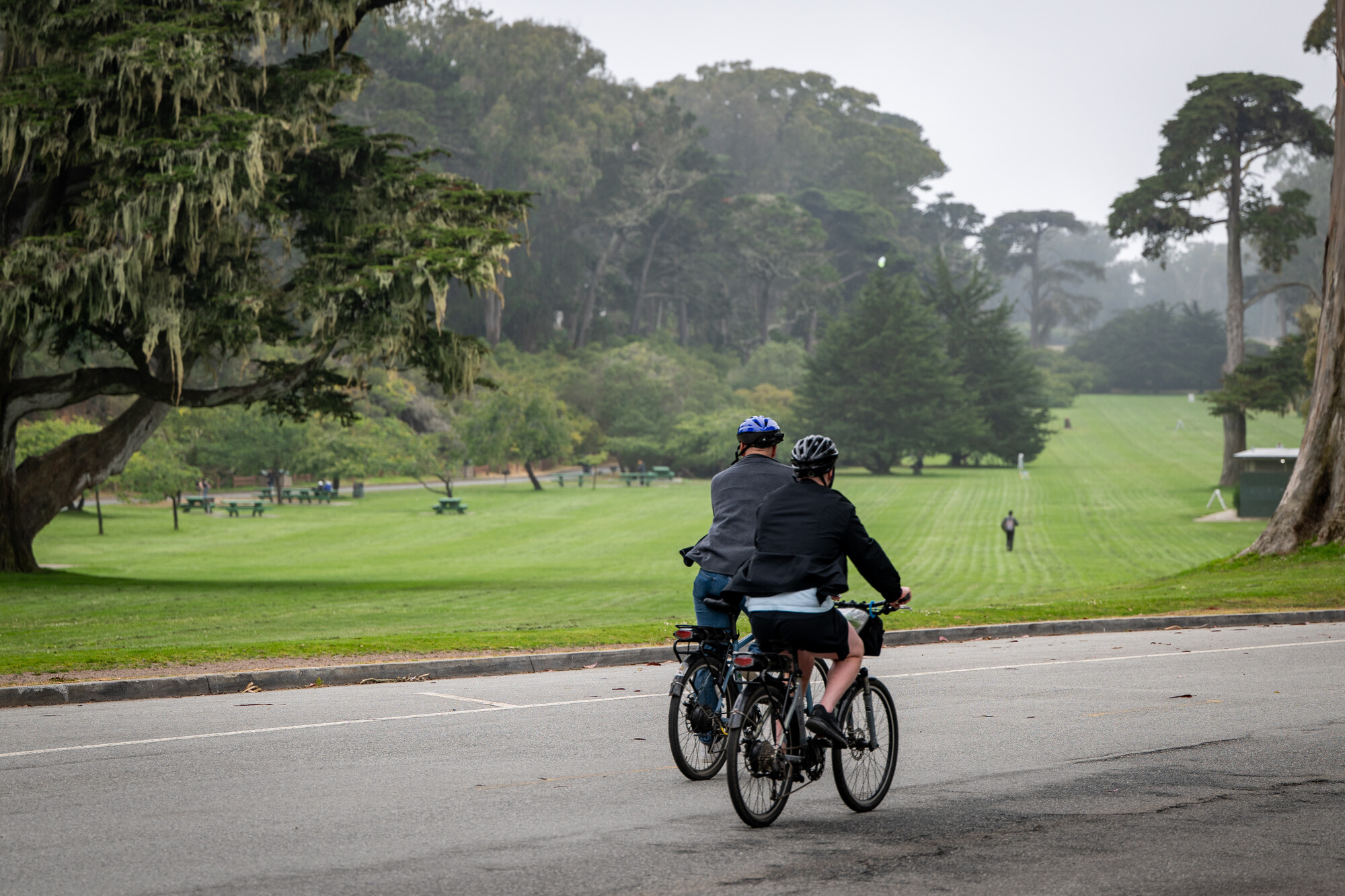
"caption": "Bicyclists ride past Hellman Hollow Picnic Area in Golden Gate Park in San Francisco on June 24, 2025.",
"credit": "Beth LaBerge/KQED",
"altTag": null,
"description": null,
"imgSizes": {
"thumbnail": {
"file": "https://cdn.kqed.org/wp-content/uploads/sites/10/2025/07/250624-ParkFile-30-BL_qed-160x107.jpg",
"width": 160,
"height": 107,
"mimeType": "image/jpeg"
},
"1536x1536": {
"file": "https://cdn.kqed.org/wp-content/uploads/sites/10/2025/07/250624-ParkFile-30-BL_qed-1536x1024.jpg",
"width": 1536,
"height": 1024,
"mimeType": "image/jpeg"
},
"post-thumbnail": {
"file": "https://cdn.kqed.org/wp-content/uploads/sites/10/2025/07/250624-ParkFile-30-BL_qed-672x372.jpg",
"width": 672,
"height": 372,
"mimeType": "image/jpeg"
},
"twentyfourteen-full-width": {
"file": "https://cdn.kqed.org/wp-content/uploads/sites/10/2025/07/250624-ParkFile-30-BL_qed-1038x576.jpg",
"width": 1038,
"height": 576,
"mimeType": "image/jpeg"
},
"kqedFullSize": {
"file": "https://cdn.kqed.org/wp-content/uploads/sites/10/2025/07/250624-ParkFile-30-BL_qed.jpg",
"width": 2000,
"height": 1333
}
},
"isLoading": false,
"fetchFailed": false
},
"news_12048452": {
"type": "attachments",
"id": "news_12048452",
"meta": {
"index": "attachments_1716263798",
"site": "news",
"id": "12048452",
"found": true
},
"title": "CAForever",
"publishDate": 1752709628,
"status": "inherit",
"parent": 12048321,
"modified": 1752709654,
"caption": "The Solano Foundry would be built next to homes within California Forever's proposed mega-development and would provide space for defense tech, transportation, energy and other advanced manufacturing companies. The company's announcement comes just a year after it pulled a ballot initiative to build a city from scratch in southeast Solano County.",
"credit": "Courtesy of California Forever",
"altTag": null,
"description": null,
"imgSizes": {
"thumbnail": {
"file": "https://cdn.kqed.org/wp-content/uploads/sites/10/2025/07/CAForever-160x90.jpg",
"width": 160,
"height": 90,
"mimeType": "image/jpeg"
},
"1536x1536": {
"file": "https://cdn.kqed.org/wp-content/uploads/sites/10/2025/07/CAForever-1536x864.jpg",
"width": 1536,
"height": 864,
"mimeType": "image/jpeg"
},
"post-thumbnail": {
"file": "https://cdn.kqed.org/wp-content/uploads/sites/10/2025/07/CAForever-672x372.jpg",
"width": 672,
"height": 372,
"mimeType": "image/jpeg"
},
"twentyfourteen-full-width": {
"file": "https://cdn.kqed.org/wp-content/uploads/sites/10/2025/07/CAForever-1038x576.jpg",
"width": 1038,
"height": 576,
"mimeType": "image/jpeg"
},
"kqedFullSize": {
"file": "https://cdn.kqed.org/wp-content/uploads/sites/10/2025/07/CAForever.jpg",
"width": 2000,
"height": 1125
}
},
"isLoading": false,
"fetchFailed": false
},
"news_12043503": {
"type": "attachments",
"id": "news_12043503",
"meta": {
"index": "attachments_1716263798",
"site": "news",
"id": "12043503",
"found": true
},
"title": "250609-SF IMMIGRATION PROTESTS-MD-08-KQED-3",
"publishDate": 1749532677,
"status": "inherit",
"parent": 12043445,
"modified": 1752704359,
"caption": "San Francisco City Supervisor Jackie Fielder addresses protestors at a rally in the Mission District in San Francisco in opposition to the Trump Administration's immigration policy and enforcement on June 9, 2025.",
"credit": "Martin do Nascimento/KQED",
"altTag": null,
"description": null,
"imgSizes": {
"thumbnail": {
"file": "https://cdn.kqed.org/wp-content/uploads/sites/10/2025/06/250609-SF-IMMIGRATION-PROTESTS-MD-08-KQED-3-160x107.jpg",
"width": 160,
"height": 107,
"mimeType": "image/jpeg"
},
"1536x1536": {
"file": "https://cdn.kqed.org/wp-content/uploads/sites/10/2025/06/250609-SF-IMMIGRATION-PROTESTS-MD-08-KQED-3-1536x1025.jpg",
"width": 1536,
"height": 1025,
"mimeType": "image/jpeg"
},
"post-thumbnail": {
"file": "https://cdn.kqed.org/wp-content/uploads/sites/10/2025/06/250609-SF-IMMIGRATION-PROTESTS-MD-08-KQED-3-672x372.jpg",
"width": 672,
"height": 372,
"mimeType": "image/jpeg"
},
"twentyfourteen-full-width": {
"file": "https://cdn.kqed.org/wp-content/uploads/sites/10/2025/06/250609-SF-IMMIGRATION-PROTESTS-MD-08-KQED-3-1038x576.jpg",
"width": 1038,
"height": 576,
"mimeType": "image/jpeg"
},
"kqedFullSize": {
"file": "https://cdn.kqed.org/wp-content/uploads/sites/10/2025/06/250609-SF-IMMIGRATION-PROTESTS-MD-08-KQED-3.jpg",
"width": 2000,
"height": 1334
}
},
"isLoading": false,
"fetchFailed": false
},
"news_12048401": {
"type": "attachments",
"id": "news_12048401",
"meta": {
"index": "attachments_1716263798",
"site": "news",
"id": "12048401",
"found": true
},
"title": "250716-CherrylandUnincorporated-11-BL_qed",
"publishDate": 1752704081,
"status": "inherit",
"parent": 0,
"modified": 1752704174,
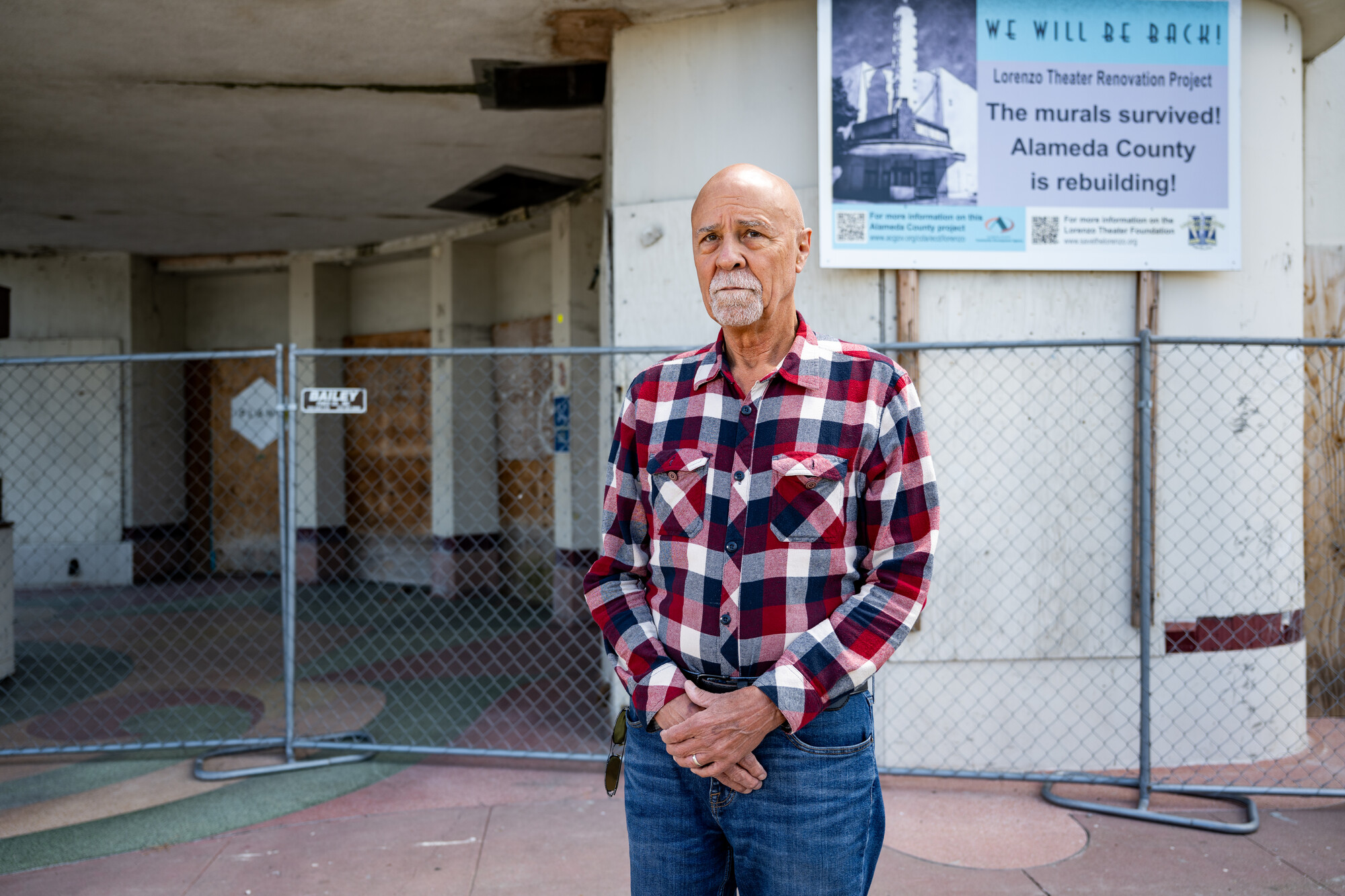
"caption": "Keith Barros, a longtime San Lorenzo resident and community advocate, stands outside the historic Lorenzo Theatre in the unincorporated area of Alameda County on July 16, 2025.",
"credit": "Beth LaBerge/KQED",
"altTag": null,
"description": null,
"imgSizes": {
"thumbnail": {
"file": "https://cdn.kqed.org/wp-content/uploads/sites/10/2025/07/250716-CherrylandUnincorporated-11-BL_qed-160x107.jpg",
"width": 160,
"height": 107,
"mimeType": "image/jpeg"
},
"1536x1536": {
"file": "https://cdn.kqed.org/wp-content/uploads/sites/10/2025/07/250716-CherrylandUnincorporated-11-BL_qed-1536x1024.jpg",
"width": 1536,
"height": 1024,
"mimeType": "image/jpeg"
},
"post-thumbnail": {
"file": "https://cdn.kqed.org/wp-content/uploads/sites/10/2025/07/250716-CherrylandUnincorporated-11-BL_qed-672x372.jpg",
"width": 672,
"height": 372,
"mimeType": "image/jpeg"
},
"twentyfourteen-full-width": {
"file": "https://cdn.kqed.org/wp-content/uploads/sites/10/2025/07/250716-CherrylandUnincorporated-11-BL_qed-1038x576.jpg",
"width": 1038,
"height": 576,
"mimeType": "image/jpeg"
},
"kqedFullSize": {
"file": "https://cdn.kqed.org/wp-content/uploads/sites/10/2025/07/250716-CherrylandUnincorporated-11-BL_qed.jpg",
"width": 2000,
"height": 1333
}
},
"isLoading": false,
"fetchFailed": false
},
"news_12048309": {
"type": "attachments",
"id": "news_12048309",
"meta": {
"index": "attachments_1716263798",
"site": "news",
"id": "12048309",
"found": true
},
"title": "240130-HomelessCount-24-BL_qed",
"publishDate": 1752685135,
"status": "inherit",
"parent": 12048307,
"modified": 1752685161,
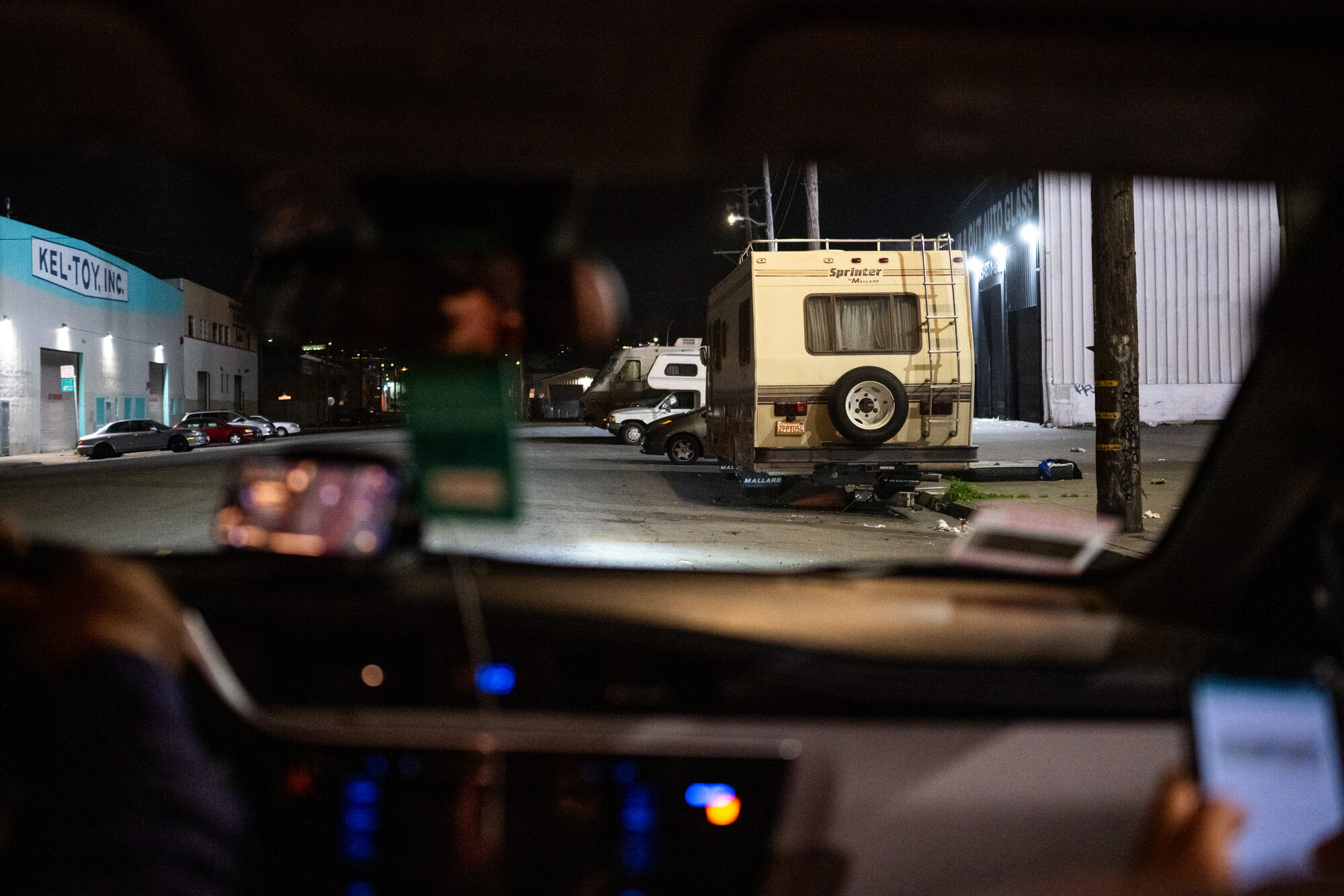
"caption": "San Francisco Homeless Outreach Team members look for vehicles and RVs serving as shelters during a point-in-time homeless population count in the Bayview Hunters Point neighborhood in San Francisco on Jan. 30, 2024. Teams spread out through San Francisco to count sheltered and unsheltered people experiencing homelessness on a single night.",
"credit": "Beth LaBerge/KQED",
"altTag": null,
"description": null,
"imgSizes": {
"thumbnail": {
"file": "https://cdn.kqed.org/wp-content/uploads/sites/10/2025/07/240130-HomelessCount-24-BL_qed-160x107.jpg",
"width": 160,
"height": 107,
"mimeType": "image/jpeg"
},
"1536x1536": {
"file": "https://cdn.kqed.org/wp-content/uploads/sites/10/2025/07/240130-HomelessCount-24-BL_qed-1536x1024.jpg",
"width": 1536,
"height": 1024,
"mimeType": "image/jpeg"
},
"post-thumbnail": {
"file": "https://cdn.kqed.org/wp-content/uploads/sites/10/2025/07/240130-HomelessCount-24-BL_qed-672x372.jpg",
"width": 672,
"height": 372,
"mimeType": "image/jpeg"
},
"twentyfourteen-full-width": {
"file": "https://cdn.kqed.org/wp-content/uploads/sites/10/2025/07/240130-HomelessCount-24-BL_qed-1038x576.jpg",
"width": 1038,
"height": 576,
"mimeType": "image/jpeg"
},
"kqedFullSize": {
"file": "https://cdn.kqed.org/wp-content/uploads/sites/10/2025/07/240130-HomelessCount-24-BL_qed.jpg",
"width": 1999,
"height": 1333
}
},
"isLoading": false,
"fetchFailed": false
},
"news_12048133": {
"type": "attachments",
"id": "news_12048133",
"meta": {
"index": "attachments_1716263798",
"site": "news",
"id": "12048133",
"found": true
},
"title": "240522-KQEDheadquarters-12-BL_qed",
"publishDate": 1752605240,
"status": "inherit",
"parent": 12048122,
"modified": 1752605252,
"caption": "A KQED sign in the entrance way to the organization's headquarters in San Francisco on May 22, 2024.",
"credit": "Beth LaBerge/KQED",
"altTag": null,
"description": null,
"imgSizes": {
"thumbnail": {
"file": "https://cdn.kqed.org/wp-content/uploads/sites/10/2025/07/240522-KQEDheadquarters-12-BL_qed-160x107.jpg",
"width": 160,
"height": 107,
"mimeType": "image/jpeg"
},
"1536x1536": {
"file": "https://cdn.kqed.org/wp-content/uploads/sites/10/2025/07/240522-KQEDheadquarters-12-BL_qed-1536x1024.jpg",
"width": 1536,
"height": 1024,
"mimeType": "image/jpeg"
},
"post-thumbnail": {
"file": "https://cdn.kqed.org/wp-content/uploads/sites/10/2025/07/240522-KQEDheadquarters-12-BL_qed-672x372.jpg",
"width": 672,
"height": 372,
"mimeType": "image/jpeg"
},
"twentyfourteen-full-width": {
"file": "https://cdn.kqed.org/wp-content/uploads/sites/10/2025/07/240522-KQEDheadquarters-12-BL_qed-1038x576.jpg",
"width": 1038,
"height": 576,
"mimeType": "image/jpeg"
},
"kqedFullSize": {
"file": "https://cdn.kqed.org/wp-content/uploads/sites/10/2025/07/240522-KQEDheadquarters-12-BL_qed.jpg",
"width": 1999,
"height": 1333
}
},
"isLoading": false,
"fetchFailed": false
}
},
"audioPlayerReducer": {
"postId": "stream_live",
"isPaused": true,
"isPlaying": false,
"pfsActive": false,
"pledgeModalIsOpen": true,
"playerDrawerIsOpen": false,
"liveAudioPlayStartedAt": 0,
"liveAudioPlayContext": ""
},
"authorsReducer": {
"scottshafer": {
"type": "authors",
"id": "255",
"meta": {
"index": "authors_1716337520",
"id": "255",
"found": true
},
"name": "Scott Shafer",
"firstName": "Scott",
"lastName": "Shafer",
"slug": "scottshafer",
"email": "sshafer@kqed.org",
"display_author_email": false,
"staff_mastheads": [
"news"
],
"title": "KQED Contributor",
"bio": "Scott Shafer is a senior editor with the KQED Politics and Government desk. He is co-host of Political Breakdown, the award-winning radio show and podcast with a personal take on the world of politics. Scott came to KQED in 1998 to host the statewide\u003cem> California Report\u003c/em>. Prior to that he had extended stints in politics and government\u003cem>.\u003c/em> He uses that inside experience at KQED in his, reporting, hosting and analysis for the politics desk. Scott collaborated \u003cem>Political Breakdown a\u003c/em>nd on \u003cem>The Political Mind of Jerry Brown, \u003c/em>an eight-part series about the life and extraordinary political career of the former governor. For fun, he plays water polo with the San Francisco Tsunami.",
"avatar": "https://secure.gravatar.com/avatar/a62ebae45b79d7aed1a39a0e3bf68104?s=600&d=blank&r=g",
"twitter": "scottshafer",
"bluesky": null,
"facebook": null,
"instagram": null,
"linkedin": null,
"sites": [
{
"site": "news",
"roles": [
"editor"
]
},
{
"site": "stateofhealth",
"roles": [
"author"
]
},
{
"site": "science",
"roles": [
"author"
]
},
{
"site": "forum",
"roles": [
"subscriber"
]
},
{
"site": "liveblog",
"roles": [
"author"
]
}
],
"headData": {
"title": "Scott Shafer | KQED",
"description": "KQED Contributor",
"ogImgSrc": "https://secure.gravatar.com/avatar/a62ebae45b79d7aed1a39a0e3bf68104?s=600&d=blank&r=g",
"twImgSrc": "https://secure.gravatar.com/avatar/a62ebae45b79d7aed1a39a0e3bf68104?s=600&d=blank&r=g"
},
"isLoading": false,
"link": "/author/scottshafer"
},
"matthewgreen": {
"type": "authors",
"id": "1263",
"meta": {
"index": "authors_1716337520",
"id": "1263",
"found": true
},
"name": "Matthew Green",
"firstName": "Matthew",
"lastName": "Green",
"slug": "matthewgreen",
"email": "mgreen@kqed.org",
"display_author_email": false,
"staff_mastheads": [],
"title": "KQED Editor/Reporter",
"bio": "Matthew Green is a digital media producer for KQED News. He previously produced \u003ca href=\"http://www.kqed.org/lowdown\">The Lowdown\u003c/a>, KQED’s multimedia news education blog. Matthew's written for numerous Bay Area publications, including the Oakland Tribune and San Francisco Chronicle. He also taught journalism classes at Fremont High School in East Oakland.\r\n\r\nEmail: mgreen@kqed.org; Twitter: @MGreenKQED",
"avatar": "https://secure.gravatar.com/avatar/3bf498d1267ca02c8494f33d8cfc575e?s=600&d=blank&r=g",
"twitter": "MGreenKQED",
"facebook": null,
"instagram": null,
"linkedin": null,
"sites": [
{
"site": "news",
"roles": []
},
{
"site": "lowdown",
"roles": []
},
{
"site": "science",
"roles": []
},
{
"site": "education",
"roles": []
},
{
"site": "quest",
"roles": []
},
{
"site": "liveblog",
"roles": []
}
],
"headData": {
"title": "Matthew Green | KQED",
"description": "KQED Editor/Reporter",
"ogImgSrc": "https://secure.gravatar.com/avatar/3bf498d1267ca02c8494f33d8cfc575e?s=600&d=blank&r=g",
"twImgSrc": "https://secure.gravatar.com/avatar/3bf498d1267ca02c8494f33d8cfc575e?s=600&d=blank&r=g"
},
"isLoading": false,
"link": "/author/matthewgreen"
},
"vrancano": {
"type": "authors",
"id": "11276",
"meta": {
"index": "authors_1716337520",
"id": "11276",
"found": true
},
"name": "Vanessa Rancaño",
"firstName": "Vanessa",
"lastName": "Rancaño",
"slug": "vrancano",
"email": "vrancano@kqed.org",
"display_author_email": false,
"staff_mastheads": [
"news"
],
"title": "Reporter",
"bio": "Vanessa Rancaño is a features reporter for KQED. She’s also covered homelessness and education for the station and reported from the Central Valley. Her work has aired across public radio, from flagship national news shows to longform narrative podcasts. Before taking up a mic, she worked as a freelance print journalist. She’s been recognized with a number of national and regional awards. Vanessa grew up in California's Central Valley. She's a former NPR Kroc Fellow, and a graduate of the UC Berkeley Graduate School of Journalism.",
"avatar": "https://secure.gravatar.com/avatar/b3a383dfb0e7ee1c17568f2cf067904ab654d6e3de9743fc661f3c788ade1bed?s=600&d=blank&r=g",
"twitter": "vanessarancano",
"bluesky": null,
"facebook": null,
"instagram": null,
"linkedin": null,
"sites": [
{
"site": "arts",
"roles": [
"editor"
]
},
{
"site": "news",
"roles": [
"editor"
]
},
{
"site": "liveblog",
"roles": [
"contributor"
]
}
],
"headData": {
"title": "Vanessa Rancaño | KQED",
"description": "Reporter",
"ogImgSrc": "https://secure.gravatar.com/avatar/b3a383dfb0e7ee1c17568f2cf067904ab654d6e3de9743fc661f3c788ade1bed?s=600&d=blank&r=g",
"twImgSrc": "https://secure.gravatar.com/avatar/b3a383dfb0e7ee1c17568f2cf067904ab654d6e3de9743fc661f3c788ade1bed?s=600&d=blank&r=g"
},
"isLoading": false,
"link": "/author/vrancano"
},
"abandlamudi": {
"type": "authors",
"id": "11672",
"meta": {
"index": "authors_1716337520",
"id": "11672",
"found": true
},
"name": "Adhiti Bandlamudi",
"firstName": "Adhiti",
"lastName": "Bandlamudi",
"slug": "abandlamudi",
"email": "abandlamudi@kqed.org",
"display_author_email": false,
"staff_mastheads": [
"news"
],
"title": "KQED Housing Reporter",
"bio": "Adhiti Bandlamudi reports for KQED's Housing desk. She focuses on how housing gets built across the Bay Area. Before joining KQED in 2020, she reported for WUNC in Durham, North Carolina, WABE in Atlanta, Georgia and Capital Public Radio in Sacramento. In 2017, she was awarded a Kroc Fellowship at NPR where she reported on everything from sprinkles to the Golden State Killer's arrest. When she's not reporting, she's baking new recipes in her kitchen or watching movies with friends and family. She's originally from Georgia and has strong opinions about Great British Bake Off.",
"avatar": "https://secure.gravatar.com/avatar/868129c8b257bb99a3500e2c86a65400?s=600&d=mm&r=g",
"twitter": "oddity_adhiti",
"facebook": null,
"instagram": null,
"linkedin": null,
"sites": [
{
"site": "arts",
"roles": [
"author"
]
},
{
"site": "news",
"roles": [
"editor"
]
},
{
"site": "liveblog",
"roles": [
"author"
]
}
],
"headData": {
"title": "Adhiti Bandlamudi | KQED",
"description": "KQED Housing Reporter",
"ogImgSrc": "https://secure.gravatar.com/avatar/868129c8b257bb99a3500e2c86a65400?s=600&d=mm&r=g",
"twImgSrc": "https://secure.gravatar.com/avatar/868129c8b257bb99a3500e2c86a65400?s=600&d=mm&r=g"
},
"isLoading": false,
"link": "/author/abandlamudi"
},
"kdebenedetti": {
"type": "authors",
"id": "11913",
"meta": {
"index": "authors_1716337520",
"id": "11913",
"found": true
},
"name": "Katie DeBenedetti",
"firstName": "Katie",
"lastName": "DeBenedetti",
"slug": "kdebenedetti",
"email": "kdebenedetti@kqed.org",
"display_author_email": false,
"staff_mastheads": [
"news",
"science"
],
"title": "KQED Contributor",
"bio": "Katie DeBenedetti is a digital reporter covering daily news for the Express Desk. Prior to joining KQED as a culture reporting intern in January 2024, she covered education and city government for the Napa Valley Register.",
"avatar": "https://secure.gravatar.com/avatar/6e31073cb8f7e4214ab03f42771d0f45?s=600&d=blank&r=g",
"twitter": null,
"facebook": null,
"instagram": null,
"linkedin": null,
"sites": [
{
"site": "news",
"roles": [
"author"
]
},
{
"site": "science",
"roles": [
"author"
]
},
{
"site": "liveblog",
"roles": [
"author"
]
}
],
"headData": {
"title": "Katie DeBenedetti | KQED",
"description": "KQED Contributor",
"ogImgSrc": "https://secure.gravatar.com/avatar/6e31073cb8f7e4214ab03f42771d0f45?s=600&d=blank&r=g",
"twImgSrc": "https://secure.gravatar.com/avatar/6e31073cb8f7e4214ab03f42771d0f45?s=600&d=blank&r=g"
},
"isLoading": false,
"link": "/author/kdebenedetti"
},
"slim": {
"type": "authors",
"id": "11920",
"meta": {
"index": "authors_1716337520",
"id": "11920",
"found": true
},
"name": "Samantha Lim",
"firstName": "Samantha",
"lastName": "Lim",
"slug": "slim",
"email": "slim@KQED.org",
"display_author_email": false,
"staff_mastheads": [],
"title": "KQED Contributor",
"bio": null,
"avatar": "https://secure.gravatar.com/avatar/82e592e6c15fe1a04d385e8ad0fb0b4e?s=600&d=blank&r=g",
"twitter": null,
"facebook": null,
"instagram": null,
"linkedin": null,
"sites": [
{
"site": "news",
"roles": []
}
],
"headData": {
"title": "Samantha Lim | KQED",
"description": "KQED Contributor",
"ogImgSrc": "https://secure.gravatar.com/avatar/82e592e6c15fe1a04d385e8ad0fb0b4e?s=600&d=blank&r=g",
"twImgSrc": "https://secure.gravatar.com/avatar/82e592e6c15fe1a04d385e8ad0fb0b4e?s=600&d=blank&r=g"
},
"isLoading": false,
"link": "/author/slim"
},
"bkrans": {
"type": "authors",
"id": "11923",
"meta": {
"index": "authors_1716337520",
"id": "11923",
"found": true
},
"name": "Brian Krans",
"firstName": "Brian",
"lastName": "Krans",
"slug": "bkrans",
"email": "bkrans@kqed.org",
"display_author_email": false,
"staff_mastheads": [
"news"
],
"title": "KQED Contributing Reporter",
"bio": "Brian Krans is an award-winning local news and investigative reporter who has been proudly working as a general assignment reporter for KQED since August 2023. He lives in Richmond, where he also reports on air pollution for Richmondside. He is also a founding member of the Vallejo Sun.",
"avatar": "https://secure.gravatar.com/avatar/71fa91f931774612559f7640390b53d9c2840ff72b20f195a25239aab2d9fbb9?s=600&d=blank&r=g",
"twitter": "citizenkrans",
"bluesky": null,
"facebook": null,
"instagram": null,
"linkedin": null,
"sites": [
{
"site": "news",
"roles": [
"editor"
]
}
],
"headData": {
"title": "Brian Krans | KQED",
"description": "KQED Contributing Reporter",
"ogImgSrc": "https://secure.gravatar.com/avatar/71fa91f931774612559f7640390b53d9c2840ff72b20f195a25239aab2d9fbb9?s=600&d=blank&r=g",
"twImgSrc": "https://secure.gravatar.com/avatar/71fa91f931774612559f7640390b53d9c2840ff72b20f195a25239aab2d9fbb9?s=600&d=blank&r=g"
},
"isLoading": false,
"link": "/author/bkrans"
},
"gzada": {
"type": "authors",
"id": "11929",
"meta": {
"index": "authors_1716337520",
"id": "11929",
"found": true
},
"name": "Gilare Zada",
"firstName": "Gilare",
"lastName": "Zada",
"slug": "gzada",
"email": "gzada@kqed.org",
"display_author_email": true,
"staff_mastheads": [
"news"
],
"title": null,
"bio": "Gilare Zada is a Kurdish-American from San Diego, CA. Storytelling, fitness, and binge reading are some of her passions outside of news reporting. Her work has appeared in Mission Local, the Peninsula Press, the San Francisco Press Club, and more. She also writes as a class correspondent for the Stanford Magazine - go Card!",
"avatar": "https://secure.gravatar.com/avatar/33a75f2b947669a488a805edec3fbf3838c1cedaedda710e983770633b4d6a75?s=600&d=blank&r=g",
"twitter": null,
"bluesky": null,
"facebook": null,
"instagram": null,
"linkedin": null,
"sites": [
{
"site": "",
"roles": [
"editor"
]
},
{
"site": "arts",
"roles": [
"editor"
]
},
{
"site": "news",
"roles": [
"administrator"
]
},
{
"site": "science",
"roles": [
"editor"
]
}
],
"headData": {
"title": "Gilare Zada | KQED",
"description": null,
"ogImgSrc": "https://secure.gravatar.com/avatar/33a75f2b947669a488a805edec3fbf3838c1cedaedda710e983770633b4d6a75?s=600&d=blank&r=g",
"twImgSrc": "https://secure.gravatar.com/avatar/33a75f2b947669a488a805edec3fbf3838c1cedaedda710e983770633b4d6a75?s=600&d=blank&r=g"
},
"isLoading": false,
"link": "/author/gzada"
}
},
"pagesReducer": {
"news_category_local": {
"type": "terms",
"id": "news_28250",
"meta": {
"index": "terms_1716263798",
"site": "news",
"id": "28250",
"score": 12.940407
},
"featImg": null,
"name": "Local",
"description": null,
"taxonomy": "category",
"headData": {
"twImgId": null,
"twTitle": null,
"ogTitle": null,
"ogImgId": null,
"twDescription": null,
"description": null,
"title": "Local Archives | KQED News",
"ogDescription": null
},
"ttid": 28267,
"slug": "local",
"isLoading": false,
"title": "Local",
"pageMeta": {
"site": "news",
"WpPageTemplate": "page-topic-editorial",
"currentPage": 104
},
"blocks": [
{
"blockName": "kqed/post-list",
"attrs": {
"layout": "cardArticle2",
"query": "posts/news?category=local",
"seeMore": false,
"paginated": true,
"page": 104
}
},
{
"blockName": "kqed/ad"
}
]
}
},
"pfsSessionReducer": {},
"postsReducer": {
"stream_live": {
"type": "live",
"id": "stream_live",
"audioUrl": "https://streams.kqed.org/kqedradio",
"title": "Live Stream",
"excerpt": "Live Stream information currently unavailable.",
"link": "/radio",
"featImg": "",
"label": {
"name": "KQED Live",
"link": "/"
}
},
"stream_kqedNewscast": {
"type": "posts",
"id": "stream_kqedNewscast",
"audioUrl": "https://www.kqed.org/.stream/anon/radio/RDnews/newscast.mp3?_=1",
"title": "KQED Newscast",
"featImg": "",
"label": {
"name": "88.5 FM",
"link": "/"
}
},
"news_12048313": {
"type": "posts",
"id": "news_12048313",
"meta": {
"index": "posts_1716263798",
"site": "news",
"id": "12048313",
"score": null,
"sort": [
1752944414000
]
},
"guestAuthors": [],
"slug": "san-francisco-unified-plans-new-mandarin-immersion-school-amid-charter-push",
"title": "San Francisco Unified Plans New Mandarin Immersion School Amid Charter Push",
"publishDate": 1752944414,
"format": "standard",
"headTitle": "San Francisco Unified Plans New Mandarin Immersion School Amid Charter Push | KQED",
"labelTerm": {
"site": "news"
},
"content": "\u003cp>\u003ca href=\"https://www.kqed.org/news/tag/sfusd\">San Francisco’s school district\u003c/a> is planning to open a new kindergarten through eighth-grade Mandarin immersion school in the fall of 2027, Superintendent Maria Su announced Wednesday, citing a need for more seats in multilingual classrooms.\u003c/p>\n\u003cp>Since taking over as superintendent in October, Su said she’s “consistently heard from families the need for more Mandarin immersion programs.\u003c/p>\n\u003cp>“San Francisco is an international city, and we need to do all that we can to produce global citizens,” she told KQED.\u003c/p>\n\u003cp>[ad fullwidth]\u003c/p>\n\u003cp>The announcement — which was sparse on details — comes as the district faces enrollment decline and an ongoing budget deficit threatening to force school consolidations. It also comes as the school board prepares to vote on a parent-led effort to open a \u003ca href=\"https://www.dragongateacademy.org/\">new K–8 Mandarin Immersion charter school\u003c/a>, which could siphon more funding away from the district if approved.\u003c/p>\n\u003cp>“It’s probably not a coincidence,” Bruce Fuller, a professor emeritus in UC Berkeley’s education department, said of the timing for both school proposals. “I’ve seen a similar dynamic where there’s budget concerns by the school board, there’s sort of recalcitrance around, ‘This is going to be challenging to do. What do we find the teachers?’”\u003c/p>\n\u003cfigure id=\"attachment_12037008\" class=\"wp-caption aligncenter\" style=\"max-width: 2000px\">\u003cimg loading=\"lazy\" decoding=\"async\" class=\"size-full wp-image-12037008\" src=\"https://cdn.kqed.org/wp-content/uploads/sites/10/2025/04/250421-SFUSDCentralCuts-11-BL_qed.jpg\" alt=\"\" width=\"2000\" height=\"1333\" srcset=\"https://cdn.kqed.org/wp-content/uploads/sites/10/2025/04/250421-SFUSDCentralCuts-11-BL_qed.jpg 2000w, https://cdn.kqed.org/wp-content/uploads/sites/10/2025/04/250421-SFUSDCentralCuts-11-BL_qed-800x533.jpg 800w, https://cdn.kqed.org/wp-content/uploads/sites/10/2025/04/250421-SFUSDCentralCuts-11-BL_qed-1020x680.jpg 1020w, https://cdn.kqed.org/wp-content/uploads/sites/10/2025/04/250421-SFUSDCentralCuts-11-BL_qed-160x107.jpg 160w, https://cdn.kqed.org/wp-content/uploads/sites/10/2025/04/250421-SFUSDCentralCuts-11-BL_qed-1536x1024.jpg 1536w, https://cdn.kqed.org/wp-content/uploads/sites/10/2025/04/250421-SFUSDCentralCuts-11-BL_qed-1920x1280.jpg 1920w\" sizes=\"auto, (max-width: 2000px) 100vw, 2000px\">\u003cfigcaption class=\"wp-caption-text\">San Francisco Unified School District Superintendent Dr. Maria Su speaks during a press conference at the school district offices in San Francisco on April 21, 2025. \u003ccite>(Beth LaBerge/KQED)\u003c/cite>\u003c/figcaption>\u003c/figure>\n\u003cp>He continued: “And then there’s charter pressure and, suddenly, the school board and the [superintendent] feel they have more flexibility than they did before.”\u003c/p>\n\u003cp>Su said the city’s public schools have not met demand for Chinese bilingual education. While private options have expanded in recent years, SFUSD has not launched a new Mandarin immersion program since the 2007–08 school year. In that time, multiple new independent schools have begun offering Cantonese dual immersion tracks, and existing private Mandarin immersion schools have increased capacity.\u003c/p>\n\u003cp>\u003ca href=\"https://www.presidioknolls.org/about/mission\">Presidio Knolls School\u003c/a> graduated its first class of eighth graders in 2021, and Chinese American International School \u003ca href=\"https://www.instagram.com/reel/C_nwt9avYNs/?utm_source=ig_embed&ig_rid=8022a21f-9e34-4d93-9d4e-3bb1a1b997f6\">moved to a new campus\u003c/a> last fall to accommodate more students.[aside postID=news_12046580 hero='https://cdn.kqed.org/wp-content/uploads/sites/10/2025/06/250421-SFUSDCentralCuts-06-BL_qed-1.jpg']Currently, SFUSD has just 66 seats per grade across two elementary schools for students interested in Mandarin immersion — at Starr King Elementary School in Potrero Hill and Jose Ortega Elementary in Ingleside — operating since 2006 and 2007, respectively.\u003c/p>\n\u003cp>More than 80 families are on the waitlist for a kindergarten spot at Jose Ortega this August, with both campuses maintaining \u003ca href=\"https://docs.google.com/spreadsheets/d/1PcBKOb19PDWglhEEkuUrkBLdzCGUv6dcu_Jkl1ZtWS8/edit?gid=0#gid=0\">waitlists\u003c/a> through fifth grade.\u003c/p>\n\u003cp>Details about where the new school will be located, how many students it will serve, and what the enrollment process will look like are all undetermined, spokesperson Laura Dudnick said.\u003c/p>\n\u003cp>Su said that the expansion will begin with expanding pathways to train and hire qualified teachers. Some of the district’s existing Mandarin immersion classrooms are already struggling to maintain full-time teachers, the \u003ca href=\"https://www.sfchronicle.com/sf/article/first-k-8-mandarin-immersion-school-20341735.php\">\u003cem>San Francisco Chronicle \u003c/em>reported\u003c/a> in May.\u003c/p>\n\u003cp>To address that, the district is partnering with San Francisco State University and the associations of Asian American Administrators and Chinese Teachers to create new training programs and expand certification opportunities for bilingual educators.\u003c/p>\n\u003cp>“This work will begin with a focus on building out the teacher pipeline first before specifics of the school are established,” Dudnick said in an email.\u003c/p>\n\u003cfigure id=\"attachment_12046126\" class=\"wp-caption aligncenter\" style=\"max-width: 1999px\">\u003cimg loading=\"lazy\" decoding=\"async\" class=\"size-full wp-image-12046126\" src=\"https://cdn.kqed.org/wp-content/uploads/sites/10/2025/06/250418-SFUSD-01-BL_qed.jpg\" alt=\"\" width=\"1999\" height=\"1333\" srcset=\"https://cdn.kqed.org/wp-content/uploads/sites/10/2025/06/250418-SFUSD-01-BL_qed.jpg 1999w, https://cdn.kqed.org/wp-content/uploads/sites/10/2025/06/250418-SFUSD-01-BL_qed-160x107.jpg 160w, https://cdn.kqed.org/wp-content/uploads/sites/10/2025/06/250418-SFUSD-01-BL_qed-1536x1024.jpg 1536w\" sizes=\"auto, (max-width: 1999px) 100vw, 1999px\">\u003cfigcaption class=\"wp-caption-text\">The San Francisco Unified School District Administrative Offices in San Francisco on April 18, 2025. \u003ccite>(Beth LaBerge/KQED)\u003c/cite>\u003c/figcaption>\u003c/figure>\n\u003cp>The district has tapped Liana Szeto, who founded the nation’s first Chinese Immersion public school — Alice Fong Yu K–8 — in San Francisco. She will lead the school’s development as a special advisor to Su beginning in January. Szeto retired after 30 years as Alice Fong Yu K–8’s principal this spring.\u003c/p>\n\u003cp>“I cannot think of someone better to lead this work,” Su told KQED.\u003c/p>\n\u003cp>Board of Education President Phil Kim said he supports the venture, which aligns with the district’s goal of expanding multilingual education.\u003c/p>\n\u003cp>“Families have been asking for expanded offerings for immersion programs, and so this very well could be an opportunity for families to choose SFUSD, knowing the great history that we have with our multilingual pathways,” he said.[aside postID=news_12044911 hero='https://cdn.kqed.org/wp-content/uploads/sites/10/2025/06/250618-NEWTEACHERHOUSING-09-BL-KQED.jpg']But it’s unclear how the district’s announcement could affect a separate, parent-led effort already in motion.\u003c/p>\n\u003cp>The announcement comes just a few weeks before the board votes on another new immersion school — the parent-led proposal for a K–8 Mandarin immersion charter school.\u003c/p>\n\u003cp>The so-called \u003ca href=\"https://www.dragongateacademy.org/charter-petition\">Dragon Gate Academy\u003c/a>, which hopes to gain a charter to open in the 2026–27 school year, is asking SFUSD to approve its application for a school that it said aimed to fill a lack of access to tuition-free Mandarin Immersion programs.\u003c/p>\n\u003cp>“Parents have shared their struggles: crushing rejections from oversubscribed programs, long commutes tearing families apart, or private school costs that feel like a betrayal of hope,” the proposed school’s website reads. “Dragon Gate Academy is our answer — a school where kids learn Mandarin and English side by side, celebrating our city’s vibrant heritage and preparing them for a boundless future.”\u003c/p>\n\u003cp>Fuller said SFUSD’s announcement could give the board reason to reject the charter.\u003c/p>\n\u003cp>“I think the board members might argue, ‘Well, we’re going to serve that excess demand for dual language immersion … maybe we’ll look at the charter applications later,’” he said.\u003c/p>\n\u003cp>Districts are often wary of approving new charter schools, especially when they face enrollment declines and funding shortfalls, he said.\u003c/p>\n\u003cp>Public school funding is tied to student enrollment, so if students leave SFUSD for a charter, the district stands to lose a significant amount of money.\u003c/p>\n\u003cp>“Certainly, this initiation of two new schools gets the board a rationale to deny the charter application,” Fuller said.\u003c/p>\n\u003cp>In California, school boards can deny a charter application if they believe the school would be fiscally detrimental to the district, find the school’s educational program unsound or think the petitioners are unlikely to successfully implement the program.\u003c/p>\n\u003cp>But Kim said the board is focused on “building a sustainable and thriving school system within SFUSD, and we’re willing to partner with whomever to make sure that it happens.”\u003c/p>\n\u003cp>The board is expected to consider Dragon Gate’s application on July 29.\u003c/p>\n\u003cp>[ad floatright]\u003c/p>\n",
"blocks": [],
"excerpt": "San Francisco Unified plans to open a new Mandarin immersion K–8 school by 2027, as demand for bilingual education surges and a competing charter school proposal nears a key vote.",
"status": "publish",
"parent": 0,
"modified": 1752884680,
"stats": {
"hasAudio": false,
"hasVideo": false,
"hasChartOrMap": false,
"iframeSrcs": [],
"hasGoogleForm": false,
"hasGallery": false,
"hasHearkenModule": false,
"hasPolis": false,
"paragraphCount": 30,
"wordCount": 1144
},
"headData": {
"title": "San Francisco Unified Plans New Mandarin Immersion School Amid Charter Push | KQED",
"description": "San Francisco Unified plans to open a new Mandarin immersion K–8 school by 2027, as demand for bilingual education surges and a competing charter school proposal nears a key vote.",
"ogTitle": "",
"ogDescription": "",
"ogImgId": "",
"twTitle": "",
"twDescription": "",
"twImgId": "",
"schema": {
"@context": "https://schema.org",
"@type": "NewsArticle",
"headline": "San Francisco Unified Plans New Mandarin Immersion School Amid Charter Push",
"datePublished": "2025-07-19T10:00:14-07:00",
"dateModified": "2025-07-18T17:24:40-07:00",
"image": "https://cdn.kqed.org/wp-content/uploads/2020/02/KQED-OG-Image@1x.png",
"isAccessibleForFree": "True",
"publisher": {
"@type": "NewsMediaOrganization",
"@id": "https://www.kqed.org/#organization",
"name": "KQED",
"logo": "https://cdn.kqed.org/wp-content/uploads/2020/02/KQED-OG-Image@1x.png",
"url": "https://www.kqed.org",
"sameAs": [
"https://www.facebook.com/KQED",
"https://twitter.com/KQED",
"https://www.instagram.com/kqed/",
"https://www.tiktok.com/@kqedofficial",
"https://www.linkedin.com/company/kqed",
"https://www.youtube.com/channel/UCeC0IOo7i1P_61zVUWbJ4nw"
]
}
}
},
"primaryCategory": {
"termId": 8,
"slug": "news",
"name": "News"
},
"sticky": false,
"templateType": "standard",
"featuredImageType": "standard",
"excludeFromSiteSearch": "Include",
"articleAge": "0",
"path": "/news/12048313/san-francisco-unified-plans-new-mandarin-immersion-school-amid-charter-push",
"audioTrackLength": null,
"parsedContent": [
{
"type": "contentString",
"content": "\u003cdiv class=\"post-body\">\u003cp>\u003cp>\u003ca href=\"https://www.kqed.org/news/tag/sfusd\">San Francisco’s school district\u003c/a> is planning to open a new kindergarten through eighth-grade Mandarin immersion school in the fall of 2027, Superintendent Maria Su announced Wednesday, citing a need for more seats in multilingual classrooms.\u003c/p>\n\u003cp>Since taking over as superintendent in October, Su said she’s “consistently heard from families the need for more Mandarin immersion programs.\u003c/p>\n\u003cp>“San Francisco is an international city, and we need to do all that we can to produce global citizens,” she told KQED.\u003c/p>\n\u003cp>\u003c/p>\u003c/div>",
"attributes": {
"named": {},
"numeric": []
}
},
{
"type": "component",
"content": "",
"name": "ad",
"attributes": {
"named": {
"label": "fullwidth"
},
"numeric": [
"fullwidth"
]
}
},
{
"type": "contentString",
"content": "\u003cdiv class=\"post-body\">\u003cp>\u003c/p>\n\u003cp>The announcement — which was sparse on details — comes as the district faces enrollment decline and an ongoing budget deficit threatening to force school consolidations. It also comes as the school board prepares to vote on a parent-led effort to open a \u003ca href=\"https://www.dragongateacademy.org/\">new K–8 Mandarin Immersion charter school\u003c/a>, which could siphon more funding away from the district if approved.\u003c/p>\n\u003cp>“It’s probably not a coincidence,” Bruce Fuller, a professor emeritus in UC Berkeley’s education department, said of the timing for both school proposals. “I’ve seen a similar dynamic where there’s budget concerns by the school board, there’s sort of recalcitrance around, ‘This is going to be challenging to do. What do we find the teachers?’”\u003c/p>\n\u003cfigure id=\"attachment_12037008\" class=\"wp-caption aligncenter\" style=\"max-width: 2000px\">\u003cimg loading=\"lazy\" decoding=\"async\" class=\"size-full wp-image-12037008\" src=\"https://cdn.kqed.org/wp-content/uploads/sites/10/2025/04/250421-SFUSDCentralCuts-11-BL_qed.jpg\" alt=\"\" width=\"2000\" height=\"1333\" srcset=\"https://cdn.kqed.org/wp-content/uploads/sites/10/2025/04/250421-SFUSDCentralCuts-11-BL_qed.jpg 2000w, https://cdn.kqed.org/wp-content/uploads/sites/10/2025/04/250421-SFUSDCentralCuts-11-BL_qed-800x533.jpg 800w, https://cdn.kqed.org/wp-content/uploads/sites/10/2025/04/250421-SFUSDCentralCuts-11-BL_qed-1020x680.jpg 1020w, https://cdn.kqed.org/wp-content/uploads/sites/10/2025/04/250421-SFUSDCentralCuts-11-BL_qed-160x107.jpg 160w, https://cdn.kqed.org/wp-content/uploads/sites/10/2025/04/250421-SFUSDCentralCuts-11-BL_qed-1536x1024.jpg 1536w, https://cdn.kqed.org/wp-content/uploads/sites/10/2025/04/250421-SFUSDCentralCuts-11-BL_qed-1920x1280.jpg 1920w\" sizes=\"auto, (max-width: 2000px) 100vw, 2000px\">\u003cfigcaption class=\"wp-caption-text\">San Francisco Unified School District Superintendent Dr. Maria Su speaks during a press conference at the school district offices in San Francisco on April 21, 2025. \u003ccite>(Beth LaBerge/KQED)\u003c/cite>\u003c/figcaption>\u003c/figure>\n\u003cp>He continued: “And then there’s charter pressure and, suddenly, the school board and the [superintendent] feel they have more flexibility than they did before.”\u003c/p>\n\u003cp>Su said the city’s public schools have not met demand for Chinese bilingual education. While private options have expanded in recent years, SFUSD has not launched a new Mandarin immersion program since the 2007–08 school year. In that time, multiple new independent schools have begun offering Cantonese dual immersion tracks, and existing private Mandarin immersion schools have increased capacity.\u003c/p>\n\u003cp>\u003ca href=\"https://www.presidioknolls.org/about/mission\">Presidio Knolls School\u003c/a> graduated its first class of eighth graders in 2021, and Chinese American International School \u003ca href=\"https://www.instagram.com/reel/C_nwt9avYNs/?utm_source=ig_embed&ig_rid=8022a21f-9e34-4d93-9d4e-3bb1a1b997f6\">moved to a new campus\u003c/a> last fall to accommodate more students.\u003c/p>\u003c/div>",
"attributes": {
"named": {},
"numeric": []
}
},
{
"type": "component",
"content": "",
"name": "aside",
"attributes": {
"named": {
"postid": "news_12046580",
"hero": "https://cdn.kqed.org/wp-content/uploads/sites/10/2025/06/250421-SFUSDCentralCuts-06-BL_qed-1.jpg",
"label": ""
},
"numeric": []
}
},
{
"type": "contentString",
"content": "\u003cdiv class=\"post-body\">\u003cp>Currently, SFUSD has just 66 seats per grade across two elementary schools for students interested in Mandarin immersion — at Starr King Elementary School in Potrero Hill and Jose Ortega Elementary in Ingleside — operating since 2006 and 2007, respectively.\u003c/p>\n\u003cp>More than 80 families are on the waitlist for a kindergarten spot at Jose Ortega this August, with both campuses maintaining \u003ca href=\"https://docs.google.com/spreadsheets/d/1PcBKOb19PDWglhEEkuUrkBLdzCGUv6dcu_Jkl1ZtWS8/edit?gid=0#gid=0\">waitlists\u003c/a> through fifth grade.\u003c/p>\n\u003cp>Details about where the new school will be located, how many students it will serve, and what the enrollment process will look like are all undetermined, spokesperson Laura Dudnick said.\u003c/p>\n\u003cp>Su said that the expansion will begin with expanding pathways to train and hire qualified teachers. Some of the district’s existing Mandarin immersion classrooms are already struggling to maintain full-time teachers, the \u003ca href=\"https://www.sfchronicle.com/sf/article/first-k-8-mandarin-immersion-school-20341735.php\">\u003cem>San Francisco Chronicle \u003c/em>reported\u003c/a> in May.\u003c/p>\n\u003cp>To address that, the district is partnering with San Francisco State University and the associations of Asian American Administrators and Chinese Teachers to create new training programs and expand certification opportunities for bilingual educators.\u003c/p>\n\u003cp>“This work will begin with a focus on building out the teacher pipeline first before specifics of the school are established,” Dudnick said in an email.\u003c/p>\n\u003cfigure id=\"attachment_12046126\" class=\"wp-caption aligncenter\" style=\"max-width: 1999px\">\u003cimg loading=\"lazy\" decoding=\"async\" class=\"size-full wp-image-12046126\" src=\"https://cdn.kqed.org/wp-content/uploads/sites/10/2025/06/250418-SFUSD-01-BL_qed.jpg\" alt=\"\" width=\"1999\" height=\"1333\" srcset=\"https://cdn.kqed.org/wp-content/uploads/sites/10/2025/06/250418-SFUSD-01-BL_qed.jpg 1999w, https://cdn.kqed.org/wp-content/uploads/sites/10/2025/06/250418-SFUSD-01-BL_qed-160x107.jpg 160w, https://cdn.kqed.org/wp-content/uploads/sites/10/2025/06/250418-SFUSD-01-BL_qed-1536x1024.jpg 1536w\" sizes=\"auto, (max-width: 1999px) 100vw, 1999px\">\u003cfigcaption class=\"wp-caption-text\">The San Francisco Unified School District Administrative Offices in San Francisco on April 18, 2025. \u003ccite>(Beth LaBerge/KQED)\u003c/cite>\u003c/figcaption>\u003c/figure>\n\u003cp>The district has tapped Liana Szeto, who founded the nation’s first Chinese Immersion public school — Alice Fong Yu K–8 — in San Francisco. She will lead the school’s development as a special advisor to Su beginning in January. Szeto retired after 30 years as Alice Fong Yu K–8’s principal this spring.\u003c/p>\n\u003cp>“I cannot think of someone better to lead this work,” Su told KQED.\u003c/p>\n\u003cp>Board of Education President Phil Kim said he supports the venture, which aligns with the district’s goal of expanding multilingual education.\u003c/p>\n\u003cp>“Families have been asking for expanded offerings for immersion programs, and so this very well could be an opportunity for families to choose SFUSD, knowing the great history that we have with our multilingual pathways,” he said.\u003c/p>\u003c/div>",
"attributes": {
"named": {},
"numeric": []
}
},
{
"type": "component",
"content": "",
"name": "aside",
"attributes": {
"named": {
"postid": "news_12044911",
"hero": "https://cdn.kqed.org/wp-content/uploads/sites/10/2025/06/250618-NEWTEACHERHOUSING-09-BL-KQED.jpg",
"label": ""
},
"numeric": []
}
},
{
"type": "contentString",
"content": "\u003cdiv class=\"post-body\">\u003cp>But it’s unclear how the district’s announcement could affect a separate, parent-led effort already in motion.\u003c/p>\n\u003cp>The announcement comes just a few weeks before the board votes on another new immersion school — the parent-led proposal for a K–8 Mandarin immersion charter school.\u003c/p>\n\u003cp>The so-called \u003ca href=\"https://www.dragongateacademy.org/charter-petition\">Dragon Gate Academy\u003c/a>, which hopes to gain a charter to open in the 2026–27 school year, is asking SFUSD to approve its application for a school that it said aimed to fill a lack of access to tuition-free Mandarin Immersion programs.\u003c/p>\n\u003cp>“Parents have shared their struggles: crushing rejections from oversubscribed programs, long commutes tearing families apart, or private school costs that feel like a betrayal of hope,” the proposed school’s website reads. “Dragon Gate Academy is our answer — a school where kids learn Mandarin and English side by side, celebrating our city’s vibrant heritage and preparing them for a boundless future.”\u003c/p>\n\u003cp>Fuller said SFUSD’s announcement could give the board reason to reject the charter.\u003c/p>\n\u003cp>“I think the board members might argue, ‘Well, we’re going to serve that excess demand for dual language immersion … maybe we’ll look at the charter applications later,’” he said.\u003c/p>\n\u003cp>Districts are often wary of approving new charter schools, especially when they face enrollment declines and funding shortfalls, he said.\u003c/p>\n\u003cp>Public school funding is tied to student enrollment, so if students leave SFUSD for a charter, the district stands to lose a significant amount of money.\u003c/p>\n\u003cp>“Certainly, this initiation of two new schools gets the board a rationale to deny the charter application,” Fuller said.\u003c/p>\n\u003cp>In California, school boards can deny a charter application if they believe the school would be fiscally detrimental to the district, find the school’s educational program unsound or think the petitioners are unlikely to successfully implement the program.\u003c/p>\n\u003cp>But Kim said the board is focused on “building a sustainable and thriving school system within SFUSD, and we’re willing to partner with whomever to make sure that it happens.”\u003c/p>\n\u003cp>The board is expected to consider Dragon Gate’s application on July 29.\u003c/p>\n\u003cp>\u003c/p>\u003c/div>",
"attributes": {
"named": {},
"numeric": []
}
},
{
"type": "component",
"content": "",
"name": "ad",
"attributes": {
"named": {
"label": "floatright"
},
"numeric": [
"floatright"
]
}
},
{
"type": "contentString",
"content": "\u003cdiv class=\"post-body\">\u003cp>\u003c/p>\n\u003c/div>\u003c/p>",
"attributes": {
"named": {},
"numeric": []
}
}
],
"link": "/news/12048313/san-francisco-unified-plans-new-mandarin-immersion-school-amid-charter-push",
"authors": [
"11913"
],
"categories": [
"news_18540",
"news_28250",
"news_8"
],
"tags": [
"news_17653",
"news_23078",
"news_29814",
"news_20013",
"news_27626",
"news_20516",
"news_38",
"news_3946",
"news_2998",
"news_1290"
],
"featImg": "news_12048319",
"label": "news"
},
"news_12048733": {
"type": "posts",
"id": "news_12048733",
"meta": {
"index": "posts_1716263798",
"site": "news",
"id": "12048733",
"score": null,
"sort": [
1752882710000
]
},
"guestAuthors": [],
"slug": "trash-is-still-piling-up-as-republic-services-workers-strike-heres-what-to-know",
"title": "Tentative Deal Reached to End Bay Area Trash Strike, Teamsters Say",
"publishDate": 1752882710,
"format": "standard",
"headTitle": "Tentative Deal Reached to End Bay Area Trash Strike, Teamsters Say | KQED",
"labelTerm": {
"site": "news"
},
"content": "\u003cp>\u003cstrong>\u003cem>Updated at 6:45 p.m.\u003c/em>\u003c/strong>\u003c/p>\n\u003cp>A tentative agreement has been reached between striking workers and a waste management company that \u003ca href=\"https://www.kqed.org/news/12047597/bay-area-trash-pickups-stall-as-republic-services-workers-join-nationwide-strike\">serves several Bay Area cities\u003c/a>, a union representative confirmed Friday.\u003c/p>\n\u003cp>“We’ve reached a tentative agreement with Teamsters Local 439 for our Forward Landfill employees,” Republic Services said in a statement. “Local 439 has informed us that picket lines are coming down across the Bay Area, and our employees are returning to work tomorrow.”\u003c/p>\n\u003cp>Workers went on strike in early July after monthslong contract negotiations between their union, the International Brotherhood of Teamsters, and Republic Services hit a standstill. Earlier Friday, the company issued a warning that workers who continued to strike would have their health care benefit contributions revoked — unless they agreed to cross the picket line and return to work, union leaders said.\u003c/p>\n\u003cp>Cities considered legal action against the company as the trash went uncollected.\u003c/p>\n\u003cp>[ad fullwidth]\u003c/p>\n\u003cp>\u003cstrong>Catch up fast: \u003c/strong>The strike started in the Boston area, where Teamsters-represented Republic Services workers voted to walk off the job in response to what union leaders described as the company’s refusal to match the wage and benefits packages offered by other waste management companies. The labor action spread across the country, and more than 2,000 Teamsters workers at Republic Services are now on strike or honoring picket lines nationwide, \u003ca href=\"https://x.com/Teamsters/status/1945220523257938148\">the union said\u003c/a>. The company has resorted to hiring replacement workers to mitigate growing trash and waste pileups.\u003c/p>\n\u003cp>While Teamsters workers in Stockton are among those on strike as they seek an agreement on a new contract, others across the Bay Area have stopped work in solidarity.\u003c/p>\n\u003cfigure id=\"attachment_68627\" class=\"wp-caption aligncenter\" style=\"max-width: 2000px\">\u003cimg loading=\"lazy\" decoding=\"async\" class=\"size-full wp-image-68627\" src=\"https://cdn.kqed.org/wp-content/uploads/sites/10/2012/06/StocktonSign0422-e1752882563298.jpg\" alt=\"\" width=\"2000\" height=\"1333\">\u003cfigcaption class=\"wp-caption-text\">Downtown Stockton on April 29, 2008. \u003ccite>(Justin Sullivan/Getty Images)\u003c/cite>\u003c/figcaption>\u003c/figure>\n\u003cp>Republic Services “still says no to any better medical and any retirement and still low wages,” said Gilbert Gomez, a representative for Stockton-based Teamsters Local 439. “They rather spend millions [of] dollars bringing in out-of-state replacement workers and everything else instead of settling with 35 [Local 439] members that are their employees.”\u003c/p>\n\u003cp>In the Bay Area, residents in Daly City, Half Moon Bay, San José, Richmond and other cities reported trash piling up and reduced services. Though limited trash pick-up has resumed in most cities, some have set up temporary drop-off sites and dumpsters.\u003c/p>\n\u003cp>\u003cstrong>The latest: \u003c/strong>Republic Services notified workers this week that it planned to cancel medical benefits for all workers who refused to come back to work, Gomez said. In a message that was forwarded to KQED by union representatives, Republic Services allegedly told workers that benefit contributions will end Saturday. Employees who do not return to work by Monday will be responsible for paying the full cost of their benefits, including medical, dental and vision, according to the statement.\u003c/p>\n\u003cp>“You are welcome to return to work even while the Teamsters organization continues its strike, in which case the company will continue paying for your benefits — the choice is yours,” the message read.[aside postID=news_12047597 hero='https://cdn.kqed.org/wp-content/uploads/sites/10/2025/07/GarbageBagsGetty.jpg']Meanwhile, city officials across the Bay Area are urging Republic Services to reach an agreement with union members to end the labor action. Stockton Mayor Christina Fugazi demanded in a social media post on Thursday that the company resolve “the trash situation” by sitting down with workers and union leaders.\u003c/p>\n\u003cp>Fugazi also called on Republic Services to provide customers with a refund for the services delayed by the strike, adding that the city will end its contract with the company if the situation is not resolved.\u003c/p>\n\u003cp>“There are fast food workers who are making more than our waste haul employees,” Fugazi said in her Facebook post. “That’s not right, and we need to get this trash picked up. Republic Services, they’re willing to sit at the table with you. They’re available 24/7 to settle this contract and get back to work.”\u003c/p>\n\u003cp>City officials in Daly City, Fairfield and Suisun City have also threatened to pursue legal action against Republic Services if services do not resume. The company has been warned that it is “in violation of our contract,” Fairfield Mayor Catherine Moy said on Facebook.\u003c/p>\n\u003cp>\u003cstrong>By the numbers: \u003c/strong>Last year, Republic Services reported a net income of $512 million — a more than $70 million increase from 2023. Meanwhile, negotiations between the company and striking workers demanding better wages and benefits have been fruitless. Teamsters leaders noted that competitors offer better compensation packages, and workers are demanding that Republic Services follow suit.\u003c/p>\n\u003cp>“Our members are everyday Americans performing essential services across our communities, but Republic is unwilling to offer workers good wages, decent benefits, or a fair contract,” Teamsters General President Sean O’Brien said in a statement. “We don’t want this garbage piling up. We want to return to work. But we refuse to be exploited.”\u003c/p>\n\u003cp>\u003cstrong>The bottom line:\u003c/strong> Bay Area city officials were calling on the company to compensate residents and to reach a contract agreement with the union as soon as possible. It is likely that residents would continue to see reduced collection services as long as the strike continued, although cities and the company were working to find temporary solutions.\u003c/p>\n\u003cp>\u003c/p>\n",
"blocks": [],
"excerpt": "As residents in multiple Bay Area cities report reduced services, union representatives say the company is threatening to cancel striking workers’ health care benefits. ",
"status": "publish",
"parent": 0,
"modified": 1752892598,
"stats": {
"hasAudio": false,
"hasVideo": false,
"hasChartOrMap": false,
"iframeSrcs": [],
"hasGoogleForm": false,
"hasGallery": false,
"hasHearkenModule": false,
"hasPolis": false,
"paragraphCount": 19,
"wordCount": 898
},
"headData": {
"title": "Tentative Deal Reached to End Bay Area Trash Strike, Teamsters Say | KQED",
"description": "As residents in multiple Bay Area cities report reduced services, union representatives say the company is threatening to cancel striking workers’ health care benefits. ",
"ogTitle": "",
"ogDescription": "",
"ogImgId": "",
"twTitle": "",
"twDescription": "",
"twImgId": "",
"schema": {
"@context": "https://schema.org",
"@type": "NewsArticle",
"headline": "Tentative Deal Reached to End Bay Area Trash Strike, Teamsters Say",
"datePublished": "2025-07-18T16:51:50-07:00",
"dateModified": "2025-07-18T19:36:38-07:00",
"image": "https://cdn.kqed.org/wp-content/uploads/2020/02/KQED-OG-Image@1x.png",
"isAccessibleForFree": "True",
"publisher": {
"@type": "NewsMediaOrganization",
"@id": "https://www.kqed.org/#organization",
"name": "KQED",
"logo": "https://cdn.kqed.org/wp-content/uploads/2020/02/KQED-OG-Image@1x.png",
"url": "https://www.kqed.org",
"sameAs": [
"https://www.facebook.com/KQED",
"https://twitter.com/KQED",
"https://www.instagram.com/kqed/",
"https://www.tiktok.com/@kqedofficial",
"https://www.linkedin.com/company/kqed",
"https://www.youtube.com/channel/UCeC0IOo7i1P_61zVUWbJ4nw"
]
}
}
},
"primaryCategory": {
"termId": 8,
"slug": "news",
"name": "News"
},
"sticky": false,
"nprStoryId": "kqed-12048733",
"templateType": "standard",
"featuredImageType": "standard",
"excludeFromSiteSearch": "Include",
"articleAge": "0",
"path": "/news/12048733/trash-is-still-piling-up-as-republic-services-workers-strike-heres-what-to-know",
"audioTrackLength": null,
"parsedContent": [
{
"type": "contentString",
"content": "\u003cdiv class=\"post-body\">\u003cp>\u003cp>\u003cstrong>\u003cem>Updated at 6:45 p.m.\u003c/em>\u003c/strong>\u003c/p>\n\u003cp>A tentative agreement has been reached between striking workers and a waste management company that \u003ca href=\"https://www.kqed.org/news/12047597/bay-area-trash-pickups-stall-as-republic-services-workers-join-nationwide-strike\">serves several Bay Area cities\u003c/a>, a union representative confirmed Friday.\u003c/p>\n\u003cp>“We’ve reached a tentative agreement with Teamsters Local 439 for our Forward Landfill employees,” Republic Services said in a statement. “Local 439 has informed us that picket lines are coming down across the Bay Area, and our employees are returning to work tomorrow.”\u003c/p>\n\u003cp>Workers went on strike in early July after monthslong contract negotiations between their union, the International Brotherhood of Teamsters, and Republic Services hit a standstill. Earlier Friday, the company issued a warning that workers who continued to strike would have their health care benefit contributions revoked — unless they agreed to cross the picket line and return to work, union leaders said.\u003c/p>\n\u003cp>Cities considered legal action against the company as the trash went uncollected.\u003c/p>\n\u003cp>\u003c/p>\u003c/div>",
"attributes": {
"named": {},
"numeric": []
}
},
{
"type": "component",
"content": "",
"name": "ad",
"attributes": {
"named": {
"label": "fullwidth"
},
"numeric": [
"fullwidth"
]
}
},
{
"type": "contentString",
"content": "\u003cdiv class=\"post-body\">\u003cp>\u003c/p>\n\u003cp>\u003cstrong>Catch up fast: \u003c/strong>The strike started in the Boston area, where Teamsters-represented Republic Services workers voted to walk off the job in response to what union leaders described as the company’s refusal to match the wage and benefits packages offered by other waste management companies. The labor action spread across the country, and more than 2,000 Teamsters workers at Republic Services are now on strike or honoring picket lines nationwide, \u003ca href=\"https://x.com/Teamsters/status/1945220523257938148\">the union said\u003c/a>. The company has resorted to hiring replacement workers to mitigate growing trash and waste pileups.\u003c/p>\n\u003cp>While Teamsters workers in Stockton are among those on strike as they seek an agreement on a new contract, others across the Bay Area have stopped work in solidarity.\u003c/p>\n\u003cfigure id=\"attachment_68627\" class=\"wp-caption aligncenter\" style=\"max-width: 2000px\">\u003cimg loading=\"lazy\" decoding=\"async\" class=\"size-full wp-image-68627\" src=\"https://cdn.kqed.org/wp-content/uploads/sites/10/2012/06/StocktonSign0422-e1752882563298.jpg\" alt=\"\" width=\"2000\" height=\"1333\">\u003cfigcaption class=\"wp-caption-text\">Downtown Stockton on April 29, 2008. \u003ccite>(Justin Sullivan/Getty Images)\u003c/cite>\u003c/figcaption>\u003c/figure>\n\u003cp>Republic Services “still says no to any better medical and any retirement and still low wages,” said Gilbert Gomez, a representative for Stockton-based Teamsters Local 439. “They rather spend millions [of] dollars bringing in out-of-state replacement workers and everything else instead of settling with 35 [Local 439] members that are their employees.”\u003c/p>\n\u003cp>In the Bay Area, residents in Daly City, Half Moon Bay, San José, Richmond and other cities reported trash piling up and reduced services. Though limited trash pick-up has resumed in most cities, some have set up temporary drop-off sites and dumpsters.\u003c/p>\n\u003cp>\u003cstrong>The latest: \u003c/strong>Republic Services notified workers this week that it planned to cancel medical benefits for all workers who refused to come back to work, Gomez said. In a message that was forwarded to KQED by union representatives, Republic Services allegedly told workers that benefit contributions will end Saturday. Employees who do not return to work by Monday will be responsible for paying the full cost of their benefits, including medical, dental and vision, according to the statement.\u003c/p>\n\u003cp>“You are welcome to return to work even while the Teamsters organization continues its strike, in which case the company will continue paying for your benefits — the choice is yours,” the message read.\u003c/p>\u003c/div>",
"attributes": {
"named": {},
"numeric": []
}
},
{
"type": "component",
"content": "",
"name": "aside",
"attributes": {
"named": {
"postid": "news_12047597",
"hero": "https://cdn.kqed.org/wp-content/uploads/sites/10/2025/07/GarbageBagsGetty.jpg",
"label": ""
},
"numeric": []
}
},
{
"type": "contentString",
"content": "\u003cdiv class=\"post-body\">\u003cp>Meanwhile, city officials across the Bay Area are urging Republic Services to reach an agreement with union members to end the labor action. Stockton Mayor Christina Fugazi demanded in a social media post on Thursday that the company resolve “the trash situation” by sitting down with workers and union leaders.\u003c/p>\n\u003cp>Fugazi also called on Republic Services to provide customers with a refund for the services delayed by the strike, adding that the city will end its contract with the company if the situation is not resolved.\u003c/p>\n\u003cp>“There are fast food workers who are making more than our waste haul employees,” Fugazi said in her Facebook post. “That’s not right, and we need to get this trash picked up. Republic Services, they’re willing to sit at the table with you. They’re available 24/7 to settle this contract and get back to work.”\u003c/p>\n\u003cp>City officials in Daly City, Fairfield and Suisun City have also threatened to pursue legal action against Republic Services if services do not resume. The company has been warned that it is “in violation of our contract,” Fairfield Mayor Catherine Moy said on Facebook.\u003c/p>\n\u003cp>\u003cstrong>By the numbers: \u003c/strong>Last year, Republic Services reported a net income of $512 million — a more than $70 million increase from 2023. Meanwhile, negotiations between the company and striking workers demanding better wages and benefits have been fruitless. Teamsters leaders noted that competitors offer better compensation packages, and workers are demanding that Republic Services follow suit.\u003c/p>\n\u003cp>“Our members are everyday Americans performing essential services across our communities, but Republic is unwilling to offer workers good wages, decent benefits, or a fair contract,” Teamsters General President Sean O’Brien said in a statement. “We don’t want this garbage piling up. We want to return to work. But we refuse to be exploited.”\u003c/p>\n\u003cp>\u003cstrong>The bottom line:\u003c/strong> Bay Area city officials were calling on the company to compensate residents and to reach a contract agreement with the union as soon as possible. It is likely that residents would continue to see reduced collection services as long as the strike continued, although cities and the company were working to find temporary solutions.\u003c/p>\n\u003cp>\u003c/p>\n\u003c/div>\u003c/p>",
"attributes": {
"named": {},
"numeric": []
}
}
],
"link": "/news/12048733/trash-is-still-piling-up-as-republic-services-workers-strike-heres-what-to-know",
"authors": [
"11920"
],
"categories": [
"news_31795",
"news_34551",
"news_28250",
"news_8"
],
"tags": [
"news_1386",
"news_18538",
"news_4265",
"news_19904",
"news_24590",
"news_20482",
"news_1568",
"news_6579"
],
"featImg": "news_12048740",
"label": "news"
},
"news_12048706": {
"type": "posts",
"id": "news_12048706",
"meta": {
"index": "posts_1716263798",
"site": "news",
"id": "12048706",
"score": null,
"sort": [
1752859250000
]
},
"guestAuthors": [],
"slug": "california-parole-officer-is-shot-killed-in-east-oakland-office-building",
"title": "California Parole Officer Is Shot, Killed in East Oakland Office Building",
"publishDate": 1752859250,
"format": "standard",
"headTitle": "California Parole Officer Is Shot, Killed in East Oakland Office Building | KQED",
"labelTerm": {
"site": "news"
},
"content": "\u003cp style=\"text-align: left;\">\u003cstrong>\u003cem>Updated at 4:45 p.m.\u003c/em>\u003c/strong>\u003c/p>\n\u003cp>A suspect is in custody after a California parole agent was fatally shot while working in an \u003ca href=\"https://www.kqed.org/news/tag/east-oakland\">East Oakland\u003c/a> office building on Thursday, the California Highway Patrol said.\u003c/p>\n\u003cp>Parole Agent Joshua Lemont Byrd with the California Department of Corrections and Rehabilitation was shot and killed inside the Division of Adult Parole Operations office in Oakland just before 12:50 p.m.\u003c/p>\n\u003cp>According to the CHP, Oakland police officers responded and immediately brought Byrd to a hospital, where he died of his injuries.\u003c/p>\n\u003cp>The suspect, identified as Bryan Keith Hall of Oakland, fled and was later apprehended near 90th Avenue and International Boulevard, about two miles from the office, the CHP said.\u003c/p>\n\u003cp>[ad fullwidth]\u003c/p>\n\u003cp>Hall was booked into Santa Rita Jail late Thursday and is set to be arraigned on a first-degree murder charge on Monday morning.\u003c/p>\n\u003cp>A motive for the shooting remained unclear as of Friday,\u003c/p>\n\u003cp>Byrd’s death is the first line-of-duty fatality of a CDCR officer since 2018, the department said.\u003c/p>\n\u003cp>“This is a heartbreaking loss,” Gov. Gavin Newsom and Lt. Gov. Eleni Kounalakis, who is acting as governor while Newsom is out of the state, said in a statement on Thursday evening. “Agent Byrd served with integrity and courage — and we’re forever grateful. We are keeping his family in our prayers and we join the men and women of CDCR in mourning this tragedy.”\u003c/p>\n\u003cp>Byrd, 40, joined CDCR in 2014 as a cadet in its correctional officer academy and served as a correctional officer and sergeant before joining the department’s Oakland parole office in October. He previously served in the U.S. Navy.[aside postID=news_12047900 hero='https://cdn.kqed.org/wp-content/uploads/sites/10/2025/07/240418-SJPDFILE-JG-6_qed.jpg']“Our hearts are heavy as we remember Parole Agent Joshua Byrd, whose bravery and dedication led to his tragic death in the line of duty,” CDCR Secretary Jeff Macomber said in a statement. “We extend our deepest condolences to the law enforcement community, as well as to Agent Byrd’s family and friends.”\u003c/p>\n\u003cp>Newsom ordered flags at the California Capitol complex to be flown at half-staff in Byrd’s honor.\u003c/p>\n\u003cp>Hall has been arrested numerous times over the last 30 years according to court records \u003ca href=\"https://www.eastbaytimes.com/2025/07/18/details-emerge-about-suspected-gunman-in-oakland-parole-agent-killing/\">obtained\u003c/a> by the \u003cem>East Bay Times\u003c/em>. He was sentenced most recently in February for stabbing a man in the neck in an apparently random assault near Lake Merritt in 2022. In that case, a judge granted him pre-sentence credit for time served locally while awaiting sentencing and released him the same day on parole, according to CDCR.\u003c/p>\n\u003cp>On Thursday evening, law enforcement officers from multiple agencies waited outside Highland Hospital to pay tribute to Byrd. They joined a solemn procession as his casket, draped in an American flag, was carried to a coroner’s van.\u003c/p>\n\u003cp>Byrd’s body was driven Friday afternoon from Oakland to a funeral home in Sacramento, as law enforcement officers joined the procession and lined freeway overpasses to salute the fallen officer.\u003c/p>\n\u003cp>“His passing is a profound loss for his family, his colleagues, and the entire public safety communication,” Neil Flood, president of the California Correctional Peace Officers Association, said in a statement Thursday. “This tragic loss is a painful reminder of the real dangers our members face each day, whether inside facilities or in communities throughout the state.”\u003c/p>\n\u003cp>\u003c/p>\n",
"blocks": [],
"excerpt": "The man who was arrested on suspicion of first-degree murder was reportedly paroled in January after serving more than two years for a stabbing near the Lakeshore area.",
"status": "publish",
"parent": 0,
"modified": 1752897852,
"stats": {
"hasAudio": false,
"hasVideo": false,
"hasChartOrMap": false,
"iframeSrcs": [],
"hasGoogleForm": false,
"hasGallery": false,
"hasHearkenModule": false,
"hasPolis": false,
"paragraphCount": 16,
"wordCount": 587
},
"headData": {
"title": "California Parole Officer Is Shot, Killed in East Oakland Office Building | KQED",
"description": "The man who was arrested on suspicion of first-degree murder was reportedly paroled in January after serving more than two years for a stabbing near the Lakeshore area.",
"ogTitle": "",
"ogDescription": "",
"ogImgId": "",
"twTitle": "",
"twDescription": "",
"twImgId": "",
"schema": {
"@context": "https://schema.org",
"@type": "NewsArticle",
"headline": "California Parole Officer Is Shot, Killed in East Oakland Office Building",
"datePublished": "2025-07-18T10:20:50-07:00",
"dateModified": "2025-07-18T21:04:12-07:00",
"image": "https://cdn.kqed.org/wp-content/uploads/2020/02/KQED-OG-Image@1x.png",
"isAccessibleForFree": "True",
"publisher": {
"@type": "NewsMediaOrganization",
"@id": "https://www.kqed.org/#organization",
"name": "KQED",
"logo": "https://cdn.kqed.org/wp-content/uploads/2020/02/KQED-OG-Image@1x.png",
"url": "https://www.kqed.org",
"sameAs": [
"https://www.facebook.com/KQED",
"https://twitter.com/KQED",
"https://www.instagram.com/kqed/",
"https://www.tiktok.com/@kqedofficial",
"https://www.linkedin.com/company/kqed",
"https://www.youtube.com/channel/UCeC0IOo7i1P_61zVUWbJ4nw"
]
}
}
},
"primaryCategory": {
"termId": 8,
"slug": "news",
"name": "News"
},
"sticky": false,
"nprStoryId": "kqed-12048706",
"templateType": "standard",
"featuredImageType": "standard",
"excludeFromSiteSearch": "Include",
"articleAge": "0",
"path": "/news/12048706/california-parole-officer-is-shot-killed-in-east-oakland-office-building",
"audioTrackLength": null,
"parsedContent": [
{
"type": "contentString",
"content": "\u003cdiv class=\"post-body\">\u003cp>\u003cp style=\"text-align: left;\">\u003cstrong>\u003cem>Updated at 4:45 p.m.\u003c/em>\u003c/strong>\u003c/p>\n\u003cp>A suspect is in custody after a California parole agent was fatally shot while working in an \u003ca href=\"https://www.kqed.org/news/tag/east-oakland\">East Oakland\u003c/a> office building on Thursday, the California Highway Patrol said.\u003c/p>\n\u003cp>Parole Agent Joshua Lemont Byrd with the California Department of Corrections and Rehabilitation was shot and killed inside the Division of Adult Parole Operations office in Oakland just before 12:50 p.m.\u003c/p>\n\u003cp>According to the CHP, Oakland police officers responded and immediately brought Byrd to a hospital, where he died of his injuries.\u003c/p>\n\u003cp>The suspect, identified as Bryan Keith Hall of Oakland, fled and was later apprehended near 90th Avenue and International Boulevard, about two miles from the office, the CHP said.\u003c/p>\n\u003cp>\u003c/p>\u003c/div>",
"attributes": {
"named": {},
"numeric": []
}
},
{
"type": "component",
"content": "",
"name": "ad",
"attributes": {
"named": {
"label": "fullwidth"
},
"numeric": [
"fullwidth"
]
}
},
{
"type": "contentString",
"content": "\u003cdiv class=\"post-body\">\u003cp>\u003c/p>\n\u003cp>Hall was booked into Santa Rita Jail late Thursday and is set to be arraigned on a first-degree murder charge on Monday morning.\u003c/p>\n\u003cp>A motive for the shooting remained unclear as of Friday,\u003c/p>\n\u003cp>Byrd’s death is the first line-of-duty fatality of a CDCR officer since 2018, the department said.\u003c/p>\n\u003cp>“This is a heartbreaking loss,” Gov. Gavin Newsom and Lt. Gov. Eleni Kounalakis, who is acting as governor while Newsom is out of the state, said in a statement on Thursday evening. “Agent Byrd served with integrity and courage — and we’re forever grateful. We are keeping his family in our prayers and we join the men and women of CDCR in mourning this tragedy.”\u003c/p>\n\u003cp>Byrd, 40, joined CDCR in 2014 as a cadet in its correctional officer academy and served as a correctional officer and sergeant before joining the department’s Oakland parole office in October. He previously served in the U.S. Navy.\u003c/p>\u003c/div>",
"attributes": {
"named": {},
"numeric": []
}
},
{
"type": "component",
"content": "",
"name": "aside",
"attributes": {
"named": {
"postid": "news_12047900",
"hero": "https://cdn.kqed.org/wp-content/uploads/sites/10/2025/07/240418-SJPDFILE-JG-6_qed.jpg",
"label": ""
},
"numeric": []
}
},
{
"type": "contentString",
"content": "\u003cdiv class=\"post-body\">\u003cp>“Our hearts are heavy as we remember Parole Agent Joshua Byrd, whose bravery and dedication led to his tragic death in the line of duty,” CDCR Secretary Jeff Macomber said in a statement. “We extend our deepest condolences to the law enforcement community, as well as to Agent Byrd’s family and friends.”\u003c/p>\n\u003cp>Newsom ordered flags at the California Capitol complex to be flown at half-staff in Byrd’s honor.\u003c/p>\n\u003cp>Hall has been arrested numerous times over the last 30 years according to court records \u003ca href=\"https://www.eastbaytimes.com/2025/07/18/details-emerge-about-suspected-gunman-in-oakland-parole-agent-killing/\">obtained\u003c/a> by the \u003cem>East Bay Times\u003c/em>. He was sentenced most recently in February for stabbing a man in the neck in an apparently random assault near Lake Merritt in 2022. In that case, a judge granted him pre-sentence credit for time served locally while awaiting sentencing and released him the same day on parole, according to CDCR.\u003c/p>\n\u003cp>On Thursday evening, law enforcement officers from multiple agencies waited outside Highland Hospital to pay tribute to Byrd. They joined a solemn procession as his casket, draped in an American flag, was carried to a coroner’s van.\u003c/p>\n\u003cp>Byrd’s body was driven Friday afternoon from Oakland to a funeral home in Sacramento, as law enforcement officers joined the procession and lined freeway overpasses to salute the fallen officer.\u003c/p>\n\u003cp>“His passing is a profound loss for his family, his colleagues, and the entire public safety communication,” Neil Flood, president of the California Correctional Peace Officers Association, said in a statement Thursday. “This tragic loss is a painful reminder of the real dangers our members face each day, whether inside facilities or in communities throughout the state.”\u003c/p>\n\u003cp>\u003c/p>\n\u003c/div>\u003c/p>",
"attributes": {
"named": {},
"numeric": []
}
}
],
"link": "/news/12048706/california-parole-officer-is-shot-killed-in-east-oakland-office-building",
"authors": [
"11913",
"1263"
],
"categories": [
"news_34167",
"news_28250",
"news_8"
],
"tags": [
"news_260",
"news_17626",
"news_17725",
"news_22434",
"news_18352",
"news_18066",
"news_34054",
"news_17835",
"news_23074"
],
"featImg": "news_12048727",
"label": "news"
},
"news_12048562": {
"type": "posts",
"id": "news_12048562",
"meta": {
"index": "posts_1716263798",
"site": "news",
"id": "12048562",
"score": null,
"sort": [
1752795604000
]
},
"guestAuthors": [],
"slug": "good-trouble-protest-organizers-condemn-trumps-cuts-to-public-health-immigration-policies",
"title": "‘Good Trouble’ Protest Organizers Condemn Trump’s Cuts to Public Health, Immigration Policies",
"publishDate": 1752795604,
"format": "standard",
"headTitle": "‘Good Trouble’ Protest Organizers Condemn Trump’s Cuts to Public Health, Immigration Policies | KQED",
"labelTerm": {
"site": "news"
},
"content": "\u003cp>Nearly three dozen coordinated protests were held in the Bay Area on Thursday, commemorating the fifth anniversary of the death of Congressman John Lewis, a civil rights legend with a legacy of creating “good trouble.”\u003c/p>\n\u003cp>Organized under the motto “\u003ca href=\"https://goodtroubleliveson.org/\">Good Trouble Lives On\u003c/a>,” the protests are in response to what organizers say are the Trump administration’s “extreme crackdown” on civil rights, from voting to free speech and protesting itself.\u003c/p>\n\u003cp>Lewis coined the term “good trouble,” which protest organizers have translated to mean the act of coming together to take peaceful, nonviolent action to challenge injustice and create meaningful change. Lewis, of Georgia, served in Congress for three decades before his death in 2020.\u003c/p>\n\u003cp>[ad fullwidth]\u003c/p>\n\u003cp>Outside the California Nurses Association headquarters in Oakland, about 200 people — mostly CNA members — gathered to hear speakers condemn the slashing of federal programs like Medicaid, SNAP and Social Security that have been shown to improve the health of marginalized people.\u003c/p>\n\u003cp>Cathy Kennedy, president of CNA, said Lewis stands as a model for people to speak up when they see injustice. She cited the passage of the so-called “One Big Beautiful Bill” — which is expected to result in 3.4 million Californians losing their medical coverage — as an example.\u003c/p>\n\u003cfigure id=\"attachment_12048608\" class=\"wp-caption aligncenter\" style=\"max-width: 2000px\">\u003cimg loading=\"lazy\" decoding=\"async\" class=\"size-full wp-image-12048608\" src=\"https://cdn.kqed.org/wp-content/uploads/sites/10/2025/07/250717GoodTrouble3_qed.jpg\" alt=\"\" width=\"2000\" height=\"1333\" srcset=\"https://cdn.kqed.org/wp-content/uploads/sites/10/2025/07/250717GoodTrouble3_qed.jpg 2000w, https://cdn.kqed.org/wp-content/uploads/sites/10/2025/07/250717GoodTrouble3_qed-160x107.jpg 160w, https://cdn.kqed.org/wp-content/uploads/sites/10/2025/07/250717GoodTrouble3_qed-1536x1024.jpg 1536w\" sizes=\"auto, (max-width: 2000px) 100vw, 2000px\">\u003cfigcaption class=\"wp-caption-text\">Members of the California Nurses Association gather for a rally on Thursday outside their headquarters in Oakland. \u003ccite>(Brian Krans/KQED)\u003c/cite>\u003c/figcaption>\u003c/figure>\n\u003cp>“You’re going to see rural hospitals close down. They already started cutting some services, basic needs like maternal health services in rural areas and in some hospitals,” Kennedy said. “It’s going to have a trickle-down effect on everybody. They’re coming after the working people, and it’s benefiting only less than the 1%. It’s happening.”\u003c/p>\n\u003cp>As caretakers of the community, Kennedy said it was important that the public see nurses taking a stand alongside them. “We’re very trusted in the communities. And so what better person to also voice their concerns and to say that we are resisting, along with everybody else,” she said.\u003c/p>\n\u003cfigure id=\"attachment_12048607\" class=\"wp-caption aligncenter\" style=\"max-width: 2000px\">\u003cimg loading=\"lazy\" decoding=\"async\" class=\"size-full wp-image-12048607\" src=\"https://cdn.kqed.org/wp-content/uploads/sites/10/2025/07/250717GoodTrouble2_qed.jpg\" alt=\"\" width=\"2000\" height=\"1333\" srcset=\"https://cdn.kqed.org/wp-content/uploads/sites/10/2025/07/250717GoodTrouble2_qed.jpg 2000w, https://cdn.kqed.org/wp-content/uploads/sites/10/2025/07/250717GoodTrouble2_qed-160x107.jpg 160w, https://cdn.kqed.org/wp-content/uploads/sites/10/2025/07/250717GoodTrouble2_qed-1536x1024.jpg 1536w\" sizes=\"auto, (max-width: 2000px) 100vw, 2000px\">\u003cfigcaption class=\"wp-caption-text\">Cathy Kennedy, president of the California Nurses Association, speaks to members and others gathered at a rally on Thursday outside CNA’s headquarters in Oakland. \u003ccite>(Brian Krans/KQED)\u003c/cite>\u003c/figcaption>\u003c/figure>\n\u003cp>Josh Anijar, executive director of the Contra Costa Labor Council, said the one thing that can hurt those in power — and the only way to make sure everyone understands how “these draconian cuts” are going to affect members of the community — is an organized base.[aside postID=news_12048504 hero='https://cdn.kqed.org/wp-content/uploads/sites/10/2025/07/250717-BontaForum-04-BL_qed.jpg']“What they’re afraid of right now is workers coming together in moments like this, in break rooms, on your neighborhood stoop, just hanging out, talking. Every conversation for all of us should be an organizing conversation,” Anijar said. “Every single one of us are going to be impacted by these cuts to Medicaid. Every single one of us are going to feel these hurts.”\u003c/p>\n\u003cp>Alongside nurses, labor leaders and community organizers condemned Trump’s immigration policies, namely using masked federal agents to intimidate and detain immigrants and federalizing the California National Guard in Los Angeles.\u003c/p>\n\u003cp>Kim Tavaglione, executive director of the San Francisco Labor Council, said those tactics are harming communities.\u003c/p>\n\u003cfigure id=\"attachment_12048606\" class=\"wp-caption aligncenter\" style=\"max-width: 2000px\">\u003cimg loading=\"lazy\" decoding=\"async\" class=\"size-full wp-image-12048606\" src=\"https://cdn.kqed.org/wp-content/uploads/sites/10/2025/07/250717GoodTrouble1_qed.jpg\" alt=\"\" width=\"2000\" height=\"1333\" srcset=\"https://cdn.kqed.org/wp-content/uploads/sites/10/2025/07/250717GoodTrouble1_qed.jpg 2000w, https://cdn.kqed.org/wp-content/uploads/sites/10/2025/07/250717GoodTrouble1_qed-160x107.jpg 160w, https://cdn.kqed.org/wp-content/uploads/sites/10/2025/07/250717GoodTrouble1_qed-1536x1024.jpg 1536w\" sizes=\"auto, (max-width: 2000px) 100vw, 2000px\">\u003cfigcaption class=\"wp-caption-text\">Members of the California Nurses Association gather for a rally on Thursday outside their headquarters in Oakland. \u003ccite>(Brian Krans/KQED)\u003c/cite>\u003c/figcaption>\u003c/figure>\n\u003cp>“He’s declared war on our communities. He’s declared war on our neighbors. Nobody really gave a shit whether or not their neighbors were legal or not legal. They are our neighbors, and they’re being kidnapped just to meet some stupid quota that makes no sense,” Tavaglione said. “He promised to take away criminals, but he’s taken away hard-working people that make our country work.”\u003c/p>\n\u003cfigure id=\"attachment_12048610\" class=\"wp-caption aligncenter\" style=\"max-width: 2000px\">\u003cimg loading=\"lazy\" decoding=\"async\" class=\"size-full wp-image-12048610\" src=\"https://cdn.kqed.org/wp-content/uploads/sites/10/2025/07/250717GoodTrouble5_qed.jpg\" alt=\"\" width=\"2000\" height=\"1333\" srcset=\"https://cdn.kqed.org/wp-content/uploads/sites/10/2025/07/250717GoodTrouble5_qed.jpg 2000w, https://cdn.kqed.org/wp-content/uploads/sites/10/2025/07/250717GoodTrouble5_qed-160x107.jpg 160w, https://cdn.kqed.org/wp-content/uploads/sites/10/2025/07/250717GoodTrouble5_qed-1536x1024.jpg 1536w\" sizes=\"auto, (max-width: 2000px) 100vw, 2000px\">\u003cfigcaption class=\"wp-caption-text\">Members of the California Nurses Association gather to pose for a photo following a rally on Thursday outside their headquarters in Oakland. \u003ccite>(Brian Krans/KQED)\u003c/cite>\u003c/figcaption>\u003c/figure>\n\u003cp>Tavaglione said labor councils are pushing union members to attend \u003ca href=\"https://aflcio.org/sites/default/files/2025-03/2025%20Labor%20In%20the%20Pulpit%20Explainer.pdf\">Labor in the Pulpit\u003c/a> this Labor Day weekend, where they speak before a local congregation about issues impacting the community in preparation for the midterm elections next year.\u003c/p>\n\u003cp>“You are more trusted than any politician on this earth. When you speak your truth, people listen,” Tavaglione said, referring to union members. “If you get your five minutes in front of them, your leaders, they will follow you. They will follow you to the polls. They will follow your judgment on who to vote for. And I’m here asking you to please participate.”\u003c/p>\n\u003cp>\u003c/p>\n",
"blocks": [],
"excerpt": "Nearly three dozen coordinated protests in the Bay Area, among hundreds across the country, honor the late Congressman John Lewis’ legacy of creating \"good trouble.\"",
"status": "publish",
"parent": 0,
"modified": 1752797983,
"stats": {
"hasAudio": false,
"hasVideo": false,
"hasChartOrMap": false,
"iframeSrcs": [],
"hasGoogleForm": false,
"hasGallery": false,
"hasHearkenModule": false,
"hasPolis": false,
"paragraphCount": 15,
"wordCount": 809
},
"headData": {
"title": "‘Good Trouble’ Protest Organizers Condemn Trump’s Cuts to Public Health, Immigration Policies | KQED",
"description": "Nearly three dozen coordinated protests in the Bay Area, among hundreds across the country, honor the late Congressman John Lewis’ legacy of creating "good trouble."",
"ogTitle": "",
"ogDescription": "",
"ogImgId": "",
"twTitle": "",
"twDescription": "",
"twImgId": "",
"schema": {
"@context": "https://schema.org",
"@type": "NewsArticle",
"headline": "‘Good Trouble’ Protest Organizers Condemn Trump’s Cuts to Public Health, Immigration Policies",
"datePublished": "2025-07-17T16:40:04-07:00",
"dateModified": "2025-07-17T17:19:43-07:00",
"image": "https://cdn.kqed.org/wp-content/uploads/2020/02/KQED-OG-Image@1x.png",
"isAccessibleForFree": "True",
"publisher": {
"@type": "NewsMediaOrganization",
"@id": "https://www.kqed.org/#organization",
"name": "KQED",
"logo": "https://cdn.kqed.org/wp-content/uploads/2020/02/KQED-OG-Image@1x.png",
"url": "https://www.kqed.org",
"sameAs": [
"https://www.facebook.com/KQED",
"https://twitter.com/KQED",
"https://www.instagram.com/kqed/",
"https://www.tiktok.com/@kqedofficial",
"https://www.linkedin.com/company/kqed",
"https://www.youtube.com/channel/UCeC0IOo7i1P_61zVUWbJ4nw"
]
}
}
},
"primaryCategory": {
"termId": 8,
"slug": "news",
"name": "News"
},
"sticky": false,
"nprStoryId": "kqed-12048562",
"templateType": "standard",
"featuredImageType": "standard",
"excludeFromSiteSearch": "Include",
"articleAge": "0",
"path": "/news/12048562/good-trouble-protest-organizers-condemn-trumps-cuts-to-public-health-immigration-policies",
"audioTrackLength": null,
"parsedContent": [
{
"type": "contentString",
"content": "\u003cdiv class=\"post-body\">\u003cp>\u003cp>Nearly three dozen coordinated protests were held in the Bay Area on Thursday, commemorating the fifth anniversary of the death of Congressman John Lewis, a civil rights legend with a legacy of creating “good trouble.”\u003c/p>\n\u003cp>Organized under the motto “\u003ca href=\"https://goodtroubleliveson.org/\">Good Trouble Lives On\u003c/a>,” the protests are in response to what organizers say are the Trump administration’s “extreme crackdown” on civil rights, from voting to free speech and protesting itself.\u003c/p>\n\u003cp>Lewis coined the term “good trouble,” which protest organizers have translated to mean the act of coming together to take peaceful, nonviolent action to challenge injustice and create meaningful change. Lewis, of Georgia, served in Congress for three decades before his death in 2020.\u003c/p>\n\u003cp>\u003c/p>\u003c/div>",
"attributes": {
"named": {},
"numeric": []
}
},
{
"type": "component",
"content": "",
"name": "ad",
"attributes": {
"named": {
"label": "fullwidth"
},
"numeric": [
"fullwidth"
]
}
},
{
"type": "contentString",
"content": "\u003cdiv class=\"post-body\">\u003cp>\u003c/p>\n\u003cp>Outside the California Nurses Association headquarters in Oakland, about 200 people — mostly CNA members — gathered to hear speakers condemn the slashing of federal programs like Medicaid, SNAP and Social Security that have been shown to improve the health of marginalized people.\u003c/p>\n\u003cp>Cathy Kennedy, president of CNA, said Lewis stands as a model for people to speak up when they see injustice. She cited the passage of the so-called “One Big Beautiful Bill” — which is expected to result in 3.4 million Californians losing their medical coverage — as an example.\u003c/p>\n\u003cfigure id=\"attachment_12048608\" class=\"wp-caption aligncenter\" style=\"max-width: 2000px\">\u003cimg loading=\"lazy\" decoding=\"async\" class=\"size-full wp-image-12048608\" src=\"https://cdn.kqed.org/wp-content/uploads/sites/10/2025/07/250717GoodTrouble3_qed.jpg\" alt=\"\" width=\"2000\" height=\"1333\" srcset=\"https://cdn.kqed.org/wp-content/uploads/sites/10/2025/07/250717GoodTrouble3_qed.jpg 2000w, https://cdn.kqed.org/wp-content/uploads/sites/10/2025/07/250717GoodTrouble3_qed-160x107.jpg 160w, https://cdn.kqed.org/wp-content/uploads/sites/10/2025/07/250717GoodTrouble3_qed-1536x1024.jpg 1536w\" sizes=\"auto, (max-width: 2000px) 100vw, 2000px\">\u003cfigcaption class=\"wp-caption-text\">Members of the California Nurses Association gather for a rally on Thursday outside their headquarters in Oakland. \u003ccite>(Brian Krans/KQED)\u003c/cite>\u003c/figcaption>\u003c/figure>\n\u003cp>“You’re going to see rural hospitals close down. They already started cutting some services, basic needs like maternal health services in rural areas and in some hospitals,” Kennedy said. “It’s going to have a trickle-down effect on everybody. They’re coming after the working people, and it’s benefiting only less than the 1%. It’s happening.”\u003c/p>\n\u003cp>As caretakers of the community, Kennedy said it was important that the public see nurses taking a stand alongside them. “We’re very trusted in the communities. And so what better person to also voice their concerns and to say that we are resisting, along with everybody else,” she said.\u003c/p>\n\u003cfigure id=\"attachment_12048607\" class=\"wp-caption aligncenter\" style=\"max-width: 2000px\">\u003cimg loading=\"lazy\" decoding=\"async\" class=\"size-full wp-image-12048607\" src=\"https://cdn.kqed.org/wp-content/uploads/sites/10/2025/07/250717GoodTrouble2_qed.jpg\" alt=\"\" width=\"2000\" height=\"1333\" srcset=\"https://cdn.kqed.org/wp-content/uploads/sites/10/2025/07/250717GoodTrouble2_qed.jpg 2000w, https://cdn.kqed.org/wp-content/uploads/sites/10/2025/07/250717GoodTrouble2_qed-160x107.jpg 160w, https://cdn.kqed.org/wp-content/uploads/sites/10/2025/07/250717GoodTrouble2_qed-1536x1024.jpg 1536w\" sizes=\"auto, (max-width: 2000px) 100vw, 2000px\">\u003cfigcaption class=\"wp-caption-text\">Cathy Kennedy, president of the California Nurses Association, speaks to members and others gathered at a rally on Thursday outside CNA’s headquarters in Oakland. \u003ccite>(Brian Krans/KQED)\u003c/cite>\u003c/figcaption>\u003c/figure>\n\u003cp>Josh Anijar, executive director of the Contra Costa Labor Council, said the one thing that can hurt those in power — and the only way to make sure everyone understands how “these draconian cuts” are going to affect members of the community — is an organized base.\u003c/p>\u003c/div>",
"attributes": {
"named": {},
"numeric": []
}
},
{
"type": "component",
"content": "",
"name": "aside",
"attributes": {
"named": {
"postid": "news_12048504",
"hero": "https://cdn.kqed.org/wp-content/uploads/sites/10/2025/07/250717-BontaForum-04-BL_qed.jpg",
"label": ""
},
"numeric": []
}
},
{
"type": "contentString",
"content": "\u003cdiv class=\"post-body\">\u003cp>“What they’re afraid of right now is workers coming together in moments like this, in break rooms, on your neighborhood stoop, just hanging out, talking. Every conversation for all of us should be an organizing conversation,” Anijar said. “Every single one of us are going to be impacted by these cuts to Medicaid. Every single one of us are going to feel these hurts.”\u003c/p>\n\u003cp>Alongside nurses, labor leaders and community organizers condemned Trump’s immigration policies, namely using masked federal agents to intimidate and detain immigrants and federalizing the California National Guard in Los Angeles.\u003c/p>\n\u003cp>Kim Tavaglione, executive director of the San Francisco Labor Council, said those tactics are harming communities.\u003c/p>\n\u003cfigure id=\"attachment_12048606\" class=\"wp-caption aligncenter\" style=\"max-width: 2000px\">\u003cimg loading=\"lazy\" decoding=\"async\" class=\"size-full wp-image-12048606\" src=\"https://cdn.kqed.org/wp-content/uploads/sites/10/2025/07/250717GoodTrouble1_qed.jpg\" alt=\"\" width=\"2000\" height=\"1333\" srcset=\"https://cdn.kqed.org/wp-content/uploads/sites/10/2025/07/250717GoodTrouble1_qed.jpg 2000w, https://cdn.kqed.org/wp-content/uploads/sites/10/2025/07/250717GoodTrouble1_qed-160x107.jpg 160w, https://cdn.kqed.org/wp-content/uploads/sites/10/2025/07/250717GoodTrouble1_qed-1536x1024.jpg 1536w\" sizes=\"auto, (max-width: 2000px) 100vw, 2000px\">\u003cfigcaption class=\"wp-caption-text\">Members of the California Nurses Association gather for a rally on Thursday outside their headquarters in Oakland. \u003ccite>(Brian Krans/KQED)\u003c/cite>\u003c/figcaption>\u003c/figure>\n\u003cp>“He’s declared war on our communities. He’s declared war on our neighbors. Nobody really gave a shit whether or not their neighbors were legal or not legal. They are our neighbors, and they’re being kidnapped just to meet some stupid quota that makes no sense,” Tavaglione said. “He promised to take away criminals, but he’s taken away hard-working people that make our country work.”\u003c/p>\n\u003cfigure id=\"attachment_12048610\" class=\"wp-caption aligncenter\" style=\"max-width: 2000px\">\u003cimg loading=\"lazy\" decoding=\"async\" class=\"size-full wp-image-12048610\" src=\"https://cdn.kqed.org/wp-content/uploads/sites/10/2025/07/250717GoodTrouble5_qed.jpg\" alt=\"\" width=\"2000\" height=\"1333\" srcset=\"https://cdn.kqed.org/wp-content/uploads/sites/10/2025/07/250717GoodTrouble5_qed.jpg 2000w, https://cdn.kqed.org/wp-content/uploads/sites/10/2025/07/250717GoodTrouble5_qed-160x107.jpg 160w, https://cdn.kqed.org/wp-content/uploads/sites/10/2025/07/250717GoodTrouble5_qed-1536x1024.jpg 1536w\" sizes=\"auto, (max-width: 2000px) 100vw, 2000px\">\u003cfigcaption class=\"wp-caption-text\">Members of the California Nurses Association gather to pose for a photo following a rally on Thursday outside their headquarters in Oakland. \u003ccite>(Brian Krans/KQED)\u003c/cite>\u003c/figcaption>\u003c/figure>\n\u003cp>Tavaglione said labor councils are pushing union members to attend \u003ca href=\"https://aflcio.org/sites/default/files/2025-03/2025%20Labor%20In%20the%20Pulpit%20Explainer.pdf\">Labor in the Pulpit\u003c/a> this Labor Day weekend, where they speak before a local congregation about issues impacting the community in preparation for the midterm elections next year.\u003c/p>\n\u003cp>“You are more trusted than any politician on this earth. When you speak your truth, people listen,” Tavaglione said, referring to union members. “If you get your five minutes in front of them, your leaders, they will follow you. They will follow you to the polls. They will follow your judgment on who to vote for. And I’m here asking you to please participate.”\u003c/p>\n\u003cp>\u003c/p>\n\u003c/div>\u003c/p>",
"attributes": {
"named": {},
"numeric": []
}
}
],
"link": "/news/12048562/good-trouble-protest-organizers-condemn-trumps-cuts-to-public-health-immigration-policies",
"authors": [
"11923"
],
"categories": [
"news_31795",
"news_457",
"news_34551",
"news_28250",
"news_8"
],
"tags": [
"news_18538",
"news_18543",
"news_19904",
"news_20482",
"news_21789",
"news_1901",
"news_34054"
],
"featImg": "news_12048609",
"label": "news"
},
"news_12048605": {
"type": "posts",
"id": "news_12048605",
"meta": {
"index": "posts_1716263798",
"site": "news",
"id": "12048605",
"score": null,
"sort": [
1752790860000
]
},
"guestAuthors": [],
"slug": "alameda-county-air-district-sue-radius-recycling-over-2023-west-oakland-fire",
"title": "Alameda County, Air District Sue Radius Recycling Over 2023 West Oakland Fire",
"publishDate": 1752790860,
"format": "standard",
"headTitle": "Alameda County, Air District Sue Radius Recycling Over 2023 West Oakland Fire | KQED",
"labelTerm": {
"site": "news"
},
"content": "\u003cp>The \u003ca href=\"https://www.kqed.org/news/tag/alameda-county-district-attorneys-office\">Alameda County District Attorney’s Office\u003c/a> and the Bay Area Air Quality Management District on Thursday filed a joint civil lawsuit against Radius Recycling — formerly Schnitzer Steel — for air quality violations stemming from a fire that engulfed the company’s West Oakland facility in 2023.\u003c/p>\n\u003cp>The lawsuit alleges negligence on Radius’ part for the Aug. 9, 2023, blaze, which intensified environmental advocates’ outrage against the company that has a \u003ca href=\"https://www.kqed.org/news/12031593/california-falls-short-enforcing-regulations-for-metal-shredding-industry\">history of environmental violations\u003c/a>.\u003c/p>\n\u003cp>[ad fullwidth]\u003c/p>\n\u003cp>Last month, Radius reached an agreement with the U.S. Environmental Protection Agency to reduce pollution from operations at the same West Oakland facility. After elevated levels of zinc, copper and other pollutants were detected in the facility’s wastewater discharge, Radius agreed to install a carbon treatment unit to reduce toxicity.[aside postID=news_12031593 hero='https://cdn.kqed.org/wp-content/uploads/sites/10/2025/03/XTRA-GRAPHIC-PHOTO-1-DTSC-20230810_023711906_iOS-1020x765.jpeg']But District Attorney Ursula Jones Dickson and air quality officials are seeking monetary penalties for the 2023 fire’s effects, arguing the impact on air quality was significant.\u003c/p>\n\u003cp>Philip Fine, the Air District’s executive officer, said the company “endangered the health and well-being of the West Oakland community,” adding that the area is already one “burdened by decades of air pollution.”\u003c/p>\n\u003cp>The county and the Air District allege that the company stored an influx of scrap beyond a safe capacity and failed to monitor the rising temperatures in the material, which substantially contributed to the fire.\u003c/p>\n\u003cp>In addition to monetary penalties, the suit seeks an injunction prohibiting Radius from storing scrap material at any location not equipped with heat-monitoring cameras or adequate watering systems.\u003c/p>\n\u003cp>Jones Dickson said a main goal of the civil suit is to ensure “further protections to prevent future toxic air contaminants from impacting West Oakland.”\u003c/p>\n\u003cp>\u003c/p>\n",
"blocks": [],
"excerpt": "Alameda County and Bay Area air officials sued Radius Recycling over a 2023 West Oakland fire, citing major air quality violations and long-standing environmental concerns.",
"status": "publish",
"parent": 0,
"modified": 1752858237,
"stats": {
"hasAudio": false,
"hasVideo": false,
"hasChartOrMap": false,
"iframeSrcs": [],
"hasGoogleForm": false,
"hasGallery": false,
"hasHearkenModule": false,
"hasPolis": false,
"paragraphCount": 9,
"wordCount": 318
},
"headData": {
"title": "Alameda County, Air District Sue Radius Recycling Over 2023 West Oakland Fire | KQED",
"description": "Alameda County and Bay Area air officials sued Radius Recycling over a 2023 West Oakland fire, citing major air quality violations and long-standing environmental concerns.",
"ogTitle": "",
"ogDescription": "",
"ogImgId": "",
"twTitle": "",
"twDescription": "",
"twImgId": "",
"schema": {
"@context": "https://schema.org",
"@type": "NewsArticle",
"headline": "Alameda County, Air District Sue Radius Recycling Over 2023 West Oakland Fire",
"datePublished": "2025-07-17T15:21:00-07:00",
"dateModified": "2025-07-18T10:03:57-07:00",
"image": "https://cdn.kqed.org/wp-content/uploads/2020/02/KQED-OG-Image@1x.png",
"isAccessibleForFree": "True",
"publisher": {
"@type": "NewsMediaOrganization",
"@id": "https://www.kqed.org/#organization",
"name": "KQED",
"logo": "https://cdn.kqed.org/wp-content/uploads/2020/02/KQED-OG-Image@1x.png",
"url": "https://www.kqed.org",
"sameAs": [
"https://www.facebook.com/KQED",
"https://twitter.com/KQED",
"https://www.instagram.com/kqed/",
"https://www.tiktok.com/@kqedofficial",
"https://www.linkedin.com/company/kqed",
"https://www.youtube.com/channel/UCeC0IOo7i1P_61zVUWbJ4nw"
]
}
}
},
"primaryCategory": {
"termId": 8,
"slug": "news",
"name": "News"
},
"sticky": false,
"nprStoryId": "kqed-12048605",
"templateType": "standard",
"featuredImageType": "standard",
"excludeFromSiteSearch": "Include",
"articleAge": "0",
"path": "/news/12048605/alameda-county-air-district-sue-radius-recycling-over-2023-west-oakland-fire",
"audioTrackLength": null,
"parsedContent": [
{
"type": "contentString",
"content": "\u003cdiv class=\"post-body\">\u003cp>\u003cp>The \u003ca href=\"https://www.kqed.org/news/tag/alameda-county-district-attorneys-office\">Alameda County District Attorney’s Office\u003c/a> and the Bay Area Air Quality Management District on Thursday filed a joint civil lawsuit against Radius Recycling — formerly Schnitzer Steel — for air quality violations stemming from a fire that engulfed the company’s West Oakland facility in 2023.\u003c/p>\n\u003cp>The lawsuit alleges negligence on Radius’ part for the Aug. 9, 2023, blaze, which intensified environmental advocates’ outrage against the company that has a \u003ca href=\"https://www.kqed.org/news/12031593/california-falls-short-enforcing-regulations-for-metal-shredding-industry\">history of environmental violations\u003c/a>.\u003c/p>\n\u003cp>\u003c/p>\u003c/div>",
"attributes": {
"named": {},
"numeric": []
}
},
{
"type": "component",
"content": "",
"name": "ad",
"attributes": {
"named": {
"label": "fullwidth"
},
"numeric": [
"fullwidth"
]
}
},
{
"type": "contentString",
"content": "\u003cdiv class=\"post-body\">\u003cp>\u003c/p>\n\u003cp>Last month, Radius reached an agreement with the U.S. Environmental Protection Agency to reduce pollution from operations at the same West Oakland facility. After elevated levels of zinc, copper and other pollutants were detected in the facility’s wastewater discharge, Radius agreed to install a carbon treatment unit to reduce toxicity.\u003c/p>\u003c/div>",
"attributes": {
"named": {},
"numeric": []
}
},
{
"type": "component",
"content": "",
"name": "aside",
"attributes": {
"named": {
"postid": "news_12031593",
"hero": "https://cdn.kqed.org/wp-content/uploads/sites/10/2025/03/XTRA-GRAPHIC-PHOTO-1-DTSC-20230810_023711906_iOS-1020x765.jpeg",
"label": ""
},
"numeric": []
}
},
{
"type": "contentString",
"content": "\u003cdiv class=\"post-body\">\u003cp>But District Attorney Ursula Jones Dickson and air quality officials are seeking monetary penalties for the 2023 fire’s effects, arguing the impact on air quality was significant.\u003c/p>\n\u003cp>Philip Fine, the Air District’s executive officer, said the company “endangered the health and well-being of the West Oakland community,” adding that the area is already one “burdened by decades of air pollution.”\u003c/p>\n\u003cp>The county and the Air District allege that the company stored an influx of scrap beyond a safe capacity and failed to monitor the rising temperatures in the material, which substantially contributed to the fire.\u003c/p>\n\u003cp>In addition to monetary penalties, the suit seeks an injunction prohibiting Radius from storing scrap material at any location not equipped with heat-monitoring cameras or adequate watering systems.\u003c/p>\n\u003cp>Jones Dickson said a main goal of the civil suit is to ensure “further protections to prevent future toxic air contaminants from impacting West Oakland.”\u003c/p>\n\u003cp>\u003c/p>\n\u003c/div>\u003c/p>",
"attributes": {
"named": {},
"numeric": []
}
}
],
"link": "/news/12048605/alameda-county-air-district-sue-radius-recycling-over-2023-west-oakland-fire",
"authors": [
"11929"
],
"categories": [
"news_34165",
"news_19906",
"news_28250",
"news_8"
],
"tags": [
"news_2036",
"news_2928",
"news_260",
"news_23318",
"news_1386",
"news_20628",
"news_31830",
"news_2920",
"news_35656",
"news_382",
"news_28361",
"news_2318"
],
"featImg": "news_12048615",
"label": "news"
},
"news_12048367": {
"type": "posts",
"id": "news_12048367",
"meta": {
"index": "posts_1716263798",
"site": "news",
"id": "12048367",
"score": null,
"sort": [
1752775777000
]
},
"guestAuthors": [],
"slug": "can-trump-really-reopen-alcatraz-delegation-heads-to-island-to-make-case",
"title": "Burgum, Bondi Tour Alcatraz to Launch Trump Plan to Reopen Site as Federal Prison",
"publishDate": 1752775777,
"format": "standard",
"headTitle": "Burgum, Bondi Tour Alcatraz to Launch Trump Plan to Reopen Site as Federal Prison | KQED",
"labelTerm": {
"site": "news"
},
"content": "\u003cp>\u003cem>Updated 4:38 p.m. Thursday\u003c/em>\u003c/p>\n\u003cp>Interior Secretary Doug Burgum and Attorney General Pam Bondi visited \u003ca href=\"https://www.kqed.org/news/tag/alcatraz-island\">Alcatraz Island\u003c/a> in San Francisco on Thursday morning to announce plans to reopen the former federal prison.\u003c/p>\n\u003cp>A Department of Justice spokesperson told KQED that Bondi and Burgum toured the prison — which once housed well-known criminals like Al Capone and George “Machine Gun” Kelly — and the surrounding island with park police and directed staff to collaborate on the planning needed to rehabilitate and reopen it.\u003c/p>\n\u003cp>[ad fullwidth]\u003c/p>\n\u003cp>“Spent the day on Alcatraz Island, a [National Park Service] site, to start the work to renovate and reopen the site to house the most dangerous criminals and illegals,” Burgum \u003ca href=\"https://x.com/SecretaryBurgum/status/1945893688338493541\">said on X\u003c/a> Thursday, adding that he was following a directive from President Donald Trump. “This administration is restoring safety, justice, and order to our streets.”\u003c/p>\n\u003cp>The trip comes two months after Trump floated the idea of \u003ca href=\"https://www.kqed.org/news/12038676/trump-says-he-will-reopen-alcatraz-prison\">reopening Alcatraz\u003c/a> on social media. House Republicans are expected to introduce legislation that would make the feat possible, Speaker Emerita Nancy Pelosi’s office confirmed.\u003c/p>\n\u003cp>“The planned announcement to reopen Alcatraz as a federal penitentiary is the Trump Administration’s stupidest initiative yet,” Pelosi said in a statement. “Make no mistake: this stupidity is a diversionary tactic to draw attention away from this Administration’s cruelest actions yet in their Big, Ugly Law.”\u003c/p>\n\u003cfigure id=\"attachment_12047046\" class=\"wp-caption aligncenter\" style=\"max-width: 2000px\">\u003cimg loading=\"lazy\" decoding=\"async\" class=\"size-full wp-image-12047046\" src=\"https://cdn.kqed.org/wp-content/uploads/sites/10/2025/07/NancyPelosiGetty2.jpg\" alt=\"\" width=\"2000\" height=\"1333\" srcset=\"https://cdn.kqed.org/wp-content/uploads/sites/10/2025/07/NancyPelosiGetty2.jpg 2000w, https://cdn.kqed.org/wp-content/uploads/sites/10/2025/07/NancyPelosiGetty2-160x107.jpg 160w, https://cdn.kqed.org/wp-content/uploads/sites/10/2025/07/NancyPelosiGetty2-1536x1024.jpg 1536w\" sizes=\"auto, (max-width: 2000px) 100vw, 2000px\">\u003cfigcaption class=\"wp-caption-text\">Rep. Nancy Pelosi, D-Calif., speaks during a rally opposing House Republicans’ tax proposal prior to the final House Vote on Capitol Hill on May 21, 2025, in Washington, D.C. \u003ccite>(Jemal Countess/Getty Images for Families Over Billionaires)\u003c/cite>\u003c/figcaption>\u003c/figure>\n\u003cp>In May, Trump announced his desire to re-open the federal prison in a \u003ca href=\"https://truthsocial.com/@realDonaldTrump/posts/114452025916969327\">post on Truth Social\u003c/a>, saying he would direct the Bureau of Prisons and federal safety agencies to reopen “a substantially enlarged and rebuilt ALCATRAZ, to house America’s most ruthless and violent Offenders.\u003c/p>\n\u003cp>“The reopening of ALCATRAZ will serve as a symbol of Law, Order, and JUSTICE. We will, MAKE AMERICA GREAT AGAIN,” the post reads.\u003c/p>\n\u003cp>San Francisco Mayor Daniel Lurie told reporters Thursday morning that the Trump administration had no “feasible plan” to reopen the prison.[aside postID=news_12048509 hero='https://cdn.kqed.org/wp-content/uploads/sites/10/2025/07/Interior-Secretary-Doug-Burgum.jpg']“If they want to spend billions and billions and billions of dollars, we have many opportunities,” he said. “Tourists come from all over the world to visit Alcatraz. Over 1.5 million visitors, tens of millions of dollars of economic activity to our city and to our region.”\u003c/p>\n\u003cp>State Sen. Scott Wiener expressed concern on social media that Trump might aim to use the island to hold people detained by ICE on social media.\u003c/p>\n\u003cp>“While this idea is absurd on so many levels — and destructive in seeking to destroy one of the most popular tourist sites in the country — Trump has shown that he executes on many of the insane and destructive things that come out of his warped brain,” he \u003ca href=\"https://x.com/scott_wiener/status/1945842201654874359?s=46\">wrote on X\u003c/a>.\u003c/p>\n\u003cp>In his post on X, Burgum suggested the facility could “house the most dangerous criminals and illegals.”\u003c/p>\n\u003cp>Reopening the prison would be difficult under current legislation that places the island under the Department of the Interior’s control and designates it as part of a national park.\u003c/p>\n\u003cfigure id=\"attachment_12048382\" class=\"wp-caption aligncenter\" style=\"max-width: 2000px\">\u003cimg loading=\"lazy\" decoding=\"async\" class=\"size-full wp-image-12048382\" src=\"https://cdn.kqed.org/wp-content/uploads/sites/10/2025/07/127967603_qed.jpg\" alt=\"\" width=\"2000\" height=\"1333\" srcset=\"https://cdn.kqed.org/wp-content/uploads/sites/10/2025/07/127967603_qed.jpg 2000w, https://cdn.kqed.org/wp-content/uploads/sites/10/2025/07/127967603_qed-160x107.jpg 160w, https://cdn.kqed.org/wp-content/uploads/sites/10/2025/07/127967603_qed-1536x1024.jpg 1536w\" sizes=\"auto, (max-width: 2000px) 100vw, 2000px\">\u003cfigcaption class=\"wp-caption-text\">A National Park Service ranger walks down “Broadway” in the main cell block on Alcatraz Island on June 14, 2007, in San Francisco Bay, California. \u003ccite>(Robyn Beck/AFP via Getty Images)\u003c/cite>\u003c/figcaption>\u003c/figure>\n\u003cp>Nearly a decade after Alcatraz shuttered in 1963, Congress created the Golden Gate Recreation Area, which includes Alcatraz, Muir Woods in Marin County and the Presidio in San Francisco. All three became part of the newly formed national park, which was transferred to National Park Service control.\u003c/p>\n\u003cp>As a part of the Golden Gate Recreation Area, Alcatraz is subject to the Historic Preservation Act and the National Environmental Protection Act — federal protections that would make operating a prison on the site virtually impossible.\u003c/p>\n\u003cp>The 1972 act creating the park requires that the National Park Service and Department of the Interior “shall preserve the recreation area, as far as possible, in its natural setting, and protect it from development and uses which would destroy the scenic beauty and natural character of the area.”\u003c/p>\n\u003cp>As part of the national park system, the land also has to adhere to the\u003ca href=\"https://www.nps.gov/grba/learn/management/organic-act-of-1916.htm\"> Park Service Organic Act,\u003c/a> which says it must “conserve the scenery and the natural and historic objects and the wild life therein and to provide for the enjoyment of the same in such manner and by such means as will leave them unimpaired for the enjoyment of future generations.”\u003c/p>\n\u003cfigure id=\"attachment_12048542\" class=\"wp-caption aligncenter\" style=\"max-width: 2000px\">\u003cimg loading=\"lazy\" decoding=\"async\" class=\"size-full wp-image-12048542\" src=\"https://cdn.kqed.org/wp-content/uploads/sites/10/2025/07/BurgumSFVisit1.jpg\" alt=\"\" width=\"2000\" height=\"1500\" srcset=\"https://cdn.kqed.org/wp-content/uploads/sites/10/2025/07/BurgumSFVisit1.jpg 2000w, https://cdn.kqed.org/wp-content/uploads/sites/10/2025/07/BurgumSFVisit1-160x120.jpg 160w, https://cdn.kqed.org/wp-content/uploads/sites/10/2025/07/BurgumSFVisit1-1536x1152.jpg 1536w\" sizes=\"auto, (max-width: 2000px) 100vw, 2000px\">\u003cfigcaption class=\"wp-caption-text\">Interior Secretary Doug Burgum (center) visited the Tunnel Tops in San Francisco on Thursday morning after he and Attorney General Pam Bondi toured Alcatraz, ahead of their announcement to reopen the former federal prison. \u003ccite>(Katie DeBenedetti/KQED)\u003c/cite>\u003c/figcaption>\u003c/figure>\n\u003cp>But forthcoming legislation would aim to repeal those requirements. Pelosi’s office confirmed that a House representative is expected to propose a bill that would remove key environmental protections governing the island, allowing it to be transferred out of the National Park Service’s control.\u003c/p>\n\u003cp>“Should reason not prevail and Republicans bring this absurdity before the Congress, Democrats will use every parliamentary and budgetary tactic available to stop the lunacy,” Pelosi said.\u003c/p>\n\u003cp>A Department of Justice spokesperson told KQED the Bureau of Prisons would operate the facility if it reopens.\u003c/p>\n\u003cp>The move builds on an earlier attack on the park, when, in February, Trump signed a \u003ca href=\"https://www.kqed.org/news/12027864/trump-moves-slash-presidio-trust-agency-runs-historic-sf-park\">DOGE-inspired executive order\u003c/a> requiring the federal agency that runs the Presidio to submit a review of its operations and shut down any non-required functions, aiming to all but eliminate it.\u003c/p>\n\u003cfigure id=\"attachment_12029842\" class=\"wp-caption aligncenter\" style=\"max-width: 2000px\">\u003cimg loading=\"lazy\" decoding=\"async\" class=\"size-full wp-image-12029842\" src=\"https://cdn.kqed.org/wp-content/uploads/sites/10/2025/03/250224-Presidio-20-BL_qed.jpg\" alt=\"\" width=\"2000\" height=\"1333\" srcset=\"https://cdn.kqed.org/wp-content/uploads/sites/10/2025/03/250224-Presidio-20-BL_qed.jpg 2000w, https://cdn.kqed.org/wp-content/uploads/sites/10/2025/03/250224-Presidio-20-BL_qed-800x533.jpg 800w, https://cdn.kqed.org/wp-content/uploads/sites/10/2025/03/250224-Presidio-20-BL_qed-1020x680.jpg 1020w, https://cdn.kqed.org/wp-content/uploads/sites/10/2025/03/250224-Presidio-20-BL_qed-160x107.jpg 160w, https://cdn.kqed.org/wp-content/uploads/sites/10/2025/03/250224-Presidio-20-BL_qed-1536x1024.jpg 1536w, https://cdn.kqed.org/wp-content/uploads/sites/10/2025/03/250224-Presidio-20-BL_qed-1920x1280.jpg 1920w\" sizes=\"auto, (max-width: 2000px) 100vw, 2000px\">\u003cfigcaption class=\"wp-caption-text\">A view of Crissy Field in the Presidio, a park and former military outpost, in San Francisco on Feb. 25, 2025. \u003ccite>(Beth LaBerge/KQED)\u003c/cite>\u003c/figcaption>\u003c/figure>\n\u003cp>On a tour of the Presidio after the Alcatraz trip, Burgum praised the agency that manages the park, calling its revenue-generating operation a “model” for national parks. The Presidio Trust is financially self-sufficient, relying on money from leasing its historic buildings.\u003c/p>\n\u003cp>Reviving a prison on Alcatraz, on the other hand, would be costly — and inefficient, according to critics.\u003c/p>\n\u003cp>Alcatraz was shut down due to high operating costs, which \u003ca href=\"https://www.bop.gov/about/history/alcatraz.jsp\">the BOP estimated\u003c/a> in 1959 were about three times as high as any other federal facility. At the time, the site also required an estimated $3 million to $5 million in restoration and maintenance work.\u003c/p>\n\u003cp>At its highest occupancy, the site that now serves as a tourist destination housed less than 1% of federal prisoners in the country, with a usual occupancy between 260 and 275, according to the BOP.\u003c/p>\n\u003cp>[ad floatright]\u003c/p>\n",
"blocks": [],
"excerpt": "The Trump administration is pushing to reopen Alcatraz as a federal prison, a move that would require repealing national park protections and transferring control from the Department of the Interior to the Bureau of Prisons.",
"status": "publish",
"parent": 0,
"modified": 1752864911,
"stats": {
"hasAudio": false,
"hasVideo": false,
"hasChartOrMap": false,
"iframeSrcs": [],
"hasGoogleForm": false,
"hasGallery": false,
"hasHearkenModule": false,
"hasPolis": false,
"paragraphCount": 27,
"wordCount": 1160
},
"headData": {
"title": "Burgum, Bondi Tour Alcatraz to Launch Trump Plan to Reopen Site as Federal Prison | KQED",
"description": "The Trump administration is pushing to reopen Alcatraz as a federal prison, a move that would require repealing national park protections and transferring control from the Department of the Interior to the Bureau of Prisons.",
"ogTitle": "",
"ogDescription": "",
"ogImgId": "",
"twTitle": "",
"twDescription": "",
"twImgId": "",
"schema": {
"@context": "https://schema.org",
"@type": "NewsArticle",
"headline": "Burgum, Bondi Tour Alcatraz to Launch Trump Plan to Reopen Site as Federal Prison",
"datePublished": "2025-07-17T11:09:37-07:00",
"dateModified": "2025-07-18T11:55:11-07:00",
"image": "https://cdn.kqed.org/wp-content/uploads/2020/02/KQED-OG-Image@1x.png",
"isAccessibleForFree": "True",
"publisher": {
"@type": "NewsMediaOrganization",
"@id": "https://www.kqed.org/#organization",
"name": "KQED",
"logo": "https://cdn.kqed.org/wp-content/uploads/2020/02/KQED-OG-Image@1x.png",
"url": "https://www.kqed.org",
"sameAs": [
"https://www.facebook.com/KQED",
"https://twitter.com/KQED",
"https://www.instagram.com/kqed/",
"https://www.tiktok.com/@kqedofficial",
"https://www.linkedin.com/company/kqed",
"https://www.youtube.com/channel/UCeC0IOo7i1P_61zVUWbJ4nw"
]
}
}
},
"primaryCategory": {
"termId": 8,
"slug": "news",
"name": "News"
},
"audioUrl": "https://traffic.omny.fm/d/clips/0af137ef-751e-4b19-a055-aaef00d2d578/ffca7e9f-6831-41c5-bcaf-aaef00f5a073/cc48a254-f3c3-4cce-8e72-b31e01012be1/audio.mp3",
"sticky": false,
"nprStoryId": "kqed-12048367",
"templateType": "standard",
"featuredImageType": "standard",
"excludeFromSiteSearch": "Include",
"articleAge": "0",
"path": "/news/12048367/can-trump-really-reopen-alcatraz-delegation-heads-to-island-to-make-case",
"audioTrackLength": null,
"parsedContent": [
{
"type": "contentString",
"content": "\u003cdiv class=\"post-body\">\u003cp>\u003cp>\u003cem>Updated 4:38 p.m. Thursday\u003c/em>\u003c/p>\n\u003cp>Interior Secretary Doug Burgum and Attorney General Pam Bondi visited \u003ca href=\"https://www.kqed.org/news/tag/alcatraz-island\">Alcatraz Island\u003c/a> in San Francisco on Thursday morning to announce plans to reopen the former federal prison.\u003c/p>\n\u003cp>A Department of Justice spokesperson told KQED that Bondi and Burgum toured the prison — which once housed well-known criminals like Al Capone and George “Machine Gun” Kelly — and the surrounding island with park police and directed staff to collaborate on the planning needed to rehabilitate and reopen it.\u003c/p>\n\u003cp>\u003c/p>\u003c/div>",
"attributes": {
"named": {},
"numeric": []
}
},
{
"type": "component",
"content": "",
"name": "ad",
"attributes": {
"named": {
"label": "fullwidth"
},
"numeric": [
"fullwidth"
]
}
},
{
"type": "contentString",
"content": "\u003cdiv class=\"post-body\">\u003cp>\u003c/p>\n\u003cp>“Spent the day on Alcatraz Island, a [National Park Service] site, to start the work to renovate and reopen the site to house the most dangerous criminals and illegals,” Burgum \u003ca href=\"https://x.com/SecretaryBurgum/status/1945893688338493541\">said on X\u003c/a> Thursday, adding that he was following a directive from President Donald Trump. “This administration is restoring safety, justice, and order to our streets.”\u003c/p>\n\u003cp>The trip comes two months after Trump floated the idea of \u003ca href=\"https://www.kqed.org/news/12038676/trump-says-he-will-reopen-alcatraz-prison\">reopening Alcatraz\u003c/a> on social media. House Republicans are expected to introduce legislation that would make the feat possible, Speaker Emerita Nancy Pelosi’s office confirmed.\u003c/p>\n\u003cp>“The planned announcement to reopen Alcatraz as a federal penitentiary is the Trump Administration’s stupidest initiative yet,” Pelosi said in a statement. “Make no mistake: this stupidity is a diversionary tactic to draw attention away from this Administration’s cruelest actions yet in their Big, Ugly Law.”\u003c/p>\n\u003cfigure id=\"attachment_12047046\" class=\"wp-caption aligncenter\" style=\"max-width: 2000px\">\u003cimg loading=\"lazy\" decoding=\"async\" class=\"size-full wp-image-12047046\" src=\"https://cdn.kqed.org/wp-content/uploads/sites/10/2025/07/NancyPelosiGetty2.jpg\" alt=\"\" width=\"2000\" height=\"1333\" srcset=\"https://cdn.kqed.org/wp-content/uploads/sites/10/2025/07/NancyPelosiGetty2.jpg 2000w, https://cdn.kqed.org/wp-content/uploads/sites/10/2025/07/NancyPelosiGetty2-160x107.jpg 160w, https://cdn.kqed.org/wp-content/uploads/sites/10/2025/07/NancyPelosiGetty2-1536x1024.jpg 1536w\" sizes=\"auto, (max-width: 2000px) 100vw, 2000px\">\u003cfigcaption class=\"wp-caption-text\">Rep. Nancy Pelosi, D-Calif., speaks during a rally opposing House Republicans’ tax proposal prior to the final House Vote on Capitol Hill on May 21, 2025, in Washington, D.C. \u003ccite>(Jemal Countess/Getty Images for Families Over Billionaires)\u003c/cite>\u003c/figcaption>\u003c/figure>\n\u003cp>In May, Trump announced his desire to re-open the federal prison in a \u003ca href=\"https://truthsocial.com/@realDonaldTrump/posts/114452025916969327\">post on Truth Social\u003c/a>, saying he would direct the Bureau of Prisons and federal safety agencies to reopen “a substantially enlarged and rebuilt ALCATRAZ, to house America’s most ruthless and violent Offenders.\u003c/p>\n\u003cp>“The reopening of ALCATRAZ will serve as a symbol of Law, Order, and JUSTICE. We will, MAKE AMERICA GREAT AGAIN,” the post reads.\u003c/p>\n\u003cp>San Francisco Mayor Daniel Lurie told reporters Thursday morning that the Trump administration had no “feasible plan” to reopen the prison.\u003c/p>\u003c/div>",
"attributes": {
"named": {},
"numeric": []
}
},
{
"type": "component",
"content": "",
"name": "aside",
"attributes": {
"named": {
"postid": "news_12048509",
"hero": "https://cdn.kqed.org/wp-content/uploads/sites/10/2025/07/Interior-Secretary-Doug-Burgum.jpg",
"label": ""
},
"numeric": []
}
},
{
"type": "contentString",
"content": "\u003cdiv class=\"post-body\">\u003cp>“If they want to spend billions and billions and billions of dollars, we have many opportunities,” he said. “Tourists come from all over the world to visit Alcatraz. Over 1.5 million visitors, tens of millions of dollars of economic activity to our city and to our region.”\u003c/p>\n\u003cp>State Sen. Scott Wiener expressed concern on social media that Trump might aim to use the island to hold people detained by ICE on social media.\u003c/p>\n\u003cp>“While this idea is absurd on so many levels — and destructive in seeking to destroy one of the most popular tourist sites in the country — Trump has shown that he executes on many of the insane and destructive things that come out of his warped brain,” he \u003ca href=\"https://x.com/scott_wiener/status/1945842201654874359?s=46\">wrote on X\u003c/a>.\u003c/p>\n\u003cp>In his post on X, Burgum suggested the facility could “house the most dangerous criminals and illegals.”\u003c/p>\n\u003cp>Reopening the prison would be difficult under current legislation that places the island under the Department of the Interior’s control and designates it as part of a national park.\u003c/p>\n\u003cfigure id=\"attachment_12048382\" class=\"wp-caption aligncenter\" style=\"max-width: 2000px\">\u003cimg loading=\"lazy\" decoding=\"async\" class=\"size-full wp-image-12048382\" src=\"https://cdn.kqed.org/wp-content/uploads/sites/10/2025/07/127967603_qed.jpg\" alt=\"\" width=\"2000\" height=\"1333\" srcset=\"https://cdn.kqed.org/wp-content/uploads/sites/10/2025/07/127967603_qed.jpg 2000w, https://cdn.kqed.org/wp-content/uploads/sites/10/2025/07/127967603_qed-160x107.jpg 160w, https://cdn.kqed.org/wp-content/uploads/sites/10/2025/07/127967603_qed-1536x1024.jpg 1536w\" sizes=\"auto, (max-width: 2000px) 100vw, 2000px\">\u003cfigcaption class=\"wp-caption-text\">A National Park Service ranger walks down “Broadway” in the main cell block on Alcatraz Island on June 14, 2007, in San Francisco Bay, California. \u003ccite>(Robyn Beck/AFP via Getty Images)\u003c/cite>\u003c/figcaption>\u003c/figure>\n\u003cp>Nearly a decade after Alcatraz shuttered in 1963, Congress created the Golden Gate Recreation Area, which includes Alcatraz, Muir Woods in Marin County and the Presidio in San Francisco. All three became part of the newly formed national park, which was transferred to National Park Service control.\u003c/p>\n\u003cp>As a part of the Golden Gate Recreation Area, Alcatraz is subject to the Historic Preservation Act and the National Environmental Protection Act — federal protections that would make operating a prison on the site virtually impossible.\u003c/p>\n\u003cp>The 1972 act creating the park requires that the National Park Service and Department of the Interior “shall preserve the recreation area, as far as possible, in its natural setting, and protect it from development and uses which would destroy the scenic beauty and natural character of the area.”\u003c/p>\n\u003cp>As part of the national park system, the land also has to adhere to the\u003ca href=\"https://www.nps.gov/grba/learn/management/organic-act-of-1916.htm\"> Park Service Organic Act,\u003c/a> which says it must “conserve the scenery and the natural and historic objects and the wild life therein and to provide for the enjoyment of the same in such manner and by such means as will leave them unimpaired for the enjoyment of future generations.”\u003c/p>\n\u003cfigure id=\"attachment_12048542\" class=\"wp-caption aligncenter\" style=\"max-width: 2000px\">\u003cimg loading=\"lazy\" decoding=\"async\" class=\"size-full wp-image-12048542\" src=\"https://cdn.kqed.org/wp-content/uploads/sites/10/2025/07/BurgumSFVisit1.jpg\" alt=\"\" width=\"2000\" height=\"1500\" srcset=\"https://cdn.kqed.org/wp-content/uploads/sites/10/2025/07/BurgumSFVisit1.jpg 2000w, https://cdn.kqed.org/wp-content/uploads/sites/10/2025/07/BurgumSFVisit1-160x120.jpg 160w, https://cdn.kqed.org/wp-content/uploads/sites/10/2025/07/BurgumSFVisit1-1536x1152.jpg 1536w\" sizes=\"auto, (max-width: 2000px) 100vw, 2000px\">\u003cfigcaption class=\"wp-caption-text\">Interior Secretary Doug Burgum (center) visited the Tunnel Tops in San Francisco on Thursday morning after he and Attorney General Pam Bondi toured Alcatraz, ahead of their announcement to reopen the former federal prison. \u003ccite>(Katie DeBenedetti/KQED)\u003c/cite>\u003c/figcaption>\u003c/figure>\n\u003cp>But forthcoming legislation would aim to repeal those requirements. Pelosi’s office confirmed that a House representative is expected to propose a bill that would remove key environmental protections governing the island, allowing it to be transferred out of the National Park Service’s control.\u003c/p>\n\u003cp>“Should reason not prevail and Republicans bring this absurdity before the Congress, Democrats will use every parliamentary and budgetary tactic available to stop the lunacy,” Pelosi said.\u003c/p>\n\u003cp>A Department of Justice spokesperson told KQED the Bureau of Prisons would operate the facility if it reopens.\u003c/p>\n\u003cp>The move builds on an earlier attack on the park, when, in February, Trump signed a \u003ca href=\"https://www.kqed.org/news/12027864/trump-moves-slash-presidio-trust-agency-runs-historic-sf-park\">DOGE-inspired executive order\u003c/a> requiring the federal agency that runs the Presidio to submit a review of its operations and shut down any non-required functions, aiming to all but eliminate it.\u003c/p>\n\u003cfigure id=\"attachment_12029842\" class=\"wp-caption aligncenter\" style=\"max-width: 2000px\">\u003cimg loading=\"lazy\" decoding=\"async\" class=\"size-full wp-image-12029842\" src=\"https://cdn.kqed.org/wp-content/uploads/sites/10/2025/03/250224-Presidio-20-BL_qed.jpg\" alt=\"\" width=\"2000\" height=\"1333\" srcset=\"https://cdn.kqed.org/wp-content/uploads/sites/10/2025/03/250224-Presidio-20-BL_qed.jpg 2000w, https://cdn.kqed.org/wp-content/uploads/sites/10/2025/03/250224-Presidio-20-BL_qed-800x533.jpg 800w, https://cdn.kqed.org/wp-content/uploads/sites/10/2025/03/250224-Presidio-20-BL_qed-1020x680.jpg 1020w, https://cdn.kqed.org/wp-content/uploads/sites/10/2025/03/250224-Presidio-20-BL_qed-160x107.jpg 160w, https://cdn.kqed.org/wp-content/uploads/sites/10/2025/03/250224-Presidio-20-BL_qed-1536x1024.jpg 1536w, https://cdn.kqed.org/wp-content/uploads/sites/10/2025/03/250224-Presidio-20-BL_qed-1920x1280.jpg 1920w\" sizes=\"auto, (max-width: 2000px) 100vw, 2000px\">\u003cfigcaption class=\"wp-caption-text\">A view of Crissy Field in the Presidio, a park and former military outpost, in San Francisco on Feb. 25, 2025. \u003ccite>(Beth LaBerge/KQED)\u003c/cite>\u003c/figcaption>\u003c/figure>\n\u003cp>On a tour of the Presidio after the Alcatraz trip, Burgum praised the agency that manages the park, calling its revenue-generating operation a “model” for national parks. The Presidio Trust is financially self-sufficient, relying on money from leasing its historic buildings.\u003c/p>\n\u003cp>Reviving a prison on Alcatraz, on the other hand, would be costly — and inefficient, according to critics.\u003c/p>\n\u003cp>Alcatraz was shut down due to high operating costs, which \u003ca href=\"https://www.bop.gov/about/history/alcatraz.jsp\">the BOP estimated\u003c/a> in 1959 were about three times as high as any other federal facility. At the time, the site also required an estimated $3 million to $5 million in restoration and maintenance work.\u003c/p>\n\u003cp>At its highest occupancy, the site that now serves as a tourist destination housed less than 1% of federal prisoners in the country, with a usual occupancy between 260 and 275, according to the BOP.\u003c/p>\n\u003cp>\u003c/p>\u003c/div>",
"attributes": {
"named": {},
"numeric": []
}
},
{
"type": "component",
"content": "",
"name": "ad",
"attributes": {
"named": {
"label": "floatright"
},
"numeric": [
"floatright"
]
}
},
{
"type": "contentString",
"content": "\u003cdiv class=\"post-body\">\u003cp>\u003c/p>\n\u003c/div>\u003c/p>",
"attributes": {
"named": {},
"numeric": []
}
}
],
"link": "/news/12048367/can-trump-really-reopen-alcatraz-delegation-heads-to-island-to-make-case",
"authors": [
"11913"
],
"categories": [
"news_31795",
"news_1169",
"news_28250",
"news_8",
"news_13"
],
"tags": [
"news_165",
"news_25738",
"news_1386",
"news_18538",
"news_1323",
"news_27626",
"news_34377",
"news_35606",
"news_20202",
"news_35278",
"news_17968",
"news_5663",
"news_38",
"news_4170",
"news_20529",
"news_244"
],
"featImg": "news_12048549",
"label": "news"
},
"news_12048495": {
"type": "posts",
"id": "news_12048495",
"meta": {
"index": "posts_1716263798",
"site": "news",
"id": "12048495",
"score": null,
"sort": [
1752774270000
]
},
"guestAuthors": [],
"slug": "ex-leaders-of-parks-alliance-to-testify-on-misuse-of-millions-in-sf-park-funds",
"title": "Ex-Leaders of Parks Alliance to Testify on Misuse of Millions in SF Park Funds",
"publishDate": 1752774270,
"format": "standard",
"headTitle": "Ex-Leaders of Parks Alliance to Testify on Misuse of Millions in SF Park Funds | KQED",
"labelTerm": {
"site": "news"
},
"content": "\u003cp>Former leaders of the \u003ca href=\"https://www.kqed.org/news/12043932/how-a-trusted-sf-nonprofit-unraveled-and-took-millions-with-it\">San Francisco nonprofit that shut down in June\u003c/a> after allegedly misspending millions of dollars meant for city parks will testify before the Board of Supervisors on Thursday.\u003c/p>\n\u003cp>The Government Audit and Oversight Committee is set to question former San Francisco Parks Alliance CEOs Robert Ogilvie and Drew Becher, as well as former treasurer Rick Hutchinson, about how the nonprofit mispent at least $3.8 million.\u003c/p>\n\u003cp>“I have questions about internal controls that were in place; how and who became aware of what and when; and how our community organizations in the city are going to be made whole if the funding has completely dried up,” Supervisor Jackie Fielder, who chairs the committee, told KQED on Wednesday.\u003c/p>\n\u003cp>[ad fullwidth]\u003c/p>\n\u003cp>\u003cstrong>What’s happening: \u003c/strong>Former leaders of the Parks Alliance, who the city’s government oversight committee \u003ca href=\"https://www.kqed.org/news/12042870/sf-supervisors-order-subpoenas-for-fraught-former-parks-nonprofit\">subpoenaed\u003c/a> in June, will take questions from supervisors on Thursday. They’re expected to explain how the Alliance, a nonprofit that worked closely with the city’s Recreation and Parks Department and acted as the fundraising arm for about 80 community groups, misspent nearly $4 million, though Fielder said they plan to appear with attorneys.\u003c/p>\n\u003cp>“Hopefully we’ll get some answers as to how this all transpired and happened, although it’s unclear … as they’re also going to be there with their lawyers,” Fielder said.\u003c/p>\n\u003cfigure id=\"attachment_12046160\" class=\"wp-caption aligncenter\" style=\"max-width: 2000px\">\u003cimg loading=\"lazy\" decoding=\"async\" class=\"size-full wp-image-12046160\" src=\"https://cdn.kqed.org/wp-content/uploads/sites/10/2025/06/250624-PARKFILE-25-BL-KQED.jpg\" alt=\"\" width=\"2000\" height=\"1333\" srcset=\"https://cdn.kqed.org/wp-content/uploads/sites/10/2025/06/250624-PARKFILE-25-BL-KQED.jpg 2000w, https://cdn.kqed.org/wp-content/uploads/sites/10/2025/06/250624-PARKFILE-25-BL-KQED-160x107.jpg 160w, https://cdn.kqed.org/wp-content/uploads/sites/10/2025/06/250624-PARKFILE-25-BL-KQED-1536x1024.jpg 1536w\" sizes=\"auto, (max-width: 2000px) 100vw, 2000px\">\u003cfigcaption class=\"wp-caption-text\">People row on a rental boat on Blue Heron Lake in Golden Gate Park in San Francisco on June 24, 2025. \u003ccite>(Beth LaBerge/KQED)\u003c/cite>\u003c/figcaption>\u003c/figure>\n\u003cp>\u003cstrong>Catch up fast: \u003c/strong>Partner organizations began raising concerns about the Parks Alliance’s finances in late April, after struggling to get reimbursements. In May, the board chair, Louise Mozingo, told a donor in leaked emails that the Alliance had used at least $3.8 million earmarked for specific projects to cover operating expenses, the \u003ca href=\"https://www.sfchronicle.com/sf/article/parks-alliance-20331332.php\">\u003cem>San Francisco Chronicle\u003c/em>\u003c/a> reported.\u003c/p>\n\u003cp>More than $1 million of the misspent money is owed to the city’s Recreation and Parks Department.\u003c/p>\n\u003cp>Days later, District Attorney Brooke Jenkins launched a \u003ca href=\"https://www.kqed.org/news/12043932/how-a-trusted-sf-nonprofit-unraveled-and-took-millions-with-it\">criminal investigation\u003c/a> into the Parks Alliance. City Attorney David Chiu and Controller Greg Wagner also announced a public integrity review of the nonprofit’s finances. On May 23, Mayor Daniel Lurie directed departments to halt all funding to the organization. The organization \u003ca href=\"https://www.kqed.org/news/12042526/sf-parks-alliance-to-shut-down-amid-misspending-scandal-leaving-partners-in-the-lurch\">collapsed\u003c/a> in early June.[aside postID=news_12043932 hero='https://cdn.kqed.org/wp-content/uploads/sites/10/2025/06/250624-PARKFILE-39-BL-KQED.jpg']\u003cstrong>Warning signs: \u003c/strong>This isn’t the first time the Parks Alliance has been mired in scandal. In 2020, former Public Works Director Mohammed Nuru funneled \u003ca href=\"https://www.kqed.org/news/11839531/report-corrupt-sf-official-directed-nonprofit-to-pay-60k-to-organizations-under-fbi-investigation\">nearly $1 million in donations\u003c/a> from city contractors into a Parks Alliance bank account for personal use. He was convicted of fraud and sentenced to seven years in federal prison two years later.\u003c/p>\n\u003cp>In 2021, Supervisor Connie Chan raised concerns that the nonprofit’s donations were unfairly influencing investment decisions by the parks department. Her concerns prompted a subpoena of financial transactions between the Parks Alliance and the parks department.\u003c/p>\n\u003cp>\u003cstrong>What we’re watching: \u003c/strong>One of the biggest questions now is \u003ca href=\"https://www.kqed.org/news/12042526/sf-parks-alliance-to-shut-down-amid-misspending-scandal-leaving-partners-in-the-lurch\">what happens to the Alliance’s many community partners\u003c/a> — groups that coordinate park cleanups, maintain public water fountains and staircases, and perform habitat restoration and trail maintenance, among other things.\u003c/p>\n\u003cp>Most of the groups don’t have tax-exempt status and rely on the Parks Alliance to hold and distribute funds. While many are volunteer-run, a few had employees who were technically employed by the Parks Alliance — and were laid off in June.\u003c/p>\n\u003cp>The groups said in June that about $1.7 million they raised collectively was misappropriated by the nonprofit.\u003c/p>\n\u003cp>“We put our money that we raised under very difficult circumstances, with trust into San Francisco Parks Alliance. And we’re wondering where that trust has gone and what can be done about it,” Devi Joseph, who founded Friends of Cabrillo Playground, told supervisors at a June oversight committee hearing.\u003c/p>\n\u003cp>\u003cem>KQED’s \u003ca href=\"https://www.kqed.org/author/matthewgreen\">Matthew Green\u003c/a> contributed to this report. \u003c/em>\u003c/p>\n\u003cp>\u003c/p>\n",
"blocks": [],
"excerpt": "Former leaders of the San Francisco Parks Alliance will testify before city supervisors about the alleged misuse of $3.8 million in public and donor funds, as criminal and regulatory investigations into the embattled California nonprofit continue.",
"status": "publish",
"parent": 0,
"modified": 1752776215,
"stats": {
"hasAudio": false,
"hasVideo": false,
"hasChartOrMap": false,
"iframeSrcs": [],
"hasGoogleForm": false,
"hasGallery": false,
"hasHearkenModule": false,
"hasPolis": false,
"paragraphCount": 16,
"wordCount": 682
},
"headData": {
"title": "Ex-Leaders of Parks Alliance to Testify on Misuse of Millions in SF Park Funds | KQED",
"description": "Former leaders of the San Francisco Parks Alliance will testify before city supervisors about the alleged misuse of $3.8 million in public and donor funds, as criminal and regulatory investigations into the embattled California nonprofit continue.",
"ogTitle": "",
"ogDescription": "",
"ogImgId": "",
"twTitle": "",
"twDescription": "",
"twImgId": "",
"schema": {
"@context": "https://schema.org",
"@type": "NewsArticle",
"headline": "Ex-Leaders of Parks Alliance to Testify on Misuse of Millions in SF Park Funds",
"datePublished": "2025-07-17T10:44:30-07:00",
"dateModified": "2025-07-17T11:16:55-07:00",
"image": "https://cdn.kqed.org/wp-content/uploads/2020/02/KQED-OG-Image@1x.png",
"isAccessibleForFree": "True",
"publisher": {
"@type": "NewsMediaOrganization",
"@id": "https://www.kqed.org/#organization",
"name": "KQED",
"logo": "https://cdn.kqed.org/wp-content/uploads/2020/02/KQED-OG-Image@1x.png",
"url": "https://www.kqed.org",
"sameAs": [
"https://www.facebook.com/KQED",
"https://twitter.com/KQED",
"https://www.instagram.com/kqed/",
"https://www.tiktok.com/@kqedofficial",
"https://www.linkedin.com/company/kqed",
"https://www.youtube.com/channel/UCeC0IOo7i1P_61zVUWbJ4nw"
]
}
}
},
"primaryCategory": {
"termId": 8,
"slug": "news",
"name": "News"
},
"sticky": false,
"nprStoryId": "kqed-12048495",
"templateType": "standard",
"featuredImageType": "standard",
"excludeFromSiteSearch": "Include",
"articleAge": "0",
"path": "/news/12048495/ex-leaders-of-parks-alliance-to-testify-on-misuse-of-millions-in-sf-park-funds",
"audioTrackLength": null,
"parsedContent": [
{
"type": "contentString",
"content": "\u003cdiv class=\"post-body\">\u003cp>\u003cp>Former leaders of the \u003ca href=\"https://www.kqed.org/news/12043932/how-a-trusted-sf-nonprofit-unraveled-and-took-millions-with-it\">San Francisco nonprofit that shut down in June\u003c/a> after allegedly misspending millions of dollars meant for city parks will testify before the Board of Supervisors on Thursday.\u003c/p>\n\u003cp>The Government Audit and Oversight Committee is set to question former San Francisco Parks Alliance CEOs Robert Ogilvie and Drew Becher, as well as former treasurer Rick Hutchinson, about how the nonprofit mispent at least $3.8 million.\u003c/p>\n\u003cp>“I have questions about internal controls that were in place; how and who became aware of what and when; and how our community organizations in the city are going to be made whole if the funding has completely dried up,” Supervisor Jackie Fielder, who chairs the committee, told KQED on Wednesday.\u003c/p>\n\u003cp>\u003c/p>\u003c/div>",
"attributes": {
"named": {},
"numeric": []
}
},
{
"type": "component",
"content": "",
"name": "ad",
"attributes": {
"named": {
"label": "fullwidth"
},
"numeric": [
"fullwidth"
]
}
},
{
"type": "contentString",
"content": "\u003cdiv class=\"post-body\">\u003cp>\u003c/p>\n\u003cp>\u003cstrong>What’s happening: \u003c/strong>Former leaders of the Parks Alliance, who the city’s government oversight committee \u003ca href=\"https://www.kqed.org/news/12042870/sf-supervisors-order-subpoenas-for-fraught-former-parks-nonprofit\">subpoenaed\u003c/a> in June, will take questions from supervisors on Thursday. They’re expected to explain how the Alliance, a nonprofit that worked closely with the city’s Recreation and Parks Department and acted as the fundraising arm for about 80 community groups, misspent nearly $4 million, though Fielder said they plan to appear with attorneys.\u003c/p>\n\u003cp>“Hopefully we’ll get some answers as to how this all transpired and happened, although it’s unclear … as they’re also going to be there with their lawyers,” Fielder said.\u003c/p>\n\u003cfigure id=\"attachment_12046160\" class=\"wp-caption aligncenter\" style=\"max-width: 2000px\">\u003cimg loading=\"lazy\" decoding=\"async\" class=\"size-full wp-image-12046160\" src=\"https://cdn.kqed.org/wp-content/uploads/sites/10/2025/06/250624-PARKFILE-25-BL-KQED.jpg\" alt=\"\" width=\"2000\" height=\"1333\" srcset=\"https://cdn.kqed.org/wp-content/uploads/sites/10/2025/06/250624-PARKFILE-25-BL-KQED.jpg 2000w, https://cdn.kqed.org/wp-content/uploads/sites/10/2025/06/250624-PARKFILE-25-BL-KQED-160x107.jpg 160w, https://cdn.kqed.org/wp-content/uploads/sites/10/2025/06/250624-PARKFILE-25-BL-KQED-1536x1024.jpg 1536w\" sizes=\"auto, (max-width: 2000px) 100vw, 2000px\">\u003cfigcaption class=\"wp-caption-text\">People row on a rental boat on Blue Heron Lake in Golden Gate Park in San Francisco on June 24, 2025. \u003ccite>(Beth LaBerge/KQED)\u003c/cite>\u003c/figcaption>\u003c/figure>\n\u003cp>\u003cstrong>Catch up fast: \u003c/strong>Partner organizations began raising concerns about the Parks Alliance’s finances in late April, after struggling to get reimbursements. In May, the board chair, Louise Mozingo, told a donor in leaked emails that the Alliance had used at least $3.8 million earmarked for specific projects to cover operating expenses, the \u003ca href=\"https://www.sfchronicle.com/sf/article/parks-alliance-20331332.php\">\u003cem>San Francisco Chronicle\u003c/em>\u003c/a> reported.\u003c/p>\n\u003cp>More than $1 million of the misspent money is owed to the city’s Recreation and Parks Department.\u003c/p>\n\u003cp>Days later, District Attorney Brooke Jenkins launched a \u003ca href=\"https://www.kqed.org/news/12043932/how-a-trusted-sf-nonprofit-unraveled-and-took-millions-with-it\">criminal investigation\u003c/a> into the Parks Alliance. City Attorney David Chiu and Controller Greg Wagner also announced a public integrity review of the nonprofit’s finances. On May 23, Mayor Daniel Lurie directed departments to halt all funding to the organization. The organization \u003ca href=\"https://www.kqed.org/news/12042526/sf-parks-alliance-to-shut-down-amid-misspending-scandal-leaving-partners-in-the-lurch\">collapsed\u003c/a> in early June.\u003c/p>\u003c/div>",
"attributes": {
"named": {},
"numeric": []
}
},
{
"type": "component",
"content": "",
"name": "aside",
"attributes": {
"named": {
"postid": "news_12043932",
"hero": "https://cdn.kqed.org/wp-content/uploads/sites/10/2025/06/250624-PARKFILE-39-BL-KQED.jpg",
"label": ""
},
"numeric": []
}
},
{
"type": "contentString",
"content": "\u003cdiv class=\"post-body\">\u003cp>\u003cstrong>Warning signs: \u003c/strong>This isn’t the first time the Parks Alliance has been mired in scandal. In 2020, former Public Works Director Mohammed Nuru funneled \u003ca href=\"https://www.kqed.org/news/11839531/report-corrupt-sf-official-directed-nonprofit-to-pay-60k-to-organizations-under-fbi-investigation\">nearly $1 million in donations\u003c/a> from city contractors into a Parks Alliance bank account for personal use. He was convicted of fraud and sentenced to seven years in federal prison two years later.\u003c/p>\n\u003cp>In 2021, Supervisor Connie Chan raised concerns that the nonprofit’s donations were unfairly influencing investment decisions by the parks department. Her concerns prompted a subpoena of financial transactions between the Parks Alliance and the parks department.\u003c/p>\n\u003cp>\u003cstrong>What we’re watching: \u003c/strong>One of the biggest questions now is \u003ca href=\"https://www.kqed.org/news/12042526/sf-parks-alliance-to-shut-down-amid-misspending-scandal-leaving-partners-in-the-lurch\">what happens to the Alliance’s many community partners\u003c/a> — groups that coordinate park cleanups, maintain public water fountains and staircases, and perform habitat restoration and trail maintenance, among other things.\u003c/p>\n\u003cp>Most of the groups don’t have tax-exempt status and rely on the Parks Alliance to hold and distribute funds. While many are volunteer-run, a few had employees who were technically employed by the Parks Alliance — and were laid off in June.\u003c/p>\n\u003cp>The groups said in June that about $1.7 million they raised collectively was misappropriated by the nonprofit.\u003c/p>\n\u003cp>“We put our money that we raised under very difficult circumstances, with trust into San Francisco Parks Alliance. And we’re wondering where that trust has gone and what can be done about it,” Devi Joseph, who founded Friends of Cabrillo Playground, told supervisors at a June oversight committee hearing.\u003c/p>\n\u003cp>\u003cem>KQED’s \u003ca href=\"https://www.kqed.org/author/matthewgreen\">Matthew Green\u003c/a> contributed to this report. \u003c/em>\u003c/p>\n\u003cp>\u003c/p>\n\u003c/div>\u003c/p>",
"attributes": {
"named": {},
"numeric": []
}
}
],
"link": "/news/12048495/ex-leaders-of-parks-alliance-to-testify-on-misuse-of-millions-in-sf-park-funds",
"authors": [
"11913"
],
"categories": [
"news_31795",
"news_34167",
"news_34551",
"news_28250",
"news_8"
],
"tags": [
"news_1386",
"news_17626",
"news_17725",
"news_823",
"news_19954",
"news_3424",
"news_2905",
"news_38"
],
"featImg": "news_12048500",
"label": "news"
},
"news_12048321": {
"type": "posts",
"id": "news_12048321",
"meta": {
"index": "posts_1716263798",
"site": "news",
"id": "12048321",
"score": null,
"sort": [
1752771634000
]
},
"guestAuthors": [],
"slug": "california-forever-wants-to-build-a-manufacturing-town",
"title": "California Forever Wants to Build a Manufacturing Town",
"publishDate": 1752771634,
"format": "standard",
"headTitle": "California Forever Wants to Build a Manufacturing Town | KQED",
"labelTerm": {
"site": "news"
},
"content": "\u003cp>\u003cem>Updated at 11:35 a.m.\u003c/em>\u003c/p>\n\u003cp>Last year, officials from California Forever \u003ca href=\"https://www.kqed.org/news/12011148/sold-out-california-forevers-uphill-battle-to-build-a-walkable-city\">pulled an initiative from the ballot box\u003c/a> to build a city from scratch in Solano County. Now, it’s back with a plan to build something else there, too: the largest site for advanced manufacturing in North America.\u003c/p>\n\u003cp>CEO Jan Sramek announced the plans at the Reindustrialize Summit in Detroit on Thursday. The proposed 2,100-acre site, called the “Solano Foundry,” would be located within the \u003ca href=\"https://www.kqed.org/news/12043295/suisun-city-proposes-annexing-most-of-california-forevers-new-city\">mega-development \u003c/a>the company is pursuing in southeast Solano County. It includes dedicated manufacturing space for companies focused on robotics, logistics, energy, aerospace and defense, among other fields.\u003c/p>\n\u003cp>Andreas Lieber, the Foundry’s general manager, said the proposal solves several problems plaguing Silicon Valley — and the United States — right now: \u003ca href=\"https://www.pewresearch.org/race-and-ethnicity/2024/05/31/the-state-of-the-american-middle-class/\">a shrinking middle class\u003c/a> and a \u003ca href=\"https://www.stlouisfed.org/on-the-economy/2021/may/investigating-us-reliance-foreign-suppliers#:~:text=In%20a%20further%20breakdown%20of,machinery%20and%20equipment%20(18.4%25)%3B\">dependence on other countries to build things\u003c/a>, among other issues.\u003c/p>\n\u003cp>[ad fullwidth]\u003c/p>\n\u003cp>“You cannot really operate as a country if you’re only doing service jobs and basically outsource your middle class,” he said. “And then you’re not building anything anymore.”\u003c/p>\n\u003cp>But opponents of California Forever’s proposed megaproject argue the company doesn’t have to build a whole new city to bring jobs to the county. It could just build factories in existing cities. Nate Huntington, a member of Solano Together, a coalition opposed to the project, said the Foundry announcement could be “just another marketing gimmick.”\u003c/p>\n\u003cp>“There are sites that can accommodate industries such as this that do not require… the development of an entire new community to make this happen,” he said. “Many of the things that they put out [are] to create hype and potential attraction to this project, but some of those things fade.”\u003c/p>\n\u003cp>The announcement comes nearly four months after executives expressed \u003ca href=\"https://www.kqed.org/news/12037142/california-forevers-shipbuilding-plans-need-more-details-solano-county-officials-say\">interest in building ships\u003c/a> in Collinsville, an unincorporated town in Solano County that sits at the mouth of the Sacramento River.\u003c/p>\n\u003cfigure id=\"attachment_12048457\" class=\"wp-caption aligncenter\" style=\"max-width: 2000px\">\u003cimg loading=\"lazy\" decoding=\"async\" class=\"size-full wp-image-12048457\" src=\"https://cdn.kqed.org/wp-content/uploads/sites/10/2025/07/CAForever2.jpg\" alt=\"\" width=\"2000\" height=\"1048\" srcset=\"https://cdn.kqed.org/wp-content/uploads/sites/10/2025/07/CAForever2.jpg 2000w, https://cdn.kqed.org/wp-content/uploads/sites/10/2025/07/CAForever2-160x84.jpg 160w, https://cdn.kqed.org/wp-content/uploads/sites/10/2025/07/CAForever2-1536x805.jpg 1536w\" sizes=\"auto, (max-width: 2000px) 100vw, 2000px\">\u003cfigcaption class=\"wp-caption-text\">The Solano Foundry would be located in an area previously designated for “industry and technology” within the new city. It would also be close to Collinsville, where the company wants to build a shipyard. \u003ccite>(Courtesy of California Forever)\u003c/cite>\u003c/figcaption>\u003c/figure>\n\u003cp>The Foundry would be located just seven miles away and includes space for companies working on advanced transportation systems and supply chain technology, which officials say could help support \u003ca href=\"https://californiaforever.com/california-forevers-statement-on-bringing-shipbuilding-back-to-solano-county/\">shipbuilding\u003c/a>.\u003c/p>\n\u003cp>The white paper projected the Foundry could produce about 40,000 jobs — and even more with shipbuilding — adding billions of dollars to the county’s economy.\u003c/p>\n\u003cp>That’s a significant increase from the 15,000 jobs the company proposed last year, when it \u003ca href=\"https://www.kqed.org/news/11986569/california-forever-says-12-start-ups-will-open-workplaces-in-its-new-city\">announced 12 start-ups would open\u003c/a> in its proposed city. The Foundry would be built next to homes, in an area that has been designated for industrial space, according to previous maps the company released. California Forever will work with commercial real estate broker JLL to lease space on the site.\u003c/p>\n\u003cfigure id=\"attachment_12048464\" class=\"wp-caption aligncenter\" style=\"max-width: 1199px\">\u003cimg loading=\"lazy\" decoding=\"async\" class=\"size-full wp-image-12048464\" src=\"https://cdn.kqed.org/wp-content/uploads/sites/10/2025/07/CaliforniaForeverMap-1.jpg\" alt=\"\" width=\"1199\" height=\"763\" srcset=\"https://cdn.kqed.org/wp-content/uploads/sites/10/2025/07/CaliforniaForeverMap-1.jpg 1199w, https://cdn.kqed.org/wp-content/uploads/sites/10/2025/07/CaliforniaForeverMap-1-160x102.jpg 160w\" sizes=\"auto, (max-width: 1199px) 100vw, 1199px\">\u003cfigcaption class=\"wp-caption-text\">California Forever’s proposed plans for its new city last year. \u003ccite>(Courtesy of California Forever)\u003c/cite>\u003c/figcaption>\u003c/figure>\n\u003cp>According to a whitepaper JLL published Thursday, several companies expressed interest, including some that had already pledged support last year: aerospace company Hadrian and Serve Robotics. The expressed interest is not legally binding.\u003c/p>\n\u003cp>Nevertheless, Lieber said these companies realize that the state is at an inflection point. It’s not that manufacturing doesn’t happen at all in Silicon Valley, the birthplace of semiconductors and the microchip, but that it doesn’t happen at a large enough scale. And when companies want to expand their factories, they leave California, often to states with lower tax and regulatory burdens, or to \u003ca href=\"https://www.jec.senate.gov/public/_cache/files/94bf8985-1e87-438b-9a3a-e3334489dd30/background-on-issues-in-us-manufacturing-and-supply-chains-final.pdf\">other countries entirely\u003c/a>.\u003c/p>\n\u003cp>According to a recent report from the \u003ca href=\"https://www.ppic.org/publication/are-company-headquarters-leaving-california/#overall-trends-in-headquarter-relocations\">Public Policy Institute of California\u003c/a>, fewer than 2% of the state’s more than 47,000 headquarters left the state between 2011 and 2021. But of those, roughly half were in manufacturing, wholesale trade or business services.[aside postID=news_12043295 hero='https://cdn.kqed.org/wp-content/uploads/sites/10/2025/06/250513-CaliforniaForeverAnnexExplainer-38-BL_qed.jpg']The perception that manufacturing jobs are fleeing California and the country has been echoed by \u003ca href=\"https://sd11.senate.ca.gov/news/governor-newsom-signs-broadest-ceqa-reform-ever-boost-affordability-cut-red-tape\">state\u003c/a> leaders and the administrations of both Presidents \u003ca href=\"https://bidenwhitehouse.archives.gov/briefing-room/statements-releases/2024/08/09/fact-sheet-two-years-after-the-chips-and-science-act-biden-%E2%81%A0harris-administration-celebrates-historic-achievements-in-bringing-semiconductor-supply-chains-home-creating-jobs-supporting-inn/\">Joe Biden\u003c/a> and \u003ca href=\"https://www.cnbc.com/2025/07/02/chipmakers-get-bigger-tax-credits-in-trumps-latest-big-beautiful-bill.html\">Donald Trump\u003c/a>.\u003c/p>\n\u003cp>Earlier this month, \u003ca href=\"https://www.kqed.org/news/12046558/california-lawmakers-approve-major-overhaul-of-landmark-environmental-law\">Governor Newsom refused to sign the state’s budget\u003c/a> unless two bills aimed at streamlining reviews under the state’s landmark environmental law were included. One of those bills included a carve-out to hasten environmental reviews specifically for advanced manufacturing sites.\u003c/p>\n\u003cp>The burgeoning \u003ca href=\"https://siepr.stanford.edu/news/our-country-has-building-problem\">Abundance movement also highlights this issue\u003c/a> as one of the biggest impediments to the country’s economic progress. And, in late June, a company called \u003ca href=\"https://www.kqed.org/news/12044710/a-company-wants-to-build-a-city-for-ai-on-alameda-point-but-the-land-is-already-spoken-for\">Frontier Valley\u003c/a> proposed building a similar site on the former Naval Air Station in Alameda.\u003c/p>\n\u003cp>Russell Hancock, president and CEO of think tank Joint Venture Silicon Valley, studies economic and social trends of the region and said that, while California Forever might not be well-liked — or even trusted — amongst locals, the company’s premise is realistic.\u003c/p>\n\u003cp>“They’re going in with a lot of attitude. I call them swashbucklers,” he said. “They need to spend time with the locals. They need to talk it through. Lots of lunches, lots of community meetings. They have to sit there and listen to the public comment. And they’re not doing that very well. But the idea is fairly sound.”\u003c/p>\n\u003cfigure id=\"attachment_12043297\" class=\"wp-caption aligncenter\" style=\"max-width: 2000px\">\u003cimg loading=\"lazy\" decoding=\"async\" class=\"size-full wp-image-12043297\" src=\"https://cdn.kqed.org/wp-content/uploads/sites/10/2025/06/250513-CaliforniaForeverAnnexExplainer-38-BL_qed.jpg\" alt=\"\" width=\"2000\" height=\"1333\" srcset=\"https://cdn.kqed.org/wp-content/uploads/sites/10/2025/06/250513-CaliforniaForeverAnnexExplainer-38-BL_qed.jpg 2000w, https://cdn.kqed.org/wp-content/uploads/sites/10/2025/06/250513-CaliforniaForeverAnnexExplainer-38-BL_qed-160x107.jpg 160w, https://cdn.kqed.org/wp-content/uploads/sites/10/2025/06/250513-CaliforniaForeverAnnexExplainer-38-BL_qed-1536x1024.jpg 1536w\" sizes=\"auto, (max-width: 2000px) 100vw, 2000px\">\u003cfigcaption class=\"wp-caption-text\">Wind turbines in Solano County outside of Suisun City on May 13, 2025. \u003ccite>(Beth LaBerge/KQED)\u003c/cite>\u003c/figcaption>\u003c/figure>\n\u003cp>Some leaders, including \u003ca href=\"https://www.nytimes.com/2025/05/23/technology/apple-iphone-trump-india-china.html\">Trump\u003c/a>, have called for consumer products, like smartphones, to be built in the United States. But economists and \u003ca href=\"https://tech.yahoo.com/business/articles/trump-pushes-apple-iphones-u-181027224.html?guccounter=1&guce_referrer=aHR0cHM6Ly93d3cuZ29vZ2xlLmNvbS8&guce_referrer_sig=AQAAAIDG0dn2U58Xz3RI61CO9mezIPLk_NGf-PpHojSvkhOxnDmfNT24LYSIxUYMCxa4LIa7T9mJjDuUq_4Lu-whbPr7Ezlx3IP7ldG0xCVtw59egwlQsmyjBjbNXcV0-fNIpU5KqV9yoDUhT9-tuti0LOcf9qN1fGp3rjzqtOb-t_c5\">history\u003c/a> have shown those ventures to be economically infeasible for companies to realistically pursue.\u003c/p>\n\u003cp>Hancock said the factories California Forever wants to build likely won’t be for “stamping out widgets,” but instead for building complicated electronics that require highly-skilled workers.\u003c/p>\n\u003cp>Manveer Sandhu, a city council member for Fairfield, a city that neighbors California Forever’s proposed development, said he has seen his constituents and friends commute long distances to work in Silicon Valley. Sometimes, they move out of the city entirely.[aside postID=news_12046558 hero='https://cdn.kqed.org/wp-content/uploads/sites/10/2025/06/GavinNewsomAP3.jpg']But if jobs were closer to Fairfield, the city could keep those residents and maybe benefit from the tax revenue, too.\u003c/p>\n\u003cp>“In order to sustain the future of Fairfield, the future of Solano County, you have to continue to grow your commercial base,” he said. “And the only way to do that, I think, [is] you have to have new industries come in to diversify your economy.”\u003c/p>\n\u003cp>The company is currently working with nearby \u003ca href=\"https://www.kqed.org/news/12040357/2-solano-cities-could-annex-some-california-forevers-land-heres-how\">Rio Vista\u003c/a> and Suisun City to annex \u003ca href=\"https://www.kqed.org/news/12043295/suisun-city-proposes-annexing-most-of-california-forevers-new-city\">most of its proposed development\u003c/a>. The Solano Foundry would be included in the development’s master plan.\u003c/p>\n\u003cp>Chris Rico, head of the Solano Economic Development Corporation, said the opportunity is a great one, but he worried that county offices are not properly staffed to deal with a project of this scale.\u003c/p>\n\u003cp>Last month, \u003ca href=\"https://www.thereporter.com/2025/06/10/solano-supes-ask-suisun-city-to-halt-california-forever-annexation-talks/\">county supervisors requested a pause\u003c/a> on annexation talks until it’s further along in updating its general plan — a process that can take years to complete.\u003c/p>\n\u003cp>“If you have these opportunities, you get up there and say, ‘We’re here to do whatever it takes to get this, and we’ll figure out the details as we go along because we’re gonna have to,’” he said. “[County officials are] gonna have to react and act in a way that they’re not used to acting in order to make this happen.”\u003c/p>\n\u003cp>[ad floatright]\u003c/p>\n",
"blocks": [],
"excerpt": "Company executives say a proposed manufacturing site will provide space for start-ups focused on robotics, defense tech, advanced transportation and other industries only a couple hours away from Silicon Valley. ",
"status": "publish",
"parent": 0,
"modified": 1752777533,
"stats": {
"hasAudio": false,
"hasVideo": false,
"hasChartOrMap": false,
"iframeSrcs": [],
"hasGoogleForm": false,
"hasGallery": false,
"hasHearkenModule": false,
"hasPolis": false,
"paragraphCount": 28,
"wordCount": 1307
},
"headData": {
"title": "California Forever Wants to Build a Manufacturing Town | KQED",
"description": "Company executives say a proposed manufacturing site will provide space for start-ups focused on robotics, defense tech, advanced transportation and other industries only a couple hours away from Silicon Valley. ",
"ogTitle": "",
"ogDescription": "",
"ogImgId": "",
"twTitle": "",
"twDescription": "",
"twImgId": "",
"schema": {
"@context": "https://schema.org",
"@type": "NewsArticle",
"headline": "California Forever Wants to Build a Manufacturing Town",
"datePublished": "2025-07-17T10:00:34-07:00",
"dateModified": "2025-07-17T11:38:53-07:00",
"image": "https://cdn.kqed.org/wp-content/uploads/2020/02/KQED-OG-Image@1x.png",
"isAccessibleForFree": "True",
"publisher": {
"@type": "NewsMediaOrganization",
"@id": "https://www.kqed.org/#organization",
"name": "KQED",
"logo": "https://cdn.kqed.org/wp-content/uploads/2020/02/KQED-OG-Image@1x.png",
"url": "https://www.kqed.org",
"sameAs": [
"https://www.facebook.com/KQED",
"https://twitter.com/KQED",
"https://www.instagram.com/kqed/",
"https://www.tiktok.com/@kqedofficial",
"https://www.linkedin.com/company/kqed",
"https://www.youtube.com/channel/UCeC0IOo7i1P_61zVUWbJ4nw"
]
}
}
},
"primaryCategory": {
"termId": 8,
"slug": "news",
"name": "News"
},
"sticky": false,
"nprStoryId": "kqed-12048321",
"templateType": "standard",
"featuredImageType": "standard",
"excludeFromSiteSearch": "Include",
"articleAge": "0",
"path": "/news/12048321/california-forever-wants-to-build-a-manufacturing-town",
"audioTrackLength": null,
"parsedContent": [
{
"type": "contentString",
"content": "\u003cdiv class=\"post-body\">\u003cp>\u003cp>\u003cem>Updated at 11:35 a.m.\u003c/em>\u003c/p>\n\u003cp>Last year, officials from California Forever \u003ca href=\"https://www.kqed.org/news/12011148/sold-out-california-forevers-uphill-battle-to-build-a-walkable-city\">pulled an initiative from the ballot box\u003c/a> to build a city from scratch in Solano County. Now, it’s back with a plan to build something else there, too: the largest site for advanced manufacturing in North America.\u003c/p>\n\u003cp>CEO Jan Sramek announced the plans at the Reindustrialize Summit in Detroit on Thursday. The proposed 2,100-acre site, called the “Solano Foundry,” would be located within the \u003ca href=\"https://www.kqed.org/news/12043295/suisun-city-proposes-annexing-most-of-california-forevers-new-city\">mega-development \u003c/a>the company is pursuing in southeast Solano County. It includes dedicated manufacturing space for companies focused on robotics, logistics, energy, aerospace and defense, among other fields.\u003c/p>\n\u003cp>Andreas Lieber, the Foundry’s general manager, said the proposal solves several problems plaguing Silicon Valley — and the United States — right now: \u003ca href=\"https://www.pewresearch.org/race-and-ethnicity/2024/05/31/the-state-of-the-american-middle-class/\">a shrinking middle class\u003c/a> and a \u003ca href=\"https://www.stlouisfed.org/on-the-economy/2021/may/investigating-us-reliance-foreign-suppliers#:~:text=In%20a%20further%20breakdown%20of,machinery%20and%20equipment%20(18.4%25)%3B\">dependence on other countries to build things\u003c/a>, among other issues.\u003c/p>\n\u003cp>\u003c/p>\u003c/div>",
"attributes": {
"named": {},
"numeric": []
}
},
{
"type": "component",
"content": "",
"name": "ad",
"attributes": {
"named": {
"label": "fullwidth"
},
"numeric": [
"fullwidth"
]
}
},
{
"type": "contentString",
"content": "\u003cdiv class=\"post-body\">\u003cp>\u003c/p>\n\u003cp>“You cannot really operate as a country if you’re only doing service jobs and basically outsource your middle class,” he said. “And then you’re not building anything anymore.”\u003c/p>\n\u003cp>But opponents of California Forever’s proposed megaproject argue the company doesn’t have to build a whole new city to bring jobs to the county. It could just build factories in existing cities. Nate Huntington, a member of Solano Together, a coalition opposed to the project, said the Foundry announcement could be “just another marketing gimmick.”\u003c/p>\n\u003cp>“There are sites that can accommodate industries such as this that do not require… the development of an entire new community to make this happen,” he said. “Many of the things that they put out [are] to create hype and potential attraction to this project, but some of those things fade.”\u003c/p>\n\u003cp>The announcement comes nearly four months after executives expressed \u003ca href=\"https://www.kqed.org/news/12037142/california-forevers-shipbuilding-plans-need-more-details-solano-county-officials-say\">interest in building ships\u003c/a> in Collinsville, an unincorporated town in Solano County that sits at the mouth of the Sacramento River.\u003c/p>\n\u003cfigure id=\"attachment_12048457\" class=\"wp-caption aligncenter\" style=\"max-width: 2000px\">\u003cimg loading=\"lazy\" decoding=\"async\" class=\"size-full wp-image-12048457\" src=\"https://cdn.kqed.org/wp-content/uploads/sites/10/2025/07/CAForever2.jpg\" alt=\"\" width=\"2000\" height=\"1048\" srcset=\"https://cdn.kqed.org/wp-content/uploads/sites/10/2025/07/CAForever2.jpg 2000w, https://cdn.kqed.org/wp-content/uploads/sites/10/2025/07/CAForever2-160x84.jpg 160w, https://cdn.kqed.org/wp-content/uploads/sites/10/2025/07/CAForever2-1536x805.jpg 1536w\" sizes=\"auto, (max-width: 2000px) 100vw, 2000px\">\u003cfigcaption class=\"wp-caption-text\">The Solano Foundry would be located in an area previously designated for “industry and technology” within the new city. It would also be close to Collinsville, where the company wants to build a shipyard. \u003ccite>(Courtesy of California Forever)\u003c/cite>\u003c/figcaption>\u003c/figure>\n\u003cp>The Foundry would be located just seven miles away and includes space for companies working on advanced transportation systems and supply chain technology, which officials say could help support \u003ca href=\"https://californiaforever.com/california-forevers-statement-on-bringing-shipbuilding-back-to-solano-county/\">shipbuilding\u003c/a>.\u003c/p>\n\u003cp>The white paper projected the Foundry could produce about 40,000 jobs — and even more with shipbuilding — adding billions of dollars to the county’s economy.\u003c/p>\n\u003cp>That’s a significant increase from the 15,000 jobs the company proposed last year, when it \u003ca href=\"https://www.kqed.org/news/11986569/california-forever-says-12-start-ups-will-open-workplaces-in-its-new-city\">announced 12 start-ups would open\u003c/a> in its proposed city. The Foundry would be built next to homes, in an area that has been designated for industrial space, according to previous maps the company released. California Forever will work with commercial real estate broker JLL to lease space on the site.\u003c/p>\n\u003cfigure id=\"attachment_12048464\" class=\"wp-caption aligncenter\" style=\"max-width: 1199px\">\u003cimg loading=\"lazy\" decoding=\"async\" class=\"size-full wp-image-12048464\" src=\"https://cdn.kqed.org/wp-content/uploads/sites/10/2025/07/CaliforniaForeverMap-1.jpg\" alt=\"\" width=\"1199\" height=\"763\" srcset=\"https://cdn.kqed.org/wp-content/uploads/sites/10/2025/07/CaliforniaForeverMap-1.jpg 1199w, https://cdn.kqed.org/wp-content/uploads/sites/10/2025/07/CaliforniaForeverMap-1-160x102.jpg 160w\" sizes=\"auto, (max-width: 1199px) 100vw, 1199px\">\u003cfigcaption class=\"wp-caption-text\">California Forever’s proposed plans for its new city last year. \u003ccite>(Courtesy of California Forever)\u003c/cite>\u003c/figcaption>\u003c/figure>\n\u003cp>According to a whitepaper JLL published Thursday, several companies expressed interest, including some that had already pledged support last year: aerospace company Hadrian and Serve Robotics. The expressed interest is not legally binding.\u003c/p>\n\u003cp>Nevertheless, Lieber said these companies realize that the state is at an inflection point. It’s not that manufacturing doesn’t happen at all in Silicon Valley, the birthplace of semiconductors and the microchip, but that it doesn’t happen at a large enough scale. And when companies want to expand their factories, they leave California, often to states with lower tax and regulatory burdens, or to \u003ca href=\"https://www.jec.senate.gov/public/_cache/files/94bf8985-1e87-438b-9a3a-e3334489dd30/background-on-issues-in-us-manufacturing-and-supply-chains-final.pdf\">other countries entirely\u003c/a>.\u003c/p>\n\u003cp>According to a recent report from the \u003ca href=\"https://www.ppic.org/publication/are-company-headquarters-leaving-california/#overall-trends-in-headquarter-relocations\">Public Policy Institute of California\u003c/a>, fewer than 2% of the state’s more than 47,000 headquarters left the state between 2011 and 2021. But of those, roughly half were in manufacturing, wholesale trade or business services.\u003c/p>\u003c/div>",
"attributes": {
"named": {},
"numeric": []
}
},
{
"type": "component",
"content": "",
"name": "aside",
"attributes": {
"named": {
"postid": "news_12043295",
"hero": "https://cdn.kqed.org/wp-content/uploads/sites/10/2025/06/250513-CaliforniaForeverAnnexExplainer-38-BL_qed.jpg",
"label": ""
},
"numeric": []
}
},
{
"type": "contentString",
"content": "\u003cdiv class=\"post-body\">\u003cp>The perception that manufacturing jobs are fleeing California and the country has been echoed by \u003ca href=\"https://sd11.senate.ca.gov/news/governor-newsom-signs-broadest-ceqa-reform-ever-boost-affordability-cut-red-tape\">state\u003c/a> leaders and the administrations of both Presidents \u003ca href=\"https://bidenwhitehouse.archives.gov/briefing-room/statements-releases/2024/08/09/fact-sheet-two-years-after-the-chips-and-science-act-biden-%E2%81%A0harris-administration-celebrates-historic-achievements-in-bringing-semiconductor-supply-chains-home-creating-jobs-supporting-inn/\">Joe Biden\u003c/a> and \u003ca href=\"https://www.cnbc.com/2025/07/02/chipmakers-get-bigger-tax-credits-in-trumps-latest-big-beautiful-bill.html\">Donald Trump\u003c/a>.\u003c/p>\n\u003cp>Earlier this month, \u003ca href=\"https://www.kqed.org/news/12046558/california-lawmakers-approve-major-overhaul-of-landmark-environmental-law\">Governor Newsom refused to sign the state’s budget\u003c/a> unless two bills aimed at streamlining reviews under the state’s landmark environmental law were included. One of those bills included a carve-out to hasten environmental reviews specifically for advanced manufacturing sites.\u003c/p>\n\u003cp>The burgeoning \u003ca href=\"https://siepr.stanford.edu/news/our-country-has-building-problem\">Abundance movement also highlights this issue\u003c/a> as one of the biggest impediments to the country’s economic progress. And, in late June, a company called \u003ca href=\"https://www.kqed.org/news/12044710/a-company-wants-to-build-a-city-for-ai-on-alameda-point-but-the-land-is-already-spoken-for\">Frontier Valley\u003c/a> proposed building a similar site on the former Naval Air Station in Alameda.\u003c/p>\n\u003cp>Russell Hancock, president and CEO of think tank Joint Venture Silicon Valley, studies economic and social trends of the region and said that, while California Forever might not be well-liked — or even trusted — amongst locals, the company’s premise is realistic.\u003c/p>\n\u003cp>“They’re going in with a lot of attitude. I call them swashbucklers,” he said. “They need to spend time with the locals. They need to talk it through. Lots of lunches, lots of community meetings. They have to sit there and listen to the public comment. And they’re not doing that very well. But the idea is fairly sound.”\u003c/p>\n\u003cfigure id=\"attachment_12043297\" class=\"wp-caption aligncenter\" style=\"max-width: 2000px\">\u003cimg loading=\"lazy\" decoding=\"async\" class=\"size-full wp-image-12043297\" src=\"https://cdn.kqed.org/wp-content/uploads/sites/10/2025/06/250513-CaliforniaForeverAnnexExplainer-38-BL_qed.jpg\" alt=\"\" width=\"2000\" height=\"1333\" srcset=\"https://cdn.kqed.org/wp-content/uploads/sites/10/2025/06/250513-CaliforniaForeverAnnexExplainer-38-BL_qed.jpg 2000w, https://cdn.kqed.org/wp-content/uploads/sites/10/2025/06/250513-CaliforniaForeverAnnexExplainer-38-BL_qed-160x107.jpg 160w, https://cdn.kqed.org/wp-content/uploads/sites/10/2025/06/250513-CaliforniaForeverAnnexExplainer-38-BL_qed-1536x1024.jpg 1536w\" sizes=\"auto, (max-width: 2000px) 100vw, 2000px\">\u003cfigcaption class=\"wp-caption-text\">Wind turbines in Solano County outside of Suisun City on May 13, 2025. \u003ccite>(Beth LaBerge/KQED)\u003c/cite>\u003c/figcaption>\u003c/figure>\n\u003cp>Some leaders, including \u003ca href=\"https://www.nytimes.com/2025/05/23/technology/apple-iphone-trump-india-china.html\">Trump\u003c/a>, have called for consumer products, like smartphones, to be built in the United States. But economists and \u003ca href=\"https://tech.yahoo.com/business/articles/trump-pushes-apple-iphones-u-181027224.html?guccounter=1&guce_referrer=aHR0cHM6Ly93d3cuZ29vZ2xlLmNvbS8&guce_referrer_sig=AQAAAIDG0dn2U58Xz3RI61CO9mezIPLk_NGf-PpHojSvkhOxnDmfNT24LYSIxUYMCxa4LIa7T9mJjDuUq_4Lu-whbPr7Ezlx3IP7ldG0xCVtw59egwlQsmyjBjbNXcV0-fNIpU5KqV9yoDUhT9-tuti0LOcf9qN1fGp3rjzqtOb-t_c5\">history\u003c/a> have shown those ventures to be economically infeasible for companies to realistically pursue.\u003c/p>\n\u003cp>Hancock said the factories California Forever wants to build likely won’t be for “stamping out widgets,” but instead for building complicated electronics that require highly-skilled workers.\u003c/p>\n\u003cp>Manveer Sandhu, a city council member for Fairfield, a city that neighbors California Forever’s proposed development, said he has seen his constituents and friends commute long distances to work in Silicon Valley. Sometimes, they move out of the city entirely.\u003c/p>\u003c/div>",
"attributes": {
"named": {},
"numeric": []
}
},
{
"type": "component",
"content": "",
"name": "aside",
"attributes": {
"named": {
"postid": "news_12046558",
"hero": "https://cdn.kqed.org/wp-content/uploads/sites/10/2025/06/GavinNewsomAP3.jpg",
"label": ""
},
"numeric": []
}
},
{
"type": "contentString",
"content": "\u003cdiv class=\"post-body\">\u003cp>But if jobs were closer to Fairfield, the city could keep those residents and maybe benefit from the tax revenue, too.\u003c/p>\n\u003cp>“In order to sustain the future of Fairfield, the future of Solano County, you have to continue to grow your commercial base,” he said. “And the only way to do that, I think, [is] you have to have new industries come in to diversify your economy.”\u003c/p>\n\u003cp>The company is currently working with nearby \u003ca href=\"https://www.kqed.org/news/12040357/2-solano-cities-could-annex-some-california-forevers-land-heres-how\">Rio Vista\u003c/a> and Suisun City to annex \u003ca href=\"https://www.kqed.org/news/12043295/suisun-city-proposes-annexing-most-of-california-forevers-new-city\">most of its proposed development\u003c/a>. The Solano Foundry would be included in the development’s master plan.\u003c/p>\n\u003cp>Chris Rico, head of the Solano Economic Development Corporation, said the opportunity is a great one, but he worried that county offices are not properly staffed to deal with a project of this scale.\u003c/p>\n\u003cp>Last month, \u003ca href=\"https://www.thereporter.com/2025/06/10/solano-supes-ask-suisun-city-to-halt-california-forever-annexation-talks/\">county supervisors requested a pause\u003c/a> on annexation talks until it’s further along in updating its general plan — a process that can take years to complete.\u003c/p>\n\u003cp>“If you have these opportunities, you get up there and say, ‘We’re here to do whatever it takes to get this, and we’ll figure out the details as we go along because we’re gonna have to,’” he said. “[County officials are] gonna have to react and act in a way that they’re not used to acting in order to make this happen.”\u003c/p>\n\u003cp>\u003c/p>\u003c/div>",
"attributes": {
"named": {},
"numeric": []
}
},
{
"type": "component",
"content": "",
"name": "ad",
"attributes": {
"named": {
"label": "floatright"
},
"numeric": [
"floatright"
]
}
},
{
"type": "contentString",
"content": "\u003cdiv class=\"post-body\">\u003cp>\u003c/p>\n\u003c/div>\u003c/p>",
"attributes": {
"named": {},
"numeric": []
}
}
],
"link": "/news/12048321/california-forever-wants-to-build-a-manufacturing-town",
"authors": [
"11672"
],
"categories": [
"news_31795",
"news_6266",
"news_28250",
"news_8"
],
"tags": [
"news_3921",
"news_33689",
"news_1775",
"news_3167",
"news_28225",
"news_23938"
],
"featImg": "news_12048452",
"label": "news"
},
"news_12048357": {
"type": "posts",
"id": "news_12048357",
"meta": {
"index": "posts_1716263798",
"site": "news",
"id": "12048357",
"score": null,
"sort": [
1752760853000
]
},
"guestAuthors": [],
"slug": "supervisor-questions-sfpds-response-to-ice-protests-in-sf",
"title": "Supervisor Questions SFPD’s Response to ICE Protests in SF",
"publishDate": 1752760853,
"format": "standard",
"headTitle": "Supervisor Questions SFPD’s Response to ICE Protests in SF | KQED",
"labelTerm": {},
"content": "\u003cp>San Francisco’s \u003ca href=\"https://www.kqed.org/news/12027607/sfs-long-history-as-sanctuary-city-faces-renewed-challenges-under-trump\">status as a sanctuary city\u003c/a> goes back to 1989. The city prides itself as a haven for immigrants, regardless of legal status, and a place where local law enforcement is sharply restricted from cooperating with or assisting federal immigration agents.\u003c/p>\n\u003cp>But under \u003ca href=\"https://www.kqed.org/news/tag/daniel-lurie\">Mayor Daniel Lurie\u003c/a>, the implementation of the policy is facing pressure from Supervisor Jackie Fielder, whose district represents parts of the Mission, Bernal Heights and Portola. Fielder is concerned by two things:\u003c/p>\n\u003cul>\n\u003cli>A \u003ca href=\"https://sfstandard.com/2025/07/14/oakland-san-francisco-ice-license-plate-readers/\">report\u003c/a> that SFPD accessed information from Oakland’s license plate reader database to share with federal law enforcement agencies.\u003c/li>\n\u003cli>Statements made by Deputy Chief Derrick Lew at a town hall in the Castro last week regarding what he described as SFPD’s obligation to \u003ca href=\"https://missionlocal.org/2025/07/sfpd-ice-protesters/\">protect ICE agents\u003c/a> from protesters, to keep them out of harm’s way.\u003c/li>\n\u003c/ul>\n\u003cp>[ad fullwidth]\u003c/p>\n\u003cp>Fielder, who called ICE “a fascist agency doing Trump’s bidding,” \u003ca href=\"https://static1.squarespace.com/static/65023928e628bd272e752a09/t/687554cccdab921972c25b38/1752519885394/LOI+to+SFPD+Protocols+for+ICE+and+protests.pdf\">sent a letter \u003c/a>to interim SFPD Chief Paul Yep, Sheriff Paul Miyamoto, Lurie and the city controller demanding answers about policies that may conflict with the city’s sanctuary law.\u003c/p>\n\u003cp>Although she is a member of the Democratic Socialists of America and one of the Board of Supervisors’ most liberal members, Fielder pledged to keep an open mind to Lurie’s programmatic priorities. But as the Trump administration’s actions toward California and sanctuary cities intensify, there are signs that Fielder is growing impatient with the mayor’s approach.\u003c/p>\n\u003cp>I spoke with Fielder about her concerns.\u003c/p>\n\u003cp>\u003cem>The interview has been edited for length and clarity\u003c/em>.\u003c/p>\n\u003cp>\u003cstrong>Scott Shafer: \u003c/strong>First of all, let’s talk about your letter of inquiry. What prompted you to send it?\u003c/p>\n\u003cp>\u003cstrong>Jackie Fielder: \u003c/strong>Last week, we saw a number of protesters clashing with ICE agents outside of a federal government building where immigration court proceedings take place. And according to \u003ca href=\"https://missionlocal.org/2025/07/video-ice-agents-brandish-rifles-drive-through-protesters-at-s-f-immigration-court/\">reporting by \u003cem>Mission Local\u003c/em>\u003c/a>, protesters were being put in danger as they were trying to basically block ICE agents from coming into or out of the building — to the point where ICE agents used pepper spray, shoved people to the ground and in one instance brandished a rifle on protesters as well as a reporter with \u003cem>Mission Local\u003c/em>.\u003c/p>\n\u003cp>It came to light through a \u003ca href=\"https://sfstandard.com/2025/07/14/oakland-san-francisco-ice-license-plate-readers/\">\u003cem>Standard\u003c/em> article\u003c/a> that SFPD has been requesting data from automatic license plate readers in Oakland on behalf of federal law enforcement agencies, which is a violation of state law. And so I have a lot of questions related to all of these different issues that I’d like answers to very quickly.\u003c/p>\n\u003cfigure id=\"attachment_12024436\" class=\"wp-caption alignnone\" style=\"max-width: 2000px\">\u003cimg loading=\"lazy\" decoding=\"async\" class=\"wp-image-12024436 size-full\" src=\"https://cdn.kqed.org/wp-content/uploads/sites/10/2025/01/250128-SFImmigration-33-BL.jpg\" alt=\"\" width=\"2000\" height=\"1333\" srcset=\"https://cdn.kqed.org/wp-content/uploads/sites/10/2025/01/250128-SFImmigration-33-BL.jpg 2000w, https://cdn.kqed.org/wp-content/uploads/sites/10/2025/01/250128-SFImmigration-33-BL-800x533.jpg 800w, https://cdn.kqed.org/wp-content/uploads/sites/10/2025/01/250128-SFImmigration-33-BL-1020x680.jpg 1020w, https://cdn.kqed.org/wp-content/uploads/sites/10/2025/01/250128-SFImmigration-33-BL-160x107.jpg 160w, https://cdn.kqed.org/wp-content/uploads/sites/10/2025/01/250128-SFImmigration-33-BL-1536x1024.jpg 1536w, https://cdn.kqed.org/wp-content/uploads/sites/10/2025/01/250128-SFImmigration-33-BL-1920x1280.jpg 1920w\" sizes=\"auto, (max-width: 2000px) 100vw, 2000px\">\u003cfigcaption class=\"wp-caption-text\">San Francisco Mayor Daniel Lurie speaks during a press conference with elected and public safety officials and labor leaders in front of City Hall in San Francisco on Tuesday, Jan. 28, 2025. Mayor Lurie has vowed the city will protect immigrants. \u003ccite>(Beth LaBerge/KQED)\u003c/cite>\u003c/figcaption>\u003c/figure>\n\u003cp>\u003cstrong>Shafer\u003c/strong>: You mentioned the meeting in the Castro with Deputy Chief Derrick Lew, where he responded to questions about the role or the responsibility that SFPD has when it comes to protesters and ICE. What was it about his answer that concerns you?\u003c/p>\n\u003cp>\u003cstrong>Fielder: \u003c/strong>What’s concerning is that there’s an equivalency being made between ICE, which is armed, and protesters, who are not. And ICE agents can protect themselves with pepper spray, their guns, their vehicles, their armor as they did July 8.\u003c/p>\n\u003cp>We have sanctuary city laws. [Lew] was basically also comparing ICE with CHP, where ICE is treated differently by our sanctuary laws. We have prohibited our employees from cooperating with ICE. We cannot prevent them from coming into San Francisco, we cannot prevent them from detaining and deporting people, but what we can do is ensure that they are identifying themselves. We can ensure that they’re following due process and, of course, abiding by our basic local public safety and traffic laws.[aside postID=news_12047506 hero='https://cdn.kqed.org/wp-content/uploads/sites/10/2025/07/250609-SEIUProtests-07-BL_qed.jpg']\u003c/p>\n\u003cp>\u003cstrong>Shafer:\u003c/strong> One of the things that Lew said was, essentially, “We can’t just sit by and watch our fellow law enforcement agent or officer get hurt.” Are you saying that, actually, “Yes, you can, and you should step aside and let them defend themselves?”\u003c/p>\n\u003cp>\u003cstrong>Fielder:\u003c/strong> According to the department’s own directives, they’re allowed to intervene in any federal immigration actions when it appears reasonably necessary to prevent serious injury to persons, whether or not a crime is actively happening. That also has to be reconciled with our sanctuary city law, where we’re not allowed to assist ICE or agents for routine operations, investigations or raids. And so I want SFPD to be transparent with their protocols and decision-making for whether they’re going to intervene in a situation or not.\u003c/p>\n\u003cp>\u003cstrong>Shafer:\u003c/strong> Can you see a role for SFPD in “keeping the peace” and putting themselves between the protesters and the ICE agents?\u003c/p>\n\u003cp>\u003cstrong>Fielder: \u003c/strong>Again, SFPD has to intervene wherever there is a threat to people’s safety. And that has to be applied everywhere. What I’m not seeing is questions around how they’re going to protect unarmed and largely defenseless protesters.\u003c/p>\n\u003cp>\u003cstrong>Shafer:\u003c/strong> The city is undergoing a search to hire a new police chief, and I would guess that one of the candidates internally could be Lew. Would you say that his comments are disqualifying for him to be the next chief?\u003c/p>\n\u003cfigure id=\"attachment_12043437\" class=\"wp-caption alignnone\" style=\"max-width: 2000px\">\u003cimg loading=\"lazy\" decoding=\"async\" class=\"size-full wp-image-12043437\" src=\"https://cdn.kqed.org/wp-content/uploads/sites/10/2025/06/250609-SEIUPROTESTS-22-BL-KQED.jpg\" alt=\"\" width=\"2000\" height=\"1333\" srcset=\"https://cdn.kqed.org/wp-content/uploads/sites/10/2025/06/250609-SEIUPROTESTS-22-BL-KQED.jpg 2000w, https://cdn.kqed.org/wp-content/uploads/sites/10/2025/06/250609-SEIUPROTESTS-22-BL-KQED-160x107.jpg 160w, https://cdn.kqed.org/wp-content/uploads/sites/10/2025/06/250609-SEIUPROTESTS-22-BL-KQED-1536x1024.jpg 1536w\" sizes=\"auto, (max-width: 2000px) 100vw, 2000px\">\u003cfigcaption class=\"wp-caption-text\">Demonstrators rally outside the California State Building in San Francisco on June 9, 2025, calling for the release of SEIU California President David Huerta. Huerta was arrested by federal agents on June 6 in Los Angeles while serving as a community observer during a workplace Immigration and Customs Enforcement (ICE) raid. \u003ccite>(Beth LaBerge/KQED)\u003c/cite>\u003c/figcaption>\u003c/figure>\n\u003cp>\u003cstrong>Fielder: \u003c/strong>I would hope that the next chief takes seriously what they say and communicate around our sanctuary city policies. It’s baffling to me that anyone in leadership would equate our protesters with Trump’s armed ICE agents. They should be seen as an extension of Trump himself. They are carrying out his agenda. And their agenda is to instill fear, is to run roughshod over due process and basic constitutional protections.\u003c/p>\n\u003cp>\u003cstrong>Shafer:\u003c/strong> It seems like Lurie has been very \u003ca href=\"https://www.kqed.org/news/12023569/lurie-tiptoes-around-trump-as-sf-leaders-challenge-executive-orders\">cautious about even mentioning Trump’s name\u003c/a>. He has said that the city will protect immigrants. What would you like to see him do or say that so far he has not?[aside postID=news_12047397 hero='https://ww2.kqed.org/app/uploads/sites/10/2021/07/immigration-protest-1020x680.jpeg']\u003cstrong>Fielder:\u003c/strong> I think he could be doing more. He could be saying more. Every single elected leader in our city has made a public stand to honor our sanctuary city laws. He will not say the word sanctuary. He will not mention Trump. And I don’t think it’s a practice that is actually saving us from any repercussions.\u003c/p>\n\u003cp>There are other examples across the country of mayors standing up. For example, Mayor [Michelle] Wu in Boston is filing FOIA requests to try to seek some answers on who exactly ICE is detaining in Boston. The point here is compliance. And by not saying a ton about our sanctuary laws, by not mentioning Trump, I think it just gives them exactly what they want.\u003c/p>\n\u003cp>Here in San Francisco, where we have a large immigrant population, that means that ICE is picking up family, neighbors, friends. These are not people with criminal histories. They are mothers, they’re fathers, they’re sisters and, even at some points, children. And so, SFPD leadership, whoever the next police chief is, has to take this responsibility seriously and take our sanctuary city laws seriously as well.\u003c/p>\n\u003cp>\u003cstrong>Shafer:\u003c/strong> When you came into office, you went out of your way to extend an olive branch to Lurie. Is there still a reservoir of goodwill with the mayor?\u003c/p>\n\u003cp>\u003cstrong>Fielder:\u003c/strong> I’m never gonna close my door to people who change their minds. I’m always open to the possibility of people coming around again. I think we’re headed for a new level of prevalence of ICE agents and terror that we haven’t seen before.\u003c/p>\n\u003cp>[ad floatright]\u003c/p>\n",
"blocks": [],
"excerpt": "San Francisco Supervisor Jackie Fielder is demanding answers about SFPD’s response to ICE protests and whether the department’s actions violate the city’s sanctuary city law.\r\n",
"status": "publish",
"parent": 0,
"modified": 1752704751,
"stats": {
"hasAudio": false,
"hasVideo": false,
"hasChartOrMap": false,
"iframeSrcs": [],
"hasGoogleForm": false,
"hasGallery": false,
"hasHearkenModule": false,
"hasPolis": false,
"paragraphCount": 25,
"wordCount": 1388
},
"headData": {
"title": "Supervisor Questions SFPD’s Response to ICE Protests in SF | KQED",
"description": "San Francisco Supervisor Jackie Fielder is demanding answers about SFPD’s response to ICE protests and whether the department’s actions violate the city’s sanctuary city law.\r\n",
"ogTitle": "",
"ogDescription": "",
"ogImgId": "",
"twTitle": "",
"twDescription": "",
"twImgId": "",
"schema": {
"@context": "https://schema.org",
"@type": "NewsArticle",
"headline": "Supervisor Questions SFPD’s Response to ICE Protests in SF",
"datePublished": "2025-07-17T07:00:53-07:00",
"dateModified": "2025-07-16T15:25:51-07:00",
"image": "https://cdn.kqed.org/wp-content/uploads/2020/02/KQED-OG-Image@1x.png",
"isAccessibleForFree": "True",
"publisher": {
"@type": "NewsMediaOrganization",
"@id": "https://www.kqed.org/#organization",
"name": "KQED",
"logo": "https://cdn.kqed.org/wp-content/uploads/2020/02/KQED-OG-Image@1x.png",
"url": "https://www.kqed.org",
"sameAs": [
"https://www.facebook.com/KQED",
"https://twitter.com/KQED",
"https://www.instagram.com/kqed/",
"https://www.tiktok.com/@kqedofficial",
"https://www.linkedin.com/company/kqed",
"https://www.youtube.com/channel/UCeC0IOo7i1P_61zVUWbJ4nw"
]
}
}
},
"primaryCategory": {
"termId": 8,
"slug": "news",
"name": "News"
},
"source": "Commentary",
"sticky": false,
"templateType": "standard",
"featuredImageType": "standard",
"excludeFromSiteSearch": "Include",
"articleAge": "0",
"path": "/news/12048357/supervisor-questions-sfpds-response-to-ice-protests-in-sf",
"audioTrackLength": null,
"parsedContent": [
{
"type": "contentString",
"content": "\u003cdiv class=\"post-body\">\u003cp>\u003cp>San Francisco’s \u003ca href=\"https://www.kqed.org/news/12027607/sfs-long-history-as-sanctuary-city-faces-renewed-challenges-under-trump\">status as a sanctuary city\u003c/a> goes back to 1989. The city prides itself as a haven for immigrants, regardless of legal status, and a place where local law enforcement is sharply restricted from cooperating with or assisting federal immigration agents.\u003c/p>\n\u003cp>But under \u003ca href=\"https://www.kqed.org/news/tag/daniel-lurie\">Mayor Daniel Lurie\u003c/a>, the implementation of the policy is facing pressure from Supervisor Jackie Fielder, whose district represents parts of the Mission, Bernal Heights and Portola. Fielder is concerned by two things:\u003c/p>\n\u003cul>\n\u003cli>A \u003ca href=\"https://sfstandard.com/2025/07/14/oakland-san-francisco-ice-license-plate-readers/\">report\u003c/a> that SFPD accessed information from Oakland’s license plate reader database to share with federal law enforcement agencies.\u003c/li>\n\u003cli>Statements made by Deputy Chief Derrick Lew at a town hall in the Castro last week regarding what he described as SFPD’s obligation to \u003ca href=\"https://missionlocal.org/2025/07/sfpd-ice-protesters/\">protect ICE agents\u003c/a> from protesters, to keep them out of harm’s way.\u003c/li>\n\u003c/ul>\n\u003cp>\u003c/p>\u003c/div>",
"attributes": {
"named": {},
"numeric": []
}
},
{
"type": "component",
"content": "",
"name": "ad",
"attributes": {
"named": {
"label": "fullwidth"
},
"numeric": [
"fullwidth"
]
}
},
{
"type": "contentString",
"content": "\u003cdiv class=\"post-body\">\u003cp>\u003c/p>\n\u003cp>Fielder, who called ICE “a fascist agency doing Trump’s bidding,” \u003ca href=\"https://static1.squarespace.com/static/65023928e628bd272e752a09/t/687554cccdab921972c25b38/1752519885394/LOI+to+SFPD+Protocols+for+ICE+and+protests.pdf\">sent a letter \u003c/a>to interim SFPD Chief Paul Yep, Sheriff Paul Miyamoto, Lurie and the city controller demanding answers about policies that may conflict with the city’s sanctuary law.\u003c/p>\n\u003cp>Although she is a member of the Democratic Socialists of America and one of the Board of Supervisors’ most liberal members, Fielder pledged to keep an open mind to Lurie’s programmatic priorities. But as the Trump administration’s actions toward California and sanctuary cities intensify, there are signs that Fielder is growing impatient with the mayor’s approach.\u003c/p>\n\u003cp>I spoke with Fielder about her concerns.\u003c/p>\n\u003cp>\u003cem>The interview has been edited for length and clarity\u003c/em>.\u003c/p>\n\u003cp>\u003cstrong>Scott Shafer: \u003c/strong>First of all, let’s talk about your letter of inquiry. What prompted you to send it?\u003c/p>\n\u003cp>\u003cstrong>Jackie Fielder: \u003c/strong>Last week, we saw a number of protesters clashing with ICE agents outside of a federal government building where immigration court proceedings take place. And according to \u003ca href=\"https://missionlocal.org/2025/07/video-ice-agents-brandish-rifles-drive-through-protesters-at-s-f-immigration-court/\">reporting by \u003cem>Mission Local\u003c/em>\u003c/a>, protesters were being put in danger as they were trying to basically block ICE agents from coming into or out of the building — to the point where ICE agents used pepper spray, shoved people to the ground and in one instance brandished a rifle on protesters as well as a reporter with \u003cem>Mission Local\u003c/em>.\u003c/p>\n\u003cp>It came to light through a \u003ca href=\"https://sfstandard.com/2025/07/14/oakland-san-francisco-ice-license-plate-readers/\">\u003cem>Standard\u003c/em> article\u003c/a> that SFPD has been requesting data from automatic license plate readers in Oakland on behalf of federal law enforcement agencies, which is a violation of state law. And so I have a lot of questions related to all of these different issues that I’d like answers to very quickly.\u003c/p>\n\u003cfigure id=\"attachment_12024436\" class=\"wp-caption alignnone\" style=\"max-width: 2000px\">\u003cimg loading=\"lazy\" decoding=\"async\" class=\"wp-image-12024436 size-full\" src=\"https://cdn.kqed.org/wp-content/uploads/sites/10/2025/01/250128-SFImmigration-33-BL.jpg\" alt=\"\" width=\"2000\" height=\"1333\" srcset=\"https://cdn.kqed.org/wp-content/uploads/sites/10/2025/01/250128-SFImmigration-33-BL.jpg 2000w, https://cdn.kqed.org/wp-content/uploads/sites/10/2025/01/250128-SFImmigration-33-BL-800x533.jpg 800w, https://cdn.kqed.org/wp-content/uploads/sites/10/2025/01/250128-SFImmigration-33-BL-1020x680.jpg 1020w, https://cdn.kqed.org/wp-content/uploads/sites/10/2025/01/250128-SFImmigration-33-BL-160x107.jpg 160w, https://cdn.kqed.org/wp-content/uploads/sites/10/2025/01/250128-SFImmigration-33-BL-1536x1024.jpg 1536w, https://cdn.kqed.org/wp-content/uploads/sites/10/2025/01/250128-SFImmigration-33-BL-1920x1280.jpg 1920w\" sizes=\"auto, (max-width: 2000px) 100vw, 2000px\">\u003cfigcaption class=\"wp-caption-text\">San Francisco Mayor Daniel Lurie speaks during a press conference with elected and public safety officials and labor leaders in front of City Hall in San Francisco on Tuesday, Jan. 28, 2025. Mayor Lurie has vowed the city will protect immigrants. \u003ccite>(Beth LaBerge/KQED)\u003c/cite>\u003c/figcaption>\u003c/figure>\n\u003cp>\u003cstrong>Shafer\u003c/strong>: You mentioned the meeting in the Castro with Deputy Chief Derrick Lew, where he responded to questions about the role or the responsibility that SFPD has when it comes to protesters and ICE. What was it about his answer that concerns you?\u003c/p>\n\u003cp>\u003cstrong>Fielder: \u003c/strong>What’s concerning is that there’s an equivalency being made between ICE, which is armed, and protesters, who are not. And ICE agents can protect themselves with pepper spray, their guns, their vehicles, their armor as they did July 8.\u003c/p>\n\u003cp>We have sanctuary city laws. [Lew] was basically also comparing ICE with CHP, where ICE is treated differently by our sanctuary laws. We have prohibited our employees from cooperating with ICE. We cannot prevent them from coming into San Francisco, we cannot prevent them from detaining and deporting people, but what we can do is ensure that they are identifying themselves. We can ensure that they’re following due process and, of course, abiding by our basic local public safety and traffic laws.\u003c/p>\u003c/div>",
"attributes": {
"named": {},
"numeric": []
}
},
{
"type": "component",
"content": "",
"name": "aside",
"attributes": {
"named": {
"postid": "news_12047506",
"hero": "https://cdn.kqed.org/wp-content/uploads/sites/10/2025/07/250609-SEIUProtests-07-BL_qed.jpg",
"label": ""
},
"numeric": []
}
},
{
"type": "contentString",
"content": "\u003cdiv class=\"post-body\">\u003cp>\u003c/p>\n\u003cp>\u003cstrong>Shafer:\u003c/strong> One of the things that Lew said was, essentially, “We can’t just sit by and watch our fellow law enforcement agent or officer get hurt.” Are you saying that, actually, “Yes, you can, and you should step aside and let them defend themselves?”\u003c/p>\n\u003cp>\u003cstrong>Fielder:\u003c/strong> According to the department’s own directives, they’re allowed to intervene in any federal immigration actions when it appears reasonably necessary to prevent serious injury to persons, whether or not a crime is actively happening. That also has to be reconciled with our sanctuary city law, where we’re not allowed to assist ICE or agents for routine operations, investigations or raids. And so I want SFPD to be transparent with their protocols and decision-making for whether they’re going to intervene in a situation or not.\u003c/p>\n\u003cp>\u003cstrong>Shafer:\u003c/strong> Can you see a role for SFPD in “keeping the peace” and putting themselves between the protesters and the ICE agents?\u003c/p>\n\u003cp>\u003cstrong>Fielder: \u003c/strong>Again, SFPD has to intervene wherever there is a threat to people’s safety. And that has to be applied everywhere. What I’m not seeing is questions around how they’re going to protect unarmed and largely defenseless protesters.\u003c/p>\n\u003cp>\u003cstrong>Shafer:\u003c/strong> The city is undergoing a search to hire a new police chief, and I would guess that one of the candidates internally could be Lew. Would you say that his comments are disqualifying for him to be the next chief?\u003c/p>\n\u003cfigure id=\"attachment_12043437\" class=\"wp-caption alignnone\" style=\"max-width: 2000px\">\u003cimg loading=\"lazy\" decoding=\"async\" class=\"size-full wp-image-12043437\" src=\"https://cdn.kqed.org/wp-content/uploads/sites/10/2025/06/250609-SEIUPROTESTS-22-BL-KQED.jpg\" alt=\"\" width=\"2000\" height=\"1333\" srcset=\"https://cdn.kqed.org/wp-content/uploads/sites/10/2025/06/250609-SEIUPROTESTS-22-BL-KQED.jpg 2000w, https://cdn.kqed.org/wp-content/uploads/sites/10/2025/06/250609-SEIUPROTESTS-22-BL-KQED-160x107.jpg 160w, https://cdn.kqed.org/wp-content/uploads/sites/10/2025/06/250609-SEIUPROTESTS-22-BL-KQED-1536x1024.jpg 1536w\" sizes=\"auto, (max-width: 2000px) 100vw, 2000px\">\u003cfigcaption class=\"wp-caption-text\">Demonstrators rally outside the California State Building in San Francisco on June 9, 2025, calling for the release of SEIU California President David Huerta. Huerta was arrested by federal agents on June 6 in Los Angeles while serving as a community observer during a workplace Immigration and Customs Enforcement (ICE) raid. \u003ccite>(Beth LaBerge/KQED)\u003c/cite>\u003c/figcaption>\u003c/figure>\n\u003cp>\u003cstrong>Fielder: \u003c/strong>I would hope that the next chief takes seriously what they say and communicate around our sanctuary city policies. It’s baffling to me that anyone in leadership would equate our protesters with Trump’s armed ICE agents. They should be seen as an extension of Trump himself. They are carrying out his agenda. And their agenda is to instill fear, is to run roughshod over due process and basic constitutional protections.\u003c/p>\n\u003cp>\u003cstrong>Shafer:\u003c/strong> It seems like Lurie has been very \u003ca href=\"https://www.kqed.org/news/12023569/lurie-tiptoes-around-trump-as-sf-leaders-challenge-executive-orders\">cautious about even mentioning Trump’s name\u003c/a>. He has said that the city will protect immigrants. What would you like to see him do or say that so far he has not?\u003c/p>\u003c/div>",
"attributes": {
"named": {},
"numeric": []
}
},
{
"type": "component",
"content": "",
"name": "aside",
"attributes": {
"named": {
"postid": "news_12047397",
"hero": "https://ww2.kqed.org/app/uploads/sites/10/2021/07/immigration-protest-1020x680.jpeg",
"label": ""
},
"numeric": []
}
},
{
"type": "contentString",
"content": "\u003cdiv class=\"post-body\">\u003cp>\u003cstrong>Fielder:\u003c/strong> I think he could be doing more. He could be saying more. Every single elected leader in our city has made a public stand to honor our sanctuary city laws. He will not say the word sanctuary. He will not mention Trump. And I don’t think it’s a practice that is actually saving us from any repercussions.\u003c/p>\n\u003cp>There are other examples across the country of mayors standing up. For example, Mayor [Michelle] Wu in Boston is filing FOIA requests to try to seek some answers on who exactly ICE is detaining in Boston. The point here is compliance. And by not saying a ton about our sanctuary laws, by not mentioning Trump, I think it just gives them exactly what they want.\u003c/p>\n\u003cp>Here in San Francisco, where we have a large immigrant population, that means that ICE is picking up family, neighbors, friends. These are not people with criminal histories. They are mothers, they’re fathers, they’re sisters and, even at some points, children. And so, SFPD leadership, whoever the next police chief is, has to take this responsibility seriously and take our sanctuary city laws seriously as well.\u003c/p>\n\u003cp>\u003cstrong>Shafer:\u003c/strong> When you came into office, you went out of your way to extend an olive branch to Lurie. Is there still a reservoir of goodwill with the mayor?\u003c/p>\n\u003cp>\u003cstrong>Fielder:\u003c/strong> I’m never gonna close my door to people who change their minds. I’m always open to the possibility of people coming around again. I think we’re headed for a new level of prevalence of ICE agents and terror that we haven’t seen before.\u003c/p>\n\u003cp>\u003c/p>\u003c/div>",
"attributes": {
"named": {},
"numeric": []
}
},
{
"type": "component",
"content": "",
"name": "ad",
"attributes": {
"named": {
"label": "floatright"
},
"numeric": [
"floatright"
]
}
},
{
"type": "contentString",
"content": "\u003cdiv class=\"post-body\">\u003cp>\u003c/p>\n\u003c/div>\u003c/p>",
"attributes": {
"named": {},
"numeric": []
}
}
],
"link": "/news/12048357/supervisor-questions-sfpds-response-to-ice-protests-in-sf",
"authors": [
"255"
],
"programs": [
"news_33544"
],
"categories": [
"news_31795",
"news_1169",
"news_28250",
"news_8",
"news_13",
"news_17793"
],
"tags": [
"news_1386",
"news_34055",
"news_1323",
"news_34377",
"news_20202",
"news_35086",
"news_17968",
"news_38",
"news_545",
"news_20445",
"news_18775",
"news_20529"
],
"featImg": "news_12043503",
"label": "source_news_12048357"
},
"news_12048251": {
"type": "posts",
"id": "news_12048251",
"meta": {
"index": "posts_1716263798",
"site": "news",
"id": "12048251",
"score": null,
"sort": [
1752746432000
]
},
"guestAuthors": [],
"slug": "150000-people-live-in-unincorporated-alameda-county-what-does-that-mean-for-them",
"title": "150,000 People Live in Unincorporated Alameda County. What Does That Mean for Them?",
"publishDate": 1752746432,
"format": "standard",
"headTitle": "150,000 People Live in Unincorporated Alameda County. What Does That Mean for Them? | KQED",
"labelTerm": {
"term": 33523,
"site": "news"
},
"content": "\u003cp>\u003ca href=\"#episode-transcript\">\u003ci>View the full episode transcript.\u003c/i>\u003c/a>\u003c/p>\n\u003cp>There’s a fire station in the East Bay, on Meekland Avenue, with a mosaic depicting big homes in a pastoral landscape. It evokes a time long ago when this area, the stretch of the East Bay flats sandwiched between San Leandro and Hayward, was known for its orchards. \u003ca href=\"https://cargocollective.com/davidburke/Public-Projects-by-Hungry-Ghost-Studio\">A local artist named David Burke created the mosaic\u003c/a>.\u003c/p>\n\u003cp>When the artist’s friend, Sam Hopkins, learned about the project at the Cherryland Fire Station, he remembered slogging through traffic on the 238 connector between I-580 and I-880 and seeing somewhat mystifying signs that said “entering Cherryland” and “entering Ashland.” He thought to himself, “Where’s Cherryland?” When Hopkins finally stopped by to see his friend’s work at \u003ca href=\"https://www.acgov.org/cda/ecd/projects/cherryland_fire_station.htm\">the single-engine fire station\u003c/a>, he noticed something. “It says Alameda County Fire Department,” he said.\u003c/p>\n\u003cp>When he looked it up, he realized that sprinkled throughout the densely residential East Bay flats are several unincorporated areas, two of which are called Ashland and Cherryland. Hopkins hadn’t even realized they were there.\u003c/p>\n\u003cp>[ad fullwidth]\u003c/p>\n\u003cp>He wondered: “What is the history behind Ashland and Cherryland, two unincorporated communities in the East Bay? What defines an ‘unincorporated’ community?”\u003c/p>\n\u003cp>[baycuriousbug]\u003c/p>\n\u003cp>Named for the cherry orchards and ash trees that used to grow in this area in the early 1900s, these places wedged between San Leandro and Hayward are urban now and they deal with some of the same issues as other Bay Area communities, but also come with consequences for residents’ ability to access political representation, housing protections and a sense of community identity.\u003c/p>\n\u003ch2>Welcome to unincorporated Alameda County\u003c/h2>\n\u003cp>About 10% of Alameda County’s population lives on unincorporated land. That means they aren’t part of any of the county’s cities and don’t have city departments for public services like fire, police or public works. And, they often pay lower property taxes because of this setup.\u003c/p>\n\u003cp>Instead, the roughly 150,000 people who live in unincorporated Alameda County depend on the county for those things, which often confuses new residents to the area.\u003c/p>\n\u003cfigure id=\"attachment_12048404\" class=\"wp-caption aligncenter\" style=\"max-width: 2000px\">\u003cimg loading=\"lazy\" decoding=\"async\" class=\"size-full wp-image-12048404\" src=\"https://cdn.kqed.org/wp-content/uploads/sites/10/2025/07/250716-CherrylandUnincorporated-14-BL_qed.jpg\" alt=\"\" width=\"2000\" height=\"1333\" srcset=\"https://cdn.kqed.org/wp-content/uploads/sites/10/2025/07/250716-CherrylandUnincorporated-14-BL_qed.jpg 2000w, https://cdn.kqed.org/wp-content/uploads/sites/10/2025/07/250716-CherrylandUnincorporated-14-BL_qed-160x107.jpg 160w, https://cdn.kqed.org/wp-content/uploads/sites/10/2025/07/250716-CherrylandUnincorporated-14-BL_qed-1536x1024.jpg 1536w\" sizes=\"auto, (max-width: 2000px) 100vw, 2000px\">\u003cfigcaption class=\"wp-caption-text\">Keith Barros, a longtime San Lorenzo resident and community advocate, walks through a neighborhood in the unincorporated area of Alameda County on July 16, 2025. \u003ccite>(Beth LaBerge/KQED)\u003c/cite>\u003c/figcaption>\u003c/figure>\n\u003cp>“I live in San Leandro, so I’m gonna call the San Leandro police department,” said Keith Barros, a longtime resident of Ashland, giving an example of a mixup. “[But if] you call the San Leandro Police Department, it’s like, ‘I’m sorry, you’re not in our jurisdiction. You need to call the Alameda County Sheriff.’”\u003c/p>\n\u003cp>East Bay residents who live in cities like Oakland or Hayward don’t have this problem because police and fire are among the many services provided by their city governments, funded by local taxes.\u003c/p>\n\u003cp>One big issue Barros, a former UPS driver, has been fighting for is formal recognition of their community identity on legal mail. Until recently, unincorporated residents had to list the nearest city as their official addresses.\u003c/p>\n\u003cp>So, for example, Ashland residents would list their addresses with San Leandro, even though they aren’t part of the city. Earlier this year, the \u003ca href=\"https://www.acgov.org/cda/addresschange.htm\">county successfully petitioned the U.S. Postal Service\u003c/a> to allow it to list the community, like Cherryland or Ashland, as its official address.\u003c/p>\n\u003cfigure id=\"attachment_12048410\" class=\"wp-caption aligncenter\" style=\"max-width: 2000px\">\u003cimg loading=\"lazy\" decoding=\"async\" class=\"size-full wp-image-12048410\" src=\"https://cdn.kqed.org/wp-content/uploads/sites/10/2025/07/250716-CherrylandUnincorporated-33-BL_qed.jpg\" alt=\"\" width=\"2000\" height=\"1333\" srcset=\"https://cdn.kqed.org/wp-content/uploads/sites/10/2025/07/250716-CherrylandUnincorporated-33-BL_qed.jpg 2000w, https://cdn.kqed.org/wp-content/uploads/sites/10/2025/07/250716-CherrylandUnincorporated-33-BL_qed-160x107.jpg 160w, https://cdn.kqed.org/wp-content/uploads/sites/10/2025/07/250716-CherrylandUnincorporated-33-BL_qed-1536x1024.jpg 1536w\" sizes=\"auto, (max-width: 2000px) 100vw, 2000px\">\u003cfigcaption class=\"wp-caption-text\">The Ashland Youth Center in an unincorporated area of Alameda County on July 16, 2025. \u003ccite>(Beth LaBerge/KQED)\u003c/cite>\u003c/figcaption>\u003c/figure>\n\u003cp>And there have been other wins as well. Barros advocated for building the \u003ca href=\"https://reachashland.org/\">REACH Ashland Youth Center\u003c/a> on a once-blighted property.\u003c/p>\n\u003cp>“This area has needed something like this. The youth of this area, for a long time, just didn’t have a place to go,” Barros said. “It gives them a sense of community, a sense of identity.”\u003c/p>\n\u003cp>The youth center feels like a victory on a lot of fronts because one of the most difficult aspects of being unincorporated is that there’s no hyperlocal government to reach out to for help. Instead, residents like Barros have to go to the county board of supervisors, where they’ve had limited success.\u003c/p>\n\u003cp>“Ashland and Cherryland, in particular, there’s more of a transient population that lives here,” Barros said. “A lot of renters, they’ve been kind of disenfranchised from the political process, because they haven’t really had any representation of any kind. There’s no city council, nothing like that.”\u003c/p>\n\u003cfigure id=\"attachment_12048408\" class=\"wp-caption aligncenter\" style=\"max-width: 1999px\">\u003cimg loading=\"lazy\" decoding=\"async\" class=\"size-full wp-image-12048408\" src=\"https://cdn.kqed.org/wp-content/uploads/sites/10/2025/07/250716-CherrylandUnincorporated-31-BL_qed.jpg\" alt=\"\" width=\"1999\" height=\"1333\" srcset=\"https://cdn.kqed.org/wp-content/uploads/sites/10/2025/07/250716-CherrylandUnincorporated-31-BL_qed.jpg 1999w, https://cdn.kqed.org/wp-content/uploads/sites/10/2025/07/250716-CherrylandUnincorporated-31-BL_qed-160x107.jpg 160w, https://cdn.kqed.org/wp-content/uploads/sites/10/2025/07/250716-CherrylandUnincorporated-31-BL_qed-1536x1024.jpg 1536w\" sizes=\"auto, (max-width: 1999px) 100vw, 1999px\">\u003cfigcaption class=\"wp-caption-text\">A sign for Cherryland, an unincorporated area of Alameda County, on July 16, 2025. \u003ccite>(Beth LaBerge/KQED)\u003c/cite>\u003c/figcaption>\u003c/figure>\n\u003cp>Barros said even though Alameda County supervisors are their elected representatives, they have bigger, countywide issues on their plates. Unincorporated residents said it has been hard to get them to pay attention to their local needs.\u003c/p>\n\u003cp>“I really don’t like injustice,” Barros said. “I don’t like it when things are not fair.”\u003c/p>\n\u003cp>Barros spent years organizing his neighbors to push for their own advisory council that would advocate for Ashland and Cherryland to the county board. In 2020, they formed the \u003ca href=\"https://www.acgov.org/bc/emac/aboutus.htm\">Eden Area Municipal Advisory Council\u003c/a>. The \u003ca href=\"https://www.acgov.org/edenareavision/documents/EALICommunityProfile.pdf\">Eden Area\u003c/a> is the collective term for a 25-square-mile section of unincorporated area that includes Ashland, Cherryland, Castro Valley, Fairview, and San Lorenzo.\u003c/p>\n\u003cp>“Their voices are being heard, and they’re there,” Barros said. “Their opinions are making their way up to where they need to, at the [County] Board of Supervisors, because that’s our governing body.”\u003c/p>\n\u003ch2>Organizing to protect tenants\u003c/h2>\n\u003cp>One of the first issues the council worked on was renter protections.\u003c/p>\n\u003cp>“The thing about representing the unincorporated area, when we looked at it, it had no community power,” said Claudia Albano, deputy chief of staff for Alameda County Supervisor Nate Miley, who represents most of the urban unincorporated areas. “The only people who had community power were the landlords, the real estate industry.”\u003c/p>\n\u003cfigure id=\"attachment_12048407\" class=\"wp-caption aligncenter\" style=\"max-width: 2000px\">\u003cimg loading=\"lazy\" decoding=\"async\" class=\"size-full wp-image-12048407\" src=\"https://cdn.kqed.org/wp-content/uploads/sites/10/2025/07/250716-CherrylandUnincorporated-30-BL.jpg\" alt=\"\" width=\"2000\" height=\"1333\" srcset=\"https://cdn.kqed.org/wp-content/uploads/sites/10/2025/07/250716-CherrylandUnincorporated-30-BL.jpg 2000w, https://cdn.kqed.org/wp-content/uploads/sites/10/2025/07/250716-CherrylandUnincorporated-30-BL-160x107.jpg 160w, https://cdn.kqed.org/wp-content/uploads/sites/10/2025/07/250716-CherrylandUnincorporated-30-BL-1536x1024.jpg 1536w\" sizes=\"auto, (max-width: 2000px) 100vw, 2000px\">\u003cfigcaption class=\"wp-caption-text\">A home under construction in Cherryland, an unincorporated area of Alameda County, on July 16, 2025. \u003ccite>(Beth LaBerge/KQED)\u003c/cite>\u003c/figcaption>\u003c/figure>\n\u003cp>It has been Albano’s job over the past eight years to bring different community groups together and help them advocate for themselves. And one of the biggest issues is that renters in unincorporated areas aren’t protected by rental laws that individual cities pass. They are more vulnerable to eviction in a power imbalance favoring landlords.\u003c/p>\n\u003cp>“It has been terrible,” said Elena Torres, a low-income renter in the area. “Like in my case, I have a two-year battle with my landlord.”\u003c/p>\n\u003cp>Torres said she asked her landlord to get rid of a roach infestation and to fix things like a broken furnace and water heater. Instead, he evicted her from the one-bedroom apartment she shared with her husband and daughter.[aside postID=news_12044710 hero='https://cdn.kqed.org/wp-content/uploads/sites/10/2025/06/P1000647_qed.jpg']“They have no real cause for eviction, but they decide only because you are asking [for it] to be fixed, you are out,” Torres said. “Eviction is a business practice for them, in order to not take the responsibilities. And it’s not fair.”\u003c/p>\n\u003cp>The experience prompted Torres to get involved with a social justice group called \u003ca href=\"https://www.myedenvoice.org/\">My Eden Voice\u003c/a>.\u003c/p>\n\u003cp>Two years ago, the organization \u003ca href=\"https://ebho.org/wp-content/uploads/2023/07/In-the-Shadows-of-Eden-Report.pdf\">issued a report\u003c/a> that found many residents in unincorporated areas are forced to live in housing that would normally be considered uninhabitable, endure verbal abuse from landlords, and live in fear of eviction, all while having no clear avenues to get help.\u003c/p>\n\u003cp>“If you go and make a complaint that he’s harassing you, if you call the sheriff, the sheriff can’t do anything because it’s his property,” Torres said. “So you have to go to the actual court and go through the process.”\u003c/p>\n\u003cp>Despite winning in court, Torres said her landlord was set on evicting her one way or another. She pleaded to her representatives on the county board of supervisors for help.\u003c/p>\n\u003cp>“I even sent them letters. I tell them the situation. I tell them the issues that the tenants are having and they didn’t do anything,” she said.\u003c/p>\n\u003cfigure id=\"attachment_12048399\" class=\"wp-caption aligncenter\" style=\"max-width: 2000px\">\u003cimg loading=\"lazy\" decoding=\"async\" class=\"size-full wp-image-12048399\" src=\"https://cdn.kqed.org/wp-content/uploads/sites/10/2025/07/250716-CherrylandUnincorporated-05-BL_qed.jpg\" alt=\"\" width=\"2000\" height=\"1333\" srcset=\"https://cdn.kqed.org/wp-content/uploads/sites/10/2025/07/250716-CherrylandUnincorporated-05-BL_qed.jpg 2000w, https://cdn.kqed.org/wp-content/uploads/sites/10/2025/07/250716-CherrylandUnincorporated-05-BL_qed-160x107.jpg 160w, https://cdn.kqed.org/wp-content/uploads/sites/10/2025/07/250716-CherrylandUnincorporated-05-BL_qed-1536x1024.jpg 1536w\" sizes=\"auto, (max-width: 2000px) 100vw, 2000px\">\u003cfigcaption class=\"wp-caption-text\">Elena Torres, evicted from her previous home in an unincorporated area of Alameda County, holds a drawing her daughter made during their housing struggle at their new home in Hayward on July 16, 2025. \u003ccite>(Beth LaBerge/KQED)\u003c/cite>\u003c/figcaption>\u003c/figure>\n\u003cp>Torres didn’t want to move to a nearby city with stricter rental protections already in place because her daughter is thriving at her current school.\u003c/p>\n\u003cp>“It’s not that simple because my daughter has been an honor student for eight years in a row,” she said. “The only thing I can give my daughter is education. That’s a legacy.”\u003c/p>\n\u003cp>After Torres and her family were forced out of their apartment in January of this year, she and her daughter moved in with a friend — who was also facing eviction — while her husband lived in their only car.\u003c/p>\n\u003cp>Torres kept reaching out to the county for help, but she was frustrated at their response and the slow pace of change.\u003c/p>\n\u003cfigure id=\"attachment_12048396\" class=\"wp-caption aligncenter\" style=\"max-width: 2000px\">\u003cimg loading=\"lazy\" decoding=\"async\" class=\"size-full wp-image-12048396\" src=\"https://cdn.kqed.org/wp-content/uploads/sites/10/2025/07/250716-CherrylandUnincorporated-01-BL_qed.jpg\" alt=\"\" width=\"2000\" height=\"1333\" srcset=\"https://cdn.kqed.org/wp-content/uploads/sites/10/2025/07/250716-CherrylandUnincorporated-01-BL_qed.jpg 2000w, https://cdn.kqed.org/wp-content/uploads/sites/10/2025/07/250716-CherrylandUnincorporated-01-BL_qed-160x107.jpg 160w, https://cdn.kqed.org/wp-content/uploads/sites/10/2025/07/250716-CherrylandUnincorporated-01-BL_qed-1536x1024.jpg 1536w\" sizes=\"auto, (max-width: 2000px) 100vw, 2000px\">\u003cfigcaption class=\"wp-caption-text\">Elena Torres stands outside her new home in Hayward on July 16, 2025, after being displaced from her previous home in an unincorporated area — a change that led her to get involved with My Eden Voice, where she now advocates for housing justice. \u003ccite>(Beth LaBerge/KQED)\u003c/cite>\u003c/figcaption>\u003c/figure>\n\u003cp>“We are the ones dealing with landlords,” she said. “They are not the ones losing everything. I lose everything.”\u003c/p>\n\u003cp>After five years of discussion, \u003ca href=\"https://ebho.org/eden-area-renters-win-key-vote-in-years-long-battle-for-tenants-rights/#:~:text=For%20single%20mother%20Zuleny%20Pais,Board%20can%20protect%20our%20families.%E2%80%9D\">Alameda County supervisors passed just cause protections\u003c/a> in February, which included protecting families from being evicted during the school year and ending retaliatory evictions after tenants attempt to assert their rights.\u003c/p>\n\u003cp>These “just cause” protections are rights that tenants in other Bay Area cities have long enjoyed. Renting in an unincorporated community just got a little bit easier. After six months living separately in makeshift accommodations, Torres recently found her family a new place to live together under one roof.\u003c/p>\n\u003cp>[baycuriousquestion]\u003c/p>\n\u003ch2 id=\"episode-transcript\">Episode Transcript\u003c/h2>\n\u003cp>\u003cstrong>Katrina Schwartz:\u003c/strong> On the east side of the bay, towns fan out across the flatlands, sandwiched between the East Bay hills and the water. Oakland is the biggest, of course, but drive south from there and you’re soon in San Leandro, Hayward, Union City and Fremont. But there are some far less well-known communities hidden in that same stretch.\u003c/p>\n\u003cp>\u003cstrong>Rachel Osajima: \u003c/strong>Thank you for being here for the Ashland-Cherryland community identifier ribbon cutting ceremony. \u003cem>(sounds of crowd cheering)\u003c/em>\u003c/p>\n\u003cp>\u003cstrong>Katrina Schwartz: \u003c/strong>Ashland and Cherryland are two unincorporated communities wedged between San Leandro and Hayward.\u003c/p>\n\u003cp>\u003cstrong>Bill Ouirk: \u003c/strong>They want to be recognized as communities. As Ashland, as Cherryland.\u003c/p>\n\u003cp>\u003cstrong>Katrina Schwartz: \u003c/strong>The thing is, it’s really easy to miss these places. That’s why \u003ca href=\"https://www.acgov.org/board/bos_calendar/documents/DocsAgendaReg_6_29_16/GENERAL%20ADMINISTRATION/Regular%20Calendar/Identifier_Mural_Draft_report_6_29_16.pdf\">the county commissioned a muralist \u003c/a>to paint an overpass on East 14th Street. One side reads Ashland and the other Cherryland.\u003c/p>\n\u003cp>\u003cstrong>Barisha Spriggs: \u003c/strong>We’re very proud of this accomplishment. That this will be a lasting memento to all of our unincorporated communities for years to come.\u003c/p>\n\u003cp>\u003cstrong>Katrina Schwartz:\u003c/strong> Bay Curious listener, Sam Hopkins, was one of the many people who hadn’t thought much…if ever… about these places until recently. His friend was asked to work on a mosaic at a fire station in Cherryland. When Sam heard that, he thought to himself: Where’s Cherryland? And when he saw on the map that both Ashland and Cherryland are smack in the middle of the East Bay, he got curious.\u003c/p>\n\u003cp>\u003cstrong>Sam Hopkins: \u003c/strong>What is the history behind Ashland and Cherryland, two unincorporated communities in the East Bay? What defines an “unincorporated” community?\u003c/p>\n\u003cp>\u003cstrong>Katrina Schwartz: \u003c/strong>Named for the cherry orchards and ash trees that used to grow in this area in the early 1900s, these places are definitely urban now, and they deal with some of the same issues as other Bay Area communities. Today on the show, we’ll explain what it means for an area to be “unincorporated.” It turns out living in one of these communities has big consequences for residents’ ability to access political representation and housing protections. I’m Katrina Schwartz, stay with us.\u003c/p>\n\u003cp>Alameda is the second most populous county in the Bay Area…after Santa Clara. Oakland is the biggest city, but the county stretches all the way out to Livermore in the East and Fremont in the South. It’s a big swath of land, and about half of it is “unincorporated,” including two areas known as Cherryland and Ashland. KQED reporter Brian Krans set out to discover more about the day-to-day realities of living in an unincorporated area.\u003c/p>\n\u003cp>\u003cstrong>Brian Krans:\u003c/strong> About 10% of Alameda County’s population lives on unincorporated land.\u003c/p>\n\u003cp>That means they aren’t part of any of the county’s cities and don’t have city departments for public services like fire, police or public works.\u003c/p>\n\u003cp>Instead, people who live in unincorporated communities like Cherryland and Ashland depend on the county for those things.\u003c/p>\n\u003cp>\u003cstrong>Keith Barros: \u003c/strong>This is 94578, which is a San Leandro zip code. But it’s not, it’s not the city of San Leandro.\u003c/p>\n\u003cp>\u003cstrong>Brian Krans: \u003c/strong>Keith Barros knows all about the headaches that come with being unincorporated.\u003c/p>\n\u003cp>He says a lot of times, residents themselves don’t know that \u003cem>where they live\u003c/em> is unincorporated, leading to mistakes like this one.\u003c/p>\n\u003cp>\u003cstrong>Keith Barros: \u003c/strong>So, okay, I live in San Leandro, so I’m gonna call the San Leandro police department. You call the San Leandro Police Department. It’s like, I’m sorry, you’re not in our jurisdiction. You need to call the Alameda County Sheriff.\u003c/p>\n\u003cp>\u003cstrong>Brian Krans: \u003c/strong>East Bay residents who live in cities don’t have this problem. If they need to call the police or fire department, it’s a city service. But for the roughly 150,000 people who live in unincorporated Alameda County, it’s not that simple. They depend on county-level services, like the sheriff or county fire department, in an emergency. And as so often happens, that adversity has made residents even more invested in their community.\u003c/p>\n\u003cp>\u003cstrong>Keith Barros: \u003c/strong>Because I think those of us here, number one, we want to hold on to our own identity.\u003c/p>\n\u003cp>\u003cstrong>Brian Krans: \u003c/strong>Keith is proud that he’s from unincorporated Alameda County and has worked to gain recognition for the community.\u003c/p>\n\u003cp>\u003cstrong>Keith Barros: \u003c/strong>Where we happen to be standing right now, this used to be a blighted property.\u003c/p>\n\u003cp>\u003cstrong>Brian Krans: \u003c/strong>Take the Ashland REACH center where we’re standing. Keith advocated hard to get this youth center built.\u003c/p>\n\u003cp>\u003cstrong>Keith Barros: \u003c/strong>This area has needed something like this. The youth of this area, for a long time, just didn’t have a place to go. It gives them a sense of community, a sense of identity.\u003c/p>\n\u003cp>\u003cstrong>Brian Krans: \u003c/strong>The youth center feels like a victory on a lot of fronts because one of the most difficult aspects of being unincorporated is that there’s no city council to complain to when things need doing. Instead, residents like Keith have to go to the county board of supervisors. And it’s been tough to get folks organized.\u003c/p>\n\u003cp>\u003cstrong>Keith Barros: \u003c/strong>Ashland and Cherryland, in particular, are more there’s more of a transient population that lives here. A lot of renters, and they’ve been, they’re kind of disenfranchised from the political process, because they haven’t really had any representation of any kind. There’s no city council, nothing like that.\u003c/p>\n\u003cp>\u003cstrong>Brian Krans: \u003c/strong>Keith says even though the Alameda County supervisors are their elected representatives, they have big countywide issues on their plates. It’s hard to get them to pay attention to local needs.\u003c/p>\n\u003cp>\u003cstrong>Keith Barros: \u003c/strong>I really don’t like injustice. I don’t like it when things are not fair.\u003c/p>\n\u003cp>\u003cstrong>Brian Krans: \u003c/strong>He spent years organizing his neighbors to push for their own advisory council that would advocate for Ashland and Cherryland to the county board. They finally formed the \u003ca href=\"https://www.acgov.org/bc/emac/aboutus.htm\">Eden Area Municipal Advisory Council\u003c/a> in 2020. “Eden Area” is the collective name for Ashland and Cherryland and several other nearby unincorporated areas together.\u003c/p>\n\u003cp>\u003cstrong>Keith Barros: \u003c/strong>They’re being heard. Their voices are being heard, and they’re there. Their opinions are, you know, are making their way up to where they need to, at the Board of Supervisors, because that’s our governing body.\u003c/p>\n\u003cp>\u003cstrong>Brian Krans: \u003c/strong>One of the first issues the council worked on was renter protections.\u003c/p>\n\u003cp>\u003cstrong>Claudia Albano: \u003c/strong>The thing about representing the unincorporated area, when we looked at it, it had no community power.\u003c/p>\n\u003cp>\u003cstrong>Brian Krans: \u003c/strong>Claudia Albano is the Deputy Chief of Staff for Alameda County Supervisor Nate Miley … who represents most of the urban unincorporated areas.\u003c/p>\n\u003cp>\u003cstrong>Claudia Albano: \u003c/strong>The only people who had community power were the small the landlords, the real estate industry.\u003c/p>\n\u003cp>\u003cstrong>Brian Krans: \u003c/strong>It has been Claudia’s job over the past eight years to bring together different community groups and help them advocate for themselves. And one of the biggest issues is that renters in unincorporated areas aren’t protected by rental laws that individual cities pass, making them more vulnerable to eviction. That’s left an imbalance of power in communities like Ashland and Cherryland.\u003c/p>\n\u003cp>Low-income renters like Elena Torres have paid the price.\u003c/p>\n\u003cp>\u003cstrong>Elena Torres: \u003c/strong>It has been terrible. Like in my case, I have a two-years battle with my landlord.\u003c/p>\n\u003cp>\u003cstrong>Brian Krans: \u003c/strong>She says she asked her landlord to get rid of a roach infestation and to fix things like a broken furnace and water heater. Instead, he evicted her from the one-bedroom apartment she shared with her husband and daughter.\u003c/p>\n\u003cp>\u003cstrong>Elena Torres: \u003c/strong>They have no real cause for eviction, but they decide only because you are asking to be fixed, to have any reparation. You are out. Eviction is a business practice for them, in order to not take the responsibilities. And it’s not fair.\u003c/p>\n\u003cp>\u003cstrong>Brian Krans: \u003c/strong>The experience prompted Elena to get involved with a social justice group called My Eden Voice. Two years ago, the organization issued a report that found many residents in unincorporated areas are forced to live in housing that would normally be considered uninhabitable, endure verbal abuse from landlords, and live in fear of eviction. And they don’t have clear avenues to get help.\u003c/p>\n\u003cp>\u003cstrong>Elena Torres: \u003c/strong>If you go and make a complaint, he’s harassing you, if you call the sheriff, the sheriff can’t do anything, because it’s his property. So you have to go to the court, to the actual court, and go through the process.\u003c/p>\n\u003cp>\u003cstrong>Brian Krans: \u003c/strong>Despite winning in court, Elena said her landlord was set on evicting her one way or another. She pleaded to her representatives on the county board of supervisors for help.\u003c/p>\n\u003cp>\u003cstrong>Elena Torres:\u003c/strong> I even sent them letters. I tell them the situation. I tell them the issues that the tenants are having, and they didn’t do anything.\u003c/p>\n\u003cp>\u003cstrong>Brian Krans: \u003c/strong>Elena and her family were forced out of their apartment in January of this year. She and her daughter moved in with a friend who was also facing eviction, while her husband lived in their only car. Elena kept reaching out to the county for help, but was frustrated at their response and the slow pace of change.\u003c/p>\n\u003cp>\u003cstrong>Elena Torres: \u003c/strong>We are the ones dealing with landlords. They are not the ones losing everything. I lose everything.\u003c/p>\n\u003cp>\u003cstrong>Brian Krans: \u003c/strong>Elena didn’t want to move to a nearby city with stricter rental protections already in place because her daughter is thriving at her current school.\u003c/p>\n\u003cp>\u003cstrong>Elena Torres: \u003c/strong>It’s not that simple because my daughter has been an honor student for eight years in a row. The only thing I can give my daughter is education. That’s a legacy.\u003c/p>\n\u003cp>\u003cstrong>Brian Krans: \u003c/strong>After five years of discussion, Alameda County supervisors passed just cause protections in February, which included protecting families from being evicted during the school year and ending retaliatory evictions after tenants attempt to assert their rights.\u003c/p>\n\u003cp>These “just cause” protections are rights that tenants in other Bay Area cities have long enjoyed. Living in an unincorporated community just got a little bit easier. Especially now that Elena recently found a new place for her family and they’re celebrating being under one roof together — a first in six months.\u003c/p>\n\u003cp>\u003cstrong>Katrina Schwartz:\u003c/strong> That was KQED reporter Brian Krans.\u003c/p>\n\u003cp>Thanks to our question-asker, Sam Hopkins. His question won a Bay Curious voting round. You can vote on what we cover next, by heading to \u003ca href=\"https://www.kqed.org/podcasts/baycurious\">kqed.org slash baycurious\u003c/a>. And while you’re there, consider making a donation to KQED. As you may have heard, this is a perilous time for public media and every little bit helps to support the shows you love. Thank you so much.\u003c/p>\n\u003cp>Bay Curious is produced in San Francisco at member-supported KQED. Our show is made by Gabriela Glueck, Christopher Beale and me, Katrina Schwartz. With extra support from Maha Sanad, Katie Springer, Jen Chien and everyone on team KQED.\u003c/p>\n\u003cp>Some members of the KQED podcast team are represented by the Screen Actors Guild, American Federation of Television and Radio Artists. San Francisco Northern California Local.\u003c/p>\n\u003cp>Have a great week.\u003c/p>\n\u003cp>[ad floatright]\u003c/p>\n",
"blocks": [],
"excerpt": "Alameda County’s unincorporated areas, like Ashland and Cherryland, recently received rental protections their neighbors have long enjoyed. ",
"status": "publish",
"parent": 0,
"modified": 1752771935,
"stats": {
"hasAudio": false,
"hasVideo": false,
"hasChartOrMap": false,
"iframeSrcs": [],
"hasGoogleForm": false,
"hasGallery": false,
"hasHearkenModule": true,
"hasPolis": false,
"paragraphCount": 94,
"wordCount": 3689
},
"headData": {
"title": "150,000 People Live in Unincorporated Alameda County. What Does That Mean for Them? | KQED",
"description": "Alameda County’s unincorporated areas, like Ashland and Cherryland, recently received rental protections their neighbors have long enjoyed. ",
"ogTitle": "",
"ogDescription": "",
"ogImgId": "",
"twTitle": "",
"twDescription": "",
"twImgId": "",
"schema": {
"@context": "https://schema.org",
"@type": "NewsArticle",
"headline": "150,000 People Live in Unincorporated Alameda County. What Does That Mean for Them?",
"datePublished": "2025-07-17T03:00:32-07:00",
"dateModified": "2025-07-17T10:05:35-07:00",
"image": "https://cdn.kqed.org/wp-content/uploads/2020/02/KQED-OG-Image@1x.png",
"isAccessibleForFree": "True",
"publisher": {
"@type": "NewsMediaOrganization",
"@id": "https://www.kqed.org/#organization",
"name": "KQED",
"logo": "https://cdn.kqed.org/wp-content/uploads/2020/02/KQED-OG-Image@1x.png",
"url": "https://www.kqed.org",
"sameAs": [
"https://www.facebook.com/KQED",
"https://twitter.com/KQED",
"https://www.instagram.com/kqed/",
"https://www.tiktok.com/@kqedofficial",
"https://www.linkedin.com/company/kqed",
"https://www.youtube.com/channel/UCeC0IOo7i1P_61zVUWbJ4nw"
]
}
}
},
"primaryCategory": {
"termId": 8,
"slug": "news",
"name": "News"
},
"audioUrl": "https://www.podtrac.com/pts/redirect.mp3/pdst.fm/e/chrt.fm/track/G6C7C3/traffic.megaphone.fm/KQINC7858877387.mp3?updated=1752277984",
"sticky": false,
"nprStoryId": "kqed-12048251",
"templateType": "standard",
"featuredImageType": "standard",
"excludeFromSiteSearch": "Include",
"articleAge": "0",
"path": "/news/12048251/150000-people-live-in-unincorporated-alameda-county-what-does-that-mean-for-them",
"audioTrackLength": null,
"parsedContent": [
{
"type": "contentString",
"content": "\u003cdiv class=\"post-body\">\u003cp>\u003cp>\u003ca href=\"#episode-transcript\">\u003ci>View the full episode transcript.\u003c/i>\u003c/a>\u003c/p>\n\u003cp>There’s a fire station in the East Bay, on Meekland Avenue, with a mosaic depicting big homes in a pastoral landscape. It evokes a time long ago when this area, the stretch of the East Bay flats sandwiched between San Leandro and Hayward, was known for its orchards. \u003ca href=\"https://cargocollective.com/davidburke/Public-Projects-by-Hungry-Ghost-Studio\">A local artist named David Burke created the mosaic\u003c/a>.\u003c/p>\n\u003cp>When the artist’s friend, Sam Hopkins, learned about the project at the Cherryland Fire Station, he remembered slogging through traffic on the 238 connector between I-580 and I-880 and seeing somewhat mystifying signs that said “entering Cherryland” and “entering Ashland.” He thought to himself, “Where’s Cherryland?” When Hopkins finally stopped by to see his friend’s work at \u003ca href=\"https://www.acgov.org/cda/ecd/projects/cherryland_fire_station.htm\">the single-engine fire station\u003c/a>, he noticed something. “It says Alameda County Fire Department,” he said.\u003c/p>\n\u003cp>When he looked it up, he realized that sprinkled throughout the densely residential East Bay flats are several unincorporated areas, two of which are called Ashland and Cherryland. Hopkins hadn’t even realized they were there.\u003c/p>\n\u003cp>\u003c/p>\u003c/div>",
"attributes": {
"named": {},
"numeric": []
}
},
{
"type": "component",
"content": "",
"name": "ad",
"attributes": {
"named": {
"label": "fullwidth"
},
"numeric": [
"fullwidth"
]
}
},
{
"type": "contentString",
"content": "\u003cdiv class=\"post-body\">\u003cp>\u003c/p>\n\u003cp>He wondered: “What is the history behind Ashland and Cherryland, two unincorporated communities in the East Bay? What defines an ‘unincorporated’ community?”\u003c/p>\n\u003cp>\u003c/p>\u003cp>\u003caside class=\"alignleft utils-parseShortcode-shortcodes-__bayCuriousPodcastShortcode__bayCurious\">\u003cimg src=https://cdn.kqed.org/wp-content/uploads/2023/02/bayCuriousLogo.png alt=\"Bay Curious Podcast\" loading=\"lazy\" />\n What do you wonder about the Bay Area, its culture or people that you want KQED to investigate?\n \u003ca href=\"/news/series/baycurious\">Ask Bay Curious.\u003c/a>\u003c/aside>\u003c/p>\u003cp>\u003c/p>\n\u003cp>Named for the cherry orchards and ash trees that used to grow in this area in the early 1900s, these places wedged between San Leandro and Hayward are urban now and they deal with some of the same issues as other Bay Area communities, but also come with consequences for residents’ ability to access political representation, housing protections and a sense of community identity.\u003c/p>\n\u003ch2>Welcome to unincorporated Alameda County\u003c/h2>\n\u003cp>About 10% of Alameda County’s population lives on unincorporated land. That means they aren’t part of any of the county’s cities and don’t have city departments for public services like fire, police or public works. And, they often pay lower property taxes because of this setup.\u003c/p>\n\u003cp>Instead, the roughly 150,000 people who live in unincorporated Alameda County depend on the county for those things, which often confuses new residents to the area.\u003c/p>\n\u003cfigure id=\"attachment_12048404\" class=\"wp-caption aligncenter\" style=\"max-width: 2000px\">\u003cimg loading=\"lazy\" decoding=\"async\" class=\"size-full wp-image-12048404\" src=\"https://cdn.kqed.org/wp-content/uploads/sites/10/2025/07/250716-CherrylandUnincorporated-14-BL_qed.jpg\" alt=\"\" width=\"2000\" height=\"1333\" srcset=\"https://cdn.kqed.org/wp-content/uploads/sites/10/2025/07/250716-CherrylandUnincorporated-14-BL_qed.jpg 2000w, https://cdn.kqed.org/wp-content/uploads/sites/10/2025/07/250716-CherrylandUnincorporated-14-BL_qed-160x107.jpg 160w, https://cdn.kqed.org/wp-content/uploads/sites/10/2025/07/250716-CherrylandUnincorporated-14-BL_qed-1536x1024.jpg 1536w\" sizes=\"auto, (max-width: 2000px) 100vw, 2000px\">\u003cfigcaption class=\"wp-caption-text\">Keith Barros, a longtime San Lorenzo resident and community advocate, walks through a neighborhood in the unincorporated area of Alameda County on July 16, 2025. \u003ccite>(Beth LaBerge/KQED)\u003c/cite>\u003c/figcaption>\u003c/figure>\n\u003cp>“I live in San Leandro, so I’m gonna call the San Leandro police department,” said Keith Barros, a longtime resident of Ashland, giving an example of a mixup. “[But if] you call the San Leandro Police Department, it’s like, ‘I’m sorry, you’re not in our jurisdiction. You need to call the Alameda County Sheriff.’”\u003c/p>\n\u003cp>East Bay residents who live in cities like Oakland or Hayward don’t have this problem because police and fire are among the many services provided by their city governments, funded by local taxes.\u003c/p>\n\u003cp>One big issue Barros, a former UPS driver, has been fighting for is formal recognition of their community identity on legal mail. Until recently, unincorporated residents had to list the nearest city as their official addresses.\u003c/p>\n\u003cp>So, for example, Ashland residents would list their addresses with San Leandro, even though they aren’t part of the city. Earlier this year, the \u003ca href=\"https://www.acgov.org/cda/addresschange.htm\">county successfully petitioned the U.S. Postal Service\u003c/a> to allow it to list the community, like Cherryland or Ashland, as its official address.\u003c/p>\n\u003cfigure id=\"attachment_12048410\" class=\"wp-caption aligncenter\" style=\"max-width: 2000px\">\u003cimg loading=\"lazy\" decoding=\"async\" class=\"size-full wp-image-12048410\" src=\"https://cdn.kqed.org/wp-content/uploads/sites/10/2025/07/250716-CherrylandUnincorporated-33-BL_qed.jpg\" alt=\"\" width=\"2000\" height=\"1333\" srcset=\"https://cdn.kqed.org/wp-content/uploads/sites/10/2025/07/250716-CherrylandUnincorporated-33-BL_qed.jpg 2000w, https://cdn.kqed.org/wp-content/uploads/sites/10/2025/07/250716-CherrylandUnincorporated-33-BL_qed-160x107.jpg 160w, https://cdn.kqed.org/wp-content/uploads/sites/10/2025/07/250716-CherrylandUnincorporated-33-BL_qed-1536x1024.jpg 1536w\" sizes=\"auto, (max-width: 2000px) 100vw, 2000px\">\u003cfigcaption class=\"wp-caption-text\">The Ashland Youth Center in an unincorporated area of Alameda County on July 16, 2025. \u003ccite>(Beth LaBerge/KQED)\u003c/cite>\u003c/figcaption>\u003c/figure>\n\u003cp>And there have been other wins as well. Barros advocated for building the \u003ca href=\"https://reachashland.org/\">REACH Ashland Youth Center\u003c/a> on a once-blighted property.\u003c/p>\n\u003cp>“This area has needed something like this. The youth of this area, for a long time, just didn’t have a place to go,” Barros said. “It gives them a sense of community, a sense of identity.”\u003c/p>\n\u003cp>The youth center feels like a victory on a lot of fronts because one of the most difficult aspects of being unincorporated is that there’s no hyperlocal government to reach out to for help. Instead, residents like Barros have to go to the county board of supervisors, where they’ve had limited success.\u003c/p>\n\u003cp>“Ashland and Cherryland, in particular, there’s more of a transient population that lives here,” Barros said. “A lot of renters, they’ve been kind of disenfranchised from the political process, because they haven’t really had any representation of any kind. There’s no city council, nothing like that.”\u003c/p>\n\u003cfigure id=\"attachment_12048408\" class=\"wp-caption aligncenter\" style=\"max-width: 1999px\">\u003cimg loading=\"lazy\" decoding=\"async\" class=\"size-full wp-image-12048408\" src=\"https://cdn.kqed.org/wp-content/uploads/sites/10/2025/07/250716-CherrylandUnincorporated-31-BL_qed.jpg\" alt=\"\" width=\"1999\" height=\"1333\" srcset=\"https://cdn.kqed.org/wp-content/uploads/sites/10/2025/07/250716-CherrylandUnincorporated-31-BL_qed.jpg 1999w, https://cdn.kqed.org/wp-content/uploads/sites/10/2025/07/250716-CherrylandUnincorporated-31-BL_qed-160x107.jpg 160w, https://cdn.kqed.org/wp-content/uploads/sites/10/2025/07/250716-CherrylandUnincorporated-31-BL_qed-1536x1024.jpg 1536w\" sizes=\"auto, (max-width: 1999px) 100vw, 1999px\">\u003cfigcaption class=\"wp-caption-text\">A sign for Cherryland, an unincorporated area of Alameda County, on July 16, 2025. \u003ccite>(Beth LaBerge/KQED)\u003c/cite>\u003c/figcaption>\u003c/figure>\n\u003cp>Barros said even though Alameda County supervisors are their elected representatives, they have bigger, countywide issues on their plates. Unincorporated residents said it has been hard to get them to pay attention to their local needs.\u003c/p>\n\u003cp>“I really don’t like injustice,” Barros said. “I don’t like it when things are not fair.”\u003c/p>\n\u003cp>Barros spent years organizing his neighbors to push for their own advisory council that would advocate for Ashland and Cherryland to the county board. In 2020, they formed the \u003ca href=\"https://www.acgov.org/bc/emac/aboutus.htm\">Eden Area Municipal Advisory Council\u003c/a>. The \u003ca href=\"https://www.acgov.org/edenareavision/documents/EALICommunityProfile.pdf\">Eden Area\u003c/a> is the collective term for a 25-square-mile section of unincorporated area that includes Ashland, Cherryland, Castro Valley, Fairview, and San Lorenzo.\u003c/p>\n\u003cp>“Their voices are being heard, and they’re there,” Barros said. “Their opinions are making their way up to where they need to, at the [County] Board of Supervisors, because that’s our governing body.”\u003c/p>\n\u003ch2>Organizing to protect tenants\u003c/h2>\n\u003cp>One of the first issues the council worked on was renter protections.\u003c/p>\n\u003cp>“The thing about representing the unincorporated area, when we looked at it, it had no community power,” said Claudia Albano, deputy chief of staff for Alameda County Supervisor Nate Miley, who represents most of the urban unincorporated areas. “The only people who had community power were the landlords, the real estate industry.”\u003c/p>\n\u003cfigure id=\"attachment_12048407\" class=\"wp-caption aligncenter\" style=\"max-width: 2000px\">\u003cimg loading=\"lazy\" decoding=\"async\" class=\"size-full wp-image-12048407\" src=\"https://cdn.kqed.org/wp-content/uploads/sites/10/2025/07/250716-CherrylandUnincorporated-30-BL.jpg\" alt=\"\" width=\"2000\" height=\"1333\" srcset=\"https://cdn.kqed.org/wp-content/uploads/sites/10/2025/07/250716-CherrylandUnincorporated-30-BL.jpg 2000w, https://cdn.kqed.org/wp-content/uploads/sites/10/2025/07/250716-CherrylandUnincorporated-30-BL-160x107.jpg 160w, https://cdn.kqed.org/wp-content/uploads/sites/10/2025/07/250716-CherrylandUnincorporated-30-BL-1536x1024.jpg 1536w\" sizes=\"auto, (max-width: 2000px) 100vw, 2000px\">\u003cfigcaption class=\"wp-caption-text\">A home under construction in Cherryland, an unincorporated area of Alameda County, on July 16, 2025. \u003ccite>(Beth LaBerge/KQED)\u003c/cite>\u003c/figcaption>\u003c/figure>\n\u003cp>It has been Albano’s job over the past eight years to bring different community groups together and help them advocate for themselves. And one of the biggest issues is that renters in unincorporated areas aren’t protected by rental laws that individual cities pass. They are more vulnerable to eviction in a power imbalance favoring landlords.\u003c/p>\n\u003cp>“It has been terrible,” said Elena Torres, a low-income renter in the area. “Like in my case, I have a two-year battle with my landlord.”\u003c/p>\n\u003cp>Torres said she asked her landlord to get rid of a roach infestation and to fix things like a broken furnace and water heater. Instead, he evicted her from the one-bedroom apartment she shared with her husband and daughter.\u003c/p>\u003c/div>",
"attributes": {
"named": {},
"numeric": []
}
},
{
"type": "component",
"content": "",
"name": "aside",
"attributes": {
"named": {
"postid": "news_12044710",
"hero": "https://cdn.kqed.org/wp-content/uploads/sites/10/2025/06/P1000647_qed.jpg",
"label": ""
},
"numeric": []
}
},
{
"type": "contentString",
"content": "\u003cdiv class=\"post-body\">\u003cp>“They have no real cause for eviction, but they decide only because you are asking [for it] to be fixed, you are out,” Torres said. “Eviction is a business practice for them, in order to not take the responsibilities. And it’s not fair.”\u003c/p>\n\u003cp>The experience prompted Torres to get involved with a social justice group called \u003ca href=\"https://www.myedenvoice.org/\">My Eden Voice\u003c/a>.\u003c/p>\n\u003cp>Two years ago, the organization \u003ca href=\"https://ebho.org/wp-content/uploads/2023/07/In-the-Shadows-of-Eden-Report.pdf\">issued a report\u003c/a> that found many residents in unincorporated areas are forced to live in housing that would normally be considered uninhabitable, endure verbal abuse from landlords, and live in fear of eviction, all while having no clear avenues to get help.\u003c/p>\n\u003cp>“If you go and make a complaint that he’s harassing you, if you call the sheriff, the sheriff can’t do anything because it’s his property,” Torres said. “So you have to go to the actual court and go through the process.”\u003c/p>\n\u003cp>Despite winning in court, Torres said her landlord was set on evicting her one way or another. She pleaded to her representatives on the county board of supervisors for help.\u003c/p>\n\u003cp>“I even sent them letters. I tell them the situation. I tell them the issues that the tenants are having and they didn’t do anything,” she said.\u003c/p>\n\u003cfigure id=\"attachment_12048399\" class=\"wp-caption aligncenter\" style=\"max-width: 2000px\">\u003cimg loading=\"lazy\" decoding=\"async\" class=\"size-full wp-image-12048399\" src=\"https://cdn.kqed.org/wp-content/uploads/sites/10/2025/07/250716-CherrylandUnincorporated-05-BL_qed.jpg\" alt=\"\" width=\"2000\" height=\"1333\" srcset=\"https://cdn.kqed.org/wp-content/uploads/sites/10/2025/07/250716-CherrylandUnincorporated-05-BL_qed.jpg 2000w, https://cdn.kqed.org/wp-content/uploads/sites/10/2025/07/250716-CherrylandUnincorporated-05-BL_qed-160x107.jpg 160w, https://cdn.kqed.org/wp-content/uploads/sites/10/2025/07/250716-CherrylandUnincorporated-05-BL_qed-1536x1024.jpg 1536w\" sizes=\"auto, (max-width: 2000px) 100vw, 2000px\">\u003cfigcaption class=\"wp-caption-text\">Elena Torres, evicted from her previous home in an unincorporated area of Alameda County, holds a drawing her daughter made during their housing struggle at their new home in Hayward on July 16, 2025. \u003ccite>(Beth LaBerge/KQED)\u003c/cite>\u003c/figcaption>\u003c/figure>\n\u003cp>Torres didn’t want to move to a nearby city with stricter rental protections already in place because her daughter is thriving at her current school.\u003c/p>\n\u003cp>“It’s not that simple because my daughter has been an honor student for eight years in a row,” she said. “The only thing I can give my daughter is education. That’s a legacy.”\u003c/p>\n\u003cp>After Torres and her family were forced out of their apartment in January of this year, she and her daughter moved in with a friend — who was also facing eviction — while her husband lived in their only car.\u003c/p>\n\u003cp>Torres kept reaching out to the county for help, but she was frustrated at their response and the slow pace of change.\u003c/p>\n\u003cfigure id=\"attachment_12048396\" class=\"wp-caption aligncenter\" style=\"max-width: 2000px\">\u003cimg loading=\"lazy\" decoding=\"async\" class=\"size-full wp-image-12048396\" src=\"https://cdn.kqed.org/wp-content/uploads/sites/10/2025/07/250716-CherrylandUnincorporated-01-BL_qed.jpg\" alt=\"\" width=\"2000\" height=\"1333\" srcset=\"https://cdn.kqed.org/wp-content/uploads/sites/10/2025/07/250716-CherrylandUnincorporated-01-BL_qed.jpg 2000w, https://cdn.kqed.org/wp-content/uploads/sites/10/2025/07/250716-CherrylandUnincorporated-01-BL_qed-160x107.jpg 160w, https://cdn.kqed.org/wp-content/uploads/sites/10/2025/07/250716-CherrylandUnincorporated-01-BL_qed-1536x1024.jpg 1536w\" sizes=\"auto, (max-width: 2000px) 100vw, 2000px\">\u003cfigcaption class=\"wp-caption-text\">Elena Torres stands outside her new home in Hayward on July 16, 2025, after being displaced from her previous home in an unincorporated area — a change that led her to get involved with My Eden Voice, where she now advocates for housing justice. \u003ccite>(Beth LaBerge/KQED)\u003c/cite>\u003c/figcaption>\u003c/figure>\n\u003cp>“We are the ones dealing with landlords,” she said. “They are not the ones losing everything. I lose everything.”\u003c/p>\n\u003cp>After five years of discussion, \u003ca href=\"https://ebho.org/eden-area-renters-win-key-vote-in-years-long-battle-for-tenants-rights/#:~:text=For%20single%20mother%20Zuleny%20Pais,Board%20can%20protect%20our%20families.%E2%80%9D\">Alameda County supervisors passed just cause protections\u003c/a> in February, which included protecting families from being evicted during the school year and ending retaliatory evictions after tenants attempt to assert their rights.\u003c/p>\n\u003cp>These “just cause” protections are rights that tenants in other Bay Area cities have long enjoyed. Renting in an unincorporated community just got a little bit easier. After six months living separately in makeshift accommodations, Torres recently found her family a new place to live together under one roof.\u003c/p>\n\u003cp>\u003c/p>\u003c/div>",
"attributes": {
"named": {},
"numeric": []
}
},
{
"type": "component",
"content": "",
"name": "baycuriousquestion",
"attributes": {
"named": {
"label": ""
},
"numeric": []
}
},
{
"type": "contentString",
"content": "\u003cdiv class=\"post-body\">\u003c/div>",
"attributes": {
"named": {},
"numeric": []
}
},
{
"type": "contentString",
"content": "\u003cdiv class=\"post-content post-body\">\u003ch2 id=\"episode-transcript\">Episode Transcript\u003c/h2>\n\u003cp>\u003cstrong>Katrina Schwartz:\u003c/strong> On the east side of the bay, towns fan out across the flatlands, sandwiched between the East Bay hills and the water. Oakland is the biggest, of course, but drive south from there and you’re soon in San Leandro, Hayward, Union City and Fremont. But there are some far less well-known communities hidden in that same stretch.\u003c/p>\n\u003cp>\u003cstrong>Rachel Osajima: \u003c/strong>Thank you for being here for the Ashland-Cherryland community identifier ribbon cutting ceremony. \u003cem>(sounds of crowd cheering)\u003c/em>\u003c/p>\n\u003cp>\u003cstrong>Katrina Schwartz: \u003c/strong>Ashland and Cherryland are two unincorporated communities wedged between San Leandro and Hayward.\u003c/p>\n\u003cp>\u003cstrong>Bill Ouirk: \u003c/strong>They want to be recognized as communities. As Ashland, as Cherryland.\u003c/p>\n\u003cp>\u003cstrong>Katrina Schwartz: \u003c/strong>The thing is, it’s really easy to miss these places. That’s why \u003ca href=\"https://www.acgov.org/board/bos_calendar/documents/DocsAgendaReg_6_29_16/GENERAL%20ADMINISTRATION/Regular%20Calendar/Identifier_Mural_Draft_report_6_29_16.pdf\">the county commissioned a muralist \u003c/a>to paint an overpass on East 14th Street. One side reads Ashland and the other Cherryland.\u003c/p>\n\u003cp>\u003cstrong>Barisha Spriggs: \u003c/strong>We’re very proud of this accomplishment. That this will be a lasting memento to all of our unincorporated communities for years to come.\u003c/p>\n\u003cp>\u003cstrong>Katrina Schwartz:\u003c/strong> Bay Curious listener, Sam Hopkins, was one of the many people who hadn’t thought much…if ever… about these places until recently. His friend was asked to work on a mosaic at a fire station in Cherryland. When Sam heard that, he thought to himself: Where’s Cherryland? And when he saw on the map that both Ashland and Cherryland are smack in the middle of the East Bay, he got curious.\u003c/p>\n\u003cp>\u003cstrong>Sam Hopkins: \u003c/strong>What is the history behind Ashland and Cherryland, two unincorporated communities in the East Bay? What defines an “unincorporated” community?\u003c/p>\n\u003cp>\u003cstrong>Katrina Schwartz: \u003c/strong>Named for the cherry orchards and ash trees that used to grow in this area in the early 1900s, these places are definitely urban now, and they deal with some of the same issues as other Bay Area communities. Today on the show, we’ll explain what it means for an area to be “unincorporated.” It turns out living in one of these communities has big consequences for residents’ ability to access political representation and housing protections. I’m Katrina Schwartz, stay with us.\u003c/p>\n\u003cp>Alameda is the second most populous county in the Bay Area…after Santa Clara. Oakland is the biggest city, but the county stretches all the way out to Livermore in the East and Fremont in the South. It’s a big swath of land, and about half of it is “unincorporated,” including two areas known as Cherryland and Ashland. KQED reporter Brian Krans set out to discover more about the day-to-day realities of living in an unincorporated area.\u003c/p>\n\u003cp>\u003cstrong>Brian Krans:\u003c/strong> About 10% of Alameda County’s population lives on unincorporated land.\u003c/p>\n\u003cp>That means they aren’t part of any of the county’s cities and don’t have city departments for public services like fire, police or public works.\u003c/p>\n\u003cp>Instead, people who live in unincorporated communities like Cherryland and Ashland depend on the county for those things.\u003c/p>\n\u003cp>\u003cstrong>Keith Barros: \u003c/strong>This is 94578, which is a San Leandro zip code. But it’s not, it’s not the city of San Leandro.\u003c/p>\n\u003cp>\u003cstrong>Brian Krans: \u003c/strong>Keith Barros knows all about the headaches that come with being unincorporated.\u003c/p>\n\u003cp>He says a lot of times, residents themselves don’t know that \u003cem>where they live\u003c/em> is unincorporated, leading to mistakes like this one.\u003c/p>\n\u003cp>\u003cstrong>Keith Barros: \u003c/strong>So, okay, I live in San Leandro, so I’m gonna call the San Leandro police department. You call the San Leandro Police Department. It’s like, I’m sorry, you’re not in our jurisdiction. You need to call the Alameda County Sheriff.\u003c/p>\n\u003cp>\u003cstrong>Brian Krans: \u003c/strong>East Bay residents who live in cities don’t have this problem. If they need to call the police or fire department, it’s a city service. But for the roughly 150,000 people who live in unincorporated Alameda County, it’s not that simple. They depend on county-level services, like the sheriff or county fire department, in an emergency. And as so often happens, that adversity has made residents even more invested in their community.\u003c/p>\n\u003cp>\u003cstrong>Keith Barros: \u003c/strong>Because I think those of us here, number one, we want to hold on to our own identity.\u003c/p>\n\u003cp>\u003cstrong>Brian Krans: \u003c/strong>Keith is proud that he’s from unincorporated Alameda County and has worked to gain recognition for the community.\u003c/p>\n\u003cp>\u003cstrong>Keith Barros: \u003c/strong>Where we happen to be standing right now, this used to be a blighted property.\u003c/p>\n\u003cp>\u003cstrong>Brian Krans: \u003c/strong>Take the Ashland REACH center where we’re standing. Keith advocated hard to get this youth center built.\u003c/p>\n\u003cp>\u003cstrong>Keith Barros: \u003c/strong>This area has needed something like this. The youth of this area, for a long time, just didn’t have a place to go. It gives them a sense of community, a sense of identity.\u003c/p>\n\u003cp>\u003cstrong>Brian Krans: \u003c/strong>The youth center feels like a victory on a lot of fronts because one of the most difficult aspects of being unincorporated is that there’s no city council to complain to when things need doing. Instead, residents like Keith have to go to the county board of supervisors. And it’s been tough to get folks organized.\u003c/p>\n\u003cp>\u003cstrong>Keith Barros: \u003c/strong>Ashland and Cherryland, in particular, are more there’s more of a transient population that lives here. A lot of renters, and they’ve been, they’re kind of disenfranchised from the political process, because they haven’t really had any representation of any kind. There’s no city council, nothing like that.\u003c/p>\n\u003cp>\u003cstrong>Brian Krans: \u003c/strong>Keith says even though the Alameda County supervisors are their elected representatives, they have big countywide issues on their plates. It’s hard to get them to pay attention to local needs.\u003c/p>\n\u003cp>\u003cstrong>Keith Barros: \u003c/strong>I really don’t like injustice. I don’t like it when things are not fair.\u003c/p>\n\u003cp>\u003cstrong>Brian Krans: \u003c/strong>He spent years organizing his neighbors to push for their own advisory council that would advocate for Ashland and Cherryland to the county board. They finally formed the \u003ca href=\"https://www.acgov.org/bc/emac/aboutus.htm\">Eden Area Municipal Advisory Council\u003c/a> in 2020. “Eden Area” is the collective name for Ashland and Cherryland and several other nearby unincorporated areas together.\u003c/p>\n\u003cp>\u003cstrong>Keith Barros: \u003c/strong>They’re being heard. Their voices are being heard, and they’re there. Their opinions are, you know, are making their way up to where they need to, at the Board of Supervisors, because that’s our governing body.\u003c/p>\n\u003cp>\u003cstrong>Brian Krans: \u003c/strong>One of the first issues the council worked on was renter protections.\u003c/p>\n\u003cp>\u003cstrong>Claudia Albano: \u003c/strong>The thing about representing the unincorporated area, when we looked at it, it had no community power.\u003c/p>\n\u003cp>\u003cstrong>Brian Krans: \u003c/strong>Claudia Albano is the Deputy Chief of Staff for Alameda County Supervisor Nate Miley … who represents most of the urban unincorporated areas.\u003c/p>\n\u003cp>\u003cstrong>Claudia Albano: \u003c/strong>The only people who had community power were the small the landlords, the real estate industry.\u003c/p>\n\u003cp>\u003cstrong>Brian Krans: \u003c/strong>It has been Claudia’s job over the past eight years to bring together different community groups and help them advocate for themselves. And one of the biggest issues is that renters in unincorporated areas aren’t protected by rental laws that individual cities pass, making them more vulnerable to eviction. That’s left an imbalance of power in communities like Ashland and Cherryland.\u003c/p>\n\u003cp>Low-income renters like Elena Torres have paid the price.\u003c/p>\n\u003cp>\u003cstrong>Elena Torres: \u003c/strong>It has been terrible. Like in my case, I have a two-years battle with my landlord.\u003c/p>\n\u003cp>\u003cstrong>Brian Krans: \u003c/strong>She says she asked her landlord to get rid of a roach infestation and to fix things like a broken furnace and water heater. Instead, he evicted her from the one-bedroom apartment she shared with her husband and daughter.\u003c/p>\n\u003cp>\u003cstrong>Elena Torres: \u003c/strong>They have no real cause for eviction, but they decide only because you are asking to be fixed, to have any reparation. You are out. Eviction is a business practice for them, in order to not take the responsibilities. And it’s not fair.\u003c/p>\n\u003cp>\u003cstrong>Brian Krans: \u003c/strong>The experience prompted Elena to get involved with a social justice group called My Eden Voice. Two years ago, the organization issued a report that found many residents in unincorporated areas are forced to live in housing that would normally be considered uninhabitable, endure verbal abuse from landlords, and live in fear of eviction. And they don’t have clear avenues to get help.\u003c/p>\n\u003cp>\u003cstrong>Elena Torres: \u003c/strong>If you go and make a complaint, he’s harassing you, if you call the sheriff, the sheriff can’t do anything, because it’s his property. So you have to go to the court, to the actual court, and go through the process.\u003c/p>\n\u003cp>\u003cstrong>Brian Krans: \u003c/strong>Despite winning in court, Elena said her landlord was set on evicting her one way or another. She pleaded to her representatives on the county board of supervisors for help.\u003c/p>\n\u003cp>\u003cstrong>Elena Torres:\u003c/strong> I even sent them letters. I tell them the situation. I tell them the issues that the tenants are having, and they didn’t do anything.\u003c/p>\n\u003cp>\u003cstrong>Brian Krans: \u003c/strong>Elena and her family were forced out of their apartment in January of this year. She and her daughter moved in with a friend who was also facing eviction, while her husband lived in their only car. Elena kept reaching out to the county for help, but was frustrated at their response and the slow pace of change.\u003c/p>\n\u003cp>\u003cstrong>Elena Torres: \u003c/strong>We are the ones dealing with landlords. They are not the ones losing everything. I lose everything.\u003c/p>\n\u003cp>\u003cstrong>Brian Krans: \u003c/strong>Elena didn’t want to move to a nearby city with stricter rental protections already in place because her daughter is thriving at her current school.\u003c/p>\n\u003cp>\u003cstrong>Elena Torres: \u003c/strong>It’s not that simple because my daughter has been an honor student for eight years in a row. The only thing I can give my daughter is education. That’s a legacy.\u003c/p>\n\u003cp>\u003cstrong>Brian Krans: \u003c/strong>After five years of discussion, Alameda County supervisors passed just cause protections in February, which included protecting families from being evicted during the school year and ending retaliatory evictions after tenants attempt to assert their rights.\u003c/p>\n\u003cp>These “just cause” protections are rights that tenants in other Bay Area cities have long enjoyed. Living in an unincorporated community just got a little bit easier. Especially now that Elena recently found a new place for her family and they’re celebrating being under one roof together — a first in six months.\u003c/p>\n\u003cp>\u003cstrong>Katrina Schwartz:\u003c/strong> That was KQED reporter Brian Krans.\u003c/p>\n\u003cp>Thanks to our question-asker, Sam Hopkins. His question won a Bay Curious voting round. You can vote on what we cover next, by heading to \u003ca href=\"https://www.kqed.org/podcasts/baycurious\">kqed.org slash baycurious\u003c/a>. And while you’re there, consider making a donation to KQED. As you may have heard, this is a perilous time for public media and every little bit helps to support the shows you love. Thank you so much.\u003c/p>\n\u003cp>Bay Curious is produced in San Francisco at member-supported KQED. Our show is made by Gabriela Glueck, Christopher Beale and me, Katrina Schwartz. With extra support from Maha Sanad, Katie Springer, Jen Chien and everyone on team KQED.\u003c/p>\n\u003cp>Some members of the KQED podcast team are represented by the Screen Actors Guild, American Federation of Television and Radio Artists. San Francisco Northern California Local.\u003c/p>\n\u003cp>Have a great week.\u003c/p>\n\u003cp>\u003c/p>\n\u003c/div>"
}
],
"link": "/news/12048251/150000-people-live-in-unincorporated-alameda-county-what-does-that-mean-for-them",
"authors": [
"11923"
],
"programs": [
"news_33523"
],
"series": [
"news_17986"
],
"categories": [
"news_31795",
"news_6266",
"news_28250",
"news_8"
],
"tags": [
"news_3921",
"news_260",
"news_1386",
"news_18426",
"news_18352",
"news_1775",
"news_35233",
"news_3924",
"news_35193",
"news_23276"
],
"featImg": "news_12048401",
"label": "news_33523"
},
"news_12048307": {
"type": "posts",
"id": "news_12048307",
"meta": {
"index": "posts_1716263798",
"site": "news",
"id": "12048307",
"score": null,
"sort": [
1752690512000
]
},
"guestAuthors": [],
"slug": "sf-just-voted-to-ban-long-term-rv-parking-what-happens-to-the-people-inside",
"title": "SF Just Voted to Ban Long-Term RV Parking. What Happens to the People Inside?",
"publishDate": 1752690512,
"format": "standard",
"headTitle": "SF Just Voted to Ban Long-Term RV Parking. What Happens to the People Inside? | KQED",
"labelTerm": {
"site": "news"
},
"content": "\u003cp>After years of strife over RV dwellers living on San Francisco streets, the Board of Supervisors voted Tuesday to \u003ca href=\"https://www.kqed.org/news/12047562/please-just-let-us-be-san-francisco-rv-crackdown-advances-despite-families-pleas\">ban long-term oversized vehicle parking\u003c/a> citywide.\u003c/p>\n\u003cp>The initial vote by the board means people residing in RVs will soon have to move their vehicles every two hours unless they acquire a permit, leaving hundreds of people at risk of being displaced.\u003c/p>\n\u003cp>“To say that someone living in a vehicle does not have a home is malicious when they have no other form of shelter,” Supervisor Shamann Walton, who voted against the ban, said at Tuesday’s board meeting. “This legislation is alluding to supporting brick and mortar as the only possible home in the most expensive city on the planet.\u003c/p>\n\u003cp>[ad fullwidth]\u003c/p>\n\u003cp>“I cannot condone mass evictions to the streets for people trying to live in their homes — especially at a time when there’s an attack on immigrants, people of color, our LGBTQ community and basically anyone that is not in the one percent.”\u003c/p>\n\u003cp>\u003cstrong>Catch up fast:\u003c/strong> In 2024, city officials attempted to implement targeted parking restrictions in neighborhoods with longstanding RV communities, like the Lake Merced area near \u003ca href=\"https://www.kqed.org/news/11965352/san-francisco-rv-community-fears-new-parking-rules-could-push-them-closer-to-homelessness\">Stonestown Galleria and San Francisco State University\u003c/a> and Bernal Hill. In the fall, former Mayor London Breed proposed legislation that would allow vehicles parked overnight to be towed citywide if residents had previously refused shelter, but \u003ca href=\"https://www.kqed.org/news/12017544/sf-supes-reverse-citys-controversial-rv-parking-ban\">supervisors blocked it\u003c/a> in December after pushback from community advocates. Last month, Mayor Daniel Lurie revived the ban, proposing a strict two-hour limit for oversized vehicles on all city streets.\u003c/p>\n\u003cfigure id=\"attachment_12036906\" class=\"wp-caption aligncenter\" style=\"max-width: 2000px\">\u003cimg loading=\"lazy\" decoding=\"async\" class=\"size-full wp-image-12036906\" src=\"https://cdn.kqed.org/wp-content/uploads/sites/10/2025/04/250418-SFPDFILE-35-BL-KQED.jpg\" alt=\"\" width=\"2000\" height=\"1333\" srcset=\"https://cdn.kqed.org/wp-content/uploads/sites/10/2025/04/250418-SFPDFILE-35-BL-KQED.jpg 2000w, https://cdn.kqed.org/wp-content/uploads/sites/10/2025/04/250418-SFPDFILE-35-BL-KQED-800x533.jpg 800w, https://cdn.kqed.org/wp-content/uploads/sites/10/2025/04/250418-SFPDFILE-35-BL-KQED-1020x680.jpg 1020w, https://cdn.kqed.org/wp-content/uploads/sites/10/2025/04/250418-SFPDFILE-35-BL-KQED-160x107.jpg 160w, https://cdn.kqed.org/wp-content/uploads/sites/10/2025/04/250418-SFPDFILE-35-BL-KQED-1536x1024.jpg 1536w, https://cdn.kqed.org/wp-content/uploads/sites/10/2025/04/250418-SFPDFILE-35-BL-KQED-1920x1280.jpg 1920w\" sizes=\"auto, (max-width: 2000px) 100vw, 2000px\">\u003cfigcaption class=\"wp-caption-text\">Mayor Daniel Lurie speaks with San Francisco Homeless Outreach Team members at 16th and Mission Streets in San Francisco on April 18, 2025. \u003ccite>(Beth LaBerge/KQED)\u003c/cite>\u003c/figcaption>\u003c/figure>\n\u003cp>\u003cstrong>The latest: \u003c/strong>Lurie’s \u003ca href=\"https://www.kqed.org/news/12043568/san-francisco-mayor-proposes-to-ban-rvs-from-long-term-street-parking\">June legislation\u003c/a> takes a citywide approach to address the reshuffling caused by earlier iterations and includes incentives for people moving into housing, his office told the board this month. Some carve-outs will be made for commercial vehicles parked in industrial areas. The proposal received unanimous approval from the city’s Budget and Finance Committee last week, and this week, it passed a first vote, 9–2. Supervisor Jackie Fielder, who represents the Mission, and Walton, whose district spans the Bayview and Potrero Hill, opposed the legislation.\u003c/p>\n\u003cp>In a statement, Lurie’s office said the plan “offers a path forward on what has long been an intractable challenge.”\u003c/p>\n\u003cp>“With compassion and accountability, we will give those living in vehicles a better option and deliver safe and clean streets for our communities,” he said in a statement. \u003c/p>\n\u003cp>\u003cstrong>The context: \u003c/strong>Other cities across the Bay Area, including Berkeley and Fremont in the East Bay, have also been cracking down on vehicle homelessness. In February, \u003ca href=\"https://www.kqed.org/news/12026580/this-bay-area-city-just-passed-the-most-extreme-encampment-ban-in-california\">Fremont passed\u003c/a> what is believed to be the most restrictive overnight camping ban in the state, prohibiting RV parking on public and private property, including residential streets, for more than three consecutive nights.[aside postID=news_12047562 hero='https://cdn.kqed.org/wp-content/uploads/sites/10/2025/07/231017-LakeMercedRVs-023-BL_qed.jpg']In November, Berkeley’s city council directed city workers to \u003ca href=\"https://www.kqed.org/news/12014227/progressive-berkeley-new-tough-stance-homeless-encampments\">clean up a known RV community\u003c/a> on Second Street in West Berkeley. The move was in line with a new \u003ca href=\"https://www.kqed.org/news/12014227/progressive-berkeley-new-tough-stance-homeless-encampments\">aggressive approach\u003c/a> to sweeping encampments, which allows people to be cleared from streets even if the city cannot offer them housing. Both cities’ new rules came after Gov. Gavin Newsom \u003ca href=\"https://www.kqed.org/news/11997352/newsom-orders-state-agencies-to-dismantle-homeless-encampments-across-california\">ordered state agencies\u003c/a> last July to dismantle homeless encampments across the state.\u003c/p>\n\u003cp>\u003cstrong>What we’re watching: \u003c/strong>If Lurie’s legislation passes a second vote in the coming weeks as expected, the new parking regulations will take effect. Homelessness advocates say this could affect residents living in about 475 vehicles, many of whom may not be willing to trade their private mobile homes for the housing options the city can provide.\u003c/p>\n\u003cp>Residents actively looking for housing will be eligible for permits up to six months to remain in their RVs while they wait to relocate. The legislation includes funding to subsidize 65 rapid rehousing slots in addition to more than 300 similar subsidies added to the Department of Homelessness and Supportive Housing’s annual budget this year.\u003c/p>\n\u003cp>Advocates are awaiting more details about another incentive to move people off the streets: a vehicle buyback program that will offer people cash for their RVs. It’s unclear how much residents stand to receive, though the legislation includes a $500,000 budget for buybacks. Earlier this year, Berkeley \u003ca href=\"https://www.kqed.org/news/12043516/rv-encampments-are-notoriously-hard-to-close-this-city-found-something-that-works\">piloted a similar program\u003c/a> that pays residents $175 per linear foot of an RV, or about $6,000 for a 35-foot vehicle.\u003c/p>\n\u003cp>It’s also unclear if San Francisco is still pursuing a new westside safe parking site similar to one opened in the Bayview during the COVID-19 pandemic. Last year, the city was looking for two lots in the area to convert into safe parking, but neither of the sites has been secured.\u003c/p>\n\u003cp>\u003c/p>\n",
"blocks": [],
"excerpt": "San Francisco voted to ban long-term RV parking citywide, putting hundreds of vehicle dwellers at risk of displacement and raising urgent questions about where they’ll go next.",
"status": "publish",
"parent": 0,
"modified": 1752765464,
"stats": {
"hasAudio": false,
"hasVideo": false,
"hasChartOrMap": false,
"iframeSrcs": [],
"hasGoogleForm": false,
"hasGallery": false,
"hasHearkenModule": false,
"hasPolis": false,
"paragraphCount": 15,
"wordCount": 836
},
"headData": {
"title": "SF Just Voted to Ban Long-Term RV Parking. What Happens to the People Inside? | KQED",
"description": "San Francisco voted to ban long-term RV parking citywide, putting hundreds of vehicle dwellers at risk of displacement and raising urgent questions about where they’ll go next.",
"ogTitle": "",
"ogDescription": "",
"ogImgId": "",
"twTitle": "",
"twDescription": "",
"twImgId": "",
"schema": {
"@context": "https://schema.org",
"@type": "NewsArticle",
"headline": "SF Just Voted to Ban Long-Term RV Parking. What Happens to the People Inside?",
"datePublished": "2025-07-16T11:28:32-07:00",
"dateModified": "2025-07-17T08:17:44-07:00",
"image": "https://cdn.kqed.org/wp-content/uploads/2020/02/KQED-OG-Image@1x.png",
"isAccessibleForFree": "True",
"publisher": {
"@type": "NewsMediaOrganization",
"@id": "https://www.kqed.org/#organization",
"name": "KQED",
"logo": "https://cdn.kqed.org/wp-content/uploads/2020/02/KQED-OG-Image@1x.png",
"url": "https://www.kqed.org",
"sameAs": [
"https://www.facebook.com/KQED",
"https://twitter.com/KQED",
"https://www.instagram.com/kqed/",
"https://www.tiktok.com/@kqedofficial",
"https://www.linkedin.com/company/kqed",
"https://www.youtube.com/channel/UCeC0IOo7i1P_61zVUWbJ4nw"
]
}
}
},
"primaryCategory": {
"termId": 8,
"slug": "news",
"name": "News"
},
"sticky": false,
"nprStoryId": "kqed-12048307",
"templateType": "standard",
"featuredImageType": "standard",
"excludeFromSiteSearch": "Include",
"articleAge": "0",
"path": "/news/12048307/sf-just-voted-to-ban-long-term-rv-parking-what-happens-to-the-people-inside",
"audioTrackLength": null,
"parsedContent": [
{
"type": "contentString",
"content": "\u003cdiv class=\"post-body\">\u003cp>\u003cp>After years of strife over RV dwellers living on San Francisco streets, the Board of Supervisors voted Tuesday to \u003ca href=\"https://www.kqed.org/news/12047562/please-just-let-us-be-san-francisco-rv-crackdown-advances-despite-families-pleas\">ban long-term oversized vehicle parking\u003c/a> citywide.\u003c/p>\n\u003cp>The initial vote by the board means people residing in RVs will soon have to move their vehicles every two hours unless they acquire a permit, leaving hundreds of people at risk of being displaced.\u003c/p>\n\u003cp>“To say that someone living in a vehicle does not have a home is malicious when they have no other form of shelter,” Supervisor Shamann Walton, who voted against the ban, said at Tuesday’s board meeting. “This legislation is alluding to supporting brick and mortar as the only possible home in the most expensive city on the planet.\u003c/p>\n\u003cp>\u003c/p>\u003c/div>",
"attributes": {
"named": {},
"numeric": []
}
},
{
"type": "component",
"content": "",
"name": "ad",
"attributes": {
"named": {
"label": "fullwidth"
},
"numeric": [
"fullwidth"
]
}
},
{
"type": "contentString",
"content": "\u003cdiv class=\"post-body\">\u003cp>\u003c/p>\n\u003cp>“I cannot condone mass evictions to the streets for people trying to live in their homes — especially at a time when there’s an attack on immigrants, people of color, our LGBTQ community and basically anyone that is not in the one percent.”\u003c/p>\n\u003cp>\u003cstrong>Catch up fast:\u003c/strong> In 2024, city officials attempted to implement targeted parking restrictions in neighborhoods with longstanding RV communities, like the Lake Merced area near \u003ca href=\"https://www.kqed.org/news/11965352/san-francisco-rv-community-fears-new-parking-rules-could-push-them-closer-to-homelessness\">Stonestown Galleria and San Francisco State University\u003c/a> and Bernal Hill. In the fall, former Mayor London Breed proposed legislation that would allow vehicles parked overnight to be towed citywide if residents had previously refused shelter, but \u003ca href=\"https://www.kqed.org/news/12017544/sf-supes-reverse-citys-controversial-rv-parking-ban\">supervisors blocked it\u003c/a> in December after pushback from community advocates. Last month, Mayor Daniel Lurie revived the ban, proposing a strict two-hour limit for oversized vehicles on all city streets.\u003c/p>\n\u003cfigure id=\"attachment_12036906\" class=\"wp-caption aligncenter\" style=\"max-width: 2000px\">\u003cimg loading=\"lazy\" decoding=\"async\" class=\"size-full wp-image-12036906\" src=\"https://cdn.kqed.org/wp-content/uploads/sites/10/2025/04/250418-SFPDFILE-35-BL-KQED.jpg\" alt=\"\" width=\"2000\" height=\"1333\" srcset=\"https://cdn.kqed.org/wp-content/uploads/sites/10/2025/04/250418-SFPDFILE-35-BL-KQED.jpg 2000w, https://cdn.kqed.org/wp-content/uploads/sites/10/2025/04/250418-SFPDFILE-35-BL-KQED-800x533.jpg 800w, https://cdn.kqed.org/wp-content/uploads/sites/10/2025/04/250418-SFPDFILE-35-BL-KQED-1020x680.jpg 1020w, https://cdn.kqed.org/wp-content/uploads/sites/10/2025/04/250418-SFPDFILE-35-BL-KQED-160x107.jpg 160w, https://cdn.kqed.org/wp-content/uploads/sites/10/2025/04/250418-SFPDFILE-35-BL-KQED-1536x1024.jpg 1536w, https://cdn.kqed.org/wp-content/uploads/sites/10/2025/04/250418-SFPDFILE-35-BL-KQED-1920x1280.jpg 1920w\" sizes=\"auto, (max-width: 2000px) 100vw, 2000px\">\u003cfigcaption class=\"wp-caption-text\">Mayor Daniel Lurie speaks with San Francisco Homeless Outreach Team members at 16th and Mission Streets in San Francisco on April 18, 2025. \u003ccite>(Beth LaBerge/KQED)\u003c/cite>\u003c/figcaption>\u003c/figure>\n\u003cp>\u003cstrong>The latest: \u003c/strong>Lurie’s \u003ca href=\"https://www.kqed.org/news/12043568/san-francisco-mayor-proposes-to-ban-rvs-from-long-term-street-parking\">June legislation\u003c/a> takes a citywide approach to address the reshuffling caused by earlier iterations and includes incentives for people moving into housing, his office told the board this month. Some carve-outs will be made for commercial vehicles parked in industrial areas. The proposal received unanimous approval from the city’s Budget and Finance Committee last week, and this week, it passed a first vote, 9–2. Supervisor Jackie Fielder, who represents the Mission, and Walton, whose district spans the Bayview and Potrero Hill, opposed the legislation.\u003c/p>\n\u003cp>In a statement, Lurie’s office said the plan “offers a path forward on what has long been an intractable challenge.”\u003c/p>\n\u003cp>“With compassion and accountability, we will give those living in vehicles a better option and deliver safe and clean streets for our communities,” he said in a statement. \u003c/p>\n\u003cp>\u003cstrong>The context: \u003c/strong>Other cities across the Bay Area, including Berkeley and Fremont in the East Bay, have also been cracking down on vehicle homelessness. In February, \u003ca href=\"https://www.kqed.org/news/12026580/this-bay-area-city-just-passed-the-most-extreme-encampment-ban-in-california\">Fremont passed\u003c/a> what is believed to be the most restrictive overnight camping ban in the state, prohibiting RV parking on public and private property, including residential streets, for more than three consecutive nights.\u003c/p>\u003c/div>",
"attributes": {
"named": {},
"numeric": []
}
},
{
"type": "component",
"content": "",
"name": "aside",
"attributes": {
"named": {
"postid": "news_12047562",
"hero": "https://cdn.kqed.org/wp-content/uploads/sites/10/2025/07/231017-LakeMercedRVs-023-BL_qed.jpg",
"label": ""
},
"numeric": []
}
},
{
"type": "contentString",
"content": "\u003cdiv class=\"post-body\">\u003cp>In November, Berkeley’s city council directed city workers to \u003ca href=\"https://www.kqed.org/news/12014227/progressive-berkeley-new-tough-stance-homeless-encampments\">clean up a known RV community\u003c/a> on Second Street in West Berkeley. The move was in line with a new \u003ca href=\"https://www.kqed.org/news/12014227/progressive-berkeley-new-tough-stance-homeless-encampments\">aggressive approach\u003c/a> to sweeping encampments, which allows people to be cleared from streets even if the city cannot offer them housing. Both cities’ new rules came after Gov. Gavin Newsom \u003ca href=\"https://www.kqed.org/news/11997352/newsom-orders-state-agencies-to-dismantle-homeless-encampments-across-california\">ordered state agencies\u003c/a> last July to dismantle homeless encampments across the state.\u003c/p>\n\u003cp>\u003cstrong>What we’re watching: \u003c/strong>If Lurie’s legislation passes a second vote in the coming weeks as expected, the new parking regulations will take effect. Homelessness advocates say this could affect residents living in about 475 vehicles, many of whom may not be willing to trade their private mobile homes for the housing options the city can provide.\u003c/p>\n\u003cp>Residents actively looking for housing will be eligible for permits up to six months to remain in their RVs while they wait to relocate. The legislation includes funding to subsidize 65 rapid rehousing slots in addition to more than 300 similar subsidies added to the Department of Homelessness and Supportive Housing’s annual budget this year.\u003c/p>\n\u003cp>Advocates are awaiting more details about another incentive to move people off the streets: a vehicle buyback program that will offer people cash for their RVs. It’s unclear how much residents stand to receive, though the legislation includes a $500,000 budget for buybacks. Earlier this year, Berkeley \u003ca href=\"https://www.kqed.org/news/12043516/rv-encampments-are-notoriously-hard-to-close-this-city-found-something-that-works\">piloted a similar program\u003c/a> that pays residents $175 per linear foot of an RV, or about $6,000 for a 35-foot vehicle.\u003c/p>\n\u003cp>It’s also unclear if San Francisco is still pursuing a new westside safe parking site similar to one opened in the Bayview during the COVID-19 pandemic. Last year, the city was looking for two lots in the area to convert into safe parking, but neither of the sites has been secured.\u003c/p>\n\u003cp>\u003c/p>\n\u003c/div>\u003c/p>",
"attributes": {
"named": {},
"numeric": []
}
}
],
"link": "/news/12048307/sf-just-voted-to-ban-long-term-rv-parking-what-happens-to-the-people-inside",
"authors": [
"11913"
],
"categories": [
"news_31795",
"news_6266",
"news_28250",
"news_8"
],
"tags": [
"news_3921",
"news_34055",
"news_21214",
"news_4020",
"news_1775",
"news_24635",
"news_38",
"news_196"
],
"featImg": "news_12048309",
"label": "news"
},
"news_12048122": {
"type": "posts",
"id": "news_12048122",
"meta": {
"index": "posts_1716263798",
"site": "news",
"id": "12048122",
"score": null,
"sort": [
1752621279000
]
},
"guestAuthors": [],
"slug": "kqed-to-slash-workforce-by-15-cutting-dozens-of-jobs-in-latest-round-of-layoffs",
"title": "KQED to Slash Workforce by 15%, Cutting Dozens of Jobs in Latest Round of Layoffs",
"publishDate": 1752621279,
"format": "standard",
"headTitle": "KQED to Slash Workforce by 15%, Cutting Dozens of Jobs in Latest Round of Layoffs | KQED",
"labelTerm": {
"site": "news"
},
"content": "\u003cp>\u003cem>Updated at 6:15 p.m.\u003c/em>\u003c/p>\n\u003cp>KQED announced Tuesday it’s laying off 45 people and losing 12 more who took voluntary departure offers, marking a 15% reduction in staff as the organization faces a significant budget shortfall and \u003ca href=\"https://www.kqed.org/news/12048108/will-congress-cut-funds-to-npr-pbs-and-foreign-aid-this-week\">mounting financial uncertainty\u003c/a>.\u003c/p>\n\u003cp>It’s the third round of layoffs in five years for one of the most-listened-to public radio stations in the country and comes as federal funding for public media is under threat.\u003c/p>\n\u003cp>The cuts impact every level of the organization, from top executives to custodial staff, but content-producing departments account for nearly three-quarters of them. KQED is disbanding its digital video team and slashing its education department, which produces media literacy curriculum, as part of a plan to sharpen its focus on local news and community events.\u003c/p>\n\u003cp>“In these uncertain times, the prudent, responsible thing to do is address what we have control over and to stabilize the organization so we can better navigate whatever challenges and uncertainty comes our way,” President and CEO Michael Isip said.\u003c/p>\n\u003cp>[ad fullwidth]\u003c/p>\n\u003cp>KQED is operating at a $12 million deficit in the current fiscal year. The reductions are expected to bring down the shortfall by about 90% going into next year, Isip said.\u003c/p>\n\u003cp>In addition to paring back its staff, the nonprofit said it will stop contributing to employees’ retirement accounts and freeze salary increases beginning this fall. The current plan is to restart both next year.\u003c/p>\n\u003cp>Leaders with the unions representing many of KQED’s workers said the company will have to negotiate before freezing pay for union members.\u003c/p>\n\u003cp>A spokesperson for the Screen Actors Guild-American Federation of Television and Radio Artists (SAG-AFTRA), which represents radio, digital news and podcast employees, said in a statement that the union is “committed to protecting the rights of our members in accordance with our collective bargaining agreements and ensuring that those impacted are treated fairly and equitably.”\u003c/p>\n\u003cfigure id=\"attachment_11987511\" class=\"wp-caption aligncenter\" style=\"max-width: 1920px\">\u003cimg loading=\"lazy\" decoding=\"async\" class=\"size-full wp-image-11987511\" src=\"https://cdn.kqed.org/wp-content/uploads/sites/10/2024/05/240522-KQEDheadquarters-10-BL_qut.jpg\" alt=\"\" width=\"1920\" height=\"1280\" srcset=\"https://cdn.kqed.org/wp-content/uploads/sites/10/2024/05/240522-KQEDheadquarters-10-BL_qut.jpg 1920w, https://cdn.kqed.org/wp-content/uploads/sites/10/2024/05/240522-KQEDheadquarters-10-BL_qut-800x533.jpg 800w, https://cdn.kqed.org/wp-content/uploads/sites/10/2024/05/240522-KQEDheadquarters-10-BL_qut-1020x680.jpg 1020w, https://cdn.kqed.org/wp-content/uploads/sites/10/2024/05/240522-KQEDheadquarters-10-BL_qut-160x107.jpg 160w, https://cdn.kqed.org/wp-content/uploads/sites/10/2024/05/240522-KQEDheadquarters-10-BL_qut-1536x1024.jpg 1536w\" sizes=\"auto, (max-width: 1920px) 100vw, 1920px\">\u003cfigcaption class=\"wp-caption-text\">A KQED sign in the lobby of the organization’s headquarters in San Francisco. \u003ccite>(Beth LaBerge/KQED)\u003c/cite>\u003c/figcaption>\u003c/figure>\n\u003cp>The cuts whittle KQED’s workforce to 312, down from 369 full-time employees. An additional 10 vacant positions will go unfilled.\u003c/p>\n\u003cp>Four senior leaders are among those leaving the company, including Chief Operations and Administrative Officer Maria Miller and Chief Diversity, Equity & Inclusion Officer Eric Abrams. Isip said they were “mutual agreements that this was a good time for them to transition,” and he added that Abrams’ departure was not a response to pressure from the Trump administration to roll back DEI initiatives.\u003c/p>\n\u003cp>Petrice Gaskin, KQED’s director of mid-level giving who worked with Abrams as co-chair of the organization’s DEI council, lamented the optics of losing him in this climate. “At the same time, we acknowledge that this is a tough time period for everyone,” she said, “we’re really fighting for survival here.”\u003c/p>\n\u003cp>She credited Abrams with building a healthier culture at KQED, in part by making space to navigate difficult conversations. “KQED as a whole, people want to be nice and kind, but sometimes being nice gets in the way of addressing difficult topics that have to be unpacked that aren’t nice,” she said.\u003c/p>\n\u003ch2>‘Devastating’ cuts to some teams\u003c/h2>\n\u003cp>KQED’s education department is among those hardest hit; it’s losing eight of its 13 regular members. “It’s pretty devastating. The folks who we are losing … every single one of them has contributed to the success of our work in pretty significant ways,” said Michelle Parker, executive director of education.\u003c/p>\n\u003cp>The cuts mean listeners won’t hear as many young voices on the airwaves, and staff won’t see clusters of teens around the studio each year during \u003ca href=\"https://www.kqed.org/youthtakeover\">Youth Takeover\u003c/a> week, as the station is ending the eight-year-old tradition of giving swaths of airtime over to local youth once a year. The department will still help young people produce and publish media through the Youth Media Challenge showcase.\u003c/p>\n\u003cp>“We are still committed to youth voice, and we will still continue to do it in the best ways we can with the resources we have for as long as we are allowed to do that,” Parker said.[aside postID=news_11987176 hero='https://cdn.kqed.org/wp-content/uploads/sites/10/2024/05/KQED_Expansion_web_3_1000x600.jpg.png']The small remaining team will provide fewer educator workshops and less curriculum development than in the past, but it will keep professional development courses for K–12 teachers available through the \u003ca href=\"https://teach.kqed.org/\">KQED Teach platform\u003c/a>.\u003c/p>\n\u003cp>In dissolving its digital video team, the organization is focusing its online video offerings on expanding the audiences of existing shows and podcasts.\u003c/p>\n\u003cp>“We are really rethinking digital video,” Editor in Chief Ethan Toven-Lindsey said. “In terms of our local and news growth, it made sense for [the team] to be disbanded and to not have this separate, standalone unit, but to be integrated into different units.”\u003c/p>\n\u003cp>The station’s call-in radio show, Forum, already \u003ca href=\"https://video.kqed.org/show/kqedforum/\">produces videos\u003c/a> that stream on KQED’s website and YouTube, while its Political Breakdown podcast team is considering making its own video content. “That’s the map,” Toven-Lindsey said.\u003c/p>\n\u003cp>The digital video team’s work had centered on the often \u003ca href=\"https://www.kqed.org/pressroom/11550/kqed-receives-seven-northern-california-emmy-awards\">Emmy-lauded\u003c/a> Deep Look and other resource-intensive programs. Now, just two members of the 13-person team will remain at KQED, with one of them reporting to newsroom leadership. A scaled-back version of Deep Look will live on.\u003c/p>\n\u003cp>Separate from the reductions, Chief Content Officer \u003ca href=\"https://wpln.org/post/nashville-public-radio-names-holly-kernan-of-kqed-as-president-and-ceo/\">Holly Kernan left last month to become CEO of Nashville Public Radio\u003c/a>. Rather than replace her, Isip named Toven-Lindsey editor in chief, a new position.\u003c/p>\n\u003cp>“It’s an indication that KQED’s future sustainability, our future strategy, our future growth — the backbone is local news,” Toven-Lindsey said.\u003c/p>\n\u003cp>Six of the staff cuts will come from the newsroom, including four layoffs and two people who took voluntary departure offers.\u003c/p>\n\u003cp>Sarah Augusta, who took the buyout offer after six years with KQED’s fundraising team, said she “decided to make a total right angle career switch” and open an independent bookstore in Martinez this fall.\u003c/p>\n\u003cp>While she said her team, which works with some of the organization’s largest donors, at times felt under-resourced, she added that “this place also attracts some of the most fascinating, interesting, creative people I’ve ever worked with.”\u003c/p>\n\u003ch2>A volatile financial picture\u003c/h2>\n\u003cp>The station has been running a board-approved deficit since 2022. Based on revenue projections at the time, leadership expected to get back in the black by fiscal year 2027, according to a KQED spokesperson. The timeline banked on revenue growth of 2.4% a year, but it’s only grown 1.3%.\u003c/p>\n\u003cp>Board chair Jennifer Cabalquinto said the broader economic situation has thrown those projections out the window. “The volatility is very real, and that’s really impacted the revenue sources,” she said, noting that the threat of losing federal funding compounds the picture. “It’s a double whammy.”\u003c/p>\n\u003cp>The Trump administration is working on multiple fronts to gut federal support for public media. \u003ca href=\"https://www.npr.org/2025/07/15/g-s1-77572/npr-pbs-funding-rescission-congress\">The Senate faces a Friday deadline\u003c/a> to decide whether to claw back $1.1 billion appropriated for the Corporation for Public Broadcasting, a move already approved by the House of Representatives.\u003c/p>\n\u003cp>Last year, \u003ca href=\"https://www.kqed.org/community-report#financials\">KQED received $7.6 million from CPB\u003c/a>. If that’s pulled, Cabalquinto said the organization would likely rely on cash reserves in the short term.\u003c/p>\n\u003cp>Meanwhile, NPR and PBS are suing Trump to block \u003ca href=\"https://www.whitehouse.gov/presidential-actions/2025/05/ending-taxpayer-subsidization-of-biased-media/\">an executive order\u003c/a> that aims to cut off their federal funding, and the Federal Communications Commission is investigating the underwriting practices of local member stations — a move that Isip said has had “a chilling effect” among some corporate sponsors.\u003c/p>\n\u003cp>KQED’s financial troubles stem from the organization’s growth in recent years, driven by multimillion-dollar investments, and sluggish revenue growth can no longer support its size. But they are also indicative of the existential challenges bearing down on the nation’s public media system and news industry writ large.\u003c/p>\n\u003cp>New economic headwinds are contributing to a longstanding struggle to find financial footing in a digital environment.\u003c/p>\n\u003cp>“It wasn’t just one thing that’s causing this deficit, it’s multiple investments in growing our service,” Isip said.\u003c/p>\n\u003cp>Between 2013 and 2018, the nonprofit added 60 employees, mostly focused on digital services, according to Isip. During that period, the education department nearly tripled in size, he said, and the station added journalists, building among the largest nonprofit newsrooms in the country.\u003c/p>\n\u003cp>“We had to do that,” Isip said. “Broadcast audiences are declining. If we didn’t expand into new areas, that would threaten our future and our relevancy to our audiences moving forward.”\u003c/p>\n\u003cp>The growth was made possible in part by $45 million in one-time money from \u003ca href=\"https://www.kqed.org/campaign21\">a fundraising campaign\u003c/a> that also bankrolled a \u003ca href=\"https://www.kqed.org/pressroom/11576/kqed-plan-for-opening\">$94 million building renovation\u003c/a>, and station leaders were betting that expanding services would boost the station’s audience, bringing an uptick in ongoing revenue to follow.\u003c/p>\n\u003cp>“That has been the case,” Isip said. “But our financial support has not grown at the same rate as our expense growth.”\u003c/p>\n\u003cp>Carrie Biggs-Adams, president of NABET Local 51, which represents the company’s radio and television engineers, among many other employees, voiced concerns about leaders’ management of KQED’s assets.\u003c/p>\n\u003cp>“It’s just stunning to have this happen in a place that had so much money a few years ago,” she said. Four NABET members are being laid off, according to Biggs-Adams.\u003c/p>\n\u003cp>Over the past eight years, KQED’s revenue has grown by 3.2%, while expenses have risen 4.7%, Isip said.\u003c/p>\n\u003cp>He blamed a number of factors, including the effects of the COVID-19 pandemic. While individual donations from community members are strong — the May pledge drive brought in an annualized total of about $1.9 million, and the February drive brought in $2.3 million, the biggest since 2018 — corporate sponsorship and underwriting have “softened,” Isip said. Funding from foundations and grants is about flat, he added.\u003c/p>\n\u003cp>Last year, \u003ca href=\"https://www.kqed.org/news/11987509/kqed-cuts-34-positions-amid-budget-shortfall\">the company eliminated 34 positions\u003c/a> amid other cuts, with leadership again citing rising costs and flagging expenses. In 2020, it \u003ca href=\"https://www.kqed.org/news/11832855/kqed-announces-layoffs-blames-coronavirus-pandemic-for-budget-shortfall\">laid off 20 employees\u003c/a>.\u003c/p>\n\u003cp>\u003cem>This story was reported and written by KQED reporter Vanessa Rancaño and edited by KQED’s Jared Servantez. Under KQED’s standard practices for reporting on itself, no member of KQED management or its news executives reviewed this story before it was posted publicly.\u003c/em>\u003c/p>\n\u003cp>[ad floatright]\u003c/p>\n",
"blocks": [],
"excerpt": "The Bay Area media nonprofit is laying off staff for the third time in five years. It comes as the Trump administration aims to cut off federal funding for public media. ",
"status": "publish",
"parent": 0,
"modified": 1752628852,
"stats": {
"hasAudio": false,
"hasVideo": false,
"hasChartOrMap": false,
"iframeSrcs": [],
"hasGoogleForm": false,
"hasGallery": false,
"hasHearkenModule": false,
"hasPolis": false,
"paragraphCount": 45,
"wordCount": 1841
},
"headData": {
"title": "KQED to Slash Workforce by 15%, Cutting Dozens of Jobs in Latest Round of Layoffs | KQED",
"description": "The Bay Area media nonprofit is laying off staff for the third time in five years. It comes as the Trump administration aims to cut off federal funding for public media. ",
"ogTitle": "",
"ogDescription": "",
"ogImgId": "",
"twTitle": "",
"twDescription": "",
"twImgId": "",
"schema": {
"@context": "https://schema.org",
"@type": "NewsArticle",
"headline": "KQED to Slash Workforce by 15%, Cutting Dozens of Jobs in Latest Round of Layoffs",
"datePublished": "2025-07-15T16:14:39-07:00",
"dateModified": "2025-07-15T18:20:52-07:00",
"image": "https://cdn.kqed.org/wp-content/uploads/2020/02/KQED-OG-Image@1x.png",
"isAccessibleForFree": "True",
"publisher": {
"@type": "NewsMediaOrganization",
"@id": "https://www.kqed.org/#organization",
"name": "KQED",
"logo": "https://cdn.kqed.org/wp-content/uploads/2020/02/KQED-OG-Image@1x.png",
"url": "https://www.kqed.org",
"sameAs": [
"https://www.facebook.com/KQED",
"https://twitter.com/KQED",
"https://www.instagram.com/kqed/",
"https://www.tiktok.com/@kqedofficial",
"https://www.linkedin.com/company/kqed",
"https://www.youtube.com/channel/UCeC0IOo7i1P_61zVUWbJ4nw"
]
}
}
},
"primaryCategory": {
"termId": 8,
"slug": "news",
"name": "News"
},
"sticky": false,
"nprStoryId": "kqed-12048122",
"templateType": "standard",
"featuredImageType": "standard",
"excludeFromSiteSearch": "Include",
"articleAge": "0",
"path": "/news/12048122/kqed-to-slash-workforce-by-15-cutting-dozens-of-jobs-in-latest-round-of-layoffs",
"audioTrackLength": null,
"parsedContent": [
{
"type": "contentString",
"content": "\u003cdiv class=\"post-body\">\u003cp>\u003cp>\u003cem>Updated at 6:15 p.m.\u003c/em>\u003c/p>\n\u003cp>KQED announced Tuesday it’s laying off 45 people and losing 12 more who took voluntary departure offers, marking a 15% reduction in staff as the organization faces a significant budget shortfall and \u003ca href=\"https://www.kqed.org/news/12048108/will-congress-cut-funds-to-npr-pbs-and-foreign-aid-this-week\">mounting financial uncertainty\u003c/a>.\u003c/p>\n\u003cp>It’s the third round of layoffs in five years for one of the most-listened-to public radio stations in the country and comes as federal funding for public media is under threat.\u003c/p>\n\u003cp>The cuts impact every level of the organization, from top executives to custodial staff, but content-producing departments account for nearly three-quarters of them. KQED is disbanding its digital video team and slashing its education department, which produces media literacy curriculum, as part of a plan to sharpen its focus on local news and community events.\u003c/p>\n\u003cp>“In these uncertain times, the prudent, responsible thing to do is address what we have control over and to stabilize the organization so we can better navigate whatever challenges and uncertainty comes our way,” President and CEO Michael Isip said.\u003c/p>\n\u003cp>\u003c/p>\u003c/div>",
"attributes": {
"named": {},
"numeric": []
}
},
{
"type": "component",
"content": "",
"name": "ad",
"attributes": {
"named": {
"label": "fullwidth"
},
"numeric": [
"fullwidth"
]
}
},
{
"type": "contentString",
"content": "\u003cdiv class=\"post-body\">\u003cp>\u003c/p>\n\u003cp>KQED is operating at a $12 million deficit in the current fiscal year. The reductions are expected to bring down the shortfall by about 90% going into next year, Isip said.\u003c/p>\n\u003cp>In addition to paring back its staff, the nonprofit said it will stop contributing to employees’ retirement accounts and freeze salary increases beginning this fall. The current plan is to restart both next year.\u003c/p>\n\u003cp>Leaders with the unions representing many of KQED’s workers said the company will have to negotiate before freezing pay for union members.\u003c/p>\n\u003cp>A spokesperson for the Screen Actors Guild-American Federation of Television and Radio Artists (SAG-AFTRA), which represents radio, digital news and podcast employees, said in a statement that the union is “committed to protecting the rights of our members in accordance with our collective bargaining agreements and ensuring that those impacted are treated fairly and equitably.”\u003c/p>\n\u003cfigure id=\"attachment_11987511\" class=\"wp-caption aligncenter\" style=\"max-width: 1920px\">\u003cimg loading=\"lazy\" decoding=\"async\" class=\"size-full wp-image-11987511\" src=\"https://cdn.kqed.org/wp-content/uploads/sites/10/2024/05/240522-KQEDheadquarters-10-BL_qut.jpg\" alt=\"\" width=\"1920\" height=\"1280\" srcset=\"https://cdn.kqed.org/wp-content/uploads/sites/10/2024/05/240522-KQEDheadquarters-10-BL_qut.jpg 1920w, https://cdn.kqed.org/wp-content/uploads/sites/10/2024/05/240522-KQEDheadquarters-10-BL_qut-800x533.jpg 800w, https://cdn.kqed.org/wp-content/uploads/sites/10/2024/05/240522-KQEDheadquarters-10-BL_qut-1020x680.jpg 1020w, https://cdn.kqed.org/wp-content/uploads/sites/10/2024/05/240522-KQEDheadquarters-10-BL_qut-160x107.jpg 160w, https://cdn.kqed.org/wp-content/uploads/sites/10/2024/05/240522-KQEDheadquarters-10-BL_qut-1536x1024.jpg 1536w\" sizes=\"auto, (max-width: 1920px) 100vw, 1920px\">\u003cfigcaption class=\"wp-caption-text\">A KQED sign in the lobby of the organization’s headquarters in San Francisco. \u003ccite>(Beth LaBerge/KQED)\u003c/cite>\u003c/figcaption>\u003c/figure>\n\u003cp>The cuts whittle KQED’s workforce to 312, down from 369 full-time employees. An additional 10 vacant positions will go unfilled.\u003c/p>\n\u003cp>Four senior leaders are among those leaving the company, including Chief Operations and Administrative Officer Maria Miller and Chief Diversity, Equity & Inclusion Officer Eric Abrams. Isip said they were “mutual agreements that this was a good time for them to transition,” and he added that Abrams’ departure was not a response to pressure from the Trump administration to roll back DEI initiatives.\u003c/p>\n\u003cp>Petrice Gaskin, KQED’s director of mid-level giving who worked with Abrams as co-chair of the organization’s DEI council, lamented the optics of losing him in this climate. “At the same time, we acknowledge that this is a tough time period for everyone,” she said, “we’re really fighting for survival here.”\u003c/p>\n\u003cp>She credited Abrams with building a healthier culture at KQED, in part by making space to navigate difficult conversations. “KQED as a whole, people want to be nice and kind, but sometimes being nice gets in the way of addressing difficult topics that have to be unpacked that aren’t nice,” she said.\u003c/p>\n\u003ch2>‘Devastating’ cuts to some teams\u003c/h2>\n\u003cp>KQED’s education department is among those hardest hit; it’s losing eight of its 13 regular members. “It’s pretty devastating. The folks who we are losing … every single one of them has contributed to the success of our work in pretty significant ways,” said Michelle Parker, executive director of education.\u003c/p>\n\u003cp>The cuts mean listeners won’t hear as many young voices on the airwaves, and staff won’t see clusters of teens around the studio each year during \u003ca href=\"https://www.kqed.org/youthtakeover\">Youth Takeover\u003c/a> week, as the station is ending the eight-year-old tradition of giving swaths of airtime over to local youth once a year. The department will still help young people produce and publish media through the Youth Media Challenge showcase.\u003c/p>\n\u003cp>“We are still committed to youth voice, and we will still continue to do it in the best ways we can with the resources we have for as long as we are allowed to do that,” Parker said.\u003c/p>\u003c/div>",
"attributes": {
"named": {},
"numeric": []
}
},
{
"type": "component",
"content": "",
"name": "aside",
"attributes": {
"named": {
"postid": "news_11987176",
"hero": "https://cdn.kqed.org/wp-content/uploads/sites/10/2024/05/KQED_Expansion_web_3_1000x600.jpg.png",
"label": ""
},
"numeric": []
}
},
{
"type": "contentString",
"content": "\u003cdiv class=\"post-body\">\u003cp>The small remaining team will provide fewer educator workshops and less curriculum development than in the past, but it will keep professional development courses for K–12 teachers available through the \u003ca href=\"https://teach.kqed.org/\">KQED Teach platform\u003c/a>.\u003c/p>\n\u003cp>In dissolving its digital video team, the organization is focusing its online video offerings on expanding the audiences of existing shows and podcasts.\u003c/p>\n\u003cp>“We are really rethinking digital video,” Editor in Chief Ethan Toven-Lindsey said. “In terms of our local and news growth, it made sense for [the team] to be disbanded and to not have this separate, standalone unit, but to be integrated into different units.”\u003c/p>\n\u003cp>The station’s call-in radio show, Forum, already \u003ca href=\"https://video.kqed.org/show/kqedforum/\">produces videos\u003c/a> that stream on KQED’s website and YouTube, while its Political Breakdown podcast team is considering making its own video content. “That’s the map,” Toven-Lindsey said.\u003c/p>\n\u003cp>The digital video team’s work had centered on the often \u003ca href=\"https://www.kqed.org/pressroom/11550/kqed-receives-seven-northern-california-emmy-awards\">Emmy-lauded\u003c/a> Deep Look and other resource-intensive programs. Now, just two members of the 13-person team will remain at KQED, with one of them reporting to newsroom leadership. A scaled-back version of Deep Look will live on.\u003c/p>\n\u003cp>Separate from the reductions, Chief Content Officer \u003ca href=\"https://wpln.org/post/nashville-public-radio-names-holly-kernan-of-kqed-as-president-and-ceo/\">Holly Kernan left last month to become CEO of Nashville Public Radio\u003c/a>. Rather than replace her, Isip named Toven-Lindsey editor in chief, a new position.\u003c/p>\n\u003cp>“It’s an indication that KQED’s future sustainability, our future strategy, our future growth — the backbone is local news,” Toven-Lindsey said.\u003c/p>\n\u003cp>Six of the staff cuts will come from the newsroom, including four layoffs and two people who took voluntary departure offers.\u003c/p>\n\u003cp>Sarah Augusta, who took the buyout offer after six years with KQED’s fundraising team, said she “decided to make a total right angle career switch” and open an independent bookstore in Martinez this fall.\u003c/p>\n\u003cp>While she said her team, which works with some of the organization’s largest donors, at times felt under-resourced, she added that “this place also attracts some of the most fascinating, interesting, creative people I’ve ever worked with.”\u003c/p>\n\u003ch2>A volatile financial picture\u003c/h2>\n\u003cp>The station has been running a board-approved deficit since 2022. Based on revenue projections at the time, leadership expected to get back in the black by fiscal year 2027, according to a KQED spokesperson. The timeline banked on revenue growth of 2.4% a year, but it’s only grown 1.3%.\u003c/p>\n\u003cp>Board chair Jennifer Cabalquinto said the broader economic situation has thrown those projections out the window. “The volatility is very real, and that’s really impacted the revenue sources,” she said, noting that the threat of losing federal funding compounds the picture. “It’s a double whammy.”\u003c/p>\n\u003cp>The Trump administration is working on multiple fronts to gut federal support for public media. \u003ca href=\"https://www.npr.org/2025/07/15/g-s1-77572/npr-pbs-funding-rescission-congress\">The Senate faces a Friday deadline\u003c/a> to decide whether to claw back $1.1 billion appropriated for the Corporation for Public Broadcasting, a move already approved by the House of Representatives.\u003c/p>\n\u003cp>Last year, \u003ca href=\"https://www.kqed.org/community-report#financials\">KQED received $7.6 million from CPB\u003c/a>. If that’s pulled, Cabalquinto said the organization would likely rely on cash reserves in the short term.\u003c/p>\n\u003cp>Meanwhile, NPR and PBS are suing Trump to block \u003ca href=\"https://www.whitehouse.gov/presidential-actions/2025/05/ending-taxpayer-subsidization-of-biased-media/\">an executive order\u003c/a> that aims to cut off their federal funding, and the Federal Communications Commission is investigating the underwriting practices of local member stations — a move that Isip said has had “a chilling effect” among some corporate sponsors.\u003c/p>\n\u003cp>KQED’s financial troubles stem from the organization’s growth in recent years, driven by multimillion-dollar investments, and sluggish revenue growth can no longer support its size. But they are also indicative of the existential challenges bearing down on the nation’s public media system and news industry writ large.\u003c/p>\n\u003cp>New economic headwinds are contributing to a longstanding struggle to find financial footing in a digital environment.\u003c/p>\n\u003cp>“It wasn’t just one thing that’s causing this deficit, it’s multiple investments in growing our service,” Isip said.\u003c/p>\n\u003cp>Between 2013 and 2018, the nonprofit added 60 employees, mostly focused on digital services, according to Isip. During that period, the education department nearly tripled in size, he said, and the station added journalists, building among the largest nonprofit newsrooms in the country.\u003c/p>\n\u003cp>“We had to do that,” Isip said. “Broadcast audiences are declining. If we didn’t expand into new areas, that would threaten our future and our relevancy to our audiences moving forward.”\u003c/p>\n\u003cp>The growth was made possible in part by $45 million in one-time money from \u003ca href=\"https://www.kqed.org/campaign21\">a fundraising campaign\u003c/a> that also bankrolled a \u003ca href=\"https://www.kqed.org/pressroom/11576/kqed-plan-for-opening\">$94 million building renovation\u003c/a>, and station leaders were betting that expanding services would boost the station’s audience, bringing an uptick in ongoing revenue to follow.\u003c/p>\n\u003cp>“That has been the case,” Isip said. “But our financial support has not grown at the same rate as our expense growth.”\u003c/p>\n\u003cp>Carrie Biggs-Adams, president of NABET Local 51, which represents the company’s radio and television engineers, among many other employees, voiced concerns about leaders’ management of KQED’s assets.\u003c/p>\n\u003cp>“It’s just stunning to have this happen in a place that had so much money a few years ago,” she said. Four NABET members are being laid off, according to Biggs-Adams.\u003c/p>\n\u003cp>Over the past eight years, KQED’s revenue has grown by 3.2%, while expenses have risen 4.7%, Isip said.\u003c/p>\n\u003cp>He blamed a number of factors, including the effects of the COVID-19 pandemic. While individual donations from community members are strong — the May pledge drive brought in an annualized total of about $1.9 million, and the February drive brought in $2.3 million, the biggest since 2018 — corporate sponsorship and underwriting have “softened,” Isip said. Funding from foundations and grants is about flat, he added.\u003c/p>\n\u003cp>Last year, \u003ca href=\"https://www.kqed.org/news/11987509/kqed-cuts-34-positions-amid-budget-shortfall\">the company eliminated 34 positions\u003c/a> amid other cuts, with leadership again citing rising costs and flagging expenses. In 2020, it \u003ca href=\"https://www.kqed.org/news/11832855/kqed-announces-layoffs-blames-coronavirus-pandemic-for-budget-shortfall\">laid off 20 employees\u003c/a>.\u003c/p>\n\u003cp>\u003cem>This story was reported and written by KQED reporter Vanessa Rancaño and edited by KQED’s Jared Servantez. Under KQED’s standard practices for reporting on itself, no member of KQED management or its news executives reviewed this story before it was posted publicly.\u003c/em>\u003c/p>\n\u003cp>\u003c/p>\u003c/div>",
"attributes": {
"named": {},
"numeric": []
}
},
{
"type": "component",
"content": "",
"name": "ad",
"attributes": {
"named": {
"label": "floatright"
},
"numeric": [
"floatright"
]
}
},
{
"type": "contentString",
"content": "\u003cdiv class=\"post-body\">\u003cp>\u003c/p>\n\u003c/div>\u003c/p>",
"attributes": {
"named": {},
"numeric": []
}
}
],
"link": "/news/12048122/kqed-to-slash-workforce-by-15-cutting-dozens-of-jobs-in-latest-round-of-layoffs",
"authors": [
"11276"
],
"categories": [
"news_31795",
"news_34551",
"news_28250",
"news_8"
],
"tags": [
"news_1386",
"news_3854",
"news_34186",
"news_18538",
"news_1323",
"news_27626",
"news_2670",
"news_9",
"news_19904",
"news_352",
"news_205",
"news_3424",
"news_18542",
"news_1400",
"news_1401",
"news_38"
],
"featImg": "news_12048133",
"label": "news"
}
},
"podcastsReducer": {
"isFetching": false,
"fetchFailed": false,
"hasFetched": false,
"podcasts": {}
},
"radioProgramsReducer": {
"isFetching": false,
"fetchFailed": false,
"hasFetched": false,
"radioPrograms": {}
},
"radioSearchSegmentsReducer": {},
"programsReducer": {
"all-things-considered": {
"id": "all-things-considered",
"title": "All Things Considered",
"info": "Every weekday, \u003cem>All Things Considered\u003c/em> hosts Robert Siegel, Audie Cornish, Ari Shapiro, and Kelly McEvers present the program's trademark mix of news, interviews, commentaries, reviews, and offbeat features. Michel Martin hosts on the weekends.",
"airtime": "MON-FRI 1pm-2pm, 4:30pm-6:30pm\u003cbr />SAT-SUN 5pm-6pm",
"imageSrc": "https://cdn.kqed.org/wp-content/uploads/2024/04/All-Things-Considered-Podcast-Tile-360x360-1.jpg",
"officialWebsiteLink": "https://www.npr.org/programs/all-things-considered/",
"meta": {
"site": "news",
"source": "npr"
},
"link": "/radio/program/all-things-considered"
},
"american-suburb-podcast": {
"id": "american-suburb-podcast",
"title": "American Suburb: The Podcast",
"tagline": "The flip side of gentrification, told through one town",
"info": "Gentrification is changing cities across America, forcing people from neighborhoods they have long called home. Call them the displaced. Now those priced out of the Bay Area are looking for a better life in an unlikely place. American Suburb follows this migration to one California town along the Delta, 45 miles from San Francisco. But is this once sleepy suburb ready for them?",
"imageSrc": "https://cdn.kqed.org/wp-content/uploads/2024/04/American-Suburb-Podcast-Tile-703x703-1.jpg",
"officialWebsiteLink": "/news/series/american-suburb-podcast",
"meta": {
"site": "news",
"source": "kqed",
"order": 19
},
"link": "/news/series/american-suburb-podcast/",
"subscribe": {
"npr": "https://rpb3r.app.goo.gl/RBrW",
"apple": "https://itunes.apple.com/WebObjects/MZStore.woa/wa/viewPodcast?mt=2&id=1287748328",
"tuneIn": "https://tunein.com/radio/American-Suburb-p1086805/",
"rss": "https://ww2.kqed.org/news/series/american-suburb-podcast/feed/podcast",
"google": "https://podcasts.google.com/feed/aHR0cHM6Ly9mZWVkcy5tZWdhcGhvbmUuZm0vS1FJTkMzMDExODgxNjA5"
}
},
"baycurious": {
"id": "baycurious",
"title": "Bay Curious",
"tagline": "Exploring the Bay Area, one question at a time",
"info": "KQED’s new podcast, Bay Curious, gets to the bottom of the mysteries — both profound and peculiar — that give the Bay Area its unique identity. And we’ll do it with your help! You ask the questions. You decide what Bay Curious investigates. And you join us on the journey to find the answers.",
"imageSrc": "https://cdn.kqed.org/wp-content/uploads/2024/04/Bay-Curious-Podcast-Tile-703x703-1.jpg",
"imageAlt": "KQED Bay Curious",
"officialWebsiteLink": "/news/series/baycurious",
"meta": {
"site": "news",
"source": "kqed",
"order": 3
},
"link": "/podcasts/baycurious",
"subscribe": {
"apple": "https://podcasts.apple.com/us/podcast/bay-curious/id1172473406",
"npr": "https://www.npr.org/podcasts/500557090/bay-curious",
"rss": "https://ww2.kqed.org/news/category/bay-curious-podcast/feed/podcast",
"amazon": "https://music.amazon.com/podcasts/9a90d476-aa04-455d-9a4c-0871ed6216d4/bay-curious",
"stitcher": "https://www.stitcher.com/podcast/kqed/bay-curious",
"spotify": "https://open.spotify.com/show/6O76IdmhixfijmhTZLIJ8k"
}
},
"bbc-world-service": {
"id": "bbc-world-service",
"title": "BBC World Service",
"info": "The day's top stories from BBC News compiled twice daily in the week, once at weekends.",
"airtime": "MON-FRI 9pm-10pm, TUE-FRI 1am-2am",
"imageSrc": "https://cdn.kqed.org/wp-content/uploads/2024/04/BBC-World-Service-Podcast-Tile-360x360-1.jpg",
"officialWebsiteLink": "https://www.bbc.co.uk/sounds/play/live:bbc_world_service",
"meta": {
"site": "news",
"source": "BBC World Service"
},
"link": "/radio/program/bbc-world-service",
"subscribe": {
"apple": "https://itunes.apple.com/us/podcast/global-news-podcast/id135067274?mt=2",
"tuneIn": "https://tunein.com/radio/BBC-World-Service-p455581/",
"rss": "https://podcasts.files.bbci.co.uk/p02nq0gn.rss"
}
},
"californiareport": {
"id": "californiareport",
"title": "The California Report",
"tagline": "California, day by day",
"info": "KQED’s statewide radio news program providing daily coverage of issues, trends and public policy decisions.",
"imageSrc": "https://cdn.kqed.org/wp-content/uploads/2024/04/The-California-Report-Podcast-Tile-703x703-1.jpg",
"imageAlt": "KQED The California Report",
"officialWebsiteLink": "/californiareport",
"meta": {
"site": "news",
"source": "kqed",
"order": 8
},
"link": "/californiareport",
"subscribe": {
"apple": "https://podcasts.apple.com/us/podcast/kqeds-the-california-report/id79681292",
"amazon": "https://music.amazon.com/podcasts/26099305-72af-4542-9dde-ac1807fe36d5/kqed-s-the-california-report",
"npr": "https://www.npr.org/podcasts/432285393/the-california-report",
"stitcher": "https://www.stitcher.com/podcast/kqedfm-kqeds-the-california-report-podcast-8838",
"rss": "https://ww2.kqed.org/news/tag/tcram/feed/podcast"
}
},
"californiareportmagazine": {
"id": "californiareportmagazine",
"title": "The California Report Magazine",
"tagline": "Your state, your stories",
"info": "Every week, The California Report Magazine takes you on a road trip for the ears: to visit the places and meet the people who make California unique. The in-depth storytelling podcast from the California Report.",
"airtime": "FRI 4:30pm-5pm, 6:30pm-7pm, 11pm-11:30pm",
"imageSrc": "https://cdn.kqed.org/wp-content/uploads/2024/04/The-California-Report-Magazine-Podcast-Tile-703x703-1.jpg",
"imageAlt": "KQED The California Report Magazine",
"officialWebsiteLink": "/californiareportmagazine",
"meta": {
"site": "news",
"source": "kqed",
"order": 10
},
"link": "/californiareportmagazine",
"subscribe": {
"apple": "https://podcasts.apple.com/us/podcast/the-california-report-magazine/id1314750545",
"google": "https://podcasts.google.com/feed/aHR0cHM6Ly9mZWVkcy5tZWdhcGhvbmUuZm0vS1FJTkM3NjkwNjk1OTAz",
"npr": "https://www.npr.org/podcasts/564733126/the-california-report-magazine",
"stitcher": "https://www.stitcher.com/podcast/kqed/the-california-report-magazine",
"rss": "https://ww2.kqed.org/news/tag/tcrmag/feed/podcast"
}
},
"city-arts": {
"id": "city-arts",
"title": "City Arts & Lectures",
"info": "A one-hour radio program to hear celebrated writers, artists and thinkers address contemporary ideas and values, often discussing the creative process. Please note: tapes or transcripts are not available",
"imageSrc": "https://ww2.kqed.org/radio/wp-content/uploads/sites/50/2018/05/cityartsandlecture-300x300.jpg",
"officialWebsiteLink": "https://www.cityarts.net/",
"airtime": "SUN 1pm-2pm, TUE 10pm, WED 1am",
"meta": {
"site": "news",
"source": "City Arts & Lectures"
},
"link": "https://www.cityarts.net",
"subscribe": {
"tuneIn": "https://tunein.com/radio/City-Arts-and-Lectures-p692/",
"rss": "https://www.cityarts.net/feed/"
}
},
"closealltabs": {
"id": "closealltabs",
"title": "Close All Tabs",
"tagline": "Your irreverent guide to the trends redefining our world",
"info": "Close All Tabs breaks down how digital culture shapes our world through thoughtful insights and irreverent humor.",
"imageSrc": "https://cdn.kqed.org/wp-content/uploads/2025/02/CAT_2_Tile-scaled.jpg",
"imageAlt": "KQED Close All Tabs",
"officialWebsiteLink": "/podcasts/closealltabs",
"meta": {
"site": "news",
"source": "kqed",
"order": 1
},
"link": "/podcasts/closealltabs",
"subscribe": {
"apple": "https://podcasts.apple.com/us/podcast/close-all-tabs/id214663465",
"rss": "https://feeds.megaphone.fm/KQINC6993880386",
"amazon": "https://music.amazon.com/podcasts/92d9d4ac-67a3-4eed-b10a-fb45d45b1ef2/close-all-tabs",
"spotify": "https://open.spotify.com/show/6LAJFHnGK1pYXYzv6SIol6?si=deb0cae19813417c"
}
},
"code-switch-life-kit": {
"id": "code-switch-life-kit",
"title": "Code Switch / Life Kit",
"info": "\u003cem>Code Switch\u003c/em>, which listeners will hear in the first part of the hour, has fearless and much-needed conversations about race. Hosted by journalists of color, the show tackles the subject of race head-on, exploring how it impacts every part of society — from politics and pop culture to history, sports and more.\u003cbr />\u003cbr />\u003cem>Life Kit\u003c/em>, which will be in the second part of the hour, guides you through spaces and feelings no one prepares you for — from finances to mental health, from workplace microaggressions to imposter syndrome, from relationships to parenting. The show features experts with real world experience and shares their knowledge. Because everyone needs a little help being human.\u003cbr />\u003cbr />\u003ca href=\"https://www.npr.org/podcasts/510312/codeswitch\">\u003cem>Code Switch\u003c/em> offical site and podcast\u003c/a>\u003cbr />\u003ca href=\"https://www.npr.org/lifekit\">\u003cem>Life Kit\u003c/em> offical site and podcast\u003c/a>\u003cbr />",
"airtime": "SUN 9pm-10pm",
"imageSrc": "https://cdn.kqed.org/wp-content/uploads/2024/04/Code-Switch-Life-Kit-Podcast-Tile-360x360-1.jpg",
"meta": {
"site": "radio",
"source": "npr"
},
"link": "/radio/program/code-switch-life-kit",
"subscribe": {
"apple": "https://podcasts.apple.com/podcast/1112190608?mt=2&at=11l79Y&ct=nprdirectory",
"google": "https://podcasts.google.com/feed/aHR0cHM6Ly93d3cubnByLm9yZy9yc3MvcG9kY2FzdC5waHA_aWQ9NTEwMzEy",
"spotify": "https://open.spotify.com/show/3bExJ9JQpkwNhoHvaIIuyV",
"rss": "https://feeds.npr.org/510312/podcast.xml"
}
},
"commonwealth-club": {
"id": "commonwealth-club",
"title": "Commonwealth Club of California Podcast",
"info": "The Commonwealth Club of California is the nation's oldest and largest public affairs forum. As a non-partisan forum, The Club brings to the public airwaves diverse viewpoints on important topics. The Club's weekly radio broadcast - the oldest in the U.S., dating back to 1924 - is carried across the nation on public radio stations and is now podcasting. Our website archive features audio of our recent programs, as well as selected speeches from our long and distinguished history. This podcast feed is usually updated twice a week and is always un-edited.",
"airtime": "THU 10pm, FRI 1am",
"imageSrc": "https://cdn.kqed.org/wp-content/uploads/2024/04/Commonwealth-Club-Podcast-Tile-360x360-1.jpg",
"officialWebsiteLink": "https://www.commonwealthclub.org/podcasts",
"meta": {
"site": "news",
"source": "Commonwealth Club of California"
},
"link": "/radio/program/commonwealth-club",
"subscribe": {
"apple": "https://itunes.apple.com/us/podcast/commonwealth-club-of-california-podcast/id976334034?mt=2",
"google": "https://podcasts.google.com/feed/aHR0cDovL3d3dy5jb21tb253ZWFsdGhjbHViLm9yZy9hdWRpby9wb2RjYXN0L3dlZWtseS54bWw",
"tuneIn": "https://tunein.com/radio/Commonwealth-Club-of-California-p1060/"
}
},
"forum": {
"id": "forum",
"title": "Forum",
"tagline": "The conversation starts here",
"info": "KQED’s live call-in program discussing local, state, national and international issues, as well as in-depth interviews.",
"airtime": "MON-FRI 9am-11am, 10pm-11pm",
"imageSrc": "https://cdn.kqed.org/wp-content/uploads/2024/04/Forum-Podcast-Tile-703x703-1.jpg",
"imageAlt": "KQED Forum with Mina Kim and Alexis Madrigal",
"officialWebsiteLink": "/forum",
"meta": {
"site": "news",
"source": "kqed",
"order": 9
},
"link": "/forum",
"subscribe": {
"apple": "https://podcasts.apple.com/us/podcast/kqeds-forum/id73329719",
"google": "https://podcasts.google.com/feed/aHR0cHM6Ly9mZWVkcy5tZWdhcGhvbmUuZm0vS1FJTkM5NTU3MzgxNjMz",
"npr": "https://www.npr.org/podcasts/432307980/forum",
"stitcher": "https://www.stitcher.com/podcast/kqedfm-kqeds-forum-podcast",
"rss": "https://feeds.megaphone.fm/KQINC9557381633"
}
},
"freakonomics-radio": {
"id": "freakonomics-radio",
"title": "Freakonomics Radio",
"info": "Freakonomics Radio is a one-hour award-winning podcast and public-radio project hosted by Stephen Dubner, with co-author Steve Levitt as a regular guest. It is produced in partnership with WNYC.",
"imageSrc": "https://ww2.kqed.org/news/wp-content/uploads/sites/10/2018/05/freakonomicsRadio.png",
"officialWebsiteLink": "http://freakonomics.com/",
"airtime": "SUN 1am-2am, SAT 3pm-4pm",
"meta": {
"site": "radio",
"source": "WNYC"
},
"link": "/radio/program/freakonomics-radio",
"subscribe": {
"npr": "https://rpb3r.app.goo.gl/4s8b",
"apple": "https://itunes.apple.com/us/podcast/freakonomics-radio/id354668519",
"tuneIn": "https://tunein.com/podcasts/WNYC-Podcasts/Freakonomics-Radio-p272293/",
"rss": "https://feeds.feedburner.com/freakonomicsradio"
}
},
"fresh-air": {
"id": "fresh-air",
"title": "Fresh Air",
"info": "Hosted by Terry Gross, \u003cem>Fresh Air from WHYY\u003c/em> is the Peabody Award-winning weekday magazine of contemporary arts and issues. One of public radio's most popular programs, Fresh Air features intimate conversations with today's biggest luminaries.",
"airtime": "MON-FRI 7pm-8pm",
"imageSrc": "https://cdn.kqed.org/wp-content/uploads/2024/04/Fresh-Air-Podcast-Tile-360x360-1.jpg",
"officialWebsiteLink": "https://www.npr.org/programs/fresh-air/",
"meta": {
"site": "radio",
"source": "npr"
},
"link": "/radio/program/fresh-air",
"subscribe": {
"npr": "https://rpb3r.app.goo.gl/4s8b",
"apple": "https://itunes.apple.com/WebObjects/MZStore.woa/wa/viewPodcast?s=143441&mt=2&id=214089682&at=11l79Y&ct=nprdirectory",
"tuneIn": "https://tunein.com/radio/Fresh-Air-p17/",
"rss": "https://feeds.npr.org/381444908/podcast.xml"
}
},
"here-and-now": {
"id": "here-and-now",
"title": "Here & Now",
"info": "A live production of NPR and WBUR Boston, in collaboration with stations across the country, Here & Now reflects the fluid world of news as it's happening in the middle of the day, with timely, in-depth news, interviews and conversation. Hosted by Robin Young, Jeremy Hobson and Tonya Mosley.",
"airtime": "MON-THU 11am-12pm",
"imageSrc": "https://cdn.kqed.org/wp-content/uploads/2024/04/Here-And-Now-Podcast-Tile-360x360-1.jpg",
"officialWebsiteLink": "http://www.wbur.org/hereandnow",
"meta": {
"site": "news",
"source": "npr"
},
"link": "/radio/program/here-and-now",
"subsdcribe": {
"apple": "https://itunes.apple.com/WebObjects/MZStore.woa/wa/viewPodcast?mt=2&id=426698661",
"tuneIn": "https://tunein.com/radio/Here--Now-p211/",
"rss": "https://feeds.npr.org/510051/podcast.xml"
}
},
"hidden-brain": {
"id": "hidden-brain",
"title": "Hidden Brain",
"info": "Shankar Vedantam uses science and storytelling to reveal the unconscious patterns that drive human behavior, shape our choices and direct our relationships.",
"imageSrc": "https://ww2.kqed.org/radio/wp-content/uploads/sites/50/2018/05/hiddenbrain.jpg",
"officialWebsiteLink": "https://www.npr.org/series/423302056/hidden-brain",
"airtime": "SUN 7pm-8pm",
"meta": {
"site": "news",
"source": "NPR"
},
"link": "/radio/program/hidden-brain",
"subscribe": {
"apple": "https://itunes.apple.com/us/podcast/hidden-brain/id1028908750?mt=2",
"tuneIn": "https://tunein.com/podcasts/Science-Podcasts/Hidden-Brain-p787503/",
"rss": "https://feeds.npr.org/510308/podcast.xml"
}
},
"how-i-built-this": {
"id": "how-i-built-this",
"title": "How I Built This with Guy Raz",
"info": "Guy Raz dives into the stories behind some of the world's best known companies. How I Built This weaves a narrative journey about innovators, entrepreneurs and idealists—and the movements they built.",
"imageSrc": "https://ww2.kqed.org/news/wp-content/uploads/sites/10/2018/05/howIBuiltThis.png",
"officialWebsiteLink": "https://www.npr.org/podcasts/510313/how-i-built-this",
"airtime": "SUN 7:30pm-8pm",
"meta": {
"site": "news",
"source": "npr"
},
"link": "/radio/program/how-i-built-this",
"subscribe": {
"npr": "https://rpb3r.app.goo.gl/3zxy",
"apple": "https://itunes.apple.com/us/podcast/how-i-built-this-with-guy-raz/id1150510297?mt=2",
"tuneIn": "https://tunein.com/podcasts/Arts--Culture-Podcasts/How-I-Built-This-p910896/",
"rss": "https://feeds.npr.org/510313/podcast.xml"
}
},
"hyphenacion": {
"id": "hyphenacion",
"title": "Hyphenación",
"tagline": "Where conversation and cultura meet",
"info": "What kind of no sabo word is Hyphenación? For us, it’s about living within a hyphenation. Like being a third-gen Mexican-American from the Texas border now living that Bay Area Chicano life. Like Xorje! Each week we bring together a couple of hyphenated Latinos to talk all about personal life choices: family, careers, relationships, belonging … everything is on the table. ",
"imageSrc": "https://cdn.kqed.org/wp-content/uploads/2025/03/Hyphenacion_FinalAssets_PodcastTile.png",
"imageAlt": "KQED Hyphenación",
"officialWebsiteLink": "/podcasts/hyphenacion",
"meta": {
"site": "news",
"source": "kqed",
"order": 15
},
"link": "/podcasts/hyphenacion",
"subscribe": {
"apple": "https://podcasts.apple.com/us/podcast/hyphenaci%C3%B3n/id1191591838",
"spotify": "https://open.spotify.com/show/2p3Fifq96nw9BPcmFdIq0o?si=39209f7b25774f38",
"youtube": "https://www.youtube.com/c/kqedarts",
"amazon": "https://music.amazon.com/podcasts/6c3dd23c-93fb-4aab-97ba-1725fa6315f1/hyphenaci%C3%B3n",
"rss": "https://feeds.megaphone.fm/KQINC2275451163"
}
},
"jerrybrown": {
"id": "jerrybrown",
"title": "The Political Mind of Jerry Brown",
"tagline": "Lessons from a lifetime in politics",
"info": "The Political Mind of Jerry Brown brings listeners the wisdom of the former Governor, Mayor, and presidential candidate. Scott Shafer interviewed Brown for more than 40 hours, covering the former governor's life and half-century in the political game – and Brown has some lessons he'd like to share. ",
"imageSrc": "https://cdn.kqed.org/wp-content/uploads/2024/04/The-Political-Mind-of-Jerry-Brown-Podcast-Tile-703x703-1.jpg",
"imageAlt": "KQED The Political Mind of Jerry Brown",
"officialWebsiteLink": "/podcasts/jerrybrown",
"meta": {
"site": "news",
"source": "kqed",
"order": 18
},
"link": "/podcasts/jerrybrown",
"subscribe": {
"npr": "https://www.npr.org/podcasts/790253322/the-political-mind-of-jerry-brown",
"apple": "https://itunes.apple.com/us/podcast/id1492194549",
"rss": "https://ww2.kqed.org/news/series/jerrybrown/feed/podcast/",
"tuneIn": "http://tun.in/pjGcK",
"stitcher": "https://www.stitcher.com/podcast/kqed/the-political-mind-of-jerry-brown",
"spotify": "https://open.spotify.com/show/54C1dmuyFyKMFttY6X2j6r?si=K8SgRCoISNK6ZbjpXrX5-w",
"amazon": "https://music.amazon.com/podcasts/44420f75-3b0e-4301-ab3b-16da6b09e543/the-political-mind-of-jerry-brown"
}
},
"latino-usa": {
"id": "latino-usa",
"title": "Latino USA",
"airtime": "MON 1am-2am, SUN 6pm-7pm",
"info": "Latino USA, the radio journal of news and culture, is the only national, English-language radio program produced from a Latino perspective.",
"imageSrc": "https://ww2.kqed.org/radio/wp-content/uploads/sites/50/2018/04/latinoUsa.jpg",
"officialWebsiteLink": "http://latinousa.org/",
"meta": {
"site": "news",
"source": "npr"
},
"link": "/radio/program/latino-usa",
"subscribe": {
"npr": "https://rpb3r.app.goo.gl/xtTd",
"apple": "https://itunes.apple.com/WebObjects/MZStore.woa/wa/viewPodcast?s=143441&mt=2&id=79681317&at=11l79Y&ct=nprdirectory",
"tuneIn": "https://tunein.com/radio/Latino-USA-p621/",
"rss": "https://feeds.npr.org/510016/podcast.xml"
}
},
"marketplace": {
"id": "marketplace",
"title": "Marketplace",
"info": "Our flagship program, helmed by Kai Ryssdal, examines what the day in money delivered, through stories, conversations, newsworthy numbers and more. Updated Monday through Friday at about 3:30 p.m. PT.",
"airtime": "MON-FRI 4pm-4:30pm, MON-WED 6:30pm-7pm",
"imageSrc": "https://cdn.kqed.org/wp-content/uploads/2024/04/Marketplace-Podcast-Tile-360x360-1.jpg",
"officialWebsiteLink": "https://www.marketplace.org/",
"meta": {
"site": "news",
"source": "American Public Media"
},
"link": "/radio/program/marketplace",
"subscribe": {
"apple": "https://itunes.apple.com/WebObjects/MZStore.woa/wa/viewPodcast?s=143441&mt=2&id=201853034&at=11l79Y&ct=nprdirectory",
"tuneIn": "https://tunein.com/radio/APM-Marketplace-p88/",
"rss": "https://feeds.publicradio.org/public_feeds/marketplace-pm/rss/rss"
}
},
"masters-of-scale": {
"id": "masters-of-scale",
"title": "Masters of Scale",
"info": "Masters of Scale is an original podcast in which LinkedIn co-founder and Greylock Partner Reid Hoffman sets out to describe and prove theories that explain how great entrepreneurs take their companies from zero to a gazillion in ingenious fashion.",
"airtime": "Every other Wednesday June 12 through October 16 at 8pm (repeats Thursdays at 2am)",
"imageSrc": "https://cdn.kqed.org/wp-content/uploads/2024/04/Masters-of-Scale-Podcast-Tile-360x360-1.jpg",
"officialWebsiteLink": "https://mastersofscale.com/",
"meta": {
"site": "radio",
"source": "WaitWhat"
},
"link": "/radio/program/masters-of-scale",
"subscribe": {
"apple": "http://mastersofscale.app.link/",
"rss": "https://rss.art19.com/masters-of-scale"
}
},
"mindshift": {
"id": "mindshift",
"title": "MindShift",
"tagline": "A podcast about the future of learning and how we raise our kids",
"info": "The MindShift podcast explores the innovations in education that are shaping how kids learn. Hosts Ki Sung and Katrina Schwartz introduce listeners to educators, researchers, parents and students who are developing effective ways to improve how kids learn. We cover topics like how fed-up administrators are developing surprising tactics to deal with classroom disruptions; how listening to podcasts are helping kids develop reading skills; the consequences of overparenting; and why interdisciplinary learning can engage students on all ends of the traditional achievement spectrum. This podcast is part of the MindShift education site, a division of KQED News. KQED is an NPR/PBS member station based in San Francisco. You can also visit the MindShift website for episodes and supplemental blog posts or tweet us \u003ca href=\"https://twitter.com/MindShiftKQED\">@MindShiftKQED\u003c/a> or visit us at \u003ca href=\"/mindshift\">MindShift.KQED.org\u003c/a>",
"imageSrc": "https://cdn.kqed.org/wp-content/uploads/2024/04/Mindshift-Podcast-Tile-703x703-1.jpg",
"imageAlt": "KQED MindShift: How We Will Learn",
"officialWebsiteLink": "/mindshift/",
"meta": {
"site": "news",
"source": "kqed",
"order": 12
},
"link": "/podcasts/mindshift",
"subscribe": {
"apple": "https://podcasts.apple.com/us/podcast/mindshift-podcast/id1078765985",
"google": "https://podcasts.google.com/feed/aHR0cHM6Ly9mZWVkcy5tZWdhcGhvbmUuZm0vS1FJTkM1NzY0NjAwNDI5",
"npr": "https://www.npr.org/podcasts/464615685/mind-shift-podcast",
"stitcher": "https://www.stitcher.com/podcast/kqed/stories-teachers-share",
"spotify": "https://open.spotify.com/show/0MxSpNYZKNprFLCl7eEtyx"
}
},
"morning-edition": {
"id": "morning-edition",
"title": "Morning Edition",
"info": "\u003cem>Morning Edition\u003c/em> takes listeners around the country and the world with multi-faceted stories and commentaries every weekday. Hosts Steve Inskeep, David Greene and Rachel Martin bring you the latest breaking news and features to prepare you for the day.",
"airtime": "MON-FRI 3am-9am",
"imageSrc": "https://cdn.kqed.org/wp-content/uploads/2024/04/Morning-Edition-Podcast-Tile-360x360-1.jpg",
"officialWebsiteLink": "https://www.npr.org/programs/morning-edition/",
"meta": {
"site": "news",
"source": "npr"
},
"link": "/radio/program/morning-edition"
},
"onourwatch": {
"id": "onourwatch",
"title": "On Our Watch",
"tagline": "Deeply-reported investigative journalism",
"info": "For decades, the process for how police police themselves has been inconsistent – if not opaque. In some states, like California, these proceedings were completely hidden. After a new police transparency law unsealed scores of internal affairs files, our reporters set out to examine these cases and the shadow world of police discipline. On Our Watch brings listeners into the rooms where officers are questioned and witnesses are interrogated to find out who this system is really protecting. Is it the officers, or the public they've sworn to serve?",
"imageSrc": "https://cdn.kqed.org/wp-content/uploads/2024/04/On-Our-Watch-Podcast-Tile-703x703-1.jpg",
"imageAlt": "On Our Watch from NPR and KQED",
"officialWebsiteLink": "/podcasts/onourwatch",
"meta": {
"site": "news",
"source": "kqed",
"order": 11
},
"link": "/podcasts/onourwatch",
"subscribe": {
"apple": "https://podcasts.apple.com/podcast/id1567098962",
"google": "https://podcasts.google.com/feed/aHR0cHM6Ly9mZWVkcy5ucHIub3JnLzUxMDM2MC9wb2RjYXN0LnhtbD9zYz1nb29nbGVwb2RjYXN0cw",
"npr": "https://rpb3r.app.goo.gl/onourwatch",
"spotify": "https://open.spotify.com/show/0OLWoyizopu6tY1XiuX70x",
"tuneIn": "https://tunein.com/radio/On-Our-Watch-p1436229/",
"stitcher": "https://www.stitcher.com/show/on-our-watch",
"rss": "https://feeds.npr.org/510360/podcast.xml"
}
},
"on-the-media": {
"id": "on-the-media",
"title": "On The Media",
"info": "Our weekly podcast explores how the media 'sausage' is made, casts an incisive eye on fluctuations in the marketplace of ideas, and examines threats to the freedom of information and expression in America and abroad. For one hour a week, the show tries to lift the veil from the process of \"making media,\" especially news media, because it's through that lens that we see the world and the world sees us",
"airtime": "SUN 2pm-3pm, MON 12am-1am",
"imageSrc": "https://ww2.kqed.org/radio/wp-content/uploads/sites/50/2018/04/onTheMedia.png",
"officialWebsiteLink": "https://www.wnycstudios.org/shows/otm",
"meta": {
"site": "news",
"source": "wnyc"
},
"link": "/radio/program/on-the-media",
"subscribe": {
"apple": "https://itunes.apple.com/us/podcast/on-the-media/id73330715?mt=2",
"tuneIn": "https://tunein.com/radio/On-the-Media-p69/",
"rss": "http://feeds.wnyc.org/onthemedia"
}
},
"pbs-newshour": {
"id": "pbs-newshour",
"title": "PBS NewsHour",
"info": "Analysis, background reports and updates from the PBS NewsHour putting today's news in context.",
"airtime": "MON-FRI 3pm-4pm",
"imageSrc": "https://cdn.kqed.org/wp-content/uploads/2024/04/PBS-News-Hour-Podcast-Tile-360x360-1.jpg",
"officialWebsiteLink": "https://www.pbs.org/newshour/",
"meta": {
"site": "news",
"source": "pbs"
},
"link": "/radio/program/pbs-newshour",
"subscribe": {
"apple": "https://itunes.apple.com/us/podcast/pbs-newshour-full-show/id394432287?mt=2",
"tuneIn": "https://tunein.com/radio/PBS-NewsHour---Full-Show-p425698/",
"rss": "https://www.pbs.org/newshour/feeds/rss/podcasts/show"
}
},
"perspectives": {
"id": "perspectives",
"title": "Perspectives",
"tagline": "KQED's series of daily listener commentaries since 1991",
"info": "KQED's series of daily listener commentaries since 1991.",
"imageSrc": "https://cdn.kqed.org/wp-content/uploads/2025/01/Perspectives_Tile_Final.jpg",
"imageAlt": "KQED Perspectives",
"officialWebsiteLink": "/perspectives/",
"meta": {
"site": "radio",
"source": "kqed",
"order": 14
},
"link": "/perspectives",
"subscribe": {
"apple": "https://podcasts.apple.com/us/podcast/id73801135",
"npr": "https://www.npr.org/podcasts/432309616/perspectives",
"rss": "https://ww2.kqed.org/perspectives/category/perspectives/feed/",
"google": "https://podcasts.google.com/feed/aHR0cHM6Ly93dzIua3FlZC5vcmcvcGVyc3BlY3RpdmVzL2NhdGVnb3J5L3BlcnNwZWN0aXZlcy9mZWVkLw"
}
},
"planet-money": {
"id": "planet-money",
"title": "Planet Money",
"info": "The economy explained. Imagine you could call up a friend and say, Meet me at the bar and tell me what's going on with the economy. Now imagine that's actually a fun evening.",
"airtime": "SUN 3pm-4pm",
"imageSrc": "https://ww2.kqed.org/radio/wp-content/uploads/sites/50/2018/04/planetmoney.jpg",
"officialWebsiteLink": "https://www.npr.org/sections/money/",
"meta": {
"site": "news",
"source": "npr"
},
"link": "/radio/program/planet-money",
"subscribe": {
"npr": "https://rpb3r.app.goo.gl/M4f5",
"apple": "https://itunes.apple.com/us/podcast/planet-money/id290783428?mt=2",
"tuneIn": "https://tunein.com/podcasts/Business--Economics-Podcasts/Planet-Money-p164680/",
"rss": "https://feeds.npr.org/510289/podcast.xml"
}
},
"politicalbreakdown": {
"id": "politicalbreakdown",
"title": "Political Breakdown",
"tagline": "Politics from a personal perspective",
"info": "Political Breakdown is a new series that explores the political intersection of California and the nation. Each week hosts Scott Shafer and Marisa Lagos are joined with a new special guest to unpack politics -- with personality — and offer an insider’s glimpse at how politics happens.",
"airtime": "THU 6:30pm-7pm",
"imageSrc": "https://cdn.kqed.org/wp-content/uploads/2024/04/Political-Breakdown-2024-Podcast-Tile-703x703-1.jpg",
"imageAlt": "KQED Political Breakdown",
"officialWebsiteLink": "/podcasts/politicalbreakdown",
"meta": {
"site": "radio",
"source": "kqed",
"order": 5
},
"link": "/podcasts/politicalbreakdown",
"subscribe": {
"apple": "https://podcasts.apple.com/us/podcast/political-breakdown/id1327641087",
"amazon": "https://music.amazon.com/podcasts/e0c2d153-ad36-4c8d-901d-f1da6a724824/political-breakdown",
"npr": "https://www.npr.org/podcasts/572155894/political-breakdown",
"stitcher": "https://www.stitcher.com/podcast/kqed/political-breakdown",
"spotify": "https://open.spotify.com/show/07RVyIjIdk2WDuVehvBMoN",
"rss": "https://ww2.kqed.org/news/tag/political-breakdown/feed/podcast"
}
},
"possible": {
"id": "possible",
"title": "Possible",
"info": "Possible is hosted by entrepreneur Reid Hoffman and writer Aria Finger. Together in Possible, Hoffman and Finger lead enlightening discussions about building a brighter collective future. The show features interviews with visionary guests like Trevor Noah, Sam Altman and Janette Sadik-Khan. Possible paints an optimistic portrait of the world we can create through science, policy, business, art and our shared humanity. It asks: What if everything goes right for once? How can we get there? Each episode also includes a short fiction story generated by advanced AI GPT-4, serving as a thought-provoking springboard to speculate how humanity could leverage technology for good.",
"airtime": "SUN 2pm",
"imageSrc": "https://cdn.kqed.org/wp-content/uploads/2024/04/Possible-Podcast-Tile-360x360-1.jpg",
"officialWebsiteLink": "https://www.possible.fm/",
"meta": {
"site": "news",
"source": "Possible"
},
"link": "/radio/program/possible",
"subscribe": {
"apple": "https://podcasts.apple.com/us/podcast/possible/id1677184070",
"spotify": "https://open.spotify.com/show/730YpdUSNlMyPQwNnyjp4k"
}
},
"pri-the-world": {
"id": "pri-the-world",
"title": "PRI's The World: Latest Edition",
"info": "Each weekday, host Marco Werman and his team of producers bring you the world's most interesting stories in an hour of radio that reminds us just how small our planet really is.",
"airtime": "MON-FRI 2pm-3pm",
"imageSrc": "https://cdn.kqed.org/wp-content/uploads/2024/04/The-World-Podcast-Tile-360x360-1.jpg",
"officialWebsiteLink": "https://www.pri.org/programs/the-world",
"meta": {
"site": "news",
"source": "PRI"
},
"link": "/radio/program/pri-the-world",
"subscribe": {
"apple": "https://itunes.apple.com/us/podcast/pris-the-world-latest-edition/id278196007?mt=2",
"tuneIn": "https://tunein.com/podcasts/News--Politics-Podcasts/PRIs-The-World-p24/",
"rss": "http://feeds.feedburner.com/pri/theworld"
}
},
"radiolab": {
"id": "radiolab",
"title": "Radiolab",
"info": "A two-time Peabody Award-winner, Radiolab is an investigation told through sounds and stories, and centered around one big idea. In the Radiolab world, information sounds like music and science and culture collide. Hosted by Jad Abumrad and Robert Krulwich, the show is designed for listeners who demand skepticism, but appreciate wonder. WNYC Studios is the producer of other leading podcasts including Freakonomics Radio, Death, Sex & Money, On the Media and many more.",
"airtime": "SUN 12am-1am, SAT 2pm-3pm",
"imageSrc": "https://ww2.kqed.org/radio/wp-content/uploads/sites/50/2018/04/radiolab1400.png",
"officialWebsiteLink": "https://www.wnycstudios.org/shows/radiolab/",
"meta": {
"site": "science",
"source": "WNYC"
},
"link": "/radio/program/radiolab",
"subscribe": {
"apple": "https://itunes.apple.com/us/podcast/radiolab/id152249110?mt=2",
"tuneIn": "https://tunein.com/radio/RadioLab-p68032/",
"rss": "https://feeds.wnyc.org/radiolab"
}
},
"reveal": {
"id": "reveal",
"title": "Reveal",
"info": "Created by The Center for Investigative Reporting and PRX, Reveal is public radios first one-hour weekly radio show and podcast dedicated to investigative reporting. Credible, fact based and without a partisan agenda, Reveal combines the power and artistry of driveway moment storytelling with data-rich reporting on critically important issues. The result is stories that inform and inspire, arming our listeners with information to right injustices, hold the powerful accountable and improve lives.Reveal is hosted by Al Letson and showcases the award-winning work of CIR and newsrooms large and small across the nation. In a radio and podcast market crowded with choices, Reveal focuses on important and often surprising stories that illuminate the world for our listeners.",
"airtime": "SAT 4pm-5pm",
"imageSrc": "https://ww2.kqed.org/radio/wp-content/uploads/sites/50/2018/04/reveal300px.png",
"officialWebsiteLink": "https://www.revealnews.org/episodes/",
"meta": {
"site": "news",
"source": "npr"
},
"link": "/radio/program/reveal",
"subscribe": {
"apple": "https://itunes.apple.com/us/podcast/reveal/id886009669",
"tuneIn": "https://tunein.com/radio/Reveal-p679597/",
"rss": "http://feeds.revealradio.org/revealpodcast"
}
},
"rightnowish": {
"id": "rightnowish",
"title": "Rightnowish",
"tagline": "Art is where you find it",
"info": "Rightnowish digs into life in the Bay Area right now… ish. Journalist Pendarvis Harshaw takes us to galleries painted on the sides of liquor stores in West Oakland. We'll dance in warehouses in the Bayview, make smoothies with kids in South Berkeley, and listen to classical music in a 1984 Cutlass Supreme in Richmond. Every week, Pen talks to movers and shakers about how the Bay Area shapes what they create, and how they shape the place we call home.",
"imageSrc": "https://cdn.kqed.org/wp-content/uploads/2024/04/Rightnowish-Podcast-Tile-500x500-1.jpg",
"imageAlt": "KQED Rightnowish with Pendarvis Harshaw",
"officialWebsiteLink": "/podcasts/rightnowish",
"meta": {
"site": "arts",
"source": "kqed",
"order": 16
},
"link": "/podcasts/rightnowish",
"subscribe": {
"npr": "https://www.npr.org/podcasts/721590300/rightnowish",
"rss": "https://ww2.kqed.org/arts/programs/rightnowish/feed/podcast",
"apple": "https://podcasts.apple.com/us/podcast/rightnowish/id1482187648",
"stitcher": "https://www.stitcher.com/podcast/kqed/rightnowish",
"google": "https://podcasts.google.com/feed/aHR0cHM6Ly9mZWVkcy5tZWdhcGhvbmUuZm0vS1FJTkMxMjU5MTY3NDc4",
"spotify": "https://open.spotify.com/show/7kEJuafTzTVan7B78ttz1I"
}
},
"science-friday": {
"id": "science-friday",
"title": "Science Friday",
"info": "Science Friday is a weekly science talk show, broadcast live over public radio stations nationwide. Each week, the show focuses on science topics that are in the news and tries to bring an educated, balanced discussion to bear on the scientific issues at hand. Panels of expert guests join host Ira Flatow, a veteran science journalist, to discuss science and to take questions from listeners during the call-in portion of the program.",
"airtime": "FRI 11am-1pm",
"imageSrc": "https://cdn.kqed.org/wp-content/uploads/2024/04/Science-Friday-Podcast-Tile-360x360-1.jpg",
"officialWebsiteLink": "https://www.wnycstudios.org/shows/science-friday",
"meta": {
"site": "news",
"source": "npr"
},
"link": "/radio/program/science-friday",
"subscribe": {
"apple": "https://itunes.apple.com/WebObjects/MZStore.woa/wa/viewPodcast?s=143441&mt=2&id=73329284&at=11l79Y&ct=nprdirectory",
"tuneIn": "https://tunein.com/radio/Science-Friday-p394/",
"rss": "http://feeds.wnyc.org/science-friday"
}
},
"snap-judgment": {
"id": "snap-judgment",
"title": "Snap Judgment",
"tagline": "Real stories with killer beats",
"info": "The Snap Judgment radio show and podcast mixes real stories with killer beats to produce cinematic, dramatic radio. Snap's musical brand of storytelling dares listeners to see the world through the eyes of another. This is storytelling... with a BEAT!! Snap first aired on public radio stations nationwide in July 2010. Today, Snap Judgment airs on over 450 public radio stations and is brought to the airwaves by KQED & PRX.",
"airtime": "SAT 1pm-2pm, 9pm-10pm",
"imageSrc": "https://cdn.kqed.org/wp-content/uploads/2024/05/Snap-Judgment-Podcast-Tile-703x703-1.jpg",
"imageAlt": "KQED Snap Judgment",
"officialWebsiteLink": "https://snapjudgment.org",
"meta": {
"site": "arts",
"source": "kqed",
"order": 4
},
"link": "https://snapjudgment.org",
"subscribe": {
"apple": "https://podcasts.apple.com/us/podcast/snap-judgment/id283657561",
"npr": "https://www.npr.org/podcasts/449018144/snap-judgment",
"stitcher": "https://www.pandora.com/podcast/snap-judgment/PC:241?source=stitcher-sunset",
"spotify": "https://open.spotify.com/show/3Cct7ZWmxHNAtLgBTqjC5v",
"rss": "https://snap.feed.snapjudgment.org/"
}
},
"soldout": {
"id": "soldout",
"title": "SOLD OUT: Rethinking Housing in America",
"tagline": "A new future for housing",
"info": "Sold Out: Rethinking Housing in America",
"imageSrc": "https://cdn.kqed.org/wp-content/uploads/2024/04/Sold-Out-Podcast-Tile-703x703-1.jpg",
"imageAlt": "KQED Sold Out: Rethinking Housing in America",
"officialWebsiteLink": "/podcasts/soldout",
"meta": {
"site": "news",
"source": "kqed",
"order": 13
},
"link": "/podcasts/soldout",
"subscribe": {
"npr": "https://www.npr.org/podcasts/911586047/s-o-l-d-o-u-t-a-new-future-for-housing",
"apple": "https://podcasts.apple.com/us/podcast/introducing-sold-out-rethinking-housing-in-america/id1531354937",
"rss": "https://feeds.megaphone.fm/soldout",
"spotify": "https://open.spotify.com/show/38dTBSk2ISFoPiyYNoKn1X",
"stitcher": "https://www.stitcher.com/podcast/kqed/sold-out-rethinking-housing-in-america",
"tunein": "https://tunein.com/radio/SOLD-OUT-Rethinking-Housing-in-America-p1365871/"
}
},
"spooked": {
"id": "spooked",
"title": "Spooked",
"tagline": "True-life supernatural stories",
"info": "",
"imageSrc": "https://cdn.kqed.org/wp-content/uploads/2024/10/Spooked-Podcast-Tile-703x703-1.jpg",
"imageAlt": "KQED Spooked",
"officialWebsiteLink": "https://spookedpodcast.org/",
"meta": {
"site": "news",
"source": "kqed",
"order": 7
},
"link": "https://spookedpodcast.org/",
"subscribe": {
"apple": "https://podcasts.apple.com/us/podcast/spooked/id1279361017",
"npr": "https://www.npr.org/podcasts/549547848/snap-judgment-presents-spooked",
"spotify": "https://open.spotify.com/show/76571Rfl3m7PLJQZKQIGCT",
"rss": "https://feeds.simplecast.com/TBotaapn"
}
},
"tech-nation": {
"id": "tech-nation",
"title": "Tech Nation Radio Podcast",
"info": "Tech Nation is a weekly public radio program, hosted by Dr. Moira Gunn. Founded in 1993, it has grown from a simple interview show to a multi-faceted production, featuring conversations with noted technology and science leaders, and a weekly science and technology-related commentary.",
"airtime": "FRI 10pm",
"imageSrc": "https://cdn.kqed.org/wp-content/uploads/2024/04/Tech-Nation-Radio-Podcast-Tile-360x360-1.jpg",
"officialWebsiteLink": "http://technation.podomatic.com/",
"meta": {
"site": "science",
"source": "Tech Nation Media"
},
"link": "/radio/program/tech-nation",
"subscribe": {
"rss": "https://technation.podomatic.com/rss2.xml"
}
},
"ted-radio-hour": {
"id": "ted-radio-hour",
"title": "TED Radio Hour",
"info": "The TED Radio Hour is a journey through fascinating ideas, astonishing inventions, fresh approaches to old problems, and new ways to think and create.",
"airtime": "SUN 3pm-4pm, SAT 10pm-11pm",
"imageSrc": "https://ww2.kqed.org/radio/wp-content/uploads/sites/50/2018/04/tedRadioHour.jpg",
"officialWebsiteLink": "https://www.npr.org/programs/ted-radio-hour/?showDate=2018-06-22",
"meta": {
"site": "news",
"source": "npr"
},
"link": "/radio/program/ted-radio-hour",
"subscribe": {
"npr": "https://rpb3r.app.goo.gl/8vsS",
"apple": "https://itunes.apple.com/WebObjects/MZStore.woa/wa/viewPodcast?s=143441&mt=2&id=523121474&at=11l79Y&ct=nprdirectory",
"tuneIn": "https://tunein.com/radio/TED-Radio-Hour-p418021/",
"rss": "https://feeds.npr.org/510298/podcast.xml"
}
},
"thebay": {
"id": "thebay",
"title": "The Bay",
"tagline": "Local news to keep you rooted",
"info": "Host Devin Katayama walks you through the biggest story of the day with reporters and newsmakers.",
"imageSrc": "https://cdn.kqed.org/wp-content/uploads/2024/04/The-Bay-Podcast-Tile-703x703-1.jpg",
"imageAlt": "KQED The Bay",
"officialWebsiteLink": "/podcasts/thebay",
"meta": {
"site": "radio",
"source": "kqed",
"order": 2
},
"link": "/podcasts/thebay",
"subscribe": {
"apple": "https://podcasts.apple.com/us/podcast/the-bay/id1350043452",
"amazon": "https://music.amazon.com/podcasts/d800ea4c-7a2c-42f2-b861-edaf78a5db0b/the-bay",
"npr": "https://www.npr.org/podcasts/586725995/the-bay",
"stitcher": "https://www.stitcher.com/podcast/kqed/the-bay",
"spotify": "https://open.spotify.com/show/4BIKBKIujizLHlIlBNaAqQ",
"rss": "https://feeds.megaphone.fm/KQINC8259786327"
}
},
"thelatest": {
"id": "thelatest",
"title": "The Latest",
"tagline": "Trusted local news in real time",
"info": "",
"imageSrc": "https://cdn.kqed.org/wp-content/uploads/2025/05/The-Latest-2025-Podcast-Tile-703x703-1.jpg",
"imageAlt": "KQED The Latest",
"officialWebsiteLink": "/thelatest",
"meta": {
"site": "news",
"source": "kqed",
"order": 6
},
"link": "/thelatest",
"subscribe": {
"apple": "https://podcasts.apple.com/us/podcast/the-latest-from-kqed/id1197721799",
"npr": "https://www.npr.org/podcasts/1257949365/the-latest-from-k-q-e-d",
"spotify": "https://open.spotify.com/show/5KIIXMgM9GTi5AepwOYvIZ?si=bd3053fec7244dba",
"rss": "https://feeds.megaphone.fm/KQINC9137121918"
}
},
"theleap": {
"id": "theleap",
"title": "The Leap",
"tagline": "What if you closed your eyes, and jumped?",
"info": "Stories about people making dramatic, risky changes, told by award-winning public radio reporter Judy Campbell.",
"imageSrc": "https://cdn.kqed.org/wp-content/uploads/2024/04/The-Leap-Podcast-Tile-703x703-1.jpg",
"imageAlt": "KQED The Leap",
"officialWebsiteLink": "/podcasts/theleap",
"meta": {
"site": "news",
"source": "kqed",
"order": 17
},
"link": "/podcasts/theleap",
"subscribe": {
"apple": "https://podcasts.apple.com/us/podcast/the-leap/id1046668171",
"npr": "https://www.npr.org/podcasts/447248267/the-leap",
"stitcher": "https://www.stitcher.com/podcast/kqed/the-leap",
"spotify": "https://open.spotify.com/show/3sSlVHHzU0ytLwuGs1SD1U",
"rss": "https://ww2.kqed.org/news/programs/the-leap/feed/podcast"
}
},
"the-moth-radio-hour": {
"id": "the-moth-radio-hour",
"title": "The Moth Radio Hour",
"info": "Since its launch in 1997, The Moth has presented thousands of true stories, told live and without notes, to standing-room-only crowds worldwide. Moth storytellers stand alone, under a spotlight, with only a microphone and a roomful of strangers. The storyteller and the audience embark on a high-wire act of shared experience which is both terrifying and exhilarating. Since 2008, The Moth podcast has featured many of our favorite stories told live on Moth stages around the country. For information on all of our programs and live events, visit themoth.org.",
"airtime": "SAT 8pm-9pm and SUN 11am-12pm",
"imageSrc": "https://ww2.kqed.org/radio/wp-content/uploads/sites/50/2018/04/theMoth.jpg",
"officialWebsiteLink": "https://themoth.org/",
"meta": {
"site": "arts",
"source": "prx"
},
"link": "/radio/program/the-moth-radio-hour",
"subscribe": {
"apple": "https://itunes.apple.com/us/podcast/the-moth-podcast/id275699983?mt=2",
"tuneIn": "https://tunein.com/radio/The-Moth-p273888/",
"rss": "http://feeds.themoth.org/themothpodcast"
}
},
"the-new-yorker-radio-hour": {
"id": "the-new-yorker-radio-hour",
"title": "The New Yorker Radio Hour",
"info": "The New Yorker Radio Hour is a weekly program presented by the magazine's editor, David Remnick, and produced by WNYC Studios and The New Yorker. Each episode features a diverse mix of interviews, profiles, storytelling, and an occasional burst of humor inspired by the magazine, and shaped by its writers, artists, and editors. This isn't a radio version of a magazine, but something all its own, reflecting the rich possibilities of audio storytelling and conversation. Theme music for the show was composed and performed by Merrill Garbus of tUnE-YArDs.",
"airtime": "SAT 10am-11am",
"imageSrc": "https://cdn.kqed.org/wp-content/uploads/2024/04/The-New-Yorker-Podcast-Tile-360x360-1.jpg",
"officialWebsiteLink": "https://www.wnycstudios.org/shows/tnyradiohour",
"meta": {
"site": "arts",
"source": "WNYC"
},
"link": "/radio/program/the-new-yorker-radio-hour",
"subscribe": {
"apple": "https://itunes.apple.com/us/podcast/id1050430296",
"tuneIn": "https://tunein.com/podcasts/WNYC-Podcasts/New-Yorker-Radio-Hour-p803804/",
"rss": "https://feeds.feedburner.com/newyorkerradiohour"
}
},
"the-sam-sanders-show": {
"id": "the-sam-sanders-show",
"title": "The Sam Sanders Show",
"info": "One of public radio's most dynamic voices, Sam Sanders helped launch The NPR Politics Podcast and hosted NPR's hit show It's Been A Minute. Now, the award-winning host returns with something brand new, The Sam Sanders Show. Every week, Sam Sanders and friends dig into the culture that shapes our lives: what's driving the biggest trends, how artists really think, and even the memes you can't stop scrolling past. Sam is beloved for his way of unpacking the world and bringing you up close to fresh currents and engaging conversations. The Sam Sanders Show is smart, funny and always a good time.",
"airtime": "FRI 12-1pm AND SAT 11am-12pm",
"imageSrc": "https://cdn.kqed.org/wp-content/uploads/2025/11/The-Sam-Sanders-Show-Podcast-Tile-400x400-1.jpg",
"officialWebsiteLink": "https://www.kcrw.com/shows/the-sam-sanders-show/latest",
"meta": {
"site": "arts",
"source": "KCRW"
},
"link": "https://www.kcrw.com/shows/the-sam-sanders-show/latest",
"subscribe": {
"rss": "https://feed.cdnstream1.com/zjb/feed/download/ac/28/59/ac28594c-e1d0-4231-8728-61865cdc80e8.xml"
}
},
"the-splendid-table": {
"id": "the-splendid-table",
"title": "The Splendid Table",
"info": "\u003cem>The Splendid Table\u003c/em> hosts our nation's conversations about cooking, sustainability and food culture.",
"imageSrc": "https://cdn.kqed.org/wp-content/uploads/2024/04/The-Splendid-Table-Podcast-Tile-360x360-1.jpg",
"officialWebsiteLink": "https://www.splendidtable.org/",
"airtime": "SUN 10-11 pm",
"meta": {
"site": "radio",
"source": "npr"
},
"link": "/radio/program/the-splendid-table"
},
"this-american-life": {
"id": "this-american-life",
"title": "This American Life",
"info": "This American Life is a weekly public radio show, heard by 2.2 million people on more than 500 stations. Another 2.5 million people download the weekly podcast. It is hosted by Ira Glass, produced in collaboration with Chicago Public Media, delivered to stations by PRX The Public Radio Exchange, and has won all of the major broadcasting awards.",
"airtime": "SAT 12pm-1pm, 7pm-8pm",
"imageSrc": "https://ww2.kqed.org/radio/wp-content/uploads/sites/50/2018/04/thisAmericanLife.png",
"officialWebsiteLink": "https://www.thisamericanlife.org/",
"meta": {
"site": "news",
"source": "wbez"
},
"link": "/radio/program/this-american-life",
"subscribe": {
"apple": "https://itunes.apple.com/WebObjects/MZStore.woa/wa/viewPodcast?s=143441&mt=2&id=201671138&at=11l79Y&ct=nprdirectory",
"rss": "https://www.thisamericanlife.org/podcast/rss.xml"
}
},
"tinydeskradio": {
"id": "tinydeskradio",
"title": "Tiny Desk Radio",
"info": "We're bringing the best of Tiny Desk to the airwaves, only on public radio.",
"airtime": "SUN 8pm and SAT 9pm",
"imageSrc": "https://cdn.kqed.org/wp-content/uploads/2025/04/300x300-For-Member-Station-Logo-Tiny-Desk-Radio-@2x.png",
"officialWebsiteLink": "https://www.npr.org/series/g-s1-52030/tiny-desk-radio",
"meta": {
"site": "news",
"source": "npr"
},
"link": "/radio/program/tinydeskradio",
"subscribe": {
"rss": "https://feeds.npr.org/g-s1-52030/rss.xml"
}
},
"wait-wait-dont-tell-me": {
"id": "wait-wait-dont-tell-me",
"title": "Wait Wait... Don't Tell Me!",
"info": "Peter Sagal and Bill Kurtis host the weekly NPR News quiz show alongside some of the best and brightest news and entertainment personalities.",
"airtime": "SUN 10am-11am, SAT 11am-12pm, SAT 6pm-7pm",
"imageSrc": "https://cdn.kqed.org/wp-content/uploads/2024/04/Wait-Wait-Podcast-Tile-300x300-1.jpg",
"officialWebsiteLink": "https://www.npr.org/programs/wait-wait-dont-tell-me/",
"meta": {
"site": "news",
"source": "npr"
},
"link": "/radio/program/wait-wait-dont-tell-me",
"subscribe": {
"npr": "https://rpb3r.app.goo.gl/Xogv",
"apple": "https://itunes.apple.com/WebObjects/MZStore.woa/wa/viewPodcast?s=143441&mt=2&id=121493804&at=11l79Y&ct=nprdirectory",
"tuneIn": "https://tunein.com/radio/Wait-Wait-Dont-Tell-Me-p46/",
"rss": "https://feeds.npr.org/344098539/podcast.xml"
}
},
"weekend-edition-saturday": {
"id": "weekend-edition-saturday",
"title": "Weekend Edition Saturday",
"info": "Weekend Edition Saturday wraps up the week's news and offers a mix of analysis and features on a wide range of topics, including arts, sports, entertainment, and human interest stories. The two-hour program is hosted by NPR's Peabody Award-winning Scott Simon.",
"airtime": "SAT 5am-10am",
"imageSrc": "https://cdn.kqed.org/wp-content/uploads/2024/04/Weekend-Edition-Podcast-Tile-360x360-1.jpg",
"officialWebsiteLink": "https://www.npr.org/programs/weekend-edition-saturday/",
"meta": {
"site": "news",
"source": "npr"
},
"link": "/radio/program/weekend-edition-saturday"
},
"weekend-edition-sunday": {
"id": "weekend-edition-sunday",
"title": "Weekend Edition Sunday",
"info": "Weekend Edition Sunday features interviews with newsmakers, artists, scientists, politicians, musicians, writers, theologians and historians. The program has covered news events from Nelson Mandela's 1990 release from a South African prison to the capture of Saddam Hussein.",
"airtime": "SUN 5am-10am",
"imageSrc": "https://cdn.kqed.org/wp-content/uploads/2024/04/Weekend-Edition-Podcast-Tile-360x360-1.jpg",
"officialWebsiteLink": "https://www.npr.org/programs/weekend-edition-sunday/",
"meta": {
"site": "news",
"source": "npr"
},
"link": "/radio/program/weekend-edition-sunday"
}
},
"racesReducer": {},
"racesGenElectionReducer": {},
"racesGenElection2026Reducer": {},
"racesGenElection2026PresidentialReducer": {},
"radioSchedulesReducer": {},
"listsReducer": {
"posts/news?category=local": {
"isFetching": false,
"latestQuery": {
"from": 1236,
"size": 12
},
"vitalsOnly": false,
"totalRequested": 12,
"isLoading": false,
"isLoadingMore": true,
"total": {
"value": 1981,
"relation": "eq"
},
"items": [
"news_12048313",
"news_12048733",
"news_12048706",
"news_12048562",
"news_12048605",
"news_12048367",
"news_12048495",
"news_12048321",
"news_12048357",
"news_12048251",
"news_12048307",
"news_12048122"
],
"complete": true
}
},
"recallGuideReducer": {
"intros": {},
"policy": {},
"candidates": {}
},
"savedArticleReducer": {
"articles": [],
"status": {}
},
"newslettersReducer": {
"isFetching": false,
"fetchFailed": false,
"hasFetched": false,
"newsletters": {},
"isSubscribing": false,
"isUnsubscribing": false,
"subscribedNewsletters": {}
},
"termsReducer": {
"about": {
"name": "About",
"type": "terms",
"id": "about",
"slug": "about",
"link": "/about",
"taxonomy": "site"
},
"arts": {
"name": "Arts & Culture",
"grouping": [
"arts",
"pop",
"trulyca"
],
"description": "KQED Arts provides daily in-depth coverage of the Bay Area's music, art, film, performing arts, literature and arts news, as well as cultural commentary and criticism.",
"type": "terms",
"id": "arts",
"slug": "arts",
"link": "/arts",
"taxonomy": "site"
},
"artschool": {
"name": "Art School",
"parent": "arts",
"type": "terms",
"id": "artschool",
"slug": "artschool",
"link": "/artschool",
"taxonomy": "site"
},
"bayareabites": {
"name": "KQED food",
"grouping": [
"food",
"bayareabites",
"checkplease"
],
"parent": "food",
"type": "terms",
"id": "bayareabites",
"slug": "bayareabites",
"link": "/food",
"taxonomy": "site"
},
"bayareahiphop": {
"name": "Bay Area Hiphop",
"type": "terms",
"id": "bayareahiphop",
"slug": "bayareahiphop",
"link": "/bayareahiphop",
"taxonomy": "site"
},
"campaign21": {
"name": "Campaign 21",
"type": "terms",
"id": "campaign21",
"slug": "campaign21",
"link": "/campaign21",
"taxonomy": "site"
},
"careers": {
"name": "Careers",
"type": "terms",
"id": "careers",
"slug": "careers",
"link": "/careers",
"taxonomy": "site"
},
"checkplease": {
"name": "KQED food",
"grouping": [
"food",
"bayareabites",
"checkplease"
],
"parent": "food",
"type": "terms",
"id": "checkplease",
"slug": "checkplease",
"link": "/food",
"taxonomy": "site"
},
"education": {
"name": "Education",
"grouping": [
"education"
],
"type": "terms",
"id": "education",
"slug": "education",
"link": "/education",
"taxonomy": "site"
},
"elections": {
"name": "Elections",
"type": "terms",
"id": "elections",
"slug": "elections",
"link": "/elections",
"taxonomy": "site"
},
"events": {
"name": "Events",
"type": "terms",
"id": "events",
"slug": "events",
"link": "/events",
"taxonomy": "site"
},
"event": {
"name": "Event",
"alias": "events",
"type": "terms",
"id": "event",
"slug": "event",
"link": "/event",
"taxonomy": "site"
},
"filmschoolshorts": {
"name": "Film School Shorts",
"type": "terms",
"id": "filmschoolshorts",
"slug": "filmschoolshorts",
"link": "/filmschoolshorts",
"taxonomy": "site"
},
"food": {
"name": "KQED food",
"grouping": [
"food",
"bayareabites",
"checkplease"
],
"type": "terms",
"id": "food",
"slug": "food",
"link": "/food",
"taxonomy": "site"
},
"forum": {
"name": "Forum",
"relatedContentQuery": "posts/forum?",
"parent": "news",
"type": "terms",
"id": "forum",
"slug": "forum",
"link": "/forum",
"taxonomy": "site"
},
"futureofyou": {
"name": "Future of You",
"grouping": [
"science",
"futureofyou"
],
"parent": "science",
"type": "terms",
"id": "futureofyou",
"slug": "futureofyou",
"link": "/futureofyou",
"taxonomy": "site"
},
"jpepinheart": {
"name": "KQED food",
"relatedContentQuery": "posts/food,bayareabites,checkplease",
"parent": "food",
"type": "terms",
"id": "jpepinheart",
"slug": "jpepinheart",
"link": "/food",
"taxonomy": "site"
},
"liveblog": {
"name": "Live Blog",
"type": "terms",
"id": "liveblog",
"slug": "liveblog",
"link": "/liveblog",
"taxonomy": "site"
},
"livetv": {
"name": "Live TV",
"parent": "tv",
"type": "terms",
"id": "livetv",
"slug": "livetv",
"link": "/livetv",
"taxonomy": "site"
},
"lowdown": {
"name": "The Lowdown",
"relatedContentQuery": "posts/lowdown?",
"parent": "news",
"type": "terms",
"id": "lowdown",
"slug": "lowdown",
"link": "/lowdown",
"taxonomy": "site"
},
"mindshift": {
"name": "Mindshift",
"parent": "news",
"description": "MindShift explores the future of education by highlighting the innovative – and sometimes counterintuitive – ways educators and parents are helping all children succeed.",
"type": "terms",
"id": "mindshift",
"slug": "mindshift",
"link": "/mindshift",
"taxonomy": "site"
},
"news": {
"name": "News",
"grouping": [
"news",
"forum"
],
"type": "terms",
"id": "news",
"slug": "news",
"link": "/news",
"taxonomy": "site"
},
"newsletters": {
"name": "newsletters",
"type": "terms",
"id": "newsletters",
"slug": "newsletters",
"link": "/newsletters",
"taxonomy": "site"
},
"perspectives": {
"name": "Perspectives",
"parent": "radio",
"type": "terms",
"id": "perspectives",
"slug": "perspectives",
"link": "/perspectives",
"taxonomy": "site"
},
"podcasts": {
"name": "Podcasts",
"type": "terms",
"id": "podcasts",
"slug": "podcasts",
"link": "/podcasts",
"taxonomy": "site"
},
"pop": {
"name": "Pop",
"parent": "arts",
"type": "terms",
"id": "pop",
"slug": "pop",
"link": "/pop",
"taxonomy": "site"
},
"pressroom": {
"name": "Pressroom",
"type": "terms",
"id": "pressroom",
"slug": "pressroom",
"link": "/pressroom",
"taxonomy": "site"
},
"quest": {
"name": "Quest",
"parent": "science",
"type": "terms",
"id": "quest",
"slug": "quest",
"link": "/quest",
"taxonomy": "site"
},
"radio": {
"name": "Radio",
"grouping": [
"forum",
"perspectives"
],
"description": "Listen to KQED Public Radio – home of Forum and The California Report – on 88.5 FM in San Francisco, 89.3 FM in Sacramento, 88.3 FM in Santa Rosa and 88.1 FM in Martinez.",
"type": "terms",
"id": "radio",
"slug": "radio",
"link": "/radio",
"taxonomy": "site"
},
"root": {
"name": "KQED",
"image": "https://ww2.kqed.org/app/uploads/2020/02/KQED-OG-Image@1x.png",
"imageWidth": 1200,
"imageHeight": 630,
"headData": {
"title": "KQED | News, Radio, Podcasts, TV | Public Media for Northern California",
"description": "KQED provides public radio, television, and independent reporting on issues that matter to the Bay Area. We’re the NPR and PBS member station for Northern California."
},
"type": "terms",
"id": "root",
"slug": "root",
"link": "/root",
"taxonomy": "site"
},
"science": {
"name": "Science",
"grouping": [
"science",
"futureofyou"
],
"description": "KQED Science brings you award-winning science and environment coverage from the Bay Area and beyond.",
"type": "terms",
"id": "science",
"slug": "science",
"link": "/science",
"taxonomy": "site"
},
"stateofhealth": {
"name": "State of Health",
"parent": "science",
"type": "terms",
"id": "stateofhealth",
"slug": "stateofhealth",
"link": "/stateofhealth",
"taxonomy": "site"
},
"support": {
"name": "Support",
"type": "terms",
"id": "support",
"slug": "support",
"link": "/support",
"taxonomy": "site"
},
"thedolist": {
"name": "The Do List",
"parent": "arts",
"type": "terms",
"id": "thedolist",
"slug": "thedolist",
"link": "/thedolist",
"taxonomy": "site"
},
"trulyca": {
"name": "Truly CA",
"grouping": [
"arts",
"pop",
"trulyca"
],
"parent": "arts",
"type": "terms",
"id": "trulyca",
"slug": "trulyca",
"link": "/trulyca",
"taxonomy": "site"
},
"tv": {
"name": "TV",
"type": "terms",
"id": "tv",
"slug": "tv",
"link": "/tv",
"taxonomy": "site"
},
"voterguide": {
"name": "Voter Guide",
"parent": "elections",
"alias": "elections",
"type": "terms",
"id": "voterguide",
"slug": "voterguide",
"link": "/voterguide",
"taxonomy": "site"
},
"guiaelectoral": {
"name": "Guia Electoral",
"parent": "elections",
"alias": "elections",
"type": "terms",
"id": "guiaelectoral",
"slug": "guiaelectoral",
"link": "/guiaelectoral",
"taxonomy": "site"
},
"news_category_local": {
"isLoading": true
},
"news_28250": {
"type": "terms",
"id": "news_28250",
"meta": {
"index": "terms_1716263798",
"site": "news",
"id": "28250",
"found": true
},
"relationships": {},
"featImg": null,
"name": "Local",
"description": null,
"taxonomy": "category",
"headData": {
"twImgId": null,
"twTitle": null,
"ogTitle": null,
"ogImgId": null,
"twDescription": null,
"description": null,
"title": "Local Archives | KQED News",
"ogDescription": null
},
"ttid": 28267,
"slug": "local",
"isLoading": false,
"link": "/news/category/local"
},
"source_news_12048357": {
"type": "terms",
"id": "source_news_12048357",
"meta": {
"override": true
},
"name": "Commentary",
"isLoading": false
},
"news_18540": {
"type": "terms",
"id": "news_18540",
"meta": {
"index": "terms_1716263798",
"site": "news",
"id": "18540",
"found": true
},
"relationships": {},
"featImg": null,
"name": "Education",
"description": null,
"taxonomy": "category",
"headData": {
"twImgId": null,
"twTitle": null,
"ogTitle": null,
"ogImgId": null,
"twDescription": null,
"description": null,
"title": "Education Archives | KQED News",
"ogDescription": null
},
"ttid": 2595,
"slug": "education",
"isLoading": false,
"link": "/news/category/education"
},
"news_8": {
"type": "terms",
"id": "news_8",
"meta": {
"index": "terms_1716263798",
"site": "news",
"id": "8",
"found": true
},
"relationships": {},
"featImg": null,
"name": "News",
"description": null,
"taxonomy": "category",
"headData": {
"twImgId": null,
"twTitle": null,
"ogTitle": null,
"ogImgId": null,
"twDescription": null,
"description": null,
"title": "News Archives | KQED News",
"ogDescription": null
},
"ttid": 8,
"slug": "news",
"isLoading": false,
"link": "/news/category/news"
},
"news_17653": {
"type": "terms",
"id": "news_17653",
"meta": {
"index": "terms_1716263798",
"site": "news",
"id": "17653",
"found": true
},
"relationships": {},
"featImg": null,
"name": "Chinese",
"description": null,
"taxonomy": "tag",
"headData": {
"twImgId": null,
"twTitle": null,
"ogTitle": null,
"ogImgId": null,
"twDescription": null,
"description": null,
"title": "Chinese Archives | KQED News",
"ogDescription": null
},
"ttid": 17687,
"slug": "chinese",
"isLoading": false,
"link": "/news/tag/chinese"
},
"news_23078": {
"type": "terms",
"id": "news_23078",
"meta": {
"index": "terms_1716263798",
"site": "news",
"id": "23078",
"found": true
},
"relationships": {},
"featImg": null,
"name": "Chinese Americans",
"description": null,
"taxonomy": "tag",
"headData": {
"twImgId": null,
"twTitle": null,
"ogTitle": null,
"ogImgId": null,
"twDescription": null,
"description": null,
"title": "Chinese Americans Archives | KQED News",
"ogDescription": null
},
"ttid": 23095,
"slug": "chinese-americans",
"isLoading": false,
"link": "/news/tag/chinese-americans"
},
"news_29814": {
"type": "terms",
"id": "news_29814",
"meta": {
"index": "terms_1716263798",
"site": "news",
"id": "29814",
"found": true
},
"relationships": {},
"featImg": null,
"name": "Chinese families",
"description": null,
"taxonomy": "tag",
"headData": {
"twImgId": null,
"twTitle": null,
"ogTitle": null,
"ogImgId": null,
"twDescription": null,
"description": null,
"title": "Chinese families Archives | KQED News",
"ogDescription": null
},
"ttid": 29831,
"slug": "chinese-families",
"isLoading": false,
"link": "/news/tag/chinese-families"
},
"news_20013": {
"type": "terms",
"id": "news_20013",
"meta": {
"index": "terms_1716263798",
"site": "news",
"id": "20013",
"found": true
},
"relationships": {},
"featImg": null,
"name": "education",
"description": null,
"taxonomy": "tag",
"headData": {
"twImgId": null,
"twTitle": null,
"ogTitle": null,
"ogImgId": null,
"twDescription": null,
"description": null,
"title": "education Archives | KQED News",
"ogDescription": null
},
"ttid": 20030,
"slug": "education",
"isLoading": false,
"link": "/news/tag/education"
},
"news_27626": {
"type": "terms",
"id": "news_27626",
"meta": {
"index": "terms_1716263798",
"site": "news",
"id": "27626",
"found": true
},
"relationships": {},
"featImg": null,
"name": "featured-news",
"description": null,
"taxonomy": "tag",
"headData": {
"twImgId": null,
"twTitle": null,
"ogTitle": null,
"ogImgId": null,
"twDescription": null,
"description": null,
"title": "featured-news Archives | KQED News",
"ogDescription": null
},
"ttid": 27643,
"slug": "featured-news",
"isLoading": false,
"link": "/news/tag/featured-news"
},
"news_20516": {
"type": "terms",
"id": "news_20516",
"meta": {
"index": "terms_1716263798",
"site": "news",
"id": "20516",
"found": true
},
"relationships": {},
"featImg": null,
"name": "public schools",
"description": null,
"taxonomy": "tag",
"headData": {
"twImgId": null,
"twTitle": null,
"ogTitle": null,
"ogImgId": null,
"twDescription": null,
"description": null,
"title": "public schools Archives | KQED News",
"ogDescription": null
},
"ttid": 20533,
"slug": "public-schools",
"isLoading": false,
"link": "/news/tag/public-schools"
},
"news_38": {
"type": "terms",
"id": "news_38",
"meta": {
"index": "terms_1716263798",
"site": "news",
"id": "38",
"found": true
},
"relationships": {},
"featImg": null,
"name": "San Francisco",
"description": null,
"taxonomy": "tag",
"headData": {
"twImgId": null,
"twTitle": null,
"ogTitle": null,
"ogImgId": null,
"twDescription": null,
"description": null,
"title": "San Francisco Archives | KQED News",
"ogDescription": null
},
"ttid": 58,
"slug": "san-francisco",
"isLoading": false,
"link": "/news/tag/san-francisco"
},
"news_3946": {
"type": "terms",
"id": "news_3946",
"meta": {
"index": "terms_1716263798",
"site": "news",
"id": "3946",
"found": true
},
"relationships": {},
"featImg": null,
"name": "San Francisco Unified School District",
"description": null,
"taxonomy": "tag",
"headData": {
"twImgId": null,
"twTitle": null,
"ogTitle": null,
"ogImgId": null,
"twDescription": null,
"description": null,
"title": "San Francisco Unified School District Archives | KQED News",
"ogDescription": null
},
"ttid": 3965,
"slug": "san-francisco-unified-school-district",
"isLoading": false,
"link": "/news/tag/san-francisco-unified-school-district"
},
"news_2998": {
"type": "terms",
"id": "news_2998",
"meta": {
"index": "terms_1716263798",
"site": "news",
"id": "2998",
"found": true
},
"relationships": {},
"featImg": null,
"name": "schools",
"description": null,
"taxonomy": "tag",
"headData": {
"twImgId": null,
"twTitle": null,
"ogTitle": null,
"ogImgId": null,
"twDescription": null,
"description": null,
"title": "schools Archives | KQED News",
"ogDescription": null
},
"ttid": 3016,
"slug": "schools",
"isLoading": false,
"link": "/news/tag/schools"
},
"news_1290": {
"type": "terms",
"id": "news_1290",
"meta": {
"index": "terms_1716263798",
"site": "news",
"id": "1290",
"found": true
},
"relationships": {},
"featImg": null,
"name": "SFUSD",
"description": null,
"taxonomy": "tag",
"headData": {
"twImgId": null,
"twTitle": null,
"ogTitle": null,
"ogImgId": null,
"twDescription": null,
"description": null,
"title": "SFUSD Archives | KQED News",
"ogDescription": null
},
"ttid": 1302,
"slug": "sfusd",
"isLoading": false,
"link": "/news/tag/sfusd"
},
"news_33746": {
"type": "terms",
"id": "news_33746",
"meta": {
"index": "terms_1716263798",
"site": "news",
"id": "33746",
"found": true
},
"relationships": {},
"featImg": null,
"name": "Education",
"description": null,
"taxonomy": "interest",
"headData": {
"twImgId": null,
"twTitle": null,
"ogTitle": null,
"ogImgId": null,
"twDescription": null,
"description": null,
"title": "Education Archives | KQED News",
"ogDescription": null
},
"ttid": 33763,
"slug": "education",
"isLoading": false,
"link": "/news/interest/education"
},
"news_33733": {
"type": "terms",
"id": "news_33733",
"meta": {
"index": "terms_1716263798",
"site": "news",
"id": "33733",
"found": true
},
"relationships": {},
"featImg": null,
"name": "News",
"description": null,
"taxonomy": "interest",
"headData": {
"twImgId": null,
"twTitle": null,
"ogTitle": null,
"ogImgId": null,
"twDescription": null,
"description": null,
"title": "News Archives | KQED News",
"ogDescription": null
},
"ttid": 33750,
"slug": "news",
"isLoading": false,
"link": "/news/interest/news"
},
"news_33729": {
"type": "terms",
"id": "news_33729",
"meta": {
"index": "terms_1716263798",
"site": "news",
"id": "33729",
"found": true
},
"relationships": {},
"featImg": null,
"name": "San Francisco",
"description": null,
"taxonomy": "interest",
"headData": {
"twImgId": null,
"twTitle": null,
"ogTitle": null,
"ogImgId": null,
"twDescription": null,
"description": null,
"title": "San Francisco Archives | KQED News",
"ogDescription": null
},
"ttid": 33746,
"slug": "san-francisco",
"isLoading": false,
"link": "/news/interest/san-francisco"
},
"news_31795": {
"type": "terms",
"id": "news_31795",
"meta": {
"index": "terms_1716263798",
"site": "news",
"id": "31795",
"found": true
},
"relationships": {},
"featImg": null,
"name": "California",
"description": null,
"taxonomy": "category",
"headData": {
"twImgId": null,
"twTitle": null,
"ogTitle": null,
"ogImgId": null,
"twDescription": null,
"description": null,
"title": "California Archives | KQED News",
"ogDescription": null
},
"ttid": 31812,
"slug": "california",
"isLoading": false,
"link": "/news/category/california"
},
"news_34551": {
"type": "terms",
"id": "news_34551",
"meta": {
"index": "terms_1716263798",
"site": "news",
"id": "34551",
"found": true
},
"relationships": {},
"name": "Labor",
"slug": "labor",
"taxonomy": "category",
"description": "We examine worker safety, workplace regulation, employment trends and union organizing.",
"featImg": null,
"headData": {
"title": "Labor | KQED News",
"description": "We examine worker safety, workplace regulation, employment trends and union organizing.",
"ogTitle": null,
"ogDescription": null,
"ogImgId": null,
"twTitle": null,
"twDescription": null,
"twImgId": null
},
"ttid": 34568,
"isLoading": false,
"link": "/news/category/labor"
},
"news_1386": {
"type": "terms",
"id": "news_1386",
"meta": {
"index": "terms_1716263798",
"site": "news",
"id": "1386",
"found": true
},
"relationships": {},
"featImg": null,
"name": "Bay Area",
"description": null,
"taxonomy": "tag",
"headData": {
"twImgId": null,
"twTitle": null,
"ogTitle": null,
"ogImgId": null,
"twDescription": null,
"description": null,
"title": "Bay Area Archives | KQED News",
"ogDescription": null
},
"ttid": 1398,
"slug": "bay-area",
"isLoading": false,
"link": "/news/tag/bay-area"
},
"news_18538": {
"type": "terms",
"id": "news_18538",
"meta": {
"index": "terms_1716263798",
"site": "news",
"id": "18538",
"found": true
},
"relationships": {},
"featImg": null,
"name": "California",
"description": null,
"taxonomy": "tag",
"headData": {
"twImgId": null,
"twTitle": null,
"ogTitle": null,
"ogImgId": null,
"twDescription": null,
"description": null,
"title": "California Archives | KQED News",
"ogDescription": null
},
"ttid": 31,
"slug": "california",
"isLoading": false,
"link": "/news/tag/california"
},
"news_4265": {
"type": "terms",
"id": "news_4265",
"meta": {
"index": "terms_1716263798",
"site": "news",
"id": "4265",
"found": true
},
"relationships": {},
"featImg": null,
"name": "garbage",
"description": null,
"taxonomy": "tag",
"headData": {
"twImgId": null,
"twTitle": null,
"ogTitle": null,
"ogImgId": null,
"twDescription": null,
"description": null,
"title": "garbage Archives | KQED News",
"ogDescription": null
},
"ttid": 4284,
"slug": "garbage",
"isLoading": false,
"link": "/news/tag/garbage"
},
"news_19904": {
"type": "terms",
"id": "news_19904",
"meta": {
"index": "terms_1716263798",
"site": "news",
"id": "19904",
"found": true
},
"relationships": {},
"name": "Labor",
"slug": "labor",
"taxonomy": "tag",
"description": null,
"featImg": null,
"headData": {
"title": "Labor | KQED News",
"description": null,
"ogTitle": null,
"ogDescription": null,
"ogImgId": null,
"twTitle": null,
"twDescription": null,
"twImgId": null
},
"ttid": 19921,
"isLoading": false,
"link": "/news/tag/labor"
},
"news_24590": {
"type": "terms",
"id": "news_24590",
"meta": {
"index": "terms_1716263798",
"site": "news",
"id": "24590",
"found": true
},
"relationships": {},
"featImg": null,
"name": "labor strikes",
"description": null,
"taxonomy": "tag",
"headData": {
"twImgId": null,
"twTitle": null,
"ogTitle": null,
"ogImgId": null,
"twDescription": null,
"description": null,
"title": "labor strikes Archives | KQED News",
"ogDescription": null
},
"ttid": 24607,
"slug": "labor-strikes",
"isLoading": false,
"link": "/news/tag/labor-strikes"
},
"news_20482": {
"type": "terms",
"id": "news_20482",
"meta": {
"index": "terms_1716263798",
"site": "news",
"id": "20482",
"found": true
},
"relationships": {},
"featImg": null,
"name": "labor unions",
"description": null,
"taxonomy": "tag",
"headData": {
"twImgId": null,
"twTitle": null,
"ogTitle": null,
"ogImgId": null,
"twDescription": null,
"description": null,
"title": "labor unions Archives | KQED News",
"ogDescription": null
},
"ttid": 20499,
"slug": "labor-unions",
"isLoading": false,
"link": "/news/tag/labor-unions"
},
"news_1568": {
"type": "terms",
"id": "news_1568",
"meta": {
"index": "terms_1716263798",
"site": "news",
"id": "1568",
"found": true
},
"relationships": {},
"featImg": null,
"name": "trash",
"description": null,
"taxonomy": "tag",
"headData": {
"twImgId": null,
"twTitle": null,
"ogTitle": null,
"ogImgId": null,
"twDescription": null,
"description": null,
"title": "trash Archives | KQED News",
"ogDescription": null
},
"ttid": 1580,
"slug": "trash",
"isLoading": false,
"link": "/news/tag/trash"
},
"news_6579": {
"type": "terms",
"id": "news_6579",
"meta": {
"index": "terms_1716263798",
"site": "news",
"id": "6579",
"found": true
},
"relationships": {},
"featImg": null,
"name": "Waste Disposal",
"description": null,
"taxonomy": "tag",
"headData": {
"twImgId": null,
"twTitle": null,
"ogTitle": null,
"ogImgId": null,
"twDescription": null,
"description": null,
"title": "Waste Disposal Archives | KQED News",
"ogDescription": null
},
"ttid": 6603,
"slug": "waste-disposal",
"isLoading": false,
"link": "/news/tag/waste-disposal"
},
"news_33738": {
"type": "terms",
"id": "news_33738",
"meta": {
"index": "terms_1716263798",
"site": "news",
"id": "33738",
"found": true
},
"relationships": {},
"featImg": null,
"name": "California",
"description": null,
"taxonomy": "interest",
"headData": {
"twImgId": null,
"twTitle": null,
"ogTitle": null,
"ogImgId": null,
"twDescription": null,
"description": null,
"title": "California Archives | KQED News",
"ogDescription": null
},
"ttid": 33755,
"slug": "california",
"isLoading": false,
"link": "/news/interest/california"
},
"news_33734": {
"type": "terms",
"id": "news_33734",
"meta": {
"index": "terms_1716263798",
"site": "news",
"id": "33734",
"found": true
},
"relationships": {},
"featImg": null,
"name": "Local Politics",
"description": null,
"taxonomy": "interest",
"headData": {
"twImgId": null,
"twTitle": null,
"ogTitle": null,
"ogImgId": null,
"twDescription": null,
"description": null,
"title": "Local Politics Archives | KQED News",
"ogDescription": null
},
"ttid": 33751,
"slug": "local-politics",
"isLoading": false,
"link": "/news/interest/local-politics"
},
"news_34167": {
"type": "terms",
"id": "news_34167",
"meta": {
"index": "terms_1716263798",
"site": "news",
"id": "34167",
"found": true
},
"relationships": {},
"name": "Criminal Justice",
"slug": "criminal-justice",
"taxonomy": "category",
"description": null,
"featImg": null,
"headData": {
"title": "Criminal Justice Archives | KQED News",
"description": null,
"ogTitle": null,
"ogDescription": null,
"ogImgId": null,
"twTitle": null,
"twDescription": null,
"twImgId": null
},
"ttid": 34184,
"isLoading": false,
"link": "/news/category/criminal-justice"
},
"news_260": {
"type": "terms",
"id": "news_260",
"meta": {
"index": "terms_1716263798",
"site": "news",
"id": "260",
"found": true
},
"relationships": {},
"featImg": null,
"name": "Alameda County",
"description": null,
"taxonomy": "tag",
"headData": {
"twImgId": null,
"twTitle": null,
"ogTitle": null,
"ogImgId": null,
"twDescription": null,
"description": null,
"title": "Alameda County Archives | KQED News",
"ogDescription": null
},
"ttid": 268,
"slug": "alameda-county",
"isLoading": false,
"link": "/news/tag/alameda-county"
},
"news_17626": {
"type": "terms",
"id": "news_17626",
"meta": {
"index": "terms_1716263798",
"site": "news",
"id": "17626",
"found": true
},
"relationships": {},
"featImg": null,
"name": "crime",
"description": null,
"taxonomy": "tag",
"headData": {
"twImgId": null,
"twTitle": null,
"ogTitle": null,
"ogImgId": null,
"twDescription": null,
"description": null,
"title": "crime Archives | KQED News",
"ogDescription": null
},
"ttid": 17660,
"slug": "crime",
"isLoading": false,
"link": "/news/tag/crime"
},
"news_17725": {
"type": "terms",
"id": "news_17725",
"meta": {
"index": "terms_1716263798",
"site": "news",
"id": "17725",
"found": true
},
"relationships": {},
"featImg": null,
"name": "criminal justice",
"description": null,
"taxonomy": "tag",
"headData": {
"twImgId": null,
"twTitle": null,
"ogTitle": null,
"ogImgId": null,
"twDescription": null,
"description": null,
"title": "criminal justice Archives | KQED News",
"ogDescription": null
},
"ttid": 17759,
"slug": "criminal-justice",
"isLoading": false,
"link": "/news/tag/criminal-justice"
},
"news_22434": {
"type": "terms",
"id": "news_22434",
"meta": {
"index": "terms_1716263798",
"site": "news",
"id": "22434",
"found": true
},
"relationships": {},
"featImg": null,
"name": "death",
"description": null,
"taxonomy": "tag",
"headData": {
"twImgId": null,
"twTitle": null,
"ogTitle": null,
"ogImgId": null,
"twDescription": null,
"description": null,
"title": "death Archives | KQED News",
"ogDescription": null
},
"ttid": 22451,
"slug": "death",
"isLoading": false,
"link": "/news/tag/death"
},
"news_18352": {
"type": "terms",
"id": "news_18352",
"meta": {
"index": "terms_1716263798",
"site": "news",
"id": "18352",
"found": true
},
"relationships": {},
"featImg": null,
"name": "East Bay",
"description": null,
"taxonomy": "tag",
"headData": {
"twImgId": null,
"twTitle": null,
"ogTitle": null,
"ogImgId": null,
"twDescription": null,
"description": null,
"title": "East Bay Archives | KQED News",
"ogDescription": null
},
"ttid": 18386,
"slug": "east-bay",
"isLoading": false,
"link": "/news/tag/east-bay"
},
"news_18066": {
"type": "terms",
"id": "news_18066",
"meta": {
"index": "terms_1716263798",
"site": "news",
"id": "18066",
"found": true
},
"relationships": {},
"featImg": null,
"name": "east oakland",
"description": null,
"taxonomy": "tag",
"headData": {
"twImgId": null,
"twTitle": null,
"ogTitle": null,
"ogImgId": null,
"twDescription": null,
"description": null,
"title": "east oakland Archives | KQED News",
"ogDescription": null
},
"ttid": 18100,
"slug": "east-oakland",
"isLoading": false,
"link": "/news/tag/east-oakland"
},
"news_34054": {
"type": "terms",
"id": "news_34054",
"meta": {
"index": "terms_1716263798",
"site": "news",
"id": "34054",
"found": true
},
"relationships": {},
"featImg": null,
"name": "oakland",
"description": null,
"taxonomy": "tag",
"headData": {
"twImgId": null,
"twTitle": null,
"ogTitle": null,
"ogImgId": null,
"twDescription": null,
"description": null,
"title": "oakland Archives | KQED News",
"ogDescription": null
},
"ttid": 34071,
"slug": "oakland",
"isLoading": false,
"link": "/news/tag/oakland"
},
"news_17835": {
"type": "terms",
"id": "news_17835",
"meta": {
"index": "terms_1716263798",
"site": "news",
"id": "17835",
"found": true
},
"relationships": {},
"featImg": null,
"name": "parole",
"description": null,
"taxonomy": "tag",
"headData": {
"twImgId": null,
"twTitle": null,
"ogTitle": null,
"ogImgId": null,
"twDescription": null,
"description": null,
"title": "parole Archives | KQED News",
"ogDescription": null
},
"ttid": 17869,
"slug": "parole",
"isLoading": false,
"link": "/news/tag/parole"
},
"news_23074": {
"type": "terms",
"id": "news_23074",
"meta": {
"index": "terms_1716263798",
"site": "news",
"id": "23074",
"found": true
},
"relationships": {},
"featImg": null,
"name": "shootings",
"description": null,
"taxonomy": "tag",
"headData": {
"twImgId": null,
"twTitle": null,
"ogTitle": null,
"ogImgId": null,
"twDescription": null,
"description": null,
"title": "shootings Archives | KQED News",
"ogDescription": null
},
"ttid": 23091,
"slug": "shootings",
"isLoading": false,
"link": "/news/tag/shootings"
},
"news_33745": {
"type": "terms",
"id": "news_33745",
"meta": {
"index": "terms_1716263798",
"site": "news",
"id": "33745",
"found": true
},
"relationships": {},
"featImg": null,
"name": "Criminal Justice",
"description": null,
"taxonomy": "interest",
"headData": {
"twImgId": null,
"twTitle": null,
"ogTitle": null,
"ogImgId": null,
"twDescription": null,
"description": null,
"title": "Criminal Justice Archives | KQED News",
"ogDescription": null
},
"ttid": 33762,
"slug": "criminal-justice",
"isLoading": false,
"link": "/news/interest/criminal-justice"
},
"news_33730": {
"type": "terms",
"id": "news_33730",
"meta": {
"index": "terms_1716263798",
"site": "news",
"id": "33730",
"found": true
},
"relationships": {},
"featImg": null,
"name": "Oakland",
"description": null,
"taxonomy": "interest",
"headData": {
"twImgId": null,
"twTitle": null,
"ogTitle": null,
"ogImgId": null,
"twDescription": null,
"description": null,
"title": "Oakland Archives | KQED News",
"ogDescription": null
},
"ttid": 33747,
"slug": "oakland",
"isLoading": false,
"link": "/news/interest/oakland"
},
"news_457": {
"type": "terms",
"id": "news_457",
"meta": {
"index": "terms_1716263798",
"site": "news",
"id": "457",
"found": true
},
"relationships": {},
"featImg": null,
"name": "Health",
"description": null,
"taxonomy": "category",
"headData": {
"twImgId": null,
"twTitle": null,
"ogTitle": null,
"ogImgId": null,
"twDescription": null,
"description": null,
"title": "Health Archives | KQED News",
"ogDescription": null
},
"ttid": 16998,
"slug": "health",
"isLoading": false,
"link": "/news/category/health"
},
"news_18543": {
"type": "terms",
"id": "news_18543",
"meta": {
"index": "terms_1716263798",
"site": "news",
"id": "18543",
"found": true
},
"relationships": {},
"featImg": null,
"name": "Health",
"description": null,
"taxonomy": "tag",
"headData": {
"twImgId": null,
"twTitle": null,
"ogTitle": null,
"ogImgId": null,
"twDescription": null,
"description": null,
"title": "Health Archives | KQED News",
"ogDescription": null
},
"ttid": 466,
"slug": "health",
"isLoading": false,
"link": "/news/tag/health"
},
"news_21789": {
"type": "terms",
"id": "news_21789",
"meta": {
"index": "terms_1716263798",
"site": "news",
"id": "21789",
"found": true
},
"relationships": {},
"featImg": null,
"name": "nurses",
"description": null,
"taxonomy": "tag",
"headData": {
"twImgId": null,
"twTitle": null,
"ogTitle": null,
"ogImgId": null,
"twDescription": null,
"description": null,
"title": "nurses Archives | KQED News",
"ogDescription": null
},
"ttid": 21806,
"slug": "nurses",
"isLoading": false,
"link": "/news/tag/nurses"
},
"news_1901": {
"type": "terms",
"id": "news_1901",
"meta": {
"index": "terms_1716263798",
"site": "news",
"id": "1901",
"found": true
},
"relationships": {},
"featImg": null,
"name": "nurses strike",
"description": null,
"taxonomy": "tag",
"headData": {
"twImgId": null,
"twTitle": null,
"ogTitle": null,
"ogImgId": null,
"twDescription": null,
"description": null,
"title": "nurses strike Archives | KQED News",
"ogDescription": null
},
"ttid": 1916,
"slug": "nurses-strike",
"isLoading": false,
"link": "/news/tag/nurses-strike"
},
"news_33747": {
"type": "terms",
"id": "news_33747",
"meta": {
"index": "terms_1716263798",
"site": "news",
"id": "33747",
"found": true
},
"relationships": {},
"featImg": null,
"name": "Health",
"description": null,
"taxonomy": "interest",
"headData": {
"twImgId": null,
"twTitle": null,
"ogTitle": null,
"ogImgId": null,
"twDescription": null,
"description": null,
"title": "Health Archives | KQED News",
"ogDescription": null
},
"ttid": 33764,
"slug": "health",
"isLoading": false,
"link": "/news/interest/health"
},
"news_34165": {
"type": "terms",
"id": "news_34165",
"meta": {
"index": "terms_1716263798",
"site": "news",
"id": "34165",
"found": true
},
"relationships": {},
"name": "Climate",
"slug": "climate",
"taxonomy": "category",
"description": null,
"featImg": null,
"headData": {
"title": "Climate Archives | KQED News",
"description": null,
"ogTitle": null,
"ogDescription": null,
"ogImgId": null,
"twTitle": null,
"twDescription": null,
"twImgId": null
},
"ttid": 34182,
"isLoading": false,
"link": "/news/category/climate"
},
"news_19906": {
"type": "terms",
"id": "news_19906",
"meta": {
"index": "terms_1716263798",
"site": "news",
"id": "19906",
"found": true
},
"relationships": {},
"featImg": null,
"name": "Environment",
"description": null,
"taxonomy": "category",
"headData": {
"twImgId": null,
"twTitle": null,
"ogTitle": null,
"ogImgId": null,
"twDescription": null,
"description": null,
"title": "Environment Archives | KQED News",
"ogDescription": null
},
"ttid": 19923,
"slug": "environment",
"isLoading": false,
"link": "/news/category/environment"
},
"news_2036": {
"type": "terms",
"id": "news_2036",
"meta": {
"index": "terms_1716263798",
"site": "news",
"id": "2036",
"found": true
},
"relationships": {},
"featImg": null,
"name": "air pollution",
"description": null,
"taxonomy": "tag",
"headData": {
"twImgId": null,
"twTitle": null,
"ogTitle": null,
"ogImgId": null,
"twDescription": null,
"description": null,
"title": "air pollution Archives | KQED News",
"ogDescription": null
},
"ttid": 2051,
"slug": "air-pollution",
"isLoading": false,
"link": "/news/tag/air-pollution"
},
"news_2928": {
"type": "terms",
"id": "news_2928",
"meta": {
"index": "terms_1716263798",
"site": "news",
"id": "2928",
"found": true
},
"relationships": {},
"featImg": null,
"name": "air quality",
"description": null,
"taxonomy": "tag",
"headData": {
"twImgId": null,
"twTitle": null,
"ogTitle": null,
"ogImgId": null,
"twDescription": null,
"description": null,
"title": "air quality Archives | KQED News",
"ogDescription": null
},
"ttid": 2946,
"slug": "air-quality",
"isLoading": false,
"link": "/news/tag/air-quality"
},
"news_23318": {
"type": "terms",
"id": "news_23318",
"meta": {
"index": "terms_1716263798",
"site": "news",
"id": "23318",
"found": true
},
"relationships": {},
"featImg": null,
"name": "Alameda County District Attorney's Office",
"description": null,
"taxonomy": "tag",
"headData": {
"twImgId": null,
"twTitle": null,
"ogTitle": null,
"ogImgId": null,
"twDescription": null,
"description": null,
"title": "Alameda County District Attorney's Office Archives | KQED News",
"ogDescription": null
},
"ttid": 23335,
"slug": "alameda-county-district-attorneys-office",
"isLoading": false,
"link": "/news/tag/alameda-county-district-attorneys-office"
},
"news_20628": {
"type": "terms",
"id": "news_20628",
"meta": {
"index": "terms_1716263798",
"site": "news",
"id": "20628",
"found": true
},
"relationships": {},
"featImg": null,
"name": "Bay Area Air Quality Management District",
"description": null,
"taxonomy": "tag",
"headData": {
"twImgId": null,
"twTitle": null,
"ogTitle": null,
"ogImgId": null,
"twDescription": null,
"description": null,
"title": "Bay Area Air Quality Management District Archives | KQED News",
"ogDescription": null
},
"ttid": 20645,
"slug": "bay-area-air-quality-management-district",
"isLoading": false,
"link": "/news/tag/bay-area-air-quality-management-district"
},
"news_31830": {
"type": "terms",
"id": "news_31830",
"meta": {
"index": "terms_1716263798",
"site": "news",
"id": "31830",
"found": true
},
"relationships": {},
"featImg": null,
"name": "environmental pollution",
"description": null,
"taxonomy": "tag",
"headData": {
"twImgId": null,
"twTitle": null,
"ogTitle": null,
"ogImgId": null,
"twDescription": null,
"description": null,
"title": "environmental pollution Archives | KQED News",
"ogDescription": null
},
"ttid": 31847,
"slug": "environmental-pollution",
"isLoading": false,
"link": "/news/tag/environmental-pollution"
},
"news_2920": {
"type": "terms",
"id": "news_2920",
"meta": {
"index": "terms_1716263798",
"site": "news",
"id": "2920",
"found": true
},
"relationships": {},
"featImg": null,
"name": "pollution",
"description": null,
"taxonomy": "tag",
"headData": {
"twImgId": null,
"twTitle": null,
"ogTitle": null,
"ogImgId": null,
"twDescription": null,
"description": null,
"title": "pollution Archives | KQED News",
"ogDescription": null
},
"ttid": 2938,
"slug": "pollution",
"isLoading": false,
"link": "/news/tag/pollution"
},
"news_35656": {
"type": "terms",
"id": "news_35656",
"meta": {
"index": "terms_1716263798",
"site": "news",
"id": "35656",
"found": true
},
"relationships": {},
"name": "radius",
"slug": "radius",
"taxonomy": "tag",
"description": null,
"featImg": null,
"headData": {
"title": "radius | KQED News",
"description": null,
"ogTitle": null,
"ogDescription": null,
"ogImgId": null,
"twTitle": null,
"twDescription": null,
"twImgId": null
},
"ttid": 35673,
"isLoading": false,
"link": "/news/tag/radius"
},
"news_382": {
"type": "terms",
"id": "news_382",
"meta": {
"index": "terms_1716263798",
"site": "news",
"id": "382",
"found": true
},
"relationships": {},
"featImg": null,
"name": "recycling",
"description": null,
"taxonomy": "tag",
"headData": {
"twImgId": null,
"twTitle": null,
"ogTitle": null,
"ogImgId": null,
"twDescription": null,
"description": null,
"title": "recycling Archives | KQED News",
"ogDescription": null
},
"ttid": 390,
"slug": "recycling",
"isLoading": false,
"link": "/news/tag/recycling"
},
"news_28361": {
"type": "terms",
"id": "news_28361",
"meta": {
"index": "terms_1716263798",
"site": "news",
"id": "28361",
"found": true
},
"relationships": {},
"featImg": null,
"name": "schnitzer steel",
"description": null,
"taxonomy": "tag",
"headData": {
"twImgId": null,
"twTitle": null,
"ogTitle": null,
"ogImgId": null,
"twDescription": null,
"description": null,
"title": "schnitzer steel Archives | KQED News",
"ogDescription": null
},
"ttid": 28378,
"slug": "schnitzer-steel",
"isLoading": false,
"link": "/news/tag/schnitzer-steel"
},
"news_2318": {
"type": "terms",
"id": "news_2318",
"meta": {
"index": "terms_1716263798",
"site": "news",
"id": "2318",
"found": true
},
"relationships": {},
"featImg": null,
"name": "West Oakland",
"description": null,
"taxonomy": "tag",
"headData": {
"twImgId": null,
"twTitle": null,
"ogTitle": null,
"ogImgId": null,
"twDescription": null,
"description": null,
"title": "West Oakland Archives | KQED News",
"ogDescription": null
},
"ttid": 2333,
"slug": "west-oakland",
"isLoading": false,
"link": "/news/tag/west-oakland"
},
"news_33750": {
"type": "terms",
"id": "news_33750",
"meta": {
"index": "terms_1716263798",
"site": "news",
"id": "33750",
"found": true
},
"relationships": {},
"featImg": null,
"name": "Climate",
"description": null,
"taxonomy": "interest",
"headData": {
"twImgId": null,
"twTitle": null,
"ogTitle": null,
"ogImgId": null,
"twDescription": null,
"description": null,
"title": "Climate Archives | KQED News",
"ogDescription": null
},
"ttid": 33767,
"slug": "climate",
"isLoading": false,
"link": "/news/interest/climate"
},
"news_1169": {
"type": "terms",
"id": "news_1169",
"meta": {
"index": "terms_1716263798",
"site": "news",
"id": "1169",
"found": true
},
"relationships": {},
"featImg": null,
"name": "Immigration",
"description": null,
"taxonomy": "category",
"headData": {
"twImgId": null,
"twTitle": null,
"ogTitle": null,
"ogImgId": null,
"twDescription": null,
"description": null,
"title": "Immigration Archives | KQED News",
"ogDescription": null
},
"ttid": 1180,
"slug": "immigration",
"isLoading": false,
"link": "/news/category/immigration"
},
"news_13": {
"type": "terms",
"id": "news_13",
"meta": {
"index": "terms_1716263798",
"site": "news",
"id": "13",
"found": true
},
"relationships": {},
"name": "Politics",
"slug": "politics",
"taxonomy": "category",
"description": null,
"featImg": null,
"headData": {
"title": "Politics | KQED News",
"description": null,
"ogTitle": null,
"ogDescription": null,
"ogImgId": null,
"twTitle": null,
"twDescription": null,
"twImgId": null
},
"ttid": 13,
"isLoading": false,
"link": "/news/category/politics"
},
"news_165": {
"type": "terms",
"id": "news_165",
"meta": {
"index": "terms_1716263798",
"site": "news",
"id": "165",
"found": true
},
"relationships": {},
"name": "Alcatraz",
"slug": "alcatraz",
"taxonomy": "tag",
"description": null,
"featImg": null,
"headData": {
"title": "Alcatraz | KQED News",
"description": null,
"ogTitle": null,
"ogDescription": null,
"ogImgId": null,
"twTitle": null,
"twDescription": null,
"twImgId": null,
"metaRobotsNoIndex": "noindex"
},
"ttid": 172,
"isLoading": false,
"link": "/news/tag/alcatraz"
},
"news_25738": {
"type": "terms",
"id": "news_25738",
"meta": {
"index": "terms_1716263798",
"site": "news",
"id": "25738",
"found": true
},
"relationships": {},
"featImg": null,
"name": "Alcatraz Island",
"description": null,
"taxonomy": "tag",
"headData": {
"twImgId": null,
"twTitle": null,
"ogTitle": null,
"ogImgId": null,
"twDescription": null,
"description": null,
"title": "Alcatraz Island Archives | KQED News",
"ogDescription": null
},
"ttid": 25755,
"slug": "alcatraz-island",
"isLoading": false,
"link": "/news/tag/alcatraz-island"
},
"news_1323": {
"type": "terms",
"id": "news_1323",
"meta": {
"index": "terms_1716263798",
"site": "news",
"id": "1323",
"found": true
},
"relationships": {},
"featImg": null,
"name": "Donald Trump",
"description": null,
"taxonomy": "tag",
"headData": {
"twImgId": null,
"twTitle": null,
"ogTitle": null,
"ogImgId": null,
"twDescription": null,
"description": null,
"title": "Donald Trump Archives | KQED News",
"ogDescription": null
},
"ttid": 1335,
"slug": "donald-trump",
"isLoading": false,
"link": "/news/tag/donald-trump"
},
"news_34377": {
"type": "terms",
"id": "news_34377",
"meta": {
"index": "terms_1716263798",
"site": "news",
"id": "34377",
"found": true
},
"relationships": {},
"name": "featured-politics",
"slug": "featured-politics",
"taxonomy": "tag",
"description": null,
"featImg": null,
"headData": {
"title": "featured-politics Archives | KQED News",
"description": null,
"ogTitle": null,
"ogDescription": null,
"ogImgId": null,
"twTitle": null,
"twDescription": null,
"twImgId": null
},
"ttid": 34394,
"isLoading": false,
"link": "/news/tag/featured-politics"
},
"news_35606": {
"type": "terms",
"id": "news_35606",
"meta": {
"index": "terms_1716263798",
"site": "news",
"id": "35606",
"found": true
},
"relationships": {},
"name": "ICE raids",
"slug": "ice-raids",
"taxonomy": "tag",
"description": null,
"featImg": null,
"headData": {
"title": "ICE raids | KQED News",
"description": null,
"ogTitle": null,
"ogDescription": null,
"ogImgId": null,
"twTitle": null,
"twDescription": null,
"twImgId": null
},
"ttid": 35623,
"isLoading": false,
"link": "/news/tag/ice-raids"
},
"news_20202": {
"type": "terms",
"id": "news_20202",
"meta": {
"index": "terms_1716263798",
"site": "news",
"id": "20202",
"found": true
},
"relationships": {},
"featImg": null,
"name": "immigration",
"description": null,
"taxonomy": "tag",
"headData": {
"twImgId": null,
"twTitle": null,
"ogTitle": null,
"ogImgId": null,
"twDescription": null,
"description": null,
"title": "immigration Archives | KQED News",
"ogDescription": null
},
"ttid": 20219,
"slug": "immigration",
"isLoading": false,
"link": "/news/tag/immigration"
},
"news_35278": {
"type": "terms",
"id": "news_35278",
"meta": {
"index": "terms_1716263798",
"site": "news",
"id": "35278",
"found": true
},
"relationships": {},
"name": "Immigration Raids",
"slug": "immigration-raids",
"taxonomy": "tag",
"description": null,
"featImg": null,
"headData": {
"title": "Immigration Raids | KQED News",
"description": null,
"ogTitle": null,
"ogDescription": null,
"ogImgId": null,
"twTitle": null,
"twDescription": null,
"twImgId": null
},
"ttid": 35295,
"isLoading": false,
"link": "/news/tag/immigration-raids"
},
"news_17968": {
"type": "terms",
"id": "news_17968",
"meta": {
"index": "terms_1716263798",
"site": "news",
"id": "17968",
"found": true
},
"relationships": {},
"name": "Politics",
"slug": "politics",
"taxonomy": "tag",
"description": null,
"featImg": null,
"headData": {
"title": "Politics | KQED News",
"description": null,
"ogTitle": null,
"ogDescription": null,
"ogImgId": null,
"twTitle": null,
"twDescription": null,
"twImgId": null
},
"ttid": 18002,
"isLoading": false,
"link": "/news/tag/politics"
},
"news_5663": {
"type": "terms",
"id": "news_5663",
"meta": {
"index": "terms_1716263798",
"site": "news",
"id": "5663",
"found": true
},
"relationships": {},
"featImg": null,
"name": "Presidio",
"description": null,
"taxonomy": "tag",
"headData": {
"twImgId": null,
"twTitle": null,
"ogTitle": null,
"ogImgId": null,
"twDescription": null,
"description": null,
"title": "Presidio Archives | KQED News",
"ogDescription": null
},
"ttid": 5687,
"slug": "presidio",
"isLoading": false,
"link": "/news/tag/presidio"
},
"news_4170": {
"type": "terms",
"id": "news_4170",
"meta": {
"index": "terms_1716263798",
"site": "news",
"id": "4170",
"found": true
},
"relationships": {},
"featImg": null,
"name": "the Presidio",
"description": null,
"taxonomy": "tag",
"headData": {
"twImgId": null,
"twTitle": null,
"ogTitle": null,
"ogImgId": null,
"twDescription": null,
"description": null,
"title": "the Presidio Archives | KQED News",
"ogDescription": null
},
"ttid": 4189,
"slug": "the-presidio",
"isLoading": false,
"link": "/news/tag/the-presidio"
},
"news_20529": {
"type": "terms",
"id": "news_20529",
"meta": {
"index": "terms_1716263798",
"site": "news",
"id": "20529",
"found": true
},
"relationships": {},
"featImg": null,
"name": "U.S. Immigration and Customs Enforcement",
"description": null,
"taxonomy": "tag",
"headData": {
"twImgId": null,
"twTitle": null,
"ogTitle": null,
"ogImgId": null,
"twDescription": null,
"description": null,
"title": "U.S. Immigration and Customs Enforcement Archives | KQED News",
"ogDescription": null
},
"ttid": 20546,
"slug": "u-s-immigration-and-customs-enforcement",
"isLoading": false,
"link": "/news/tag/u-s-immigration-and-customs-enforcement"
},
"news_244": {
"type": "terms",
"id": "news_244",
"meta": {
"index": "terms_1716263798",
"site": "news",
"id": "244",
"found": true
},
"relationships": {},
"featImg": null,
"name": "undocumented immigrants",
"description": null,
"taxonomy": "tag",
"headData": {
"twImgId": null,
"twTitle": null,
"ogTitle": null,
"ogImgId": null,
"twDescription": null,
"description": null,
"title": "undocumented immigrants Archives | KQED News",
"ogDescription": null
},
"ttid": 252,
"slug": "undocumented-immigrants",
"isLoading": false,
"link": "/news/tag/undocumented-immigrants"
},
"news_823": {
"type": "terms",
"id": "news_823",
"meta": {
"index": "terms_1716263798",
"site": "news",
"id": "823",
"found": true
},
"relationships": {},
"featImg": null,
"name": "Golden Gate Park",
"description": null,
"taxonomy": "tag",
"headData": {
"twImgId": null,
"twTitle": null,
"ogTitle": null,
"ogImgId": null,
"twDescription": null,
"description": null,
"title": "Golden Gate Park Archives | KQED News",
"ogDescription": null
},
"ttid": 833,
"slug": "golden-gate-park",
"isLoading": false,
"link": "/news/tag/golden-gate-park"
},
"news_19954": {
"type": "terms",
"id": "news_19954",
"meta": {
"index": "terms_1716263798",
"site": "news",
"id": "19954",
"found": true
},
"relationships": {},
"featImg": null,
"name": "Law and Justice",
"description": null,
"taxonomy": "tag",
"headData": {
"twImgId": null,
"twTitle": null,
"ogTitle": null,
"ogImgId": null,
"twDescription": null,
"description": null,
"title": "Law and Justice Archives | KQED News",
"ogDescription": null
},
"ttid": 19971,
"slug": "law-and-justice",
"isLoading": false,
"link": "/news/tag/law-and-justice"
},
"news_3424": {
"type": "terms",
"id": "news_3424",
"meta": {
"index": "terms_1716263798",
"site": "news",
"id": "3424",
"found": true
},
"relationships": {},
"featImg": null,
"name": "nonprofits",
"description": null,
"taxonomy": "tag",
"headData": {
"twImgId": null,
"twTitle": null,
"ogTitle": null,
"ogImgId": null,
"twDescription": null,
"description": null,
"title": "nonprofits Archives | KQED News",
"ogDescription": null
},
"ttid": 3442,
"slug": "nonprofits",
"isLoading": false,
"link": "/news/tag/nonprofits"
},
"news_2905": {
"type": "terms",
"id": "news_2905",
"meta": {
"index": "terms_1716263798",
"site": "news",
"id": "2905",
"found": true
},
"relationships": {},
"featImg": null,
"name": "parks",
"description": null,
"taxonomy": "tag",
"headData": {
"twImgId": null,
"twTitle": null,
"ogTitle": null,
"ogImgId": null,
"twDescription": null,
"description": null,
"title": "parks Archives | KQED News",
"ogDescription": null
},
"ttid": 2923,
"slug": "parks",
"isLoading": false,
"link": "/news/tag/parks"
},
"news_6266": {
"type": "terms",
"id": "news_6266",
"meta": {
"index": "terms_1716263798",
"site": "news",
"id": "6266",
"found": true
},
"relationships": {},
"featImg": null,
"name": "Housing",
"description": null,
"taxonomy": "category",
"headData": {
"twImgId": null,
"twTitle": null,
"ogTitle": null,
"ogImgId": null,
"twDescription": null,
"description": null,
"title": "Housing Archives | KQED News",
"ogDescription": null
},
"ttid": 6290,
"slug": "housing",
"isLoading": false,
"link": "/news/category/housing"
},
"news_3921": {
"type": "terms",
"id": "news_3921",
"meta": {
"index": "terms_1716263798",
"site": "news",
"id": "3921",
"found": true
},
"relationships": {},
"featImg": null,
"name": "affordable housing",
"description": null,
"taxonomy": "tag",
"headData": {
"twImgId": null,
"twTitle": null,
"ogTitle": null,
"ogImgId": null,
"twDescription": null,
"description": null,
"title": "affordable housing Archives | KQED News",
"ogDescription": null
},
"ttid": 3940,
"slug": "affordable-housing",
"isLoading": false,
"link": "/news/tag/affordable-housing"
},
"news_33689": {
"type": "terms",
"id": "news_33689",
"meta": {
"index": "terms_1716263798",
"site": "news",
"id": "33689",
"found": true
},
"relationships": {},
"featImg": null,
"name": "california forever",
"description": null,
"taxonomy": "tag",
"headData": {
"twImgId": null,
"twTitle": null,
"ogTitle": null,
"ogImgId": null,
"twDescription": null,
"description": null,
"title": "california forever Archives | KQED News",
"ogDescription": null
},
"ttid": 33706,
"slug": "california-forever",
"isLoading": false,
"link": "/news/tag/california-forever"
},
"news_1775": {
"type": "terms",
"id": "news_1775",
"meta": {
"index": "terms_1716263798",
"site": "news",
"id": "1775",
"found": true
},
"relationships": {},
"featImg": null,
"name": "housing",
"description": null,
"taxonomy": "tag",
"headData": {
"twImgId": null,
"twTitle": null,
"ogTitle": null,
"ogImgId": null,
"twDescription": null,
"description": null,
"title": "housing Archives | KQED News",
"ogDescription": null
},
"ttid": 1790,
"slug": "housing",
"isLoading": false,
"link": "/news/tag/housing"
},
"news_3167": {
"type": "terms",
"id": "news_3167",
"meta": {
"index": "terms_1716263798",
"site": "news",
"id": "3167",
"found": true
},
"relationships": {},
"featImg": null,
"name": "manufacturing",
"description": null,
"taxonomy": "tag",
"headData": {
"twImgId": null,
"twTitle": null,
"ogTitle": null,
"ogImgId": null,
"twDescription": null,
"description": null,
"title": "manufacturing Archives | KQED News",
"ogDescription": null
},
"ttid": 3185,
"slug": "manufacturing",
"isLoading": false,
"link": "/news/tag/manufacturing"
},
"news_28225": {
"type": "terms",
"id": "news_28225",
"meta": {
"index": "terms_1716263798",
"site": "news",
"id": "28225",
"found": true
},
"relationships": {},
"featImg": null,
"name": "rio vista",
"description": null,
"taxonomy": "tag",
"headData": {
"twImgId": null,
"twTitle": null,
"ogTitle": null,
"ogImgId": null,
"twDescription": null,
"description": null,
"title": "rio vista Archives | KQED News",
"ogDescription": null
},
"ttid": 28242,
"slug": "rio-vista",
"isLoading": false,
"link": "/news/tag/rio-vista"
},
"news_23938": {
"type": "terms",
"id": "news_23938",
"meta": {
"index": "terms_1716263798",
"site": "news",
"id": "23938",
"found": true
},
"relationships": {},
"featImg": null,
"name": "Solano County",
"description": null,
"taxonomy": "tag",
"headData": {
"twImgId": null,
"twTitle": null,
"ogTitle": null,
"ogImgId": null,
"twDescription": null,
"description": null,
"title": "Solano County Archives | KQED News",
"ogDescription": null
},
"ttid": 23955,
"slug": "solano-county",
"isLoading": false,
"link": "/news/tag/solano-county"
},
"news_33739": {
"type": "terms",
"id": "news_33739",
"meta": {
"index": "terms_1716263798",
"site": "news",
"id": "33739",
"found": true
},
"relationships": {},
"featImg": null,
"name": "Housing",
"description": null,
"taxonomy": "interest",
"headData": {
"twImgId": null,
"twTitle": null,
"ogTitle": null,
"ogImgId": null,
"twDescription": null,
"description": null,
"title": "Housing Archives | KQED News",
"ogDescription": null
},
"ttid": 33756,
"slug": "housing",
"isLoading": false,
"link": "/news/interest/housing"
},
"news_33544": {
"type": "terms",
"id": "news_33544",
"meta": {
"index": "terms_1716263798",
"site": "news",
"id": "33544",
"found": true
},
"relationships": {},
"featImg": null,
"name": "Political Breakdown",
"description": null,
"taxonomy": "program",
"headData": {
"twImgId": null,
"twTitle": null,
"ogTitle": null,
"ogImgId": null,
"twDescription": null,
"description": null,
"title": "Political Breakdown Archives | KQED News",
"ogDescription": null
},
"ttid": 33561,
"slug": "political-breakdown",
"isLoading": false,
"link": "/news/program/political-breakdown"
},
"news_17793": {
"type": "terms",
"id": "news_17793",
"meta": {
"index": "terms_1716263798",
"site": "news",
"id": "17793",
"found": true
},
"relationships": {},
"featImg": null,
"name": "Politics Podcast",
"description": null,
"taxonomy": "category",
"headData": {
"twImgId": null,
"twTitle": null,
"ogTitle": null,
"ogImgId": null,
"twDescription": null,
"description": null,
"title": "Politics Podcast Archives | KQED News",
"ogDescription": null
},
"ttid": 17827,
"slug": "politics-podcast",
"isLoading": false,
"link": "/news/category/politics-podcast"
},
"news_34055": {
"type": "terms",
"id": "news_34055",
"meta": {
"index": "terms_1716263798",
"site": "news",
"id": "34055",
"found": true
},
"relationships": {},
"name": "Daniel Lurie",
"slug": "daniel-lurie",
"taxonomy": "tag",
"description": null,
"featImg": null,
"headData": {
"title": "Daniel Lurie | KQED News",
"description": null,
"ogTitle": null,
"ogDescription": null,
"ogImgId": null,
"twTitle": null,
"twDescription": null,
"twImgId": null
},
"ttid": 34072,
"isLoading": false,
"link": "/news/tag/daniel-lurie"
},
"news_35086": {
"type": "terms",
"id": "news_35086",
"meta": {
"index": "terms_1716263798",
"site": "news",
"id": "35086",
"found": true
},
"relationships": {},
"name": "immigration crackdown",
"slug": "immigration-crackdown",
"taxonomy": "tag",
"description": null,
"featImg": null,
"headData": {
"title": "immigration crackdown | KQED News",
"description": null,
"ogTitle": null,
"ogDescription": null,
"ogImgId": null,
"twTitle": null,
"twDescription": null,
"twImgId": null,
"metaRobotsNoIndex": "noindex"
},
"ttid": 35103,
"isLoading": false,
"link": "/news/tag/immigration-crackdown"
},
"news_545": {
"type": "terms",
"id": "news_545",
"meta": {
"index": "terms_1716263798",
"site": "news",
"id": "545",
"found": true
},
"relationships": {},
"featImg": null,
"name": "San Francisco Police Department",
"description": null,
"taxonomy": "tag",
"headData": {
"twImgId": null,
"twTitle": null,
"ogTitle": null,
"ogImgId": null,
"twDescription": null,
"description": null,
"title": "San Francisco Police Department Archives | KQED News",
"ogDescription": null
},
"ttid": 554,
"slug": "san-francisco-police-department",
"isLoading": false,
"link": "/news/tag/san-francisco-police-department"
},
"news_20445": {
"type": "terms",
"id": "news_20445",
"meta": {
"index": "terms_1716263798",
"site": "news",
"id": "20445",
"found": true
},
"relationships": {},
"featImg": null,
"name": "Sanctuary Cities",
"description": null,
"taxonomy": "tag",
"headData": {
"twImgId": null,
"twTitle": null,
"ogTitle": null,
"ogImgId": null,
"twDescription": null,
"description": null,
"title": "Sanctuary Cities Archives | KQED News",
"ogDescription": null
},
"ttid": 20462,
"slug": "sanctuary-cities",
"isLoading": false,
"link": "/news/tag/sanctuary-cities"
},
"news_18775": {
"type": "terms",
"id": "news_18775",
"meta": {
"index": "terms_1716263798",
"site": "news",
"id": "18775",
"found": true
},
"relationships": {},
"featImg": null,
"name": "sanctuary city",
"description": null,
"taxonomy": "tag",
"headData": {
"twImgId": null,
"twTitle": null,
"ogTitle": null,
"ogImgId": null,
"twDescription": null,
"description": null,
"title": "sanctuary city Archives | KQED News",
"ogDescription": null
},
"ttid": 18792,
"slug": "sanctuary-city",
"isLoading": false,
"link": "/news/tag/sanctuary-city"
},
"news_33523": {
"type": "terms",
"id": "news_33523",
"meta": {
"index": "terms_1716263798",
"site": "news",
"id": "33523",
"found": true
},
"relationships": {},
"featImg": null,
"name": "Bay Curious",
"description": null,
"taxonomy": "program",
"headData": {
"twImgId": null,
"twTitle": null,
"ogTitle": null,
"ogImgId": null,
"twDescription": null,
"description": null,
"title": "Bay Curious Archives | KQED News",
"ogDescription": null
},
"ttid": 33540,
"slug": "bay-curious",
"isLoading": false,
"link": "/news/program/bay-curious"
},
"news_17986": {
"type": "terms",
"id": "news_17986",
"meta": {
"index": "terms_1716263798",
"site": "news",
"id": "17986",
"found": true
},
"relationships": {},
"featImg": "https://ww2.kqed.org/app/uploads/sites/10/2016/11/BayCuriousLogoFinal01-e1493662037229.png",
"name": "Bay Curious",
"description": "\u003ch2>A podcast exploring the Bay Area one question at a time\u003c/h2>\r\n\r\n\u003caside>\r\n\u003cdiv style=\"width: 100%; padding-right: 20px;\">\r\n\r\nKQED’s \u003cstrong>Bay Curious\u003c/strong> gets to the bottom of the mysteries — both profound and peculiar — that give the Bay Area its unique identity. And we’ll do it with your help! You ask the questions. You decide what Bay Curious investigates. And you join us on the journey to find the answers.\r\n\u003cbr />\r\n\u003cspan class=\"alignleft\">\u003ca href=\"https://itunes.apple.com/us/podcast/id1172473406\">\u003cimg width=\"75px\" src=\"https://ww2.kqed.org/news/wp-content/uploads/sites/10/2016/11/DownloadOniTunes_100x100.png\">\u003c/a> \u003ca href=\"https://goo.gl/app/playmusic?ibi=com.google.PlayMusic&isi=691797987&ius=googleplaymusic&link=https://play.google.com/music/m/Ipi2mc5aqfen4nr2daayiziiyuy?t%3DBay_Curious\">\u003cimg width=\"75px\" src=\"https://ww2.kqed.org/news/wp-content/uploads/sites/10/2016/11/Google_Play_100x100.png\">\u003c/a>\u003c/span>\u003c/div>\r\n\u003c/aside> \r\n\u003ch2>What's your question?\u003c/h2>\r\n\u003cdiv id=\"huxq6\" class=\"curiosity-module\" data-pym-src=\"//modules.wearehearken.com/kqed/curiosity_modules/133\">\u003c/div>\r\n\u003cscript src=\"//assets.wearehearken.com/production/thirdparty/p.m.js\">\u003c/script>\r\n\u003ch2>Bay Curious monthly newsletter\u003c/h2>\r\nWe're launching it soon! \u003ca href=\"https://docs.google.com/forms/d/e/1FAIpQLSdEtzbyNbSQkRHCCAkKhoGiAl3Bd0zWxhk0ZseJ1KH_o_ZDjQ/viewform\" target=\"_blank\">Sign up\u003c/a> so you don't miss it when it drops.\r\n",
"taxonomy": "series",
"headData": {
"twImgId": null,
"twTitle": null,
"ogTitle": null,
"ogImgId": null,
"twDescription": null,
"description": "A podcast exploring the Bay Area one question at a time KQED’s Bay Curious gets to the bottom of the mysteries — both profound and peculiar — that give the Bay Area its unique identity. And we’ll do it with your help! You ask the questions. You decide what Bay Curious investigates. And you join us on the journey to find the answers. What's your question? Bay Curious monthly newsletter We're launching it soon! Sign up so you don't miss it when it drops.",
"title": "Bay Curious Archives | KQED News",
"ogDescription": null
},
"ttid": 18020,
"slug": "baycurious",
"isLoading": false,
"link": "/news/series/baycurious"
},
"news_18426": {
"type": "terms",
"id": "news_18426",
"meta": {
"index": "terms_1716263798",
"site": "news",
"id": "18426",
"found": true
},
"relationships": {},
"featImg": null,
"name": "Bay Curious",
"description": null,
"taxonomy": "tag",
"headData": {
"twImgId": null,
"twTitle": null,
"ogTitle": null,
"ogImgId": null,
"twDescription": null,
"description": null,
"title": "Bay Curious Archives | KQED News",
"ogDescription": null
},
"ttid": 18460,
"slug": "bay-curious",
"isLoading": false,
"link": "/news/tag/bay-curious"
},
"news_35233": {
"type": "terms",
"id": "news_35233",
"meta": {
"index": "terms_1716263798",
"site": "news",
"id": "35233",
"found": true
},
"relationships": {},
"name": "property owners",
"slug": "property-owners",
"taxonomy": "tag",
"description": null,
"featImg": null,
"headData": {
"title": "property owners | KQED News",
"description": null,
"ogTitle": null,
"ogDescription": null,
"ogImgId": null,
"twTitle": null,
"twDescription": null,
"twImgId": null
},
"ttid": 35250,
"isLoading": false,
"link": "/news/tag/property-owners"
},
"news_3924": {
"type": "terms",
"id": "news_3924",
"meta": {
"index": "terms_1716263798",
"site": "news",
"id": "3924",
"found": true
},
"relationships": {},
"name": "Rent Control",
"slug": "rent-control",
"taxonomy": "tag",
"description": null,
"featImg": null,
"headData": {
"title": "Rent Control | KQED News",
"description": null,
"ogTitle": null,
"ogDescription": null,
"ogImgId": null,
"twTitle": null,
"twDescription": null,
"twImgId": null
},
"ttid": 3943,
"isLoading": false,
"link": "/news/tag/rent-control"
},
"news_35193": {
"type": "terms",
"id": "news_35193",
"meta": {
"index": "terms_1716263798",
"site": "news",
"id": "35193",
"found": true
},
"relationships": {},
"name": "rental assistance",
"slug": "rental-assistance",
"taxonomy": "tag",
"description": null,
"featImg": null,
"headData": {
"title": "rental assistance | KQED News",
"description": null,
"ogTitle": null,
"ogDescription": null,
"ogImgId": null,
"twTitle": null,
"twDescription": null,
"twImgId": null
},
"ttid": 35210,
"isLoading": false,
"link": "/news/tag/rental-assistance"
},
"news_23276": {
"type": "terms",
"id": "news_23276",
"meta": {
"index": "terms_1716263798",
"site": "news",
"id": "23276",
"found": true
},
"relationships": {},
"featImg": null,
"name": "San Leandro",
"description": null,
"taxonomy": "tag",
"headData": {
"twImgId": null,
"twTitle": null,
"ogTitle": null,
"ogImgId": null,
"twDescription": null,
"description": null,
"title": "San Leandro Archives | KQED News",
"ogDescription": null
},
"ttid": 23293,
"slug": "san-leandro",
"isLoading": false,
"link": "/news/tag/san-leandro"
},
"news_33741": {
"type": "terms",
"id": "news_33741",
"meta": {
"index": "terms_1716263798",
"site": "news",
"id": "33741",
"found": true
},
"relationships": {},
"featImg": null,
"name": "East Bay",
"description": null,
"taxonomy": "interest",
"headData": {
"twImgId": null,
"twTitle": null,
"ogTitle": null,
"ogImgId": null,
"twDescription": null,
"description": null,
"title": "East Bay Archives | KQED News",
"ogDescription": null
},
"ttid": 33758,
"slug": "east-bay",
"isLoading": false,
"link": "/news/interest/east-bay"
},
"news_21214": {
"type": "terms",
"id": "news_21214",
"meta": {
"index": "terms_1716263798",
"site": "news",
"id": "21214",
"found": true
},
"relationships": {},
"featImg": null,
"name": "homeless encampments",
"description": null,
"taxonomy": "tag",
"headData": {
"twImgId": null,
"twTitle": null,
"ogTitle": null,
"ogImgId": null,
"twDescription": null,
"description": null,
"title": "homeless encampments Archives | KQED News",
"ogDescription": null
},
"ttid": 21231,
"slug": "homeless-encampments",
"isLoading": false,
"link": "/news/tag/homeless-encampments"
},
"news_4020": {
"type": "terms",
"id": "news_4020",
"meta": {
"index": "terms_1716263798",
"site": "news",
"id": "4020",
"found": true
},
"relationships": {},
"name": "Homelessness",
"slug": "homelessness",
"taxonomy": "tag",
"description": null,
"featImg": null,
"headData": {
"title": "Homelessness | KQED News",
"description": null,
"ogTitle": null,
"ogDescription": null,
"ogImgId": null,
"twTitle": null,
"twDescription": null,
"twImgId": null,
"metaRobotsNoIndex": "index"
},
"ttid": 4039,
"isLoading": false,
"link": "/news/tag/homelessness"
},
"news_24635": {
"type": "terms",
"id": "news_24635",
"meta": {
"index": "terms_1716263798",
"site": "news",
"id": "24635",
"found": true
},
"relationships": {},
"featImg": null,
"name": "RVs",
"description": null,
"taxonomy": "tag",
"headData": {
"twImgId": null,
"twTitle": null,
"ogTitle": null,
"ogImgId": null,
"twDescription": null,
"description": null,
"title": "RVs Archives | KQED News",
"ogDescription": null
},
"ttid": 24652,
"slug": "rvs",
"isLoading": false,
"link": "/news/tag/rvs"
},
"news_196": {
"type": "terms",
"id": "news_196",
"meta": {
"index": "terms_1716263798",
"site": "news",
"id": "196",
"found": true
},
"relationships": {},
"featImg": null,
"name": "San Francisco Board of Supervisors",
"description": null,
"taxonomy": "tag",
"headData": {
"twImgId": null,
"twTitle": null,
"ogTitle": null,
"ogImgId": null,
"twDescription": null,
"description": null,
"title": "San Francisco Board of Supervisors Archives | KQED News",
"ogDescription": null
},
"ttid": 204,
"slug": "san-francisco-board-of-supervisors",
"isLoading": false,
"link": "/news/tag/san-francisco-board-of-supervisors"
},
"news_3854": {
"type": "terms",
"id": "news_3854",
"meta": {
"index": "terms_1716263798",
"site": "news",
"id": "3854",
"found": true
},
"relationships": {},
"featImg": null,
"name": "budget cuts",
"description": null,
"taxonomy": "tag",
"headData": {
"twImgId": null,
"twTitle": null,
"ogTitle": null,
"ogImgId": null,
"twDescription": null,
"description": null,
"title": "budget cuts Archives | KQED News",
"ogDescription": null
},
"ttid": 3873,
"slug": "budget-cuts",
"isLoading": false,
"link": "/news/tag/budget-cuts"
},
"news_34186": {
"type": "terms",
"id": "news_34186",
"meta": {
"index": "terms_1716263798",
"site": "news",
"id": "34186",
"found": true
},
"relationships": {},
"name": "budget deficit",
"slug": "budget-deficit",
"taxonomy": "tag",
"description": null,
"featImg": null,
"headData": {
"title": "budget deficit Archives | KQED News",
"description": null,
"ogTitle": null,
"ogDescription": null,
"ogImgId": null,
"twTitle": null,
"twDescription": null,
"twImgId": null
},
"ttid": 34203,
"isLoading": false,
"link": "/news/tag/budget-deficit"
},
"news_2670": {
"type": "terms",
"id": "news_2670",
"meta": {
"index": "terms_1716263798",
"site": "news",
"id": "2670",
"found": true
},
"relationships": {},
"featImg": null,
"name": "journalism",
"description": null,
"taxonomy": "tag",
"headData": {
"twImgId": null,
"twTitle": null,
"ogTitle": null,
"ogImgId": null,
"twDescription": null,
"description": null,
"title": "journalism Archives | KQED News",
"ogDescription": null
},
"ttid": 2687,
"slug": "journalism",
"isLoading": false,
"link": "/news/tag/journalism"
},
"news_9": {
"type": "terms",
"id": "news_9",
"meta": {
"index": "terms_1716263798",
"site": "news",
"id": "9",
"found": true
},
"relationships": {},
"featImg": null,
"name": "KQED",
"description": null,
"taxonomy": "tag",
"headData": {
"twImgId": null,
"twTitle": null,
"ogTitle": null,
"ogImgId": null,
"twDescription": null,
"description": null,
"title": "KQED Archives | KQED News",
"ogDescription": null
},
"ttid": 150,
"slug": "kqed",
"isLoading": false,
"link": "/news/tag/kqed"
},
"news_352": {
"type": "terms",
"id": "news_352",
"meta": {
"index": "terms_1716263798",
"site": "news",
"id": "352",
"found": true
},
"relationships": {},
"featImg": null,
"name": "layoffs",
"description": null,
"taxonomy": "tag",
"headData": {
"twImgId": null,
"twTitle": null,
"ogTitle": null,
"ogImgId": null,
"twDescription": null,
"description": null,
"title": "layoffs Archives | KQED News",
"ogDescription": null
},
"ttid": 360,
"slug": "layoffs",
"isLoading": false,
"link": "/news/tag/layoffs"
},
"news_205": {
"type": "terms",
"id": "news_205",
"meta": {
"index": "terms_1716263798",
"site": "news",
"id": "205",
"found": true
},
"relationships": {},
"featImg": null,
"name": "Media",
"description": null,
"taxonomy": "tag",
"headData": {
"twImgId": null,
"twTitle": null,
"ogTitle": null,
"ogImgId": null,
"twDescription": null,
"description": null,
"title": "Media Archives | KQED News",
"ogDescription": null
},
"ttid": 213,
"slug": "media",
"isLoading": false,
"link": "/news/tag/media"
},
"news_18542": {
"type": "terms",
"id": "news_18542",
"meta": {
"index": "terms_1716263798",
"site": "news",
"id": "18542",
"found": true
},
"relationships": {},
"featImg": null,
"name": "NPR",
"description": null,
"taxonomy": "tag",
"headData": {
"twImgId": null,
"twTitle": null,
"ogTitle": null,
"ogImgId": null,
"twDescription": null,
"description": null,
"title": "NPR Archives | KQED News",
"ogDescription": null
},
"ttid": 261,
"slug": "npr",
"isLoading": false,
"link": "/news/tag/npr"
},
"news_1400": {
"type": "terms",
"id": "news_1400",
"meta": {
"index": "terms_1716263798",
"site": "news",
"id": "1400",
"found": true
},
"relationships": {},
"featImg": null,
"name": "pbs",
"description": null,
"taxonomy": "tag",
"headData": {
"twImgId": null,
"twTitle": null,
"ogTitle": null,
"ogImgId": null,
"twDescription": null,
"description": null,
"title": "pbs Archives | KQED News",
"ogDescription": null
},
"ttid": 1412,
"slug": "pbs",
"isLoading": false,
"link": "/news/tag/pbs"
},
"news_1401": {
"type": "terms",
"id": "news_1401",
"meta": {
"index": "terms_1716263798",
"site": "news",
"id": "1401",
"found": true
},
"relationships": {},
"featImg": null,
"name": "public media",
"description": null,
"taxonomy": "tag",
"headData": {
"twImgId": null,
"twTitle": null,
"ogTitle": null,
"ogImgId": null,
"twDescription": null,
"description": null,
"title": "public media Archives | KQED News",
"ogDescription": null
},
"ttid": 1413,
"slug": "public-media",
"isLoading": false,
"link": "/news/tag/public-media"
}
},
"userPermissionsReducer": {
"wpLoggedIn": false
},
"eventsReducer": {},
"fssReducer": {},
"tvDailyScheduleReducer": {},
"tvWeeklyScheduleReducer": {},
"tvPrimetimeScheduleReducer": {},
"tvMonthlyScheduleReducer": {},
"userAccountReducer": {
"user": {
"email": null,
"emailStatus": "EMAIL_UNVALIDATED",
"loggedStatus": "LOGGED_OUT",
"loggingChecked": false,
"articles": [],
"firstName": null,
"lastName": null,
"phoneNumber": null,
"fetchingMembership": false,
"membershipError": false,
"memberships": [
{
"id": null,
"startDate": null,
"firstName": null,
"lastName": null,
"familyNumber": null,
"memberNumber": null,
"memberSince": null,
"expirationDate": null,
"pfsEligible": false,
"isSustaining": false,
"membershipLevel": "Prospect",
"membershipStatus": "Non Member",
"lastGiftDate": null,
"renewalDate": null,
"lastDonationAmount": null
}
]
},
"authModal": {
"isOpen": false,
"view": "LANDING_VIEW"
},
"error": null
},
"youthMediaReducer": {},
"checkPleaseReducer": {
"filterData": {
"region": {
"key": "Restaurant Region",
"filters": [
"Any Region"
]
},
"cuisine": {
"key": "Restaurant Cuisine",
"filters": [
"Any Cuisine"
]
}
},
"restaurantDataById": {},
"restaurantIdsSorted": [],
"error": null
},
"userAgentReducer": {
"userAgent": "Mozilla/5.0 AppleWebKit/537.36 (KHTML, like Gecko; compatible; ClaudeBot/1.0; +claudebot@anthropic.com)",
"isBot": true
},
"requestOutcomesReducer": {
"notFound": []
}
}